Spring Sale: Get 1 Year, Save 58%

Cheeses sold at Target, Whole Foods and more supermarkets recalled amid Listeria outbreak

More than two dozen brand names of brie and camembert products have been recalled due to a potential Listeria monocytogenes contamination, which has left several consumers hospitalized, per an issue from the U.S. Centers for Disease Control (CDC).

On September 30, Old Europe Cheese, Inc., a cheese manufacturer based in Benton Harbor, Michigan, voluntarily recalled its brie and camembert cheeses. Per a notice from the Food and Drug Administration (FDA), the products were distributed from Aug. 01, 2022 through Sept. 28, 2022 and available at supermarkets and retailers nationwide, including Whole Foods, Safeway, Target, Giant Foods, Lidl and Sprouts. Additional stores that carried the cheeses include Albertsons, Meijer, Harding’s, Shaw’s, Price Chopper, Market Basket, Raley’s, Save Mart, Stop & Shop, Fresh Thyme and Athenian Foods.

The recalled cheeses contained best-by dates from Sept. 28, 2022 to Dec. 14, 2022 and were sold under the following brand names:

  • Black Bear
  • Block & Barrel
  • Charmant
  • Cobblestone
  • Culinary Tour
  • Fredericks
  • Fresh Thyme
  • Glenview Farms
  • Good & Gather
  • Heinen’s
  • Joan of Arc
  • La Bonne Vie
  • Lidl
  • Life in Provence
  • Market 32
  • Matrie’d
  • Metropolitan
  • Prestige
  • Primo Taglio
  • Red Apple Cheese
  • Reny Picot
  • St. Randeaux
  • St. Rocco
  • Taste of Inspiration
  • Trader Joe’s

According to the FDA, Old Europe Cheese issued the recall to avoid further risks to their customers after a full environmental audit revealed a sample of cheese that tested positive for Listeria. At this time, the CDC has reported six total illnesses and five hospitalizations.

A listeria infection “can cause serious and sometimes fatal infections in young children, frail or elderly people and others with weakened immune systems,” the FDA outlined. Short-term symptoms include high fever, severe headache, stiffness, nausea and abdominal pain, while severe symptoms — specifically among people who are pregnant — include miscarriages and stillbirths. 


Want more great food writing and recipes? Subscribe to Salon Food’s newsletter, The Bite.


Individuals who have purchased the recalled brie and camembert products are advised to discard the product(s) immediately and thoroughly sanitize and disinfect any surfaces or containers that may have come in contact with the product(s). Both the FDA and the CDC reminded consumers that Listeria can also survive in refrigerated temperatures and spread easily to other foods and surfaces.

For more information on the recalled products and their individual UPC codes, click here.

Is COVID-19 hurting your heart? A new study finds cardiac muscle damage in COVID patients

For months, scientists have been expressing concern about the increase in cardiovascular diseases among COVID-19 patients, even after the SARS-CoV-2 virus has long since cleared their bodies. These heart issues have long been part of the larger conversation about the long-term aftermath of COVID-19, with a June study by the Department of Veterans Affairs even finding that those reinfected with COVID-19 were twice as likely to either die or have a heart attack as people who were only infected once.

“The two respiratory viruses (COVID and flu) look very different in the hearts of these patients.”

Now, a new study in the scientific journal Immunology uses a technique known as spatial transcriptomics — which allows scientists to directly map how genes are expressed on tissues — to reveal the SARS-CoV-2 virus’ unique effects on human organs. The study compared SARS-CoV-2 to the influenza virus H1N1, which caused the 2009 pandemic.

Unfortunately, the evidence also suggests that the SARS-CoV-2 virus is more damaging to human organs, and for a longer period of time, compared to H1N1.

In the study, the scientists examined and compared heart tissue from individuals who had died from both diseases, as well as a group of control patients. While the COVID-19 patients did not have the SARS-CoV-2 virus itself present in their heart tissue, the cardiac muscles showed signs of DNA damage that was unique to them — and which was utterly distinct from the inflammatory signal from influenza patients. By contrast, COVID-19 patients had a suppressed inflammatory signal.

“The two respiratory viruses (COVID and flu) look very different in the hearts of these patients,” corresponding author Dr. Arutha Kulasinghe from the University of Queensland told Salon by email. “DNA damage is a marker of genomic instability — we’ve known about it in chronic conditions such as cancer, neurodegenerative disease and diabetes — however its role in COVID was not known and the clinical implications for this aren’t clear at this stage.”

Kulasinghe expressed concern that their findings may be “the ‘canary in the coal mine,'” revealing that there are fundamental biological differences between how influenza and COVID-19 affect the human heart.


Want more health and science stories in your inbox? Subscribe to Salon’s weekly newsletter The Vulgar Scientist.


Dr. Monica Gandhi, an infectious disease doctor and professor of medicine at the University of California–San Francisco who was not involved in the study, observed to Salon by email that the study was small, as it only included four autopsies from older COVID-19 patients, all of whom had either underlying heart disease or risk factors for heart disease. As such, “this study likely indicates that severe COVID-19 in patients with underlying cardiac disease can lead to further cardiac inflammation but does not yet make any conclusions about the effects of COVID-19 on the heart in mild disease, nor in patients without underlying cardiac conditions,” Gandhi explained. “This is a ‘hypothesis’ generating study and should trigger us to both study the inflammatory response in COVID-19 further and to continue to minimize severe disease from SARS-CoV-2 with vaccines and therapeutics.”

Placing the study in a larger context, Dr. Georges Benjamin — executive director of the American Public Health Association — told Salon by email that “we know very little about the long term implications of COVID related heart disease. We also know even less about how protective vaccines are for specific organ damage. So this is another important area of research.”

The list of heart-released symptoms linked to initial COVID-19 infections includes myocarditis, palpitations, heart failure and arrhythmias.

For their part, the scientists behind the Immunology study were modest when describing the breadth of their findings.

“It tells us that COVID and flu are very different in how they affect the heart, with COVID-19 potentially be more damaging (and potentially longer term),” Kulasinghe told Salon. “More work needs to be done to determine the utility of this DNA damage signal (was identified in severe/ICU patients who then died), so what does this mean for living patients post-infection is not known.”

One possible approach is for scientists to search for the same DNA damage signal found in the cardiac tissue in nasal swabs and blood samples. If the same DNA damage is detected there, doctors may be able to help determine potential cardiac complications long in advance.

The concerns about heart disease and long COVID are part of a broader conversation about the long-term effects of COVID-19. While there are signs that COVID-19 may cause long-term damage to the brain, lungs and other vital organs, the SARS-CoV-2 virus is so new to the scene that scientists cannot assess for sure its long-term impact. The Immunology study notes that the list of heart-released symptoms linked to initial COVID-19 infections includes myocarditis, palpitations, heart failure and arrhythmias.

Ocean oil pollution is growing — and not from oil spills

Oil spills may be dramatic and devastating, but they’re not the biggest contributor to ocean oil pollution — not by a long shot.

A report released Wednesday gives that distinction to fossil fuel runoff from highways, parking lots, and other land-based infrastructure, mostly transportation related. According to the report from the National Academies of Sciences, Engineering, and Medicine, “Oil in the Sea,” these sources are by far the largest and fastest-growing contributor to ocean oil pollution. At some 1.2 million metric tons per year — a very rough estimate, given large data gaps — the amount of oil that gets transferred from land to sea is at least an order of magnitude larger than the amount from any other source.

“When you look at this ‘consumption’ number, it overshadows all the others,” Victoria Broje, a principal emergency management specialist for Shell and one of the report’s authors, told reporters at a media event on Wednesday. The report was co-sponsored by the American Petroleum Institute, a fossil fuel industry trade group, in addition to federal agencies from the U.S. and Canada.

The report builds on decades of previous research from the National Academies — a federally chartered research organization — that highlights the growing risk of oil pollution in the world’s oceans. Since the previous edition of Oil in the Sea was published in 2002, the organization says land-based sources of ocean oil pollution have swelled up to 20 times larger — driven in part by population growth and increased motor vehicle use.

Greater use of petroleum-based fertilizer chemicals, deicing compounds, and trash laced with petroleum products like printer ink are also adding to ocean oil pollution, the National Academies said. (Plastics, which are made from fossil fuels, were not considered in the report although they are a major contributor to ocean pollution.) In most cases, the oil is transported by water — it mixes with stormwater drainage systems, streams, rivers, lakes, and groundwater reservoirs and ultimately gets carried to the sea. Once in the ocean, even low concentrations of oil can jeopardize marine ecosystems over time, impairing animals’ ability to move, breathe, grow, and eat. Higher exposure rates can cause “mass mortalities” across species.

The second-greatest contributor to ocean oil pollution, the National Academies said, is “natural seeps,” or places like faults in the seafloor where crude oil can bubble up out of offshore reservoirs without human influence. Researchers estimate these seeps to add some 100,000 tons of oil to the oceans each year — a vastly greater number than the estimated contribution from oil spills and other discharges from the fossil fuel industry. Setting aside the anomalous, albeit devastating, Deepwater Horizon oil spill — which in 2010 contaminated the Gulf of Mexico with more than 200 million gallons of oil — the National Academies says spills since 2010 have only contributed a relatively “minor” amount of oil pollution to the oceans. 

Ed Levine, a former scientific support coordinator for the National Oceanic and Atmospheric Administration and vice chair of the committee that wrote the report, clarified that oil spills still pose considerable risks to marine ecosystems, since the oil they release is so much more concentrated than oil from land-based sources. “As with everything,” he told Grist, “dose and concentration is what will kill you or not.” He also highlighted the risks for future spillage from the nation’s extensive and aging fossil fuel infrastructure — especially in the face of more frequent, more intense natural disasters. 

To stop ocean oil pollution from getting worse, Levine said policymakers should focus on reducing runoff from land-based sources like cars and roadways, in addition to shielding coastal fossil fuel infrastructure from hurricanes and sea-level rise. His broadest request, however, is that governments invest in more research — and not just after high-profile oil spills. He said he’s seen a “boom and bust” cycle in which research ramps up right after an event like the 1989 Exxon Valdez oil spill, only to peter out over time.

The National Academies has long been calling for more research, but with disappointing results. The group’s previous report laid out 17 ways that federal agencies could support better research to address unanswered questions about ocean oil pollution — including where it comes from, how it behaves in the environment, and what it does to people and ecosystems that are exposed to it. But the National Academies says only three of these recommendations have been met; the rest have been ignored or only “partially addressed.” No progress has been made on quantifying the amount of fuel that gets dumped from airplanes, for example, and agencies like the Environmental Protection Agency and the U.S. Geological Survey have failed to establish partnerships with state and local authorities to determine the extent of oil pollution in major rivers and harbors.

Levine said he could likely identify “hundreds” of additional areas where more research is needed, including on the human health impacts of ocean oil pollution. Although the National Academies has made significant progress since the 2002 report, he added, “we think we’re still just cutting the surface of what we can do.”

Galadriel, the “Rings of Power” horse girls and why they matter to Middle-earth

In an interview about her memoir “Let the Tornado Come,” writer Rita Zoey Chin spoke of finding her horse, a “flight animal” prone to panic attacks, after she survived her own difficult childhood, marked by violence. Chin told HuffPost, “It does seem like we’re invariably drawn to creatures who mirror us in some way.” Perhaps only in finding our mirror, as Chin found her horse Claret, can the healing begin.

What would Galadriel’s horse say about her? It’s a huge beast, snowy white with pale eyes that look otherworldly. All the more fitting for an elf. And “The Rings of Power,” Prime Video’s “The Lord of the Rings” prequel, films the horse lovingly, lingering in slow-mo on the hooves mid-flight in a sweeping, beach scene that wouldn’t be out of place in a romance like “Somewhere in Time.” We get it. The elf likes horses. What does it mean that Galadriel is such a horse girl — and that she’s far from the only one?

In 2021, Fangirlish wrote a comprehensive article titled, “What are horse girls and why does everyone hate them?” In the piece, the writer, admittedly a self-confessed former horse girl, laid out the bones of the stereotype. Basically, it’s an awkward young girl obsessed with horses, often at the detriment of everything else like a social life and that bastion of teenagerhood: boys. But the horse girl type isn’t confined to young adult. In 2020, Alison Brie starred in the film “Horse Girl,” where she played an isolated adult intently absorbed in hobbies (arts and crafts and yes, horses) and having increasingly creepy dreams.

“Horse girl” means you don’t get it. Or, you get and care about only one thing. Think Rachel Berry in “Glee” (or Lea Michele as Fanny in “Funny Girl.”). Think Tracy Flick in “Election.” Even Misty of “Yellowjackets” has horse girl energy, though with a parrot. 

The Lord of the Rings: Rings of PowerMorfydd Clark (Galadriel) in “The Lord of the Rings: Rings of Power” (Ben Rothstein/Prime Video)

She’s a horse girl about evil.

The phrase has become slang for a kind of earnestness that Galadriel (Morfydd Clark) certainly displays. “Did you say ride?” her pointed ears seem to perk up when Elendil (Lloyd Owen) suggests a day trip. That dreamy beach gallop is one of the only times the driven character smiles, a smile so wide — and so lingering — it starts to get creepy. Elves were never a personal favorite, mostly because they’re so dourly intense. And that single-mindedness comes to roost in Galadriel. She’s a horse girl about evil, which she believes has not left Middle-earth.

Galadriel also fits the trope in her ignoring of sexuality and romance. She has chemistry with a quite a few “The Rings of Power” characters, or they have it with her. Halbrand (Charlie Vickers) seems the most obvious choice; saving each other from a sea worm can really bring a couple together. But loyal and dashing Elendil casts a quite a few smoldering glances her way, glances his son Isildur (Maxim Baldry) is starting to emulate, with more naiveté and stars in his eyes. Queen Regent Míriel (Cynthia Addai-Robinson) and Galadriel have some tension-filled moments (sticking up for each other is hot) while elf friend Elrond (Robert Aramayo) seems to be nursing a flame for her too. So, Galadriel has options. 

But Galadriel is on a mission. You know what gets in the way of missions? Men. And queens. Horse girl purpose-driven thinking will help the elf lead a battle — on a horse, of course.

The Lord of the Rings: The Rings of PowerThe Lord of the Rings: The Rings of Power (Courtesy of Prime Video)
Horses have always been important to “The Lord of the Rings.”

As the American Museum of Natural History puts it, “Horses were a huge advantage in battle. Riding on horseback made a soldier much bigger, faster, and stronger than a fighter on foot.” And when the calvary arrives in Episode 6 of “The Rings of Power,” they do so on horses. Horses can also be injured and soldiers pulled down from them. The height doesn’t give you much of an advantage if you’re surrounded. But give some points to Prime Video for bucking a trend (pun intended) of onscreen animal cruelty and leaving the horse of Orc-leader Adar (Joseph Mawle) unscathed. The horse falls as Adar is captured, but the episode spends a decent amount of time showing us the animal getting up. Forget Adar. The horse seems OK, everyone!  

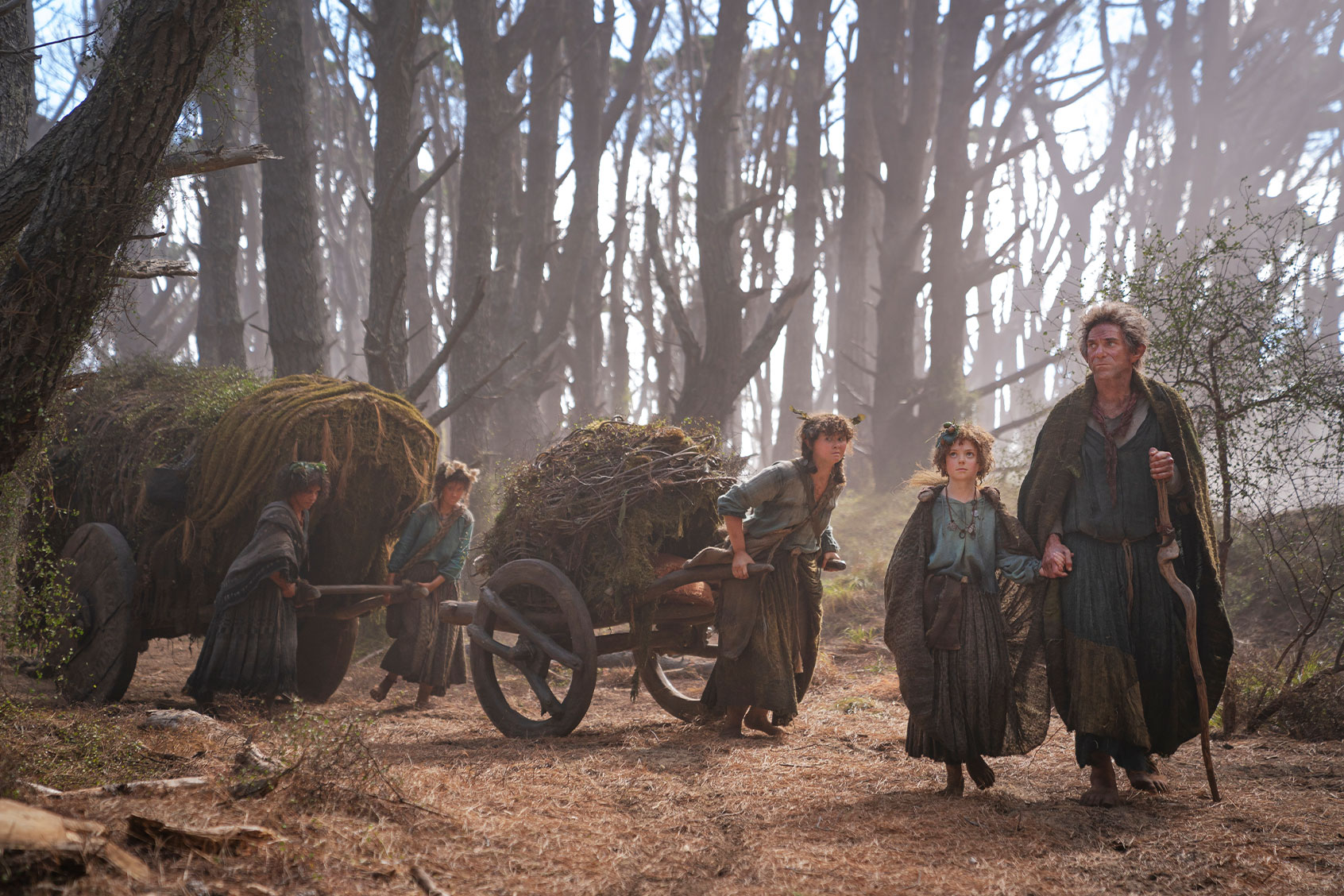
In stories, the horse girl archetype tends to still be dominated by wealthy, white girls, as Polygon and others have pointed out. A huge, expensive animal, the horse is a status symbol. The Harfoots, our likeable Hobbit ancestors, don’t have horses — or any work animals. They pull their wagons themselves, which means a relatively minor injury, like a sprained ankle, can mean death not just for one Harfoot, but for his entire family. It can mean being left behind.

The Lord of the Rings: The Rings of PowerSara Zwangobani (Marigold Brandyfoot), Markella Kavenagh (Elanor ‘Nori’ Brandyfoot), Megan Richards (Poppy Proudfellow), Beau Cassidy and Dylan Smith (Largo Brandyfoot) in “The Lord of the Rings: The Rings of Power” (Ben Rothstein/Prime Video)Galadriel is the show’s main horse girl, but not the only one. When Isildur reaches land after time away at sea, he’s excited to finally be reunited not with his sister, but with his horse, Berek. A big betrayal to earnest, and oft-messing-up Isildur is that not only will his friends be on the rescue mission to Middle-earth, his horse will be too. When Isildur finally gets cleared to go, it’s as a groom, sweeping out the stables. It would be great to see some kind of diagram of these ships and where exactly their stables are, because when the group makes land, they ride out in a thunderous show of hooves flying over the emerald hillside, one of the many emotion-stirring moments of Episode 6.

The Lord of the Rings: The Rings of PowerMaxim Baldry (Isildur) and Cynthia Addai-Robinson (Queen Regent Míriel) in “The Lord of the Rings: The Rings of Power” (Matt Grace/Prime Video)Isildur has a history with horses, something that seems to be in his blood. As he tries to calm his prescient horse, his father says, “It’s not his pain that’s bothering him but that of his rider.” When Isildur scoffs that his father could know the horse’s feelings, Elendil says the horse “knows yours” and tells his son that he learned so much about horses from the boy’s mother, who drowned. Isildur asks to be taught, the horse bringing the father and son, often at odds, together.


Want a daily wrap-up of all the news and commentary Salon has to offer? Subscribe to our morning newsletter, Crash Course.


Horses have always been important to “The Lord of the Rings.” Remember Aragon calming the horse Brego in the Peter Jackson film adaptation? In J.R.R. Tolkien’s books, multiple horses are named as well. And naming means they matter. “The Rings of Power” continues this legacy of attention to horses and, like much of the series, deepens it with new meaning.

It’s a connection with other life, like healer Bronwyn preserving Alfirin seeds and elf Arondir planting a seed before battle. Caring for the natural world seems to matter in this Middle-earth, in all the lands of the story, to matter deeply, and that’s a cause to rally behind. 

“Pizza bread” is the only bread for me. Here’s how to make a restaurant-worthy version at home

One of my favorite parts of this whole human experience is that feeling you get when you walk into a place you’ve never been before, but it inexplicably feels like you have been there. For me, this kind of heady, location-based déjà vu is often the most palpable in restaurants

Thanks to their briny iceberg Caesar salads and vintage Campari posters, I’ve been to strip mall red sauce joints states apart that felt nearly identical. There’s one seafood shack in Charleston, S.C., that is eerily similar to a place that sells fried shrimp in Portland, Maine. Don’t even get me started on the late-night pancake houses dotting Chicago’s neighborhoods

To be clear, I don’t think of the places that inspire the aforementioned déjà vu to be cliché. Rather, they’re quintessential examples of their respective type of restaurant. Like, if someone was working in set design for a movie, they’d bring photographs of these dining rooms as inspiration for really setting the scene.

What can I say? Sometimes you just want to eat fried shrimp or drink diner coffee in a place that looks exactly like it should be serving fried shrimp or diner coffee.

And sometimes you want to get “pizza bread” from D’Amato’s Bakery because it looks exactly like the type of place you should order pizza bread from. Located on Chicago’s West Grand — next to a sub shop, which is next to a trattoria — D’Amato’s is a family-owned Italian bakery whose coal-burning oven has been running since 1912. 

On Sunday mornings, a line of customers curls out onto the front sidewalk, steadily pushing toward the front door. On my most recent trip, there was a man who escorted his elderly mom into the bakery. Her sensible shoes made her gauzy church hat all the more ostentatious.

The pair bickered the entire time they were in the line. When it finally came time for them to order, they huffed in unison. Ultimately, the son said, “We just need a couple dozen — you pick.” 

The man waited a beat for his mom to turn away from the counter before catching the cashier’s attention. “Just try to emphasize these, though,” he said, waving his hand over the lemon knots


Want more great food writing and recipes? Subscribe to Salon Food’s newsletter, The Bite.


Behind them was a man in a Bulls hoodie helping his daughter sound out all the daily specials, which were scrawled in Sharpie on printer paper and taped above the kitchen window. “Eggplant parm . . . parm . . .” she murmured to herself. “Parmesan,” he whispered with a high-five.

Finally, crowding around the entrance was a trio of women. It was unclear from their outfits — denim, fishnets, snakeskin — whether they were headed to brunch or just headed home. (Honestly, a D’Amato’s pizza bread would be exactly the thing to ward off a hangover if that were the case.)

“Pizza bread” is pretty simple. Think of a round, springy focaccia topped with traditional pizza ingredients, ranging from oil-bathed artichoke hearts to briny black olives. The best, however, is undoubtedly the original pizza bread — simply topped with good tomatoes and just the right amount of seasoning.

The best is undoubtedly the original pizza bread — simply topped with good tomatoes and just the right amount of seasoning.

The loaf’s edges are slightly crisped, while the interior is beautifully spongy with the occasional acidic pop of a baked ruby red tomato slice. There’s no cheese or cutting-edge toppings, but it feels quintessentially of D’Amato’s much in the way the place itself feels like a prototypical Italian-American bakery. 

Occasionally, when I feel like a lazier Sunday than getting up early to groggily travel to D’Amato’s via bike or train would permit, I’ll make a round loaf of my own using my go-to focaccia recipe (Claire Saffitz’s soft and crispy focaccia from “Dessert Person” for the win) and a few simple additions. It’s not the exact same, but it inspires some déjà vu just the same. 

Inspired by “Dessert Person” and D’Amato’s Bakery

Pizza Bread 
Yields
8-12 servings
Prep Time
10 minutes
Cook Time
45-65 minutes, plus rise and proofing time

Ingredients

  • 1 batch focaccia dough
  • 1/4 cup to 1/2 cup canned whole tomatoes
  • 2 teaspoons dried, crushed basil
  • 2 teaspoons dried, crushed fennel seed
  • 2 teaspoons oregano
  • 2 teaspoons garlic powder
  • 1 teaspoon dried, crushed rosemary
  • 1 teaspoon red pepper flakes
  • 1/4 cup olive oil
  • Salt to taste

Directions

  1. Prepare focaccia according to recipe instructions as normal until it’s time to bake the loaf (or loaves) in either a 18×13-inch sheet pan or two 6-inch cake pans

  2. Drain the canned whole tomatoes and hand-tear them into bite-sized pieces over a bowl. Salt to taste and set aside. 

  3. In a small bowl, combine the herbs and spices, olive oil and salt to taste. 

  4. Place the torn tomatoes into some of the “dimples” of the focaccia. Using a small pastry brush, brush the top of the focaccia with the herbed olive oil. 

  5. Bake according to recipe instructions and enjoy. 


Cook’s Notes

Focaccia — which is typically made using just flour, yeast, olive oil, salt and water — is already egg- and dairy-free. The toppings called for in this recipe are as well, which means this is a great dish to share with your vegan friends. 

Salon Food writes about stuff we think you’ll like. While our editorial team independently selected these products, Salon has affiliate partnerships, so making a purchase through our links may earn us a commission.  

Mysterious woman who allegedly helped DeSantis lure migrants to Martha’s Vineyard flight identified

A former counterintelligence agent and combat medic specialist in the US Army helped Florida Governor Ron DeSantis arrange migrant flights from Texas to Martha’s Vineyard in Massachusetts.

The woman, who was identified by The New York Times and CNN as Perla Huerta, was accused of luring 48 migrants onto two private planes in Texas, making false promises about offering asylum-seekers expedited work permits, housing and cash assistance. But instead, dozens of migrants were left to fend for themselves and were later moved to a military base shelter at Cape Cod.

Attorneys for the migrants have filed a class action lawsuit for defrauding vulnerable immigrants by making “false promises and misrepresentations” to advance a political motive. The lawsuit was filed against DeSantis, Florida Department of Transportation Secretary Jared Perdue, the state of Florida and the state Department of Transportation. Once the attorneys confirm Perla’s identity, they said they will also add her to the lawsuit.

The lawsuit alleges that Huerta gathered the group to have them “sign a document in order to receive a $10 McDonald’s gift card” and did not explain what the document stated. “[A]n entire paragraph about liability and transport was not translated at all, and language specifying that the journey would take place from Texas to Massachusetts was not translated at all either.”

Huerta served in the US Army for more than two decades with several deployments to Iraq and Afghanistan, according to the Times. She was discharged in August and lives in Tampa, Florida.

A man who called himself Emmanuel told the San Antonio Report that Perla said she wanted to get migrants to “sanctuary states” where more government support would be available to them. 

“A lot of people really come without plans, they want to come and just work and they have a hand that’ll provide them shelter,” he told the San Antonio Report. “I just saw it in that way, like a sweet way, doing it for good.”

He added that Perla told him the money being offered to him came from an “anonymous benefactor,” and the same person was also funding the flight.


Want a daily wrap-up of all the news and commentary Salon has to offer? Subscribe to our morning newsletter, Crash Course.


DeSantis, who has taken credit for those flights, used the money that came from a special $12 million appropriation in the state’s last budget. 

“I can confirm the two planes with illegal immigrants that arrived in Martha’s Vineyard today were part of the state’s relocation program to transport illegal immigrants to sanctuary destinations,” a statement from DeSantis’ communications director Taryn Fenske said. “States like Massachusetts, New York, and California will better facilitate the care of these individuals who they have invited into our country by incentivizing illegal immigration through their designation as “sanctuary states” and support for the Biden Administration’s open border policies.”

The airline charter company Vertol Systems received $615,000 on Sept. 8 and $950,000 less than two weeks later, for “project 1” and “projects two and three,” according to Florida state records reported by the Times. The company has ties to several high-profile Florida Republicans, including Rep. Matt Gaetz, R-Fla., and Larry Keefe, DeSantis’ public safety and immigration czar.

Now, another group of migrants is reportedly being transported from New York City to Florida for work supporting cleanup efforts after Hurricane Ian devastated the state.

“They want us for hurricane cleanup, we’d get paid $15 an hour, overtime and $15 for food daily, I think,” Javier Moreno, 37, told the New York Post. He added that a woman named Camila “from an organization” approached him with a flier.

Another migrant said that about 100 people had left a shelter in Manhattan to take advantage of the work offer.

​​A representative for FEMA told The New York Post that the agency was not involved in any efforts to transport migrants and a spokesperson for Mayor Eric Adams also said the same.

Law professors struggle to cope after right-wing Supreme Court “upends Constitutional principles”

For generations, the U.S. Supreme Court expanded or upheld civil liberties, from freedom of the press in New York Times v. Sullivan (1964) to access to contraception in Griswold v. Connecticut (1965) and Eisenstadt v. Baird (1972) to gay rights in Lawrence v. Texas (2003) and Obergefell v. Hodges (2015) to interracial marriage in Loving v. Virginia (1967). But when the Dobbs v. Jackson Women’s Health Organization ruling was handed down on June 24 and Roe v. Wade was overturned after 49 years, the High Court’s radical-right majority demonstrated that it had no problem rejecting precedent and rolling back civil liberties.

Moreover, Justice Clarence Thomas, in Dobbs, recommended that the High Court also “reconsider” Griswold, Lawrence and Obergefell. Civil libertarians fear that with socially conservative justices having attacked abortion rights, everything from gay rights to contraception is also in danger.

Over the years, there has been much discussion in law schools of the role the Court has played in expanding rights, but now that the Court is rolling rights back, how are law schools responding? Journalist Mark Joseph Stern tackles that subject in an article published by Slate on October 2.

“The problem, it’s worth emphasizing, is not that the Supreme Court is issuing decisions with which left-leaning professors disagree,” Stern explains. “It’s that the Court seems to be reaching many of these conclusions in defiance of centuries of standards, rejecting precedent and moderation in favor of aggressive, partisan-tinged motivated reasoning. Plenty of progressive professors have long viewed the Court with skepticism, and many professors, right- and left-leaning, have criticized the reasoning behind certain opinions for decades. But it’s only in recent years — with the manipulation of the justice selection process combined with clear, results-oriented cynicism in decisions — that the problem has seemed so acute that they feel it affects their ability to teach constitutional law.”

According to Tiffany Jeffers, a professor at Georgetown University Law Center in Washington, D.C., becoming distrustful of the Supreme Court is a new experience for many law professors — who, she says, have gone through their “own personal grieving period” in 2022.

Jeffers told Slate, “It’s hard to think about your own profession — the things you were taught, the things you believed in — abruptly coming to an end in rapid succession. It’s hard to ask a law professor to dismantle all the training they had. It’s a difficult, emotional, psychological transformation process. It’s not easy to upend your life’s work and not trust the Supreme Court.”

Stern notes that Jolynn Childers Dellinger, who teaches at Duke Law School in Durham, North Carolina, “intends to overhaul her classes to accommodate the new decisions” coming from the High Court.

Dellinger told Slate, “I have always perceived of the law as a tool for justice, and my faith that the law is being used toward that end has definitely been shaken by this Supreme Court. It is honestly hard to know what to say to students entering this profession at this time as we witness the Supreme Court upending constitutional principles…. (and) stripping an entire class of people of fundamental rights without so much as a minimal effort to acknowledge the consequent harms.”

Stern cites “legal realists” as a type of law professor who believes that the Supreme Court has been overly politicized and expect the justices to act accordingly. Steve Sanders, who teaches at Maurer School of Law, considers them overly cynical — although Sanders is vehemently critical of the Dobbs decision, which he criticizes as “screamingly, unapologetically activist.”

Sanders told Slate, “I have generally, up until now, resisted the cynicism of the ‘new legal realists’ that the Supreme Court isn’t a court, it’s just a policy council. I want my students to believe that legal argumentation, precedent, facts, and doctrine matter…. (But) it’s becoming increasingly difficult to deny that major constitutional decisions are almost purely about politics.”

Ginni Thomas and the Oath Keepers signal the “no regrets” phase of January 6 apologia

Ginni Thomas is sticking to the Big Lie, even when testifying before the January 6 committee. We still don’t know her exact phrasing, but reports from members of the January 6 committee indicate that the right-wing activist and wife of Supreme Court Justice Clarence Thomas reiterated during her testimony last week the false belief that President Joe Biden stole the 2020 election from Donald Trump. Whether or not she was sincere in this claim is hard to discern. She also told the committee she never speaks about her extensive political activism with her husband, a claim so implausible that it casts doubt on the truthfulness of anything she said during an interview in which she was not put under oath. 

Telling the January 6 committee that you still believe the Big Lie may seem, on its surface, to be a really bad idea, but there may be a method to the madness here. After all, Ginni Thomas was deeply involved in Trump’s attempted coup in 2020, as shown by a bevy of text messages to Trump’s chief of staff Mark Meadows and emails to swing state legislators urging them to throw out the results of the election. Unable to plead innocence, Thomas may have decided the better course of action is to argue that her actions were justified by a sincere belief in the Big Lie. 


Want more Amanda Marcotte on politics? Subscribe to her newsletter Standing Room Only.


Thomas is not alone in going this route. On Monday, opening arguments kicked off in the high-profile trial of Stewart Rhodes and four other members of the far-right Oath Keepers, who are accused of seditious conspiracy for their extensive role in organizing the storming of the Capitol on January 6. Like Thomas, there’s just way too much text message and email evidence for the Oath Keepers to deny their actions or intentions. Instead, they’re going to argue their behavior was justified by the belief that the election was stolen and that Trump told them to do it. 

“Rhodes’ attorney has said that his client will eventually take the stand to argue that he believed Trump was going to invoke the Insurrection Act and call up a militia, which Rhodes had been calling on him to do to stop Biden from becoming president,” reports the Associated Press

As Mike Giglio explained in the New Yorker, the defense strategy is to argue that the pre-planning of the insurrection “were not only legal” but “patriotic.” 

Even while the riot was going on, Trump and his allies were strategizing about how to spin the insurrection and the efforts to overthrow the election that preceded the violent assault on the Capitol. As insurrectionists were still battling Capitol police, the text message log from Meadows shows that both Trump advisor Jason Miller and Rep. Marjorie Taylor Greene, R-Ga., were brainstorming lies that Trump and his team could tell to deflect blame. Miller suggested falsely claiming the rioters were “likely ANTIFA or other crazed leftists,” a lie that ended up getting leveraged at various times by right-wing pundits over the next year and a half.

But the Trumpist line on January 6 has been slowly morphing from “it wasn’t us” into “it was justified” for months now. The effort is led by Trump himself, who struggles to conceal his pride over January 6, which demonstrated his immense power over many of his followers. In recent months, and especially after the FBI raided Mar-a-Lago to retrieve classified documents Trump illegally removed, Trump has only doubled down on his unsubtle view that violence is a useful tool to get what he wants. He’s escalating the threatening language and demonizing attacks on anyone he perceives as an obstacle to his power, a strategy no one can, in good faith, pretend isn’t serious after January 6. 


Want more Amanda Marcotte on politics? Subscribe to her newsletter Standing Room Only.


Friday night, Trump did it again, releasing a diatribe on social media accusing Senate Minority Leader Mitch McConnell of having a “DEATH WISH” and making a racist joke about McConnell’s wife. As he usually does, Trump adopted a passive tone when talking about violence against his perceived enemies, pretending he’s just “predicting” bad things will befall them and not that he’s encouraging such things. At a Saturday rally, he also praised Thomas for continuing to back the Big Lie, furthering the “no regrets” messaging around January 6. 

Taylor Greene was even less subtle at the very same rally. “Democrats want Republicans dead, and they have already started the killings,” she declared. The language she used was conspiratorial, with echoes of the QAnon conspiracy theory cult she is also heavily connected to. But the case she used to justify this false accusation appears to have been a drunken fight in North Dakota, which is not at all a sign that there’s been some kind of “go” signal for Democrats to start killing Republicans. 

The same, however, cannot be said of Taylor Greene’s comments. On the contrary, speeches like hers should be understood as incitement to violence.  As Mark Follman explained in the most recent edition of Mother Jones magazine, rhetoric like this is what “experts call ‘stochastic terrorism,’ whereby a leader vilifies a person or group in ways likely to instigate random supporters to attack those targets, while the instigator maintains a veneer of plausible deniability.” Follman has been carefully documenting Trump’s tendency to wish for violence or use of violence-excusing language, and the escalation in the past few weeks has been alarming. 

Taken together, a disturbing picture is emerging: There’s an acceleration both in intimations of violence and justifications for it. No doubt Thomas would deny that her reiterating a belief in the Big Lie contributes to an atmosphere of political violence, but there is no way around that fact. If you really do believe that democracy is being “stolen” by Democrats, then that justifies violence. Indeed, that’s a huge reason the Big Lie was invented in the first place: to give a moral pretext to immoral efforts to overthrow the democratic system. The doubling down on the Big Lie by figures like Thomas and the Oath Keepers, in turn, suggests that Trump’s biggest fans think it’s still a useful tool to give cover to otherwise inexcusable actions. 

Trump attacks Mitch McConnell on Truth Social with racist nickname for his wife

Former President Donald Trump has taken aim at Senate Minority Leader Mitch McConnell, R-Ky., suggesting that he must have some kind of “a death wish” due to his support of what he describes as “Democrat sponsored Bills.”

On Friday, September 30, the former president took to his social media platform, Truth Social where he released a fiery rant criticizing the top-ranking Republican lawmaker.

According to Trump, McConnell is likely making this decision solely based on his disapproval of him.

“Is McConnell approving all of these Trillions of Dollars worth of Democrat-sponsored Bills, without even the slightest bit of negotiation, because he hates Donald J. Trump,” the former president asked during his rant, adding, “and he knows I am strongly opposed to them, or is he doing it because he believes in the Fake and Highly Destructive Green New Deal, and is willing to take the Country down with him? In any event, either reason is unacceptable.”

Trump surmised that the Kentucky lawmaker must have a “death wish.”

He concluded his post with a racial epithet directed toward McConnell’s wife, Elaine Chao, a Taiwanese native now a U.S. government official.

“He has a DEATH WISH,” The former president added. “Must immediately seek help and advise from his China-loving wife, Coco Chow!”

While Trump did not offer specifics on the bills he was referring to, per the news outlet, the former president’s ire may stem from McConnell’s support of “a spending bill to avert a federal government shutdown and provide $12 billion in military and economic aid for Ukraine in its ongoing defense of invasion from Vladimir Putin’s Russia.”

Michael Flynn group interviewing election officials to find “weaknesses in the system”: report

A new report from VoteBeat claims that former Trump national security adviser Mike Flynn and his allies have interviewed more than 200 election officials across the United States to identify weaknesses in the system.

According to the report, Flynn and former Overstock CEO Patrick Byrne have been conducting the interviews as part of a project called “Operation Eagles Wings,” and the questions they’re asking officials “reflect the same debunked conspiracies and misleading information about elections that Flynn and Byrne have been propagating for years.”

Elections experts who spoke with VoteBeat claim that the responses to Flynn and Byrne’s questions could be used to further fuel false conspiracy theories about voting in the United States.

“It seems consistent with their efforts to really understand how to manipulate the machinery of election administration in this country,” Ben Berwick, counsel at national nonprofit Protect Democracy, tells the publication.

Transcripts of interviews found by VoteBeat show that many elections officials were friendly in their interactions with representatives of Project Eagles Wings, but they also pushed back on false claims made by interviewers, such as when one interviewer insisted to election officials that dead people had voted in Harris County, Georgia.

Barry Burden, a political science professor at the University of Wisconsin, tells VoteBeat that he is not surprised that officials are being asked loaded questions about letting dead people vote, as both Byrne and Flynn “don’t have a good record of being fact-based and practical.”

Read the full report at this link.

Investors in Trump’s Truth Social deal feel “remorse” — and pulling out of $1 billion deal: report

According to a report from Politico, the embattled partnership between Donald Trump’s social media start-up and the company behind the SPAC that would take it public is on the verge of falling apart for good as potential investors either renege on their plans to fund it or demand a bigger return on their investment.

At issue is the proposed deal that was supposed to inject over a billion dollars into the increasingly troubled start-up before it went public — which now may collapse under its own weight.

As Politico’s Declan Harty reports, investors sensing weakness now want a bigger slice of the pie if they are expected to park their money in a business deal that has been struggling since its inception.

Reporting, “The group of more than three dozen investors who had planned to put $1 billion into the company have begun to waver as bad news keeps piling up around the deal,” Harty wrote, “The hedge funds, trading firms and other major backers are questioning whether the financial riches that first attracted them to the transaction are still strong enough to hold their interest in a deal fraught with troubles, according to four investors who asked not to be named. Negotiations have been ongoing as some investors seek bigger potential profits in exchange for following through on commitments to put hundreds of millions of dollars into the venture.”

With a cloud hanging over it due to an SEC investigation and the company’s inability to pay its bills, investment analysts are waving the red flag.

According to Kristi Marvin, of data research company SPACInsider, “This deal has taken more left turns than a doorknob. Now, it’s just got so much hair on it.”

Writing, “Eleven months ago, Trump Media & Technology Group unveiled plans to merge with a company called Digital World Acquisition Corp. in a SPAC deal,” Harty added, “At stake for Trump and his startup — the company behind conservative social media app Truth Social — is hundreds of millions of dollars, marking the latest blow to the former president’s business empire since he left office.”

The Politico report adds that one potential investor told them on the condition of anonymity, “that they do not expect to get back into the deal, adding that they had remorse about doing it to begin with considering the former president’s involvement. The investor said that much of the interest in the deal has revolved around the economics of it, with many set to profit from huge windfalls should it go through.”

You can read more here.

Supremes gone wild: Thought the high court was bad already? Just you wait!

For the past week, headline news has focused almost exclusively on the scenes of desperation and destruction left in the wake of Hurricane Ian. So most of us missed taking note of last Friday’s investiture of Justice Ketanji Brown Jackson, the first Black woman on the Supreme Court. She was sworn in last June so this was a formality, but it still carried the weight of history and the court was filled with political and judicial luminaries, including President Biden and Vice President Harris. It was by all accounts a moving ceremony. But considering all the turbulence on the Supreme Court right now, I have to wonder if Jackson might be having second thoughts.

Today is the first Monday in October, the first day of the new Supreme Court term — and the court is in crisis. According to the Gallup poll, its public approval ratings have never been lower, with 58% of Americans disapproving of how this court is handling its job. A good part of that can be attributed to the Dobbs decision overturning the right to abortion, which had been effectively enshrined in the Constitution for 50 years. That it came fast on the heels of two underhanded end-runs by the Republican-controlled Senate — blocking the nomination of Merrick Garland in 2016, and then jamming through Amy Coney Barrett in 2020 — made it all the more rank. The court’s right-wing majority couldn’t even wait another year or two, just for appearance’s sake.

Dobbs wasn’t the only case last term that exposed what partisan hacks the court majority have become. They also ruled that despite centuries of jurisprudence allowing the regulations of firearms, a New York state law requiring concealed carry licenses, on the books for more than 120 years, was somehow a violation of the Second and 14th amendments. In his majority opinion, Justice Clarence Thomas made it very clear that he didn’t hold with his former colleague Antonin Scalia’s view that the Second
Amendment is not absolute when it comes to private ownership of guns.

And in case anyone thought the court might think twice about gutting the EPA in light of the planetary climate upheaval we now see unfolding every day, they did not. In another 6-3 opinion, justices denied the EPA the right to demand emissions caps as part of the Clean Power Plan, siding once again with red-state climate-change deniers and Big Energy interests.

The Supreme Court’s public-opinion nosedive might be related to the fact that one prominent justice is married to someone who actively promoted the Big Lie and sought to overturn the 2020 election.

All those opinions came virtually on top of each other at the end of the court’s spring term, and its approval rating sank precipitously right after that. But the more recent nosedive in public opinion is likely also connected to the fact that one prominent justice is married to someone who was heavily involved in the post-election Big Lie campaign, and perhaps with illegal attempts to overturn the election. Ginni Thomas, the wife of Justice Clarence Thomas, was interviewed last week by the House Jan. 6 committee, and reportedly said that she still believes the 2020 election was stolen. That all might be considered a case of very poor judgment by the spouse of a Supreme Court justice, if it weren’t for the fact that Thomas has refused to recuse himself from any cases pertaining to Donald Trump — and has consistently supported Trump in pretty much every instance. Furthermore, the public has gradually become aware that Thomas and the other justices aren’t required to adhere to any clear ethics rules or standards — because there aren’t any. 


Want a daily wrap-up of all the news and commentary Salon has to offer? Subscribe to our morning newsletter, Crash Course.


Chief Justice John Roberts and Justice Elena Kagan — the latter is among the three remaining “liberals” — have been obliquely arguing with each other about the court’s loss of prestige and legitimacy in various speeches they’ve given over the last few weeks. Roberts, a smart guy deliberately playing dumb, has wondered aloud why people might thing the court has become purely political just because they disagree with the outcome of certain cases. Kagan, meanwhile, has patiently pointed out that when the court starts overturning precedents one after the other after a dramatic shift in personnel, it might make people just a little suspicious that politics is at work. Here’s how Slate justice reporter and analyst Dahlia Lithwick put it:

[I]t is not that the public didn’t like the final score at the end of the term when the lights went out in June. The problem wasn’t just the losses; the problem was that [Roberts’] team moved the game to another field, then stole the ball and replaced it with a time bomb, then changed the rules, then lied about it, and then set the entire field ablaze. Now he wants everyone to shake hands and go home. 

Unfortunately, they aren’t finished. Indeed, the right-wing justices and their allies are just getting started. If this term goes like the last one, get ready for the court to lose another 20 points in approval. It will hear cases on religion, free speech, LGBTQ rights, affirmative action and voting. It’s not hard to imagine where the right-wing majority that signed on to the Dobbs decision will go now that they’ve decided to let it all hang out.

The legal precedents on affirmative action were thought to be so firmly established, according to New York Times, that the late Justice Ruth Bader Ginsburg assumed the issue had been permanently settled. Apparently not. The court plans to hear two cases that could once again upend precedents in place for half a century. Then there’s Merrill v. Milligan, which is poised to destroy what’s left of the Voting Rights Act, and Sackett v. EPA, which is likely to further degrade the federal government’s ability to enforce clean water standards, meaning that what happened to the water systems of Flint, Michigan, and Jackson, Mississippi, could happen in your town as well. In the latest bogus “religious freedom” case, 303 Creative v. Elenis, the court may enshrine the right to discriminate against LGBTQ people on religious grounds.

Then we get to perhaps the most chilling case of all, Moore v. Harper, which aims to establish the “independent state legislature” theory as the law of the land, essentially giving any Republican legislative majority in a swing state the power to do whatever it chooses when it comes to elections — with no checks on its power, including from state courts, the governor or any other election officials. Let’s put it this way: If this had been in effect in states like Arizona, Michigan and Pennsylvania in 2020, it’s entirely possible that right-wing state legislators could have done exactly what folks like Ginni Thomas wanted them to do — refuse to count certain votes, or even appoint their own slates of presidential electors in defiance of the voters. And you don’t even want to think about what how creative they could get with gerrymandering districts so Republicans never lose.

So get ready. The Supremes are on a roll and it doesn’t look like they have any plans to “moderate” in light of the fact that the public now perceives them as nothing more than an enforcement arm of the Republican Party. Public opinion, in this case, isn’t wrong. Old-time conservative movement ideology may be widely unpopular these days, is firmly entrenched in the high court and they are making all their dreams come true. Who’s going to stop them?

Trump attorney lawyers up — and says she’s willing to cooperate with DOJ in Mar-a-Lago case: report

At least one member of former President Donald Trump’s legal team has hired her own attorney — and allies are urging another to follow suit, according to The Washington Post.

Trump attorneys Christina Bobb and Evan Corcoran affirmed to the Justice Department that Trump had handed over all classified records from his Mar-a-Lago residence in response to a May subpoena. But prosecutors said their response was “incomplete” after the FBI searched and found more documents at Mar-a-Lago and cited evidence of “obstructive conduct” in response to the subpoena.

Bobb has since hired her own lawyer, Florida-based former prosecutor John Lauro, and “made it known to Trump allies that she is willing to cooperate and be interviewed by the Justice Department,” according to the Post. And colleagues have similarly urged Corcoran to hire a criminal defense lawyer because of his response to the subpoena, according to the report, but he has insisted it is not necessary.

Asked if she was negotiating to sit for an interview with the DOJ, Bobb told the outlet, “I’m sorry, I’m not allowed to talk about it.”

Bobb signed a document affirming that Trump handed over “all documents that are responsive to the subpoena” after a “diligent search.” Corcoran then met with DOJ officials and made a similar statement. Investigators ultimately found more evidence that there were additional documents at Mar-a-Lago and secured a warrant to search the premises in August.

Bobb, a former OAN host who helped push Trump’s legal challenges following the 2020 election, has insisted to Trump allies that she believes the document she signed was accurate, according to the Post. But she also told the pro-Trump Right Side Broadcasting Network that she was not acting as Trump’s attorney while serving as a custodian of records when responding to the subpoena, according to the report, meaning that the DOJ could compel her testimony more easily than if she were acting as Trump’s lawyer at the time.

“I think people were a little bit confused,” Bobb said. “I am on President Trump’s legal team. I do work for him on election issues. I was never on the legal team handling this case, just to be clear on that. Which is why I came in as the custodian of records — because I wasn’t on that team.”


Want a daily wrap-up of all the news and commentary Salon has to offer? Subscribe to our morning newsletter, Crash Course.


Corcoran, who is referenced as Trump’s attorney in court documents, has also been “counseled” by colleagues to lawyer up, according to the report. Trump hired Corcoran, who recently returned to practicing law, in April with no vetting after a single conference call while he was representing former Trump adviser Steve Bannon, who was convicted of contempt of Congress earlier this year.

“Christina Bobb and Evan Corcoran need their own criminal lawyers,” former DOJ inspector general Michael Bromwich tweeted, citing their “multiple misrepresentations” to the DOJ.

With his own attorneys facing potential legal jeopardy, Trump struggled to find an elite attorney willing to represent him in the case. Trump ultimately hired former Florida Solicitor General Chris Kise, who once represented a member of Venezuelan leader Nicolas Maduro’s administration, paying him a $3 million retainer from money donated to his super PAC.

Kise has advised Trump to “turn down the temperature” with the DOJ and fought with advisers who urged a more aggressive approach, according to the Post. Kise warned Trump’s team that attacks were only likely to make the DOJ more aggressive and urged them to seek an “off-ramp” before a possible indictment, according to the report. He also argued that Trump’s other lawyers, who he said lacked experience with this type of case, had “deepened Trump’s problems” and “could face legal trouble themselves,” according to the Post.

Just weeks after joining Trump’s legal team, CNN reported that he has already been sidelined. Though his name appeared on numerous court filings, he did not sign onto the Trump team’s combative filing questioning the DOJ’s motives last week. The Post reported that Kise is now unlikely to play a public role in the Mar-a-Lago case, though he will continue to help Trump deal with “his other legal problems.”

Trump spokesman Taylor Budowich did not respond to questions from the Post.

“While the media wants to focus on gossip, the reality is these witch hunts are dividing and destroying our nation,” he told the outlet. “And President Trump isn’t going to back down.”

Trump “will be convicted of multiple felonies”: George Conway on the bumpy road ahead

Today’s Republican Party has effectively become an authoritarian political cult led by Donald Trump. His millions of followers — with their votes, money, menace and potential or actual violence — have become his primary means of controlling the party and progressively undermining American democracy and society.

When Trump first emerged as a serious presidential candidate in 2016, Republican leaders and other right-wing elites believed they could control him and use him as a weapon in their revolutionary and reactionary struggle. They were both right and wrong about that. 

Donald Trump is a political monster; Such leaders and forces have a mind and will all their own.

As president, Trump enacted policies that the Republican Party and larger white right have long dreamed of imposing on the American people, most notably rolling back taxes on the rich and seizing full control of the Supreme Court. That was a great victory in the long-term campaign to reverse the civil rights victories of the 20th and 21st century won by Black and brown people, women, LGBTQ people, people with disabilities and other marginalized groups.  

But Donald Trump quickly become more powerful than the Republican Party, and not necessarily aligned with its leaders. His followers are far more loyal to him than to the party itself. When Trump and his followers attempted a violent coup on Jan. 6, 2021, many “mainstream” Republicans struggled to adjust to this new reality. Many people in the party understood that Trump was a fascist, perhaps a traitor and in a larger sense an existential threat to the United States. Within the Trump administration, there were discussions about removing him from office through the 25th Amendment. But ultimately most Republicans chose partisanship and power over genuine patriotism and the common good. In doing so, they made themselves de facto agents of American neofascism.

There were a few “traditional” Republicans and “principled” conservatives throughout the Trump years who for a variety of reasons spoke out against Donald Trump and walked away from the Republican Party and the MAGA movement. George Conway III was one of the loudest of those voices. He is a lawyer, a contributing columnist at the Washington Post and a founding member of the Lincoln Project. (He resigned from that organization in 2020 to spend more time with his family.)

Conway is a longtime Republican who left the party in 2018. By his own account, he was a candidate for various high-level positions in the Justice Department under the Trump administration. He is married to Kellyanne Conway, who was an adviser to Trump from 2017 to 2020.

In this wide-ranging conversation, Conway explains his belief that Donald Trump may finally be prosecuted, convicted and perhaps even imprisoned for violations of the Espionage Act and related crimes. Contrary to the opinions of other legal experts and political observers, Conway believes that Trump’s ego will never permit him to admit guilt as part of a plea bargain agreement. He warns, however, that as Trump faces more pressure from the Department of Justice and other investigations into his obvious criminal wrongdoing, he may order his followers to unleash violence and destruction.

Conway also reflects on his own previous level of denial about the danger to the country embodied by Trump and the Republican fascist movement — and discusses how he went from thinking that Democrats and other members of “the left” were “hysterical” to realizing that their warnings were largely correct.

Toward the end of this conversation, Conway predicts that if Donald Trump faces incarceration or other serious punishment, he will turn against the Republican Party and seek to destroy it in an act of revenge. Ultimately, Trump’s lasting legacy may be the destruction of the Republican Party as the political monster turns against its host and creator.

How are you feeling, given the country’s democracy crisis and the rising neofascist tide? How do you make sense of all this? 

I do think it’s going to get better. But it’s going to get worse before it gets better. Trump is basically a cornered animal. He’s got all these legal proceedings bearing down on him. In addition, he is losing his touch and his connection to his public, because his act has become very tiresome. That explains why Trump is embracing the QAnon conspiracy. He’s doing that because of his narcissism: He’s feeling attacked, and for the first time in his life, he is facing real consequences for his actions. The DOJ and other investigations have caused Trump to suffer a narcissistic injury. He is a pathological narcissist, and by going to the QAnon people he is getting attention and his need for narcissistic fuel is being somewhat satisfied. That also explains why Trump would never criticize the QAnon conspiracy cult before. He likes people who like him. That is what really matters to him. 

Trump is in a downward psychological, emotional and physical spiral. His embrace of QAnon shows how extreme his deterioration is. But here is the problem for the rest of us: Donald Trump is not going to go away immediately. He is going to try to use the electoral process, and threats of violence, to regain power and influence. Then Trump will say that he can’t control what people do because they are so angry at how he is being treated by Joe Biden, Merrick Garland, the DOJ, the various prosecutors and judges, the news media and so on. Trump is going to make things much worse in this country before things finally get better. 

Trump is in a downward spiral. His embrace of QAnon shows how extreme his deterioration is. But the problem for the rest of us is that he’s not going away immediately.

If America were actually healthy, then Trump would be gone, a non-factor. In all likelihood, I believe that Trump gets the Republican nomination in 2024, unless he goes to prison before then. If Trump is convicted or it looks like he is going to be, he will try to take down as many people as possible with him. That’s what malignant narcissists do. 

There are all these pronouncements from pundits that Trump is done for and everything is going to be OK. That’s wishful thinking. Trumpism and neofascism cannot just be wished away.  

I hear you, but I believe we should take some solace, in that the reckoning is finally coming. At the very least, the Mar-a-Lago documents investigation is the most dangerous thing facing him. Almost from the moment it came out, I felt it was the shortest distance between him and an orange jumpsuit, for the simple reason that it is a simple case.

The analogy I like to use is this: Let’s imagine that you are the U.S. attorney in New York, and you’re investigating a mob boss. You’re putting together a massive RICO case with lots of crimes involved, such as murders and gambling and loan sharking. It’s a complicated case and all of a sudden you get a phone call that there is a jewel heist at Kennedy Airport. Guess who is driving the truck? The Don, the boss. That’s almost literally what happened with Mar-a-Lago. 


Want a daily wrap-up of all the news and commentary Salon has to offer? Subscribe to our morning newsletter, Crash Course.


Given the details of the case and all the related charges, I don’t know how the DOJ doesn’t prosecute Trump. And I don’t know how Trump is not convicted, especially if he is tried in the District of Columbia. I think the danger is going to come from the fact that the legal process will take at least a year. With all the other legal peril Trump is facing, he is going to threaten violence as a way of getting out of trouble. I don’t know whether or not he will be as successful as he was on Jan. 6, but there is going to be some real pain in this country caused by Trump calling for violence by his followers.  

Trump is also going to cause damage to the Republican Party. The party is finally going to realize that Trump will take them down with him. It is going to be very ugly all around. In the end, though, it will get better. Once Trump is dealt with, there’s the other problem that must be confronted: Trump let all the termites into the basement of the house. The Big Lie and the election deniers and all the assorted lunatics who have taken up residence in the Republican Party and are now its base must be pushed out. We need two functioning, normal political parties that support democracy in this country. Right now, we only have one, and that is the Democrats. I don’t know what’s going to happen next — perhaps the Republican Party will collapse and something better will replace it.  

Didn’t Donald Trump simply give Republicans and so-called conservatives permission to be their true selves? This didn’t happen overnight. How do you explain it? 

There was always that radical extremist fringe on the right. That element did not dominate the Republican Party. Trump took advantage of that extreme element. The mainstream Republicans got pushed aside by a base that had become whipped up into frenzy by the extremists. Trump took advantage of that opening.   

The right-wing media ecosystem is also a large part of the extremist turn, because it found a way to make money by dragging people farther and farther away from reality and creating a thirst for disinformation and hatred. White baby boomers who are feeling angry and resentful about how the country is changing demographically are also part of that extremist turn and the rise of Trump. There are many variables at play here, and it’s going to take a long time to sort it all out.

Donald Trump is much more than a man. He is a symbol and an idea. What comes after him could be even more dangerous.  

That is the big danger. We could end up with someone who is as manipulative as Trump, but a lot smarter. As a country, we have been very lucky that Donald Trump is not that smart. He is very impulsive and not contemplative or strategic. What happens if next time there is a demagogue who is as immoral as Trump, but far more intelligent?  

How do you make sense of Trump’s corrupting power? Why are people so attracted to him?

There are different explanations for the various groups of people on the right. Some of them overlap. But we should try to be specific. If you’re talking about the political class, the Republican leadership, they’re partly motivated by fear. Survival drives them. Republican elected officials know that if they say anything against Trump, they may lose their primaries. Staying in office is what drives them. They don’t want to end up like Liz Cheney. She tells stories about how there were so many Republican senators who would walk up to her and say, “Thank you for doing what you’re doing.” Those same Republican senators would then do nothing to defend her publicly, because they’re afraid of Trump and his voters.   

The right-wing media makes money off Trump and all the conflict. The political consultants are afraid of losing business and money if they cross Trump and his base. There’s a lot of intimidation involved. As for Trump’s voters and followers, many of them are not that educated or choose to insulate themselves in the right-wing echo chamber, where they are fed lies and disinformation and rage. They choose to seal themselves off from reality. That’s a type of collective narcissism. One way that Donald Trump sucks people in is that his voters and followers don’t like the people who are criticizing him. Therefore they defend Trump no matter what — even if what he is doing is obviously wrong and indefensible. Trump’s people do not want to admit that they are morally wrong.   

As a society, what do we do about the Trump cult?  

I honestly don’t know. I’m just hoping that at some point it will exhaust itself and fade away. But that is not going to happen for a while, if at all. The only thing the rest of who are not in the Trump cult can do is to keep telling the truth.

I thoroughly own up to the fact that I voted for Donald Trump and supported him in 2016. That was a grave moral error on my part, and I own it. I really thought he would become a better person. That was an insane thing to believe.

I have a related concern. One of the problems right now on the left — and I understand the root of the sentiment — is that when a Republican or someone else on the right finally sees the light about Trump, there is a tendency to call them hypocrites, to attack them for supporting Trump and being a Republican. People attack Liz Cheney that way, saying that she voted for Trump and supported his policies. That’s true. But when people see the light, you have to encourage them. You don’t have to give them a pass for what they did in the past, but you should praise them for doing the right thing now by standing up against Trump and what he represents.  

It’s hard for a person to turn against Trump and leave the Republican Party. They are losing their friends and social network. The party was their home. We all tend to do what other people around us do. We want to be accepted by them. As human beings, we don’t like to admit our mistakes.  

Reflecting on my own behavior, I thoroughly own up to the fact that I voted for Donald Trump and supported him in 2016. That was a grave moral error on my part, and I own it. I’m happy — well, not happy, but willing — to admit my error. But the fact is, that some people can’t do it that easily.

For my part, I engaged in wishful thinking. I truly thought that once Trump was president he would have some type of realization or epiphany about what that responsibility meant. I really thought that Trump would become a better person. Now I see that was an insane thing to believe. It was ridiculous. I was engaging in wishful thinking, and by doing that I was projecting my idealistic values about patriotism and love of country and selflessness onto Trump, who will never comprehend these values. 

I finally realized that there is something deeply wrong with Donald Trump. I am not trained as a psychologist; I don’t really understand how a mind like his works. But I’ve read about Hitler, Stalin and other tyrants. I didn’t make the initial connection between them and Trump, but after a while I finally did.  

Given that you know many of the people involved, why did these Republican elites, insiders, journalists and the like not tell the truth about how dangerous Trump really was? They were there. They witnessed it all. They told people in private that Trump was unhinged and unfit. Yet, they kept quiet — and then wrote books about it.  

That has been the biggest revelation for me. I had thought that if Trump turned out to be as bad as people on the left were saying, then he would be cast aside by the Republicans and his inner circle. I naively thought that I would help encourage people to speak up by speaking out myself. By and large, most Republicans and other conservatives just stuck their heads in the sand. For me, that was one of the most shocking things about the last few years. There are so many different reasons that people don’t do the right thing. As all these books by journalists are now revealing, people close to Trump knew how dangerous he is, and did nothing.  

What does it mean to be a Republican right now?  

I don’t know what the Republican Party stands for now, other than placating Trump. It doesn’t even stand for America’s national interests anymore.

I don’t think it really means anything right now. For a lot of people, it means supporting Trump. That’s one of the main reasons why I left the Republican Party and registered as an unaffiliated voter in March of 2018.  At that point it was clear to me that the Republican Party had become a Trump personality cult. Four years later, it’s much worse. I don’t know what the Republican Party stands for now, other than placating Trump and opposing anything that the Democrats do just for the sake of opposing them. There are no real principles involved. The Republican Party doesn’t even stand for America’s national interests anymore. Look at what some Republicans have been saying about Russia’s war against Ukraine.  

How do we balance political expediency versus legal necessity? The law takes time, but Donald Trump is an imminent danger to American society right now. Something needs to be done, and we are running out of time. 

At the end of the day, we have to follow the legal system and apply it evenhandedly — but that should be done as expeditiously as possible. The Justice Department has clearly come around to that understanding. They are now expanding their investigations of Jan. 6, Trump’s other alleged crimes and related matters at the highest levels. I don’t think it’s going to take them very long to put together a case on the classified documents. And I don’t think they have a choice, even if they wanted to resist prosecuting him. It’s going to be sooner rather than later. Trump could easily be under both federal and state indictment at some point between Election Day [Nov. 8] and New Year’s Day.

What do you think is going to happen with these criminal cases? Does he take a plea bargain? There’s this fantasy among some liberal folks that Trump does a perp walk and goes to prison. I don’t see that happening. If anything, Trump pays fines and takes a plea deal. Merrick Garland and the DOJ will not put a former president in prison. 

I don’t believe that Trump is going to plea bargain. I think he could go to prison, but it is more likely that he will serve home confinement. In all likelihood, he will be convicted of multiple felonies. I don’t know if there’s ever going to be a perp walk, but I don’t think it’s a fantasy either. There’s a good chance that Trump will end up with a felony conviction. I know he has cut deals in civil cases, but that’s just writing checks. To reiterate, I do not believe that Trump will plead out. This all goes so much to the core of Trump’s identity that he will try to tear the country apart before he settles one of these criminal cases.

That is a powerful statement. 

Donald Trump will incite violence on his behalf. He will try to pretend it is something spontaneous. Does Trump have enough power and influence over his followers to threaten the republic? I don’t think so. But I do think it’s enough to be dangerous. Trump has enough influence that people could get hurt. 

What are you most concerned about? And what, if anything, are you hopeful about, regarding the country’s future?

What keeps me up at night is the violence that Trump could potentially cause. The danger of violence will increase as the 2024 election approaches. What gives me hope is that the legal reckoning is coming. Donald Trump has brought many people together. That is one of the great ironies of all this. People on the left and right have come together to oppose Trump and his movement. I am hopeful that the American people will be so exhausted by this whole saga that they will be drawn toward all the things that tie us together as a nation and people. Of course we may disagree with one another, and do so passionately. But in the end we are all Americans, and we have more in common than divides us. I hope we can get back to that and heal after Trump.

Leftist former president Lula leads Bolsonaro in Brazil’s election: Runoff lies ahead

Brazil’s historic 2022 presidential election will likely go to a runoff on Oct. 30, after former president Luiz Inácio Lula da Silva — the leftist who led in pre-election polls — fell short of the 50% he needed to win outright against extremist incumbent Jair Bolsonaro.

With 98% of the vote counted at 8:45 p.m. ET, Lula led by a margin of more than 5 million votes, with 48%, or 55.7 million votes, to Bolsonaro’s 43.6%, or roughly 50.5 million votes. 

There are fears that Bolsonaro, the right-wing incumbent, will not accept defeat after he warned that he would only leave office if he’s “killed, jailed, or victorious” and has called on his base to “go to war” if the vote is “stolen.”


Want a daily wrap-up of all the news and commentary Salon has to offer? Subscribe to our morning newsletter, Crash Course.


Bolsonaro took an early lead as results started coming in. But as in 2014, when Lula’s leftist party last won a presidential election, results began to shift after the early hours of vote-counting. Results from Brazil’s poorer northeastern regions, Lula’s stronghold, take longer to be counted.

Lula eventually took the lead after 70% of the vote had been counted.

Polls closed at 5 p.m. local time in Brazil (2000 GMT or 4 p.m. ET). Official results can be found here: latest Brazil Election Results

“Putin using nuclear weapons would be suicide,” says former national security advisor

Former United States National Security Advisor and retired Army Lieutenant General HR McMaster said on Sunday’s edition of Face the Nation on CBS that Russian President Vladimir Putin using an atomic bomb as retribution for his devastating losses in Ukraine would be a “suicide weapon” for the 69-year-old dictator.

Ukraine – led by President Volodymyr Zelenskyy and aided by the US, the North Atlantic Treaty Organization, and the European Union – has routed Putin’s invasion forces in a series of counteroffensive campaigns in recent weeks. Putin has since repeated his threats to deploy nuclear weapons against attacks on what he now considers to be Russian territory.

On Friday, Putin held a ceremony where he signed a decree annexing four regions of Eastern Ukraine following sham referenda that were held early last week. The West has condemned the land grab as illegal and illegitimate. Putin is also facing widespread protests and a mass exodus of men from Russia following his announcement that he is drafting hundreds of thousands of reservists for his “special military operation.”

On Saturday, the Ukrainians recaptured the town of Lymon days after it reclaimed the city of Izyum, where more mass graves were discovered.

During his interview on Sunday, McMaster recommended how the West should handle an increasingly belligerent, desperate, and isolated Putin.

Correspondent Margaret Brennan asked:

Well, and as that happens on the battlefield, rhetorically you hear President Putin raise the volume, again dangling that nuclear threat on Friday, and there was another Russian leader who talked about using low-yield nuclear weapons. It’s not clear what NATO or the U.S. response would be if Russia used a nuclear tactical weapon on the battlefield in Ukraine. What do you think it should be?

McMaster explained:

Well, I think the message to him is if you use a nuclear weapon, it’s a suicide weapon. And- and the response from NATO and the United States doesn’t have to be nuclear. First of all, I would say, Margaret, he’s under extreme pressure. I mean, you- you have the failures on the battlefield, which we talked about, but also the mobilization is failing. I mean, what he’s done is he’s mobilized almost 300,000 people to leave the country. These are- these are men who were fleeing to neighboring countries to escape this conscription. And you have the Russian people now saying, okay, I thought this was a special military operation that Putin said, hey just leave this to me, don’t worry about it.

Now, he’s going to them to bail him out with this- with this mobilization, and what you’re seeing among the hyper-nationalist group of bloggers and even on state media, is a blaming of the military. And what the military is going back to Putin is saying, hey, it’s not our fault. We just need more troops. So, it’s this cycle that he’s responding to with the only quiver he has left, which is to, you know, to threaten the use of a nuclear weapon. But, I’ll tell you, Margaret, I don’t think a nuclear weapon is usable there, you know. So, I think that we ought to take it seriously. We have to, but we ought to not allow this to cow us in terms of the support for the Ukrainians.

Woman at Trump rally calls Obama the Antichrist

A woman at a Trump rally told a conservative broadcasting network that she wanted to apologize to “humanity” after voting for former President Barack Obama.

Real America’s Voice correspondent Ben Bergquam spoke to the woman, who identified herself as Jeanie, prior to a rally with former President Donald Trump in Michigan on Saturday.

“Tell me what you said when you walked up to me,” Bergquam prompted.

“I wanted to apologize to humanity for voting for the Antichrist Obama,” the woman stated. “I deeply apologize. I used to be a Democrat. I was blue all my life. I was also pro-choice and I was an atheist until Jan. 21, 2021.”

The Trump supporter said that she had a “sudden awakening” when Joe Biden was sworn in as president.

“So I went from blue to red to MAGA!” she revealed. “And I’m here! And I absolutely love it!”

“We all make mistakes in our life,” Bergquam replied. “And that’s where God’s grace comes in.”

Watch below:

Child stars: The power and the price of cuteness

Anyone who was paying attention to North American pop culture in the late 1990s and early 2000s will remember that it was a moment fascinated with childhood. The most mainstream entertainment revolved around idealized images of predominantly white children and young teens. From the appealing cast of the Harry Potter franchise to fresh faced pop princesses, and child characters in shows for young and old, idealized images of childhood were everywhere.

Many of those who performed the roles are now mature enough to make sense of having been children growing up in the public eye. It shouldn’t shock us that many of them had uncomfortable and even traumatic experiences. Adding to the intense drama of recent events in Britney Spears’ life, memoirs by Sarah Polley and Jennette McCurdy force us to confront why we love to see child stars, and what our appetite for cute white kids says about us.

The costs of stardom

The phenomenon of childhood stardom is hardly a new one. Scholar Jane O’Connor suggests that Jesus was the first child star; an apparently old soul in a tiny body whose ability to dazzle adults at a young age was a sign of things to come.

In the 1700s, Mozart and his sister Maria Anna spent much of their childhood on tour, performing adorableness and brilliance for audiences across Europe.

With the development of 20th century recording technology, child performers could be preserved on film and in sound, so that their charm is available to us forever.

The first real child star in Hollywood was Jackie Coogan, who starred in Charlie Chaplin’s 1921 silent film masterpiece “The Kid.” That performance launched a career that would make him an international star before he was 10. When he reached adulthood, however, he found that his mother and stepfather had spent all of his earnings, and worse, that there was no law preventing them from having done so. Coogan sued, but he was only able to regain a fraction of his earnings.

California enacted Coogan’s Law in 1939 to protect the financial interests of children working in film. Many child stars since Coogan have been the primary breadwinners for their households, in a tricky inversion of family hierarchy.

At the dramatic climax of “The Kid,” five-year-old Jackie performed despair with a conviction that transformed expectations for what a child actor could do. But how could such a young child access such profound emotion on command? His father had coached him for the scene by threatening to leave him at a workhouse if he did not do well.

In an age and place where many children worked dangerous jobs and had lost fathers in the Great War, the danger of poverty and abandonment was vivid, even to a small boy. Coogan’s heartrending performance has provided emotional catharsis to millions of viewers over the last century — the price was his own distress and fear.

Working children and the inner child

The ability to cry on cue remains “the skill you want in child acting,” according to Jennette McCurdy, who played a leading role in the Nickelodeon TV show “iCarly.” For most audiences, the magic of child performers is the way they compel us to access our own feelings and reconnect with our inner child.

The sound of a child’s voice singing a familiar song is powerful because it evokes the future and the past simultaneously. We remember our own childhoods and we can also imagine that the music and stories we love will go on into a new generation. The child’s performance can provoke moments of poignancy that help us retain — or regain — our sense of humanity.

Historian Carolyn Steedman argues that our cultural notion of “the self” came to take the form of a vulnerable child beginning in the 19th century. During that time, the use of children in dangerous labor conditions juxtaposed uncomfortably with new ways of considering children as fragile and precious. Child stars in entertainment work in better conditions than chimney sweeps, of course. Still, it is essential to recognize child stars as laborers, whose bright eyes, dimpled cheeks and sweet voices are the tools of their trade.

Our appetite for the power of cute shows no signs of waning, so it’s important to confront the cost of child stars. Must real children do this work for us? Are there ways for children to experience the excitement of performing without the dangers of stardom? Recent strategies for child actors indicate a positive shift. Australian animated show “Bluey” protects the identities of its child actors to allow them privacy alongside fame. This seems a healthy approach, but we won’t know for sure until those actors — and their child audiences — grow up and tell us.

Jacqueline Warwick, Professor of Musicology, Dalhousie University

This article is republished from The Conversation under a Creative Commons license. Read the original article.

Posh Spice sounds posher, but changing a working-class accent isn’t a ticket out of discrimination

Accentism – discriminating against someone because of their accent – has a long history in the UK, where the way someone speaks is often an easy way to tell their social class. People with working-class accents are frequently criticized and encouraged to speak “properly.” This is true even for people who have achieved fame or success in the media or politics.

But changing the way one speaks isn’t necessarily a fix. When people with working-class accents begin to speak in a more “posh” way, it is often seen as inauthentic and insincere. The latest example is Victoria Beckham, whose accent in a recent video has been subject to criticism.

Beckham was born in Essex and raised in Hertfordshire, and her husband David Beckham was raised in east London. Despite the couple’s enormous wealth and success, they come from working-class backgrounds and continue to be seen as such. They have previously been labelled “chavs” a contemptuous, stereotyped moniker of the working class.

Their accents have typically included working-class, vernacular linguistic traits from London or southern England more broadly. In 2014, David Beckham was voted one of the British public’s least pleasant voices. In 2010, Victoria Beckham was slated for both her appearance and her accent when she was a guest judge on “American Idol.”

U.S, paper the Village Voice, wrote, “I always thought a British accent made people sound smart but I guess I was wrong.” Her fellow British judge, privately educated Simon Cowell, was not criticized for his very standard, southern English accent.

A recent makeup tutorial video posted by Victoria Beckham revived longstanding speculation that the Beckhams are changing their accents and even having elocution lessons.

Changing accents

We all have different accents. We can speak in different ways depending on factors like who we are talking to, our emotional state, the formality of the situation and the topic of conversation. But our accents can also change throughout our life, depending on the ways of speaking we are exposed to, depending on where we live and who we talk to (footballer Joey Barton was a remarkable example).

Even Queen Elizabeth II experienced accent change throughout her life, which matched the subtle changes happening in standard southern English. Research has also found that Glaswegians who are fans of the soap opera “EastEnders” are more likely to speak with elements of a cockney accent.

A person with a working-class accent may also consciously adapt their accent if they feel it holds them back or they are perceived as unintelligent (which probably is the case). Changing your accent is no easy feat, and the burden is greater for those whose accent is further from the standard.

There are also examples of people with standard accents suddenly and uncharacteristically speaking with less standard and more working-class accents, such as politician Ed Miliband when talking to comedian Russell Brand. Although Miliband was seen as hospitably finding an “accent on common ground” in a generous act of extending familiarity.

But when a person is thought to have begun speaking more “posh”, like Victoria Beckham (and also Meghan Markle), they can be unfairly ridiculed as fake or pretentious. Victoria Beckham perfectly exemplifies how working-class people are criticised for speaking, no matter how posh their accent is. It is being working-class that is the problem.

Working-class accentism

My own Essex accent is often brought up when sharing my expertise in linguistics. On a BBC radio interview, the presenter read aloud a listeners’ text: “Try getting someone who can speak correctly if you’re going to talk about grammar.” My experience is not unusual for academics with working-class accents.

People in the public eye with working-class accents are constantly singled out. Rylan Clark was slammed for t-glottalling (dropping t) on “The One Show.” A BBC announcer was criticized for th-fronting (“thriller” as “friller”).

Debate constantly ensues about whether Angela Rayner, the deputy leader of the Labour party, sounds sufficiently “professional” in Parliament. And Alastair Campbell wrote about Priti Patel: “I don’t want a home secretary who can’t pronounce a G at the end of a word.”

Lord Digby Jones singled out sports commentator Alex Scott for saying “swimming” as “swimmin’ in her Olympics coverage. She hit back that she was proud of her working-class accent, to which Jones accused her of “playing the class card.” He insisted it was “not about accents” but instead, “It is about the fact that she is wrong. You do not pronounce the English language ending in a ‘g’ without the ‘g’.”

Comments like these demonstrate a spectacular misunderstanding of basic linguistic principles. Beyond this, saying swimmin’ – or indeed, dropping t or th-fronting – has everything to do with both accent and class. Across Britain, working-class people are the most likely to speak with accents that mark out where they are from and are the furthest removed from Queen’s English.

If working-class accents are not seen as appropriate in the media, politics and academia, then working-class people are not seen as appropriate in these domains. The commonplace notion that accent pedantry is actually just upholding good diction, decent standards, clear articulation or the inherent “correctness” of English is a rickety scaffolding for accent prejudice that keeps working-class people in their place.

Amanda Cole, Postdoctoral Research Fellow (Institute for Analytics and Data Science) Department of Language and Linguistics, University of Essex

This article is republished from The Conversation under a Creative Commons license. Read the original article.

When it comes to raccoons, it’s the shy ones you have to watch out for. Here’s why

It’s like taking candy from a baby. Or leftover Chinese food from a garbage can; whatever metaphor works for you. Just play it cool. Don’t pick any fights and don’t make a lot of noise. If you really want to make it as a bandit in the big city, you’ve got to become the kind of raccoon nobody suspects.

That’s according to a new study released earlier this month in the Journal of Experimental Biology, in which researchers from the University of Wyoming Raccoon Project (UWRP) reported their findings on the adaptive abilities of urban raccoons they’d tracked in the city of Laramie over a four year period. What they concluded may not come as much of a surprise to anyone who’s ever seen “Goodfellas”: loudmouths who like to make a scene are a hindrance to the whole family. It’s the less combative types who are better suited to running the cocaine operation — or maybe just raiding a dumpster.


Want more health and science stories in your inbox? Subscribe to Salon’s weekly newsletter The Vulgar Scientist.


After humanely tagging 204 raccoons over the years, the Wyoming researchers built up a small pool of animals on which they were able to conduct both task-based and observational experiments. (You can get to know some of them on The Wyoming Raccoon Project, and they all look like a good time.) In studying the animals’ impulsivity and adaptability, researchers observed that “the least bold and most docile raccoons seemed best prepared to learn” how to obtain rewards.

This kind of research is promising for helping the humans who share an environment with our clawed, nocturnal neighbors manage them more wisely. Raccoons are often categorized as “nuisance” animals, and showier raccoons are generally presumed to be the biggest nuisances. They’re just misunderstood! Because “although bolder, proactive individuals may indeed be prone to more obvious forms of conflict (e.g. approaching humans),” the study authors explain, “it is possible that shyer, reactive individuals are prone to less obvious forms of conflict that require greater associative learning or flexibility in behavior.” 

Our fascination with trash pandas and their idiosyncratic personalities goes way back. In 1907, Clark University researcher H. B. Davis published “The Raccoon: A Study in Animal Intelligence,” a survey of roughly a dozen raccoons in captivity. In it, he noted that “The raccoon has a high reputation for cunning and adroitness,” marveling at the “subtlety” of the animal, its “lively curiosity ” and “intelligence above the average in animals.” And presciently, he compared the “most purely nervous… much more active” types against their “more accurate and phlegmatic fellows,” is if the one trait naturally follows the other.

Yet research on raccoon behavior remained relatively scant for decades. That’s likely because back then, they kept out of our way and we stayed out of theirs. Raccoons didn’t even appear in cities until two decades after Davis published his study, when they were first sighted in Cincinnati.

“Every city block probably has a raccoon living on it.”

In recent years however, as raccoons have increasingly moved, like roving packs of A24 t-shirt wearing kombucha brewers, into urban neighborhoods, the need to understand them has increased. “Every city block probably has a raccoon living on it,” urban biologist John Hadidian told National Geographic back in 2016. “These animals have adapted to urban living. They’ve figured out how to cope with these environments just as well — or better — than they used to do in the wilderness.”

That’s a problem, because in addition to being rough on your roofing tiles, raccoons can be bad for your health and that of your pets. They can carry rabies, roundworm and other diseases. They can injure with a bite or scratch if they feel provoked.

Unsurprisingly, climate change has been helping them nudge closer and closer to your own garbage cans — a 2019 report on current and projected climatic regions favorable to the animals noted “the ecological plasticity of the raccoon” and warned of the environmental impact of their expanding infiltration.

And raccoons are just the tip of the trash pile. A 2020 Pew Research report called “Deer, bear and Everywhere: Animals move into the city” cited the rise of “coyote sightings, along with reports of bobcats, mountain lions and bear” in the Seattle area, and observed that “Scientists nationwide generally agree that more animals are moving into urban and suburban areas.” In August, a local mountain lion was spotted casually roaming the streets of Los Angeles. I have of late found myself daily encountering raccoons, opossums and skunks on my early morning jaunts around my Manhattan neighborhood. (The rats were nothing new.) It’s estimated that sixty percent of human diseases originate in animals. More of them living among us means a lot more to think about than just property damage.

The better we get to know the animals that are coming into our neighborhoods, the better we can handle the new challenges they bring. Speaking to the New York Times this week, University of British Columbia behavioral ecologist and study co-author Sarah Benson-Amram noted that efforts to control raccoon populations usually focus on those more high profile, aggressive creatures — leaving their less confrontational brethren to skulk under the radar. And “maybe they’re the ones who are learning how to open up the chicken coops and steal your chickens or break into your attic,” she said.

As the raccoons and other species are cleverly adapting to life among us, so then must we with them. “These species are present among us,” Seattle University professor Mark Jordan told Pew’s Stateline in 2020. “Treating every non-human living organism in the city like a nuisance — you’re fighting an uphill battle… You’ll never win.” Instead, he said, “You need to find better ways to coexist with them.” Just keep an eye on the quiet ones. 

Formaggio! An Italian-American’s guide to choosing the best cheese for your pizza

To me, cheese is insurmountable. To put it plainly, there is no better food. I love it in all of its iterations and permutations: melty, salty, pungent, funky, creamy, caramel-y, deep, rich. The list goes on and on. When it comes to certain cheeses, the sheer tapestry of flavors within just one bite of cheese can be mind boggling.

One of the most ubiquitous and exceptional applications for cheese, of course, is none other than pizza. Is there any food more nostalgic, customizable, familiar and reliable? How many long, challenging days of trials and tribulations have been capped off by an exasperated “let’s just order a pizza?” There’s a curative element to pizza: the warm, quasi-sodden cardboard box, the oozy cheese, the dependable crust. This reliability is a salve. 

Pizza has gone so much further than an amalgamation of crust, sauce, and cheese — it’s a cultural staple that brings satiety, comfort, and flavor, no matter if it’s homemade, enjoyed in Roma, frozen, from a chain or from a local, family-owned pizzeria. (And of course, it should go without saying that my standard order is one that comes with an inexplicable amount of cheese — stretching the definition of “extra cheese” to its oily, stretchy, salty borders.)

Now, when it comes to making pizza at home, cheese becomes a challenge. There are so many kinds, so many varieties, so many choices. Even if you’re just opting for plain mozzarella, that contains a litany of decisions. Do not fret, though, because here’s a primer on “pizza cheeses” and now to best choose cheeses to ensure a successful, delicious pizza night at home.

The cornerstone: mozzarella and variations 

Fresh: Fresh mozzarella. is truly an unbeatable pizza topping. I’d venture for salted over unsalted, but regardless, some fresh mozz on a classic pie is always so welcome. It melts so lushly and beautifully, it browns amazingly and the flavor is always on point. I think both stretching or slicing is fine — just be aware that fresh mozzarella does “spread” quite a bit in the oven. If you’re not a cheese aficionado, don’t feel the need to cover every single spot before sliding it into the oven; the spreading will cover more than enough territory. 

Bocconcini and ciliegine: These little “pearls” aren’t the best mozzarella option. They’re usually stored in some sort of water or herbed brine, so be sure to dry them off before adding. Because they’re pre-packaged, the herbs are sometimes not at the peak of freshness. Generally, these are best reserved for Caprese salads, pasta salads and other “raw” or cold applications instead of being used on a pizza.

Aside from fresh, I think the ideal mozzarella choice is full-fat, low moisture shredded mozz. Check ingredients to ensure it’s just mozzarella — some brands my contain additives or anti-clumping preservatives, which can sometimes adversely affect the flavor. Try to steer clear of those for the cleanest flavor. Part-skim is another choice, but I don’t think the flavor sacrifice is necessary for the negligible “health” benefits. As the MTA says, though, “you do you.” 

Other cheeses

Provolone: For whatever reason, it’s always oddly difficult to find shredded provolone on grocery store shelves. Some store stock an “Italian blend” which may come with some shredded provolone (along with mozz, Parm and sometimes Asiago), and while I’d advise that for something like chicken parmigiana, it can be a bit overwhelming on a pizza. Typically, a more neutral, milk-forward cheese is better, allowing the purity of the sauce to shine through instead of laden, overwrought cheese. 

Scamorza: Such a fun option! It has the strangest look and its smoky flavor amazingly compliments certain other toppings and a slightly charred crust. It’s not the easiest to find, but if you do happen to stumble upon it, grab it and make a pizza with it! You won’t regret it. It also melts incredibly well. 


Want more great food writing and recipes? Subscribe to Salon Food’s newsletter.


Ricotta: I find that most store bought ricottas can be very “wet,” and in some instances, this can prevent your dough from crisping well, sometimes even turning the whole pie somewhat soggy. Furthermore, certain ricottas can taste somewhat plain, bland, or tepid on their own, so I advise seasoning your ricotta — nothing other than salt, pepper, and some Parm can really perk up those ricotta dollops! I’m 100% team dollop, by the way. Some, though, love a thin layer or ricotta underneath the mozzarella, so if that’s your jam, go forth and enjoy!

(If you’re aiming for a white pie, a cheese sauce — a mornay, a Bechemel with another type of cheese, or some sort of fonduta-esque sauce laden with cheese — is always A+.)

Grated Parmesan, pecorino, locatelli: I think every pie should get a bit of grated cheese before going in the oven, and then a touch more (plus a drizzle of high-quality olive oil) right after coming out of the oven.

Alternatives, like Asiago, fontina, gruyere, burrata and blue: I adore asiago or fontina on pizza. Burrata is always a trendy choice but it can also become a bit too moisture-heavy (like ricotta). And gruyere — which is typically one of my favorite cheeses — doesn’t always work ideally on a pizza. On a pie, the blue cheeses are the epitome of “a little goes a long way.” You really don’t want to use a ton. Some blue cheeses also don’t take well to heat, so be mindful of particular ingredients that serve the pizza better as post-oven additions as opposed to items that should be added before baking. Some examples include blue cheeses, arugula, fruits, spinach and fresh basil. 

Vegan or lactose free cheeses: Truthfully, I don’t have too much experience with using non-dairy cheeses on pizzas, but I’m sure they’re a great approximation of “the real thing.” The flavors of non-dairy cheeses have become really stellar in reent years, so I’d venture to check out which have the best melting properties, but of course, it’s totally personal preference. 

Clearly, pizza is such a behemoth within the food realm, and there are robust discussions to be had in terms of history, cultural significance, crust, tomato/sauce, variations, toppings, and much more, but this should be a food run down of the fairy component.

Of course, some pizza comes without cheese altogether, but … let’s not even get into that.

This spin on Milk Bar’s “snaps” are a salty, no-bake chocolate treat

My favorite thing is everything. Give me the antipasto, the tapas, the bento box, the wine flight, the tasting menu. I don’t want to miss a single bite or sip. When I recently stayed in a hotel with a breakfast buffet that included different kinds of infused water, I thought I’d die of ecstatic overload. So when it comes to sweets, I want a stack of all the flavors, with a salty, savory element or two tossed in.

In her wise and cheerful “Dessert Can Save the World: Stories, Secrets, and Recipes for a Stubbornly Joyful Existence,” Christina Tosi offers the life lesson to sometimes “ditch the recipe” and figure your own personal style, in the kitchen and beyond. For Tosi, that philosophy shines through in her “snaps,” which she describes broadly as “a snappy cookie on the bottom, then a flavorful spreadable layer like caramel, marshmallow creme, or jam reduction, something textural that’s salty or crunchy like pretzels, all dunked in something delicious to seal in the elements and build up the flavors.” Whatever that image conjures up in your mind is what your snap should be.


Want more great food writing and recipes? Subscribe to Salon Food’s newsletter.


I express myself in dark chocolate, peanut butter and potato chips. And because I am spending a few weeks in the Netherlands, I believe there should be a waffle cookie involved too. My snaps are creamy and crunchy, but yours might be jammy or spicy. (I feel like crushed wasabi peas might be amazing here?) I would eat my snaps for dessert, but maybe you want yours in the middle of an otherwise endless afternoon. There are no wrong answers. It’s just about taking what you love and making a whole perfect little pile of the stuff, and then eating it, happily, whenever you want. And if your stomach calls you in a different direction tomorrow, then it’s about finding a new way, again and again and again. Life is short. You might as well taste everything.

* * *

Inspired by Dessert Can Save the World by Christina Tosi

Chocolate peanut butter waffle “snaps”
Yields
 4 servings
Prep Time
5 minutes
Cook Time
 10 minutes

Ingredients

  • 4 waffle cookies (Trader Joe’s are very good.)
  • 4 tablespoons of your favorite peanut butter
  • 1/4 cup of potato chips, crushed, plus more for topping
  • 1 cup of dark chocolate, roughly chopped
  • 2 teaspoons of vegetable oil


Directions

  1. Make your chocolate coating: In a microwave proof bowl, microwave the oil and chocolate  in 30 second bursts, stirring each time until the chocolate is melted.
  2. On a cooling rack with a sheet pan or piece of foil underneath, lay out your cookies.
  3. Evenly spread each cookie with a tablespoon of peanut butter. 
  4. Top each with a generous sprinkling of potato chips.
  5. Spoon your chocolate spread over each to cover, then top with a little more potato chip.
  6. Transfer to the fridge to chill for 5 – 10 minutes. Enjoy right away, or whenever you get hungry.

Cook’s Notes

Tosi encourages would-be snappers to make this one their own. Vary the base, filling, type of chocolate and crunchy topping to your own taste and imagination.

Salon Food writes about stuff we think you’ll like. While our editorial team independently selected these products, Salon has affiliate partnerships, so making a purchase through our links may earn us a commission.

Sinéad O’Connor “refused to play the game”: “Nothing Compares” filmmaker on the bold non-conformist

Sinéad O’Connor‘s success as a Grammy award-winning singer-songwriter — she had a worldwide No. 1 hit with her 1990 song, “Nothing Compares 2 U” — is often overshadowed by her controversies. During her years in the spotlight, she refused to perform at a concert in New Jersey when the National Anthem was played and drew ire for that. More famously, she ripped up an image of the Pope on “Saturday Night Live” in 1992, which created a scandal.

“We need more Sinéads today, causing trouble and kicking the door down. She’s brave, bold, and unbelievably talented.”

Kathryn Ferguson’s engaging Showtime documentary “Nothing Compares” focuses on O’Connor’s early years and her career, which largely imploded after the “SNL” appearance. Ferguson’s film is neither a hagiography nor bid for O’Connor’s martyrdom; rather, it shows how the singer-songwriter and agitator/activist was largely ahead of her time in using her celebrity calling attention to issue. O’Connor repeatedly spoke out about child abuse and the Catholic church, racism, women’s rights and abortion, as well as her attitudes about the recording industry. 

In the film, O’Connor is seen only in video clips from performances and past interviews, save one contemporary scene at the end of the documentary. Her softspoken demeanor off-stage belies her powerful voice on stage. Ferguson emphasizes this duality throughout the documentary, especially as O’Connor is treated in the media which focuses almost more on her shaved head and look than her music or her politics. 

Ferguson chatted with Salon about “Nothing Compares” and the life, career, and legacy of Sinéad O’Connor.

Many of the interviews and footage in your documentary are quick to define Sinéad O’Connor. People describe her as having “courage and integrity,” others remark on her voice, which “stops you in your tracks.” Still others comment on her looks or express their anger and want her to “go home.” How would you describe Sinéad O’Connor?

On a personal level, she epitomizes bravery and anti-establishment principles. I think she was 30 years ahead of her time, to her detriment. I think she has an incredible legacy that inspires younger generations today. We need more Sinéads today, causing trouble and kicking the door down. She’s brave, bold, and unbelievably talented.

Did she have any creative control/consent/input in the film? What was her reaction and how much cooperation did she have with this project?  

She happily participated in the exclusive interview that was the narrative backbone for the film. But as this was not a biopic, by any means — she didn’t ask us to make the film. This was a film I was very passionate to make. It was a director and film team driven film, not one Sinéad wanted, or was asking to have made. Her involvement was really around the interview itself, and fundamentally she gave the film her blessing. It was not a creative process back and forth. 

What your film gets across is how Sinéad is a truth-teller. And she is true to herself. If you look at her lyrics for “The Emperor’s New Clothes” they are quite revealing. “I will live by my own policies,” along with, “You asked for the truth, and I told you.” You show her as someone who stands by her actions. Your film is not a hagiography, but it does vindicate her to an extent. Can you talk about your goal in telling her story and telling it now?

“Today we are used to our pop stars using their platforms, but at that point, the sex scandal in the Catholic church was not a conversation people wanted or were ready to have.”

It’s a film I was trying to get off the ground for 10 years. It felt urgent. So much was happening in the world in 2018, particularly around gender equality and revisionist women’s voices bringing stories to life. And, as an Irish woman, Sinead’s story wasn’t being discussed — how she used her voice and her power during this very specific time period, 1987-1993. I felt it needed to be look at again and reevaluated, as many incredible female stories were. It took four years to bring it to life. We had no funding or backers and we had to convince them that this was a film that needed to happen.

I appreciated that you showcased O’Connor’s voice in the film. This was done not just in her performances, but in the video clips of interviews, or narrative voice-over. We do not see her as she is now until the last scene. I get the film is focused on her career until 1992; I’m asking more about how you selected the clips you did and assembled her story showing her voice as a singer and an activist. Can you talk about your decisions on how you presented her? 

We never set out to do a biopic, it was meant to be hyper-focused on this particular chapter in her life, which informed the clips we used and how we gathered up the archives in the film. The critical component was voice, her telling her story in her own worlds. The interview was from the end of 2019. That was key — for someone I feel was reduced in the last 30 years and mocked, it was very important to me that her voice was the key character in the film and drives the narrative to the end. The interview we did was the key interview, and it was supported by multiple other recent interviews. And when it is not, she is seen speaking on talk shows or being interviewed on TV shows. 

I liked the clips of her on Ireland’s “The Late Late Show” and the host is so condescending. It shows they didn’t know what to do with this woman who had the voice of an angel and the look of a skinhead.

It was very patronizing, but I think it was that exact contradiction that thrilled all of us young Irishwomen when we saw her on “The Late Late Show,” like an alien arrived from outer space in the late ’80s. We all fell in love with her. She was wildly unique. 

Your film shows how important she was for Irish women. She is counterculture, but also not.

That is what is so fascinating about her — her counterculture in her attitudes and beliefs, and her storytelling in some ways. “The Lion and the Cobra” is definitely punk in some parts. But she transcends the counterculture to become one of the biggest commercial pop stars in the world. That’s what made her very different. She didn’t stay in the counterculture. 

She didn’t set out to do that. 

She was a reluctant pop star. As she says herself, she didn’t set out to have that career. She wasn’t as devastated as everyone else when it all broke down. It wasn’t her intention to ever be a pop star. When there was the backlash and the commercial side of her career broke down in 1992, it wasn’t the loss of that side of her career that upset her. She was completely counterculture and got absorbed and accepted and became an icon across the world. We saw [Sinéad’s rise and fall] from our perspective in this country and we know in the States that she was huge, but trying to pitch the film, we were astounded by how many fans she had in every single country. Something about Sinéad made a hell of an impact in 1990. It was hard to forget her. She is a global icon. There are not many artists with her background you can say that about. 

What responsibilities do you think an artist has when they are given a platform where they can make a statement, or call attention to issues of racial or social injustice? Could Sinéad have made the points she did more effectively? She’s very inspiring at women’s protest marches, for example. What observations do you have about her agitation and activism, which was very often a source of controversy? I loved her line about being a seed being buried. It took 20 years for people to create the change she was speaking out about back then.

I think she would say she did go about them the best way, particularly “Saturday Night Live.” She was just talking about very unpalatable issues at that time. Today we are used to our pop stars using their platforms, but at that point, the sex scandal in the Catholic church was not a conversation people wanted or were ready to have. The way she went about it was really shockingly brilliant maybe in some ways. It didn’t do the commercial aspect of her career any good, but it made a hell of an impact and got a lot of conversations going on a subject that wasn’t out for public consumption. I think she just used her platform fantastically. She wouldn’t be told what to say or not say by anyone. As she says in the film, it was one of the proudest things she has ever done. Hats off to her for being brave enough to actually call it out.

After the “Saturday Night Live” incident, so much focus was on her action and her career imploding and less on the issue she was raising.

She definitely did appear on talk shows talking about the church scandal. She was brought on to discuss this as someone who has an opinion on it in the years that followed. The rest of the world started to catch up, and the conversation became larger and wider globally. But the violence against her for that action was so profound. That’s one of the most shocking parts really, was seeing the backlash that occurred after “Saturday Night Live.” 

I find it interesting that young people, 18– to 25-year-olds, were saying, “Anything I knew about Sinéad was that she was bad. I didn’t know why she was bad, but I was told she was somehow bad.” That was obviously coming down from their parents or older generations. They didn’t know what she had done or why she was bad. And after they see the film, it makes sense why she’s been presented in that way but seeing her bravery and how she used her voice, has been incredibly galvanizing to them as young generations. Her badness, her boldness, her voice is being translated into this galvanizing force for a young generation.

Nothing ComparesSinéad O’Connor photographed in 1988, as seen in “Nothing Compares” (Courtesy of Showtime/Andrew Catlin)

How much do you think her gender and appearance had to do with her perception? She chose having a child over a record. She was belittled for her look. Your film shows how she was beaten up when she was already fragile and wounded. Do you think the press and public were especially rough on her? 

She was a non-conformist, and that irked people. She refused to play the game — any game — for anybody. The satire from Sinatra, that was never what it was about for Sinéad. It was important to her that she used her voice, and she was heard. She felt as a child and teenager that her voice wasn’t listened to. As an artist, she needed her voice to be heard, and that was what was driving everything she did. The way she looked, yes, it puzzled and irked people, but it was her non-conforming attitude that was the biggest stickler. The press did a fantastic job of reducing her and making her seem very flippant and issue-jumping. Going through 100 hours of interviews, she is rock solid in her message, and she rarely veers off her points for the last 30 years. In the press, she was painted as being very flippant and inconsistent and the trope of a “hysterical woman.” It was used against her effectively. The press was very powerful in 1992, and we didn’t have social media so if you weren’t being talked about or interviewed you might as well be dead. She was one of the first superstars to be canceled.

Sinéad was in her 20s when she achieved superstardom after a turbulent childhood. How do you think she managed her professional success? Your film suggests as well as she could but also indicates she could have done better. 

The brutality and the treatment of her by the media, I don’t know how anyone would come through that. It’s shocking. As filmmakers, trolling through the articles and the headlines and the way she was discussed and spoken about was extremely reductive and brutal. I don’t know how anyone, no matter how famous you are, could swim through that. It was brutal. Sitting with audiences in the cinema, you hear audible gasps when you get to the end of the film because it’s frighteningly shocking how violent that reaction was against her — and completely absurd. And then the bit at Madison Square Garden why are these people booing her at a Bob Dylan concert?

Was she a sacrificial lamb? O’Connor was also willing to risk/jeopardize her career for what she believed in. You feature clips that emphasize that money and the recording industry were not why she performed. She was popular prior to social media which changed the landscape. The media castigated her. She was obviously, ahead of her time.

What is interesting with her is that she created enough of a rupture that has reverberated ever since and to so many young activists and women and communities that need it. It has affected people, even if it’s not direct. What I really feel about her that is positive is that after this awful time, she records nine critically acclaimed albums. Yes, they may not be for mass consumption, and she’s not appearing like she was at the height of her fame, but she’s making music she loves and is proud of. She’s a survivor and did manage to steer her own ship in the end and create the music she wants to make. She has a new album coming out in the next year and it may be her best yet. There are so many music docs particularly about women that are told through this tragic heroine lens, but I wanted to create something that maddens people and makes them angry but also is galvanizing. She didn’t hang up her mic or stop her creating. It supercharged her and she was prolific with her creative output ever since. That is inspiring. She’s hasn’t sacrificed anything. She is “one strong article,” as we would say in Ireland. 


Want a daily wrap-up of all the news and commentary Salon has to offer? Subscribe to our morning newsletter, Crash Course.


With the huge tectonic shifts that happened in Ireland in the last decade with equal marriage and abortion referendum, she has inspired the masses. She is an icon. There’s a mural to her in central Dublin and it says, “Sinéad, you were right all along, we are so sorry.”

“Nothing Compares” is available on Showtime streaming on Sept. 30 and premieres on Sunday, Oct. 2 at 10 p.m. on Showtime.

Why is umami so hard to describe?

Chef Kevin Tien started cooking professionally 15-odd years ago, around the time umami, the pleasantly savory fifth taste, catapulted into the national conversation after scientists identified umami taste receptors on the human tongue. If you’d asked Tien to describe what it tasted like back then, he would have probably replied, “like comfort.”

As a Vietnamese kid growing up in Louisiana, Tien’s umami took such savory, nostalgic forms as bun bo hue (spicy beef and pork noodle soup) and bo kho (slow braised beef stew with warm spices and lemongrass), and that of Southeast Asian home cooking brimming with fresh mushrooms and tomatoes, and seasoned with fish sauce and MSG.

“Now that I’m a chef that has a touch more experience, I don’t think my comfort or nostalgia can necessarily translate to everybody,” muses the executive chef of modern Vietnamese restaurant Moon Rabbit in Washington, DC. Yet even as his taste vocabulary has expanded, he still finds umami hard to describe. “It’s not salty, but it can be salty. It’s not sweet, but it can be,” he says. “It’s a little of everything, like the Roy G. Biv of flavor. Umami is the full spectrum.”

“It’s like meatiness, the feeling you get when something feels really rich and savory,” says Zach Engel, executive chef and owner of Middle Eastern restaurant Galit in Chicago. “It’s not salty, but similar, and um, like, when you salivate a little bit. I’d try to describe it in the experience I have when I try it — sometimes it feels a little mushroomy, sometimes a little cheesy.”

Communicating a sensory experience to someone who doesn’t know what you’re talking about is hard. How would you describe the color red to someone who’s colorblind? How might you explain the aroma of onions sautéing in butter to someone who’s never smelled it?

Meaty, savory, rich, salty, even charred are words people use to describe umami. If you dab a bit of MSG — as in, the isolated amino acid glutamate attached to sodium — on your tongue, it tastes a little like dried meat. Yet plenty of Americans, including chefs, struggle to decipher or find words to describe it, even though umami is present in everything from Doritos and ramen to tomatoes, and is as old as fermentation and cooking.

“I think people have had a language around umami for a very long time, but it’s more identified with product use than with describing qualities of taste,” says Paul Breslin, professor of nutritional sciences at Rutgers University and faculty member at Monell Chemical Sense Center. “The idea of manipulating this taste in food is really old.”

He’s talking about the usual suspects that have long made us humans go “Mmmm!” On the Asian continent: kimchi, fish sauce, soy sauce and kombu, which a Japanese chemist named Kikunae Ikeda reduced from broth to a crystalline powder in 1909, discovering glutamate (and giving us MSG). In Europe: live-culture cheeses; charcuterie; brown pan sauces built on deglazing caramelized meaty bits left in the pan; and pizza, the oh-so-umami combo of cooked tomatoes, cheese and fermented sourdough crust. Centuries before all of these came garum, the fermented fish sauce Breslin describes as savory, sour, and a little fishy, which was found on the kitchen table of every household during the Roman empire.

“Most of the things we eat that are very savory are typically high in MSG and free ribonucleotides, which come from destroying proteins, which happens when we ferment and cook,” Breslin says. “The savory taste makes this — I can’t say it’s special just for humans, because other creatures enjoy fermentation, but we’re the only species that cooks. Homosapiens came about with fire; it shaped our evolution.”

Americans have had our share of umami, too. But owing largely to the age of convenience and industrialized food, many of us lost our connection to real fermentation, as shelf-stable pickles and kraut replaced barrels of the live-cultured versions; and we banned imported live-culture cheeses. Being that one of the main drivers of umami wasn’t ingrained in our collective identity or culture, we perhaps didn’t notice what we’d lost, Breslin says, adding: “For instance, try taking kimchi away from Koreans.”

Perhaps the most significant setback in our relationship to umami occurred in 1968, when a Maryland doctor wrote a letter to the New England Journal of Medicine, in which he described experiencing symptoms similar to an allergic reaction every time he ate food from a Chinese restaurant — pointing to MSG as the likely culprit. The subsequent demonization of MSG went on for decades, largely based on claims that the U.S. Food & Drug Administration couldn’t corroborate; as of 2019, over 40% of Americans still believed MSG was bad for them.

“It is very much about the false narrative of ‘Chinese Restaurant Syndrome’,” says Engel. “It is so culturally ingrained in people that they’ve blocked out the idea of it, which means that there are a couple of generations of Americans who, if they weren’t eating MSG at home because their parents cooked with it, they have truly no understanding of what umami is. So now, if they experience it, they might not be able to pinpoint what it is.”

There are other things going on here, too. Breslin points out that umami crudely falls into the appetitive taste category — meaning it’s something we crave more of — but not to the same level of intensity as, say, sweet or salty things, which can appeal all by themselves. Much as we like an edge of bitterness to our coffee, umami in small doses enriches nearly everything it touches; simply conjure the impact of a dusting of Parmesan on your pasta. However, if someone handed you a tall glass of MSG water, you probably wouldn’t gulp it down with relish.

Umami also isn’t capable of reaching the level of perceptive intensity of the other four tastes. “It reaches a maximum height that is lower than the others, so it’s less noticeable,” Breslin says, comparing its subtlety to tasting, say, starch or calcium.

Engel admits that until he started consciously deciphering umami in his dishes about a year ago, he’d been leaving flavor on the table. Now it’s a key factor in finding the perfect balance of flavors to take a dish over the top — like saltiness, acidity, sweetness and bitterness.

“A lot of my food is very bold; there’s not a lot of subtlety,” he says. “The subtlety is in that I have things balanced flavor-wise and texturally, and umami brings another element of balance into cooking.”

Simply being aware of the umami naturally present in braised lamb compelled him to amp it up by adding kombu, rehydrated dried mushrooms or MSG to the stock he cooks it in. Likewise, he sous vides glutamate-rich asparagus in the juice made from its stems, seasoned with salt, MSG and acid. “It tastes like asparagus like you’ve never had before — a clean, bold expression bolstered by its own umami.”

He talks about umami a lot with Galit’s cooks, with the goal of stripping away the misinformation and driving home that the same glutamate present in MSG is that found in whole foods like Parmesan and tomatoes.

“I always bring it up to people so they can pinpoint that we’ve focused on umami by using MSG or in another way so they get accustomed to it,” he says. “But it’s one of those things where you have to really spend a lot of time being exposed to it. So much of Western cooking and culture does not revolve around the idea of umami. We’re very not trained to consider it when we’re eating it and cooking. I think it’s going to be a long process.”

Tien uses MSG to amplify flavor in sauces and broths at Moon Rabbit, though “we actually label it ‘make shit gucci’ and ‘make shit good,'” he quips. Moon Rabbit also deploys liquid koji — aka an umami explosion — in a lot of marinades. He uses both umami boosters while training front and back of house staff.

“We’ll first make a dish without kogi and everyone on staff will try it and say, yeah this is pretty good. Then I’m like, OK watch this, and I add liquid kogi or MSG, and everyone’s just, like, wow.”

ien watches as his employees connect the dots between what they’re experiencing in their mouths and what their brains tell them as they mull it over. What is that? Savoriness? Meatiness? Nostalgia?

Often words fail, as they’re wont to do with umami, and they find themselves back at that old, universal standby: “Mmmmm!”