Spring Sale: Get 1 Year, Save 58%

A salute to “Dickinson” and its devotion to using notoriety to spotlight other unsung histories

Dickinson” takes Emily to war in its third and final season – in mind, as always, not in body. The poet’s imagination is a vehicle traveling her through time and across realms, following roadmaps presented through literature and periodicals. This is how the show and its star and executive producer Hailee Steinfeld grant us an audience with a vivacious Walt Whitman (Billy Eichner) that feels lifelike even though Emily never leaves her greenhouse sanctuary.

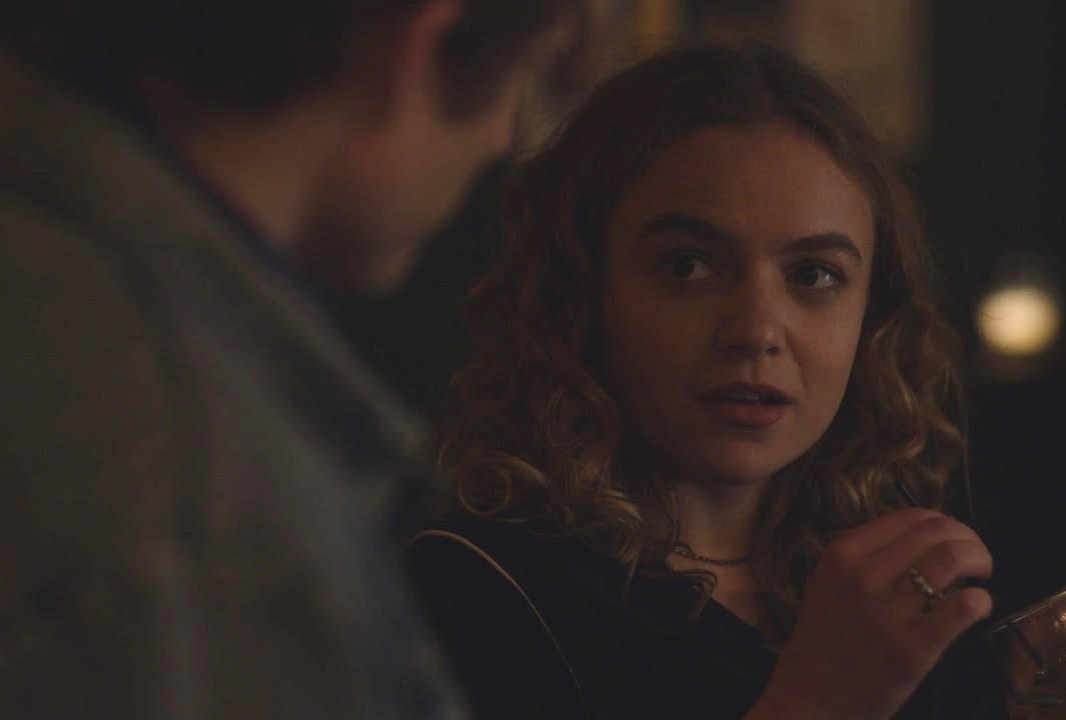
And if we believe that, which we do, why wouldn’t we believe a 60-year-old Sojourner Truth has the attitude and flair of the woman who plays her, 29-year-old Ziwe Fumudoh? “Dickinson” allows Ziwe to interpret the legendary abolitionist as a beacon of inspiration, the Iyanla Vanzant of the 1860s.

Like all the show’s historic celebrity cameos, that isn’t too farfetched; Sojourner Truth’s travels took her through Massachusetts around that time. As for the theory that she was as ageless as Angela Bassett, why not? “I lecture to testify to the hope that’s in me, BITCH!” Ziwe’s Sojourner declares as she fans herself theatrically, adding, “I’m 60!”

Ziwe, who recently appeared on “Succession,” is among a cadre of actors recruited to play a literary all-star from Emily Dickinson’s time. Before Eichner colorfully sends up Whitman, “Dickinson” gifted us with John Mulaney as a petulant Henry David Thoreau, Nick Kroll giving his best broodiness as Edgar Allen Poe and Zosia Mamet as an eager-to-cash-in Louisa May Alcott.

RELATED: Mulaney should play weird historical men

The important distinction in Sojourner Truth’s visit to Amherst, however, is that Emily isn’t her host. That honor goes to Amanda Warren’s Betty, the town’s dressmaker and a pillar of Amherst’s Black community. We are privy to Betty’s world because she’s part of Emily’s circle of confidantes. Emily respects Betty as a fellow creative spirit, as well as the wife of a fellow writer, Henry (Chinaza Uche). And we know about Betty’s hopes, anxieties, and invest in her and Henry’s well-being because series creator Alena Smith makes a point of drawing our focus to her story.

History writes Emily Dickinson as a recluse who only published about 10 of her hundreds of poems while she was alive and rarely if ever left her room. Smith designs “Dickinson” as an anachronistic feminist reading on the titular poet, bringing her to life as a woman alive with desires and ambitions she chooses to realize on her own terms.

The “Dickinson” creator and her fellow writers (including Ziwe, who shares a credit with her on the seventh episode, “The Future never spoke”) bring ample humor into her biography through scripts incorporating modern slang, 21st century dance moves and tracks from the artists such as Billie Eilish and Taylor Swift.  By seamlessly joining history with an array of modern kicks and edges, the show has cultivated a reputation for consistently surprising and delighting its audience.

We can sing similar praises of Hulu’s loose interpretation of Russian historical intrigue in “The Great” and Netflix’s Regency-style fantasy “Bridgerton,” each of which also populate their worlds with ethnically diverse casts. Elevating “Dickinson’s” approach above those  other shows, however, is its willingness to cash in a portion of its capital to tell the story of Emily’s time through its Black characters’ perspectives, and with the same wry lightness and hilarity.

“Dickinson” takes place in a fantasy version of Massachusetts and presents Emily’s hometown of Amherst as a place where Black and white neighbors co-exist amicably. Nevertheless, Emily and her family don’t pretend that Betty and her daughter have the same rights and privileges they enjoy. Betty is an independent business owner raising a child on her own and without the help of servants, whereas Emily and her dramatically inclined sister Lavinia (Anna Baryshnikov) would not have the time to socialize or create if not for their mother Emily Norcross Dickinson (Jane Krakowski) and her insistent housekeeping, assisted by Maggie (Darlene Hunt), the family’s maid.

“Dickinson” places its feminism front and center by focusing on how Emily and Lavinia empower themselves despite their controlling, patriarchal views of their father Edward (Toby Huss), who considers himself to be a doting, progressive father.  

By developing discrete storylines for Betty and Henry, however, the writers also delicately walk the walk of intersectionality. Granted, that term may not seem entirely applicable within the context of a show that remains primarily about a white woman, let alone a poet considered to be a bright star in America’s literary firmament without having to hustle for that honor like her life depended on it. But consider how “Dickinson” interprets fame in the series – how it shows rather than tells.

The concept is present and palpable in this new season, where the contemporary specter of liberal white “wokeness” possesses a Union officer named Thomas Wentworth Higginson (Gabriel Ebert). The real Higginson was an advocate for women’s rights before the war; the one on our screens is the patron saint of facepalms. Ebert’s Higginson means well, so much that he polices his language and makes ungainly utterances like “my brutha,” immediately appears to regret it but can’t stop doing it. He also writes for Atlantic Monthly, and this draws Emily to the idea of him. She wants to understand war, and who better to educate her than a fellow writer who has taken up arms?

The Dickinson family’s status enables Emily to hobnob with notable writers and publishers while Henry, another writer driven by existential purpose, has no choice but to secretly and anonymously publish an abolitionist newspaper until its discovery forced him to flee town.

The latest episodes find Henry in South Carolina, where he answers Higginson’s call to assist him with his command of the 1st South Carolina Volunteer Infantry Regiment, one of the first Black regiments the Union Army made up with formerly enslaved men.

With the Civil War drawing Emily’s friends and loved ones into the conflict, along with the fact that Ed has a brother living the South, the show must take us to battlefront. Doing so from the perspective of demonstrably courageous men who seized freedom for themselves and are nevertheless denied the resources – such as guns – to fight Confederate soldiers, is a conscious choice and a smart one.  Following the men of the 1st South Carolina Volunteer Infantry is a lot more interesting than tailing Emily’s school chums from their comfortable homes into the battlefield. We’ve seen that version of history told every which way.

Not seen as often are fictional depictions of Black regiments told with laughter amid joy while maintaining a reverence for their characters. (The regiment is made up of men such as Erasmus, who can see the future – which is handy for his brother in arms Michael Jordan.)  These men are devoted to being alive and thriving, and view fighting for the Union as their ticket to that true freedom. Henry, a free Black man, invests himself in bringing their goal to fruition even if it costs him his marriage.


Want great food writing and recipes? Subscribe to Salon Food’s newsletter, The Bite.


Earlier this year Smith spoke with Salon about her interest in “reclaiming and restaging American history to bring people into the center of it who have not traditionally been put there.” This storyline fits that mandate, and without being forced. The real Higginson probably wasn’t a mess of cringe-tastic political correctness; we can assume he wouldn’t have asked Henry to say he was “invited” for an audience with him instead of “summoned” to make him feel better about having a Black subordinate. (“I like to leave you the optionality. Keep it loose!” Ebert delivers with grace and a noticeable awkwardness.)

But we can picture him failing to advocate for the Black men under his command because that’s how these situations have always played out.

He’s also the bridge linking the intersection between the regiment’s struggles and Emily’s. She sends him her poems, and he’s knocked sideways by her command of language. He doesn’t see that she’s embroiled in her own war, one that the law is determined for her to lose.

In the penultimate episode Emily is reminded yet again that despite advocating for her father in his divisive conflict with Emily’s brother Austin (Adrian Blake Enscoe), and despite Austin’s irresponsibility and disrespect toward his wife and Emily’s great love Sue (Ella Hunt), Edward still views his bright daughter as less worthy to be his heir than his son.

This revelation is presented in tandem with the 1st South Carolina Volunteer Infantry’s realizing the government will never see these men as capable of handling weapons, only capable of dying for their cause. They can’t wait for permission to bear arms. Like Emily, Henry and the regiment have to take matters into their own hands to safeguard their right to remain alive under a stifling patriarchy.

Whenever “Dickinson” takes grand license with its heroine’s history my appreciation for this show is renewed. It’s one of those sparkling gems that’s likely to be appreciated more broadly in its afterlife, especially as Steinfeld’s stardom grows. Her role in “Hawkeye” has a higher profile, as most in the Marvel Cinematic Universe do. More viewers have an interest in superhuman archers than in an extraordinarily talented poet who actually walked the Earth. We get it!

But this is the story of a poet like no other, a woman who used her words to interrogate her inner life and the universes it held. Her verse is a lamp shedding light upon the mysteries of being human. One suspects she’d find no fault with her fame being used to realize untold and underappreciated stories, in the same way Sojourner Truth may have been tickled to be portrayed as a woman whose name is synonymous with confidence, and who makes a revolutionary’s life look fabulous.

The finale episode of “Dickinson” debuts Dec. 24 on Apple TV+, where all of its seasons are currently streaming.

More stories like this:

U.S. Generals issue chilling warning — civil war possible if another insurrection is attempted

Three retired United States generals are issuing a chilling warning about the possibility of yet another attempted coup in 2024. In an op-ed published by The Washington Post, former Army Major Gen. Paul Eaton, former Brigadier Gen. Steven Anderson, and former Army Major Gen. Antonio Taguba expressed concern about what the future holds for America’s fragile democracy.expressed concern about what the future holds for America’s fragile democracy.

“We — all of us former senior military officials — are increasingly concerned about the aftermath of the 2024 presidential election and the potential for lethal chaos inside our military, which would put all Americans at severe risk,” the generals wrote.

The generals laid out a hypothetical scenario that could lead to a divide within the armed forces if there is a repeat of what happened following the 2020 presidential election.

“Imagine competing commanders in chief — a newly reelected Biden giving orders, versus Trump (or another Trumpian figure) issuing orders as the head of a shadow government,” they wrote. Worse, imagine politicians at the state and federal levels illegally installing a losing candidate as president.”


Want a daily wrap-up of all the news and commentary Salon has to offer? Subscribe to our morning newsletter, Crash Course.


If the next election is also contested, there could be a divide when it comes to service members deciding where their loyalty lies. Although they’ve taken a vow to protect the U.S. Constitution, there could be debates about what that means if a presidential election outcome is fiercely challenged.

“All service members take an oath to protect the U.S. Constitution. But in a contested election, with loyalties split, some might follow orders from the rightful commander in chief, while others might follow the Trumpian loser. Arms might not be secured depending on who was overseeing them. Under such a scenario, it is not outlandish to say a military breakdown could lead to civil war.”

The generals warned that a divided military would leave the United States vulnerable in regard to national security. “In this context, with our military hobbled and divided, U.S. security would be crippled,” they wrote. “Any one of our enemies could take advantage by launching an all-out assault on our assets or our allies.”

Although the 2020 presidential election is behind us, the generals warned that now is the time to prepare for the future due to the ongoing division that still exists across the country. They later added, “With the country still as divided as ever, we must take steps to prepare for the worst.”

More news from the Jan. 6 committee:

11 odd Victorian Christmas traditions

Many of today’s treasured Christmas traditions — including decorating a tree, exchanging presents, and getting a visit from Father Christmas — began during the reign of Queen Victoria (1837-1901). Victorians also indulged in many more unusual Christmas traditions that have largely gone extinct. Some were the last gasp of ancient customs, others were unique to their time. If you’d like to find out more about some of the strangest Victorian Christmas traditions, “Yule” hopefully enjoy the list of 11 below.

1. PLAYING SNAP-DRAGON

Play with caution.INTERNET ARCHIVE BOOK IMAGES, WIKIMEDIA COMMONS // PUBLIC DOMAIN

This Victorian Christmas game, popular on Christmas Eve, involved putting fruit on a plate, dousing it in alcohol, setting it on fire, and then trying to pick out the goodies without injuring yourself. It was both dangerous and spooky, as the reflected flames made those gathered around the table look like demons. Even 19th-century writers acknowledged this could be a painful pursuit. “We shall have sport when Christmas comes, / When ‘snap-dragon’ burns our fingers and thumbs,” wrote Victorian poet Eliza Cook.

2. EATING UNAPPETIZING FOOD

Turkey dinners became an increasingly popular main dish at Christmas throughout the Victorian era, though it was often prepared in an unusual way and side dishes could be quite odd, if not downright gross. Mock turtle soup, stewed rockfish, furmenty, and potato pyramids were three recommended accompaniments. Turkey galantine — a stuffed, boiled, and gelatinized cold confection — was a particular favorite for the upper classes in Victorian England.

3. ATTACKING PEDESTRIANS WITH PEA-SHOOTERS

A number of Victorian sources remark on this schoolboy tradition. Young scholars returning home after a long semester of study would fire peas out of their carriage at innocent passersby.

4. SALUTING APPLE TREES

Wassail, an alcoholic punch made with apples, was an ancient but still popular drink at Victorian Christmas gatherings. In apple-growing regions like Kent and Devonshire, farmers would additionally toast or salute the apple tree and pour wassail over its roots in preparation for a good harvest year. Oh, and to ward off evil spirits, they might shoot at the branches with rifles.

5. ATTENDING “SCIENTIFIC” DEMONSTRATIONS

The brilliant scientist Michael Faraday inaugurated the tradition of Christmas lectures on science in 1825, a tradition that continues to this day. During the Victorian period, however, many of these lectures and demonstrations at other institutions were more spectacle than scholarship. The Adelaide Gallery, for example, paired performances of Handel’s “Messiah” with fantastical electrical displays, giant projections of microscopic beings, or demonstrations of laughing gas.

6. GOING TO THE CHRISTMAS CATTLE SHOW

“Although we are not amongst the admirers of unnatural fatness, we cannot refrain from visiting the Cattle Show,” one 1852 Christmas guide admitted. The Smithfield Club Cattle Show, which began in London in 1799, was a venerable tradition for many Victorians eager to see the enormous beasts that resulted from selective breeding and agricultural innovations in the 19th century.

7. GOING MUMPING

December 21, St. Thomas’s day, was for many Victorians the first event of the Christmas season, though it wasn’t a particularly happy one. Toothless beggar women (mumpers, from the Dutch word for “mumbling”) would go around town collecting alms. The practice was also known as “going-a-gooding” or “going-a-Thomasing.”

8. KILLING WRENS AND MARCHING THEM AROUND TOWN

On Christmas day or the day after, the boys of a village would slaughter a wren with a stick, mount it to a broomstick, and march from door-to-door on Dec. 26 asking for money or food. This ancient tradition, said to bring prosperity and fertility, was already dying out in Victorian England, but continued in Ireland. “This strange practice is by no means worthy of association with the other kindly ceremonies of this hallowed season,” complained one source in 1852. The hunting of the wren festival survives to this day (using a fake bird) in Dingle.

9. SENDING CREEPY CHRISTMAS CARDS

The Victorians invented the tradition of sending Christmas cards, though their taste in seasonally appropriate art was sometimes unusual. Dead birds, terrifying clowns, and gun-toting dogs were just some of the strange images that appear on cards from the era. “They’re only odd to our eyes,” Manchester Metropolitan University curator Stephanie Boydell told the BBC.

10. PUTTING ON A RIDICULOUS PLAY ABOUT ST. GEORGE

Christmas pantomimes are still enormously popular in England, but in Victorian times a different sort of comic play was the toast of the Christmas season: St. George and the Dragon. In the play the hero knight (St. George) slays the dragon, but audiences are also treated to other odd characters, including a comic doctor who revives injured parties and Father Christmas, “personified as a grotesque old man,” who did not give out presents. “I am not come here to laugh or to jeer, but for a pocketful of money, and a skinful of beer,” goes one version of the custom.

11. PLAYING A POTENTIALLY VIOLENT PARLOR GAME

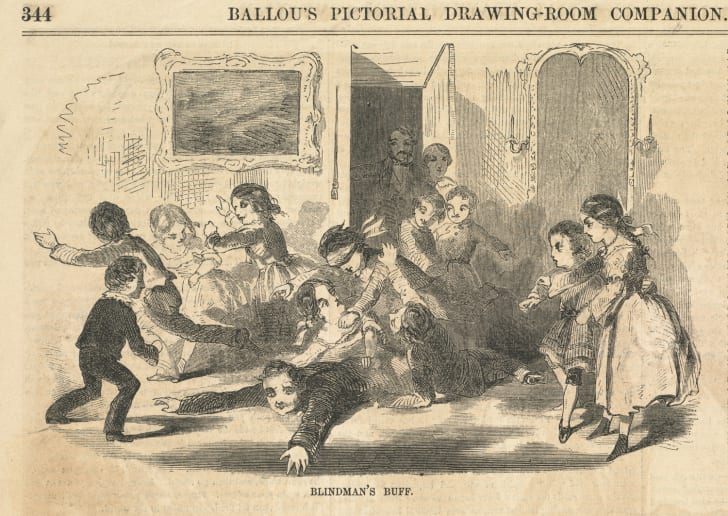
A rousing game of blindman’s buff. BOSTON PUBLIC LIBRARY, FLICKR // CC BY 2.0

“I have suffered much from Christmas games,” William L. Alden wrote in 1900. “I have played blindman’s-buff and caught the corner of a particularly hard pianoforte with my forehead.” This popular Victorian Christmas parlor game, in which a blindfolded person chases after hiding guests (like the game of tag), was notoriously dangerous — perhaps especially so after a festive libation or two. For all their austere reputation, Victorians knew how to throw a Christmas party.

Anti-vaxxers have co-opted the pro-choice slogan “My Body, My Choice.” Does that even make sense?

The phrase “My Body, My Choice” is mostly known as a slogan used to justify abortion choice — encapsulating the idea that, if women have autonomy over their bodies, they can choose to get an abortion (or not) if they wish. Yet since the arrival of COVID-19, the phrase has taken on a new meaning, and in new circles: first, as a rationale for not wearing masks in public settings; and later, as a rationale for not getting vaccinated.

Ironically, anti-vaxxers who most vocally appeal to the phrase tend to be conservatives who firmly reject the logic of “My Body, My Choice” when applied to abortion. Some liberals – often crunchy types – are both pro-choice and anti-vaxx, though they tend to be quieter.

But does this logical proposition really apply in the same way? In other words, does it make sense for conservatives to reject women’s right to bodily autonomy regarding abortion, yet assert their own right to bodily autonomy against vaccination? Likewise, does it make sense for liberal anti-vaxxers to embrace the right to abortion and the right to not vaccinate and wear masks?

As a philosophy professor who teaches logic and critical thinking, I have been following this evolution of the use of the “My Body, My Choice” slogan with great interest.

Conservatives often claim that if we are going to allow abortion, we surely should allow anyone who wants to refuse vaccination. (Since they view abortion as wrong, this reasoning is odd: “You get to do what we think is evil, so we should be allowed to do what we think is right”?).

Liberal anti-vaxxers similarly argue that since society should acknowledge that women have the right to be free to decide to no longer be pregnant, we should affirm the liberty to make our own decisions about masks and vaccinations.

These arguments, however, fail to see the relevant differences between abortion and anti-vaccine / anti-mask COVID responses. Meanwhile, both liberal and conservative commentators tend to miss the most important differences. Noticing these differences might help get more people vaccinated and willing to do what needs to be done to more quickly move past this pandemic. And it might even help with protecting abortion rights too.

* * *

To begin, let’s notice that everyone agrees that the message of “My Body, My Choice” is sometimes appropriate.

Suppose it’s a sunny day and someone insists that you wear some sunblock so you don’t get sunburnt. Or imagine someone demands you try some new cream that they believe will make your skin look better.

But you don’t want to. If you respond, “My Body, My Choice,” that is a legitimate appeal to the phrase. In general, we shouldn’t be forced to do things to our own bodies that we don’t want to do, especially in cases where nobody else is harmed by what we are doing.

Pro-choice people often appeal to this idea to justify abortion. While they might not put it in these words, they believe that embryos and at least beginning fetuses aren’t really harmed by abortions: they can’t feel anything or have any perspective on the world. They are killed, yes, but they aren’t harmed, at least not in the ways born people are harmed if killed.

That is a plausible view, although it does depend upon an abstract, but not uncommon, sense of what harm is and knowing what embryos and beginning fetuses are like.

Some pro-choice people also assert “My Body, My Choice” since they believe that we shouldn’t be forced to do things with our bodies if nobody has a right to demand that we do those things.

The idea behind this response is that, even if fetuses are persons with the right to life and would be harmed by abortion, abortions are nevertheless permissible, since we aren’t always obligated to save or preserve other people’s lives and we shouldn’t be forced to do that: women’s rights to their own bodies, even when their bodies are needed by others to live, can justify abortion. So “My Body, My Choice” is justified by the right to one’s own body and the fact that others do not have rights to other people’s bodies.

* * *

Abortion critics deny both these pro-choice applications of “My Body, My Choice” to abortion. They might say that, unlike one’s choice to wear sunscreen or skin cream, that with abortion it’s not just your body! In other words, they might say that it’s not OK to make choices that negatively affect others’ bodies, especially if that results in them being killed. And we often really should help other people, especially children, whether they have a right to that help or not: talk of rights can distract from basic concerns about doing good for others.

At first glance, this reasoning – when applied to abortion – may seem plausible, at least to some: after all, fetuses are alive, and human (at least in a biological sense), and all the people we know of are human. (This can lead people to mistakenly believe that being human and being a person are the same thing). And it is normal to feel like we really should help others. Moreover, many people have seen what appear to be gruesome pictures of abortions and conclude that all or most abortions are like what they’ve seen in those pictures and so wrong, according to what they think are basic and obvious moral standards.

The case against abortion isn’t ridiculous: abortion critics have claims and observations that need to be seriously engaged with. Doing this successfully, however, requires thinking about what rights are and why anyone has them, skills in navigating potential moral conflicts, and understanding what embryos and fetuses and most abortions are actually like. Many people simply dismiss, without engaging, the case against abortion, and this strategy does not seem to be working well

Our main question though is this: for people who believe that “My Body, My Choice” does not justify abortion — would it make sense for them to appeal to “My Body, My Choice” to reject masks and vaccination?

Yes — in part. 

This is because, rarely, if ever, does not wearing a mask or not getting vaccinated directly and intentionally cause the death of anyone else. People who object to abortion do so for that exact reason – they claim abortion is wrong because it intentionally kills an innocent person – and that reason just doesn’t apply to mask-wearing and vaccination.

So in that way, they can sensibly deny that “My Body, My Choice” justifies abortion, but affirm that it justifies their non-compliance concerning wearing masks and getting vaccinated against COVID. They can claim that abortion is direct, intentional killing which is wrong, and that not wearing a mask or getting vaccinated is not that.

* * *

This, however, is where things might end, in terms of things making sense. This is because there are more ways to do wrong than intentional killing — and human actions can sensibly be prohibited by the government, even if they don’t constitute something as egregious as intentional killing.

People not wearing masks (in many public, indoor places: none of this applies to hermits and people in literally isolated communes) and/or not getting vaccinated, does create some risk of others being seriously harmed, such as dying, even though that harm is not intentionally inflicted: that a virus passes airborne from someone to someone else is usually not a matter of what anyone intentionally does; although it sometimes is — for example, when horribly rude, disrespectful and gross people intentionally cough and sneeze on others.

Certainly, at a collective level, that risk is high: the fact that too many people are not wearing masks and getting vaccinated is contributing to — perhaps in a sense creating — our present problems with COVID. In nearly all cases, nobody is better off for not getting vaccinated: not that individual, the people around them or society as a whole.

Many (pro-choice) people think that people who call themselves “pro-life” would care about others’ lives in these ways and be willing to put in the minimal effort to minimize risks here. This expectation is understandable, given the “pro-life” label. But it’s important to understand that the typical anti-abortion argument, which appeals only to the wrongness of intentional killing, does not imply its corollary: that in being pro- “life” in the general sense, masking and vaccinations should be required so as to perpetuate all of us living longer.

Nevertheless, these easy efforts to try to reduce harm and risks of harm to others are required not by any sense of being “pro” life, but rather by basic moral decency: while we really should be Good Samaritans to other people, here we only need to be Minimally-Decent Samaritans, since doing what’s right here is easy, of minimal risk to ourselves and we ourselves might benefit from doing so. Wearing masks and vaccinating does that better than refusal does.

* * *

But there is one more group that appeals to the “My Body, My Choice” proposition in a way that might seem more consistent. What about pro-choicers who refuse to mask and vaccinate?

Someone of this demographic is apt to be pro-choice either because they think fetuses are not persons; or, perhaps, because they think that nobody, including a fetus, has a right to their body.

But this pro-choice case in favor of abortion does not extend to refusing masking and vaccinations. Even if fetuses are not persons, COVID-avoidant people are, well, people. And people have the right to demand that, if you are going to be around them and so be a potential danger, you must do what will make your body safer to everyone else’s body: it’s not just your body! This is not anyone claiming a right to your body: again, if you want to stay home and not interact with COVID-avoidant people, that’s your right.

* * *

It’s a consequence of our own rights to our bodies that we can legitimately tell others that, unless they are going to make an adequate effort to be safe, they can’t be around us. Insofar as the government is supposed to protect individuals’ rights to their lives and liberty, government intervention is appropriate, especially if people won’t willingly respect others on their own free will.

“My Body, My Choice” is about freedom and liberty, but for all who have it. When our choices restrict others’ freedom, we cannot make those choices. This is part of why abortion is generally OK: a beginning fetus lacks any will or desires necessary for having or lacking any type of freedom or autonomy. And for people who don’t want to get COVID, their liberty should be respected: for them, we should be vaccinated and wear masks, if we aren’t doing so already. It’s our bodies, and so our choice to not be around bodies that choose to not respect our bodies.


Want more science and philosophy stories in your inbox? Subscribe to Salon’s weekly newsletter The Vulgar Scientist.


Aldi’s best Christmas food gifts are all under $10

If you’ve been reading Food52 for a while (welcome back!), you know that we love Aldi, the German-family owned discount supermarket chain. It’s also beloved worldwide for its can’t-believe-your-eyes prices and creative food finds. While you can score quality food and drink from Aldi year-round, we think that, like most things, it shines brightest during the holiday season. If you’re looking for a quick and inexpensive (Yet thoughtful! Delicious! Different!) gift for family members, co-workers, neighbors, that guy you have only gone on four dates with, your mailman, or your favorite barista, look no further than these festive food gifts straight from our go-to Christmas retailer.

1. Desert Heat Hot Sauce Gift Set, $4.99

For the person who insists that they don’t want anything for Christmas, consumables are always a good idea. And at under $5, the price is right on this four-pack (though it looks way more expensive).

2. Specially Selected Premium Shrimp Ring, $8.99

It’s not the holiday season without a shrimp ring and cocktail sauce. Fortunately for festive partygoers everywhere, this one will be released in Aldi stores on Dec. 22, just in time for a delicious Christmas (Shrimpmas?) gathering.

3. Simply Nature PB&J Bites, $4.69

Is there anything particular Christmas-y about PB&J bites? Not really. But in the spirit of giving, I had to share these adorable, poppable snacks, which will be available in Aldi stores on December 29th.

4. El Sabroso Holiday Tortilla Chips, $1.89

What’s red and green and salty all over? These Christmas tortilla chips from Aldi that ring in at under $2.

5. Crafty Cooking Kits Elf on the Shelf Baking Kits, $3.49

Little ones are OBSESSED with their Elf on the Shelf and now they can decorate holiday sugar cookies that look just like their silly Christmas pals. But unlike the real Elf, you can touch these (which is a good thing because they’re so sweet and delicious).

6. Nestle Disco Semi-Sweet & Edible Glitter Morsels, $2.48

I mean, this is just totally and completely epic. Chocolate chips tossed with edible glitter are just begging to be baked with for New Year’s Eve.

7. Specialty Selected Brioche Star, $5.99

From now on, I will be requesting all of my bread (all! of! it!) to come in this festive shape that glistens like the star of Bethlehem.

8. Berryhill Lemon Curd, $2.79

If you’re hosting guests for the holidays, bake a batch of scones for breakfast and serve this tangy lemon curd alongside them so you can say “oh, it was no trouble at all” and mean it.

9. Reggano Christmas Shaped Pasta, $.99

Upgrade your go-to quick and easy pasta recipe with these festive red and green cut-outs from Aldi (is that Santa and his sleigh?).

10. Emporium Selection Gouda Holiday Trees, $3.99

Who needs an actual Frasier Fir when Aldi is fully stocked with these under $4 packages of pre-cut tree-shaped tree bites?

11. Clancy’s Pretzel Rods or Holiday Shapes, $4.29

Pretzel rods feel so right for Christmas snacking. They’re usually dipped in white or milk chocolate and sprinkled with red and green glitter for a treat that we’ll never, ever get sick of.

12. Benton’s Holiday Music Tins, $5.99

Another huge bargain from Aldi! These musical tins are filled with sugar cookies cut out in festive shapes. But wait . . . musical tins? That’s right — each one plays classic holiday songs like “O Christmas Tree,” “Winter Wonderland” and “Let it Snow” whenever you open it.

13. Simply Nature Organic Pesto Genovese or Rosso, $2.99

The reason why we and so many people love Aldi so much is that you can get organic pesto that tastes like the basil was grown under the Tuscan sun for just $2.99. Maybe it was and maybe you should serve this on a cheeseboard with balls of bocconcini arranged in the shape of a Christmas wreath (you definitely should).

14. liveGfree Assorted Varieties Donuts, $4.49

Look no further for the perfect Christmas morning breakfast than these cranberry studded donuts, which are gluten-free so hopefully everyone at your table can grab one and enjoy.

15. Baker’s Corner Christmas Jumbo Cookie Kit, $4.99

Obviously I will be baking with this Aldi cookie kit that dubs itself “Reindeer crunch” — what this means in human terms is a white chocolate cranberry cookie mix with pecan pieces to mix throughout.

16. Nestle Morsels & More Peppermint Hot Cocoa, $3.48

Oh what fun it is to bake with this trio of festive mixes that includes mini marshmallows, swirled peppermint squares, and milk chocolate morsels. Scatter them in milk chocolate bark, fold them into sugar cookie dough, or sprinkle them on top of a cup of hot cocoa.

17 Priano Christmas Gnocchi, $1.99

Reader, when I tell you that I zoomed in on this photo of “Christmas gnocchi” and said “you’ve got to be kidding me . . .” my heart cannot handle the fact that these mini potato dumplings are formed into the shape of mittens and Santa hats. This is exactly why we love Aldi.

“Stop the Steal” founder Ali Alexander points finger at GOP Congressmen in Jan. 6 testimony

One of the principal organizers of the Jan. 6 “Stop the Steal” rally that preceded a deadly riot at the U.S. Capitol disclosed names of several Republican lawmakers who he was in communication with prior to the attempted insurrection, according to a new report.

Lawyers for Ali Alexander, who played a key role in founding the “Stop the Steal” movement which sought to use false claims of election fraud to overturn the 2020 election results, confirmed in a new court filing that he spoke with GOP Reps. Paul Gosar, Mo Brooks and Andy Biggs in the days leading up to Jan. 6.

Alexander’s accounting of his communications is the most detailed look yet at the Republican lawmakers’ role in encouraging and planning for the events of Jan. 6, and gives the committee new ammunition in seeking information from Republican colleagues who embraced fringe right-wing figures in their unsuccessful attempt to keep then-President Donald Trump in power. The details were included in a lawsuit Alexander filed Friday, in an attempt to stop the Jan. 6 committee from pulling his phone records from cellular service provider Verizon. 


Want a daily wrap-up of all the news and commentary Salon has to offer? Subscribe to our morning newsletter, Crash Course.


During his appearance before the committee, Alexander apparently “testified that he had phone conversations with Rep. Brooks’ staff about a ‘Dear Colleague’ letter and how his activists could be helpful,” according to POLITICO. He also reported speaking with Gosar over the phone several times, as well as a few in person meetings with Biggs. 

At one point, Alexander even briefly posted a video online — which has since been deleted — claiming the original idea to stop Congress’ Jan. 6 certification session was his alone, and that he worked with Gosar, Biggs and Brooks to try and make it happen.

“We four schemed up to put maximum pressure on Congress while they were voting,” Alexander says.

Both Biggs and Brooks denied to POLITICO that they ever met with Alexander, while Gosar has openly appeared at events with him but refused to comment on their relationship.

More news from the Jan. 6 committee:

“West Side Story” may be timeless — but life in gangs today differs vastly from the Jets and Sharks

The songs are timeless, the casting contemporary and dance routines still daring.

But for social scientists like us, Steven Spielberg’s remake of the 1961 hit musical “West Side Story” — a film about two rival street gangs — is more than a 21st-century face-lift of a Broadway classic. Released in theaters on Dec. 10, 2021, it is an opportunity to consider societal changes in the six decades since Maria and Tony stole the hearts of audiences across the world — particularly in the world of gangs.

As scholars who have studied gang culture, we find that the soul of the street gang hasn’t changed much since the days of the Jets and the Sharks — but the world around them has. Demographics, economics, technology and public policy have reshaped and reshuffled gang life in America. So dramatic are the changes that the romanticized “West Side Story” characterization of gangs is now a relic of a bygone era.

Evolving demographics

Perhaps the biggest shift in gangs is skin-deep — urban white-ethnic neighborhood-based gangs like the Jets no longer really exist.

Ethnonational conflict among Italian, Irish, Jewish and Polish youth in cities like Boston, Chicago, New York and Philadelphia culminated with the end of mass migration from Europe in the early to mid-20th century. Many urban white people moved to the suburbs in the 1960s and, generally speaking, took their gangs with them. Today, when people think of the American street gang, they are more likely to think of Black gangs, like the Bloods and Crips, or Latino gangs, like the Nortenos and Surenos. White street gangs are located outside of urban areas and cast as domestic extremists such as the Proud Boys, Three Percenters and Skinheads.

The gang as an American enterprise

The gangs of the “West Side Story” era were often a normal yet fleeting aspect of adolescence, soon to be supplanted by work, marriage and children.

But in the 1970s and 1980s, globalization and industrial restructuring caused the well-paying, stable blue-collar jobs that young men in gangs were qualified for to largely disappear. Around this same time, gang involvement became more prolonged into adulthood and intergenerational within families.

This era also coincided with an increase in imported drugs such as heroin and crack cocaine. With the rise of the illicit drug economy, the gang itself became an institutionalized route to mythologized riches. Gang activity expanded throughout the country, emerging in the suburbs and even rural towns, leading to the most recent estimates from the National Gang Center of 31,000 gangs and 850,000 gang members.

The West Side goes digital

Gang life saw more changes with the emergence of the internet. The internet and social media were in the realms of far-fetched fantasy when “West Side Story” was made, but they now provide a repository for gang content, a blueprint for gang activity and a catalyst for gang conflict. A modern “West Side Story” would entail taunts on Twitter, fights over Facebook, and reliving the rumble on Reddit.

Word always traveled fast on the streets; “West Side Story” shows that well. But social media makes it faster, more public and more permanent. Gossip, taunts and threats are now broadcast to a much bigger social world — in some cases, with violent consequences.

Gang violence becomes deadlier

Contemporary gangs “shoot it out” rather than “slug it out.” In the 1960s, there were several hundred gang homicides annually; now there are several thousand.

When compared with other homicides, gang-related homicides disproportionately involve the use of firearms. Firearms are far more prevalent and accessible now than when “West Side Story” was conceived. But what original “West Side Story” director and choreographer Jerome Robbins understood back in the 1950s still holds true: When guns and knives are present, pushing and shoving can escalate quickly into stabbing and shooting. The movie’s fateful knife fight dramatically illustrates this.

Gangs are a criminal justice priority

As gangs and violence proliferated in the decades after “West Side Story” first hit screens, the cure for the Jets’ self-diagnosis of “sociological sickness” has shifted from social work to suppression. Criminal justice is now the rule of the day. Beat police officers like Officer Krupke and Lt. Shrank have been replaced by gang unit officers and special investigators tasked with gathering intelligence and documenting and collating gang members in databases.

States also responded legislatively to gangs. California first passed its anti-gang laws in 1988, and 44 states have since followed suit. Gang membership and recruitment have been criminalized, while sentencing enhancements for crimes with a gang nexus have been controversially introduced.

In the days of “West Side Story,” gangs were not a significant issue in prisons. Since the onset of mass incarceration in the 1970s, prisons have become a vector for gang activity — around 15% of U.S. prisoners today are affiliated with gangs.

American street gangs in the 21st century

It is impossible to understand gangs in the 21st century without considering how the world around them has shifted. And while structural shifts in policy, population and technology clearly matter, what is perhaps the starkest change has little to do with the gangs themselves, but the way in which the general public and the legal system stigmatize the children within them. The average age of a gang member is 15 — these are kids who are trying to survive in the worst of circumstances.

If the gang was a rite of passage when Riff and Bernardo roamed the streets of New York City in “West Side Story,” the reality of the contemporary gang has become much bleaker because of worsening violence, mass incarceration and other factors that have operated largely outside of their control.

“West Side Story” harks back to simpler times, with less polarization and violence. Perhaps it could also assist in revising what we know about gangs and reforming some of our more punitive impulses to respond to them.

[Like what you’ve read? Want more? Sign up for The Conversation’s daily newsletter.

David Pyrooz, Associate Professor of Sociology, University of Colorado Boulder; James Densley, Professor of Criminal Justice, Metropolitan State University , and Scott H. Decker, Foundation Professor of Criminology and Criminal Justice, Arizona State University

This article is republished from The Conversation under a Creative Commons license. Read the original article.

Right-wing authoritarianism is winning — but higher education is where we can fight back

The future of democracy in the United States will not be determined by the malignant decisions made by a reactionary group of Supreme Court justices. Nor will it be decided by the existence of voter suppression laws, the ubiquity of the Big Lie, massive structural inequality or the rise of white nationalism to the centers of power and a politics dominated by white supremacist ideology. Nor will it be decided by the rhetorical accelerant endlessly produced by Donald Trump, with his frequent allusions to violence and armed revolt.

It will be decided by the increasing collapse of conscience, the undermining of truth and a mass consciousness that supports violence as a central weapon for social change. To the degree that the public can be convinced, as Judith Butler argues, that the “call for democracy is interpreted as sedition [and] the call for freedom is taken to be a call to violence,” democracy will suffer from a legitimation crisis and will disintegrate. Under such circumstances, it will be easier for the abyss of fascist politics to gain more legitimacy and prevail in the United States.

Violence in the United States has gone into overdrive. Building on a history of disposability, genocide and militarism, it increasingly has gained support, particularly among the Republican Party, as a potentially justifiable path to power. How else to explain the shocking defense by most Republicans of the insurrection against the Capitol on Jan. 6 as “a patriotic attempt to protect the nation against its enemies”? How do reason and justice prevail in a society when the legal justification given to macho-infused vigilantes in the aftermath of the Kyle Rittenhouse acquittal provides them with a pass to shoot, if not kill, peaceful protesters? How else to clarify the rise of deadly misogynist violence, operating under the discourse of surveillance and vigilantism, that has moved from Texas to the law of the land, subjecting women to an incriminating reality that dictates that they are second-class citizens who can no longer have control over their reproductive rights? How else to address the rise of a gun culture that trades on fear to immunize people to the tsunami of mass shootings, suffering and death that appears as an everyday experience in the United States?

RELATED: White terror: Millions of Americans say they’d support violence to restore Trump to power

How does one explain crazed images of guns being celebrated in the social media by Republicans, as if the spectacle of violence does not present a danger to a larger public? In one telling instance, Rep. Thomas Massie of Kentucky “posted a Christmas picture of himself and what appears to be his family, smiling and posing with an assortment of guns, just days after four teenagers were killed in a shooting at a high school in Michigan.” Accompanying the image was the tweet “Merry Christmas! ps. Santa, please bring ammo.”

The image is more than insensitive, it endorses a hyped-up version of gun culture while maximizing the pleasure potentially produced by an obsession with guns and the threat of violence (after all, it was intended as a virtual Christmas card). What Massie mimics in this Christmas family photo is an echo of the cruelty and pornographic fascination and celebration of the spectacle of violence central to a fascist politics. This merging of pleasure, moral irresponsibility and cruelty offers legitimation for the horror of violent acts, including the threat of violence as a political weapon. The image is symptomatic of a moral and political depravity that defines the Republican Party and its obsession with violence, fear and death.

With the rise in hate speech, right-wing extremist violence, gerrymandering, voter suppression, police violence and staggering economic, health and educational disparities, UN special rapporteur Fernand de Varennes stated that “the United States is becoming a darker, nastier, and more divided society.” It should come as no surprise that a number of organizations, from Freedom House to the European think tank International IDEA. report that democracy, at least what is left of it, is eroding in the United States.

Right-wing extremists have redefined the notion of freedom by detaching it from any sense of the common good and ethical considerations while reducing any vestige of liberty to an individual and utterly privatized right. Mimicking neoliberal values, freedom now flees inward, reduced to almost pathological self-centeredness that is increasingly hostile to the common good, matters of mutual support and social responsibility. Concerns for the public good, if not the social bonds that hold societies together, are undermined by an all-encompassing retreat into personal responsibility, which places the burden of change entirely on the individual. In this instance, freedom is privatized, hollowed out and emptied of any considerations for social costs. Evidence of this retreat from social responsibility is evident in the refusal on the part of many Trump supporters to get vaccinated against a deadly virus regardless of the suffering and death it causes to others. This position is now largely justified by extremists in the name of individual freedom and self-determination.

The language of violence has become normalized among a Republican Party that is indifferent to its fringe elements, who increasingly threaten the lives of politicians they disagree with. Moreover, it has become ensconced in the collective consciousness for a large segment of the public as a routine way to address social problems, drive political rhetoric and annihilate dissent and resistance. Violence now defines the very essence of politics and increasingly has become a routine element of everyday life. School shootings have become an everyday occurrence, further accelerated by Republican legislators who argue that anyone should be able to buy as many guns as they want, regardless of the danger gun violence poses to the public. As blood flows in the corridors of malls, schools, synagogues and houses of worship, right-wing Republicans talk more openly in violent terms, threatening their opponents with the use of force and mobilizing their followers with a call for armed confrontation.

Unsurprisingly, one revealing and increasingly symptomatic incident took place in October at a conservative rally in western Idaho. A young man stepped up to a microphone and asked, “When do we get to use the guns” to start killing Democrats? The audience applauded. He then asked, “How many elections are they going to steal before we kill these people?”  Lisa Lerer and Astead Herndon of the New York Times reported that “the local state representative, a Republican, later called it a ‘fair’ question.” The racist spirit of the Ku Klux Klan and a politics of racial cleansing have merged with the unchecked greed and systemic violence of a Second Gilded Age to create an updated fascist politics that now drives the Republican Party.

As white supremacy moves from the fringes of politics to the centers of economic, political and social power, the boundaries of those considered disposable and unknowable widens through escalating police violence, voter suppression laws and the ever-increasing poison spread by right-wing social media. Views critical of racism, the attack on academic freedom or the lies of those who thrive on denouncing reason and science are dismissed as fake news, while those journalists, school board members, politicians and educators who oppose a rising fascist politics are subject to insults, threats and violence. In addition, the Republican Party’s drive to ensure minority rule is working overtime to gut labour rights, destroy the environment, subvert majority rule, roll back the protections for LGBTQ people, women, people of color, young people and others who have benefited from civil rights gains that have been won through generations of struggle.

RELATED: Can American democracy escape the doom loop? So far, the signs are not promising

The Republican war against reason, critical education and thinking itself is working. Violence is increasingly accepted by many people in the United States as a solution to addressing political problems. The language of militarism and violence dominates much of right-wing social media and its pedagogical reach keeps growing. For instance, the rising threat of extremism is evident in the growing culture of racism nurtured by the Republican Party and its acolytes. Anthony DiMaggio’s analysis of the Republican Party’s alignment with white supremacist views is eye-opening and worth quoting at length: 

[E]ight in ten Republicans feel that “America is in danger of losing its culture and identity,” and nearly as many Republicans (79 percent) agreeing that “the American way of life needs to be protected from foreign influence.” Conceptions of American identity clearly overlap strongly with white supremacy, with 51 percent of Republicans agreeing that “America must protect and preserve its white European heritage,” and an equal number saying “a culture established by the country’s early European immigrants” is “important” “to the United States identity as a nation.” … Nearly two-thirds of Republicans base their commitment to protecting American identity on reactionary religious values, with 63 percent saying that one must be Christian to be “truly American.”

The Jan. 6 insurrection was one stage in the evolution of a politics that now enshrines violence as a potential path to power. Racial terror and a clarion call to violence dominate American politics, amplified by a mainstream press that refuses to name it as a form of fascist politics, and a right-wing media that revels in a spectacularized culture of threats and violence. Aaron Blake, writing in the Washington Post, states that “not only do 31 percent of American adults … believe the election was stolen [they] also sympathize with the statement that ‘because things have gotten so far off track, true American patriots may have to resort to violence in order to save our country.'” 

Citing an American Enterprise Institute poll, DiMaggio states that more than 39 percent of Republicans agree that “if elected leaders will not protect America, the people must do it themselves, even if it requires violent actions.”

The landscape of violence no longer hides in the dark or on the fringes of politics, as was obvious with the Jan. 6 attack on the Capitol. In addition, there are the many instances of violence emerging in the last few years from the politicians loyal to Trump along with many of his followers. Some of the more visible and threatened acts of violence include Rep. Paul Gosar’s cartoon depiction of “killing Rep. Alexandria Ocasio-Cortez (D-N.Y.) and swinging swords at Biden.” There is also Rep. Marjorie Taylor Greene’s claim that the only way to get freedom back is “with the price of blood.” 

RELATED: Paul Gosar’s death-threat video is no joke — it’s part of the Republican terror strategy

Greene’s call to violence became more specific in a video in which she endorsed “calls to execute FBI agents deemed disloyal to President Donald Trump and to target top Democrats, including ‘a bullet to the head’ for Speaker Nancy Pelosi.” More recently, former Trump adviser Michael Flynn, who now sees himself as a spokesperson for a fundamentalist religious army, advocates a right-wing Christian takeover of America with his call for “one nation under God and one religion under God.” Flynn is simply symptomatic of the theocratic war being waged by right-wing radical Christian extremists against both democracy and Christianity. This unholy alliance between Christian extremists and fascism is now a fundamental force in the Republican Party and its theocratic wing is as dangerous as its motley group of white supremacists, neo-Nazis and militia movements.

Unsurprisingly, the vast majority of the Republican Party, including House Minority Leader Kevin McCarthy, have refused to censure these calls to violence, giving credence to Greene’s claim that “We Conservatives [in the House of Representatives] aren’t the fringe. We actually represent the base of Republican voters, which is approximately 70%. And when the party learns to represent Conservative Americans, we will never lose again.”

Jonathan Freedland is right in stating that Greene and “Gosar are in lockstep with a Republican Party whose face can be seen in the death threats now routinely meted out … to nationally famous politicians such as AOC” and others. The threats of violence on the part of the Republican Party and a large majority of its supporters are only one register of its drift toward authoritarianism. A more significant concern is how such violence works in tandem with a range of cultural apparatuses to legitimize the use of such violence as part of the drive to destroy democracy and instill an authoritarian government.

The threat of murderous violence is not restricted to Trump’s unhinged political flunkies. Such threats also inhabit the daily world of micro-aggressions aimed at destroying the day-to-day social relations that enable people to gain some control over their lives. We live in the age of Trump-inspired raging mobs. Heather Cox Richardson makes some of these micro-assaults visible in her claim that violent gangs are becoming a central political force in America. She is worth quoting at length.

Since January 6, angry mobs have driven election officials out of office in fear for their safety. In increasingly angry protests, they have threatened school board members over transgender rights and over teaching Critical Race Theory, a legal theory from the 1970s that is not, in fact, in the general K–12 curriculum. Now, as the coronavirus rages again, they are showing exactly how this process works as they threaten local officials who are following the guidelines issued by the Centers for Disease Control and Prevention to require masks. Although a Morning Consult poll shows that 69% of Americans want a return to mask mandates, vocal mobs who oppose masking are dominating public spaces and forcing officials to give in to their demands. In Franklin, Tennessee … anti-mask mobs threatened doctors and nurses asking the local school board to reinstate a mask mandate in the schools. “We will find you,” they shouted at a man leaving the meeting. “We know who you are.”

As Brad Evans, one of our most astute theoreticians of violence, has made clear, the long legacy of violence espoused by Trump and his acolytes constitute not simply the development of slow violence at work in emptying politics of its democratic values, but the degree to which violence has become routinized and politics turned into a machinery of fear, terror and death. War, militarism and violence now dominate the public imagination in the United States. Underlying the diverse attempts of right-wing Republicans to destroy public education, overturn election results, subvert abortion rights and produce malign forms of lawlessness in different forms of disenfranchisement is a long-term goal of destroying any vestige of democracy and the public institutions that support it. There is more at work here than the debasement of politics, there is also a systemic struggle to undermine the public imagination and create the conditions for the wider public to internalize the need for violence as a form of habitual domination.

What ties all these incidents of violence together — whether it be an attack on dissent, women’s abortion rights, voting rights or social justice — is both a limited understanding of the theories and practice of freedom and the growing repressive educational forces that serve to depoliticize people. In this case, the forces of authoritarianism are deepened and extended throughout American society through an image-based culture of manufactured ignorance and an overcharged cult of lies produced both in right-wing cultural apparatuses, toxic social media spheres and current attacks on public and higher education. At the heart of this emerging rebranded fascism is a politics deeply at work in the struggle over consciousness, identity, subjectivity, values and agency. As Paul Street observes, “Public knowledge is a matter of life and death,” particularly when it is conditioned to offer little resistance to “the political hurricane of white nationalist authoritarianism — fascism, American-style — [that] is bearing down on the United States today.”

RELATED: Republicans’ war on education is the most crucial part of their push for fascism

The merging of historical amnesia, manufactured ignorance and a culture of fear and violence have become a major pedagogical force in American politics and culture. Yet this ongoing struggle over consciousness waged by proto-fascists through diverse forms of political and popular education in a variety of cultural sites is largely underplayed or ignored as a dangerous force in American society. This misunderstanding and theoretical failure is particularly true among liberal and left-oriented critics, except for a few public intellectuals such as Angela Davis, Robin D.G. Kelley, Noam Chomsky, Paul Street, Tony DiMaggio, Jeffrey St. Clair and some other journalists and public intellectuals. There is little sense among too many educators, cultural workers, protesters and anti-capitalist and anti-racist groups that politics is educative.

What I am suggesting is that there is little hope for social change unless people can be persuaded to invest in a politics in which they can recognize themselves and their problems, and can develop a moment of recognition and broader understanding of resistance, politics and collective struggle. Of course the Black Lives Matter movement and other anti-racist and social justice advocates are trying to change our understanding of the crucial relationship between education and politics, but their voices are under-emphasized, and they are largely muted by the dominant right-wing media from reaching large segments of the American public.

It is not enough for those of us struggling for a radical democracy to be horrified over the workings of the Trump Supreme Court, the fascist politics being implemented by right-wing state legislators, the normalization of white supremacist ideology, the expanding forms of domestic terrorism and the ever-present culture of cruelty and violence that has enveloped in the United States. If people cannot escape from the ideological terror machinery of culture that convinces them that all their problems are a matter of individual responsibility, that matters of class, racism, misogyny and other forms of oppression are not systemic, and that the privatization of everything should not be viewed as a powerful form of depoliticization, the United States will soon move to a full-fledged, rebranded fascist social order. There is no genuine democracy, collective move for resistance and expanding defense of public goods without genuine opposing critical power, and that power at its core is educational.

The failure of progressives to recognize this is evident in too many short-sighted treatments of the Republican Party’s attack on “critical race theory.” This is not simply an attack on history as dangerous memory, dissent, academic freedom and racial injustice. This is a much broader attack on the very institutions that produce engaged citizens, critical agency and critical thought itself. It is a full-fledged attack on both the democratizing purpose of education and the institutions that support its democratic possibilities. Under the narrow rubric of an attack on critical race theory, what we are witnessing is a wider attack on the ability to link moral authority with intellectual competencies that extend from learning history and learning civic virtue to critically engaging the most malign threats to democracy and social and economic justice. This is even more reason to take seriously the attack on education in the specific and broader sense as one of the main sites of struggle over consciousness, power, identity, agency, politics and the ability to define and struggle for a socialist future.


Want a daily wrap-up of all the news and commentary Salon has to offer? Subscribe to our morning newsletter, Crash Course.


The war against the culture of critique, accountability, dissent, reason, justice and critical agency has moved into full throttle with the current attacks on language and meaning. In the current era of authoritarianism, meaning as a form of truth-telling is stripped out of language. Truth is no longer discernible from lies, and terrorism takes the form of eliminating the thinking subject, the common good and all forms of meaningful solidarity. In other words, among the casualties of authoritarianism are the minds that oppose it. Under such circumstances, the current attacks on critical race theory become codes for attacking all institutions where students and others might realize themselves as critical citizens. Judd Legum provides a telling instance of the latter in his critical analyses of how right-wing extremists are waging war against public education in Tennessee.

The attacks on issues dealing with racism and social justice are being conducted through both repressive pedagogical practices and threats to ban instructional material that includes concepts such as “privilege,” “discomfort” and other terms that reinsure that the language of erasure works to miseducate students while imposing a form of historical amnesia. This is a form of violence that cripples language, elevates stupidity over informed reason and disregards the truth to promote lies and conspiracy theories. It is a form of violence, a machinery of annihilation, that connects the power of corporate wealth and religious fanaticism to a politics of racial cleansing and the degradation of civic literacy, civic courage and civic culture.

Legum makes this clear in his report that the dark money-funded group Moms for Liberty is waging a war of censorship against any book that includes social justice issues and has gone so far as to object to such books as “Martin Luther King, Jr., and the March on Washington.” One criticism of the book made by Moms for Liberty was that it displayed “photographs of white firemen blasting black children to the point of ‘bruising their bodies and ripping off their clothes.'” Legum also points out that the group “objected to the teacher’s manual accompanying the book because it had a negative depiction of Bull Connor, the notorious racist who used hoses and attack dogs to enforce segregation.”

It is worth noting that Robin Steenman, head of the Williamson County chapter of Moms for Liberty once stated on her Twitter account that she would never send her kids to a public school and referred to public school teachers as “brainwashing assholes.” It gets worse. The Moms for Liberty movement not only engages in a whitewashing of history for public school children, it also attempts to impose its own white supremacist version of history. For example, their website recommends that students learn about American history through the lens of “The Making of America,” a book published in 1985 by W. Cleon Skousen. According to Legum:

Skousen was a supporter of The John Birch Society, a far-right organization that opposed the civil rights movement…. Skousen’s book characterizes “black children as ‘pickaninnies’ and American slave owners as the ‘worst victims’ of slavery.” The book claims that the Founders wished to free the slaves but “[m]ost of [the slaves] were woefully unprepared for a life of competitive independence.” Skousen asserts that abolitionists “did much to perpetuate slavery” by taking a “too militant” approach.

This reactionary white-supremacist pedagogy must be challenged through forms of schooling and popular education that do more than promote an anti-racist consciousness; it must also be addressed by first recognizing that underlying this fascist politics is a crisis of consciousness. That, as Angela Davis points out, must be challenged through educational practices that adopt a critical stance in which people can “perceive their relationship to reality.” At the heart of such a struggle is the question, what is the purpose of education? Put differently, what does it mean to address education in a time of tyranny? How might education become central to politics and take on the goal of educating students and the public to think critically and learn how to challenge the perpetrators of white supremacy and social violence?

I think it is best to begin with the question of what the role of education might be in the midst of a historical moment in which there is a growing alliance between corporate and political power and an updated fascist politics. One response is that education at its best should be defined as a public good — one that takes seriously the need to create critical, informed and engaged citizens. As such, it not only should provide the pedagogical conditions for students to be knowledgeable and critically appropriate the best of the Enlightenment and other traditions, but should also infuse the liberal arts, if not all elements of education, with a sense of social, ethical and public responsibility.

A radical politics cannot survive if it ignores the fact that public and higher education are one of the few spheres left in democratic societies where students and others can learn the knowledge and skills of democratic citizenship. Nor can it survive if it ignores that education takes place outside of schools in a massive ecosystem of cultural apparatuses. At the same time, it is not the job of education to confuse education with training, nor is its job only to educate students for the workforce or to impose a regime of repressive conformity on teachers and students and the wider public. Moreover, the job of education is not to build “human capital” and reduce the obligations of citizenship to the demands of consumerism, but to educate young people and others to address the most crucial problems of the day, extending from climate change and systemic racism to the threat of nuclear war.

In what follows, I want to focus on higher education, because it is one of the few places still left to offer a more protective space for critical pedagogy and learning, even though it has been under siege by right-wing conservatives since the end of the 1960s. Moreover, any talk of reforming higher education has relevance for how people learn and what they learn in a variety of sites and political and social contexts. The purpose of the university should be on the side of democracy, not increasing the bottom line, which is what drives higher education today under the regime of neoliberalism.

Higher education needs to build a bridge between faculty, citizens, students, administrators and the larger world. The broader public needs to understand the relevance of the university as an institution for the public good, rather than simply an adjunct of corporations, finance capital and military interests. In a time of incipient authoritarianism and an insurgency of white supremacy, it is especially important to raise the question of what public and higher education stand for or, as Paul Allen Miller argues, “where does the university stand [and] what does the university owe the truth?” In the current moment marked by the proliferation of conspiracy theories, a culture of lying and the assault on critical thought itself, Miller’s question has enormous relevance for the entirety of institutions that shape American society.

RELATED: How higher education can win the war against neoliberalism and white supremacy

What Miller is suggesting is that the university should take on the noble task of aligning with truth, a task which must be matched by the practice of freedom and the infusing of learning with the spirit of civic culture, social justice and economic equity. The university should not only be a place to refuse and resist the forces of neoliberalism by revealing its anti-democratic ethos and toxic austerity politics; it should also make an appeal to truth in refusing to compromise with oppressive forms of power while at the same time exposing the financial and corporate interests at work in the larger society.

This suggests addressing the legacy and configuration of authoritarian and anti-democratic forces responsible for privatizing public services, eliminating public sector jobs, shipping jobs abroad, refusing to provide decent meaningful wages, curbing the power of trade unions, slashing retirement benefits, polluting rivers, poisoning drinking water with lead and promoting tax cuts for the ultra-rich. These issues are not limited to promoting the survival of higher education as a democratic sphere, but also address issues relevant for creating a more just, equitable and meaningful life for everyone. Unfortunately, these goals have been under attack as the university has succumbed to the dictates of neoliberalism, and more recently to attacks on faculty, dissent, control over curricula and attempts to turn higher education institutions into factories of bigotry, conformity and moral indifference.

As higher education has become more corporatized, it has been perceived less as a public good. Several significant changes have taken place that undermine the democratic role of higher education. All of these must be reversed. First, higher education has been radically defunded because its potential role in providing free or cheap access to wider populations is seen as a threat to far right foundations, conservative groups and reactionary think tanks such as the Heritage Foundation and the American Enterprise Institute. As a promising engine of democracy, higher education poses a threat to conservatives who have attacked it since the ’60s. This is evident in massive increases in tuition, in tandem with the public defunding of the university, contributing to the ballooning of student debt while making education less accessible to working-class students, especially Black and brown students. In addition, faculty have been removed from any control of the nature of their labor and had their job security eliminated. In the U.S., two-thirds of faculty are now on short-term contracts, living in fear and in some cases poverty. This attack on the power of faculty to control the conditions of their labor is part of a much broader assault on unions that went into high gear with the rise of neoliberalism, especially under the reign of Ronald Reagan, who as governor of California campaigned against the United Farm Workers, led by Cesar Chavez, and when elected president fired 13,000 air traffic controllers in the summer of 1981, effectively destroying their union.

What must also be noted is that the governing structure of the university is not just top-heavy with administrators but is largely shaped by a form of managerialism modeled after business culture. The university has become more than a model of corporate governance; it has become a high-powered factory run by a clueless managerial class more interested in grants and bottom-line profits than in high-quality education for everyone. Neoliberal governing structures have turned destructive in their disregard for tenure, the rush for departmental mergers and their ongoing disregard for academic freedom — a longstanding inheritance of the Reagan and Thatcher period, when universities were increasingly defined through the lens of a business ideology and culture. 

Another attack on higher education takes place as corporate values replace academic values, knowledge is reduced to a commodity and any academic field or subject that does not translate into profit-making and instrumental rationality is viewed as unnecessary. In this logic, what is lost is educating young people for the social good or encouraging faculty to assume the role of public intellectuals. This would mean providing the financial and intellectual resources necessary, along with the encouragement, to enable faculty to relate their academic work to alleviating human suffering, reducing the wastefulness of corporate barbarism, directing crucial resources back to communities in need, and using their research to address the dangerous threat of climate changes. Those things does not appear to warrant any consideration. In fact, faculty tend increasingly to be punished for engaging in this type of work. Under the rule of neoliberal capitalism, students are now considered clients, the curricula are dumbed down and faculty have been deskilled, overburdened and stripped of their power.

All these issues must be challenged both by educators and those groups and social movements outside the university who recognize that education is a crucial force for a democracy to survive. But such resistance must not only take place among students, faculty and progressive administrators, it must also involve all those social movements who recognize that the same forces at work in destroying higher education are also undermining the viability of the welfare state, the environment, civil rights, struggles for economic equality and any institution that furthers equality and social justice.  

It is also crucial to acknowledge that education cannot be reduced to schooling in an image-based culture. It must be broadly understood as taking place in various locations and defined, in part, through its interrogation on the claims of democracy. As Ariel Dorfman has argued, it is time to produce cultural institutions and empowering pedagogical conditions in multiple places extending from the mainstream press to the online digital world in order “to unleash the courage, energy, joy and, yes, compassion with which rebellious millions [can] defy fear and keep hope alive in these traumatic times.”

Such sites are important in the efforts to engage education as a political force. Pierre Bourdieu rightly observed that “important forms of domination are not only economic but also intellectual and pedagogical and lie on the side of belief and persuasion [making it even more] important to recognize that intellectuals bear an enormous responsibility for challenging this form of domination.” This is an especially crucial demand at a time when the educational and pedagogical force of the culture works through and across multiple places. Schooling is only one site of education, while screen culture, television, books, podcasts, magazines, the internet, social media platforms and music venues are incredibly significant forces in shaping worldviews, modes of agency and diverse forms of identification.

At a time when truth has become malleable, and people are being told that the only obligation of citizenship is to consume, language has become thinner and more individualistic, detached from history and more self-oriented, all the while undermining viable democratic social spheres as spaces where politics brings people together as collective agents willing to push at the frontiers of the political and moral imagination. Too many people across the globe have forgotten their civic lessons, and in doing so, ceded the ground of history to the purveyors of lies, militarism and white supremacy. 

Terror comes in many forms, and one of its most powerful expressions is when people no longer have the words to either understand or challenge the world in which they live. Not only does such linguistic deprivation fail to ward off the plague of propaganda, but it also contributes “to an annihilation of the self and the destruction of the capacity to recognize the real world.” 

If the university no longer engages in the search for truth, and matters of justice become irrelevant, the university can become what it was under the Nazis, an institution that placed “learning in service to a nationalist and militant culture, a mechanism for producing political legitimacy, ideological conformity, and economic value to be used and deployed by others.” Such a lesson extends far beyond the boundaries of the university. As educators and intellectuals, it is crucial to remember that there is no genuine democracy without the presence of knowledgeable citizens willing to recognize and search for the truth, hold power accountable, engage in forms of moral witnessing, break the continuity of common sense and challenge the emergence of anti-democratic institutions, policies, ideas and social relations.

Making education fundamental to politics suggests that as academics, researchers and artists we ask uncomfortable questions about what Arundhati Roy called “our values and traditions, our vision for the future, our responsibilities as citizens, the legitimacy of our ‘democratic institutions’, the role of the state, the police, the army, the judiciary, and the intellectual community.”

Once again, there is no democracy without an educated public, and there is no educated public without the support and existence of institutions that define education as a public good and a crucial public sphere. Educators, artists, intellectuals and other cultural workers have a moral and political responsibility to put into place those pedagogical sites and practices that enable the critical agents and social movements willing to refuse to equate capitalism and democracy and uphold the conviction that the problems of ecological destruction, mass poverty, militarism, systemic racism, staggering economic inequality and a host of other social problems cannot be solved by leaving capitalism in place. Both higher education and other spheres of education must do justice to democracy and the conditions that make it possible by writing the future in the language of struggle, hope, equality, compassion and the fundamental narratives of freedom and equality.

To be on the side of justice, educators must take seriously the notion that history is open and that it is necessary for people to think otherwise to act otherwise, especially if they take seriously that the role of higher education is to enable young people and others to be able to imagine and bring into being alternative democratic futures and horizons of possibility. This is a vision infused with a mix of justice, hope and struggle has never been more important than it is today. Moreover, in the face of the rise of right-wing movements across the globe, it is time to address the role of higher education in a time of tyranny. This suggests that it is time to heed the call to merge a sense of moral outrage with a sense of civic courage and collective action. It is crucial to take on the challenge of initiating a period of mass awakening while articulating and connecting moments of political recognition, critical consciousness and social awareness to mass struggles.

Progressives need an education revival based on the recognition, as Stanley Aronowitz insisted, that without radical political and social movements standing behind educational change, school reform is unlikely except in the cosmetic sense. At the same time, if education does not become central to mass struggles, there will be no radical change in society. What should unite this movement for radical democracy is not only a broad-based defense of public goods, but tactics and strategies that involve direct action, political education and cultural politics. What is at stake here are not just mass movements aimed at overthrowing the economic structures of finance capital, but also forms of collective resistance whose aim is to combat the repressive formative cultures that enable state and corporate violence to be internalized and legitimized. There will be no successful movement for insurrectional change unless mass movements come together and provide the pedagogical and cultural preconditions for creating the modes of agency identification, visions, values and social relations necessary for ushering in a democratic socialist society.

One of the challenges that educators, youth, artists, cultural workers and others fighting for social change must address is how to make the political more pedagogical. This would necessitate connecting social problems, political and economic structures and everyday experiences with the construction of an educated political consciousness marked by a disciplined attention to meaning that enlarges “critical awareness of and of moral judgment in relation to [such experiences], an exercise of intelligence,” which seems in short supply today. 

The great Marxist theorist Antonio Gramsci provided a valuable lesson for educators in his insistence that it is crucial to separate neither culture from systemic relations of power and state violence nor politics from the production of knowledge and identities shaped by such violence. This suggests that educators and other cultural workers begin to address how politics bears down on everyday life and becomes habitual through the force of its pedagogical practices, relations, and discourses. 

At the very least, it is crucial to acknowledge that education as an emancipatory force is central to politics because it provides the foundation for those willing to engage democracy as a site of struggle, which can only be waged through a consciousness of both its fragility and necessity. What educators and other cultural workers cannot do is look away, because the fascist danger that confronts democracy is no longer in the shadows. Yet far too many critics refuse to acknowledge how the ghost of a fascism that prevailed in the past is still with us in different forms and is becoming triumphant in the present. Education, cultural politics and mass consciousness face an enemy in the current historical moment that is about to engulf us all. The necessity to take up the fight against a rebranded fascism is no longer a matter of imagining a different and more emancipatory politics; it is an urgency that demands a revival of both an insurgent historical consciousness and the will to act collectively to usher in a future filled with socialist dreams of equality, freedom and justice rather than the nightmare politics of an authoritarian present.

Why do couples use baby talk with one another?

Imagine you’re strolling through a park and you overhear a middle-aged couple cooing over each other, doting over their “wittle sugar pwum” and “baby doll.”

“Ewwww,” you might reflexively think.

Baby talk is cute when grown-ups dote on babies. But when adults converse with each other? Not so much.

Yet in my work as a communication sciences and disorders researcher, I’ve come across studies showing that as many as two-thirds of couples use romantic baby talk.

It may sound strange and elicit cringes, but it’s no disorder.

So why do couples do it?

First, it’s important to understand what, exactly, I mean by “baby talk.” It’s not how babies talk to one another. It’s the exaggerated pitch, tempo and intonation that parents use when talking to their little ones — what linguists call “motherese” or “parentese.”

According to speech and hearing expert Patricia Kuhl, this special style of speaking facilitates social interactions with babies, helping them learn how to communicate. And it isn’t a phenomenon just in English. Speakers in every culture and every language will change their pitch and exaggerate their intonation when communicating with babies.

Research has shown that this style of speaking actually triggers the release of neurotransmitters that motivate infants to learn.

However, in the case of romance, this style of speech is less about learning and more about affection.

According to the affection exchange theory, which was proposed by the communication researcher Kory Floyd, specific vocal behaviors signal affection. These include the use of a high pitch, exaggerated intonation and a soft voice — traits that just so happen to overlap with the way most people talk to babies.

But there’s another side to the phenomenon: the formation of a special linguistic landscape that’s walled off from the rest of the world, a space for couples to express themselves that’s free from the complexities and customs of routine adult conversations.

The use of “idiosyncratic,” or personalized, communication is an important aspect of close friendships and romantic relationships. A bystander listening in might be flummoxed. But to the couple, it’s a sign of their bond — a boundary that sets them apart from everyone else. Pet names like “sweet pie” and “nugget” are a part of this, and they’ve been shown to signal greater relationship satisfaction among couples.

So while adults literally going gaga for each other might sound peculiar, it’s a hallmark of humanity.

[Understand new developments in science, health and technology, each week. Subscribe to The Conversation’s science newsletter.]

Ramesh Kaipa, Associate Professor of Communication Sciences & Disorders, Oklahoma State University

This article is republished from The Conversation under a Creative Commons license. Read the original article.

Trump-loving actor banned from “Bob’s Burgers” after being spotted at Capitol riot: report

Actor Jay Johnston has been banned from the Fox animated sitcom Bob’s Burgers, after he allegedly was identified as a participant in the Capitol insurrection, the Daily Beast reported Friday night.

Johnston, whose credits also include Mr. ShowArrested Development and Anchorman, has not been arrested or charged in connection with the Jan. 6 riot. However, web sleuths and fellow thespians identified him in a March 4 FBI wanted photo, as well as in video from the Capitol, which showed him “alongside rioters taking pictures as Trump supporters push their way toward the building,” according to the Daily Beast.

“According to two people familiar with the matter, top staff at the long-running animated sitcom Bob’s Burgers are no longer allowing Johnston to voice his recurring character—Jimmy Pesto Sr.—on the critically lauded Fox show,” the site reported, adding that the character has become a fan favorite. “Johnston, 53, had voiced Pesto in a grand total of 43 episodes of Bob’s Burgers over the course of its first eleven seasons. He last appeared in the Season 11 episode ‘The Bridge Over Troubled Rudy,’ which aired on May 2, 2021, and has been noticeably absent from the show’s 12th season.”


Want a daily wrap-up of all the news and commentary Salon has to offer? Subscribe to our morning newsletter, Crash Course.


Representatives from Fox and Disney declined to comment. Although neither Fox nor Johnston has publicly confirmed that he participated in the insurrection, his former colleagues were quick to identify him in the photo and video back in March.

“I’m no detective, but I do know Jay. He said he was there. And that’s him in the picture. So..” actress Cassandra Church, who worked with Johnston, wrote on Twitter in response to the FBI photo.

Actor Spencer Crittenden, who has also worked with Johnston, wrote that he’s “a craven Trump supporter and was there” during the insurrection.

Tim Heidecker, who guest-starred on Bob’s Burgerssaid he had “fully confirmed through reliable sources” that the man in the FBI poster was Johnston and added “it’s Jay.”

According to the Daily Beast, Johnston is an associate of Gavin McInnes, the founder of the Proud Boys.

Read the full story.

More news from the Jan. 6 committee:

The Christian right didn’t used to care about abortion — until they did

There is an intriguing parallel between the right-wing’s opposition to abortion rights and its crusade to prevent gun control, at least when it comes to the history of those movements in the United States. Most Republicans are reliably anti-abortion and pro-gun — and depend on specific historical narratives to vindicate those positions. Gun rights advocates regularly cite the Constitution, pointing to a modern interpretation of the Second Amendment that they present as the only “correct” view. In the case of the anti-abortion movement, they operate from the premise that contemporary moral arguments against terminating a pregnancy are simply part of a continuity with longstanding political and religious traditions.

The realities are much, much more nuanced. With regard to abortion rights it begins, as sociologist and reproductive rights activist Carole Joffe told Salon by email, with a “determined minority” in the second half of the 20th century — one that was bent on stigmatizing abortion. As states continue to roll back abortion rights and the Supreme Court prepares to overturn Roe v. Wade — the landmark decision in 1973 that limited government restrictions on pregnant women’s bodily choices — it is valid to ask how the anti-abortion movement has managed to be so successful, and so closely tied with the right.

“My answer to this question goes back to the social movements of the 1960s — feminism, gay rights, civil rights, anti-war — and the backlash to these movements from conservatives,” Joffe explained. Feminists and other liberals were calling for a change to the status quo on abortion policy, where individual states’ patchwork approach to regulating the practice made it unsafe. Countless women suffered from incompetent procedures, being injured or even dying in the process. Yet there was a faction of radical conservatives who regarded women getting abortions as evil, and argued terminating a pregnancy was literally the same as murder. 

When conservative leader Paul Weyrich and evangelical preacher Jerry Falwell created the Christian Right in the 1970s, they noticed that the abortion issue engaged right-wing Christians who might otherwise be uninterested in politics. What’s more, they found that many conservative Catholics were willing to join forces with conservative Protestants — a group around which they might have been suspicious, historically speaking — when it came to this social issue.

In her book “Good Catholics: The Battle over Abortion in the Catholic Church,” Religion Dispatches senior correspondent and author Patricia Miller describes how conservative Catholic religious figures infiltrated the anti-abortion movement in response to challenges on their positions about not just abortion, but also contraception. Bishops influenced the anti-abortion movement to specifically appeal to Catholics by characterizing abortion as antithetical to Catholicism, even though the issue had not been prominently discussed by the church prior to the mid-to-late 20th century. (Neither the Old Testament nor the New Testament say anything directly about abortion, despite having all kinds of things to say about women’s bodies; moreover, scholars of Abrahamic religions have long debated the exact nature of the stance on abortion from 2,000 years ago.) This created conditions in which politicians had to define themselves as either pro-choice or “pro-life,” the term used by the anti-abortion movement to imply their opponents wanted to murder babies. As the pro-life movement was well financed and well organized by both the church and wealthy religious donors, they were able to make abortion into a defining issue on America’s political landscape.

The 1980 presidential election, which established the current conservative order in American politics, was particularly important for abortion rights.


Want more health and science stories in your inbox? Subscribe to Salon’s weekly newsletter The Vulgar Scientist.


“This new movement worked very hard for the election of [Ronald] Reagan in 1980, and when he won, were given prominent posts in his administration, and the tradition of ‘litmus tests’ of judges and others on their support for or against abortion was born,” Joffe explained. “The political attacks on abortion, via state and some federal regulation (e.g. Hyde Amendment) was joined by ever-increasing violence and harassment at the site of clinics.” Joffe added that after a 1972 episode of the TV show “Maude” depicted choosing to have an abortion as an acceptable medical choice, advertisers boycotted the show, further demonstrating that this would be a major touchstone in the culture wars. (For perspective, the landmark abortion decision ‘Roe v. Wade’ came out one year later.) After Reagan defeated Jimmy Carter in the 1980 election, it became practically impossible for any Republican to run for president while being pro-choice.

It is worth noting that, from a strictly medical perspective, Roe v. Wade was a success. It is estimated that the number of illegal abortions fell from 130,000 in 1972 to 17,000 in 1974, with associated deaths likewise plummeting from 39 to five. In subsequent years Roe v. Wade saved thousands of lives by guaranteeing that women who wished to terminate a pregnancy could do so in a safe environment with qualified medical professionals. The ruling also made it easier for states to regulate abortion, as they would any other medical procedure. There is additionally the under-documented but undeniable positive effect that it has had on women who were able to empower themselves by being able to make an important, life-altering decision free from government interference — even though the pro-life movement has spuriously claimed that women who have abortions often suffer from mental health issues as a result of having had the procedure.

“There is the misconception that abortion causes mental health problems; science shows this is not the case,” Julia Renee Steinberg, a family science professor at the University of Maryland, told Salon by email. Steinberg added that “rigorous reviews by academic and professional association[s]” had all reached the conclusion “that abortion does not increase women’s risk of mental health problems or cause mental health problems.” She added that the pro-life movement began to erroneously claim that abortions caused mental health problems in the 1980s as a way to win converts to their cause.

Scientists also remain unclear about when a fetus can be considered “alive.” Part of the problem is that “life” itself, as conventionally conceived, requires consciousness — and scientists have unsuccessfully struggled to quantify the intangible entity known as consciousness for millennia. To the extent that anything is understood about the “personhood” of a fetus, it strongly suggests that they are not conscious. Evolutionary development biologist and historian of biology Scott F. Gilbert explained in his 2008 article from the journal “Birth Defects Research, Part C Embryo Today: Reviews” that there is no scientific consensus on when life begins, although there is plenty of research indicating that fetuses would not have what we consider to be consciousness for quite some time into a pregnancy. For instance, if one believes life is indicated by the presence of the cerebral EEG pattern (which is how countries like the United States legally define the end of human life), that would put it around 24 to 28 weeks into a pregnancy. Gilbert also noted that there are threats to fetuses that do not receive public attention, such as fetotoxic chemicals.

That last fact brings us back, again, to the comparison between the pro-life movement and the pro-gun movement. After all, studies have shown that policies like mandatory delays in gun purchases can save lives, just as the research indicates that allowing abortions is healthier for women. In both cases, however, there are groups which depend on specific narratives to make it more difficult for politicians to implement public health policies like protecting women’s bodily autonomy and regulating guns. The narratives themselves are, objectively, misleading — not outright wrong, in the sense that one can definitively prove every Founding Father would have opposed the NRA or every early Christian would have supported abortion rights. They are misleading because they imply the matter is closed, and in such a way that indisputably favors the conservative argument, when in fact that is not the case.

Regardless of the policies that one prefers, the narratives should at least be accurate.

The American Mao: Donald Trump has led the Republican Party into a cultural revolution

There is only one truth: the truth of the party. And the party is Donald Trump.

That’s what it’s come down to, folks. The Republican Party has been effectively transformed into a doppelgänger of the Chinese Communist Party, with its own version of Chairman Mao Zedong at its head — and the first thing on the Party agenda is a purge.

It started soon after Trump lost the election last November. Who was out? Anyone who refused to help facilitate the Big Lie was pushed out by the Republicans’ Maximum Leader. Brad Raffensberger, the Republican secretary of state in Georgia, who turned down Trump’s plea to “find” 11,000-plus votes so he could flip the election in that state. Out. Georgia Gov. Brian Kemp, another Republican who didn’t sign onto the Big Lie with enough enthusiasm to please the Maximum Leader: Out. Trump tweeted on Dec. 30 (when he still had a Twitter account), “@BrianKempGA should resign from office. He is an obstructionist who refuses to admit that we won Georgia, BIG!” 

CNN described Trump’s purge campaign this way: “Trump has taken his involvement in 2022 Republican primaries to a new level as he works to permanently mold the GOP in his image. Beyond Trump’s public efforts to oust Republican incumbents he considers disloyal, he has quietly tried to clear potential GOP threats to his endorsed candidates and encouraged others to run against his enemies.”

The Maximum Leader is endorsing candidates running against any Republican who voted to impeach him, most prominently Rep. Liz Cheney of Wyoming, who has taken a lead role in the investigation by the House Select Committee on the Jan. 6 attack on the U.S. Capitol. She has already been stripped of her leadership position in the Republican House Caucus and was censured by the Wyoming Republican Party. 

RELATED: “It’s basically the Titanic”: Republican dissent grows louder as GOP preps for a NeverTrump purge

Trump has moved on around the country, endorsing people he considers loyalists even when they come laden with baggage, as with his endorsement of former NFL star Herschel Walker in next year’s Georgia Senate race, even though Walker was accused during a divorce of “physically abusive and extremely threatening behavior,” including threatening his ex-wife with a pistol and knives. In the race for Pennsylvania’s open Senate seat, Trump endorsed Sean Parnell despite similar allegations in a divorce filing that Parnell was physically abusive to his wife and children. (Parnell recently suspended his campaign  after a judge awarded his ex-wife primary physical custody and sole legal custody of their children.)

Back in Georgia, the Maximum Leader has also endorsed former Sen. David Perdue to run against Kemp in the Republican primary for governor. Perdue lost his race for re-election to the Senate to Democrat Jon Ossoff in a January runoff. 

In Alabama, Trump is said to be considering backing a challenger to Republican Gov. Kay Ivey, in retaliation for her decision denying his request to hold a 2020 campaign rally at the USS Alabama Battleship Memorial Park. He is also backing Rep. Mo Brooks in his campaign for the open Senate seat in Alabama. Brooks has been a fierce backer of Trump and a super-spreader of the Big Lie, and appeared with the Maximum Leader at his Jan. 6 rally on the Ellipse, where he helped rile up the crowd before the assault on the Capitol.

Possibly the best thing that ever happened to Fox News was Twitter’s permanent suspension of Trump’s account two days after the assault on the Capitol. With the Maximum Leader no longer able to address his followers directly, he became dependent on Fox as his chief propaganda arm.

It happened just in time, because after Fox News became the first network to announce that Biden had won the state of Arizona in the November election, many Fox viewers became so angry that they had fled almost immediately to even further-right outlets such as Newsmax and the OAN network. On Dec. 8, 2020, Newsmax achieved a ratings win over Fox News for the first time, when “Greg Kelly Reports” on Newsmax beat “The Story with Martha MacCallum” on Fox in the 7 p.m. news slot. By March of this year, a public opinion poll by Fabrizio, Lee & Associates showed that Fox had lost viewers to both Newsmax and OAN, although the network remained far ahead of both right-wing rivals in the overall ratings. 


Want a daily wrap-up of all the news and commentary Salon has to offer? Subscribe to our morning newsletter, Crash Course.


Panicked at the prospect of losing the Trump base, Fox News threw itself into the arms of the Maximum Leader and unleashed its dogs, encouraging its star evening hosts to go all-in on spreading the Big Lie that Trump was the “true” winner of the 2020 election. Tucker Carlson, Sean Hannity and Laura Ingraham took their shows even further to the right than usual. Carlson produced a special called “Patriot Purge,” which premiered in early November on the network’s new streaming service, Fox Nation. The three-part series attempts to make the case for the entirely concocted premise that the Capitol assault was not carried out by Trump supporters but was a “false flag” operation run by the FBI, antifa and other shadowy forces.

Most recently, there was the release of text messages sent to Mark Meadows by Fox stars Hannity, Ingraham and “Fox & Friends” host Brian Kilmeade, asking the then-White House chief of staff to get Trump to call off the insurrection and send his followers home. After that news hit the headlines, the Fox hosts reacted like they’d been bitten by a rabid hedgehog, denying that their texts had said what they said and pledging lifetime fealty to the Maximum Leader. 

Two prominent figures in the world of Fox News recently resigned in protest of Carlson’s “Patriot Purge” series: Jonah Goldberg and Stephen Hayes. Last Sunday, Fox host Chris Wallace announced he was leaving the network for CNN’s new streaming service, CNN+. But none of the three really left of their own accord. They were purged. They weren’t sufficiently Trumpian. In a Wednesday column, Goldberg said he was leaving because he couldn’t take the lies and hypocrisy, describing a culture within the network where Fox hosts would “say one thing to my face or in my presence and another thing when the cameras and microphones were flipped on.” Everyone at Fox News knew what had happened on Jan. 6, Goldberg implied. It was their lies “over the 11 months that followed” that drove him out.   

This is what a cultural revolution looks like. First comes a purge of all opponents or even doubters of the Maximum Leader, followed by a purification of the Party in his name. In China, the Cultural Revolution lasted from 1966 until the death of Mao Zedong in 1976 and was aimed at removing Mao’s rivals in the Party, government, schools and workplaces. Mao insisted that those disloyal to the Party should be removed by violent class struggle, symbolized by his call to “bombard the headquarters,” including local government buildings, party headquarters, schools and colleges. Books that were determined to run counter to Mao’s teachings were burned. Scholars, professors and government bureaucrats were sent into what amounted to in-country exile in re-education and work camps. 

All you have to do is subtract the word “camps” to describe what the Republican Party is doing right now around this country. They are banning books in Texas and elsewhere. They are collecting petitions to run recall elections against school board members guilty of teaching what they see as “anti-white” subjects in schools, by which they mean the actual history of slavery, segregation and Jim Crow. In Florida, Gov. Ron DeSantis just proposed an “anti-Woke” law allowing parents to sue local school boards if they feel their children are being taught the mythical subject “critical race theory.” That proposal is based on the Texas anti-abortion law that recently went into effect allowing random citizens to sue anyone who facilitates an abortion after six weeks of pregnancy. In both Florida and Texas, what amounts to cadres of vigilantes are being established to enforce the Party’s will on the populace — in this case, the will of the Republican Party.

RELATED: Ron DeSantis escalates his authoritarian purge: GOP bounty hunters are the next frontier

Every time a Republican stands up and points out that the emperor has no clothes, the Party destroys him or her. Which makes you wonder, how long will it be before you don’t have to be a Republican to be purged and have your career destroyed? When will it come to pass that if you speak anti-Trump thoughts or write anti-Trump articles or attend anti-Trump rallies or even — God help us — cast anti-Trump votes, you will put yourself in danger of losing your job?

Mao unleashed the Cultural Revolution to destroy naysayers and enemies of the Party. Stalin created the Gulag as an instrument of political repression to accomplish the same thing. More than 18 million supposed opponents of the Communist Party were consigned to the camps between 1930 and 1953, the year of Stalin’s death. 

Notice that in both cases, the Maximum Leader had to die himself before his campaign of political repression, punishment and death was ended.

Both the Soviet Union and China had to go through a process of self-correction after decades of political repression, thought control, re-education and murder. The Russian self-correction eventually led to the bankruptcy and breakup of the Soviet Union. The self-correction in China led to the abandonment of communism in all but name and the remaking of the country as a capitalist economy under centralized state control. Neither country today looks anything like it looked under the Maximum Leaders who brought them down.

In this country, the Republican Party is “Republican” in name only and seems incapable of self-correction. It would have to throw off the bonds of Donald Trump and his lies in order to even begin to come to its senses. It may be the case that there are doubters in the Party ranks, or people who not only should know better but do know better. But unless they can raise objections without facing political death, the Republican Party’s cultural revolution will continue, if past is prologue, until the Maximum Leader dies. 

More from Lucian K. Truscott IV on the state of America:

When the surges just keep coming: A view from the COVID vortex

Dr. Rais Vohra has impeccable timing. He stepped into his role as interim health officer of Fresno County just months before the start of the COVID-19 pandemic. Almost immediately, he found himself navigating the treacherous tensions between public health messaging and a skeptical population in a hub of industrial agriculture that is also one of the most politically conservative regions of California.

First came the anti-mask protests, amplified by vows from the county sheriff that her deputies would refuse to enforce the state’s mask mandate. Next was the vocal resentment of COVID-related business restrictions. Cap that off with roiling distrust of the new COVID vaccines and a large migrant farmworker population with long-standing challenges accessing health care. Little surprise, then, that as of Dec. 3, about 55% of Fresno County residents were fully vaccinated, nearly 10 percentage points lower than the statewide average. In some rural pockets of the county, fewer than 40% of residents are fully vaccinated.

For almost two years, Vohra and the rest of the county’s health care system have struggled to keep up with what has felt like an unrelenting series of COVID surges. The current wave has overwhelmed area hospitals, with emergency rooms so packed that ambulances line up for hours waiting to offload patients. Nearly 160,000 cases of COVID have been recorded, and more than 2,200 residents have died.

Fresno County stretches over 6,000 square miles and includes the city of Fresno — the Central Valley’s urban core — as well as vast expanses of farmland. The county is home to about 1 million residents, a little more than half of whom are Latino.

Vohra, who is also a professor of clinical emergency medicine at UCSF-Fresno, spoke with KHN’s Jenny Gold about the “why” behind the persistent surges and the toll on Fresno’s health care system. The conversation has been edited for length and clarity.

Q: Fresno County’s COVID hospitalization rate is four times what Los Angeles County is seeing and eight times San Francisco’s rate. Why?

The whole state experienced a surge in the fall. And when the surge resolved in the rest of the state, unfortunately our numbers did not come down. We plateaued. We may be having another surge this winter, so not to be able to recover our resources and give people time to debrief and think about how to prepare for the next one is obviously very concerning.

Our vaccination rates are not where we need them to be. The amount of masking that we have is definitely lower, and we weren’t able to get a mask mandate. We also have a lot of essential workers. A remote worker who can “Zoom in” is very different from someone who works at Foster Farms, who has to show up and doesn’t have any time off left. Every little thing is connected to every other little thing.

Q: Why does the county’s vaccination rate continue to lag behind rates in much of the state?

There are some people who are still struggling with access, and we’re absolutely trying to address that. Then there are other people who are just not accepting the science, and I don’t know how to get those folks to buy in. I think that the emotion comes first and the reasoning comes later.

Is it disappointing? Yeah, it is. Are we trying to do the right thing and improve that rate? Of course we are.

But when you look at all the things that we’ve been hearing, sometimes I’m pleasantly surprised. A million doses of vaccine have been given. If you told me a year ago we were going to get that done in less than a year, I would not have believed it.

Q: Fresno’s hospital network is struggling to absorb the COVID patient load and has pleaded with other counties to take patients. Are you getting help?

We have only seven acute care hospitals here in Fresno County. We probably need twice that many to serve the population. They’re always running at a very high capacity, sometimes over 100% of what they’re licensed for. And so this COVID surge really was very challenging.

You would think that given all of our informatics technology, we would have a way to share the burden and transfer people. But that’s not how the system is designed. We had a great conversation with our state partners and all the other hospitals to talk about this, and I’m hoping that something materializes. But these are not easy questions to answer.

In addition to just the logistical issues of finding an open bed and an EMS [emergency medical services] transportation vehicle with the right people able to manage a critically ill patient over hundreds of miles, you also have to have patients consenting. And, it turns out, patients and their families actually resist if you tell them, “Your family member is going to get great care, but it’ll be 100 or 200 miles away.”

Q: When you said Fresno needs twice as many hospitals, did you mean in COVID times or normal times?

Non-COVID times. We have such a shortage of clinicians and we have such a shortage of nurses that it’s really hard to meet the needs of the patients. The population has grown a lot faster than the hospitals.

Rural hospitals are actually limiting their services, not adding new ones, and that’s just part of a much larger and more tragic story about the health care landscape.

Q: As health officer in Fresno County, you’re operating at a point of natural tension amid the anti-mask and anti-vaccination sentiments. How have you been navigating that?

It’s been very interesting, very humbling and also very instructive. It actually makes us have to be very sure about the recommendations we’re making, because we know they’re going to get scrutinized.

Sometimes we’re disappointed. For example, we really tried hard to get a mask mandate when we saw that the fall surge was impending. And, unfortunately, our county just did not want to embrace that. People were just ready to be done, and to bring it back was not even an option.

Q: I imagine the public health staff and health care providers are exhausted. What are you seeing?

There’s an element of exhaustion and fatigue that I’ve never seen in my colleagues before the pandemic came along. In the early days, we all talked about health care heroes, and even though it was scary and surreal, we had a lot of adrenaline. But that ran out a long time ago. Now people are just managing as best they can.

In the hospitals, many people are really just fed up with a lot of this anti-vaccination sentiment. Because they’re the ones taking care of the people who get sick. It is very sad to see and to live through. What it does, though, is bond people in a way that only severe trauma can. At this point, if you’re still going into work every day, despite your exhaustion, it’s because you really love the team that you’re working with. I certainly see that in our health department.

Q: Your wife, Dr. Stacy Sawtelle Vohra, is an emergency physician at Community Regional Medical Center in Fresno, so also on the COVID front lines. What has been the toll on your family?

Whenever there’s high transmission in our community, that affects us personally, too, and people have to take time off of work to take care of relatives or get checked out. We’ve had our kids tested because they came down with the sniffles. And you have to keep a kid out of school when they get their test. Living through that, you understand that if I wasn’t able to do my meetings from home, this would become just an impossibility. We haven’t created good solutions for our communities, especially for parents who have to work and don’t have good child care options.

We’re both fortunate that we have employers that are understanding and flexible. We have two young children who are 4 and 7, and their biggest priority was to make sure that the Elf on the Shelf showed up today. For better or worse, we’re good compartmentalizers, and we just leave all that stuff at the office or in the emergency department. And when we’re home, we’re a family. We just hope to give them as normal a childhood as they can have during this really challenging time.

Subscribe to KHN’s free Morning Briefing.

The Great Inheritors: How three families shielded their fortunes from taxes for generations

President Franklin D. Roosevelt pounded on his desk and swore.

His treasury secretary had handed him a series of memos detailing the many ways the wealthy were avoiding taxes. Enraged by a rich businessman’s schemes, Roosevelt asked his treasury secretary to publicly denounce the man as a “son of a bitch.”

Roosevelt, himself an heir, earlier had warned that “economic royalists” had “carved dynasties” off the backs of America’s working men and women. Now he saw a chance to address the unfairness in the nation’s tax system.

“The time has come when we have to fight back, and the only way to fight back is to begin to name names of these very wealthy individuals,” Roosevelt told the treasury secretary, who detailed the May 1937 scene in his diary.

That summer, the Treasury Department released one name after another at a packed meeting of a joint committee of the House and Senate. Americans saw how many of the country’s wealthiest families gamed the tax system with tricks that Roosevelt described as “so widespread and so amazing both in their boldness and their ingenuity that further action without delay seems imperative.”

Some businessmen stashed their profits in secret accounts in the Bahamas. Ethel Mars, the widow of candymaker Frank Mars, was singled out for equine tax avoidance. She deducted the losses from her Milky Way horse racing stables from the candy manufacturer’s corporate taxes.

The internal revenue commissioner testified that the late E.W. Scripps and his son, whose newspapers championed the working man, avoided an estimated half a million dollars in taxes (nearly $10 million in today’s dollars) by directing income to holding companies — derided by the commissioner as “merely ephemeral subdivisions of the personalities of the individual owner” — to take advantage of lower tax rates and deductions.


Want a daily wrap-up of all the news and commentary Salon has to offer? Subscribe to our morning newsletter, Crash Course.


The starring villain in Roosevelt’s crackdown on aggressive tax avoidance was the Mellon family, which controlled banks, aluminum production and oil interests.

Roosevelt summed up the stakes of this historic probe in a letter to Congress. “Taxes are what we pay for civilized society,” he wrote, invoking former Supreme Court Justice Oliver Wendell Holmes. He then added his own knife twist: “Too many individuals, however, want the civilization at a discount.”

In the more than eight decades since the hearings, tax avoidance has hardened into a way of life for the ultrarich. Over the past year, ProPublica has analyzed confidential IRS data covering thousands of the nation’s wealthiest people and revealed the largely legal strategies they use to drastically winnow down their tax bills, sometimes to zero.

The Scripps, Mellon and Mars families are living proof of the triumph of tax avoidance and the durability of dynastic fortunes: Their combined wealth today is pegged by Forbes at $114 billion. Over the years, members of all three families have played prominent roles in the modern anti-tax movement and have helped shape tax policy. And in a centurylong cat-and-mouse game, Congress has scrambled to keep up with their tactics.

Drawing on the trove of secret IRS data as well as letters, diaries, books, congressional records and court documents, ProPublica traced how these families managed to preserve their wealth over the last century despite congressional efforts to clip dynastic fortunes.

With each new rewrite of the tax code, the superrich deploy clever trusts and armies of lawyers and lobbyists to find ways not to pay. Even legislation specifically designed to prune fortunes before they pass to the next generation has not been much of an impediment.

Take the estate tax, which was established in 1916, and has never quite worked the way Congress intended. Over the years the rates have changed, but the goal of taxing the wealthiest Americans has remained. This year, the estate tax applies to couples worth more than $23.4 million.

Faced with taxes at death, some of the rich simply passed their fortunes to their heirs while they were alive. So Congress enacted a tax on those gifts. Enterprising parents got around the full bite of estate taxes by skipping their kids and giving their wealth to their grandchildren. Then came the 1976 tax imposed on gifts that skip a generation. Throughout, the ultrarich have stayed one step ahead.

RELATED: Pandora Papers: “Biggest-ever” bombshell leak exposes financial secrets of the super-rich

The estate tax has eroded to the point that last year the estates of just 1,275 people in the whole country owed the tax — down from a peak of 139,000 in 1976 — despite historic amassing of wealth by the very richest.

The estate tax essentially has become voluntary for the ultrawealthy, paid only if “you’re unwilling to take the time and pay lawyers to plan around the tax,” said Alice Abreu, a tax law professor at Temple University.

Neither of the main levers the government has to rein in dynastic wealth and inequality — income and estate taxes — is working, she said, noting that their failure also deepens racial divides as the modern aristocrats, like their forebears, are overwhelmingly white.

“The ultimate consequence,” Abreu said, “is the very real threat to democracy that we’re facing right now.”

Worries about outsized wealth consolidated in the hands of a few date back to the Founding Fathers. When he was a Virginia legislator, Thomas Jefferson sought legal ways to prevent the perpetuation of great fortunes, fearing the rise of American-style feudalism. An “aristocracy of wealth,” Jefferson warned in his memoir, posed more “harm and danger, than benefit, to society.”

But throughout history, the aristocracy has pushed back. Andrew Mellon, the banker and industrialist who served as treasury secretary under three Republican presidents and whom the Roosevelt administration pursued for tax evasion, argued against wealth taxes to break up large fortunes. The continuation through generations of a single fortune “has been proven to be impossible,” Mellon wrote in his book about taxation. “It is an often quoted saying that ‘there are three generations from shirt sleeves to shirt sleeves.'”

The refrain meant that a fortune amassed by one generation will be frittered away by the third. E.W. Scripps used the same saying in his essays.

RELATED: More than half of America’s 100 richest people exploit special trusts to avoid estate taxes

They were wrong. Just recently, one of Scripps’ great-great-grandsons posed on Instagram in shirtsleeves, holding stacks of cash, his arm festooned with diamond-encrusted watches. Private jets and a fleet of Lamborghinis ferry him between a mountain getaway in Aspen and a gun range in Miami, where he shoots a gold AK-47.

And this year Mellon’s grandson, Timothy, donated $53 million worth of securities to the state of Texas for a border wall with Mexico, The Texas Tribune reported. A railroad investor and major donor to Donald Trump’s 2020 reelection campaign, Timothy Mellon wrote in his autobiography that big government has made a record number of Americans dependent on government largess. “They have become slaves of a new Master, Uncle Sam,” he wrote.

The fortunes of Andrew Mellon and his peers have proved so durable over the past century that today one-third of the top 50 wealthiest Americans on the Forbes list are heirs. The cascading riches have minted multimillionaires and billionaires outside the top 50, as well. ProPublica’s analysis of confidential IRS data shows the youngest son of the late opioid magnate Mortimer Sackler took in more than $205 million by age 22; Bruce Nordstrom, grandson of the department store founder, collected more than $175 million in trust income through 2019; and William Wrigley Jr., the great-grandson of the chewing gum pioneer, raked in more than $570 million in trust income through that year.

Sackler, Nordstrom and Wrigley declined to comment. After repeated calls and emails, an executive at the railroad company where Timothy Mellon is a major investor said she could not reach Mellon and that he does not generally comment on media inquiries. A representative of the Scripps family said its members “have always complied with all tax laws.” Family members, he said, “do not attempt to manipulate, influence or change tax policies.”

A spokesperson for the Mars family said that it “prides itself on being responsible Americans” who “have always paid their taxes in full, including on all income received from the company.”

Today, the nation’s richest employ what are aptly known as dynasty trusts, tax shelters designed to allow them to avoid estate taxes not just for three generations, but for the next 1,000 years. Or even forever.

To understand the roots of America’s attempts to rein in family fortunes, it helps to start in the early 1900s with a whiskey-swilling, pistol-toting millionaire.

E.W. Scripps Fights for Taxes on the Rich, Then Regrets It

That millionaire was E.W. Scripps. A man of contradictions, he preached radicalism and expressed sympathy for the labor insurgents who bombed the Los Angeles Times building and killed 21 people. He then spent much of his last decade sailing the world on his 172-foot yacht or puffing cigars at Miramar, his sprawling ranch outside of San Diego modeled after a castle in Italy.

Scripps co-founded a newspaper empire in 1878 aimed at the working class. In the late 1800s, when many newspapers cost 5 cents, Scripps sold his for a penny and published news that, he said, helped working men and women “protect themselves from the brutal force and chicanery of the ruling and employing class.”

The strategy made Scripps rich, and his writings show deep misgivings about his wealth. He feared his heirs might become “unutterable snobs.” And he worried that the laborers, incensed by the selfishness of America’s plutocrats, would rise up in a “violent, costly, and perhaps bloody revolution.”

Scripps wrote, “I didn’t count myself so much a friend of the poor as I counted myself the antagonist of the foolish members of my own economic class.”

He saw the tax system as a way to defuse that powder keg and took a leading role in campaigning for taxes that he said would “make the rich men pay.”

As World War I loomed, Scripps pressed President Woodrow Wilson: “I strongly urge that we should pay as we go in the war with income and inheritance taxes,” Scripps told Wilson in a telegram, adding that people who made more than $100,000 ($2.2 million in today’s dollars) should pay the most. “Such legislation would cost me much more than half my present income.”

In 1916, Wilson signed legislation creating the modern estate tax. As it is today, the estate tax was based on the value of a person’s assets before they were passed to heirs. That first year, the rate on wealth exceeding $5 million was 10%. The following year, the top rate was 25% and soon would jump to 40%.

Yet, from the earliest days of the income and estate taxes, it was clear that the wealthy found ways to duck them. Scripps’ newspapers ran an investigative series about tax dodging in 1916, and Scripps pressured Congress and the president to make income tax data public. Complaining to Wilson, Scripps said Treasury Department scrutiny of his own taxes was so inadequate that he could have paid half of what he owed without being discovered.

“The rascality of the rich man has been used to influence Congress to rig the tax law with purposeful defectiveness to provide loopholes for the wealthy,” Scripps told one of his editors.

His enthusiasm for progressive taxation, however, dimmed as his own taxes rose. Scripps complained to President Warren G. Harding in 1921 that he’d seen his taxes rise almost 30-fold — which he found “absurd” and “unreasonable.”

Even so, Scripps confessed to Harding that he had been successful in avoiding taxes by keeping profits inside his business and, as a result, would leave his heirs a much bigger estate. It wasn’t exactly tax evasion, Scripps said, but it was avoidance.

The following year, in 1922, Scripps put all of his newspaper stock in a trust for his heirs with his son Robert Paine Scripps as trustee.

By that point, trusts had already become a preferred tax-dodging tool of the rich, and they have remained so. The trust is a legal instrument so ancient that scholars still debate its precise origins. In the Middle Ages in England, they were used in part to get around a feudal form of taxation as well as rules requiring the first born son inherit a father’s property. With a trust, a landowner could pass an inheritance to a wife and younger children as well as preclude any payments to the lord.

Today, there are many kinds of trusts, from those created by cut-and-paste templates to bespoke versions crafted by boutique law firms dedicated to the defense of family fortunes. At their most basic, they are imaginary vaults for cash, stock, businesses or other things. The money made by what’s in the trust — say, dividends, interest or business profits — is still subject to income tax. But it’s possible to set up a trust so that what’s inside is protected from the estate tax. The person who sets up the trust writes instructions and designates people known as trustees to carry out those wishes. That’s where the mystical power of the trust comes in: In the eyes of the estate tax system, the person who created the vault and their heirs don’t actually own it. The wealth inside can exist in a limbo unreachable by the estate tax because the trustees technically control it. Still, the heirs can receive a massive stream of income from those stocks or properties for generations.

Scripps’ trust was a little different. Because he wasn’t willing to give up control of the shares in his trust during his lifetime, Scripps’ estate would later face a tax bill. But after his death, it automatically transformed into the kind that would allow generations of his heirs to avoid the estate tax that he had pushed to create.

Scripps, whom one biographer called a lifelong misogynist, also dictated that Robert’s female offspring were to receive half what the males did. He made sure his wife and daughter wouldn’t get any shares in his newspaper company. He wrote that he didn’t want them to turn what he considered “an instrument of power” into “merely an instrument to manufacture money to spend on things women want.”

A Scripps family spokesman said E.W. Scripps’ intention was to perpetuate and expand his company and that “the future prospects of his newspapers were far more important than the financial interests of his heirs.”

Scripps would later set sail on his yacht and die off the coast of Liberia with no family at his side. His trust lived on for 86 more years.

A Foe of Taxes on the Rich Takes Power

On Inauguration morning in March of 1921, the new treasury secretary arrived in Washington aboard a private rail car. With a bearing the San Francisco Examiner called “so shy that (it) is almost shrinking,” Andrew Mellon lacked the swagger of one of the most powerful businessmen in the world.

At 65, Mellon was the oldest cabinet member of the Harding administration and by far the richest. “Be assured, neighbors, your money is safe as long as your new Cousin Andrew of the tired eye stands guard at the gates of gold,” gushed a reporter for the Los Angeles Times.

Mellon came by his early fortune and antipathy for taxes the old-fashioned way: He inherited them from his old man.

Thomas Mellon had immigrated from what is now Northern Ireland, where, he complained in his autobiography, “oppressive taxes … drove our people from their homes.” In the early 1820s, Thomas, then a child, visited Pittsburgh. He gaped at the power of a steam-driven grist mill and at the opulence of the mill owners’ home, a stately brick mansion. This was the Negley estate, owned by one of the most prominent landholders in Pittsburgh.

Mellon would live on that very property. Years later, after a calculated courtship, he married Sarah Jane Negley, who inherited a share of her father’s properties. As Pittsburgh boomed, Mellon became successful in his own right, building a law career, investing in real estate, becoming a judge and then an immensely wealthy banker. With success came fear, a nagging sense that his riches could be snatched away by the tax man, according to a biography of Mellon by one of his great-great grandsons.

Steeped in social Darwinism, Mellon viewed the acquisition of wealth as a mark of merit and poverty as a failure of character. Mellon wrote in his autobiography that voting rights were responsible for many of society’s ills, driving higher spending, borrowing and taxes. Not far below the surface of these fears was racism. After the Civil War, Mellon toured the South, where he wrote that he was disgusted to see Louisiana’s Legislature captured by what he called “stolid, stupid, rude and awkward field negroes, lolling on the seats or crunching peanuts.” These representatives, he declared, were puppets of white Northerners who were using “corrupt schemes to rob the property owners and taxpayers.”

In 1869, Mellon founded a bank where he was joined by two of his sons, Richard and Andrew. They were early venture capitalists. Companies that borrowed money from the Mellon bank — steel, oil, aluminum and chemical firms, among others — became Mellon companies as the family took stakes in each. Thomas Mellon soon began to transfer his business interests to his sons. In 1890, the Pittsburgh newspapers reported that Mellon had transferred his “vast estates,” including 1,000 dwelling-houses in Pennsylvania, to Andrew.

By the time Thomas Mellon died in 1908, his children were making money hand over fist, and their political power would soon match their wealth.

In Andrew Mellon, Harding found a perfect person to deliver on the president’s promise of bringing a country exhausted by the privations of war “less government in business and more business in government.”

Mellon would be dogged by allegations that he used his perch to advance his family’s enterprises. But Harding — and the next two presidents — didn’t care.

As David Cannadine would write in his biography of the treasury secretary, Mellon would later be beloved by conservatives as a prophet of “trickle-down” economics: Mellon argued that lowering taxes for companies and the wealthiest would spur investment that would lead to prosperity for the nation.

When he assumed his cabinet post, the top income tax bracket was 73%. Mellon argued that wealthy people increasingly saw taxes as punitive and sought ways to avoid them. “Taxes which are inherently excessive are not paid,” Mellon wrote in a book on taxation published while he was treasury secretary. He asked the Bureau of Internal Revenue, which he controlled, to put together a list of legal tax avoidance schemes. Later, Mellon admitted under oath to using five of the 10 tricks to reduce his taxes.

Mellon especially hated the estate tax, which he sought to eliminate. “The social necessity for breaking up large fortunes in this country does not exist,” Mellon wrote in his book. When lawmakers considered raising the estate tax on the wealthiest Americans to 40%, Mellon decried the move to a Senate commitee as “economic suicide” and likened the actions of the senators to “the revolutionists of Russia.”

After Mellon was reappointed by the next president, the press began describing him as “near to being the financial dictator of the United States.”

But Mellon still had to contend with Congress. And soon he found himself grappling with a major crisis.

The Tax Payments of the Rich Become Public

In late October of 1924 America’s richest and most powerful men woke to see their income tax payments splashed across the front pages of newspapers, just as E.W. Scripps had envisioned years earlier.

“The lid is off income tax secrets,” The Boston Globe declared.

Over Mellon’s objections, Congress had passed a gift tax and the so-called publicity amendment, which authorized the release of the names of taxpayers and the amount of income tax they paid.

The disclosures that followed contained some bombshells: J.P. Morgan, who dominated the banking world, paid an income tax of just $98,643, which was inexplicably nine times less than the junior partner at his firm. Oil magnate Harry Sinclair, who was embroiled in the Teapot Dome bribery scandal, paid just $213.

But there was no way to determine what their income was, which deductions they took or what loopholes they were exploiting. Newspapers published long lists of names and amounts paid but were unable to provide much context.

Still, as Duke Law professor Lawrence Zelenak recently pointed out, journalists who dug into the numbers back then identified a striking trend: those with the most money did not necessarily pay the most income tax.

“Persons supposed, or known to be among the very rich, in some cases paid a smaller income tax than persons supposed only to be in comfortable circumstances,” The Wall Street Journal reported in 1924.

Wisconsin senator and progressive presidential candidate Robert “Fighting Bob” La Follette called the low payments a scandal. “Tax paying is public business, and public business ought to be public,” he said. “Dishonesty and crime thrive in the dark.”

Then came the backlash. Though The New York Times published the tax details on its front page, its editorial board called the law allowing publication of this data “foolish and even odious.”

Mellon, whose own tax payments were published in the Scripps-owned Pittsburgh Press, said the publication of tax payments was simply the “gratification of idle curiosity.”

The Department of Justice brought charges against the Baltimore Daily Post, a Scripps paper, for publishing information from tax returns, and it also charged editors of a Kansas City newspaper. The law, the attorney general’s office contended, made this information “open to inspection only” and didn’t allow for publication. When lower courts ruled in favor of the paper and editors, the solicitor general took the cases to the Supreme Court.

In 1925, the Supreme Court sided with the papers, finding that all forms of publicity, including publication in newspapers, were allowed under the law.

That victory was short-lived. In 1926, Congress limited the right to inspect the returns to its investigative committees. Under a new law, the information in tax returns only became public if the president ordered it so. Who did lawmakers put in charge of writing the rules for such disclosure? Mellon.

For Mellon, though, there was an even bigger victory to be celebrated. Congress passed his tax plan, which dramatically lowered income tax and estate tax rates and repealed the gift tax entirely.

One senator complained that Mellon alone got “a larger personal reduction than the aggregate of practically all the taxpayers in the state of Nebraska.”

In the 6 1/2 years before the gift tax was reinstated, Mellon gave his two children stocks and properties, avoiding millions in estate taxes when he died. Mellon wrote to his son in 1931, “I have good precedent in this respect as it was the course followed by my own father.”

FDR and Congress Expose Tax Tricks of the Rich

In November 1932, Franklin D. Roosevelt defeated Herbert Hoover in a landslide.

No longer did the country view Mellon as Cousin Andrew guarding the gates of gold. By then, more than 3,500 banks had failed. The unemployment rate would soon reach 25%. People who lost their homes moved to “Hoovervilles,” shacks made from scrap wood and metal. The Great Depression had swallowed the country.

Mellonism — and its central tenet of slashing taxes on the wealthy and business to spur growth — was in retreat. Before Hoover left office, he and Congress reinstated the gift tax and hiked estate and income taxes. At one point, the House even tried to impeach Mellon, though that was dropped after Hoover named him ambassador to Great Britain.

Roosevelt’s New Deal turned Mellon’s tax policies upside down. Under Roosevelt, whom one biographer hailed as a “traitor to his class,” the top income tax rates shot as high as 94% to raise funds for World War II. And the tax on the largest estates went up to 77%.

In 1937 Roosevelt’s desk-thumping anger prompted Congress to shame members of the Mars, Scripps and Mellon families, as well as many others. The chairman of the Joint Committee on Tax Evasion and Avoidance vowed “to unearth the various devices and subterfuges employed by tax dodgers.”

The Washington Post set the scene. “The arena was freshly sprinkled with sawdust yesterday to catch the heads of the victims, the guillotine was oiled to flashing perfection,” the reporter wrote, and then referred to Roosevelt’s treasury secretary as “the lord high executioner.”

Millionaires reacted with fury.

“I am not a tax dodger, never have been, and do not intend to be,” declared Ethel Mars, who was reeling from the Treasury Department’s accusations that her family’s candy company had used her horse racing stables and farm as “sort of a corporate hobby.” By claiming the Milky Way horse farm was an advertising vehicle, her family’s company was able to take a deduction of $288,477 (nearly $6 million in today’s dollars).

And after chastising E.W. Scripps Co. and Scripps’ son for using the holding company scheme to dodge taxes, Congress clamped down on that maneuver.

But as tax historian Joseph Thorndike noted in his book, “Their Fair Share: Taxing the Rich in the Age of FDR,” the Roosevelt administration’s pursuit of Mellon was more personal. He’d escaped impeachment under Hoover, but Roosevelt wasn’t going to let him get away.

First, the Department of Justice sought criminal tax fraud charges, but a grand jury voted not to indict Mellon. Then the administration fought him bitterly in civil court, seeking more than $3 million in back taxes and penalties for fraud, a case that would dog Mellon through his dying days. Among the more damning evidence the government presented: Mellon used his family’s interlocking webs of related companies to sell his stock at a loss when he needed a tax write-off and then have another arm buy it back later.

At one point during that case, the government challenged deductions Mellon wanted to take for paintings he said he would donate to a museum. But the government looked petty later when Mellon unveiled his plans to build the National Gallery of Art, which he promised Roosevelt “will rank with the other great galleries of the world.”

Months after Mellon’s death, the Board of Tax Appeals cleared him of the fraud charge but found he did owe some back taxes and penalties. In 1938, his estate paid $668,000 ($13 million today), a fraction of what the government originally sought. Between stock he gave to his children before he died and his gifts of art and a museum to the government, there was little left to tax in Mellon’s estate.

Mellon’s brother, Richard, wasn’t so lucky. He gave his two kids $75 million in stock not long before he died. That left a shrunken estate that claimed to be worth just $11 million. Roosevelt’s tax collectors cried foul. They slapped Richard Mellon’s estate with a massive tax bill. After a fight, the government prevailed and Mellon’s heirs ultimately paid more than $40 million in federal and state taxes, about $840 million in today’s dollars.

Even as the government was tangling with the family, Richard Mellon’s daughter, Sarah Mellon Scaife, was already trying to avoid a similar fate. She tucked shares of Mellon family bank and coal companies into a trust for her young son, Richard Mellon Scaife. She would later put Mellon family shares of Gulf Oil in a trust for her grandchildren.

She was in good company. Not long after that, Ethel Mars’ stepson, Forrest Mars Sr., and his wife, Audrey, created trusts for their kids and at some point deposited shares of the family candy company.

And once E.W. Scripps’ son Robert paid his father’s $1.2 million federal estate tax (about $19 million in today’s dollars), the trust would protect the family’s fortune for the next generations. Like his father, Robert died on his yacht.

With the three families’ defenses against the estate tax in place, money would pour out of those trusts for the heirs decades later.

A Mellon Heir Uses His Trust Fund for Anti-Tax Causes


Andrew Mellon had been dead for nearly 40 years, but one of his chief antagonists would not let America forget about the power his family fortune still wielded at the expense of taxpayers. In the House throughout the 1960s, Rep. Wright Patman, the Texas Democrat who had tried to impeach Mellon, hammered away at how the superrich were using private foundations “as a loophole which enables them to avoid federal estate taxes and thus keep their businesses and large fortunes intact.”

Patman believed that the wealthy were siphoning assets that otherwise would have been subject to the estate tax and pouring them into tax-exempt foundations benefiting their niche causes.

Patman singled out a foundation created by a descendant of the Mellon family for funding esoteric research rather than causes that benefit the broader public, including the “origin and significance of the decorative types of medieval tombstones in Bosnia and Herzegovina.”

“If the Mellons are more interested in medieval tombstones than in Pittsburgh poverty, and care to spend their money studying 12th- and 13th-century church construction, that is the Mellons’ affair,” Patman said during a 1969 hearing. “However, there is no obligation upon either the Congress or the American citizenry to give the Mellons tax-free dollars to finance their exotic interests.”

Patman’s hearings led to major changes in the rules governing philanthropy.

Soon Mellon money was being used not for esoterica but to try to remake the tax system.

Sarah Mellon Scaife’s son, Richard, tapped his trust money to transform himself into what The Washington Post in late 1990s called “the most generous donor to conservative causes in American history.” The groups he funded grew into some of the most ardent and effective anti-tax organizations in the land, providing the Reagan revolution and the assault on the estate tax with intellectual firepower.

Long before that, Scaife had lived the life of a dilettante. Real penguins roamed the grounds of one of his childhood homes. Local journalists treated the Mellon Scaifes like royalty, describing their appearances at polo matches, horse races and fox hunts at Rolling Rock, a Pennsylvania estate that dated back to his great-grandfather Thomas Mellon.

During what he described as his “reckless years,” Scaife got kicked out of Yale. When he was in his early 20s, a jury awarded $105,000 (more than $1 million in today’s dollars) to a family after he crashed into them, critically injuring a young mother. Once he turned 25, the trust Sarah Mellon Scaife set up for him in 1935 began showering him with cash. (One of his wives in a divorce filing would later list his profession as “beneficiary.”)

Scaife recalled in his memoir, a copy of which is kept at the Library of Congress, that he was never told exactly why the trusts had been set up but he always assumed his mother was seeking legal tax avoidance in anticipation of the “confiscatory” tax policies of the New Deal. “You’d have to be in a coma not to hear the alarm bell like that,” Scaife wrote. “The rich are going to organize whatever the law allows to use their money as they see fit, out of reach of the tax collector. That’s just Economics 101.”

Two other trusts that his mother later set up for him required that the income go to charity for a number of years before the money flowed to her son. At one point, Scaife’s trusts had more than $1.4 billion in them, according to court records in one of his divorces.

“Isn’t it grand how the tax system is written?” Scaife wrote in his memoir.

When Scaife dipped his foot into national politics, it backfired spectacularly. At a time before political spending limits or donor disclosures, Scaife gave $1 million to the campaign of Richard Nixon. To avoid triggering the federal gift tax, Scaife wrote 334 checks for $3,000 or less, each written to a different dummy committee that fronted for the campaign, the Chicago Tribune reported.

After the Watergate scandal, Scaife largely shifted his donations away from individual politicians to the spread of conservative ideas, said Yale Gutnick, Scaife’s longtime attorney, in an interview.

Scaife gave so much money to the Heritage Foundation, the influential anti-tax, limited-government think tank, that his name in gold letters greets visitors as they walk through the door of its Washington offices. He would later fund conspiracy-fueled investigations of President Bill Clinton.

“Presidents might surround themselves with Secret Service agents and phalanxes of lawyers and operatives, but Scaife proved how hard it was to defend against unlimited, untraceable spending by an opponent hiding behind nonprofit front groups,” the journalist Jane Mayer wrote in “Dark Money: The Hidden History of the Billionaires Behind the Rise of the Radical Right.”

A Columbia Journalism Review reporter described how when she asked Scaife why he funded conservative causes, he replied: “You fucking Communist cunt, get out of here.” He also told her she was ugly and had bad teeth.

Scaife also used much of the money he inherited to transform a suburban newspaper into the Pittsburgh Tribune-Review. His goal was to provide a “second voice” to counter what he perceived as the liberal media dominating that city. At one point the Tribune-Review’s editorial page editor dubbed the estate tax “freedom robbing” and “un-American.”

The heir to another dynastic fortune — Nackey Scripps Loeb, a granddaughter of E.W. Scripps — co-owned and helped run one of the most influential right-wing newspapers in the nation, the Manchester Union Leader in New Hampshire. Because New Hampshire held the first presidential primary, the Union Leader had special sway in elections, and it pressed Republican candidates to sign pledges that they would not raise taxes. Loeb wrote in an editorial, “It is past time for a taxpayer revolt to force the Congress and the White House to stop taxing us more and more in order to support the monster that they have created in Washington.”

A Scripps family spokesman said that Loeb’s views do not represent the broader Scripps clan, which is made up of nearly 100 individual families with different social and political viewpoints. “With respect, it is quite clear to us that you are selecting facts and anecdotes to disparage the Scripps family to advance your viewpoints on tax policies,” the spokesman said. (The Scripps Howard Foundation, which is funded by E.W. Scripps Co. and members of the family, is a donor to ProPublica.)

Though Loeb’s and Scaife’s newspapers shared an animus for taxation, Scaife’s stood out for another reason. The Tribune-Review was a money loser, bleeding red ink even during times when many papers enjoyed fat profit margins. “The profit element was not uppermost,” Scaife wrote in his memoir. “My prime motive as a publisher was and is ideological.”

Ordinary Americans can’t deduct what they spend on passion projects. But for Scaife, the newspaper’s lousy finances created a windfall. Because the newspaper was a business in the eyes of the tax code, its losses helped offset the millions Scaife was receiving each year in trust income. As a result, Scaife paid zero in federal income taxes in four of the last seven years of his life, according to tax records in ProPublica’s trove.

Still, money thrown off by his trusts supported the lifestyle of a royal. He owned a DC-9 that flew him between his country estate outside of Pittsburgh and his seaside escapes in Nantucket and Pebble Beach. His 19th-century silver-gilt dinner service alone was worth more than the average home in Pittsburgh.

Dynasties Try to Kill the Estate Tax for Good

The day after he signed historic tax-cut legislation in June 2001, President George W. Bush stood on a makeshift stage surrounded by hay bales and American flags on a century-old family farm in central Iowa. With a shiny green John Deere combine behind him and a vintage corn silo in the distance, the 1,300 acre setting was the perfect mix of modern and historic, a postcard of the heartland.

No longer, Bush told the applauding crowd, would hard-working families have to sell their farms to pay their estate tax bill. The new law phased out the estate tax over the next decade, doing away with it entirely (if momentarily) in 2010.

“The bill we worked on and I signed recognized the importance of the family farmer in America,” Bush told the crowd.

The notion that the estate tax was killing family farms became a powerful weapon in the fight against the tax. Yet, the same year that Bush touted his victory for family farms, David Cay Johnston of The New York Times reported on an unpublished IRS analysis of estate tax returns that found almost no working farmers owed any estate tax at all. A prominent Iowa State University economist told Johnston he looked hard but had never found a farm lost to the estate tax.

The farm owners more likely to feel the relief of Bush’s estate tax cuts weren’t those planting corn and soybeans in Iowa. They were the “gentlemen farmers” of Virginia’s Piedmont region. There, descendants of Andrew Mellon and Frank Mars owned properties in a historic district that describes itself as a place where “former working farms became gentry estates” and “horse breeding, racehorse training, and dressage exercises occurred, along with foxhunting by wealthy land owners.”

Bush’s action was the culmination of a decadelong PR and lobbying campaign by a coalition of wealthy families and business groups that cast the “death tax” as one of America’s great evils with a ghoulish government pursuing lowly taxpayers into the grave to secure a few extra nickels. The coalition, which was funded in part by Mars Inc., succeeded with the help of “money, money, money,” Yale professors Michael Graetz and Ian Shapiro wrote in a book about the lobbying campaign.

Mars Inc. is among the largest family-owned businesses in the U.S. At the time of Bush’s announcement, Forbes pegged the wealth of Frank Mars’ three grandchildren at $27 billion. Jacqueline Mars, granddaughter of Frank and an award-winning owner of horses that compete in equestrian events, has received more than $1 billion in trust income since 1999, according to the tax data ProPublica analyzed.

Here’s how it works. The creator puts stocks or other assets into a GRAT, which pays back an equal amount to what was put in, plus a modest amount of interest. Any gains on the investments flow to the heirs free of gift or estate taxes. So if a person puts in $100 million worth of stock and its value rises to $130 million, the heirs receive about $30 million tax-free.

As ProPublica recently reported, more than half of the 100 richest Americans have used GRATs and other such trusts to avoid estate and gift taxes. Jacqueline Mars had more than 15 GRATs, the tax records show.

While they have major federal tax implications, trusts are actually governed by state laws. This jurisdictional difference has also tilted in the ultrawealthy’s favor. As the rich embraced trusts, states have furiously competed for their trust business, knowing that white-collar jobs and fees would follow. States began doing away with a centuries-old legal concept known as the “rule against perpetuities.” Under that rule, the creator of a trust had to designate people who were alive when the trust was formed (often grandchildren or great-grandchildren). The trust had to end 21 years after the death of the last of those people.

Once that rule was gone, this meant a billionaire could tuck wealth into a trust and create what University of Chicago law professor Daniel Hemel dubbed “a perpetual estate-tax-avoidance machine.”

That wasn’t possible when E.W. Scripps created his trust in 1922. After protecting the family’s riches from estate taxes for decades, the trust ended in 2012. The imaginary vault opened, and money and shares gushed out for his heirs.

Today, one of his great great grandsons, Sam Logan, is a personality on the MTV reality show “Siesta Key.” He also owns a cannabis startup and regularly posts on Instagram deplaning from a private jet or lounging atop a Rolls Royce. (His brother and fellow heir, Max Logan, is the Lamborghini and watch enthusiast; one red-gold-and-diamond Richard Mille timepiece he displayed on Instagram retails for $285,000.)

A spokesman for the brothers declined to comment. A separate spokesman for the rest of the family said the brothers are “rare exceptions to the low-profile culture” of the Scripps family.

“Almost all live lives that are low-key, dignified and in keeping with the communities in which they live and work,” that spokesman said.

Another great-great-grandchild of Scripps received more than $210 million in income before her 19th birthday, the confidential tax records show.

Like the rest of the family, her financial affairs are organized by Miramar Services. Named after E.W. Scripps’ California ranch, the outfit is composed of tax lawyers, accountants and investment specialists devoted to perpetuating the family’s fortune.

Since E.W. Scripps’ trust was gone, the heirs had to worry about protecting their newfound wealth for the next generation. Lucky for them, GRATs were easy to come by: nine members of the Scripps family together had more than 125 of these trusts, the tax records show.

The great-great-granddaughter alone had already used at least 10 GRATs. And by the age of 17, she had her very own dynasty trust. That’s that kind that can last for centuries.

The Rich Win Again

Though he loathed taxes, Thomas Mellon, the progenitor of the Mellon fortune, made an unintentional case for the estate tax when he worried about the corrupting influence of inherited wealth. “Where a family has enjoyed their career of wealth and prosperity for a generation or so,” he wrote in his autobiography, “we may expect ‘degenerate sons.'”

The very court system in Pittsburgh where Mellon presided as judge became the site of a public fight over Mellon family money. Indeed, the six-year battle over Richard Mellon Scaife’s trust could have been ripped from the pages of Charles Dickens’ “Bleak House.” Even the setting — Allegheny County Orphan’s Court — sounds Dickensian.

When Scaife died in 2014, his last will and testament asked that his dogs be taken care of but didn’t mention his adult son or daughter. Not that they were paupers. Court records show the trust that Sarah Mellon Scaife created just for them still had $660 million in it in 2020 after having spit out millions to both of them for years.

They sued for more.

A trust Scaife’s mother created for him would have passed to his children automatically, but Scaife emptied it to fund his newspaper business before he died in 2014. One of the children’s main arguments was that the trustees never should have allowed their father to fritter away the principal of a dynastic trust on a money-losing newspaper. Even after Scaife’s daughter died, the case plodded on. Ultimately Scaife’s estate agreed to pay $200 million in a court settlement, with the lion’s share returning to the trust for Scaife’s son David and his children, court records show.

David Scaife could not be reached for comment. Attorneys who represent him did not return calls or emails seeking his comment, nor did the head of his family foundation.

Despite the settlement and a hefty state inheritance tax bill, there still was plenty of money for Scaife’s anti-tax causes. Even from the grave, Scaife’s hand continues to influence the debate over how much America will tax the wealthy. He donated more than $736 million to two charities, one of which has given millions of dollars in recent years to the Heritage Foundation, Tax Foundation and FreedomWorks. A cartoon on FreedomWorks’ website shows the grim reaper, with an IRS briefcase in one hand and a scythe in the other, stalking a businessman at a bus stop.

The estate tax is now on life support. Annual revenues from the estate and gift taxes as a proportion of household wealth in the country have fallen more than 80% since the early 1970s, according to economists Gabriel Zucman and Emmanuel Saez.

Barring a major shift in tax policy, the number of self-perpetuating Mars, Scripps or Mellon-style dynasties will likely multiply and gain dominion over ever more areas of American life. Even the humdrum corners of capitalism are spawning intergenerational windfalls. ProPublica’s tax data shows family fortunes flowing to heirs of the founders of Public Storage, Family Dollar and even the company behind the microwaveable turnovers known as Hot Pockets.

For a brief moment this fall, it looked like the tide might finally turn against the ultrarich. Dynastic wealth faced a real threat for the first time in years. Congress was considering a special tax on billionaires, and expanding the estate tax and clamping down on the trusts that super wealthy families use to avoid the tax.

Elon Musk, then the world’s richest man, complained to his 61 million Twitter followers: “Eventually, they run out of other people’s money and then they come for you.”

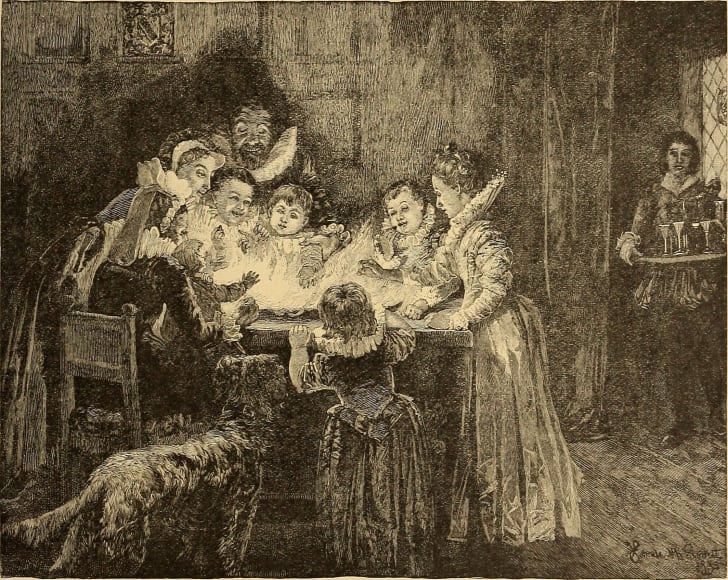
2021’s biggest troll: Rep. Marjorie Taylor Greene

It would be hard to argue that 2021 was a productive year in politics. But for Republican Rep. Marjorie Taylor Greene – the CrossFit coach turned U.S. congresswoman representing Georgia’s 14th congressional district – the year has been just that. 

No, she hasn’t sponsored legislation that’s passed any chamber of Congress. And no, she hasn’t been able to retain any of her House committee assignments. But somehow, with no political experience, Greene has proven herself highly proficient in activating the GOP’s most fringe elements, stirring up saucy interpersonal drama on Capitol Hill, promoting grandiose right-wing conspiracy theories online, and fanning the flames of the conservative culture war.

On her very first day in Congress, the Georgia lawmaker famously unveiled her state of right-wing perma-rage by donning “Trump Won” face mask amid the former president’s baseless claims of fraud in the 2020 election. At the time many saw the display as outlandish. But in fact, it was in complete harmony with her past affinity for unreality. 

In the leadup to her election, Politico revealed that Greene had once ardently subscribed to QAnon, the notion that a cabal of Satan-worshipping Democratic elites are running a global child sex trafficking operation. The Georgia freshman also reportedly endorsed the idea that the Stoneman Douglas High School shooting in Parkland, Florida was a false-flag affair orchestrated by the gun control lobby. Perhaps most famously, Greene once suggested that the deadliest California wildfire was an arson carried out by Rothschild-owned space lasers.

Five years ago, Greene’s checkered past – rife with conspiracies fueled by racism, antisemitism, and Islamophobia – might have precluded a career in federal policymaking. But if anything, her past improprieties were just tasters for the chaotic entree to come.

Following the Capitol riot, fueled in no small part by her claims of election fraud, the Georgia lawmaker repeatedly downplayed the insurrection that left five dead and 140 police officers injured, claiming that it may have been infiltrated by antifa agitators. Just before Trump’s impeachment trial, in which the former president faced charges of inciting the riot, the Georgia lawmaker went so far as to attribute the riot – led by Trump supporters – to Democrats, arguing that the party “must be held accountable for the political violence inspired by their rhetoric.”

RELATED: Video shows Marjorie Taylor Greene encouraging fans to support Jan. 6 objection

Greene kept this momentum going in January. On the second day of President Biden’s term, the Republican filed her first resolution: articles of impeachment against the president, whose “family’s pockets” were lined with “cash from corrupt foreign energy companies.” Days later, and just three weeks into Greene’s own term, multiple members of Congress had already drafted resolutions to censure and expel her from the body, specifically citing her past support for executing members of Congress. In a testament to the GOP’s degeneracy, both resolutions failed. 

By February, Greene had already been ousted from both her assignments on the Committee on the Budget and the Committee on Education and Labor. But no matter, because by then, it was already abundantly clear that policymaking was never quite her aim. 

Throughout the Spring and Summer, Greene, likely sensing that insurrection drama was growing stale, turned most of her attention from the election to the pandemic. That is, after months of backing a failed fascist election coup, she was becoming increasingly worried about vaccine- and mask-related “tyranny.” 

In March, just after the nation hit a somber record of 500,000 coronavirus deaths and New York began implementing “vaccine passports,” Greene called the policy “Biden’s Mark of the Beast.” And in May, she repeatedly upped the ante by comparing COVID-19 health precautions to policies set in place during Nazi Germany. 

Speaking of the House mask mandate, Greene, no Jewish history buff, recalled a “time in history where people were told to wear a gold star, and they were definitely treated like second class citizens, so much so that they were put in trains and taken to gas chambers in Nazi Germany.”

“I think any rational Jewish person didn’t like what happened in Nazi Germany, and any rational Jewish person doesn’t like what’s happening with overbearing mask mandates and overbearing vaccine policies,” she added days later, doubling down on her remarks.   

RELATED: Marjorie Taylor Greene’s latest Nazi analogy: Vaccine to be distributed by “medical brown shirts”

Greene would of course be raked through the mud over those comments by both Republicans and Democrats, leading to a rare apology after a planned visit to the D.C. Holocaust Museum. But just three weeks later, the right-wing rabble-rouser was back on the saddle of sensationalism, comparing Biden’s offhandedly-floated idea of door-to-door vaccinations to “medical brownshirts.” (Brownshirts were the often-violent paramilitary wing of the Nazi Party.)


Want a daily wrap-up of all the news and commentary Salon has to offer? Subscribe to our morning newsletter, Crash Course.


Much of Greenes’ ire over COVID was directed at the nation’s leading infectious disease expert, Dr. Anthony Fauci. In June, months after filing the “Fire Fauci Act” – which needs no further explanation – Greene penned an angry missive to Biden, asking him to formally probe the doctor over baseless fears that the COVID-19 virus was a “manufactured” bioweapon unleashed by China. Greene raised the stakes the next month, warning that the virus was in fact Fauci’s “experiment” because he backed “gain of function research” at the Wuhan Institute of Virology.

“That is his baby,” she said of COVID-19 at the time. “That is his experiment, and he’s getting to watch it in the real world, like on a live television show where he has a front row seat. He gets to watch what happens.” 

On COVID-19, Greene’s rhetoric has unfortunately been quite consistent with her personal conduct in the halls of Congress. To this day, the Georgia conservative has yet to receive a vaccine, even though she is routinely exposed to her staff and other lawmakers. Greene also repeatedly flouts the House mask mandate, which has earned her over $63,000 worth of fines. There is even reason to believe that the Republican may have infected several of her colleagues during the January 6 lockdown by refusing to wear a mask.

RELATED: MTG losing close to one-third of her Congressional salary to mask fines, spokesperson says

Though COVID-19 has been the source of much of her invective, Greene has not been shy about other kitchen table issues like race, sex, gender, abortion, and religion. 

Back in February, while attempting to sink the Equality Act, a landmark LGBTQ+ rights bill, she declared on the House floor that the measure would “violate everything we hold dear in God’s creation.” Later that day, Greene hung a transphobic sign just outside of the office of Rep. Marie Newman, D-Ill, whose daughter is transgender. The sign, opposite Newman’s pride flag, read: “There are two genders: Male and Female. Trust the Science.”

RELATED: “Unimaginably cruel”: Greene hangs anti-trans sign outside office of Rep. with transgender daughter

In June, shortly after Ex-Minneapolis police officer Derek Chauvin was convicted of murdering 46-year-old Black man George Floyd, Greene panned the verdict over alleged jury intimidation, tarring Black Lives Matter as a “terrorist organization” that uses “the same tactics that the Ku Klux Klan used to use.”

“There was no way that we could see anything but a guilty verdict. This is mob rule,” she said at the time. “And I’m not even talking about the verdict. I’m just talking about the fact that BLM has become the most powerful domestic terrorist organization within inside the United States.”

This year, all of Greene’s antics paid off – literally. The conservative firebrand, who was a complete unknown a year ago, raised a whopping $3.2 million in the first three months of her fundraising haul – more than any House Republican in that same period. And politically, she’s a near-shoo-in, with 75% of her district having voted for Trump in the last election. 

Greene has said that she is just “just getting started.” It’s not exactly clear what she means by this, since she hasn’t actually achieved anything legislatively. But as CNN’s Chris Cillizza puts, “she doesn’t care about being in party leadership. Or passing legislation. Or even serving on committees. She cares about building her brand via social media trolling and TV appearances on home-field networks. That’s her path to influence and power within the GOP.”

Prosecutors reveal Trump supporter charged in Capitol riot may be willing to divulge valuable info

Brandon Straka, one of the many Donald Trump supporters who stormed the U.S. Capitol Building on January 6, was due to be sentenced next week after pleading guilty to a single misdemeanor charge. But federal prosecutors, according to Politicos’ Kyle Cheney, have requested a 30-day sentencing delay so that new evidence “can be properly evaluated.”

Cheney reports that federal prosecutors say Straka has given them information that “may impact the government’s sentencing recommendation.” This development, according to Cheney, is an “indication” that Straka has “cooperated with prosecutors in a substantive way.”

Following the 2020 presidential election, Straka promoted Trump’s false claims of widespread voter fraud — and he spoke at a “Stop the Steal” rally on January 5, the day before the Capitol Building insurrection. Then, on January 7, Straka posted a video describing the events of January 6.


Want a daily wrap-up of all the news and commentary Salon has to offer? Subscribe to our morning newsletter, Crash Course.


In that video, Straka said, “The plan was always to go to the Capitol. We were going to march from that event…. to the Capitol, and there was going to be another rally. I was one of the speakers slated to speak at the Capitol.”

In a different video, according to Cheney, Straka can be seen approaching the Capitol Building and saying, “We’re going in.”

“Straka was among a long list of pro-Trump figures that the January 6 select committee in the House (of Representatives) has inquired about,” Cheney notes. “He appears on a list the panel sent to the National Archives seeking records from the Trump White House.”

More news from the Jan. 6 committee:

“The Expanse” bosses explain why the final season is only six episodes long

The sixth and final season of “The Expanse,” based on the book series by Daniel Abraham and Ty Franck, is up and running, and fans are happy with what they’ve seen so far.

The only issue is that the final season, which adapts James S.A. Corey’s book “Babylon’s Ashes,” is only six episodes long, down from 10 last season. “That was a decision between Amazon and Alcon Television,” showrunner Naren Shankar explained to Gizmodo. “I mean, you always kind of agree on how much money you’re going to commit to the production of the show. And that was the decision. It came down to making six episodes of it. It’s always a negotiation to some extent. Could we have done 10? Absolutely. Could we have done eight? Certainly. Uh, I don’t think we would’ve been able to tell the season in any less than six.”

So that was kind of presented to us as, “Can we tell this story in six episodes?” and our response was, “Let’s think about it.” We talked about it and we came back with, “Yeah, we can do it, but we’re going to have to supersize the sixth episode.” That one’s really like an episode and a half.

As Franck points out, “these are not six inexpensive episodes,” so it sounds like it came down to budget. Of course, with Jeff Bezos behind things, you wonder how budget can ever really be a problem, but whatever. “I think it was also a desire to make sure that we were able to finish it and get the episodes done to be back on [the air] a year after we had been off,” Shankar continued. “That was part of it as well, because the way these cycles work on the streamers, I think that that probably entered into the situation.”

What got cut from the final season of “The Expanse”?

The team sounds like they’re doing the best they can with the six episodes they have to work with, but that does mean that some things were cut. Franck laid out some of the plans they had to drop:

We actually had a bigger part for [season three character] Pastor Anna and a bigger part for [season two and three character] Prax. But as we were doing the season breakdown and figuring out what we were going to do six episodes on, it became clear we couldn’t do justice to those stories in the amount of time that we had. So then we trimmed them down to sort of cameos, but still got the point of that story in the cameo. Those are two examples, but there’s a lot of decisions like that where we realized we didn’t have the space to do the big version of that story. So we would trim it down to this small version.

We’ll just be sure to treasure the time we have left with the series.

Will there be a seventh season of “The Expanse”?

“Babylon’s Ashes” is the sixth book in “The Expanse” series, but it’s not the final one; there are three books left, and fans are wondering if the show could ever come back to adapt them. After all, the series ran fro three seasons on Syfy before it was cancelled and picked up by Amazon for three more. Why couldn’t that happen again with a new partner?

“As we always say, there are three more books,” Abraham said. “There’s a lot more story to tell. Big world! Things could happen.”

I love working with these guys. I love working with this cast. If the universe saw fit to let me do that some more, I would show up.

Like Abraham, Shankar didn’t say anything specific, but it sounds like everyone is on board to make more: “The door is open to other things,” he said. “And if the stars align, I think you’d find a lot of people willing to participate in it.”

And who can make those stars align? Netflix? HBO Max? Someone else? We’ll see what happens.

Guillermo del Toro’s rapturous “Nightmare Alley” seduces with its stylish & twisty grift

What do you want to believe, folks? That is the question at the heart of “Nightmare Alley” Guillermo del Toro’s rapturous new film, a remake of Edmund Goulding 1947 screen version, itself an adaptation of William Lindsay Gresham’s novel. (The original film is currently available on the Criterion Channel, and well worth watching.)

The story, which takes place in the late 1930s/early 1940s, is one of make-believe; it is set in the carny world where the wonders are, of course, not what they seem. Stanton Carlisle (Bradley Cooper) wanders into this world having taken a bus to its last stop; he enters an unreal world as a way to escape the real world and a past that haunts him. Stan does not speak for the first 12 minutes of the film, a sign that he is a man of mystery, taking in this new world, seeing how it suits him. Clem Hoately (Willem Dafoe), the carny owner, feeds into this myth, and tells him that no one really cares who he is or what he has done. 

Clem also slowly reveals that the carnival’s geek — a half-man/half-beast who bites live chickens — is really just a drunk whose stupor is sweetened with drops of an opium tincture. Zeena (Toni Collette), the carny’s medium, also takes a cotton to Stan, telling him he can drawl slow and hustle fast to sucker folks; adding that he has panache as she fondles him in his bath. 

RELATED: Benedict Cumberbatch is intimidating in Jane Campion’s exquisite and potent “Power of the Dog” 

Stan claims he doesn’t know what panache is, but he seems to be quite clever at picking up tricks of the trade. He learns the code that Zeena and her husband Pete (David Strathairn) developed for their mentalist act. He builds a better mousetrap for the comely Molly (Rooney Mara), whose act involves electrocution. And he smooth talks a cop out of shutting the carny down, showing how he can read a mark by his shoes. 

“Nightmare Alley” spends its first hour in this fertile world and allows del Toro to indulge in his patented cinematic flair. (The film, lensed by Dan Laustsen has style to burn, and the period production design by Tamara Deverell is quite fabulous). There is an intense sequence set in the funhouse and some pickled specimens that could have been borrowed from the Mütter Museum. (Some viewers may wish the carny scenes were even more elaborate.)

However, this first act is only setting up Stan’s character as someone who can charm his way out of anything. He soon develops a plan to take Molly and Pete’s code on the road to fortune if not fame. After Stan commits a crime, he and Molly take off. Two years later, they are performing the mentalist act in swanky nightclubs where she clues him with her questions until Lilith Ritter (Cate Blanchett) prompts him to guess what is in her purse. He sees this dame as not hard to read and correctly deduces the contents, which impresses her. 


Want a daily wrap-up of all the news and commentary Salon has to offer? Subscribe to our morning newsletter, Crash Course.


When they reconnect later in her lavishly appointed office — Lilith is a psychiatrist — she is irresistibly sultry. Lilith consents to give Stan details of her patients’ lives so he can “see” their past in private readings. In exchange for this privileged information, he must tell her the truth about his life. Stan greedily agrees, and recounts his backstory, flashes of which are interspersed throughout the film. Stan also tells Lilith, “I know you’re no good, because neither am I,” but she sure is persuasive when she asks Stan to “Please lie down.” As Stan unburdens his soul to his coconspirator, and wrestles with issues of guilt and shame, the question remains: What do you want to believe, folks?

“Nightmare Alley” develops some mild sexual tension between Lilith and Stan, especially when she reveals a scar on her chest. But the plot hinges more on Stan’s plan to con the wealthy Ezra Grindle (Richard Jenkins), a former, now reclusive, patient of Lilith’s, out of large sums of money. The sessions with Ezra, however, are the flabbiest part of this lengthy film. Stan has to undergo a lie detector test to meet with Ezra, and although he gains the recluse’s trust, Ezra’s associate, Anderson (Holt McCallany) knows Stan is a phony. Ezra eventually suspects something is hinky, too. His patience for proof wears thin, forcing Stan to ask for Molly’s help in his scam. Can Stan’s hubris and cunning help him escape from his present situation? What do you want to believe, folks?

There is certainly a twist or two coming, and del Toro delights in letting things unfold in ways that may surprise unsuspecting viewers. But the filmmaker, who cowrote the screenplay with Kim Morgan, doesn’t lean hard enough on emotions. The nightmares that haunt Stan are as stock as some of the readings Stan gives his marks, which resists deeper investment in his character.

Less problematic is how the film reveals its denouement early on, and not just when Zeena reads Stan’s tarot cards. But knowing what transpires does not necessarily spoil the film’s pleasures. Part of the fun of “Nightmare Alley” is in seeing how Stan reacts to his situation. In this regard, Bradley Cooper delivers. He is one part Elmer Gantry, and one part Ned Racine. (That’s the William Hurt character in “Body Heat.”) Cooper convinces everyone — well, perhaps almost everyone — that he is genuine. But again, what do you want to believe, folks?

The supporting all-star cast is uniformly terrific, with “Carol” costars Cate Blanchett and Rooney Mara both excellent as the women vying for Stan’s soul. In the carnival scenes Willem Dafoe and Toni Collette are appropriately flinty, with David Strathairn putting a poignant spin on Pete. Straithairn really sells his speech about getting “shut eye” — which is when a mentalist believes his own lies. In the last act, Holt McCallany deserves praise for his fine, rugged work as Anderson, while Richard Jenkins is best when Ezra gets angry or weepy.

“Nightmare Alley” is a crafty noir about grifters. Del Toro makes it decidedly more elegant than gritty, which is perhaps his way of luring and seducing viewers. What do you want to believe, folks?

“Nightmare Alley” is in theaters Friday, Dec. 17. Watch a trailer for it below, via YouTube.

More stories to read:

Why the students on a hunger strike for voting rights remain hopeful about Kyrsten Sinema

As the U.S. Senate suddenly turns its attention to a year-end push for voting rights legislation, it appears one Democratic member of the chamber in particular is standing in the way of its passage: Sen. Kyrsten Sinema of Arizona.

The enigmatic senator claims to support both the John Lewis Voting Rights Advancement Act and its successor, the Freedom to Vote Act. She remains, however, a fierce defender of the filibuster despite increasing pressure from the Democratic base and even as Republicans in state legislatures across the country continue to push increasingly restrictive election reforms that activists and watchdog groups say will disenfranchise large numbers of voters, many of them in minority communities.

So in a last-ditch effort to sway Sinema — and Congress as a whole — a group of students associated with the non-partisan advocacy group Un-PAC, which seeks to reduce the role of money in politics (many of them enrolled at Arizona State University) have embarked on a hunger strike. Shana Gallagher, the co-founder of Un-PAC and an organizer of the hunger strike, called it a “moral plea.”


Want a daily wrap-up of all the news and commentary Salon has to offer? Subscribe to our morning newsletter, Crash Course.


“Without action [on voting rights], I’m willing to say there’s almost no future, no better future ahead for us,” said Brandon Ortega, a student from Arizona. 

The group, which marks Day 12 of its hunger strike Friday, said it hopes to see the passage of some form of voting rights legislation by the end of 2021. To that end, the group met with Sinema last week, virtually, to discuss their demands. But, as the Washington Post reported, the students remained in protest in front of the White House this week:

Too weak to walk long distances, they used wheelchairs to get to their protest spot at Lafayette Square. One hunger striker said it felt like knives were poking at her stomach. Another said she had lost more than 10 pounds. Others had to stop fasting on the advice of a doctor who checks their vital signs twice a day.

Reached by Salon for separate interviews this week, both Gallagher and Ortega said they were simply grateful to Sinema for taking the meeting — which they believe was her first constituent sit-down in many months — and hope that their continued persistence will finally sway her to change her mind, or at least accept some sort of compromise on the issue.

They’ve also met with nearly a dozen other members across both chambers of Congress, including Arizona Sen. Mark Kelly. Next up: they’re hoping to sit down with President Joe Biden in an attempt to convince him to use his bully pulpit more forcefully on the issue, which they see as one of “existential urgency.”

The following interview has been edited for length, clarity and context.

Brett: So it seems like the issue of voting rights sort of intersects with a lot of other issues, right? How are you going to change anything if entire communities are disenfranchised, or large numbers of people cannot access American democracy in the same way as other groups. I guess I’m just wondering where you see voting rights in terms of the bigger picture and why this is the issue that you all have honed in on?

Brandon Ortega: That’s the whole reason why we’re here. Un-PAC is an organization of young people from all different political affiliations. We’re conservatives, moderates, liberals, independents and progressives — but no matter what issue you care about, voting rights is essential for solving it in a Democratic way. And that’s not only true for my generation, it’s true for any generation, as well as any group, especially in Arizona. We’ve had a group of veterans come out to list their concerns, and ultimately to show their support for us. And that was amazing. There are so many groups in Arizona that support this bill. I’m sure you know 84% of Arizonans support the Freedom the Vote Act.

Are you a native Arizonan?

Yes, I was born and raised in Phoenix and have lived here my entire life.

One of the people that I wanted to ask about is Sen. Kyrsten Sinema. It does seem like Sen. Sinema and the fate of the hunger strikers are sort of intertwined in a way. Were you involved in the recent meeting with her? 

Yes. I was one of the main speakers talking to Sen. Sinema and I think our meeting went great. She supports the Freedom to Vote Act. She supports our action and I hope out of that meeting, she has a better understanding of our commitment to this hunger strike until the Freedom to Vote Act passes this year.

But at the moment, our priorities are now with the Biden administration, because they have the power to actually get this passed within the year. And I’m sure you’ve heard that the Build Back Better Bill has been pushed aside or pushed back, and they are now focusing on voting rights. So, hopefully we’ll see some sort of announcement or response to our demands in the coming days.

So it doesn’t sound like it was much of a surprise, then, when Sinema’s office reiterated yesterday that she is opposed to doing anything with the filibuster. I guess I was just wondering how you guys felt about that? It seems to me, from where I’m sitting as somebody who follows this stuff on a daily basis, that if your goal is to pass the Freedom to Vote Act, this hunger strike might keep going until something’s done with the filibuster.

Yeah. I mean, Senator Sinema obviously restated her opinions on the filibuster, but that’s always been publicly known. She hasn’t changed her opinions on that, and we ourselves are not necessarily looking to eliminate the filibuster. We’re just looking to get the Freedom to Vote Act passed however we can. 

We were very grateful and appreciative of Sen. Sinema meeting with us. I think we were the first group of constituents to have a meeting with her in, like, over a year. And so, yes, to answer your question, we are committed to an indefinite hunger strike until the bill passes. But there has been a lot of great progress in the last few days with the Biden administration pushing back Build Back Better to make room for voting rights discussions. That was a huge step forward, because we weren’t sure if there was going to be even a vote on voting rights this year. That’s what we were afraid of, at least. But we’ve had a lot of progress since the beginning.

Where do you see President Biden’s role in all of this? And do you guys feel like he’s doing enough to use his bully pulpit and his position of power to keep these issues in the spotlight?

Of course, Biden is the president of the United States of America. We believe he has the power to get this bill passed by the end of the year. If he prioritizes this bill and meets with Senators himself, especially Sen. Sinema, there is almost a guarantee that this bill will pass by the end of the year.

So nobody in your group has eaten for, what is it, 11 days now? What is that like?

I mean, it’s been hard on all of us. I think we’re all very tired and hoping for a response soon, but that’s what we started this fight for. We’d rather endure this than endure the horrific consequences of a dysfunctional democracy. And that’s why the Freedom to Vote Act is so important to us. It’s because our futures hang in the balance, and without action [on voting rights], I’m willing to say there’s almost no future, no better future ahead for us.”

Can you just start with the first day and take me through what you’ve been feeling each day as this has been going on?

We were really inspired by a lot of other hunger strikes in history. Me, personally, by Caesar Chavez and his hunger strikes.

Of course, we’re being taken care of and supported by a medical team. We have our vitals taken twice a day, making sure that if anyone needs to stop for medical reasons, they will stop. And there have already been a couple of people forced to stop early because their body couldn’t take it anymore. I think the third day was the hardest for a lot of people. But after that, not to get too deep into the biology of it, but the body starts shifting to its energy reserves. So it’s a little easier, but it’s still very taxing on the body. And of course it depends person to person, but some people it gets easier. Some people it gets harder with each day. Overall it’s just been an uncomfortable situation, but a necessary one.

Definitely. Those are all the questions I had. I just wanted to say I do admire your strength — I hope you stay safe and I hope everyone is feeling okay as this thing hits its stride.

Thank you so much.

“You Mean Everything to Me” star Morgan Saylor on this seductive cautionary tale: “I love bleakness”

Morgan Saylor is never less than riveting whenever she is on screen. The actress, who first attracted attention for her work on Showtime’s espionage series “Homeland” and had a breakout role in the indie drama “White Girl,” has also charmed in the little seen romance, “Anywhere with You” and the crime-comedy, “Blow the Man Down.” Her latest film, “You Mean Everything to Me,” by writer/director Bryan Wizemann, confirms what anyone who has seen this impressive actress already knows — that she is fearless on screen, often playing lost young women who make a series of increasingly bad decisions for the sake of self-preservation. 

What makes Saylor’s performances so remarkable is seeing how her characters transform from innocent to anxious to desperate. She can be vulnerable one minute, flashing puppy dog eyes that beg for compassion, and obdurate the next, asserting her independence with a fierce determination that shows her mettle. And she could be putting on a false front to hide how scared her character is. The depths she plumbs is why her heroines remain seared in one’s brain.

Saylor gets to do all this and more in “You Mean Everything to Me.” As Cassandra, a down-on-her-luck young woman who is first seen sleeping in her car. She meets Nathan (Ben Rosenfield of “Boardwalk Empire“), a DJ, in a bar. He seduces her with his looks and his charm. Cassie quickly moves in with him — her older, married sister, Roxanne (Lindsay Burdge) won’t let her crash at her house — and reluctantly agrees to dance at the strip club where he spins. Nathan becomes increasingly more controlling, which eventually prompts Cassandra to reevaluate their relationship — but is it too late? 

RELATED: Simon Rex on playing a washed-up porn star in “Red Rocket”: “He’s an aging narcissist”

“You Mean Everything to Me” is a cautionary tale that has Cassandra becoming trapped in a series of compromising situations. Saylor’s gutsy performance is why viewers will hold their breath as the film unfolds. 

Salon spoke with Saylor about her new film and her penchant for playing troubled women, her real-life relationship with Rosenfield, and even the narrative pleasure of calculus.

What attracts you to playing impulsive, hardscrabble young women who make poor decisions?  

I’m not sure why that is. I’m also a writer. I began the process of creating narratives myself. I do find there’s a lot of that in there too. Hopefully, I do not make as many bad decisions in my real life, but I am interested in the fallibility and messiness of people. That is very interesting territory. I love it. I’m [in school] writing finals right now about Russian novels — Nastasya Filippovna’s death in Dostoevsky‘s “The Idiot,” and “Anna Karenina” — so, I love bleakness. [Laughs]. I liked f**ked up stuff. There are a lot of bad decisions in those novels, but it’s heartbreaking and its real.

When I first read “White Girl,” for example, I was a little turned off by her character, of course. She makes decisions I would hope not to make. But I made it my mission before I shot that film that I want to make this character’s heart visible. I want to have the audience feel the journey she is going on and have it, logically, make sense. We need to understand what she is going through. I also think that these characters are young, and their frontal lobes are not fully developed. It makes it harder to understand the healthy choice or the positive thing in their life. I don’t know why I have done so many of these character in a row, maybe that’s just what gets sent my way. I’d love to do a happy comedy. 

Morgan Saylor in “You Mean Everything to Me” (Factory 25)

I like that the film drops us into Cassie’s life right as she’s at a turning point. We don’t know much of her backstory, or what brought her to this moment in time. What decisions did you make about the character? 

Bryan [Wizemann] was really collaborative in that sense. We did create a backstory that she had been living with a guy in Austin and ready to start a new chapter. She came from a bad situation — not abuse — and, despite living in her car, was ready to believe in this ability to reinvent herself that was, unfortunately, not what happens.

How much agency do you think Cassie has? Cassie is reluctant to cause trouble with her sister. She takes molly when she doesn’t want to. Nathan says, “It’s your decision,” at times when she often feels it is not. 

That might have to do with her age, she is figuring out that she can set boundaries and build a life she wants. She doesn’t want the molly, but there is no other option. Does she go back to her car and just sit alone? It was a tiptoeing along that line between having a decent [thought] in your head, but not having the means to make it a reality. This story is based on someone Bryan knew as a young person. He grew up in Vegas, where the story actually took place. 

Why do you think Cassandra falls so easily for Nathan? She is trying to take control of her life and build up her self-worth when she meets him, but quickly bends to Nathan’s will after meeting him. I liken it to how people are preyed upon and can be indoctrinated into cults. Their relationship becomes a form of Stockholm Syndrome

The relationship she came from probably had codependent issues too. She has been in this boat before — it was not as intense — but she relied on other people for more than she has wanted to in her past. It is an easy fit because of that, but also the allure of this character, Nathan, how charming Nathan is. He’s someone she’s never met, and he represents someone who is part of her dream, and he has that façade of making it work in New York, which is all she wants, too. Oddly, in love — and it’s a drug, sure — but even in successful relationships, you take this leap of faith. There is a point where you think, I believe in this person, and I trust them, and were going to do this.

Can you talk about working with Ben, who is your real-life partner? 

It’s crazy! It’s been three years since we made the movie, and we fell in love making it. We live together and have built a life together. We met briefly when he played Zoe Kazan‘s brother in a play. The week before we made this movie, I told Zoe I was making this movie with Ben, and she was like, “You guys are going to fall in love!” As soon as Ben and I had our first lunch before the movie, we had a real kinship. We had a lot of the same tastes in art and how we make art. It was magical to fall in love on top of all the intensity of this performance. I went back to Los Angeles after the shoot. I got pneumonia from the shoot. I was sick in bed, and I missed Ben. We couldn’t stop thinking about one another. Two months later, we were in the same city and have been inseparable ever since. 


Want a daily wrap-up of all the news and commentary Salon has to offer? Subscribe to our morning newsletter, Crash Course.


How did you see Cassie’s relationship with her sister? They care about the other, but have trouble expressing their true feelings.

We discussed that relationship very thoroughly before it began. She is the other most important person in Cassie’s life. I related; I have an older brother, and we are close. The bane of Cassie’s existence is that her sister left her alone with their parents. That happens with siblings. Even though Roxanne is in an unhappy marriage, that’s something Cassie is also jealous of. From the outside, the grass is greener, and you have your life together and outside of me, which is another younger sibling classic vibe — you forgot about me. You are supposed to be my keeper, and you left me behind, which is why, when she really does need help, it makes it harder to ask for it, or be vulnerable with her sister. 

There are several moments in the film where Cassie is put in scenes of a sexual nature. “You Mean Everything to Me” depicts the horrors of an underground sex industry that abuses women. What did you think about the film’s approach to and presentation of these issues?

Bryan was passionate about this topic. Even his first film was about a woman going through a lot. It was definitely something I was excited to bring to life because people feel uncomfortable talking about it — which totally makes sense — but it is a very real and problematic thing that exists in our world, and how else can we make change If we don’t talk about it? It was difficult shooting it because Bryan was uncomfortable directing a lot of that stuff. Our industry is changing. I am working with an intimacy coordinator now for the first time, which wasn’t even a job when I made “White Girl.” It is easier to have talks about any kind of intimacy with a woman, I’ve found, mostly because a man is uncomfortable discussing it. So, a lot of that was up to me, which was interesting and confusing, honestly. 

Thanks to my team, I have final cut on nudity for these indies, and that is a huge relief. I had them shorten the dance scene in this film because it felt long to me. “You Mean Everything to Me” and “White Girl,” are movies that are very sexual, and to me, that involves sex and nudity. It’s confusing — the line of exploitive or showy and excessive versus the story. I’m still learning what that means, and it, of course, depends on the project.

The scene where Nathan makes Cassie take off all her clothes was terrifying to shoot, of course, but it felt really powerful in its message in a way. That he is able to literally strip her of everything she has, and she has no power to do anything against that. And I think that is very true and real for women in those kinds of relationships, because you don’t know when it is going to turn violent. When a man is yelling at you, you don’t feel like you have any power to do anything. Whether that means you are stripped of all your clothes or all your emotions, or whatever, it is the most vulnerable feeling. That scene, that action of her being left without anything, was an expression of the emotionality of that to me. As uncomfortable as it was to film it, it felt right for the story.

Cassie has a talent with sewing. What hidden talents do you have?

I definitely was a pandemic baker. I got into the sourdough. I love mathematics. That is one of my secret weapons. That is what I started studying when I went to college. My favorite is calculus. I think there are a lot of parallels between narratives and calculus, how you can analyze a sine curve and plug it into the hero’s journey. It’s there. I love thinking about dimensions and planes and infinity. Infinity is one of my favorite things.

“You Mean Everything to Me” opens in theatres Dec. 17, Watch a trailer for it below, via YouTube.

More stories to check out: 

Most damning Mark Meadows text was sent from Rick Perry’s phone: report

CNN on Friday reported that former Texas Gov. Rick Perry’s phone was used to send what so far has been the most damning text message sent to former Trump chief of staff Mark Meadows in the wake of the 2020 presidential election.

On November 4th, the day after the election, a text from Perry’s phone sent to Meadows recommended taking an “aggressive” plan to stop President Joe Biden from being declared the winner.

“Here’s an aggressive strategy,” the message began. “Why can’t Georgia, North Carolina, Pennsylvania, and other Republican-controlled state houses declare this is B.S. (where conflicts and election not called that night) and just send their own electors to vote.”


Want a daily wrap-up of all the news and commentary Salon has to offer? Subscribe to our morning newsletter, Crash Course.


Perry, through a spokesperson, denied sending the text message, although the spokesperson had “no explanation” when asked how the message was sent from the phone of the former Texas governor, who also served as Trump’s Secretary of Energy from 2017 through 2019.

CNN confirmed with “multiple sources” who had Perry’s personal number that the text message did indeed come from Perry’s phone.

Trump eventually would try a variation of Perry’s strategy by getting former Vice President Mike Pence to reject election results from key swing states, and then send back the results to GOP-controlled state officials to determine the winner.

More news from the Jan. 6 committee:

Trump goes on anti-Semitic rant, claims Israel controlled Congress and Jews run New York Times

Donald Trump said that the American Jews “no longer love Israel” in a recently aired interview, claiming that “evangelical Christians love Israel more than the Jews in this country.”

“People in this country that are Jewish no longer love Israel,” Trump told Israeli journalist Barak Ravid in a Friday episode of podcast “Unholy: Two Jews on the news.”

Trump continued: “I’ll tell you, the evangelical Christians love Israel more than the Jews in this country. It used to be that Israel had absolute power over Congress. And today I think it’s the exact opposite.” 

RELATED: Is Donald Trump a supporter of Israel? Sure — he’s also an anti-Semite

“The New York Times hates Israel, hates them. And they’re Jewish people that run the New York Times. I mean, the Sulzberger family,” the former president added, referring to the paper’s publisher. 

Trump also made sure to note that he “was very close to many Jewish people” because of his experience in “Brooklyn real estate, Brooklyn and Queens.”

Trump’s comments vaguely allude to the longtime anti-Semitic trope that Jews hold outsized power in politics, media, and entertainment. His remarks also fall into the “dual loyalty” trope by implying that he’d expect Jews to harbor more allegiance to other Jews or Israel simply by virtue of their religious affiliation. The Anti-Defamation League states that anti-semites “frequently suspect Jews of holding allegiance only to fellow Jews and to a uniquely Jewish agenda.”

It isn’t the first time that Trump has suggested American Jews lack fealty to Israel. Back in 2019, Trump argued that Jews who supported Democrats were being “very disloyal to Israel.” At the same time, Trump has also implied that Jews’ apparent connection to Israel might undermine their loyalty to the U.S., telling an audience at the Republican Jewish Coalition that then-Israeli leader Benjamin Netanyahu is “your prime minister.”

RELATED: Trump drops an anti-Semitic trope in attempt to slam The Squad

Joel Rubin, president of the American Jewish Congress, told The Independent that Trump’s remarks are “beyond words.”

“Trump seems unable to grasp the simple fact that Jewish Americans are Americans, period,” Stosh Cotler, CEO of Bend the Arc-Jewish Action, a Jewish political action committee, told Insider. “The implication that American Jews have some kind of ‘dual loyalty’ is textbook anti-Semitism, and has been used for centuries to demonize Jewish people and justify persecution and violence, including the Holocaust.”

RELATED: “F**k him”: Trump not speaking to former ally Bibi Netanyahu — because he congratulated Biden

Henry Cavill pushed for Geralt to talk more in “The Witcher” season 2

When it comes to sci-fi, fantasy and superheroes, Henry Cavill is one of the biggest names around. He’s Superman. He’s Geralt of Rivia in “The Witcher.” He may become James Bond before his career is over. And he seems very invested in everything he does.

Take “The Witcher,” based on the series of fantasy books by Andrzej Sapkowski, which will drop its second season on Dec. 17. Cavill’s love of the Witcher video games is well known, and when it was announced that Netflix was making a show, he went hard after the lead role of Geralt, a silver-haired monster hunter of few words. “I pursued, pursued, pursued,” Cavill told The Hollywood Reporter. “A couple months after they had gone through their casting process, my agent called and said, ‘They’ve asked you do an audition — you don’t have to do this.’ I’m like, ‘I’ll do it.’ They said, ‘Really? Are you sure?’ I said, ‘Of course. It’s ‘The Witcher.'”

And once he was in, he kept pushing to do things different and better, sending showrunner Lauren Hissrich lots of emails in quarantine about how things could be improved in season 2. “A lot of the notes he was sending to me were about Geralt’s dialogue — could he, first of all, say more,” Hissrich said. “Everybody came out of season 1 laughing and loving Geralt’s fuming. But Henry was saying that when you read the books you spend a lot of time in Geralt’s head. So how can we put that on the page? Meanwhile, I wanted to tell the story of him becoming a father figure to Ciri. So those two things coalesced wonderfully. He opens up to get Ciri to trust him, by speaking his mind and his heart more.”

He knows he is No. 1 on the call sheet, and there’s a great responsibility that comes with that,. A lot of times that person can make the show a hurricane that revolves around them. Henry works hard to make that not so. He’s on time. He always knows his lines. He always knows his choreography and certainly always knows his action.

It’s no surprise to hear that Cavill is in support of Hissrich’s ambition to make seven seasons out of “The Witcher.” As long as “we can keep telling great stories which honor [author Andrzej] Sapkowski’s work.”

Although there is one thing he’s reluctant to do: nudity. “It would have to be particular, it would have to be specific to the storytelling. I would say there’s not the space for it.”

Well, seven seasons is a long time.

Henry Cavill wants to play Superman again: “The cape is still in the closet”

Cavill also talked about playing Superman, which he did in three movies: 2013’s “Man of Steel,” 2016’s “Batman v Superman,” and 2017’s “Justice League”. As director Zack Snyder remembers when he asked Cavill to put on Christopher Reeve’s old Superman suit, it was a perfect fit pretty much from the start:

When you see the suit on the ground, it’s kind of shriveled up, it’s just spandex, it looks like, ‘Oh God, that’s not going to be cool.’ Henry put it on in this trailer. And there’s a version of this where he comes out and is like, ‘I’m Superman!’ and you’re like, ‘OK, it’s Halloween.’ But Henry came out and even the crusty grips we hired for the test got quiet. Everybody was heart-attack serious. He had just the right energy. We were like, “Oh, he’s Superman. That’s what Superman looks like.’

For the record, Cavill thought he looked fat in the suit, which is hard to believe was true but I don’t live in his head.

Give or take Zack Snyder’s “Justice League,” a re-up of the original movie that came out on HBO Max this year, Cavill hasn’t played Superman in a while, which rankles a bit. He thinks there’s still more to explore with the character after he killed Zod in “Man of Steel”:

There is still a lot of storytelling for me to do as a Superman, and I would absolutely love the opportunity,” Cavill says. “The killing of Zod gave a reason for the character never to kill again. Superman falling to the ground and screaming afterward — I don’t think that was originally in the script, but I wanted to show the pain he had. I did far more emotional takes they didn’t choose; tears were happening. He just killed the last remaining member of his species. That’s the choice he made in that moment, and he’ll never do that again. There’s an opportunity for growth after that, to explore the psyche of Superman as a deep, seemingly invulnerable god-like being but with real feeling on the inside. As I always say, ‘The cape is still in the closet.’

Fingers crossed he’ll be able to take it out again sometime.

Henry Cavill wants to play Captain Britain in the Marvel Cinematic Universe

Whether Cavill ever plays Superman again, clearly his star is on the rise, and he can have his pick of pretty much whatever roles he wants. For instance, has he ever considered switching sides and playing someone in the MCU?

I have the internet and I have seen the various rumors about Captain Britain and that would be loads of fun to do a cool, modernized version of that — like the way they modernized Captain America. There’s something fun about that, and I do love being British.

Speaking of British, the role of secret agent James Bond is open since Daniel Craig left it in “No Time To Die.” That means MGM is looking for a new Bond, and Cavill’s name has come up again and again. “I think it would be very exciting to have a conversation with the producers,” the actor said. “In an ideal world, I’d never have to turn anything down. Nothing is off the table. It’s an honor to even be part of that conversation.”

Nutmeg, beloved holiday spice, is also a powerful psychoactive drug

A report in the British Medical Journal, dated March 21, 1970, tells a peculiar story about a young woman’s experience with a certain ubiquitous holiday spice. She had mixed “one ounce of nutmeg in water and orange juice” and downed the entire solution. Then things got weird. 

“At first she felt no effect, but after four hours she felt cold and shivery,” the report’s authors wrote. “Six to eight hours later she was vomiting severely. She saw faces and the room appeared distorted, with flashing lights and loud music. She felt a different person and everything seemed unreal. Time appeared to stand still. She felt vibrations and twitches in her limbs. When she shut her eyes she saw lights, black creatures, red eyes and felt sucked into the ground. Her mood was one of elation.”

The 19-year-old was hospitalized and spent the next week in a state of delirium. The doctors determined that, peculiarly, it was the nutmeg — that warm, semi-sweet fall spice that gets sprinkled into eggnog, pies, and pumpkin spice lattes — that elicited her bizarre physical and psychological reactions. 

Cases of nutmeg poisoning are rare, but they happen. At least 120 have been reported to the American Association of Poison Control Centers (AAPCC) every year since 2017. In 2020, 274 were reported, 90 of which came in April, during the height of a viral “nutmeg challenge” on TikTok. The related hashtag has since been censored by the service, and the videos scrubbed. Almost all cases documented by the AAPCC involved this kind of self-administration — people, usually young, purposefully swallowing large quantities of the spice to achieve a risky high. 


Want more health and science stories in your inbox? Subscribe to Salon’s weekly newsletter The Vulgar Scientist.


“People don’t get high from nutmeg accidentally. You really have to try,” said Andrew Stolbach, M.D., a medical toxicologist and emergency physician at Johns Hopkins Hospital. “People that do it are usually curious, or are looking for a ‘legal high,’ or they don’t have access to other drugs”

Mr. Stolbach recalled a case, several years back, in which a patient showed up to the ER having consumed a combination of alcohol, cannabis, and several teaspoons of nutmeg. 

“They felt kinda good, then they got really irritable and agitated and felt like they were dying,” he said. “They made their roommate drive them to the ER. We evaluated them, watched them, and convinced them they weren’t dying. We might have given them a sedative, and then we were able to discharge them.” 

The dried, ground spice found in most kitchen cabinets begins as the seed of the Myristica fragrans tree, indigenous to the Moluccas, or Spice Islands, of Indonesia. The seed contains a compound called myristicin, which scientists believe is largely responsible for nutmeg’s psychoactive effects. When myristicin — a deliriant — is metabolized, it converts to MMDA, a substance similar to MDMA, better known as ecstasy.

But instead of provoking sustained euphoria, ingesting large quantities of nutmeg mostly generates undesirable side effects — dry mouth, racing heart, urinary retention, and brain fogginess, symptoms that can last for weeks after any psychological effects have wound down.

“Most people don’t describe full-on hallucinations, like with LSD,” said Stolbach. “It doesn’t seem like the most pleasant experience.”

Read more unexpected drug stories: