Spring Sale: Get 1 Year, Save 58%

AOC tops list of Democrats who best reflect party’s “core values”: CNN poll

A majority of Democrats and Democratic-leaning independents say their party's top priority should be working to "stop the Republican agenda," according to a poll commissioned by CNN that found Rep. Alexandria Ocasio-Cortez, D-N.Y., is seen as best embodying the party's values.

The survey, conducted by polling firm SSRS, found that 57% of Democratic and Democratic-leaning voters think that opposing the GOP should be Democrats' priority, as opposed to 42% who say it should "mainly work" with Republicans to improve legislation. In 2017, only 23% of Democratic voters said the party should primarily focus on obstruction, with 74% at the time expressing support for bipartisanship.

Overall, the poll found that the Democratic Party has plummeted in terms of favorabilty: just 29% of those surveyed expressed a positive opinion of the party, compared to 54% who expressed an unfavorable opinion. A decade ago, 47% of voters had a favorable opinion of the party, with 45% disapproving.

In keeping with the broad desire for a party that fights back, the most popular Democrat — the one who "best reflects the core values the Democratic Party" — was Ocasio-Cortez, who was the pick of 10% of those surveyed; former Vice President Kamala Harris was listed by 9% of Democrats and Democratic-leaning independents, while Sen. Bernie Sanders, I-Vt., was listed by 8%. Former President Barack Obama, who was the top pick of voters surveyed in 2017, registered 18% at the time, fell to 4% in the latest survey.

"I noticed that Chuck Schumer’s name wasn’t on that at all," PBS White House correspondent Laura Barrón-López noted in an appearance on CNN. "The congresswoman is clearly tapping into something across the Democratic base because she is someone who … unlike I think a lot of other Democrats, knows how to operate in this new media ecosystem," she said. "Voters are responding to her message and they’re feeling like, out of everyone in the party, she is potentially the person who is giving voice to their anger."

“Hot Ones”: Kevin Hart defends his tequila brand and shares why he’ll never perform his own stunts

Kevin Hart may know a thing or two about running his own tequila brand and training pet eagles, but the comedian and actor is still a novice when it comes to hot sauces. This week, Hart reprised his seat at the “Hot Ones” table to try his luck with a fresh platter of extra hot chicken wings and celebrate the talk show’s 10th anniversary

“This is a good time for me to check the exits just so I know…If I do need to go, understand that I’m not playing,” Hart warned host Sean Evans before trying the first sauce on the lineup.

Hart’s brand-new adult animated series, “Lil Kev,” inspired by his childhood in North Philadelphia, premiered March 6 on BET+. The half-hour series is set in 1993 North Philadelphia and follows 12-year-old Hart. Hart himself serves as an executive producer and voices the show’s eponymous tween character.

What makes the character of Lil Kev so special is his optimistic spirit, which Hart said is a mindset he’s always had.

“It’s a high level of innocence attached to it, right,” he told Evans. “I’ve always believed in the idea and concept that everything is going to be OK and everything works itself out and what’s bad today doesn’t have to be bad tomorrow.”

Hart continued: “Having the opportunity to showcase the hood in a manner that has never been, showing the positive side of it…it’s a new wave in storytelling. I think doing it through, of course, adult animation was a creative idea that allowed me some real bandwidth of raw and edgy.”

In addition to “Lil Kev,” Hart’s documentary “Number One on the Call Sheet,” which he produced alongside Jamie Foxx, is set to premiere March 28 on Apple TV+. The two-part showcase spotlights the journeys, challenges and triumphs of Hollywood’s most acclaimed Black men and women.

When asked if there’s a specific actor who took him under their wing when he first started landing major on-screen roles, Hart credited “more comedians than actors.”

“[B]ecause the acting world, it was a long road to get to a place of real success,” he said. As for specifics, Hart named legends like Bill Burr, Patrice O’Neal, Colin Quinn and Tracy Morgan.

Elsewhere in his conversation with Evans, Hart opened up about the one incident that forever deterred him from doing his own stunts. It happened on the set of the 2014 action comedy film “Ride Along,” which stars both Hart and Ice Cube.

“While doing a stunt, Ice Cube punched one of the stuntmen in the face really hard, for real by accident. And the stuntman kind of knocked out for a second. And I was like, ‘Oh that can happen?’” Hart said.

“And Cube, I remember him hugging the stunt guy…From that day on, I stopped with the idea of wanting to do stunts so much. The energy that I used to have, like younger me, was like, ‘Throw me on the f**king table! Just do it in one take so [we] get the real reaction.’ But now I’m 45. I don’t event want to run.”


Want more great food writing and recipes? Subscribe to Salon Food's newsletter, The Bite.


Hart even offered a special shoutout to stunt performers, saying, “Those guys don’t get enough credit. There should be a Stunt Awards. They really don’t get enough love.”

Towards the end of his interview, Hart made a case for why his tequila brand, Gran Coramino, is significantly better than his longtime friend Dwayne “The Rock” Johnson’s brand, Teremana Tequila.

“Look, this is a different type of taste," he said. "Dwayne is a big strong guy, almost like a monster when you really think about it. Me? I’m just a nice, small, charismatic, smooth little man. I’ll say, you know, it’s all about what you’re really in the mood for.”

Hart ultimately conquered the infamous “Wings of Death,” though it wasn’t an easy feat for him the second time around.

Watch the full interview below, via YouTube:


Step aside, lettuce. Elevate your next grain salad with easy wild rice

Grain salads don’t only hold their own against leafy salads — they often outshine them. And you know what countertop appliance really aids in said salads? A rice cooker

With "Top Chef" heading to Canada this season, it's a perfect time to highlight one of the country's most distinctive staples: wild rice

The joy of the rice cooker

The rice cooker — which, of course, should never be limited to merely rice cookery — is a magical tool that has fully mastered the ins and outs of grains, liquids and cooking time. Even highly experienced chefs can find rice to be a challenge to cook: The finnicky grain can become over-cooked or under-cooked in seconds, which can ruin the texture completely.

A rice cooker, however, eliminates the guesswork and ensures perfectly cooked rice each time. 

What sets wild rice apart?

While farro and wheatberries also make for excellent options in grain salads, this recipe focuses on wild rice. Though sometimes called "Canada rice," wild rice is technically a grain from a type of grass, not actual rice. And while both wild rice and "forbidden" black rice are delicious, they're two distinct products. 

Grown primarily around the Great Lakes, wild rice has long been a staple in the region, primarily amongst the Indigenous communities in the Midwestern US and Canada. 

While seeing wild rice on "Top Chef" may pique fans' interest, making it at home can sometimes be a challenge for many home cooks. But that doesn't have to be the case.

Why cooking wild rice is a bit different than cooking other rice varieties

Wild rice is indeed a bit wild — with a nutty, earthy flavor and a chewy bite, wild rice offers up a bit more character than your typical grain of rice. This is another reason that wild rice is such a stellar option for a grain salad, in which it pairs beautifully with whatever mix-ins and garnishes you might opt to use.

Cooking wild rice is different than cooking white rice and is more similar to cooking a brown rice. Pure wild rice is best for this dish, but in a pinch, you can certainly use a mix. 

Be mindful that it does indeed take longer to cook; depending on your cooking vessel, the liquid you're using and other variables, making a cup of wild rice could take twice the time it might take to cook a cup of white rice. But there's no need to worry: Just be patient and you'll be rewarded with perfectly cooked rice.

While some opt to soak in order to essentially pre-soften the grains and cut down on cooking time, I'm generally not a proponent of it. The rice cooks just fine without it and soaking can sometimes negatively impact the texture of the final product. 


Want more great food writing and recipes? Subscribe to Salon Food's newsletter, The Bite.


What are the supporting ingredients that help to elevate the grain salad?

This salad incorporates a bit more of a Canadian staple — cherries, though we'll be using dried here — plus goat cheese, shallots, lemons and walnut oil, as well as some chives for color and a bit of a verdant, fresh bite. Be sure to season your rice during the cooking process and then do a final taste to see if you need any further seasoning. Goat cheese can also lend quite a bit of salinity, so be sure to taste again once the goat cheese has also been incorporated. 

A grain salad is also dressed and tossed, just like a green salad, so it’s important to be mindful that all of your flavor profiles are melding together seamlessly.

Temperature is important

I often cook rice in various flavored and seasoned broths or stocks (and usually a pat or two of butter, as well), but for this particular salad, I’d advise just using water with a touch of salt.

You don’t want to over-complicate the flavor profiles here — the rice should be just slightly glutinous and chewy (imagine "al dente" pasta), and you should drain it as soon as it's done cooking. Then, run some cold water over it to effectively stop the cooking process, and spread it out on a large sheet tray to let it cool fully before transferring to a food storage container to fully chill in the fridge, ideally overnight.

Also, be patient! You want to ensure your cooked wild rice is fully cooled or chilled before stirring anything together — otherwise, your goat cheese might melt or your vinaigrette proportions might be all skewed (hot rice will soak up a dressing in a different manner than cold rice will, for example, and seasoning will also impact cold vs. hot rice in different ways). 

It's time to eat

There’s really not much work beyond that. Just crumbling goat cheese, chopping chives and mincing shallots, really — and don’t over-mix. You want all of the toppings and additions to highlight the rice, not overcrowd or overwhelm it. Since the rice can be made ahead, all that's left before serving is a quick assembly. Because it's vegetarian and can be served room temperature or chilled, this dish also offers up tons of flexibility.

This recipe allows you to celebrate as you please: The boundless bounty of the Canadian countryside, the return of "Top Chef," the joy of wild rice, the ingenuity of the rice cooker, the wonder of chilled grain salads — it's a win-win. I hope you love it as much as I do.

We need your help to stay independent

Wild rice salad with dried cherries and goat cheese
Yields
4 servings
Prep Time
20 minutes (plus overnight chilling time)
Cook Time
45 minutes

Ingredients

1 cup wild rice

2 1/2 cups water

Kosher salt

2 shallots, peeled and minced

2 lemons, juiced and zested

2 to 3 tablespoons walnut oil

Freshly ground black pepper

1/3 cup dried cherries

4 ounces goat cheese, crumbled, halved

Chives, minced, halved


Directions

  1. In your rice cooker, combine wild rice, water and salt. Turn machine on and let cook until the grains begin to burst and are just tender but still have a bite, about 40 to 45 minutes. You can also cook on the stove by combining all ingredients, then bringing to a boil over high heat. Lower the heat to a simmer, cover the pan and let cook for about 40 minutes. Turn off heat and let rice sit, covered, for 5 to 10 minutes more.
  2. In a large, fine-mesh strainer, run cold water over your rice to help cool down the rice grains and to stop the cooking process. Don't use a colander for this or your sink will inevitably be full of rice, which is not an enviable task.
  3. Transfer your cooked rice to your largest sheet tray or cookie sheet, giving it as much space as possible to cool fully and to ensure it doesn't clump together. When cooled, transfer to a large food storage container and chill, ideally overnight.
  4. When ready to eat, in a large bowl, combine shallots, lemon zest and juice, oil, salt and pepper. Mix well and lit sit for 15 minutes or so for the shallots to lose some of their bite.
  5. Add rice to vinaigrette mixture, as well as dried cherries, half the goat cheese and half the chives. Toss well but don't over-mix.
  6. Taste for seasoning.
  7. Finish with the remaining goat cheese and chives. 

“Yellowjackets” is at its best when its characters are doing their worst

I was happy when Jackie froze to death.

Elated when Biscuit's severed head was discovered on an altar.  

And let out a guttural, "Hell yeah" when, kneeling in the snow to present a dripping bear heart to the wilderness, Lottie (Courtney Eaton) ended the first season of "Yellowjackets" with a sentence that encapsulated the entire show in terms of what viewers signed up for by watching, where it would be heading in further seasons, and what could be expected in the eventual outcome in the series finale: "Versez le sang, mes beaux amis." Which, translated from French to English, means, "Spill the blood, my beautiful friends."

If the show keeps hammering it down through the end of the season, things should only get worse, if only to deliver on the promise that was initially made by "giving it what it wants." And by "it," I mean us.

Unlike the duplicitous characters it centers on, "Yellowjackets" introduced itself in its 2021 premiere as exactly what it is, a show about the worst. The worst things that could happen to a person, the worst things that a person could do to others, and the worst things that a person could do to themselves. And it's at its best when it remains true to itself.

In real life, every day is a new opportunity for betterment, but seeing the practical ins and outs of that in a thriller drama television series would be extremely boring. Even in reality TV, it doesn't really work. On something like "Queer Eye," sure. Who doesn't enjoy living vicariously through another person's glow-up when you're in the mood for such a thing and press play on a show that's expressly about just that. But in shows like "Vanderpump Rules" and "Real Housewives," ratings tank when everyone's trying not to do cocaine and not get piss drunk and fall into a bush during a girl's trip to Turks and Caicos. Sometimes — most times — the mess is the allure. I spend enough time sitting around the house worrying about what I said to someone in high school that may have hurt their feeling so bad it turned them into a cannibal. I don't need to watch someone go through it on TV. I'd rather see what the cannibal is up to.

Compared to the first season of "Yellowjackets," which has a 100% on the Tomatometer and, in my own opinion, is one of the best first seasons of a show to ever be made in terms of the full package of writing, casting, acting, the look of it, the pacing, right down to the soundtrack; Season 2 saw a decline in just about all of it that even doubling up on Tori Amos songs couldn't help because the bulk of the season revolved heavily around both the teen and adult timelines trying to fix things.

Ranking 94% with critics on Rotten Tomatoes and 44% with fans, Season 2 did still have some banger moments like teen Shauna (Sophie Nélisse) biting a chunk out of dead a** Jackie's ear to the tune of "Cornflake Girl" and adult Shauna (Melanie Lynskey) quivering with excitement while brandishing a gun to reclaim her stolen minivan, but the exciting savagery of the teen timeline in the wilderness — even reluctantly, or purely for survival — up against the sorrowful, regretful, half-hearted and misguided attempts at grappling with the trauma of that savagery in the adult timeline tipped the scales too heavily in a way that I, and I would guess many other viewers, prayed for additional scenes of the adult cast flipping out that either didn't come or didn't come enough. 

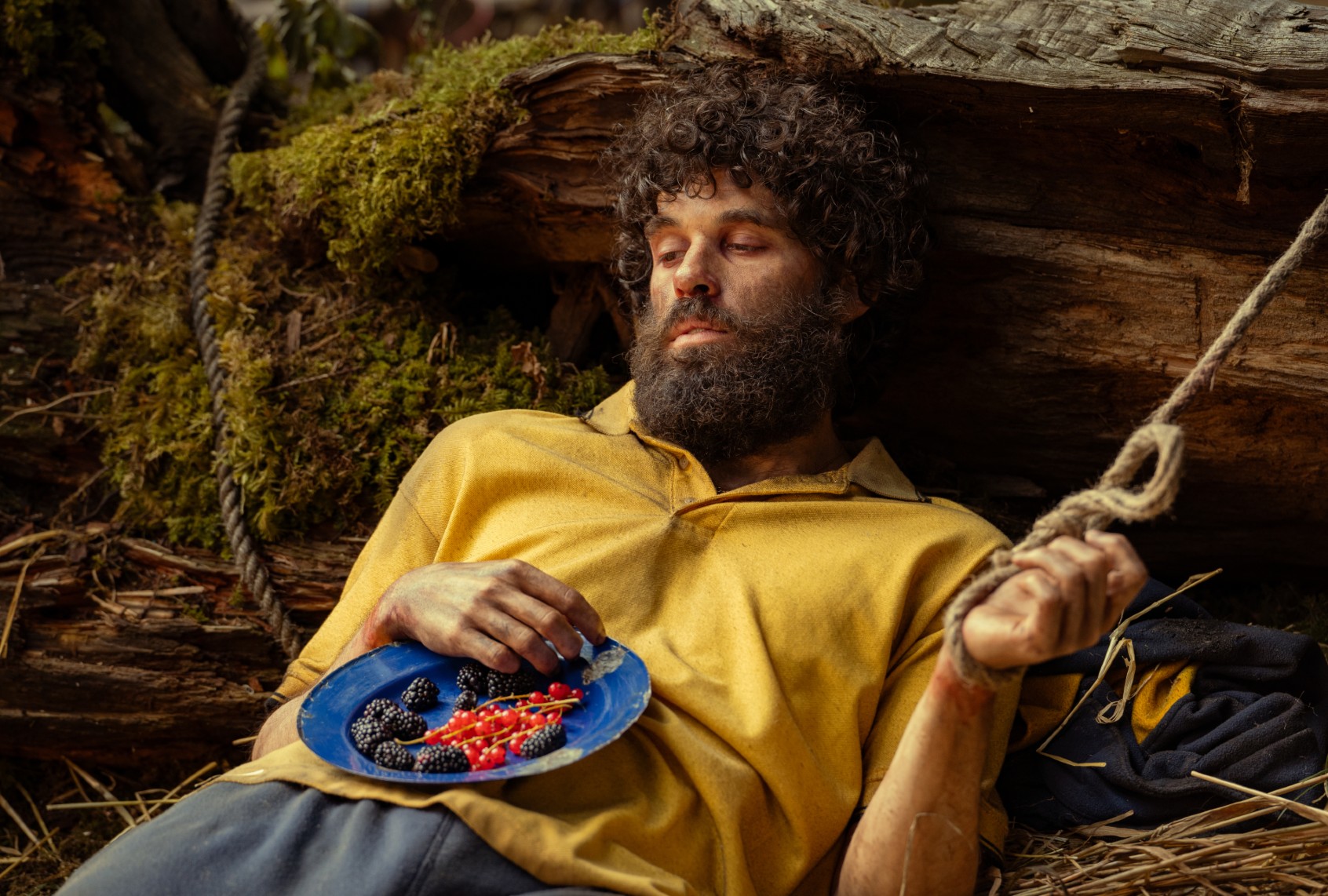
Steven Krueger as Ben Scott in "Yellowjackets" (Colin Bentley/Paramount+ with SHOWTIME)But then, something truly puzzling happened in the lengthy span of time between the end of Season 2 in 2023 and the start of Season 3 in 2025, viewers must have forgotten what originally drew them to this show, or perhaps what they wanted to get from it, because the first half of the season drew complaints of "this is boring," and now, midway through when things are finally getting super dark and stabby stabby again, many viewers are angry or in tears that additional fan-favorite characters have been killed off. 

Of all the promises made on or about this show, a happy ending was never one of them.

But . . . but . . . things are getting bad. Like, headless Ben (Steven Krueger) bad. And if the show keeps hammering it down in this way through the end of the season, things should only get worse, if only to deliver on the promise that was initially made by "giving it what it wants." And by "it," I mean us.  

What sense does it make to cry "boring" when the cannibal show's characters are making tapioca at nursing homes or brushing each other's hair and tending to baby goats and then flood social media with "I'm mad!" when the blood starts flowing? The blood is the point. The anguish is the point. 

Of all the promises made on or about this show, a happy ending was never one of them. 

Good. 


Want a daily wrap-up of all the news and commentary Salon has to offer? Subscribe to our morning newsletter, Crash Course.


Across the series' three seasons, so far, there have been a number of major deaths in both the teen and adult timelines in telling the story of the aftermath of a New Jersey high school girls' soccer team crashing in the middle of a remote Canadian forest and doing literally whatever to survive and the after-aftermath of that, where the members of the team who made it back to civilization are now balancing the mundanities of adulthood with the fact that they're deeply deeply f**ked up. And the deaths that take place in the teen timeline have a different impact than those that take place in the adult timeline because it's one thing to see a person just starting out in life survive a plane crash and then die in the dirt without ever making it back to their bed at home, and another for a person who made it through all of that hell, back to safety, only to die relatively young anyway, likely at the hand of someone they'd trauma bonded with 25 years ago in the wilderness, with its screaming trees and whatever the hell else we're made to wonder about lurking out there.

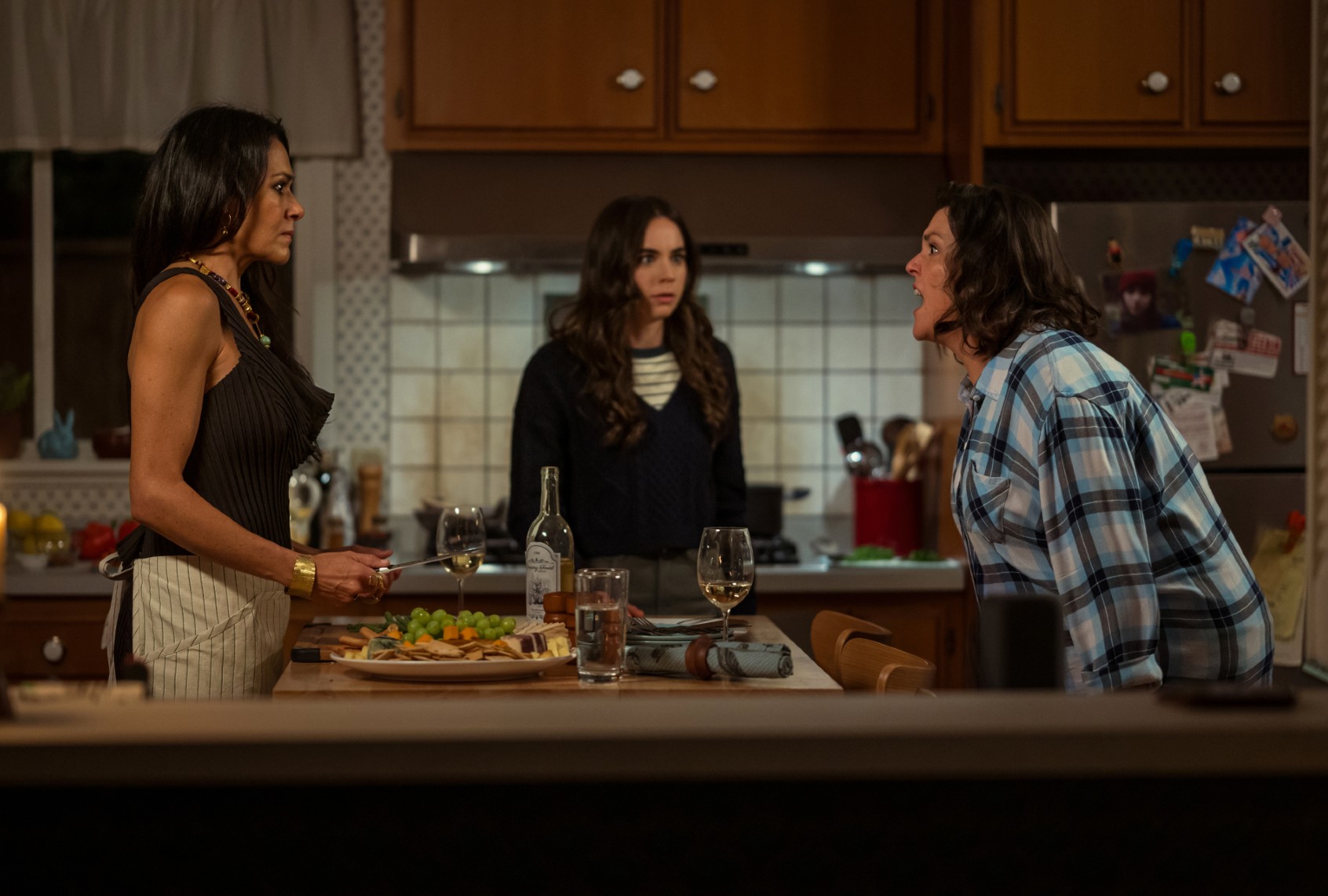
L-R: Simone Kessell as Lottie, Sarah Desjardins as Callie and Melanie Lynskey as Shauna in "Yellowjackets" (Kailey Schwerman/Paramount+ with SHOWTIME)The death of adult Lottie in Season 3 is, actually, something to be mad about — not in and of itself, but because there was so much buildup to her character with the spooky French and the hearing the wilderness and the mystery surrounding the death of Travis (Kevin Alves) and the "cult," only for her to be thrown down some stairs as a way to, what, give Walter (Elijah Wood) something to do? But the death of Ben after being found guilty of burning down the cabin in Season 2 was the right move to push things forward here because, like Jackie in Season 1, he was an innocent and, therefore, finishes what Jackie's death started by taking with him any remaining humanity that was left in the people hutted up in those woods. Good. Good for us. Because that means that from here on out, we likely won't need to suffer through the pretense of the surviving characters in the adult timeline trying to "be better people." We're past that now and we know, just as they know — under the slipping masks they've been holding in front of them — that nothing good made it back from those woods. 

With the death of Ben, a conversation between Shauna's daughter Callie (Sarah Desjardins) and Misty (Christina Ricci) in the third season's second episode takes on deeper meaning, although it likely wasn't intended to.

During a game of truth or dare forced upon Misty and Lottie as a way for Callie to learn more about what exactly happened while her mom and her soccer friends were stranded, Callie says, "I wanna know what 'it' is," meaning the spooky forces in the woods that served as good excuse for teenagers to kill and eat each other.

"Well, that's too bad," Misty replies.

Let's hope it was. Let's hope that it was worse than we could imagine and that we get to see more of it. It's what "it" would have wanted. 

The secret to perfect tomato soup is hiding in the olive bar

The olive bar, for all its ubiquity, often goes unnoticed. Understandably, perhaps. Since its American debut in the late 80s, the olive bar has had its moments — flourishing in the decades before the pandemic, when self-serve stations were a novelty, then faltering as buffets and communal food became suspicious — but today, it occupies a quiet, almost unremarkable space in most grocery stores. It sits among the sterile light and low hum of self-checkout lines, its offerings tucked behind plastic lids that do little to inspire imagination. For many, it's little more than a stop for "girl dinner" or the finishing touch on a charcuterie board.

But look closely, and you'll see that the olive bar is a shortcut to something far more transformative than a quick, raw snack. These humble tubs of brine and spice are a passport to global flavors, ready to turn even the most ordinary meal into something that feels a little like a vacation. 

After all, in the mid-90s, Supermarket News declared that the olive bar  “was not just olives anymore.” Paul Margarites, senior vice president of merchandising at Waldbaum’s — a since-shuttered division of A&P — explained that the concept had expanded into what he called a “condiment bar.” Artichoke hearts, mushroom caps, pimentos and roasted peppers mingled with olives from around the world, creating a colorful, briny spectacle. It wasn’t just about convenience anymore, Margarites said; it was about elevating the grocery experience.

“These condiment bars are an attempt to put a European flair into the deli department and romance into the store,” he noted. But romance alone wasn’t enough. At the time, olive bars weren’t yet a guaranteed moneymaker (Supermarket News noted in 1996 they were only just starting to prove profitable for many grocers) meaning every square foot of marinated mushrooms and oil-slicked artichokes had to justify its existence. That delicate balance — between indulgence and necessity, between Mediterranean fantasy and the gritty realities of retail economics — is what gives the olive bar part of its charm.

Easy to miss, sure, but if you know where to look, you might just find a little piece of the world tucked between the tubs. Ingredients like sun-dried tomatoes, for example, carry with them both a sense of nostalgia and an unexpected depth that can transform even the most everyday dishes

A good one looks like a vintage red leather purse — weathered, but not quite uniformly, like a Birkin bag belonging to one of the Olsen Twins. Some parts gleam carmine, a reminder of summer’s first ripeness; other parts thin to ember-orange, where the flesh has given itself up to time. The edges curl toward deep purple, a gradient of both decay and flavor. Look closely and you’ll see vestigial seeds dotting the surface like radiant drops of citrine, lending the tomato an air of something treasured, preserved.

We need your help to stay independent

Taste-wise, it is to summer produce what caramel is to sugar, where time and heat condense its essence into a tart, molasses-like chew. And chew you must. Where the flesh of a fresh summer tomato gives way easily — its smooth, taut skin snapping like a helium balloon to release a flood of sun-warmed juice — a sun-dried tomato resists. It demands a pull, a gnaw, something that would feel almost primal, if not for the fact that sun-dried tomatoes first became truly ensconced in the American consciousness as the darlings of mid-'90s café culture, enthusiastically tucked into focaccias and tossed onto goat cheese salads with abandon. 

After their initial burst in popularity, sun-dried tomatoes lost their sheen as mass-market, commercially dehydrated iterations flooded supermarkets and chefs moved on to the next, best ingredient of the era (likely truffle oil, much to Anthony Bourdain’s well-documented chagrin). Yet when tucked into the contemporary olive bar’s curated mix of marinated odds and ends, they become an edible time capsule of peak summer, waiting to be put back to work.

Like anchovies or miso, sun-dried tomatoes work best when they aren’t the star, but the sly supporting player. The kind of ingredient that, when used judiciously, makes everything around it taste more like itself. This is certainly the case in my favorite application: tomato soup. A handful of sun-dried tomatoes, blended with roasted cherry tomatoes — their skins blistered in a sizzling layer of golden olive oil — lends this version the concentrated flavor of August, even now in mid-March. The sun-dried tomatoes caramelize, while the fresh cherries burst, rounding out the acidity with a backbone of umami.

I wish I could tell you this discovery was intentional, but like most of my best dinners, this soup emerged from a spontaneous fridge clean-out. I tossed in fresh produce that couldn’t wait another day, pantry staples like boxed stock and tomato paste and some other olive bar stalwarts: roasted red peppers with charred tips, fragrant marinated garlic the soft gold color of faded wedding bands and herbaceous cubes of feta brined just enough to evoke the Mediterranean sea breeze.

I know, it sounds like a chaotic clash of flavors. Each ingredient, at first glance, feels like it could overrun the soup — roasted red peppers too sweet, garlic too pungent, sun-dried tomatoes too intense. And yet, they work in a way that’s almost miraculous, each ingredient giving just enough to elevate the dish, but never stealing the show (especially once mellowed out by a final splash of rich heavy cream). 

"It felt like the kind of meal you’d get at a quaint, yet almost unremarkable European café — where you’d settle in at a chipped table with a postcard in hand, scribbling down just how distinctive it is."

To finish it off, I crown the soup with cubes of marinated feta from the olive bar, their briny sharpness cutting through the velvety sweetness of the roasted tomatoes. Paired with a handful of homemade sourdough croutons — just crisped enough to hold their own, but soft enough to soak up the broth—it’s the kind of soup that sits comfortably between winter and warm weather.

It felt like the kind of meal you’d get at a quaint, yet almost unremarkable European café — where you’d settle in at a chipped table with a postcard in hand, scribbling down just how distinctive it is. The kind of soup you try to recreate over the years, and each time, there’s a nagging feeling that something’s missing: Was it the produce grew out back? Was it the Continental air? In this case, I’m convinced it’s the magic of the olive bar.

The beauty of olive bar ingredients, though, is that they’re good for elevating so much more than soup. That same marinated feta adds a distinctive, creamy zip when crumbled over a baked potato in place of shredded cheddar. Artichoke hearts, with their buttery tang, can take a simple lentil stew from basic to ethereal, especially if you drizzle some marinade into the pot at the last moment to infuse everything with that bright, salty punch. Roasted red peppers, meanwhile, find their calling in a smoky, charred quesadilla, melted into gooey cheese with a dash of chipotle and a squeeze of lime. 

These unassuming, briny odds and ends don’t demand the spotlight. But give them the chance, and they’ll transform even the simplest meal into something extraordinary — just like the olive bar itself.

Olive Bar Tomato Soup 
Yields
4 servings
Prep Time
15 minutes
Cook Time
45 minutes

Ingredients

2 tablespoons olive oil

1 tablespoon of tomato paste

1 pint cherry tomatoes

4 ounces sun-dried tomatoes

4 ounces roasted red peppers

1/2 small red onion, diced

1/2 small white onion, diced

2 to 6 cloves marinated garlic, chopped

4 cups chicken or vegetable stock

2 teaspoons dried oregano

1/4 cup heavy cream

Splash of red wine vinegar

Salt and ground black pepper, to taste

Marinated feta, for garnish


Directions

  1. In a Dutch oven over medium-high heat, heat the olive oil until shimmering. Add the cherry tomatoes, sun-dried tomatoes, tomato paste, red onion, white onion, roasted red peppers and garlic. Reduce heat to medium and cook, stirring occasionally, until the cherry tomatoes burst and the onions are softened and lightly browned, 10 to 15 minutes.
  2. Pour in the stock, then add the oregano, salt and black pepper. Stir, scraping up any browned bits from the bottom of the pot. Reduce heat to medium-low and simmer, stirring occasionally, until the soup has thickened and the flavors have melded, about 45 minutes.
  3. Remove the soup from the heat. Working in batches, carefully add the soup to a blender and puree to your desired consistency. Add it back to the pot, reserving 1/4 cup of the blended soup for the next step.
  4. In a small bowl, stir together 1/4 cup of the blended warm soup and the heavy cream. Pour the mixture back into the pot and stir to combine. (This prevents the cream from heating too fast and curdling). Bring the soup back to a simmer. 
  5. Stir in a splash of red wine vinegar, then season to taste with additional salt and black pepper.
  6. Ladle the soup into bowls and top with crumbled marinated feta. Serve with sourdough bread or croutons.


“Pelosi Tracker” shows us how to trade stocks like politicians

Back in the days of the COVID pandemic when sourdough baking emerged as a popular pastime, Chris Josephs and his friends found themselves fascinated by a different kind of hobby: social media buzz over the stock trading activities of politicians

Josephs, 29, a serial entrepreneur who has been trading stocks since he was 17 years old, saw lawmakers in Congress investing in the market while voting on legislation that could benefit stocks.

"Initially, it seemed kind of funny," he said. "But once I started diving a little bit more into it, I started realizing .. they're making a lot of money on it."

The "Pelosi Tracker" account he created on X in 2022 went viral, gaining over a million followers. Named after former House Speaker Nancy Pelosi, the account shows trades made by her husband Paul, an investor who owns and operates Financial Leasing Services, Inc., a real estate and venture capital firm. Pelosi's spokesman has said she doesn't own any stocks and isn't involved in her husband's portfolio. 

The stated goal of the account — "to get [politicians] banned from trading" — hasn't worked so far. Trading individual stocks is legal for members of Congress, and it's difficult to prove they're trading on insider information, which is illegal. 

So Josephs has taken an "If you can't beat 'em, join 'em" approach. In January 2023, he and his team developed Autopilot, an investment app that allows users to track and mimic the trades of notable politicians and high-profile investors. 

We need your help to stay independent

“What we have now is creators and other financial professionals can go and launch their own portfolios on Autopilot,” Josephs said. “So Autopilot is now becoming a marketplace to go in and have their money managed.“

How does it work?

After downloading the Autopilot app, users can select and follow a number of portfolios, including those of congressional lawmakers, hedge fund managers and other financial influencers. 

The app links users to their brokerages and allows them to choose an amount to invest. Once the portfolio trade activity of the accounts they're following is made public, their brokerage will update to reflect some of the same holdings, according to Autopilot's website. "When they buy, you buy; when they sell, you sell," according to the website. The app has a $99 annual subscription fee.

One of the strongest performers on Autopilot is a portfolio called "Inverse Cramer." It bets against TV personality Jim Cramer’s picks and is up 46% in the past year, followed by the "Pelosi Tracker," up 42% for the year. The "Burry Tracker," which follows the trades of Michael Burry, the hedge fund manager who famously foresaw the 2008 financial crisis, is up 49% for the year.

The reviews are in

Opinions are mixed on Reddit, with some users saying they've made gains by following and replicating the "Pelosi Tracker." Other users said they had no luck after six months. 

Some say they've made gains by following the Pelosi Tracker, but others said they had no luck

Because the app relies heavily on public disclosures, trade activity could be delayed. Members of Congress have 45 days to report trades made by them or their families, creating a lag time that could affect outcomes. 

And while the political portfolios are eye-catching, they are "strictly for entertainment purposes and should not be considered investment advice," according to a review by Spartan Trading, a Canadian-based online consultant. 

Pelosi is far from the only member of Congress associated with stock market trading. A 2024 review of the portfolios of 34 Republican and Democratic members puts her (or her husband) at the bottom of the top 10.

Josephs said he thinks the publicity will make politicians more cautious, but not everyone agrees. Mark Hays, senior policy analyst at Americans for Financial Reform, said the laws that restrict them from capitalizing on insider policy information are already in place, although "they may need to be strengthened."

"With that in mind, I worry creating a tool to track politician's stock trades for investment purposes is at best opportunistic, and at worst, cynical — doubling down on the speculative, zero-sum gamification of both finance and politics that seems to have infected every corner," Hays said.

Even if they are eventually banned from trading, Autopilot has a broader vision, Josephs said. It will probably look like other robo-advisers and social investing apps like eToro that allow people to follow different investors and mimic their trades, Josephs said. 

“In 2027 the way that the product would look ideally is people come in and they put some of their money around Inverse Cramer’s, alongside some of their favorite creators,” he said. “But they also have a bulk of their retirement, their real money, not following these fancy Pelosi portfolios but connected with trusted and transparent, actual professional, certified money managers.”

Trump and Putin to discuss ceasefire, “dividing up” Ukraine’s assets

Russian President Vladimir Putin and his U.S. counterpart will chat this week about a potential ceasefire in Ukraine, the Kremlin confirmed Monday, per the Associated Press.

The news comes a day after President Donald Trump told reporters that progress was being made on a 30-day cessation in hostilities, despite Putin saying that any such proposal should not merely pause the conflict but "eliminate the original causes of this crisis." Russia invaded Ukraine in Feb. 2022 with a goal of regime change, rejecting its neighbor's right to seek economic and military alliances with rival powers.

“We’re doing pretty well, I think, with Russia. We’ll see if we have something to announce maybe by Tuesday, I’ll be speaking to President Putin on Tuesday,” Trump told reporters on Sunday.

Trump, who has insisted that Ukraine cede the rights to its mineral wealth as compensation for U.S. military assistance, said the call with Putin would also include discussion of Ukraine's resources.

“We’ll be talking about land, we’ll be talking about power plants, that’s a big question,” he said. “But I think we have a lot of it already discussed, very much, by both sides, Ukraine and Russia. We’re already talking about that — dividing up certain assets.”


Trump’s push for deportations without due process is meant to cause a constitutional crisis

Elon Musk told Fox News' Larry Kudlow last week that Democrats support the safety net programs like Social Security, Medicare and Medicaid so they can lure undocumented immigrants to America and get their illegal votes. It's based upon the previously fringe "great replacement theory," which Musk apparently believes justifies taking a chainsaw to the federal government. It's nonsense, of course. Undocumented immigrants cannot collect any of those benefits despite the fact that they routinely pay into them. Musk has it entirely backward. And, no, they can't vote either.

This whole drama was reportedly orchestrated by Trump senior adviser Stephen Miller and DHS Secretary Kristi Noem, who planned to keep the announcement of Trump's invocation of the Alien Enemies Act under wraps until they could fly the prisoners to El Salvador.

The question now is just how far into the Trump administration this "great replacement" ideology goes. It's clear that top adviser Stephen Miller believes it, and it's quite likely a number of others do as well. Considering that this weekend Trump invoked the Alien Enemies Act, under the pretense that we are being "invaded," you have to wonder when they are going to find a way to declare full "wartime" powers. Who knows? Maybe they'll find a way to use the "great replacement theory" to round up their domestic political enemies as well. After all, they believe they're providing "material support" for alien enemies with their support for "entitlements." (I'm only half kidding…)

With the invocation of the 1798 Alien Enemies Act, the Trump administration took another giant leap toward a Constitutional crisis. The Brennan Center defines the rarely used law this way: "The Alien Enemies Act of 1798 is a wartime authority that allows the president to detain or deport the natives and citizens of an enemy nation. The law permits the president to target these immigrants without a hearing and based only on their country of birth or citizenship." 

They point out that it is supposed to be used in cases of espionage or sabotage, but in only three cases: the War of 1812, World War I and World War II, which I think we can at least agree were existential crises, even if the law was applied in appalling ways. It's the law that President Franklin Roosevelt used to justify the Japanese internment, the darkest moment of his otherwise illustrious presidency.

We need your help to stay independent

But it should be noted that the law is only intended to be used under a declaration of war or when a foreign government threatens or undertakes an “invasion” or “predatory incursion.” The first requires congressional action but the latter justification is up to the president under his inherent authority. As the Brennan Center points out, previous presidents and the Supreme Court have always considered this to have been enacted under the war power:

In the Constitution and other late-1700s statutes, the term invasion is used literally, typically to refer to large-scale attacks. The term predatory incursion is also used literally in writings of that period to refer to slightly smaller attacks like the 1781 Raid on Richmond led by American defector Benedict Arnold.

In other words, it was never intended to be nor has it ever been used as a power to deport people without due process for garden variety criminal activity — or no crime at all.

On Friday night, Trump signed the executive order and claimed: "Over the years, Venezuelan national and local authorities have ceded ever-greater control over their territories to transnational criminal organizations, including TdA. The result is a hybrid criminal state that is perpetrating an invasion of and predatory incursion into the United States, and which poses a substantial danger to the United States."

Trump is nonsensically attempting to use the words "invasion" and "incursion" to describe criminal immigrants as if simply calling Venezuela a "hybrid criminal state" makes it true. Neither can the alleged members of the targeted Tren de Aragua gang be accurately described as terrorists who have “unlawfully infiltrated the United States and are conducting irregular warfare and undertaking hostile actions against the United States.” (Trump did declare the gang a terrorist organization last month but that doesn't make it so.) It's absurd. Assuming they are all members of the criminal gang he has cited, and there's no way of knowing who they are since there is no due process, this is obviously a domestic criminal matter, akin to dealing with organized crime, not an act of war against the United States.

But then the alleged isolationist peacenik Donald Trump has been itching to use war powers since he became president the first time. And it didn't completely come out of the blue. He talked about using the Alien Enemies Act on the campaign trail, often mentioning it as the only remedy for the lurid crimes he insisted were stalking everyone in America on a daily basis.

A federal judge has already issued a temporary restraining order to stop the deportations, even ordering some planes filled with detainees bound for a prison in El Salvador to turn around in the air. The administration did not obey the order, later saying that the planes were already over international waters and the prisoners were transferred to the notorious El Salvadoran prison. The U.S. has agreed to pay millions for their keep.

Axios reported over the weekend that members of the White House were exuberant over the impending showdown between Trump and the judiciary over whether any judge has the power to stop a presidential order regardless of what it is. One senior official told Axios, "This is headed to the Supreme Court. And we're going to win."

This whole drama was reportedly orchestrated by Trump senior adviser Stephen Miller and DHS Secretary Kristi Noem, who planned to keep the announcement of Trump's invocation of the Alien Enemies Act under wraps until they could fly the prisoners to El Salvador, telling the reporters, "we wanted them on the ground first, before a judge could get the case, but this is how it worked out." But the news leaked and the ACLU and Democracy Forward quickly filed a lawsuit.


Want a daily wrap-up of all the news and commentary Salon has to offer? Subscribe to our morning newsletter, Crash Course.


They are celebrating their handiwork:

Keep in mind that we have no idea who has been disappeared into that prison.

This is only part of the crackdown on non-citizens, regardless of their status. The case of legal green card holder Mahmoud Kahlil, detained for protesting, is the most famous at the moment. But there are others, like this Laotian mother of five who has been in the U.S. since she was eight months old, snatched up without warning and put on a plane to a country she'd never been to. ICE has also deported legitimate visa holders without explanation, detained German and British tourists, European legal residents, and who knows how many Latinos, legal and otherwise, without probable cause. The sad fact is that no non-citizen can be considered safe from the threat of detention and expulsion with little or no due process in America today. Apparently, we are at war with the whole world.

The dystopian “freedom cities” dream fueling Elon Musk’s destruction

In our cynical times, most people are familiar enough with doublespeak to understand that anything called a "freedom city" is likely to be the opposite. It's a sign of the delusional self-confidence in their own mendacious powers that the tech oligarchs who are financing this idiotic idea insist on going with that branding anyway. Investigative reporters Vittoria Elliott and Caroline Haskins published an in-depth report on this scheme for Wired earlier this month. What immediately becomes clear is that what the Silicon Valley billionaire class considers "freedom cities" is simply neo-feudalism, a plan to end the concept of citizenship and make every working person a serf whose entire life is controlled by the whims of their boss. 

The possibility that his reckless actions cause social, economic and governmental collapse doesn't bother Musk, because in the ideological waters he swims in, destroying it all so it can be rebuilt as a tech-dystopian dictatorship is very much the point. 

By design, the details of how "freedom cities" would be established are laden with legalese like "federal enclaves with special economic and jurisdictional zones" or "interstate compacts." In practice, the plan is straightforward. Advocates want the federal government to set aside land to build cities exempt from federal and state laws. Instead, the cities would function as mini-dictatorships, where the CEO of each town runs everything, and the people who live and work there are subject to the boss's whims. It would be like being an employee of a controlling company, except you don't clock out at the end of the day or have a life — or rights — outside of what the boss allows you. 

"These are going to be cities without democracy," journalist Gil Duran told Wired. He's spent years documenting how the Silicon Valley elite — along with politicians like Vice President JD Vance — have pushed the idea that democracy should be ended and replaced with governments run by all-powerful businessmen. "These are going to be cities where the owners of the city, the corporations, the billionaires have all the power and everyone else has no power." In the tech bro world Elon Musk comes from, the definition of "freedom" is that rich people get to treat everyone else however they like, without that pesky government coming in to protect people's safety, autonomy or civil rights. As Duran explained in his newsletter, "These cities will be controlled entirely by tech billionaires and corporations, operating outside of U.S. laws."


Want more Amanda Marcotte on politics? Subscribe to her newsletter Standing Room Only.


It sounds too preposterous to believe, but Musk's close friend Peter Thiel has been spending lavishly on organizations designed to make it a reality. Pilot programs have begun to create artificial islands where the rich owners rule like kings. One such corporate city, named Próspera, has been built in Honduras, though the government is currently trying to kick them out, disagreeing that the city's owners get to reject any national laws they don't like. And, of course, Donald Trump loves the idea of creating cities that exist outside of federal authority, putting out a video in 2023 promising to give over federal lands to oligarchs to begin their mini-dictatorships. Tech executives, fueled by their ill-gotten crypto gains, are heavily lobbying congressional Republicans right now to make this dystopian dream happen. 

In the tradition of reactionaries everywhere, including his "buddy" Trump, Musk tends to project his sins onto people he dislikes. So it's telling that he has a particular obsession with demonizing progressives, journalists, and pro-democracy activists as feudalists. He painted Tesla, a company he famously rules with nearly an iron fist, as an egalitarian workplace with "no lords and peasants," because there's no "special elevator only for senior executives." Tesla factory employees, however, make 30% less than autoworkers represented by unions, which Musk has aggressively opposed. He even joked openly with Trump about using illegal tactics to union-bust. Musk accused unions of creating "a lords and peasants sort of thing," as if allowing workers bargaining power turns executives into serfs. He even griped in 2022 about then-Twitter having a "lords & peasants system for who has or doesn’t have a blue checkmark," referring to their system of marking "verified" users like journalists and politicians, who had proven their identity to the company. Instead, he's replaced it with a pay-to-play system that turns blue check users into "lords" whose subscription fee gives them perks like being at the top of mentions and being promoted in the algorithm. 

All of this helps illuminate the ideology fueling Musk's war on the federal government, and propping up his faith that he, an unelected billionaire, should have the right to nullify any federal agency or policy created through the democratic process. It also helps explain why he is happy to go along with Trump's tariffs and other assaults on the economy, even though the chaos is causing the stock market to crash and executives at his own company, Tesla, to panic about the future of the business. The possibility that his reckless actions cause social, economic and governmental collapse doesn't bother Musk, because in the ideological waters he swims in, destroying it all so it can be rebuilt as a tech-dystopian dictatorship is very much the point. 

As Kyle Chayka explained in February for the New Yorker, "Silicon Valley is premised on the idea that its founders and engineers know better than anyone else," and "they must be able to govern better than politicians and federal employees." The tech right believes, therefore, that they must destroy "the existing order to create a technologized, hierarchical one with engineers at the top." It's a lot of five-dollar words, but it can be boiled down to the view "dictators good, working people bad." Musk even went so far on Thursday to repost an X user who claimed, "Stalin, Mao, and Hitler didn’t murder millions of people. Their public sector employees did," implying that everyday people were working on their own against the will of their dictators. 

Engaging in blunt apologetics for Hitler is quite a follow-up performance for a man who caused a "debate" over whether his stiff-armed salute at a Trump rally should be interpreted as the "sieg heil" it looked exactly like. But this goes deeper than making references to Nazis to troll the liberals. The ideology Chayka labels "techno-fascism" that fuels Musk, Thiel, and their fellow tech billionaires rests on the assumption that the only functional form of governance is strict top-down hierarchies. One of the favorite pseudo-intellectuals of the movement, Curtis Yarvin, sneeringly calls it "dictator phobia" to argue that government should depend on the will of the people, dismissing democracy as outdated and inefficient.

If one believes dictators are good and democracy is bad, however, it's hard to reconcile that with the long history of dictators sowing destruction, ordering genocides, or getting embroiled in unnecessary wars that lead, as happened under Hitler, to much of their countries being blown to bits. Actual dictatorships are messy and chaotic, not the smooth, efficient states of the techno-fascist imagination. And, of course, there is no moral justification for the untold amount of human suffering they cause. So instead of dealing with the cognitive dissonance, Musk is burrowing himself in this fantasy that the problem with Nazi Germany, Maoist China, and Stalinist Russia is not too little democracy, but too much of it. It's a fantasy too stupid to need debunking. The fact that he went there shows how hard he is clinging to any justification for his destructive behavior, even if it's as pathetic as it is evil. 

Trump’s takeover depends on creating this alternate reality

Donald Trump has only been president for eight weeks yet it feels much longer. Time distortion is a common response to the type of extreme stress and anxiety that he and his administration’s policies are causing the American people. During these first two months, many Americans (and people around the world) have likely found themselves saying some version of the following:

Are you kidding me?

WTF!?

Can he do that?

What about the law?

Why don't the Democrats fight back?

Will I get my Social Security check?

Why is this happening?

I am exhausted.

Please make it stop.

If these words and statements were part of a drinking game, the American people would likely be blind drunk like they were drinking bathtub gin during the Prohibition era.

Many public voices — especially those who are committed to American democracy and the American project — feel the same way. At the Guardian, Arwah Mahdawi writes, “Trump has only been president for a couple of weeks and things are already far worse than I had imagined they could be…Almost nobody in the US has escaped the chaos that Trump and Musk have already unleashed in such an incredibly short time.”

Since his return to power Donald Trump has done many things that the “respected” and “establishment voices” and the professional centrists deemed to be extremely improbable if not impossible — or had (willfully) failed to imagine. Here are a select few examples:

The Trump administration appears to have engaged in unconstitutional and likely illegal actions such as usurping Congress’ power over the budget by ordering the government to stop paying trillions of dollars in grants, loans and other financial obligations. Trump also ordered an end to the 14th Amendment and birthright citizenship as part of his mass deportation plan and larger assault on American democracy (the 14th Amendment guarantees equal protection under the law). Trump has also purged independent non-partisan inspector generals and other officials whose responsibility is to ensure that the rule of law and the Constitution are obeyed. The Trump administration is also refusing to fully abide by the courts’ rulings against it. This too is unconstitutional.

Trump’s Cabinet appointees, meanwhile, have been approved with little resistance from Republicans in Congress. Their “qualifications” are loyalty to Trump and a willingness to do whatever he commands even if it violates the law and the Constitution. Trump has also rapidly taken control of the national security state and its centers of power by putting in place his loyalists.

Trump has basically allied with Vladimir Putin in Russia’s war of aggression against Ukraine. Trump is also threatening and appears likely to withdraw the United States from NATO.

Trump is threatening that the United States will occupy Gaza and forcibly remove the Palestinian people. This will be done by force if necessary. Once Gaza has been taken over and emptied of Palestinians, Trump wants to turn the area into a resort area, a type of vacation “paradise” where, of course, his hotels will be featured attractions.

Donald Trump wants to annex Canada and Greenland — by military force if necessary. Trump is very serious about his new American Manifest Destiny: during a meeting Wednesday in the Oval Office with NATO Secretary General Mark Rutte, Trump again shared his desire to conquer Greenland. Trump has also ordered the United States military to develop plans to seize the Panama Canal.

At The Conversation, political scientists Daniel Drache and Marc D. Froese explain how authoritarian leaders like Trump wear various “masks of command.” The idea of Trump as a charismatic leader who is uniquely capable of accomplishing impossible things is central to his power and appeal over his MAGA diehards and those other Americans who support him:

Each authoritarian leader is different, bound only by their anti-liberalism, Dark Triad traits and their celebration as the ringleader of a populist circus.

In our recent book, Has Populism Won?, we show how charismatic leaders encourage a form of totalitarianism in which blind allegiance creates a feeling of partisan belonging. To carry it off, leaders wear what we call “masks of command” to rally their followers.

In our assessment, leaders who spin webs of lies wear the mask of “conspirator-in-chief.” The conspirator uses favours, relationships and money to destabilize institutions and erode the norms that stand in the way of autocracy….

These politicians play to jaded electorates and captive audiences who reward grandiosity and xenophobia because partisanship fills the void left by an absence of genuine national community.

These shamanistic masks have long been a mainstay of populists.

When Trump does the heretofore impossible, he is emotionally training and conditioning the American people to accept a new reality by challenging if not breaking their expectations of what is normal and acceptable in their society and lives. The result is a great amount of collective fear, anxiety and disorientation. As these expectations of what is normal are repeatedly shattered, a type of collective exhaustion and state of learned helplessness sets in.

We need your help to stay independent

The new abnormal and unhealthy reality — what Yale University psychiatrist Robert Jay Lifton refers to as “malignant normality” — will become the norm across American society. As has occurred in other societies whose democracies have collapsed, most Americans will surrender to (or outright support) Trumpism and American fascism once they realize that no one is coming to save them, thus resolving their cognitive dissonance between what they believe reality is and should be versus what reality has now become. The cognitive, intellectual, emotional, psychological, spiritual and physical load of sustaining such extreme cognitive dissonance is too difficult for most people to sustain for a long period of time. The malignant reality that has been created by Trump’s repeated shattering of expectations and norms and what is possible in the United States — a country that is imagines itself as the world’s “greatest democracy” and “leader of the free world” — is made possible by an assault on rationality and critical thinking.

In a 2024 interview with the International Honor Society in Psychology, social psychologist Sheldon Solomon explains this process in detail:

All these ideas play into the way fascist leaders are, and they render their folks incapable of making rational decisions. The cognitive theory we use is based on Daniel Kahneman’s distinction between fast thinking and slow thinking:

Fast thinking is our default mental apparatus. It is what we use when we walk around on autopilot, enveloped in our cultural worldview. It operates automatically and effortlessly through heuristic shortcuts. It works quite fast and often useful, however, prone to error.

Slow thinking is what we use to solve specific problems. This is our rational, logical, higher order thinking. It requires effort, exercise, education, and self-control. It is genuinely fairly accurate and precise. While slower, it is reliable.

Both systems are fundamentally critical and ideally operate in a coordinated fashion. Fascists, however, work to cripple the slow thinking system by essentially lobotomizing their followers intellectually and mangling them emotionally. Fascists operate by disabling the capacity for rational thought. Essentially, when people are frustrated and anxious, maybe because of economic or psychological insecurity, they crave for something or someone to live for. When that happens, they are particularly prone—and when I say they, I mean all of us—to become devoted to a leader who confidently proclaims that they’re singularly able to rid the world of evil.

Solomon continues, “Then, these leaders build a fact-proof screen between their followers and the realities of the world by disabling the capacity and motivation for critical thinking. By doing this, they imprison their followers in the context of what is, ultimately, a warped and malignant worldview. This is how fascist followers become incapable of discerning falsehood and making rational decisions.”


Want a daily wrap-up of all the news and commentary Salon has to offer? Subscribe to our morning newsletter, Crash Course.


What can be done to slow down and stop Donald Trump’s power as a kind of master of the impossible who so easily shatters norms and expectations?

The Democrats need to become a real opposition party that fully resists Trump’s agenda and does not legitimate him and his rule. To accomplish this and maintain public support the Democratic Party needs to develop a compelling story and brand beyond “Trump is bad.” Trump is a high-dominance leader. When the Democrats are passive and weak they are legitimating and encouraging Trump and his MAGA movement’s assaults on democracy, a humane society, reality, facts and truth itself.

Civil society organizations need to resist Trump in the courts and across the public sphere. Dozens of lawsuits and other legal actions have been filed against the Trump administration. Although Trump is trying to control the legal system and courts, he is still being slowed down by injunctions and other rulings. Each one of these judgments pierces the appearance of Trump and his administration’s ability to act with impunity like a king or dictator.

The American people need to engage in mass protests and other forms of corporeal politics. Autocrats and authoritarians do not care about public opinion and voting and will generally disregard the public will. However, protests and other forms of civil resistance will inspire others by showing that they are not alone and that (restoring) democracy is indeed possible.

The mainstream news media — especially the elite news media — are engaging in anticipatory obedience and surrender to the Trump administration and the MAGA movement. This is normalizing Trump’s autocratic rule and enabling his power (both real and perceived) over the impossible. Independent news media outlets, investigative reporters, documentary filmmakers, artists and other creative workers, independent journalists and other social critics will have to fill that void, to the degree possible, by speaking truth to power and going around the gatekeepers and censors.

At The Guardian, Andy Beckett makes a critical intervention about the paradoxical nature of Trump’s power and ability to make his fantasies of eternal power a reality:

Why exactly is Donald Trump’s new presidency so disorienting? So far, explanations have tended to focus on its manic pace, contempt for political conventions and blatant subversion of supposedly one of the world’s most robust democracies.

But all these elements were also present in his first presidency. Meanwhile, other features of both his terms, such as his cult of personality, scapegoating of immigrants and accusation that liberal elites have caused national decline, are standard practice for hard-right strongmen, and have been for at least a century.

Yet still he baffles and wrongfoots people, both opponents and more neutral observers, political professionals and voters, Americans and foreigners. There is an underexplored reason for this. Trump’s presidency, and particularly his second term, is a deeply paradoxical project. In some ways, it’s an epic political fantasy, a promise that every dream of US reactionaries and nationalists can be rapidly fulfilled. But in other ways, it’s a frightening intrusion of reality – into the rose-tinted picture many liberals still have of how America works and how America relates to the rest of the world….

Trump may seem dizzyingly strong now. Yet soon he will be just another incumbent, in an anti-incumbent world. The problem then, for those who don’t support him, won’t be his dominance of the discourse, which may be slipping, but how much of the American state he controls.

James Brown’s “It's A Man's Man's Man's World” is one of Donald Trump’s favorite songs. It is a fixture at Trump’s rallies. When I hear James Brown’s iconic song at Trump’s rallies I remix the lyrics in my mind as “It’s Trump’s World.” Given what is known about Trump’s personality and mind, he likely hears the song the same way.

Donald Trump will likely attempt to become president for a third term. He is already signaling this desire. Trump’s MAGA Republicans are already discussing a bill to circumvent the Constitution to allow him to do so. Other MAGA Republicans and right-wing propagandists are endorsing a national holiday to honor Donald Trump and his MAGA movement. There are also discussions among Trump’s MAGAfied Republicans about putting his face on Mount Rushmore. If the collapse of American democracy continues at its current rapid pace, Donald Trump will likely be given all these things and much more.

A collective failure of imagination by America’s responsible elites — as well as everyday Americans — enabled Trump to win the 2024 election and act as a de facto dictator on “day one” as he promised. Trump and his MAGA movement and its leaders and visionaries see no real limits on what is possible for them and their revolutionary project to end America’s multiracial pluralistic democracy. Instead of being passive and reacting, the Democrats, the so-called resistance and other Americans who believe in real democracy need to dream big and then do the work to make that dream real. Unfortunately, the Democrats and the mainstream liberals and progressives dreamed too small, their vision was too narrow and limited and the long Trumpocene was the result.

Controversy erupts over claims Microsoft invented a new state of matter

The matter making up the world around us has long-since been organized into three neat categories: solids, liquids and gases. But last month, Microsoft announced that it had allegedly discovered another state of matter originally theorized to exist in 1937. 

This new state of matter called the Majorana zero mode is made up of quasiparticles, which act as their own particle and antiparticle. The idea is that the Majorana zero mode could be used to build a quantum computer, which could help scientists answer complex questions that standard computers are not capable of solving, with implications for medicine, cybersecurity and artificial intelligence.

In late February, Sen. Ted Cruz presented Microsoft’s new computer chip at a congressional hearing, saying, “Technologies like this new chip I hold in the palm of my hand, the Majorana 1 quantum chip, are unlocking a new era of computing that will transform industries from health care to energy, solving problems that today's computers simply cannot.”

However, Microsoft’s announcement, claiming a “breakthrough in quantum computing,” was met with skepticism from some physicists in the field. Proving that this form of quantum computing can work requires first demonstrating the existence of Majorana quasiparticles, measuring what the Majorana particles are doing, and creating something called a topological qubit used to store quantum information.

But some say that not all of the data necessary to prove this has been included in the research paper published in Nature, on which this announcement is based. And due to a fraught history of similar claims from the company being disputed and ultimately rescinded, some are extra wary of the results.

Although the paper describes the structure and architecture that could potentially be used to build a topological quantum computer, it’s not clear if all of these ingredients can be put together to actually construct the system, said Dr. Jelena Klinovaj, a theoretical physicist at the University of Basel who studies topology of quantum. 

"Discourse and skepticism are all part of the scientific process."

“In this Microsoft paper, they cannot show that they can really operate it,” Klinovaj told Salon in a video call. “They did not show in a peer-reviewed publication that it is really a topological state because some objects could have exactly the same properties in experiments.”

Despite Microsoft’s announcement, one of the peer-review files accompanying the Nature paper also states, “The editorial team wishes to point out that the results in this manuscript do not represent evidence for the presence of Majorana zero modes in the reported devices.”

Dr. Chetan Nayak, Microsoft Station Q Director, said in an email that prior work published in Nature “confirms the existence of [Majorana zero modes] and demonstrates the basic operation needed for a topological qubit.”

“Since then, we have fabricated and tested topological qubits, building on this prior work and further confirming the existence of [Majorana zero modes],” Nayak wrote.

A Microsoft spokesperson said in an email that the company has made significant progress since the paper was submitted and has been able to demonstrate “the basic native operations in a measurement-based topological qubit.”


Want more health and science stories in your inbox? Subscribe to Salon's weekly newsletter Lab Notes.


“Discourse and skepticism are all part of the scientific process,” they wrote. “That is why we are dedicated to the continued open publication of our research, so that everyone can build on what others have discovered and learned.”

It’s not the first time there has been controversy in this research field. In 2018, a study partially funded by Microsoft but conducted by an independent university reported the detection of the presence of Majorana zero-modes. Later, it was retracted by Nature, the journal that published it after a report from independent experts put the findings under more intense scrutiny.

In the report, four physicists not involved in the research concluded that it did not appear that the authors had intentionally misrepresented the data, but instead seemed to be “caught up in the excitement of the moment.”

Establishing the existence of these particles is extremely complex in part because disorder in the device can create signals that mimic these quasiparticles when they are not actually there. 

"Me and many other experts do not think they have demonstrated even the basic science behind it."

Modern computers in use today are encoded in bits, which can either be in a zero state (no current flowing through them), or a one state (current flowing.) These bits work together to send information and signals that communicate with the computer, powering everything from cell phones to video games.

Companies like Google, IBM and Amazon have invested in designing another form of quantum computer that uses chips built with “qubits,” or quantum bits. Qubits can exist in both zero and one states at the same time due to a phenomenon called superposition. 

However, qubits are subject to external noise from the environment that can affect their performance, said Dr. Paolo Molignini, a researcher in theoretical quantum physics at Stockholm University.

“Because qubits are in a superposition of zero and one, they are very prone to errors and they are very prone to what is called decoherence, which means there could be noise, thermal fluctuations or many things that can collapse the state of the qubits,” Molignini told Salon in a video call. “Then you basically lose all of the information that you were encoding.”

It’s necessary to correct errors that creep in with this noise, and in order to do so, you need to add many more qubits to the system. Within the last six months, Amazon announced it had built a computer chip that used five qubits, and Google announced that it had built one with 105 qubits.

In December, Google said its quantum computer could perform a calculation that a standard computer could complete in 10 septillion years — a period far longer than the age of the universe — in just under five minutes. 

However, a general-purpose computer would require billions of qubits, so these approaches are still a far cry from having practical applications, said Dr. Patrick Lee, a physicist at the Massachusetts Institute of Technology, who co-authored the report leading to the 2018 Nature paper's retraction.

Microsoft is taking a different approach to quantum computing by trying to develop  a topological qubit, which has the ability to store information in multiple places at once. Topological qubits exist within the Majorana zero states and are appealing because they can theoretically offer greater protection against environmental noise that destroys information within a quantum system.

Think of it like an arrow, where the arrowhead holds a portion of the information and the arrow tail holds the rest, Lee said. Distributing information across space like this is called topological protection.

“If you are able to put them far apart from each other, then you have a chance of maintaining the identity of the arrow even if it is subject to noise,” Lee told Salon in a phone interview. “The idea is that if the noise affects the head, it doesn’t kill the arrow and if it affects only the tail it doesn’t kill your arrow. It has to affect both sides simultaneously to kill your arrow, and that is very unlikely if you are able to put them apart.”

In a Microsoft press release announcing the Majorana 1, the company says the chip could calculate catalysts that break down plastic pollutants and “lead to self-healing materials that repair cracks in bridges or airplane parts, shattered phone screens or scratched car doors.”

“Enzymes, a kind of biological catalyst, could be harnessed more effectively in healthcare and agriculture, thanks to accurate calculations about their behavior that only quantum computing can provide,” it states. “This could lead to breakthroughs helping to eradicate global hunger: boosting soil fertility to increase yields or promoting sustainable growth of foods in harsh climates.”

Yet Dr. Sergey Frolov, an associate professor of physics at the University of Pittsburgh whose analysis of the 2018 study data led to its subsequent investigation and retraction, argues that the paper does not demonstrate the existence of a topological qubit which is critical in establishing the quantum computing system they say they are creating.

“The long story short is that me and many other experts do not think they have demonstrated even the basic science behind it, let alone the leap into technology of scaling up, production, etc.,” Frolov told Salon in a phone interview. 

Nevertheless, Lee believes that even if the data doesn’t entirely prove that topological qubits exist in the Majorana zero-state, it still represents a scientific advancement. But he noted that several important issues need to be solved before it has practical implications. For one, the coherence time of these particles — or how long they can exist without being affected by environmental noise — is still very short, he explained.

“They make a measurement, come back, and the qubit has changed, so you have lost your coherence,” Lee said. “With this very short time, you cannot do anything with it.”

We need your help to stay independent

It could be that some form of engineering is necessary to incrementally improve the coherence of the qubits to solve this problem, Lee said. Or, it could require other major scientific breakthroughs that change the way we think about them, he said. 

Nayak said the company plans to present these findings at the American Physical Society’s Global Physics Summit later this month. But it’s yet to be seen if all of the pieces necessary to make this form of quantum computer will come together into something with practical implications.

“As far as the press announcement that they have a topological qubit, I would say most scientists would dispute that,” Lee said. “They are far from having a working qubit.”

In the meantime, some are concerned that the back and forth on the topic within the field could cast a shadow on future developments in topological quantum computing.

“I just wish they were a bit more careful with their claims because I fear that if they don’t measure up to what they are saying, there might be a backlash at some point where people say, ‘You promised us all these fancy things and where are they now?’” Molignini said. “That might damage the entire quantum community, not just themselves.”

“Too late”: White House mocks judge after Trump admin ignores order against deportations

President Donald Trump's administration mocked a judge's order that required them to halt the deportation of accused Venezuelan gang members. 

Administration officials shared on Sunday that they had sent hundreds of deportees to El Salvador, even though a federal judge ordered on Saturday that the deportations be halted. Following the news, White House Communications Director Steven Cheung shared a social media post from El Salvadoran President Nayib Bukele that poked fun at the judge's order for coming "too late."

"Oopsie," Bukele wrote, along with a screenshot of a New York Post article about the judge's order. 

Cheung shared the post along with an image of Denzel Washington saying "boom" in the movie "Training Day."

Trump had ordered the deportations of suspected gang members under the Alien Enemies Act, a little-used and centuries-old law that gives the president expansive wartime powers. U.S. District Court Judge James Boasberg ordered that the deportations be stopped while the legality of Trump's orders is weighed. The Trump administration seemingly ignored that order, as flights were reportedly already on their way to El Salvador. 

Trump called the deportees "monsters" in a post to his social media platform, Truth Social. The post included a video of the deportees being ushered off of the flights and having their heads shaved by prison guards. 

"These are the monsters sent into our Country by Crooked Joe Biden and the Radical Left Democrats. How dare they!" he wrote. "Thank you to El Salvador and, in particular, President Bukele, for your understanding of this horrible situation, which was allowed to happen to the United States because of incompetent Democrat leadership."

It's far from the first time that Trump has bragged about flouting the law in his second term. When his newly created Department of Government Efficiency was immediately ensnared in lawsuits over its attempts to reduce the size of the federal government, Trump shared a quote frequently attributed to Napoleon.

"He who saves his Country does not violate any Law," he wrote.

“There are no guarantees”: Trump acolytes run defense on potential recession

While the economic chaos brought on by Donald Trump has untold amounts of support among the fringe online right, accelerationists who view burning everything down as the starting point for a supercharged libertarian technocracy, you'd expect the view to hold less sway in the halls of power built by the very stability that Trump undermines. 

But if you're expecting conservatives to stick to their long-held values and norms once Trump says jump, then you don't know MAGA. Republican lawmakers and Trump Cabinet members fanned out to talk shows on Sunday, arguing that Americans shouldn't fear a potential recession brought on by Trump's economic agenda. 

During a visit to NBC's "Meet The Press," Treasury Secretary Scott Bessent refused to weigh in on whether a recession was in the cards for Trump's second term and questioned whether Americans shouldn't set their aspirations a little lower. 

"There are no guarantees," Bessent said. "I can predict that we are putting in robust policies that will be durable…We have to wean our country." 

Bessent repeatedly spoke of "adjustments" and "corrections" throughout the interview with Kristen Welker, waving away the stock market's reaction to recent Trump policies.

"Corrections are normal," he said. "I'm not worried."

Bessent said the administration is not concerned about driving up the costs of consumer goods, focusing instead on driving down the cost of housing and cars. While Trump did issue an executive order aimed at lowering housing costs, the directive offered few specifics at how the federal government would reduce the sticker price of the average home.

"The American dream is not 'let them eat flat screens,'" Bessent said on Sunday. "The American dream is not contingent on cheap baubles from China."

On "Fox News Sunday," Sen. Bernie Moreno, R-Ohio, said that analysts predicting "gridlock" in auto production and a potential contraction of the U.S. economy were merely pushing an anti-Trump agenda. 

"I don't think it's going to plunge the United States into a recession," Moreno said. "These experts are funded by lobbyists who have an agenda."

On "Face the Nation," Secretary of State Marco Rubio defended Trump's retaliatory tariffs. 

"That's what happens in these trade exchanges. They already have high tariffs. They're going to add more to their tariffs? Fine," he said."Canada's going after whiskey and orange juice…that sounds pretty petty to me, as well."

Everything’s permissible and nobody’s accountable now: Welcome to the age of anything goes

There it was in my inbox, greeting me at lunchtime on the final day of February with the subject line of, “On Sale! Louis C.K. | Ridiculous” hovering over a giant photo of the comedian wearing his signature “well, shucks” grin.

The notice came from a Seattle venue best known for being the home of our local ballet and opera companies, a place that generally programs highbrow acts. When Patti LuPone came to the city in 2023 to headline a benefit concert, this venue hosted her. Ditto for John Cleese.

But with a few exceptions, a venue will host whoever and whatever the market demands. C.K., as the email boasts, is a six-time Emmy Award and three-time Grammy Award winner. One of those Grammys was awarded after five women came forward in 2017 to accuse him of sexual misconduct which, funny enough, wasn’t mentioned in the email.

To anyone scoffing at this with a “Why would they?” — well, why not? C.K. transformed his accusers’ horror at having him masturbate in their presence without their consent not simply into material but, you know, his “thing.” A sexual kink instead of sexual misconduct, a bit of light oopsie-doodle haha.

“I like company. I like to share! I’m good at it, too. If you’re good at juggling, you wouldn’t do it alone in the dark,” he jokes in 2020’s award-winning “Sincerely Louis CK.”

People are exhausted with all their anger and demands for justice resulting in nothing, including from figures they expect to do better.

It’s all out there, so why wouldn’t the theater’s PR team be as upfront with it as C.K. continues to be? “Six-time Emmy Award, three-time Grammy Award winner and five-time non-consensual masturbator – that we know of!” Now there’s an attention-grabber. Maybe insert a slide whistle sound effect! No reason to hold back. We’re well into the age of everything being permissible.

This is not expressly about one entertainer whose upcoming tour is selling out large venues across the country, proving his command over his fandom holds firm. And that is not an argument for his absolution, it’s a factual statement on par with saying that shopping at Amazon is convenient and Tesla car batteries tend to explode.

These are apt comparisons. Before Tesla CEO Elon Musk took a buzzsaw to our trust in constitutional checks and balances, people were still buying his cars despite multiple allegations of racist abuse at his plants and fatal accidents related to Tesla’s self-driving system failures.

The New York Times exposing Amazon’s brutal work culture a decade ago didn’t slow its march to becoming a multitrillion-dollar company.

Americans do not let the mistreatment of a few people, whether five, 500 or 5000, get in the way of their comfort or good time.

Last week when Netflix announced its three-special deal with Tony Hinchcliffe, the comic who referred to Puerto Rico as “a floating island of garbage” at Donald Trump’s pre-election Madison Square Garden rally, my reaction was the same as how I greeted that on-sale email for C.K.’s tour. “Of course.”

Fellow comic Marc Maron already called it days after Hinchcliffe dropped his rally set, as I previously quoted. “Fascism is good for business if you toe the line. Popular podcasts became tribal and divisive years ago,” he wrote. “Now they may be in the position to become part of the media oligarchy under the new anti-democratic government.”

Tony Hinchcliffe at a Trump rally on Oct. 27 at Madison Square Garden in New York. (Peter W. Stevenson /The Washington Post via Getty Images)

The broader mainstream may have been introduced to Hinchcliffe by way of that Madison Square Garden tight 10, but he was already a star. Hinchcliffe hosts the top live podcast in the world, “Kill Tony,” which is considered a main launching pad for aspiring comedians.

He’s also a superstar in Joe Rogan’s Comedy Mothership solar system, tied to Rogan’s Austin, Texas comedy club and its accompanying cadre of right-leaning headliners.

Netflix is a digital, for-profit venue following the money. According to a report in The Ankler citing Social Blade data, Hinchcliffe gained more than 36,000 new followers on X and 23,763 more on Instagram after the Trump rally.

“It was never my intention to swing an election,” The Ankler quoted him as saying onstage at the Mothership, “but god****t — right place, right time, I guess.”

Joking about terrible things disempowers them. Joking about vilified people reduces their humanity.

As people frantically paraphrase Martin Niemöller’s famous “First, they came for the socialists” poem in response to the detention and attempted deportation of activist Mahmoud Khalil, some have gotten bogged down in arguing which constituency they came for before Palestinians and campus protesters. Somebody will build that into a bit, I’m sure.

But here’s what we know: people are exhausted with all their anger and demands for justice resulting in nothing, including from figures they expect to do better.

Even Maron is about ready for the world to put a fork in him, addressing his cynicism over boycotts in his March 3 post. “Maybe public perception will change and maybe more angry people will once again believe that civil service in the form of candidacy will manifest,” he wrote. “. . . That’s if voting remains a thing. But in the meantime, if you want to go out in the world and shop at actual stores and stop buying Teslas, all the power to you. Whatever gets you through the day.”

Joking about terrible things disempowers them. Joking about vilified people reduces their humanity. “Everybody READ the ‘first they came for’ poem,” posted one Bluesky user, “And then IGNORED it because they decided who they were coming for was ‘content’ rather than humans.”

Now, now, you may be saying. If these guys aren’t intentionally out to harm anyone, as they often claim, what reason do we have to fuss? Besides the shout-outs they’ve received from a White House that’s dedicated to legislatively and extralegally inflicting maximum harm?

We need your help to stay independent

Comics are only out to make money. We would understand that if we only knew them through their podcasts.

Andrew Schulz, another Rogan crewmember, recently released his special “Life” on Netflix. He and his wife’s fertility struggle and his entry into fatherhood are the heart of the set. He also finds room to bust out a joke – which kills, by the way – that every newborn baby looks Puerto Rican.

You may wonder what is with these guys knocking around Puerto Rico. One theory, and hear me out, is that the right wing made the island and its residents a safe target to be “othered.” Since many don’t realize its Spanish-speaking people are fellow Americans, the ignorant can gleefully lump them in with other so-called immigrant invaders. Go ahead and joke about deporting them, because you can’t.

If you don’t follow Schulz’s podcasts or, say, listen to him lovingly rave about how much New Yorkers love Puerto Rico and its people on Shannon Sharpe’s “Club Shay Shay,” you might not know that he’s laughing with them, not at them.

The thing is, the average giggler isn’t a student of nuance, and even Schulz’s avid listeners may not see anything wrong with him and his co-hosts taking casual swipes at marginalized people. It’s all with love. Except, maybe, when it comes to the transgender community.

Schulz riffing on his infant resembling a Puerto Rican may be a tad more defensible than Hinchcliffe’s bigotry nuke at Madison Square Garden. But Schulz helped a brother out in his recent conversation with Sharpe, explaining that Hinchcliffe was trying to joke about the very real environmental disaster that is the Great Pacific Garbage Patch (which we’re specifically naming since he did not).

“He was actually referencing, like, an actual climate issue with, like, recycling,” Schulz said, “But still, I think that if he was, like, in New York and working it out at clubs, he’d be like, ‘Oh, they’re not going to get this. Let me change this for something else.’ I don’t think he, like has a personal vendetta, for Puerto Rico.”

Oh. Of course.
Mel Gibson attends a special screening of “Monster Summer” at the DGA Theater Complex in Los Angeles on September 24, 2024. (VALERIE MACON/AFP via Getty Images)

Comedy employs equations that decode the American psyche, like the classic “tragedy plus time” math, or a certain comedian’s popular “of course, but maybe” bit. For example, of course former New York Gov. Andrew Cuomo should have stepped down after he was accused of underreporting thousands of deaths among elderly residents in his state’s nursing homes during the opening months of the COVID-19 pandemic to protect his reputation. That was dishonest and wrong.

But maybe that doesn’t disqualify him from running for mayor of New York City; how much longer were those sick old people going to live anyway? Would Cuomo be worse or more corrupt than the hilariously bent Eric Adams? Debatable.

Cuomo also faces multiple allegations of sexual harassment, but maybe that’s not disqualifying in the age where everything is permissible.

Adams denied the misconduct claims against him — of course! — as did fellow candidate Scott M. Stringer, who the New York Times reports was accused of sexual harassment decades earlier by two women.

Only two? That’s not so bad. Besides, we’ve already established legislatively and recreationally that nobody cares about women’s safety or well-being.

If they did, we wouldn’t be talking about the real possibility of the Trump administration re-arming Mel Gibson, whose gun ownership rights were stripped away from him in 2011 under a 1996 federal law that prohibits people convicted of domestic violence from owning firearms.  

Gibson pleaded “no contest” to a misdemeanor battery charge for physically assaulting then-girlfriend Oksana Grigorieva while she was holding their infant daughter.

But that was such a long time ago, and Gibson has made so many wonderful movies since then. The man directed 2016’s “Hacksaw Ridge” and that was nominated for, like, a bunch of Oscars and Golden Globes. What’s the worst that could happen if he loses his temper while packing heat?

We joke. We kid! That is pretty much all the energy we can muster to face life right now.


Want a daily wrap-up of all the news and commentary Salon has to offer? Subscribe to our morning newsletter, Crash Course.


Experts on fascist regimes have been counseling all who will listen that among the first tactics employed by those seeking power is to overwhelm the masses to silence and inaction.

What we hadn’t considered is the extent to which a complicit entertainment industry has been softening us up by elevating clowns into sages.

Before the legislative attacks on transgender people came jokes. Lots of jokes. Before that came #MeToo, which was dismantled by the near total lack of accountability for the famous men it ensnared, and jokes.

Helping that along were years’ worth of jokes minimizing rape culture, and the racist, sexist yuks that were the hallmark of the ‘90s and aughts’ political correctness backlash.

It’s better to laugh than to sweat the giant nightmares, like the next coming of Roseanne Barr, or our accelerating slide into a dictatorship under a game show host. As long as misery isn’t banging on your doorstep, everything’s laughable and nothing matters. And if nothing matters, then anything goes.

Styrofoam isn’t food. Why do people want to eat it?

TyBott stares into the camera, chewing slowly. The sandwich — if you can call it that — is packed with peanut butter and raspberry jam, but instead of bread, the filling oozes between two slices of wet, fused-together packing peanuts.

Last October, the TikTok creator (@tybottofficial) went viral for his recipe for the questionable snack, which he's named a packing peanut butter and jelly sandwich. The bizarre creation calls for a cup of water, peanut butter, jelly and a whole lot of packing peanuts. Yes, packing peanuts — the styrofoam nuggets that are typically used to safeguard your most fragile objects during shipping.

In a now-deleted video posted on TikTok —the same video is still available on YouTube — TyBott is seen gently wetting each packing peanut. “Don’t do too much water, you just gotta do just the right amount,” he warns, before sticking them together to make two slices of “bread.” He then slathers a generous amount of peanut butter onto one slice of “bread” and jelly (actually raspberry jam, which his grandmother made) onto the other. Once the two slices are combined with the peanut butter and jelly sides facing in, the sandwich is ready to enjoy.

In what can only be described as a harrowing moment, TyBott takes a bite into his sandwich. He proceeds to go in for seconds.

“That is so freaking good,” he says with a big smile.

Apparently, eating packing peanuts is the latest “food trend.” Because, of course, why wouldn’t that be trending? Back in 2017, British cosmetics retailer Lush announced that its packing peanuts were biodegradable and made from plants, making them safe for both the environment and consumers.

“The peanuts are made of vegetable starch and have a texture similar to cheese puffs,” HelloGiggles, an entertainment and lifestyle website, claimed at the time. “Apparently, Lush originally used popcorn as a packing material because it was compostable and cost-effective. They eventually found the starchy peanuts and figured out that they were more efficient than popcorn.”

“Despite being natural, vegetarian, and coming in tons of yummy scents, it’s not suggested that you eat Lush’s actual bath and body products,” the site added. But that didn’t stop Lush fans and curious taste-testers alike. “I ate a lush packing peanut because my partner dared me to, uhhh does anyone else have experience with eating lush packing peanuts. ask me anything,” a Reddit user posted in the r/LushCosmetics subreddit in 2020.

The trend re-emerged in recent months after one beauty creator filmed herself eating Lush packing peanuts in a now-deleted TikTok video. “Did anyone know that Lush packing peanuts are edible?” she asked before popping one into her mouth. Packing peanut munchers have since been coming out of the woodwork. On TikTok, one creator filmed herself eating a box of the peanuts; a gym bro plated them with a fork. The internet, as always, remains undefeated.

@joshliftsandeats natural selection may take me from this one #gym #fitnesschallenge #anabolic #lowcalorie #gymhumor ♬ Hier Encore Sad Vibes Trap – Novia Nisa
@cassidoodle Just a taste. #TextReaction #hamilton #forbiddensnack #packingpeanuts #musical #tasty #comedy #funny #foryou #fyp ♬ Say No to This – Jasmine Cephas Jones & Leslie Odom Jr. & Lin-Manuel Miranda & Sydney James Harcourt & Original Broadway Cast of Hamilton

Most biodegradable packing peanuts typically use vegetable oil and native starches (or naturally derived starches) obtained from corn, potatoes and grain sorghum. Although they contain plant-based materials, the peanuts are not safe for consumption, family medicine physician Dr. Beth Oller warned.

We need your help to stay independent

“They aren’t going to be made or manufactured in food-safe conditions and wouldn’t meet food safety standards, so I would not recommend this,” said Dr. Oller. “If you ingested them accidentally, it wouldn’t be a problem, but definitely don’t eat them intentionally. They are not food and not made in food-safe conditions.”

Additionally, Angelica McGough, DNP, MSN, told Delish that when native starches are heated to extremely high levels to create the packing peanuts, they undergo a chemical reaction that forms acrylamide, a known carcinogen.

This isn’t the first time that people have made a trend out of eating things that aren’t meant to be eaten. In 2017, there was the infamous Tide Pods Challenge in which YouTubers ate the laundry detergent pods in hopes of garnering views and clout. And in 2022, there was the NyQuil Chicken (or “sleepy chicken”) trend that prompted the U.S. Food and Drug Administration (FDA) to release a warning urging people not to marinate or boil their poultry in cold medicine.


Want more great food writing and recipes? Subscribe to Salon Food's newsletter, The Bite.


Such trends play on the idea of forbidden foods, or foods that may resemble edible items but are definitely not meant for consumption. Tide Pods are enticing, especially to children, because they look like candy. “The bright colors, shapes, texture and weight all resemble that of a ‘bite-sized’ snack,” per a Quora post that was later published in Forbes. “It’s weird to say this all but it’s the truth.” Similarly, packing peanuts resemble cheese doodles and puffed snacks.

“The social media challenges are attention-grabbing and has shock value. People want to feel part of a community so will do these things even when their brain says it may not be a good idea,” Dr. Oller said. “There’s the concept of, ‘well everyone’s doing it.’”

She continued, “For creators, they want to boost engagement and clicks and are less concerned with safety. These people often shouldn’t be making recommendations and lack professional qualifications to promote these ideas.”

“Necessary”: Musk calls for judge who blocked Trump deportations to be impeached

While Elon Musk's official role in the administration of President Donald Trump is intentionally occluded, it's clear from their joint interviews and press conferences that the billionaire campaign financier holds some serious sway. 

The DOGE head moved beyond the loose bounds of his government-slashing semi-agency in the wee hours of Sunday morning, calling for a judge who blocked Trump's attempts to speed up deportations to be impeached. 

Trump evoked the rarely used Alien Enemies Act of 1798 to deport Venezuelan nationals suspected to be members of the gang Tren de Aragua. The act grants the president wartime powers in the event of an invasion from a foreign government. U.S. District Judge James Boasberg objected to the framing of the gang as a foreign government on Saturday, ordering that deportations be halted for 14 days while the legality of Trump's deportation orders is weighed by the courts.

"Any plane containing these folks that is going to take off or is in the air needs to be returned to the United States however that is accomplished,” Boasberg said. “Make sure it’s complied with immediately."

In response to the ruling, Rep. Brandon Gill, R-Texas, said he would file articles of impeachment against Boasberg. Musk shared Gill's post to X announcing the planned impeachment move, calling the action "necessary."

Musk's response comes shortly after a judge ordered the Trump administration to reinstate scores of probationary workers fired using DOGE's blunt methods. In his ruling, Northern District of California Judge William Alsup called the government's claims that the layoffs were performance-based a "sham to try to avoid statutory requirements."

Leading sex-abuse litigator suing women’s sports advocate — it’s a tangled tale

In the newest twist of the under-the radar skirmishes in the area of coach sexual abuse in youth sports programs, one of the most outspoken and effective critics of the U.S. Olympic & Paralympic Committee, its national governing bodies, or NGBs, and the U.S. Center for SafeSport has sued a leading women’s sports advocate for allegedly defaming him and harming his law practice.

The plaintiff, Jonathan Little, asserts that Nancy Hogshead, the 1984 gold-medal swimmer who now heads the advocacy organization Champion Women, was in sync with the harassment of Little by the SafeSport Center. SafeSport spent more than two years investigating a false claim that Little failed to report abuse allegations to the agency, as well as to police.

The story of SafeSport’s perplexing case against Little was told by Salon in 2022. That article is cited in Little’s 84-page complaint filed Feb. 28 in Florida state court, which can be viewed here. Last year SafeSport dropped its investigation of Little, not on the merits but with an explanation that he wasn’t in the center’s jurisdiction since he’s not a member of an NGB.

Named as defendants in Little’s lawsuit, along with Hogshead, are Champion Women and the group’s COO, Alistair Casey. A native of Scotland, Casey has coached the U.S. Olympic badminton team, and after working for Little’s Indianapolis law firm, was on the staff of USA Badminton when Hogshead was on its board of directors.

The Little suit drops during yet another period of descent into chaos by Olympic movement bodies in their efforts — or at least their P.R. gestures toward — stemming widespread abuse in youth sports programs.

Last month, the expected new CEO of USA Swimming, Chrissi Rawak, currently the University of Delaware's athletic director, abruptly withdrew "due to unforeseen personal circumstances." The swimming news site SwimSwam broke the fuller context: USA Swimming had learned that a complaint against Rawak had just been lodged at the SafeSport Center. "These matters, which we are only now coming to understand, were previously unknown," USA Swimming said in a statement, and had not been disclosed to USA Swimming during its vetting of Rawak.

For those of you keeping score, we have also reached the first anniversary of a surprisingly strong report from a congressional commission — on which Hogshead served — calling for a comprehensive revamp of the U.S. Center for SafeSport and for wresting control of youth sports programs at the grassroots levels away from USOPC and the NGBs. These recommendations were years in the making but have received next to no news media coverage. (The New York Times didn’t even bother to report the release of the commission’s work.)

Little’s lawsuit is a thorough overview of his history of fighting abuse by going to court on behalf of survivors and, in many cases, extracting large undisclosed settlements from the Olympic entities for what could be described, at the very least, as their ancillary culpability. Whether his defamation action will be successful remains to be seen. Hogshead represents a different and, as seen in this case, feuding business model of using legal pressure to extract concessions from sports entities under Title IX, the federal law mandating gender equality.

* * *

The Little complaint lays out the same basic facts of the 2022 Salon article, but adds the charge that Hogshead falsely and damagingly piggybacked on SafeSport’s retaliatory investigation of Little, one of its leading critics. (Hogshead acknowledged receiving Salon's request for comment but has not otherwise responded.)

Here's some important backstory: Little was on the track team at Indiana University from 2001 to 2003. His girlfriend at the time was Indiana swimmer Brooke Taflinger. Their friends at the Bloomington campus included two other swimmers, Susan Woessner and Meghan Ryther. Woessner would become USA Swimming’s founding director of SafeSport before resigning in disgrace in 2018 amid reports of her alleged relationship with Sean Hutchison, a swimming coach who was the subject of her department’s first high-profile investigation. In 2011, USA Swimming exonerated Hutchison, but it later settled a lawsuit by former Olympian Ariana Kukors over her accusations that Hutchison had groomed and abused her from a young age.

A single abuse case in Kokomo, Indiana, involving Little's former girlfriend, launched his career as one of the country’s most prolific and successful litigators on behalf of youth sports coach abuse victims.

Ryther has served on the boards of both the SafeSport Center and USA Swimming, and also of swimming’s offshore self-insurance subsidiary, the United States Sports Insurance Company, which was created to ward off abuse lawsuits. Officially incorporated in Barbados, USSIC was put into “run-off mode” and its assets were sold a decade ago.

Among the Little lawsuit’s sidebar charges are that Woessner, Ryther and SafeSport have lied about the long-running allegations of former swimmer Sarah Ehekircher, which were dormant for decades but have finally reached a court docket in Colorado. According to Little, Olympic and swimming officials derailed a police investigation into the circumstances of a late-1980s sexual encounter in California between Ehekircher and her coach, Scott MacFarland, by falsely stating that Ehekircher was above the age of consent at the time. 

After Taflinger, Little’s former girlfriend, helped send Brian Hindson — her age-group coach in Kokomo, Indiana — to prison for, among other things, operating peeping-tom video cameras in his team’s locker room, it launched Little’s career as one of the country’s most prolific and successful litigators on behalf of youth sports coach abuse victims. The Saeed & Little law firm, in which his wife Jessica Wegg also practices, has sued — along with USOPC, SafeSport and USA Swimming — the NGBs for tennis, taekwondo, fencing and other sports.

It was Little and Wegg who were largely responsible for breaking the billion-dollar scandal of former USA Gymnastics doctor Larry Nassar, who committed hundreds of acts of sexual abuse against young gymnasts. 

In 2010, the new lawsuit complaint states, Nancy Hogshead began consulting for Little.

We need your help to stay independent

In his experience fighting the sports powers over abuse and related coverups, Little came to appreciate that both the law and the most effective tactics for policy changes called for reporting illegal acts to law enforcement, rather than to sports organization functionaries. Little, according to his complaint, “began advising his clients to report sex abuse within their sport to actual law enforcement first, before reporting to SafeSport, and to wait until law enforcement gave the go-ahead to report to SafeSport.”

This position was reinforced, he says, when he learned that Woessner and Ryther had tipped off Hutchison about the complaint against him, allowing Hutchison to flee the Seattle area and remove incriminating evidence before the Department of Homeland Security could organize a search of his home.

In 2018, former Olympic badminton coach Casey began sharing information with Saeed & Little on abuse cases. Saeed & Little formally hired him as a researcher the next year.

During the same period, in an extraordinary takeover, USA Badminton’s board was stacked with athletes rather than Olympic bureaucrats. In response, the lawsuit says, USOPC moved to decertify USA Badminton as an NGB, evidently a step that had not been undertaken in recent history, even with scandal-plagued USA Gymnastics.

In 2019, USA Badminton hired Little as legal counsel, in part to thwart the decertification threat, which USOPC eventually abandoned. In 2020, Casey joined the badminton staff.

In his experience fighting the sports powers over abuse and coverups, Little came to appreciate that the most effective tactics called for reporting illegal acts to law enforcement, rather than sports organization functionaries.

According to Little, his aggressive style eventually brought him into conflict with Hogshead. He further claims that Casey, who later left to join Champion Women, conspired with Hogshead by sharing Little's confidential law-firm emails and records with her. Hogshead, Little alleges, used his words out of context in communications with various outside parties, including major news media, to create the impression that Little had suppressed information in SafeSport cases — a gross distortion of his position regarding providing all such information to police agencies first and only later to SafeSport.

SafeSport opened its investigation of Little in 2021 before closing it on technical grounds last January. Shortly thereafter, USA Badminton dropped his legal services.

Before that, the complaint says, the false charges against Little were reported to the FBI, according to Sen. Chuck Grassley, R-Iowa, though the status of the investigation spurred by Grassley “is not known at this time.” Little says he responded to Grassley’s bizarre accusation that he was suppressing knowledge of child rape by providing "hundreds of pages of emails and documents and accompanying privilege logs" to the Senate Judiciary Committee.

The lawsuit details multiple examples of Little’s modus operandi: promptly reporting sports coach sexual abuse allegations to law enforcement first and to SafeSport second, often almost simultaneously.


Want a daily wrap-up of all the news and commentary Salon has to offer? Subscribe to our morning newsletter, Crash Course.


Little says he and Hogshead were at loggerheads when he disagreed with her tactics in confronting universities and entities over violations of Title IX, the federal law mandating gender equality in higher education sports programs. According to Little, Hogshead and Casey came up with a plan to instigate claims against major college sports conferences, and then to settle them by creating more scholarships for women athletes through the creation of new badminton clubs. Little believes that after the USA Badminton board stalled this plan, in response to his advice that it was legally and practically flawed, Hogshead and Casey were angry at the loss of their projected consulting fees for masterminding the Title IX compliance process.

The conflict between Little and Casey-Hogshead came to a head over reports from ESPN and in the Washington Post that USA Badminton CEO Linda French had fired Casey over his purported insistence on reporting to SafeSport the abuse accusations against a coach named Don Chew. A March 13, 2023, Hogshead email blast that was widely circulated — Little himself received it directly — alleged that “USA Badminton General Counsel Jon Little and CEO Linda French directed Casey not to report” child rape allegations.

Little says that he’s suing now because his subsequent dismissal by USA Badminton has cost his firm upwards of $100,000 in fees, and damaged his reputation among prospective clients.

Altruism is actually a fantastic survival strategy

On a tiny island called Cayo Santiago off the coast of Puerto Rico exists a colony of about 1,800 rhesus macaques. Each weighing about 20 pounds and known for their sand-colored fluffy tails, the monkeys that inhabit this island today are descendants of those brought over by primatologist Clarence Carpenter in the late 1930s. Since then, they have helped primatologists, evolutionary biologists, and scientists of all kinds better understand primate behavior in a unique natural laboratory setting. 

Neuroscientist Michael Platt is one of those lucky scientists who has been able to study them for over a decade, particularly with a focus on how their social environment affects their brains, how they make decisions, and the genetic underpinnings of their social behavior. When news broke in the fall of 2017 that Hurricane Maria, a Category 4 storm, was bound to make landfall, Platt and his colleagues were terrified. They worried about what this would mean for their research and the monkeys who had given so much to science. 

On September 20, 2017, the hurricane hit at a ferocious speed, pummeling the island with 170-mile-per-hour winds and torrential rains. Platt and his colleagues waited several nail-biting days to hear about the assessed damage and potential mortalities of the monkeys. Upon their colleagues’ surveying the scene by helicopter, a heroic effort at the time, they learned that two-thirds of the island’s green vegetation had been wiped away. The freshwater cisterns that the monkeys relied on as a water source were destroyed. Through a collective effort, researchers were able to get back up and running fairly quickly, which positioned them to be in a unique opportunity: to see how the rhesus macaques would respond in the wake of a natural disaster. Specifically, the researchers were curious to see if the monkeys’ social ties had shifted and if their behavior would turn more tolerant or aggressive.

Considering the lack of resources and devastation, would the monkeys fight over strained resources in the quest to survive? Since the researchers had over a decade of their social behavior documented, they’d be able to compare the monkeys’ behavior from before the hurricane to that after the hurricane. For example, they knew that while these monkeys are highly social, they can also have very competitive streaks.

"What was amazing was that these monkeys immediately began to reach out and make more friends."

Previously, the researchers had relied on a study method that required researchers to follow each individual monkey for 10 minutes and report every action and interaction to study their behavior. Since the devastation was too big to support this kind of approach, researchers turned to another sampling technique known as the “scan method.”

In this technique, an observer looks up every 30 seconds to record the interactions of every monkey around. After adjusting for potential biases, like louder monkeys trying to grab the attention of the researchers, an analysis of their data showed that the monkeys’ behavior had indeed changed after the hurricane. But instead of for the worse, it was for the better.

For instance, the monkeys appeared to be more tolerant of each other compared to the previous times. While the researchers expected the monkeys to rely on those they already had invested relationships with to cope with the ecological devastation, they found that the monkeys appeared to actually seek out new relationships and expand their social networks. A close relationship still had a lot to provide, but it was almost as if the monkeys experienced a realization that a social network where everyone is friendly enough is better for their overall survival than a network with just a few close friends.

“What was amazing was that these monkeys immediately began to reach out and make more friends,” Platt told me in an interview. “And everybody got connected with everybody in a dense web of interconnection.”

Fascinatingly, even monkeys who were previously characterized as socially isolated broke out of their lonely shells and made more social connections in the hurricane’s aftermath.


Want more health and science stories in your inbox? Subscribe to Salon's weekly newsletter Lab Notes.


While most of the monkeys survived the initial impact of the storm, the population experienced an uptick in mortality a month later. As time went on, researchers found that the monkeys who had more friends were more likely to survive in the damaged ecosystem for the following two years. And it wasn’t just their physical habitat that had experienced rapid deterioration. Platt and his colleagues made another observation of the monkeys. Some appeared to have aged about two years. Monkeys in their teenage years were developing arthritis.

Five years later, the stronger and more tolerant connections among the monkeys were still living on.

“The monkeys are still way less aggressive, way more tolerant, and more connected with each other,” Platt told me. Indeed, it appeared that the monkeys experienced bounded solidarity and were able to transform it into durable solidarity. Why did it work for the monkeys, and why doesn’t it for humans? That’s one of a few million-dollar questions, Platt said. Other open-ended questions are these: Why did some monkeys appear to be able to overcome the difficulties of the hurricane more than others? Why did some show early signs of aging from the stress, and others didn’t? In other words, why were some more resilient?

Social support is thought to be an adaptive response to extreme stressors, Platt said. This means that having strong social support before a tragedy can help organisms better resist stress damage.

The implications for the monkeys could be this: those who had stronger social connections before the hurricane were able to cope better with the aftermath of the hurricane. Platt said that there’s a lot of compelling research that shows more social connections can act as a buffer in the brain against stress responses. It can help people get through tragedy, disaster and trauma. It can keep people’s brains young, in a sense.

“And if you have a younger brain, you’re probably going to be able to navigate life better too, so it’s a feedback loop,” he said. “When your brain is older, you’re not going to be able to navigate a lot of those complexities.”

We know from research on monkeys and humans that having more social support enables resilience, Platt said. But the big open question is, how?

"When your brain is older, you’re not going to be able to navigate a lot of those complexities."

Perhaps the first step to understanding how having more social support enables resilience that can be observed in the brain, it’s best to understand how stress affects the brain. To find an answer, I reached out to cognitive neuroscientist Dr. Julie Fratantoni, who is also one of the leaders behind the BrainHealth Project, a 10-year longitudinal research study seeking to define, measure and improve brain health.

She said broadly speaking, chronic stress kills brain cells in the hippocampus, which is the part of the brain responsible for learning and memory. “Your neurons literally die,” she told me. When that happens, it can become more difficult for people to learn and remember things.

Stress can also affect the brain’s frontal networks, which are responsible for executive functions like planning, judgment, organization and problem solving. Higher-order thinking, she said, makes humans different from other animals. When stress shuts down this part of the brain, humans are then forced into survival mode.

Further, this shutdown narrows down our options to regulate ourselves. It turns the human brain into a reptilian one and activates the sympathetic nervous system, putting us into fight-or-flight mode — the same one we can get stuck in when we’re chronically lonely. Dr. Fratantoni said one way to turn the prefrontal cortex back on to a less stressed mode, one that can think more clearly, is through curiosity. When I asked if altruism could be a way, she said it’s possible because there are a lot of similarities between kindness and curiosity. Both, she said, are an “open posture.” While kindness is hard to access in the immediate aftermath of stress, just as it can be when someone is chronically lonely, it could be a shortcut to bringing the prefrontal cortex back online.

We need your help to stay independent

What do we know about what happens in the brain during an act of altruism? In 2006, neuroscientist Jorge Moll and colleagues provided some of the first evidence to demonstrate what happens in the human brain when a person gives selflessly to another person. In their experiment, the researchers scanned participants’ brains using a functional MRI as participants made decisions about whether to donate money to a charity, oppose donating to a charity, or receive the monetary reward themselves. As they scanned the brains of participants while making decisions, researchers found that those who chose to keep the monetary reward for themselves experienced activity in the mesolimbic reward system, including the ventral tegmental area and the ventral striatum.

The mesolimbic reward system, sometimes referred to as the reward pathway or the mesolimbic pathway, is responsible for releasing dopamine, a neurotransmitter that allows us to feel pleasure and satisfaction. It also plays a role in motivating us to want more, like food and sex. This reward pathway regulates motivation, reinforces learning, and activates incentive salience, which is a cognitive process that makes us experience “desire” or “want.”

Its job is to motivate us to repeat behaviors that are needed to survive. Notably, this reward pathway also plays a significant role in the neurobiology of addiction. The findings in Moll’s study did not come as a surprise. Of course, receiving the monetary award felt good and activated the desire to want more. However, when scanning the brains of those who gave the money to charity, scientists saw that these people experienced even more activity in this reward pathway. This finding suggested that giving to other people could provide more pleasure — per the brain’s reward system — than doing something that feels good for oneself. Notably, donating the money also activated the subgenual area of the brain, a circuit of the brain that scientists know is rich in serotonin and plays a role in social bonding, which was not activated when the study’s participants chose to keep the money for themselves. 

Donald Trump loves the Irish. Do they really have a choice?

A cousin of mine in Ireland — whom I won’t identify, given the 50/50 chance they end up reading this — texted me recently to say that for the first time, they felt actively frightened of America and Americans. (“Pardon my generalization,” they added; I am regarded, in the words of a different cousin, as “almost Irish enough.”) Long-standing Irish jokes about being the 51st state or “just east of Boston” had lost their charm; the status of a small, damp and famously fractious island on the western edge of Europe, three-quarters of which have maintained an uneasy independence for the last century, suddenly seemed in doubt. 

That’s the context — I mean, setting aside the much larger and even more frightening global context — in which Irish Taoiseach Micheál Martin (i.e., the prime minister) paid his ritual St. Patrick’s visit to the White House this past week, offering Donald Trump the traditional bowl of sh — OK, fine, bowl of “shamrock.”

It went well enough, I suppose — if your standards are low and you’re willing to ignore the complicated and sometimes painful subtext. Martin is a soft-spoken, somewhat inscrutable fellow of considerable political acumen who has made this pilgrimage twice before in different circumstances (that is, under the previous president, whose name escapes me). I could explain Ireland's peculiar rotating-prime-minister government here, but it still wouldn't make any sense; it's roughly the political equivalent of orange slices for everybody.

Martin lacks sufficient hair to have literally tugged his forelock in Trump’s presence, but his position as supplicant — or itinerant entertainer, an Irish tradition if ever there was one — was obvious to all. At least he didn’t get chucked out the door, Zelenskyy-style, and wasn’t arm-twisted into signing away all rights to U2’s back catalog, Cillian Murphy’s future roles and Sally Rooney’s next bestseller. 

Beneath the surface, this deliberately anodyne event, built around the uncontroversial fact that Ireland and the U.S. are closely tied by ancestry, history, culture and trade, was about lots of other stuff too. My cousin didn’t need to explain that the Irish economy has become far too dependent on high-tech and pharmaceutical exports to the U.S., and is almost uniquely vulnerable to Trumpian tariffs. Martin’s measured, deferential, responsible-adult performance — in his previous career he was a teacher — was understood back home as critical to the nation’s future. 

Essentially, Ireland can’t afford not to be an American client state — and unlike Britain, France and Germany, can’t even afford to pretend not to be one — and everyone in the Oval Office last Wednesday knew it. But if Ireland’s radically asymmetrical relationship with the U.S. is distinctive, the crisis it represents is global and afflicts many other small and medium-size nations. This episode illuminated some inherent contradictions in Irish national identity and Ireland’s role in the world. It also served to illustrate Donald Trump’s “personalist” strongman regime in action — in a mode of relative benevolence, but with its incoherent blend of isolationism and imperialism, its willful and self-destructive ignorance and its increasingly overt racism in full effect.

At least Ireland's leader wasn't chucked out the door, Zelenskyy-style, and wasn't arm-twisted into signing away all rights to U2’s back catalog, Cillian Murphy’s future roles and Sally Rooney’s next bestseller. 

Media in Ireland labored to boost national morale in the face of this humiliating ordeal, praising Martin for not having thoroughly abased himself or groveled on the Oval Office carpet, and for having mostly kept his mouth shut during an extended Trumpian monologue about anything and everything: The mighty hammer of tariff policy, of course; the cruelty and unfairness of the European Union and his immense affection for Ireland (it’s unclear whether Trump understands that the latter is a subset of the former); Rosie O’Donnell’s reported protest-move to Ireland (Martin pretended he hadn't heard about that, but he definitely has); the suggestion that Senate Minority Leader Chuck Schumer "used to be Jewish" but has "become a Palestinian." (Fact check! The Washington Post reports that Schumer is still Jewish.)

Martin navigated around some awkward moments regarding the war in Ukraine and the war in Gaza, mostly by flattering Trump as a hypothetical peacemaker and redirecting the conversation to the president’s “stunning” golf resort in County Clare. JD Vance very likely knows that Ireland is fully on board with the EU’s pro-Zelenskyy policies and has supported the Palestinian cause for decades, partly from a sense of historical affinity. (Anti-colonial attitudes are deeply baked into Irish national identity.) But such information would only have puzzled Trump and complicated the shamrock bonhomie, and Vance — a Roman Catholic convert, after all — beamed in silence from the sofa.

“I think the Irish love Trump,” announced the president, apropos of nothing in particular. Martin did not contradict him, and Trump was clearly unaware that officials of Sinn Féin, Ireland’s left-wing opposition party, had refused this year’s invitation to Washington. Reviews from Martin’s domestic political foes were not positive: Richard Boyd Barrett, a socialist member of Dáil Éireann (Ireland’s parliament) and a perennial thorn in Martin’s side, accused the taoiseach of “utterly pathetic plámásing,” using an Irish-language term that signifies craven and manipulative flattery. Another opposition figure blasted Martin for laughing at Trump’s clumsy joke about Ireland’s housing crisis; one could argue that laughter, in that instance, was purely a question of survival.

On the upside, Trump had clearly been offered phonetic guidance in pronouncing "taoiseach" (TEE-shuk, roughly) and Martin’s first name, which is closer to "MEE-hall" than "Miguel," as it was rendered by Fox News. He did not demand that Martin dance the Lucky Charms leprechaun jig, and did not indulge in blatantly offensive stereotypes about Ireland or Irish people in expressing his affection. Nonetheless the entire event was contaminated with the insidious mythology of Irish specialness, the perception that denizens of the Emerald Isle are a loquacious, hot-tempered, often maddening and universally charming people — who are also, let’s face it, predominantly white and English-speaking (oddly-pronounced names aside). One wonders how much cognitive dissonance was involved in Trump’s 2018 and 2019 meetings with former Taoiseach Leo Varadkar, who is both multiracial and gay. 

On reflection, allow me to modify the "not blatantly offensive" claim: Asked by a reporter to name his favorite Irish person, Trump briefly appeared stumped, no doubt moving mentally through a list that included Samuel Beckett, Pierce Brosnan, Dolores O'Riordan of the Cranberries and Uncle O'Grimacey of Shamrock Shake fame before settling on "Conor." That would be mixed martial artist Conor McGregor, who was recently, as it happens, found liable for sexual assault in a civil trial. Isn’t that an interesting coincidence? 

Here’s the thing about that maddening narrative of Irish specialness, which is all too easily weaponized for racist purposes, overt or otherwise: It is both a fictional construct and a core element of Irish identity. All Irish people (including the almost-Irish such as myself) know that the romantic stereotypes of Irishness are a form of global currency, often useful in economic, diplomatic and erotic contexts, for instance, and are more than willing to exploit them as necessary. 

That’s exactly why Micheál Martin found himself in the Oval Office presenting a potted plant to America’s disastrously dysfunctional president, as the elected leader of a strange little island nation whose only power is cultural power. It’s an island nation that was dominated for centuries by a neighboring superpower, and now serves as privileged subaltern to another one. 

Asked to name his favorite Irish person, Trump briefly appeared stumped, no doubt moving mentally through a list that included Samuel Beckett, Pierce Brosnan and Uncle O'Grimacey of Shamrock Shake fame before settling on disgraced MMA fighter Conor McGregor.

Ireland really is unique, or at least anomalous, in a number of respects. It certainly wasn’t the only “white” European country to be conquered and colonized — Norway, Poland and the Baltic states would like a word — but it may be the only one whose indigenous culture and language were destroyed and supplanted to such a large extent. (While the Irish language still exists and many Irish people can speak or understand it to some degree, it will never again be in daily use outside a few isolated regions and circles of enthusiasts.)

I can see nothing wrong with understanding that unusual history as a source of strength, or even a source of pride, and in seeking to apply its lessons elsewhere. The problem with Irish “specialness” arises when it is understood as, well, special — as conferring virtue or wisdom or an inherited sense of grievance that can all too easily tip over into xenophobia or racism. (There appear to be fewer Irish Americans in Trump’s orbit this time around, but his first administration was like bingo night in a Queens church basement: Mike Pence, Steve Bannon, Mike Flynn, Mick Mulvaney, Sean Spicer and Kellyanne Conway, to name a few.)

Irish history also does not, I hasten to add, confer automatic solidarity with oppressed peoples around the world. Certain aspects of the Irish experience are similar to those of African Americans, Native Americans and indigenous or colonized groups elsewhere. India’s independence movement was closely aligned with Ireland's, for example, and explicitly modeled on the combination of civil disobedience and guerrilla warfare that won Irish independence in the 1920s. As a young activist in Paris, future Vietnamese revolutionary Ho Chi Minh followed the Irish rebellion closely, and was reportedly inspired by the example of legendary Irish hunger striker Terence MacSwiney

I hardly need to add that the Irish experience is also different from those examples, for reasons that are, so to speak, right on the surface. White privilege was not bestowed on the Irish automatically or all at once; well into the 20th century, British attitudes toward Ireland could legitimately be described as racist, and a faint hangover of bigotry is discernible to this day. Indeed, modern-day affirmative stereotypes about the Irish as a drunken and sentimental tribe of poets, dreamers and pugilists closely mirror older, more negative stereotypes, rendered charming instead of threatening. 

But Donald Trump would never describe Ireland as a “s**thole country” (even if the Ireland I remember from the early ‘70s would almost have qualified). This century’s overlapping Irish economic booms have almost entirely resulted from the island’s status as an offshore center for American industry and investment, with a well-educated, English-speaking workforce and a favorable tax system. Irish workers are certainly better paid than their equivalents in Indonesia or Cambodia, but U.S. executives love to visit, the golf is fantastic, the pubs are so much fun and the people — do you really want me to finish that sentence?

I would not accuse Micheál Martin of harboring any deep philosophical reflections on Irish identity or history during his Oval Office tribulations. His father, Paddy Martin, was a well-known boxer (a fact Trump appeared to enjoy), and Martin tried to fight his corner in a defensive crouch, without taking a knockdown or unduly antagonizing his opponent. He was “plámásing” for sure — a deeply ingrained skill in a people accustomed to being lovable underdogs — but what choice did he have? What I saw was a man who was benefiting from the myth of Irish specialness and also imprisoned by it.

Trump told Martin that he didn’t want to hurt Ireland; he loves the place. The Irish leader departed for a series of fundraising events with rich Irish Americans, believing he had survived. 

Minutes later, Trump told reporters in the White House corridor that he planned to impose a 200 percent tariff on alcoholic beverages from the EU, a devastating prospect for Ireland’s brewing and distilling industries. We get it: He’s stickin’ it to the French, lol. Of course Trump doesn’t know where Guinness and Jameson whiskey come from, and doesn’t care. Hey, he’d be happy to make a side deal with the Irish if he could.

Trump CFPB drops suit against Warren Buffett’s mobile-home lender that “knowingly traps people”

The lawsuit read like a fable of American capitalism. It accused the nation’s biggest mobile-home builder — owned by one of the world's wealthiest men and servicing the most financially vulnerable homeowners — of giving loans to borrowers who clearly wouldn't be able to make the payments. 

Filed by the Consumer Financial Protection Bureau, the federal watchdog agency created after the Great Recession to prevent these types of practices, the suit took aim at Vanderbilt Mortgage and Finance, a Tennessee-based lender owned by Clayton Homes, part of billionaire Warren Buffett's empire

In one instance, the suit alleged that a disabled Army veteran making $700 a month was approved for a loan with a $673 minimum payment. Within a year and a half, she’d fallen behind and Vanderbilt was trying to foreclose on both her home and the family-owned land she used to secure the mortgage, the suit said. In another instance, a family with two children and 33 outstanding debts was approved for a mortgage; within eight months, they’d fallen behind on payments, the suit said.

“Vanderbilt knowingly traps people in risky loans in order to close the deal on selling a manufactured home,” Rohit Chopra, director of the CFPB under the Biden administration, said in a Jan. 6 statement. The agency formally dropped the suit on Feb. 28, weeks after the Trump administration fired Chopra and named Russell Vought acting director until Jonathan McKernan is confirmed.

Vanderbilt said the suit "is unfounded and untrue, and is the latest example of politically motivated, regulatory overreach." The company said it complies with lending regulations that require it to consider borrowers' incomes and living expenses. The "risky loans" represent 0.8% of 70,000 loans reviewed by the CFPB, according to Vanderbilt. The company told Salon it loses an average of 23% of a loan’s value if the borrower defaults, which in 2024 represented $21.9 million in losses. 

We need your help to stay independent

“Vanderbilt Mortgage does not want anyone to buy a home they cannot afford — when a loan defaults, Vanderbilt incurs significant financial losses,” the company's statement said. 

The CFPB — one of the first agencies to be targeted in Trump's federal government purge —remains alive, but just barely, The New York Times reports. Vought, an author of Project 2025 who serves as White House budget director, initially shuttered the agency's D.C. headquarters, froze work at the bureau and fired dozens of employees before a judge ordered them temporarily rehired. 

Without CFPB oversight, mobile-home owners — representing roughly 22 million people in rural areas across the South and West who earn less than $40,000 per year — are left with few institutional watchdogs advocating for their interests, Esther Sullivan, a nonresident fellow at the Urban Institute, told Salon. 

The CFPB is "doing so much of the work not only to protect owners and residents of manufactured housing, but also to understand the nature of the marketplace, which I think in many respects has been kind of a black box,” Sullivan said. 

Oversight of the homes' construction, and ensuring it complies with federal building standards, falls under the purview of the U.S. Department of Housing and Urban Development. But outside of the CFPB, no agency is tasked with monitoring the industry specifically for violations against consumers. 

”Even though HUD regulates manufactured housing … in terms of actually, like, not just regulating, but overseeing the industry and understanding it and collecting data and making it public … the CFPB has been the major player,” Sullivan said. 

Affordable housing, limited lending regulations

Mobile homes, which cost around half as much to build compared to a site-built home, represent a vital source of affordable housing. The CFPB has called manufactured housing “the largest source of unsubsidized affordable housing in the country.”

Manufactured housing is a primary way that the lowest-income Americans break into homeownership, because it's just so affordable,” Sullivan told Salon. In 2023, the average sale price of a new mobile home was around $124,300, compared to $409,872 for a newly built single-family home. 

The average mobile-home owner’s annual income is roughly $38,000 — less than half the median income for single-family homeowners, which is around $79,800, according to the Urban Institute. In a 2022 survey of mobile-home owners published by the CFPB, one in four reported not having enough food to eat and not being able to afford more food, compared with one in 10 single-family homeowners reporting the same experience.

“We have to understand that manufactured homeowners are, really, our nation's lowest-income homeowners,” Sullivan said. 

But mobile-home lending is a uniquely regulated industry, mostly because mobile homes aren’t legally classified as “homes.” In most states, mobile homes are automatically titled as personal property, rather than personal real estate — a historical hangover from many decades ago, when manufactured homes were mostly used to house temporary workers.

Legally speaking, this makes owning a mobile home more akin to owning a motorcycle or sailboat than a single-family home. Unless it’s titled as real estate and secured with a mortgage loan, mobile homes can be repossessed by the lender even if the borrower is barely behind on payments. An estimated 70% of America’s mobile homes aren’t titled as a house, Sullivan said. This is despite the fact that just as many mobile homes — around 70% — are used as the owner’s sole residence. 

“The home can be repossessed if the person falls behind, and that's usually a quicker process than in default and foreclosure,” Rachel Siegel, a senior officer with Pew Charitable Trusts’ housing policy initiative, told Salon.

It’s technically possible to get a manufactured house re-titled as a home, but the process can be time-consuming and expensive, and most states require that the borrower also owns the land the mobile home occupies, ruling out many residents of trailer or RV parks.  

"Manufactured housing is a primary way that the lowest income Americans break into homeownership, because it's just so affordable"

As such, most mobile homes don’t qualify for traditional mortgage loans. Around 43% of mobile homes are secured with personal property loans, or “chattel” loans, in which the only collateral used against the loan is the asset itself. In 2019, when Vanderbilt was servicing roughly 12,600 mobile home loans, an estimated 9,000 were chattel loans, according to a comprehensive report on the mobile-home lending industry published by the CFPB in 2021. 

“There’s very little regulation in this space compared to a mortgage,” Sullivan said. “What that means is that they get riskier, more expensive loans, with higher interest rates, higher financial costs, fewer protections — and oftentimes the asset can be repossessed like a car.”

Mobile-home owners can’t even call themselves homeowners until their last loan payment; borrowers don’t legally own the home until the final payment clears. 

“That titling process is, really, the gatekeeper to access to mortgages,” Siegel told Salon. Mortgage loans typically offer lower interest rates than chattel loans — around 6%, versus as much as 10% or 15% for personal property loans — and offer the borrower longer repayment terms. “Because of those two things, they’re more affordable for the same dollar amount,” Siegel said.

Industry crash leads to Buffett takeover

Mobile-home borrowers’ losses aren’t likely to trigger the stock market collapse that captured the attention and resources of the federal government in 2008. Wall Street banks aren’t holding the loans for America’s lowest-income homeowners.

Instead, the lending market is mostly privately financed and dominated by a handful of companies in and outside of Buffett’s empire. Around 75% of mobile-home chattel loans come from the industry’s five biggest lenders, according to the 2021 report from the CFPB.

Over the decades, Buffett poured billions of dollars into making Clayton Homes the dominant manufacturer and lender of mobile homes in America

We also know that such a crash wouldn’t reverberate through Wall Street, in part because such a crash has already happened. Throughout the ‘70s, ‘80s and ‘90s, an average of 240,000 mobile homes were sold in the U.S. But that figure plummeted in the late ‘90s — the result of “overproduction and loosened financing standards,” according to the Urban Institute, resulting in “credit being extended to borrowers who could not afford the units.”  

By 1999, foreclosures and repossessions were skyrocketing, and used mobile homes — ones whose owners, in most cases, had lost their only home — “flooded the market, reducing demand for new units.” Lenders tightened their purse strings, and new housing production plummeted. Between 2000 and 2005, around 170,000 mobile homes were sold each year.

So when Buffett, head of Berkshire Hathaway, bought Clayton Homes for $1.7 billion in 2003, manufactured housing loans “had been defaulting at alarming rates, and investors had grown wary of them,” according to an investigation by The Center for Public Integrity. The founder’s son, Kevin Clayton, called Buffett that year in search of “a new source of cash” to issue new loans to mobile-home buyers — and knew that "Berkshire Hathaway, with its perfect bond rating, could provide it as cheaply as anyone," according to the investigation.

In the decades since, Buffett has poured billions of dollars into making Clayton Homes the dominant manufacturer and lender of mobile homes in America, scooping up competitors, failing loans and factories, the investigation found. It described Clayton Homes as “a many-headed hydra” that builds almost half of the nation’s mobile homes, then sells those homes through its retailers. It also sells financing through Vanderbilt and several other companies. 

In 2013, Clayton Homes issued 39% of new mobile home loans in the U.S., The Center for Public Integrity found. The second-biggest lender, Wells Fargo, issued 6%.

Watching “Real Housewives” can help us predict Trump’s next moves

Upon establishing the Constitution of the United States, Benjamin Franklin said that, though he had hopes for the document’s longevity, the only things that would be certain moving forward were death and taxes. He was correct for a couple of centuries, at least until Donald Trump and “The Real Housewives” came along. Now, there are four irrefutable guarantees in this modern life: death, taxes, Trumpian chaos and at least one “Real Housewives” franchise airing on television at all times.  

“Housewives” detractors might be reluctant to admit it, the show has become a salient point of contemporary American culture that can help viewers better understand the dynamics of the world around them.

But updating that dusty, old document shouldn’t be too much of a stretch, given that rewriting the Constitution is already a favored tactic among the Trump administration. Although, what foundational systems of America don’t feel like they’re being besieged lately? Longstanding policies, laws and modes of operation have been replaced by an onslaught of executive orders, mass government layoffs and allowing Elon Musk an unprecedented amount of influence. In simpler terms: The American government is under attack, and nobody knows what it’s like to be attacked more than a Real Housewife, whose first-season handbook includes an entire chapter on weaponizing that word. 

This isn’t to say that two Housewives fighting about who stole a McMansion is directly comparable to Trump having a death grip on the White House, only that, despite all the cynics who claim it’s a meritless void, “Housewives” remains a valuable lens for analyzing our culture. Keeping up with the current news cycle is a uniquely challenging task. These days, we need more gumption and electrolytes to check CNN than we do to climb Everest. Trust me, it’s only a matter of time until a single push notification sends my phone flying against a wall and me to the Apple store with my tail between my legs.

But it often seems like that is precisely how exhausted and defeated the Trump administration wants people to feel whenever they enact a frightening new policy or make an inane change to a longstanding system that nobody wanted. (Getting rid of the Social Security phone service for seniors, who are famously not the most tech-savvy demographic? No notes.) The mission feels like its intent is to confuse, surprise and gaslight, and the only people who can give Trump a run for his money on those tactics are Housewives, who get a crash course in all three things before cameras go up. Both politics and “Housewives” are inescapable, no matter how hard we try to avoid them. And though “Housewives” outsiders might be reluctant to admit it, the show has become a salient point of contemporary American culture that can help viewers better understand the dynamics of the world around them.


Want a daily wrap-up of all the news and commentary Salon has to offer? Subscribe to our morning newsletter, Crash Course.


Suppose you are one of those outsiders, either to the world of “Real Housewives” or to the inner-workings of Trump’s second administration. In that case, you might be surprised to learn that there’s quite a bit of crossover between the two — and not just because several cast members of Bravo’s most famous franchise have voted for the man. Each “Housewives” series is a rickety house of cards, just waiting for a dramatic gust of wind to implode its structure so it can be rebuilt with the queens and jokers in a different place. Trump’s orbit shuffles just as frequently. It’s uncertain who will be the president’s favorite from week to week, only that he is the most powerful in this cast. 

In Bravo terms, Trump is at the center of the commercial bumper used to bookend ad breaks and each episode’s opening taglines. In these bumpers, the cast of a “Housewives” show line up next to one another and hold up an object that tangentially relates to whatever city the cast lives in. The object varies between individual series; snowflakes for “Real Housewives of Salt Lake City,” apples for “New York,” you get the picture. Whoever stands in the middle of the group is designated the “center,” and therefore, the season's top dog. Directly flanking Trump at either side would be JD Vance and Musk. From there, the line would fan out with Robert F. Kennedy Jr., Pete Hegseth, Kristi Noem and Linda McMahon —at least this week. What would this cast hold in their bumpers? Miniature Teslas or red MAGA hats. Or, ooo, nothing says “presidential” like some of those ridiculous Trump trading cards he was hawking before the election.

(Funnily enough, the short-lived “Real Housewives of D.C.” did not hold anything for their one beautiful trainwreck of a season.) 

Like most “Housewives” series, the Trump administration has plenty of "friends-of" dropping into its cast of cartoon villains, and if they make a good enough impression during their time on-camera, they might just get bumped up to a season regular. Of course, the decks are shuffled much more frequently in the Trump Cabinet, but only because his reality show is not beholden to network episode orders and a litany of contractual agreements to be fulfilled. That constant instability is because American politics are seemingly no longer about actual policy, they’re about who can cozy up to Trump by doing his bidding most dotingly. And if someone in the administration can’t predict the president’s every thought, they risk being slapped with the moniker every Housewife dreads: “one-season-wonder.”

The pecking order might change from season to season. But it exists, and the success of any individual Housewife depends on their ability to identify it and play the game long enough to find out how the hierarchy operates. The same goes for Trump’s administration.

Former “RHONY” Housewife Cindy Barshop, a one-and-done from Season 4, once received a dressing down that tells us everything we need to know about how Donald Trump operates. After Barshop invited fellow Housewife Ramona Singer to a party and didn’t have a glass of pinot grigio ready and waiting for the most notorious white wine enthusiast on the East Coast, another cast member, Sonja Morgan, gave her an astute look at how “Housewives” operates. “There is a pecking order,” Morgan said. “You better know where your alliances are.”

In the normal world, where you and I exist, that’s an outrageous statement to say to anybody. But in the world of “Housewives,” it’s the truth. The pecking order might change from season to season — even episode to episode — but it exists, and the success of any individual Housewife depends on their ability to identify it and play the game long enough to find out how the hierarchy operates. The same goes for Trump’s administration. Play by his rules long enough and you’ll be rewarded with enough independence to assert some control over your fate, as Musk has been able to do by implementing his vague DOGE program into the American consciousness, something that will have lasting traumatic effects. But cross Trump at the wrong time and the hammer will swing down, just like it did to Barshop.

Elon Musk and Donald Trump in a Tesla carU.S. President Donald Trump and White House Senior Advisor, Tesla and SpaceX CEO Elon Musk sit in a Tesla Model S on the South Lawn of the White House on March 11, 2025 in Washington, DC (Andrew Harnik/Getty Images)This is all to say that Trump plays by the reality show regulations. After a long stretch as the host and star of “The Apprentice,” it seems as though Trump realized that manipulating the real world like a softly produced reality show could work to his advantage, and to viewers' eyes, he's been doing it ever since. The only rule is that there are no rules. What would’ve constituted a headline-making scandal is brushed under the rug after a few days, with the notorious government actors treated with impunity. Things operate similarly over on Bravo, where the only things that can get you kicked off a “Housewives” show are acknowledging the farce of having cameras follow you around all day and abject racism. Sadly, we know the latter isn’t true for Trump’s administration. If anything, a racist scandal in Trump’s cabinet of fools constitutes a promotion to Top Jester of the Week. But I can’t imagine that a drunk driving incident would be enough for anyone to lose their spot in Trumpworld. And if a Housewife gets a DUI? They usually end up at the center of the cast bumper next season. 

Because the interpersonal relationships within the administration directly affect the public, it’s only wise that we try to stay one step ahead, and if that results in people flocking to “Housewives” to study the politics of friendship at play, so be it. Anyone who’s seen “Real Housewives of Potomac” Grand Dame Karen Huger haze a cast newbie would know that incoming cabinet members face the same fate. “Housewives of Beverly Hills” royalty Kyle Richards functions more like RFK Jr.; both are part of a family dynasty and can pull new things to be mad about out of thin air just to get airtime. Had Volodymyr Zelenskyy been versed in “Real Housewives of Salt Lake City,” surely he would’ve known that his Oval Office meeting with Trump was going to end with a Meredith Marks-esque ousting.

(l-r) Jacqueline Blake, Stacey Rusch, Andy Cohen and Wendy Osefo during "The Real Housewives of Potomac" reunion episode (Clifton Prescod/Bravo)That said, there is a line between using “Housewives” as a map for where our country is headed and being totally flippant. Bravo producer Andy Cohen’s recent post about the spat between Trump and Zelenskyy, where he said that Zelenskyy “ate them up” (and misspelled the Ukrainian president’s name), was a bit too facetious for my taste. I don’t want to dumb this administration down or make light of their reprehensible actions, only give those who may be fearful or feel lost a little bit of accessible guidance to dip their toe into the muck. As difficult as that can be, we mustn’t give up just because being a progressive person in America often seems more challenging than it's ever been. If that means watching or rewatching Bethenny Frankel withhold damning information about Luann de Lesseps’ one-time fiancé to analyze her machinations, then so be it!

But perhaps the most important thing to remember — and I say this at the risk of upending everything you’ve just read — is that, like “Housewives,” no amount of pattern tracking and anthropological research will help you predict exactly what will come next. There will inevitably be an event that comes out of left field that makes our jaws drop. If we have any luck, it’ll be as fleeting and inconsequential as the next shocking moment, always just around the corner on next week’s episode.

Parmesan, but better: The magic of frico

I love frico.

Also called though a much more pedestrian name Parmesan crisps,” frico offers the perfect bite: crispy, salty, cheesy and deeply savory. It elevates anything, from a pasta dish to a salad to a soup or sandwich, but it’s arguably the most delicious when eaten (and enjoyed) on its own.

I love the little incidental frico bits that are created when a cheesy, stuffed chicken oozes during the cooking process and the cheese crisps up on the sheet tray. I adore the crispy, cheesy frico-adjacent bits that emerge in the corners of baked pasta like lasagna or baked ziti. I’m also a fan of intentionally included frico, like small crisps interspersed throughout a delicately sauced pasta or a green salad that has crunchy bits of frico all throughout for texture, color and flavor.

No matter how frico comes about whether intentional or otherwise it is always welcome and delicious. 

Back in October, after speaking with food content creator and cookbook author Owen Han, I described frico as such: “lacy, gossamer, uber-crispy cooked flats of parmesan cheese.” In Han’s cookbook “Stacked,” he adds the perfect crisps to a stellar turkey sandwich with pesto, red onions, pickled banana pepper and Calabrian mayonnaise. 

Now, it should also be noted, not all frico is created equally. Most equate frico with a tuile made from Parmesan or Parmigiano Reggiano cheese, but I am just as enamored of gruyere frico. Another good visual cue is how akin a frico is to the 'skirt' or lace that usually forms around pan-fried dumplings.

I initially discovered the wonder of gruyere in a frico in a feat of happenstance, when in culinary school during a practical (sort of like a culinary final or midterm), I accidentally let some fennel tossed with gruyere and Parmesan go a little longer in the oven than I had initially intended. 

The dish itself was a bit overwrought and ostentatious, but the fennel frico was unforgettable. The vegetable was bronzed, the cheese melted and browned, perfect curlicues of crisped cheese enveloping each strand of roasted fennel. I remember the chef-instructor saying, “Hmm, this fennel? How did you make it?”

For what it’s worth, that practical dish earned me the highest score among my class not that I’m one to brag (though, clearly, I am).


Want more great food writing and recipes? Subscribe to Salon Food's newsletter, The Bite.


In turn, of course, I then made this fennel-and-cheese dish ad nauseam in the ensuing years. As I phrased it back when I first wrote about the dish, “The cheeses meld together to form the most delicious, frico-laced roasted and blistered fennel imaginable.”

Originally, frico is said to have referred to a dish from Friuli which Han notes as a “mountainous region in northern Italy” made with Montasio cheese, often cooked into large, pancake-sized rounds. But nowadays, the term is just likely to describe the often-smaller Parmesan crisps found in salads, pastas or elsewhere.

It should also be noted that for some, like famed chef Lidia Bastianich, frico also applies to a potato, onion and cheese savory cake, which is cooked on the stove in a large pan until it is browned, crisped and aromatic. It is delicious, but when we made this in culinary school, the sheer finesse and difficulty of the dish (flipping it is, to put it lightly, challenging) made it just a bit less enjoyable or imminently cravable for me.

Let's be real: they’re all wonderful. But I find a frico to be most terrific when it’s just the cheese and nothing else. 

In Gabrielle Hamilton’s stunning, encyclopedia-length tome “Prune,” she details the “giant frico” recipe at her magnificent (yet now-shuttered) restaurant at in precise detail, writing “as the cheese melts and gets lacy, watch for golden, toasty edges.” She also advises the cook that “sometimes they aren’t crispy enough because you have over-portioned the cheese, not scattered it evenly into the pan, or not toasted long enough. Conversely, if you put too little cheese in the pan, the frico shattered from lack of structure. Finally, if you cook them too dark, they can turn profoundly bitter." 

We need your help to stay independent

She finishes with an important note, that “it’s an expensive ingredient to have to trash.” 

For me, though, I think that’s part of what makes frico so magical.

I like the risk, I guess. Some nights, when I’m sick or tired or not trying to cook, order or pick up food, I’ll make frico. Sometimes, I’ll even use mozzarella, if I have it on hand.

I’ll gussy it up, mixing together cheeses (like the standards, gruyere or Parm), along with some garlic or onion powder or even a touch of salt and making little piles on a silpat-lined sheet tray. 

I’ll cook it in the oven and watch as the little piles melt, softening and withering in the heat, before turning into little puddles of melted cheese as they crisp around the edges. I like to risk danger further and cook them until they’ve browned just a bit more, almost singed or even dancing on the precipice of burnt at the edges, before removing them from the oven and letting them cool entirely, the flattened cheese pools hardening as they cool and becoming almost chip-like. 

Then, I retreat to the living room, devouring them with nothing but a pile of oil-slicked napkins nearby completely satisfied with my cheese-centric, minimalist dinner.

Parmegiano-Reggiano is one of the world’s perfect foods. But apply some heat and a bit of extra time to a humble pile of grated cheese and something even more magical happens.

Now that’s something special to truly savor. 

Nearly 72,000 tubs of hummus recalled over plastic contamination

King Harvest has voluntarily recalled nearly 72,000 tubs of hummus after discovering plastic fragments in certain batches, Forbes reports. The recall affects 12 flavors of the brand’s 10-ounce tubs, sold exclusively in Idaho, Oregon and Washington. No injuries have been reported.

The impacted products have expiration dates ranging from February 2 to March 2 of this year and were sold at Pacific Coast Fresh Co., Fred Meyer, QFC and other Kroger-affiliated stores. Affected flavors include roasted garlic, lemon, jalapeño, chipotle, balsamic, spinach and more.

According to Kroger’s Recall Alerts page, the recall was prompted by a defect in the plastic tub, which could result in plastic fragments contaminating the hummus. Consumers who have purchased the affected products are advised to discard them or return them to the store for a refund.

For those in need of a hummus fix, this may be the perfect excuse to try making your own.

The recall was initially announced in early February.

Trump walks back 24-hour Ukraine peace promise: “I was being a little bit sarcastic”

President Donald Trump, who repeatedly promised on the campaign trail that he could end the war between Russia and Ukraine in a single day, now says he wasn’t entirely serious about that claim. 

“Well, I was being a little bit sarcastic when I said that,” Trump said in an interview for the television program “Full Measure,” a clip of which was released ahead of its Sunday broadcast. “What I really mean is I’d like to get it settled, and I think I’ll be successful.”

According to the Associated Press, Trump’s special envoy, Steve Witkoff, was in Moscow this week for talks on a U.S.-proposed agreement that Ukraine has already accepted, though a ceasefire isn’t guaranteed without Russia’s cooperation. When asked what would happen if Russian President Vladminir Putin refused to cooperate, Trump acknowledged that turn would be “bad news for this world because so many people are dying.” 

“But I think he’s going to agree,” Trump continued, “I really do. I think I know him pretty well and I think he’s going to agree.” 

While on the campaign trail, Trump frequently touted his ability to broker peace between Ukraine and Russia, saying during a May 2023 CNN Town Hall that he would “have that done in 24 hours.” Months later, in a debate with then-Vice President Kamala Harris, he went even further, saying he would secure a resolution before even taking office.

“If I win, when I’m president-elect, what I’ll do is I’ll speak to one,” he said. “I’ll speak to the other. I’ll get them together.” 

Russia's full-scale invasion of Ukraine began on Feb. 24, 2022.