Spring Sale: Get 1 Year, Save 58%

Trump workers moved Mar-a-Lago boxes one day before FBI came for documents

Two members of Donald Trump’s staff moved boxes just before a prosecutor and FBI agents visited his home at Mar-a-Lago to retrieve classified documents under subpoena in June of last year, which federal investigators now view as evidence of potential criminal obstruction, sources familiar with the matter told The Washington Post.

The boxes were moved into the storage area on June 2, 2022, one day before Jay Bratt, a senior lawyer for the Department of Justice, arrived at the club with two FBI agents to collect the materials, the sources said. 

John Irving, a lawyer for one of the two Trump employees, said that his client did not know what the contents of the boxes were and was just trying to help Trump aide Walt Nauta while he was moving boxes.

“He was seen on Mar-a-Lago security video helping Walt Nauta move boxes into a storage area on June 2, 2022. My client saw Mr. Nauta moving the boxes and volunteered to help him,” Irving said, adding that the staff member helped Nauta load an SUV “when former president Trump left for Bedminster for the summer.”

Irving said that the employee did not have “any reason to think that helping to move boxes was at all significant” and has cooperated with the government. Other people familiar with the probe have confirmed the staff member’s role and said that authorities have questioned him several times.

The people familiar with the matter also alleged that Trump and his aides staged a “dress rehearsal” to relocate the documents prior to receiving the subpoena that May. They added that the Justice Department has found evidence that indicates Trump sometimes kept classified documents out in the open in his office and showed them to other people.


Want a daily wrap-up of all the news and commentary Salon has to offer? Subscribe to our morning newsletter, Crash Course.


Together, the Post writes, these revelations suggest a wider range to the instances of possible obstruction under investigation than were previously reported and expands the timeline of those events to a time period that extends before the May 2022 grand jury subpoena and after the Aug. 8, 2022, FBI search at Mar-a-Lago.

This new information could mark a crucial turning point in special counsel Jack Smith’s investigation into the former president’s handling of classified documents, following reports that Trump’s lawyers have detailed his potential defense and requested a meeting with Attorney General Merrick Garland. These actions suggest that Trump’s legal team believes a possible indictment is fast approaching, and some media reports have suggested it could come soon after the Memorial Day holiday.

Trump’s legal woes, however, are not limited to the Mar-a-Lago documents case. Smith is also investigating the former president for his attempts to impede the results of the 2020 election and his incitement of the Jan. 6 insurrection, while a Georgia district attorney is probing the former president for other election-related matters.

Trump also faces a recent criminal indictment of 34 counts for falsifying business records and a civil suit alleging fraud from New York Attorney General Letitia James against his family business. He has denied wrongdoing in each case.

“This is nothing more than a targeted, politically motivated witch hunt against President Trump that is concocted to meddle in an election and prevent the American people from returning him to the White House,” Trump spokesman Steven Cheung said in a statement. “Just like all the other fake hoaxes thrown at President Trump, this corrupt effort will also fail.”

“In the course of negotiations over the return of documents, President Trump told the lead DOJ official, ‘anything you need from us, just let us know,'” Cheung added. “That DOJ rejected this offer of cooperation and conducted a raid on Mar-a-Lago proves that the Biden regime has weaponized the DOJ and FBI.”

Department of Justice officials have said that they conducted the search only after several months of failed efforts to retrieve the documents from Mar-a-Lago.

Trump has attempted to justify his handling of the classified documents since leaving office, according to CBS News, incorrectly claiming that presidents have the power to declassify documents “even by thinking about it.”

“I was there and I took what I took and it gets declassified,” Trump told anchor Kaitlin Collins in CNN’s controversial town hall broadcast earlier this month. 

Take a trip to France from the comfort of your own home with Julia Child’s 5 budget spring recipes

As part of our budget eats series, Salon Food previously put together a collection of affordable spring recipes from Giada De Laurentiis, Ina Garten and Martha Stewart. This week, we’re turning our attention to the celebrated cooking expert and television personality Julia Child, who is best known for introducing French cuisine to the American public.

Contrary to popular belief, cooking — and enjoying — French foods doesn’t have to be an expensive or laborious affair.

Per Julia, be sure to stock up on butter, eggs, garlic, herbes de provence (dried basil, marjoram, oregano, rosemary, thyme and rosemary), flour, cheese, olive oil and vinegar. Yes, we know it’s a lengthy list. But it’s also one that won’t come at the expense of your wallet.

Soon enough, you’ll be whipping up French-inspired recipes like a pro and adopting Julia’s trademark phrase — “This is Julia Child, Bon appétit!”


Want more great food writing and recipes? Subscribe to Salon Food’s newsletter, The Bite.


From Julia’s Vichyssoise to her Spinach and Eggplant Curry, here are five budget recipes from the famed kitchen queen:

01
Coq Au Vin
Julia’s signature recipe is chicken braised with red Burgundy wine, lardon (fatty bacon or pork fat), mushrooms and garlic. Sure, wine and lardons can both be budget-breaking ingredients, but they can also be purchased for cheap at Trader Joes and Walmart!
 
A more affordable rendition of the recipe was formulated last year by Inflation Bites. Their recipe specifically calls for 4 to 5 chicken leg quarters, salted pork, mushrooms, pearl onions, garlic, Pinot Noir, chicken stock, dried thyme, bay leaves, gelatin, butter, parsley, salt and pepper. The total cost comes to just $16.
 
Find the full recipe here.
02
Vichyssoise
Another one of Julia’s favorite recipes is Vichyssoise, a leek and potato soup that doesn’t skimp on cream. The dish itself calls for sliced potatoes, sliced whites of leek, chicken stock or broth, whipping cream, minced chives, salt and white pepper (although ground black pepper will also do the trick!).
 
If you want to keep the recipe purely vegetarian, use vegetable stock in lieu of chicken stock. As Julia once said, “Leek and potato soup smells good, tastes good and is simplicity itself to make.” She’s not wrong!
 
Find the full recipe here, courtesy of Taste of Home.

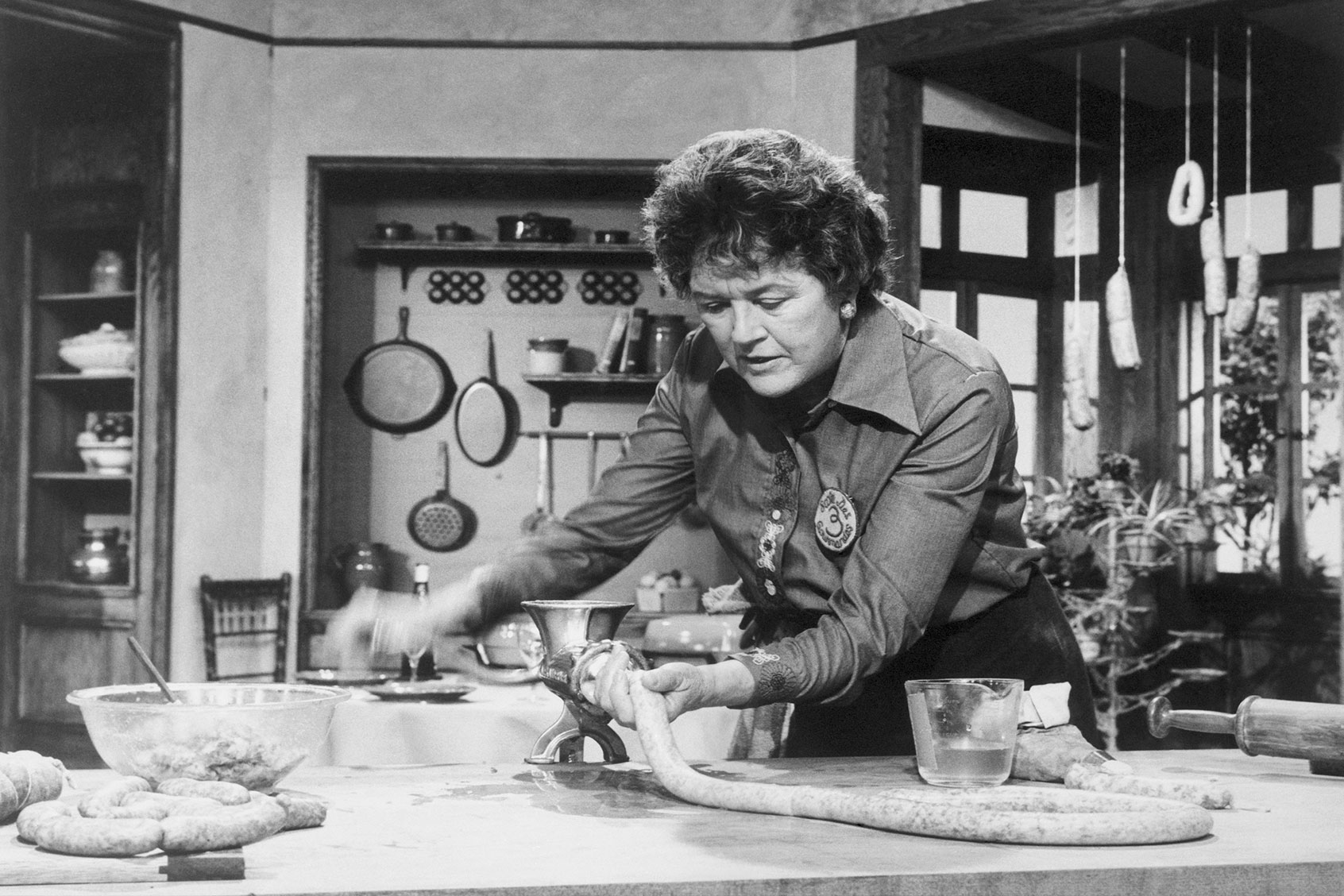
Julia ChildAmerican chef Julia Child stands in front of a countertop, holding a whisk and a ladle by a mixing bowl, possibly on the set of her television series, ‘The French Chef’. (New York Times Co./Getty Images) 

03
Spinach and Eggplant Curry
This hearty side dish is perfect to enjoy alongside your choice of protein, whether that’s roast chicken, grilled lamb chops or pan-seared steak with garlic butter.
 
The “meat” of this dish is the eggplant, which is seasoned with salt, mustard seeds and ghee (also known as clarified butter). The curry calls for onion, more salt, chopped garlic, grated ginger, peeled tomatoes, light brown sugar and a slew of spices, including coriander, cardamom and turmeric. After all the ingredients are mixed and cooked, the spinach is stirred in, which preserves its vibrant hue and freshness.
 
Trust us when we say that Julia’s Spinach and Eggplant Curry may become your new go-to weeknight side dish.
 
Find the full recipe here, courtesy of PBS.
04
Beet, Blood Orange, Walnut and Rocket Salad
Nothing screams spring like a heaping bowl of salad filled with fresh produce and a zesty dressing. Julia’s Beet, Blood Orange, Walnut and Rocket Salad takes homemade salads to a whole other level.
 
The star in this dish is the vinaigrette, which is made from blood oranges (regular oranges work fine, too), shallots, salt, sherry wine vinegar and EVOO. There’s also chopped beets, seasoned with salt and ground pepper, along with arugula and toasted walnut halves.
 
Find the full recipe here, courtesy of PBS.

Julia demonstrates the stuffing of sausagesJulia demonstrates the stuffing of sausages. (Getty Images/Bettmann) 

05
Swiss Cheese Quiche
A classic French tart, quiche consists of a pastry crust filled with a savory custard made from cheese, meat (typically ham or bacon), seafood or vegetables. Julia keeps it simple with her recipe for Swiss Cheese Quiche. You’ll need eggs, whipping cream, salt, pepper, nutmeg, grated swiss cheese, butter and pastry shells — that’s all! Be sure to enjoy your quiche straight out of the oven, when the cheese is still hot and bubbly.
 
Find the full recipe here, courtesy of Food.com.

Rainn Wilson doesn’t hold back: “Here’s the guy from ‘The Office’ talking about suffering and death”

Rainn Wilson went looking for happiness in Bulgaria. For his new Peacock series, “The Geography of Bliss,” the former “Office” star went to the four corners of the earth, including one ranked among the most unhappy in the world, searching for the secrets of well-being. “As a matter of fact, there are a lot of happy people there,” Wilson shared on “Salon Talks.” “They just scowl in that particularly Slavic way.”

The series, inspired by Eric Weiner’s book of the same name, is a natural fit for the adventurous Emmy Award nominee. In his deeply personal latest book, “Soul Boom: Why We Need a Spiritual Revolution,” he ventures through the terrain of grief and the pursuit of joy, making a fact-based case for hope in an often hopeless world. And on “Geography,” he looks at happiness through a cultural lens, unlocking what contentment looks like in places across multiple continents — and even right here at home. 

And what have all his wanderings shown him? “It’s not that complicated,” he said. “It’s just about connection. It’s just about community.” During our conversation, Wilson talked about the high price of toxic masculinity, what suffering can teach us about happiness, and the life lessons that keep bringing people back to “The Office.” “There’s something,” he said, “beautifully universal about it.”

Watch Rainn Wilson on “Salon Talks” here, or read about our conversation below.

The following interview has been lightly edited for clarity and length.

I’m going to start you off with a softball question. What is happiness?

Wow, good one. Happiness is a tricky word for me and this is why social scientists and psychologists really use the term “well-being,” which I think is more all-encompassing. It includes bliss, contentment, meaning, all of those fun things. Because happiness is such a residual effect. Happiness is, “Oh, I had a sip of the coffee, and a butterfly landed on this tree, and I feel happy.” But then you’ll try and recapture that. You’ll try and have a sip of coffee and hope for a butterfly, and you won’t necessarily feel it. So, “What can we do to increase well-being?” is a more valid question and a more practical and applicable question. That’s what it is. It’s about a series of choices and decisions that you can make that doesn’t allow you to be a passive victim of your emotions, that can increase the quality of your life.

“The Geography of Bliss” looks at what we can learn from other cultures and other places in the world. You go to these different places, which are not destinations I would have expected. You upend expectations. 

“The Geography of Bliss” is a travel show, and instead of sampling delicious foods, I am looking for happiness, well-being, bliss, whatever you want to call it. We Americans can get very arrogant in the fact of, “Our way of life is the best way of life.” But can we get humble and really learn from other cultures? What can we learn and apply to our own culture? We went to Iceland, Ghana, West Africa, Bulgaria, which is actually one of the most unhappy countries in the world, to see what we could learn there, and Thailand, and then back home to the United States.

There’s a part in the show where you say, “Anywhere I go, I feel like, I could live here.” I think a lot of us as Americans do feel that way, that the answer is changing my space as opposed to, how can I find these feelings in my own home? I really love the Bulgaria episode, because you met lots of happy people there. 

“Hey kids, here’s the guy from ‘The Office’ talking about suffering and death.”

I did. Bulgaria is an interesting situation because they have been oppressed for literally thousands of years, and so they are not trusting. There’s such corruption and such a lack of belief in their government that any and all happiness you would find in a place like Bulgaria has to do with families and small friend groups. If you stay small, people are very happy. If you start to widen the scope, they’re very distrustful. And if you’re distrustful of your environment, that’s going to breed anxiety and that’s not going to lead you to too much happiness. But as a matter of fact, there are a lot of happy people there. They just scowl in that particularly Slavic way, and they don’t share it very much.

Our perceptions of happiness — or contentment or bliss — are different across the world. You come up with some markers, though, of what you found in these different cultures. Tell me what some of them are. 

It’s interesting because people ask, they want to know, “Boil it down. What’s the takeaway?” That’s not quite your question, but I’m going to just jump into that and just say that it’s not that complicated. When I came back from the journey, it was like, “It’s not that complicated. It’s just about connection. It’s just about community. It’s about the bonds of friendship and bonds of intimacy and trust that you develop, certainly with family members, but expand that a little bit more to your community, to your area where you live. Your school, your people.” That’s where the greatest bliss lies.

Wherever you travel in the world, it’s all about that connectivity. We are social creatures. We thrive in connection, in communion, in collaboration with each other. That’s how I’d really boil it down. In Thailand, Buddhism and spiritual practice helps connect people. In Ghana, there is an incredible spirit of optimism for the future that connects people, where they feel like, “Hey, we’re on the cutting edge of a new Africa and we’re headed in the right direction. In another 10, 20, 50 years our lives of our children and grandchildren are going to be way better.” So that’s pretty exciting. And then Iceland is really one of the happiest places in the world, and no one does community better. They bathe together, they create art together, they journey into and commune with nature in some really extraordinary ways. That’s my main takeaway.

You are telling a story that’s in relation to your father and to your son, and this beautiful sense of and intimacy and closeness. And yet I see a lot of men struggling with these ideas about emotion, closeness, love. There are a lot of men out there in pain.

Yeah.

You’re telling why men need to find these connections. What’s the case you can make for that?

“We are social creatures. We thrive in connection, in communion, in collaboration with each other.”

I think that you hit the nail on the head. There’s a lot of lost generations and there’s a lot of great imbalance in contemporary American and western culture. One of the central ones is the inability of males, especially middle-aged males, to have a deep connection. Part of this is the collapse of the church and people leaving the church in droves, because the church used to drive that. I’m not necessarily advocating for everyone to go join the church, but the church was a transcendent community. Here’s my community, and we’re doing something more than just hanging out and playing poker. We’re of service to something greater than ourselves and our own selfish, egoistic needs.

Male friendships are way down. Most middle-aged men describe their only real friendship as being their spouse. I don’t want to use the phrase toxic masculinity. Oops, too late. I already used it. But this idea that men can’t be vulnerable or share their emotions or have deeper connections, it’s difficult. It’s difficult for me and it’s difficult for a large number of them. That’s a really important aspect of finding well-being.

There’s a moment in the show that hit me in the gut where you say, “I feel like there’s still grief in me that hasn’t yet come out.” What has grief taught you? You write about the beauty of death and all of those wonderful things that we can think about that happen when we transcend, and yet when you lose someone you love, it sucks, Rainn.

I lost my father a few months into COVID of heart disease. I write about this in my book, “Soul Boom,” and I explore it a little bit in “The Geography of Bliss” because it had such a profound impact on me. One of the things that really hit me, since we’re looking at a social critique, is we don’t culturally talk about death very much. 

“Most middle-aged men describe their only real friendship as being their spouse.”

If we don’t look at and examine death and what it is and the role that it plays in fulfilling our lives, then we don’t know what grief is or how to grieve. If we don’t know what grief is or how to grieve, then we’re not really addressing suffering itself, and then we don’t have resilience. All of this connects to the mental health epidemic that’s going on with young people today. We’re not talking about death, we’re not talking about grief, we’re not talking about suffering. We have less resilience, especially young folk. Emotional resilience is one of the main markers that psychologists point to, so it’s super important that we be discussing these topics. 

That’s why I wanted to share in great detail my grief and my struggles around learning how to grieve, because no one teaches me how to grieve. We don’t know how to do it. I think what’s culturally sanctioned is you cry for a week or two and then you’re back to the job, and then just go back to your workaholic life. It’s much more nuanced than that. There are times in my life when grief is overwhelming, and I would say still on a weekly basis I’m in some sort of grief for the loss of my father. And you know what? That’s OK. That’s really OK. We can live and grieve and celebrate joy at the same time because grief and joy, suffering and joy are on a balance. You can live with both of those. I think we try and suffocate grief, suffocate suffering, and try and strive for an unrealistic vision of happiness. Culturally, it’s not doing us any favors. We’re more medicated than ever and more disconnected than ever.

As this show and your book talk about, it’s that tension, it’s that experience of hardships, challenges and sufferings that enable us to experience happiness or contentment.

Suffering and death are two of my favorite topics. Hey kids, here’s the guy from “The Office” talking about suffering and death. Because they frame life itself and they frame the joy and miracle and wonder of being alive. If we realize that we have a limited number of breaths that our lungs will take and that we’re going to suffer along the way as we’re taking those breaths, then the breaths that we’re not suffering and that we are alive we get to savor in an even more rich way. And we allow ourselves to suffer. And then the only way out is through. The only way out is in, to quote the great Thich Nhat Hanh, the Buddhist monk and visionary. Then we can feel true joy and release. 

“I think we try and suffocate grief, suffocate suffering, and try and strive for an unrealistic vision of happiness.”

It’s been amazing to take these years of developing this show, “Geography of Bliss,” and the book, “Soul Boom,” to explore these big concepts. My life has been enriched from it. It really is. I’m in a much better place now than I was three years ago. I have an anxiety disorder. I talk about my anxiety, and I’ve learned how to embrace it, accept it, live with it, move through it thanks to some of the tools that I explore in this book and on this show.

Watching this show and reading your book got me thinking about “The Office” because it really is so beloved by people. It’s an exploration of happiness, too. It’s an exploration of what it really means to be an ordinary person in the world and finding happiness. Has it made you rethink Dwight and why the show is so meaningful to people? 

It’s interesting that you say that. It has. I have a new perspective on “The Office” doing this other work around mental health and around spiritual journeys. The great showrunner, Greg Daniels, always said, “All we need in every episode is like five percent to 10 percent to just be real and human and emotional. The rest can be outrageous comedy. But if we ground it in that, that will allow people to connect.” 

I think the final episode ends with Pam saying, “It’s about finding the beauty in the ordinary things. Isn’t that what it’s all about?” I do think that “The Office” finds a tremendous amount of beauty in ordinary things, and that’s what keeps people coming back and warms the cockles of their hearts and has created this incredible community of people that are “Office” fans. There’s something beautifully universal about it. So it was a home run, win-win to get to do a terrific comedy show that makes people laugh but also warms hearts and brings people together. It doesn’t get better than that. I really am #blessed.

“Rainn Wilson and the Geography of Bliss” is now streaming on Peacock.

“Food is a connection”: The legendary Lidia Bastianich on how immigrants built the flavor of America

In the Italian, Italian-American, restaurant communities — and beyond — Lidia Bastianich is a true icon.

Another community she’s a proud part of? The immigrant community.

Emblematic of the Italian-American experience and a matriarch of a “food family” that stretches across industry and time, Bastianich is a bastion of ingenuity and talent. She has had a hand in the growth and expansion of Italian and Italian-American food over the years and has also been one of the foremost women in restaurant kitchens, dating back to the 1970s.

To put it lightly, she’s a legend. 

About a decade ago, I met Lidia at a cookbook signing at a local grocery store grand opening (I was inexplicably wearing a messenger cap, but that’s neither here nor there). She was warm and kind, we smiled and took a quick photo and I was on my way, but her generosity and openness was evident — and that same trait came through tenfold in this conversation, in which we spoke about Lidia’s upcoming PBS special “Lidia Celebrates America: Flavors That Define Us.”

We spoke about the ways immigration shaped her childhood, her favorite foods from her youth until now, the various chefs and personalities featured in the special and about the incredible importance of immigrants in our country, from a food capacity to a holistic one. 

The following interview has been lightly edited for clarity and length.

The immigrant experience is something deeply important, personal and impactful — but it differs from person to person and each story is so layered and complex. Can you tell me about your immigration experiences as a child and how they impacted you, both personally and regarding food and cooking? 

After the WWII ended, we were Italians who were caught behind in the newly formed communist Yugoslavia. Food was scarce. Most of what we ate was produced by my Grandma Rosa and Grandpa Giovanni. I was a young child and helped them to procure food for the family. I fed the chickens, the geese, milked the goats, foraged clover for the rabbits and helped with the butchering of the pigs. We also had a garden that produced most of the seasonal vegetables, legumes, potatoes and turnips, wheat, corn and fruits. I helped with harvesting, canning and drying them for the winter months. I grew up with the scent of good seasonal foods all around me; those memories are still with me today and I recall them when I am cooking now.

When I was 10 years old, in 1956 my parents decided that they did not want to raise us under the communist regime where, in addition to food being scarce, we were not allowed to speak Italian or practice our Catholic religion. So, they decided to escape over the wired border back into Italy. Being without legal papers, we were put in a refugee camp in Trieste, San Sabba.

There, I spent two of my formative years, which shaped my character because I came to understand and experience being without a home and also being away from the nurturing of grandma and grandpa. I began cooking ever more, working with the nuns in the school kitchen during recess, because food and its aromas brought me right back to the memories of that secure place with grandma.

When we were eventually approved to immigrate to the USA when I was 12, my life had been shaped dramatically by these events and memories and I carry those experiences with me today in everything that I do. I understand what it means to need help and the relief and satisfaction when people are helped. I understand the value of freedom and democracy, the freedom to speak one’s language and the freedom of worship. What I understand ever more is the act of being grateful and giving back.

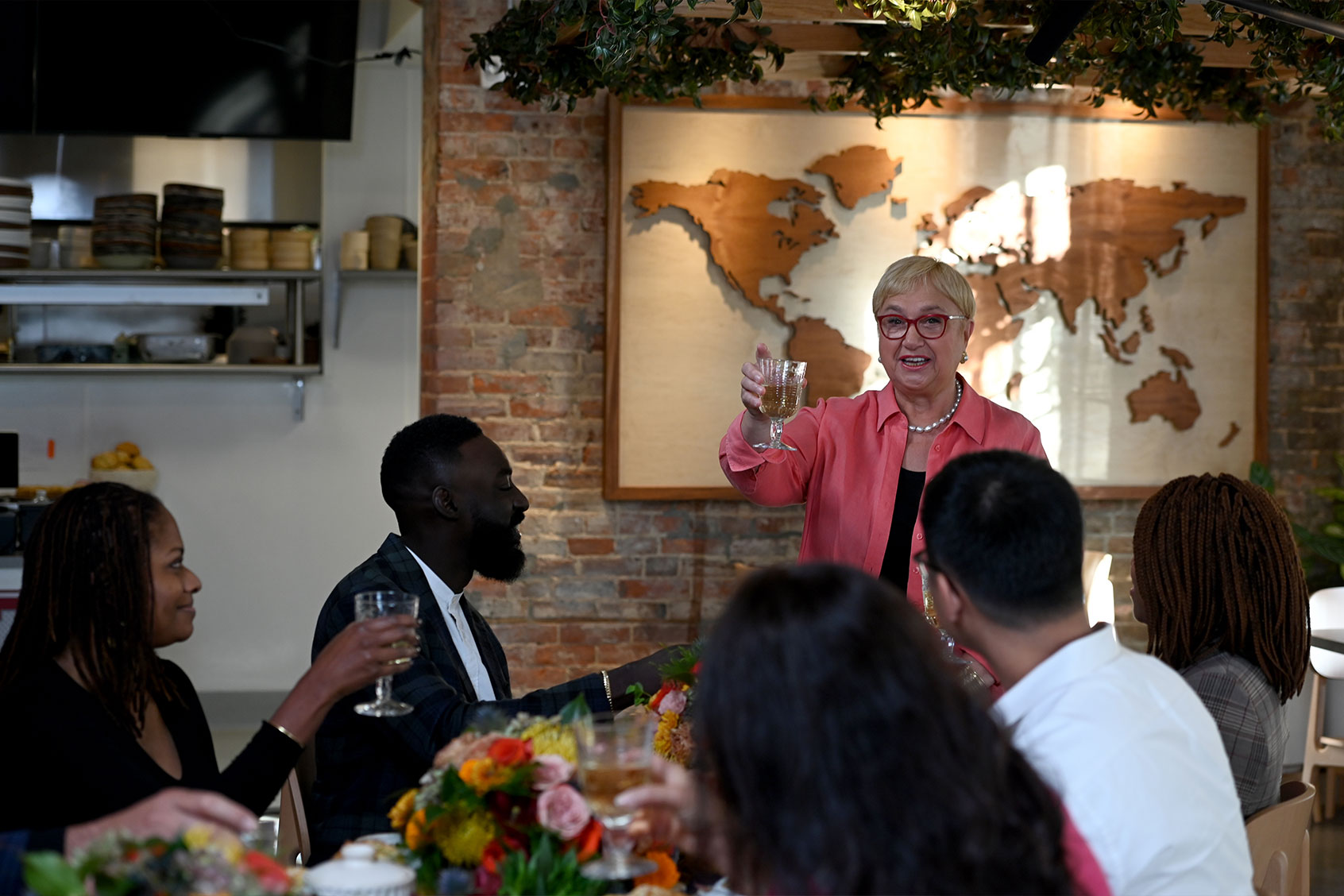
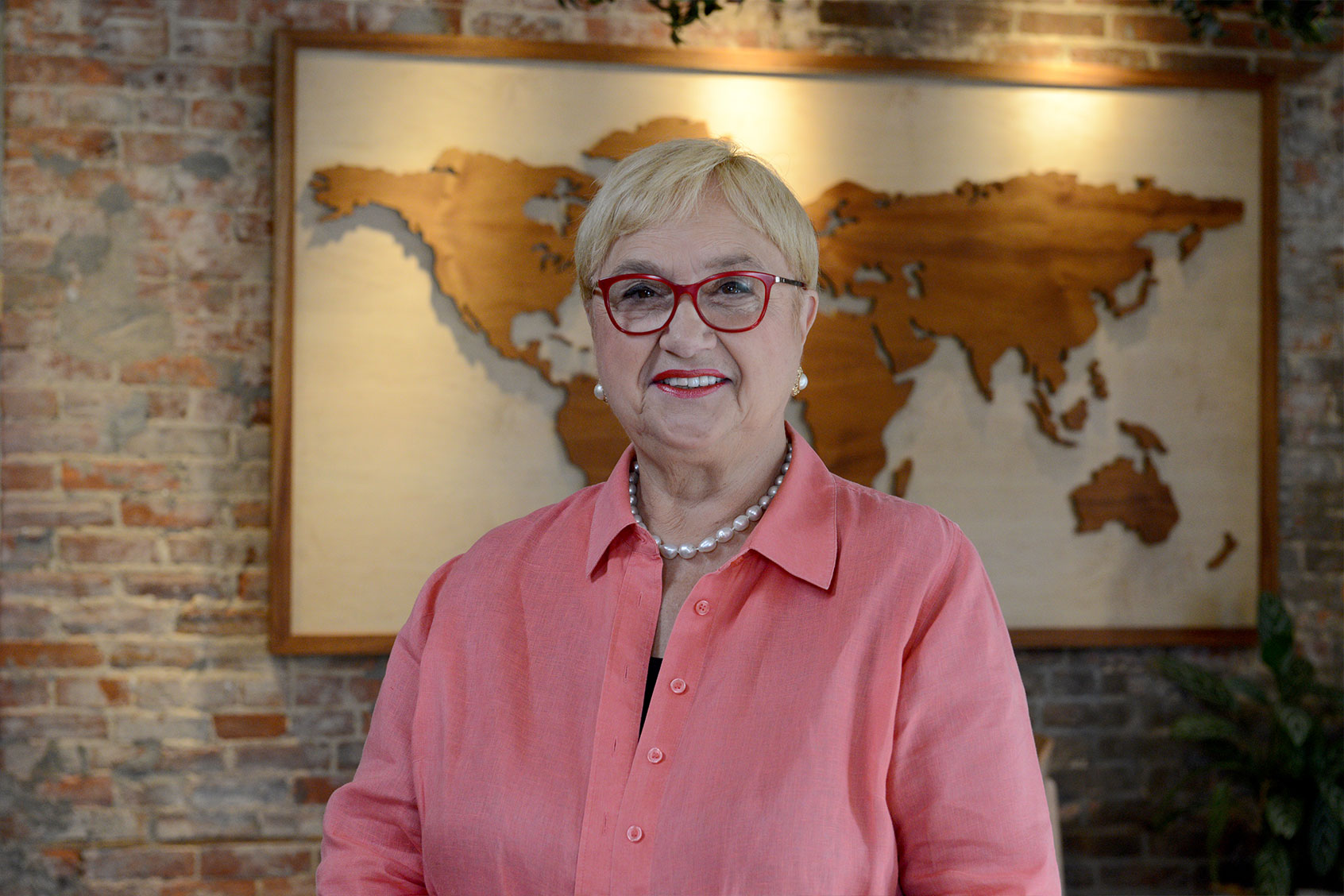
Lidia Celebrates America: Flavors That Define UsLidia welcomes guests to the Final Dinner at Immigrant Food in downtown Washington, DC in “Lidia Celebrates America: Flavors That Define Us” (Meredith Nierman/GBH & Tavola Productions)

There’s such a never-ending battle, if you will, between attempting to assimilate while also simultaneously holding steadfast to one’s customs, cultures, languages and foods. Can you talk a bit about that balance?

I recall when I arrived in the USA at 12 years old, I felt out of place, insecure, not able to speak the language and didn’t know anyone. I wanted to learn English as fast as I could and become an American as fast as I could, so that I could flourish in my new country. I understood and was grateful that America was now my home. As a child, after the insecurity of the escape and life in the refugee camp, I needed to be grounded; I needed a place that would be my home forever. So, I did everything I could to “become American.” It wasn’t until I had become more firmly established here that I began to re-assimilate some of my heritage into my new life. I think for any immigrant, it is a personal choice as to what to bring and what new things to embrace. But we should always be proud of where we came from and not be afraid to share our culture. 

Lidia Celebrates America: Flavors That Define UsLidia cooks with chef Christine Ha during a visit to her Houston home in “Lidia Celebrates America: Flavors That Define Us” (WGBH Educational Foundation and Tavola Productions)

Christine Ha’s story is incredible and inspiring  what lessons did you take away from that discussion?

I think Christine is an extraordinary and strong woman who is embracing life to the fullest. She has a strong desire to continue her connection to her Vietnamese roots, which is a sentiment connected to the loss of her mother at a young age. In that way, she stays connected by cooking the food her mother taught her. This is very much the same lesson that I learned through my journey: Food is a connection and a way to serve the legacy of others who came before us.  


The Washington DC experience seemed terrific; what was it like to eat foods from so many incredible chefs all representing such dynamic, unique countries?

It was inspiring to see all those young chefs, now American, honoring their roots in the food they cook. I could taste their passion and flavors of their home in the foods they prepared.

Lidia Celebrates America: Flavors That Define UsLidia brought Escarole and White Bean Soup to this year’s final dinner, held at Immigrant Food in downtown Washington, D.C. in “Lidia Celebrates America: Flavors That Define Us” (Meredith Nierman/GBH & Tavola Productions)

You brought escarole fagioli to that meal: Why is that dish special to you and your family?

This dish brings me right back to that comfort place of my youth. Even though the ingredients are poor, the flavors and memories of this dish are rich to me.


Want more great food writing and recipes? Subscribe to Salon Food’s newsletter, The Bite.


What’s something about Italian or Italian-American food that you think is misunderstood by some?

Italian-American food came from the early Italian immigrants who arrived in America but could not find their traditional ingredients  certain vegetables, cheeses, cured meats, etc. Instead, they made the recipes they loved and remembered, but with the new ingredients they found in America. On the other hand, the traditional Italian cuisine is all about the regional delicacies and seasonal products found around Italy, like prosciutto, aceto balsamico, bottarga and the like. While the final dishes are not the same between the cuisines, they are created in the same spirit: using seasonal ingredients and regional products that one has available to them, wherever they are located. 

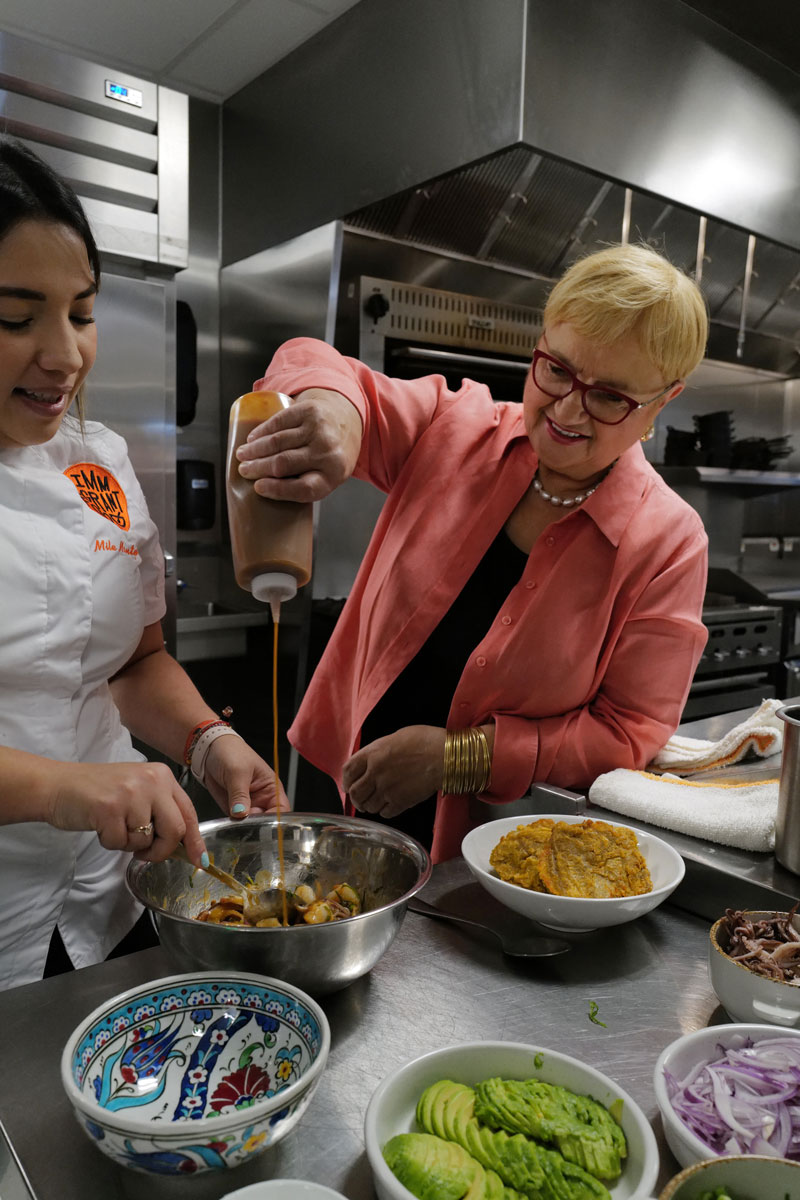
Lidia Celebrates America: Flavors That Define UsLidia adds the special sauce to Mile Montezuma’s Venzuelan ceviche at immigrant Food. Washington, D.C. in “Lidia Celebrates America: Flavors That Define Us” (Meredith Nierman/GBH & Tavola Productions)

I don’t eat red meat anymore, but when I did, I loved ropa vieja! In that segment, there’s a lot of discussion about music in addition to cooking. What are some of the overlapping components between music and food, especially when it comes to honoring one’s heritage? 

Similar to food, music tells a story, reflects the customs of a culture, brings back cherished memories and binds people together by its beauty and the pleasure it gives them. People identify and bond under the sounds and words of their songs.


Were there any particular dishes, recipes or ingredients that you felt especially stood out amongst all of your illuminating discussions with so many diverse immigrant voices and experiences?

There were certainly many different flavors and new aromas encountered in meeting and cooking with all these great people. But the one element that truly touched me and made me feel part of their family/clan, was the way they gathered and shared their food . . . sitting on the floor, eating and collecting the food with my hands was liberating in a sense . . . I love touching food with my hands  raw or cooked.  

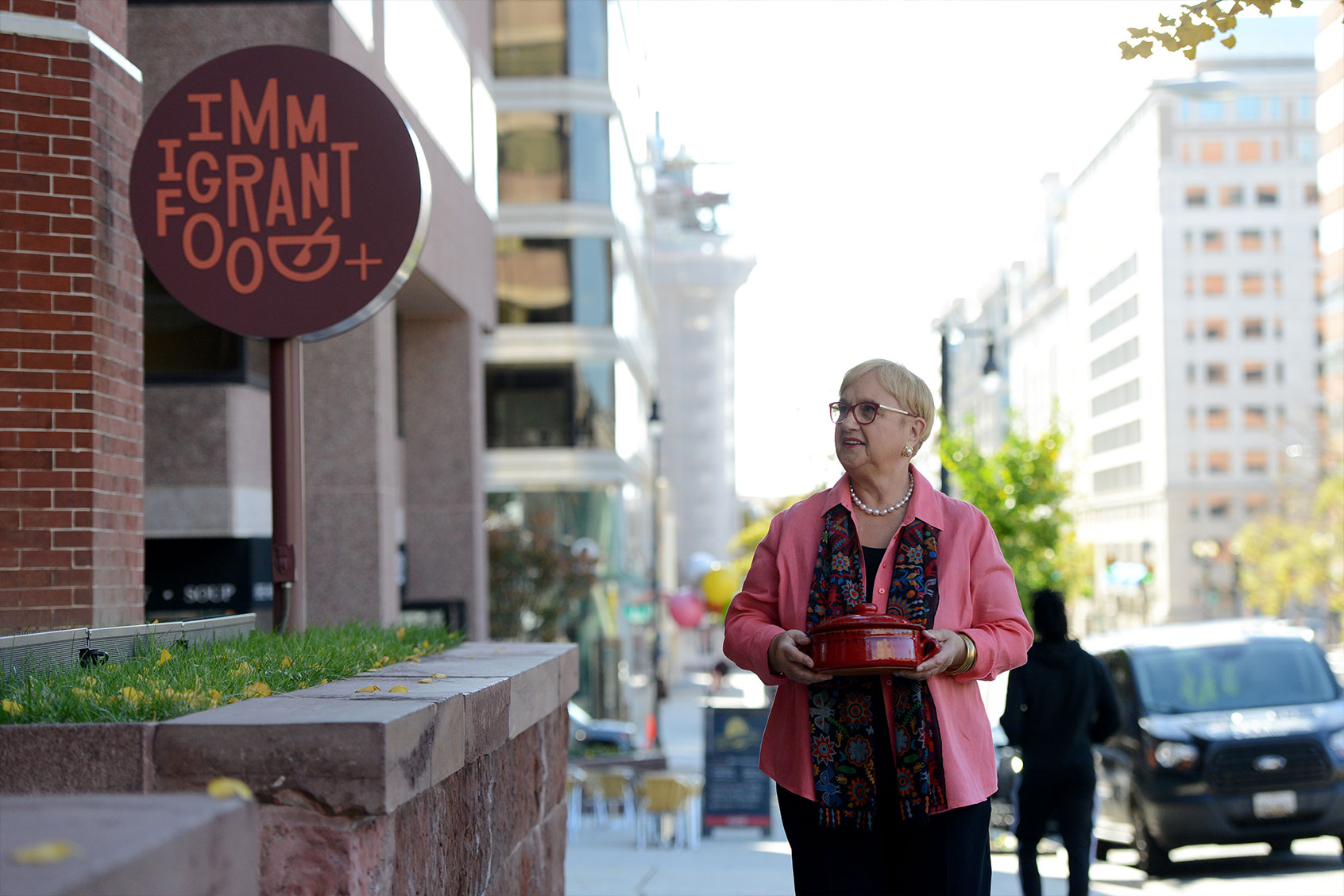
Lidia Celebrates America: Flavors That Define UsLidia ready to welcome guests to Immigrant Food, Washington, D.C. in “Lidia Celebrates America: Flavors That Define Us” (Meredith Nierman/GBH & Tavola Productions)

This is a tricky one, but as an Italian-American cook, I have to ask! If you had to pinpoint a singular favorite Italian or Italian-American dish, sweet or savory, what would it be?

One of my favorite Italian regional dishes is Linguini with white clam sauce. One of my favorite Italian-American foods is Chicken Parmigiana. To me, these represent the pinnacle of each cuisine!


Many of the people you spoke with in the special live in rural areas. What did you learn about the bridge between rural communities and immigrants in your work and travels?

What I discovered is that immigrants in rural communities became integrated into those communities faster than immigrants did in larger, more populated cities. Big cities present greater challenges than small towns in many ways, so immigrants in cities seem to create their own ethnical neighborhoods where there is emotional safety and familiarity in numbers. Creating these neighborhoods that sell food products that families are accustomed to or having worship practices that are “like back home,” create a sense of safety and community. It appeared to me that in smaller towns, a helping hand is also extended more readily.

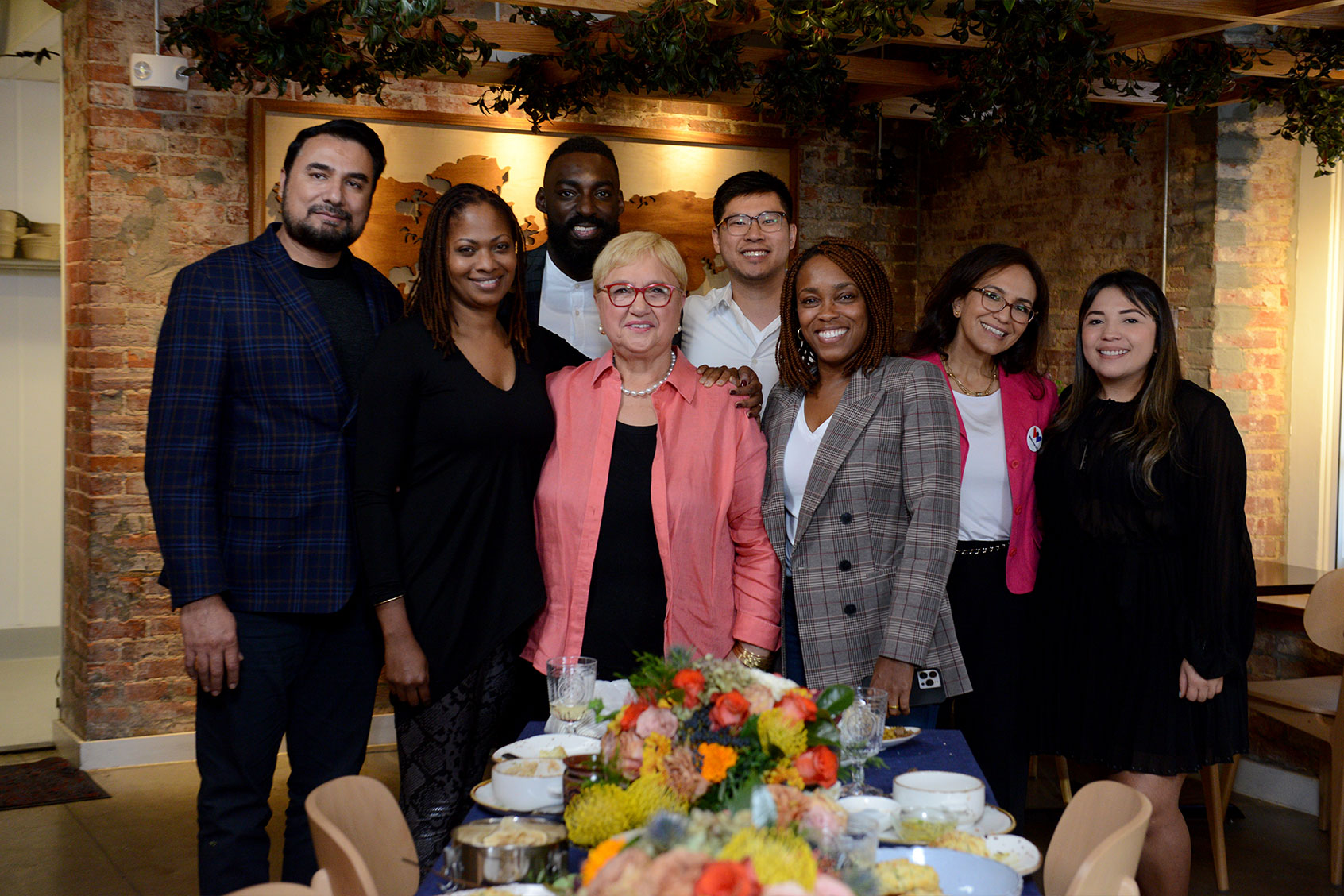
Lidia Celebrates America: Flavors That Define UsLidia and final dinner guests gather for a photo after dinner at Immigrant Food, Washington, D.C. in “Lidia Celebrates America: Flavors That Define Us” (Meredith Nierman/GBH & Tavola Productions)

Is there anything else that we haven’t touched on that stood out to you during filming or anything that’s come up since regarding immigration which you think would be important to note?

It was particularly fascinating to see how each of these communities uniquely welcomed their new members. Not only how they first embraced them upon arrival, but then how these communities followed through in helping the new members secure their finances and giving them advice so that they would all become stronger as a community. This is one of the great attributes that America offers to all immigrants.

“Lidia Celebrates America: Flavors That Define Us” premieres Tuesday, May 30 at 9:00 pm ET on PBS stations (check local listings) and will also stream starting that day on PBS.org and the PBS App.

“Top Chef: World All Stars” aims to “deceive the eye” — but the runaway top contender is 100% clear

I think two things become clear with the latest episode of “Top Chef.”

Many seasons of reality TV can tend to slightly sputter towards the end — and this is not exclusively a “Top Chef” issue — with the competitors generally experiencing fatigue as the competition comes to a close. This is evident in this episode (sans Buddha, of course); which is the first time this season that this issue seems to be clearly coming through — even from Ali, which is surprising.

That brings me to my second point: Buddha is truly such a force. Four wins in a row? It’s important to note that Buddha’s performance the past few weeks alone is something special; it’s one of those toss-ups in which you can try to root against the clear front-runner, but if he does lose, it’d almost feel like he was cheated out of a win that is rightfully his.

Back during “Top Chef Texas,” I remember reading Tom Collicchio saying that Paul Qui was so far away and ahead of the other chefs that editing had to get a little creative in order to position Sarah, Beverly or Lindsay as actually viable winner candidates; Qui apparently ran away with the competition sometime midseason.

Buddha is truly such a force. Four wins in a row?

At this point, it’s feeling the same for Buddha.

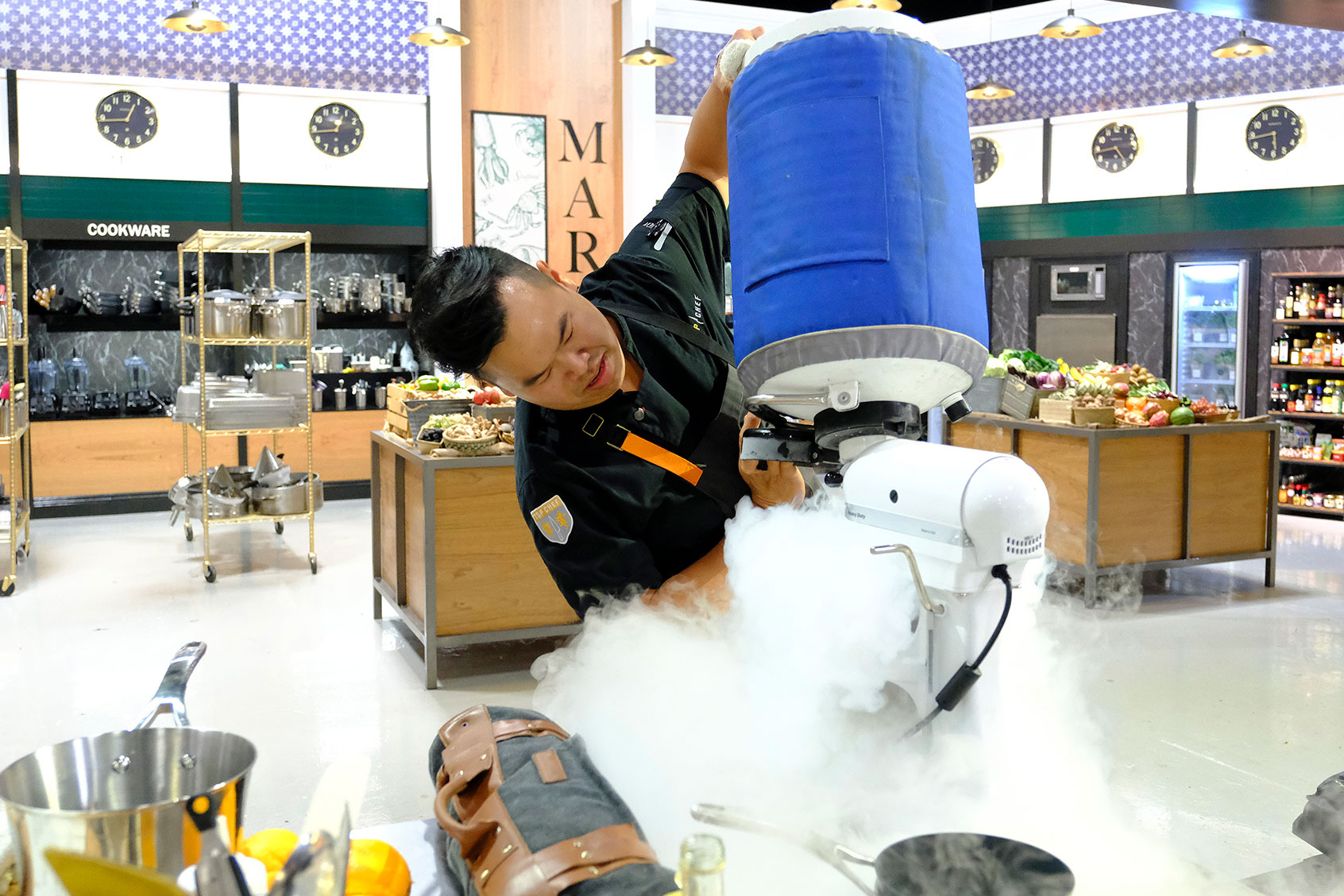
Top ChefBuddha Lo in “Top Chef” (David Moir/Bravo)

Both challenges this episode are enjoyable— the jellies (essentially various ways of using gelatin) and molds QuickFire and the Trompe L’oeil (“deceive the eye”) elimination challenge — but again, the episode overall feels a little flat for me. Also, I realize during the final “Last Chance Kitchen” battle that I was primarily rooting for Charbel, so that was a bit of a bummer, too, since he doesn’t come back. An immediate return from an eliminee – which is what Sara does after packing up her knives with Amar after failing the last episode’s Wellington challenge – is never as fun or satisfying as someone trudging their way through round after round of “Last Chance Kitchen” and then making a triumphant return, but I digress. 

Timing and chemistry are key in the Jellies challenge because the cheftestants must create something that sets for an hour and has just the right amount of jiggle while still maintaining its form. And yes, molds are required, which makes Buddha, king of the molds, happy and inspired.

Sadly Gabri’s dulce de leche panna cotta never sets, and that makes the entire dish appear unappetizing. But the others impress with their attempts, including Ali’s gorgeous dark chocolate cremeaux with black currant sauce and Sara’s use of fennel powder and black pepper to accent her buttermilk and strawberry-basil jelly.

I will note that I love Tom’s QuickFire dish; I’m a sucker for popcorn incorporated into savory dishes. I’m disappointed to hear it singled out as a “bottom” dish because the goat cheese panana cotta – adorned with beet root discs, cherry jelly, cider gel and popcorn – looks and sounds sensational. 

Unsurprisingly, Buddha kills it with his saffon ice cream and orange blossom gel and panna cotta. In a twist, he uses the “orange blossom” flower mold for the ice cream that creates a stunning impact when the dish’s cover is removed. This win earns him an extra 30 minutes for his elimination challenge – and with his ambitious vision, he will need it.

Cheftestants falter a bit with their Trompe L’oeil dishes

The challenge is to fool the eye with the food being plated up, essentially an upscale version of “Is It Cake?” without being confined to just cake as a medium. It seems only Buddha and Gabri actually understand that brief.

I adore Sara, but her performance this episode (again, I attribute to fatigue) also isn’t anything to write home about, either. Her lax nonchalance is typically one of the things that attracts me to her, but in this episode, it almost feels like her being flippant. Her dish seems phoned in, essentially matching the same flavors from this time in the competition the last she competed, but slightly altered to a “tamale” presentation (with those superfluous, peculiar vegetable molds) to transform into matzo ball soup. I will note, though, that her inexplicable full-on sprint mid-confessional at the end of the episode makes me guffaw. And again, her flavors alone helped to carry her through; it seem pretty clear that Tom and Ali are the Bottom 2.

Top ChefAli Al Ghzawi and Padma Lakshmi in “Top Chef” (David Moir/Bravo)

The energy of the service overall feels odd to me; the panel speaks as if they enjoy everything and give everything compliments while noting the issues inherent in each dish, but overall, I wonder if the panel perhaps expect a bit more and are let down. I also find it odd how the table just talks openly as the chef stands there. The fact that they get nearly every dish subversion wrong makes me chuckle, though. 


Want a daily wrap-up of all the news and commentary Salon has to offer? Subscribe to our morning newsletter, Crash Course.


Buddha’s elimination challenge dish is exceptional — creating an entire tasting plate where one thing tastes like another (the wine is actually a broth, the mushroom is actually bread, etc.) The entire idea is incredible and, as always, he executes it masterfully. I love his use of squid ink and beets to “dye” some of his components.

Gabri’s dish looks a bit unrefined — he recreates a Scotch-Brite scouring sponge to honor his dishwashing days, along with plating it on a “dirty” sauced dish – but clearly, it tastes terrific and using a sponge cake to mimic a sponge (get it?) is great. Happy for him to have been seeing such success towards the end of the season!

I also love Tom’s Quick Fire dish; I’m a sucker for popcorn incorporated into savory dishes.

Ali’s attempt to create a garden isn’t so much trompe l’oeil as much as it is creating a foodscape. The turtles are cute, but no one is fooled into thinking they’re eating a turtle. Worse, his undercooked, under-seasoned breadcrumbs – as one layer of the garden’s soil – are clearly an egregious error, but he’s lucky that the judges have more grievances with Tom’s dish, which really misunderstands the brief.

He tries to recreate caviar using gelatin, but instead of making it taste like, say, cotton candy, he tries to make it taste like caviar. Padma explains the issue: if you’re going to subvert a food or try to “trick” a diner, it doesn’t make much sense to then just make the food it looks like to taste . . .  like it would taste normally? His “caviar” – made with seaweed, wasabi, fish stock and soy – essentially just approximates the same flavor it intends to subvert, which essentially renders the dish moot. (Think Impossible burgers replacing meat patties. It’s not trompe l’oeil; it’s mimicry with alternative ingredients.) The image Tom aims to conjure is pretty amazing, though: A can of caviar on the beach surrounded by sand and seaweed, but as Padma says, the dish would’ve been much improved “if the caviar didn’t taste of the ocean.”

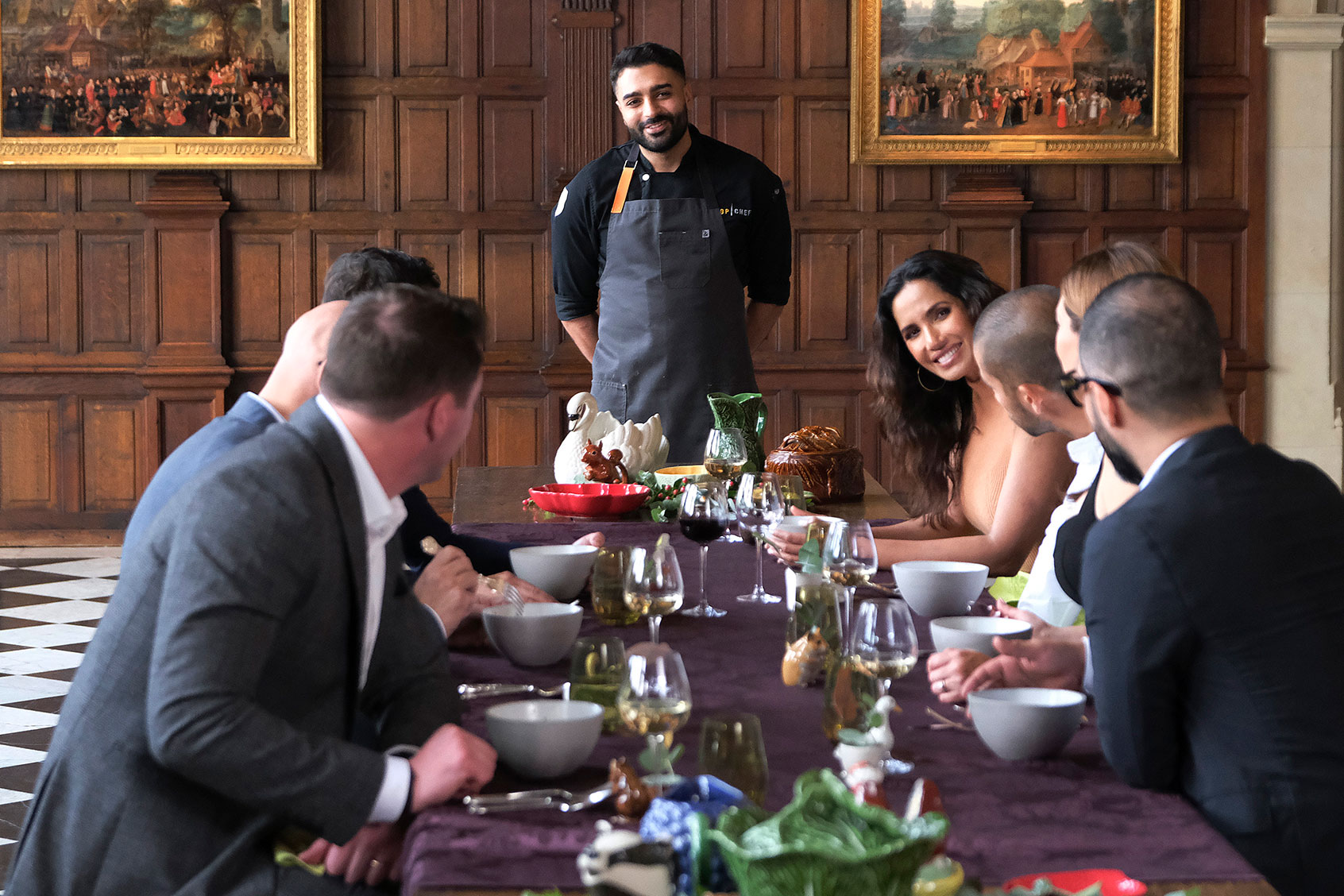
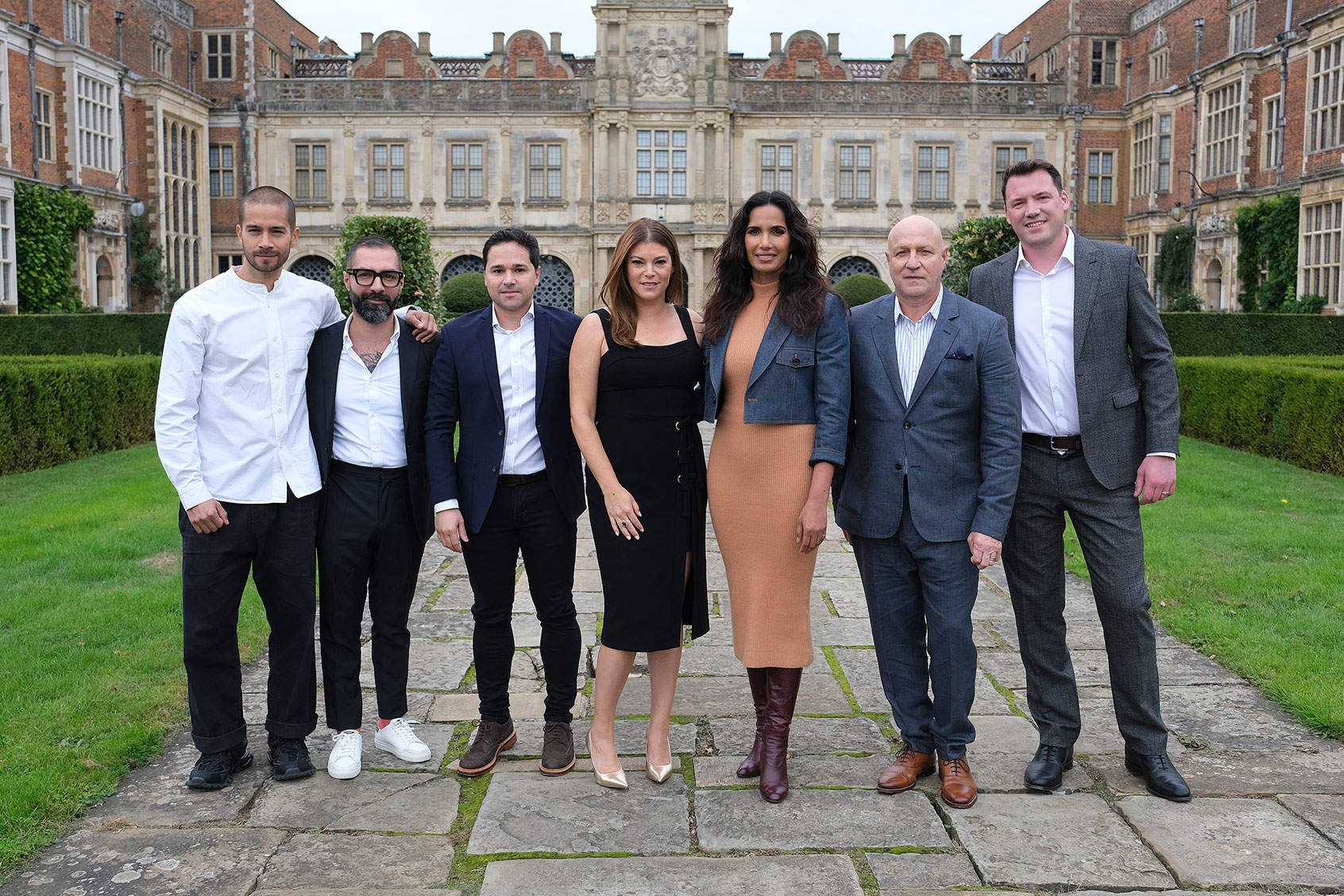
Top ChefJeremy Chan, Yuma Hashemi, Rafael Cagali, Gail Simmons, Padma Lakshmi, Tom Colicchio and Tommy Banks in “Top Chef” (David Moir/Bravo)

Overall, though, a fair elimination — and how fun were those quasi-sloshed, live-shot confessionals at the end (from seemingly everyone but Ali)?

Gabri’s a rootable underdog, Ali is incredibly talented and Sara is the “hometown” girl. It’d also be fun to see the only remaining woman pull out the win — but at the end of the day, after this performance, can you actually argue that Buddha doesn’t deserve this win?

. . . but at the end of the day, after episode 12, can you actually argue that Buddha doesn’t deserve this win?

After-dinner mints

– I always get such a kick out of judges’ line of questioning along the lines of “. . . and you thought that worked texturally,” the barb which is delivered with a swift kick towards Ali. 

– I love how Buddha titles his dishes. The judges’ descriptions of his dish — “looked like a still life” and a “scene from a Renaissance painting” are so evocative. And on top of that, you can even eat the “toothpicks?” Amazing!

– ADR is obviously very common on these shows, but that one Padma voiceover post-QuickFire is so odd and soundsnothing like her?

– I loved that post-win confessional of Buddha truly gassing himself up inside the castle! What a great moment . . . it’s so authentic and his excitement is palpable. 

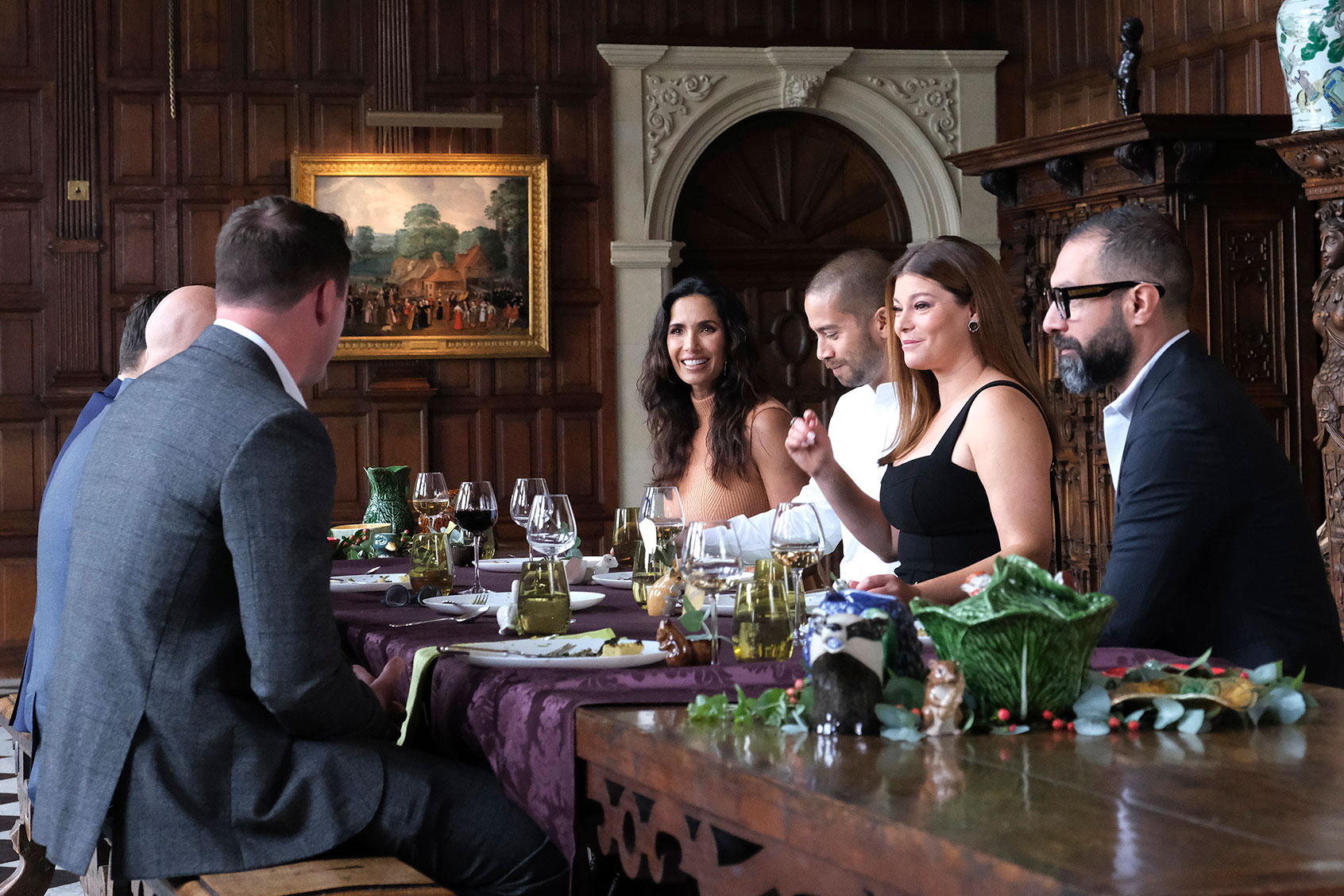
Top ChefPadma Lakshmi, Jeremy Chan, Gail Simmons and Yuma Hashemi in “Top Chef” (David Moir/Bravo)

– Chef Jeremy Chan is a highlight of this episode; his measured demeanor, calming voice and knowledgeable approach is unique and refreshing. The way he speaks about the food is slightly reminiscent of Gail’s approach to judging. I’m not a podcast guy, but I’d listen to one that featured him all day long — something about his cadence, tone and accent almost reminds me of a “Game Of Thrones” character mid-monologue. His remark that Tom’s “social message became an exercise” is also such a clever way of phrasing the issue with his dish. 

“Top Chef: World All Stars” airs Thursdays at 9 p.m. on Bravo and streams next day on Peacock.

Trump and the Saudis: Is Jack Smith finally looking at this clear-cut corruption?

There’s a lot of Trump legal news these days, what with the E. Jean Carroll verdict, the Manhattan hush money indictment, the news that Fulton County, Georgia, D.A. Fani Willis has put local authorities on notice to anticipate “something” coming in August, and a cascade of reporting on special counsel Jack Smith’s investigation into the Mar-a-Lago classified documents case, with some suggestions evidence that will come to a conclusion very soon.

The possible Jan. 6 case against Donald Trump himself remains more obscure, but with the sentencing of Oath Keeper Stewart Rhodes to 18 years in prison for plotting the insurrection on Thursday, it’s hard to see how Trump, who incited the riot, isn’t equally implicated in what happened that day. But for some reason one obvious case has gotten very little media attention and, as far as we know, very little attention from investigators: Trump’s cozy financial relationship with the Saudi-sponsored Public Investment Fund, the desert kingdom’s massive sovereign wealth fund. (Its assets are estimated at more than $620 billion.)

It’s not at all surprising that the Republican House isn’t looking into this. They’re busy trying to find disappearing informants in the Hunter Biden laptop case and digging through the Biden family finances. Why the Democratic-led Senate hasn’t bothered is another question. But it’s obvious that Trump and his family are deeply financially involved with the Saudi government, and considering the fact that Trump is running for president yet again, it’s shocking that nobody seems to care. 

While all the other GOP presidential candidates were busy campaigning on Thursday, USA Today reported that Trump was kicking back at Trump National Golf Course in Virginia, which will soon host a tournament on the Saudi-backed LIV Golf tour — the third at a property owned by the former president just this year. (Two more will be scheduled at Trump properties in New Jersey and Florida.) Last year, Trump — in typically obtuse style — even scheduled a tournament at the New Jersey club on Sept. 11, drawing outrage from the families of 9/11 victims. Trump said he didn’t know what they were talking about and defended Saudi Arabia, telling ESPN that “nobody has gotten to the bottom of 9/11.”

It’s unclear how much money has actually changed hands, but Trump admits that he’s been paid a fee, which he calls “peanuts,” by the sponsoring Public Investment Fund, the same Saudi government entity that “invested” in Trump son-in-law Jared Kushner’s business to the tune of $2 billion just a couple of months after he left the White House. (That’s a deal that makes Hunter Biden’s alleged transgressions look like kids gambling for nickels in the lunchroom.) These tournaments generally bring in millions to the clubs that host them so those are some pretty big peanuts.

According to USA Today, a reporter asked Trump whether his resorts have gotten these tournaments because of his favorable policies toward Saudi Arabia as president. He flippantly replied, “Not at all.” Apparently, his defense of the Saudi government’s assassination and dismemberment of journalist Jamal Khashoggi wasn’t significant. They just love him, and his golf courses.

Trump extolled the virtues of the LIV Golf tour (a rival to the long-dominant PGA), telling reporters, “They have unlimited money, and they love it. And it’s been great publicity for Saudi Arabia. They’ve been great for golf. The Saudis have been fantastic for golf. And … inside their country, they’re going to do some great courses.” Indeed, he has signed at least one development deal to license a golf and hotel complex in the Gulf state of Oman, financed by a Saudi firm.


Want a daily wrap-up of all the news and commentary Salon has to offer? Subscribe to our morning newsletter, Crash Course.


LIV Golf is a key part of the Saudi regime’s program of “sportswashing,” meaning as a nation’s attempt to use massive investment in sports to cover up for its human rights abuses. (The Saudi fund also took control of the English soccer club Newcastle United in a controversial 2021 deal.) Even aside from the Khashoggi atrocity, many of those horrors happened during Trump’s term, as Crown Prince Mohammed bin Salman took control of the ruling family by force, rounding up more than 400 members of the Saudi elite and torturing them.

Trump, as you may recall, was very impressed.

“It’s like a revolution in a very positive way,” he said. That’s the kind of support from a U.S. president that lots of money can buy.

Trump has huge investments in his golf course empire, which has suffered because of his Big Lie and the ripple effects of Jan. 6. The PGA tour pulled out of hosting its championship at Trump’s club in Bedminster, New Jersey, and the British Open definitely isn’t coming back to Turnberry, Trump’s Scottish resort. LIV is the only game in town for Trump these days.

According to Trump, his defense of the Saudi regime’s murder and dismemberment of journalist Jamal Khashoggi was irrelevant. They just love him, and his golf courses.

This kind of corruption has been going on since Trump entered politics. He never divested from his businesses after he was elected president and people currying favor with him spent many millions at his various properties, including the golf resorts. The Trump International Hotel in Washington (which he sold last year and is now a Waldorf Astoria) was the social center of Republican politics, channeling money directly into Trump’s pockets. The political press occasionally remarked on how unseemly that was and the Democratic Congress clutched its pearls, but of all Trump’s scandals, this one never seemed to bother anyone all that much.

There is some evidence suggesting that special counsel Jack Smith may be looking into Trump’s connections to LIV Golf in connection with the Mar-a-Lago case. The New York Times reported this a couple of weeks ago:

One of the previously unreported subpoenas to the Trump Organization sought records pertaining to Mr. Trump’s dealings with a Saudi-backed professional golf venture known as LIV Golf, which is holding tournaments at some of Mr. Trump’s golf resorts.

Just this week, the Times also reported that the subpoena also asked for the Trump Organization’s real estate licensing and development deals in China, France, Turkey, Saudi Arabia, Kuwait, the United Arab Emirates and Oman since 2017, when Trump became president. Most of the D.C. punditocracy has dismissed this as nothing more than Smith “dotting his I’s and crossing his T’s” before he makes his case. Maybe they’re right. But at least someone is finally taking a look at what exactly was going on while Trump was running his business out of the Oval Office.

It’s never been easy to separate Trump’s financial motivations from his massive ego. He’s excessively subject to flattery and that’s often enough to gain his support. But his relationship with the Saudis clearly has a major financial component, as does Jared Kushner’s, and all of that seems to be tied to their time in the White House.

If Trump were just retiring to his golf resorts and taking advantage of all the contacts he made while president, it might be reasonable just to let it go in the interest of never having to think about him again. But he’s the clear frontrunner for the 2024 Republican nomination and he’s openly helping the Saudi regime “sportswash” its human rights record while taking unknown millions from it. 

Let’s hope that unlike Robert Mueller, who refused to exceed his mandate and look at Trump’s finances, Jack Smith sees this for the blatant corruption it is. Otherwise, we’re just accepting that it’s perfectly OK for presidents and presidential candidates to do big favors for autocratic foreign governments in exchange for money. Are we really that far gone?

Zoo elephants are fascinated by human visitors — but frogs are unimpressed, study finds

Visiting a zoo is one of the best places to ponder the points of view of animals. How do they feel about being locked in a cage? Are they happy or unhappy in their current lives? And, perhaps somewhat selfishly, what do these animals think of us — the humans who are observing them?

“Elephants (Proboscidea) were among the handful of animals that seemed to positively respond to the presence of people.”

A recent study published in the scientific journal Animals sheds light on that last question by comprehensively reviewing 105 papers that have been published on the subject since 2012. In the process, researchers learned some surprising details about animals in zoos — particularly, that animals like elephants seem to react warmly to humans’ presence, while animals such as frogs do not.

While many of the aggregated studies had small sample sizes, the authors were able to boil down their behavior into three categories of animal reactions to human visitors’ presence: Positive, featuring “increased interest in visitors [and] visitor areas, working to gain attention from visitors or moving to be closer to visitors”; negative, in which the visitor acts as “a source of stress to the animals, which is usually evidenced by responses such as an increase in visitor avoidance,” or neutral, which is what it sounds like: no visible behavioral or physiological change to human visitors’ presence.

Overall, the animals studied across the various papers found that out of 302 interpretations of reactions to visitors’ behavior, “53% were neutral, 21% were negative, 21% were ‘unclear’ and only 4% were considered to be positive.”

Elephants (Proboscidea) were among the handful of animals that seemed to positively respond to the presence of people, with the authors writing that “Proboscidea are the largest land mammals, and so this could have led to a reduced effect of zoo visitors. It would be expected that zoo visitors would be drawn to elephants, as a large flagship species.”

Similarly parrots (Psittaciformes) reacted positively to human visitors because “parrots are highly intelligent birds who are known for their need for interaction and attention, and for their desire to interact with visitors in zoo environments. The positive valence recorded in this review could thus be a product of birds trying to gain attention from and seeking interactions with zoo visitors, as was recorded during the COVID-19 pandemic.” Elephants and parrots were alone among the various animal species that reacted positively to human visitors’ presence more often than can be attributed to chance.

By contrast, animals like scaled reptiles and frogs behaved in a way that the authors found “cryptic,” although they noted that the animals may have clammed up around humans because “visitors could potentially be perceived as a threat.” There was less ambiguity in interpreting the behaviors of other animals, though, the ones for whom the authors found that human visitors had a “negative impact.” These included flightless birds, odd-toed ungulates (such as horses and rhinoceroses), even-toed ungulates (such as camels and hippopotamuses), ostriches, marsupials (such as kangaroos and wallabies) and hedgehogs.


Want more health and science stories in your inbox? Subscribe to Salon’s weekly newsletter The Vulgar Scientist.


“Controlled experimental setups might help to more clearly disentangle the range of factors which may impact on animal behaviour in zoos, from the true impact of visitors on animals.”

Although the study focused on 252 non-primate species, the scientists did also discuss what other studies have found about primate reactions to zoo visitors. “Studies have reported changes in primate behaviour in response to visitors, with visitors being recognised as a stimulant for some primates but a negative stressor for others,” the authors write. Primates are generally found to be upset by large groups of noisy visitors, and primates with smaller body sizes similarly tended to be more human-averse than larger primates.

In addition to the fact that there are not many studies about non-primate species reacting to zoo visitors’ presence, the authors noted another limitation of their study: The fact that any so-called “experiments” on how zoo animals react to humans are by their very nature opportunistic, and therefore by definition not controlled.

“Although there has been an increase, the majority of work is opportunistic, looking at numbers of visitors and comparing that using correlational methods to animal behaviour,” the authors explain. “Controlled experimental setups might help to more clearly disentangle the range of factors which may impact on animal behaviour in zoos, from the true impact of visitors on animals.”

When it comes to the news that elephants and parrots are more likely to respond favorably to human visitors’ presence, it is notable that both species are extremely intelligent. Speaking with Salon last month about elephants, Dr. Paula Kahumbu, the CEO of the charitable organization Wildlife Direct, described how their intellect is discernible through their mourning rituals.

“They will repeatedly return to dead elephants or relatives, dead relatives, and they will come towards them,” Kahumbu told Salon. “They will touch them, feel them. If an elephant has recently died or is dying, they will even try to raise it, or they will stand around and just be with a dying elephant. Once an elephant has died, they will sometimes even cover it up with bushes. It’s a really peculiar thing.”

Parrots, similarly, are so intelligent that they can learn to dance without being taught. According to a 2019 study performed on a white cockatoo named Snowball who had been taped dancing to the song “Everybody,” the parrot showed a similar amount of intelligence and creativity when dancing to the songs “Girls Just Wanna Have Fun” and “Another One Bites The Dust.”

“Parrots are unusual because these complexities are coming together in their brains,” Aniruddh Patel, a psychologist at Tufts University and Harvard University, told CNN at the time. “When these capacities come together, it leads to the impulse to dance.”

While research on zoo animals and their perceived preferences for visitors is limited, it’s also biased towards “charismatic species,” the study authors conclude. We still have a lot to learn about what animals think of us, which is not only a reflection of their unique intelligence, but our own.

Trump thinks he can MAGA his way out of jail

On Tuesday, Donald Trump’s legal team sent a letter to the Department of Justice, asking for a meeting with Attorney General Merrick Garland to discuss an investigation being run by special prosecutor Jack Smith. Initially, the widespread assumption was this letter indicated that Trump’s lawyers fear indictments are coming soon and are hoping to negotiate a deal. Soon, however, it became clear that this letter was not written in good faith. The intended audience is not Garland at all, but the MAGA base, particularly those with open wallets. 

“No President of the United States has ever, in the history of our country, been baselessly investigated in such an outrageous and unlawful fashion,” the letter reads. It goes on to cite right-wing conspiracy theories falsely accusing President Joe Biden of crimes.

As Tatyana Tandanpolie of Salon reported, legal experts swiftly pointed out that this was not a serious request for an audience with Garland. The letter was written in Trump’s voice, not that of his lawyers. It doesn’t just avoid the professional tone of most legal language, but insults the integrity of Garland and his staff — not something you usually do when trying to negotiate with someone. 


Want more Amanda Marcotte on politics? Subscribe to her newsletter Standing Room Only.


Trump’s team may not be the best and the brightest, but it’s a mistake to write all this off as mere stupidity. Instead, the strategy seems to be guided by Trump’s belief that the only thing that matters is power and force, as it seeks extralegal means to keep Trump out of prison. Or, put more bluntly, Trump is doing something similar to what he did on January 6, 2021: invoking the MAGA base and betting that their often violent passion will exert enough pressure to break the legal systems that ways that he otherwise cannot. 

The MAGA method makes even less sense now.

On January 6, of course, Trump incited an insurrection, in hopes that would deliver him the presidency that he failed to win in an election. Here, the specific goals are a little hazier — probably also to Trump — but the general idea is the same: rally the MAGA base enough to scare Garland and Smith away from indicting Trump. Maybe Trump hopes just the fear of political backlash will do it. Likely, he is wagering that the ongoing threat of violence is also intimidating. And, of course, he’s looking to create the fear that he will win in 2024, giving him the power to punish his enemies and pardon all those people who went to prison for rioting on his behalf before. 

To be clear, it’s not a good strategy. Despite Trump’s now-regular crowing about how proud he was of January 6, it’s worth remembering that throwing a MAGA mob at the Capitol to steal an election didn’t work. The MAGA method makes even less sense now. At least on January 6, there was a somewhat tangible goal (stop the electoral vote-counting) and the mob’s role in it was well-defined. This is more about vibes, and guessing that Garland will blanch when reminded that Trump is loved by millions of delusional conspiracy theorists. But this tactic is just as likely to backfire, especially as both Garland and Smith are experienced prosecutors who likely have a poor opinion of criminals who resort to threats and intimidation. 

But, as the saying goes, when all you have is a hammer, everything looks like a nail. Despite being a lifelong conman, Trump’s toolset of manipulation is surprisingly limited. Most of the time, all he really knows how to do is bully people. We see this with his response to losing the defamation and sexual abuse lawsuit filed by E. Jean Carroll. Even though he’s already been fined $5 million for assaulting Carroll and then lying about it after the fact, Trump’s response is to just do more of the very thing that got him in trouble: Hectoring Carroll. He lied about her on CNN and has kept up a steady patter of abuse aimed at her on Truth Social, leading her to amend her complaint and ask for much more money.


Want more Amanda Marcotte on politics? Subscribe to her newsletter Standing Room Only.


This is all very dumb on Trump’s part, especially since shutting up is right there as an option, one that was recommended by Carroll, her attorneys, and the court. But Trump doesn’t have the cognitive flexibility to change tactics. He has a problem — a woman speaking publicly about how she victimized him — and the only way he knows how to deal with such women is to persecute them into shutting up. It’s worked for him before, and even on Carroll, who stayed silent for decades out of fear. But now that it’s not working anymore, he’s at a loss. He just trying the same terrorizing method, praying that if he keeps it up long enough, it will finally work. 

Trump’s limited imagination isn’t the only factor in play with this attack on Garland, however. There is, always, money. Trump is famously bad with money, perhaps more than any other person in history. His campaign keeps outspending what he’s raised, buildling on the epically bad money management of his 2020 campaign. As Politico reported last month, Gov. Ron DeSantis, R-Fla., appears to have nearly twice as big a campaign war chest as Trump, despite having a fraction of the polling support. And Trump isn’t just trying to fund a campaign with this money. He’s also using it to stay out of jail. 

That Trump uses other people’s money to pay his legal bills is well-established. The Republican National Committee, for instance, footed the legal bills accured as Trump fought off New York investigations into his company’s extensive tax fraud and other economic crimes. Last year, CNN found that over 60% of Trump’s leadership PAC spending was paying his legal bills. Earlier this year, the New York Times reported that Trump spent $16 million of his campaign donations on paying legal fees to fend off accountability for his various crimes. 

Those bills are only going to get worse, and Trump’s fundraising has weakened considerably. Indeed, it seems the only reliable way for him to get donors to open their wallets these days is to send out fundraising appeals about how the “deep state” is out to get him with “phony” investigations. His indictment in March was the first real boon he’s had to fundraising in awhile, which is why his campaign was desperately hawking $47 T-shirts commemorate the event. 

This goes a long way towards explaining why Trump’s lawyers are going along with his preferred strategy of publicly bullying prosecutors, judges, and juries, usually by leveling false accusations. From a legal perspective, that’s just a bad idea, because it tends to make those people less inclined to show mercy. But it is a good way to raise money.  Trump’s lawyers very much want to get paid. Trump’s big mouth may land him in jail, but as long as the donor wallets are open, his legal team will make a fortune in the process. 

Trump still has the MAGA touch: Republican women remain captivated

The American people are lost in the Trumpocene – and soon DeSantis World – largely against their own will. But their own bad habits, obsolete thinking, denial and hard-headedness got them there. 

These failures include a belief in the myth of American exceptionalism and that America’s democracy and society are somehow immune from fascism, authoritarianism and other forms of illiberalism. Americans have also made the error of convincing themselves, contrary to the evidence, that “the institutions” and “the system” are strong, the country’s leaders will save us, and that the Age of Trump is just a deviation from the norm – as opposed to a crisis that will last long past that moment when Donald Trump, the man, recedes from public life.

In a particularly gross error, too many Americans still believe, contrary to the empirical evidence, that the many tens of millions of their fellow countrymen and countrywomen who are committed to Trumpism, and support the Republican fascist party and “conservative” movement more generally, are fundamentally good and decent people who will abandon such values if “we just listen to them”, and “find common ground” and “educate them” about “the facts.” Such an outcome will not happen. Such attempts are wasted energy.

Here is the “riddle”: Trump’s MAGA women still remain in thrall to him.

The rot in American society is much deeper than “polarization” and “hyper-partisanship.” American fascism and the larger culture of cruelty that helped to birth that abomination will likely only be corrected over time through generational replacement – and there is no guarantee of such an outcome.

There is a unifying theory for why so many of “the Americans” remain lost in the Trumpocene, unable to grasp the scale of the crisis and how to escape it: they have incorrectly convinced themselves that their values and beliefs are shared by most people including Trumpists and other Republican fascists and “conservatives.” This is an example of the fallacy that is known as “the false consensus effect” which the APA defines as, “the tendency to assume that one’s own opinions, beliefs, attributes, or behaviors are more widely shared than is actually the case. A robustly demonstrated phenomenon, the false-consensus effect is often attributed to a desire to view one’s thoughts and actions as appropriate, normal, and correct.”

The European Center for Populism Studies adds these details:

Additionally, when confronted with evidence that a consensus does not exist, people often assume that those who do not agree with them are defective in some way. There is no single cause for this cognitive bias; the availability heuristic, self-serving bias, and naïve realism have been suggested as at least partial underlying factors. When faced with uncertainty and a limited sample from which to make decisions, people often “project” themselves onto the situation. When this personal knowledge is used as input to make generalizations, it often results in the false sense of being part of the majority.

The false consensus effect can be contrasted with pluralistic ignorance which happens when members of group privately vary in expectations or disagree with group’s norm but feel different from the rest of the group and publicly act similarly as them.

The false consensus effect helps to explain why so many Americans, and especially members of the mainstream political class, the mainstream corporate news media, and self-identified centrists and (white) liberals retreat to the proverbial fainting couch in a constant state of “shock” and “surprise” at the horrible things that Donald Trump and the Republican fascists and their forces have done (and continue to do) in their revolutionary project to end America’s multiracial pluralistic democracy.

The false consensus effect also helps to explain why so many of those same people actually believe that cries and complaints that the Republicans and “conservatives” are “hypocrites” and “mean” and “cruel” actually has any deterrent effect on the latter’s behavior.

In addition, the false consensus effect provides insight into why so many Democrats, and liberals and progressives as a group, engage in wish-casting, empty idealism, and other delusional and self-soothing behavior about politics in the Age of Trump instead of embracing the realities of how the fight against American fascism is actually a moral crusade against evil.

As is now obvious, Donald Trump is a sociopath if not a psychopath, who is now a confirmed sex predator that was found liable in civil court for sexually assaulting and defaming E. Jean Carroll. She is one of dozens of women who have credibly accused Trump of rape and/or sexual assault.

Here is the “riddle”: Trump’s MAGA women still remain in thrall to him.


Want a daily wrap-up of all the news and commentary Salon has to offer? Subscribe to our morning newsletter, Crash Course.


In a new essay at the Bulwark+, Sarah Longwell explains:

Yet most of the women voters who backed Trump in 2016 and 2020 aren’t walking away. In many cases, his behavior—and Democrats’ and the courts’ attempts to hold him accountable—only strengthens their support for him. Even those who condemn his misogyny often say it’s not a dealbreaker. At this point, eight years into the Trump era, the sexism is internalized by his supporters. And even shared by some of them.

Over the course of hundreds of focus groups, I’ve seen female GOP voters rationalize, compartmentalize, and defend Trump’s treatment of women. They say they “[don’t] like his lifestyle and the things he did personally,” but “believed that he could do the things he was saying because of his professional background.”

When it comes to Trump’s conduct, these voters tend to give a lot of leeway. “Does he respect women? No. But can he run the country? Better than Biden,” said Judith, a Michigan retiree who voted for Trump in 2016 and Biden in 2020. “If that’s all we have to choose from [in 2024]—Biden or Trump—I’m not going to choose Biden.”

After Trump’s indictment, Autumn—a Republican stay-at-home mom from Pennsylvania—dismissed the former president’s actions, saying of Stormy Daniels: “She was a fan. She was a groupie. She followed him everywhere. So she was asking for anything that she got.”

Was Trump at fault? What about Alvin Bragg’s indictment on 34 felony counts? “That just talks about him personally as a man, not as what he’s going to do for our country.”

“I’m sure he’s not an innocent person by any means,” Sandy, a mother of three from North Dakota, said about the indictment. “He’s done things. But I feel like it was just like a witch hunt.”

On the Carroll verdict, the opinions were similar. In a recent focus group prior to Trump’s conviction, just one out of seven had even heard of the case. (Her reaction: “It’s kind of stupid.”) Those who do closely follow Trump’s lawsuits usually take them as a sign of his strength.

“They’re making a huge deal of it because they’re afraid of him,” said Kim, a mother of five from Massachusetts. “They’re trying to get him the hell out because they can’t control him.” These women echo Sen. Tommy Tuberville’s line about the verdict: “It makes me want to vote for him twice.”

Longwell’s findings echo other data which has consistently shown that Trump’s support among his followers and other Republican voters endures despite, if not because of, his criminality, racism, white supremacy, law-breaking, treason, corruption, violence, and other examples of antisocial and antihuman behavior.

For those people outside of Trumpworld and the MAGAverse that white women would continue to support Donald Trump and his neofascist MAGA movement continues to be “shocking” and “unbelievable” when it really should not be.

There are a variety of reasons why Trump’s MAGA women continue to be so loyal to him and the neofascist movement which include identification with the abuser, as well as internalized misogyny and internalized sexism. The women who support Donald Trump and the Republican-fascists and “conservative” movement are also rational actors who have decided that sexism and misogyny and hatred of women more generally matter less to them than other issues – such as keeping and expanding white supremacy and white privilege.

There is another explanation for Trump’s enduring power that too many Americans, especially among the political class and news media, still refuse to accept even though they have now suffered through at least 7 years of the Age of Trump. As psychologists and other experts have repeatedly warned, Donald Trump is a cult leader, a fascist charismatic personality and a demagogue. Trump’s MAGA followers will not readily abandon him because to do so would cause them great emotional, cognitive, spiritual, and physical pain and harm. Many Americans give lip service to the reality of Trump as a fascist cult leader but they, to this point, still largely refuse to accept the implications of what that really means for the country’s present and future.

On this, in a 2020 conversation with Salon, psychologist John Gartner shared the following prophetic warning:

It’s very hard for relatively normal and mentally healthy people to truly understand how Donald Trump’s mind works, to empathize with his thought processes, because it is hard to empathize with someone who truly does not care if he’s killing massive numbers of children. Such an outcome does not upset Donald Trump. He is more upset by some idle comment made on Fox News. The deaths of children and other people do not have any emotional meaning to him.

It is also very hard for most people to understand how there’s a sinister way in which harming, degrading, destroying and, yes, even killing large numbers of people actually excites and arouses Donald Trump. It all makes him feel powerful. That excitement and arousal and empowerment is an antidote to the emptiness that he feels inside and to the humiliation and mockery that he is experiencing from his critics and the public.

The monumental challenge that Gartner described in 2020 continues in 2023. Moreover, I would suggest in many ways that the crisis has gotten worse as Trumpism and American neofascism have become even more normalized across huge swaths of American society – including its political class, news media, and other elites.

Wish-casting, denial, the false consensus effect and other errors in reasoning and thinking keep the American people trapped in the Trumpocene and fascist fever dream. To escape that horrible place and to save themselves and their democracy, the American people are going to have to let go of such childish ways of thinking and behaving. 

The heart of Schwartzness: The roots of the “Vanderpump Rules” Scandoval implosion run deep

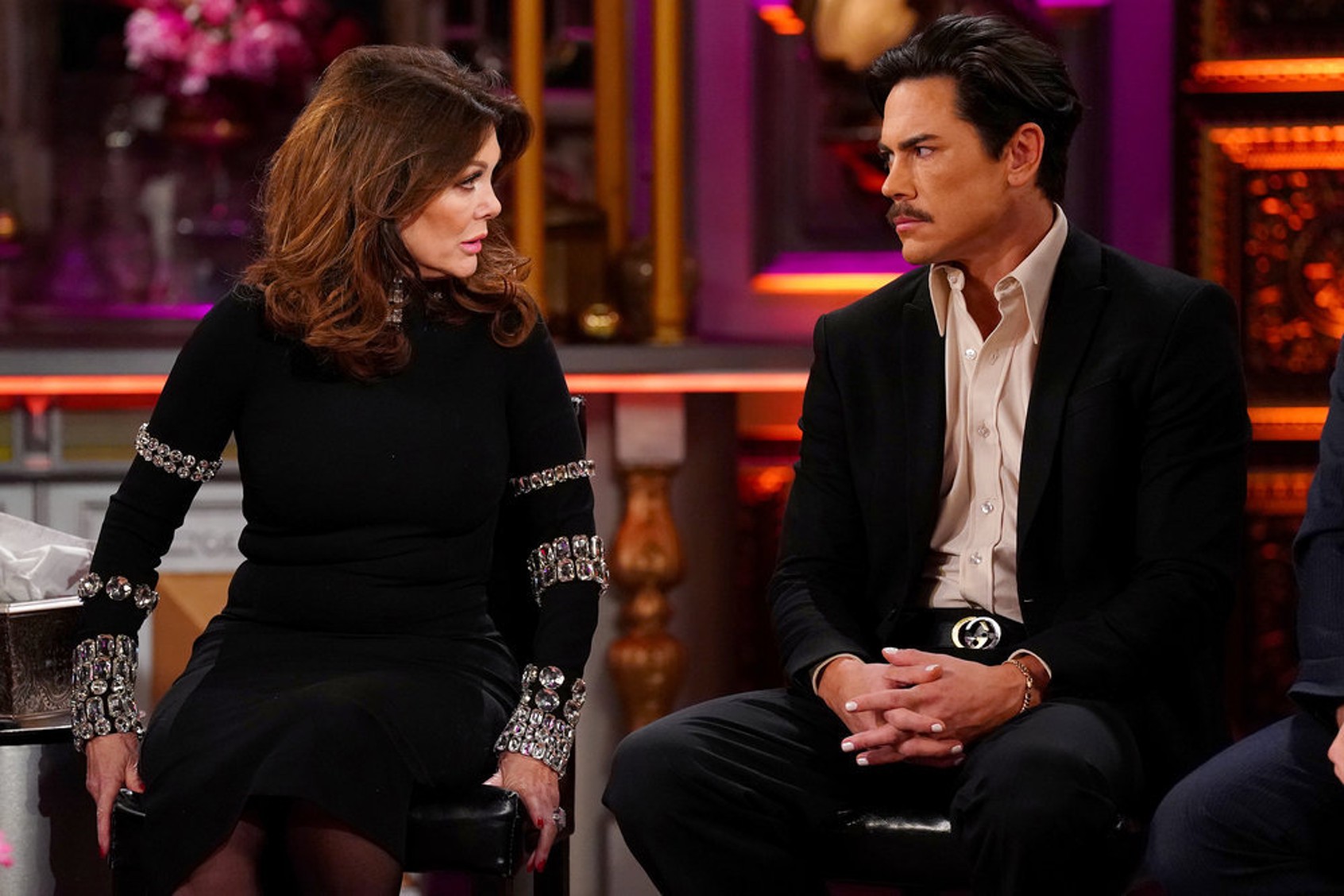
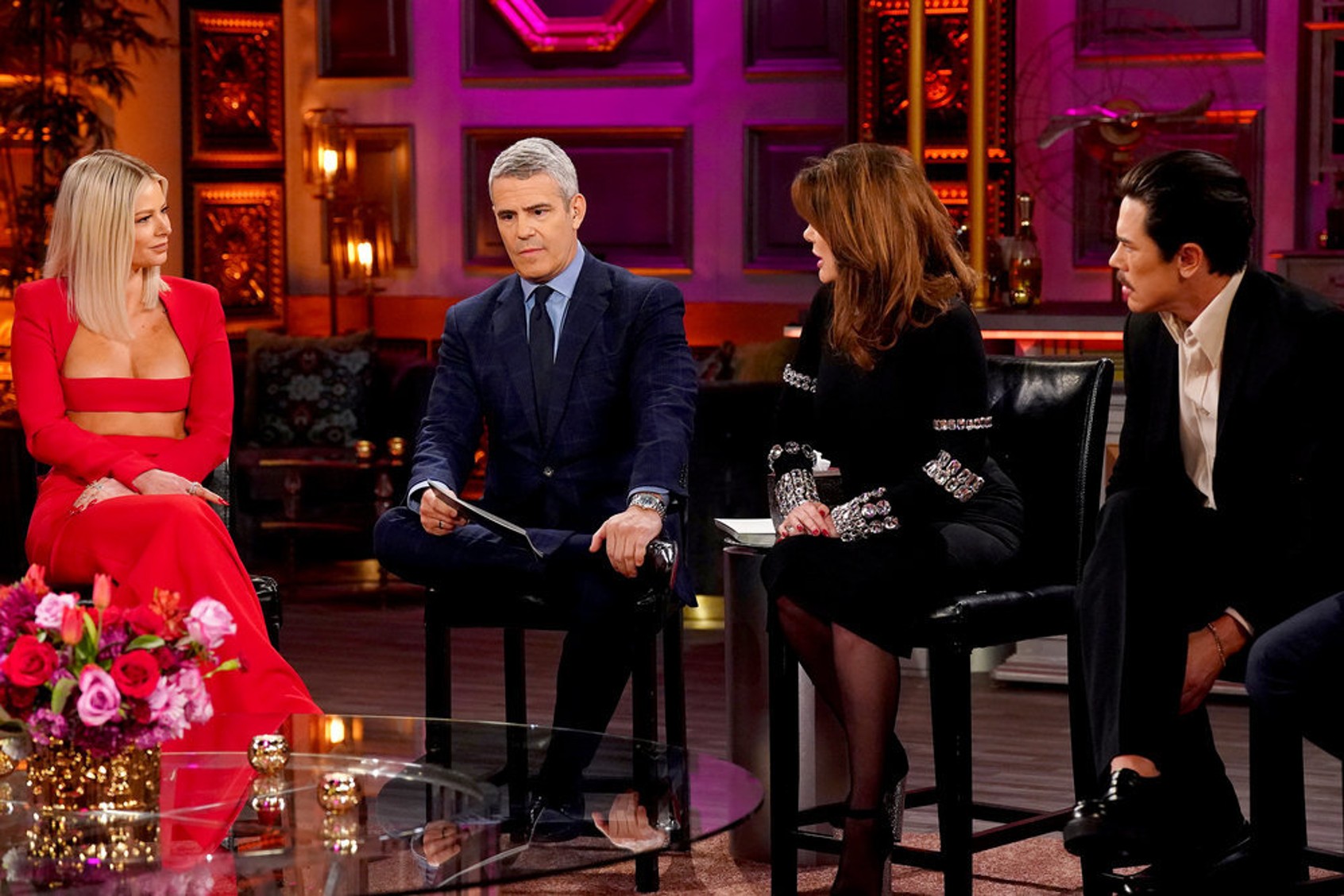
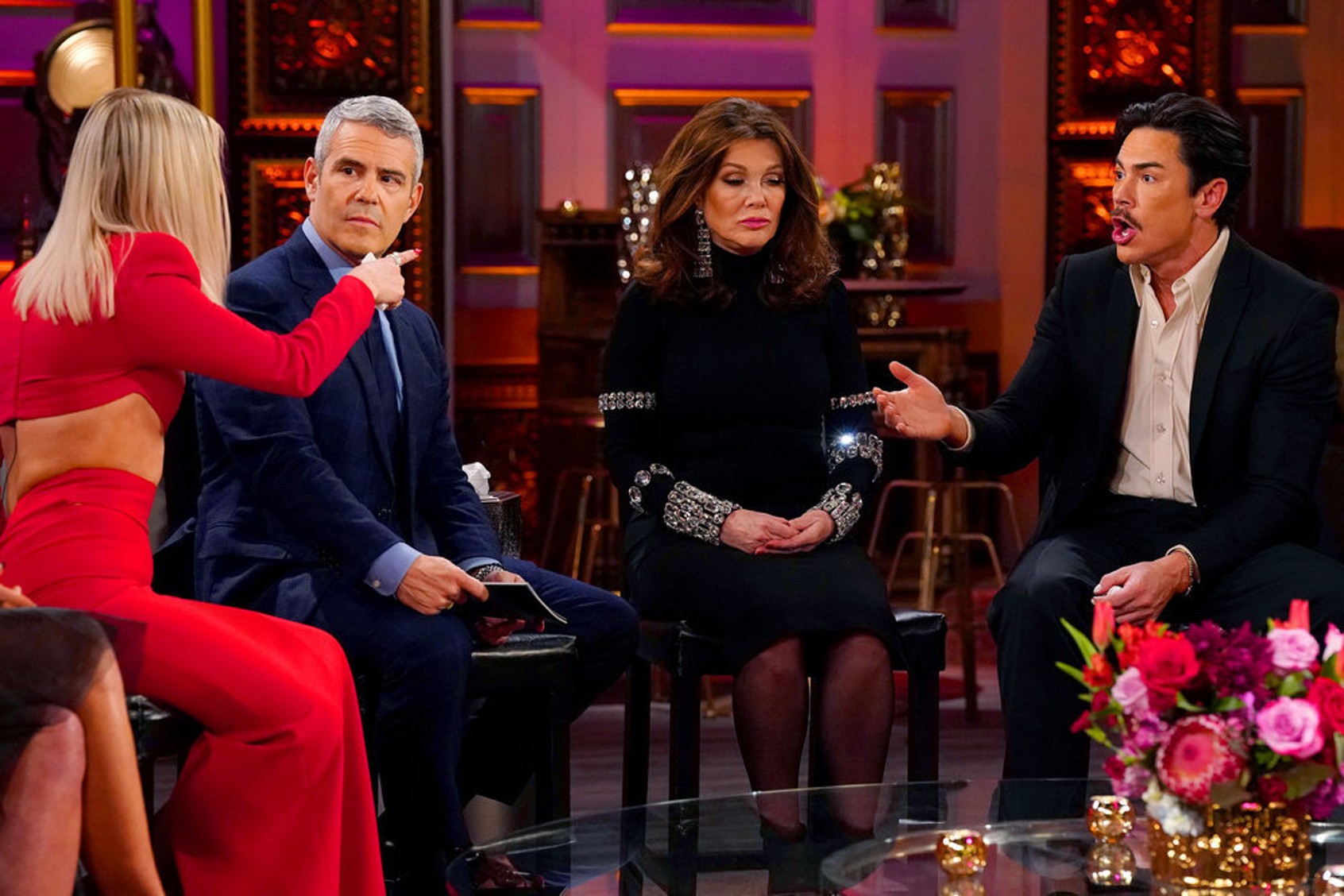
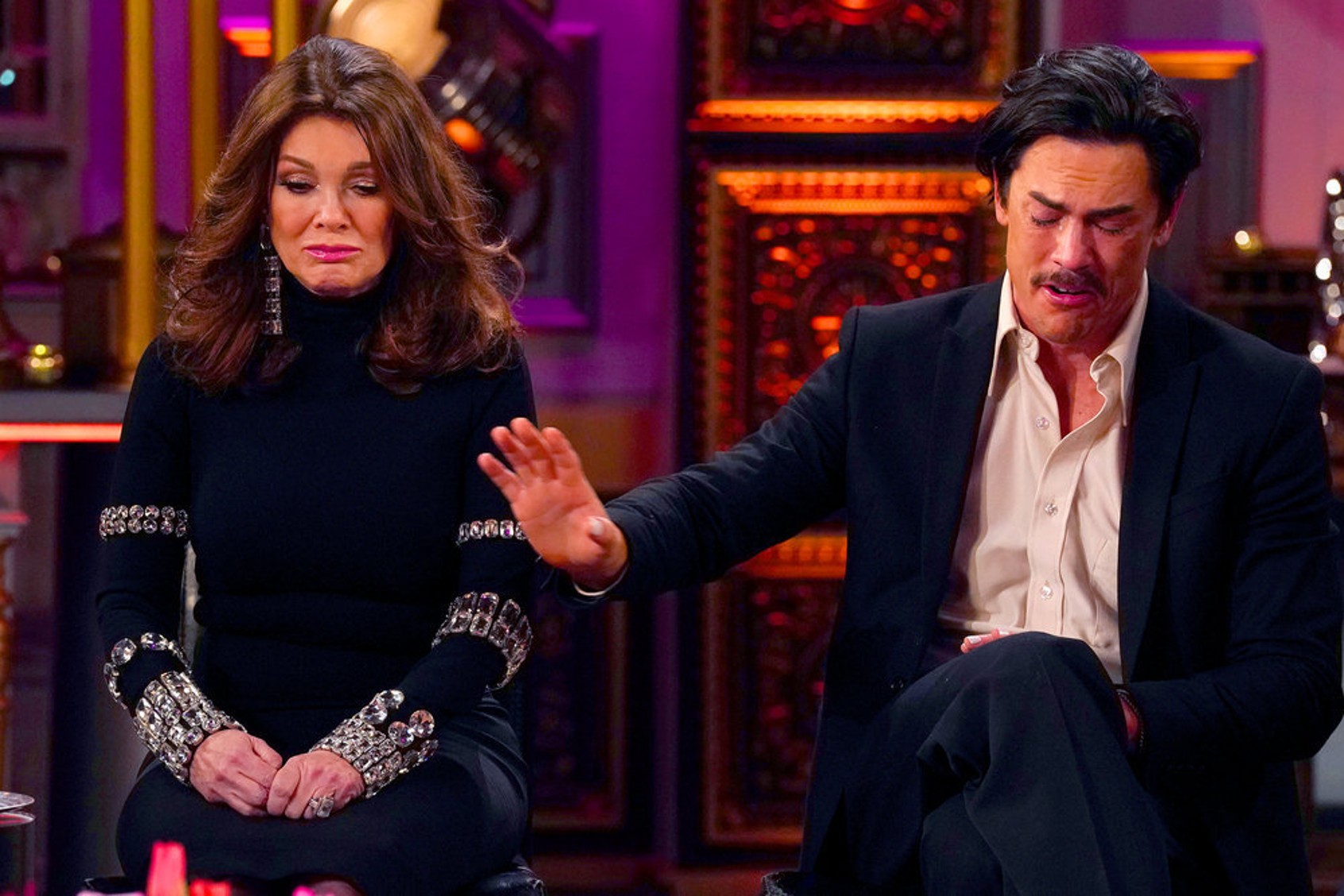
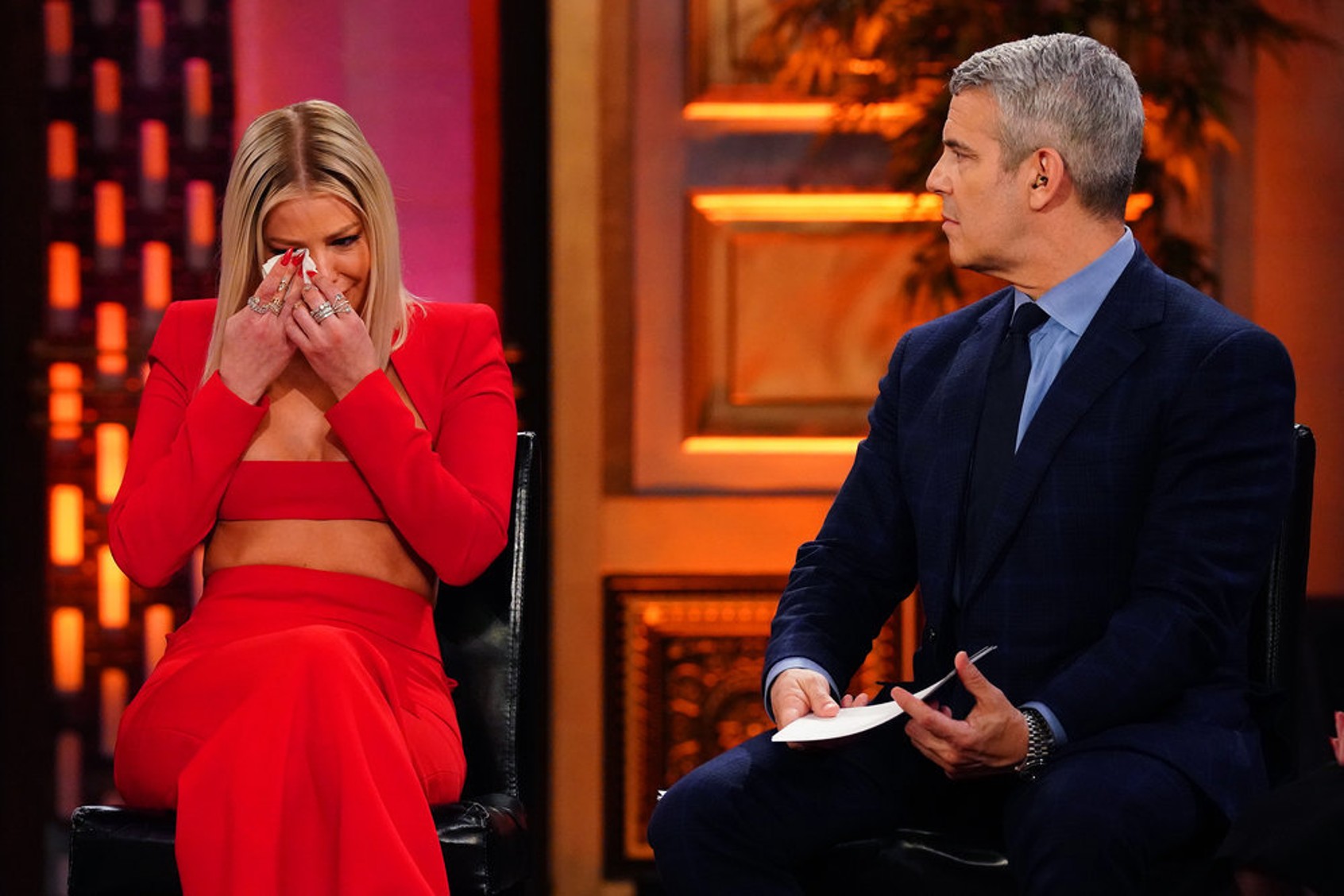
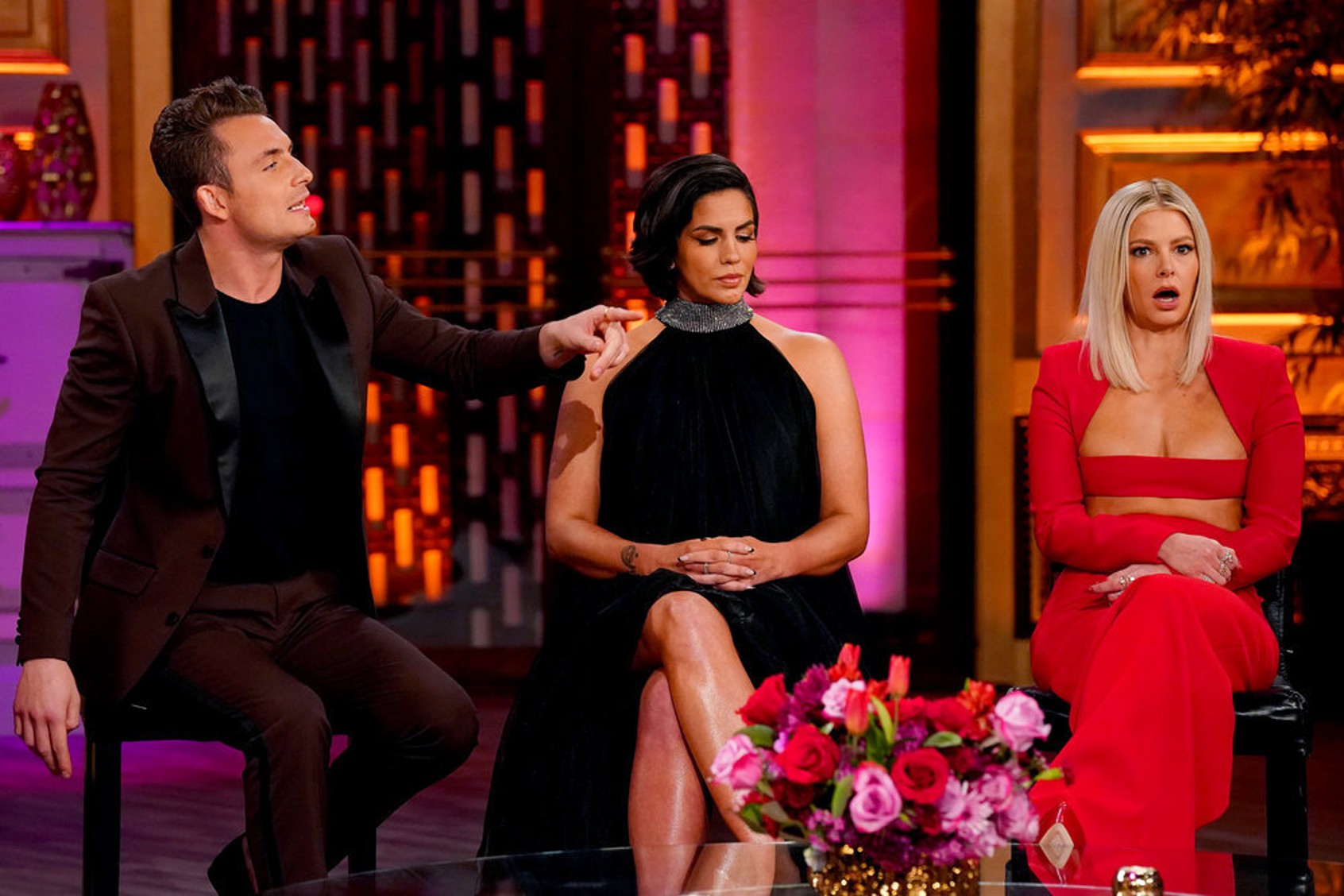
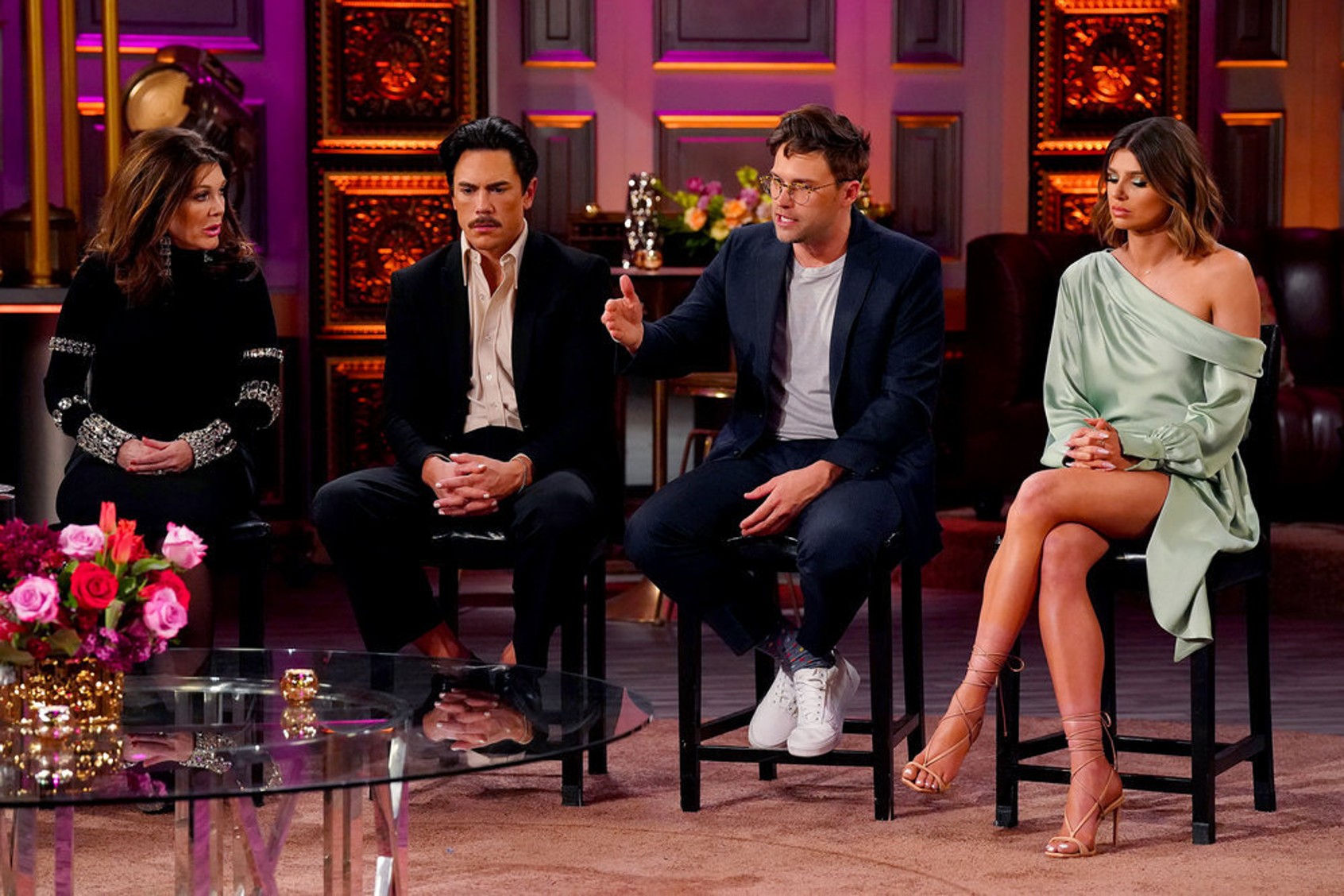
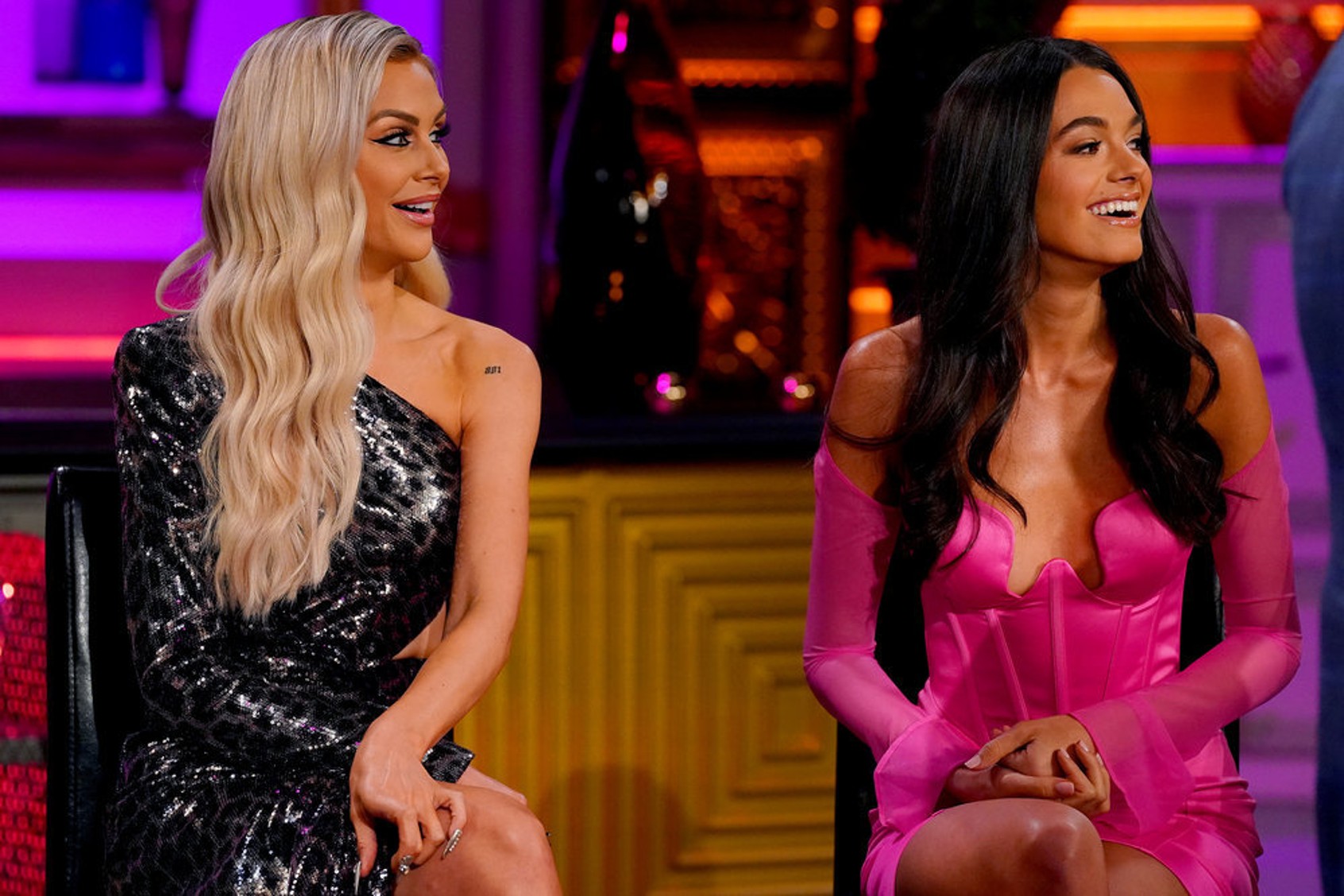
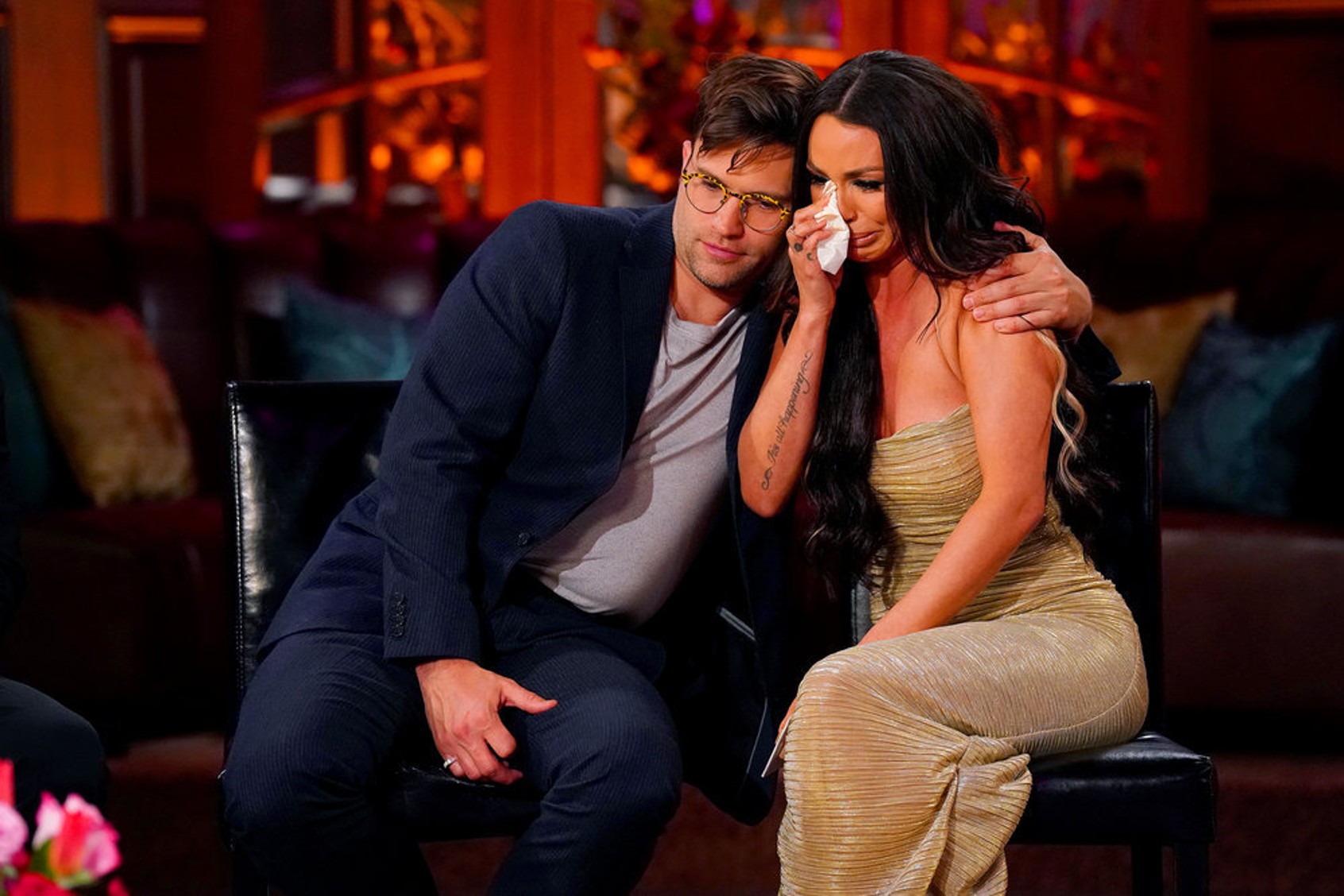
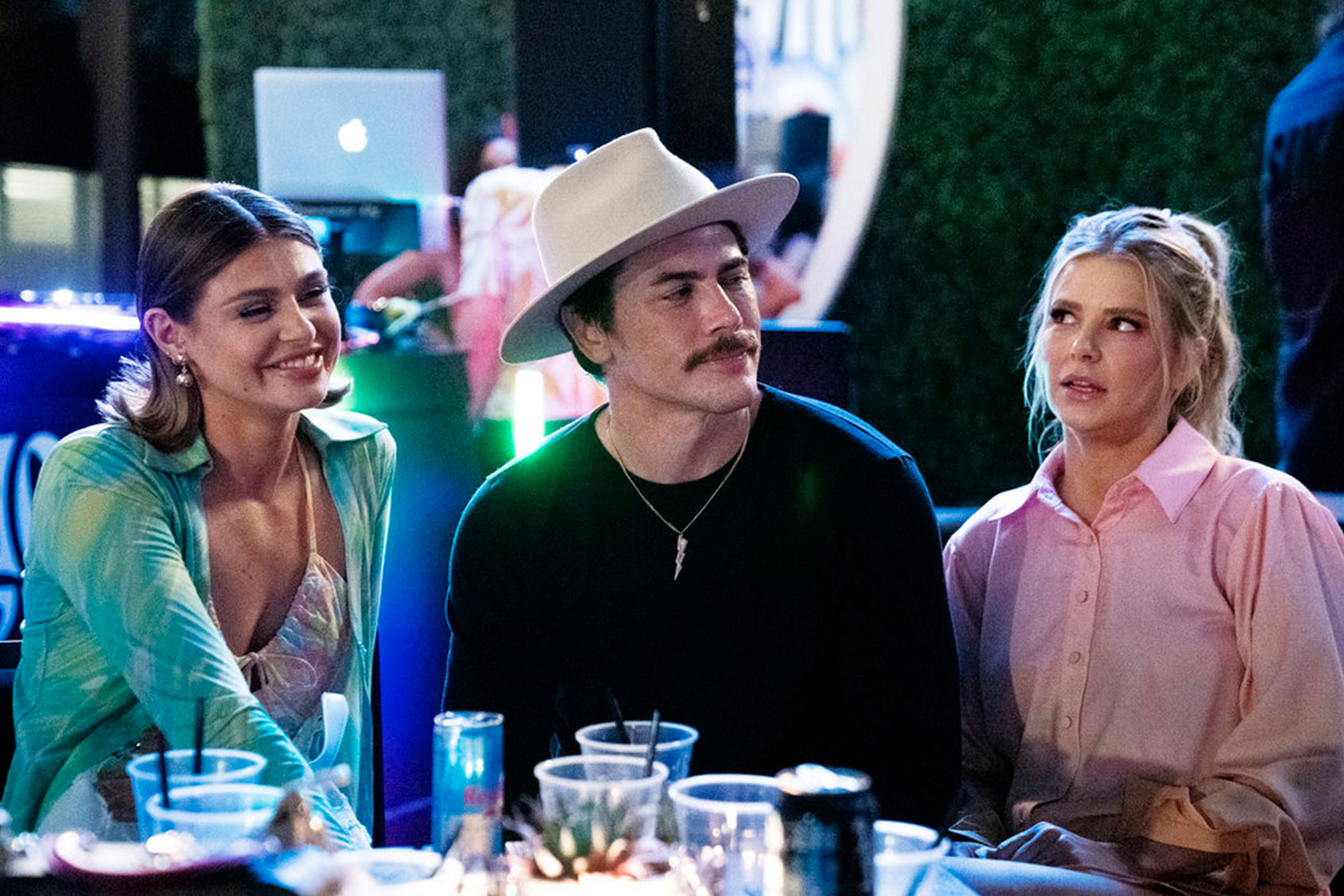
I have been thinking deeply about Bravo's "Vanderpump Rules" lately. In my defense, the show broke its agreement with us — to not ever make its fans think too deeply — first. Like much of the internet and several of my group chats, it started with the off-camera reveal in March that veteran cast member and bartender turned lounge owner Tom Sandoval — he of the midlife crisis cover band and mustache — had been cheating on his partner of nine years, castmate and preternaturally chill peacemaker Ariana Madix, with her much younger "best friend" Raquel (née Rachel) Leviss, the pageant princess slash ex-fiancée of haunted Victorian doll-turned-DJ James Kennedy.

Far from a simple drunken hookup — the fuel that ran this show in its youth — Sandoval and Raquel carried on a full-blown secret love affair under the nose of Bravo's production team (and, as the cast euphemistically refers to themselves, "the friend group") in the Valley Village house where his long-term girlfriend was grieving the deaths of her beloved grandmother and dog between trying to open her own business and to get Sandoval to stay sober long enough to fertilize her frozen eggs. Pass the Pumptinis, this is some bleak adult mess! 

It's led to a riveting couple of months, between media coverage, Instagram stories and assorted trash-talking podcasts, all leading up to the season finale, filmed in the aftermath of Ariana discovering the affair, and the bonkers, weeks-long reunion show cycle currently underway. "He has victim-blamed me 100 percent of the way, so I don't believe anything that just came out of his mouth, I think he's f**king full of s**t, and he can f**k off," Ariana fired back at Sandoval's attempt to justify himself in part 1 of the reunion this week. Whew! 

Things were much simpler back when disagreements could be hashed out over shift breaks in the alley behind SUR, weren't they? With cast members in their mid-to-late-30s and early 40s, they're not exactly middle-aged, but neither are they the careless young adults of the show's genesis. By turns, they have been hit hard by life, which we all know only gets harder. "Vanderpump Rules" has become relevant again because it stumbled into this realization the way we all eventually do: Slowly, then all at once when a crisis hits.

This is Wharton with spray tans, kinda. Austen through beer goggles?

A quick recap, for those who aren't Andy Cohen devotées: "Vanderpump Rules," which debuted in 2013, is a byproduct of Bravo's Real Housewives franchise, featuring the younger, drunker strivers haunting the payroll of Bravo-lebrity and restaurateur Lisa Vanderpump's SUR (obligatory acronym spell-out: Sexy Unique Restaurant). They arrived in West Hollywood at various times in the Aughts and Teens from places like Tampa or St. Louis with trunks full of teeth whitener and dreams. In the early seasons, they still went through the motions of their original aspirations between restaurant shifts: Going on auditions, modeling something somewhere, autotuning themselves to high heaven. They also drank so much it's almost unbearable to watch in reruns, jockeyed for position at SUR and Lisa's other properties, hooked up and broke up, and constantly fell out with one another over who said what to whom. 

You might be tempted to dismiss a show built on party-hard gossip as flimsy, but there are some stakes here. You can be a villain on this kind of show, but you must be a villain with some social power, which means at least one or two close allies, or you risk being cast out, with nobody to film with. If you aren't on the show, do you even exist? If you can control the narrative, you keep your position. This is Wharton with spray tans, kinda. Austen through beer goggles?

Often the gossip was about infidelity, suspected or witnessed, involving Miami Girl, That Girl in Vegas, Motorboating Some Guy's Junk, the Golden Nugget swimming pool, or literally any storyline flowing through or around the volatile Kristen — she was later fired after a racist targeted campaign against a former castmate, and has a podcast now — and/or incorrigible scoundrel Jax, also exiled, also with a podcast. (It's a lot of podcasts. What, are they going to get CPA licenses?) Occasionally, someone would get blackout drunk and start crying or screaming or getting even more belligerent. Some people were generally forgiven for chronic bad behavior and others weren't.

And so it would be fair to ask why this particular infidelity has captured so much attention. This season has been the show's most-watched, with the finale returning a series high in ratings, and I don't think it's all due to the mechanics of L'Affaire Scandoval itself. To sum it up, Sandoval and his mustache are gross, Ariana was done dirty, Raquel is way out of her depth, and these people throw around the words "best friend" a lot for not being in sixth grade. But there's more to it than that. 

A lot has happened on this show over its decade-long run, and also a whole lot of nothing. I began watching "Vanderpump Rules" during a particularly difficult summer. I needed a break from constant news, I was a little depressed, and I enjoyed observing a workplace more dysfunctional than mine at the time. One season could be carried by two, maybe three pieces of gossip, rehashed tirelessly over many episodes, gaining just a tiny bit of forward momentum with each fight over who said what to whom. There was something of an operatic aria structure to it, a few words sustained across a whole lot of notes. The pace was as languid as a hangover Sunday. There was no way to fall behind or feel like you'd missed anything of substance.

There was something of an operatic aria structure to it, a few words sustained across a whole lot of notes.

I admit I have not been a faithful fan for the last few years, especially as the cast expanded. Scandoval lured me back, where I found the show had tightened around a small core, concentrating its gaze intently on longtime colleagues who are, for the most part, no longer so young, which has only made them more interesting, especially the women. And in revisiting some of those decade-long patterns as I watched every episode this season and all of Andy Cohen's debriefings, I've come to a new realization: The show's darkness has long been manifested in its framing of the other Tom — Sandoval's bestie, former roomie and fellow SUR bartending alum, now current business partner Tom Schwartz — all along.

Enabled by the show, Schwartz spent years emotionally terrorizing Katie Maloney, his girlfriend and later wife, and even now that she is divorcing him, he can't seem to stop. Portrayed by the show as the mostly harmless, even sensitive beta to Sandoval's roguish hardass, the other Tom — Sandoval's wasted wingman, his vault of toxic secrets — is at last aging out of the threadbare boyish charm years and emerging, finally, as the stealth villain of the show's entire run.

Yes, this is reality TV, which we all understand to be manipulated and staged to some extent. As a fan, of course, all I can know is the show that's on screen and playing out in the margins around it. But these are real people with real relationships, and, if I may be sentimental for a moment, I have to believe real love for each other — only people who love each other can hurt each other as they do. The Scandoval affair became public after filming ended and the season was pretty much set, but the show whiplashed back into production to capture a new finale and the emotional fallout of the discovery — I'm trying to make a Sandoval/coda portmanteau here, but it's not working — and while the cast clearly prepped their rationales, alibis and zingers for maximum effect, after 10 years together, I think we all have a pretty good handle on the collective acting range. The reactions ring true. Ariana's emotional finale confrontation was particularly, well, operatic, as she reduced Sandoval to a pile of rubble:

"We were friends when you were literally wearing combat boots and skinny jeans and didn't have a dime to your name, driving a 1997 Honda Civic," she said with alarming specificity. "I loved you then when you had nothing. You got a little bit of money, a little bar, a little band, and then this girl is gonna act enamored of you?"

Then she went in for the precision shot: "Cause that's what you want — you want someone to just gas you up."

Sandoval's wasted wingman, his vault of toxic secrets, is at last aging out of the threadbare boyish charm years and emerging, finally, as the stealth villain of the show's entire run.

A tale as old as time! Somehow amid Tom Sandoval's cliché-fest midlife crisis, Schwartz has managed to make himself look pretty awful as well. Sandoval is rightfully catching the bulk of the ire for his shameless web of lies, but Schwartz's feckless little rebellions are grotesque in their own way. How much he knew about Scandoval and when continues to be an issue as Schwartz's story has shifted over time. And in the finale, he seemed more concerned with the reputation of the new bar they struggled to open, Schwartz & Sandy's, than with the implosion of his friends' lives. Call it an accomplishment: A man who got surprisingly far by pretending to be a soft puppy dog while viciously undermining his own wife is experiencing consequences as his weakness and misogyny finally come into focus for everyone else? As they say, this is 40.

If the professional stakes of alienating your friends have always been high on this show, the stakes seem even higher now as the cast ages. The strivers of SUR got later starts than your average Housewife and then took their time growing up. We have now watched them try for 10 seasons. Most left standing in the core group are approaching or in their 40s; they have marriages, divorces, pets, children. They own businesses, together and separately, that can live or die by their reputations. They have bought houses and moved out into two-bedroom apartments. Their built-up resentments and grudges are iceberg-deep, as mine currently are against Tom Schwartz. 

Over 10 years, the show has painted Katie — herself a flawed person, as we all are, I am not here to "stan" anyone — as a demanding buzzkill and nag, primarily when she would insist on being seen as a human being with feelings, which Tom seemed to relish hurting. He would push on an emotional bruise then pull back with a who, me? smile, stick his fingers in his mouth and babytalk his way out of the doghouse. If Katie persisted in her grievance, she was the unreasonable one, the show suggested, the one who couldn't let things go, the one with no chill. He spoke to her memorably with undisguised contempt, and for the most part, the show treated it like "Katie and Tom being the Bickersons." 

Culturally, we have long been trained to forgive bad behavior from a man, especially if he appears to be trying to be better.

There's a scene in an earlier season that sums up this dynamic tidily: During a prank war, fake cops are called to a party to handcuff Sandoval as retribution for toilet-papering Jax's house. Everyone falls for it. When the prank is revealed, the guys have a huge laugh, but Katie points out that as practical jokes go, it was in poor taste, insensitive given the climate around police and violence. "Turn on the news," she said. This is a reasonable reaction for an adult to have! Schwartz, to whom she was very much married at the time, began haranguing her in front of everyone for it: "I have never been so turned off in my life," he sneered. "This is why I don't have sex with her." In retrospect, it feels like a "throw the whole man in the trash" moment, but given the dynamic the show established early on, it barely registers as an event. Of course, there is much more to a marriage than what plays out for the cameras. Those public moments of contempt, though. I still struggle with understanding how the show — yes, even a Bravo-lebrity show — could breeze by it for so long.

It must be said this is not all Bravo's fault: The show reflects what the cast puts out and what the audience picks up. We're all soaking in the same sexist hot tub. It says just as much about the culture that shaped him that he has historically been a favorite of both the audience and Lisa Vanderpump, who has much invested in the Toms having elevated them to restaurant industry players. Schwartz's own shaky relationship with fidelity and the truth, let alone his disregard for his partner's feelings, never seemed to damage his reputation too much, likely because the victim was Katie, who could never be as chill about it as women are expected to be, especially when they are young. Culturally, we have long been trained to forgive bad behavior from a man, especially if he appears to be trying to be better. (Women can never be perceived as trying.) As Buzzfeed's Lara Parker points out in this incisive rundown of Schwartz Sins, "He honestly seems to enjoy disrespecting women." Again and again, the show gave Schwartz the benefit of the doubt as he did just that. I'm not saying that set the whole stage for the depths of Scandoval's emotional depravity. But it certainly didn't set a precedent that respecting your life partner was a core value, a hard line in the sand not to be crossed. 

Katie finally left him after 12 years together. But even with split custody of their dogs, a shared workplace, and a pledge to "stay friends" (that keeps them both on the show), Divorced Tom has continued to antagonize her in some of the same old ways: Taking everyone else's sides in disagreements, turning what should have been an amicable dinner into a put-down session, then shaming her for not forgiving him immediately. His coup de grâce this season was making out with Raquel on camera, in front of a whole preferred pool full of guests at castmate Scheana's wedding, after being explicitly asked not to, and then acting injured when Katie stuck to her boundaries and ended their post-divorce friendship over it. Whether kissing Raquel was a diabolical cover to distract from his best friend's affair, a nasty psyop against his ex, or just a routine, drunken lack of impulse control doesn't really matter. A stand-up guy doesn't make out with his ex's co-worker—and at the office, no less, that they all share. It is the kind of childish selfishness most people grow out of when they realize their actions can hurt other people. 

His coup de grâce this season was making out with Raquel on camera, in front of a whole preferred pool full of guests at castmate Scheana's second wedding

A decent friend also wouldn't buddy around with a friend's ex accused of being — to use one of Schwartz's favorite insults — a bootleg Harvey Weinstein. And yet Schwartz did just that with Lala Kent's allegedly horrendous movie producer ex-partner Randall Emmett, after she told her colleagues they needed to pick a side as she went into a custody battle in the wake of the allegations against him, which is documented in the new Hulu documentary, "The Randall Scandal: Love, Loathing & Vanderpump." Lala, it must be acknowledged, is a controversial character, as is James; good friends, they both play a sort of court jester role at times, tossing off their barbs and gossip together through the remnants of their own well-documented sexual chemistry, and their acid tongues and public outbursts are legendary. Which is also not a compelling reason to pal around with an ex whose exploits crossed him out of the recap section of the LA Times to the investigative unit. After Lala confronted Schwartz earlier in this season of "Pump Rules," he complained about Lala's ultimatum, mewling, "I just wanted to f**king play some pickleball, man." Some contemplation and self-examination could have come from that moment, from a castmember with the depth to pull it off. 

At the reunion, Lala pointed out that "Sandoval is Randall. Give it 10 years, he is Randall Emmett." Water, or a Schwartz & Sandy's cocktail, seeks its own level over time. Maybe it's time for the TomTom Era to end. The show's next chapter could be Something About Her instead. A recalibration for this show has been long overdue. Public opinion has rallied behind Ariana with impressive strength. (Though it remains a disturbing choice for Bravo to have brought Kristen back for the finale to soothe her, given the circumstances under which she left — the show's overwhelming whiteness at work.) Perhaps future seasons could put more focus on the women figuring out how to thrive as they get older, wiser, and for some, more single before they settle back down, if they ever decide to do so. That story — women learning how to redefine themselves on their own terms — has been underexplored, and I suspect the appetite for it now is strong. 

Because ultimately, they're all too old for this s**t now. This season the women snapped into compelling focus, working to put their boundaries and priorities in order, even as they all struggle through the curveballs adult life throws at everyone, to record ratings and fan approval. Except Raquel, who couldn't seem to grasp the concept that the histories Sandoval and Schwartz share with Ariana and Katie have deeper roots than little crushes that ran their course. If only she had met them all 10 years ago. Give her 10 more years and maybe she'll understand. In the meantime, there's always room in exile for yet another podcast. 

How to protect yourself from ChatGPT and other AI that fosters science denial

Until very recently, if you wanted to know more about a controversial scientific topic – stem cell research, the safety of nuclear energy, climate change – you probably did a Google search. Presented with multiple sources, you chose what to read, selecting which sites or authorities to trust.

Now you have another option: You can pose your question to ChatGPT or another generative artificial intelligence platform and quickly receive a succinct response in paragraph form.

ChatGPT does not search the internet the way Google does. Instead, it generates responses to queries by predicting likely word combinations from a massive amalgam of available online information.

Although it has the potential for enhancing productivity, generative AI has been shown to have some major faults. It can produce misinformation. It can create “hallucinations” – a benign term for making things up. And it doesn’t always accurately solve reasoning problems. For example, when asked if both a car and a tank can fit through a doorway, it failed to consider both width and height. Nevertheless, it is already being used to produce articles and website content you may have encountered, or as a tool in the writing process. Yet you are unlikely to know if what you’re reading was created by AI.

As the authors of “Science Denial: Why It Happens and What to Do About It,” we are concerned about how generative AI may blur the boundaries between truth and fiction for those seeking authoritative scientific information.

Every media consumer needs to be more vigilant than ever in verifying scientific accuracy in what they read. Here’s how you can stay on your toes in this new information landscape.

How generative AI could promote science denial

Erosion of epistemic trust. All consumers of science information depend on judgments of scientific and medical experts. Epistemic trust is the process of trusting knowledge you get from others. It is fundamental to the understanding and use of scientific information. Whether someone is seeking information about a health concern or trying to understand solutions to climate change, they often have limited scientific understanding and little access to firsthand evidence. With a rapidly growing body of information online, people must make frequent decisions about what and whom to trust. With the increased use of generative AI and the potential for manipulation, we believe trust is likely to erode further than it already has.

Misleading or just plain wrong. If there are errors or biases in the data on which AI platforms are trained, that can be reflected in the results. In our own searches, when we have asked ChatGPT to regenerate multiple answers to the same question, we have gotten conflicting answers. Asked why, it responded, “Sometimes I make mistakes.” Perhaps the trickiest issue with AI-generated content is knowing when it is wrong.

Disinformation spread intentionally. AI can be used to generate compelling disinformation as text as well as deepfake images and videos. When we asked ChatGPT to “write about vaccines in the style of disinformation,” it produced a nonexistent citation with fake data. Geoffrey Hinton, former head of AI development at Google, quit to be free to sound the alarm, saying, “It is hard to see how you can prevent the bad actors from using it for bad things.” The potential to create and spread deliberately incorrect information about science already existed, but it is now dangerously easy.

Fabricated sources. ChatGPT provides responses with no sources at all, or if asked for sources, may present ones it made up. We both asked ChatGPT to generate a list of our own publications. We each identified a few correct sources. More were hallucinations, yet seemingly reputable and mostly plausible, with actual previous co-authors, in similar sounding journals. This inventiveness is a big problem if a list of a scholar’s publications conveys authority to a reader who doesn’t take time to verify them.

Dated knowledge. ChatGPT doesn’t know what happened in the world after its training concluded. A query on what percentage of the world has had COVID-19 returned an answer prefaced by “as of my knowledge cutoff date of September 2021.” Given how rapidly knowledge advances in some areas, this limitation could mean readers get erroneous outdated information. If you’re seeking recent research on a personal health issue, for instance, beware.

Rapid advancement and poor transparency. AI systems continue to become more powerful and learn faster, and they may learn more science misinformation along the way. Google recently announced 25 new embedded uses of AI in its services. At this point, insufficient guardrails are in place to assure that generative AI will become a more accurate purveyor of scientific information over time.

What can you do?

If you use ChatGPT or other AI platforms, recognize that they might not be completely accurate. The burden falls to the user to discern accuracy.

Increase your vigilance. AI fact-checking apps may be available soon, but for now, users must serve as their own fact-checkers. There are steps we recommend. The first is: Be vigilant. People often reflexively share information found from searches on social media with little or no vetting. Know when to become more deliberately thoughtful and when it’s worth identifying and evaluating sources of information. If you’re trying to decide how to manage a serious illness or to understand the best steps for addressing climate change, take time to vet the sources.

Improve your fact-checking. A second step is lateral reading, a process professional fact-checkers use. Open a new window and search for information about the sources, if provided. Is the source credible? Does the author have relevant expertise? And what is the consensus of experts? If no sources are provided or you don’t know if they are valid, use a traditional search engine to find and evaluate experts on the topic.

Evaluate the evidence. Next, take a look at the evidence and its connection to the claim. Is there evidence that genetically modified foods are safe? Is there evidence that they are not? What is the scientific consensus? Evaluating the claims will take effort beyond a quick query to ChatGPT.

If you begin with AI, don’t stop there. Exercise caution in using it as the sole authority on any scientific issue. You might see what ChatGPT has to say about genetically modified organisms or vaccine safety, but also follow up with a more diligent search using traditional search engines before you draw conclusions.

Assess plausibility. Judge whether the claim is plausible. Is it likely to be true? If AI makes an implausible (and inaccurate) statement like “1 million deaths were caused by vaccines, not COVID-19,” consider if it even makes sense. Make a tentative judgment and then be open to revising your thinking once you have checked the evidence.

Promote digital literacy in yourself and others. Everyone needs to up their game. Improve your own digital literacy, and if you are a parent, teacher, mentor or community leader, promote digital literacy in others. The American Psychological Association provides guidance on fact-checking online information and recommends teens be trained in social media skills to minimize risks to health and well-being. The News Literacy Project provides helpful tools for improving and supporting digital literacy.

Arm yourself with the skills you need to navigate the new AI information landscape. Even if you don’t use generative AI, it is likely you have already read articles created by it or developed from it. It can take time and effort to find and evaluate reliable information about science online – but it is worth it.

Gale Sinatra, Professor of Education and Psychology, University of Southern California and Barbara K. Hofer, Professor of Psychology Emerita, Middlebury

This article is republished from The Conversation under a Creative Commons license. Read the original article.

New York’s public housing is sinking — literally

Like many coastal cities around the world, New York City is sinking. On a year-to-year basis, the rate of its descent into the Earth is practically imperceptible, but over time those millimeters add up: Today, the city is 9 inches lower than it was in 1950 — a number that has serious implications for waterfront neighborhoods that are having to reckon with increasingly extreme storms. 

Sea level rise isn’t the only culprit behind the sink. The city is also being literally weighed down by its massive skyscrapers. The influence of those trillions of pounds of steel and concrete on the city’s rate of sinking is the subject of a paper, published earlier this month in the scientific journal Earth’s Future

New York’s skyscraper-driven sink is due to a process known as subsidence, or the gradual caving in of an area of land. The phenomenon can result from a number of factors including sediment deposition or resource extraction, but in New York City it comes down to the sheer weight of the built environment.

Unsurprisingly, that weight (or “urban load,” as the authors call it) is greatest in Manhattan’s midtown and its downtown waterfront, the sites of many of the towering buildings that make up the city’s iconic skyline. But the paper also identifies subsidence-prone areas in certain parts of south Brooklyn, the Bronx, and Queens where many of the city’s sprawling public housing developments are located. 

Some boroughs are more equipped to deal with the sinking threat than others.

There is an ambitious plan in place to protect Manhattan from the risk of storm surge and sea level rise. After Superstorm Sandy struck in the fall of 2012, pushing a 13-foot wall of water onto the city’s waterfront and causing $19 billion in damages, the federal government allocated millions of dollars towards a climate resilience plan called the “Big U.” The project, which is slated to be completed in 2026, will wrap Manhattan in a vast grassy shield designed to protect it from future flooding. 

But the boroughs of Brooklyn, Queens, and the Bronx, where the superstorm hit communities hardest, have not received the same support. To date, there is no comprehensive plan to protect people in the outer boroughs from the threat of future extreme weather events. The 177,000 individuals residing in New York City Housing Authority developments — roughly 1/16th of the city’s population — are particularly vulnerable. Sandy’s storm surge flooded 10 percent of NYCHA housing, knocking out power to more than 400 buildings and leaving 350 without heat or hot water. 

While the city has made some progress in funding and developing climate mitigation projects, “these investments and benefits haven’t been seen and felt by all, especially by communities who have experienced these impacts first and worst due to historic disinvestment and systemic racism,” testified Eunice Ko, the deputy director of the New York City Environmental Justice Alliance, on the 10-year anniversary of Superstorm Sandy last October. According to city data, almost 90 percent of NYCHA residents are either Black or Latino. 

Eddie Bautista, the executive director of the Alliance, told Grist that while he thinks local authorities should consider the study’s findings, there are more pressing ways in which climate change is affecting the city’s most vulnerable right now. He pointed out that 350 people on average die from heat-related causes in New York each year — far more than the number who die from floods. Indeed, although a wealth of scientific literature has made the connection between high rates of subsidence and dangerous storm surge, it will take many years for the figures highlighted in the study to translate into significantly worse floods. 

“I could see why this study is a point of interest but frankly there are far more pedestrian, daily vulnerabilities and literally people at risk of dying,” he said. “There’s a ton more that the government could be doing to make New Yorkers more resilient to increasing impacts from climate change.”

This article originally appeared in Grist at https://grist.org/climate-energy/new-york-public-housing-sinking-sea-level-rise/.

Grist is a nonprofit, independent media organization dedicated to telling stories of climate solutions and a just future. Learn more at Grist.org

“We leave these places in ruins”: How the white lens on “Kandahar” reflects the human cost

“Kandahar” drops viewers into the heat of the Middle East as CIA operative Tom Harris (Gerard Butler) is first seen sabotaging an Iranian nuclear facility. Roman (Travis Fimmel), wants Tom to take on a second, more dangerous mission, and pairs him with Mohammed (Navid Negahban), a translator. However, Tom’s cover is blown when Luna (Nina Toussaint-White), a journalist, reports the story. Suddenly, Luna’s life is in danger, and Kahil (Ali Fazal) who works for Pakistan’s Inter-Services Intelligence, wants revenge.  

Director Ric Roman Waugh takes a slow-burn approach with this efficient thriller, saving most of its kinetic action scenes for the second half — after all the chess pieces are in place. As Tom is determined to make it home and keep Mohammed safe as well, they must travel from Herat to Kandahar while Kahil and others are in hot pursuit. 

“Kandahar” is the third (and best) collaboration between Waugh and actor Gerard Butler who previously worked together on “Angel Has Fallen” and “Greenland.” While the politics do not overwhelm the story, there are double- and possibly triple-crosses as Tom and Mohammed encounter unsavory characters, such as Ismail (Ray Haratian), a warlord. 

Waugh keeps the action engrossing as Tom engages in various chases and shootouts, with one shot using night vision being especially exciting. The filmmaker spoke with Salon about his new thriller. 

Given that you have made several action films, what was your approach to “Kandahar,” which features various storylines, locations and action sequences?

My core mantra as a filmmaker is that I try to never have a character be an antagonist. In this case, it’s a region that has been stuck in cycle of violence for centuries. So how do you find the humanity in that? How do end up rooting for people you never thought you would root for? And do you have empathy when they perish? When I read the script, I knew you had to feel everyone’s death in this film. It has to mean something. Whether the Taliban is coming after them, or other people who are doing their job and were supposed to return home to their families are no longer going to do that. It was about really maintaining that humanity, and I loved the “Rashomon” point of view of this material that allows us to explore all these people and storylines. The hard part was not getting too in-depth into the complexity of the region. 

What can you say about creating the action set pieces, such as the night vision sequence?

It started out with my first mandate. I’m not going to make this look dirty, dusty and desaturated. I wanted to show beauty of the region. We brought in the caramels, and I wanted to use primary colors. The women of Herat wear blue burkas. When the Russians invaded, they brought this weird blue material, and since then, the [burkas] were blue; other regions still use black. At nighttime, in the desert, it’s black. Knowing what is going on with modern technology, they are not using the regular night vision, the “green,” which Iranians use, but the new delta force operators, the new CIA, and the new MI6, are using fusion technology now, and it combines infrared with thermal. You can change the color patterns. When I found out you can do it in black and white, and you can see the desert at night, I thought, I’m going to make it look like Ansel Adams shot here. I wanted to show the beauty of the region in the nighttime.

This is your third collaboration with Gerard Butler. What observations do you have about working with him and building a film around him as a hero?

We’ve known each other a long time. I came on to reinvent his “Fallen” franchise in new way. I take the action hero and give him humanity and flaws. The comic book movie heroes are 10-feet-tall and bulletproof and impervious to pain. When you look back to the heroes in films in the ’70s and the ’50s, they were flawed individuals, and relatable, real people. That was the fun aspect of “Angel Has Fallen” — this guy who is worried about hanging up his gun, dealing with real issues, and fighting with his own mortality. Gerry is not afraid to be sensitive and vulnerable and express himself in a three-dimensional way. In “Greenland,” we took the action hero away. He was very much an everyday man in extraordinary circumstances. He didn’t have any special skill set and had to do everything by his heart. 

When I read Mitchell LaFortune’s script that became “Kandahar,” I flipped over it. It showed the humanity of the Middle East in multiple countries, and the cycle of violence that was going on. Gerry was the first person I thought of, and I got to make him a man of action but never to be action hero — even though he did have a special skill set. We made it authentic and grounded. It was inspired by true events.

The irony was we originally prepped it before the U.S. withdrawal of Afghanistan. We were in Saudi Arabia, and the Delta COVID variant shut the borders down. Then the withdrawal happened, so we rewrote the film to show not only the heartbreak of the region, but the warriors who fought for 20 years. What was it all for? We wanted to bring empathy and that “all is lost” sensibility to it, and also the atonement. The scene we always maintained was one with these two men who just fought a helicopter in the middle of the desert. They are coming to terms with the fact that neither of them really know their own families more than they know war. How much they have in common with one another even though they come from polar opposite places.

What did you know about the Middle East and black ops before you started making this film? 

It starts with Mitchell LaFortune. He was in the DIA, which is [military] intelligence. He was based in Herat for a number of years. Then it was expanded to understand his experiences there with different factions. I knew the story I wanted to tell, but the more time I spent in Saudi Arabia, I felt like a journalist. I felt there was a way I could absorb this place and be this outsider that is not desensitized and taking things for granted. I paid attention to every detail. It was loud. Five times a day, you hear the call to prayer, there are massive traffic noises, and within a couple weeks, you get completely accustomed to it. Tom would sit on a rooftop, and this kind of noise and din was normal to him. 

But watching the clash of the ultra-conservative movement and the young progressive movement in Saudi Arabi, it was fun to bring that to Ali Fazal’s character, Kahil, who reports to a man who runs the ISI, which is the CIA in Pakistan. His [boss] is a conservative, devout man who performs his prayers and does not live in sin smoking vape pens. Then you see Khalil meet with the Taliban, take off his turban, and put on the Gucci glasses, and he’s vaping and getting in a Range Rover with hip-hop. That happened around me. 

KandaharAli Fazal as Kahil Nazir in “Kandahar” (Open Road Films/Briarcliff Entertainment)

I found Kahil an interesting foil for Tom. I really loved a sequence where the two of them
“meet.” How did you work with Ali Fazal on his role?

We wanted Kahil to be the mirror of Tom, someone who lives in isolation and doesn’t know his family, and is addicted to war. His counterpart [Kahil], has to live the same way, but he doesn’t want that anymore. He is trying to find a way out. Kahil is on Tinder, trying to find love, because there is nothing in his life other than, on moment’s notice, he is on the hunt again. We wanted the hunter and the hunted to be mirrors, but also specific to each man’s culture — not Westernizing Kahil too much but showing what a young Pakistani would be like versus a man like Tom from our Western world. 

Mohammed is also a kind of mirror for Tom. He is a moral center of the film, and empathetic. How did you present his character? 

There was a lot more with Mohammed’s character I wanted to show — here is a man who fought a country, and now has a bull’s-eye on his back. He is living as a refugee in America. He is similar to how Afghans and Iraqis and other people who come from conflict live [abroad.] He is trying to win his country back. The film became about Mohammed going back to find a loved one. He makes this barter with the devil to go do one last mission so he could get back under an alias to find his loved ones. But he is looking at a country where hope is gone. I would have loved another 10-15 minutes on that to explore more of who he was. 


Want a daily wrap-up of all the news and commentary Salon has to offer? Subscribe to our morning newsletter, Crash Course.


What are your thoughts about “Kandahar” being a story told through a white lens — both you as a filmmaker and Tom as a character? 

It is what it is. We’ve been living with that layer for 20 years. I think that was important to show that and that Tom understands the responsibility of that. When he says, “We come to your country and tell you what to do, and how to behave, and then we leave you behind in ruins,” it was an important statement of how we keep getting into these police actions since Vietnam and try to do greater good and beat bad people down, but we leave these places in ruins. Are we leaving ourselves in ruin? That lens was important to be told from a Western character invading these countries and being complicit in it. Yes, there is a privilege to it, but there is also an important message that we need to own up to and understand the human cost. Look at what is going on in Ukraine right now. This film speaks to the destruction that war does not only on a physical level, but on a mental level, and with a human cost, and the sacrifices of families behind it.

In what ways is your film political? Can folks read “Kandahar” as jingoistic?

I hope not. I don’t want to be Robert Redford, and I don’t want to be Oliver Stone. I don’t want to put my opinion in any film. If there are politics in it, the politics are real. The Pakistanis are dealing with the Taliban. But I do not intend to give you my opinion, or tell you how to fix it. That is never my job.

“Kandahar” opens in theaters nationwide on May 26.


The messiness Olympics: Top Scandovals from the “Vanderpump Rules” reunion

When you think about it, there’s really not much difference between reality TV and televised sporting events. In order for both to be considered successful, or profitable, they rely on previously un-famous people who are good at only one thing to kick, throw, tackle and strategize to the delight of an assembly of spectators who, all the while, pray for something insane to happen. 

Since “Vanderpump Rules” first debuted on Bravo in 2013, the show’s producers have put the staff of bars and eateries owned by “Real Housewives of Beverly Hills” alum, Lisa Vanderpump — SUR Restaurant & Lounge, and the now shuttered Villa Blanca and Pump, all located in Los Angeles — through a rigorous training program in an attempt to finalize their champion team, showcased in the series’ 10th season and exalted in the three-part reunion that kicked off on May 24. 

High-scoring players in the original lineup (Jax “let me just steal these sunglasses” Taylor, Kristen “suck a d**k” Doute,” Brittany “go to hell” Cartwright and Stassi “It’s my birthday” Schroeder)  — all cut in Season 8 — made room for remaining VIP imperatives to bump pads and privates in what’s now famously known as #SCANDOVAL — a high-stakes athletic fête of lies, deception and heartbreak shouldered by Tom “crocodiles are going to eat my family” Schwartz, Tom “greasy devil” Sandoval, James “It’s not about the pasta” Kennedy, Raquel “I hate Winnie-the-Pooh” Leviss, Katie “call it like I see it” Maloney and Ariana “for you to die” Madix.

For anyone new to this, let’s roll the tape back.

TMZ broke the news (in March) that Ariana Madix, Sandoval’s girlfriend and “VPR” castmate, had ended their nine-year relationship after discovering that Sandoval was embroiled in a cheating scandal with yet another castmate, Raquel (Rachel) Leviss.

From there, the intricate and messy details of an affair that would affect no one outside of a relatively small circle of friends and co-workers — were they not part of a popular Bravo reality TV show — has evolved into a JFK/Grassy Knoll level piecing together of facts and rumors resulting in friends and fans taking sides.


Want a daily wrap-up of all the news and commentary Salon has to offer? Subscribe to our morning newsletter, Crash Course.


After a snooze-y ninth season, fans of “Vanderpump Rules” have been praying for this caliber of mess and now that it’s come and gone, many find themselves holding on to the memory of peak Scandoval with the same intense grip that Scheana Shay uses to clutch a White Claw. But there’s no need to grieve the glory days of niche gossip we’ve all grown accustomed to over the past three weeks. With this breakdown of the biggest bombshells, you can hop in and out of VP drama — like James jumping in and out of his chair — whenever the mood strikes. 

Much like the memory of Schwartz’s huge bottle of Xanax, the “Vanderpump Rules” Season 10 reunion will live in our hearts forever. Consider this listicle our lit candle. 

Sandoval coached Raquel/Rachel on the timeline of their affair, which was much longer than initially confessed 
(l-r) Lisa Vanderpump, Tom Sandoval
After being exiled in a run-down trailer in the parking lot for the majority of the reunion — due to a restraining order filed against Scheana — Raquel/Rachel swaps places for the reunion’s grand finale, allowing Scheana to enjoy some quality trailer time for herself, which she puts to good use by throwing on some leisure wear and knocking back a few White Claws as she keeps track of the events on set via a monitor. 
 
After getting situated on stage, “VP’s” new villainess issues a tepid apology for her actions, delivered in her signature shaky-voiced style, which is received as one would expect, given the circumstances. Ariana shoots daggers into the floor with her eyes, and everyone else just kinda looks like they’re gonna puke soon. 
 
Hearing Raquel/Rachel equate engaging in an affair with her good friend’s long-term boyfriend for almost a year as merely, “selfish,” Ariana rips into her, offering better descriptors such as “diabolical, demented, disgusting and subhuman.” 
 
At this, Andy Cohen chimes in to say that looking back at footage from Season 10 in which Raquel/Rachel listens to Ariana open up about her intimacy issues with Sandoval while, all the while, she was sleeping with Sandoval herself, reads as diabolical in hindsight. 
 
Later, in the finale’s heavily built-up “shocking revelation,” we learn that Sandoval had coached Raquel/Rachel on what to say in terms of the timeline of their affair which, to the shock of basically no one, went on for much longer than was initially confessed. 
Sandoval has zero grace when it comes to speaking about Ariana
(l-r) Tom Sandoval, Tom Schwartz, Scheana Shay (Nicole Weingart/Bravo)
After hearing Ariana tell his mistress to f**k herself with a cheese grater, Sandoval waxes philosophical saying, “We don’t live our lives by logic,” in an attempt to gloss over further calls for explanation as to how he and Raquel/Rachel could have been so cruel to Ariana with their lies and deception. To this, Ariana laughs like a cartoon witch, something that will be appropriate for her to do for the remainder of her time here on earth.
 
Later, in a comment that makes fists clench in unison across the globe, Sandoval brings up his intimacy issues with Ariana once again, describing a time she left her T-shirt on during sex like it was the biggest turn-off he could imagine. This from a grown man who, as we’ve said before, looks like a literal magician.
Ariana calls Raquel/Rachel a psychopath and a “Dementor”
(l-r) Lala Kent, James Kennedy, Katie Maloney, Ariana Madix, Andy Cohen, Lisa Vanderpump, Tom Sandoval, Tom Schwartz, Scheana Shay (Nicole Weingart/Bravo)
According to Raquel/Rachel, she stayed with friends and family for a few weeks after the news of her affair with Sandoval exploded. Chiming in to corroborate, greasy magician says that they saw each other only occasionally during this time. 
 
Explaining that she never even considered the consequences of her actions because she was “living in the moment,” Raquel/Rachel says she entered into the affair with Sandoval because they had a connection and she felt “seen and heard” by him.
 
Delivered a series of emotional body-shots after saying this, she’s called a psychopath by Ariana, exposed as a “Harry Potter” fan and then has to sit and watch Sandoval make what looks pretty close to a stink face when asked if he’s in love with her.
 
Actions . . .  meet consequences. 
Sandoval doesn’t hide his temper very well
(l-r) Ariana Madix, Andy Cohen, Lisa Vanderpump, Tom Sandoval (Nicole Weingart/Bravo)
A good majority of Part 2 of the “Vanderpump” reunion centers on Sandoval splitting his screen time between theatrically crying while gaslighting women and/or calling them stupid. 
 
After a heated exchange with Lala in which he calls her a moron and a narcissist, Sandoval then accuses her of taking out her IUD in an effort to get pregnant with her first child, Ocean, only after learning that a past cast member (Stassi) is pregnant. 
Tom Schwartz throws around a huge bottle of Xanax
(l-r) Ariana Madix, Andy Cohen, Lisa Vanderpump, Tom Sandoval, Tom Schwartz, Scheana Shay (Nicole Weingart/Bravo)
Unable to withstand the discomfort of contributing absolutely nothing for one moment longer, Schwartz seems to forget that he’s on camera and produces a gigantic bottle of Xanax from inside his blazer — popping one into his mouth and chewing it, much to the shock of everyone on stage. 
 
The moment of the pill-pop occurs shortly after a heated exchange between Sandoval and Ariana regarding whether or not Scheana punched Raquel/Rachel after finding out she and Tom had been sleazing around — a “did she/didn’t she” act that got her slapped with a now revoked restraining order.
 
Seeing Schwartz with the bottle of pills, just before Raquel/Rachel appears on stage for the very first time, Sandoval conjures the presence of mind to ask, “What the f**k is that?”  
 
Off to the side, Lisa Vanderpump murmurs what everyone else is thinking, “Jesus.”
Tom Sandoval puts on his narcissist costume to deny being a narcissist
(l-r) Ariana Madix, Andy Cohen, Lisa Vanderpump, Tom Sandoval (Nicole Weingart/Bravo)
When the cast takes a break from filming to have lunch, Sandoval uses it as an opportunity to sneak away and visit Raquel/Rachel in her exile trailer. Wearing a long, dark coat and dark sunglasses in a quick costume change that reads very “suburban strip-mall magic shop owner,” he fields questions from his mistress regarding the legitimacy of his and Ariana’s “intimacy issues.”
 
“I don’t love the way it’s coming across about your guys’ intimacy,” she says. “. . . Just watching what you guys taped right now, it looks like you guys had like, this solid relationship.” 
 
In an attempt to ease Raquel/Rachel’s concerns over whether or not he’s been lying to her, he goes into a story about how Ariana was mean to him sometimes when he’d ask for her opinion on what outfit he should wear on such and such night. And while this is no explanation at all, it seems to be enough for her. 
Tom Sandoval felt like Ariana Madix’s “gay BFF”
(l-r) Lisa Vanderpump, Tom Sandoval (Nicole Weingart/Bravo)
In a one-on-one with Andy Cohen at the top of Peacock’s “Pumped Up Edition” of the first part of the “Vanderpump Rules” reunion, Sandoval gives a vague timeline as to how his affair with Raquel (Rachel) Leviss began.
 
After Cohen asks him to explain how it came to be that he cheated on his girlfriend of nine years with one of his closest friends, Sandoval makes the first of many attempts to put blame on Madix saying, “Ariana and I kept our relationship pretty private for many years. We had issues. I felt like I was like her gay BFF. We put on a front while we were filming.” 
 Ariana Madix knew about “Miami Girl”
(l-r) Ariana Madix, Andy Cohen (Nicole Weingart/Bravo)
Visibly enraged any time Ariana spoke to — or about — Tom Sandoval, she holds back tears for most of the first reunion episode while talking about her ex-boyfriend cheating on her three times (that he’s admitted to) with Raquel, “Miami Girl” and one yet to be identified woman during the course of their nine-year relationship.
 
Admitting that she and Sandoval did have intimacy issues, but that they were intimate perhaps a tad more than he would now like everyone to believe, Ariana grows frustrated trying to drive home the point that issues along those lines are not an excuse for cheating. 
 
“It’s victim blaming is what it is,” she says while being spoken over by Sandoval’s best friend and flying monkey, Tom Schwartz.
 
When asked by Andy Cohen why she forgave Sandoval for cheating on her with “Miami Girl” at the start of their relationship, she says that the two weren’t “serious” at the time, but that she could see the rest of her life with him and wanted everyone else to see the best of him. 
 
After being upset for 98% of the episode, Madix finds some pleasure towards the end talking about “Team Ariana” graffiti that supporters have been leaving at her ex’s new bar, Schwartz & Sandy’s.
Raquel (Rachel) Leviss communicates via eye roll only
(l-r) Tom Sandoval, Tom Schwartz, Raquel Leviss (Nicole Weingart/Bravo)
Kept in exile in a run-down trailer situated on the outskirts of the reunion’s filming location — due, in part, to the legal stipulations of a restraining order filed against Scheana Shay, but also because the ladies on set all want to rip her to shreds — Raquel (Rachel) Leviss makes her first public appearance since engaging in a sexual affair with her friend’s boyfriend, Tom Sandoval, via quick cuts to her trailer, sans dialogue apart from a few squeaks and peeps. 
Sandoval and James almost come to blows
(l-r) James Kennedy, Katie Maloney, Ariana Madix (Nicole Weingart/Bravo)
When referenced as being the only likely contender to take on the title of “No. 1 guy in the group” now that both Toms are about as popular as genital warts, James Kennedy seems to take very little pride in moving up in rank saying, “It’s not hard to compete when I’m working with Schwartz and a clown.” 
 
After seeing Sandoval break into tears, theatrically beginning an apology quickly interrupted by the cast’s audible disgust, James jabs at his castmate telling him to pull himself together and calling him a “p***y.” 
 
Later, asking Sandoval to summarize what their friendship means to him, after the two were described by castmates as being “like brothers,” Sandoval throws out a pointed barb saying they only spoke “like once a month.” An odd statement coming from someone who paid for his engagement event. Engagement to whom? Oh, yeah, Raquel Leviss.
 
“You’ve been like a big bro,” James says to Sandoval, in disbelief.
 
“Yeah, that’s what you called me,” Sandoval, a walking turd, responds.
 
From here, a near-physical altercation is defused by Cohen physically restraining James, keeping him from coming *this close* to seriously messing up Sandoval’s hair.  
 
Managing to still get the last word in, James tells Sandoval that his band sucks and calls him “a worm with a mustache” before stalking off stage to go compose himself. 
Tom Schwartz threatens Katie Maloney with a cease and desist 
(l-r) Lisa Vanderpump, Tom Sandoval, Tom Schwartz, Raquel Leviss (Nicole Weingart/Bravo)
In a heated response to ex-wife Katie Maloney referring to his “friend” and recent roommate, Jo, as a “creep,” Tom Schwartz threatens that his ex will be hit with a cease and desist if she continues to attack his mysterious roomie via comments made on social media. 
 
Cutting to a screengrab of a tweet by Katie in which she calls Jo “spooky” and someone with “energy on par with a crack head,” Schwartz then calls his ex-wife a “troll,” making a little sound effect to go along with it. 
Lala Kent calls Sandoval “the new Randall Emmett”
 
(l-r) Lala Kent, Ally Lewber (Nicole Weingart/Bravo)
Newly split from film producer Randall Emmett — with whom she shares a child — after discovering that he’d been cheating on her for almost the totality of their relationship, Lala pulls no punches in comparing Sandoval to her own own lying ex.
 
“Sandoval is Randall,” Lala says to Cohen when asked if she thought it was a good idea that Sandoval and Ariana had (up until recently) continued to live in the same home together. “Give it 10 years. He is Randall Emmett. It’s absolutely terrifying. I couldn’t get Randall to stay home, and then when s**t hit the fan, I couldn’t get him the f**k out of the house.”  
 
With her sentiments punctuated by Ariana saying, “There you go,” in agreement, Lala then warns the cast to stay away from Sandoval, calling him a narcissist and a “dangerous human being.” To this, Lisa Vanderpump surprisingly comes to Sandoval’s defense telling Lala that her stance is ridiculous, creating tension between the two women and flustering Lisa in a way that viewers don’t often get to see. 
 
“We’re here for like 10 hours, for God’s sake,” Lisa says after being dismissed by Lala. “You cannot start like this.” 
Schwartz, per usual, tries to help and makes everything worse
(l-r) Tom Schwartz, Scheana Shay (Nicole Weingart/Bravo)
When asked to divulge when Sandoval first told him about his affair with Leviss, Schwartz fails to maintain the previously established story.
 
“Come like, late August, I met up with Tom and he broke it down for me,” Schwartz says.
 
Hearing Sandoval begin to edit on the fly with “late August?” Lala steps in to make sure everyone caught what had just happened saying, “Did you guys not put your timelines together to match?” 
 
Befuddled, but continuing to (albeit incorrectly) co-sign for his friend, Schwartz says, “I’m not a f**king idiot” eliciting an eye roll from Lisa. 

Crimes against humanity, American-style: United States continues quest to hide torture

In the Blindman’s Buff variation of tag, a child designated as “It” is tasked with tapping another child while wearing a blindfold. The sightless child knows the other children, all able to see, are there but is left to stumble around, using sounds and knowledge of the space they’re in as guides. Finally, that child does succeed, either by bumping into someone, peeking, or thanks to sheer dumb luck.

Think of us, the American public, as that blindfolded child when it comes to our government’s torture program that followed the 9/11 disaster and the launching of the ill-fated war on terror. We’ve been left to search in the dark for what so many of us sensed was there.

We’ve been groping for the facts surrounding the torture program created and implemented by the administration of President George W. Bush. For 20 years now, the hunt for its perpetrators, the places where they brutalized detainees, and the techniques they used has been underway. And for 20 years, attempts to keep that blindfold in place in the name of “national security” have helped sustain darkness over light.

From the beginning, the torture program was enveloped in a language of darkness with its secret “black sites” where savage interrogations took place and the endless blacked-out pages of documents that might have revealed more about the horrors being committed in our name. In addition, the destruction of evidence and the squelching of internal reports only expanded that seemingly bottomless abyss that still, in part, confronts us. Meanwhile, the courts and the justice system consistently supported those who insisted on keeping that blindfold in place, claiming, for example, that were defense attorneys to be given details about the interrogations of their clients, national security would somehow be compromised.

Finally, however, more than two decades after it all began, the tide may truly be turning.

Despite fervid attempts to keep that blindfold in place, the search has not been in vain. On the contrary, over these last two decades, its layers have slowly worn away, thread by thread, revealing, if not the full picture of those medieval-style practices, then a damning set of facts and images relating to torture, American-style, in this century. Cumulatively, investigative journalism, government reports, and the testimony of witnesses have revealed a fuller picture of the places, people, nightmarish techniques, and results of that program.

First Findings

The fraying of that blindfold took endless years, starting in December 2002, when Washington Post writers Dana Priest and Barton Gellman reported on the existence of secret detention and interrogation centers in countries around the planet where cruel, unlawful techniques were being used against war-on-terror captives in American custody. Quoting from a 2001 State Department report on the treatment of captives, they wrote, “The most frequently alleged methods of torture include sleep deprivation, beatings on the soles of the feet, prolonged suspension with ropes in contorted positions and extended solitary confinement.”

Less than a year later, the American Civil Liberties Union, along with other groups, filed a Freedom of Information Act request (the first of many) for records pertaining to detention and interrogation in the war on terror. Their goal was to follow the trail leading to “numerous credible reports recounting the torture and rendition of detainees” and our government’s efforts (or the lack thereof) to comply “with its legal obligations with respect to the infliction of cruel, inhuman, or degrading treatment or punishment.”

Then, in 2004, the blindfold began to show some initial signs of wear. That spring, CBS News’s 60 Minutes II showed the first photographs of men held at Abu Ghraib, an American-controlled prison in Iraq. They were, among other things, visibly naked, hooded, shackled, and threatened by dogs. Those pictures sent journalists and legal advocates into a frenzied search for answers to how such a thing had happened in the wake of the Bush administration’s invasion of Iraq. By that fall, they had obtained internal government documents exempting any war on terror captives from the usual legal protections from cruelty, abuse, and torture. Documents also appeared in which specific techniques of torture, renamed “enhanced interrogation techniques” (EITs), were authorized by top officials of the Bush administration. They would be used on prisoners in secret CIA locations around the world (119 men in 38 or more countries).

None of this, however, yet added up to “Tag! I found you!”

Senator Feinstein’s Investigation

Before George Bush left office, Senator Dianne Feinstein began a congressional investigation into the CIA interrogation program. In the Obama years, she would battle to mount a full-scale one into the torture program, defying most of her colleagues, who preferred to follow President Obama’s advice to “look forward as opposed to looking backwards.”

But Feinstein refused to back down (and we should honor her courage and dedication, even as we witness the present drama of her insistence on remaining in the Senate despite a devastating process of aging).  Instead of retreating, Feinstein only doubled down and, as chair of the Senate Select Committee on Intelligence, launched an in-depth investigation into the torture program’s evolution and the grim treatment of those prisoners at what came to be known as “CIA black sites.”

Feinstein’s investigator, Daniel Jones, spent years reading through six million pages of documents. Finally, in December 2014, her committee issued a 525-page “executive summary” of his findings. Yet his full report — 6,700 pages with 35,300 footnotes — remained classified on the grounds that, were the public to see it, national security might be harmed. Still, that summary convincingly laid out not just the widespread use of torture but how it “proved not to be an effective means of obtaining accurate information.” In doing so, it dismantled the CIA’s justification for its EITs which rested on “claims of their effectiveness.”

Meanwhile, Leon Panetta, Obama’s director of the CIA, conducted an internal investigation into torture. Never declassified, the Panetta Review, as it came to be known, reportedly found that the CIA had inflated the value of the information it had gotten with the use of torture techniques. For example, in the brutal interrogation of the alleged mastermind of 9/11, Khalid Sheikh Mohammed, the Agency claimed that those techniques had elicited information from him that helped thwart further terrorist plots. In fact, the information had been obtained from other sources. The review reportedly acknowledged that EITs were in no way as effective as the CIA had claimed.

The Cultural Sphere

In those years, bits of light from the cultural world began to illuminate the dark horror of those enhanced interrogation techniques. In 2007, after President Bush had acknowledged the use of just such “techniques” and had moved 14 detainees from the CIA’s black sites to Guantánamo, his infamous offshore prison of injustice in Cuba, documentary filmmaker Alex Gibney directed “Taxi to the Dark Side.” It told the story of Dilawar, a taxi driver in Afghanistan who died in American custody after severe mistreatment. That film would be one of the earliest public exposés of cruelty and mistreatment in the war on terror.

But such films didn’t always yield doses of light. In 2012, for instance, “Zero Dark Thirty,” a movie heavily influenced by CIA advisers, argued that those harsh interrogations had helped keep America safer — specifically by leading U.S. authorities to bin Laden, a meme often repeated by government officials. In fact, reliable information leading to bin Laden had been obtained without those techniques.

Increasingly, however, films began to highlight the voices of those who had been tortured. “The Mauritanian,” for example, was based on “Guantánamo Diary,” a memoir by Mohamedou Ould Slahi, a tortured Mauritanian held at that prison for 14 years. Slahi, never charged, was finally released and returned to Mauritania. As New York Times reporter Carol Rosenberg summed up his experience, “The confessions he made under duress [were] recanted [and] a proposed case against him [was] deemed by the prosecutor to be worthless in court because of the brutality of the interrogation.”

Abu Zubaydah

Last year, award-winning documentary filmmaker Alex Gibney once again gave us a film on torture, “The Forever Prisoner,” focused on a Guantánamo detainee, Abu Zubaydah, whose real name is Zayn al-Abidin Muhammed Husayn. On him, the CIA first tested its harsh interrogation techniques, claiming he was a leading member of al-Qaeda, an assumption later disproved. He remains one of only three Gitmo detainees neither charged by the military commissions at that prison, nor cleared for release.

Nothing captures the futility of the blindfold — or sometimes even the futility of lifting it — more than Zubaydah’s story, which was at the heart of the story of torture in these years. The Senate Select Committee’s 525-page executive summary referred to him no less than 1,343 times.

Captured in Pakistan in 2002 and first taken to a series of black sites for interrogation, Zubaydah was initially believed to be the third highest-ranking member of al-Qaeda, a claim later abandoned, along with the allegation that he had even been a member of that terrorist organization. He was the detainee for whom enhanced interrogation techniques were first authorized by National Security Advisor Condoleezza Rice, relying in part on the Justice Department’s greenlighting of such techniques as “lawful” rather than as torture (legally forbidden under both domestic and international law). Joe Margulies, Zubaydah’s lawyer, summarized the horrific techniques used on him this way:

“His captors hurled him into walls and crammed him into boxes and suspended him from hooks and twisted him into shapes that no human body can occupy. They kept him awake for seven consecutive days and nights. They locked him, for months, in a freezing room. They left him in a pool of his own urine. They strapped his hands, feet, arms, legs, torso, and head tightly to an inclined board, with his head lower than his feet. They covered his face and poured water up his nose and down his throat until he began to breathe the water, so that he choked and gagged as it filled his lungs. His torturers then left him to strain against the straps as he began to drown. Repeatedly. Until, just when he believed he was about to die, they raised the board long enough for him to vomit the water and retch. Then they lowered the board and did it again. The torturers subjected him to this treatment at least eighty-three times in August 2002 alone. On at least one such occasion, they waited too long and Abu Zubaydah nearly died on the board.”

In addition, as Dexter Filkins reported in the New Yorker in 2016, Zubaydah lost his left eye while in CIA custody.

As the Feinstein committee’s torture report makes clear, CIA personnel present at that black site cabled back to Washington the importance of erasing any information about the nature of Zubaydah’s interrogation, implicitly acknowledging just how wrongful his treatment had been. The July 2002 cable asked for “reasonable assurance that [Abu Zubaydah] will remain in isolation and incommunicado for the remainder of his life.” CIA higher-ups assured the agents that “all major players are in concurrence that [Abu Zubaydah] should remain incommunicado for the remainder of his life.”

Sadly enough, that promise has been kept to this very day. In 2005, CIA officials authorized the destruction of the tapes of Zubaydah’s questioning and, never charged with a crime, he is still in Guantánamo.

And yet, despite the promise that he would remain incommunicado, with each passing year we learn more about what was done to him. In October 2021, in fact, in the United States v. Zubaydah, the justices of the Supreme Court for the first time openly discussed his treatment and Justices Sonia Sotomayer, Neil Gorsuch, and Elena Kagan publicly used the word “torture” to describe what was done to him.

Elsewhere as well, the blindfold has been shredded when it comes to the horror of torture, as ever more of Zubaydah’s story continues to see the light of day. This May, the Guardian published a story about a report done by the Center for Policy and Research at Seton Hall University Law School that included a series of 40 drawings Zubaydah had made and annotated at Guantánamo. In them, he graphically depicted his torture at CIA black sites and at that prison.

The images are beyond grotesque and, like a cacophonous symphony you can’t turn off, it’s hard to witness them without closing your eyes. They show beating, shackling from the ceiling, sexual abuse, waterboarding, confinement in a coffin, and so much more. In one picture that he titled “The Vortex,” the techniques were combined as Zubaydah — in a self-portrait — cries out in agony. Attesting to the accuracy of the scenes he drew, the faces of his torturers have been blacked out by the authorities to protect their identities.

As the Guardian’s Ed Pilkington reported, Helen Duffy, Mr. Zubaydah’s international legal representative, highlighted how “remarkable” it was that his drawings had ever seen the light of day even though he hasn’t “been able to communicate directly with the outside world” in all these endless years.

Calls for Action

In the years of the Biden presidency, the international community has focused on Guantánamo in unprecedented ways. In January 2022, “after 20 years and well over 100 visits,” the International Committee of the Red Cross (the ICRC) called for the release of as many of the remaining prisoners there as possible and, more recently, raised alarm over the failing health and premature aging of its 30 aging inmates.  

Recently, the United Nations carved out new ground as well. In April, the U.N. Working Group on Arbitrary Detention issued an opinion condemning the brutality long used against Mr. Zubaydah and called for his immediate release. That group further noted that the continued detention of the prisoners at Guantánamo could potentially “constitute crimes against humanity.”

With each passing year, ever more details about Washington’s torture programs have come to light. Yet, even now, ferocious attempts are still being made to keep the blindfold in place. As a result, to this day we’re left searching, arms extended, while those who have crucial information about this country’s nightmarish commitment to torture do their best to avoid us, hoping that the endless passage of time will keep them out of reach until we pursuers finally run out of energy.

To this day, much still remains in darkness, while Congress and American policymakers continue to refuse to address the legacy of such wrongdoing. But as the constant dribble of information suggests, the story simply won’t go away until, someday, the United States officially acknowledges what it did — what, if others were now doing it, would be instantly denounced by the same lawmakers and policymakers. That history of torture won’t go away, in fact, until this country apologizes for it, declassifies as much of the Feinstein report as possible, and provides for the rehabilitation of Abu Zubaydah and others whose physical and psychological health was savaged by their mistreatment at American hands.

It’s one thing to say, as Barack Obama told Congress a month into his presidency, that the United States “does not torture.” It’s another to expose the misdeeds of the war on terror and accept the costs as deterrence against it ever happening again.

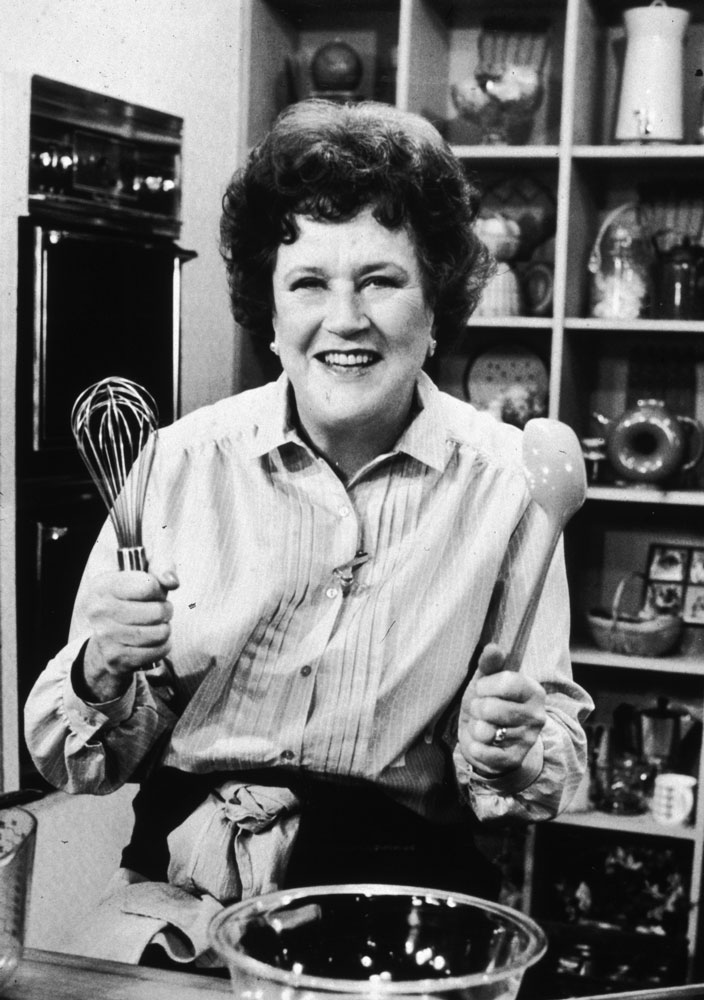
Oath Keepers founder Stewart Rhodes sentenced to 18 years for seditious conspiracy

The founder of the alt-right extremist Oath Keepers, Stewart Rhodes, was sentenced on Thursday to 18 years for seditious conspiracy in relation to the Jan. 6 attack on the Capitol, The Associated Press reports.

Rhodes was previously found guilty of coordinating a weekslong plot to prevent President Biden from taking office after the 2020 election, which resulted in Rhodes’ followers carrying out the insurrection. He is the first of several people charged in connection to Jan. 6 to be sentenced and his sentence, so far, is the longest given in the Capitol riot cases.

His sentencing marks another step in the Department of Justice’s investigation into the attack, following the seditious conspiracy convictions against the leaders of two other right-wing extremist groups for their roles in preventing the transfer of power from former President Trump.

The judge granted prosecutors’ request to apply “terrorism enhancement” penalties on grounds that the Oath Keepers wanted to use “intimidation or coercion” to influence the government. The approval is a first for an insurrection case, which could mean that other far-right extremists convicted of the rare charge, like the Proud Boys’ Enrique Tarrio, could also see lengthy sentences.

Prior to the sentence announcement, U.S. District Judge Amit Mehta said 58-year-old Rhodes is a threat who “wants democracy in this country to devolve into violence.” Mehta, expressing fear that the events of Jan. 6 could happen again, also said that Americans will “now hold our collective breaths every time an election is approaching.”

“The moment you are released, whenever that may be, you will be ready to take up arms against your government,” the judge told Rhodes.

Rhodes responded to his sentence by detracting from the gravity of his actions prior to and during the insurrection, criticizing prosecutors and claiming to be a “political prisoner.”

“I’m a political prisoner and like President Trump, my only crime is opposing those who are destroying our country,” Rhodes told Mehta.


Want a daily wrap-up of all the news and commentary Salon has to offer? Subscribe to our morning newsletter, Crash Course.


Prosecutors suggested Rhodes receive 25 years for his Jan. 6 plans, which included readying “quick reaction force” teams at a Virginia hotel to bring weapons into Washington, D.C. if needed, arguing that a long sentence was necessary to prevent future political violence.

The defense argued that Justice Department attorneys were wrongly trying to make Rhodes “the face” of the attack. They added that if Rhodes “really wanted to” interrupt Congress’ certification of the Electoral College vote, he could have called for far more Oath Keepers to come to the Capitol.

Rhodes plans to appeal his conviction.

Kelly Miggs, the Florida chapter leader of the Oath Keepers, was expected to receive a sentence later Thursday, while others are anticipated to be sentenced Friday and next week. Proud Boys leaders, including Tarrio, will be sentenced in August and September. 

AOC slams GOP after Gaetz admits debt limit negotiation is “hostage” situation

Rep. Alexandria Ocasio-Cortez, D-N.Y., has condemned Republicans’ brinkmanship with the quickly approaching debt limit after GOP Rep. Matt Gaetz, Fla., openly admitted on Tuesday that his party is approaching the issue as a “hostage” negotiation.

Political commentators and lawmakers have long observed that the Republican Party’s strategy toward the debt ceiling — of demanding that Democrats make huge cuts to social programs or else risk certain economic disaster — is a hostage situation that could result in economic ruin.

Gaetz, however, outright admitted as such in an interview with Semafor on Tuesday, going as far as to say that the hostage’s demands should be ignored. “I think my conservative colleagues for the most part support Limit, Save, Grow, and they don’t feel like we should negotiate with our hostage,” he said.

Later on Tuesday evening, Ocasio-Cortez blasted Republicans for holding fast to their extremist demands and for moving even further to the right during talks with Democratic leaders, pointing out that economic experts and the Treasury Department say that the “X-date,” or the day that the government will run out of money to pay its bills and will be forced to default on its loans, is coming as early as June 1 — just about a week away.

“Even President Trump said during his administration that using the debt limit as a leverage point or negotiating tool is absolutely ludicrous and unacceptable, because the stakes are simply too high,” the progressive said on CNN. “To hold the entire U.S. economy hostage, particularly if the Republican evaluation is a cynical one, saying ‘if we tank the economy, we’ll expect people to blame the president,’ is reckless, it’s irresponsible.”

“The stakes of a default cannot be understated,” she continued. “The chaos that would ensue, and the impact on people’s everyday lives would likely be immediate. And it is one of the reasons we need to take default off of the table and have Republicans agree to raise the debt limit.”

The lawmaker went on to say that Gaetz’s comment makes clear the circumstances around the debt limit talks.

“For all of this talk about negotiations, Republicans are not negotiating at all,” Ocasio-Cortez said. “Republican Matt Gaetz expressed in a party meeting today that this is, in fact, a hostage situation. And I want to be clear about what the Republican Party is taking hostage. It is not Democrats. It is the entire U.S. economy.”

The GOP is attempting to force Democrats to choose between two impossible situations, she said: risk a U.S. default and potential recessionharming the U.S.’s creditworthiness on a global scale, or cave to Republicans’ demands to entrench the fossil fuel industry, sap billions of dollars away from crucial health care and education programs, and hamper future negotiations on government spending for decades to come.

Meanwhile, Ocasio-Cortez pointed out that Republicans are approaching the debt limit so recklessly that they won’t even acknowledge that the June 1 deadline, as Treasury Secretary Janet Yellen has warned of, is legitimate, with Republicans making the bet that the nation’s leading economic experts are incorrect, without evidence of their own.

Progressives, including Ocasio-Cortez and other prominent lawmakers like Sen. Bernie Sanders, I-Vt., have pushed back against the idea that Democrats must make concessions in order to raise the debt limit, as Democratic leaders seem to think. This week, 66 members of the Congressional Progressive Caucus sent a letter to President Joe Biden to invoke the clause of the 14th Amendment that they say allows him to bypass Republicans and raise the debt limit.

Sanders has similarly called on Biden to use the 14th Amendment option, leading 10 of his Senate colleagues to ask Biden in a separate letter last week to act boldly to “preven[t] a global economic catastrophe.”

It’s time to leave the Paleo Diet in the past: Recent studies have failed to support its claims

The Paleo Diet urges us to mimic our prehistoric ancestors’ food choices. In practice, this means eschewing dairy products, cereals, pulses and processed sugar and consuming vegetables, fruit, nuts, pasture-raised meat and wild-caught seafood instead.

The Paleo Diet’s proponents contend that by eating this way, we will lose weight and reduce our risk of chronic diseases.

The roots of the Paleo Diet can be traced to the 1950s, but it owes its current popularity to a book by Loren Cordain called The Paleo Diet: Lose Weight and Get Healthy by Eating the Food You Were Designed to Eat, the first edition of which was released in 2001.

In the 22 years since the publication of Cordain’s book, the Paleo Diet has been adopted by several million people and a multi-billion dollar industry has developed in connection with it, including premium-priced foods and a certification scheme.


The Paleo Diet’s health claims

            Collage of images of food products marketed as suitable for the Paleo Diet, and two restaurants that serve paleo food
A multi-billion-dollar industry has developed in connection with the Paleo Diet, including premium-priced foods and a certification scheme. (Amalea Ruffett), Author provided
           

While the Paleo Diet has many adherents, clinical research has yet to substantiate its purported health benefits.

To begin with, it does not seem to outperform conventional recommended diets as a means of losing weight in the medium- to long-term. The only published multi-year study to have evaluated the Paleo Diet’s impact on weight loss found that following the Paleo Diet was no more effective than following the Nordic countries’ official nutrition recommendations after two years.

It is a similar story with the claims that have been made about the Paleo Diet’s impact on chronic diseases. For example, a recent review found that studies examining the Paleo Diet’s impact on Type 2 diabetes have been “inconclusive.”

Similarly, the authors of a 2020 study reported that following the Paleo Diet resulted in a higher relative abundance of gut bacteria that produce a chemical associated with cardiovascular disease, which is at odds with the claim that the Paleo Diet will reduce the probability of experiencing chronic diseases.

Why have the health benefits claimed for the Paleo Diet not been supported by clinical research? As evolutionary anthropologists, we think the problem is that the Paleo Diet is based on a flawed premise and faulty data and in what follows we’ll try to show why our research brought us to this conclusion.


A flawed premise

The idea underlying the Paleo Diet is that the ongoing surge in obesity and associated diseases in many countries is the result of a mismatch between the foods we eat and the foods our species evolved to consume.

This mismatch, so the argument goes, is a consequence of there having been too little time since agriculture appeared, 12,000 years ago, for evolution to have adapted our species to deal with a high-carbohydrate, low-protein diet or to process domesticated food.

This argument seems reasonable because there is a perception that evolution is a very slow process. However, it is not in fact supported by research on diet-related genes.

Work on lactase persistence — the continued ability to produce the enzyme lactase as an adult — illustrates this. Lactase enables us to digest the milk sugar lactose, so lactase persistence is useful for a diet involving dairy products. Lactase persistence is found in just a few regions, one of which is Europe. Ancient DNA research indicates that lactase persistence is less than 5,000 years old in Europe.

Similarly, an analysis of genetic data from African populations published last year found evidence of recent adaptation in a family of genes connected with metabolizing alcohol. In this case, natural selection operated within the last 2,000 years.

This evidence shows the mismatch rationale for adopting the Paleo Diet is not supported by genetic studies. Such studies demonstrate that evolution can produce diet-related adaptations in much less time than has elapsed since agriculture first appeared.


Faulty data

There is also an issue with the Paleo Diet’s recommendations regarding the contributions of the three macronutrients — protein, carbohydrate and fat — to a person’s diet.

According to the current version of the Paleo Diet, we should aim for a diet consisting of 19 to 35% protein, 22 to 40% carbohydrate and 28 to 58% fat, by energy. This makes the Paleo Diet lower in carbohydrate and higher in protein than conventional recommended diets, such as those promoted by Health Canada and the United States Department of Agriculture.

The macronutrient ranges recommended by the Paleo Diet are based on a study from 2000 that estimated macronutrient percentages for more than 200 hunter-gatherer groups. However, recently we have found there is a problem with this study.

The problem lies in the macronutrient values the researchers used for plant foods. While they employed several sets of macronutrient values for animal foods, they only used one set of macronutrient values for plant foods. They obtained the plant data from an analysis of foods traditionally eaten by Indigenous Australians.

In our study, we evaluated the effects of this decision with two plant macronutrient datasets, both of which consisted of values for plants consumed by hunter-gatherers from several continents.

Using multi-continent plant data produced significantly different macronutrient estimates. These in turn produced macronutrient ranges that are wider than the ones recommended by the Paleo Diet. The ranges we calculated are 14 to 35% protein, 21 to 55% carbohydrate and 12 to 58% fat, by energy.

These ranges overlap those recommended by Health Canada (10 to 35% protein, 45 to 65% carbohydrate and 20 to 35% fat) and the United States Department of Agriculture (10 to 30% protein, 45 to 65% carbohydrate and 25 to 35% fat).

That the macronutrient ranges of hunter-gatherer diets overlap government-approved macronutrient ranges casts doubt on the idea that the Paleo Diet is healthier than conventional recommended diets.


It’s time to leave the Paleo Diet in the past

Given that the rationale for adopting the Paleo Diet isn’t supported by the available scientific research and its macronutrient recommendations aren’t scientifically robust, it is, we suggest, not surprising that the diet’s purported health benefits haven’t been supported by clinical studies.

The Paleo Diet has been a worthwhile experiment, but at this point it seems likely that people following it might just be wasting money. Conventional, government-recommended diets offer comparable outcomes at a lower cost. In our view, it’s time to leave the Paleo Diet in the past.

Mark Collard, Canada Research Chair in Human Evolutionary Studies, and Professor of Archaeology, Simon Fraser University and Amalea Ruffett, PhD Student in Archaeology , Simon Fraser University

This article is republished from The Conversation under a Creative Commons license. Read the original article.

What “Vanderpump Rules” cad Tom Sandoval and incels have in common

“Vanderpump Rules” cast member Tom Sandoval has been called a lot of names (including “diabolical” and “poo-poo head”) since #Scandoval broke. I want to add one more to the mix: incel. In March, the world learned that Tom had cheated on his “life partner” and fellow cast member Ariana Madix with her best friend Raquel Leviss (also on “Pump Rules”). Tom and Raquel ignited a media frenzy so strong it apparently made everyone forget that original cast member Kristen Doute was fired from the show for racism because she made a return to the screen to help Ariana burn things and manifest a new life.

In a lot of ways, this Bravo Universe cheating scandal is like any other heartbreaking story of infidelity, but what is unique is watching every detail unfold on TV between two main players on a reality show. “Scandoval” broke before season 10 of “Vanderpump Rules” started airing, so producers got back to filming as soon as the news hit. Since then, we’ve been watching this slow-moving car crash unfold in real time, supplemented by the barrage of podcast episodes, rambling Instagram stories and even merchandise made by other cast members. It’s through this experience that we realize Tom isn’t just a liar, a narcissist or a jerk — he’s a bit of an incel too. As we watch Tom convince himself that he is a victim and bring up at every opportunity just how little sex he was having, we learn that the dangerous entitlement and self-victimization that brings extremist incels to murder women already exists within regular men. Tom’s logic is warped and his inability to listen to and empathize with his ex-girlfriend of nearly 10 years is more than frustrating and disappointing, it’s concerning.

Vanderpump RulesRaquel Leviss, Tom Sandoval and Ariana Madix on “Vanderpump Rules” (Nicole Weingart/Bravo)
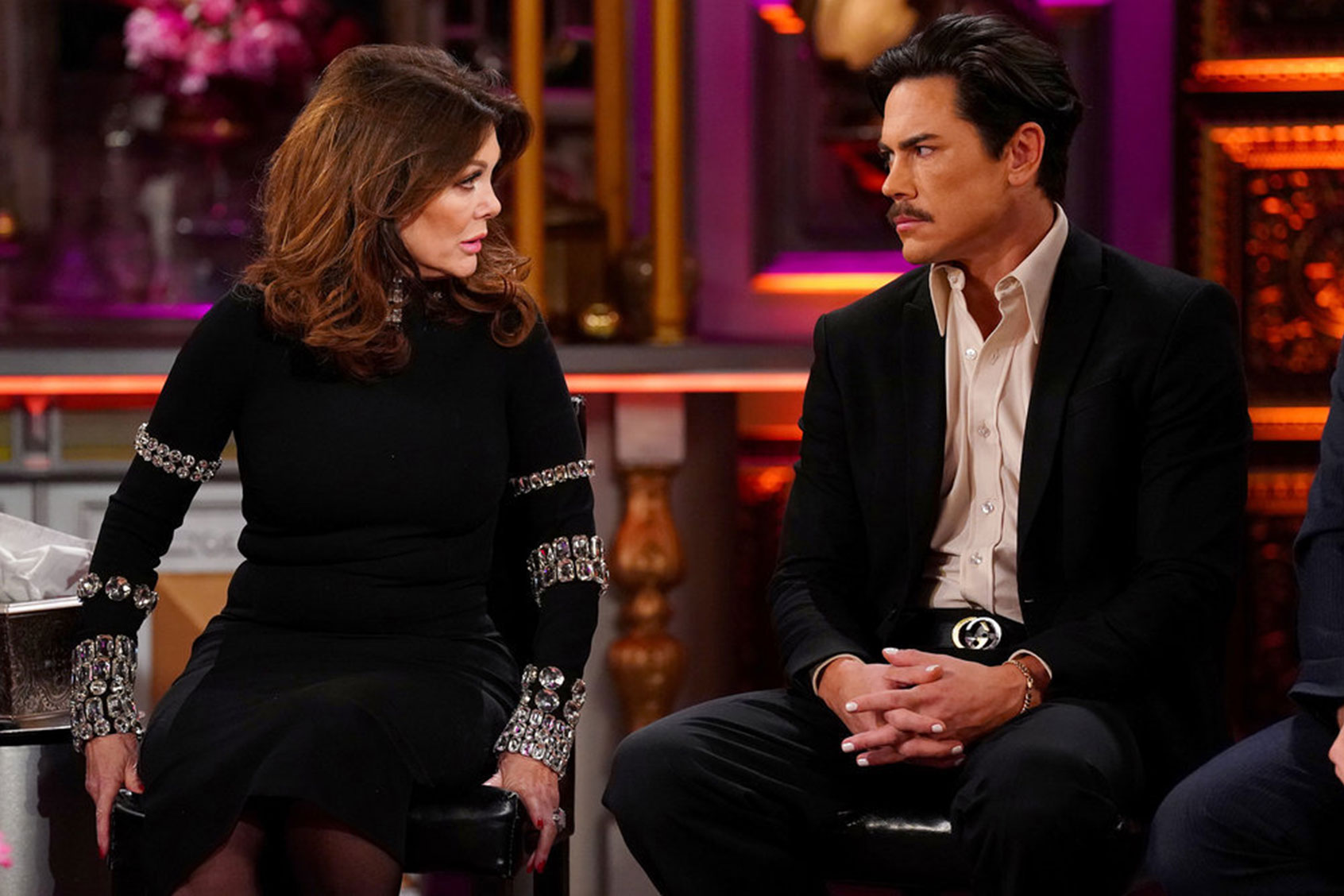
Tom isn’t just a liar, a narcissist or a jerk — he’s a bit of an incel too.

Watching this past season knowing that Tom was cheating on Ariana the whole time throws every moment and comment under scrutiny and eventually, these tiny moments began to add up to a man who sounds vaguely like someone from the dark corner of the internet that is incel chat rooms. On the show, we watched Tom lay the groundwork to leave Arianna and spin a narrative in which he was the victim. There were staged conversations with other cast members in which Tom complained about Ariana, saying that she never does anything for him. Just like incels, Tom is a self-identified victim. He’s creating a self-centered narrative in his head where a woman is doing something to him, and that includes withholding things he feels entitled to. 

Even more like incels, for Tom, everything is about sex. Earlier this season, while the couple is discussing their relationship, Tom says that he wants to have more sex. Ariana responds, “OK, well maybe you need to spend more time with me because I cannot have sex with somebody who feels like a stranger.” Ariana offers Tom ways to rebuild intimacy and therefore their sex life. She says she wants normal, everyday things like cooking dinner and going on a walk. Tom gives her immediate pushback and shares in the confessional what he wants to do: “Let’s take some mushrooms together and watch the sunrise. Let’s go skinny dipping in the pool. Let’s go hang-gliding. I like *snaps* stimuli.” Tom wants what he wants with no self-reflection. He complains about not having sex and feels entitled to it. He feels resentment about the lack of sex in his relationship, and that keeps him from seeing that he did anything wrong; as far as the public has seen, he still hasn’t really apologized to Ariana and doesn’t really grasp how his affair was wrong. 

Unlike incels, I don’t believe that Sandoval is going to resort to violence and kill anyone, but watching him complain about the lack of sex in his relationship and turning himself into the victim of his evil girlfriend not having sex with him does ring an incel bell, especially when this girlfriend clearly is actively sharing what she needs in order to feel more comfortable having sex with him. He’s just not willing to do those things. Luckily, not everyone is going to carry out heinous acts of misogyny, but the logic of extreme groups online apparently does work its way into the minds of us all, including our reality TV stars. Tom’s more subtle comments and justifications for his actions are the starting point for further radicalization and him saying these things on TV only spreads this logic to more people. It cannot come without pushback.

The logic of extreme groups online apparently does work its way into the minds of us all, including our reality TV stars.

Outside of the show, Tom made an appearance on Howie Mandel’s podcast, “Howie Mandel Does Stuff,” where he also emphasized just how little sex he was getting. “My confidence was zapped,” he told a Mandel, who was oddly chill about the whole thing. “Your sexual experience with me would be equivalent to a 19-year-old’s second time. I had no mojo.” These kinds of details are important to Tom. The emasculation. The sheer lack of sex in his life. He wants us to know and he wants us to feel bad about them, but it’s hard to feel bad for someone who refuses to work with his partner to solve their issues together. He wants them to justify that he cheated on Ariana instead of just breaking up with her, which is what a respectful person would have done.

Vanderpump RulesLisa Vanderpump and Tom Sandoval on “Vanderpump Rules” (Nicole Weingart/Bravo)Tom explained why he didn’t break up with Ariana on Mandel’s podcast while continuing to lament his sexless relationship. “I got porn. I can just go crack one off in the bathroom,” he told Mandel, sadly. “But there were so many other perks: the building of the brand.” Tom doesn’t even see Ariana for her human value. The first thing that comes to mind about his relationship is that it is a brand. Ariana is not a human, but she is a sex object. 

So much of Tom’s entitlement is seen in his body language and tone, rather than the words he uses. It’s clear in his scenes that he is convinced he is the victim, when technically speaking, he cheated on his partner with her best friend. Relationships have problems, including dry spells, but ordinary relationship challenges don’t make you a victim. Tom’s warped logic only serves to bolster incel arguments, even if in a small way. His sense of entitlement to sex and lack of empathy are qualities in some of society’s most dangerous (and pitiful) individuals. No one is buying Tom’s defense, though. His business has suffered, his cast members have all turned their backs on him (except for fellow Tom, Tom Schwartz) and no one, except for maybe Howie Mandel, who evidently does not watch “Vanderpump Rules,” is on his side. May Tom Sandoval never have sex again.

Meadows may be quietly cooperating with DOJ — experts say that could mean it’s “game over” for Trump

Legal experts warn that former President Donald Trump could find himself facing substantial legal trouble if former chief of staff Mark Meadows cooperates with special counsel Jack Smith’s criminal investigation into January 6.

The former chief of staff, who was with Trump on January 6 and remained involved in several discussions surrounding the former president’s efforts to block the certification of his loss, could provide key insights into Trump’s mindset leading up to and during the attack on the Capitol.

“​​Meadows would be an incredibly important witness for the government,” former U.S. Attorney Barb McQuade, a University of Michigan law professor, told Salon. “Because of his close proximity to the president during the events of January 6 and the meetings, leading up to it, he would have insights about Trump’s knowledge and intent regarding efforts to overturn the outcome of the election. I can think of no witness who would be more important.”

A source close to Trump’s legal team told CNN that there has been no communication between Trump’s lawyers and Meadows or his team, fueling speculation about whether he is cooperating with the special counsel’s probe or if he himself is a subject of interest in the investigation.

Whether Meadows has answered questions under oath following the subpoena issued in February remains unclear, but if does choose to cooperate “it’s game over,” tweeted New York University Law Prof. Ryan Goodman.

Temidayo Aganga-Williams, partner at Selendy Gay Elsberg and former senior investigative counsel for the House Jan. 6 committee, agreed that Meadows’ cooperation with the special counsel’s investigation would be a “game changer” as it would provide “significant insight” into the former president’s inner circle in the months leading up to the attack.

“The January 6th committee’s investigation confirmed that Meadows was intimately involved with President Trump’s unprecedented efforts to overturn the results of the election,” Aganga-Williams said. “After the election, Meadows served as a point person for various schemes, including the fake electors plan.”

Meadows previously cited executive privilege to fight a subpoena from a grand jury in Georgia’s Fulton County investigating the post-election efforts. A judge ultimately ordered Meadows to testify.

“The government could always subpoena Meadows, and seems likely to be able to overcome any assertions of executive privilege, but questioning Meadows under those circumstances would be like pulling teeth, likely to elicit simple,  yes or no answers,” McQuade said. “If, on the other hand, Meadows is cooperating and receiving some benefit in exchange for his truthful testimony, then he is likely to be far more forthcoming, and to even volunteer new information that could be helpful to the prosecution.”

Late last year, Meadows complied with a previous DOJ subpoena for text messages to the January 6 committee that were sent and received during the attack on the Capitol. The messages revealed how Meadows played a key role in helping aid Trump’s efforts to overturn the 2020 election results. 

Several figures, including Trump’s family members and Fox News hosts Laura Ingraham and Sean Hannity, even urged Meadows to get Trump to convince his supporters to leave the Capitol, but the former president failed to take any action for more than three hours.

While Meadows complied with the committee’s subpoena at first, he stopped cooperating soon after turning over the text messages. 


Want a daily wrap-up of all the news and commentary Salon has to offer? Subscribe to our morning newsletter, Crash Course.


Now, as he maneuvers through the potential legal repercussions stemming from his involvement in Trump’s attempt to overturn the 2020 election, Meadows has successfully maintained political relevance through his involvement in advising right-wing lawmakers on negotiations over the nation’s debt ceiling and the speaker’s battle, according to CNN. 

“Meadows’ truthful cooperation would be a godsend to Smith’s investigation of the January 6th conspiracy,” former federal prosecutor Kevin O’Brien told Salon. “As Trump’s chief of staff, Meadows shadowed Trump throughout the period of the conspiracy, and would have been privy to the ex-president’s plans and interactions as he summoned an armed mob to the Capitol, fired them up with his speech at the Ellipse, and then watched as they stormed the Capitol building and looted its contents.”

O’Brien pointed to senior aide Cassidy Hutchinson’s testimony, who said that Trump and Meadows were in frequent communication on sensitive subjects during the day of the assault on the Capitol – often behind closed doors. Meadows even told her that Trump was not prepared to tell the rioters to go home.

“But it must be kept in mind that Meadows, who was a co-founder with Jim Jordan of the Freedom Caucus, is a true believer with consistently radical and even unhinged views,” O’Brien said. “His cooperation would be hard to come by and, even if acquired, would be inherently suspect, unless Meadows understands that he otherwise faces serious criminal charges.  This is the challenge for Smith’s office, but it’s one well worth taking on.”

Mom who complained about Amanda Gorman poem shared antisemitic conspiracy and praised Proud Boys

The parent whose complaint prompted the removal of Youth Poet Laureate Amanda Gorman’s poem from the elementary school section of a Miami-Dade school shared posts to social media that praised the far-right Proud Boys and spread parts of an antisemitic conspiracy.

ABC News reviewed the posts of a profile appearing to belong to the parent, identified by the Jewish Telegraphic Agency as Daily Salinas, in a Thursday report.

According to documents obtained by advocacy group The Florida Freedom to Read Project, Salinas made the initial complaint about Gorman’s poem, “The Hill We Climb,” and four other texts on March 29. Bob Graham Education Center staff and a representative from another district school reviewed the complaint with two students of the kindergarten through eighth-grade school in April.

Salinas’ complaint about the poem claimed that it was “not educational” and contained indirect “hate messages.” Overall, her objections to the five contested books revolved around concerns of “indoctrination” and “critical race theory.”

The committee, according to the records, opted to relocate four of the five books, including Gorman’s title, to the section exclusively for middle schoolers.

Salinas’ Facebook profile, found using personal details included in her complaint, featured a slew of right-wing posts, including one from August 21, 2021, voicing support for the Proud Boys and referencing a QAnon conspiracy theory. A separate, now-deleted March 31 post shared a summary of “Protocols of the Elders of Zion,” a century-old antisemitic conspiracy theory. 

On Wednesday, Salinas posted an apology for sharing the antisemitic conspiracy after a left-wing activist group, Miami Against Fascism, found her page.

“I would like to apologize to the Jewish community for a post that I reposted earlier from someone else. I only read the word communism and went ahead to repost it thinking it was related to that,” it read in part.

Salinas confirmed the post was hers and apologized again in a Wednesday interview with the Jewish Telegraphic Agency, which was the only news source she agreed to speak with about the matter.

“I’m not what the post says,” she said. “I love the Jewish community.”

The graphic Salinas shared about the antisemitic Protocols outlined how “Jewish Zionists” would achieve world domination, listing steps such as “Place our agents and helpers everywhere,” “Replace royal rule with socialist rule, then communism, then despotism,” and “Sacrifice people (including Jews sometimes) when necessary.” 

She told the JTA that she hadn’t read past the word “communism” before sharing, explaining that her gripe with communism stems from her being Cuban and adding that English is not her first language. After speaking with the outlet, she deleted the post.


Want a daily wrap-up of all the news and commentary Salon has to offer? Subscribe to our morning newsletter, Crash Course.


She also said that she spoke with JTA after declining other media requests so she could apologize, adding that she is a Christian and “We are super protective of the Jewish people.”

She elaborated on why she filed complaints about two of the books, which were on Cuba, at the school’s library, saying that the texts “don’t tell the whole story about Cuba, communism, the dictators, their people that are dying and trying to come to America.”

Other videos Miami Against Fascism found of Salinas depicted her with the Proud Boys and attending conservative parent group Moms for Liberty’s protest at a school board meeting last year. She said that she was not a part of either group and had only attended protests they were involved in. A Moms for Liberty spokesperson confirmed to JTA that Salinas was not a member and denounced antisemitism.

In response to questions about why she filed the complaints, Salinas said that she was only sharing her “opinion” that the books did not “support the curriculum,” adding that she only read portions of them.

“They have to read for me because I’m not an expert,” she said. “I’m not a reader. I’m not a book person. I’m a mom involved in my children’s education.”

Gorman lamented the transfer of her poem online Tuesday, saying that she was “gutted” and later criticizing the parent who filed the complaint.

“So they ban my book from young readers, confuse me with @oprah, fail to specify what parts of my poetry they object to, refuse to read any reviews, and offer no alternatives…Unnecessary #bookbans like these are on the rise, and we must fight back,” she said, calling others to donate to an Instagram fundraiser.

Study points to brain abnormality that may explain sudden infant death syndrome

It’s a new parent’s worst nightmare: sudden infant death syndrome (SIDS), a mysterious, fatal affliction in newborns with an unknown cause. Last year, a study published in the Lancet journal eBioMedicine offered compelling evidence that a cholinergic enzyme in living infants could be a biomarker, and indicate a newborn’s risk of SIDS.

Despite three decades of public health efforts, SIDS remains the leading cause of death for infants in the U.S. An estimated 1,389 babies died from SIDS in 2020. At the time when the study was published, parents on social media understandably expressed a collective sigh of relief and jubilation. Some went as far to say “they found the cure for SIDS.” As The Scientist reported after the buzz faded, the report was in some ways taken out of context. One year later, a cure has yet to materialize.

But hope isn’t lost. This week, another piece has been added to the global search for a cause, and eventual cure or treatment for the syndrome. A separate group of scientists published a paper on May 25 in the Journal of Neuropathology & Experimental Neurology adding to other evidence that SIDS could be the cause of abnormalities in the serotonergic system, which relates to the neurotransmitter serotonin. It is implicated in a wide range of physiological and psychological processes, including mood, sleep and circadian rhythms.

In the study, the researchers collected brain tissue from the San Diego Medical Examiner’s Office of infants who died from SIDS between 2004 and 2011. Through examining their brain stem tissue, they found that the serotonin 2AC receptor was altered, which indicates irregularities in this system could make these infants vulnerable to death under certain conditions.

To discover this, the researchers used a radioactive psychedelic compound called 125I-DOI. The drug DOI binds readily to serotonin receptors, including 2AC, and is commonly used in serotonin research. When humans take it, it’s similar to a trippy kind of amphetamine. But in this study, the researchers employed a version of DOI tagged with an iodine radioisotope, which makes it radioactive (and therefore unsafe for human consumption) but allowed researchers to monitor its interactions with serotonin receptors. They found that in babies that died from SIDS, this radioactive psychedelic had a different behavior compared to controls.

In an interview with Salon, the paper’s lead researcher Robin Haynes, Principal Associate in Pathology at Boston Children’s Hospital, explained that as a neurotransmitter, serotonin in the lower brainstem is also critical for breathing and autonomic function. Haynes provided an example of how one of the major functions of serotonin is the “live protective reflexes.”

“The bottom line is that SIDS babies do have abnormalities”

“Let’s say an infant is lying face down in a pillow in the prone position. They start rebreathing air, and so their oxygen levels become low, and there are protective processes that babies have that will arouse them,” Haynes said. “They go through a process called autoresuscitation, which kickstarts breathing. It leads to a gasp and that kickstarts breathing and those are normal processes and serotonin is important for these processes.”

What Haynes and her colleagues found is that the 2AC receptor — which previous animal studies had shown is an important receptor in the autoresuscitation process — were at abnormal levels. Haynes said that the serotonin receptors interplay with the acetylcholine system, which is what the researchers focused on in the eBioMedicine study in 2022. Acetylcholine is a neurotransmitter involved in many functions, including muscle movement, and heart rate. However, how serotonin and acetylcholine are connected to SIDS remains unclear.

“I think the bottom line is that SIDS babies do have abnormalities. We always talk about SIDS being heterogeneous in nature, meaning that there are different pathologies that contribute,” Haynes said. “So neurotransmitters are one potential pathology, serotonin being one of them, that we’re focusing just on, genetics is another aspect.”

Haynes said she thinks of the search for the cause of SIDS as a piece of pie. “Hopefully we can identify more and more of these pieces of the pie to get the full picture of the heterogeneous nature of SIDS,” she said.

Meanwhile, Haynes and her colleagues advise that safe sleep practices — such as placing an infant on their back to sleep, in a crib without pillows, blankets or loose clothing — should be implemented to protect babies from SIDS. As previously mentioned, over the last 30 years the American Academy of Pediatrics (AAP) has said that infants sleeping on their backs is the safest way for them to sleep. Since the start of the 1994 Back-to-Sleep campaign, the rate of SIDS has declined more than 50 percent. But it’s also plateaued.

With only a few short weeks or months for new mothers to figure out infant sleep before any sort of parental leave expires, an unregulated industry of infant sleep experts has emerged selling false promises of improving infant sleep.

“Everyone’s taught, put them on their back, breastfeed, don’t smoke cigarettes, keep them in your room, things like that, which have all been shown to be beneficial, and yet, over the last 22 years, there’s been no progress in reducing the deaths,” Dr. Harvey Karp, pediatrician and Founder & CEO of Happiest Baby, told Salon in an interview in January. The CDC estimates that there are 3,500 sleep-related deaths among babies each year, including SIDS.

“3,500 babies every year, which is just, a rough comparison, that’s the number of innocent Americans who died in 9/11, which was a national catastrophe. And it’s happening every single year,” Karp said. In April, the Snoo, a rocking bassinet that keeps babies on their backs which Karp created, received approval from the Food and Drug Administration (FDA) as a medical device, the first step to getting it covered by insurance.


Want more health and science stories in your inbox? Subscribe to Salon’s weekly newsletter The Vulgar Scientist.


“The big deal here is that this is the first time the FDA says Snoo has been proven to be safe and effective for keeping babies on the back,” Karp told Salon. “Now we have a way of doing that.”

However, without a Snoo, many sleep-deprived parents turn to co-sleeping with their babies when they’re extremely sleep deprived, as Salon previously reported. With only a few short weeks or months for new mothers to figure out infant sleep before any sort of parental leave expires, an unregulated industry of infant sleep experts has emerged selling false promises of improving infant sleep. When that doesn’t happen, it can lead to an opportunity for parents to participate in unsafe sleep practices.  

Haynes said that the fact that SIDS cases have leveled off despite an increase in infants sleeping on their backs tells researchers that there is more to learn about the cause of SIDS.

“The more that we learn, the more we can piece together and ask the right questions. But in terms of safe sleep, where we are now is that SIDS infants have a biological abnormality that makes them vulnerable to death whenever they’re in an unsafe sleep position,” Haynes said. “Because we have no way of identifying as such, parents always have to follow safe sleep practices. It’s so important.”

Haynes added that while the biological components are out of the parents’ control, the sleeping environment is in their control.

“I think we all recognize how difficult it is to be a new parent,” Haynes said. “What is in the parent control is how you bed share and how you choose to do it. I am not an expert on the bed sharing aspect of it, but epidemiological evidence shows alcohol consumption, smoking — those can increase the risk.”

While this research is compelling, the study authors note that abnormalities in other parts of the brain unrelated to serotonin have also been implicated in SIDS, which emphasizes the need for further research. “At this point, however, the most robust and reproducible findings in SIDS have been in components of the [serotonon] system,” they write, adding recommendations to use other radioactive drugs like 125I-DOI to illuminate the source of this terrifying syndrome.

“Everywhere there’s globes”: Georgia GOP chair goes full flat-earther in wild rant

A recently elected Georgia GOP district chair revealed that she believes the world is flat and that the proliferation of globes is part of a conspiracy, Rolling Stone reports.

During an interview on Kandiss Taylor’s podcast “Jesus, Guns, and Babies” with David “Flat Earth Dave” Weiss and Matt Long, the trio discussed what they deemed the biblical evidence that the planet is flat. Taylor told Weiss and Long that the more she learns about flat earth, it “doesn’t make sense the other way.”

“The people that defend the globe don’t know anything about the globe,” Weiss responded. “If they knew a tenth of what Matt and I know about the globe they would be Flat Earthers.”

Later in their discussion, Taylor lamented the volume of globes she sees in her everyday life likening their presence to a conspiracy.

“All the globes, everywhere. I turn on the TV, there’s globes in the background,” she said.

“Everywhere there’s globes. You see them all the time, it’s constant. My children will be like ‘Mama, globe, globe, globe, globe’ — they’re everywhere,” she added.

“And that’s what they do to brainwash,” she continued. “For me, if it is not a conspiracy. If it is real, why are you pushing so hard everywhere I go? Every store, you buy a globe, there’s globes everywhere. Every movie, every TV show, news media — why?”


Want a daily wrap-up of all the news and commentary Salon has to offer? Subscribe to our morning newsletter, Crash Course.


Taylor, who’s also a firm believer in former President Trump’s claims of a stolen 2020 election, was elected the GOP Chair of Georgia’s 1st district in April.

Prior to her recent win, Taylor, like Trump, claimed her 2022 bid for Georgia governor against Gov. Brian Kemp in the Republican primary was “rigged” and refused to concede despite only winning 3.7 percent of the vote.

Food for thought: How your mindset can make healthy food more alluring on social media

In today’s world, our diets are often packed with fats and sugars. Our ancient instinct to crave calorie-rich foods, which once helped us survive, now leads to harmful health side-effects.

To counteract this, food content creators on social media have been trying to push healthy eating and healthy eating content.

But here’s the kicker — this content doesn’t get much engagement. Instead, posts that show unhealthy, high-calorie foods get more likes, shares and comments. This popularity of junk food online may tempt content creators and algorithms to show more of the same, tilting our view of “normal” eating habits towards unhealthy choices. In the long run, this could fuel the obesity epidemic.

So, the challenge is clear: How do we make healthy foods as click-worthy as their unhealthy counterparts?

In a recent paper published in the European Journal of Marketing, we wanted to see if we could change people’s natural tendency to avoid healthy food content. How? By tweaking the way they think. Could getting people to think more carefully before they see food posts make them engage more with healthy food on social media?


Food marketing on social media

Social media has become a billboard for food advertising. Food companies are everywhere online, but their focus is usually on calorie-packed products. They make these foods seem fun and shareable, even though many of us would be better off seeing more healthier options.

This mismatch between what food companies promote and what is good for consumers is glaring. Posts with unhealthy food get more love and are remembered, seen and shared more than posts featuring healthier foods.

This online popularity of junk food can then shape our ideas of what’s “normal” to eat and can sway our eating habits, especially in groups that are easily influenced by peers. So, if we can figure out why this happens, we could use that knowledge to make healthy foods shine on social media.


Why we love junk: an evolutionary tale

Our brains have been wired over millennia to not only crave high-calorie foods, but feel good when simply seeing such foods — it’s a survival trick from our past.

Today, this means we naturally feel good and get excited when seeing calorie-packed foods. This same excitement simply does not occur when exposed to low-calorie alternatives, which we often see as less tasty, not as enjoyable and likely not satiating.

What if we could switch our minds to avoid the biased decisions we make when we rely on our feelings? The idea of using a more thoughtful mindset is a strategy that’s been shown to work on other food habits.

The potential here is huge: Thinking more thoughtfully and analytically could reduce our biases for relying more on our feelings to make decisions and this can make healthier, lower-calorie foods more attractive, leading to more likes and shares on social media.

In our research, we took a look at how people react to social media content about food. We found that people are usually less interested in posts about healthier, lower-calorie food, something that’s been shown in previous studies.

We used videos from Tasty, a popular food network, for our experiment.

In our experiment, people were more likely to engage with a video about making a burger than a salad. But when people take the time to think about what food they’re actually engaging with, they can appreciate the benefits of lower-calorie foods, potentially leading them to choose healthier options.


Actions for a healthier social media

As prior research has demonstrated, people are naturally drawn to social media posts of unhealthy food, leaving healthier options in the dust. The more engagement these calorie-packed posts get, the more similar content floods our feeds, creating a cycle that can potentially negatively affect our real-life eating habits.

But there’s hope! As our ongoing work demonstrates, there are plenty of ways to steer the mindset towards healthier choices. Think disclaimers, health star ratings or even color-coded nudges.

Short mindfulness exercises from programs like Noom or WeightWatchers can also help us pause and think before we eat.

Our research can inspire dietitians, health advocates, policymakers and content creators to use this mindset magic when they’re designing their products, services or social media posts. This could lead to more engagement with healthier food content on social media, making these healthier messages travel further.

Ethan Pancer, Associate Professor of Marketing, Saint Mary’s University; Matthew Philp, Assistant Professor, Marketing, Toronto Metropolitan University, and Theo Noseworthy, Professor of Marketing, York University, Canada

This article is republished from The Conversation under a Creative Commons license. Read the original article.