Spring Sale: Get 1 Year, Save 58%

Trump’s 2024 campaign launch is a flop and he’s been skipping rallies

In an analysis on how things are going for Donald Trump since his overly-hyped 2024 presidential campaign launch at Mar-a-Lago weeks ago, Guardian political analyst David Smith claims the former president has lost the “sizzle” that made him such a hot property in 2016 as he skips the type of political rallies in front of supporters that have kept him in the eyes of voters.

As Smith notes, what has followed is Trump being involved in controversies like meeting with notorious anti-Semites at his Mar-a-Lago resort as well as a major criminal conviction in a Manhattan courtroom and multiple criminal and civil lawsuit investigations closing in.

As Smith wrote, “The swagger of 2016 has given way to somnolence in 2022. Opinion polls are grim. Legal setbacks are piling up. A run of dismal results in the midterm elections, culminating in another Republican loss in Georgia this week, have punctured his aura of invincibility within the party.”

Adding, “Trump has performed astonishing acts of self-sabotage, from dining with antisemites to calling for the constitution to be shredded. He has eschewed a widely-anticipated spree of public rallies, instead remaining largely out of the public gaze,” Smith suggested, in most cases, this would be the beginning of the end of any other politician’s political career.

According to American University history professor Alan Lichtman, the former president is off to a brutal start if he hopes to be re-elected again in 2024.

“It couldn’t be going any worse,” he explained. “And it’s not because Donald Trump is making mistakes. It’s because Donald Trump is being Donald Trump.”

Having said that, Lichtman elaborated, “He was something new and fresh and interesting back in 2016. He has presided over three disastrous election cycles for Republicans in 2018, 2020 and 2022 and he’s the same old Donald Trump, caring only about himself, wrapped up in his own grievances and his own whining. It’s just not playing anymore for the American people.”

According to the Guardian’s Smith, “So it was that Trump’s Mar-a-Lago speech was widely derided as a damp squib, lacking his usual bombast and brio and even his daughter, Ivanka, has decided to sit this one out. Since then, the campaign has been running on autopilot and little has been seen of the former president hunkered down in Florida, venturing out only to play golf.”

More importantly, he observed that the Trump rallies that should have followed the 2024 announcement are nowhere to be seen.

“Trump’s rambunctious campaign rallies, expected to give early momentum to his third consecutive run for president, have mysteriously failed to materialize. In June 2015, by contrast, he declared his candidacy after riding down an escalator in New York and held his first rally in Iowa just 10 hours later, moving on to New Hampshire a day later,” he wrote.

The tragedy of sudden infant death syndrome: A pediatrician explains how to protect your baby

Each year, about 3,400 U.S. infants die suddenly and unexpectedly while sleeping, according to the Centers for Disease Control and Prevention. On Oct. 12, 2022, SciLine interviewed Dr. Rachel Moon, professor of pediatrics at the University of Virginia and the chair of the American Academy of Pediatrics Task Force on Sudden Infant Death Syndrome. Moon discussed the best ways for babies to sleep safely and the recent media reports heralding a study on “the cause” of SIDS.

Dr. Rachel Moon discusses SIDS – sudden infant death syndrome.

Below are some highlights from the discussion. Answers have been edited for brevity and clarity.

What is SIDS?

Rachel Moon: It stands for sudden infant death syndrome, and it is a term that describes when babies die suddenly and unexpectedly. It has been superseded by a more comprehensive term called sudden and unexpected infant death, which encompasses SIDS and then other sleep-related deaths (such as accidental suffocation) and deaths that occur when a baby is sleeping or in a sleep environment.

What exactly causes these babies to die?

Rachel Moon: Ultimately what happens is that, for most babies, there is a lack of arousal. They can’t wake up to respond when they are not getting enough oxygen or there’s too much carbon dioxide in their system. This is not something that you can see in a lab test or blood test or any kind of test. We only find out when the baby has died.

What is the safest way for babies to sleep, and why?

Rachel Moon: We want every baby to sleep on their back on a surface that is firm and flat, which means not inclined, and safety-approved. So, ideally a crib, a bassinet, a playpen or another product that is approved by the CPSC, the Consumer Product Safety Commission. And then nothing should be in that area but the baby. We also want babies to be in a smoke-free environment and ideally to get as much human milk, breast milk, as possible.

What sleeping situations are dangerous for babies?

Rachel Moon: Babies should never, ever, ever sleep on couches, sofas or stuffed armchairs.

What is known about the safety of letting a baby nap in a sling or baby carrier?

Rachel Moon: The thing that we worry about is that when a baby is in that kind of device, the baby’s body position can be such that it blocks their airway or that their face is up against something that can obstruct their airway.

So it’s fine for the baby to be in a carrier or a sling, but we recommend that the baby be upright so that the head and neck are straight and that the airway is straight. And then we also recommend that the baby’s head and neck be above the top of the carrier so that you can always see the baby’s face and that there’s no obstruction of the nose and the mouth.

What is known about the safety of letting a baby nap in a car seat?

Rachel Moon: If you are traveling, a car seat is absolutely the safest place for your baby to be. However, when you get to where you’re going, then it is best if you take the baby out of the car seat and then put the baby on a flat, firm surface.

When babies are at an incline, it’s actually harder for them to keep their airway straight. Their heads are really big and heavy for the size of their bodies. And so it takes a lot more work when they are at an angle than if they’re flat on their back. They can develop muscle fatigue, and that can actually be dangerous for them. … There is actually some really compelling biomechanical data that led to the CPSC, the Consumer Product Safety Commission, restricting and hopefully banning inclined sleep products such as rockers and similar products.

What is the evidence on the safety of ‘co-sleeping,’ where babies sleep in bed with their parents?

Rachel Moon: The safest place for your baby to sleep is in a crib or bassinet or another safety-approved device that is next to your bed. We know that babies who sleep in the same bed as their parents are at higher risk for death.

We recommend for the space to be right next to your bed because that makes it easy for you to turn and pick up the baby or comfort the baby or bring the baby into bed for feeding. If you do bring the baby into the bed for feeding, that’s fine. But when you or the baby gets ready to fall asleep, then just move the baby back into the crib.

What should parents and other caregivers know about the recent headlines claiming a study had found ‘the cause’ of SIDS?

Rachel Moon: These researchers — they looked at dried blood samples. And these are the tests that are done on your baby when your baby is born to look for genetic diseases.

They took these dried blood samples and looked for a particular chemical that’s in the body called butyrylcholinesterase. And they found it to be at a different level in babies who died from SIDS than babies who did not die from SIDS … While I think it’s an interesting result, and while it may lead to other tests and other studies, at this point, it is not the be-all and end-all.

We don’t have a test that can diagnose who is going to die from SIDS and who’s not. And so you still have to follow the safe sleep guidelines.

Watch the full interview to hear about how to prevent SIDS.

SciLine is a free service based at the nonprofit American Association for the Advancement of Science that helps journalists include scientific evidence and experts in their news stories.


Rachel Moon, Professor of Pediatrics, University of Virginia

This article is republished from The Conversation under a Creative Commons license. Read the original article.

Meeting “Harry & Meghan”: the Sussexes launch the next stage of their strategic charm offensive

For now, perhaps not forever, the British press can be counted on to describe every move the Duke and Duchess of Sussex make in the context of war, and positioning Meghan Markle as the cause of Prince Harry’s departure from royal life.

The opening trio of episodes of “Harry & Meghan” intentionally play that game, only not in the way Buckingham Palace was fearing in the days leading up to its Netflix debut. In the papers, on talk shows and on gossip sites, the speculation was that the series would take aim at King Charles III, Harry’s brother William and the rest of the family.

But if the U.S. audience has come to understand and appreciate any single thing about the Sussexes, it is their savvy in the ways of image creation and perception, and how to control a narrative. With the public being primed to expect a hit piece on the royals, Harry and Meghan dodged that by continuing what Meghan has been doing with her “Archetypes” podcast.

Through private pictures, family-provided home video, insights from intimate friends and an extended conversation with her mother, Doria Ragland, the couple’s and director Liz Garbus’ primary objective was to prove yet again that Meghan and Harry are down-to-earth people devoted to doing great and good things with their singular status.

Prince Harry and Meghan, The Duke and Duchess of Sussex. Courtesy of Prince Harry and Meghan, The Duke and Duchess of Sussex (Courtesy of Prince Harry and Meghan, The Duke and Duchess of Sussex)

The second is to condemn the British press, particularly the tabloids, for making Meghan’s life hell, along with Harry’s and his mother Princess Diana’s, long before the American actress entered the picture.

Few machines are more powerful at waging such offensives successfully than Hollywood. Few platforms provide a better launching point for one’s salvo than Netflix.

And few targets are more deserving of such a direct hit than Britain’s tabloid press, one of the few institutions nearly equal in capability to make or break someone’s life.

“Harry & Meghan” didn’t begin with the focus people expected and salivated at the thought of consuming, but it is precisely the type of documentary series we should have expected from the couple.

Harry and Meghan already availed themselves of the global media equivalent of a nuke by sitting down with Oprah Winfrey last March. The details overshadowing all else in that meeting of the mononyms was Meghan’s reveal that someone in Harry’s family expressed concerns that their eldest child Archie might have a dark complexion, and she confessed suicidal ideation.  

Once Harry joined the chat he trained the focus on the British media’s racist coverage of their relationship, which he considers to be the primary villain in a drama still playing out.

“Truth be told, no matter how hard I tried, no matter how good I was, no matter what I did, they were still going to find a way to destroy me,” Meghan

Few targets are more deserving of such a direct hit than Britain’s tabloid press.

says as she talks about the weeks leading up to their wedding and the pain she experienced at seeing a half-sister she barely knew trash her in the press, and her father selling staged photos to the tabloids.

Stylewise, the first three hours are a chimera of an advocacy film-meets-Vanity Fair photo spread and true crime series; first, Garbus and her subjects woo the audience by recounting the ordinary sweetness of their love story.  Their exchange of first date anecdotes is framed to resemble extended versions of the infamous married couple interviews in “When Harry Met Sally,” soundtrack of jazz standards included.  

“Dateline” gawkers might recognize this as the setup stretch, demonstrating how well the lives of these two kids were going until the mindless assailants, i.e. the royalist press, enter the picture.

The opening hours are largely respectful to the memories of Queen Elizabeth II and Prince Phillip, while seconding every scathing accusation about the crown’s culpability in colonialist racism that Jon Oliver recently enumerated on his show.

If there is a feud between Harry and Meghan and Will and Kate, the Duchess of Sussex feeds that rumor with the smallest crumb in these hours, and mainly to illustrate her awkwardness. Recalling the first time she meets Harry’s brother and her eventual sister-in-law for a private dinner, she admits she didn’t realize at that time that British people aren’t “huggers,” and seemed slightly embarrassed to have greeted them in jeans. She politely sums up her impression of Will and Kate by saying, “The formality on the outside carries through on the inside.”

Prince Harry and Meghan, The Duke and Duchess of Sussex. Courtesy of Prince Harry and Meghan, The Duke and Duchess of Sussex. (Prince Harry and Meghan, The Duke and Duchess of Sussex.)

Harry, meanwhile, pops on Elton John for his wife as her makeup artist powders her face, swerving through his neck and shoulder to the beat. It’s a candid moment Garbus captures that only makes you like the guy more than you may have before – and in case you’re wondering whether the couple glosses over that incident from his early 20s when he partied in a Nazi uniform, he and Garbus expose that wart too.

An even more unexpected aspect is how remarkably these episodes supplement the latest season of “The Crown” and the plot concerning Diana’s tell-all to biographer Andrew Morton and, later, to Martin Bashir. Harry’s adversarial relationship with the press colored his adolescence and early 20s, so one had to suspect something like this was coming.

Less predictable was how thoroughly they’d document their earlier days after announcing they’d step back from performing official duties as senior members, which they did with the encouragement of friends.

The couple’s multimillion dollar effort to sell their normality and niceness is bizarre in the larger scheme of things, but understandable.

Those 15 hours of footage provide their version of an unfiltered view of how they were and who they are, which Garbus juxtaposes against archival media clips and officially sanctioned interviews. Scenes that best serve their aim of introducing their authentic selves to the public insert footage of interviews controlled by palace PR with shots of them sitting on their couch more recently, and freely, somewhere in California, and sometime between when filming began in late 2021 and ended in July of this year.

Their stilted engagement question and answer session with a BBC journalist is presented as a prime example, and a loaded one; when the reporter asks if they believe their union will somehow change the monarchy and British, their smiles freeze for a moment, and Meghan looks to Harry to deliver the politic answer.

In that pause, Garbus inserts scenes of Queen Elizabeth II parading through crowds of Black and brown people in commonwealth countries to give weight to the ludicrousness of that question. Powerful as that smash-cut is, it’s even more telling to notice the couple’s relaxed body language now. Meghan describes the engagement TV appearance as an “orchestrated reality show.”

“We weren’t allowed to tell our story,” she begins explaining, “because they didn’t want . . .”

Then Harry jumps in and gently corrects her. “We are not allowed to tell our story. That’s the consistency.”

“Until now,” Meghan finishes, to which Garbus replies, off-camera, “I guess that’s why we’re here.”


Want a daily wrap-up of all the news and commentary Salon has to offer? Subscribe to our morning newsletter, Crash Course.


Already several U.K. outlets have published their list accusing the Sussexes of making false statements, mainly taking an official palace source’s claim that the Windsors were never contacted to respond to the couple’s allegations on its face, contrary to a textual statement displayed onscreen as the series begins.

It’s easy to picture a plurality of the British public taking that as the truth since, as a recent YouGov poll indicates, Meghan’s popularity is the second lowest among all the senior royals; only Jeffrey Epstein‘s pal Prince Andrew rates less favorably.

Prince Harry and Meghan, The Duke and Duchess of Sussex. Prince Harry and Meghan, The Duke and Duchess of Sussex. (Courtesy of Prince Harry and Meghan, The Duke and Duchess of Sussex)

Think about that for a millisecond, especially if you’re watching “Harry & Meghan” through a non-white lens or an American paradigm. In the United States, the British monarchy is a novelty, one of the last living vestiges of formality and glamourous weirdness. But we love our stars, and Black people and other folks of color are thrilled to be represented in that monarchy by a Black woman. That fact makes this couple’s multimillion dollar effort to sell their normalcy and niceness bizarre in the larger scheme of things, but understandable.

We also adore Harry’s mother Diana more than Charles and the rest of the brood, especially after she shattered the fairy tale illusion surrounding Buckingham Palace. “Harry & Meghan” isn’t grinding that glass quite yet, although the preview trailer from next week drops hints that it’s coming. On top of that, January 2023 brings us Harry’s provocatively titled memoir “Spare.”

Regardless of how one feels about the Sussexes, though, one can’t claim they don’t know which audience matters more to their professional success independent of the monarchy and, in all likelihood, from Britain. The U.K. remains in the corner of the monarchy; the U.S. is overwhelming Team Diana and adores romance and happy endings. 

“My mom made most of her decisions from her heart,” Harry reminds skeptics, “and I am my mother’s son.”

The next three episodes of “Harry & Meghan” debut Thursday, Dec.15 on Netflix.


The “Christmas bombing” of 1972 — and why that misremembered Vietnam War moment matters

As Americans head into the holiday season, we also approach a significant historical milestone from the U.S. war in Vietnam: the 50th anniversary of the final U.S. air offensive on North Vietnam, an 11-day campaign that began on the night of Dec. 18, 1972, and has gone down in history as the “Christmas bombing.” 

What has also gone down in history, however, at least in many retellings, is a provably untrue representation of the nature and meaning of that event, and its consequences. That widespread narrative claims that the bombing forced the North Vietnamese to negotiate the peace agreement they signed in Paris the following month, and thus that U.S. air power was a decisive factor in ending the American war. 

That false claim, steadily and widely proclaimed over the last 50 years, does not just contradict irrefutable historical facts. It is relevant to the present, too, because it continues to contribute to an exaggerated faith in air power that distorted American strategic thinking in Vietnam and ever since. 

Undoubtedly, this mythical version will appear again in the remembrances that will come with the approaching anniversary. But perhaps that landmark will also provide an opportunity to set the record straight on what really happened in the air over Vietnam and at the bargaining table in Paris in December 1972 and January 1973. 

The story begins in Paris in October, when after years of stalemate, the peace negotiations took a sudden turn when U.S. and North Vietnamese negotiators each offered crucial concessions. The American side unambiguously dropped its demand that North Vietnam withdraw its troops from the south, a position that had been implied but not entirely explicit in previous U.S. proposals. Meanwhile Hanoi’s representatives for the first time abandoned their insistence that the South Vietnamese government headed by Nguyen Van Thieu must be removed before any peace agreement could be concluded.  

With those two stumbling blocks removed, the talks swiftly moved forward, and by Oct. 18 both sides had approved a final draft. Following a few last-minute wording changes, President Richard Nixon sent a cable to North Vietnam’s Prime Minister Pham Van Dong declaring, as he wrote in his memoir, that the agreement “could now be considered complete” and that the United States, after accepting and then postponing two earlier dates, “could be counted on” to sign it at a formal ceremony on Oct. 31. But that signing never happened, because the U.S. withdrew its commitment after its ally, President Thieu, whose government had been completely excluded from the negotiations, refused to accept the agreement. That’s why the American war was still going on in December, unequivocally as the result of U.S., not North Vietnamese, decisions.  

In the midst of those events, Hanoi’s official news agency broadcast an announcement on Oct. 26 confirming the agreement and giving a detailed outline of its terms (prompting Henry Kissinger’s famous declaration a few hours later that “peace is at hand”). So the earlier draft was no secret when the two sides announced a new settlement in January. 

Comparing the two documents shows in plain black and white that the December bombing did not change Hanoi’s position. The North Vietnamese conceded nothing in the final agreement that they had not already conceded in the earlier round, before the bombing. Aside from a few minor procedural changes and a handful of cosmetic revisions in wording, the October and January texts are for practical purposes identical, making it obvious that the bombing did not change Hanoi’s decisions in any meaningful way. 


Want a daily wrap-up of all the news and commentary Salon has to offer? Subscribe to our morning newsletter, Crash Course.


Given that crystal-clear record, the myth of the Christmas bombing as a great military success has shown remarkable staying power in both the U.S. national security establishment and in public memory. 

A telling case in point is the official website of the Pentagon’s Vietnam 50th anniversary commemoration. Among many examples on that site is an Air Force “fact sheet” that says nothing about the October draft of the peace agreement or the U.S. withdrawal from that agreement (those are not mentioned anywhere else on the commemoration site, either). Instead, it says only that “as talks dragged on,” Nixon ordered the December air campaign, after which “the North Vietnamese, now defenseless, returned to negotiations and quickly concluded a settlement.” The fact sheet then states this conclusion: “American airpower therefore played a decisive role in ending the long conflict.” 

Various other postings on the commemoration site assert that Hanoi’s delegates “unilaterally” or “summarily” broke off the post-October talks — which, it should be remembered, were entirely about changing provisions that the U.S. had already accepted — and that Nixon’s bombing order was intended to force them back to the negotiating table. 

The facts about the Vietnam peace agreement and the U.S. bombing campaign have been known ever since those events occurred, but the mythical version has largely overwhelmed the true story.

In fact, if anybody walked out of the talks it was the Americans, at least their chief negotiators. The Pentagon’s account gives a specific date for the North Vietnamese withdrawal: Dec. 18, the same day the bombing started. But the talks actually ended several days before that. Kissinger left Paris on the 13th; his most senior aides flew out a day or so later. A last pro forma meeting between the two sides took place on Dec. 16 and when it ended, the North Vietnamese said they wanted to proceed “as rapidly as possible.”  

Researching this history not long ago, I was surprised at the extent to which the false narrative appears to have largely overwhelmed the true story. The facts have been known ever since those events occurred, but are remarkably hard to find in today’s public record. Searching online for “peace is at hand” or “Linebacker II” (the codename for the December bombing), I found plenty of entries that state the same misleading conclusions that appear on the Pentagon’s commemoration site. I had to look a lot harder to find sources that mentioned any of the documented facts that contradict that mythical version. 

It may be too much to ask, but I write this in the hope that the coming anniversary will also provide an opportunity for a more careful look back at a significant turning point in an unsuccessful and unpopular war. If historians who value truth and Americans who are concerned with current national security issues will take the time to refresh their memories and understanding, perhaps they can begin countering the myth with a more accurate account of those events half a century ago. If that happens it will be a meaningful service not just to historical truth but to a more realistic and sober view of present-day defense strategy — and, more specifically, of what bombs can do to achieve national goals, and what they can’t. 

Herschel Walker’s campaign staff blame election loss on his wife

Georgia Republican Senate hopeful Herschel Walker’s campaign staffers are weighing in with their reactions to their candidate’s recent loss to Sen. Raphael Warnock (D-Ga.).

According to The Daily Beast’s Roger Sollenberger, one thing that appears to have been a concern for multiple staffers is the campaign dysfunction behind closed doors and the relatively negative impact of Walker’s current wife.

Although it’s no secret Walker, who was endorsed by former President Donald Trump, was at the center of multiple scandals, staffers insist his wife contributed greatly to crippling his campaign.

“This account of Walker as a lying, delusional, confused, misled candidate—eager to believe what sounded good and dismiss the bad—is based on interviews with five campaign staffers and people close to the candidate,” Sollenberger wrote.

“Staffers painted a picture of a man who was personally charming—a congenial, generous Southerner who would always inquire about his staff’s well-being—but who was often seeking and accepting advice from the least experienced people in the room: namely, his ‘redpilled‘ wife Julie Blanchard, as two staffers put it, and his friend and sometime agent Michele Beagle,” he added.

Another staffer also offered a brutal assessment of the situation. That staffer argued, “Pardon my french, but f–k Julie and f–k Michele Beagle,” with Sollenberger also noting that the staffer likened, “Blanchard to ‘Lady Macbeth’ and Beagle’s amoebic role as campaign chair to a ‘minister without portfolio.'”

Another campaign aide weighed in saying, “The best spouses know how to calm the candidate, but Julie was more like an accelerant for Walker’s worst instincts.”

According to the news outlet’s report, “Staff and advisers said Blanchard and Beagle posed a running challenge throughout the campaign: a group of experienced political operatives wrangling an unfocused, unreliable candidate away from distractions and unhelpful influences.”

One staffer also expressed regret saying, “We held it together best we could, with f–king duct tape and Band-Aids.”

Another aide also noted, “If we had to do that one over again, probably would have made sense to do the Kemp rally.”

An Indian spiritual leader is urging the world to ‘save soil.’ Experts say he’s not helping

On a clear, bright day in March, a few dozen people gathered in Parliament Square in central London, many of them wearing green T-shirts and carrying signs emblazoned with the words “Save Soil.” They were there to see an Indian spiritual leader named Sadhguru, who was about to set off on a 13,000-mile motorcycle journey through Europe, the Middle East, and India in a bid to raise awareness of a growing problem: the widespread loss and degradation of the world’s soils. 

In front of a statue of Indian independence leader Mahatma Gandhi, flanked by members of the British Parliament and India’s high commissioner to the United Kingdom, Sadhguru proclaimed that the future looked grim: Without healthy soil, it would become increasingly difficult to grow food, an issue he’s previously warned would lead to mass starvation and civil war. But now, he said, humanity has a chance for redemption, if people all around the world call on their governments to protect soil. 

“Soil is one aspect where everybody has to come together, because all of us come from the same soil, live upon the same soil, and go back to the same soil,” he told the listening crowd, and more than 100,000 people watching the event live on YouTube. “The question is only, do we get this point now, or when we are beneath the Earth?”

The world, in some sense, appears to be listening. In February, the United Nations’ World Food Programme agreed to collaborate with Sadhguru’s Isha Foundation, the umbrella organization for the Save Soil movement, on “conversations, awareness, and outreach” around soil and food security in India. Sadhguru has addressed world leaders at the annual meeting of the UN Convention to Combat Desertification in Ivory Coast and the World Economic Forum in Davos, Switzerland. His most popular video on the Save Soil movement has been viewed more than 5.6 million times on YouTube.

But as the campaign has gained traction worldwide, it’s also attracted criticism for its vague methodology and singular focus on the physical characteristics of soil, to the point of excluding larger, more systemic issues like climate change and the industrialization of agriculture. Activists in India have drawn attention to the Isha Foundation’s history of failed environmental campaigns and clashes with Indigenous people, while calling out Sadhguru’s ties to Hindu nationalism and authoritarian leaders like Indian Prime Minister Narendra Modi. And scientists have challenged the Save Soil movement’s policy prescriptions for reversing soil degradation, bringing the effectiveness of the campaign into question. 

“It’s extremely performative,” Rohan Antony, a researcher based in India who works for global nonprofit A Growing Culture, which promotes sustainable food systems around the world. “There’s nothing really happening except everyone saying, ‘save soil.’ And whose soil? Why is the soil depleted? None of these questions are being asked.”

The stakes are high, as the 65-year-old Sadhguru, born Jagadish Vasudev, has a global audience. With his meandering anecdotes and casual turns of phrase, he strikes a balance between wisdom and relatability, a charismatic mix that’s drawn in the likes of Will Smith, Deepak Chopra, and the Dalai Lama, who have publicly praised him or appeared in promotional materials for the Save Soil campaign. He has done extended interviews with singer Demi Lovato and actor Matthew McConaughey and made appearances on The Daily Show and The Joe Rogan Experience.

But activists and politicians have accused Sadhguru, whose foundation did not respond to requests for comment from Grist, of starting environmental campaigns to gin up publicity and donations despite having little experience with environmental work. In 2019, he led a campaign to plant trees along the Cauvery River in southern India that was questioned by activists for promoting an overly simplistic solution that might end up actually damaging the environment. Youth climate activist and Fridays for Future India founder Disha Ravi has also criticized Sadhguru for “grabbing land from Adivasis,” India’s Indigenous communities, to build the Isha Foundation headquarters in Coimbatore. Meanwhile, Indian outlet Newslaundry reported last year that the compound was built illegally in a protected elephant habitat. (The Isha Foundation has denied all these allegations.)

In launching his latest venture, the Save Soil movement, Sadhguru is bringing attention to a real problem: According to the United Nations, 52 percent of the earth’s agricultural land is “moderately or severely” degraded, a catchall term for a drop in quality that can mean soil is eroded, less fertile, or contaminated with toxic chemicals. Without major changes, a UN report released earlier this year found that an area the size of South America will become degraded by 2050, even as more food will be needed to support a population that’s expected to reach 9.8 billion that year. 

Soil is being worn away much faster than it’s being replaced, said Jo Handelsman, a biologist and author of the book A World Without Soil. And the soil that’s left has been stripped of its nutrients and organic matter, making it less productive for growing crops and more vulnerable to extreme weather like flooding and drought. 

“It’s a very dire situation,” Handelsman said. “I don’t think it’s hyperbolic to say that.” 

But while the Save Soil movement has been clear on the impacts of soil degradation, it’s much more vague on the causes — and that’s by design. In a talk in London the day before setting off on his motorcycle journey, Sadhguru emphasized that the campaign is definitively “not a protest,” and that he doesn’t want to lay blame on anyone — corporations or individuals — for the soil crisis. “This confrontational approach to ecological and environmental solutions,” he said, “has to go.” 

This big-tent strategy obscures the systemic issues that lead to soil degradation, namely the shift from small-scale, locally self-sustaining agriculture to a globalized system that relies on the cheap export of a handful of cash crops, said Antony of A Growing Culture. That transition, which is connected to colonialism and the violent seizure of Indigenous land, has also devastated small farmers in countries like India and the United States, who are either forced to give up their farms to large-scale producers or use practices that damage the soil to compete economically. 

Some of those practices include a worldwide switch over the last 150 years to “modern” farming techniques like plowing, which turns over the soil and exposes it to the air, Handelsman said. That has the dual effect of drying out the earth, making it more vulnerable to erosion, and speeding up the breakdown of organic matter, which makes the soil less nutritious and releases carbon dioxide. The technological shift in farming after World War II, known as the Green Revolution, also encouraged practices like monocropping, or growing just one type of plant on an area of land — particularly high-yield, annual crops like corn and soybeans. These systems have reduced the amount of plant matter that returns to the soil; every year, farmers cut away the crops they’ve grown without leaving anything to decompose into the ground. 

“It’s industrial agriculture, not small-scale, peasant agriculture, that’s ruined soil,” Antony said. “But the Save Soil movement makes it sound like the soil is just magically ruined because of our collective abuse of the environment.” 

Climate change is exacerbating the issue, with extreme weather events like droughts and heavy rains alternately drying topsoil into dust and washing it away. But Sadhguru has said that he sees soil as a separate issue, telling a crowd in London the day before the sendoff event that “we are talking about climate change, carbon emissions, and global warming … but we are not addressing soil.” Depoliticizing the problem the way the Save Soil campaign does, Antony said, allows governments and corporations responsible for soil depletion to signal their support without changing their practices or making fundamental shifts like redistributing land, which he called a form of “greenwashing.” 

Instead, the Save Soil movement has called for governments to pass laws that require agricultural soils to contain 3 to 6 percent organic content, which it says is the minimum for growing healthy food; in some parts of India, that number currently stands at less than 0.5 percent. It’s unclear how much success the campaign has had; while countries like Nepal and six Caribbean nations have signed agreements with Save Soil pledging to halt soil degradation on their territory, they have not yet stated how they plan to do so. 

Save Soil also claims to have drafted “a policy for soil regeneration on the planet, based on soil types, latitudinal positions, and agricultural traditions of a given nation,” though viewing it online requires users to agree to “support the Save Soil movement” and not comment on or criticize the policy publicly without permission. (Save Soil did not respond to Grist’s requests to see the document without agreeing to those terms.) 

Meanwhile, experts say the goal set by the Save Soil campaign may be overly simplistic. Increasing organic matter by any amount will help boost fertility, improve biodiversity, and fight climate change, as plants that draw carbon dioxide from the air store some of it in the soil once they decompose. But fixating on a specific number obscures the variation in soil types across countries and environments, Handelsman said. Some agricultural soils might, for example, already be at 3 percent but could use an incentive to improve, while others will never get there but can still benefit from smaller increases. 

Instead, she recommends a strategy that rewards practices rather than focusing on outcomes; for example, implementing no-till agriculture and planting cover crops, low-value plants like rye and barley that stay in the soil during winter months when it would otherwise lie fallow. Others, like Indian environmental activist Leo Saldanha, recommend turning to agroecology, mingling native plants with grazing animals and crops grown for food consumption in a sustainable manner. Andrew Smith, a farmer and head of operations at the Rodale Institute, a Pennsylvania nonprofit that researches organic agriculture, said integrating organic practices — like using manure and compost instead of synthetic fertilizers — will also be necessary to improve the health of the soil. 

“Most farmers want healthy soil,” Handelsman said. “It’s not that they don’t want to use these methods. It’s that either they’re not provided sufficient education, or the financial wherewithal, to make that switch.” 

Sadhguru has intentionally avoided endorsing any particular solution for restoring soil health, saying it should be left up to farmers to decide. But Saldanha told Grist that the Save Soil campaign overlooks the voices of India’s farmers and agricultural communities. “It disrupts the efforts put in for decades by farmers and the farmers’ movement to return to a system of pastoralism and agriculture, in which soil health, biodiversity, water security, good water, good food, become the central part of living,” Saldanha said. 

And Sadhguru’s ostensible deference to farmers on implementing solutions presumably includes large-scale farmers — but there’s an escalating debate over whether soil health issues can truly be addressed by corporations and large food producers, some of which have embraced “regenerative agriculture” in name while continuing to rely on practices like monocropping that deplete the soil. Some scientists, like Handelsman, believe larger producers can have a role to play in restoring soil health because they’re better able to absorb the economic risk of changing their practices, however slowly. 

But for Antony, the only way forward is to move toward a system of food sovereignty, where farmers and local food producers have control over what they plant and how they grow it. This goal is especially salient in India, where farmers are still dependent on seeds introduced by companies such as Bayer (formerly Monsanto) to grow high-yield crops that drive soil degradation and can throw farmers into a cycle of debt. 

“If we don’t democratize this control, then farmers will always be shackled to the transnational corporations,” Antony said. “And they will not be free, the soil will continue to be tilled … until it can never replenish itself.” 

As Iranians rise up, it’s time we also challenged the stereotype of the misogynist Iranian man

As the American-born daughter of an Iranian father and English mother who left Iran during the revolution, I am entranced by the events unfolding in Iran right now. Although reports of the disbandment of the “morality police” were later challenged, this week’s three-day general strike fills me with hope that my father’s homeland, with its brilliant culture of art, music, food and literature, can abolish this regime and thrive again. But for all the breathless articles praising Iranian women for throwing off the shackles of oppression, few challenge what I consider a cornerstone of anti-Iranian propaganda: the depiction of Iranian men as misogynist.

My mother tells a story that when I was very little, she would sometimes give me a little ball of dough to play with while she was cooking. I did with it what kids will do: licked it, squished it in my dirty hands, and rolled it around on the floor, and when I tired of all that I would ask my mom to bake it. When my dad came home from work I would give him this biscuit. And although my mom warned him of how disgusting it had been, my dad would accept it gratefully and eat it. I believe he did this because he valued me and wanted me to know I was valued, that my love and generosity had been seen. He couldn’t have been that hungry.

This image is not compatible with the Western stereotype of an Iranian man (and if we’re honest, almost any non-Western man, particularly those racialized as Muslim). In the Western imagination, Persian men are dark and furrow-browed, controlling of women and physically aggressive. This couldn’t be farther from who my father was. Like many dads, mine was sometimes moody and short-tempered. He was also tender, silly, playful, avuncular. My memories of him are suffused with a feeling of love and being loved.

When my dad proposed marriage to my mother they were in their early twenties, living together in Wales where my dad went to university. They had bonded, among other things, over their socialist political views and resistance to national religion. (It is not well known in the West that Marxists were instrumental to the Iranian revolution, only to be thrown under the bus when the Ayatollah took power.) My mother told him up front: “I’m not going to wake up and make you breakfast every morning.” My dad laughed, “I can make my own breakfast.” But this was the example she had — my grandmother made every meal, kept the house, cared for the children, laundered and ironed my grandfather’s shirts, all while working a full-time job. And they were not Iranian; they were English.

In some ways, my parents fell into traditional gender roles. My dad went to work while my mom was home with me. He did the driving and directed most major financial decisions like buying a house or a car, although this had as much to do with their personalities as their gender. But when my mom tired of being home all the time and craved a life outside the house, he helped her buy a hair salon to manage. Although I was too young to remember how long my mom ran the shop, my memories of Saturdays with my dad while my mom went to work, and of him painstakingly combing my waist-length hair, are warm and vivid.

My father wasn’t alone. For every Iranian man I’ve known who was domineering or aggressive, there has been another who was quiet or jovial, men who doted on their wives and spoiled their daughters. Likewise, the fathers of my American friends growing up also went to work and made the financial decisions while their wives kept the home. They screamed at their wives in a way I’d never seen (when I was there — who knows what it was like when I wasn’t) or had affairs so blatant I was aware of them when I was eight years old. The American fathers who were friendly, thoughtful and helpful to their wives were staggeringly rare.

According to the UN Office on Drugs and Crime’s International Homicide Statistics database, 0.6 of every 100,000 homicide victims in Iran were female; in America it’s 2.6. With the vast majority of women’s killings being gender-related, these numbers should make us question our assumptions. (In searching for this information I came up against my own internalized Western exceptionalism, doubting that the Iranian statistics would be accurate when I have no concrete reason to believe this. Which is to say, we all do it, which is why we all have a responsibility to fight it.)

Nothing I’ve ever witnessed makes me believe that the Iranian regime represents the majority of Iranians any more than Donald Trump represented the majority of Americans.

When I mentioned to my husband, a British theologian, my idea for this article, he shrugged, “Well sure, America’s just having their theocratic revolution a few decades later than Iran.” One only has to look at current debates about women’s right to bodily autonomy to confirm this. The overturning of Roe v Wade is an obvious one, with many women now unable to access abortions or life-saving treatment for conditions like ectopic pregnancy. But this is only the latest — male supremacism being codified into law. For years I’ve also heard anecdotes from American women whose male doctors have denied them treatments like birth control, tubal ligation and hysterectomies, sometimes for excruciatingly painful conditions, because a hypothetical man may one day want to use her body as an incubator.

Of course, there’s no question that the regime in Iran is also oppressive toward women. But nothing I’ve ever witnessed makes me believe that the Iranian regime represents the majority of Iranians any more than Donald Trump represented the majority of Americans.

The best example of men’s support for women in Iran can be seen during times of national protest. Negar Mottahedeh’s “Whisper Tapes: Kate Millett in Iran” documents the women’s rights protests that took place in the days after the Iranian Revolution. At first, Millett seems irritated; she doesn’t understand why men have joined their protests. But later at a press conference, she describes the men marching with the women and acting as a physical buffer between the women and police forces: “When we marched, men volunteers—friends, brothers, husbands, lovers—made a circle around us to protect us. These men understood that women’s rights were democratic rights.” Even if their actions were somewhat paternalistic, they’re also a powerful message of solidarity and a remarkable personal sacrifice on behalf of their fellow citizens.

In today’s protests, too, men are marching side-by-side with their female compatriots. In an October 5 list of people who have died in the protests, compiled by IranWire from multiple human rights and news agency reports, the vast majority were male. For every woman protesting, there is a father, brother, uncle or husband who is clearly not stopping her. And these women are fierce and intelligent, confident of their human rights and sure of their worth. Certainly not the oppressed, deferential creatures Western media has previously made them out to be. It seems unlikely that these women would display such ardent citizenly autonomy if they didn’t enjoy similar autonomy in the home.

We’re unlikely to question the state’s persecution and surveillance of men racialized as Muslim if we don’t see them as people in the first place.

I think of this in the group chat with my uncle, brother and cousin, in which my brother frets over the Iranian girls who are protesting. He worries about how to raise his own daughter in this world. “Because Iran is an extreme case of a common reality for women. What do I teach her? At what age? I don’t know.” My uncle reassures him that with enough love and attention, she’ll figure it out for herself. I think of the kindness and respect I felt from my own father and hope that he is right.

I’m sure Iranian culture has its fair share of male supremacy. But it’s important to recognize that sexism is a worldwide phenomenon, and the picture is more nuanced and layered than stereotypes will allow. The conventions themselves are alienating and dehumanizing to both the men they target and the women who are characterized as faceless sufferers. We should question what these stereotypes serve, and the degree to which they anesthetize us to the mistreatment of others. We’re unlikely to question the state’s persecution and surveillance of men racialized as Muslim if we don’t see them as people in the first place.

In her book “Going to Iran,” Millet reflected, “It is an odd feeling, a happy one, to be on a women’s march with men…. Men who are endangering themselves, subject to merciless insult for being with us; men who have risked their safety—for they will be the first attacked when it comes…. No man in America has ever risked life or limb to affirm his belief in women’s freedom, no man in the West, no man in my world before. And seeing them, one has to love them….”

It’s time we stop lazily accepting the convention that Iranian men are chest-beating, overbearing chauvinists. Some probably are. While others are kind, generous, funny, shy, curious, playful and all the other things a person can be. Like American men, like anyone else. Now is the time to encourage those who stand with women; it is only with their support that real change will happen and Iranian girls and boys alike will be able to look forward to a life of hope and economic prosperity. And if it’s misogyny you’re looking for, wherever you are, look no further than your own backyard.

We fill queer spaces with joy and belonging. That’s why they’re under attack

On Sunday, November 20, 2022 I learned that an armed killer entered Club Q, a queer bar and nightlife space in Colorado Springs, and prematurely ended the lives of five patrons and injured 22 more. I knew it would happen again. This time, though, I reacted differently. I felt personally violated, passionately angered and deeply unsettled. I stood there for a long time trying to figure out why this mass shooting was different, other than the obvious reason that it had targeted queer people like me. The news of the immeasurable, yet familiar, loss of life weighed heavily on my mind, but something immensely somber wrapped around my soul.

Gun violence is endemic in America; it is a strange and dangerous reality our society has made normal and seemingly immovable. Accounts of perpetrators — mostly cisgender heterosexual white men — slinging firearms and donning combat gear to enter public spaces and reap the lives of innocent people date back decades. Our country’s founders revered this power one can hold and dispense with the slip of a finger so much they made it the second item within our nation’s list of guaranteed rights.

Mass shootings, which easy access to guns enables as evidenced by the limited successes of the federal government’s assault weapons ban, should not be viewed as an anomaly within American culture because the adoration of firearms generally is part of the bedrock upon which we have built our society. As I stated previously, gun violence in America is endemic, yet we react to it as a merely pervasive problem which will somehow resolve itself. Until Congress and 38 state legislatures decide we have reached an appropriate amount of bloodshed to take truly effective action, every person you know and love in America should be on alert in every public space. Every person you see at a Walmart or in the crowd of a concert on American soil should prepare to enjoy their day with the expectation of being shot at, and potentially senselessly murdered in cold blood. 

Every time you step into a nightclub, especially spaces of liberation and joy the queer community has created for itself, you should take note of every exit, every hiding place and every potential item you can use to protect yourself for the inevitable.

I was at the gym, taking a little break and absent-mindedly scrolling through Instagram, when I read of the Club Q massacre. Accustomed to living in a society with the imminent threat of massive gun violence, I at first was heartbroken yet unsurprised. Unlike other shootings, where anyone could be slain, this one was pinpointed directly towards people like me at a time in my life where I am openly gay. Post after post lamented the loss of life and the failures of our society in allowing this tragedy to repeat itself. Continuing to tap through my friends’ Instagram stories, I finally arrived at one that clarified the uncertainty I felt about this particular mass shooting. Unlike every other mournful post I’d seen, David Mack, senior breaking news reporter for BuzzFeed News, was outraged.

Every time you step into a nightclub, especially spaces of liberation and joy the queer community has created for itself, you should take note of every exit, every hiding place and every potential item you can use to protect yourself for the inevitable.

“I probably process these things differently as a kind of professional coping mechanism,” Mack said at the beginning of our phone call. Mack, who is openly gay, said this barrier is helpful when working in breaking news because oftentimes the news that breaks is horrifying.

He continued: “I am angry because it is very clear that there has been a political strategy in this country to try to demonize LGBTQ people as a way of mobilizing a political base in a way that we haven’t really seen in a few years.”

***

The American public today generally supports the idea that queer people are human beings who deserve equal legal and social footing, at least in regards to gay marriage and especially in the case of conventionally attractive, white, able-bodied, cisgender gay men. Despite this, the prevailing attitudes that have begun to work in favor of America’s queer community mustn’t be taken for granted.

Millions of American conservatives remain furious queer people have a designated 30 days in June to proclaim we deserve to be equal to them. In addition to the rhetoric Mack described that relentlessly and baselessly vilifies people like us, the Republican party has further emboldened these irrational sects with the canonization of these attitudes. In the GOP’s official 2016 platform, the party included the outright objective of hopefully overturning Obergefell v. Hodges — the 2015 Supreme Court case that legalized gay marriage in all of the United States — on Page 10 (section titled “The Judiciary”)

This platform, the GOP believed, was so perfect they recycled it for the 2020 general election. The Republican Party’s mission to turn back the clock on queer rights is in motion, and we’ve seen with the religious right’s determined success to roll back federal abortion protections that no victory should be considered secure, that every inch of progress we have made must be zealously protected.

“I am enraged by the people that put this stuff out into the world with one agenda and will smarmily sit there and pretend like they shouldn’t be held responsible for people misunderstanding what they’re saying or running with it and being crazy,” Mack said. “That is, to me, just absolutely disgusting.”

Australia’s 1996 Port Arthur mass shooting massacre prompted that country’s government to act swiftly to ensure that violence of such a scale would be difficult to replicate. The resulting legislation, the National Firearms Agreement, instituted a government firearms buyback program, wherein the government confiscated more than 650,000 automatic and semi-automatic guns. Some exceptions were made, but the agreement stated that “[p]ersonal protection is not a genuine reason for acquiring, possessing or using a firearm.” 

After the Australian government acted, which also included the introduction of a firearm registry, a 28 day firearm sales waiting period and stricter gun licensing regulations, the country didn’t experience another mass shooting for a decade. A 2006 study on the Australian government’s actions in response to the Port Arthur massacre, published in the peer-reviewed publication Injury Prevention, noted that, “[r]emoving large numbers of rapid-firing firearms from civilians may be an effective way of reducing mass shootings.” Our fifty states have counted more than 600 mass shootings in 2022 alone.

Though the queer community has faced its own unique challenges in America, the problem of gun violence and mass shootings is universally shared. It should be noted, though, that the June 2016 Pulse Nightclub shooting remains the deadliest mass shooting targeted towards queer people and the second deadliest mass shooting in American history. What I’ve been trying to deduce is what it means exactly when a problem every American faces is so vigorously applied to a group of people who already experience discrimination. These mass shootings targeted at queer people specifically, and the visceral hatred those individuals have towards people like me — what does that mean? What greater message lain beneath their outer derision for queer people?

One of the deadliest attacks against the Muslim community was in New Zealand a few years ago and that was in a space that was safe for Muslims — in a mosque, at the Islamic community center,” Mack said. Under the guise of a perennial mass shooting, the application of this particular form of violence, and the hatred for specific minorities intertwined within it, is not unique to one minority population but instead a tragic reality all minorities must face. I am not Muslim, or a woman, or a Black person, or a part of any other minority demographic outside of my sexual orientation, but what I have felt in the wake of a second deadly shooting within a decade in a space people like me designed for people like me is what I can reasonably speak to. In my case, that’s queer bars and clubs.

***

Chicago is not a perfect city, but it has the best gay nightlife I have ever enjoyed. North Halsted Street in Boystown — the official “unofficial” name for the city’s gayborhood that largely caters to the interests of gay men — is littered with queer bars. One venue, made of previously independent buildings that have been cobbled together into a sprawling complex of bars, dancefloors, and a rooftop space in its 40 year history, is one of my favorite places to be: Sidetrack.

“The owners, Art and Pep, did an amazing job of blending social advocacy with having a party and being a place that people could come and find joy in the midst of a lot of things that were up against them in their lives,” said Brad Balof, Sidetrack’s General Manager. Art and Pep opened Sidetrack in 1982. The bar quickly became a refuge and space for political activism for Chicago’s gay community in the face of the federal government’s abandonment of gay men during the AIDS crisis.

Both my parents were accepting and supportive when I came out to them, but shortly afterwards, my mom expressed her serious concern for my safety. She was never able to shake her feelings of despair and heartbreak at the news of Matthew Shephard’s 1998 murder. She said she couldn’t even bring herself to imagine me befalling a similar fate.

Queer people everywhere across the globe are conditioned to respond to threats our entire lives. Bullies made my life difficult in grade school, and I consider myself extremely lucky to have only been victim to childhood taunts and as-of-then unsubstantiated claims of my sexuality. Both my parents were accepting and supportive when I came out to them, but shortly afterwards, my mom expressed her serious concern for my safety. She was never able to shake her feelings of despair and heartbreak at the news of Matthew Shephard’s 1998 murder. She said she couldn’t even bring herself to imagine me befalling a similar fate.

“There’s not a lot of places where you can let that guard down,” Balof said. “To have someone come in and violate that and try to destroy that makes it that much more traumatic, not just for the people who experienced it, of course, but for the entire community.”


Want more great food writing and recipes? Subscribe to Salon Food’s newsletter, The Bite.


In this modern era of the inclusion of queer people in American society and advocating for queer rights more broadly, especially in the case of our community’s trans people of color, the political right has responded with more than the standard gamut of taunts and slurs. The escalation of prejudiced violence in our spaces from outside perpetrators, in instances like the Club Q shooting, is the most up-front and bloody confrontation my community has to prepare itself for. Other, less violent means of intimidation and purposeful exclusion include the record number of anti-trans bills introduced in state legislatures. While the cancerous growth of vile anti-queer rhetoric the right wing manufactures hurts all queer people, it is now especially targeted towards gender-obscuring, gender-defying and transgender people, artificially juxtaposing some of the most vulnerable and courageous people in my community against children. Baselessly accusing queer people of coercing children into being queer and trans is not a new lie, but it has been dusted off and viciously clamped around the right’s portrayal of who we are. And, as we’ve seen, this barrage of unfounded accusations results in the very real disruption of our everyday lives beyond a showering of bullets. 

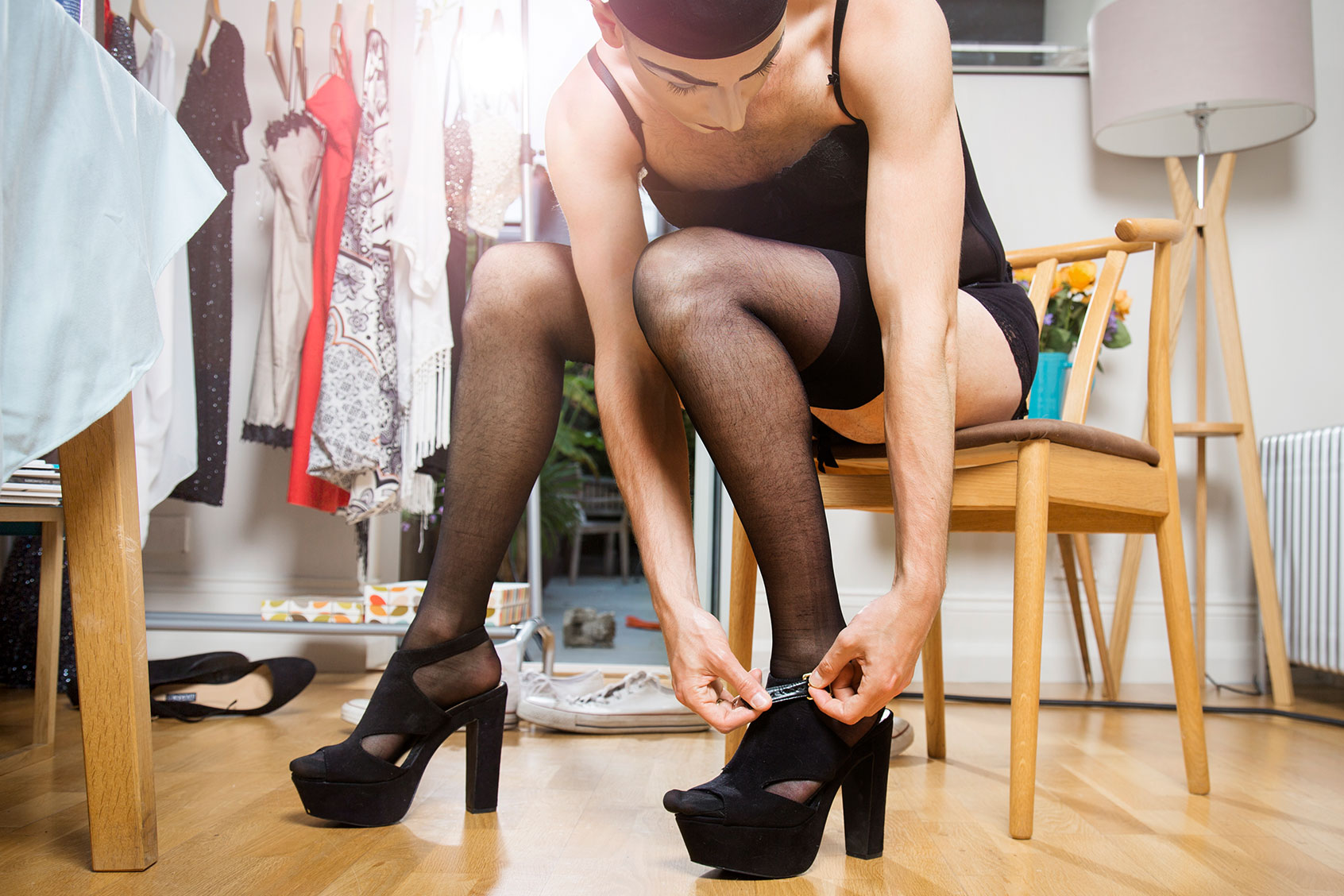
Drag performer puts on high heel shoesDrag performer puts on high heel shoes (Getty Images/Betsie Van Der Meer)

On Dec. 3, a strange attack on Moore County, North Carolina’s power grid left thousands of people without electricity. The FBI has joined the investigation, and queer activists believe there is strong suspicion to support the theory the attacks targeted a drag performance, cutting off the power supply and sending a queer space of joy into literal darkness.

The phenomenon of gunmen shooting us down in bars and clubs, I believe, goes deeper than merely being a place where queer people will be. These killers’ qualms about my community being joyous and having fun, to me, is not just about what we do but also where we do it. They don’t want us to openly be a part of society; they don’t want our elation and bliss visible to the world, even in the semi-private enclaves we’ve created. Attackers choosing to murder queer people in nightclubs and bars, on dancefloors and during drag shows, is an exercise in dismantling the spaces we have intentionally created for ourselves. These venues are an essential component of queer culture, acting as social settings and safe havens away from judgement and the fear of being othered. We can hold hands and make out without a coward in a moving car yelling at us, calling us a slur. We can breathe, and live, in a space we have designed to cater to our agenda: not just staying alive, but living in the most vulnerable and open sense.

Throughout the course of gathering materials, speaking with sources and sitting down to write this piece, I was extremely torn on whether or not I should say anything. The last thing I would want my writing to do would be to put myself or any other queer person in immediate danger as a result of its publication. I lost hours of sleep wondering if one of the millions of hateful people with access to firearms would retaliate to this writing in a fit of rage, taking the lives of more queer people and potentially extinguishing more spaces of queer celebration. I wondered if my hands would have blood on them.

I expressed these concerns to Balof after I finished interviewing him at Sidetrack. All around us, gays with drinks in hand watched music videos of our community’s icons dancing and being hot — a solid Wednesday evening. 

I told Balof my initial reaction to the news of Club Q was to write something in response because the shooter had tainted another club of ours, but then my anxieties quickly came afterwards. Balof told me Sidetrack’s owners, Art and Pep, had heard queer people on the street outside the bar debating this exact issue. One person asserted we had to make a stand, to say something, to take control of our own story in this country. The other was afraid of retaliatory bloodshed. Art and Pep, according to Balof, strongly agreed that the worst thing to do would be to remain silent in the face of unending devastation. Balof took a long, hard look at me and said that fearing further violence for drawing attention to the hatred pointed at our community is exactly what the shooters want. He said that this coercion of silence is exactly what terrorism does, because that’s what we are: terrorized. To speak out regardless — not just me, but anyone who has the privilege to do so safely or chooses to otherwise — is an act of defiance worth doing.

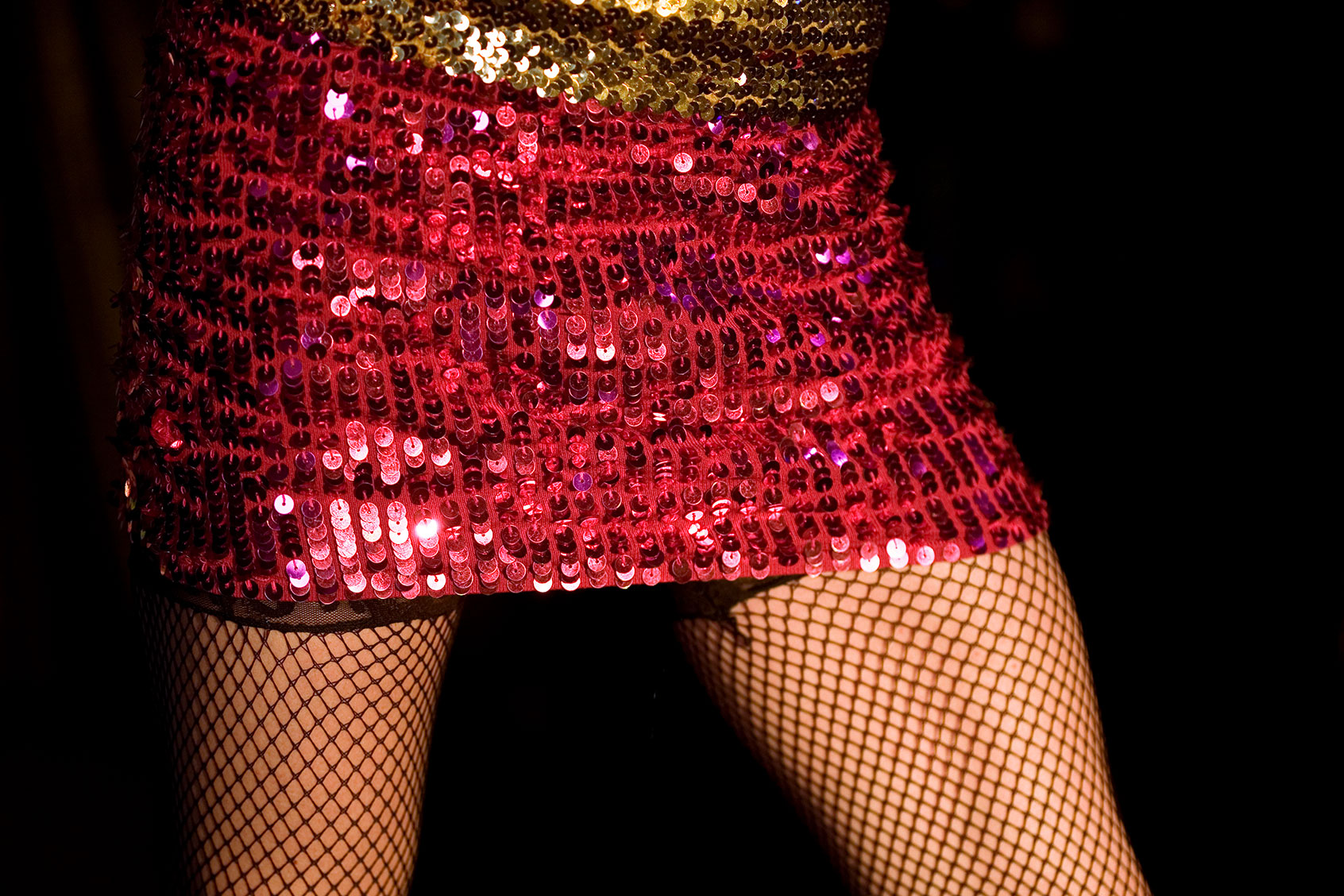
Drag queen in sequin skirtDrag queen in sequin skirt (Getty Images/Henry Horenstein)Queer people are forced every day to decide whether we will be silent or vocal about our existence in America. We live in a society of abject terror that every person in this country shares. Queer people understand this as well as today’s grade school children. Unlike children, we also wonder if we will be shot because of who we are, of which our spaces are an extension. As long as our society fails to act in the wake of imminent tragedies, killers will put our bars, clubs and other spaces of joy in the path of danger. 

Yet we go, anyway.

“This is a community whose very existence has been an act of protest,” Mack said. “We have no choice. The choice is either to exist or to go back into the closet, and I don’t think any of us would want that.”

Every time I step into a queer bar, where the lights are low and the bartenders are practically shirtless, I feel this immense sense of love and belonging. To look in every direction and see men in turquoise eyeshadow and 6’5″ drag queens towering over a gaggle of adoring queer people makes me forget, for a brief and wondrous moment, that the world outside those walls chips away at my psyche every moment of every day in ways I fail to recognize or choose to ignore for my own sanity. I am loved and I belong there. And, to the chagrin of millions of America’s most hateful, I am overjoyed.

I don’t expect the laws to change favorably for the hunted anytime soon. Until then, I remain hopeful that one day there will be an empty space between the First and Third Amendments, and years will have passed since the last mass shooting in America.

Until then, we will dance.


Chocolate, crunch and convenience meet in these decadent 4-ingredient cracker cookies

Saltines don’t get the love and respect they deserve. I think it’s the name: saltines. No capital letter, no flash, just saltines. I mean, it’s such a throw away name; it’s no wonder they don’t get the love other crackers do. Whoever invented them should have given them an attention-getting, proper double-name like Captain’s Wafers, Ritz Crackers, Melba Toast and Wheat Thins. You won’t see any of those written in all lower case. It’s a shame, I tell you. Saltines are little squares of perfection. Their plainness is so much better than, say, melba toast. Granted, I don’t think melba toast lucked out in the name department either, but it’s more than saltines got, that’s for sure.  

My love of saltines began when I was little. They accompanied my favorite bowls of soup and were perfect with ginger ale when I was sick. They were an ever-present, integral part of feeling cared for and nurtured as a child, so it’s no wonder they hold a special place for me to this day. 

My first childhood favorite snack was made with saltines. My mother called them “Marguerites” and we made them by spreading peanut butter on saltines then topping each one with one large marshmallow (or several small ones), and toasting them until the marshmallows turned golden brown. I can still remember using my finger to collapse the perfectly baked, puffed up marshmallow onto the warm peanut butter cracker before biting into it. Marguerites are still one of the most satisfying snacks ever, I think. 

I would not call these Saltine Cracker Cookies “satisfying.” They are rich and sophisticated in comparison, but they do have my beloved saltines in common as their base. Growing up, we didn’t make these. I wasn’t introduced to them until sometime in my 20s, and I couldn’t believe I had missed out on them for so many years. When I first tasted them, the barely perceptible presence of my beloved saltines was just nostalgic enough to stir up all my ooey-gooey love and comfort associations. And just like that, Cracker Cookies became a new favorite. 

These make great holiday gifts because they are even better after a day or two, giving you plenty of time to package them up pretty. I appreciate that they don’t have to be handled with care like cookies or brownies since they’re served in pieces like peanut brittle. They do, however, have to be stored in the refrigerator, but they keep very well. I have no idea exactly how long they keep because they get eaten very fast in my house.    

These cookies could not be easier to make, but they taste like you went to a lot of trouble. They are easy to customize to your individual sweetness preference and to your chocolate preference.  Every imaginable type of chocolate chips are available now, from bittersweet and dark to sweeter and milkier. As a former teacher of mine used to say, “Pick your choice!” My choice is bittersweet chips and raw coconut sugar, but whatever you like you can have. It’s just that easy. With only four ingredients and less than five minutes hands-on time, you won’t believe the end product.                 

Saltine cracker cookies 
Yields
1 sheet pan of saltine cookies
Prep Time
10 minutes
Cook Time
12 minutes

Ingredients

Saltines to line a cookie sheet

Spray oil

2 sticks unsalted butter 

1 cup sugar

1/2 bag (6 ounces) chocolate chips


Directions

  1. Line a cookie sheet with foil, then spray-oil the foil. Cover with saltines.

  2. Boil butter and sugar for 2 minutes exactly — more and it will get too chewy and sticky. 

  3. Pour over saltines and bake 375 for 10 to12 minutes.

  4. Remove from oven and sprinkle chocolate chips over saltines. 

  5. Place back in a turned OFF oven just to soften/melt chips, then spread the melted chips over the saltines.

  6. Refrigerate until cold. 

  7. Break into pieces when ready to serve or store. The saltine cracker cookies are best a couple of days old.


Cook’s Notes

I generally don’t brag much about my kitchen creations because most of my recipes are family recipes. I will say, though, that my Cracker Cookies are a favorite among many, even those who make them themselves, so I will tell you the exact ingredients I use in case you want to try them my way.

Butter

I prefer unsalted President brand butter because I love it and think it is the most superior commercial butter available. 

Sugar

I use coconut sugar. It has a little more flavor than regular sugar, more like brown sugar, but it is less sweet than “real” sugar. If you prefer a high degree of sweetness, you will need to add more than what is called for in the recipe if you use it. I actually use less than what is called for as I prefer a darker, less-sweet version.

Chocolate Chips

I use Pascha brand, bittersweet, dark chocolate chips but have other similar brands with success.

Saltines

You can’t go wrong with Nabisco Premium Saltines for sure, but if you need a gluten-free option, try saltines by Schar or the original, totally plain, gluten free crackers by the brand absolutely!. I’m sure there are other brands, but those are ones I have used. If you choose an unsalted cracker, make sure to add salt to them once you place them out on the pan.  
 

Salon Food writes about stuff we think you’ll like. While our editorial team independently selected these products, Salon has affiliate partnerships, so making a purchase through our links may earn us a commission.

The 6 best TV episodes of the year, from beignet bites to a deadly dance

The good news about television in 2022 is that it gave us a lot to celebrate – too much encapsulate in one short list, at least in a way for one person with limited time to do them justice. That makes selecting a very few of the best episodes supremely difficult.

I’ve been tasked with selecting six – six! – installments of television that stand above the rest and to be honest, the challenge nearly brought me to tears.

That means plenty of episodes that you love aren’t going to show up here.

Some shows served up seasons that were uniformly excellent enough to defy selecting just one episode; for me, this list includes “Andor,” “Abbott Elementary,” “Severance,” “Pachinko,” “Atlanta,” and “What We Do in the Shadows.” See? There are six more shout-outs for you.

Anyway, here are the usual disclaimers: Evaluations like this are highly subjective and must acknowledge that one person can’t see every show. That means if your favorite episode doesn’t show up here, that doesn’t negate its quality. It may simply mean I either haven’t watched it yet, or I don’t remember it, or maybe we simply disagree.

Regardless, it’s always better to face the dilemma of too much TV greatness than howl at the paucity of options. With that, here are six of what I consider to be the best installments of TV storytelling in 2022, in alphabetical order.

01

Barry,” “710 N” (HBO)

Image_placeholderBarryTom Allen in “Barry” (Merrick Morton/ HBO)

Beignets are the hot snack these days, but the ones in this episode hold a mystical power to them. That’s one way to explain why Bill Hader’s hitman does everything in his power to hang on to the ones he’s scored from Beignets by Mitch as he evades a team of motorbike assassins trying to wipe him on a Los Angeles freeway. The title tells you which one but reveals absolutely nothing about the mind-reeling chase that emerges out of nowhere and cements Hader’s directing expertise.
 

As Barry weaves in and out of gridlocked traffic, gently singing to himself, each of his pursuers falls away in absurd accidents, the most ludicrous culminating in a perversely ridiculous stand-off at a car dealership.


And this isn’t even the central shock.


“710 N” succinctly encases everything stunning and sinister about the ease with which this show marries comedy, tension, and tragedy, with Barry’s deteriorating psychological stability leaving flakes of poison wherever he goes. He’s kidnapped his mentor, has vivid fantasies about shooting his girlfriend Sally (Sarah Goldberg) between the eyes, and is being hunted by his former handler.


Meanwhile, Sally’s boss bitch façade crumbles after her TV show is unceremoniously canceled minutes after its debut; separately, Barry’s one-time ally NoHo Hank (Anthony Carrigan) sees the L.A. crime syndicate he’s trying to establish crumble to powder almost instantly.
 

All their paths lead to Beignet by Mitch, where the customers submit to unreasonably long lines to enjoy the deep-fried pockets of heaven and receive advice from its stoner sage of an owner (Tom Allen). Transitioning between their storylines, along with a bizarre subplot involving Stephen Root’s Monroe Fuches finding shelter on a rustic ranch, could have felt like whiplash.


But Hader’s confident directing in this episode merges the episode’s wild swirl of hysteria with balletic grace, distilling all the qualities that make “Barry” unpredictable, tragic and wonderful into one perfect, transformational bite.

02

“The Bear”: “Review” (FX on Hulu)

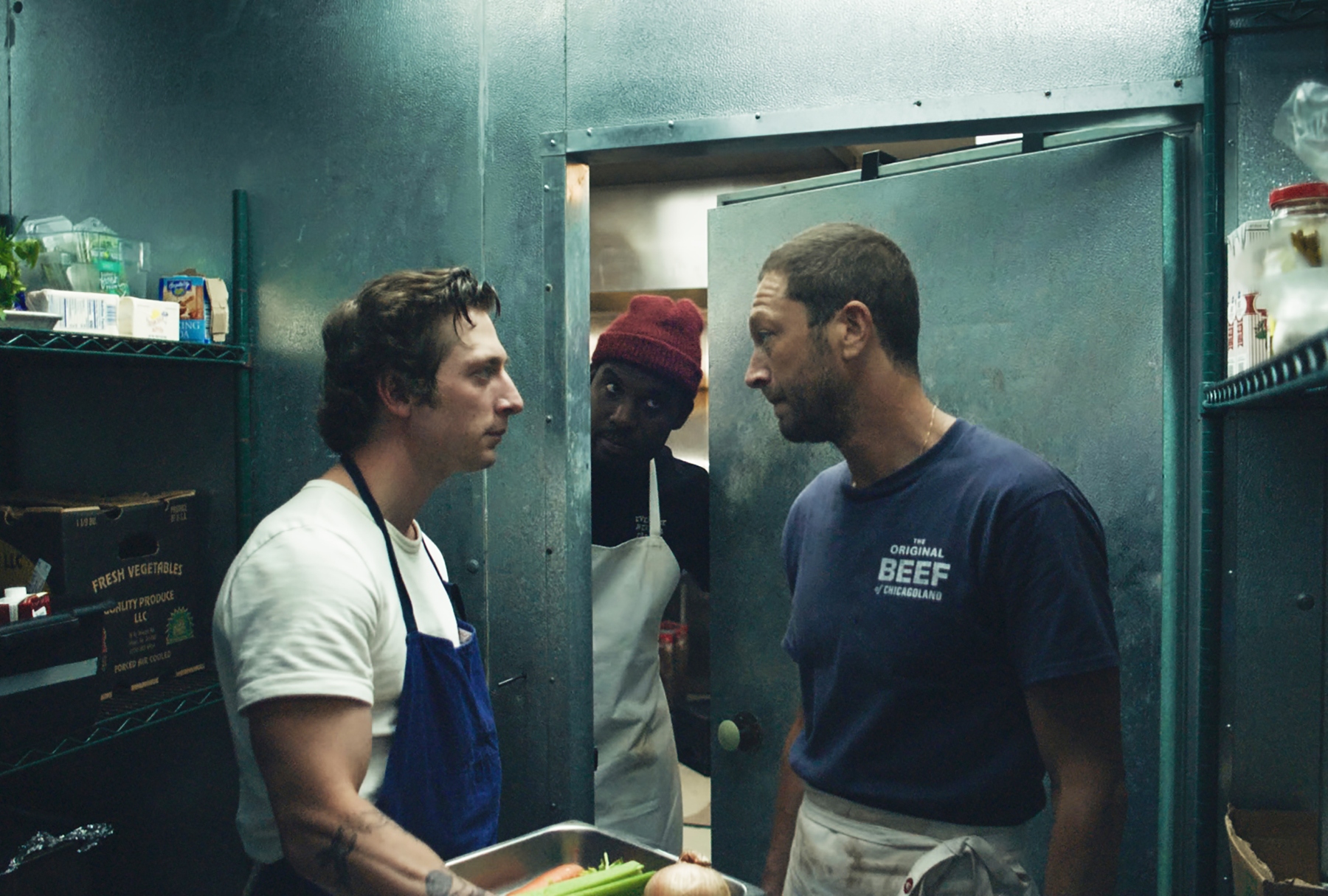
Image_placeholderJeremy Allen White as Carmy Berzatto, Lionel Boyce as Marcus, Ebon Moss-Bachrach as Richie Jerimovich in “The Bear” (FX)

There may be no more effective critic bait or cinematic flex than the extended tracking shot, wherein an episode’s director of photography captures an extended section of action and dialogue in a single take. DPs have been doing these for decades, but only recently has there been a market for showering praises on shows that pull them off. 


That said, while a person might be tempted to simply give the show’s director of photography Andrew Wehde style points for pulling off a 19-minute single-take without a hitch, the technique’s use in “Review” is integral to telling the story. Every episode leading up to this one is an exercise in stress levels building between head chef Carmy (Jeremy Allen White), sous chef Sydney (Ayo Edebiri), and the place’s manager Richie (Ebon Moss-Bachrach) over the fate of The Original Beef of Chicagoland, the sandwich joint Carmy’s brother left to him after he died.


A positive review for their hole-in-the-wall takeout joint collides with a technological slip-up: Sydney, who convinced them to join a tech-based to-go service accidentally left the preorder option open, allowing dozens of orders to tumble in. The episode’s 20-minute length corresponds with the amount of time the crew has before the lunch rush pummels them; using the tracking shot places the audience in the crush of The Beef’s kitchen as the trio’s panic sets in. The camera is the lead dragging us through an escalating heart event in tandem with a psychological break, placing us into the sweaty anarchy of a workplace implosion. By the time one of the character’s rage boils over, resulting in a serious assault, the only way to greet it is with wild-eyed laughter, followed by an appreciative afterglow.  

03

“Better Call Saul”: “Plan and Execution” (AMC)

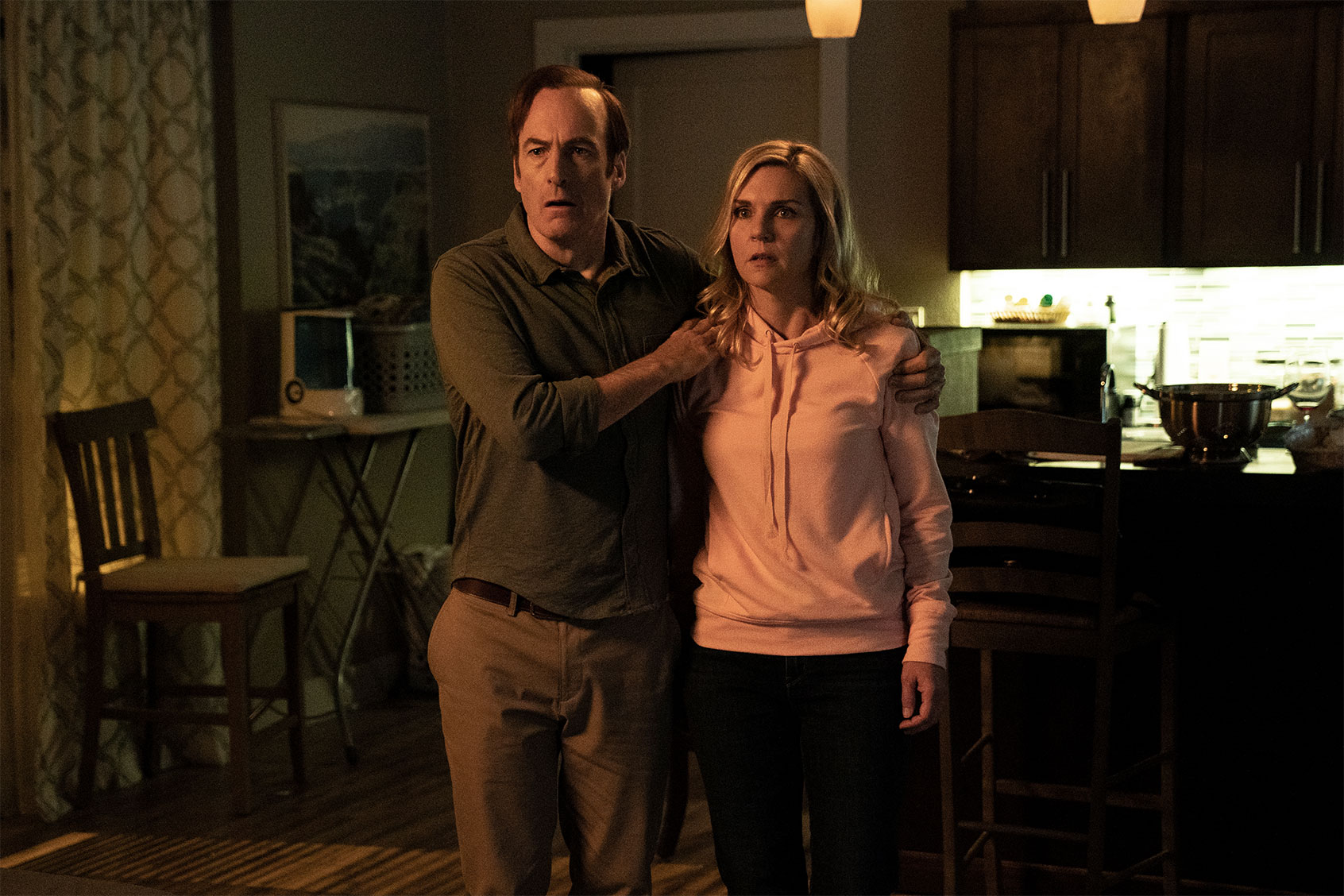
Image_placeholderBetter Call SaulBob Odenkirk as Saul Goodman, Rhea Seehorn as Kim Wexler in “Better Call Saul” (Greg Lewis/AMC/Sony Pictures Television)

Peter Gould gave television one of its greatest gifts in the story of Jimmy McGill, providing a view of moral devolution that’s largely his own doing. Bob Odenkirk’s portrayal of “Slippin’ Jimmy,” the low-rent con artist who transforms into criminal lawyer Saul Goodman, is a work of stunning pathos interrupted by bursts of comedy.


A person can see why Rhea Seehorn’s Kim Wexler, the daughter of a con artist devoting her life to playing it straight, would be seduced by this kind-hearted trickster. But while Kim fell for Jimmy, she could take or leave Saul, a swaggering shyster who bends and breaks the law for evil men.
 

This is the episode that proves how risibly unrealistic Kim’s efforts to negotiate between two sides of the same man, especially knowing that each serves different masters. A long con she and Jimmy concoct to embarrass their stick-in-the-mud former boss Howard Hamlin (Patrick Fabian) violently collides with the dangerous cartel boss to whom Saul Goodman answers, Lalo Salamanca (Tony Dalton).


“Better Call Saul” constantly reminds us that the most locked-down strategies can never be fully guarded against chaos, especially the type Lalo personifies – the kind that enters places uninvited and upends one’s life. But this episode’s left-field climax is shocking even by the greater Gilliverse’s standards, and explains how accidental collateral damage can murder what’s left of a person’s spirit.
 

“Plan and Execution” is a midseason finale, but it’s also the most exceptional and definitive kick-off to a story ending you’ll see on TV in any year.

04

Hacks,” “The Captain’s Wife” (HBO Max)

Image_placeholdJean Smart in “Hacks” (Karen Ballard/HBO Max)er

If you want to find out who a person really is, go on vacation with them. “Hacks” creator Lucia Aniello, Jen Statsky, and Paul W. Downs kick the tires on that theory by dethroning veteran comic Deborah Vance (Jean Smart) from her position as Queen of the Vegas Strip and rolling her and her mentee-slash-assistant Ava (Hannah Einbinder) out on America’s highways and byways to test out new material.


The beating heart of “Hacks” is the strong intergenerational bond Ava and Deborah share, a two-woman team of rivals who, for reasons nobody else can understand, are devoted to each other.  

Season 2 deepens that relationship as surely as it tests it, forcing Deborah far outside of her comfort zone and into the wilderness, figuratively and literally. Outside of Sin City, most people have forgotten who she was. The ones who remember her don’t necessarily look back on their time with her through a rose-colored lens, as she finds when her hand of the queen Marcus (Carl Clemons-Hopkins) books her as a headlining act on a lesbian cruise.


At first, she’s livid, presuming that lesbians detest her. Then she’s pleasantly surprised and flattered to find out that they don’t – until she reminds them that they should be by cracking a string of casually homophobic jokes before crashing down the curtain by throwing a shoe at a heckler. Soon after the ship that she boarded with a royal welcome sends her off to the nearest port in a dinghy. A humiliating experience, but it also opens a fresh path to an act that revitalizes her career. It’s a real journey but, unlike most shows, one for which we were delighted to tag along.


Want more great food writing and recipes? Subscribe to Salon Food’s newsletter, The Bite.


05

“Reservation Dogs”: “Offerings” (FX on Hulu)

Reservation DogsPaulina Alexis as Willie Jack in “Reservation Dogs” (Shane Brown/FX)Elva Guerra as Jackie and Devery Jacobs as Elora Danan in “Reservation Dogs” (Shane Brown/FX)

Sterlin Harjo loves coming-of-age movies. Through “Reservation Dogs,” we view his appreciation for the power of scripts and stories, whether they come to us onscreen or are passed down from elders to youths.


The show introduces Bear (D’Pharaoh Woon-A-Tai), Elora Danan (Devery Jacobs), Willie Jack (Paulina Alexis), and Cheese (Lane Factor), as a type of outlaw crew that we know now was a misdirect. A subterranean river of grief flowed underneath the plot’s sly comedy from the beginning, although Harjo and the writers wait until the second season for it to soak into its loam.
 

In this round of episodes, he and his writers broaden that concept to look at how personal losses change a community’s history, and how one tragedy in the past can ripple through time in unpredictable ways.


The death of Elora’s grandmother Mabel revives the community’s sorrow over losing her mother Cookie. “Offerings” writer Migizi Pensoneau connects that thread back to the foursome’s loss of their friend Daniel through Willie Jack: She receives a letter Daniel wrote to himself during freshman year from a teacher, and brings it to Daniel’s grieving mother, Hotki (played by Lily Gladstone), who currently serving time in prison.
 

Willie Jack and Hokti used to be close, but Daniel’s death changed that – except for the intervention of a guardian spirit only Hokti sees. At that spirit’s urging, Hokti passes their family’s connection to generations of healers to Willie Jack, charging her with fixing the growing rift between Bear and Elora Danan.


“Offerings” brims with many moods, a feeling fixed in place by Gladstone’s portrayal of Hotki’s emotional withdrawal, until that transcendent sight of generations of spirits laying hands on Willie Jack parts the shadows. Alexis’ tears at her character’s accepting the weight of their guardianship amplify the moment’s power, reminding us that however unmoored we may feel, we’re never alone if we draw strength from the stories those who came before us.

06

“Yellowjackets”: “Doomcoming” (Showtime)

Image_placeholderYellowjacketsLiv Hewson as Teen Van and Jasmin Savoy Brown as Teen Taissa in “Yellowjackets” (Kailey Schwerman/SHOWTIME)

Survival takes various forms. For a teenage girl in 1996 trying to stay alive after a plane crash strands her and her soccer teammates in the Canadian wilderness, the focus is on the basics: securing food, water, and a means of staying warm once the bitter winter sets in.


When that girl makes it to womanhood and remains dogged by questions as to how she made it out 25 years after the fact, survival may take on a psychological meaning or be considered in political and social terms. This drama excels in linking past to present over its first season, but no episode better delineates the first division between the before of who they are and the snarling after than the outdoor high school dance they plan as a last gasp.


With resources running low and no sign of rescue, the young women resolve to accept their fate by scrounging together formalwear and decorations out of the wreckage, planning to get drunk on booze made from foraged berries that have rotted. But once psychedelics are accidentally introduced, the mood turns from innocently euphoric to feral to menacing, as internalized grievances erupt and the team divides into rival packs, culminating in a bone-chilling hunt.


The first season slowly wove a mystery web connecting threads of the past to the present, offering new questions to ask when it answers old ones. But in the main, the show’s allure rests in its stalwart performances, each inspired by their character’s sense of knowing what they’re capable of in the best sense of that phrase and the worst – and what can happen if whatever internal forces that they’re holding at bay are unleashed.

Don’t believe the K-dramas: Look to “Return to Seoul” for a more realistic view on Korean adoptees

Adoption is a recurring theme in Korean dramas, often used as an emotional plot device that has little to do with reality. It usually goes something like this: fictional transracial adoptees who grew up overseas return to South Korea for whatever reason the storylines dictate. This is played out in popular shows like “Vincenzo,” where Song Joong-ki’s titular character is a Mafia-raised adoptee who returns to Korea in search of gold (literally). And in this year’s “Love in Contract,” Park Min-young’s character is adopted by Korean parents, who ship her off to the United States before summoning her back to Seoul to marry into a rich conglomerate’s family. These K-dramas all share a common trait: despite having been raised overseas in countries where Korean isn’t the dominant language, these adoptees return to their birth country miraculously speaking fluent Korean and fitting right into Korean culture. It’s almost as if they had never left their motherland.

In the superb “Return to Seoul” – which is Cambodia’s Oscar entry for the Best International Film category – French Cambodian filmmaker Davy Chou (“Golden Slumbers”) takes a deeper look at what it means to be one such adoptee. While some of the narratives – like finding your birth family in days, or even meeting a Korean who can speak with you in a language other than Korean fluently – almost never happen in real life, the story rings true more often than not because of its candid and bittersweet insights.

The story itself is loosely based on Chou’s first trip to Korea, where he traveled with an adoptee friend reuniting with her first family. He recalled witnessing “the depth of contradictory emotions” between his friend and her family. With that perspective, Chou wrote a screenplay addressing adoption in a way that rarely makes it into K-dramas, which tend to use adopted children as cinematic tropes.  

When we first meet Frédérique Benoît, she is befriending a Seoul hostel clerk. Both young women are in their mid-20s and are fluent in French – Freddie (Park Ji-Min), because she grew up in Paris with her adoptive parents, and Tena (Guka Han), who learned the language from her linguist mother. This nod to a common language serves as a buffer for Freddie’s initial inability to speak any Korean beyond annyeonghaseyo (hello). 

Return to SeoulPark Ji-Min in “Return to Seoul” (Thomas Favel/Sony Pictures Classics)

Early on, we learn that Freddie originally had planned to take a two-week trip to Japan. But when weather conditions derailed that trip, she chose South Korea . . . on a whim. This is what she tells her mother, who can’t hide her disappointment, on a video call. This return to Seoul was supposed to be a trip they took together. First-time actor Park is so good at conveying Freddie’s complex feelings that her facial expressions channel everything we need to know. Yes, Freddie feels a little guilty for disappointing her mother – who she loves – but she also reveals a flash of frustration. Some adoptees may never want to return to their birth country, while others may wait years or decades before feeling ready to do so. Whatever their choice, it’s an incredibly personal decision that shouldn’t be co-opted by adoptive parents who want to center themselves in the process. This is something adoptees often stress. No matter how loving their adoptive parents are, adopters cannot understand the complex feelings of their adopted children. 

South Korea has one of the longest histories of sending babies away for adoption. Since 1953, approximately 200,000 children have been sent overseas, earning the country the dubious distinction of being baby exporters. Some of the film’s storylines play out too much like a fairy tale. Within a day or so after arriving in Seoul, and without her biological parents’ names or any paperwork from her adoption – and just one lone photo of her as a baby – Freddie manages to find the South Korean agency that handled her adoption. That agency tracks down her birth father, who is eager to see her again. In reality, less than 15% of South Korean adoptees are reunited with their first families, according to statistics released by the South Korean government. 

When Freddie is invited to spend a few days with her birth father and his new family, she is overwhelmed by feelings of what it means to be a part of this lineage that is foreign to her. There is culture shock, but there’s also the uncertainty of having missed out on a different life because of decisions that were made for her.

Her father and grandmother view Freddie’s return to Korea as forgiveness and her desire to belong to their family. Indeed, her father – played by the veteran actor Oh Kwang-rok – essentially love bombs her from the get-go. It’s not long before she is overburdened by this man’s guilt-ridden and patriarchal expectations to move back to Korea, marry a Korean man, and learn to speak Korean. Life will be easier for her, he tells her. Freddie stares at him stunned. The obvious question to everyone but him is: easier for whom? “I’m French,” she tells him. Her home and family are in France. Asking her to uproot herself may help alleviate some of his own sorrow, but won’t help Freddie. 

Her grandmother is also riddled with guilt. She cries inconsolably and thanks God that Freddie had a good education in France. But she also thanks God for forgiving them for giving up Freddie for adoption. Once again, her comment is centered on her family, exclusive of Freddie. Their choices – however well-intentioned they may have been at the time – left Freddie without a piece of her vital history. Yet her forgiveness of them is assumed. From the grandmother’s perspective, the loss was theirs, not Freddie’s. They lost a baby when she was adopted. But she had the privilege of growing up in Europe with parents who could afford to take care of her. 

Return to SeoulPark Ji-Min in “Return to Seoul” (Thomas Favel/Sony Pictures Classics)

Park is a revelation in her acting debut. A peripheral character describes Freddie as looking old-school Korean, which is a roundabout way of saying she is attractive, but in an ordinary way. But it’s this so-called ordinary face of hers that is so captivating to watch, as she silently observes her surroundings.

“Return to Seoul” reflects on eight years in Freddie’s life, starting at 25 with time-jumps at various intervals. At 32, she finally is reunited with her birth mother, whose current life may be ruined if she acknowledges to her family that she has another child. The tearful meeting ends with her mother sharing her email address with Freddie.

On her 33rd birthday, Freddie is on a solo trip in Europe. Earlier, she had wondered if her birth mother thinks of her on the day she gave birth. In one of the final scenes, we see Freddie sending her a short note via email. Her unspoken wish is for her mother to acknowledge her on her birthday. Seconds later, a message pops up that the email address is no longer valid. 


Want a daily wrap-up of all the news and commentary Salon has to offer? Subscribe to our morning newsletter, Crash Course.


Whatever closure she had hoped for remains unfulfilled, circling back to the uncertainty that too many real-life adoptees face. Experts, as well as adoptee friends, have said that the search for birth parents isn’t as simple as finding them or not. Even the best-case scenarios would benefit from talking issues through with a therapist beforehand and most definitely afterward. And while a search might result in learning that the birth parents have already died, that’s not the worst-case scenario. For one friend, it was being told that her biological mother wanted nothing to do with her, a feeling that she describes as a hole in her heart that can’t be fixed.

In its own way, “Return to Seoul” addresses what few K-dramas have been successful at accomplishing. Freddie is an imperfect adoptee who can’t speak the language, won’t adhere to the rules of Korean etiquette, and is reticent to forgive the unforgivable. The life she builds for herself is her success story, which is a testament to her growth and resilience. 


7 British pantry staples to stock up on for your next bake

Golden syrup and clotted cream are everyday ingredients in the U.K., yet many Americans have never even heard of them. These British staples are crucial for classic desserts like treacle tarts and roly-poly pudding — you may only have seen while watching “The Great British Baking Show.”

Compared to American doughnuts and cream pies, “English desserts are often a bit more low-key, simple, classic,” says Martha de Lacey, host of the cult London supper club, Muffdining.

Just a few essential ingredients comprise countless British bakes. Here are seven pantry staples that define British baking, plus where you can find them and how to use them.

Caster sugar

Caster sugar is ground more finely than ordinary granulated sugar, which helps it to dissolve more easily, making it ideal for baking. While caster sugar is available in America — where you can more readily find it labeled “superfine sugar” or “baker’s sugar” — it tends to be somewhat more expensive than your go-to granulated sugar.

When baking with caster sugar, it’s important to note that you can substitute it 1:1 by weight with granulated sugar, but not cup for cup. Since the sugar is ground more finely, a cup of caster sugar is denser than a cup of granulated sugar — meaning you would get more caster sugar per cup.

Using caster sugar or superfine sugar makes a big difference in cakes, like in this Pistachio Cake with Lemon and Rosewater, in which those quick-dissolving properties make easier work of creaming together butter and sugar. And slowly adding caster sugar while beating egg whites in Our Best Lemon Meringue helps keep the glorious layered treat from being gritty or grainy.

Golden syrup

“Golden syrup is a light gold–colored syrup made from cane sugar.” says Thida Bevington, a home baker from Norfolk with an impressive Instagram following.” [It has] a texture like honey and a slight buttery taste.” Golden syrup is a form of invert sugar — sugar that has been processed so that the molecular bonds that form sucrose (glucose and fructose) are broken, reducing the size of the sugar crystals and resulting in a viscous, honey-like texture.

While golden syrup is often employed in baking, de Lacey recommends drizzling it anywhere you might normally use honey or maple syrup, “particularly inside and on top of sourdough waffles with lots of crème fraîche and a sprinkle of salt.”

Luckily, golden syrup is becoming easier and easier to find in the U.S., both in grocery stores and online. While there is no perfect substitute for golden syrup, once you have a can (or bottle), you can use it in any recipe that calls for corn syrup — and the results will only be tastier.

Muscovado sugar

In the U.K., Bevington asserts, that in addition to light and dark brown sugar, muscovado sugar is a popular option for bringing deep molasses flavor to baked treats. Muscovado sugar is similar to brown sugar but with a much stronger flavor and a damper, sandier texture… While brown sugar has had its natural molasses removed during the refining process and then added back into it in a lesser amount, muscovado sugar is unrefined and retains its natural molasses, lending an earthier note.

“Muscovado sugar — dark, bittersweet, and damp — can be overpowering if not used judiciously,” says British author and food writer Felicity Cloake, who nonetheless calls it “essential” in Christmas mincemeat pies and sticky toffee pudding. To mix up your breakfast or afternoon tea routine, “muscovado is also great in a darker, more brooding style of marmalade,” shifting the flavor profile from bright and citrusy to more warm and wintery version.

Though dark brown sugar makes a decent substitute for the muscovado you’ll spy in lots of British baked good recipes, you’ll miss out on that intense molasses flavor. Muscovado sugar remains tricky to find stateside, and is mostly available in specialty shops and online.

If you can get your hands on some muscovado sugar, try this holiday-worthy Winter Hazelnut & Orange Cake, which includes orange zest as a bright foil for the warm, deep flavor of muscovado.

Self-raising flour

Known in the states as “self-rising flour,” what Brits call “self-raising flour” has a rising agent — baking powder — added to it in advance, which makes whipping up a cake batter or batch of scones that much faster.

The biggest difference is that Brits use it all the time, whereas many Americans don’t even know it exists. Bevington uses it frequently in cakes and scones, and many British recipes call for self-raising (or self-rising) flour frequently.

Though it’s relatively easy to find here, if you don’t have any handy, Nigella Lawson has a handy guide on her site. Simply add 2 teaspoons of baking powder per cup of all-purpose flour, and your “bakes” should rise just fine.

Try these Never-Fail Biscuits, and you’ll quickly understand why Brits love the stuff.

Gelatin sheets

Spelled gelatine in the U.K., gelatin sheets (sometimes called “leaf gelatin”) have a clear, plasticky appearance. In the U.S., the most prevalent form of gelatin–a protein derived from bones, cartilage and other animal connective tissue–is a powder that you can buy in packets or in bulk. You must “bloom” or activate it in cold water before dissolving it in hot liquid. Some people can detect a light, unpleasant smell in gelatin powder (which is generally undetectable in the final product).

Cloake tells me she has used both powdered gelatin and gelatin sheets, but finds the odorless sheets “much easier to use.” Sheet gelatin can be difficult to find in stores in the U.S. One can order it online, but it’s often expensive compared to the more prevalent powdered form. If using gelatin intimidates you, refer to this handy guide, which explains how to use both sheet and powdered gelatin.

Digestives

Digestives are what the English call “biscuits” and what Americans might classify somewhere between a cracker and a cookie. They pair nicely with cheese, but make a perfect snack on their own, as well. You can buy dark or milk-chocolate versions (which make superior s’mores). Digestives also make a great substitute for a graham-cracker crust — what the Brits call a “biscuit base.” Cloake tells me the biscuit base often makes cameos in no-bake desserts like cheesecakes (try this recipe for No-Bake Nutella Cheesecake, and one of her personal favorites, banoffee pie. “Completely over the top, and utterly irresistible.” banoffee pie employs a buttery biscuit base filled with caramel and bananas and a coffee cream topping.

Digestives are finally getting easier to find in the U.S.; I sometimes see them at my local grocery store in Seattle, and can easily buy them online. Try subbing Digestives for graham crackers the next time you make a cookie crust. You won’t be disappointed.

Clotted Cream

“If you’ve never had the pleasure of cracking the freckled, yellow crust on top of a pot of clotted cream, then put it on your bucket list,” says Cloake. Somewhere between butter and whipped cream, clotted cream is a thick, rich, nearly stretchy form of cream ideal for spreading or dolloping. It’s made by slowly heating fresh cream until the butterfat separates and rises to the top.

Clotted cream is typically enjoyed atop a warm scone with a bit of jam or with a sticky dessert, like a classic English treacle tart. Cloake enjoys hers alongside summer berries and even adds a spoonful to her Cornish pasties, for “a touch of luxury.”

Unfortunately, clotted cream is almost impossible to find in the U.S., though specialty shops sometimes carry it for extortionate prices. You can make it yourself if you have 18 hours to spare and a few pints of high-quality cream.

Though some of these items can be hard to find on our side of the pond, once you get your hands on a tin of golden syrup, you may not be able to go back. Try your hand at a couple British recipes, because as Cloake, de Lacey, and Bevington all assured me, British recipes are often as simple as they are delicious.

“Almost anyone can knock up a batch of scones, or fairy cakes, or a decent Victoria sponge, or even a Christmas cake without too much effort,” Cloake said. “Which perhaps then gives them more confidence to go on and experiment with more complicated bakes.”

Microbial “lions” that nibble prey to death form an entirely new branch on the tree of life

Beware the Nibblerids, for they shall nibble you to shreds. Their name might make them sound like the antagonists in a children’s book, but if you’re a microbe, nibblerids can be quite scary. These tiny, single-celled organisms are voracious predators that use a tooth-like structure to rip apart their prey bit by bit. They are also, it turns out, occupants of a completely new branch on the tree of life — a novel lifeform quite different, and distant, from any other known living creatures.

“These are lions of the microbial world,” Dr. Patrick Keeling, a botany professor at the University of British Columbia, said in a statement. A new analysis by Keeling and colleagues, published in the journal Nature, illuminates some of the strange, violent behavior of the microbial world, explaining why nibblerids are so unique.

All around us, and even inside us, tens of trillions of microbes are locked in endless battle. Bacteria, microscopic fungi, amoebas, tardigrades and other tiny critters have evolved weapons of mass destruction, such as toxins, biofilms and specialized enzymes, in order to wage war against one another.

But despite all this action, humans have relatively little information on who is doing the fighting. There just hasn’t been enough research into microbes to really inventory them. Estimates vary, but some research suggests there are literally millions of unknown microorganisms, encompassing multiple uncharted branches on the tree of life that is sometimes described as “microbial dark matter.” As we develop better ways of censusing these tiny lifeforms, biologists have seen fit to rewrite huge portions of the tree of life, which is a model of evolution that explains the relationship between all living things — often visualized as a “tree” with different branches. At the base of the tree of life sits the first cell to have ever existed. 

“Ignoring microbial ecosystems, like we often do, is like having a house that needs repair and just redecorating the kitchen, but ignoring the roof or the foundations,” Keeling said. “This is an ancient branch of the tree of life that is roughly as diverse as the animal and fungi kingdoms combined, and no one knew it was there.”

Briefly, taxonomy is the field of science concerned with how we classify living organisms. This hierarchal system is vastly incomplete, controversial and often revised, but it’s helpful in naming, defining, and grouping organisms based on their characteristics and evolutionary relationships. It starts broad with three domains: Archaea, Bacteria, and Eukarya, then subdivides into kingdoms, continuing to narrow itself down all the way to species.

By analyzing ten previously undescribed strains of micro-predators, this new paper suggests there should be a new category called Provora.

Humans, for example, are eukaryotes in the animal kingdom and our species name is Homo sapiens. Eukaryotes are such an expansive category that it includes mushrooms, dogs, trees and even protists, which are microscopic, single-celled organisms that don’t really fit in the categories of plants, animals or fungi.

But by analyzing ten previously undescribed strains of micro-predators, this new paper suggests there should be a new category called Provora. After running genetic analyses of these microbial predators, it became clear that their genetic differences constituted an entirely new branch of life.

“Provora is an ancient supergroup of eukaryotes that rivals traditional Kingdoms of animals, fungi or plants in terms of antiquity and the level of divergence between its few described members,” the authors wrote. That is, when comparing the genomes of the organisms in Provora, it revealed striking diversity, suggesting they are very different from other living things.

There are two main branches of Provora, which contain the nibblerids but also the nebulids, which are about 10 micrometers long and swallow their prey whole. One of these organisms, Ancoracysta twista, was discovered in 2017 on tropical aquarium brain coral by Keeling and others, but it was so weird compared to other microbes that it was considered an “orphan.” Now it has a more established spot on the phylogenetic tree, which helps better explain its evolutionary history and position in the web of life. A. twista eats its prey whole using a specialized mouth called a cytosome.

“Nibblerids can also engulf whole prey, but more characteristically feed by a unique behaviour whereby they bite off and ingest a part of a large prey cell by closing their ventral groove,” the authors wrote. The groove is a tooth-like projection that sticks out and allows Nibblerids to attack victims that are larger than it. “This feeding mode is unique, and demonstrates how pico-sized flagellates can feed on larger cells, which is often not considered in the modelling of microbial food webs.”


Want more health and science stories in your inbox? Subscribe to Salon’s weekly newsletter The Vulgar Scientist.


When it comes to animals, predators are relatively rare compared to herbivorous species. There are far fewer lions than gazelles. The same general rule exists in the microbe world. Nibblerids and nebulids are also rare.

To find these micro-predators, the researchers sampled water from all over the planet, including coral reefs in Curaçao, the bottom of the ocean, the open sea, in fresh water and in salty, brackish water. In fact, the only place they didn’t seem to find these little guys was in soil.

“These predators are globally distributed in marine and freshwater environments, but are numerically rare and have consequently been overlooked by molecular-diversity surveys,” the authors report.

Scientists are discovering new species all the time, but it’s not often that such discoveries lead to new branches so deep in the tree of life. Because of their size, microbes are often ignored by scientists, but the more we pay attention to them, the more clear it becomes how little we know about this fascinating, microscopic universe all around us.

Yes, a space heater can be safe. Here’s how

Heating costs are no joke right now, especially if you live somewhere with cold, frigid winters. If you’re looking to save some money, space heaters offer a way to keep one room toasty-warm without heating your whole home.

However, as you’ve probably heard, these appliances can be dangerous if not used properly. According to the U.S. Consumer Product Safety Commission, space heaters are responsible for a whopping 1,700 fires each year — the vast majority of which occur during the winter months.

To find out how to use the gadget safely, we spoke to expert Chris Harkness, president of heating company Aire Serv. He explained what to look for when buying a space heater, where to put it in your home, and how to operate it. Follow these guidelines, and stay cozy as can be all winter long.

Start with the right product

Not all space heaters are created equal, and it’s important to select a model that’s been tested for safety. The Electrical Safety Foundation International (ESFI) recommends looking for a label that indicates the product has been evaluated by a recognized testing laboratory. This could be a UL (Underwriter Laboratories) mark, ETL (Edison Testing Laboratories) label, or certification from CSA International (Canadian Standards Association), all of which are trusted third-party testing organizations.

You’ll also want to look for a space heater with key safety features: “Most space heaters have automatic shut offs if the unit is tipped,” explains Harkness. Another feature he suggests you seek out is overheating protection: “The space heater will automatically shut off when it gets overheated.”

Choose a safe spot

While it might be tempting to put a space heater right next to your bed, there are strict guidelines about where it’s safe to place these appliances. Put them on flat, level floors — space heaters aren’t meant to be used on furniture such as a table or cabinet, which could overheat.

It’s also key to keep them away from combustible materials, which could heat up and start a fire. Most brands recommend leaving at least three feet between your space heater and any rugs, clothing, curtains, or paper. “You should always keep the manufacturer’s recommendations in mind and keep the required distance from surrounding objects to prevent potential damage,” says Harkness.

If you have children or pets, you may want to invest in a baby gate or other barrier to keep loved ones several feet away from the space heater. They can accidentally knock it over or touch it, Harkness explained, causing burns or fires.

Skip the power strip

To operate it safely, plug your space heaters directly into a wall outlet: This means no power strips, extension cords, or even plug timers. Multiple electrical connections can overload the circuit or result in heat buildup, which can start a fire.

*Never* leave heaters unattended

One of the most common questions about space heaters is whether it’s safe to leave them running overnight, and unfortunately, the answer is no, according to Harkness, the ESFI, and the National Fire Protection Association. Someone should always be nearby — and awake — when a space heater is running.

“Never leave a space heater unattended,” recommends Harkness. “They aren’t meant to run for a long period of time.”

So if you’re heading out to walk the dog, popping over to the grocery store, or lying down for a quick nap, it’s important to shut the space heater off.

Service your smoke detectors

Even if you follow space heater safety guidelines perfectly, accidents still happen, so it’s essential to keep your smoke detectors working properly. The U.S. Fire Administration recommends testing these alarms every month by pushing the button on the front of the detector — or in the case of smart products, via the app. If your smoke detectors use 9-volt batteries, it’s also important to replace their batteries annually.

Don’t forget that smoke detectors have a 10-year lifespan! If you’re not sure when yours were last replaced, you can find the manufacturing date on the inside of the alarm.

With these tips in mind, you can stay cozy, warm, and safe all winter long.

Books for hard-to-shop-for tweens and teens, from Star Wars and Harley Quinn to gothic horror

My child has reached the age where relatives are starting to worry: What in the world can they give him for gifts? 

Adolescence is not known for being the most forthcoming of times. It’s not like some older kids even talk to adults sometimes, let alone tell you what they want for Christmas. Teens and the often-forgotten, perplexing tweens are likely too old for toys. You may not be sure what style or size they wear — and even if you choose the correct size for clothes, they may have outgrown them by the time they open a gift box. Cash is of course always appreciated by teens and tweens, but if you’re looking for something more personal (and parentally approved) go books. 

I was always the kid holed up in the corner at family reunions, reading. And I remember boxed sets of Laura Ingalls Wilder books my aunt mailed to me one Christmas when I had the chicken pox, an antique set of “Bobbsey Twins” mysteries our neighbors gave to me when they moved. Books are a personal gift, but they can also open a window into a world of other gifts: introducing kids to an author or genre they enjoy. That kind of love can last for life. 

Here are some 2022 books for the teen, tween — or anyone who loves reading — on your list this holiday season.

A rule of parenting: if you make too much of a big deal about something, it often won’t go over well. And so, sometimes I simply leave books for my son in his room and say nothing about them. That’s what I did with “Bunnicula,” the beloved book from the late ’70s now in graphic novel form for the first time. When I asked, faux-innocently, if my son had started the book, he said, “I finished it.” Success! Leave it in the room (or under the tree). Don’t oversell it. This book about a vampire bunny who drains vegetables, told from the POV of the family dog, pretty much sells itself.

Anthologies can be a good choice for gift-giving, especially for teens and kids, because it allows the reader to sample a wide variety of stories and voices. It’s like the advent calendar of books. If a teen gets bored with a story, they can move on. If they love it, they’ve got a new writer to follow. In 2023, there’s an anthology of stories inspired by Marie Curie that I’ve got my sights on, and this year I fell in love with “The Gathering Dark: An Anthology of Folk Horror.” Teens will feel incredibly cool reading this book with its gorgeously unnerving cover, and with stories by Erica WatersHannah WhittenOlivia Chadha and more, they’re sure to find something to delight and surprise them. This is prime reading under the covers with a flashlight material.

I picked up this YA novel, just intending to take a short break, and couldn’t put it down. Fresh, fast-paced and relevant, “Harley Quinn: Reckoning” is the first in a planned trilogy starring Harley Quinn (the next book in the series arrives in April 2023). In this completely original origin story, Harley is a lab intern dealing with harassment and worse as a young woman in STEM, treatment that will propel her into a girl gang called the Reckoning. The writing is sharp and the story urgent. It’s also a beautiful object with a colorful illustrated cover by Jen Bartel. Any teen or Harley-loving adult in your life would be thrilled to get this book. 

You probably know of the beloved Netflix series “Heartstopper,” which, true to its title grabs our hearts and never lets go. If you’re lucky, you’ve seen the delightfully loving (and totally tween-appropriate) show about young kids finding love and catching feelings for the first time. The series was based on an ongoing web comic and graphic novel queer YA series, written and illustrated by Alice Oseman. Any of Oseman’s books would make a wonderful gift for teenagers, but if the reader on your list has everything in the “Heartstopper” series, they may be more interested in the latest, the newly released “The Heartstopper Yearbook.” A full-color, illustrated companion book, it includes an exclusive comic, new illustrations, character profiles and trivia. And if an aspiring artist is on your list, the book also features wisdom about Oseman’s creative process.

Fortunately, my oldest nephew does not read my articles because he’s getting this book for Christmas, along with a boxed set of “Goosebumps” books; he already devoured “Stinetinglers,” published earlier this year. You just can’t go wrong with R.L. Stine. This book, like his many others, has chills. It has thrills. But most importantly of all, it has heart, and a writer who truly loves and cares for children. An exploration of one of Stine’s most memorable characters, the villainous ventriloquist’s dummy known as Slappy, this fast-paced book will compel kids to keep turning pages without terrifying them. The reward is, essential to Stine: a happy, satisfying ending.

“It’s canon,” your child will say in the hushed tone of a small expert who knows exactly the name and pronunciation of every minor character in the “Star Wars” universe. This New York Times bestselling YA novel takes place after the events of “Episode II: Attack of the Clones.” Anakin Skywalker is newly promoted, and he and Obi-Wan Kenobi are tasked with dealing with the aftermath of a brutal attack on Cato Neimoidia, home of the Trade Federation. Like all of Chen’s books, including the time travel novel “Here and Now and Then,” the writing is swiftly moving, heartfelt and funny. Perfect for the “Star Wars” devotee.

Sometimes the key to inspiring a teen — or anyone — to read is excitement. Christopher Pike’s novels were a key part of my adolescence, mostly because I couldn’t put the gripping tales of teen betrayal and murder down, consuming them like candy. But you can have a good story without easy sordidness. Diana Urban is that rare writer whose voice is thrilling, twisty and emotionally real. In her propulsive latest, Crystal gets a message on a mysterious app that her young sister has been kidnapped. It’s all a game to the criminal, demanding increasingly bizarre tasks Crystal is forced to complete, but to Crystal, it’s her sister’s life at stake — and, as it turns out, the lives of her friends. 

Newman’s book “How to Be a Person” was a huge hit at my house, and I was waiting for this new one for a long time. Her follow-up, “What Can I Say?: A Kid’s Guide to Super-Useful Social Skills to Help You Get Along and Express Yourself; Speak Up, Speak Out, Talk about Hard Things, and Be a Good Friend” should be a required primer for middle school. Bold, cheerful and lovingly rendered illustrations help tweens puzzle out essential social skills, including ways to be a friend and ally to others. This is funny, friendly and supportive advice on everything from how to deal with offensive comments to greeting a group Zoom call to saying no to a date. It’s the book you needed as kid but didn’t have. 


Want a daily wrap-up of all the news and commentary Salon has to offer? Subscribe to our morning newsletter, Crash Course.


As any kid or student will tell you, sometimes you really need to disappear into a book on school vacation. “The Whispering Dark” is that book, a dark academia that transports the reader to fictional Godbole University where Delaney Meyers-Petrov is new, recently accepted into a program that trains students to move between parallel worlds. Delaney, who is Deaf, as is her author, Kelly Andrew, has always had an uneasy relationship with the darkness — and with Colton Price, a boy from her past who just so happens to be on her campus. Lush, gothic and with gorgeously lyric writing, this novel is for anyone who wants to while away the winter afternoons, curled up inside a haunting story.

Kari Lake files suit to reverse her loss in race for Arizona governor

Failed Arizona Republican gubernatorial candidate Kari Lake on Friday followed in the footsteps of her political ally former President Donald Trump by challenging her loss to Democrat Katie Hobbs in state court.

Lake’s anticipated lawsuit in Maricopa County Superior Court came within the five-day window for such filings after Arizona election officials—including Hobbs, who is currently secretary of state—certified the results on Monday.

Despite losing by more than 17,000 votes, the former news anchor asked the court for either “an order setting aside the certified result… and declaring Kari Lake is the winner,” or an injunction requiring the state’s largest county to reconduct the gubernatorial election under the direction of a special master. 

“This isn’t how democracy works,” watchdog group Citizens for Responsibility and Ethics in Washington (CREW) tweeted Saturday.

As The New York Times summarized: “The 70-page filing relies on a hodgepodge of allegations, ranging from voter and poll worker accounts to poll numbers claiming that voters agreed with Ms. Lake on the election’s mismanagement. Some of what is cited comes not from last month’s election but from the 2020 contest. Other allegations accuse officials of wrongdoing for taking part in efforts to try to tamp down election misinformation.”

Lake is a prominent supporter of Trump’s “Big Lie” that the 2020 presidential election was stolen from him. Trump—who is running for president again in 2024, despite his legal trouble—traveled to Arizona to campaign for her.

“If the process was illegitimate then so are the results,” Lake tweeted late Friday with a photo of the lawsuit. “Furthermore, if the process was legitimate then so are the results. Let’s find out.”

The Times—which previously reviewed dozens of accounts from Arizona voters, poll workers, and observers—explained that some of Lake’s claims stem from issues that the Maricopa County faced on Election Day:

County officials have said they responded to printer problems at around 30% of the county’s voting locations. The printer problem meant that on-site tabulators—the machines that count ballots—rejected some of those ballots. The county had provided a backup system that allowed voters to drop ballots in a secure box to be processed at a different location rather than by the tabulator on site.

But some voters’ mistrust of the voting systems led them to not want to use the ballot boxes. Officials say those voters were given other options, including voting elsewhere. The situation created long lines at some of the voting centers, but the county says that every person who wanted to cast a ballot was able to do so.

In response to the suit, Hobbs’ campaign manager, Nicole DeMont, said that “Kari Lake needs attention like a fish needs water—and independent experts and local election officials of both parties have made clear that this was a safe, secure, and fair election.”

“Arizonans made their voices heard and elected Katie Hobbs as their governor,” she added. “No nuisance lawsuit will change that, and we remain laser-focused on getting ready to hit the ground running on Day One of Katie Hobbs administration next year.”

The Arizona Republic reported Friday that along with Lake, “Republican secretary of state candidate Mark Finchem and U.S. House candidate Jeff Zink contested their losses saying Arizona’s election was not full, fair, or secure—and must be nullified.”

“Both men were outside the U.S. Capitol on January 6, 2021, when Trump supporters stormed the building in an effort to prevent Congress from certifying election results,” the newspaper noted. “Zink’s son, Ryan Zink, was arrested and indicted on several charges in connection with the riot, including trespassing and obstruction. He has pleaded not guilty.”

Zink fell over 76,000 votes short of unseating incumbent Democratic Rep. Ruben Gallego and Trump-backed Finchem lost to Democrat Adrian Fontes by more than 120,000 votes. 

How the New York Times helped Republicans win the House

In the immediate aftermath of the 2016 election, there was a lot of attention focused on the role of “fake news,” but a year later, a study published in the Columbia Journalism Review told a very different story, with the blunt title, “Don’t blame the election on fake news. Blame it on the media.” Instead of fake news — which was a real but relatively small problem in 2016 (all fake Russian ads amounted to 0.1 percent of Facebook’s daily advertising revenue) — it centered on an analysis of the New York Times’ agenda-setting campaign coverage: America’s paper of record ran as many front-page stories about Hillary Clinton’s emails (10) in the last six days before the election as it did about all policy details combined in the two months before the election. 

“If Clinton had a hard time getting her message out, she certainly didn’t get much help from the newspaper of record,” I wrote here at the time. “Even though Trump got slightly more front-page scandal coverage than Clinton did, he faced nothing remotely like the six-day avalanche she endured.” 

So I heard a sharp echo of the 2016 election on Nov 27, when the New York Times tweeted out a story this way:

New York and its suburbs are among the safest large communities in the U.S. But amid a torrent of doomsday-style ads and headlines about rising crime, suburban swing voters helped drive a Republican rout that played a decisive role in capturing the House. 

Once again, the Times was seeking to make sense of an unexpected election result — the GOP’s flipping of four suburban New York House districts — with zero apparent awareness of the crucial role its coverage had played.

Sure, Fox News played a role in driving national hysteria on crime, as Philip Bump showed shortly before the election. But in these particular districts, with majorities of Joe Biden 2020 voters, Fox could not have done it alone. The Times was implicated as well, and civil rights attorney Scott Hechinger, who heads Zealous, a criminal justice reform initiative, called it out in a withering Twitter thread. He called it “mindblowing” to see the Times, “one of the chief purveyors of false/misleading ‘doomsday headlines’ about crime in NY & around country — now reporting on the electoral impact of their own deeply harmful journalism practices. And yet mentioning only other papers & ‘media.'”

Hechinger reiterated these concerns to Salon by email: “I get far more concerned with outlets like NYT and NPR than Fox or NY Post because they are far more influential with the ‘gettable middle and moderates.'”

I wasn’t alone in hearing an echo of 2016, confirmed by Hechinger’s thread. One of the CJR study’s co-authors, Duncan Watts, confirmed the conclusion that the Times was willfully blind to the role it played. He wrote by email:

I continue to be amazed at the apparent inability or unwillingness of journalists (especially but not exclusively at the NYT) to acknowledge their own influence on the world. They write as if they are disinterested observers merely reporting on events over which they have had no influence, and over whose coverage they had no choice; yet neither of these assumptions seems remotely plausible to me.

Editors and journalists obviously have considerable discretion over what to cover (selection) — just look at the relative attention paid to Hillary Clinton’s email security and that of Jared and Ivanka not even a year later. I would argue, in fact, that almost any issue can be elevated to one of importance if the media chooses to focus on it, and almost any issue can relegated to insignificance if the media chooses to ignore it.

Hechinger was not alone in calling out the Times for misleading reporting about crime. Six months earlier, Alec Karakatsanis, founder and executive director of Civil Rights Corps, made a similar case after the California primary, specifically criticizing the Times‘  later-retitled story, “California Sends Democrats and the Nation a Message on Crime.” That article — based on two highly atypical, billionairefunded campaigns, and ignoring multiple others — was typical of the Times’ apparent impulse to shift the national narrative on crime rightward, regardless of evidence to the contrary

It wasn’t just the Times’ crime coverage that was deeply skewed to favor Republicans. Its obsessively inflation-focused coverage of the economy (again, certainly not alone) was similarly perverse, and also highly consequential.

“Why did we spend the past year or so reading daily stories about record high inflation but only occasional mention of record low unemployment?” Watts asked. “Both stories were true, but only one got consistent traction.” These two “Democrats in charge, situation out of control” narratives may have been custom-built in the Fox News ecosystem, but the Times eagerly gobbled them up and amplified them across the political spectrum, crowding out contrasting narratives in the process.  

Kevin McCarthy’s county in Southern California had more than twice the 2021 murder rate of San Francisco, which Nancy Pelosi represents. Of course, neither of them was responsible for those startling statistics.

In the real world, murder rates rose in the wake of the pandemic, while broader measures of crime were more mixed, and neither had any intelligible relationship to congressional politics. According to California’s 2021 report, the murder rate in Kern County, home to likely incoming House Speaker Kevin McCarthy, was 13.7 per 100,000 in 2021, more than twice the rate of San Francisco, home to current Speaker Nancy Pelosi. But neither of those House members was responsible for those statistics. How could they be? Yet our political discourse was grounded in the fantasy that there was some relationship. The entire 2022 discussion about crime needs to be understood as a dangerous and damaging fantasy.

Nevertheless, Hechinger’s Twitter thread makes a compelling case for the Times culpability, highlighting key examples, such as how the paper’s unrelenting support for New York Mayor Eric Adams’ “tough on crime” approach and Republican gubernatorial candidate Lee Zeldin’s bad-faith attacks on Democrats, along with examples of a baseline “both sides” bias, if not a straightforward stenography of power 

First, Hechinger commented on the July 22 Times story, the day after a minor attempted assault on Zeldin during a campaign appearance on Long Island. The headline echoed campaign messaging — “G.O.P. Assails N.Y. Bail Laws After Suspect in Zeldin Attack Is Released” — and its first three paragraphs read like a GOP press release, concluding with a quote from the state party chairman: 

“Only in Kathy Hochul’s New York could a maniac violently attack a candidate for Governor and then be released without bail,” Nick Langworthy, the New York Republican Party chairman, wrote on Twitter. “This is what happens when you destroy the criminal justice system.” 

That accusation was patently false. As the ACLU of New York explained, “New York’s bail law currently eliminates money bail for most misdemeanors and nonviolent felonies,” so the assailant’s release was dependent on a charging decision. And what wild-eyed fanatical reformer was that? As Hechinger noted, “It took @nytimes *23 paragraphs* to expose the fact that the local DA — co-Chair of Zeldin’s campaign — could’ve sought bail. But declined to.”

Hechinger also commented on a follow-up story that was headlined, “How Did a Man Accused of Attacking Lee Zeldin Go Free Without Bail?“:

The power & consequences of a headline. In the midst of a cynical assault on truth about bail reform by GOP extremist Lee Zeldin, NYT still only mustered a not-terrible, but disappointing “both-sides” story. But look at the headline. Few read beyond it. What message did it send?

Then there was the Times’ fawning coverage of Adams, a Democrat (and former police captain) who’s generally been closer to Republicans on crime. Hechinger screen-capped a Maureen Dowd column, “The Mayor Who Never Sleeps,” commenting

The NYT lionized the hyper-carceral, chief crime propagandist. It began: “On a breezy June night in the Bronx, I was on the balcony at the restaurant Zona De Cuba, sipping a mojito, vibing to a salsa band & peeking at a special menu for the plant-based mayor of NY Eric Adams.”

He later linked to another story, “Adams Blames Bail Law After Release of Teen Charged in Officer Shooting,” commenting

Look at this @nytimes headline. Made it seem like Mayor’s LIE was legitimate. It took 8 full paragraphs & 332 words before reporters stated the truth: 

Bail reform had nothing to do with this. Also the teen was ultimately absolved & case dismissed.

Hechinger then linked to another story, “The Mayor’s Crime Plan Is Loathed by Liberals. But It Might Work,” with the comment:  

What was really strange about this headline from @nytimes is that the article actually *thoroughly debunked* the Mayor’s “plan” as lacking in any evidence, facts, or reason. No connection between reform & crime. No data to support policing plan. So… Why?

By email, Hechinger explained:

The NYT all too often at best presents a “both sides” picture when one of the sides is brazenly lying and the other is firmly backed by data and reason. And for a population conditioned by popular culture and sensational news media practices to thinking very simply and reactively about health and safety, they’re also going to be more comfortable believing the status quo.

A prime example cited in his thread was a screen-cap of the story headlined,  “They Wanted to Roll Back Tough-on-Crime Policies. Then Violent Crime Surged,” with this comment:

Doesn’t matter what nuance this @nytimes article might’ve brought. Most people don’t read beyond headlines. So most people thought “progressive prosecutors” led to a “surge” in “violent crime.” 

Fact: Any increases & far more decreases occurred *everywhere.* 2 lies in 1 headline.

California’s counter-narrative 

California, where we’ll turn our attention next, achieved its lowest crime rate in 50 years of recorded history in 2019 after years of criminal justice reforms, as explained by Mike Males, head of the Center on Juvenile and Criminal Justice:

  • Statewide crime rates fell by 12 percent from 2010 through 2019, including a one-year decline of 3 percent from 2018 to 2019.…
  • Crime declines accompany a period of transformational criminal justice reform, including the passage of Public Safety Realignment, Prop 47, Prop 57, and Prop 64. Despite initial concerns that these law changes would boost crime, most communities were safer in 2019 than at the start of the decade.

Ah, but how have things changed since 2019? Well, crime has risen in not-really-post-pandemic California, as in most of the country — but not evenly, as the Los Angeles Times reported in August, following release of statewide homicide data for 2021. In a column titled, “Violent crime is spiking in Trump’s California. These counties blame everyone but themselves,” Anita Chabria wrote: “The biggest risks for homicides came in conservative counties with iron-fist sheriffs and district attorneys, places where progressives in power are nearly as common as monkeys riding unicorns.”

Kern County in inland Southern California — home to presumptive Speaker Kevin McCarthy, where Donald Trump got 54 percent of the vote in 2020 — was the most dangerous in the state, “with a homicide rate of nearly 14 people per 100,000, compared with about 6 per 100,000 for the state as a whole and 8.5 per 100,000 in Los Angeles County.”

Merced County, another inland county and “a political mixed bag,” was second-highest at 9.5 per 100,000 residents, and Tulare County (part of which McCarthy also represents, and where Trump also won) was No. 3 at 8.8 homicides per 100,000. “At the other end of the spectrum,” Chabria wrote, was Contra Costa County in the San Francisco Bay Area, “which has been successful at beating state averages on crime and has one of the state’s only (along with L.A.’s George Gascón) openly progressive district attorneys, Diana Becton.” The murder rate there “remains around 4 per 100,000 residents,” less than one-third of McCarthy’s home county.


Want a daily wrap-up of all the news and commentary Salon has to offer? Subscribe to our morning newsletter, Crash Course.


A few months earlier, five days before the California primary, Males drew another comparison: “San Francisco’s crime rates fall while Sacramento’s ‘tough-on-crime’ DA presides over rising violence,” comparing the records of Sacramento DA Anne Marie Schubert, a candidate for state attorney general at the time, and San Francisco’s progressive prosecutors (Gascón, before moving to L.A., and the since-recalled Chesa Boudin) from 2014 to 2021. He reported that “Violent crime rates have risen an average of 9% in Sacramento while falling an average of 29% in San Francisco from 2014-2021,” the exact opposite of what the “tough on crime” crowd would have you believe.

The Times portrayed DA Chesa Boudin’s recall in San Francisco as illustrating a national trend. A better suggested headline: “Bay Area’s fourth-largest county trades progressive DA for vague assurances of continued reforms.”

But facts only partly mattered in the election that followed. Schubert got nowhere in the statewide race, but Boudin was recalled in San Francisco, buried in an avalanche of billionaire-fueled propaganda, as Jon Skolnik covered for Salon. As mentioned above, the Times ran a story on the Boudin recall which Pacifica Radio journalist Brian EdwardsTiekert picked apart in a Twitter thread focused on the actual details of how it happened, which concluded by suggesting: “Better headline: ‘Bucking regional trend, Bay Area’s fourth-largest county trades progressive DA for vague assurances of continued reforms under unknown successor.'” 

In his Copaganda newsletter, Karakatsanis laid out a broader argument under the headline, “How to Spin an Election.” One aspect stood out, he wrote: There were “huge progressive criminal justice victories in California on election night, and the NYT just ignores them. I honestly could not believe what I was reading.” He linked to a thread by Chloe Cockburn, founder and CEO of Just Impact Advisors, highlighting a number of those victories, and added:

In fact, all over California and the country, continuing a multi-year trend, many progressive Democrats did very well (and a few didn’t) in elections about “criminal justice” issues. It’s astonishing that the New York Times doesn’t mention any of them.

So, what does NYT choose to focus on? 1) The recall of the DA in San Francisco in which Republican billionaire money flooded the race and created an overwhelming spending mismatch; and 2) The Los Angeles mayoral race, in which a former Republican billionaire spent $41 million on the primary. And although he outspent his nearest opponent by 10:1 ratio, he still only received 40% of the vote! 60% of the voters rejected his message.

It should be noted that the Los Angeles mayoral race predictably shifted against the Times narrative as Democratic mail-in votes came in, putting vastly-outspent progressive candidate Karen Bass seven points ahead. Bass went on to win the general election, despite another five months of right-wing-funded attack ads.

What’s more, Karakatsanis noted, the Times “neglected to tell readers that the ‘criminal justice reform’ policies of the San Francisco DA were actually enormously popular. Each of his major issues (not prosecuting kids, cash bail, wrongful convictions, worker protection, going after corrupt cops, and more) consistently polled with overwhelming support for nearly his entire tenure,” including the last pre-election poll from mid-May, which showed 55% support for a workers’ rights protection unit, 65% support for an innocence commission and narrower pluralities in favor of not prosecuting children as adults and ending cash bail.

What drove the Boudin recall — beyond the vast sums spent to demonize him — was wildly inaccurate reporting across multiple issues, none more than the Times’ own role in promoting the narrative that an out-of-control shoplifting epidemic had led Walgreens to close five San Francisco stores, a story debunked almost immediately by the San Francisco Chronicle: “Data released by the San Francisco Police Department does not support the explanation announced by Walgreens that it is closing five stores because of organized, rampant retail theft.”

Karakatsanis wrote:

Using only these two local election-night results and ignoring all of the contrary evidence, NYT concocted a national story published at 5:00am the next morning about a reckoning for progressives and “shifting winds” on “criminal justice. According to Meltwater, this article had a potential “reach” of 170 million people after it was given prominent placement on the NYT website. The message to them? Democrats have to move right on crime.

As always with the New York Times, when you see articles like this, ask yourself: Why is this particular angle news? How did it get to the reporter and who pitched it? What is the goal of the article? How did they choose which voices to quote and which to ignore? Who benefits from framing the issue this way?

The sources cited, he argued, “overwhelmingly have political and business interests in promoting centrist, pro-police narratives,” even as the article “almost surgically excludes any other perspective, including the perspective of the many progressive strategists and candidates who have won on exactly the opposite message.”

That story was hardly unique; Karakatsanis takes a more extensive look at Times sourcing here, concluding, “Instead of quoting or listening to other voices, the New York Times mocks them…. Because it doesn’t talk to anyone with different views, let alone explain them, NYT misleads the public with ludicrous strawperson arguments.” 

Times sources cited in crime stories “overwhelmingly have political and business interests in promoting centrist, pro-police narratives,” Karakatsanis argues.

In the first installment of his Copaganda newsletter, “What Is News?”  Karakatsanis pointed out that he was “inspired by the gap in what mainstream media treats as urgent and what are the greatest threats to human safety, well-being, and survival,” noting as an example that air pollution kills 10 million people each year, but rarely makes the news. Instead the news is dominated by “crime” stories, but only about certain kinds of crime. He contrasts the recent media obsession with “retail shoplifting” from big corporate stores, to “the $137 million in corporate wage theft *every day,* including by the same companies whose press releases about shoplifting they now quote as victims.” 

It’s worth noting that wage theft was Project Censored’s No. 2 story of the year, as I recently reported for Random Lengths News, specifically focusing on reporting by the Center on Public Integrity about how infrequently the offenders suffer any consequences. Drawing on 15 years of data from the Department of Labor, the report found that “The agency fined only about one in four repeat offenders during that period. And it ordered those companies to pay workers cash damages — penalty money in addition to back wages — in just 14 percent of those cases.” Talk about soft on crime! But that never hits the New York Times front page, and is never the subject of continuing political narratives, despite the fact that, at around $50 billion a year, it dwarfs all other kinds of property crimes.

Well, almost all of them. Another massive crime wave that’s not news is tax evasion by the wealthy, which “could approach and possibly exceed $1 trillion per year,” according to IRS Commissioner Chuck Rettig’s Senate testimony earlier this year. This has been enabled by years of IRS budget cuts, thanks to Republicans. Which is why IRS agents are being hired with funding in the Inflation Reduction Act, leading Republicans to scream bloody murder over Democrats getting too tough on crime.

Inflating inflation

Republicans’ soft-on-crime approach — at least when the wealthy and powerful are involved — leads us to the next aspect of how the Times helped them flip the House: Misleading coverage of the economy and inflation. Recall that Watts asked, “Why did we spend the past year or so reading daily stories about record high inflation but only occasional mention of record low unemployment?” noting, “Both stories were true, but only one got consistent traction.” 

A Proquest search of Times headlines for the entire year through Election Day bears this out. There were 709 hits for “inflation” and 141 for “recession,” but just 14 for “unemployment,” and 77 for “recovery” — of which only 13 were stories about economic recovery in the U.S.  

I turned to Dean Baker, co-founder of the Center for Economic and Policy Research, whose “Beat the Press” blog began in the 1990s as commentary on faulty economic coverage in the Washington Post and the New York Times. Myopia, oversimplification and lack of historical perspective are the persistent problems he has pointed out, which he says continue to this day. He wrote by email:

I would say that the WaPo and NYT, along with most of the rest of the media, decided that the story of the economy was that inflation was hurting people, especially lower income people. They pushed this line endlessly, ignoring large amounts of evidence to the contrary. For example, wage growth was most rapid at the lower end of the wage distribution and outpaced inflation for the bottom 40 percent or so of the workforce.

Other perspectives on the current economic picture were also missing, he continued.

The freedom to quit a job you don’t like, knowing that you can likely get a better one, has to be a really big deal for workers who often feel stuck in jobs that pay poorly or where the boss is a jerk. … In some pieces they practically lied. For example, the NYT had a piece just before the election saying that young people were unable to buy homes. In fact, the homeownership rate for young people had risen substantially since before the pandemic, and that was true for Blacks and Hispanics as well, also for lower income households.

Other facts were almost never mentioned, such as the “20 million people who refinanced their homes in the years 2020-22, saving themselves thousands in interest costs each year,” along with “an increase of roughly 10 million people working from home” who both had more personal time with no commute and “saved thousand of dollars a year in commuting costs and other expenses associated with going to an office.”

“In short,” Baker concluded, “the media decided that we had a terrible economy, and they were not going to let the data get in the way.”

Dean Baker offers a straightforward conclusion: “In short, the media decided that we had a terrible economy, and they were not going to let the data get in the way.”

In fact, inflation has been a worldwide problem, with the U.S. rate below the average among developed nations, so, as with crime, the dominant narrative has no grounding in plausible causal relationships. Did Democratic spending have an inflationary impact? Maybe the stimulus checks did — but they didn’t cause Germany to have higher inflation than the U.S. As for the Child Tax Credit, which cut child poverty by 30%, its effect was minimal, according to this analysis by macroeconomist Claudia Sahm. “Unlike stimulus checks that came out in a burst, accounting for 16% of disposable personal income in March 2021, the new Child Tax Credit was monthly to families and was 0.5% of income from July through December,” she writes. 

American child poverty is way out of line with the rest of developed world, and has been for generations. Changing that would vastly improve the life outcomes of tens of millions of children — an enormous long-term benefit not just for those individuals and their families, but for our nation as a whole. To abandon that over an illogical fear of short-term inflation is foolish at best, criminally malicious at worst. But American politics didn’t allow any serious discussion about that, with Joe Manchin’s anecdotal fears derailing the entire issue.

The New York Times — here we go again — did nothing to counter that. Its role in helping Republicans win control of the House needs to be viewed through the lens of child poverty. By deciding which stories matter and which don’t, the Times decides which people matter and which don’t. 

Of course the Times should not favor the Democrats, or privilege liberal or progressive arguments above others by default. But it should favor the truth on criminal justice and the economy, as on all other issues. In the election just concluded, greater doses of truth might well have benefited Democrats. But in the larger picture, if the media privileges factual arguments and evidence, that sets a bar both parties have an equal opportunity to meet. That kind of political competition is the hallmark of a healthy democracy. 

Hechinger wrote in the Nation last year about the profound disconnect between known truths and journalistic practice:

Today, we know, both from experience and overwhelming research, that releasing people from jail prior to trial reduces crime for years in the future — and saves tens of millions of dollars in each major city. We also know, again based on experience and also the most robust criminogenic analysis in history — a meta-analysis of 116 studies just released this month — that long sentences have zero effect on crime.

Yet journalism today continues to ignore these “criminological fact[s]” while instead following the familiar and dangerous patterns from the 1980s and ’90s that helped drive mass criminalization itself: overly simplistic stories with alarmist headlines and dehumanizing language that rely predominantly on police as sources, neglect nuance, provoke fear in the public, speculate about short term crime data — and posit police, prosecution, and prison as the solutions to crime.

Yet he remains doggedly determined and borderline optimistic, as he told me by email. The best thing “advocates for truth can do” is continue to criticize and engage, he wrote. Some mainstream journalists “have been open to conversations and have listened constructively”:

My concern is that the same patterns I wrote about in the Nation and keep plugging away at on Twitter keep persisting, & with some reporters getting worse. As someone who follows the truth and data closely, works with amazing folks around the country who are successfully achieving public health and safety without relying on mass police and jailing, and who represented thousands of people directly targeted, harmed and marginalized by the very policies the New York Times intentionally or otherwise reinforces, I care deeply about the Times getting it right.

Wendell Pierce on bringing a Black Willy Loman to life, making “Death of a Salesman” relevant today

“Death of Salesman,” the Pulitzer Prize- and Tony Award-winning Arthur Miller classic, is brilliantly depressing. We meet the protagonist, burned-out salesman Willy Loman, when he’s at the end of his rope. Willy’s once semi-lucrative sales career has dried up. His wife and kids, whom he’s grown sick of coming home to, are equally sick of his constant shortcomings. He dreams of better days, all the while knowing that they won’t come, and reminisces about the past, even though the kind of prosperity he dreamed of was never fully within his reach. We watch Willy, who shrinks to a smaller and smaller person right before our eyes and loses his mind along with the idea of the American Dream, questioning if that ever really existed at all.

Miller’s play was a smash at its original opening in 1949. The play, set in Brooklyn, was packaged as a small book and sold over 11 million copies, making it “probably the most successful modern play ever published,” according to New Yorker drama critic John Lahr. The play went on to have multiple stints on Broadway, with George C. Scott, Dustin Hoffman, Brian Dennehy and Philip Seymour Hoffman all playing Willy in various iterations. The play has been performed all over the world, including China. Other theaters have experimented with switching up the basic makeup and elements of the different characters in the play, but there has never been a Black cast on Broadway until Wendell Pierce, Sharon D. Clarke (who plays his wife Linda Loman), McKinley Belcher III and Khris Davis (sons Happy and Biff) took center stage with director Miranda Cromwell this fall.

Changing Willy from white to Black completely causes a shift in perspective and the way the audience absorbs the story, even if not a word of the script changes. White people are supposed to experience the American dream: financial success, land ownership, freedom from discrimination. The pursuit of happiness is their birthright. In the 1940s, Black people were still trying to find their footing as Americans. At the time, Pierce’s father, Amos Pierce Jr., was fighting in the Mariana Islands during the World War II Battle of Saipan.

At the time, a Black man couldn’t have complained about the plight of his industry changing because many Black people were not a part of any industry — they were just trying to not be lynched. The Lomans’ financial status in the original play — having a car and being floated by their neighbor when money was low — would have been a dream in comparison to what many African Americans had to deal with in the ’40s. That realization gave Pierce the ability to reimagine Willy, which switched the entire premise of the play. 

“There’s nothing in the past that this economic or social or cultural system would say that we should be optimistic,” Pierce told me during our sit down on “Salon Talks.” “Everything from the most minute detail to the systematic oppression that happens with Black folks, nothing in this country — nothing in this country — has ever said to us, ‘You should be optimistic about being here.'”

For Pierce, that realization brought out another side of Black Willy: his ability to dream in the face of everything in his life going badly. “All the change that has happened has come from our dogged persistence and determination. Everything,” Pierce said. “That’s a cultural thing. Culture is where people and life itself intersect. And for Black folks making a way out of no way.”

“Death of a Salesman” marks Pierce’s fifth stint on Broadway, but most people know the actor from HBO’s “Treme” and the legendary, lovable (and drunk) detective William “The Bunk” Moreland from “The Wire.” While those roles challenged the issues created by our lopsided race and class system in a contemporary format, “Death of a Salesman” takes us back to a different time, before technology booms and before happiness dissolved at the intersection of family and hyper-materialism. Success, which we will never truly have, is dangled in front of all of us like a carrot on a stick that we will continue to reach for.

Black people in the 21st century are still fighting the same battles and are in need of that blind American optimism. To me, that’s what makes “Death of a Salesman” real and relevant today. Watch a portion of my favorite moments from our interview here or read our conversation below. Pierce talks about why the stage remains his first love, shares insights on the place of “The Wire” in society 25 years later, and why it was important for his father to see him play Willy, as he did on opening night. 

“Here’s a 97-year-old Black man who had seen it all and he’s watching his son on Broadway. Even at this point in his life when he was so adamantly against me becoming an actor, and it was out of love,” Pierce said. “I look at my forefathers and mothers who have loved this country so much in times when this country didn’t love them back. I said that to my father on opening night. He loved this country when this country didn’t love him back.”

The following conversation has been lightly edited for length and clarity.

Congratulations on the success of the play. One of the things that makes me love theater is when an actor, such as yourself, can take that role and truly make it his own.

That’s one of the challenges. One of the great things that always makes me come back to the theater is there’s no filter. It’s just you and the connection with the audience in a live and living space, and take on the role and try to do as much as you can with it.

You portrayed Willy with a different type of energy, perhaps I’d call it optimism. There’s an optimism that I’ve never gotten from “Death of a Salesman” before.

No, what you may have been perceiving, or what I was trying to do, is this sort of a cultural expectation. Over the years, the 70 years of doing the play has been this dirge to death, this slow, methodical deconstruction of a man as he goes towards his death.The impulse that I had was in spite of everything, fight to the end. Out of no way, make a way. No matter what the challenge is, no matter how debilitating, no matter how final it may seem, there must be a solution. That kind of gave me a different take on the role. It energized the role for me. I felt like a captured animal. An actor came the other day and he said, “Really what I liked about what you did was you caught this fever that you couldn’t shake, that just drove you.” You’re always looking for different ways to keep the fire going and in the portrayal of a rollover three, four month period. And that really helped me.

Willy catches a fever of not optimism, but trying to figure out a way to combat these impenetrable obstacles that are placed in front of him no matter what, trying to get through it. I recognize that as a cultural thing in the African American community. There’s nothing in the past that this economic or social or cultural system would say that we should be optimistic. Everything possible from the most minute detail to the systematic oppression that happens with Black folks. Nothing in this country, nothing in this country has ever said to us, you should be optimistic about being here. Everything has been, you should know we don’t have your best interest at heart. 

This country could have self- destructed a long time ago, except for the fact that the people who have been denied that American dream for so long still believe in it enough.

Whether it’s the smallest desire that you have as a Black person to the grandest ideas that you have for a community, there have been every example placed for us as evidence, take emotion out of it, just as evidence, there’s nothing evidenced that this country has said, “You know something? I want to do something to benefit your communities.” All the change that has happened has come from our dogged persistence and determination. Right? Everything. And that’s a cultural thing. Culture is where people and life itself intersect. And for Black folks making a way out of no way.

It’s more. It seems like we’re in a dangerous space now more than ever because my father had to make a way out of no way. He didn’t know his father, but I’m pretty sure he was somewhere f**king up. You know what I mean? So it’s like now we have that mentality, but we’re in this era of hyper-materialism.

Hyper-materialism has always been there, and the play is about it. In 1949, it’s a pursuit of the carrot on the stick, pursuit of a materialism, of a wealth, of something that you possess and looking for that to be the means by which you feel your happiness. If Willy Loman just took the blinders off and realized that he had this loving family, a loving woman, that he could see that he was already a wealthy man in love. He had a wealth of love around him that far surpasses any wealth that he could obtain. If he had focused on that, it would’ve gotten him through any of the obstacles.

What I realize now, because we are in the middle of it, this is the zeitgeist of our time that we feel in the danger of the hyper-materialism and those who do not have our best interests at heart, and just the vulgar violent racism and sexism and classism. It’s our time, so we are feeling it very fervently. But you have to realize that that’s an ugly part of human nature. I know that sounds so pessimistic, but it’s an ugly part of human nature that has always been there. What has happened now is there are times in life and times in generations where the veil is lifted and you are reminded of the ugliness that people have towards others and that they will use the tools of culture, of economics, of politics, of power to dismantle and destroy those that they feel that they don’t have the best interest out for in the sake of giving themselves power and wealth and benefit.
Death of a SalesmanSharon D Clarke, Wendell Pierce and Khris Davis in “Death of a Salesman.” (Joan Marcus)It’s like this poem by Sterling Brown that I always think of. There’s this great line, which goes through this litany of oppressions that people go through. [paraphrasing] You’ve swelled out numbers with bastards, you have raped us, you have done all of that. And this is the line that always gets me: to give a few men ease. It’s what it’s all about. It’s going to be this few men who get ease from the chaos that they brought on society. It seems like more than ever now that that materialism is there for us to combat that and all, but it has always been there.

Does the character change for you as the production is happening? Is Willy in week one the same Willy you present in the final week of a production, or does the character change as you change throughout the process?

It changes. I think what changes the most is not the core of who he is, but you have your objectives and then the task by which you go about it, that changes. I’m trying to influence another person in the scene, and over the course of time it changes because there’s such complexity to Willy Loman that gives you a multitude of ways of changing. And then also what you get from the other actor. All of a sudden they change something and your reaction to it is ultimately different.

I was just thinking about this last night, over the course of just the past few performances, Khris Davis, who plays Biff, has been doing something at that moment where he asks me to release him from this dream that I have for him that is just stifling him. Let him be himself. Let him find his way. The way he’s been doing it has been very effective. Normally I’m pushing back. “No, hang on, stay with me. Do it the way I want you to.” He’s been very convincing, so much so that it’s changed the way that I approach the moment where I kind of give him his space.

You’re so connected and locked into this story. You worked on it with Sharon Clarke in London before you brought it over here to the states. Where does that personal connection to the play come from?

It’s the greatest challenge in my career. If someone gave you a platform like this to challenge yourself and then also do the role itself justice, to be a part of a legacy of the play that survives 73 years. And that’s not for any other reason but the fact that it’s one of the greatest plays of the 20th century. It’s going to be effective in moving people long after we are gone. Seventy years from now, people will still be doing this play. So you leap out a chance like that.

I learned how to act in trigonometry class. […] It’s the merger of technical proficiency, your science, with the ability to improvise and be swinging and adjusting and mixing sh*t up.

I had never worked in London and I wanted to make my mark there. Then the idea of being able to do this work and where we got it to, I wanted even more people to see it. To bring it home to America, this American classic play, that fueled my dedication.

Somewhat unrelated to the play is that you’re doing “Death of a Salesman” in a time where we are literally watching retail disappear. You walk into a store and there’s no one there. What does that mean to you about this particular time?

I’m sure there are a lot of salesmen out there going through what Willy’s going through, not recognizing their failure, not being willing to be adaptable and changing. Because everyone in the play is asking Willy to change.

Do you shop in the store or do you shop online?

I do both. But what happens is I get a fever. If one time it works online, aw, that’s it. It’s a wrap, man. We going to buy something every day from this spot right here. I hate to say this man, but when we were in the lockdown and in the pandemic, there was a time, I don’t know if anybody else felt this, there was a time I was like, man, if we don’t get a vaccine, this may be it. Either two ways, this may be an end of times event. This virus is going to spread and then we all check out, or this would be the new way of living.

The people who adapted first were the ones who thrived in that time. I remember I was in New Orleans, and there was one restaurant, high-end – we’re talking about four-star restaurant, five-star restaurant – that almost immediately, they were delivering the next day. People were buying a chateaubriand meal for two costing 400 bucks being delivered at home from this high-end restaurant. It’s just like what happened? They were the first ones to do it.

That’s a Black American experience. 

I know, man.
 

McKinley Belcher III, Wendell Pierce and Khris Davis in “Death of a Salesman.” (Joan Marcus)

Unforeseen pandemics, you always got to figure some stuff out.

That was the thing, the adaptability. So while we are going through these changes, those who adapt are the ones that survive. They’re making a way out of no way. And that is, as you said, that is very much a part of our culture. The African Americans, I’m an acolyte of Albert Murray. Albert Murray said that we are the blues people. And the thing about the blues that people don’t understand is the craziest thing about blues people is the fact that people understand the blues. I ain’t got no shoes.

But the blues is not, I ain’t got no shoes. The blues is I ain’t got no shoes, but I’m still going to walk to Chicago. Right? In spite of everything, I’m still going to thrive. And that’s something that we’ve contributed to as African Americans. That is our contribution to western civilization. There’s been no reason why we as a group of people should have survived, and with every generation so much effort, energy, and money goes into making sure we don’t survive that we have come up with every adaptable, amorphic, ever changing, soulful, swinging cultural means to combat that sh*t.

I’m glad I chose artist, man, and didn’t choose scientist because the pressure to come up with a vaccine seems crazy.

But the hip thing about that, D, is the hip thing about that is the whole soulful idea of the blues person, the ideology of making a way out of no way even works with the scientists because I learned how to act in trigonometry class. The combination of great art and great soulfulness, and that adaptability comes by an understanding that it’s the merger of technical proficiency, your science, with the ability to improvise and be swinging and adjusting and mixing sh*t up, trying to figure it out.

The merger of those two is the American aesthetic freedom of that improvisation within form. The nation of laws. The scientists, if they want to be scientists at the highest level, not only have to be technically proficient, but they also have to be as freewheeling and adaptable and creative and out the box and have them equally come together, emerged. We have put a stamp on that sh*t, African Americans. That’s what jazz is, man. That’s what hip-hop is. When cats are like, give me a beat. It’s going to be steady. Let me come off the top of my dome.

The mixtape coming. It probably felt good to be in front of people after dealing all that pandemic stuff.

Absolutely. You lie awake at night, you think about what do I want to say? What do I want to write? What am I trying to create? Where have I been? Where I hope to go. Those thoughts are you as an individual. That’s what theater and art should be for the community as a whole. Where we come together, turn off the lights, reflect on the story and say, all right. That’s where we’ve been. That’s where we are. Where do we want to go? Where have we failed? Where have we triumphed? And collectively come together and say, what are our values? And then we turn on the lights and walk out the door and try to go on acting. That’s the role of art in society, to have that impact on the community the same way those thoughts are when there’s self reflection.

What does your dad think the play? Your dad came to opening night.

It was beautiful. My father’s 97 years old and he can’t hear, really. So I’m really glad that the play was so visual. And even without hearing, he was just, oh man, that was a good play. I actually flew home on my day off this week and went home. It was the first time I saw him after the opening and he said, “Oh boy, that play was good. Oh that was good.” And I’m just sitting there going, here’s a 97-year-old black man who had seen it all and he’s watching his son on Broadway. Even at this point in his life when he was so adamantly against me becoming an actor, and it was out of love.

What was his choice?

His choice was you can do anything but that, boy. Would you get a real job? You know? And I came to find out later, D, that it was because I knew my father had studied photography. This was at a time when you didn’t have a camera on your phone. People had to go to a studio like this to take a picture. It was a nuts and bolts sort of blue collar job. I’m going to be a photographer, set up a shop, put out my shingle, and people would come. And then Kodak put them out of business. Everybody’s a photographer now.

So he became a maintenance man, basically, a laborer, all his life. I thought he was against it because of that. Your dreams could be shattered in a moment, the world could change, but I realized it was something else. My brother showed me some photographs my father had taken in college and he had an exhibit as if he was James Van Der Zee. He was an artistic photographer. He had a dream of not just being a studio photographer, and because that dream wasn’t fulfilled, I’m sure he just wanted to protect my heart. Do something steady [he would say]. I was in radio at 16. “That’s good, go to school, do whatever you want to do.” He never stopped me [from acting]. He just said, “I’m not going to participate. I’m not going to take you to no more rehearsals.”

Then finally, I’ll never forget, when I first came on Broadway, 30 years ago almost, I said, “Remember that day you said you’d never take me to another rehearsal?” He said yeah. And then he said, “I want you to remember this night too, so congratulations son.” And I remembered that as I came back to Broadway here 30 years later.

That’s amazing.

I wanted to give him a special gift and I did that at the curtain call.

What did you give him?

It’s a pocket watch that says, “Death of a Salesman opening night Broadway 2022. Be liked.” “Be liked,” which is the thing that Willy Loman always says to his sons.

You said Willy Loman was the most difficult role you ever had to play.

Yes.

However, push back to “The Wire,” you had to play a detective that didn’t really solve that many murders.

I had a nice clearance rate! I thought we did a pretty good job. If it wasn’t for McNulty just adding all of that to our list just making up murders and the serial killer and everything. He did a pretty good job. I was with Lester when we figured out the houses had bodies in them. 

“The Wire” is the canary in the mine. We have not listened to the cautionary tale that it was.”

He got the credit though.

Yeah, he got the credit.

Because he played with toys and all that.

Yeah, he played with the toys. I felt as though I had a contribution because of the connection that I had with Omar, which is a reflection on why most cops, Black cops, become cops, which was like, “Hey man, you know all this criminality is not our community, right? But we disproportionately suffer from it the most.” 

That’s most powerful scene, arguably for me.

That whole thing was about really trying to explain to him. We’re the same, our community: 99% of the people are some hard-working Mr. Joes, Miss Annes who get up every day and go to work. Underpaid, overly worked and you ruin it for them. I got that from most of the cops I met. Most of the Black cops said I became a cop because I knew who those knuckleheads were. Right? And I’m saying, I understand your impetus. You’re in an underground economy because you’re being shut out of another economy.

Let’s make a way out of no way in a different way, not in this criminal way. And so that’s why they became cops, and I wanted to reflect that. That was the significance of Bunk, no matter what my clearance rate was. I may not have solved every murder, but I actually made Omar think twice about it.

“I may not have solved every murder, but I actually made Omar think twice about it.”

“The Wire” is 20 years old now. How do you think it’s aged?

Unfortunately, it has aged too well. I say unfortunately because to this day it is as significant as it was when it came out. And the only reason is because we have not learned the cautionary tale that “The Wire” was all about that this drug war is just another way of criminalizing folks to put them in a system that those who do not have our best interests make a shit load of money from them. Right? Most people don’t understand that if you put people in the system, there are those who reap the benefit from it because we have privatized the criminal justice system.

Every aspect of it. I got a cousin who’s paying like $250 a week to be on home monitor.

Yeah, you got to pay for home monitoring, you have to pay restitution, no matter what your crime is, restitution. Then you’re on probation so it means you can’t even leave a subscribed area. So wait, I got a job over here, which is more, but now I’m subscribed to just this area. I can’t even go over there and get that job unless I get approval to go there. And if I ever have contact with a police officer, if he’s just saying, “Excuse me, what are you doing walking down the street? Let me see your I.D.” or whatever. And all of a sudden they find out you’re on probation and here you are on 30-something street and you’re not supposed to be in the 30s, you can only be in the 40s.

Now you going back to prison. If I own the prison, every time I fill a bed I’m getting a thousand bucks a head. If you privatize prisons in a capitalistic society, the only way I make money is if I have prisoners. In Louisiana, that’s where I’m from, they don’t even try to disguise it. The prison lobby does everything possible to kill any education funding, any education reform because they know education will destroy their criminal class.

If we educate people, they’re not going to be prone to do crimes, which we want them to do and then we can put them in prison so we can make so much money. I mean, we sit just a few miles from Rikers Island, which is one of the biggest criminal enterprises there is. You go in there, you don’t have any money, you can’t bail out.

Everybody’s against cashless bail. Oh, you’re letting criminals out. Most of the people in there, 80%, have not been convicted of a crime. They’re sitting to wait for their day in court so that they can say be proven oh, I’m innocent, but I’ve been in jail for two years. Two years, people don’t realize it. They accept that. If we accept that as a society, God damn us. Right? If we’ve gone there, but espoused innocent until proven guilty, you are innocent for three years while you sit in that prison and then we’re going to let you out. And we’ve destroyed yourself that you take your own life like that.

Exactly.

The 20-year history just shows us that “The Wire” is the canary in the mine. We have not listened to the cautionary tale that it was. And we’re spiraling down into a self-destructive spiral until we understand and until we reform it. It’s not reforming it for them. It has nothing to do with me. It’s everything to do with you. It’s our society. If you’re in a boat, you can’t sit here and go, you got to hole on your side. I’m dry over here. No, we’re all going to sink.

You show us the loss of the American dream in “Death of a Salesman.” What is the American dream now, to you? Is it still a thing?

For me, the American dream is not material. Along with all that pessimism that I’ve just espoused for the last half an hour, there’s also the examples given from so many people over the course of the history of this country that there are those who have a thought of seeing a vision of us living up to what we espouse on paper. Right? Liberty, equality, pursuit of happiness for everyone, a true democracy.

I think of the slavery revolts, the real insurrections that happened on plantations on the Mississippi River. They have more African American insurrections on plantations than we were taught about. I think of all the people who put together the blueprint of fighting Jim Crow laws and the Civil Rights movement, not only the marches that the SCLC put together like Dr. King and Dr. Abernathy and the Nonviolent Student Committees, but I also think about all the lawyers and the spiritual leaders like Henry Thurman and Thurgood Marshall.

There are times in life and times in generations where the veil is lifted and you are reminded of the ugliness that people have towards others.

Just blocks from here at the New York Public Library Marshall sat there and came up with a strategic legal plan that they learned at Howard Law School. Paulie Murray she was always saying, this is the way you should go about it and all the men in her Howard Law School class were like, no, no, no, no. We got to attack it from this way. And they realized when they got out, oh, she was right. And they used that. And that was the basis of Brown vs the Board of Education. The strategic plan is to go for all those institutionalized racist ideas. I think about that and I think about Stacey Abrams now and combatting voter suppression with voter enrollment. Swell the numbers. You know we can do this. She brought more people onto the roles in the last election than anybody had in the past.

I think about the Indigenous people and all the motives that they have now. The Cherokee Nation that now is holding the government to a 19th century agreement that they haven’t lived up to.

We have so many examples of people showing us a blueprint of how to fight that I’m encouraged. And that, for me, is the American dream. The American dream is I look at my forefathers and mothers who have given this country, have loved this country so much in times when this country didn’t love them back. I said that to my father on opening night. He loved this country when this country didn’t love him back. As we fought victory abroad, the Double V campaign, victory abroad against fascism, as we fought fascism here at home.

America owes a great debt, great debt to all of those people. We’re asking for equality and not revenge, for that alone. This country could have self-destructed a long time ago, except for the fact that the people who have been denied that American dream for so long still believe in it enough to say, we’re going to show you how to really pursue it. That’s an amazing thing. They taught us a religion that they disgrace, and we lift it up in a divine way. They should be very thankful that we are given an example of a true American aesthetic.

We’re thankful for your words. Tell everyone where they can see the play.

You can see the play “Death of a Salesman” at the Hudson Theater almost every night, except Mondays, until Jan. 15.

For second-generation fans like Travis bassist Dougie Payne, the Beatles “become part of your DNA”

Bassist Dougie Payne of Travis, who says it would suit him just fine to “talk about my band for two minutes and spend the rest of the time talking about the Beatles,” joined host Kenneth Womack to do just that on the latest episode of “Everything Fab Four,” a podcast co-produced by me and Womack (a music scholar who also writes about pop music for Salon) and distributed by Salon.

Scottish band Travis, originally named Glass Onion after the famous “White Album” song, was formed in 1990 and later took its name from a character in the movie “Paris, Texas.” Payne learned to play bass and joined the band, also providing background vocals. Growing up, he says the Beatles were “always there,” having had three older sisters who loved music and one who was a “Beatles obsessive.” As he says, the Beatles’ music “has a way of becoming part of your DNA.”

LISTEN:

Subscribe today through SpotifyApple PodcastsGooglePodcastsStitcherRadioPublicBreakerPlayer.FMPocket Casts or wherever you’re listening.

Once Travis got signed to a recording contract, Payne tells Womack, he used his first advance to buy a Hofner bass à la Paul McCartney – his first of several. Some highlights of Payne’s career were being able to record a song at Abbey Road Studios in London with Beatles engineer Geoff Emerick, and also being invited to McCartney’s launch party at the Studios for his 2006 “Chaos and Creation in the Backyard” album, where McCartney treated the audience to several Beatles tunes as well. “Paul is music,” says Payne. “He can’t stop.”

Travis recently embarked on a new tour in support of the 20th anniversary of their “The Invisible Band” album, featuring the hits “Side” and “Sing” (which experienced a widespread resurgence in popularity due to its use in a 2010 episode of “The Office”), and Payne recognizes the synergy of music and all it touches. “Music exists outside of everything. It’s magic – real magic – and it just exists outside of time. It’s powerful stuff.”

As for what makes the Beatles’ music especially powerful, Payne says “it just feels like they’re having a good time. Peak creativity can only come from people truly being in sync. They seemed to make each other better…it’s so special.”

Listen to the entire conversation with Dougie Payne on “Everything Fab Four,” including what he thinks is the “greatest record ever made” and why “everyone needs their own Mal Evans,” and subscribe via SpotifyApple PodcastsGoogle, or wherever you’re listening.


Want a daily wrap-up of all the news and commentary Salon has to offer? Subscribe to our morning newsletter, Crash Course.


“Everything Fab Four” is distributed by Salon. Host Kenneth Womack is the author of a two-volume biography on Beatles producer George Martin and the bestselling books “Solid State: The Story of Abbey Road and the End of the Beatles” and “John Lennon, 1980: The Last Days in the Life.” His latest project is the authorized biography and archives of Beatles road manager Mal Evans, due out in 2023.

The Space Race led to some shady alliances between Americans and Nazi scientists

The moment that American astronaut Neil Armstrong set foot on the Moon is considered defining in the history of humanity — a victory for our species that led to a profound global philosophical and political conversation about mankind’s place in the universe, and one in which countries set aside their differences to congratulate the United States for its soaring engineering achievement.

Yet the political decisions that led up to that moment were not nearly as pure of heart. Indeed, the saga of the Space Race, and its culmination in the moon landing, is a story that would perhaps be more inspiring if America hadn’t stooped to recruiting former Nazis in order to prevail.

The Space Race was an era when the world’s most powerful nations, the United States and its ideological rival the Soviet Union, engaged in a heated competition to see who could make more progress exploring Earth’s solar system. A manned mission to the Moon was considered by most to be the marker for “victory.” Yet the Space Race that occurred in the quarter-century after the Cold War was significantly different from any analogous space race (such as one involving China) that may exist today.

The Soviet Union upped the ante on Oct. 4, 1957, when they launched the first artificial object ever to enter Earth’s orbit, a satellite known as Sputnik.

The reason is simple: In the decades after World War II, most of the world was convinced that if the “wrong” side won the Space Race, humanity would be literally doomed. In a sense, the Space Race is a perfect example of how the science and exploration realms can become political.

Historians have differing opinions about the precise moment when the Space Race began, but the most logical starting point involves a technological breakthrough only tangentially related to space exploration. In August 1949, the Soviet Union detonated its first publicly-announced atomic weapon, effectively ending the brief period of America’s undisputed technological and military supremacy that had started with the close of World War II in 1945. As a result, Americans became convinced that they were enmeshed in a battle for global dominance against “Communism” (particularly since the Soviet Union had recently engaged in a number of acts of international aggression), one that required extreme measures of all kinds. Whether it was building up a military-industrial complex, rooting out supposed spies in all walks of life, or making sure that Americans were “the best” when compared to their Soviet counterparts, there was no realm immune to the pressures of this new international competition.

The Soviet Union upped the ante on Oct. 4, 1957, when they launched the first artificial object ever to enter Earth’s orbit, a satellite known as Sputnik. Perhaps even more ominously, the Soviet Union had launched Sputnik using a sophisticated new type of Soviet R-7 intercontinental ballistic missile. In effect, the Soviet Union demonstrated with a single one-two punch that it was capable of literally sending satellites over American soil and dangerous missiles into its populated areas.


Want more health and science stories in your inbox? Subscribe to Salon’s weekly newsletter The Vulgar Scientist.


Clearly the situation was becoming intolerable from an American vantage point, and by the following year the United States had launched its own satellite (Explorer 1) and formed the National Aeronautics and Space Administration (NASA). In addition to expanding the frontiers of human knowledge, NASA was tasked with two more mundane objectives: Determining how America could establish military supremacy in space, and figuring out how to use satellite technology to spy on the Soviet Union. It took time for America to catch up with the Soviets, however, and the next few milestones were still achieved by the Russia-controlled empire: They launched the first space probe to make contact with the Moon, Luna 2, in 1959, and two years later they sent the first human being to ever enter space with cosmonaut Yuri Gagarin. Finally, in May 1961, President John F. Kennedy announced that America would put a man on the Moon by the end of the 1960s.

The United States had a trick up its sleeve, albeit a morally dubious one: A crew of former Nazi engineers and scientists.

The United States had a trick up its sleeve, albeit a morally dubious one: A crew of former Nazi engineers and scientists. In a campaign known as Operation Paperclip, the United States aggressively recruited former Nazis who had worked for Adolf Hitler’s regime in various scientific projects. Although the Soviet Union eventually began to do the same thing, America had a head start in cultivating Nazis and picked up some crucial names in the fields of rocketry and aeronautics: Adolf Busemann, who would help design faster and safer aircrafts; Arthur Rudolph, who helped develop key systems such as those which ran the Saturn V Moon rocket and the Pershing missile; jet engine engineer Anselm Franz, who helped America develop the T53, the T55, the AGT-1500, and the PLF1A-2; and, most notably, Wernher von Braun, who was the chief architect of the Saturn V launch vehicle that made moon missions possible.

Moral qualms aside, from a scientific perspective America’s recruitment of Nazi scientists was an undeniable success. On July 20, 1969, the full measure of all America’s efforts paid off when astronauts Neil Armstrong and Edwin “Buzz” Aldrin became the first human beings to set foot on the moon. In that moment, as far as many Americans were concerned, the country “won” the Space Race. It would not be until later years that they grappled with the ethical issues of working with scientists who had directly assisted Hitler; von Braun, for instance, is known to have opportunistically sought and savored the privileges Nazis could give him because of his aristocratic birth, even if there are no indications that he sincerely subscribed to the Nazi ideology.

There are other legacies to the Space Race. Much of the aeronautics technology that exists today would be unimaginable without the massive public investment into research and development that occurred because of the Space Race. Culturally, the Space Race remains iconic in the American experience; the images of Apollo 11 launching the vehicles that would put men on the moon, or of Neil Armstrong taking his first steps on lunar soil, are as widely known as the American flag itself. Politically the Space Race reveals the very origins of US-Russia tensions, which persist today despite the two nations working together now on space issues.

Republican who cried over Respect for Marriage Act called out by gay nephew

A Republican congresswoman who went viral for her tearful speech against same-sex marriage was shamed afterward by her gay nephew.

Rep. Vicky Hartzler (R-MO) broke into tears as she urged her House colleagues to vote against protections for same-sex marriage, which eventually passed with Republican support and heads to President Joe Biden’s desk for signing.

“This is yet another step toward the Democrats’ goal of dismantling the traditional family, silencing voices of faith and permanently undoing our country’s God-woven foundation,” Hartzler said in the speech.

Her nephew Andrew Hartzler posted a video afterward on TikTok calling her out after she claimed the Obergefell ruling was not in danger but faith institutions were.

“Aunt Vicky that’s just not right,” he said. “Institutions of faith like religious universities are not being silenced. They’re being empowered by the U.S. government to discriminate against tens of thousands of LGBTQ students because of religious exemptions but they still receive federal funding. It’s more like you want the power to force your religious beliefs onto everyone else, and because you don’t have that power you feel like you’re being silenced, but you’re not.”

Andrew Hartzler, who’s a plaintiff in a class-action lawsuit seeking to end those exemptions, graduated in 2021 from the deeply conservative Oral Roberts University, where he was nearly expelled for being gay as a junior and said he attempted suicide his sophomore year.

Hartzler graduated a year ago from Oral Roberts University in Tulsa, Oklahoma. He says it was the only college his father would pay for him to attend. In that bastion of evangelical Christianity, being gay was a violation of the school’s honor code and could get a student expelled. Hartzler attempted suicide during winter break of his sophomore year and barely escaped expulsion his junior year.

“You’re just going to have to learn to coexist with all of us,” he said, “and I’m sure it’s not that hard.”

Watch here:

Why in the hell did we need cryptocurrency? The collapse of FTX and SBF explained, sort of

Let me ask you something: Let’s say you have a lot of money, or even just a moderate, middle-class amount of money, and you’re looking for someplace to keep it. I mean, you don’t just leave money sitting around on the kitchen counter or on a side table next to you on the couch so you can reach over and fondle it as you watch the ads for stuff you don’t need, like a Peloton bike, because you already took the one you bought a couple of years ago and put it in a friend’s garage sale and managed to get 20 bucks for it, so now you have yet another 20 bucks to add to the money you were already looking for a place to keep.

You could put all your money, including the Peloton $20, in a bank. Of course, if you walk in with a wad of cash and ask for a deposit slip and make a big deposit, that might garner you some perhaps unwanted attention, but hey! A bank is a bank and that’s what they’re supposed to do, right? Take your money and keep it for you so you don’t have to worry about somebody coming into your house while you’re sleeping and take it from you.

I’ve always loved that phrase, usually delivered by a friend offering you advice on an occasion or in a place in which alcohol is involved: “You should put that money to work for you, man!”

Alternatively, you could put your money to work for you. I’ve always loved that phrase, usually delivered by a friend offering you what he thinks is good advice on an occasion or in a place in which alcohol is involved — “you should put that money to work for you, man!” I don’t know about you, but I have never personally witnessed any money getting up in the morning and drinking a cup of coffee and grabbing a lunch box and going out the door to work, but maybe that’s just me. The idea behind putting your money to work for you is, or can be, a good one — the concept of taking at least some of your money and putting it in an interest-bearing savings account so it earns interest, or using a portion of your money to buy stock — a certificate of part ownership — in a company, whereby if the company is successful at say, selling Peloton exercise bicycles, will increase in value and possibly even pay you a dividend at the end of the year, adding to the amount of money you initially had.

Or, in this modern age, you could use your money to buy a bitcoin, or even multiple bitcoins, or some other form of cryptocurrency, which if you’ve been reading the headlines lately, can turn out to be a little like taking your money and exchanging it for chips at a casino and putting piles of them on every single number or red or black or odd or even betting line at a roulette table and then watching the croupier —  wow, there’s a guy in a vest and a bow tie called a croupier, kind of like a fancy teller! —  spin the roulette wheel and wait for the little ball to fall into a slot that allows the croupier to take all of your money except for however much of it you put on the number or color or odd or even that won.

That is in fact what happened to a whole bunch of people — we don’t know the number yet, but we’re told there were lots of them — who thought it would be a great idea to buy bitcoins or ethereum tokens or any of the hundreds of other cryptocurrency mediums with their hard earned money, rather than doing something boring with it like put it in the stuffy old bank over  on Broad Street or buying stock in a boring old company like, say, Peloton. 

These people all bought cryptocurrencies from a company called FTX, or in some cases stored cryptocurrency there that they’d bought someplace else, because FTX was — notice the past tense, because FTX is no longer — an “exchange” where cryptocurrencies could be bought and stored and, yes, exchanged. The question of what, exactly, cryptocurrencies could be exchanged for remains somewhat mysterious, so we’ll have to suspend our normal, rational hunger for such information as one would normally want, like what you’re getting when you buy a cryptocurrency, or what exactly you can do with it once you buy it, because, well, it appears that when you dive into the shiny new world of cryptocurrencies, it is necessary to suspend normal human stuff like rationality and beliefs, or it wouldn’t make sense for you to be buying cryptocurrency from some “exchange” in the Bahamas, where  FTX was incorporated, in the first place.


Want a daily wrap-up of all the news and commentary Salon has to offer? Subscribe to our morning newsletter, Crash Course.


I was curious as to what exactly cryptocurrency is, so I decided I would do a little research, given the fact that a whole lot of people just lost a whole lot of money buying or investing in the stuff. Well, what I came up with that best describes this shiny new world came from Wikipedia:

A cryptocurrency, crypto-currency, or crypto is a digital currency designed to work as a medium of exchange through a computer network that is not reliant on any central authority, such as a government or bank, to uphold or maintain it.

See, that would give me pause right there. The thing we’re talking about turns out to be just a new form of money! Except it’s, uh, not exactly money, because you don’t take your money and invest in money, you hopefully, anyway, invest in something that is not money so that your money, which is over here…or it was over here, anyway…might have a chance to increase. In other words, you’d take some of your money and invest it in something and hopefully when all is said and done and you want your money back, it will turn out that when you sell the thing you bought with your money, you will end up with more of it.

So the thing we’re talking about turns out to be just a new form of money! Except it’s, uh, not exactly money, because you don’t take your money and invest in money, do you? You invest in something that is not money.

Well, folks, that’s not what happened with FTX, because it turned out that what happened with all the money all these people invested with FTX, was that the company turned around and bought something called FTT’s, which are described as —  bear with me here — the “native token of the FTX trading platform,” according to CNBC, the network that is supposed to know a whole lot about stuff involving money.

See? Already at your dinner party, you’ve got some more brand new stuff to talk about! FTT, a really cool acronym! Native token! Trading platform! Just listen to the knowledgeable-sounding stuff pouring out of your mouth as you discuss the important dinner party topic of what you, and others, are currently doing with your money!

But it turns out there was a problem not only with FTX and FTT, which was basically its house cryptocurrency, but with the whole idea of these cryptocurrencies, because the very nature of cryptocurrencies is that they can essentially be minted by anyone, in any amount, at will, and then sold, or exchanged as the saying goes, for prices set by the market, and the market, in this case, was FTX itself, the exchange that had minted the cryptocurrency FTT in the first place. If that sounds a tad like double dealing, well, I’m with you there, for sure.

But anyway, let’s try to understand what happened with this massive financial clusterfuck. According to every report I’ve read, the guy who started the whole thing, one Sam Bankman-Fried, who every report in the whole world refers to by yet another acronym, SBF, doesn’t really understand it himself. 

Bankman-Fried — oh, hell, we may as well go along with the rest of the acronym-tossers and call him SBF — has been giving interviews all over the place trying to explain what he thinks happened to billions and billions of other people’s money that he accepted as investments at FTX and then somehow, like just poof!, disappeared. Nobody knows what happened to it, various amounts of it, anyway. Eight billion, 20 billion — the billions get thrown around like, yes, tokens in these stories about SBF as he apparently tries to understand himself how one day, there was all this money, enough to buy condos in the Bahamas and private jets and to give away to charities as part of his “ethical philanthropy” philosophy, and even enough to have one of his companies (he owned…past tense again…90 percent of it) called Alameda Research, which he described as an investment bank, lend him a billion dollars —  apparently a billion of the dollars that people invested in FTX, which he turned around and used to buy FTTs sold by Alameda Research but, in reality, used to fund a loan to himself.

You’re going to find this hard to believe, but when I say SBF is struggling to understand what happened to all the money he took in at FTX, he is really struggling, or at least he’s trying to look like he is. You would think that someone who started a business investing other people’s money would have some understanding of what he was actually doing with all that money, but in the case of SBF, you would be wrong. All of SBF’s answers to specific questions about what happened to cause the collapse of his multi-billion-dollar empire wander and pause and hem and haw, but let’s just take a single example to give you a taste of it. 

You would think that someone who started a business investing other people’s money would have some understanding of what he was actually doing with all that money. In the case of SBF, you would be wrong.

We’re talking here about a 30-year-old wunderkind who started this gigantic cryptocurrency market — is that what it is? I’m not sure, and neither is he, apparently — and now finds himself not only in the public eye but on a legal hotseat involving the Securities and Exchange Commission, the Department of Justice, and God only knows how many foreign law enforcement entities, and here is what he sounds like. 

Reporter Theodore Schleifer of the online magazine Puck interviewed SBF by Zoom from his residence in the Bahamas. Just to give you a flavor of this guy and how he’s taking the whole thing about losing tens of billions of other people’s money (and nearly all of his own fortune along the way), here is how Schleifer introduces the circumstances of the interview: “Over the course of 45 minutes, during which Sam occasionally played Storybook Brawl on his computer, we discussed…” Well, they discussed a lot of things, but that single sentence kind of tells you all you need to know about the baby-faced SBF, doesn’t it?

Here is just one excerpt from the interview, quoting the question as well as the SBF answer to give you even more flavor of SBF’s knowledge about what we will call the “whole crypto thing” and his attitude about his role in the collapse of FTX and what happened to all those people’s money.

Schleifer: I have always wanted to understand how you had so much personal liquidity to take a $650 million stake in Robinhood, to invest hundreds of millions in Anthropic, and spend tens of millions on politics and philanthropy. Where did that money come from?

Sounds like a reasonable question, doesn’t it? It’s money. You took it from people. Where did it go? What happened to it? 

SBF: At the end of the day, dollars are fungible, which means that it’s not trivial to answer the question of where $1 in particular came from. But my basic sense is that the bulk of it just came from trading profits from Alameda. Between 2019 and just reaching 2021 or so, all told, Alameda had, I think, a couple billion dollars of trading profits, and then had obviously a whole lot more in market profits, although that all crashed, I think, this year.

Got that? “The bulk of it.” “Trading profits.” “A couple billion dollars.” “A whole lot more in market profits.” “That all crashed, I think, this year.”

He thinks that all crashed. And what the fuck is the difference between so-called trading profits and market profits? Profits from what? Alameda Research was an investment bank. Investment banks invest money in stuff. What did Alameda invest in? And if FTX was established as a cryptocurrency exchange in order to be outside the controlling claws of governments and banks, why the hell did it need an investment bank anyway? 

Alameda Research was an investment bank. Investment banks invest money in stuff. What did Alameda invest in? And if FTX was established as a cryptocurrency exchange in order to be outside the controlling claws of governments and banks, why the hell did it need an investment bank anyway?

SBF still doesn’t understand what happened to all that money he took from people and put into FTX and turned into FTTs or whatever the hell else he turned it into, but I think I do. It was all just another boring old-fashioned Ponzi scheme, you know, where somebody sets up a phony company and takes people’s money and promises them a big no-risk return on their investment, and then he just does whatever the hell he wants with it. Bernie Madoff ran one of those in much the same way SBF ran his. On one floor, he had a company that took in the money. On another floor, he had what he called his “trading” department, where the money was supposed to be invested, like an investment bank does. Instead, on that other floor, he had a whole department that just created phony statements which were mailed to investors claiming that their money had returned a 10 percent profit, or something like that. But when the investors wanted their money back, there was no money, because Bernie had spent it on watches and fancy cars and airplanes and houses.

Think of it this way: SBF had one floor, FTX, set up to take in the money, kind of like a cashier at a bank. And then he had another floor, Alameda Research, set up to invest the people’s money, but that wasn’t what they were doing at all. They were minting a cryptocurrency called FTT, and then sending people statements telling them how many FTTs they had. But the money — you remember money, the green stuff people earn with their hard work — was being used by SBF to donate tens of millions to Democrats right out in the open, and the same tens of millions to Republicans as “dark money,” because, you know, Sam didn’t want all his investors like Tom Brady and Gisele Bundchen and other notables to have to sit at dinner party tables and talk about how their money was being used to elect nasty, distasteful, MAGAish Republicans, did he?

SBF is out there as we speak, on a kind of the one hand didn’t know what the other hand was doing tour, giving interviews to Puck and Vox and ABC’s George Stephanopoulos, trying to get the heat turned down on the stovetop he finds himself parked on. I never thought I’d see a cool customer like Stephanopoulos have his head explode as he listened to SBF’s circular reasoning and dodging and shrugs and whatever’s, but I swear I saw old George’s hands fly up at least twice grabbing at his head to make sure it was still there.

But SBF knew, because both of those hands were his, and he used them to do two things: take money from people and spend it on himself and the things he was interested in, like politics and “ethical” philanthropy, and video games that he could play on his computer while he was giving Zoom interviews from his sparkling condo on the sparkling waters of the Bahamas.

And the whole cryptocurrency thing? Well, it’s just rolling along, taking in actual dollars and turning them into so-called cryptocurrencies, which can only be used, so far as I can tell, to buy other cryptocurrencies or to be returned to investors as actual cash, the way people used to do at banks when they wrote a check and stood there waiting as a cashier counted it out for them before handing it over. 

Why people want to buy funny money like cryptocurrencies rather than, say, Peloton bikes or stock in Peloton-style companies is a subject for another time, but I’m pretty sure it has something to do with the ever-present need for having something hip and hot to talk about at dinner parties.

Newly available over-the-counter hearing aids offer many benefits — and drawbacks

U.S. retailers began selling over-the-counter hearing aids on Oct. 17, 2022, a long-awaited move that some experts predict could be a game-changer in making these devices accessible and affordable. A prescription is no longer needed, nor is a visit to a doctor or even a fitting appointment with a hearing specialist.

Instead, Americans can purchase hearing aids by going online or with a single trip to the nearest pharmacy or big-box store. These aids are only for those with mild to moderate hearing loss. For these consumers, over-the-counter hearing aids clearly offer an appealing alternative.

As an otologist/neurotologist — that’s someone who specializes in the diseases of the ear — I like to say that while vision binds us to the world, hearing binds us to each other. In my practice, I see firsthand how patients with hearing loss often withdraw socially and become isolated. They don’t want to put themselves in situations where they may mishear or seem disengaged, disinterested or unintelligent. This may be why studies show hearing loss is associated with depression and cognitive impairment.

So it seems the over-the-counter hearing aids would be a great solution for patients with hearing loss, right? Less hassle and less cost — in many cases, thousands of dollars less — and more people than ever getting the help they need. But it’s not that simple. Occurring just two months after the U.S. Food and Drug Administration’s final ruling on the matter, over-the-counter sales of hearing aids come with caveats and even some risks.

Prior to the availability of over-the-counter devices, only 30% of those over age 70 with hearing loss used hearing aids.

How hearing loss happens

Hearing specialists divide hearing loss into two main categories: conductive and sensorineural hearing loss. Conductive loss is caused by any number of things, including ear wax obstruction, a perforation in the ear drum or fluid in the middle ear. Children are more likely than adults to have conductive hearing loss, and most of the time, many of these problems are relatively easy to correct.

But sensorineural hearing loss is caused by a problem occurring in the inner ear, auditory nerve and brain. Most commonly, there is a loss of the tiny cochlear hair cells that convert sounds into an electrical signal. The brain interprets that signal as a bird singing or a child laughing. Hair cell injury is generally permanent and irreversible; those cells do not regenerate in humans, or for that matter, in any mammal.

Whether conductive or sensorineural, hearing aids have proved to be a tremendous boon for patients with hearing loss. One national survey found that in 2019, 7.1% of adults aged 45 and over used a hearing aid.

Over-the-counter hearing aids are not for everyone who has hearing loss.

Problems with over-the-counter hearing aids

Before over-the-counter hearing aids became available, patients needed a formal hearing test and assessment. This is critical because not all hearing loss is the same; hearing specialists — both otolaryngologists and audiologists — are trained to decipher the type of hearing loss that a patient is experiencing. From that, they make recommendations on hearing treatment. If a patient needs a hearing aid, a health care professional will fit them with one.

But purchasing an over-the-counter hearing aid requires none of those things — not an ear exam, not a hearing test and not a fitting session. There are many reasons why this shortcut approach, while certainly less expensive and offering easier access, may not be ideal for someone experiencing hearing loss.

First, patients may have a chronic infection or condition that requires medical or surgical management, rather than a hearing aid. Second, some patients may be a candidate for surgical correction of their hearing loss. Third, patients with hearing loss in one ear or a large difference in hearing between the two ears may have a benign growth on the hearing and balance nerve. This often requires surgery or radiation treatment. Again, a hearing aid would not help with this condition.

Additionally, for those who would benefit from an over-the-counter product, not every hearing aid fits every ear – one size most certainly does not fit all. And one more caveat: Over-the-counter hearing aids are not recommended for people under 18.

Finally, some patients may have too much hearing loss for these devices to provide any benefit. Instead, many patients with more advanced hearing loss have the option of a cochlear implant, which is essentially a wire with an electrode array surgically placed into the cochlea, the bony “house” of the hair cells situated deep in the skull. The electrodes stimulate the auditory nerve directly, bypassing the damaged hair cells. For these patients, cochlear implants offer an exceptional opportunity to hear again. As the technology improves, more people will become candidates for this medical miracle.

About 80% of adults aged 55 to 74 who would benefit from a hearing aid do not use them. The new over-the-counter hearing aids hold great promise for the right patients. But buyer beware: They are not panaceas. Not all customers will be satisfied with over-the-counter hearing aids — and a visit to the doctor or audiologist is still critical.


Bradley Kesser, Professor of Otology/Neurotology, University of Virginia

This article is republished from The Conversation under a Creative Commons license. Read the original article.

Dark money groups pump nearly $90 million into “independent state legislature” case

report released this week by the nonpartisan watchdog group Accountable.US revealed a network of dark money groups that have donated nearly $90 million to organizations actively supporting the plaintiffs in Moore v. Harper — a bombshell case now before the Supreme Court that could alter the way federal elections are conducted across the country.

The landmark case hinges on the “independent state legislature” theory brought by North Carolina legislators, who want to eliminate the system of checks and balances governing federal elections and appropriate full power themselves. This could mean, for example, that state legislatures are free to appoint a slate of presidential electors as they see fit, regardless of which candidate a state’s voters favored.

The theory asserts that under the U.S. Constitution, state legislatures have full authority to set the rules when it comes to making state laws that apply to federal elections, and that state constitutions and state courts have no power or authority over them. If the Supreme Court affirms the theory in deciding the Moore case, state legislatures will effectively be freed to gerrymander electoral maps and pass restrictive voting laws with little to no supervision by state courts or other entities.

Some legal experts have even suggested that the independent state legislature theory could create a pathway for election subversion. Legislators could throw out election results they don’t agree with, as mentioned above, and appoint their own presidential electors. 

But others are concerned about where the money is coming from in backing the theory. 

“It’s obviously a fringe, extremist legal theory that’s being funded by these wealthy conservative donors, and these are people who know their extreme agenda isn’t popular,” said Kayla Hancock, director of power and influence at Accountable.US. “So they’re spending millions of dollars to stack the Supreme Court and chip away at our democratic rights and freedoms by influencing these institutions.” 

The independent state legislature theory has previously been rejected by a majority of Supreme Court justices and is widely viewed as well outside the mainstream of legal thought, even for high-profile judicial conservatives, as Mother Jones has reported

But over the last two years, that changed with the founding of a nonprofit called the Honest Elections Project, which has promoted the theory extensively. The group is closely linked to Federalist Society co-chairman Leonard Leo, seen as immensely influential in building the current Supreme Court’s conservative supermajority.

Leo has a history of operating a network of interlocking nonprofits that support right-wing advocacy and lobbying. He helped conservative nonprofits raise $250 million from mostly undisclosed donors to promote conservative judges and causes. He advised Donald Trump during the nominations of Supreme Court Justices Neil Gorsuch, Brett Kavanaugh and Amy Coney Barrett, according to Accountable.US

“It’s interesting to see that this man, who has all this power in influencing the court and the structure of the court, is also funding groups that are filing amicus briefs to try and influence that same court,” Hancock said. “A lot of these groups that Leo is funding are also engaging in advocacy work to place restrictions on ballot access and gerrymandering. So I think it’s broader than just this legal theory. It’s an all-out assault on our elections.”


Want a daily wrap-up of all the news and commentary Salon has to offer? Subscribe to our morning newsletter, Crash Course.


The Honest Elections Project stoked fears about voter fraud prior to the 2020 election and even wrote letters to election officials in Colorado, Florida and Michigan that relied on misleading data to accuse jurisdictions of having bloated voter rolls and threaten legal action, the Guardian reported. The group also spent $250,000 on ads against mail-in voting, calling it a “brazen attempt to manipulate the election system for partisan advantage.” In fact, there have been almost no verified cases of fraud in voting by mail anywhere in the country, and many Republicans have blamed their party’s relatively poor showing in the 2022 midterms on a reluctance to encourage mail-in voting

Since its founding, HEP has advocated against laws designed to expand voting access. It also sued the state of Michigan, forcing the state to clean up its list of registered voters, and blocked a settlement in Minnesota that eased absentee voting rules.

“These groups that operate behind the scenes, they know their agendas are unpopular. … They’re going in front of the courts because they know they’re not going to be able to enact these policies otherwise.”

In 2020, the group submitted a legal brief in support of Pennsylvania’s Republican Party, which asked the Supreme Court to overturn a state court decision that allowed mail-in ballots postmarked by Election Day to be counted if they arrived up to three days later. The Pennsylvania Supreme Court had ordered the three-day deadline extension to “prevent the disenfranchisement of voters” due to postal delays during the COVID-19 pandemic.

Referencing the U.S. Constitution’s Elections Clause and Electors Cause, the Honest Elections Project argued that state legislatures are “vested with plenary authority that cannot be divested by state constitution to determine the times, places, and manner of presidential and congressional elections.”

Along with the Honest Elections Project, four other right-wing groups have filed amicus briefs in Moore v. Harper Amicus Briefs supporting the independent state legislature theory, including the American Legislative Exchange Council (known as the conservative “bill mill”), the Public Interest Legal Foundation, America’s Future Inc. and the Claremont Institute, where election conspiracy theorist John Eastman wrote the now-infamous memos urging Vice President Mike Pence to reject the electoral votes from certain states. 

DonorsTrust, which has been described as the “dark money ATM” of the conservative movement, has funded a majority of the donations, giving almost $70.5 million to these groups, according to the Accountable.US report. 

The group funnels anonymous donations to hundreds of organizations, including several right-wing legal and policy groups favored by the Koch network as well as other mega-donors, according to Sludge.

“These groups that operate behind the scenes, they know that their agendas are unpopular and so they’re using broad networks of right-wing organizations to try to influence the courts,” Hancock said. “In this specific instance, these people are going in front of the courts in order to advance their fringe agenda from the shadows, because they know they’re not going to be able to enact these unpopular policies otherwise.”

Three Supreme Court justices have signaled apparent support for the independent state legislature theory, but North Carolina legislators would need at least two more votes to prevail. Voting rights advocates have warned that the theory could fundamentally reshape the mechanisms of American politics and bring immense chaos to the electoral process. The court is expected to issue a ruling next summer.