Spring Sale: Get 1 Year, Save 58%

Three-year abortion trends vary dramatically by state

A recent survey from the Guttmacher Institute documented an 8% rise in the number of abortions performed in the U.S. from 2017 to 2020, reversing what had been a nearly three-decade decline in women opting to terminate their pregnancies.

But a closer look at the findings, drawn from a comprehensive survey of every known facility providing abortions in the U.S., reveals wide variation in abortion trends among the states. While 33 states reported a rise in abortion numbers, 17 states reported declines. And the swings up or down are striking.

Among the states that saw the biggest increases: Oklahoma (+103%); Mississippi (+40%); Idaho (+31%); Kentucky (+28%); and New Mexico (+27%). Among the states with the biggest declines: Missouri (-96%); South Dakota (-74%); West Virginia (-31%); Wyoming (-29%); and Louisiana (-26%).

Notably, states such as California and New York, which have pushed to expand abortion funding and services in recent years, saw less dramatic gains of 16% and 5%, respectively.

Guttmacher, a research organization that supports abortion rights, noted that some of the state-level swings were interwoven, as women in states that have enacted laws restricting abortion access crossed into neighboring states to seek care. This is thought to be a driving factor behind the 103% surge in Oklahoma, where women from Texas — a state with some of the nation's strictest abortion laws — sought care before Oklahoma in May adopted its own ban on nearly all abortions.

The report's authors cited other factors, as well, including state-level variations in access to government funding for abortion care for low-income women, and regulations issued by the Trump administration that disrupted the nation's network of Title X family planning clinics, a vital source of low- or no-cost contraception. The Biden administration has since replaced those regulations.

The stark disparities in state abortion trends is expected to magnify in the coming year, following the Supreme Court's June 24 decision to strike down Roe v. Wade, eliminating the nation's long-standing federally guaranteed right to abortion and leaving the issue in the hands of state lawmakers.

MAGA is complicit — not conned: Trump supporters were the most pivotal part of his coup

Americans love a redemption story, especially one that reassures liberal America that right-wing jackasses just need a little education to see the light and renounce their bigoted pasts. Inevitably, then, there was widespread swooning in the denouement of Tuesday’s hearing when Stephen Ayres, an insurrectionist who testified about his January 6 regrets, approached four police officers injured in the riot to apologize. 

An “extraordinary moment,” is how Jacqueline Alemany of the Washington Post described it. “Somewhere in here is our way out of this,” comedian Chip Franklin tweeted. Former Democratic Senator from Missouri Claire McCaskill gushed that Ayres “had the class to apologize” and “the courage to come forward and admit he was duped.”

“Impressive,” she concluded. 

The officers themselves, however, were much less impressed.

Former Metropolitan Police officer Michael Fanone bluntly told reporters the apology “doesn’t really do shit for me.” Capitol Police officer Aquilino Gonell, who was forced to retire due to disabilities caused by the riot, accepted the apology reluctantly, saying, “He still has to answer for what he did legally.” In response to a saccharine tweet about “apology given and accepted,” Capitol Police officer Harry Dunn clarified, “*Apology given….”

RELATED: January 6 hearing makes it clear: MAGA is a cult

“I got nothing,” Dunn later told ABC News, noting that he does still “believe in forgiveness” over time. 

As the discomfort with Ayres’ testimony and apology demonstrates, the simplistic redemption narrative is a tough sell.

Metropolitan Police office Daniel Hodges did tell CNN’s Jake Tapper that he accepted the apology, but with noticeable reluctance and only, he argued, for pragmatic reasons, “You have to be willing to forgive those people” when they apologize, he argued, “because if you de-incentivize the return to rationality, this culture war will never end.”


Want more Amanda Marcotte on politics? Subscribe to her newsletter Standing Room Only.


As I noted in my analysis of Tuesday’s hearing, there are good reasons the January 6 committee wishes to portray people like Ayres as victims who, to quote Rep. Liz Cheney, R-Wyo., “put their faith, their trust, in Donald Trump” only to be “deceived” by him. It’s easier, both politically and legally, to hold Trump responsible if the people who did his bidding are cast as dupes in the thrall of a deceptive cult leader. Plus, as Hodges notes, there’s less incentive for Trumpers to renounce their leader if they get shunned no matter what. 

Still, as the discomfort with Ayres’ testimony and apology demonstrates, the simplistic redemption narrative is a tough sell.

This is not the tragic story of the cult followers of Jim Jones or Keith Raniere, whose sympathetic desires for empowerment and community were used against them. People go MAGA because of their ugliest impulses. They follow Trump because he’s a violent racist and a sexual predator, not despite those facts. Trump gives his followers permission to be their worst selves, and that’s why they love him. 

Much of Tuesday’s hearing was focused on how Trump deliberately rejected factual information and surrounded himself with people like Rudy Giuliani, Mike Lindell, and Sidney Powell, all of whom would tell him whatever idiotic lies he wanted to hear. What was elided, however, was that Trump’s followers like Ayres do exactly the same thing. No one is forcing them to turn away from fact-driven media so that they can wallow in disinformation on Fox News and Facebook. That is a choice they are making — for exactly the same reason Trump makes it: They prefer their toxic fantasies over the truth. 

RELATED: More than one coup: Jan. 6 committee draws a direct line to Donald Trump

Reading the FBI arrest documents for Ayres strongly challenges the notion that he was an innocent dupe who was just working on bad information. Literally, within hours of the Capitol insurrection, Ayres was on Facebook generating disinformation of his own. In the video, Ayres and his friend try to pin the whole thing on “antifa,” even though, as participants in the insurrection, they knew full well who was actually motivating the crowd.

People go MAGA because of their ugliest impulses

This video points to a hard but necessary truth to absorb about Trump supporters: They believe themselves to be in on the con. Trump does bamboozle them with lies, but not the ones that January 6 committee and the media focus on, such as the election lies. His real trick is convincing his supporters that they can get away with lying and cheating, just the way their beloved leader gets away with it. 

Of course, as Ayre’s arrest record shows, they can’t.

As Tapper said in his CNN segment with the officers, Ayres “seems somewhat repentant today.” There’s been over 250 guilty pleas from insurrectionists already. Few express regret or anger at Trump. When they do, it’s almost never about the deeply rooted reasons they were there that day. Mostly they seem mad that Trump led them to believe they’d get away with it. No doubt Ayres is the best the January 6 committee could get, in terms of open remorse, but even he seemed uninterested in talking about why, exactly, he started down the path of disinformation addiction. 


Want more Amanda Marcotte on politics? Subscribe to her newsletter Standing Room Only.


As Cheney noted in her opening remarks Tuesday, Trump is an adult and “not an impressionable child,” and therefore “he is responsible for his own actions and his own choices.” The same is true of Trump’s followers.

Yes, in a narrow sense, the people caught rioting at the Capitol are being held responsible. They are being charged with crimes and doing their time. But we are facing a larger, more existential question, when it comes to MAGA nation, about what it means to treat people like adults who are responsible for their own actions. Every person who votes for Trump — and wants to vote for him again — is complicit. Every person who chooses Fox News over reality-based media is complicit. Everyone who shares MAGA memes or spreads the Big Lie on social media is complicit. They are, like Trump, adults. And they are responsible. 

RELATED: Republican voters don’t actually “believe” the Big Lie about January 6 — they’re in on the con

Even the story of Jason Van Tatenhove, the former Oath Keeper who testified yesterday, doesn’t really fit the mold of a MAGA-head who renounced his ugly views. On the contrary, he seems to have hit the eject button because he realized that he didn’t share the core bigotries that motivated others in the organization. Without that, it was just harder to play into the lies. A love of disinformation is the peccadillo that springs from bigotry, not the other way around. 


Want more Amanda Marcotte on politics? Subscribe to her newsletter Standing Room Only.


On Tuesday, Greg Sargent and Paul Waldman wrote a compelling Washington Post editorial pointing out that Republican leadership, not just Trump, fed “the belief among countless Americans that the election actually could be procedurally reversed.” Even as they knew that the MAGA crowd was gathering in the Capitol, armed and with violent fantasies, Republican leaders continued to support Trump’s election lies. 

There’s been over 250 guilty pleas from insurrectionists already. Few express regret or anger at Trump.

But while it is true that Republican leaders bear responsibility for stoking the lies, it is equally true that they did so because their base was demanding that their leaders lie to them. At Tuesday’s hearing, the committee played a recording of Rep. Debbie Lesko, R-Ariz., complaining to GOP leaders that the Trump supporters “actually believe that we are going to overturn the election” and “when that doesn’t happen,” she worried “they’re going to go nuts.” She went on to vote to overturn the election anyway. It’s repulsive, immoral behavior. It’s also a reaction to the demands of the crowd. Lesko, like most of Trump’s GOP supplicants, plays along with the lies because it pleases her base and benefits her politically. Republican politicians know that the price of telling their voters the truth is lost elections. So they give the people what they want: Lies. 

There’s a great deal of appeal to a story about how Trump supporters are unfortunate dupes misled by disinformation. That narrative offers the hope of a cure: If only they engage with facts instead of lies, they will get better and our country can return to normal. There’s even some truth to it, as shown by a study in which Fox News viewers were paid to switch to CNN and, for that short period, became less delusional in their opinions.

RELATED: Jan. 6 committee makes the case clear for Merrick Garland: Failure to prosecute Trump is political

But that study also showed a grim reality: As soon as they were no longer being paid, the study participants switched right back to Fox News and started getting stupider in their opinions as a result. It’s not because they were unaware that CNN was an option. Being idiots who wallow in disinformation is an active choice being made by adults, not impressionable children. What Trump and Fox News have demonstrated in the past decade is that lying is profitable, because there’s a huge audience who craves lies. As long as that remains true, it’s hard to see what incentives GOP leaders and right-wing media have to tone down the lying. 

But that doesn’t mean the situation is hopeless. The real story from Ayres’s testimony yesterday is not one of remorse, but of the power of consequences. There may not be much that can be done about people clinging to bigoted ideologies because it suits their egos to believe them. But they can be convinced not to break the law in order to achieve bigoted ends if there are legal consequences in doing so. This is why it’s so crucial not to let Trump skate away from legal consequences for attempting a coup. The reason the insurrectionists rioted that day is because Trump led them to believe that they, like him, they could get away with committing crimes. He continues to dangle the promise of pardons to keep them on the hook. If he finally stopped getting away with crime, it might chill the faith his followers have that they, too, are immune from facing consequences. 

RELATED: Was this finally enough? Trump and his terrorist confederates must be prosecuted

Is painter’s tape really necessary?

I repaint the walls in my apartment so frequently that people often make the mistake of thinking I like to paint. Let me clarify: I do not like to paint. I find it to be among the more tedious home improvement tasks because it requires tons of prep, specific tools, and for the furniture to be in a state of disarray until it’s done. What I truly like is easily changing up the vibe in my home, and painting, while annoying, is still one of the easiest (and cost-efficient!) ways to do that.

Everyone has their painting preferences, though, and lots of people will swear up and down that you need to tape off every last bit of your home while others say that tape is a complete waste of time.

So, which one is it? The answer: it depends.

Taping everything up before you paint requires a lot of work on the front-end of a project, but many would argue that it’s worth it to get the exact result you want. The other main method for achieving a crisp line is “cutting in,” which uses an angled brush loaded with paint to carefully carve out a straight edge. This is the go-to for professional painters, because once you get it down, the process is much quicker than using tape.

Personally, I have found that tape doesn’t always work the way I want. I’ve been burned too many times where the darker color bleeds through onto the original white walls, so I usually use a hybrid of tape and cutting in.

Pros of tape

  • You can get a super straight line if you’re painting a mural or half a wall.
  • Surfaces you don’t want to get paint on are mostly protected.
  • The oddly-satisfying experience of peeling the tape off to reveal a clean line.

Cons of tape

  • Taping everything off in the beginning takes a long time and needs to be exact.
  • If you use a less-than tape brand, it’s likely your paint will bleed through.
  • Even if you’re using the best painter’s tape in the world, there will likely be a few blemishes.

Pros of cutting in

  • No real prep involved — just load up the brush with paint and go.
  • You can get into all the random nooks and crannies that a paint roller can’t.
  • It’s meditative once you get the hang of it.

Cons of cutting in

  • Requires a bit of practice and patience.
  • In the beginning, you might find that your hand isn’t steady enough for a super clean line, but practice will help.

How to tape before painting 

There are some places in your home where you’ll want to use tape, especially if you’re a beginner. I personally always tape corners where two walls meet if I’m only painting one of those walls, over cabinets and appliances that butt up against the wall, and sometimes on door trim when there’s a particularly small nook between the trim and wall.

highly recommend investing in Frog Tape, which is a personal and industry favorite over every other brand — it’s famous for how crisp you can get lines. But even Frog Tape could use a little insurance (because walls are bumpy and paint tends to bleed) which is where your original color comes in handy. Once you’ve taped everything off, paint a line of the original paint color over the tape. This acts as a seal between the new paint color and old, so anything that would bleed under the tape is actually just the original color. Oh, and always peel tape off at a 90-degree angle while paint is still wet.

How to cut in

For ceilings, most trims, and around outlets, I cut in with a paint brush. There’s certainly nothing wrong with using tape around those areas, so if you’re not confident in your cutting in abilities, by all means, take the extra time to tape.

Cutting in is a simple process, but requires practice to really nail it, as well as a high-quality angled paint brush that’s comfortable to hold. The good news is that great paint brushes don’t have to break the bank — my favorite brush is this little Wooster one that’s grippy and fits perfectly in my hand. I also love using a paint cup with a handle for loading and off-loading paint; this one comes with a super-handy magnet to hold your brush in place when not in use.

I’d recommend watching a few YouTube videos on how to cut in, like this one or this one, and practicing in an area you’re either going to repaint or don’t mind messing up. The basic idea is this: load your paint brush up with paint, offload the excess, and then press the angled brush as you go to sort of push the paint into a straight line, against trim, or into a corner. Start a few inches away from the edge and slowly work your way closer for a crisp line, reloading the brush frequently to keep the paint rolling smoothly. Some painters will also wet the brush with water first to protect the bristles and thin paint a bit for a smoother brushstroke.

A couple more options

There’s a hack for everything, including painting, so it should come as no surprise that there are tools to paint straight lines or around trim without having to tape orcut in. I haven’t tried these methods myself, but they look pretty darn cool. For walls around appliances or trim, this paint guide acts as a barrier with the added bonus of revealing a straight line when you’re done, though I imagine this is best for small areas.

For window trim, there’s a very cool product called Mask & Peel that you apply over the trim and window where they overlap, let it dry, then paint over it with no effort to make straight lines. Then, once the paint is dry, use a razor to score where the window and trim meet, and peel the product off to reveal perfectly clean lines.

Mark Meadows’ aide, now a CNN pundit, says he asked her to stay because Trump wasn’t leaving office

Chief of staff Mark Meadows revealed on Dec. 2, 2020 that Donald Trump did not intend to leave office despite losing the presidential election to Joe Biden, a former top White House official revealed on CNN.

Former White House communications director Alyssa Farah Griffin recounted on CNN a conversation she had with Mark Meadows on that day while wondering who allowed Sidney Powell, Mike Flynn and former Overstock.com CEO Patrick Byrne into the White House for the “unhinged” Dec. 18 meeting.

“Who waived them?” Griffin asked. “Which is putting them through security to get onto White House grounds. We don’t even have that answer now.”

“I suspect it was Mark Meadows and I say that because I can tell you before I resigned, I said ‘Sir, I’m planning to move on, I want to put in my notice.’ And he said to me, ‘What if I could tell you we’re actually going to be staying?’ You can interpret that as hypothetical, but there were people around the president telling him that and that’s what led to this absolute insanity,” Griffin said.

She noted she “moved up my resignation to the next morning and I said, ‘No, of course, we’re not.’ I told all my staff we lost”

She resigned on Dec. 3, making Dec. 2 the date of the reported conversation.

Watch below or at this link.

Democrats call on Merrick Garland to do something: Lawmakers says DOJ must bring Jan. 6 charges

A chorus of Democratic lawmakers and watchdog groups said Tuesday that the cumulative case made by the House January 6 panel thus far—including the fresh allegation of witness tampering—amounts to more than enough evidence for the Justice Department to bring criminal charges against former President Donald Trump.

The Justice Department is currently conducting its own investigation into the January 6, 2021 attack on the U.S. Capitol, an insurrection that—as the House select committee has detailed in high-profile hearings over the past month—Trump fomented in coordination with his far-right allies inside and outside the administration. The January 6 panel has described the effort as a criminal conspiracy.

“The Justice Department must bring charges against everyone involved, including the former president.”

While Attorney General Merrick Garland and his department have brought charges against more than 850 people in connection to the Capitol assault, the DOJ has thus far resisted calls to charge the ex-president who spearheaded it.

Those calls grew louder Tuesday after the January 6 panel examined Trump’s close ties to right-wing extremist organizations and how the president harnessed those connections in his failed bid to overturn the results of the 2020 presidential election and retain power.

At the tail-end of Tuesday’s hearing, panel co-chair Rep. Liz Cheney (R-Wyo.) revealed that Trump attempted to contact a witness in the committee’s investigation. Cheney said the committee, which lacks prosecutorial authority, has referred the information to the Department of Justice.

“Everything I hear from the January 6 committee hearings shows all the puzzle pieces put together. No more gaps,” said Rep. Pramila Jayapal (D-Wash.), chair of the Congressional Progressive Caucus. “All of it points to the urgent need for DOJ to prosecute Donald Trump. If he is not held accountable, there will be enormous consequences to our democracy.”

Rep. Ayanna Pressley (D-Mass.) agreed, writing on Twitter that “each hearing makes more clear that this insurrection was a violent, coordinated attempt by Donald Trump to silence the will of the people.”

“The Justice Department must bring charges against everyone involved, including the former president,” Pressley added.

The progressive advocacy group MoveOn argued that witness tampering is “just one more thing to tell the Department of Justice to prosecute Trump for.”

Garland has confirmed that he is watching the January 6 committee’s proceedings closely, and top DOJ officials have characterized the transcripts generated by the panel’s extensive witness depositions as “critical” to its ongoing criminal investigation.

But the department has faced backlash from legal experts and lawmakers for dragging its feet when it comes to zeroing in on Trump’s central role in the insurrection and succumbing to concerns about a potentially violent far-right reaction to any charges against the former president—and likely 2024 hopeful.

However, analysts have argued that the risks of letting Trump’s conduct go unpunished outweigh the risks of prosecution.

“The worst possible politicization is allowing guilty people to go uncharged because the Department of Justice fears criticism for following the law where it leads,” contends Jeff Hauser, executive director of the Revolving Door Project.

The New York Times reported last week that while the DOJ remains committed to its “investigative strategy to methodically work [its] way from lower-level actors up to higher rungs of power,” in-person testimony late last month from a former aide to ex-White House Chief of Staff Mark Meadows “jolted top Justice Department officials into discussing the topic of Mr. Trump more directly, at times in the presence of Attorney General Merrick B. Garland and Deputy Attorney General Lisa O. Monaco.”

The Times noted that some of Cassidy Hutchinson’s “explosive assertions—that Mr. Trump knew some of his supporters at a rally on January 6, 2021 were armed, that he desperately wanted to join them as they marched to the Capitol, and that the White House’s top lawyer feared Mr. Trump’s conduct could lead to criminal charges—were largely new to them and grabbed their attention.”

Anticipating such revelations, Trump allies reportedly worked to influence Hutchinson’s testimony and, as she delivered it, the president himself tried to discredit her as a “phony.”

In the wake of Hutchinson’s appearance before the panel, attorneys Dennis Aftergut and Norman Eisen argued in a column for Slate that witness intimidation should be added to “the list of potential January 6 charges against Trump.”

“The right-wing attacks on her testimony appear to be unfounded—which would make them the post-hearing continuation of the intimidation that may have taken place before she testified,” they wrote. “DOJ must investigate under the federal witness intimidation statute, 18 USC 1512(b).”

More than one coup: Jan. 6 committee draws a direct line to Donald Trump

Earlier this week, the New York Times published an op-ed by former Justice Department (DOJ) prosecutor and primary member of Robert Mueller’s Russia investigation team Andrew Weissman in which he shared his concern about what the DOJ is doing about Donald Trump’s attempted coup. Weissman suggested that they may have approached the case as one might approach an organized crime investigation starting with the January 6th insurrectionist prosecutions and working their way up. Looking at the case as it’s been presented by the January 6th Committee so far, he came to believe it would have been better organized as a “hub and spoke” conspiracy “in which the Ellipse speech by President Trump and the Jan. 6 attack on the Capitol were just one ‘spoke’ of a grander scheme.” In other words, as a conspiracy with Donald Trump at the center of a number of different plots aimed at accomplishing the same goal.

After hearing all the testimony and evidence so far, it seems clear that’s exactly what happened.

As crazy as the committee’s presentation of the White House event was, it was actually much, much crazier.

Donald Trump concocted the Big Lie even before the election as a scheme to stay in office if Joe Biden won. He was told over and over again by almost everyone around him that his lies had no basis in fact or law. Yet he and a few accomplices cooked up various maneuvers anyway, from filing specious lawsuits to pressuring state officials to trying to corrupt the Justice Department in an effort to somehow overturn the results. One obscure lawyer came up with a spurious strategy to get partisan players to file fake electoral votes in order to have the vice president claim there was a dispute and refuse to count the votes. All of these plans overlapped in some ways but stood as distinct “spokes” in the president’s relentless drive to stay in office no matter what it took.

The public hearing on Tuesday highlighted a couple of other spokes, one which was thankfully never acted upon while the other tragically was. The committee discussed a notorious meeting that took place on December 18th, 2020, four days after the states had all filed their electoral votes. I wrote about it in some detail a while back, based upon the vivid report by Jonathan Swan of Axios, and I have to say that as crazy as the committee’s presentation of the event was, it was actually much, much crazier.

RELATED: January 6 hearing makes it clear: MAGA is a cult

On the evening of the 18th, Trump lawyer Sidney Powell, former national security adviser Michael Flynn and the former CEO of Overstock.com Patrick Byrne were waved into the oval office by a member of Trump loyalist Peter Navarro’s staff without anyone knowing about it. A major confrontation ensued between the three of them and lawyers from the White House counsel’s office as the outsiders tried to persuade the president to declare a national security emergency under an executive order from 2018 (regarding cyber threats) enabling the president to order the military to seize the voting machines to do an audit. The group wanted the president to name Powell as special counsel to “investigate” voter fraud. They had even already drafted the order giving Powell the assignment and ordering the seizure.

Trump listened carefully to the presentation and repeatedly pointed out to the White House lawyers and others who were vociferously arguing against this inane plot that at least Powell and the others were “out there fighting.” Trump patched in Rudy Giuliani on the phone and even he was against Powell’s plot believing they had a better chance of overturning the election through the state legislatures and he ended up coming over to the White House and joining in person. Powell thought Trump had agreed with the plan to name her special counsel and no one is quite sure if he actually did. In any case, no national security emergency was declared so that “spoke” was abandoned that night. 

Donald Trump was at the center of a number of different plots aimed at accomplishing the same goal.

The committee didn’t mention it in the hearing but it’s worth noting how Powell and Flynn came up with this looney idea. Sarah D. Wire of the Los Angeles Times did a deep dive on the Patrick Byrne connection and apparently, right around the election, Byrne financed and organized a “crowdsourcing” operation to find the alleged voter fraud. He hired cyber security experts and analysts and first put them up at the Trump Hotel in Washington and then moved the whole group down to a plantation in Georgia owned by another kooky Trump attorney named Lin Wood, supposedly for security purposes. Michael Flynn was intimately involved in all this as was Powell.

This group was the source of most of the allegations that Giuliani and Powell used in their many unsuccessful lawsuits and it was also where Powell and Flynn, as well as a number of fringe players, came up with the stories that the election had been stolen by foreign countries hacking the voting machines, giving them the supposed authority to declare a national security emergency and call out the military. (Flynn had already been agitating for Trump to declare martial law and have the military re-run the election in the swing states.) This is why Byrne was with them at the White House meeting on December 18th where nobody knew who he was. He had financed the whole operation.

The committee did draw a direct line between this meeting and the beginning of the next “spoke” in the coup wheel, January 6th. Less than two hours after Giuliani and the crew finally left around midnight, Trump put out the infamous tweet: “Big protest in D.C. on January 6th. Be there, will be wild!”


Want a daily wrap-up of all the news and commentary Salon has to offer? Subscribe to our morning newsletter, Crash Course.


He may have realized that the Sidney Powell and Rudy Giuliani spokes of his strategy were not going anywhere but Trump still had his fake electors and Mike Pence plot going and it was becoming clear that the 6th was where he would make his last stand. He needed the troops behind him for that so he put out the call.

The committee shared many examples of the troops, particularly far-right extremists, answering it, plotting together and making it clear that “wild” might very well include bloodshed. We’ve since learned that he was always planning to send them to the Capitol (although organizers were told to keep it on the down low) and he was certainly told on that day that people in the crowd were armed. He has only one degree of separation from militia groups through his old friend Roger Stone and his own government warned him repeatedly that there was a possibility of violence. At this point, it’s hard to believe that wasn’t exactly what Trump wanted. 

RELATED: Was this finally enough? Trump and his terrorist confederates must be prosecuted

Alex Jones’ ex-wife offers Jan. 6 committee “relevant insider” information

Hours after the House select committee investigating the Jan. 6th insurrection completed their Tuesday nationally televised hearing, the former wife of Infowars founder Alex Jones took to Twitter and alerted the committee that she can help with their investigation on the uprising.

On Tuesday the committee worked on establishing the links between Donald Trump’s Dec. 19 tweet stating “Big protest in D.C. on January 6th. Be there, will be wild!” and far-right militia groups like the Proud Boys and Oath Keepers who participated in the attack.

Infowars’ Jones was also featured prominently in the hearing, shown promoting the rally that preceded the Capitol riot.

That appears to have inspired Jones’ ex-wife Kelly Jones to take to Twitter to get the committee’s attention.

Late Tuesday, over a video clip of her ex-husband exhorting a crowd to violence, she tweeted, “I’m #AlexJones‘ ex-wife, & I lost my kids for exposing infowars, even while he was under subsequent Federal Investigation. I have insider info that I believe is relevant to the #January6thCommitteeHearings. Pls share.”

You can see her tweet below:

Was this finally enough? Trump and his terrorist confederates must be prosecuted

The U.S. government has an official policy of never negotiating with terrorists. The logic is simple: to negotiate with terrorists only encourages their attacks. Furthermore, the U.S. government also has a policy of relentlessly pursuing terrorists wherever they may be and offering them no opportunity to find sanctuary or safe haven.

To this point, Attorney General Merrick Garland and the Department of Justice appear to have suspended those rules — or at least decided they do not apply to Donald Trump and the other high-ranking members of his coup cabal.

In his public testimony before the House Jan. 6 committee, retired judge Michael Luttig, who served as Vice President Pence’s legal adviser, warned that “a stake was driven through the heart of American democracy on Jan. 6, 2021, and our democracy today is on a knife’s edge.”

If anything, Luttig was being too gentle: In reality, Trump and his confederates (and the larger Republican-fascist movement) are holding American democracy and society hostage, and threatening to slit its throat at any moment. Every day that Trump and his coup cabal are not indicted, prosecuted and then convicted (if the evidence at a fair trial merits it) the threat they represent to American society only grows larger.

By definition, Donald Trump’s coup attempt and the Jan. 6 attack on the Capitol are acts of terrorism. Violence was central to Trump and his confederates’ coup plot and their goal of nullifying the results of the 2020 presidential election. Moreover, as revealed by the House Jan. 6 investigation, filings by the Department of Justice and the work of investigative journalists and other researchers, the violence on Jan. 6 was premeditated, expected, welcomed and carefully coordinated and executed.

By definition, Trump’s coup attempt and the Capitol attack were acts of terrorism. Violence was central to the plan, and Trump encouraged it.

Donald Trump knew about this violence and actively encouraged it, as confirmed by Cassidy Hutchinson, who was an aide to White House chief of staff Michael Meadows. Trump was told by the Secret Service on Jan. 6 that his followers were armed with assault rifles, pistols, and other lethal weapons.. Trump then commanded the Secret Service to lower its defenses so that his armed followers could gather on the Ellipse where he directed them to march on the Capitol. Trump knew where their rage and violence would be directed, allegedly telling the Secret Service, “They’re not here to hurt me…. Let my people in. They can march to the Capitol from here, let the people in and take the [metal detectors] away.”

Trump’s ultimate goal was to arrive at the Capitol where he, like Mussolini or some other fascist tyrant, would take control and declare himself ruler amid the rubble — that likely would have included the broken bodies of Pence and various leading Democrats.

In an interview with MSNBC, historian Michael Beschloss described Trump’s goals for Jan. 6, comparing them to Richard Nixon’s conduct during the Watergate scandal:

Nixon didn’t send armed terrorists up to the Capitol, and by everything that we are learning now what Donald Trump wanted to see on the 6th of January was violence. There’s every sign that he wanted to see members of Congress shot or killed or taken hostage, including his vice president, who, of course, is the president of the Senate.

Donald Trump was at the center of the political violence on Jan. 6. He was the ringleader. He has demonstrated malice aforethought of and is criminally responsible for the coup and its accompanying violence.

What we saw and heard during Tuesday’s televised hearing of the House Jan. 6 committee further confirmed these facts.

More evidence was presented to show that Trump was repeatedly warned by his closet advisers that his claims of election fraud were false and that violence was likely or certain on Jan. 6. He chose to ignore those warnings and encourage the violence.

Moreover, Trump’s infamous tweet on Dec. 19, 2020 — “Big protest in D.C. on January 6th. Be there, will be wild!” — was designed to incite violence as part of his attempt to seize power by declaring the 2020 election null and void. We also learned from Tuesday’s hearing that Trump’s command during his speech at the Ellipse for his followers to march on the Capitol was premeditated and not spontaneous.


Want a daily wrap-up of all the news and commentary Salon has to offer? Subscribe to our morning newsletter, Crash Course.


In addition, through eyewitness testimony and other evidence, the committee demonstrated on Tuesday that Trump’s followers who attacked and overran the Capitol took his commands seriously and believed themselves to be part of a noble struggle, even a “revolution” or “civil war” meant to save democracy. Some were prepared to kill and die on Trump’s command.

Following the pattern of recruitment and indoctrination seen with al-Qaida and ISIS, Trump’s followers were radicalized into committing irrational acts of violence.

Following the pattern of recruitment, socialization, community and indoctrination seen with al-Qaida, ISIS and other terrorist organizations, Trump’s followers were radicalized by his exhortations and the right-wing propaganda machine into committing violence on Jan. 6 and beyond. In effect, Trump tried to follow the example of fascist and authoritarian leaders such as Hitler, Stalin, Suharto, Pinochet, Amin and others by assembling his own personal army of paramilitaries and other violent followers to enforce his will. On Twitter, historian Ruth Ben-Ghiat summarized this:

Like Fascists, Donald Trump provided shelter and validation to all kinds of extremists. Neo-Nazis, militia members, Oath Keepers, Proud Boys, and unaffiliated extremists with arsenals became his unofficial army on J6. Now they are the paramilitary wing of a radicalized GOP.

Tuesday’s hearing again confirmed that members of Trump’s inner circle, including Roger Stone, Michael Flynn and others, actively coordinating with right-wing paramilitary terrorist groups such as the Oath Keepers as part of the coup plot and Capitol attack. Likewise, Trump was encouraged by Flynn, attorney Sidney Powell and others to order the military to seize voting machines under a “national emergency” or declaration of martial law. 

Trump and his coup cabal’s plot to overthrow American democracy did not end on Jan. 6, 2021. In many respects, it continues to escalate — and political violence is central to the right’s plan for dominance. Last Friday, the Washington Post reported that an alleged member of the Oath Keepers had a “death list” and explosives that he hoped to use to target “officials involved in the presidential election process” as part of the coup plot to nullify the 2020 election. The Department of Justice has charged Oath Keepers founder Stewart Rhodes and several of his followers with the high crime of seditious conspiracy for their role in the events of Jan. 6 and the lethal attack on the Capitol.

This is likely just a preview of what will follow. In a recent interview with Greg Sargent at the Washington Post, Rachel Kleinfeld, an expert on political violence and the collapse of democracies, discussed the threat of escalating right-wing violence in America:

Americans need to realize that paramilitary groups could become a normal part of our political life. … For the last few years, we’ve seen an uptick in Republican parties at the local level — though occasionally at the state level — using militias for security at party events, having militias vote on party business, in one case in Michigan having militias introduce legislation. … You’re seeing a lot of photo-ops with militia members — things that normalize their interaction with the democratic process. These militias are being used to threaten other Republicans who aren’t part of this anti-democratic faction. …

The fact that political violence is going to start affecting everyday people’s lives needs to get demonstrated. Americans need to understand that you can’t just keep your head down, stay out of politics and avoid what’s happening.

Locating Tuesday’s hearings in a larger context, Rep. Jamaal Bowman, D-N.Y., told Raw Story that he believes the House committee has offered enough evidence to charge Donald Trump with seditious conspiracy. “Trump has always flirted with [Vladimir] Putin and that’s because he wants to be Putin,” Bowman said. “He wants to be a fascist. He wants to be a dictator. And if he was going to go down in history books storming the Capitol with his people and ultimately taking over Congress, that would be his legacy, and it seems he was fine with it.”

Why have Attorney General Merrick Garland and the Department of Justice been so reluctant to prosecute Donald Trump and his confederates? The most obvious explanation is that such an act would be unprecedented in American history. No former president has ever faced criminal prosecution, let alone for crimes committed while in office. That explanation must confront the obvious fact that Trump and his many apparent crimes are themselves unprecedented in American history, and therefore merit such a response.

Beyond the implications of history and precedent, many legal scholars and other experts have concluded that Garland and others at the Department of Justice fear the prospect of widespread political violence by Trump supporters if their hero is actually indicted and faces prosecution. A recent article at Snopes quotes Claire Finkelstein, founder of the Center for Ethics and the Rule of Law at the University of Pennsylvania, responding to such considerations:

We are facing the potential dissolution of our democratic norms, and the fabric that holds our democracy together, in a manner that is as grave as anything we’ve faced since the Civil War. …

I appreciate that the U.S. may be on the brink of mass violence, and I think that that has been a long time in coming. But … there are worse things than violence. We faced violence during the actual Civil War to eliminate slavery in the country. And that was a fight worth fighting. And it was the right thing to do.

Whatever one’s conclusion about the relative risks and rewards of prosecuting Donald Trump and his confederates, these concerns about right-wing political violence and terrorism are not unwarranted. Inspired by the events of Jan. 6 — and by how close the coup came to succeeding — Trump and some of his acolytes have all but announced their plans for more terrorism and other acts of political violence.

Why is Merrick Garland so reluctant to act? Charging a former president with a crime is unprecedented — and could spark more political violence. Neither of those is an acceptable reason.

At his political rallies, and through emails and the larger right-wing propaganda machine Trump has repeatedly used the technique known as stochastic terrorism to radicalize and inspire his followers into committing acts of violence against their perceived “enemies.” Trump told his overwhelmingly white followers at one event that they had to be ready to die to stop “critical race theory” and the imagined threat that it somehow represents to the (white) American family.

Trump frequently uses white supremacist talking points and overtly racist appeals in an almost blatant attempt to inspire a race war, even telling his followers to descend upon majority Black and brown cities to seek vengeance if he is prosecuted for his crimes. During a speech in Las Vegas last Friday, Donald Trump again threatened to “take over” “Democrat-run” cities when and if he becomes president again.

Trump has also repeatedly suggested he will pardon his followers who attacked the Capitol on Jan. 6 (if he regains power) because they are” patriots” or “political prisoners” and “victims” of unfair prosecution.

Last Saturday at a rally in Anchorage, Alaska, Trump delivered a profanity-filled speech repeating the Big Lie about the 2020 election — claiming that he is somehow still president because he actually won — threatening transgendered people, attacking Joe Biden and exciting his audience into ecstatic chants of “USA! USA!” in support of Trump’s hope to return to the White House as a conquering hero in 2025.

As I explained in a previous essay at Salon:

Social scientists and other researchers have shown that there are many millions of Trump’s followers who support terrorism and other forms of political violence against the Democrats and their supporters in order to protect “real America” (meaning, of course, white America). New research commissioned by the New Republic shows the extent of that danger: More than 50% percent of Republicans believe the Jan. 6 attack on the Capitol was an act of “patriotism.”

Here is a thought experiment for those observers who have convinced themselves that by ignoring Donald Trump and his political hate rallies, the danger they represent to the country will somehow disappear. Donald Trump received 74 million votes in 2020 — roughly 11 million more than he did in 2016. If only 10% of those voters are willing to obey his incitements to political violence, that’s 7.4 million people, a potential force so large that it would throw American society into total chaos and destruction.

Let’s take that a step further: If only 1% percent of Trump’s voters, or 740,000 people, venture into political violence, that would still be a massive national emergency. If you reject that number as unrealistic, then let’s take it to 0.1% of Trump’s voters, or 74,000 right-wing terrorists and other extremists. Again, that would be a nearly insurmountable problem for law enforcement, the military and other security forces.

Consider the following scenario. Donald Trump is warned by one of his loyalists in the Department of Justice or elsewhere in the federal government that his indictment is imminent. Trump retreats to Mar-a-Lago and literally turns it into a type of bunker, summoning thousands of his followers to surround the Palm Beach resort to protect him from being taken into custody by the Department of Justice or other law enforcement. Thousands of Trumpists and other elements of the right — including paramilitary forces — flock to Trump’s headquarters-bunker to protect him and the MAGA movement from the “deep state,” the “socialist Democrats” and other imagined enemies.

Across the country, right-wing paramilitaries and “lone wolves” engage in widespread acts of terrorism and other political violence against Democrats, “RINOs,” public officials, journalists, “Hollywood,” judges, law enforcement and others deemed to be “the enemy” in an effort to force the Department of Justice and the Biden administration to back away from prosecuting Trump for his crimes.

As national security and other experts have warned and predicted, the prosecution of Donald Trump and his coup cabal will likely push the United States one step closer to a second civil war or sustained right-wing insurgency that will most closely resemble “the Troubles” in Northern Ireland.

In all likelihood there will be blood, violence and mayhem if Trump and his confederates are (at last) prosecuted for their high crimes. But the alternative is simply unacceptable. Not to prosecute Trump and his co-conspirators would mean that right-wing political terrorism (which, in practice, means fascism) and those who wield it are holding American democracy hostage. 

In that scenario, every future election — national, state or local — could potentially be subject to the threat of violence from Republicans and the larger neofascist movement. In such a country, the events of Jan. 6 and the surrounding coup attempt, including the threat of martial law, could no longer be understood as extraordinary or aberrant. They would become the norm.

American democracy is on the verge of collapse because of repeated attacks by the Republican-fascists and the larger right-wing movement. Not to prosecute and punish Trump and his confederates for their acts of terrorism would mark one more big win in their war on democracy, the rule of law and the Constitution. If Merrick Garland is afraid to prosecute Donald Trump for fear of violence or some other reason, he should be asked to resign by Joe Biden and then replaced by someone who is willing to do what is necessary and required to protect American democracy and the rule of law.

Read more

on Donald Trump’s possible prosecution

John Bolton on CNN: I’ve “helped plan coups d’état” — and apparently Trump’s was crap

Former national security adviser and UN ambassador John Bolton admitted during a televised interview Tuesday that he has helped plan coups in other countries.

Bolton, who served as Donald Trump’s national security adviser and before that as ambassador to the UN under George W. Bush, appeared on CNN to discuss the congressional committee investigating the Jan. 6, 2021, attack on the U.S. Capitol.

After Bolton claimed that Trump’s lies about the 2020 presidential election that provoked last year’s Capitol attack were not part of “a carefully planned coup d’état aimed at the Constitution,” host Jake Tapper said that “I don’t know that I agree with you, to be fair, with all due respect. One doesn’t have to be brilliant to attempt a coup.”

Bolton responded that “I disagree with that. As somebody who has helped plan coups d’état, not here, but, you know, other places, it takes a lot of work. And that’s not what he did.”

Tapper followed up on the coup comments, and Bolton — who also held previous roles in the administrations of Ronald Reagan and George H.W. Bush — initially said, “I’m not gonna get into the specifics.”

Bolton then pointed out that in his recently released book, he wrote about the failed effort to overthrow Venezuelan President Nicolás Maduro in 2019. At that time, the Trump administration backed opposition leader Juan Guaidó.


Want a daily wrap-up of all the news and commentary Salon has to offer? Subscribe to our morning newsletter, Crash Course.


However, as reporters and others such as Rep. Ilhan Omar, D-Minn., were quick to highlight, Bolton has a long history of supporting such efforts.

As HuffPost detailed Tuesday:

In 2004, while Bolton was serving in the State Department, the U.S. faced allegations of backing the overthrow of Haiti’s president. A former French ambassador told The New York Times this year that the U.S. and France had “effectively orchestrated” the coup.

Bolton has a long history of advocating for coups and supporting regime change plots. He advocated for regime change in Iraq ahead of a war he helped orchestrate and said in 2018 that the United States should overthrow the government of Iran.

Critics of Bolton shared a range of reactions on social media.

Philadelphia Inquirer columnist Will Bunch tweeted: “I’ve been investigating U.S. imperialism for decades, and … he … just … blurted … it … out.”

“America in one clip,” said Jordan Zakarin of “More Perfect Union,” describing Bolton as “a bloodthirsty right-wing war hawk” who was given a platform to “brazenly admit to secret war crimes without worrying about any consequences whatsoever.”

“It’s just a little oopsies, a meme for a few days,” Zakarin added, declaring that “this is even more embarrassing for CNN.”

Read more

on Trump’s attempted coup

“This is huge”: Legal experts react to Liz Cheney’s Jan. 6 bombshell claim

Legal experts were stunned on Tuesday when GOP Rep. Liz Cheney of Wyoming once again dropped a bombshell on witness tampering during her closing statement as vice-chair of the House Select Committee Investigating the Jan. 6 Attack on the U.S. Capitol.

“After our last hearing, President Trump tried to call a witness in our investigation,” she said.

“A witness you have not yet seen in these hearings,” Cheney continued. “That person declined to answer or respond to President Trump’s call and, instead, alerted their lawyer to the call. Their lawyer alerted us and this committee has supplied that information to the Department of Justice.”

“Let me say one more time, we will take any effort to influence witness testimony very seriously,” she added.

After the hearing, Rep. Jamie Raskin (D-MD) revealed the select committee has known about the call for a couple of days.

He said, “this has been an ongoing pattern, and we’re trying to send the message that witness tampering is a crime in the United States of America.”

Prof. Laurence Tribe of Harvard Law, who has argued three dozen cases before the Supreme Court, posted “WOW” on Twitter.

“This is HUGE,” Tribe argued.

Former White House ethics czar Norm Eisen wrote, “We already knew of multiple apparent incidents of witness intimidation. We just learned that President Trump may have attempted a 3rd.”‘

“18 USC 1512 punishes witness intimidation with fines, imprisonment for not more than 20 years, or both,” Eisen noted.

“Liz Cheney is smart to put down a marker by publicly calling out Trump for reaching out to one of the Committee’s witnesses,” former federal prosecutor Renato Mariotti said.

Former prosecutor Katie Phang suggested that “Trump wasn’t calling to talk about the weather.”

“So, Trump tried to call a witness,” former U.S. Attorney Joyce Vance noted. “The witness passed it on to their lawyer & the committee forwarded the information to DOJ. Former presidents are no more entitled to break the law by witness tampering than any other citizen.”

She added that “only the guilty try to tamper with witnesses.”

NBC News Chief Washington Correspondent said, “Witness tampering, attempted or otherwise, is a felony. Ask Roger Stone who was convicted of obstruction, impeding a congressional inquiry. Trump commuted his 40 month sentence before leaving office.”

“Wait, did Liz Cheney say Trump *called a witness* and that it’s been referred to the DOJ. Did this fool commit witness tampering THIS WEEK???” asked The Nation justice correspondent Elie Mystal.

Trump’s 2020 campaign manager expressed regret on Jan. 6: “A woman is dead”

During their hearing this Tuesday, the Jan. 6 committee presented evidence showing that Donald Trump’s former campaign manager Brad Parscale expressed remorse in exchanged texts with former Trump adviser Katrina Pierson.

Parscale said that he felt “guilty” about helping Trump win in 2016 in light of events that took place on Jan. 6, namely the killing of Trump supporter and Capitol rioter Ashli Babbitt.

Parscale referred to Trump as “a sitting president asking for civil war,” in regards to his efforts to overturn the election.

Pierson replied, “You did what you felt right at the time and therefore it was right.”

“Yeah, but a woman is dead.” Parscale said, later adding, “If I was Trump and I knew my rhetoric killed someone.”

Pierson replied, “It wasn’t the rhetoric.”

“Katrina,” Parscale said. “Yes it was.”

The assault on the Capitol left at least five people dead and 140 police officers injured, and followed a fiery speech by Trump to thousands of his supporters near the White House.

Trump was impeached for a historic second time by the House of Representatives after the riot — he was charged with inciting an insurrection — but was acquitted by the Senate.

In a statement Tuesday on the Truth Social platform, Trump denounced the committee as “Political Hacks and Thugs.”

“Have you seen them before?” he asked. “Yes, they are essentially the same lunatics that drove the Country ‘crazy’ with their lies and made up stories, like RUSSIA, RUSSIA, RUSSIA, and all of the others.”


With additional reporting by AFP

Martha Stewart’s shrimp fajitas are the spicy-sweet upgrade your weeknight dinner plans deserve

It’s officially Tuesday, which is arguably the best day of the week if homemade tacos are involved. If you want a drink to go with dinner, consider a perfectly balanced margarita — and don’t be afraid to inject a little flavor into your plans. Instead of the usual salt, reach for Tajín Clásico to line the rim. As Salon’s Erin Keane notes, this substitute “highlights the citrus of the drink while adding just a hint of warmth.”

If you’re seeking some inspiration for your plate, Martha Stewart is also here to help you unleash your creativity in the kitchen. The top chef just resurfaced her summery, tropical recipe for spicy shrimp fajitas with grilled pineapple pico de gallo. Whether your journey is powered by corn or flour tortillas, Martha has you covered with a versatile meal that can be tweaked to the perfect ratio of spicy and sweet.

RELATED: Martha Stewart’s cauliflower-and-chickpea pitas are a vegetarian delight perfect for summer lunches

To get things started, combine a pound of prepared shrimp with chipotle-in-adobo sauce, lime zest, extra-virgin olive oil and Kosher salt. Slice a white onion and half a pineapple, both medium in size, into 1/2-inch rounds. Lightly brush the produce with more EVOO

Char the onion and pineapple rounds over a grilling pan or the grates of a grill, flipping at least once, then set aside to cool. Now, you know the drill: Grill your tortillas of choice, turning once, until charred.

https://www.instagram.com/p/Cf4m1nauU0Z/

While soft tortillas are the traditional choice, if you only have crunchy taco shells at home, consider them a way to add texture to your plate. To make sure they’re not only warm but also extra crispy, pop them in the oven for a couple of minutes before serving. 

Once the onion and pineapple have cooled, create a citrusy pico de gallo by combining them with chopped cilantro and fresh lime juice. Round the charred salsa off with a sprinkle of Kosher salt and a crack of freshly ground black pepper


Want more great food writing and recipes? Subscribe to Salon Food’s newsletter, The Bite.


Finally, cook the marinated shrimp in a hot cast-iron skillet until pink with two lime halves. After letting them cool, squeeze the lime halves over the shrimp before adding some to your tortillas along with the fruity pico, avocado, cilantro and a dollop (or two) of your favorite crema mexicana or sour cream.

Click here for the full recipe. 

Looking for more Martha-approved recipes? Try one of these:

Salon Food writes about stuff we think you’ll like. Salon has affiliate partnerships, so we may get a share of the revenue from your purchase.

Emmy nominations: The Good, the Bad, and the “Squid Game” of it all

Emmy nominations day is an annual celebration of life as a mixed bag, validating popular obsessions and artistic breakthroughs in some ways and living up to its reputation for rewarding repeat winners and legacy titles in others. The list of 74th Primetime Awards nominees evinces this yet again, featuring the usual number of selections that make sense and others that prove what a curiously stodgy group the Academy of Television Arts and Sciences voters can be. (Check out the Academy’s full list of nominees.)

In the main, this round of Emmy nominations underscores a positive note about this time of Too Much TV: we may have to filter a lot of mediocrity out of a deluge of options, but the past year has yielded so much extraordinary work that the most well-rounded nominations list still would have left many deserving titles out in the cold.

And yet, although no Emmys nominations slate in recent memory could be considered flawless, this group of contenders validates the perception, true or otherwise, that the industry’s creative heft is increasingly concentrated on cable and streaming.

RELATED: The 73rd Emmy Awards: Still so white

Not even this is entirely surprising in terms of this year’s overall nomination tallies, which have shaped up in familiar ways in some cases. HBO and HBO Max scored a combined 140 Emmy nominations, led by the 25 nominations for “Succession” and 20 for its widely acclaimed anthology series “The White Lotus,” both of which have a heavy presence in individual acting achievement categories.

Going up against “Succession” is a combination of past nominees such as AMC’s “Better Call Saul” and Netflix’s “Ozark,” with phenomenal newcomers like Apple TV+’s “Severance” and Showtime’s “Yellowjackets.

Apple TV+’s “Ted Lasso” leads the comedy nominations, as it did last year, with 20 Emmy nominations. What’s most noteworthy in its category, however, is the presence of “Abbott Elementary” – the single primetime broadcast scripted series to gain a foothold among the top award categories.

Tempted as one may be to ask what it all means, don’t forget that this is the Emmys we’re talking about here – a body that never awarded any drama or acting nominations to “The Wire,” one of the greatest series of all time.

That history makes several of this year’s nominations especially significant.

The “Squid Game” of it all

Squid GameOh Young-soo and Lee Jung-jae in “Squid Game” (Noh Juhan/Netflix)Every year’s batch of Emmy nominations includes selections that make history. This time the laurels go to Netflix’s “Squid Game,” the first non-English language series to be nominated for Outstanding Drama, along with nods for its stars Lee Jung-jae, Jung Ho-yeon, Park Hae-soo, and Oh Young-soo in individual categories, part of a 14-nomination jackpot.
Tempting as it may be to declare this as evidence that Emmys voters are ready to think globally, don’t be so sure. Granted, the success of “Squid Game” may indeed mark the beginning of something, but the most pertinent factor is that Hwang Dong-hyuk’s superb thriller was too huge an international phenomenon to ignore.

If Emmy were truly looking toward other horizons the much quieter, contemplative Apple TV+ series “Pachinko” would have been in contention as well. But how many of the more than 20,000 voters watched that drama or other smaller-but-mighty foreign titles such as Peacock’s British import “We Are Lady Parts”

There’s no denying the achievement of “Squid Game” gaining a slot in a Best Drama contest that’s shaped up to be a nail-biter. It is also this year’s poster model for Emmy’s ongoing effort to prove its relevance. In case there are any doubts about that, look closely at the rest of the nominations.

The shifting concept of the legacy nomination 

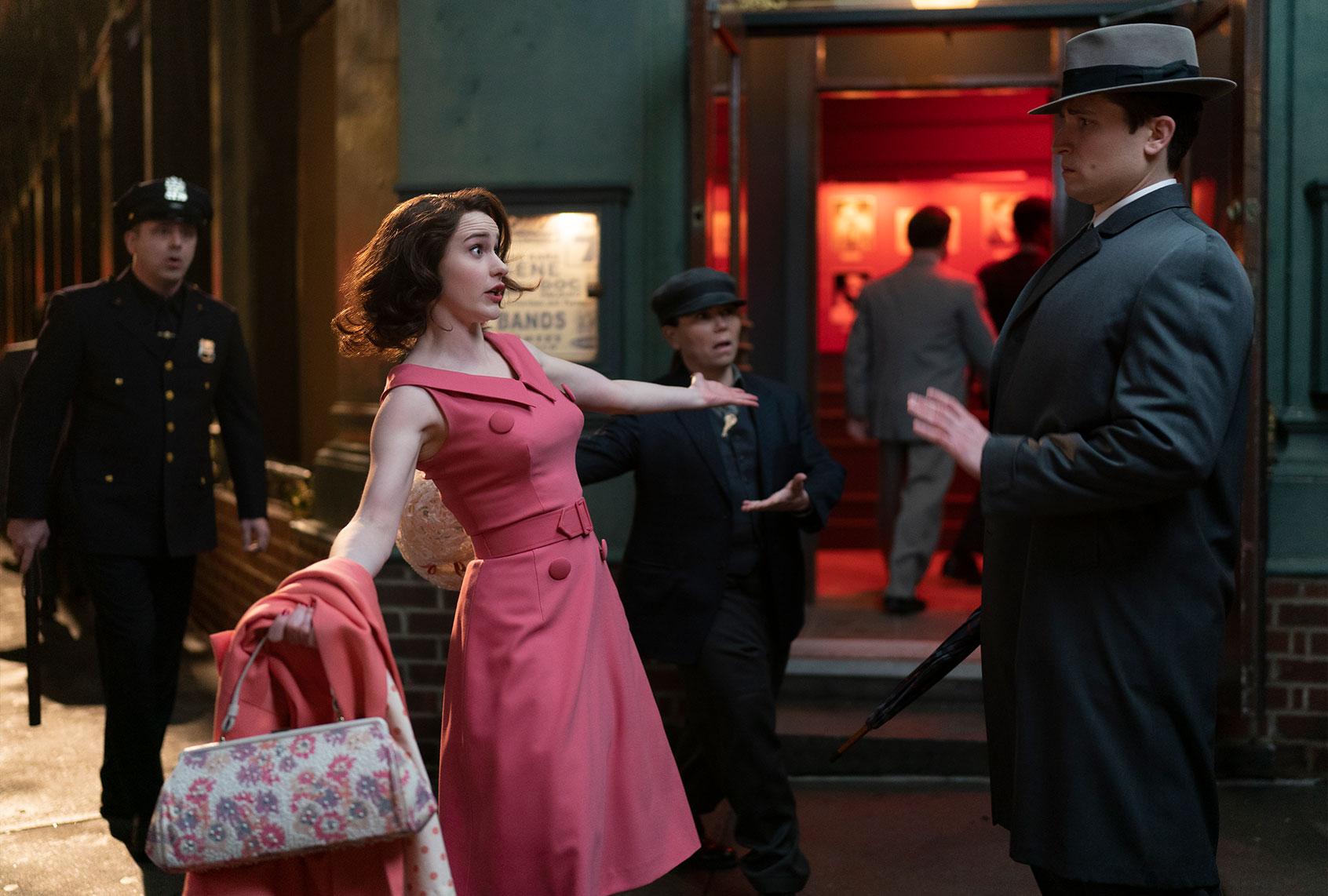
The Marvelous Mrs. MaiselThe Marvelous Mrs. Maisel (Courtesy of Amazon Prime Video)Emmy’s history for rewarding prior nominees and winners has long been established, especially when it comes to shows that are on their way out the door, which explains the 13 nominations for the recently ended Netflix drama “Ozark,” including acting nods for its stars Laura Linney, Jason Bateman, and Julia Garner.

Tempting as it may be to declare this as evidence that Emmys voters are ready to think globally, don’t be so sure.

This also explains the encore nominations for “Killing Eve” stars Jodie Comer (last year’s Outstanding Actress in a Drama winner) and Sandra Oh for their work in a finale season that by most viewers’ metric was . . . not good. In cases like this, the quality of a season matters less than the popularity of the actors.

It seems to matter even less in this year’s comedy categories, where a lackluster season of “The Marvelous Mrs. Maisel” didn’t get in the way of its Best Comedy nod along with its stars Rachel Brosnahan, Alex Borstein, and Tony Shalhoub – all of whom have won before.

Then again, that history of chronically repetitive nominations is weighted more heavily this year toward cable and streaming titles. If all things were equal, NBC’s “This Is Us” would have received a Best Drama grace nod in its final season along with its stars, past Emmy nominee Mandy Moore and winner Sterling K. Brown.

But it, along with another multiple Emmy nominee, ABC’s “Black-ish” and its stars Tracee Ellis Ross and Anthony Anderson, were left out in the cold this time.

What “Abbott Elementary” teaches us

Abbott ElementaryQuinta Brunson in “Abbott Elementary” (ABC/Gilles Mingasson)On the other hand, the strong showing for “Abbott Elementary” in the Best Comedy and comedy acting categories is a high mark for the series and for what it represents about broadcast comedy. Sure, Emmy’s still high on HBO’s “Barry” and “Ted Lasso,” but the ABC sitcom’s nominations prove there’s still life in the broadly-appealing mockumentary format Emmy voters rewarded many times in past years via “Modern Family,” for one.

People searching for evidence of the “Ted Lasso” niceness effect across television may see it here, applied with a down-to-earth vision to a socially relevant subject primarily examined in news features or granular documentaries: underfunded public schools.

At the same time, “Abbott” and Hulu’s “Only Murders in the Building” are the only new entries in the Best Comedy category. CBS’ wonderful “Ghosts” could have easily found a home there, but no such luck.

The “Abbott Elementary” nominations prove there’s still an appeal in the broadly-appealing mockumentary format. 

If you expected FX’s highly deserving “Reservation Dogs” to show up in any of these categories and add an influx of Indigenous representation to the mix, you are right to be disappointed. But that also means you may have expected too much of Emmy voters, a group easily flummoxed by newcomers that challenge stylistic boundaries and categorization.

“Reservation Dogs” is unmistakably a comedy, but it’s also a cinematic exploration spread across eight episodes. Can we honestly expect that to compete against the millionth season of “Curb Your Enthusiasm“?

Very much a country for old men 

Only Murders in the BuildingSteve Martin and Martin Short in “Only Murders in the Building” (Hulu)I’ve already voiced my displeasure about the continuing presence of Larry David’s creaky HBO comedy in Emmy nominations lists, especially in years like this when there are so many more worthy and fresh shows that could occupy that slot instead.
Besides, it’s not all sour grapes and puckered faces with this batch of nominations, even among the old guard. “Hacks” fans have plenty to be pleased about, and there’s no way that I’d knock down Jean Smart’s re-nomination.

I’m similarly free of qualms about Steve Martin’s and Martin Short’s Best Actor in a Comedy nods. That said, Emmy failed to recognize the main reason they and “Only Murders” hit as broadly as they did.

No country for young women

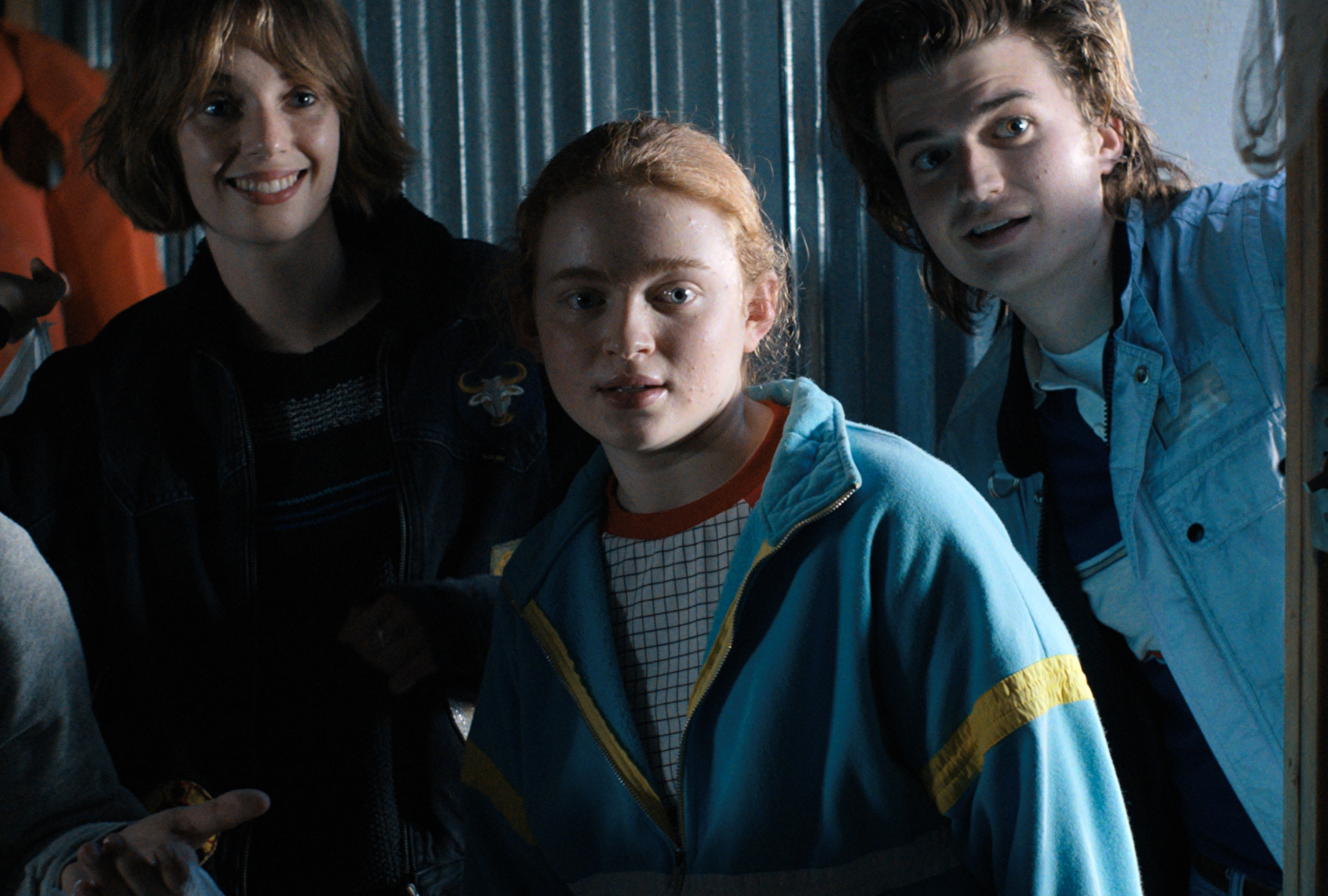
Maya Hawke as Robin Buckley, Sadie Sink as Max Mayfield and Joe Keery as Steve Harrington in “Stranger Things” (Courtesy of Netflix © 2022)Yes, this refers to Selena Gomez’s individual acting snub. She may be the straight woman in this trio, but she makes Martin and Short funnier and better than they’d be without her. Sadly, her lack of a nomination is part of a trend. “Stranger Things” scored a lane in the Best Drama race, but Emmy found no love for Sadie Sink’s standout performance in the fourth season.

Mind you, the drama supporting actress category is incredibly tight this year. Other categories have less of an excuse in that regard. Will the day ever come for “Ziwe” or “The Amber Ruffin Show” to get their propers in the Variety Talk zone? Who can say? They’re still new to the scene and have the added misfortune of not being named Jimmy.


Want a daily wrap-up of all the news and commentary Salon has to offer? Subscribe to our morning newsletter, Crash Course.


The stranger-than-fiction bias in limited and anthology series

Amanda Seyfried as Elizabeth Holmes in “The Dropout” (Beth Dubber/Hulu)Speaking of familiar names, the true-crime trend has taken over the limited series category so completely that all but one of the nominated titles are based on a real story that generated headlines. “The White Lotus,” last year’s critical darling, is the only one that’s entirely fictional, and it’s easier to digest than the more creatively adventurous “Station Eleven,” represented among the top categories with a nomination for Best Actor in a Limited Series, Movie or Anthology series for Himesh Patel.
If Emmy voters truly wished to demonstrate they were forward-thinking, Patel’s young co-star Matilda Lawler would have received a nomination for her mesmerizing performance as young Kirsten in “Station Eleven.” Alas, apparently this year’s supporting actress category for limited series, etc., etc., was set aside for the casts of “The White Lotus” and “Dopesick.” (See: No country for young women). 

The 2022 diversity report card

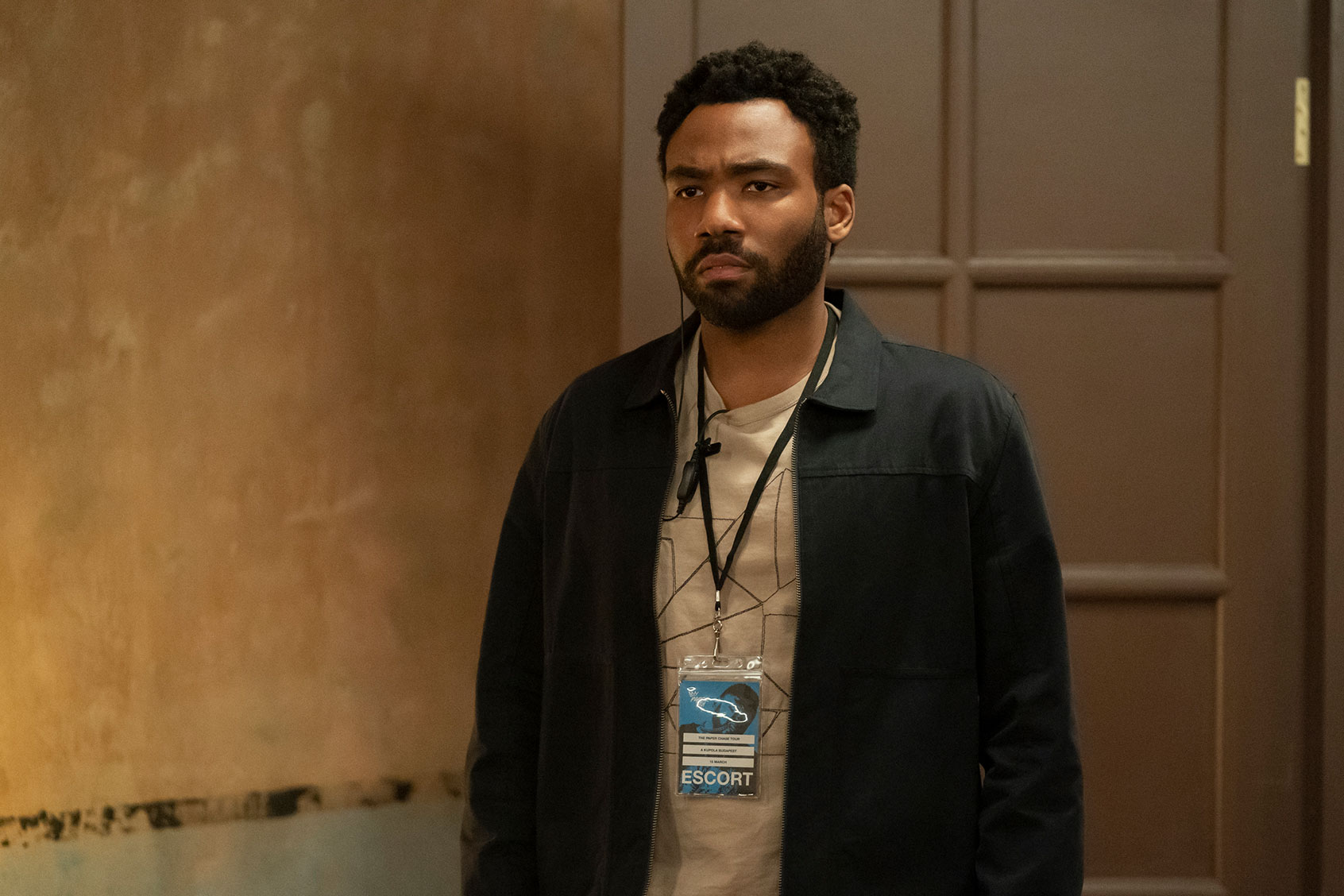
AtlantaDonald Glover as Earn Marks in “Atlanta” (Oliver Upton/FX)Showering fewer scripted shows with multiple nominations means Emmys non-white representation is sizable but limited in scope (where are all the Native nominations?), leaning on “Abbott Elementary,” “Squid Game” and “Ted Lasso” to deliver on the inclusion front, along with Oh, Bowen Yang for “Saturday Night Live,” Issa Rae for “Insecure,” Natasha Rothwell for “The White Lotus” and Donald Glover for “Atlanta.”

That also means that Best Actress and Supporting Actor Categories in a Limited Series, Movie or Anthology consist entirely of white performers since the true crime genre tends to focus on stories about white women and men, usually rich ones, involved in spectacular examples of wrongdoing.

Zendaya netted her second nomination for “Euphoria” while her co-star Hunter Schafer was passed over – which reminds us that last year’s Emmy nominations were notable for the breadth of queer representation. This year that banner is carried by, among others, RuPaul Charles, Jane Lynch on “Only Murders,” Murray Bartlett on “The White Lotus,” along with cast members from “Queer Eye” and “Saturday Night Live” – which is nothing to sniff at, but doesn’t build upon last year’s history-making endorsement of trans visibility.

This, too, is an Emmy standard reflective of the industry as a whole: It takes a while for progress to break habits that favor homogeneity of content and a narrowly cast view.

Be that as it may, if Variety Sketch nominee “A Black Lady Sketch Show” loses again to its only competition in its category, “Saturday Night Live,” we ride at dawn.

The 74th Primetime Emmy Awards airs live at 5 p.m. PT./ 8 p.m. ET on Monday, September 12 on NBC.

More stories like this:


January 6 hearing makes it clear: MAGA is a cult

“President Trump is a 76-year-old man. He is not an impressionable child.”

The seventh of the summer’s public hearings for the January 6th committee opened with Rep. Liz Cheney, R-Wyo., issuing a blunt rebuttal of what has become a popular denial of Donald Trump’s responsibility for the Capitol insurrection: Trump is just too dumb to have known what he was doing.

The argument is that all of the lies about the election were not, as they seem, a deliberate attempt to incite an insurrection. That all of his links to extremist groups who stormed the Capitol are just a remarkable coincidence. That all of his behavior was merely an incoherent tantrum of an idiot man-child who was just unfortunately misinterpreted by his loyal supporters. That Trump is merely an innocent victim of the rioters who took things too far. 

But, as Cheney’s opening statement made clear, the committee is asserting the opposite. Trump is a sinister cult leader who knowingly exploited his gullible followers into rioting on his behalf.

RELATED: Jan. 6 committee puts Proud Boys at center of Trump’s plot to overthrow the election

What the committee hearing on Tuesday made clear is that Trump viewed his supporters as mere instruments in his quest for illegally obtained power. He cared not one whit how much damage he inflicted on his supporters. 

“These Americans did not have access to the truth,” Cheney said of the Big Lie believers. “They put their faith, their trust, in Donald Trump … he deceived them.” 

The same tribalism and self-deception that led these two men to extreme lengths is endemic in the world of Republican voters.

To be sure, there’s a genuine tension there. Painting Trump as a mastermind who knows what he is doing, but portraying his followers — or a good chunk of them, anyway — as mere dupes feels like a contradiction. If the Big Lie is so obviously false that Trump didn’t believe it, then why would his followers believe it? Or, conversely, if his followers convinced themselves the Big Lie was real, then why couldn’t Trump have done the same? Isn’t it simpler to just view Trump and his followers as like-minded liars, people who collectively agree on falsehood in order to achieve their political ends? 


Want more Amanda Marcotte on politics? Subscribe to her newsletter Standing Room Only.


Of course, there’s a political reason for drawing a distinction between Trump-the-knowing-liar and his duped followers. Over 74 million Americans voted for Trump. Dismissing them all as irredeemable fascists is not good politics, especially when the goal is to counter the civil war-style political rhetoric that Trump and his allies have engaged in. As committee Chairman Rep. Bennie Thompson, D-Miss., noted, “We settle our differences at the ballot box.” That is a much easier proposition to return to if Trump voters are allowed an offramp narrative about how they never meant to back a fascist revolt against democracy. 

But it’s also fair to say that the committee made a decent case for this story about a lying Trump sending his sheeplike followers to the slaughter. 

So far, the hearings have presented overwhelming circumstantial evidence suggesting that Trump was actively conspiring with far-right leaders like Steve Bannon and groups like the Proud Boys and the Oath Keepers to plan the Capitol riot. The committee presented direct evidence that Trump spent a good amount of time plotting the march on the Capitol, as well. They showed evidence that such machinations were being hidden even from much of the White House staff. 

RELATED: Don’t believe Steve Bannon: Justice Department exposes desperate ploy to derail Jan. 6 hearings

The committee showed that there was a huge gulf between the information that Trump followers were privy to and the information Trump himself was privy to. Trump, they showed time and again, was being told by all his top advisors and consultants and lawyers that he lost the election. He knew full well that he lost every important court case challenging the election. Under the basic understanding of the law, there’s no way that a reasonable person in his situation could possibly believe the election was stolen.

A message to Trump voters: It’s okay to walk away. It’s okay to entertain doubts. There is a path out, as long as you find the courage to take the first steps. 

His followers, however, were not beneficiaries of a team of lawyers and advisors insisting on facts. The committee argued that many of them — especially those that marched on the Capitol — were submerged into a dystopian world of disinformation that made the Big Lie seem very believable. As Rep. Jamie Raskin, D-Md., said, there were “three rings of interwoven attack”: Trump and his inner circle of coup plotters, the far-right militia groups that were working with Trump allies like Roger Stone and Michael Flynn, and then the MAGA normies who showed up for a rally, only to get swept up in the plot to raid the Capitol. 


Want more Amanda Marcotte on politics? Subscribe to her newsletter Standing Room Only.


The two witnesses, Stephen Ayers and Jason Van Tatenhove, who testified on Tuesday did not speak long. But their brief remarks were effective in portraying how ordinary people got snookered into doing Trump’s bidding. As they spoke, the nuanced aspects came into play. Both men had less than pure intentions, of course, when they first immersed themselves in the MAGA world. But both painted a picture of being pulled in deeper than they ever intended it to go. For Van Tatenhove, the Oath Keepers had quickly become his livelihood and walking away meant financial hardship for him and his family. Ayers, in his brief remarks, came across as someone who had found a community and purpose by steeping himself in the world of MAGA social media. By the time he was at the Capitol, his testimony suggested, he had lost the perspective needed to avoid committing crimes at the president’s behest. 

As former cult member Daniel Barban Levin told Salon last year, “Nobody joins a cult. They join a group of friends or they join a self-help group or whatever it is.” And by the time you realize you’re in a cult, you’re often so enmeshed it’s hard to escape. 

RELATED: Cult expert Steven Hassan sees 95% chance of worsening pro-Trump violence

The same tribalism and self-deception that led these two men to extreme lengths is endemic in the world of Republican voters. It’s why Fox News exists: So that people who want to believe lies have a steady source they can plug into. Fox News drowns out unpleasant facts that can alienate people in red communities from friends, family, and neighbors. Putting Ayers and Van Tatenhove at the center of the hearing today — and portraying them, ultimately, as Trump’s victims — sends a message to Trump voters: It’s okay to walk away. It’s okay to entertain doubts. There is a path out, as long as you find the courage to take the first steps. 

Trump viewed his supporters as mere instruments in his quest for illegally obtained power.

Most Trump voters, of course, will ignore the message. The ego bruising of admitting it was wrong to support him is more than most can take. But still, it’s hard to imagine that some who harbor doubts won’t feel a pang of recognition hearing these two men tell their story. Trump’s power runs only through his cult-like hold over his base. The more people who realize he’s just using them and decide to walk away, the weaker he gets. Because of this, it won’t be a surprise if Ayers and Van Tatenhove get the same vicious treatment that comes for people such as Scientologists who quit the religion. Intimidating followers into staying is a classic cult tactic. But if such tactics are rolled out, it will only serve as more proof that Trump is just another flavor of Jim Jones or David Koresh: Someone who views his followers not as people, but as tools to be used and thrown away as he sees fit. 

RELATED: No regrets for Trump voters: The media needs to stop looking for buyer’s remorse

What does unicorn flavor actually taste like?

Tenth Helpings is a humor column from Food52’s culture critic, Ella Quittner.

I am a Child of the ‘Corn. I was born in 1991 in Long Island — not on, never on — and so I spent much of my youth perusing the Lisa Frank section of our local Rite Aid. Once every few months, I was permitted to buy a pack of stickers, with which I would decorate everything from the plastic-sheathed diary I toted around but rarely wrote in, to the wall of my bedroom closet.

The rainbow leopard was a choice sticker, funky and chic, and a little bit scary. The hot air balloon also had chops; it got to its point rather quickly, and had the added benefit of fitting nicely in between the curvy heart and the shooting star, thanks to its top-heavy design. And I wouldn’t have kicked the oversized butterfly out of a three-pack.

But there was no Lisa Frank sticker more powerful, more omnipotent, more thick with the potential of what life was and what, ultimately, it could be, than the unicorn. The unicorn was the holiest body, the most transcendent form I had ever seen. Conceptually, to me, it represented immortality, and visually, it was all iridescence and bliss. Slap one of those little fuckers on a binder, and suddenly, it did not suck to do math homework.

At some point in the last three decades, I lost touch with that magic. Or something. I must have! It’s the only way I can explain my gut reaction just a few weekends ago, when I discovered a product called “mini funfetti unicorn pancakes” at my local Gristedes, and I wished, in that moment, to be shot directly into the sun.

The Great Unicorn-ing of Big Grocery probably peaked around 2018, when every conglomerate from Kellogg to General Mills had a rainbow-hued offering on shelves. Which is not to say that there’s been much of an ebb. Today, the following unicorn-flavored products are available within a several-mile radius from my apartment: a Betty Crocker Unicorn Cupcake Kit, Snack Pack’s Unicorn Magic Pudding, Little Debbie’s Unicorn Snack Cakes, Funfetti Unicorn Vanilla Frosting, Bang’s Energy Rainbow Unicorn Drink, Key Food Two Bite Unicorn Cupcakes, and the aforementioned mini pancakes, dispatched directly from Satan.

And as I stared down at those tiny, tiny, pancakes, I realized that I couldn’t do anything about it. But I could try to understand it. Empathize with it. Become one with the trend. Maybe, just maybe, rediscover the magic.

That night, in the bath, as I idly traced the outline of a psychedelic hot air balloon against the wet wall, I considered my path forward. It was clear. I would taste every single unicorn-flavored item I could get my hands on. I would eat those processed snacks until I bled pink and blue, until I burped confetti, until I was the ‘Corn and the ‘Corn was me. And then, perhaps, I could never think about it again.

Here are my field notes:

The flavor “unicorn” is sweet — often too sweet, the kind of chemical saccharine that eventually turns to tongue fuzz. Sometimes, “unicorn” is simply a dog-whistle for cotton candy. Other times, it is unabashedly “berry-flavored,” which is not to be confused with the actual flavor of a berry, and which signifies a distinct tang not found in nature, but which is closely related to a Dum Dum lollipop or Lip Smackers gloss. It can also taste like any of the following, on their own or in jarring and disturbing amalgamations: sugar cereal, cherry fluoride, imitation vanilla, Fruit Loops, packaged cake mix, Go-Gurt, bubblegum, and nothing at all.

The flavor “unicorn” is never meaty, never horse-like. Never literal, never horned. Sometimes a unicorn-flavored product will reference the shape of a unicorn, but more often than not, it will lean on lurid food dye to make its point.

The flavor “unicorn” can exist in most any format, because society has determined through its inaction on the matter that the flavor “unicorn” need not adhere to any social contracts. It is lawless. It is chaos in a two-bite cupcake, mayhem in a neon can. We saw the unicorn-flavored products emerge, and we sat at our little desks, typing away at our little computers, hitting send on our little Tweets, and we did not band together to protest, we did not provide feedback in any form, and now my tongue is the color of Smurf bile and my head hurts so badly that I wish to detach it from my body.

The flavor “unicorn” takes no prisoners. It doesn’t give a shit about our expectations. If it were a person, it would be the person who always shows up early to your dinner party in a loud outfit, but not in a cool way. It would be a shock jock. Someone you said hello to, to get it out of the way, before excusing yourself to find the bathroom. The flavor “unicorn” would be a really hot person with a horrible personality, a personality it didn’t reveal to you until it was too late.

The flavor “unicorn” is a violation of everything that Lisa Frank stickers stood for. It is not whimsical, it is not fundamentally a thing of beauty, and it does not make you want to take a little LSD. It is neither fanciful nor fun. The flavor “unicorn” also has nothing to do with an actual (mythical) unicorn, which would bring tears to my eyes, because she would be so beautiful and so free.

The worst iteration of the flavor “unicorn” is Snack Pack’s Unicorn Magic Pudding, which is a shame, because I do love a good Snack Pack. The best iteration of the flavor “unicorn” is Little Debbie’s Unicorn Snack Cakes, which are passable, though they taste faintly of perfume that’s been left in a hot car.

Should you get a little drunk before tasting it, the flavor “unicorn” can be pleasant and satisfying, if a little rough and treacly around the edges. It can hit the spot, so long as the spot is messy and large, an easy target.

The flavor “unicorn” is probably meant for kids. But there are other edible treasures better suited for the kids. Hot dogs cut into boxed mac and cheese! Freshly baked cookies! Dumplings of any kind!

The flavor “unicorn” is a philosophical problem, more than it is a flavor. It calls into question the whole concept of “delight.” How could a snack so sparkly, so affordable, so available in the Gristedes beneath my apartment be so (mostly) ghastly? Either it is a means to an end — corporate America and late-stage capitalism and the grift that is co-opting millennials’ nostalgia for sales of hyper-processed junk food, all rolled into a glittering ball — either it is that, or there is no God. Or there is a God, but he is a dick. The flavor “unicorn” therefore may be the root of all evil, because it engenders such questions. And a whole litany of answers. Like, either God is a dick, or humans are very bad. The flavor “unicorn” makes me think, probably, that humans are very bad.

The flavor “unicorn” will probably outlive us all.

The history of the Swiffer and its cleaning empire

It was 1999. On televisions everywhere in America, an exasperated woman appeared to be shaking years’ worth of dust from a fusty, worse-for-wear mop. In the background came a bubbly ’70s voice, intoning catchy lyrics: “This old mop makes me shake; that old vacuum makes me ache; this old rag draa-aaa-aaags me down.”

And then, a green cardboard box filled the screen, as a smiling woman and her daughter uncased a newfangled cleaning tool. “This box rocks: The radical new Swiffer sweeper. So simple to assemble,” said the narrator. The commercial cut to a dance-y cleaning montage with an equally catchy song about the new tool. And the rest really was history.

The Swiffer had arrived, and the cleaning world would never be the same.

The roots of the Swiffer are contested, but what we do know is that in the mid-1990s, Procter & Gamble set out to scale revenue by identifying uncharted market categories. The big question? Whether there might be a better way to clean floors.

“I remember it vividly,” says Wilbur Strickland, who was the R&D Director for Household Cleaners at Procter & Gamble. “[My colleague] Raleigh comes into the office, and he says, I think what people use — the cloth people use — might actually be more important than the chemical. It was an aha moment, and also a bit scary, because we were working for a chemical company.”

“I became known as the ‘Father of the Mop,'” Raleigh Ormerod tells me. “P&G would not have come up with Swiffer without me. I know that seems like a bold claim.”

Ormerod was a junior team member at P&G at the time. His job was to develop better methods for floor cleaners, and he would write up his findings twice a week. (P&G also owned brands like Mr. Clean, which Ormerod says were underperforming in the market.)

So Ormerod began to run some tests that would better reflect what cleaning challenges the consumer faced at home. Eventually, he teamed up with the Corporate New Venture team. P&G brought on design innovation firms Continuum (now called EPAM Continuum) and Joss Engineering along the way for support. Together, they landed on a new type of mop: a dustpan, broom, and buffer all in one.

Though the Swiffer may not have been so radical after all.

“A similar product was already on the market in Japan, by a company called KAO,” reported a November 1999 article in the Cincinnati Business Courier. Later in the piece, a spokesperson for rival company S. C. Johnson went on record saying, “KAO was marketing this product in Japan for five years.”

Laura King — then Procter & Gamble’s brand manager for Swiffer, countered that “It was something we thought we could do on our own . . . We tend to think we can do things better.” At the time of press, S. C. Johnson had just rolled out its own knockoff, the Pledge Grab-It.

Strickland says that they were aware of the KAO mop, but that they thought they could tweak it, and through the integrations with other P&G intellectual property — for example, what they knew about absorption from the diaper brand they owned — they could riff and improve.

“The team spent hours upon hours interviewing people in their homes and then literally watched people clean their floors — a messy, tedious process involving a mop, bucket, some cleaning detergent, and water. After each interview, the team went back to the office to search for insights and question everything,” says Michaud.

“We started putting out early prototypes,” says Strickland. “And people didn’t realize they had that much dirt on their floors. They would turn over the [Swiffer] like, ‘Oh my god. Can I have one?'”


Swiffer was an instant hit: In the first year the “quick mop” launched, P&G had captured more than 60% of the specialized mop market with its new breakthrough tool, according to a report from growth consultants Fidelman & Co.

Just two years after P&G launched the Original Swiffer, they released the Swiffer WetJet.

Before long, sales hit the billion dollar mark.

A publicly available 2018 report noted that, at the time, Swiffer generated global revenue of at least $500 million annually. Today, a full suite of Swiffer products are available, from the dusting series to an R2D2-looking air cleaner device designed to sit in one’s living room.

The thing they all have in common is convenience.

Strickland tells me that the original Swiffer was aimed straight at parents with young kids, and young adults without much time.

Interest in the products “tends to replenish” with that same group, he says. “Interest gets reborn with the same group of people, who are time pressed.”

No one will give me straight sales data for how Swiffer is performing today. A few former P&G team members without access to the numbers speculate that based on its volume and placement at big retailers, it’s still selling quite well, despite the growth of competitors like Roomba and Dyson.

Of course, over the past few years, the broader cleaning market has boomed, thanks to the pandemic. A PR representative from MSL Group, which works with Swiffer, tells me only that “During the pandemic . . . we saw an increase in Swiffer usage. As the pandemic has subsided, we have seen that trend continue.”

Swiffer may not yet be a relic of rapacious consumerism from a bygone era that valued instant gratification over everything else; but still: The biggest bone most have to pick with Swiffer is an environmental one. Many of its models rely on a one-time pad that gets thrown away after a quick clean. “Procter & Gamble is turning a profit at the expense of our forests,” said the subject line of a recent listserv from Friends of the Earth.

A few more eco-friendly options have emerged, like the Bona Mop or Easily Greener Mop Pads. But with the exception of a few outspoken critics like Jolie Kerr, Swiffer still dominates the cleaning market, to the point that it has become a household verb.

As we wrap up our conversation, Strickland tells me to Google-search the phrase “I love Swiffer.”

When the mop first launched, he says, it was a metric their team used as a crude litmus test for popularity.

“Every so often,” he says, “Someone would say, ‘Oh, now it’s up to 250,000 results!'”

I do as instructed, and in less than one second, I am met with 2,100,000 results.

“We didn’t really track it, or have a chart,” he says. “But we liked to see how it was progressing.”

A surgeon explains why AR-15-style rifles are so deadly

The semi-automatic weapon known as an “AR-15-style” rifle has become synonymous with mass shootings in America. Indeed, this style of gun is often in the news for being the gun of choice for many mass shooters. 

Most recently, the weapon used during the mass shooting at a suburban Fourth of July parade in Highland Park, Illinois, was a Smith & Wesson M&P15 — an AR-15 style semi-automatic rifle made by gun manufacturer Smith & Wesson. In Uvalde, Texas, an AR-15-style rifle was used to fatally shoot nineteen students and two teachers at an elementary school. An AR-15-style rifle was also used in the Sandy Hook massacre.

The “AR”  in “AR-15” rifle stands for ArmaLite rifle, which is the name of the company that developed the weapon in the 1950s. The term “AR-15-style” is now used to refer to any rifle of that style. The original rifle was made for military use, but when the company failed to get buyers, it rebranded it for civilian use. Today, there are many different AR-15-style rifles on the market. According to the National Shooting Sports Foundation, there are an estimated 19.8 million AR-15 style rifles in circulation in the country — a significant increase from the 8.5 million that were circulating before the federal assault weapons ban expired in 2004.

RELATED: New American traditions born of violence

As AR-15s are repeatedly used in mass shootings across the country, doctors have spoken up on what treating patients with injuries sustained by these weapons are like— and how these wounds are more severe and disconcerting than, say, from a knife or handgun.

“In a typical handgun injury, which I diagnose almost daily, a bullet leaves a laceration through an organ such as the liver,” Heather Sher, a radiologist who treated victims of the Parkland shooting in 2018, wrote in The Atlantic. “To a radiologist, it appears as a linear, thin, gray bullet track through the organ. There may be bleeding and some bullet fragments.”

But when she looked at a CT scan from one of the Parkland victims, who was shot by an AR-15-style rifle, “the organ looked like an overripe melon smashed by a sledgehammer, and was bleeding extensively.” She was amazed at how a gunshot wound could cause so much damage.


Want more health and science stories in your inbox? Subscribe to Salon’s weekly newsletter The Vulgar Scientist.


A semi-automatic weapon like an AR-15-style one automatically reloads after each shot, and can hold around 30 bullets before the shooter needs to reload the gun. Besides its efficiency, what makes an AR-15-style rifle dangerous is that it has a higher muzzle velocity, meaning that a bullet travels nearly 3,000 feet per second. For comparison, a ​9-millimeter handgun’s bullets travel at 1,200 feet per second.

Dr. Joseph Sakran, director of emergency general surgery at Johns Hopkins Hospital and a gun violence survivor, told Salon in an interview to think about the injuries sustained by an AR-15-style rifle as if there are two types of cavities created by the weapon.

“Depending upon the trajectory, if it goes through a named artery or a vital organ, you can imagine that trajectory of simply that bullet and that permanent cavity is going to cause life threatening damage,” Sakran said. The second cavity he likened to when a big boat leaves behind a bumpy wake in a lake. “”You have bullets that are traveling at high speeds that result in a significant amount of energy distributed to the surrounding tissue, causing this temporary cavity that causes a significant blast injury that can be very, very deadly and cause significant injury.”

Sakran said when treating patients who have been shot with AR-15-style guns, the “destruction is much greater” than that caused by a handgun. Sakran said body tissue can be so “destroyed and pulverized” that it is hard to treat.

In other words, these fast-moving bullets essentially create shock waves in the body that cause tremendous damage to organs and tissue. Since different types of AR-15-style rifles use different kinds of bullets, Sakran said the severity of the injury to the permanent cavity can depend on the bullet. But the velocity is a huge factor, regardless of bullet size.

Though we know that the speed of the bullet makes them tear through organs in a much more dramatic fashion, it is hard to quantify the likelihood of surviving a shot from an AR-15-style rifle due to all the other compounding factors. 

“I think it’s hard to really kind of put into numbers, the likelihood of surviving, because it’s so dependent upon trajectory,” Sakran explained, providing an example of being shot, but the bullet grazes the top of his flesh. “I’m going to have a flesh wound, but if that is a little bit lower, say into a different angle, and it gets my femoral artery, then my risk of death has just gone up.”

“It’s not uncommon to see bones that are disintegrated,” Sakran said.

Survival could depend on if a main vessel is hit or not. Still, Sakran said when treating patients who have been shot with these kinds of guns, the “destruction is much greater” than that caused by a handgun. Sakran said body tissue can be so “destroyed and pulverized” that it is hard to treat.

“It’s not uncommon to see bones that are disintegrated,” Sakran said. “You can have tissue that looks incredibly jagged and just even has become necrotic in how it looks and how it feels because, again, that energy and that blast effect has really impacted and caused this kind of cavitation that occurs.”

Sakran said this kind of sustained injury can be especially life-threatening in children.

“In children, you can imagine that their vital organs are much more narrowly condensed, right?” Sakran said. “It’s not a surprise how devastating these injuries are for children.”

Though the protocol is the same for gunshot victims regardless of the specific weapon, Sakran said that when he’s treating a victim of an AR-15-style rifle, in the back of his mind he knows the injuries are more likely to be life-threatening.

“I know that I’m probably about to face really significant intra abdominal injuries or this is going to require some extensive operative intervention to save this person,” Sakran said. “It is just very clear to me that the amount of death and destruction that one can cause with an assault-style rifle cannot be compared to someone [hurt] with a knife or even a handgun.”

Read more

about America’s gun violence crisis:

George R.R. Martin gives huge update on “The Winds of Winter”

A Song of Ice and Fire” author George R.R. Martin has just given arguably the biggest update on his long-awaited book “The Winds of Winter “that we’ve gotten in years. The wait for “Winds” may not be over quite yet, but it just got a whole lot more interesting.

Taking to his trusty Not A Blog, Martin began by outlining a very important thing about his writing process: he is a “gardener,” not an “architect.” If this is the first time you’re hearing those phrases, basically what it amounts to is that Martin believes there are two types of writers: those who plan everything out and know every minute detail of their stories before they put pen to paper (architects), and those who follow the ebb and flow of the story, letting it pull them in unexpected directions (gardeners). Martin has always said he considers himself more of a gardener; he knows the large benchmarks for his series, but he won’t discover the details until writing them.

It turns out, those smaller details are starting to add up to major changes in A Song of Ice and Fire, and they’re taking Martin “further and further away from the [events of] the television series.”

It turns out, those smaller details are starting to add up to major changes in “A Song of Ice and Fire,” and they’re taking Martin “further and further away from the [events of] the television series.”

“A Song of Ice and Fire” will be significantly different than “Game of Thrones”

Martin is planning two more books in his “A Song of Ice and Fire” series: “The Winds of Winter” and “A Dream of Spring.” (The show adapted the five books he already has out, which took us roughly to the end of season 5.) To hear him tell it, those two books will diverge from “Game of Thrones” in some pretty significant ways.

I have been at work in my winter garden. Things are growing . . . and changing, as does happen with us gardeners. Things twist, things change, new ideas come to me (thank you, muse), old ideas prove unworkable, I write, I rewrite, I restructure, I rip everything apart and rewrite again, I go through doors that lead nowhere, and doors that open on marvels.

Sounds mad, I know. But it’s how I write. Always has been. Always will be. For good or ill.

What I have noticed more and more of late, however, is my gardening is taking me further and further away from the television series. Yes, some of the things you saw on HBO in “GAME OF THRONES “you will also see in “THE WINDS OF WINTER” (though maybe not in quite the same ways)… but much of the rest will be quite different.

Martin credits a lot of the changes to the fact that there are so many other characters that don’t exist in the show, and that many of the characters that do exist in the show are quite different in the books.

And really, when you think about it, this was inevitable. The novels are much bigger and much much more complex than the series. Certain things that happened on HBO will not happen in the books. And vice versa. I have viewpoint characters in the books never seen on the show: Victarion Greyjoy, Arianne Martell, Areo Hotah, Jon Connington, Aeron Damphair. They will all have chapters, and the things they do and say will impact the story and the major characters who were on the show. I have legions of secondary characters, not POVs but nonetheless important to the plot, who also figure in the story: Lady Stoneheart, Young Griff,  the Tattered Prince, Penny, Brown Ben Plumm, the Shavepate, Marwyn the Mage, Darkstar, Jeyne Westerling. Some characters you saw in the show are quite different than the versions in the novels. Yarra Greyjoy is not Asha Greyjoy, and HBO’s Euron Greyjoy is way, way, way, way different from mine. Quaithe still has a part to play. So does Rickon Stark. And poor Jeyne Poole.   And . . . well, the list is long. (And all this is part of why WINDS is taking so long. This is hard, guys).

There will be no new point-of-view chapters in “The Winds of Winter”

“Oh, and there will be new characters as well,” Martin added. “No new viewpoints, I promise you that, but with all these journeys and battles and scheming to come, inevitably our major players will be encountering new people in lands far and near.”

I can’t lie, I did arch a brow at the promise of no new viewpoint characters. I believe it . . . right up until Martin discovers the need for one while he’s gardening. Also, can I just point out that Areo Hotah is in the television show, but was unceremoniously killed off after a mere handful of scenes? Apparently the show did him dirty so badly that even Martin himself forgot about poor Areo.

“A lot” will be different about the ending to “A Song of Ice and Fire”

Martin also cautions that just because a character survived to the end of “Game of Thrones” doesn’t mean they are safe in his books, nor will all the characters who died on the show die in the books. “Of course, I could change my mind again next week, with the next chapter I write. That’s gardening.”

And then there’s the ending of “Game of Thrones,” which kicked up so much dust when it aired in 2019. “You will need to wait until I get there,” Martin writes. “Some things will be the same. A lot will not. No doubt, once I am done, there will be huge debate about which version of the story is better. Some people will like my book, others will prefer the television show. And that’s fine, you pay your money and your make your choice. (I do fear that a certain proportion of fans are so angry about how long “WINDS” has taken me that they are prepared to hate the book, unread. That saddens me, but there’s nothing I can do about it but write the best book that I can, and hope that when it comes out most fans will read it with clean hands and an open mind).”

That’s all I can tell you right now. I need to get back to the garden. Tyrion is waiting for me.

George R.R. Martin’s latest update teases big changes from Game of Thrones

I can’t lie: I’m pretty excited about this update. No, Martin didn’t give us a release date, but this is the most he’s talked about Winds in quite a while. Hearing about how his writing is leading him further from the television adaptation is intriguing. There are a whole lot of characters that are in the books who aren’t in the show; Lady Stoneheart and “Young Griff” in particular are two who have the potential to have far-reaching ramifications on the story. How will they, and all those other characters, change the narrative from “Game of Thrones”?

We’ll only know for sure once The Winds of Winter comes out. Until then, our watch continues.

Law professor schools Josh Hawley over “transphobic” line of questioning: “You should join my class”

During a United States Senate hearing on abortion access on Tuesday, University of California Berkeley Law Professor Khiara Bridges schooled Senator Josh Hawley (R-Missouri) over how right-wing rhetoric endangers the lives of transgender individuals.

Hawley was noticeably annoyed by the idea that cisgender women are not the only people who can get pregnant. Bridges tried to explain that right-wing rhetoric that excludes transgender Americans from the conversation endangers their lives.

“We can recognize that this impacts women while also recognizing that it impacts other groups. Those things are not mutually exclusive, Senator Hawley,” Bridges said.

“So your view is, is that the core of this right, then, is about what?” Hawley asked.

“So I want to recognize that your line of questioning is transphobic and it opens up trans people to violence by not recognizing them,” Bridges replied.

“Wow, you’re saying that I’m opening up people to violence by asking whether or not women are the only folks who can have pregnancies?” Hawley recoiled.

Pretty much, Bridges responded.

“So I want to note that one out of five transgender persons have attempted suicide. So I think it’s important…” she began. Hawley, however, immediately interrupted her.

“Because of my line of questioning? We can’t talk about it?” he repeated.

“Because denying that trans people exist and pretending not to know that they exist…” Bridges attempted to say before Hawley cut her off again.

“I’m denying that trans people exist by asking you if you’re talking about women having pregnancies?” an obtuse Hawley said while refusing to let Bridges finish her answer.

Bridges then asked him, “Do you believe that men can get pregnant?”

Hawley said, “no, and that leads to violence?”

Bridges informed him that it does because it ignores “that trans people exist.”

Hawley then tried to attack Bridges’ credibility as an educator.

READ MORE: “That’s not how this world works”: Josh Hawley gets schooled on the Senate floor

“Is this how you run your classroom? Are students allowed to question you or are they also treated like this, where they’re told they’re opening up people to violence?” he interjected.

“Oh, we have a good time in my class, you should join, you might learn a lot,” Bridges quipped.

“I’ve learned a lot,” Hawley added.

“I know,” Bridges concluded.

Watch the video below or at this link.

u201cBridges to Hawley: I want to recognize that your line of questioning is transphobicu201d

— Acyn (@Acyn) 1657642732

The first five images from the James Webb Space Telescope, explained

It was a giddy Tuesday morning at NASA’S Goddard Space Flight Center in Greenbelt, Maryland. At one point NASA Administrator Bill Nelson even joked that the mood was more akin to a pep rally than a stuffy scientific press conference.

Yet the joy was not misplaced. Long-awaited images produced by the groundbreaking James Webb Space Telescope were finally going to be revealed to the public. The five images ran the astronomical gamut: one was an image of some of the oldest and most distant objects in the universe; another was not a literal image, but observational data revealing the composition of the atmosphere of a planet in an alien solar system around 1000 light-years away. 

Nelson commented that President Joe Biden and Vice President Kamala Harris had asked to see the pictures in advance, and met in secrecy in the White House to do so.

They were “like kids,” Nelson recalled. Another host commented that they “geeked out.”

With characteristic optimism, Nelson ended the rally by promising that visits to the Moon and Mars were next on NASA’s itinerary. It is unclear if the agency can back up that bravado; the history of American space exploration has contained many unfulfilled promises and disappointments.

Yet at least on Tuesday — with the revelation that the James Webb Space Telescope had abundantly succeeded in its mission — NASA could at least say, on this occasion: Mission accomplished.


Want more health and science stories in your inbox? Subscribe to Salon’s weekly newsletter The Vulgar Scientist.


These are the five images that were revealed, and what each one means for humanity. 

1. SMACS 0723

SMACS 0723NASA’s James Webb Space Telescope has produced the deepest and sharpest infrared image of the distant universe to date. Known as Webb’s First Deep Field, this image of galaxy cluster SMACS 0723 is overflowing with detail. (NASA, ESA, CSA, and STScI)This is not only the first full-color image to be produced by the James Webb Space Telescope; it is also, to date, the most clear and full infrared image of the distant universe ever produced.

“This image covers a patch of sky approximately the size of a grain of sand held at arm’s length. It’s just a tiny sliver of the vast universe,” Nelson explained in a statement. Another host commented that the telescope was so powerful, the scientists could not find a single spot where there was mere blank sky: “It’s teeming with galaxies!”

One of the selling points of the James Webb Space Telescope is that it can detect infrared light — historically, the most difficult part of the electromagnetic spectrum for astronomers to observe. Indeed, from Earth’s surface, infrared astronomy is virtually impossible because of all the infrared light generated on Earth from heat, and which is scattered in the atmosphere. Only in the darkness of space can a telescope like James Webb detect infrared light. That incredible ability allows for the space telescope to take images like this one, which would be impossible with even the largest ground-based telescope.

If you look carefully at the image, you will see white galaxies that were formed roughly around the time that the Earth and Sun were also being formed. Some galaxies look stretched and pulled because they’ve been distorted by gravity from black holes or supermassive galaxies with black holes at their center, as Einstein famously predicted.

2. The Southern Ring Nebula

Southern Ring NebulaTwo cameras aboard Webb captured the latest image of this planetary nebula, cataloged as NGC 3132, and known informally as the Southern Ring Nebula. It is approximately 2,500 light-years away. (NASA, ESA, CSA, and STScI)It might look like a jellyfish without any tentacles, but it’s actually the Southern Ring Nebula, approximately 2,500 light years away from Earth, and officially dubbed NGC 3132. A planetary nebula is created when a dying star expels large amounts of mass over a period of successive waves; in these pictures, we can see those waves. There is also a “bubbly, almost foamy” orange material around the edges (blue in the mid-infrared version) that exists because molecular hydrogen expands and lights up the gas and dust.

The image is false-color, and depending on whether you’re looking at it with near-infrared light versus mid-infrared light, the image has been colored to appear more blue or red respectively.

The hosts also noted an “eager egg,” a narrow filament near the top of the nebula that is radially aligned and appears to be blue in the near-infrared image. One astronomer had initially insisted it was nothing remarkable; others speculated that it could be an edge-on galaxy, or a disk galaxy that appears at high angles to the line of sight. The doubting astronomer lost the bet; it was, indeed, an edge-on galaxy.

3. Stephan’s quintet

Stephan's QuintetIn an enormous new image, NASA’s James Webb Space Telescope reveals never-before-seen details of galaxy group “Stephan’s Quintet” (NASA, ESA, CSA, and STScI)This awe-inspiring feature is 290 million light years away from Earth. Situation in the constellation Pegasus — named after the winged horse from Greek mythology — it stunned astronomers when it was first discovered in 1877: They had never seen such a compact group of galaxies. Locked in a sort of cosmic dance, two of the galaxies are currently in the process of merging within each other. This new image is considered to be especially significant because it shows the type of interaction that drives the evolution of galaxies and can be the mechanisms for galaxies’ growth. It provides scientists with new insights into how galactic interactions lead to star formation, as well as reveals more detail about a black hole in that region.

“The image also shows outflows driven by a black hole in Stephan’s Quintet in a level of detail never seen before,” NASA officials said. 

4. Carina Nebula

Carina NebulaThis landscape of “mountains” and “valleys” speckled with glittering stars is actually the edge of a nearby, young, star-forming region called NGC 3324 in the Carina Nebula. Captured in infrared light by NASA’s new James Webb Space Telescope, this image reveals for the first time previously invisible areas of star birth. (NASA, ESA, CSA, and STScI)It almost looks like a rough horsehair blanket, deep red and beige, with a classic and sharp blue night sky peeking up from behind it. One could imagine a camper in a sleeping bag gazing up at the stars while snuggled in warmly and receiving a view along these lines.

Except this is no ordinary view. Only 7,500 light years away from Earth, and located in our own Milky Way galaxy, the Carina Nebula has beguiled scientists for generations. This new image reveals, with unprecedented clarity, individual stars and emerging stellar nurseries that had not previously been seen. 

“These observations of NGC 3324 will shed light on the process of star formation. Star birth propagates over time, triggered by the expansion of the eroding cavity,” NASA writes. “As the bright, ionized rim moves into the nebula, it slowly pushes into the gas and dust. If the rim encounters any unstable material, the increased pressure will trigger the material to collapse and form new stars.”

5. WASP-96 b (spectrum)

WASP 96 bNASA’s James Webb Space Telescope has captured the distinct signature of water, along with evidence for clouds and haze, in the atmosphere surrounding a hot, puffy gas giant planet orbiting a distant Sun-like star. The observation, which reveals the presence of specific gas molecules based on tiny decreases in the brightness of precise colors of light, is the most detailed of its kind to date, demonstrating Webb’s unprecedented ability to analyze atmospheres hundreds of light-years away. (NASA, ESA, CSA, and STScI)Picture a gas giant with less than half the mass of Jupiter, but is also 1.2 times greater in diameter. You’d have WASP-96 b, which NASA describes as “a hot, puffy gas giant planet orbiting a distant Sun-like star.” Discovered in 2014, the unusual planet was noted for such quirky traits as orbiting its own star every 3.4 days, giving it a temperature of over 1,000 degrees Fahrenheit. Using sophisticated scientific instruments, the telescope actually took measurements of the atmosphere by analyzing the spectrums of light that passed through it.

“Researchers will be able to use the spectrum to measure the amount of water vapor in the atmosphere, constrain the abundance of various elements like carbon and oxygen, and estimate the temperature of the atmosphere with depth,” NASA writes. “They can then use this information to make inferences about the overall make-up of the planet, as well as how, when, and where it formed.”

Read more

on astronomy:


Armed man arrested for threatening to kill Democratic congresswoman at her home

A 48-year-old Seattle man was arrested on Tuesday on suspicion of a hate crime after threatening to assassinate Rep. Pramila Jayapal, D.Wa.

According to The Seattle Times, the man was caught standing outside Jayapal’s Seattle residence spouting threats and obscene language just before midnight this past Saturday. 

When officers arrived on the scene, the man reportedly had a handgun at his waist. According to neighbors, the man apparently drove by the lawmaker’s house three times and at one point told Japayal to “go back to India, I’m going to kill you.” 

RELATED: Kentucky shooting was aimed at Democratic mayoral candidate, police say

Court documents reportedly reveal that the man knew that he was outside the congressman’s home, which appears to be half a mile from his own. The man also said he wanted to pitch a tent just outside Jayapal’s home, The Seattle Times reports.

“Congresswoman Jayapal confirms that incidents occurred at her Seattle home on Saturday night when she was present. The Congresswoman and her family are safe and appreciate the many calls and good wishes she is receiving from constituents,” spokesperson Siham Zniber told The Seattle Times in a statement. “She is very grateful for the swift and professional response from the Seattle Police Department, the U.S. Capitol Police, and the FBI investigators who are working together diligently on the investigation and ensuring that she and her family stay safe.”

The man reportedly faces a malicious harassment charge and is being held on a $500,000 bail. The King County Prosecuting Attorney’s Office also stated that the man was a danger to his surrounding community. 

Shortly after the news broke, Rep. Ilhan Omar, D-Minn., a fellow member of the Squad, tweeted that she was “glad they arrested the man and @PramilaJayapal and her family are safe.”


Want a daily wrap-up of all the news and commentary Salon has to offer? Subscribe to our morning newsletter, Crash Course.


“The right wingers crying over protesters often won’t talk about their deranged supporters threatening to kill lawmakers with an ounce of care or concern,” the lawmaker added. 

https://twitter.com/IlhanMN/status/1546874914409422850

RELATED: House Republican publishes compilation of violent and threatening phone calls from Trump supporters

“Wonder if this will get even 1% of the attention on the right as the Kavanaugh restaurant protest,” added MSNBC host Medhi Hasan. “Unlike those peaceful protesters who Kavanaugh didn’t even see, this guy was allegedly armed and yelling death threats outside ⁦⁦@RepJayapal house.”

Hasan was referring to an incident in which conservative Supreme Court Justice Brett Kavanaugh fled a D.C. steakhouse after a group of pro-choice demonstrators protested outside the building in response to Kavanaugh’s rescission of Roe v. Wade.

The incident is part of a broader uptick in threats against member of Congress. According to data released by the U.S. Capitol Police, just under 10,000 threats against congressional lawmakers were investigated in the last year alone.

Tucker Carlson tells Fox News audience that American education “wrecked” by desegregated busing

On Monday, Fox News host Tucker Carlson claimed that busing for the purposes of racial desegregation “wrecked” the country’s school system, suggesting that it’s morally tantamount to a government overthrow. 

The pundit’s comments came just days after thousands of protesters stormed the Sri Lankan capitol building in protest of poor living conditions, leading to the impending resignation of the country’s president this Wednesday. 

Carlson, not a known expert in Sri Lankan politics, blamed the upheaval on liberals and environmentalism. 

“So we know what you’re thinking: ‘Oh, so pampered, lifestyle liberals just destroyed something else.’ They did to Sri Lanka what busing did to American education, just absolutely wrecked it and walked away like it never happened. That’s the downside. People’s lives were destroyed. It happened a lot,” Carlson said as the Fox News chyron suggested this was a result of the so-called Green New Deal, a proposal to tackle climate change that has stalled in the U.S. Congress. 

RELATED: More advertisers flee after Fox News host Tucker Carlson falsely claims white supremacy is a “hoax”

Busing, the practice of transporting kids outside their school districts to attend class, first began in the 1950s as a way to racially integrate schools during the civil rights movement. In 1971, the Supreme Court ruled that courts could formally mandate the practice, escalating white flight from urban areas. 

Since then, conservatives have repeatedly argued that that busing was a political failure, since it led to further segregation in certain segments of the country. But overall, while the program has hardly ended school segregation, the policy was broadly effective in diversifying America’s educational system.

This isn’t the first time that Carlson has used his Fox News platform to push such skepticism of desegregation. 

“Forced busing was a disaster from the beginning to the end. Nobody liked it,” Carlson claimed in 2020.

Over the years, Carlson has consistently denied allegations of racism, saying in 2018, “I’m not a racist. I hate racism.” However, the conservative pundit consistently promotes claims and conspiracy theories that critics have argued are plainly problematic.


Want a daily wrap-up of all the news and commentary Salon has to offer? Subscribe to our morning newsletter, Crash Course.


For one, Carlson is an ardent believer in the “Great Replacement” theory, which baselessly holds that congressional Democrats are deliberating loosening the nation’s borders in order to change the racial makeup of the country. This demographic shift, by his account, is designed to help Democrats create an easily manipulable voting bloc from various Third World countries. 

RELATED: Tucker Carlson guest tells black Americans “you need to move on” from slavery on Fox News

Carlson has also called white supremacy “a lie,” saying it’s “a hoax, just like the Russia hoax. It’s a conspiracy theory used to divide the country.”

And in 2019, on the subject of reparations, Carlson boosted a guest who told Black Americans that they need to “move on from slavery,” resulting in a mass exodus of advertisers from the show. 

In an exhaustive review of his broadcasts this April, The New York Times concluded that Carlson’s segment “may be the most racist show in the history of cable news.”

We don’t need no education: Now Arizona says teachers don’t require college degrees

Last week, just days after the Arizona legislature passed the most expansive school voucher law anywhere in the nation, Gov. Doug Ducey signed into law another education measure decreeing that public school teachers are no longer required to have a college degree of any kind before being hired. Arizona teachers will only have to be enrolled in college in order to begin teaching the state’s public school students. 

The law, SB 1159, was pushed by conservatives on the grounds that Arizona has faced a severe teacher shortage for the last six years, which, by this winter, left 26% of teacher vacancies unfilled and nearly 2,000 classrooms without an official teacher of record. That shortage has led supporters of the bill, including business interests such as the Arizona Chamber of Commerce, to claim that loosening teacher credential requirements will help fill those staffing gaps. Opponents of the bill, however, point to the fact that Arizona has the lowest teacher salaries in the country, even while boasting a budget surplus of more than $5 billion. 

“Arizona’s teacher shortage is beyond crisis levels,” tweeted Democratic state Rep. Kelli Butler this March. “Instead of offering real solutions (like increasing pay & reducing class sizes) the House Education Committee passed a bill to reduce the requirements to teach.”

“With Arizona trying to get education monies to parents directly to pay for schooling — including homeschooling — you see more evidence that the state doesn’t care who teaches its kids,” said David Berliner, an education psychologist at Arizona State University and former president of the American Educational Research Association. “Charters and private schools for years have not needed certified folks running schools or teaching kids — as long as the voucher for the kids shows up.” Combined with its new law creating a universal voucher system, Berliner added, “Arizona may now be the most radical state in terms of education policy.” 

But Arizona also isn’t alone. In fact, attacks on teacher credentials or teacher education have been piling up in recent months. 

Teaching candidates with advanced degrees, says anti-CRT activist Christopher Rufo, should be viewed with suspicion: Don’t “hire the ones with the masters, because those are the crazies.”

In April, anti-CRT activist Christopher Rufo called for state lawmakers to rescind requirements that teachers hold education degrees, claiming that masters programs in education only exposed future teachers to left-wing ideology. Instead, Rufo argued, public schools should only require bachelor’s degrees for new hires, predicting that in time school officials would come to view applicants with advanced degrees as suspicious: Don’t “hire the ones with the masters, because those are the crazies.” 

Earlier this month, Tennessee’s NewsChannel 5 reported that Larry Arnn, president of Hillsdale College, an influential conservative institution that oversees a nationwide network of charter schools, had denigrated public school teachers in harsh terms during a private event with Tennessee Gov. Bill Lee, describing them as products of “the dumbest parts of the dumbest colleges in the country.” 

Just last week, as Salon reported, a new set of “model” social studies state standards released by a right-wing coalition called the Civics Alliance took a detour into teacher credentialing. While most of the model standards covered guidance for state legislators to press for anti-“woke” history and civics curricula (i.e., lectures on the “George Floyd Riots” or how America’s founding principles are “rooted in Christian thought”), the document also calls for reforming teaching licensing processes so as to “end the gatekeeping power of the education schools and departments.” 


Want a daily wrap-up of all the news and commentary Salon has to offer? Subscribe to our morning newsletter, Crash Course.


None of this is coincidental. In February, the right-wing bill mill American Legislative Exchange Council, or ALEC, described “alternative credentialing” of teachers as one of its “essential policy ideas” for 2022 — part of a three-pronged education agenda that also includes plans to expand “parental rights” and “school choice.” 

In fact, ALEC, which has included staffers of online for-profit school corporations among its leadership, has had a model bill called the Alternative Certification Act available for state legislators to adopt since 2005. As Brendan Fischer and Zachary Peters wrote at PR Watch, versions of the act were introduced in four states by 2016, including Wisconsin, which also surreptitiously added a provision to its budget in 2015 allowing people without even high school degrees to teach some public school subjects (which apparently went too far for Wisconsin voters). 

“Along with its bills supporting minimum wage repeal, living wage repeal, prevailing wage repeal,” Peters and Fischer wrote, “the ‘alternative certification’ bill and ALEC’s union-busting portfolio can be viewed as part of ALEC’s ongoing effort to undermine an educated and well-paid workforce and promote a race to the bottom in wages and benefits for American workers.” 

But this standing agenda item has recently become a far more substantial part of conservatives’ attack on public education. In 2020, Frederick Hess, director of education policy at the American Enterprise Institute, argued that the “teacher-licensure racket” should become a more substantial focus of the right, helping pave the way toward a radical reimagining of teachers’ jobs. 

Now many conservatives want to undo the “teacher-licensure racket,” undermining unions and university education programs and paving the way toward a radical reimagining of teachers’ jobs.

“Dislodging a complicated, bureaucratic sector will entail pilot projects, philanthropy, and energetic leadership at the state and local levels,” Hess wrote in an article at National Affairs. But such an all-hands effort could spark a chain of events, he continued: First, governors would push their education commissioners to establish new teacher job descriptions. Those new job descriptions would in turn require new sorts of training programs, “ideally out from under the roofs of traditional education schools.” That would in turn force changes on both education unions — a longstanding bête noire of the right — and university education programs, which Hess envisioned being subjected to “the same healthy market pressures” that other unlicensed professions, such as business or journalism, face. “Absent a licensure requirement, the question will be whether programs are equipping graduates with essential skills and knowledge,” Hess wrote. “If so, programs will prosper; if not, they will not.” 

In 2021, other conservative leaders took up the cause. In an American Conservative article entitled “Sick of the Teachers,” conservative legal commentator George Liebmann declared that elementary school teachers shouldn’t be required to have more than one term of instruction in pedagogy, and secondary teachers shouldn’t be required to have any at all. Such changes, he argued, would eliminate “the protective tariff that excludes 90 percent of college graduates from the teaching force,” and would both open the schoolhouse door to “educated housewives,” veterans and retired police and also “break the educationist monopoly in our public schools.” 

Last July, conservative writer and political scientist Samuel Goldman proposed that conservatives undertake “a long march through existing institutions,” including by changing teacher certification procedures. In order to stop “losing the education wars,” he wrote, conservatives should “devote themselves to influencing public schools in every capacity and at every education level,” creating “something like a Federalist Society for educators” as well as reforming teacher certification rules such as to “limit the influence of progressive gatekeepers.” Even if that didn’t change anything in the classroom, Goldman argued, it might at least “offer some protection against dubious anti-bias training” and what he called “compelled speech in administrative settings.” 

Several months later, in September, the American Enterprise Institute published a report, “Rethinking Teacher Certification to Employ K-12 Adjunct Teachers,” which, as the title suggests, called for public schools to “follow the example of colleges and universities in leveraging the advantages of adjunct teachers.” That is, public schools should start hiring part-time, temporary staff to teach at least some classes, with no job security or benefits, and, for students, no guarantee that their teachers will be a stable presence. Despite how poorly that model has panned out in higher education, AEI argued that conservatives “should champion modifying teacher certification laws to allow for adjunct teachers because it gives localities more control over schools, employs free-market principles, increases competition to improve teaching and student outcomes, and provides an avenue for breaking liberal teacher union power over public education.” 

Another proposed reform: “Leveraging the advantages of adjunct teachers,” meaning part-time temporary teaching staff with no job security or benefits.

Conservative states, it seems, have been paying attention. This February Politico reported that, as states have scrambled to find teachers to fill staffing gaps during the pandemic, more than two dozen legislatures have introduced bills aimed at recruiting more teachers, often by proposing loosening credential requirements. In Kansas, that has meant allowing 18-year-old high school graduates to work as substitute teachers. In Arizona, even before SB 1159, it meant dispensing with limits on how long substitute teachers could fill roles meant to be held by licensed teachers. 

In Idaho, as education writer Peter Greene noted at Forbes last week, a failed 2021 bill that would have allowed all local school districts to craft their own teacher qualifications — except for bare-bones state mandates that teachers must be over 18, have a college degree, pass a background check and not have communicable diseases — was successfully reintroduced for charter schools. “Supporters for the new law argue that it’s a necessary remedy to the teacher shortage,” Greene wrote. “But solving a ‘shortage’ by redefining the thing you are having trouble finding doesn’t actually solve anything.” 

Teacher organizations, reported Politico, call such moves “union busting.” Public education advocates call it a race to the bottom — a race that currently has Arizona taking the lead. 

“They’re not trying to build a pipeline of credentialed teachers,” said Beth Lewis, executive director of the advocacy group Save Our Schools Arizona. “This has been one of those underhanded, hidden attempts at diluting and ultimately destroying the public education system.”

“Their stated intent is to have every child on a voucher,” Lewis continued. “And if your goal is to have every child in a micro-school or a for-profit school in a strip mall, then you absolutely want to dilute teacher certification standards because you need to have a lot of warm bodies to fill those roles. And there simply aren’t enough teaching professionals who would sign up for those positions, because qualified teachers do not want to teach in strip malls or micro-schools. We want to teach in real, fully functioning schools.”

“It is both frightening and terrifying that there is a concerted effort on the right to make schools places where fewer young adults want to be, and then respond to the teacher shortage not by improving working conditions or pay, but by watering down credentials,” said Carol Corbett Burris, executive director of the Network for Public Education. “It reflects a hostile and dismissive perception of the profession of teaching — one that was well-reflected in the recent comments of Hillsdale College President Arnn, who claimed, regarding teaching, ‘basically anybody can do it.'” 

“It is even more troubling,” Burris continued, “that when the National Alliance for Public Charter Schools heard that Idaho had watered down credentials for charter school teachers, they claimed that as a victory. Apparently many do not treasure our children enough to believe that they deserve a well-prepared and professional teacher to nurture, guide and supervise them all day.” 

Read more

on the right’s attack on education

Sheriffs who denounced Colorado’s red flag law are now using It

Dolores County Sheriff Don Wilson never expected to use Colorado’s red flag law when it was passed in 2019. He thought the law made it too easy to take a person’s guns away.

The statute allows law enforcement officers or private citizens to petition a county court to confiscate firearms temporarily from people who pose an imminent threat to themselves or others.

“All it is is one person’s word against another,” said Wilson, whose sparsely populated territory is in southwestern Colorado near the Utah border.

Then, in August 2020, a Dove Creek man threatening to kill his neighbors and himself pointed a semi-automatic rifle at a deputy. Wilson petitioned for and was granted an extreme risk protection order to remove the man’s weapons, though the sheriff said his mistrust of the red flag law has not changed.

“If a gentleman pulls a rifle on my deputy and then comes and threatens to shoot up my courthouse and kill me, kill the judges, and kill the district attorney,” Wilson said, “I’ve got a problem with that person having a gun.”

The Uvalde, Texas, school shooting prompted a bipartisan gun control agreement in Congress that could provide funding to encourage more states to pass red flag laws. But in response to conservative objections, the bill Congress passed included funding for crisis intervention to states whether or not they establish red flag laws.

Similar opposition was seen in Colorado, where Dolores County and at least 36 other counties declared themselves “Second Amendment sanctuaries” after the red flag law was introduced.

But 2½ years later, those declarations appear to have had little effect on whether protection orders based on the law are filed or enforced. Petitions for protection orders have been filed in 20 of the 37 sanctuary counties, often by the very sheriffs who had previously denounced the law, according to a KHN analysis of the petitions obtained through county-by-county public records requests.

“These are sheriffs and law enforcement who were originally saying, ‘We want nothing to do with this law,'” said Lisa Geller, state affairs adviser for the Johns Hopkins Center for Gun Violence Solutions. “But in practice, they are using it, and this is not something that’s unique to Colorado. Law enforcement ended up realizing, ‘Hey, this is the best tool we have to protect ourselves.'”

Nineteen states and Washington, D.C., have implemented some form of red flag law while, according to the website SanctuaryCounties.com, more than 62% of U.S. counties are now covered by either state or county Second Amendment sanctuary resolutions.

Research shows red flag laws save lives. Duke University researchers found that for every 10 gun removals, one death is prevented. An analysis from the University of Indianapolis found similar reductions in suicide rates after red flag laws were passed in Connecticut and Indiana.

Another analysis, by researchers with the Injury & Violence Prevention Center at the Colorado School of Public Health, found that in the first year of the Colorado red flag law, 85% of protection orders granted by judges had been filed by law enforcement.

“A lot of that is because the law enforcement petitions may have been more complete,” said Dr. Marian Betz, an epidemiologist and deputy director of the center. “They had the information that judges needed to move forward with it.”

Studies in California, Oregon, and Washington state also found the majority of petitions are filed by law enforcement. Although California’s red flag law has been in effect for more than five years, two-thirds of the Californians in a 2020 survey had never heard of it.

Betz and her team found the same hurdle in Colorado. “I hope there will be some improvement in awareness and education, both for the public and also for law enforcement,” she said, “making it easier for people to understand how they work and when you might want to get one and how you would do that.”

In Colorado counties where sheriffs have declined to use the red flag law, protection orders have been filed by other law enforcement agencies. Weld County Sheriff Steve Reams has been one of the more vocal critics of the law and made national news saying he’d rather go to jail than enforce it. Nonetheless, 12 petitions were filed in Weld County, including two by municipal police departments.

“My stance is still the same,” Reams said. “Under no circumstances am I going to take someone’s guns in violation of their constitutional rights.”

Reams describes the law as “shallow” and doing nothing to address the mental issues that might contribute to violence. “Our goal is to address the person and try to figure out how to get the person the help they need,” he said.

The process for citizens to file extreme risk protection order petitions can be challenging. Many of those reviewed by KHN showed filers didn’t understand the red flag law, including one petition that was filed in the wrong county.

Other petitions filed by citizens were clearly outside the intent of the law.

Prisoners in county jails filed petitions against their sheriff jailers, including one who accused the sheriff of slavery. A Larimer County woman falsely claimed she had a child in common with a police officer in a bid to have his guns taken away.

But judges rejected all those petitions, bolstering supporters’ argument that protections against misuse are built into the law.

“We documented the rare few cases of people misusing the law, but those petitions were not allowed,” said Betz, the Colorado epidemiologist. “That shows that the system worked.”

During the debate over the Colorado bill, opponents argued that the law would allow vindictive people to take guns away from others for no good reason.

“We’re just really not seeing that,” said Boulder County Sheriff Joe Pelle. “What we are seeing is that law enforcement has a tool to use in cases where someone is truly a risk to themselves or others and shouldn’t have a firearm.”

Even before the Colorado law was passed in 2019, Alamosa County’s Board of County Commissioners passed a Second Amendment sanctuary resolution reinforcing the county’s commitment to the right to bear arms. Afterward, Sheriff Robert Jackson issued a statement in support of the resolution, saying the red flag bill lacked due process, didn’t address mental health concerns, and would put his deputies at increased risk.

Since then, Alamosa County judges have granted two petitions under the law, one from the county sheriff’s office and one from the Alamosa Police Department.

Jackson said his concern was over the ability of private citizens to file for protection orders. Law enforcement, he said, files only after looking into the facts.

“Judges sometimes aren’t really good at investigating stuff,” he said.

Douglas County Sheriff Tony Spurlock, one of the most outspoken proponents of the Colorado law, said his office filed four protective orders in the first year of the law.

“Most of the time when we have people who have extreme mental health crises, unfortunately, there’s an outcome of either suicide or homicide,” he said. “The four cases that we’ve done, all four of those individuals are alive today and are productive members of our society and are working toward a healthier life.”

Spurlock said many sheriffs still refuse to make use of a law that’s saved lives. He said he has asked some of them pointed questions about what it means to be a Second Amendment sanctuary, such as whether armed robbers and rapists are entitled to guns.

“Then they get pissed at me,” Spurlock said. “My number of friends is dwindling.”