Spring Sale: Get 1 Year, Save 58%

Omar, Tlaib join calls for Joy Reid apology after comment comparing Trump to “violent” Muslim leader

Reps. Ilhan Omar and Rashida Tlaib on Tuesday joined calls for MSNBC host Joy Reid to apologize for what some progressive critics are calling Islamophobic comments comparing President Donald Trump’s encouragement of violence to “leaders in the Muslim world” who are “radicalizing people.” 

Reid’s comments came during a panel discussion on Monday evening’s episode of “The ReidOut.” She asked panel guests, who included Newsweek editor-at-large Naveed Jamali, whether there is a double standard in the media, which describes Muslims as becoming “radicalized,” while eschewing such language when reporting about the president’s sometimes violent supporters. 

“Leaders, let’s say in the Muslim world, talk a lot of violent talk and encourage their supporters to be willing to commit violence, including their own bodies, in order to win against whoever they decide is the enemy,” Reid remarked. “We in the U.S. media describe that as they are radicalizing those people.”

“That’s how we talk about how Muslims act,” Reid continued. “When you see what Trump is doing, is that any different than from what we describe as radicalizing people?” 

Reid’s comments drew condemnation and rebuke from some U.S. Muslim leaders, including at least two members of the House of Representatives. 

“Honestly, this kind of casual Islamophobia is hurtful and dangerous,” tweeted Omar (D-Minn.), the first Somali-American elected to Congress. “We deserve better and an apology for the painful moment for so many Muslims around our country should be forthcoming.”

“Words matter and these words feed into the harmful anti-Muslim rhetoric and actions that we continue to see in this country,” Tlaib (D-Mich.) tweeted minutes later. 

“It is even more painful to hear it from someone I admire,” wrote Tlaib, the first Palestinian-American woman and—along with Omar—the first Muslim woman elected to Congress. “We deserve an apology.”

“Joy Reid must apologize on air tonight for spreading the false, dangerous myth that Muslims are inherently radical and violent,” Madihha Ahussain, an attorney for the civil rights organization Muslim Advocates, said in a statement on Tuesday. “MSNBCalso needs to take action to ensure anti-Muslim bigotry has no place on its network.”

Other prominent Muslims, both in the U.S. and abroad, also expressed their dismay at Reid’s remarks, which, as some observers noted, were not her first comments to offend those of Islamic faith. In the past, Reid has written that Islam is “largely incompatible with Western notions of free speech and expression,” and that “the majority of Muslims” are “desperately poor” and live in “mud huts” on “garbage- and sewage-laden streets.”

“What? Muslim leaders?” asked Aymann Ismail, a staff writer at Slate. “Who are we talking about here? The millions of sheikhs, imams, and local leaders who lead the world’s 50 Muslim-majority nations? The Iranian regime? Abu Bakr al-Baghdadi? Devout Muslim soccer player Mohamed Salah, who has more followers on social media than any political leader in the region?”

“The casual way Reid flattens the entire Muslim world into one broad band of violent rhetoric might be at home on another cable news channel, but she should certainly know better,” Ismail added.

On Tuesday, Reid tweeted that “there’s been some thoughtful commentary but also some willful distortion of the points I tried to make,” promising to discuss the matter further in her next show.

The ReidOut will next air on Wednesday evening at 7:00 p.m. Eastern Time. Her failure to apologize sooner drew stinging criticism from Muslim Advocates. 

“It is deeply disappointing that Joy Reid failed to even dignify the pain of American Muslims tonight,” Ahussain said in a statement on Tuesday, adding that the host “failed to acknowledge the harm she caused, did not apologize for stereotyping Muslims as violent radicals, and failed to address her history of anti-Muslim comments.” 

Jamali responded to the controversy over Reid’s remarks in Newsweek on Tuesday, asserting they were taken out of context. “I don’t understand how people are rushing to judgement but not asking me,” he told Newsweek. “We live in a country that is full of double standards, why is it not a fair question to ask why when it comes to extremism, we don’t point out that there’s a double standard between brown extremists and white extremists, in terms of how law enforcement approaches them?”  

On Twitter, Jamali said an incomplete clip of Reid’s commentary is “being used by the extreme left and right to try and paint this panel discussion as ‘Islamophobic.'” 

“However, nobody is asking me, the Brown guy in the panel, what I think,” he added.

Reid also has come under fire in the past for homophobic comments published on her defunct blog. She has claimed that an unknown person or people “accessed and manipulated” her old blog posts and “fabricated” her offensive writing.
 

Trump orders federal agencies to “defund” cities with protests against police violence: report

On Wednesday, the New York Post reported that President Donald Trump is issuing a directive for his administration to “defund” several major cities that have seen significant protests against police brutality, calling them “anarchist” cities full of “lawless” behavior.

“Trump on Wednesday signed a five-page memo ordering all federal agencies to send reports to the White House Office of Management and Budget that detail funds that can be redirected,” reported Steven Nelson. “New York City, Washington, DC, Seattle and Portland are initial targets as Trump makes ‘law and order’ a centerpiece of his reelection campaign after months of unrest and violence following the May killing of George Floyd by Minnesota police.” Trump’s order mentions New York Mayor Bill de Blasio by name multiple times.

“Federal agencies must detail ‘all Federal funds provided to Seattle, Portland, New York City, Washington, D.C.,'” said the report. “Also, within 14 days Attorney General Bill Barr must develop a list of ‘anarchist jurisdictions’ that ‘permitted violence and the destruction of property to persist and have refused to undertake reasonable measures’ to restore order. The memo does not require Barr to include the four cities, possibly for legal reasons.”

https://twitter.com/JenniferJJacobs/status/1301304675183067136?

Trump has sought to capitalize on recent protests and riots by tying violence to Joe Biden and falsely claiming he has refused to condemn looting destruction of property. Recent polls have shown that Biden is tied or leading with voters in major swing states on criminal justice and policing issues.

Bill Barr suggests that China poses more of a threat to election security than Russia

In a new interview with CNN on Wednesday, Attorney General Bill Barr showed stunning levels of arrogance, partisanship, and contempt — falling short of even the extremely low expectations he has already earned.

Host Wolf Blitzer started off the interview, rightly so, by challenging Barr to explain whether President Donald Trump’s recent comments about the Justice Department’s investigation into the origins of the Russia investigation were appropriate.

Trump recently said: “Bill Barr can go down as the greatest attorney general in the history of our country, or he can go down as just another guy. It depends.” He also said: “I hope they’re not going to be politically correct, and I hope they do what, because the fact is this was President Obama knew everything, Vice President Biden, as dumb as he may be, he knew everything, and everybody else knew everything. They spied on my campaign, which is treason, they spied both before and after I won.”

Barr smirked when these comments were played for him, suggesting there was nothing inappropriate about it and that he felt no pressure from the president. He said the president didn’t talk that way to him in private. But of course, as Barr is well aware, Trump fired the previous attorney general precisely because he didn’t follow his orders to protect him and go after his enemies — orders that were often stated in public and in tweets.

The attorney general also noted that he has held a press conference confirming that neither Obama nor Biden are under investigation. But that doesn’t change the appropriateness of Trump’s comments, which clearly do place pressure on Barr — even if he resists — to take action against Biden and Obama.

Blitzer continued to press: “Is it appropriate for a president to be urging you to launch criminal investigations against his political opponents?”

Absurdly, Barr said Trump wasn’t urging a criminal investigation — just that he is “interested in the results” of the “Russiagate thing” — a derisive term the attorney general has used to refer to the Russia investigation.

Then, showing his true partisan instincts, Barr abruptly changed the subject, denouncing Biden and Sen. Kamala Harris (whose name he mispronounced) for calling for charges against officers in the case of the Jacob Blake, “before all the facts are in.”

“That’s very unfair,” Barr said.

Blitzer pointed out that Trump is accusing Biden and Obama of committing treason. Barr said he didn’t think Trump meant “treason” in the legal sense, but colloquially. This is another ridiculous dodge from Barr, and it’s just factually bogus. Trump has called the made-up treason “the single biggest political crime in the history of our country,” and has said that he hopes the prosecutor reviewing the Russia investigation “is not going to be politically correct and just get a couple of the lower guys.”

Undoubtedly, this is much more egregious than Biden and Harris’s calls for prosecutions in the case of the Blake shooting. Some might argue that political candidates should never call for charges, but in the case of Blake, the actions occurred on video. Harris herself is a former prosecutor. And neither Biden nor Harris actually have authority over the people making the decisions. Arguably, their calls for charges reflect their political position of how the law should operate, rather than inappropriate political influence on criminal investigations.

In Trump’s case, he does have authority over Barr. He’s calling for the prosecution of his personal and political enemies, not simply figures in a widely discussed incident. And he doesn’t have any clear evidence of the allegation he’s making — indeed, it’s clear the charge is wholly fabricated. It’s a much more egregious abuse that what Biden and Harris did, even if one agrees that their comments were inappropriate. Barr’s decision to pivot toward criticizing them while excusing Trump displays exactly the kind of crass partisan attitude that makes the president’s attempts to influence criminal cases so deeply troubling.

And Barr has previously admitted that Trump’s comments on ongoing cases were inappropriate, saying that the president’s tweets about the Roger Stone case made it “impossible for me to do my job.” Now, he’s apparently backing off that form of criticism, making it clear that the president is able to successfully pressure Barr and change his behavior.

When Blitzer asked Barr about the Justice Department policies designed to avoid taking overt investigative steps that might influence an election, Barr became ever more slippery. Blitzer asked about whether he planned to honor that policy.

Barr’s answers seemed to suggest he was committing to do so, but his answer were precisely circumscribed to avoid being pinned down. Asked what the guidance was, Barr said that “people shouldn’t do things for political reasons.”

This form of such a policy leaves wide open any number of actions from the DOJ that will in fact affect the 2020 election. It’s true, as Barr claimed, that this is how the policy has been written in the past. But other DOJ officials have explained that there was an understanding in the department about the need to avoid even the appearance of interfering in the campaign 60 days before an election.

But Barr’s explanation suggests that he wouldn’t hesitate to take steps that would influence the result of an election. To defend himself, he would just say that his intent wasn’t to influence the election, which would technically free him from the bounds of the DOJ’s policies. Of course, it would be quite difficult to prove his claims about his own intentions wrong — and the damage would already be done.

There’s good reason to doubt his intentions, though, because — in addition to demonstrating the blatant partisanship discussed above — he has already consistently politicized the investigation by U.S. Attorney John Durham, who is reviewing the Russia investigation. Barr has discussed the probe frequently and in great depth, drawing sweeping conclusions without ever providing any evidence. (He also told Blitzer that he does not believe the results of the Durham investigation will impact the 2020 election.) This is blatantly against the DOJ policy against commenting on ongoing investigations. The reason for this violation, though, is quite obviously that he thinks it’s to the president’s benefit to discredit the Russia investigation. The fact that he is operating on such clearly partisan motivations further undermines his role as attorney general.

Later, Barr claimed that the shooting of Jacob Blake was different from the killing of George Floyd, in part, because Blake was armed. But Blitzer pointed out that his family says Blake was not armed and no evidence indicates he was, though reports say there was a knife in his car. When this was pointed out, Barr refused to concede he was wrong and just moved on.

https://twitter.com/American_Bridge/status/1301272066885332994

Barr also went on a tirade dismissing the “American left” and its view of racism in the United States, arguing that it plays a minimal role in police work. And he refused to acknowledge that there is systemic racism in the American justice system, saying the idea that discrimination is “widespread” is “simply wrong.” Of course, he has fed into the narrative of a vast conspiracy against Trump from within the Obama administration, a story for which there’s almost no evidence compared to the vast amount of data showing racial injustice.

At one point, he blew up at Blitzer over a discussion about mail-in voting. But the nature of his blow-up was particularly revealing.  He had been arguing that advocates of mail-in voting for the November election are risking the vote’s security because it’s never been done before.

But Blitzer pointed out that five states, including Republican-majority states like Utah, have done universal mail-in voting for years without any major problems. As Blitzer tried to get the explanation out, though, Barr burst with rage.

“Wolf, this is playing with fire! This is playing with fire,” he said, becoming increasingly incensed. “We’re a very closely divided country here. And if people have to have confidence in the results of the election and the legitimacy of the election. And people trying to change the rules to this methodology, which as a matter of logic is very open to fraud and coercion is reckless and dangerous. And people are playing with fire.”

This outburst, though, only served to distract from the fact that he had no counterargument to Blitzer’s point that universal mail-in voting in a well-established practice in this country. His claim that the methodology is flawed a matter of “logic” is essentially an admission that he has no evidence to support his view. And his pleas of concern about confidence in the election ring hollow when the president is undermining faith in the results on a nearly daily basis. Even in this very interview, Barr was bringing up concerns about foreign interference via fraudulent ballots — undermining trust in the election by floating a possibility that is completely unsubstantiated.

In fact, on Wednesday, Trump openly encouraged voters to commit voter fraud — supposedly to test the system’s defenses. This is open encouragement of a federal crime. When Blitzer asked Barr about these comments, the attorney general first tried to shrug them off. But when Blitzer tried to explain why they were serious, Barr dismissively said: “If you know what he was saying, why are you asking me what he’s saying?” The answer is obvious: Because the attorney general should have something to say about the president encouraging crimes.

White House doc’s “herd immunity” plan may lead to long-term heart problems for many Americans

One of President Trump’s top medical advisers, Scott Atlas, is urging the administration to lean into a national “herd immunity” strategy to combat the pandemic, according to a report by the Washington Post.

The report explains that Atlas, a neuroradiologist and fellow at Stanford’s Hoover Institution— a right-leaning think tank and research center — is pushing for the United States to embrace a laissez-faire pandemic management model like Sweden’s, by allowing the coronavirus to spread freely to most of the population while protecting those in senior homes or in other vulnerable populations. Yet Sweden’s laissez-faire approach resulted in the country having a higher per-capita death rate than its neighboring comparable countries. As Salon previously reported, by June, Sweden’s per capita COVID-19 death rate was 43.88 out of every 100,000 people, compared to 4.46 out of every 100,000 people in Norway and Denmark’s rate of 10.00 out of every 100,000 people. 

In any case, the herd immunity–building approach has another major problem, only recently realized: The long-term health impact the coronavirus can have on victim’s hearts. Troublingly, even those who seem to have less-pronounced COVID-19 symptoms or no symptoms at all may discover that they have heart issues later.

“That’s certainly the concern,” Dr. Thomas Maddox, Chairman of the American College Cardiology’s Science and Quality Committee and a professor at the Washington University School of Medicine in St. Louis, told Salon. “Even for people who have a relatively benign infection, most people do not need the hospital even if they do have confirmed COVID-19. . . .  but like we saw with the German study, sometimes even those folks, at least a subset, may have long-term cardiac damage.”

The study Maddox is referring to was published in JAMA Cardiology by German researchers in July. The study, which used Cardiac Magnetic Resonance (CMR) imaging in 100 recently-recovered COVID-19 patients, identified ongoing myocardial inflammation in 60 percent of the recovering volunteers. In total, 78 percent had abnormal CMR findings.

“These findings indicate the need for ongoing investigation of the long-term cardiovascular consequences of COVID-19,” the authors state in the study.

“It was really concerning that about 80 percent of people had some evidence of scarring or some swelling in the heart,” Maddox said. “Even if they hadn’t necessarily been that sick.”

A separate autopsy study by a different group of German researchers had similar findings, in that the coronavirus had affected COVID-19 patients’ hearts.

Maddox explained that there are several concerns around how coronavirus affects the human heart.

“We believe that the heart can be affected by COVID in a couple of ways,” Maddox said. “One is that the infection and stress resulting from an infection can cause injury to the heart, just almost as a bystander effect with the heart working so hard to fight off the overall viral infection that can cause damage.”

The second, Maddox said, that there might be some “direct viral invasion,” although the evidence of that doesn’t necessarily stack up. A third concern is for people who have severe symptoms, there could be an overreaction of the immune system attacking the heart. The fourth is related to clotting in the body.

“When the heart gets infected, we think that’s related to the overall inflammation, and we think some of the clotting in our blood vessels and other parts of the heart can also cause heart damage,” Maddox said. “So, as best as we can tell, some mixture of those four various things can cause heart damage.”

As Scientific American recently reported, a growing body of research suggests COVID-19 has detrimental long-term effects on the heart, even among very healthy young people. Indeed, a COVID-19-positive football player at Indiana University was reported to be suffering from heart issues, along with a University of Houston defensive lineman who reported “heart complications related to COVID-19.”

Shelby Hedgecock, a 29-year-old living in Los Angeles, tested positive for COVID-19 on April 20. While she no longer tests positive for the coronavirus, she’s still struggling with symptoms and considers herself to be a “long-hauler.” At first, her symptoms included intense headaches and gastrointestinal issues, but it progressed to intense shortness of breath. Hedgecock told Salon her “lungs, chest and spleen” are “permanently scarred.” As a former physical trainer, she can no longer overexert herself in part due to heart issues. Three weeks ago, she was sitting at her computer and her heart rate jumped up to 155 beats per minute.

“I was literally doing nothing,” Hedgecock said. “And it stayed that way for about 45 minutes. . . . and since then I have been having the random shortness of breath, chest pain — I’ve had to wear a heart monitor for a couple of weeks.”

Hedgecock said she’s waiting to see a cardiologist to see what’s going on.

“I had none of these issues prior to COVID,” Hedgecock added. “It’s quite alarming.”

Indeed, scientists like Maddox warned against a herd immunity approach like Dr. Atlas proposes. 

“It looks like there’s long-term lung damage, and this affects various organ systems,” Maddox said. “So I think we want to be careful of being too cavalier and saying, ‘Oh, throw everybody together and get everybody infected, we’ll get enough antibodies circulating to protect everyone,’ because I don’t think it’s that simple.”

“I think there may be a fairly large number of people who would have long-term health problems, if we adopted that strategy,” Maddox added.

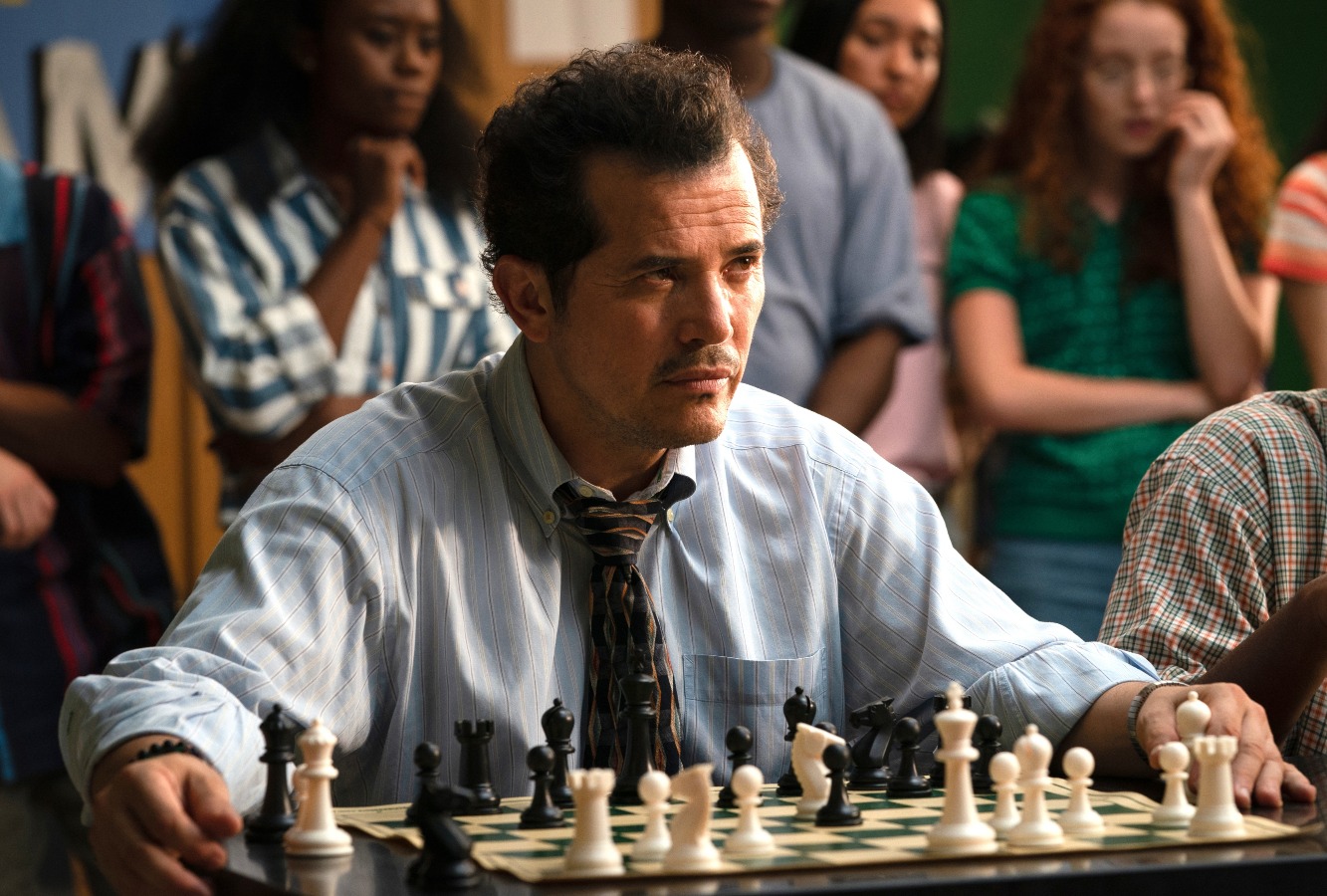
With “Critical Thinking,” John Leguizamo directs a rousing “Stand and Deliver”-style chess story

Throughout his career, John Leguizamo has played cut-ups and wise guys. In his one-man show, “Latin History for Morons,” he offered life lessons and illustrations of Latinx contributions to history. Now Leguizamo has directed and stars in “Critical Thinking,” a crowd-pleasing drama that fuses these qualities. The film, based on a true story, recounts the efforts of the Miami Jackson High School chess team who became national champions in 1998 under the leadership of Mario Martinez (Leguizamo).

The film is the next generation of “Stand and Deliver,” the 1988 film that nabbed Edward James Olmos an Oscar nomination for his portrayal of an inspirational math teacher who coached high school dropouts. Leguizamo’s performance is not quite at that level, but it is squarely in that wheelhouse. His Mr. Martinez is from a not dissimilar background as his students, a mix of Black and Latino teens who are “not what you think they are.” But even if the school’s Principal Kestal (Rachel Bay Jones) likens Martinez to a glorified babysitter, the teacher is determined to show that chess is “the great equalizer.” Even so, he points out that white always opens, and black has to be on the defensive. 

The script, by Dito Montiel, may be on the nose at times — there is talk of consequences and decisions, and development versus material gain — but it works because Leguizamo is so impassioned and convincing. When Martinez tells his students that if they don’t recognize themselves in their history books — because people of color have been written out — it is preachy but empowering. (Leguizamo gives viewers a homework assignment to look up José Raúl Capablanca, a Cuban chess champion, whose name is dropped in this speech). Martinez may be corny, quoting Pablo Neruda, giving “scared straight” lectures, or insisting, “Your mind can be your weapon,” but they show his efforts to find an opening move that will appeal to his students and get their attention. Because once he has them, it will end in checkmate. 

“Critical Thinking” captures the audience’s attention quickly, too. Leguizamo uses tracking shots and Latin beats on the soundtrack to pull viewers into the story. He also makes the fast-talking dialogue zing during the stagey classroom scenes. A seminar on “The Beautiful Game of Chess,” Morphy’s Opera House, becomes edge-of-your-seat stuff even if viewers have no knowledge of the game. Leguizamo presents this chess match in a rousing fashion and employs wigs, beards, and accents to guide his students through it. He knows how to showcase himself well, but he never showboats. 

Wisely, the competition scenes are filmed and edited with energy, which is also a plus. However, as a filmmaker, Leguizamo tends to draw out the film’s dramatic moments, which is where “Critical Thinking” missteps. He has two key subplots and he milks them both for melodrama. 

In one, Sedrick (Corwin C. Tuggles) is dealing with a depressed father (Michael Kenneth Williams), who is mentally and verbally abusive. Sedrick’s mother was killed in a hit and run more than a decade ago, and the pain of that situation still throbs for both men. The scenes between the intimidating “play-to-win” father and his son, who is finding his own rhythm, feel heavy-handed, rather than just awkward or uncomfortable. Leguizamo also pulls at the heartstrings when Martinez tells Sedrick of his own personal tragedy of losing someone he loved. 

Likewise, a storyline involving Ito (Jorge Lendeborg Jr.) — who may be the best player on team — getting involved selling drugs for Andre (Ramses Jimenez) lacks the dramatic power it needs. Ito is being pressured by cops to finger Andre for a murder, which puts him in Zugzwang, a chess term that means “stuck between two bad moves.” Leguizamo boxes himself into a corner here. That said, when Ito admits that his decision, “Is my mistake to make,” it is an affecting moment.  

Most of “Critical Thinking” is engaging and entertaining. The film provides comic relief in the form of the cocky Rodelay (Angel Bismark Curiel of “Pose“), and the team gets a secret weapon with the arrival of Marcel (Jeffry Batista), a Cuban with a 2300 rating. (He’s dubbed “Bobby Fischer with a busted lip.”) 

Leguizamo does not downplay the big chess match in the end, but while the outcome is never in doubt, there is some suspense generated because of what transpires between the two opponents.

“Critical Thinking” succeeds because it shows how this rag-tag chess team has beaten the odds. When the team arrives at their first tournament and are dismissed as they register, they rise above it. When the teens understand the value of taking a draw, they realign their thinking. Yet the beauty of Leguizamo’s film is that the filmmaker never tries to outmaneuver the viewer. This may be a textbook case of an inspirational teacher/underdog sports drama, but it surehandedly delivers the feels.

“Critical Thinking” is available on digital or VOD on Friday, Sept. 4.

“He f*cking hit on you”: Trump told Sarah Sanders to “take one for the team” after Kim Jong-un wink

President Trump told former White House press secretary Sarah Sanders to “take one for the team” after joking that North Korean dictator Kim Jong-un had “hit on” her during the two leaders’ infamous Singapore summit in 2018, according to Sanders’ new book.

Sanders writes positively about her time in the Trump White House in her upcoming book “Speaking for Myself” but included an uncomfortable moment between herself and the president during the summit, according to excerpts published by The Guardian and The New York Times.

Sanders wrote that she noticed “Kim staring at me” during a meeting.

“We made direct eye contact and Kim nodded and appeared to wink at me. I was stunned. I quickly looked down and continued taking notes,” she wrote. “All I could think was, ‘What just happened? Surely Kim Jong-un did not just mark me!?'”

As she joined Trump and then-chief of staff John Kelly in the president’s limousine, the president mocked her over the wink.

“Kim Jong-un hit on you!” Trump said, according to Sanders. “He did! He f*cking hit on you!”

“Sir, please stop,” Sanders pleaded, according to the excerpt.

“Well, Sarah, that settles it. You’re going to North Korea and taking one for the team!” Trump joked, as he and Kelly “howled with laughter,” according to Sanders. “Your husband and kids will miss you, but you’ll be a hero to your country!”

During another point during the summit, Sanders wrote that Trump agitated Kim by offering him a Tic Tac.

“Kim, confused, and probably concerned it was an attempt to poison him, wasn’t sure how to respond,” she wrote. “The president dramatically blew into the air to reassure Kim it was just a breath mint and took a few from the box and popped them into his mouth. Kim reluctantly accepted the Tic Tac from President Trump and ate it.”

Sanders wrote that Trump repeatedly called up friends and celebrities to brag about his meeting during the summit, at one point calling golf legend Jack Nicklaus.

“I suspect the president was looking for someone to talk to about something lighter than North Korea and nuclear armageddon so he asked for the phone and called Jack,” she wrote. “We motioned to the president it was time. He told Jack he had to go, and said, ‘I’m about to do something big. Turn on your TV. You won’t believe it, and you don’t want to miss it.'”

During another point, Trump “stopped to watch” former NBA player Dennis Rodman praise the summit.

“Rodman was complimentary of both the president and Kim and said that if anyone could make a deal, it was Donald Trump,” she wrote. “It was bizarre to watch Rodman offer insights on such a serious topic, but he was one of the few people in the world who had a relationship with both Kim and President Trump. The president turned to me and said, ‘Call Rodman and thank him.'”

Though many have criticized Trump on social media over the Kim joke, Sanders writes glowingly about the president and fires back at critics who called her out for lying behind the White House podium. Former special counsel Robert Mueller’s report detailed five times that Sanders lied to reporters about the Russia investigation alone.

Despite Trump’s attempts to woo Kim at the Singapore summit and subsequent meetings, U.S. intelligence has indicated that North Korea continued to expand its nuclear facilities and later called off nuclear talks despite Trump’s brags that the two leaders have exchanged “beautiful letters.”

An upcoming book by journalist Bob Woodward reportedly includes “25 personal letters” between Trump and Kim, which the North Korean dictator described as “out of a ‘fantasy film,'” according to the book’s synopsis.

“They’re great letters,” Trump said at a rally in 2018. “We fell in love.”

North Korean officials later said that although Kim “had good personal feelings” about Trump, the country would “never” agree to shut down nuclear facilities in exchange for the lifting of sanctions.

“Donald Trump ’embraces dictators and tyrants like Putin and Kim Jong Un’ while alienating our closest allies. That is antithetical to who we are and it has to change,” Democratic presidential nominee Joe Biden’s campaign said in a statement last year. “Trump has also been repeatedly tricked into making major concessions to the murderous regime in Pyongyang while getting nothing in return.”

Experts say Trump’s eviction moratorium is hard to access and will be of limited help

President Donald Trump declared a national eviction moratorium Tuesday night that, while postponing homelessness for many until December, does not protect all renters and does nothing to address the underlying long-term housing crisis caused by the coronavirus pandemic.

According to a draft of the ban posted on the Federal Register, the Trump administration argues that “COVID-19 presents a historic threat to public health” and that “in the context of a pandemic, eviction moratoria — like quarantine, isolation, and social distancing—can be an effective public health measure utilized to prevent the spread of communicable disease.” Because the moratorium is being cast as a public health policy, it is being implemented through the Centers for Disease Control and Prevention (CDC).

While the order will cover some vulnerable tenants, however, many will not benefit from it. It only applies to individuals with $99,000 or less in income, or couples with less than $198,000 in joint income.

In addition, people who wish to be protected must jump through a number of bureaucratic hurdles. Specifically, they will need to visit the CDC website to download a declaration to present to their landlords; will have to prove that they previously sought government assistance; must show that eviction will likely lead to either homelessness or being forcibly moved into congregate housing; and will be required to demonstrate that they are not able to pay their rent due to the pandemic.

Economists and housing experts say that, because of these hurdles and because the legal system often favors landlords, tenants are unlikely to benefit much.

“Landlords denied eviction via this order will claim other infractions that specifically are NOT covered by this order and evict on that basis, putting the tenant at a great disadvantage,” Dr. Richard D. Wolff, professor emeritus of economics at the University of Massachusetts Amherst, told Salon by email. “A landlord who claims any such infractions can be evicted and can then challenge such eviction in courts (which costs legal fees etc.). This is a huge loophole that will be used against tenants. Tenants can be charged late payment fees, interest etc for non-payment of rent that accrues and becomes a legal obligation of a tenant as of Jan 1, 2021.”

He added, “Landlords will fear that tenants who know they cannot pay accumulated rents, interest, late payment fees, etc after December 31 will be sorely tempted NOT to expend scarce funds maintaining rented apartments. This will prompt landlords to raise fees, et cetera, in a vicious cycle.”

Dr. Robert Silverman, a professor of urban and regional planning at the University of Buffalo who specializes in housing issues, told Salon by email that, because Trump’s moratorium does not include any measure for rent forgiveness, it only temporarily wards off the eviction crisis for the people that it manages to cover.

“Without rent forgiveness, tenants will ultimately have to pay back rent along with any late-fees and penalties, or face eviction when the moratorium is lifted,” Silverman explained. “It is ultimately up to landlords to decide if they are going to pursue eviction, but at some point in the future, we can anticipate that there will be a spike in evictions across the country. It could be very destabilizing to the economy at the very time that the COVID crisis ends. For renters, it will also have ripple effects on their credit history and ability to find replacement housing.”

Dr. Gabriel Mathy, a macroeconomist at American University, questioned whether Trump’s new policy will hold up in court.

“It’s unclear whether Trump’s eviction moratorium is legal, but if it is and is effective, it will reduce the number of evictions,” Mathy wrote to Salon. “The number of potential evictions in the pipeline without moratoria is large, primarily among poorer Americans. We are seeing a ‘K-shaped’ recovery, with the rich doing well and recovering rapidly from the pandemic economic crisis and the poor not recovering as rapidly.”

This is not the first time that Trump has implemented a housing policy that falls short on its promises. Earlier this month, the president issued an executive order that he claimed would provide assistance to renters and homeowners but did little more than order the Secretary of Health and Human Services and the CDC director to examine whether temporarily halting evictions would be necessary to halt the spread of COVID-19. 

The National Low Income Housing Coalition criticized the executive order at the time as “an empty shell of a promise that does nothing to prevent evictions and homelessness and acts only to mislead renters into believing that they are protected when they are not.” They called that executive order “reckless and harmful, offering false hope and risking increased confusion and chaos at a time when renters need assurance that they will not be kicked out of their homes during a pandemic.”

Beware the audio deepfake, which can be far more damaging politically than video

On Sunday, White House Deputy Chief of Staff Dan Scavino tweeted out a viral video doctored to look like Democratic presidential candidate Joe Biden falling asleep during an interview; less than 24 hour later, Twitter branded it as “manipulated media.” The footage, having originated from an older interview with actor Harry Belafonte, was far too easily debunked.

Welcome to the world of deepfakes, which uses artificial intelligence to create media showing people doing or saying things they never did. Despite advances in technology, video deepfakes still haven’t achieved the level of sophistication to fool an already skeptical public. But while everyone is focused on video, they should be paying attention to audio deepfakes, which have become incredibly advanced and could pose a more immediate threat to the spread of disinformation. 

This is the crux of the latest episode of “Twenty Thousand Hertz,” a TED-affiliated podcast that explores “the world’s most interesting sounds.” In the episode, host Dallas Taylor delves into how such artificial voices are made by creating his very own “Deepfake Dallas” voice, and explores the various ways that audio deepfakes could be used, from harmless goofing around to scams or even political gain.

In an interview with Salon, Taylor said, “We’re over here doing this in good fun, but I see a way that if I had malicious intent, I could change the course of our country with audio just by leaking it to the right people at the right time. Someone could say that audio leaked of a president saying something . . . That is terrifying, that someone can do that and affect the entire course of our democracy in one fell swoop.” 

How easy is it to make a deepfake voice? 

YouTube is full of deepfakes of varying degrees of quality, but the podcast spotlights the “Speaking to AI” channel where you can listen to various celebrities say incongruous things, such Joe Biden telling a rambling story about tying an onion to his belt. Although the tale isn’t quite as riveting as his showdown with a razor blade-wielding CornPop, hearing Biden’s voice coming out of Grandpa from “The Simpsons” is delightful, albeit a little unsettling.

None of the videos on “Speaking of AI” would fool anyone; mixing “The Simpsons” with any other medium is a huge tip-off that this shouldn’t be taken seriously. However, if you take the visuals away, that leaves the high quality of the cloned voice, which can be programmed to say anything. In skilled hands, that could be terrifyingly convincing.

Taylor enlisted the help of “Speaking of AI” creator Tim McSmythurs to make the “Deepfake Dallas” voice, a process that required compiling hours of Taylor speaking from past episodes of “Twenty Thousand Hertz” to obtain clean audio without any music, effects, or other interfering sounds. They also collected corresponding transcripts. 

“Tim then goes through their magic, sending it through all of these learning machine models and then this back and forth process to slowly make it better and better and better,” said Taylor. 

The result, which can be heard in the episode, is seamless as the real Dallas Taylor argues with “Deepfake Dallas” over hosting the show. Sometimes, it’s difficult to distinguish between man and machine, until context clues are given. It’s silly but also a little bit creepy. 

Most deepfake voices aren’t dipping into the well of America’s podcasts hosts, though. That’s usually reserved for well-known people who’ve provided plenty of audio material to the public: characters in TV shows and movies or celebrities, especially politicians. 

“Why they’re used so much is because we have a lot of clean audio from these people where there’s not music and stuff behind it,” said Taylor. “Where do we have verbatim transcripts of clean recordings? Anyone who’s ever read their own audio book. You can literally copy and paste and make this stuff in no time. Who writes these audio books? Politicians influencers, people who who can change the course of history with the way that they say things. I find the entire idea of deepfakes terrifying.”

Taking the deepfake to the next level

Having a deepfake voice at one’s command isn’t convincing enough to do damage though. Whatever they’re programmed to say can still sometimes fall into that “uncanny valley” that doesn’t quite seem human, whether it’s a robotic sound, weird cadence, or lack of real-world atmosphere.

That’s where sound design can fill in those gaps and boost the credibility of faked audio. Taylor, who also runs audio design studio Defacto Sound, has thought through some of the problems.

“I have never heard anyone really ever speak about the power of sound designers,” he said, “but every time I hear a little uncanny valley, I can change the line to make it a little bit more nuanced or change the wording to make it a little bit cleaner. If we just can’t make something get out of that uncanny valley, we can put a mic rub right there to mask it. 

“We can make that audio sound like it’s coming from a telephone or from a bush. We did a whole Watergate episode, and so we could fake a president’s voice and make it sound like it was just a secret recording in someone’s pocket, and they walked into the Oval Office. I’m pretty confident we could sway the public and make them think that it was absolutely real with enough of a decent backstory.” 

Taylor started “Twenty Thousand Hertz” to bring the public’s attention to sound – not only because it’s overlooked, but because it’s already a powerful presence in every part of our lives. That’s precisely why the audio deepfake could have a big impact.

“Culturally, we treat sound like it’s this mysterious thing that only a select few has the ability to actually craft or understand or write about or learn about,” said Taylor. “Whereas I’m trying to race against the clock to tell people, ‘No, it’s not.’ It’s just one of those senses that we’re just letting be a mystery.

“A really sharp talented sound designer can do this, and I could do this. You don’t see it happen yet because you don’t have a bunch of malicious sound designers that are going to go rogue and do this. With our world of more information getting out, more people understanding how to do this, it’s only a matter of time. You could YouTube your way to being a great sound designer.”

The dangers of the audio deepfake

Deepfake voices have already been wielded with ill intent. The “Twenty Thousand Hertz” episode opens with a well-known phone scam that uses a fake CEO voice to fool employees into wiring money into scammers’ accounts. Synthetic voices could also mimic relatives on the phone asking for passcodes or other sensitive information. But beyond these individual scams are the potential for doing harm on a greater scale.

In the scenario the podcast imagines, damning deepfake audio of a politician could be unleashed and then spread online in minutes. Rianna Pfefferkorn, Associate Director of Surveillance and Cybersecurity at Stanford, says that such deepfake propaganda could be a “major vector to try to influence populations, influence votes.” 

Plus, in our hyper-partisan world, the public is primed to believe the worst. Depending on the seriousness of the propaganda, it could do some major damage.

“This technology paired with culturally how we very quickly make determinations without without really vetting the details of something is kind of a powder keg ready to explode,” said Taylor. “Even if someone has debunked it in 24 hours, the entire world could come crumbling down before that happens. We don’t like to be unconvinced of our opinions, so once it’s out there, even if something gets debunked, something in our human nature says we want to continue to believe the thing that we believed yesterday.”

The flip side of a world primed to view information with suspicion though, means that anyone can claim something that actually happened, did not. Even live, in-the-moment video and audio has been denied, such a the GOP House candidate who tried to claim that the George Floyd killing was a deepfake hoax.

“People can say things and then claim that it was made up, which has already happened on the highest scales. [They] now have complete plausible deniability on anything that they ever say,” said Taylor. 

Even though the misuse of deepfakes has clear political implications, “Twenty Thousand Hertz” has made a point to not be a political show or even one that’s hooked into current events as a “silent protest against how just terrible like the news cycle and politics is.” Past episodes have focused on a range of topics from ASMR and Stradivarius violins to the Netflix “ta-dum!” and whoopee cushions. Yes, a whole episode on that flatulence-faking toy.

Why then, skate along the edge of politics with the deepfake episode, which could potentially hand the tools of deception to listeners? In this case, time was of the essence.

“The way that I thought about it was is we need to put this out sooner rather than later. So hopefully this snowball of understanding can get out there before it happens, rather than we just find ourselves in it. It could happen within the next few months,” said Taylor. “This is not a matter of if it’s going to happen, it will absolutely happen. This show is wrapped in a ribbon of good fun with a very sinister undertone on purpose.” 

Listen to the “Twenty Thousand Hertz” episode “Deepfake Dallas” below or wherever you get your podcasts:

Fallout continues at FDA following botched convalescent plasma PR rollout

The National Institutes of Health released a statement Tuesday undercutting the Food and Drug Administration‘s emergency authorization of convalescent plasma for use in COVID patients, extending the controversy that has simmered among health officials since the FDA announced the authorization more than a week ago.

After an NIH panel of experts reviewed the available evidence on convalescent plasma — including the FDA’s analysis — the agency sharply dissented from the FDA’s conclusion, finding instead that “there are currently no data from well-controlled, adequately powered randomized clinical trials that demonstrate the efficacy and safety of convalescent plasma for the treatment of COVID-19.”

While convalescent plasma treatments rarely trigger serious side effects, the NIH could not say whether the treatment might make patients more susceptible to reinfection.

The contradiction extends the fallout from the FDA’s initial rollout of the authorization, which medical experts saw as politically charged and carrying information that was “grossly misleading.”

FDA chief Dr. Stephen Hahn was sharply criticized last Sunday for remarks he made at the press conference, during which he stood next to President Trump and echoed the president’s misleading statements about the treatment. Hahn later personally apologized and clarified those comments, calling the criticism “entirely justified.”

Days later, Hahn removed Emily Miller, gun-rights advocate and former senior correspondent for the right-wing One America News Network, from her position as FDA assistant commissioner for media relations. Her tenure lasted 11 days, one day longer than Anthony Scaramucci lasted as White House communications director.

Miller had tweeted the same misinformation from the press conference but did not apologize, and last Thursday evening, the night before she was fired, she again tweeted misleading information about convalescent plasma — this time from her personal account in a partisan context: Quoting Trump in real time from his acceptance speech during the Republican National Convention.

“‘Convalescent plasma will save thousands and thousands of lives.’ — Pres. Trump,” Miller wrote, tagging the tweet #COVIDー19 and #RNC2020Convention.

Hours before she posted that tweet, the FDA’s parent agency, the Department of Health and Human Services, terminated its contract with public relations consultant Wayne Pines, the New York Times reported. Pines said he had told Hahn — a friend of his — to correct the misleading statements he made during the press conference with Trump.

Salon’s emailed questions regarding the role in these events of Health and Human Services lead spokesperson Michael Caputo — a GOP operative, longtime Trump ally and Roger Stone confidant who was brought on in April, after tweeting racist attacks and politicized conspiracy theories about the pandemic — were routed by a department spokesperson directly to Caputo, who did not immediately reply.

Robert Califf, FDA commissioner under former President Barack Obama, said that in making a premature announcement, the FDA appeared to have been trying to reach a foregone conclusion.

“If you just took random data and divided it into enough subgroups just by chance alone you would find differences,” he told Bloomberg. “It’s so enticing when you see it, but it really is just hypothesis,” Califf added. “We don’t have definitive evidence one way or the other and we need to get it.”

Bloomberg health reporter Anna Edney said that Califf was implying that the FDA had simply tried to “analyze the data a bunch of different ways until something works.”

Trump’s former FDA commissioner Scott Gottlieb told Axios on Wednesday that disagreements among agencies over new treatments could create confusion.

“The public is best served when health agencies are aligned in the kind of advice they’re giving to providers and patients. Different agencies can have different interpretations of data, but the actionable advice should reflect a consensus view so patients have clear guidance,” he said.

NIH director Francis Collins tried to tamp down speculation. “Surprised by media uproar on Treatment Guidelines on convalescent plasma for #COVID19. Guidelines mirror EUA: possible benefit, seems safe, randomized trials needed. … No news here,” Collins tweeted Tuesday.

“Control, humiliation, and unabating anxiety”: Amazon’s labor conditions under fire in new report

A new research paper accuses Amazon of spying on its employees in order to thwart potential unionization efforts — a characterization that aligns with the corporation’s recently-posted job opening for a pair of intelligence analysts to monitor “labor organizing threats” among its employees.

The research paper, which was written by an anti-monopolist research and advocacy group called the Open Markets Institute, found that Amazon uses analytics to try to catch workers before they can unionize. As one example, Open Markets describes how the company uses demographic and socioeconomic data points to figure out which Whole Foods stores (which the company owns) are at risk of unionizing, something that had been alluded to in previous reports. Open Markets writes that Amazon does so by studying data which includes the number of families below the poverty line and how diverse the staff is. It also claims that Amazon has created a “heat map” so that management can better assess who might unionize and uses security cameras to spread out workers who are potentially discussing unionizing activity.

The report also accuses Amazon of exploiting COVID-19 in order to thwart potential labor organizers. Although the company has a policy of requiring all employees to social distance by at least six feet, Open Markets claims that the managers frequently violate this policy and that only organizing leaders are given warnings or terminated. 

Such an incident — in which an organizing leader was terminated for purportedly violating COVID-related safety rules — is purported to have happened earlier this year, when the company fired an African American warehouse worker in Staten Island named Christian Smalls who protested health conditions at the facility where he worked. The company later reached out to Salon to say that it had terminated Smalls because he was “putting the health and safety of others at risk,” although Smalls’ attempts at unionizing were motivated by a desire to protect his own health and those of his colleagues. After he lost his job, Amazon initially planned on smearing Smalls by characterizing him as “the face of the entire union/organizing movement” and as “not smart, or articulate.” New York City Mayor Bill de Blasio asked New York City’s human rights commissioner to investigate Smalls’ firing.

In the report, Open Markets advocates that Congress should ban many of Amazon’s surveillance practices, allow independent contractors to unionize, legalize solidarity actions like secondary boycotts and “reinvigorate” antitrust enforcement so that companies like Amazon will not be able to exert such power over the marketplace and, by extension, their own employees.

“As we show in our report, dominant employers such as Amazon continue to implement ever more invasive means to surveil their employees,” Open Markets writes. “Employers should face a heavy regulatory burden to implement worker surveillance. Unless substantial evidence proves otherwise, the presumption should be that surveillance interferes with a worker’s right to privacy, right to mental and physical health, and right to organize.”

Meanwhile, the company recently posted a pair of job listings for an “Intelligence Analyst” and a “Sr [Senior] Intelligence Analyst” to work for its Global Security Operations’ (GSO) Global Intelligence Program (GIP), according to Vice. Although the now-deleted postings list a number of responsibilities for the positions, their focus seems to be thwarting unionizing. In the post for “Intelligence Analyst,” for example, Amazon wrote that analysts need to be able to inform attorney stakeholders about “sensitive topics that are highly confidential, including labor organizing threats against the company, establish and track funding and activities connected to corporate campaigns (internal and external) against Amazon, and provide sophisticated analysis on these topics.”

In response to Salon, an Amazon spokeswoman denied the surveillance/performance metric claims and claimed that the job post described by Vice were “was not an accurate description of the role – it was made in error and has since been corrected.”

Here are 9 great Netflix short documentaries to watch for inspiration

It’s been a year of some pretty spectacular documentaries — from HBO’s revealing sports and mental health documentary “The Weight of Gold,” to Netflix’s inspiring Paralympics Games doc “Rising Phoenix,” to the heartfelt “A Secret Love.” 

But, as I’ve written about before, I’ve developed something that I call “quarantine brain.” It’s kind of like being on a heavy dose of cold medicine while also taking an hourly shot of espresso; mentally dull with some spikes of anxiety.

There’s a simple explanation for this, and Corinne Purtill put it quite succinctly for the New York Times: “Stress, like a pandemic, puts our brains into ‘fight or flight’ mode, disrupting attention, memory, breathing and sleep.” 

There are times, especially at the end of a workday, where my attention span is just shot. Earlier this year, I used this as an opportunity to explore all the great sketch comedy options that were available to stream, but recently I’ve expanded my media diet to include short, upbeat documentaries. Netflix has a ton of options that are under an hour long, with an expanse of topics — space travel, sumo wrestling, and speedcubing. Here are some of my favorites that I’ve discovered. 

“John Was Trying to Contact Aliens” — 16 mins. 

In this documentary short, which debuted on Netflix in August, director Matthew Killip tells the story of John Shepherd, a man who spent 30 years and tens of thousands of dollars trying to contact aliens. From a cottage in remote northern Michigan — which was increasingly filled with computers, machines, satellites and wires — Shepherd would broadcast music millions of miles into space (he decided aliens would probably respond to Afrobeat, jazz, reggae records as a kind of universal language). 

After spending much of his life with his head in the stars, Shepherd’s attention is brought back to Earth after making a different kind of connection in his own community. 

“The Search for Life in Space” — 32 mins.

Continuing with the space theme, dive into “The Search for Life in Space,” a 2016 film that tackles some of the universe’s biggest questions — like “Where did we come from?” and “Are we alone?” — in just over a half hour. Using cutting-edge imagery from some of the world’s most powerful telescopes, astronomer Lisa Kaltenegger, associate professor at Cornell University and Director of the Carl Sagan Institute, takes viewers from the surface of Mars, to extreme landscapes on Earth like the Hawaiian lava fields and thermal vents deep beneath the sea. In these environments, we encounter astrobiologists looking for clues about how life takes hold. 

“Birders” — 37 mins. 

“Birders” has a tighter focus than “The Search for Life in Space,” but it subtly tackles another big theme: migration across the US-Mexico border. In this 2019 film, directed by Otilia Portillo Padua, we observe birdwatchers on both sides of the border, and learn about how migrant birds travel back and forth across that border annually. I’m a big fan of documentaries that have a hyperfocus on enthusiast groups (there are a couple more of those on this list!), and “Birders” does a beautiful job showcasing the human connection that birdwatching fosters among an international community that obsessively counts, memorizes the calls of, and photographs migrant birds. 

“America Wild: National Parks Adventure” — 45 mins. 

This film, which was originally released in 2016 in celebration of the 100-year anniversary of the formation of the national parks system, takes viewers into some of America’s wildest natural playgrounds.

The cinematography is awe-inspiring — from sprawling shots of Yellowstone and Yosemite to more intimate views of off-the-beaten path trails. Narrated by Robert Redford, “America Wild” follows world-class mountaineer Conrad Anker, adventure photographer Max Lowe and artist Rachel Pohl as they hike, climb and explore all across the country. It’s a nice vicarious experience while many of us are homebound.

“Zion” — 12 mins. 

This is the shortest documentary on this list, but it probably packs the biggest emotional punch. Director Floyd Russ profiles Zion Clark, a high schooler who has found his purpose through competitive wrestling, after being born without legs and spending years in foster care. There’s a tinge of sadness to “Zion,” but in the hands of Russ — who has a distinct, highly-stylized visual approach to filming Clark — the story ultimately proves to be nuanced and inspirational. 

“El límite infinito” — 47 mins. 

Soon after Jean Maggi was born, he contracted polio and was paralyzed from the waist down, but he made a decision to live his life following a simple motto: “If you can’t go fast, slow down, but don’t stop.” This Argentinian short documentary highlights his advancement of adaptive sports — from developing a five-wheel chair to play basketball with more mobility to climbing the Himalayas.

“Little Miss Sumo” — 18 mins. 

Continue your binge of short documentaries featuring athletes that subvert societal expectations with “Little Miss Sumo.” I love this film, which centers on Hiyori Kon, a 20-year-old sumo wrestler. 

Sumo wrestling is a sport that is grounded in approximately 1,500 years of tradition — tradition that allows men to compete into their late 30s, while women are unable to compete after they turn 21 based on an unfounded claim that women wrestlers reach peak physical capacity at the age of 20. This is something that Hiyori wants to change. 

As I wrote for Salon following the film’s debut in 2019, “‘Little Miss Sumo’ is astonishingly successful for an 18-minute film; through thoughtful interviews, beautiful training clips, and this idea of a countdown clock steadily ticking down — without intervention, this is likely the last time Hiyori will be allowed to compete — director Matt Kay strikes a masterful balance between contemplation and pressure.” 

“Lorena Light-Footed Woman” — 28 mins

This is another really thoughtful documentary short about women excelling in sports in ways that defy cultural norms. “Lorena Light-Footed Woman” follows Lorena Ramirez, a Mexican ultrarunner who lives in an indigenous community in the Tarahumara mountain range in Chihuahua, Mexico. She runs in traditional skirt and sandals; there is this absolutely breathtaking shot where cinematographer Hatuey Viveros scans across the feet of competitors lined up at the starting line of a race. You’ve got a pair of neutral Nike, a bright pair of Adidas, Ramirez’s sandals, and then a pair of New Balance sneakers. 

We enter Ramirez’s story as she is just starting to gain attention globally. She is in her early 20s, has won a few ultramarathons and is beginning to receive invitations to travel internationally — to Japan, Spain and Argentina — to run. It’s an interesting push-pull between honoring cultural tradition (and the sometimes limiting gender roles inherent to that) and personal advancement. 

“The Speed Cubers” — 40 mins. 

“Speed Cubers” is a sweet and smart documentary about the lives of speedcubing champions, Max Park and Feliks Zemdegs. Both of the young competitors can solve a traditional Rubik’s Cube in about four seconds. 

As Salon’s Hanh Nguyen wrote: “In the film, it’s fascinating to witness solve after blurry solve because no matter how many times we see it, it’s hard to follow what’s going on in Feliks’ or Max’s heads, much less their fingers. We can only imagine the mental nimbleness required to assess the patterns in seconds and translate that into dexterity born of muscle memory; this is not the work of an Average Joe’s brain.” 

Throughout the documentary, we also gain a deeper understanding of Max’s life and what drew him to speedcubing; he was diagnosed with autism as a child and his mother would solve Rubik’s Cubes with him as a bonding activity. He immediately fell in love

“While his speedcubing skills improved, his social skills were lagging behind,” Nguyen wrote. “And the competitions offered unforeseen lessons in life experience: how to act in public, how to make friends, and most importantly, how to deal with failure.”

Kenosha business owner refused to meet Trump — so they hauled out former owner to praise him

A Kenosha small business owner is accusing President Trump of using his trashed store as a political prop, after Trump deceptively featured the shop’s former owner in a Tuesday press conference.

Tom Gram lost his century-old camera store when it burned to the ground amid last week’s unrest in the city. The president had asked Gram if he would participate in his Tuesday tour of the damage, but after Gram refused, Trump featured a former owner of the business who praised the president on camera.

Gram bought Rode’s Camera Shop from the Rode family eight years ago, and has worked there for more than four decades, according to Milwaukee NBC affiliate WTMJ.

Gram told WTMJ that the White House had called him Monday to ask if he’d join Trump on the tour, which would include a media spot in front of his burnt-out store. Gram says he immediately declined.

“I think everything he does turns into a circus and I just didn’t want to be involved in it,” Gram said. State and local leaders had objected to Trump’s visit ahead of time.

Gram was later surprised when he saw the store’s former owner on TV in what would have been his place. “John Rode III, owner of Rode’s Camera Shop,” the president said, introducing Rode at a roundtable.

Rode commended Trump’s response to the unrest in his city.

“I just appreciate President Trump coming today, everybody here does,” Rode said. “We’re so thankful we got the federal troops here. Once they got here things did calm down quite a bit.”

“A day earlier we would have saved your store,” Trump added.

Gram said that the president’s claim that Rode was the “owner of Rode’s Camera Shop” was deceptive, as were Rode’s remarks about Trump, which Gram saw as intended to convey the views of the store’s current owner — which would be Gram.

An Associated Press report of the event describes Rode as the “owner” of the store.

Trump also said that “Kenosha has been ravaged by anti-police and anti-American riots” and that “reckless far-left politicians continue to push the destructive message that our nation and our law enforcement are oppressive or racist — they’ll throw out any word that comes to them.”

“These are not acts of peaceful protests, but domestic terror,” he said.

The president did not mention Jacob Blake, the Black father paralyzed from the waist down after being shot in the back seven times by a Kenosha police officer in front of Blake’s children. The incident sparked several days of protests studded with unrest, including two deadly shootings over the weekend, for which a 17-year-old Trump supporter is currently in police custody.

“I think there’s a lot of good people in this community and to say that only law enforcement is correct is not the message we need to hear right now,” said Gram, the actual, real-life owner of the camera store.

Facebook removes post by Republican congressman calling for Black protesters to be shot

Rep. Clay Higgins (R-LA), who made waves last year during impeachment hearings by hollering about socialism and “unborn life in the womb,” found himself at the center of yet another controversy this week.

The Acadiana Advocate reports that Higgins wrote a Facebook post about shooting armed Black demonstrators that the social networking site removed for violating its policies against advocating for violence.

In the post, Higgins posted a photo of Black men carrying guns and said that the mere sight of them walking around armed was all the justification he needed to kill them.

“I’d drop any 10 of you where you stand,” Higgins wrote. “Nothing personal. We just eliminate the threat. We don’t care what color you are. We don’t care if you’re left or right. If you show up like this, if We recognize threat… you won’t walk away.”

Higgins wrote a defiant followup post after Facebook removed his original rant.

“America is being manipulated into a new era of government control,” he wrote. “Your liberty is threatened from within. Welcome to the front lines, Ladies and Gentlemen. I suggest you get your mind right. I’ll advise when it’s time gear up, mount up, and roll out.”

Earlier this year, anti-COVID-19-lockdown demonstrators brought guns to the Michigan state capitol building, where they screamed at lawmakers about reopening the economy. It is unclear at the moment whether Higgins would have also advocated for shooting those protesters on sight.


Debate moderators shouldn’t be afraid to embarrass Trump

President Donald Trump and his Democratic opponent, former Vice President Joe Biden, are scheduled to have three presidential debates before the election on Tuesday, November 3. Trump would love for a far-right sycophant like Fox News’ Sean Hannity to moderate the debates, which of course, Democrats would never agree to — although Biden has demonstrated that he has no problem answering tough questions from a reasonable conservative like Fox’s Chris Wallace. Washington Post columnist Jennifer Rubin, a Never Trump conservative, is hoping that Trump will have to answer as many tough and even “embarrassing” questions as possible — and she makes some suggestions in one of her September 2 columns.

“The first presidential debate is scheduled to take place in four weeks,” Rubin explains. “Moderators should be preparing themselves to ask President Trump the questions that go to the heart of his ability to do his job — even if he gets upset, and even though no president has had to answer similar questions before.”

The questions that Rubin recommends show why she is one conservative who Trump would most definitely not want as a debate moderator — for example, “There is no scientific evidence windmills cause cancer. Why did you say they do?” Another recommendation from Rubin is: “There is zero evidence that Ukraine interfered with the 2016 election or that the DNC server is there. That claim is Russian propaganda. Why did you repeat these assertions over and over again?”

When one Googled the words “dark shadows” before this week, the main things that came up were pages about the late 1960s/early 1970s television program “Dark Shadows” — a horror-oriented soap opera whose main characters included vampires, witches and werewolves. And that cult classic is still prominent in Google searches. But earlier this week, Trump used the words “people in the dark shadows” during an interview with Fox News’ Laura Ingraham to describe secret forces he claims are pushing Biden’s campaign — and now, Trump is at the top of the list when the words “dark shadows” are Googled. Rubin recommends a debate question about “dark shadows” for the president.

Rubin’s suggestion: “You said forces in the ‘dark shadows’ control your opponent and that a pack of figures in dark clothing with gear were reported on a plane. Is there any factual support for this? What flight were you talking about, and how would anyone know that those people on the plane are out to manipulate the former vice president?”

The Post columnist also recommends some Russia-related questions, including “When have you ever publicly criticized Russian President Vladimir Putin? Is he a dictator? Does Russia kill journalists and Putin’s opponents?” and “Why did you want to let Russia back into the Group of Seven; repeat Russian propaganda that the Soviet Union was engaged in a defensive war in Afghanistan in the 1980s; refuse to confront Putin on the evidence of Russian bounties on U.S. soldiers.”

Trump has been widely criticized by Democrats, including Biden, for his abysmal response to the COVID-19 pandemic — which has killed more people in the U.S. than in any other country in the world. And Rubin believes that debate moderators should include some pandemic-related questions.

The columnist recommends asking the president, “The United States has lost more than 181,000 people to COVID-19, more than any country in the world and more than many western countries on a per-capita basis. No other country has been at least partially shut down or hobbled for six months, or has failed to institute a national testing-and-tracing plan. Was your handling of the virus a ‘success?'” And Rubin also recommends asking, “When you said the United States had 15 positive cases of the novel coronavirus and then claimed the disease would disappear, you were wrong. Why did you assure Americans the number of cases would soon be ‘zero’?”

The first presidential debate is scheduled for September 29, with Chris Wallace moderating, and will be followed by debates on October 15 and October 22.


Trump’s IRS chief earns over $100,000 per year from Trump property while in office: new documents

IRS Commissioner Charles Rettig has earned at least $100,000 per year renting out properties at a Trump-branded resort in Hawaii, according to his financial disclosure.

Rettig, who was appointed by President Trump in 2018, earned between $100,000 and $200,000 per year from his 50% ownership in two units at the Trump International Waikiki over the last two years, according to an analysis of the disclosure by the government watchdog group Citizens for Ethics and Responsibility in Washington.

Rettig has held a stake in the units since 2006, three years before the property opened. Rettig did not disclose the link to the Trump-branded property in the financial disclosure, simply listing them as “Residential Real Estate” and “Residential Real Estate (2)” in Honolulu.

Trump, of course, has refused to divest from his company and therefore continues to profit from the property as well. CREW noted that 10% of the price Rettig paid to purchase the units went directly to the Trump Organization. Trump, who has repeatedly made taxpayer-funded trips to his properties, visited the Waikiki resort in 2017 during a trip to Asia.

Rettig previously failed to disclose that his properties were at the Trump-branded resort during his confirmation process. Rettig did not directly address lawmakers’ concern about his stake but vowed during his confirmation hearing that he would be “impartial” and “unbiased.”

Sen. Ron Wyden, D-Ore., the top Democrat on the Senate Finance Committee, urged Rettig to sell his stake in the properties during the hearing while questioning whether he could remain independent from the White House.

“That’s important with any nominee, but it’s especially relevant in Mr. Rettig’s case, since he owns and rents out condos in a Trump-branded and managed property,” Wyden said. “Disclosing that information may not have been required by law. My view is, it would have been a smart exercise of judgment. Certainly if you want to eliminate any question about appearances, you can sell the properties off.”

Rettig has since drawn scrutiny for failing to turn over Trump’s tax returns to Congress. Federal law requires the Treasury secretary to turn over anyone’s tax returns if they are requested by the House Ways and Means Committee. The committee formally requested Trump’s tax returns in April 2019. Rettig told Congress last year that he would make the decision under the supervision of Treasury Secretary Steven Mnuchin on whether to comply with the request.

Rettig and Mnuchin later refused to turn over the tax returns. Mnuchin argued that the committee’s request “lacks a legitimate legislative purpose.”

CREW communications director Jordan Libowitz linked the refusal to Rettig’s latest financial disclosure, arguing that it means “the IRS commissioner has a vested interest in the success of the Trump brand — and of preventing anything that could damage it.”

The case was reviewed by the Supreme Court in July, which sent the matter back to lower courts to rule on “separation of powers concerns.” The matter is not expected to be decided before the November election.

The Supreme Court also sent a subpoena for Trump’s tax returns issued by Manhattan District Attorney Cy Vance back to a lower court. An appeals court temporarily halted the enforcement of the subpoena on Tuesday until it hears Trump’s appeal later this month.

House Speaker Nancy Pelosi, D-Calif., vowed last week that Democrats would release Trump’s tax returns if Joe Biden is elected.

“When we win this election and we have a new president of the United States in January, and we have a new secretary of the Treasury, and [House Ways and Means Chairman] Richie Neal asks for the president’s tax returns,” Pelosi said at a news conference, “then the world will see what the president has been hiding all of this time.”

How anti-choice propaganda trained Republicans to accept Trump’s coronavirus denialism

Donald Trump didn’t like what the experts were telling him about the coronavirus pandemic, so he found a guy with “Dr.” in front of his name who will tell the president the bedtime stories he wants to hear. Dr. Scott Atlas isn’t an expert in infectious disease or epidemiology, as are coronavirus task force advisers Dr. Deborah Birx and Dr. Anthony Fauci, whom he has pretty much usurped. Atlas is a radiologist and, more importantly, a senior fellow at the far-right bad-idea incubator known as the Hoover Institution (previously home to the infamous prediction that the U.S. death toll from the COVID-19 pandemic would be around 5,000).

According to the New York Times and the Washington Post, Atlas — who apparently caught Trump’s eye the way so many of his advisers do, by peddling BS on Fox News — is ready and willing to say all sorts of medically unsound things that just happen to align with everything Trump wants to believe about the coronavirus. So Atlas has risen rapidly as a power player and is reportedly even getting venerable institutions like the Centers for Disease Control and Prevention (CDC) to echo his unscientific beliefs. 

Atlas has questioned whether wearing face masks slows viral spread (it does) and pushed for the CDC to change its recommendation on coronavirus testing to cover only people with symptoms, even though the science clearly shows that asymptomatic people are spreading the disease — and may indeed be a principal vector for spread. 

Perhaps most distressingly, Atlas is reportedly behind Trump’s new enthusiasm for “herd immunity,” which is the latest euphemism for a non-policy letting the coronavirus run rampant, like a nationwide chicken pox party. Actual scientific experts in disease are uniformly against this idea, because it would dramatically raise the death rate and likely wouldn’t restore the economy anytime soon, as huge percentages of the population would continue to stay home rather than be part of President Bleach-Injector’s deadly science experiment. 

For pro-choice activists and reproductive health experts, Trump’s embrace of a quack in a lab coat is feeling all too familiar. This strategy of putting lies and misinformation in the mouths of people who have an “MD” after their name has been standard practice for the anti-choice movement for decades. This has allowed anti-choice activists to push for policies that harmed public health, especially women’s health, while pretending they were doing it in the name of science. The George W. Bush administration, in particular, was fond of using doctors who shamelessly used their medical authority as cover to advocate for harmful ideas with little or no scientific basis. 

This strategy, as well as those employed to push misinformation about climate science, helped train Republican politicians and conservative voters in the skills being currently used to muddy the waters around the science of the coronavirus pandemic. The result is that more than 6 million Americans are infected and nearly 185,000 have died, and that number is likely to continue growing at an alarming rate, especially as Trump now has a doctor to hide behind when justifying his hostility to public health. 

Bush had a nasty habit of hiring doctors who were eager to use their credentials to justify their promotion of anti-choice propaganda. One of his FDA appointees, Dr. David Hager, was a gynecologist but more importantly a Christian conservative who rarely hesitated to make false claims that depicted both abortion and contraception, which have robust safety records, as medically dangerous. Hager advocated against making emergency contraception available over the counter, falsely implying that doing so posed a threat to the health of teenage girls. Even though the majority of FDA experts disagreed with Hager, the Bush administration blocked the policy based on his opinion.

It later emerged that Hager’s ex-wife, Linda Davis, had accused him of abusive behavior during their marriage, alleging that he withheld money unless she had sex with him and giving her sleeping pills so he could sodomize her without consent. Hager is still a popular talking head on the religious right, advocating for using the coronavirus pandemic as an excuse to forcibly cancel women’s abortions

Under the Obama administration, emergency contraception became legal over the counter, without age restrictions. And there has been no measurable effect on the health of women or teenage girls, unless you count the record low rates of teen pregnancy, which are directly attributable to expanded contraception access under Obama.

Another precursor to Atlas is Dr. Eric Keroack, a Bush appointee to oversee a contraception program in Health and Human Services, who was hired because he opposed contraception use. Like Hager, Keroack was happy to leverage his medical degree to put a scientific gloss on misogynist misinformation. He went so far as to claim that women who have premarital sex become physically incapable of experiencing love and bonding in marriage

Even Trump’s reported manipulation of CDC recommendations to reflect his hostility to virus testing has a precursor with the Bush-era war on sexual health care. Under Bush, the CDC altered information on its website about condom use to mislead readers into believing that condoms weren’t effective at preventing sexually transmitted infection transmission. 

Beyond just the Bush years, the anti-choice movement in general has a long-standing habit of promoting doctors who will shamefully ignore medical science in order to present their anti-choice and anti-woman views as “science.” They even form organizations, like the American Association of Pro-Life Obstetricians and Gynecologists, that will use the auspices of medical science to create the illusion that there’s merit to anti-choice myths such as the claim that abortion causes breast cancer (it doesn’t), that abortion causes mental illness (it doesn’t) or that abortion is more dangerous than childbirth (it’s about 14 times safer). 

Trump’s coronavirus denialism is spreading past the White House and into the Senate. Earlier this week, Republican Sen. Joni Ernst of Iowa echoed a QAnon-linked conspiracy theory accusing doctors and hospitals of exaggerating the number of coronavirus cases and deaths, claiming that clinics profit from falsifying that data. 

“These health-care providers and others are reimbursed at a higher rate if COVID is tied to it, so what do you think they’re doing?” Ernst said. 

In reality, medical researchers believe that coronavirus cases are being undercounted, due to lack of testing. 

This conspiracy theory also has a precursor in the anti-choice movement: The false claim doctors lie about the effectiveness of contraception in order to trick women into having sex and getting pregnant, so they can get that sweet, sweet abortion money. 

This conspiracy theory was endorsed by Bush’s HHS appointee Keroack, who ran a “crisis pregnancy center” that claimed birth control “actually increases (rather than decreases) out-of-wedlock pregnancy and abortion.” That myth has since become hardened into common wisdom in the anti-choice world. Abby Johnson, the anti-choice speaker at the Republican National Convention, has repeatedly claimed that contraception access increases the abortion rate by lulling women into believing we “could separate sex from procreation.”

It’s no surprise that Republican voters so readily sign onto Trump’s obvious attempts to spread misinformation about the coronavirus by dressing it up as “science.” They’ve had decades of practice of choosing to believe fake medical science, which is all too often peddled by doctors who should know better. As the Queen in Lewis Carroll’s “Through the Looking Glass” astutely observed, the trick in learning to believing impossible things is simply practice. 

Trump admin rejects global effort to develop and distribute coronavirus vaccine because WHO involved

The Trump administration announced on Tuesday that it will not join a global effort to develop and equitably distribute a coronavirus vaccine, which could leave impoverished countries or even the United States without access to an effective vaccine.

More than 170 nations are in talks to join Covid-19 Vaccines Global Access (COVAX) Facility, an effort coordinated by Gavi, the Vaccine Alliance and the WHO to pool resources to “ensure COVID-19 vaccines are available worldwide to both higher-income and lower-income countries.”

But the White House said Tuesday that the United States will not participate, according to The Washington Post, because of the involvement of the WHO.

“The United States will continue to engage our international partners to ensure we defeat this virus, but we will not be constrained by multilateral organizations influenced by the corrupt World Health Organization and China,” White House spokesman Judd Deere told the outlet.

The Post reported that Health and Human Services Secretary Alex Azar and Deputy Secretary of State Stephen Biegun were “interested” in the initiative but were “ultimately overruled.” Other officials argued that there were enough vaccine candidates in the U.S. to “go it alone.”

Medical experts worry that the move will leave struggling countries without access if the U.S. develops a vaccine first and refuses to share it with other countries or, less likely, that the U.S. could be left without a viable vaccine if all of the clinical trials in the country ultimately fail. Even if the U.S. is able to develop and distribute a mostly-effective vaccine to its own residents, many Americans could still be left vulnerable to imported infections if other countries do not have access.

Democrats quickly criticized the administration for making a big bet with the lives of Americans and millions around the world.

“Joining COVAX is a simple measure to guarantee U.S. access to a vaccine — no matter who develops it first,” said Rep. Ami Bera, D-Calif., a medical doctor. “This go-it-alone approach leaves America at risk of not getting a vaccine. This decision also greatly risks slowing down our own economic recovery.”

“Trump’s ‘America First’ is really just ‘America Alone,'” added Rep. David Cicilline, D-R.I., who serves on the House Foreign Affairs Committee. “To not join the world in distributing a coronavirus vaccine is effectively flipping off the entire planet.”

Trump has long grumbled about the WHO, trying to cast it as a scapegoat amid his widely-criticized coronavirus response that resulted in the worst outbreak in the world. He announced the U.S. would cut off funding for the organization in May over claims that it made misleading claims about the pandemic under pressure from the Chinese government. The move was criticized by infectious disease experts like Dr. Anthony Fauci and international leaders, who defended the WHO as a key actor in the fight against the pandemic.

“Not only does this move put the lives of millions around the world at risk, it could completely isolate Americans from an effective vaccine against COVID-19,” Tom Hart, the North America director at the advocacy group The ONE Campaign, told the Associated Press.

The decision suggests that the administration is betting that the United States will be the first to develop an approved vaccine, which experts said was a risky gamble.

“America is taking a huge gamble by taking a go-it-alone strategy,” Lawrence Gostin, a professor of global health law at Georgetown University, told the Post.

Kendall Hoyt, an assistant professor at Dartmouth’s Geisel School of Medicine, added that the move was “akin to opting out of an insurance policy.”

“Just from a simple risk-management perspective, this [Covax decision] is shortsighted,” she said.

Experts noted that the Trump administration’s decision could have other repercussions. The goal of the COVAX initiative is to discourage hoarding of vaccines and target high-risk populations across the world first in order to improve health outcomes and lower the cost. That mission is more difficult without the United States’ involvement.

“When the U.S. says it is not going to participate in any sort of multilateral effort to secure vaccines, it’s a real blow,” Suerie Moon, the co-chair of the Forum on Global Governance for Health at the Harvard Global Health Institute, told the Post. “The behavior of countries when it comes to vaccines in this pandemic will have political repercussions beyond public health. It’s about: Are you a reliable partner, or, at the end of the day, are you going to keep all your toys for yourself?”

The administration’s decision could also have widespread economic consequences. If countries still have to keep their lockdowns even as the US distributes the vaccines and lifts restrcitions, the global economy and supply chain would prevent the US from fully bouncing back.

“We will continue to suffer the economic consequences — lost U.S. jobs — if the pandemic rages unabated in allies and trading partners,” Thomas Bollyky, who heads the Council on Foreign Relations’ global health program, told the Post.

J. Stephen Morrison, the director of the Global Health Policy Center at the Center for Strategic and International Studies, added that the administration could still change its mind or Congress could find a workaround by funding Gavi.

“This just shows how awkward, contradictory and self-defeating all of this is,” he said. “For the U.S. to terminate its relationship with the WHO in the middle of a pandemic is going to create an endless stream of self-defeating moments.”

DHS blocked warning that Russia planned to smear Biden’s mental health from law enforcement: report

The Department of Homeland Security has withheld an intelligence bulletin from law enforcement agencies that warned of a new Russian election interference scheme since July, according to internal documents obtained by ABC News.

A draft bulletin titled “Russia Likely to Denigrate Health of US Candidates to Influence 2020 Election” was submitted to the department’s legislative and public affairs office on July 7, according to the report. The bulletin warned that Russia would try to smear Democratic presidential nominee Joe Biden’s mental and physical health, which President Donald Trump and his campaign have done repeatedly.

But just an hour after it was filed, acting DHS chief of staff John Gountanis put a hold on its release.

“Please hold on sending this one out until you have a chance to speak to [acting Secretary of Homeland Security Chad Wolf],” he wrote in an email obtained by ABC.

The bulletin, which was intended to be distributed to federal, state, and local law enforcement agencies, still has not been released.

The bulletin warned the agencies with “high confidence” that Russians planned to push “allegations about the poor mental health” of Biden to “influence the outcome of the 2020 election.”

Like other intelligence warnings, the document mentioned that Iran and China have criticized Trump but focused on Russia’s attempts to smear Biden.

The bulletin noted that the attack targeting Biden was similar to the 2016 effort to “[raise] serious doubts about [then-candidate Hillary Clinton’s] physical capability,” which Trump also repeatedly echoed.

A DHS spokesperson told ABC News that the bulletin was “delayed” because it “failed to meet the agency’s standards.”

But former DHS officials pushed back on that claim.

“High confidence means what it sounds like — that they are highly confident that their assessment is accurate and they don’t use that language very often,” former DHS Assistant Secretary Elizabeth Neumann told the outlet.

The DHS spokesperson said that the draft “lacked the necessary context and evidence for broader dissemination.”

“After briefing the Acting Secretary and he asked questions,” the spokesperson said, “[Office of Intelligence and Analysis] career leadership decided to delay the product for further review.”

John Cohen, the former DHS undersecretary for intelligence, told ABC News that the decision was concerning given the Trump administration’s efforts to avoid releasing intelligence that looks bad for the president.

“We are hearing concerns being raised publicly that, in this administration, intelligence community reporting is being modified or blocked for political reasons — or to not anger the president,” he said. “By blocking information from being released that describes threats facing the nation, it undermines the ability of the public and state and local authorities to work with the federal government to counteract the threat.”

The Trump campaign insisted that it did not “need or want any foreign interference.”

“There’s no question that the President has been tougher on Russia than any president before him, imposing sanctions and expelling diplomats, in contrast to the Obama-Biden Administration, which choked in the face of Russian interference,” campaign spokesperson Tim Murtaugh told ABC News. “President Trump will beat Joe Biden fair and square.”

The Biden campaign countered that the administration was specifically blocking a “crucial finding that Russia is disseminating false and scurrilous attacks on the health of Joe Biden — one that aligns with Trump’s own constantly-backfiring attacks.”

Biden spokesman Andrew Bates said the report showed “the lengths to which Donald Trump will go to manipulate and conceal intelligence for partisan political purposes.”

“And why would he do this?” he added. “Because Russia and the Trump campaign are speaking from the same script of smears and lies.”

Trump and his campaign have frequently launched attacks against Biden’s mental health, labeling him “Sleepy Joe.”

“Biden doesn’t know he’s alive,” the president said on Tuesday, even as he fended off rumors that he suffered a series of mini-strokes, which he appears to have stoked himself.

“[Biden] can’t even talk about his record,” Trump claimed during an interview last month. “He forgets his record. He forgets everything.”

The Trump campaign launched a TV ad in June seeking to depict Biden’s mental capacity as diminishing and in May questioned whether Biden’s “geriatric mental health” made him “too old” to face the 74-year-old president.

A month after the quashed DHS bulletin, the Office of Director of National Intelligence released a statement warning that “Russia is using a range of measures to primarily denigrate” Biden and that “some Kremlin-linked actors are also seeking to boost President Trump’s candidacy on social media and Russian television.”

Trump rejected the findings, insisting — despite years of corroborating evidence — that “the last person Russia wants to see in office is Donald Trump, because nobody’s been tougher on Russia than I have, ever.”

Intelligence Director John Ratcliffe announced shortly after that his office would abruptly end in-person election security briefings to Congress over concerns about leaks.

Democrats threatened to subpoena Ratcliffe in response to the move, and Biden condemned the decision as “nothing less than a shameless partisan manipulation” of intelligence to help Trump’s interests.

“This intelligence paid for by taxpayers doesn’t belong to Donald Trump,” House Intelligence Chairman Adam Schiff, D-Calif., told CNN. “It doesn’t belong to the intelligence agencies. It belongs to the American people.”

“American carnage” in Kenosha: Trump comes closer to advocating right-wing terror

In the aftermath of tragedies and disasters, the country naturally turns to the president for words of reassurance. Whether it’s a mass shooting or a terrorist attack or a hurricane — all events that happen more often than we’d like — the president is called upon to comfort those directly affected and bring the nation together to face whatever the aftermath might be.

Depending on your political bent, you might think of Ronald Reagan after the Challenger explosion saying, “We will never forget them as they ‘slipped the surly bonds of earth’ to ‘touch the face of God.'” Or maybe George W. Bush standing in the rubble of the World Trade Center or speaking at the Islamic Center of Washington six days after the attacks to quote from the Quran and declare that “Islam is peace.” I think of Barack Obama singing “Amazing Grace” after the Charleston church massacre and Bill Clinton after the Oklahoma City bombing, saying, “You have lost too much, but you have not lost everything. And you have certainly not lost America, for we will stand with you for as many tomorrows as it takes.”

This is a big part of the job that presidents are required to perform, and certainly some are better at it than others. But no president has ever been as terrible at the task as Donald Trump. He is simply incapable of being empathetic or reassuring. He doesn’t even try. Instead of trying to bring the country together in a time of almost unprecedented stress and trauma, he has decided to intensify the nation’s anxiety for his own personal and political gain. If there’s ever been a more cynical election strategy I can’t think of it.

Trump and his campaign are making no secret of the fact that they believe protests and civil unrest will make people vote for a second term and so they are stoking the discord as much as possible. They think they can finesse his administration’s disastrous response to the deadly pandemic and the resulting economic catastrophe by ginning up chaos in the streets and focusing people’s attention away from the other problems in their lives and aiming their anxiety at Black Lives Matter protesters, progressives and big cities.

Trump’s comments in interviews and press briefings have been downright puerile and weird in the last few days, passing on bizarre conspiracy theories about black-clad thugs on planes and accusing Joe Biden of being on drugs. His incoherence has undermined whatever claim he might have to be in control.

The president traveled to Kenosha, Wisconsin, on Tuesday, the site of the most recent police shooting of an unarmed Black man. This time the man was Jacob Blake, shot seven times in the back just inches from his three young children. This city of 100,000 on Lake Michigan has of course also been the site of subsequent protests and violence, including the incident when a Trump follower shot three people, killing two of them, and the police let him walk right past them, with the murder weapon slung across his chest, to drive home to his mother’s house in neighboring Illinois.

Any other president would have gone there to speak to the victims and their families. Certainly you would expect him at least to meet with leaders of the Black community leaders and local elected officials to hear their issues and discuss possible federal help. But he didn’t.

Instead, Trump made excuses for vigilante Kyle Rittenhouse, suggesting in a press briefing that he sympathized with Rittenhouse rather than his victims. In Kenosha, flanked by Attorney General Bill Barr and acting Homeland Security Secretary Chad Wolf, Trump met with law enforcement to praise their great work. He made excuses for the police officer who shot Blake seven times by saying, “They choke sometimes and it’s a very tough situation — it’s very tough, and then people call them bad and horrible.”

It’s hard to believe that no one has told Trump that using the word “choke” in this context, in the wake of George Floyd’s killing in Minneapolis, is the poorest possible choice. He probably wouldn’t care. In his interview with Laura Ingraham the previous night, the president actually compared police officers “choking” in this way to a pro golfer missing a putt.

Trump toured of businesses that were burned during the first night of protests and promised to help them rebuild. (One proprietor refused to participate in this photo-op, so the previous owner was recruited to play along.) But the real point of the visit was the roundtable meeting with a group of white, male law enforcement officers.

Trump ostentatiously told the assembled lawmen that they could feel free to remove their masks and then announced that “Kenosha has been ravaged by anti-police and anti-American riots” and that “reckless far-left politicians continue to push the destructive message that our nation and our law enforcement are oppressive or racist — they’ll throw out any word that comes to them.” He proclaimed, “These are not acts of peaceful protests, but domestic terror.”

It’s interesting that he chose that term. We’ve learned recently that the Department of Homeland Security has tried for years to get Trump to pay attention to domestic terrorism, which he has consistently ignored. Experts in the department considered this a dangerous and growing threat — but of course the domestic terrorists they were warning him about aren’t from the far left. They are those our president considers “very fine people” — like Kyle Rittenhouse and the Charlottesville rioters and far too many others.

Trump has always been fond of right-wing vigilantes. I wrote during the 2016 campaign about his vigilante fantasies, in which he led crowds in chants of “Death Wish” (after the 1970s Charles Bronson film, the only kind of pop-culture reference he understands). And we know how much he reveres the police, going back decades:

Maybe it seems odd that Trump would be such a big supporter of law enforcement while at the same time ignoring the domestic terror threat from the far right. But from his perspective it makes sense. He believes they are on the same side against a common enemy: racial minorities, feminists, immigrants, liberals, Muslims — all the usual suspects. Unfortunately, he isn’t entirely wrong. They are more formally allied than we might realize.

This week the Brennan Center released a report on the known connections of law enforcement officers to violent racist and militant groups. Noting that the FBI has reported that white supremacists pose a “persistent threat of lethal violence” that has killed more people than any other category of domestic terrorism in the last 20 years, the report also details that the groups the FBI investigates often have “active links” to law enforcement officials. They make up a small percentage of police, to be sure, but it’s alarming they are tolerated at all.

Trump is channeling a growing threat of far-right violence and injecting it into the mainstream as he runs for re-election. He spoke of “American carnage” on the day he was inaugurated but we didn’t know at the time he was talking about his 2020 campaign strategy. Let’s hope it doesn’t turn out to be one of his “promises made, promises kept.”

New in government food aid boxes: A letter from Trump

Millions of Americans who are struggling to put food on the table may discover a new item in government-funded relief packages of fresh fruits and vegetables, dairy and meat: a letter signed by President Donald Trump.

The message, printed on White House letterhead in both English and Spanish, touts the administration’s response to the coronavirus, including aid provided through the Farmers to Families Food Box Program, a U.S. Department of Agriculture initiative to buy fresh food and ship it to needy families.

The letter is reminiscent of Trump’s effort to put his signature on stimulus checks and send a signed letter to millions of recipients. It’s the latest example of the president blurring his official duties with his reelection campaign, most prominently by hosting Trump’s acceptance speech for the Republican nomination last week on the White House lawn.

Democratic lawmakers have gone so far as to say the USDA letter violates the federal Hatch Act. The law prohibits government officials from using their positions or taxpayer resources to engage in electioneering. Though the president himself is exempt, the ban applies to White House staff and agencies such as the USDA.

“Using a federal relief program to distribute a self-promoting letter from the President to American families just three months before the presidential election is inappropriate and a violation of federal law,” argued 49 House Democrats led by Marcia Fudge of Ohio in an August 14 letter to Agriculture Secretary Sonny Perdue, requesting information about the purpose and process behind Trump’s letter. “A public health crisis is not an opportunity for the administration to promote its own political interests. Likewise, a federal food assistance program should not be used as a tool for the President to exploit taxpayer dollars for his re-election campaign.”

The White House and the USDA didn’t respond to questions from ProPublica. White House Chief of Staff Mark Meadows has shrugged off Hatch Act concerns, telling Politico last week, “Nobody outside of the Beltway really cares.” (Meadows also said the Hatch Act’s scope was limited to pressuring federal employees on how to vote, but that’s only one of several components of the law.)

Past administrations have observed the Hatch Act with strict firewalls between campaign and official events and admonitions against officials’ making any statements or taking actions that could appear political. The Trump administration, however, has routinely flouted this law. In addition to using the White House for convention speeches by the president and first lady, Trump and other officials also conducted a naturalization ceremony and a pardon as part of the Republican National Convention, and Secretary of State Mike Pompeo delivered a speech from a diplomatic trip to Israel. White House adviser Kellyanne Conway violated the Hatch Act so many times that the independent Office of Special Counsel recommended she be fired. (She wasn’t, and said she’d leave the White House in August for family reasons.)

The letter in the food boxes may not violate the law since it doesn’t explicitly refer to the election, according to the ethics watchdog Citizens for Responsibility and Ethics in Washington. “It doesn’t make it inherently political just because he is a candidate,” a spokesman for the group, Jordan Libowitz, said in an interview. “It’s just one of the benefits of being an incumbent.”

But coming so close to an election, the implication of the letter was not lost on anyone. Some food banks expressed concern that the letter looked too much like a political endorsement, which tax-exempt nonprofit organizations aren’t allowed to make.

“As a non-profit, we would have to take the letter out of the boxes if they were included because we can’t publicly support political candidates,” Mark Quandt, the executive director of the Regional Food Bank of Northeastern New York, said in an email.

Trump’s letter purports to reinforce public health measures against the coronavirus, urging people to follow guidelines from the Centers for Disease Control and Prevention. However, the letter’s advice contradicts the CDC’s actual guidelines on face coverings, which Trump has resisted despite expert consensus. The letter says to “consider wearing a face covering when in public,” whereas the CDC says more definitively, “Cover your mouth and nose with a mask when around others.”

The administration promoted the letter’s debut in a White House press release and a tweet from Ivanka Trump, the president’s daughter and adviser.

However, no food banks surveyed by ProPublica reported actually seeing the letters so far. Some wouldn’t know because they pass the boxes directly to families without opening them, but others do spot checks for quality control and haven’t found any letters. The Greater Cleveland Food Bank said a vendor suggested the letters would start being included in boxes on Sept. 1.

The letters have shown up at some food banks in the Feeding America network, according to Kate Leone, the organization’s chief government relations officer. But they’ve been included inconsistently and without any apparent pattern, she said. “It’s not across the board,” she said.

Aside from the letter, the food box program has come under fire for relying on questionable vendors and failing to match supplies with needs. The House Select Subcommittee on the Coronavirus is investigating the selection and performance of distribution companies that the USDA hired to implement the program, including several that lacked a requisite license to deal in fresh produce.

At least one contract, for $40 million, was canceled; the vendor, Ben Holtz, said he’s still negotiating a settlement with the USDA. Others have been extended or added. Only 70% of vendors fulfilled at least 90% of their orders, Undersecretary for Marketing and Regulatory Programs Greg Ibach testified at a July 21 congressional hearing.

Ibach also acknowledged that the program “underserved” some regions because regional equity wasn’t a factor in the USDA contractor selection.

“Although Congress allocated billions of dollars to distribute food to Americans in need, I am concerned that the Trump Administration’s management of this critical effort has been marred by questionable contracting practices, a lack of accountability, and a failure to deliver food to many communities that need it most,” the coronavirus subcommittee’s chairman, Rep. James E. Clyburn, D-S.C., said in an August 24 letter to Perdue. “Rather than focusing on addressing these problems, the Administration appears to be seeking political benefits from the program, including by inserting a letter signed by President Trump in food boxes.”

ProPublica is a nonprofit newsroom that investigates abuses of power. Sign up to receive our biggest stories as soon as they’re published.

Four years ago, we warned progressives Trump could win. Now we’re warning you again

Five days before the election that put Donald Trump in the White House, a 2016 article we wrote appeared under the headline “Dangerous Myths About Trump That Some Progressives Cling To.” The piece warned progressive activists about “three key myths”:

Myth #1: Trump can’t win.

Myth #2: If Trump becomes president, he’ll be blocked from implementing the policies he’s been advocating.

Myth #3: Trump couldn’t do much damage as president.

We wrote that each of those myths was based on major misunderstandings of political realities: In fact, Trump actually could win. If he did, we shouldn’t “have an inflated view of our own power to block the policies of a President Trump.” And, we added, “Trump plans to appoint to the most powerful policy positions of the U.S. government individuals who are as whacked out as he is: Rudy Giuliani, Dr. Ben Carson, war fanatic John Bolton, to name just a few.”

We added: “A Trump presidency — made possible by his demagogic appeals to racism, misogyny, immigrant-bashing and Islamophobia — would empower the worst elements of U.S. society.”

Our point now is not to say we told you so. Our point now is to tell you that Trump really could win again — and progressives must do everything in our power to stop that from happening. That means, individually and collectively, going all out to Vote Trump Out. Crucially, in swing states, that means voting Joe Biden in.

We have no illusions about Biden, who has faithfully served neoliberal corporatism throughout his political career. At the same time, we have no illusions about the neofascist elements of the Trump presidency or the virulent extremism of much of his political base.

That’s why, in recent weeks, the two of us have helped launch a campaign to “#VoteTrumpOut (in Swing States) / Then Challenge Biden from Day One.”

An encouraging reality is that the progressive movement is much stronger today — online, in the streets and on election ballots — than four years ago. We’re better organized, better funded, better networked and more astute about the need to challenge corporate Democrats.

Large numbers of progressives are ready, willing and able to battle a Biden-Harris administration on behalf of transformational reforms like a Green New Deal, major criminal justice reform to counter racism and establish true public safety, Medicare for All, affordable housing, free college, increased taxes on corporations and the rich, and big cuts in Pentagon spending.

Before that battle for progress can begin, the racist Trump regime must be defeated in battleground states (listed here) — and by significant margins, so the election can’t be stolen.

While a Biden-Harris administration could be pressured toward reforms benefiting poor and working-class people, Trump is immune to progressive pressure and protest. And a second Trump term would stoke more white-supremacist vigilantism and an even more far-reaching assault on democratic rights and marginalized communities.

The #VoteTrumpOut campaign is aimed at a sizable bloc of voters in swing states that mainstream media pundits generally ignore: swing voters on the left. Some of these change-oriented voters are thinking about sitting out the presidential election or casting a third-party protest vote, even though they live in battleground states.

We will be dialoguing with thousands of these voters in swing states every week, and regularly sending them thought-provoking videos from the likes of Medicare for All campaigner Ady Barkan and lifelong activist and scholar Noam Chomsky.

Chomsky has offered this comment: “I live in the swing state of Arizona, and I’d vote for a lamp post to get Trump out.”

It’s probably silly to debate how much better Biden is than a lamp post. We’d prefer to discuss a 30-foot flagpole at South Carolina’s state capitol that was famously scaled five years ago by African-American activist Bree Newsome Bass to remove the Confederate battle flag. Her act of civil disobedience in the wake of the Charleston church massacre gained international acclaim, and the state soon permanently removed the flag.

Last week, she sent out urgent tweets: “Trump and Republicans have to be driven out of office. … If he’s not defeated electorally, it will solidify a fascist dictatorship & the far right will ramp up exponentially. … I cannot overstate how terrifying the prospect of a solidified Trump dictatorship should be to everyone.”

Trump really could win again. The more progressives wrap their minds around that reality now, the less likely they’ll have to live with it for another four years.

Violence in the streets — politics, 2020-style

That we are in a time of great political divide is not news.

That those divides are turning physical, and sometimes dangerous, is developing as a major theme before the elections, perhaps predictably.

That we have a bunch of loose words from our candidates for president is neither calming the streets nor helping to establish credibility in government to consider the grievances of the public. Indeed, all it seems to be doing is to give the candidates platforms for more sloganeering.

Worse, the candidates don’t seem to be getting at who is responsible for now nightly fighting that witnesses report are more between leftist anarchists and right-wing white supremacists than warring with police.

There are a growing number of reported clashes, real and imagined. The real ones have included the incidents in Kenosha, Wis., of course, where a white teen committed to defending police, has been charged for killing two protesters and a shooting overnight of a man in a Portland caravan who was wearing a Trump hat, and the less real one of note this week involved Sen. Rand Paul (R-Ky.), who reported that he was assaulted by a “mob,” which turned out to be 100 people shouting at him and his wife.

Facts are overly short, and slogans are ruling the day. Meanwhile, ought we not be concerned that whatever violence there is in localized single blocks of different U.S. cities is spreading to fistfights over mask-wearing in stores or protests that are meant to be vocal, but specifically not violent?

Violence real and imagined

For Donald Trump, peaceful protests that turn violent in the early morning hours are all from one side:  “You know what I say? Protesters your ass,” Trump said to cheers at an airport rally in New Hampshire on Friday. “I don’t talk about my ass. They’re not protesters, those aren’t protesters. Those are anarchists, they’re agitators, they’re rioters, they’re looters.”

Opponent Joe Biden, who is seen as decrying violence in too general a manner, told CNN that Team Trump is “rooting for violence” in American streets because it allows them to drive fear for political gain. Biden cited a quote from Kellyanne Conway that “the more chaos and anarchy and vandalism and violence reigns, the better news for the very clear choice on who’s best on public safety and law and order.”

Trump seized on the footage of protesters near the White House who gathered around Sen. Paul, who was escorted away by police.

But video of the incident appears to show a much smaller crowd that didn’t touch Rand Paul or his wife, and they seem to have sustained no injuries. Actually, several videos of the incident were posted to social media; one shows a denser crowd while another video by reporter shows a smaller crowd shouting “Breonna Taylor,” a Paul Kentucky constituent who was killed in a mistaken police raid into her Louisville home, and “say her name.”

In any event, there was no violence here.

Growing violence

By contrast, nightly violence is continuing in Portland, Ore., “between a core of pro-Black Lives Matter and anti-fascist protesters and law enforcement,” reports The Guardian. There is a pattern of politically polarized street violence with broadly leftwing and anti-fascist activists sometimes facing off against far-right groups.

Last weekend, a right-wing “Say No to Marxism in America” rally — including members of far-right groups like the Proud Boys—saw serious, widespread violence directed not only at leftist counter-protesters, but also reporters. One right-wing protester drew a firearm, others carried knives and guns, some had wooden shields with nails driven through.

The Washington Post recorded exchanges from Kalamazoo, Mich., and Bloomington, Ind., to Chicago and Portland, with people on both sides of the divide punching and beating each other, often with police appearing to be little more than observers. Some of the violence has been linked to pro-gun groups and far-right extremist organizations.

In Weatherford, Texas, heavily armed protesters, including members of several far-right Texas-based groups, clashed with demonstrators seeking removal of a Confederate statue from the grounds of the Parker County Courthouse. The next day, brawls erupted at a local campaign event in Tyler, 100 miles east of Dallas. A week later, police were called to break up a gathering of hundreds of motorists, many flying Trump and Confederate flags, who descended on a historical Black church in Dallas that displays a two-story Black Lives Matter sign.

This week, in central Pennsylvania, a man marching from Wisconsin to D.C. for this week’s anniversary of the 1963 March on Washington was shot and wounded. Protesters have also been shot, in some cases fatally, A group of people berated customers at D.C. restaurants this week who refused to raise their fist in solidarity with the Black Lives Matter movement, though the confrontations were nonviolent.

What to do

Trump and Vice President Mike Pence have made much of spreading fear of violence in Joe Biden’s America but taking no responsibility for violence in Trump’s America. More, they are pointedly singular-focused on violence that arises from protest from Black Lives Matter and other left causes, without seeing participation by right-wing groups.

As president, Trump’s remarks in New Hampshire underscore that he is not even distinguishing between peaceful, lawful protest and “looting.” He is more focused on protecting the rights of gun-toting thugs than he is on whether there is any intelligent discussion of policing abuses, systematic racism or the dozens of questions raised by street protests.

Biden and Vice Presidential candidate Kamala Harris are getting hit by not being vocal enough, while winning some political points for actually paying attention to what the protests are about.

“We are not just a polarized society — we are increasingly a confrontational society now,”  Mark Pitcavage, a historian and senior research fellow at the Anti-Defamation League’s Center on Extremism told The Washington Post.

As voters, we ought to be doing more, and demanding that leaders do more to make the divide more debate than physical confrontation.

Ed Markey beats Joe Kennedy in Massachusetts primary — a race that never should have happened

History was made on Tuesday — but it ultimately won’t be for the better.

A Kennedy lost an election for the first time in Massachusetts state history. Incumbent Sen. Ed Markey won the Democratic primary with a robust victory over his challenger, Rep. Joe Kennedy, whose dynastic surname garnered him a perceived frontrunner status early on. In near-final results, Markey held a lead of 55.5% to 44.5%, and Kennedy conceded defeat shortly after midnight.

In a year when Democratic incumbents in the Democratic Party have had reason to run scared, Markey’s 47-year political career didn’t prove too big a liability against a 39-year-old opponent with a remarkably similar record. And that’s the problem. Polls as recently as June showed Markey down by double digits against Kennedy — no doubt reflecting the latter’s immediate name recognition — but Massachusetts voters felt no ill will toward the incumbent, who successfully shifted the narrative to Kennedy’s perceived entitlement. So this race ended in more traditional fashion than some other elections in the recent past. Some towns in Kennedy’s congressional district went for Markey by a 2-to-1 margin. 

By any standard, this entire primary received outsized national attention. For all of the headlines and bitter online battles the Massachusetts Senate primary engendered, it was never likely to result in any real change. Although roughly half Markey’s age, the grandson of Robert F. Kennedy (and great-nephew of John F. Kennedy) is only a slightly more moderate Democrat. Their platforms were basically indistinguishable. Despite an admitted major blunder in voting for the U.S. invasion of Iraq as a House member, Markey has become known in the Senate as a leading voice on environmental issues and co-sponsored the Green New Deal omnibus legislation along with Rep. Alexandria Ocasio-Cortez, D-N.Y., who endorsed his re-election. Kennedy, on the other hand, was bogged down by his ties to the fossil fuels industry and offered campaign ads that literally read, “I know what it takes to build a legacy.” In other words, his leading qualifications was that he’s a Kennedy. 

Now Kennedy has lost his Senate bid and is out of Congress. House Speaker Nancy Pelosi is left holding the bag.

Kennedy could have waited for Markey to retire after this term — the senator will be 80 in 2026 — or hoped that Sen. Elizabeth Warren’s seat becomes vacant if she joins a hypothetical Biden administration. He could have deployed his famous last name to challenge the Bay State’s remarkably popular Republican governor, Charlie Baker, who’s up for election in two years. Instead, he ran a futile vanity campaign that only served to divide an already fractured Democratic Party during a crucial presidential election year.

In Pelosi’s least politically astute move in recent memory, she endorsed Kennedy despite her public ruminations on the problem of primary challenges — and did so during the Democratic convention, a week meant to unite the Democratic base. Perhaps now the speaker should explain why the Democratic Congressional Campaign Committee should continue to withhold support for primary challengers. For all the hullabaloo made out of the left’s supposed unwillingness to compromise with Democrats in office, Markey stands as a notable exception — a venerable liberal with a mixed record who has been embraced by the progressive left after championing one of its major legislative priorities. Curiously, Sen. Bernie Sanders of neighboring Vermont stayed out of this race, while Warren and Senate Majority Leader Chuck Schumer both endorsed Markey. (This may be the only example of Pelosi and Schumer openly supporting opposing candidates.)

In the end, Kennedy’s vanity campaign will be remembered only slightly more readily than the quixotic Senate aspirations of Caroline Kennedy (who once sought the open-seat appointment in New York that went to Kirsten Gillibrand). All the energy and money that went into this primary is now out of reach for down-ballot progressives across the country.

If nothing else, this historic defeat suggests that the old Democratic dynasties are dying out. Last year, Bill Daley ran a losing campaign for mayor of Chicago — no one with that surname had ever lost a mayoral race in the Windy City. A year later, for the first time ever, a Kennedy has lost a contested race in Massachusetts. 

Meanwhile, the fight for Kennedy’s vacated House seat could go to a former Republican with less than 25 percent of the vote, because multiple progressive candidates look to have split the vote. That race is still too close to call, with barely over 100 votes separating progressive Jesse Mermell from Jake Auchincloss, who was a registered Republican as recently as 2014. If the latter wins, Pelosi will struggle to explain why she didn’t talk Kennedy out of his run for higher office rather than backing him. 

In a vastly more consequential election, another Massachusetts incumbent prevailed on Tuesday — this time over a progressive challenger pushing marked policy differences. 

House Ways and Means Committee chairman Richard Neal had less difficulty than Foreign Affairs Committee chair Eliot Engel of New York, who lost, and Oversight Committee chair Carolyn Maloney of New York, who barely survived. Neal easily beat back his young, progressive, well-funded opponent, Holyoke Mayor Alex Morse. Neal represents a mostly white and rural district; he is not an ideological outlier like defeated Illinois Rep. Dan Lipinski, one of the few anti-choice Democrats in Congress, nor is he demographically out of step with his district, as were Engel and former New York Rep. Joe Crowley (who lost to Ocasio-Cortez in 2018). Neal avoided the mistakes of incumbents before him by returning to the district often to campaign, and plastered the airwaves with ads alleging that Morse was chronically absent at school board meetings.

Morse had appeared to be mounting a real challenge according to polls and fundraising numbers throughout the summer, but was criticized for his record on police brutality as Holyoke mayor before being slammed by what appeared to be coordinated allegations of improper sexual relations with students while teaching at UMass Amherst and Amherst College. 

This was the race for national progressive to pour their energy into. Perhaps no other senior House member is as dedicated to the myth of bipartisanship as Richard Neal — and ironically, he singlehandedly killed the only non-emergency major bipartisan deal of the past four years. He’s the top recipient of corporate money of any member of Congress, Democrat or Republican. Should Democrats take back control of all three branches in November, they’ll soon be reminded that it is difficult to pass anything substantial with a pro-corporate “moderate” holding the purse strings at Ways and Means. 


GOP Sen. John Cornyn’s ex-staffers lobbied for pharma giant accused of price-gouging COVID drugs

Sen. John Cornyn, R-Texas, who has repeatedly expressed doubt about the science behind the coronavirus pandemic, has political and lobbying ties to Gilead, the pharmaceutical giant behind COVID treatment remdesivir, which lobbied the Senate as lawmakers debated the CARES Act this March.

Multiple former Cornyn aides, including a former chief of staff, lobbied on behalf of Gilead’s interests, such as prescription drug pricing regulations, novel COVID treatments and CARES Act provisions, according to lobbying disclosure forms.

Republican senators ended up undercutting anti-price gouging language that Democrats inserted in the bill, giving leeway for companies such as Gilead — which has been widely criticized for overcharging consumers on HIV medication — to set prices that put COVID drugs such as remdesivir out of reach of many Americans likely to need them.

Democrats wanted to include that language in part because of Gilead’s specific history of price gouging on lifesaving drugs such as HIV medication. Indeed, while lawmakers debated CARES Act provisions, Gilead was fighting the federal government in court over its patents for HIV drug Truvada. GoodRx, a website that helps patients save money on prescriptions, currently lists Truvada for more than $22,500 a year. The price was the subject of a congressional hearing last year.

Gilead has recently faced widespread criticism criticized for setting its price on remdesivir at $520 per dose, or $3,100 for a treatment.

Cornyn, who now finds himself facing an unusually difficult re-election bid in historically red Texas, later promoted remdesivir on his personal Twitter page three times. He has also accepted tens of thousands of dollars in donations from Gilead and the Pharmaceutical Research and Manufacturers of America (PhRMA), a lobbying group that had hired former Cornyn staff, as well as from a PhRMA lobbyist and the partner of his former chief of staff, less than a week after the CARES Act passed.

As the Senate took up CARES Act negotiations this March, Gilead — which had the year prior joined PhRMA — was spending a record amount of money on lobbying: $2.45 million in the first quarter of 2020, an increase of nearly one-third over the $1.86 million that the company spent over the same three months the year before, per federal filings reviewed by NPR.

Gilead told NPR at the time that the spending hike was related to its PhRMA membership, explaining that a slice of annual lobbying dues is typically added to first-quarter disclosures. “Nearly all” of its additional first-quarter spending was put towards PhRMA dues, a spokesperson told the outlet.

In reference to concerns about remdesivir pricing, Rep. Jan Schakowsky, D-Ill., told NPR, “We have seen one after another of these drugs come on the market, which are fantastic, except that they end up being out of reach for most consumers. We cannot tolerate as human beings, as Americans, for this to be an opportunity now for price gouging.”

In first quarter of 2020, PhRMA — the lobbying firm representing Gilead — hired Marshall & Popp, LLC, to lobby the Senate on “issues related to the COVID-19 pandemic” and several specific pieces of related legislation, including the CARES Act, according to federal records.

One of those lobbyists was Monica Popp, former chief of staff in Cornyn’s Senate office, who reported earning $45,000 and $54,000 for lobbying on the CARES Act and prescription drug value and price regulation, among other issues.

Popp’s partner in that lobbying effort, Hazen Marshall, was formerly policy director for Senate Majority Leader Mitch McConnell.

PhRMA also hired Crossroads Strategies, LLC, to lobby the Senate on “Education Around COVID-19 Therapies” — and one of the Crossroads lobbyists, Salim Alameddin, is a former Cornyn staffer. Alameddin’s lobbying disclosures show that he lobbied on CARES Act legislation as well as “education around COVID-19 therapies.”

Around that time, Gilead itself was lobbying the Senate. Cornyn, for his part, tweeted a photo of a Corona beer, making light of the pandemic that was weeks away from decimating New York City. He also attracted criticism at the time for blaming China for the outbreak.

While Democrats were able to work anti-price gouging language into the bill, GOP interests aligned with the pharmaceutical companies, adding a phrase to the CARES Act that Democrats argue undermined their efforts: “The [Health and Human Services] Secretary shall not take actions that delay the development of such products.'”

Gilead and PhRMA both declined to tell NPR whether they pushed for that wording.

The CARES Act passed March 27, with that GOP language included.

In June, Gilead — which after public backlash had to ask the FDA to revoke the seven-year monopoly it had initially staked out on the drug — said it planned to price remdesivir at $520 per dose, or more than $3,000 for a treatment. Democratic officials and public health experts blasted the company for seeking to profit unfairly.

This year Cornyn’s campaign has received at least $6,000 from Gilead Sciences’ PAC, and $4,000 from PhRMA’s PAC and employees after the CARES Act passed, which have given the Texas senator at least $12,750 total, according to federal filings. Cornyn’s leadership PAC has taken at least $11,500 from PhRMA’s PAC and employees over the years, filings show.

Cornyn’s campaign also reported a $1,000 donation from Hazen Marshall — the lobbying partner of Cornyn’s former chief of staff — on March 31, four days after the CARES Act passed, on which Marshall had lobbied, per federal filings.

Cornyn specifically promoted remdesivir in three tweets between Apr. 29 and May 1.

“ANTHONY FAUCI ON REMDESIVIR in the Oval: The drug has a ‘clear-cut, significant positive effect in diminishing the time to recover. … We think it’s really opening the door to the fact that we now have the capability of treating.’ @playbookplus” Cornyn tweeted Apr. 29.

On Apr. 30, Cornyn tweeted a New York Times article about remdesivir as a promising coronavirus treatment, and the next day tweeted an NBC News article about the FDA’s authorization of remdesivir for emergency use.

Gilead explained remdesivir’s price in part because setting prices for a new drug amid a pandemic presented an unprecedented challenge, the Washington Post reported. The company said that average hospital costs cut by the treatment would save the U.S. health care system $12,000 per coronavirus patient and thereby justify the price.

An independent study found that Gilead could have recovered its costs by distributing the drug for as little as $1 to $60 per dose — or between $100 and $160 a dose, accounting for all costs in 2020.

Cornyn’s office did not immediately respond to Salon’s request for comment.