Spring Sale: Get 1 Year, Save 58%

“Still: A Michael J. Fox Movie”: 6 major revelations from the actor’s new documentary

When Michael J. Fox secured his first major acting gig as Alex P. Keaton in the 1982 sitcom “Family Ties,” he rode the high of his burgeoning yet successful acting career. It was a memorable moment in his life, a time when he believed that all his hard work had finally paid off. And while Fox’s acting career did indeed take off shortly afterwards, it was also taken away from him just as quickly.

In 1991, Fox was officially diagnosed with young-onset Parkinson’s disease, an incurable chronic degenerative disorder of the central nervous system. For years, Fox hid his illness to continue acting, both in movies and television shows. But eventually, his declining condition got the best of him, leading him to retire from his profession in 2021.

Fox’s heartfelt story — from growing up on a Canadian army base to his debilitating diagnosis and loving relationship with his wife, fellow actor Tracy Pollan — is narrated in an intimate Apple TV+ documentary titled “Still: A Michael J. Fox Movie.” In addition to its archival and scripted elements, the documentary features heartfelt conversations between Fox and director Davis Guggenheim.

Here are the six most major revelations from the feature:

01
Fox’s early acting career was less than glamorous
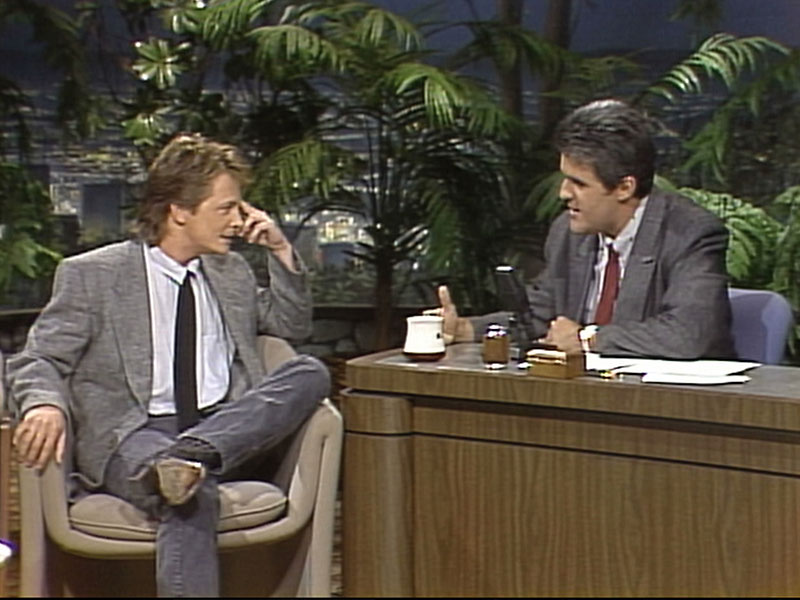
STILL: A Michael J. Fox MovieMichael J. Fox in “STILL: A Michael J. Fox Movie” (Photo courtesy of Apple TV+)
At 18 years of age, Fox moved into a studio apartment in the slums of Beverly Hills to pursue a career in acting. He made his American television debut in the television film “Letters from Frank” and later starred in “Midnight Madness,” “Class of 1984” and NBC’s “Family Ties.” 


Although Fox continued to pick up acting gigs, he struggled to earn enough money to get by.


“My agent took 10% of my paycheck,” Fox said. “And then there was the photographer, publicist or lawyer. I began to liquidate. I sold off my sectional sofa section by section.”


Fox recalled that he almost secured a few acting jobs on films, notably the 1980 coming-of-age movie “Ordinary People.” But Robert Redford, the director, wasn’t impressed during Fox’s audition, so much so that he spent it flossing his teeth.


“I was down to days. I was finding quarters and nickels and dimes, and I’d use that to get to the next moment,” Fox said. “I was living beat to beat.”

02
Fox’s enduring romance with his wife Tracy Pollan
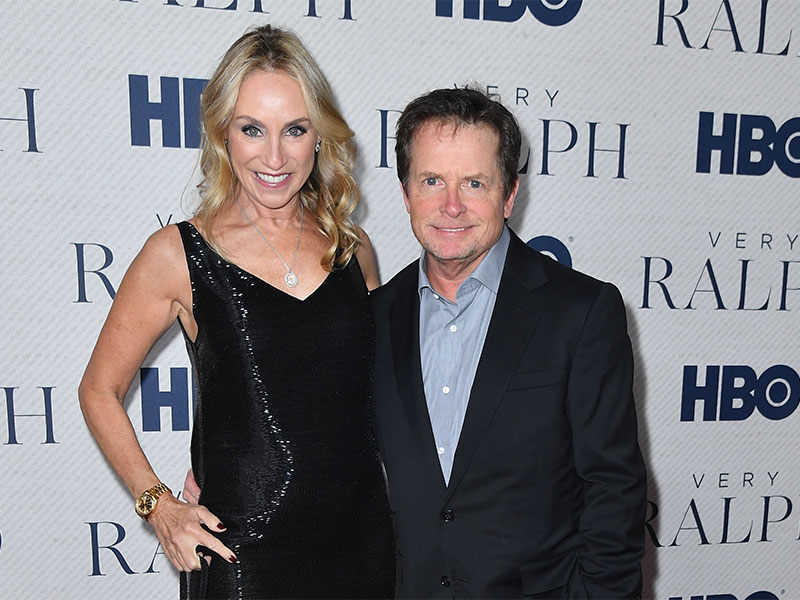
US actor Michael J. Fox and his wife actress Tracy PollanUS actor Michael J. Fox and his wife actress Tracy Pollan attend the world premiere of HBO Documentary Film “Very Ralph” at The Metropolitan Museum of Art on October 23, 2019 in New York City. (ANGELA WEISS/AFP via Getty Images)

The pair met in 1985 on the set of “Family Ties.” Although Fox and Pollan played each others’ love interests, their relationship off-screen remained strictly platonic until they reunited on the set of the 1988 drama “Bright Lights, Big City.” Fox and Pollan began dating and made their red carpet debut on Sept. 20, 1987. A few months later, Fox proposed to Pollan and the couple officially tied the knot on July 16, 1988.


A year after their marriage, Fox penned an essay for Esquire about the frenzy surrounding his nuptials. In it, he wrote, “I got married last summer and the reviews were terrible. Now, bad reviews I can normally handle — you put your work out there and anybody can take their shot. But Tracy and I had never conceived of our wedding as part of our oeuvre.”


The couple have four children together: son Sam Michael (born May 30, 1989), twin daughters Aquinnah Kathleen and Schuyler Frances (born February 15, 1995), and daughter Esmé Annabelle (born November 3, 2001). 


When asked by Guggenheim how he would describe his wife, Fox said, “Who she is is just so locked in ’cause it’s so honest. I could be the king of England, and she would be her. I could be Elvis, and she would be her.”

03
Fox was diagnosed with Parkinson’s at the age of 29
Michael J. FoxMichael J. Fox at the Variety Sundance Studio, Presented by Audible on January 21, 2023 in Park City, Utah. (Katie Jones/Variety via Getty Images)

While shooting the film “Doc Hollywood” in 1991, Fox developed twitching in his pinky finger and a sore shoulder. Shortly afterwards, he was diagnosed with young-onset Parkinson’s disease. 


 “I remember standing on the street, looking for an answer,” Fox recalled. “My world blew up.”


Fox hid his illness to continue acting in movies, including “For Love or Money,” “The American President,” and “Frighteners.” But eventually, he turned to drugs and alcohol to cope with his diagnosis. In the documentary, Fox recalled that he grew increasingly “sullen and angry.” 


In 1998, Fox went public about his Parkinson’s disease and in the fall of 2000, he launched The Michael J. Fox Foundation for Parkinson’s Research. Today, the Foundation remains the world’s largest nonprofit funder of Parkinson’s drug development, per its official website.

04
Fox said the bathtub became his “refuge” following his diagnosis
Michael J. FoxMichael J. Fox speaks at the Q+A for STILL: A Michael J. Fox Movie at the 2023 SXSW Conference and Festivals at The Paramount Theater on March 14, 2023 in Austin, Texas. (Frazer Harrison/Getty Images for SXSW)
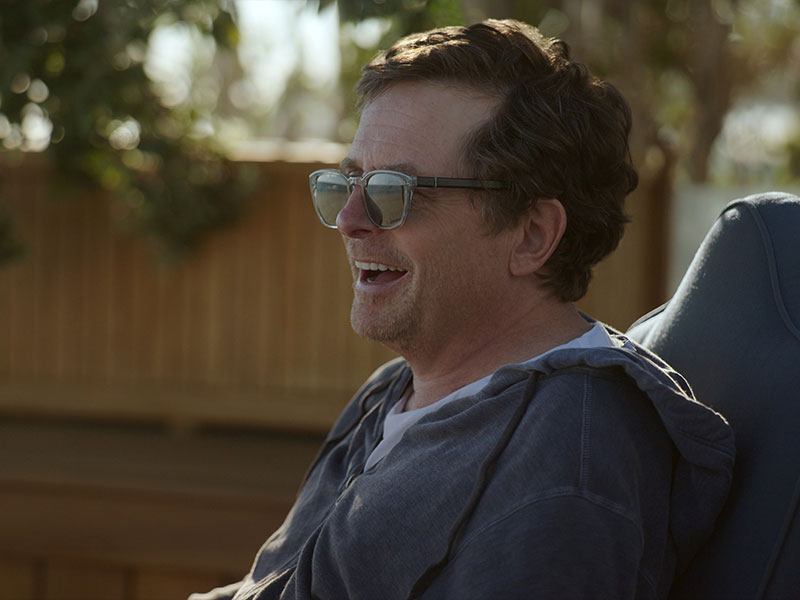
Fox said he would spend most of his time in the bath, day after day for hours at a time. 


“I just wanted to keep my head below water,” he recounted. “I needed to suffer. I needed to go as low as I could go. All I could hear was the muted splash of my trembling hand. But as low as alcohol brought me, abstinence would bring me lower. I could no longer escape myself.”


Fox described his first two years of sobriety as like a “knife fight in a closet.” The knife, he added, represented the truth of his reality.


“I just wanted to be out of the world. And I wanted to be in another place, doing another thing.”

05
Fox said his Parkinson’s walk shocks most people
STILL: A Michael J. Fox MovieMichael J. Fox in “STILL: A Michael J. Fox Movie” (Photo courtesy of Apple TV+)
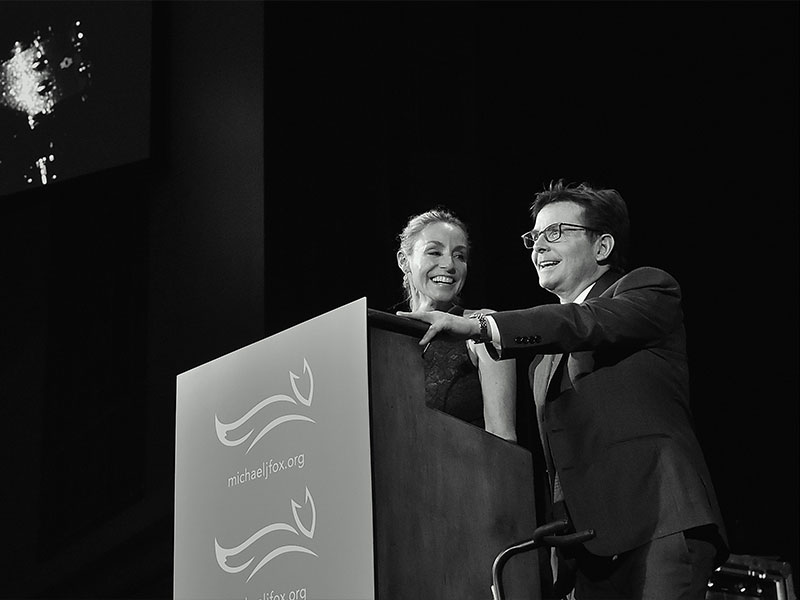
“The walking thing really freaks people out,” Fox said in the documentary. “But I won’t hide it from you. And you can do with it what you will. If you pity me, it’s never gonna get to me . . . I’m a tough son of a b***h. I’m a cockroach and I’ve been through a lot of stuff.”
 
In the documentary, Fox is seen walking around the streets of New York City, albeit briefly, before a fan approaches and praises him.  
06
Fox realized he didn’t have to do anything “other than be myself”
STILL: A Michael J. Fox MovieMichael J. Fox and Tracy Pollan in “STILL: A Michael J. Fox Movie” (Photo courtesy of Apple TV+)

After he disclosed his diagnosis publicly, Fox said he was afraid he would be rejected during auditions, because people would think he couldn’t be funny now that he’s sick, and misunderstood by many.


But that was far from the case.


“I can look at myself, and I say, ‘I have Parkinson’s.’ So how do I wanna live with that?” Fox asked. “But If I never get past the ‘I have Parkinson’s’ part, if I never get past the part where I wake up in the morning and I go, ‘Yeah, that’s real. That’s happening,’ then I can’t get past it.”


Fox also acknowledged that some people viewed his disease as a kind-of “ending.” But for him, it was “really a beginning.” Fox poured his heart into the Fox Foundation, which mobilized the Parkinson’s community and raised nearly two billion dollars.


“I never actually said this to anybody, but I always fantasized saying it,” Fox added. “‘Yeah, you’re bigger than me. You’ll beat me up. But I’ll hit you once and you’ll hurt.'”

“STILL: A Michael J. Fox Movie” is currently available for streaming on AppleTV+. Watch a trailer for it below, via YouTube:


Twitter algorithm recommends searches for animal torture videos after moderation cut: report

Disturbing videos of animal abuse circulated on Twitter over the last few weeks, sparking outrage and concern over the platform’s moderation systems, according to NBC News.

One notorious video, which users have said the platform directed to in the search bar via a suggested search term, appeared to show a kitten being placed in a blender and killed.

Laura Clemens, a 46-year-old Londoner who first learned of the video when her 11-year-old son asked her about it two weeks ago, told the outlet that she then searched for “cat” on Twitter, and the search box returned a suggestion for “cat in a blender.”

Clemens explained that she clicked on the search term and a video of the kitten being killed instantly appeared on her screen, which, for users who have not manually disabled the platform’s autoplay feature, would result in the video playing immediately. NBC News said that they were able to replicate Clemens’ process to find the video on Wednesday.

Clemens said she was grateful her child told her about the video rather than finding it on Twitter himself.

“I’m glad that my child has talked to me, but there must be lots of parents whose kids just look it up,” she said.

The circulation of the video as well as its presence on Twitter and in the suggested searches are part of a greater trend of animal cruelty and graphic videos circulating on the platform following the takeover of CEO Elon Musk.

Just last weekend, graphic videos of two violent events in Texas — a shooting at a shopping center and a car ramming into a group of migrants — spread on the app with some users saying they appeared on their algorithmically driven “For You” pages. 

The animal cruelty videos seem to have been posted before those videos as some users, Clemens included, have tried to get Twitter and Musk’s attention on the issue since early May. Clemens said she alerted Twitter’s support account and its vice president of trust and safety, Ella Irwin, of the video on May 3 but neither responded to the tweet.

“Young children know this has been trending on your site. My little one hasn’t seen it but knows about it. It should not be an autofill suggestion,” she wrote.


Want a daily wrap-up of all the news and commentary Salon has to offer? Subscribe to our morning newsletter, Crash Course.


The company likely dismantled the platform’s built-in safeguards meant to prevent these search bar autocomplete issues, Yoel Roth, the app’s former head of trust and safety, told NBC News. The “type-ahead search” system was constructed to keep illegal and dangerous content from becoming autocomplete terms.

“There is an extensive, well-built and maintained list of things that filtered type-ahead search, and a lot of it was constructed with wildcards and regular expressions,” Roth said.

“Type-ahead search was really not easy to break. These are longstanding systems with multiple layers of redundancy,” Roth added, referencing the several-step process combining automatic and human moderation to flag violent videos before they appear in searches that existed on the platform. “If it just stops working, it almost defies probability.”

While NBC News approached the company for comment on Thursday, the news outlet also found that the searches for “dog” and “cat” autocompleted to videos of animal abuse.

Twitter’s press account responded with a poop emoji, which has reportedly been the company’s response for the last month. 

As of Friday, suggested searches appeared to be turned off on the platform.

J.Lo takes charge in Netflix’s gruesome action-thriller “The Mother”

The high-concept action thriller “The Mother” is ludicrous — but in a good-bad way. This stupefying film defies logic as it grafts grisly violence with a maternal bonding plot. It is like a being hugged by mom, who has wrapped herself in barbed wire. 

The nameless title character, aka The Mother (Jennifer Lopez) is introduced in an FBI safe house in Indiana. She is being grilled by agents about her involvement in dealing arms to Adrian (Joseph Fiennes) and Hector (Gael García Bernal), her former lovers. She refuses to reveal much, but she does warn the feds that someone is coming for her. And yet, these men don’t listen to “mom,” who really does know best. Almost all the feds quickly end up dead, save Cruise (Omari Hardwick), whose wound she staunches while also managing to take out a bunch of bad guys. The Mother also finds time to construct a bomb of sorts before it is revealed she is very pregnant. Cue opening credits.

Director Niki Caro (a long way from “Whale Rider”), working from a script by Andrea Berloff, Peter Craig, and Misha Green, delivers two, two, two movies in one as the first half is all relentless action and the second part the not-quite-gooey emotional stuff. The film’s split personality is a problem because it wants to be original, and it ends up being overly familiar. 

After the safe house incident, The Mother delivers her baby, who will be named Zoe. Mom is also forced to terminate her parental rights so as not to put her daughter’s life in jeopardy. It’s a heartbreaking decision, but The Mother gets Cruise to promise to contact her with updates and the first sign of any trouble.

Twelve years later, that trouble comes when Zoe (Lucy Paez) is then kidnapped by Tarantula (Jesse Garcia), one of Hector’s henchmen. It’s a nifty shootout sequence, but a subsequent scene in a parking lot, where The Mother punches through the bottom of a decrepit truck’s floorboards to gain access to the vehicle to escape just strains credibility. That said, The Mother’s vow to “kill every last one” of the men who took Zoe is very, very real.

“The Mother” is best when Lopez is in action. There is an exhilarating chase scene through the streets of Cuba, that hits all the expected marks — children, street vendors, a wedding party, etc. The Mother is in hot pursuit of Tarantula, a baddie who is seen knocking over children and nuns to get away. Even when she hops on a motorcycle and gets hit by a car, The Mother bashes the driver with her helmet and takes off in his vehicle — such is her determination to find her daughter. It’s funny, shocking and thrilling all at once, but it is also completely and utterly ridiculous and cliched. 

Beyond the chase scene, the fight and torture episodes in Cuba are pretty graphic. One character gets a knife in his back, and it’s quite painful to watch. The Mother has some pretty ruthless interrogation techniques, which include waterboarding. And two characters succumb to gruesome deaths that may have viewers gasping and questioning why this film is being pitched for Mother’s Day

Eventually things slow down, providing a bit of backstory with The Mother and her relationships with Adrian and Hector. The narrative also gets The Mother reunited with Zoe, who does not seem very pleased by this development, in part because they hole up in a remote cabin in Alaska with no cell phones.

The MotherJennifer Lopez in “The Mother” (Netflix)
“The Mother” actually grinds to a halt during the scenes of Zoe acting petulant as her birth mother teaches her survival skills, which include shooting and driving. (This section of the film echoes two better films, John Cassavetes’ “Gloria” with its hitwomen/child caring moments, and “Hanna” with its pre-teen assassin-in-training episodes.) Lopez is in fierce mama bear mode in these scenes, and she is fun to watch being tough, but Paez does not give her much to play against because Zoe is not fully invested in learning to protect herself or bond with this stranger, whose identity is no mystery to her. As such, viewers are forced to wait patiently for the bad guys to come and threaten mother and child so the women can put the skills they honed to use.

The film perks up with a snowmobile action sequence that is shot in a white, wintery landscape. The scenery is quite striking, but the action is mostly routine and lazy, with fake-outs, fisticuffs and a pre-teen in danger. The ending may feature the soundtrack swelling during a big emotional moment, but the payoff does not feel satisfying. 

At least “The Mother” gives J.Lo a juicy role, and she works equally hard in her action scenes as she does with her emotional ones — especially since her character tries hard not to show any feelings. Lopez looks glamorous throughout, sporting a big furry coat in Alaska, a tight dress while dancing in Cuba and even during a flashback where she is doing target practice in the military. Lopez does her best with the subpar material, and it is hard not to wish, as with so many J.Lo starring vehicles, that “The Mother” made better use of her talents. 


Want a daily wrap-up of all the news and commentary Salon has to offer? Subscribe to our morning newsletter, Crash Course.


The eclectic supporting cast adds to the film’s unevenness. Gael García Bernal hams it up in one key scene, whereas Joseph Fiennes is more sleepy than sinister as the evil Adrian. Lucy Paez also seems to lack energy, which is a drawback because Zoe’s scenes with The Mother should have some spark so viewers appreciate why this mom will die for her daughter. In contrast, Omari Hardwick exudes charisma, and Jesse Garcia is memorable in his pivotal role.  

As “The Mother” whipsaws the characters from Alaska to Cuba and back, the story struggles to find its groove because the propulsive action is at odds with the more sentimental moments. The film also lacks irony that might have made it campy fun. While parts are greater than the whole, “The Mother” delivers a passable action film. If only it had resisted the mama drama.

“The Mother” is available for streaming on Netflix starting May 12.


Chili and Lime Chips or Choco Chip Dunkers? A definitive ranking of Trader Joe’s best classic snacks

It’s a known fact that no trip to Trader Joe’s is complete without perusing its small yet plentiful snack aisle. Whether you’re craving something sweet or salty (or a mix of both!), TJ’s has got you covered!

Of course, the lauded grocery store chain offers an array of goodies. Personal taste, as we all know, is indeed subjective. But even then, there’s clearly a select handful of TJ’s snacks that reign supreme time and time again and others that are sometimes left to collect dust on the store shelves.


Want more great food writing and recipes? Subscribe to Salon Food’s newsletter, The Bite.


Say what you want about my own taste — and the tastes of several loyal TJ’s fans on Reddit — but I will continue to pledge allegiance to the brand’s Chocolatey Coated Chocolate Chip Cookie Dunkers and Chili and Lime Flavored Rolled Corn Tortilla Chips (remember when it was temporarily discontinued? That was a scary time . . . ).

So, without further ado, here’s a definitive ranking of Trader Joe’s best classic snacks, arranged from my least favorite to the absolute best.

10
Gluten Free Joe-Joe’s Chocolate Vanilla Creme Cookies
TJ’s rendition of Oreos don’t “hit” the same as the real deal. The formula behind TJ’s Gluten Free Joe-Joe’s Chocolate Vanilla Creme Cookies is quite simple: In between two chocolate flavored cookies is vanilla flavored crème, with visible vanilla bean specks throughout. But there’s something about the cookies that make them taste too cardboard-like. And the crème is also nauseatingly sweet. It’s also worth mentioning that these cookies lose their crispiness pretty quickly. So, if you do happen to have a box lying around at home, be sure to finish them ASAP (or return them, if it’s not too late . . .).
09
Cauliflower Crisps
I’ll be honest, I’m quite skeptical of cauliflower-based products, whether that’s cauliflower rice or cauliflower pizza crust. While I do understand that such products are a popular gluten-free option, the hard truth is that they don’t taste that great. Sorry, not sorry. TJ’s Cauliflower Crisps are pretty tasteless and unsatisfying when eaten on their own. But, I’ll give them a few extra points for their versatility. These paper-thin crisps are slightly more tasty when dipped in melted cheese, hummus, guacamole or spinach and artichoke dip.
08
Scandinavian Swimmers
I’m a HUGE fan of gummies. In fact, they will forever be my go-to choice of candy. So, I was pretty elated when I picked up a pack of TJ’s Scandinavian Swimmers, only to be greatly disappointed after I took my first bite. TJ’s version of Swedish Fish are vibrant and made with colors derived only from fruits and vegetables. That’s literally their only redeeming trait. As for their taste, the Scandinavian Swimmers are waxy, so much so that they leave an uncomfortable residue-like feeling in your throat after you eat them. Do yourself a favor and just enjoy a pack of Swedish Fish instead.
07
Crunchy Curls
The crispy and airy snacks are made from lentil flour and potato starch, making them quite tasty when eaten with a dip, like hummus, tzatziki or a jalapeño dip. I will say that TJ’s Crunchy Curls sometimes taste a bit bland when eaten on its own. But it’s fun curlicue shape makes up for it all!
06
Chips in a Pickle
To me, dill-flavored potato chips don’t have the most appealing taste or smell. But TJ’s Chips in a Pickle is honestly not as off-putting as most pickle-flavored snacks out there. Because the chips are covered in pickle flavor, they also cause a tongue-tickling sensation that enhances the whole eating experience. I will say that they do taste great with a chilled drink or a yogurt-based dip.
05
Organic Elote Corn Chip Dippers
Made from organic corn, organic sunflower oil and organic sea salt, TJ’s Organic Elote Corn Chip Dippers are incredibly tasty and incredibly functional! Unlike your traditional corn chip, TJ’s version is rounded around the edges, making them perfect for picking up (and holding onto) dips, salsa and queso. Per TJ’s recommendation, you can also use these corn chip dippers as “forks” when enjoying egg salad, tuna salad or chicken salad. Dig in!
04
World’s Puffiest White Cheddar Corn Puffs
For lovers of Pirate’s Booty Aged White Cheddar Puffs, be sure to pick up a pack (or two . . . or three!) of TJ’s World’s Puffiest White Cheddar Corn Puffs. Each puff is deliciously airy and perfectly coated in just enough powdered white cheddar that’s made from actual white cheddar cheese. It’s hard to not finish the entire bag in one sitting. Don’t say you haven’t been warned.
03
Cocoa Truffles
When you think of TJ’s Cocoa Truffles, you may think that they’re a seasonal item only reserved for the holidays. But contrary to popular belief, these mouthwatering chocolates are a year round treat and a must-have in everyone’s pantry. Picture this: You bite into a rich, decadent truffle that instantly melts in your mouth and leaves behind a light dusting of cocoa powder on your lips. That’s exactly what it’s like enjoying these Cocoa Truffles. Seriously, TJ’s should really consider recreating those Ghirardelli chocolate commercials with these truffles.
02
Chili and Lime Flavored Rolled Corn Tortilla Chips
Infamously known as gentrified Takis, TJ’s Chili and Lime Flavored Rolled Corn Tortilla Chips are undeniably delicious. Compared to the OG, TJ’s rendition is tangier, thanks to its vibrant orange dusting made from paprika and turmeric extracts. It’s necessary to have several bags of these chips on hand at all times. Enjoy them as a stand-alone snack or dip them in guacamole or your favorite garlic dip.
01
Chocolatey Coated Chocolate Chip Cookie Dunkers
There’s something about these long, narrow cookies that taste like childhood. Maybe it’s because these cookies were a staple at my middle school classroom parties and dances? Whatever the reason may be, these cookies will always hold a special place in my heart. Each cookie is adorned with chocolate chips and coated in chocolate at the bottom. They pair exceptionally well with hot cocoa or a warm cup of joe!

Ready your emergency contact – “Yellowjackets” is choosing violence

When Lottie Matthews (Simone Kessell) directs our attention to something, it’s best to pay attention — lest a gift from “the wilderness” go unclaimed. 

In “Yellowjackets,” for as abstract and up for interpretation as it can often seem, everything we see and hear has a purpose; with dialogue, setting, costuming, framing and even flashes of static worked into the mix to advance the story and get us closer to our goal of understanding just what the hell is going on here. 

Clues can be found around every turn, delivered via a character’s hallucination that jolts them into an uncovered recollection or — such as the case in this season’s seventh episode — hidden in plain sight on the wall of Sunshine Honey’s Wellness Community at Camp Green Pine. 

Hello, wanderer. Do you know where you are?

Yeah, I’m not 100% on that either. Thankfully, we were blessed with a lifeline to call for some answers. And if not answers, at least some guidance in asking better questions. 

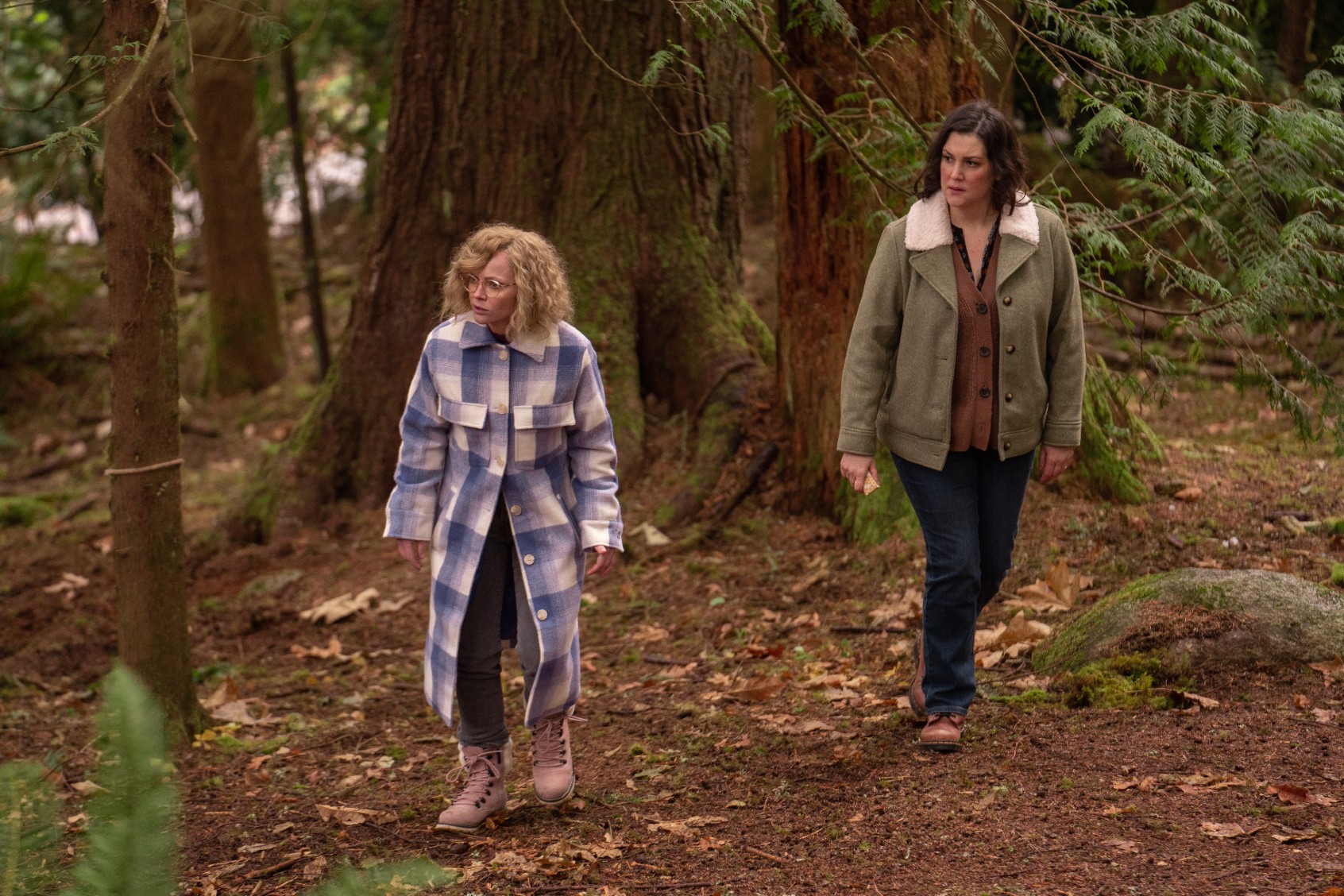
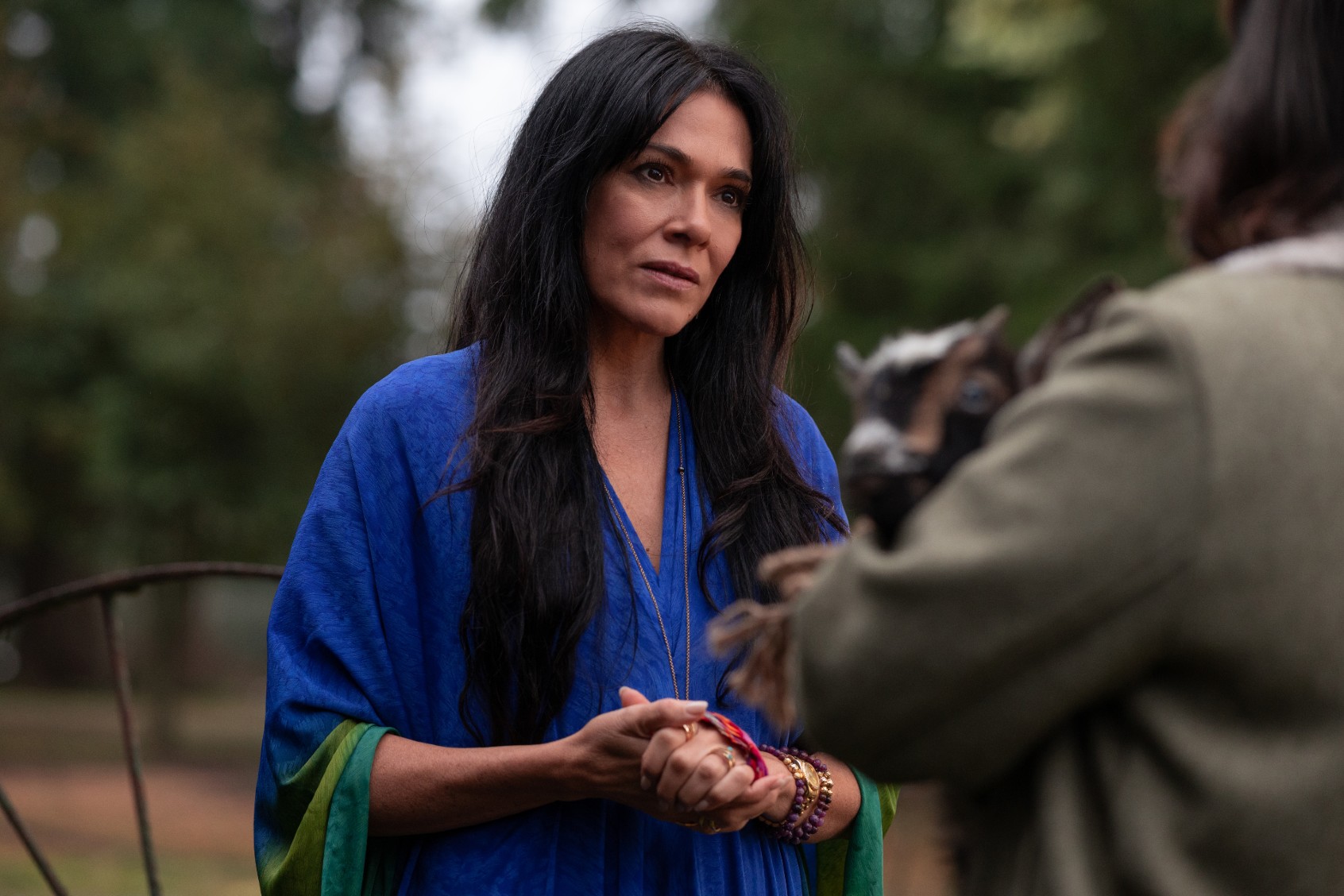
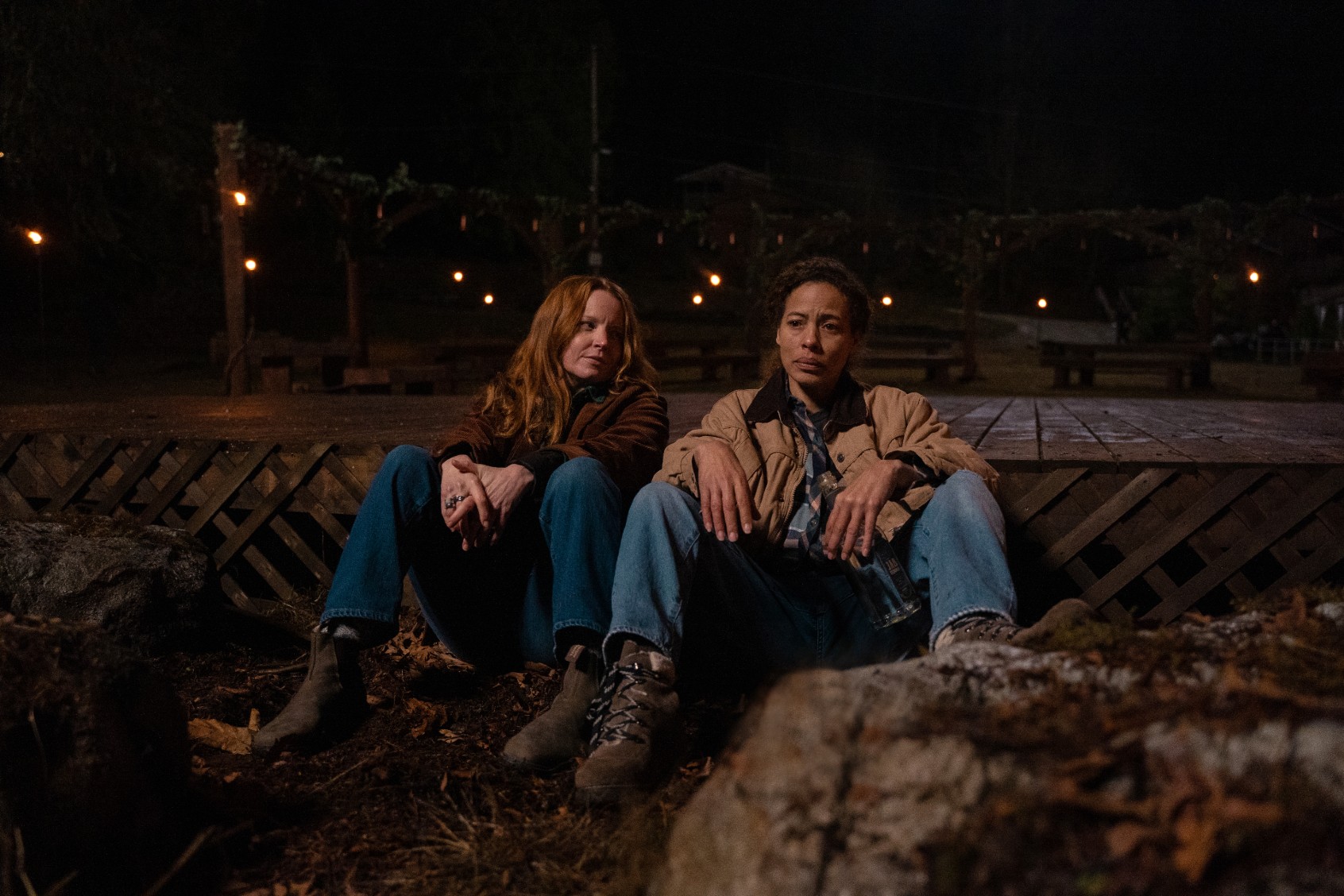
After Shauna (Melanie Lynskey), Taissa (Tawny Cypress) and Van (Lauren Ambrose) settle in a bit after joining Natalie (Juliette Lewis) and Misty (Christina Ricci) at the “intentional community,” they’re shown a phone number on the wall and are told by Lottie to give that number to whoever they feel may need it before handing over their cell phones for the remainder of their time there. Something about the length of time the shot lingers on this number tells me that it’s important, so I texted it, and I highly suggest that you do the same, if you haven’t already.

(L-R): Christina Ricci as Misty and Melanie Lynskey as Shauna (Colin Bentley/SHOWTIME)After punching in the number (607-478-1033), I received a return text reading, “You’ve reached a landline. Please call us instead,” along with a link to add myself to the community via a form asking for my name and address, which I supplied because I, at all times, welcome strange things into my life. Once that step was completed, I called the number and heard a pre-recorded message that I’ve since listened to roughly 100 times. I won’t spoil it for you, because you really should hear it for yourself, but I’ll summarize: Cannibalism is officially the least interesting part about this show, and everything we thought we knew about what’s been happening and where things are headed is likely very wrong. 
“Don’t be afraid to say the words that move the winds,” the message says in its closing.

OK, here are my words, which I said out loud in an empty room the first time I called the number, “Whatttttttt is happppppeninggggggg?”

*Static sounds*

*Ominous whispers*


Want a daily wrap-up of all the news and commentary Salon has to offer? Subscribe to our morning newsletter, Crash Course.


We’ve been mostly wondering about the “what” and “who,” but now I feel a push for the viewer to lean more towards the “when” and “where.”

Up until, oh, about two episodes ago, the main question most viewers have been mulling over is whether or not the things we’ve seen from Season 1 until now are practical (trauma induced, etc.) or supernatural (Antler Queens, haunted French, special powers, etc). We’ve been mostly wondering about the “what” and “who,” but now I feel a push for the viewer to lean more towards the “when” and “where.”

The weirdness is ramping up, and certain little details are emerging that weren’t (at least for me) noticeable in earlier episodes. In the ’90s timeline, Lottie’s (Courtney Eaton) eye twitches every so often, like she’s glitching out. Coach Ben (Steven Krueger) is having static-y hallucinations of life with his boyfriend Paul (François Arnaud) that are now merging with the reality that we’ve been following him in, yet we can no longer be sure if that reality is the only reality. And In a release of pent-up rage and sadness, Shauna (Sophie Nélisse) beats the ever lovin’ s**t out of Lottie and, afterwards, sticks her bloody knuckles in the snow outside. There seems to be an implied shift in power or change in “roles” in this moment. Like the record is flipping from Side A to Side B. 

Oh, now feel it coming back again
Like a rolling thunder chasing the wind
Forces pulling from the center of the Earth again
I can feel it

“Lightning Crashes” by LIVE (1994)

Simone Kessell as Lottie (Kailey Schwerman/SHOWTIME)In the ’90s wilderness, Ben looks out the cabin window and hears a phone ring (there is no phone) and, behind him, sees Paul (there is no Paul) go to answer it. 
“But he isn’t ready,” Paul is heard saying to whoever’s on the other end of the line.

Hanging up, he asks Ben to sit down and when he refuses, sits down himself.

“I have to go,” he says. “Where do you think you are, Ben? You had to have known you couldn’t stay here forever. This was never meant to be your hiding place.”

Making his way out the cabin door, Paul then tearfully tells his boyfriend, “I love you. We all love you, Ben.”

Seeing him exit, Ben screams out his name, causing Van and Tai to turn towards him in alarm. A beatific expression washes over his face, like he understands what Paul was talking about and now has a plan. For a moment, that plan seems like it will involve throwing himself off of a cliff after he uses a razor from his luggage to shave his face baby smooth. But Misty (Samantha Hanratty), always on hand in moments of need, intervenes with some waterworks and threats of sullying his name as a gay and/or chronic impregnator of teen girls. 

If Ben hears that same nonexistent phone ring in the cabin again but, this time, answers it himself, will he be “ready”?  

(L-R): Lauren Ambrose as Van and Tawny Cypress as Taissa (Colin Bentley/SHOWTIME)In recent past episodes, there’s been a fair amount of talk of people not being where they’re supposed to be, and of “reality” not being entirely concrete. 
“This isn’t where we’re supposed to be,” Tai told Van in Episode 5 after going into a fugue state and trying to kiss her.

There’s a persistent questioning in my mind now if any of the adult Yellowjackets are really alive, or if what we’re seeing in their timeline is their in-limbo spirits struggling to grapple with the violent post-crash events and the “what could have beens” of the adult lives they never got to live. 

Yes, I know how this sounds. This from a person who’s been very staunchly, “Lottie’s full of crap!” until now. I love a show that keeps me on my toes and second-guessing myself. Give it up to the writers. (Seriously, pay writers a fair wage!)

In this episode, flashing back to the ’90s timeline, the tables are turned and we see Van (Liv Hewson) grappling with a similar issue as adult Tai when she questions why she’s survived so many unsurvivable things. She used to think she had some sort of purpose in this, but now she’s not seeing it. She doesn’t know “why” she’s supposed to be there.

Flip-flopping back to the present, we learn that Van has terminal cancer and only has months to live. As the ladies reconvene post-therapy sessions consisting of musical sensory depravation tank experiences and baby goat wrangling (BRUCE!), they dance around a campfire making animal noises, unable to remember much from their shared traumatic past at all. 

But Lottie seems to remember quite a lot, namely that the “God” of the wilderness has been starving for attention for some time. 

In my last recap I wondered if Callie (Sarah Desjardins) would be sacrificed in exchange for the return of something they’ve all been wanting (release from purgatory? A return to their post-crash youth?) But now, since Van is going to die anyway, I wonder if it will be her. 

“Does a hunt that has no violence feed anyone?” Lottie’s (not really there) therapist turned Antler Queen asks.

For now, at least Bruce is safe, which will have to be enough for us to catch our breath until Episode 8, in which Shauna (or maybe Misty, since she ratted herself out to Walter) will have to answer for the newly discovered corpse of Adam (Peter Gadiot). Misty, didn’t you already learn a big lesson about telling people your secrets?

QUICK BITES:

  • Um, where’s Crystal’s corpse? Did Javi’s “friend” take it?
  • “Why does everyone keep saying that to me?” – Misty, when Shauna says her hobby is learning how to be the perfect serial killer.
  • “What is the intention, exactly?” – Van, after being intro’d to the “intentional community.”
  • “EEEEEEEEE” – Adult Natalie, after being told it was snowing outside 
  • This episode made better use of Nirvana’s “Something in the Way” than “Batman.” Prove me wrong.
  • I worry about Shauna burying her dead baby under a pile of rocks. Something, or someone, is gonna get after that baby. 
  • I could have done without the musical number. Sorry, Caligula (John Cameron Mitchell).
  • Lottie says the wilderness doesn’t “trade or haggle,” but it seems like it kind of does? Isn’t a sacrifice or an offering a “trade”?
  • “In an ecstatic state, the body can’t hold memory that well.” Heard.
  • Poor teen Lottie’s bloody face. And ribs. And everything.

“Don’t bite your tongue for no one”: Tupac’s mom, Afeni Shakur, taught him how to rebel and prevail

If you asked 10 people about Tupac Shakur, you would likely get 10 different responses. Some may talk about his captivating role as Bishop in the ’90s movie “Juice,” others may bring up how he consistently dropped new albums years after he passed away, and you might even get a story about the time he shot at a racist police officer, was arrested and beat the case during a time where it was very rare for a Black man to take on white cops and win.

Tupac was many things to many people – an activist, a revolutionary, a Shakespearean, a hip-hop artist, a gangster, an overall fascinating individual. True fans know that Tupac was so special because he was raised by Afeni Shakur, one of the most fascinating women in American history —which you can learn all about in FX’s “Dear Mama,” a five-part collection of stories detailing the lives of Tupac, Afeni and their relationship.

Afeni Shakur was part of the Panther 21, a collection of members of the Black Panther Party charged with conspiracy to blow up two police stations and an education office in New York City in 1969. Afeni spent about two years in prison devising a plan in which she represented herself and was acquitted of all charges. It was Afeni who initially taught Tupac the power of knowledge, revolution, Black power, equal rights, fighting oppressive systems and the many themes that made up the heart of Tupac’s music and the characters he portrayed on the silver screen.

Director Allen Hughes, half of the Hughes brothers, dropped everything he was doing to direct “Dear Mama.” Hughes himself has constructed a body of work that helped raised a generation of young Black people not used to seeing themselves in film, including classics like “Menace To Society,” “The Book of Eli” and “Dead Presidents.”

On “Salon Talks,” Hughes told me he “had no interest in doing documentaries,” but needed to take on “Dear Mama” because Tupac’s story was too important to pass up. “The thing that’s unique about him, he’s going to make you feel him,” Hughes said about Tupac and his music. “You’re going to feel him because it’s raw. He didn’t go back and polish up the verse. You hear the Hennessy, you hear the weed, you hear the passion, the anger, the angst, the love, the joy, the pain.”

Watch my “Salon Talks” episode with Hughes here or read a Q&A of our conversation below to learn more about the real Tupac, the real Afeni and the Snoop Dogg biopic that Hughes is making next.

The following conversation has been lightly edited for length and clarity.

How did “Dear Mama” come together? 

The estate and the family wanted to meet with me about it. I was surprised. I took the meeting, but wasn’t sure if I wanted to come on and direct and produce it for personal reasons outside of me and Tupac’s personal relationship. I just didn’t know if I wanted to do another documentary, which is exhausting. 

I thought about it and I thought to myself, “I’d like to understand him better. There’s a lot of things I don’t understand.” And that was what made me decide to do it. I was like, I can gain some understanding and make sense of his journey because the last year of his life, when he was on death row, was seemingly so disconnected from the first four years of his career and 24 years before that. I just wanted to find out what happened.

Tell us some of the things that you discovered about Tupac that you thought you would never know. 

“I was raised by a single activist mother, and that’s how I found my way in.”

I think the poverty thing was a big one. One thing being poor, I’ve been poor, a lot of us have been poor, but Tupac, some of his childhood long stretches of time, not knowing where his next meal was going to come from, his mother not knowing. They’re eating hot sauce sandwiches some nights. I’ve never been that poor. There’s that level of his mother’s suffering, post-traumatic stress from all the Panther stuff she went through and what the government did to decimate her and her comrades. And she’s living in the wake of feeling like they lost that war for civil rights and being disbanded by the FBI. The effect it had on Tupac as a child, his mother’s disillusionment with life and the struggle for human rights and feeling that they had lost. And then the poverty was a revelation to me.

We met Afeni through multiple lenses throughout the course of Tupac’s career. We know she was a Black Panther. We know she beat the Feds. We know about some of the struggles that she had with addiction. I always felt like when we had these conversations and talk about Black movements and Black liberation, that Afeni’s name doesn’t really come up enough.

That’s right. That’s right. That’s what I wanted to correct too. The bottom line is, my take was, this has got to be a dual narrative about Tupac and his mother as much her narrative as it is his narrative and learning about him through her journey because I was raised by a single activist mother, and that’s how I found my way in. I think hopefully if all goes well and people get to embrace the film, she will become one of those civil rights icons that she deserves to be.

I’m constantly thinking about masculinity and its role in mother and son relationships, and then how that translates into the way we as men interact with women in general. Maybe you can talk about how Afeni prepared Tupac for those challenges.

I think it was interesting because Afeni obviously was in the forefront of the civil rights movement. My mother was a woman’s rights activist and a radical feminist, so I’m wired as a feminist. When we talk about these modern terms, toxic masculinity and all that, and then you talk about young Black boys that don’t have fathers, I didn’t have my father in my life, you need to look at that.

One thing that struck me about Tupac and Afeni’s relationship, women tend to be more in touch with their emotions than men, we know that, and that’s what men need to learn more of. Women aren’t as guarded with their mouths as men have learned to be. I think Tupac came up in a house not only with a woman that was intelligent, but a woman that spoke her mind like my mother did. My mother didn’t hold her tongue. That’s a whole nother type of woman and is sharp, will eviscerate you.

“I don’t care what cops say. I don’t care what journalists have to say. I care about what the people that were there when it happened.”

Unfortunately, for the young boys that are raised by women like that, you might need a father to go, “Hey, yo, listen, maybe you shouldn’t say all that.” That’s kind of where the father comes in, a traditional father comes in. I think when you look at Tupac and the way he would pop off, that’s Afeni. That’s what she taught him too. That’s what she taught him. She taught him, don’t bite your tongue for no one. 

He ain’t bite it at all.

I think he reinvented it. He reinvented it.

When I played my nephew and then some of the old Pac stuff and they hear the, “Jay-Z die, too,” and, “F**k you, LL. I’ll rock your motherf**king bells.” They like, “Whoa, whoa, whoa.” I’m like, “Nah, Pac, he was different.”

He was different and he talked s**t well.

Larry Holmes was probably in his home with his earphones like, “What the f**k I do?”

That’s exactly right. But also a young buck just disrespecting the OGs that had been unheard of. Look, I don’t think it’s hot, but he did it so well, you felt it.

I know you said you didn’t really want to do another documentary, but this one just felt like something you had to do. Could you talk about that research process?

There was a lot about that I didn’t know. But the research, it’s just sitting down with the family and the friends, finding people that hadn’t gone on camera. We have a handful of people that have never been on camera that were very close to both of them sitting and talking with Panther veterans OGs that are in their 70s and 80s that were right there. 

“His image is everywhere. It’s eclipsed Che Guevara. It’s eclipsed Bob Marley. He’s a global symbol for rebellion.”

That’s the process. It’s just trying to tell the story and discover things about the journey that we don’t know and making it about seeing the whole thing through the prism of their relationship only, even if it had to do with the Quad [Studio] shootings or anything famous incidents even when it came to me. How does this relate to his mother and how does his mother relate to this in their journey? That’s how I decided to tell the story. 

We’re not going back and relitigating all his so-called crimes and legal dramas and firestorms and shootouts. I don’t care what cops say. I don’t care what journalists have to say. I care about what the people that were there when it happened and gaining an understanding of how it affected him. What was he thinking? Where was he at psychologically and emotionally and what was his mother dealing with at the time?

My city is such a weird place because I remember I got an older cousin named Terrell that used to live up 41st Street. He used to be with Mouse and Tupac.

Oh wow.

He used to always tell us, “It’s this kid from New York down here. He’s going to be a rapper.” But Baltimore didn’t really have anybody that was popular as a rapper. We only looked up to street guys. If you were rapping, we thought you were a joke. That was something in New York that was a whole other universe away.

That makes sense.

When it all came together and we’re watching more the Digital Underground video, he’s like, “Yo, that’s the dude I told you about that was rapping.” And we like, “Man, you don’t know him, man. He never lived here before.”

He’s called MC New York.

I’ve been teaching a hip-hop class at the University of Baltimore for the past six years, and it is wild how many young undergraduate students come in and they don’t really know a lot about Tupac. His influences are all over the game and I got to convince them to listen to it, and then they hear the music and connect. Why do you think it takes so much to get them into it?

It’s funny. That’s the first I’m hearing of that. I always hear the opposite. I’ve traveled the world and you look at his mural and where it’s at. It’s in Africa, it’s in South America, it’s in Asia, it’s in Europe, it’s in Australia. His image is everywhere. It’s eclipsed Che Guevara. It’s eclipsed Bob Marley. He’s a global symbol for rebellion. The children’s soldiers in Africa, as Mike Tyson says in the film, go into battle, listening to Tupac. I got a picture in Part 5 and you’ll see him, all these 10- and 12-year-olds with machine guns, with Tupac shirts on. So I’ve heard quite the opposite.

“How does this relate to his mother and how does his mother relate to this in their journey? That’s how I decided to tell the story.”

I think that to your point though, is when you play a record though, if you play those kids like “Me and my Girlfriend” and tell them, “Just let this wash over you,” I think the thing that’s unique about him, he’s going to make you feel him. You’re going to feel him because it’s raw. He didn’t go back and polish up the verse. You hear the Hennessy, you hear the weed, you hear the passion, the anger, the angst, the love, the joy, the pain.

I think if you play, “Keep Your Head Up,” some of the lighter tracks, or I think if you place my personal favorite, “Shed So Many Tears” and you tell a group of young kids, “Look, this is who this dude is real quick, but listen to this track real quick. Just listen to it.” See how I said real quick? I think TikTok has f**ked everyone.

A lot of times I start off with “Death Around the Corner” because it’s just one of the wildest intros that you’re ever going to hear on this song.

What album is that on?

“Me Against the World.”

See, there’s still ones that dropped on me. 

She’s like, “You don’t eat, you don’t sleep, you don’t f**k. You just stand by the window with that godd**n gun all day.” I’m like, “Yo, that’s just a lady yelling at him.” I’m be like, “Yo, this is one of the wildest intros you ever going to hear in a song ever.”

“Death Around the Corner.”

I remember when I introduced Jay-Z in a hip-hop class, there’s always a kid who was like, “Beyonce‘s husband” And I’m like, “Yo, he didn’t start there.”

How old are these kids?

They were born in 2002 and 2003. They’re 18 and 19 years old. They’re young. But I don’t know, when I was a young kid, I was raised by OG’s, so I guess it’s a little different.

What year were you born?

“You hear the Hennessy, you hear the weed, you hear the passion, the anger, the angst, the love, the joy, the pain.”

’80. 

Check it though. When you were raised, it wasn’t a lot out there and there wasn’t a lot of options. And the options, you could see who was dope and who wasn’t dope. It wasn’t what you just said, 20,000 motherf**kers. Also it still was an era where you respected your OG’s. All that’s down the toilet. 

It’s different now. Everybody’s the OG. Dude calling himself an OG, he’s like six years old.

Exactly. Exactly. It’s all changed. It’s all changed. And this thing killed everything.

I owe you some money because when I was maybe 13, I had a bootleg “Menace” and we used to watch it every day.

Pay up. Everyone did.

I owe you like 30 bucks, man.

You were the perfect age at the time because I remember, and I still remember, the people who approached me are the most passionate about “Menace” were about 13, 14 when it came out, too young to watch it. But at the age where you knew what it was.

Yeah, it was unattended too. I didn’t have anybody to say, “Look man, you should be listening to rock.” 

He was born in ’80. That’s when everything started to change. 1980 is when everything started change.

If Pac and Afeni Shakur were alive today, how do you think they would be perceived in this world of Black Lives Matter, wokeness, cancel culture, Trumpers and all that?

Great question. I don’t think Tupac would’ve fit into what is happening on both sides very well. He absolutely wouldn’t have done what Kanye did. We know that.

Absolutely not. 

It would be the antithesis of that. Maybe even hardcore the other way. Afeni would be a lot more balanced about things. But Tupac, I don’t have to tell you how passionate he was. I didn’t get to meet Afeni unfortunately. She passed in ’16. But I think when you watch this film, all five parts, you go, “Wow, they did their thing.” Their body of work and including what she did, it’ll be studied for decades now. That’s how much they did. Them being here now, we’re going to be catching up to them for so long. It wouldn’t matter.

What’s next for you?

I’m actually doing Snoop Dogg‘s biopic, a feature film.

Oh word. Did you find somebody to play Snoop?

That is the million-dollar question. Snoop is in all throughout “Dear Mama.” Wait until you get to Part 4 and see that bond and what happened. But Snoop is one of those rare guys in the game, guys that I’ve known for 30 years that I absolutely adore him and his understanding and his spirit and what he survived and his insights into Tupac and into Black men, Black women and the culture. 

When he asked me to tell his story, I said, “Absolutely,” because this is the inspiring version of “Menace to Society.” This is if Tupac would’ve lived. By they way, I totally was doing something else and then this came.

“Dear Mama” is now streaming on Hulu.


Trump brags about “sky high” town hall ratings — but they were lower than Biden’s town hall

CNN’s town hall with former President Donald Trump on Wednesday boosted the network’s ratings but drew fewer viewers than its 2020 town hall with then-presidential candidate Joe Biden and Trump’s previous events on Fox News.

Trump bragged about the ratings on Truth Social, arguing it was “very smart” for CNN to host the town hall because they got “Sky High Ratings that they haven’t seen in a very long time. It was by far the biggest Show of the night, the week, and the month!”

The 70-minute spectacle of lies, insults and attacks moderated by CNN anchor Kaitlan Collins in New Hampshire aired to a total audience of 3.308 million people, ranking it “2nd among total viewers, closely behind CNN’s 2020 Joe Biden Town Hall (9/17/20, 7:59p-9:15p; 3.465 million)” according to the network’s rankings memo.

The Wednesday town hall also drew 780,000 people in the 25 to 45-year-old advertising demo, according to Axios, quadrupling the amount typically seen by the network during Anderson Cooper’s 8 p.m. ET program.

Though the event made CNN the most-watched cable news network of the night, Nielsen data compiled by Fox News showed that CNN’s Trump town hall received far fewer viewers than several of Fox’s previous town halls with the former president, Mediaite reports.

Six Fox News town halls with Trump had audiences of 5.1 million people age two and up, 4.4 million P2+, 4.2 million P2+, 3.8 million P2+, 3.5 million P2+ and 3.2 million P2+, respectively. 

Axios also reported that the controversial event boosted CNN’s ratings in the 9 p.m. and 11 p.m. hours after the event.

However, according to Mediaite, CNN lost out to Fox News’ “The Ingraham Angle” by 46% total viewership during those time slots, falling to 2.3 million viewers in the 9 p.m. hour and 1.2 million for the 10 p.m. hour.


Want a daily wrap-up of all the news and commentary Salon has to offer? Subscribe to our morning newsletter, Crash Course.


The CNN memo added that its town hall “delivered a larger demo audience than Trump’s first town hall of the 2020 election cycle on Fox News, drawing +5% more adults 25-54 (781k vs. 744k),” adding that “the event was significantly ahead of Trump’s last town hall appearance on CNN in 2016 (aired 4/12/16, 9p-10:05p), delivering +53% more total viewers (3.308m vs. 2.168m) and +35% more in the demo (781k vs. 579k).”

The event, during which Trump mocked E. Jean Carroll for four minutes just one day after being liable for sexually abusing her, drew the ire of several media personalities inside and outside of CNN, who criticized the network for platforming the former president’s falsehoods in front of an audience that cheered in support of him.

CNN chief executive Chris Licht defended the event in an editorial meeting with staff Thursday morning, acknowledging that covering Trump is “sticky and messy” but adding that “America was served very well by what we did last night.”

The ugly side of beauty influencing: Tarte furor reflects ongoing slighting of influencers of color

Tarte Cosmetics may be a fan favorite amongst celebrities like Shay Mitchell and Kourtney Kardashian but recently, the popular beauty brand has been wrapped up in controversy after several Black creators accused Tarte of mistreatment and racism.

Back in January, Tarte hosted a viral Dubai influencer trip, where influencers and content creators dropped more than $3,000 for a three-night excursion in the luxurious tented pool villas at The Ritz-Carlton. It didn’t take long for the trip — which, mind you, actually took place in Ras al Khaimah — to garner online hate, notably on TikTok. Many complained that it came across as nauseatingly gaudy and “tone deaf” amid an ongoing inflation surge. One TikToker also complained about the trip’s budget and lack of diversity. 

Now, almost four months later, Tarte is facing more accusations of second-class treatment from several BIPOC women influencers following the brand’s most recent trips. It all started with the Tarte Island trip in Turks and Caicos, where influencers were invited to stay in Prince’s former island estate. Because guests weren’t staying in a hotel, some received larger accommodations while others received significantly smaller ones. But per one TikToker, the room assignments also felt racially coded.

South Asian beauty influencer Cynthia Victor (@shawtysin) took to the app to reveal that she was given one of the smaller rooms. She didn’t know her room was smaller until she saw room tours from other influencers who were also in attendance. For Victor, it wasn’t the size of her room that upset her but rather, feeling that she got the “short end of the stick” as a “minority creator.” She was also upset over the fact that some creators were allowed to stay longer than others.

In response, Tarte asserted that each room was “assigned in advance based on check-in/check-out timing, plus ones, and more.” 

“We selected this house because we felt all of the rooms within this private estate were stunning and would be great accommodations for all of the creators joining us,” the brand continued, per Elite Daily. “In fact, the BIPOC creators were only situated throughout large and medium rooms and were offered the same experience as every other guest throughout the stay.”

Shortly after Victor posted her video, another TikToker Bria Jones (@heybriajones) said she opted out of Tarte’s Miami Formula 1 trip after “being treated like a second-tier person” by the team. In a now-deleted TikTok, Jones said she was invited to attend the Formula 1 race on Sunday, May 7, but realized after checking her plane tickets that Tarte planned on flying her out the day before. She was also shocked to learn that her friends, who were also on the trip, were scheduled to fly out the day after the race.

“As grateful as I am to be invited on a Tarte trip, I was sad to realize my experience was going to be different than my friends that were also invited,” Jones wrote in her caption. “I have been on many brand trips and typically everyone is treated the same, so this caught me off guard. I wish I had the heads up.”

Tarte’s CEO Maureen Kelly later addressed the Miami trip backlash in a joint statement released with Jones, saying, “From the Tarte side, the initial email to Bria with her trip details did include a confusing typo, and the brand takes full responsibility for that. We both recognize that we could have easily cleared the air together before feelings were hurt. Bria acknowledges and understands that posting that video has allowed for miscommunication and confusion.”

After Netizens attacked Kelly’s dismissive response, Kelly reactivated her TikTok to offer a more sincere apology. “I take full responsibility for a TikTok video that I posted responding to claims by a respected and valued Tarte creator,” Kelly said, adding that her “light-hearted approach” to a serious discussion on issues of diversity and inclusion “missed the mark.” She continued, saying that she “should have used this as an opportunity to address the unequal treatment of Black creators within beauty creator programs.”

This isn’t the first time BIPOC influencers have felt slighted by major beauty and fashion brands. In 2019, lifestyle YouTuber Kianna Naomi accused Dote Shopping of using her as the “token Black girl” during an influencer trip to Fiji. Naomi said she felt like an “outcast” amongst all the white influencers, who socialized amongst themselves and were given more attention.  


Want a daily wrap-up of all the news and commentary Salon has to offer? Subscribe to our morning newsletter, Crash Course.


For years, Black influencers have remained outspoken about the lack of inclusion in cosmetics, which ultimately led to the success of Rihanna’s Fenty brand. In 2018, Black beauty gurus Alissa Ashley and Jackie Aina released the viral video “Black Girls React to Tarte Tape Shape Foundation,” in which they criticized the brand’s limited range of foundation shades for people of color. Such disregard coupled with the second-class citizenship that many influencers experienced amid the brand trips further reinforces just how ostracized BIPOC individuals are within an industry that continues to heighten white folks.

It’s also worth noting that many influencers who recently spoke out also felt the need to apologize for sounding “ungrateful.” In her TikTok, Victor said, “First, I wanted to talk directly to Maureen and the Tarte family and express how thankful I am to be invited on such a big brand trip and to be acknowledged as a creator.” In the same vein, Naomi said in her YouTube video, “I didn’t want to be the problematic Black girl, and I didn’t want to be labeled as ungrateful because I’m literally in the most beautiful country there is.” Despite it being long overdue, it’s time that beauty brands award BIPOC creators that same grace.

DOJ trying to stop Trump from being deposed under oath by ex-FBI officials: report

The Department of Justice will ask a U.S. appeals court to block former President Donald Trump from being questioned on May 24 by attorneys representing two former FBI employees who have alleged they were retaliated against after the bureau’s investigation into Russian interference in the 2016 presidential election.  

According to The Washington Post, the department decided it would make the request on Thursday, disclosing the decision in a court filing where department lawyers said that U.S. Solicitor General Elizabeth Prelogar approved an appeal that day unless U.S. District Judge Amy Berman Jackson reviews her decision. Jackson chose to allow attorneys for former senior FBI agent Peter Strzok and former FBI lawyer Lisa Page to depose Trump and FBI director Christopher Wray on Feb. 23.

The two former FBI employees reportedly exchanged text messages criticizing the former president while they were having an affair, expressing their dislike of Trump and concerns that he would win the 2016 election.

Strzok claims that he was unfairly terminated and seeks reinstatement to his former role as well as back pay. Page alleges that officials unlawfully distributed her and Strzok’s messages to reporters. In their suits, they both want to know if Trump pushed the Justice Department and the FBI to fire them out of retribution.

However, the department argued that Trump cannot be deposed before Wray, citing the principle that litigants must first interview lower-ranking officials and seek all other possible sources of information before turning to officials of a higher rank.

“As the Court itself acknowledged, Director Wray’s testimony could obviate the need for any deposition of former president Trump,” Justice Department attorney Christopher Lynch wrote in the filing.

Lynch also asked Judge Jackson to decide by next Tuesday so the department could request a writ of mandamus from the U.S. Court of Appeals, allowing the D.C. circuit to override the judge’s decision if she does not require Wray to be deposed first.

Thursday’s decision is the latest edition in the four-year-old story of Strzok and Page’s lawsuits. In March, the Justice Department and the Biden administration said they would not employ executive privilege to bar Wray’s testimony, citing the Constitution’s separation of powers, and the department told the judge that Trump did not request that action.

Strzok, who previously worked on the FBI investigation into 2016 Democratic presidential nominee Hillary Clinton’s use of a private email server, was involved in the investigation into whether Trump coordinated with Russia to affect the 2016 election.

During the probe, Strzok and Page messaged each other critiques of various politicians — namely Trump —  on work phones, including an August 2016 exchange in which Strzok responded “No. No he’s not. We’ll stop it,” to Page’s question seeking assurance that Trump would never become president.

When the messages were discovered, the Justice Department found that they revealed a willingness to impede Trump’s prospects, resulting in Strzok’s removal from the Russia investigation and, later, his firing in August 2018.


Want a daily wrap-up of all the news and commentary Salon has to offer? Subscribe to our morning newsletter, Crash Course.


In addition to criticizing Trump, Strzok and Page’s messages reportedly incited claims that the FBI was biased against the former president since their public release in 2017. Trump and his base fired back as a result, leading to an array of public statements and angry tweets targeting the former FBI employees, former FBI director James Comey and his deputy, Andrew McCabe.

In his lawsuit, Strzok argued that Trump’s administration only allowed partisan political speech from employees if it praised the former president and slammed his opponents, and claimed that Trump orchestrated his removal as “part of a broader campaign against the very principle of free speech.”

The Justice Department’s most recent move comes amidst the storm of Trump’s legal troubles, regarding both the 2016 and 2020 presidential elections and other matters. On Tuesday he was found liable by a Manhattan jury for sexually abusing and defaming writer E. Jean Carroll, who was awarded $5 million in damages.

He also faces an indictment accusing him of making hush money payments during his 2016 campaign alongside U.S. Special Counsel investigations into efforts to prevent the peaceful transfer of power following the 2020 election and his handling of classified documents.

CNN told Trump town hall audience they could applaud but not boo: report

Audience members were advised against booing and disrespecting former President Donald Trump during the disastrous CNN town hall on Wednesday, according to a Thursday report from Puck News.

Republican political consultant Matthew Bartlett told Puck’s senior political correspondent, Tara Palmeri, that while many members of the audience applauded the former president, “there were also people that sat there quietly disgusted or bewildered,” estimating that the audience was split in half.

“The floor manager came out ahead of time and said, Please do not boo, please be respectful. You were allowed to applaud,” Bartlett said. “And I think that set the tone where people were going to try their best to keep this between the navigational beacons, and that if they felt compelled to applaud, they would, but they weren’t going to have an outburst or they weren’t going to boo an answer.”  

Bartlett also said that the GOP frontrunner often “lost the audience” when he spoke about the Jan. 6 insurrection or the 2020 election, despite it appearing that audience was consistently in support of him.

“In a TV setting, you hear the applause, but you don’t see the disgust,” he said. “So Trump did not have the entire room on his side, make no mistake, even if it certainly came across that way on TV.”

Bartlett also called out the back and forth between moderator Kaitlan Collins and Trump, alleging that it limited the amount of questions the audience got to ask, especially from those who were “really disgusted” with and “ready to confront” Trump about his behavior.


Want a daily wrap-up of all the news and commentary Salon has to offer? Subscribe to our morning newsletter, Crash Course.


Bartlett did, however, give Collins some credit for navigating the “very hard job” of fielding Trump’s comments during the town hall as many others had in the aftermath of the event but added to the criticism the liberal news network received online and from other media personalities for its handling of Wednesday’s town hall.

“What did CNN think? Trump is going to somehow acquiesce? Was this the first time they had met Donald Trump?” he told Palmeri. “It could have been a better format in my opinion.”

Turn “Ted Lasso” into the Roy Kent show, you cowards

When I was a child, my family loved watching “Valerie,” an NBC sitcom starring Valerie Harper as a mom dealing with her job, three sons and their busy, absent dad. Described by Harper in an early trailer as “the most fun you can have with your TV on,” the story quickly went through some revisions (and title changes, becoming “Valerie’s Family: The Hogans” and “The Hogan Family”) after Harper was fired following Season 2. In the show, her character dies. Sandy Duncan, of “Peter Pan” fame, replaced her as Valerie’s sister-in-law and the aunt of the boys (including a young Jason Bateman) and we kept watching. For four more seasons.

Stars leave. Shows change. While some leads may like to believe they’re the reason for the show, that’s often not the case. Or, the reason changes. Did we watch “Angel,” the “Buffy” spin-off, even though it didn’t have the blond slayer herself, except for a very brief guest appearance? Yes. Did we watch “The L Word” and “The L Word: Generation Q” even after best character ever, you-love-to-hate-her Jenny was weirdly murdered? Yes. Would I have watched the rumored spinoff, which never came to fruition, of a character in prison for the crime? Absolutely.

One of the joys of shows is their universe, an extended web of interesting people. Often the most compelling characters aren’t the leads at all.

Are we in the locker room? Are spirits low? Time for an extended metaphor about Ted’s southern youth.  

“Ted Lasso” has given us a stadium’s worth of examples of this, from generous and glamorous boss Rebecca (Hannah Waddingham) to Jeremy Swift as hidden gem Higgins to cool and likable Trent Crimm (James Lance), formerly of The Independent. As characters go, Jason Sudeikis’ Ted reels us in, but Rebecca, Higgins, Trent and so many others keep us there watching, including fan favorite Brett Goldstein as Roy Kent, the role he was born to play (and the role he wrote himself, to play). 

Rumors have been swirling about the Apply TV + hit, that this third season will be the last one for the show, which Vanity Fair characterizes as “mixed messages about Ted Lasso’s (possible!) final quarter.” But if it’s not the end? It’s time to switch captains. Make it Roy Kent’s show, you cowards.

The disadvantage of a big cast, including an entire soccer team of characters who have started to have more distinct traits and backstories as the seasons wear on, is that it’s hard to cover everyone thoroughly. This season, “Ted Lasso” has fumbled some major storylines, particularly when it comes to LGBTQ+ characters, taking a heavy-handed and outdated approach. Is Trent going to out gay footballer Colin Hughes (Billy Harris)? No, he’s just following him for multiple episodes to tell the athlete he’s gay too. Is team captain Isaac McAdoo (Kola Bokinni) homophobic? No, he’s just really angry at Colin for not trusting him with his identity. It feels very broad, the storylines played for the back of the house, where no one knows any gay people, apparently. Will it play in Peoria? “Ted Lasso” asks itself.

That’s power, respect — and confidence — when merely saying “whistle” makes them pay attention.

One of the storylines that has gotten stale is that of Ted himself. This season, which started out with a lot of losses for the Richmond greyhounds, Higgins and Rebecca even started to wonder if they might need to consider replacing Ted. That is, until he magically turned things around by switching the team to Total Football, a system which the serious soccer players in my life say would take some time to learn successfully (and require peak fitness). But on the show, Ted has outstayed his welcome. His folksy speeches have become predictable, both in timing and content. Are we in the locker room? Are spirits low? Time for an extended metaphor about Ted’s southern youth.    

In the episode “La Locker Room Aux Folles,” Ted takes a backseat to Roy. The former football star turned reluctant coach (and even more reluctantly and briefly, color commentator) has grown into his increased duties, both official and unofficial. He’s good at coaching. The players listen to him, even though he literally does not have a whistle. That’s power, respect — and confidence — when merely saying “whistle” makes them pay attention.

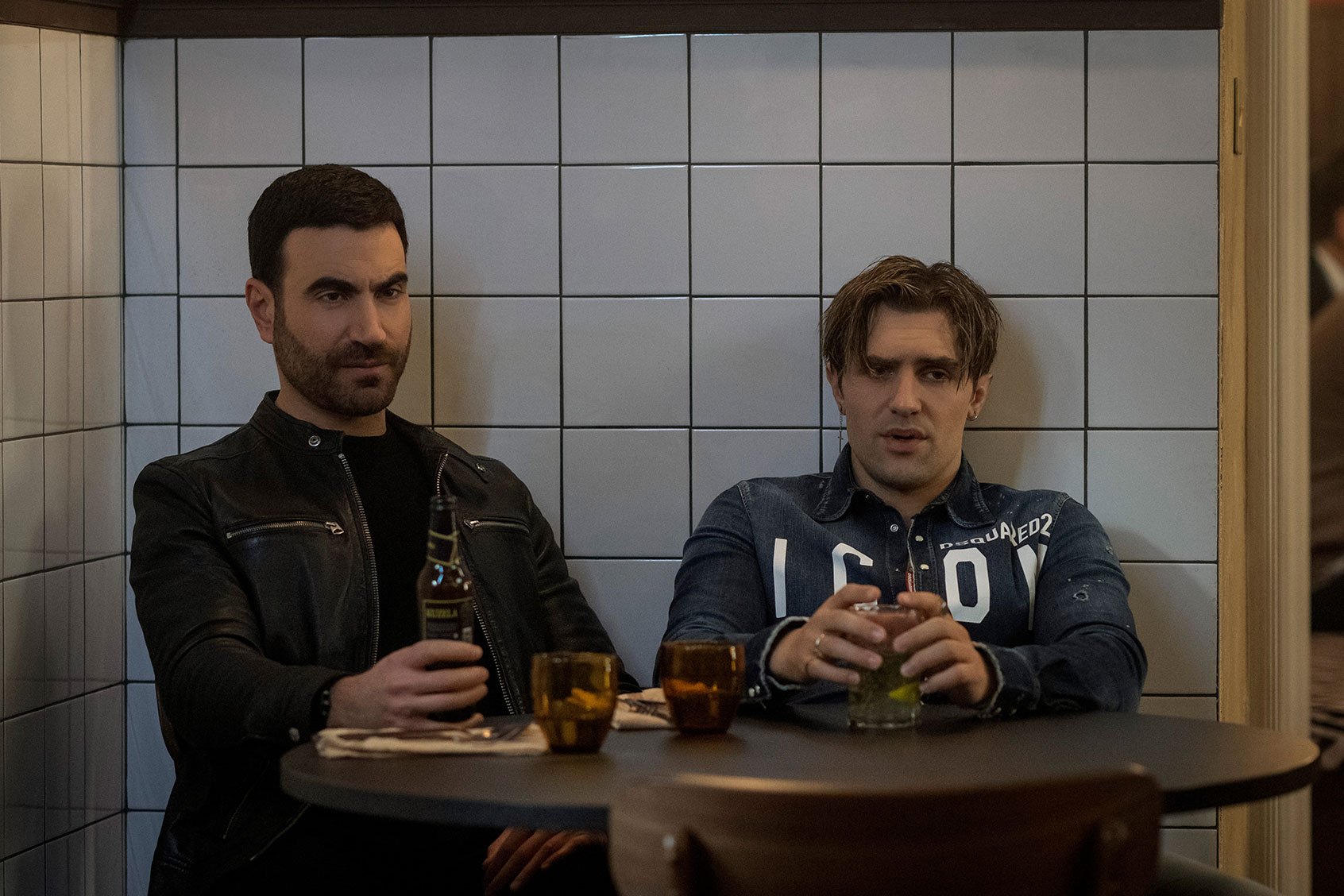
Ted LassoBrett Goldstein and Phil Dunster in “Ted Lasso” (Apple TV+.)Off the field, Roy and Jamie (Phil Dunster), his former romantic rival, have grown close. Roy is training Jamie but Jamie is also teaching Roy how to be more sensitive and in touch with his emotions, things Jamie himself has recently learned and taken to heart. The two have become one of the show’s best examples of a healthy male friendship (as have Colin and Isaac, despite the bungling beginning).
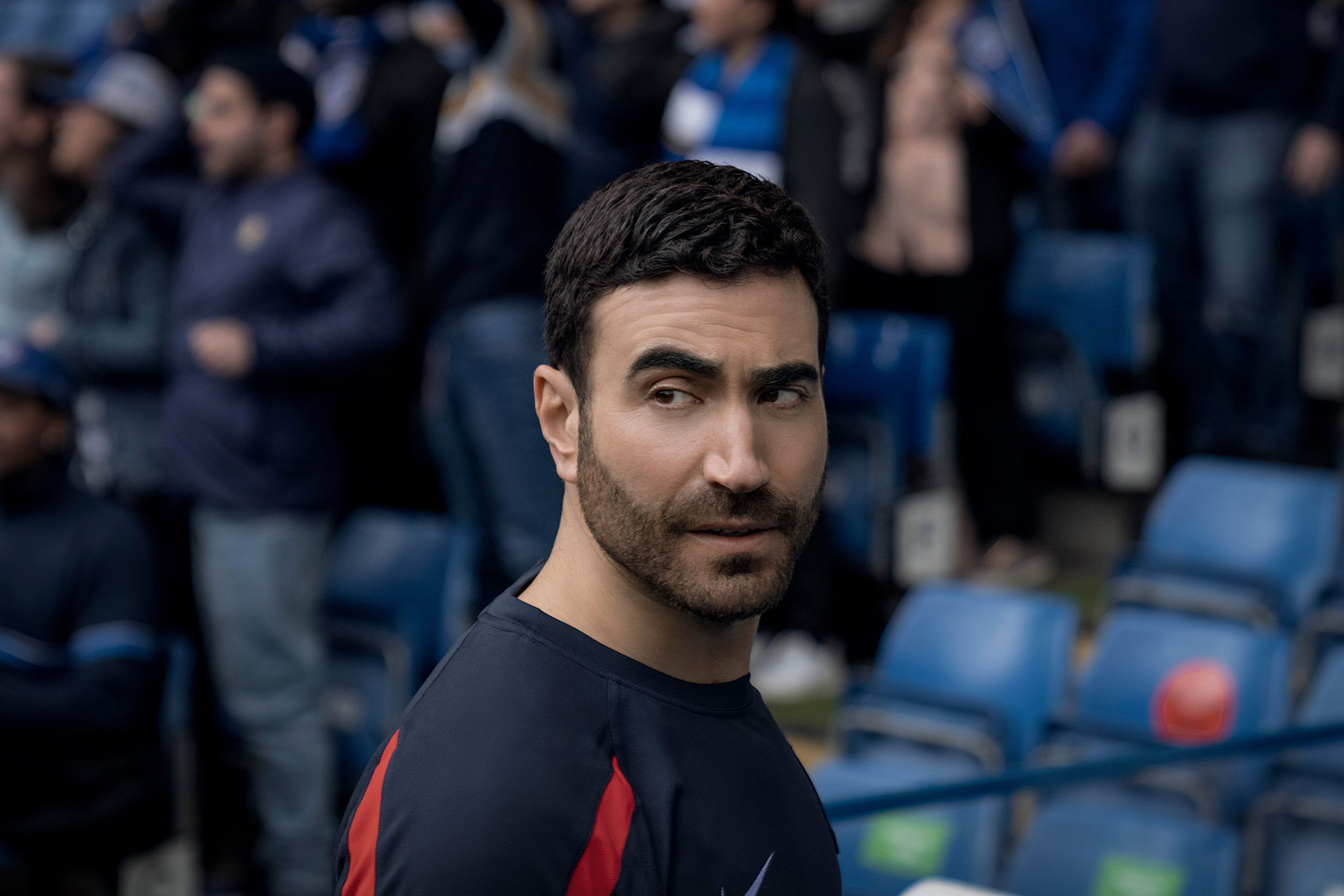
Roy has the potential for more. There’s a lot we don’t yet know about this foul-mouthed footballer.

Roy also has a better story arc than Ted’s. Although Ted started the series as a compelling character, with sympathetic history it took time to unravel about his father’s death, his story has become stagnant. The departure of his therapist (Sarah Niles) seems to have halted his growth, and his hang-up about his ex-wife moving on is troubling, bordering on toxic. It doesn’t keep the audience on his side. There have been no real love interests introduced for Ted, since Sassy (Ellie Taylor) said their fling was not viable, no one to challenge him or move him more than an inch. Everything works out for him, including (Instant)Total Football. His character has not changed in a season. 

Ted LassoBrett Goldstein in “Ted Lasso” (Apple TV+.)Compare that with Roy, who agrees to take over a press conference this episode. Then, when he fails to deliver on his promise, is asked (quite firmly, by Rebecca) to do better. And he does. He learns, listens and changes. Roy has grown and Roy continues to grow, looking to Keeley (Juno Temple) in one scene for visual cues as to how to respond more appropriately. Roy listens to the women in his life, including his young niece Phoebe (the magnificent Elodie Blomfield) who takes him to task for cussing and justifiably criticized his breakup with Keeley.
Roy also has the potential for more. There’s a lot we don’t yet know about this foul-mouthed footballer. Once viewed as the league’s best player, injury ended his pro-athlete career, an injury he still continues to deal with: unable to run and sometimes limping. We don’t know much about his family, and there might be something there, as fathers and patriarchal pressure have been such a part of multiple characters’ lives, from Jamie to Nate (Nick Mohammed). The show is leading us — rather, shoving us — to believe Roy and Keeley are destined to get together again, which hopefully would mean opportunities to show Roy at home, and Roy being a pretty excellent and devoted uncle to fiery young Phoebe. 


Want a daily wrap-up of all the news and commentary Salon has to offer? Subscribe to our morning newsletter, Crash Course.


By keeping its main character the same, “Ted Lasso” misses out on some huge opportunities to create trouble in its players’ lives — and higher stakes for the viewers. What if Total Football hadn’t been a near-overnight success? Or, what if Ted had decided to go back to America and his see his son more, and try to balance travel, home and work? Or, what if he actually was fired? Would that be so bad?

As Ted has fallen back, Roy has risen. The King is dead, long live the king. Would we watch a show re-titled and re-branded “Roy Kent”? Whistle! We certainly would.  

Judge orders Trump to attend lecture on how not to use evidence to attack witnesses: report

A judge ordered former President Donald Trump to appear virtually for a May 23 hearing in his Manhattan criminal case after previously setting rules preventing him from using evidence to attack witnesses, The Associated Press reports

Judge Juan Manuel Merchan added the video hearing to the calendar on Thursday, aiming to review the restrictions with the GOP frontrunner, his lawyers and prosecutors, and ensure that Trump understands he risks being held in contempt of court if he violates them.

“We’ll set up the camera for Mr. Trump to appear wherever he is at that time and we’ll do it here in the courtroom virtually,” Merchan said.

Though Trump’s legal team has requested to have the case transferred to federal court, which U.S. District Judge Alvin Hellerstein is considering, the case is continuing in state court.

In an order this week, Hellerstein also scheduled paperwork deadlines and a late June hearing for the case, which pertains to payments Trump’s company made to his former attorney Michael Cohen. Prosecutors believe the funds were used to repay and compensate Cohen for hush money payments he made during Trump’s 2016 campaign to cover up allegations of his extramarital sexual affairs.

Merchan, who is still overseeing the case in the interim, agreed to go over the rules with Trump virtually after prosecutors reminded him last week that requiring the Republican to be physically present would require increased security and spur a logistical nightmare.

Trump’s April 4 arraignment, during which he pleaded not guilty to 34 felony counts of falsifying business records, was met with a crowd of media and protesters, necessitated street closures and extra security measures, and brought unrelated court business to a halt that day.

The New York judge issued a protective order on Monday barring Trump and his lawyers from sharing evidence with third parties or on social media and requiring that the former president’s lawyers maintain sole access to certain sensitive materials that prosecutors provide, not Trump himself. However, the order allows for Trump to review the evidence with his attorneys so long as he does not reproduce or photograph it.


Want a daily wrap-up of all the news and commentary Salon has to offer? Subscribe to our morning newsletter, Crash Course.


In a hearing just days earlier, the judge encouraged Trump’s lawyers and prosecutors to come to a consensus on the former president’s access to and use of prosecutor’s evidence during the discovery period prior to trial.

Prosecutors first requested the protective order shortly after Trump’s arrest over concerns about Trump’s history of wielding “harassing, embarrassing, and threatening statements” against people he’s engaging in a legal battle.

During last week’s hearing, Merchan made sure to clarify that this order is not a gag order to keep Trump from speaking publicly about the case, considering Trump’s “special” status as a 2024 presidential candidate and former head of state.

“I’m bending over backwards and straining to make sure that he is given every opportunity possible to advance his candidacy and to be able to speak in furtherance of his candidacy,” he said. “The last thing I want to do is infringe on his or anybody else’s First Amendment rights.”

Barring a transfer to federal court, Merchan expects the case to go to trial in February or March 2024, meaning that the GOP frontrunner could be in the courtroom during the primaries.

“Top Chef” producer on that demanding thali challenge: “I’m getting winded just thinking about it!”

As the number of “Top Chef: World All Stars” cheftestants dwindle, the challenges keep getting harder. The latest installment may have presented the most difficult Elimination challenge so far, in an episode that features practically everything that makes “Top Chef” such a stellar show.

But first, the QuickFire, which tests the chefs to produce dishes with preserved, smoked or salted fish. While some people may pooh-pooh such products, items such as bottarga or even baccala are genuinely cherished in fine dining and Italian-American circles, respectively. With the right touch and knowledge, ingredients that are sharp or even acrid or overly salted can be incorporated into a well-rounded dish with finesse. Apparently, Amar is up to the challenge, winning his first-ever solo QuickFire in his “Top Chef” career.

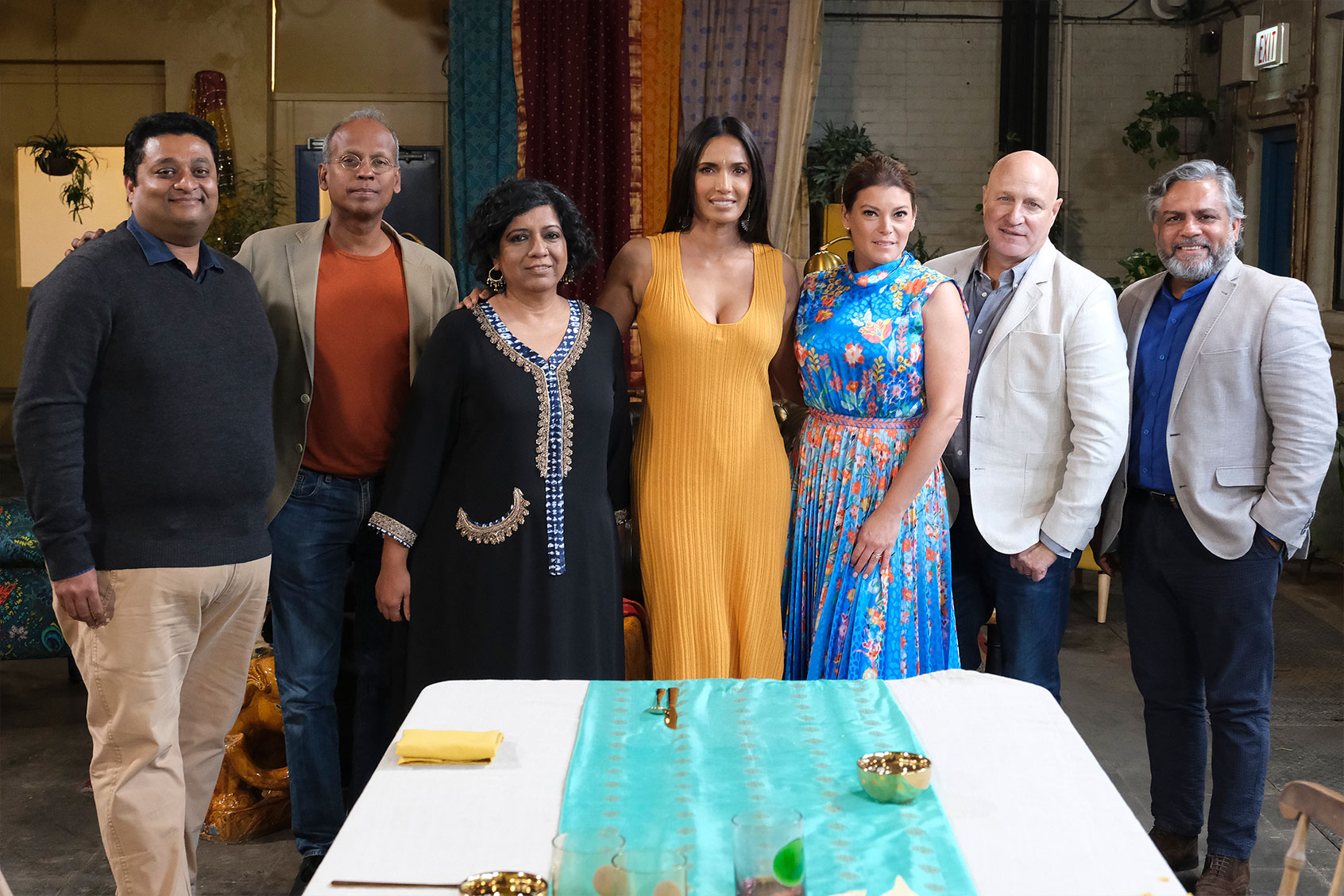
As for the thali Elimination challenge, it is arguably one of the most difficult elimination rounds in the history of the show. Asma Khan makes for a wonderful guest judge, not only or her knowledge, but her stories and sentiments even bring Sara and Padma to tears. Thali is the multi-dish meal that balances six tastes – sweet, bitter, pungent, sour, salty and astringent – and clearly gets the best of many of our cheftestants, including a strangely frazzled Buddha like we’ve never seen before. In the end, while Buddha and Gabri at least offer one good item each, Victoire unfortunately does not. 

Victoire seems to have been mistaken about her kachumber. She mimicks the dish she was served at lunch, which she believes has no seasoning. However, Padma and Asma confirm that’s a misstep. Victoire also does herself a disservice letting everyone know that she’s unable to take spice/heat (she’s just like me!), which is a hindrance in properly executing a thali. Amar’s time advantage gained from the QuickFire win is put to good use, and he wins this challenge also.

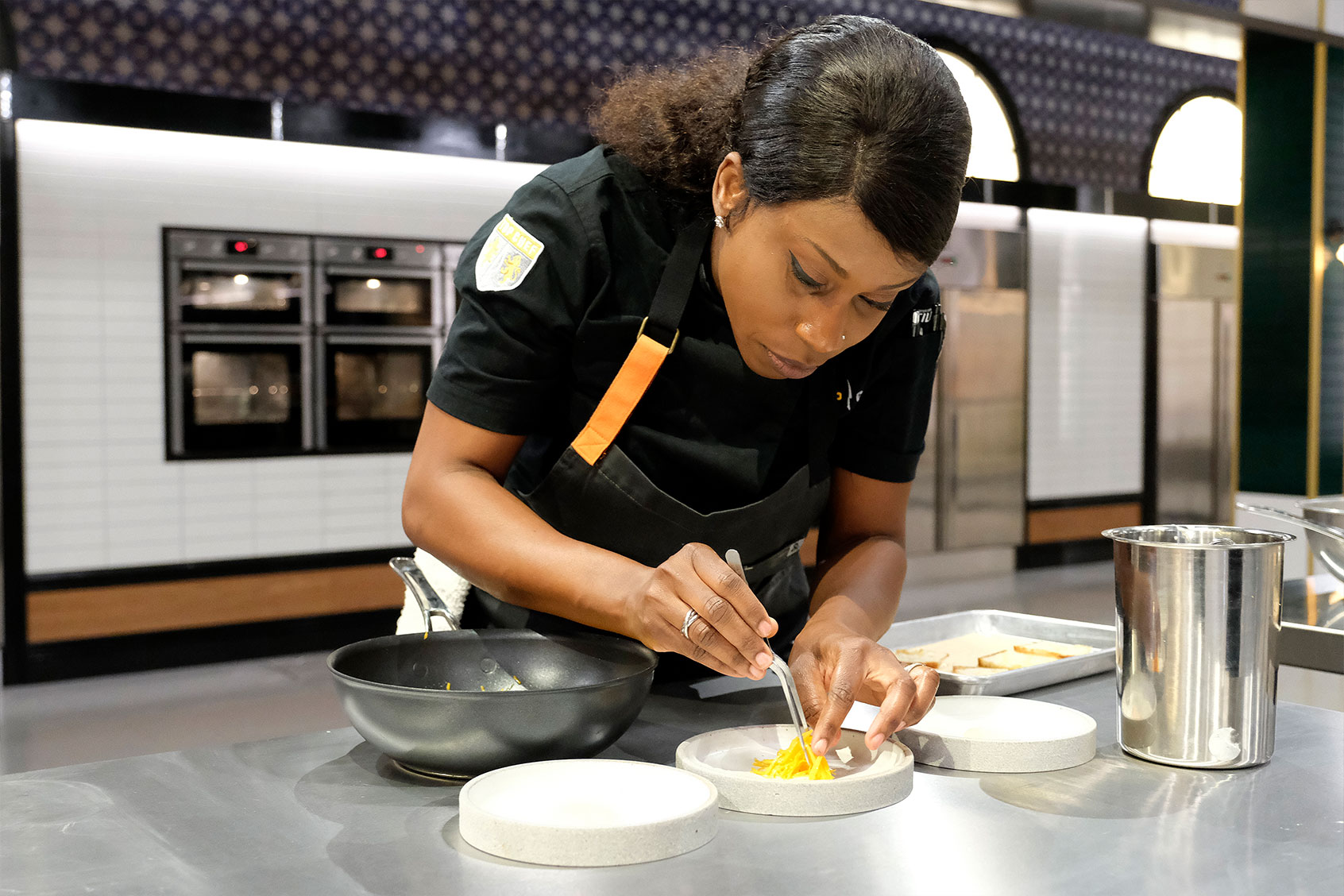
Top ChefVictoire Gouloubi in “Top Chef” (David Moir/Bravo)
Every culture has their own techniques to preserve fish, so we thought to take this kippers idea and turn it into a global gateway of ingredients.”

Salon spoke with Co-Executive Producer at Magical Elves, Thi Nguyen, who answered  questions about “Top Chef,” from the most particular aspects of this season’s challenges and the Queen’s passing to large scale questions I’ve wondered about the show for years.


Want a daily wrap-up of all the news and commentary Salon has to offer? Subscribe to our morning newsletter, Crash Course.


The following interview has been lightly edited for clarity and length.

Where did the QuickFire idea come from? It was interesting to see preserved/salted/smoked fish products featured in such a way, especially including items like bottarga and/or baccala. 

We’re always looking for fun culinary facts and unexpected nuggets that are significant to the host city we’re in and then turn them into challenges. We learned that kippers is a whole herring that has been sliced in half, gutted, salted or pickled, then smoked and was once popular in the Victorian and Edwardian eras. Basically, it’s preserved fish.  Every culture has their own techniques to preserve fish, so we thought to take this kippers idea and turn it into a global gateway of ingredients. We had over 20 types of preserved seafood on display for the chefs to work with, ranging from Scotland’s smokies to Nigeria’s okporoko to Japan’s katsuobushi — we went all over the world with this. 

The Elimination challenge was especially interesting because the cheftestants were asked to present such a wide variety of dishes, which they could either succeed with  or ultimately fail with. How was the thali challenge conceived? Did Padma have any input?

We knew going to London that we couldn’t leave without doing an Indian food challenge, given the city has some of the best Indian food in the world outside of India. The chefs suspected this too. So, in crafting the challenge that really speaks to Indian culture and would also be unfamiliar to our chefs, we learned about thali and the intricacies of the different flavor profiles.

This would not only challenge the chefs, but also serve as a learning experience, which is why it was so important for them to be able to taste and experience a thali platter. We were so grateful for Asma to prepare her thali platters so that they could understand what we were asking them to do, which was for them to make their own version. Padma was definitely a huge influence in developing this challenge as we wanted to make sure we were honoring Indian cuisine appropriately.  She contributed to the creative and she made sure the pantry was stocked with the spices and ingredients that are integral to Indian cooking. 

“We had over 20 types of preserved seafood on display for the chefs to work with, ranging from Scotland’s smokies to Nigeria’s okporoko to Japan’s katsuobushi — we went all over the world with this.”

Many a time, we’ve seen seemingly incredibly talented chefs or cooks be stymied by rice, from “Top Chef” and other food competition shows to non-food based reality shows. What do you think it is about rice (and rice dishes in general) that proves to be such a challenge for otherwise talented chefs?

When you’re making rice over a stove instead of using a rice cooker, it’s very temperamental and needs to be done with precision and care. That’s when you’re in the comfort of your own kitchen.  Once you’re on a show, there’s a clock that’s ticking, you have multiple components simultaneously going on and different equipment to work with, so the attention and care that you would normally give your rice is now muddied by all the other factors involved.  On “Top Chef,” we generally limit rice cookers on set so that the chefs have to actually cook their rice and can’t take shortcuts. Who knew something so basic as making rice would make such riveting TV!

Padma briefly references it at lunch with Asma Khan, but what was the shift in London like after the Queen’s passing? Padma mentions having to move the location of the elimination challenge tasting back to the “Top Chef” kitchen; what were the logistics and changes like at that time?

The country was in seven days of mourning from the Queen’s passing which impacted our production in so many ways. The city was at a standstill — not fully shut down, but barely afloat.  But as they say in showbiz, the show must go on, and we had a show to shoot. Half of our crew were locals, so we offered them to take time off to bereave should they choose to. We checked in with our guest judges to make sure they were comfortable still appearing. We had locations that we had to pull out of because they were in the direct path of the Queen’s procession.

For the thali challenge, Asma was going to cook and serve her dishes to Padma and the chefs at the Taj Hotel, then the following day the Chefs would return to Taj to cook and serve their own thalis.  But we had to call an audible to shoot elsewhere because it was nearly impossible to load into the location given its close proximity to Buckingham Palace. Thankfully, Flora Indica opened their place up to us for the tasting beat. But given the short notice, they were already using their kitchen for their own service, so Asma had to cook her thali platters down the street at her friend’s place.

As Padma explains, the chefs would then cook in the “Top Chef” Kitchen and serve in their stew room, which the Art department had to quickly decorate to match the theme. They did such a wonderful job, as well as the culinary team for getting a tandoori oven into the kitchen. There are so many logistical elements that need to be accounted for both on and off camera; a shoot that took us months to prepare for turned into a new 24-hour game plan.

“There are so many logistical elements that need to be accounted for both on and off camera; a shoot that took us months to prepare for turned into a new 24-hour game plan.”

Aside from Sara and perhaps Gabri, everyone seemed to stay pretty in line with classic Indian flavors and preparations in their thalis. Did you and the other producers anticipate more cheftestants to go outside of the box in terms of flavors, ingredients, techniques, etc.?

That’s what I love about these challenges. It’s open to interpretation. The only requirements were that the thalis needed to hit the six flavor profiles that every chef, no matter where you’re from, could understand those concepts and that they had to include Indian ingredients. The chefs are always trying to strike a balance with making their own food and representing themselves in their dishes, but also honoring what the task is at hand, whether it’s celebrating Indian cuisine or whatever culture that’s presented to them.

You always hear the chefs talk about taking a risk or playing it safe, so it’s interesting to see what their strategy is and how they approach each challenge. Was the risk worth the reward or failure? Did they play it too safe? You’ll never know what you’re going to get from each chef, and that’s what makes this competition so exciting and also so exciting for us as producers to come up with challenges that will push our chefs.

Top ChefSujoy Gupta, Sriram Aylur, Asma Khan, Padma Lakshmi, Gail Simmons, Tom Colicchio and Vivek Singh in “Top Chef” (David Moir/Bravo)
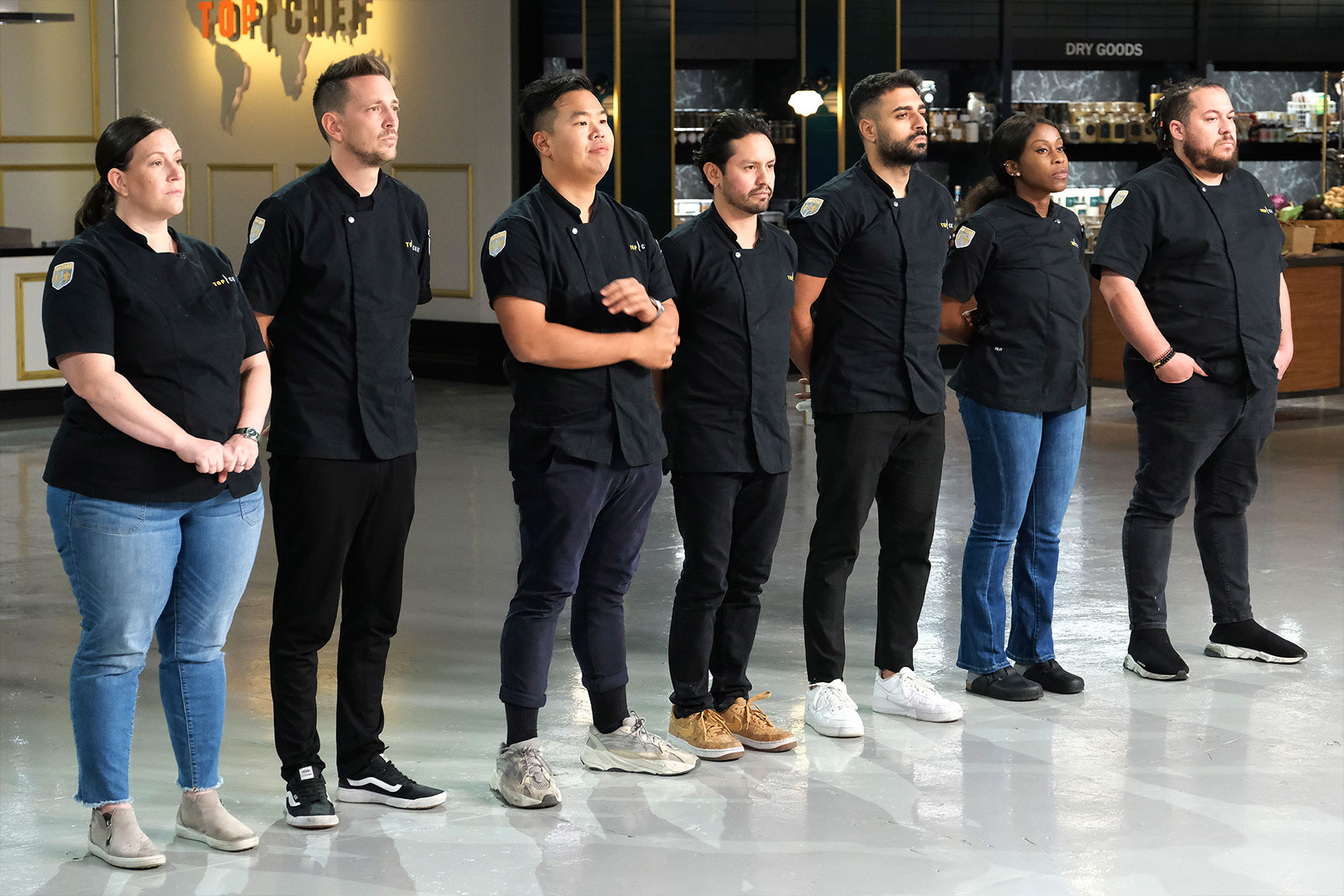
Padma references her earliest food memories in this episode. What are some of yours?

Does heating up a frozen food dinner for after school lunch count?

Jokes aside, one of my earliest food memories was seeing my mom make my favorite Vietnamese caramelized pork belly dish. In making the caramelized marinade, you have to cook down the sugar so that it doesn’t get burnt, which I still fail at every time I try. My other early food memory is going to the Asian markets with my parents every weekend, learning how to pick out live crabs and lobsters. I find it so jarring how ingredients that we consider inexpensive such as pork belly and shallots are double or even triple the costs at other markets.

The Quick Fire judge seemed really great, and Asma was incredible. Are judges ever assigned/selected due to the scheduled challenge itself or vice versa? Or is the timing and judge selection generally pretty random?

It works both ways. Some challenges are written with a judge in mind. Other times, we have to do our research and figure out who makes the most sense for this challenge. Then, it comes down to availability. If a judge we really want can only be available for a certain date, we try to move the challenges to accommodate their schedule. Tom Brown made sense because not only does he have a Michelin seafood restaurant in London, but he actually has a popular preserved fish dish on his menu, so he was well versed in this challenge. As for Asma, there aren’t enough words to describe her. Her warmth and kindness just radiates and what she’s been able to accomplish, especially as a woman of color – it just made sense to celebrate her.

“As for Asma, there aren’t enough words to describe her. Her warmth and kindness just radiates and what she’s been able to accomplish, especially as a woman of color – it just made sense to celebrate her.”

Were there any specific thai ingredients, dishes or components that stood out to you from any of the cheftestants  for either positive or negative reasons? 

Because we don’t taste the dishes, I can only rely on the judges’ feedback. However, the ingredients in the pantry were curated by our culinary team, Padma, Asma and us, the producers. Everyone was involved to ensure authenticity. 

We wanted them to be able to make their own version of thali should they choose to, so the pantry included one or two requested specialty ingredients from each chef. Not everyone used them, of course . . . and they could use each other’s specialty ingredients as well. All we can do is anticipate their needs and help set them up to succeed and what they do with it is up to them.

Was the “sweet” component expected to be part of the overall thali meal (like a chutney or raita) or more of a dessert-type product, like Buddha’s (delicious sounding!) mango lassi pudding? 

This was completely open to their own interpretation. For a chef, sweet does not always equate to a dessert. There are a lot of sweet savory dishes. Personally, I love seeing a variety of what they come up with. That’s the beauty of cooking. 

Top ChefSara Bradley, Tom Goetter, Buddha Lo, Gabriel Rodriguez, Ali Al Ghzawi, Victoire Gouloubi and Amar Santana in “Top Chef” (David Moir/Bravo)

It was interesting to see how some of the cheftestants were totally unclear on certain Indian ingredients, such as jaggery or asafoetida. Were there any other ingredients mentioned or included in the thali challenge that were totally unknown to some of the cheftestants? 

I’m sure there were because there was a lot that I was unfamiliar with as well. We had things like ajwain, amchur powder, methi seeds and leaves and bottle gourd. The Chefs had to factor into their time to taste all these ingredients, conceptualize six dishes, hit all the flavor profiles, then execute a total of 54 dishes. I’m getting winded just thinking about it!

How are the shots of the slightly rotating dishes taken, which often play when a chef is explaining his/her dish? How soon after they’re cooked (and before they’re eaten)?

The chefs are always asked to make an additional dish for beauty. When time is up, the culinary team immediately takes one of their dishes to a “beauty tent,” where there’s a whole setup and camera designated to get these shots in. It may take hours to shoot, but we have a culinary stylist there to help keep the dishes looking exactly as they were intended to. If a chef has a pourer, we’ll shoot the dish with the pourer next to it and then a version with the sauce already poured into the dish so that both versions are available in the edit to choose from.   

What are your hopes for the future of “Top Chef”? More international seasons, more returnee/alum seasons, more seasons with brand new cheftestants?

My dream was always for us to shoot in Paris and so when we achieved that this season, it really was a dream come true. My next dream host city or finale location would be in Japan. The quality of food and ingredients is unparalleled, and it’s such a beautiful country.  I like to think I willed Paris into this season, so I can will Japan into a future one too.  Perhaps for Zeason 30?

I also loved how truly global we were this season with the chefs, so [I] would love to see more of that in the future.

“I also loved how truly global we were this season with the Chefs, so [I] would love to see more of that in the future.”

How does conceptualizing differentiate between ideating challenges for QuickFires vs. Elimination challenges vs. “Last Chance Kitchen” challenges?

For QuickFires and Elimination challenges, the food comes first. We have to think about what we’re asking them to do and can it be completed in only thirty minutes versus having fully conceptualized dishes that need time to execute properly. QuickFires are definitely more playful, so we want the chefs to have fun, take risks and be quick on their feet. They really are out there coming up with the dishes on the fly, running around the kitchen like mad and the sweat you see is real.

The Elimination challenges tend to be more serious because someone is getting eliminated, but we’ll throw in fun ideas to balance it out, like last year’s football challenge. There was a 1% chance of neither team getting a touchdown. Never in a million years did we think this would happen and lo and behold, it did and that threw a curveball, not to name a winning team! This could have easily been a fun QuickFire team challenge that celebrated Texas football, but we wanted to have fun with it as an Elimination challenge. 

As for “Last Chance Kitchen,” those ideas are created with the mindset of what are they going to cook that’s deserving for a chef back into the competition. There’s a set of ideas in place before we learn who makes it into [“Last Chance Kitchen.”] Once we know who’s eliminated, the challenge might get tailored because Chef X served raw chicken, so let’s make them redeem themselves with a chicken-related challenge. They are more cheeky than Quickfires but more serious in tone because if you’re out, then you’re out of the competition for good.

Top ChefSara Bradley, Tom Goetter, Buddha Lo, Gabriel Rodriguez, Ali Al Ghzawi, Victoire Gouloubi, Amar Santana, Asma Khan, Padma Lakshmi, Tom Colicchio and Gail Simmons in “Top Chef” (David Moir/Bravo)What’s the most challenging part about being a producer? The most enjoyable?

“Top Chef” really is the Olympics of cooking. The moment the Chefs start cooking, I’m watching behind a monitor cheering each of them on, but also like a concerned coach on the sidelines, hoping they’ll get everything done. It’s really like watching athletes in the kitchen.

Aside from getting to know the chefs, we as a production in both talent and crew have become an extended family. We spend a quarter of a year together, so you really have to like the people you’re working with to be able to come back to this every year.  This will be my sixth year! Traveling to new locations is also a blessing and what keeps this show feeling fresh every season.

The challenging parts can be with the locations and the scheduling. There are so many moving parts to make an episode of “Top Chef,” but I do think we make it look seamless onscreen. As producers, our brains are constantly on 24/7 as we are always problem solving, brainstorming and thinking about the next steps of production.

“As producers, our brains are constantly on 24/7 as we are always problem solving, brainstorming and thinking about the next steps of production.”

What’s something about working behind-the-scenes of “Top Chef” that people might be surprised to learn?

Everyone is always surprised at how real the QuickFires are. They find out the challenge when Padma tells them. We stop down for at most 10 minutes to go over rules, then they’re right back in the kitchen learning on the fly what’s in the pantry, are there any proteins in the fridges, what equipment do they have to work with in this challenge all the while coming up with what dish fits the criteria. It’s very intense.

John mentioned that the crew doesn’t taste the cheftestants’ dishes, but were there any standouts thus far this season for you, even just from hearing about and/or seeing the dish and judges’ feedback?

There’s so many great dishes this season. Particularly from what I recall, Charbel’s onion dish in the first episode just stunned every guest at the table and earned him high praises. Then there are dishes that may not be in the Top 3 but still received high remarks, like Begoña’s rice dish in Episode 2.  I remember the Judges being fascinated by it but the Top 3 just edged her out. For the Gaggan challenge, Amar’s reimagination of the papaya salad felt so far left coming from Amar, but what a beautiful job he did and the judges were so impressed that it landed him in the top.   

Even though we don’t get to taste the chefs’ food, I did get to try the dishes this season that the guest judges would make for the chefs. I didn’t lick up Gaggan’s world map like the chefs did, but I did slide my finger through to taste the dish.  So many floral notes . . . it was such a beautiful dish. Then Asma made an extra thali platter and my goodness, the chingri bhaja (stir fried prawns) was the best shrimp I’ve ever had — it was such an incredible explosion of flavor dancing on my taste buds. 

Moments like these I’ll always cherish because you don’t get them elsewhere than on “Top Chef.”

“Top Chef: World All Stars” airs Thursdays at 9 p.m. on Bravo and streams next day on Peacock.

CNN should have learned from Fox News: Pandering to Trump will cost bigly

I think everyone knew that CNN’s very special episode of The Trump Show on Wednesday night was going to be a fiasco. How could it not be? Donald Trump lies as easily as he breathes and he was going to be given a live platform to do it. We’ve seen him do these events for years now and there was no reason to believe this one would be any different.

If there was anything startling about it it was the friendly audience that cheered and jeered as if they were at a Trump rally. But we should have expected that too. CNN said the town hall was for Republican primary and “undeclared” voters and there’s no mystery about what kind of people show up for campaign events with Donald Trump. All that was missing were the red hats and the awkward line dancing to “YMCA.”

I won’t go into the full litany of rhetorical atrocities. You can read more about them in these pieces by Amanda MarcotteBrian Karem and Igor Derysh. Suffice it to say that he was as obnoxious and crude as always, reminding anyone who’s forgotten just how unfit he is for the office of president of the United States. If anything, his vocabulary seems to have shrunk even more than before. He had to resort to repeatedly calling everything and everyone “stupid.” But the crowd loved him and he loved the crowd and they fed off each other the whole night.

So, what did CNN do wrong on Wednesday? The most important bad decision (other than doing it at all) was they did it live. The first rule of covering Trump is that it absolutely has to be on tape or you cannot competently fact-check him. Trump’s adviser Steve Bannon famously told author Michael Lewis, “The real opposition is the media and the way to deal with them is to flood the zone with shit.” That is exactly what Donald Trump did in prime time.

The moderator, Kaitlin Collins, was well prepared and corrected him repeatedly but in those situations, Trump just behaves as if he hasn’t heard the other person and the truth doesn’t matter. His tsunami of lies just crashed over her head. Any respectable news organization that has to cover him should always do it with the ability to contextualize what he says and you can only do it with a taped interview. CNN knew that. They’ve been covering him for eight years now.

Barring something unpredictable happening to him before the RNC convention next year, the town hall was just more evidence that Donald Trump is going to be the GOP nominee for president in 2024. And it’s clear that CNN has decided that they are going to chase the ratings that Donald Trump has promised them and hopefully attract some of those disaffected Fox viewers. They are going back to the 2016 playbook.

It’s a shame. One of the more edifying consequences of Trump’s bizarre tenure and the damage he has done to our politics was the fact that most of the mainstream media stopped treating him as if he were a normal politician. Sure, it took them far too long to do that and they failed in many respects, but they largely left behind the tropes and conventions that had empowered Trump’s rise, such as “both sides” journalism and a phony attitude of objective neutrality which was impossible to sustain in the face of his outrageous behavior.

Over time they became comfortable with covering Trump as honestly as possible, certainly more honestly than they’d covered politics before. And his response to any criticism or honest portrayal of his campaign and presidency was to lash out. They learned that there was no way to avoid that short of total servility and deference. Even the venerable right-wing propaganda arm for the Republican Party, Fox News, was held to that standard (to which they happily capitulated.) Any media institution or individual journalist who didn’t became an “enemy of the people” and was treated as such.


Want a daily wrap-up of all the news and commentary Salon has to offer? Subscribe to our morning newsletter, Crash Course.


We’ve all seen what happened to Fox, Trump’s vassal network, when they dared to report that the election was not stolen by the Democrats and their frantic attempts to contain the damage. It has cost them 787 million dollars and counting. It makes you wonder why in the world CNN would seek to attract an audience that makes such demands, but that’s exactly what they are trying to do. This town hall was clearly designed to appeal to the disaffected Fox viewers who are angry about the network’s alleged abandonment of Trump and the firing of Tucker Carlson. And that is a fool’s errand.

But then, CNN’s been moving to the right ever since the change in corporate ownership of the network last year. They claim they are simply reverting to “objective” journalism but since the only objective way to cover politics in America right now is to acknowledge that the Republican Party is batshit insane, it’s clear that they are leaning as far right as they can without losing their entire staff.

The new CEO, Chris Licht, fired some voices who were outspoken critics of Trump last fall, including media reporter Brian Stelter, clearly at the behest of the CEO of Warners/Discovery, David Zaslov. He happens to have been a huge proponent of the Trump town hall disaster, telling CNBC last week “he has to be on our network … we’re happy he’s coming here.” But it’s really the company’s largest shareholder and Zaslov’s mentor who is pulling the strings, the billionaire pay TV pioneer, and hardcore right-wing Republican, John Malone. He hasn’t exactly been quiet about what he expects:

“I would like to see CNN evolve back to the kind of journalism that it started with, and actually have journalists, which would be unique and refreshing. Fox News, in my opinion, has followed an interesting trajectory of trying to have ‘news’ news, I mean some actual journalism, embedded in a program schedule of all opinions.”

Good luck. The right-wingers won’t let it happen because it’s all or nothing with them. Look at what they’re doing to Fox, which gave them everything they could possibly want. Trump voters, which means most of the Republican Party, are not going to start watching CNN because they gave Trump a platform. They have to give him the entire network and even that may not be enough.

CNN is and always will be the right’s whipping boy, the network they love to hate. Watching their Dear Leader roll over CNN’s newest star, a serious female journalist, seeing them call her “nasty” on network TV in front of an ecstatic crowd is their dream come true. He made a fool of the network and his followers love him for it.

Let’s just say that when this happens, it’s pretty clear you’re losing:

DA says man who choked Jordan Neely to death on NYC subway will face manslaughter charge

The office of Manhattan District Attorney Alvin Bragg confirmed Thursday that Daniel Penny, who last week fatally choked Jordan Neely on the subway in New York City, is set to be charged Friday and could face up to 15 years behind bars.

“Daniel Penny will be arrested on a charge of manslaughter in the second degree,” Bragg’s office said in a statement. “We cannot provide any additional information until he has been arraigned in Manhattan Criminal Court, which we expect to take place tomorrow.”

While riding the F train on May 1, Neely—a 30-year-old Black subway performer known for impersonating Michael Jackson—was “acting erratically,” but he did not attack anyone on the train, according to witness and freelance journalist Juan Alberto Vazquez.

Neely, who was unhoused, shouted about being “fed up and hungry” and “tired of having nothing,” said Vazquez—who posted on Facebook footage of Penny putting Neely in a chokehold that the medical examiner concluded killed him.

Penny, a white 24-year-old Marine veteran, was initially questioned and then released by police; his attorneys claim he acted in self-defense.

Meanwhile, the video has spread online and sparked not only demands for justice but also national conversations about homelessness, mental illness, and racism in the United States.

According to NBC New York:

Multiple protests have taken place in Manhattan since Neely’s death, with dozens arrested. Protesters again ratcheted up the volume Thursday, even after learning of the charges said to be coming.

“We need people to be held accountable for their actions, however, we don’t want this just to be about the need to incarcerate this man,” said Jawanza James Williams, the organizing director for Vocal NY.

Still, some said it has taken too long for the charges to come.

“It’s 10 days too late,” said protester Tanesha Grant. “Yes it’s some step towards progress, but we’ve been waiting too long.”

In a Wednesday speech, Democratic New York City Mayor Eric Adams used Neely’s death to promote his unpopular policy of addressing NYC’s intertwined mental health and homelessness crises with forced hospitalizations.

“There is no evidence supporting Adams’ harmful and dangerous rhetoric,” responded New York Civil Liberties Union executive director Donna Lieberman. “This kind of stigmatization and fearmongering contributes to the victimization of people with perceived mental illness—the same that led to the killing of Jordan Neely.”

“The mayor is right that there are more Jordan Neelys in our city,” Lieberman added. “They deserve housing, healthcare, and supportive services to get back on their feet, not to be controlled, criminalized, or killed.”

E. Jean Carroll lawyer threatens to sue Trump again — and legal expert says CNN could face liability

E. Jean Carroll’s attorney said Thursday that she may sue former President Donald Trump for defamation again after he smeared and mocked her during Wednesday’s CNN town hall.

Trump attacked Carroll and called her sexual assault claim “fake” and a “made-up story” just one day after a jury found him liable for sexually abusing and defaming the columnist and awarded her $5 million in damages. Trump called the writer a “whack job” and called the trial a “rigged deal” to applause and laughter from the pro-Trump audience.

“It’s just stupid, it’s just disgusting, vile, foul, it wounds people,” Carroll told The New York Times of Trump’s comments, adding that she has been “insulted by better people.”

Carroll’s attorney Roberta Kaplan told the outlet that she is weighing whether to file a new defamation lawsuit against Trump. An earlier defamation suit that Carroll filed against Trump is still pending. Trump’s attorney Joe Tacopina also formally filed a notice to appeal this week’s verdict on Thursday.

“Everything’s on the table, obviously, and we have to give serious consideration to it,” Kaplan told the Times.

CNN also came under fire for giving Trump a platform to smear his accuser.

“I hate that @CNN allowed E. Jean Carroll’s name to be dragged through the mud again by this terrible man,” tweeted Sherrilyn Ifill, the former president of the NAACP Legal Defense Fund. “Sure she could sue him for defamation again. That doesn’t change the hurt & humiliation at the laughter, and at the knowledge that CNN was willing to expose her to this.”

Trump’s camp “couldn’t be happier” and told The Daily Beast that the former president is open to doing another CNN town hall.

“If invited, he would return. I’m sure of it,” a source close to Trump told the outlet. “He’s unbreakable and doesn’t back down.”

Former federal prosecutor Andrew Weissmann, who served on former special counsel Bob Mueller’s team, told MSNBC that CNN could face legal liability if they continue to host Trump in the wake of the massive settlement between Fox News and Dominion Voting Systems.


Want a daily wrap-up of all the news and commentary Salon has to offer? Subscribe to our morning newsletter, Crash Course.


“CNN does have that risk and if you’re CNN’s general counsel you are thinking about that today,” he said. “The issue here is not so much will E. Jean Carroll be able to bring a case against Donald Trump. Of course, she could. I doubt she’s going to because she just prevailed and she went through an exhaustive trial and was revictimized.”

But “the other person at the table here is CNN,” Weissmann added. “This is one where they’re gonna start becoming dangerously close to reckless disregard and actual malice because they know what he’s going to say in advance.”

Weissmann noted that CNN created the forum with an adamantly pro-Trump audience.

“So CNN is exposing itself to potential legal liability, particularly if it does this again and again,” he said. “But I don’t think that can be the answer because the timeline is too long.
Weissmann explained that although Carroll and Dominion won big verdicts, it took years for them to get justice.

“It gets to whether the legal system is going to be the answer for the problem that we all witnessed” at the CNN town hall, he said. “You have two victims who in civil cases took many, many years and a lot of tenacity and a lot of money to hold people to account… that can’t be the answer because it just takes too long. The timeline doesn’t work when you have an election coming up,” he added.

Drug experts are normalizing the idea that you can be “pre-addicted.” Is that really a thing?

The word “addiction” is probably over-used in our culture. Clinically, it means compulsive use of drugs; colloquially, we stretch its use to refer to addiction to things that probably don’t fit the clinical definition, like when we speak of addiction to screens or kombucha.

Now, as the opioid crisis has precipitated a huge investment in a public health apparatus devoted to treating addiction, public health experts have coined a new term: pre-addiction. The idea behind the label is that it could be a useful concept for ascertaining one’s risk of developing a drug addiction. Indeed, some organizations that use the term, such as the National Institute on Alcohol Abuse and Alcoholism (NIAAA), hope that it can be useful in intervening in addiction before it even starts. Yet as the term gains more prominence, experts in the field are torn over whether or not it’s a worthy concept.

One of its most prominent proponents is Dr. Nora Volkow, a psychiatrist who has served as the director at the National Institutes of Drug Abuse (NIDA) for the last two decades. In an opinion piece published last summer in the journal JAMA Psychiatry, Volkow describes pre-addiction as a “missing concept” in the realm of addiction treatment. 

Critics of pre-addiction warn that it could burden individuals with a stigmatizing label that could actually make it harder to navigate the healthcare system.

Addiction, known formally as substance use disorder, is defined as compulsive use of drugs and alcohol, even when it leads to significant distress or impairment in one’s personal life. It’s distinct from dependence, which is when using drugs over time increases tolerance and generates withdrawals. It’s possible for someone to be physically dependent on a substance without having a substance use disorder, such as with certain prescription medications, but illicit drugs as well.

The hallmark of addiction is chaotic use coupled with the inability to control or reduce it, despite harmful consequences. Preaddiction, on the other hand, is still a somewhat nebulous concept that may or may not be useful for determining someone’s risk of developing a serious issue with drug use. In March, NIDA and NIAAA put out a joint request for information, petitioning physicians and addiction specialists to comment on whether such a concept would help — and some drug policy experts are already expressing concern that a preaddiction label may backfire or deepen America’s struggle with fatal overdoses.

“What we are aiming for is a recognition of identifying individuals that may be at risk from the use of opioids. You can predict in many instances who is at risk, and if you intervene, you may prevent them from escalating,” Volkow told Salon in a call. “The aim of the concept of preaddiction was to generate that awareness and to generate a model that clinicians can agree [on], so that people can be screened in a systematic fashion … At this point, the illicit drug market is so dangerous, that even occasional drug taking can be dangerous.”

In other words, you don’t need to be addicted to a substance like fentanyl to die from it. Not all drug use equals addiction. Some people only use cocaine, meth or even opioids occasionally and it doesn’t disrupt their work or relationships. But the increased volatility of drug markets can make even intermittent drug use a roll of the dice, underscoring the importance of drug testing tools to know what you’re taking. Everyone should also have naloxone on hand, a drug that reverses opioid overdoses, even if fentanyl or related drugs aren’t something you use.

The debate comes at a pivotal moment in the drug war and in an overdose crisis driven in large part by opioids like fentanyl. The latest fatality stats from the Centers for Disease Control and Prevention (CDC) paint a stark picture: more than 108,000 died from overdose in 2021, and the CDC reported this month that drug overdose deaths involving fentanyl increased by 279 percent between 2016 and 2021. Deaths involving methamphetamine and cocaine also rose over that period.

The drug supply is getting steadily more unpredictable, as more substances are found to contain fentanyl and animal tranquilizers like xylazine that can generate horrific necrotic injuries. For years, some public health experts have argued people who use drugs need regulated alternatives, a harm reduction strategy known as safe supply. It’s essentially the kind of regulatory structure that already exists for alcohol, tobacco, prescription drugs and cannabis in some areas.

“Safe supply programs are built on the premise that prescribing pharmaceutical-grade opioids such as hydromorphone and diacetylmorphine to people at high risk of fatal overdose will reduce their use of fentanyl-adulterated opioids obtained from the illicit drug market, and subsequently prevent overdose events and reduce overdose mortality,” a group of drug policy experts wrote in the International Journal of Drug Policy in 2020. But safe supply remains a hard sell at the federal level.

One of the most stubborn myths of addiction is that taking a drug once will instantly hook someone for life. Not only does true addiction require persistent use of a substance over time, the vast majority of people recover from substance use disorders without any formal treatment. Numerous studies support the idea of natural recovery, with one federally-funded survey of 43,000 people concluding that over 72 percent of all people who recovered from alcohol dependence managed to do it without formal intervention. Most people who have problematic drug use actually grow out of it, a relationship that remains stable over time. Treatment can still help many people, of course, and the rapid shifts in the underground drug market still make things unpredictable and deadly.


Want more health and science stories in your inbox? Subscribe to Salon’s weekly newsletter The Vulgar Scientist.


“You may be a cocaine user and you just take it over the weekend. There are many cocaine users that do that. Right now, cocaine is being mixed with fentanyl,” Volkow said, describing a possible scenario where a preaddiction diagnosis may be useful. “An intervention may be as simple as saying, are you aware that cocaine frequently now could be laced? There are ways that you could protect yourself and that protection may be a fentanyl test strip. But you’re doing an intervention that could save that person’s life.”

But right now, there’s no evidence that such a label would do what Volkow and others hope it will accomplish, which is the motivation behind researching it. Critics of pre-addiction warn that it could burden individuals with a stigmatizing label that could actually make it harder to navigate the healthcare system.

“I’m generally all for turning our concept of addiction into a spectrum instead of a yes or no. I don’t know if this is a helpful term though.” 

“It has been hard enough to get the term and diagnostic criteria of substance use disorder used, despite 10 years of effort, so introducing a new concept that is even less clear seems like it risks muddying the water even more,” Dr. Sarah Wakeman, an associate professor of medicine at Massachusetts General Hospital, told Salon in an email.

“Volkow has been promoting the medicalization of addiction in part because she believes it will help destigmatize addiction. But that’s clearly not working. Spend five minutes in any emergency department to see how much stigma still flourishes,” Dr. Jennifer Carroll, a medical anthropologist, research scientist and substance use expert, told Salon in an email. “Why would piling more complexity onto that medical model be a net benefit for people who use drugs? That model is, at best, not well accepted and, at worst, distorted to present addiction as the absence of free will, justifying all sorts of rights violations against people who use drugs.”

In their opinion article, Volkow and her co-authors Thomas McLellan of the Treatment Research Institute (also on the board of Indivior, which makes the addiction treatment drug Suboxone) and George Koob, the director of NIAAA, often compare pre-addiction to prediabetes. They write that “pre-addiction has inherent motivational properties that convey the need for clinical action and patient change — just as pre-diabetes and precancerous currently do.” Prediabetes is a term introduced in 1997 by the American Diabetes Association to describe a metabolic syndrome that can turn into type 2 diabetes mellitus.

“We are proposing the term ‘pre-addiction’ because it gives a readily understandable name to a vulnerable period of time in which preventive care could help avert serious consequences of drug use and severe substance use disorders,” Volkow wrote in a blog accompanying the JAMA opinion article.

“I’m generally all for turning our concept of addiction into a spectrum instead of a yes or no. I don’t know if this is a helpful term though,” Dr. Adam Lake, a family physician at Lancaster General Hospital, told Salon in an email. “Even prediabetes is turning out to be of questionable predictive value, but it has allowed us to get more people access to dietitians and we don’t have so much stigma.”

There’s also the issue that diabetes is a disease that can be objectively measured. Prediabetes is diagnosed based on blood sugar levels. However, there is a growing consensus among drug policy experts that addiction is not a disease but more of a compulsive, behavioral learning disorder.

Substance use disorder is also an incredibly subjective experience that doesn’t arise from one, predictable source. It doesn’t necessarily relate to a specific substance so much as one’s life circumstances. In other words, struggling with housing, healthcare or otherwise navigating capitalist society often has more to do with the disorder than a mental imbalance. This is on par with research showing that depression stems more from societal issues than the brain.

The disease model of addiction is a “very narrow conceptualization that doesn’t understand social, environmental and systemic causes to addiction,” Dr. Cassandra Boness told Salon in a call. Boness is a psychologist and research assistant professor at the University of New Mexico whose primary area of focus is around issues of classification and diagnosis of substance use disorders.

“It allows people to make it feel more addressable. Like, if we could just call it a brain disease and we can identify this part of the brain, we can fix this,” Boness said. “And it also allows the pushing aside of other larger issues in our society that we know are at play here. It allows them to like tune out some of the other systemic issues that we’re facing as a society.”

Preaddiction is more in line with this model of thinking, Boness said, arguing that the disease model has made stigma against addiction worse, not better.

“Focusing on these more biogenetic causes of addiction has not actually done all that much for us. We’re still in the middle of an obvious crisis,” Boness said. “The sentiment that I’ve heard echoed from most other people with any kind of lived experience themselves is [preaddiction] is going to disproportionately impact people who are already stigmatized and discriminated against, oppressed and marginalized, particularly Communities of Color, who, with the drug war, have already been disproportionately impacted by some of these things. It’s frustrating. It feels like we’re not being listened to.”

The online baby sleep boom

When Alex P. got pregnant, she made a decision to retreat from the digital world as much as possible. She knew all too well that once algorithms picked up on her pregnancy, that’s the content she would see. She also knew conversations online could negatively influence her expectations of birth. But what she didn’t expect was the barrage of motherhood-related content that would follow her postpartum, too. 

Alex was caught off guard by the challenges of getting her baby to sleep. She knew a lack of sleep would be part of early parenting. She didn’t expect her son to be six months old and still not be able to sleep through the night. Exhausted and bleary-eyed, she went looking for solutions to ease the burden of constant sleep deprivation. 

A first-time mom who gave birth during the pandemic, Alex didn’t have much of an in-person network to seek support from and turn to for advice. But online, there was no shortage of free advice from people claiming to be baby sleep experts or consultants. Following the old adage, “sleep when the baby sleeps,” is nearly impossible when the baby isn’t sleeping anywhere but on you. Online baby sleep experts promised Alex something different. 

“I literally got to the point of terrible sleep deprivation and had hallucinations in the middle of the night.”

Baby sleep isn’t some novel parenting problem invented by chronically online millennials and Gen Z. In 1985, Dr. Richard Ferber wrote the bestselling book “Solve Your Child’s Sleep Problems,” later updated in 2006, detailing his method that advises allowing babies to cry for a specific period of time before comforting them. (Here’s an explainer.) The argument over whether the Ferber method and other “crying it out” methods are good or bad parenting rages on today, getting especially heated on social media, as documented in recent features in The Cut and Slate.

Authors like Ferber once set the terms, but with a lower barrier to entry online, anyone can become an influencer on any side of the debate. Popularity is handily conflated with credibility, and insider tips — you too could have this life! — are easily monetized. For parents who decide they do in fact want to pay for baby sleep advice, a profitable — and unregulated — sleep-training industry of individual influencers and branded consultants has emerged, wooing desperate new moms with the promise that their sleep woes can be solved with a credit card and a click. 

For Alex, it started with learning a few basic tips from free posts. Make sure you have a sound machine. Swaddle your baby (only safe until they show signs of rolling). Implement a strict bedtime routine, or at least set the foundation for it at an early age. Do not make a habit out of car naps, stroller naps or nursing your baby to sleep. Follow age-appropriate wake windows. (What’s a wake window? More on that in a minute.)

The advice was helpful to some extent, but Alex’s baby still wasn’t sleeping through the night. The free content she started off with, however, often included the suggestion to download an ebook, or purchase an online course, to learn more. So she did. 

“I didn’t really have much guidance from people that I know and trust,” she said. “I was truly just trying to look at my son from a standpoint of like, OK, well, here’s what babies are supposed to do, and here’s what these experts are telling me.”

One of the accounts she followed was Taking Cara Babies, run by former labor and delivery nurse turned sleep expert Cara Dumaplin, who offers free advice on baby sleep — videos, memes, reels — to her 2.4 million followers on Instagram, and another 26,600 on TikTok. Want to go beyond the free tier? The free content almost always points to her online courses, which range in price from $39 to $99. 

“When you’re desperate and sleep deprived, it’s so easy to lose your sense of skepticism and critical thinking.”

Taking Cara Babies is arguably the most popular online baby sleep influencer, but she’s far from alone. There’s also Hey Sleepy Baby’s Rachael Shepard-Ohta, who also offers free resources on social media, in addition to packaged videos and PDF guides ($129–$499). For an even more personalized experience, a “certified” Wee Sleep consultant (on Instagram, you can find them with the branding built into their handles, like “@weesleep_YourNameHere”) can provide you with in-person or virtual real-time support for at least $499. For parents who want someone to spend the night, that can cost up to $1,645. 

In total, Alex estimates she spent $300 on sleep courses. Her son kept waking up. Alex’s sleep debt quickly accumulated and began to affect her mental health as she blamed herself for not getting her son to sleep the way the courses said he would, or could.

“I literally got to the point of terrible sleep deprivation and had hallucinations in the middle of the night when I would actually have suicidal ideation,” she said, tearing up on a phone call. “I was thinking that I might as well just end it because I cannot help my son.” (If you are in crisis, please call the 988 Suicide and Crisis Lifeline by dialing 988, or contact the Crisis Text Line by texting TALK to 741741.)

Taking Cara This Baby

In a soft, soothing voice, Dumaplin tells her audience of exhausted parents that “with the right tools, you can enjoy both your sleep and the joy of parenthood.” 

The Taking Cara Babies “Will I Ever Sleep Again?” video costs $99 and comes with a 50-page ebook and supplemental materials like sample schedules, routines and checklists. 

“Parents, you don’t have to feel frustrated, overwhelmed and exhausted,” she says. “You deserve to enjoy your baby’s first years.”


Want more health and science stories in your inbox? Subscribe to Salon’s weekly newsletter The Vulgar Scientist.


Like Alex, I also found myself following Taking Cara Babies as a new parent. I think I cried a little the first time I watched one of her videos. I was four weeks postpartum, and for the first time, I felt like somebody had advice for me that went beyond “sleep when the baby sleeps,” which wasn’t working. After a 36-hour labor that ended in a C-section, nothing could have prepared me for the unrelenting exhaustion I faced next. I had never wanted to sleep so badly before in life, and I couldn’t. A tiny baby needed me to feed her every two hours, and she would only sleep while being held. Sometimes I embraced the “contact nap,” as it’s called. But most of the time, I needed a break to shower, scrub the spit-up and milk off my body, and maybe, finally, take a much-needed nap myself.

I thought I had gone in prepared. I had taken the free parenting classes offered to me during pregnancy, where the difficulties of baby sleep and parental sleep deprivation rarely came up. I had participated in my prenatal care “centering” groups. I had read Harvey Karp’s “Happiest Baby on the Block” and tried to memorize the 5 S’s for soothing babies. Like many first-time moms, I expected the first few weeks would be hard, but that my baby would be sleeping through the night within two or three months.

“If I paid them money, if I just did this one thing, in two weeks he’ll start sleeping better.”

Once I found myself living those sleep-deprived days, I was desperate for someone to help me. To teach me how to get my baby to sleep. So I bought courses. I joined Facebook groups. I followed influencers. I emailed my pediatrician. Some advice helped some of the time. But a deeper frustration brewed inside me: Why did I have to cobble together advice, and pay for courses, ebooks and videos in the first place? 

One sleepless night, five and a half months postpartum, after I had returned to work and my baby was once again waking up every two hours, my husband said, “How did we get to a point in parenting where we have to pay $180 to learn how to teach our baby to sleep?” 

Through baby sleep accounts like Taking Cara Babies, I was exposed to an expanded vocabulary of terms and concepts — like the aforementioned “wake windows” — that would come to dominate my conversations postpartum.

A “wake window” is the amount of time a baby spends awake between stretches of sleep. Wake window recommendations, based on age, are a key part of many baby sleep programs like Dumaplin’s. Think of it as a Goldilocks method: As wake window proponents explain it, too long of a stretch between naps and the baby becomes overtired and can’t calm down; too short and the baby isn’t tired enough to go down for a long stretch of sleep. 

Alessandra Calderin had also never heard of wake windows before she had her baby, but she soon became obsessed — and frustrated. 

At three months postpartum, when the baby still wasn’t sleeping through the night, Calderin began tracking her baby’s nap times meticulously. At four months, she was using a blackboard in the nursery and a journal to jot down his schedule. She experimented with different wake windows, trying to determine the perfect length of time for her son to stay awake so he would fall asleep for the next nap. 

“We were trying to figure out wake windows, trying to figure out how many feeds at night were normal, and everyone’s numbers are wildly different,” Calderin said. “When you’re desperate and sleep deprived, it’s so easy to lose your sense of skepticism and critical thinking and hand over your agency to someone who swears they know better.” 

“I was looking at my unique and complex human being as if he was a math equation.”

A search on PubMed and Google Scholars shows zero references for the term “wake windows” in infant sleep. Medically trained sleep scientists, like Dr. Pedram Navab, a neurologist and sleep medicine specialist who is also a Fellow of the American Academy of Sleep Medicine, told Salon he never heard of a “wake window” in clinical training. He asked if perhaps it was something new. 

“I’ve never heard of these terms before,” Navab said. “I wrote a chapter on sleep physiology of children [and] I never used that term.” 

On Instagram, there are nearly 6,000 posts with the hashtag #wakewindow. Google searches for “wake window” have grown exponentially since 2004. A doctor trained in sleep medicine’s lack of familiarity with a ubiquitous online term might not seem like a big deal to a person who hasn’t been trying to get an infant to fall asleep and stay asleep. It might hit differently for someone who has spent a great deal of time and effort tracking and experimenting in hopes of cracking their baby’s sleep code. 

In an interview, Dumaplin told me she doesn’t know where the term “wake window” originated, but that she’s also heard it referred to as “nap gaps.” She said the point of wake windows is to manage sleep pressure.

“We know, as adults, when you’ve been awake so long, adenosine is a chemical that builds up. And the way to dump out that adenosine is to sleep,” Dumaplin said. “The younger we are, the shorter amount of time it takes for that sleep pressure to build.”

Dumaplin said wake windows are intended to ease the burden of living by a strict nap schedule. She also acknowledges that for some, it’s “overwhelming” and “too much math.”

Alex P. said she now regrets her intense focus on her own baby’s wake windows. 

“I was looking at my unique and complex human being as if he was a math equation,” she said.

The baby sleep industry also dedicates a significant amount of attention — and SEO — to navigating “sleep regressions,” when a baby starts waking up more after they had seemingly outgrown that phase. The so-called four-month-sleep regression is a frequent subject of Instagram posts — and of course, there are courses to purchase on how to navigate through or overcome it. 

How scientific are these methods?

Wake windows, sleep regression — how much of this baby sleep advice is actually supported by science?

Newborns have to be fed every two to three hours, around the clock, until they reach their birth weight, if they lose it. It can take about two weeks. After that, babies don’t always start sleeping for longer stretches. Research says it’s normal for babies to still wake up multiple times during the night, even in months 6-12, when many think they should be sleeping through the night. According to a 2018 study published in the journal Pediatrics, a peer-reviewed journal published by the American Academy of Pediatrics, researchers found that by six months, only 43 percent of infants were sleeping through the night (defined by eight hours of uninterrupted sleep).

Some say formula-fed babies sleep longer stretches. But one study published in Breastfeeding Medicine found no difference in rate of night wakings between breastfed and formula-fed babies. In the study of 715 mothers with infants between the ages of 6 to 12 months, 78.6 percent still regularly woke at least once a night. 

“The truth was a lot of it was out of my control.”

So while research suggests that an infant consistently getting 10 to 12 hours of uninterrupted sleep a night is not necessarily the norm, it is what parents are desperately trying to achieve when they turn to online sleep influencers and start buying consultations, classes and other materials. 

Part of the reason is their own health. Medical professionals unanimously agree that sleep is essential to good health. And it doesn’t take long for the effects of sleep deprivation to set in. According to the Centers for Disease Control and Prevention (CDC), not sleeping for 24 hours has comparable physiological effects to a blood alcohol content of 0.10 percent — and it’s illegal to drive with a BAC of 0.08 percent. In October 2021, the American Academy of Sleep Medicine published a statement in the Journal of Clinical Sleep Medicine underscoring the effects of sleep deprivation and the burden it can place on society. 

“Short-term sleep deprivation, long-term sleep restriction, circadian misalignment, and untreated sleep disorders can have a profound and detrimental impact on physical health, mental health, mood, and public safety,” the researchers wrote. 

“It’s hard to know whether the person you’re paying really is a qualified expert.”

For exhausted parents, baby sleep experts make plentiful sleep seem like a possibility again. And for some families, it might be — online reviews for many sleep consultants show positive results. But others express disappointment with the process and the results. 

Alex P. came to feel she was being sold a false promise of improved sleep: “If I paid them money, if I just did this one thing, in two weeks he’ll start sleeping better.”

And Calderin said she felt like if she could just follow the advice she had bought into better, then things would work out. She describes it as clinging to “an illusion of control.”

“The truth was a lot of it was out of my control,” Calderin said. “There were things that helped, some sleep training techniques — setting up sleep shifts with my husband, and allowing my baby’s unique rhythms to inform our schedule despite the expert recommendations.”

The only thing she knows “for sure” that helped was time. 

“A bit of a popularity contest”

Alex takes responsibility for her purchases. But she also felt like, at the most vulnerable time in her life, it was difficult not to buy into the advice. 

“I feel like it was predatory and targeted marketing,” she said. “You have these people who have millions of followers and [are] purported experts, and of course they all share positive stories.”

And for those disappointed parents, there’s little recourse. Who do you complain to? Online baby sleep consultants are part of a growing and unregulated industry that is unaffiliated with traditionally trained, licensed and certified sleep medicine scientists and researchers. 

Navab, a sleep scientist who trained as a fellow at the Stanford Sleep Center, finds it problematic that the baby sleep industry — populated with people promoting themselves as experts who don’t have trained backgrounds in sleep science — exists at all.

“There are no national guidelines for being a sleep consultant,” Navab said. “I know everybody has their own little rubric, but there’s no governing board to make sure that these are valid sleep consultants.”

There is no authoritative baby sleep consultant board to certify that consultants have been properly trained and licensed. Registered nurses in the U.S., for example, have to pass national board exams, and, depending on the state they work in, complete certain requirements regularly to renew their licenses. Even in a discipline as varied as yoga, teachers get certified through the Yoga Alliance. 

“There’s no governing board to make sure that these are valid sleep consultants.”

In a field that doesn’t require professional licensing or certification, credibility often hinges on follower numbers and word-of-mouth referrals. However, there have been attempts within the industry to establish standards. Enter the Association of Professional Sleep Consultants (APSC). 

Today, many baby sleep consultants, like Dumaplin, use the APSC’s badge as a sign of credibility. Membership requires a professional reference from another sleep consultant and a website that includes a complete description of services, pricing and professional branding. Additionally, members must complete training from a list of approved programs or have already logged at least two years and 500 consulting hours as a “professional” sleep consultant. Many of the approved trainings are created and sold by other association members. 

Brittany Sheehan, a sleep consultant based in Los Angeles who is also on the board of directors of APSC, told Salon she joined the association because it was the only group that she knew of “holding consultants to a high professional standard.” 

Sheehan — whose services range in price from $129 to $950 — says she has heard from clients who have worked with non-member sleep consultants who have recommended unsafe sleeping practices for kids. 

“I had a client once say, the person told us to give him candy in bed,” Sheehan said. 

That was a rare extreme complaint, she admits, but more commonly Sheehan would hear about issues with other consultants giving confusing information, or clients feeling unsupported without the promised follow-through. ASPC membership is at least one level of professionalism, albeit a relatively accessible one, that sleep consultants can show they have cleared. 

Katelyn Thompson has been a sleep consultant for six years. She co-founded The Collective for Family Rest and Wellness, another training program recommended by the APSC, which costs $4,500 and has graduated 59 students since June 2021. Thompson told Salon that she and her co-founder spent five figures of their own money to hire experts and create an “evidence-based” course to train aspiring baby sleep consultants in part because the industry is unregulated. 

“The fact is right now anyone can throw a slideshow together, sell it for whatever they want and then say you’re certified at the end,” Thompson said. 

Jennifer Martin, the president of the American Academy of Sleep Medicine and a professor of medicine at the University of California-Los Angeles, said the emergence of a robust marketplace is a sign that parents need help. She said she’s glad there’s an increase in awareness of infant sleep, but that “like a lot of things online,” a lower barrier to entry comes with risks for consumers. 

“It’s hard to know whether the person you’re paying really is a qualified expert,” Martin said. “It’s a bit of a popularity contest.”

According to Martin, the best place for parents to seek help with baby sleep issues is from their pediatrician. From there, they could be referred to a specialist who is board certified in sleep medicine.

Ultimately, Martin maintained, babies eventually sleep. As they grow, night wakings will decrease. And the “regressions” that parents obsess over online “tend to resolve on their own” if they maintain practices that sound pretty basic and familiar to adults, too: a consistent schedule, a bedtime routine, and a quiet, cool, comfortable place to sleep. 

“Sometimes I think parents spend a lot of money and then attribute the improvements that they see to a coaching program,” Martin said. “When it’s just a normal part of development.”

But for parents who want — need — their child to fall asleep so they can sleep, too, waiting it out might not feel like a viable option. 

“I see and I hear that criticism, and I’m like, ‘oh, my gosh,’ will you please watch my class? Please watch my class.”

As a newborn, Aly Hunckler’s son slept well. But when he was about five months old, that changed. (There’s that sleep regression.) Hunckler was working full-time and needed her sleep. She tried a book, “The Sleep Sense Program — Proven Strategies For Teaching Your Child To Sleep Through The Night,” by Dana Obleman. In the book, first published in 2005, Obleman advises parents to first “eliminate sleep props” such as nursing to sleep or pacifiers, and to set up a routine for bedtime to make sure the baby “always knows what to expect.” 

Hunckler said some recommendations from the book were helpful, but they didn’t solve her baby’s problem with frequent — sometimes as often every 30 minutes — night wakings. 

This went on for three months. In some of her online mom groups, she’d see recommendations for sleep consultants. At a breaking point, she decided to try one. Hunckler spent over $500 for a one-on-one consultation and a personalized plan. The plan the consultant gave her was “word for word out of the [Obleman] book.” 

Hunckler said the sleep consultant argued that she hadn’t tried the suggested method from the book with her, that it could be a different experience, and guaranteed that in three weeks her then-eight-month-old would be sleeping through the night. That never happened. The consultant also suggested Hunckler drive her son around to get him to take daytime naps. 

When Hunckler confronted the sleep consultant about her dissatisfaction, she told me, she was offered a free week of consulting instead, which she said she never received. Then, Hunckler said, the consultant (who is no longer in business) “tapered off” communication. She later received a message that her son had “graduated” from the sleep program. 

Hunckler described the experience as a “scam.” Eventually, she just brought her son into bed with her so they could both get some sleep. (Salon reached out to this consultant, but did not receive a response in time for publication.) 

Charging for information customers could find on their own is a common complaint I’ve heard about sleep training consultants. According to some parents — including Alex P., a customer of Dumpalin’s — Taking Cara Babies course is “repackaged” Ferber Method, or “graduated extinction,” popularized by Richard Ferber’s book. 

Dumaplin pushed back on that complaint, saying that her method is much more “holistic” and expansive than the Ferber method alone, parts of which she does incorporate into her course. 

“We’re looking at feedings throughout the day, we’re looking at the amount of daytime sleep, we’re looking at bedtime routines,” she said. “I see and I hear that criticism, and I’m like, ‘oh, my gosh,’ will you please watch my class? Please watch my class. You can get it. You can get your money back. But just watch that. Because if you watch my class, it’s simply untrue.”

Dumpalin also points to her policy of offering full refunds within 30 days for unhappy customers.

“There’s no scam here,” she said. 

The business of moms helping moms

And in some cases, the information sleep consultants offer is familiar by design. Hunckler’s consultant’s now-defunct website said she had been trained by Obleman, the author of the book she read. Obleman told me via email that hiring a “Certified Sleep Sense Consultant” as opposed to just buying her book is “similar to hiring a personal trainer for fitness goals.” 

“While many people can benefit from online workout programs, others prefer a more personalized, hands-on approach,” Obleman said.

It costs around $10,000 to be trained by Obleman’s program as a “Certified Sleep Sense Consultant.” (It’s unclear if Hunckler’s consultant was indeed “certified” in Obleman’s methods or the extent of her training.) Wee Sleep, another branded training, costs about $8,000. On the lower end, aspiring sleep consultants can expect to pay between $2,000-$4,000 to become “certified” in a brand’s methods. (Again — that’s not the same thing as being a board-certified medical practitioner.)

Dumaplin isn’t affiliated with a larger brand — she’s a very high-profile solo operator. (A representative couldn’t give me specifics on the size of her business, but would tell me Taking Cara Babies has “been a resource to millions of people worldwide”.) Dumpalin told me she has never taken a business class. She didn’t develop a business plan for Taking Cara Babies. She said she simply wanted to share information online after experiencing her own sleep problems with her baby and seeing exhausted moms show up to their six-week postpartum appointments when she worked in an obstetrician’s office. 

“I never set out with financial goals. My husband’s a pediatrician, he’s the breadwinner,” she said. “Then this little app started showing up, Instagram, where millennials started getting all their information because this village that we used to have where your mom and your aunt and your sister and your best friend just surrounded you after you had a baby no longer existed.”

This is a common thread in sleep consultant origin stories: They started doing this work to help other moms. 

Anne Del Valle’s first son would only fall asleep while nursing, and he woke up five to eight times a night. She called herself a “human pacifier” and reluctantly started co-sleeping before realizing she needed to make changes before going back to work.

Founded in 2011 in Canada, Wee Sleep sells consulting packages to parents priced from $299 to $1,645, promising a 98% success rate in getting babies to sleep through the night in two weeks or less. Del Valle paid the Wee Sleep $8,000 fee to take their consultant training herself. 

“He was my first baby that I ever coached,” she said. “And it was life-changing; I think night two or night three, he slept through the night and he was taking naps. I felt like a new person.”

“The fact is right now anyone can throw a slideshow together, sell it for whatever they want and then say you’re certified at the end.”

Wee Sleep sells its consultant training as a gateway to a flexible career that doesn’t require a parent to choose between spending time at work or with her baby. That was part of the attraction for Del Valle, who worked in the fashion industry at the time. 

“It wasn’t going to be the type of job and industry that was going to allow me to mom and parent the way that I wanted to,” she said. “I essentially started my sleep coaching career on the side nights and weekends learning, working with families, all while returning to work after five months and being in my corporate job.”

Del Valle said it took about a year to earn back her initial $8,000 investment from the training, which she chalks up to not being able to fully dedicate herself to building her business that first year. (Del Valle is no longer affiliated with Wee Sleep; she’s since branched out on her own.) By year three as a sleep consultant, she had a profitable business. 

She also felt like she had a purpose, which Wee Sleep also touts as a benefit of joining their ranks. On their website, Wee Sleep says their sleep consultants can make a positive impact on people’s lives, “which means you’re NOT willing to hawk overpriced essential oils or recruit (and risk alienating) your extended family and friends,” a nod to the multi-level marketing schemes often sold as the ideal mom side job. 

Other sleep consultants I interviewed had similar stories. Brittany Sheehan, one of the APSC board directors, was previously the brand director for Birchbox. When she was six weeks pregnant, a co-worker who had just become a parent fell asleep in a meeting.

“And I just remember thinking, ‘Oh my god, I cannot be that person, I need my sleep,'” Sheehan said. “So I just started reading everything I could about baby sleep, and I’m just a data nerd in general, and I kind of cobbled together my own sort of methods based on the things I was reading. And my son was sleeping through the night at three months.” 

Sheehan started sharing what she learned with friends, texting them her tips late at night. She ended up launching her own sleep consulting business during the first week of the COVID-19 lockdown, after completing training from the Cradle Coach Academy. 

“I realized, you know what, maybe I could not just be texting my friends and coworkers late at night and giving them advice on what I’m doing. Maybe this could be my job,” Sheehan said. 

In some ways, that’s the industry model in a nutshell: Mothers, desperate for sleep, go online and find other women who provide the targeted advice and support they need, for a price. Some of those women have paid other women to train them in specific methods. Build up enough original material and success, and you too can start a baby sleep consultant training program, selling the dream of a flexible, family-centered career to moms who have finally gotten some sleep and want to help others do the same. 

“Your heart is just begging to serve”

By now, you might be asking: Where are the dads in this story?

There’s no mistaking the target audience for the majority of the online content. The color palettes are feminine. “Mama” is directly addressed. The predominant aesthetic gives off — for lack of a better term — major sorority vibes. 

Even if it’s off-putting to some — Alex P. said she found the language used in online baby sleep circles, like “we’re all family here” and “It’s all good, mama,” to be “almost patronizing” — it’s clearly landing in front of its intended customers. 

“I just remember thinking, ‘Oh my god, I cannot be that person, I need my sleep.'”

Melissa Perry, a sleep consultant and owner of the Cradle Coach Academy — where Brittany Sheehan did her training — told me that marketing plays “a huge role” in sleep consultant success levels, and she did so in explicitly gendered terms.

“It connects and resonates to a mom who’s scrolling on her phone, because it’s her world outside of her world,” Perry said.

The only man who’s taken Perry’s training, she told me, was a radio show host who had been receiving a lot of questions about infant sleep he couldn’t answer. 

Perry believes women are drawn to the field because they want “to serve and help others.”

“It has a lot to do with finding a purpose after they feel like for a few years they’ve been kind of stuck silent or they’ve been in this home and they want to contribute to a family,” she said. 

Perry’s Cradle Coach Academy website — featuring serene photos of blissful mothers in minimalist, well-lit home offices, working with their children at their side — explicitly addresses mothers with that pitch: “You’re here because you’re searching for more. You’re here because your heart is just begging to serve.”

The pitch to become a “Pediatric Sleep Consultant” becomes more explicitly about money further down the page, listing average earnings of $1,800 a month for about 25-30 hours of work up to $6,000 a month for those “willing to hustle, connect, and build a business.” 

There is a socioeconomic aspect at work here that can’t be overlooked. In sociologist Samreeta Amrute’s paper “Go the F*ck to Sleep: Well-Being, Welfare, and the Ends of Capitalism in US Discourses on Infant Sleep,” published in South Atlantic Quarterly, she analyzes the discourse around infant sleep through that lens. “A closer look at infant sleep practices suggests that making sleep into a type of work is also a means of producing middle-class identity,” she writes. 

The baby sleep industry — on both the consumer and aspiring practitioner level — is built around the assumption that “good mamas” will do a lot of research to formulate strong opinions about how often and when babies should sleep, and also be the ones doing the work to make it happen, much like the “best” way to feed a baby. In the digital age, that work also includes using the internet to research and outsource household tasks that would otherwise be out of reach financially — using Task Rabbit, Uber or Stitch Fix instead of employing personal assistants, drivers and shoppers. Turning to Instagram and TikTok when they’re desperate to hack baby sleep, these parents find a relatable influencer waiting to lead her fellow “mamas” gently through a marketing funnel, from free tips to paying for videos, ebooks and worksheets. 

“You’re here because you’re searching for more. You’re here because your heart is just begging to serve.”

If the United States had universal paid parental leave, one argument goes, maybe women in two-income households wouldn’t feel they have to pay hundreds or even thousands of dollars to learn how to get their babies to sleep just weeks after they are born. But sleep deprivation isn’t easy for anyone, whether they work outside of the home or not. Other solutions could include insurance coverage for night nurses or even just more in-home postpartum care. The Snoo, a pricey rocking device, has recently received FDA approval as a medical device, the first step to getting it covered by insurance. Adult sleep disorders are researched and treated as mainstream medicine, with sleep studies and equipment like CPAP machines also covered by insurance. Why don’t babies get more support and solutions? Because they don’t have to report to work the next day? 

The pressure of the clock

Maybe we should accept that trying to get babies to bend to the will of capitalism is absurd. But for many of their mothers, the clock starts ticking as soon as the baby is born: Only a few short months to figure it all out — while going through the biggest life transition, mentally and physically — before maternity leave ends and they have to go back to work. 

In theory, the cost of a baby sleep consultant could be worth it to address stress stemming from that back-to-work countdown. But following someone else’s instructions to the letter might be causing even more anxiety. I reached out to Amy Brown, a professor of child public health at Swansea University, who conducted a study on the maternal mental health effects of baby books that promote strict routines. Brown and her co-author found that the content of the books only “worked” for one in six babies. When this happened, mothers felt more confident in their parenting and also had lower levels of stress, anxiety and depression. However, for those who had babies where the promoted routine didn’t work, it wasn’t the wasted money and time that weighed heaviest on the mothers. 

“Many felt more anxious and miserable about their baby’s behavior,” she wrote in an email. “Some even blamed themselves thinking that they had ‘failed’ to get their baby into a routine. Stress, anxiety and depression were much higher in this group, and feelings of self-efficacy lower.”

Brown acknowledges that existing stress could have drawn the mothers in her study to the experts in the first place. 

“But when we looked at how they described the books made them feel, it was clear that the experience of being sold the idea that there was a solution and then that the solution simply not working just made everything worse,” Brown said. 

“Some even blamed themselves thinking that they had ‘failed’ to get their baby into a routine.”

This was certainly the case for Alessandra Calderin, Alex P. and more women I spoke to while reporting this story. In the end, the lack of nuance and the information overload, driven by consumption and hustle culture, did more harm than good for this cohort. Calderin said one of the most stressful parts of online baby sleep communities is how polarized it is: People shouting to do it this way or else. For example, the people who claim that if you don’t sleep train, your baby will never sleep.

For Alex, it wasn’t until she went on a trip with another mom with a baby that she realized every baby is different, and what works for one might not work for another. 

“And it was just fascinating to me to literally observe a real-life baby — it sounds kind of comical — but to see that he didn’t have the same pattern or needs as my son,” she said.

That’s when she realized there’s no “math formula” to crack baby sleep. “Once I stopped trying to force the timing and the schedules and the course information on my son, and just went with the flow, it started radically getting better.”

A stark difference from the early postpartum days when she was constantly stressing out about how to get him to sleep, and “forcing” wake windows on him.

Dumaplin — who said she only wants to help people feel like they’re not alone, to tell them they aren’t doing anything wrong and there’s nothing wrong with their baby — said if Taking Cara Babies “causes you anxiety, makes you feel like a failure, makes you feel like you’re not good enough, please unfollow me.”

Alex unfollowed all of the accounts she found unhelpful on Instagram a year ago.

Trump’s deposition vs. CNN town hall: He’s a coward without a bloodthirsty MAGA crowd

Donald Trump’s “town hall” on CNN Wednesday night was exactly what all the critics warned it would be: A fascist rally, with host Kaitlan Collins cast in the role of the scapegoat for the Trump-led crowd to vent their bilious rage toward. Trump fed on the bloodthirsty crowd’s energy. He was a hate vampire, swelling with pride as they cheered on the “I am your retribution” act, which is equal parts unfunny insult comedy and bragging about how many crimes he’s committed. Their cheering was especially enthusiastic when he mocked one of his sexual assault victims:

They were also really into Trump unsubtly suggesting that his former vice president, Mike Pence, should have been murdered for not stealing the 2020 election for him. 


Want more Amanda Marcotte on politics? Subscribe to her newsletter Standing Room Only.


Trump’s sociopathy is nothing new, of course. Nor is it novel to say that this sadism is exactly what draws his supporters to him. He’s an aspirational figure for their worst impulses, a conduit for the MAGA power fantasy of being able to attack, often with literal violence, anyone they deem as outsiders to their tribe of conservative white Christians. As the Atlantic’s Adam Serwer famously wrote, “The cruelty is the point.” 

Watching clips of this entirely predictable farce, however, I kept thinking back to video clips that had been making the rounds earlier that week, ones that Trump did not want people to see: Those from his deposition in the E. Jean Carroll rape trial, which ended this week as the jury found him liable for sexually assaulting the journalist in the 90s. 

Locked in a room with lawyers and a video camera, without the wannabe lynch mob at his back, Trump was revealed during the deposition as the man he actually is: A buffoon whose dual pathologies of narcissism and insecurity lead him to punch down in a fruitless bid to convince himself he’s a tough guy. But, of course, he is actually a coward. Like all gutless bullies, he assiduously avoids any conflict where he’s not protected. Sometimes he hides behind his loyal followers. Or, as when he assaults women, he waits until he’s cornered someone half his size, and who he believes can be silenced by his money and power. Either way, Trump always pairs his viciousness with an unfailing pusillanimity.

Trump’s followers love to talk him up as a “fighter,” but he is the opposite: A coddled little chickenshit. The kind of man who kicks a puppy and thinks that makes look “tough.” The sort of person who sends a mob after his vice president, while he hides in a reinforced room, watching the melee safely on a screen. 

Two moments in particular stick out that illustrate the contrast. During the CNN town hall, Trump was double-wrapped in a protective blanket, first by his army of redhats and by the knowledge that Collins was disempowered to do anything substantive to resist him. Cocooned by that safety, the coward felt free to call her a “nasty person,” while his jackass audience brayed like that’s the funniest joke they ever heard. 


Want more Amanda Marcotte on politics? Subscribe to her newsletter Standing Room Only.


During the deposition, however, Trump tried lamely to insult lawyer Roberta Kaplan with, “You wouldn’t be a choice of mine, either.” 

Kaplan was not cowed by this weak effort, or any of Trump’s pouty baby act. Kaplan benefited from the fact that Trump’s dumb insults don’t land without the chorus of MAGA monkeys schreeching their approval in an unnerving way. Being told you won’t be graced with the Trump penis is a moment of relief for any woman. Kaplan, of course, also got the last word. This deposition was devastating proof of the story she was telling about Trump: He’s a misogynist bully who sexually abuses women. It resulted in a $5 million judgement for her client.

Collins did not come out on top in the CNN town hall, however. Her efforts to counter Trump’s lies started off weakly and collapsed into meaninglessness swiftly, as he drowned her in a firehose of bullshit. As many observers pointed out, however, the format created an impossible situation. No matter how tough-minded you are, being in the midst of a jeering crowd that hates truth more than anything is not amendable to any kind of fact-checking. 

Crucially, it was the format, not Trump, that did Collins in. It takes no special skills or strengths to lie your head off, knowing you have a mob of hate-blind people to back you up with their screaming. Despite all his bluster, however, Trump knows full well that his success at lying and bullying depends entirely on having these people at his beck and call. Without them, he just comes across as the sweaty joke.

That’s why he not only refused to testify during Carroll’s trial, but refused to show up in court at all. He fell apart during his deposition without the MAGA masses to protect him. Imagine what a disaster he would be on the witness stand! 

His quiet knowledge of his own weakness is also why Trump got increasingly frantic in the weeks before his indictment, in a separate case involving campaign finance fraud, in New York City in March. Trump, ever cossetted by privilege, had the easiest possible time getting arrested. He was able to turn himself in flanked by a legion of lawyers, having arrived by private jet and limo service. He didn’t even have to submit to a mug shot. And yet, pants-wetter that he is, he spent weeks on Truth Social, begging the MAGA mob to save him. Which, as he knew full well, would have required them to risk arrest or even death by storming the courthouse. Not that anyone should pity them. They choose to follow a snake who wants them to die so he can avoid unflattering photos in the newspaper. Luckily, most of Trump’s followers are as cowardly as he is, so they found their way to ignore his pleadings. 

Neither Trump nor his supporters, of course, know what true courage is: What we saw in E. Jean Carroll. She stood up to the MAGA swarm and did not back down. She’s the model of bravery, insisting on the truth, even though it cost her job and put her in very real danger. 

Perhaps Trump and his supporters do know how much fortitude that takes. That’s why they hate her and other people who show real strength against adversity. They are, in a word, jealous. It does go a long way towards explaining why the MAGA crowd is so full of resentment, ready to hide in the safety of numbers to vomit all their bile out however they can — so long as they never have to risk anything to do it. 

It’s bigger than guns: Why the right does little to stop violence

On Saturday, an avowed white supremacist neo Nazi attacked a mall in Allen, Texas, killing at least eight people and wounding seven others. Children were among the casualties.

As seen in many other mass killings in America, the apparent terrorist’s weapon of choice was an AR-15 assault-style rifle. The AR-15 and its variants are literally weapons of war designed for maximum and efficient killing at close to mid-range distances.

How did the Republican Party, “conservatives”, and other gun fetishists and ammosexuals respond to the tragedy in Allen, Texas? Their usual talking points about “gun rights” and “freedom” again show that they value guns more than human rights, safety, and human life – even if such values demand sacrificing America’s children to the gun god Moloch.

On Saturday, former Fox “News” propagandist Megyn Kelly recited these fictions and fantasies on Twitter:

Serious q for gun control advocates: you’ve failed to effect change. Pls face it. You can’t do it, thx to the 2A. We’re all well aware you don’t like that fact, but fact it is. What’s next? Must we just stay here sad, concerned, lamenting? Could we possibly talk OTHER SOLUTIONS?

Mental health interventions (smthg real, not the BS we now do), greater willingness to lock ppl up (w/protocols in place for civil libs) who are deemed to be threats, fortification of soft targets, coordination of media response to not lionize shooters, etc.

On Tuesday, during an appearance on Fox “News”, Republican Rep. Marsha Blackburn made the ridiculous suggestion that an armed posse of “grandparents” would be a viable solution to America’s plague of mass shootings:

“To have this grant pool and to allow local school systems and local law enforcement to work together to bring in veterans and retired law enforcement to serve as a security officer at a school — they know how to use weapons….They know to de-escalate situations. I’ve talked to a lot of them. They like this idea. They are grandparents like we are — my husband and I are grandparents — and they want to be there to help protect children.”

Fact 1: Criminologists and other experts have shown that the presence of armed guards do not substantially influence the decision by mass shooters about what schools to attack.

Fact 2: As seen in the horrific mass murder at a school in Uvalde, Texas, a heavily armed police force cowered, refusing to enter a school because they were in terror of one killer who was armed with an AR-15 assault-style rifle.

Instead of advocating for reasonable and effective gun control policies in response to the mass shooting in Allen, Texas, a law has been proposed to expand training for school children in first aid, triage, and other skills as though they are miniature combat medics.

At TODAY! Danielle Campoamor reports:

Since 2020, Texas law has mandated that schools offer students as young as seventh graders lessons in “battlefield trauma care,” where children learn how to apply tourniquets and chest seals in class.

“The first (bill) was in light of the shooting at Santa Fe, to provide support to middle- and high-school-age kids … and to help them feel confident that they could help their friends who might be suffering from a bleeding situation,” Barry Haenisch, executive director with the Texas Association of Community Schools, an organization that represents small, mid-sized and rural public school districts in Texas, tells TODAY.com.

Now, lawmakers have introduced a state bill that would expand the classes to include kids as young as third graders.

The bill is sparking controversy as the nation prepares to mark one year since the deadly Robb Elementary school shooting in Uvalde, Texas, and after three small children were shot and killed inside a private Christian school in Nashville, Tennessee.

“I just see third graders as babies,” Haenisch says. “I would need somebody (to) show me how they could be composed enough, even if they were well-trained and knew exactly what to do, to carry it (out).”

House Bill 1147, which regulates mandatory “bleeding control stations” in Texas schools, would require districts or charter schools to offer annual “instruction on the use of a bleeding control station.”

The bill also outlines what instruments children as young as 8 would learn to use at the stations, including “tourniquets approved for use in battlefield trauma care by the armed forces,” chest seals and bleeding-control bandages.

Parents must opinto the battlefield trauma care instruction and provide written permission for their children to attend the sessions.

After the mass shooting in Nashville where 6 people were killed, including 3 children, at a school, Republican state Rep. William Lamberth asked students who were protesting gun violence,”If there is a firearm out there that you’re comfortable being shot with, please show me which one it is”.

When asked by reporters about school violence and his own child’s safety in the aftermath of the Nashville massacre, Republican Rep. Republican Representative Tim Burchett dismissively replied that he doesn’t send his daughter to public school “Well, we homeschool her”.

The New Republic adds this additional context:

Despite Burchett’s cynicism, there are a number of actual government policies that would decrease gun violence, like enhanced background checks. The Tennessee representative, however, voted against a bill expanding background checks on gun sales in 2021.

On his supposed Christian values, Burchett was one of 62 Republicans who found a way to vote against a bill that aimed to support hate crime victims. He also voted against reauthorizing the Violence Against Women Act that helps prevent and respond to domestic violence, sexual assault, dating violence, and stalking.  Not to be mistaken as someone who actually cares about achieving national harmony, Burchett did support efforts to overturn the 2020 election results.

Republicans in Congress are now wearing lapel pins that resemble AR-15 assault rifles. Their claim is that these lapel pins symbolize support for “gun rights”. In reality, these AR-15 lapel pins are an attempt to mock victims of gun violence and those others who want effective gun control laws.

Republicans reject gun control because that would deprive them of the ability to use violence, fear and intimidation to achieve their political and wider societal goals.

The choice to wear gun pendants is also a none too subtle threat of violence against Democrats and other Americans who refuse to submit to the Republican fascists and MAGA movement.

When Republicans, “conservatives”, and other gun fetishists engage in such behavior after a mass shooting and/or in response to discussions of gun violence as a public health crisis more generally, too many Democrats, liberals, progressives, and others who want a humane society, respond by being shocked and aghast. In all, what is a broken record of disbelief and amazement that the Republicans and the “gun rights lobby” would act in such a way when faced with more dead bodies and maimed people and ruined lives.

Such reactions reflect how too many people (in the political class and news media as well as everyday Americans) who exist outside of the right-wing echo chamber and closed episteme (be it “red state America” or the “MAGAverse” or the “Trumpocene”) have delusionally and naively convinced themselves that the Republican Party and “conservative” movement’s callous indifference towards gun violence is at best a gaffe or mistake, and at worse a character flaw or something that can be corrected through education and correct information.

In reality, the right-wing’s (literal) death embrace of guns (and resulting gun violence) represents something far worse and more dangerous for American democracy and normal society: these beliefs and policies are a type of political philosophy and theory of human nature and society where violence is incorrectly believed to be everywhere, unavoidable, and thus we should come to accept it as normal. And moreover, that violence is an unavoidable and “natural” way of resolving political disputes, conflicts, and other questions. This is the beating heart and foundation of fascism and other illiberal politics.

In total, the right views “society” as being a type of Hobbesian state of nature, something Darwinian, “ruled by survival of the fittest” where life is “nasty, brutish and short.” In that world, the Republicans and other “conservatives” and members of the right wing are determined to be the winners no matter what.


Want a daily wrap-up of all the news and commentary Salon has to offer? Subscribe to our morning newsletter, Crash Course.


Such a political vision and theory of society and human nature actually gives the Republicans and other “conservatives”, neofascists and assorted malign actors a perverse incentive to create the circumstances where violence and other forms of social disorder and insecurity predominate. Why? A need for “safety and security” pulls people into the orbit of the fascist-authoritarian movement, party, and Great Leader.

As expressed by most rank-and-file members of the American right wing, such a crude belief in the primacy of violence and a negative and hyper-individualistic view of human nature and behavior is not an ideology as most political theorists and philosophers would strictly define it. But as a practical matter such beliefs and behavior, especially as understood and developed by right-wing elites, have a huge impact on not just guns, but politics and society more broadly.

As William Kleinknecht, Nancy MacLean, Wendy Brown, Sheldon Wolin, Chris Hedges, Thom Hartmann, Lisa Duggan and many others have extensively detailed such anti-human beliefs (as part of a larger culture of cruelty) take the form of ending democracy, destroying the social safety net, and fully deregulating the market so that big business and the richest Americans can act with impunity as they hoard even more wealth and income, prey upon the commons, gut democracy, destroy the environment, and shorten the lives of the public – especially those human beings they view as “disposable” or “surplus.”

A belief in a “winner takes all” society also means that attempts to lessen social inequality and injustice as part of an attempt to expand democracy are viewed as anathema, the exact opposite of the type of the fully hierarchal society the right-wing and “conservatives” are trying to create.

As part of that revolutionary project, America’s public education system and schools have become a literal battlefield during the last few decades with the rise of the neoliberal gangster capitalist regime in the Reagan era because they are, ideally, democratic spaces where good citizens are created and there is safety from violence and other antisocial behavior and the larger culture of cruelty. 

Republicans reject gun control because that would deprive them of the ability to use violence, fear and intimidation to achieve their political and wider societal goals as they dominate and oppress their “enemies,” meaning Democrats, liberals, progressives, Black and brown people, the LGBTQ community, feminists, atheists, “non-Christians”, Muslims, unions, and any other targeted groups and individuals deemed to be the Other and “the enemy”.

The Jan. 6 coup attempt and the rise in right-wing terrorism, hate crimes, other political violence, and mass shootings (as seen in Allen, Texas last week) during the Age of Trump and beyond are not coincidental to the American neofascist project but instead are central to it.

No, big cities aren’t more violent than ever. Small ones are

“Tune into right-wing America’s favorite network, and you’d get the strong impression that leaving your house, especially in any major city, is the equivalent of walking into a war zone,” Salon’s Amanda Marcotte wrote in 2021. Marcotte was referring to the tendency of Fox News to cover the “nonexistent” crime wave in American cities, in turn propagandizing to its viewers about the notion that violent crime was out of control. Hosts of the Rupert Murdoch-owned news channel rave about “coast-to-coast crime crisis” and “suggested it was impossible to walk ‘down the street in any major liberal city’ without getting murdered.” 

But peculiarly, data hasn’t borne out their claims. Recent research, which was reported on in Salon, found that Republican-controlled parts of America have worse gun violence than Democrat-controlled areas, typically because gun control laws follow a red-blue divide. Indeed, studies performed by everyone from academic researchers to the magazine Newsweek yield the same conclusion: In areas with looser gun control, there is more gun violence.

Now, a recent study in the scientific journal Homicide Studies complicates Fox’s narrative further — revealing that small cities, not big ones like New York, have higher rates of gun violence. The largest cities tended to be the safest. Moreover, the problem with gun violence is most acute in the South.

In cities with 150,000 to 250,000 people, “you have pretty elevated rates of gun violence, and they’re historically elevated as well. Some of the largest cities are the safest.”

Nor are these the only major conclusions from the new paper. Salon spoke with Magic Wade, an Associate Professor of Political Science at the University of Illinois Springfield and author of the paper. Wade shared an abundance of statistics, dividing the 1,300 cities covered by her study into dozens of categories organized by region, demographics, population size, rates of gun-related violence increase and many other factors. Overwhelmingly the trend throughout the United States was the same: Around 2015, rates of firearm homicide rates, fatal firearm injuries and non-fatal firearm injuries (NFIs) started going up, and “2019 marked a turning point in worsening firearm violence across all city size groups.”

The problem is not that one region is violent while others are not, but that the nationwide gun violence epidemic is more severe in some areas than others. “City gun violence rates have increased sharply across most US states,” the study explains.

“You think about a city like New York City, New York today, and how wealthy you need to be to live in the city,” Wade told Salon. “Although there is economic and racial segregation in the largest cities that used to be very, very violent — like New York and Los Angeles and Chicago (America’s three most populous cities) — their rates are so much lower than they used to be, at the peak of their violence.”

Even though those cities’ rates have “crept up” consistent with national trends, “they’re not surpassing that.” Instead Wade’s datasets revealed that “the cities with a million or more people do have lower homicide rates than the cities with half a million to a million.” Once you talk about cities with 150,000 to 250,000 people, “you have pretty elevated rates of gun violence, and they’re historically elevated as well. Some of the largest cities are the safest.”


Want more health and science stories in your inbox? Subscribe to Salon’s weekly newsletter The Vulgar Scientist.


All of these trends were worsened during (and likely as a result of) the COVID-19 pandemic. As Wade put it to Salon, the pandemic was “fuel on the fire” of the pre-existing gun violence epidemic.

“First, I find that fatal and non-fatal firearm injuries both spiked dramatically in 2020, but the broader trend toward more cities experiencing heightened gun violence preceded the pandemic as evidence of this, so on and so on,” Wade explained.

Much as survival during the COVID-19 pandemic was strongly correlated with access to health care, Wade’s research finds that communities with superior access to hospitals have lower rates of gun-related deaths. “Proximity to a trauma care facility has been shown to predict recovery rates for NFI victims, and may explain why more gunshot victims survive in larger cities compared to those with populations smaller than a hundred thousand,” Wade pointed out.

Perhaps the most powerful statistics are those involving firearm homicide deaths in every city with a population above 20,000. When analyzing the rates at which those gun violence deaths increased between 2015 and 2021, Wade learned that hundreds of cities have experienced rates of increase of over 100%, a figure she considers “alarming.” Some cities have had increases as high as or higher than 500% within that six-year window, including Dothan, Alabama (population 71,072 — a 500% increase), Grand Junction, Colorado (65,560 — 600%), Commerce City, Colorado (62,418 — 600%), Muncie, Indiana (65,194 — 550%), Starkville, Mississippi (24,360 — 500%), Santa Fe, New Mexico (84,612 — 1200%), Burlington, North Carolina (57,303 — 500%), Lorraine, Ohio (65,211 — 1000%), Greenwood, South Carolina (23,407 — 800%) and Kenosha, Wisconsin (99,986 — 700%).

“A key finding from Wade’s paper is that gun violence isn’t just a challenge for large cities like Chicago, it’s also a challenge, perhaps an even greater one, for smaller cities like Gary, Indiana,” writes Thomas Abt, the Founding Director of the Center for the Study and Practice of Violence Reduction and Senior Fellow at the Council on Criminal Justice. The paper also identified distinct geographic trends.

“Firearm homicide rates are highest and peak violence cities are concentrated in the South, followed by the Midwest and Mid-Atlantic regions,” the study explains.

Experts disagree on how to resolve the gun violence epidemic, and Wade herself told Salon that individual communities have such highly varying reasons for their gun violence problems that it is important not to over-generalize. Even so, a number of recent gun control studies have established that gun control laws are linked to positive results. There is a correlation between lowered violent crime rates and laws like mandatory waiting periods, prohibiting firearms to those associated with domestic violence, forcing those banned from owning firearms to surrender them and imposing child-access prevention laws. Similarly, studies have repeatedly linked drops in suicide rates to mandatory waiting periods, child-access prevention laws and minimum age requirements. States with concealed-carry laws and stand-your ground laws, by contrast, have increased rates of violent crime.

In an email to Salon, Wade also advocated for the aforementioned gun control policies. She also suggested safe storage laws, expanded background checks, mental health record reporting, magazine capacity limits (“to reduce the number of casualties in massacre-style shootings”), imposing stiffer penalties for modifying/using handguns with extended magazines, assault rifle purchasing and transfer bans, requiring people to report stolen guns and “hold[ing] straw purchasers accountable.”

Elon Musk announces new Twitter CEO

Elon Musk has been making questionable changes to Twitter’s functionality since he purchased the social media platform in 2022, but soon it will be someone else’s problem. Sort of.

In an announcement made — fittingly — on Twitter, Musk revealed on Thursday that he’s chosen a new CEO who will begin heading things up within a six-week time frame. 

“My role will transition to being exec chair & CTO, overseeing product, software & sysops.” Musk clarified in his statement, driving it home that he’s not taking his hands off the steering wheel entirely. 

While no name has been given for the new CEO, Musk pointed towards his replacement being a woman.  

While this change in front-facing leadership would seem like a welcome one, The Washington Post warns to not put too much weight on it just yet, highlighting in their coverage that Musk “has a track record of making splashy announcements and big promises — and then failing to follow through.”

According to Reuters, “a Silicon Valley executive and a former Hollywood executive, who spoke on condition of anonymity” has a hunch that Linda Yaccarino, the top advertising sales executive at Comcast’s (CMCSA.O) NBCUniversal is a likely replacement. “Top female executives from Musk’s other companies, such as SpaceX president Gwynne Shotwell and Tesla Inc (TSLA.O) Chair Robyn Denholm could also be named,” according to their reporting.


Want a daily wrap-up of all the news and commentary Salon has to offer? Subscribe to our morning newsletter, Crash Course.


Musk has been teasing his departure from the role for awhile now. In December, he ran a poll on Twitter asking people whether or not they wanted him to step down. After 57.5% of the voters said that, yes, they did, he made a joke out of it saying, “I will resign as CEO as soon as I find someone foolish enough to take the job!” 

SNAP work requirements drastically limit the availability of food aid

The House of Representatives has passed a bill that would cut spending, in part by expanding work requirements for the Supplemental Nutrition Assistance Program, through which nearly 43 million low-income Americans get help buying groceries. The House bill calls for this policy to apply to adults as old as 55, while today this policy only applies to adults under 50. Some Democrats, in contrast, are seeking to eliminate work requirements altogether.

The bill passed by a 217-215 vote, with all but four Republicans in favor and every Democrat opposed, on April 26, 2023. Tied to a standoff over raising the debt ceiling, the bill would also make Medicaid — the U.S. program that helps low-income and disabled people get health care — contingent on work requirements for some eligible Americans. It’s not clear whether that’s possible, since a federal court has struck down similar measures enacted in some states previously.

Since the Clinton administration, the government has required that at least some people getting SNAP, commonly known as food stamps, do paid work, get job training or volunteer — otherwise they can’t continue receiving benefits. Those requirements were paused in 2020 because of the COVID-19 pandemic. They are set to return in July 2023 regardless of the fate of the House bill — which is unlikely to pass in the Democratic-controlled Senate.

I’m a member of a team of economists studying the social safety net and work. Because the rationale for work requirements is that they encourage adults who are able to work to earn more money and become more economically self-sufficient, we wanted to determine whether this policy boosts employment and earnings. We also looked into whether SNAP work requirements lead low-income adults to lose their benefits.

We found that the policy doesn’t make people more likely to find a job or make more money, but it does make Americans who could use help buying groceries less likely to get it.


Tracing a similar case study

Adults with SNAP benefits who are subject to work requirements must document at least 80 hours per month of paid work, job training or volunteering. Otherwise, they can get the benefits for only three months within a three-year period.

Before the pandemic, these rules applied to most so-called “able-bodied” adults without children who were under 50 and that policy will again apply in July. There are some exceptions, such as if the person with benefits is caring for kids younger than 6, has disabilities incompatible with holding a steady job or is in a drug or alcohol rehabilitation program.

To determine this policy’s impact, we studied SNAP, employment and earnings data in Virginia from both the period of the state’s previous suspension of work requirements and afterward.

Virginia, like many other states, suspended work requirements for several years beginning in the Great Recession. During this period, adults could enroll in the program and continue to receive benefits regardless of their employment status.

In October 2013, however, Virginia reinstated work requirements and they remained in effect in most counties for several years. In those areas, adults  under the age of 50 without dependents who were considered able to work needed to either satisfy work requirements or receive an individual exemption to keep their SNAP benefits, while similar adults over the age of 50 did not.

We followed both age groups over time, comparing whether they worked and were getting SNAP benefits both before and after work requirements returned.


No employment boost

By comparing older and younger adults previously getting SNAP benefits, we found that work requirements did not increase employment or earnings 18 months after their reinstatement.

We also detected nearly identical patterns of employment before and after work requirements were reinstated for people in both age groups.

Adults without dependents, whether or not they lost their SNAP benefits to the resumption of work requirements, were earning at most an additional US$28 per month.


Many lost their benefits

But we did find that work requirements dramatically reduced the number of people enrolled in SNAP. Among the adults subject to work requirements once they were restored in 2013, over half lost their benefits because of the policy.

We also found that work requirements disproportionately led people who had faced great economic hardships, such as those without housing or earned income, to lose benefits.

Only 44% of the currently or formerly homeless people getting benefits remained enrolled in SNAP 18 months after work requirements were reinstated, compared with 64% of everyone else, our estimates suggest. Similarly, only 59% of those with no earned income remained enrolled, relative to 73% of those with prior earnings.

Because they are likely to qualify for an individual exemption to work requirements, adults with a history of a disability were more likely to retain benefits compared with others.

Adults kicked out of SNAP because of work requirements typically stood to lose $189 in benefits per month — the most a single person could obtain at the time. It also amounted to about two-thirds of their gross income.

We studied work requirements in Virginia because of the availability of detailed data on both earnings and SNAP benefits.

Although work requirements enforcement varies across states, we believe that our results are likely to be representative of the impacts of this policy, since SNAP recipients in Virginia look similar to nationwide averages on most demographic characteristics except race.

Our findings do suggest that work requirements restrain federal spending by reducing the number of people getting SNAP benefits.

But our work also indicates that in today’s context, these savings would be at the expense of already vulnerable people facing additional economic hardship at a time when a new recession could be around the corner.

Kelsey Pukelis, Ph.D. Student in Public Policy, Harvard Kennedy School

This article is republished from The Conversation under a Creative Commons license. Read the original article.

This Mother’s Day, turn a typically sweet treat into something rich and savory

For some, Mother’s Day is synonymous with breakfast or brunch. My mother is an ardent egg avoider and a true blue brunch hater, so that hasn’t been the case for us — but that is neither here nor there!

If you’re looking to avoid the hustle and bustle of going out to eat this Sunday morning and you’re instead aiming to whip up something special for your mom or a mother-like figure in your life, then you’ve come to the right place. 

I recently spoke with Lisa Steele, also known as “the queen of the coop” and author of The Fresh Eggs Daily Cookbook (HarperCollins, 2022) and asked her if she had any go-to egg dishes she especially loves for Mother’s Day. Turns out — she had some stellar recommendations. 

So, without further ado, here are her answers!


Want more great food writing and recipes? Subscribe to Salon Food’s newsletter, The Bite.


And if you’re wondering, I’ll be making a homemade dessert for my mom and taking her out for a decisively non-brunch meal at a local restaurant that has her absolute favorite food: crepes. I think she’ll be a happy camper.

Happy Mother’s Day!

The following interview has been lightly edited for clarity and length.

01
Forget sweet cream puffs — savory cream puffs should be all the rage
I love making cream puffs for Mother’s Day. They’re not hard to make and look a lot fancier than they are. They’re good for brunch, a fancy lunch or a teatime spread. You can also make them either sweet or savory. So it’s fun to fill some with egg salad or tuna salad and some fresh herbs like tarragon and dill and then fill others with the more traditional sweet whipped cream fillings.”

Broccoli TartBroccoli Tart (Photo courtesy of Lisa Steele)

02
You can never go wrong with cheese
Another great Mother’s Day dish is my broccoli and cheddar tart. It’s baked in a rectangular tart pan which makes it easy to slice into thin slices and serve as finger food for brunch or an afternoon tea.”

Deviled Eggs with Avocado Oil and SageDeviled Eggs with Avocado Oil and Sage (Photo courtesy of Lisa Steele)

03
Deviled eggs are a classic for a reason
And, of course, deviled eggs! Who doesn’t love deviled eggs? And the filling options are almost endless.”