Spring Sale: Get 1 Year, Save 58%

“Gas stoves!” freak-out is the least convincing fake Republican outrage ever

Desperate, as usual, to talk about anything but their actual policies — much less their party’s widespread corruption — Republicans spent MLK weekend pretending they believe gas stoves are in imminent danger of being banned, and also that they care. As many reporters carefully documented, the impetus behind this massive bout of feigned outrage was a comment from an official at the Consumer Product Safety Commission about the future possibility of a slow phase-out of gas stoves that would likely take decades, in response to reports that the stoves are linked to respiratory illness, especially in children. Within minutes, this banal story about a non-existent ban was turned into a lie about President Joe Biden kicking in your door to steal your precious gas stove. 

“If the maniacs in the White House come for my stove, they can pry it from my cold dead hands,” Rep. Ronny Jackson, R-Tex., tweeted. Sen. Ted Cruz, R-Tex. — essentially a chatbot that churns out culture war nonsense — falsely accused Democratic of being hypocrites for having gas stoves they never said they intended to ban. Gov. Ron DeSantis, R-Fla., tweeted out a stove-based Gadsen flag, declaring, “don’t mess with gas stoves!” So on and so forth. Very predictable and very, very dumb. 

There have been many thoughtful responses to this faux hysteria, carefully detailing how massive a lie it is, how no one is banning gas stoves, and how Republicans gin up these pretend panics to avoid talking about real issues. “Everything becomes identity politics,” Alex Shephard writes for The New Republic. “The right has long since stopped trying to come up with solutions to problems like climate change.”


Want more Amanda Marcotte on politics? Subscribe to her newsletter Standing Room Only.


All good and true, of course, but frankly, I couldn’t even get that far, because I was laughing too hard at these ridiculous Republican men pretending they could even tell you what kind of stove they have in their homes, much less give nuanced opinions on culinary techniques. Right up until last week, it was a standard view on the right that the only testicle-preserving foods to consume are deep-fried, and that being a foodie automatically makes you queer and/or a woman. This is the party that screams vitriol at the mere mention of kale and obsessively dunked on President Barack Obama for even acknowledging the existence of arugula or Dijon mustard. Who coined the term “latte liberal.” This is the party of Donald Trump, who made a point of bragging about how he subsisted on takeout burgers, implying all other food consumption is emasculating. They’ve even alienated themselves from the supposedly masculine art of grilling to the point where disgraced former congressman Madison Cawthorne of North Carolina failed to convincingly sear a burger. As I was reminded on Twitter, Cruz famously lived on canned soup

At least when Donald Trump complains that new toilets don’t flush hard enough, you fully believe he has direct experience with pipe-clogging personal body functions, due to all the Burger King. But no one is mistaking people who spend real money on “Trump Steaks” with folks who can tell the subtle difference between gas and electric stove cooking.

Sure enough, it didn’t take long for Twitter sleuths to uncover that one of the loudest self-proclaimed gas stove fans actually has an electric stove in his house. 

As journalist Jared Holt pointed out in his excellent write-up of this pseudo-controversy, “most of the nation’s gas stoves are installed in states firmly held by the Democratic Party.” Indeed, the deep dive on this by Liam Denning at Bloomberg really outlines the link between gas stoves and liberal politics, as two-thirds of gas stoves sit in states where Biden won. 

None of which should be surprising. Going back to at least the 1980s, the talk about the “wine and cheese set” linked  refined palates and liberalism as a political trope. That’s intensified in the past couple of decades, with trends like organic food and Michael Pollen-style food writing that cements the foodie identity into the larger liberal one. In the world of food pop culture, the left loved Anthony Bourdain’s horizon-broadening travel program, whereas the right got N-word-using Paula Deen deep-frying butter. It’s unclear if you’re even allowed to register as a Democrat anymore if you don’t have strong opinions about the latest season of “The Great British Baking Show.” 


Want more Amanda Marcotte on politics? Subscribe to her newsletter Standing Room Only.


The partisan polarization of food has led to a punishing attitude toward dietary curiosity in red state America. I saw this myself a few months ago, when a Republican relative of mine, whose doctor told her to eat much less meat, asked me for some vegetarian recipes. She liked one so much she made the mistake of posting about it on Facebook. Despite it being a relatively simple recipe for black bean burgers, the novelty of it was enough to garner a pile-on from her so-called friends, shaming her with “ew” and the throw-up emoji. 

The whole thing disturbed me. No doubt these folks call themselves “freedom-loving,” but their hostility to both freedom and pleasure was such that they couldn’t let this woman enjoy a meal that’s only slightly different from the steak-and-potatoes dinner of tribal loyalty. But really, no surprise. The food-shaming is rooted in the same anti-joy impulse that is driving the attacks on drag shows, the efforts to ban books and restrictions on reproductive rights that allow people to have sex for fun. 

Republicans do face a real conundrum. On one hand, conservatism is fundamentally a puritanical ideology. On the other hand, being a bunch of joy-killers tends to be unpopular. So they’re always looking for chances to flip the script, to pretend that it’s the left that is out to destroy your good time. So we get these fake culture war controversies in which the right pretends to be under assault by a “nanny state.”

Of course, when you look past all the hand-waving about “freedom,”  it becomes clear that very little of what they wish to protect is actually fun at all. Indoor smoking, being a Nazi on Twitter, and dying of COVID-19 because you wouldn’t get vaccinated are all technically freedoms, but only in the most pathetic sense. They don’t resemble the actual freedoms most people want, such as the right to read what you want or have sex the way you like, which are under assault from Republicans. 

That’s why, even though he doesn’t actually have a gas stove, there was one slender bit of honesty in the popular conservative blogger Catturd tweeting that he “turned on all my gas stove eyes today and let them burn for no reason.” It was clearly beyond his limited imagination to picture a gas stove being used for a genuinely gratifying purpose, such as cooking food that tastes good. All he can think to do is use this appliance to taunt others. It’s an austere and ugly worldview, one that’s so hostile to pleasure that the only joy to be found is in hoping you’ve made someone else cry. The same worldview, I suppose, leads one to only start caring about gas stoves only after finding out they are making people sick. 

Crime and un-punishment: Now Republicans have a roadmap for a better coup

Donald Trump’s coup attempt on Jan. 6 and the terrorist attack on the U.S. Capitol by his followers was one of the most spectacular crimes in American history, and also one of the most documented and most thoroughly investigated. The world has learned that the Jan. 6 coup plot was vast in scale and scope, and involved or intended to involve Congress, the court system, the national security state, right-wing militias and paramilitaries, conservative think tanks, lobbyists and funders, and the right-wing “news” media.

The Republican coup plot was also reliant on state-level operatives who sought to sabotage American democracy, overturn the results of the 2020 election and return the Trump regime to the White House through a combination of false claims, threats of violence, voter nullification and a calculated attack on the weak spots in America’s electoral mechanisms. 

Donald Trump was personally at the center of this coup conspiracy. He was not a hapless bystander or useful idiot simply swept up in the catastrophic events of that day.

Violence was central to the coup plot and not peripheral or somehow accidental to it. There remain many unanswered questions about the Trump cabal’s coup attempt. What was the role of the Secret Service, and how badly where its agents compromised or implicated? Who planted the bombs that apparently targeted the Democratic and Republican national headquarters, as well as Vice President-elect Kamala Harris? Was there a stand-down order that prevented Capitol Police and the National Guard from defending the Capitol? How much influence did conspiracy theorist and coup supporter Ginni Thomas wield over her husband and other Supreme Court justices? How close did Donald Trump come to invoking the Insurrection Act and trying to declare martial law in order to stay in power? Had he done so, would it have worked?

To this point, approximately 1,000 of Trump’s MAGA foot soldiers and insurrectionists have been charged by the Department of Justice and other law enforcement agencies in connection to Jan. 6. This includes right-wing paramilitaries and street thugs from the Oath Keepers, Patriot Prayer, the Proud Boys and others. 

Donald Trump has of course never been charged with any crime. He is still issuing threats of a possible violent uprising and demanding that Joe Biden be removed from office. He has not yet returned to Twitter, but under Elon Musk is free to do so. He will likely return to Facebook soon as well. Trump has declared that he will once again run for president in 2024. If he seriously does so, he will be the Republican frontrunner once again.

Republicans in Congress, a group now dominated by Jan. 6 insurrectionists and Trump loyalists — to the virtual exclusion of so-called moderates — now control the House of Representatives.

America’s democracy crisis, in other words, continues largely unabated. The Republican fascists are destroying the system from within. As I wrote recently for Salon, Speaker Kevin McCarthy and his party will “do everything they can to sabotage any and all investigations into the crimes of Jan. 6”:

Even worse, the Republicans in Congress will work to remove any oversights or other guardrails that could limit their corrupt behavior and fend off attempts to end American democracy. They will launch “investigations” into nonexistent “abuses” by the federal government, including the Department of Justice and FBI, for daring to investigate Trump and his allies’ blatant criminal conspiracy.

In short, Kevin McCarthy and the other Republican insurrectionists — especially the right-wing shock troops of the so-called Freedom Caucus — are working to make the crimes against democracy committed by Donald Trump and his allies and followers appear to be normal, “legal” and even noble conduct. This corrosion and inversion of the rule of law as part of a larger assault on reality is one of the distinguishing features of fascist and authoritarian movements.

On Tuesday, the Defend Democracy Project issued a warning about the just-announced committee assignments for the 118th Congress, which will be filled and run by “election deniers and MAGA Republicans, Donald Trump’s closest allies”:

The most extreme members, the ones who incited a mob to storm the Capitol on January 6 and were the most hands-on in the attempt to overturn the 2020 election, are the ones calling the shots. These committee appointments to the Oversight, Homeland Security, and more are filled with election deniers, subpoena defiers, and underminers of democracy. They have already shown they will stop at nothing to secure more power for themselves and their leader, Donald Trump, all to undermine our rights.

At the Independent, John Bowden focuses on perhaps the most ignominious, and certainly the most infamous, member of the Republican House majority:  

Congresswoman Marjorie Taylor Greene is set to join the House Homeland Security committee in a decision that is drawing disbelief and disgust from her critics who find themselves unable to fathom that a onetime 9/11 truther and spreader of countless conspiracies will now sit on a committee making decisions about America’s defense. …

She will now have access to potentially sensitive classified information, a significant change of fortune for the Georgia congresswoman who was stripped of her committee memberships during the last Congress after a Facebook account in her name was found to have “liked” comments endorsing violence against Democrats including Nancy Pelosi, the former speaker.

In all, the Republican fascists and their allies are undeterred in their attacks on democracy. Contrary to what many observers have deluded themselves into believing, Jan. 6 and the rise of American neofascism were not isolated or anomalous events. They were decades in the making, and cannot be understood as a moment of crisis that is now passing.

Donald Trump has not been arrested, tried or convicted for his many obvious or likely crimes. In all likelihood — and contrary to the vivid fantasies of many liberals, progressives and others — that will never happen. Despite the recent appointment of a special counsel to lead the Trump investigation, Attorney General Merrick Garland has shown no inclination to move toward arrest or indictment.  

Trump’s allies in Congress, of course, have also not been held to account for their misdeeds. If anything, they are more powerful now than they were before the events of Jan. 6 two years ago.


Want a daily wrap-up of all the news and commentary Salon has to offer? Subscribe to our morning newsletter, Crash Course.


Even after everything we endured through the Age of Trump and what it exposed about our ailing democracy, the mainstream political class, the news media and many members of the public still cling to a desperate belief in “shared values,” “democratic norms” and the power of “institutions” to constrain the Republican fascists and other malign actors. They have concluded that somehow the House Jan. 6 investigation under the previous Congress, along with the prosecution of hundreds of Trump’s followers, will be sufficient to deter the next coup attempt, whether by the MAGA movement or some other would-be autocratic force.

That is clearly incorrect. Since there has been no serious punishment for those who planned and executed the Jan. 6 attack, the Republican fascists or some future heir to their project will certainly attempt another coup. That is the only logical conclusion in the world as it actually exists, rather than in some fantasyland where shame, public embarrassment and soaring rhetoric about “history” might hold real power.

Ultimately, the investigations into Jan. 6 and the larger coup attempt against American democracy have effectively created a roadmap or guide for how to do it again, avoiding the mistakes and pitfalls of 2021, and succeed next time.

In a new essay for the New York Review of Books, Irish journalist Fintan O’Toole suggests that “the most important question” about the Jan. 6 coup attempt “is why it failed”:

Or to put it another way: If you were planning a future coup, what could you learn from this one? From the evidence accumulated by the House of Representatives inquiry into the attack, two aspects of this failure are obvious. Too many Republican officials in crucial states refused to subvert their own elections. And what we might call the institutional right — Donald Trump’s appointees to the judiciary and the Department of Justice — did not support the conspiracy. Yet the most important factor may be one that is much more intangible. At its heart was Trump’s political persona.

For Trump’s hard-core followers and the legal and judicial arms of his movement, the coup’s fault line ran through the unstable terrain between performance and action, gesture and reality, signals transmitted and signals received. If Trump himself had understood his relationships with those groups more clearly, the insurrection might well have got much further than it did. “Fascism,” as Guy Debord once wrote, “is technologically equipped primitivism.” Trump unleashed the primitive anarchy on January 6, but he was not technically equipped to make it effective.

Trump failed on two important counts, O’Toole continues. He never told a coherent and consistent story about why it was necessary for him to stay in power, and “he did not do enough homework” to grasp how he might do so even after an obvious defeat:

A coup, in this context, does not mean tanks on the streets, helicopter gunships strafing public buildings, thousands of people rounded up by soldiers, and a junta of generals or colonels addressing the nation on TV. On the contrary, the story that needed to be told by the plotters of 2020–2021 was not the overthrow of democracy, but its defense. Trump, as his chief of staff and co-conspirator Mark Meadows put it in his book “The Chief’s Chief,” was merely seeking “to uphold the democratic process.” In any conceivable future coup, this will again be the necessary narrative. We won, they are stealing our victory, we need to take extraordinary measures to defend democracy.

It is important for actual democrats to understand this. Dark fantasies about martial law and mass repression may deliver a certain masochistic thrill. Yet the lesson from the events of two years ago is that, spectacularly horrifying as it was, the attack on the Capitol was not the main event. It was a poorly conceived and (by Trump) badly led reaction to the failure of the much more feasible coup — which Trump just might have pulled off in November or December 2020. He lost that opportunity because he could not create the necessary heroic drama — the one in which he was not sullenly subverting the presidential election but selflessly upholding its real results.

O’Toole concludes by arguing that the next coup probably won’t look much like that one: “Next time, if there is one, the plot will be much tighter, the action less outlandish, the logistics much better prepared, the director more competent. And the show will be called Defending Democracy.”

Communicating to the American people the enormity of the existential crisis facing the country and its democracy is unquestionably a difficult task. But the news media can only meet that task with clear moral language and direct examples: Today’s Republican Party is a fascist and corrupt organization, not a legitimate partner in the political process. It cares only about obtaining and expanding its power, and it holds democracy, the rule of law and the overall well-being of the American people in utter contempt. Saying that is not easy, but for the most part the American news media has utterly failed to do so.

In a recent essay for the American Prospect, media critic Eric Alterman makes this case forcefully: “These people don’t believe in anything save satisfying their own twisted needs and deploying whatever power available to them to defenestrate the people who stand in their way,” he writes. “That’s the essence of American fascism, and you can see it on display literally every day at the center of our political life, even if it’s impolite to say so. You don’t need the folks at the Claremont Institute, the Heritage Foundation, or National Review to come up with sophisticated ways to justify it. Trump’s followers get it. When will the mainstream media?”

The deeply rooted narrative that a return to “normal politics” will inevitably occur, because underneath all this drama the Republican Party and its voters are fundamentally decent Americans, has been proven wrong over and over again. America’s democracy crisis and the rise of neofascism are the inescapable consequences of a deep societal sickness. As long as that remains unaddressed, our democracy will continue to descend into worsening dysfunction. 

If Donald Trump and the other high-level coup plotters are not punished, then Jan. 6, 2021, will appear to future historians as  preview of the American future, in which illegitimate attempts to seize power and right-wing political violence become a recurring feature of a disordered landscape. That America will eventually no longer be a real democracy, but whatever remains of the political and media classes will wring their hands and exclaim, “How could this possibly have happened?” That outcome is still preventable, but time is growing short.

Jan. 6 rioter tried to copyright note he left on Pelosi’s desk

Richard “Bigo” Barnett, the January 6 rioter who was famously photographed putting his feet up on the desk of then-House Speaker Nancy Pelosi (D-CA), tried to copyright the note he left on her desk, according to WUSA9.

The revelation came out during his trial that started last week, where he faces eight counts, including obstruction of an official proceeding, and entering a restricted building with a dangerous weapon.

“Federal prosecutors played an audio recording Wednesday of a jailhouse call made by [Barnett], of Gravette, Arkansas, while he was in pretrial detention on charges stemming from the 2021 assault on the U.S. Capitol Building,” reported Jordan Fischer. “Barnett, now 62, was arrested two days after the riot and remained in custody until U.S. District Judge Christopher Cooper released him to home confinement on April 27, 2021. During the call, made to his wife, Barnett suggested copyrighting a portion of the note he left for then-Speaker Pelosi: ‘Hey Nancy, Bigo was here you biatch.'”

According to the report, prosecutors say Barnett also stole an envelope from Pelosi’s office, but his lawyers claim because he left a quarter behind, he compensated for the envelope’s fair market value.

“Prosecutors have shown jurors videos of Barnett showing off the 950,000-volt ‘Hike n’ Strike’ walking staff he carried into the Capitol, including one surveillance video from inside a hotel bar on the evening of Jan. 5. During the defense’s opening statement Wednesday, one of Barnett’s attorneys, Joseph McBride, said they would prove the stun gun feature of the staff was not functional on Jan. 6,” said the report. “In contrast to Assistant U.S. Attorney Alison Prout, who told jurors Barnett had come to D.C. ‘prepared for violence’ on Jan. 6, McBride characterized his client as a politically incorrect man from rural Arkansas who simply wanted to voice his displeasure with the results of the 2020 presidential election.”

Attorneys for Barnett also claimed at one point that he was lost in the Capitol and just trying to find the bathroom.

Nearly 1,000 people have been charged, convicted, or given plea agreements in connection with the January 6 attack — the largest number of defendants in connection with a single event in U.S. history. These charges range from misdemeanor trespassing and disorderly conduct, to assaulting police officers, to seditious conspiracy charges for the higher-ups of far-right groups like the Proud Boys and Oath Keepers.

Trump tries to steer investigation away from himself and towards Obama

Former President Donald Trump on Wednesday tried to use a new tactic to get special counsel Jack Smith off his tail: Encourage him to investigate former President Barack Obama instead.

Writing on his Truth Social platform, the former president once again lashed out at the special counsel, who is investigating him both for his attempts to illegally remain in power after losing the 2020 election and for potentially mishandling top-secret government documents and then refusing to turn them over even after receiving a lawful subpoena.

“Why aren’t they asking President Obama what’s going on with his Administration?” Trump asked. “Crooked Hillary took and illegally deleted and acid washed 33,000 Emails AFTER getting a Subpoena for those Emails from the United States Congress, and who knows how many Classified Documents Joe took, especially pertaining to Ukraine and China.”

In fact, Clinton was under investigation from the FBI, which decided not to charge her criminally even though then-FBI Director James Comey said she acted recklessly in using a private email server during her tenure as United States Secretary of State.

Additionally, President Joe Biden is facing a special prosecutor of his own, as Attorney General Merrick Garland earlier this month announced the appointment of United States Attorney Robert Hur to investigate Biden’s potential mishandling of classified documents.

Trump closed out his post with another attack on Jack Smith, as well as a plea to look into the former president’s political opponents.

“Maybe Trump Hating Special ‘Prosecutor’ Jack Smith, who is doing the dirty work for his Marxist Democrat friends, should do the right thing for our Country!” he wrote.

“The Price of Glee”: The 10 most shocking takeaways from the docuseries about Fox’s musical hit

In 2009, Ryan Murphy’s “Glee” became a global phenomenon. The hit musical comedy-drama series — which follows a misfit choir group in the fictional William McKinley High School — quickly amassed a cult fanbase, known as “Gleeks.” But despite its lighthearted and inspiring storyline, the show left behind a dark legacy, marred by both scandal and tragedy.  

“What started off as being such a celebration of love and acceptance ultimately became about darkness and death,” Murphy told Entertainment Weekly in September 2016.

The show’s behind-the-scenes drama is explored in “The Price of Glee,” a new three-part docuseries from Investigation Discovery, which is also streaming on Discovery+. Each episode delves into the show’s notoriety through interviews with former cast members, their relatives, friends and acquaintances, along with former crew members and entertainment reporters. Although most critics refrained from deeming “Glee” as “cursed,” the show’s memory does seem to be tainted.

Here are the 10 most shocking takeaways from the docuseries:

01
Mark Salling, from a false beginning to a tragic end
Mark Salling as Puck on GleeMark Salling as Puck on the sixth and final season of GLEE (FOX Image Collection via Getty Images)

Salling, who played Noah “Puck” Puckerman on the series, claimed he was 19 years of age, even though he was 26 at the time of his audition. “Glee” set decorator Barbara Munch also described Salling as “a bit off” in the docuseries.


“He wasn’t just a regular young man. He had some issues going on,” Munch continued. “It seemed obvious, but it was really none of my business what they were.”


A few months after the show ended, Salling was arrested for possession of child pornography on Dec. 29, 2015.  Two years later on Sept. 30, 2017, he pleaded guilty to the charges and was set to be sentenced in March. He died by suicide on Jan. 30, 2018, before a scheduled sentencing hearing.

02
Cory Monteith’s heartbreaking substance addiction began at 13
Cory MonteithActor Cory Monteith (FOX Image Collection via Getty Images)

Monteith began abusing drugs and alcohol a few years after his parents’ divorce, per the documentary. Monteith also frequently skipped school and, at one point, attended programs for troubled teens.


“Cory’s out-of-control behavior led to stealing large sums of cash from family,” the documentary added. “Cory’s mother and friends staged an intervention when he was 19. He entered a drug rehabilitation program in 2001.”


Shortly after he secured the role of Finn Hudson — a popular jock and the star quarterback of his high school football team — Monteith was keen on keeping his past a secret, per his friend Frederic Robinson:


“When he got the part, he was supposed to be this good kid playing this role. He didn’t want his past getting out,” Robinson said. “The beginning of his success with ‘Glee,’ we were really being told, ‘Don’t let it out that he’s got the drugs and alcohol problem.'”


Monteith, however, didn’t hide anything from his former roommate Justin Neill, who recalled, “When Cory moved in, it was New Year’s Eve 2008. The next day, he said it in such a flippant manner, something about drug use and he wanted us to know right away that he had a past, he’s sober now and that this is a big part of his life.”


It wasn’t until the end of “Glee’s” second season that Monteith publicly came forward with his addiction struggles. Monteith’s publicist Lesley Diana said he wanted to share his story to help others.


“Cory wanted to help others who perhaps were in that same situation to show them that you can come out on the other side and do well in life,” Diana said.

03
Monteith allegedly relapsed after a cast member pressured him to have a drink
Cory Monteith; Matthew Morrison; GleeCory Monteith and Matthew Morrison star in the “Lights Out” episode of GLEE (FOX Image Collection via Getty Images)

“He said he was at a party and he hadn’t been drinking and wanted to have a drink but knew he shouldn’t,” said Dugg Kirkpatrick — who worked in the hair department of “Glee” Season 3 — when recounting one of his last conversations with Monteith. “And he was told by a certain cast member that same night, ‘You know, if you want to have a drink, you should have a drink. I’ll be here, you can always trust that I will be here for you.'”


Kirkpatrick refrained from explicitly naming the cast member in question.


“In my opinion, you would never say that to someone who is sober,” he continued. “And so that confused him and kinda made him mad, and so he started drinking because he was given permission by somebody. . . . I’m not gonna mention names because I wasn’t there and I didn’t hear the person say it.”


He added that Monteith “resented it, but also he took the direction.” 


“I think it set him on a path to destruction.”

04
Monteith said he “wouldn’t wish fame on my worst enemy”
Cory MonteithCory Monteith (Jason LaVeris/FilmMagic/Getty Images)

“There was a period where it seemed Cory was getting more and more isolated,” Neill recalled. “He just got to the point where he just hated fame. [He said], ‘I’m just so tired, I want to rest for a bit. I’m sick of singing these songs,’ and I remember him specifically saying, ‘I wouldn’t wish fame on my worst enemy.'”


Neill added, “I’d seen the fame, but I didn’t realize how hard it was for him until then. I think with that level of fame, you lose sight of who you are. To every single person, he wasn’t Cory anymore. He was now Finn. We just knew he wasn’t in the best place.”


On July 13, 2013, just weeks before filming for Glee’s fifth season began, Monteith died from “a mixed drug toxicity” consisting of heroin and alcohol.

05
The show’s crew members “did not understand” Monteith’s relationship with Lea Michele
Lea Michele and Cory MonteithActors Lea Michele and Cory Monteith inside the 11th Annual Chrysalis Butterfly Ball on June 9th, 2012 (Michael Buckner/Getty Images For Chrysalis)

Just like their characters Finn and Rachel Berry, Monteith and Lea Michele began dating — albeit off-screen — in 2012. But many of the “Glee” crew members recalled being wary of the couple’s relationship due to Michele’s negative reputation:


“I did not understand the two of them together,” said executive assistant Garrett Greer. “I had friends who lived in New York and grew up with Lea, so I was very aware of her reputation. She had a rep for being a little bit difficult.”


Barbara Munch also said that she found the couple to be “interesting” and was “really very surprised” that they ended up together.

06
As the show grew more popular, its fanbase became more ruthless
Fans of FOX TV's show GleeFans of FOX TV’s show ‘Glee’ attend a meet-and-greet at the Hot Topic store in Park Meadows Mall on August 27, 2009 in Denver, Colorado. (Riccardo S. Savi/Getty Images)

Large crowds of the show’s fanbase, commonly known as “Gleeks,” would show up outside of the sets to meet the actors. In one instance, a random fan ran up to Chris Colfer, who starred as Kurt Hummel, and kissed him on the mouth. But the situation escalated when a fan jumped over one of the set walls and discovered where the cast was waiting in between shots. 


“They had to build a wall from their trailers to the set,” explained Stephen Kramer Glickman, who was a close friend of Monteith and notably played Gustavo Rocque on the Nickelodeon sitcom “Big Time Rush.” “That was like a tunnel so that the cast could travel safely without the tours bothering them or just people in the parking lot seeing the ‘Glee’ cast and rushing them.”


Increased social media attention also caused rifts amongst the castmates. Kirkpatrick said that he would often hear the actors talking about how many followers they had on social media, notably Facebook, Twitter and Tumblr.


“There was a competition,” he explained. “In the beginning when they had to tweet every day, it was Lea that really had the numbers. Their head gets a little bit bigger. Yeah, to say the least.”

07
The grueling nature of the show took its toll
GleeJenna Ushkowitz, Alex Newell, Chord Overstreet, Becca Tobin, Kevin McHale, Melissa Benoist, Blake Jenner, Jacob Artist and Darren Criss star in the “Lights Out” episode of GLEE (FOX Image Collection via Getty Images)
“You know we finish Season 1, and they go and get ready to be on tour where normally on most shows, actors have down time,” said Greer. “And get to have a little bit of a holiday break. And the cast of ‘Glee’ had to go all around the country and perform. It was a lot.”


The documentary added that “Glee Live! In Concert!” a concert tour of the show that took place between 2010 and 2011, started its first leg with four cities and soon expanded to over 30 shows in 21 cities across the globe the following summer. The actors weren’t getting any time off, even if they were getting paid considerable salaries.


Per entertainment reporter Katrina Mitzeliotis, Michele and Colfer were reportedly earning $45,000 an episode for the first season. Michele then got a sizeable raise, “where she was one of the top earners, climbing to the top of the payroll, earning $80,000 an episode,” which put her on the same level as her more seasoned co-stars Matthew Morrison and Jane Lynch.


As for the show’s rigorous schedule, the cast and crew would work from Monday through “Fraturday,” which was early Saturday morning between 4 a.m. to 6 a.m. Actors had to be on set and in the booths, recording their songs. They had to be at vocal rehearsals and practices and classes and dance rehearsals — which lasted six hours each.

08
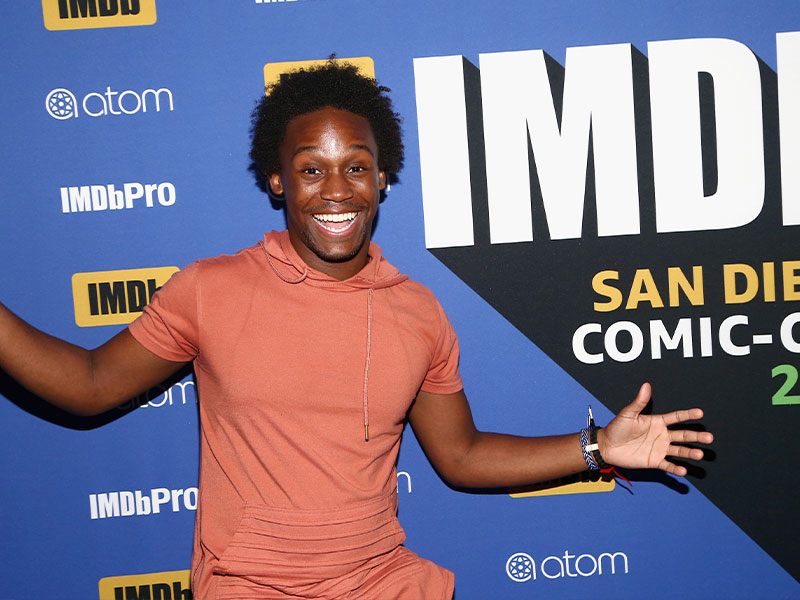
Dabier Snell claims Lea Michele ostracized him
Dabier SnellDabier Snell attends the #IMDboat Party At San Diego Comic-Con 2018 on July 20, 2018 in San Diego, California. (Tommaso Boddi/Getty Images for IMDb)

Snell, who appeared in a Season 4 episode of “Glee,” said that Michele didn’t want him sitting at a shared lunch table with the main cast, even though he received an invitation from Darren Criss.


“After we had filmed that scene and obviously there was lunch, Darren was like, ‘Yo, you should come by, All the cast members will probably sit down,'” Snell recalled. “I was like, alright, cool. I was there maybe 10 minutes and then I got pulled by somebody on set.”


He continued, “They were like, ‘Hey, Dab, can I talk to you for a minute?’ And I was like, yeah, sure. So, she goes, ‘Somebody specifically at the table doesn’t want you sitting there.’ And I was like, what? So, she was like, ‘I’m really sorry about that. It’s not about you. It’s just the person there doesn’t feel like you belong with the rest of the group.'”


When he asked if the person was Michele, the crew member allegedly winced before nodding. 


“Like, wow, I really just got pulled because of my status on the show,” Snell added. “I’ve never really experienced anything like that, even in a high school setting.”

09
Naya Rivera’s boating death
Naya RiveraActress Naya Rivera (Imeh Akpanudosen/Getty Images)

Naya Rivera’s father, George, said the last time he spoke to his daughter was over FaceTime:


“I get a sinking feeling cause we’ve been boating forever,” he said. “I was FaceTiming with her trying to talk her through the pitfalls of trying to anchor your boat. First of all, I said, ‘Naya, you’re on a pontoon boat, that’s not a boat . . . why are you on a pontoon boat?’


“I said, ‘Do not jump off that effin’ boat. If you’ve got an anchor, you can anchor it, but do you know how to anchor it?” he continued. “We went through a couple iterations like that and then the FaceTime call hung up and that was the last time I talked to her.”


When he got the call about Rivera’s disappearance, George drove from Knoxville, Tennessee, to Ventura County, California, but knew deep down that it “was over with.” Rivera’s son Josey was found in the boat asleep, wearing a life jacket. 


“You don’t find a drifting, 5-year-old child asleep on a boat at the end of a lake without his mother and have any hope,” said Rivera’s father. “I had no hope.”


When reflecting on his daughter’s passing, George said, “You don’t process it . . . I don’t know what everybody else does but for me, it’s as fresh today as it was two years ago.”


“[Naya] knew she was on a really good show with a lot of tragedies. Don’t know if you can equate that to fame, but I think it has something to do with it.”

10
Multiple crew members also died while filming “Glee”
The cast & crew of GleeThe cast & crew of “Glee” with 20th Century Fox Television president Kevin Reilly (Front L) and 20th Century Fox Television co-chair Dana Walden (C) at Sunset Tower on January 9, 2010 in West Hollywood, California. (Michael Buckner/Getty Images for InStyle)


In addition to Monteith, Salling and Rivera, several “Glee” crew members died during the show’s run, although it wasn’t widely reported.
 
The specific individuals include rigging gaffer Mitchell Byerly, assistant director Jim Fuller, production assistant Nancy Motes, a “lead prop guy” named Paul, and a stand-in for Matthew Morrison, who played Mr. Schuster.

“The Price of Glee” is currently available for streaming on Discovery+. Watch a trailer for it below, via YouTube:

How Sarah Michelle Gellar helped her “Buffy” costars: “If people think you’re a b****, it’s better”

When a star has a new show, they makes the rounds of interviews and appearances. And the stories come out. Such is the case with Sarah Michelle Gellar, to an extent. 

Gellar gave a cover interview to The Hollywood Reporter, in support of her upcoming Paramount+ series “Wolf Pack,” in which she both stars and serves as executive producer. That creative control is essential to Gellar, something she didn’t have on the set of the show she is most known for, “Buffy the Vampire Slayer.” And as she told the magazine, she hopes being a woman in charge can help the younger cast members on her new show, in ways that no one helped her.

In the years since “Buffy,” which made the already experienced young actor Gellar not only a star, but a cultural icon, stories have continued to pile up about abuse from the show’s creator, Joss Whedon. Many actors have spoken out about the treatment they and others received from Whedon, including Charisma Carpenter and Michelle Trachtenberg, who revealed there was a rule on set that Whedon could never be alone in a room with her. Trachtenberg was under 18 at the time. 

Gellar spoke to The Hollywood Reporter about difficult working conditions on the set of “Buffy,” including 15-hour days, which co-star Seth Green said Gellar tried to fight against, trying to advocate for her fellow actors, to little effect.

“I saw her get called a b****, a diva, all these things that she’s not — just because she was taking the mantle of saying and doing the right thing,” Green said.

On the pressure of being a woman in Hollywood, Gellar said, “If people think you’re a b****, it’s almost better. There’s less expectation that way.” She acknowledged a past reputation she had shouldered of being so-called “difficult” due to going above and beyond, and thinking others would do the same. “I’ve mellowed a bit,” she said.

Gellar also revealed that the residuals from “Buffy” were “nothing anybody could live off of.” She’s more business-savvy now, and she’s also an advocate for young actors like the teen she was, insisting on an intimacy coordinator for “Wolf Pack,” maintaining shorter working hours and giving the actors her personal phone number, in case they have any issues. She was also responsible for terminating a crew member who kept offering backrubs, making a cast member feel uncomfortable.

Such actions seem to indicate prior experience navigating a difficult workplace, something Gellar has not been completely forthcoming about. She said, “I hope that I’ve set up an infrastructure, a safety net for these actors that I didn’t have.” Without naming Whedon — something she did not do during the interview — she admitted, “My generation just didn’t have that.”

Gellar won’t let her daughter, who wants to be an actor, perform before a camera until the child graduates high school. Recently, Gellar rewatched “Buffy” with her family, including both her children with actor Freddie Prinze Jr, but told The Hollywood Reporter, they skipped many episodes in the two final seasons of the show, which included a beloved character, Spike (James Marsters), attempting to rape her character. “I have trouble with [season] six . . . I just don’t want to rewatch it.”


Want a daily wrap-up of all the news and commentary Salon has to offer? Subscribe to our morning newsletter, Crash Course.


Gellar may not call out Whedon by name, but the experience working with a powerful man accused of so much abuse underscored her words to the magazine, “I’ve come to a good place with it, where it’s easier to talk about,” she said. “I’ll never tell my full story because I don’t get anything out of it. I’ve said all I’m going to say because nobody wins. Everybody loses.

“I will always be proud of ‘Buffy,'”  Gellar said. “I will always be proud of what my castmates did, what I did. Was it an ideal working situation? Absolutely not. But it’s OK to love ‘Buffy’ for what we created because I think it’s pretty spectacular.”

“Wolf Pack” premieres on Thursday, Jan. 26 on Paramount+.

“Problematic and dangerous”: Websites selling abortion pills are sharing sensitive data with Google

Online pharmacies that sell abortion pills are sharing sensitive data with Google and other third parties, which may allow law enforcement to prosecute those who use the medications to end their pregnancies, a ProPublica analysis has found.

Using a tool created by the Markup, a nonprofit tech-journalism newsroom, ProPublica ran checks on 11 online pharmacies that sell abortion medication to reveal the web tracking technology they use. Late last year and in early January, ProPublica found web trackers on the sites of at least nine online pharmacies that provide pills by mail: Abortion Ease, BestAbortionPill.com, PrivacyPillRX, PillsOnlineRX, Secure Abortion Pills, AbortionRx, Generic Abortion Pills, Abortion Privacy and Online Abortion Pill Rx.

These third-party trackers, including a Google Analytics tool and advertising technologies, collect a host of details about users and feed them to tech behemoth Google, its parent company, Alphabet, and other third parties, such as the online chat provider LiveChat. Those details include the web addresses the users visited, what they clicked on, the search terms they used to find a website, the previous site they visited, their general location and information about the devices they used, such as whether they were on a computer or phone. This information helps websites function and helps tech companies personalize ads.

But the nine sites are also sending data to Google that can potentially identify users, ProPublica’s analysis found, including a random number that is unique to a user’s browser, which can then be linked to other collected data.

“Why in the world would you do that as a pharmacy website?” said Serge Egelman, research director of the Usable Security and Privacy Group at the International Computer Science Institute at the University of California, Berkeley. “Ultimately, it’s a pretty dumb thing to do.”

Representatives for the nine sites did not respond to requests for comment. All were recommended on the popular website Plan C, which provides information about how to get abortion pills by mail, including in states where abortion is illegal. Plan C acknowledged that it does not have control over these sites or their privacy practices.

While many people may assume their health information is legally protected, U.S. privacy law does little to constrain the kind or amount of data that companies such as Google and Facebook can collect from individuals. Tech companies are generally not bound by the Health Insurance Portability and Accountability Act, known as HIPAA, which limits when certain health care providers and health plans can share a patient’s medical information. Nor does federal law set many limits on how companies can use this data.

Law enforcement can obtain people’s data from tech companies such as Google, whose privacy policies say the companies reserve the right to share users’ data with law enforcement. Google requires a court order or search warrant, which law enforcement can obtain with probable cause to believe a search is justified. The company received more than 87,000 subpoenas and search warrants in the U.S. in 2021, the most recent year available; it does not provide a breakdown of these requests by type, such as how many involved abortion medication.

In a statement, Steve Ganem, product director of Google Analytics, said: “Any data in Google Analytics is obfuscated and aggregated in a way that prevents it from being used to identify an individual and our policies prohibit customers from sending us data that could be used to identify a user.”

Google pledged last year that it would delete location history data related to people’s visits to abortion and fertility clinics, but the company has not announced any changes since then related to data involving abortion pill providers or how it handles government requests for data. A Google spokesperson did not respond when asked whether the company has turned over any data to law enforcement about users of online pharmacies that provide abortion medication or whether it has been asked to do so.

“This is problematic and dangerous — both the potential access that law enforcement has to figure out who is violating our new state bans and that we’ve let tech companies know so much about our private lives,” said Anya Prince, a law professor at the University of Iowa who focuses on health privacy. “It shows us how powerful this data is in scary ways.”

Medication abortion

Using medications to induce an abortion involves taking two drugs. Mifepristone blocks the hormone progesterone, effectively stopping the growth of the pregnancy. Misoprostol, taken a day or two later, helps the uterus contract, emptying it of pregnancy tissue. This drug combination is the most commonly used method of abortion, accounting for more than half of abortions in the U.S.

Demand for the drugs is expected to grow amid reproductive health clinic closures and the enactment of a cascade of state laws banning abortion since the Supreme Court overturned Roe v. Wade last June.

At least 13 states now ban all methods of abortion, including medication abortion, though some allow exceptions for medical emergencies, rape or incest. People who are unable to shoulder the cost of traveling to states where abortion is legal are increasingly turning to online pharmacies to buy abortion pills without prescriptions. The mail-order pills can be taken at home, and they’re generally cheaper than abortion services provided in clinics — about $200 to $470 from online pharmacies, compared to about $500 for a first-trimester abortion conducted in a clinic.

Approved by the U.S. Food and Drug Administration in 2000, mifepristone — the first tablet in the two-step regimen — can be used to help end pregnancies in their first 11 weeks. The agency initially restricted the drug, requiring patients to get it from clinicians in person.

Mifepristone became more accessible during the COVID-19 pandemic, when the FDA temporarily relaxed the requirement that people visit providers in person to get the drug. The agency scrapped the requirement altogether in December 2021, allowing people to obtain abortion medication through the mail after a telemedicine appointment.

Then, on Jan. 3, the FDA published new rules allowing retail pharmacies to dispense mifepristone to people who have prescriptions, potentially expanding access to medication abortion. But those rules do not help pregnant people in more than a dozen states where abortion bans prevent pharmacies from offering the drug.

A week later, Alabama’s attorney general said that anyone using abortion pills could be prosecuted under a state law that penalizes people for taking drugs while pregnant — despite the state’s abortion ban, which excludes abortion seekers and penalizes providers instead. He then appeared to back off his statement, saying the law would be used only to target providers.

Nineteen states already ban the prescription of abortion drugs through telehealth, meaning people in those states must see a clinician in person or find abortion medication online on their own. Many appear ready to do the latter. After a draft of the Supreme Court’s abortion decision leaked last May, internet search traffic for medication abortion surged. Dozens of people have posted descriptions online of their experiences getting abortion pills, some in restrictive states. One Reddit user recounted their ordeal on an abortion subgroup in October: “I’m in TX so i ordered through abortion RX. It said it’ll be here soon like 5-6 days. I’m extremely nervous I’m doing this by myself, but I’ve looked and don’t have a lot of time to make a decision. This is the fastest way.”

A new legal era

Just two states — Nevada and South Carolina — explicitly outlaw self-managed abortion. But that hasn’t stopped prosecutors in other states from charging people for taking abortion drugs.

Prosecutors have cited online orders of abortion pills as evidence in cases charging people with illegal abortions in several states, including Georgia, Idaho and Indiana. And in at least 61 cases from 2000 through 2020 spread across more than half the states in the country, prosecutors investigated people or ordered their arrest for allegedly self-managing abortions or helping someone else to do so, according to a report by If/When/How, a reproductive justice advocacy organization. In most of these cases, people had used medication for their abortions.

Those prosecutors interested in criminalizing abortion are aided by state and private surveillance.

“This is an entirely new era,” said Ari Waldman, a professor of law and computer science at Northeastern University. “We’re moving to a modern surveillance state where every website we visit is tracked. We have yet to conceptualize the entire body of laws that could be used to criminalize people getting abortions.”

Law enforcement can use people’s behavior when visiting websites that sell abortion pills as evidence to build cases against those suspected of having abortions. Investigations and charges in these cases overwhelmingly stem from reports to law enforcement by health care providers, trusted contacts or the discovery of fetal remains, legal experts say. Once authorities launch an investigation, they can use online searches for abortion pills as part of the evidence.

“This information can tell a district attorney that you went to an abortion website and you bought something,” Waldman said. “That might be enough to get a judge to get a warrant to take someone’s computer to search for any evidence related to whatever abortion-related crime they’re being charged with.”

This was true even under the more limited abortion restrictions under Roe. For example, in 2017, prosecutors in Mississippi charged Latice Fisher with second-degree murder after she lost her pregnancy at 36 weeks. Prosecutors used her online search history — including a search for how to buy abortion pills online — as evidence. Fisher’s murder charge was eventually dismissed.

“We have a private surveillance apparatus that is wide and is largely unregulated,” said Corynne McSherry, legal director at the Electronic Frontier Foundation, a nonprofit that promotes digital rights. “Now Google knows what you’re searching. This is a real threat. If any third party has your information, it means your data is no longer in your control and it could be sought by law enforcement. This is 100% a worry.”

Opting out

Many people aren’t aware of how to opt out of sharing their data. Part of the problem is that when users visit online pharmacies that share users’ information with third parties such as Google, their information can then be shared with law enforcement if allowed by the privacy policies of those third parties.

“The mere fact that you’ve used the online pharmacy to buy abortion medication, that info is now collected by Google and it is now subject to the privacy policy of Google such that you have no way of opting out of that, because it’s entirely separate from the website you went to,” Waldman said.

Users can install a web browser, such as Brave or Firefox, that offers privacy protections. They can also install browser extensions to block third-party trackers and adjust the privacy settings on their browsers. But these steps aren’t always foolproof. Tech companies can still subvert them using hidden tools that users cannot see, and they likely retain vast troves of data that are beyond users’ control.

“Individuals are not going to solve this problem; technical solutions aren’t going to solve this problem,” said Chris Kanich, associate professor of computer science at the University of Illinois at Chicago. “These trillion-dollar companies of the economy aren’t going anywhere. So we need policy solutions.”

Congressional lawmakers have spent years discussing a national data privacy standard. The bill that has made the most progress is the American Data Privacy and Protection Act. Introduced last June by a bipartisan group of lawmakers who intended to strengthen consumer data protections, the bill limited companies from using any sensitive data, including precise geolocation information or browsing histories, for targeted advertising or other purposes. Companies would have been required to get consumers’ express consent before sharing sensitive data with third parties. The legislation passed out of its assigned House committee in July.

Another bill, the My Body, My Data Act, also introduced last summer, would limit the reproductive health data that companies are allowed to collect, keep and disclose.

But neither bill has passed. The My Body, My Data Act had few, if any, Republican supporters. Plus, legislators couldn’t reach an agreement over whether the American Data Privacy and Protection Act should supersede state privacy laws such as the California Consumer Privacy Act of 2018, which provides data privacy protections for consumers in the state.

Privacy experts say the most effective way to protect users’ data is for online pharmacies that sell abortion medication to stop collecting and sharing health-related data.

Companies selling abortion pills should immediately stop sharing data with Google, said Cooper Quintin, senior staff technologist at the Electronic Frontier Foundation.

“Web developers may not have thought they were putting their users at risk by using Google Analytics and other third-party trackers,” Quintin said. “But with the current political climate, all websites, but especially websites with at-risk users, need to consider that helping Google, Facebook and others build up records of user behavior could have a potentially horrific outcome. You can’t keep acting like Roe is still the law of the land.”

Jeremy Renner’s snow plow injury prompts “Mayor of Kingstown” poster change out of respect

In December, Paramount+ released a promotional image for the series “Mayor of Kingstown,” advertising its upcoming second season. In the poster, star Jeremy Renner glowers at the camera, wearing a dark suit and tie stained with dirt. A brick prison, complete with razor barbed wire fencing, goes up in smoke behind him. His face has fairly graphic bruises and bloody cuts. 

But on Tuesday, the studio released new key art for “Mayor of Kingstown,” as Variety reported. In the revised image, the blood and bruises have been erased from Renner’s face. This seems to be a response to an Instagram photo the actor posted of himself only a few weeks earlier on Jan. 3 after Renner was injured in a snowplow accident.

On New Year’s Day, Renner was assisting a family member whose vehicle had become stuck in the deep snow near Reno, Nevada, where Renner lives. Renner was using a snowcat, a tracked vehicle designed to move on snow. While he was out of the driver’s seat, the heavy machinery started to roll away. It ended up rolling over him and crushing him. Authorities investigated the accident, but as Rolling Stone reported, “They quickly said there were no signs that Renner was impaired at the time, nor was there any evidence of foul play.” 

Renner suffered blunt chest trauma in the accident and other orthopedic injuries, according to CNN. Listed in critical condition, he spent more than two weeks in the hospital and also underwent several surgeries. He was scheduled to appear at the Television Critics Association press tour on Jan. 9 to promote “Mayor of Kingstown,” but had to cancel in order to recover.

At the time of the accident, Renner was immediately assisted by neighbors while they waited for help to arrive. Renner was the only one injured in the accident.

Renner had previously purchased the snowcat in order to build a sledding course for his children. When winter weather hit, he utilized the vehicle to help clear local roads. “He was being a great neighbor and he was plowing those roads for his neighbor,” Washoe County Sheriff Darin Balaam told CNN.


Want a daily wrap-up of all the news and commentary Salon has to offer? Subscribe to our morning newsletter, Crash Course.


In “Mayor of Kingstown,” Renner plays Mike McLusky, the son in a powerful family in Kingstown, Michigan, where incarceration is the biggest part of the local economy. According to Variety, Paramount+ erased the visible blood, cuts and bruises from its key art “out of respect” for Renner’s accident and his recovery.

Season 2 of “Mayor of Kingstown” premiered on Sunday. The next day, Renner responded to a social media post from the show’s official account, saying, “Outside my brain fog in recovery, I was very excited to watch episode 201 with my family at home.”

Cooking with Jamie Oliver is cheap, easy — and requires only one pan

“People’s hatred for cleanup is profound,” says Jamie Oliver. The bestselling cookbook author and award-winning television host knows that sometimes the difference between home cooking and drive-through is as elemental as the number of dirty dishes involved. As in his previous “solution based” works like “Jamie’s 15-Minute Meals” and “5 Ingredients – Quick & Easy Food,” his new book (and accompanying series) “One: Simple One-Pan Wonders” is an inventive, eminently practical celebration of pared down, real-world cooking, from savory frying pan pastas to cozy desserts.

Oliver joined me recently on “Salon Talks” to talk about cooking when your time and budget are both limited, and his ongoing mission to empower families to have healthier options.

The following interview has been lightly edited for clarity and length.

This is your third project to come out in response to the pandemic, and this one was particularly written in response to the 2021 UK lockdown. Tell me about a little of the inspiration for this book.

Lockdown was an opportunity to really look at what people were buying most of the time, and use that information to arm me with the inspiration to write differently. I wanted to take away all the barriers to not cooking and ordering a takeaway instead. How can I make it easy for you to cook? 

“We never, ever have more than eight ingredients, eight or less.”

There were a number of things that really made a massive difference. First of all, “One-Pan Wonders” really should have been called “the minimum washing up cookbook.” People’s hatred for cleanup is profound and it’s big. Every time I mention it, you get people cheering, “Yeah, I hate it. Drives me up the wall.” That’s quite a powerful emotion that has nothing but everything to do with food. Then, there’s people’s hatred for long shopping lists. They want to cook something, but they’ve got to buy 20 things, and that’s more common than you can imagine. In this book, if you open any page, you’ll see there’s pictures of every ingredient, so I’m really holding your hand and guiding you through the recipe. And we never, ever have more than eight ingredients, eight or less.

Then from a nutrition point of view, I want to make it an everyday cookbook. To do that, it can’t just be full of indulgent and heavy meals. We’ve got beautiful, indulgent meals in there, but just the right percentage of them. We got loads of everyday healthy, delicious dishes. We celebrate meat, we celebrate fish, we’ve got veggie, we’ve got vegan, covering all the ranges from breakfast to dinner and everything in the middle. That’s all taken into consideration before I’ve even written one recipe.

When it came to the recipes, I was really looking at the ingredients that you normally buy every week. I don’t really even want you to go shopping to cook one of the recipes. I know that most people are buying chicken every week, so that’s why there’s a whole chapter dedicated to it. And if you look at things like the One-Pan Pastas, which is a really nice technique where you only need the one pan, most of that is very doable in eight to 10 minutes. It’s for those people getting back from work, just about to order a takeaway. And look, even a cheap takeaway is quite expensive. I’m very conscious that I just have to make it easy for people. Then as you know, one of the most important things is testing the recipes so they actually work and deliver on the promise. We take that really seriously.

As someone who doesn’t have a dishwasher, I want to thank you for writing this book because the pan thing really is an obstacle for a lot of us, especially when you’re cooking for a family. What are some things that you learned along the way to make one pan cooking easier for all of us?

It is a beautiful world. Obviously, the conceit and the concept of cooking in one pan, washing up aside, is that whatever you are cooking is benefiting from other things that are around it in that environment. If you’re cooking in a pan, that’s different than a kind of casserole pan, which is different than a Dutch oven because they all hold moisture and hold heat in a different way. For me, that was the easy part, but it was just putting combinations.

It was creating the laws and the rules of the book, so it was easy for you, the reader, but really just picking things that would work in that vessel. We’ve got a whole bunch of roasting tray recipes that have got everything cooking together and flavoring each other. Some of the challenges are that you need to cut things or prep things so that they cook in the perfect time, otherwise you’ve got perfectly cooked meat and then raw veg, and that’s not cool. There’s ways of getting around that, of course. 

” A good, well-written cookbook should be able to connect with you on different levels from breakfast to dinner.”

That aside, emotionally, I try and give you enough of what I know you want and then give you enough or the right amount of what you don’t know you want yet. That’s a real balance and that’s a real gray area. I think having been publishing for 25 years, I must be getting it roughly right, otherwise I’d have been sacked years ago. I think a good well-written cookbook should be able to connect with you on different levels from breakfast to dinner.

There’s a really humble recipe in the book, sort of driven by a reality of, I really want a cheese toasty, but I’ve got no bread, damn. I give you a recipe for a two minute bread that you can knock out in the pan and then you stuff it, and then you get that beautiful cheesy ooze and you can put your combinations. From a humble recipe like that, which is almost not a recipe, it’s like student food, which we all love, to a one pan dish where I treat a pork belly, which is a much more affordable cut than some of the prime joints, like a porchetta from Italy. I cook this rolled pork belly rubbed with all these gorgeous things in this pan. As it’s resting, we turn all the remnants and goodness from that pan into the most incredible risotto. There’s loads of veg in it and it’s a complete meal, but it’s almost good enough to be a dinner party meal. It’s got the wow effect.

From that cheese toasty to that dish and everything in the middle, I think the job of the author is to try and give you a little rainbow of useful recipes that hopefully will connect with you at different times in the day.

I’ve heard you refer to some of your more recent cookbooks as solution-based, which I appreciate as a home cook. The solution may be ingredients, it may be time, it may be equipment, and it may also be money. This book is very intentionally budget-friendly. I want to ask you about what you think of when developing these recipes. Obviously, you in the UK, we in the US, have been hit very hard recently economically.

It’s a really good question. In the last recession I did a cookery book called “Save with Jamie” and “Money Saving Meals.” The question of what is budget-friendly is completely subjective, isn’t it? And probably not for me to say or most people to say. I meandered around what does that mean. Who justifies what budget-friendly means? I just thought, well, if it’s half the price of a Big Mac meal, that’s got to be nudging me in the right direction. Certainly in that book, that’s what we intended to do. We wanted to make sure that there was a really nice percentage of the book that was in that sort of area. When you’re cooking for four people, if it’s comparable to an easy takeaway, then you’re probably in the right direction.

We never expected everything that’s happened in the last year with Ukraine and bits and pieces like that, where the prices have gone completely bonkers. When I’m writing my book, I genuinely, sincerely do try and look at health and nutrition. I try and look at choice. I try and represent veggie and vegan dishes in the right kind of proportions. We look at meat and meat reduction, so you’ll see recipes in the book where we are helping you meat reduce. Because to think about vegan, veggie or meat eater is this whole binary approach to making people’s food preferences like a club or a religion … I don’t really like that bit, but I really like the idea of helping people go on a journey and improve and realize that meat reduction is really good on so many levels. Financially it’s amazing. We can replace that meat with some incredibly nutrient dense veggies and legumes and stuff. But in a really clever way, a delicious way, and also a way that really echoes back to hundreds of years ago where that was normal practice. 

“So much was out of our control, but actually the one thing we could control was what we cooked.”

If I just did a cookbook full of prime cuts of meat and filet steaks and foie gras and really exclusive ingredients, that would be inappropriate and slightly audacious. At the same time, what I try and do in a very small percentage over the years and quite strategically, is I start mentioning things like harissa or miso, which are little flavor bombs that have gone from being quite scarce and rare to ubiquitous around the country.

If you go to any American supermarket now, you can find miso pretty easily in different colors and forms, and that’s quite typical in a lot of countries. I feel like part of my job is to mention those things. I just think one of the most joyful things about cooking is, if you’ve got your salmon steak, which is very common, or your chicken, you can go to any country in the world. We’ve got our preferences that we love and that we grew up with and God bless that.

I’ve just come from doing “Good Morning America” where we did a miso chicken with sweet potatoes and sesame seeds and spring onions. It’s so delicious. The skin is crispy and the meat’s falling off the bone, and that depth of umami and soy and the freshness of lime, oh. And I was giving it to the co-host, and you could tell those textures and flavors speak to you even if you’ve never been to Japan.

Your family was personally very affected by COVID. I want to know if that also changed how you cook for each other and how you care for each other. Your book is dedicated to your wife, your one.

COVID was pretty awful for everyone. [My wife] got it quite bad and still has long COVID now. We were also one of the first non-news broadcast to go primetime with bespoke COVID content. It took literally a month in Britain for unique content, which was tuned in to the moment and the scenario to come out. We were really, really early, as in day one. We went to air in 16 hours. I was out of nowhere, kind of self-commissioned a Monday to Friday primetime show that wasn’t even commissioned a week before. 

I went from teaching recipes to principles and that was very interesting. We could then open up the recipe and really amplify the principles. Then throughout the week, I was using fractional bits of leftover stuff. You know when you’ve got stuff in the fridge and it’s not quite enough for anything? That was inspiring the recipes I was making. I was using the freezer, and by day five things weren’t looking as fresh as maybe you’ve seen them on my cookery shows before where they’re perfect. I think maybe more importantly, because we are all vulnerable and it was those very early days and people were scared, so much was out of our control, the one thing we could control was what we cooked and cooked for the kids, cooking food that by its nature made you feel comforted.

The response from the public was amazing. Even globally, it was like, “Thank you for doing this,” because people were tuning in and had the same problems. That was quite a unifying moment for me, actually. Very powerful. I did that for a month and then decided, well, didn’t decide, the rest of the industry had caught up. It literally took a month for production to catch up in the UK and many other countries in the world. Then I started concentrating on my colleagues at work and making sure that we were all stable and happy.

You’ve been very outspoken in your career, particularly in the last year, about some of the things going on in your government. What are you focusing on now in terms of how we care for our kids? What would you like to see changed in your own country?

There’s two ways you can answer that. What needs to be done, or what are we concentrating on now to get done? Because we are very slow globally, and certainly in the UK and the US, we’re very, very slow to progress in protecting child health. How long have we been debating the laws around labeling and truth and transparency and where you would put the nutritional information? It wasn’t that long ago when I did the ABC Primetime show “Food Revolution,” where we outed pink slime, which the American government decided no one had to mention if it was less than 25% of the whole product. You’ve had permission from the government to lie. So, this is not in the best interest of truth, integrity, agriculture and certainly not in the best interest for parents, and most definitely not in the interest of kids. 

“You get the impression from the powers that be that it’s an indulgence and not a right. I think it is a right.”

When we outed that story, the response from the American public was very visceral. They never knew they didn’t have the truth. I think even from labeling, we’ve still got a lot to do in the UK as well. It’s not legislation to have to put on the front and color code it so that a busy working parent can decide. It doesn’t mean they’re not going to take something that’s indulgent, it just means that they know. If they’ve got a trolley full of only reds and flashing reds, then that’s probably worth thinking about when you go home that night and looking at some healthy little swaps. 

There’s loads to be done. I think if I had a magic wand, [I’d be] making sure that school food for our students, especially the most vulnerable, was as good as it can be and available for free for the ones that really need it. I would love if every American child could leave at 16 knowing ten basic recipes to save their life, and know the basics of budgeting, and nutrition, and how to be a ninja shopper in their neighborhood. That feels not like a luxury, indulgent, middle-class kind of whim. To me, that’s survival.  

If you look at what’s challenging our young families right now in both of our countries, it’s debt and health. The cost of food annually is still very expensive. Being better at that is going to really make a difference, and knowing how you can duck and dive and look after the people you love is really useful. So, I wish that could happen. But I think it still feels like fighting for truth, better food, fairer food.

You get the impression from the powers that be that it’s an indulgence and not a right. I think it is a right. The food industry is very powerful and it wants to solve your solutions and charge you for it. There’s a lot of work to be done. Ultimately, if you think about it, just keeping people cooking [is important,] but that is a rarity now. We’re cooking less now than we did before COVID. Everyone thought that we were cooking more in COVID, and that is true, but we were locked in our houses, so we didn’t have a choice. It was under duress. But seemingly now it’s dropped off again.

Ex-roommate: George Santos used fake Jewish name on GoFundMe because he said “Jews would give more”

A former acquaintance of Rep. George Santos, R-N.Y., on Tuesday added some new details to the scandal-plagued congressman’s cultural appropriation of the Jewish faith and religion.

During an interview with CNN’s Anderson Cooper, Santos’ former roommate Gregory Morey-Parker said that he knew Santos by two names — Anthony Devolder and Anthony Zebrosky — with Zebrosky being the last name Santos used for his fake pet charity GoFundMe page.

“He would say, ‘oh well, that Jew will give more if you’re a Jew,” Morey-Parker quoted his former roommate.

The two would only live together for a couple of months, but it was long enough for Morey-Parker to witness Santos’ deception firsthand. Morey-Parker recalled Santos stealing a scarf from him that he ended up wearing to the Jan. 6 insurrection. He also lent credence to a story about Santos allegedly stealing $3,000 from a veteran that was supposed to go to his dying service dog.

Morey-Parker proved the closeness of his relationship with Santos by sending in a photograph of him and Santos’ mother, who lived near him and Santos. Morey-Parker described Santos’ mother as a, “very, very, sweet, sweet woman.”

The public outcry over Santos doesn’t shock Morey-Parker.

“Everything he said to me was a lie,” Morey-Parker said.

Watch the video below or at this link.

Experts say Trump’s brag that he took classified folders as “cool keepsake” is “admissible evidence”

Former President Donald Trump on Wednesday alleged that federal investigators may have planted documents in empty classification folders that he kept at Mar-a-Lago. 

Trump has repeatedly claimed without any credible evidence that he declassified and legally stored the more than 300 documents that were discovered by the FBI in his home. Since the discovery of a significantly smaller amount of documents in the home and office of President Joe Biden, Trump has tried to change the public perception of his own hoarding of classified information. 

In a series of Truth Social posts, Trump claimed that he saved “hundreds” of empty classification folders because they were a “cool keepsake.”

“The Fake News Media & Crooked Democrats (That’s been proven!) keep saying I had a ‘large number of documents’ in order to make the Biden Classified Docs look less significant,” the former president wrote in his first post. “When I was in the Oval Office, or elsewhere, & ‘papers’ were distributed to groups of people & me, they would often be in a striped paper folder with ‘Classified’ or ‘Confidential’ or another word on them. When the session was over, they would collect the paper(s), but not the folders, & I saved hundreds of them.”

In his second post, Trump alleged that the FBI, whom he compared to secret Nazi police and “Marxist Thugs,” secretly planted documents to incriminate him.

“Remember, these were just ordinary, inexpensive folders with various words printed on them, but they were a ‘cool’ keepsake,” he wrote. “Perhaps the Gestapo took some of these empty folders when they Raided Mar-a-Lago, & counted them as a document, which they are not. It’s also possible that the Trump Hating Marxist Thugs in charge will ‘plant’ documents while they’re in possession of the material. As President, and based on the Presidential Records Act & Socks Case, I did NOTHING WRONG. JOE DID!”

In a September court filing, federal investigators said they found 48 empty folders marked as containing classified information during their August raid, raising questions about whether they fully recovered all the documents or if there were some missing. There were also 42 empty folders labeled “return to staff secretary/military aide.”

Since the FBI raid, Trump has attempted to stop investigators from viewing what was in the recovered files, claiming that they were his personal property and that he had the ability to secretly declassify them “with his mind.”

In contrast to Trump’s approach to the investigation, the Biden White House immediately cooperated with authorities, stating “a thorough review will show that these documents were inadvertently misplaced, and the president and his lawyers acted promptly upon discovery of this mistake.” 

Legal scholars warned that Trump’s Truth Social posts may come back to bite him.


Want a daily wrap-up of all the news and commentary Salon has to offer? Subscribe to our morning newsletter, Crash Course.


Former U.S. Attorney Joyce Vance explained that if Trump is charged in the case, his posts may be used as “admissible evidence” against him.

“It’s why lawyers want their clients to stay silent when there’s the possibility of a criminal investigation,” she wrote. “Biden likely had conflicting advice from his lawyers who wanted radio silence & advisors who wanted transparency.”

Robert Maguire, the research director for the Citizens for Responsibility and Ethics in Washington (CREW), agreed with Vance’s claim and pointed out the misinformation within the posts.

“So this clear straightforward explanation—which is definitely not how classified material is handled—took him months to come up with and wasn’t used by any of his lawyers in court,” Maguire wrote. “In other words, this is an admission, not a defense.”

Vance also fact-checked Trump’s claim that he emptied the folders before bringing them to Mar-a-Lago.

“This isn’t true unless they were incredibly dysfunctional,” she wrote on Twitter. “Classified materials stay in their marked folders.”

Conservative attorney George Conway mocked Trump’s Truth Social rant, writing, “It took him only, what, a year  after returning stuff to NARA to come up with this claim?”

National security attorney Bradley Moss pointed to Trump’s clear self-incrimination by simply tweeting, “He has the right to remain silent.”

Reporter brutally fact-checks Kevin McCarthy’s op-ed bragging about GOP accomplishments

After a few arduous days of voting, Rep. Kevin McCarthy, R-Calif., finally won over his GOP colleagues on the 15th vote and began his stint as House Speaker. Now that he’s been in the role for a full week, McCarthy reflected on what he believes was a successful first week for the party in a recent New York Post op-ed.

In his reflection, McCarthy asserts that he is currently basking in the confidence that he and fellow House Republicans are already making significant progress on behalf of the American people.

However, MSNBC blogger Steve Benon reports that the Republicans’ impact, so far, is quite the opposite of successful, and he set the record straight on what the House GOP members have actually achieved

McCarthy wrote that his reign is “the start of a new direction in Washington,” insisting that the party is “following through on our pledge for a more accountable, more transparent, more open chamber.”

“House Republicans began this Congress by passing a rules package that transitions away from the top-down, centralized control that has defined this institution for many years,” the GOP leader claimed.

In his reporting, Benon argues that McCarthy’s view of success is “a matter of perspective” and offers a look into the real impact of the rules package, as well as the impact of the ongoing list of what House Republicans have both done and “undone” in their effort to “address Americans’ top concerns.”

Benon contends that McCarthy’s new rule package has already “weakened congressional ethics rules.” AlterNet previously reported that advocates pushed back on the rule changes, arguing in a letter to Congress that the “changes weaken [the Office of Congressional Ethics] to the point where the office would struggle to perform its core function, dismantling one of the only ways members of Congress are held accountable for ethics violations.”

House Republicans also managed to pass their first bill, which repeals funding for 87,000 Internal Revenue Service (IRS) agents. Though McCarthy claimed in his op-ed that the bill fulfills Republicans’ “commitment to America to protect hardworking taxpayers and small businesses from being spied on and shaken down by tax collectors,” the Congressional Budget Office said the bill will increase the deficit by $114 billion.

Mother Jones Senior Editor Michael Mechanic notes that the “Family and Small Business Taxpayer Protection Act,” as the bill is named, is actually a misnomer. Rather than protecting taxpayers, it would instead protect “tax cheaters” by rolling back IRS funding from the Inflation Reduction Act (IRA).

In the op-ed, McCarthy also shed light on his spearheading of the House GOP’s launch of the Select Subcommittee on the Weaponization of Government. In a recent statement, and as a response to the launch of this committee, New York Democratic Congressman Jerry Nadler said, “Jim Jordan and Kevin McCarthy claim to be investigating the weaponization of the federal government when, in fact, this new select subcommittee is the weapon itself.”

Nadler continued, “It is specifically designed to inject extremist politics into our justice system and shield the MAGA movement from the legal consequences of their actions.”

Benon also highlighted that Republican members have also started the process of “imposing new abortion restrictions,” placed an alarming number of “election deniers” on existing congressional committees and have notably “pretended to care about the mishandling of classified materials” amid former Republican president Donald Trump’s investigation by the Department of Justice.

Despite McCarthy’s optimistic analysis of the GOP’s first week in power, and his prediction of a bright future for America under their congressional leadership, Benon concludes that the party’s success is, perhaps, in the eye of the beholder.

Judge concludes Jan. 6 rioter who broke into Capitol was acting on “Trump’s instructions”

A federal judge said on Tuesday that a woman who stormed the U.S. Capitol during the Jan. 6 insurrection “followed then-President Trump’s instructions” when she broke the law. 

Danean MacAndrew traveled from California to Washington, D.C. to join Trump’s rally, and later filmed herself storming the Capitol with fellow Trump supporters. After a three-day bench trial, she was found guilty of charges including violent entry and disorderly conduct in a Capitol building.

District Judge Colleen Kollar-Kotelly wrote in a 18-page opinion that shortly before Trump’s “Stop the Steal” rally began on Jan. 6, MacAndrew tweeted at him “that she too felt that ‘[t]raps had been set’ in the ‘#RiggedElection’ of 2020.” The former president then urged his supporters to literally stop the voting process by marching on the Capitol. 

“Defendant marched to the Capitol where, she testified, she understood that only Congress had the power to fix the election’s outcome and that Congress was likely in session while she was around and in the Capitol,” Kollar-Kotelly wrote.

“Every step of the way, from the western boundary of Capitol grounds, to the West Lawn, to the Upper West Terrace, to the interior of the Capitol itself, she saw sign after sign that her presence was unlawful,” Kollar-Kotelly said. “Nevertheless, heeding the call of former President Trump, she continued onwards to ‘stop the steal.'”

Kollar-Kotelly then explained the verdict in the case: “Having followed then-President Trump’s instructions, which were in line with her stated desires, the Court therefore finds that Defendant intended her presence to be disruptive to Congressional business.”

The ruling aligns with the final report from the House Jan. 6 select committee, which alleged that Trump engaged in a “multi-part conspiracy to overturn the lawful results of the 2020 Presidential election.”

While Trump has maintained his innocence, claiming that the allegations are nothing more than a political witch hunt, other Jan. 6 defendants have also accused him of giving them “presidential orders” to attack the Capitol. Even former Vice President Mike Pence told ABC News that Trump “decided to be part of the problem” on Jan. 6.

In a statement to Axios, Trump spokesperson Liz Harrington refuted the conclusions made by both Kollar-Kotelly and the House committee. Harrington claimed that Trump “urged the crowd to ‘peacefully and patriotically make your voices heard’ on Jan. 6, a fact, just like the Unselect Committee, this biased judge deliberately omitted.”

“The violations of due process and unfair treatment of political prisoners by the U.S. government during this saga will forever be a stain on our country,” Harrington added.


Want a daily wrap-up of all the news and commentary Salon has to offer? Subscribe to our morning newsletter, Crash Course.


In another case against Jan. 6 defendant Alexander Sheppard last month, U.S. District Judge John Bates indicated that Trump’s instructions to “fight like hell” during the rally could have been a sign to supporters that he wanted them to “do something more” than protest. 

Bates shut down Sheppard’s attempt to use the “public authority” defense because “President Trump neither stated nor implied that entering the restricted area of the Capitol grounds and the Capitol building or impeding the certification of the electoral vote was lawful.” However, he did acknowledge that supporters may have been influenced to participate in an insurrection.

“But, although his express words only mention walking down Pennsylvania Avenue to the Capitol, one might conclude that the context implies that he was urging protestors to do something more — perhaps to enter the Capitol building and stop the certification,” Bates wrote.

Bates’s ruling cited the House panel’s report, arguing that phrases used by the committee, such as “fight like hell,” could “signal to protesters that entering the Capitol and stopping the certification would be unlawful.”

His conclusion was that “even if protesters believed they were following orders, they were not misled about the legality of their actions and thus fall outside the scope of any public authority defense” which is consistent with the Select Committee’s findings.

Bates was clear that there was “simply no indication” that Trump informed the crowd that storming the Capitol would be legal, but rather “his speech simply suggests that it would be an act of ‘boldness’ to ‘stop the steal.'”

Various other Jan. 6 defendants have tried to employ the public authority defense, but this strategy has proved to be unsuccessful at trial. Dustin Thompson, who was convicted on all counts, told the jury that he was seeking Trump’s “approval” and that he believed he was “following presidential orders.” 

The Justice Department argued in the Sheppard filing this month that it was “objectively unreasonable to conclude that President Trump or any other Executive Branch official could authorize citizens to engage in violent or assaultive conduct toward law enforcement officers and interfere with the Electoral College proceedings that were being conducted.”

However, civil lawsuits seeking to hold Trump accountable for the insurrection could move forward in court according to federal judge Amit Mehta, who wrote in a 112-page opinion that he could realistically be held accountable for the incident. 

Mehta argued that Trump’s statements before the riot “is the essence of civil conspiracy,” because he spoke of working “towards a common goal” of marching to the Capitol.

“The President’s January 6 Rally Speech can reasonably be viewed as a call for collective action,” Mehta said.

Mehta also wrote that three lawsuits against Trump filed by Democratic members of the House and police officers who defended the Capitol on Jan. 6 could move to the evidence-gathering phase and possibly make it to trial.

“To deny a President immunity from civil damages is no small step. The court well understands the gravity of its decision. But the alleged facts of this case are without precedent,” Mehta wrote.

“After all, the President’s actions here do not relate to his duties of faithfully executing the laws, conducting foreign affairs, commanding the armed forces, or managing the Executive Branch,” Mehta added. “They entirely concern his efforts to remain in office for a second term. These are unofficial acts, so the separation-of-powers concerns that justify the President’s broad immunity are not present here.”

Mehta’s opinion could halt the protections of the presidency and the First Amendment due to the “one-of-a-kind” nature of the case, allowing a new opportunity to subpoena Trump that would shine a light on where presidential immunity ends. 

As of now, there are no public markers that the criminal investigation into Jan. 6 has reached the former president, but Friday’s decision could set the stage for possible civil trials months or years from now in which Trump would be a defendant. 

“Today is a major victory for the rule of law, and demonstrates just how important the courts are for ensuring accountability,” said Joseph Sellers, who represents a group of Democratic members of Congress that alleged civil conspiracy against Trump in court. The NAACP joined him in applauding the ruling. 

Matthew Kaiser, a lawyer for Rep. Eric Swalwell, D-Calif., said it was a “great ruling,” and a representative for the Jan. 6 police officers, Patrick Malone, called Mehta’s ruling “a victory for democracy.”

“It’s good to see that no one is above the law. Everyone should be held accountable for their actions,” said Capitol Police Officer James Blassingame Jr. in a statement.

Mehta added that the lawsuit could show that Trump coordinated with far-right groups like the Proud Boys and the Oath Keepers, who are also named in the lawsuit and have been charged with conspiracy. He noted that Trump told the Proud Boys to “stand back and stand by” before the election, and that he likely knew of the violent actions they planned.

“It is reasonable to infer that the President knew that these were militia groups and that they were prepared to partake in violence for him,” Mehta said. “The President thus plausibly would have known that a call for violence would be carried out by militia groups and other supporters.”

Other Trump allies, including his son Donald Trump Jr., were successful in having their civil cases dismissed. “The allegations against Trump Jr. are insufficient to make him a co-conspirator in a plan to disrupt Congress from performing its duties,” Mehta wrote.

Mehta made it clear that Trump Jr.’s situation was much different than his father’s – who failed to tell his supporters to stand down and stop the violence at the Capitol.

“When the President said to the crowd at the end of his remarks, ‘We fight. We fight like hell and if you don’t fight like hell, you’re not going to have a country anymore,’ moments before instructing them to march to the Capitol, the President’s speech plausibly crossed the line into unprotected territory,” Mehta wrote.

“You f**ked me”: GOPer rages at McCarthy over committee as MAGA extremists score key assignments

Republicans are speculating whether Rep. Vern Buchanan, R-Fla., might retire from Congress and shrink Speaker Kevin McCarthy’s, R-Calif., narrow margins after losing the Ways and Means chairmanship, Puck’s Tara Palmeri reported.

Buchanan was reportedly angry at McCarthy and accused him of sabotaging his candidacy for the committee chairmanship after he was passed over as the most senior person on the committee by Rep. Jason Smith, R-Mo., a member who was fifth in line.

While votes for chairman were being counted, Buchanan walked over to McCarthy and said, “You fucked me, I know it was you, you whipped against me,” according to Puck News. 

A source told Palmeri that Buchanan’s outburst “was so heated that the Speaker’s security detail stepped in with a light touch.” Palmeri added that a spokesperson for McCarthy denied this.

Other Republicans also received their committee assignments for the new Congress, including Reps. Marjorie Taylor Greene, R-Ga., and Paul Gosar, R-Ariz., who were placed on the House Oversight Committee. Greene was also assigned to the House Homeland Security Committee while Gosar was placed on the House Committee on Natural Resources, where he previously served before being booted by Democrats.

The White House condemned both of these additions to the Oversight Committee, Axios reported

​​”[I]t appears that House Republicans may be setting the stage for divorced-from-reality political stunts, instead of engaging in bipartisan work on behalf of the American people,” White House spokesperson for oversight Ian Sams said in a statement to Axios.

Greene and Gosar had both lost committee spots in the last Congress as Democratic retaliation for incendiary remarks, but McCarthy vowed to put them back on committees and pledged to kick some House Democrats off of theirs.

Other GOP hardliners like Reps. Lauren Boebert, R-Colo., and Scott Perry, R-Penn., were also added to the House Oversight Committee, according to Republican sources, CNN reported.

Freshman Rep. George Santos, R-N.Y., who is facing legal issues and mounting calls to resign for repeatedly lying about his background, was also awarded seats on two low-level committees.

The House Republican Steering Committee, controlled by McCarthy and his top allies, asked Santos to serve on two House panels: the Committee on Small Business and the Committee on Science, Space, and Technology, CNN reported. 


Want a daily wrap-up of all the news and commentary Salon has to offer? Subscribe to our morning newsletter, Crash Course.


The New York Republican had privately lobbied GOP leaders to serve on two more high-profile committees, one overseeing the financial sector and another on foreign policy, but top Republicans rejected that pitch.

Santos fabricating parts of his résumé has remained the subject of controversy, but McCarthy has said that it should be left up to voters in his district to decide his fate and not lawmakers. 

Other top Republicans have echoed similar opinions. 

House Majority Leader Steve Scalise, R-La., said on Tuesday that Santos has been “answering some very serious questions” and now he has “to focus on the things that he promised he would do.”

Rep. Byron Donalds, R-Fla., who sits on the Steering Committee, defended the plan to install Santos on committees.

“In this country you’re innocent until proven guilty,” Donalds said. “There have been members who issues have come up (for) in the past. They were allowed to be on their committees, be sat on committees. And then the legal process takes hold and we make adjustments. So that’s probably what’s going to happen.”

Legal expert: Manhattan DA teasing “next chapter” sparks “hope” of Trump indictment

Manhattan District Attorney Alvin Bragg may finally have changed his mind about indicting former President Donald Trump.

The recent conviction of the Trump Organization and its chief financial officer Allen Weisselberg gave a glimpse of evidence that could tie the ex-president directly to the tax fraud scheme, such as a memo he signed approving chief operating officer Matthew Calamari’s illegal request to reduce his taxed salary to cover the cost of his untaxed corporate apartment, reported The Daily Beast.

“We now move on to the next chapter,” Bragg said last week after the company was ordered to pay $1.6 million in penalties for tax fraud.

Trump already asserted under oath in another case in 2021 that he personally oversaw Calimari’s compensation, and prosecutors have checks he signed to cover tuition at a private school for Weisselberg’s grandchildren, whose mother Jennifer Weisselberg has repeatedly told investigators she personally heard Trump discuss the scheme to artificially lower taxed salaries for his executives.

“This case has tentacles,” said Duncan Levin, a former prosecutor who now represents Jennifer Weisselberg and has been communicating with investigators.

The district attorney’s office declined to comment on what Bragg meant about another chapter, but former prosecutors from that office say their experience leads them to believe prosecutors will go after Trump.

“For people who want a certain outcome — to go after Trump — it gives hope,” said Catherine A. Christian, a former assistant district attorney who investigated financial fraud. “They’re going to be thorough. I’m doubtful he would have said ‘next chapter’ if they weren’t looking.”

“It happens all the time with large, complex investigations,” she added.

Prosecutors had hoped to flip Weisselberg or company controller Jeffrey McConney, who was nearly labeled a hostile witness during the Trump Organization trial, but ultimately were unable to get their full cooperation.

“They didn’t flip, and they failed,” said former Manhattan prosecutor Jeff Chabrowe. “They tried to do everything they could, and in the end, they got a truncated thing here where they went after the organization and Weisselberg, and there’s this fine that’s pretty weak.”

Wayback Burgers asks Prince Harry to shut up with its new “Royal Silencer” burger

In the same vein as the British tabloids, Wayback Burgers is not a fan of Prince Harry’s recent bombshell memoir “Spare.”

The American burger chain poked fun at the Duke of Sussex with its latest promotional menu item, simply called “The Royal Silencer.” The hefty burger is described as “a one-of-a-kind burger designed to silence the urge to spill family gossip to media outlets, book publishers and documentarians alike,” per The Takeout. There’s also a third burger patty that is, “a spare patty for the world’s most notable ‘spare'” — a reference to the term “the heir and the spare” which has followed Harry and his brother, Prince William, their entire lives. 

As if its name and description weren’t humiliating enough, the Silencer was further promoted by Wayback’s president, Patrick Conlin, who also threw shade at both Harry and his wife Meghan Markle:

“Remember, no matter the family situation, there isn’t a problem in the world that cannot be resolved over a good burger,” Conlin said in a press release, also obtained by Takeout. “If you are legitimately royals living in the United States, we hope you’ll come by and have one on us.”

Harry’s “Spare” was officially released on Jan. 10 after several outlets leaked the book’s most damning bits. A few shocking highlights include Harry’s Nazi costume debacle, his rude awakening to his mother’s death, his kill count in Afghanistan, his heavy drug usage at the age of 17 and his strained relationship with Camilla, the Queen Consort of the United Kingdom.

“This is the other side of the story, after 38 years,” Harry told Stephen Colbert on a Tuesday episode of “The Late Show.” “They’ve told their side of the story. This is the other side.”


Want more great food writing and recipes? Subscribe to Salon Food’s newsletter, The Bite.


Harry previously reiterated the importance of his memoir in an interview with Anderson Cooper on “60 Minutes.”

“Now, trying to speak a language that perhaps they understand, I will sit here and speak truth to you with the words that come out of my mouth, rather than using someone else, an unnamed source, to feed in lies or a narrative to a tabloid media that literally radicalizes its readers to then potentially cause harm to my family, my wife, my kids,” he said.

Sinema high-fives Manchin over filibuster support while “schmoozing with CEOs” at Davos

Independent U.S. Sen. Kyrsten Sinema of Arizona and right-wing Democratic Sen. Joe Manchin of West Virginia took heat Tuesday for high-fiving over their shared support of the filibuster while “rubbing elbows with Wall Street CEOs and celebrities in the lap of luxury” at the World Economic Forum’s annual summit in Davos, Switzerland.

Sinema—who left the Democratic Party last month—and Manchin sat on a panel with Democrats including Sen. Chris Coons, D-Del., Rep. Mike Sherill, D-N.J., and Illinois Gov. J.B. Pritzker, a multibillionaire. Also on the panel were Republican Georgia Gov. Brian Kemp and Rep. Mária Salazar, R-Fla.

At one point during the panel discussion, Manchin asked Sinema, “We still don’t agree on getting rid of the filibuster, correct?”

“That’s correct,” the former far-left anti-war activist replied. The two senators then proceeded to high-five.

“Sinema has always been and will always be all about Sinema. She doesn’t care who her policies hurt. She doesn’t care that she stood in the way of voting rights and abortion rights, as long as she got the headlines she wanted,” Sacha Haworth, spokesperson for the Replace Sinema campaign, said in a statement. “Now, she’s on stage in Switzerland, in front of an audience of billionaires and Wall Street CEOs, bragging about her obstruction and giving high-fives. It’s no wonder she’s so unpopular among Arizonans of every political stripe.”

The Replace Sinema campaign is a Change for Arizona 2024 PAC project focused on “defeating her in a potential three-way general election and replacing her with a real Democrat.”

Defending her support for the archaic Senate rule historically used to uphold white supremacy and, more recently, to stymie key Biden administration agenda items, Sinema said that “we had free and fair elections all across the country, so one could posit that the push by one political party to eliminate an important guardrail and an institution in our country may have been premature or overreaching in order to get the short-term victories they wanted.”

Replace Sinema noted that the senator is “schmoozing with CEOs, securing more dark money, [and] ignoring her constituents” while “rubbing elbows with major players who ran well-funded campaigns to defeat any tax increases for billionaire corporations and Wall Street.” These include members of the Business Roundtable, “including JPMorgan Chase’s CEO, the head of Blackrock, the CEO of Hewlett Packard, and an executive at Bain & Company.”

Center Forward, a dark money group funded by the Business Roundtable, ran ads in Arizona supporting Sinema’s opposition to the tax and drug pricing reforms on President Joe Biden’s agenda.

“Where’s Kyrsten Sinema today? Is she doing her job in Arizona or in Washington?” Replace Sinema asked in a statement. “Nope. She’s in Switzerland, of course. At the famous Davos World Economic Forum, where billionaires and Wall Street execs can sidle up to global leaders and hang out with celebrities in the elitist, most rarefied of settings. As far away from her constituents as possible, and in the lap of luxury. Just as Sinema likes it.”

“And of course,” the group added, “Sinema will get to spend time with her Wall Street allies who have lobbied for many of the same special tax breaks and loopholes for corporations and billionaires that Sinema has championed.”

MSNBC host zeroes in on special counsel Jack Smith’s secret weapon against Donald Trump

MSNBC’s Ari Melber on Tuesday did a deep dive into the career of special prosecutor Jack Smith, who is currently overseeing two different criminal investigations revolving around former President Donald Trump.

One particular trait highlighted by Melber that he thinks could be beneficial in making a case against the former president is the fact that he appears, for lack of a better word, “boring.”

“Smith is careful, sober, I would say dry to the point of, frankly at times, being boring in his presentation,” Melber said. “The man clashing with gangsters and war lords cuts a somber figure when you look at his record and how he operates, even when he makes his big arguments in court. There are peers who say he used that underrated style to great effect with juries and judges, meaning it works.”

Melber then detailed how Smith combines this “dry and boring” style of presentation with very aggressive prosecutorial techniques that means he will not wilt in the face of pressure.

“Smith’s not only aggressive in court,” he said. “Lawyers are marveling at the way he will push and stretch to make his cases, but he’s so aggressive legally that he has sometimes stretched farther than other prosecutors, bringing what are called novel or high-risk cases.”

Melber said that this could be a double-edged sword, however, as Smith has lost some of these cases — including most famously when he pursued charges against former Sen. John Edwards, D-N.C.

Watch the video below or at this link.

“Sexual predator”: Sexual assault accuser files $9.4M lawsuit against Matt Schlapp — and his wife

Matt Schlapp, the chairman of the American Conservative Union chair and leader of the Conservative Political Action Conference, is facing accusations of sexual battery and defamation in a lawsuit brought by a former Herschel Walker staffer. The suit, filed Tuesday in the Virginia Circuit Court of Alexandria, alleges that Schlapp “made repeated and undesired advances” toward the former staffer in October — including groping his “genital area in a sustained fashion.” 

As first reported Wednesday by The New York Times, Schlapp’s wife, conservative commentator Mercedes Schlapp, is also named in the suit. The one-time communications advisor of former President Donald Trump is accused of defamation. The former Walker staffer alleges both Schlapps, joined by conservative fundraiser Carolyn Wren, coordinated to discredit the staffer after he told his story to The Daily Beast. In a series of tweets, Wren outed the alleged sexual battery victim by name, accusing him of being a “habitual liar.” 

The plaintiff called the sexual encounter “scarring” and “humiliating” in an interview with The Daily Beast. He alleges the incident occurred Oct. 19, while Schlapp was in Georgia for a Walker campaign event. According to the staffer, Schlapp said he wanted to spend the evening discussing the staffer’s career. The staffer said Schlapp became increasingly physically intrusive as the staffer chauffeured him to two Atlanta bars. While driving Schlapp back from a bar, the staffer said Schlapp aggressively fondled and groped his genitals. 

Schlapp’s lawyer, Charlie Spies, denied the allegations in a statement and accused the staffer of attacking his clients.

“The Schlapp family is suffering unbearable pain and stress due to the false allegation from an anonymous individual. No family should ever go through this and the Schlapps and their legal team are assessing counter-lawsuit options,” Spies said, according to the Times. 


Want a daily wrap-up of all the news and commentary Salon has to offer? Subscribe to our morning newsletter, Crash Course.


Spies claimed the staffer is “working in concert with Daily Beast to attack and harm the Schlapp family,” even though other news outlets have independently reported the allegations.

Spies’ comments prompted backlash on Twitter. Conservative attorney George Conway cautioned Tuesday that the attorney’s comments may be a legal liability. 

Spies’ accusations are also included in the suit, which seeks at least $9.4 million in damages for both defamation and battery allegations. As detailed in reporting from The Daily Beast, the amount includes $3.85 million against Schlapp for the alleged assault, and nearly $4 million from both Schlapp and his wife for the alleged defamation and conspiracy. 

As Axios’ Eugene Scott noted in a Wednesday tweet, the CPAC leader and former George W. Bush administration official is among the most influential conservatives in the nation’s political landscape. 

The staffer has remained anonymous in filing his suit, but said he would publicly identify himself if Schlapp denies the sexual battery allegations. The plaintiff’s attorney, Tim Hyland, issued a pointed response in a letter. 

“Mr. Schlapp has not directly denied our client’s allegations, and with good reason—they are unmistakably true, and corroborated by extensive contemporaneous evidence,” the letter reportedly read.

“We intend to keep a singular focus: to demonstrate that Matt Schlapp is a sexual predator who assaulted our client.” 

Will Republicans blow up the global economy? They seem eager to try

We barely had time to catch our breath from the wild spectacle of the Republicans finally electing a speaker when their next spectacle started with a bang. Treasury Secretary Janet Yellen abruptly announced that the U.S. will hit the so-called debt ceiling on Jan 19, putting the issue immediately on the front burner. The government can move money around to keep paying its bills until some time next summer, but this is  already shaping up to be an exhausting, months-long battle royale. It’s probably a good thing that they’re getting an early start since the MAGA House majority seems to need some serious remedial instruction on how the world works.

That’s not to say that debt-ceiling standoffs are some core tactic of the MAGA movement. In fact, Republicans raised the debt ceiling three times during the Trump administration with no fuss at all. They never felt it necessary to try to persuadeTrump to cut spending, and the Freedom Caucus didn’t utter a peep as he massively increased the deficit. These hostage situations are reserved for times when the GOP holds the House and a Democrat is in the White House. Shocking, I know.

This debt ceiling vote is a ritual with no real purpose. The government made the decision during World War I, for reasons that should have been temporary, to require a vote to agree to pay the nation’s bills. This makes no sense: Congress already voted to spend the money, so it’s ridiculous to require another vote to pay it out. In fact, after the Civil War, the drafters of the 14th Amendment, concerned that Southern Democrats (pretty much the MAGA types of that day and age) would make good on their threat to disavow the national debt incurred during the war, explicitly wrote into the Constitution the words, “the validity of the public debt of the United States … shall not be questioned.”

There were some brief confrontations in earlier years, but it was really Republican House Speaker Newt Gingrich who pioneered this modern right-wing terrorist strategy and it was perfected by the Tea Party members during the Obama administration. The Tea Party standoffs in 2011 and 2013 are still vivid in the minds of many in Washington who endured both the battles and the consequences, which were at once political and substantial. Those were among the ugliest fights in modern political memory and came distressingly close to crashing the world economy. This new crew, most of whom were not round for those bruising confrontations, is champing at the bit to see if they can get that done this time.

Not only are payments for necessary services, from Social Security and Medicare to food safety and even the sacred-to-Republicans border security at risk, as the Washington Post’s Catherine Rampbell explains, this could tip the entire global economy, already in a fragile state, over into crisis:

Until now, U.S. debt has been considered virtually risk-free. The riskiness of all other assets around the world is benchmarked against the relative safety of U.S. Treasury securities. If the U.S. government reveals itself to be an unreliable borrower, however, expect to see shockwaves course through every other financial market, as many question how safe (or not) those other investments might be. This is the last thing the economy needs amid fears of a global recession.

The bottom line is that this debate is ridiculous. Unfortunately, the Republican Party is even more ridiculous these days, so we are destined to play chicken with the good faith and credit of the U.S. government every time these circumstances present themselves.

It should be noted that all of this was evident when the Democrats still had the House majority, which was more than willing to raise the debt ceiling during December’s lame-duck session. Unfortunately, the Diva Twins, meaning Sens. Kyrsten Sinema of Arizona and Joe Manchin of West Virginia, refused to eliminate the filibuster or use the budget reconciliation process to get it done.


Want a daily wrap-up of all the news and commentary Salon has to offer? Subscribe to our morning newsletter, Crash Course.


Luckily, not all Democrats fail to grasp the moment. Sen. Brian Schatz of Hawaii phrased things perfectly, channeling Michael Corleone in “The Godfather Part II,” when asked what Democrats might be willing to offer Republicans: “In exchange for not crashing the United States economy, you get nothing.” Regarding demands that Democrats sit down with their opponents at the negotiating table, he replied, “We have to tell them there is no table.”

Previous debt ceiling standoffs came perilously close to crashing the world economy. This new GOP crew is champing at the bit to see if they can get that done this time around.

You can’t negotiate with people who behave the way these Republicans are behaving. They aren’t just delusional but also massively ignorant about what they’re attempting to do. Take, for example, Rep. Marjorie Taylor Greene of Georgia, just named to the House Oversight and Homeland Security committees, who said this on Steve Bannon’s podcast shortly after the November election:

What we have to do is, Republicans, when we’re in control of the purse and we’re setting these appropriation bills, and our budget is — we have to refuse to raise the debt ceiling. We have to get spending back under control and we have to do that by any means possible. And if that means a government shutdown, then I’ll be calling for a government shutdown. Because this government — and you can see the people support what I’m saying, Steve – because this government shut our country down with those COVID shutdowns.

That is literally gibberish, completely incomprehensible. Rep Andy Biggs, R-Ariz., made an even dumber comment:

That doesn’t make any sense either. Our currency is not “devalued,” and that’s got nothing to do with the debt ceiling in any case. He apparently doesn’t even grasp that taking the debt ceiling hostage is about trying to force Democrats to agree to massive spending cuts in the future, in exchange for paying the bills today. Evidently he doesn’t want to pay them at all.

Here’s some more gibberish from the actual speaker of the House, when asked about Democrats’ demands for a clean debt ceiling increase:

Would you just keep doing that? Or would you change the behavior? We’re six months away? Why wouldn’t we sit down and change this behavior so that we would put ourselves on a more fiscally strong position?

Here’s another idea that’s always popular on the right — which would be necessary if they really plan to eliminate the national debt completely, as McCarthy apparently promised in his backroom deals during the speakership saga:

Rep. Jim Jordan of Ohio is at least a bit more coherent, recognizing that Republicans may have stepped on the third rail with talk about cutting military spending, which one of the backroom negotiators, Rep. Chip Roy of Texas, says was never on the table. Jordan said, “Military cuts could be made by eliminating ‘woke policies’ & re-examining aid to Ukraine, allowing the government to focus more on troops and weapons systems.” There’s also been talk about eliminating much of the officer corps, which would be an interesting experiment.

Hilariously, Republicans are trying to spin the impending mess this way:

That’s cute, but it’s not going to fly. Republicans have already shown the whole country that they are wildly unhinged, and nobody will mistake which party is being reckless and which isn’t.

It’s also clear that they don’t care. Donald Trump, their battered spiritual guru, explains what it’s really all about:

It’s about putting on a spectacle to own the libs, of course. What else would it be? Trump may have lost some of his mojo but his legacy is secure. The Republican Party is still MAGA all the way down.

Exxon’s models predicting climate change were spot on — 40 years ago

In the early 1980s, America’s biggest company knew more about climate change than basically anyone else. Rising emissions posed a threat to Exxon’s business — selling fossil fuels — so the oil giant took the lead on understanding what was called the “CO2 problem.”

At the time, Exxon was pouring $900,000 a year into researching the effects of burning fossil fuels. It took an oil tanker, revamped it into a research vessel, then sent it on long journeys around the Atlantic Ocean to measure how the ocean was absorbing rising carbon dioxide emissions. In 1982, the company pivoted to a cheaper approach and directed its scientists to create mathematical models that calculated how rising carbon dioxide levels would change life on Earth in the coming decades. They turned out to be eerily accurate.

A study published in the journal Science on Thursday is the first to systematically measure how those models matched up against the real world. Researchers at Harvard University and the University of Potsdam in Germany found that Exxon’s estimates from 1977 to 2003 proved to be just as precise as those from independent academics and government scientists. Between 63 and 83 percent of Exxon’s projections, depending on how they’re measured, accurately predicted how the world would warm in the coming decades. The study could provide fresh support for lawsuits against ExxonMobil by quantifying just how well the company understood the threat of the climate crisis decades ago. 

“It kind of took my breath away when I actually plotted for the first time Exxon’s predictions, and you see them land so tightly around that red curve of reality,” said Geoffrey Supran, a co-author of the study who researched fossil fuel propaganda at Harvard and is now a professor of environmental science and policy at the University of Miami.

The chart below shows how global warming projections modeled by Exxon scientists compared to the actual temperature that ensued.

Multi-line chart shows alignment between observed temperature change and future temperature change modeled by ExxonMobil scientists.
Grist / Jessie Blaeser

The study comes at a time when oil giants are under pressure to curb carbon pollution and prepare for a future powered by renewables like wind and solar. Activist shareholders have gained seats at oil companies including ExxonMobil, seeking to align their business strategies with the climate crisis. Harvard, Princeton, and other prominent universities are getting rid of investments in fossil fuels. With floods, fires, and smoke growing noticeably worse, a social reckoning is at hand: Young people are turning away from careers in the stigmatized oil and gas industry.

At the beginning of the 1980s, Exxon’s own scientists had warned that continuing to burn fossil fuels would lead to “catastrophic” and “irreversible” consequences. But starting in 1989, Exxon publicly dismissed its own findings. The company’s leadership cast doubt on the credibility of climate science, deriding models and emphasizing how “uncertainty” made them virtually useless. It’s part of a larger story about how many companies — including Shell, coal companies, and utilities — misled the public about climate change while their executives understood and downplayed the dangers of skyrocketing carbon emissions.

Evidence of this deception has become the basis for dozens of lawsuits against fossil fuel giants in recent years, with cities and states seeking to hold companies and governments responsible for damages from climate change. So far, most have failed, with some exceptions that force countries or companies to make deeper cuts to their carbon emissions

Supran suspects that the new quantitative evidence about what Exxon knew — and when — could prove to be compelling evidence in lawsuits. “I imagine that both in court, and then of course in public opinion, simple visuals proving Exxon knew and misled on climate may prove powerful,” Supran said.

The study finds other examples of how Exxon’s scientists foresaw the future. They accurately predicted that the scientific community would become confident that human-caused global warming was underway around the year 2000, the median estimate of nearly a dozen speculative reports Exxon conducted 15 to 20 years earlier. 

Exxon’s researchers also rejected the prospect of an impending ice age, a notion that was popular in news headlines in the 1970s, though not backed by many scientists. They also accurately forecasted how much carbon dioxide could be emitted while keeping global temperatures from rising more than 2 degrees Celsius (3.6 degrees F).

But Exxon’s public stance remained hostile to any public discussion of that same research. The company’s leadership and marketing team worked to create a cloud of confusion around climate science. In 2001, an ExxonMobil press release argued that there was “no consensus about long-term climate trends and what causes them.” In a 2004 New York Times advertisement, the company stated that “scientific uncertainties continue to limit our ability to make objective, quantitative determinations regarding the human role in recent climate change.” The following year, Lee Raymond, then ExxonMobil’s CEO, blamed sunspots and the wobble of the Earth for global warming during a PBS interview, claiming that scientists didn’t know if humans played a role in changing the climate.

The latest study focused on Exxon because of its well-documented climate research program — which resulted in the largest public collection of global warming projections from a single company — and because of its long record of challenging climate science. Between 1998 and 2019, Exxon gave more than $37 million to organizations that sought to sow confusion about the scientific consensus around climate change and obstruct efforts by governments to take action.

In response to the study, ExxonMobil spokesperson Todd Spitler said that “those who talk about how ‘Exxon Knew’ are wrong in their conclusions.” He cited a ruling from a 2019 court case involving Exxon, in which a judge said that the New York State Attorney General had failed to provide enough evidence that Exxon broke the law by misleading shareholders about climate change. The judge who ruled in Exxon’s favor said at the time that the case was “a securities fraud case, not a climate change case.”

Casting doubt on the science was just one prong of Exxon’s approach. Previous research from Supran and Harvard historian Naomi Oreskes has shown that Exxon used subtle rhetoric to shift the blame for climate change from fossil fuel producers to the individuals who used them to power their cars and heat their houses. Another part of Exxon’s strategy was to highlight how climate policies could harm the economy while ignoring the enormous costs of failing to rein in emissions as well as the economic benefits of taking action.

The new study provides a fresh point of comparison in the history of deception from fossil fuel companies, Supran said. “It’s one thing to understand that they vaguely knew something about global warming decades ago, that they were broadly aware of the relationship between fossil fuels and warming, but to realize that they knew as much as anyone, as much as independent scientists did … it’s kind of shocking.”

California Attorney General sues drugmakers over inflated insulin prices

California Attorney General Rob Bonta on Thursday sued the six major companies that dominate the U.S. insulin market, ratcheting up the state’s assault on a profitable industry for artificially jacking up prices and making the indispensable drug less accessible for diabetes patients. 

The 47-page civil complaint alleges three pharmaceutical companies that control the insulin market — Eli Lilly and Co., Sanofi, and Novo Nordisk — are violating California law by unfairly and illegally driving up the cost of the drug. It also targets three distribution middlemen known as pharmacy benefit managers: CVS Caremark, Express Scripts, and OptumRx. 

“We’re going to level the playing field and make this life-saving drug more affordable for all who need it, by putting an end to Big Pharma’s big profit scheme,” Bonta said at a news conference after filing the lawsuit in a state court in Los Angeles. “These six companies are complicit in aggressively hiking the list price of insulin, at the expense of patients.” 

In the lawsuit, Bonta argued that prices have skyrocketed and that some patients have been forced to ration their medicine or forgo buying insulin altogether. The attorney general said a vial of insulin, which diabetics rely on to control blood sugar, cost $25 a couple of decades ago but now costs about $300. 

A 2021 U.S. Senate investigation found that the price of a long-acting insulin pen made by Novo Nordisk jumped 52% from 2014 to 2019 and that the price of a rapid-acting pen from Sanofi shot up about 70%. From 2013 to 2017, Eli Lilly had a 64% increase on a rapid-acting pen. The investigation implicated drug manufacturers and pharmacy benefit managers in the increases, saying they perpetuated artificially high insulin prices. 

“California diabetics who require insulin to survive and who are exposed to insulin’s full price, such as uninsured consumers and consumers with high deductible insurance plans, pay thousands of dollars per year for insulin,” according to the complaint. 

Eli Lilly spokesperson Daphne Dorsey said the company is “disappointed by the California attorney general’s false allegations,” arguing that the average monthly out-of-pocket cost of insulin has fallen 44% over the past five years, and the drug is available to anyone “for $35 or less.” 

Mike DeAngelis, a spokesperson for CVS, said it would vigorously defend itself, saying that pharmaceutical companies alone set list prices. “Nothing in our agreements prevents drug manufacturers from lowering the prices of their insulin products, and we would welcome such action. Allegations that we play any role in determining the prices charged by manufacturers are false,” he said.

OptumRx, a division of UnitedHealthcare, said it welcomes the opportunity to show California “how we work every day to provide people with access to affordable drugs, including insulin.” And company spokesperson Isaac Sorensen said it has eliminated out-of-pocket costs for insulin. 

Other companies targeted in the suit, and the trade associations that represent them, did not immediately respond to inquiries seeking comment, or declined to comment on the lawsuit. Instead, they either blamed one another for price increases or outlined their efforts to lower costs. Costs for consumers vary widely depending on insurance coverage and severity of illness. 

California follows other states, including Arkansas, Kansas, and Illinois, in going after insulin companies and pharmaceutical middlemen, but Bonta said California is taking an aggressive approach by charging the companies with violating the state’s Unfair Competition Law, which could carry significant civil penalties and potentially lead to millions of dollars in restitution for Californians. 

If the state prevails in court, the cost of insulin could be “massively decreased” because the companies would no longer be allowed to spike prices, Bonta said. 

Bonta joins fellow Democratic leaders in targeting the pharmaceutical industry. Gov. Gavin Newsom has launched an ambitious plan to put the nation’s most populous state in the business of making its own brand of insulin as a way to bring down prices for roughly 3.2 million diabetic Californians who rely on the drug. 

“Big Pharma continues to put profits over people — driving up drug prices and restricting access to this vital medicine,” Newsom spokesperson Brandon Richards told KHN. “That is why California is moving towards manufacturing our own affordable insulin.” 

By launching an aggressive attack against the pharmaceutical industry, California is also wading into a popular political fight. Many Americans express outrage at drug costs while manufacturers blame pharmacy middlemen and health insurers. Meanwhile, the middlemen point the finger back at drugmakers. 

Edwin Park, a California-based research professor with Georgetown University’s Center for Children and Families, said California’s push to enter the generic drug business, while also suing the pharmaceutical industry, could ultimately lead to lower patient costs at the pharmacy counter. 

“It can put downward pressure on list prices,” Park said, referring to the sticker price of drugs. “And that can lead to lower out-of-pocket costs.” 

There isn’t much transparency in how drug prices are set in the U.S. Manufacturers are predominantly to blame for high drug costs, because they set the list prices, Park said. A growing body of research also indicates that the pharmaceutical middlemen are a prime driver of high patient drug costs. To lower prices, it’s critical to target the entire supply chain, experts say. 

“The list price has definitely gone up,” said Dr. Neeraj Sood, a professor of health policy, medicine, and business at the University of Southern California who has studied drivers of high insulin costs. “But over time a larger share of the money is going to the middlemen rather than the manufacturers.” 


This story was produced by KHN, which publishes California Healthline, an editorially independent service of the California Health Care Foundation.

KHN (Kaiser Health News) is a national newsroom that produces in-depth journalism about health issues. Together with Policy Analysis and Polling, KHN is one of the three major operating programs at KFF (Kaiser Family Foundation). KFF is an endowed nonprofit organization providing information on health issues to the nation.

Subscribe to KHN’s free Morning Briefing.

George Santos accused of swindling disabled veteran and letting his dog die: report

A disabled veteran on Tuesday accused Rep. George Santos, R-N.Y., of taking $3,000 from his dying dog’s GoFundMe fundraising campaign.

Navy veteran Richard Osthoff was living in a tent in an abandoned chicken coop in New Jersey when his service dog Sapphire developed a stomach tumor that would cost $3,000 to remove, he told Patch.

“I know a guy who runs a pet charity who can help you,” Osthoff recalled a veterinary technician telling him.

The tech connected him to Anthony Devolder, one of the aliases Santos used for years, and told him he ran a charity called Friends of Pets United. There is no evidence that the charity ever existed, though Santos claimed that he saved thousands of animals through the group. He has also been caught fabricating much of his resume, educational history and other claims made during his campaign.

Osthoff and another veteran, retired police Sgt. Michael Boll, who tried to intervene to help Osthoff in 2016, told Patch that Santos closed the GoFundMe he set up for Sapphire after it raised $3,000. Then he disappeared.

“He stopped answering my texts and calls,” Osthoff told the outlet.

Sapphire died Jan. 15, 2017, and Osthoff said he had to panhandle to raise money for her euthanasia and cremation.

“It was one of the most degrading things I ever had to do,” he recalled.

Boll, who knew Osthoff through a veterans group, said he tried to intervene.

“I contacted [Santos] and told him ‘You’re messing with a veteran,’ and that he needed to give back the money or use it to get Osthoff another dog,” he told Patch. “He was totally uncooperative on the phone.”

Santos told the two men that he planned to use the money to help other animals but Boll told him he could not do that because he specifically raised the money for Osthoff and Sapphire, according to the report.

Osthoff said that Santos was difficult to contact after he set up the GoFundMe page before the future congressman insisted that he bring Sapphire to a veterinarian’s office in Queens. The vet tech drove Osthoff and the dog to the office, where Santos reportedly had “credit” from using it often.

“It was a tiny little hole in the wall place, but looked legitimate. The vet there said they couldn’t operate on the tumor,” Osthoff said, adding that his previous vet in New Jersey did not express similar concerns.

After the visit, Santos became elusive, Osthoff said.

“I’m starting to feel like I was mined for my family and friends donations,” Osthoff texted Santos in November.


Want a daily wrap-up of all the news and commentary Salon has to offer? Subscribe to our morning newsletter, Crash Course.


In their final phone conversation, Santos told Osthoff that because things didn’t go his way, he would use the money from the GoFundMe “for other dogs.”

Osthoff pleaded for Santos to let him take Sapphire to another vet.

“My dog is going to die because of god knows what,” he wrote.

“Remember it is our credibility that got GoFundme […] to contribute. We are audited like every 501c3 and we are with the highest standards of integrity,” Santos replied in a message obtained by the outlet. “Sapphire is not a candidate for this surgery the funds are moved to the next animal in need and we will make sure we use of resources [sic] to keep her comfortable!”

In another text, Santos said that he would take Sapphire for an ultrasound but Osthoff couln’t come.

“And your [sic] not coming for the ride FOPU will handle this from now on only with the animal! We do not drive people around nor do we give them rides we transports animals in need not needy owners,” Santos wrote.

The New York Times reported last month that the “charity” was never registered as a nonprofit.

Osthoff said that after their conversation, “he wouldn’t pick up the phone.”

The GoFundMe was deleted and he could not get a response from the site, Osthoff told Patch.

The details of Santos’ purported charity work are unclear. He created a Facebook group for the charity around 2015 where members could share images of dogs that needed foster homes or donations. The group was archived in 2020. Santos also posted GoFundMe fundraisers for dogs in need of medical care, a former co-worker told Patch.

Santos denied the report.

“Fake,” he said in a text message to Semafor . “No clue who this is.”

But Patch published text messages corroborating the veteran’s account.

Semafor also flagged a public 2016 tweet promoting the fundraiser for Sapphire by “Anthony Devolder.”

The report came hours after Santos was named to the House Small Business Committee and the Science, Space, and Technology Committee.

The deadly link between diarrheal disease and climate change

Diarrhea, both common and preventable, is among the most dangerous threats to young children in the Global South, where clean water and medical care are often scarce. Diarrheal diseases, and the intense dehydration that accompanies them, kill more children under 5 years old than almost anything else — more than half a million children every year — primarily in middle- and low-income countries. Many parts of the globe have made progress against the viruses, bacteria, and parasites that cause diarrhea in recent decades — but climate change is threatening to slow those advancements.

A new study published in the Proceedings of the National Academy of Sciences highlights the relationship between rising temperatures and diarrheal disease in children under 3 years old. The study’s authors found that weather anomalies called “precipitation shocks” are associated with an increased risk of diarrhea in many parts of the world. These unusually wet or dry periods have grown increasingly common as the planet warms and higher-than-normal temperatures contribute to an atmosphere that oscillates between exceedingly moist and extremely dry, depending on the region. 

Previous studies have shown a correlation between the changing climate and diarrheal disease, but those analyses took place on a small scale, usually looking at a single village or city. This study is among the first to take a bird’s-eye view of the issue by analyzing that link across dozens of countries. 

“We have known for some time now that climate change-related extreme heat and precipitation increases diarrheal diseases,” Amir Sapkota, chair of the department of epidemiology and biostatistics at the University of Maryland, told Grist. “What’s different and exciting about this study is that now it’s expanding that into 50-some countries.” Sapkota, who has studied the links between climate change and infectious disease in the past, was not involved in this new research.

The study’s authors collected data from interviews with mothers of young children from all over the world between 2000 and 2019. The interviews, conducted by an international development group, included information about where each child was geographically located and whether they had recently experienced symptoms associated with diarrhea. In total, the researchers obtained nationally representative information about some 600,000 children, about 18 percent of whom had experienced diarrhea in the weeks leading up to the interview. They overlaid that information with precipitation and drought data from the same time period. 

“This helped us to find out the associations between droughts, extreme rainfall, and children’s risk of diarrhea,” Anna Dimitrova, a researcher at the University of California, San Diego and the lead author of the study, told Grist.

Dimitrova and her team discovered that children face a heightened risk of diarrhea after extreme weather events in regions of the world where climate change is prompting dry seasons to become drier and wet seasons to become wetter. Zones known as the tropical savanna — Nigeria and Sudan in north-central Africa, for example — which are already prone to bouts of dryness, are becoming even more parched. Areas called the subtropical highlands, including Peru and Bolivia in western South America, experienced the opposite problem — monsoons are dumping even more rain on populations there. In both of these types of regions, the researchers found a strong correlation between these precipitation shocks and diarrhea symptoms in young children. 

The association between changing weather and diarrhea risk in low-income countries is yet another example of the disproportionate burden climate change is placing on the Global South — countries that have contributed relatively little to the bank of greenhouse gas emissions causing temperatures to rise. Climate change can influence the spread of pathogens anywhere. It becomes a critical public health risk when extended dry or wet periods occur in communities that lack essential sanitation infrastructure such as plumbing. 

That infrastructural inequity helps explain why precipitation shocks can lead to an increase in diarrhea in the regions the researchers identified. In low-income countries, many people lack access to clean municipal water and toilets. Open defecation pits are still the norm in parts of the world that lack the resources to build out sanitation systems. And people get their drinking and washing water from open rivers, streams, and ponds. During extreme flooding events, bacteria from excrement can leach into water sources and infect people. More flooding events and longer wet seasons mean more people are potentially exposed to dangerous pathogens that lead to diarrhea. 

An inverse but similarly hazardous pattern occurs during drought: Punishing dry seasons and flash droughts shrink local waterways and drinking water supplies, forcing people to dip into increasingly concentrated pools of water or to get their water from sources they know to be dangerous. A dearth of available water also forces communities to forgo crucial hygiene practices such as handwashing, which help kill bacteria and keep diseases at bay. 

“This is a very concerning trend,” Dimitrova said. “It’s not only the lives lost. Children are also losing a lot of school days, it can affect their performance in school, it can affect their growth and development.” 

The good news is solutions are low-tech and cost effective. Communities with access to piped water may assume that their water is safe because it comes out of a tap, but that’s not always the case, Dimitrova said. Local governments can monitor water quality and alert residents if bacteria pops up. Educating communities about how to make sure their water is safe, either by boiling, testing, or treating it, is another low-cost intervention. And it’s imperative that governments improve access to vaccinations, especially against the rotavirus, a leading cause of diarrhea in children. 

These solutions have already led to a decrease in diarrheal infections since the 1970s and ’80s, Sapkota said, which means they work. But climate change is limiting that progress. “Although the rate is going down, climate change-driven hazards exacerbate” diarrheal infections, he said. “I think the challenge moving forward is, what are we going to do about it? Climate change is going nowhere, so how do we adapt to this new set of hazards as a society?”