Spring Sale: Get 1 Year, Save 58%

Kanye West is doing his whole presidency thing again, and he wants Trump as his running mate

Kanye West — who recently lost $2 billion in one day after a series of antisemitic comments led to him be dropped by several of his most lucrative business partnerships — has announced that he’d like to give a run for presidency another whirl in 2024, and he’d like Trump to be his running mate.

West made the official announcement on Friday night, sharing his campaign logo to Twitter, receiving an overall summarized response of “Oh God.”

Trump, who officially announced his own 2024 plans in mid-November, hosted a dinner at Mar-a-Lago this week that was attended by both West and Holocaust denier Nick Fuentes, whom Trump later claimed to not have known.

“Kanye West very much wanted to visit Mar-a-Lago,” Trump said when questioned about his choice of dinner guests. “Our dinner meeting was intended to be Kanye and me only, but he arrived with a guest whom I had never met and knew nothing about.”

In a video posted to Twitter on Thanksgiving, Kanye describes being yelled at by Trump after he’d extended the invitation to be his vice president.

“When Trump started basically screaming at me at the table telling me I was going to lose — I mean has that ever worked for anyone in history,” West says in the video. “I’m like hold on, hold on, hold on, Trump, you’re talking to Ye.”


Want a daily wrap-up of all the news and commentary Salon has to offer? Subscribe to our morning newsletter, Crash Course.


On Friday, Trump posted his own take on their exchange at the Mar-a-Lago dinner to Truth Social saying “Ye, formerly known as Kanye West, was asking me for advice concerning some of his difficulties, in particular having to do with his business. We also discussed, to a lesser extent, politics, where I told him he should definitely not run for President, ‘any voters you may have should vote for TRUMP.’ Anyway, we got along great, he expressed no anti-Semitism, & I appreciated all of the nice things he said about me on ‘Tucker Carlson.’ Why wouldn’t I agree to meet? Also, I didn’t know Nick Fuentes.

“I don’t think anyone has any idea how popular this man is,” Cassandra MacDonald, Editor in Chief at Timcast News said on Twitter Thanksgiving day, sharing a video of West being celebrated by a swarm of white conservatives telling him to keep up the good work.

Danke schön! “The John Hughes Mixtapes” sheds light on vibrant and essential movie soundtrack gems

Artistic works aren’t made in a vacuum. That means when times evolve and attitudes shift, the music, movies and TV shows from a certain era might not be as relevant. Take ’80s teen movies, which remain influential parts of pop culture, and are popular enough to get deluxe reissues and remakes galore. However, the callous attitudes toward certain groups of people — and certain scenarios these moves played up for laughs — don’t come across well in the modern world.  

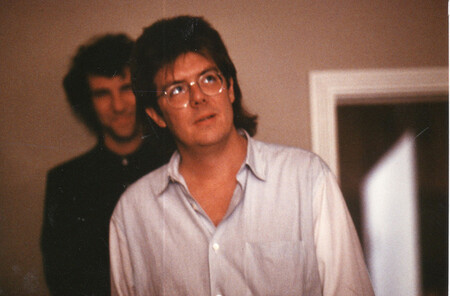
Hughes was an avowed, voracious music fan, and he made sure his movies were some of the best places to learn about new sounds and new bands.

In a 2018 New Yorker piece, actress Molly Ringwald looked back at her experience acting in seminal John Hughes movies like 1984’s “Sixteen Candles” and 1985’s “The Breakfast Club.” Ringwald wrote that she’s “proud of [the films] in so many ways,” and notes she’s heard from friends that the movies helped them feel less alone during rough times. 

At the same time, she also acknowledged that Hughes’ films were deeply imperfect and “could also be considered racist, misogynistic, and, at times, homophobic.” She’s not wrong; anyone who’s rewatched “Sixteen Candles” recently would be hard-pressed to disagree with her assessment.

Luckily, the music heard in John Hughes movies has aged far better. Hughes was an avowed, voracious music fan, and he made sure his movies were some of the best places to learn about new sounds and new bands. That passion still comes through via the new “Life Moves Pretty Fast: The John Hughes Mixtapes,” a four-album bonanza of music that appeared in the films he wrote, directed and/or produced. 

The compilation includes tunes from Ringwald vehicles like “Sixteen Candles” and 1986’s “Pretty in Pink,” as well as music that appeared in cult gems such as 1987’s “Planes, Trains and Automobiles” and “Some Kind of Wonderful,” and 1989’s “Uncle Buck.” 

Unsurprisingly, “The John Hughes Mixtapes” feature major signature works: Simple Minds’ triumphant “Breakfast Club” exclamation point “Don’t You (Forget About Me)”; Yello’s “Oh Yeah,” the quirky electro-funk theme that brought levity to “Ferris Bueller’s Day Off”; or OMD’s “If You Leave,” the tender “Pretty In Pink” love song.

However, the compilation lives up to its “mixtapes” billing, as the various genres (synth-pop, R&B/soul, Motown, new wave, modern rock, Americana, funk, hip-hop) are sequenced to encourage music discovery. Like any well-curated mix, these albums include plenty of buried gems and familiar songs alike.

Hughes’ movies were particularly savvy in the way they weaved in classic vintage gems.

There’s lesser-known tracks from bigger acts (The Beat’s dubby “March of the Swivelheads,” Love and Rockets’ gothic burn “Haunted When the Minutes Drag,” Zapp’s synth-funk jam “Radio People”), alternative rock hits (Spandau Ballet’s “True,” Killing Joke’s “Eighties,” General Public’s “Tenderness”), and tunes from acts that time has (largely) forgotten (Westworld, Lick the Tins, The Blue Room, Furniture). 

Director John Hughes, “Life Moves Pretty Fast – The John Hughes Mixtapes” (Demon Music Group)Yet the scope of “The John Hughes Mixtapes” also provides a wider view of why Hughes’ movies felt so fresh and vibrant. For example, today it’s common for soundtracks to include classic songs alongside newer music. That’s how songs like Queen’s “Bohemian Rhapsody” and Looking Glass’ “Brandy (You’re a Fine Girl)” have continued to permeate pop culture — and it’s a great way to build bridges between musical eras and generations.

Hughes’ movies were particularly savvy in the way they weaved in classic vintage gems. Otis Redding’s “Try a Little Tenderness” and the Association’s “Cherish” soundtrack memorable dances in “Pretty in Pink”; Patti Smith‘s urgent, inspiring “Gloria: In Excelsis Deo” is used to great effect in “Sixteen Candles” at a party, during the moment when a drunk character has her hair cut; and Marvin Gaye‘s “How Sweet It Is (To Be Loved By You)” provides a summery backdrop to a block party scene in “She’s Having a Baby.”

There are few greater pleasures in life than sharing music you love with friends.

Like any massive music fan, Hughes was always seeking out new songs and artists for his movies. Luckily, other people in his life hipped him to cool bands. Molly Ringwald was famously a big fan of Los Angeles-via-Pittsburgh band the Rave-Ups — so big a fan she scrawled their name on a binder seen in “Sixteen Candles.” The group later appeared in “Pretty in Pink,” performing “Positively Lost Me.”

John Hughes’ in-house music supervisor Tarquin Gotch had many industry connections via his management and A&R work — encompassing the Beat, the Dream Academy, Stephen Duffy, and XTC, among others — which informed soundtracks like 1988’s massively underrated “She’s Having a Baby.” Gotch and Emma Dixson Kamen (billed in the compilation credits as “John Hughes’ number two guy in the UK”) would also visit the Notting Hill location of the record store Rough Trade and seek out cool recommendations for Hughes.

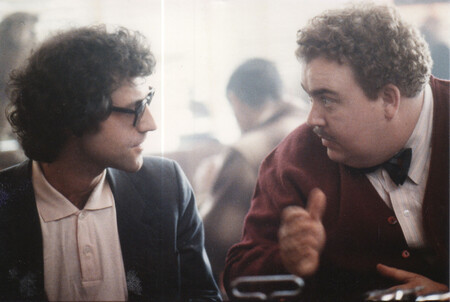
Music supervisor Tarquin Gotch and John Candy on the set of “Planes Trains and Automobiles” (Demon Music Group)David Anderle, the legendary producer and A&R executive whose c.v. includes superstars like the Beach Boys and Jim Morrison, also shaped the sound of films while serving as music supervisor for both “The Breakfast Club” and “Pretty in Pink.” (He also co-produced Karla DeVito’s song “We Are Not Alone on the former movie’s soundtrack.) 

Anderle’s son, Jonathan, says that his dad and Hughes “hit it off and became close” during work on “The Breakfast Club.” That led to the elder Anderle working on “Pretty in Pink” and “Ferris Bueller’s Day Off.” (Famously, Anderle had secured instrumental music from The Cure’s Robert Smith to be used in the scene where Ferris and friends visit the art museum. However, it wasn’t used because Anderle left the movie before it was completed.) 

“I think he and John really bonded and clicked on musical taste, especially English alternative stuff,” Jonathan Anderle says. David Anderle also shared Hughes’ passion and determination: In a 2015 oral history of “Don’t You (Forget About Me),” Michelle Manning, co-producer of “The Breakfast Club,” recalls how she and Anderle “literally wandered the streets of London for two-and-a-half, almost three weeks, going to every major English group, with a three-quarter inch tape of [the movie]” trying to find a taker for the song. 

“Until his final days, he was still collecting outrageous amounts of music from around the world.”

The following year’s “Pretty In Pink” was more successful at throwing a bright spotlight on UK acts such as OMD, Echo & The Bunnymen, New Order and the Smiths. Today, it’s still a remarkable soundtrack, because it predicted the alternative music boom of the ’80s — and beyond. 

Jonathan Anderle hears his dad’s influence on “Pretty in Pink” in several ways. “Pop got John’s vision and wanted to do what he could to serve it,” he says. “I think I hear it most through the friendships he had: Suzanne Vega, Jesse Johnson, even [Three Dog Night’s] Danny Hutton who Pop managed back in 1965. And being friends with music biz execs, which helped to get New Order, The Smiths and Echo [and the Bunnymen].”

What Anderle describes remains a remarkably common way for people discover and compile music: recommendations from people you trust. In fact, there are few greater pleasures in life than sharing music you love with friends. Back in the day, that might have been via mixtapes or via mix CDs. More recently, maybe an MP3 mix or a streaming playlist. Today, maybe you’ll text or message friends about songs you love, or gush about bands on social media. 

Director John Hughes’ home office, “Life Moves Pretty Fast – The John Hughes Mixtapes” (Demon Music Group)In an essay packaged with “Life Moves Pretty Fast: The John Hughes Mixtapes,” Hughes’ son James writes that the boxed set represented something more than just the new wave scene. “For me, it serves as a reminder not just to the musicians he championed in the 1980s, but to how intensely his search for music expanded beyond this era.”


Want a daily wrap-up of all the news and commentary Salon has to offer? Subscribe to our morning newsletter, Crash Course.


The elder Hughes never lost that hunger and curiosity, James added. “Until his final days, he was still collecting outrageous amounts of music from around the world, galaxies removed from the New Romantic and new-wave sounds that, to many, still define him. The point was to be on perpetual lookout, and to always share the results.” 

In other words, it wasn’t just the kind of bands Hughes championed that made the music in these movies so special. The excitement he maintained for discovering new gems — and then making sure everybody else could share in this excitement — mattered just as much. 

Decades later, that’s why we’re still so fascinated by the music in his films. This wasn’t movie music cobbled together by beancounters looking to make a hit soundtrack album. Hughes’ soundtracks came together with love and care, driven by deep listening, cratedigging, fandom and enthusiasm.

How Kennedy Center honoree Amy Grant has walked the line between “Christian” and “secular” music

After three multiplatinum and six platinum albums, 30 million albums sold and more than a billion streams, singer Amy Grant is set to receive one of American music’s biggest awards: Kennedy Center Honors.

Grant, the so-called queen of Christian pop, won’t be the first honoree whose music is infused with religion. The 2022 honorees alone include Gladys Knight, who converted to the Church of Jesus Christ of Latter-day Saints, and U2, whose lead singer, Bono, is known for his longtime faith. But Grant is the first to come from the world of CCM: contemporary Christian music.

As a religion scholar who has written a book on the origins of CCM, I know the genre has long occupied a shaky rung in the hierarchy of popular music. It can seem far removed from the mainstream industry, but the boundary between religious and nonreligious music has long been porous. No one personifies that fluidity better than Grant.

New way of worship

In popular culture, CCM is often the butt of jokes, shorthand for “uncool.” In the sitcom “Seinfeld,” Elaine freaks out when she discovers that her boyfriend’s car radio is preset to Christian rock stations. In the HBO drama “The Sopranos,” when Tony Soprano’s sister Janice is hitting bottom, she moves in with a born-again, narcoleptic hippie who plays in a Christian rock band.

The disdain has often been mutual. At times CCM has guarded its borders jealously against encroachments from the non-Christian world. Since the 1970s, American evangelicals have created a kind of parallel cultural universe of religious radio stations, TV channels, movies, magazines, bookstores and music, most of which passes under the radar of nonbelievers.

Researching my book “No Sympathy for the Devil,” I was most interested in the roots of CCM in the late 1960s, when young baby boomer evangelicals were pushing to create relatable worship music. Like other young people, they loved rock ‘n’ roll. But they wanted lyrics that reflected their Christian values – so they made their own.

Mainstream music finds Jesus

But if CCM was taking its cues from broader pop culture, mainstream music itself was no stranger to Christian themes. During the late 1960s and early 1970s, songs whose lyrics made reference to faith regularly made the Top 40. Plenty of musicians from outside the evangelical camp took at least a superficial interest in Christian themes.

In 1966, the Beach Boys recorded “God Only Knows” on their influential album “Pet Sounds.” The song “Jesus is Just Alright” became a hit when covered by the Byrds and the Doobie Brothers. Norman Greenbaum’s “Spirit in the Sky,” which tells listeners they’ve “gotta have a friend in Jesus,” was a top hit in 1970. The English supergroup Blind Faith, whose eponymous album charted at No. 1 in the U.S. and U.K., featured Eric Clapton’s “Presence of the Lord.”

The list just keeps going. Stevie Wonder, Marvin Gaye and Earth, Wind & Fire highlighted spiritual, sometimes explicitly Christian, themes. In 1972, Aretha Franklin crossed back from her position as the queen of soul into her musical training grounds – gospel – to record the top-selling album “Amazing Grace.” The late 1970s brought perhaps the biggest surprise of all: Bob Dylan, who was raised Jewish, now “born again” and spouting Christian prophecy.

Most visible, perhaps, were rock musicals based on the life of Jesus. “Jesus Christ Superstar” and “Godspell” brought a countercultural Jesus to stage and screen, attracting a huge amount of publicity and controversy. Released in 1970, the “Superstar” album reached the top of Billboard’s U.S. album chart.

Wide spectrum

Even then, though, there was a strong push among influential church leaders against CCM’s integration with the wider world. Figures like televangelist Jimmy Swaggart continued to demonize music that featured electric guitars or drum sets.

June 2022 marked the 50th anniversary of Explo ’72: a Christian youth festival in Dallas emceed by Billy Graham and Johnny Cash, the latter of whom had turned to Jesus after some wilder years on the road, like many of the boomer evangelicals. Sometimes dubbed “Godstock,” the event was conceived as a Christian answer to the 1969 Woodstock festival and landed on the cover of Life magazine in 1972.

A pioneering work on CCM that was published in 1999, “Apostles of Rock,” distinguished three distinct modes of Christian rock: separational, integrational and transformational. The three labels were inspired by writings by theologian H. Richard Niebuhr, who used them to categorize Christians’ attitudes toward engaging with secular society in general.

On one far end of the spectrum, according to “Apostles of Rock,” is separational CCM. Separational music drew a clear line against the world, as conservative leaders wanted. This vision was exemplified by the pioneering Christian hair metal band Stryper, who were known for their militant lyrics and for throwing Bibles at the audience.

In the middle is integrational CCM, epitomized by Amy Grant, who successfully found a niche in mainstream culture. She may have reached the top of the Billboard Hot 100 in 1991 with “Baby Baby,” but the nonstop physical flirtation in the music video was a bit worldly for some of her Christian fans.

Finally, on the other end of the spectrum is transformational CCM, which aspired to change the broader culture – U2 might serve as an example.

Digging good

In recent decades, most of the innovative and widely praised activity in Christian popular music has taken place in the integrational realm.

Several leading Christian bands – Creed, Skillet, Switchfoot and Pedro the Lion, among others – have migrated out of the evangelical subculture to find broader audiences. Justin Bieber and Katy Perry both cut their musical milk teeth on CCM before going mainstream. Two of the top recent rock bands, Imagine Dragons and The Killers, are fronted by singers who grew up in the Church of Jesus Christ of Latter-day Saints. Brandon Flowers, lead singer of The Killers, even appeared in a publicity promo for the LDS church.

Interest in evangelical youth culture seems to spike about every 20 years. The unexpected Christian revival called the Jesus Movement made the cover of Time in 1971; in 2001, Newsweek ran a cover story titled “Jesus Rocks.” Twenty years later, 2021 saw a full-length documentary, “The Jesus Music,” which delivers a sympathetic, industry-authorized history of CCM. Grant gets the film’s first and final words; she is also one of its executive producers.

Like all popular music, CCM struggles to adapt to rapidly changing tastes. Yet Christian rockers have found unexpected popularity in a genre that used to pride itself on iconoclasm, music critic and journalist Kelefa Sanneh has observed: “Maybe, in the twenty-first century, mainstream rock fans dig evil less than they dig good.”

David W. Stowe, Professor of Religious Studies, Michigan State University

This article is republished from The Conversation under a Creative Commons license.

Their children struggled with addiction. Now, they’re fighting against the war on drugs

Over one million Americans have died of drug overdoses since 1999, with around 110,000 deaths alone in the 12-month period ending in May 2022. Every single person that overdosed had parents. They were someone’s child at some point.

Often, when a parent loses a child to an overdose, they might be seen holding a press conference with the police, calling for stronger punishments for those that possess or use drugs like fentanyl, a synthetic opioid driving overdose deaths. That response is understandable: the culprit most apparent in these kinds of deaths is the drug itself. 

Yet there are some parents who are organizing together against this narrative — parents whose children have struggled with addiction, and even passed away in some cases. 

Salon spoke with Gretchen Burns Bergman, whose two grown sons who are in long-term recovery from heroin addiction, and Tamara Olt, M.D., who lost her 16-year-old son Joshua to an accidental heroin overdose in 2012. Both strongly advocate for a more rational approach to how we treat substance use in the U.S.

“To throw money at going after the supply side and building up criminal justice, it’s appalling. It didn’t work, it hasn’t worked. Drugs are still there,” Bergman told Salon. “People are still dying. We need a compassionate, tolerant, science-based approach to this issue.”

Bergman is the executive director and co-founder of A New PATH (Parents for Addiction Treatment and Healing), a non-profit organization that works to reduce the stigma associated with substance use disorders through education and compassionate support, advocating for therapeutic rather than punitive drug policies. Olt is a board-certified obstetrician-gynecologist who, with her husband Blake, started Jolt Foundation, which focuses on awareness and prevention in the overdose crisis. and overdose prevention. Olt is also the executive director of GRASP (Grief Recovery After Substance Passing) and Broken No More.

Their stance on drugs and drug use is very much rooted in fact. The United States has tried prohibition for approximately a century and yet problems like addiction and overdose are increasing, not decreasing.

Meanwhile, trillions of dollars have been spent on supply side interventions like increased surveillance, prisons and dumping pesticides on the Colombian rainforest. Yet, there has been little to show for these efforts, while public health agencies, including experts at the United Nations, repeatedly advocate for smarter, more compassionate drug policy rooted in science.

Bergman, Olt and other parents recognize this and have taken a stand, advocating for harm reduction or decriminalization instead of incarceration or criminal records, giving people tools to stay alive rather than shaming them for illicit drug use.

This interview has been condensed and lightly edited for clarity.

Can you tell us a little bit about how your advocacy work began?

Gretchen Bergman: 23 years ago, I co-founded A New PATH with two other parents. We all had children who were struggling with substance use disorders, compounded by a criminal justice system that misunderstood and mistreated the problem.

My older son was 20 when he was arrested for marijuana possession, which started 11 years of cycling in and out of prison for relapse, but all for drug-related, nonviolent offenses, which was a tremendous waste of human potential and a real trauma for the family. My second son had the same disorder and struggled for 20 years, but the criminal justice system always made things worse, always created roadblocks.

So I started A New PATH because I wanted to change powerlessness into empowerment. I felt like it was basically lack of the understanding of the basic nature of substance use disorders that we’d allowed the criminal justice system to take it over rather than it being handled as a public health problem.

Tamara OltTamara Olt (Photo courtesy of Tamara Olt)

Tamara Olt: In 2012, when my son Joshua died at the age of 16 from a heroin overdose, we didn’t know he was using drugs. We never got a chance to try and get him help. He didn’t reach out to us, I think because of shame and stigma. And he used for probably only six months before he overdosed and died on the way to the hospital in the ambulance.

It was a complete shock to us. All of a sudden, my world was just up-ended. I didn’t really know how I was going to get through it. But I decided I could sit in a corner and cry for the rest of my life, or I could get up, tell Josh’s story and try and make a difference, try and make sure no other family had to go through what we went through.

At that point, I didn’t even know what harm reduction was. But as a physician and a scientist, it made perfect sense to me. Of course we’d want to try and reduce harm. Of course we’d want to keep people healthy through their drug use and not use the criminal justice system to take care of them. But let’s use public health and science to help people get through, whether they want to continue using drugs, whether they want help, wherever they’re at.

The Jolt Foundation began just trying to blanket our community with naloxone [a drug that reverses an opioid overdose.] I also joined GRASP, a peer-led group for people that have lost someone to substance use. GRASP saved my life. I learned from other moms that tried tough love, some people tried supporting their person. But we all ended up in the same place: our loved ones were gone.

We weren’t at home at the time when Josh died. But I also met moms who were laying in that room next to their person when they overdosed. It gave me strength, knowing there were so many other people out there, and where I could share my story, hear other people’s paths to ending up with someone gone from substance use. As I learned more about the drug war, and what an abject failure it has been, I wanted to fight against that, fight for humane, sane, science-based policies that will save lives.

A lot of people have lost their children to overdose, yet it’s sort of counterintuitive for mothers like yourself to stand up and say it’s the system that caused this harm, not the substance itself. But what did it take to change your mind?

Tamara Olt: In the beginning, I was angry, I was grief stricken. I wanted someone to pay. I wanted whoever sold the drugs to my child to be found and prosecuted. Part of the healing process is to forgive. Forgive yourself, forgive your person, forgive anyone who was involved in the death for whatever reason. Until you forgive, you can’t ever really begin to heal. And it really helped. And it led me be able to stand back, look at the big picture. We have a system set up for people to fail, for them to become incarcerated, for them to overdose.

Gretchen Bergman: It does take courage. But that’s the second part of the Serenity Prayer: courage to change the things that you can. And when I started speaking out, you could hear an audible sigh of relief. Other people were experiencing this, but it was so shame-based to talk about it, not only having a substance use disorder, but having being incarcerated.

“I would find needles in the room and I’d throw them away — a far cry to where now I’m handing them out!”

I loved being a mother to two sons. And when that turns out that they both then ended up having a pretty severe case of this disorder, I learned everything I could about it. I thought if somebody had said your son is a diabetic, I’d learn everything I possibly could. Speaking out did take some strength and I still feel the stigma. But I have nothing to be ashamed of. I have two beautiful, strong resilient sons.

Stigma is the number one thing that we’ve worked on from the very beginning. People that are not educated about addictive illness or substance use disorders fall prey to scare tactics from those that would like to bring this issue back into criminal justice, rather than expanding what we really need. We really need more resources. Not just treatment, but prevention and recovery and support services. We’re dismally low on what we need in order to handle this public health crisis.

To throw money at going after the supply side and building up criminal justice, it’s appalling. It didn’t work, it hasn’t worked. Drugs are still there. People are still dying. We need a compassionate, tolerant, science-based approach to this issue.

One of the dominant misconceptions about dealing with a child with a substance use disorder is this idea of “tough love,” even though there is a lot of evidence this can backfire. How do you address that?

Gretchen Bergman: We’ve been working on a “True Love, Not Tough Love” campaign for several years now. I tried tough love, I tried a lot of things. I would find needles in the room and I’d throw them away — a far cry to where now I’m handing them out!

The campaign was meant to debunk the whole concept of codependency, which is not based on fact or science. It was an easy answer from health care providers who say, “You just have to let them hit bottom.” Don’t “enable” them. Basically kick them to the curb.

I know one mother that put her kid out in the tent. He was only 16-years-old. I mean, for God’s sake, that was not the answer. I felt intuitively that it wasn’t. I loved nurturing my children and how dare you take that right to nurture and protect my children away, calling me an enabler and codependent.

I know that my kids have a disorder that will potentially kill them. But that danger is real. I was constantly trying to usher them into resources that would help them and telling them always, you are surrounded by true love. Your family loves you. If we can’t help you find your way out of this maze, we are there. So that they don’t get that sense of hopelessness, “Oh, I might as well keep using, I don’t have a life left. My family doesn’t care, nobody cares, whatever.” I didn’t want them to ever feel that.

And so this campaign addresses that, it allows mothers to listen to their maternal instincts, rather than listening to those who will tell you to turn your back. I knew that the bottom for my kids would be death. I knew it. So I wasn’t willing to go there.

“Both of my sons found different routes to recovery. My younger son had tried everything, but in the end, he went abstinence only. The other son, he found his way to recovery with methadone.”

Tamara Olt: We see people on GRASP that went along with those [tough love] recommendations and their person died and they feel terrible. Like oh, we threw my son out. He died homeless on the streets. Cold, unloved, alone. And then they have to live with that. Even though they did what professionals told them.

Things will happen no matter what we do. Like I said, kids who are never thrown out die in the room next to their parents. But you know, if you lose your person, you want to feel like you did your best and have some peace with that. And not unhoused on the street dying alone with no one there.

It’s a terrible journey and it will never be over. Grief changes, the pain changes, it becomes more bearable, but it’s always there.

What about the stigma against medication-assisted treatment? Tamara, I know you’re a buprenorphine provider. But there is this attitude that abstinence is the only way and that certain medications like buprenorphine or methadone are trading one addiction for another. And this is just so patently false. A lot of people hear this idea, though and they’re afraid to get treatment. And then something happens with fentanyl or something worse. How do you address this stigma?

Tamara Olt: It comes from several different areas, including family members who discourage their loved ones from getting on it. They say you’re just trading one addiction for another. You don’t need that medicine.

I’ve had patients that have to hide it from their family, that they’re in recovery and coming to get buprenorphine so that they don’t use and die. But we know abstinence-based treatment for opioid use disorder has a [high] failure rate. And with fentanyl in the equation, now it can be a death sentence. And then from society in general, from even the medical profession that doesn’t understand it, and doesn’t encourage it. We know it reduces mortality by 50 percent when people are on medications for opioid use disorder. So the benefits and the science is clear.

There’s also a lot of misunderstanding from even people who supposedly are buprenorphine providers that well it’s just for detox. They’re just going to use it for a little bit. Well, no, you can be on this medication for as long as you need to. I tell my patients, if you’ve got to be on this for the rest of your life, who cares? I gotta take my diabetic medication for the rest of my life. It’s not the end of the world.

Gretchen Bergman: There’s stigma also in the recovery community, those that believe in abstinence-based [treatment]. And we’ve been working for quite a while trying to bring the harm reduction world and the abstinence based only world together. Abstinence is one of the tools of harm reduction, like decriminalization is a tool of harm reduction.

Both of my sons found different routes to recovery. My younger son had tried everything, but in the end, he went abstinence only. And I would say it’s because of the embrace of the recovery community. He surrounded himself with people in recovery, who did fun things together: surfing and biking and that kind of thing. The other son, he found his way to recovery with methadone and it allowed him to go back to school and get his degree.

So in our family, we absolutely believe in the many pathways to recovery. I don’t care what it is that you do to stay alive and thrive. If it works for you, then that’s fine. But unfortunately, there is so much stigma associated and ignorance about it.

Darlene Love on what the Beatles took from Black musicians, and what they gave back

Singer, actress and (as dubbed by David Letterman) “Christmas Queen” Darlene Love joined host Kenneth Womack to talk about being a contemporary of the Beatles in the 1960s music scene and more on the latest episode of “Everything Fab Four,” a podcast co-produced by me and Womack (a music scholar who also writes about pop music for Salon) and distributed by Salon.

Rock and Roll Hall of Fame member Love, who was born Darlene Wright, is best known for her holiday hit “Christmas (Baby Please Come Home),” in addition to her vocals on records by “girl group” The Crystals and her acting roles such as in the “Lethal Weapon” film series. Her beginnings were modest, having started out singing in the Los Angeles church choir where her father was the pastor — that is, of course, before beginning work in 1962 with notorious producer Phil Spector (who’d given her the “Love” surname for recording, and who also worked on several Beatles-related projects). In light of his later troubles, Love explains to Womack, “I will say this: He was not the same guy to me back then that he later came to be.”

LISTEN:

Subscribe today through Spotify, Apple Podcasts, GooglePodcasts, Stitcher, RadioPublic, Breaker, Player.FMPocket Casts or wherever you’re listening.

As with millions of other Americans, Love recalls watching the Beatles on “The Ed Sullivan Show” in February 1964 (“That’s what we all did on Sunday night – Black or white!”), and later that year, she met the band in person when they were both performing on Shindig!. Calling them “four of the nicest gentlemen I have ever met,” Love notes that “they wanted to hear about my history of being in show business.”

She discusses how much the Beatles were influenced by Black rock ‘n’ roll music and artists such as Chuck Berry and Little Richard – a fact the band members themselves talk about even to this day. “The greatest thing the Beatles did was they gave it back,” says Love. “They told people where they got their music from. They honored us.”

As for herself, now 81 and ready to embark on another season of her famous Christmas concerts, Love says she’s more true to who she is as a performer than ever before. “I’ve got a whole lot of stories, and people want to listen, because I’m speaking from my heart and my experiences.” She equates this to how much the Beatles evolved as a band over their years together as well: “When you have a talent, it doesn’t all come out in the beginning. You start one way to get into this business, and as you grow, who you really are inside comes out. The Beatles had to grow. They were great musicians, but they wanted to grow and be who they really were. They left that legacy for all of us.”

Listen to the entire conversation with Darlene Love on “Everything Fab Four” and subscribe via SpotifyApple PodcastsGoogle, or wherever you’re listening.


Want a daily wrap-up of all the news and commentary Salon has to offer? Subscribe to our morning newsletter, Crash Course.


“Everything Fab Four” is distributed by Salon. Host Kenneth Womack is the author of a two-volume biography on Beatles producer George Martin and the bestselling books “Solid State: The Story of Abbey Road and the End of the Beatles” and “John Lennon, 1980: The Last Days in the Life.” His latest project is the authorized biography and archives of Beatles road manager Mal Evans, due out in 2023.

Who missed Thanksgiving dinner this year? Everybody who got shot

There have been 607 mass shootings so far this year, according to the Gun Violence Archive, the most authoritative source. It defines a mass shooting as an event when at least four people are shot, excluding the shooter. That we even have such a thing as a “Gun Violence Archive” is a black mark against this country which can never be erased. We are the only country in the world with more guns than people, the only country in the world with an excess of 30,000 gun deaths each year, the only country in the world with mass killings like the one that happened earlier this year in Uvalde, Texas, when a teenage gunman fatally shot 19 students and two teachers at the Robb Elementary School, wounding 17 others.

So far this year, 639 people have been killed in mass shootings. More than 2,500 were wounded, according to records kept by CNN. During the month of November alone, there have been 35 mass shootings, with a total of 185 people shot with a firearm, and 49 of them killed. 

As we count our blessings that we were not among the dead during this Thanksgiving week, let’s have a look at the mass shootings that killed 45 people during this month alone, sending 140 to the hospital.

Nov. 1: In East St. Louis, Illinois, two people were killed and three were wounded when a fight broke out after an argument.

In Baltimore, three adults and a teenager were wounded in a nighttime shooting.

In Denver, one person was killed and five were wounded in a drive-by shooting.

Nov. 2: In Hattiesburg, Mississippi, two people were killed and three were wounded in a shooting downtown.

Nov. 4: In Chicago, four men were wounded in a shooting on the street in the city’s Humboldt Park neighborhood.

In Orlando, a 23-year-old man shot and killed a four-year-old girl and three women.

In La Plata, Maryland, four people were shot dead in a house.

Nov. 5: In Gainesville, Florida, five people were shot and wounded outside a grocery store.

In Philadelphia, nine people were shot and wounded while they stood outside a bar in the city’s Kensington neighborhood.

Nov. 6: In Buffalo, four people were wounded in a mass shooting inside what police called a “party venue.”

In Jordan Township, Pennsylvania, three people were killed by the same gunman in two separate locations.

In Chicago, one person was killed and three were wounded in a shootout with a security guard outside a nightclub.

In a second Chicago shooting, five people were wounded at a birthday party on the city’s Southwest Side.

In Tulare, California, five people were shot and wounded during an argument after a drag race. 

Nov. 7: In McAllen, Texas, a man shot and wounded four of his neighbors during a dispute over a palm tree.

Nov. 11: In Jersey City, New Jersey, four people were wounded in a shooting on the street.


Want a daily wrap-up of all the news and commentary Salon has to offer? Subscribe to our morning newsletter, Crash Course.


Nov. 12: In Indio, California, one person was killed and three wounded in a shooting on the street.

In Fort Worth, Texas, four people were shot and wounded in an apartment complex.

Nov. 13: In Enfield, North Carolina, one adult was shot and killed, and five adults were wounded along with a teenager at an outdoor bonfire.

In Omaha, Nebraska, one person was shot dead, and seven others were wounded at an early morning gathering on the street.

In Philadelphia, four people were shot and wounded during an argument at a nightclub.

In Memphis, four people were shot and wounded outside a high school.

In Charlottesville, at the University of Virginia, a man shot and killed three students and wounded two others after a school bus trip off campus.

Nov. 16: In Phoenix, a man shot and killed his wife and three children and then killed himself.

Nov. 17: In Cabo Rojo, Puerto Rico, three Customs and Border Protection agents were shot, one fatally, along with a suspected drug smuggler.

Nov. 18: In Chesterfield County, Virginia, a woman and her three children were shot and killed in what police called a “domestic dispute.”

Nov. 19: In Colorado Springs, a gunman with an AR-15 style rifle shot and killed five people and wounded 25 others inside Club Q, a gay bar and nightclub.

Nov. 20: In Philadelphia, Mississippi, one man was shot and killed, and six others were wounded during a dice game on a farm.

In Dallas, four people were wounded during an argument outside a pool hall.

Nov. 22: In Chesapeake, Virginia, a night manager at a Walmart killed seven people and wounded six others before killing himself inside the store.

Nov. 23: In Philadelphia, four high school students were shot outside their school just after early dismissal for Thanksgiving in a drive-by shooting.

In Temple Hills, Maryland, four teenagers and one adult were wounded in an unexplained shooting.

Nov. 24: In Houston, a man walked into a home while people were having Thanksgiving dinner, shot two people dead and wounded two others. 

That’s just this month, folks, and it’s not over yet. These United States are on track to beat last year’s total of 690 mass shootings during the 365 days of 2021. Whatever number we end up with this year, guns are being used to kill multiple people nearly twice a day on average, and that doesn’t count the number killed in shootings that kill or wound less than four people at once. 

So if you made it through Thanksgiving without being shot, watch your step this weekend in grocery stores, bars, nightclubs and even walking down the street. There are enough guns out there in private hands to put a bullet in every one of us with plenty of ammunition left over.

I hope you have a nice weekend, if you survive. If not, you’ll have plenty of company as a statistic.

Pew poll: 42% of religious Americans pray for the environment

Religious Americans overwhelmingly believe they have a duty to protect the Earth, according to a new poll from the Pew Research Center, with 80 percent saying God entrusted them with that responsibility. The survey also found that 42 percent prayed for the environment in the past year. 

But that sense of duty doesn’t necessarily mean they’re clamoring to take on climate change. Less than half of highly religious people considered the overheating planet a “very” or “extremely” serious problem, though two-thirds said it was at least “somewhat” serious. In comparison, almost three-quarters of people with low religious commitment said climate change was a very serious problem.

At more than 100 pages long, the Pew poll is one of the most in-depth surveys on the link between Americans’ religious beliefs and climate views to date, offering a deeper look into why religious people tend to be less concerned about climate than their nonreligious counterparts.

Researchers pointed to politics as the most convincing explanation. Responses to the Pew poll suggest that Americans’ views on climate change tend to be influenced more heavily by their political party than by what they hear at church. 

Nationwide, about 83 percent of Democrats are likely to think of climate change as a very serious problem, compared to 25 percent of Republicans. “When you look within religious groups, you see the same pattern there, whether it’s evangelical Protestants or religiously unaffiliated Americans,” said Becka Alper, who wrote the Pew report. “Within religious groups, those who are Republican are far less likely than those who are Democrat to say climate change is a serious problem.”

When asked to explain why they believe climate change isn’t a serious problem, religiously affiliated Americans often echoed Republican talking points. According to the poll, about half said that stricter environmental laws could hurt jobs and the economy.

The finding that partisanship plays such an influential role in people’s climate views aligns with more than a decade of research, said Robin Globus Veldman, a professor of religious studies at Texas A&M University. The relationship between politics and religion can be hard to untangle, however, since the influence goes both ways.

“People really quickly go and say, ‘Oh, it’s just politics. It has nothing to do with religion. It’s just a coincidence that evangelicals tend to be more politically conservative and so that fully explains their climate attitudes,'” Veldman said. “I think there is a lot more interconnection between being evangelical and being politically conservative, and so you can’t separate it out and say, ‘All of this politics is not religion.'”

The Pew poll, which surveyed more than 10,000 Americans in April, found other reasons why those who believe they’ve been entrusted with caring for the Earth might fail to connect that with acting on climate change. More than a third of evangelicals said there are much bigger problems in the world than global warming; others said that God is in control of the climate. 

Another obstacle is that most places of worship aren’t really connecting the dots. Just 8 percent of Americans who attend religious services regularly reported they hear a lot about climate change in sermons. For pastors, “it’s such a politicized issue that there’s a huge disincentive to discuss that topic,” Veldman said. “You have to do it very delicately, and you risk alienating people and driving them away from the other good things you do in your church.”

That said, there are some signs that highly religious people are taking environmental problems seriously — even among the most historically resistant group, evangelicals. In a report earlier this year, the National Association of Evangelicals, which represents 45,000 evangelical churches, called climate action a Christian responsibility and made the Biblical case to save the planet. Young evangelicals have led the push for climate action within the tradition. 

More broadly, a majority of Americans of all religions thought that passing a bill to address climate change should be a priority for Congress, according to a poll from Morning Consult and Politico last year. That included 60 percent of Christians and 79 percent of Jews, Buddhists, Hindus, and Muslims. They got what they wanted, at least in theory, when President Joe Biden signed the Inflation Reduction Act in August, the single largest climate package in U.S. history. 

On the international level, faith groups have organized more than 40 side events at the U.N. climate conference this month in Sharm el-Sheikh, Egypt, to offer a religious perspective on the climate crisis.

While the finding that many people are praying for the environment may be encouraging, Veldman said to take it with a grain of salt, as the religious-friendly framing of the poll could have swayed their answers. “It’s like asking if you love your mother — you know what everyone’s going to say,” she said. “Everybody believes you should protect the Earth, right? Especially when it’s in a religion framing and in a survey that’s making religious questions salient.”

Won’t somebody think of Stephen King? Antitrust law and the publishing world’s mega-deal

Antitrust is having a moment. From both the left and the right, politicians clamor for new tools and enforcement to maintain a spirit of competition in the U.S. economy. While many focus on Big Tech, one of the Biden administration’s first big swings in a more aggressive antitrust enforcement regime took aim at a decidedly un-techy industry: book publishing. In a sealed ruling issued on Oct. 31, a federal judge sided with the government and blocked the merger of Penguin Random House and Simon & Schuster. While the country’s attention was focused on the midterm elections, Judge Florence Pan unsealed her full opinion. In it, she sided with the federal government’s persuasive and creative legal thinking, which focused on harms to an unusual victim: highly paid authors. Faced with this setback, the merger officially collapsed this week when Simon & Schuster’s owner decided not to appeal. 

It’s worth focusing on how the government achieved this victory. The fact that it felt compelled to make such an atypical argument shows how the current legal regime forces regulators to hide the ball in terms of whom they’re really advocating for in the courtroom. This trend isn’t limited to publishing; it also arises in one of the biggest of Big Tech suits — the case against Google. 

If you’ve watched the animated Netflix series “Bojack Horseman,” you may remember the recurring gag of the omnipresent mega corporation AOL-Time Warner-Pepsico-Viacom-Halliburton-Skynet-Toyota-Trader Joe’s (which adds Philip Morris-Disney-Fox-AT&T to the front of its name by the end of the show’s run). While it’s unclear whether anyone in the Biden administration is a fan of this gone-too-soon comedy, there’s no doubt that the administration is taking a hostile approach to the type of corporate consolidation embodied in that joke. Biden has empowered a new wave of antitrust enforcers to give teeth to his view that “[c]apitalism without competition isn’t capitalism; it’s exploitation.” Accordingly, Merrick Garland’s Justice Department is fighting mergers and acquisitions across the board, in industries ranging from hearing aids to airlines to virtual reality.  

Whether or not the Biden administration and the Justice Department are fans of “Bojack Horseman,” they seem to be taking on that show’s fictional mega-corporation and fighting mergers and acquisitions across the board.

That fight came to book publishing when a real life mega-corporation, Paramount Global  — parent company of CBS, MTV, Nickelodeon, Showtime, BET, Comedy Central, Paramount+ and more — sold one of its many subsidiaries. In a $2.2 billion deal, Simon & Schuster was acquired by Penguin Random House (itself the result of a massive 2013 merger). The resulting company would have controlled nearly 50% of the market for “anticipated top-selling books.” Or so the government said.

That qualification was key. Analyzing how much of a market a potential company would control begins with establishing the bounds of which types of transactions count and which don’t. This exercise in “market definition” is a key part of almost all antitrust lawsuits. 

It might seem as if defining the market here would be simple. After all, the publishing industry orbits around a “Big Five” made up of Simon & Schuster, Penguin Random House, HarperCollins, Hachette Book Group and Macmillan. But defining the relevant market proved to be an area of high contention throughout the three-week trial


Want a daily wrap-up of all the news and commentary Salon has to offer? Subscribe to our morning newsletter, Crash Course.


Before getting into the government’s creative market definition, we’ll need a crash course in publishing. Publishers promote themselves as one-stop shops for authors looking to get their books onto shelves. They edit authors’ manuscripts, produce the physical books, design ads and book covers, handle publicity and marketing and much more. At the start of this process, publishers typically compensate authors for their work in the form of a lump-sum advance. As part of signing with a publisher, authors and their agents agree to a (typically standard) royalty rate for each book sale (e.g., if a book sells for $20 and the author’s royalty rate is 10%, they earn $2 per sale). 

Authors will not earn any income beyond the advance, however, until the amount generated in royalties exceeds the advance the author was paid up front by the publisher. Think of this as repaying a loan: Only once the publisher has recouped the advance (a phenomenon called “earning out”) will the author receive any further payment for that book. If the book earns out, then the author is compensated with royalty payments which reflect a percentage of future sales. But that’s a big if — most published books don’t earn out, which means that for most authors, the advance is the only compensation they’ll see out of their book. 

Worried about the publishers’ bottom line in all this? Don’t be. They start making profits far before a book earns out. 

The Department of Justice argued that properly evaluating the negative effects of the merger required defining the affected market as author advances over $250,000; it was that section of the market, constituting the type of books that may get custom merch rollouts on debut, that the government alleged Penguin Random House Simon & Schuster (or whatever the Frankensteined creation would call itself) would dominate. Conversely, the publishers insisted that the DOJ had invented this category exclusively to prove its point. Wisely, Judge Pan found that the publishers displayed “excessive concern” with where the government wanted to set its threshold (i.e., the government set it either too high or too low), as opposed to fighting against the concept of anticipated top-selling books itself.

In focusing on highly paid authors, the DOJ bucked a typical antitrust trend. Many merger cases focus on resulting harms to consumers — typically higher prices. But experts believed that this merger would have been unlikely to raise the already high price of books. Focusing on author compensation allowed the DOJ to circumvent this problem. The government argued that authors would pocket smaller advances with only four publishers bidding on highly sought-after books instead of five. To prove its point, the DOJ had none other than Stephen King testify on its behalf (and, because he’s Stephen King, the publishers declined to cross-examine him, with one lawyer suggesting maybe they could instead grab coffee sometime).

Despite the courtroom drama and the clever lawyering, there’s something odd about the DOJ’s position — Stephen King, and other authors of his caliber, aren’t exactly helpless. The publishers seized on this weakness, arguing that these authors are “the elite of the elite” and the “least in need of protection by the antitrust laws.” In fact, at trial the publishers advanced their own narrative in which they themselves could be the victims of larger economic forces. The publishers touted their fears that blocking this merger might lead Paramount Global to sell Simon & Schuster to the financial bogeyman: private equity. Such an acquisition, they warned, could well result in Simon & Schuster being loaded with debt and gutted. Keeping her eyes on the ball, Judge Pan noted that such considerations were beyond the case immediately in front of her.

The government’s focus on highly paid authors is what sets this case apart from previous cases. As Judge Pan wrote in her opinion, much of the government’s case “sounds in ‘monopsony,’ a market condition where a buyer with too much market power can lower prices or otherwise harm sellers.” While less common, monopsony cases aren’t new to antitrust. Neither are cases focused on luxury markets. But what is new is a monopsony case focused on the highest-paid sellers. The closest analogue available for Judge Pan to cite was a case about two regional California movie theater chains, in which one chain amassed market power for “industry anticipated top-grossing films.” While the parallel between that market and a market of publisher-anticipated top-selling books is clear, the dynamic of whom would be harmed in the government’s publishing theory (i.e., rich authors, as opposed to the other movie chain) is novel. 

Monopsony cases — where a buyer has too much market power — aren’t new to antitrust law. Neither are cases focused on luxury markets. But what is new is a monopsony case focused on the highest-paid sellers, such as Stephen King.

There’s a parallel between this strategy and the strategy pursued by a coalition of state attorneys general (AGs) in their antitrust suit against Google. In that case, the state AGs alleged that Google uses its monopoly power in the online advertising market to extract higher fees from both the sellers of ads and the sellers of advertising space. (Feel free to melt your brain attempting to understand the byzantine system of ad tech that Texas maps out in its complaint.) But the crux of the argument isn’t so hard to follow — because it faces virtually no competition, Google is able to wring more money out of both advertisers and the companies that receive money from those advertisers to display their ads. 

Like highly-paid authors, large publications like ESPN.com and large advertisers like Ford are not the most sympathetic victims. Things are even worse when the victims are ad exchange companies with names unknown to the public. Aware of these potential limits to public and judicial empathy, both lawsuits connect the harms alleged here to consumer welfare. The DOJ alleges that a smaller publishing world would lead to fewer and less diverse titles available for the reading public to consume. Similarly, the state AGs allege that Google’s siphoning of advertising money leads to fewer profitable online outlets and less relevant ads to consumers. 

But reading the legal materials, it’s hard not to feel that these arguments are afterthoughts; consumer welfare occupied two out of 160 pages of the DOJ’s brief and three out of 130 pages of the state AGs’ brief. And in truth, they are afterthoughts. What’s really going on here is a fight against consolidation. The government believes that consumers will benefit if it wins this fight, but not in a way that legal analysis is well-suited to evaluate. This tension leaked into every aspect of the publishing trial. On the witness stand, Stephen King testified that the average full-time writer in 2018 earned an income below the federal poverty line. From the point of view of a trial about authors getting paid advances over $250,000, this statement is irrelevant. Yet it reveals why the government and King are in the courtroom at all. 

President Biden has said he wants to prevent “bad mergers that lead to mass layoffs, higher prices, [and] fewer options for workers and consumers alike.” Mergers are often followed by layoffs, which often disproportionately affect people of color. Experts worried that the merger of Simon & Schuster and Penguin Random House would lead to fewer writers, agents and editors of color working — in an industry that’s already 76% white. Their fears are rooted in the existing disparity in author advances for white authors and authors of color, and the notion that having fewer decisionmakers will result in fewer non-white authors being published. 

Yet the dominance of economic analysis in the antitrust legal system means that the government’s best approach to fighting this merger was to focus on Stephen King’s bottom line. To the extent that this is what the law demands, the government can and must continue to advance these clever arguments. While Penguin Random House had the appetite to appeal, Paramount did not. The conglomerate’s decision to abandon the deal demonstrates how the government can turn these massive mergers into a massive headache when it has the legal tools to win. As reformers consider what types of changes we can make to live in a society further from AOL-Time Warner-Pepsico-Viacom-Halliburton-Skynet-Toyota-Trader Joe’s than closer to it, they must take their cues from Judge Pan. Even as her opinion swelled with data from economic models and simulations, it never lost sight of the bigger picture: Economic analysis is an analytical tool, not the ultimate referee of the antitrust world.

Evangelical pastor fights back against Christian nationalism

Although former President Donald Trump is by no means universally loved within Christianity and has his share of critics among Catholics and Mainline Protestants, he has been incredibly popular within a certain area of Christianity: far-right White fundamentalist evangelicals. That movement, which has been called the Christian Right or the Religious Right, has had a firm grip on the Republican Party since the early 1980s. And although Trump himself was raised Presbyterian, not evangelical, and is not known for being very religious, he was made a point of courting evangelicals.

One pastor who is critical of the relationship between Trump and the Christian Right is Caleb Campbell of the Desert Springs Bible Church in Phoenix, Arizona. According to a report from the Globe & Mail’s Nathan VanderKlippe, Campbell is trying to counter the Trump/MAGA influence on evangelicals.

“You can think of Donald Trump’s most faithful adherents as bigots or patriots, constitutional standard-bearers or deluded masses,” VanderKlippe writes in an article published on November 25. “Caleb Campbell likes to think of them as sheep that have gone astray. He has made it his work to lead them back…. Mr. Campbell’s introduction to the congregation of Trump came in a church, after fellow Christians suggested he attend what was described as a revival event organized by Turning Point.”

Turning Point is the pro-Trump group led by right-wing activist Charlie Kirk. Campbell told the Globe & Mail that when he first heard Kirk speaking at a MAGA/evangelical event, he was “absolutely terrified and horrified.”

“Mr. Kirk established Turning Point USA and, in 2021, TPUSA Faith, which organized some of the events Mr. Campbell attended,” VanderKlippe explains. “Mr. Kirk calls the separation of church and state a lie, saying ‘the church founded this country’ and, today, ‘has to rise up in every capacity.’ TPUSA Faith’s ambition is to gather and organize religious leaders, providing them with resources ‘to activate their congregations to fight for free people, free markets, free speech and limited government.’ Listening to that message left Mr. Campbell unsettled.”

Campbell describes Christian nationalism as “a mean-spirited, vulgar grab for power with violent rhetoric.”

“Mr. Campbell’s initial efforts to push back were not popular with his White, evangelical and suburban parishioners,” VanderKlippe notes. “His congregation shrank from 800 people to 300. He began to write a book about engaging the ‘mission field’ of new religious conservatism — and started to attract new congregants, whom he describes as ‘disheartened, if not disgusted, by the amalgamation of nationalism and Christianity.'”

VanderKlippe adds, “(Campbell) has fashioned a tool kit for winning back the souls from the Trump church. He begins by establishing personal trust, without which people tend to resist questioning their own beliefs. He encourages people to fast from media for two weeks. And he invites them to sit at a table with others who hold different views to discuss hot-button issues such as immigration.”

Chris Christie says Trump is unfit to be 2024 GOP nominee

Former Gov. Chris Christie blasted Donald Trump’s 2024 comeback attempt after his latest racist scandal.

“Former President Donald J. Trump on Tuesday night had dinner with Nick Fuentes, an outspoken antisemite and racist who is one of the country’s most prominent young white supremacists, at Mr. Trump’s private club in Florida, advisers to Mr. Trump conceded on Friday,” The New York Times reported Friday. “Also at the dinner was the performer Kanye West, who has also been condemned for making antisemitic statements.”

West, who legally changed his name to Ye, said Trump was “really impressed” with Fuentes.

I like this guy, he gets me,” Trump reportedly said.

“In recent years, Mr. Fuentes, 24, has developed a high profile on the far right and forged ties with such Republican lawmakers as Representative Marjorie Taylor Greene of Georgia and Representative Paul Gosar of Arizona, largely through his leadership of an annual white-supremacist event called the America First Political Action Conference,” The Times reported. “A Holocaust denier and unabashed racist, Mr. Fuentes openly uses hateful language on his podcast, in recent weeks calling for the military to be sent into Black neighborhoods and demanding that Jews leave the country.”

Christie, who may himself seek the GOP nomination again, said the scandal was disqualifying.

“This is just another example of an awful lack of judgment from Donald Trump, which, combined with his past poor judgments, make him an untenable general election candidate for the Republican Party in 2024,” Christie told the newspaper.

The former GOP governor speculated on what was motivating Trump.

“He can’t stand not having attention all the time,” Christie said. “And so, having someone show up at his club — even if you believe that he didn’t know who Nick Fuentes was — and want to sit with him, feeds the hunger he feels for the attention he’s missing since he left the presidency.”

According to the Anti-Defamation League, “Nicholas Fuentes is a white supremacist leader and organizer and podcaster who seeks to forge a white nationalist alternative to the mainstream GOP. Nicholas Fuentes first gained widespread notoriety in 2017 when he left Boston University after he reported receiving ‘threats’ tied to his attendance at the white supremacist ‘Unite the Right’ rally in Charlottesville, Virginia.”

And the Southern Poverty Law Center reported, “Nick Fuentes is a white nationalist livestreamer who advocates pulling the Republican Party further to the extreme far-right end of the political spectrum. An outspoken admirer of fascists such as Mussolini, Fuentes emerged as an influential figure on the national stage during the now-infamous “Stop the Steal” movement, which relied on misinformation to falsely claim that Donald Trump had won the 2020 election and sought to overturn the results of it.”

Developing countries need trillions for climate action. Where will it come from?

In 2009, when representatives from around the world gathered in Copenhagen, Denmark to discuss global action on climate change, wealthy countries pledged $100 billion a year to help developing nations adapt to the impacts of rising temperatures and curb carbon emissions. 

The number was arbitrary, tossed into the fray by then-Secretary of State Hillary Clinton as tensions rose over rich countries’ responsibility to pay for the problem they had largely caused. But it stuck, and 2020 was set as a goal for delivering the funds.

This month, at the United Nations climate conference in Sharm el-Sheikh, Egypt, or COP27, these payments were once again front and center. Wealthy nations have yet to meet their $100 billion a year promise, the costs of mitigating and adapting to climate change are only growing, and developing nations are also calling for reparations for the impacts they are already suffering.

A report released last week found developing countries, excluding China, will need $2 trillion a year to deal with the worsening impacts of global warming and transition their economies away from fossil fuels. Half of that money “can be reasonably expected” to come from domestic sources, the report said, but international finance — from wealthy countries to the World Bank — must make up the rest.

How that money will be raised and provided to developing nations was a focus of negotiations in Egypt. Everything is on the table. 

“Over the last few months, the role of different institutions has come to the fore,” said Preety Bhandari, a senior advisor in global climate and finance at the World Resources Institute. 

Here is an overview of the major strategies being discussed to pay for the mounting costs of climate change:

Unlocking Private Sector Finance

Historically, the bulk of the money for climate finance has come from the public sector — national coffers as well as multilateral development banks and and international finance institutions like the World Bank and the International Monetary Fund, or IMF. But with the costs of climate adaptation and mitigation rising, officials say there is simply not enough money in the public sector to meet climate finance goals for developing countries.

“There is only one place you find the money we need in the trillions of dollars,” U.S. climate envoy John Kerry said in an interview with the Financial Times in May. “That’s the private sector.”

So far, however, it has been hard to get the private sector, which favors investment in high-income countries, to fund projects in the countries that need it most. One report from a climate finance group found that the amount of private capital provided for public-private climate partnerships is actually shrinking. “Every public dollar spent is now mobilizing less than a quarter of private investment,” said Patrick Bigger, research director at the Climate and Community Project.

Last year, several wealthy governments joined forces with investment banks to launch a Just Energy Transition Partnership, or JETP, with South Africa to help the developing nation phase off coal; money has been slow to materialize and the program is expecting a $39 billion shortfall over the next five years. At COP27, another partnership was announced with Indonesia, one of the world’s top exporters of coal, and more are in the works with India, Vietnam, and Senegal.

Calls to increase funding through such “blended finance” strategies are ongoing, but some countries, like Vietnam, have rejected initial JETP packages because they’re primarily composed of loans instead of grants, which do not come from the private sector. John Kerry’s proposal to shore up private investment in JETPs through carbon credits was met with pushback. And developing countries have been wary about relying too much on the private sector to meet the $100 billion goal, saying that rich countries are dodging their own responsibility to pay.

Of particular concern is relying on the private sector to fund adaptation projects. A restored mangrove swamp or an early storm warning system, for instance, doesn’t generate the financial returns that a solar farm does. Over two-thirds of the money raised toward the $100 billion goal to date has been for climate change mitigation. Developing countries are now asking for a more even split, with half of all climate finance flowing to adaptation. Last year in Glasgow, countries committed to double adaptation funding to $40 billion per year by 2025. The discussions in Egypt made little progress towards meeting and expanding that goal. 

More Payouts from Multilateral Development Banks

Calls for the World Bank and other multilateral development banks to open their coffers continue to grow louder. These banks, public institutions established with the goal of rebuilding war-torn nations after WWII, have massive sums of money at their disposal, but they are conservative and slow to spend it. Experts say they are over-concerned with their credit rating and too hesitant to take on financial risk.

Barbados Prime Minister Mia Mottley has called for a reform of international finance institutions in her Bridgetown Agenda, a proposal to change the global financial architecture to support climate action and sustainable development. The plan has got a lot of traction at COP27. It calls on the IMF to, among other things, issue $1 trillion in low-interest, long-term loans to climate-vulnerable countries and simplify fast access to funding. It also proposes a climate mitigation trust that would release $650 billion in special drawing rights, credits that can be exchanged for currency and don’t need to be paid back, or that can be borrowed from other countries at low interest rates. 

The call to overhaul international finance institutions found support in the U.S. and Germany; French President Emmanuel Macron agreed to suggest changes with Mottley at the next meetings of the IMF and World Bank governors. The COP27 agreement cover text included language on multilateral development bank reform, encouraging the banks to do more with their capital and calling on shareholders to move this along.

Beyond low-interest lending, developing countries are also asking for more grants from wealthy nations and multilateral development banks. Over 70 percent of climate funding for developing nations has been doled out in the form of loans, which add to already exorbitantly high debt burdens. 

Addressing the Debt Crisis

Because of the legacies of colonialism and slavery that funneled labor and resources away from the Global South, many developing countries have had to borrow money to meet basic needs. At the same time, these countries are perceived as riskier investments and have had to pay higher premiums and interest rates than rich countries. Current inflation is only making the whole situation worse. Two-thirds of low-income countries are at high risk of debt distress, and this crisis has made it harder for them to prioritize spending on climate change. 

“As we run into this economic climate, it’s very easy to go the austerity route,” said Sara Jane Ahmed, financial advisor for the V20, a group of finance ministers from 58 of the countries most vulnerable to climate change. “It’s so important — given the need to invest now and adapt and build resilient economies and communities — that we not go that route.” 

The section on finance in the COP27 pact acknowledges the increased indebtedness of developing countries but, beyond calling on multilateral development banks to scale-up grants and “non-debt instruments,” it doesn’t put forward concrete options to address the debt crisis. Other solutions circling around include debt restructuring at lower interest rates, suspension of loan payments after natural disasters, debt-for-nature swaps, and outright debt cancellation, which public figures in Pakistan have called for after crippling debt restricted the country’s ability to respond to devastating floods this year.

The Nature Conservancy has orchestrated swaps in places like the Seychelles, Belize, and Barbados, where countries’ debt is refinanced at a lower interest rate and in exchange, the money saved goes to conservation. But as Kevin Bender, who runs these programs in African and Indian Ocean nations notes, it has been hard to get investors on board

“Some sort of debt restructure is an inevitability,” said Bigger, who co-authored a report with Olúfẹ́mi O. Táíwò on how debt restructuring and cancellation could be a first step toward climate reparations for climate-vulnerable countries. “The question is will there be a concerted push to do it well now, or will it be done through piecemeal initiatives like you had across the 80s and 90s until you get to ‘Heavily Indebted Poor Countries Initiative’?”

That program, which cleared IMF and World Bank debt for the poorest countries, showed that with enough political will, debt cancellation is possible. 

Loss and Damage 

A concept known as “loss and damage” became a major driver of discussions at this year’s COP. Separate from but related to adaptation, loss and damage refers to the destruction already being caused by climate change, and the future loss that will be inevitable. Funding for loss and damage has also been referred to as climate reparations.

Developing countries have been calling for loss and damage funding for years. They bear the brunt of climate impacts despite contributing the least to global warming. In Egypt, these nations placed loss and damage on the agenda for the first time and demanded that industrialized countries commit to a dedicated funding mechanism for it, separate from adaptation.

In the second week of the conference, a group of some of the most industrialized countries, led by Germany, proposed a program called the Global Shield, which would include insurance, social security, and other financial assistance that could be deployed when disaster strikes. But loss and damage advocates pushed back against the proposal on grounds that it is unfair to have people in developing countries pay for insurance, that it detracts from the call for a separate direct funding mechanism, and that payouts for similar schemes have been delayed, withheld, or insufficient. 

Discussions hit a breaking point over loss and damage, going into overtime on the issue. On Friday morning, the E.U. surprised negotiators by agreeing to a new fund, and the U.S., after years of obstructing this issue, was forced to follow suit. At stake now is how much money will go into the fund and where it will come from. These details will be worked out over the coming year, but there have been some suggestions of additional sources, including taxes on oil and gas profits or on airlines, frequent fliers, and shipping companies. Developing nations have also been adamant that funding for loss and damage be grant-based. While the U.S. has resisted taking on liability for loss and damage, the idea of taxing private companies was received with openness by John Kerry.

There is also the question of whether countries like China, Saudi Arabia, and Singapore, who were categorized as developing countries when the terms were first defined in 1992 but are now some of the world’s leading economies, will be on the hook to contribute to the fund. China has said it would be willing to contribute on a voluntary basis.

Despite the urgency of the climate crisis, final decisions and commitments on how much additional money is needed and where it all will come from are still a few years away. Bodies like the IMF and World Bank that decide things like debt forgiveness and special drawing rights operate outside of the UN climate convention, but “this COP can send a signal for changes that will happen over the next few years,” said Bhandari. 

This story has been updated to reflect the final outcomes of COP27.

A particle accelerator that just turned on could reveal rare forms of matter

Just a few hundred feet from where we are sitting is a large metal chamber devoid of air and draped with the wires needed to control the instruments inside. A beam of particles passes through the interior of the chamber silently at around half the speed of light until it smashes into a solid piece of material, resulting in a burst of rare isotopes.

This is all taking place in the Facility for Rare Isotope Beams, or FRIB, which is operated by Michigan State University for the U.S. Department of Energy Office of Science. Starting in May 2022, national and international teams of scientists converged at Michigan State University and began running scientific experiments at FRIB with the goal of creating, isolating and studying new isotopes. The experiments promised to provide new insights into the fundamental nature of the universe.

By accelerating heavy ions — electrically charged atoms of elements — FRIB will allow scientists like us to create and study thousands of never-before-seen isotopes.

We are two professors in nuclear chemistry and nuclear physics who study rare isotopes. Isotopes are, in a sense, different flavors of an element with the same number of protons in their nucleus but different numbers of neutrons.

The accelerator at FRIB started working at low power, but when it finishes ramping up to full strength, it will be the most powerful heavy-ion accelerator on Earth. By accelerating heavy ions — electrically charged atoms of elements — FRIB will allow scientists like us to create and study thousands of never-before-seen isotopes. A community of roughly 1,600 nuclear scientists from all over the world has been waiting for a decade to begin doing science enabled by the new particle accelerator.

The first experiments at FRIB were completed over the summer of 2022. Even though the facility is currently running at only a fraction of its full power, multiple scientific collaborations working at FRIB have already produced and detected about 100 rare isotopes. These early results are helping researchers learn about some of the rarest physics in the universe.

Rare isotopes are radioactive and decay over time as they emit radiation — visible here as the streaks coming from the small piece of uranium in the center.

What is a rare isotope?

It takes incredibly high amounts of energy to produce most isotopes. In nature, heavy rare isotopes are produced during the cataclysmic deaths of massive stars called supernovas or during the merging of two neutron stars.

To the naked eye, two isotopes of any element look and behave the same way — all isotopes of the element mercury would look just like the liquid metal used in old thermometers. However, because the nuclei of isotopes of the same element have different numbers of neutrons, they differ in how long they live, what type of radioactivity they emit and in many other ways.

FRIB can accelerate any naturally occurring isotope — whether it is as light as oxygen or as heavy as uranium — to approximately half the speed of light.

For example, some isotopes are stable and do not decay or emit radiation, so they are common in the universe. Other isotopes of the very same element can be radioactive so they inevitably decay away as they turn into other elements. Since radioactive isotopes disappear over time, they are relatively rarer.

Not all decay happens at the same rate though. Some radioactive elements — like potassium-40 — emit particles through decay at such a low rate that a small amount of the isotope can last for billions of years. Other, more highly radioactive isotopes like magnesium-38 exist for only a fraction of a second before decaying away into other elements. Short-lived isotopes, by definition, do not survive long and are rare in the universe. So if you want to study them, you have to make them yourself.

Creating isotopes in a lab

While only about 250 isotopes naturally occur on Earth, theoretical models predict that about 7,000 isotopes should exist in nature. Scientists have used particle accelerators to produce around 3,000 of these rare isotopes.

The FRIB accelerator is 1,600 feet long and made of three segments folded in roughly the shape of a paperclip. Within these segments are numerous, extremely cold vacuum chambers that alternatively pull and push the ions using powerful electromagnetic pulses. FRIB can accelerate any naturally occurring isotope — whether it is as light as oxygen or as heavy as uranium — to approximately half the speed of light.

To create radioactive isotopes, you only need to smash this beam of ions into a solid target like a piece of beryllium metal or a rotating disk of carbon.

The impact of the ion beam on the fragmentation target breaks the nucleus of the stable isotope apart and produces many hundreds of rare isotopes simultaneously. To isolate the interesting or new isotopes from the rest, a separator sits between the target and the sensors. Particles with the right momentum and electrical charge will be passed through the separator while the rest are absorbed. Only a subset of the desired isotopes will reach the many instruments built to observe the nature of the particles.

The probability of creating any specific isotope during a single collision can be very small. The odds of creating some of the rarer exotic isotopes can be on the order of 1 in a quadrillion — roughly the same odds as winning back-to-back Mega Millions jackpots. But the powerful beams of ions used by FRIB contain so many ions and produce so many collisions in a single experiment that the team can reasonably expect to find even the rarest of isotopes. According to calculations, FRIB’s accelerator should be able to produce approximately 80% of all theorized isotopes.

The first two FRIB scientific experiments

A multi-institution team led by researchers at Lawrence Berkeley National Laboratory, Oak Ridge National Laboratory (ORNL), University of Tennessee, Knoxville (UTK), Mississippi State University and Florida State University, together with researchers at MSU, began running the first experiment at FRIB on May 9, 2022. The group directed a beam of calcium-48 — a calcium nucleus with 48 neutrons instead of the usual 20 — into a beryllium target at 1 kW of power. Even at one quarter of a percent of the facility’s 400-kW maximum power, approximately 40 different isotopes passed through the separator to the instruments.

The FDSi device recorded the time each ion arrived, what isotope it was and when it decayed away. Using this information, the collaboration deduced the half-lives of the isotopes; the team has already reported on five previously unknown half-lives.

The second FRIB experiment began on June 15, 2022, led by a collaboration of researchers from Lawrence Livermore National Laboratory, ORNL, UTK and MSU. The facility accelerated a beam of selenium-82 and used it to produce rare isotopes of the elements scandium, calcium and potassium. These isotopes are commonly found in neutron stars, and the goal of the experiment was to better understand what type of radioactivity these isotopes emit as they decay. Understanding this process could shed light on how neutron stars lose energy.

The first two FRIB experiments were just the tip of the iceberg of this new facility’s capabilities. Over the coming years, FRIB is set to explore four big questions in nuclear physics: First, what are the properties of atomic nuclei with a large difference between the numbers of protons and neutrons? Second, how are elements formed in the cosmos? Third, do physicists understand the fundamental symmetries of the universe, like why there is more matter than antimatter in the universe? Finally, how can the information from rare isotopes be applied in medicine, industry and national security?


Sean Liddick, Associate Professor of Chemistry, Michigan State University and Artemis Spyrou, Professor of Nuclear Physics, Michigan State University

This article is republished from The Conversation under a Creative Commons license. Read the original article.

Smitten Kitchen’s Deb Perelman: “I want ‘the one’ in people and I want ‘the one’ in recipes”

What if, instead of always chasing after a better meatball, you found your forever one? What if you had a pound cake that made your forget all the other pound cakes? After creating one of the most popular food blogs in the world and publishing two best-selling cookbooks and thousands of recipes, Smitten Kitchen’s Deb Perelman now wants to help you settle down. 

For “Smitten Kitchen Keepers: New Classics for Your Forever Files,” Perelman once again offers the kind of real world, real family cooking that makes her such a trusted muse to millions of fellow home cooks. It’s a book that understands that feeding yourself and others is an act of love (but some nights, also, an act of juggling). Perelman joined us recently for a spirited conversation about what makes a dish a “keeper” and the deep joy of a fish spatula.

This interview has been edited for length and clarity.

You have published thousands of recipes. I’ve tried to cook my way through most of them myself. To now call a book “Keepers,” there’s an implication of a stopping point in a recipe. There’s an implication of a curated capsule collection. What does a “keeper” mean to you, Deb?
 
I think of it like, you’re waving the fork a little bit and you’re like, “This is the one. This is the apple cake I want to make. This is the pound cake. This is the spaghetti and meatballs.” 

“A lot of us just want to find the recipe, and then just keep making that recipe again and again.”

I was trying to chase that feeling with these recipes because it comes up a lot. I think a lot of us, we’re not really interested in the forever hunt for the perfect spaghetti and meatballs. We really just want to find the recipe and then just keep making that recipe again and again. That was the energy that drove me to write this book. I wanted to collect as many recipes where I felt we had this, “That’s a keeper” moment as possible.
 
You were out there in this space in 2006, with no culinary training. You really are an internet veteran. What advice would you give to somebody who wants to do what you do now?
 
I think you should do it. Hopefully, looking at me, you should see that anyone can do it. If you have something to say, something to offer, and there’s something you want to do that you don’t see out there, I think you should go out there and do it. You should not feel that you have to do it a certain way. I don’t think anyone is going to be excited to see another thing that’s exactly like the last thing. So go and do it the way that feels fresh to you. Because I think there’s always space for that. There’s always more room.


Want a daily wrap-up of all the news and commentary Salon has to offer? Subscribe to our morning newsletter, Crash Course.


Let’s talk about the things that are in this book that distinguish it from your prior books. It has this particular voice and energy. You’re raising older kids now. What was the driving force when you were putting together the recipes for this one?
 
I was definitely thinking about longevity. I always would say, “Here’s the cool thing, let me tell you about something fun.” But we were home a lot in the last couple of years and it really got me thinking, “Do I have a chicken parm recipe that I want my kids to make? Why do I not use most chicken parm recipes? And what do I wish they were?” I knew more than any other book that my kids were 100 percent going to be reading this, and asking to make things from it. It’s not a kid cooking cookbook, it is not a pandemic cookbook. But I definitely was thinking, “What is a really good collection of a hundred recipes that we should want to have and hopefully use again and again?” I understand that not every recipe is going to be a forever recipe for every person, but I think if you’ve found a few in there, it’s a pretty good value.

We live now in a culture where there’s such an emphasis on novelty and what recipe has just gone viral. But I think it can give you a feeling of food FOMO in our lives, where I’ve got to be chasing that next thing The idea of settling on something and putting a ring on it can be hard. How do you overcome that?
 
It’s a little bit terrifying. What, I’m never going to want to change this? I’m never going to learn something new? I might. I might, ten years from now, say, “Actually if you do this step, I think that’s really cool.” But I think that I’ve gotten much better at understanding where that keeper moment is. “This is the one. I know it. This is it.” I’m better at getting there and I’m better at recognizing it when it’s there and just knowing, I’m just going to stop right here. I don’t want to change this. This to me is the right balance of effort, of ease of shopping, of number of steps, number of bowls. Maybe I could add something by adding another pan to saute a topping, but I don’t want to, because I won’t make it as often. I’m not going to make it on a Thursday. I’m going to remember I have to take out a second skillet right when I’m tired of cooking and I don’t want to do that.

One of the things that’s been a great advantage for me is that I just had all of these years of practicing putting these recipes out and hearing where people lose interest. And hearing where we just don’t even feel like making it anymore, and trying to stop before we get there to keep it within what we’re willing to do.

A good gut check for me is that I am like, “I don’t feel like making this tonight. This feels like a lot of work. I hate that last step.” It’s a little thing, but we all do it. Even at the grocery store, just the thought of one extra step or just that one bit pushes you over the edge to making tuna melts instead. Which is, by the way, a very wonderful thing that you should make if you’re craving them. But it can be just the smallest thing that pushes you off the edge, and you leave that recipe and you don’t come back.

You’re going to get people reading this book who are coming as beginners. What would you say from start to finish, appetizer to dessert, would be your dream dishes for a beginner who’s just getting comfortable in the kitchen?
 
I want you to make the green salad. I feel like the green salad is such a thing. Wait, I don’t need a recipe for a green salad? That’s why it’s taken me 16 years to write a recipe for a green salad. I realize I’ve learned so many things along the way. And you’re only going to have to read it once. You’re going to know it after that. Just these little tips about the easiest way to wash lettuce. The easiest way to dry lettuce. The easiest way to dress salad in advance. The best way to handle heavier ingredients in salads. So I want you to start with that because I feel like once you have that, you’ll tuck it away forever and you’ll be able to apply it to any salad. It’ll hopefully stay with you.


Want more great food writing and recipes? Subscribe to Salon Food’s newsletter, The Bite.


Assuming you eat meat, I want to give you something really simple to make. And I’m thinking of the fettuccine with white ragu. It’s so few ingredients, but it smells unbelievable when you’re making it. It doesn’t seem like something that’s going to turn into what it does. You’re literally taking ground pork and a little bit of garlic and just a little bit of seasoning and it turns into this entire sauce. It’s a really cool technique. And it’s really nice to know that if I have a box of fettuccine and a pound of ground pork and just a couple other things, I could make this incredible, cozy, comforting dish that will steal the show, but also be humble in it’s own way. Not being too, “Look at me.” It’s definitely not a “Look at me” dish.

And what about a dessert?

Ooh, what should we make? I don’t want you to get too mad at me if it’s difficult. I love the Linzer tart so much. Sorry, it’s a raspberry crostada. It looks like a Linzer tart. It’s not hard to make the recipe. It’s fully followable by anybody. But I think it’s such a classic thing that’s so nice to have in your repertoire. It’s like a nice jam tart. I like it because it goes well with tea and cake. It goes well as dessert, not too sweet, but it also is just a really nice thing to have on the counter. And it’s very classic. So it’s a nice thing to tuck into your repertoire.
 
When I was thinking of desserts, of course, immediately I thought of the Rice Krispies bars, which are one of your absolute all time bangers, Deb. When people talk to you about the recipes of yours that have changed the game for them, what are the ones that people say, “Oh my God, Deb, this is the killer”? 

 
I definitely hear that about the Rice Krispies treats. They were in my first book too. I love it because it’s just more butter, more salt, and you brown it, but it shows up. I always make them around this time of year for parties because it’s such a nice candy replacement too.

“I want everybody to make the French toast forever.”

I am secretly hoping that the cover dish will have that effect on people too, because I was just playing around with ingredients I liked. Then I was like, but what if I just did this? All of a sudden I had this absolute luxury of a vibrant green pasta sauce that became the easiest thing to make. It’s the kind of thing that you’re going to make once and I don’t think you’re going to need to look at the recipe after that because it’s so few ingredients and you’re just going to have it down. What else? I want everybody to make the French toast forever. It’s just a baguette French toast. But a couple things just make it so much easier and so much better. I have not made another French toast recipe since I started making it this way a few years ago.

One of the things I really love about Smitten Kitchen is that so often what I have relied on it for has been just one ingredient. One thing. The crispy egg. The roasted sweet potato. There are certain things that just get one thing down and you can do it right. For people who are starting to cook or just tired of cooking, do you have one thing, or one way to make a thing, that you figure out and you’re good to go?
 
I love the braised winter squash wedges in the book so much because you are just taking fat pieces of winter squash and you are cutting into big wedges. Or you could maybe have somebody cut into wedges for you, depending on where you get it, because it’s nice to use an oversized one. And then we’re just going to roast it. It starts out so simply. We just roast it, we flip it over, we roast it again, then we add a little bit of liquid to the pans. Some broth, some apple cider vinegar and some garlic cloves. What happens, it drinks it up a little bit. You’ve got this otherworldly flavor. You’ve got a little puddle of pan sauce in there. I literally spoon it over plain yogurt, that’s the sauce. We add some arugula and it’s just this fork and knife squash centerpiece of a meal. But you’ve started with the most basic ingredients, stuff you probably have around.

I want us to make that. That’s what we should be eating for lunch in November. This is what we should be eating for lunch today. Go cut open a jack o’lantern.
 
See my thing is when you talk about techniques and things that slow you down, it’s cutting a squash. I love squash, but cutting a squash?
 
Well, It’s scary. Always cut against a flat surface. Even when I’m cutting a pumpkin, I will cut a little bevel on the bottom, just cut a little edge off, and now it is solid on the board. And when you cut down, it’s not going to waffle. Don’t try to cut into a soccer ball. Cut a little edge off the bottom, get it solid on the surface and then you can really push down on the knife if you need to.

In the book, when you talk about the tatin and how tatin was your nemesis for a long time. Even now, do you have other things that are just intimidating or too much work? You have taken on some really big culinary challenges for a home cook who makes family dinners.
 
I love to do a mix because I think it’s fun when you’re feeling that craving for a bigger project. I think it’s really fun. “I’ve always wanted to make a Russian honey cake” or “I’ve always wanted to make a classic lasagna bolognese with the noodles, everything.” But I have never gotten croissants right at home. I’ve gotten them okay. I’ve never gotten them a fraction as good as the ones I can buy near here. You can follow a recipe, you can do it exactly right. You can do the right waiting times. But there’s a bit of artistry. There’s a bit of finesse at the end where you really need to get them on this final rise till they’re kind of steamed under a dome. It’s very hard to do in a home kitchen and it’s rarely going to taste as good.

I’m always tweaking. I mean, the idea of a New Yorker making bagels at home is crazy. I have so many bagel shops. I can point to a couple right now. I’m so close to bagel shops, but I love tweaking it at home and I’m working on trying to find the easiest way for those of us who do not have bagel shops within a block away to make it at home from as few extra steps, as little extra stress as possible. Because I think it’s a fun trick to have up your sleeve.
 
Deb, I have gone on the pretzel journey with you over and over. I want to master it. 
 
Your keeper recipe. You’re like, if I know this is going to work a hundred percent of the time, I will just tuck this one away. And then every time it’s a Super Bowl party or the World Series and I want to make soft pretzels, I’ll just make these. If you knew it was going to be reliable and you knew it would work every time and you knew somebody had tested it to the hilt, you would just use that recipe. You would stop with the others.

I would. I’m still seeking.

It’s my dream. I want the one. I want the one in people and I want the one in recipes.

Because I love whenever you peek into your kitchen or your pantry. What is your ride or die kitchen tool?

I love the small offset spatula. I use it to put peanut butter and jelly on kids’ sandwiches. I use it to spread cream cheese. I use it to level my flour when I’m scooping it out of a canister. I also really, I want everybody to stop right now and go buy yourself a flexible fish spatula. I don’t know that I’ve ever used it for fish. I use it for everything else.

How to make a DIY congee bar for cozy dinner parties

Congee is casual comfort on a chilly winter evening, or the perfect morning balm if you happened to overdo it the night before. (New Year’s Day brunch, anyone?)

Wintertime entertaining has a reputation for being a celebration of excess, but having friends over for a cozy, nurturing meal is a lovely change of pace. Serving congee is the ultimate way to send guests home feeling nourished — rather than preparing for a day of recovery.

It may feel a little odd for the main event of a party to be a pot of porridge, but it’s only the beginning. Think of it like polenta or even pizza — a deliciously simple foundation ready and waiting for personalized flourishes. Indeed, the fun part of a congee party is setting out a spread of toppings to let everyone pick and choose what they like for their own bowlful of goodness. (This is usually quickly followed by a return trip to the pot to try what someone across the table declared to be “the ultimate combo.”)

As the host, either load the table up yourself or suggest guests bring their favorites. Regardless of which way you decide to go, the casual and interactive nature of a spoonful of this, a ladleful of that is a natural way to get conversation going between everyone at the table.

How to make congee

Congee hardly needs a recipe and is nearly impossible to mess up. Jasmine rice is traditionally used for its fragrance. Simmer it on the stovetop for an hour or two and keep it warm over a low flame. The “correct” ratio of water for congee is dependent on individual taste, but ranges around 1:6 to 8 of rice to water. When serving a crowd, it’s helpful to keep it a little on the thicker side. Have a kettle of hot water ready for guests to thin it out as they like. (It’s also the perfect way to accommodate unexpected drop-ins — just stir a little water into the pot!)

At its core, congee only needs rice and water, but upping the flavor ante is never a bad idea, especially when you’re celebrating. Keep it vegan with dried mushrooms and fresh ginger, or fortify the pot with chicken stock, Chinese sausage, or chicken or pork bones. A particularly luxe version can be packed with fresh or dried seafood like shrimp or scallops.

How to top your congee

Pork belly

Pork belly feels like a special-occasion food, the perfect way to top off your dinner. Braise it in soy sauce to lean into the soft slurpability of your meal. Or go for a crispy roasted version to play up the different textures.

Chicken

Poach a whole chicken in your slow cooker ahead of time for hands-off ease. Chill it and pull it from the bone before serving. Or to make things easier, just grab a store-bought rotisserie chicken and shred it, setting the skin aside for another use, like gribenes.

Chinese sausage

Chinese sausage (lap cheong) is often part of the primary congee pot. But if you’d like to keep the base meat-free, stir fry some lap cheong for people to add to their bowls as they please.

Eggs

A crispy, runny fried egg on a bowl of congee is a beautiful thing, but it’s not the most efficient move when you’ve got a houseful of people. Set out a bowl of jammy eggs — eggs cooked for six or so minutes — instead. If you’ve got the time, steep the eggs in soy sauce or tea. The century egg is also an especially flavorful (but pungent!) option.

Tofu

Cold silken tofu is a lovely contrast to the hot porridge. Sticky-sweet tofu char siu appeals to vegetarians and meat eaters alike. Or just cube up store-bought braised tofu for an easy topping.

Vegetables

There are lots of different directions to go here. Think: Spicy, garlicky eggplant (with or without pork), chilled Chinese broccoli saladsoy preserved shiitake mushroomsSichuanese dry-fried green beans, braised leafy greens, and simply steamed bok choy. Or riff on these braised green onions; just swap in a 1:1 mix of neutral oil and sesame oil for the butter and skip the herbs for a flavor profile more suited to the meal.

Garnishes

Don’t miss out on classic toppings like pork floss, garlic chips, and fried shallots. (Fry up the shallots yourself, or reach for that can of fried onions you never opened on Thanksgiving.) Finishing with a little freshness is also the way to go. Make sure you’ve got heaps of chopped fresh green onions and cilantro, plus extra julienned fresh ginger.

Candy peanuts in sugar and five-spice powder for crunch. Or treat them like the legume they are and braise them until tender in bacon and soy sauce.

Finally, open up bottles and jars: Sprinkle on some white- or Szechuan pepper, five-spice, or a touch of MSG. Splash on soy sauce, sesame oil, or black vinegar. You can’t go wrong with a little fire from chili crispoil, or paste. Pickled mustard greens, fermented tofu, and preserved daikon all add big-time flavor with very little effort.

Congee serving essentials

Modern Classic Ceramic Ramen Bowl Gift Set

A bowl that’s both deep and wide is perfect for congee. This set includes chopsticks and Chinese soup spoons, rounding out everything you need.

Heirloom Stoneware Rice Bowl

You can also choose to go a little smaller, allowing guests to fill up their bowls several times with different toppings. They’re also a nice size for the toppings bar.

Simple Ceramic Ramekins and Purio White Condiment Bowls

A set of ramekins and condiment bowls makes it easy to ensure you have enough small dishes for garnishes.

Zojirushi Rice Cooker and Steamer

Chance of unexpected guests? No problem. While this rice cooker is certainly not necessary for congee, it has a porridge button you simply push, walk away, and return to your meal.

Food52 X Staub Round Cocotte

No rice cooker? A heavy pot or Dutch oven is a perfectly lovely way to simmer and serve to your guests.

Saudi Arabia has a new green agenda. Cutting oil production isn’t part of it

The world’s biggest petroleum exporter, a country built with oil money, and a founding member of the most powerful oil cartel on Earth, is now styling itself as a pioneer of climate change solutions.

At the United Nations climate conference in Sharm el-Sheikh, Egypt last week, Saudi Arabia held a separate meeting for Middle East and North African countries to go over the details of two separate initiatives aimed at cutting emissions and fighting desertification. The plans include planting 50 billion trees around the region, expanding wind and solar power, and enhancing carbon capture and storage technologies.

What’s not included is any mention of cutting oil production. In fact, the state-run oil company Saudi Aramco, the world’s largest corporate greenhouse gas emitter as well as  the world’s most valuable company, said that it’s aiming to raise its production capacity by 2025, even as it plans to cut greenhouse gas emissions to as close to zero as possible by 2050. 

Saudi Arabia, in other words, wants to remain an oil power and somehow go green at the same time.

Crown Prince Mohammed bin Salman, de facto leader of the absolute monarchy, sees no contradiction in this, sources told Grist. Taking measures to combat climate change will ensure that Saudi Arabia both diversifies its economy and remains one of the world’s political power brokers, a position it gained as a direct result of its rich petroleum reserves. Selling more oil, Saudi officials have reasoned, can help facilitate this balancing act. And as fuel prices remain high following Russia’s invasion of Ukraine, experts said that the Saudi government is doing what any oil-producing country would do: meeting demand.  

“Saudi Arabia knows that its oil will be the last oil purchased and produced in the world,” said Ellen Wald, a historian and scholar of the energy industry, in an email. This, she explained, is because Aramco has by far the lowest cost of production on the planet, at around $2.80 per barrel, thanks to its vast reserves conveniently pooling near the desert’s surface. “So even if every car on the road is an EV [electric vehicle] and all the planes run on batteries, anyone still buying and using oil will be buying Saudi oil.” 

The discovery of oil radically transformed Saudi Arabia over the course of the 20th century, turning a largely nomadic desert society into a country with sprawling cities and a highly educated workforce. After an American oil company struck liquid gold in Dhahran in 1938, tapping into what would become the largest source of petroleum in the world, the kingdom was rapidly outfitted with pipelines, refineries, and export terminals. Aramco, as the oil venture came to be called, was owned by Texaco and other American oil companies until the Saudi government bought them out  in 1980. With its vast oil wealth fully under the control of the ruling family, the House of Saud, the country deepened its ties with the West and secured a powerful spot at the geopolitical table. It’s one they intend to hold onto. 

When scientists began sounding the alarm about climate change in the early 2000s, Saudi Arabia took up a reactionary position at the United Nations, highlighting skeptical views on the science of global warming and attempting to block climate policy. The kingdom’s tone began to change, however, after the 2015 Paris Agreement, a legally binding international treaty with the goal of limiting global temperature increases to well below 2 degrees celsius compared to pre-industrial levels. 

“After Paris, there was no turning back – the world will decarbonize,” said Karim Elgendy, an urban sustainability and climate consultant at Chatham House, a London-based policy institute. Saudi Arabia “realized that being at the table is better than not being at the table. Shaping the outcome is better than being affected by the outcome.”

The following year, the kingdom launched “Vision 2030,” a policy framework meant to diversify the economy and reduce reliance on oil revenues, which have historically accounted for more than 60 percent of the country’s economy. One of its major goals was buffing up tourism. The government also loosened its restrictions on women, allowing them to drive without a male guardian and enter public spaces without headscarves. In 2020, the government announced that Saudi Arabia will go “net zero” within 40 years, a term that refers to balancing the amount of emissions released and the amount of carbon removed from the atmosphere. It will be no easy feat.

Saudi Arabia’s rapid modernization saw the rise of towering skyscrapers, luxury malls, and a proliferation of private cars, along with a new way of life for its 35 million residents. As it developed, the country’s carbon footprint mushroomed until by 2017, Saudi Arabia was the fifth largest oil consumer in the world after the United States, China, India, and Japan. A sizable share of its emissions comes from energy consumption during the country’s punishingly hot summers, when temperatures frequently top 100 degrees Fahrenheit. Another significant portion comes from the operations of the state-run oil company Saudi Aramco, which experts estimate has generated more than 4 percent of global greenhouse gas emissions since 1965. 

Despite this, the Saudi government has repeatedly dodged responsibility for contributing to climate change, claiming that it’s a developing nation like Jordan or Ghana. Officials have refused to join other global superpowers at the UN climate summit that are pledging funds for “loss and damage” financing to poorer countries hit hard by climate change.

Earlier this year, Aramco announced that it would be net-zero by 2050. This target is “a big deal because of the impact [it] could potentially have,” said O’Connor, the analyst at Carbon Tracker. “They emit as much as some medium sized countries.” 

But O’Connor characterized Aramco’s net-zero plans as “heavy on rhetoric and light on substance.” Rather than cutting emissions in absolute terms, for instance, the company plans to measure its progress using carbon intensity, a ratio of the amount of carbon dioxide released for every unit of energy produced. That would allow Aramco to claim success if it increases oil production while keeping its emissions the same.

The company believes that it can do this by capturing and reusing the carbon dioxide emitted during oil production, rather than allowing it to enter the atmosphere. Successfully doing so relies on the nascent carbon capture and storage industry. Last week at the UN climate summit, Aramco announced plans for a new carbon capture and storage hub, which it said will be able to store 9 million tons of carbon a year by 2027.

That captured carbon would then be injected back into wells to extract even more petroleum. While Aramco has promoted this as a sustainable method of keeping carbon beneath the earth, O’Connor said that the additional oil reaped from the practice will eventually end up combusting in someone’s vehicle or power plant in another part of the world – causing a net increase in emissions. (Saudi Aramco declined a request for comment.)

The Saudi government has argued that other countries’ emissions, even if a result of Aramco’s oil, are not its problem. Officials have said that the government wants to take a “comprehensive” approach to tackling climate change, which includes using oil revenues to fund its green initiatives. 

These programs include some conventional climate-friendly efforts such as new solar and wind-power farms and an update of existing building standards to promote energy efficiency. But they also include ostentatious developments such as NEOM, a “smart city” with blueprints resembling mockups of a science fiction video game, complete with classrooms taught by holograms, flying elevators, and an urban spaceport. 

The brainchild of Crown Prince Mohamed bin Salman, NEOM has been under construction in the country’s northwestern desert since 2019 and is scheduled to be completed by 2025. The city is expected to run on a combination of wind and solar power and be a hub for green hydrogen, a fuel created when electrolyzers powered by renewable energy extract hydrogen from water molecules. (The Saudi government has said it aims to become the world’s top exporter of green hydrogen in the next half century.) The project has been plagued by setbacks, including violent confrontations with members of the indigenous Howeitat tribe who are being forcibly displaced by the project’s construction.

NEOM is the latest in a string of “smart cities” that have proliferated across the Middle East in the past two decades, from Abu Dhabi’s failed Masdar City to Egyptian President Abdel Fattah El-Sisi’s new administrative capital in the middle of the desert. Gokce Gunel, an anthropology professor at Rice University who has written extensively about clean energy in the Arab Gulf states, said that projects like NEOM are primarily ways for ruling families in the region to maintain their standing. 

“There’s a political function to these projects even if they don’t fulfill their promise,” Gunel said. She calls them “status quo utopias”. Enterprises like NEOM “claim to create utopias but they really want to preserve the present the way it is, to maintain the way oil has made the world.”

Elgendy, who is on contract with the Saudi government to work on the city and cannot discuss its details due to a nondisclosure agreement, sees it differently. To him, NEOM is another example of the Saudi government’s determination to stay relevant in a post-oil world, an indication of its desire to “stay at the geopolitical table.”

“Instead of dragging their feet and slowing down the process, they have tried to buy a little bit of time,” Elgendy said. The kingdom’s climate action proposals let them “steer the process in a way that allows them to use oil and gas revenues to diversify their economy and become something else, become a different Saudi Arabia.” 

But in the long term, it could be hard to keep up a balancing act that depends on the rest of the world’s response to climate change. When the fallout from the war in Ukraine inevitably dies down, governments will have to make tough choices about how and when to shift their economies away from fossil fuels. If major emitters like the United States make progress quickly, Saudi Arabia’s endeavors could become more difficult to pull off, even as other countries continue to buy oil. 

And someone will be buying oil. Petroleum-derived products are ubiquitous in modern society, from synthetic clothing fibers to shampoos and detergents to plastic airplane parts. But the petrochemical industry that produces these products accounts for only about 17 percent of global demand for oil. O’Connor said that no matter how much the world wants petrochemicals, as grids shift to renewable power and electric cars become more popular, Saudi Arabia will see its oil revenues shrink. She pointed to the most recent report from the International Energy Agency, which found that starting in the mid-2020s, fossil fuel demand will decrease each year by an average amount roughly equivalent to the lifetime output of a large oil field.

“It’s a very fair point that once the demand is there someone is going to fill it, but what we would say is that that demand is beginning to wane and it will wane severely,” O’Connor said. “There’s a seismic shift about to take place in energy demand towards more sustainable sources. Aramco and Saudi Arabia need to reckon with that.”

Why “Andor” boldly goes the distance while most high profile “Star Wars” adaptations fell short

Cassian Andor and Obi-Wan Kenobi may be two men who eventually fight for the same side, but that’s about all they have in common. The version of Cassian we meet five years before the events of “Rogue One” is an outlaw sought by Imperial forces, doing whatever he can to survive and stay off the radar. Sometimes that means shooting traitors before they can even think about drawing a weapon. Sometimes it requires him to scale a craggy cliff’s face in bare feet, ignoring the blood seeping from his nail beds.

The Obi-Wan we follow through his eponymous six-episode prequel is also a fugitive, but one bound by his reputation as a Jedi both within the show’s timeline and the audience’s institutional memory. He has limits that force him to set an example, a function of knowing the character and the actor who plays him, Ewan McGregor.

Familiarity has its benefits. Our collective excitement for “Obi-Wan Kenobi” was locked in before it debuted. Viewership for “Andor,” in contrast, was reportedly slower to build.

Despite this, “Andor” has turned out to be one of the culturally resonant and tonally ambitious entries in the Lucasfilm universe, as well as on TV in 2022. The fact that I’m saying this about another ducat in one of pop culture’s most gigantic I.P. vaults either tells you how low the bar for greatness is or indicates the level of excellence with which showrunner Tony Gilroy has constructed this story. It’s probably a bit of both.  

A larger contributor to its success also rests in knowing that out of all the franchise’s recent releases, “Andor” is about as close to an original, fresh concept as one can get in a TV landscape dominated by shows adapted from existing intellectual property.

In whatever respect that Hollywood can still be called a dream factory, it is more than ever one where the prevalent visions are somehow connected to or replicating work created by a handful of people.

It’s still depressing to realize how few original concepts make it to series these days compared to the ones that are offshoots of established product lines, but at least this product uses its outsider status in the best way possible.

Through Diego Luna’s Cassian Andor and the other anonymous people the Empire persecutes, randomly enslaves and tortures, the soulless complex lorded over by Darth Vader and Emperor Palpatine loses its magic. By framing it in a way we understand, making it into a drama that intertwines government corruption with bureaucratic drudgery, the Empire becomes another totalitarian regime propped up by ambitious middle managers, some hounded by nitpicking parents.

AndorSyril Karn (Kyle Soller) and Supervisor Dedra Meero (Denise Gough) in “Andor” (Photo courtesy of Disney+ / Lucasfilm Ltd)

In whatever respect that Hollywood can still be called a dream factory, it is more than ever one where the prevalent visions are somehow connected to or trying to replicate work created by a handful of people. George Lucas and the Marvel Cinematic Universe’s originating deity Stan Lee transformed the audience’s relationship with cinema for better or (in the view of auteurs such as Martin Scorsese) much worse.

The main way the custodians of those visions achieved this is by conditioning the audience to view their movies as serialized stories extended over decades. The dawn of streaming only expanded that strategy, narratively connecting small-screen episodes to theatrical one-offs and generating revenue by cultivating a multigenerational audience where completism is rewarded.

On the TV side of this equation, we had George R.R. Martin and J.R.R. Tolkien pitted head-to-head this fall via competing brand extensions. “House of the Dragon” achieved hit status despite a lot of people wondering why they kept watching because of its direct lineage to HBO’s “Game of Thrones,” the biggest global TV phenomenon of the past decade.

Its success begat Amazon’s mindbogglingly expensive investment in its prequel to “The Lord of the Rings,” “The Lord of the Rings: The Rings of Power,” which, from a critical perspective, proved to be money well spent.

That series may be high fantasy and thematically everything “Andor” isn’t, but it somewhat follows the “Star Wars” spinoff’s successful approach of mining the personality-defining backstories of major characters most people only know from Peter Jackson’s extravagant film trilogy.

Nevertheless, in making Galadriel and Elrond the protagonists of “The Rings of Power,” its showrunners J.D. Payne and Patrick McKay access extensive stories Tolkien established in supplementary literature and along the margins.  

AndorSaw Gerrera (Forest Whitaker) and Luthen Rael (Stellan Skarsgard) in “Andor” (Lucasfilm Ltd./Disney+)

Meanwhile, Gilroy and his writing staff, which includes such prestige drama veterans as “The Americans” producer Stephen Schiff and “House of Cards” showrunner Beau Willimon, solidly exploit the freedom to explore this mythology through previously unknown figures.

Similar attributes made “The Mandalorian” a phenomenon, at least at first. Still, Din Djarin is barely one step removed from the core Skywalker saga, confirmed by Luke’s cameo at the end of the second season. His hunter wears a suit we recognize and is cultural kin to one of the most cherished characters in “Star Wars”; his ward, Grogu, a member of the same species as Yoda, makes him “Star Wars” royalty from the moment we caught our first glimpse at him.


Want a daily wrap-up of all the news and commentary Salon has to offer? Subscribe to our morning newsletter, Crash Course.


A lot of writing about “Andor”  expresses wonder at how well the writers have maintained the unpredictability of his character given the fact that we know he’s going to die. But we also know how Obi-Wan is struck down, and how Anakin Skywalker becomes Darth Vader, and none of that was perceived as getting in the way of people flocking to “Obi-Wan Kenobi.”

“Andor” makes a strong case for abandoning the preciousness we carry for these deep space fairytales.

But the lack of pre-existing ideas of who Cassian and the people around him were allows the audience to experience the mundane evil that eventually transforms him into an insurrectionist without consciously or unconsciously searching for connections to canon.

This is even true of the cameos from the movies and previous series, including Genevieve O’Reilly’s Mon Mothma and Forest Whitaker’s Saw Gerrera. The films introduce them by name. The show explores how they came to be in the rooms where everything happens.

AndorMon Mothma (Genevieve O’Reilly) in “Andor” (Lucasfilm Ltd./Disney+)

Nostalgia remains as potent of an audience magnet as ever, and the fact that so many viewers stuck with “The Book of Boba Fett” to the end and defended “Obi-Wan Kenobi” through its narrative droops is a testament to that.

But “Andor” makes a strong case for abandoning the preciousness we carry for these deep space fairy tales, which Gilroy told The Hollywood Reporter that he instructed his writers, directors, and cast to do. Such reverence is the death of ingenuity and inventive gambles.

Letting it go produced a level of disquieting moral stakes this franchise hasn’t experienced since “Rogue One,” announcing to executives and producers that there’s plenty to be mined in a well-loved fable’s willingness to grow up. It doesn’t matter that we know Cassian will eventually die to get the Death Star’s plans to Princess Leia and the rebels. As long as “Andor” stays its course and its makers continue to ignore the tractor beam of lore that may tug at their hearts, our enthusiasm for it may never get old.

All episodes of “Andor” are streaming on Disney+.


Trump hosted Holocaust denier Nick Fuentes for dinner but claims he didn’t know who he was

Former President Donald Trump hosted notorious Holocaust denier Nick Fuentes for dinner this week — but now he’s issued a statement saying he had no idea who Fuentes was before sharing a meal with him.

In a statement posted by Axios’ Jonathan Swan, Trump emphasized that Fuentes was a guest of rapper Kanye West and not someone whom he’d personally invited to his resort.

“Kanye West very much wanted to visit Mar-a-Lago,” Trump said. “Our dinner meeting was intended to be Kanye and me only, but he arrived with a guest whom I had never met and knew nothing about.”

Trump notably did not condemn Fuentes’ views about the Holocaust or his belief that America should reinstate racial segregation.

Additionally, Trump did say that he invited West to dinner with him despite the fact that West has drawn outrage in recent weeks by spouting openly anti-Semitic rhetoric, starting with a tweet last month in which he threatened to go “death-con 3 on Jewish people.”

Trump has a long history of refusing to condemn the behavior of overt racists while also denying that he knows their true views, such as when he said in 2016 he did not know former Klan leader David Duke’s views well enough to justify disavowing his support.


Cows that fed on hemp produced psychoactive milk — but it wasn’t potent enough to get anyone high

German researchers fed the variety of cannabis known as hemp to cows — and it seems to have gotten them pretty stoned. The livestock appeared more tired, yawned more frequently and seemed to have trouble standing. The cow’s eyes even turned red, like the prototypical conjunctivitis seen in some humans after puffing a joint.

The study has raised eyebrows for obvious reasons: there’s something whimsical about the idea of a stoned cow that tickles the public imagination. And while this may seem like just a weird experiment, getting cows stoned on hemp actually has broad implications for agriculture.

Hemp is one helluva crop. It’s a less potent breed of Cannabis sativa, the same plant that gives us marijuana, but it’s useful for food, medicine and textiles. Indeed, humans have been using it for thousands of years, but in the U.S. it was illegal from 1970 until 2018, when it was unbanned as part of the annual Farm Bill. According to U.S. law, hemp is technically C. sativa plants that contain less than 0.3 percent THC, (delta-9-tetrahydrocannabinol) which is the chemical in weed that gives people the munchies and that euphoric, “stoned” feeling.

Believe it or not, Republican leaders from Kentucky, including Sens. Mitch McConnell and Rand Paul, were largely responsible for hemp becoming legal again. It makes sense, given The Bluegrass State was once famous for another type of grass. Kentucky was one of the first states to grow hemp in 1775, soon becoming one of the top hemp-producing regions in history, contributing a massive amount of hemp materials during both world wars. Not long after WWII ended, the domestic “war” on drugs began, and the hemp industry was caught in the cross-fire, even though it’s pretty hard for humans to get stoned from hemp.

For cows, however, it may be a different story. (More on that in a moment.)

The hemp-eating cows had lower levels of stress and inflammation markers, and laid around relaxing for an hour more per day.

Today, as demand for tobacco wanes, Kentucky farmers are switching back to hemp in hopes of making a profit. Hemp fever has swept the country and many farmers have been encouraged to feed the plant to their livestock. In early November, the National Industrial Hemp Council of America sent a letter to the U.S. Food and Drug Administration urging approval of hemp seed as an animal feed ingredient. Until that happens, the practice is not legal.

Yet some research, including a federally funded study published in March in the journal Scientific Reports, has suggested that hemp can help cattle relax. Researchers from Kansas State University, with the help of a $200,000 grant from the U.S. Department of Agriculture, fed eight Holstein cows hemp mixed with grain and collected blood samples, noting “significant differences in the activity” of hemp-fed cows versus controls. The hemp-eating cows had lower levels of stress and inflammation markers, and laid around relaxing for an hour more per day.

But a new study in the journal Nature Food suggests giving cows hemp could pose some potential problems, namely that it could contribute to milk that contains high levels of THC, the chemical in cannabis that gets people stoned.

Researchers from the German Federal Institute for Risk Assessment and the Chemical and Veterinary Analytical Institute ran an experiment with ten lactating Holstein Friesian dairy cows divided into two groups. The bovine guinea pigs were normally fed corn, but their diets were switched to either low or high amounts of hemp. Scales on the feeding troughs allowed the scientists to measure how much the cows ate.

The cows’ milk contained levels of THC that exceeded certain safety thresholds for some consumers.

As mentioned, the change in diet made the cows act a little strange and develop red eyes. Their health wasn’t negatively impacted, but they stumbled around, appeared more sleepy and their noses were more runny. They even ate less and produced less milk than usual. Although controls weren’t used in this study, the unusual cow behavior stopped when their diets were switched off hemp.

Milk samples were collected twice per day, with blood and feces samples taken less frequently. When these were analyzed, the researchers found them chock full of cannabinoids. The cows’ milk contained levels of THC that exceeded certain safety thresholds for some consumers, especially young people and pregnant women.

“Our study shows that feeding cannabinoid-rich industrial hemp silage made from leaves, flowers and seeds leads to a decrease in feed intake and milk yield in dairy cows,” the authors conclude. “Feeding a low-cannabinoid industrial hemp silage made from the whole hemp plant showed no effects on cow health and performance.”

This result isn’t entirely unsurprising. THC is a lipophilic chemical, meaning it really loves fat and likes to bind to it. That’s why people who use marijuana can test positive for the drug for weeks — THC and its metabolites bind to fat cells and are excreted slowly over time. Cow milk is full of fat, so the THC passing through isn’t so surprising. And cow’s milk has been known to take on the taste of what cows eat for centuries or longer, perhaps even since humans began raising dairy cows.

Still, it is very unlikely that drinking this milk would get anyone high. Justin Brower, an organic chemist and forensic toxicologist from Raleigh, North Carolina, says he worries far more about the cows being uncomfortable than anyone who drank their milk.

The levels of THC may exceed certain consumer safety levels, but that doesn’t automatically translate to risk. Some guidelines — in this case, from the European Food Safety Authority — don’t really emphasize harms beyond expected “pharmacological effects” and you shouldn’t “drive or operate a dangerous piece of machinery.” In other words, these thresholds may be somewhat arbitrary.

Regardless, the levels in the study really only equated to one milligram of THC per gallon of milk. For reference, a standard dose of THC is considered five milligrams, while many consumer cannabis products contain 10 milligrams or more.

“The concentrations are so low, you would have to drink so much milk that you’d be throwing it up,” Brower told Salon. “It’s such a little amount of THC, that can’t possibly affect anybody in any reasonable or realistic way.”

“I don’t think there’s going to be any concern about you know, people stoned out of their minds because they had THC milk with their Froot Loops or something like  that,” Brower added.

But he emphasized that this was a question worth exploring. “Maybe it’s not the best thing for the cows. But it’s still a good thing to know. So it’s a good question to ask, and it was a good experiment to do.”

Hemp is a popular plant for a good reason. It has many different uses, including making medications like CBD, and its seeds are very nutritious. It’s even good for insects, especially bees. It’s not going away, but the question of whether it makes good food for livestock needs further investigation. After all, the low hemp cows didn’t seem to have this issue, so it might be an issue of how much hemp the cows ingest. But for humans, milk from cows fed hemp really doesn’t seem to pose a huge risk.

Why many soccer fans in the U.S. will be cheering on another team (probably Mexico)

Soccer fans will turn their eyes to Qatar starting Nov. 20, 2020, as the World Cup gets underway. But in the U.S., the question of which team will be cheered on from afar isn’t entirely straightforward.

You see, one of the anomalies of being a “typical” soccer fan in the United States – a group to which I belong – is that, you are not, in fact, a “typical” soccer fan.

For many team’s supporters, the World Cup becomes an event to affirm one’s national identity. This is true, as cultural critic Laurent Dubois notes, even among fans that are not jingoistic or nationalistic in any other environment.

Indeed, the nationalist fervor that emerges among crowds can boil over into xenophobic inter-national violence. As renowned soccer historian David Goldblatt noted in reference to English soccer crowds in the late 20th century, their “essential xenophobia” revealed a “rabid insular nationalism that was just a few notches more extreme than the foreign policy of the most Europhobic government since the Second World War.”

For Americans, though, the experience can be very different. Factors ranging from the relatively low popularity of soccer compared with other sports, familiarity with overseas clubs and perhaps more importantly – especially to Americans of Mexican heritage – an attachment to countries deemed to be more traditional “soccer nations” mean that we Americans can find ourselves oddly divided over the nation we support in the global game.

Where is Uncle Sam in the global game?

Soccer has come a long way in the U.S. over the last few decades in terms of its domestic league and growing a support base.

Yet, outside of our national teams – both the U.S. Women’s National Soccer Team (USWNT) and its male counterparts, the USMNT – Americans are more likely to be familiar with teams in Europe than in their own domestic league, Major League Soccer (MLS).

Indeed, 2020 research into the most popular clubs for Americans found that FC Barcelona topped the list, followed by Real Madrid – both from the Spanish La Liga. The next four teams – Manchester United, Liverpool, Chelsea and Arsenal – all play in the English Premier League (EPL).

You have to go down the list to 12th to find an MLS team, LA Galaxy. They and Atlanta United are the only two American clubs in a list of the top 20 most popular teams – as seen by Americans.

What this means is that soccer fans in the U.S. are, in the case of the men’s game, likely following players whose national identities are somewhere on the globe outside the U.S., given the relative lack of U.S. men’s representation on Europe’s biggest teams.

The growth of Liga MX

This whole “national identity thing” gets even messier when you dig deeper into what soccer games are actually the most watched in the U.S.

Both the MLS and European leagues have loyal followers in the U.S. Reviewing Thanksgiving sports-watching in 2020, reporter Connor Fleming noted that the 12 most popular EPL and MLS games during the period had television audiences of 203,000 to 744,000 viewers.

But those figures are dwarfed, Fleming noted, by the biggest overseas soccer match watched over the period: Chivas v. Club América. Mexico’s El Súper Clásico, as the game is known, drew a total of 2.5 million viewers watching on Univision’s TUDN – the self-proclaimed “home of soccer in the U.S.

And this wasn’t a fluke. Data shows that Mexico’s top league, Liga MX, has a total U.S. viewership in the U.S. bigger than the MLS and the EPL combined. From 2016 to 2018, it grew by 46%, according to analysis in December 2021.

What does it mean for American soccer identity at the World Cup that a majority of U.S. soccer fans prefer the Mexican league over the domestic league? And how does this translate into support, in particular, for the U.S. men’s national team?

The unparalleled success of the U.S. women’s team – an American exceptionalism of a different sort – has led to soaring television ratings for the National Women’s Soccer League and a greater focus on the women’s national team and “American” players.

Yet it is fair to say that hard-core support for both the U.S. men’s and women’s national teams among people living in America trails behind that of Mexico.

As sports writer Michael LoRé’s observed in an article earlier this year, with 60 million fans in the U.S., Mexico is “the most popular soccer team in the U.S.”

Jerseys of the Mexican national team outsell those of both the U.S. men’s and women’s teams in the United States. This was true even in 2019, the year that the U.S. women’s team won the World Cup and their jerseys outsold that of the men’s team for the first time.

Such is the popularity of the Mexican national team, especially in large West Coast cities, that it can play in front of a “home crowd” on foreign territory – perhaps the only national team that can claim to do so.

Games against the U.S. are now scheduled in the Midwest and South – in places like Cincinnati, Columbus, Ohio, and Nashville, Tennessee – to account for the imbalance in home support for the teams above and below the border.

Can you have an “other” team?

Not all U.S.-based soccer fans are comfortable with the idea of Mexico being considered a “home nation.” In 2018, after the U.S. men’s team failed to qualify for the World Cup held in Russia, former U.S. national team star Landon Donovan took part in the “My Other Team is Mexico” campaign – aimed at marketing the sport in the U.S. despite the national team’s absence.

“USA fans,” Donovan wrote on Twitter, “our team may not be in Russia, but our neighbors to the south are. So join me and their proud #sponsor @WellsFargo to cheer on our other team, Mexico.”

The response was mixed. “Nah man!!! Mexico is not ‘my team.’ Mexico is a rival . . .” replied Donovan’s former teammate Cobi Jones. Others expressed similar sentiments in what dissolved into a messy online debate.

Donovan’s support of the Mexican team in the 2018 World Cup was seen by some as a cynical marketing move to keep U.S. fans tuned into the World Cup. And it should be noted that the Mexican and U.S. soccer federations were at the time marketed by the same organization – Soccer United Marketing – for all games played in the U.S.

Nonetheless, the debate that the “other team” campaign provoked opens up interesting questions concerning nationalism and patriotism.

A nation of two halves?

Multiple soccer scholars such as Simon Kuper and Lauren Dubois have suggested that a country’s soccer team can represent the nation’s values. As such, it might be telling that a large segment of people living in the U.S. embrace another team.

Given the complexity of the U.S. soccer fan base – one with a large contingent loyal to either the Mexican team or elite players at European teams – and with the competition for attention from other professional sports, it’s perhaps not surprising that supporter loyalty in U.S. is more divided than in other countries.

In a country that holds dear the notion that “Out of Many, We are One,” what does it say that, in soccer at least, “Out of Many, We are Two.”

John M Sloop, Professor of Communication Studies, Vanderbilt University

This article is republished from The Conversation under a Creative Commons license.

“Lady Chatterley’s Lover” director on sensuality and “a woman who takes ownership of her body”

Director Laure de Clermont-Tonnerre’s classy adaptation of D.H. Lawrence’s classic novel, “Lady Chatterley’s Lover,” depicts the secret and passionate affair between Lady Chatterley (Emma Corrin of “The Crown“) and the working-class gamekeeper, Oliver Mellors (Jack O’Connell). 

“We put the body in the center of the conversation in the film.”

This handsomely mounted film is set mainly at Wragby, the country estate owned by Lord Clifford Chatterley (Matthew Duckett), whose war injury has paralyzed him from the waist down. While he suggests Lady Chatterley take a lover to produce an heir, he does not anticipate her falling in love with one of his estate’s employees. 

The story is about people responding to being trapped — by class differences, gender roles or exploitation — Lord Chatterley has a stranglehold on the local mine — as well as modernization and freedom, but it is the film’s sex scenes that will surely generate the most interest and attention. “Lady Chatterley’s Lover” contains many erotic episodes, from Lady Chatterley eyeing Mellors bathing to the lovers dancing naked in the rain. 

Clermont-Tonnerre spoke with Salon about her adaptation of “Lady Chatterley’s Lover.”

Why make this film now? What did you bring to it or how did you see the story differently, given all the adaptations?

When I read it in April 2020, full pandemic, I saw the importance of human connection and sensuality and touch. But what I wanted to do was tell the story through her eyes and to be under her skin and provide an immersive experience. That has never been done. It has always been three actors who are equally important in the story; that’s how it was written.  

This is very much a film about a woman finding and experiencing pleasure. Can you talk about how you approached that aspect of the film?

Lawrence was the first writer to address female sexual pleasure. His book was banned for obscenity; it was scandalous. It was something important that almost a century after it was banned to remind [audiences] that we are still living with puritanism. This is about a woman who takes ownership of her body and that is something that is still very problematic for a lot of people. There is such a modern, avant-garde message from D. H. Lawrence about sexuality in general, that it is very pure and beautiful, not shameful, or dirty. He is celebrating sexuality. For him it was very vital. Allowing yourself to be sexual and be sensual should resonate strongly today. It is more political for women taking control of their bodies, which is happening because there are still political conflicts about women’s bodies.

This is a feminist film in that Lady Chatterley does find a bit of agency despite her limitations because of gender and the era. Can you talk about developing that theme, especially as a female filmmaker?

As a woman, talking about sexual pleasure and the sensuality and power of the woman’s body is something that I was strongly invested in. Emma was as well. Together, we were careful to portray this liberation and this approach of accepting freedom. We put the body in the center of the conversation in the film. I think that the fact that we were so aligned in what we wanted to do created a great partnership. That we could work with an intimacy coordinator allowed us to be emotional and in a safe space for those scenes and achieve what we wanted to make.

My first film (“The Mustang”) was also very sensual, about man and horse. I’m inspired by sensuality, and body language, and invisible dialogue, and what connects two human beings. I try to find those moments of magic and connection. I feel there are men who are sensual. The fact that I am a woman helped for this film’s sensual approach.

Lady Chatterley's LoverEmma Corrin as Lady Constance, Jack O’Connell as Oliver and Matthew Duckett as Clifford in “Lady Chatterley’s Lover” (Seamus Ryan/Netflix)

There are discussions of class, having a purpose in life, and being used or exploited vs. being dignified. How did you consider each character’s position or role in society? Clifford’s disability is represented as impotence; Mellors is defined by his tenderness. Lady Chatterley by her mind/body being free while she is “trapped.”

When I first read the script, there was something about the characters all being trapped in different ways. Mellors in trapped in the class system. Lady Chatterley in trapped in an unhappy marriage. And Clifford is trapped in his wheelchair. How are these characters breaking free? They are going towards freedom in different ways. Clifford finds control going from being a writer to being a businessman and owning control over himself and finding dignity he feels he lost. Lady Chatterley needs to explore her intimacy and the awakening of her pleasure to find freedom. Mellors has an understanding of class. His freedom is being in a place where he feels secluded in nature and feels protected. This is his own freedom. He has this tenderness and allowing him to be vulnerable, and sensitive and tender — this is his way out. They all have this tragic story, but they all work towards the same goal.

What can you say about visually conveying the themes of the story — using space to convey isolation, or being solitary, or trapped?

“We choreographed the scenes. The intimacy coordinator comes from dancing, and she had dancers translate the body language.”

The shallow depth of field is used to isolate her. Inside the house, there is lots of darkness around her. We used rigid frames inside where you feel her claustrophobia more. Obviously, the windows and the space of the house towering over this valley was also meant to give the feeling of anxiety. We shot inside in a very restricted and rigid and studio mode. Outside it was very free, with the camera looser, translating her restlessness, running around. We used handheld mostly for the outside shots and in editing we went from close shots to wide to emphasize vertigo from inside and outside, so you feel the air, the greens, the heartbeats, which emphasize imprisonment.  

We need to talk about the sex scenes, and generating the heat — what and how to show? There is masturbation, oral sex, even some rough sex (“the coarser treatment”) as well as considerable full-frontal nudity from the leads. It’s very tasteful but also erotic. What decisions did you make about depicting the sensuality? 

It was very challenging. We tried to find the right emotions behind those scenes, so they are not gratuitous or boring. Those scenes are in the book and the film for the same reason — to push the emotions and the relationship of the characters forward and help them unleash themselves and find themselves. We talked about those scenes and had the help of an intimacy coordinator who understood what we wanted to do. We choreographed the scenes. The intimacy coordinator comes from dancing, and she had dancers translate the body language and understand the emotions behind the scenes. When I found the arc, the actors came in. I told them this is what I had in mind and what would make sense, and we shaped it. There was improvisation and precision to the choreography. We rehearsed it so much that it allowed us to feel safe and could talk though details of certain positions and scenes and not feel awkward or scared. It allowed us to approach it like it was a stunt. It was a game-changer to achieve what I wanted to do and to do it with sensitivity and truth. Without the intimacy coordinator, I wouldn’t have been able to go this far. The actors, too. We were all completely guided by her. Her process was really smart. She would break the ice on every subject, technical details, props needed — anything that crossed your mind and thought it might be weird. We were prepared for the day when we shot, and it felt natural. 

I am a former actor. Fifteen years ago, I was on a set, and no one explained anything. Sex scenes were like an elephant in the room. It is not the job of actors to simulate sex scenes without understanding. Reality and fiction are way too close. When you have someone to lead those scenes as if they were stunts, you are able to do your job well. We are approaching these moments with more delicacy and humanity now. In the past it was hard to do them.


Want a daily wrap-up of all the news and commentary Salon has to offer? Subscribe to our morning newsletter, Crash Course.


The film is very much about living with the consequences of your actions. What lessons resonated with you? Would you give up everything for love? 

Yeah, definitely! I am a romantic!  I believe you can change your life for someone you love. I am convinced that when love is pure and earned, and when you are being loved, it is so precious and rare. There are some sacrifices that should be made for the best. I actually moved for the love of my life, which was not that much of a sacrifice. [Laughs.] You definitely change your life for someone you feel safe with and is going to be your partner for life. 

“Lady Chatterley’s Lover” is in select theaters Nov. 23, and will be streaming on Netflix starting Dec. 2.

How to clean the bottom of a fry pan that’s . . . seen some things

You just installed the pot rack or peg board of your dreams and are ready to make all your Julia Child fantasies come to life, azel! The problem? You need to clean the bottom of the fry pans. When it comes time to hang all of your trusty cookware, you might notice that the underside of your favorite pans (which are usually relegated to the bottom cabinet) have been scorched and stained within an inch of their lives.

There’s good news: you can likely remove a lot — if not all — of this gunk with one or more of the below methods, which apply to stainless steel, nonstick (which usually have an aluminum or steel base), copper, and most cast iron pans. Patience is key here — since the marks on the bottom of your pan are likely ones that have been heated and reheated, they’ll be stubborn. But don’t give up hope until you’ve tried scrubbing ’em clean, and if they still have some scuffs? Consider it a testament to a love of cooking. We sure do!

Bar Keeper’s Friend

Ah, the holy grail of stainless steel polishing, Bar Keeper’s Friend. You’ve probably seen the magic it works on sinks, appliances, and hardware, so of course, it’s one of the best ways to clean the bottom of a pan, too. Melissa Maker of Clean My Space, recommends letting a paste of three parts BKF and one part water sit for about 10 minutes, then scrub in circular motions with a non-abrasive sponge. “The stains lift off beautifully,” she says, “I think I heard angels singing . . . may have been the cat upstairs, but also could have been an angel, really.”

Ketchup . . . Yes, ketchup

Ketchup is probably best known for its ability to get copper and sterling silver back to their original shine, thanks to its acidity. If your copper or stainless steel pan is in need of a clean or a shine (and you don’t have a lemon and kosher salt on hand), this is a great hack for using the common condiment. Bear in mind that this won’t remove super stuck-on stains, but it will impart a slight sheen. Spread the ketchup around on the affected area, let it sit for about 10-20 minutes, and give it a good scrub with a cloth or sponge.

Baking soda paste

According to Maker, a paste of three parts baking soda to one part water is all you really need to get the bottom of your pan cleaned. Apply this paste and let it sit for 10-20 minutes, then scrub away with a non-scratch sponge. “Some elbow grease was required to do it,” she says, but “most marks came off, and the results are nice on both stainless steel and cast iron pan bottoms.” Just know that you’ll likely need to reseason non-enameled cast iron after a deep clean like this.

A dryer sheet?

This method is technically intended for the inside of a pan with burnt-up bits leftover from an overzealous sear, but it certainly wouldn’t hurt to try on the outside of a pan. Food52 contributor Karen Lo swears by this dryer sheet hack; instead of putting the dryer sheet inside the pan with water, fill your sink up with enough warm water to cover the pan, add a dryer sheet, and let it soak. “Depending on the level of destruction,” Lo says, “you can go for as little as 15 to 20 minutes, or let it hang out overnight, but by the time you return, you’ll be able to sponge that scorched mess right off!”

Boil with hydrogen peroxide

Food52 contributor Camryn Rabideau actually found this suggestion from a reader. It’s easy to do when the stains are on the inside of the pan, however, if you’re trying to clean the bottom of a small skillet, submerge it in a large stockpot or deep skillet and fill with as much hydrogen peroxide as needed to reach the stains. Place it on the stove over high heat to boil. “You’ll probably want to open a window,” Rabideau suggests, “as this can start to smell. Once boiling, reduce the heat and let it simmer for 10 minutes, and the stains should come off with minimal effort.”

Is America’s infatuation with billionaires finally coming to an end?

It has long been evident that Elon Musk is a moron, at least to those willing to see it. Well before the Tesla CEO overpaid for Twitter in the throes of a tantrum, there was a chorus of mostly-ignored people pointing out, repeatedly, that Musk’s mental maturity appeared to have stagnated around the sixth grade. There was the time he rolled out a “ingenious” idea for tunnel-based transportation, only to have people point out that the subway has been around for over a century. Or the time he tried to push a useless and overly complicated plan to rescue a group of Thai children trapped in a cave. Or the time shortly after that when, still angry at being dismissed, he falsely accused the man who actually did save the children of being a pedophile. Or the time he acted like such an idiot on Joe Rogan’s podcast that Tesla stock took a dive. Or the time he named his actual child X Æ A-12

There are infinitely more examples. (His childish feud with rapper Azealia Banks is a personal favorite.) Yet somehow, no matter how often Musk has shown his ass in public, the damage to his reputation was fleeting. The business and tech press would be startled at his dumb behavior, but within 48 to 72 hours, it was all forgotten and Musk went back to being covered as if he were a genius, if perhaps an eccentric one. 


Want more Amanda Marcotte on politics? Subscribe to her newsletter Standing Room Only.


Such is the power of the American mythology of the billionaire. The infatuation with our richest capitalists is related to, but in many ways goes even beyond, the illusion that the U.S. is a meritocracy. The notion that to be very rich must also mean you’re brilliant permeates our society, justifying both ridiculously low taxes on the wealthiest Americans and the undue influence they exert over our political system. It’s a social fiction that dates back to the Gilded Age and has covered up the intellectual deficits of many famous Americans. (Henry Ford comes to mind.) But it’s gotten a lot more juice in the past few decades, as the new class of tech billionaires, starting with Bill Gates of Microsoft and Steve Jobs of Apple, forged the image of the singular mastermind who, with little education and limited resources, remakes the world through the sheer power of their intelligence. 

This presumption that wealth equals brains has so permeated our society that it’s sometimes hard to see how pervasive it is. But the past couple of years — and indeed, just the past couple of months — have really done a number on the belief that having a fat bank account somehow inoculates one from being a dumbass. Watching Musk lay waste to Twitter, for no discernible reason beyond his desire to impress the biggest losers on the internet, has been a wake-up call. It’s hard to imagine there will be the same mass forgetting of who Musk really is that we saw after all his previous public face-plants. 

But it’s not just Musk. The same process is unfolding for the single person who has benefited more than any other from the myth that money means you’re smart: Donald Trump. 

For those of us who always thought Trump was a dingleberry, it may not seem readily apparent how much he’s really gotten a boost from the widespread assumption that wealth comes attached to inherent smarts. Trump coasted on this for decades. The entire premise of his reality show, “The Apprentice,” was that he was some kind of business savant. As with Musk, Trump’s gross and idiotic behavior — such as pushing the “birther” conspiracy theory about Barack Obama — was largely shrugged off as quirkiness instead of idiocy. 

In 2016, a distressingly large number of people were able to tell themselves that it was OK to vote for Trump because his wealth must mean he’s smarter than he seems. When I went to the Republican National Convention in 2016, one delegate after another insisted to me that there must be an ocean of intelligence under that dimwitted exterior, and pointed to his real estate empire as proof. Years later, it became clear that his wealth had been handed to him by others, and his principal accomplishment was to piss most of it away.


Want more Amanda Marcotte on politics? Subscribe to her newsletter Standing Room Only.


That was on top of a record of public tomfoolery that reached its zenith when he publicly suggested that doctors had overlooked the possibility that injecting bleach into the human body might cure COVID-19. In true Dunning-Kruger fashion, Trump then congratulated himself on knowing more than the entire medical establishment, due to this insight.

Trump lost the 2020 election for a number of reasons, but we can’t overlook the strong possibility that four years of his outbursts disabused some number of his 2016 voters of the claims about his supposedly superior mental acumen. Yet the notion that Trump is a political sage underneath the braying boob exterior continues to have a remarkable hold on the GOP imagination. The expectation that the 2022 midterms would be a “red tsunami” was based in large part on the confidence that the gallery of QAnoners, snake oil salesmen and bumbleheads endorsed by Trump had also been anointed with some secret sauce that only he, in his infinite wisdom, could perceive or understand. Those candidates ended up losing by an average of about five percentage points more than other Republicans not cursed with Trump’s blessing. Now the GOP establishment is struggling with the same doubts creeping into the tech press around Musk: Is it possible this guy’s success was more about luck and privilege than savvy?

(To be clear, I don’t think Trump’s a total imbecile. He’s a skillful criminal with a certain low cunning. He’s just bad at all the things his defenders wanted to believe he was good at: Business, governance, literacy.) 

Two examples, even as big as these, do not a trend make. But there’s another big sign that the American faith in the galaxy-level intelligence of our wealthiest people is being rattled: the dawning realization that many people have exploited this mythology for the purposes of plain old fraud. 

Just this past couple of weeks, we’ve seen both former Theranos CEO Elizabeth Holmes sentenced to 11 years in prison and the total career implosion of Sam Bankman-Fried, former CEO of the cryptocurrency exchange FTX. In both cases, it should have been obvious that what they were selling to investors was pure nonsense. Holmes’ alleged blood-test technology showed multiple signs of being a smoke-and-mirrors job, and numerous sensible people have been calling cryptocurrency a scam from the very beginning. However you slice it, a heavy dose of skepticism was warranted in both cases. 


Want more Amanda Marcotte on politics? Subscribe to her newsletter Standing Room Only.


But both Holmes and Bankman-Fried managed to quash other people’s doubts by leveraging the cult of the billionaire genius. Both expertly played to stereotypes to bamboozle investors. Holmes literally modeled her look and demeanor after Steve Jobs, which was such a weird thing to do that it only reinforced her image as a quirky brainiac. Bankman-Fried hyped himself as a relentless workaholic who slept at the office. Both images are meant to suggest a person too focused on changing the world to care about personal appearance. In reality, these personas were as carefully cultivated as Kim Kardashian’s, and they were highly effective in convincing gullible people to part with their money.

Now that these two have been exposed, however, a lot more people are asking hard questions about whether the “grind culture” of Silicon Valley is a farce, akin to the illusion of Trump’s business acuity built in the editing bay of “The Apprentice.” Holmes and Bankman-Fried might have be written off as outliers a few years ago. But right now there’s a growing sense that so much of self-congratulatory tech culture is just a digital version of the Wizard of Oz, especially as another crypto crash seems to happen every couple of weeks. Even Gates and Jobs, who were unquestionably brilliant at developing and marketing innovative computer technology, have lost a little of their luster. Jobs, of course, died of cancer after convincing himself that he knew better than doctors how to treat it. Gates, meanwhile, blew up his marriage by acting like a garden variety jackass. Even genuinely smart people can be stupid sometimes. More importantly, a bunch of people who have tricked everyone into thinking that they’re geniuses are finally being revealed as the imposters they always were. 

“I’m the problem, it’s me”: Why do musicians revisit their pain and doubt in their art?

Taylor Swift’s latest album “Midnights” launched with the single “Anti-Hero.” Anti-heroes in fiction are dark, complex characters who may question their moral compass but are ultimately trying to be led by their good intentions. Perhaps most humans feel like we are all anti-heroes lacking the right amount of courage, idealism, and morality – wanting to be heroic but struggling through familiar dark places.

In “Anti-Hero,” Taylor shares emotional rawness and sings “It’s me, hi, I’m the problem, it’s me . . . everybody agrees.”

“I don’t think I’ve delved this far into my insecurities in this detail before,” Swift said about the song in a video on Instagram. “I struggle a lot with the idea that my life has become unmanageably sized and, not to sound too dark, I struggle with the idea of not feeling like a person.”

Taylor’s album reveals her struggle with her own insecurities and maybe common universal human emotions that everyone struggles to face. In “Labyrinth,” for example, she sings about heartbreak, and more specifically, the fear of falling in love again:

It only feels this raw right now Lost in the labyrinth of my mind Break up, break free, break through, break down

Much of the new album, and Swift’s discography in general, often revisits past heartbreaks, disappointments, and insecurities. Swift has talked about how “Midnights” is an album devoted to the kinds of soul-searching thoughts we have in the middle of the night.

“This is a collection of music written in the middle of the night, a journey through terrors and sweet dreams,” Swift wrote. “The floors we pace and the demons we face. For all of us who have tossed and turned and decided to keep the lanterns lit and go searching — hoping that just maybe, when the clock strikes twelve . . . we’ll meet ourselves.”

Music and pain

Music has the potential to change our experience of intrusive thoughts and how we deal with pain. At an extreme level, when we revisit past traumatic experiences, we are often in danger of triggering a feared response, that manifests as either fight/flight/freeze or fawn, that can often re-traumatize individuals.

When we identify with a song that expresses similar struggles to what we are experiencing we feel understood and not judged. Clinical psychologist Dr Janina Fisher has proposed that distancing ourselves from pain helps humans survive, yet an ongoing “self-alientation” of parts of ourselves that carries fear or shame lead to a disowning of self – the bad parts that Taylor relates to as being the things she hates about herself which causes a further suppression of feelings that can create further psychological distress.

Expression is central to releasing emotion and connecting to music may be the key that allows the disowned parts of self to be re-integrated by expressing them in a new way. Music provides a creative outlet to re-script a new story of survival of the fear of the past with a renewed ability to see to the good things again in life.

Musicians often imbue grief and trauma in their lyrics and melodies as autobiographical reflections into their art as a way of working through complex emotions and feelings – and by doing so, enlighten the listener to work through their own pain.

Music and connection

Music seems to be a way for music lovers to connect with artists stories of tragedy, which allows their own traumatic or painful memories to become more comfortably integrated and accepted.

Durham University studied 2,436 people within the United Kingdom and Finland to explore the reasons why we listen to sad music. Research suggested that music is a way that people regulate their mood, pleasure and pain. Professor Tuomas Eerola, Professor of Music Cognition in the Department of Music said “previous research in music psychology and film studies has emphasized the puzzling pleasure that people experience when engaging with tragic art.”

The depth of loathing that Taylor taps into in “Anti-Hero” also affirms our own experience.

It’s self confirming. Engaging with trauma in art allows us to rewrite the outcome from being victims of our circumstances to victors. We are either consumers or creators.

Mental health and music

As the World Health Organisation states “there is no health without mental health.”

A musician’s writing about trauma is a way of increasing mental health – of searching for understanding of themselves through self-reflection, it changes old thinking patterns and provides a new perspective and ways of thinking about themselves and others that can often heal emotional wounds.

Like telling your story through a trauma narrative, music can help reduce its emotional impact. Music is a universal language that gives you the chance to be a protagonist in your life story, to see yourself as living through it heroically.

Psychologists understand that the quickest way to understanding someone is through their wounds, and musicians too understand this power of music to comfort, console, encourage and exhort themselves and other broken hearts.

Humans need to feel safe and in connection with others for survival, and music is the language that activates pleasure centers in the brain and communicates powerful emotions.

If trauma causes distress to the brain and body and music enhances psychological wellbeing, improves mood, emotions, reduces pain, anxiety, depression, and chronic stress, music has the potential to alleviate chronic disease and pain.

Music is a vehicle that gathers strength from distress, and helps you grow brave by reflections and maybe the anti-hero’s and insecurities recreated through music may be the treasures found in darkness that we may not have seen in the light.

Cher McGillivray, Assistant Professor, Bond University

This article is republished from The Conversation under a Creative Commons license.

Autumnal soup matrix — or the deceptively simple way to make silky, lush pureed soups at home

The leaves have fallen and scattered, the temperatures are considerably cooler, the trees have turned barren … you know what that means! It’s soup season, so queue up your favorite cozy comfort movies and blankets so you can hunker down and enjoy some cold weather bliss. Let’s celebrate that, shall we? 

No matter if you’re chomping at the bit to ravenously enjoy some Campbell’s or you’re hype to try your hand at some homemade soup, there is nothing more appealing and comforting than a gigantic bowl of soup, whether that be creamy soup, noodle soup, a thin broth with a melody of vegetables and so on and so forth. 

When it comes to the realm of pureed soups, though, they are deceptively simple. They also generally come together quite quickly. If you’re ever thought “I’d love some butternut squash soup, but alas, I am unable to cook this challenging dish at home,” then let me tell you that you are mistaken.

Truthfully, if you have some basics on hand in your pantry or refrigerator, as well as a host of root vegetables (or even seasonal fruit), you’re already to go. Beet-pear soup? Pumpkin-apple soup? Radish soup with turnip “chips”? The world is your oyster … literally? Add oysters to your soup, too, if you’d like.

Here’s a breakdown of the standard inclusions for creamy, pureed soups, as well as ideas for toppings, garnishes and the like. I also included a “template” of a recipe which might work best, so just swap in whatever you have on hand and you should have a terrific, silky soup within an hour or so.

Happy fall, y’all! 

By the way, there is a thin line between a soup and a puree. Most purees can be thinned out with a bit of liquid and voila, you have a soup! Also keep that in mind when you have a slew of root vegetables on hand and are unsure how to use them. A parsnip may be a great option for either, while something like a beet may not be. A puree is a great means of anchoring a protein (a bed of puree underneath a seared chicken breast, for example), but it also works very well in conjunction with soup: a fennel-leek soup with a kabocha squash puree drizzled over top. Experiment with these varying consistencies and see what you’re able to come up with!

Ingredients:

Pick your vegetable base: Butternut squash, other squashes (kabocha, acorn, pattypan, spaghetti, delicata, turban, hubbard, etc.), pumpkin, sweet potato, yam, sunchoke/Jerusalem artichoke, turnip, parsnip, celery root, rutabaga, beets, radishes, jicama, water chestnut, fennel, potatoes, carrot, yucca, alliums (onion, leek, shallot, etc.) garlic, daikon, cassava, taro, burdock root, arrowroot or kohlrabi

Pick your liquid: Chicken broth or stock, beef broth or stock, vegetable broth or stock, Parmesan broth (it’s a legitimately outrageous broth but it’s nearly impossible to find in-stores), white or red wine, water, dairy and non-dairy products (milk, heavy cream, half-and-half, nondairy milks, etc.)

Pick your miscellaneous stir-ins or mix-ins  or  your creamy topping element: Creme fraiche, greek yogurt, plain yogurt, white miso paste, red miso paste, beans and bean purees, hummus, tahini, toum, buttermilk or Parmesan rinds.

Pick your crispy elements: Rendered pork products, nuts of any shape and size, fried leeks or shallots, seeds or toasted grains, braised and crisped proteins


Want more great food writing and recipes? Subscribe to Salon Food’s newsletter, The Bite.


Note: when making any sort of squash soup, you can never go wrong with using the toasted or roasted seeds as a final garnish or topping.

Pick your soft elements: Noodles or pastas, boiled vegetables, broken-down rice (think congee), poached chicken, cabbage, greens, gnocchi, dumplings, little meatballs alla Italian Wedding Soup, etc.

Pick your drizzles, sauces or oils: Pesto, chermoula, chimichurri, basil oil, brown butter, soubise, fish sauce or Worcestershire

Pick your miscellaneous toppings: Cheeses — grated, crumbled, shredded, from feta to cheddar to ricotta salata — fresh or dried herbs, popcorn or toasted rice

Method:

1. Sturdy a heavy cutting board by placing a dampened paper towel underneath. With a sharp, heavy knife, get to work on your root (or non-root) vegetables. In most instances, you want to carefully peel  the vegetable, depending on the skin thickness: a simple peeler for lighter tasks (peeling a parsnip), while you’ll probably need to carefully peel something like a rutabaga with your knife, turning it gradually as you work your way around, slicing off skin without removing too much of the actual vegetable. From there, remove any greens, scoop out cores or seeds and then cut into evenly sized cubes. This is also when you’d want to work on any other prep work, such as mincing garlic, slicing shallots to fry later, toasting nuts in the oven or poaching chicken to later pull. 

2. In a large pot, combine your chopped vegetable cubes, any additional inclusions (i.e whole garlic cloves) and the liquid of your choosing. You want the liquid to cover the cubes, ensuring they’re all submerged and will cook evenly. Place over medium-high heat and cover, checking periodically, until all cubes are fork-tender. Some root vegetables will take quite some time (i.e potatoes or beets), while others will cook up incredibly quickly (i.e radishes). Don’t forget to salt your water, but if you’re using salted stock or broth, be mindful of the amount of sodium. 

3. Once all vegetables are softened and tender, carefully use a slotted spoon to transfer all cooked vegetables to a high-powdered blender, food processor or Vitamix. My method usually involves securing the lid, slowly turning on the machine at the lowest setting and then gradually increasing it, allowing the machine to make quick work of the softened vegetables. From there, open the little lid and slowly and carefully add the cooking liquid, until the pureed mixture is at the consistency you’d like. This is where tastes will dictate your soup: uber-thick or as thin as can be. It’s entirely up to you. 

Note: you don’t have to puree! If you’re into a super-chunky soup, run with it. Most root vegetables will start to break down in some capacity, so you can even opt for a potato masher type moment in place of a smooth, silky puree. 

4. Carefully, return the puree to back to the same pot you cooked it in. From here, you can incorporate stirred-in additions (poached chicken, sliced water chestnuts, noodles of any sort, parboiled potatoes, rice, etc.), elements to enrich (milk, cream, nondairy half-and-half), cheeses that you’d like to melt into the soup, or flavor additions (roasted garlic puree, sauces or purees, miso). Re-season again after adding any of these elements, ensuring that the flavor is perfectly balanced. 

5. Serve your soup in multiple, warmed bowls, saving some room for your myriad garnishes. Don’t skimp! I find that a soup that has a creamy drizzle, a crispy element and maybe even a sharp or acidic note are the best kinds of soups. Think about a baked potato soup or a chili; they’re often topped with cheeses, sour cream, scallions and bacon. Don’t find that you need to streamline your garnish experience — unless you think a minimalist soup is more up your alley.

As always, it’s your kitchen! I’m just hoping to guide you to a flavorful moment in which you can sit down to watch your favorite movie while you’re cuddled under the blanket holding your bowl of homemade soup and you think to yourself, “Hm, I did a good job with this. I’m proud of myself.” There may be nothing better than that. 

Salon Food writes about stuff we think you’ll like. While our editorial team independently selected these products, Salon has affiliate partnerships, so making a purchase through our links may earn us a commission.