Spring Sale: Get 1 Year, Save 58%

“The country is so exhausted”: Laura Ingraham thinks voters may be ready to “turn the page” on Trump

Fox News host Laura Ingraham, a substantial supporter of former President Donald Trump, recently suggested that Americans might be prepared to move on as she argued a fresh Republican presidential candidate may fair better in 2024.

The television anchor made her remarks during a recent discussion with podcaster Lisa Boothe. When she appeared on Boothe’s show, she admitted that she believes it may be time “to turn the page.”

“People conflate Trump with people’s overall sense of happiness in the country. Donald Trump’s been a friend of mine for 25 years, and I’m always very open about this on my show. But, you know we’ll see whether that’s what the country wants,” Ingraham said during an appearance on Boothe’s podcast.

“The country I think is so exhausted,” she added. “They’re exhausted by the battle, the constant battle, that they may believe that, well, maybe it’s time to turn the page if we can get someone who has all Trump’s policies, who’s not Trump.”

According to Ingraham, Trump’s play on populism in previous years may not be as appealing among voters in 2024. “The other problem is that it’s really not about Trump, right, this is about the views that Trump now brought to the floor for the Republican Party,” Ingraham said.

“They don’t like his views, they don’t like the fact that he called out the military for their failures, that he wanted us to pull out of Iraq and Afghanistan,” she added. “That he wanted to treat China and our trade relationship with China in a much — it was smarter, but much different way than the globalists preferred. And they certainly didn’t like the fact that he sent all those illegal immigrants back to Mexico with that Remain in Mexico.”

Ingraham’s remarks come soon after Trump’s Mar-a-Lago property was searched by the Federal Bureau of Investigation (FBI).

Trump is giving the FBI the January 6 treatment

Donald Trump has expressed many emotions about his actions inciting an insurrection on the Capitol on January 6, but as witnesses, both public and private, can attest, not a single one of them was remorse. Mostly, he appears to feel pride in the power he has over his followers. His former press secretary, Stephanie Grisham, described Trump on the day of the riot as “gleefully watching on his TV as he often did, ‘look at all of the people fighting for me,’ hitting rewind, watching it again.” During her public testimony about January 6, former White House aide Cassidy Hutchinson said Trump was so amped up that he demanded the Secret Service take him to the Capitol to lead the mob. A now-retired police officer who was part of Trump’s motorcade that day confirmed the report. Even video footage from the day after the riot shows Trump reluctantly suppressing his pride, no doubt at the advice of legal counsel. 

Since then, Trump has toggled between feigned disapproval and open gloating about January 6, even though it did not accomplish his goal of blocking Joe Biden from the White House. He’s flirted with pardoning the rioters if he ever regains the White House. He’s tried to make a martyr of Ashli Babbitt, the Trump supporter who was shot during the riot when she tried to lead a mob toward fleeing members of Congress. When asked about the “hang Mike Pence” chants at the riot, which were a direct reaction to his provocations, Trump defended the rioters as “very angry.”

Because of this, no one should be surprised that Trump is now reacting to a man attacking the FBI offices in Cincinnati by doubling down on his inciting rhetoric. After FBI agents searched Trump’s Palm Beach resort, Mar-a-Lago, for classified documents, Trump has been using every avenue possible to send a message to the Department of Justice: Stop the investigation or my supporters could become even more dangerous

On Saturday, the New York Times reported that Trump “reached out to a Justice Department official to pass along a message” to Attorney General Merrick Garland. “The message Mr. Trump wanted conveyed, according to a person familiar with the exchange, was: ‘The country is on fire. What can I do to reduce the heat?'”

The message is disguised as helpful, but it’s obviously meant to be threatening. It’s a variation on the cliched mobster threat: “Nice place you’ve got there. Shame if something happened to it.” Both Trump and the intended target understand that Trump is the one who lit the fire with his repeated claims of being “persecuted” and the flat-out lies he uses to bolster those claims. So his “question” is really more a form of blackmail. He’s not actually offering assistance, so much as trying to remind Garland of his continued power over his followers. 


Want more Amanda Marcotte on politics? Subscribe to her newsletter Standing Room Only.


The threatening nature of this rhetoric was underscored by Trump’s game-playing with the warrant release. First, he pretended not to have the warrant and demanded that it be released, even though he did have a copy and could release it whenever he wished. Then his team released the warrant to Breitbart before the DOJ had a chance to release it. By doing so, Trump made sure the version of the warrant that spread most rapidly was one featuring the unredacted names of the individual FBI agents involved in the search, putting them and their families in danger. 

In case there was any doubt that this was intentional, Trump is playing the same game with the affidavit that led to the warrant.

Trump has been using every avenue possible to send a message to the Department of Justice: Stop the investigation or my supporters could become even more dangerous. 

The DOJ is resisting the public release of the affidavit underlying the search warrant, which has much more detailed information about what crimes Trump is suspected of and the evidence the FBI has to support their suspicions. Its release would not only be highly unusual, but it would also “likely chill future cooperation by witnesses,” authorities argued. Trump responded with a rant on Truth Social, his far-right alternative to Twitter, in which he demanded “the immediate release of the completely Unredacted Affidavit.” As with the warrant release, the only purpose of releasing an unredacted affidavit would be to expose the identities of people who have provided evidence against Trump. 

Monday morning, Trump made his veiled threats to Garland public, going to Fox News to engage in faux-handwringing over how the “country is in a very dangerous position,” as if he weren’t the person who made it that way. 

“There is tremendous anger, like I’ve never seen before, over all of the scams, and this new one—years of scams and witch hunts, and now this,” he said. “If there is anything we can do to help, I, and my people, would certainly be willing to do that.”

Trump, of course, is actually the one turning up the heat. By making false accusations of “scams,” Trump reframes his threatening behavior as reluctant self-defense. In reality, however, he is not the victim here, there is no scam, and he is under no obligation to rile up his most violent supporters with conspiracy theories and lies. In other words, his comment was another spin on the same insinuations: Nice country you’ve got there. Shame if something would happen to it. 


Want more Amanda Marcotte on politics? Subscribe to her newsletter Standing Room Only.


As Eric Kleefeld of Media Matters reported Monday, Fox News has been heavily hyping “Trump’s veiled threats that his supporters will carry out more political violence against federal law enforcement.” As Kleefeld notes, Trump is using the passive language of faux “predictions” to package his threat, by saying things like, “the temperature has to be brought down in the country. If it isn’t, terrible things are going to happen.” But, of course, he and his targets both know things aren’t just “happening.” They are being provoked by Trump’s hyperbolic language and hint-dropping to his followers. 

January 6 committee member Rep. Adam Kinzinger, R-Ill., called Trump out Monday on CNN, calling Trump’s messaging to supporters “creepy.”

Trump has not abandoned his violence-centric approach to getting what he wants, regardless of what it costs the country or his followers. 

“It does strike me as something like, you know, what you hear from the mafia. ‘If you want your store to be secure, give us money,'” he added. 

Everyone saw on January 6 how Trump’s rhetoric works. He doesn’t need to explicitly call for violence. He insinuates. He winks. He nudges. His audience understands exactly what he’s getting at, and, all too often they act. On January 6, when Trump said to “march” on the Capitol, the crowd knew exactly what he was insinuating. What he’s hinting at now, with his “predictions” of “terrible things,” is even less subtle. Coupled with his insistence on making public the names of any FBI agents who are investigating him or people who have testified against him, his implications of violence are undeniable.

While the veiled threats are certainly affecting some pundits, who are publicly entertaining the idea that the FBI should give in to intimidation, it’s unlikely that it’s going to work. It didn’t on January 6, even though Trump was quite effective that day at unleashing a mob on the Capitol to stop the election certification. As media researchers Jared Holt and Emmi Conley explained on Holt’s podcast this week, it’s even more unlikely to work now. There’s a lack of a concrete target for Trump’s minions to focus their rage on, they point out, plus some of the most effective far-right ringleaders are too busy being prosecuted to organize another attack.

The pathos of the attack from Ricky Shiffer — who shot at a Cincinnati FBI office with a nail gun, before dying in a cornfield after a lengthy standoff with police — illustrates the current logistical problems with Trump’s threatening approach. Still, that Trump continues to work this strategy is alarming evidence that January 6 is not firmly ensconced in the past. Trump has not abandoned his violence-centric approach to getting what he wants, regardless of what it costs the country or his followers. 

Ex-Mueller prosecutor: “Once Allen Weisselberg pleads guilty, it’s over for the Trump Organization”

Former Trump Organization CFO Allen Weisselberg cut a deal to do five months in jail while not cooperating with investigators. While the deal might be great for Weisselberg, former Justice Department prosecutor for Robert Mueller’s investigation, Andrew Weissmann, said it isn’t for the Trump Org.

Speaking to MSNBC’s Lawrence O’Donnell on Monday evening, Weissmann said that in the next few days it could be that Weisselberg is actually pleading guilty as part of the deal.

“The reason that is important for Donald Trump is the Trump Organization is scheduled for trial in October,” he explained. Once Allen Weisselberg pleads guilty, it is over for the Trump Organization. The crimes he committed, get imputed to the Trump Organization. So, the leverage in terms of the financial consequences to Donald Trump doesn’t mean he’s gonna go to jail, but the consequences for the Trump Organization are huge.”

Weissmann described it as a “big deal” for the former president in part because what he did was all about making more money, but it was also about bribery.

“This is a big deal,” he went on. “So, I think that would be number one, focus on the financial consequences of the Allen Weisselberg deal. And then, down the road, I mean, Lawrence, you laid out a litany of criminal and national security trouble, in Florida, in D.C., in Georgia. And this is a day where you saw a movement on all fronts. And to me, the thing that I thought was probably the most telling was the grand jury subpoena to Eric Herschmann. There is a guy who can completely corroborate what we heard from Cassidy Hutchinson. I am sure he has information.”

He also noted that Herschmann isn’t likely to corroborate the idea that Trump had some kind of magical order to declassify everything.

“So, that was a very bad fact, in terms of signaling that Merrick Garland is really I think, putting his foot on the gas,” he closed.

See the full conversation, which includes legal expert Brad Moss below. You can also watch at this link.

DOJ issues stark warning as Trump demands release of “unredacted” FBI witness information

More than a week has passed since FBI agents, on August 8, executed a search warrant at former President Donald Trump’s Mar-a-Lago resort in Palm Beach, Florida. According to the Washington Post, the agents were searching for classified government documents that should have remained in Washington, D.C. when Trump left the White House on January 20, 2021 — including “documents relating to nuclear weapons.”

U.S. Attorney Merrick Garland has addressed the search, noting that he personally approved the search warrant. But the U.S. Department of Justice (DOJ), according to The Guardian, has asked a judge to not unseal the affidavit that gave the FBI probable cause to conduct the search — as DOJ officials believe that doing so could hurt the DOJ’s investigation of Trump’s unauthorized retention of government documents.

The DOJ argued, “The affidavit would serve as a roadmap to the government’s ongoing investigation, providing specific details about its direction and likely course…. Disclosure of the government’s affidavit at this stage would also likely chill future cooperation by witnesses whose assistance may be sought as this investigation progresses, as well as in other high-profile investigations.”

Under the Presidential Records Act of 1978, former presidents are required to give official White House records to the National Archives and Records Administration (NARA) when they leave office — not keep them on a private property such as Mar-a-Lago. And under the Espionage Act of 1917, classified government documents need to be carefully guarded in a government facility; Trump has claimed that any documents he was keeping at Mar-a-Lago had been declassified.

The Guardian’s Hugo Lowell, in an article published on August 15, reports, “In arguing against unsealing the affidavit, the Justice Department also said that the disclosure could harm its ability to gain cooperation from witnesses not only in the Mar-a-Lago investigation, but also, additional ones that would appear to touch on the former president…. The existence of potential witnesses who could yet cooperate in a number of investigations against Trump — seemingly people with intimate knowledge of the former president’s activities — rattled close advisors once more Monday, further deepening distrust inside his inner political circle. The lack of insight into what the Justice Department intends to do with the investigation into Trump’s unauthorized retention of government documents has deeply frustrated the Trump legal team and aides alike in a week of perilous moments for the former president.”

The August 8 search, Lowell notes, has “sparked suspicions that a person close to the former president had become an informant for the FBI.”

“That speculation came in part amid widening knowledge about how the FBI might have established probable cause that there was a crime being committed at Mar-a-Lago using new or recent information — to prevent the probable cause from going ‘stale’ — through a confidential informant,” Lowell explains. “According to multiple sources close to Trump, suspicions initially centered on Nicholas Luna, the longtime Trump body-man who stepped back from his duties around March, and Molly Michael, the former Trump White House Oval Office operations chief, who remains on payroll but is due to soon depart.”

Lowell adds, “Luna was subpoenaed by the congressional investigation into the January 6 Capitol attack but has not spoken to the FBI about this case, one of the sources said. And although Michael is slated to also leave Trump’s orbit, the source said, her departure — like Luna’s — is not acrimonious. The focus in the middle of the week shifted to Mar-a-Lago employees and other staff at the members-only resort in Palm Beach, Florida, the sources said, seemingly in part because the FBI knew exactly which rooms and where in the rooms they needed to search.”

Trump’s claim that FBI “stole” his three passports turns out to be “nothing like what Trump said”

Former President Donald Trump on Monday suggested that the FBI intentionally “stole” his three passports even though the Justice Department returned them after finding the documents among the boxes of materials seized from Mar-a-Lago.

Trump and his allies have offered shifting defenses for the top-secret documents found at Trump’s Palm Beach home, suggesting that the FBI may have “planted” evidence during the raid before moving away from that narrative to push claims that Trump issued a standing order declassifying documents that his national security adviser was completely unaware of existing and that the former president could declassify documents just by “standing over” them and saying they’re declassified. For the most part, Trump and his allies have focused on attacking the FBI and DOJ, accusing them of political persecution.

“Wow! In the raid by the FBI of Mar-a-Lago, they stole my three Passports (one expired), along with everything else,” Trump wrote on his Twitter knockoff Truth Social on Monday. “This is an assault on a political opponent at a level never seen before in our Country. Third World!”

A search warrant from the raid showed that Trump is being investigated under the Espionage Act and a property receipt showed that agents collected 11 boxes of materials, including some that were marked “top secret.” The FBI also seized Trump’s expired passports and his diplomatic passport in the raid.

Trump attorney Christina Bobb dismissed the idea that the seizure of Trump’s passports was a “simple mistake.”

“I don’t give them a pass that this was a simple mistake. I think it goes to show how aggressive they were. How overreaching they were,” Bobb told Fox News. “They were willing to go past the four corners of the warrant and take whatever they felt was appropriate or what they could take. And then go back and look through and go ‘Whoops! Maybe we went too far,’ and then negotiate the return of it.”

To back up their claims, Trump’s team released an email from Jay Bratt, the counterintelligence chief of the DOJ’s National Security Division, showing that the DOJ had already informed his lawyers that a “filter” team found two expired passports and an active diplomatic passport and said they will return them before Trump made his claim.

A DOJ official told NBC News that Trump’s passports were already returned on Monday.

The FBI did not comment on the claim.

“In executing search warrants, the FBI follows search and seizure procedures ordered by courts, then returns items that do not need to be retained for law enforcement purposes,” an FBI spokesperson told NBC.


Want a daily wrap-up of all the news and commentary Salon has to offer? Subscribe to our morning newsletter, Crash Course.


“As suspected, the story was nothing like what Trump said,” tweeted Robert Maguire, research director at the government watchdog group Citizens for Responsibility and Ethics in Washington. “Two of the passports were expired. One was a diplomatic passport. And the DOJ alerted him when the filter team found it. It wasn’t taken intentionally.”

Former federal prosecutor Andrew Weissman, who served on special counsel Bob Mueller’s team, accused Trump of seeking to distract the public from his documents scandal by pointing fingers at the FBI.

“Donald Trump is very good at creating distractions that cause us to go off on tangents when he hasn’t answered why did he have the documents there?” Weissmann told MSNBC. “Why didn’t he return them? And what was he planning to do with them? Instead, he’s talking about passports.”

Trump also sought to move the goal posts after the DOJ released the search warrant and property receipt in the case, calling for the release of the “completely Unredacted Affidavit” backing the search warrant signed by a federal judge.

The DOJ on Monday asked the judge who approved the warrant to keep the affidavit sealed to protect witnesses and the investigation, according to NBC News. Federal prosecutors said that the affidavit should not be made public to “protect the integrity of an ongoing law enforcement investigation that implicates national security.”

“Disclosure at this juncture of the affidavit supporting probable cause would…cause significant and irreparable damage to this ongoing criminal investigation,” DOJ lawyers said in a court filing on Monday.

Prosecutors wrote that they did not oppose the release of other documents in the probe but the affidavit could “compromise” their investigation.

“If disclosed, the affidavit would serve as a roadmap to the government’s ongoing investigation, providing specific details about its direction and likely course, in a manner that is highly likely to compromise future investigative steps,” they wrote.

The FBI and DOJ have come under increasing threat from Trump’s supporters who believe his claim that the investigation is the result of political persecution, not his decision to take classified documents to his home and mislead investigators about documents he kept after handing over 15 boxes of materials to the National Archives earlier this year. Even Trump’s allies on Fox News have urged him to tamp down the “violent rhetoric” amid his verbal assault on the FBI.

“If there is anything we can do to help, I, and my people, would certainly be willing to do that,” Trump told Fox News on Monday, before again accusing the FBI of “witch hunts” and breaking into his home. “Whatever we can do to help — because the temperature has to be brought down in the country. If it isn’t, terrible things are going to happen,” Trump said, adding that people “are not going to stand for another scam.”

How NYC’s upcoming congestion pricing program will reduce traffic — and cut carbon

New York City has been debating the merits of charging drivers a fee for entering its central business district for decades. Known as “congestion pricing,” it’s a strategy that major cities in other countries, including London and Singapore, have employed to reduce traffic and raise funding for public transportation.

While not frequently advertised as a form of climate policy, congestion pricing also has the potential to cut planet-warming emissions by reducing car trips and increasing public transit ridership. Now, the Big Apple is one step closer to becoming the first U.S. city to give it a shot.

On Wednesday, officials from the New York City and New York state departments of transportation, the NYC area’s Metropolitan Transportation Authority (or MTA), and the U.S. Federal Highway Administration released an environmental assessment that analyzes seven different possible pricing schemes for the program, measuring each one’s effects on traffic, air quality, public transit, drivers, and neighborhoods. While it will still take more than a year to get the program across the finish line — the first tolls aren’t expected to be collected until late 2023 or early 2024 — the assessment offers the first peek at what it might actually look like.

As prescribed by a New York state law that passed in 2019, the congestion pricing zone will encompass all of lower Manhattan south of 60th street. Drivers who are using roads around the edge of the island, like the West Side Highway or FDR Drive, will not be charged, but once they turn off onto a city street, toll collecting technology will either charge them automatically if they have an E-ZPass transponder or send a bill to the address of the registered vehicle owner if they don’t. 

On the lower end of the prices that were studied, passenger cars would be charged between $5 and $9 for entering the zone, depending on the time of day, while on the higher end, they might be charged up to $23 during peak hours. For commercial trucks, the fees would be significantly higher, at $12 to $82 per entry. By law, vehicles used for emergencies and for transporting passengers with disabilities will be exempt, and low-income residents who live inside the zone will be eligible for state tax credits equal to the amount of tolls they pay.

The assessment also mixes and matches a number of potential exemptions that will affect how much the program reduces traffic, how much revenue it generates, and how much it will cost drivers. Some of the scenarios would force taxis and trucks to pay the fee every time they enter the zone, while others would cap those charges at once, twice, or three times per day. Some of the scenarios would also try to reduce the cost burden to drivers who are already paying a toll to enter Manhattan via bridges and tunnels by offering them bill credits.

All of the fee systems studied except one are expected to raise at least $1 billion per year. Depending on which rates and exemptions are chosen, the overall volume of vehicles entering the central business district could decrease by 15 to 20 percent while public transit ridership to and from the area could increase by 1 to 2 percent.

New York City already has one of the most-used public transit systems in the country, and yet on-road vehicles still made up nearly 30 percent of its emissions in 2019. The city’s climate planincludes initiatives to promote walking and biking and to support the rollout of electric vehicles. But it also relies on congestion pricing to cut down on car trips and raise crucial funding that will be used to expand access to public transit and improve transit infrastructure. 

The assessment released Wednesday found that at a minimum, congestion pricing would cut total carbon dioxide emissions by 0.8 percent across the region, including Long Island, Westchester, and northern New Jersey, by 2045. But that number does not account for the potential benefits of transit projects elsewhere in the city that will be enabled by revenue from the program.

While the assessment finds very few adverse impacts of the program, it does highlight a key environmental justice concern — trucks might avoid the fee by finding new routes through the South Bronx, a predominantly Black and Hispanic area that is already overburdened with air pollution. The analysis found that the number of trucks passing through the area could increase by 50 to 700 per day. It says that the NYC Department of Transportation plans to monitor air pollution after congestion pricing is implemented to see if any changes can be attributed to the program. 

U.S. Representative Ritchie Torres, who represents most of the South Bronx, expressed concern about this aspect of the plan. “I am a supporter of congestion pricing in principle,” he said in a statement to Gothamist. “That being said, any plan that threatens to intensify diesel truck traffic on the Cross Bronx Expressway would raise serious concerns about public health and racial equity.”

Now that the environmental assessment has been released, it must be approved by the U.S. Department of Transportation. (Some of the roadways within the congestion pricing zone are part of the National Highway System, and others have been improved with funding from the federal government, triggering the requirement for a federal review.)

If the federal government approves the program, a new body established by the MTA called the Traffic Mobility Review Board will recommend a system of rates, exemptions, and credits to the MTA’s board of directors, which will hold public hearings on its proposal before issuing the final rules.

Arizona’s Kari Lake celebrates BDE (um, “Big DeSantis Energy”) at right-wing lovefest

During a Sunday night political rally that began with a prayer, Arizona’s far-right Republican gubernatorial nominee, Kari Lake, quickly dived into insult comedy. The former Fox affiliate news anchor suggested her Democratic opponent, Katie Hobbs, looks better in a mask than without, made Trumpian puns about the names of other states’ Democratic governors (Gavin Nuisance, Gretchen Witchmer), and, not least, declared that both Florida Gov. Ron DeSantis and Donald Trump possess “Big Dick Energy.” 

Somewhat lost beneath the juvenile wisecracks and name-calling were the few but troubling policy positions Lake mapped out. Should she win the governor’s office in November, she said, she would ban homeless people from sleeping in tents near roadways; push for Arizona to return to a two-tiered education system, shunting some students away from general studies and into vocational ed; and “hire more cops and build more jails.” 

The purpose of Sunday’s “Unite & Win” rally, hosted in downtown Phoenix by the right-wing political action group Turning Point Action — a spinoff of the youth-oriented organization Turning Point USA — was to use DeSantis’ star-power to amplify the campaigns of Lake and far-right Republican U.S. Senate candidate Blake Masters, two weeks after both won their primary races. It’s hardly the first time DeSantis has rallied on behalf of out-of-state Republicans. This April he appeared on a “tele-townhall” with Betsy DeVos to promote a school voucher plan in Michigan that Trump’s former education secretary helped launch. But it’s more evidence that DeSantis’ support is becoming at least as valuable as Donald Trump’s, if not more. 

Turning Point Action’s chief operating officer Tyler Bowyer set the stage for the adulation, declaring DeSantis “the beast of the East” and “the best governor that we have in this country.” Another speaker, conservative talk show host James T. Harris, praised Lake by saying he believed she was cut from the same cloth as DeSantis. And Lake herself enthused that, after she’d heard people describe her as “the DeSantis of the West,” she’d considered it the “greatest compliment” she could imagine, short of being called “Trump in a dress.” 

Coming close on the heels of the FBI search of Trump’s Mar-a-Lago residence last week, the rally returned frequently to the topic as a source of outrage and threat. In his speech, Turning Point USA founder Charlie Kirk declared that the search — which he said was not just “third world tactics” but rather “fourth world stuff” — amounted to “the crossing of the Rubicon” and an “action that will never be able to be undone”: the “desecration” and “invasion” of “a president’s home over a paperwork dispute.” 

“That wasn’t just a raid against Trump,” Kirk continued. “That was a raid against your values. That was a raid against you. …That’s a desecration of the conservative movement.” 

Kari Lake enthused that being called the “DeSantis of the West” was the “greatest compliment” she could imagine, at least short of “Trump in a dress.”

Tying complaints about the search to another conservative talking point of the last week — a provision of the newly-passed Inflation Reduction Act that will fund the hiring of 87,000 new IRS agents, understood by many on the right as a plan for political persecution — Kirk said, “I can guarantee you this: that conservatives or people here tonight, that’s who the IRS is going to go after.” 

“It’s very clear they want to intimidate you. They want to silence you. They want to make you afraid that you might be the next person to receive an audit; that you might be the person at 4 a.m. where the FBI comes into your home,” Kirk continued. “That right there — as we call it, the crossing of the Rubicon — is them saying to us, we now have an internal police state.” 

That claim was later echoed by DeSantis, who speculated, “What are those IRS agents going to do? They are going to be sicced on people the government doesn’t like. They’re going to be sicced on working people, contractors, restaurant owners, people that drive Ubers.” DeSantis went on to claim that “They’re gonna go after working people” and then use the money “they extract” to give rich people tax credits for buying electric cars. 


Want a daily wrap-up of all the news and commentary Salon has to offer? Subscribe to our morning newsletter, Crash Course.


“But here’s the good news,” Kirk continued: “You live in a state that gets to determine all this. You live in the state that is now the battleground. Because as Arizona goes, America goes.” 

In an aside, Kirk also reminded the audience that the U.S. is “a republic, not a democracy. Big difference.” As journalist Robert Draper noted in a New York Times feature about Arizona Republicans published on Monday, the insistence on calling the U.S. a republic has become ubiquitous among the state’s conservatives, who have turned the word “democracy” into “a kind of shorthand and even a slur for Democrats themselves, for the left and all the positions espoused by the left.” All of it, wrote Draper, is part of the Arizona GOP’s “aggressive” refusal “to moderate itself,” even as it faces a historic shift in the balance of political parties in the state, and an increasingly liberal electorate in some areas. 

After hyping her recent primary victory as a “David versus Goliath” affair, Lake hastened to draw parallels between herself and DeSantis, saying, “We are going to be so effective in Arizona that someday they may call Gov. DeSantis ‘The Lake of the East.'” She also talked at some length about how she thought DeSantis (and Trump, as a seeming afterthought) possessed “BDE” — a somewhat risqué internet slang term from several years ago that Lake adapted as “Big DeSantis Energy,” tittering as she told her audience to “Ask your kids about it later.” (Lest the joke go unheard, on Twitter, Lake subsequently wrote or shared five tweets referencing her “BDE” comments.”)

After discussing DeSantis’ alleged “BDE” at some length and joking, “Ask your kids about it later,” Lake wrote or shared five tweets referencing the gag.

Suggesting that crime, immigration and homelessness in Arizona have reached such crisis levels that she was “afraid to walk across the parking lot at the grocery store during the day,” Lake vowed to crack down on homeless people’s campsites and on drug use, saying that “we need everyone to be contributing citizens here in our community.” Lake also vowed that, alongside her support for Arizona’s recent passage of universal school voucher eligibility — a move that, as Salon reported, is widely interpreted as an effort to undermine public education — she wants to institute “dual track education after 10th grade.” Under this plan, students who don’t plan on attending college will be diverted to “trade skill training, vocational training and certification” programs. That, Lake continued, would enable them to seek “the high-paying jobs that are out there on day one after high school.” 

“I’ll be honest,” she added. “Some of the dumbest people I know have college degrees. And some of the greatest people and richest people I know are in the trades.” 

Lake additionally wants her state to adopt the right-wing “patriotic education” curriculum of Hillsdale College, a deeply conservative Christian college in Michigan that has become a powerful influence in conservative politics. As Arizona’s 12 News reported just this Sunday, during a 2021 speech Lake said, “I believe in the Hillsdale College curriculum.” A Lake spokesperson told the outlet that Lake had picked Hillsdale’s offerings “as an alternative to the biased, CRT-based indoctrination permeating current textbooks and lesson plans.” 

If Lake is elected, this affinity for Hillsdale’s K-12 curricular offerings — which have been denounced by historians as revisionist or misleading — would put her in the company of Tennessee Gov. Bill Lee, who in January announced a partnership with Hillsdale to open new charter schools in that state, and DeSantis, whose administration looked to Hillsdale to help it revise the state’s civics standards along more “patriotic” lines. 

The main act, of course, was DeSantis himself, who strode onto stage to the tune of Rick Derringer’s 2005 anthem “Real American” — once upon a time Hulk Hogan’s WWE entrance song — and promptly predicted a coming “red wave” this November that would begin in Florida and end up sweeping both Masters and Lake into power. 

Following the event’s theme of “Unite & Win” — cautiously distinct from proposals to “unite the right” — DeSantis called on “every major Republican organization, from the Governors’ Association to the National Senatorial Committee” to show up in Arizona to support its slate of MAGA candidates. 

Most of DeSantis’ talk was dedicated to a review of his own greatest hits in office, from calling up the National Guard during what he called the 2020 “George Floyd riots,” to restricting voting access and gender-affirming medical care for trans people to severe restrictions on what and how K-12 public schools can teach. Among the new rules he mentioned was a provision to force all schools in the state to teach about “the evils of communism” (because, he claims, “the left wants it back”). Arizona subsequently followed in Florida’s footsteps in passing its own anti-communist civics education initiative. 

“Put on the full armor of God,” said DeSantis, paraphrasing Ephesians and equating political foes with Satan: “Take a stand against the left’s schemes.”

In terms of more recent victories, DeSantis also bragged about his recent ousting of a Tampa-area prosecutor who said he wouldn’t prosecute abortion cases. Although observers have said DeSantis lacks the legal authority to depose an elected official, and the prosecutor’s firing will likely be overturned, that argument also resonates in Arizona, where a local election for Maricopa County attorney largely hinges on questions about the enforcement of abortion laws in a state poised to outlaw most or all abortions. 

DeSantis also promised that, if Lake wins and follows through on her promise to “close” the border, he would send National Guard reservists from Florida to help. 

In closing, DeSantis made reference to a Bible passage, Ephesians 6:10-17, that has long been a touchstone for evangelicals’ belief in spiritual warfare but has also more recently become popular among adherents of the QAnon conspiracy theory. In both cases, it suggests a fight against demonic forces: “Put on the full armor of God, so that you can take your stand against the devil’s schemes.” In his version, DeSantis adapted the language slightly to demonize his opponents: “So put on the full armor of God. Take a stand against the left’s schemes.” 

It was a fitting crescendo to an event Charlie Kirk had cued up by admonishing conservatives to make even greater acts of political devotion. “Conservatism in America and reclaiming our country is no longer a spectator sport,” Kirk said. “We need people in the arena. How do you know if you are in the arena? You know you are in the arena if you have lost something that you cared about recently in the fight for freedom: a friendship, a business contract.” Or at least, he offered as an alternative, because you’ve given TPUSA some cash. 

We won’t be the first civilization to collapse — but we may well be the last

CAHOKIA MOUNDS, Illinois — I am standing atop a 100-foot-high temple mound, the largest known earthwork in the Americas built by prehistoric peoples. The temperatures, in the high 80s, along with the oppressive humidity, have emptied the park of all but a handful of visitors. My shirt is matted with sweat.

I look out from the structure — known as Monks Mound — at the flatlands below, with smaller mounds dotting the distance. These earthen mounds, built at a confluence of the Illinois, Mississippi and Missouri rivers, are all that remain of one of the largest pre-Columbian settlements north of Mexico, occupied from around 800 to 1400 AD by perhaps as many as 20,000 people.

This great city, perhaps the greatest in North America, rose, flourished, fell into decline and was ultimately abandoned. Civilizations die in familiar patterns. They exhaust natural resources. They spawn parasitic elites who plunder and loot the institutions and systems that make a complex society possible. They engage in futile and self-defeating wars. And then the rot sets in. The great urban centers die first, falling into irreversible decay. Central authority unravels. Artistic expression and intellectual inquiry are replaced by a new dark age, the triumph of tawdry spectacle and the celebration of crowd-pleasing imbecility.

“Collapse occurs, and can only occur, in a power vacuum,” anthropologist Joseph Tainter writes in “The Collapse of Complex Societies.” “Collapse is possible only where there is no competitor strong enough to fill the political vacuum of disintegration.”

Several centuries ago, the rulers of this vast city complex, which covered some 4,000 acres, including a 40-acre central plaza, stood where I stood. They no doubt saw below in the teeming settlements an unassailable power, with at least 120 temple mounds used as residences, sacred ceremonial sites, tombs, meeting centers and ball courts. Cahokia warriors dominated a vast territory from which they exacted tribute to enrich the ruling class of this highly stratified society. Reading the heavens, these mound builders constructed several circular astronomical observatories — wooden versions of Stonehenge. 

Across the Mississippi from Monks Mound is the city of St. Louis, where one in five people live in poverty. Its population has fallen by 65 percent and it now ranks among the most dangerous cities in the country.

The city’s hereditary rulers were venerated in life and death. A half mile from Monks Mound is the seven-foot-high Mound 72, in which archeologists found the remains of a man on a platform covered with 20,000 conch-shell disc beads from the Gulf of Mexico. The beads were arranged in the shape of a falcon, with the falcon’s head beneath and beside the man’s head. Its wings and tail were placed underneath the man’s arms and legs. Below this layer of shells was the body of another man, buried face downward. Around these two men were six more human remains, possibly retainers, who may have been put to death to accompany the entombed man in the afterlife. Nearby were buried the remains of 53 girls and women ranging in age from 15 to 30, laid out in rows in two layers separated by matting. They appeared to have been strangled to death.

The poet Paul Valéry noted that “a civilization has the same fragility as a life.”

Across the Mississippi River from Monks Mound, the city skyline of St. Louis is visible. It is hard not to see our own collapse in that of Cahokia. In 1950, St. Louis was the eighth-largest city in the United States, with a population of 856,796. Today, that number has fallen to less than 300,000, a drop of some 65 percent. Major employers — Anheuser-Busch, McDonnell-Douglas, TWA, Southwestern Bell and Ralston Purina —have dramatically reduced their presence or left altogether. St. Louis is consistently ranked one of the most dangerous cities in the country. One in five people live in poverty. The St. Louis Metropolitan Police Department has the highest rate of police killings per capita of the 100 largest police departments in the nation according to a 2021 report. Prisoners in the city’s squalid jails, where 47 people died in custody between 2009 and 2019, complain of water being shut off from their cells for hours and guards routinely pepper-spraying inmates, including those on suicide watch. The city’s crumbling infrastructure, hundreds of gutted and abandoned buildings, empty factories, vacant warehouses and impoverished neighborhoods replicate the ruins of other post-industrial American cities, the classic signposts of a civilization in terminal decline.


Want a daily wrap-up of all the news and commentary Salon has to offer? Subscribe to our morning newsletter, Crash Course.


“Just as in the past, countries that are environmentally stressed, overpopulated, or both, become at risk of getting politically stressed, and of their governments collapsing,” Jared Diamond argues in “Collapse: How Societies Choose to Fail or Succeed.” “When people are desperate, undernourished and without hope, they blame their governments, which they see as responsible for or unable to solve their problems. They try to emigrate at any cost. They fight each other over land. They kill each other. They start civil wars. They figure that they have nothing to lose, so they become terrorists, or they support or tolerate terrorism.”

Soaring temperatures, the depletion of natural resources, flooding, drought, power outages, wars, pandemics, zoonotic diseases and breakdowns in supply chains are shaking the foundations of industrial society.

Pre-industrial civilizations were dependent on the limits of solar energy and constrained by roads and waterways, impediments that were obliterated when fossil fuel became an energy source. As industrial empires became global, their increase in size meant an increase in complexity. Ironically, this complexity makes us more vulnerable to catastrophic collapse, not less. Soaring temperatures (Iraq is enduring 120-degree heat that has fried the country’s electrical grid), the depletion of natural resources, flooding, droughts (the worst drought in 500 years is devastating Western, Central and Southern Europe and is expected to lead to a decline in crop yields of 8 or 9 percent), power outages, wars, pandemics, a rise in zoonotic diseases and breakdowns in supply chains combine to shake the foundations of industrial society. The Arctic has been heating up four times faster than the global average, resulting in an accelerated melting of the Greenland ice sheet and freakish weather patterns. The Barents Sea north of Norway and Russia is warming up to seven times faster. Climate scientists did not expect this extreme weather until 2050.

“Each time history repeats itself, the price goes up,” the anthropologist Ronald Wright warns, calling industrial society “a suicide machine.”

In “A Short History of Progress,” he writes:

Civilization is an experiment, a very recent way of life in the human career, and it has a habit of walking into what I am calling progress traps. A small village on good land beside a river is a good idea; but when the village grows into a city and paves over the good land, it becomes a bad idea. While prevention might have been easy, a cure may be impossible: a city isn’t easily moved. This human inability to foresee — or to watch out for — long-range consequences may be inherent to our kind, shaped by the millions of years when we lived from hand to mouth by hunting and gathering. It may also be little more than a mix of inertia, greed, and foolishness encouraged by the shape of the social pyramid. The concentration of power at the top of large-scale societies gives the elite a vested interest in the status quo; they continue to prosper in darkening times long after the environment and general populace begin to suffer.

Wright also reflects upon what will be left behind:

The archaeologists who dig us up will need to wear hazmat suits. Humankind will leave a telltale layer in the fossil record composed of everything we produce, from mounds of chicken bones, wet-wipes, tires, mattresses and other household waste to metals, concrete, plastics, industrial chemicals, and the nuclear residue of power plants and weaponry. We are cheating our children, handing them tawdry luxuries and addictive gadgets while we take away what’s left of the wealth, wonder and possibility of the pristine Earth.

Calculations of humanity’s footprint suggest we have been in “ecological deficit,” taking more than Earth’s biological systems can withstand, for at least 30 years. Topsoil is being lost far faster than nature can replenish it; 30 percent of arable land has been exhausted since the mid-20th century.

We have financed this monstrous debt by colonizing both past and future, drawing energy, chemical fertilizer and pesticides from the planet’s fossil carbon, and throwing the consequences onto coming generations of our species and all others. Some of those species have already been bankrupted: they are extinct. Others will follow.

As Cahokia declined, violence dramatically increased. Surrounding towns were burned to the ground. Groups, numbering in the hundreds, were slaughtered and buried in mass graves. At the end, “the enemy killed all people indiscriminately. The intent was not merely prestige, but an early form of ethnic cleansing,” writes anthropologist Timothy R. Pauketat in “Ancient Cahokia and the Mississippians.” He notes that, in one 15th-century cemetery in central Illinois, one-third of all adults had been killed by blows to the head, arrow wounds or scalping. Many showed evidence of fractures on their arms from vain attempts to fight off their attackers. 

Such descent into internecine violence is compounded by a weakened and discredited central authority. In the later stages of Cahokia, the ruling class surrounded themselves with fortified wooden stockades, including a two-mile long wall that enclosed Monks Mound. Similar fortifications dotted the vast territory the Cahokia controlled, segregating gated communities where the wealthy and powerful, protected by armed guards, sought safety from the increasing lawlessness and hoarded dwindling food supplies and resources.

Overcrowding inside these stockades saw the spread of tuberculosis and blastomycosis, caused by a soil-borne fungus, along with iron-deficiency anemia. Infant mortality rates rose and lifespans declined, a result of social disintegration, poor diet and disease.

By the 1400s Cahokia had been abandoned. In 1541, when Hernando de Soto’s invading army descended on what is today Missouri, looking for gold, nothing but the great mounds remained, relics of a forgotten past.

This time the collapse will be global. It will not be possible, as in ancient societies, to migrate to new ecosystems rich in natural resources. The steady rise in heat will devastate crop yields and make much of the planet uninhabitable. Climate scientists warn that once temperatures rise by 4℃, the earth, at best, will be able to sustain a billion people.

The more insurmountable the crisis becomes, the more we, like our prehistoric ancestors, will retreat into self-defeating responses, violence, magical thinking and denial.

The historian Arnold Toynbee, who singled out unchecked militarism as the fatal blow to past empires, argued that civilizations are not murdered, but commit suicide. They fail to adapt to a crisis, ensuring their own obliteration. Our civilization’s collapse will be unique in size, magnified by the destructive force of our fossil fuel-driven industrial society. But it will replicate the familiar patterns of collapse that toppled civilizations of the past. The difference will be in scale, and this time there will be no exit.

8 pumpkin spice items to try on chain menus and grocery store shelves, from Oreo to Starbucks

Fall isn’t here — the first day of the autumnal equinox is Sept. 22 — but you might forget that after looking at a restaurant menu. That’s because pumpkin spice season, which unofficially heralds the beginning of crisp temperatures and falling leaves, arrived early this year.

Starbucks’ cult-favorite Pumpkin Spice Latte also isn’t on the boards yet, but that isn’t stopping chains from releasing their own spins on the seasonal beverage. Last week, Krispy Kreme debuted its new fall lineup, which includes the all-new Pumpkin Spice Latte Swirl Doughnut. If you can drink a PSL, why can’t you eat one, too? 

Are you the type of person that can’t get enough of the pumpkin-y and spicy flavors that pair so perfectly well with sweater weather? From Dairy Queen to Oreo, here’s a list of eight brands rolling out pumpkin products:

1
Oreo
Nabisco Limited Edition Pumpkin Spice Creme OreoNabisco Limited Edition Pumpkin Spice Creme Oreo (Getty Images/jfmdesign)

Oreo’s limited-edition Pumpkin Spice Cookies returned to store shelves on Aug. 15, following a five-year hiatus. The sandwich cookies consist of two golden wafers filled with pumpkin spice-flavored creme. According to the brand, the cookies are “great snacks for sharing with friends, serving at bonfires, fall-themed parties or even as surprise Halloween treats.”


“OREO Pumpkin Spice Sandwich Cookies are the classic original snack cookies you’ve always known and loved,” the company wrote on its website, “but with this unforgettable twist of pumpkin spice flavor to celebrate fall.”


Oreo released another limited-edition flavor — Apple Cider Donut — alongside its pumpkin spice-flavored cookies last August.

2
7-Eleven
Pumpkin Spice Latte and Pumpkin Spice Coffee at 7-ElevenPumpkin Spice Latte and Pumpkin Spice Coffee at 7-Eleven (Photo Courtesy of 7-Eleven, Inc.)
7-Eleven brought back two fan-favorite fall brews — the Pumpkin Spice Latte and Pumpkin Spice Coffee — on Aug. 5. According to a news release, the former drink “combines a classic espresso flavor with savory autumn spices to create a sweet and creamy pumpkin-flavored beverage.” The latter “blends mild Arabica coffee beans with a sweet pumpkin-y taste” that is perfect for drinkers who enjoy a “clean and crisp finish to their morning (or afternoon) brew.”
 
“There’s no denying that the Pumpkin Spice Latte is a quintessential fall drink — it’s become a cultural phenomenon loved by coffee drinkers everywhere,” Dennis Phelps, 7-Eleven’s proprietary beverages senior product director, said in a statement. “We like to take the Pumpkin Spice Latte one step further by encouraging our customers to take their cup of joe into their own hands with more than 3,000 ways to customize their beverage.”
 
Both beverages are available at participating 7-Eleven, Speedway and Stripes stores — albeit for a limited time only. 
3
Dunkin’
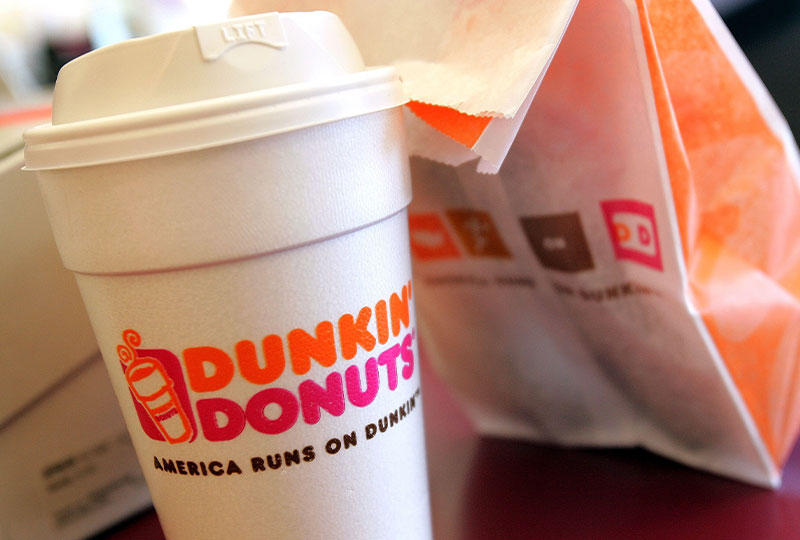
Dunkin Donuts CoffeeDunkin Donuts Coffee (Tim Boyle/Getty Images)

Dunkin’ has confirmed that its pumpkin spice offerings will debut on Aug. 17. According to a news release, the lineup includes two new items: the Nutty Pumpkin Coffee and the Blood Orange Dunkin’ Refresher, which has “subtle notes of fall spices, like ginger and cinnamon.” Fan favorites  including the Pumpkin Cream Cold Brew, Pumpkin Spice Signature Latte and pumpkin doughnuts and muffins  are also slated to return to the menu.


“We see Dunkin’ fans’ anticipation of fall grow more and more each year,” Jill Nelson, Dunkin’ vice president of marketing and culinary, said in a statement. “This season, we’re bringing them a lineup that’s sure to delight even our most passionate and excited fall enthusiasts.”


On Aug. 11, Dunkin’ also released its first-ever Pumpkin Munchkin Creamer, inspired by its popular Pumpkin Munchkins Donut Hole Treats. The at-home creamer “features a pumpkin-forward flavor with hints of sweet donut glaze and natural spices,” per a separate news release.


Patrons who take advantage of a limited-time deal can grab a medium Dunkin’ Pumpkin Cream Cold Brew or Pumpkin Spice Signature Latte for just $3 through Sept. 13. 

4
Nestlé Toll House
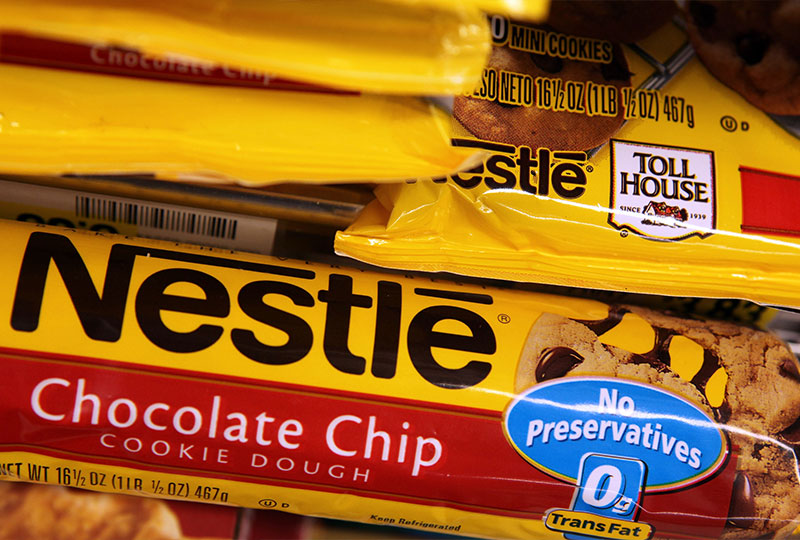
Nestle Toll House chocolate chip cookie doughNestle Toll House chocolate chip cookie dough (Justin Sullivan/Getty Images)
Nestlé Toll House reintroduced its ready-to-bake Pumpkin Spice Cookie Dough and M&M’S Ghoul’s Mix Sugar Cookie Dough in August. According to Chew Boom, the former “features a mix of sweet pumpkin spice flavor and Premier White Morsels,” while the latter “consists of a sweet sugar cookie dough with colorful Ghoul’s Mix M&M’S.”
 
Both cookie doughs, which come in colorful packages that weigh 14 ounces, have a suggested priced of $3.49.  
5
Starbucks
Starbucks

According to Markie_devo, a food blogger and the self-proclaimed “Willy freaking Wonka of Brooklyn,” Starbucks plans to drop its fall lineup on Aug. 30. In addition to a reformulated Apple Crisp Oatmilk Macchiato, the beverage offerings will apparently include the cult-favorite Pumpkin Spice Latte — which will reportedly cost 80 cents more than it did last year — and the Pumpkin Cream Cold Brew. On the food side of the menu, look out for the Pumpkin Cream Cheese Muffin and the Pumpkin Scone.


Starbucks, meanwhile, hasn’t officially revealed its fall menu plans. Earlier this month, a spokesperson for the brand shared this statement with Delish: “We’re not quite ready to welcome fall and are still enjoying the last sips of summer, like the vibrant and colorful Starbucks Refreshers beverages.” However, the Seattle-based coffee giant has unveiled its fall supermarket offerings. 

6
Jamba
Jamba Pumpkin Smash SmoothieJamba Pumpkin Smash Smoothie (Photo Courtesy of Jamba)
They’re back! Today, Jamba’s fan-favorite Classic Pumpkin Smash Smoothie and the Plant-Based Pumpkin Smash Smoothie return to menus nationwide. Both smoothies are made with Jamba’s original pumpkin spice blend, which is made with pumpkin, cinnamon and nutmeg. What’s more, they purportedly “taste like fall in a cup.”
 
The brand will offer a limited-time-only perk for Jamba Rewards members, according to a news release. Members can get a Pumpkin Smash Smoothie for only $5 on Saturdays and Sundays from Aug. 27 through Sept. 25.
7
Dairy Queen
Dairy Queen BlizzardDairy Queen Blizzard (Andrew Burton/Getty Images)
Dairy Queen’s Pumpkin Pie Blizzard Treat will reappear in stores on Aug. 29, the brand confirmed to Thrillist.
 
In addition to DQ’s popular seasonal treat, Dairy Queen has offered new pumpkin-flavored desserts and beverages — such as the Pumpkin Cookie Butter Shake, which “combines Dairy Queen’s classic vanilla soft serve with smooth pumpkin purée and delicious cookie butter made from cinnamon spice cookies” — in the past. At this time, there’s no additional information as to whether the shake will resurface. 
8
Krispy Kreme
Krispy Kreme DoughnutsKrispy Kreme Doughnuts (Photo Courtesy of Krispy Kreme)

On Aug. 8, Krispy Kreme dropped its new lineup of autumnal treats, which includes the all-new Pumpkin Spice Latte Swirl Doughnut — a dessert rendition of the popular seasonal beverage — and Pumpkin Spice Iced Coffee. A selection of fan favorites — such as the Pumpkin Spice Original Glazed Doughnut, Pumpkin Spice Original Filled Cheesecake Doughnut and Pumpkin Spice Cake Doughnut — also made their highly-anticipated comebacks.


“Sure, pumpkin spice is generally associated with fall, but true fans of the flavor will agree that August is close enough!” Dave Skena, Krispy Kreme global chief brand officer, said in a statement. “So, we’re pulling fall forward, enabling our guests to indulge and enjoy early with delicious pumpkin spice doughnuts and drinks, including our Pumpkin Spice Latte, which you can get iced or frozen, by the way.”

Understanding the Southern Baptist scandal: For evangelicals, women can’t say no

The Southern Baptist Conference is under investigation by the Department of Justice due to numerous claims of egregious sexual abuse and sexual harassment within the denomination. Perhaps people wonder why there is such an overabundance of sexual misconduct of various kinds within evangelical circles. The truth is that many believers in Christ have struggled with what was right and wrong in regardsto their genitalia. Is the creator of the universe worried about our private areas? For most conservative evangelical Christians, it is apparently all God thinks about.  As an ordained and evangelically trained minister, I tend to disagree.  

Wives, submit yourselves to your own husbands as you do to the Lord. For the husband is the head of the wife as Christ is the head of the church, his body, of which he is the Savior. Now as the church submits to Christ, so also wives should submit to their husbands in everything. — Ephesians 5

I can barely get through one week of evangelical radio where this scripture is not discussed. It is one of the evangelical community’s favorites, and one believers often refer to when they discuss the downfall of American society. They contend that it all went to hell (almost literally) when women decided to be equal to men in the home. Then came Gloria Steinem, Geraldine Ferraro and eventually the ultimate devil herself, Hillary Clinton. These women represented the end of the American family and then the end of God’s influence upon American society.

Submission to your husband is not simply a suggestion in the evangelical church, but a command put upon every married woman. This is no more clearly on display than in the sex life of an evangelical married couple. Simply put, a wife cannot refuse their husband when he wants to have sex. She is a sinner for refusing her husband and then can be held responsible for any sexual sin her husband may commit afterward. Naturally, with this being the basic mindset, accusations by women regarding sexual abuse or harassment seem ridiculous to the majority of conservative evangelical men.  

A woman should learn in quietness and full submission. I do not permit a woman to teach or to assume authority over a man; she must be quiet. — I Timothy 2

In the evangelical worldview, a woman must never appear to be in a place where she leads or holds authority over a man. Certainly women may teach children because that work is beneath men anyway. Somehow Biblical theology (in this reading) allows women to teach young boys but not older teenage boys or young adult men. A neat evangelical trick that allows men to neglect their children. Anyway, many evangelical churches enforce an actual age when it becomes inappropriate for a woman to teach a young man. I have heard the age prescribed as young as 13. Certainly by that age boys are taught that as men they are superior to all women. I would venture to guess that this becomes a problem in future relationships with women at work and school, at church and in romantic relationships and marriages.  

The Bible mentions this “submission” thing for wives exactly once. You would think it’s verse after verse and chapter after chapter, given the way evangelicals preach it every Sunday.

I think this explains, in part, why so many evangelical Christians like Donald Trump so much. He doesn’t like it when a woman says no to him either, or holds power over him in any way. He doesn’t seem to like it when any woman has an opinion, wears a suit, doesn’t show her boobs, has a brain and a career and, the greatest sin of all, disagrees with his opinion and tells him so. Well, to veer away from preacher-talk for a minute, fuck him and anyone else who sees women this way. The Bible mentions this submission thing for wives exactly once. You would think the whole Bible communicates this type of thing verse after verse and chapter after chapter, given the way evangelicals preach it every Sunday. The fact is, a few scattered Bible passages have provided these men with a supposedly godly and righteous to behave exactly as they would behave without the Bible. They just get to feel better about their abusive conduct this way. 

As I understand it, the laws of the Bible were never meant to be used to control another group. They are meant as a guide to help everyone live a fulfilling and fruitful life.  


Want a daily wrap-up of all the news and commentary Salon has to offer? Subscribe to our morning newsletter, Crash Course.


“I have the right to do anything,” you say — but not everything is beneficial. “I have the right to do anything” — but not everything is constructive. No one should seek their own good, but the good of others. — I Corinthians 10

This scripture sounds more like God allows us to think a little and make our own decisions about what is right and wrong for ourselves as individuals. So what’s with all the rules around our genitals? I would like to say to all those evangelical men to back off our junk, let love be love, and please stop sexually abusing and harassing your wives and the rest of the women in your lives. 

When it comes to equality of men and women, there is always this piece of scripture most evangelicals would like to pretend doesn’t exist.  

There is neither Jew nor Gentile, neither slave nor free, nor is there male and female, for you are all one in Christ Jesus. — Galatians 3

I guess God is nonbinary! That’s cool. Jesus is woke, as we might say these days. Too bad many of his followers are closed-minded bigots.  

This all comes back to control. Some seek control through shopping, having ideal families, having a big income and a guaranteed pension, having a luxurious house, traveling the world, an obsession with fitness. Some take a religion and use it to control an entire segment of society. But control never works. It is always short-lived, and so often leads to a tremendously unhealthy lifestyle. The evangelical church is no different. Controlling women physically, sexually, mentally and morally can only create unhealthy homes and families and an unhealthy society. Equality, freedom, opportunity, life, liberty and the pursuit of happiness offer the only true path to a healthy society and a healthy home. Real control begins with letting go. 

Cuba’s big fire has been contained — but Biden’s Cuba policy remains a disaster

Images of the oil explosion that erupted in the Cuban province of Matanzas on Aug. 5 and blazed out of control for the next five days made international headlines. When lightning struck an oil tank in Cuba’s largest oil storage facility, it quickly exploded and began to spread to nearby tanks. At least four of the eight tanks have caught fire. Dozens of people have been hospitalized, over 120 have been reported injured, at least 14 firefighters have been reported missing and one has been confirmed dead. 

This disaster — the largest oil fire in Cuba’s history — came at a dreadful moment, with Cuba already undergoing an energy crisis due to soaring global fuel costs, as well as over-exploited and obsolete infrastructure. The raging fire has certainly further exacerbated the electricity outages Cubans are suffering from as a result of the ongoing energy crisis, occurring in the middle of one of the hottest summers on record globally. 

Almost immediately, the Cuban government requested international assistance from other countries, particularly its neighbors that have experience in handling oil-related fires. Mexico and Venezuela responded immediately and with great generosity. Mexico sent 45,000 liters of firefighting foam in 16 flights, as well as firefighters and equipment. Venezuela sent firefighters and technicians, as well as 20 tons of foam and other chemicals.

The U.S., on the other hand, offered technical assistance, which amounted to phone consultations. Despite having invaluable expertise and experience with major fires, the U.S. did not send personnel, equipment, planes, materials or other resources to that would actually have helped to minimize the risk to human life and the environment. The U.S. Embassy in Havana instead offered condolences, stating on day four of the fire that it was “carefully watching the situation” and that U.S. entities and organizations could provide disaster relief. It posted an email address, CubaHumanitarian@state.gov, for people who want to help, saying “our team is a great resource for facilitating exports and donations of humanitarian goods to Cuba or responding to any questions.” But people who have contacted that email for help have receive an automated response, telling them to look at  a year-old fact sheet.

Contrast this to Cuba’s response to Hurricane Katrina in 2005, when the Cuban government offered to send to New Orleans 1,586 doctors, each carrying 27 pounds of medicine — an offer rejected by the U.S. authorities.

While the U.S. government pays lip service to helping in Cuba’s emergency, the truth is that U.S. sanctions on Cuba create real and significant barriers to organizations trying to provide assistance to Cubans, both in the United States and abroad. For example, Cuba sanctions often require U.S. organizations to get Commerce Department export licenses. Another obstacle is the lack of commercial air cargo service between the U.S. and Cuba, and most commercial flights are prohibited from carrying humanitarian assistance without a license.


Want a daily wrap-up of all the news and commentary Salon has to offer? Subscribe to our morning newsletter, Crash Course.


Furthermore, Cuba’s inclusion in the State Sponsor of Terrorism List means that banks, in both the U.S. and abroad, are reluctant to process humanitarian donations. While donative remittances (which can be sent for humanitarian purposes) have been recently reauthorized by the Biden administration, there is no mechanism in place to send them, as the U.S. government refuses to use the established Cuban entities that have historically processed them. Moreover, payment and fundraising platforms such as GoFundMe, PayPal, Venmo and Zelle will not process any transactions destined or related to Cuba due to U.S. sanctions.  

Cuba’s inclusion in the State Sponsor of Terrorism List means that banks are reluctant to process humanitarian donations — and GoFundMe, PayPal, Venmo and Zelle won’t process transactions destined for Cuba.

In any case, the response to this disaster should have come primarily from the U.S. government, not NGOs. An Obama-era Presidential Policy Directive specifically mentions U.S. cooperation with Cuba “in areas of mutual interest, including diplomatic, agricultural, public health, and environmental matters, as well as disaster preparedness and response.” Despite the 243 sanctions imposed by the Trump administration — and overwhelmingly maintained by the Biden White House — the Policy Directive appears to remain in effect. 

In addition, Cuba and the U.S. signed a bilateral Oil Spill Preparedness and Response Agreement in 2017 prior to Trump taking office, which the U.S. noted meant that both countries would “cooperate and coordinate in an effort to prevent, contain, and clean up marine oil and other hazardous pollution in order to minimize adverse effects to public health and safety and the environment.” The agreement provides a roadmap for bilateral cooperation to address the current humanitarian and environmental disaster. In addition, the Office of Foreign Disaster Assistance, which is part of USAID, “is responsible for leading and coordinating the U.S. government’s response to disasters overseas,” including sending technical experts, as it has in more than 50 other countries. Neither OFDA nor any other part of USAID, which spends approximately $20 million annually in regime-change funding in Cuba (primarily to Florida-based groups), have offered humanitarian aid during or after the fire.

As Congress takes important steps to advance legislation to address climate change and disasters, the Biden administration watched a potential ecological disaster unfold 90 miles from the U.S. coastline without offering meaningful assistance to contain it, both to protect the Cuban people and to mitigate any potential marine damage to the narrow strait that separates the two countries. 

Withholding assistance at this critical time indicates to Cubans, Cuban Americans and the world that the Biden administration is not really interested in the well-being of the Cuban people, despite statements to the contrary. This was an opportunity to show compassion, regional cooperation, environmental responsibility and, overall, to be a good neighbor. It was also an opportunity for the Biden administration to finally reject the toxic Trump-era policies toward Cuba and restart the broad bilateral diplomatic engagement successfully initiated under the Obama administration. 

Legal expert: Giuliani “should expect to be indicted” after learning he’s “target” of Georgia probe

Trump attorney Rudy Giuliani has been informed that he is now the target of a criminal probe related to election interference in the state of Georgia, according to New York Times reporter Danny Hakim.

Giuliani, the former Republican mayor of New York City, was a central figure in former President Donald Trump’s efforts to overturn the results of the 2020 presidential election.

In recent weeks, Giuliani has been involved in a dispute with the Fulton Country District Attorney’s office over whether he will testify before a special grand jury in its probe of the Trump campaign’s efforts to overturn President Joe Biden’s win in the Peach State.

According to the New York Times, Giuliani is scheduled to testify before the grand jury on Friday.

According to former federal prosecutor Renato Mariotti, Giuliani officially being labeled a target of the investigation makes it very likely that he will face criminal charges.

“‘Target’ is a term prosecutors use to indicate that they are likely to indict someone,” Mariotti explains on Twitter. “It has a specific meaning in this context. If Giuliani has in fact been told that he is a target of the Georgia investigation, he should expect to be indicted.”

“This is how our democracy could crumble”: Election deniers surge in 6 key swing states

In six key battleground states that played a decisive role in the 2020 presidential race, Republican candidates who have openly embraced former President Donald Trump’s “Big Lie” have won nearly two-thirds of the GOP nominating contests for positions with power over state and federal elections, a potentially seismic threat to democracy.

According to a Washington Post analysis published Monday, 54 of 87 Republican nominees for key posts in Arizona, Georgia, Michigan, Nevada, Pennsylvania, and Wisconsin have denied the legitimacy of President Joe Biden’s 2020 election victory.

“Had those candidates held power in 2020, they would have had the electoral clout to try something that the current officeholders refused: overturning the vote and denying Biden the presidency,” the Post notes. “Whether they could have succeeded in practice is a matter of vigorous debate among scholars, who cite the potential for court challenges and other means of upholding the results.”

“But the experts agree on one thing: A close presidential contest that comes down to the outcome in states where officials are willing to try to thwart the popular will could throw the country into chaos,” the newspaper adds. “It would potentially delay the result, undermine confidence in the democratic system, and sow the seeds of civil strife on a scale even greater than what the nation saw on January 6, 2021.”

Trump, who is gearing up for a possible 2024 run as he’s under criminal investigation by the Justice Department, has endorsed and campaigned for many of the candidates featured in the Post‘s analysis, including Arizona gubernatorial candidate Kari Lake—a former TV news anchor whose incessant lies about the 2020 election catapulted her to a win in the GOP primary earlier this month, delighting the former president.

Even in victory, Lake lashed out at the Arizona election process, complaining that the results “took longer than they should have.”

The Post‘s analysis confirms that Arizona, a state Biden carried narrowly in 2020, is a bastion of election denial on the GOP side: 12 of 13 Republican nominees for state and federal offices there have questioned the election, including the chosen candidate for secretary of state.

Noah Bookbinder, president of Citizens for Responsibility and Ethics in Washington, called the rise of GOP election deniers across the U.S. “the biggest story not enough people are watching.”

“This is how our democracy could crumble, quickly and quietly,” Bookbinder warned.

The notion that Biden was elected illegitimately is broadly popular with Republican voters, according to recent opinion surveys. As the Post points out, “The predilection among Republican primary voters toward candidates who deny the result of the last election extends well beyond Michigan, Pennsylvania, and Arizona—three states that together accounted for 47 electoral votes in 2020, more than enough to flip the last election to Trump.”

Ian Vandewalker, senior counsel at the Brennan Center for Justice, wrote in a blog post earlier this month that “the Big Lie that the elec­tion was stolen from Trump has been pushed by power­ful politi­cians, start­ing with Trump himself.”

“But it may be lead­ers closer to home who have the greatest abil­ity to affect the popular­ity of elec­tion denial among the people of their state,” he added.

One prominent Republican officeholder that is actively boosting election deniers is Florida Gov. Ron DeSantis, a possible 2024 presidential contender.

The Orlando Sentinel reported last week that DeSantis is “set to appear at rallies for Pennsylvania GOP governor’s candidate Doug Mastriano, Arizona candidate for governor Kari Lake, and U.S. Senate candidate Blake Masters, all of whom have denied Biden’s win and falsely claimed election fraud.

DeSantis was one of the first Republicans to suggest state legislatures could overrule voters to choose Trump.

“Appearing on Fox News on November 5, two days after the election,” the Sentinel observed, “he said ‘presidential electors are done by the legislators and the schemes they create and the framework. And if there’s departure from that, if they’re not following law, if they’re ignoring the law, then they can provide remedies as well.'”

The Republican Party’s elevation of fervent election deniers—often with the support of dark money—in battleground states and nationwide has dramatically raised the stakes of the upcoming November contests, given that they could usher into power officials willing to subvert the democratic process to secure their desired outcome.

Wisconsin offers an illustrative example of November’s implications. As the New York Times reported Monday, “The governor’s race this fall, along with a pivotal State Supreme Court contest next spring, will decide whether Republicans can solidify their grip on the swing state and remake its voting laws.”

“Nowhere in the country have Republican lawmakers been more aggressive in their attempts to seize a partisan edge than in Wisconsin,” the Times noted. “Having gerrymandered the Legislature past the point that it can be flipped, they are now pushing intensely to take greater control over the state’s voting infrastructure ahead of the 2024 presidential contest.”

Legal experts debunk Trump allies’ Espionage Act claims as he faces “lengthy potential prison term”

The federal court-authorized search of former President Donald Trump’s Florida estate has brought renewed attention to the obscure but infamous law known as the Espionage Act of 1917. A section of the law was listed as one of three potential violations under Justice Department investigation.

The Espionage Act has historically been employed most often by law-and-order conservatives. But the biggest uptick in its use occurred during the Obama administration, which used it as the hammer of choice for national security leakers and whistleblowers. Regardless of whom it is used to prosecute, it unfailingly prompts consternation and outrage.

We are both attorneys who specialize in and teach national security law. While navigating the sound and fury over the Trump search, here are a few things to note about the Espionage Act.

Espionage Act seldom pertains to espionage

When you hear “espionage,” you may think spies and international intrigue. One portion of the act – 18 U.S.C. section 794 – does relate to spying for foreign governments, for which the maximum sentence is life imprisonment.

That aspect of the law is best exemplified by the convictions of Jonathan Pollard in 1987, for spying for and providing top-secret classified information to Israel; former Central Intelligence Agency officer Aldrich Ames in 1994, for being a double agent for the Russian KGB; and, in 2002, former FBI agent Robert Hanssen, who was caught selling U.S. secrets to the Soviet Union and Russia over a span of more than 20 years. All three received life sentences.

But spy cases are rare. More typically, as in the Trump investigation, the act applies to the unauthorized gathering, possessing or transmitting of certain sensitive government information.

Transmitting can mean moving materials from an authorized to an unauthorized location – many types of sensitive government information must be maintained in secure facilities. It can also apply to refusing a government demand for its return. All of these prohibited activities fall under the separate and more commonly applied section of the act – 18 U.S.C. section 793.

A violation does not require an intention to aid a foreign power

Willful unauthorized possession of information that, if obtained by a foreign government, might harm U.S. interests is generally enough to trigger a possible sentence of 10 years.

Current claims by Trump supporters of the seemingly innocuous nature of the conduct at issue – simply possessing sensitive government documents – miss the point. The driver of the Department of Justice’s concern under Section 793 is the sensitive content and the connection to national defense information, known as “NDI.”

One of the most famous Espionage Act cases, known as “Wikileaks,” in which Julian Assange was indicted for obtaining and publishing secret military and diplomatic documents in 2010, is not about leaks to help foreign governments. It concerned the unauthorized soliciting, obtaining, possessing and publishing of sensitive information that might be of help to a foreign nation if disclosed.

Two recent senior Democratic administration officials – Sandy Berger, national security adviser during the Clinton administration, and David Petraeus, CIA director under during the Obama administration – each pleaded guilty to misdemeanors under the threat of Espionage Act prosecution.

Berger took home a classified document – in his sock – at the end of his tenure. Petraeus shared classified information with an unauthorized person for reasons having nothing to do with a foreign government.

The act is not just about classified information

Some of the documents the FBI sought and found in the Trump search were designated “top secret” or “top secret-sensitive compartmented information.”

Both classifications tip far to the serious end of the sensitivity spectrum.

Top secret-sensitive compartmented information is reserved for information that would truly be damaging to the U.S. if it fell into foreign hands.

One theory floated by Trump defenders is that by simply handling the materials as president, Trump could have effectively declassified them. It actually doesn’t work that way – presidential declassification requires an override of Executive Order 13526, must be in writing, and must have occurred while Trump was still president – not after. If they had been declassified, they should have been marked as such.

And even assuming the documents were declassified, which does not appear to be the case, Trump is still in the criminal soup. The Espionage Act applies to all national defense information, or NDI, of which classified materials are only a portion. This kind of information includes a vast array of sensitive information including military, energy, scientific, technological, infrastructure and national disaster risks. By law and regulation, NDI materials may not be publicly released and must be handled as sensitive.

The public can’t judge a case based on classified information

Cases involving classified information or NDI are nearly impossible to referee from the cheap seats.

None of us will get to see the documents at issue, nor should we. Why?

Because they are classified.

Even if we did, we would not be able to make an informed judgment of their significance because what they relate to is likely itself classified – we’d be making judgments in a void.

And even if a judge in an Espionage Act case had access to all the information needed to evaluate the nature and risks of the materials, it wouldn’t matter. The fact that documents are classified or otherwise regulated as sensitive defense information is all that matters.

Historically, Espionage Act cases have been occasionally political and almost always politicized. Enacted at the beginning of U.S. involvement in World War I in 1917, the act was largely designed to make interference with the draft illegal and prevent Americans from supporting the enemy.

But it was immediately used to target immigrants, labor organizers and left-leaning radicals. It was a tool of Cold War anti-communist politicians like Sen. Joe McCarthy in the 1940s and 1950s. The case of Julius and Ethel Rosenberg, executed for passing atomic secrets to the Soviet Union, is the most prominent prosecution of that era.

In the 1960s and 1970s, the act was used against peace activists, including Pentagon Paper whistleblower Daniel Ellsberg. Since Sept. 11, 2001, officials have used the act against whistleblowers like Edward Snowden. Because of this history, the act is often assailed for chilling First Amendment political speech and activities.

The Espionage Act is serious and politically loaded business. Its breadth, the potential grave national security risks involved and the lengthy potential prison term have long sparked political conflict. These cases are controversial and complicated in ways that counsel patience and caution before reaching conclusions.


Joseph Ferguson, Co-Director, National Security and Civil Rights Program, Loyola University Chicago and Thomas A. Durkin, Distinguished Practitioner in Residence, Loyola University Chicago

This article is republished from The Conversation under a Creative Commons license. Read the original article.

S’all done: “Better Call Saul” closes with a journey through time and regret

If regret is a time machine, guilt is the key that starts the engine. This is the last lesson “Better Call Saul” leaves us with through the stations of Jimmy McGill’s acts of penance in “Saul Gone,” starting with disposing of Gene Takavic in a filthy dumpster.

Jimmy’s post-Saul Goodman identity never suited who he aspired to be; it was created by another man, Ed Galbraith, to enable him to disappear.

Once the cops find him, Jimmy casts aside the mild-mannered Cinnabon manager to resurrect the unflappable Saul Goodman, in order to play the part all great con men were born to do. That is, he’s there to figure out an angle that’ll secure the best outcome for him while screwing everyone else.

Saul calls his old nemesis Bill Oakley, a former deputy district attorney now practicing criminal defense. When Saul dangles the promise that his case will make Oakley’s career, Oakley isn’t convinced, citing the ponderous mountain of evidence against his one-time adversary. “Where do you see this ending?” Oakley asks.

“Where do I see it ending?” replies Saul. “Um . . .with me on top. Like always.”

And he would have, if not for guilt’s intervention.

“Better Call Saul” co-creator Peter Gould wrote and directed this episode, intending it to close the book on the “Gilliverse,” the nickname for the mythology Vince Gilligan began with “Breaking Bad” and continues through his feature “El Camino.”

“Saul Gone” also doubles as a meaningful examination of what justice means for a character like Jimmy McGill, who Bob Odenkirk has substantially evolved since the “Breaking Bad” episode in which Gould introduces him to this mythology.

Gould reminds us of that by returning to three memorable scenes from Jimmy’s past, augmented by passages that may have been fabricated by his guilty conscience. The first takes us back to the fifth season episode “Bad Choice Road” and the desert Saul Goodman and Mike Ehrmantraut (Jonathan Banks) traveled on foot while carrying $7 million in cash on their back. In that installment Saul is forced to drink his urine to survive. But in this version, he and Mike stumble upon a well.

Is this a detail Saul dreams up to stifle his shame or did that really happen? That’s up to us to decide. What matters is the moment when Saul persuades Mike to fantasize with him about using the money to build a time machine. He asks Mike where he’d go, and Mike says he’d go back in time to repair the mistakes that led to his criminal life, fixing his relationship with the people he cares about. Saul, on the other hand, would use it to make a sure investment with Warren Buffett that would guarantee he’d be a billionaire in the present.

“Is that it? Money?” Mike asks.

“What else?” says Saul.

“Nothing you’d change?” Mike presses. Saul doesn’t have an answer.

Jimmy’s second vision returns him to the bunker under Galbraith’s vacuum shop, where he’s hiding out with Walter White (granting one last glimpse at Bryan Cranston in that career-defining role). Posing the time machine question to Walter only earns the meth manufacturer’s ire.

“You are not talking about a time machine, which is a both real and theoretical impossibility,” Walter fumes. “You are talking about regrets.” When Jimmy asks Walter to name his greatest regret, Walter says he wishes he hadn’t walked away from Gray Matter Technologies, the company he started with his Caltech buddy Elliott Schwartz and his ex-girlfriend Gretchen, who bought him out for a few thousand dollars and went on to make millions.

Saul’s regret is low-balling Marshall Fields in a slip and fall scam he pulled. Walter is stupefied, then disgusted. “So , , , you were always like this.”

No matter what confronted him, Saul Goodman would figure out a way to wriggle free of his actions’ worst consequences.

The last shameful time jump takes us to a standard delivery run Jimmy makes to his brother Chuck (Michael McKean) when he was in the full grip of his alleged electromagnetic hypersensitivity disorder. Jimmy, of course, insists on bringing Chuck everything he needs despite Chuck reminding Jimmy that he has the means to hire a gofer. But Jimmy reminds Chuck that he’d do the same for him – knowing full well that Chuck wouldn’t.

“Jimmy,” Chuck says, “If you don’t like where you’re heading, there’s no shame in going back and changing your path.”

A few moments later Chuck’s face darkens more in their already dim surroundings. “We always end up having the same conversation, don’t we?”  Then he retrieves the book he’s reading from the countertop: H.G. Wells’ “The Time Machine.”

Looking back on most of the series from the perch of these final episodes, it was plain to see that no matter what confronted him, Saul Goodman would figure out a way to wriggle free of his actions’ worst consequences.

But this doesn’t account for Jimmy’s role in all this. The tragedy of this show is in knowing that regardless of the name he goes by, the main character will always be that Midwestern screw-up driven to prove wrong anyone who doesn’t believe in him and moved to do anything for the people he loves.

Creators of terrible men like Walter White are stalked by the question of whether their antiheroes would or should die for their crimes as the end of their story approaches. But that was rarely if ever a question asked about Odenkirk’s criminal attorney. Saul was never destined to go down in a blaze of bullets. His decline was always spiritual, and steady in its progression. Death is too simple of an exit for a man like that.

Besides, some part of Jimmy probably wanted Gene Takavic to get caught. He could have remained an invisible man continuing to blend in with the black-and-white mall-scape in Omaha, Nebraska. Sure, he was recognized by another schlub who used to live in Albuquerque. But what else is Saul good for, and at, if not figuring out solutions to sticky impossible problems?

That he does before surrendering to his psychological flaw: his inability to be content with whatever success he ekes out.

Gene quickly turns from a low-stakes fraudster to a loser fleeing on foot with what remains of his life in that shoebox, only to lose it all at the bottom of that garbage bin, loose diamonds and all. Gene slithers into that receptacle and arises from it, hands up and covered in slime, as Saul Goodman.

The perfect series finale is elusive, and almost always a matter of luck instead of intention. Gould apparently knows this, which he demonstrated by striking a balance between delivering just closure for Jimmy McGill and all the men he purported to be and tying up whatever loose ends were leftover from Heisenberg’s wreckage.

Incorporating Cranston into the finale returns us to where Saul Goodman’s story began and reminds us of what he risked turning into. Bringing back McKean’s Chuck reminds us of why Jimmy’s soul became corrupt in the first place. And Mike . . .  solid, honest, devastating Mike.  Saul didn’t kill him, but he did lead him into Walter’s crosshairs.

Saul Goodman was never destined to go down in a blaze of bullets.

Gould also invites back Marie Schrader, Hank’s widow (Betsy Brandt), so we can see the victim of one of Saul Goodman’s greatest crimes stare him in the face, alongside six federal law enforcement officers.

But that doesn’t faze Saul. Nor does a slew of charges carrying penalties of multiple life sentences. In Marie’s presence, Saul melodramatically presents himself as a victim, reframing the story of his first encounter with Walter and Jesse Pinkman as the start of a multi-year hostage situation. He points out that the prosecution doesn’t have to buy his story. All he needs is to win the sympathy of one juror.

This spooks the feds enough to negotiate a plea deal that whittles down the threat of dying in a miserable prison to seven and a half years to be served at the same light security facility housing Bernie Madoff.

Only when he petulantly presses his luck by offering to give up details on what happened to Howard Hamlin – solely a shot at securing a weekly pint of Bluebell mint chocolate chip ice cream –  does he find out that Kim (Rhea Seehorn) has already spilled her guts on that front, placing her own freedom in jeopardy.

Better Call SaulRhea Seehorn as Kim Wexler in “Better Call Saul” (Greg Lewis/AMC/Sony Pictures Television)

Kim is the only person who loved Jimmy and never tried to screw him over. And that changes the terms of the punishment he’s willing to endure.

It is uncommon for a figure like Saul Goodman, who’s neither benevolent nor entirely evil, to receive full mercy from those who wrote him into existence. Similarly Jimmy does not aim for benediction but, by the grace of Gould, receives it anyway.

When Saul Goodman arrives in that Albuquerque courtroom one last time  – invoking his magic phrase “It’s showtime” before sealing his fate – he changes his story to assume guilt for everything.

Before the court, Saul confesses to all of it, eating Kim’s sins for good measure, along with screwing over Oakley one last time. He invokes Chuck’s name and confesses to ruining the one thing Chuck lived for, practicing law, in a shot that incorporates the courtroom’s Exit sign and its irritating electrical buzz. He even takes the blame for Chuck’s suicide.

He ends by telling the judge that he doesn’t want to be referred to as Saul Goodman in the complaint. “The name’s McGill,” he says. “I’m James McGill.” Then he turns around and gives Kim a lingering, contrite look.

Nevertheless, it’s Saul Goodman’s reputation that protects Jimmy on his way to Montrose, the lonesome prison dubbed the Alcatraz of the Rockies. A fellow convict recognizes him on the bus, and soon enough everyone on board is chanting his catchphrase: “Better! Call! Saul!”

That would be enough for the finale to live up to its title, and a fitting coda to a season that started with a cascade of the luxurious objects that made Saul Goodman who he is being stripped away by the cops. Everything the criminal lawyer earned is gone, except his name.

Instead, Gould lets us know that’s not all he has. Sometime later, after Jimmy’s found a new and poetically appropriate purpose as one of the prison’s bakers, he receives a visit from his attorney: Kim Wexler.


Want a daily wrap-up of all the news and commentary Salon has to offer? Subscribe to our morning newsletter, Crash Course.


Kim tells Jimmy that her New Mexico bar card doesn’t have an expiration date. And in another moment that bridges “Breaking Bad” with “Better Call Saul,” they share a cigarette.

The “Breaking Bad” cigarette hid ricin, bouncing around from one hiding place to the next until finally being used to kill a greedy sociopath who deserved it. “Saul Gone” uses one to show that the bond Jimmy and Kim share remains intact; the glow of the flame that lights it, and its cherry, provides the sole golden glimmer in this black-and-white goodbye.

She marvels that he had them down to seven years, only to trade it in for 86 years.

“But with good behavior, who knows?” he says, taking another drag.

Jimmy ends up where he was always going to be, sending Kim back to freedom with this signature one-two finger gun salute – and bound to 86 years’ worth of time but unburdened of the guilt bouncing him from old regrets toward new ones.  

With that, Saul Goodman’s engrossing, poignant and beautifully tragic story is finished. And in the end, it really was all good.


A newly-discovered dog-size dinosaur was covered in armor and had tiny arms

Argentina has recently become a locus for weird dinosaur fossils. Last year, paleontologists in the country found dinosaur bones so big, they believe they may have belonged to the largest land animal of all time. Now they’ve found something much smaller, and perhaps odder still: a dinosaur that is only as big as a dog — but is covered in so much plated armor that it sort of resembles an oversized armadillo.

The newly-discovered dinosaur has been given the taxonomic name Jakapil kaniukura, as paleontologists detailed in a recent article in the journal Scientific Reports. Jakapil kaniukura lived roughly 97 to 94 million years ago; walked with two legs instead of four; had tiny arms which resembled chicken wings; possessed a short beak used to deliver sharp bites; and was equipped with a unique ring of armor around its neck.

“The neck armor of this dinosaur is unique, and it protected that delicate area from predator attacks,” explained one of the study’s co-authors, Sebastián Apesteguía. “The bones that are preserved from the arms show us that they were tiny,” which is unusual for dinosaurs from the group to which Jakapil kaniukura belonged — known as thyreophorans. Thyreophorans are defined as the group of “armored” dinosaurs, which are characterized by thick plates of bony armor that lined their bodies. Notorious thyreophorans include stegosaurus, which had a series of mohawk-like spikes running down its back and to its tail; and anklyosaurus, which resembled a huge version of the extant horned toad, albeit with a tail shaped like a mace. 

If Jakapil kaniukura sounds like the stuff of nightmares, rest easy: Even if it weren’t extinct, it would almost certainly pose no threat to you. Like its thyreophora relatives the stegosaurus and the ankylosaurus, Jakapil kaniukura is believe to have been a herbivore, meaning that it ate plants instead of meat. Even if it had been a carnivore, however, Jakapil kaniukura was not very big — indeed, roughly only as long as a retriever-size dog (less than 5 feet).


Want more health and science stories in your inbox? Subscribe to Salon’s weekly newsletter The Vulgar Scientist.


The discovery of Jakapil kaniukura is also scientifically significant for a number of reasons. As the paper’s authors explain, the diminutive dinosaur has some “unusual anatomical features” that include many traits not usually associated with the thyreophorans from that period. It is also the first definitive thyreophoran species from the Argentinian Patagonia” — which is remarkably southward for a thyreophoran, given how they had previously only been discovered in the northern hemisphere. This is, in fact, the thyreophoran known to have been unearthed anywhere on the southern side of the equator. 

In addition, while most thyreophoran walked on four legs, Jakapil kaniukura “seems to show a bipedal stance,” researchers write — meaning that it only walked on two legs, much like humans. The dinosaur is also noteworthy because its discovery in the southern hemisphere hints that thyreophorans were much more widely distributed than previously believed. They also survived until the Late Cretaceous in South America, which was between 100.5 million and 66 million years ago — right before the famous mass extinction of the dinosaurs.

The dinosaur’s scientific name is also noteworthy, as it utilizes indigenous languages. The word “Jakapil” is derived from a term that means “shield bearer” in the Puelchean or northern Tehuelchean Indigenous language of Argentina. Similarly the word “Kanikura” is derived from the Indigenous Mapudungun words for “crest” and “stone.”

Paleontologists are also pleased to have received a surprisingly comprehensive fossil of the dinosaur, as they were able to recover some of the spikes that ran along the animal’s back, an almost intact lower jaw, as well as its leg and arm bones and neck, back and tail vertebrae.

The scientists also posted a video online showing a computer-simulated reconstruction of Jakapil kaniukura as presented by Chilean palaeoartist and palaeontology student at the Río Negro National University Gabriel Díaz Yantén.

The long controversy around Salman Rushdie, and his refusal to stop speaking up

Author Salman Rushdie has often sparked controversy and even incited anger, but the latest protest to his work has left him recovering after sustaining severe injuries during an attack in western New York. 

Rushdie, who won the Booker Prize for his second novel “Midnight’s Children,” was scheduled to appear Friday in a public lecture at the Chautauqua Institute, along with Henry Reese, co-founder and president of City of Asylum in Pittsburgh, which provides sanctuary to exiled writers. At the event, a 24-year-old man rushed the stage and stabbed the 75-year-old Rushdie multiple times, including in the neck and stomach. Rushdie also received puncture wounds in his right eye, chest and thigh. Reese was also injured.

Rushdie’s son Zafar Rushdie said in statement released Sunday that the writer’s injuries are “life changing.” According to Rushdie’s agent, Andrew Wylie, Rushdie was on a ventilator for a time and will likely lose his eye.  

Rushdie has done few events over the years, canceling a planned appearance at a literature festival in India, where he was born, a decade ago after protests. The celebrated author has lived under a cloud of controversy and threats on his life for a long time yet has never relinquished his support of free speech. 

The dissent of the divine

In 1988, Rushdie published his fourth novel, “The Satanic Verses.” Described as “one of the most controversial books in recent literary history,” multiple countries, including Bangladesh and Pakistan, promptly banned it. Like Rushdie’s previous novels, the book utilizes magical realism, a style where the world is presented realistically except for elements of magic or the supernatural. As Vox describes it, “authors in the magical realism genre deliberately withhold information about the magic in their created world in order to present the magical events as ordinary occurrences, and to present the incredible as normal.” 

“Literature is the unafraid form.”

In “The Satanic Verses,” Rushdie tells the fictional story of two Indian actors, linked when they both miraculously survive a mid-air plane bombing caused by hijacking. The characters transform, personifying good and evil. The title — and the controversy — relate to the Quranic Satanic Verses. With his novel, Rushdie was accused of mocking some of the tenets of Muslim religious beliefs. As Salon wrote in 2018, 30 years after the book’s first publication: “Rushdie appears to cast doubt on the divine nature of the Quran.”

The reaction to the book was swift. Thousands protested in the capital city of Pakistan outside the American Cultural Center, which left multiple people dead. The novel was whisked off of public display in bookstores in Brittan; it was burned in protests there. The book’s launch event included bomb-sniffing dogs.

The threat of death

A few months after publication, Rushdie learned his life was gravely in danger via a phone call from a journalist. As Salon wrote in a 2012 interview with Rushdie, a BBC reporter called the writer and asked “How does it feel” now that the Ayatollah Khomeini had sentenced him to death?

The fatwa, a legal ruling on a point of Islamic law, called for Rushdie’s death because of his book, which some considered blasphemous. Soon, Rushdie lived in hiding and under police protection, going by a fake name. In 2012, he published a memoir “Joseph Anton,” the title of which was the pseudonym he had lived under for so long. According to Rushdie, he did not see his son much during his years in hiding, and his marriage at the time ended. He told Salon in the 2012 interview: “I lost my 40s, essentially. I was 41 when this started, and the 40s are supposed to be the prime of a man’s life.”

Instead, Iran announced in 2009, when the writer was well out of his 40s, that the ruling calling for the death of Rushdie was “still valid,” according to Al Jazeera.

“We need to have the courage of our convictions … we are privileged to live in one of the relatively few countries in the world where we get to say what we think.”

But Rushdie did not stay silent. Although he said it was difficult to write under these threats, he published multiple books, including “Two Years, Eight Months and Twenty-Eight Nights.” In 2014, he won the PEN/Pinter Prize for his support of other writers and freedom of speech. The next year, he warned free speech was in danger in his passionate, opening remarks at the Frankfurt Book Fair. “Publishers and writers are not warriors, we have not tanks. But it falls to us to hold the line,” he said. “We challenge ourselves and refuse to take the world as a given. We challenge all correctives of opinion, all appeasements, all fears. Literature is the unafraid form.”

A resurgence

In the wake of the recent attack on Rushdie, many of his words were recirculated, including this quote, from an interview with the BBC World Service: “Nobody has the right to not be offended. That right doesn’t exist in any declaration I have ever read. If you are offended it is your problem, and frankly lots of things offend lots of people . . . But it doesn’t occur to me to burn the bookshop down. If you don’t like a book, read another book.”


Want a daily wrap-up of all the news and commentary Salon has to offer? Subscribe to our morning newsletter, Crash Course.


As Rushdie, who became a U.S. citizen in 2016 after living in New York for decades, told Salon in 2012, “We need to have the courage of our convictions. That we need to understand that we are privileged to live in one of the relatively few countries in the world where we get to say what we think. Yes, that means that some of those utterances will be unlikable, even objectionable, even insulting, because not everybody thinks well, not everybody’s a nice person. But if you’re going to have the good fortune of living in this kind of society, then you have to cherish it and defend it, that’s just full stop.”

What makes food regenerative?

Any day now, if you haven’t already, you’ll hear the word “regenerative” in relation to food or farming. You might even see it on some food packaging.

In late 2019, Whole Foods predicted it would be one of the biggest food trends of 2020. Now, 2020 ended up having other headlines that bumped regenerative out of the spotlight, but finally two years later, the buzzword is starting to hit the mainstream. But there isn’t total clarity for consumers about what this funny new word means. In a survey done earlier this year, only 19% of consumers were familiar with the term “regenerative agriculture.” You might be part of that 19% and still wonder what exactly it means. What does it tell you about how the food was produced? Is it different from organic, and if so, how?

Regenerative agriculture — agriculture that puts soil health at the forefront — is not a new practice, but it’s hitting the mainstream thanks to worries about climate change and a push to sequester carbon wherever we canBut that’s not all there is to regenerative either: a focus on creating complete on-farm ecosystems means that regenerative systems could produce food while using far fewer synthetic pesticides and fertilizers. All together, the various practices under the regenerative umbrella offer a way for agriculture to reduce (and maybe even reverse) the ecological harms of industrial agriculture.

But the term is a bit of a lightning rod for both fans and critics. Some of the criticism centers around fears that the lack of an official definition can lead to greenwashing. Some worry that companies might cherry pick certain emissions-friendly practices and then use the regenerative label without doing anything for soil health, while others fear that regenerative grazing of animals is a unhelpful distraction from the urgent mission of getting people to eat fewer animal products, period.

For this episode of What You’re Eating, we turn to trusted advisors and frequent podcast guests, scientist Dr. Urvashi Rangan and policy expert Patty Lovera, to talk us through some of those criticisms and concerns, explain the benefits of regenerative agriculture and help figure out when it’s being used as a buzzword, and when you can trust it’s the real deal.

Don’t forget to sterilize your canning jars — here’s how

We’ve officially reached the point in summer when my garden is producing way more vegetables than we could possibly eat. I’m talking 3 or 4 pounds of cucumbers per day! Because I hate to see anything go to waste, I started learning how to preserve produce a few years ago, and now, canning is one of my favorite summertime activities. On any given weekend, you can find me pickling cucumbers, zucchini, and beets or making jam from homegrown rhubarb and peaches.

I’ll be the first to admit that canning can be a bit intimidating, as you have to follow recipes precisely and properly sterilize your equipment to ensure the food is safe to eat down the road. There’s a lot of different information online about how to sterilize canning jars, so we turned to the experts at Ball for definitive answers on how it should be done and when it’s necessary. Here’s what they told us.

Do all canning jars need to be sterilized?

If you’re wondering whether you need to sterilize jars before filling them up with delicious preserves, the answer lies in the recipe’s processing time. “Jar sterilization is not required prior to canning unless the recipe being used has a processing time less than 10 minutes,” explains Stephen Galucki, Manager of R&D Fresh Preserving at Newell Brands. “In recipes where the processing time is 10 minutes or longer, sterilization is achieved during the food processing step.” Additionally, you don’t ever need to pre-sterilize jars if you’re pressure canning.

However, if you’re water-bath canning and the recipe will be processed for less than 10 minutes, you’ll need to sterilize your jars before filling. Even if your recipe processes for more than 10 minutes, you can still sterilize the jars if you want — it can’t hurt! I tend to sterilize mine just to be safe.

How to sterilize canning jars

While you may find “hacks” online that tell you to sterilize jars in the dishwasher or microwave, there’s only one USDA-approved method for sterilizing jars. “The only way to sterilize jars is by boiling them in water for a minimum of 10 minutes at an altitude of 0 to 1,000 feet, with additional time added at higher elevations,” says Galucki.

1. Gather your equipment

To sterilize glass canning jars, you’ll need a boiling water canner or a stockpot with a rack — the pot needs to be at least 2 inches taller than the jars you’re processing. A jar lifter will also come in handy, but a pair of kitchen tongs will work, too.

2. Set up your pot

Place the rack inside the canning pot and arrange your jars on top of it, facing right side up. It’s important to use a rack, otherwise the bubbles that form when the water boils will cause the jars to bounce around and bang into each other, which can lead to cracks.

3. Cover the jars with water

Next, fill the pot with hot water. It’s often easiest to pour water into the jars first, then the surrounding area — otherwise, they’ll float up. You’ll want to fill the pot until the water is at least 1 inch over the top of the jars.

4. Process for 10 minutes

Place your pot on the stove and turn the burner on high. Bring the water to a roiling boil and process the jars for 10 minutes to sterilize them at altitudes up to 1,000 feet. If you live at a higher altitude, you’ll need to add one additional minute for each additional 1,000 feet of elevation.

5. Fill your jars

After 10 minutes is up, your jars are sterilized — easy, right? From here, you can remove them from the water using the jar lifter, carefully dump out any water, and fill them with your processed foods. Be careful handling the jars, as they’ll be quite hot!

If you’re not quite ready to fill the jars yet, you can simply turn off the heat and leave them in the water until it’s time to fill.

Wait, what about the lids?

Canning lids, on the other hand, should not be sterilized in boiling water. The high heat can actually harm the sealing ring on the underside of the lid, causing it not to seal properly during processing.

“Ball lids do not need to be sterilized outside of the processing time or pre-warmed prior to use,” explains Galucki. Instead, you can simply wash the lids with warm, soapy water before putting them onto the jars.

This post contains products independently chosen (and loved) by Food52 editors and writers. Food52 earns an affiliate commission on qualifying purchases of the products we link to.

The creamiest, most decadent fettuccine Alfredo is only 15 short minutes away

An on-the-nose example of the sort of indulgence that typified the Italian-American palate, fettuccine Alfredo is a heavy, filling, laden dish that may check more “comfort food” boxes than any other. 

Growing up, my brother was a fervent proponent of fettuccine Alfredo. No matter the restaurant we visited, he’d order it off the menu. There was no food — aside from maybe our dad’s renowned tuna — that satisfied him as much, and he could eat it at a greasy spoon, a hole in the wall or fancy-schmancy restaurant. His love affair with fettuccine Alfredo was soon eclipsed by another Italian American stalwart (that of penne alla vodka, of course), but for a time there, fettuccine Alfredo and my brother were synonymous. 

While I forever and always adore tomatoes and would typically order a requisite, tomato-laced Italian dish, I could certainly understand what my brother enjoyed so much about the dish. Often monochrome, except for the little bit of chopped parsley on top, fettuccine Alfredo is soft-on-soft and rather heavy. Let’s be frank: No one planning on “eating clean” would ever conceive of ordering fettuccine Alfredo. But whatever, their loss! 

At its core, fettuccine Alfredo stems from an Italian dish that espoused the ethos of the Italian food culture of the time: celebrating simplicity, purity and fresh ingredients. Originally made with nothing but unsalted butter, Parmigiano-Reggiano and fettuccine, fettuccine Alfredo boomed in popularity back in the ’70s or ’80s. 

Soon, the “Alfredo sauce” was sold as a jarred monstrosity of fillers, preservatives, thickeners, additives and who knows what else. I’d venture to say, though, that 2022 is the perfect time to bring back the original flair of fettuccine all’Alfredo, harnessing the best of Italian ingredients and using a toothsome, substantial noodle to tie it all together. 

Origins

As the story goes, Alfredo Di Lelio, who ran the eponymous restaurant Alfredo on the famed gourmet street of Via Della Scrofa in Rome in the early 1900s, was looking to cook something tepid and warming for his pregnant wife, who was experiencing profound nausea. 

He served her pasta in bianco — plain or white pasta — in efforts to quell her upset stomach. She became especially fond of this, and soon enough, he added the dish to the restaurant’s menu. The rest is history. In Italy, the dish is bare bones, essentially buttered pasta


Want more great food writing and recipes? Subscribe to “The Bite,” Salon Food’s newsletter.


In the U.S., however, its popularity exploded, with various restaurants, chefs and companies creating heavier and heavier iterations of the once-simple sauce.

John Marini writes in Forbes that the original Alfredo was an exercise in luxury: “[T]he fettuccine was made with an enormous quantity of eggs and three kinds of flour; the butter was a triple cream — the richest available — and he Parmesan-Reggiano was cut from the core of the wheel.” 

In the parlance of John Hammond from “Jurassic Park,” Alfredo “spared no expense” in ensuring that his pasta would help mitigate his wife’s ailments, hoping that the indulgent, decadent dish would assuage her ills. And did it ever.

A note on fettuccine

Also, it must be said that fettuccine is a stellar option of its own volition. If you’re opposed to the rich, laden sentiment associated with Alfredo and negatively let it impact your opinion of fettuccine, stop that right away.

It’s a wonderful, toothsome noodle with more body and “oomph” than spaghetti that is less laborious to eat than the likes of tagliatelle or pappardelle. It’s also a perfect choice for a rich, creamy sauce, whereas a capellini would fit better with a lighter sauce. Pappardelle is amazing for a heavy, fatty Bolognese.

Grocery shopping

I’d never presume to tell you what you must or mustn’t buy or order. “It’s your kitchen” is my forever ethos, and similarly, it’s your money, too! 

I do want to note, though, that some Italian cheeses may clump up when you add them to the butter and cream. This is immensely frustrating and can totally throw off your entire experience. If you’re able, opt for the best of the best and splurge on some Parmigiano-Reggiano. It blends and emulsifies perfectly — and its flavor is insurmountable. Of course, other cheeses are usable, but they may clump up, or the result may not be as silky or smooth as you’re used to with jarred or restaurant Alfredo.

A note on cooking

Similarly enough, also be sure not to keep the heat too high, or the same issue with the cheese clumping (or even scorching and breaking or separating from the sauce itself) may arise. It can be a bit finicky, but just be patient, and your sauce should come together beautifully.

Classic Fettuccine Alfredo 
Yields
4-6 servings
Prep Time
5 minutes
Cook Time
15 minutes

Ingredients

  • 16 ounces fettuccine (or fresh pasta)
  • 1/4 cup heavy cream (optional)
  • 1 stick unsalted butter (ideally with a high fat content)
  • 8-ounce block Parmigiano-Reggiano, freshly grated, divided
  • Italian parsley, freshly chopped  
  • Kosher salt, to taste


Directions

  1. Bring a large pot of water to a boil and salt it generously. Add pasta and cook according to box directions, draining at about 1 minute less than box directions. (You want the pasta just a tad under al dente because it will finish cooking in the pan with the sauce. This helps facilitate an “enrobing,” which helps tie the sauce and pasta together as one.) If using homemade or fresh pasta, cook only about 3 to 4 minutes, instead. Just before draining, reserve about 1 cup of hot, starchy cooking water. 

  2. In a very large saucepan or skillet, heat over medium heat and melt butter. If using, add cream now, and whisk

  3. Add a handful of grated Parmesan, a touch of salt and a few grinds of black pepper. Whisk well and let cook for 1 or 2 minutes.

  4. Add warm, drained pasta directly to the pan and toss well with tongs. Add starchy cooking water in increments if the pasta seems dry. 

  5. Add more cheese, give it another toss, add parsley and serve immediately.


Cook’s Notes

Some additives and alternatives: 

  • Serve with a big, bright, verdant salad with a generous drizzle of balsamic to help offset the laden, rich flavors.
  • Cut the richness by drizzling with an herb purée or pesto; topping with some roasted cherry tomatoes or fennel; or pairing with a lean, grilled protein of sorts like shrimp or chicken.
  • Conversely, double down on the laden, heavy stature of the dish by including meatballs (unsauced) or super crispy chicken cutlets.
  • Lighten with herbs or leafy greens, including sage, tarragon, sorrel, kale, spinach or Swiss chard.
  • Diversify the flavor by adding some spiced or blackened chicken, or even incorporating some spice (paprika, sumac, chili powder) into the Alfredo itself. You can also take it in a Cajun direction. 
  • Some swear by fresh or frozen green peas or broccoli in their Alfredo, but I’ve never been a huge fan of their inclusion.


Salon Food writes about stuff we think you’ll like. Salon has affiliate partnerships, so we may get a share of the revenue from your purchase. 

“Fox & Friends” host calls on Trump to tamp down “violent rhetoric”: FBI is “just doing their job”

Fox News host Steve Doocy asked former President Donald Trump to denounce violent rhetoric and threats against law enforcement by his supporters after the FBI searched his Mar-a-Lago estate.

During a Monday segment about the FBI search on Fox & Friends, Doocy reported that there had been “very specific threats” against FBI agents and government officials.

“It would be great for everybody to tamp down the rhetoric against the FBI because the FBI simply was doing what the DOJ asked them to do,” he explained. “The attorney general is the boss of the guy at the FBI, of all the people at the FBI.”

He added: “So with all of these threats going around, it would ultimately be great if the former president who has always been a great supporter of law enforcement, posed with a thousand police departments coast to coast, it would be great if he called for an end to the violent rhetoric against federal law enforcement and, in particular, the FBI that was just doing their job.”

Watch the video below.

“87,000 IRS agents”: New conspiracy theory proves Trump’s encouragement of violence is GOP standard

While Donald Trump spins out ever more brazen lies and nonsense to sow confusion over the seizure of stolen classified documents at Mar-a-Lago, Republicans have seized on a particularly gross conspiracy theory to justify their ridiculous claim that all of this somehow impacts the personal freedoms of every day Trump voters: “87,000 new IRS agents.”

A reference to new federal funding in the recently passed Inflation Reduction Act, this latest talking point appears to have been crafted originally as some anti-tax propaganda to get the base to defend the ability of the wealthy to cheat on their taxes. But it almost immediately morphed into something far more threatening. It is now an unhinged conspiracy theory that’s spreading rapidly through social media, as armed right-wing nuts are riling each other up to commit more acts of political violence. 

The entire situation shows that Trump’s tactic of winking at right-wing extremists, in hopes they will commit violence on his behalf, has spread throughout the Republican Party. With this new lie about the IRS, both Republican leaders and Fox News have made it clear that they will not hesitate to stir up the most violent elements in their base, inflaming serious tensions for no other reason than the belief it helps them score political points during a midterm election. 

The problem for Republican leaders is that the bill that further funds the IRS generally benefits the working and middle-class voters. The soon-to-be law not only doesn’t raise taxes on ordinary people, but it also saves money on health care costs and features a bunch of tax credits to reduce energy costs for regular consumers. Plus, it’s fundamentally about fighting climate change, a problem that’s grown so pressing that even more than half of Republican voters want the government to do something about it. 

Republican leaders and Fox News have made it clear that they will not hesitate to stir up the most violent elements in their base.

Yet even though this legislation benefits their voters, every single Republican in Congress voted against the bill. Partially, it’s that the party is now totally controlled by its most radical elements. Partially, it’s because Republicans in Congress are hyper-focused on serving their wealthy benefactors who are apprehensive about increased corporate taxes and auditing of wealthy tax cheats. But there is an important violent element at play now. In the past, perhaps, Republicans would have just hyped the higher taxes and increased audit power to mislead everyday Americans into thinking they’ll be subject to any of this. But in this Trumpian era, where every GOP lie is set to QAnon levels of crazy, merely raising the specter of an IRS audit is apparently not enough. No, the party tailor-made this one for the insurrectionist crowd. 


Want more Amanda Marcotte on politics? Subscribe to her newsletter Standing Room Only.


So the conspiracy theory boils down to this: President Joe Biden is using the IRS as cover to build up a secret police force of 87,000 armed jackbooted thugs who are coming to kick down MAGA doors to take guns, etc. We’ve all heard it thousands of times before from the Infowars and far right social media set, which has predicted for decades that a Kristallnacht for NASCAR fans is coming any day now. This time, however, the conspiracy theory is being pumped up not just by the fever swamps but by GOP leadership and Fox News.

Less than a week after Senate Majority Leader Chuck Schumer and Sen. Joe Manchin, D-W.Va., announced a surprise agreement to pass the bill, Tucker Carlson was hosting segments on Fox News falsely claiming that because a small minority of IRS enforcement agents have to carry guns, Biden is “treating the IRS as a military agency” and “stockpiling” ammunition.

Republicans are now relying on the implicit threat of violence to intimidate political opponents.

None of this is true, to be clear. The hiring is mostly focused on pencil pushers, and even the increased enforcement is focused on the richest Americans. 

It’s possible, likely even, that this whole talking point would have died once Biden signed the bill into law. But the conspiracy theory got a steroid injection last week when the FBI raided Mar-a-Lago to retrieve the classified documents Trump stole. In their pathetic attempts to defend Trump, Republicans tried to make it seem personal for their audiences, with the GOP House Judiciary account tweeting, “If they can do it to a former President, imagine what they can do to you.” But as most Americans do not, in fact, have stolen classified documents about the nuclear program stashed in their broom closet, it’s a tough sell. And so a bunch of Republicans immediately seized on the already percolating “87,000 IRS agents” lie and built on it to spin out a conspiracy theory tying Trump’s false accusations of “persecution” to some larger lie about a “deep state” assault on MAGA America. 

“The Biden Admin has fully weaponized DOJ & FBI to target their political enemies. And with 87K new IRS agents, they’re coming for YOU too,” Sen. Ted Cruz, R-Tex., tweeted last Monday, always eager to be out there first with the most shameless Republican rhetoric. 

“Who do you think they’ll weaponize the 87,000 IRS agents against? The answer is obvious. Their political enemies,” Sen. Ron Johnson, R-Wis., tweeted, always eager to beat Cruz in the race to the bottom. 

Unsurprisingly, the talking point spread, with the right-wing conspiracy theory machine hyping the idea that IRS agents are about to kick down a door and kidnap your family — and worse, your guns — any minute now. Fox News, always eager to muddy the waters when Trump commits crimes, got heavily involved. 


Want more Amanda Marcotte on politics? Subscribe to her newsletter Standing Room Only.


That Republicans depend heavily on shameless lying is not new, of course. But this is a development of an even more dangerous trend: Republicans relying on the implicit threat of violence to intimidate political opponents.

Trump, of course, has been doing this for years, starting with his 2016 hinting that “second amendment people” should deal with Hillary Clinton. It culminated in his incitement of the January 6 Capitol insurrection and is still going on today as he appeals to his unhinged and armed base to intimidate the FBI into backing down on their investigation into him for espionage. Floating this IRS agent conspiracy theory now shows that Republican leadership is ready to appeal to the same paranoid right-wing elements in order to drum up violent opposition to otherwise non-controversial climate change legislation. 

It’s doubly worrisome because a huge number of influential commentators are, in fact, arguing that the FBI should just let Trump get away with crimes, lest more of Trump’s lunatic followers act out violently. As Michelle Goldberg of the New York Times argues, this is absurd because it amounts to allowing “an insurrectionists’ veto” over any law they don’t want to follow. 

“The far right is constantly threatening violence if it doesn’t get its way,” Goldberg notes. “Does anyone truly believe that giving in to its blackmail will make it less aggressive?” 

The use of the “87,000 IRS agents” conspiracy theory shows how right Goldberg is. Trump’s leverage of stochastic terrorism against the FBI hasn’t even worked yet, but it’s so emboldened the larger Republican Party that they’re using the same tactic to try to bully Biden’s administration out of enforcing tax laws.

It’s unlikely Biden or the IRS will be intimidated, to be clear. It’s hard to imagine the same armed right-wing nuts who are rallying to Trump’s lies about the FBI will be similarly eager to act on behalf of a billionaire having to pay a couple million in back taxes. Still, the fact that Republican leadership so easily feeds paranoid conspiracy theories to their violent fringe is alarming. It shows Trump’s terroristic tactics are going mainstream in the larger Republican Party. 

“A lot of this has come from the Trump lawyers”: Trump’s own legal team made his docs scandal worse

Appearing on MSNBC on Saturday afternoon, Guardian congressional correspondent Hugo Lowell offered an alternative explanation over how FBI agents knew what to look for when they showed up at Donald Trump’s Mar-a-Lago resort earlier this week to take into custody multiple boxes of documents stolen from the federal government.

Speaking with host Alex Witt, Lowell was asked about the possibility that there is an FBI informant in the former president’s inner circle who has been assisting the Department of Justice.

“Have you heard anything that validates speculation that there might be an informant within the Trump ranks?” host Witt asked.

“I’ve certainly heard that Trump world is very much wary of the fact that there may be an informant,” Lowell responded. “And certainly there have been a number of people who have left Mar-a-Lago and the Trump team in recent months — that’s what’s feeding the speculation.”

“But you know, according to the New York Times today, and also our own reporting from this week, a lot of this has come from the Trump lawyers themselves,” Lowell pointed out. “I mean the Times reporting that one of Trump’s lawyers signed a document that said they’ve turned over all of that material and we heard as early as Tuesday that the Justice Department grew concerned about that classified material at Mar-a-Lago as a result of interactions with the Trump’s lawyers.”

“So a lot of this seems to have come from Trump’s legal team, ” he suggested.

Watch below or at this link.

The best way to start your day? A flavor-packed breakfast salad with garlicky yogurt dressing

Can I admit something? When I worked in a physical newsroom as a beat reporter for a few years, my breakfast (and sometimes lunch, as well) was typically iced coffee. Occasionally, I’d smear a bagel with cream cheese or pop some bread in the toaster, but in the toss-up between more sleep and a better breakfast, sleep tended to win out.

Don’t get me wrong: I love breakfast foods. Chilaquiles made with lightly toasted corn tortillas and salsa verde; Denver omelets studded with peppers and cubed ham; oatmeal topped with a pat of butter, macerated fruit and too much cinnamon. While those were all things I craved, my brain compartmentalized them as weekend foods. Too many steps, too much much prep for a Monday morning.

Though working from home brings its own annoyances, one of the tremendous luxuries it has afforded me is the time to actually make breakfast, as well as the flexibility to start my days off with whatever sounds good — whether it’s traditional American “breakfast food” or not.

Wake up craving blueberry muffins? I have time to break out some good butter and the muffin tin. Maybe it’s a carbonara morning. In that case, I’m reaching for this Maggie Hennessy recipe.

Recently, I’ve been trying to start my day with more vegetables, so breakfast salads have been in heavy rotation, including this kale and roasted sweet potato number with pickled vegetables, avocado, salty pepitas and a garlicky yogurt dressing. It has a few different components, but it can be made in under an hour. Feel free to quintuple this recipe to have enough for a work week — just keep the various elements separate and assemble each morning.

Roasted Vegetable Breakfast Salad with Garlicky Yogurt Dressing
Yields
1 servings
Prep Time
30 minutes
Cook Time
30  minutes

Ingredients

  • 1 cup kale, roughly chopped
  • 1 tablespoon lemon juice
  • 1/2 large sweet potato
  • 1 shallot
  • 1 carrot
  • 4 tablespoons apple cider vinegar
  • 2 teaspoons sugar
  • 1/2 avocado, sliced
  • 2 tablespoons salted pepitas or pumpkin seeds
  • 1/4 cup unsweetened non-dairy yogurt, such as cashew
  • 1/2 to 1 clove minced garlic
  • 1 tablespoon minced chives
  • Olive oil
  • Salt
  • Red pepper flakes

Directions

  1. First up, we’re going to massage the kale. (This helps make it a little more tender and less bitter.) Drop the kale in a large bowl, drizzle it with olive oil and add a pinch of salt. Next, gently rub the pieces of kale between your hands. As you do, they’ll darken and soften. Once the leaves look uniform, dress them with the lemon juice and set aside in the refrigerator.

  2. This is a recipe where a mandolin really comes in handy — but a good sharp knife will do the trick, too. Either way, watch your fingers. Use the mandolin to cut the sweet potato into thin discs. Next, use it on the shallot and carrot. 

  3. Place the sweet potato discs on an oiled sheet pan. Drizzle them with a little more olive oil and salt. Roast at 350 degrees for 30 minutes, flipping halfway.

  4. Meanwhile, let’s make some quick pickles. Add the sliced shallot and carrot to a small bowl, followed by the apple cider vinegar. Add the sugar, as well as a splash of water if the vegetables aren’t fully submerged in the vinegar. Allow them to rest while the sweet potatoes are roasting. 

  5. Next, let’s make a really easy “dressing.” Whip the yogurt, minced garlic and chives in a small bowl. Add salt and a drizzle of olive oil to taste. (I tend to find that non-dairy yogurt is acidic enough, but if you have leftover lemon juice and feel compelled, squeeze some on the dressing.)

  6. Finally, let’s assemble the salad. Grab the kale from the refrigerator and give it a good toss. Top with the roasted sweet potatoes, pickled shallot and carrot, avocado, salted pepitas and garlicky yogurt dressing. Add a nice sprinkle of salt and red pepper flakes, then dig in.


Cook’s Notes

This version of the recipe is vegan, but a poached egg or a sprinkle of goat cheese would be delicious if you’re a vegetarian. 

The beauty of a breakfast salad is that it’s pretty adaptable based on whatever you have in your refrigerator and pantry. This one would be great with some leftover grains — like brown rice or farro — as a base.

Salon Food writes about stuff we think you’ll like. Salon has affiliate partnerships, so we may get a share of the revenue from your purchase.