Spring Sale: Get 1 Year, Save 58%

After “This Is Us,” which show will hold us while we cry?

Whether viewed as an occasional pleasure or regarded as a weekly habit, for six seasons “This Is Us” has been a reliable reminder that it’s OK to have feelings.

Maybe you reserve those sentiments for one character, or maybe the entire Pearson clan and their extended circle of love and support had you at the pilot, way back in 2016. To see it once is all it takes to understand why its departure from TV is still quite a big deal. To those ready to bawl their eyes out as the finale’s end credits roll, maybe we should call it an ordeal willingly undertaken.

This is the very definition of emotional manipulation. Still, even cynics can’t help but marvel at the efficiency with which it expresses our clogged emotional glands, usually completing the task in under an hour. “Generally I resent stuff like that, but damn if last week’s episode didn’t get me,” a notoriously grizzled friend of mine admitted recently. And I had to reassure her that there’s no shame in that, since that is precisely what “This Is Us” was made for.

RELATED: “This Is Us” is like “Black Mirror” for overly emotional people

But that’s been amply established here and on plenty of other places far more dedicated to chronicling the Pearson family’s bible as it played out in front of us. As we perch on the verge of dropping in on Randall (Sterling K. Brown), Kate (Chrissy Metz), and Kevin (Justin Hartley) one more time, we already have the answers to the mysteries the show opened with and sustained suspense about throughout its various leaps between past, present, and future.

“This Is Us” may be one of the last non-procedural dramas that transcends partisanship.

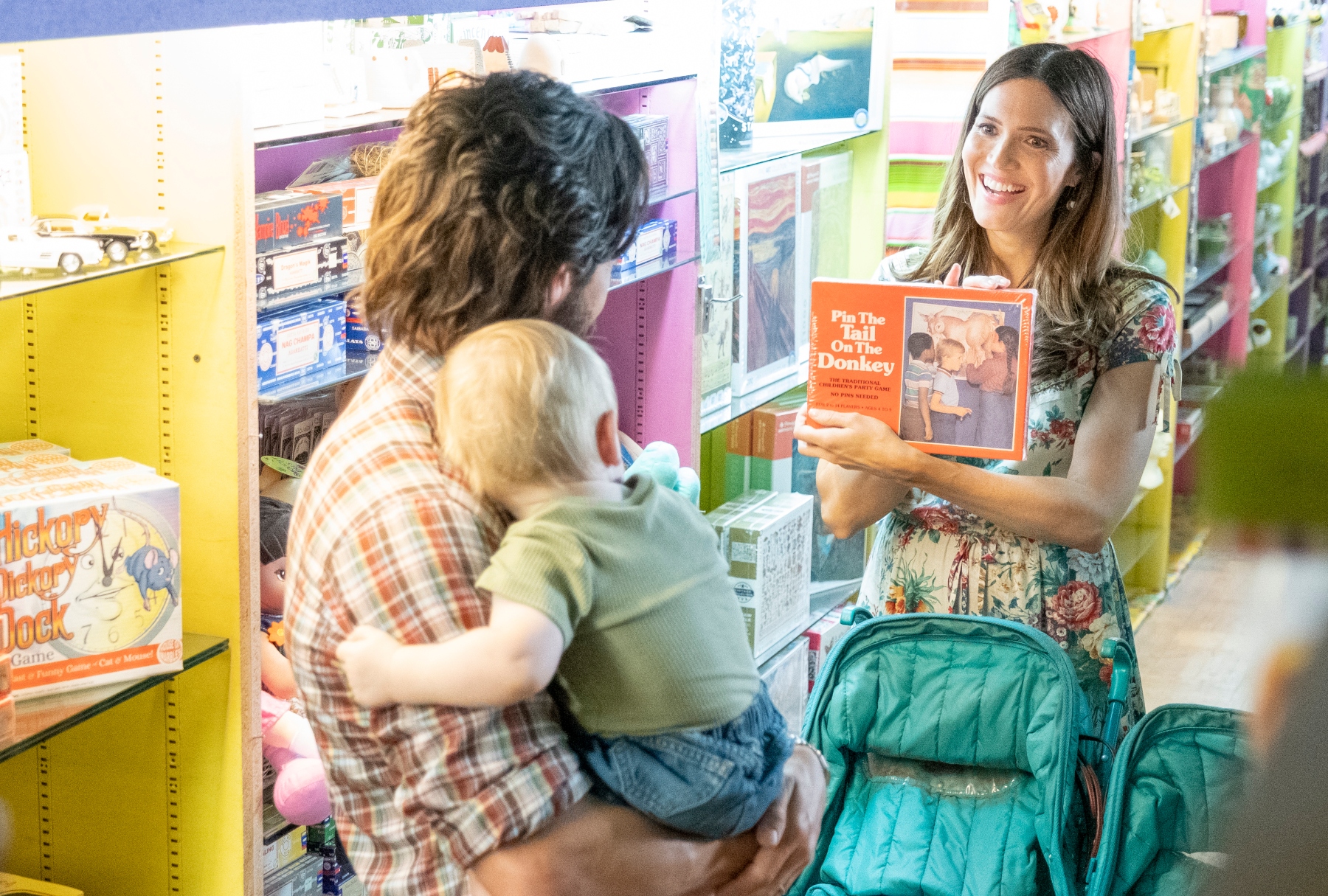
The first two seasons are constructed around the mystery of how their father Jack (Milo Ventimiglia) dies, and in the penultimate episodes, viewers said a final farewell to Rebecca (Mandy Moore), their imperfectly perfect mother whose slow fade into dementia accelerated until it became a brakeless train. The trick with these two and everyone else in the show is that there are no final goodbyes, another mechanism that effectively traps viewers in a perpetual state of anticipatory grief.

None of this is offered snidely or dismissively, by the way.  Rather, it explains the overarching reason why “This Is Us” may be one of the last non-procedural dramas that transcends partisanship.

Milo Ventimiglia as Jack and Mandy Moore as Rebecca on “This Is Us” (Ron Batzdorff/NBC)Until a couple of years ago a firm called E-Poll Market Research surveyed Democrats and Republicans to find out which TV shows were their favorites, and “This Is Us” ranked at the top of the charts among those who identify with either party.

The last such poll, recorded in February 2020 – an eon before the election, the denial of its result and the insurrection that followed – revealed it to be the second-favorite show broadcast show among Democrats and the favorite show among Republicans. There are many ways to interpret this. Everyone loves an inter-generational drama depicting the types of struggles we all go through.

And the Pearsons are very much written as the ideal blended family, one that incorporates a Hispanic stepfather and an adopted Black son who was left at a fire station and grew up to become a United States Senator. However, neither Jon Huertas’ Miguel nor Brown’s Randall is presented as living in a race-blind world. Randall, for example,  is the character I connected to the most as a casual viewer, alongside Susan Kelechi Watson’s exemplary performance as his wife Beth, because he struggles with anxiety and crippling perfectionism. He and Beth support one another, and he fails her but steps up again and again.

His humanity, thoughtfulness and swells of empathy make him a dream politician: a man who truly cares about serving his constituents. (So yes, that makes him the right wing’s picture of an acceptable Black man. The larger point is he’s simply the type of person anyone would want in their lives, which is why Brown won an Emmy and a Golden Globe for playing him.)

And while the finale is unlikely to be the mass viewing experience that, say, a show like “Game of Thrones” was expected to be, all of this, the data and the long, heartbreaking character arcs, means the show is still the bonfire around which otherwise warring tribalists may gather in peace.

When a show like this comes to an end it is natural to scan the field and see which series may inherit its legacy, but the TV landscape is a tricky place right now. Streaming services are undergoing an identity crisis, with institutions like Netflix enduring their own version of a market correction.

Broadcast networks recently had their own pre-recession bloodletting a week ago, settling into the type of stability offered by medical and cop shows.  “This Is Us” is one of the few family-centered network shows that doesn’t also function as a procedural,  or represent the revival or the continuation of existing IP, like ABC’s “The Conners” or “The Wonder Years.”  Those shows also sort through the challenge of marriage, family, careers, and children, but this drama crafted a distinctly soulful way to filter the elation, anxiety, frustration, and sorrow swirling through those corners of our lives.

It offered and still offers a vessel into which we might empty our twisted innards every week. And it comes by its catharsis cleanly.

The world has drastically changed since series creator Dan Fogelman introduced the Pearsons six years ago, mere weeks before the 45th president was elected. In those fretful, sleepless early days of that chaotic, divisive administration (elected by a constituency for whom “F**k Your Feelings” was a popular motto), “This Is Us” was a safe harbor for our collective mourning.

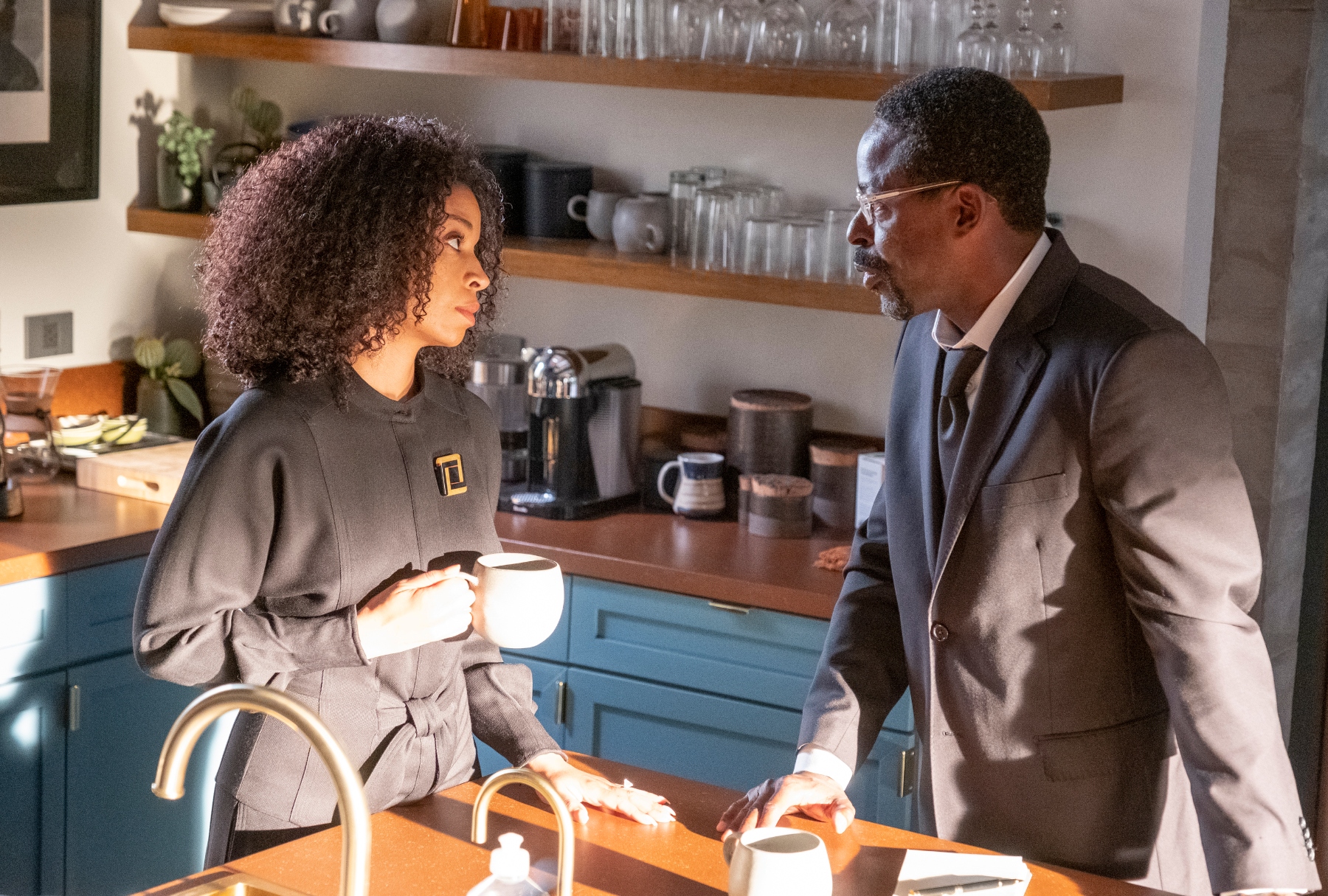
Susan Kelechi Watson as Beth and Sterling K. Brown as Randall on “This Is Us” (Ron Batzdorff/NBC)Whether through Randall’s struggles with a corporate job he hated or Rebecca’s worries about her insufficiency as a mother or Kate’s struggles with self-acceptance or Kevin’s anger at not being taken seriously, it offered and still offers a vessel into which we might empty our twisted innards every week. And it comes by its catharsis cleanly.

The absence of a true successor says more about us as a people, and what the people in charge of greenlighting TV series think about us than it does about “This Is Us.” We the people are fractured, and predictably broadcast TV is responding by doubling down by serving us familiar brands and genres instead of making a play for some idea of shared humanity that doesn’t seem to exist.


Want a daily wrap-up of all the news and commentary Salon has to offer? Subscribe to our morning newsletter, Crash Course.


Nevertheless, there may be some comfort in knowing “This Is Us” is not the first or last of its kind. It stepped into the void left by the modestly-rated but extremely “Parenthood” and “Brothers & Sisters,” shows that picked where relationship dramas that came before them dropped off. Executive producer Ken Olin starred in one of the best known of them, “Thirtysomething.” (He also co-produced “Brothers & Sisters.”)

Streaming services and syndication promise that we should always be able to find it until the next broad-appealing tearjerker reveals itself, whenever that may be. Until that happens we can at least take solace in the wisdom Randall’s father William (Ron Cephas Jones) offers to Rebecca before her character takes her well-earned rest.  “The way I see it,” he says, “if something makes you sad when it ends, it must have been pretty wonderful when it was happening.” And if the joyful wailing is substantial enough, something like it will tap into that feeling again.

The finale of “This Is Us” airs at 9 p.m. Tuesday, May 24 on NBC. All episodes are streaming on Hulu.

More stories like this:


Worried about coming off as fake? Relax: New study says humans are terrible at gauging authenticity

If there is one human trait that is universally prized, it is authenticity. Our literary heroes attest to this: protagonist Holden Caulfield of J.D. Salinger’s “The Catcher in the Rye” famously denounced the bulk of humanity as “phonies” — epitomizing the human tendency to valued those who remain genuine and deride fakers. Accordingly, most of us, Holden included, like to believe that we are skilled at differentiating between individuals who are authentic and those who are phony.

Unfortunately, we may not be that good at gauging others’ genuineness — even when we believe we are. That’s according to a new study, which found that it’s much harder to figure out if someone’s being authentic than most of us thought.

RELATED: How to tell if someone is lying without even hearing them talk

In an article published by the journal Psychological Science, researchers from Columbia University surveyed a cohort of subjects and found that while most people assume they can ascertain others’ authenticity, their self-rated authenticity was often at wild odds with how individuals rated their own authenticity.

In other words: few can tell when someone is being fake.

“Past research has found that our radar for deception detection is pretty weak. This seems to be adaptive — we’re biased to see each other as truthful largely because it benefits trust and cohesion as social groups.”

As the researchers explained: “[P]erceived authenticity was biased. First, other-ratings of authenticity were more positive than self-ratings. Second, authentic raters rated other individuals as more authentic; that is, raters were biased by their own authenticity.”

Finally, the authors found that “expectations that other people will see you as authentic” were “uncorrelated with other-ratings of authenticity” — meaning that other people can’t tell when you are or aren’t being authentic. In other words: f you’re a sociopath, walk tall: no one can tell you’re lying about your disposition. 

As researchers summarized in their abstract, “Overall, we found no evidence that people can accurately identify who is authentic.”


Want more health and science stories in your inbox? Subscribe to Salon’s weekly newsletter The Vulgar Scientist.


So is authenticity dead? Should we all abandon any effort to be genuine and honest in our own lives? The study’s coauthors actually wax philosophical on this topic — and notably, they argue we should not prize authenticity any less than we already do. 

“Authenticity is robustly linked to increased happiness, well-being and better engagement with work. In fact, given that other people tend to project their authenticity on to you, you can worry less about what other people think of you and focus on being true to yourself.”

“Our practical advice for readers would be to still seek out and pursue authenticity in your daily lives,” Erica Bailey, a PhD candidate at Columbia Business School’s Management Department and co-author of the paper, told Salon by email. “Although our findings suggest that other people struggle to accurately recognize whether you are being authentic, it is still a psychologically beneficial experience for an individual to have.”

Bailey added, “Authenticity is robustly linked to increased happiness, well-being and better engagement with work. In fact, given that other people tend to project their authenticity on to you, you can worry less about what other people think of you and focus on being true to yourself.”

These findings are reminiscent of what scientists have learned about detecting liars. Although we would like to believe that there are certain traits which give away if a person is lying, these assumptions are often false. Someone may seem hesitant to answer questions because of reasons that have nothing to do with dishonesty, for instance. 

“I think it’s common to look for physical signs, like lack-of-eye-contact, to indicate deception,” logician Miriam Bowers-Abbott told Salon last year. Yet she added, “our world is more multicultural than it used to be, and there are many cultures where it’s more normal to use less eye-contact. So, eye-contact isn’t always a great clue.”

Part of the problem is that people who lie or present inauthentic versions of themselves often do not feel particularly uncomfortable with the practices. As such, it can be harder for others to spot their behavior.

“Signal reduction in the amygdala,” the part of the brain that is linked to emotion, “is sensitive to the history of dishonest behavior, consistent with adaptation,” according to a 2016 study published in Nature Neuroscience. “The extent of reduced amygdala sensitivity to dishonesty on a present decision relative to the previous one predicts the magnitude of escalation of self-serving dishonesty on the next decision.”

In other words, “What begins as small deviations from a moral code could escalate to large deviations with potentially harmful consequences.”

As Bailey put it, the bottom line is that we should not automatically assume that we can know who is authentic and who is not. Our initial assumptions may prove unreliable.

“It would be difficult to tell who is faking authenticity!” Bailey explained. “Past research has found that our radar for deception detection is pretty weak. This seems to be adaptive — we’re biased to see each other as truthful largely because it benefits trust and cohesion as social groups.”

For more Salon articles on psychology:

At least 21 dead in Texas school shooting: “They f**king failed our kids”

A South Texas town is reeling Tuesday night after at least 21 people — including 19 students and two adults — were killed and an unknown number of others wounded by a gunman during a mass shooting at a local elementary school.

“They fucking failed our kids again,” Fred Guttenberg, father of Parkland school shooting victim Jaime Guttenberg, said during an MSNBC interview after Tuesday’s massacre. “How many more times are we gonna sit back? … How many more times?”

Julián Castro, a former San Antonio mayor, HUD secretary and 2020 Democratic presidential candidate, said on the same network that “this has become part of who we are as a country.”

“The free availability of guns has not made us safer in the United States or here in the state of Texas,” he added.

The shooting occurred at Robb Elementary School in the town of Uvalde, 85 miles west of San Antonio. Texas Gov. Greg Abbott, a Republican, said in a statement that the shooter — who reports now indicate may have had an assault-style rifle and a handgun — shot and killed his grandmother before going on a rampage at the school at around 11:30 a.m.

“He shot and killed, horrifically and incomprehensibly, 14 students and killed a teacher,” Abbott said of the shooter, relating the known death toll at the time.

The gunman, who multiple law enforcement sources have since identified as 18-year-old Salvador Ramos, was fatally shot by law enforcement responding to the crime scene.

The governor also said that two police officers sustained non-life-threatening injuries during an exchange of gunfire with the shooter.

Around 600 second- through fourth-grade students attend Robb Elementary School. Distraught parents rushed to the campus trying to locate their children in the wake of the shooting.

“We can’t find my daughter,” Brandon Elrod, the father of a missing 10-year-old girl, told ABC 6. “She might not be alive.”


Want a daily wrap-up of all the news and commentary Salon has to offer? Subscribe to our morning newsletter, Crash Course.


Pete Arredondo, police chief of the Uvalde Consolidated Independent School District, said during an afternoon press conference that several adults and students had been injured in the attack.

“At this point, the investigation is leading to tell us that the suspect did act alone during this heinous crime,” he said.

According to the Gun Violence Archive (GVA), Tuesday’s incident is now the deadliest U.S. school shooting in nearly a decade, since the December 2012 Sandy Hook Elementary School massacre in Connecticut, in which 28 people were killed. The 2018 Marjory Stoneman Douglas High School shooting in Parkland, Florida, took 17 lives.

GVA says there have been at least 212 mass shootings and at least 7,584 gun deaths — including 411 children under the age of 12 — in the United States so far this year.

Data released Monday by the FBI revealed that U.S. active shooter incidents in 2021 soared by more than 50% from 2020 and nearly 97% from 2017.

Progressive lawmakers joined gun control advocates in demanding congressional action.

“What are we doing? What are we doing?” asked Sen. Chris Murphy, D-Conn., in an emotional Senate floor plea. “This only happens in this country and nowhere else. Nowhere else do little kids go to school thinking that they might be shot that day.”

Meanwhile, Republicans offered their customary thoughts and prayers. Rep. Tony Gonzales, R-Texas, whose district includes Uvalde, tweeted, “Children are a gift from the Lord; they are a reward from him. Jesus said, ‘Let the little children come to me, and do not hinder them, for the kingdom of heaven belongs to such as these.'”

In March, Gonzales boasted on Twitter that “I voted NO on two gun control measures in the House today. I am a proud supporter of the Second Amendment and will do everything I can to oppose gun grabs from the far Left.”

Ricky Gervais goes on a TERF-y tirade in new Netflix special, continuing his transphobic brand

Following his string of transphobic tweets and a controversial Golden Globes hosting gig, Ricky Gervais is reiterating his harmful rhetoric and remarks, this time with a new Netflix comedy special.

In the opening of his stand-up special “SuperNature,” the British comedian-actor-director launched into a transphobic rant, specifically targeting trans women.

“Oh, women! Not all women, I mean the old-fashioned ones. The old-fashioned women, the ones with wombs. Those fucking dinosaurs. I love the new women. They’re great, aren’t they? The new ones we’ve been seeing lately. The ones with beards and cocks. They’re as good as gold; I love them,” Gervais quipped.

“And now the old-fashioned ones say, ‘Oh, they want to use our toilets.’ ‘Why shouldn’t they use your toilets?’ ‘For ladies!’ ‘They are ladies — look at their pronouns! What about this person isn’t a lady?’ ‘Well, his penis.’ ‘Her penis, you f**king bigot!’ ‘What if he rapes me?’ ‘What if she rapes you, you f**king TERF whore?'”

The cheap jokes continued when Gervais spoke about Kevin Hart, who publicly stepped down from a 2018 Oscars hosting appearance after his past homophobic tweets resurfaced.

“You can’t predict what will be offensive in the future. You don’t know who the dominant mob will be,” Gervais said. “Like, the worst thing you can say today, get you canceled on Twitter, death threats, the worst thing you can say today is, ‘Women don’t have penises,’ right? Now, no one saw that coming. You won’t find a 10-year-old tweet of someone saying, ‘Women don’t have penises.’ You know why? We didn’t think we fucking had to!”

RELATED: The fall of Ricky Gervais: How did the once-brilliant star of “The Office” end up here?

Towards the end of his stand-up, the comedian attempted to explain his jokes and offer his backhanded support to the trans community:

“Full disclosure: In real life of course I support trans rights. I support all human rights, and trans rights are human rights. Live your best life. Use your preferred pronouns. Be the gender that you feel that you are. But meet me halfway, ladies: Lose the cock. That’s all I’m saying.”

Just a few hours after its debut, Gervais’ contentious set garnered backlash on social media from multiple trans allies who emphasized that such offensive takes are not comedic material.

“Ricky Gervais has a new stand up show out on Netflix today,” one user tweeted. “5 minutes in and he’s making jokes about trans women attacking & raping people in public bathrooms. To him we exist only as a punchline, a threat, something less than human.”

“Ricky Gervais New Stand Up Show #SuperNature makes jokes about trans women attacking & raping people in public bathrooms,” another user wrote. “This isn’t comedy. This is making cheap, nasty stereotypes out of a minority group. Please, if you’re Transgender or Support Trans lives, don’t watch this.”

A separate user tweeted his decision to cancel his Netflix subscription over Gervais’ special: “In honour of Ricky Gervais and his 2-4-1 rant on trans people and cancel culture, I am in fact, cancelling. Thanks,” the user wrote, ending his message with the hashtag #TransRightsAreHumanRights.

Gervais’ TERF history

Gervais’ transphobic tirades and views are not a new incident. The comedian previously came under fire in 2016, when he poked fun at Caitlyn Jenner at the Golden Globes, and in his 2018 Netflix comedy special “Humanity,” in which he once again made jabs at Jenner. In 2019, Gervais was condemned for his thread of transphobic tweets, which were reportedly in response to the satirical Twitter account Jarvis Dupont.

“We need to protect the rights of women,” Gervais wrote in one of his tweets. “Not erode them because some men have found a new cunning way to dominate and demonise an entire sex.”

“But if I’ve said anything transphobic you should report me. Twitter has rules in place to guard against that sort of vile bigotry,” he continued. “My account will be closed down and you’ll be proved right and will have saved millions of lives. Why aren’t you doing this?”

Gervais later told The Hollywood Reporter that his comments were just “taking the piss out of Jarvis Dupont” and other accounts. He also shifted the blame onto social media critics, stating that people were too quick to take offense to crude jokes.


Want a daily wrap-up of all the news and commentary Salon has to offer? Subscribe to our morning newsletter, Crash Course.


“And this is the problem. You can say, ‘Listen, I was joking. It’s a joke.’ But that’s not always enough for people,” he said. “They go, ‘Well, why were you joking?’ Also, add to that the nature of Twitter — it’s so curt, there’s no nuance, it’s there forever out of context.”

Netflix and TERFs

Gervais’ “SuperNature” joins a list of Netflix specials featuring anti-trans comedians, including Gervais’ “Humanity” along with Dave Chappelle’s “The Closer.” In the latter, the disgraced comedian declared he’s “team TERF” — referring to trans-exclusionary radical feminists, who don’t recognize trans women as “real” women — and made demeaning jokes concerning trans women’s genitals.

Following its premiere, “The Closer” earned criticisms from trans activists, allies and Netflix employees, who organized a walkout protesting the streaming giant’s choice of content. Despite the outrage, Netflix head Ted Sarandos offered support for Chappelle and his comedy, bluntly stating that “content on screen doesn’t directly translate to real-world harm.”

“With The Closer, we understand that the concern is not about offensive-to-some content but titles which could increase real world harm (such as further marginalizing already marginalized groups, hate, violence etc.),” Sarandos wrote, per CNN. “While some employees disagree, we have a strong belief that content on screen doesn’t directly translate to real-world harm.”

With Gervais’ latest special, Netflix has made it clear that it has no problem with transphobic comedians nor does it have an issue with providing them a platform to spew inflammatory statements, which mind you, are supposedly just “jokes.”

More stories you might like:

A clear explanation on chicken stock vs. broth

The two terms are used interchangeably for recipes like chicken noodle soupchicken pot pie, or Golden Chicken Broth with Real Egg Noodles, but chicken stock and chicken broth are not the same thing. Let me repeat myself: stock and broth (whether it be chicken or beef) are not the same thing. OK — but what’s the difference between the two? Chicken stock is made with clean chicken bones, plus mirepoix (carrots, celery, and onions), fresh and dried herbs such as bay leaves and sprigs of thyme, and salt and pepper. The key is that the bones are free of any meat or cartilage. The stock gets its rich flavor and fattiness from the residual cartilage in the bones. Chicken broth, on the other hand, is made with chicken meat (such as a whole chicken), as well as the same mirepoix blend, herbs, and spices.

One of Ina Garten’s most popular recipes — chicken stock — is made with three 5-pound store-bought rotisserie chickens. The name is inaccurate, as this is actually an example of chicken broth, but it’s so delicious (and we love Ina) that we’re not going to complain.

Since there tends to be confusion between stock and broth, I turned to Harold McGee’s “On Food and Cooking” for a definitive answer. Here’s what he says:

“A classic meat stock should be as clear as possible, so that it can be made into soup broths and aspics that will be attractive to the eye. Many of the details of stock making have to do with removing impurities, especially the soluble cell proteins that coagulate into unsightly grey particles.”

If you’ve ever made homemade chicken stock or soup, then you’ve probably seen those fatty particles floating at the top. You might leave them as is (flavor, right?), but for a soup that McGee would want to eat, skim them from the surface using a fine-mesh sieve.

Here’s how to make chicken stock that would make McGee proud:

How to make chicken stock

To develop even more flavor in your chicken stock, start with roasted bones and roasted vegetables. Spread the chicken carcass and bones on a sheet tray along with chopped onion, celery, and carrots roast until the bones are deeply golden brown (this will take about 30 minutes). Pour off the drippings — feel free to reserve them for another use, such as gravy for roast chicken. Carefully add the chicken bones and vegetables to a large stock pot, then add two sprigs of thyme, one bay leaf, and a tablespoon of black peppercorns. Fill the pot with water until all of the ingredients are fully submerged and simmer for three hours. Season with kosher salt to taste then strain the stock; let it cool before transferring it to glass mason jars or quart containers and placing it in the refrigerator. If you are planning to freeze some of the stock, leave an inch or two of room at the top so that the stock has room to expand as it freezes and then defrosts.

Recipe: Chicken Stock

I need to know: What’s the difference between mezcal and tequila?

Mezcal and tequila are often used interchangeably for cocktails (I’ll take two smoky mezcal margaritas, please), but the truth is that they’re two very different Mexican spirits. Ever heard the saying, “All squares are rectangles, but not all rectangles are squares.” For starters, tequila is a type of mezcal, but mezcal is not a type of tequila. “The key differentiator is that while mezcal can be made from many varieties of agave, tequila can only be made from one: blue agave,” explains Autumn Chiklis, co-founder of The Pink Pig Tequila. Ahead, we break down the key differences between these two spirits.

Where they’re made

Beyond the varieties of agave used to make mezcal and tequila, the two are produced in different parts of Mexico. According to Chiklis, there are nine regions throughout Mexico where mezcal can be produced (the most popular region being Oaxaca) and only five where tequila can be produced (the most well-known being Jalisco, where the actual town of Tequila is located).

How they’re made

Tequila and mezcal are produced in completely different ways, which largely contributes to the distinct flavor profiles of these two agave-based spirits. But first, a quick lesson in botany: Both tequila and mezcal are made with piña, which is the word used to describe the core of the agave plant (piña translates to pineapple in Spanish and the center of the agave plant looks like a pineapple).

Here’s where the two diverge: Tequila is made by cooking piña in ovens, then shredding and fermenting it before distilling it in copper pots. Mezcal, on the other hand, is made by cooking the piña inside an underground pit that’s lined with a combination of volcanic rocks, wood, and charcoal, says Chiklis. And instead of using copper pots, mezcal is distilled in clay pots.

Once distilled, both tequila and mezcal are typically aged in oak barrels anywhere from a couple of months to years and years and years. “Both tequila and mezcal, when aged for two months and up to twelve months, are categorized as reposado. If they are aged longer than that, typically one to four years, they fall under the añejo category,” explains Chiklis. If they’re not aged at all, they’re considered “blanco.” Blanco, which is clear rather than tinged yellow or brown, is the type of mezcal you’re most likely to encounter in the States, and the kind of tequila most often used in margaritas.

What do they taste like?

We’ve already talked about the fact that agave is cooked in two distinct ways to make mezcal and tequila. So how does that affect the end flavor? The smoke swirling in the air in the pit gives mezcal its signature smoky depth. “If you grill a chicken breast versus if you boil a chicken breast, the flavor is going to be much different,” explains James Simpson, beverage director of Espita Mezcaleria, comparing the two cooking processes. Beyond the smokiness, Simpson says mezcal has an earthy quality with deep, caramelized flavors.

To really evaluate both tequila and mezcal, Simpson recommends serving them at room temperature in a wide glass (like a clay copita) so that you can appreciate both their aroma and flavor.

But wait . . . Why is tequila so much more popular?

In the last five years or so, mezcal has become more popular as a spirit, but historically, tequila has been a staple of the American bar scene. “Tequila has gone down a more industrial path. It went through a huge growth that mezcal never has,” says Simpson. “When we talk about tequila, we’re really talking about one type of mezcal that has gotten a lot of money and experienced a huge boom in the U.S.,” adds Simspon. Celebrity-backed tequila brands like Kendall Jenner’s 818 Tequila, George Clooney’s Casamigos, and Nick Jonas’s Villa One have certainly helped boost enthusiasm for the spirit. Mezcal, on the other hand, is quirkier and often made in much smaller batches, meaning it translates less well to mass production.

Mezcal cocktail recipes

Mezcal Michelada

You won’t always find mezcal in this classic Mexican cocktail — but you’ll be so glad when you do.

Mezcal Amaro Cocktail

This delicious, herbal cocktail pairs Sombra mezcal with Averna amaro — an Italian digestif. To balance some of the intensity of the two liqueurs, recipe developer Samantha Weiss Hills added grapefruit juice, lime juice, and ginger beer.

Roasted Strawberry Margarita

Roasted strawberry purée transforms this mezcal-based margarita into a complex, slightly sweet, slightly smoky drink that we’re sure to sip on repeat all summer long.

Tequila cocktail recipes

Margarita

We can’t talk about tequila without sharing our favorite recipe for a margarita. It calls for a classic combination of tequila, Cointreau, fresh lime juice, and agave syrup — plus salt and lime wedges for a garnish. As for what type of tequila to use, we recommend a smooth reposado (lightly aged), such as Cazadores Reposado. It doesn’t pack too much of a punch and balances well with the rest of the flavors in the drink.

Tequila Manhattan

Move aside, whiskey, and make room for tequila. We had a little (OK, a lot) of fun changing up the recipe for this timeless cocktail by swapping an Añejo tequila in place of the usual whiskey and incorporating mole bitters.

Tequila Old Fashioned

Once again, we said goodbye to whiskey and gave a great big hello to tequila in this delicious twist on an old fashioned drink. Tequila still contains plenty of warm, sweet flavors like vanilla and caramel so you’ll get to enjoy all the cozy feels.

Walmart pulls Juneteenth ice cream flavor following accusations of “profiting from pain”

Over the last few years, a fair amount of ice cream flavors have achieved a certain level of viral popularity. Look no further than Dolly Parton’s Strawberry Pretzel Pie, a collaboration with Jeni’s, or Oddfellow’s “Bodega Capsule,” which was released in partnership with Desus Nice and The Kid Mero.

Over the past few days, however, Walmart quickly unstocked its branded “Juneteenth” ice cream. Its release had gone viral for a very different reason: allegations of “profiting from pain.”

The flavor of Walmart’s Juneteenth ice cream, which was sold under its Great Value brand, was swirled red velvet and cheesecake. The message on the carton, which featured an image of two Black hands high-fiving, said “share and celebrate African-American culture, emancipation and enduring hope.” 

Related: Juneteenth soul food festival canceled in Arkansas after all-white panel of hosts revealed

Juneteenth, which was officially recognized as a federal holiday in 2021 under President Joe Biden, commemorates the emancipation of enslaved people in the U.S. Its name stems from June 19, 1865, when Maj. Gen. Gordon Granger in Galveston, Texas, issued General Order No. 3, which announced that in accordance with the Emancipation Proclamation, “all slaves are free.” 

Several months later, the 13th Amendment was ratified, abolishing slavery in the final four border states that had not been subjected to former President Abraham Lincoln’s order.

Over the past few days, images of the Juneteenth-themed ice cream quickly spread on Twitter. Marlon Amprey, a Maryland state delegate, shared a photograph with the caption, “We got Juneteenth ice cream y’all. Still waiting on reparations though. Sigh.” 

Another Twitter user, @eunique, wrote: “It’s problematic when white owned brands and companies treat Juneteenth as another commercialized (co-opt) opportunity void of any commitments to the AA community, change or simple understanding of what Juneteenth is.” 

The term “profiting from pain” started to trend on social media alongside photos of the ice cream. 

Additionally, the word “Juneteenth” was listed as trademarked, a detail that did not go unnoticed by some Twitter users.

“Anybody want to bet how many Black people were in the room when #Walmart decided to trademark the word #Juneteenth and release product lines around it?” Tabitha St. Bernard-Jacobs tweeted


Want more great food writing and recipes? Subscribe to “The Bite,” Salon Food’s newsletter.


The flavor was created for Walmart by Balchem Corp., a food and beverage company. According to the U.S. Patent and Trademark Office’s (USPTO) database, the Balchem Corp. filed to trademark the word within the “staple foods” category for “flavor enhancers used in food and beverage products; bakery goods and dessert items, namely, cakes, cookies, pastries, and frozen confections for retail and wholesale distribution and consumption on or off the premises excluding candies and popcorn.” 

Balchem applied to trademark “Juneteenth” in September 2021. On Monday, after the new ice cream flavor went viral, the company filed an express abandonment of its application, according to the USPTO database

Similarly, Walmart has opted to pull the Juneteenth ice cream from its shelves. In a statement to Fox Television Stations, Walmart said it was reviewing its product assortment and would “remove items as appropriate.”

It added, “Juneteenth holiday marks a celebration of freedom and independence. However, we received feedback that a few items caused concern for some of our customers and we sincerely apologize.”

Read more: 

“Why are we here?”: Chris Murphy literally begs GOP to compromise on guns after Texas shooting

Senate Republicans were denounced on the floor on Tuesday for their refusal to address America’s gun violence crisis.

Sen. Chris Murphy of Connecticut, who represents survivors of the fatal mass shooting in Sandy Hook,

“Mr. President, 14 kids — dead — in an elementary school in Texas right now. What are we doing? What are we doing?” he asked.

“Our kids are living in fear every single time they set foot in the classroom because they think they’re going to be next. What are we doing? Why do you spend all this time running for the United States Senate, why do you go through all the hassle of getting this job, of putting yourself in position of authority, if your answer as the slaughter increases, as our kids run for their lives we do nothing? What are we doing?” he asked. “Why are you here?”

“Our heart is breaking for these families. Every ounce of love and thoughts and prayers we can send we are sending. But I’m here on this floor to beg, to literally get down on my hands and knees and beg any — beg my colleagues. Find a path forward here. Work with us to find a way to pass laws that make this less likely,” he asked.

“Why are we here?” he asked. “What are we doing?”

Watch:

“Conversations with Friends” challenges us to rethink the desirability of the woman in pain

Near the end of the first episode of “Conversations with Friends,” we see Frances (Alison Oliver), the main character, curled into the fetal position on the bathroom floor with a sheet of painkillers nearby. When Frances’ best friend Bobbi (Sasha Lane) finds her like this, she remarks: “You suffer.” Frances does. 

The series goes to great lengths to show the extent to which Frances’ period pain determines the course of her friendships and romances.

The new Hulu adaptation of Sally Rooney‘s 2017 novel is startling in its unflinching portrayal of the specific, mundane agony of menstrual pain. This early scene of Frances’ misery establishes a pattern that the rest of the series plays out: this particular wretched night passes, but the thing about menstrual pain is that it’s only ever a matter of time until it’s back. Frances’ periods mark time across the 12 episodes, measuring intervals underneath the flurry of going on holiday, resuming the school term, breaking up, making up. Her pain is brutal and regular, breathtaking and predictable, devastating and perfectly ordinary. 

“Conversations with Friends” is not primarily about conversation, nor friends. It is about female pain. This is not to say that pain is inevitably more important than either conversation or friendship. But the series goes to great lengths to show the extent to which Frances’ period pain determines the course of her friendships and romances. 

RELATED: “Normal People” takes a common teenage love story and matures to a rated-M, sex-driven heartbreak

Ostensibly, the plot follows the ménage-à-quatre between Frances; her best friend and former lover Bobbi (Sasha Lane); their new friend Melissa (Jemima Kirke), a glamorous 30-something writer; and Melissa’s husband Nick (Joe Alwyn), a shy, peripherally famous actor. Frances and Nick fall into an intense affair, while Bobbi and Melissa are drawn to each other. The two college students theorize everything; their wide-ranging conversations take on the ambitious task of deconstructing conventional social categories and relationship schemas — the wife, the mistress, the friend, the older man, etc. Through them, the series asks: What happens when you think outside these typecast roles? What relationships are possible when you let go of these tropes?


Want a daily wrap-up of all the news and commentary Salon has to offer? Subscribe to our morning newsletter, Crash Course.


The preliminary answer is: You might find yourself around the dinner table with your best friend/ex-girlfriend/current roommate, your boyfriend, and his wife. This polyamorous intrigue occupies the attention of most of the series’ critics, but in addition to the roles of ex-girlfriend, other woman, and younger mistress, Frances fits the mold of another stock character: the suffering woman.

 Leslie Jamison has written brilliantly about this trope and its perilous balance of accuracy and fantasy. The wounded woman figure is iconic, embedded in cultural discourse from Greek mythology to the Virgin Mary to contemporary pop music. “We may have turned the wounded woman into a kind of goddess, romanticized her illness and idealized her suffering,” Jamison writes. But, she continues, “that doesn’t mean she doesn’t happen” — we can critique how she’s been idealized, but that in itself doesn’t make her pain less real. 

The series, like Rooney’s novel, explicitly threads together Frances’ menstrual pain with her romantic distress. “Female pain” as it is culturally construed supposedly encompasses both the difficulty of falling in love with a married man and the experience of being wracked by cramps on a monthly basis. As Jamison puts it, the ubiquity of this trope suggests the possibility that “being a woman requires being in pain, that pain is the unending glue and prerequisite of female consciousness.” Though Frances works hard to hide her obliterating menstrual agony from Nick and Bobbi, her pain thrusts her into a trope that shapes the terms by which she can relate to others. 

Alison Oliver as Frances and Joe Alywin as Nick in “Conversations With Friends” (Enda Bowe/Hulu)“Conversations with Friends” explores this idea of an integral link between feminine sexuality and misery. Repeatedly, we see Frances in bed, gasping with the pain of her cramps as she reads a text from Nick, typing out and deleting a reply. In Episode 6, Frances’ period arrives immediately after a blissful interval with Nick in Croatia. Back home, the camera lingers on her blood-stained, wadded-up jeans on the bathroom floor. This time, the pain is so intense that she goes to the hospital, fearing a miscarriage; although that fear proves false, it floats the spectral explanation that Frances’s suffering is the direct result of the affair. 

“Is it just my period, or . . . ?” Frances asks the gynecologist in the hospital after the harrowing miscarriage scare. This question contains several others: Is this normal? Am I supposed to hurt this much? Do all women feel like this, or is something really wrong? 

“Have you heard of endometriosis, Frances?” her doctor asks once her ultrasound results have come back. The medical explanation initially serves to shut down any speculations about direct causality, or any attempt to interpret Frances’ pain as some cosmic punishment for violating the norms of heterosexual monogamy. But, at the same time, the diagnosis itself can’t resolve the ineffable illogic of the experience of pain itself. Frances has a name for her condition, but she still suffers. Establishing Frances’ menstrual pain as the necessary counterpoint to the various interpersonal dramas, the series insists that we understand her pain at once embodied and laden with symbolism. These are not mutually exclusive. 

Through Frances, “Conversations with Friends” probes the trope of the suffering woman, exploring its limits as well as the intimacies it makes possible. Consider the scene in which Nick finally witnesses her suffering directly, tipped off by Bobbi about a particularly bad episode since Frances cannot bring herself to confide in him on her own. Nick enters her bedroom and sees a perfect tableau of feminine fragility: Frances, on the bed, legs drawn up, hair loose, weary, shy. “I was worried about you,” he said. “Are you in pain?” She answers indirectly, almost sheepishly: “It’s nearly gone now.”

In this scene, Nick seems drawn to her pain like a moth to light — this is a vulnerable Frances, not the opaque, sharp-tongued woman whose silence so often disturbs and intimidates him. It’s only now, when he sees her body in pain for the first time, that he confesses his feelings: “I love you, Frances. I should have said that earlier, but I didn’t know if you wanted to hear it or not.” Now, though, he knows that she does; her pain has made her transparent to him. A beatific smile breaks across her face. 

RELATED: The pain gap: Women (still) aren’t taken seriously by doctors — and it’s killing us

“Let’s just be happy from now on,” Nick says, wrapping her up in a blanket, caressing her cheek. Pain prompts intimacy — this care is precisely what Frances craved but could not bring herself to ask for outright. Her pain solicits his love; when he offers his affection and concern, her suffering becomes justified, even redeemed. This is the logic within which the Woman in Pain trope operates. 

Alison Oliver as Frances in “Conversations With Friends” (Enda Bowe/Hulu)That Nick’s declaration of love is enabled by her suffering does not necessarily undermine its authenticity, but it does require us to understand the Woman in Pain as a trope of sexual desire, much like “the older man,” “the other woman,” “the ex-girlfriend.” In the final moments of the series, Nick asks why she didn’t tell him about her diagnosis sooner, to which she replies: “I think I was worried that you would treat me like a sick person, and I didn’t want that.”

“Sick person” is an identity category Frances finds herself uneasily inhabiting, much like “younger mistress” or “child of a broken home.” The problem of Frances’ pain is the core preoccupation of “Conversations with Friends”: how can I exist as a woman in pain, a “sick person,” without being read as needy, weak, desperate? How can I share my pain with others without reducing it to relational currency, a token to garner sympathy or affection, a shortcut to accessing intimacy or care that otherwise seems impossible? Outside of the familiar tropes and stock roles, what other conversations could we have about pain?

Near the end of the series, Bobbi levels a memorable critique of normative heterosexuality — “People think in couples. We have to work really hard to resist it.” “Conversations with Friends” is, in part, a story about exploring what happens when we rethink the “couple” as the necessary schema for romantic relationships. It is also a story about rethinking the “suffering woman” as the epitome of feminine desirability. Frances’ pain both enables and derails the possibility of intimacy with Nick. People think in terms of women suffering. We have to work really hard to resist it. 

“Conversations with Friends” is currently streaming on Hulu. Watch a trailer for it, via YouTube:

More stories to check out:

At least 14 children, 1 teacher killed in school shooting in Uvalde, Texas

At least 14 children and one teacher were killed in a shooting at Robb Elementary School in Uvalde County on Tuesday, Gov. Greg Abbott said.

Abbott said the shooter is also dead and is believed to have been killed by responding officers.

Two hospitals in the area are treating those injured in the shooting. Uvalde Memorial Hospital told The Texas Tribune it had received 13 children and one adult from ambulances and buses. Two patients arrived at the hospital dead. Two children have since been transferred to San Antonio for treatment, while a third is pending transfer.

University Health in San Antonio is providing care for one child and one adult connected to the shooting. The 66-year-old woman is in critical condition; details of the child are not available yet.

Uvalde is about 85 miles west of San Antonio.

Abbott identified the shooter as an 18-year-old Uvalde resident. The man abandoned his vehicle and entered Robb Elementary with a handgun and possibly a firearm, the governor said.

Robb Elementary students were transported to the city’s civic center, and parents have been cleared to pick up their children. Earlier Tuesday, the Uvalde Consolidated Independent School District had placed all campuses under lockdown after gunshots were fired in the area.

The Uvalde County Sheriff’s Office and a Uvalde Police Department dispatcher said they could not share other details about the nature of the shooting at this time.

Since 2009, there have been seven shootings in Texas in which at least four victims were killed. In 2018, a student opened fire at Sante Fe High School near Houston, killing 10 people and wounding 13 others.

This article originally appeared in The Texas Tribune at https://www.texastribune.org/2022/05/24/uvalde-texas-school-shooting/.

The Texas Tribune is a member-supported, nonpartisan newsroom informing and engaging Texans on state politics and policy. Learn more at texastribune.org.

A cynic tries plant-based bacon

Flattened gummy worms. Airheads. Sashimi. Plastic? 

The above constitutes the smattering of descriptors I received in my DMs in response to an Instagram story I shared of Hooray Foods’s plant-based bacon sizzling away in my cast iron pan. The wavy, flax-hued strips — streaked with color that I can now only describe as sushi-grade-tuna red — were destined for my standard-issue BLT: toasted sourdough, a generous smear of real (as in Hellman’s) mayonnaise, a couple juicy heirloom tomato slabs and leaves of little gem lettuce. The $50,000 question: Could the faux bacon reliably stand in for the real thing? 

I’ll admit that when I got the email from a Hooray Foods’ spokesperson asking if I’d like to sample their bacon, my first instinct was to politely decline, mainly because I was afraid I wouldn’t like it and didn’t want to say so aloud. I’m something of an evangelist for cooking and eating mostly plants — from green leafies to root veggies, pulses, grains and beans — but I’ve yet to subscribe to the vast and growing meat analog category. 

Related: Writer Nava Atlas reflects on the (vegan) return of her cult-classic “Vegetariana” cookbook

I watched the coconut fat melt from the faux bacon strips, bubbling around them much as pork belly renders its fat in a pan. I would later learn this was an intentional decision for appearance as much as rich mouthfeel, per Hooray Foods food scientist Patrick Dziura. 

“The coconut oil … allows Hooray Foods bacon to cook in its own fat, as coconut oil goes from solid to liquid form when heated, resulting in a great cooking experience and recreating that sizzle people enjoy when cooking pork bacon,” he said. 

It took a little longer, at a higher temperature than the packaging said, to achieve a satisfying crispness in the faux bacon, whose form comprises mainly rice flour and tapioca starch. Finally, I stole a strip for a taste. The brittle crunch of the exterior gave way to a gentle chew in the middle, not unlike the real thing. As Dziura told me, starches mimic bacon’s crisp and chew because “they take on a form of gel as they go through the hydration process.” Then, as you dry-heat them, they naturally harden, similar to when you toast bread. 

Almost immediately, I noticed how much less salty the fake-uhn is — perhaps because I anticipate a sodium bomb upon whenever I tear into a slab of bacon before it fractures into a symphony of smoke, fat and meaty goodness on my tongue. This may explain why the fake-uhn’s umami seemed comparatively muted: a savory, pleasingly mushroomy backbone with a gentle hit of liquid smoke and toasty sweetness from maple syrup. 

Overall, I enjoyed it, though its subtlety proved no match for the BLT, a study in elemental sandwich perfection. Each component speaks just loud enough to balance the others: the tangy, creamy mayo; the juicy acidity of the tomato; the brashly salty, smoky bacon; the sweet, crisp lettuce; the heft and crunch of the bread. Here the faux bacon merely offered a secondary form of starch with savory, faint smokiness. By the second half of the sandwich, I started wishing I’d left it out altogether to enjoy another minimalist classic: the tomato sandwich.


Want more great food writing and recipes? Subscribe to Salon Food’s newsletter.


But upon reflection, it was unfair to put the fake-uhn on trial in such a high-pressure swap-out. In fact, its smoky umami would’ve fared much better as a crumbled accent to the salad I’d made alongside our BLTs, which comprised spicy arugula tossed in avocado-yogurt-lime dressing tinged with raw garlic and piquant scallions. In fact, that’s where the remainder of those starchy strips will go — and perhaps as the garnish on my next bowl of congee or creamy potato soup. 

Regardless, this experiment has me thinking about the ways we might wean ourselves off of Big Ag meat — a cyclically cruel capitalist system that wreaks havoc on our already changing climate. We can mitigate our impact by paying a premium to eat humanely raised, even older animals — which by their price point alone make us eat meat less often. We can swap plant-based analogs into our existing meaty repertoire, knowing that very few ingredients behave quite like beef, pork or chicken do when cooked. For instance, pork inherently comprises the ideal ratio of lean muscle to fat required for traditional sausage making. 

Of course, such ratios offer guides for companies like Hooray Foods, which modeled its bacon to simulate approximately 60 percent “muscle” elements — from starches — and 40 percent fat — from coconut oil. Indeed, food science has reached the point where an Impossible burger can actually “bleed” due to genetically engineered “heme” from soy. All this effort to move the needle a fraction; Americans ate only a shade less meat in 2021 — 224.8 pounds compared to 2020’s 225, according to USDA reports. Until last year, our meat consumption had been on the rise since 2015.

But change starts small and takes time. I learned that Hooray Foods founder and CEO Sri Artham created the company’s faux bacon prototype — featuring red shading and that wavy shape — in his own home kitchen. Then he brought on chef Sam Lippman to fine-tune it before an R&D team was formed to adjust it for manufacturing. 

“The pattern was designed to look as close to the cut of pork belly as possible, featuring the distinction between fat and muscle on the top and bottom of each strip,” spokesperson Olga Verkhotina told me. Likewise, Artham knew that packaging was key to mimicking the full experience, which is why Hooray Foods’ bacon is shingled across an L-board pack. 

The result may resemble candy or plastic to some; it might not work in most instances where I’d traditionally deploy a few strips of cured pork belly. But it can lend smoky umami and textural crunch to plenty of veg-based dishes, if one only takes a chance on it. More importantly, by its very existence Hooray Foods chooses optimism. And what’s not to like about that?

***

Recipe: Blackened brussels sprouts with Hooray Bacon and maple balsamic glaze
From Hooray Foods 

Yields
4 servings
Prep Time
5 minutes
Cook Time
25 minutes

Ingredients

  • 4 pieces Hooray Foods bacon
  • 2 cups brussels sprouts,washed, stemmed and halved
  • Salt and pepper to taste
  • 2 Tbsps cooking oil of your choosing
  • Dash of maple syrup
  • Dash of balsamic vinegar


Directions

  1. Preheat the oven to 400°.
  2. Preheat a large skillet (ideally cast iron) over medium-low. Do not add oil to the pan. When warm, add the Hooray Foods bacon strips, with space in between each. Sear for 90 seconds before turning; flip and cook for 90 more seconds. Continue cooking bacon strips, turning every 30 seconds until crisped, but still slightly pliable (about 4 more times). Transfer to a plate or tray lined with a paper towel, leaving the Hooray bacon grease in the pan. Cut the cooled strips into 1-inch pieces and set aside.
  3. Turn the burner up to medium heat, and add the remaining 2 Tbsps oil. When the oil slides easily around the pan, add the brussels sprouts in a single layer. Sprinkle with salt and pepper, and allow the first side to brown at least 90 seconds undisturbed. Continue cooking, stirring occasionally, until the brussel sprouts are browned on all sides.
  4. Transfer skillet to oven and cook for 10-15 minutes, until sprouts are fully cooked, and edges have a darker, blackened appearance. 
  5. Use a hot pad or oven mitt to transfer the pan back to the stovetop. Turn the burner to medium heat, and add bacon pieces. Cook for 2 minutes, stirring occasionally, to reheat and combine bacon pieces, and marry flavors. Pour a very light dash of syrup and balsamic vinegar over the sprouts. Cook until all visible liquid has evaporated, and sprouts appear evenly coated with the glaze. Taste, re-seasoning as needed, and serve immediately. 


More by this author:

DCCC chairman faces progressive primary challenge after bullying incumbent out of his district

Progressive New York state Sen. Alessandra Biaggi on Tuesday formally announced a primary challenge to U.S. Rep. Sean Patrick Maloney, chair of the Democratic Congressional Campaign Committee, whose recent decision to run in a safer district and effectively boot out a progressive incumbent sparked Democratic ire.

“The Democratic Party should be led by fearless champions—not selfish, corporate politicians,” Biaggi tweeted Tuesday. “I’m launching my campaign to take on Sean Patrick Maloney.”

The announcement from Biaggi followed the release of newly drawn maps and Maloney’s controversial decision to run in the state’s 17th Congressional District rather than the 18th, which he currently represents.

The 17th is currently represented by Rep. Mondaire Jones, who has subsequently announced his intention to run in the newly drawn 10th district, not the 16th, which is represented by another Black progressive Democrat, Rep. Jamaal Bowman.

In an interview with The New York Times published Monday in which Biaggi called Maloney “a selfish corporate Democrat,” she said, “What hurt the party was having the head of the campaign arm not stay in his district, not maximize the number of seats New York can have to hold the majority.”

As The Intercept reported Saturday:

Underneath the district shuffling and refuge seeking is a dire warning for Democrats: Maloney is the chair of the Democratic Congressional Campaign Committee. His entire job is to make sure that Democrats hold their narrow House majority or else the Biden legislative agenda will be completely dead. When the new lines were released, Maloney’s district became one that Joe Biden had carried by 8 percentage points. Jumping into Jones’s district gave him just an extra 2-point advantage. The DCCC chair signaling nervousness about his own district is less than confidence inspiring. […]

Maloney’s move may be the most brazenly selfish district hop in American political history. That’s not said lightly, given that Maloney is operating in an industry—politics—that is populated almost exclusively by some of the most craven, attention-seeking people in our society.

Biaggi has previously bested a more conservative Democrat; in 2018, as a first-time candidate, she defeated state Sen. Jeffrey Klein of the GOP-aligned Independent Democratic Conference despite being massively outspent.

With her new bid to represent New York’s 17th in the U.S. House, she says on her campaign website that she’s running “to protect and defend our democracy, to halt the climate crisis, to grow our supply of affordable housing, and to transform our government and economy to serve us all.”

“New Yorkers need a new generation of strong, fearless, and relentless leaders in Washington,” Biaggi adds. “And that’s exactly what they can expect from me.”

The primary election is set for Aug. 23.

Video: Georgia GOP frontrunner Herschel Walker claims Trump “never said” election was stolen

Hershel Walker, the leading Republican Senate candidate in Georgia, insisted that former President Donald Trump has never said that the 2020 election was rigged or stolen.

In a video that was shared on Twitter this week, Walker speaks to a reporter who questions him about Trump’s false election claims.

“I think you — I think reporters said that,” Walker insists. “I don’t know whether President Trump ever said that because he never said that to me.”

“He says it over and over,” the reporter notes.

“No, no, no, no,” Walker replies. “I’ve never heard President Trump ever say that.”

Watch the video below.

Amber Heard on trial: Johnny Depp’s defamation case is radicalizing young men

If the 2020s are shaping up to be about any one thing, it’s ultimately about how this was the decade in which millions of people decided no amount of evidence or rationality could ever pry them from their dumbest, most reactionary beliefs. We see this in the Big Lie, of course, but also in the ongoing pile-up of asinine right-wing myths and hoaxes currently taking hold like “critical race theory,” accusations that Disney employees are “groomers,” and claims that kids in schools are pooping in litterboxes. If there’s an ethos of this era, it’s that you can believe whatever idiotic thing you want, so long as it’s “anti-woke.” And, of course, any effort to dislodge you from your stupid idea with annoying facts is “cancel culture.” 

In recent weeks, the most virulent example of this hasn’t come from likely culprits Donald Trump or Florida’s Republican governor cursed with permanent constipation face, Ron DeSantis. No, it’s the nauseating defamation trial that pits the bloated remains of what used to be a handsome and promising movie star against a long-suffering actress. In the real world, as many a journalist with a high tolerance for Twitter abuse has reminded us, Johnny Depp’s defamation case against Amber Heard is not legitimate. Any jury that actually follows the evidence should throw the case out, as investigative journalist and podcaster Michael Hobbes recently explained on Twitter. 

RELATED: Why Fox News is obsessed with Johnny Depp, its Manliness Under Siege mascot

And yet, under a deluge of both right-wing media and online vitriol, the preposterous notion that Depp is in the right has taken root. It’s not due to any evidence, as was already shown in a British court. No, it’s just because Depp’s toxic supporters, through sheer belligerence, have willed their false narrative into the public understanding of the case. The social media toxicity has largely been dismissed by the press not as a backlash to #MeToo, but as celebrity worship run amok. But this story is also being driven by right-wing media figures who don’t give a single hoot about “Pirates of the Carribean.”


Want more Amanda Marcotte on politics? Subscribe to her newsletter Standing Room Only.


As Melanie McFarland noted at Salon last month, Depp has become “the celebrity poster model” for the Fox News hysteria over an entirely fictional “war on masculinity.” Last week it was revealed that the Daily Wire, which is shaping up to be a real competitor against Fox News, has also been spending thousands of dollars in social media ads bashing Heard

Right-wing media is smart to invest this much in the false narratives defending Depp because misogyny is the perfect gateway to lead young white men towards a more expansive constellation of reactionary politics. Get them in the door with a story about how feminism and #MeToo have “ruined” women, and then hit them with a larger narrative about the “great replacement,” “critical race theory,” and other conspiracy theories the increasingly fascist right-wing media is using to radicalize their audiences. 

RELATED: Boosted by Candance Owens, The Daily Wire spends thousands on ads to discredit Amber Heard: report

In the wake of the mass shooting in Buffalo, New York that left 10 people dead, there’s been a great deal of attention paid to the “great replacement” conspiracy theory that inspired the alleged shooter, and how it’s been mainstreamed by the right-wing press. On Tucker Carlson’s popular Fox News show alone, the conspiracy theory was hyped on over 400 separate episodes. For understandable reasons — the shooter was targeting Black patrons of a grocery store — most of the discussion has focused on the racist paranoia driving the conspiracy theory that holds that shadowy “elites” are trying to “replace” white Christians with people of color.

Right-wing media is smart to invest this much in the false narratives defending Depp because misogyny is the perfect gateway to lead young white men towards a more expansive constellation of reactionary politics.

But “great replacement” is also a deeply misogynist conspiracy theory. These “elites” — who are either Jews or progressive leaders, depending on who is telling the story — are also said to have pushed white women out of their “natural” roles as homemakers and into the workforce, leading to lower birth rates and the supposed destruction of the white race. This aspect of the conspiracy theory was on full display at the Conservative Political Action Conference held in Hungary over the weekend, in which “traditional” family structures and curtailing reproductive rights were held up as strategies to fight back against this mythical war on white Christians. 


Want more Amanda Marcotte on politics? Subscribe to her newsletter Standing Room Only.


Anti-feminism makes good bait to pull young men deeper into authoritarian — and even fascist — politics.

Polling demonstrates that a distressingly large number of young men long for old-fashioned gender roles. A 2018 poll by Perry Undem, for instance, found that while most teenage girls wanted equality in the workplace and in the home, the majority of teenage boys preferred men to dominate in the workplace while women are stuck at home caring for the family. As feminist Jessica Valenti noted in a 2020 article, male support for female equality has actually gone down in recent years. Not only are young married men still foisting the majority of domestic duties on their wives, but the percentage of men who openly long to have a housewife rose from 17% in 1994 to a whopping 45% in 2014. In reaction, increasing numbers of women are turning their noses up to marriage, preferring to be single rather than be with men who don’t respect them. 

Once you’ve got these guys on board with lies painting feminism as a conspiracy against men, it’s a short jump to convincing them feminism is also a conspiracy against the white race. 

The reason men want inequality is, quite obviously, entirely selfish. Men reject gender equality because, duh, it sounds nice having a full-time unpaid servant and emotional support system at home, all for your benefit. But no one wants to believe they’re a selfish jerk, especially to someone you’re supposed to love, such as a real or even hypothetical wife. So a lot of men are open to narratives, however silly, about how it’s feminists who are the bad guys. They long to hear that it’s men who are the victims of a conspiracy of “selfish” women who supposedly use false accusations and other shady tactics. It’s not true, of course, but we live in times where facts are increasingly discarded if they cut against a will to believe. Once you’ve got these guys on board with lies painting feminism as a conspiracy against men, it’s a short jump to convincing them feminism is also a conspiracy against the white race. 

RELATED: What trial? Johnny Depp is playing the role of a lifetime, pandering to fans outside the courtroom

The Depp/Heard trial is perfect fascist agitprop, which is why right-wing media cannot get enough. As anyone who has glanced at social media can attest, the trial has become an occasion for a staggering number of men to wallow in their false sense of victimization. Heard has become the scapegoat for all this male anger about women’s independence and women’s freedom. That it’s laughably false to view Depp as the victim here clearly doesn’t matter. Heard is an imperfect person, so misogynists can derail any discussion about the case with demands that Depp’s detractors defend every single life choice that Heard has ever made.  But mostly, Depp’s victim status — and therefore the victim status of men generally — can be established through the sheer power of relentless repetition, drowning out all available facts. And once those young men have bought onto one self-pitying right-wing conspiracy theory, they have been softened up to accept all the rest of them. 

Texas Republicans suppress their own voters: More GOP ballots rejected under new voting law

New Texas voting laws are causing a lot of problems for Republican voters, according to a Newsy report ahead of the primary run-off elections Tuesday.

As the report notes, several new rules passed by Texas Republicans in the wake of the 2020 elections put more stringent requirements on mail-in ballots.

One rule passed by Republican lawmakers mandates that voters must put either their driver’s license number or the last four digits of their Social Security number on the envelope containing their ballot.

This has led to a higher number of rejected ballots: Ballot rejections in 2020 ran about 0.8 percent, but in 2022 they’re at 12 percent. The number might seem low, but that’s equal to at least 7,000 people in one Texas county.

Republicans had a higher rate of error than Democrats, meaning there are thousands more Republicans in the state whose ballots aren’t being counted in the primary election.

In March, during the initial primary elections, just 16 of the state’s largest counties had more than 18,000 mail-in ballots that were rejected because they missed the tiny fine print.

One elderly Republican voter noted that the question about the driver’s license or social security number was printed so small she couldn’t read it. Newsy said they calculated it was seven-point font. National election standards that benefit visually impaired people require nothing can be smaller ten-point font.

The first time Texas voted with the new ballot was March 1, so when the state passed the law in December, they had very little time to print the ballots and get them out to voters. But, two months later, for the run-off elections, the ballots are still a mess, the report said.

See the full report below or at this link.

“No time to ask nicely”: Protesters arrested after blocking roads over Manchin, Sinema obstruction

Pro-democracy campaigners in West Virginia and Arizona on Monday risked arrest at sit-ins in downtown Charleston and Tucson, demanding that Democratic Sens. Joe Manchin and Kyrsten Sinema end obstruction of their party’s agenda and allow the Senate to pass reproductive rights, climate action, and voting rights measures.

Campaigners representing a coalition of groups including West Virginia Rising, For All, Democracy Initiative, and Progress Arizona blocked traffic in central areas of the two cities, accusing the two senators of “laying waste to our future.”

The campaign, called the “Sit-in for the Soul of America,” was organized as President Joe Biden’s Build Back Better Act is stalled in the Senate. The package included ambitious climate action provisions, an extension of the expanded Child Tax Credit, and other measures to narrow the wealth gap in the United States.

Manchin pressured the Democratic Party last year to remove several key provisions from the legislation last year before announcing in December that he would not support the agenda.

Manchin and Sinema’s refusal to back filibuster reform has also stood in the way of the Democrats’ goals of passing the Women’s Health Protection Act, which would protect the right to abortion care, and voting rights legislation.

“Senator Manchin, you have failed West Virginia,” said one protester named Rylee, who according to West Virginia Rising recently staged a hunger strike to pressure Manchin to meet with her. “You have blood on your hands.”

Several campaigners were arrested in Charleston after blocking traffic.

As the arrests were happening, West Virginia Rising wrote on social media that the group stood “in lockstep solidarity with our sisters-in-struggle in Arizona who just SHUT DOWN the roads there to protest Kyrsten Sinema.”

“Our democracy is on life support,” said the group. “Women’s rights are on the chopping block. An ice shelf the size of NYC just broke off of Antarctica and scientists are warning that if emissions don’t peak within three years we’ll pass the point of no return.”

“There’s no time to ask nicely,” West Virginia Rising added.

A mobile billboard was also displayed at the protest in Arizona, reading, “Senator Sinema is holding reproductive rights hostage in all 50 states.”

“Bans off our bodies!” the sign read. “End the filibuster!”

Perdue closes Georgia race by telling Stacey Abrams to “go back where she came from”

David Perdue, the Trump-backed Georgia gubernatorial candidate, capped off his losing campaign on Monday with a racist remark about Democratic contender Stacey Abrams, accusing the voting rights advocate of “demeaning her own race.”

The outlandish remark came this week during a campaign stop in Dunwoody, Georgia, where Perdue, who is white, spoke to a crowd of voters about how Abrams, a Black woman, called America the “worst place to live.”  

“When she told Black farmers, ‘You don’t need to be on the farm,’ and she told Black workers in hospitality and all this, ‘You don’t need to be’ – she is demeaning her own race when it comes to that,” Perdue said.

RELATED: Trump’s guys may lose in Georgia — but his Big Lie is going strong

“She said that Georgia is the worst place in the country to live,” he added. “Hey, she ain’t from here. Let her go back where she came from if she doesn’t like it here.”

Later, Perdue doubled down on his comments in a Newsmax interview. “She’s not from here,” Perdue he said. “My inclination is to say, ‘Well look, if you don’t like it, go back to where you came from.'”

Abrams is originally from Madison, Wisconsin but moved to Atlanta, Georgia when she was in her teens and has lived there ever since. She served in the state’s legislature from 2011 to 2017.

Perdue’s comments came in direct response to a statement made by Abrams at a fundraising event this past weekend, where she cited the state’s lackluster numbers on maternal mortality, incarceration, and mental health. 

“I am tired of hearing about being the best state in the country to do business when we are the worst state in the country to live,” Abrams said, according to NBC News. “When you’re number 48 for mental health, when you’re number one for maternal mortality, when you have an incarceration rate that’s on the rise and wages that are on the decline, then you are not the number one place to live in the United States.”


Want a daily wrap-up of all the news and commentary Salon has to offer? Subscribe to our morning newsletter, Crash Course.


“But we can get there,” she added. “You see, Georgia is capable of greatness. We just need greatness to be in our governor’s office.”

George does in fact have the highest maternal rate out of any state throughout the nation, as NBC News reported. It is also one of two states with the lowest minimum wage

RELATED: In Georgia, Republicans running for governor are racing to the extreme on abortion

Perdue is not the first Republican to insist that minorities who express disapproval with the status quo should “go back” to their place of birth. 

In 2019, Trump, who endorsed Perdue back in February, encouraged four minority congresswomen – Reps. Alexandria Ocasio-Cortez, D-N.Y., Ilhan Omar, D-Minn., Rashida Tlaib, D-Mich., and Ayanna Pressley, D-Mass. – to return to the “totally broken and crime infested places from which they came. 

“So interesting to see ‘Progressive’ Democrat Congresswomen, who originally came from countries whose governments are a complete and total catastrophe, the worst, most corrupt and inept anywhere in the world (if they even have a functioning government at all), now loudly and viciously telling the people of the United States, the greatest and most powerful Nation on earth, how our government is to be run,” the president wrote. 

Tlaib, Pressley, and Ocasio-Cortez were all born in America. Omar, who was born in Somalia, moved to the U.S. in 1995 and became a citizen five years later.

Legal experts: Clarence Thomas’ “radical” ruling forces innocent people to stay in prison

Legal experts responded with alarm Monday to a ruling from the U.S. Supreme Court’s right-wing majority that could lead to the indefinite imprisonment and even execution of people who argue their lawyers didn’t provide adequate representation after convictions in state court.

Justice Sonia Sotomayor—joined by the other two liberals on the court—also blasted the majority opinion in Shinn v. Martinez Ramirez, writing in her scathing dissent that the decision is both “perverse” and “illogical.”

The case involved two men, David Martinez Ramirez and Barry Lee Jones, who are on death row in Arizona. The majority determined that inmates can’t present new evidence in federal court to support a claim that their post-conviction attorney in state court was ineffective, in violation of the Sixth Amendment to the U.S. Constitution, which affirms the right to “the assistance of counsel” in all criminal prosecutions.

“A federal habeas court may not conduct an evidentiary hearing or otherwise consider evidence beyond the state court record based on ineffective assistance of state post-conviction counsel,” Justice Clarence Thomas wrote for the majority, adding that “serial relitigation of final convictions undermines the finality that ‘is essential to both the retributive and deterrent functions of criminal law.'”

Sotomayor, meanwhile, wrote that “the Sixth Amendment guarantees criminal defendants the right to the effective assistance of counsel at trial. This court has recognized that right as ‘a bedrock principle’ that constitutes the very ‘foundation for our adversary system’ of criminal justice.”

“Today, however, the court hamstrings the federal courts’ authority to safeguard that right. The court’s decision will leave many people who were convicted in violation of the Sixth Amendment to face incarceration or even execution without any meaningful chance to vindicate their right to counsel,” she warned, also noting that the ruling “all but overrules two recent precedents,” Martinez v. Ryan and Trevino v. Thaler.

In a piece for Slate highlighting how the ruling “will cause profound suffering and perhaps even death as people are denied their constitutional rights,” University of Michigan Law School professor Leah Litman declared that the majority “took a wrecking ball to those decisions.”

As Litman detailed Monday:

Indigent defense—defense for people who lack the resources to hire their own lawyer—is in crisis in this country. Indigent defense is woefully underfunded, and public defenders handle hundreds of cases per year, many more than they have the time or resources to manage effectively. States also heavily restrict the procedures and resources that would allow public defenders to develop their cases in greater depth…

But just as there is an indigent defense crisis in this country, there is also a post-conviction crisis. Post-conviction proceedings are woefully underfunded, and lawyers are limited in the time and resources they have to pursue post-conviction relief. So defendants who are represented by ineffective lawyers at trial may then be represented by an ineffective lawyer during their post-conviction proceedings, when they are supposed to be arguing that their trial lawyer was ineffective. And—surprise—the ineffective post-conviction lawyer may fail to argue that the trial lawyer was ineffective, or may fail to develop any evidence in support of that claim.

In a series of tweets, fellow Michigan law professor Andrew Fleischman pointed out that “without ineffective assistance of counsel claims, there is no procedural vehicle to bring evidence of actual innocence in most states.”

“So, if you have a shitty conflict trial lawyer, and a shitty conflict appeals lawyer, and a mountain of evidence you are innocent, no relief,” Fleischman said, noting Jones’ argument that there is evidence of his innocence.

Other legal experts were similarly critical on social media. University of Texas professor law Lee Kovarsky called the opinion an “abomination” while public defender Eliza Orlins said: “This is radical. This is horrifying. This is extremely scary.”

Slate senior writer Mark Joseph Stern tweeted that the “absolutely atrocious” opinion “effectively ensures that innocent people will remain imprisoned.”

“The unceasing stream of callous, radical, reactionary decisions coming from the Supreme Court is fairly easy to miss because so many of them involve complicated points of law,” Stern added. “But the conservative majority is very much in the midst of a revolution. And it is a brutal one.”

Manhattan DA tells judge he’s ready to move ahead with Trump Org case, felony charges against exec

In a 129-page court filing on Monday, Manhattan District Attorney Alvin Bragg told the judge handling the case involving Donald Trump’s family business that he should move forward. He’s also ready to file felony charges against former Trump Organization chief financial officer, Allen Weisselberg.

“This case, at its core, is ordinary,” wrote Assistant District Attorney Solomon Shinerock quoted the New York Daily News. “It arises from the fact that Allen Weisselberg violated the basic imperative that all New Yorkers faithfully report and pay tax on their income.”

In Feb. 2022 there was a motion filed by the Trump Org. to have the charges dismissed, and until now the prosecutors haven’t responded. The allegations are that both dodged income taxes on more than $1.7 million for over 15 years as well as other crimes.

Michael Cohen, a former Trump lawyer, has spoken with the DA and provided documents, he tweeted earlier this year many times publicly.

Weisselberg’s lawyers allege that all of the information that they’re basing their facts on come from lies by Cohen told federal investigators. But Bragg’s office explained none of the prosecutors had ever “seen or been briefed on the contents of Weisselberg’s testimony” against Cohen to the feds.

“Indeed, the claim that (Cohen) sparked this Investigation as part of a vendetta resulting from Weisselberg’s immunized testimony is incorrect,” the filing states. “And, regardless of (Cohen’s) feelings towards Weisselberg … the Investigation that led to this Indictment, and the information used to obtain that Indictment, are the result of sources completely independent of (Cohen).”

“Weisselberg fails and fails miserably in his vengeful witness defense in the fact that I never testified before the grand jury against him,” said Cohen in a statement to Raw Story. “Mr. Shinerock’s opposition papers clearly demonstrate that the Trump methodology of lying and blaming others only works for Trump; all others get jail time.”

“This might be the right time for Weisselberg to think about cooperating,” he added.

Bragg, who made it clear that he hasn’t looked into whatever Cohen did or did not say to the federal government. There have been a number of people who came forward and spoke to the district attorney’s office prior to Bragg taking over. One of those is Weisselberg’s former daughter-in-law, who revealed that she handed over a lot of information to the DA as well.

Read the full report at NYDN.

Leading Michigan GOP candidate may be disqualified from ballot amid unprecedented fraud scandal

Former Detroit Police Chief James Craig, the leading Republican running for governor, is ineligible to appear on the primary ballot after failing to submit enough legitimate signatures, the state Bureau of Elections said in a report on Monday.

The report comes after Democrats and other candidates alleged “extensive evidence of fraud and forgery” by Craig and fellow Republican hopeful Perry Johnson, a deep-pocketed businessman and self-described “qualify guru.” The Bureau of Elections identified “36 petition circulators who submitted fraudulent petition sheets consisting entirely of invalid signatures.” The bureau said criminal investigations and charges against certain circulators are possible.

The bureau’s report said that all of the petition sheets submitted by the circulators “displayed suspicious patterns indicative of fraud” and did not match any signatures in the state’s database. The agency estimated that these circulators submitted “at least 68,000 invalid signatures” across 10 sets of nominating contests.

RELATED: “Extensive evidence of fraud and forgery”: Michigan Dems say GOP submitted fake signatures

“Although it is typical for staff to encounter some signatures of dubious authenticity scattered within nominating petitions, the Bureau is unaware of another election cycle in which this many circulators submitted such a substantial volume of fraudulent petition seats,” the report said.

The candidates argued that they are the victims of the scheme, not the perpetrators. The bureau said it does not currently “have reason to believe that any specific candidates or campaigns were aware of the activities of fraudulent-petition circulators.”

Along with Craig and Johnson, three other candidates — financial adviser Michael Markey, Michigan State Police Capt. Michael Brown, and entrepreneur Donna Brandenburg — failed to submit enough signatures to make the ballot, potentially disqualifying half of the 10-candidate field.

Craig was widely seen as the odds-on favorite to win the nomination and face Gov. Gretchen Whitmer in November. The bureau found that Craig’s campaign turned in over 11,000 invalid signatures, including nearly 10,000 from “fraudulent petition circulators.” Less than half of his 21,305 signatures were “facially valid,” leaving him short of the 15,000 signatures needed to make the ballot.

“The Bureau did not fully process the challenge because the number of signatures removed from the total after the review of fraudulent-petition circulators were such that Mr. Craig was already far below the minimum threshold for ballot access,” the report said.

“The collapse of the James Craig campaign … likely is the greatest in Michigan history,” John Sellek, who worked as a top aide to former Republican Attorney General Bill Schuette, told the Detroit Free Press.


Want a daily wrap-up of all the news and commentary Salon has to offer? Subscribe to our morning newsletter, Crash Course.


Craig said he is not ready to give up on the race.

“I’m a fighter, always been a fighter. Michigan wants something different. I know, everyone else knows, I was the GOP candidate that would have upset the incumbent,” Craig told a Detroit Fox affiliate.

Craig blamed unspecified “shenanigans.”

“I’m a threat to the Democrat party. I’m also a threat to my other Republican opponents,” he said.

Johnson, the richest candidate in the race, also submitted more than 9,300 invalid signatures out of about 23,000, leaving him more than 1,000 signatures short of the 15,000 threshold.

John Yob, a consultant for Johnson, told The Detroit News that the bureau did not have the right to unilaterally void every signature gathered by the alleged forgers.

“We strongly believe they are refusing to count thousands of signatures from legitimate voters who signed the petitions and look forward to winning this fight before the board, and if necessary, in the courts,” Yob said.

The Board of Canvassers, which has two Democrats and two Republicans, will review the bureau’s findings on Thursday and will determine whether to accept the bureau’s recommendation to disqualify the candidates. It would take three of four members to reject the bureau’s findings though candidates can still take the issue to court.

Michigan Democrats also challenged the signatures gathered by conservative commentator Tudor Dixon, another gubernatorial hopeful, but the bureau determined that she submitted enough valid signatures. Dixon, who may become the leading contender if the other candidates are eliminated, on Monday was endorsed by the wealthy DeVos family.

Craig intends to argue that he was the victim of a “group of circulators to defraud the campaign,” according to a filing by campaign lawyer Edward Greim earlier this month.

“It is our belief that the petition remains valid,” Greim wrote. “That is because most of the technical challenges fail, and a signature comparison will likely show that the circulators did not write in a sufficient number of false signatures to erase the comfortable cushion of supporters amassed by the campaign.”

It’s unclear whether the Board of Canvassers will be satisfied by that argument. Republican strategist Dennis Darnoi told WDIV-TV that there was campaign malfeasance on “two fronts.”

“It’s the people who fraudulently turned in these signatures. But the campaign should of had a mechanism by which they are viewing and vetting these signatures before they are actually paying these people for them,” he said, adding, “somebody should absolutely go to jail. This was done intentionally, and it is a violation of law. There are fines that are set out, so yes, somebody should be punished for this.”

Read more:

Summer forecast: Extreme heat with a chance of rolling blackouts

It’s looking to be a hot summer for just about everyone in the United States. And there’s not much hope for rain to ease the heat. That’s according to the latest forecast from the National Oceanic and Atmospheric Administration’s climate scientists, released Thursday. 

From June to August, unusually hot temperatures are expected across all 50 states, particularly the Southwest and Northeast. Much of the country is also expected to have a dry summer. 

“Typically La Niña favors warmer than normal conditions over much of the West,” said NOAA meteorologist Johnna Infanti, referring to the climate pattern currently influencing weather in the U.S. It involves cooler sea surface temperatures and strong east-to-west winds in the Pacific Ocean, and it affects weather around the globe. 

NOAA’s forecast offers little relief to the West, an area gripped by a 22-year-long megadrought, estimated to be the worst in 1,200 years. Scientists noted that California just had its driest January to April on record, with 3.25 inches of rain. That same period was the third-driest yet for Nevada and Utah. While forecasters expect these conditions to persist, the drought also appears poised to crawl east, with most of Iowa and eastern Texas likely to develop drought conditions this summer. 

Extended drought has states worried, since it ratchets up their wildfire risk. Fires have already scorched New Mexico this month, weeks before the fire season peaks in June. Scott Overpeck, a meteorologist for the National Weather Service in Albuquerque, told “the Guardian“, “We have been seeing the writing on the wall, in the sense that we know with the drought conditions that it is going to be a rough season.” 

Prospects for a hot, dry summer also have the people who operate electric grids concerned. This week, the North American Electric Reliability Corp., known as NERC, which monitors the grid across the U.S. and Canada, issued a sober assessment for the season, underscoring the challenges of keeping the power running against the backdrop of extreme weather driven by climate change. As temperatures spike, demand for electricity soars as people turn on their air conditioning. But with drought crippling hydropower generation, there’s less available power to meet demand. 

That means an unreliable grid. When there isn’t enough power, operators set off outages, rolling blackouts, to avoid long-term damage to the grid. About two-thirds of the U.S. is vulnerable to a shaky supply this summer, according to the NERC assessment. During extreme events, like the Pacific Northwest’s heat wave last year, when temperatures set new records for three days straight, that can be lethal. Washington state alone estimates that 100 people died from the heat wave alone last summer, making it the deadliest weather-related event in state history.

The highest risks are in the upper Midwest and southern states directly east of the Mississippi River. There, NERC’s report said, retiring power plants, climbing demand, and low winds strain the power supply. Plus, an important transmission line running from Illinois to Arkansas that was damaged by a tornado last December is still out of service. Elsewhere, drought in Missouri River Basin states hampers the gas, coal, and nuclear plants that use river water to stay cool. 

The East Coast will likely get an early taste of summer heat this weekend: A heat wave bringing the hottest temperatures since last August is expected to bake states from North Carolina to Maine. If that’s not enough to worry about, the grid watchdog identified two more hurdles this summer: supply chain woes that slow major transmission projects and the possibility of Russian cyberattacks. 

An urgent plea to save the world’s megaforests

The first peer-reviewed map of the world’s megaforests was the result of an improbable collaboration between the Swedish furniture maker Ikea and the environmental activist organization Greenpeace. They were thrust together following the collapse of the Soviet Union, when Russia’s forests — including a mature and verdant demilitarized zone knows as the Green Belt of Fennoscandia — were opened up to European timber companies. Roads and logging began to eat away at the landscape until environmentalists began to protest. Ikea wanted wood and Greenpeace wanted to protect special parts of the forest, places of extraordinarily complex webs of organisms.

To find out where their interests aligned, they needed a map. In the following years, an international group of scientists assembled one, but went beyond Russia, searching for major forests on all continents, eventually encompassing the globe’s tropical and boreal regions. In 2008, they released a cartographic marvel: a map of 5 million square miles of intact forest making up 2.6 percent of the planet’s land area. It required 150 billion pixels.

In “Ever Green: Saving Big Forests to Save the Planet,” John W. Reid and Thomas E. Lovejoy, who died last year at the age of 80, explain that the map — and the concept of intact forests it illustrates — shows us “where the magic is still happening — where there are massive fully functional forest cores, which the planet needs to keep working.”

The authors’ passionate argument is that the current focus on reducing coal and gas consumption or switching to electric vehicles to prevent global warming from exceeding 1.5 degrees centigrade overlooks an essential reality: Humans need to keep carbon in the ground.

As they point out, the boreal forests alone hold 1.8 trillion metric tons of carbon, the equivalent of an astonishing 190 years’ worth of worldwide emissions at 2019 levels. Limiting emissions is important, of course, but if we lose our forests, it won’t matter much. “The math of keeping our world livable doesn’t add up without caring for our planet’s biology in general and keeping our big forests in particular,” they write.

Lovejoy and Reid focus on the world’s five remaining megaforests — New Guinea, the Congo, the Amazon, the North American boreal zone, and the Russian taiga — and they make a real effort to persuade readers of their arguments by avoiding a book that reads as a dressed up International Panel on Climate Change report.

They vividly describe their boots-on-the-ground reporting around the world and their many conversations with people who live and work in the forest. The places they visit are described richly: In Russia, amur tigers and leopards roam woods abounding with autumn foliage. In the Amazon, tapirs with droopy trunks and watery eyes step “mincingly” along riverbanks, and blue morpho butterflies the size of postcards careen “reckless and beautiful” through their camp.

In the past, scientists and conservationists have described such forests with a bewildering number of different terms: frontier, primary, pristine, virgin, deep, natural, ancient. Reid, an economist and conservationist, and Lovejoy, who coined the term “biological diversity,” refer to them as megaforests, or simply big forests.

Their choice to move toward a new vocabulary reflects their belief that previous names were misleading. Since its inception over a century ago, the conservation movement has been plagued by a conviction that “real” nature possesses a kind of “prehuman purity,” they write. Reid and Lovejoy refute this idea: “People have been dwelling in the world’s forests for tens of thousands of years, and they are still there.”

They make a crucial distinction that what defines megaforests is not that they are devoid of humans but they have not yet been compromised by modern industrial development. As botanist Alexey Yaroshenko tells the authors, “They are the last remnants of forest that were in equilibrium with an old type of human influence.” The Green Belt of Fennoscandia, for instance, is not just a landscape of elk and whooper swans — it is the home of the Indigenous Sámi, whose traditional knowledge of plants, animals, and geography is encyclopedic.

The chapters describing the human influence on forests are where “Ever Green” sings in its human-centric argument for conservation, one that is both compassionate and convincing. Megaforests, they explain, are places of wondrous biodiversity and a locus of human diversity.

Forests “reveal the full spectacle of human inventiveness” that have spawned thousands of cultures. For example, the world’s forests contain over a quarter of the Earth’s languages. In the Maybrat language of New Guinea, the words for “forest” include toof, which when spoken “feels like clearing water out of a snorkel” and refers to the forest that people touch everyday through hunting and collecting and gardening. Moss, on the other hand, is reserved for “secret, sacred forest places.”

Each forest culture, they write, has “its own unique way of perceiving reality, processing information, and making it into verbal expression. Each, in other words, with its own way of being in the world.”

Incredibly, anthropologists have found that the greatest predictor of language diversity has little to do with physical, geographical barriers but the amount of annual rainfall. The more consistent the rainfall, the more able a community is to be self-sufficient and therefore isolated. “These ecosystems where languages and cultures multiply are also those where the vegetation thickens and grows tall — forests,” write Reid and Lovejoy.

“Ever Green” goes into depth on the topic of deforestation but avoids a standard narrative of environmental tragedy. (“The most shocking thing” one scientist “has to say about deforestation in the Congo,” they write, “is that he’s never seen any.”) They argue that logging does not necessarily have to spell doom for forests, and that tree-planting campaigns like those put forth by billionaire Marc Benioff are unhelpful distractions from real solutions.

They emphasize that one of the most effective ways to protect forest landscapes is carbon finance — paying heavily forested countries to keep stored carbon in the ground — an idea with enormous potential. They also recommend severely limiting road building, and ensuring that Indigenous people are not sidelined but at the center of forest conservation policy.

For this reason, “Ever Green” is a surprisingly hopeful book. In the final chapter, the authors report that the most common message they heard from forest people to their readers was: “Tell them to come!” They encourage readers to consider their choices as consumers in the context of forest health but mostly to go see a big forest in person or, if that is impossible, to view a small forest where they can encounter the rest of creation. “Step outside anywhere and find a leaf and permit it to blow your mind,” they write.

Unlike so many other smaller ecosystems, our scientific understanding of the significance of the world’s forests and the will to preserve them may have overlapped in time to help slow their destruction. One finishes the book believing that it is possible for these beautiful, mysterious places where humans and trees and animals coexist to be saved, and more determined to support policies that preserve those relationships.


M.R. O’Connor writes about the politics and ethics of science, technology, and conservation. She is the author of “Resurrection Science: Conservation, De-Extinction and the Precarious Future of Wild Things” and “Wayfinding: The Science and Mystery of How Humans Navigate the Earth.”

This article was originally published on Undark. Read the original article.

Eric Holder: Democracy is worth saving — and justice is coming for Donald Trump

The Republican Party and the larger neofascist movement are in revolutionary mode, aiming to push American society back before the civil rights era, and perhaps into the 19th century. They seek to reverse the struggle to expand democracy and full citizenship — however unevenly or incompletely — to include Black and brown people, women, LGBTQ people, and other marginalized and oppressed groups.

This is part of a much larger strategy by Republicans and their allies to end America’s multiracial and pluralistic democracy, based on the misconception that rights and liberties are a zero-sum game, and that democracy should be exclusionary by design. In this worldview, historically marginalized groups must be continually oppressed, or “re-oppressed,” to ensure that white “Christian” heterosexuals (and other “real Americans”) can enjoy their full rights.

One of the Republican-fascist movement’s greatest villains is Barack Obama, the country’s first Black president, whose ascendance to power represented a symbolic triumph for multiracial democracy that the right found unacceptable. The very presence of Obama and his family in the White House was understood as an insult and provocation to the core values and beliefs of the Republican Party, the “conservative” movement and the larger white right.

RELATED: Expert panel on the Buffalo shooter and what he stands for: “He was not a lone gunman”

In a sense, they had a point: Obama’s presidency represented a diverse and more cosmopolitan America — and an existential threat to the vision of the country and its future embodied in Donald Trump’s movement and the current Republican Party.

Eric Holder was attorney general of the United States under President Obama from 2009 to 2015. He was the first African American to hold that office in the country’s history, and now serves as chairman of the National Democratic Redistricting Committee. His new book (with co-author Sam Koppelman) is “Our Unfinished March: The Violent Past and Imperiled Future of the Vote — A History, a Crisis, a Plan.”

In this wide-ranging conversation Holder explains his deep worries about American democracy in this moment of crisis. Holder also discusses the events of Jan. 6, 2021, which were a white supremacist attack on multiracial democracy — as well as on Obama’s legacy and the very idea of Black and brown people being in positions of leadership in American society.

Holder also discusses what we can learn from the Black Freedom Struggle for this moment of democracy crisis, and why the American people must organize and remain optimistic in the face of what will be a very long fight. Toward the end of this conversation, Holder explains why he believes that Donald Trump and other high-ranking members of his administration will ultimately be prosecuted by the Department of Justice for their crimes related to Jan. 6. We should have faith, he says, in the judgment and legal ethics of attorney general Merrick Garland, who now holds the job Holder had seven years ago.

This transcript has been edited for clarity and length.

How are you feeling these days? More specifically, given all of the challenges we face in this country, how are you sleeping?

I’m a person who sleeps pretty well at night. I have the capacity to turn things off and get to sleep. That is usually the case. But I have found during the course of the pandemic that getting to sleep is a little more difficult. The pandemic is part of that of course.

I really mean this: Our democracy under attack has had an impact on me. I’ll feel tired. I’ll lay my head on the bed and say, “Boy, I’m really tired.” And then my head starts spinning. I start thinking about, well, what’s going on in Wisconsin? What’s happening in Texas? What’s going on in Georgia? Have we filed the appropriate lawsuits? What is happening with the Supreme Court? So many things.

What I’ve had to do, which I’ve never done before, is that I take out an iPad and watch a movie or an HBO series or something, just to stop thinking obsessively about these challenges to our democracy. At some point I just can’t stay awake any longer and I go to sleep. The attacks on our democracy have really gotten to me. It really worries me.

What are you doing about those feelings of frustration? Many of us tried to warn the American people about the things that would happen if Donald Trump won the 2016 election. We were ignored, and we are still being ignored about the escalating crisis of democracy. What do we do with that energy?

What you just said is really important. What we must do is transform the frustration, the fear, the concern, into energy to do the required work. It’s why I stay as active, as I have been, on all things related to voting. The ultimate relaxant for me is the knowledge that I’m doing all that I can. I am doing what the people who came before me did.

We are facing a very serious crisis. But other people in other times in this country have also faced crises that were even more serious, and the stakes for them were much higher. They potentially had to face losing their lives and their livelihoods. We don’t generally face those kinds of personal consequences right now. For example, Medgar Evers, as we talk about in the new book, was carrying a bunch of T-shirts that say, “Jim Crow must go,” on the same day that my sister-in-law integrated the University of Alabama. He must have been feeling pretty good that day, and then he was shot in his driveway.

We don’t have those kinds of concerns. Our predecessors got through it. They got through their fear, their frustration, and they changed this nation. Especially for Black people, they were fighting for things unseen and fighting for concepts never experienced by them, in the hope that future generations would have opportunities that they didn’t have. I owe them a great debt. I owe the future something better than the present. All those things help me and get me through the day.

The struggle never stopped. Once you stop fighting and you believe rights are secure, they will be taken away. Our long freedom struggle continues. Nothing is guaranteed.

That’s a constant theme that one sees in this nation’s history. We are part of a continuum that began in the 17th century. We’re not facing anything that is totally unique. It is certainly different. As I described, the consequences perhaps are not as great on a personal level. But we’re part of a continuing struggle. My father’s generation that went to war in World War II came back to the United States and faced discrimination. Those Black men were fighting and struggling for democracy on foreign soil and then came back and got mistreated.

My father’s personal story is that he was an immigrant from Barbados. He enlisted in the Army in his early 40s. He’s in uniform and he’s in North Carolina, and he is told to get to the back of a bus. In uniform, in war. He is told to get the back of a bus. He’s in Oklahoma, trying to get a hamburger and he’s told to go to the back of a lunch stand along with some other Black soldiers.

Well, his son grew up to be attorney general of the United States. There’s a marker of progress there. His generation believed in the promise of this country in ways that I think we have to hold onto. My father wasn’t a great civil rights leader. He was a good guy, one of the wisest men I’ve ever known. He didn’t finish high school, but he did little things. The way he carried himself. The way he went to meetings and was involved in the community. We have it within ourselves, so-called ordinary people, the capacity to bring about great change.

My father was told to go to the back of the bus in North Carolina. In his Army uniform, during a war. In Oklahoma, he had to go to the back of the lunch stand. Well, his son grew up to be attorney general of the United States.

We need charismatic, eloquent and wonderful leaders, of course. But those leaders need to have foot soldiers. Too often we forget those foot soldiers. We need to raise them up. We need to talk more about those people whose names we might have forgotten. 

There’s been a lot of change in America. But there are still these demons of racism and white supremacy that have not been exorcized. Your own life journey is an example of the changes America has experienced. But there was and continues to be so much racism, white supremacy and white backlash that is directly related to Barack Obama’s presidency, and to Black and brown folks like you being in positions of authority. How do you reconcile this combination of progress and backlash?

I go back to my father and his generation. They loved this country when this country didn’t love them back. That has been, in some ways, the history of people of color, and certainly African Americans, in this nation. We have demonstrated a love for this country and a devotion to the ideals of this country and have not always gotten back the kind of respect and love from this country that we deserve, given the seminal role that we played in the literal building of this country. We were asked to fight in wars, which we did, and were then denied the benefits of the sacrifices that we were asked to make and that we willingly gave.

I’m lucky. I’m privileged. I stand on the shoulders of people who sacrificed and gave their lives. Who, on a day to day basis, suffered indignities with a hope to achieve things unseen and in the future. So that people like me and Barack, and so many others obviously, would have opportunities that they never had. I feel really connected to them. I always have.

A white supremacist terrorist just killed 10 Black people in Buffalo. The connections to Dylann Roof and Charleston are obvious. How are you feeling? Do you have any advice for Black Americans about what to do with this pain, with this PTSD?

I am angry. At the same time, I think it is a moment where we need to revisit how generations of people of color before us experienced horrific events — not just in the form of mass atrocities, but also in the form of daily dehumanization. Having to go to the back of the bus. Being forced to take an impossible-to-pass literacy test. Lynchings by the Ku Klux Klan, a domestic terrorist organization, and other forms of state-sanctioned terror. The list goes on. We have made progress from those times because our ancestors knew they deserved better without having seen it for themselves. Instead of disengaging, they responded with engagement. They rejected the status quo. They organized. They protested. They lobbied their government. 

Our country has never been perfect. But what makes this country worth fighting for is the fact that the people can improve it over time. We cannot lose sight of that at this moment. 

Where do we go after Buffalo? This all feels like a terrible act of repetition, in terms of white supremacist terrorism and other violence against Black and brown people and other minority groups.

First and foremost, we have to call this event what it was: an act of domestic terrorism. Even during the previous administration, the FBI stated that white supremacist domestic terrorism posed the greatest domestic threat, and the FBI has continued to state this is the case today. So we have to equip federal agencies, state governments and local police departments with the tools they need to prevent future attacks. We also need to explore legislation on this issue. Contrary to the previous administration, President Biden was unequivocal in his remarks in Buffalo, and that leadership will help to make progress in the executive branch and elevate this issue in Congress. 

It is also incumbent upon the people to stay involved. We must hold anyone who spreads racist conspiracy theories to account. If they hold elected office, we can and should organize to vote them out of office. Social media companies must do more to not allow this kind of speech to be spread and promoted. We will not be able to completely erase hate speech, but we can and must take action to hinder its ability to spread as much as possible.


Want a daily wrap-up of all the news and commentary Salon has to offer? Subscribe to our morning newsletter, Crash Course.


What were you thinking on Jan. 6 of last year?

I didn’t believe it. I had this powerful experience of cognitive dissonance. I’m watching something and my eyes are conveying images to me that my mind is processing, but on some basic level I didn’t think that what I was seeing could actually be happening. I’ve been in and out of that building any number of times. To get confirmed. To get yelled at in hearings with Republicans. To meet with members of Congress to lobby for legislation. I have been there for inaugurations. To see people climbing the walls of Congress, wearing Camp Auschwitz T-shirts, hitting police officers, using pepper spray on law enforcement. It was hard to believe.

But on another level what happened that day was the manifestation of all my fears. There was this reaction to Barack’s election. There were things released by the Trump election. And now it all came together on Jan. 6. All these people with these so-called grievances and this sense of mistreatment were there attacking the greatest symbol of our democracy.  

Seeing a Confederate flag inside the halls of Congress? All of it was hard to believe. It was unbelievably enlightening yet frightening at the same time. It should be a wake-up call for everybody in this country. There is an illness among us. There is an illness in the body politic of this nation. It’s like a cancer. If you leave it untreated, it will metastasize and it will consume us. We’ve got to take firm steps that begin with holding people accountable. Then we have to look at the country’s institutions to make sure that what happened on Jan. 6 doesn’t happen again.

As I watched that attack on the Capitol, I kept thinking to myself, “God, they hate Barack Obama that much. They hate Holder that much.” I kept telling myself that they hate the reality and the symbolism of Black folks and our success, and the idea of multiracial democracy, so much that they’re willing to tear it all down. Did it feel personal? Was your mind operating on that level?

Having been attorney general for six years and been attacked in a variety of ways, your skin does get pretty thick. I’m sure Barack would say the same thing. So yes, on a personal level, I understood what was happening there. But what was more worrisome are the symbols. They were not very subtle. Black people are very familiar with that imagery and what it means.

Seeing a Confederate flag in the halls of Congress? It should be a wake-up call for everybody in this country. You see a gallows there and a bunch of angry white folks and it brings up the “Strange Fruit” that Billie Holiday sang about.

Gallows? On Jan. 6 they said they wanted to hang Mike Pence. As a Black person, you see a gallows there and a bunch of angry white folks and it brings up images of the “Strange Fruit” that Billie Holiday sang about.

Those Camp Auschwitz T-shirts. That language and imagery and what it represents has a very particular and powerful resonance for Jewish people. But we all know that Black folks would be right next in line with our Jewish brothers and sisters. The Confederate flag? What greater symbol of anti-Black feeling can you have than that?

So much of this was a reaction to the promise of Barack Obama. That reaction was not so much in response to Obama’s policies. It was a reaction to the possibility of a true multiracial movement that potentially leads to a multiracial democracy the likes of which we had not seen in the United States since Reconstruction. Obama represented this new, emerging America that in terms of demographics is going to make the nation more brown than it is right now.

Ideologically, Obama also represents where I think the nation is going. The largest voting bloc we have in this country now are young people. There are more young people than baby boomers. Their ideological view, their view of the world, is quite different. That frightens those people who were out there on Jan. 6. America is changing. We can either embrace that change and make this century, the 21st century, another American century or we can let this change divide us, as we are presently doing. Those divisions will have a negative impact not only on the American people here at home, but also a negative impact on our ability to influence things outside our borders. A weakened America is not a good thing for the world.

Why haven’t Donald Trump and the other members of his inner circle been prosecuted yet?

Justice means that the people who were responsible for Jan. 6, which includes the events leading up to that day, the ones who actually did the things on the 6th and then those people who were involved after that date, have to be held accountable.

As Merrick Garland said in his speech about Jan. 6, they have to be held responsible at any level. Merrick’s a careful guy when it comes to the use of language. The fact that he put in those three words, “at any level,” is an indication, at least to me, that they are looking at the entirety of who was involved with and responsible for Jan. 6. Accountability certainly has to be a huge component of justice.

Merrick Garland is a careful guy when it comes to language. That he said “at any level” means they are looking at the entirety of who was involved with Jan. 6, and who was responsible for it.

But as we learn in law school, the purpose of the criminal law is not only to hold people accountable, it is to deter future similar conduct. I describe myself as an institutionalist. I’m reluctant to think about prosecuting people from a prior administration, which would potentially include a former president. It’s divisive. But you have to hold people accountable. You have to speak to the future and say, if you even think about doing something like this, these are the consequences. You potentially will lose your liberty. You’ll go to jail. Your reputation will be stained, and all the other negative consequences. We have to deter such future conduct.

The fact that Meadows’ referral from Congress for contempt has not been dealt with, that’s a tell. That’s an indication that there’s stuff going on, that they don’t want to fool around with Meadows on contempt charges, out of concern of what that might do to what they’re actively investigating him for. I would say, give them a little bit of time and we’ll see what they do. But I am actually pretty confident that the DOJ will hold a whole bunch of high-level people accountable to deter people from doing things like this in the future.

I am of the school of thought that there is no way in hell that Donald Trump and his inner circle are going to jail.

You don’t talk about ongoing investigations. You can’t talk about the handling or the use of a grand jury. There is a whole range of things that can be going on underneath the surface. As I said, I’d say just be a little patient. Let the Jan. 6 [committee] hearings happen. After those hearings have occurred, then I think it’s time to start looking for action from DOJ.

How can the average American, everyday people, get involved in saving this country’s democracy? What should people be doing?

People need to have a sense of history. They need to get involved in ways that our current heroes and heroines are. For example, there is a woman named Love Caesar at North Carolina A&T. We talk about her in the new book. She was upset about the fact that North Carolina A&T was gerrymandered. They drew a line right down the middle of the campus. She got the campus together and ultimately pushed back against that North Carolina gerrymander successfully.

A man named Chris Hollins in Texas brought more people to vote in Harris County — in the middle of the pandemic, mind you — than had ever voted before in a presidential election. They are examples of how we as individuals, so-called ordinary citizens, can have an impact on the system. It doesn’t mean it has to be political. There are a host of ways, big and small, in which we can improve the civic life of this country. 

How do you maintain so much optimism in the fact of the crises and challenges we are facing?

If you look at the history of the United States and you reflect on from where we have come from and where we are, you understand that we have dealt with tough issues in the past and surmounted those challenges. People before me ended a system of American apartheid. We ripped down that system. America is at its best when it confronts the problems that bedevil it. We still have that capacity within ourselves.

There has been a long arc of progress in this country. It’s not always a consistent arc, but overall it is an arc of progress, of involvement, of advancement. That is what I hold onto. My optimism propels me to the work. Pessimism would keep me in a sedentary state, and I’m by nature an active guy. I’m looking for solutions. I draw strength and optimism from those who came before me. I feel an obligation to them. If they sacrificed and they gave their lives, who am I not to be optimistic and keep doing the work in the present?

Read more on white supremacy, Buffalo and the aftereffects of Jan. 6:

Why is Glenn Greenwald defending Tucker Carlson and the “great replacement”?

There’s no plausible way to dispute that Fox News host Tucker Carlson is spreading racist conspiracy theories, but Glenn Greenwald has been trying anyway. 

Since Greenwald — a former Salon columnist, and after that a Pulitzer-winning reporter for the Guardian — departed from the Intercept in September 2020, he’s become a stalwart defender of Fox News, and Carlson in particular. As Carlson has gained in viewership and impact — he’s the most widely watched cable news host in the U.S. — his commentary and political positions have come under increased scrutiny. With that attention has come intense criticism. But he has Greenwald in his corner, who has let forth a flood of pro-Carlson arguments, primarily delivered on Twitter, his medium of choice.

Shortly before the May 14 massacre in Buffalo that left 10 dead, the alleged shooter, 18-year-old Payton Gendron, published a 180-page manifesto online. The post explained that he targeted the Tops Market grocery store because the neighborhood was majority Black, in an act of political violence aimed at striking fear into nonwhite U.S. residents. Gendron’s ideological outlook was highly influenced by the racist conspiracy theory known as the “Great Replacement,” which holds that whites in the U.S. are being systematically replaced by people of color in a demographic change that’s being masterminded by a cabal of elites.

RELATED: What “great replacement”? Right wants us to shut up about Buffalo shooter’s ideology

That demographic-threat conspiracy theory has been laundered in prime time by none other than Carlson. Using his perch atop cable news rankings, the Fox News host has worked to spread the message of demographic threat far and wide among conservatives. Gendron’s manifesto doesn’t mention Carlson specifically, a point seized on by Greenwald to explain away the connections between the messaging from his favorite cable news host and the shooter. But the ideological through-line is hard to miss. 

Here’s Carlson on Sept. 8, 2018:

How precisely is diversity our strength? Since you’ve made this our new national motto, please be specific as you explain it. Can you think, for example, of other institutions, such as, I don’t know, marriage or military units, in which the less people have in common the more cohesive they are? Do you get along better with your neighbors or your co-workers if you can’t understand each other or share no common values?

Here’s Gendron in his manifesto:

Why is diversity said to be our greatest strength? Does anyone even ask why? It is spoken like a mantra and repeated ad infinitum “diversity is our greatest strength, diversity is our greatest strength, diversity is our greatest strength…”. Said throughout the media, spoken by politicians, educators and celebrities. But no one ever seems to give a reason why.

What gives a nation strength? And how does diversity increase that strength? What part of diversity causes this increase in strength? No one can give an answer.

Nikki McCann Ramirez, a researcher with Media Matters, noted on my podcast last week that the interconnectedness of right-wing messaging, from neo-Nazi chat boards to Fox News, makes drawing distinctions between Carlson and Gendron somewhat irrelevant.

“The shooter did not cite Tucker Carlson as an inspiration in his manifesto or as a direct source of radicalization — but what I think is important to point out here is that this man was radicalized on online forums,” Ramirez said. “Extremism researchers know that these white nationalist online forums view Carlson as an ally in spreading their messaging to the public.”

*  *  *

Greenwald has been a Fox News partisan for some time, in near-perfect correlation to how often he’s invited on the network. Carlson has hosted Greenwald frequently, while gaining his unswerving loyalty.

What this loyalty has meant in real terms is relentless pro-Carlson arguments from Greenwald. He has seldom criticized Carlson or Fox News — as I detailed last year — and his deference has paid off with a near-weekly slot appearing on Carlson’s primetime show. (Greenwald challenged me to come on his show and hash out our differences. When I replied with a list of dates and times I could do so, he did not respond.) 


Want a daily wrap-up of all the news and commentary Salon has to offer? Subscribe to our morning newsletter, Crash Course.


Greenwald argues to critics that his appearances on Carlson’s show allow him to get a pro-privacy, anti-war message out to the network’s viewers. Yet more often than not, he’s just on Fox News to talk about Twitter, liberals and some aspect of the culture wars. 

Greenwald claims his presence on Fox News might shift at least a few viewers away from rabid right-wing ideology, but his actual appearances serve mainly to support Carlson’s worldview.

For all of Greenwald’s claims that his presence on the show might shift at least a few Fox viewers from rabid right-wing ideologues to something approaching social libertarianism, his actual appearances seem to serve mainly to support Carlson’s worldview. Greenwald doesn’t challenge Carlson’s worldview, seldom if ever criticizes the right and generally stays in his lane — legitimizing the Fox News narrative. 

Thus it was unsurprising that after the Buffalo shooting, Greenwald went out of his way to make outlandish defensive claims about that worldview. One of the main points Greenwald has hammered repeatedly is the idea that Carlson is simply reacting to liberals, who are really the folks spreading conspiracy theories.

“The Democrats and their leading [strategists] for years have been arguing that immigration will change the demographic make-up of the country — by replacing conservative voters with more liberal ones — and that this will benefit them politically,” Greenwald tweeted on May 16.

In a lengthy screed on his Substack blog, Greenwald expressed outrage over the very possibility that Carlson’s critics might tie the cable news host’s rhetoric to that of the Buffalo shooter. In particular, Greenwald found the suggestion that Carlson’s worldview was fundamentally racist beyond the pale. 

“His anti-immigration and ‘replacement’ argument is aimed at the idea — one that had been long mainstream on the left until about a decade ago — that large, uncontrolled immigration harms American citizens who are already here,” Greenwald said, notably without a citation or, indeed, any evidence. “There is no racial hierarchy in Carlson’s view of American citizenship and to claim that there is is nothing short of a defamatory lie.”

But the very backbone of Carlson’s replacement-theory talk is, in fact, the story of racial hierarchy. Carlson doesn’t just rail at so-called “large, uncontrolled immigration” — he targets immigration as a whole from countries that he finds undesirable. It’s indistinguishable from the conspiracy theories about replacement spouted off by any number of far-right and sometimes overtly white supremacist figures. 

*  *  *

Notably, when Greenwald is directly challenged on these points outside Twitter, he’s had difficulty defending his claims. A videotaped debate in late January with a young man named Nicholas provides a good example. Nicholas, who appears to be a teenager or very young adult, challenged Greenwald on his support for Carlson, saying that Greenwald has “never found anything negative to highlight” about the cable news host. Greenwald retorted that questions about the Fox News host were better directed at Carlson, since Greenwald didn’t watch the show. It was a strange admission from one of Carlson’s most fervent defenders. 

Arguing that Carlson is free of racism is brazen, even for a provocateur: Carlson called the demonstrations after George Floyd’s murder “an attack on civilization.”

Arguing that Carlson’s ideology is free of racism in spite of overwhelming evidence to the contrary is stunningly brazen, even for a provocateur like Greenwald. In March 2021, after Minneapolis Police Officer Derek Chauvin was found guilty of murdering George Floyd, Carlson complained that mob rule had overtaken legal justice. Finding Chauvin guilty, he argued, was essentially giving up on the rule of law because demonstrations had followed Floyd’s murder. “We must stop this current insanity,” Carlson declared. “It’s an attack on civilization.”

On Sept. 18, 2021, Carlson claimed that President Biden and the Democratic Party were attempting to “change the racial mix of the country.”

“In political terms,” Carlson told his audience, “this policy is called ‘the great replacement,’ the replacement of legacy Americans with more obedient people from far-away countries.”

Yet just months later, on Nov. 22, Greenwald tweeted that “Tucker’s view” was that the Fox News host believes “in a racially equal society.” In a debate with YouTube personality Steven Fritts released less than a week later, Greenwald said that, in his experience, Carlson’s views on race were hard to square with accusations of racism.

“I have never ever, ever, ever heard Tucker frame immigration or any other issue in the racist terms that you attributed to him,” Greenwald told Fritts. “In fact, he believes that what is racist is liberal discourse — the idea that we should judge people based on their race.”

It’s no longer enough to run interference for the Fox host — now, while expressing solidarity with Carlson, Greenwald repeats the same talking points on crime statistics and replacement theory that have been perfected in right-wing messaging.

In late March, Greenwald approvingly retweeted a cartoon by the avowedly neo-Nazi artist Stonetoss. An exhaustive New York Times report last month detailing how Carlson has mainstreamed white nationalist talking points — including 400 instances of him repeating “great replacement” language and conspiracy theories — was dismissed by Greenwald as hyperbole. “Conservatives know liberal outlets accuse everyone opposing liberalism of being racist,” Greenwald tweeted, two weeks before the Buffalo massacre. Last week, he posted FBI Black-on-Black crime statistics in an apparent effort to disprove that white nationalist violence posed a significant threat to public safety.

While Greenwald formerly defended Carlson while distancing himself from the more extreme interpretations of the Fox host’s views, today he is increasingly deploying his Twitter platform in service of spreading the white nationalist message. These vehement defenses of the most influential media purveyor of the racist “replacement” theory are destructive efforts to launder hate by a once-admirable journalist.

Read more on Tucker Carlson, the Buffalo shooting and the “great replacement”: