Spring Sale: Get 1 Year, Save 58%

Migrating bats “surf” on storms, study finds

The common noctule bat (Nyctalus noctula) is a tiny golden-brown thing with just 12-to-18 inch (320 to 450 mm) wingspans, but they can travel long distances. They are found across North America, Europe and Asia, but don’t stay in one place. Like some birds, common noctules migrate long distances depending on the season, and scientists have long wondered how they do so despite the threats posed by predators and climate change, as well as high energy demands. A recent study in the journal Science reveals just how they do it: by literally surfing on the wind produced by incoming storms.

Using GPS and a network of “internet of things” trackers, researchers followed the movements of 71 female bats. They learned that noctules choose to migrate on relatively warm nights when they can rely on lower crosswind speeds and favorable tailwinds; as a result, they can travel more slowly and use less energy. Additionally, the scientists learned that bats are more likely to journey at nights with better wind support in the first half of the spring migration season (mid-April to early May), while pregnant females were more likely to be careful later in the season (mid-May to early June) when it is less feasible to surf on these weather systems.

Navigating storms isn’t the only or even biggest challenge these bats face —the researchers caution that human activity is endangering these bats. For example, bats are vulnerable to climate change, which is primarily caused by human activity. They also face perils unrelated to human activity, such as the dangerous disease white-nose syndrome.

"If action is not taken to address threats facing bat populations, they may not be around much longer to study," study co-author University of Waterloo biologist Liam McGuire said in a statement.

“A Complete Unknown” actor Scoot McNairy talks playing Woody Guthrie “with no guardrails”

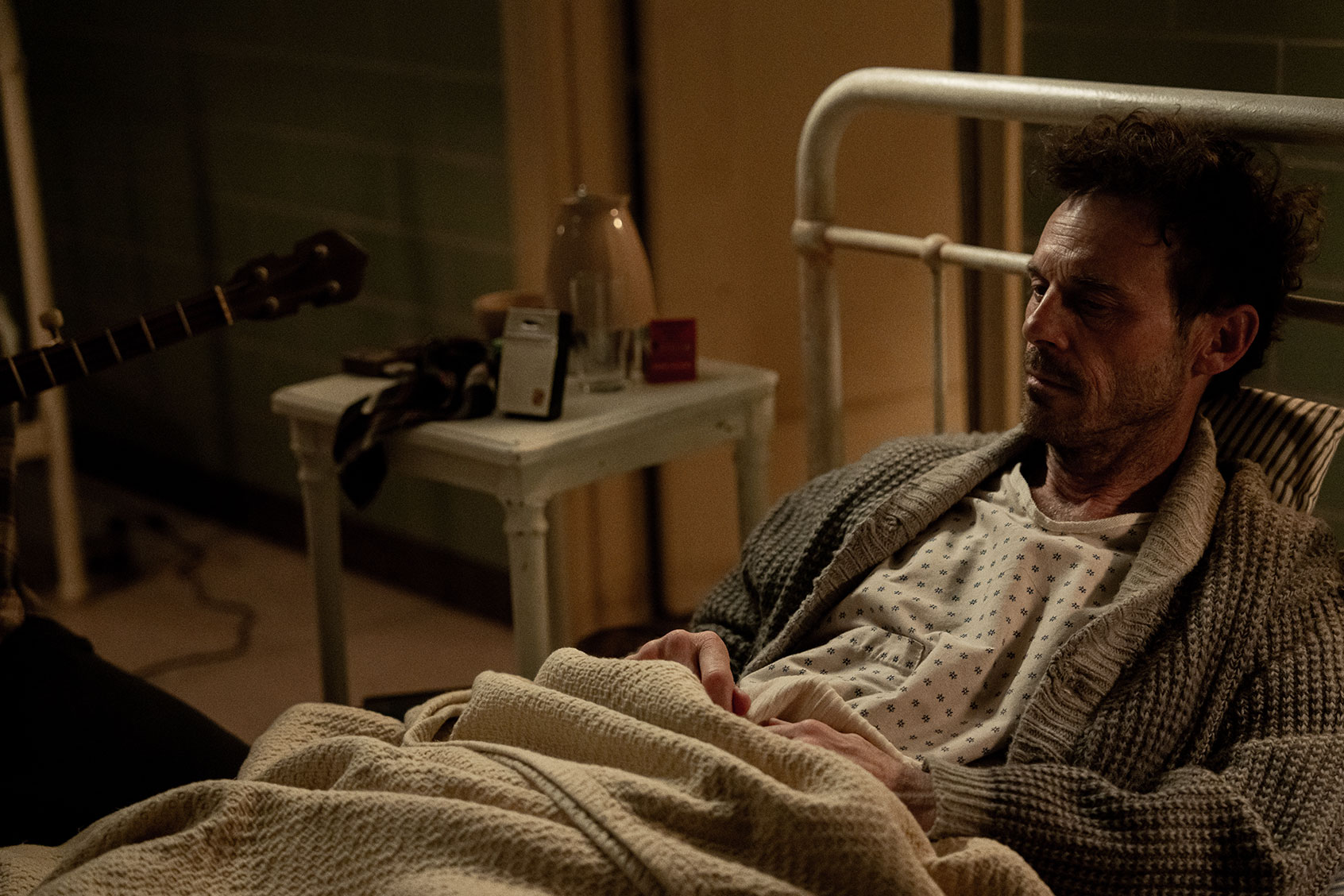
As Woody Guthrie in “A Complete Unknown,” Scoot McNairy has only a handful of scenes and maybe one word of dialogue. But the character actor makes a distinctive impression, applauding Bob Dylan (Timothée Chalamet) when he sings to him, or sharing a close friendship with Pete Seeger (Edward Norton) who cares for him. There is something in McNairy’s expression that shifts from love, to pain, to joy, to soulfulness, to heartbreak. It is a small, beautifully modulated performance in a great film, and McNairy invests himself fully in the role. 

“A Complete Unknown” is the third film in four months to feature McNairy. He can also currently be seen as Amy Adams’ hapless unnamed husband in “Nightbitch,” where he ultimately learns to be a better dad. Earlier this fall, McNairy played Ben, who was on the receiving end of James McAvoy’s nastiness in the American remake of the European horror film, “Speak No Evil.” 

"I pulled a lot of the performance out of emulating my mom."

But these very different roles are part of McNairy’s appeal as an actor. He has been turning in scene-stealing performances for decade, appearing in best picture Oscar winners, such as “12 Years a Slave” and “Argo;” nifty indies like Tim Sutton’s “Taurus” and Ross Partridge’s “Lamb,” as well as some beloved TV series, including “Narcos: Mexico” and “Halt and Catch Fire.” 

His characters often struggle on screen, but McNairy does not play them as defeated; rather he expresses their hangdog weariness, which can sometimes be cynicism or sometimes cockeyed optimism. He is riveting on screen because his body language and facial expressions allow viewers to scrutinize his performance and understand what McNairy’s characters are thinking and feeling. It is exciting to watch him play characters going through a period of discovery. 

The actor spoke with Salon about playing Woody Guthrie, making “A Complete Unknown” and other aspects of his career. 

How did you approach playing Woody Guthrie? Given that he does not talk much in the film, can you describe how you internalized your performance? You mostly react to others — stare, cough, laugh and make noise. You express so much without words.

What is your process for giving such a physical performance? 

In going into it, there was not a lot of footage of Woody Guthrie, so I leaned on a ton of photos of him from that time in his life at Greystone [Psychiatric Hospital]. He had very specific mannerisms in those photographs, and we ended up shooting the film in the exact same place where these photographs had been taken. There were photos of him trying to play guitar and of him smoking. It was more of me leaning into understanding the characteristics of what Huntington’s disease is and studying other people who suffered from the illness. It involves a lack of motor skills and has a lot of similarities with dementia. My mother has dementia, and it is an awful disease, so photographs of Woody’s stare and his look reminded me of visiting with my mom. I pulled a lot of the performance out of emulating my mom and those visits with her.

There is a different vibe when Woody is with Pete Seeger and when he is with Bob Dylan. He seems inspired by the young singer. Can you discuss Woody’s relationship with each man? 

Pete’s role is that of caretaker, and he has admiration for Woody as a hero, or a legend or someone he idolizes. He is so grateful for his music. When Bob comes into the picture and Woody meets him, the same feeling Pete has [for Bob] is expressed by Woody as well. Wow, here is the young talent singing this folky music. Everybody in the film, as they come to know Bob’s music, is mesmerized by him. Woody feels the same way. He thinks, here is this younger version of ourselves [Pete and Woody] and such a better version of us that we could have ever imagined. Woody just takes a liking to him and his music. Even though he is incapacitated in some ways, that music that inspires Woody — and he knows good music when the hears it. And you see that when Woody first hears Bob’s songs. 

Let’s talk about the songs. The music Bob plays in each encounter is meaningful. “Song for Woody” is performed at their initial meeting and “Blowing in the Wind” at a subsequent meeting, with Woody’s “So Long, Been Good to Know Yuh” playing at their last meeting. What are your thoughts about the music used to tell the story in the film? 

I think the final song “So Long, It’s Been Good to Know Yuh” is the farewell, a bit of the passing of the torch. Bob is acknowledging that Woody is gone, and that represents that. “Blowing in the Wind,” it’s the same. It’s the middle of the film when things are changing in the world and also in Bob and also in Woody. That was a great representation that James Mangold had chosen those specific songs for those moments. 

Can you talk about playing a real person? Did you have a particular mindset about Woody given that we see him only near the end of his life?

You kind of approach every character differently and you just do what you have to do to figure them out. Sometimes that process can be completely different from the last one. With Woody, not as much. I didn’t have a lot of tools in regard to bringing Woody to life. The only thing I had were those photos from Greystone from that point of his life. I was focused on the mannerisms and copying the photographs I had seen of the way his head was tilted. I didn’t have anything to go off of. 

"Woody just takes a liking to him and his music."

James Mangold did say something to me that I thought was really interesting before we started the film. He told Joaquin [Phoenix this for “Walk the Line”] “You are not Johnny Cash. You are not him, and you won’t be him.” Joaquin was absolutely phenomenal portraying Johnny Cash, but we also see Joaquin in that role as well.  As well as with Timothée. He’s playing Bob; there is a part of Timothée we get to see with that. The same with Ed Norton. You want to see Ed play Pete. You want to see Timothée play Bob — not necessarily a caricature of Bob. You don’t lose your sense of self in these portrayals.

A Complete UnknownScoot McNairy as Woody Guthrie in "A Complete Unknown" (Searchlight Pictures)I’m also curious about how you approach playing a character in a remake as you did with “Speak No Evil,” earlier this year. 

I genuinely loved the original film. I was so taken by it. The ending of that film had a specificity to that culture; the issues sparked an eyebrow raise. I loved the Ben character in the original; the subtlety of him and the weakness of him as well. I like it so much that I based my character, off of the original. I didn’t feel the need to stray too far from that. I thought it was a riveting performance. 

What about playing a character adapted from a novel, as you did for “Nightbitch”?

In “Nightbitch,” the characters are named Mom and Husband and that is the intention of Rachel [Yoder’s] novel. I think those characters were meant to feel universal down to their names to connect to being a mom and what that is like, and a husband. It’s interesting they didn’t name him Father. In that case, it wasn’t taking a role from the novel, but it was trying to express those relationships and how hard it is to raise a kid. I’m sure Amy [Adams] was the same with the difficulties of motherhood, and the struggles and trials and hurdles you go through — how those relationships culminate or rub up against each other. Sosie [Bacon], my [off-screen] partner, was helpful, as well as [director] Marielle Heller, in telling me why saying this would upset a mom or a woman. But if you say it like this, it would infuriate a woman. I wanted the character to not be an a**hole, but someone who is confused and wants to do the right thing and is trying to hold his ground in the relationship. But at the end of the day, men will never ever understand motherhood no matter how much you explain it to them. That comes through in the film. He loves his wife so much, but he can’t understand what she is going through.

What are your thoughts on the spin you put on the idiosyncratic characters you play? 

I don’t feel I’m doing anything different than any other actor. I try to keep it real and grounded. I do gravitate to roles and stories and scripts that are grounded in reality. Maybe I’m still in the discovery process when we are shooting, or maybe I want to keep discovering. So maybe it’s me discovering something new during that take, or something I am trying to work out or understand. I don’t know that there is a lot of intention that I am aware of when that’s happening.

I do my best at trying to emulate my interpretation of the thing. I enjoy acting and working with good actors and I am genuinely surprised when they do something or change up their performances or bring a character to work that I didn’t expect. I think you are just seeing me truly enjoying myself and having fun and diving into these roles. I love acting and having this full 100% permission to do something else or be someone else with no guardrails. That is a feeling of freedom that you don’t get in society, and the world we live in all the time, so I really soak up moments in work where you can be somebody who is a part of you and a departure from you. That may sound like acting bulls**t. I try to do something new each time and challenge myself to move around in the space, but I’ve also been really lucky to be able to work with the people and projects. I don’t take that for granted. So, I’m over the moon and excited to be able to do what I’d doing and the characters I get to I play and directors I get to work with. 

So, you are not going to turn down playing Woody Guthrie for James Mangold?

I’m not going to turn down James Mangold. He is someone I have been wanting to work with for over 15 years. And Ed Norton is someone I have been wanting to work with since “Primal Fear.” You get these opportunities. And it is a sense of, “James, I’ll hold your coffee. I just want to work with you and be around you and see how you work.” Same with Ed Norton. I have a genuine interest in these people and humanity and what make people tick, and what makes people do things and what makes people act a certain way. 


Want a daily wrap-up of all the news and commentary Salon has to offer? Subscribe to our morning newsletter, Crash Course.


Do you have a favorite Guthrie or Dylan song? 

“This Land is Our Land” is so embedded in me at such a young age 6 or 7 or 8 years old. I don’t know where I heard it. I spent so much time at my parents’ place in Paris, Texas on weekends in the summers. I don’t know if they played it up there. As for Dylan, the list goes on for so many for different reasons. Every time there is a drizzle, or rain I always want to put on “Buckets of Rain.” That song pops into my head for some reason.

“A Complete Unknown” is currently in theaters.

“The worm is turning”: Armie Hammer says he’s booking acting jobs again, post-scandal

Armie Hammer says his career is picking up steam again after public shunning from Hollywood in 2021.

On the Jan. 1 episode of "Your Mom’s House" podcast, hosted by Christina Pazsitzky and Tom Segura, the "Call Me By Your Name" star shared how he has moved on with his life since numerous allegations of cannibalism and sexual assault derailed his acting career even though, despite being investigated by the LAPD, he was never charged.

"I was the fifth most-searched person on Google in the world. And all of it was negative. You're just left standing there naked in front of the world with all of your proclivities or kinks being judged by the world. That s**t is tough," Hammer said, reflecting on the career-tarnishing controversy. 

The actor has maintained that the relationships he shared with the accusers were consensual, but he admitted, "I think somewhere deep down, subconsciously, I wanted to get caught.”

Since then, the allegations have halted his career. His last film, the whodunnit "Death on the Nile," was released in 2022 and his talent agent WME dropped him. The Golden Globe nominee was forced to scramble to make ends meet at that time, selling timeshares in the Cayman Islands as a new source of income. His wife of 13 years, Elizabeth Chambers, with whom he shares two children, also filed for divorce in 2020.

Hammer says he's now returned to acting while living modestly in a tiny apartment, having just wrapped filming a Western film, “Frontier Crucible," with co-star William H. Macy. He shared he is also filming two upcoming projects soon. He explained, “The worm is turning, it takes time.”

“It’s slow, but generally now the conversation when my name comes up with people in the industry is, ‘Man, that guy got f**ked.’ And that feels really good. It’s really encouraging,” he said.

While Hammer doesn't have talent representation, his attorney is bargaining his deals. The actor said, "I wouldn’t say I’m back, [but] I'm working.” But he is so busy that he's “turning jobs down."

"My dance card’s getting pretty full," he says. "That first job that I turned down after four years of this s**t, I mean, it was the best feeling I’ve ever had.”

Busting common myths about organic food

If you spend any time on the internet in spaces where people talk about food, nutrition and the environment, you’ve probably seen some hot takes about organic food — that it’s not worth the price tag, that it’s all a scam or that it’s somehow worse than nonorganic. Regardless of who’s presenting them, the same few arguments tend to pop up. We take a look at those here.

Some of these claims start with a grain of truth, but often distort that to make organic look like a racket, an excuse for charging higher prices while being no better than conventional agriculture. In the broader context of organic’s philosophy, however, most of these facts don’t end up undermining the program’s standards or its integrity.

It’s also worth remembering that many of the people who start arguments on the internet are making money by doing so, whether they’re getting engagement-based money from platforms or being paid by organizations who stand to profit from eroding public trust in organic.

Myth 1: Organic uses just as many pesticides as conventional agriculture.

FACT: ORGANIC DOES ALLOW NATURAL PESTICIDES (AND A FEW SYNTHETICS) — BUT THEIR USE IS VERY LIMITED AND NOWHERE NEAR THAT OF CONVENTIONAL AGRICULTURE.

It’s a common claim among people trying to discredit organic, and it certainly does fly in the face of the first thing most people think about the label: no chemicals. So is it true?

Under the USDA’s organic rules, synthetic substances are banned, while natural products are allowed, with a few specific exemptions in both directions. That’s simple in theory, but cleanly delineating what’s synthetic and what’s natural isn’t so easy. Intuitively, synthetic would refer to anything man-made, and that scoops up most fertilizers and pesticides that are produced in a lab from chemical ingredients. But some chemicals used in agriculture are originally extracted from natural materials. If, after extraction, they’re altered in a way that changes their chemical composition, they’re considered synthetic; if they’re left unchanged, they can still be considered natural. For example, calcium compounds are often used to make soil less acidic, and those can be natural or synthetic. If that calcium comes straight from crushed limestone, it’s considered natural, but if it’s isolated from crushed stone and then treated with heat to become more concentrated quicklime, it qualifies as synthetic.

Of course, natural doesn’t necessarily equate to safe: Natural products can be dangerous, and many of these (like arsenic and certain mineral salts) are banned in organic.

There are some situations where natural products don’t cut it, and that’s why there’s also a short list of synthetic substances that are allowed under the organic rules. But a quick perusal shows that most of these are simple, familiar chemicals that are allowed for very specific reasons, like hydrogen peroxide and rubbing alcohol as disinfectants for equipment. Some chemical compounds, like copper sulfate, are allowed to help control plant diseases, but need to be used in a way that minimizes their accumulation on soil and avoids leaving residues on crops. Synthetic materials that are essential for animal health — such as vaccines, simple pain medication and topical ointments — are allowed, although using medications that leave residues in milk or meat, like hormones or antibiotics, can disqualify an animal or its products from being sold as organic.

There are also some natural substances that are used as pesticides in organic agriculture, often isolated hormones or chemicals from plant tissues that are used as insecticides. These naturally occurring biopesticides are often the launching point for scientists who develop synthetic derivatives, but organic growers can use the naturally occurring chemicals (again provided they aren’t modified once they’re extracted). These biopesticides may be chemically similar to their synthetic descendents, but they’re generally weaker, target fewer species and don’t linger in the environment. That makes their use much more limited in scope than the pesticides that conventional growers spray on entire fields.

This difference in how the chemicals are used is, in fact, more important than where the chemicals come from. Biopesticides and other natural products are often less effective than synthetics, so it’s hard to use them the same way. But in the organic growing philosophy, that’s not necessarily a problem: Crop and livestock health should be rooted in an on-farm ecosystem that suppresses weeds, pests and disease without resorting to chemical quick fixes in the first place.

Conventional agriculture, meanwhile, is wholly dependent on preemptive pesticide use, dousing entire fields of crops in herbicides like glyphosate and accelerating the evolution of superweeds in the process. Suggesting that organic’s limited use of chemicals is equivalent to that of conventional growers — who apply 280 million pounds of glyphosate alone on nearly 300 million acres of U.S. cropland annually — is a deliberate distortion of the facts.

Myth 2: Organic is actually worse for the environment.

FACT: ORGANIC AGRICULTURE HAS A LARGER LAND FOOTPRINT THAN CONVENTIONAL, BUT IT IS MUCH BETTER ON ALMOST EVERY OTHER ENVIRONMENTAL METRIC.

Agriculture’s environmental footprint can be hard to evaluate in simple terms like better or worse because there are so many factors involved: soil health, land and water use, emissions and more. Farming involves a lot of tradeoffs, and a few of these are often leveraged to make organic look worse. Conventional agriculture uses large quantities of synthetic fertilizers and pesticides to grow a lot of food on a relatively small area of land. Without those chemicals, it’s true that organic farming often gets smaller yields, and therefore has to use more land to grow the same amount of food. That larger land footprint is usually the basis for the claim that organic is worse for the environment: If all food on earth were organic, we’d need a lot more farmland than we have today, accelerating deforestation and other problems.

There are a few issues with this analysis. Conventional agriculture may be more space-efficient when it comes to farmland, but its efficiency is contingent on importing nutrients the land doesn’t have in the first place, and that it can’t hold onto for very long either. What’s more, those synthetic fertilizers take a lot of fossil fuels to manufacture, and the leftovers run off into waterways, ultimately causing problems like algal blooms that deplete and kill aquatic life far afield. Factoring in the harm pesticides cause to non-target species, especially pollinators, it becomes apparent that conventional ag’s footprint stretches well beyond the land it technically occupies.

Organic farmers can import nutrients in the form of compost and manure, but these have to come from living things and usually aren’t applied at the same rates as synthetic fertilizers. This doesn’t mean that organic farms are exempt from environmental problems. Having to avoid pesticides and herbicides often makes organic farms more reliant on tilling soil to keep crops weed-free, for example, so many must be more proactive about soil health. But eschewing chemical fertilizers and pesticides as the default means that organic farms don’t have as deep a footprint as their conventional counterparts, even when they take up more space.

Myth 3: There are no health advantages to choosing organic.

FACT: PERSONAL HEALTH ASIDE, CHOOSING ORGANIC PROTECTS THE HEALTH OF FARMWORKERS AND MITIGATES SOME SERIOUS PUBLIC HEALTH RISKS.

Much of the marketing around organic products seems to play up their wholesome nature. As you’d expect, organic food does have far fewer pesticide residues than conventional food. But it’s also true that, for most people, pesticide residues from grain and produce have not conclusively been determined to be a major health risk. While experts might disagree on how tolerances for some substances are established, most limits for pesticide residues are set in a way that’s designed to protect people who might be most vulnerable to consuming them, like infants.

Ultimately, scientific studies have shown that organic food is mostly free from pesticide residues (with the little that does show up coming primarily from shared processing equipment). There’s also evidence that some organic produce has higher levels of certain vitamins and beneficial antioxidants than its conventional counterparts. What hasn’t been proven is whether eating mostly organic foods actually makes people any healthier. It’s hard to perform this kind of research in the first place, and what evidence we do have doesn’t show that choosing organic leads to consistently better health outcomes for eaters.

But this perspective only looks at the personal health angle to the food system, and that’s where it falls short. The impact of our food choices goes well beyond our own bodies, and organic does offer tangible benefits to public health. The biggest exposure risk for pesticides isn’t in consuming residues, it’s in applying pesticides and working in pesticide-treated fields. While there are some safety standards designed to protect workers, they’re not always followed, and farmworkers suffer from both acute poisonings and pesticide-linked chronic health problems. They’re also less likely to get adequate medical care, especially when they are undocumented immigrants. It isn’t just workers, either: Some pesticides are dangerous enough to threaten whole agricultural communities. Children who live and go to school near farm fields where pesticides like chlorpyrifos are used show blood levels well above normal, and have higher rates of neurological problems as a result.

Beyond pesticides, organic agriculture addresses another public health concern: While antibiotics are allowed for treating sick animals on organic farms, they’re used at far lower rates than on conventional farms, where they’re used to prevent diseases that proliferate easily in the crowded and unsanitary conditions. This overuse of antibiotics — including many that are used in human medicine, too — speeds the development of antibiotic-resistant bacteria. Antibiotic-resistant infections already kill more than 35,000 people in the U.S. annually, and factory farms are some of the most fruitful breeding grounds for new ones. This translates directly to the consumer as well: One study found that organically produced meat was 56 percent less likely to contain bacteria strains that were resistant to antibiotics.

Myth 4: Organic is just an excuse to charge more.

FACT: UNLIKE MANY MARKETING CLAIMS MADE ABOUT FOOD, USDA ORGANIC HAS SPECIFIC RULES AND A STRINGENT VERIFICATION PROCESS.

It’s easy to understand where skepticism about food labels comes from. With so many claims being made about everything we buy, it’s hard to keep track of what they’re even supposed to mean, let alone whether they’re accurate.

This is where organic has a unique advantage. While the USDA does have to approve most food labels, it doesn’t actually set its own requirements for what those claims mean, nor does it enforce them, leaving room for companies to set their own definitions for “sustainably grown,” and other terms. But organic is different: The U.S. National Organic Program was established as part of the 1990 Farm Bill, and has set the standards for food labeled as organic since then. Organic farms have to follow stringent rules about chemical use and livestock health, implement soil and water protection measures, and avoid genetically modified crops and livestock. These claims must be verified by an accredited, independent auditor in order for a farm or food company to use the organic label.

The official “USDA Organic” seal means that the product meets all of the organic production standards, which includes higher benchmarks for sustainability and health from the farm all the way to the grocery store. USDA organic labeling can be applied to foods in a variety of ways depending on which criteria the product meets.

USDA Organic: Made with at least 95% organic products; the rest must come from an allowed list of common ingredients.

USDA 100% Organic: Made exclusively with organic ingredients.

Made with organic ingredients: Must contain at least 70% organic ingredients by weight. Cannot use the official USDA seal.

Anything that carries the “USDA Organic” seal must be made with at least 95 percent organic products, with the remaining 5 percent coming only from an allowed list of common ingredients, such as baking soda, that can’t be produced organically. Products carrying the “100% Organic” label must be made exclusively with organic ingredients. Finally, foods that carry a label stating “Made with Organic Ingredients” must contain at least 70 percent organic ingredients by weight — but they cannot use the official seal.

These stringent rules make organic one of the most trustworthy labels on the market today, especially for domestically produced foods. There have been some concerns about organic fraud, especially in grain, where there have been instances of traders reselling conventionally raised grain as organic and taking a high profit. There have also been a few notable instances of organic fraud in imported foods: Foreign farms can also be USDA organic certified, but the USDA’s reliance on third party auditors has led to a few fraud and corruption cases. In recent years, the agency has introduced new, even more stringent verification rules to help organic maintain its status as a reliable standard for products made in the U.S. and abroad.

FBI seizes 150 pipe bombs from suspect who used Biden photos for “target practice”

FBI officials seized over 150 pipe bombs from the house of a Virginia man who used pictures of President Joe Biden as target practice, according to recently released court documents.

The cache, the largest collection of homemade explosives seized by the FBI in its history, was found while investigators were serving a search warrant for an unregistered short-barrel rifle allegedly in possession of the suspect, identified as Brad Spafford. He was arrested on Dec. 17 and charged with possession of an illegal firearm in violation of the National Firearms Act.

Six of the bombs were found in a backpack bearing a patch that read “#nolivesmatter," possibly referencing a far-right group that encourages its members to commit deadly violence and destroy "societal standards."

In addition to the explosives, the FBI reportedly found bomb-making materials and tools such as fuses, pieces of PVC pipe and a jar of "HTMD," a highly explosive material, which was placed in a freezer next to food. They also uncovered written instructions on how to make the explosives.

Spafford had been under investigation since 2023, when a confidential source told authorities that he was stockpiling weapons and ammunition, had injured his hand while building an explosive device and discussed "fortifying" his home with a 50-caliber firearm mounted on a turret. According to the source, Spafford “stated that he believed political assassinations should be brought back, and that missing children in the news had been taken by the federal government to be trained as school shooters,” and that after the attempted assassination of Donald Trump in July, he said he hoped the shooter wouldn't miss Kamala Harris.

“The defendant has used pictures of the President for target practice, expressed support for political assassinations, and recently sought qualifications in sniper-rifle shooting at a local range," prosecutors wrote in support of keeping Spafford under detention.

Defense attorneys argued that Spafford never used the gun that was the subject of the original search warrant and that there was "no evidence" that he ever planned to use the bombs in his house.

“There was no evidence that Mr. Spafford did anything other than make some ill-advised comments about the government and political leaders that are not illegal and are protected by the 1st Amendment," they wrote in a court filing. "Using a likeness of a political leader as a target at a shooting range is a common practice and not a reason to incarcerate someone. The United States’ position that Mr. Spafford is a danger is rank speculation and fear mongering,”

Gypsy Rose Blanchard gives birth to first child on her prison release anniversary

Gypsy Rose Blanchard has given birth to her first child.

Blanchard and her boyfriend, Ken Urker, welcomed a baby girl, Aurora Raina Urker, into the world exactly one year after Blanchard's release from prison, Blanchard's spokesperson confirmed to People Magazine. The couple named their child Aurora for their love of the aurora borealis, also known as the northern lights.

Urker took to Instagram to post an image of the couple and their child from the hospital, with the caption: “Welcoming 2025 with the greatest gift of all.”

https://www.instagram.com/p/DESZ8sTRdPS/

The 33-year-old, a survivor of Munchausen syndrome by proxy, became an infamous true crime figure after her involvement in the killing of her mother, Clauddine "Dee Dee" Blanchard in 2015. On Dec. 28, 2024, Blanchard was granted parole and released from prison after serving seven years of her 10-year sentence.

Shortly after her release, Blanchard starred in two docuseries on Lifetime — "The Prison Confessions of Gypsy Rose Blanchard" and "Gypsy Rose: Life After Lock Up" — and became a social media sensation, garnering 7.8 million followers on Instagram and 9 million on TikTok. But after only a few months online, Blanchard stepped back from social media and public life. People sources cited the choice for doing so as being "at the advisement of her parole officer, so she won’t get in trouble and go back to jail." 

Blanchard separated from her then-husband, Ryan Anderson, who she married in prison in 2022. The pair were officially divorced in December. Blanchard rekindled her relationship with ex-fiancée, Ken Urker shortly after her separation. She announced her pregnancy in July, saying in a video, "All the things that I wanted in a mother, I want to give to this baby."

How to stock a pantry you’ll actually cook from in the new year

Before I actually started cooking for myself, I had a romantic vision of what dinner-making as an adult might look like. I pictured myself gliding through an array of charming corner markets every evening, selecting just enough ingredients for that night's dinner to fill a stylish little wicker tote. Everything would be impossibly fresh, deliciously affordable and the cooking process itself would be intuitive and effortless.

But anyone who has spent time cooking knows the reality is much less glamorous. Daily grocery shopping is not only time-consuming, but expensive. That’s where a thoughtfully stocked pantry steps in to save the day — and your budget.

A well-stocked pantry isn’t just about having staples on hand; it’s about having the right staples for you. It’s the secret sauce to whipping up satisfying dinners without a last-minute grocery run, making meal prep feel seamless and leaning into your culinary goals for the year ahead.

Reflect on your cooking style

Before stocking up, pause to consider both how you currently cook and how you’d like to cook. Maybe you want to bake your own bread this year, master Indian cuisine or simply focus on nutrition. These aspirations should shape what you stock up on. Write them down and use them as your north star.

Equally important is evaluating your current habits. Over a week or two, keep a simple journal — your Notes app works fine — tracking standout meals (recipes you loved, leftovers that held up well) and misses (dishes that flopped or didn’t store well). Note the shelf-stable ingredients that consistently appear in your cooking. This inventory will help you identify your kitchen’s most valuable players.

We need your help to stay independent

Clean slate, fresh start

Before adding to your pantry, take a moment to clear it out. Toss expired items, wipe down the shelves and start fresh. This step alone can make your pantry feel inviting and functional.

As part of this reset, look at “pantry staples” lists from chefs you admire. For instance, in his cookbook, “How to Cook Everything Fast,” Mark Bittman suggests starting with essentials like good-quality oils (think olive oil and neutral options like grapeseed or canola), vinegars (red wine, balsamic and rice vinegar), and salt and pepper. Add dried herbs and spices, pasta, grains like rice and quinoa, canned beans, tomato products, and baking basics such as flour, sugar, baking soda and powder. These are your kitchen’s building blocks — the culinary equivalent of a wardrobe’s white t-shirt and blue jeans.

From there, consider adding specialty items that align with how you like to cook. Bittman emphasizes versatility: coconut milk can lend creaminess to soups and curries, while tomato paste adds depth to everything from pasta sauces to braises. Once you have these core items, you’ll have a solid foundation to tackle countless recipes.

Personalize your pantry

If you frequently cook from a specific chef’s recipes, consider tailoring your pantry to their style. Early in the pandemic, when Alison Roman’s recipes, like The Stew and her caramelized shallot pasta, were riding wave after wave of virality, someone tweeted: “Has anyone made an Alison Roman shopping list so I don’t need to go recipe by recipe to get the staples?” Roman herself responded with a straightforward list: olive oil, lemons, fresh herbs, alliums (like onions, garlic, and shallots), dried or canned beans and chickpeas, canned tomatoes and tomato paste, crushed red pepper flakes, anchovies, Parmesan, soy sauce, eggs, yogurt or labneh, and pickles or kimchi for snacking.

Roman’s staples reflect her signature approach to cooking: bold flavors, minimal fuss and ingredients that do double or triple duty across recipes. If you find yourself drawn to her style — or that of another chef — use their recommendations as a starting point to stock your pantry with intention.

It’s also helpful to think in categories. Let’s say you love baking. Focus on acquiring ingredients that align with your favorite recipes. If you frequently make cookies, ensure you have plenty of vanilla extract, chocolate chips and brown sugar on hand. For bread enthusiasts, stock up on yeast, bread flour and possibly some rye or whole wheat flour for variety.

If you gravitate toward specific cuisines, identify the spices and condiments that feature prominently. For example, a pantry geared toward Mexican cooking might include cumin, smoked paprika, chipotle chiles, masa harina, and a bottle of good hot sauce. For Indian cuisine, consider stocking turmeric, garam masala, mustard seeds, curry leaves and ghee. Over time, you’ll build a collection of ingredients that allows you to cook with confidence and spontaneity.

Organize and maintain

Once you’ve stocked up, organize your pantry in a way that makes sense for how you cook. Keep baking ingredients together, group spices by cuisine and store frequently used items at eye level. This small effort can make cooking feel more intuitive.

To keep track of your inventory, consider taping a note to the inside of your pantry door listing what’s in stock. This can help you avoid overbuying and remind you to restock essentials. Some find it helpful to create a running grocery list that prioritizes buying pantry staples on sale or in bulk.

The pantry as a gateway

Ultimately, your pantry is more than just a collection of dry goods — it’s the foundation for a kitchen that supports your goals. Whether you’re whipping up a weeknight dinner, meal-prepping for busy days, or experimenting with a new cuisine, the right pantry makes it all feel attainable.

So as you look to the year ahead, let your pantry reflect your aspirations. Stock it with ingredients that excite you, support the meals you love, and make cooking feel like the cozy, fulfilling ritual it deserves to be.


“That’s that me espresso”: Sabrina Carpenter partners with Dunkin’ for the new year

Sabrina Carpenter is working late ‘cause she’s got a new partnership with Dunkin’.

The pop singer, best known for her chart-topping track “Espresso,” has launched her very own beverage, fittingly called Sabrina’s Brown Sugar Shakin’ Espresso. The beverage will be available for a limited time nationwide, which Dunkin’ announced in a Monday press release.

Carpenter’s handcrafted iced beverage combines “Dunkin’s bold espresso, brown sugar notes, and oatmilk, shaken to perfection,” per the company. “The result is a deliciously frothy, subtly sweet sip ready to kick off 2025 in style.”

Sabrina’s Brown Sugar Shakin’ Espresso is accompanied by a new ad campaign, Shake That Ess’, starring Carpenter herself. The video is directed by Dave Meyers, who previously directed Carpenter’s music video for “Espresso” and visual for her single “Taste.”

“When we first dreamed up Sabrina’s Brown Sugar Shakin’ Espresso at Dunkin’, it had to be more than another delicious drink on the menu — we wanted to bring some levity to guests’ everyday coffee order,” said Jill McVicar Nelson, Chief Marketing Officer at Dunkin’. “Working with one of America’s most beloved pop stars, Sabrina Carpenter, adds a spirited, fresh energy that perfectly aligns with Dunkin’s love of bold taste and good-natured fun. Through our new ad campaign, we’re showing guests that their new drink order can be both delicious and a wink at embracing life’s lighter side — exactly what Dunkin’ is all about.”

Alongside the new drink, Dunkin’ is offering a new $5 Meal Deal featuring two Wake-Up Wrap sandwiches and a medium hot coffee (14 oz.) or iced coffee (24 oz.). The chain is also dropping several chocolate-themed treats, including a Lava Cake Signature Latte, Lava Cake Coffee and a Chocolate Whoopie Pie Specialty Donut.

FBI hunts for links to New Orleans attack as Las Vegas Cybertruck suspect ID’ed as U.S. Army soldier

Investigators are probing whether the explosion of a Tesla Cybertruck outside the Trump International Hotel in Las Vegas that killed its driver and injured at least seven others was linked to another attack in New Orleans, in which a suspect drove a rented pickup truck into a crowd of pedestrians.

The Cybertruck, driven by a man identified as Matthew Livelsberger, an active duty U.S. Army Special Operations Soldier, was filed with gas canisters, camp fuel canisters and large firework mortars, police say, and detonated on Wednesday morning, hours after the mass killing in New Orleans that claimed 15 lives.

Videos posted to social media showed the vehicle aflame in front of the hotel's entrance and people being escorted out of the building.

Sheriff Kevin McMahill of the Las Vegas Metropolitan Police Department said at a press conference Wednesday that authorities “believe this to be an isolated incident,” but have not yet ruled out a connection to the New Orleans attack. President Joe Biden confirmed later in the day that law enforcement was searching for any potential links.

“Law enforcement, the intelligence community are investigating” the Las Vegas explosion, “including whether there is any possible connection to the attack in New Orleans,” Biden said to reporters at Camp David.

While there is no indication yet that Livelsberger had any association with ISIS, whose flag was found in the back of the New Orleans pickup truck, the FBI is still investigating whether the explosion “was an act of terrorism or not.”

“I know everybody’s interested in that word and trying to see if we can say, ‘Hey this is a terrorist attack,’” said Jeremy Schwartz, the acting FBI special agent responsible for Las Vegas. “That is our goal, and that’s what we’re trying to do.”

According to multiple reports, Shamsud-Din Jabbar, the now-dead suspect in the New Orleans case, had become "radicalized" and recorded several videos of himself expounding on dreams that inspired him to join ISIS, which U.S. officials have warned is re-emerging as a potential threat to the homeland.

Both Livelsberger and Jabbar obtained their vehicles from Turo, a car rental app. Authorities traced the Cybertruck back to Colorado using surveillance video from charging stations along the driver's route, later confirming the driver's identity as a resident of Colorado Springs.

Sheriff McMahill said he believed the Turo connection was nothing more than a "coincidence." A Turo spokesperson told the New York Times that neither Livelsberger nor Jabbar “had a criminal background that would have identified them as a security threat.”

Trump falsely pushes anti-immigrant claims after New Orleans attack by US-born Army vet

President-elect Donald Trump seized on a Fox News report about the deadly New Year's Day attack in New Orleans to fearmonger about "criminals" coming in from the southern border— even though the FBI confirmed that the suspect, Shamsud-Din Jabbar, was a Texas native who served in the U.S. military for eight years. By Wednesday afternoon, Fox retracted its report that the suspect's vehicle had crossed from Mexico into Texas two days prior to the attack, but as of Thursday morning, Trump did not pull down his Truth Social post.

At least 15 people were killed and over two dozen injured after a rented Ford pickup truck with an ISIS flag plowed through Bourbon Street. Jabbar himself was killed in the subsequent shootout with police.

"When I said that the criminals coming in are far worse than the criminals we have in our country, that statement was constantly refuted by Democrats and the Fake News Media, but it turned out to be true," Trump wrote on Truth Social. “The crime rate in our country is at a level that nobody has ever seen before. Our hearts are with all of the innocent victims and their loved ones, including the brave officers of the New Orleans Police Department.”

Shortly after midnight Thursday, Trump followed up with another post inveighing against "OPEN BORDERS" and accusing Democrats and U.S. law enforcement of spending all their "waking hours unlawfully attacking their political opponent, ME, rather than focusing on protecting Americans from the outside and inside violent SCUM that has infiltrated all aspects of our government, and our Nation itself."

By the time Fox corrected its reporting, the misinformation fueled by Trump and re-tweeted by Vice President-elect JD Vance had already spread far and wide.

"New Orleans terrorist attacker is said to have come across the border in Eagle Pass TWO DAYS AGO!!!” wrote Rep. Marjorie Taylor Greene, R-Georgia, on X. “Shut the border down!!! Who did our government bomb lately that is taking it out on innocent Americans?”

Like Trump and Vance, Greene did not take down her post once Fox admitted its reporting was wrong. Other Republican officials wrote their posts well after the retraction, casting blame on President Joe Biden's border policy and insisting that a sealed border would have stopped the longtime Texas resident from carrying out his attack.

We need your help to stay independent

“I HAVE BEEN SOUNDING THE ALARM FOR YEARS,” wrote Rep. Wesley Hunt, R-Texas. “The devastating terror attack in New Orleans has left many Americans asking a sobering question: Has the enemy already infiltrated our borders due to Joe Biden’s incompetence and his failure to secure our homeland? If not now, then when?”

The New York Times reported that Jabbar had been living in Houston, Texas, after leaving the military, where he reportedly worked in several jobs, including a six-figure position at the accounting firm Deloitte and as a real estate agent. But he struggled to adjust to civilian life, divorcing his first wife and living separately from his second as neighbors and relatives witnessed him descending further into mental instability. Jabbar, who had apparently converted to Islam long ago, became "radicalized," and acted erratically especially in recent months, “being all crazy, cutting his hair," people who knew him told reporters.

Multiple officials briefed on the investigation told CNN that Jabbar recorded himself discussing dreams that inspired him to join ISIS and plans to kill his family. Police found an ISIS flag on the truck, along with improvised explosive devices (IEDs) and other weapons. The suspect himself was allegedly armed with an assault rifle and handgun. Sources close to the investigation told news outlets that the Airbnb where Jabbar may have stayed was involved in a fire or detonation earlier in the day, raising concern that the suspect may have further explosives stashed away and still unrecovered.

“It felt like we’re going to be all right again”: The truth of Jimmy Carter

It’s not that I think that everyone isn’t entitled to their own opinion, it’s just that I think that those who haven’t a clue about things on which they speak should not be paid to spew their ignorance just because they have an ability to “go viral.” Case in point in this seemingly endless parade of stupidity are those who weren’t alive or were barely out of diapers telling me about former President Jimmy Carter.

Carter’s legacy has undergone a tremendous re-evaluation since he left the presidency after one term – with many now saying he wasn’t nearly as bad as he was first thought to be, some saying he’s the best “former president” that’s ever been and some, like the inerudite, moronic Scott Jennings on CNN, who said that Carter “was never suited for the office in the first place,” “cuddled up” to dictators and undermined U.S. interests.

Jennings was barely out of diapers when Carter left office and has only learned what he wants to learn about the man secondhand or through tales told to him by those who were so evolutionary backward as to have not shed their vestigial tails before being forcefully expelled into the political environment that today is populated by nothing but bottom feeders spouting venom and oozing primordial pus while claiming they're making America great again. Jennings’ criticisms are as valid as having him conduct brain surgery after watching a YouTube video. 

It never ceases to amaze me how little we learn from our own history – even recent history. I was just a callow teen when Jimmy Carter became president. Following in the wake of the Watergate scandal and Gerald Ford’s attempt to right the ship of state, Carter blew into town an outsider intent on shaking up the Washington establishment.

For those of us who became adults during that time, the Carter years embraced an end to racism, a belief in empowerment and, as a friend of mine constantly reminded me, “It felt like we’re going to be all right again.”

He came to us following a decade of tumult and despair, or as he told us, “We were sure that ours was a nation of the ballot, not the bullet, until the murders of John Kennedy and Robert Kennedy and Martin Luther King, Jr. We were taught that our armies were always invincible and our causes were always just, only to suffer the agony of Vietnam. We respected the Presidency as a place of honor until the shock of Watergate.”

Carter failed to convince us to follow him because he naively believed people cared to govern themselves.

For some of us, Carter doesn’t need to be re-evaluated. He was a man who did some good things and some incredibly stupid things. But, at that time in history, Jimmy Carter was the salve we all needed. He was a Southern boy, like me – the first deeply Southern president elected since the Civil War. As a teenager, we knew him as a “Rock n Roll” president who embraced the music of The Allman Brothers and Willie Nelson. He was a bib overall-wearing peanut farmer who appealed to us on a variety of levels. 

Jimmy Carter arranged the Panama Canal Treaty, established diplomatic relations with China, and negotiated the Camp David Accords between Egypt and Israel. He was the first to deal with the energy crisis and raised a powerful voice on behalf of human rights around the world. He stopped exporting grain to the Soviet Union after it invaded Afghanistan. He also worked on arms reductions with the Soviets. It was he, not Reagan, who brought the Cold War to an end. But despite all of this, he was not seen as a good president. 

Gas prices climbed during his time in office. He got the blame for that. Iranian students took American hostages in Tehran and held them for more than a year. While he didn’t get blamed directly for that, he was blamed when the American military failed their mission to free those hostages.

That problem was exacerbated by Carter’s Republican opponent, Ronald Reagan, apparently reaching out to the Iranians and promising them a better deal if they’d wait until he was elected to release those hostages. For the record, Carter got the hostages home alive without breaking any laws or selling arms to the ayatollah, but by then Reagan was being inaugurated.

Former Speaker of the House Tip O’Neill, in his autobiography “Man of the House,” said Carter was the smartest public official he’d ever known. He “could speak with authority about energy, the nuclear issue, space travel, the Middle East, Latin America, human rights, American history and just about any other topic that came up.” He could tick off pro and con arguments with ease. “His mind was exceptionally well developed, and it was open, too. He was always willing to listen and to learn,” O’Neill recalled. 

The one exception was when it came to the politics of Washington. And that was where, according to O’Neill, and White House reporter at the time Sam Donaldson said Carter failed. He was a true Washington outsider, having spent only one term as the Governor of Georgia. He didn’t know how to manipulate the machine. “Carter did not organize his presidency well,” Donaldson said. His cabinet choices sometimes undercut him and it “made him look even weaker,” he added.

We need your help to stay independent

The greatest criticism of President Jimmy Carter, offered by his contemporaries, is that he was a victim of his own arrogant hubris. He, like every other Democrat, thought his will alone would suffice. Convinced of his path, he failed spectacularly to get Americans to follow him. The Democrats did then what they do now as a result: they ate their own.

This occurred despite a truly groundbreaking speech on July 15, 1979.  Many called it the “malaise” speech, but Carter called it the “Crisis of confidence,” speech. As I prepared to enter college that Fall, I watched President Carter as he  framed the problems in this country so well that it seems prescient today. He told us that the last decade had instilled us with deep wounds that had not healed. He then pointed to a growing problem few had identified and fewer spoke of; “Human identity is no longer defined by what one does, but by what one owns. But we've discovered that owning things and consuming things does not satisfy our longing for meaning. We've learned that piling up material goods cannot fill the emptiness of lives which have no confidence or purpose.

“As you know, there is a growing disrespect for government and for churches and for schools, the news media, and other institutions. This is not a message of happiness or reassurance, but it is the truth and it is a warning,” Carter told us. He railed against extreme politics that “pulled us in every direction” by powerful special interests. “You see every extreme position defended to the last vote, almost to the last breath by one unyielding group or another. You often see a balanced and a fair approach that demands sacrifice, a little sacrifice from everyone, abandoned like an orphan without support and without friends,” he reminded us.

But in the end, Carter still saw hope. “We simply must have faith in each other, faith in our ability to govern ourselves, and faith in the future of this nation. Restoring that faith and that confidence to America is now the most important task we face. It is a true challenge of this generation of Americans. . . We know the strength of America. We are strong. We can regain our unity. We can regain our confidence. We are the heirs of generations who survived threats much more powerful and awesome than those that challenge us now.”

The speech impressed some of his contemporaries, sailed over the heads of most Americans and Carter became a one-term president, often dismissed and ridiculed.

“While Carter was not very popular by the end of his term in office, his image is already improving,” O’Neill said in 1987. “Undoubtedly, future generations will look upon him more kindly than his contemporaries do.” Donaldson agreed and also said in 1987, “History, I’m sure will treat Carter than did the voters in 1980. His record, particularly in foreign affairs is quite good.”

The praise we hear today is usually for what Carter did after his presidency; working with Habitat for Humanity and acting as an elder statesman who did not hesitate to call Israel on the carpet, or Donald Trump, or even members of his own party.

I confess I appreciated him from the time I could first vote. In the 1980 presidential election, I cast my first vote for president. I never tell anyone how I vote because I find it a private affair, and while you may think you know how I vote by what I say – you’re as likely to be wrong as you are right. But, in this one case I will simply say that in 1980 I could not, nor would I ever, vote for Ronald Reagan – a vile man who vowed to “Make America Great Again”, took credit for bringing the Iranian hostages home when he did not and who embraced devout Christians for their votes, while never embracing the ideology they claimed they embraced.

It wasn’t Carter’s fault that oil prices tripled and wrecked our economy, or that a band of Iranians seized hostages and held on to them for 444 days in Tehran. While progressive on foreign affairs and human rights, he was on economic issues “a lot more conservative than I was,” O’Neill told us. And while it was Reagan who promised to get government off our backs, it was Carter who rightly or wrongly initiated banking deregulation as well as deregulating railroads, trucking, airlines and oil. He also alerted us to the problems of the federal deficit and cut $50 billion from the national debt. 

That meant little to us as teens wearing big ties and platform shoes, listening to rock and roll while even white guys sported Afros and we all began dancing to disco. (Okay I never did that, but a lot of people did.)


Want a daily wrap-up of all the news and commentary Salon has to offer? Subscribe to our morning newsletter, Crash Course.


Carter was the calm before the storm. He was the template for Bill Clinton, right down to having a party-happy brother. During my years of teen excess, I like all other teens before and since, “knew a guy” who’d buy you liquor with the right monetary incentive. My guy always tried to sell us “Billy Beer” brewed locally by the Falls City Brewing company, sold nationally and named after President Carter’s erstwhile brother.

For those of us who were in the White House Press Corps at the time, Carter was an enigma. “He was a little strange but also quite appealing,” Donaldson told us in his memoirs. He said Carter was stubborn and blunt. “I was then and I am now ambivalent about Jimmy Carter. He is a man of truly admirable qualities, but also of some glaring shortcomings,” he said.

Joe Biden, a young senator at the time of Carter’s presidency, reminds many of Jimmy Carter. On the surface, I can see it. Both were horrible communicators. Both had incompetent staff. But Carter was an outsider and Biden an insider. Biden should have learned and should have known better. Carter failed to convince us to follow him because he naively believed people cared to govern themselves. Reagan took to the airways and convinced us we could make America Great Again by trusting him to solve all of our ills. We may be the government of, for and by the people, but Reagan knew then and Trump knows now the truth: We want to be as uninvolved in government as possible. 

Or as Donaldson noted, politicians get defeated if they concentrate on the substance at the expense of style. Carter did that. Biden did that. Reagan never did that. Trump has no idea what the substance is; he’s only about style.

Some will say we didn’t deserve Jimmy Carter. Some, like Jennings, still disparage him. But for many teens in the 70s, he gave us some hope for the future when my generation had little cause for any. We grew up at the tail end of the baby boomer generation watching our friends and neighbors die in Vietnam. We saw assassinations and distress. Riots and violence. Carter was hope that resided between the violence of the past and the macabre, decadent future, the rise of the “Me Generation” and intolerant, radical religious lunatics, the awful class war that created an oligarchy of billionaires, destroyed the middle class and eventually swept away all the progress made during the civil rights era and more.

President Biden said of Carter, “He forged peace, advanced civil rights, human rights,  and promoted free and fair elections around the world.”

He was a complex, complicated man. But most who lived during that time understood that while you may endlessly debate the results of his one-term administration, President Jimmy Carter had the interests of all of his country in his heart. Only those flippant idiots who spread their vile verbal excrement on a variety of media platforms to feather their own nest think otherwise.

Happy New Year. “Quod erat demonstrandum.”


Newborns are being left in dumpsters in Texas, but Republicans don’t seem to care

Abortion bans don't just kill women. They kill babies. This is evident in the data, which shows a dramatic rise in the state's infant mortality after Texas banned abortion. As the Washington Post documented last week, it's also happening in a viscerally disturbing way, as the number of newborns found abandoned to die has spiked, as well. Babies, mostly dead, are being found in ditches and dumpsters throughout Texas, traumatizing the people who find them and the emergency workers who are called to help. 

Only the biggest liars in the anti-choice movement — and to be fair, there's stiff competition for that award — would deny that the state's abortion ban is the main cause of the sharp increase in dead, abandoned babies. The Washington Post also notes that Republicans have repeatedly cut funding for prenatal care and family planning services. In addition, draconian approaches to illegal immigration have led to undocumented women avoiding medical care, for fear of being deported. The result is what one Texas law enforcement official called "a little bit of an epidemic" of infant abandonment. 

Texas Republicans show no interest in educating people about safe haven laws, however.

One would think that the "pro-life" movement would be alarmed by all the dead babies, moving heaven and earth to make sure pregnant girls and women in desperate circumstances have safe alternatives to giving birth in secret and throwing the baby away. But that would only be true if anti-abortion activists were, in fact, "pro-life." Instead, the reaction of anti-choice leaders and Republican legislators so far has been a collective shrug, if they bother to acknowledge the problem at all.

There's one telling detail in the Post report that underscores how much Republicans don't care the slightest if babies die because of their abortion ban. As Molly Hennessy-Fiske reports, "Republican leaders who control state government have long declined to fund an awareness campaign so that new mothers know where to turn should they decide that they cannot keep their baby." 


Want more Amanda Marcotte on politics? Subscribe to her newsletter Standing Room Only.


Texas has a so-called safe haven law that allows women to relinquish babies to the authorities, no questions asked. For years, it was trendy for Republicans to pass these laws to create the illusion of concern for infant life, and to bolster their false claims to be "pro-life." But it was never a sincere effort to allow women in dire circumstances a chance to save a baby's life without getting into legal trouble. The programs are underfunded, barely advertised and subsequently barely used. "Despite the legislative promise that the safe haven laws will increase child safety and legal compliance, the efficacy is suspect as the laws do not appear to protect mothers or their babies," Alexandra Schrader-Dobris explained last year in the Minnesota Journal of Law & Inequality.

Texas Republicans show no interest in educating people about safe haven laws, however. Instead, as Hennessy-Fiske reports, they allocated $165 million to "alternatives to abortion," mostly so-called crisis pregnancy centers. The goal of a crisis pregnancy center is not to help women in crisis. It's to do whatever it takes to keep her pregnant until it's too late to get an abortion, including through lies, threats, bullying, shaming, and false promises of help. The goal is not "life," but punishing the young woman for perceived sexual transgression, either because she had consensual sex or because she "tempted" a man into raping her. 

Because the goal is punishment, there's no reason for Republicans to invest in safe haven laws, which shield young women from legal consequences for abandoning a newborn. When a young woman throws a baby in a dumpster, however, that's a crime and she can be arrested. More resources into the safe haven program would save lives, but would reduce the number of women that can be thrown in jail. Given a choice between living babies or imprisoned women, Republicans pick the latter. Even the Republican who wrote the state's safe haven law, Rep. Geanie Morrison, explained that she has no interest in making it easier for women to use it. "The problem is, if you do state funding, then you’re tied to it," she explained, not even bothering to come up with a more plausible-sounding non sequitur. 

The reaction to the Washington Post article from anti-abortion activists has been muted. The holidays are a busy time, yet many of them continued to post about what they do think matters. "Fornication and masturbation are self-abuse," wrote Lila Rose, an anti-choice leader and outspoken proponent of the Texas abortion ban, on the day the Post report came out. Two days later, she circled around to the topic again, declaring, "'Sexual compatibility' is a myth," and that only shallow people insist on it before making a lifelong commitment to another person. 

From top to bottom, the Christian right's view of womanhood is a grim one. Even if a woman follows all their rules about waiting for marriage and eschewing birth control, her "reward" is being lectured about how it's immature to want sexual satisfaction within marriage. The vast majority of women take one look at this prescription of a life of thankless service to men and patriarchy and take a pass. That's why the GOP is so focused on abortion bans and other restrictions on sexual health care. If they can't get women to volunteer for lives of meaningless drudgery, at least they can punish them for trying to have something more fulfilling. 

The unwillingness to prevent infant abandonment is in line with the recent Texas decision to suppress investigations into maternal mortality after the abortion ban went into effect. Such investigations could result in a better understanding by doctors of how to treat pregnant women in a medical emergency, rather than letting them die. But in the GOP-controlled state, they're fine with a passive form of the death penalty for being a sexually active woman. It's unlikely there will be much investigation into the rising number of infant deaths, either. The torture of bringing a baby to term, only to watch it die, is also within the Republican realm of acceptable punishments for women. 

Microplastics linked to organ lesions while scientists may have found how to clean them from nature

Plastic pollution is a scourge on Earth because it doesn’t naturally degrade for decades or even centuries. When many plastics break down, they create tiny particles known as microplastics, which are less than five millimeters long. Their tiny size has allowed them to get into everything, from human blood and breastmilk to the food we eat, stretching to every corner of the globe.

Microplastics create two problems: We don’t fully understand how they impact human health and we don’t know how to get rid of them. A pair of recent studies sheds light on the issue, underscoring the potential risks of ingesting plastic as well as a potential solution to cleaning up the environment.

The first study, published in the journal TrAC Trends in Analytical Chemistry, looked at both microplastics and nanoplastics, or particles that are less than 1 micrometer long. After analyzing more than 900 available relevant research articles, the scholars learned that these tiny plastic particles tended to be highly concentrated in tissues with lesions, as compared to non-lesioned tissues. This suggests that plastic particles could be linked to inflammatory, cancerous and other diseases.

The study also noted that researchers have found microplastics and nanoplastics in a wide range of human tissues and bodily products: arteries, bone marrow, feces, gallstones, liver, lung tissue, placenta, saliva, semen, skin, sputum, testes and veins.

"The alarming link between [microplastics and nanoplastics] occurrence to human tissue lesions and even cancer has attracted scientists’ attention."

The authors noted that microplastics and nanoplastics “were also detected in human thrombi, and the [microplastics and nanoplastics] abundance was positively correlated with platelet levels.” Platelets are tiny cell fragments that coalesce to help the body stop bleeding, and the authors speculate this means the plastics “may accumulate in arteries, causing potential harm to the human circulatory system.”

They added, “The alarming link between [microplastics and nanoplastics] occurrence to human tissue lesions and even cancer has attracted scientists’ attention.”

The second study, published in the journal Science Advances, revealed a possible solution to cleaning up microplastics in the environment. Scientists from Wuhan University have invented a sponge made from squid chitin and cotton-derived cellulose. Both organic compounds are known for eliminating pollution from wastewater, and the Wuhan researchers believe it can be used to manufacture a biodegradable anti-microplastics sponge.


Want more health and science stories in your inbox? Subscribe to Salon's weekly newsletter Lab Notes.


“The notorious behavior of microplastics is reflected by their long-term circulation and persistence in various water bodies,” the authors write. “The development of universal microplastic removal materials is regarded as a challenge.” They add that their biomass foam can absorb large quantities of microplastics. “Our work provides a scalable design strategy for building functional biomass materials and broadening their application for microplastic removal in real water.”

The sponge was tested in four aqueous environments: irrigation water, pond water, lake water and seawater. The new type of sponge removed up to 99.9% of microplastics in all of the samples.

In the long-term, scientists and public health experts hope to replace synthetic polymers — which are largely unregulated and can therefore contain dangerous chemicals — with biodegradable and regulated alternatives such as bioplastics like bio-polyethylene and lignin. If that happened, humanity could at least stop contributing to the problem of global plastic pollution, and then use inventions like this new sponge to clean up the remaining mess. That said, adoption of bioplastics has met resistance thanks to special interests like the fossil fuel industry.

We need your help to stay independent

Until an effective substitute is widely available on the market, it will be necessary for scientists and doctors to study how microplastics and nanoplastics impact human health. The authors of the lesions study note that experts are still uncertain whether these tiny plastic particles cross the blood-brain barrier or the gut-brain axis. If these potential hazards are accurate, they could contribute to neurodegenerative diseases like Alzheimer’s and inflammation. As such, they “require urgent attention, and additional monitoring experiments and epidemiological studies are needed to further elucidate the relevant mechanisms,” the authors warn.

As for the plastics being everywhere in the environment, scientists hope to one day clean it up so that other ecosystems do not suffer because of humanity’s pollution.

“The planet is under great threat from microplastics, and aquatic ecosystems are the first to suffer, as they provide convenient places for microplastics, which can combine with other contaminants and be ingested by multiple levels of organisms,” the authors write.

The rise of the roommate: “I’m probably saving $300 per month”

Even as inflation has cooled, ripple effects continue to cast a long shadow. Housing prices are approximately 47% higher in 2024 compared to 2020. 

And those cost increases are not just for buyers. Renters have also seen a huge jump, about a 33% spike since the pandemic, with 49 out of 50 major metro areas seeing an uptick in rental costs.

So what do you do if you can no longer afford — or don’t want to pay —  high rent? You get creative. And for many, that means getting a roommate — even for homeowners or others used to living alone. 

Why roommates are becoming more popular 

Most of us have roommates while we’re in college and often keep them for the first few years after graduating. However, at some point, living on your own becomes a milestone, just like getting married or having kids. 

But that’s becoming harder and harder. Research from SpareRoom has found a 167% increase in homeowners looking for roommates between January 2021 and January 2024. Also, about 8.7% of single young adults (between ages 18 and 29) had roommates — compared to 7.4% in 1990.

We need your help to stay independent

When market account executive Hannah Freeman was notified that her rent would be increasing by $250 per month, she was shocked. At first, she tried to look for another apartment. However, everything in her price range was farther than she wanted and apartments she liked were out of her budget.

Thankfully, one of her good friends was looking to move out of her parent’s house — so they decided to move in together.

“I’m probably saving about $300 per month by moving in with a roommate,” she said.

Freeman isn’t the only one getting a roommate. Even in her circle of friends, “I honestly can’t think of anyone that has their own place right now,” she said.

When she graduated college, Freeman imagined that she could live alone. But now that reality — and the hot housing market — has set in that feels less feasible.

“I’ve gotten two raises and two promotions in the past two years,” she said. “I thought at this point I could easily do it.”

Physical therapist Tim Richardt went from paying $2,300 in a solo apartment to paying $800 a month living in his friend’s house. Part of the decision was due to him starting his own business as well as preparing for a future surgery which could take him out of work for a while. 

"I honestly can’t think of anyone that has their own place right now"

“The decision was really like, ‘How can I blunt personal expenses to afford myself more patience and not having to rush back into patient care,’” he said.

Even though living with someone else has meant making adjustments in his dating life, overall the experience has been a “net positive.”

“I forgot how much I enjoy having other people and even other animals besides my dog in the house,” he said.  

How to live with a roommate

Having a roommate isn’t always the easiest thing to manage — especially if you’ve been living on your own. Here’s what to know:

Set boundaries and firm expectations

When you’re living with someone, conflict is bound to arise. One way to mitigate that conflict is set expectations early on. 

You should discuss things like who will take care of what chores, if you’ll share any groceries or household products and how you’ll split other expenses like utilities, internet and streaming services. 

Any financial expectations should be written in the lease. This can protect you whether you’re a homeowner renting out a spare room or a renter subletting from someone else. 

If you’re a homeowner

If you're a homeowner looking for a roommate, you should treat the process just like you would if you were getting a regular tenant. Run a credit check and a thorough background check. You should also verify their income and confirm they can afford to pay rent, even if they get laid off and don’t work for a few months. 

You can also ask for a cosigner if the prospective renter has a new credit history or if they work in an unstable profession.

Any financial expectations should be written in the lease

Get references from past landlords and speak to them over the phone or in person, if possible. Try to get a reference from someone you know if possible — sometimes individuals will have friends or family members pose as landlords to trick you.

Remember, you are choosing someone not only to spend your time with, but also to help take care of your home. 

Have a solid emergency fund, no matter if you’re renting together or are renting out a room in your home. If the person moves out, you’ll have to cover the mortgage by yourself. 

Also, homeowners will have to declare the rental income on their taxes. And while it may be tempting to skirt those rules, you’ll run into problems later on, especially if the renter declares their rent as expenses on their taxes.

If you’re a renter

Make sure you have renters insurance and understand how it works and what it includes. Like any other type of insurance policy, renters insurance has a variable deductible. The deductible is what you must satisfy before the insurance company will pay out on a claim. You should have at least the cost of the deductible in your savings account, just in case.

You should also make sure you understand your lease thoroughly before you sign — don’t just give it a cursory glance. This applies even if you know the person you’re moving in with.

5 critical, yet easy guidelines for better movie theater etiquette in the new year

Two years ago, I attended an especially raucous screening of “TÁR” that almost broke me. If you’ve seen “TÁR” — a quiet movie, painted in sleepy earth tones, where Cate Blanchett plays the hard-nosed conductor of a Berlin orchestra — maybe that will give you a chuckle. It’s hardly a place where someone could be forced to their wits end. Yet, to me, it was the equivalent of going to the DMV without an appointment or a Wegman’s grocery store the day before Thanksgiving: an experience to make me wish I had never been born, so that I wouldn’t be alive to see humanity reduced to its most barbaric state. 

I’m not interested in a suitcase full of unmarked bills, only the sweet joy of seeing a movie without constant interruptions.

I’m leaning into hyperbole, but in the moment, it felt like bedlam had been set on fire. I wrote about that screening back then, and was sure that most people who read the piece would agree with me. But the curse of being a perennial optimist is that you’re regularly reminded that “most people” would rather shoot your rose-colored glasses off with a Red Ryder Carbine-action 200-shot Range Model Air Rifle than let you maintain a little bit of hope for the world. Angry emails and social media replies followed. People read my humble request to be quiet in a movie theater like a ransom note cobbled together from magazine cut-outs, demanding that they have respect for their fellow man if they ever want to see their beloved mother again. I’m not interested in a suitcase full of unmarked bills, only the sweet joy of seeing a movie without constant interruptions.

That pleasure became more difficult to keep hold of this year, as anyone who was paying attention to movie theater etiquette watched it free fall as 2024 dragged on. In July, after Neon’s excellent marketing successfully made a whole bunch of potential moviegoers curious about “Longlegs,” there were complaints all over X about people on their phone for the entirety of the film. Perhaps it was a symptom of promotional campaigns attracting those who might not otherwise be interested in going to a theater to see a movie, or perhaps it’s a mode endemic problem that would persist regardless. Whatever the reasons, it’s clear: People don’t know how to go to the movies properly anymore. And by “properly,” I only mean that they have no respect and compassion for the experience of their fellow moviegoers, the ones who came to the movies to be immersed in the movies — imagine that! 

“There are so many of us who want to preserve the theatrical experience,” says Ezgi Eren, who runs the inbox-staple newsletter “11am Saturday,” dedicated to movie theaters and theater rituals. “To me, the ritual of going to the movie theater is even more important than the movie I’m seeing. It’s more about taking a break from ‘real life’ to sit in a dark room with strangers and allow the filmmaker to tell us a story. I see movies that I end up despising and I’m still glad I went because I got to have a pretzel and an ice-cold soda and not look at my phone for a few hours.”

So, as the holiday movie season (and a particularly nasty seasonal resurgence of bad theater behavior) draws to a close and a new year begins, it’s time to state my case once more. If you abide by the following guidelines, I guarantee that you won’t only be a decent human being with a firm moral code, but that you’ll actually get to enjoy the movie you paid money to see. Doesn’t that sound nice?

01
Keep that phone silent, dark and in your pocket

This is the most basic rule of them all, and one that every single movie theater will ask of you. Yet, it seems to be the most difficult one for people to follow. “I ask every guest what they would do to make the moviegoing experience better, and the number one answer is to introduce some way to ban phone usage,” Eren tells me. She also believes that young moviegoers simply don’t know better. “They grew up during the pandemic watching movies at home while scrolling Instagram,” she says. “I see it as a collective bad habit we can help each other kick.”

And that collective bad habit isn’t just one that applies to young people, either. People of all ages are guilty of having their phones out at the movie theater. Last year, I went to a repertory screening of the 2001 horror film “The Others” at IFC Center in New York, where I’m typically safe from phone users — typically. On this particular day, an older couple came into the theater after a good third of it was already over, used their phone flashlights in the pitch-black darkness to find seats and promptly began to text at full brightness . . . with the keyboard sounds on. It would’ve been comical if it wasn’t so jaw-droppingly inconsiderate, especially for a quiet movie where tension is key. Everyone in our tiny theater was noticeably aggravated, so I got out of my seat and asked them nicely to put their phones away. Nary a text was sent for the remainder of the movie, but please, keep your adulation and bouquets of roses. A little shame is necessary in this life. 

But phone usage at the movies became a uniquely bad problem in 2024 when a little movie called “Wicked” was released. Fans of the musical and of its film adaptation’s star Ariana Grande were taking pictures during the movie and posting them all over social media. One X thread where a user asked people to drop their theater photos has 13,000 likes (and a good ratio of irritated quote posts). What’s even worse is that those who asked picture-takers to simply refrain from snapping photos were met with haughty disregard. 

People seem to have forgotten that when we patronize an establishment, we’re agreeing to follow its policies and rules. Why is calling for enough decency to preserve the integrity of a beautiful human experience seen as an attack? I don’t currently have the figures about how desperately clinging to personal freedom and rejecting tact and consideration for anyone but yourself aligns with the MAGA Code for Morally Bankrupt Losers, but they sound pretty close in ideology, right? And while cinema is political, movie theaters don’t have to be. 

The basics: Keep your screen dark and put your phone away. Even if you think no one can see you, I guarantee they can. Exercise your ability not to touch your device for two hours, it’s the easiest litmus test to tell where you are on the food chain before the Great Mars Wars begin.

02
Yappers, beware – you're in for a scare

Another fundamental guideline that should be easy to follow, but doesn’t seem to be: Don’t talk during a movie. I’ve noticed that people tend to get up in arms about this and that there are always plenty of follow-up questions: Can I talk during the previews? What if I’m seeing a horror movie? What if I’m just whispering to a friend? Well, use your judgment. If you’ve ever looked in the comments of a TikTok recipe and seen the throngs of people asking boneheaded questions about whether or not they can nix a key ingredient, you know that we’re deep inside an era where people need to be told what to do. But this isn’t “Babygirl” and you’re not Nicole Kidman, so use your context clues. If you can’t do that, I’ll give you a primer.


The basics: Having something to say during the previews? Keep it to a whisper. Are you at a horror movie and feeling the need to remind everyone that you’re also scared? Feel the vibe of the audience; if it’s an eerie, tense moment, close that trap. But if it’s a silly one, or there’s a lot of wild things happening onscreen, feel free to react. (“The Substance” was so much more fun with a sea of vocal disgust.) Whispering to a friend? Your friend probably doesn’t want to hear it, and neither do all of the people sitting around you.

03
Punctuality is key, and courtesy is free

We live but one precious life, and one of the best things we can do for ourselves is get to a movie theater far ahead of the showtime, grab a snack, and sit down to let the anticipation of seeing a potentially life-changing piece of art alter us forever. Even those for whom “Deadpool & Wolverine” is a life-changing piece of art would agree: No one wants to scrunch their legs to let you in during a pivotal opening sequence, or have you stand in front of the screen like a bozo, looking for your friends or your seats. And speaking of seats, please sit in your assigned spot if you’re going to a theater where seating is reserved. Someone booked that ticket because they wanted that seat. There’s nothing that makes a person look more foolish than being asked to move and watching them proceed to a seat that’s nowhere close to the one they moved from.


The basics: Don’t be late to a movie. Plan to arrive on time. Structure your life in such a way that you can live leisurely and take joy in your moviegoing. You’re an adult with no less than 30 devices that help you make sure you stay on-schedule. Use them. And sit in your assigned seat. If second graders can manage this lofty task, surely we grown-ups can too.

04
Warm those vocal chords at home

Along with photo-snappers, “Wicked” screenings came with another major theater etiquette faux pas: belting for the back row. Early screenings of “Wicked” had so many people singing along with their favorite songs that a rep for AMC had to remind people that no one wants to hear your pitchy vocals against Ariana Grande’s dulcet falsettos. When asked about it, even Grande joked, “If people throw popcorn at you, maybe stop.” Let’s keep that in mind this year, especially when the second installment of “Wicked” rolls around at Thanksgiving.


The basics: Unless you’re one of the movie’s stars showing up to surprise ticketholders, save the singing for the privacy of your own home or a screening that’s specifically billed as a sing-a-long. AMC just started scheduling them, and a VOD version is on its way too.

05
Don’t remind us why Smell-O-Vision never took off

Snacks are one of the greatest parts of going to a movie, and one beautiful thing about movie snacks is that everyone has their favorites. (“11am Saturday” has a whole must-read section about interviewees’ favorite movie snacks.) However, no one has ever enjoyed getting a whiff of someone else’s favorite theater treat. I’m a dine-in theater apologist myself, but even I draw the line at most full meal offerings. I have been sickened by the lingering scent of buffalo cauliflower bites at Alamo Drafthouse far too often for my liking. 


Choose something with a low odor factor as a courtesy to your fellow moviegoers, and furthermore, consider sound as well. There are some noises — like the ruffling of popcorn or the crunch of candy bags — we just can’t avoid. Others, we can choose not to subject others to. No one wants to hear you workin’ on that caesar salad during “The Brutalist,” scraping grilled chicken off your fork with your teeth while Adrien Brody shoots heroin.


The basics: Popcorn is the best movie snack because it’s quiet and delicious, so you can’t go wrong with the classics. Outside food is fine (sorry, movie theater bigwigs, sometimes I don’t want to pay $15 for a soda), as long as it’s relatively quiet and isn’t pungent. At a dine-in theater, order early, get low-mess food you can eat with your hands, and set your drink down gently. And always, always tip your server generously, no matter what you order. Those who don’t tip their servers at dine-in movie theaters should be forced to work an entire shift, dodging people’s feet in the dark, just to be stiffed at the end of it.


"There needs to be mutual respect between theaters and their audience for the relationship to keep thriving."

When all is said and done, none of these guidelines are difficult to follow. Yet, some will inevitably read this and feel as though I’ve sucker punched them in the gut or egged their houses. To them, I say this: When we go to a movie theater, we’re making a covenant with the establishment that we are forcing ourselves to follow. Having a place where we can easily allow ourselves to focus on something other than the world outside is a great privilege. Going to the movies is how art communes with religion. We look to theaters for a certain experience, to enjoy being able to indulge in cinema in a place that demands our full attention.

To see a movie in a theater is to give yourself a great gift, but to see a movie in a theater and use your phone during the film is to light that gift on fire and let it sit in your lap until your burns are so bad you’ll never pee the same way again. You wouldn’t want that, and no one else would want it for you, because we should all have empathy for one another. You’re never seeing a movie alone when you bring your good friends Decency and Consideration along for the show.

“Collective gatherings are such a cool part of being human,” Eren agrees. “Overhearing gossip in the concessions line, watching someone gasp in wonder when Tom Cruise jumps off a cliff on a motorcycle, hearing strangers sniffle at the end of a sad movie — these are the details we remember years down the line. There needs to be mutual respect between theaters and their audience for the relationship to keep thriving. As society evolves, theaters are allowed to evolve as well, just as long as we all admit nothing can and should replace the theatrical experience."

The cult of Crumbl: How oversized cookies became a social media obsession

Over the course of 2024, FoodTok — a portmanteau of “food” and the social media app “TikTok” — truly became obsessed with cookies. Not just any kind of cookies, but large, buttery ones that come neatly packaged in a baby pink box.

Crumbl Cookies, branded simply as Crumbl, garnered international fame across social media and it’s not hard to see why. Much of the company’s allure is that it managed to transform a humble dessert into a saccharine spectacle. You won’t catch Crumbl serving up run-of-the-mill sugar cookies because “basic” isn’t in the company’s vernacular. A standard Crumbl cookie is approximately 4.25 inches in diameter and well-adorned with frostings and fun toppings. To add to the fun, Crumbl offers customers a rotating menu, which means its cookie flavors are always changing. Honey Cake with Teddy Grahams, Cornbread, Maple Bacon and Lemon Cheesecake are just a few of its most iconic flavors.

Crumbl was founded in 2017 by cousins-turned-business-partners Jason McGowan and Sawyer Hemsley. What started as a side hustle has since grown into a billion-dollar enterprise. The cookie chain boasts more than 980 stores across the U.S. and as of April 2024, has grown its location count by 41%, Restaurant Business reported. It also sold more than 300 million cookies in 2022, per CNBC.

Crumbl Cookies may be a social media darling, but its meteoric rise — powered by a unique marketing strategy and eye-catching designs — belies a more complicated reality. While fans flock to its rotating menu of over-the-top flavors and influencers boost its cultural cachet, the cookie chain faces mounting criticisms over its product quality, declining profits, and even legal controversies. The question remains: Can Crumbl sustain its sugary spectacle in the long term?

At the time of Crumbl’s inception, McGowan worked in the tech industry, developing apps and websites for companies like Ancestry.com and i.TV. Hemsley was a college student at Utah State University where he studied communications with a minor in multimedia and marketing. Hemsley was also studying entrepreneurship, which got him thinking about opening a bakery in the rural community of Logan, Utah.

“I wanted Jason, my cousin, to partner with me on it, and he would mainly be the financial side of things, and I would be the operation side of things,” Hemsley explained to Salon. “I would always go around town looking for spaces to rent, and I would send him pictures, saying, ‘This is our shop…’ We really need to do this idea and this business, because I really felt like there was a need in the market for freshly baked cookies.”

The goal of Crumbl, Hemsley said, was to take away the stress and mess of baking. The business was also conceived at the height of food-delivery apps and services, namely DoorDash. Hemsley and McGowan initially planned for Crumbl to be a delivery-forward company that would bring customers fresh, Grandma-style cookies right to their doorstep.

The bakery proved to be successful, but not how Hemsley and McGowan envisioned.

A whopping number of sales — around 80% — were from in-store orders, while 20% were from online and delivery orders.

“People loved the experience that we created in store,” Hemsley said. “They were able to walk in and see us mixing the product — hand-balling the product, cracking the eggs. You name it — and actually [smell] freshly warm cookies. It was such an experience that people just loved coming back.”

“They were able to walk in and see us mixing the product — hand-balling the product, cracking the eggs.”

Both Hemsley and McGowan are amateur bakers and they ran into several obstacles when learning to bake in a large, commercial setting. The duo looked for help on YouTube and consulted cookbooks, bakers and old family recipes when perfecting their earliest cookie flavor, which was chocolate chip.

“We felt like the chocolate chip was what everyone grew up with…it’s the classic chocolate chip cookie that everybody knows and loves, and it’s pretty well known across the nation,” Hemsley said, adding that he and McGowan even created a Twitter poll to figure out whether customers preferred semi-sweet or milk chocolate chips (spoiler: milk chocolate chips ended up winning).

Crumble later introduced its second flavor, Chilled Pink Sugar Cookie, which features a sugar cookie base and a bright pink-hued sweet almond icing. Then came Midnight Mint, the brand’s first chocolate-based cookie that includes midnight mint chocolate chips. Staying true to its name, the cookie was sold after midnight when Crumbl bakeries stayed open until 2 A.M., Hemsley said.

“A lot of trial and error, a lot of just kind of seeing what worked, what didn’t, and listening to our customers is what transformed our menu into what it is today,” he added. Crumbl now features a weekly rotational menu with six different cookie flavors. For instance, the week of Dec. 30 to Jan. 4, Crumbl is serving Churro, Cookie Dough, Vanilla Crumb Cake, French Toast, Monster (featuring M&M’s candies) and Milk Chocolate Chip cookies alongside Cookies & Cream Tres Leches Cake.

Hemsley said Crumbl thrived off of the “energy and excitement” it received from fans and new customers alike. Although the initial response to starting a bakery was ridicule (friends and family of both Hemsley and McGowan said the pair was “crazy” for wanting to pursue such a venture), Crumbl ultimately made it big and amassed fame across social media. In 2021, Crumbl hit 1.6 million followers on TikTok in just six weeks. Its cookies also became the subject of taste test videos and mukbangs. The format of these videos are eerily similar: the taste-tester or reviewer first displays their haul of cookies (oftentimes inside a car) before taking large, audible bites into their cookies. The whole showcase is extravagant and ostentatious, making the cookies look all the more mouth-watering.

In addition to being reviewed by influencers, the cookies themselves have attained influencer-level fame. TikTok influencers, like @Crazy4crumbl and @crazycrumblcousins, are just a few, popular Crumbl-focused accounts on the app. The former routinely posted weekly reviews of cookies and, in one instance, hosted a graduation party serving mega-sized boxes of Crumbl’s mini cookies.

@crazy4crumbl Graduation party ft. Crumbl ✨✨#crumbl #obsessed #crumblescookies #fyp #gradparty ♬ song is street by doja cat – Tom Holland gf (real)

Adding to its social media fame, Crumbl also enjoyed several high-profile partnerships with celebrities and major brands.

In August, Crumbl partnered with pop star Olivia Rodrigo to launch the GUTS Cookie, which was available for a limited time only at select Crumbl locations near Rodrigo’s concert tour stops. The cookie featured layers of triple-berry jam and light vanilla buttercream sandwiched in between two chilled, purple-hued, vanilla cookies and rolled in star-studded sprinkles.

We need your help to stay independent

Earlier this month, Crumbl also announced a rather unexpected partnership with Dove to release a line of desserts-scented body products. “Dove x Crumbl is here to satisfy the cravings of skincare lovers with a sweet tooth everywhere — delivering the delectable, viral flavors of Crumbl cookies paired with the superior care that Dove is known for,” an announcement from both brands read. The full collection — launched on National Cookie Day — features three scents: Confetti Cake, Lemon Glaze, and Strawberry Crumb Cake. Each scent is available as a liquid hand soap, deodorant, body wash and body scrub.

Despite the acclaim and rave reviews, Crumbl has also received criticism over its cookies’ taste. Becky Krystal, recipes editor at The Washington Post, described the cookies as “doughy and greasy.” Bon Appétit’s Sam Stone wrote: “The company has created cookies that photograph well, and that are highly anticipated. But, in the end, it’s quite widely acknowledged that the cookies are not amazing. Not even great — good is generous, and okay is a stretch!” In fact, the overwhelming consensus is that Crumbl is quite bad. It’s way too sugary and, in more instances than not, seems underbaked.

Restaurant Business reported in April that Crumbl’s per-store profits were $122,955 in 2023, which was a 58% decline from the previous year. And despite the growing locations, Crumbl experienced a 37% decline in unit volumes year over year.


Want more great food writing and recipes? Subscribe to Salon Food’s newsletter, The Bite.


Crumbl also faced some legal controversies. In 2022, the U.S. Department of Labor found that 11 Crumbl locations violated child labor laws. TODAY reported that the franchises were fined nearly $60,000 for allowing 46 underage employees (some as young as 14) to work longer and later hours than the law permits and use dangerous machinery that they aren’t legally old enough to use.

“At Crumbl, we are committed to maintaining a safe and welcoming work environment for all of our franchisees and their employees. We take any violation of federal labor laws very seriously. We were deeply disappointed to learn that a small number of our franchised locations were found to be in violation of these laws,” the company said in a statement released at the time.

“Watch out Grandma, you better throw away those sprinkles or you will be Crumbl’s next victim.”

The following year, Crumbl sued rival cookie brands Dirty Dough Cookies and Crave Cookies, alleging that they copied Crumbl’s style of “packing, decor, and presentation.” Crumbl also alleged that “a Crumbl insider left Crumbl to found Dirty Dough, which sells and promotes cookies using packaging, décor and presentation that is confusingly similar to Crumbl’s established and successful trade dress and brand identity,” As for when that exactly happened, Crumbly claimed it was in late 2019.

Dirty Dough has denied the allegations, and its CEO Bennett Maxwell took to LinkedIn to make jabs at Crumbl. “A billion-dollar company suing 2 start-ups. Why? Because apparently you put sprinkles on your cookies, Crumbl thinks they own that,” he wrote, adding, “Watch out Grandma, you better throw away those sprinkles or you will be Crumbl’s next victim.” In court filings, McGowan said Dirty Dough “spent their time and resources making videos mocking and disparaging Crumbl and this lawsuit. Defendant’s cavalier approach must stop.”

Even amid the hate and controversies, Crumbl is still pulling through. New cookie flavors are being rolled out by the week and consumers are eating them up — both literally and figuratively. Perhaps, Crumbl’s current success is a testament to the powers of social media rather than the brand’s baking prowess. But then again, taste is subjective.

Under Trump, expect a crypto, corporate-friendly SEC — with costs

When you hear "SEC", your first thought might be about a powerhouse college football conference. But there's a different SEC — the Securities and Exchange Commission — that plays a critical role in the financial system and overall economy. And the agency could be in for some changes under the incoming Trump administration

To the average person, the SEC's policies may seem obscure or irrelevant. But even if you don't work in finance, the agency can have a significant impact on your life. 

Anyone who invests in securities such as stocks or bonds — the majority of Americans, especially when accounting for retirement investments — arguably benefits from the SEC's rules and enforcement. Born out of the Great Depression, the SEC's mission includes ensuring fair and orderly financial markets.

If companies try to manipulate investors with false information, for example, the SEC can put an end to this practice and punish bad actors. The SEC's mission also extends to areas such as facilitating capital formation by startups and other businesses — such as through initial public offerings (IPOs) — which ultimately can help create jobs and economic growth.

While opinions differ on how the SEC should regulate financial markets, in general most agree that having some level of regulation promotes investor and business confidence in the system. However, under the Trump administration, the scales could tilt toward lighter oversight.

"What you'd likely get with almost any kind of more conservative or Republican-leaning administration is less of a grip of regulation enforcement," said Jonathan E. Groth, partner at DGIM Law.

We need your help to stay independent

Initially, that could bring down costs and enable more widespread investment — especially for crypto and other digital assets. But in the long run, deregulation arguably increases risk throughout the financial system — such as what was seen leading up to the Great Recession — and leaves individuals more on their own to figure out what's a legitimate investment.

A crypto-friendly SEC

In early December, Trump tapped Paul Atkins for SEC chair to replace outgoing Biden nominee Gary Gensler. Atkins, an SEC commissioner under President George W. Bush's administration whose current roles include being co-chair of the Token Alliance, is expected to embrace more crypto-friendly practices as opposed to Gensler's emphasis on cracking down on crypto fraud. 

Crypto falls into sort of a gray area in terms of how the SEC can regulate it, as it's not a traditional security like stocks. It remains to be seen how friendly the SEC will be if Congress passes legislation that gives the agency clearer authority over these assets.

"Right now, with a lack of a stronger regulatory framework with respect to digital assets, really what you're relying on is a mishmash of rulings from U.S. district courts throughout the country," Groth said. "That opens a book for potentially conflicting rulings from different courts. And it's hard to kind of grasp what direction you can take."

The SEC could provide "a framework so that for businesses and groups that are trying to bring more tokens and more coins to the market, or are trying to allow for wider adoption and use of digital assets, it makes it easier for them to understand what's expected of them," Groth said.

This could bring confidence to these companies that if they're offering digital assets in compliance with a clear regulatory framework. "They're not going to be subject to enforcement actions or subject to lawsuits for potential fraud, which we see a lot of right now," he added.

That's not to say the SEC will stop prosecuting crypto scams like pump-and-dump schemes, but the number of enforcements might lower, in part because of regulatory clarity and rules that give more leeway to issuers. 

Any new regulatory framework will be likely to include some form of investor and consumer protection, but "as digital assets and cryptocurrencies proliferate under this administration, it's important to be smart. It's important to not just hitch your wagon to this train that's coming into the station without being as educated as you possibly can," Groth said.

Lighter disclosure

In addition to taking a more crypto-friendly stance, the SEC will also likely take a lighter approach to disclosure requirements for public companies, financial advisers and others that fall under the agency's purview.

"At minimum, I do think we're going to see a rollback on active rulemaking, in particular with respect to ESG-related issues"

"At minimum, I do think we're going to see a rollback on active rulemaking, in particular with respect to ESG (environmental, social and governance)-related issues," said Jennifer Lee, partner at Jenner & Block and a former assistant director in the SEC's Division of Enforcement.

In March 2024, for example, the SEC adopted rules that would require public companies to make climate-related disclosures, but these might not come to fruition. Well before Trump's reelection, the SEC issued a stay, meaning these rules were put on pause until further judicial review.

"I expect those to either be not enforced or rolled back entirely," Lee said.

Other areas like cybersecurity and artificial intelligence could also face less active rulemaking and enforcement than during the Biden administration. 

In some ways, lighter disclosure requirements could be free up time and money for corporate activities beyond compliance. For example, the SEC's climate disclosure rules are estimated to cost registrants $628 million per year.

For investors, however, not having standardized disclosures — such as how companies are addressing cybersecurity risks — makes it "harder to do an apples-to-apples comparison," Lee said.

Overall, public companies and others regulated by the SEC will likely have more leeway under Trump. A relaxed regulatory environment "can be very good for the market," Groth said. "People can see their portfolios grow more quickly and more substantially."

However, that can mean people are on their own to understand risks and ensure they're choosing reputable financial products and service providers. 

"That's not to say that they're stripping away all consumer protection efforts by any means, but naturally, a higher focus on free markets and relaxing regulation certainly means it's got to come at the cost of somewhere. And that generally will likely mean consumer protection measures," Groth said.

No kid should be priced out of playing sports

Participating in youth sports has long been a cornerstone of the American experience — or at least it used to be. Fewer American kids are playing sports, and shifting trends are leaving countless kids on the sidelines.

The importance of reversing this trend cannot be overstated. Youth sports are not just games; they are a critical component of childhood development. Simply put, the well-being of our nation hinges, in part, on our investments in youth sports today.

The rise of digital entertainment has captivated kids' attention, drawing them away from physical activities. These declining participation rates threaten young Americans' mental and physical health. Anxiety and depression in kids, which can be alleviated by exercise, are on the rise. 

The cost of participating in sports has become increasingly prohibitive. At the same time, public recreation and school sports are on the decline. Youth sports are becoming steadily more privatized: Today, "pay-to-play" youth sports is a $30 billion to $40 billion dollar industry. American families spend an average of almost $900 annually per child to participate in organized sports.

The growing socio-economic gap in sports participation is glaring. Among kids born in the 1950s, there were little class differences in organized sports participation. But that's no longer true: Today, while more than two in three kids from wealthier families are playing sports, only about one in three from the poorest families get the same opportunity.

Sports teach teamwork, discipline, perseverance and resilience — traits that are essential both on and off the field. For many kids from challenging family situations, sports offer a sense of belonging and purpose and put them on the path to a more stable future. 

And the physical and mental health benefits are almost too numerous to mention. 

Participation in sports has been linked to better academic performance, higher self-esteem and a greater likelihood of college attendance. In fact, studies show that 66% of students who earn all A's play organized sports compared to just 24% of students with mostly D's and F's. 

Kids who play sports have higher lifetime earnings. They have vastly lower rates of depression, obesity and other serious health conditions. The benefits are so stark that Americans would be a collective $57 billion richer each year, thanks to reduced healthcare spending and increased productivity, if the youth sports participation rate increased by just about 10 percentage points, according to one recent study.

Investing in youth sports is a matter of public health — and national pride. The athletes who will represent us in the 2028 Los Angeles Olympics and the recently announced 2034 Salt Lake City Olympics are today's young hopefuls in recreational leagues and school teams. 

American families spend an average of almost $900 annually per child to participate in organized sports

Of course, only the tiniest fraction of today's young athletes will ever compete at the elite level. But there's no way to predict which six-year-old at a local gym will become the Simone Biles of the 2030s. Or which elementary student darting across the playground will become the next Noah Lyles. 

So without a robust pipeline of young talent, not only will our health suffer — but our ability to compete at the highest levels will be compromised. 

Nonprofit organizations have a unique opportunity to cultivate that pipeline. Take Chance Sports, for example, which now offers scholarships to promising young athletes who otherwise wouldn't be able to participate in club sports because of cost. Or consider how my organization, the Daniels Fund, recently teamed up with the Aspen Institute to launch the first-ever Colorado Youth Sports Giving Day. With over $3.7 million raised through overwhelming support from philanthropists and community members, this campaign demonstrates the deep belief in the importance of making sports accessible to all children.

As a society, we'll need to make big investments to ensure that every child has a chance to experience the benefits of sports. By doing so, we will build a healthier, more resilient generation of Americans.

“Real risk of jury nullification”: Experts say handling of Luigi Mangione’s case could backfire

While the shooting of United Healthcare CEO Brian Thompson has sparked a public discussion around America’s private healthcare industry and political violence, one of the charges against the alleged shooter, Luigi Mangione, has sparked a legal debate over whether his alleged actions constitute “terrorism” and what the effect of the special treatment officials are giving the case will have on a potential trial.

The Manhattan District Attorney’s office earlier this month hit Mangione with 11 charges, including murder in the first degree in the furtherance of terrorism, a charge that has been scrutinized by many in the legal community. 

Barbara McQuade, a former federal prosecutor for the Eastern District of Michigan, told Salon that the terrorism charge fits the state's definition of terrorism. In New York, a crime is considered terrorism if it is done “with intent to intimidate or coerce a civilian population, influence the policy of a unit of government by intimidation or coercion or affect the conduct of a unit of government by murder, assassination or kidnapping.”

In McQuade’s view, Mangione’s alleged assassination of Thompson qualifies as an action made with “intent to intimidate or coerce a civilian population.” She cited that the shooter “put the words on the bullets” and the materials found with Mangione at the time of his arrest as evidence that he allegedly sought to intimidate those at the helm of the healthcare industry.

“This case is really more than just a garden variety murder case,” McQuade said. “I think I agree with the charging decision here in that it is political violence and that, in order to deter political violence, we need to send a message that this is above and beyond garden variety murder.”

Javed Ali, a law professor at the University of Michigan, agreed with McQuade and noted that the shooting is being treated as an act of terror by New York officials in more ways than just the charges. Ali pointed to the Mangione’s perp walk, where he was surrounded by heavily armed law enforcement as well as Mayor Eric Adams. He said it bore similarities to the perp walk of Timothy McVeigh, the Oklahoma City bomber, who killed 168 people in 1995.

Ali said that the perp walk demonstrates that New York officials are giving the shooting special weight, though he noted that the terror charge could be dropped as the trial approaches if prosecutors feel it might be hard to prove.

We need your help to stay independent

The special attention Mangione’s case is receiving from law enforcement officials, however, is part of what some lawyers are scrutinizing about the handling of the shooting.

Former federal prosecutor Neama Rahmani told Salon that he sees the terrorism charge as a “stretch” and says that he thinks the decision to charge Mangione with an act of terror moves the focus of the case from Thompson’s killing onto the health insurance industry in America. 

“Terrorism requires either the intent to intimidate the public or to influence the government,” Rahmani said. “Now all of a sudden, the health insurance industry and his motivation all come into evidence in what would otherwise be a pretty clear murder case.”

Unlike other New York cases where terrorism has been alleged, like the white supremacist shooting at a Tops supermarket in 2022, there is widespread public support for Mangione and the unusual treatment that his case is receiving, Rahmani said, might only make it harder for prosecutors to win in court

“It’s atypical—the way the whole case has been handled. You have Eric Adams, who is under indictment himself, at the perp walk,” Rahmani said. “I see a very real risk of jury nullification in the case. I haven't seen something like this since OJ, where there is so much sympathy for the accused.”


Want a daily wrap-up of all the news and commentary Salon has to offer? Subscribe to our morning newsletter, Crash Course.


Jeremy Saland, a criminal defense lawyer and former Manhattan prosecutor, agreed that the charge was a "stretch" and "offensive.”

“I don’t recall the Southern District swooping in or Mayor Adams coming in for any time a domestic abuser crosses state lines,” Saland said. “Unless you’re going to stand behind victims of domestic violence with the same voice.”

He said the charge was offensive for two reasons: First, it sends a message to the families of victims of more mundane murders that the state and city see Thompson’s murder as far more important than others. Secondly, he said that delving into the alleged political motivations of the shooting has shifted the focus of the case.

“All of this has become about Mangione and you forgetting about Thompson,” Saland said. “This does no justice to Brian Thompson and no justice to the criminal justice system. This does no justice to the victims of ‘regular’ murders.”

One other possibility, suggested by Ali, is that prosecutors brought the terrorism charge against Mangione in the hopes of getting him to agree to a plea deal, which could include an agreement to drop the first-degree murder charge and get him to plead guilty to second-degree murder, which he is also charged with. 

Ali also noted that the sequencing of the state and federal cases against Mangione could influence one another. In federal court, Mangione is charged with using a firearm to commit murder and stalking. The former of those charges could result in the death penalty, a punishment the incoming Trump administration is expected to use liberally. Because of this, Mangione’s state-level case might not even go forward if his federal trial happens first, Ali said.

Democrats’ first order of battle in 2025: Doge

Federal government workers are nothing like the overpaid and too-numerous lot that Elon Musk and Vivek Ramaswamy, and their attendant DOGE commission, say they are. In fact, federal workers have perhaps been among the groups of workers who’ve been least successful at advancing their interests over the past 40 years. 

The reality of how federal workers are and have been treated should be a focal point for a defeated and disorganized left, whether among the moderates blaming the far left or among those who agree with Bernie Sanders that party leadership has lost touch with workers. The fight for federal workers is the first battle in the upcoming assault on the federal government.  The left would be wise to use a full-throated defense of federal workers an opportunity to portray Donald Trump, Musk, Ramaswamy and the entire GOP as cruel and unconcerned with actual working people.

One notable aspect of the ongoing discussions of the so-called Department of Government Efficiency is the dearth of actual federal workers amongst those discussing the matter. As an employee of the Bureau of Economic Analysis for over 15 years, ending in March 2022, I can tell you the situation has gotten steadily worse for decades. Federal workers are underpaid, mistreated and lack the voice in society to fight back. And they’ve proven to be the proverbial canary in the coal mine.

The federal workforce, as a share of the total U.S. population, has shrunk since 1982. In October 1982, there were 2.890 million federal workers. Forty-two years later, in October 2024, that figure totaled 3.001 million, a miserly increase of less than four percent. During that same period, the total U.S. population increased over 104 million, or about forty-five percent. Total local government employment grew from 9.430 million to 14.940 million over those forty-two years, an increase of nearly five million, while state government employment grew from 3.636 million to 5.514 million, an increase of about 1.9 million. Thus, state and local government employment basically kept up with forty-five percent population growth over those years, while federal employment barely grew at all.

Nor are federal workers overpaid. In fact, their pay has been eroding relative to private sector counterparts for the last three decades. The Federal Employees Pay Comparability Act (FEPCA) was passed in 1990 to increase federal worker pay to catch up to private-sector pay. Federal statue written from FEPCA guides for annual federal employee pay increases to be calculated as half of one percent less than the increase in the employment cost index (ECI), a measure of total worker compensation prepared by the Bureau of Labor Statistics (BLS). However, according to the same statute, the president may ignore the ECI in cases of “national emergency or serious economic conditions affecting the general welfare” and simply come up with a lower number. Since FEPCA was passed in 1990, every single Democratic and Republican president has done exactly that, with little comment from the mainstream press (which, to be fair, pays little attention to most aspects of worker pay or power.) So, for the pay raise in 2025, the ECI increase was 3.86%, but the pay raise decreed by the president will only be 2%.

After three-and-a-half decades of these arbitrary raises, federal worker pay is 24.72% behind what it is for comparable private-sector workers, according to a report from the Federal Salary Council, which uses BLS survey data to generate comprehensive comparison statistics.

Neither party takes up the mantle for federal worker rights. While Musk and Ramaswamy seem outright hostile to the idea of federal government employment, even Democrats like Barack Obama are willing to shiv federal workers when it suits them.

Obama embraced the language of austerity in November 2010, when he froze federal pay for two years, announcing, “Just as families and businesses around the nation have tightened their belts so must their government.” This analysis is wrong; a nation is not constrained to operate as a family or business does and cut in difficult times. In fact, economists now acknowledge that federal spending was too small coming out of the Great Recession. If Obama had had greater respect for federal workers as a constituency of the Democratic Party, he could have bent over backward to justify increasing federal pay as a pro-stimulus measure, as Republicans quicky embrace cutting taxes on businesses to fight recessions. 

Obama additionally introduced an element of generational warfare in the federal service when, as part of two budget compromises with Republicans, he twice increased the required pension contributions of newer federal employees. All told this means that, while federal workers who started before 2013 pay 0.8 percent of their salary towards funding their pensions, employees hired in 2014 or later pay over five times that amount. This is a terrible idea for worker solidarity; newer workers may direct their frustrations at those paid more simply for having started earlier. It also reinforces the idea that boomers and other generations simply “pull up the ladder” on later generations rather than fighting for all workers.

We need your help to stay independent

Democrats often choose Cabinet secretaries with histories of opposing worker rights. BEA is an agency within the Department of Commerce; Obama’s longest-serving Secretary of Commerce was billionaire heiress Penny Pritzker, whose family runs the Hyatt Hotel chain. Before becoming Commerce Secretary, her company turned on heat lamps above the heads of workers striking in a picket line outside a Hyatt hotel, in weather in which temperatures were already above 90 degrees. She also opposed efforts to raise teachers’ salaries with money from Chicago’s tax increment financing fund, preferring that $5.1 billion from that fund be used to finance a Hyatt-franchised hotel. Pritzker feuded with the head of the Chicago Teachers Union, Karen Lewis – an actual leader for workers whose militancy invigorated unionized labor — for years, yet Obama still appointed Pritzker Commerce Secretary after her anti-worker behavior. 

Or consider Joseph Biden’s Commerce Secretary Gina Raimondo, who in 2011 as Rhode Island Treasurer cut state workers’ pensions after deciding to invest pension assets in hedge funds, an industry in which Raimondo spent most of her private sector career. How can federal workers think they’ll get a fair shake if even Democrats appoint people like this to be their bosses?

Of the 2.3 million federal workers tallied by FedScope Federal Workforce Database (which excludes Postal employees, intelligence agencies, and a few very small agencies), over 750,000 work for the Departments of Defense. Another half million work in the Veterans Administration and over 200,000 work for the Department of Homeland Security.

That leaves only about 800,000 for every other major function of the federal government, from tax collection to maintaining our national parks, to safeguarding our nuclear systems, administering Pell Grants, and prosecuting criminals.

Major and important duties are carried out by surprisingly small and shrinking staff. The Social Security Administration has fewer than 60,000 workers working to pay out about $1.4 trillion in annual benefits. If the U.S. federal government is an “insurance company with an army,” then this major insurance component operates tremendously efficiently. Administrative costs total only 0.5% of annual benefits, about a quarter of the percentage cost fifty years ago, and far cheaper than private retirement annuities.

For another example, the Food Safety and Inspection Service does the unglamorous job of inspecting meat, eggs, and other foods for consumer safety. Three workers even died of COVID doing their jobs during the pandemic’s initial onslaught. They have about 8,600 employees as of March 2024. That is down from September 2004, when it had about 10,200 employees, a decrease of about fifteen percent, even though the economy is nearly fifty percent larger. A recent Gallup poll found that Americans’ confidence in food safety has dropped by 23 points between 2006 and 2024. Why are Trump, Musk and Ramaswamy so confident there’s so much government waste and so many worthless employees?

While they don’t tell us how they know, they’re dismissive in their confidence. Ramaswamy laid out his plans for federal workers in a podcast: “If your Social Security Number ends in an odd number, you're out. If it ends in an even number, you're in. There's a 50% cut right there. Of those who remain, if your Social Security Number starts in an even number, you're in. And if it starts with an odd number, you're out. Boom, that's a 75% reduction, then literally, sarcastically, okay.” He then backpedals slightly by saying that this is a “thought experiment, not a policy prescription.”


Want a daily wrap-up of all the news and commentary Salon has to offer? Subscribe to our morning newsletter, Crash Course.


But do the people who inspect our food, send out our social security benefits, or calculate our economic statistics deserve this terrorizing “thought experiment”? And how much of Trump’s behavior initially tows the line between joking and threatening? Given how desperately the right wants to be offended, might it not be time for the left to be offended on behalf of actual workers?

Unlike state government workers and national civil servants in other countries, federal workers lack the ability to fight back through strikes. The Chicago Teachers Union strikes of 2012 showed that local government workers can challenge even Democratic politicians like Rahm Emanuel, the Chicago mayor who backed neoliberal privatization efforts aimed at marginalizing public school teachers. These strikes sparked similar efforts in West Virginia, Oklahoma and Arizona, and laid the groundwork for political efforts that are still paying off. Brandon Johnson, a key organizer of those strikes, is now Chicago’s mayor. ()

The ability to strike changes the dynamic. BEA, where I worked for 15 years, produces estimates of gross domestic product and myriad other economic statistics, which underlie the work of Wall Street analysts, financial journalists, economic researchers and countless others. Many of these very people are interested in the ethical treatment of workers (at, say, their local grocery store or Starbucks), but since workers at BEA can’t strike, we couldn’t easily convey to our “customers” that we were being mistreated. The disciplinary policy at Commerce allows only one punishment for “violation of ‘no-strike’ affidavit”: removal.

Without a union or labor consciousness from society, federal workers are walking into a Kafkaesque nightmare of unclear policies and pretend standards in a second Trump administration.

A Democratic Party interested in workers should find it very easy and intuitive to fight against Musk and Ramaswamy on this issue. Musk has repeatedly tweeted variations of himself asking people, in the context of federal workers, “So… What would you say you do here?” a reference to "Office Space" that, given the storyline in that movie, implies the answer is “nothing” or “very little.” He treats his own workers with the same arrogance and dismissiveness. In 2022, while we were still recovering from the pandemic, Musk imperiously announced that telework wouldn’t be available any longer for Telsa workers and charged that those who wanted to telework should “pretend to work somewhere else.”

Can you imagine having any self-respect and continuing to work for this man? People (including, I’m sure, Tesla workers) made tremendous sacrifices over the pandemic, often only surviving because telework was an option, but he has no problem announcing in public that they were “pretending.” And even if he wants to behave rudely towards his own workers, we needn’t do so towards ours. 

Yet Democrats have embraced Musk, with Pennsylvania Senator John Fetterman, who’s cultivated a working-class mien, saying he “admires” the billionaire. That so many Democrats tolerate the degrading language that Musk and Ramaswamy use towards federal employees implies that they think being a federal employee is degrading, and Democrats’ treatment of federal workers these last two decades demonstrates the same.

The treatment of federal workers is the moral choice and responsibility of the citizenry en toto, and there’s nothing that says we must lower ourselves to the moral level of an Elon Musk, nothing that says we have to accept language like “little jobs” to describe all that federal workers do. Resisting the DOGE commission must be the next step in Democrats showing they’re a workers’ party, like they say they are.

Why more young people are “sober curious”

Kyla Gemmell knew drinking alcohol set off a domino effect that didn’t fall in line with how she wanted to live. A night of drinking disrupted her sleep for days, which led her to skip her workout routine and reach for fatty and salty foods that weren’t nurturing her. At 28, a weekend out drinking would take her two weeks to recover from. 

That’s why one day in mid-November, she decided to stop drinking for a year.

“I was drinking with some friends and just felt like crap the next day,” Gemmell told Salon in a phone interview. “I was like, ‘I’m done with this.’”

Gemmell is part of a growing “sober curious” movement, which promotes a more conscientious approach to drinking where people set intentions about how much and when they drink, if at all. Although “Dry January," “Sober October,” and other temporary abstinence trends come and go each year, the sober curious movement continues to grow. The movement has been around for about a decade but has recently grown more popular on social media, with influencers featuring it in their videos and the titular character of “Emily in Paris” even highlighting it on the latest season.

“The sober curious movement, which is about individual empowerment, is the first grassroots cultural movement of its kind,” said Ruby Warrington, whose book “Sober Curious” is credited with bringing the idea to the mainstream. “This is the beginning of a cultural shift when it comes to the role alcohol plays in society, similar to what we have seen with smoking.”

"This is the beginning of a cultural shift when it comes to the role alcohol plays in society."

Anyone can be sober curious, but some data suggests it is particularly popular among younger people. A 2020 study in JAMA Pediatrics found that the proportion of college students abstaining from alcohol rose from 20% to 28% between 2002 and 2018. In a 2023 Gallup poll, the portion of respondents under age 35 who drank declined 10% from the prior year and was lower than the national average.

“Gen Z has been fueling this movement toward a lot of things,” said Melise Panetta, a marketing lecturer at Wilfrid Laurier University in Canada. “One is being physically and mentally well — and not drinking is part of that for them.”

Research has found that the earlier people start drinking alcohol, the higher the odds of developing an alcohol use disorder later in life. Younger people may be drinking less alcohol because they have been exposed to so much information online at a young age and are more aware of its negative effects on health, Panetta said.


Want more health and science stories in your inbox? Subscribe to Salon's weekly newsletter Lab Notes.


“I liken it a little bit to the cigarette industry and how it evolved,” Panetta told Salon in a phone call. “You’re seeing similar trends with a lot of peer pressure back in the day, no networks for folks who really wanted to quit, and then that completely turned on its head … I think this is going to follow a similar path.”

Abstaining from alcohol even temporarily has shown to have health benefits. One 2016 study of participants who participated in “Dry January” said it improved their sleep. Another study in 2018 found people who abstained from alcohol had improved insulin sensitivity and blood pressure compared to a control group. And a study published earlier this year showed the brain could recover damage done to the cortex, the outer layer of the brain responsible for memory and problem solving, after about seven months of abstinence among people with alcohol use disorder.  

Alcohol abstinence may also reduce anxiety and depression, although many people drink alcohol as a way to cope with life’s stressors, said Dr. Marisa Silveri, the director of the Neurodevelopmental Laboratory on Addictions and Mental Health at McLean Hospital. Like any drug, it comes down to the dose and frequency of use. Light and moderate drinking may actually reduce stress, but the question remains if the positive benefits of booze are outweighed by the impacts it can have on the liver, gut and brain.

“Neurobiologically, if you drink, during the period of actually being intoxicated, there is some relief because there are changes in neurochemicals that relate to depression and anxiety,” Silveri told Salon in a phone interview. “But the moment alcohol goes out of your system, all of those things come right back, and they actually come back to a worse degree.”

We need your help to stay independent

Some evidence suggests an increasing number of people are substituting alcohol for cannabis — which is referred to as being “California sober.” In the federally funded Monitoring the Future survey, the proportion of respondents between ages 19 and 30 using cannabis has trended upward since it began in 1995, whereas alcohol use has trended downward. Among college students, the proportion who drank alcohol dropped by about 5% between 2023 and 2022, whereas cannabis use increased by about 5%.

“Many CBD and THC edibles are marketed as being alcohol replacements too,” Warrington said.

Some people who have alcohol use disorder might not be able to approach the substance with “curiosity,” and might prefer abstinence-only models or other treatment. But the sober curious movement is also growing alongside a deeper understanding of how drug and alcohol use works. After decades of touting abstinence-only initiatives that have failed to curb the overdose crisis and serve the 17 million U.S. adults who are alcohol dependent, drug policies are showing an increased acceptance of harm reduction strategies that meet people where they are and provide them with resources — understanding that complete abstinence might not be possible or desired.

Although there is still a long way to go to reduce the stigma around mental health and drug use, things have improved and those stigmas are at least now a part of the conversation, Silveri said. The drinking culture is experiencing a shift as well: Drinks are referred to as being “alcohol-free” instead of “nonalcoholic,” mocktails are becoming more commonplace on menus, and dry bars that don’t serve alcohol are popping up across the country.

“Mental health stigma is kind of a conversation now, where people can be outwardly talking about depression or anxiety,” Silveri said. “A lot of this has to do with social norms that reduce stigma around abstaining from alcohol.”

Gemmell has replaced nights out with friends with breakfast dates or lunches, and some of her closest friends are also abstaining from alcohol, which helps the social transition, she said. 

“I am also learning that maybe I have some friends who are just drinking buddies or maybe we just got along because we got drinks together,” Gemmell said. “I’m kind of seeing how those friendships are playing out through this process.”

For her, alcohol was getting in the way of the intentions she has for the year to come, like moving her body and working out consistently to feel better throughout the week.

“[The idea] that we need alcohol to have fun is really dated,” Gemmell said. “I’m glad we are having this shift toward being fully present and feeling good.”

Whooping cough cases surge across the US as vaccinations decline

Whooping cough cases have been surging across the country over the last few months, according to preliminary data from the U.S. Centers for Disease Control and Prevention. This year, there have been more than 32,000 cases — a number nearly six times higher than the number of cases in the U.S. this time last year. Oregon alone reported more than 1,000 cases, the highest since 1950, resulting in two deaths.

Whooping cough, also known as pertussis, is a contagious respiratory illness, but it is preventable with a common vaccine. For many, it can start with symptoms similar to the common cold, such as a runny nose, low-grade fever, and cough. However, a very painful cough can develop a week or two later. Coughing fits can become so severe that infected people vomit or break their ribs. A whooping sound usually accompanies the cough. Infants and young children are particularly sensitive to whooping cough.

During the pandemic, whooping cough dropped to lower levels as people practiced social distancing. The CDC says vaccination is the best way to protect against pertussis. However vaccination rates among children have declined over the last several years, including state-mandated vaccines that are required for kindergarten. The effectiveness of the whooping cough vaccine is about 91 percent. Before the vaccine, the average death rate in children was 10 percent.

Andy Cohen says he’ll “do a shot” of tequila every hour alongside Anderson Cooper on New Year’s Eve

Back in 2022, CNN banned co-hosts Andy Cohen and Anderson Cooper from drinking any alcohol during its annual “New Year's Eve Live” broadcast. Instead, the pair was forced to celebrate with shots of pickle juice, much to the dismay of Cohen. The “Watch What Happens Live!” host famously asked CNN to reverse its New Year's Eve alcohol ban and “give the daddies some juice” during an interview with E! News.

Luckily for Cohen, the network is doing exactly that in anticipation of this year’s ball drop. The alcohol ban has officially been lifted and Cohen has revealed that he’ll be enjoying copious amounts of tequila. 

“I'll be sipping tequila,” Cohen told Delish while discussing his ongoing partnership with Fresca Mixed. “We usually do a shot at the top of every hour and then I will be sipping Fresca Mixed during the show."

“The truth of the matter is, if I wasn’t on TV, I don’t think I would be doing a shot an hour,” Cohen continued. “But there is something about the adrenaline. I have so much adrenaline during that four and a half/five hours that I’m standing there with Anderson. We have a lot to do. It’s almost like the adrenaline is a little bit of a barrier for me to actually get impaired. I can still host the show.”

Cohen also told the outlet that his New Year's Day resolutions will begin on January 2. “People will be surprised to hear but I will probably wake up early on January 1 because the kids will want to be up,” he said, adding that he’s “definitely” indulging in fast food.   

“My son loves burgers and he will definitely be down for burgers and fries on New Year's Day.”

Credit card defaults could signal “more pain” ahead for consumers

Persistent inflation is taking a toll on consumers, with defaults on U.S. credit card loans reaching their highest level since the 2008 financial crisis, according to industry data compiled by BankRegData and cited by Financial Times.

In the first nine months of the year, credit card lenders wrote off a whopping $46 billion in delinquent loan balances. That’s a 50% increase from the year before and the highest level in over a decade.

Total credit card debt was over $5.1 trillion in October, while Americans paid $170 billion in interest payments over the last year, Federal Reserve data shows.

While inflation has cooled since its peak in June 2022, it has remained above the Fed's goal of 2%. And it’s likely to stay that way, with Wells Fargo economists estimating the inflation rate to fall between 2.5% and 2.6% next year.

This means the lower third of U.S. consumers can expect more financial pressure in 2025.

Odysseas Papadimitriou, head of consumer credit research firm WalletHub, told Financial Times that delinquencies “are pointing to more pain ahead,” noting that the incoming Trump administration’s proposed tariffs could strain consumers by increasing inflation and interest rates.

In early December, the Fed cut interest rates for the third time this year but signaled fewer cuts next year as a result of persistent inflation.

“The slower pace of cuts for next year really reflects both the higher inflation readings we’ve had this year and the expectation inflation will be higher,” Fed chair Jerome Powell said Dec. 18.

Americans have also been relying on credit cards this holiday season. A recent report from LendingTree found that 36% of consumers took on debt this year, with 42% already regretting spending as much as they did, and 21% projecting it’ll take five or more months to pay it off. These borrowers are pretty evenly represented by all income levels, including those making under $100,000 a year as well as above $100,000.

The Credit Access Survey by the Federal Reserve Bank of New York showed rising rejection rates for credit cards, mortgages, auto loans, credit card limit extension applications and mortgage loan refinance applications. The average rejection rate for mortgage refinance applications more than doubled in October 2024 at 22%, compared to 9.5% a year before.

While this may indicate financial distress for many households next year, it doesn’t automatically spell systemic risk, several economists and financial experts said.

“Rather than being a sign of broader distress, this increase in delinquencies is explained by a substantial increase in the riskiness of recently issued credit cards,” wrote Scott Fulford and Christa Gibbs in their August 2024 report for the Consumer Financial Protection Bureau.

“Credit card borrowing levels are normal, ratio of credit card balances to income is in the lower part of the historical range, and the inflation-adjusted credit card balances are normal, too,” Neale Mahoney, an economics professor at Stanford University, posted on X on Monday, noting that the headlines about record credit card balances cite non-inflation adjusted numbers.