Spring Sale: Get 1 Year, Save 58%

“I hope we get answers”: New DNA testing completed in JonBenét Ramsey case

Almost exactly this same time last year, the Boulder Police Department and Boulder County District Attorney's Office announced their plan to consult with private DNA labs in an effort to re-test evidence collected during their investigation of the 1996 murder of 6-year-old JonBenét Ramsey. Using modern technology not available at the time of her death, that testing has now been completed, and there's renewed hope that the girl's killer will finally be identified.

According to The Daily Beast, using information sourced from The Messenger, "The evidence — some of which was previously examined while other pieces were new — was sent off two months ago and has finally been returned to the authorities with a detailed DNA report." As JonBenét's surviving family members await the results of the tests, it's uncertain at this time if there was sufficient DNA available to provide conclusive results.

"Time will tell if this is the evidence needed to solve this case," a law enforcement source told The Messenger. "I hope we get answers, and more importantly, I hope her family finally gets answers."

How I choose to celebrate Diwali as a feminist

Stories are important. When I was a child growing up in London, the story of Diwali fostered a sense of pride in me. We used to dress up in glittery Indian costumes and pass around too-sweet sweets, delighted that our culture, too, had a sparkly, sugar-coated festival.

At school, we acted out the story of Diwali, embracing the roles of the perfect prince Rama and his perfect wife Sita, who are exiled to the forest for 14 years. One day, Sita sees a golden deer and asks Rama to capture it. Before he goes, he draws a protective circle around their hut and tells her not to step out of it. But she’s tricked by the 10-headed demon Ravana, who whisks her off to his kingdom. Rama fights to get her back and wins. Finally, the couple return to the city of Ayodhya, where Rama takes his rightful place as king.

Diwali commemorates this return. Lighting divas signifies the victory of light over dark, good over evil, civilization over wilderness . . . but the grown-up version is more complex than that.

Sita’s decision to remain in the forest . . . reflects her defiance of toxic masculinity.

In Maharishi Valmiki’s "Ramayana," the original text of the epic, Rama saves Sita but then renounces her because she’s been in another man’s abode. Sita eventually convinces Rama of her virtue by walking through fire, and the couple return to Ayodhya together. But Rama soon hears that his subjects are gossiping about Sita’s purity and banishes her to the forest once more — this time alone, while pregnant. Years later, Rama encounters Sita in the forest again and asks for her forgiveness. Crowds gather to see the couple reunited once more. But instead of returning to the city with Rama, Sita prays to return to mother earth. The ground opens up and takes her in. It’s a surprise ending, a magnificent twist, one that casts new hues over the whole narrative.

It affects the text’s treatment of dharma, or the right way to act. This is the text’s central theme as it was written in about 500 BC, when there was a shift from tribal multiculturalism to bigger settlements led by kings along the Gangetic plain. Certain rules, customs and laws had to be established so that these larger communities, or states, could function. Sita’s decision to remain in the forest encapsulates the text’s ambivalence towards these very foundations of statehood and reflects her defiance of toxic masculinity and rigid societal roles that prioritize duty and honor over human relationships.

However, this part of the story is rarely focused on today. Just as we were given the simple version of the story as children, today’s modern media landscape flattens out the complexity and depth of the text.

The most popular representation of the "Ramayana" today is producer-director-writer Ramanand Sagar’s serialization that aired on India’s national television channel Doordarshan in the late 1980s. It soon became the most watched television series in the world, with repeats on 20 different channels in 17 countries across all continents and time zones. As a child, I felt like it was on in every Indian household I visited. Women were perpetually weeping while men pulled back bow strings and arrows, their arm muscles flexing.

Not only did the show reinforce gender stereotypes, it erased Sita’s anger at being abandoned in the forest. Sagar adapted the plot so that Sita herself suggests that Rama banish her to protect his honor. The impact of this first mass consumption of the epic on women in India, who around that time had a literacy rate of 39.42%, and in the diaspora, where Hindu epics are rarely studied, cannot be underestimated. This became our model of the perfect Indian woman: subservient, self-sacrificing, silent.

It’s a model that will be embodied by many women at today’s Diwali celebrations all over the world. In my family, the men will sit around and talk politics, while women will nod in agreement, or else leave talk of politics to men while they cook, serve food, clean, tend to children or talk about other matters altogether.

However, as grown women, we need to embrace the complex version of the "Ramayana." The version where Sita disrupts the expectations of her gender, shakes up the story and rejects toxic patriarchy.

Today, this is relevant more than ever, since Indian politics has been taken over by toxic masculinity. The country’s ruling Bharatiya Janata Party (BJP) is an offshoot of an all-male paramilitary group inspired by Italian and German fascism called the Rashtriya Swayamsevak Sangh (RSS). Prime Minister Narendra Modi is a longtime RSS member. These roots can be seen in its current far-right Hindu-supremacist politics, and its maneuvers to turn India into a Hindu state. This national ideology, known as Hindutva and formed in 1922, opposes the idea of India as a secular democracy. 

Not only has the BJP eroded India’s democracy and systematically discriminated against minorities, it has incited violence and murder. All this has been enabled by a huge base of women supporters, whether it’s Modi’s wife, who has stayed silent, loyal and subservient, the actress Deepika Chikhalia who played Sita in the TV series of the epic then became a BJP politician, or the women who watched and participated in the violence as two Christian Kuki tribal women in Manipur were paraded naked through a village and gang-raped.

The violence against India’s Christian and Muslim minorities can also be traced back to Doordashan’s version of the "Ramayana," which linked Hinduism to the Indian nation through the mass dissemination of a Hindu myth on a national channel (one that was obliged, but neglected, to treat all religions equally) at a time when there was a consumerist boom that made TVs widely accessible. Furthermore, Sagar inserted RSS speeches into the show’s dialogue, helping to mainstream their extremist Hindutva ideology.

He also inserted motifs, such as Rama carrying around a clump of soil from his birthplace, that rallied the general population behind extremist movements, like one one calling for the destruction of a 16th century mosque in Ayodhya. Hindu hardliners claimed it was built on top of Rama's birthplace and demanded a Ram temple be constructed there instead. On Dec. 6, 1992, a mob attacked and destroyed the mosque, sparking violent clashes between India's Hindu and Muslim communities, killing at least 2,000 people.

As grown women, we cannot buy into the fairy tales spun by extremist men.

The violence occurred because the Hindutva ideology relies on a simple story about India. The story goes like this: India was always a Hindu land, and others – Muslims and Christians – are invaders. This frames anyone who doesn’t fit the confines of Hindu identity as prescribed by extremist men as enemies of the nation, instigating divisions and violence.

But as grown women, we cannot buy into the fairy tales spun by extremist men. We must use our eyes, our brains and our hearts to engage in what is going on in India, and express our views and anger. We must cease to believe that being agreeable and staying within the domestic circle will protect us.

That’s why, this year, I choose to dwell in the darkness of the forest. The forest is a metaphorical place, where we can cast off limiting roles and identities. So instead of helping out in the kitchen, I will discuss politics. Like Sita, I will express my anger and call out the horrors and toxic masculinity underpinning the ideas of statehood in India today. Because to engage in performative gender would be complicit, like the women supporting the male violence in Manipur.

Much of the "Ramayana" is set in the forest. It’s where Rama and Sita encounter different beings, belief systems and ways of living while in exile, reminding us that India was always a multi-ethnic land. It’s as rich in diversity as the "Ramayana" itself, which nationalists are trying to reduce to one, simple story. From the forest, you can view places you once thought of as "home" with distance and clarity. This means letting go of childlike pride and simple, shiny images. The world has changed; to be proud of our culture now is to engage in chauvinistic nationalism.

Most importantly, the forest is a place of depth and contemplation. In an age where image has replaced text, and ideology has replaced philosophy, I choose to return to the original spirit of the "Ramayana." This means focussing on dharma, or the right way to act so that our larger, global communities can work.

Why the “failed Thanksgiving dinner” is actually the best sitcom trope

Bob Belcher is a big fan of Thanksgiving. Fourteen seasons of “Bob’s Burgers” dotted with near-annual Turkey Day episodes have taught us this — which is why it’s such a shame that the big meal never quite goes as planned. 

There was the year that Gene (Eugene Merman) contracted the stomach flu and had to spend the food-focused holiday locked in the family bathroom alongside his trusty Casio SK-5 keyboard. Then there was the year that the family’s money-obsessed and scheming landlord, Calvin Fischoeder (Kevin Kline), involved the Belchers in “An Indecent Thanksgiving Proposal” as he had Linda (John Roberts) and the kids masquerade as his family in order to seduce an old girlfriend who gets off on breaking up marriages. 

But perhaps most memorable, especially for anyone who has ever babied, basted and otherwise fussed over a 14-pound bird, is the season four episode “Turkey in a Can.” Initially, it seems like a clear-cut case of holiday sabotage: Bob has spent three days massaging a special salt rub onto what is supposed to be his Thanksgiving turkey (a creation they dub “Father of the Brine”) only for it to end up face-down in the toilet. And then it happens again. 

That’s when Bob really starts to lose it. 

This episode has become, as Variety put it, “a stone cold ‘Bob’s Burgers’ classic,” but it’s not just a good example of a great show. It’s an excellent example of one of my personal favorite sitcom tropes, the “failed Thanksgiving dinner.” 

Think back on most popular network comedies from the last couple decades and, from “Friends” to “Gilmore Girls” to “Modern Family,” I guarantee you that tucked somewhere in their back-catalog is an episode centered on a Thanksgiving meal that goes poorly — or at least it looks that way. Sure, this is partially because it’s a genre of television that tends to trade in predictability and well-worn cultural stereotypes (take a look at “Kevin Can F**k Himself” for a pointed subversion of the form). However, the “failed Thanksgiving dinner” trope is bigger than that. 

More so than many of the plot points that tend to get recycled from situational comedy to situational comedy, it shines a really direct light on the gap between the messy chaos that can be real life and the image of a “perfect” holiday sold to us year after year, as well as the hidden domestic labor that makes up the ample space in between. Typically, it’s also done in such a way that the message is — well, digestible in 30 minutes or less. 

More so than many of the plot points that tend to get recycled from situational comedy to situational comedy, it shines a really direct light on the gap between messy chaos that can be real life and the image of a “perfect” holiday sold to us year after year.

I think back on the first season of “Full House” as viewers were still getting to know the Tanner family led by the recently-widowed Danny Tanner (Bob Saget). By the ninth episode, Thanksgiving has come to San Francisco and disaster is imminent. Danny’s mom was set to fly in from Tacoma and cook for the family and hopefully make it as “normal” a Thanksgiving as possible for Danny’s young daughters who are still reeling from the loss of their mom, Pam. However, in true sitcom fashion, she is unable to make her flight due to a snow storm. 

"It's no problem, we'll make that seven-course meal ourselves," Joey (Dave Coulier) replies to the news. "How, you ask? The miracle … of Thanksgiving." 

Seeing as the promise of intangible holiday magic as an assist is a risky way to plan one’s Thanksgiving dinner, it’s perhaps no surprise that things don’t quite go to plan when 10-year-old DJ (Candace Cameron Bure) decides to take over  the kitchen. At the end of the day, the family is left with a blackened turkey and a ruined pumpkin pie. “Okay, who wants white meat?” Danny asks as he carves into the singed bird. “Scratch that. We have dark meat or really dark meat.” 

The failure of this “Full House” Thanksgiving makes space for the characters to talk about what’s really at the heart of their holiday, as having a burned turkey as the centerpiece really does away with any pretense of perfection. This year, everyone misses Pam and the grief is overwhelming, but when they’re able to acknowledge that, the holiday becomes something that’s actually special and memorable. 

“When is it gonna stop hurting, man?” Pam’s brother, Jesse (John Stamos) confides in Danny. “I keep thinking the pain's gonna go away, but it doesn't. I see pictures, I think of her … I get this feeling…”

We need your help to stay independent

Danny replies: “I know that feeling, Jesse. And I don't think it ever completely goes away. Sometimes it's easier, but on days like this, it's real hard. But you don't have to go through this alone.” 

Similarly, in “Turkey in a Can,” the absence of a perfect turkey and fixings allows Bob Belcher to grapple with what this particular holiday represents for him and his family. It’s revealed that Bob, who is exhausted due to the holiday prep and a new allergy medication, has actually been sleep-walking and while doing so, he unknowingly retrieves the turkey from the refrigerator and carries it around the house. In his dream-like state, he believes that the turkey is actually his eldest daughter, Tina, as a baby; he’s potty-training the turkey just like he potty-trained her. 

But now, Tina is 13 and obsessed with boys, butts and her growing collection of “erotic friend fiction.” She also wants to sit at the adults’ table this year, which has sent Bob into a spiral about how his little girl is growing up — which, in turn, he works through with the raw bird. Yet in the face of another ruined turkey, Tina offers this: “It's okay, Dad. Even if I sit at the adults' table, I'll still be your little girl.” 

And while there may be no miracle of Thanksgiving in quite the way Joey Gladstone believed, there is something a little magical — in that shiny, sitcom way — about realizing that a holiday with the people you love most can still be perfect. Perfect turkey or not.

Ted Cruz blames extreme left for rise in antisemitism during appearance on “Real Time”

During a segment of "Real Time with Bill Maher" on Friday night, Sen. Ted Cruz, R-Texas plugged his new book, "Unwoke: How to Defeat Cultural Marxism in America," making it the perfect opportunity to blame the left for a wide variety of issues — primarily, what he views as a rise in antisemitism, which he traces back to the uprise of "woke" culture.

"What I'm talking about in the book is very closely intertwined with what I call cultural Marxism," Cruz says. "It discusses major institutions that have been captured by the extreme left."

Going on to name universities as ground zero for the leftist way of thinking he's taken an issue with, Cruz furthers that, "If you look at what's going on right now — the rabid antisemitism at universities — that's the manifestation of cultural Marxism."

Dipping into a brief history on Karl Marx dating back to the '60s and '70s, and how his philosophies worked their way through the minds of professors in universities in America, Cruz says, "fast forward to where we are now . . . for the extreme left, they have coded Jews as oppressors. And they've coded the Palestinians as victims. And that's why they are cheering for what they see as the violent overthrow of the victims overthrowing the oppressors."


Sleep, the bedrock of public health, is eroding. This is how experts say we can fix it

Since giving birth to my daughter over a year ago, my brain is still frequently foggy and my memory is weak. I have a harder time recalling some somewhat significant details in my life. I’m embarrassed to say that the name of a distant relative has sat on the tip of my tongue for longer than I'd like to admit.

Then there's the time when my in-laws unscrewed the lightbulbs on my kitchen chandelier (in front of me, to dim the lights for dinner). Yet weeks later I declared to my husband: a bunch of our light bulbs are broken. Some might say this is a case of “mommy brain,” the notion that forgetfulness and memory loss accompany being a mom. While it’s true that motherhood affects the female brain (just not in the sexist way many are quick to embrace), what I’m actually suffering from is severe sleep deprivation

For over a year now, my tiny human has woken me up in the middle of the night at least once for about 90 percent of the time she’s been alive, leaving me to live in reality where a solid four or five hour stretch is considered good sleep. Complaints aside, this is nothing new for many parents of young children, and it’s not just parents of young children who are suffering from lack of sleep. The CDC estimates that one in three American adults is not getting enough sleep. A 2019 analysis in the Journal of Community Health found that sleep deprivation in working adults is on the rise. An estimated 58% of middle school students and 73% of high school students are also not getting enough sleep. 

“The CDC actually called sleep deprivation a public health epidemic, and it’s probably gotten worse since then.”

There is no exact definition of what constitutes a public health crisis or emergency. According to researchers they’re often defined "as much by their health consequences as by their causes and precipitating events.” A situation becomes an emergency, so to speak, when the health consequences “have the potential to overwhelm routine community capabilities to address them.” Isn’t sleep deprivation doing this to us in America already? 

“The CDC actually called sleep deprivation a public health epidemic, and it’s probably gotten worse since then,” Dr. Pedram Navab, a neurologist, sleep medicine specialist and author of "Sleep Reimagined: The Fast Track to a Revitalized Life," told me on the phone. Indeed, in 2014 the CDC described sleep deprivation as a "public health epidemic" that is linked to a wide range of medical issues, including obesity, diabetes, cardiovascular disease, and mental health disorders.

Nearly a decade later, sleep issues continue to persist. Nearly one in five Americans use sleep medication. "Sleep tourism,” where people are now going on vacation just to get a good night’s sleep, is another trend on the rise. Is it time for another call to action from public health officials? 


Want more health and science stories in your inbox? Subscribe to Salon's weekly newsletter Lab Notes.


Dr. Jocelyn Cheng, a neurologist and vice chair of the Public Safety Committee at the American Academy of Sleep Medicine, told me while there is no official definition of a public health crisis, she would describe lack of sleep in America as “a prevalent problem in which the impacts of it are under-recognized by most people.”

“I think that we're all aware that we're sleep deprived, to some extent, and that at a basic level it can affect us badly,” Cheng said. “But I don't think that people realize the sort of serious actual health implications that that has.”

In the public discourse, there is a lot of discussion about how the country faces a variety of public health issues, from the overdose crisis to climate change. But sleep experts say addressing sleep deprivation could be the first step as part of the solution to other epidemics like obesity, diabetes and mental health disorders.

For example, Navab said, when people get good sleep it produces a hormone called leptin, which tells you if you’re full or not after eating food. When people don’t get good sleep, it’s harder or nearly impossible for the body to send that signal. “So we tend to overeat, and because of that, we can gain weight, we can have diabetes and high blood pressure,” he said. “It all stems from these hormones." He added that a lack of sleep can also activate inflammation which can predispose people to a variety of health conditions as well. 

“Sleep has to come into the conversation. I think it's just as important as the other stuff.”

At the end of 2022, the CDC issued a warning that diabetes is likely to increase rapidly among people under the age of 20 within the next few decades. Specifically, it could rise nearly 700 percent by 2060, according to the modeling survey. While being physically active is usually a solution that’s promoted as a protective mechanism against type 2 diabetes, or a way to manage it, good sleep is just as important, Navab said.

“Physicians who have to treat these issues, they don't have a lot of knowledge about sleep, and so the easiest thing for them to treat diabetes and high blood pressure is by suggesting eating the right food and exercising,” Navab said. “But sleep has to come into the conversation. I think it's just as important as the other stuff.”

As I’ve previously reported, sleep trends over the last century have drastically changed in America. Before electricity, people typically went to sleep about two hours after the sun went down and then slept in two phases known as “biphasic sleep.” After the first stage of sleep that lasted between four and six hours, people woke up for an hour or two, and then went back to sleep until dawn. Today, people are getting less and less sleep in one stretch. In the 1940s, the average adult in the U.S. slept 7.9 hours. That has now dropped to 6.8. Navab said adults need at least seven hours of good sleep, and teenagers need between eight and 10. When asked what’s behind the struggle to get enough sleep, Navab said longer work hours, higher expectations by employers and screens are obviously not helping.

We need your help to stay independent

Cheng said part of the problem in addressing sleep deprivation in America is that it’s difficult for doctors to change peoples’ lifestyles. Education is something that can happen, but ideally health care providers would have the time to speak to their patients and actually go over whether or not they are getting healthy sleep, she said. “Sometimes it's not just your lifestyle," Cheng said. "Sometimes there are actual underlying medical causes, like obstructive sleep apnea, which is pretty common in the population.”

From a public policy perspective, she’d like to see later start times for schools. “If we’re able to alter, for instance, school start schedules, in order for those children and adolescents to get enough sleep it will help them learn more, it will help them learn better, it will be good for their health for various reasons,” she said. Of course, that would require employers and work start times to get on board, too. Navab added a cultural shift in expectations, and having more free time, would help solve sleep deprivation in America. 

“We need to make sure that people are getting enough sleep and they have an opportunity to get sleep,” he said. “A lot of people just don't spend enough time in bed to go to sleep."

“Betrayal”: Biden’s poll problems get much worse as progressive support plummets over Israel

President Joe Biden's staunch backing of Israel amid the growing crisis in Gaza is widening a seemingly cavernous left-wing divide over the war — potentially damaging his path to re-election.

As progressive groups decry the violence as genocide and ethnic cleansing of Palestinians and increasingly call for the Biden administration to press Israel for a permanent ceasefire — an action right-wing Israeli Prime Minister Benjamin Netanyahu and the White House have repeatedly rejected — a recent Gallup poll indicated that some liberal voters are growing disillusioned with the president's position. His approval rating among Democrats fell 11 points from 86 percent to 75 percent in the aftermath of Hamas' surprise incursion against Israeli civilians last month.

Israel's ongoing bombardment and invasion of Gaza, which was precipitated by Hamas' deadly Oct. 7 attack claiming the lives of at least 1,400 Israelis and seizing an estimated 240 hostages, has killed more than 10,000 Palestinians in the besieged territory, including thousands of children, according to the Hamas-run Gaza Health Ministry, whose death toll estimates have been defended by non-governmental organizations despite criticism from the White House.

Forty-nine percent of Democrats disapprove of Israel's response to Hamas' attack compared to 33 percent who approve, according to a Quinnipiac poll from last week. The slim margin between the 49 percent of Democratic respondents who said they support sending more military aid and the 43 percent who said they don't points to the fissure ripping through the party.

The rising death toll of Palestinians in the territory, which has had water, food and internet access cut off by Israel and had access to humanitarian aid significantly curtailed throughout the month-long war, coupled with Biden's plea to send billions of dollars in military aid to Israel, has even prompted some progressive voters to declare that they will withdraw their support from the Democrat in 2024 as long as he fails to advocate for a general ceasefire. 

Muslim and Arab Americans have led that charge as many grow increasingly upset with his refusal. For those constituents, it feels as though the massive Palestinian death toll and likely thousands of those who haven't been recovered are "not deemed to be a factor" in the president's unwavering support of Israel, said Robert McCaw, the government affairs department director for the Council on American-Islamic Relations.

In a statement to ABC News, Biden campaign spokesperson Ammar Moussa sought to highlight his outreach and extend support to Muslim and Arab American communities amid their calls. The president "knows the importance of earning the trust of every community, of upholding the sacred dignity and rights of all Americans," Moussa said, adding that Biden is continuing to work closely with Muslim and Palestinian leaders in America to listen and defend them. 

But nothing short of the Biden administration advocating for a complete ceasefire will appeal to the Muslim community, McCaw insisted.

"Countless American Muslims feel as though the Biden administration is not listening to our heartfelt concerns for the well-being of Palestinians in Gaza and the West Bank," McCaw told Salon, adding: "Muslims are upset that the president would fund Israel's war machine in Gaza with taxpayer dollars while only speaking to humanitarian pauses, and getting access to more humanitarian aid."

A recent poll of 2,200 registered Muslim voters in key states, including Minnesota, Michigan, Arizona and Wisconsin, from Emgage, a Muslim-voter mobilization group, paints a clearer picture of how far Muslim Americans' threat to ditch Biden in 2024 resonates: 5.2 percent of respondents said they would vote for the Democrat if they had to cast their presidential ballots now, plummeting from the 80 percent who said they voted for Biden in 2020.

Instead, according to Emgage National Organizing Director Mohamed Gula, 15 percent of the polled voters said they would vote for former President Donald Trump while 53 percent indicated they'd cast their vote for a third party, the latter value up from just 4 percent who said they had voted third-party in 2020. 

Those results align with a parallel poll from the Arab American Institute last week that found Arab American voters' support of Biden in 2024 dropped to just 17 percent in the wake of the violence in Gaza from 59 percent in 2020. The number of those identifying as Democrats also took a hit at 23 percent compared to the 32 percent who identified as Republican, marking the first time in the 26-year-old poll's history that a majority of Arab voters did not claim to prefer the Democratic Party. 

We need your help to stay independent

Many Muslim and Arab voters used to swing Republican but shifted their allegiance to Democrats as Islamophobic rhetoric became a fixture of the GOP post-9/11 that was later culminated in then-President Trump's 2017 Muslim ban, which he has said he plans to implement again if re-elected, according to NBC News. From there, those voters rallied behind the Democratic Party in response to Trump's election, running for office, voting and organizing in congressional districts in and ahead of the 2018 midterms to aid in Democrats taking control of the House of Representatives and, again in 2020, to help secure Biden's electoral win, Gula told Salon. 

"We locked arms, and we ensured that we kind of folded into the Democratic Party to ensure that there's a space in the current political environment. This was a space that we were starting to call home," Gula said, noting that, though Emgage initially endorsed Bernie Sanders in 2020, it later endorsed primary-winner Biden because its constituents connected with his proposed policy positions pertaining to Muslim and Arab people and the rights of Palestinians. 

"What we're seeing now is the feeling of betrayal around those promises being broken but also a culmination of these past … seven years of us building together only to be betrayed on how the Biden administration had decided to handle this crisis," he added. 

While Muslims only make up 1.3 percent of the U.S. population, Michigan, Arizona, Georgia and Wisconsin — swing states key to Biden's 2020 electoral win — boast significant enough Muslim-voter populations for them to be, in theory, capable of swinging the outcome of the election, according to NBC News. In Georgia, for example, where Biden won in 2020 by about 12,000 votes, the nongovernmental U.S. Religion Census, which is run by a coalition of religious institutions and other nonprofits, estimated that there were 123,000 Muslim adherents in the state, including people ineligible to vote due to age or citizenship status.  


Want a daily wrap-up of all the news and commentary Salon has to offer? Subscribe to our morning newsletter, Crash Course.


But Biden's Israel-Hamas response threatens to pull a wider array of potential voters from his base as his favorability rating among voters under age 35 hit 25 percent in a mid-October Quinnipiac poll, an alarming figure when considering how a higher youth turnout in 2020 — in tandem with youth of colors' overwhelming support for Biden that election — was pivotal to his win. The same poll also saw 50 percent of voters under the age of 35 disapproving of Biden's handling of the nation's policy toward Israel and 44 percent disapproving of his response to the Hamas attack, compared to 21 percent and 23 percent of those in that age range who did approve, respectively. 

National youth organization leaders authored and signed a letter to Biden on Tuesday, warning of the potential for millions of young voters to stay home or vote third-party in 2024 if he doesn't "broker a ceasefire, now," and "revive the peace process."

"You cannot win this election by only telling our generation that you are the lesser of two evils. The position of your administration is badly out of step with young people and the positions of Democratic voters, whom have been shown to support a ceasefire by supermajorities in multiple polls," wrote a handful of directors and advisors from March for Our Lives, GenZ for Change, Sunrise Movement and United We Dream Action. "This is already becoming an issue we are hearing about from thousands of young people across the country. We cannot explain your position to the people of our generation."

Organizers on the ground for GenZ for Change have expressed that it's hard to mobilize and convince community members to support candidates that are aiding the crisis in the Middle East and "the human rights violations that are being committed," Anish Mohanty, the communications director of GenZ for Change, formerly known as Tiktok for Biden, told Salon. 

The split over the crisis in Gaza has reverberations in Congress where 22 Democrats joined Republicans in voting to censure Rep. Rashida Tlaib, D-Mich., the only Palestinian American in the chamber, over remarks she made after Hamas attacked Israel. The resolution to censure Tlaib, proposed by Rep. Rich McCormick, R-Ga., accused her of having "defended" terrorist organizations and followed a separate censure of Tlaib last week from Rep. Marjorie Taylor Greene, R-Ga., whose measure the House struck down.

"The fact Rashida Tlaib was censured in Congress is appalling. It's just appalling," Wassim Malas, the executive director of Wisconsin Muslim Alliance, told Salon. "So if they can censure our elected officials, how does the private citizen feel?"

Muslim community members in Wisconsin, the only one of six crucial battleground states Biden is leading over Trump per a Sunday New York Times/Siena poll, are torn over whether to seek reconciliation with the Democratic Party or disengage from it altogether as they grapple with Biden's apparent refusal to meet their demands for a ceasefire, Malas said.

For his part, Biden has pushed for humanitarian pauses in the war to facilitate the movement of vital aid into Gaza and hostages out. Israel on Thursday said it agreed to four-hour daily pauses after talks with the United States. That process requires a complex system that ensures maximum aid delivery and hostage security, while preventing Hamas from taking advantage, a National Security Council spokesperson told Salon. The administration, however, does not support calls for a permanent ceasefire in the territory, the spokesperson added, citing Israel's right and obligation to defend itself against Hamas, deemed a terrorist organization by the U.S., in a manner consistent with international humanitarian law. 

Asked about the pushback from liberal Democrats accusing voters of pushing the 2024 election into Trump's hands by choosing not to vote for Biden, Malas questioned why his stance is considered so controversial. 

"Ever since I was a kid, I've heard our elders say, 'We will vote for the lesser of two evils.' We've been doing that every four years, it seems, and right now, I think we've been left with nothing but evil choices," Malas said, adding, "Why is it so controversial to stand up to the killing of women and children? This is not a controversial stance to take. The American people see that. Congress does not see that. And we do not wish for violence. We wish for peace and peaceful resolutions that address injustices."

While it's too early to tell exactly how this year's polls will measure up to the results of the 2024 general election a year from now — polls this far out are often wrong in the grand scheme — the extended timeline is all the more reason why Biden and Democratic leaders should prioritize appealing to voters enraged by the violence in the Middle East now, Gula said.

"Many strategists and many people have consistently said that there is a year until the general election. My response to that is that there is a year for people — for candidates who want the vote. They have a year to come to the Muslim community with just policies in recognition of Palestinian rights," Gula told Salon, echoing Malas' call for justice. "It's as simple as that."

What “Escaping Twin Flames” teaches us about the anti-trans nature of a supposedly loving cult

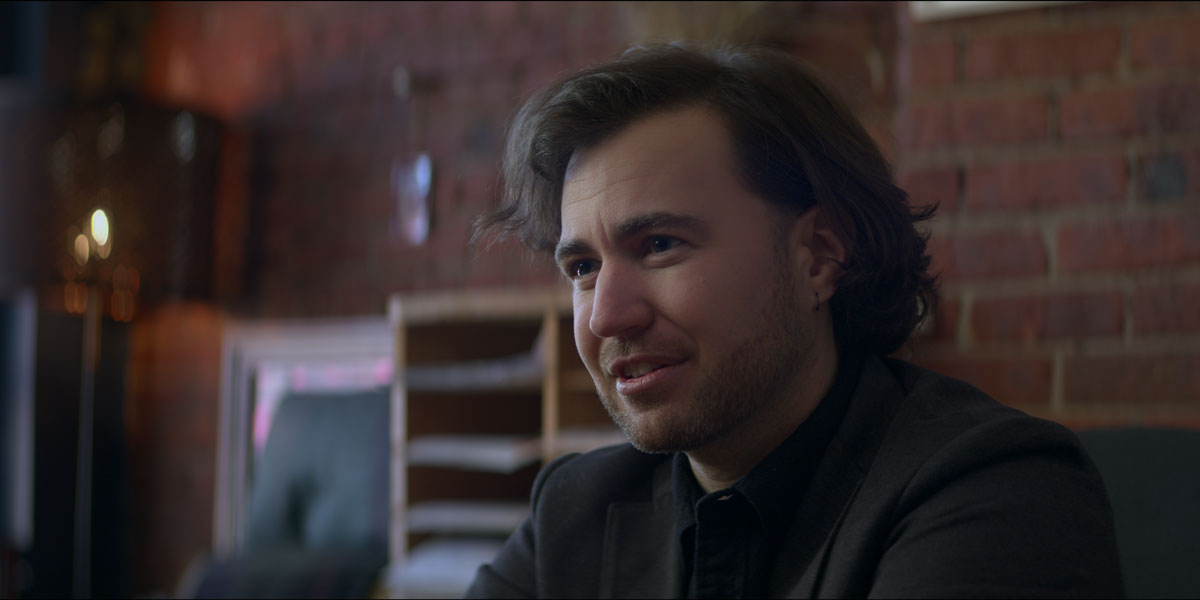
Never have I been more relieved to see an expert enter the frame on a docuseries than when Dr. Cassius Adair turns up Netflix’s “Escaping Twin Flames.”

Adair enters when the docuseries is well into exposing the sinister twist of Twin Flames Universe, a specious “school” promising to guide people to their spiritual soul mate. When members grow disillusioned with Jeff and Shaleia Divine, and their guarantee that their practice will net them everlasting love, the couple switch course and claim that God has guided them to pair members with each other.

Confounding this already problematic directive is that most TFU followers are women and identify as heterosexual. Jeff and Shaleia don’t view that as an obstacle. Footage shows them bullying members to assume new gender identities and pronouns, insisting they are really men in women’s bodies and that humans can only embody “Divine Feminine” or “Divine Masculine” energy.

One young member came out as transgender on Facebook after Jeff and Shaleia ordained them to be a “Divine Masculine,” leading their confused mother to kick them out of their house. This story comes from that parent, not the TFU member. She is one of several mothers whose children cut off contact with them after disappearing into the Twin Flames Universe.

These accounts are followed by video testimonials from other members confessing they were initially resistant to Jeff’s determination that they were a “Divine Masculine” but, as one says after receiving a “healing” training, “I could see how all along it was playing out.”

At this my internal alarm bells clanged furiously enough to make me hit the pause button.

If “Escaping Twin Flames” filmmakers Cecilia Peck and Inbal B. Lessner had let these scenes and others ride, they’d have left a damaging impression about the nature of transness with the audience. They must have know that, because at this point is precisely when they introduce Adair, an Assistant Professor of Media Studies at The New School, to let us know we’re not crazy.

Escaping Twin FlamesDr. Cassius Adair in "Escaping Twin Flames" (Netflix)“I don't hear in the testimony of the people in Twin Flames Universe something like, ‘I want to get closer to who I am.’ What I'm hearing them say is, ‘I want to get closer to who I'm supposed to be.’ That raises a red flag for me. That doesn't feel right to me,” Adair says. “We don't want there to be a ‘supposed to be’ about gender. We want gender to be something that you are allowed to discern on your own.”
Not many true crime stories merit two takes on the same topic, although now and again it happens. (Whether we needed two takes on the doomed Fyre festival, a la Hulu’s “Fyre Fraud” and Netflix’s “Fyre,” is debatable.) But some tales are tragic, bizarre and repellent enough to require a couple of breakdowns to sort through all the layers of moral transgression its perpetrators have committed or, like Jeff and Shaleia, may be continuing to commit.

“Escaping Twin Flames” is the second three-part documentary series about Twin Flames Universe, which speaks to the presumed mass appeal of the subject matter on the part of each project’s distributor – Netflix in this case, and Prime Video for “Desperately Seeking Soulmate: Escaping Twin Flames Universe,” which debuted a few weeks ago.  

Peck and Lessner, who collaborated on “Seduced: Inside the NXIVM Cult,” draw on some of Sarah Berman’s reporting for Vice.com to build their narrative. Prime Video’s “Desperately Seeking Soulmate: Escaping Twin Flames,” in contrast, retraces the reporting of Vanity Fair’s Alice Hines, who serves as its main protagonist and narrator.

Provided a person is sufficiently intrigued about this subject, the projects can be viewed as complementary. Although there’s plenty of overlap between them, there are more intriguing pathways and corners in this story than can be adequately covered in three hours.

“I don't see Jeff and Shaleia as supporting trans people . . . I see Jeff and Shaleia supporting anti-trans people."

“Escaping Twin Flames” builds towards the gender coercion subplot through most of the two episodes, positioning it as a matter of business necessity for Jeff and Shaleia. Twin Flames Universe is on its face LGBTQIA+ friendly as Arcelia, a former member appearing in both series, points out. She was drawn at first to the group’s inclusiveness until its founders became fixated on her identity as a trans woman.

With their followers losing faith, Jeff and Shaleia needed a way to keep them in the labyrinth; hence, a new mythology legitimizing their supposedly divinely mandated matchmaking. They begin with their first and most famous harmonious Twin Flames pair, a married lesbian couple Jeff begins to harass openly when one refuses to change her gender identity and name at Jeff’s insistence. Arcelia, sickened by this and other displays of the founders wanting people to align with an “over-heteronormative, traditional obscenity,” bowed out.

Adair qualifies his evaluation by saying some TFU members who joined as straight cisgender women may in the process of their time within the group realize they are trans.

Then we see one bereft mother talk about logging on to Facebook to discover her child, who is now called Isaiah, had gotten a double mastectomy. After Isaiah admits that before the surgery he would feel like he was lying or “there’s something that doesn’t feel good,” Adair is unambiguous.

“I don't see Jeff and Shaleia as supporting trans people by saying, ‘Hey, you can take hormones or get surgery.’ I see Jeff and Shaleia supporting anti-trans people by saying, ‘The gender you are is not determined by you; it’s determined by the people who have power over you.’”

We watch shows like this for the shocks and thrills; we do not expressly sit down with them to learn anything. Nevertheless, true crime can be a passive teacher in the same way all entertainment is, after a fashion. It proves our darkest fears while inspiring us to take mental notes to learn from others’ misfortunes.

Nearly every cult docuseries features moving interviews with people who have lost loved ones to whatever madness is being profiled. But the context in which these TFU discussions are presented verges on a soft confirmation of the widely debunked “social contagion” theory positing that young people who come out as transgender are submitting to the will of external influences.

We need your help to stay independent

The TFU tale is somewhat familiar, with lovelorn people taken in by new-age hucksters claiming to have the answers that have been eluding them. Jeff Divine, or Ayan, depending on when you encounter him – Jeff also previously identified himself as Ender Ayanethos, and Shaleia was born Megan Plante – guarantee that if their students follow their teaching they will achieve “harmonious union” with their Twin Flame, a soulmate to whom they’re linked across lifetimes. (Before founding Twin Flames Universe, Jeff also claimed to have the ability to spiritually cure cancer.)

“Desperately Seeking Soulmate” takes a more extensive look at Jeff's and Shaleia’s backgrounds, which is useful for comprehending the fraud behind their predatory tactics.

However, it is less specific in spelling out why TFU’s teachings and practices are anti-trans, which is important to explain to an audience consistently exposed to myths about gender-affirming care fueling anti-trans legislation.

You can’t take in these series without connecting the abuses Jeff and Shaleia inflict on their followers to the twisted reasoning behind anti-trans legislation.

Many of the bills circulating through state legislatures cite a theory of supposed “rapid-onset gender dysphoria,” introduced in 2018 by former Brown University researcher Lisa Littman only to be roundly refuted in the medical community soon after.

More than 60 organizations of health professionals, including the American Psychological Association and the American Psychiatric Association, agree there’s no such thing and called for the term to be scrubbed entirely. Since the Internet is forever Littman’s paper continues to be cited in bad-faith political efforts to, for instance, halt Medicaid funding for transition-related health care for adult patients, as Florida Gov. Ron DeSantis tried to do earlier this year.

Jeff also operates like a politician high on the Prosperity Gospel. He brags about hoodwinking people into working for him for free while conspicuously flaunting the luxury sports cars and massive home they were able to purchase with wealth created by luring followers into taking their meaningless classes. Eventually, Jeff invites TFU adherents to view him as Jesus Christ and, for a time, tries to get Twin Flames Universe to be designated as a religious organization to avoid paying taxes.

It could be that aspect of the story that makes the couple’s coercive tactics related to gender particularly odious.

Escaping Twin FlamesArceia in "Escaping Twin Flames" (Netflix)“Desperately Seeking Soulmate” calls on Johns Hopkins University associate professor Jules Gill-Peterson to synthesize what we’re seeing into a commonly understood concept: By dividing sexuality into a binary instead of acknowledging it as a spectrum, and by insisting that even same-sex couples operate within a masculine-feminine dynamic, the psychological coercion that Jeff and Shaleia engage in is a sinister manifestation of conversion therapy. She’s right.
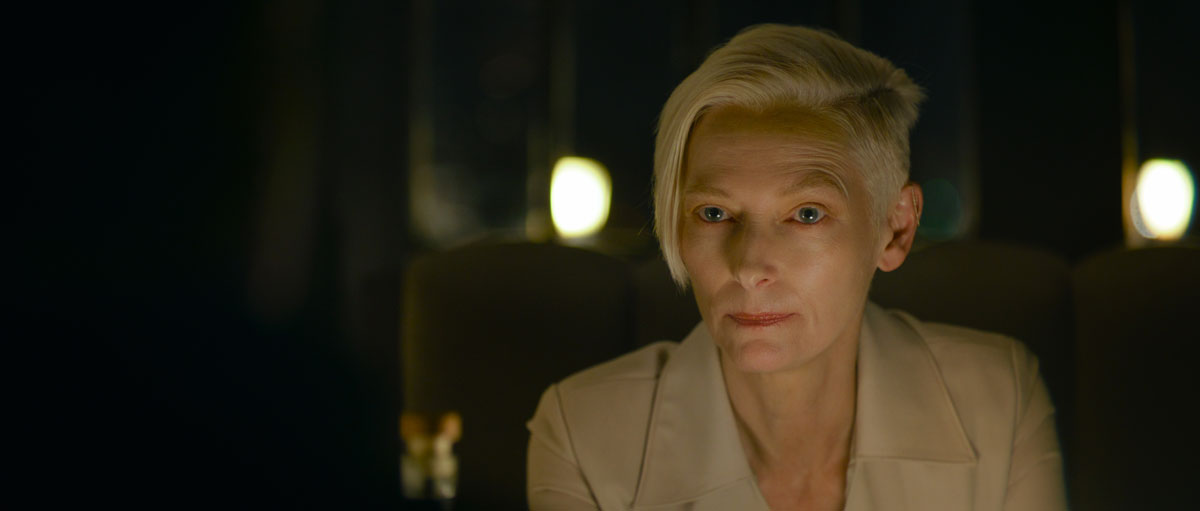
But what "Escaping Twin Flames" calls out is the dangerous falsehood TFU perpetuates via its leaders’ methods. Their coercion shows them pushing emotionally vulnerable people to change their names and pronouns – fueling the lie, for example, that transgender people, youth particularly, are going through a "phase."

TFU members current and former featured in each series appear to be adults, although many certainly look younger – which is to say, the people Jeff and Shaleia are accused of manipulating are, in the eyes of the law, capable of making decisions for themselves.

We are not talking about children, in other words, but you can’t take in “Escaping Twin Flames” or “Desperately Seeking Soulmate” without connecting the abuses Jeff and Shaleia inflict on their followers to the twisted reasoning behind anti-transgender legislation, most of which specifically targets children and parents of transgender youth.


Want a daily wrap-up of all the news and commentary Salon has to offer? Subscribe to our morning newsletter, Crash Course.


This is a docuseries, not a hard news investigation. And yet that’s precisely why Adair’s straightforward contextualizing is so vital. Information sorted through entertainment should be met with skepticism, but that term cuts in a variety of ways. Twin Flame Universe has posted a media statement on its website refuting the coercion claims former members make in each series, although footage included in both corroborates their version of events.

“We take seriously recent allegations implying we wield inappropriate control over our community members,” the statement reads. It goes on to say, “The allegations levied against Twin Flames Universe not only distort our true aims, methods, and curriculums but also misrepresent the autonomy of our community members, who are free to engage with our resources as they see fit.”

Adair is even more precise as to what should be troubling us as we watch these series unfold.

“[P]eople might hear about this group and say, ‘Oh, this is proof that trans and this is some kind of cult,’ that transness is something that is coerced,” he says. “And nothing could be further from the truth. This is a group that is not in the mainstream of what trans people do and what trans people believe.”

"Escaping Twin Flames" is currently streaming on Netflix. "Desperately Seeking Soulmate: Escaping Twin Flames Universe" is streaming on Prime Video.

A harvest of upheaval: Mike Johnson faces first climate test with farm bill

As harvest season wraps up across much of the U.S., farmers are battling intensified climate upheaval–drought, flooding, and destructive seasonal disruptions that pose huge challenges to reaping the bounty we’ve grown accustomed to, from the field to the marketplace and our plates. 

Meanwhile, it’s farm bill season in Washington, D.C., where policymakers’ decisions will define future harvests and agriculture’s impact on the growing climate emergency. With a newly minted speaker in place, Republicans are now pushing hard to pass a new farm bill that could set back vital progress on the climate crisis, food aid to the poor, and more.

The current farm bill expired Sept. 30, and funding for many farm programs ends Dec. 31. Democrats are urging against cuts to conservation and other farm bill programs, while lawmakers are "quietly debating" extending the current law via the next emergency budget measure in November.

But the climate crisis demands bolder action. Amid record heat and rain across much of the U.S. this year, Congress must address agriculture’s hefty climate impacts–and help farmers adapt and become more resilient to climate upheaval. The farm bill can make a huge difference in how U.S. agriculture impacts–and experiences–the climate crisis. 

We need your help to stay independent

According to EPA estimates, agriculture makes up roughly 10 percent of U.S. climate-harming emissions (however, international analyses repeatedly put agriculture’s emissions at one-third of worldwide greenhouse gasses). Despite many well-documented solutions, the farming sector has failed to reduce its huge climate footprint even while other industries have made some progress. Without serious changes, experts project agricultural emissions to soar in coming years.

Industrial livestock production alone generates a remarkable 36 percent of all methane emissions in the U.S., more than the oil and gas industries. A recent study found that the livestock industry's air pollution is responsible for more than 12,700 deaths per year — more deaths than are attributed to coal-fired power plants. 

Record heat and drought severely threatened this year’s soybean crop’s yield and quality, High Plains Journal reported. Across much of the “breadbasket” region including Kansas, Nebraska, and parts of Texas and Missouri, extended drought and heat waves have taxed withering water reserves while harming crop production. 

This past summer, “food went weird,” The Guardian reported: “In Texas, farmers reported smaller yields as their corn and cotton crops struggled to survive soaring summer temperatures. In Arizona, beekeepers spotted dead honey bees outside hives. Even underwater, off the coast of Long Island, kelp farmers recorded another year of shrinking yields.”

Farmers aren’t the only ones suffering.Farmworkers are at severe risk of serious injury and death from heat exposures, and are still not protected by any national heat standard.

The farm bill, a legislative behemoth spanning agricultural and nutrition and food stamps policies, is a critical opportunity to address this harvest of upheaval. 

A nationwide coalition of several hundred organizations is urging Congress to prioritize soil conservation funds to rebuild farmland soils ravaged by decades of over-farming and toxic chemical fertilizers. Restoring and revitalizing soil can play a pivotal role in storing carbon and making farmlands more resilient to climate chaos.  

To create a more sustainable and resilient harvest, the farm bill must, at a minimum, fund these climate-restoring priorities:

  • Protect Inflation Reduction Act (IRA) conservation funding and utilize IRA Conservation funding to rebuild America’s soils.
  • Support conservation practices and promote organic farming
  • Promote crop insurance that incentivizes healthy soil practices.
  • Secure funding for research & on-farm education and technical assistance to farmers.
  • Ensure funding for strong regional food infrastructure.

One promising bill that would move these critical goals forward is Rep. Chellie Pingree’s Agriculture Resilience Act (ARA), which has 44 cosponsors in the House of Representatives. The measure would provide funds and incentives for farmers to improve soil health, protect farmlands, expand pasture-based livestock systems that can help reduce methane emissions, and boost on-farm renewable energy.  

The ARA would significantly advance on climate-healing progress made in the Inflation Reduction Act by funding climate and agriculture research, supporting markets for regenerative meat, boosting local and regional marketing for sustainable products, and addressing food waste and composting. Pingree’s far-reaching bill would transform our nation’s food and farming, helping to expand critical climate-restoring approaches such as agroforestry, organic farming, farmland protection, pasture-based systems, conservation set-asides, manure management, and agriculture-based renewable energy systems, making America’s food and farming more sustainable and resilient.

Another critical piece of the solution is the Opportunities in Organic Act, which would support food and farming businesses to make the jump to organic, making certification more affordable and providing resources for farmers to go organic and stay organic. Despite organic’s popularity, less than one percent of America’s farmland is organic—a massive shortcoming that directly harms our health and climate through toxic pesticides and fertilizers derived from fossil fuels.

To restore our climate and protect our environment, we must also reject harmful legislation currently within the farm bill, such as the Agricultural Labeling Uniformity Act, which would prevent states and localities from enacting stronger-than-federal protections against pesticides that threaten environmental and human health. This measure, spearheaded by Republicans, violates state and local control in the name of blocking laws that would protect our health and environment. 

More directly, this preemption law by Rep. Rusty Johnson (R-SD)and Rep. Jim Costa (D-CA) is "a blatant attempt to preempt California from issuing cancer warnings on products–like Roundup and its active ingredient, glyphosate–that have the potential to cause cancer," said Center for Food Safety attorney Amy van Saun. Numerous peer-reviewed studies and meta-analyses have documented that glyphosate poses significant risks for causing cancer and non-Hodgkin lymphoma.

The intensifying climate crisis is directly harming farmers, farmworkers, and consumers in countless ways. There is no time to waste, and we cannot afford any steps backward that enable more toxic chemicals and more greenhouse gas emissions that harm our health and environment. We are all paying the price in our taxes, in massive crop losses and insurance, in farmland destruction from climate upheaval, and more. This is one of new House Speaker Mike Johnson’s first big tests. It’s time for a farm bill that heals and restores our health, our climate, and our farmlands, for our collective future. 

Grammys: Taylor Swift surpasses Paul McCartney with history-making song of the year nomination

SZA is capping off an already successful year with a leading nine Grammy Award nominations.

In addition to her album of the year nod for "SOS," the singer-songwriter's single "Kill Bill" has picked up nominations for record and song of the year. In April, the track became SZA's first No. 1 hit on Billboard's Hot 100 chart.

With seven nods each, Phoebe Bridgers and Victoria Monét are the second most nominated recording artists. They're tied with Serban Ghenea, a mix engineer on two record of the year nominees: Olivia Rodrigo's "Vampire" and Taylor Swift's "Anti-Hero." Along with Miley Cyrus, Rodrigo and Swift have six nominations apiece. Like SZA, all three are nominees in the all-genre fields of album, record and song of the year.

Though not on top of the nominations leaderboard, Swift has made history — twice. With "Anti-Hero," she becomes the first songwriter to be nominated seven times for song of the year. (Swift was previously tied with six-time nominees Paul McCartney and Lionel Richie.) Additionally, Swift ties Barbra Streisand for the most album of the year nods by a female recording artist. "Midnights" lifts Swift to six total nominations in the category. (Streisand recently released her memoir, "My Name is Barbra.")

One way to sum up the nominations? "It’s clear that it’s a woman’s world in the music universe right now," Chris William writes for Variety.

The 67th annual Grammy Awards will be broadcast live from Los Angeles by CBS on Sunday, Feb. 4 at 8 p.m. ET/5 p.m. PT. Read the full list of nominees here.

“Pleasantly disgusting:” Who’s buying all those Thanksgiving-flavored sodas and snacks?

Every year, in anticipation of Thanksgiving, Jones Soda rolls out its collection of seasonal-themed beverages. The brand’s soda flavors aren’t anything like your classic Sierra Mist or Orange Crush. In fact, they’re quite the opposite. Think savory, dinner-themed sodas — mashed potatoes, green beans and stuffing are just a few menu items that are served up as fizzy drinks.  

Jones Soda’s most popular Thanksgiving-flavored offering is the Turkey and Gravy soda, which is exactly what its name suggests. Of course, It’s only natural to wonder why someone would be compelled to spend more than $45 on a soda that sounds far from appetizing. But surprisingly, many people do.

“It seemed to have notes of orange in it like a citrus bribe or something over a savory bird, a hint of saltiness along with the sugary sweetness of a soda,” wrote one customer in an online review. “I would like to see some notes of sage in it to give it a bit more of a gravy flavor but it was pleasantly disgusting, though not nearly as revolting as I expected.”

Similarly, another eager customer described the soda as “a mix of savory and sweet…something most sodas don't have.” They added, “As the title of this review says, I got this, just to say, ‘Yeah, I tried it!’”

Jones Soda is just one of many brands that have jumped on an ongoing trend of snacks centered around classic Thanksgiving flavors. Unlike most holiday-themed foods, Thanksgiving snacks push the limits of wacky food pairings. There’s American Roasted Turkey Flavor Cheetos, which are interestingly a unique flavor only found in China, but available for purchase via online retailers in the states. There’s Pillsbury’s turkey-shaped sugar cookies and Goldfish’s Dunkin' Pumpkin Spice Grahams — two snacks that are more conventional than far-fetched. And there’s Jones Soda’s Sugar Cookie-flavored drink, which comes in a pack with the Turkey and Gravy soda… because nothing screams Thanksgiving like dinner followed by dessert.

Because Thanksgiving season is solely reserved for the month of November, Thanksgiving-themed snack foods are short-lived but also, incredibly popular. Jones Soda’s Turkey and Gravy drink, for one, is a common sight across Reddit, where brave taste testers eagerly share their reviews. The soda also caught the attention of food critics and even registered dieticians, like Heather Martin, who sampled the soda for the Today Show.

We need your help to stay independent

Recently, there’s been a strong desire for the Thanksgiving-themed drink, which was originally launched in 2003, but not seen on store shelves in over a decade. In 2021, Jones Soda announced that it would bring back their wacky flavor in honor of its 25th anniversary.

"We've taken enough of a breather from this flavor, and we think this is the right time to bring it back," Mark Murray, Jones Soda’s former CEO, said at the time. "There's a whole generation — an entire demographic of Gen Z and younger millennials — that's never tried it, but maybe just heard of it."

In the same vein as the Grimace Shake and Pink Sauce, Jones Soda’s Turkey and Gravy soda is essentially a shock-treat that piques people’s curiosity and appeals to their desire for the unexpected. The drink isn’t really hailed for its drinkability but rather, its absurdity. No one’s necessarily cracking open a cold bottle of Turkey and Gravy soda on a Friday night to unwind. At least that’s not how the soda is marketed to its consumers. The drink itself is a gag that people can say they've tried at least once.

That being said, not all Thanksgiving-themed snack foods are flat out bizarre. After all, Thanksgiving foods are comforting and tasty — and certain snacks, namely the Trader Joe’s collection of Thanksgiving chips and popcorn, certainly tap into those appealing qualities.


Want more great food writing and recipes? Subscribe to Salon Food's newsletter, The Bite.


There’s TJ’s Stuffing Seasoned Popcorn, which many say tastes like a mouthful of homemade stuffing. Perhaps the best description of the popcorn is from one Redditor, whose girlfriend likened the snack to “that Willy Wonka candy where it’s a multi-course meal in your mouth in one bite.” TJ’s also carries a Thanksgiving Stuffing Seasoned Kettle Chips made with thickly sliced, premium potatoes and coated in a blend of salt, celery, sage and thyme seasonings. Close your eyes and you might even taste a hint of gravy, the California-based retailer said.

It’s clear that Thanksgiving-themed snack foods aren’t losing their demand anytime soon. Whether they’re straight up strange or actually delectable, such snack foods possess a myriad of fans that are always coming back for more every season. In true Thanksgiving fashion, perhaps it’s time we all tried Turkey and Gravy soda alongside stuffing seasoned popcorn and stuffing seasoned kettle chips. Now that’s a snack platter worth enjoying in anticipation of Thanksgiving dinner.

David Fincher cast the wrong “Killer” in the Netflix thriller that lacks the auteur’s usual edge

Director David Fincher’s thriller, “The Killer,” is too cool for school. It is trying so hard to be as detached and as efficient as its protagonist that viewers might develop disdain for this film, adapted from Alexis “Matz” Nolent’s graphic novel, which was illustrated by Luc Jacamon. 

“The Killer” is, quite honestly, an endurance test as the character creates a mess and then cleans it up.

The title character (Michael Fassbender) moves through this sleek film with implacable precision. He speaks more in voiceover than to other people, waxing philosophically about “luck, karma and justice” (and believing in none of them). He also spouts new age-y aphorisms like, “The only life path is the one behind you.” He listens to The Smiths a lot; there are nearly a dozen of the “complaint rock” band’s songs providing sonic wallpaper throughout the film. And, in a running joke, he uses aliases that are names of mostly 1970s television characters —Archibald Bunker, Lou Grant and Lionel Jefferson, among them. 

All these little quirks are meant to be witty or appealing, but viewers may share the Killer’s other trait, which is that he just simply doesn’t give a f**k. He talks in the opening scene about enduring boredom, and “The Killer” is, quite honestly, an endurance test as the character creates a mess and then cleans it up. 

The film opens in Paris, where The Killer is sitting in an abandoned office waiting for his target, a VIP, to arrive at a hotel across the way. The Killer does some yoga-like exercises and participates in some “Rear Window”-ish observations of total strangers. The VIP finally arrives, The Killer lines up his shot, and, when he takes it — gasp — he misses. The money shot has no real suspense; more tension is generated as the Killer quicky, quietly and cleverly leaves no trace as he escapes to his hideout in the Dominican Republic.

But so far, so what? It is unclear who the intended victim was, and why he needed to be snuffed out, although it really does not matter. The story is what happens to The Killer after (or because of) his error. His boss, Hodges (Charles Parnell), indicates there will be some blowback. That blowback comes in the form of two subcontractors who have broken into his house and left Magdala (Sophie Charlotte), whom they found there, all but dead in their efforts to kill The Killer. As such, “The Killer” becomes a standard revenge flick, with the assassin tracking down the two hitmen. 

The film deliberately denies viewers any such emotional involvement. That may be in line with The Killer’s mindset, and he indicates as much, repeating the phrase, “Empathy is a weakness.” But the way things play out does not provide much investment with the protagonist. His actions lack surprise. There is an underwhelming action sequence and anticlimactic confrontation. Fincher does not imbue the film with any of his trademark style or tension. The film practically sleepwalks through its paces.

The icy queen that is Tilda Swinton exudes such a wily confidence, such grace under pressure.

After The Killer learns the addresses of the two subcontractors, he goes after each of them. One lives in Florida and has a pitbull. He doses the dog, and then sets out to take out its owner. Their fight, which starts out in silhouette, is as choreographed as a pro wrestling match. Any glass coffee table gets shattered, and any glass or object at hand will be broken over the head of the other. And weapons, like a poker, will be used to poke. There is a nice moment when The Killer reaches into a kitchen drawer and pulls out a gadget he did not expect, but mainly this fight scene is a snooze.

The KillerTilda Swinton as The Expert in "The Killer" (Netflix)
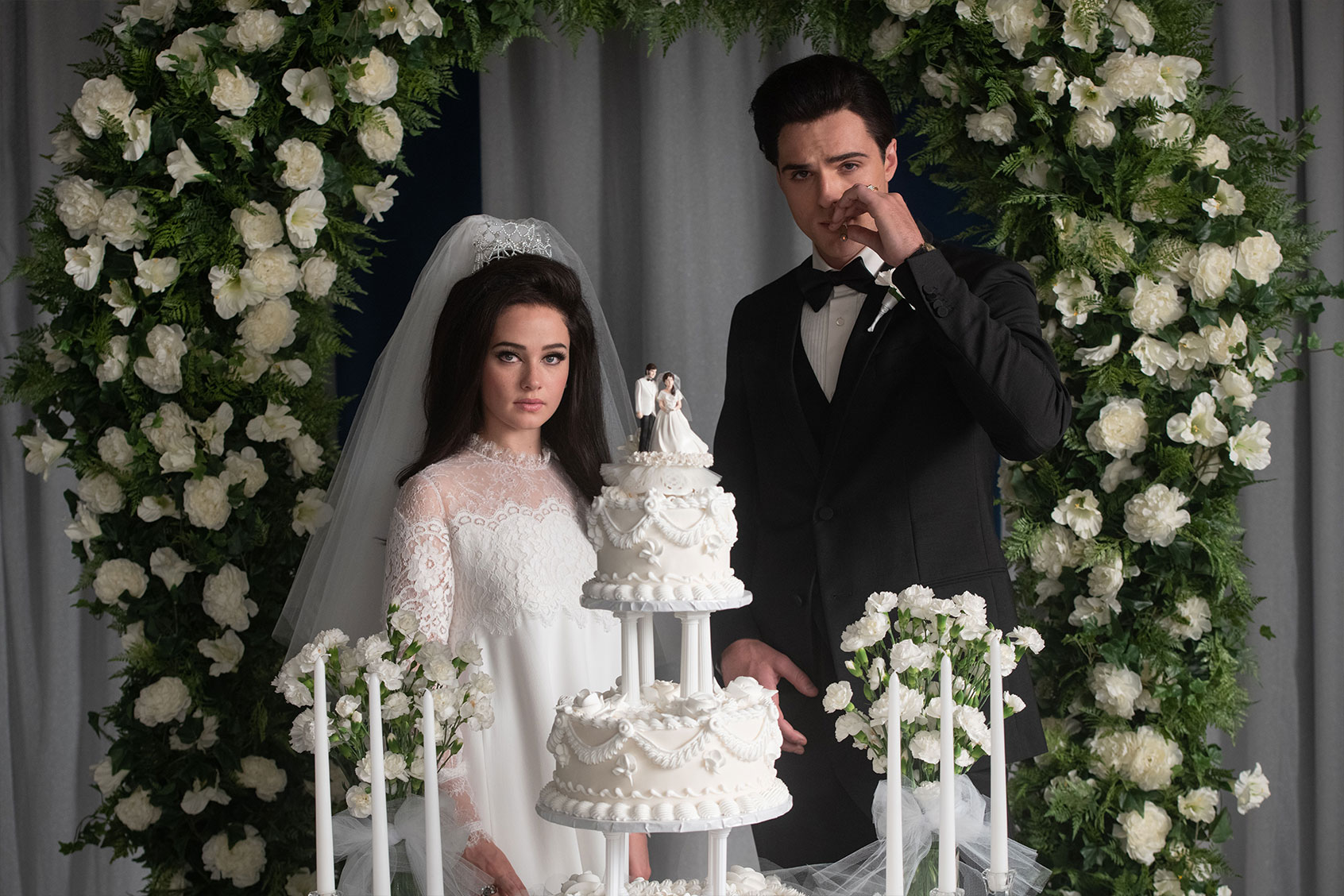
The other subcontractor sequence is the film’s high point, a talky episode, involving The Killer meeting “The Expert” (Tilda Swinton) in a fancy suburban New York restaurant. The Expert, realizing she has been caught, orders a flight of whiskey for her last meal, and tells a dirty joke elegantly. The scene may be all of 10 minutes, but the icy queen that is Tilda Swinton exudes such a wily confidence, such grace under pressure, that one might suspect the whiskey she shares with The Killer was suspect.

“The Killer,” however, is not done yet; the film must lumber to its foregone conclusion, the last individual The Killer needs to call on. This requires an elaborate sequence where he arranges his undetected entry into a secure apartment building. Fincher and screenwriter Andrew Kevin Walker delight in depicting the elaborate tasks The Killer needs to complete his mission(s), but watching them is not particularly exciting, however inventive they may be. Following The Killer’s actions is a passive activity, which may be why the film is so tedious.

Fassbender, who is in every scene, is suitably emotionless. He repeats his lines, “anticipate, don’t improvise,” as if reminding himself how to act. But it would be interesting to think he may be an unreliable narrator. The best moments are the ones where he goes off autopilot and makes a decision about collateral damage. The actor who is wiry and muscular conveys the aloof tone Fincher is aiming for, but it is hard not to think how costar Tilda Swinton, might have fared in the lead role. 

The biggest victim of “The Killer” is the two hours viewers kill watching this lackluster film. The Killer’s target dodged a bullet. Viewers who skip this film can, too. 

“The Killer” is playing select theaters and streams on Netflix beginning Nov.10.

Trump aide denies claim former president “gloated” after Angela Merkel compared him to Hitler

A campaign aide has pushed back on a report that Donald Trump bragged multiple times to a member of Congress after former German Chancellor Angela Merkel compared the size of his crowds to those of Adolf Hitler, the disgraced antisemitic leader of Nazi Germany. (During the Holocaust, six million European Jews were brutally murdered.)

"This filth either belongs in the discount bargain bin in the fiction section of the bookstore or should be repurposed as toilet paper," the aide said in a statement to Politico's Playbook.

Playbook offered readers a "buzzy" first look at the scoop from ABC News chief Washington correspondent Jonathan Karl's new book. According to Politico, Karl reported on the allegations in "Tired of Winning: Donald Trump and the End of the Grand Old Party" as follows:

At least twice, Karl writes, Trump gloated to a prominent member of Congress that Merkel — who detested the 45th president privately and had trouble hiding her scorn publicly — told him she was “amazed” by the number of people who came to see him speak, and Trump said “she told me that there was only one other political leader who ever got crowds as big as mine.” The Trump-allied congressman knew who Merkel was comparing Trump to, but couldn’t tell if Trump, who took Merkel’s words as a compliment, himself understood.

Asks Karl, “Which would be more unsettling: that he didn’t or that he did?”

In addition to denying the claims, the Trump campaign aide called Karl "disgraceful and talentless." After the violent events of Jan. 6, Merkel called out Trump's refusal to concede the election. "Doubts about the outcome of the election have been stoked, and that set the atmosphere which made the events of the [last] night possible," she said at the time.

"A basic rule of democracy is: After elections, there are winners and losers," Merkel added. "Both have to play their roles with decency and a sense of responsibility, so that democracy itself remains the winner."

“Priscilla” highlights how Elvis molded Priscilla into a mirror of himself

Sofia Coppola's "Priscilla" begins its retelling of Priscilla Presley's life with a girly montage of pink toenails on a plush soft pink carpet, a lash strip ready to be plastered on a dark cat eye and hairspray to hold her luminous, dyed locks. You can't forget the poodle skirt either. All the things that make a '50s girl, a girl. It's a look that will be drastically made over by her future lover through the course of the film.

Based on Presley's memoir, "Elvis and Me," Coppola's take on the life of the girl once known as Priscilla Beaulieu is biting in establishing her teen girlhood and how her life turns upside down when she meets Elvis Presley in war-stricken Germany in 1959. The film paints the start of their union of a very lonely girl meeting a very lonely, older celebrity crush. They fall in love and the rest is history. We've seen it, we've read about it but we've never really experienced it through Priscilla's eyes.

Asking a child to stay the same is a way to reinforce his power to dictate who she is.

We see how Priscilla evolves from an unassuming 14-year-old into the slightly more mature, yet still underage, object of Elvis' desires. Unknowingly to Priscilla, being that object of desire comes with some strict stipulations. One of those stipulations is how Elvis controls almost every aspect of a naive Priscilla's life. She leaves her hometown and high school in hopes of being Elvis' committed girlfriend. But she doesn't understand what that entails until she is left alone almost every day in his Graceland mansion. Whenever Elvis is present and not off touring or on a film set, he begins to mold her to his liking and in his own striking image.

This transformation seems innocent enough when it starts with a gift as Priscilla and Elvis' relationship deepens in Germany. Elvis gives her a beautiful, dainty gold watch and quietly demands, "Promise me you'll stay the way you are." Of course, she obliges. After all, she is only 14 years old and doesn't know any better. In this scene, he doesn't physically change anything about her but asking a child to stay the same is a way to reinforce his power to dictate who she is. In this moment, it's like he wants to freeze her innocence in time. The golden watch symbolizes that he is ready to imprint himself on her before she's even had the opportunity to figure herself out. She wears the watch throughout the entirety of the film.

It's when Priscilla visits Elvis in Graceland for the first time, flouting all her parents' rules, that Priscilla transforms physically to be more similar to him, with his approval of course. They travel to Las Vegas together looking and dressing like a power couple. Her hair's volume is fuller. She starts wearing more revealing two-pieces, and her makeup looks significantly darker. When she returns to school afterward the difference is stark. She is back in her teenage clothes — back in her teenage life, feeling purposeless without Elvis' presence telling her what to do or feel. So she decides she will permanently move to Graceland, drop out of her high school, and enroll in a Memphis Catholic school that Elvis picks out.

PriscillaCailee Spaeny as Priscilla and Jacob Elordi as Elvis Presley in "Priscilla" (A24)
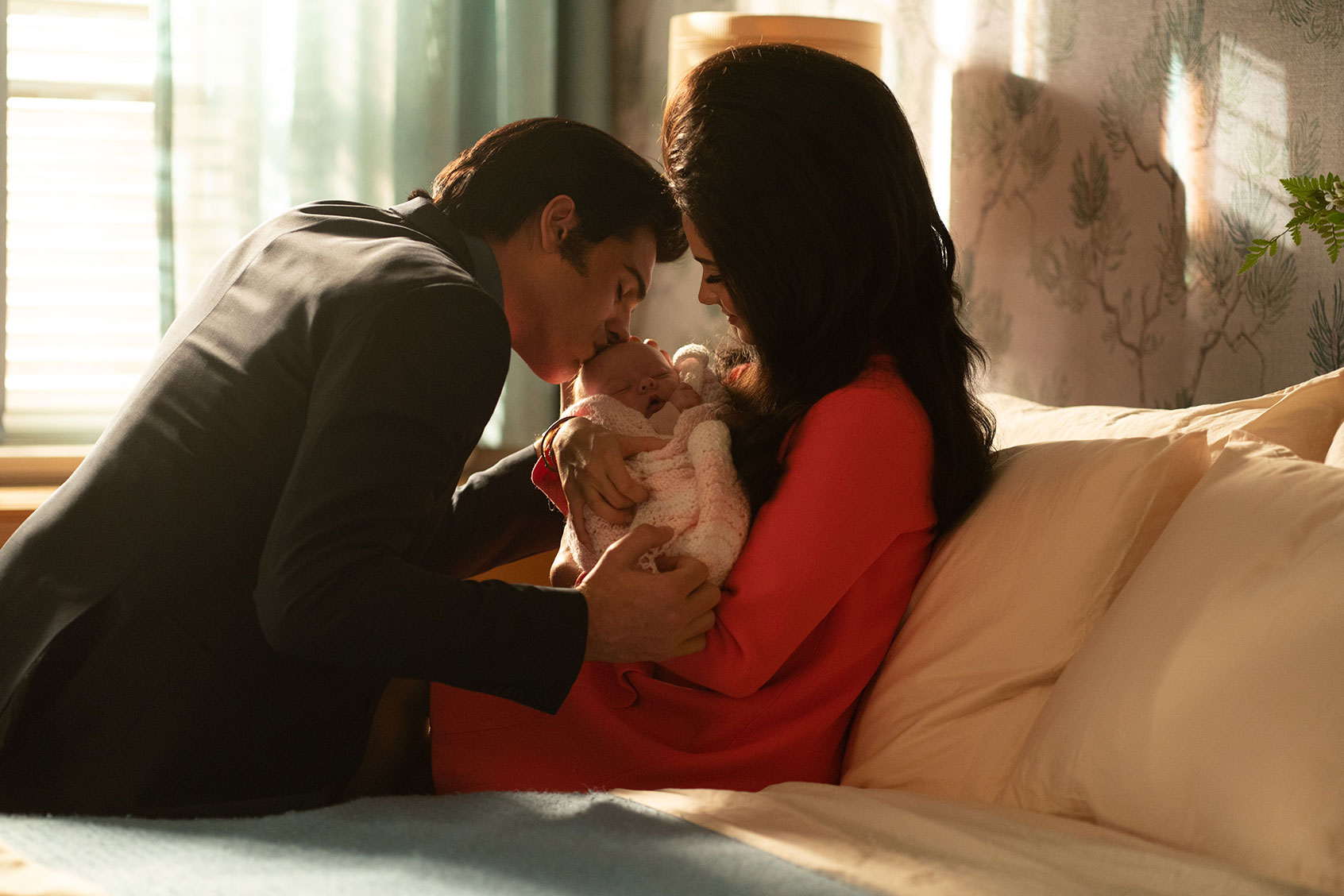
One study has shown that many men are attracted to women who look like them.

As Elvis' full-time, live-in girlfriend, she has to look the part. Elvis enforces that Priscilla gets a new look, changing everything about Priscilla's physical appearance to emulate her rich, famous and older new boyfriend. Coppola's film shines in this scene as it reinforces the power imbalances in Elvis and Priscilla's relationship. Priscilla tries on different dresses, modeling them Elvis who is obviously carrying all the cash. He loves her in a blue gown because "blue's your color," he declares. He hates her in a long-sleeved brown gown even though it's her favorite. When she asks "What about how I feel?" he doesn't care, as long as she looks like the doll he is customizing in his image. 

During the scene, Elvis also strongly suggests that Priscilla wear more eye makeup because it'll "make your eyes stand out." He tells her to dye her hair to match his jet-black hair, held together with hairspray and shoe polish. Priscilla herself once said in an interview that Elvis "did want me to dye my hair black when I was young so we could look alike a little bit." So she did. Her hair becomes darker and larger than her small stature. Her light eyes become painted in dark eyeliner because Elvis said so.

This isn't a new phenomenon though. One study has shown that many men are attracted to women who look like them – but there's an added level of creepiness because Priscilla was a child when most of this change was happening to her. A sign of grooming according to experts is "having money or new things like clothes and mobile phones that they can't or won't explain." This is a way that an abuser can build a connection to a child that they are aiming and prepping to manipulate, abuse and exploit. This sounds a lot like the relationship between Elvis and Priscilla. He gifts her with all these clothes and changes the way she looks she is no longer recognizable as a child, but rather a child masquerading as a fully grown woman that Elvis has created.

We need your help to stay independent

When she does wear a dress she loves that is colorful, looser fitting and not too sexualized, Elvis says it doesn't suit her because she's a small girl and it hides her figure which visibly enrages Priscilla for the first time in the film. Moreover, Priscilla exists as a vessel for Elvis' self-centered wants and desires — never taking Priscilla's thoughts or wants into mind. Her thoughts or feelings do not exist because she is an extension Elvis and not a full person belonging to herself. 

PriscillaJacob Elordi and Cailee Spaeny in "Priscilla" (A24)But their relationship falls apart shortly after they have their first child, Lisa Marie. Elvis' drug use and infidelities push the couple further and further apart. But in motherhood, Priscilla finds her voice and most importantly, a sense of identity outside of the mirror Elvis used her as in her role as his wife. Elvis' lack of involvement in her life and her complete disillusionment of him, forces her to fight for herself. Her style becomes elevated in a muted, mature way. She's forced to parent her child as a child and her clothes reflect that — she wears blouses, high-waisted bellbottoms, stops dyeing her hair, and tones down her makeup. In the couple's very dark, last scene together in Las Vegas, she wears the dress he hates earlier in the film. Elvis assaults Priscilla, and she fights him off of her before she demands a divorce. Even in a moment of empowerment for Priscilla, Elvis is still trying to take advantage of her — even though she's no longer a child anymore. 

Throughout "Priscilla," Coppola intentionally builds a perfectly crafted power dynamic in Elvis and Priscilla's relationship. It's through the fashion and image that Coppola illustrates that Elvis controlled Priscilla's adolescent life. The control permeates every aspect of her life but most importantly is physically visible through her looks and fashion. Priscilla is able to gain agency through her identity as a mother but she never really gets the chance to have a childhood because she existed to serve Elvis and his needs. 


Media must stop overcorrecting for too much Trump exposure: The public needs a closer look at him

Democrats are reeling this week from having been bounced around like pinballs with bad polling results for 2024 followed by excellent returns in the off-year elections. It's hard to know what to make of it all. But now that the smoke has cleared a little bit we can come to some solid conclusions.

First, the elections this week showed conclusively that Democratic voters are still motivated to vote to keep Republicans from further eroding abortion rights than they already have. They cemented the right to choose in the Ohio constitution, re-elected a pro-choice governor in conservative Kentucky and repudiated a rising Republican star who campaigned on a plan to enact a 15-week ban in Virginia which the GOP absurdly seemed to believe was a consensus position.

The right has shown that they are serious about using the power of the state to take away people's rights and intrude on people's personal lives.

Just as interesting was the complete failure of the right's other culture war obsessions of the past few years. We saw it coming with the flop of a DeSantis campaign which was predicated on anti-vax hysteria, book bans, demonization of transgender kids and the boogeyman of critical race theory. The election on Tuesday featured a repudiation of Moms for Liberty school board candidates all over the country including Loudoun county in Virginia, the epicenter of the so-called "parent rights" movement that sprang up during the pandemic. Apparently, other parents decided they didn't want these busybodies telling them how to educate or raise their kids so they ran against them and won.

The reasoning behind this is obvious: Voters see that the MAGA assault on democracy is manifesting itself personally in their daily lives. The right has shown that they are serious about using the power of the state to take away people's rights and intrude on people's personal lives. It's no longer an abstraction, it's become an immediate threat.

When the perception is wrong, it's the media's job to correct it, not accept it as a fact of life and run with it, particularly when it obscures the reality that the Republicans, led by Trump, are proposing the most dangerous usurpation of our democratic system in American history.

There has been very little discussion of this in the mainstream news media. In fact, on election night, some of the pundits and anchors seemed to be confused by what was going on. For instance, CNN had announced their latest 2024 poll showing that Joe Biden is narrowly losing to Donald Trump a year from now and they were breathlessly "analyzing" what that meant for the Democrats, pounding and pounding away at Biden's so-called age problem when the returns started to show that Republicans were suffering yet another rout at the ballot box. One panelist, Kate Bedingfield, President Biden's former communications director, politely suggested that if they were going to spend the night discussing polls about an election a year from now, they might want to take a closer look at the actual election that was happening that night. But it didn't take long to get back to what they clearly think is the sexier subject — a horse race that hasn't even started.

I've written before about the propensity of Democrats to panic and I won't belabor it. It's just what they do. But the problem of the media narratives is a real one, as we all learned to our dismay in 2016. The constant drumbeat about Hillary Clinton's health, driven by the right-wing media and pushed hard by Trump with his "she doesn't have the strength and stamina" to be president was taken up by the press without even considering that they were disseminating GOP talking points. And we all know about the "but her emails" debacle that very likely resulted in Clinton's narrow electoral college loss that year. As far as I know, there has not been a real reckoning with the dynamics that drove the press in that cycle and it seems to be reasserting itself again this time with the obsession with Biden's age.

We need your help to stay independent

The right has been flogging that story relentlessly since Biden took office and it's taken hold. Of course, Biden is an elderly man but he's mentally and physically fit, certainly just as much as Donald Trump who is a mere three years younger and who makes gaffes daily that would have the press calling for Biden to immediately step down if he said such things.

The press waves away this discrepancy by saying that the "perception" is that Trump is much younger and more vital and perceptions are what matters in politics. But when the perception is wrong, it's the media's job to correct it, not accept it as a fact of life and run with it, particularly when it obscures the reality that the Republicans, led by Trump, are proposing the most dangerous usurpation of our democratic system in American history.

The press needs to keep in mind that this relentless recitation of poll numbers showing Trump slightly ahead a year out is setting in stone a narrative that will serve Trump's purposes very well if he loses.

Margaret Sullivan, the former media critic for the Washington Post and now a columnist for the Guardian, explained the consequences of this abdication of responsibility, pointing out that Biden’s low approval ratings, despite his accomplishments, demonstrate that the media is simply not doing its job. She writes that their narrative of Biden's "age" and the horse race obsession means they are simply not doing an adequate job of informing the public of the danger a Trump second term presents. Her advice:

Report more – much more – about what Trump would do, post-election. Ask voters directly whether they are comfortable with those plans, and report on that. Display these stories prominently, and then do it again soon.

Use direct language, not couched in scaredy-cat false equivalence, about the dangers of a second Trump presidency.

Pin down Republicans about whether they support Trump’s lies and autocratic plans, as ABC News’s George Stephanopoulos did in grilling the House majority leader Steve Scalise about whether the 2020 election was stolen. He pushed relentlessly, finally saying: “I just want an answer to the question, yes or no?” When Scalise kept sidestepping, Stephanopoulos soon cut off the interview.

Those ideas are just a start. Newsroom leaders should be getting their staffs together to brainstorm how to do it. Right now.


Want a daily wrap-up of all the news and commentary Salon has to offer? Subscribe to our morning newsletter, Crash Course.


I also think they should stop worrying about exposing the public to Donald Trump and force the people to take a closer look. There's a sense that his absurdness has faded in the memories of people who don't see him anymore. If they did, they would realize that he's actually gotten much worse. His obsession with revenge and retribution is more than disturbing and his meandering rally speeches are even more incoherent than before.

The press needs to keep in mind that this relentless recitation of poll numbers showing Trump slightly ahead a year out is setting in stone a narrative that will serve Trump's purposes very well if he loses. He won't say the polls were wrong, he'll say they prove that the election was rigged. The constant media criticism of Biden's age, the lack of attention paid to his very real accomplishments and lackluster response to Trump's promises to destroy democracy are priming plenty of people to believe that Biden can't win and that Trump isn't really that bad. And that plays right into Trump's plans to once again call on his people to "fight like hell" if he loses.

The media must be extra-vigilant about ensuring that the public knows the facts this time and isn't relying on "perceptions" partly created by the media itself. As Sullivan says, "With the election less than a year away, there’s no time to waste in getting the truth across."

The Beatles’ “Red” and “Blue” albums reinvigorate the beloved songs with sparkling new clarity

The so-called “Red” and “Blue” albums — the Beatles compilations that generation after generation have grown up with — just got a whole lot better. Thanks to Peter Jackson’s MAL technology, the tracks shimmer and pop like never before.

Originally released in 1973 – as "The Beatles, 1962-1966" and "The Beatles, 1967-1970," respectively – the "Red" and "Blue" albums came into being as a result of the unauthorized release of "The Beatles: Alpha Omega" in 1972. "Alpha Omega" was an illegal compilation of 60 tracks by a New Jersey outfit called Audiotape, Inc., who brazenly advertised the illicit four-record set on radio and TV.

Apple Records famously put out the "Red" and "Blue" albums in response to the "Alpha Omega" episode. In so doing, they established one of the Beatles’ evergreen releases — two double albums’ worth of standout songs via which multiple generations have discovered the Fabs’ timeless music. The LPs made their maiden voyage on CD in 1993, followed by a bravura remaster in 2010.

But nothing compares to the spectacular new versions of the "Red" and the "Blue" albums made possible, in large part, to filmmaker Peter Jackson’s MAL technology. A machine-learning neural network dubbed MAL in homage to the Beatles’ beloved roadie Mal Evans, the technology provides the capability for separating audio tracks into their component parts. 

The result is breathtaking, as listeners discovered last month during a playback session in New York City’s Dolby Theatre. Attendees listened with a sense of awe as new mixes of “Ticket to Ride” and “I Am the Walrus” came roaring to life with previously unrealized dimensions in the Dolby Theatre. But those tracks were only the beginning.

Thanks to Jackson’s MAL technology, music lovers will enjoy sizzling remixes of the songs on the "Red" and the "Blue" LPs, as well as the addition of several new tunes to round out the collections. The albums are chockful of aural surprises. By disaggregating the sounds, the remixes succeed in allowing listeners to hear previously unrealized vistas of the recordings. Take “I Saw Her Standing There,” for example, for which the sound of all four Beatles playing their hearts out can be heard in splendid isolation, all working in the stead of a time-eclipsing song. And then there’s the remix of “A Hard Day’s Night,” in which John Lennon’s Jumbo acoustic guitar sparkles like never before.


Want a daily wrap-up of all the news and commentary Salon has to offer? Subscribe to our morning newsletter, Crash Course.


But it doesn’t end there. Latter Beatles-era tracks on the "Blue" album are equally revelatory, such as the remixes of the "Magical Mystery Tour" songs. And then there’s “Hey Bulldog,” which offers a marked improvement over the muddy "Yellow Submarine Songtrack" version released in 1999. In its MAL-enhanced form, the song provides a searing example of the Beatles as a high-octane rock ‘n’ roll band.

With “Now and Then” trumpeting Beatlemania for the new millennium, the "Red" and the "Blue" albums’ makeovers couldn’t come at a better time. The LPs that have long existed as the gateway for new Beatles fans are poised to take the Fab Four’s incomparable legacy to even greater heights.

"The Beatles 1962-1966" (Red Album) and "The Beatles 1967-1970" (Blue Album) 2023 editions have been released as of Nov. 10.

Is Biden taking climate change seriously? Here’s why some experts want him to declare an emergency

When it comes to climate change, everything is trending in the wrong direction. Summer 2023 was the hottest ever recorded in human history. Study after study shows that climate change is warming the planet to unsustainable levels. It has already baked intense storms, extreme heat and desperate droughts into humanity's future. Columbia University climatologist Dr. James Hansen, one of the earliest scientists to sound the alarm about climate change, has published a study noting that the "early phase of a climate emergency" is "already in the pipeline." Scientists recently calculated that even if we meet some of our more ambitious climate goals, we cannot stop the West Antarctic Ice Shelf from melting. And when it does finally liquefy, the resulting sea level rise will cause apocalyptic floods that displace almost a billion people.

"It's incredibly foolish that President Biden still hasn't declared a climate emergency."

In the midst of such a dire existential threat to the planet, some have urged President Joe Biden to declare a climate emergency, if for no other reason than the potent symbolic significance of such a statement. Yet while Biden has arguably been one of the most pro-environmental presidents in American history, he has stopped short of officially declaring such, though CNN noted the president (incorrectly) claimed he had. "I've already done that," Biden said in an interview with The Weather Channel, adding "it is the existential threat to humanity.”

But while the president said that rejoining the Paris Climate Accord and conserving more land was "practically speaking" the same as declaring an emergency, Politico also noted this isn't the same thing.

Some experts disagree whether these semantics matter or whether it's a dire mistake that we're not treating global heating like a more severe crisis.

"Global heating is an emergency — the greatest emergency humanity currently faces, despite ongoing public apathy — so it's incredibly foolish that President Biden still hasn't declared a climate emergency," explained Dr. Peter Kalmus, a climate scientist at NASA's Jet Propulsion Laboratory and an associate project scientist at UCLA's Joint Institute for Regional Earth System Science & Engineering, in an email to Salon. (He emphasized he is only speaking on his own behalf.) "It's one of those things in life that is hard in the short term — Biden may pay a political price, although I think it would be less than he fears — but far, far better for everyone in the long term."

After reviewing how billions of human lives and countless species are at risk due to climate change — and in particular because of humanity's continued overuse of fossil fuels — Kalmus asserted that by declaring a climate emergency the president could "use his bully pulpit and federal funding to push back against fossil fuel industry disinformation and help the world realize that we are all genuinely in grave danger."

Kalmus concluded, "He should initiate the biggest federally-funded public information campaign in US history, to educate on science, on fossil fuel industry disinformation (which is a well-documented fact), and on solutions."

Dr. Richard Wolff, author of "The Sickness is the System" and professor emeritus of economics at the University of Massachusetts Amherst, agreed with this assessment.

"Of course Biden should [declare a climate emergency] since it is so threatening to the whole world," Wolff told Salon by email. "There would be some real leadership to offset the fast-growing global image of a declining U.S. empire and a declining U.S. economy and politics. The emergency could spark real global efforts to reduce fossil fuel usage, pool resources for all the other projects now being started or stopped according to each nation's political economy, relocate production and distribution systems to reduce pollution. The emergency could enable collective efforts achievable probably in no other way." Yet Wolff expressed skepticism that Biden "ever could do such a thing," citing the president's pro-war foreign policies as one reason for this.

"Indeed his overdone commitment to wars around the world — all of which worsen both climate-focused problems and inflationary problems — suggests his full participation in the projects of those who do not want what [climate activist Greta] Thunberg and so many millions of others want and seek," Wolff told Salon.


Want more health and science stories in your inbox? Subscribe to Salon's weekly newsletter Lab Notes.


"If Biden declares an emergency on climate, it legitimizes a Republican president using an emergency declaration to, say, outlaw abortion."

It is not merely his involvement in foreign wars that calls Biden's policy priorities into question. Throughout his administration, he has followed what might be called a hybrid approach to tackling climate change — mix genuine steps toward climate-based reform with sops to the wings of the Democratic Party that, for one reason or another, depend on worsening the planet's problems through overuse of fossil fuels.

"President Biden has taken some important climate steps like boosting renewable energy investment and strengthening auto emissions rules, but they fall far short of what’s needed," Maya Golden-Krasner, deputy director of the Climate Law Institute at the conservation nonprofit the Center for Biological Diversity, told Salon by email.

She observed that scientists overwhelmingly agree extreme weather events like storms, floods, fires and heat will only get worse unless humanity rapidly phases out fossil fuels, "yet the Biden administration has continued to approve massive fossil fuel projects like the Willow oil drilling complex in Alaska and the Mountain Valley Pipeline in Appalachia. Biden has also ramped up drilling on public lands and overseen the expansion of fossil gas exports, whose emissions could outpace the gains from Biden’s climate actions. We can’t be locking in more planet-heating pollution when we’re already experiencing the hottest months on record."

Michael Greenberg, founder of the activist group Climate Defiance, had a similar assessment.

"The president has taken some steps in the right direction on climate change, for example, with implementing new EPA regulations and protecting 13 million acres in the Arctic," Greenberg told Salon. "But the president has also made some big mistakes on projects like [the] Willow [project] and [the] Line 3 [pipeline]. We're grateful for the steps Biden has taken in the right direction, but he needs to be much bolder and do much more."

Speaking to Salon by email, a White House spokesperson said that "President Biden has treated climate change as an emergency – the existential threat of our time – since day one." The spokesperson ticked off a number of policies implemented by the president to address climate change, including rejoining the Paris Climate Agreement (which President Donald Trump exited), signing the Inflation Reduction Act into law (which included large allocations for addressing climate change), conserving more land and water in his first year than any president since John Kennedy and attracting more than $300 billion in private sector investment in clean energy manufacturing. The spokesperson also said that Biden did use his emergency authorities to address climate change by invoking the Defense Production Act to invigorate domestic clean energy manufacturing.

"President Biden has treated climate change as an emergency – the existential threat of our time – since day one."

“Recently, President Biden announced the creation of the American Climate Corps, a workforce training and service initiative that will ensure more young people have access to skills-based training necessary for good-paying careers in the clean energy and climate resilience economy," the spokesperson added. "Within the first three weeks of launching the American Climate Corps, more than 42,000 Americans — more than two thirds of whom are between the ages of 18-35 — have expressed interest in joining the new initiative. The signups represent people from all 50 states, U.S. territories and the District of Columbia."

The spokesperson concluded by citing Biden's work with G20 leaders to transition toward clean energy and blamed congressional Republicans for the lack of further progress, pointing out that "Republicans in Congress are actively trying to repeal his historic bill and unwind regulations that reduce emissions and curb pollution – which would exacerbate the climate crisis and threaten the health and wellbeing of every American.”

The Center for Biological Diversity argues that measures such as these are simply not enough. They claim that the president has the power to stop approving climate-heating fossil fuel infrastructure, phase out oil and gas production on public lands and waters and maximize his use of the Clean Air Act to curb climate pollution. "Our organization intends to sue the Biden EPA to push it to set a national greenhouse gas cap, the same way it has for ozone, particulate matter, lead and other pollutants," Golden-Krasner told Salon. "They can do that by adding greenhouse gases as criteria pollutants under the Clean Air Act and setting a science-based nationwide pollution cap in the form of a National Ambient Air Quality Standard, or NAAQS."

And, of course, there is the possibility of declaring a national climate emergency.

"President Biden has said that climate change is the existential threat to humanity," Golden-Krasner explained. "He should follow the next logical step and declare a climate emergency, which would unlock his full toolbox to address the threat. If he declares a national climate emergency, Biden can reinstate the ban on crude oil exports that was in place for decades before being repealed in 2015. He can also invoke the International Emergency Economic Powers Act to limit exports of coal and petroleum products as well as billions of private dollars that fund fossil fuel projects oversees."

Melinda Pierce, the legislative director of the environmental organization the Sierra Club, stopped short of answering whether Biden should declare a climate emergency, but praised Biden's current accomplishments. She noted "more than 210,000 jobs created and $310 billion in green energy private investment" since they became law. Yet despite praising Biden's environmental achievements, even the Sierra Club admitted that the Biden administration could do more to stop critical pipelines and strengthen environmental protections.

"This moment requires bold action, and we hope President Biden will use it to continue to build on his legacy," Pierce said.

The Sunrise Movement, an American 501 political action organization that focuses on climate change reform, also told Salon by email that it wants Biden to declare a national emergency due to climate change. In addition to doing so for policy reasons, the Sunrise Movement — which mobilizes activists all over America — argued that a national emergency on climate change is smart politics.

"If Joe Biden wants to energize young voters ahead of the election, he needs to step it up on climate change and give young people something to vote for."

"If Joe Biden wants to energize young voters ahead of the election, he needs to step it up on climate change and give young people something to vote for," Michele Weindling, Political Director of the Sunrise Movement, told Salon. As Weindling put it earlier, "Our country is burning on the west coast, flooding on the east coast, and baking in the south. Millions of lives are on the line. A Republican majority in the House led by Mike Johnson means that Congress isn't going to protect our homes and lives. President Biden needs to take matters into his own hands and use every tool in his toolbox to stop the climate crisis. The first step is declaring a climate emergency."

Not all experts think Biden has fallen short and should declare a climate emergency. Dr. Kevin E. Trenberth — a distinguished scholar at the National Center for Atmospheric Research — argued that "a surprising lot has been accomplished under Biden" with the Inflation Reduction Act. Yet despite giving the administration credit for this, Trenberth also argued that much of the money is being misplaced.

"I strongly disagree with the focus on direct air capture as it cannot be economic, it uses energy that ought to be used elsewhere, and it allows the fossil fuel industry to continue unabated," Trenberth argued, although he noted that with Congress in disarray "funding is not proceeding as it should in any case." Trenberth was also skeptical of what declaring a climate emergency could actually accomplish.

"The issues are very much global and a lot are outside the control of the U.S.," Trenberth pointed out. "The U.S. does need to show leadership, but some leadership aspects are misplaced. How to stop China from emitting so much carbon dioxide? How to stop or slow the emissions from India? And Russia?" Trenberth observed that stopping all of the world's wars (including the conflicts in Ukraine, Israel and Gaza) would do wonders for curtailing global heating, especially if the funds going into those efforts were instead devoted to mitigating and adapting to our changed climate.

"Climate change is a global problem and 'we' are all on the same spaceship Earth," Trenberth added.

Dr. Michael E. Mann, a professor of earth and environmental science at the University of Pennsylvania, was also dubious of the prospect of declaring a climate emergency, albeit for different reasons.

We need your help to stay independent

"Frankly, there are pros and cons," Mann said. "It would perhaps direct resources toward the problem, but climate change is an ongoing problem that will require a sustained effort. An 'emergency' sounds like a short-term problem that can be fixed by a focused but limited campaign. Also, there's an 'arms race' problem. If Biden declares an emergency on climate, it legitimizes a Republican president using an emergency declaration to, say, outlaw abortion."

Study finds vocal flexibility in young chimpanzees, a parallel perhaps denoting language’s origins

Human speech isn’t something we’re born with. Rather, we acquire the ability to communicate using speech through a set of developmental stages we pass through as we grow from infancy. New research on young chimpanzees suggests that while adult chimpanzees do not, in our experience, give speeches or meet to gossip over coffee, the species may nevertheless exhibit one of the key characteristics of potential for language.

It’s called “vocal functional flexibility.” We know that human infants exhibit this — not just uttering cries meaning negative emotional states and laughter meaning positive states — but also babbling away with sounds that could mean many things. In a 2013 paper, D. Kimbrough Oller and fellow researchers noted that if it could be shown that the latter type of vocalization occurs in non-human primates as well, it would “suggest deep roots for functional flexibility of vocalization in our primate heritage.” Chimpanzees and bonobos are our closest primate relatives. As it happens, no one has actually looked at young chimpanzees or bonobos to see if they show vocal functional flexibility, too.

A paper by Derry Taylor and other researchers at universities in the U.K., Switzerland, and France that was published in the journal iScience in October, describes the first systematic attempt to find out, looking at chimpanzees from birth up to the age of ten.

Taylor explained that while there are decades of research literature devoted to higher level features of human language like semantics and syntax, our language abilities don’t start at that level of complexity.

“Within a human lifetime, language is something that emerges from a kind of really complex developmental process,” Dr. Taylor told Salon in a video interview. “We didn’t really know anything about how the chimpanzee vocal repertoire develops. And how does that process kind of measure up to the process that we see in humans and it then raises another question, which is, ‘Okay, well what do we look for?’”

"We didn’t really know anything about how the chimpanzee vocal repertoire develops."

Taylor and his team considered the way in most animals, cries or sounds made by the infants tend to have a single function — a cry of alarm, for example. That’s not the case with all the sounds of human infants as they develop towards language, in which ultimately you need functionally-flexible sounds, to which the child learns to attach specific meanings.

“You can do many things with the same expression, and it’s something that you see in the pre-speech sounds of babies," Taylor said. "They [do] have laughs and cries that are relatively fixed in terms of how they’re used and what kind of function they have. But pre-speech sounds are different in that sense. They’re produced in really flexible ways and they’re kind of correspondingly flexible in the functions that they can serve in social interactions. And what we were looking for is basically whether there’s anything like that in chimpanzee vocal development.”


Want more health and science stories in your inbox? Subscribe to Salon's weekly newsletter Lab Notes.


Many of the noises Taylor’s young chimpanzee subjects made were stereotyped sounds, just like other animals show, with each unique sound having a specific function. Until they started listening to grunting chimps, from newborns through to ten-year-old juveniles.

“With the grunts,” said Taylor, “it’s kind of not what you say, but more how you say it. They use sounds to express very different kinds of meanings, I guess you could say.”

"If we find good evidence for something in humans and good evidence for something in chimpanzees, then we’re kind of justified in making the inference that this was also a trait that was held by the last common ancestor."

So if this doesn’t mean that chimpanzees are going to grow up into conversationalists, what does it tell us? Well, if humans have the developmental foundations of language, and chimpanzees have something like it too, this suggests that our shared ancestors — way back in primate evolutionary history — already possessed them.

“The kind of key thing, the first thing we get from the comparative approach is that we can kind of put things on a timeline,” said Taylor. “So the logic is, if we find good evidence for something in humans and good evidence for something in chimpanzees, then we’re kind of justified in making the inference that this was also a trait that was held by the last common ancestor. So we can say with a reasonable degree of confidence that whatever those vocal communication systems were like, they probably at least had this type of flexibility.”

From this, Dr. Taylor says we can begin to articulate realistic scenarios for types of social interactions that would have been possible in such an ancestor.

“There was this very prominent view that [primate] vocalizations, in contrast to primate gestures, are really quite rigid in their form and their function. And this kind of shows that there’s more flexibility in the vocalizations than we previously thought.”

Just as Dr. Oller and his team suggested back in 2013, this suggests that this aspect of language may have evolved in ancestors common to humans and chimpanzees. But not everyone is ready to draw such conclusions — including Dr. Oller, who nevertheless welcomed the new research as the best study that exists on this topic.

We need your help to stay independent

"They wish to interpret the data as indicating that the capability of the human and inclination of the human infant to produce this phenomenon that we've called functional flexibility in their vocalizations is also present in the chimpanzee babies … And in my view, there are a lot of reasons to hesitate to draw that conclusion,” Dr. Kimborough Oller told Salon. In particular, Oller points out that the number of sounds produced by young chimpanzees is vastly smaller than the number produced by young humans. He also believes they are qualitatively different.

“We are enormously more complicated in terms of what we can do socially than any other animal,” Oller argues. “And to try to minimize that by suggesting that what apes have in the way of vocal communicative capabilities is only different quantitatively from the human case is to me untenable. We are qualitatively different in terms of what we can do vocally from the others, and it starts in human infancy."

Taylor, who asserted that the purpose of his research is to look for both similarities and differences between humans and our primate relations, believes more research is in order, including looking in other primates. Oller’s work with human infants inspired the new chimpanzee study. Perhaps further research will clarify what exactly it means.

“I am not a misogynist”: Ivanka’s testimony shows how the Trumps exploit sexism to defraud people

"Ivanka Trump was cordial, she was disciplined, she was controlled, and she was very courteous," New York Attorney General Letitia James told reporters after Donald Trump's eldest daughter testified in a fraud case against her father's company on Wednesday. "But her testimony raises questions with regards to its credibility," James said of Ivanka Trump, arguing that "the documentary evidence" shows Trump's eldest daughter was far more involved with her father's scheme to defraud banks and tax assessors than her testimony let on. 

James is focused, as she should be, on the voluminous evidence that the Trump Organization spent decades falsifying their books in order to cheat investors and taxpayers out of their money. But what struck me about Ivanka Trump's subdued time on the stand — which was heavily contrasted with her father's hours of lying and tantrum-throwing from Monday — was how much their court strategy resembles the same tactics they used to initially defraud lenders over the years they were in business together. 

As Dan Alexander at Forbes described last month, the Trumps had a system for bamboozling investors, lenders, journalists, and anyone else they were trying to manipulate for gain. Donald would do the initial pitch, employing his usual bombast and braggadocio while telling ridiculous tales of his allegedly fabulous wealth. Then, just as the targets were in danger of eyestrain from the rolling, Ivanka would join, full of bubbly but soothing energy. Next to her father, Ivanka seemed smart, kind, and capable. Which was all an illusion, of course. 


Want more Amanda Marcotte on politics? Subscribe to her newsletter Standing Room Only.


The whole performance relies heavily on gender stereotypes. It's the common trope of the loud-mouthed man kept in check by a stable and honest woman. Typically, the combo is a literal married couple, especially in the world of sitcoms: Archie and Edith, Fred and Wilma, Homer and Marge, etc. The loutish man becomes more sympathetic when paired with a responsible woman. Audiences are meant to think, "How bad can he be, with her around to keep him in line?"

Next to her father, Ivanka seemed smart, kind, and capable. Which was all an illusion, of course. 

In reality, Ivanka was in on the con, as the Forbes journalists figured out by checking her claims next to the real world numbers. The sitcom couple routine seems to have worked, however, on investors who were snookered by the Trumps. It also works to dupe Trump supporters, who frequently point to Ivanka's alleged level-headed sincerity as proof that her father ain't so bad. It doesn't matter that she's a bad actress. These stereotypes are so ingrained in people that they don't need good fakery to believe. 

However, the sitcom marriage schtick between Donald and Ivanka Trump does not seem like it will work on Judge Arthur Engoron, who has already ruled that the Trump Organization is guilty of fraud. He is hearing this case largely to determine how severe the punishment will be. Importantly, Engoron has already called out Trump's team for employing sexism in their efforts to manipulate this case and public opinion around it. 

The big issue has been the way Donald Trump zeroed in on Engoron's clerk, who sits by his side during the trial and helps with court management, which requires passing notes. It's boring clerical stuff, but since the clerk is female, Trump decided she was a perfect outlet for his rage. He started posting lies about her on social media, painting her as a sinister mastermind controlling the judge and inventing elaborate sexual fantasies about her involving Senate Majority Leader Chuck Schumer. 

None of this, I suspect, was strategic. Trump's behavior makes sense if one remembers that he is bored easily and has impulse control problems. He was irritable, she was sitting in front of him, so he decided to relieve his boredom by toying with a new victim. (This tracks with what came out in court about Trump's motivations in raping E. Jean Carroll, as well.) The judge had to slap a gag order on Trump to get him to lay off this woman.

It hardly mattered, however, because Trump's lizard brain misogyny is shared by his base supporters, who immediately joined the vicious dogpile aimed at a woman, who was chosen for literally no other reason than she was visible to Trump when he was in a bad mood. Right-wing media outlets like Breitbart have been hyping this conspiracy theory that Trump literally invented out of thin air. Then Trump's lawyers pushed the lie in court, falsely accusing the clerk of being a secret mastermind. We can know for a fact that they're lying because they know what law clerks do. As Engoron himself noted, "I think there's a bit of misogyny in you referring to my female principal law clerk."

The sitcom marriage schtick between Donald and Ivanka Trump does not seem like it will work on Judge Arthur Engoron.

Of course, Trump's lawyers pretended to be outraged. "I am not a misogynist," lawyer Chris Kise claimed, citing his marriage to a woman as evidence, a silly gambit that surely no one believes. (If a wedding ring prevented misogyny, we'd have no domestic violence in our culture.) Trump's female lawyer, Alina Habba, argued her gender prevents her from being a misogynist. Because he was not born yesterday, Engoron is unlikely to believe that being female is an all-purpose preventative from buying into gender stereotypes, however. 

The whole point of this full-scale attack on the clerk is to tickle the misogynist impulses of the Trump base, so that they donate more money to the campaign funds — which are also paying Trump's legal bills. It's a continuation of Trump's history of using sexism to perpetuate fraud, though this time it's on willing victims who are happy to pay money to hear more dumb lies about the allegedly all-powerful witches who are plotting against Dear Leader. Now even Rep. Elise Stefanik, R-N.Y., is shamelessly fund-raising off the lies about this law clerk.


Want more Amanda Marcotte on politics? Subscribe to her newsletter Standing Room Only.


Again, she was chosen simply because of where she sits! It's reminiscent of the defamation of two randomly chosen female election workers in Georgia, who were cast as secret leaders of a plot to steal the election in a conspiracy theory that is now part of the evidence in the criminal case against Trump in Georgia. This is what Trump does: Indiscriminately pick women to victimize to entertain himself. Now he's got a machine of propagandists who will reliably join in. 

But it's not just women who get abused with ugly gender stereotypes by Trump and his minions. The sexual weirdness is now being leveled at Engoron himself. Trump reposted a story from the far-right disinformation-heavy site Gateway Pundit, accusing Engoron of "posting half-naked photos of himself on an alumni newsletter he oversees." The pictures are included, even as readers are instructed to believe they're pornographic in nature. (They're not, just torso pics.) It's not clear they are of Engoron or what the outrage is supposed to be about. Gateway Pundit claims, "These images, intended to flaunt muscle gains, instead cast a shadow of doubt over the judge’s judgment." 

But of course, no one actually believes that. It's about painting Engoron as effeminate and maybe even gay, which of course is still seen as bad by the MAGA crowd. (He's married to a woman, not that it should matter.) Never mind, of course, that posting shirtless gym selfies is a pasttime far more associated with the allegedly manly men of MAGA. That's the beauty of sexist moral panics: Since the people who perpetuate them don't believe their own lies, they don't feel the pinch of hypocrisy in believing it's only bad when the "other side" does it. 

Also, it's utterly irrelevant. The issue at stake is whether Trump lied, repeatedly, on financial documents to defraud others. The answer is a clear-cut yes, and that he did it with the regularity most people eat breakfast. One reason sleazy manipulators like Trump and his acolytes love to use gender stereotypes and sexism to manipulate people is that it dials directly into highly emotional areas, like identity and sexual expression. That short-circuits a lot of people's critical thinking skills, especially on the right, where people are already in a bad mental space of feeling defensive about gender hierarchies. 

Of course, Trump's immense guilt in this fraud case is why he's probably feeling desperate for cash — and therefore more people to defraud. James is asking for a $250 million penalty against Trump, which she is likely to get the way this trial is going. Considering how much he inflates his net worth, we can guess that the "billionaire" probably doesn't have the money. He's going to want to shake down his Fox News-addled supporters of as many $25 donations from their Social Security checks as he can get. That means speaking directly and frequently to their nastiest desires and fears, half of which are about gender. (The other half are racist, although as their porn searches can tell us, there's a lot of overlap.) As Trump's legal challenges heat up, expect more and grosser misogyny aimed at often random people. The increasingly frantic criminal will seek any way he can to keep his base from thinking clearly. 

Comer’s impeachment pursuit runs out of steam: New Biden subpoenas are a dead end

House impeachment proceedings against President Joe Biden have reached a boil with new subpoenas against his brother James, his son Hunter, and one of Hunter’s business associates.  As a scholar and practitioner of impeachment, I believe these subpoenas and the underlying proceedings they reflect are flawed, both legally and factually. If tested in court, the subpoenas will likely be struck down and the impeachment itself is doomed when it reaches the Senate — if it even makes it that far.

The most basic problem with the subpoenas is that you need to have a House vote formally authorizing an impeachment inquiry to issue impeachment-related subpoenas. In the first impeachment of Donald Trump, where I served as special counsel to House Democrats, we went to great lengths to secure such authorization for just that reason. Such a House vote has not happened here, meaning that enforcement of these subpoenas may prove problematic, to say the least.

Indeed, the whole impeachment process is unsound. That is because it does not meet the constitutional standard of “Treason, Bribery, or other high Crimes and Misdemeanors.” That standard is so strict that when I was representing House Democrats, they initially chose not to impeach the former president, notwithstanding powerful evidence developed by then-special counsel Robert Mueller that Trump had committed 10 possible acts of obstruction of justice. Any other American besides a sitting president would have been indicted on multiple counts for this conduct. Yet despite that, and their political adversity to then-President Trump, House Democrats did not feel the case was strong enough. It was only when a whistleblower emerged with proof positive that Trump had attempted to bribe the president of Ukraine to attack as leading political opponent with hundreds of millions of dollars in U.S. aid that we finally proceeded. 

We need your help to stay independent

Compare that with the evidence that Rep. James Comer, R-Ky., chair of the House Oversight Committee, and House Judiciary Committee Chairman Jim Jordan, R-Ohio, have been pushing to support impeachment in recent weeks. The latest supposed smoking gun involves two payments James Biden made to his brother, Joe Biden. Republicans and their allies are pointing to this as evidence of a crime that rises to the level of warranting impeachment. The problem? The payments prove no such thing. The investigators surely know it—and yet they seem determined to use the payments to advance their vendetta against President Biden anyway. 

At first, they claimed that the payments Biden received from his brother were evidence of bribery from China. However, when the Oversight Committee released images of two checks, showing that they were loan repayments made during a time when President Biden was neither in office nor running for one, the investigators scrambled. They then quickly pivoted, suggesting instead that they had no evidence of the initial loans made to James Biden by the president. 

However, that was debunked almost as quickly as the first theory. It has been widely reported, and Ranking Member Jamie Raskin disclosed, that the House Oversight Committee Republicans are actually in possession of financial records showing the initial loans.

So after spending weeks on sympathetic media echoing false claims, House Republicans leading these investigations have been forced to pivot once more. Now, they are claiming that there’s no way President Biden could have afforded the loan payments in the first place. 

That makes no sense either. At that time, Biden was out of office and earning significant income from a book deal and speaking engagements. We know so much about how Biden earned his money because, unlike Donald Trump and Comer, the president has released a quarter century of his tax returns, providing unprecedented transparency into his finances. If Comer and Jordan want to know how President Biden made his money, all they need to do is look there. 

Thus this impeachment inquiry is a farce. It is the very weaponization of government that Comer, Jordan, and their ilk decry at any opportunity. Their desperation to smear President Biden based on this record only allows one conclusion: that this is a political adventure designed to benefit their favorite candidate, former President Trump. And that, of course, falls far short of the legal standard for impeachment. 

The Ukraine-related impeachment was backed by compelling evidence including that elaborately-documented whistleblower statement. Trump’s conduct amounted not only to powerful evidence of high crimes and misdemeanors but also possible ordinary crimes of bribery as we detailed in our impeachment report


Want a daily wrap-up of all the news and commentary Salon has to offer? Subscribe to our morning newsletter, Crash Course.


The second Trump impeachment presented, if anything, an even more compelling case. It is focused on Trump’s behavior leading up to and on January 6. His actions then actions constituted a quintessential abuse of power while in office as well as apparent actual crimes. Indeed, Trump is now being criminally prosecuted for them. 

Notably, despite the compelling nature of the facts and the law in both of these cases, when the articles of impeachment were sent to the GOP-led Senate, even they failed to garner the requisite majority. The unfounded Biden impeachment will be doomed there from the start. 

When, as here, legislative oversight fails to unearth wrongdoing, and a contemplated impeachment is baseless, the right thing to do is to pull the plug. That is exactly what Jordan and Comer’s GOP peers in the Wisconsin legislature did with their threatened impeachment of Wisconsin Supreme Court Justice Janet Protasiewicz. The Speaker of the Wisconsin Assembly, Robin Vos, was reportedly determined to impeach the newly-elected Protasiewicz because she had spoken out against unfair gerrymandering during her just-concluded campaign for the high court and was declining to recuse from a redistricting case before that panel. 

But then an uproar ensued as it became clear that the campaign remarks were protected by the First Amendment and the applicable judicial ethics rules, as well as unrelated to the specific issues in the redistricting case before the judge. The result: the notoriously stubborn Vos reversed course (at least for now). Constitutional experts had explained that there was no basis for impeachment and to the pleasant surprise of many in the state, Vos listened and backed down.

That is what the Biden impeachers should do here, starting with withdrawing these flawed subpoenas. There’s no evidentiary or legal basis to impeach President Biden or to issue harassing legal papers targeting his family or their associates. Proceeding on this record would make a mockery of the Congressional and constitutional oversight process. Jordan, Comer, and their ilk should not proceed, but if they do they should be exposed to the derision they deserve.

Trump calls Judge Engoron a puppet and AG Letitia James a fraud in Truth Social rant

In a fired-up message posted to Truth Social on Thursday evening, Donald Trump accuses New York Supreme Court Justice Arthur Engoron  and New York Attorney General Letitia James of unfair practice in his ongoing civil fraud trial, depicting them as conspirators in a plot to make him look guilty.

"Judge Engoron just did whatever the Corrupt Attorney General told him to do, a puppet, including using Valuations so LOW that they are Fraudulent," Trump writes in reference to recent events in court. "HE & LETITIA JAMES COMMITTED THE FRAUD, I DIDN’T. He Valued Mar-a-Lago at $18,000,000 in order to make me look guilty of Fraud, when it is worth 50 to 100 times that amount. Now he’s trying to say that he didn’t really say that, but he put it down in writing in his Opinion. Judicial and Prosecutorial Misconduct!"

An hour earlier, Trump ramped up to this post with extended expressions of a similar sentiment, calling the case against him "fake."

"We have totally proven our innocence in the FAKE A.G. “case,” he writes. "We have WON ON EVERY POINT, including the fact that their so-called 'Star' witness is a complete FRAUD, who openly admitted in Court that he lied, and that the information he gave to the bloodthirsty and disgraceful Attorney General was not factual or true. HE MADE IT ALL UP! Then today, Judge Engoron admitted that his original decision on Fraud was incorrect when he said 'I’M NOT HERE TO VALUE THESE PROPERTIES. I’M HERE TO DECIDE WHETHER THESE STATEMENTS OF FINANCIAL CONDITION WERE FRAUDULENT.' Well, the Fraud that he said I committed was based on the values that were set. That’s what the whole case is about! He and the Attorney General knowingly put down ridiculously LOW VALUES on assets, like Mar-a-Lago ($18.000.000) so that they could say my Financial Statement numbers were 'INFLATED' when, in fact, they were NOT…..Therefore he should immediately REVERSE HIS WRONGFUL AND TOTALLY DISCREDITED  SUMMARY JUDGEMENT DECISION."


TX school bans transgender boy from playing “Oklahoma!” male lead, recasts with cis male student

A transgender student in Texas has lost the lead role in his high school’s theater production of “Oklahoma!” due to the school’s recently implemented gender policy for students.

Max Hightower, a 17-year-old senior at Sherman High School in Sherman, Texas, landed the lead role of Curly in the play last month, his father, Phillip Hightower, told local CBS affiliate KXII. Shortly after Hightower’s casting, however, the student was replaced when the school’s principal, Scott Johnston, called Hightower’s father about a new gender policy for student performers.

“Actors and actresses could only play a role that was the same gender they were assigned at birth,” Hightower recounted the conversation. Under the policy, Hightower, who is a transgender boy, could no longer be cast as the male lead — or play any male roles. Hightower was promptly replaced in the production by a cisgender male student.

Hightower’s father said his son has been a longstanding member of Sherman High’s Bearcat theater group, in which he previously played historically female supporting characters.

“But they allowed Max to dress up as a male,” Hightower said.

Sherman Independent School District (SISD) said in a statement that for the production of “Oklahoma!,” "the gender of the role as identified in the script will be used for casting," which conspicuously does not address transgender versus cisgender identity.

“It was brought to the District’s attention that the current production contained mature adult themes, profane language and sexual content,” SISD wrote in its statement, which still doesn't explain the recasting. “Unfortunately, all aspects of the production need to be reviewed, including content, stage production/props, and casting to ensure that the production is appropriate for the high school stage.

“There is no policy on how students are assigned to roles. As it relates to this particular production, the sex of the role as identified in the script will be used when casting. Because the nature and subject matter of productions vary, the District is not inclined to apply this criteria to all future productions.”

SISD added that it will postpone the public performances of “Oklahoma!” from Dec. 8-10 to a later date, expected to be some time after Jan. 15, 2024. Until then, SISD “will be working diligently to produce 'Oklahoma!' as a musical that is appropriate for the high school stage.”


Want a daily wrap-up of all the news and commentary Salon has to offer? Subscribe to our morning newsletter, Crash Course.


Sherman High’s recent gender policy underscores a series of setbacks that transgender youth nationwide have been facing in recent years. Laws that prohibit trans children from using bathrooms that match their gender identities have been passed in states like Arkansas, Idaho, Iowa, Alabama, Oklahoma and Tennessee. Numerous bills have also been backed by conservative lawmakers in an attempt to limit LGBTQ+ people's rights, healthcare and even proper pronoun usage.

Earlier this year, the North Dakota House of Representatives introduced a bill that would fine anyone who works at institutions that receive state funding (like public schools) as much as $1,500 for using pronouns for trans people that don't match the gender that the person was assigned at birth.

There’s also Florida governor Ron DeSantis’ harmful "Don't Say Gay" bill, which bans education about sexual orientation and gender identity in some Florida classrooms.

Why more food, toiletry and beauty companies are switching to minimalist package designs

For decades, marketers of consumer goods designed highly adorned packages, deploying bold colors, snazzy text, cartoons and illustrations to seize the attention of shoppers. Conventional wisdom held that with thousands of products competing against one another in the aisles of big box stores and supermarkets, companies needed to do everything in their power to make their products stand out.

But recently, there's been a move toward simplicity. The stripped-down packaging you'll often see is reminiscent of the minimalist art that flourished in the 1960s. A reaction against overly complex, representative works, the art that emerged in this period was characterized by spareness and abstraction. Any elements deemed unnecessary were removed.

What's behind the move toward elegant but uncluttered packaging designs? Recent research I conducted with marketing professors Rosanna K. Smith and Julio Sevilla explored whether shoppers actually prefer this packaging — and, if so, why.


When less is more

First, we wanted to see if shoppers were willing to pay more for products in these packages. So we analyzed over 1,000 consumer goods, such as shampoo, deodorant, crackers and cereal, from the largest supermarket chain in the U.S.

We had two research assistants code for the extent to which the packaging design was simple or complex. We then averaged their ratings to create a measure of packaging design simplicity. From this data, we found that products in simple packaging generally had higher retail prices than similar products that didn't. The higher retail prices indicate that shoppers are willing to pay more for products in this packaging.

Next, across a series of experiments, we recruited students from a public university. We asked them to look at different packaged products, tell us how much they were willing to pay for those products, how many ingredients they thought the products might have and how pure they perceived the products to be.

We found that the preference for simple packaging was due to the fact that pared-down designs sent a subtle yet powerful signal: purity. This happened because the simplicity of the product package made participants more likely to assume that the product contained fewer ingredients, along with fewer preservatives, added colors or artificial flavors.

People will pay a premium for products that don't have additives or chemicals, whether it's food, cleaning supplies or soaps. And this may explain why the study's participants were willing to fork over more cash for products that appear in simple packages — regardless of whether they actually contain fewer ingredients.

Several brands illustrate the ability of simple packaging to attract shoppers.

Kashi's cereal boxes employ a muted color scheme and avoid overloading the package with claims or extensive product descriptions. Siggi's yogurt containers embrace white spaces, muted colors and straightforward imagery, highlighting only the crucial product details.

Native deodorant and body wash packaging stands out with its clear background paired with concise typography. And hair care brands such as OUAI and Hims often use muted colors and simplistic typography to succinctly present information about their products.


When less is less

However, simple packaging design is not always effective. We found that products from generic brands fail to reap the same premiums from minimalist packaging. A product from a generic brand is one that does not have a brand name and is typically sold at a lower price than name brand equivalents.

In the case of these products, the simplicity of the packaging seems to align with customers' beliefs that generic brands invest less in the quality of their products. So it's possible that the simplicity of generic product packaging signals a lack of investment in the product rather than fewer chemicals or food additives.

A 1981 TV advertisement for generic brands at Jewel, a regional supermarket chain in the Chicago area.

The desires of shoppers can also influence the preference for simple packaging. When people seek healthier options, we found that they'll pay more for products with simple packaging. However, when consumers want to indulge in junk food, they'll be more inclined to purchase products with complex packaging, which signals many ingredients and lower purity — qualities associated with more flavor.

So when it comes to minimalist aesthetics, less can often be more. But in some cases, less is simply less.

Lan Anh Nu Ton, Assistant Professor of Marketing, Texas Christian University

This article is republished from The Conversation under a Creative Commons license. Read the original article.

The last 12 months were the hottest in recorded history, analysis finds

A new report by the nonprofit organization Climate Central reveals that the last 12 months (from November 2022 to October 2023) were the hottest ever recorded. As the organization's vice president for science Dr. Andrew Pershing said in a statement, "this 12-month record is exactly what we expect from a global climate fueled by carbon pollution."

Nor is this the end of the trend; Pershing explained "records will continue to fall next year, especially as the growing El Niño begins to take hold, exposing billions to unusual heat." Even though this is expected to most fiercely hit developing countries near the Earth's equator, climate-fueled extreme heat has also afflicted the United States, Europe, Japan and India.

The scientists specifically found that average global temperatures during that period were roughly 1.32º Celsius (2.4º Fahrenheit) above preindustrial averages. As a result, roughly nine out of ten humans alive experienced at least 10 days over the past 12 months during which high temperatures would have been unlikely if not for climate change.

“This is the hottest temperature our planet has experienced in something like 125,000 years,” Pershing said at a news conference. This is not the only recent study with dire climate change-related news. A study published last month in the journal Proceedings of the National Academy of Sciences (PNAS) revealed that if global temperatures increase by 1 degree Celsius or more above their current levels, billions of people will regularly face heat so extreme their bodies will be unable to naturally cool off.

Joe Manchin will not be seeking reelection, focusing on “creating a movement to mobilize the middle”

In a clip shared to social media on Thursday, Sen. Joe Manchin, D-W.Va., announced that he will not be seeking reelection in 2024, opting to spend his time "traveling the country and speaking out to see if there is an interest in creating a movement to mobilize the middle and bring Americans together."

Calling the decision one of the toughest he's made in his life, he bookended the news with an anecdote about discussing his political aspirations with his father at the start of his career, quoting JFK and hinting at what's to come moving forward. 

"I got into politics because of an argument I had 40 years ago with my dad," Manchin says in the clip. "When I told my dad that I was going to run for office, he said, 'Oh Joe, politics is a bad business. I'm telling you right now, stay out of it.' I didn't disagree that often with my father, but that time I did. I reminded him of that famous line from John F. Kennedy's inaugural address, 'Ask not what your country can do for you, ask what you can do for your country.'"

Going on to say that the use of this quote swayed his dad, he says he made a promise to him, in exchange for his backing, to support all people, friend or foe, and not just himself.

"That promise made to my dad all those years ago has been my guiding light," Manchin says. 

Believing that the "fight to unite" has been well worth it, he plans to continue doing so via his travels and outreach.

Watch the clip here:

https://www.instagram.com/p/CzcBSc2qIQm/