Spring Sale: Get 1 Year, Save 58%

Amazon’s “The Rig” brings new energy to old eco terrors

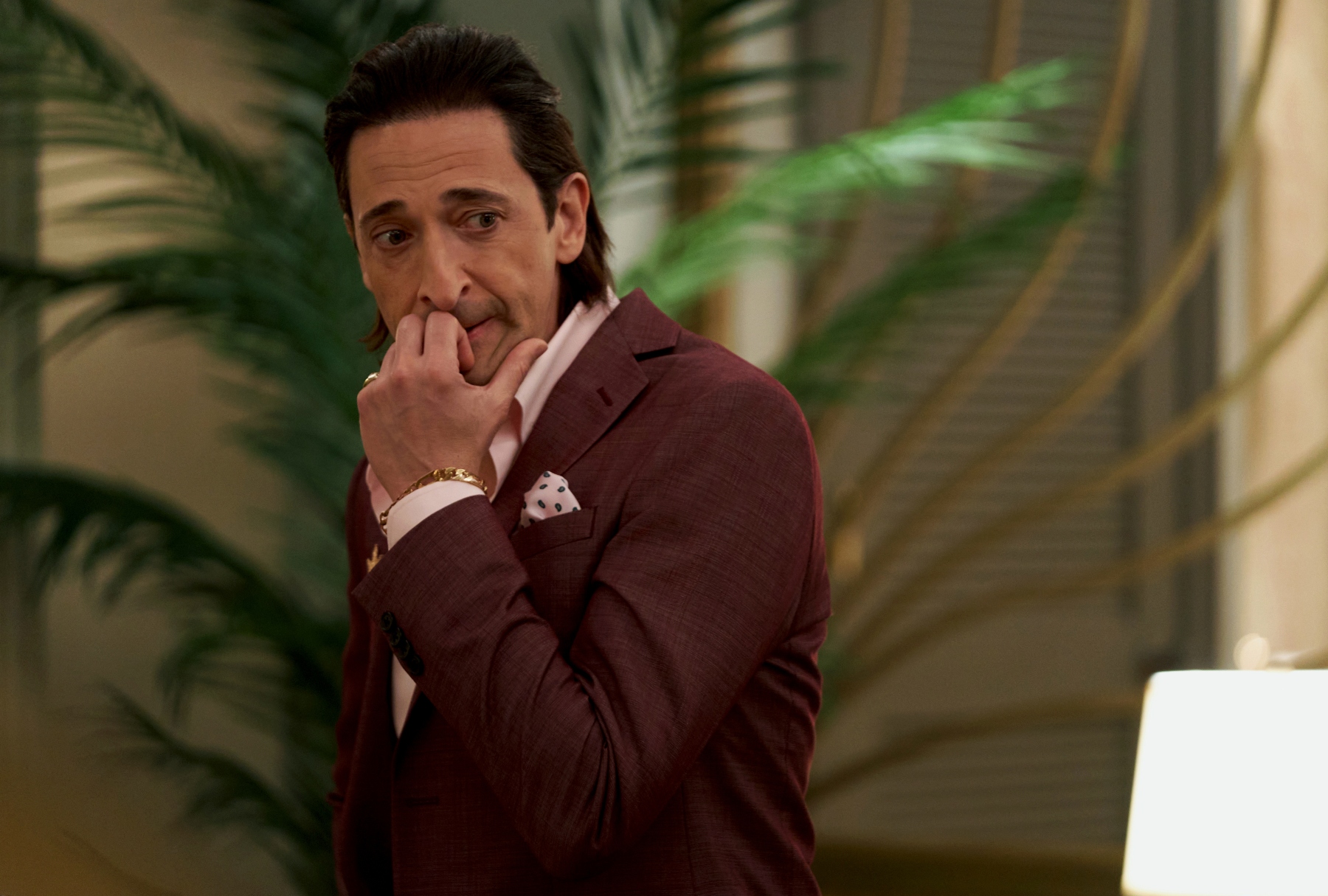
What’s scarier: being stranded at sea, stuck in an ominous fog, or forced to confront the monstrous motives of the fossil fuel industry? Well thanks to The Rig, the highly bingeable new sci-fi series from Amazon Prime Video, you don’t have to choose.

Rather than using sci-fi tropes such as of a giant sea monster or a devastating natural disaster acting as a stand-in for climate change, The Rig is a contemporary thriller rooted in the interpersonal conflicts that arise when a group of people learn their future has been uprooted due to forces beyond their control.

The series focuses on a crew of North Sea oil workers who discover their offshore drilling platform is about to be decommissioned by its owner Pictor Energy, a (fictional) major player in the United Kingdom’s energy market. Soon, a mysterious fog engulfs the operation, making it impossible for the crew to return to the nearby Scottish mainland. 

John Carpenter fans will recognize where the show must go from here, albeit with a Build Back Better twist: Workers begin to spiral into madness, be it from contact with supernatural forces buried deep beneath them, or upon learning that their oil industry employer is not coming to save them. Talk of retraining workers into green-based jobs creates added division between the blue- and white-collar ranks, with seasoned workers calling plans to send grown men back to school “embarrassing.”

Calls for industry retraining, of course, aren’t merely a work of fiction; they’ve been sweeping the oil and gas fields in Europe and the United States for years as governments and the private sector attempt to quell global emissions. Many oil workers know that a transition in the field is underway, though unlike in The Rig, a majority may already have skills that could translate to other energy sectors. And according to one survey, half of the rig workers in the North Sea, a region that supports over 200,000 jobs, want to be retained for work in offshore wind. 

But despite calls for increased transitions to wind and other renewables in the region, the United Kingdom recently announced more drilling in the North Sea, mostly in the name of domestic energy production. Climate groups have called the decision unlawful, and the Scottish government recently announced that they do not support the expansion of oil and gas in the area.

Throughout writing and shooting the series, series creator David Macpherson said he was inspired by the decommissioning of oil rigs and the energy transition. He wanted the show to speak to the stories of the people who work on the rigs, from old rig workers to green management with new ideas. “As much as we want to transition away from fossil fuels as quickly as possible, industrial decline is a process that often isn’t managed very well, particularly in the United Kingdom,” Macpherson told Grist. “We have a long history of not looking after workers when these big industrial changes come about.”

Macpherson, a former environmental policy worker for the Scottish government and the son of a North Sea oil worker, said he wanted the series to act as a way of bringing the interpersonal conflict to the discussions of climate change and energy transition, but through an entertaining medium. “I’ve got a great deal of respect for the people who work in these places and these industries,” he said. “We get pushed into false dichotomies and I wanted to use the show to hopefully bring a bit more nuance to these discussions.”

Though the series is currently streaming globally, Macpherson said he wanted it to feel like a Scottish show in its origin and location, with North Sea oil acting as a microcosm for the rest of the world’s energy industry disputes. “We get a lot of post-apocalyptic dramas where the climate disaster has happened in the past and we’re in a sort of a different Earth, but I really wanted to focus on the here and now,” Macpherson said. 

The Rig comes at a moment when talks of a global fuel transition, unstable economies, and energy scarcity are more prevalent than ever. Premiering at the beginning of the year, moments in the series nod to workers who have already gone through a global pandemic; some workers pontificate that their underwater woes may be caused by the Russian military as opposed to a supernatural aquatic nemesis.

At times, the heavy-handed talk of energy, climate, transition, and environmental harm reminds viewers of what it is, an action, sci-fi, thriller, trying to fit a lot of drama, knowledge, global issues, and supernatural elements into six episodes. From a horror perspective, there’s plenty of real-life source material. Oil rig workers have died, been stranded for days, and face grueling conditions to maintain energy needs and record profits for oil companies. 

Throughout the series, which is growing in popularity with American streamers and already receiving praise from horror icons like Stephen King, talk of both a once and future wave hangs heavy. Even the subject of a changing tide causes workers to tense up and brush off the unknown future with playful, pointed banter of “going green.”

Taking a page out of Ridley Scott’s Alien trilogy, the real villain of The Rig isn’t apparent until the end, when more information about Pictor Energy comes to light. In a not-so-subtle nod to the Exxon internal memos, it turns out the company knew about the underwater organism and its effects the whole time. 

But don’t let the spoilers deter you: Whether you’re a fan of supernatural suspense films, a rapid environmental news reader, or both, The Rig is worth a watch. The themes of climate disaster, or as the rig’s foreman puts it, “punching the Earth until it punches back” might not be new to the genre, but the series takes the audience deeper. With talks of renewable energy, carbon capture, and sea monsters rising from the deep, The Rig is able to compress energy headlines and modern sci-fi into a mostly digestible thriller worth exploring. 

Nuclear doomsday could be coming — if political doomsday doesn’t get here first

Sit back, relax and enjoy the ride.

The Bulletin of the Atomic Scientists has moved its Doomsday Clock forward to 90 seconds before midnight.

The clock has been maintained since 1947 and is used as a metaphor for the likelihood that we’ll blow ourselves up. Originally set at seven minutes to midnight, the farthest it has been from midnight was 17 minutes — in 1991, right after the end of the Cold War. Some mistakenly believe the clock is a gauge to register international power struggles, but according to scientists, “It is intended to reflect basic changes in the level of continuous danger in which mankind lives in the nuclear age.”

In 1953, the previous closest point to midnight before 2020, scientists pushed the time forward after the Soviet Union began testing hydrogen bombs. Today it’s the war in Ukraine, climate change and COVID-19 that have all helped to push us closer to the brink. As Barry McGuire sang many years ago, “You don’t believe we’re on the eve of destruction.”

The Ukraine war has been a driving force in this latest round of fear by scientists, particularly because of Russian President Vladimir Putin’s threats to use tactical or other nuclear devices. Tactical nukes could destroy agriculture in Ukraine and increase the likelihood of global famine. An exchange of nuclear ICBMs could destroy all of us. 

Adding to this trepidation, of course, is the announcement on Wednesday by President Biden that the U.S. and Germany will send tanks to Ukraine. The U.S. is contributing 31 tanks despite Putin’s threats. “We weigh escalation risks,” a National Security Council official told me on background. Despite the Doomsday Clock movement, I was also told that there “is still no indication that we need to adjust our strategic deterrent posture.” (Whatever that means.)

Meanwhile, the Earth’s inner core may have started spinning in the opposite direction — perhaps in reaction to the Doomsday Clock or perhaps because all of our elected officials seem to have taken home classified documents and stored them in bedrooms, garages and offices, or perhaps used them as insulation. Makes you wonder what former President Jimmy Carter is using to build those Houses for Humanity. Look, if anybody asks, I don’t have any classified documents at home, in storage, hidden in the glove compartment of my car or anywhere else for that matter. But I can’t help but wonder at this point: Are there any classified documents in the National Archives? Somebody better check eBay. 

Maybe the Doomsday Clock is moving closer to midnight because, less than a month into the new year, we’ve already experienced 39 mass shootings in the United States. There are many people who say that’s not normal, but it seems to be the new normal in this country. What does that mean to you?

To me it means that 2023 isn’t a month old and we already need a break. Anyone want to join me for a barbecue and beer? Well, if you can get through the tornadoes, floods, earthquakes, mudslides, blizzards and severe weather, you’re welcome to join me on the patio.

No one could be happier about all the doom and gloom than Donald Trump: It could almost make you forget that he’s closer to criminal prosecution than he’s ever been in his life.

The cavalcade of doom and gloom seems to be never-ending and no one could be happier about that than Donald Trump — mainly because discussing a potential apocalypse could make you forget that Trump is closer to criminal prosecution than he’s ever been in his life. In fact, it may be “imminent” — at least according to Fulton County District Attorney Fani Willis, who argued in court Tuesday that a special grand jury report on the 2020 election should not be released because “at this time, in the interest of justice and the rights of not the state but others, we are asking that the report not be released because … decisions are imminent.”

Of course all of this could just be more high wind in the trees — with no indictments forthcoming, no matter how wishful the thinking of Trump’s opponents. 

Meanwhile, the case against Trump is advancing on other fronts. The investigation into Biden’s handling of classified material could, according to one DOJ source, actually lead to a quicker prosecution of Donald Trump. “With Biden and now [Mike] Pence both in possession of classified documents, it stands to reason we will have to take some kind of action,” I was told, again on background. “The logical place to start is with Trump.” 


Want a daily wrap-up of all the news and commentary Salon has to offer? Subscribe to our morning newsletter, Crash Course.


Not according to Jim Jordan and other Republicans who believe that Biden is involved in a cover-up and Pence and Trump are two stooges, merely “victims of circumstance.” (With apologies to Curly Howard.) But as John T. Bennett noted in his CQ Roll Call newsletter this week, Jordan and other members have little more than wishful thinking on their side if they wish to prosecute Biden:

House Republicans, as expected, have come out firing at President Joe Biden and his family. They contend the family is guilty of “influence peddling,” shady — even potentially criminal — business dealings and a “cover-up” regarding classified documents.

But they, so far, aren’t offering evidence to back it up.

Key Republicans, including House Oversight and Accountability Chairman James R. Comer of Kentucky, are ramping up efforts to attempt linking the Bidens to the Chinese government.

“This has all the pattern of an influence-peddling scheme, and it also has the makings of a potential cover-up,” Comer told “Sunday Morning Futures” on Fox News, referring to the president’s mishandling of classified documents.

If that sounds like more GOP grift, that’s only because it is.

Elsewhere, the boom is also apparently being lowered on Trump in New York. Former Trump fixer Michael Cohen met with the Manhattan district attorney’s office in the last week. He’s met with them dozens of times in the past, but when Alvin Bragg took over the Manhattan D.A.’s job, it appeared any investigation into Trump was finished. Cohen chafed at that — after all, he was the only person prosecuted for paying off Stormy Daniels, and as Cohen famously said, “I didn’t pay her off for me. I paid her off for Donald Trump.” 

Sure, Trump was “Individual 1” in those court documents, but he was never publicly identified or prosecuted for orchestrating the illegal scheme that sent Cohen to prison. Now that investigation seems to be back on track, and while Cohen wouldn’t say what specifically he spoke about for two and a half hours with prosecutors, we know it wasn’t about the Doomsday Clock or the Earth’s inner core reversing its spin.

“It was a very thorough meeting,” was the only thing Cohen would venture to say. If you want to find out what that’s all about, his new book “Revenge” covers it rather nicely. (Full disclosure: I helped write that book.)

Perhaps the core is spinning backward and we’re that close to midnight because at the end of the day, the lies continue. The GOP-led House has made it clear that the priority for the next two years is to investigate the Jan. 6 committee, the government’s response to COVID and Hunter Biden’s laptop. These investigations will include star performers like Rep. Marjorie Taylor Greene, who has spouted QAnon theories in the past to explain COVID. Speaker McCarthy has said he’ll never give her up. Yes, with apologies to KC and the Sunshine Band, it sure seems like a scene from “Kingsman.” I’m seriously waiting for several heads in the GOP to explode because of implants.

But that psilocybin nightmare aside, the grifts continue. I grow weary watching them and watching people pointing them out. Don’t misunderstand me, I do understand the need by some to point out the unending con game being run by certain members of the Republican Party. This week on my podcast “Just Ask the Question,” former federal prosecutor Michael Zeldin, who was once director of the DOJ’s money laundering unit, said he believed that newly-elected Rep. George Santos will be indicted for a variety of schemes conducted prior to his election. A real estate investor who lost $50,000 in one of the Ponzi schemes Santos was involved in said his operation resembled something from “Goodfellas.”

Yeah. That’s funny. But who’s going to fold under questioning? 

Until these people are held accountable, the massive grift operation against the American people will continue — and the public will remain bitterly divided. Without justice, there’s only chaos and anarchy.

An endless parade of pundits, journalists and progressive advocates continue to tell us about the criminality perpetuated by those people I hold in the “highest minimum regard,” as former House Speaker Tip O’Neill once said — but the grifts continue. The reason is clear: There’s no accountability. That’s why Rep. Matt Gaetz sits on an FBI oversight committee while being investigated by the FBI. That’s why he, Trump and a host of others can get away with the Big Lie or screaming about the “Russiagate hoax” while facts suggest otherwise. That’s why, at the end of the day, many of us have come to doubt all kinds of vetted facts. The reasoning is, “Well, if these guys were lying, they’d be prosecuted, wouldn’t they?” The answer so far, sadly,  is no.

Until these people are held accountable for their actions, then the grift conducted on the American people will continue, reaping plunder that would make those who sacked Rome jealous. And the American public will continue to be divided — because without accountability there is no justice, and where there is no justice there is merely chaos and anarchy. Those are all conditions that make the ground fertile for continued exploitation. Just ask Don the Con. Santos, Jordan, Greene and others are his eager, soulless disciples.

Accountability starts at the top. There was a time in this country when we truly believed that no one was above the law. At least, that’s always been the theory. It is being put to the test today. So while others continue to call out the grift, let me stay true to this course: Hold them all accountable. Start with Donald Trump. Otherwise the grift will continue and it’s pointless to waste your breath pointing it out.

There should be a political Doomsday Clock for that. If we don’t take action now, we’re much closer to midnight than the nuclear clock.

Britain’s protected natural areas are failing to stop biodiversity loss

In the United Kingdom, some species of bees, ladybugs and spider populations are declining at faster rates in protected natural areas. That’s according to a new study that shows protected areas in the U.K. are as vulnerable to biodiversity loss as their unprotected counterparts.

The report from researchers at the United Kingdom Centre for Ecology and Hydrology and the University of Sheffield, shows that protected areas – which have been seen as key to protecting biodiversity – can be effective at protecting rare species, but have been unsuccessful in protecting common species.

“It is worrying, as you would expect species to show more positive trends in protected areas,” said Rob Cooke, lead author of the study. “It should serve as a warning as today’s common species can be tomorrow’s rare species.”

In the U.K., data shows that on average, three species are lost each decade in protected areas while in unprotected areas, only two species per decade. Researchers say this phenomenon in protected areas could be explained by external factors like climate change and the steady encroachment of development along protected borders. However, researchers also say protected areas in the U.K. have nearly double the number of rare species than their unprotected counterparts. 

The report comes amid a global push to protect 30 percent of the planet’s land and water by 2030, known as the 30X30 plan. Data on the U.K.’s protected areas suggest that as the country works toward that goal, how areas are protected is as important as their size. At the recent United Nations biodiversity conference, delegates from nearly 200 countries agreed to formalize 30X30. But many environmentalists say more ambitious targets should be set to protect the world’s remaining biodiversity while Indigenous peoples say a failure by world leaders to recognize Indigenous rights, territories and knowledge has led to land grabs and human rights abuses.

According to a 2022 progress report on 30X30, the U.K. has made little progress on its 30X30 goals with just over three percent of the country’s land, and eight percent of its waters, effectively protected. “Unfortunately, our figures show that in the race to halt nature’s decline by 2030, the Government is limping backwards. At this rate, the Government’s prospects of effectively protecting 30% of the land and sea for nature by 2030 are vanishing,” said Richard Benwell, CEO of Wildlife and Countryside Link, the organization behind the report.

The study’s authors recommend evidence-based management of protected areas to ensure they remain effective, rather than simply measuring the area covered. This could include developing more robust monitoring networks and improving site-level data collection. They also stress the need for greater protection for common species. “I think the positive thing we can take from this is that we have a clear opportunity to make protected areas better for biodiversity,” Cooke said. 

Trump’s former Transportation Secretary Elaine Chao has had enough of his racist attacks

Former Transportation Secretary Elaine Chao hit back at former President Donald Trump on Wednesday over his repeated racist attacks.

Chao, who is married to Senate Minority Leader Mitch McConnell, R-Ky., has been on the receiving end of a barrage of anti-Asian insults from her former boss. Trump has demeaned her as “Coco Chow” and referred to her as McConnell’s “China-loving wife.”

Amid silence from Republican officials on Trump’s comments, Chao issued a rare public statement to Politico.

“When I was young, some people deliberately misspelled or mispronounced my name. Asian Americans have worked hard to change that experience for the next generation,” she said “He doesn’t seem to understand that, which says a whole lot more about him than it will ever say about Asian Americans.”

Chao, who resigned from Trump’s Cabinet following the Jan. 6 attack on the Capitol, has largely avoided commenting on the attacks, though she urged the media not to amplify his insults. Her rare rebuke this week “suggests that discomfort with Trump’s anti-Asian rhetoric has reached a new level amid several high-profile shootings targeting Asian Americans,” Politico reported.

McConnell, meanwhile, has refused to comment while Trump lobs attacks at his wife and alleges that he is compromised by his wife’s family’s business in China.

Other top Republicans have largely dismissed the attacks.

“As you know, the president likes to give people nicknames. You can ask him how he came up with the nickname,” Sen. Rick Scott, R-Fla., the head of the National Republican Senatorial Committee, told CNN in October. “I’m sure he has a nickname for me.”

Chao while serving in Trump’s Cabinet did not respond to her boss’ attacks on her husband.

“I stand by my man — both of them,” Chao told reporters during one 2017 spat between the two men.

But she ultimately stepped down after Jan. 6, saying that the riots “deeply troubled me in a way I simply cannot set aside.”

Trump has repeatedly specifically targeted Chao in his attacks ever since.

The insults have “bewildered” Chao, a former administration official still close with the former secretary, told Politico, but she previously declined to respond because it just “creates another news cycle.”

“Especially for Asians, it’s critical to have filial piety — you honor the family name. And that’s a hit not only to her personal reputation but her name and family,” the former official said. “It’s offensive and a stain on everything he achieved for Asian Americans.”


Want a daily wrap-up of all the news and commentary Salon has to offer? Subscribe to our morning newsletter, Crash Course.


Trump spokesman Steven Cheung, who is Asian American, told Politico in a statement that Trump’s criticism of Chao is focused on her family’s shipping business and its ties to China, not her race.

“People should stop feigning outrage and engaging in controversies that exist only in their heads,” Cheung told the outlet. “What’s actually concerning is her family’s deeply troubling ties to Communist China, which has undermined American economic and national security.”

But some former administration officials say Trump’s rhetoric about Chao goes too far.

“Trump’s repeated racist attacks on Elaine Chao are beneath the office he once held and particularly despicable in this moment when the Asian American community has been subject to threats and harassment,” Alyssa Farah, a former Trump aide-turned-critic, told the outlet.

Other Republicans say it’s hurting the party as it seeks to grow its support among Asian American voters.

“I saw that firsthand when I was a candidate,” Lanhee Chen, a Stanford professor who ran as a Republican candidate for California controller in 2022, told Politico. “I talked to a lot of Asian American voters in my state and the feedback I got was, ‘What you represent is great, I love the vision, but I don’t know if I can vote for someone from the same party as Donald Trump because of all actual — and in other cases perceived — commentary towards Asian Americans over the last several years.’ “And the attacks against Elaine Chao are really puzzling given that she did really good work in his administration and accomplished a lot and benefited his own presidency.”

Former McConnell aide Scott Jennings predicted that the attacks would backfire on Trump.

“It’s a bizarre obsession he has with her,” he told the outlet. “If you heard someone on the street making these rants you’d expect to see them in a sandwich board or a straight jacket.”

Latino teens are deputized as health educators to sway the unvaccinated

Classmates often stop Alma Gallegos as she makes her way down the bustling hallways of Theodore Roosevelt High School in southeast Fresno, California. The 17-year-old senior is frequently asked by fellow students about covid-19 testing, vaccine safety, and the value of booster shots.

Alma earned her reputation as a trusted source of information through her internship as a junior community health worker. She was among 35 Fresno County students recently trained to discuss how covid vaccines help prevent serious illness, hospitalization, and death, and to encourage relatives, peers, and community members to stay up to date on their shots, including boosters.

When Alma’s internship drew to a close in October, she and seven teammates assessed their work in a capstone project. The students took pride in being able to share facts about covid vaccines. Separately, Alma persuaded her family to get vaccinated. She said her relatives, who primarily had received covid information from Spanish-language news, didn’t believe the risks until a close family friend died.

“It makes you want to learn more about it,” Alma said. “My family is all vaccinated now, but we learned the hard way.”

Community health groups in California and across the country are training teens, many of them Hispanic or Latino, and deputizing them to serve as health educators at school, on social media, and in communities where covid vaccine fears persist. According to a 2021 survey commissioned by Voto Latino and conducted by Change Research, 51% of unvaccinated Latinos said they didn’t trust the safety of the vaccines. The number jumped to 67% for those whose primary language at home is Spanish. The most common reasons for declining the shot included not trusting that the vaccine will be effective and not trusting the vaccine manufacturers.

And vaccine hesitancy is not prevalent only among the unvaccinated. Although nearly 88% of Hispanics and Latinos have received at least one dose of a covid vaccine, few report staying up to date on their shots, according to the Centers for Disease Control and Prevention. The CDC estimated fewer than 13% of Hispanics and Latinos have received a bivalent booster, an updated shot that public health officials recommend to protect against newer variants of the virus.

Health providers and advocates believe that young people like Alma are well positioned to help get those vaccination numbers up, particularly when they help navigate the health system for their Spanish-speaking relatives.

“It makes sense we should look to our youth as covid educators for their peers and families,” said Dr. Tomás Magaña, an assistant clinical professor in the pediatrics department at the University of California-San Francisco. “And when we’re talking about the Latino community, we have to think deeply and creatively about how to reach them.”

Some training programs use peer-to-peer models on campuses, while others teach teens to fan out into their communities. FACES for the Future Coalition, a public youth corps based in Oakland, is leveraging programs in California, New Mexico, Colorado, and Michigan to turn students into covid vaccine educators. And the Health Information Project in Florida, which trains high school juniors and seniors to teach freshmen about physical and emotional health, integrates covid vaccine safety into its curriculum.

In Fresno, the junior community health worker program, called Promotoritos, adopted the promotora model. Promotoras are non-licensed health workers in Latino communities tasked with guiding people to medical resources and promoting better lifestyle choices. Studies show that promotoras are trusted members of the community, making them uniquely positioned to provide vaccine education and outreach.

“Teenagers communicate differently, and they get a great response,” said Sandra Celedon, CEO of Fresno Building Healthy Communities, one of the organizations that helped design the internship program for students 16 and older. “During outreach events, people naturally want to talk to the young person.”

The teens participating in Promotoritos are mainly Latino, immigrants without legal status, refugee students, or children of immigrants. They undergo 20 hours of training, including social media campaign strategies. For that, they earn school credit and were paid $15 an hour last year.

“Nobody ever thinks about these kids as interns,” said Celedon. “So we wanted to create an opportunity for them because we know these are the students who stand to benefit the most from a paid internship.”

Last fall, Alma, who is Latina, and three other junior community health workers distributed covid testing kits to local businesses in their neighborhood. Their first stop was Tiger Bite Bowls, an Asian fusion restaurant. The teens huddled around the restaurant’s owner, Chris Vang, and asked him if he had any questions about covid. Toward the end of their conversation, they handed him a handful of covid test kits.

“I think it’s good that they’re aware and not afraid to share their knowledge about covid,” Vang said. “I’m going to give these tests to whoever needs them — customers and employees.”

There’s another benefit of the program: exposure to careers in health care.

California faces a widespread labor shortage in the health care industry, and health professionals don’t always reflect the increasing diversity of the state’s population. Hispanics and Latinos represent 39% of California’s population, but only 6% of the state’s physician population and 8% of the state’s medical school graduates, according to a California Health Care Foundation report.

Alma said she joined the program in June after she saw a flyer at the school counselor’s office. She said it was her way to help prevent other families from losing a loved one.

Now, she is interested in becoming a radiologist.

“At my age,” Alma said, “this is easily the perfect way to get involved.”


This story was produced by KHN, which publishes California Healthline, an editorially independent service of the California Health Care Foundation.

KHN (Kaiser Health News) is a national newsroom that produces in-depth journalism about health issues. Together with Policy Analysis and Polling, KHN is one of the three major operating programs at KFF (Kaiser Family Foundation). KFF is an endowed nonprofit organization providing information on health issues to the nation.

Subscribe to KHN’s free Morning Briefing.

Why does cannabis keep some people skinny? Experts explain how weed and metabolism are connected

Smoking weed to lose weight? The idea may sound a little half-baked, but many people are convinced cannabis can help with shedding pounds or maintaining a healthy weight. Some even swear it helps with diabetes. It’s a little counterintuitive given that marijuana, which is any extract from the Cannabis sativa plant, is typically associated with laziness and the munchies, which triggers a craving for junk food.

“Chronic cannabis users tend to be less overweight than non-cannabis users.”

Although it’s hard to make the case that cannabis makes anyone more slothful — that’s simply an old drug war myth — there is plenty of evidence that marijuana stimulates appetite. Some patients may need to gorge themselves, such as people with HIV or cancer who sometimes have trouble eating. Getting the munchies can be a good thing in this case, explains Dr. Peter Grinspoon, a primary care physician at Harvard Medical School who specializes in medical marijuana. Some research indicates that cannabis users also tend to have lower body mass index (BMI), even if this is an imperfect metric for weight and bodily health.

“Any of us who have used cannabis can attest to the fact that it can make you very hungry,” Grinspoon told Salon. “But contrary to stereotypes, chronic cannabis users in several studies have been shown to have a lower BMI. There’s sort of a paradox there. And it’s not entirely understood why chronic cannabis users tend to be less overweight than non-cannabis users.”

For example, a study published last year in the journal Cannabis and Cannabinoid Research reviewed 16 studies examining this relationship, identifying many of the different ways that cannabis seems to regulate metabolism.

“Based on the data presented, the hypothesis arises that Cannabis sativa and its derivatives can be potentially effective in treating and reversing the damage caused by inflammation in obesity,” the authors conclude. “It is clear that phytocannabinoids [drugs] derived from Cannabis sativa have therapeutic potential due to their anti-inflammatory, antioxidant, and neuroprotective properties, making the plant a study option for reducing and reversing inflammation and comorbidities associated with obesity.”

“The hypothesis arises that Cannabis sativa and its derivatives can be potentially effective in treating and reversing the damage caused by inflammation in obesity.”

Inflammation is a natural process in the body, a way for the immune system to fight infections or injuries. But too much of it can be a bad thing. Chronic inflammation can contribute to the development of various diseases such as cancer, heart disease and obesity. In fact, many experts believe that obesity is linked to low-grade inflammation, which can contribute to the development of various metabolic disorders.

It could be that many of the chemicals in cannabis, called cannabinoids, can be anti-inflammatory. CBD (cannabidiol), for example, is a drug found in marijuana that has shown broad antioxidative and anti-inflammatory behavior across a multitude of different cell receptors. That means it seems to act on numerous systems in the body, including those related to pain, memory, mood . . . and appetite.

One of the most obvious ways that cannabis can potentially help people maintain a lower weight is by replacing alcohol. Quitting booze has been shown to help with weight, among other health benefits. So the “California sober” crowd, who have ditched all drugs except cannabis, may experience some weight loss.

Furthermore, cannabinoids like CBD and THC (tetrahydrocannabinol), the drug best known for marijuana’s trademark euphoria, act on the endocannabinoid system (ECS), a network in the body actually named after the plant. Cannabinoid receptors have a lot more functions than getting one stoned, of course. The ECS largely maintains homeostasis, balancing various physiological processes including immune function, sleep and reproductive function. It’s a complex system that isn’t well-studied.

“The relationship of cannabis to body weight is complex and a bit counterintuitive,” Dr. Ethan Russo, a neurologist and psychopharmacology researcher who served as a study physician for numerous clinical trials involving cannabinoids, told Salon in an email. “The answer lies at least partially in the gut microbiome. A 2015 study in mice genetically prone towards obesity demonstrated that THC altered the ratios of gut bacteria statistically significantly in a manner that prevented weight gain despite intake of a high fat diet. Likely the same is true in humans.”


Want more health and science stories in your inbox? Subscribe to Salon’s weekly newsletter The Vulgar Scientist.


One of the most interesting molecules in cannabis for regulating weight is THCV (tetrahydrocannabivarin), which is an analog of THC. Like its cousin, THCV can get someone stoned, but it requires much higher quantities. Some research indicates that even if you took a lot of THCV, the intoxicating effect would still be pretty mild. THCV is more medicinal in that sense, and Russo and others believe it has therapeutic promise for obesity, diabetes and even the possible treatment of addiction.

“[THCV] has therapeutic promise for obesity, diabetes and even the possible treatment of addiction.”

“There was a human study where it [THCV] not only lowered blood sugar, but also facilitated improved markers of pancreatic function,” Grinspoon said. “Insulin comes from a part of the pancreas called the beta cells, and those are what eventually give out, which gives you Type 2 diabetes. And it appeared that [in the THCV study] the beta cells were working less hard, which, in theory could postpone diabetes – because the mechanism is that they will lose their ability to produce enough insulin.”

Russo pointed to several animal studies that demonstrated THCV produced weight loss, decreased body fat and serum leptin concentrations with increased energy expenditure in obese mice.

“Subsequently, an fMRI study in humans showed significantly altered reward and aversion patterns in the brain in a manner that suggests therapeutic efficacy in obesity,” Russo says. “And without triggering depression that is commonly encountered with other weight loss drugs.”

However, THCV typically appears in very low concentrations in cannabis plants. That means your typical joint probably won’t have enough THCV to do much for anyone, though it will likely have plenty of THC. Yes, just that little V makes a huge difference in how the molecule interacts with our bodies.

While it is possible to selectively breed cannabis plants to produce more THCV, some variants of the plant have more than others. They’re still relatively rare, but more and more companies are selling highly concentrated THCV products online or in states where weed isn’t totally legal yet. This is through a loophole in the law that allows these products if they’re derived from hemp plants. It’s all very complicated thanks to archaic laws prohibiting cannabis on a federal level, and that in turn makes these products difficult to regulate.

Some of these gummy or vape products are making a lot of wild health claims, such as THCV being “natural” weight loss that’s “safe.” But many hemp-derived marijuana products are manufactured in sloppy agricultural labs, which can make them tainted with byproducts of backyard chemistry, unlike the edibles or vape pens sold at state-licensed dispensaries.

“They are synthetics with inevitable contamination with chemical byproducts and even solvent residues,” Russo says. “This is another counterproductive result of prohibition.”

Given all the hype around cannabis for weight, especially THCV, it might be tempting for people to run out and try these products, whether they have decent quality control or not. But despite all the evidence pointing in this direction, we still need a lot more research into what cannabis does to the endocannabinoid system, including ruling out potential side effects. In the meantime, we need better quality control for gray market products potentially containing leftovers from crude extraction processes, while making health claims that aren’t entirely based on evidence.

“With all weight loss, there’s no silver bullet,” Grinspoon says. But despite cannabis seeming to have this effect, people shouldn’t expect toking up to equal shedding pounds. “That doesn’t necessarily translate into, ‘I’m gonna use cannabis to treat your obesity.'”

A zero emissions future without the mining boom

The effort to shift the U.S. economy off fossil fuels and avoid the most disastrous impacts of climate change hinges on the third element of the periodic table. Lithium, the soft, silvery-white metal used in electric car batteries, was endowed by nature with miraculous properties. At around half a gram per cubic centimeter, it’s the lightest metal on Earth and is extremely energy-dense, making it ideal for manufacturing batteries with a long life. 

The problem is, lithium comes with its own set of troubles: Mining the metal is often devastating for the environment and the people who live nearby, since it’s water intensive and risks permanently damaging the land. The industry also has an outsized impact on Native Americans, with three-quarters of all known U.S. deposits located near tribal land. 

Demand for lithium is expected to skyrocket in the coming decades (up to 4,000 percent according to one estimate), which will require many new mines to meet it (more than 70 by 2025). These estimates assume the number of cars on the road will remain constant, so lithium demand will rise as gas guzzlers get replaced by electric vehicles. But what if the United States could design a policy that eliminates carbon emissions from the transportation sector without as much mining? 

A new report from the Climate and Community Project, a progressive climate policy think tank, offers a fix. In a paper out on Tuesday, the researchers estimated that the U.S. could decrease lithium demand up to 90 percent by 2050 by expanding public transportation infrastructure, shrinking the size of electric vehicle batteries and maximizing lithium recycling. They claim that this report is the first to consider multiple pathways for getting the country’s cars and buses running on electricity and suppressing U.S. lithium demand at the same time. 

“Conversations [about the dangers of mining] can lead folks to think that there’s a zero-sum trade-off: either we address the climate crisis or we protect Indigenous rights and biodiversity,” said Thea Riofrancos, an associate professor of political science at Providence College and the lead author of the report. “This report asks the question: is there a way to do both?”

Riofrancos and the other researchers modeled four scenarios for public transportation in the U.S. that would lead to different levels of lithium demand. In the baseline, the country follows the path it’s currently on, swapping out all gas cars for electric ones by 2050 with few other changes.

The other three scenarios consider what happens when more people are walking, biking, or taking trains and buses. Cities grow denser, commutes shorten, and public transportation expands and is electrified. Governments take away subsidies for owning cars, like free parking, and limit on-street parking and lots. Assuming average battery size stays the same and 8-year battery warranties remain in place, lithium demand drops by 66 percent in the most ambitious scenario as compared to the U.S. staying on its current path. But even the more modest scenarios bring 18 and 41 percent drops in demand for the metal, largely thanks to expanding mass transit and denser urban areas that allow families to live without cars.

“The scenarios were really informed by what already exists in certain places,” said Kira McDonald, a Princeton University researcher. She and her colleagues used real-life examples for their estimates, looking at success stories in cities like Vienna, which has slashed car use in recent years through car-free zones, bike-sharing, and improvements to pedestrian comfort and safety. London, Lyon, and Amsterdam have also all seen steep declines in vehicle ownership after rolling out low-emission zones and adding more bike lanes; in Paris car use has fallen by about 45 percent since 1990.

The researchers experimented with other variables that could influence lithium demand and were surprised to find that by reducing average battery sizes to 54 kilowatt-hour, close to the capacity of the Nissan Leaf, lithium demand fell as much as 42 percent, even when car use stayed on its current trajectory. While the global average battery is small, with a capacity of around 40kWh, bigger batteries used in the United States have an average capacity around 70kWh, and the report notes a trend toward even bigger batteries with higher capacities like the 150 kWh ones found in electric trucks and SUVs. 

Riofrancos said there’s a way around building big batteries, while allowing that there are reasonable concerns about the availability of charging stations and the need for longer battery ranges in certain areas. “But the solution to that is to build more charging stations, not make enormous electric vehicles.” 

Battery recycling – a nascent industry in the U.S. – could also reduce lithium demand, but it’s unlikely to help much for at least a decade, according to experts. Currently, there just aren’t a lot of electric-car batteries to recycle, as most of the early EVs are still on the roads, and batteries that do putter out often get reused for solar and wind energy storage. While the European Union will soon require new lithium-ion batteries to use some recycled parts, and China makes battery manufacturers collaborate with recycling companies, the United States has no such requirements. The Climate and Community Project report points out that recyclers have also had little reason to recover lithium, as it’s cheaper to mine. Even a fully up-and-running industry that recovers 98 percent of EV battery material could only meet about a third of lithium demand by 2050 if the country continues to rely on cars the way it does now– two thirds would still come from the earth. 

Getting Americans out of their cars, even their electric ones, would take sweeping changes to the country’s infrastructure, the fabric of urban areas, and the very culture. Some have described the level of transformation required as unrealistic. But the researchers found examples of successful efforts in big cities around the world, even in the United States. Riofrancos pointed to free bus lines in Providence, Rhode Island, e-bike subsidies in Denver, and efforts in other cities to scale back parking lots.

“The conversations are happening but they’re not connected with congressional funding priorities at all,” Riofrancos said. She added that the Biden administration’s recently released transportation blueprint, with its focus on public transit and land-use planning, is out of step with the emphasis on promoting EVs and domestic lithium mining in the Inflation Reduction Act, the landmark climate legislation Biden signed into law last August. 

“I think at this point the question is not whether we decarbonize, but how,” she said. “That’s still an open question, and I think we should be having a broader kind of social and political debate over the different ways forward on this.”

Meta’s big money grab: Don’t believe the spin, Trump is key to Facebook’s success

Whatever Meta executives might say about the choice to allow Donald Trump back onto Facebook and Instagram, even though the former president incited a violent insurrection two years ago, know this: It’s total honking nonsense. 

The “risk” from Trump, who was initially suspended from the social media platforms after he sent a violent mob to the Capitol in an attempt to install himself illegally in power, “has sufficiently receded,” said Nick Clegg, president of global affairs a Meta

On Facebook, Trump doesn’t even have to bother with the mainstream media to get attention.

This is false.

It hasn’t been three months since a violent home invasion targeting then-Speaker of the House Nancy Pelosi, which resulted in the assault of her husband, Paul Pelosi, who suffered severe injuries. The alleged attacker was motivated by Trump’s Big Lie, the same one Trump used to incite the riot of January 6. Just this month, another Big Lie devotee, Solomon Peña, was arrested for arranging and participating in shootings at four homes of Democratic officials. One attempt got very close to taking the life of a 10-year-old girl. Trump’s Big Lie continues to stoke very real political violence. The threat has not receded at all. 


Want more Amanda Marcotte on politics? Subscribe to her newsletter Standing Room Only.


In his statement, Clegg pretends the problem with Trump is merely “his praise for people engaged in violence at the Capitol on January 6, 2021.” In reality, Trump did more than passively admire these people. As the House committee that investigated the insurrection concluded, “the central cause of January 6th was one man, former President Donald Trump.” He didn’t merely praise the insurrection. He led it. 

Trump makes liberals angry, makes his fans angry at liberals, causes fights and incentivizes dunks.

Clegg promises “new guardrails in place to deter repeat offenses” from Trump, claiming, “Mr. Trump is subject to our Community Standards.” While this cannot yet be called a lie, as Trump hasn’t posted since his reinstatement, it’s not overly cynical to believe that these words aren’t worth the calories expended writing them. 

As Angelo Carusone, president of Media Matters for America, said in an emailed statement, “Trump’s Truth Social account has shown us exactly how he’d use Facebook.” As Media Matters documented, Trump “promoted what Facebook describes as a ‘militarized’ movement hundreds of times, and in the week after the midterm elections, nearly half (48%) of Trump’s posts on Truth Social amplified QAnon-promoting accounts or pushed election misinformation.” Trump can’t get through a funeral or a campaign event for another candidate without turning it into a whinefest of violence-inciting lies about the 2020 election. The idea that he’ll behave himself on Facebook is, at best, wishful thinking, or, more likely, just embarrassing B.S. 

This isn’t about fairness, free speech, or democracy — all values Trump has spent the past 8 years trying to destroy. It’s likely not even that much about Meta CEO Mark Zuckerberg’s well-documented willingness to be bullied by right-wingers. This is almost certainly about one thing and one thing only: money.

It’s not just the money that Trump’s campaign will spend on Meta. Trump himself, by being the most famous and repugnant troll in the world, is just big business for social media. His fascism, his bigotry, his cruelty and even his poor spelling and grammar all draw attention from fans and haters alike, creating a whirlwind of clicks and engagement that more responsible content simply can’t match. As tech journalist Kara Swisher notes, “Enragement equals engagement.” Trump makes liberals angry, makes his fans angry at liberals, causes fights and incentivizes dunks. Every post generates huge numbers of reposts both praising and condemning him. Democracy can’t stand a chance against the sheer profitability engine that is his unique combination of stupidity, ego, and hatefulness. He’s the worst person imaginable, but that is all the more reason we can’t look away. 


Want more Amanda Marcotte on politics? Subscribe to her newsletter Standing Room Only.


It may be that Elon Musk’s similar decision to reinstate Trump’s Twitter account was rooted in Musk’s own right-wing politics. But Musk then followed it up with a dumb meme pathetically begging Trump to come back, making it clear that it was all about the money. Trump was the main character on Twitter for 6 years, after all, a constant source of conflict and therefore traffic. Musk’s swiftly eroding financial situation means not just Twitter, but his main company, Tesla, are in danger. Trying to get Trump back on to generate traffic smelled like a Hail Mary. 

Democracy can’t stand a chance against the sheer profitability engine that is his unique combination of stupidity, ego, and hatefulness.

Meta is in a similar boat. The company keeps bleeding money and laying off employees, as its daily active user rates fall and younger people skip its product altogether to go to places like TikTok. To compound the problem, Zuckerberg’s solution to his company’s woes — to create an unappealing “Metaverse” with graphic design that feels two decades out of date — is a joke. At this point, Facebook has little choice but to lean into the userbase it still has: aging Boomers who believed they were joining to share pictures of grandkids but end up spending hours of the day on the site further alienating themselves from their kids through their addiction to COVID-19 denialism memes and conspiracy theories about “antifa.” Not injecting Trump into that situation is, from a profitability standpoint, like marketing a cruise line to retirees that doesn’t feature an all-you-can-eat buffet. In this case, all they’re eating is fascist propaganda. 

The possibility of Trump returning to Twitter was aggravating because journalists dominate and are dominated by Twitter. Trump on Twitter is, in effect, the assignment editor for the Beltway press, with his every lie and provocation drawing lavish coverage. But frankly, his return to Facebook, which he is likelier to take advantage of sooner, is even more dangerous.

On Facebook, Trump doesn’t even have to bother with the mainstream media to get attention. On Facebook, he plugs into the vast network of right-wing paranoia that has colonized the nation’s elderly white people. There’s a reason Facebook’s daily top ten posts heavily feature garish content from sneering fascists. Even more than Fox News, Facebook is why your grandpa thinks the city you live in is a burned-out husk where BLM protesters and “antifa” won’t let you out of your house unless you change your gender. From a purely business standpoint, leaving Trump out of that is like not stocking Coca-Cola in a grocery’s soda aisle. 

So far, Trump has resisted Twitter — but don’t expect his claims to boycott Facebook will last long. As the old political saying goes, go hunting where the ducks are. In this case, the “ducks” are elderly racists and the hunting grounds are Dan Bongino’s inexplicably popular Facebook feed.  

To be fair, it may not be entirely about money. Zuckerberg probably doesn’t want to be subpoenaed to sit in front of Rep. Marjorie Taylor Greene, R-Ga., while she asks why he lets medical professionals promote the vaccine on Facebook without giving equal time to those who believe Jewish space lasers caused the Sandy Hook shooting. But mostly, it’s that slowly killing the remaining brain cells of our nation’s Republican voters is a reliable generator of cash. 

Trump recently posted on Truth Social, the platform he launched after his mass social media suspensions, a call for “the termination of all rules, regulations, and articles, even those found in the Constitution.” He hasn’t toned down his fascist rants for the end of democracy but has instead grown even more belligerent. And thanks to Mark Zuckerberg and Meta, Trump’s got an even bigger bullhorn for his lies. Lies which, we all remember quite vividly, led to a violent assault on our nation’s Capitol — and still much more. 

Trump dupes the media with DeSantis’ help: Republican race for White House is no real competition

Over the last few decades in America, partisanship has become a type of personal identity. A political party is more than an organization or the letter next to a candidate’s name on a ballot. This is about much more than “political polarization” or “hyper-partisanship” or the other sterile technical language which experts routinely use in academia, the news media, and the larger political class. In today’s America, party identification reflects fundamental debates and divides over what it means to be a citizen, a member of a political community and a human being.

Two concepts are particularly useful for understanding this broken politics and the larger democracy crisis:

Asymmetrical polarization describes how one party has become much more extreme than another party. As a practical matter, this means there is much less space for reasonable compromise or true consensus in some middle ground that accurately represents the desires of both parties and/or their voters.

Negative partisanship is a dynamic where party identification is not so much about the political policies that a given person supports but more about viewing your political rivals and others you disagree with as enemies with whom compromise is not possible. 

In a 2021 conversation at the New York Times with Ezra Klein, political scientist Lilliana Mason explained how negative partisanship identity, race and polarization impact contemporary United States politics:

I think that the Democratic Party has been gradually, partly in response to the Republican Party’s attraction of attracting people who are high in racial animosity, the Democratic Party has had to react against that. So we end up with Obama, then Trump, and then Biden, for the first time ever, in his inaugural address, actually saying the words “white supremacy.” So the parties have been making it more clear where they stand along this line.

And unfortunately, that means that we have in the Republican Party — and again, it’s really this MAGA faction, right, these people that really disliked marginalized groups even before Trump came along. They’ve always been in the American electorate. They were Democrats during the Civil War and Jim Crow, et cetera, and now they’ve moved into the Republican Party.

But the problem with that is that we end up with an entire political party that is really trying to speak to these animosities and that sense of hatred of marginalized groups, which means that it has become an anti-democracy party, right? It is not in their interest to fully represent every single American. It’s not in their interest to have a multiracial democracy. In fact, they’re campaigning against that.

With its slavish commitment to “normal politics” the country’s mainstream news media, its professional centrists, the Church of the Savvy, and the larger commentariat have, for the most part, not adapted to America in the Age of Trump.

As Mason highlights, negative partisanship and polarization and other indicators of America’s broken politics and larger democracy crisis are amplified by white supremacy and white identity politics. In all, today’s Republican Party, so-called conservatives and the larger right-wing neofascist movement reject democracy if it means that white people like them will not have uncontested control over American society. Mason continues:

So on average, Americans have left of center issue positions. Most people are to the left of center on their preferences for economic policy and legislation. Even when you put issues like abortion and gun control and immigration into the equation, right, we’re still a left of center country on policy preferences. The problem is that there are a lot of people who identify as conservative and hold liberal, leftist policy preferences, but that conservative or Republican identity is so strong that they will vote to make sure that their group is winning regardless of what the policies they’re actually voting for are.

And then at the same time, one of the main points of “Uncivil Agreement” was that we have this social sorting, right, where effectively the Republican Party has become increasingly white, Christian, rural, male — or at least pro- sort of patriarchy — and the Democratic Party is not as monolithic as that. They’re just sort of the party that’s trying to push for a more egalitarian, multiracial democracy. And so the Republican Party is kind of forced into this — I mean, ironically, right — identity-based politics where they are really trying to make sure that the white Christian male is at the top of the American social hierarchy. That’s what they’re fighting for.

Negative partisanship and these sustained high levels of polarization are relatively new developments in American politics, where voting and partisanship are made salient and meaningful in a person’s day-to-day life as opposed to during an election or campaign. Of course, “politics” has been an existential question of literal life and death, slavery and freedom, and civil and human rights for Black and Brown people and other marginalized groups across American history.

With its slavish commitment to “normal politics” the country’s mainstream news media, its professional centrists, the Church of the Savvy, and the larger commentariat have, for the most part, not adapted to America in the Age of Trump where politics and party are now a type of deeply held personal identity – one that many neofascists and others on the right-wing are willing to engage in violence and other anti-democratic behavior to “protect.” (In practice, “protecting” means using violence and other means, illegal, quasilegal, and otherwise to impose their will on others.) As a function of their obsolescent habits and norms, the American mainstream news media, especially the D.C. Beltway reporting class, continues to focus on political personalities and “the horserace.” Such an approach amplifies the differences between political candidates and other leaders instead of focusing on what they have in common as members of the same party, which in the case of today’s Republican Party means a neofascist organization that has more in common with a cult or fundamentalist religion than a traditional political organization in a Western democracy.

Here is the story that the mainstream news media and commentariat should be focusing on: The Republican Party does not support democracy and is escalating its efforts to end it here in America.

This dynamic is already present in the very early and premature coverage of the 2024 presidential campaign where the mainstream news media and commentariat are developing a narrative where Trump will face off against Florida Gov. Ron DeSantis for control of the Republican Party. In this obvious story, Trump, the former president, coup plotter, reality TV star and “unconventional” public figure will be challenged by the younger, more educated, “acceptable” and “polished” “leader” who is seeking to spread his power and influence beyond Florida. The other potential Republican presidential candidates are just stand-ins and extras in the political drama.

In reality, Trump and DeSantis are more alike than they are different in terms of the dangers and threats to America’s multiracial democracy and society that they embody.

Both DeSantis and Trump are guilty of democide and willful cruelty and indifference in terms of their response to the Covid pandemic. Both DeSantis and Trump do not support free speech and/or free thought and have tried to censor their “political enemies,” including the news media. Both DeSantis and Trump support the Big Lie and other attempts to usurp multiracial democracy through voter suppression and other tactics including violence and intimidation. They are both plutocrats who want to give the corporatocracy and monied classes even more control over American society. They support white Christian nationalism and eroding the separation of church and state. Neither support women’s reproductive rights and freedoms. And through their policies and behavior, both Desantis and Trump have shown themselves to be white supremacists and racial authoritarians.

Here is the story that the mainstream news media and commentariat should be focusing on: The Republican Party does not support democracy and is escalating its efforts to end it here in America.

Such truth-telling requires a discussion of power, systems, institutions, culture, history, and how Trumpism and American neofascism are symptoms of a deep problem in America and not the disease itself. So almost by definition, the mainstream American news media avoids a sustained discussion of such topics because it would require being self-critical and speaking too much truth to power.


Want a daily wrap-up of all the news and commentary Salon has to offer? Subscribe to our morning newsletter, Crash Course.


There is another reality that the American mainstream news media and political class do not want to publicly admit: Today’s Republican Party and the “conservative” movement are anti-democratic and anti-freedom because that is what their voters and other supporters want.

To wit. Donald Trump won more votes in 2020 than he did in 2016. Likewise, more people voted for the Republicans than the Democrats in the 2022 midterms.

It is true that there are differences between Trump and DeSantis and the various factions of the Republican Party and the larger neofascist movement. But in the end, these forces are largely united in their desire to destroy America’s multiracial democracy and replace it with a new apartheid Christofascist plutocracy. Whichever candidate ends up surviving the Republican Party’s battle royal pit fight to become the 2024 presidential nominee, the mainstream news media and commentariat will earnestly play the roles of referee, color commentator and stenographer when they should instead be alerting police and prosecutors about the crimes against democracy and human decency being committed right in front of them.

The media must make it clear: Be it DeSantis or Trump or some other Republican who wins the GOP presidential nomination in 2024, U.S. democracy and the American people will suffer all the same. 

Nick Fuentes re-suspended from Twitter a day after being let back on

Infamous neo-Nazi Nick Fuentes got his Twitter account reinstated on Tuesday, only to see it banned again a mere day later.

Reuters reports that Fuentes’ account got shut down on Wednesday after he used it to make multiple antisemitic remarks of the kind that got him suspended under Twitter’s previous ownership. although it was not immediately clear which tweet led to his latest ban from the platform.

He has since taken to his Telegram channel and asked his supporters to petition Twitter CEO Elon Musk to let him back on.

Musk has shown a high tolerance for hate speech on Twitter, as he has reinstated the accounts of notorious racists such as Daily Stormer founder Andrew Anglin, although he did draw a line late last year with rapper Kanye West after he used the platform to attack Jews and promote Nazis.

Fuentes was thrust into the national spotlight late last year when former President Donald Trump hosted both him and West for dinner at his Mar-a-Lago resort.

Trump claimed that he did not know of Fuentes’ pro-Nazi views when he hosted him, but he also did not disavow Fuentes, who in the past has gone on lengthy rants denying the existence of the Holocaust.


Ron DeSantis seeks control over national curriculum

As I explained for the Editorial Board, CRT is a sociolegal framework to analyze ways in which our legal system perpetuates racism.

It’s not anti-white people.

It’s not about making white people feel guilty.

It won’t hurt white people or bring about white genocide.

Yet Florida Governor Ron DeSantis and others are treating CRT as if it were a major threat to American life. Not satisfied with controlling k-12 education, many Republicans are now seeking to make the public university system an arm of government control in order to outlaw CRT as well as violate trans people’s rights.

I’m not being hyperbolic when I say this is directly out of Nazi laws passed in 1933. Though if this Republican effort is successful, you might not be able to learn things like that anymore.

Ridiculous but effective

In 1933, when Adolf Hitler was appointed chancellor, the Nazi party took power in Germany and got down to the business of passing laws to enforce political narratives and other ways of thinking.

Two laws were passed in 1933 that successfully targeted German universities. The Law for the Restoration of the Professional Civil Service banned “non-aryans” (with a few exceptions) from civil service positions that included university professors.

The Law against Overcrowding in Schools and Universities set strict limitations on the number of Jewish students permitted to attend public and private schools and universities in Germany.

The fascist control of education didn’t stop there. It included reforms to promote German art, philosophy and even “Aryan physics.” Jewish intellectualism and works portraying an “un-German spirit” were purged. Freud, Bertolt Brecht, Karl Marx, Franz Kafka and hundreds of modernist or expressionist artists were deemed decedent, depraved, deviant and degenerate.

Einstein and his theory of relativity represented the Jewish subversion of physics and was driven out of the academy. Only pure German thinkers and early Greek and Roman art unsullied by Jewish influence could be taught in German universities.

Such ridiculous responses to intellectual and artistic pursuits was ridiculous then and its ridiculous now. Relativity and modernism weren’t perversions of science and art anymore than CRT and African American history are undermining the United States.

Though ridiculous, these arguments work.

Fascist control of the academy absolutely serves to perpetuate nationalist propaganda and influence the citizenry to be angry and uninformed in ways that serve the fascist government.

If you know anything about history or racism, DeSantis sounds unhinged, but his plan is working. Twenty-eight university presidents have promised to stop teaching undesirable subjects.

Understanding, not belief

While DeSantis’ Stop Woke Act, which restricts race-related education in workplaces, schools and colleges, has been temporarily blocked by the courts, the governor has found a new way to restrict academic freedom in Florida’s universities.

DeSantis has asked for data on all courses involving race, and all resources spent on CRT or DEI (diversity, equity, and inclusion).

He and supporters of the anti-CRT panic claim critical race theory is a “trendy” ideology that teaches people to feel guilt or shame based on their race. (It doesn’t – CRT is about systemic injustice, not individual guilt). Therefore, he justifies this attempt at fascist control in universities by claiming students need to be protected from dangerous teachings on race. (Or, really, any teaching on race, as he is also banning AP African American Studies in high school.)

Fearing that DeSantis will go through their resources with a fine-toothed comb, 28 presidents of Florida state universities and community colleges have agreed to eliminate CRT education.

Technically, their statement regarded teaching “that compels belief in critical race theory or related concepts such as intersectionality.”

Thing is, I don’t know of any concept taught in college that compels belief. Biology teachers will happily teach evolution to creationists as long as those students engage with the material in good faith and answer the questions correctly, according to evolution.

Similarly, CRT isn’t something one “believes” in.

It’s an analytical framework – a tool. I suppose if you don’t “believe” racism exists or that racism is a systemic issue, it’s unlikely you’ll agree with CRT, useful analytical framework or not.

But again – belief is not required to do well in class. I’ve taught CRT in many classes and I have no idea what my students believe in at the end of the semester. I only know what they understand.

A request for data on trans healthcare at universities has also been submitted by DeSantis. It’s not clear what such information could be used for, but I think we can agree it won’t be good.

It’s so reminiscent of Nazi Germany that it’s hard to believe republicans aren’t purposefully following a Nazi playbook.

A chilling erosion

In 1919, a Jewish doctor opened the Institute for Sexual Research in Berlin. Dr. Hirschfeld amassed a huge collection of books on gender and sexuality. In 1930, the first modern gender reassignment surgery was performed there. In 1933, Nazis destroyed the clinic and burned the books inside, destroying an immense amount of important research on gender non-conforming and gay people.

Hirschfeld’s likeness was reproduced in Nazi propaganda. Trans and gay people were sent to concentration camps along with Jews and Romani for the crime of polluting the Aryan race.

Anti-CRT bills targeting universities have been passed in Iowa, Oklahoma, Tennessee, MississippiSouth Dakota and Idaho. Most of these laws prohibit requiring that students “believe” in CRT or the listed divisive concepts which shouldn’t be a problem because university professors don’t care what their students believe.

But these bills are a chilling erosion of academic freedom and a huge step toward fascist academic control in the service of right-wing narratives. While it’s still legal to teach history, remember where such efforts have led and take them seriously.

Trump rips Meta after they allow him back on Facebook and Instagram at end of two-year ban

On Wednesday, news spread that Trump‘s two-year ban on Meta owned social platforms Facebook and Instagram has come to an end, and that he could return if he chose to do so. In a curt statement made to Truth Social shortly after the ban was lifted, the former president turned a cold shoulder, alluding to the belief that the ban should have never happened in the first place, and airing Meta’s financial woes.

“Facebook, which has lost billions of dollars in value since “de-platforming” your favorite president, me, has just announced that they are reinstating my account,” Trump said. “Such a thing should never again happen to a sitting President, or anybody else who is not deserving of retribution! THANK YOU TO TRUTH SOCIAL FOR DOING SUCH AN INCREDIBLE JOB. YOUR GROWTH IS OUTSTANDING, AND FUTURE UNLIMITED!!!”

Trump’s ban commenced in June of 2021 for much the same reason that led to him being banned on Twitter for an equally long span of time, presenting the possibility for the “risk of ongoing violence” via posts made during the events surrounding the Jan. 6 insurrection. 

In a statement made by Nick Clegg — Facebook’s vice president of global affairs at the time of Trump’s ban in 2021— he said, “Given the gravity of the circumstances that led to Mr. Trump’s suspension, we believe his actions constituted a severe violation of our rules which merit the highest penalty available under the new enforcement protocols.”


Want a daily wrap-up of all the news and commentary Salon has to offer? Subscribe to our morning newsletter, Crash Course.


In an interview on Wednesday with Bret Baier, Clegg said that while Trump is free to return, he has to “play by the rules.”

“At the end of the day, we believe the American people should hear from, including on our apps and services, those who want to lead them.”

In terms of the “rules” that Clegg referred to, journalist Aaron Rupar pointed out in a post to Twitter that the platform’s updated guidelines now prohibit QAnon posts.

“Notable also that Meta specifies that posts delegitimizing ‘upcoming’ elections are unacceptable, but not past ones,” Rupar furthered. “That’s because every other thing Trump posts is a lie meant to delegitimize his 2020 loss. I guess 
Meta and Facebook are fine with that though.”

“Biggest scandal in our history”: GOP governor turns to controversial lobbyist to craft his budget

During his contentious campaign to become Nevada governor, Joe Lombardo accused the Democratic incumbent of catering to the family of a donor and their lobbyist who helped an error-prone COVID-19 testing lab get licensed in the state.

Shortly after he won the race, Lombardo, a Republican, quietly turned to that same lobbyist for help building the state budget, giving him access to confidential documents and putting him in a position that allowed him to advocate for state funding sought by his clients.

Lobbyist Mike Willden’s name doesn’t appear on the list of people Lombardo appointed to his transition team as he takes the reins from former Gov. Steve Sisolak. But emails and budget documents obtained by ProPublica show Willden was invited to budget meetings with each of Lombardo’s department directors, provided advice on health care spending and was involved in discussions on changes to the spending plan worth nearly $30 million a year to his clients — though not all of those changes were ultimately approved.

He also was involved in discussions on an effort to extend a nearly $600 million contract for one of his clients to continue administering Nevada’s Medicaid program.

Willden has expertise in state government, including the complex Medicaid budget. He served as chief of staff to the last Republican governor, after decades working for the Department of Health and Human Services, including 13 years as director.

The owner of the lobbying firm that employs Willden said in a statement that he volunteered hundreds of hours to help Lombardo’s transition team with the budget and that none of his clients “materially benefited from Mike’s involvement.”

“He has been involved in five gubernatorial transitions and has played a vital role in the preparation of more than 20 budgets,” said Richard Perkins, owner of The Perkins Company and a former state assemblyman. “He has unique expertise, experience and integrity. His involvement is especially critical, in the incredibly compressed time frame” a new governor has to prepare a budget.

“I know that cynicism and skepticism dominate our political and governing environment these days, however, it’s a shame that a long time, trusted public servant, like Mike Wilden, is criticized, and not truly appreciated,” Perkins added.

Willden played a central role in a controversy that rocked the final year of Sisolak’s administration. In late 2021, Willden leaned on his relationships with state regulators and Sisolak’s office to speed the licensing of COVID-19 testing laboratory Northshore Clinical.

Last year, ProPublica detailed serious problems with the lab’s operations in Nevada, including questionable billing practices and a high rate of false negative results. At the time, Willden said he was trying to help the state address a critical shortage in testing by assisting Northshore’s two Nevada representatives, who were family friends of Sisolak’s. Willden said he wasn’t paid by the company or its representatives and was unaware of problems with the lab’s services.

During the gubernatorial race, Lombardo and Republicans spent heavily on advertising that used the Northshore debacle to portray Sisolak as corrupt and accuse him of jeopardizing the safety of Nevadans to enrich his friends. Lombardo described it as the “biggest scandal in our history” on Twitter, and his campaign dubbed Sisolak “Northshore Steve.”

Sisolak denied showing favoritism toward the company and said his administration had acted quickly once problems with Northshore’s tests became known.

Lombardo’s chief of staff, Ben Kieckhefer, said the campaign attacks weren’t on his mind when Willden was asked to help prepare the $11.4 billion, two-year budget, which the governor recommended to the Legislature this week. Under state law, Lombardo had three weeks from the time he took office to complete a proposed spending plan.

“My thought was we needed to get a budget built. That was my focus,” Kieckhefer said. He dismissed the idea that Willden’s involvement could open Lombardo to the same criticisms the Republican leveled against Sisolak.

“You’d be hard-pressed to find someone who knows more about the Medicaid budget than Mike,” Kieckhefer said. “Coping with potential conflicts? That’s on me, not on Mike.”

Documents show Willden worked with Kieckhefer, as well as the incoming deputy chief of staff and two members of the transition team: state Senate Minority Leader Heidi Gansert and Jeremy Aguero, an economic analyst with clients who do business with state and local governments in Nevada. The group held budget meetings with each of the state’s department directors to review funding requests, raise issues and decide what changes should be made to the draft budget from the previous administration.

Kieckhefer said Willden was already part of the transition team’s budget subcommittee when Kieckhefer was named chief of staff and took over management of the budget process.

The documents obtained by ProPublica include an “open issues list” drawn up by the working group in late December. It shows that issues affecting three of Willden’s clients featured heavily in the budget discussion.

For example, Willden lobbies for the Nevada Health Care Association and Center for Assisted Living, an industry group for nursing homes and assisted living facilities. That industry stands to lose $24 million a year in extra Medicaid funding related to the pandemic that’s expected to expire when the public health emergency ends. The document states it’s the industry’s “desire not to experience payment reductions.”

The document also highlights a requested rate increase worth $4.5 million a year to providers of early childhood intervention services. Willden is a paid lobbyist for the Early Intervention Community Providers Association.

The largest issue, and perhaps the thorniest, is a lucrative contract to administer the state’s Medicaid program, which provides health insurance for more than 900,000 lower-income Nevadans. Gainwell Technologies, which holds the $558 million contract, is one of Willden’s clients. The contract expires in June, and efforts to renew it have stalled.

“Immediate action needs to be taken to negotiate a contract extension with Gainwell or there will be no contracted vendor in place as of July 1, 2023,” the document says.

Kieckhefer said he did not include the request for additional money for nursing homes in the recommended budget but did include the rate increase for early intervention providers. That increase was listed as a top priority of the department director before Willden’s involvement, Kieckhefer said. The Gainwell contract has no bearing on the state budget but was flagged as a serious issue that needs attention, he added.

Kieckhefer said Willden was “always forthcoming about who he represented” during his work with the transition team. He said he wasn’t too concerned that Willden’s participation may give his clients an advantage.

“My job is to weigh all the considerations and then act in the way I think is in the best interest of Gov. Lombardo and his priorities,” Kieckhefer said. “I rely on my previous experience and taking counsel from people who also may have experience one way or another. Ultimately, it’s me and the governor making decisions about what’s included in the budget.”

Kevin McCarthy abruptly backtracks on GOP tax plan that conservatives called a “gift to Democrats”

House Speaker Kevin McCarthy, R-Calif., has disavowed the 30% national sales tax that he promised a vote on in order to convince a group of far-right lawmakers to elect him as speaker. 

McCarthy faced holdouts from a group of about 20 Republicans but promised that he would hold a vote on legislation to replace the Internal Revenue System and U.S. taxation system with a 30% national sales tax if he won the speakership. Rep. Buddy Carter, R-Ga., filed the “Fair Tax Act,” but McCarthy told reporters on Tuesday that he personally opposes the bill. 

Three other Republican congressmen — Marc Molinaro, Nick LaLota and Mike Lawler — all of whom are from New York swing districts, have joined McCarthy in promising to vote against the bill, essentially killing its chances of passing. 

Top Republicans told Axios that McCarthy’s agreement with the hardliners only promised that the bill would get a hearing in committee, but that doesn’t guarantee a vote on the House floor. 

“Any legislative proposal by any member would have to go through committee in regular order, have hearings, be marked up and be subject to amendment,” Rep. French Hill, R-Ark., one of McCarthy’s negotiators, told Axios.

Ways and Means Committee Chairman Jason Smith, R-Mo., told Axios that they will have a “public, transparent hearing on that issue and we’ll see where it goes from there.” He added that “Speaker McCarthy believes everything should work in regular order.”

Democrats have used the bill to call the Republican majority’s fiscal policy extreme, and some Republican freshmen say they are also opposed to it.

“It’s not fair,” LaLota told Axios. 

“I don’t support creating a national sales tax,” Lawler added.

Grover Norquist, an anti-tax activist, told Semafor that the national sales tax is “a political gift to [President] Biden and the Democrats,” and that the bill is “the first significant problem created for the Republican Party by the 20 people who thought that there was no downside to the approach they took.” 


Want a daily wrap-up of all the news and commentary Salon has to offer? Subscribe to our morning newsletter, Crash Course.


The Wall Street Journal editorial board agreed, and explained that if supporters of the bill “insist on a masochistic vote, the GOP could invoke the Freedom Caucus’s demand for ‘regular order’ and kill the Fair Tax in the Ways and Means Committee.”

The idea of a national sales tax is not novel, nor is it popular among anyone outside of the depths of conservatism, according to CNN. An independent analysis of a similar tax in 2011 “found that, on average, most income groups would pay more tax than they did under the federal tax system at the time — except the top 5 percent of earners who would see a tax cut.” A bill for 30% sales tax is regarded as a political loser, and many Democrats are surprised their opponents would even want to attach themselves to it.

Two years after Texas’ voting rights showdown, lawmakers again push dozens of elections bills

Less than two years after Texas Democrats staged a dramatic showdown to forestall sweeping changes to voting laws, the Legislature is poised to once again revisit how Texas runs elections.

Entering the 2023 legislative session in January, more than 75 bills related to elections or voting had already been prefiled. Both major political parties have drafted bills. Democrats aim to expand voting access. Republicans are focused on enhancing election security.

Because Texas Republicans successfully pushed through a number of their election priorities in the last session, voting-related legislation is unlikely to garner as much attention this year as it did in 2021.

That year’s debate over Texas elections gripped the country as state Republicans pushed an omnibus election bill into law during a special legislative session in 2021. Democratic lawmakers fled the state Capitol and headed to Washington, D.C., in hopes of drawing more national attention to their opposition to the legislation, forcing a nearly six-week shutdown of the Legislature to try to prevent the lower chamber from having enough members to pass bills.

They were ultimately unsuccessful, and the law Gov. Greg Abbott signed contained a slew of voting restrictions and a tightening of election security, including a prohibition on drive-thru and 24-hour voting, plus an expanded role for poll watchers.

Still, Lt. Gov. Dan Patrick has said that tightening election laws is on his list of legislative priorities for this session. Among his goals is changing the penalty for illegal voting from a misdemeanor to a felony after it was downgraded in 2021.

Another Republican proposal would allow the secretary of state to appoint election marshals to investigate violations of election law.

“We need to have election results that we can rely on,” said Rep. David Spiller, R-Jacksboro, who has introduced a bill to enhance the criminal penalty for election crimes. “These laws will ensure that we have safe and secure elections.”

Since 2020, Republicans nationwide — fueled by former President Donald Trump’s unfounded claims about election fraud — have sought to increase barriers to voting. More than 3,600 election-related bills were introduced nationwide following the 2020 election, and 368 of them were enacted, according to the Voting Rights Lab, which tracks such legislation.

Texas Democrats find the new proposals worrisome. State Rep. Trey Martinez Fischer, who chairs the Texas House Democratic Caucus, said in a statement to The Texas Tribune that House Democrats would fight to protect voting rights.

Fischer was a key player during the quorum break in 2021 and is known for using his vast knowledge of the legislative process to kill Republican bills.

“House Democrats intend to use every rule in the rulebook, every sentence, every comma, every semicolon of the Texas Constitution to defend the right to vote,” Fischer said.

One bill that has already prompted criticism is a proposal for election marshals filed by state Sen. Paul Bettencourt, R-Houston. The bill appears similar to a law passed in Florida that created an elections crime unit, a move that has been widely criticized by voting rights advocates as ineffective and unnecessarily aggressive.

Police body camera footage published by The Guardian in January showed armed Florida police officers arresting a Miami resident at gunpoint in August after the individual had allegedly voted illegally. He is among at least 19 Floridians who have been arrested for voter fraud since the state created the office to investigate and prosecute election fraud.

At least some of those charged have indicated that they thought they were eligible to vote.

“Despite a huge outlay of resources, that law is not rendering any results,” said Daniel Griffith, senior director of policy for Secure Democracy USA, a nonpartisan organization based in Washington, D.C., that seeks to improve voter access. “There is not pervasive voter fraud, so it’s difficult to understand the need for these law enforcement units.”

In Texas, Bettencourt said election marshals are necessary because of “voter irregularities” in places like Harris County, where some polling locations opened late and reportedly ran out of paper on Election Day in November. In a post-election assessment, Harris County Elections Administrator Clifford Tatum said the investigation into what happened was “inconclusive.”

Bettencourt called the issues in Harris County “preposterous” and said the bill he filed would provide resources to investigate and immediately rectify administrative problems like paper ballot shortages. He said the bill had nothing to do with Republican claims of voter fraud following Trump’s false claims about the 2020 election.

“This is not about election denying; it’s about voter irregularities,” Bettencourt said. “If the county election administrators aren’t going to follow the law, we need someone whose duty it is to go in and say ‘follow the law.'”

Bettencourt introduced a similar bill during the 2021 legislative session, but it stalled in the House.

Other bills that have been introduced relate to the punishment for illegally voting. In 2021, lawmakers reduced the charge for illegally voting from a second degree felony to a Class A misdemeanor. A pair of bills from Spiller and state Sen. Bryan Hughes would reinstate the felony charge.

“It’s so that we can have safe and secure elections,” Spiller said. “And it’s nothing new — this has been in place for years and years.”

In one controversial case in 2016, a woman who cast a provisional ballot while on supervised release for a federal conviction was given a five-year prison sentence. At the time, illegal voting was a second-degree state felony. A Texas Court of Criminal Appeals asked a lower appeals court to reconsider the case because the voter, Crystal Mason, did not know she was ineligible to vote. That case is still moving through the court system.

Voting rights advocates warn that reinstating a felony charge could dissuade people and create more voter intimidation.

“Looking back over the past few legislative sessions, there have been repeated attempts to find creative ways to prosecute people for what really looks like an honest mistake,” said Anthony Gutierrez, executive director of Common Cause Texas, a nonpartisan organization that advocates for policies such as online voting registration and ending gerrymandering. “There’s no infrastructure to tell people what the process is for when you can vote again [after release from prison] or how you can vote again.”

Another two bills filed in the Texas House of Representatives would expand Texas Attorney General Ken Paxton’s power to prosecute election crimes, something he has prioritized since he took office in 2015. One bill would allow the office to appoint special prosecutors on the cases and the other would penalize local prosecutors who “limit election law enforcement.”

On the opposite side of the aisle, Democrats are advancing bills to support their own priority: expanding voting access. One bill filed in the House would allow Texans to complete their voter registration application online, something the majority of states in the U.S. already permit.

“We all want safe and secure elections, and we have that in Texas,” said Rep. John Bucy III, D-Austin, who filed a bill relating to electronic voter registration. “We just need to figure out how to make them more accessible to Texans.”

Bucy also proposed legislation to improve access to a tracker he helped introduce during the last session for applications for vote by mail. Overall, Bucy said he is hopeful that bills clamping down on election security won’t take center stage during this session.

“These are distraction bills to appease Donald Trump and his faction,” Bucy said. “I don’t think the people of the House will stand for it.”

The deadline to file a bill is March 11, the 60th day of the legislative session.

Disclosure: Common Cause and Secure Democracy have been financial supporters of The Texas Tribune, a nonprofit, nonpartisan news organization that is funded in part by donations from members, foundations and corporate sponsors. Financial supporters play no role in the Tribune’s journalism. Find a complete list of them here.

This article originally appeared in The Texas Tribune at https://www.texastribune.org/2023/01/25/texas-legislature-election-voting-rights-debate-2023/.

The Texas Tribune is a member-supported, nonpartisan newsroom informing and engaging Texans on state politics and policy. Learn more at texastribune.org.

Thinking of cleansing your body with a detox diet? A dietitian unpacks the science behind these fads

Detox diets are often touted as a way to cleanse the body after the excess food and drinks that come with the holidays. These diets promise quick results and can particularly entice people around the new year, when there tends to be a renewed focus on health and lifestyle habits.

There are a few different types of detox diets: fasting, juice cleanses, eating only certain foods, using dietary commercial detox supplements or “cleansing” the colon with enemas or laxatives.

Most of these diets have a few things in common: They are short-term and aim to eliminate allegedly toxic substances from the body. Typically, these diets include a period of fasting followed by an extremely restrictive diet for a number of days.

As a registered dietitian, I have seen clients attempt detox diets and experience a slew of negative side effects, including developing a negative relationship with food.

Research shows that there is little evidence to support the use of detox diets and that they are not needed anyway. The body is well-equipped to eliminate unwanted substances on its own, without expensive and potentially harmful supplements sold by the nutrition and wellness industry.


Doing a cleanse doesn’t “clean your pipes”  and it may do harm.

About toxins

What are toxins — and how do they get into the body in the first place?

Internal toxins include natural byproducts created by the body during metabolism, such as lactic acid, urea and waste from the gut microbes.

External toxic exposures enter the body through eating, drinking, breathing or penetration of the skin. These can come in the form of air pollutants; food or water contaminated with chemicals or heavy metals; household products such as laundry detergent; and even beauty products like facial cleansers, body wash and makeup.

The body’s built-in detoxification system includes the liver and kidneys, with assistance from the lungs, lymphatic system, digestive tract and skin. Briefly, the liver breaks down harmful substances, which are then filtered out through the kidneys. The digestive tract also expels them through bowel movements.

But our bodies aren’t always functioning optimally. That’s why a proper diet and improved lifestyle behaviors, such as increased exercise and sleep, may have a significant — and positive — impact on the body’s detoxification system.

Having a diverse microbiome and an abundance of healthy gut bacteria also helps to rid the body of harmful substances. Fermented foods such as kefir, sauerkraut and cultured dairy products can benefit gut health. These foods contain probiotics, which are the beneficial bacteria that live in your gut.

Another category, called prebiotic foods, are also beneficial for gut health. They provide nutrition and energy for the healthy probiotics in the gut and are high in fiber. Examples of prebiotic foods are whole grains and fruits and vegetables, particularly bananas, greens, onions and garlic.

The potential harms of detox diets

Through glossy and pervasive advertising, detox diets perpetuate a quick-fix mindset about weight and body image rather than promote lifestyle changes that are sustainable for a lifetime.

Although proponents claim that detox diets and juice cleanses lead to weight loss, improved liver function and overall better health, research shows they have little to no effect. What’s more, they can lead to side effects, including headaches, fatigue, weakness, fainting and irritability. However, studies show there is some evidence that certain foods and spices, such as coriander, may enhance the body’s natural detoxification pathways.

According to the Academy of Nutrition and Dietetics, other foods that may give the body’s own detox system a boost include cruciferous vegetables like broccoli and Brussels sprouts, berries, artichokes, garlic, onions, leeks and green tea. Eating adequate amounts of lean protein may also benefit the body’s natural system by maintaining adequate levels of glutathione, the body’s master detoxification enzyme, or catalyst. Glutathione is an enzyme produced by the liver that is involved in numerous processes within the body, including building and repairing tissues, assisting in the natural detoxification process and improving immune system function.

A handful of clinical studies have shown increased liver detoxification with a commercial detox diet or supplements, but these studies have flawed methodologies and small sample sizes and are often done on animals. In addition, supplements are not regulated by the U.S. Food and Drug Administration (FDA) as food and drugs are. They can be put on the shelf without full evaluation of ingredients or proven efficacy, except in rare cases in which supplements are tested by a third party.

In fact, some commercial supplements have raised so many health and safety issues that the FDA and the Federal Trade Commission have taken legal action against the companies that make them remove their products from the market.

Some detox diets and programs can have serious side effects, particularly those including laxatives or enemas, or those that restrict the intake of solid foods. These approaches can lead to dehydration, nutrient deficiencies and electrolyte imbalances.

In addition, diets that severely restrict certain foods or food groups usually don’t lead to lasting weight loss.

Instead, these types of diets often put the body into “starvation mode.” That means that rather than burning calories, your body holds on to them to use as energy.

Doing that repeatedly over a long period can lead to a chronic decrease in metabolism, which means that the number of calories you burn at rest may slowly decrease over time. This can make it more difficult to lose weight and balance blood sugar. It can also leave people more susceptible to chronic metabolic conditions such as cardiovascular disease and diabetes.


There’s very little evidence that detox diets remove harmful substances from your body.

A healthy lifestyle, without the detox diet

Focusing on sustainable lifestyle shifts can make a huge difference — and unlike a detox diet, actually work.

No. 1: Eat a balanced diet. Aim to eat mostly whole grains, lean protein choices, fruits and vegetables of many colors, low-fat dairy, nuts and seeds. This way, you’re getting a variety of nutrients, antioxidants and a good amount of fiber.

No. 2: Hydrate. For women, the recommended daily water intake by the Academy of Nutrition and Dietetics is 11 1/2 cups; for males, it’s 15 1/2 cups. However, you get about 20% of that total from food, which leaves 9 cups for women and 13 cups for men as the daily recommended water intake. This is comparable to 4 1/2 16-ounce water bottles for women and 6 1/2 16-ounce water bottles for men.

Lastly, move your body in a way that you enjoy. The more you enjoy being active, the more likely it will become a routine. Aim for at least 150 minutes, or 2 1/2 hours of moderate-intensity physical activity every week.

Focusing on these types of long-term, sustainable healthy habits is the key to weight loss and overall health and wellness.

Taylor Grasso, Registered Dietitian, University of Colorado Anschutz Medical Campus

This article is republished from The Conversation under a Creative Commons license.

Why health experts are skeptical of the supersize water bottle trend

For most Americans, the Stanley Cup is synonymous with the National Hockey League’s championship series. But for many Millennials and Gen Z-ers, the Stanley cup is a much-coveted 40 ounce water bottle that has become a status symbol among wellness influencers on TikTok and Instagram. Indeed, the massive water bottle has become a fashion accessory for some, and a collectible for others.

How popular is the Stanley cup (the water bottle, that is)? If there’s a sale on a Stanley tumbler, a news outlet usually reports on it. If a new color is dropping, they’ll be sold out instantly and resold for a higher price in Facebook groups.

“I might point out that the human species has done quite well without a 40 ounce bottle for a very long time.”

The water bottle is sold by Stanley, a century-old brand that specializes in camping gear; their water bottle line in particular has what some deem a cult-like following. Its adherents, which include like TikTok DIY influencer Krystle Perkins, justify the $40 or $50 price tag (or sometimes more if it’s being resold) for the following reasons: the cap can be screwed on; it fits in the cup holder of your car; and it keeps ice cold for 24 hours. It’s also dishwasher-safe.

Lindsay Oz, founder of the buy-sell-trade Facebook group “Stanley Tumblers BST,” told Salon that she’s always been “a big water drinker.” It started with Hydro flasks, then Starbucks cups, then Hydro Jugs — and then one day, a friend introduced her to the Stanley Tumbler, and it was game over.

“I ended up shelving the Hydro Jugs because to me, the Stanley just made more sense,” Oz told Salon. “It was 40 ounces, it was a big high capacity tumbler and I think the thing that really made Stanley go crazy was the fact that you can fit it in your cup holders. And they’ve got the nice handle, and it can be used for left-handed or right-handed people.”

The Stanley tumbler’s popularity attests to a more general trend of taste-makers toting around massive water bottles comparable to a Big Gulp in terms of fluid capacity. Carrying around a third of a gallon of water may be popular — but are there any real health benefits to drinking two-and-a-half pounds of water (which is what 40 ounces of water weighs)?

“In general, most people will drink about 2 to 3 liters of fluid per day, but this is highly variable and needs are increased in hot temperatures or with more physical activity,” Dr. Mitchell Rosner, a nephrologist who focuses on fluid and electrolyte disorders, told Salon. A liter of fluid translates to almost 34 ounces. “It is definitely not necessary,” Rosner added. “I might point out that the human species has done quite well without a 40 ounce bottle for a very long time.”

The National Academies of Sciences, Engineering, and Medicine suggested that women drink a total of 2.7 liters a day and men drink 3.7 liters of water a day— but not all of that has to be water intake. This liquid intake can come from nutrient-rich foods, and other beverages like tea or coffee. But these are just recommendations, as Rosner said the amount of water a person should consume each day is “highly variable.”

“Needs will change depending on temperature and activity or with certain medical conditions,” Rosner said. “In general, our thirst mechanism is a great way to guide daily fluid intake.”

Rosner added that the average person isn’t really in danger from drinking too much water until they consume 12 liters a day or more.

In other words, just drink when you’re thirsty. This advice seems to fly in the face of the dominant wisdom that guides the sale of tumblers like the Stanley cup, which begs us to hydrate constantly. It appears to be part of a larger war on dehydration being led by health-adjacent companies: There are now popular hydration apps to remind people to take a sip of water, or help them track their water consumption.

Is it possible that this hydration fixation is leading to Americans drinking too much water? In 2011, Dr. Margaret McCartney, a Scottish physician, challenged the idea that people need to be drinking more water and noted some of the popular pro-hydration campaigns at the time had connections to water bottle companies. While it’s possible to drink too much water, Rosner noted, when that happens the water “is simply excreted as urine.”


Want more health and science stories in your inbox? Subscribe to Salon’s weekly newsletter The Vulgar Scientist.


“In some cases, the body’s ability to excrete water may be impaired and in these cases, it can lead to a condition known as hyponatremia where the serum sodium in the body falls and people can develop confusion, seizures and rarely death,” Rosner said. This condition is more commonly seen in sports like marathon running. Yet tragically, there have been cases of people dying from drinking too much water after taking drugs like MDMA — a drug that indirectly causes dehydration, and hence users often over-hydrate in response. A 28-year-old woman in California also died in 2007 after drinking too much water for a radio station contest that challenged contestants to see how long they could go without urinating after drinking copious amounts of water.

Rosner said “aside from the inconvenience of carrying around all of this fluid,” he sees no real harm in the 40 ounce water bottle trend. He added that the average person isn’t really in danger from drinking too much water until they consume 12 liters a day or more.

“Certain medical conditions can limit the ability to excrete water and this can lead to problems,” he said. When asked why big water bottles have become so popular, Rosner said: “I think it is due to a highly effective marketing campaign on the part of bottled water companies.”

“Beyond the body’s daily needs there is little evidence that excessive hydration has health benefits,” he added.

As for big water bottle fans like Oz, the appeal is not necessarily about staying hydrated.

“It’s certainly an accessory,” Oz said. “There are a lot of guys and gals who like to swap out [a bottle] once a week or once a month or even once a day to match their outfits.”

But as the admin of a Facebook group focused on buying and selling these water bottles, Oz said she sees heartwarming stories about people prioritizing their health thanks to their water bottle.

“We’re in tears at least once a week… these stories come in of people saying, ‘I was in a really bad place and I was really unhealthy and I decided to make some changes and I saw this cute cup and this group and I just wanted to let you all know that you saved my life,'” Oz said. 

Rian Johnson on the charisma of “Poker Face” star Natasha Lyonne in his throwback mystery series

Rian Johnson must have known he was playing with fire, or the ire of critics, when he likened the experience of making his new Peacock mystery series “Poker Face” to “making 10 little movies.”  

In case you didn’t know this, most critics and other people who appreciate TV can’t stand it when auteurs attempt to differentiate their TV project from what they see as common swill by describing it as an impossibly long movie.

Lyonne plays Charlie Cale, a Vegas cocktail waitress turned drifter with a near-superhuman ability to deduce whether someone is lying.

So when he told a room full of journalists covering the “Poker Face” press conference held as part of the Television Critics Association’s winter press tour, “Every three weeks, we were starting work on a new movie . . . whereas usually, I’m used to doing the same one for several years,” you’d have a forgive any impulse to wince.

In Johnson’s defense, the director and writer of “Glass Onion” and “Knives Out” was describing the experience of making his new show, not the show itself – which both he and its star Natasha Lyonne (“Russian Doll“) enthusiastically liken to vintage ’70s and ’80s crime shows. Plus, Johnson has worked in TV before, having directed what is widely considered one of the finest hours of “Breaking Bad“: “Ozymandias.”

“Poker Face” doesn’t hide its affection for TV. If anything, it’s a loving homage to “Columbo” and its title character’s shuffle through assembling the pieces of a murder mystery.  Those shows pre-date the Dick Wolf-style of procedural and make the mystery-solvers as vital as the crimes. And Lyonne, with her raspy delivery and slightly hunched carriage, is precisely the type of person around whom Johnson and his writing team can endlessly build throwback mysteries.

Lyonne plays Charlie Cale, a Vegas cocktail waitress turned drifter with a near-superhuman ability to deduce whether someone is lying. It could be an answer to a question or an intentional misdirect, or an expression on their face. If Charlie witnesses someone lying, she can’t help but call them on their B.S. – usually by reflexively blurting out, “Bulls**t.”

“The intention with this show … was the idea of doing a truly episodic case‑of‑the‑week mystery show.”

This gets Charlie in the kind of trouble that leads her to skip town and abandon her old life after she catches someone powerful in a lie. The consequences place a target on her back that forces her to remain rootless to survive. Staying in one place too long amounts to a death sentence. The viewer is similarly free to drop into Charlie’s adventures at any point and know the story won’t lose them.

“The intention with this show, the thing that got me really excited about it at the start was the idea of doing a truly episodic case‑of‑the‑week mystery show, like the kind of stuff I used to watch constantly when I was sitting in front of the TV as a kid,” Johnson explained – referencing  “Columbo,” “Magnum P.I.,” “The Rockford Files,” and “Quantum Leap” – “all those shows where what I was doing was just watching daily reruns. I had no idea what order they were in, and that was part of the pleasure of it.”

“Poker Face” plays up Johnson’s and Lyonne’s penchant for ’70s cinematic aesthetics and technique as well. This shows up in everything from the honeyed filter on each scene to the run-down look of towns along the interstate where Charlie holes up to the yellow script used for the credits.

It also avails itself of the classic interpretation of Special Guest Star designation by attracting a roster of impressive actors that includes 2023 Oscar nominee Hong Chau, Adrien Brody, Nick Nolte, Cherry Jones, Luis Guzman, Judith Light, Chloe Sevigny, Jameela Jamil, Tim Meadows, “Everything Everywhere All at Once” Oscar nominee Stephanie Hsu and Lil Rel Howery.

Adrien Brody as Sterling Frost Jr. in “Poker Face”: Episode 101, “Dead Man’s Hand” (Karolina Wojtasik/Peacock)For the couch-bound, Charlie’s adventures offer something other than nostalgic tributes. Each episode allows us to vicariously enjoy a cross-country road trip, even if in reality the production faked most of Charlie’s stops in sites across upstate New York. (An exception is the second episode, which takes place in the desert and returned Johnson to Albuquerque for the first time since working on “Breaking Bad.” (“E‑mailing Vince and saying, ‘Guess where I am?” it was kind of fun,” he admitted.)

Lyonne constructed Charlie’s personality out of pieces of Elliott Gould’s Philip Marlowe … Peter Falk’s performances in “Wings of Desire” [and] “NYPD Blue” detective Andy Sipowicz.

That’s why Johnson and the writers think of it as a “hang out” show, akin to the way viewers tuned in to the detective shows of yesteryear to spend time with Lieutenant Columbo, Thomas Magnum, or Jim Rockford. If the goal is to keep us excited about riding shotgun in Charlie’s muscle car, we have to want to stick with the driver.

“When I saw Natasha in “Russian Doll,” I thought, ‘Here is somebody who has the presence and the charisma on the screen that I would just want to come back and be with her every week and see her win,'” Johnson told reporters.

Lyonne constructed Charlie’s personality out of pieces of Elliott Gould’s Philip Marlowe in Robert Altman’s “The Long Goodbye” and Peter Falk’s performances in “Wings of Desire.” She also cited another influence who’s just as leathery but perhaps less romanticized: Dennis Franz’s  “NYPD Blue” detective Andy Sipowicz.  

Falk, however, has a special place in her heart. “I just love the guy. I love his oil paintings. So I think, sort of as somebody that’s essentially just self‑taught based on my interests, I’ve always gravitated to him,” Lyonne said.

She went on to joke, “I would love to go on ‘Finding Your Roots‘ and discover that Peter Falk was some sort of deep, distant relation.”

Since Charlie Cale’s face helps sell an up-and-coming streaming service, the premiere episode of “Poker Face” drops in a reference that its target demographic is more likely to recognize than those TV heroes from half a century ago.


Want a daily wrap-up of all the news and commentary Salon has to offer? Subscribe to our morning newsletter, Crash Course.


Benjamin Bratt’s Cliff, the head of security at the casino where Charlie works, compares her to “Burn Notice” hero Michael Weston. He’s not wrong. The spy and the cocktail waitress share a few things in common besides existing under the NBC Universal canopy.

Like Michael, Charlie must stay off the grid and make money in any way that she can. She’s also a genuinely good person who cannot let transgressions committed by bad people go unanswered, and who has a knack for stumbling into murder conspiracies anywhere she stops to take a breath.

So despite her better judgment, and the risks associated with staying in one place too long, Charlie gets to know regular people who turn out to be villains, along with nice folks who get caught up in their plans.

Lil Rel Howery as Taffy in “Poker Face”: Episode 103, “The Stall” (Peacock)There’s a rising sense in the industry and among professional TV watchers that audiences are tiring of the binge model of series consumption auguring the decline of all-at-once season drops and flabby serialized writing. The superior execution of “Poker Face” through its tautly rendered one-and-done hours is likely to throw kindling on that fire, especially if it becomes the show that finally enables Peacock to achieve liftoff.

Johnson is prepared to fuel that aim, even if it takes a while. ” [There] are infinite stories to tell.  I guess that, for me, is part of the pleasure of this, is as people watch more and more of the episodes and realize how distinct and different every single one is . . . it’s a smorgasbord of possibilities of different worlds we can dip into in each episode and whole new mysteries in every single one. So, for me, there’s endless possibility.”  

The first four episodes of “Poker Face” premiere Thursday, Jan. 26 on Peacock.

Critics rip “MAGA extremists” over plan to hike Social Security retirement age to 70

Not even a month after assuming the majority in the House, Republicans have begun seriously considering a range of proposals to cut Social Security, Medicare, and other federal programs that millions of people across the U.S. rely on to meet basic needs.

The Washington Post reported Tuesday that “in recent days, a group of GOP lawmakers has called for the creation of special panels that might recommend changes to Social Security and Medicare” while other Republicans “have resurfaced more detailed plans to cut costs, including by raising the Social Security retirement age to 70″—a change that would impose across-the-board benefit cuts.

Rep. Kevin Hern, R-Okla., the leader of the Republican Study Committee (RSC), told the Post that Congress has “no choice but to make hard decisions” even as experts dispute the GOP narrative that Social Security is in crisis.

Last year, the RSC suggested several possible changes to Social Security, including partial privatization and gradually raising the “full retirement age” from 67 to 70.

Rep. Rick Allen, R-Ga., a supporter of raising the retirement age, claimed earlier this month that people “actually want to work longer.”

“MAGA extremists in Congress are eager to use the debt they exacerbated with tax breaks for wealthy corporations as an excuse to threaten the health and retirement security of millions of hard-working Americans,” Liz Zelnick, director of the Economic Security and Corporate Power Program at Accountable.US, said in a statement Tuesday. “It says it all about the MAGA majority fringe economic plan: Deep cuts to earned benefits for seniors and working people while protecting or even expanding wasteful tax breaks for billionaires and giant corporations.”

“For nearly nine decades, Social Security has kept generations of seniors and Americans with disabilities out of poverty and allowed seniors to live out their Golden Years with dignity,” Zelnick added. “For nearly 60 years, Medicare has provided millions of seniors with access to life-improving health benefits no matter their income or condition. MAGA extremists want to break the promise of guaranteed benefits that has been kept for generations—benefits earned through years of hard work—rather than ask for any contribution from their biggest and wealthiest donors, especially greedy corporations.”

“Today, a billionaire pays the same amount into Social Security as someone making $160,000 a year.”

Due to soaring income inequality, a rising share of rich people’s earnings has not been subject to Social Security payroll taxes, which didn’t apply to any wage income above $147,000 in 2022. Because of that $147,000 cap, millionaires stopped paying into Social Security on February 24 of last year.

Over the weekend, Sen. Bernie Sanders, I-Vt., said he plans to reintroduce his legislation that would “extend Social Security’s solvency for the next 75 years and expand benefits by $2,400 a year” by lifting the payroll tax cap.

“Today, a billionaire pays the same amount into Social Security as someone making $160,000 a year,” Sanders wrote on Twitter. “Let’s end that absurdity.”

But scrapping the payroll tax cap is not among the changes that House Republicans have floated in recent weeks as they threaten another round of debt ceiling brinkmanship.

As the Post noted Tuesday, the RSC proposal released last year raised the “possibility that lawmakers could rethink payroll taxes, allowing the money to fund private-sector retirement options.”

Republicans and one Democrat— Sen. Joe Manchin of West Virginia—have also spoken favorably of the TRUST Act, a bill led by Sen. Mitt Romney, R-Utah, that would establish bipartisan committees to craft “legislation that restores solvency and otherwise improves” the nation’s trust funds, including Social Security.

“The idea could gain some traction in the House, where [Rep. Vern Buchanan, R-Fla.,] pointed to the bill as he stressed the need to ‘work together and not make this so political,'” the Post reported Tuesday. “Another top Republican, Rep. Jodey Arrington, R-Texas, led a group of Democratic and GOP lawmakers two years ago in calling for ‘special, bipartisan, bicameral rescue committees’ to study Social Security, Medicare, and other federal trust funds.”

While many House Republicans gun for cuts and other regressive changes to Social Security, Sens. Bill Cassidy, R-La., and Angus King, I-Maine, are working on legislation that “would see the federal government create a new fund with borrowed money, which it would invest in stocks to cover future retirement benefits,” Semafor reported last week.

“That maneuver is designed to cash in on the higher returns that equities usually earn compared to the Treasury bonds that Social Security’s current trust fund invests in,” the outlet explained.

The American Prospect’s Ryan Cooper welcomed the idea as “splendid and long-overdue” but acknowledged that something like the TRUST Act “probably has a better political chance of success than Cassidy and King’s more fair and technically competent approach.”

“Official Washington prefers elite politicians making ‘hard choices’ to slash benefits for seniors on fixed incomes,” Cooper wrote in a column on Monday. “But a social wealth fund is an idea worth underlining.”

President Joe Biden and congressional Democrats have vowed to oppose any GOP push for Social Security cuts, demanding clean legislation to raise the debt ceiling and avert an economic disaster.

“Republicans won a majority in the House and they’re allowed to advocate for their priorities, but it is unacceptable to take American families and the economy hostage in this way,” Sen. Ron Wyden, D-Ore., chair of the Senate Finance Committee, said in a statement last week. “Democrats will not entertain these threats from Republicans, particularly to Medicare and Social Security. Republicans must stand down on the debt limit immediately.”

Rep. Mark Pocan, D-Wis., chair emeritus of the Congressional Progressive Caucus, wrote on Twitter Tuesday that “Medicare and Social Security are non-negotiable.”

“Americans work hard and contribute to these programs with every paycheck,” Pocan added. “Republicans raised the debt ceiling three times under Trump. Risking default or robbing seniors of hard-earned benefits are not options.”

“She sees herself on the short list for Trump’s VP”: Bannon reveals MTG’s presidential aspirations

Rep. Marjorie Taylor Greene, R-Ga., is vying to be Donald Trump’s running mate for the 2024 presidential election,  according to longtime Trump ally Steve Bannon.

“This is no shrinking violet, she’s ambitious — she’s not shy about that, nor should she be,” Bannon, Trump’s former chief strategist, revealed in an interview with NBC News.

“She sees herself on the short list for Trump’s VP,” Bannon added. “Paraphrasing Cokie Roberts, when MTG looks in the mirror she sees a potential president smiling back,” he said, referring to the late NPR and ABC political reporter.

A second source told NBC that Greene’s “whole vision is to be vice president.” The source, who has advised Greene and has ties to Trump, spoke with the outlet under the condition of anonymity in order to describe private conversations. He added that he believes Greene would likely be on Trump’s short list of running mates. 

Greene has tried to rebrand herself as a central figure in Republican Party and someone who can work with the party’s hard-liners and reformers. The position of vice president is the ultimate goal for Greene, according to NBC’s sources. 

These aspirations explain why Greene fought so hard to help Rep. Kevin McCarthy, R-Calif., become House speaker and why she has taken assignments on two committees that are planning high-profile investigations into President Joe Biden’s administration. McCarthy recently added her to be part of a panel investigating the government’s handling of the COVID-19 pandemic. 

While her support for McCarthy may have distanced her from allies in the far-right House Freedom Caucus, Bannon says it was a calculated risk that may pay off.

“She’s both strategic and disciplined — she made a power move, knowing it would run up hard against her most ardent crew,” he said. “She was prepared to take the intense heat/hatred short-term for the long-term goal of being a player.”

Trump has not given any indications about who he is considering for his running mate and his aides have not responded to inquiries about Greene’s chances of being his vice president. 

“Congresswoman Greene is laser focused on serving the people of Northwest Georgia on her new committees in the GOP majority,” Greene spokesman Nick Dyer told NBC. “Her work on Oversight, Homeland Security, and the COVID Select committee is her priority and people shouldn’t get wrapped up into rumors.”


Want a daily wrap-up of all the news and commentary Salon has to offer? Subscribe to our morning newsletter, Crash Course.


Trump ran with former Vice President Mike Pence twice. However, the pair had a falling out after Pence accepted their 2020 defeat and Trump did not immediately call off his supporters who stormed the Capitol on Jan. 6, searching for Pence and chanting for him to be hanged. 

As of now, Trump is the only official 2024 presidential candidate in either party, but has had a tough time garnering excitement since his launch in November 2022. Nevertheless, polls continue to show him as the odds-on favorite to win the GOP nomination. The next stops on Trump’s campaign trail are in New Hampshire and South Carolina, two early key primary states.

Greene is known as one of the House’s most high-profile Republicans and a remarkable fundraiser. During the 2022 midterm election cycle, Greene raised just below $12.5 million, according to the Center for Responsive Politics’s Open Secrets tally.

Greene is also a pariah to many people within Congress — Democrats and Republicans alike — for some of her inflammatory conspiracy theories, including claims that Muslim congresswomen weren’t sworn in legitimately and Jewish space lasers started a California wildfire. However, the same extremist views that alienated her from her peers have attracted Trump voters who enjoy her penchant for tearing down progressives. 

In February 2021, the House voted to strip Greene of her seats on the Budget Committee and the Committee on Education and Labor for the “conduct she has exhibited.” While the House was controlled by Democrats at the time, Eleven Republican moderates joined them in removing her from the legislative committees. McCarthy, a Trump ally, defended Greene at the time, and she was appointed to the House Homeland Security and Oversight committees after he won the speakership. 

“You have a religious devotion to this sport”: Director on bodybuilding movie “Magazine Dreams”

Killian Maddox (Jonathan Majors) is an aspiring bodybuilder who wants to be beloved and admired — and on the cover of a fitness publication — in writer/director Elijah Bynum’s stunning film, “Magazine Dreams.” This intense character study, which premiered at the Sundance Film Festival this week, centers around an imposing man whose aggression stems not only from his steroid use (which is damaging his body), but also other aggravating factors, such as a grudge he harbors against the judge who once told him his deltoids were too small. 

“It probably takes more dedication than any other sport … It is very isolating and can take a toll on people.”

Killian, who regularly sees a therapist (Harriet Samson Harris), becomes increasingly more unhinged as he experiences a series of physical and emotional setbacks — including a car accident after a violent episode; a bad date with Jessie (Haley Bennett), a cashier at the grocery store where Killian works; and his efforts to compete for a title while injured. In addition, Killian’s obsession with a world-famous bodybuilder, Brad Vanderhorn (Michael O’Hearn), is also complicated, especially after they meet. 

Bynum exacts the same amount of commitment and control as a director with precise visual compositions as Majors does in his astonishing performance. Many of the scenes in “Magazine Dreams” are painful and uncomfortable, but they reveal both the damage Killian feels and inflicts on himself. 

The filmmaker spoke with Salon about his extraordinary new film. 

What knowledge did you have of bodybuilding? What was the time and commitment you put in when you decided to make this film? 

Bodybuilding was something I have been fascinated by since middle or high school. I was a scrawny kid and had a friend group and they were much bigger than me. There was a desire to put on muscle. I was fascinated by these guys who were built like action figures. I had gone down the rabbit hole on bodybuilding — pre-dating the script — out of curiosity because it is such an extreme sport. It probably takes more dedication than any other sport because your trophy doesn’t sit on a mantle; your trophy is something you carry around with you everywhere you go. Whether you are in the gym, or preparing meal, or eating a meal, you have a religious devotion to this sport. It is very isolating and can take a toll on people. I always saw it as an interesting, extreme, niche sport and had a tremendous amount of respect for people who dedicated their lives to it. 

When it came time to write the script, I needed to really understand the sport on a technical level and not from afar to understand how bodybuilders prepare for matches, drop the weight, bulk up in the off-season, the different poses, and what makes a certain post stand out to a judge. That took research, and seeing every bodybuilding documentary, and reading interviews. I shared this with Jonathan who consumed every last bit of it. I think he entered a bodybuilding competition under the name Killian Maddox. The other aspect is we tried to paint an honest unflinching portrait of a very complicated individual. That was what was most interesting to me and Jonathan as well. Who this character was — and wasn’t — and how he viewed the world. 

Magazine DreamsElijah Bynum, director of “Magazine Dreams.” (Sundance Institute)

Killian is not a gentle giant. I pitied and feared for him as he suffers a series of painful humiliations. Can you talk about creating those episodes and tracking his reactions? He is fragile, shy and aggressive, honest and delusional, and worst of all, self-destructive. 

“The way I described him to Jonathan … was that he was an alien who had just crash landed on this planet and was vibrating at a slightly different frequency than the rest of us.”

We were very careful not to present him in a way where he was completely blameless in his own descent. It was irresponsible to suggest he had no other choice but to go down that path he did because the world was so cruel. Maybe Killian would see it that way, but trying to be objective as a storyteller, we knew that as cruel and isolating as his life might be, and how cold society might seem to him, he is also a participant in it. He does get in his own way, and that’s more honest and relatable. Oftentimes, we are our own worst enemy. We didn’t want to make excuses for his behavior. We want to understand his behavior and why he might make the choices he did. We never wanted to condone his behavior. That felt wrong. 

Killian suffers from steroid abuse and ‘roid rage, can be violent, and suffers from trauma and possibly some mental illness. What prompted you to address these issues with this character?

He struggles with himself, and that is what makes him interesting to me. The way I described him to Jonathan, when we first talked about the character, was that he was an alien who had just crash landed on this planet and was vibrating at a slightly different frequency than the rest of us. He was having trouble connecting with those around him. He wanted to be a human being and engage in the ways he was told would work. That’s why he’s Googling things like, “How to make people like you.” These very simplistic ways of trying to respond to a much more complicated society. He always felt a bit out of tune, and we were exploring his trying to find his harmony again. It was important for us not to have the film be completely nihilistic or devoid of hope. He does have some agency over his life. 

Your film certainly showcases — one might say objectifies — Killian/Majors’ body throughout the film. Can you talk about that and how important it was to display his physique considering how much abuse he suffers? You’re not eroticizing him; his body is his character.

“The body is one of the most pure expressions of ourselves.”

Doing the research into bodybuilding and reading about these guys, I was trying to figure out why they [do it]. They spend months and months of training with no recognition, eating bland boiled chicken and rice for these fleeting moments of glory — if you are lucky to be on stage under the lights in a competition. All the hard work for these people is worth it in that moment. What individual wants to dedicate that much of their life to something grueling and uncomfortable for these small moments of joy and glory? A recurring theme I found was that they were bullied when they were younger, or had a trauma in their life, or were undersized, or felt rejected by society. The body is one of the most pure expressions of ourselves. In a world where you can feel very little control, what they are finding is some semblance of control by working out and eating the right foods, they can control what their body looks like, they can command respect or dignity of myself.

I also wanted to explore the Black body and its long and fraught and complicated history in this country, whether it is being bought, or sold, or exploited, or destroyed. What does the Black body represent? We did not need to say much more than present it. It is something Kilian is proud of, something he is abusing, something he is trying to profit from, and build a legacy on. At the same time, he is brutalized and poisoning himself. It is a very complicated relationship with the Black body. We didn’t want to get too intellectual with it. We wanted to present it and feel what they felt about it. 

“For Killian and other Black men in this country, whether they are aware of it or not, there is a deep-seated fear of erasure, or eradication, or extinction.”

What are your thoughts about Black masculinity and how Killian’s imposing figure makes others uncomfortable? There is racism on display in the film.

The first germ of the idea of the story came to me during a short-lived period when I tried to get back into the gym. When I was there, this guy came in – he was clearly a bodybuilder. He would have his 5-gallon jug of water and oversized hood on, and there was this immense aura around him, this severe energy. He looked to be in quite a bit of pain, and not just physical pain, but spiritual and emotional pain. Because of that, myself and everyone around him, all pretended he wasn’t there. We’d avert our eyes and move around him. In that moment, I saw someone who was both feared and invisible. What a peculiar way to move through the world. How alien that must feel. People are terrified of you, and your presence can make people uncomfortable, and the reaction to that is to pretend you don’t exist. That spoke to a larger idea of Black masculinity in general. For Killian and other Black men in this country, whether they are aware of it or not, there is a deep-seated fear of erasure, or eradication, or extinction. If that is buried deep in the self-conscious — whether it is real or imagined — that someone wants to erase your existence, they respond with overcompensation: I am here, I exist. There is a boastfulness and peacocking at times. It’s expressed often through joy, and that my life will not just vanish, or you cannot just snub me out. With Killian, that is what we wanted to explore — there is power in that fear, and what it can get you, but also knowing it can be abused, and that it can be flipped back on you. If you make people too uncomfortable, they are going to want to control you. You can be ping-ponging back and forth between these strange polar opposites of the spectrum. 

What can you discuss about Killian’s interactions with others? He is cool towards his therapist, overshares with Jessie, is enamored with Brad, and has an uncomfortable encounter with Pink Coat (Taylor Paige), a sex worker.  

If nothing else, he wants to connect with another human being, and he always approaches people with level of respect until he feels that respect is not being reciprocated. He likes to present himself as a noble, righteous, honorable man, which comes from his grandfather. It is how he wants to be perceived by the world. So, he is gentlemanly. With Jessie, when he is oversharing on their date, it is because finally, there is someone here who listens to him. He does not feel comfortable sharing those thoughts with his therapist because he has been in the system since he was an adolescent and has learned no matter how nice she may appear, information he has given in the past has been used against him. His trust felt violated. He is very private and closed off and bottled up with her, whereas he overshares with Brad and Jessie. 

He also fabricates parts of life because he wants to present himself in a way that gains acceptance and makes him feel validation — because he thinks that is the only way to be loved. With Jessie, there is a childlike eagerness to get it out all at once. He doesn’t pick up on the social cues to ease into conversation, he just word-vomits. He wants to be an honorable man, and thinks, if I’m civil, courteous, and polite, as I was taught to be, then things should work out in life. And if he feels he has been upstanding and if it is not reciprocated, then this switch flips, and now he is going to use fear he can instill in people. He can no longer hold back this rage that he has been curtaining off with these civil gestures. He does this when he decides that person deserves it because they are not playing by the rules of society that he tries so hard to follow.


Want a daily wrap-up of all the news and commentary Salon has to offer? Subscribe to our morning newsletter, Crash Course.


There is an emphasis on Killian wanting to be seen and seeing what he becomes — his “magazine dreams.” He is concerned about leaving a legacy. Why is this his obsession?

He already feels quite isolated, and one of the only people left in his life is his ailing grandfather. Once he is gone, who will be here to know Killian existed? This overly simplistic idea that if he can get on the cover of a magazine there is something permanent and lasting about that. He won’t be swept away into obscurity once he’s gone. It’s the only way of leaving something behind. It is what he is able to do well. He has this physique and determination and pathological drive to be great because he wants to be loved. In our celebrity-obsessed culture, love is people everyone knows from them being on TV or a magazine cover. He is chasing this idea of celebrity because that’s what love and validation looks like. There is no one else in his live giving that to him, so, he looks outwardly. 

“Magazine Dreams” is available to watch online at the Sundance Film Festival through Jan. 30. For tickets and more information, visit https://festival.sundance.org/

George Santos admits to FEC his $500K “personal” loan didn’t actually come from him: report

Rep. George Santos, R-N.Y.,  filed amended campaign finance reports that told the Federal Election Commission that a $500,000 loan he gave to his campaign didn’t come from his personal funds as he’d previously claimed.

The initial filing from September included a checked box saying the loan came from the “personal funds of the candidate,” but in the newly amended filing now, that box is unchecked, The Daily Beast’s Roger Sollenberger reported

The amended filing doesn’t disclose any information about the source of the funds and only says that the loan came from the candidate but wasn’t Santos’ personal money.

Another amended filing on Tuesday, which included a $125,000 loan that Santos gave to his campaign on Oct. 26 similarly had an unchecked box, suggesting that it did not come from his personal funds either.

Such discrepancies have raised questions about where the money did come from after all, especially at a time when Santos’ financial operations and his campaign are under scrutiny after he admitted to faking parts of his biography.

In an interview last month with WABC Radio, Santos said the loans were money “I paid myself” through his company, the Devolder Organization.

When he first ran for Congress in 2020, Santos claimed on a campaign finance form that he was making $55,000 a year. Last year’s campaign filings claimed that after owning and managing the Devolder Organization, Santos started earning millions of dollars. 

He hasn’t fully disclosed details about the clients he works with nor has he provided information about his income. Instead, Santos has said his work at the Devolder Organization involved “deal building” and “specialty consulting” for wealthy clients.

“Santos has proven he is wholly unfit for office, and his violations of our laws and public trust cannot go unanswered, Stand Up America’s Founder and President, Sean Eldridge said in a statement. “Congress should investigate his unethical and likely illegal actions and expel Santos from the House.”

Already, Santos is being investigated by the Nassau County district attorney’s office for his “numerous fabrications and inconsistencies” during his 2022 campaign to represent parts of Long Island and Queens. 

The state attorney general’s office has also said it’s “looking into a number of issues” regarding the New York congressman.


Want a daily wrap-up of all the news and commentary Salon has to offer? Subscribe to our morning newsletter, Crash Course.


Santos’s campaign on Tuesday filed 10 amended reports, updating filings it had previously sent the Federal Election Commission over the last two years, The New York Times reported

The new filings were intended to correct discrepancies routinely flagged by the election commission, like missing information about donors or questions about donors contributing more than the amount they are allowed.  

The New York Republican is also facing a complaint filed with the FEC, alleging his campaign repeatedly reported suspicious expenses, which included eight charges of exactly $199.99 at an Italian restaurant in Queens and another $199.99 charge at a Miami-area hotel where rooms cost $600 or more per night, according to Politico

Since campaigns are required by law to keep receipts or invoices for expenses greater than $200, the amount so close to the legal limit for retaining receipts has raised concerns.

A complaint from the Campaign Legal Center, a nonprofit watchdog group, alleges that the Santos campaign’s disbursements were “deliberately falsified”.

Only 25 campaign committees reported any single expense costing exactly $199.99, according to a Politico analysis. No campaign other than Santos’ spent that specific amount more than four times. 

CLC also accused Santos of lying about the source of his campaign donations and paying for personal expenses with campaign funds. 

The group pointed to the $705,000 Santos declared in FEC filings as a personal loan to his campaign, arguing that the congressman couldn’t have afforded such a loan given his previous income disclosures. 

While his campaign has amended filings in response to FEC letters, the amendments did not touch on the $199.99 disbursements.

“Stand Up America members have sent nearly 10,000 emails to their representatives in Congress, urging them to ensure that Santos is investigated and expelled from the House of Representatives for his lies and potential crimes,” Eldridge said.

Who invented jollof rice? Senegal beats Ghana and Nigeria to the title

The authorship — and therefore origins — of jollof rice (called ceebu jën in Senegal according to the Wolof spelling) is the subject of a spicy debate between West African nations. In particular, Senegalese, Nigerians and Ghanaians claim ownership. And each believes their recipe surpasses all others.

In a bid to settle the issue, we explored the subject in our book. In it, we point out the “Senegality” of this dish. The word jollof refers to an ancient kingdom that was a part of Senegal between the 12th and 13th centuries.

More broadly, we found that the origin of the dish is linked to a particular period in history — the entrenchment of colonial rule in West Africa. Between 1860 and 1940, the French colonizers replaced existing food crops with broken rice imported from Indochina.

In time, broken rice came to be much more prized by the Senegalese than whole rice grain.

This was followed by what we call le ceebu jën, un patrimoine bien sénégalais — the genius of the natives, especially the Saint-Louisians who set about creating something completely new. Ceebu jën consists of rice and fish, accompanied by vegetables and sometimes tomatoes.

As it happens in history, when an art reaches a certain fame or notoriety, its paternity becomes an object of controversy. This is what has indeed happened with jollof rice.

Colonial legacy

The first act of the settlers was to make all those disconnected from agricultural activities dependent on rice. This included the men and women who had come to try to make their fortune in the markets of Saint-Louis, one of the gateways to the West, and for a good period, the capital of French West Africa.

If we add teachers, various agents of the administration and the military, we can better understand the pernicious process of rice promotion.

Overflowing in urban centers, rice was consumed in practically all of the colony of Senegal.

The success of the rice promotion strategy resulted in the entrenchment of an economy that became increasingly dependent on crops preferred by the colonizers. To this day, efforts continue to be made to grow rice in Casamance and the Saint-Louis region.

At the same time, the exploitation of the market garden areas of Niayes and Gandiol contributed to meeting the population’s need for vegetables.

Another intriguing part of the history of the dish is the myth that has developed over centuries around the role of a Senegalese cook called Penda Mbaye, who is regularly attached to the name of rice with fish.

Though no one disputes the connection between the dish and Penda Mbaye, serious information on her identity, on the place and time she lived and on the conditions in which the dish was created is cruelly lacking. This is why we have stated in our book that she left history very quickly to take her place in legend.

Why the passion?

To understand the importance of ceebu jën in the diet and imagination of the Senegalese, it would be wise to point out that its attractiveness can’t be reduced to its nutritional value or its intrinsic delicacy.

This culinary art is closely linked to a know-how and a way of life. Thus, the consumption of the dish is strongly linked to the ceremonial — the aesthetics of the presentation and the service.

The women of Saint Louis, a port city in the northern part of Senegal, are singularly credited with remarkable know-how in this area. Their finesse and elegance is expressed in the way they dress, their speech and their gestures. All are put to good use so that the meal is a moment when they give pleasure by being pleased themselves.

Stamp of approval

At the end of 2021, Unesco included the Senegalese version of jollof rice — ceebu jën — on the intangible heritage of humanity list. This certification was a recognition of the know-how of the Senegalese of an integral part of an intangible heritage.

The labeling should also have a positive impact on the economy, particularly tourism, agriculture, fishing and catering — or, as some would describe it, gastro-diplomacy.

But to make the most of all these advantages, Senegal must pay more attention to its fishery resources, and above all, settle the recurrent question of self-sufficiency in rice production for good, in order to put an end to the scandalous perversion of feeding on what is not produced.

Senegal, whose reputation is based more on its cultural influence and diplomacy, has every interest in capitalizing on this trend. Thus, in addition to rice with fish, it will have to promote its broader gastronomic heritage to make it an additional asset for the role it intends to play in the concert of nations.

In this spirit, Senegal’s Food Technology Institute would be given a new lease of life. This public establishment, created in 1963, was assigned the mission of research and development in food and nutrition.

In its efforts to enhance the rich Senegalese heritage, the institute could set itself the objective of promoting all the remarkable Senegalese consumables based on millet, cowpea, bissap, ditax and (monkey bread) bouye. And to take up this challenge Senegal would be well advised to make use of all the proven expertise of researchers as well as economic players.

This article was written with the contribution of Alpha Amadou Sy, co-author of the book Ceebu jën, un patrimoine bien Sénégalais.

Fatima Fall Niang, Directrice du Centre de recherche et documentation du Senegal (CRDS), Université Gaston Berger

This article is republished from The Conversation under a Creative Commons license. Read the original article.

South Dakota GOP governor threatens felony charges for pharmacists prescribing abortion pills

South Dakota’s Republican governor and attorney general on Tuesday issued a threatening letter directed at the state’s pharmacists in response to a recent move by the Biden administration to ease restrictions on dispensing abortion pills amid the GOP’s nationwide assault on reproductive freedom.

Gov. Kristi Noem and AG Marty Jackley’s letter begins by noting that after Dobbs v. Jackson Women’s Health Organization, the U.S. Supreme Court ruling that reversed Roe v. Wade last year, abortion became illegal in South Dakota except to save the life of the pregnant person. It’s one of 14 states where abortions are now largely unavailable.

The letter states that “in South Dakota, any person who administers, prescribes, or procures for any pregnant female any medicine or drug with the intent to induce an abortion is guilty of a felony.”

In a policy change long advocated by medical experts and rights campaigners, the Food and Drug Administration (FDA) earlier this month formalized a regulatory change to allow retail pharmacies in the U.S. to dispense mifepristone, one of two drugs often taken in tandem for a medication abortion.

Referencing that development, the letter says that “under South Dakota law, pharmacies, including chain drug stores, are prohibited from procuring and dispensing abortion-inducing drugs with the intent to induce an abortion, and are subject to felony prosecution under South Dakota law, despite the recent FDA ruling.”

As The Associated Press reported Tuesday:

The [FDA’s] change could expand access at online pharmacies. People can get a prescription via telehealth consultation with a health professional and then receive the pills through the mail, where permitted by law.

Still, in states like South Dakota, the rule change’s impact has been blunted by laws limiting abortion broadly and the pills specifically. Legal experts foresee years of court battles over access to the pills as abortion rights proponents bring test cases to challenge state restrictions.

Amanda Bacon, the director of the South Dakota Pharmacists Association, said in an email that she was not aware of any South Dakota pharmacies with plans to participate in the federal program to dispense abortion pills.

The pro-choice Guttmacher Institute, which tracks policies across the country, labels all six states that border South Dakota as restrictive of abortion access to various degrees—and South Dakota is among the dozen “most restrictive” states in the nation.

Since the Dobbs decision, states with pro-choice policies—especially those like Illinois, which is surrounded by states with abortion restrictions—have seen an influx of “healthcare refugees.”

While the FDA’s recent move was widely seen as a step toward alleviating some of the strain on clinics trying to serve a growing number of patients fleeing states with forced-birth policies, an ongoing legal battle over the agency’s initial approval of mifepristone in 2000 could jeopardize access to the drug nationwide.

Anti-choice physicians last month asked Judge Matthew Kacsmaryk—appointed by former President Donald Trump to the U.S. District Court for the Northern District of Texas—to throw out the FDA’s 2000 decision. The judge, who was previously the deputy general counsel at a conservative Christian legal advocacy group, could issue a ruling as soon as February 10.

If the Christian alliance that launched the attack on the FDA approval “wins in federal district court, the Biden administration would appeal to the 5th Circuit in New Orleans, a conservative court with 12 of its 16 active judges appointed by Republicans,” CNBC pointed out Tuesday. “From there, the case could end up at the Supreme Court.”