Spring Sale: Get 1 Year, Save 58%

Republicans want to blame Club Q shooting and other hate crimes, baselessly, on police defunding

“To the politicians and activists who accuse LGBTQ people of grooming children and being abusers, shame on you.”

During Wednesday’s House Oversight committee hearing on anti-LGBTQ violence, Club Q bartender Michael Anderson was blunt, both about his experiences and whom he holds responsible for the horrific mass shooting he survived. A combination of “inaction on gun reform” and “hate speech,” he said, led to that terrible night last month in Colorado Springs, where he “saw my friend lying on the floor, bleeding out, knowing there was little to no chance of surviving the bullet wound.”

Matthew Haynes, the owner of Club Q, testified that there is a direct line from Republican leaders who reject LGBTQ rights to the five deaths and massive trauma suffered by his customers and staff. Noting that “169 members of Congress” voted against a recently-signed law protecting same-sex marriage, he asked, “Are LGBTQ people not part of your constituency? Do you not represent us? While we wait for you to answer, we are being slaughtered and dehumanized across this country, in communities you took oaths to protect.”


Want more Amanda Marcotte on politics? Subscribe to her newsletter Standing Room Only.


Republicans on the Oversight Committee, however, had a different villain in mind to blame — for not just the Club Q shooting, but for the fact that the past two years have seen record levels of fatal violence against trans and gender non-conforming people. They pointed fingers at Democrats, protests against police brutality, and mostly non-existent police defunding. 

After offering the standard “thoughts and prayers” to the victims and survivors of the Club Q shooting, ranking member Rep. James Comer, R-Ky., complained that Democrats just want to “blame Republicans,” so they “don’t have to take responsibility” for “defund the police and soft-on-crime policies.” He noted that the alleged shooter “was no stranger to law enforcement,” having been arrested in 2021 after allegedly threatening to blow up a neighborhood and kill family members. The charges were later dropped and law enforcement declined to use Colorado’s “red flag” laws to take the guns away from the suspect. 

“Crime is simply out of control in large, Democrat-led cities,” he argued. 

There’s just one glaring problem with this argument, however: Colorado Springs has not defunded their police department at the behest of Black Lives Matter activists. Nor is it controlled by Democrats. Both the mayor and district attorney of Colorado Springs are Republicans. In fact, the city has actually increased police funding for 2023.

Even beyond Colorado Springs, there’s little reason to think police “defunding” is shaping crime. As the Center for American Progress reported in July, “Democrat-run cities spend more money on policing than Republican-run cities” and of “the 25 largest cities, 20 saw increases in their police budgets from FY 2019 to FY 2022.” The slogan “defund the police” that was bandied about Black Lives Matter protests in 2020 never really took off with Democratic politicians and certainly hasn’t had much impact on actual police funding. For certain, some cities have attempted to reallocate police funding to prevention services, but in general, those efforts have been overstated in the media coverage given to the “defund the police” movement.

These blame-the-left talking points continued to be echoed by Republicans throughout the hearing. But most of the witnesses before the House committee focused instead on the links between anti-LGBTQ rhetoric and violence. 

“It is apparent that this rhetoric incites fear, stokes hatred, and ultimately causes violence. Pretending it does not is tolerating intolerance,” Club Q shooting survivor James Slaugh said. 

“Hate speech turns into hate action, and actions based on hate almost took my life from me, at 25 years old,” Anderson emphasized. 

Committee chair Rep. Carolyn Maloney argued that this is a top-down phenomenon. “In 2018, Republicans in state governments across the country introduced 110 pieces of legislation targeting the health and safety of LGTBQI people. And the past legislative session, this number tripled to more than 340 pieces of anti-LGBTQI legislation.”

She flagged Florida Republican Gov. Ron DeSantis in particular for passing the “don’t say gay” law in Florida that so severely restricts what can be said in public schools about LGBTQ identities that many queer students and teachers have re-closeted themselves out of fear of legal retaliation.

In August, the Human Rights Campaign reported that “the average number of tweets per day using slurs such as ‘groomer’ and ‘pedophile’ in relation to LGBTQ+ people surged by 406% in the month after” Florida’s bill was passed. The top 500 tweets leveling false “grooming” allegations were viewed 72 million times. Since then, Tesla CEO Elon Musk has taken over Twitter, reinstating thousands of accounts that were banned for hate speech and disinformation. A report from Media Matters and GLAAD shows that the result was entirely predictable: The top nine accounts flinging baseless “groomer” accusations “saw an over 1,200% increase in retweets of tweets with the slur, going from nearly 3,600 to over 48,000.” Libs of TikTok, which promotes anti-queer content, received a 600% increase in its mentions on Twitter. 


Want more Amanda Marcotte on politics? Subscribe to her newsletter Standing Room Only.


“It’s become pretty clear that the LGBTQ+ community is now at the heart of the new iteration of the culture wars that we have been unfortunately going through in recent years,” Yotam Ophir, an assistant professor of communications at the University at Buffalo, told Scientific American this week

As Wednesday’s hearing shows, however, most Republican politicians have no interest in facing the links between hateful words, anti-LGBTQ policies, and violence. The party is still largely controlled by religious right groups that continue to assert that same-sex relationships are sinful and transgender identities are unnatural. Musk’s takeover of Twitter has also revealed a more secular “alt-right” anti-queer movement, as epitomized by Musk’s own tweets complaining about “Forcing your pronouns upon others when they didn’t ask” and the “woke mind virus.” Groups like the Proud Boys, who target drag shows with armed intimidation “protests,” may be distasteful, but they are a source of funding and energy for a Republican party that is increasingly out of step with the larger American public. 

Despite what they endured, the survivors of the Club Q shooting who testified offered a message of resilience. 

“In the words of my personal gay icon Christina Aguilera, you are beautiful no matter what they say,” Anderson said. “Words can’t bring you down, so don’t let them bring you down today.”

Catholic bishops have changed course on abortion — but their end goal is the same

A funny thing happened to the U.S. Catholic bishops doing a victory lap after the Supreme Court’s Dobbs decision, which overturned a woman’s constitutional right to an abortion. When they turned around, they found that not many ordinary Catholics were running with them. Since the court’s ruling, ballot measures protecting a women’s right to choose have been approved in six states. Like other Americans, most Catholics support legal abortion with some restrictions, 

At their annual fall meeting last month, the bishops were not exactly the picture of elation. Rather they looked like tired, old and mostly white men, not sure what had happened but unwilling to admit that their obsession with abortion was a problem. Luckily, their leaders had a new plan. 

They’re changing tactics, but not their goal — cloaking their iron-fisted opposition to reproductive choice within a velvet glove, with a legislative and PR strategy designed to woo more Catholics back into the anti-abortion fold.

Baltimore Archbishop William Lori, who headed the U.S. Conference of Catholic Bishops anti-abortion committee, and now is the group’s vice president, warned his colleagues: “[T]he demise of Roe was a great victory, but it will be a pyrrhic victory if we fail to win the minds and hearts first and foremost of our fellow Catholics.” Bishops, he said “must encourage them to be closer in heart and mind to the Church.” 

That acknowledgment in no way changed their goals. It only changed their strategy. Overturning Roe was just the beginning. Now the action moves from the Supreme Court to Congress and the states, and most importantly to public opinion, including the views of their own flocks. 

Lori told his colleagues: “[Y]ou and I must do away with ‘zero-sum-gain’ thinking … inviting the very parishioners who are ‘on the fence’ about abortion to participate in knowing, loving and helping moms in need and their children, and working together to address their long-term needs holistically. It is a beautiful way of serving need and evangelizing ‘in one fell swoop’.”

The church’s ground game relies in part on a kinder, gentler approach to abortion, so that Catholics feel that banning the procedure is just a part of giving women what they really want — which of course is not full reproductive choice or moral agency, but rather financial help (likely temporary) to aspire to only one goal: motherhood.

Admittedly, this is a far cry from where the institutional church was less than a decade ago. As recently as 2015, the church considered any woman who had an abortion to have committed a sin so grave it warranted excommunication. Indeed, in 2010, a nun and administrator at an Arizona Catholic hospital was publicly excommunicated by her bishop after she permitted an abortion to save the life of the mother. 

Pope Francis permitted any Catholic priest to forgive the sin, and to welcome the errant woman back into the church. Now the church is more apt to describe these women as victims, driven to abortion by poverty and suffering terrible trauma afterward. 

The second part of the strategy is to appear to compromise, without really compromising. In September, Lori wrote a letter of support for a nationwide 15-week ban on abortion proposed by Sen. Lindsey Graham, R-S.C., and Rep. Chris Smith, R-N.J. The bill includes exceptions for rape and incest, and to save the life of the mother. 

“Although we will never cease working for laws that protect human life from its beginning and supporting mothers in need,” Lori wrote, the proposal presented “a place to begin uniting Americans regardless of their views on abortion. Further, we strongly agree that there is a federal role for protecting unborn human life.” 


Want a daily wrap-up of all the news and commentary Salon has to offer? Subscribe to our morning newsletter, Crash Course.


Of course, accepting a 15-week ban seems like a big concession, since it could potentially legalize roughly nine out of 10 abortions in the U.S. Indeed, a Catholic theologian chided the bishops for their “jaw-dropping” failure in endorsing the bill. 

But how much of a concession is this really? At the very least, enacting such a nationwide ban would mean that no state, no matter how progressive, could be a safe haven for women seeking abortions after the 15-week limit.

Lindsey Graham has admitted his 15-week abortion ban is dead in the water. But like Republicans, Catholic bishops are looking to Ron DeSantis and 2024.

Moreover, with increasing numbers of states banning nearly all abortions, terminating a pregnancy may take much longer. It can require more travel, perhaps across state lines, as well as finding the money to cover the procedure, which costs several hundred dollars, and arranging for child care and time off from work. Most women seeking to terminate their pregnancies are low-income mothers.

Minors who are pregnant for any reason, including rape, also face delays, some caused by their unfamiliarity with pregnancy, others by state requirements for parental consent. 

Equally troubling, the Graham bill’s fine print is rife with landmines for both women and physicians who seek to navigate its limited exceptions. 

For example, rape victims must get counseling or medical treatment before getting the procedure. A minor whose pregnancy results from rape or incest must either report it to law enforcement or child protective services, which is not so easy to do when the rapist is a parent or a sibling. 

Any physician who performs an abortion after 15 weeks must use a method most likely to preserve the life of the fetus, an absurd and frankly cruel requirement. In some situations, the bill mandates the presence of a second physician, an expert in neonatal resuscitation.

Violating the law can land an abortion provider in jail for up to five years. To top it all off, there are no exceptions for fetal abnormalities, even serious or fatal ones, which are often discovered later than 15 weeks. 

But the worst part of the bill is its one-sided permission slip to states: They may only adopt laws that impose stricter limits on abortion. No relaxation of the federal law is allowed. 

Graham told reporters that for now his proposal is dead in the water, and that’s true enough. But after the 2024 election, the bill could make a comeback. A 15-week ban with no exceptions for rape and incest is already the law in Florida, and has been strongly endorsed by Gov. Ron DeSantis, a likely 2024 contender. In a statement, Florida’s bishops heaped praise on DeSantis for his “leadership and support” for the new law. 

Keep in mind that the U.S. bishops have never been fans of Joe Biden, who is only the second Catholic to serve as president. As recently as Oct. 25, Biden, who supports a federal abortion rights bill that would effectively reinstate Roe, was condemned by the bishops for his “single-minded extremism” on abortion. 

There are an estimated 30 million Catholic registered voters, who in recent decades have been almost evenly split between Democrats and Republicans. (Biden narrowly won the Catholic vote in 2020, mirroring the overall results.) Will this more “moderate” approach on abortion shift more Catholic voters to the party that seems to carry the bishops’ seal of approval?

If the 2024 presidential election ends up pitting two Catholic candidates against one another for the first time — Biden and DeSantis — the bishops will surely try to drive faithful voters toward the candidate who is willing to sign the Graham ban into law.

Lethal injection is a gruesome disaster: After 40 years of cruelty, enough is enough

Forty years ago this month America entered the era of execution by lethal injection. On Dec. 7, 1982, Texas used this method for the first time to put Charles Brooks Jr. to death. Since then, lethal injection has been used in almost 90% of all American executions.

Before the introduction of lethal injection, proponents claimed that it would solve America’s century-long quest to find an execution method that was safe, reliable and humane. As one of them said, it would mean that executions could be carried out with “no struggle, no stench, no pain.”  

But things have not turned out that way. 

Lethal injection has shown itself to be this country’s most unreliable and troubled execution method. It is more frequently botched than any other way of putting people to death, more than hanging, the electric chair, the gas chamber or the firing squad.

Recent months have added new evidence of this disturbing fact, with an uptick in botched lethal injections. According to the Death Penalty Information Center, seven of the 19 lethal injections carried out this year have been botched — that’s 37%. 

In the story of lethal injection, attention is now rightly devoted to documenting its failures, but thinking about those failures should also lead us to ask how this deeply flawed technology of death became America’s primary execution method. 

The answer is more about happenstance than the result of any well thought-out plan.  

Prior to the introduction of lethal injection, electrocution had been the dominant technology of death used in this country. But by the late 1970s and early 1980s, problems with executions using the electric chair made headlines everywhere. Death penalty supporters, fearing that those problems might undermine public support for capital punishment, began to search for other ways of putting people to death.

That search was not guided by scientific analysis and careful study.  It was guided by a single person’s hunches and intuitions, which cascaded and were widely imitated as lethal injection spread from one death penalty jurisdiction to the next. 


Want a daily wrap-up of all the news and commentary Salon has to offer? Subscribe to our morning newsletter, Crash Course.


It all started in Oklahoma in 1977. A. Jay Chapman, then the state’s medical examiner, devised the first lethal drug cocktail. It included three drugs, sodium thiopental (a sedative), pancuronium bromide (a paralytic) and potassium chloride (a drug that stops the heart). When asked why he selected those drugs, Chapman admitted that “he didn’t do any research.” He conceded that he was “an expert in dead bodies but not an expert in getting them that way.”

But Chapman’s casual approach didn’t stop Oklahoma from adopting his method, and didn’t stop other states from copying his formula. 

On May 12, 1977, Texas became the second state to adopt lethal injection, just one day after Oklahoma. At the time, W.J. Estelle, then the director of Texas’s Department of Corrections, said, “The lethal injection method suits our state of civilization more than electrocution.”

The Texas statute was almost identical to Oklahoma’s but initially did not specify the drugs that would be used. After spending several months considering various drugs and drug combinations, the state decided to use “sodium thiopental in lethal doses.” It soon followed Oklahoma, adding pancuronium bromide and potassium chloride.

Soon several other states changed their execution method to lethal injection without waiting to learn the results of its early adoption. Even before Texas executed Brooks, Idaho, New Mexico and Washington had authorized execution by lethal injection. 

The Oklahoma medical examiner who devised the first lethal-injection cocktail admitted he “didn’t do any research,” saying he was “an expert in dead bodies but not an expert in getting them that way.”

These early adopting states mostly copied or paraphrased in their legislation and execution protocols the Oklahoma statute’s language mandating that “death must be inflicted by continuous, intravenous lethal administration of a lethal quantity of an ultra-short acting barbiturate or other similar drug in combination with a chemical paralytic to cause death.”

One week after Brooks’ execution, Massachusetts became the sixth state to adopt lethal injection, once again prescribing the drug cocktail created in Oklahoma and first used in Texas. 

In Massachusetts, proponents of lethal injection said the new method would provide inmates a painless and humane death. As one put it, “technology has come a long way since the electric chair… and because an injection is less painful and less offensive, it would be foolish not to use it.” 

Within a year, seven additional states — Arkansas, Illinois, Montana, Nevada, New Jersey, North Carolina and Utah — had switched their execution method to lethal injection. Each continued to rely on Oklahoma’s original lethal injection formula and several turned to Texas for advice and expertise. 

Lawmakers and correctional officials from around the country made pilgrimages to Texas’s Huntsville Penitentiary, which housed that state’s execution chamber, and consulted with prison officials. They did so, as the former warden of the Colorado State Penitentiary said in 1984, because the Texas execution protocol “seemed time-honored, tested, well-designed and effective.” 

By the end of that year, 23 states had passed lethal injection statutes, and every one of them chose the three-drug combination used in Texas and Oklahoma. That was still true when Nebraska became the 39th and last state to adopt the method in 2009

This story of how lethal injection went from being a novel and essentially experimental execution method, developed through hunches and guesses, to being this country’s primary execution method is by no means a reassuring one. Death penalty states behaved like lemmings, with one following and imitating another. They often were drawn to lethal injection by strong personalities or by the ease of copying others rather than doing their own thorough investigation. 

As law professor Corinna Barrett Lain correctly observes, the origin and diffusion of lethal injection reveals that “across the country, state DOC officials carelessly copied a protocol that had been carelessly designed in the first place.”

Reflecting on the history of lethal injection during a 2014 interview, Jay Chapman said that when he first proposed the three-drug protocol, “I had absolutely no concept at the time….This business of lethal injection was a pure sidelight, and the only reason I got involved was at the request of the legislator who was interested in a more humane method of execution…. [At] the time when I suggested it, I had no idea, not in my wildest flight of fancy would I have ever thought that it would’ve mushroomed into what it did.”

After four decades, Chapman’s “sidelight” has become an American nightmare. It is time to wake up from that nightmare and accept the fact that no matter how much we seek to perfect it, lethal injection cannot help us kill kindly.

Texas attorney general sought to round up list of all the transgender people in the state

On Wednesday, The Washington Post reported that officials working for Texas Republican Attorney General Ken Paxton tried to get employees at the Texas Department of Public Safety to compile them a list of transgender people in Texas, by cross-referencing the people who had changed their sex on their driver’s license.

“‘Need total number of changes from male to female and female to male for the last 24 months, broken down by month,’ the chief of the DPS’s driver license division emailed colleagues in the department on June 30, according to a copy of a message obtained by The Washington Post through a public records request,” reported Molly Hennessy-Fiske. “‘We won’t need DL/ID numbers at first but may need to have them later if we are required to manually look up documents.’ After more than 16,000 such instances were identified, DPS officials determined that a manual search would be needed to determine the reason for the changes, DPS spokesman Travis Considine told The Post in response to questions.”

“A verbal request was received,” Considine wrote in an email. “Ultimately, our team advised the AG’s office the data requested neither exists nor could be accurately produced. Thus, no data of any kind was provided.” He added that he “cannot say” why the office wanted this information — although advocates fear he would have used this data to track down and restrict people’s right to transition.

This comes after a year of attacks on LGBTQ rights led by Gov. Greg Abbott and Republicans in the Texas legislature.

“In October 2021, Abbott signed a bill banning transgender youths from participating in sports that align with their gender identity at K-12 public schools; this year he ordered the state to investigate the provision of gender-affirming care as potential child abuse,” said the report. “State lawmakers have already proposed more than a dozen anti-LGBTQ measures ahead of the next session in January, including criminalizing gender-affirming care and banning minors at drag shows.”

In April, the Texas Tribune reported that child protective workers were resigning in droves, faced with the prospect of a policy that could mandate the confiscation of transgender youth from their parents.


Student debt relief email error leaves millions in the lurch

Millions of student loan borrowers received an email from the Federal Student Aid this week, reversing the previous approval on their August student loan forgiveness applications, NPR reports.

The previous email borrowers received last month included confirmation that up to $20,000 would be forgiven, as a part of President Joe Biden’s one-time plan. But, now the Federal Student Aid says those emails were a mistake. Biden’s plan was also blocked last months by a Texas judge, and the Supreme Court will be hearing the case in February, at the earliest.

According to the White House, upwards of 16 million borrowers received loan relief, but they’re not sure how many received the reversal email.

According to NPR, Carolina Rodriguez with the Education Debt Consumer Assistance Program says many applicants are questioning what to do during the “waiting period.” She says that many of their clients applied to other forgiveness programs in the past and are thinking the reversal is geared towards those applications. A common question from applicants has been around whether their other student loan forgiveness, such as from public service loan forgiveness, will be reversed, too.

A spokesperson for the Department of Education says “communicating clearly and accurately with borrowers is a top priority” for the agency. “We are in close touch with Accenture Federal Services as they take corrective action to ensure all borrowers and those affected have accurate information about debt relief.”

Deputy executive director and managing counsel for the Student Borrower Protection Center, Persis Yu, says this will leave borrowers “in limbo” until the Supreme Court hears the case next year.

Trump is holding on to the bulk of his super PAC money for his favorite candidate, himself

Out of the $100 million left available in Trump’s super PAC, he appears to have only spent a small portion of it to help Republican candidates in the midterms, which was its intended purpose. 

According to a HuffPost analysis of Federal Election Commission filings, only $15 million “went toward electing Republicans in five Senate races,” and not a cent of it was used towards Herschel Walker’s Dec. 6 runoff, which leaves the rest to be used on who followers of Trump’s financials are calling his “favorite candidate,” himself.

 “It’s so obvious to the point of cliche at this point that Trump is in this for one person and one person alone, himself,” said Rory Cooper, previously an aide to former House Majority Leader Eric Cantor in a quote to HuffPost. “He steals fundraising, picks lousy candidates, and is an anchor in competitive races, so one would wonder how much longer the party tolerates this loser nonsense.”

In the case of Walker, HuffPost’s analysis determined that he received $15.4 million in assistance from Senate GOP leader Mitch McConnell’s Senate Leadership Fund, but a glaringly blank sum from Trump, who had been championing him up to that point.


Want a daily wrap-up of all the news and commentary Salon has to offer? Subscribe to our morning newsletter, Crash Course.


 “Never seen anything like this,” says Brendan Fischer, Deputy Executive Director of investigative watchdog and journalism project @ItsDocumented. “New FEC reports show that last month, Trump transferred $40 MILLION from his Save America PAC—which cannot use its funds to support Trump’s candidacy—to a newly-created super PAC that will surely spend the money backing his 2024 presidential run.”

“Trump hoarding cash wasn’t helpful, especially since he dragged most of these losing candidates into the races they eventually lost,” said former White House political adviser Scott Jennings in HuffPost’s reporting on Trump’s super PAC usage.

On Wednesday, Trump dropped a hint as to where his attentions are focused with a video declaring that he’ll be making a “major announcement” on Thursday. In the video, an image is shown of Trump depicted as a super hero with laser beams coming out of his eyes.

Howard Stern is over “whiny” Harry and Meghan, but has a choice 4-letter word to describe Charles

Howard Stern is not a fan of the Duke and Duchess of Sussex’s latest Netflix release.

During Monday’s episode of his SiriusXM show, the outspoken shock jock lambasted Prince Harry and Meghan Markle’s six-part, tell-all docuseries, “Harry & Meghan,” which delves into the couple’s early beginnings, their controversies with the British media and their eventual decision to part ways with the British royal family

“It’s been painful. I don’t — I wouldn’t stay with it, but my wife wants to watch it, so, you know, we have shows we watch, but they come off like such whiny b***hes,” Stern said of the royal couple, per Mediaite. “I gotta tell you man, I just don’t get it.”

In conversation with his co-host Robin Quivers, Stern sympathized with Prince Harry’s clash with the British royal family, specifically mentioning the unjust treatment his mother, Princess Diana, received prior to her tragic death. 

“I don’t know what this prince — I get Prince Harry being pissed off at the monarchy for his mother. They treated her like s**t,” Stern said. “She really was like, just — that Prince Charles was such a f**king c*nt to Lady Diana.”

Stern continued, “And I feel bad for Prince Harry losing his mother and all that. So you got my empathy there. But Jesus Christ, when those two start whining about ‘wah wah wah, and they don’t like me’ and she wants to be beloved in this country, but man, oh man, you know, it’s just very weird to watch two people who keep screaming, ‘We wanted our privacy, we wanted the press to leave us alone.’ And then what is their special that they put out on Netflix — showing you them and their kids and their life. It’s like the Kardashians except boring. You know what I mean?”


Want a daily wrap-up of all the news and commentary Salon has to offer? Subscribe to our morning newsletter, Crash Course.


Stern also criticized the couple’s bombshell departure, suggesting that their life in Buckingham Palace “looks pretty terrific to me.”

“If it was me, I never had to worry about money and never had to worry about work . . . I could live my whole life in that palace, in the grounds. ‘Cause you know, I live in my house. I haven’t left in three years. It doesn’t seem like prison to me. You know, and then you got butlers and cars and food and — f**k you!”

At the end of the episode, Stern shared his thoughts on the future of Harry and Meghan’s relationship:

“You know, I think he’s eventually not gonna dig her,” Stern claimed. “I’m telling you.”

Grant Wahl’s family puts a stop to anti-vaxx and foul play rumors, as cause of death is released

Ending rampant speculation ranging from foul play to the COVID vaccine, the cause of death for sportswriter Grant Wahl, who collapsed last week while on assignment in Qatar, has been released.

According to his wife, Dr. Céline Gounder, “an autopsy performed by the New York City Medical Examiner’s Office determined he died from a ‘slowly growing, undetected ascending aortic aneurysm with hemopericardium,'” as reported by CNN. Wahl was only 49.

Gounder appeared on “CBS Mornings” on Wednesday to discuss her husband. Wahl is credited with helping to popularize soccer in America as a writer for Sports Illustrated and correspondent for Fox Sports. In 2020, he started his own podcast “Fútbol with Grant Wahl” and later a newsletter with the same name. Apple Podcasts described him as “one of the world’s leading soccer journalists.” He was in Qatar to cover the World Cup, dying suddenly on Friday, in the midst of reporting on a game.

Speculation began immediately after Wahl’s death that foul play might have been involved, a concern initially shared by his brother, Eric Wahl, who is openly gay. Grant Wahl wore a rainbow shirt to a World Cup game in support of his brother, and Eric Wahl feared his brother may have suffered repercussions in the country where homosexuality is illegal. Grant Wahl did receive death threats after wearing the shirt, but in the wake of the findings of the autopsy, which was conducted in America, Eric Wahl said on Twitter, “I no longer suspect foul play.”

Also, as with actor Kirstie Alley’s death, conspiracy theorists tried to co-opt the news with their own anti-vax narrative. While Alley was an anti-vaxxer whom they claimed was murdered for her views, conspiracists were quick to say that Wahl had died from getting the COVID-19 vaccine. “His death was unrelated to COVID,” clarified Gounder, according to CNBC. “His death was unrelated to vaccination status.”

CBS describes Grant Wahl’s death as being from “natural causes,” and Gounder said the ruptured aortic aneurysm, an issue which is difficult to screen for, was “just one of these things that had been likely brewing for years, and for whatever reason it happened at this point in time.”

The couple had been married for more than 20 years, after meeting in college. Gounder is a New York University medical doctor specializing in infectious diseases and global health. She’s also a CBS News medical contributor; Wahl had reported on sports for the network. He had covered 11 previous World Cups, six men’s and five women’s.


Want a daily wrap-up of all the news and commentary Salon has to offer? Subscribe to our morning newsletter, Crash Course.


Gounder told “CBS Mornings” of the many tributes to her husband she’s received and said “To know he was so loved by so many people, it makes me feel a little bit less alone.” She also spoke about Wahl’s commitment to social justice, which she hopes will be his legacy, as an “aspect of soccer that was really important to him, promoting the women’s game, recent statements he had made about LGBT rights — that was Grant. That was Grant.”

Ex-NFL cheerleaders “humiliated” by Republicans’ “reckless dissemination” of salacious pics: lawyers

Attorneys representing over three dozen former Washington Commanders employees sent a letter to the House Committee on Oversight and Reform requesting the immediate end of the distribution of images of former cheerleaders as part of an internal memo.

According to ESPN the publicly disclosed letter from attorneys Lisa Banks and Debra Katz details the humiliation their clients have endured from the distribution of a House Committee Republican memo that included image attachments of the former cheerleaders’ breasts, buttocks and private areas initially emailed by former team president Bruce Allen. The letter specifically requests complete removal of the images from all Congressional records, electronic platforms and databases.

The attorneys said their clients were “humiliated and incensed by the GOP’s reckless dissemination of these photographs” in its internal memo, and they described the photographs as “sexualized and salacious.”

Recent findings by the Democrat-led House Committee found that Commanders owner Daniel Snyder led a toxic work environment that included sexual harassment, gender bias and even hiring private investigators to spy on his employees, other NFL team owners and even NFL commissioner Roger Goodell.

The circulated GOP memo was part of the panel’s investigation of the team, and the attorneys’ letter questioned why the memo wasn’t circulated without the intrusive images. Banks and Katz stated that the GOP memo was a continuation of the blatant disrespect and devaluing of the former female employees that was prevalent throughout the Commanders’ corporate culture.

Snyder continues to remain under fire for his actions, as there is wide speculation that he will be forced to sell the team in 2023.

Katherine Heigl unfiltered: “I know my value. Beauty … is the least interesting thing about me”

One of the biggest late-pandemic binge watches is back for its second season. I recently spoke with Katherine Heigl, co-star and executive producer of Netflix’s “Firefly Lane,” on “Salon Talks.” The series stars Heigl and Sarah Chalke, who play lifelong best friends Tully and Kate facing life’s ups and downs together over 30 years. 

The story of intermittently fractured and soul sister best friends is relatable to almost anyone who’s had a lifelong friendship. Heigl said that this presenting theme felt real and vital to her. And after seeing Heigl play Tully, it’s hard to imagine her as anyone else. Smart, tough and independent, Tully is in some ways her bestie Kate’s social opposite, though the two support each other as real friends do. 

Now we see Kate and Tully in their 40s, handling aging and some of the other indignities of time. A Robert Frost fan, Heigl named her production company “Abishag” after a lesser-known Frost character in the poem “Provide, Provide.” Aging beauty Abishag is the subject, whose story shows that while beauty and fame in Hollywood are fleeting, as with Kate and Tully, friendship sustains. The metaphor was not lost on Heigl, who was cast as blonde ex-model-turned-medical-resident Izzie in the early seasons of “Grey’s Anatomy.”

Heigl does not shy away from talking about what made that era of her career in Hollywood, and the dialogue around it, different from the current one. “The youth and beauty of what they all thought was so important about me is the least interesting thing about me,” Heigl said. “If I made it the most important thing, I’d be pretty damn screwed. I have cultivated a spirit and character and integrity and passion that has nothing to do with how I look.”

Watch my “Salon Talks” episode with Heigl here, or read our conversation below, to hear more from Heigl on acting, raising kids in uncertain times and how her eight dogs inspired her to create a pet food line with her family.

The following conversation has been lightly edited for clarity and length.

I want to jump right in and talk about the storyline, which I think is relatable to almost any woman who’s had a lifelong friendship with another woman. When you first read the script for “Firefly Lane,” how did it resonate with your own experience?

Initially I read it and I was so enthralled. At that point, all I had was a pilot script essentially. The story was so familiar to me, and it says right on the cover, “based on the novel by Kristin Hannah,” and I thought, “I think I read this. This story feels really familiar.” So I went to the local bookstore, got the book and read it again. I was working at the time in Toronto on “Suits” and I would read between scenes or between setups and was just sobbing by the end. I was so deeply moved by these two women. Their story, I found it incredibly engaging and incredibly relatable, just getting to follow them through these decades. I have several very close female friendships, my sister and mother being the most prevalent, and those relationships have some ups and downs. 

“I have several very close female friendships, my sister and mother being the most prevalent, and those relationships have some ups and downs.”

What I loved about it was that I just felt less alone in this idea that not everything is a perfect fairy tale all the time. That there are struggles within any relationship that is significant and important in your life. Nothing is just smooth traveling for anybody. I felt like it was just incredibly relatable in that way and beautiful. I mean sometimes those relationships fracture for life. There can be things that are just too far, but often they mend again and there’s that hope too.

Did you work with the author on translating the story for TV? I know you’re an executive producer in the second season.

Yes, I did. I’m a giant reader. I have been since I learned to read, and fiction is my favorite, so once I got over my initial fanned out behavior, I started being able to have real conversations with Kristin about character, about maintaining the integrity of her story and the integrity of these women in their friendship. 

In terms of understanding how to translate something on the page to the screen, that is not my forte. I don’t know how to do that, but [series creator Maggie Friedman] understood that. It did mean at times where we were going to deviate from the book, which is always very difficult for me. I always want to stick right to the material. I want to tell exactly what’s on the page of the book. So I had to be able to back off and let Maggie do her thing. And the only thing I just kept hitting home was the integrity of this friendship. The integrity of this friendship needs to stay the same as the book. That’s the most important thing to me. 

When I first read the first script and had a conversation with Maggie, and I don’t know if you remember from that episode, it feels very much like Tully’s going to have an affair with Johnny. It’s left with this big cliffhanger. I said, “Listen, I love this story. I love these characters. I won’t do it though if that’s where you’re going with this, because no friendship would survive that.”

“The youth and beauty of what they all thought was so important about me is the least interesting thing about me.”

No, that’s the girl code. You can’t.

That is the girl code. No friendship would survive that and this friendship must survive. And she said, “No, no, no, that’s just a cliffhanger. We’re just doing that to mess with the audience. We’re not going there.” I said, “Fantastic.” And that was Kristin’s only thing. There were two things that, I won’t say the second because it will give everything away, but there were two things that Kristin said you must maintain to the story and everything else, whatever you like.

You took a hiatus between filming the seasons, like lots of productions did. What does it feel like to put a character like Tully away for a while, and then do other projects, cut your hair and then get reacquainted?

We wrapped the first season, I want to say mid-January of 2020. We were in Vancouver, people were starting to get really sick on set and just not getting better and bad respiratory issues. We were just like, “Good lord, there’s a terrible flu going around.” Then I came home, we wrapped the season and within two months the world shut down. So the show, the character, the experience became very backseat to what was going on in the world, what was going on in my family, what was going on in my life. Suddenly, I had this year and a half off of work because, well for a good bit, no one was working. Anything that was in production was difficult, to say the least, because somebody could get sick or the lead of the show could get sick and suddenly the whole production would shut down.

I just went, I’m not going to begin something in this place of the pandemic, so I took a full year and a half off. I hesitate to say it because it was such a difficult and tragic time for many, many people, but there was some grace in it for me. That year and a half was the longest I’d had off of work since I was 16. I was able to really settle into just one role, which was mom and wife and daughter and sister. Well, I guess that’s quite a few roles. But it’s easier to take all the other ones off the plate and just kind of settle into one thing.

I don’t think there’s anything to apologize for slowing down and feeling the value proposition of the things that when we can focus on them. I always say as a mom, that’s my most important job personally and that’s the job that I care the most about doing well in. But life takes you in many directions and you feel pulled at all ends, and so I think that’s a huge gift.

It was for me. It was an opportunity to prioritize my family and my children and my home and my own time and needs that often take a very big backseat to everybody else’s, especially children and family. But then of course my career. I’m tired, I’m sick, I need a moment to just meditate. Like, no, no, no, that’s all going to have to wait, you got all these other priorities on the table. It was a blessing for me. I think definitely, by the time I went back to work on “Firefly,” I was ready. I was done with dishes. 

“I know my value. I have cultivated a spirit and character and integrity and passion that has nothing to do with how I look.”

Making sourdough bread and dishes.

Yes, exactly. I said to my girlfriends, I don’t think, because my whole career, from the beginning of becoming a mother, I have had help. I’ve had to – doing it all myself, suddenly . . . Well my husband helps. Thank God. I would murder him if he didn’t. We are partners in this, he takes a step up too, but it’s a lot. I said to my girlfriends, “Full-time mothering and housewifery is way harder than what I do for work. Much harder. And there’s way more at stake, obviously.” So I’m ready to just be like, “You guys will be fine with dad. Bye.”

I was buoyed to learn that you are a Robert Frost fan like me and named your production company after a lesser-known character in “Provide, Provide.” Beauty and fame in Hollywood are fleeting. But like “Firefly Lane’s” Tully and Kate, I do really feel like friendship sustains. What does that metaphor mean to you?

It has been in the back of my mind, circling my brain from the moment I understood it, which was probably in my late teens, early 20s. And I think the perspective of it for me was very important because if I had fallen to prey to the vanity of all of this, to the early praise of youth and beauty, I think emotionally I would be pretty destroyed by the time I hit 40. And as 40 approached, I knew what it all meant then, I know what it all means now. I know what it will mean in the future. That perspective has been a real blessing. I think it’s so interesting because I would love to know what inspired Robert Frost to write that poem. Obviously, he wasn’t a beauty in Hollywood in his youth, so who inspired it? How did it come about?

But boy, it has been a blessing for me. It’s a bit tongue in cheek. It’s me, in a way, thumbing my nose at what Hollywood has told me to value my whole life. I know my value. And to me, the youth and beauty of what they all thought was so important about me is the least interesting thing about me. And if I made it the most important thing, I’d be pretty damn screwed. So I have cultivated a spirit and character and integrity and passion that has nothing to do with how I look.

And indeed, you’ve come a really long way since Izzie, your blonde model character in “Grey’s Anatomy.” As a young actor, I’m sure that you were thrilled to be a series regular. How have you felt about typecasting in Hollywood and how has that affected your career?

Well, quite frankly, thank God because I wouldn’t have had a role if they didn’t cast me to be the white blonde girl. That’s who I was. I thought it was a really interesting character and a really interesting casting because in a way, that was a bit tongue in cheek. Izzie was a cliche in a way of that kind of girl, but yet, here she was doing something extraordinary with her life. She wasn’t an influencer on Instagram, she was trying to be a surgeon. And she was coming out of a situation, a trailer park situation in her life, with very little means, very little opportunity for education, a mother that was kind of unstable, but still this passion to do something difficult. 

I met a young girl at the airport coming to New York who told me how influenced she has been by ”Grey’s Anatomy” and she’s pursuing a medical career because of it and studying to be a surgeon. And I went, “Wow.” I would’ve watched that show as a young girl and definitely not been inspired to be a surgeon because that is a lot of work. That’s a lot of years of education, that’s a lot of studying, that’s a lot before you ever even get there. That kind of emotional, intellectual fortitude is very impressive to me. Certainly, I feel incredibly proud in a small way to have influenced this wonderful young woman to do something so important and significant with her life. Izzie was that girl that somebody somewhere inspired. She wasn’t just a blonde, white, big-boobed girl who could have just made that her profession, like me.

I’m an armchair doctor. I’m a medical nerd. Did you absorb a lot from the show? Are you the person in your house that the kids go to or your husband goes to?

No. I have a couple hypochondriacs in my house, so I let them deal with that. Yesterday or the other day, my five-year-old came downstairs, he’d fallen on his Lego and he had the smallest, tiniest nick on his knee and he was limping in. “I’m bleeding.” And I just was like, “Oh, you’ll be OK,” and then I just go back to doing whatever I’m doing and it’s dad and his sisters will go, “We got to get a bandaid. Where’s the alcohol wipe?”

You touched on some of the dynamics in your household, and I know you’ve been really private about your family life, which I admire. But I did notice that you’ve been sharing a bit more publicly about your children now that they’re older, particularly when there’s milestones, birthdays, things like that. How has being a parent in these uncertain times changed your way of looking at the world?

Man, it’s pretty tough. There’s a lot of fear surrounding it all. Am I on top of this enough? Am I paying enough attention? Do I know what they’re up to? Do I know what they’re seeing? Do I know what’s being thrown in their faces on these devices all the time? And no, I don’t always. I will walk into a room and be like, “My God, what are you watching?” And just the horror. My five-year-old’s watching some really creepy scene from “Alien.” I’m like, “Aren’t you traumatized?” And he’s like, “No. Do you know what that’s called? It’s called an allegorgan,” or something. And you’re going, “OK, how do I put limits on the television and on YouTube and on everything?” And some of it is just going, “They’re going to be OK. They’re going to be OK because we are going to keep talking about this.” 

“I wouldn’t have had a role if they didn’t cast me to be the white blonde girl. That’s who I was.”

We’re going to sit at the dinner table together and we are going to have these conversations and I’m going to keep hammering into them. Especially with my daughters. This is fake. It’s all fake and it’s OK that it’s fake. No judgment, but nobody looks like this all the time. Nobody’s life looks like this all the time. No 16-year-old looks like this all the time. OK? It’s fake. Nobody puts their shittiest picture in an album for the world to see. It’s understandable why they do it, but don’t believe it all the time. I know that that’s a hard concept to understand. I know it’s hard to internalize, but I think they will. 

They are actually getting savvier and savvier about all of that, younger and younger. They’re like, “Yeah, that’s a filter, I can tell,” or, “Yeah, I know she doesn’t look like that in real life because I’ve seen it.” And you’re going, “OK, you understand the distinction. That’s all I need you to understand. You don’t have to look like that. Nobody does.” Then also just my own responsibility in it. It’s very tempting the older I get to filter the ever living crap out of myself for any photo, any video, any whatever. And they now have all these lovely apps that will do that. I did it to myself the other day to send just a photo to my husband. I wanted him to see, I put a wig on and had long blonde hair, but it was terrible lighting in this hair salon. I looked like I hadn’t slept in a year or something. And I was like, oh, what can I do to fix all this? And I looked at it after I’d done it and went, I deleted it because I was like, “That’s not me, and he’s going to know that.” I feel like the vanity attached to that was just uncomfortable for me. So I get it, it’s tempting but it’s not real.

Then it’s so many young women, really young, 15, 16, trying on adulthood very early and posting it. I struggle with that because the best part of my childhood was that I was a child. I look back at that and think, “God, thank God I had that.” Everything was very black and white. I did what my parents told me to do. I liked not having to make these big monumental choices. And then you get old enough, 20, 21 and you start having to make those choices for yourself, find your own morality, integrity, character. Let us do that for you when you’re young. It’s coming soon enough. So I really don’t know. They make it look so enticing to the young.

I have an almost 15-year-old, so I’m in the trenches every day. It’s rough. It’s very rough out here and every day I feel like I’m on a log roll. Very uncertain and I don’t like to feel uncertain. And you seem like the kind of person who doesn’t either. And usually I’m pretty decisive and I’m just like at sea.

Yeah. Because if you say you can’t participate, and I did for a long time, I said, “You cannot have Snapchat.” Well still, I don’t want Snapchat. You cannot have TikTok, you cannot have Instagram. Here’s YouTube kids, that’s what you can watch. Then you are isolating them from their peers because that’s not the world they live in. 

My mom and I have talked a lot about this because you’d think my mother would be like, absolutely don’t let them have it. She’s like, “No, you can’t do that to them; that’s not the world they live in. They must have some access; monitor the access.” But if they go to school, and everybody at school’s talking about this new trend or that new trend or this viral video and they have no idea what their friends are talking about and can’t participate at all, they’re going to be alone. And I realized that. So then I thought, OK, the next best thing I can do, and I’m very grateful that Apple has all of those notification controls and all this stuff that you can now monitor as a parent from your own device. And you’re still missing stuff. There’s still stuff sliding through that you’re not paying attention to or didn’t catch, but it’s the conversations. 

I just keep trying to have conversations about it and hope that it’s sinking in and that I do a lot of educating through television. I forced them to watch certain things with me. For a while it was “Glee.” My daughter and I really were enjoying “Glee” together and there are so many great young person lessons that I would pause and be like, “OK, let’s talk about this for a minute because I think it’s really important what they’re saying here.” I’m that person. 

“I felt less alone in this idea that not everything is a perfect fairytale all the time.”

It’s like, “Mom, stop interrupting.”

I know. And she’s like, “I get it, I get it.” But that’s how I kind of try to start those conversations with them and make it feel relatable. Because here it is right on the television, look at these actors telling the story. Obviously, I’m passionate about storytelling.

You and your mother Nancy are big animal rights advocates and founded a rescue together in 2008 in memory of your brother. And now you have Badlands Ranch and you’re making healthy pet food. Tell me the genesis of you and your brother’s love of animals.

My brother was a very interesting, unique young man. He was very passionate, inspired by the underdogs, by the injustices of the world, by the voiceless and the innocent. My mother began the foundation and really it was her passion and her desire to create a legacy for a child who couldn’t create his own. And then in that, this ball started really rolling. And my mother jokes that it’s like the mafia: once you’re in, you’re in, there’s no getting out. Once your eyes are open to what is happening in our country, you can never shut them again. So it is a vocation, it is a lifelong vocation. I know that it doesn’t have to be this way. The problem is getting our world to change. So we will just keep at it and keep at it and keep at it.

The beauty of the Badlands food is that it was such a blessing because they knew I liked animals, they knew I liked dogs. How about a dog food line? And I thought, why? There’s a million dog food brands, what do I have to add to this that would be significant or be any different? There’s so many in the aisle already, it’s hard enough to choose. I’m really passionate about plant medicine and holistic healing. I got a little bit of a witch in me. I like to make tinctures. I really believe in the power of and the healing of nature. I don’t eschew science and medicine, I like them both together. But I thought, can we add this to dog food? Can they digest this sort thing? Can these herbs and plants and adaptogens help them too? Because that’s the biggest thing I’m seeing. I have eight dogs. I’m seeing a lot of anxiety issues. I’m seeing a lot of health issues. What can we do with this food that can help some of that?

“I got a little bit of a witch in me. I like to make tinctures.”

Nancy and I have financially funded it since its impetus and we probably really could use a fundraiser or two. We fund almost all of it. Any dollar you give is going straight to the animals in need. You can also look at the programs we fund that we feel passionate about, spay and neuter, transportation, medical, a lot of animals in the shelters that are languishing and dying and that they’re euthanizing and are in pain and are suffering. So we get them out and we get them to the vet and we get them the medical they need. And then the food. Buy the food and know that almost all that money is also going to the animals. I’m going to keep a little for myself because I am not Mother Teresa.

Mary Trump thinks she knows the reason Ivanka and Jared distanced themselves from Trump

Ivanka Trump and her husband, Jared Kushner, who previously held impactful roles in former President Donald Trump’s White House, are now making great efforts to distance themselves from him.

The former president’s niece, Mary Trump, insists she knows why the couple has made that decision.

On Sunday, December 11, Mary Trump appeared on MSNBC where she claimed the former president is “losing value” to the couple because he’s no longer essential to them.

According to Mary Trump, Kushner and Ivanka Trump appear to be distancing from politics because they’ve “finally realized that they gain more by staying away from Donald than they do by staying aligned with him.”

“Donald is definitely losing value in terms of the party, and in terms of politics generally,” she added. “And Ivanka and Jared are legitimately wealthy people apart from whatever Donald is doing, so they don’t need him to the same degree they might have.”

Per Business Insider, Mary Trump also noted that the couple has “grasped that their association with the former president ‘damaged them, at least socially.'”

She added, “It’s the same with most of Donald’s inner circle — there is always a transactional calculation being made and a lot of people are making the calculation that it just isn’t worth it for them anymore.”

The latest remarks from the former president’s niece come nearly a month after Donald Trump announced his third presidential run. In wake of the announcement, Ivanka Trump released a statement saying that she “loves her father ‘very much,’ but does not plan on staying in the political arena any longer.”

Voter fraud crusader Mark Meadows may be charged with voter fraud after registering at mobile home

The North Carolina State Bureau of Investigation on Tuesday submitted the findings of its voter fraud probe into former Trump White House chief of staff Mark Meadows, who registered to vote in North Carolina and two other states in the past two years.  

The state Bureau of Investigation turned over the case file to Attorney General Josh Stein, describing its investigation into Meadows‘ North Carolina voter registration and listed residence. The bureau also said in a statement that prosecutors will determine whether criminal charges will be brought to Meadows. 

Meadows, who previously served as a Republican congressman in North Carolina, was removed from the state’s voter rolls in April after Stein requested the bureau investigate his registration records. He listed a mobile home — that he reportedly never stayed at — in Scaly Mountain as his physical address in 2020 weeks before he cast an absentee by-mail ballot. That year, former President Donald Trump won North Carolina, a swing state, by just over one percentage point.

State law dictates that voter registration applications must be accurate and that the listed residency must be “where you physically live.” If a voter is found guilty of providing inaccurate information, they may be subject to several months of jail time. Meadows signed the official materials “under penalty of perjury.”

A year later, Meadows — who is a strong proponent of Trump’s baseless claims that the presidential election was stolen — registered to vote in Alexandria, Virginia, just weeks before the state’s crucial gubernatorial election, according to public records. In 2021, Gov. Glenn Youngkin became the first Republican to win statewide office in a dozen years.

Meadows also registered to vote in South Carolina in March 2022 after he purchased a $1.6 million home on Lake Keowee with his wife, Debbie Meadows, according to records from their South Carolina voter registration forms. She also filed three false voter forms in the 2020 election, according to the Washington Post.

The state Bureau of Investigation announced that its voter fraud case against Meadows — which took roughly eight months to complete — was handed over to Stein’s office in early November, but declined to provide the file to the press as it is part of an active criminal investigation. 


Want a daily wrap-up of all the news and commentary Salon has to offer? Subscribe to our morning newsletter, Crash Course.


“Prosecutors with the AG’s Office will determine whether criminal charges are appropriate, not the SBI,” the state investigative bureau said in a statement. “Because the case is now pending a decision by the AG’s Office, no additional information is available.”

Stein’s spokeswoman Nazneen Ahmed, said that their office is still reviewing the case file.

“Our office has received the NCSBI file,” Ahmed said in a statement. “Because this is an ongoing matter, we are unable to comment further.”

Ironically, Meadows was a strong critic of voting irregularities before and after the 2020 presidential election, promoting the bogus claim that there was widespread voter fraud. 

“Do you realize how inaccurate the voter rolls are, with people just moving around?” Meadows asked in August 2020. In his memoir, he also criticized people who cast ballots that are not “an actual resident of the state they were voting in.”

Musk’s Twitter hasn’t paid rent since takeover — and threatens to end severance for laid-off workers

Billionaire Elon Musk is making more cost-cutting moves at Twitter and may not pay severance packages to the thousands of workers he fired earlier this year, according to a report from The New York Times.  

Since acquiring the social media company for $44 billion in October, Musk has restructured Twitter’s legal department and disbanded a council that advises the site on safety issues in an effort to cut costs. Seven people privy to internal conversations at the company told the Times that Musk is preparing for potential litigation and, in anticipation, has instructed employees to withhold payments to vendors. 

Twitter has not paid rent for its San Francisco headquarters, or any of its offices around the world for weeks, three of the sources told the outlet. Under Musk’s leadership, the company has also refused to pay a $197,725 bill for private charter flights made the week of the takeover, according to a copy of a lawsuit filed in New Hampshire District Court that was obtained by the Times.

Executives at Twitter have also proposed the idea of denying severance payments to the workers that were laid off during the takeover, two people said. Musk has also threatened to sue employees if they talk to the media or behave “in a manner contrary to the company’s interest,” according to an internal email sent last Friday.

Musk’s role at Twitter has launched the company into chaos, with thousands of resignations and layoffs, and significant changes to the platform’s community guidelines that repelled many advertisers from the site. 

Within hours of closing his deal in October, Musk fired both the chief legal officer and general counsel for Twitter and instated his personal lawyer Alex Spiro, to manage legal matters at the company. Spiro is no longer working for Musk at Twitter, according to six people who knew of the decision. They claimed that Musk was unhappy with some of Spiro’s decisions, such as trying to retain Twitter’s deputy general counsel, James Baker, during the various rounds of layoffs. 

Musk fired Baker last week after discovering that he was responsible for reviewing the internal communications about Twitter’s decision to suppress a 2020 New York Post story about Hunter Biden’s laptop. He then demanded that the communications, which he has dubbed the “Twitter Files,” be released to a group of journalists to distribute in an attempt to discredit the former executives at the company. 

Now that there are significantly fewer legal experts at Twitter, Musk is using lawyers from his other companies, such as SpaceX, to take their places. More than six lawyers from Musk’s rocket company have been granted access to the internal systems at Twitter, two people confirmed to the Times. Some of these SpaceX employees include Chris Cardaci, the company’s vice president of legal, and Tim Hughes, its senior vice president, global business and government affairs.

Twitter is also facing legal challenges from the Federal Trade Commission, which is looking into whether the company is still adhering to the consent decree it signed in 2011 after two data breaches. The company promised that it would not mislead users about privacy protection, but in May, it paid $150 million to the FTC and the Department of Justice to settle privacy violation allegations.

Since then, the FTC has sent letters to Twitter inquiring about whether it has enough resources and staff to stick to the terms of the consent decree, two people told the Times. 


Want a daily wrap-up of all the news and commentary Salon has to offer? Subscribe to our morning newsletter, Crash Course.


A threatening email was sent out to employees on Friday from Musk: “If you clearly and deliberately violate the NDA that you signed when joining Twitter, you accept liability to the full extent of the law and Twitter will immediately seek damages.” The email was first reported by the Platformer newsletter.

Musk’s team has also discussed the benefits and drawbacks of not paying severance packages to the thousands of employees who have either left or been fired by the company. While they tried to escape the payments in October, they ultimately decided that in accordance with federal and state labor laws, employees would be given two months of pay and one month of severance pay. 

However, they are now reconsidering whether it would be easier to just face lawsuits from former employees instead of paying them as promised, two people said. Many employees have yet to receive their severance paperwork and Musk has already refused to pay the millions of dollars to executives that he terminated, claiming they were fired “for cause.” 

Twitter has also laid off kitchen staff and has begun to auction off items from the office and industrial-grade kitchen equipment. 

Other staff that have been cut include Twitter’s global head of infrastructure, Nelson Abramson, and the global information technology head and vice president of information security, Alan Rosa.

Members of Twitter’s trust and safety council, who work on content moderation issues regarding civil rights and child safety, were notified on Monday that their group would be dissolved immediately. 

“Safety online can mean survival offline,” Jodie Ginsberg, president of the Committee to Protect Journalists, told the Times. “As a platform that has become a critical tool in both open and repressive countries, Twitter must play a constructive role in ensuring that journalists and the public at large are able to receive and impart information without fear of reprisals.”

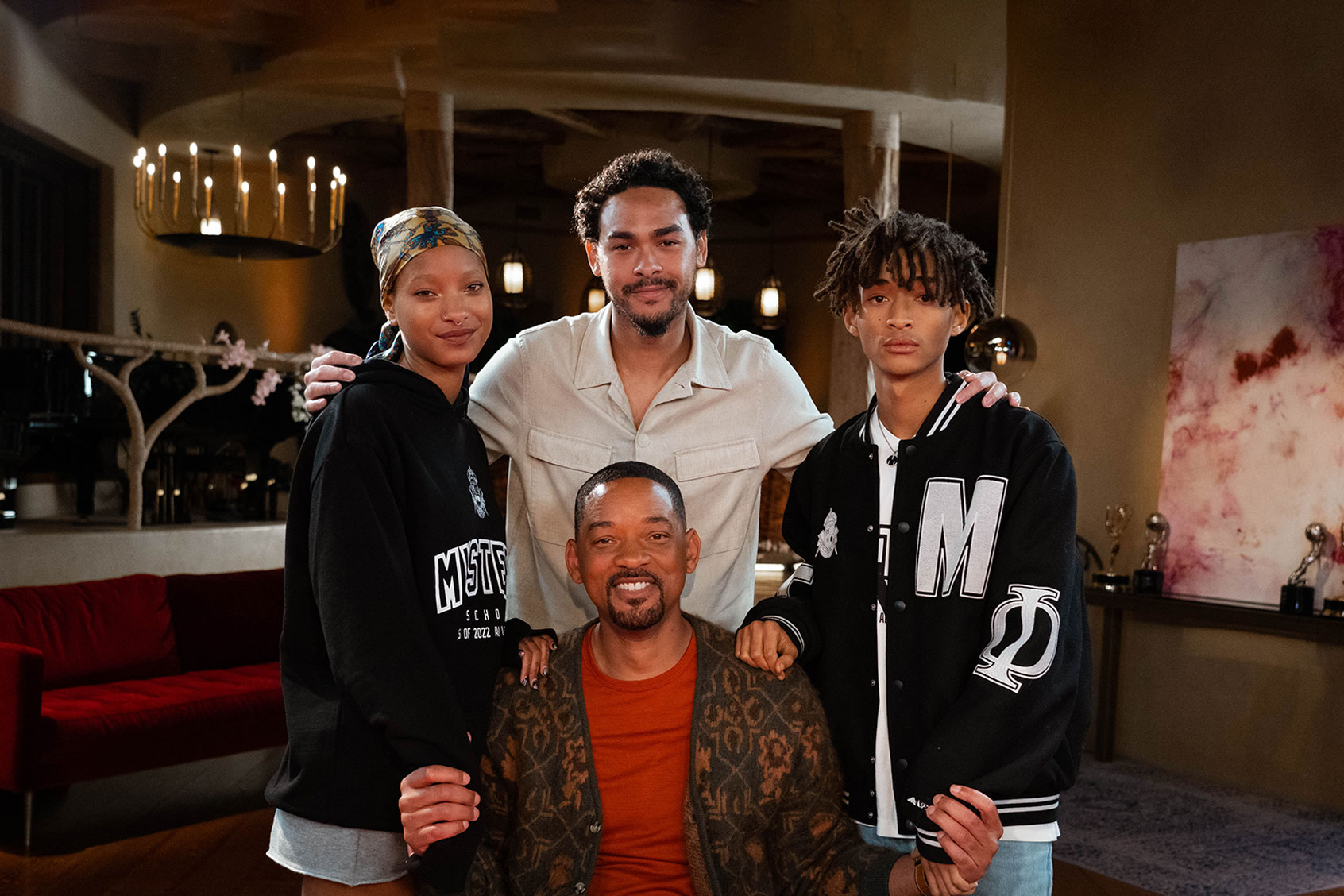
Will Smith presides over the most bizarre “Red Table Talk” yet – to talk trauma, but avoid the slap

In the course of filming the 1979 cinematic classic "Apocalypse Now," Francis Ford Coppola pushed his cast and crew to such extremes that his star Martin Sheen ended up having a heart attack and a breakdown.

A dozen years passed before most of the public heard about that or the rest of the behind-the-scenes mess that plagued "Apocalypse Now." It officially became public via "Hearts of Darkness: A Filmmaker's Apocalypse," a documentary co-directed and narrated by Coppola's wife Eleanor using the copious footage she took of the production.  

It's possible that cinema buffs heard rumors before it that, for example, Sheen was so blind drunk in that opening scene featuring his character unraveling, that he actually cut himself while punching that mirror, which means the blood he smeared across his face was real. 

All of this speaks to a level of artistic commitment that is more frightening than impressive. Explaining that he told Coppola to keep the camera running while he was spurting all that red, Sheen says, "It had to do with facing my worst enemy: myself. I was in a chaotic spiritual state inside."

Our relationship with movie stars, the art of filmmaking, and behind-the-scenes movie set gossip has vastly changed in the three decades since "Hearts of Darkness." Each is now part of a film's marketing, especially when they intermingle with each other. 

The Smith family comprehends this in ways most don't. Instead of gossip taking years to come to light, social media may expose it within weeks or days. A person's inner chaos is more likely to spill out right in front of us in real time, therefore reducing the span between golden status and potential ruin to seconds. Social media also gives stars more power than ever to shape their message and cultivate followers to believe them – and believe in them.

This brings us to Wednesday's "Red Table Talk" featuring Will Smith . . . without wife Jada Pinkett Smith and mother-in-law Adrienne Banfield-Norris joining him.

Billed as a "takeover," Smith's turn as guest host is a predictable stop on his limited press tour for "Emancipation."  His most public talk show appearances so far include submitting to probing but empathetic questions from Trevor Noah and sitting down with retired NBA star Matt Barnes and Stephen Jackson, hosts of the Showtime podcast "All the Smoke."

Wednesday plops him amidst his least hostile interviewers yet: his daughter Willow, a regular "Red Table Talk" co-host, alongside his sons Jaden and Trey. Noah provided Smith with a broadcast forum to break his silence regarding the Oscars night incident.

On "Red Table Talk," Smith's children listen as he explains the visceral impact the part of the escaped enslaved man known as "Whipped Peter" had on him. They nod. They sympathize with their father's internalized angst. A few times Jaden blurts some version of, "That's crazy." Not once during the episode's nearly 36-minute run was Smith's awards show mess mentioned, so if you're thinking about tuning in for related dish, save yourself the time.

Making great art doesn't necessitate pain. Relatedly, experiencing that art should not be painful.

As public relations exercise, it's worth studying from several points of view. One reaffirms "Red Table Talk" utility as a family marketing tool, presenting a message that is overtly crafted and controlled yet strives to come across as honest. Yes, Smith drops the catchphrase he's been tossing out to explain why he chose to star in a film about slavery.  "This is not a slave movie. This is a freedom movie," he tells his children.

He delivers the motto with a contractual air. The rest reads as a public figure displaying his vulnerability and employing his children as character witnesses – part "Inside the Actors' Studio," part professionally lit family meeting, entirely an infomercial for Will Smith, Superstar Actor, and Dad.

Red Table TalkRed Table Talk (Jordan Fisher)

"It's like, as the years have gone on, I've gotten more and more locked into these characters for longer periods of time," Smith tells his children. "And it's just the weight of this story. The weight of these experiences, the quality of the actors. Yeah. It was emotionally, it was physically, it was spiritually taxing."

To illustrate this, he recalls an actor leaning into his fan to deliver a line before spitting in his vicinity as an ab lib. The somatic experience of having to wear the iron shackle enslaved people were forced to endure gave him a panic attack when, at one point, the props person couldn't remove the collar, leaving him in place for 15 minutes.

"And then it's like, I got it. It's like, I'm Will Smith, with people running around looking for keys, and my heart is still pounding. And I'm still scared," he says. "Imagine what it was like for Peter to have that stuff on, walking barefoot, and nobody cares."

The footage has such an impact on the actor that he begins to choke up. 

There's no reason to think this reaction isn't real. The experience of "Emancipation" is almost universally described as some version of grueling, so it follows that the experience of making it would be excruciating too. Smith proves this suspicion by enlisting producers to bring several baroque torture devices to the table to capture his children's reactions to the sight and weight of them.

Then again, he can mount such a presentation because he's not simply someone's dad. Like he said: he's globally recognized superstar and multi-millionaire Will Smith.

All of this makes Smith's "explaining myself" tour by way of promoting "Emancipation" increasingly confounding in the way it is consciously designed to do the star more favors than the project he's promoting.

It's easy to envision a version of "Red Table Talk" where Smith sits down with other actors and artists and experts to discuss the potential harm of an artist going too far into their work, as Smith describes to his children and Sheen demonstrated decades before. 

He heaps praise upon his co-star Ben Foster in this episode (which Foster reciprocates in a pre-recorded statement) and amply credits director Antoine Fuqua's artistic dedication for inspiring everyone in the production to pour themselves into it.

Playing Peter, Smith says, was "emasculating. Dehumanizing, all of that . . . Once you've experienced those things, they go into the same banks as your actual memories. You don't have a separate place for acting. Your brain and your body recognize it the same way it recognizes actual memories. You have nightmares about it the same way. And so it's all of that kind of stuff."

This has value beyond simply explaining away regrettable behavior. It might help more people understand the ways that the creative process can take a severe psychological toll on artists, even though making great art doesn't necessitate pain

Relatedly, experiencing that art should not be painful.

If this movie's seal of authenticity is a trauma response … why would we want to sit through it?

And yet, this episode's family and social dynamics are instructive in ways that dent the series' emotional currency. "Red Table Talk" is typically employed as a relational space devoted to understanding and healing. That doesn't hit as soundly when its star sets about promoting his film's worthiness by impressing upon us how much torment his process of embodying his character caused him.


Want a daily wrap-up of all the news and commentary Salon has to offer? Subscribe to our morning newsletter, Crash Course.


Repeating the story that he was offered Jamie Foxx's role in "Django Unchained," he tells his kids that the main reason he turned it down "was the looks on your faces because you knew what that would mean. And those characters seep back into the house."

Minutes later the episode features the filmed raves by two Black college students who were present at an "Emancipation" screening, both women.

"I just finished watching the film. And honestly, it feels like I just woke up from a terrible nightmare," says the first. "My whole body physically hurt as I was walking out of the movie theater. That's how powerful the film was."

Then she asks, "Will, how did playing a slave for months on end with people saying horrible and dehumanizing things to you affect your mindset? And what did you learn about yourself?"

The second praises the film for eliciting an array of emotions in her, including some that felt familiar. "Because no matter what it is that you go through, there's so many things, whether it's people, work, family, that try to break parts of you, and it's so important just to push through and not let them break you," she observes, before asking Smith, "I just would really like to know, what form of personal suffering did you tap into to execute this role?"

These reactions explain why "Emancipation" isn't performing nearly as well as its star, even if that is not Smith's intention.

Smith can call "Emancipation" a freedom story, but if its seal of authenticity is a trauma response – felt by the audience, and soaked into him to the point of perhaps temporarily causing his mood brakes to fail – why would we want to sit through it?

This episode doesn't satisfactorily answer that. Instead, it does a bang-up job in selling Smith as flawed, still lovable and therefore marketable.  But we already knew that.

"Red Table Talk" episodes stream on Facebook Watch.

Trump lawyers implicated in “coordinated plot” to copy voting system data in multiple states

Election security advocates sent a letter to federal investigators Monday urging them to probe a  “coordinated plot” by former President Donald Trump’s supporters to copy election software in Georgia, Michigan and Nevada after the 2020 election, according to the Atlanta Journal-Constitution

The letter, which was addressed to special counsel Jack Smith, the FBI and the Cybersecurity & Infrastructure Security Agency, asked Smith, who is investigating Trump’s attempts to stay in power after losing the election, to also pursue the multistate data-copying effort as part of his probe. 

“Specifically, we are writing regarding the multi-state plan, directed and funded by attorneys for Donald Trump—including Sidney Powell, Lin Wood, and Jesse Binnall—to access voting systems and obtain and distribute copies of voting system software unlawfully, which could potentially constitute federal crimes and be relevant to investigations into efforts to overturn the 2020 presidential election,” said the letter by the national election advocacy organization Free Speech for People, along with several former election officials and computer scientists.

Plaintiffs in a long-running federal lawsuit over the security of Georgia’s voting systems found documents and video proving that outsiders gained access to Coffee County election systems. 

Computer analysts working for Powell copied a trove of election software and data in Coffee County, Georgia on Jan. 7, 2021, according to court documents and surveillance video. 

Interior security camera video from the Coffee County elections office captured Cathy Latham, then-county Republican Party chair, walking the computer forensics team into the office. Latham introduced the team to local election officials and instructed them to copy “virtually every component of the voting system,” according to a filing, PBS reported

The computer-forensics experts were then paid by a nonprofit that Powell ran. The software was then uploaded to a website, which allowed election deniers across the country to access and download it. 

By copying voting software and distributing it widely, people and organizations can “use the software to undermine, disrupt, or tamper with elections in a number of ways,” the letter included. 


Want a daily wrap-up of all the news and commentary Salon has to offer? Subscribe to our morning newsletter, Crash Course.


Election security experts have also raised flags saying that having such easy access to data increases the risk of hacks in future elections.

The OSET Institute released a statement earlier this year about the threats to election security posed by the unauthorized distribution of voting system software.

The disclosure “could trigger a tsunami of new attack methods, means, and mechanisms. In fact, these disclosures (and worse, publication) provide massive updates to materials already ‘in the wild’ and represent a clear and present danger to election infrastructure protection and security,” the statement said. 

Records revealed that some of the people who were involved in copying software in Georgia were also involved in copying and circulating voting software in Michigan and Colorado.

The letter argued that while prosecutors in impacted states are pursuing individual criminal investigations, “the coordinated, multi-state plan” by Powell also creates room for a “potential federal criminal liability that compels intervention by the Department of Justice”.

The Georgia Bureau of Investigation told the Atlanta Journal-Constitution that they are conducting a criminal investigation into the computer trespass in Coffee County.

Georgia election officials have said that election equipment is secured by public testing, audits and paper ballots. Georgia Secretary of State Brad Raffensperger said in September that his office replaced election equipment in Coffee County following the unauthorized access to the equipment.

But no evidence has revealed that hacks or malware have ever played a role in manipulating election results in any Georgia election, Atlanta Journal-Constitution reported. 

Many of the people involved in coordinating election data copying in Coffee County also tried to organize efforts in other states, including Powell and Binnall, who coordinated election information copying in Nevada.

Atlanta tech company SullivanStrickler billed Powell for over $26,000 to copy election information in Coffee County. The firm also worked for Trump’s attorneys in Antrim County, Michigan, and Clark County, Nevada.

Another January 2021 surveillance video later revealed that two other people also visited the Coffee County elections office, including Cyber Ninjas CEO Doug Logan, who led a controversial Republican ballot review in Maricopa County’s 2020 election, and Jeff Lenberg, a computer security consultant who analyzed voting equipment in Michigan and New Mexico.

The 7 must-buy teas from Trader Joe’s

Amid the holiday season, there’s no greater joy than cozying up with your favorite seasonal dessert and a warm cup of tea. Whether your beverage of choice is herbal, black, oolong or green, Trader Joe’s has got you covered with its assortment of delicious teas — both bagged and loose leaf!

Salon Food previously compiled a list of staff recommendations for a few tried-and-trusted products to help make tea drinking more fun. Now, we’re compiling a list of the seven must-buy teas to pick up from our favorite California-based retailer.

This list adds to Salon Food’s growing library of supermarket guides. If your go-to morning pick-me-up is coffee, check out the 6 best coffee to pick up from Trader Joe’s right now.

01
Harvest Blend Herbal Tea

https://www.instagram.com/p/CjG2W0CvMiD/


According to TJ’s, this limited-time-only tea “foretells leaves falling, apple picking, wind whistling, and fire crackling.” Yes, the Harvest Blend Herbal Tea is technically a fall-inspired tea, since it flaunts some of fall’s signature flavors, including cinnamon, ginger, apple and “a sweet-spicy lingering finish.” But it’s also great for the winter season, especially alongside fresh-baked gingerbread, fruit crumble or cake. 


“Brew a cup and head out to the pumpkin patch or take a walk in the brisk fall weather,” TJ’s recommends, although a fresh cup of tea can also be enjoyed prior to heading out to your local winter wonderland. “Naturally caffeine free, it invigorates the senses with vibrant apple aromas and soothes the stomach and soul with rich, ginger-cinnamon warmth.”


If you’re looking to amp the spice of your tea, check out TJ’s recipe for a Spiced Harvest Tea, which calls for 8 ounces of TJ’s Lemon Ginger Echinacea Juice Blend, warmed, and 1 bag of TJ’s Harvest Blend Herbal Tea.

02
Organic Ginger Turmeric Herbal Tea

https://www.instagram.com/p/CaGIafpPIY0/


Adding to the list of herbal tea options is TJ’s Organic Ginger Turmeric Herbal Tea, which is a soothing amalgamation of ginger, turmeric, licorice root, orange peel, orange oil and black pepper — which TJ’s notes is all 100% organic! 


Not only is this tea tasty, it’s also incredibly healthy and revitalizing. Both ginger and turmeric are known to decrease inflammation, relieve chronic pain, reduce nausea and boost immunity, making this tea the perfect beverage for when you’re feeling under the weather.


“The ginger will revitalize, while the turmeric awakens with its aromatic quality. Sound inviting?” TJ’s beckons. “Then, we invite you to experience a cup for yourself.”

03
Organic Herbal Supplement: Detox Cleansing Blend

https://www.instagram.com/p/CbObcSWpQ_x/


In the same vein as TJ’s Organic Ginger Turmeric Herbal Tea, TJ’s Organic Herbal Supplement is a great drink to enjoy both in sickness and in health. This healing tea consists of sarsaparilla root, ginger, licorice root, cinnamon, burdock root, juniper berry, black pepper, dandelion root, clove oil and cinnamon bark oil.


“Not to be dramatic but I am obsessed with this tea. I’ve tried so many different ‘cleansing’ teas and found them all to be heinous tasting,” wrote Instagram blogger @mrs_traderjoes. “This one is a simple herbal blend that tastes like any other tea. It has a little hint of spice that jazzes up the entire blend, which is a nice addition.”

04
Maple Espresso Black Tea

https://www.instagram.com/p/CkjpElVvBlT/


This seasonal drink meshes both tea and coffee into one caffeine-packed drink. Per TJ’s, its Maple Espresso Black Tea Blend is made with a blend of black & herbal tea leaves, natural maple flavor and ground espresso beans. “Hot, iced, or mixed with milk (or your favorite non-dairy alternative), Trader Joe’s Maple Espresso Black Tea Blend sets a new standard for seasonal drinks.”

05
Mango Flavored Black Tea

https://www.instagram.com/p/CQM5y6pJ0ln/


TJ’s specialty tea flaunts full-flavored black teas from some of the world’s most renowned tea-growing places — including central Africa; Assam, India; and Indonesia — alongside tropical mango flavors. The final blend is delicious both hot or cold (be sure to steep the tea hot before cooling for the most robust taste). It can also be enjoyed on its own or alongside your favorite sweet treats!

06
Organic Cold Brew Black Tea Concentrate

https://www.instagram.com/p/CPmAORQnpVC/


Made with black tea, filtered water, and a bit of citric acid, TJ’s Organic Cold Brew Black Tea Concentrate is best enjoyed with cold or hot water for a delicious, reinvigorating beverage. “Add one part Organic Cold Brew Black Tea Concentrate to seven parts water, and you’ve got yourself a crispy, refreshing glass (or cup) of tea,” TJ’s writes.

07
Sparkling White Tea with Pomegranate Juice

https://www.instagram.com/p/Cf7ZhKyPKf5/


If hot beverages are not your cup of tea (pun intended!), be sure to pick up a pack of TJ’s Sparkling White Tea with Pomegranate Juice during your next grocery run. The crisp and bubbly beverage features brewed white tea, pomegranate juice, some citric acid & ascorbic acids and ample amounts of carbonation.


According to TJ’s, the drink can be enjoyed in a multitude of ways: “Enjoy it chilled, over ice or straight from the can. Add it to a cocktail or mocktail, garnished with a sprig of mint or fresh pomegranate seeds. Make it the base of a punchy, pink pomegranate float. Let your imagination sparkle!”

Kari Lake mocked for story about UPS driver “devastated” that “they stole another election” from her

Defeated Trump-backed Arizona gubernatorial candidate Kari Lake on Tuesday invited ridicule when she claimed that a local UPS driver was “devastated” by her loss last month to Arizona Governor-elect Katie Hobbs.

“UPS guy just told us he is ‘devastated’ that they ‘stole another election’ and asked how he could help,” Lake wrote on Twitter. “The Fake News may spin it… Officials behind the Sham Election may lie… But Arizonans get it. They know our Elections are a joke.”

Although multiple failed Trump-backed candidates pushed his conspiracy theories about the 2020 election, the vast majority of them conceded their races, including Herschel Walker, Don Bolduc, and Doug Mastriano.

Lake, however, has charted a different course and has refused to concede her defeat, while also filing lawsuits against the state of Arizona demanding that she be installed as the election’s rightful winner.

Given all this, many Twitter users jumped at the chance to ridicule her and question the veracity of her story about a supposedly distraught UPS driver.

Check out some reactions below.

After decades of work by activists, Biden signs Respect for Marriage Act into law

Human rights advocates cheered Tuesday’s signing by U.S. President Joe Biden of the Respect for Marriage Act, landmark legislation to codify limited protections for same-sex and interracial marriages passed in response to right-wing attacks on civil rights.

The new law—which passed the Senate on November 30th and the House of Representatives last Thursday—requires states to recognize marriage licenses issued anywhere in the United States. It does not confirm nationwide same-sex marriage rights as established by the U.S. Supreme Court in 2015 in Obergefell v. Hodges. Nor does it prohibit states from banning same-sex marriage if Obergefell is struck down, as Justice Clarence Thomas suggested it should be in his concurring opinion in Dobbs v. Jackson Women’s Health Organization, the June decision that voided half a century of national abortion rights.

Speaking on the South Lawn of the White House, Biden took aim at the “callous, cynical laws introduced in the states targeting transgender children, terrifying families and criminalizing doctors who give children the care they need.”

“Racism, antisemitism, homophobia, transphobia—they’re all connected,” the president asserted. “But the antidote to hate is love. This law and the love it defends strike a blow against hate in all its forms.”

Vice President Kamala Harris noted that “as attorney general of California, I had the honor of giving the order to allow same-sex marriages to take place across the state in 2013. Now, we continue our progress with the Respect for Marriage Act becoming law.”

House Speaker Nancy Pelosi, D-Calif., hailed the new law as “a landmark victory in the fight for full equality enshrining the foundational right to marry the person you love into the law of the land.”

Senate Majority Leader Chuck Schumer, D-N.Y., wearing the same purple tie he wore to his lesbian daughter’s wedding, said that “thanks to the millions out there who spent years pushing for change, and thanks to the dogged work of my colleagues, my grandchild will get to live in a world that respects and honors their mothers’ marriage.”

The White House was lit in the colors of the rainbow for the signing ceremony. There were performances from musicians Sam Smith and Cyndi Lauper, who sang her 1986 Billboard Hot 100 #1 hit “True Colors.”

“For once, our families, mine and a lot of my friends—and people you know, sometimes your neighbors—we can rest easy tonight, because our families are validated,” Lauper said before the signing.

Matthew Haynes, co-owner of Club Q, the Colorado Springs nightclub where a mass shooter killed five people and wounded 19 others last month, was also on hand.

“We must stop the violence like we just saw in Colorado Springs,” Biden asserted.

A video recalled how Biden, then vice president, came out in support of same-sex marriage equality before his boss, then-President Barack Obama, a decade ago. Biden joked that he “got in trouble” for that, but three days later an “evolving” Obama publicly endorsed gay marriage.

Democratic politicians and advocates applauded the signing, with Rep. Ritchie Torres, D-N.Y., who is gay, tweeting that “today is a HISTORIC day for the LGBTQ community. The Respect for Marriage Act is the law of the land.”

“When I presided over the Respect for Marriage Act, I had a simple message for the far right: ‘Your hate will never have the final word on our love,'” he added.

Sen. Tammy Baldwin, D-Wis., who is lesbian, tweeted: “It was great to be at the White House to celebrate the Respect for Marriage Act being signed into law by @POTUS ! I’m happy that the hard work and long hours of bipartisan negotiation have finally paid off for the millions of loving same-sex & interracial couples across America.”

Interior Secretary Deb Haaland, whose daughter is transgender, wrote on Twitter that “I was honored to watch as @POTUS honored the fundamental right of Americans to marry the person they love. It means people like my child will have the same rights as everyone else.”

Janson Wu, executive director of the advocacy group GLBTQ Legal Advocates & Defenders (GLAD), said in a statement that “this is a joyful day. Millions of couples and their children across the country now have the assurance that their families will continue to be respected by our state and federal governments because President Biden has signed the Respect for Marriage Act into law.”

“The effort to pass the Respect for Marriage Act spanned decades and involved the work of so many. The law’s passage this year demonstrates the strong and growing support for equality among Americans of all political parties and from all walks of life,” Wu added.

Lee Saunders, president of the American Federation of State, County, and Municipal Employees, said that “55 years after Loving v. Virginia,” the Supreme Court case legalizing interracial marriage, “and seven years after Obergefell v. Hodges, we can celebrate that marriage equality is now the law of the land.”

“We thank President Biden and members of Congress who voted for this historic bill for ensuring that love wins,” Saunders added.

Steamed: The weird and wild world of winter radiator cooking

Once the weather snaps cold and the great old pipes in even older buildings begin to clang and rattle as hot water turns to steam, someone, somewhere inevitably tries to cook using the heat generated by their radiator. This experimental “cooking” takes many forms, the results of which are often dutifully recorded and shared online.

The microwave broke so I’m cooking my pizza on the radiator,” wrote one Reddit user, fittingly in the r/collegecooking subreddit, who attached a photograph of a small frozen pizza perched on one of the vents of his dorm room radiator.

“This is amazing,” one commenter said. “Did it work?”

“Yes it worked,” the pizza cook replied. “Well sort of. It thawed the pizza and it was warm enough to enjoy, but the dough was raw.”

Like the aforementioned pizza, most of these radiator cooking experiments seem to ride that line between a grave risk of food poisoning and a gross-out culinary meme akin to the nauseating “spaghetti tableTikTok trend. That’s likely why the act of radiator cooking has been woven throughout the raunchy and irreverent “It’s Always Sunny in Philadelphia.”

In the opening scene of the Season Three episode titled “Dennis Looks Like a Registered Sex Offender,” Charlie (Charlie Day) attempts to become famous by holding his breath for more than seven minutes. Mac (Rob McElhenney) videotapes this effort while Frank (Danny DeVito) stands nearby “working the chicken parts” on a hot plate. Nearby, sandwich buns are toasting on the radiator.

“Take the buns off the radiator,” Frank demands before all his hard work is knocked to the floor by a flailing Charlie. 

“I barely cooked it. I slapped it on the radiator to heat it up.”

In the next season, radiator cooking resurfaces in the episode “Mac and Dennis: Manhunters.” Dee (Kaitlin Olson) and Charlie become obsessed with a certain kind of, uh, hard-to-source meat, which they try preparing in a variety of styles. (Human meat — they thought it was human meat!)

“I barely cooked it,” Charlie exclaims as he tears into a slice. “I slapped it on the radiator to heat it up.”

“That’s gross,” Dee responds, “but it’s so good I don’t care.”

Through the lens of “It’s Always Sunny,” cooking off the radiator denotes a certain kind of Depression-era scrappiness. (The characters are nothing if not scrappy and — occasionally — depressed.) At one point, however, some envisioned the radiator as the cooking instrument of the future.

In 1885, the inventor Louis C. Rodier (sometimes miswritten throughout texts as Louis G. Rodier) was granted a patent for a “combined radiator and heating oven.” According to the patent application, the invention worked like this:

In constructing a radiator, the long looks and the short loops are so arranged with reference to each other that they will leave a space for an oven. This oven, I prefer to make separate, so that it may be readily introduced in place when the radiator loops have been put together. The oven is also preferably provided with one or more shelves. 

Though a patent was granted to Rodier, the idea of combining a radiator and an oven didn’t appeal to many seasoned home cooks. Most already had ovens, and at the time, radiators were still relatively new. (The Bundy Loop, one of the most popular cast radiator systems, was developed by Nelson H. Bundy in 1872.) However, the idea of using a radiator as a kitchen tool didn’t dissipate; it simply shifted from being used as a cooking device to a warming device.

For instance, in 1892, the American Radiator Company was established through the merger of a number of North American radiator manufacturers. By the 1920s, its advertisements were commonly found in newspapers and magazines. One such advertisement showed a sophisticated couple having dinner in their dining room while a maid retrieved plates out of a radiator warming box.

The ad copy reads: “Warm plates are ready for serving and food kept hot during the meal add much to the enjoyment of the table and help digestion. Easier to have them than not where the house is warmed by American Radiators & Ideal Broilers.”

To this day, many apartments and homes built in the early 20th century still have cast iron radiators with warming boxes. Whether said boxes are operational or not is a separate question, as many homeowners have shifted to central air conditioning and heating.

“Warm plates are ready for serving and food kept hot during the meal add much to the enjoyment of the table and help digestion.”

Perhaps the most common modern culinary use for the radiator doesn’t involve heating plates or desperate attempts to thaw frozen pizzas. Home baking pros, including Nigella Lawson, cite the radiator as a tool for proofing (or proving, depending on where you live) bread dough.

“An airing cupboard is usually a good place to leave dough to rise but dough can rise in most places (you can even leave it to rise in the refrigerator overnight) it will just take slightly longer at a lower temperature,” Lawson writes. “A warm kitchen worktop, sunny windowsill or somewhere close to a radiator often works.”

“Close to the radiator,” as opposed to “inside the radiator,” is a key distinction here; bread dough rises more evenly in an environment with a relatively stable temperature, which doesn’t necessarily jive with the on-off nature of a radiator’s heat. Don’t get me wrong, it’s possible, but as one commenter wrote on a Facebook post about radiators with warming boxes, “So the dough would either be cold as death or exploded all over the inside like a sweaty pig?”


Want more great food writing and recipes? Subscribe to Salon Food’s newsletter, The Bite.


This touches on a key point about the safety, or lack thereof, surrounding radiator cooking experiments. While radiators do get very hot to the touch, they only reach about 140 degrees, which is plenty hot enough for bacteria to come alive, yet still not warm enough to fully cook food. Put simply, it’s kind of a recipe for food poisoning.

That said, if the nostalgia or scrappiness of radiator cooking still appeals, there are a few options. One could lay a strip of aluminum foil over a cooled radiator and use the surface to warm plates once it heats. (I’m very hesitant to recommend that you put anything on your radiator due to the fire risk, but perhaps there are those who like to live more dangerously.)

One could also look into the wide, wonderful world of warming drawers, which seem like the natural evolution of Louis C. Rodier’s 1885 invention. After all, in the words of American Radiators, it could “add much to the enjoyment of the table.”

Elon is the new Trump: But how long can he hold the No. 1 Troll title?

Poor Donald Trump must be feeling especially unloved right now. Practically everyone in the Republican Party is blaming him for their losses in the midterm elections, and few of his usual media supporters are defending him in his latest legal woes. At least some recent polls have him trailing Ron DeSantis in the forthcoming race for the GOP presidential nomination — and if he pulls it off anyway, suggest that he’d lose the general election to Joe Biden. But what has to hurt more than anything is that his title as chief MAGA troll has been usurped by a man who has outstripped him in virtually every way: Elon Musk.

Now, it’s true that Trump can brag that he was used to be president of the United States, but that’s getting old considering that everyone knows that he lost his re-election bid and has spent the last two years whining like a tired toddler that it was stolen from him. That accomplishment is irrevocably tarnished. But Musk’s business career leaves Trump with his old fashioned real estate fortune in the dust. Musk has nine children by three different women, and iss still working on it. Most important, Musk has way, way, more money than Trump, even if as of this week he’s been demoted from the richest man in the world to No. 2. 

Trump is a principal in the Truth Social platform and Musk is the outright owner of Twitter, if you squint you could claim they are ostensibly on equal footing when it comes to social media power. But once again, it’s not close and Musk is the big winner of the platform wars. Twitter has massive media influence and helps set the political agenda, while Truth Social is just a relatively tiny echo chamber for Trump fans. Trump had 75 million Twitter followers. Musk has 120 million.

In other words, Elon Musk is the man Trump has been pretending to be.

Trump’s 2024 Revenge Tour is off to an extremely slow start, and that’s putting it generously. He has hardly left the private residence at his Florida beach club except to come downstairs and eat dinner with a couple of antisemites. His social media feed is mostly re-posts of worshipful memes about him and some all-caps primal screaming about his legal difficulties. Every once in a while he says something about present-tense politics but mostly it’s just kvetching about the 2020 election. There have been no rallies, no real interviews, no ads, no press conferences, nothing. Let’s just say it’s an unusual way to start a presidential campaign.

Meanwhile, Musk has completely taken over the political conversation that Trump used to dominate. He’s mastered the art of the right-wing troll, openly courting the most extreme denizens of the fever swamps and delighting in shocking normal decent people with crude, over-the-top statements. There is a new outrage almost every day as he dives head first down the wingnut rabbit hole and revels in the fuss he causes. Rich Lowry, writing for the New York Post, says Musk has “trumped Trump as the nation’s foremost culture warrior.” There you have it.


Want a daily wrap-up of all the news and commentary Salon has to offer? Subscribe to our morning newsletter, Crash Course.


A sampling of Musk’s recent tweets show someone who is completely immersed in some of the craziest right wing arcana, including anti-vax and QAnon conspiracy theories. He’s also shown that he has a mission that’s driving him and likely explains why he bought Twitter in the first place. For example:

Many battles remain, but, yes, the tide is starting to turn on the mortal threat to civilization that is the woke mind virus.

Humor relies on an intuitive & often awkward truth being recognized by the audience, but wokism is a lie, which is why nobody laughs.

He appears to believe he has been called to save humanity by owning the libs, which mostly amounts to relentless trolling, and allowing all kinds of fascists, racists, dirty tricksters and snake oil salesmen free rein to spread their “ideas” in the online public square. No doubt they’re enjoying themselves, at least until the objects of their derision and cruelty simply decide to leave. Will humankind have been rescued from the evil of wokeness if that happens? It appears we are going to find out.

Musk appears to believe he has been called to save humanity, which mostly amounts to endless trolling and allowing all kinds of fascists, racists, dirty tricksters and snake oil salesmen free rein to spread their “ideas.”

Musk has released some of the internal Twitter correspondence regarding the infamous “Hunter Biden laptop” story and Donald Trump’s post-Jan. 6 Twitter ban to a couple of contrarian journalists. Musk and his allies have evidently reached the conclusion that Twitter committed unpardonable sins that resulted in Trump losing the election, in the first instance, and then being unfairly railroaded, in the second. Those conclusions are highly contested, to put it mildly. 

It’s ridiculous to claim that one news story about a presidential candidate’s adult son being suppressed for a couple of days on one social media platform made any difference in the election (which up until now we’ve been told had been stolen at the ballot box). And as for Trump’s Twitter ban, he should have been thrown off the platform long before he was. He lied incessantly, blabbed classified information and put people’s lives in danger with his big mouth, including his own vice president on Jan. 6.  

Trump sees the “Twitter files” as ultimate vindication, of course, and demanded that the Constitution be terminated so he can be reinstated as president immediately. For a moment, he got the attention he craved when the political world reacted as it typically does whenever he says something insane. But mostly he’s being ignored, which has to have him intensely frustrated.

But Donald Trump has an ace in the hole. Musk may be creating daily entertainment with the endless chaos of his Twitter takeover and all the hiring and firing at random, but Trump may be about to vault back into the spotlight in operatic fashion. He has one thing going for him that Musk with all his money and success doesn’t have. He may be looking at a criminal indictment, and perversely enough, that might be exactly what he needs. There’s nothing that turns on the American right more than grievance. Elon Musk’s greatest weakness, at this point, is that he’s got nothing to complain about. 

“Anti-vax quackery”: Experts “stunned” after DeSantis demands grand jury probe into COVID vaccines

Florida Gov. Ron DeSantis said Tuesday that he will petition the state supreme court to impanel a grand jury to investigate “any and all wrongdoing” related to COVID-19 vaccines.

DeSantis held a roundtable with Florida Surgeon General Joseph Ladapo and physicians before announcing his plan. DeSantis did not specify what types of purported wrongdoing the grand jury would investigate but mentioned alleged “crimes” related to vaccines.

DeSantis suggested that the grand jury may target vaccine manufacturers, arguing that the companies had not provided their data to independent researchers even though studies by vaccine manufacturers have been published in peer-reviewed journals and reviewed by public health panels before being approved.

“We’ll be able to get the data whether they want to give it or not,” DeSantis said. “In Florida, it is illegal to mislead and misrepresent, especially when you are talking about the efficacy of a drug.”

Ladapo, who has repeatedly pushed anti-vaccine talking points, said companies need to answer for instances of myocarditis, a form of heart inflammation, that have been reported in rare cases.

“We will answer this question. It is a question that I am sure keeps the CEOs of Pfizer and Moderna up late at night, hoping no one ever looks. But we’re going to look here in Florida,” he said, even though the risk of heart inflammation from COVID is far greater than from vaccination.

DeSantis said that he expects the Supreme Court to approve his request.

“That will come with legal processes that will be able to get more information and to bring legal accountability to those who committed misconduct,” he said.

A spokesperson for Pfizer told The Washington Post that its COVID vaccines “have saved hundreds of thousands of lives, tens of billions of dollars in health care costs, and enabled people worldwide to go about their lives more freely.”

DeSantis also announced that he would form a public health integrity committee that would include some of the physicians and scientists featured at the roundtable, which would refute public health information from the Centers for Disease Control and Prevention.


Want a daily wrap-up of all the news and commentary Salon has to offer? Subscribe to our morning newsletter, Crash Course.


“Our CDC, at this point, anything they put out, you just assume, at this point, that it’s not worth the paper it’s printed on,” the governor said.

DeSantis added that Ladapo would launch a study through the University of Florida to “assess sudden deaths of individuals in good health who received a Covid-19 vaccine.”

The announcement came as DeSantis, a potential 2024 presidential contender, seeks to outflank Trump on COVID policy. DeSantis was a “major booster of the vaccines last year and once called them lifesaving,” NBC News reported, before turning against them last year. DeSantis, who leads Trump in recent polls, has also repeatedly criticized Dr. Anthony Fauci and public health agencies. Trump has responded by attacking DeSantis for ordering lockdowns in the state in the early part of the pandemic, though Florida was one of the first states to lift restrictions.

“Prior to this, his position was identical to Trump’s, and he advocated the efficiency and safety of vaccines. That’s his record,” Trump ally Roger Stone told NBC News. Another Trump adviser told the outlet that Trump is “watching DeSantis and it pisses him off.”

But while the Florida governor scores points with the GOP base, lawmakers and public health experts were aghast at the announcement.

“Florida is collapsing into anti-vax quackery,” tweeted Florida state Rep. Carlos Smith, a Democrat.

Lisa Gwynn, the former president of the Florida Chapter of the American Academy of Pediatrics, told The Washington Post she and her colleagues were “stunned” by the governor’s plan to counter federal public health guidance.

“This is just another example of politicizing health care,” said Gwynn, a pediatrician with the University of Miami Health System. “I really don’t understand where they’re going with it.”

Gwynn was ousted from the state’s Health Kids board of directors in June after she criticized Florida’s decision to delay access to vaccines for kids under five.

“We know vaccines save lives. The data is very clear. Those of us in the scientific community are outraged by this,” Gwynn said. “It’s definitely eroding confidence in public health policies.”

Hospital financial decisions play a role in the critical shortage of pediatric beds for RSV patients

The dire shortage of pediatric hospital beds plaguing the nation this fall is a byproduct of financial decisions made by hospitals over the past decade, as they shuttered children’s wards, which often operate in the red, and expanded the number of beds available for more profitable endeavors like joint replacements and cancer care.

To cope with the flood of young patients sickened by a sweeping convergence of nasty bugs — especially respiratory syncytial virus, influenza, and coronavirus — medical centers nationwide have deployed triage tents, delayed elective surgeries, and transferred critically ill children out of state.

A major factor in the bed shortage is a years-long trend among hospitals of eliminating pediatric units, which tend to be less profitable than adult units, said Mark Wietecha, CEO of the Children’s Hospital Association. Hospitals optimize revenue by striving to keep their beds 100% full — and filled with patients whose conditions command generous insurance reimbursements.

“It really has to do with dollars,” said Dr. Scott Krugman, vice chair of pediatrics at the Herman and Walter Samuelson Children’s Hospital at Sinai in Baltimore. “Hospitals rely on high-volume, high-reimbursement procedures from good payers to make money. There’s no incentive for hospitals to provide money-losing services.”

The number of pediatric inpatient units in hospitals fell 19% from 2008 to 2018, according to a study published in 2021 in the journal Pediatrics. Just this year, hospitals have closed pediatric units in Boston and Springfield, Massachusetts; Richmond, Virginia; and Tulsa, Oklahoma.

The current surge in dangerous respiratory illnesses among children is yet another example of how covid-19 has upended the health care system. The lockdowns and isolation that marked the first years of the pandemic left kids largely unexposed — and still vulnerable — to viruses other than covid for two winters, and doctors are now essentially treating multiple years’ worth of respiratory ailments.

The pandemic also accelerated changes in the health care industry that have left many communities with fewer hospital beds available for children who are acutely ill, along with fewer doctors and nurses to care for them.

When intensive care units were flooded with older covid patients in 2020, some hospitals began using children’s beds to treat adults. Many of those pediatric beds haven’t been restored, said Dr. Daniel Rauch, chair of the American Academy of Pediatrics’ committee on hospital care.

In addition, the relentless pace of the pandemic has spurred more than 230,000 health care providers — including doctors, nurses, and physician assistants — to quit. Before the pandemic, about 10% of nurses left their jobs every year; the rate has risen to about 20%, Wietecha said. He estimates that pediatric hospitals are unable to maintain as many as 10% of their beds because of staffing shortages.

“There is just not enough space for all the kids who need beds,” said Dr. Megan Ranney, who works in several emergency departments in Providence, Rhode Island, including Hasbro Children’s Hospital. The number of children seeking emergency care in recent weeks was 25% higher than the hospital’s previous record.

“We have doctors who are cleaning beds so we can get children into them faster,” said Ranney, a deputy dean at Brown University’s School of Public Health.

There’s not great money in treating kids. About 40% of U.S. children are covered by Medicaid, a joint federal-state program for low-income patients and people with disabilities. Base Medicaid rates are typically more than 20% below those paid by Medicare, the government insurance program for older adults, and are even lower when compared with private insurance. While specialty care for a range of common adult procedures, from knee and hip replacements to heart surgeries and cancer treatments, generates major profits for medical centers, hospitals complain they typically lose money on inpatient pediatric care.

When Tufts Children’s Hospital closed 41 pediatric beds this summer, hospital officials assured residents that young patients could receive care at nearby Boston Children’s Hospital. Now, Boston Children’s is delaying some elective surgeries to make room for kids who are acutely ill.

Rauch noted that children’s hospitals, which specialize in treating rare and serious conditions such as pediatric cancer, cystic fibrosis, and heart defects, simply aren’t designed to handle this season’s crush of kids acutely ill with respiratory bugs.

Even before the autumn’s viral trifecta, pediatric units were straining to absorb rising numbers of young people in acute mental distress. Stories abound of children in mental crises being marooned for weeks in emergency departments while awaiting transfer to a pediatric psychiatric unit. On a good day, Ranney said, 20% of pediatric emergency room beds at Hasbro Children’s Hospital are occupied by children experiencing mental health issues.

In hopes of adding pediatric capacity, the American Academy of Pediatrics joined the Children’s Hospital Association last month in calling on the White House to declare a national emergency due to child respiratory infections and provide additional resources to help cover the costs of care. The Biden administration has said that the flexibility hospital systems and providers have been given during the pandemic to sidestep certain staffing requirements also applies to RSV and flu.

Doernbecher Children’s Hospital at Oregon Health & Science University has shifted to “crisis standards of care,” enabling intensive care nurses to treat more patients than they’re usually assigned. Hospitals in Atlanta, Pittsburgh, and Aurora, Colorado, meanwhile, have resorted to treating young patients in overflow tents in parking lots.

Dr. Alex Kon, a pediatric critical care physician at Community Medical Center in Missoula, Montana, said providers there have made plans to care for older kids in the adult intensive care unit, and to divert ambulances to other facilities when necessary. With only three pediatric ICUs in the state, that means young patients may be flown as far as Seattle or Spokane, Washington, or Idaho.

Hollis Lillard took her 1-year-old son, Calder, to an Army hospital in Northern Virginia last month after he experienced several days of fever, coughing, and labored breathing. They spent seven anguished hours in the emergency room before the hospital found an open bed and transferred them by ambulance to Walter Reed National Military Medical Center in Maryland.

With proper therapy and instructions for home care, Calder’s virus was readily treatable: He recovered after he was given oxygen and treated with steroids, which fight inflammation, and albuterol, which counteracts bronchospasms. He was discharged the next day.

Although hospitalizations for RSV are falling, rates remain well above the norm for this time of year. And hospitals may not get much relief.

People can be infected with RSV more than once a year, and Krugman worries about a resurgence in the months to come. Because of the coronavirus, which competes with other viruses, “the usual seasonal pattern of viruses has gone out the window,” he said.

Like RSV, influenza arrived early this season. Both viruses usually peak around January. Three strains of flu are circulating and have caused an estimated 8.7 million illnesses, 78,000 hospitalizations, and 4,500 deaths, according to the Centers for Disease Control and Prevention.

Krugman doubts the health care industry will learn any quick lessons from the current crisis. “Unless there is a radical change in how we pay for pediatric hospital care,” Krugman said, “the bed shortage is only going to get worse.”


KHN (Kaiser Health News) is a national newsroom that produces in-depth journalism about health issues. Together with Policy Analysis and Polling, KHN is one of the three major operating programs at KFF (Kaiser Family Foundation). KFF is an endowed nonprofit organization providing information on health issues to the nation.

Subscribe to KHN’s free Morning Briefing.

African countries are tapping their fossil fuel wealth. Why aren’t they getting rich?

When an American oil company discovered a massive natural gas reserve off the coast of Mozambique in early 2010, the country appeared poised for a brighter future. After more than a decade of relying on foreign aid to recover from a bloody civil war, here was an opportunity to gain financial independence. Government officials celebrated Anadarko Petroleum’s discovery, declaring that revenues from the extracted fuel would help transform Mozambique, one of the world’s poorest countries, into a middle-income nation with robust health care and education. 

But the years that followed brought a series of crushing disappointments. A corruption scandal sunk the country into economic and political turmoil and an insurgency swept through the oil-rich Cabo Delgado province, destroying schools and hospitals and displacing thousands. It all happened before a single ounce of gas was shipped for export. 

Today, Mozambique is still hoping to use its fossil fuel resources to develop its economy, a story that has played out across the continent, often to disastrous effects. From the vast deserts of Algeria to the delicate peatlands of Namibia, hundreds of mostly foreign-owned corporations are exploring new fuel reserves, prompting claims that the continent will become oil’s “final frontier.” But if the world is to limit global temperatures to 1.5 degrees Celsius above pre-industrial levels, no new oil and gas infrastructure can be developed, according to the International Energy Agency. Even as oil giants like Shell and TotalEnergies set up shop in Namibia and Angola, a wealth of recent research has demonstrated that Africa also has immense, largely untapped potential for renewable energy. Despite pleas from environmental advocates across the continent to pursue this path instead, governments have held tight to the idea that tapping fossil reserves is essential for expanding their economies, reducing poverty, and providing power to millions of Africans. 

“Africa wants to send a message that we are going to develop all of our energy resources for the benefit of our people because our issue is energy poverty,” said Maggy Shino, Namibia’s petroleum commissioner, in an interview with Reuters at the United Nations Climate Conference in Sharm el-Sheikh, Egypt, last month.

With 89 percent of the liquified natural gas from the new infrastructure slated for export to Europe, some advocates have questioned how far these projects will actually go toward increasing electricity access for ordinary Africans. More troublingly, a growing body of research suggests that rather than serving as a boon for development, major fuel discoveries tend to spawn corruption and economic instability in countries that lack strong financial institutions and legal systems. This, experts told Grist, is what happened in Mozambique, where the promise of economic growth led to rapid increases in borrowing and sparked violence over access to resources before they ever left the ground. 

Lars Buur, a professor of political economy at Roskilde University in Denmark, said that Africa’s colonial history and its relatively small contribution to climate change make drilling for fossil fuels on the continent a question of fairness. “There’s an environmental justice case for African governments being able to consume certain amounts of coal, gas, and oil in order to develop their countries. That’s one side of it.” The other side, he said, is how much these countries are really getting from developing their oil and gas industries. “That’s a difficult one, because the track records are poor.”

For decades, academics have been studying the “resource curse,” a phenomenon in which countries endowed with abundant natural resources wind up with worse social and economic outcomes after they cash in. This “paradox of plenty” has been seen across Africa, particularly in the continent’s two largest oil-producing states. In the early 2000s, billions of dollars in revenue from deepwater exploration off the coast of Angola went missing after government elites siphoned the funds away from a population that lacked basic public services after decades of civil war. In Nigeria, weak regulations have enabled a quantity of oil equivalent to 50 Exxon Valdez disasters to spill into farms, forests, and rivers, devastating the environment and nearby towns.

What can explain the apparent paradox, this riches-to-rags story? Scholars have pointed out that governments hungry to cash in on major fuel discoveries tend to pull resources away from other vital sectors of the economy such as agriculture, thereby constricting their development. Another explanation points to weak financial institutions, regulatory agencies, and legal systems that fail to stave off corruption and protect against environmental abuses. While these patterns have been observed in many oil-rich nations across Africa and the world, experts emphasized that political conditions, not wealth of natural resources, are what determine whether discoveries will cause more harm than good.

“Resources by their nature are not a curse,” said Erik Katovich, a postdoctoral scholar at the Institute of Economics and Econometrics at the University of Geneva in Switzerland. However, “if a country already deals with conflict or corruption or instability, throwing millions of dollars in oil revenues into the mix is only going to exacerbate any sort of institutional weaknesses that you already have.”

More recent research suggests that these effects are not only reserved for the period after governments receive windfalls from fossil fuels. In what’s called the “presource curse,” the anticipation of oil and gas revenues may engender corruption and lead governments to prematurely restructure their economies and pile on debt. 

After Anadarko made its first natural gas discovery in the deep waters of Mozambique’s Rovuma Basin in 2010, billions of investment dollars poured into the country’s Cabo Delgado province, a remote, forested region near Mozambique’s northern border with Tanzania. As oil giants such as ExxonMobil and France’s TotalEnergies rushed to find and develop new fuel reserves, government officials in the capital Maputo took out $2 billion in secret loans to start companies that would provide shipyard services and security for these oil and gas companies. After news of the scandal broke in 2016, the International Monetary Fund suspended financial assistance to Mozambique, sparking an economic crisis that saw the national currency lose a third of its value. The following year, an outbreak of violence in the oil-producing province was quickly linked to the government’s lucrative deals with foreign firms.

The turmoil following Anadarko’s discovery was “a matter of governance,” said José Macuane, a professor of political science at the University Eduardo Mondlane in Maputo. “You have institutions that are not able to address aspirations for development.”

Despite authoring a paper that explores the “presource curse” in Mozambique, Macuane isn’t quick to discount the potential benefits of fossil fuel extraction in the country’s north, where the government started exporting natural gas from last month. Selling this gas, he reasoned, could help Mozambique eventually shift to renewable energy and catch up with the rest of the world without relying on foreign aid. (Roughly 40 percent of the population has access to electricity. Although officials have promoted solar power in rural areas, it accounts for less than 1 percent of the country’s total energy supply.) 

Such a prospect, he admitted, is challenging given the state of the country’s government, which is still reeling from violence in the north and the decade-old corruption scandal that tanked the economy. 

Nonetheless, Macuane expressed frustration with climate activists, particularly those from the West, who he characterized as pushing for a moratorium on fossil fuel extraction in Africa without sufficiently reckoning with the economic reality that many developing nations face. 

“Just because we had a case of presource curse, I don’t think we should abandon our natural resources,” he said. “For us to catch up to technology, human capital, and to make a transition, we need resources. Which will be the country to fund it?”

Countless experts have warned about the perils of relying on fossil fuel resources given their unpredictability in global markets. Katovich said that petrostates, nations that depend on fossil fuel exports, risk financial trouble when events such as the coronavirus pandemic and Russia’s invasion of Ukraine roil oil and gas markets.

“If your economy is too dependent on natural resources, you’re exposed to a lot of volatility which is out of your control, driven by world events beyond your borders,” he said. Such price swings make it hard for governments to carry out long-term social welfare plans like funding schools and building new electrical grids — even if they wanted to.

In a world that is starting to look beyond fossil fuels, this uncertainty around their future value is the biggest challenge facing petrostates. The falling cost of developing renewables has challenged the notion that natural gas could be used as a “transition fuel” in coal-reliant countries like India and Germany. A study published in May found that it is now more economical for countries to switch straight from coal to renewables instead of importing gas from abroad. Last year, the Carbon Tracker Initiative, a London-based think tank, reported that fossil fuel-producing countries could see their oil and gas revenues tank by more than 50 percent over the next two decades. 

That’s why African climate activists are calling on their governments to stop investing billions in infrastructure that might not serve them several decades from now. But at the annual United Nations climate conference in Egypt last month, those demands largely fell on deaf ears, said Dean Bhebhe, a South Africa-based climate activist with the Don’t Gas Africa campaign. 

“We got to a point where climate activists were labeled as anti-development,” Bhebhe told Grist. “Our argument was essentially that Africa has every right to develop, but because of the history of ‘extractivism’ of coal and oil, surely fossil fuel production does not provide the answer to improved socio-economic [conditions] across Africa. Development needs to center human rights.”

Campaigners with climate justice organizations like Don’t Gas Africa and Power Shift Africa point out that many African countries could be rich with renewable power. The IEA estimates that Africa holds 60 percent of the world’s solar power potential but only 1 percent of its generation capacity. A separate analysis from the International Finance Group found that much of the continent’s wind is faster than 8.5 meters per second, making it ideal for wind farms. The report also identified significant wind capacity in Mozambique, Nigeria, and other countries. While these forms of alternative energy are cheaper to develop than liquid natural gas pipelines and offshore oil rigs, they still require money that many developing countries don’t have. 

The outcome of last month’s U.N. climate summit could help address that. In a historic agreement that has been hailed as a major win for the global climate justice movement, wealthy nations agreed to create a loss and damage fund that will provide financial support to countries that have historically contributed little to climate change but suffer deep economic losses as a result of it. In addition to offering resources for disaster recovery in places like Pakistan, where historic floods recently submerged a third of the country, the fund is meant to help developing nations construct green infrastructure that they would otherwise be unable to afford. 

Bhebhe said the fund is a step in the right direction, but added that until certain details are ironed out, including which countries will receive financing and how it will be distributed, it can only be considered a win on paper. Green financing without also abandoning fossil fuel extraction on public lands is “like being in a bathroom with a tub filling up with water and instead of turning off the tap, you’re like ‘We’ll buy more mops!'”

In rural America, deadly costs of opioids outweigh the dollars tagged to address them

Tim Buck knows by heart how many people died from drug overdoses in his North Carolina county last year: 10. The year before it was 12 — an all-time high.

Those losses reverberate deeply in rural Pamlico County, a tightknit community of 12,000 on the state’s eastern shore. Over the past decade, it’s had the highest rate of opioid overdose deaths in North Carolina.

“Most folks know these individuals or know somebody who knows them,” said Buck, the county manager and a lifelong resident, who will proudly tell anyone that four generations of his family have called the area home. “We all feel it and we hate it when our folks hurt.”

Now, the county is receiving money from national settlements with opioid manufacturers and distributors to address the crisis. But by the time those billions of dollars are divided among states and localities, using formulas partially based on population, what trickles down to hard-hit places like Pamlico County can be a trifling sum.

Out of one multibillion-dollar national settlement, Pamlico County is set to receive about $773,000 over nearly two decades. By contrast, Wake County, home to the capital city of Raleigh, is set to receive $36 million during the same period, even though its opioid overdose death rate for the past decade ranked 87th in the state.

Buck said his county’s share “is not a lot of funds per year. But I’m glad we have something to try to reduce that overdose number.”

Rural communities across America were harbingers of the opioid crisis. In the 1990s, misleading marketing by opioid companies helped drive up prescription rates, particularly in coal, lumber, and manufacturing towns across Appalachia and Maine. As painkillers flooded communities, some residents became addicted. Over time, they started using heroin and fentanyl, and the deadly epidemic spilled into suburbs and cities across the nation.

State and local governments filed thousands of lawsuits against drug companies and wholesalers accused of fueling the crisis, resulting in a plethora of settlement deals. The largest to date is a $26 billion settlement that began paying out this year.

As the funds arrive, some people say it’s reasonable for densely populated cities and counties to receive more, as they serve a greater number of residents. But others worry such an approach misses an opportunity to use that money to make a difference in rural communities that have been disproportionately affected for decades.

“You could really diminish what is effectively generational, more than 20 years of harm in rural areas,” said Robert Pack, co-director of East Tennessee State University’s Addiction Science Center.

Just because rural areas are less populated doesn’t mean it’s cheaper to provide health services there. Research suggests the per-person cost can be greater when counties can’t capitalize on economies of scale.

In West Virginia, Attorney General Patrick Morrisey has rejected several national opioid settlements because of their distribution methods and pursued separate lawsuits instead, saying the state needs a deal that reflects the severity of its crisis, not the size of its population.

Allocations from the $26 billion national settlement were determined by each state’s population and the portion of overdose deaths, residents with opioid use disorders, and prescription painkillers it contributed to the nation’s total. Many states used similar formulas to distribute funds among their cities and counties.

Although the goal was to reflect the severity of each area’s crisis, those statistics tend to scale up by population. Further, some experts say wealthier communities with higher rates of prescription drug use may benefit while poorer communities affected by heroin and fentanyl may lose out.

Pennsylvania took a different route, devising its own formula to distribute funds among 67 counties — taking into account opioid-related hospitalizations and first responders’ administration of naloxone, an overdose reversal medication. When that formula left 11 rural counties without “enough money to make an impact,” the state decided each county would receive a minimum of $1 million over the 18-year settlement period, said Glenn Sterner, an assistant professor at Penn State who helped develop the state formula and co-authored a paper on it.

In other parts of the country without guaranteed minimums, some local officials say their share of the settlement funds won’t cover one psychologist’s salary, let alone the creation of treatment facilities.

But medical treatment — among the most expensive interventions — is just one piece of the puzzle, said Nidhi Sachdeva, who leads health and opioid initiatives for the North Carolina Association of County Commissioners. She recommends that rural counties explore lower-cost, evidence-based options like distributing naloxone, funding syringe service programs, or connecting people to housing or employment.

Another option is to pool resources among counties. In eastern North Carolina, Martin, Tyrrell, and Washington counties plan to funnel their settlement dollars into a long-standing regional health department, said David Clegg, manager and attorney for Tyrrell County. With a combined population of 36,000, the three counties have used a similar approach in combating covid-19 and sexually transmitted infections.

When it comes to funding, “we’re always the caboose of the train,” Clegg said of his county. “We couldn’t function if we didn’t partner for lots of different services.”

In Colorado, pooling funds is built into the state’s model for managing opioid settlement money. The lion’s share of funds is going to 19 newly formed regions, about half of which comprise multiple counties.

Regions 18 and 19 together have a population of less than 300,000 spread across an area in southeastern Colorado bigger than Connecticut, New Jersey, and Vermont combined. Since 2016, residents of those regions have landed in the emergency room for opioid overdoses at rates higher than those elsewhere in the state. And in the past decade, people in Regions 18 and 19 have died of opioid overdoses at rates rivaled only by Denver. But combined they are receiving only about 9% of all funds being distributed to the regions.

“It is what it is,” said Wendy Buxton-Andrade, a Prowers County, Colorado, commissioner and chair of the opioid settlement board for Region 19. “We get what we get, we don’t throw a fit, and you just figure out ways to make it work.”

Region 18 was allocated less than $500,000 for six southern Colorado counties for the first year. Lori Laske, an Alamosa County commissioner and chair of the region’s opioid settlement committee, said its members hope to recruit private entities to fill in gaps the funding won’t cover. For example, as of mid-November, her county was in the process of selling a building behind the sheriff’s office to an organization with plans to turn it into a 30-bed recovery center.

“Nobody has paid any attention to our rural areas and this problem for years,” Laske said. The money “is never enough, but it’s more than we had, and it’s a start.”

The state has set aside 10% of its opioid settlement dollars for what it’s dubbed “infrastructure,” which can include workforce training, telehealth expansion, and transportation to treatment. Any region can apply for that money. The idea “is to provide additional funds for those areas of the state that are hardest hit,” said Lawrence Pacheco, a spokesperson for the Colorado attorney general.

Pack, the expert from East Tennessee State University, said partnering with private companies can help sustain programs after settlement funds run out. For example, a county could build a treatment facility, then find a local hospital to staff it. Or it could partner with local banks and real estate developers to find unused buildings to renovate as recovery houses.

“We need to be creative and make a good business case for those kinds of partnerships,” Pack said.

For counties that aren’t sure where to start, Samantha Karon, who oversees substance use disorder programs for the National Association of Counties, suggested analyzing data and interviewing community members to identify and prioritize gaps in services.

Surry County in northwestern North Carolina, along the Virginia border, undertook this process last year. County staffers and volunteers conducted 55 in-depth interviews, gathered more than 700 responses to an online survey, and reviewed national, state, and local data. They cross-referenced the results with a list of allowable uses for the $9 million in settlement funds they’ll receive over 18 years to create a priority grid.

“It’s a graphic representation of where we should go first,” said Mark Willis, director of the county’s Office of Substance Abuse Recovery.

To his surprise, residents’ top priority wasn’t simply more treatment facilities, but rather a continuum of services to prevent addiction, treat it, and help people in recovery lead stable and successful lives. As a result, his office is considering creating a community recovery center or funding more peer support specialists. The county also plans to continue the assessment process in coming years and shift efforts accordingly.

Meanwhile, in Pamlico County, Buck said he and other leaders are open to all ideas to decrease the overdose deaths that have racked their community.

Although building a treatment center is unrealistic, they’re looking at low-cost programs that can deliver more bang for the buck. They’re also considering investing other county funds into a project early on and reimbursing themselves with settlement payouts in later years, if the agreement allows that.

“We don’t want anybody to die a tragic death,” Buck said. “Our challenge is figuring out what role we can play in preventing that with the funds we have.”

Methodology

For North Carolina counties, the rates of opioid deaths were calculated by dividing the sum of opioid deaths from 2010 to 2020 by the sum of the annual population estimates from 2010 to 2020. Counts of “illicit opioid deaths” came from the state health department’s Opioid and Substance Use Action Plan Data Dashboard. Deaths involve heroin, fentanyl, fentanyl analogues, or prescription opioids. Data is based on the county of residence, which may differ from where the death occurred. Population estimates came from national Census Bureau data.

Funding estimates for each county come from the North Carolina Opioid Settlements data dashboard and reflect funds from the settlement with Johnson & Johnson and the “Big Three” drug distributors (AmerisourceBergen, Cardinal Health, and McKesson).

For Colorado, regional rates for opioid deaths were calculated by dividing the sum of opioid deaths from 2010 to 2020 by the sum of annual population estimates from 2010 to 2020. Deaths came from Colorado’s Vital Statistics Program, with cause of death listed as “drug overdose involving any opioid (prescription or illicit, including heroin).”

Regional rates for opioid-related emergency department visits were calculated by dividing the sum of such visits from 2016 to 2021 by the sum of annual population estimates from 2016 to 2021. Emergency department visit counts come from the Colorado health department’s drug overdose dashboard and are for drug overdoses with “any opioid (includes prescription sources, fentanyl and heroin).” They are provided by the patient’s county of residence and were originally compiled by the Colorado Hospital Association.

For both the death rate and emergency department visit rate, regional populations were calculated by adding up the Census Bureau’s annual county totals for member counties. The regions are defined in Exhibit C of Colorado’s Memorandum of Understanding. Regional funding estimates come from the Colorado attorney general’s opioid settlement dashboard and reflect funds from settlements with McKinsey & Co., Johnson & Johnson, and the “Big Three” drug distributors (AmerisourceBergen, Cardinal Health, and McKesson).


KHN (Kaiser Health News) is a national newsroom that produces in-depth journalism about health issues. Together with Policy Analysis and Polling, KHN is one of the three major operating programs at KFF (Kaiser Family Foundation). KFF is an endowed nonprofit organization providing information on health issues to the nation.

Subscribe to KHN’s free Morning Briefing.