Spring Sale: Get 1 Year, Save 58%

Hawl-ing ass: Sen. Josh Hawley booking through Capitol on Jan. 6 is a big hit on Twitter

During Thursday’s primetime hearing of the House select committee on Jan. 6, new video evidence was introduced to shed further light on the events of the Capitol siege. Among that footage, nothing made a bigger impression than a clip of Sen. Josh Hawley, R-Mo., making a rapid exit from out of the Capitol as Proud Boys, Oath Keepers and other supporters of Donald Trump roamed through the building.

As Rep. Elaine Luria, D-Va., pointed out during her hearing remarks, earlier on Jan. 6 Hawley had raised his fist outside the Capitol, in apparent tribute to the protesters who would shortly storm the complex and seriously injure numerous law enforcement officers. Cutting to the footage of Hawley running through the hallway, Luria said, “Later that day, Sen. Hawley fled after those protesters he helped to rile up stormed the Capitol. See for yourself.”

“As you can see . . . he raised his fist in solidarity with the protesters already amassing at the security gates,” Luria added. “We spoke with a Capitol Police officer who was out there at that time. She told us that Sen. Hawley’s gesture riled up the crowd, and it bothered her greatly because he was doing it in a safe space, protected by the officers and the barriers.”

The footage earned an immediate response from Twitter, with many reactions ranging the spectrum of shock, awe, and disgust.

“He’s running,” writer and history teacher Seth Cotlar said.

“New meme GIF just dropped,” Dr. Jorge Caballero joked.


Want a daily wrap-up of all the news and commentary Salon has to offer? Subscribe to our morning newsletter, Crash Course.


“Live footage of @HawleyMO fleeing the Capitol after riling up an armed mob to overturn the election,” wrote Zac Petkanas, a former adviser to Hillary Clinton.

Journalist Dan Przygoda responded with a clip of the Jan. 6 hearing attendees themselves reacting in real time to the footage shown of Hawley. 

Jamelle Bouie, a columnist for the New York Times and CBS News analyst, got creative with his reaction, sharing the following movie clip with the comment “hawley, basically.”

And here is the Hawley run set to various movie soundtracks and classic pop hits:

“A state of shock”: Jan. 6 testimony confirms Trump’s attack on Secret Service during motorcade

The House Select Committee investigating the Jan. 6 revealed a national security official and a former Washington D.C. metro police officer who were able to confirm Donald Trump’s anger about not being taken to the U.S. Capitol.

“To be completely honest, we were all in a state of shock,” said the White House Security Official with their voice disguised.

“Because why?” asked Rep. Liz Cheney.

“Because it just —one, I think the actual physical feasibility of doing it, and then, also, we knew what that implicated and what that meant that this was no longer a rally, that this was, going to move to something else, if he physically walked to the Capitol,” said the official. “I don’t know if you want to use the word insurrection, coup, or whatever, we all knew that this would move from a normal democratic, you know, public event into something else.”

“What was driving that sentiment considering this part of it — the actual breach of the Capitol hadn’t happened yet?” asked Cheney.

“Why were we alarmed?” the White House security official asked to clarify.

“Right,” Cheney confirmed.

“The president wanted to lead tens of thousands of people to the Capitol. I think that was enough grounds for us to be alarmed,” said the official.

Another former White House employee interviewed said that Tony “Ornato expressed to me that the president was irate.”

Sgt. Mark Robinson (retired) served with the D.C. Metro Police Department, and confirmed to the House select that the president was furious and was demanding that they go to the Capitol.

“The only description I received was that the president was upset and adamant about going to the capital and there was a heated discussion about that,” he said relaying a TS agent’s comments. He has been with the security detail and the motorcade over 100 times, he said.

“In that 100 times, did you ever witness another discussion or argument of a heated discussion with the president where they were contradicting where he was supposed to go?” asked Rep. Adam Schiff (D-CA).

“No,” Robinson replied.

He went on to say he was monitoring the police channels

“So, at the end of the speech, we know that while inside the limo the president was still adamant about going to the Capitol,” Robinson said. “That is being relayed to me by the TSA agent. We responded back to the White House but the POTUS motorcade was placed on standby. we were told to standby until they confirmed whether or not the president was going to go to the Capitol. I would just estimate 45 minutes to one hour waiting for Secret Service to make that decision.”

Trump “was the cancer in the center” of January 6 plot

The Lincoln Project released a new ad on Thursday summarizing the various methods that former President Donald Trump and his associates executed in their plot to nullify President Joe Biden’s victory in the 2020 election and keep Trump in power.

“It was never about voter fraud. It was never a protest. It was always about holding onto power, whatever the cost,” the spot begins. “They say in Washington, the truth is hard to pin down, hard to peel pack the layers, that we’d never know the details of Trump’s plot to overthrow the election. But the truth is coming out, step by step, drop by drop, fact by fact.”

The 60-second spot comes hours ahead of the House Select Committee to Investigate the January 6th Attack on the United States Capitol’s eighth and possibly final public hearing at 8:00 p.m. on Thursday night. The Committee is expected to hone in on Trump’s alleged 187-minute-long dereliction of his sworn duty to defend the Constitution.

“They planned it – from corrupt White House lawyers, to Republican officers in Congress, to the Fox Newsroom – and it all comes back to him, the mastermind, the cancer in the center of it all, the man who would kill his own vice president to hold onto the White House,” the narrator continues, referring to Trump.

The video then cut to a blurb of Committee Vice Chair Liz Cheney (R-Wyoming) recalling that Trump was “aware of the rioters’ chants” and “responded with this sentiment: ‘Mike Pence deserves it.'”

The Never Trump group’s communiqué concludes by adding that “because then and now it’s always been about one choice: America or Trump.”

Watch below or at this link.

u201cFacts are stubborn things.nnThe #January6thHearings are revealing the true depth of Donald Trump’s crimes. At the end we’ll have a choice to make: America or Trump.u201d

— The Lincoln Project (@The Lincoln Project) 1658408486

Pelosi’s plans to visit Taiwan are met with suggestions to “restrain” and “punish” her

U.S. Speaker of the House Nancy Pelosi has a trip to Taiwan in the works for next month, which would mark the first time in 25 years that a House speaker has visited the country, but Chinese government is warning against it — and President Biden agrees that it’s probably not a good idea for her to follow through with the plan.

The news of Pelosi’s travel arrangements were confirmed by two sources, as reported on by Politico, and this is after a previous plan was cancelled back in April. 

“If Speaker Pelosi visits Taiwan, it would seriously violate the one-China principle and the stipulations in the three China-U.S. joint communiqués and harm China’s sovereignty and territorial integrity,” Zhao Lijian, spokesperson of the Ministry of Foreign Affairs said.

An even stronger urge for Pelosi to stay put comes from Hu Xijin, former chief editor of the Chinese Communist Party’s state tabloid, the Global Times who commented on Twitter that “Biden is supposed to have the ability to prevent the reckless visit of Pelosi, rather than ‘I don’t know what the status of it is.’ If the US can’t restrain her, let China restrain her & punish her. PLA Air Force will surely make her visit a disgrace to herself and to the US.”

Xijin’s mention of Biden being unaware of Pelosi’s status is in reference to a comment the President made earlier this week saying “The military thinks it’s not a good idea right now . . .  “But I don’t know what the status of it is.”

“If the U.S. side obstinately clings to this course, China will definitely take resolute and forceful measures to firmly defend its national sovereignty and territorial integrity,” Lijian furthers. 

“The Chinese response to her visit is probably going to be different than they have been for previous congressional delegations,” Drew Thompson, visiting senior research fellow at the Lee Kuan Yew School of Public Policy at the National University of Singapore and a former US defense official said in a quote to Bloomberg. “The question is what.”


Want a daily wrap-up of all the news and commentary Salon has to offer? Subscribe to our morning newsletter, Crash Course.


As for Pelosi’s reason for wanting to make the trip in the first place, Newsweek reports that her visit would be “a show of support for the island, which is under increased political, economic and military pressure from China.”

Taste for luxury: A breakdown of “Selling Sunset” star Christine Quinn’s caviar-filled breakfast

Christine Quinn, the controversial yet headstrong star of Netflix’s opulent reality series “Selling Sunset,” has expensive taste in both real estate and food.  

Recently, the swanky estate-agent enjoyed a late-afternoon breakfast at Caviar Russe — a Michelin-starred restaurant located in the heart of Midtown Manhattan — amid her international book tour for “How to Be a Boss B*tch.”

In conversation with The New York Times, Quinn dished on her latest literary venture, her departure from the Oppenheim Group and, most importantly, the fine dining she’s enjoying.

“That tastes rich,” Quinn said of her caviar spread. “This is giving me rich vibes. This is the classiest breakfast I have ever had in my life.”

From Quinn’s tried-and-trusted jet lag cure to her totally affordable food bill, here are five things we learned from her NYT profile:

01

Quinn’s first time eating caviar was at the age of 21

ICaviar in ice and on white spoonCaviar in ice and on white spoon (Getty Images/Jean-Blaise Hall)

Quinn said she first tried salt-cured roe when she was 21 years of age, while dining out with her boyfriend who was really just a “sugar daddy” she had great chemistry with. That same night, she also tried filet mignon for the first time and enjoyed her first glass of “real” Champagne.


“It just opened my eyes up to this whole world, which I had never seen before and didn’t even know existed,” Quinn said.


Since then, Quinn has feasted on various kinds of caviar, so many that one may even call her a caviar connoisseur. 

02

To begin, an energy drink that quells jet lag

IRed BullRed Bull (Robin Marchant/Getty Images for Ark Endeavors)

Quinn’s book tour has kept her quite busy during these past months. So far, she’s traveled to Paris, Dallas, Los Angeles and back to New York City before returning home to Los Angeles. To help cure her bout of jet lag, Quinn sipped on a glass of Red Bull before eating her spread of exquisite sturgeon eggs.

03

No caviar tasting is complete sans champagne

IChampagne FlutesA view of the Champagne Flutes (Dave Kotinsky/Getty Images for NYCWFF)

In preparation for her Prestige tasting, a “75-gram selection of platinum osetra, gold osetra and classic osetra with traditional accompaniments” priced at an astounding $695, Quinn agreed to a glass of champagne on the side, per a request from her server John Gergeos. She initially asked for Krug but eventually settled on vintage Dom Pérignon — which is $75 per glass — because Gergeos didn’t have the former.


“I don’t drink, I just sip,” Quinn told the Times as she relished her chilled beverage. She later noticed a tiny hole in her champagne glass and politely requested a replacement. 

04

The bill “stretched” toward $1,000

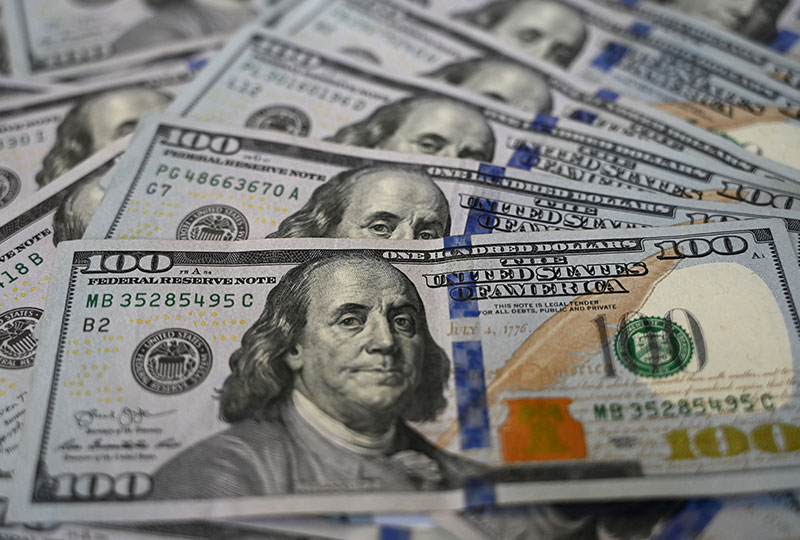
IUS dollars banknotesUS dollars banknotes (OZAN KOSE/AFP via Getty Images)

Quinn began her tasting with the platinum osetra caviar, describing its flavors as “very light, buttery, airy, creamy, very subtle.” She then moved on to the gold osetra, which she paired with a blini, or buckwheat flour-based Russian pancake.


“This one has saltier notes,” she noted. “It’s still on the lighter side, but has more of like a pop of salt, which I like because I love salt.”


For the grand finale, Quinn savored the classic osetra, which she ate on a crepe with crème fraîche.


“This one has flavors of the sea,” she commented.


An hour after eating at least half of her Prestige tasting, Quinn asked for the bill and requested to take her leftovers back to her hotel. Her total bill “stretched toward $1,000.”


Quinn also received a cooler filled with blinis and crème fraîche along with an extra 125 grams of caviar, which was a gift from the restaurant owners.

05

A taste for luxury

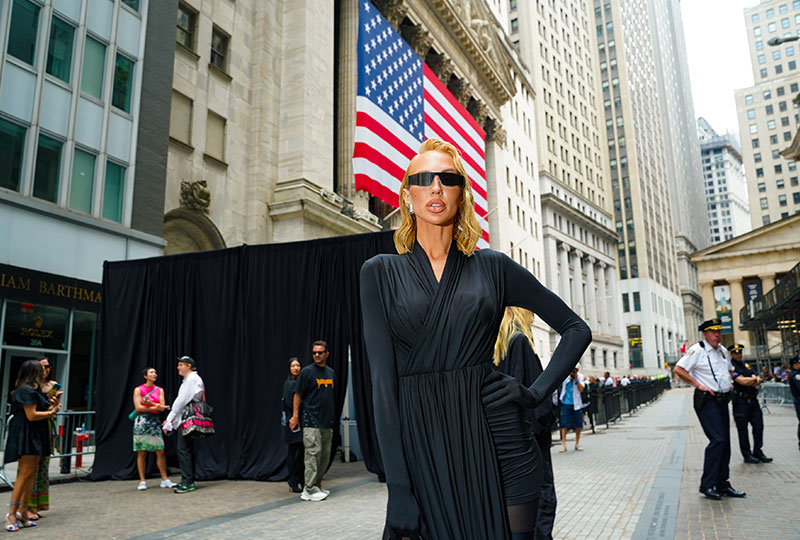
IChristine QuinnChristine Quinn attends Balenciaga Spring 2023 at the New York Stock Exchange on May 22, 2022 in New York City. (Sean Zanni/Patrick McMullan via Getty Images)

As a helpful reminder, Gergeos told Quinn that her 35 grams of remaining caviar was good for “perhaps two weeks, maybe three.”


Quinn, who prides herself on not wasting any food, reassured him that her final morsels of caviar would be eaten as soon as possible.


“That’ll be gone tonight,” she said.

Why trauma is cozy on “Virgin River”

Friends often come to a culture writer for advice on what to watch. Sometimes, they don’t like what you say. For example: “Virgin River.” I can’t remember why I started watching. It was certainly during the early part of the pandemic. I was certainly bored. And then to my great surprise, I was hooked.

I’m not a soap opera person. I didn’t grow up watching them after school, like some of my friends. But “Virgin River” does something different from some daytime dramas. It has the same twists and turns, but it wraps them in warm hugs. It’s a soap opera in a sweater, if you will, a borrowed sweater placed upon your shoulders by community members who care, which makes it the perfect cozy trauma for our times. 

“Virgin River” has returned for its fourth season on Netflix, and it has returned a star after generating over 2 billion viewing minutes last season. Viewers have waited a whole year for a new season (I know, because some of them are my relatives and were texting me). The Independent, which describes the show as “embarrassing” and “trashy,” writes that “everyone seems to be watching in secret.” I think they mean “classy,” and if viewing via a laptop perched on the bathroom counter while one is a bubble bath is secret, then fine. 

Bad things happened to Mel in the past and bad things will continue to happen to everyone in the future, basically constantly. 

Let’s be blunt. It is a soap opera. I may not be the most versed in the genre, but I know melodrama when I see it. Based on a series of novels by Robyn Carr, the adaptation follows a nurse practitioner from Los Angeles named Mel (the endlessly watchable Alexandra Breckenridge) who moves to the small, pastoral town of Virgin River to start over after tragedy. 

This is my favorite kind of beginning: small town starting over. Throw in a bar and grill owner who is grizzled, flawed and has a heart of gold (Martin Henderson as Jack), and an old cabin with a modern, two-sided fireplace for some reason, and you have the makings of a nice evening. 

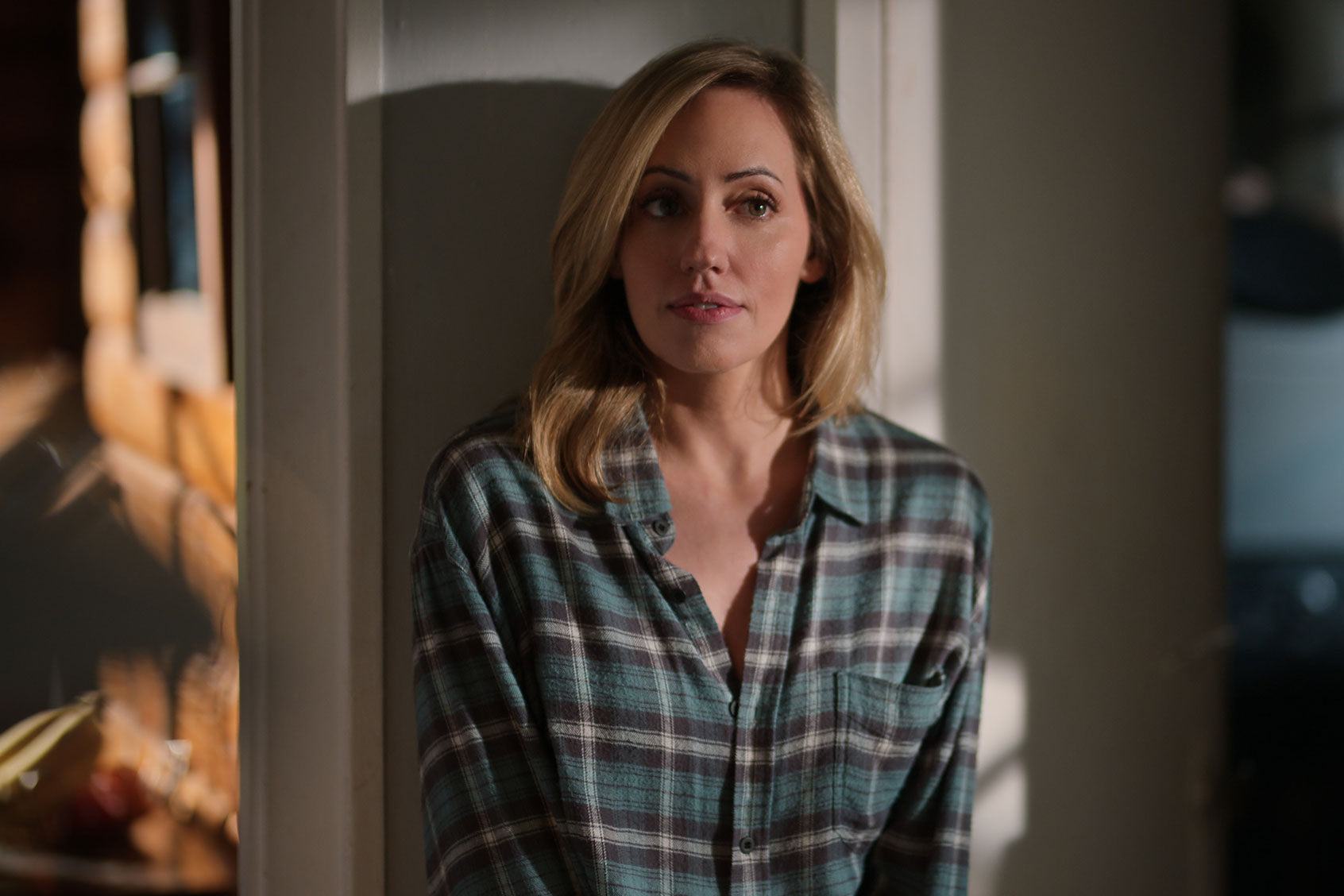
Virgin RiverMartin Henderson as Jack Sheridan and Alexandra Breckenridge as Mel Monroe in “Virgin River” (Courtesy Of Netflix)

Why is this relaxing? It’s unlike any trauma any human has faced, at least not all at the same time.

Bad things happened to Mel in the past and bad things will continue to happen to everyone in the future, basically constantly. Terrible luck falls upon the town of Virgin River more steadily than the British Columbian (pretending to be Northern Californian) rain. If you can think of it, it’s happened here.

Any trip will end in accident. Any kiss will be secretly witnessed. Any pregnancy is suspect — and there are a lot of pregnancies at the start of the new season, some of them seemingly lasting far beyond an elephant’s gestation. The trauma of this tiny, allegedly Californian town is so ridiculous, it stops being traumatic. In one single episode last season, we have a funeral, a miscarriage, a car accident and a contested plan to enlist in the Marines. 

There are no consequences in “Virgin River.” 

Why is this relaxing? Because it distracts from our current world and because it’s unlike any trauma any human has faced, at least not all at the same time. Some people allegedly like horror films because they prepare us, on some level, to deal with violence, particularly violence by men. Perhaps we like “Virgin River” because it prepares us to deal with a secret surprise grandson, or adopting your baby sibling your mom almost abandoned because she had the infant late in life after her husband died and then she dies suddenly too and you have a seizure from stress? Yeah, that.

Virgin RiverZibby Allen as Brie in “Virgin River” (Courtesy Of Netflix)There is realistic trauma in “Virgin River,” the kind human beings actually tend to face, and to the story’s credit, it is handled sensitively. Brie (Zibby Allen), the attorney sister of bar owner Jack, is a survivor of sexual violence, and true to life, the assault won’t stay buried. 

Jack is a combat veteran, as is Colin Lawrence’s noble, long-suffering cook Preacher (he’s a cook, not a preacher — pay attention), and his PTSD is a continuing storyline. This real trauma is bookended by the preposterous, as this season suddenly piles on more issues from Jack’s past. Really, war was enough. But it makes sense that, like a guest star, both characters’ traumas keep coming back.   

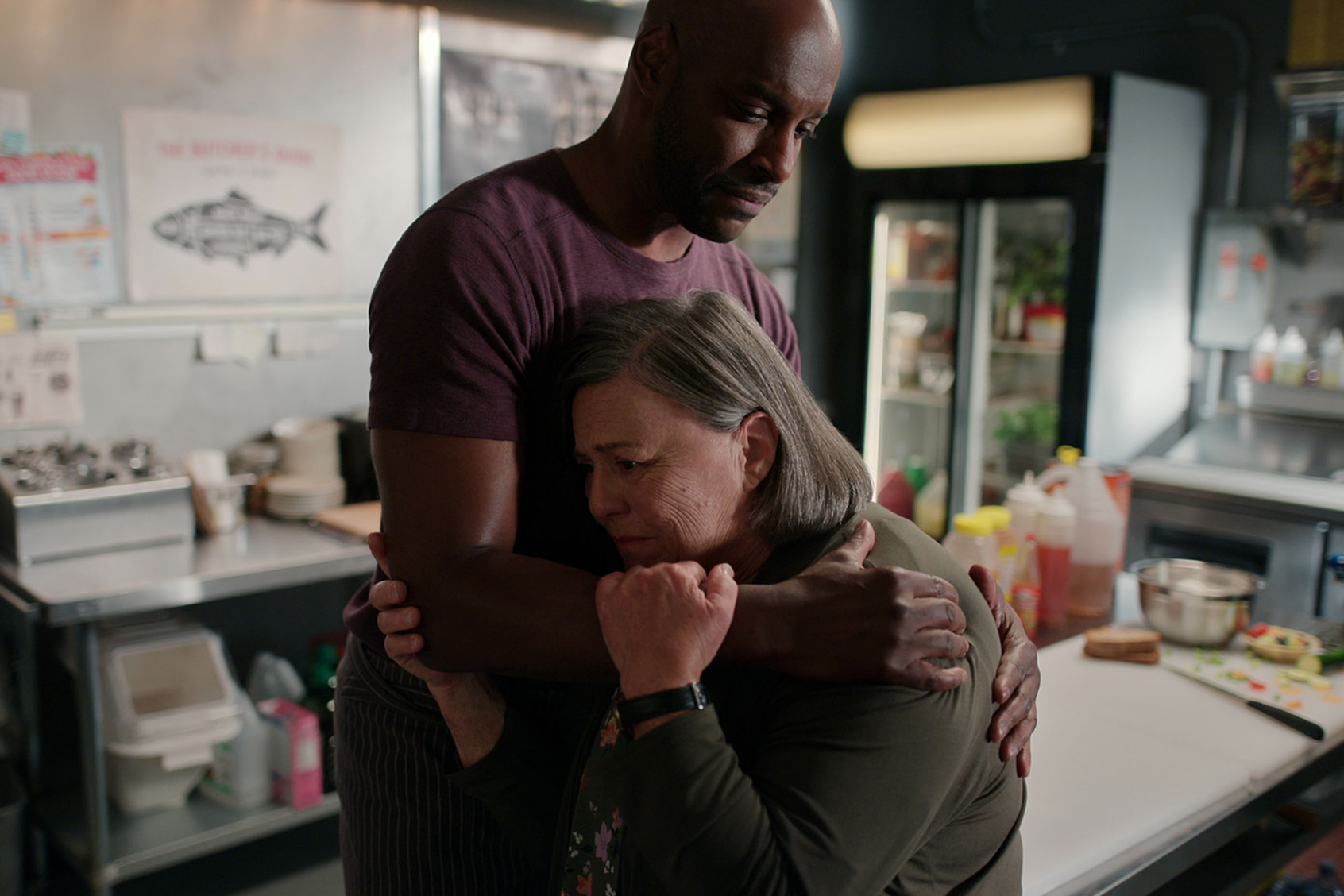
Virgin RiverColin Lawrence as Preacher and Nicola Cavendish as Connie in “Virgin River” (Courtesy Of Netflix)PTSD from war and sexual violence aside, most of the subplots feel surprisingly relaxing because they’re low stakes. There are no consequences in “Virgin River.” Go ahead, “troubled young woman“: steal from the bar and make your boyfriend take his grandmother’s car without permission; you’ll still have your job at the bakery truck.

In part there are no consequences because many people in this town are beautiful, white and seem not to worry about money, aside from occasional, unrealistic hand-wringing. This is a “Gilmore Girls” world with low crime (despite some kind of convoluted loggers/drug dealers subplot that everyone ignores), high incomes and gorgeous houses. And when there’s a random Renaissance festival in the middle of the season, every single person in attendance has an ornate and historically perfect costume.

No one can show support like a small, fictional town, the kind of mutual aid many of us have been desperately missing during the pandemic.

Virgin River as a town is lovely, which is a not-small part of the appeal. Mel works in a medical practice out of a historic home, and though part of the first season includes her distaste about her lodging, Jack fixes up her cabin in no time. That river of the title is a big part of every episode, sweeping and gorgeous, as are blue mountains, ringed in fog, and dense, moist woods where Mel keeps jogging. Jack’s bar has the best views of any bar you’ve ever seen — how is the outdoor seating not completely packed all the time?    

Virgin RiverVirgin River (Courtesy Of Netflix)Like a hand-knit sweater stored too long without cedar, “Virgin River” has some holes. A “Gilmore Girls” world has “Gilmore Girls” problems, including not many characters of color. People of color in “Virgin River” tend to only end up together, which is troubling, as is the total lack of queer characters. We can accept a pregnancy conceived via the easiest IVF ever from a dead donor or perhaps from Jack when he and Mel got back together even though Jack just impregnated someone else with twins — but nobody in this town is queer?


Want a daily wrap-up of all the news and commentary Salon has to offer? Subscribe to our morning newsletter, Crash Course.


What keeps me (and maybe you, secretly) watching is the scenery and the citizens. Be it that Renaissance festival; supporting Tara, the grown child of the woman who died suddenly after having the secret baby of her dead husband; or finally sending Ricky off to the Marines, the town of Virgin River always comes together in a way few communities do. 

No one can show support like a small, fictional town, the kind of mutual aid many of us have been desperately missing during the pandemic — perhaps why shows like “Virgin River” and the different, though equally chummy “Only Murders in the Building” have surged during this time. We miss helping. We miss each other, and despite its high rate of weirdly long pregnancies, if there’s an opening for a writer in the town of Virgin River, I’d look at a cabin.

“Virgin River” and its cozily traumatic fourth season are now streaming on Netflix.


Wait, can you paint over wallpaper?

If you came here to say, “Um, absolutely not — wallpaper should not be painted over,” I hear you.

Should you really paint over wallpaper? Probably not. But here’s the thing — we all do projects in our homes that we probably shouldn’t. Sometimes it’s a temporary fix before a larger renovation, sometimes we just use what we have on hand, and sometimes it’s because we just don’t have the skills yet to do things by the book. Not to mention that wallpaper is notoriously difficult to remove correctly, and the chances that the wall will be damaged underneath are pretty high. Painting over wallpaper will never look as good as painting a fresh wall, but you knew that, right?

So . . . will some people shudder at the idea of painting over wallpaper? Yep. But the good news is, it’s your home, and you can do with it what you will. Now, that said, there are some dos and don’ts for painting wallpaper, as well as methods that set you up for better success, which we’ll get into below.

When you really shouldn’t paint wallpaper

Again, you’re free to do whatever you please, but there are times when removing wallpaper is actually much easier than painting over it. Vinyl wallpaper, for one, is usually the peel-and-stick variety, which is made to be removed once your love of trailing vines or little forest animals eventually fades. In this case, you’ll certainly want to remove the wallpaper before you paint, because paint won’t stick well to vinyl, and it’s likely to peel up in places at some point anyway.

If your wallpaper is peeling up in places already, you might want to take this as a sign that it should be totally removed and not painted over. After all, the energy spent on sticking those spots back down just to paint over them is probably better spent removing it entirely. If these don’t apply to you and you’re still bent on painting over that paper? Let’s do it.

Clean the walls, and clean ’em good

Just as with any paint project, you’ll want to remove as much dust and grease from the walls as possible, to get the paint the best chance to stick. We wouldn’t recommend soaking the walls (because then the paper will likely lift off), but give them a wipe with a degreasing solution and a microfiber cloth. Let them dry completely, fully, 100 percent before moving forward. For real!

Patch and repair rips

As previously noted, if the paper is more damaged and peeled up than not, you should go forth with removing it, but if there are only a few problem areas, they’re luckily easy to tackle. You can either paste the paper back down with wallpaper adhesive, or tear off the damaged parts, spackle, and sand the area.

Use an oil-based primer

If you’re going to take one thing away from this — let it be to use an oil-based primer. Water-based primers are all well and good for regular walls, but they can soak through the paper and loosen the adhesive, rendering your best wallpaper-cover-up efforts futile. The oil-based primer will effectively lock the paper in and give you the best chance for success when it comes time for the desired color.

Paint, paint, paint

You made it! Paint is the final step in, well, painting your wallpaper. The prep work is certainly the hardest (and most tedious part) so now all that’s left to do is paint over the paper you likely loathe and say goodbye.

Learn how to make individual blueberry crumb pies with this summer recipe

Bake It Up a Notch is a column by Resident Baking BFF Erin Jeanne McDowell. Each month, she’ll help take our baking game to the next level, teaching us all the need-to-know tips and techniques and pointing out all the mistakes to avoid along the way. — Food52

Watch this recipe

Mini Blueberry Crumb Pies
Yields
12 mini pies
Cook Time
45 minutes

Ingredients

Filling and Finishing

  • 2 cups fresh or thawed, drained frozen blueberries
  • 2/3 cup granulated sugar, divided
  • 3/4 teaspoon fine sea salt, divided
  • 3 tablespoons cornstarch
  • 1 pinch freshly grated nutmeg
  • 3/4 teaspoon vanilla extract
  • 1 tablespoon unsalted butter
  • 1/4 cup old-fashioned oats
  • 1/4 cup all-purpose flour
  • 1/4 cup light or dark brown sugar
  • 1/4 teaspoon ground cinnamon
  • 4 tablespoons cold unsalted butter, cut into ¼-inch cubes

Press-In Cookie Crust

  • 8 tablespoons unsalted butter, room temperature
  • 1/4 cup light or dark brown sugar
  • 1 large egg yolk, room temperature
  • 1 teaspoon vanilla extract
  • 1 3/4 cups all-purpose flour
  • 1/2 teaspoon fine sea salt


Directions

  1. Make the filling: In a medium pot, toss the blueberries, 1/3 cup granulated sugar, and 1/4 salt to combine. Heat over medium heat, stirring frequently, until the berries start to break down and become juicy, 3 to 5 minutes.
  2. In a small bowl, whisk the remaining 1/3 cup granulated sugar with the cornstarch. Sprinkle this mixture over the blueberries and stir to combine. Add the nutmeg and continue to cook until thick bubbles break the surface and the mixture thickens, 1 to 2 minutes. 
  3. Stir in the vanilla and 1 tablespoon butter and mix to combine. Remove the mixture from the heat and let cool completely to room temperature (you can do this quickly by pouring it into a thin layer in a casserole dish or baking sheet). 
  4. Make the crumb topping: In a medium bowl, stir the oats, flour, brown sugar, 1/2 teaspoon salt, and cinnamon to combine. Add the butter and mix until the mixture forms moist clumps. 
  5. Make the crust: In the bowl of an electric mixer fitted with the paddle attachment, cream the butter and brown sugar on medium speed until light and fluffy, 3 to 4 minutes. Add the egg yolk and vanilla and mix to combine. Scrape the bowl well.
  6. Add the flour and salt and mix to combine. Scrape the bowl well, then add 1 tablespoon water and mix until a smooth cookie dough forms.
  7. Divide the dough into 12 even pieces. Heat the oven to 350°F/175°C with the oven rack in the center. Lightly grease a 12-cavity standard muffin pan.
  8. Use your hands to press each piece of dough into one cavity of the muffin pan, aiming to keep it even on the base and sides.
  9. Divide the blueberry filling between the prepared crusts, filling each about 1/2 inch below the top edge of the crust. Divide the streusel evenly among the pies. 
  10. Transfer the pan to the oven and bake until the crust and streusel are deeply golden, and the blueberry mixture is bubbling, 40 to 45 minutes. 
  11. Use a small offset spatula to run around the outside edge of each pie to help loosen it from the edges. Let the pies cool for 15 to 20 minutes, then remove them from the pan while they are still warm (if you let them cool completely, they will be more likely to stick to the pan — but be careful, they will be softer/prone to crumbling while they are still warm). 
  12. Let the pies cool completely before serving.

Why are fewer children around the world getting vaccinated?

For the first time in nearly 30 years, and despite a century of scientific advancements in vaccine technology, fewer children around the world are receiving routine childhood vaccinations.

The worldwide drop is significant enough that UNICEF executive director Catherine Russell called it “a red alert for child health.”

“We are witnessing the largest sustained drop in childhood immunization in a generation,”  Russell added. “The consequences will be measured in lives.”

Specifically, UNICEF and the World Health Organization (WHO) estimate 25 million children missed out on one or more doses of the diphtheria, tetanus and pertussis (DTP) in 2021— two million more than those who missed out in 2020, and six million more than in 2019. The three diseases the DTP vaccine protects against are all highly dangerous or even deadly for children if contracted.  

“The vaccine hesitancy rates have been creeping up over the years, but that hasn’t been as dramatic as the drop that we’ve seen worldwide in vaccinations.”

Of the 25 million children who did not receive a single dose of DTP during 2021, 18 million of them live in low- and middle-income countries, UNICEF’s statement said. India, Nigeria, Indonesia, Ethiopia and the Philippines recorded the highest numbers.

International health officials also noted that, worldwide, progress made on mass vaccination against the human papillomavirus (HPV) vaccine has stalled.

“This has grave consequences for the health of women and girls, as global coverage of the first dose of human papillomavirus (HPV) vaccine is only 15%, despite the first vaccines being licensed over 15 years ago,” UNICEF said.

RELATED: Experts still torn on throat swabbing

“Monumental efforts will be required to reach universal levels of coverage and to prevent outbreaks,” their statement continued. “Inadequate coverage levels have already resulted in avoidable outbreaks of measles and polio in the past 12 months, underscoring the vital role of immunization in keeping children, adolescents, adults, and societies healthy.”

Unfortunately, the worldwide trend is also mirrored in the United States’ own public health data. In April 2022, the U.S. Centers for Disease Control and Prevention (CDC) found that vaccination rates for three childhood vaccines — measles, mumps and rubella, DTP, and varicella — dropped one percent in kindergartners in the 2020-2021 school year compared with the 2019-2020 school year.

“This might not sound like much, but it amounts to at least 35,000 more children across the United States that entered kindergarten without documentation of complete vaccination against common diseases like measles, whooping cough and chickenpox,” Dr. Georgina Peacock, head of the CDC’s Immunization Services Division, said at the time. Peacock said that because overall kindergarten enrollment dropped by about 10 percent, the number of children in the U.S. without their routine vaccinations could be higher.


Want more health and science stories in your inbox? Subscribe to Salon’s weekly newsletter The Vulgar Scientist.


So what is actually causing this decline in vaccination rates among children? WHO and UNICEF attributed the drop to a confluence of factors: an increased number of children living in conflict zones, increased misinformation around vaccines, and overall pandemic-related issues.

Dean Blumberg, chief of pediatric infectious diseases and associate professor in the Department of Pediatrics at the University of California–Davis, told Salon he thinks the pandemic exacerbated a trend many pediatricians were already seeing before 2020.

“This decrease in immunization is related to the pandemic, and that’s because a lot of the vaccination programs shut down, especially at the beginning of COVID with societal lockdowns, decreased transportation, parents who were worried about going to healthcare centers and clinics because of fear of getting COVID in those settings,” Blumberg said. “As restrictions were lifted, there was still so much public health focus on COVID that there were less resources available for public health efforts for immunizations, especially in countries that were poorly resourced.”

Blumberg added he has never “seen anything like this” in his career, and that “vaccine hesitancy” is always a concern.

“The vaccine hesitancy rates have been creeping up over the years, but that hasn’t been as dramatic as the drop that we’ve seen worldwide in vaccinations — and then even in the US, there’s been a 10 to 20 percent decrease in immunization rates depending on age,” Blumberg said. “Fortunately, those have rebounded somewhat, but we’re still running below pre-pandemic immunization rates.”

Worldwide, the consequences appear to be manifesting in real-time. Most recently this week New York State health officials confirmed the first case of polio in nearly a decade in the United States. Health officials said the case likely came from a “transmission chain from an individual who received the oral polio vaccine (OPV), which is no longer authorized or administered in the U.S., where only the inactivated polio vaccine (IPV) has been given since 2000.” However, according to the New York Times, the individual was unvaccinated. The last case of polio in the United States was in 2013 from someone who traveled abroad. A polio case has not originated in the United States since 1979.

“I think one of the things that’s been impacted around the world is in terms of decreased immunizations is polio immunizations, and that’s led to more polio cases occurring in the previous 12 months, and that’s a huge concern,” Blumberg continued. “The U.S. is always at risk for an imported case, we don’t have circulation in general in the U.S., but if immunity levels get low enough, then polio cases, whether they’re the wild type or derived from vaccine strains, can start circulating here.”

While the age of the individual with polio is unknown, lack of childhood vaccinations can cause such outbreaks. 

“We know that some vaccine-preventable diseases that normally occur at low rates that they can flare up — like whooping cough or pertussis,” Blumberg said, adding that the measles is also like a “canary in the coal mine” in some communities where immunization rates are low. “It is so infectious that once you get immunization rates below 95% in a community, when a case is introduced, you can get sustained transmission, so I think we’re just waiting for that to happen.”

“Gremlins” creator: “The Mandalorian” “out-and-out copied” me for Baby Yoda

Grogu, aka Baby Yoda, is the best thing to happen to “Star Wars” since “Return of the Jedi” . . . which also featured some adorable alien muppet people, now that I think about it. The animatronic baby alien is the real star of “The Mandalorian,” and a merchandising powerhouse for the studio. But if you listen to “Gremlins” creator Joe Dante, the glory is ill-gotten.

“Gremlins” is a 1984 horror comedy about a cuddly monster named Gizmo and his trouble-making progeny, the result of feeding him after midnight or accidentally leaving him in the rain. That movie and its 1990 sequel still have a following to this day, which Dante credits to Gizmo.

“I think the longevity of [the film] is really key to this one character (Gizmo), who is essentially like a baby,” Dante told the San Francisco Chronicle. “Which brings me, of course, to the subject of Baby Yoda, who is completely stolen and is just out-and-out copied. Shamelessly, I would think.”

It’s possible Dante was being facetious here, but it’s way more fun to assume he’s being dead serious, so let’s go with that.

Did The Mandalorian get the idea for Baby Yoda from Gremlins, or did Gremlins get the idea for Gizmo from Ewoks?

So is it true that the people behind “The Mandalorian” lifted the idea from Baby Yoda from “Gremlins”? I mean, maybe . . . but also maybe not. It doesn’t take a genius to figure out that people like cute little creatures. Like I alluded to above, Lucasfilm put this idea into practice years before “Gremlins” with the Ewoks in “Return of the Jedi.” Y’know what? OPPOSITE! “Gremlins” stole the idea for Gizmo from the Ewoks, and turnabout is fair play.

But really, I think this is less about theft and more about multiple people getting the bright idea that cuteness sells. And both series are doing fine. “The Mandalorian” Season 3 is on the way, and “Gremlins” is getting a new animated series called “Gremlins: Secrets of the Mogwai” on HBO Max.

A 3-ingredient dessert to cool you off and wake you up

Early in the pandemic, I found myself the owner of a can of sweetened condensed milk I’d somehow panic purchased. I could have baked something with it, or I could have shared it.

Instead, I enjoyed a glorious run of treating myself to Vietnamese coffee every morning — so strong, so sweet and so rich. I would sit by the window and savor it like the small luxury it was every day. 

Now, as I sit in the midst of a despicable heat wave and a humidity index that makes the city of New York feel like the inside of a lobster pot, my thoughts have once again turned to Vietnamese coffee. This time, though, I crave it long past breakfast time.

I apologetically confess there’s very little about this Vietnamese coffee popsicle recipe that is traditional. However, it’s very good, bracing as hell and guaranteed to make you curse its beautiful deliciousness when you can’t fall asleep tonight.


Want more great food writing and recipes? Subscribe to “The Bite,” Salon Food’s newsletter.


Because sweetened condensed milk doesn’t freeze perfectly, I’ve added a little heavy cream in the core for your popsicle stick to hang on to. Is it ever a bad thing to add extra heavy cream to coffee anything?

***

Inspired by A Spicy Perspective and David Lebovitz

Vietnamese Coffee Popsicles
Yields
 6-8 servings
Prep Time
 5 minutes
Chill Time
 2 hours

Ingredients

  • 2 cups very strong coffee, hot or cold
  • 2/3 cup sweetened condensed milk
  • 1/4 cup heavy cream

Directions

  1. Place the coffee and condensed milk in a big bowl and stir until well blended. (If using hot coffee, let the mixture cool for a few minutes before proceeding.)

  2. Pour the coffee mixture into popsicle molds, 2/3 to 3/4 full. Gently pour a few tablespoons of heavy cream on top of each one. 

  3. Freeze the popsicles until firm, at least 2 hours. 

  4. When ready to serve, run the molds under hot water for just a few seconds to loosen. Remove gently and serve immediately.


Cook’s Notes

If you’re looking for an extra kick, add a dash of cinnamon to the coffee mixture.

Salon Food writes about stuff we think you’ll like. Salon has affiliate partnerships, so we may get a share of the revenue from your purchase.

Capture the Disney magic at home by whipping up a homemade Dole Whip

I informed my dad via text this morning that, according to Disney, it’s National Dole Whip Day.

His response? “Every day is ‘Dole Whip Day’ at Disney.” 

Indeed, the Dole Whip — a simple frozen treat made of bananas, coconut milk and pineapple — has been an iconic part of Disney Parks since its debut at Magic Kingdom Park in 1984. 

Dole Whips quickly attained something of a cult following, prompting enthusiasm for these fan-favorite snacks to spread outside of Disney Parks. There are Facebook groups with names like “I wanna be where the Dole Whips are” and “Dole Whipped: Dishing on Disney.” You can purchase T-shirts with sayings such as “I wonder if Dole Whip thinks about me too” and “He’s a 10, but doesn’t like Dole Whip. He’s a 1.” And you better believe that there are collectible Dole Whip Disney pins available for purchase and trade. 

Now, courtesy of the Dole Food Company, fans of the beloved treat can capture a little Disney magic in their own home kitchens with this DIY Dole Whip recipe. It features just five simple ingredients, including ripe pineapple, and takes only 20 minutes to make. It’s also gluten-free, non-dairy and vegan, making it the perfect warm-weather dessert to share.

DIY Dole Whip
Yields
2 servings
Prep Time
10 minutes
Cook Time
10 minutes

Ingredients

  • 1 cup ripe Dole pineapple, chopped and frozen
  • 1 ripe Dole banana, peeled and frozen 
  • 2 1/2 teaspoons powdered sugar 
  • 1/2 cup unsweetened coconut milk
  • 1 teaspoon lime juice


Directions

  1. Combine all ingredients in a blender or food processor. Cover; blend until smooth, about 2-3 minutes.
  2. Garnish with fresh pineapple. Serve immediately.


Salon Food writes about stuff we think you’ll like. Salon has affiliate partnerships, so we may get a share of the revenue from your purchase.

President Biden has COVID-19 — but experts say it’s unlikely to be a bad case. Here’s why

On Thursday, President Joe Biden announced that he has been diagnosed with COVID-19.

Notably, Biden is at an unusually high risk of developing serious complications because of his age. Indeed, more than half of the American COVID-19 mortalities as of July 13 were from individuals above the age of 75, and Biden will turn 80 in November.

Fortunately, public health experts agree that because the president has been vaccinated and (to the best of the public’s knowledge) has behaved responsibly, Biden is at significantly less risk than his unvaccinated counterparts.

RELATED: How the Philadelphia pandemic of 1793 foreshadowed the social problems of the COVID-19 era

“His response as an individual and leader is exemplary and others in his age group should follow his example,” Dr. Georges Benjamin, executive director of the American Public Health Association, told Salon by email. “The risk is for unprincipled people to use his case to minimize the value of vaccination. His case is actually a case study in how and why vaccines work and their benefit to society.”

More than half of the American COVID-19 mortalities as of July 13 were from individuals above the age of 75, and Biden will turn 80 in November.

Dr. Alfred Sommer, dean emeritus and professor of epidemiology at Johns Hopkins Bloomberg School of Public Health, bluntly told Salon in writing that he expects Biden’s political opponents to use the fact of the president’s diagnosis as a “political prop.” Yet medical science — and, specifically, the human immune system — is far more complicated than most appreciate.

“The severity of disease is determined to a significant degree by your general health, underlying conditions, and strength of your immune response,” Sommer explained. Because Biden is older, any of these potential latent health vulnerabilities have been compounded, and as a result he is at a greater risk of developing a severe version of the disease. Yet the fact that Biden is vaccinated gives him a great advantage in terms of his health prospects, particularly compared to the unvaccinated.

“Prior immunization (ideally 4 ‘shots’) mitigates the severity of disease,” Sommer added. “Just as important is the capacity of the specific variant to cause disease.”


Want more health and science stories in your inbox? Subscribe to Salon’s weekly newsletter The Vulgar Scientist.


Indeed, certain variants appear to be milder or more harsh than others — with variation in their ability to evade vaccines and cause breakthrough infections. A study from March 2022 found that breakthrough infections — meaning infections in someone who has been previously vaccinated against COVID-19 — were very unlikely to result in hospitalization. That suggests Biden is unlikely to be hospitalized for his breakthrough infection. 

Dr. Irwin Redlener, the leader of Columbia University’s Pandemic Response Initiative, said Biden is at elevated risk because of his age. But he noted that is the case because “anybody over 75 is at added risk for contracting [COVID-19].” In Biden’s case, the president “is healthy, vaccinated, double boosted and generally healthy.” Redlener also noted that particularly contagious subvariants like BA.5 make it “extremely likely that virtually everyone has a good chance of getting” infected. The “difference is that [the] unvaccinated [are] much more likely to get very sick or not survive than those who are fully vaccinated and boosted.”

Dr. Monica Gandhi, an infectious disease doctor and professor of medicine at the University of California–San Francisco, told Salon that, based on Biden’s public medical record, it is likely that he will not even need to engage in the precautionary measure that has been undertaken — that is, the oral antiviral medication Paxlovid.

“He does not actually fit the clinical criteria of being treated with Paxlovid as he is neither unvaccinated nor at risk of a severe infection nor immunocompromised,” Gandhi told Salon by email. “Therefore, like many of his fellow political figures (such as Nancy Pelosi who is of similar age and health and did not have any symptoms when she tested positive), it is very unlikely he will become sick from COVID given his health status and four vaccine injections.”

Gandhi expressed concern about how Biden’s political opponents could mischaracterize science for their own political gain.

“There is a risk of his diagnosis being exaggerated for political purposes,” Gandhi told Salon. “Almost everyone is likely to confront [COVID-19] at one point or another but President Biden’s administration has said lately that people should try to avoid infection, recommending indoor masking and other precautions. So there is a risk of President Biden looking like he wasn’t ‘careful enough’ instead of the public understanding that a highly transmissible respiratory virus is likely to spread despite many precautions.”

Read more Salon articles on COVID-19:

A government official helped them register. Now they’ve been charged with voter fraud

ProPublica is a Pulitzer Prize-winning investigative newsroom. Sign up for The Big Story newsletter to receive stories like this one in your inbox.

His last night as a prisoner in North Florida, Kelvin Bolton couldn’t sleep. Fifty-five years old, with a wispy goatee the same color as the gray flecks in his hair, he was about to get out after serving a 2 1/2-year sentence for theft and battery. The last time he’d seen his brothers and sisters at a big family gathering, he’d marched onto the dance floor ostentatiously, turned away and wrapped his arms around himself to caress his own back. As he swayed goofily to the music, everybody laughed.

Now Bolton was so close to being free and seeing his family again. The next morning, a bright Wednesday in April, he was already dressed in his street clothes and cleared to go when the woman processing his paperwork stopped him.

“The lady said, ‘Hold on, you can’t go anywhere,'” Bolton remembered in a recent phone call.

Confused, he asked her what was going on, he recalled. There was a warrant out for his arrest for incidents in 2020, she explained gruffly. But that was impossible. He’d been in jail at the time, awaiting his prison stint.

Guards loaded Bolton into a van, then drove an hour and a half south to deposit him in Alachua County Jail.

There, he found out what he’d done wrong.

He’d voted.

In 2018, Florida voters overwhelmingly passed Amendment 4, in a historic ballot initiative that restored the right to vote to most state residents with felony convictions. Until then, Florida had been one of only four states — the others were Iowa, Kentucky and Virginia — where people who had committed felonies needed to petition the governor to have their voting rights restored. It was a grim legacy of 19th-century laws passed after the 15th Amendment granted African American men the right to vote.

Supporters applauded the law as restoring voting rights to what experts estimate is over 1 million people in Florida, about 5% of the population of the state.

But the state’s dominant Republican lawmakers quickly installed a financial hurdle to those new rights. The following year, they passed a law to clarify that people convicted of felonies could only vote if they first paid off any money they owed for committing their crimes. The penalty for registering or voting without doing so: a felony charge for voter fraud.

On the surface, the mandate seemed reasonable: Even advocates for Amendment 4 agreed that requiring paying off fines and restitution to victims was just. In Florida, however, that task proved a sometimes insurmountable challenge — one that disproportionately hit Black people. Florida has no centralized database to allow people to figure out what legal financial obligations they owe to the state. Instead, its 67 counties and various state agencies each maintain their own databases. The state also does not track information for federal or out-of-state convictions, which people are also required to pay off before voting.

On top of the fines and restitution, Florida layers on court fees that can run into the hundreds of dollars. Together, a voter’s debt can run into the thousands, a financial hole that some may never climb out of.

“That’s kind of the bottom line of the absurdity of this — it’s Kafkaesque,” said Dan Smith, chair of the political science department at the University of Florida. “It’s very troubling that we would have state attorneys prosecuting individuals who did not know their status, and there was no way for them to determine their status.”

Florida’s voting hurdles are part of a national pattern. For years across the country, Republican state lawmakers have been implementing new restrictive voting laws, including reducing access to vote-by-mail ballots, stricter voter identification rules and limits on early voting. These efforts have accelerated since Donald Trump promoted the false claims that Joe Biden stole the 2020 presidential election. Democrats, meanwhile, have pushed to expand voting access.

Republican Gov. Ron DeSantis boasted that in 2020, Florida, a swing state with a history of contentious elections, “held the smoothest, most successful election of any state in the country,” while he also signed a flurry of voting law changes that he said would further strengthen the integrity of future votes. And DeSantis has tacitly endorsed prosecuting people convicted of felonies for voter fraud. In April, he signed a bill establishing the Office of Election Crimes and Security, which will investigate alleged election violations.

Despite the increased scrutiny, voting fraud remains so rare in Florida that it hasn’t come close to altering election outcomes. The Florida Department of State in 2020 received 262 election fraud complaints, just 75 of which were referred to law enforcement or prosecuting authorities, according to the agency.

“Florida is an outlier, because the intentional targeting of citizens with felony convictions as a way to undermine democracy has been a throughline in that state,” said Nicole Porter, senior director of advocacy for the Sentencing Project. “And the attempt to address that, by popular vote, has been undermined by the legislature.”


In 2020, a representative of the Alachua County Supervisor of Elections conducted a series of outreach efforts at the local county jail to let inmates know of their new rights and offer to help them add their names to the voter rolls.

During three visits to the jail, the official helped sign up at least 10 inmates, including John Boyd Rivers, Dedrick Baldwin and Bolton.

Rivers, 44, felt a visceral thrill at the prospect. Sitting in his cell in February 2020 facing a battery charge for hitting his wife, he was told by the county representative that he could register to vote. The official, he said, told him that he could disregard the check box on the form that asks whether the applicant has a felony conviction because he didn’t have a disqualifying felony. That seemed odd to Rivers, since he had a previous felony conviction. (He subsequently was sentenced for the battery charge.) No one told him anything about needing to pay off his financial obligations before registering to vote, Rivers said, and the jail didn’t give him an accounting of those debts when he was later released.

Back at home, Rivers was excited when his voter registration card arrived in the mail. He’d lost his right to vote at 18, he said, after voting just once. Now he could vote in a presidential election. He and his wife went to their polling place, and he cast his vote for Donald Trump.

Bolton, too, was excited to sign up. He also said no one told him he’d need to pay off his debts before casting his ballot. Although he registered as a Republican, he said he decided to vote for Biden.

In all, 10 of the men who the official helped register to vote have been charged with voter fraud on the grounds they were ineligible.

Their alleged illegal voting was first spotted by a citizen who analyzed Florida’s voting rolls and then shared the information with the state. The Florida Department of Law Enforcement subsequently launched an eight-month investigation, after which it identified the 10 inmates.

State investigators found that some jail employees remembered the elections official giving clear directions to inmates about having to pay off financial obligations, while others did not. The investigation concluded that the jail visits were “lacking in both quality and longevity” and “showed a haphazard registration of inmates.” But the state prosecutor nevertheless proceeded with charges, although not against county officials.

Officials at the Alachua Supervisor of Elections office declined to comment to ProPublica. But Supervisor of Elections Kim Barton denied any wrongdoing in a statement released in June.

Brian Kramer, the state attorney for the Eighth Judicial Circuit of Florida, defended his office’s prosecutions to ProPublica, saying he believed the 10 men knew they were committing fraud. “I’m not going to say I will prosecute or not prosecute because it’s politically popular or unpopular,” he said.

Four of the 10 have pleaded guilty and have been sentenced to between 364 days and three years in prison. Bolton and three others have vowed to go to trial, while the remaining two await arraignment. They face charges that carry a penalty of up to five years in prison, five years of probation or $5,000 in fines. Eight of the men are Black, and two are white.

Critics say the charges are unjust and, at a bare minimum, excessive. In nearby Lake County, the state prosecutor declined to bring charges against sex offenders who had registered to vote despite the law prohibiting voting rights restoration for those charged with sex offenses or murder. In April, two white men living in The Villages in Sumter County, an overwhelmingly white county in central Florida, pleaded guilty to each casting two ballots for Donald Trump during the 2020 election. Rather than face prosecution, they entered a pretrial intervention program, under which they must serve 50 hours of community service and attend an adult civics class, among other requirements. Because the men in Alachua County have prior felony convictions, they are ineligible for pretrial intervention and face harsher sentences.

“I’m thinking I’m doing something good for the community, so that’s why I chose to try to do it,” Bolton said. “It was not malicious — I was not trying to commit a felony of voting fraud. I never would have voted.”

Baldwin, 47, who is in prison on a manslaughter conviction, was sentenced to an additional 364 days. He felt “set up,” he said, since nobody told him he wasn’t eligible.

“There’s no way Biden was that important to me to vote for him,” he said in an email to ProPublica from prison. “We were flat out tricked into voting.”

The elections official who visited the jail denied telling the men that they could disregard the check box and said he warned them that they’d need to pay off their financial obligations, according to a person familiar with the matter who declined to be named because he feared reprisals. The elections official declined to comment to ProPublica on the record.

The voter fraud charges were especially bitter for Rivers. By the time they were filed, Rivers said, he had already used part of his federal stimulus check to pay off more than $3,000 in costs related to his criminal record so he could reinstate his driver’s license and return to work.

“I should have known there would be some kind of catch,” Rivers said.


Florida’s history of felon disenfranchisement dates back to 1838, when the state’s first constitution prohibited people convicted of bribery or assorted “high crimes and misdemeanors” from voting. After the Civil War, faced with the prospect of formerly enslaved Black men voting, the state expanded the law so that anyone convicted of a felony lost the franchise. But in 2018, 64% of Florida voters approved Amendment 4, allowing people convicted of felonies, except for murder or sexual offense convictions, to vote.

This embrace of new voters became more complicated the following year when the state legislature passed its law. It required that people convicted of felonies must determine their own eligibility before registering to vote. The Florida Department of Corrections and county detention facilities are required to provide notice to inmates at the time of their release of their outstanding financial obligations.

But it is unclear if all of the facilities do so.

Florida charges those convicted of crimes with an array of fines and fees, some of which statutorily cannot be eliminated or reduced. Defendants facing felony charges are assessed $100 to use a public defender, as well as a $100 prosecution fee. At least one person already sentenced in the Alachua County cases has been charged an additional $671 for his voting fraud charges on top of the financial obligations he already owed.

Finding out what someone owes is time-consuming and expensive. An analysis led by Traci Burch, a political science professor at Northwestern University, tried to determine the legal financial obligations owed by a random sample of 153 Florida residents convicted of felonies and found consistent information for only three of them. Counties often keep poor records, have cumbersome websites and employ unhelpful clerks.

What’s more, it can cost money merely to find out how much money you owe. Four in 10 Florida counties charged either a payment or processing fee to look at their databases, and 15% charged a fee to access certain records, according to Burch’s research.

In 2020, Smith, the Florida political scientist, estimated that just over 1 million people would be eligible to vote under Amendment 4. Of that number, about 77% had outstanding legal financial obligations, rendering them ineligible to vote under Florida’s new law until they paid their debts. Four out of five Floridians with felony convictions owed at least $500 in fines and fees, Smith’s analysis found. More than 59% owed more than $1,000.

The state legislature immediately disqualified about 750,000 people from being able to vote when it passed its law requiring people convicted of felonies to pay their debts first, Smith estimated. And the new law’s impact was felt much more harshly by Black people, who faced greater fines and fees: 26% of white Floridians with a felony conviction would be eligible to get their voting rights restored under the new requirement, but only 18% of Black people, according to Smith.

In May 2020, a district court judge ruled that parts of the law were unconstitutional and that the law had established a pay-to-vote system. The 11th Circuit Court of Appeals overturned the ruling the following September, saying it was in the state’s power to require the payoffs and the law didn’t violate people’s rights. The state Supreme Court has also issued an advisory opinion that deemed the law legitimate.

Unsurprisingly, the number of people with felony convictions who have registered to vote has fallen far short of what supporters hoped. More than 85,000 such people registered in Florida ahead of the 2020 election.

Supporters of the law say that it’s only fair to have people fulfill their full sentences, including paying any crime-related debts. Some state attorneys, including Kramer, the attorney prosecuting the Alachua cases, have also developed processes within their jurisdictions by which people with felony convictions can verify their voting eligibility or request to reduce their fines and fees.

Felons who have not yet registered to vote can also appeal to the state to have certain fees reduced or eliminated, said Republican State Sen. Jeff Brandes, the sponsor of the law demanding the payoffs before voting rights restoration.

“We truly believe there are people who are indigent that will just simply never be able to pay,” he said. “The court only collects a fraction of what is given out anyways. And so there should be a way for the state to grant some grace or for the court to grant some grace and provide people flexibility.”

Kelvin Bolton has been sitting in the Alachua Council Jail since April, waiting for his case to proceed.

He’s been in and out of the system since he was 16, piling up a long record of mostly nonviolent crimes, most recently for stealing a car, groping a woman in a store and taking cigarettes from a Dollar General.

He aims this time to keep a vow he made to his family and himself to stay straight. He said he is frustrated that the prosecutor subsequently created a program for people convicted of felonies to check their voting eligibility while he and the others are still facing charges.

“Why would they want to keep charging us for something that they’re in the wrong for?” he said. “The state is in the wrong for what they did to us.”

Fox News pundit claims Joe Biden’s COVID is “karma”

White House Press Secretary Karine Jean-Pierre, on Thursday morning, July 21, announced that President Joe Biden had “tested positive for COVID-19” and went on to say that Biden was “experiencing very mild symptoms.” The 79-year-old president, according to Jean-Pierre, had been vaccinated for COVID-19 and received two booster shots — and she said that Biden will “participate in his planned meetings at the White House this morning via phone and Zoom.”

Fox News pundits have been quick to respond to the news, including Joey Jones — who described Biden’s COVID-19 infection as “karma.”

Jones told a Fox panel, “I think life comes at you fast. I think when you’re pretending to have cancer one day and you’ve got COVID the next, you might want to recalibrate how you treat things and how you talk. But I don’t wish bad luck on him, and I’m not going to say that’s the reason why. It’s just, maybe that’s a good opportunity for him to have a reality check.”

Jones’ “pretending to have cancer” comment was in response to Biden’s Wednesday, July 20 speech in Somerset, Massachusetts on climate change. Discussing the health effects of emissions from oil refineries, Biden told the New England crowd, “That’s why I — and so damn many other people I grew up with — have cancer and why, for the longest time Delaware, had the highest cancer rate in the nation.”

Biden wasn’t announcing a new cancer diagnosis, and he wasn’t “pretending to have cancer,” as Jones claimed. According to the Washington Post’s Glenn Kessler, Biden was referring to “non-melanoma skin cancers” that he had in the past.

On July 20, Kessler tweeted, “Check out Biden’s medical report. Before he became president, he’d had non-melanoma skin cancers removed. Has no one at @RNCResearch ever had this common procedure?”

Biden and Dr. Anthony Fauci, the leading White House medical expert, have been aggressive proponents of vaccination for COVID-19 — stressing that COVID-19 infections among the vaccinated and boosted are more likely to be milder infections. And Biden’s infection, based on Jean-Pierre’s announcement, appears to bear that out. Although Biden was infected despite being vaccinated and twice boosted and is now avoiding in-person meetings, he is well enough to be going ahead with meetings on the phone or via Zoom.

According to Jean-Pierre’s announcement, Biden “has been in contact with members of the White House staff by phone this morning.”

Biden is among the many U.S. government officials who have had a positive COVID-19 diagnosis despite being fully vaccinated. Others have ranged from Fauci to Vice President Kamala Harris to Sen. Elizabeth Warren to House Speaker Nancy Pelosi — all of whom had milder infections.

Watch the Fox News video below or at this link:

“They’re coming for contraception”: 195 Republicans vote against right to birth control, condoms

All but eight House Republicans voted against a bill to codify the right to contraception federally amid concerns that the Supreme Court could overturn a decades-old ruling prohibiting states from banning contraceptives.

The House voted 228 to 195 to pass the Right to Contraception Act, which would make it a federal right for Americans to obtain and use birth control pills, condoms, IUDs and other contraceptives. The legislation would also codify health care providers’ rights to provide contraceptives and allow the Justice Department to take those that infringe the right to court.

Only eight Republicans voted in favor of the bill: Reps. Liz Cheney, R-Wyo.; Adam Kinzinger, R-Ill.; Nancy Mace, R-S.C.; Fred Upton, R-Mich.; Brian Fitzpatrick, R-Pa.; Anthony Gonzalez, R-Ohio; John Katko, R-N.Y.; and Maria Salazar, R-Fla. Reps. Bob Gibbs, R-Ohio, and Mike Kelly, R-Pa., both voted “present.”

Republicans spread misinformation about the bill and contraceptives in general, accusing Democrats of seeking “more abortions” with the bill even though contraceptives prevent unwanted pregnancies. Republicans also denied that the right to contraceptives is at risk even though Supreme Court Justice Clarence Thomas in an opinion backing the court’s reversal of abortion rights urged the court to “correct” other earlier decisions, including the 1965 Griswold v. Connecticut ruling that barred states from banning contraceptives.

“Democrats are spreading fear and misinformation to score political points,” Rep. Cathy McMorris Rodgers, R-Wash., claimed on the House floor, calling the bill a “Trojan horse for more abortions.”

The bill specifically defined contraceptives as “any drug, device, or biological product intended for use in the prevention of pregnancy, whether specifically intended to prevent pregnancy or for other health needs, that is legally marketed under the Federal Food, Drug, and Cosmetic Act, such as oral contraceptives, long-acting reversible contraceptives, emergency contraceptives, internal and external condoms, injectables, vaginal barrier methods, transdermal patches, and vaginal rings, or other contraceptives.”

Democrats have warned since the Supreme Court’s abortion decision that “they’re coming for the right to contraception” next. House Democrats voted in the past week to codify the federal right to abortion, same-sex marriage and contraceptives over concerns that they would be challenged in court, though none of the bills appear likely to get enough Republican votes in the Senate.

“This extremism is about one thing: control of women. We will not let this happen,” said Rep. Kathy Manning, D-N.C., who sponsored the contraception bill.

Democrats accused Republicans of waging a war on women.

“Women of America — this is the Republican Party,” tweeted Rep. Veronica Escobar, D-Texas. “They’ve shown us that they believe women do not have a right to determine our own future or have control over our bodies. They want us to be 2nd class citizens. When they show you who they are, believe them.”


Want a daily wrap-up of all the news and commentary Salon has to offer? Subscribe to our morning newsletter, Crash Course.


Rep. James Clyburn, D-S.C., the No. 3 Democrat in the House, called it a “Republican assault on women’s rights.”

“This extremist party must be stopped, and we must fight to repair the damage they’ve already done,” he wrote.

“Make no mistake,” warned House Judiciary Chairman Jerry Nadler, D-N.Y., “Republicans & the far-right majority on the Supreme Court will take every opportunity to undermine — or overturn — the right to access birth control.”

Polls have repeatedly shown that a bipartisan majority of Americans overwhelmingly supports access to birth control. A recent FiveThirtyEight poll found that 90% of Americans believe condoms and birth control pills should be legal in “all” or “most” cases and 81% said the same of IUDs. More than 70% support access to emergency contraception like Plan B pills.

The polls highlight a potential backlash to the Republicans’ assault on women’s health care access. Polls have already shown the GOP losing ground ahead of the midterm elections after the Supreme Court’s abortion ruling, which was opposed by a vast majority of voters.

“These people are every bit as bonkers and extreme as they seem,” warned Sen. Brian Schatz, D-Hawaii, “and they seem to be racing as fast as they can into the middle of the last century.”

House Republican compares Parkland school shooting survivor to GOP insurrectionists

A pro-gun Republican lawmaker recently attempted to compare a Parkland, Fla., mass shooting survivor to insurrectionists. According to The Daily Beast, Rep. Andy Biggs (R-Ariz.) recently appeared on “Tucker Carlson Tonight” where he shared his reaction to being confronted by Parkland survivor and activist David Hogg.

When the House Judiciary Committee convened on Wednesday, July 20, to discuss gun control legislation, the pro-gun Republican lawmaker laid out his arguments in opposition of stricter laws. According to Business Insider, Biggs argued that “Americans, specifically residents of his state, need assault weapons to protect themselves against an ‘invasion’ of undocumented migrants, whom the conservative lawmaker said posed ‘a danger or threat.'”

“The reality is it is an invasion of our southern border,” Biggs said.

In response to Biggs’ remarks, Hogg quickly fired back saying, “The shooter at my high school: antisemitic, anti-Black, and racist. The shooter in El Paso described it as an invasion,” said Hogg, who is now a gun control activist.

“Guess what? Those guns are coming from the United States of America. They aren’t coming from Mexico,” he added as security escorted him from the committee room. “You are reiterating the points of a mass shooter, sir. You are perpetuating violence.”

Speaking to Carlson, Biggs offered a critical assessment of Hogg and what transpired as he suggested that his interruption was a form of insurrection.

“He’s saying that I am a terrorist manifesto-toting conspiracy nut, and the reality is he wants to get on TV, and he wanted to advocate for a nutty position, and you’re right, as a number of us raised, he interrupted our proceeding and Democrats have said if you interrupt a proceeding that is the definition of insurrection,” Biggs said.

He added, “And so the police had to take him out. He was invited there by the Democrats, that is what I’m informed, and so he is trying to grift on this whole thing, it looks like. He should probably be brought up and charged. Where is that J-6 committee when you need them?”

Hogg’s protest comes as Democratic lawmakers, nationwide, are calling for stricter gun laws in hopes of combatting mass shootings across the country.

Texas officials who celebrate end of abortion rights also slashed postpartum Medicaid by half

While celebrating last month’s U.S. Supreme Court decision overturning the constitutional right to an abortion, Gov. Greg Abbott pointed to the millions of dollars in spending that state lawmakers approved during the 2021 legislative session to help pregnant women and new mothers.

Among the measures he touted was a law that extended Medicaid health care coverage for pregnant women until six months after they give birth or miscarry, exceeding the federal government’s requirement that states provide at least two months of the benefit.

“Texas is a pro-life state, and we have taken significant action to protect the sanctity of life,” the Republican governor said in a June 24 statement. “Texas has also prioritized supporting women’s healthcare and expectant mothers in need to give them the necessary resources so that they can choose life for their child.”

Abbott’s statement neglected to mention that Texas lags behind at least 33 states, including 11 led by Republican governors, as well as the District of Columbia, all of which have already expanded or are working with the federal government to extend postpartum Medicaid benefits for a full year after giving birth. In 2021, the Texas House passed a measure that would have lengthened that coverage to 12 months, but during the waning days of the legislative session one of the senators who co-authored the state’s restrictive abortion law halved the time period.

Texas is among a dozen states that have also declined to expand broader Medicaid coverage under the Affordable Care Act to additional people with low incomes, leaving it with some of the strictest eligibility requirements in the country. For example, single parents with one child must earn $196 or less a month to qualify.

“It is such hypocrisy,” Adrienne Lloyd, a senior health policy associate for the Children’s Defense Fund Texas, said about the contrast between state legislators’ battle against abortion access and the services they provide to pregnant people. “If you really care about that health and safety, then the pregnant person and baby will have so much better outcomes if they’re covered long before and after giving birth.”

The state’s Maternal Mortality and Morbidity Review Committee recommended extending postpartum Medicaid to one year in a 2020 report that showed cardiovascular and coronary conditions, along with mental disorders, were the leading causes of deaths related to pregnancy. Nearly a third of 54 deaths determined to be directly tied to pregnancy occurred between six weeks and 12 months after birth, the committee found as part of an analysis of 2013 data, the most recent available.

Medicaid is the most comprehensive federal- and state-funded health coverage offered to pregnant people and new parents. The assistance, which is generally available to people with low incomes or with disabilities, has higher income thresholds for those who are pregnant. Medicaid covers hospital visits, specialist care and X-rays that are not provided by other Texas programs.

Extending the eligibility period is critical, said Dr. Carla Ortique, a gynecologist and vice chair of the review committee, because treatments for many of the primary causes of pregnancy-related deaths, such as postpartum depression and cardiomyopathy, take time to work.

“It makes a difference in your outcomes and has been shown to make a difference for future pregnancies,” Ortique said.

Had the state’s lawmakers heeded recommendations to extend the eligibility period beyond six months, Texas could have led the nation in expanding postpartum Medicaid for pregnant people instead of trailing behind, said Diana Forester, director of health care policy at Texans Care for Children, an advocacy group.

“Why wouldn’t we want to manage those chronic conditions for that first year postpartum so that they can focus on getting healthy and getting back to work and ensuring their kid has what they need to succeed? It just seems like a no-brainer,” Forester said.

A spokesperson for Abbott did not respond to questions about the Legislature’s decision or whether the governor supports the longer coverage period.

As it stands now, people who are eligible for Medicaid during their pregnancies are allowed to stay on the program indefinitely under federal pandemic rules. But that extended coverage could end as soon as this fall if President Joe Biden’s administration allows the emergency declaration to lapse, making states’ Medicaid eligibility decisions critical for new parents in need of health care coverage.

To qualify for pregnancy-related Medicaid, single people having their first child need to make  $3,022 or less a month, compared to a $196 monthly income cap otherwise.

Connie Bunch, a single mother from Abilene, understands the consequences of losing health care coverage too soon after giving birth.

Bunch received Medicaid in 2013 while pregnant with her first child at age 28, marking the first time she had health care coverage as an adult. At the time, Texas had not yet passed any legislation that exceeded the federal government’s requirement, so she lost the benefits two months after giving birth.

The new mother couldn’t manage the cost of private insurance through the Affordable Care Act. And the $600 average monthly income Bunch received from her part-time job, child support and disability assistance for her daughter’s cerebral palsy kept her from qualifying for Medicaid under Texas’ income requirements once her postpartum benefits expired.

As a result, Bunch could no longer pay for doctors’ visits and treatment related to the high blood pressure, hypertension and gestational diabetes that doctors had diagnosed her with during her pregnancy. Diabetes affects about one in 10 pregnant people across the country, and two of the top six causes of maternal mortality in Texas are related to high blood pressure.

Without medication, Bunch said, she suffered debilitating headaches, exhaustion and a loss of appetite.

Once Bunch became pregnant with her second child last year, she again qualified for Medicaid. Her extended coverage has allowed her to once more have access to hypertension and diabetes medications. She said her headaches have disappeared, she’s no longer tired all day and her blood pressure has stabilized.

Now living closer to family in Austin, Bunch said she hasn’t been able to work because she cannot afford child care. Her monthly income shrunk to $350 from the child support and disability payments she receives. But it is still too much to qualify for Medicaid coverage, except for that specifically provided to people after they give birth.

This means that as soon as the federal freeze ends, Bunch will lose coverage.

“That’s really scary,” Bunch said. “That’s something that I really worry about.”

“Philosophical” resistance to Medicaid

In April 2021, Toni Rose, a Democratic state representative from Dallas, went before the 150-member Texas House to lay out her bill to expand Medicaid to a full year after pregnancy. Within three minutes, the bill passed the chamber with bipartisan support. Some lawmakers applauded its passage.

The ease with which the measure sailed through the House inspired advocates to hope that the 12 months of coverage stood a chance to become law in Texas. Of the 14 members of the public who testified on the bill during a House committee hearing, not one spoke against the measure. And not a single representative publicly raised concerns about the bill before it eventually passed by a 121-24 vote.

More than a month later, on the same day that Abbott signed into law the Texas Heartbeat Act, which banned most abortions after about six weeks of pregnancy, the state Senate took a different approach.

During a hearing that month, Lois Kolkhorst, the Senate sponsor for the postpartum Medicaid bill, ticked off a list of states that had applied to the federal government to extend coverage for new parents to 12 months or that were considering passing legislation to do so.

But she said that, at the time, only Illinois had fully enacted such coverage. Missouri, she said, had limited its extensions to substance abuse and mental health services. On the other hand, Georgia had extended full Medicaid benefits but limited them to six months, said the Republican, who represents the small Central Texas city of Brenham and chairs the Senate’s Health and Human Services Committee.

“Certainly, Texas would be on the cutting edge of this if we were to pass this bill in any form, extending past the 60 days,” Kolkhorst said.

Although her bill put forward the 12-month extension approved by the House, Kolkhorst did not indicate a preference for the full year of postpartum coverage. Instead she referenced what she characterized as a common criticism of the federal program, saying, “I think it’s a great discussion of what is the right number and some people say, well, once you get pregnant, you stay on Medicaid for forever.”

Kolkhorst suggested that Texas was already a leader, pointing to a program that she helped create in 2019 called Healthy Texas Women Plus that offers 12 months of postpartum coverage. The program aims to provide some of the benefits available through Medicaid, primarily those that would help prevent the leading causes of deaths associated with childbirth. Most eligible Texans haven’t had to use it because they still qualify for Medicaid under the federal pandemic freeze. And Kolkhorst acknowledged that Medicaid was a “more comprehensive plan.”

Women’s health advocates and physicians have criticized the Texas program as what one called a limited “package of outpatient services,” because it does not include what they said is the full range of necessary care, such as emergency room visits, specialist appointments and hospitalizations. The state initiative also has a far smaller network of providers, which experts said makes it harder to get treatment.

After the May hearing, Kolkhorst accepted an amendment by Sen. Dawn Buckingham, a Republican from Austin and an eye surgeon, that slashed the House’s proposed postpartum coverage in half.

Buckingham never publicly raised concerns about the 12 months of care during committee hearings or before the full Senate. Rose, the representative who authored the measure in the House, said when she raised questions about the cut, Kolkhorst replied that she thought six months was “progress.”

The Senate passed the amended bill just after 3 a.m. on May 27, four days before the end of the session.

Neither Kolkhorst nor Buckingham, who were among the authors of the state’s restrictive abortion bill during the same legislative session, responded to requests for comment.

Kel Seliger, a Republican senator from Amarillo who serves on the Health and Human Services Committee, said the aversion to further extending postpartum coverage stems from a fundamental opposition by some Republicans to Medicaid expansion.

“There was philosophical resistance,” he said. “Medicaid is quite removed from Obamacare. We’ve been doing Medicaid for a long time. But it got to the point where Medicaid expansion was simply a buzzword for Obamacare.”

Seliger said he thought six months of postpartum Medicaid coverage was a sufficient compromise.

“I think it’s practical to increase Medicaid by three times” the minimum required by the federal government, he said. “And let’s see what the effect is. And let’s see where the Medicaid population goes and let’s see what the cost is.”

Texas House researchers estimated in March 2021 that the cost to the state of extending postpartum Medicaid coverage to a full 12 months would be about $84 million over the first two years. The six months of care that was instead approved by the Legislature is projected to cost an average of about $40 million annually during its first four years of implementation.

The federal government pays for nearly 60% of overall Medicaid expenses in the state. It does not contribute to Healthy Texas Women Plus, although the state requested federal funding for the program in December. Approval from the federal Centers for Medicare & Medicaid Services is pending.

Dade Phelan, the Republican Texas House speaker, blamed the Senate in a statement to ProPublica and The Texas Tribune, noting his chamber voted overwhelmingly for the expanded coverage.

“The Senate refused that proposed extension for vulnerable mothers who chose life, so ultimately we landed on extending coverage to six months,” said Phelan, who is from Beaumont in southeast Texas. “The Texas House has and will continue to make certain that we support Texas women and children.”

Extending postpartum Medicaid coverage does not force states to accept the federal government’s broader Medicaid expansion.

Nearly three dozen states have opted to lengthen postpartum care to 12 months since April 2021, including seven that, like Texas, did not expand Medicaid more broadly, according to KFF, a national health care nonprofit tracking the proposals. Even Georgia, the state Kolkhorst referenced in her Senate testimony as having extended benefits for only six months, approved a full year of postpartum care in May.

If all states approved that coverage, as many as 720,000 pregnant and postpartum people in all could qualify, according to the federal government.

Many states took advantage of a streamlined process for taking such action under the 2021 American Rescue Plan Act. States must seek permission from the Centers for Medicare and Medicaid Services if they want to provide health care coverage beyond the 60 days required under the law, but the act made it easier to extend coverage to a full year.

Texas and Wisconsin, the two states so far to request approval for shorter time periods, must still go through a lengthy waiver process. If the Medicaid freeze ends before the federal government approves Texas’ proposal, people who would have been included in the state’s six-month postpartum coverage could temporarily lose that care, experts said.

The Biden administration, in a maternal mortality report released last month, called on Congress to require extending postpartum Medicaid to a full year. The report said this could eliminate “potentially deadly gaps in health insurance at a critical time for individuals.”

People are dying from pregnancy-related causes in the U.S. at a higher rate than in any other developed nation, the report said.

About 700 people die annually in the U.S. because of pregnancy-related complications, about one-third occuring one week to a year after they have given birth, according to the CDC. Texas ranks among the 10 worst states in the country for maternal mortality.

Growing push

Rose said the Supreme Court’s elimination of the constitutional right to an abortion is an important test to see if her Republican colleagues in the Senate are willing to provide other basic supports to pregnant people.

She plans to re-file the bill to extend Medicaid coverage to a full year on the first day of the upcoming legislative session in January.

“If you want women to have babies, then you need to make sure that they have the health care that they need in order to carry those babies and to have the comprehensive health care that they need after delivery,” Rose said.

She has support from health care advocates who have been asking for the bill to be reconsidered and from Phelan, the Republican House speaker, who told the news organizations that next session “the House will double down on prioritizing maternal health care and other resources for women, children and families in our state.”

Phelan specifically cited the one-year postpartum Medicaid extension as a priority.

A spokesperson for Lt. Gov. Dan Patrick, who sets the legislative agenda for the Senate, did not respond to questions about whether he would support the passage of such a measure. Last May, Patrick told Spectrum News that he supported the bill but “we just needed to make it less than a year.”

For Bunch, remaining on Medicaid during the federal government’s public health emergency beyond what the Texas Legislature would have allowed has meant that she could treat many of her health conditions.

She will undergo a hysterectomy in August after she said physicians told her that her health conditions mean “another baby will kill you.” She could not afford a sterilization procedure, which typically would require hospitalization not paid for by Texas programs, without her Medicaid coverage.

Last month, doctors found a small aneurysm on Bunch’s brain, which can result from high blood pressure. Bunch said they told her that her family history made treatment particularly important. Doctors said she should also see a cardiologist for abnormalities with her heart rhythm.

Several of the additional services Bunch would need are not covered by the state’s postpartum pregnancy program, leaving her fretting about how she will manage if she loses Medicaid.

The mother said she does not personally believe in abortion. But she criticized Republican lawmakers for pushing to outlaw the procedure without doing more to care for women like her after they give birth.

“On the one hand, they say, ‘No, you need to be a parent,'” Bunch said. “But then it’s like, ‘We don’t care if you’re a healthy parent.'”

She added, “It’s like, ‘Have that baby, but then we’re throwing you to the wolves.'”

Disclosure: Texans Care for Children has been a financial supporter of The Texas Tribune, a nonprofit, nonpartisan news organization that is funded in part by donations from members, foundations and corporate sponsors. Financial supporters play no role in the Tribune’s journalism. Find a complete list of them here.


How to win post-Roe legal battles for abortion: “People should feel like they have a voice”

It the wake of Dobbs v. Jackson Women’s Health Center, the Supreme Court case that overturned Roe v. Wade, a black cloud of fear and despair has billowed out over the country. Republican-controlled state governments have been competing with each other over who can pass the most sadistic abortion bans, while anti-choice activists gaslight the public over how serious the impact of such laws will be. The news is drowning in horror stories of child rape victims being denied abortion, miscarrying women being denied medical care and pregnant women being denied the right to divorce. Even for those of us who have covered the anti-choice movement for a long time and are aware that they’re motivated by cruelty and misogyny — not “life” — the viciousness towards women and girls has been harrowing. 

“I thought I was sufficiently cynical about the anti-abortion movement,” Michelle Goldberg of the New York Times wrote, “but I admit to being taken aback by this blithe, public disregard for the lives of women, including women suffering the loss of wanted pregnancies.”

As the years of Donald Trump have made crystal clear, Republicans cannot be shamed out of their tyrannical and cold-blooded impulses. That’s why decisions like Roe were so important: Only the law can check the authoritarian sadism. And now without Roe, it’s hard to know how to help those who need abortions.

That’s why it was such a thrill to get a text from Amanda Allen, who works for The Lawyering Project, the group founded by Stephanie Toti, the attorney who argued before the Supreme Court to secure the 2016 abortion rights victory in Whole Woman’s Health v. Hellerstedt. Full disclosure: Allen is a good friend of mine, which is why she was texting me to let me know she and her team had won a huge victory in the state of Minnesota. For Allen, a Minnesota native, it was especially sweet to do her part to help those still living where she grew up. While red states across the country debate how close to death a pregnant person must be in order to allow them to abort a failed pregnancy, in Minnesota, the state Supreme Court just struck down nearly every onerous abortion regulation, including needless waiting periods and age restrictions. In doing so, they helped make Minnesota a safe haven in the Midwest for abortion. 

“This idea that sending the abortion issue back to the states would simplify things was obviously a lie.”

This good news got lost in the melee of the current American news cycle. But that’s all the more reason to focus on those tendrils of hope we can grab onto, as well as opportunities to fight back against the rising tide of right-wing authoritarianism. 


Want more Amanda Marcotte on politics? Subscribe to her newsletter Standing Room Only.


Salon spoke with Allen about how she and her team secured this victory in Minnesota, and why this kind of state and local action is crucial going forward in the fight for reproductive justice.

The transcript has been edited for clarity and brevity.

The Dobbs decision, which overturned Roe versus Wade is leaving a lot of people, I think, completely freaked out, wondering how bad this situation is going to get. And I know that there’s not a lot of clarity around that, but I want to ask you about what people can do on the state level to protect abortion rights. 

You’re absolutely right that this decision has created a huge public health crisis. And it’s also really sowed chaos because even in states where trigger bans haven’t taken effect yet, or abortion will still be legal in the short or long term, people don’t know what they’re allowed to do. People don’t know what they’re allowed to say. People don’t understand what their rights are. And that was really the point of this. This idea that sending the abortion issue back to the states would simplify things was obviously a lie.

It’s understandable that the people are, as you say, freaking out.

We are plummeting toward a place where abortion bans, in about half the country, are either already in effect or they’ll be taking effect in the coming weeks and months. What we’re really looking at now is action on the state level, either in the courts or in the legislatures. The goal needs to be to repeal restrictions in states where abortion will remain legal to make it less expensive, less onerous, less burdensome to get abortions in those access states. Or to pass laws or leverage state constitutions to expand access to abortion. Because that’s really kind of where we’re going to be at for many years.

You and the Lawyering Project secured a major victory for abortion rights in Minnesota. Can you tell me about that?

We filed this case a little over three years ago, on behalf of two healthcare providers, an abortion fund in Minnesota called Our Justice, and a congregation based in Minneapolis. We filed that case really under a very different set of political and legal circumstances, but we filed it purely under Minnesota law, which means that this case will always be insulated from whatever happens in the federal courts. We didn’t know that Roe was going to be overturned this year when we filed that case. But it underscores the importance of using a lot of different legal strategies, even when the federal courts may be more favorable to you.


Want more Amanda Marcotte on politics? Subscribe to her newsletter Standing Room Only.


Our strategy, in this case, was to challenge the entire status quo of abortion access in Minnesota. A lot of people think of Minnesota as a purple state, maybe even a blue state in the Midwest. They are surprised to learn that Minnesota had a bunch of really harmful and burdensome restrictions on abortion access. Up until last week, Minnesota had a 24-hour delay law that forced people to wait 24 hours between getting a state-mandated lecture about why they shouldn’t get an abortion and actually obtaining care. Minnesota had a law that required adolescents to notify two parents before they could get an abortion or see a judge for permission to get the abortion without doing that.

At the same time, Minnesota has a very strong, constitutional protection for the right to abortion that was established in 1995. We wanted to leverage those protections to see what else we could eliminate from state law. 

“It underscores the importance of using a lot of different legal strategies, even when the federal courts may be more favorable to you.”

How successful were you in striking down some of these restrictions?

We were able to get almost every single law we challenged struck down: The 24-hour waiting period, and also the parental involvement law. We also were able to strike the physician-only law, which affected even medication abortion, which is just handing medications to a patient. Qualified advanced practice clinicians will now be able to provide abortion care in the state. There was a law that required second-trimester abortion care to be provided in hospitals. We were able to get that law struck down, as well as a whole host of state-mandated information that patients had to get before they could obtain an abortion. Providers were forced to talk about a bogus link between abortion and breast cancer, and infertility, telling patients that the “father” is liable for child support, to provide misleading, or in some cases, inaccurate or biased information to patients. The last law that we got struck down was the felony penalties for regulatory infractions. For example, if a clinic lost a signed consent form. No other kind of healthcare provider in Minnesota could be facing felony charges for essentially a paperwork error.

These laws not only made it harder to get an abortion, but they also had this chilling effect on providers wanting to enter the field of abortion care. That is going to be so much more crucial moving forward, now that the states surrounding Minnesota are going to be banning abortion — if they haven’t already.

Did you see the New Yorker article about Red River Women’s Clinic in North Dakota and how they’re going to hop across the river and set up shop in Minnesota?

I did.

In that part of the Midwest, the state borders there are transient. Everyone knows everyone when you live up north like that. It makes sense to me that a community-based health center would be able to move across the border. Now the laws that Red River will be looking at complying with are going to be radically different in Minnesota, compared to North Dakota.

As you said, a lot of people think of Minnesota as a purple state. Places like it, Pennsylvania and others where Democrats have a foothold will be so important to protecting abortion access. What would you like to see states that have the power right now do in order to make abortion more accessible?

Any legislative measures that they can take to further entrench the right to abortion in state law would be helpful.

A pro-choice governor can also do things like sure that providers aren’t prosecuted in the state, and people aren’t prosecuted for coming to the state for getting an abortion. Executive branches in those states, even if they don’t have the legislative backing, will be playing a critical role moving forward as well.


Want more Amanda Marcotte on politics? Subscribe to her newsletter Standing Room Only.


Minnesota’s Constitution protected the right to abortion. How exactly did it do that?

The case that I mentioned earlier from about 30 years ago was called Doe v. Gomez. That case established the constitutional right to abortion under the privacy protections afforded under the Minnesota Constitution. In that case, it was a challenge to the state ban on using state dollars to fund abortion care. The argument was that the state was saying, “Well, if you’re a low-income Minnesotan, and you decide to carry your pregnancy to term, we will cover the cost of that pregnancy and of your childbirth expenses. But if you are a low-income Minnesotan and you decide to have an abortion, we won’t pay for it. And you’re out of luck.”

The Minnesota Supreme Court said that essentially put the state’s thumb on the scale. It violated the state’s constitutional protections of privacy, to a greater extent than that under the US Constitution. Relying on that case, we argued the state also put its thumb on the scale with these other restrictions. 

A lot of state constitutions have things like women’s equality, gender equality, privacy rights, explicitly outlined in them, unlike the U.S. constitution, right?

That’s right.

Are you guys exploring more opportunities to use those constitutional guarantees to force states to keep abortion legal?

We have to press forward wherever we can. And we are going to continue to fight for abortion access using any of the legal tools we can.

“They didn’t rest and eventually they got what they wanted. We have to approach this with the same sentiment.”

In addition to using courts, we also are going to be providing a lot of legal support to providers, to abortion funds, to practical support organizations. Because of the chaos that this decision has caused, people need information on what their legal rights are. What can they do that would put them at the lowest risk of being prosecuted or facing other legal liability? Providing that legal support is going to be really important, in addition to looking at places where litigation might be successful.

Some states they’re also trying to get legal abortion on the ballot, knowing that this is something that every time abortion is put up for a vote, people tend to vote for their rights. Between this legal strategy and the ballot strategy, how much should people feel like there are still options on the table, even in the face of this Supreme Court decision?

People should feel like they have a voice. Whether you’re in a state with a ballot initiative like Michigan or Kansas, where they’re trying to actually vote, they’re actually trying to amend the Constitution to explicitly carve out protections for abortion. There are a lot of ways that people can make their voices heard moving forward.

We have been fighting against an anti-choice movement that has not stopped, that has not been afraid of lawsuits, that has not been afraid of getting their laws blocked and struck down for half a century. We do need to bring that same tenacity and that same level of endurance, frankly, over the next half-century. They didn’t rest and eventually they got what they wanted. We have to approach this with the same sentiment.

Trump-appointed Secret Service watchdog knew about deleted texts — but didn’t tell Congress: report

The Department of Homeland Security’s Office of Inspector General learned that the Secret Service deleted nearly all texts from Jan. 6 but did not inform Congress, according to The Washington Post.

Two whistleblowers who worked with Inspector General Joseph Cuffari, who was appointed by former President Donald Trump after serving as an advisor to Republican Arizona Governor Doug Ducey and former Gov. Jan Brewer, revealed the months-long delay in reporting a purge of Secret Service texts that has come under scrutiny by the Jan. 6 committee, according to the report.

One whistleblower reported the decision by Cuffari’s office not to disclose the purge to the Project on Government Oversight (POGO), an independent watchdog group, which then relayed the information to congressional staff. Staffers then corroborated the account with a second whistleblower, according to the Post.

Cuffari’s office in October 2021 had also prepared a public alert sounding the alarm that the Secret Service and other divisions of DHS were stonewalling it on requests for records and texts around the time of the Capitol riot but never issued it, sources told the outlet.

Congressional staffers and the two whistleblowers raised concerns that Cuffari’s decision hampered investigators’ ability to recover key evidence related to the Capitol riot, including texts of Secret Service agents that planned Trump’s movements on Jan. 6 and protected him as he plotted to overturn his election loss.

“It’s a dereliction of duty to keep the public and Congress in the dark for months,” POGO senior investigator Nick Schwellenbach told the Post. “Digital forensics experts could have been working to recover these lost texts a long time ago.”

Cuffari has been at the center of Trump-era controversies before. He rejected his staff’s recommendation to investigate the Secret Service’s involvement in the June 1, 2020, incident, when federal law enforcement used tear gas to forcibly clear peaceful protesters in front of the White House before Trump help a photo-op holding up a Bible in front of a church that had been damaged by fire during an earlier protest. Cuffari also sought to limit and ultimately scrapped an investigation into whether the Secret Service flouted COVID protocols despite recommendations from his staff. His office did not launch a single probe specifically investigating the Secret Service at any point during Trump’s tenure.

“It doesn’t look like he’s an independent watchdog,” Schwellenbach told the Post at the time.

Cuffari has also come under scrutiny by lawmakers after he and his deputies ordered staff to remove reports of sexual assault, harassment and domestic abuse by DHS agents and large payouts to survivors, according to documents obtained by POGO.

Rep. Bennie Thompson, D-Miss., who chairs the House Homeland Security Committee, also raised concerns that Cuffari’s office covered up the deaths of two migrant children in Border Patrol custody.


Want a daily wrap-up of all the news and commentary Salon has to offer? Subscribe to our morning newsletter, Crash Course.


Cuffari’s office did not directly address the latest allegations but said in an email to the Post that he “disclosed concerns” in semiannual reports to Congress in September and March that DHS and Secret Service were delaying his investigation of the attack. The reports did not mention text messages, according to the Post.

POGO called on President Joe Biden to fire Cuffari over the delay. The group previously urged Biden to fire Cuffari in April 2021, arguing that he has shown a “chilling lack of independence” and has tried to retaliate against whistleblowers while quashing investigations.

Thompson, who also heads the Jan. 6 Committee, and Vice Chairwoman Liz Cheney, R-Wyo., issued a joint statement on Wednesday raising concerns that a Secret Service phone system update resulted in the “erasure” of records, a possible violation of federal law, and warned the agency that “every effort must be made to retrieve the lost data.”

“The U.S. Secret Service system migration process went forward on January 27, 2021, just three weeks after the attack on the Capitol in which the Vice President of the United States while under the protection of the Secret Service, was steps from a violent mob hunting for him,” the statement said.

“Four House committees had already sought these critical records from the Department of Homeland Security before the records were apparently lost,” the lawmakers continued. “Additionally, the procedure for preserving content prior to this purge appears to have been contrary to federal records retention requirements and may represent a possible violation of the Federal Records Act.”

The Secret Service has come under increased scrutiny after the testimony of former White House aide Cassidy Hutchinson, who testified that Trump lunged at a Secret Service agent and attempted to hijack his vehicle after being told that he could not go to the Capitol with his supporters. After her testimony, Secret Service official Tony Ornato, who was tapped by Trump to serve as a deputy chief of staff, denied her account. Bobby Engel, the head of Trump’s security detail, also denied that there was a physical confrontation.

The Secret Service said it turned over 10,569 pages of documents to the committee on Tuesday in response to a subpoena it issued last week. The agency acknowledged that Cuffari sought texts from two dozen Secret Service employees from around the time of the Capitol riot on June 11, 2021. Agency officials said they found just one text message — a request for assistance from the Capitol Police to the Secret Service.

Secret Service Assistant Director Ronald Rowe Jr. said in a letter to the committee that Cuffari’s office asked for the texts last June and that the agency is not “currently aware” of any lost texts. He said that officials are making “extensive efforts” to determine if messages were lost and “if so, whether such texts are recoverable.” Officials are pulling “any available metadata” and conducting “forensic examinations of any possible devices” to see if the texts were stored somewhere, he said.

The Secret Service said its employees are trained to comply with the Federal Records Act. The agency said it began planning to replace agents’ phones in the fall of 2020 and issued instructions for employees to preserve content ahead of a data migration on Jan. 27. Individual agents were allowed to determine which texts to preserve and which to delete.

George Washington University law professor Jonathan Turley, who has testified to Congress about record-keeping requirements and has repeatedly defended Trump’s administration, told the Post that the agency had a “duty” to protect the data for possible investigations and for historical purposes.

Even an accidental purge “should still be treated as a serious matter,” he told the outlet. “These records are the story of the nation. That’s the point of the Federal Records Act.”

Jan. 6 committee plans to “humiliate” dismissive Republicans who “cowered” during attack: report

The January 6 committee plans to “humiliate” Republican lawmakers who “cowered” during the Capitol riot but have since downplayed the attack, according to Rolling Stone.

The committee’s prime-time hearing Thursday will focus in part on the actions of Republicans that boosted former President Donald Trump’s Big Lie and sought to block the certification of election results, two sources familiar with the panel’s planning told the outlet.

“They have plans to paint a really striking picture of how some of Trump’s greatest enablers of his coup plot were — no matter what they’re saying today — quaking in their boots and doing everything shy of crying out for their moms,” one source said. “If any of [these lawmakers] were capable of shame, they would be humiliated.”

The committee has already highlighted the reactions of numerous Republican lawmakers to the riot, including some that sought pardons from Trump in the wake of the attack. It’s unclear which lawmakers the panel would target but some lawmakers have already had their efforts to downplay the attack blow up in their face. Rep. Andrew Clyde, R-Ga., described the Capitol riot as a “normal tourist visit” before social media users tracked down photos of him barricading a door to the House chamber and hiding behind an armed Capitol Police officer as rioters tried to break in.

Other Republicans have similarly tried to downplay the attack. Sen. Ron Johnson, R-Wis., said the riot was largely a “peaceful protest.” Others have baselessly blamed the violence at the Capitol on nonexistent “antifa” members. Reps. Matt Gaetz, R-Fla., Marjorie Taylor Greene, R-Ga., and others have even suggested that FBI informants may have been responsible for the violence while casting those arrested for alleged riot offenses as political prisoners.

While the committee plans to call out certain lawmakers, the hearing is largely expected to focus on Trump’s actions during and after the Capitol riot. The committee at a previous hearing revealed that Trump dismissed concerns of potential violence, demanding his aides remove metal detectors outside his rally at the Ellipse and later calling for supporters to march on the Capitol. The committee found that Trump’s call for the Capitol march was premeditated, highlighting an unsent tweet draft that alerted supporters there would be a “march to the Capitol after” his speech. Another text message from rally organizer Ali Alexander also noted that Trump was “supposed to order us to capitol at the end of his speech.”

The committee has also highlighted Trump’s resistance to condemning the violence, including his refusal to call in the National Guard. Cassidy Hutchinson, an aide to former chief of staff Mark Meadows, testified that Trump also refused to issue a statement asking those who entered the Capitol “illegally” to leave.

Hutchinson testified that Trump wanted to include a vow to pardon supporters who stormed the Capitol in his Jan. 7 speech, which Meadows endorsed. The pardon language was ultimately scrapped after the White House counsel’s office intervened, Hutchinson said.


Want a daily wrap-up of all the news and commentary Salon has to offer? Subscribe to our morning newsletter, Crash Course.


Trump has continued to discuss pardons for rioters since leaving office.

“If I run, and if I win, we will treat those people from Jan. 6 fairly,” he said at a January rally in Houston. “And if it requires pardons, we will give them pardons, because they are being treated so unfairly.”

The committee also plans to show outtakes from Trump’s recorded Jan. 7 speech, in which he “resisted holding the rioters to account, trying to call them patriots, and refused to say the election was over,” sources told The Washington Post.

“This is what he wanted to happen,” Rep. Elaine Luria, D-Va., who is set to lead the questioning on Thursday, told the outlet. “You might have earlier on said, ‘Was he incompetent? Was he someone who freezes in a moment when they can’t react to something? Or was it exactly what he wanted to have happened?’ And after all of this, I’m convinced that this is exactly what he wanted to have happen.”

The committee aims to show that Trump wanted the violence, was responsible for it, and that his refusal to do anything about it amounts to a dereliction of duty.

“It’s very clear that watching this violence was part of the plan,” Luria said. “He wanted to see it unfold. And it wasn’t until he realized that it was not going to be successful that he finally stood up and said something.”

“A constitutional joke”: Jamie Raskin destroys Republicans’ 2nd Amendment fantasy

Rep Jamie Raskin, D-MD, went off on Republicans for their “insurrectionist view” of the Second Amendment during Wednesday’s House Judiciary Committee hearing on a bill that would ban assault weapons.

The proposed legislation, introduced in March 2021, would ban the sale, manufacturing, and importation of certain automatic weapons, in addition to high-capacity ammunition magazines, which allow guns to send quickly off 10 rounds of ammunition. The proposed bill was resurfaced weeks after a series of deadly mass shootings, in Buffalo, NY, Uvalde, TX, and most recently at a fourth of July parade in Highland Park, Ill.

Raskin began his speech by attacking Texas Congressman Chip Roy’s reasoning for why an assault ban would be unconstitutional.

“My friend from Texas, Mr. Roy, advances the so-called insurrectionist view of the second amendment, that the second amendment’s purpose is to give the people the right to overthrow or fight our government or fight the police or threaten armed resistance if the government is somehow being unfair or unjust,” Raskin said. “This reading is totally and absolutely absurd and flies in the face of the place text of the constitution.”

A clip of Raskin’s speech already has 53k likes on Twitter, only hours after it was first posted.

Raskin went on to read two sections of the Constitution, Article IV Section 4, and Article III Section 3, which classify armed resistance against the government as “domestic violence” and “treason.”

He then invalidated the “insurrectionist view” of the Second Amendment, which Roy argued stems from a speech by Founding Father Patrick Henry in 1778, in which Henry argued for individuals to have the right to bear arms to defend “public liberty.” 

“That’s not constitutional law, that’s a constitutional joke,” Raskin rebutted.

Raskin’s correction of the record holds even more significance within the context of the ongoing January 6th hearings regarding former President Donald Trump’s role in the violent insurrection against the capitol, in which Raskin has played a big role. On the day of the riot, protesters were armed with weapons ranging from baseball bats to assault rifles.

Raskin concluded that even former conservative Supreme Court Justice Antonin Scalia, who subscribed to an originalist view of the Constitution, agreed that the Second Amendment did not protect the right for anyone to carry an assault rifle in any case, as he articulated in the District of Columbia v. Heller decision.

“We’re not telling them to repeal the Second Amendment, we’re telling them to read the Second Amendment,” he said.

Light pollution is disrupting the seasonal rhythms of plants and trees, lengthening pollen season

City lights that blaze all night are profoundly disrupting urban plants’ phenology – shifting when their buds open in the spring and when their leaves change colors and drop in the fall. New research I coauthored shows how nighttime lights are lengthening the growing season in cities, which can affect everything from allergies to local economies.

In our study, my colleagues and I analyzed trees and shrubs at about 3,000 sites in U.S. cities to see how they responded under different lighting conditions over a five-year period. Plants use the natural day-night cycle as a signal of seasonal change along with temperature.

We found that artificial light alone advanced the date that leaf buds broke in the spring by an average of about nine days compared to sites without nighttime lights. The timing of the fall color change in leaves was more complex, but the leaf change was still delayed on average by nearly six days across the lower 48 states. In general, we found that the more intense the light was, the greater the difference.

We also projected the future influence of nighttime lights for five U.S. cities – Minneapolis, Chicago, Washington, Atlanta and Houston – based on different scenarios for future global warming and up to a 1% annual increase in nighttime light intensity. We found that increasing nighttime light would likely continue to shift the start of the season earlier, though its influence on the fall color change timing was more complex.

Why it matters

This kind of shift in plants’ biological clocks has important implications for the economic, climate, health and ecological services that urban plants provide.

On the positive side, longer growing seasons could allow urban farms to be active over longer periods of time. Plants could also provide shade to cool neighborhoods earlier in spring and later in fall as global temperatures rise.

But changes to the growing season could also increase plants’ vulnerability to spring frost damage. And it can create a mismatch with the timing of other organisms, such as pollinators, that some urban plants rely on.

Charts show the intensity of urban light in seven representative cities

Urban light intensity varies among cities, and among neighborhoods within cities. Yuyu Zhou, CC BY-ND

A longer active season for urban plants also suggests an earlier and longer pollen season, which can exacerbate asthma and other breathing problems. A study in Maryland found a 17% increase in hospitalizations for asthma in years when plants bloomed very early.

What still isn’t known

How the fall color timing will change going forward as night lighting increases and temperatures rise is less clear. Temperature and artificial light together influence the fall color in a complex way, and our projections suggested that the delay of coloring date due to climate warming might stop midcentury and possibly reverse because of artificial light. This will require more research.

How urban artificial light will change in the future also remains to be seen.

One study found that urban light at night had increased by about 1.8% per year worldwide from 2012-2016. However, many cities and states are trying to reduce light pollution, including requiring shields to control where the light goes and shifting to LED street lights, which use less energy and have less of an effect on plants than traditional streetlights with longer wavelengths.

Urban plants’ phenology may also be influenced by other factors, such as carbon dioxide and soil moisture. Additionally, the faster increase of temperature at night compared to the daytime could lead to different day-night temperature patterns, which might affect plant phenology in complex ways.

Understanding these interactions between plants and artificial light and temperature will help scientists predict changes in plant processes under a changing climate. Cities are already serving as natural laboratories.


Yuyu Zhou, Associate Professor of Environmental Science, Iowa State University

This article is republished from The Conversation under a Creative Commons license. Read the original article.

How in God’s name are the Democrats still losing — even after Jan. 6 hearings and Roe?

It’s going to be a long, hot summer — and I’m not just talking about the weather.

Take a handful of hallucinogens, sedatives and edibles, wash them down with a healthy amount of your favorite liquor during a backyard barbecue with people you love, some you barely know and others you can’t stand, and you’ll approximate the political climate in the United States today on the eve of the midterm elections.

The summer of 2022 is hot and furious. We are dealing with a world literally on fire due to climate change. We are dealing with a world metaphorically on fire with a continuing war in Ukraine. We are dealing with monkeypox, a continuing pandemic, haters, baiters, ravenous idiots, seditionists, misogynists, racists, pedophiles, gun-toting good Samaritans, mass shootings, religious zealots, the Jan. 6 hearings, Rudy Giuliani, Donald Trump and infrastructure problems. In the words of Hedley Lamarr: “cutthroats, murderers, bounty hunters, desperados, mugs, pugs, thugs, nitwits, halfwits, dimwits, vipers, snipers, con men, Indian agents, Mexican bandits, muggers, buggerers, bushwhackers, hornswogglers, horse thieves, bull dykes, train robbers, bank robbers, ass-kickers, shit-kickers and Methodists.”

Gee, “Blazing Saddles” seems a little dated, doesn’t it? Or, perhaps more to the point, our culture has irrevocably changed and that change is readily apparent in our pop culture. Gone is the era dominated by “Happy Days.” That’s been replaced by “Stranger Things.” Gone are the days of “Blazing Saddles.” Say hello to the days of “Hacks.” See? Great comedy is still being done.

Anyway, life as we know it on the planet is a mess, and if you’re hoping to get it cleaned up any time soon, it’s obvious we have to take a hint from Bertrand Russell, who famously said in a 1959 interview that “if we are to live together and not to die together we must learn a kind of charity and a kind of tolerance, which is absolutely vital to the continuation of human life on this planet.” 

Furthermore, to succeed we must be guided by the facts, and what those facts bear out as opposed to what we wish to believe. Look only and solely at the facts. Love is wise. Hatred is foolish. At least according to Russell, the author of “Why I Am Not a Christian.” Today he might face criminal charges for that essay in certain geographic locales in this country and others.

Those American locales are the same ones H.L. Mencken described as harboring devotees of William Jennings Bryan, in some ways the early 20th-century version of Donald Trump. Mencken described Bryan as a man who “liked people who sweated freely, and were not debauched by the refinements of the toilet.” The only difference today is that Trump doesn’t actually like those people, but will get their votes as he also sells them  commemorative towels, MAGA hats, T-shirts and other swag.


Want a daily wrap-up of all the news and commentary Salon has to offer? Subscribe to our morning newsletter, Crash Course.


Today’s Republican Party is thus reduced to a cartoon caricature of itself. Most of those capable of cogent thought have long fled. Only a few brave or foolish souls hoping for the “good ol’ days” of the Grand Old Party yet remain. As a former Republican strategist told me, “I didn’t leave the party. The party left me. It has no agenda, just rage and no leader — just Donald Trump. There is no goal in mind other than wielding power against anyone the party deems as an enemy.”  

Hey, he said it. I just agree.

The current GOP implosion is the single most significant event in the modern political arena. As it further condenses into a political black hole, the party’s dwindling numbers continue to find new basements to raid in a never-ending, unethical quest for total power. The rats have long fled the sinking ship. All that remains are the leeches.  

With that in mind, you’d think the Democrats would be killing it going into the midterms. But most pundits, many Democratic strategists, members of Congress and some privately at the White House think otherwise. At best, some of these people believe the Democrats could hold on to the Senate while losing the House. The worst case scenario? Democrats lose both the House and the Senate while being treed by an angry Kodiak bear fleeing a catastrophic climate-induced wildfire. 

Only the recent reversal of Roe v. Wade, a 50-year-old precedent recognizing a fundamental constitutional right, may have given the Democrats a fighting chance to hold onto both houses of Congress. And now, secretly, every Democrat and many former Republicans have felt the spark of a New Hope: the possibility of  increasing the Democratic majority in the Senate enough to eliminate the filibuster rule. Why the sudden change of mood? It isn’t exactly the plans to the Death Star.

The Roe v. Wade debacle threatens to produce a galvanized voting bloc of women from across the socioeconomic spectrum that could make such an outcome possible.

If that happens, it won’t be the first time women of all colors have had to clean up a problem caused by a bunch of self-indulgent men.

Suddenly, every Democrat feels a New Hope: the possibility of increasing the Senate majority enough to eliminate the filibuster. If that happens, it’ll be a galvanized voting bloc of women that makes it so.

But the Democrats have to overcome their natural desire to eat their own or snatch defeat from the jaws of victory. That is the party’s continuing curse. In this environment, the zero-sum game of politics, oddly enough conjured up by the shriveled mind of onetime GOP House Speaker Newt Gingrich, holds sway in certain factions of the Democratic Party. “My way or the highway” isn’t just a rant from a stifling parent. It is a battle cry among some Democrats — and among all Republicans. It makes building a consensus increasingly difficult.

“I spent most of my career in the federal government, and I’m very practical about what can get done even on the best days,” Democratic strategist Julie Zebrak explained. “I do think Democrats putting forth candidates who create false expectations and who have views that aren’t realistic is a problem. For the midterms, we need to put forth candidates who can beat the Republicans, and I’m not sure that’s always who we chose.”

Each party used to understand that concept. Today, it is anathema to true believers everywhere. But the real problem, according to strategists on both sides of the aisle, is renewed voter apathy. People are tired of Trump. People are tired of Biden. People are tired of broken promises and unattainable goals. “If they become frustrated and don’t turn out to vote, everyone loses,” Zebrak warned.  

Fifty years after women got the right to vote, Roe v. Wade solidified a basic constitutional right for all women. Fifty years later, it was lost. What if 50 years after women got the right to vote, they then lost that right? Can anyone seriously imagine that? Unfortunately, today you can. So, there is no doubt a great deal of frustration both with politics and in politics today.

The bright spot for the Democrats, the non-Trump Republicans and the American people has been the Jan. 6 hearings — which will wrap up (at least for now) in primetime splendor on Thursday night. The messaging coming from these hearings has been clear and concise. Those who engineered its presentation have made sure it is a fair and factual representation of the ongoing coup conducted by Donald Trump, which still threatens this country. It has been precedent-setting. It’s been enlightening, frightening and overwhelming. Part of that is due to how these hearings have been produced.

If the Democrats can learn from the hearings and apply those lessons in messaging to the campaigns for the midterms — while remembering to pick candidates who can actually win a general election (two really big ifs) — the Democrats might thrive this fall. Might. 

But cutting through the clatter in a typical news day remains a tool the Democrats don’t readily have available. Issues? Ideas? Stances? Those they have in abundance. But only the Republicans have a handle on how to energize their base, through fear and nostalgia for a time that never really existed. That cuts through everything. You don’t have to actually like a Republican. Hell, apparently few people really do — even those who vote for them. The Republicans are just really good at scaring the shit out of a large number of American voters, while placing eternal blame on the Democrats.  

Meanwhile, the public is overwrought, with all the worries of a Mad magazine parody written by Stephen King. Yeah, it’s good viewing, and better reading, but it’s a tough way to spend your day.

After the Jan. 6 hearings close, and following the midterm elections, the course for this country will be set, perhaps for a generation to come.

We’d all better make sure it’s a float trip we can take together.