Spring Sale: Get 1 Year, Save 58%

Trump’s Watergate problem: Why he may not be able to keep his papers away from investigators

The National Archives is the United States’ memory, a repository of artifacts that includes everything from half-forgotten correspondence to the paper trails that document the days of the country’s life. The National Archives contains such items as bureaucratic correspondence, patents and captured German records. It holds Eva Braun’s diary and photographs of child labor conditions at the turn of the 19th century.

Most of the time, the National Archives goes on with its work with little attention. But right now it is at the center of a political fight about the public’s access to the papers of former President Donald Trump.

That battle is being fought by Trump against President Joe Biden and the House committee investigating the Jan. 6 insurrection. The legislators want to see Trump administration records that are housed in the National Archives, Biden has said the archives should provide them – and Trump has sued the committee and the archives to stop the papers from being divulged to Congress.

What materials should be kept, where they should be kept and, in the case of presidents, who owns and controls them have long been a thorny question for the nation. Historian John Franklin Jameson pointed out that from 1833 to 1915 the U.S. had 254 fires in federal buildings – with important public records consumed by the flames. Fire, bugs, mold, water and vermin were all persistent threats that ate away at the country’s earliest materials.

Jameson, along with others, pushed for funding a National Archives in the early 20th century. The formal organization known today was created by Congress in 1934. From that time, “all archives or records belonging to the Government of the United States” were to be under “the charge and superintendence” of the national archivist.

Currently, the National Archives is home to 12 billion sheets of paper, 40 million photographs, 5.3 billion electronic records, and untold miles of video and film. Among those materials are the Emancipation Proclamation of 1863, military and immigration records and even the canceled check for the purchase of Alaska.

National Archives workers push a cart of Veterans Administration records into a vacuum chamber for fumigation in June 1936.

Before the establishment of the archives, many records were poorly stored. Here archives workers push a cart of Veterans Administration records into a vacuum chamber for fumigation in June 1936. Historic Photograph File of National Archives Events and Personnel, 1935 – 1975

People’s papers?

At the center of the current conflict between Trump and the congressional committee is the status of presidential papers: Are they public or private?

The archives have long dealt with this question. President George Washington took his papers home with the intention of creating a library, but it never materialized. In fact, rats ate many of Washington’s records.

Washington had established the idea that the president’s papers were his property, since he had written or created them. Many other presidential families who didn’t like the contents of their relation’s presidential records disposed of or burned them, leaving only a slanted picture of the actual history.

The situation continued until the presidency of Franklin D. Roosevelt, who was the first to assert presidential papers should be preserved for future generations. He considered presidents stewards, not owners, of their materials. The wealthy Roosevelt privately built a facility and then donated the papers and collections to the National Archives.

Roosevelt’s library sparked public awareness of these papers, and by the late 1940s the question about what the country should do with the president’s papers came to a head. Roosevelt’s successor, Harry Truman, was hesitant to make all his records fully public property, but he also was appalled to find out how many predecessors’ records had been intentionally destroyed.

“Such destruction should never again be permitted,” said Truman in 1949. “The truth behind a president’s actions can be only found in his official papers, and every presidential paper is official.”

The Presidential Libraries Act was passed by Congress in 1955. It allowed private construction of locations to house presidential papers, but those libraries would be maintained by the national government. The presidential documents were still considered the private property of their chief executive, though most donated them to their libraries.

In 1974, the Presidential Recordings and Materials Preservation Act was enacted to prevent the destruction of President Richard Nixon’s materials in the wake of the Watergate scandal. In 1978, passage of the Presidential Records Act settled the question of ownership over presidential records: They were the property of the American public. As soon as a president leaves office, all records move immediately to the custody of the national archivist.

The 1978 legislation stated that duplicate or truly nonrelevant records can be disposed of, but only after consultation with the archivist of the United States. In 2014, this act was updated to also include electronic records.

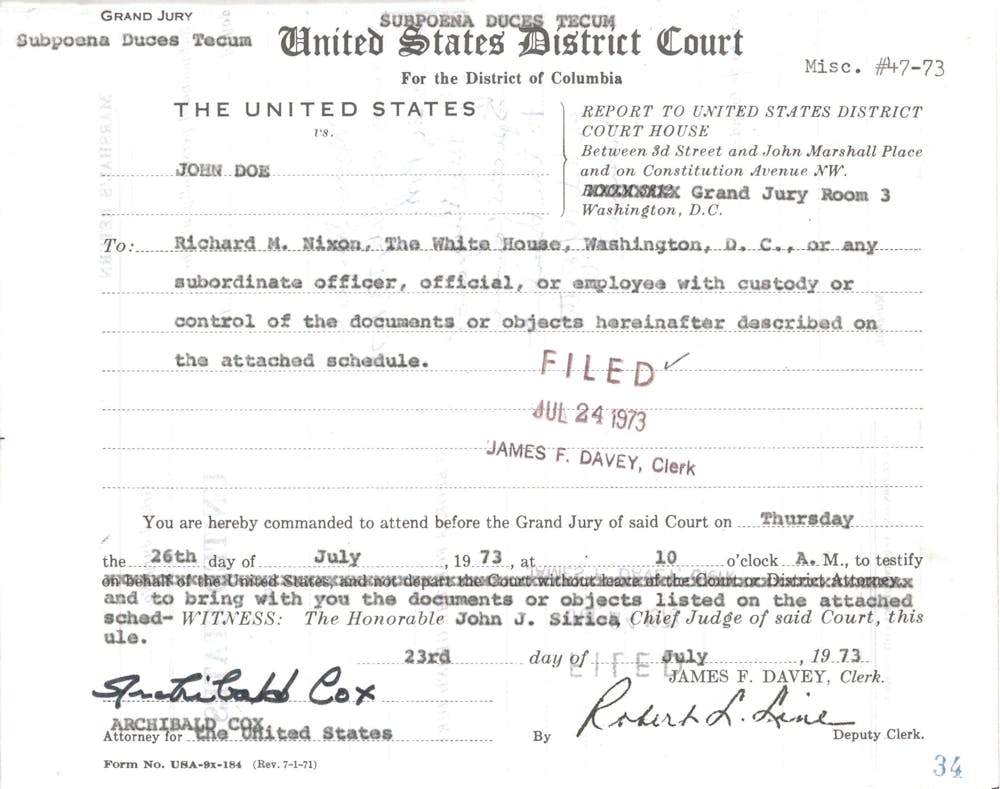
The first page of the grand jury subpoena to President Nixon in the Watergate case.

Nixon fought the subpoena for his Oval Office tapes, citing executive privilege. He lost in the Supreme Court. Records of the Watergate Special Prosecution Force0; National Archives at College Park

Shielding embarrassing information

Much of my academic career as a political scientist rests upon the availability of these documents. My dissertation and first book both look at locations of presidential speeches. If presidents can speak anywhere, what can we learn about their priorities from these choices? Public documents made my research possible. Without them, no comprehensive accounting of presidential speeches would exist.

Presidential records have occasionally stirred controversy. Many presidents have sought to shield possibly embarrassing or controversial information from public view.

During Watergate, investigators sought potentially incriminating materials from Nixon. He claimed he had an absolute executive privilege and could withhold any communication from the legislative and judicial branches.

Executive privilege allows current presidents to provide notice to the National Archives to withhold any materials unless told to do so directly by them or court order.

The Supreme Court sharply disagreed with Nixon’s sweeping executive privilege claim in a unanimous opinion in 1974, stating, “Neither the doctrine of separation of powers nor the generalized need for confidentiality of high-level communications, without more, can sustain an absolute, unqualified Presidential privilege of immunity from judicial process under all circumstances.” Nixon’s records had to be released.

In 2001, President George W. Bush, building on efforts of President Ronald Reagan, sought to create a formal process to manage claims of executive privilege. Bush’s change was controversial because it allowed sitting and former presidents the ability to almost indefinitely shield information and also allowed a former president to appoint a representative to assert on their behalf even after their death.

Barack Obama revoked Bush’s order the day after he was inaugurated in 2009.

Obama’s 2009 order guides current policies. Any claims of executive privilege involve consultations with the archivist, attorney general and president’s counsel. Other executive agencies may also be involved if the information affects them.

[Over 115,000 readers rely on The Conversation’s newsletter to understand the world. Sign up today.]

How the policy applies to former presidents is trickier. Those who want executive privilege to prevent disclosure of documents – as Trump does – must rely upon the current administration for the final decision. They do not have the ability as former presidents to assert blanket executive privilege.

For other presidents, such as George W. Bush and Barack Obama, executive privilege was implemented as a tool to stall investigations. Trump’s attempt to use it may be a delaying tactic, which may benefit him in the short term. But it could also cement the limitations the Supreme Court put on a president’s power to invoke executive privilege. If, in considering the Trump case, the court reaffirms the Nixon ruling, that would be a reaffirmation that the president’s power to keep documents secret was not absolute.

Shannon Bow O’Brien, Associate Professor of Instruction, The University of Texas at Austin College of Liberal Arts

This article is republished from The Conversation under a Creative Commons license. Read the original article.

Dave Chappelle is willing to speak with trans Netflix employees “with some conditions”

In recent weeks, Dave Chappelle has faced continued backlash over his latest Netflix comedy special “The Closer,” a bizarre stand-up set in which the self-identified comedian obsesses over trans women’s genitals and boasts about once beating up a lesbian woman. Now, following internal turmoil within Netflix as employees have protested the company for platforming Chappelle, the comic has expressed he’s open to meeting these employees, on some conditions.

In a recent stand-up set, Variety reports that Chappelle doubled down on his transphobic and homophobic comments in “The Closer.”

“I said what I said, and boy, I heard what you said. My God, how could I not? You said you want a safe working environment at Netflix. It seems like I’m the only one who can’t go to the office,” he told the audience.

He continued by addressing a recent rumor he claims to have heard going around: “It’s been said in the press that I was invited to speak to the transgender employees of Netflix, and I refused. That is not true — if they had invited me I would have accepted it, although I am confused about what we would be speaking about.”

RELATED: Dave Chappelle and the warped self-victimhood of transphobes

It’s unclear where he’s heard this rumor about himself. Among the numerous very basic demands trans employees have made of Netflix, which include asking the company to invest more in trans talent and issue content warnings for transphobic content, there doesn’t seem to be an ask to meet a man who’s compared their genitals to Impossible Burger meat.

In any case, Chappelle then speaks to the trans community at Netflix directly, stating, “I am more than willing to give you an audience, but you will not summon me. I am not bending to anyone’s demands. And if you want to meet with me, I am more than willing to, but I have some conditions.”

Those conditions include: “First of all, you cannot come if you have not watched my special from beginning to end. You must come to a place of my choosing at a time of my choosing, and thirdly, you must admit that Hannah Gadsby is not funny.”

The defensiveness of Chappelle’s “conditions” make it clear that he sees trans people who are critical of him as the aggressors, and himself as their victim. That is, after all, the overarching theme of “The Closer” — his own sense of victimhood as a transphobe in a rapidly changing world.

Chappelle went on to hit the usual talking points. He defends “The Closer” and his brand of comedy once again by citing his LGBTQ friends who support him, therefore making all other queer people’s anger at him irrelevant. “For the record, and I need you to know this, everyone I know from that community has been loving and supportive, so I don’t know what this nonsense is about,” he tells the audience.

And then, of course, Chappelle also bemoans being “canceled” . . . all while performing a stand-up routine before a sizeable audience. Referring to a documentary he made about his summer 2020 stand-up shows, Chappelle tells the crowd, “This film that I made was invited to every film festival in the United States. Some of those invitations I accepted. When this controversy came out about ‘The Closer,’ they began disinviting me from these film festivals.”


Want a daily wrap-up of all the news and commentary Salon has to offer? Subscribe to our morning newsletter, Crash Course.


He continues, “And now, today, not a film company, not a movie studio, not a film festival, nobody will touch this film. Thank God for Ted Sarandos and Netflix; he’s the only one that didn’t cancel me yet.”

Incidentally, Chappelle’s latest stand-up routine, in which he expresses faux openness to meeting and hearing out the trans people he’s harmed, makes the perfect case for why there would be no benefit to any sort of meeting. So, mission accomplished, Dave.

Since “The Closer” released, trans people and certainly trans employees at Netflix have risked it all to be vulnerable and share their experiences with the real-life violence that’s fueled by the transphobia at the heart of Chappelle’s comedy. In return for trans folks’ vulnerability, Chappelle’s latest stand-up routine responds with his continued lack of self-awareness, empathy and critical thinking. A meeting between him and trans Netflix employees would require endless vulnerability and labor from them, but would ultimately be nothing but a contrarian thought experiment to Chappelle. 

The testimonies, stories, and information are all out there, if he truly wanted to educate himself on trans people’s experiences and why his jokes are harmful. He could have done so at any moment, between the first criticisms of “The Closer” and his latest stand-up show. But he didn’t. 

More stories like this:

Marvel delays “Doctor Strange 2,” “Thor 4,” “Black Panther 2” and more

According to Deadline, Disney has just shifted its release schedule for a lot of hotly anticipated upcoming movies, including several in the Marvel Cinematic Universe. Let’s run it down:

  • “Doctor Strange in the Multiverse of Madness” — Old release date: March 25, 2022 — New release date: May 6, 2022
  • “Thor: Love and Thunder” — Old release date: May 6, 2022 — New release date: July 8, 2022
  • “Black Panther: Wakanda Forever” — Old release date: July 8, 2022 — New release date: November 11, 2022
  • “Indiana Jones 5” — Old release date: July 29, 2022 — New release date: June 30, 2023
  • “The Marvels” — Old release date: November 11, 2022 — New release date: February 17, 2023
  • “Ant-Man and the Wasp: Quantumania” — Old release date: February 17, 2023 — New release date: July 28, 2023
  • Untitled Marvel movie — Old release date: November 10, 2023 — New release date: November 3, 2023

Disney also removed four movies — one Disney live-action feature, one 20th Century Fox feature and two Marvel movies — off the schedule entirely.

Why did Disney delay Marvel movies?

So Disney is reshuffling its schedule. Does this mean anything? Probably not; studios pull this kind of thing pretty frequently. Maybe one movie or another is taking longer to make than anticipated, maybe they’re moving things around to avoid competition with other movies, etc. As long as you know what’s playing when, you should be fine.

No damsels in distress here – Krysten Ritter on her new cult-horror series: “These are tough girls”

Krysten Ritter understands how a kickass character and show can be about so much more. While her most well-known role is as the tough superhero-turned-detective in “Marvel’s Jessica Jones,” the acclaim she earned wasn’t just for her performance but also the nuanced portrayal of a survivor still dealing with trauma.

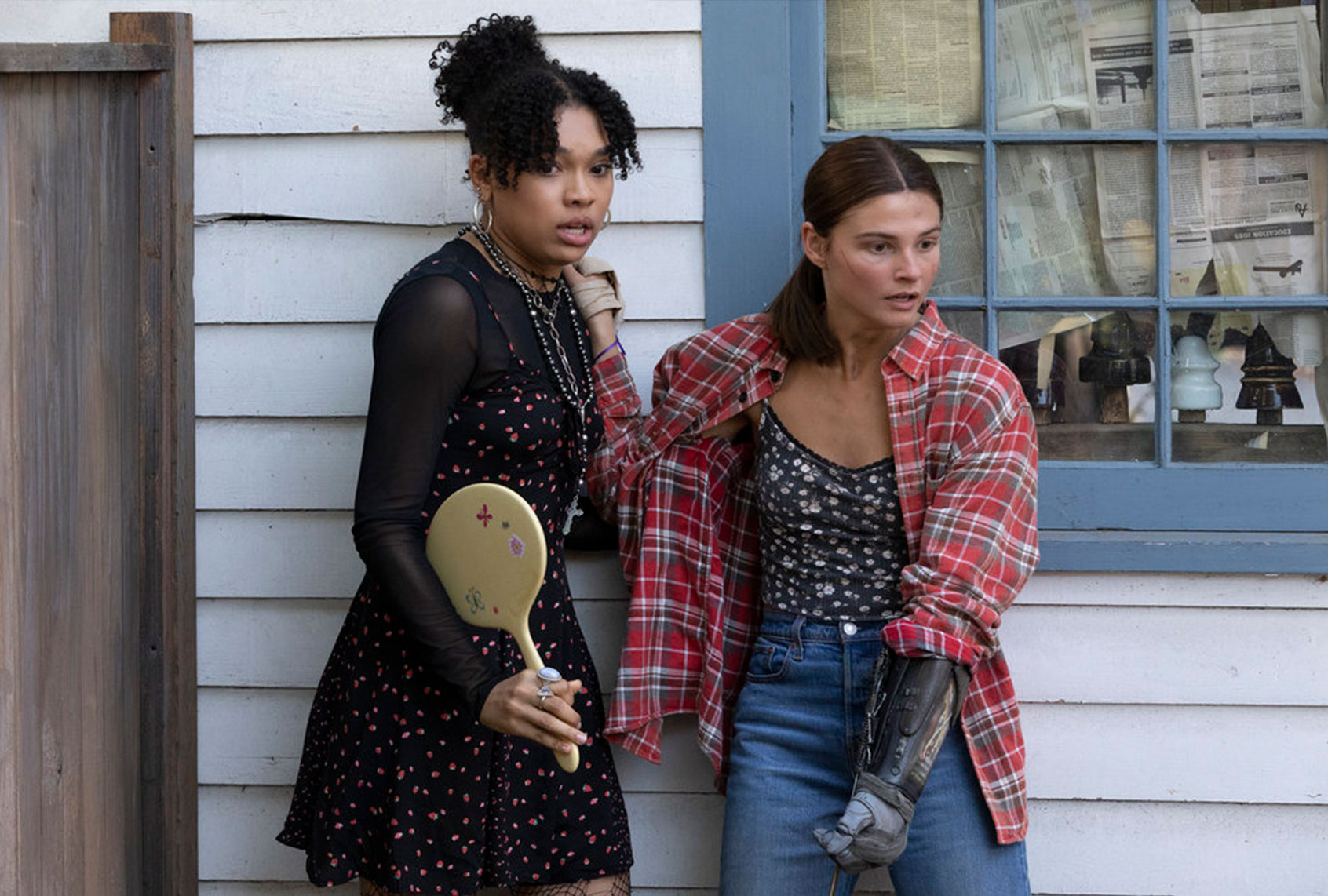
Now, she’s behind the cameras as both director and co-executive producer of Peacock’s new horror series “The Girl in the Woods,” which on its surface is almost as action-packed as her turn as a superhero. The series is a spin on the neo-noir genre following teenage monster-slayer Carrie (Stefanie Scott) as she escapes the religious extremist cult of the Disciples of Dawn, and joins forces with an angsty teen duo in the nearby mining town to stop mysterious monsters from invading the town and unleashing hell. 

Ritter acknowledged that “at face value, it’s a monster-slaying show,” but she also wanted to do right by depicting the show’s small coal-mining town with authenticity while also avoiding gendered stereotypes.

“We start to see more fair representation of women onscreen,” Ritter told Salon. “That was something I always kept an eye on, I never wanted the girls to be over-sexualized or victims or damsels in distress.”

RELATED: Before binge-watching Jessica Jones, read “Alias,” the feminist comic it’s based on

Besides Carrie’s cult roots, her new friends come from vastly different backgrounds. Tasha (Sofia Bryant) is the daughter of a lifelong coal miner, and nonbinary Nolan (Misha Osherovich) hails from a wealthy family leading efforts to shut down the town’s coal mine. But as Ritter points out to Salon, the show is driven by how the characters complement each other through their many, wide-ranging similarities and differences.

Throughout the show, we see Tasha’s and Nolan’s families often at odds, embodying the different sides of the ever-relevant conflicts about climate change and the coal industry. We watch as Carrie grapples with her past at the Disciples of Dawn and her past relationship with Sara (Kylie Goldstein), the girlfriend she left behind. We also watch as Nolan grapples with how they can safely practice self-expression as they navigate their gender identity in a setting where this isn’t welcome. 

Ritter talked to Salon about telling a classic coming-of-age story amid a backdrop of demonic monsters and cults, badass female leads and more queer representation, and the nuance of one of the show’s central political conflicts in a small mining town not unlike the town Ritter grew up in.


Want a daily wrap-up of all the news and commentary Salon has to offer? Subscribe to our morning newsletter, Crash Course.


What drew you to be interested in directing this show? Did Carrie or Tasha remind you of “Jessica Jones” in any ways? 

There were a lot of things from my career that popped up in weird ways in this show, where I felt a connection to the material. I love a badass female centerpiece for a show, and I felt like this was a character in a younger age demographic that I didn’t always see. I loved the opportunity to get to tell this cool origin story and have a character at the center who is strong and tough and a reluctant superhero, sort of similar to Jessica Jones. 

I also really loved how it was set in a small mining town, similar to the town where I’m from. And the coming-of-age themes with the Tasha character, and Nolan being in a small town, wanting to get out, and not knowing what that means. So I felt sort of connected to all of our main characters, and then just loved the opportunity for the world-building.

The thing with horror and this genre of being supernatural, it’s elevated, you get to make bigger creative swings, make bigger choices with camera movement and stuff like that. It was a really fun opportunity for me to jump in and direct this show. I had such a fun time doing it. It’s a tiny little no-budget show, and it was so much fun creatively for so many reasons.

The Girl In The WoodsSofia Bryant as Tasha Gibson, Stefanie Scott as Carrie in “The Girl In The Woods” (Scott Green/Peacock)

When shooting the TikTok videos through which we meet Tasha and Nolan, did you get any inspiration or prepare by watching actual TikToks?

No, I didn’t watch a single TikTok and never have and I’m not on TikTok. So, I don’t actually know anything about that, but I do live in the world, I’m on Instagram, I see the funny things kids do. We wanted to have a vignette showing these funny scenarios where these kids can express themselves, and work within the limitations of the budget and location.

I wanted these guys to really go for it and be funny, and I showed them clips from “Dumb and Dumber” with Jim Carrey and Jeff Daniels, where they ate the spicy peppers and are shooting ketchup and mustard in their mouths and they just really go for it, so over the top and hilarious. So I was like, what do you guys think if we really do this? And they were so game.

Misha and Sophia were squirting mustard and ketchup all over the place. It was all real, and these guys were so funny and I just encouraged them to bring themselves and their personalities to those TikTok shows. It was the last day of filming for me when we did those videos, so I couldn’t wait to do them. At one point there was talk because of scheduling that maybe those videos would get bumped to the next episode for the next director to do it, but I was like, “Absolutely not! I’m never giving up my TikTok videos!” So it was really a good time.

In real life and in stories, there’s always been such a fascination with extreme religious cults and what goes on there. Did you do any research or draw any inspiration from elsewhere to bring the disciples of dawn to life?

I mean, I love cults, every kind, every new documentary, I watch all of the things. We wanted to do something that we hadn’t seen before, we didn’t want to just look like “The Handmaid’s Tale” — that show is so fabulous. But what’s really great about the opportunity here is you have a character who’s grown up with a completely different belief system than we have in the modern world, and then our characters from the modern world, Tasha and Nolan. We were able to have this fish-out-of-water way in to comment on a lot of the things we look at as normal. We wanted to make the colony feel monochrome and loveless and brutal, so, what it was like growing up there for Carrie, our protagonist. It gave us an interesting opportunity to comment on the modern world as well. 

RELATED: “Nobody joins a cult. They join a group of friends”: What went down in the “Sarah Lawrence cult”

There’s an interesting thread that connects Nolan’s experience being perceived as gay and being bullied, and Carrie and Sara’s relationship. What was it like to direct their experiences in very different contexts, Carrie in a historical colony and Nolan in a modern mining town?

So, that goes back to having two completely different worlds and belief systems. For Carrie, she was brought up in a belief system where it’s about the person, and the person’s spirit, never about the gender or any kind of label. So, it was whoever the person you were attracted to. That was really exciting to do.

With Nolan, the first time we meet Nolan, you see them expressing themself and putting on the makeup they want, what makes them feel good, then looking out the window and knowing if they go out into the world as their true self they’ll get beat up. It’s just heartbreaking, and I wanted to show what that felt like. The writing was there, the performance was there. It’s an exciting opportunity for representation in our show.

The show also confronts the conflict that arises from shutting down mining and coal work in a town where that might be the primary employer. This is a very big part of setting the scene. Was there any kind of metaphor between the urgency of fighting climate change and stopping the forest monsters?

I think it was all there in the writing, and what I loved about this story was being able to show both sides, where you have Nolan’s family and they’re really upset that the town is contaminating drinking water, and trying so hard to fight for the children, but in shutting down the mine, that meant a lot of people are going to be out of work. If you shut down the mine you’re basically taking food off of someone’s table. 

RELATED: The uncertain future of U.S. coal communities

Showing both sides of that was really cool, and it’s not like us vs. them, red vs. blue — it’s, let’s look at it from both sides, so I really appreciated that tone and sentiment. This is set in a part of the country that’s really struggling, and it’s important to have authenticity there, and show what it’s like for people. I’m from a small town in Pennsylvania, similar to this small town in our show called West Pine, and I wanted to make sure that that felt really real, and not less than, and just really show how people are dealing with these issues.

In their own ways Tasha and Carrie both seem to have lost someone, for Tasha, her mother, and for Carrie, Sara. But they seem to bury or not confront their feelings about this. To what extent is this show about loss, PTSD, facing your demons?

I think the show is really about this trio of teenagers finding their tribe, finding friends in unexpected places. They all complement each other so beautifully, they learn so much about each other and about themselves from each other. Each of them has such different experiences, Carrie being from a colony and a cult with that belief system, Nolan going through what they’re going through, and their family being perceived as the rich family trying to shut everybody down, and then Tasha, who is a daughter of a lifelong miner, and there’s a Romeo and Juliet battle of the houses going on there. But the fact that all three of them kind of complete each other — with this show, at face value, it’s a monster-slaying show. When you get in there, you fall in love with these characters.

“The Girl in the Woods” is a very Halloween-oriented project. What has it been like to see more horror and thriller genre pieces really center and empower female characters instead of just watching them get chased and killed?

Hopefully, those discontinue after things have been so shaken up, and we start to see more fair representation of women onscreen. That was something I always kept an eye on, I never wanted the girls to be over-sexualized, or victims, or damsels in distress. These are tough girls. With Carrie in particular, I wanted her to be very androgynous, and stripped down, not glamorous. I had her wearing zero makeup. Even sometimes if she looked a little too pretty, or flushed in the cheeks, we just wanted to really take her down and make it about the character and her inner life, and that was a fun opportunity for me, something I take a lot of pride in.

What are you working on now and what’s next?

I’m on set in Texas filming “Love and Death,” which will be out next year. It’s a true crime thriller, a great ensemble piece, that stars Elizabeth Olsen, Jesse Plemons, great, amazing cast, Lesli Linka Glatter is directing, David E. Kelly is a writer, Nicole Kidman is producing, so hopefully, next year, this will be the fun new true crime thriller people watch. It’s set in 1978, and yeah, that will be out next year.

All episodes of “The Girl in the Woods” are now streaming on Peacock. Watch the trailer below via YouTube.

More stories like this:

On “You,” polyamory done right could have saved a doomed marriage

Netflix’s bloody and erotic psychological thriller “You” has always been a story about one man’s obsessive need to, well, obsess about The One. But what happens when people other than your soulmate speak to your soul? It was only a matter of time before “You” went the polyamory route.

Serial killer Joe Goldberg (Penn Badgley) is a man of extreme passions, and has often resorted to stalking, stealing, parking lot masturbation and even killing to get close to the object of his desire. While this undesirable behavior may not normally land one a wife, that’s exactly what happened with Love Quinn (Victoria Pedretti), who ultimately reveals herself to be every bit the crazed, obsessive killer that he is, if not more. 

RELATED: Netflix’s serial killer thriller “You” poses a pregnant question about personhood

Joe and Love try to make their odd relationship work. They leave behind a bloodbath in Los Angeles to start anew in a San Francisco-adjacent town called Madre Linda. This suburban, Silicon Valley hell provides the blissful facade for their married and co-parenting life, but soon dissatisfaction creeps in. They try couples therapy. They try cheating — Love with their college-age neighbor Theo (Dylan Arnold), and Joe with Theo’s stepmom Natalie (Michaela McManus) and his librarian co-worker Marienne (Tati Gabrielle).

But when this infidelity can’t fix what’s between them, each starts to commit unforgivable acts, and none of their Lululemon-clad, tech industry titans for neighbors are safe from them. Frankly, given both of their pasts, we all knew this Norman Rockwell painting of a relationship would quickly devolve more into the realm of Norman Bates. And at some point, you really can’t help but wonder if Love, Joe and their eventual victims would have been better off if the couple had just reevaluated the parameters of their marriage. 

And they do — sort of.

By the end of Season 3, Love and Joe embark on a foursome in an effort to save the marriage that they’ve both become increasingly bored with. They set up a sexy night with their insufferably privileged, preachy neighbors, mommy-blogger Sherry (Shalita Grant) and her tech-bro husband Cary Conrad (Travis Van Winkle).

The foursome doesn’t work out, to put things lightly. The moment Joe and Sherri share a kiss in front of Love, she spirals out almost immediately, leading Love and Joe to have a loud conversation which includes a confession that Love killed Natalie. Sherri and Cary overhear this conversation, because of course they do, and all hell breaks loose, leading to their ultimate imprisonment by Love and Joe.

In other words, Love and Joe’s brief stint with polyamory was the beginning of the end of their life together in Madre Linda. But this shouldn’t be an indictment on that relationship practice. Polyamory doesn’t always look like what we saw onscreen, and there are other ways the couple could have experimented with opening their marriage in ways that could have actually saved rather than doomed it. There’s a reason young people and a new generation are increasingly opening their minds and experimenting with polyamory in their dating lives.

In this season of “You,” the crux of the Love and Joe’s issues arguably isn’t that they don’t want to be together anymore. They make solid progress in their couple’s therapy sessions early in the season, both prioritize their son above everything, and they always have each other’s backs when it comes to covering each other’s crimes (fodder for valentines!). But they’ve come to find their life in Madre Linda insufferably boring, and of course, no matter who Joe is with, his eye will always wander. He always has to find a new woman to become obsessed with, and this woman thus becomes “you” in Joe’s spine-chilling internal monologues.

Specific to “You,” polyamory could have served as a unique antidote, both to Love and Joe’s boredom, and Joe’s addiction to fixating on new women. Even prior to this season, the chaos and killings that drive “You” have all been rooted in Joe’s violent compulsion toward monogamy. His life revolves around the need to put one person — “you” — on a pedestal above all else, a destructive behavior that societal pressure to adopt monogamous lifestyles can sometimes subliminally encourage.


Want a daily wrap-up of all the news and commentary Salon has to offer? Subscribe to our morning newsletter, Crash Course.


Much of the stigma and confusion around polyamory and what it entails is a result of generations of treating monogamy as the only way. This isn’t true for everyone, and whether he admits it or not, monogamy certainly isn’t for Joe. And, despite how conservative and traditionalist perspectives often decry polyamory as radical and extreme, as Joe demonstrates, monogamy and any kind of obsessive fixation on one person, and one person alone, can be taken to an extreme, too.

It’s clear both Love and Joe want to pursue relationships and sexual encounters with other people, while staying together and remaining committed to their family — and there’s no reason they couldn’t have had both. But polyamory isn’t just jumping into connections with other people without thinking of your partner, if you actually do care about them. One cannot merely go from monogamy to an open relationship without having the proper conversations and assessment (how jealous are the individual partners?), things could have gone differently.

With some better communication and setting of ground rules, polyamory might have saved Love and Joe’s relationship, and certainly saved some of their victims this season. Therefore, rather than engage in a foursome in which they would have to witness their partner be intimate with other people, they could have just communicated their mutual desires to have other romantic or sexual partners, while remaining together. They could have given each other permission to pursue these relationships as long as they ensured their affairs remained private from each other, since witnessing each other with another partner, at least in Love’s case, seemed to cause, well, problems.

It’s entirely possible that nothing, not even an open marriage, could have saved Love and Joe’s ultimately doomed relationship. But many couples have faced problems like what Love and Joe faced — minus the murders and cover-ups and all — and overcome these problems with open communication, and understanding that monogamy doesn’t always work for everyone, no matter how much they may care for and want to be with someone. If Love and Joe had communicated their desires and come to an understanding that worked for both of them, their jealous, murderous impulses might have been kept at bay, and they might both even have become satisfied with their lives.

As polyamory is increasingly demystified and destigmatized, especially among young people, a core reason that some people seek it out could arguably be relevant to all romantic relationships. Specifically, no matter how solid a relationship is, it’s not healthy for that to be the only significant relationship in someone’s life — whether in the form of other romantic relationships, close friendships, or familial bonds, we should always have other relationships beyond The One. It’s unfair to that one person, not to mention a lot of pressure.

If Love hadn’t centered her world around Joe, and if Joe didn’t obsessively need to center his life around every other mysterious, new woman he encounters at the supermarket, two of the craziest characters on television might have actually turned out semi-normal. And that might just be why this season of “You” ultimately chose to go a different route.

“You” season 3 is now streaming on Netflix.

More stories like this:

What “Shang-Chi and the Legend of Ten Rings” gets right about Chinese food

I have a confession to make: I was never a huge Marvel fan. To be honest, I was indifferent to Thanos’ death, as well as the superheroes’ victory. While audiences were applauding for the supervillian’s death, I felt a bit of emptiness as I didn’t feel a huge connection between my background as a Chinese woman and the depictions of the heroes on screen. 

My feelings have changed since the release of  “Shang-Chi and the Legend of the Ten Rings” — specifically after watching a particular scene involving food. 

On a Sunday night, sitting in a theater, oddly enough, I empathized with the characters. All the ingredients were there: the predominantly Asian cast (I grew up watching Tony Leung’s movies), the perfect Mandarin pronunciation, the traditional Chinese elements running through the film. These all pulled me closer to my memories; my heritage and language; and to my Chinese background. 

During the movie, I was especially struck by a small detail: the rice porridge in the breakfast scene. When Shaun/Shang-Chi (Simu Liu) was at Katy’s (Awkwafina) door, her mom said to him: “She’s not ready. Come have some zhōu while you wait.” 

RELATED: The tradition of Jews eating Chinese food on Christmas started on New York’s Lower East Side 

Inside, the family was having a nice breakfast of congee together. A large bowl of rice porridge was placed on the dining table, waiting to be distributed. Oh, my dear zhōu! It was at that moment I knew the movie was going to make a difference.

After all, it’s not orange chicken. 

Despite the fact that I do like the taste of orange chicken, being born and raised in China, I can tell you that orange chicken, much like Americanized Mandarin, is Americanized from Chinese roots. 

In the U.S., Americanized Chinese food isn’t uncommon. David R. Chan, a Chinese food expert who has eaten more than 7,400 Chinese restaurants in America, explained the invention of this variety was out of “historical accidents.” 


Want more great food writing and recipes? Subscribe to Salon Food’s newsletter.


It’s a product of two separate eras, first adapted for ingredients found in the U.S. and later adapted to American tastes by Taishanese migrants in the 19th century. Then culinary traditions that were brought from Sichuan, Hunan and other mainland areas to Taiwan were eventually transported again to New York by Taiwanese chefs, who were cooking for a non-Chinese customer base. 

“Because both classes of Americanized Chinese food really are historical accidents, I kind of dismiss it as ‘faux Chinese food,'” Chan said. “Not that I mind Americanized Chinese food, since I find some of it good for what it is. And given that these Americanized Chinese dishes have been around for so long, who’s to say they’re not their own cuisine now?” 

I’m with Chan on that. You can’t expect to completely learn Mandarin from the Americanized standards. For the same reason, you can’t fully understand Chinese culture by a variation of Chinese food that only has shallow Chinese roots. 

That’s why I was so frustrated by the misrepresentation of Chinese culture on TV — especially the Chinese food culture. According to a study from USC Annenberg Inclusion Initiative, in 1,100 popular films from 2007 to 2017, the prevalence of Asians on screen only increased from 3.4% to 4.8%. 

Even if Asians, especially Chinese, are on screen, they always speak accented English and Americanized Mandarin Chinese. What’s worse, orange chicken, depicted as a popular Chinese dish, is often under the spotlight.

But the congee at the breakfast table in “Shan-Chi” is a game changer. It’s definitely a “Chinese-approved” dish. Though the origin of congee is still a mystery, it likely originated in China. The earliest reference can be traced back to the Chinese Zhou dynasty, circa 1,000 BCE. 

This fits within a larger trend of seeing more accurate representations of diverse food cultures on TV. Actually, according to ​​Krishnendu Ray, the associate professor of food studies at New York University, the representations of the East are shifting from “etic” to “emic” — that is, from looking at a culture from an outsider’s point of view to an insider’s point of view. 

He explained that, due to the rise of East Asia in both hard power and soft power, the relationship between Asian and American populations is changing. Also, with the democratization of social media like Instagram and TikTok, information spreads. People have a place to learn about food cultures, and people in the dominant culture — especially young people — are more omnivorous when it comes to authenticity.

“The representation is changing dramatically. [The congee] in ‘Shang-Chi and the Legend of Ten Rings’ is a terrific example,” Ray said. “And I think that’s the future very clearly, with the rise of Asian cultures.” 

In Chinese culture, breakfast is the most important meal of the day. The old saying, “Have a good breakfast, a full lunch and a small dinner,” runs through generation to generation. It basically means, “Breakfast like a king, lunch like a prince, dine like a pauper.” Breakfast, according to Chan, “does have an important role in Chinese food culture, in some ways more important than other meals since it is the most likely meal to be eaten at home.” 

Not only is breakfast eaten at home, but also eaten with family — the Chinese value family and harmony. As the most common breakfast pick on the dining table, isn’t congee a bond that ties the family closer?

Simmer either long-grain or short-grain rice in extra water until it’s fully softened, then you get a pot of thick congee. A staple food across Asia, congee has various regional versions. Kayu in Japan, juk in Korea, babor in Cambodia, lugaw in Philippines, chok or jok in Thailand — the list can go on and on. The preparation differs slightly depending on the culture. For instance, some cultures substitute water with chicken stock, while others cook the rice along with other ingredients like seafood. 

Regardless of the names and regional varieties, congee is a get-better food across cultures. If you feel sick, softened rice and rice soup will warm you up, gently comforting you from the stomach to the whole body. Going back to when I was in kindergarten and was too sick to eat, my dad always cooked plain congee and carefully fed me with a spoon. 

“Have some báizhōu (plain congee), then you’ll get better soon,” he said.

His words have been a curse. Even after two decades, I can still remember him sitting at my bedside and blowing the congee to cool. Those memories were so vivid that plain congee has become my instinct when dealing with sickness. I guess congee, above a traditional cultural food, is a universal language for reticent Asian parents to say, “I love you,” and a way of demonstrating care for early morning visitors who show up on your doorstep, much like Shang-Chi. 

More stories about what we watch and eat: 

The best salt substitutes, according to a food scientist

If you’re looking for a salt substitute, it’s most likely because a doctor or nutritionist has advised you to cut back on your sodium intake. In other cases, it might just be because you ran out of salt, but that’s certainly a less likely scenario. Either way, there are plenty of ways to substitute salt without sacrificing flavor. “Just like sugar, we can increase our sensitivity to salt by decreasing the amount we consume over time,” says food scientist and blogger Nik Sharma.

Consider The Sodium In Your Diet

According to the American Heart Association, most adults should have no more than 2,300 milligrams of sodium per day and, ideally, move toward a limit of no more than 1,500 milligrams per day. However, this recommendation is still 1,000 milligrams less than what most Americans actually consume. The AHA estimates that the typical American adult eats more than 3,400 milligrams of sodium each day, which could lead to high blood pressure and heart disease.

And to clarify, one teaspoon of table salt contains 2,325 milligrams of sodium, which will automatically push you over the AHA’s recommended intake.

If you want to cut back on your sodium intake or simply find a flavorful salt alternative, consider these alternatives and ingredient substitutions:

Don’t Salt As You Cook

One easy way to cut back on the amount of salt in your food is to avoid salting as you cook, says Sharma. Although many cooks might disagree, as salting as you go slowly brings out the flavor of all of the food during the cooking process, Sharma believes that plenty of ingredients like soy sauce (buy a low-sodium version if you’re reducing salt for nutritional reasons), capers, anchovies, and miso are naturally salty and don’t need more salt added.

He also recommends ignoring the rule of adding salt to water for pasta or most vegetables. “The only time I’ll add salt to water is if it will affect the texture of the food, such as if I’m making a pot of beans or potatoes,” he says. “I know the presence of salt will make the beans softer and creamier.”

Morton Salt Substitute

This sodium-free salt substitute is ideal for anyone who is on a low-sodium diet. Its main ingredient is potassium chloride, which is generally used as a medical mineral supplement to lower sodium levels in adults. However, know that if you use potassium chloride salt substitutes, your food will likely taste more mineral-y. “People notice metallic and bitter aftertastes and it can be hard to mask it,” says Sharma.

Acid

“One of the easiest ways to cut back on the amount of salt in your food is to add more acid,” says Sharma. “These two types of flavors interact with each other.” If you add acid, such as lemon juice or vinegar, at the end of the cooking process, you’ll likely need less salt. The only time Sharma would advise against this practice is if you suffer from acid reflux.

Sea Salt

Unlike kosher salt or table salt, coarse sea salt and rock salt contain more flavorful minerals, so you may need to use less of them to achieve a desirable salty taste. Try this for salting water for potatoes, which are one of the few vegetables where the texture benefits from salted water (like beans), or using it as a finishing salt on roasted potatoes.

Low-Sodium Soy Sauce

If you want to cut back on your sodium intake and increase your sensitivity for salty flavors, replace regular soy sauce with low-sodium soy sauce, which generally has about 40% less sodium per serving. This isn’t the best choice for someone who needs to drastically reduce their sodium intake per doctor’s orders, but it will help cut back on an individual’s consumption.

From the Sea

“Anything that comes from the ocean, like seaweed or dried anchovies, will taste salty without drastically increasing your sodium intake,” says Sharma. Add anchovies to marinara sauce to round out the flavor with umami and salt or crumble dried seaweed on top of a salad.

Mushrooms

Make an umami-rich stock using mushrooms (Sharma like shiitake mushrooms) and use that in place of a pre-salted packaged chicken or vegetable broth. The umami notes will pack in so much flavor and richness that you’ll need far less salt for soup, pot pies, or any other recipe that starts with a stock base.

Pickled Fruits and Vegetables

Depending on the recipe, adding pickled or preserved produce like preserved lemons or olive brine will build flavor and may require less additional salt for a balanced, flavorful dish. This is a great substitute if you find yourself without salt, but pickled and preserved ingredients are typically heavily salted. If you run out of salt, make a salad dressing using the juice from preserved lemons.

Herbs and Spices

On the whole, using a more complex combination of herbs and spices, or a seasoning blend, will add a more complex blend of flavors and therefore could reduce the need for additional salt. This trick works across the board, from seasoning meat and fish to pasta sauces and casseroles.

19 best cream pie recipes for a light-as-air dessert

Cream pies are not the same thing as custard pie. They’re also not exactly pudding pies or ice cream pies or gelato pies (yes, those are a thing, too). They’re in their own lovely lightweight field, able to take on the flavors of summer with juicy berries and coconut just as easily as they can become chocolate or maple or eggnog, making the perfect holiday dessert. Every cream pie is a little different, but they generally call for egg yolks, heavy creamvanilla extract, sugar, and butter. 

From coconut cream pie to chocolate cream pie, from graham cracker crusts to classic buttery pie crusts, these cream pie recipes will make your heart flutter and tummy grumble. 

* * *

Our best cream pie recipes

1. Banana Cream Pie

I grew up eating my grandma’s banana cream pie for every holiday — Father’s Day, Thanksgiving, my grandpa’s birthday, and even anniversaries. Each bite of this cream pie recipe, featuring a Nilla wafer crust and whipped cream topping, tastes like home to me.

2. Perfect Coconut Cream Pie

Coconut lovers (myself included) will adore this triple-coconut cake, which has flakes in the crust, filling, and whipped cream topping. It gets even more flavor and richness from coconut milk, which teams up with egg yolks to form the luscious filling.

3. Lemon Cream Pie

For a silkier, richer, and all-around-better cream pie, follow recipe developer Alexis DeBoschnek’s lead and make the filling with sweetened condensed milk. While you’re at it, swap the usual graham crackers for a Biscoff cookie crust instead.

4. Pumpkin Cream Pie

If you want to serve pumpkin pie for Thanksgiving but are sick of the old-fashioned, somewhat temperamental version, make this light and airy cream pie instead. You’re best off making it at least a day in advance so that it has plenty of time to chill in the refrigerator.

5. Chocolate Cream Pie

Recipe developer Kenneth Temple thought long and hard about how to make a better chocolate cream pie. The solution? A filling made exclusively with egg yolks, rather than whole eggs, for more flavor, less moisture, and a richer consistency.

6. Strawberry Cream Pie

Think of this dessert as a strawberry shortcake in the form of a decadent cream pie.

7. Coconut Rum Cream Pie

“Light, fluffy, and wonderfully creamy, this pie is made with a Biscoff cookie crust, which gets topped with a rich, rum-tinged vegan coconut custard and an airy, lightly sweetened coconut whipped cream,” writes recipe developer Murielle Banackissa.

8. Vanilla Cream Pie with Pretzel Crust and Raspberry Whipped Cream Peonies

This springtime cream pie is a total showstopper, starting with raspberry whipped cream piped into the shape of blossoming flowers and a sweet vanilla custard filling.

9. Baby Chocolate Strawberry Cream Pie

Leave it to Erin Jeanne McDowell to not only make a pie out of a romantic flavor combination — chocolate and strawberries — but make it look so sweet, too!

10. Caramelized Banana Pudding Pie from Millie Peartree

Caramelized bananas get their sweetness from brown sugar and cinnamon in this rich, delicious upgrade to the classic banana cream pie.

11. Key Lime Meringue Pie from Petra Paredez

Craving a taste of the tropics? This luxe key lime pie with a perfectly torched vanilla sea salt meringue will take your taste buds to the southernmost point of the U.S. in no time.

12. Creamy Lemon Custard Pie

In a creamy twist on the classic lemon pie, Swiss meringue buttercream is piped in a never-ending swirl on top of the cream filling, instead of the usual meringue. The filling gets a triple dose of tartness from lemon oil, lemon zest, and freshly squeezed lemon juice.

13. Milk Chocolate Cream Pie

You can thank Erin Jeanne McDowell for this double-chocolate pie that features two layers: a ganache base topped with the milk chocolate cream filling. It’s rich (but not too rich), fudgy (but not too fudgy), and perfectly chocolatey.

14. Peanut Butter and Jelly Pie

Meet everyone’s favorite childhood sandwich in the form of a cream pie featuring a graham cracker crust, peanut butter and cream cheese filling, and a thin layer of jam on top. Recipe developer Erin Jeanne McDowell loves raspberry or strawberry, but use your favorite flavor for a taste of nostalgia.

15. Crème Brûlée Pie

Is this the chicest pie that’s even been baked? Possibly. Hiding beneath a crunchy, crystallized sugar topping is a rich vanilla custard and buttery crust. It’s two desserts in one — what’s better than that?

16. French Silk Pie with Chocolate-Coffee (Grounds) Crust

Coffee and chocolate are #couplegoals. They bring out the best in each other. Sweet chocolate softens the flavor of bitter spent coffee grounds, and coffee enhances all the dark notes in the chocolate. Together, they make for one incredible cream pie.

17. Maple Cream Tart

Come fall, we want maple in anything and everything. We want it in the form of ice cream and hard candies. We want it in the form of a glaze for pork tenderloin and roast turkey. And we definitely want it in this cream tart with a press-in pastry crust.

18. Oreo Pie

“With crushed-up Oreo cookies as the crust and a beautifully textured black-and-white appearance, this pie is a wonderful cooling-off dessert for the summer, but is also delicious enough to serve at the end of any holiday meal, from Thanksgiving to New Year’s Eve and beyond,” writes recipe developer Sarah Jampel.

19. Maida Heatter’s Rum Pie

Add 3/4 cup of dark rum to the dreamy custard for a pie that tastes like a glass of eggnog on a beautiful winter’s night.

Democrats sue USPS over “egregious” delays that threaten to impact Virginia’s race for governor

The Virginia Democratic Party is suing the U.S. Postal Service for allegedly failing to deliver election-related voter materials on time, claiming that the lapse “threaten[s] to disenfranchise thousands of Virginia voters” just ahead of the state’s consequential gubernatorial election. 

The suit, filed on Friday in a U.S. district court in Richmond, Virginia, cites a “significant delay in election mail” in Albemarle, Portsmouth, and James City, calling the dysfunction “particularly egregious.” The delayed mail reportedly represents a quarter of all ballots in these three jurisdictions. 

The suit specifically names Gerald Roane, the USPS Virginia district manager, and Frank Veal, the USPS South Atlantic division director, and plaintiffs in the case. 

“Thousands of ballots delivered to postal facilities by the general registrars weeks ago are still outstanding and, weeks later, have not yet even been scanned into USPS’s system. Even if these voters do eventually receive their ballots before Election Day, the slowdowns promise that they will not have sufficient time to send them back with assurance that they will arrive in time to be counted,” the two wrote. 

“And even if a ballot reaches the appropriate election official before the receipt deadline, if the official identifies any issues with it that require remediation before it may be counted, the voters will have run out of time to rectify the problem.”


Want a daily wrap-up of all the news and commentary Salon has to offer? Subscribe to our morning newsletter, Crash Course.


The offensive comes amid Virginia’s nail-biting gubernatorial race, whose candidates include the state’s former Democratic Governor, Terry McAuliffe, and right-wing businessman Glenn Youngkin. Nearly one week out from the election, a recent poll put them in a dead heat, with both candidates receiving 48.3% of the state’s votes. Youngkin would be the state’s first Republican governor since 2009, CNN notes

RELATED: Virginia GOP candidate Glenn Youngkin tries to pivot away from Trump — but there’s nowhere to go

The USPS has denied the suit’s allegations, telling CNN that the agency has a “robust and tested process for the proper handling and timely delivery of Election Mail.”

“Our Election Mail processes and procedures are fully operational in Virginia. We are not aware of any processing delays of any ballots within our facilities nor any ballot delivery delays, and we have fully communicated this information to election officials,” the agency wrote in a statement. 

The state’s Department of Elections indicates that Virginia voters had until last Friday in order to request mail-in-ballots. The ballots must be delivered to the state’s registrar by November 2 to be counted in the election. 

Last month, U.S. Postmaster General General Louis DeJoy announced that Americans should expect significant delays as part of the Trump appointee’s ten-year plan to help the agency – which last year hemorrhaged $9 billion – become more financially stable. 

RELATED: Louis DeJoy rolls out plan to slow USPS, despite calls for his ouster

DeJoy has faced increasing calls to resign over his alleged conflicts of interest, which center on XPO Logistics, a freight company that reportedly contracted with the USPS during his government tenure. Last week, the Citizens for Responsibility and Ethics in Washington (CREW) reported that DeJoy refused to divest himself from XPO until last October, despite recusing himself from agency decisions that involved the firm.

RELATEDTrouble piles up for Postmaster General Louis DeJoy

Vote to remove Thomas Jefferson statue long overdue

The plaster statue of Thomas Jefferson that looms over the New York City Council Chamber will be removed by year’s end, following a vote by a city commission Monday. The council did the right thing after a 20-year campaign by its Black, Latino and Asian Caucus. This decision is an opportunity to commission a sculpture that celebrates the Jeffersonian ideals of liberty and democracy without idolizing the slaveholder himself.

Throughout the meeting to decide the statue’s fate, its defenders kept returning to a theme: The statue doesn’t honor Jefferson the man, it honors his great ideas, like universal human equality, religious freedom and a democracy free of autocrats, aristocrats and theocrats. As historian Sean Wilentz pointed out in a written statement opposing removal, these ideas are still radical today and continue to inspire liberation movements, including civil rights and feminism.

One of the greatest contributions of Jefferson and his fellow Enlightenment thinkers was discrediting monarchy, the ridiculous notion that some people are chosen by God to rule because they have magic blood. Idolizing a monarch with a statue makes sense if you believe in the divine right of kings. It makes a lot less sense to build statues of leaders whom we know are flawed citizens like ourselves.

There’s no rule saying that public statuary must consist of the stony likenesses of dead heroes. Lots of great art uses idealized figures and abstract motifs to educate and inspire. History has to deal with people in full. Art has no such limitations. It can abstract away the flawed figure to express the higher ideals they ultimately failed to embody.

The council members who want to relocate the statue believe passionately in liberty and democracy. They argue, persuasively, that the likeness of a slaveholder is an inappropriate symbol of those ideals.

Even the statue’s most ardent champions scarcely tried to defend the man. How could they? Jefferson owned over 600 people and consigned some of his own children to slavery, children he conceived with his wife’s enslaved half-sister, whom he started raping when she was just 14. The man knew slavery was wrong, but kept on owning people and selling children, despite his contemporaries, including the Marquis de Lafayette, urging him to free the people he held in bondage.

Four council members of color testified. They said they felt degraded and dispirited by the enormous plaster statue. It has grown even more imposing over the years. Its 7-foot likeness on a 5-foot pedestal casts a pall over the chamber. Its pedestal was actually raised several years ago when art restorers warned that he was vulnerable to damage. Co-chair of the Black Latino and Asian Caucus — I. Daneek Miller — testified that Jefferson’s “domineering presence” feels like “psychological warfare” to legislators of color, who comprise the council’ majority.

If the purpose of public art is to inspire, it matters whether it is having the desired effect on its audience. If a supposed monument to liberty is making legislators feel less-than, it has outlived its usefulness.

Pro-statue speakers said they found it ironic that a democratic government is now using the tools that Jefferson helped to create to remove his likeness. That’s exactly what’s happening, and that’s great.

We have outgrown Jefferson’s likeness, just as we’ve outgrown the idea that kings and white people have magic blood entitling them to rule.

Let’s replace the statue of the flawed man with a statue that celebrates the brilliant and radical ideas he promoted: Democracy, equality and religious freedom. Let’s talk about how we want to express them artistically in 2021. Let’s install a plaque explaining to future generations why replaced Jefferson’s likeness with something new.

Texas bans popular cannabis extract, sending retailers scrambling

Three years after federal legislation removed the marijuana extract known as delta-8 THC from the nation’s list of controlled substances, Texas health officials have put it on its own list of illegal drugs, sending a shockwave through the growing CBD retail industry across the state and making the substance, essentially, illegal.

Christine Perez, who manages the popular Austin CBD store Lazydaze+Coffeeshop, had no idea about the change until she saw the Texas Department of State Health Services notice on the agency’s website on Oct. 15.

“I was very confused, as well as a bunch of other companies. It’s like, ‘What is going on?'” Perez said. “I really have no idea why [the state] would try to ban it, or the timing of it. We didn’t hear anything about it from the state.”

It was easy to miss.

As The Dallas Morning News reported this week, the state health agency placed a notice in the rule change publication, the Texas Register. The notice said delta-8 remained a controlled drug in Texas. Both the federal government and states can differ on what is a controlled substance by keeping separate lists. Still, word failed to get out to CBD stores that anything containing the substance, like candy or tincture oil, would be illegal to sell in Texas.

It became the top product for many dispensaries in Texas, as users say it produced the “high” effect of marijuana. The variant became popular after the 2018 Farm Bill changed the definition of “lawful marijuana extracts” and included any extract that has lower than 0.3% tetrahydrocannabinol (THC), including delta-8. THC is the active psychoactive ingredient in marijuana, responsible for the user’s high.

Delta-8 was thought to be made legal in Texas nearly two years ago after Gov. Greg Abbott signed House Bill 1325 legalizing any hemp product with less than 0.3% THC.

But last week, DSHS announced it had classified delta-8 as a Schedule I controlled substance, a category reserved for drugs that have no accepted medical use, such as heroin and LSD.

It’s not the first time this debate over whether delta-8 was or was not a controlled substance in Texas has come up. As the DMN previously reported, Stephen Pahl, the Texas health department’s associate commissioner for consumer protection, informed lawmakers during this year’s regular legislative session that state law allows DSHS Commissioner John Hellerstedt to object to federal drug schedules, including delta-8. Lawmakers had considered a bill making delta-8 illegal, but it failed to move forward after health officials informed them it had already been listed as a controlled substance by the state.

From the state’s point of view, last week’s announcement was merely a clarification.

“DSHS posted the clarification below on our website in response to recent requests from hemp growers who said that there was confusion in the industry about what was allowed in consumable hemp products,” said Lara Anton, a DSHS spokesperson.

But to retailers, the notice seemed arbitrary and unfair.

“This is really out of nowhere. It’s not based on science, it’s not based on any real threat to Texans,” Rick Trojan III, a board member of the Hemp Industries Association, said. “The whole thing is confusing for everyone involved. It sounds like DSHS doesn’t even understand why they know what they’re doing.”

Trojan said he had not heard any “hemp grower” confused over the law.

Until that notice a week ago, several stores claimed the state had done nothing to notify them that delta-8 was illegal.

Lit Smoke & Vape, a CBD store in Allen, says it will not stop selling delta-8 until it is forced to.

Other stores, like Your CBD in Mesquite, did not know about the new guidance when asked by The Texas Tribune. An hour later, the company pulled delta-8 from shelves.

“It’s still on our shelves until it’s legally decided that it’s illegal,” a manager at Lit Smoke & Vape said. “Those people don’t have any authority over the law. So until the law states that it’s illegal then, no, we will continue to sell it. They tried to ban CBD two years ago and they got sued and it fell through. So it’s going to happen again.”

Last May, the Texas Legislature attempted to make delta-8 illegal, but the issued failed.

Multiple companies, including CBD American Shaman, have vowed to take legal action against the state.

In the meantime, many companies are wondering how the state will enforce the new guidance.

“DSHS can take enforcement action against licensees who sell consumable hemp products containing controlled substances. DSHS doesn’t regulate possession of controlled substances,” a DSHS spokesperson said.

Still, Trojan believes enforcement will be difficult.

“I have heard some sheriffs won’t enforce. I have heard stores will be able to sell what they have,” Trojan said.

Correction, Oct. 21, 2021: Due to an editing error, an earlier version of this story listed the wrong title for John Hellerstedt. He is the Department of State Health Services commissioner, not the Health and Human Services commissioner.

This article originally appeared in The Texas Tribune at https://www.texastribune.org/2021/10/21/texas-delta-8-hemp/.

The Texas Tribune is a member-supported, nonpartisan newsroom informing and engaging Texans on state politics and policy. Learn more at texastribune.org.

Some dogs exhibit signs of ADHD, just like humans

Having ADHD is a bit like watching a television with someone who refuses to responsibly handle the remote control. Instead of finding one program and sticking with it, this hypothetical fellow viewer stubbornly insists on surfing, flipping from channel to channel before you can focus on what is on the screen.

As someone with ADHD, I can attest that when left untreated it is very much like this — with an emphasis on the fact that you are not the one holding the remote control. Someone else is choosing the channels, leaving you feeling powerless.

It’s not the kind of thing one might wish upon our loyal friends from the animal kingdom. Yet a new study reveals that dogs may have symptoms of ADHD that are similar to those known among their human counterparts, suggesting that there may indeed be ADHD dogs in the world. 

“The domestic dog can spontaneously manifest high hyperactivity/impulsivity and inattention which are components of human ADHD,” write researchers from the University of Helsinki in a new study published by the journal Translational Psychiatry. “Therefore, a better understanding of demographic, environmental and behavioural factors influencing canine hyperactivity/impulsivity and inattention could benefit both humans and dogs.”


Want more health and science stories in your inbox? Subscribe to Salon’s weekly newsletter The Vulgar Scientist.


To learn more about the extent to which canines have ADHD-like traits, the Finnish scientists analyzed over 11,000 pet dogs in their country. After extensively studying their behaviors, the scientists concluded that certain dogs were more likely to struggle with paying attention and display hyperactive, impulsive actions — specifically dogs that were young, male, and spent more time home alone. A dog’s breed also made a significant difference: among the 23 breeds studied, Cairn Terriers, Jack Russell Terriers, German Shepherds and Staffordshire Bull Terriers had the highest scores in hyperactivity and impulsivity. On the other hand, the breeds with the lowest scores included the Chinese Crested Dog, Rough Collies and Chihuahuas. This suggests a genetic basis for those traits.

The study also offered a striking contrast from previous research which finds that smaller dogs are more impulsive (or, in the case of some stereotypes, anxious). The University of Helsinki researchers found that medium-sized and large dogs had higher scores for hyperactivity and impulsivity than smaller ones. At the same time, the authors stressed that size differences alone cannot explain the differences in these traits. There were other correlating factors as well, some of which may also be causal.

“Hyperactivity/impulsivity and inattention had strong comorbidities with compulsive behaviour, aggressiveness and fearfulness,” the authors added. “Multiple of these associations have also been identified in humans, strengthening the role of the dog as an animal model for ADHD.”

Scientists already know that dogs, despite their popular image as lovable clowns, are also extremely intelligent and emotionally complex. Thanks to dogs like Bunny the Sheepadoodle, scientists are even gaining insights into how dogs view themselves in the context of the world around them. This has also led to a burgeoning industry of pharmaceuticals for dogs, which can help them as they struggle with mental health issues similar to those which can afflict humans. As with humans, however, the key to success is to avoid excess.

“My own view is on the side of caution,” James A. Serpell, a professor of Ethics & Animal Welfare at the University of Pennsylvania, told Salon. “Don’t use these drugs on animals unless it’s really necessary in order to calm the animal down and prevent the worst symptoms of anxiety, and try to think of it as a short-term thing, something that you would do for a while until you find a more satisfactory way of coping with the problem through behavior modification and things like that.”

More than a litmus test: How the Big Lie threatens to crack up Trump’s coalition

There is one thing Republicans are in fierce agreement on: gutting democracy by preventing people from voting — or having their votes counted — and setting the GOP up so that it “wins” elections, even though more Americans want Democrats as leaders. But underneath this agreement are rising tensions over what that push against democracy should look like.

Donald Trump and the more Trumpist wing of the GOP favor a brash approach, based on hyping lies about “stolen” elections, promulgating conspiracy theories about fake ballots and hacked voting machines, and defending the January 6th insurrectionists as martyrs for a just cause. The more institutional Republicans, on the other hand, are becoming warier of this shameless approach. 

As I detailed at Salon last week, some of the more institutionalist Republicans have been trying to rewrite the Big Lie. They long for anti-democratic propaganda that is subtler, less embarrassing, and — most importantly — gives them cover within the mainstream media for their radical authoritarian views. The most recent gambit is an attempted redefinition of “rigged election,” claiming it’s not in reference to the more outlandish conspiracy theories, but to the get-out-the-vote donations by Facebook CEO Mark Zuckerberg, which are portrayed as somehow sinister. It’s a hysteria based in racism, but it gives conservatives something factual to point to — Zuckerberg did give money to pro-democracy groups — to justify the non-stop ranting about “rigged” elections. The strategy is very much like what’s going on with schools, where the teaching of of slavery and Jim Crow in history is used as a pretext for paranoid screaming about “critical race theory.”


Want more Amanda Marcotte on politics? Subscribe to hernewsletter Standing Room Only.


Republican propagandists want to have their “rigged election” cake, but be able to pretend to be serious people in mainstream politics. Trump and some of his most loyal apparatchiks, however, are not having it.

RELATED: The evolution of Trump’s Big Lie: Republicans retool their conspiracy theory for the mainstream 

Last week, Bill O’Reilly interviewed Trump for his misnamed “No Spin” show and tried to get Trump to parrot back the more mainstream-friendly “Zuck bucks” rewrite of the Big Lie. Trump stubbornly refused to play along.

“This is the real rigged election,” O’Reilly insisted, referring to Zuckerberg’s financial support of pro-democracy groups. “It wasn’t voter machine fraud or dead people—”

Trump — whose jaw visibly tightened when he realized that O’Reilly was trying to sell this softer take on the Big Lie — interrupted.

“It was everything,” he insisted, clearly not ready to have his over-the-top lies about a “stolen” election replaced with this limp whining about a garden variety get-out-the-vote effort. 

MyPillow CEO Mike Lindell, one of the biggest “stolen election” conspiracy theorists, is also none too happy about the efforts to launder the Big Lie. On a recent episode of his “Frank” show, Lindell responded to this O’Reilly interview with Trump by yelling, “The machines were the big steal” and insisting that “O’Reilly’s delusional.” 

Also in the “just keep telling the unvarnished version of the Big Lie” camp is Steve Bannon, despite recently being held in contempt of Congress for refusing to answer a subpoena issued by the January 6 commission. He’s been hosting Lindell on his show, where Lindell keeps telling wild stories about how homes with only two residents somehow voted 20 times. Bannon himself is pushing claims that Democrats plan to “steal” the gubernatorial election in Virginia, prepping his listeners to reject any outcome where Democrat Terry McAuliffe beats Republican Glenn Youngkin. 

But while Bannon seems unruffled by the threat of actual jail time for his seditious behavior, other Republicans have reason to worry both about the legal and electoral consequences of the raw, uncut form of the Big Lie.

RELATED: Jan. 6 organizers say they held “dozens” of planning meetings with House Republicans: report

New reports from the Washington Post and the Rolling Stone have started to expose how much conspiring there was by Trump’s allies prior to the January 6 riot, making it clear that there was nothing spontaneous or accidental about Trump’s speech that incited an angry crowd to storm the Capitol that day. 

John Eastman, the Federalist Society lawyer whose scheme to overturn the election was the fuel that inspired the Capitol riot, is clearly concerned that he might actually face a consequence or two for his role on the attempted coup. He is now saying it was “crazy” to think it was a “viable strategy” to demand that Vice President Mike Pence vacate the election results and turn the 2020 election over to Trump, which is exactly what the insurrectionists were trying to force Pence to do. But Eastman is, quite literally, the guy who came up with this “crazy” idea, wrote a memo for it, and worked with Trump’s allies in a “war room” at a D.C. hotel for weeks, in an effort to make this “crazy” scheme happen. 

RELATED: Mike Pence’s 6-point plan to steal the election: Republicans leave roadmap for future authoritarians

The reason that Eastman, O’Reilly and other more traditional Republicans are eager to rewrite the history of the Big Lie and the insurrection is not mysterious. The reporting on the coup’s “war room” and Bannon being held in contempt shows that the January 6 commission may not be as toothless as they hoped it would be. There’s a real possibility that the extent of the conspiracy will be revealed. There is even, however faint, a possibility of legal consequences for the participants. In addition, it’s widely believed in GOP circles that the insurrection is turning off moderate voters, who would be inclined to vote for the GOP, so long as they didn’t think doing so would be tantamount to supporting a literal fascist uprising. 

But Trump, Lindell, and Bannon are right to think that the GOP base doesn’t want a watered-down revisionist history of the Big Lie and the insurrection. The base wants their conspiracy theories simple and overt, and they want the insurrection celebrated, not shoved down the memory hole. Dana Milbank of the Washington Post got a taste of this reality over the weekend when he attended a Virginia rally for Youngkin that he initially thought would be a little more tasteful than the stereotypical “MAGA gathering” because the “attendees were professionals” and some even “wore North Face.” But when one looked past the bland exterior of the country club Republicans, it was a sea of mini-Lindells and mini-Bannons.


Want more Amanda Marcotte on politics? Subscribe to hernewsletter Standing Room Only.


“But even here in the upscale suburbs, Republican rallygoers I buttonholed overwhelmingly accepted the ‘big lie’ about the 2020 election and expected fraud in the gubernatorial election, too,” Milbank writes, noting, “If Republicans subscribe to the ‘big lie’ here, then it prevails everywhere.”

This is the dilemma facing Republicans going into the 2022 midterms. Many leaders desperately want to put a “moderate” face on the party, making it palatable to suburban voters who find the politics of insurrection unsettling or distasteful. But, in doing so, they run the risk of turning off their own voters, who are done with what they see as pussyfooting and are ready to embrace a more flagrantly fascistic approach. Who will win the struggle depends on both the midterm elections and how serious the January 6 commission gets about holding those behind the insurrection accountable. But right now, I wouldn’t bet against Trump and his crew of unabashedly seditious conspiracy theorists. 

Jan. 6 organizers say they held “dozens” of planning meetings with House Republicans: report

White House officials and multiple House Republicans participated in planning meetings with organizers of the Jan. 6 pro-Trump rallies that preceded the attack on the U.S. Capitol, two of the organizers told Rolling Stone.

Two people involved in the planning of the rallies who have shared information with the House select committee investigating the Jan. 6 attack told Rolling Stone they had participated in “dozens” of planning briefings ahead of the rallies.

“I remember Marjorie Taylor Greene specifically,” one organizer told the outlet. “I remember talking to probably close to a dozen other members at one point or another or their staffs.”

Other lawmakers who participated in the discussions included Reps. Paul Gosar, R-Ariz; Lauren Boebert, R-Colo.; Mo Brooks, R-Ala.; Andy Biggs, R-Ariz.; Madison Cawthorn, R-N.C.; and Louie Gohmert, R-Texas, according to the report. Greene, Boebert and Cawthorn were all newly-elected members, sworn in only a few days before the events of Jan. 6.

“We would talk to Boebert’s team, Cawthorn’s team, Gosar’s team like back to back to back to back,” the organizer told Rolling Stone, adding that Gosar even floated “blanket pardons” in a separate investigation to urge them to organizer the rallies.

“Our impression was that it was a done deal, that he’d spoken to the president about it in the Oval … in a meeting about pardons and that our names came up,” the organizer said. “They were working on submitting the paperwork and getting members of the House Freedom Caucus to sign on as a show of support.”

RELATED: Jan. 6 committee subpoenas “Stop the Steal” organizers: “A lot of coordination and planning”

The two organizers who spoke to the outlet received “several assurances” about the pardons, the organizer said.

“I was just going over the list of pardons and we just wanted to tell you guys how much we appreciate all the hard work you’ve been doing,” Gosar told them, according to the report.

Rolling Stone reported that it also received documents showing that both organizers were in contact with Gosar and Boebert on Jan. 6.

Democrats cited the report to call for members involved with the planning to be expelled from Congress.

“Any Member of Congress who plotted with Jan. 6 terrorists must be removed from Congress,” tweeted Rep. Eric Swalwell, D-Calif.

Rep. David Cicilline, D-R.I., also called for the removal of “any member who had knowledge of or helped planned the January 6 attack.”

Rep. Alexandria Ocasio-Cortez, D-N.Y., tweeted that any “member of Congress who helped plot a terrorist attack on our nation’s capitol must be expelled.”

“This was a terror attack. 138 injured, almost 10 dead,” she wrote. “Those responsible remain a danger to our democracy, our country, and human life in the vicinity of our Capitol and beyond.”

But the organizer interviewed by Rolling Stone insisted that there had been no advance plans to march on the Capitol, telling the magazine that discussions were focused on “evidence” the lawmakers would present in Congress in tandem with the demonstration at the Ellipse. A spokesperson for Greene denied that she was involved in the planning of the rallies and was instead focused on objections to the election certification.

“Stop the Steal” organizer Ali Alexander previously said in a video that he, Gosar, Brooks and Biggs had “schemed up” the protests to pressure Congress to block the certification of President Biden’s win, which Biggs and Brooks have denied.

A second person who planned the rallies and spoke to Rolling Stone accused Alexander of “ratcheting up” the potential for violence and taking advantage of donor contributions to fund the event, according to the report.

“He just couldn’t help himself but go on his live and just talk about everything that he did and who he talked to,” the planner said. “So, he, like, really told on himself.”

Both organizers aid they had seen Alexander with members of militia groups the Oath Keepers and 1st Amendment Praetorian.

“They knew that they weren’t there to sing ‘Kumbaya’ and, like, put up a peace sign,” the planner told Rolling Stone. “These frickin’ people were angry.”


Want a daily wrap-up of all the news and commentary Salon has to offer? Subscribe to our morning newsletter, Crash Course.


Both organizers also said White House chief of staff Mark Meadows had played a “major role” in the discussions and was aware of the potential for violence at the events.

“Meadows was 100% made aware of what was going on,” the organizer told Rolling Stone. “He’s also like a regular figure in these really tiny groups of national organizers.” The organizer said Alexander agreed not to hold his planned “wild protest” and that the main rally at the Ellipse would be the only major demonstration that day. Despite that, the source said, Alexander and his allies “plowed forward with their own thing at the Capitol on Jan. 6 anyway.”

“We ended up escalating that to everybody we could, including Meadows,” the organizer told Rolling Stone.

The organizer also described former Trump campaign aide Katrina Person as their “go-to girl” in dealings with the White House: “She was like our primary advocate.”

The protest planner said that they would share their information with investigators and would “have no problem openly testifying.”

The report noted that both organizers have a “clear motivation” to get ahead of potential legal problems stemming from their involvement in planning the protests, especially as the Jan. 6 committee probes the financing for the events, and added that the two sources’ accounts depict themselves in a “decidedly favorable light.”

“The reason I’m talking to the committee and the reason it’s so important is that — despite Republicans refusing to participate … this commission’s all we got as far as being able to uncover the truth about what happened at the Capitol that day,” the organizer told the outlet. “It’s clear that a lot of bad actors set out to cause chaos. … They made us all look like shit.”

The organizer added that the “breaking point for me [on Jan. 6 was when] Trump starts talking about walking to the Capitol. I was like. ‘Let’s get the fuck out of here.'”

The planner said that former Trump hung them out to dry after the rally turned violent.

“I do kind of feel abandoned by Trump,” the planner told Rolling Stone. “I’m actually pretty pissed about it and I’m pissed at him.”

Read more:

Billionaire donor who funded Jan. 6 group now pouring dark money into Glenn Youngkin campaign

Why did Lauren Boebert lead a late-night Capitol tour three weeks before Jan. 6?

Was the Capitol raid an “inside job”? Some Democrats think so — and evidence is mounting

Bernie Sanders vows to stand firm on Medicare expansion: “It’s not coming out!”

Sen. Bernie Sanders on Saturday was quick to push back on reporting that two of the most popular provisions in President Joe Biden’s Build Back Better plan — an expansion of Medicare benefits and guaranteed paid family leave — are poised to be dropped from the proposal due to objections from right-wing Democrats.

“It’s not coming out,” Sanders said of a measure that would expand Medicare to cover dental, hearing, and vision care for tens of millions of older Americans — a proposal he has pushed for years and which is supported by 84% of Americans including nearly nine in 10 Democratic voters.

“Politico” reported late Saturday that amid negotiations between the White House and Democrats which left the president announcing at a town hall on Thursday that the package may include only four weeks of paid leave instead of 12 as well as leaving out tuition-free community college and a clean electricity program, further discussions have led the White House to consider dropping paid leave and the Medicare expansion entirely.

A Democratic aide told the outlet that the inclusion of the two programs were “in flux” Saturday while the White House denied that they may be cut.

“It is inconceivable and unconscionable to me that there is any risk for a paid leave being on the chopping block, considering the ongoing pandemic, the women’s jobs crisis, the care tsunami, the birth rate issues — all of the combined and overlapping crises deepening racial and gender inequality,” Dawn Huckelbridge, director of Paid Leave for All, told “Politico”. “The fact that something this administration has run on and Congress has championed would not be a priority to me is unbelievable.”

Sanders and other progressives have spent months defending the provisions in the $3.5 trillion, 10-year investment in climate action and social supports for lower- and middle-income families.

Despite saying in January that he would back a $4 trillion infrastructure package, Sen. Joe Manchin, D-W.Va., is holding up passage of the bill, insisting he will now only support $1.5 trillion in social spending.

Sanders has harshly criticized Manchin and Sen. Kyrsten Sinema D-Ariz., — another conservative Democrat who is refusing to join the rest of the party in backing Biden’s agenda — comparing their conduct to his hypothetical refusal to support the Build Back Better plan unless it included Medicare for All.

“My strong criticism is it is wrong when the American people, when the President of the United States, when 96% of your colleagues want to go forward — it is wrong to obstruct,” Sanders said earlier this month.

Thanks to Manchin and Sinema, author and activist Don Winslow tweeted, the party is prepared to drop two of the most widely supported measures from the president’s agenda.

“They work for Mitch McConnell and big corporations,” said Winslow of the senators.

One paid leave expert questioned whether the White House is doing enough to defend the priorities that have been gradually weakened during negotiations with Manchin, Sinema, and other conservative Democrats.

“I want to know whether [Biden] is putting his weight behind [paid leave] when he’s behind closed doors with Sen. Manchin and others that he’s negotiating with,” Vicki Shabo, a senior fellow at the think tank New America, told “Politico”.

The reporting about the status of the negotiations, which were ongoing Sunday, came as the “New York Times” echoed the warning repeated for months by progressives regarding the potential failure to pass an agenda that provides far-reaching support for the voters who sent Biden to the White House and gave the Democratic Party control of the House and Senate last year.

“Strategists say enthusiasm among core Democratic voters is critical to defeating the Republican Party in the midterm elections of 2022 (and perhaps [former President Donald Trump], its leader, two years later),” reported the Times. “If crucial parts of the president’s coalition remain unhappy because they are disappointed in the compromise bill, that could threaten Democratic hopes to remain in power in Congress and the White House.”

Twitter suspends GOP congressman for misgendering Dr. Rachel Levine, first trans four-star admiral

Twitter suspended the official account of Rep. Jim Banks, R-Ind., on Saturday after the Republican misgendered Assistant Secretary for Health Dr. Rachel Levine, the nation’s first transgender four-star admiral. 

“The title of first female four-star officer gets taken by a man,” Banks wrote in a since-deleted tweet. 

Levine was appointed by President Joe Biden and confirmed by the Senate in March. She was made an admiral of the U.S. Public Health Service Commissioned Corps (PHSCC) on Tuesday, prompting many right-wing politicians and pundits to accuse Biden of appeasing the “woke” left. Several outright denied Levine’s identity as a woman.

RELATED: Lauren Boebert slammed as a “hateful bigot” by colleague after mocking first trans four-star admiral

Twitter told The Hill on Monday that Banks’ account was “temporarily locked for violating our Hateful Conduct Policy. The account owner is required to delete the violative Tweet before regaining access to their account.” The tweet is in apparent violation of Twitter’s rules against “targeted misgendering or deadnaming of transgender individuals.”

In response, Banks stood by his original post, saying that his claim is “a statement of fact.”


Want a daily wrap-up of all the news and commentary Salon has to offer? Subscribe to our morning newsletter, Crash Course.


“Big Tech doesn’t have to agree with me, but they shouldn’t be able to cancel me. If they silence me, they will silence you. We can’t allow Big Tech to prevent us from telling the truth,” the conservative added. 

A horde of right-wingers shortly accused Twitter of “censoring” Banks, echoing the erroneous right-wing notion that conservative voices are systematically censored by Big Tech.

“Twitter is censoring @RepJimBanks for refusing to go along with the Biden administration’s performance theater,” wrote Sen. Marsha Blackburn, R-Tenn.

“The Taliban is allowed to tweet. But not @RepJimBanks — a United States Congressman and Naval officer,” echoed Rep. Jim Jordan, R-Ohio. “Yep. Twitter is favoring terrorists over Americans.”

Banks, who has represented Indiana’s 3rd congressional district since 2017, is a staunch Trump supporter. He was one of 126 House Republicans to back a lawsuit filed with the Supreme Court baselessly alleging that the 2020 presidential election was marred by widespread voter fraud in President Biden’s favor. Following the Capitol riot, Banks threw his support behind the establishment of a bipartisan committee tasked with investigating the insurrection. However, his appointment to the committee, carried out by House Minority Leader Kevin McCarthy, R-Calif., was ultimately struck down by House Speaker Nancy Pelosi, D-Calif., over the Republican’s past support of Trump’s election conspiracy. 

RELATED: McCarthy says Republicans will conduct their own Jan. 6 probe after Pelosi rejects GOP picks

Last week, Rep. Liz Cheney, R-Wyo., vice chairman of the January 6 committee, revealed in a House floor speech that Banks had been sending missives to various federal agencies falsely addressing himself as a ranking member of the January 6 committee. He is not even on the committee. 

The one reason why Donald Trump is guaranteed to run for president

Donald Trump is “telling most anyone who’ll listen that he will run again in 2024.” That’s according to Axios’s Mike Allen, who also pointed out this weekend that all of the polling suggests that Republican voters are clamoring for the former president to do it. There is little doubt that he will win the Republican nomination easily. Allen reports that all of the Republicans he’s spoken with say “it would take a severe illness, death — or criminal charges sticking — to stop Trump from walking away with the race before it even begins.” I have never doubted it. They love him, they really love him.

Trump is reportedly watching any would-be rivals very carefully, particularly Florida Governor Ron DeSantis, as well as Mike Pence, his former vice president, and former secretary of state Mike Pompeo. Allen reports that, according to his sources, it’s Pence who is Trump’s most likely primary opponent — and he is not planning to defer to his former boss, which Allen pointedly says Trump “has noticed.” Watching Pence get squashed like a stink bug doesn’t seem very sporting, but it’s probably all we’re going to get.

Truthfully, there is no opening for a serious anti-Trumper and as long as the real thing’s on the scene. Nobody can out-Trump Trump. You have to give DeSantis points for trying, though. The Florida governor is now contemplating offering $5,000 to unvaccinated cops who move to the Sunshine State and join departments there rather than submit to vaccine mandates in their home state. Trump must have raised his diet coke in silent salutation at that one. It’s Trumpism at its crudest.

RELATED: Police reform by another name: COVID mandates causing cops to complain — and quit

DeSantis and Pompeo are still playing the waiting game to see if any unfortunate events befall Trump, but they need to be careful lest they anger the boss and ruin their chances to run as his VP, which they will be happy to do, all the while winking and nodding at the right-wing power brokers that they’ll be sure to keep Trump in line. Fat chance.

There are several obvious reasons why Trump is so dead set on running again.

The first is his obsession with vengeance, particularly for what he perceives as disloyalty. This explains why he spends just as much time slamming RINOs (Republicans In Name Only), whom he claims betrayed him, as he does Democrats. This is a deeply held philosophy that Trump has made plain for many years.

An even bigger motivation for Trump to run is the fact that his “grandiose narcissism” will not allow him to admit that he lost in 2020. Personality psychologist Evita March explained how this works shortly after election:

The grandiose narcissist is competitive, dominant, and has an inflated positive self-image regarding their own skills, abilities, and attributes. What’s more, grandiose narcissists tend to have higher self-esteem and inflated self-worth. For the grandiose narcissist, defeat may compromise this inflated self-worth. According to researchers from Israel, these people find setbacks in achievement particularly threatening, as these setbacks could indicate a “failure to keep up with the competition“.

Instead of accepting personal responsibility for failure and defeat, these individuals externalize blame, attributing personal setbacks and failures to the shortcomings of others. They do not, or even cannot, recognize and acknowledge the failure could be their own. Based on the profile of the grandiose narcissist, the inability to accept defeat may best be characterized by an attempt to protect the grandiose positive self-image. Their dominance, denial of weaknesses, and tendency to devalue others results in a lack of comprehension it’s even possible for them to lose.

If you read the blizzard of statements he releases every day, it’s clear that Trump spends most of his days obsessing over the Big Lie. He’s now demanding that Republicans endorse his delusion or risk his wrath and his followers’ rejection. It’s not enough for him to believe it, he needs everyone else to validate that belief. And he has to run again — and win — in order to finally make the Big Lie true. To that end, he is working the system night and day to make sure he has loyalists planted in all the swing states to make sure that happens.


Want a daily wrap-up of all the news and commentary Salon has to offer? Subscribe to our morning newsletter, Crash Course.


But while it’s clear that he has deep psychological reasons for perpetuating the Big Lie and running again to avenge the loss he cannot accept, there are practical reasons for Trump to be desperate to get back in the White House. The Los Angeles Times’ Doyle McManus reminds us that while Trump has always managed to squirm out of the endless legal and political problems he’s confronted throughout his life he’s facing some serious charges at the moment:

Throughout his epic, scandal-ridden career, Donald Trump has compiled an astonishing record of impunity, constantly staying one jump ahead of prosecutors, plaintiffs and creditors…[His] record of escapes would make Houdini envious. But Trump remains under the gun. He’s still in search of escape routes.

A House committee is examining his attempts to overturn last year’s presidential election, including his actions when a mob of his supporters stormed the Capitol on Jan. 6. A prosecutor in Georgia is investigating whether he violated state law against soliciting election fraud when he demanded that officials “find 11,780 votes” — the number he needed to undo Joe Biden’s victory in that state. And prosecutors in New York are looking into allegations that Trump, or at least the closely held family business he runs, committed tax and bank fraud.

I’m sure Trump enjoyed many things about being president, with the overwhelming amount of attention being the most important. But the Russia investigation made clear that as long as he was in office, he would not be prosecuted. Being president is literally a “get out of jail free” card. He knows that as soon as he declares his candidacy, any possibility of prosecution is unlikely. As McManus says, “it’s a way to hold his troops together — and to make every prosecutor think twice.”

I don’t doubt that his desire to get back into the White House is mostly driven by his desire for revenge and the extreme personality defect that will not allow him to admit that he lost. But he’s not insane. If he can get back into the White House, he will be completely out of the law’s grasp for four years. And he knows it.  

Not just Sinema: Sen. Bob Menendez took $1M from pharma; shoots down bill to lower drug costs

Sen. Bob Menendez, D-N.J., one of the top recipients of campaign contributions from the pharmaceutical industry, said last week that he won’t support a House plan to allow Medicare to negotiate lower drug costs as part of President Biden’s Build Back Better plan.

Menendez told NBC News’ Sahil Kapur last week that he is a “no” on H.R. 3, a longtime Democratic priority that was advanced earlier this year by the House Ways and Means Committee. The bill would save $456 billion over the next decade, according to the Congressional Budget Office, which Democrats hope to use to pay for other priorities in the bill like expanding Medicare coverage and health care access.

Menendez told Salon on Friday that the House bill “does not currently have a pathway to pass the House of Representatives,” where Democrats hold a razor-thin majority. He did not rule out supporting legislation to allow Medicare to negotiate drug prices and is waiting to see the plan being drafted by Senate Finance Chairman Ron Wyden, D-Ore., who announced that he was working on a compromise solution earlier this year amid pushback from lawmakers in states with a heavy pharmaceutical industry presence. Rep. Lloyd Doggett, D-Texas, told Politico that the legislation had already been “eviscerated” in negotiations under pressure from Big Pharma-aligned Democrats.

“Sen. Wyden is working on the Senate proposal, the principles of which he laid out earlier this summer and they are not H.R. 3,” Menendez said in a statement to Salon. “I continue to wait to see what proposal comes out of the Senate Finance Committee, which I expect will include language to allow Medicare to negotiate drug prices. I continue to believe the focus must be lowering patient costs, and that will drive my analysis of any proposal.”

RELATED: Big Pharma, medical firms donated $750K to Kyrsten Sinema — then she opposed drug bill

Menendez told NJ Advance Media earlier this week that allowing Medicare to negotiate prices would not guarantee that consumers would pay lower costs, saying that his goal was to “ensure that the consumer at the counter gets relief and not just simply the government.”

The House proposal was introduced by Energy and Commerce Chairman Frank Pallone, D-N.J. In an official statement, the committee pushed back against Menendez’s argument that the bill does not provide relief for consumers.

“H.R. 3 would lower prescription drug prices for both seniors on Medicare and Americans with private health insurance,” a committee spokesperson told Salon. “It empowers the federal government to negotiate fair prices for Medicare and makes those prices available to private health insurance plans. As a result, consumers would finally pay lower prices at the pharmacy counter.”

As the committee statement later emphasized, the CBO has estimated that H.R. 3 would lower both prescription drug prices and health insurance premiums, and that prices would decrease by nearly 55% for the first group of drugs negotiated by the federal government. “It’s clear that negotiation is the most meaningful way to rein in out of control prescription drug prices in the United States,” the statement concluded.

Rep. Peter Welch, D-Vt., a leading proponent of the drug pricing bill and chief deputy whip for the Democratic House majority, told Salon in an interview that the legislation would in all likelihood ultimately include private health plans, thanks to pressure from employers who shoulder a “significant burden” from the cost of prescription drugs. His goal, he said, was to “make certain that employers get premium reductions,” but added that applying Medicare costs to private plans could run afoul of budgetary rules.

“I definitely want consumers to get relief, as well as taxpayers and employers,” Welch said. “The goal that Sen. Menendez is outlining is one I share.”

Welch said H.R. 3 would accomplish that goal but acknowledged that as things stand the bill did not have enough votes to pass both chambers of Congress.

“We’re going to have to make some modifications and we’re in the process,” he said adding that the goal of “having this benefit consumers” was the most important ingredient.

The Senate framework for the final bill is expected to include some Medicare negotiation and a cap on out-of-pocket costs, David Mitchell, the founder of the patient advocacy group Patients for Affordable Drugs Now, told Salon.

But Politico reported last Friday that pressure from pharma-backed lawmakers, including Menendez, Sen. Kyrsten Sinema, D-Ariz., Sen. Tom Carper, D-Del., Rep. Scott Peters, D-Calif., and Rep. Kurt Schrader, D-Ore., is likely to force Democrats to make major concessions on the number of drugs that could be negotiated.

Welch told Salon that negotiators are trying to address concerns about innovation raised by lawmakers from districts with a large pharmaceutical presence, like Peters, who represents San Diego and some of its affluent suburbs. 

Mitchell, however, dismissed those concerns as a Big Pharma talking point. “Pharma itself reports that it expects to spend $300 billion on marketing and advertising,” he said. Of the $500 billion in corporate profits that even the most aggressive bill, H.R. 3, might have taken in revenue, pharmaceutical companies “could cover $300 billion of that by reducing marketing and advertising expenditures” and deploying them to research and development. 

Lawmakers like Peters and Schrader have lobbied to exclude drugs from being negotiated during their period of exclusivity, which can last as long as 12 years, and to limit the negotiations to drugs listed in Medicare part while excluding Part D, which purchases four times as many drugs.

“This provision would not fulfill the Democrats’ promise to help patients and all Americans by allowing Medicare to negotiate lower drug prices,” Audrey Baker, a spokesperson for Patients for Affordable Drugs Now, told Salon. “It would rob Medicare-negotiation legislation of its impact and would leave patients continuing to suffer from high drug prices.

“To be abundantly clear, a bill that does not allow negotiation on drugs covered by both Medicare parts B and D and on drugs still in their period of exclusivity is not a negotiation bill, and will not deliver the relief patients need.”

The final legislation is also likely to drop a proposed excise tax on pharmaceutical companies that refuse to negotiate, according to Politico. Schrader told the outlet that the bill is expected to keep “just a little bit of negotiation.”

Menendez and Sen. Bill Cassidy, R-La., previously introduced their own legislation to limit out-of-pocket drug spending. While H.R. 3 would cap seniors’ out-of-pocket costs at $2,000, Menendez’s bill would set a cap at $3,100, but would not allow Medicare to negotiate prices.

“Sen. Menendez previously introduced legislation that would redesign the Part D benefit in order to provide a maximum out of pocket cap for seniors and allow them to pay their share over time,” a Menendez spokesperson told Salon.

The pharmaceutical industry has supported legislation that would cap out-of-pocket costs but would not allow for any price negotiation, which Mitchell called the “pharma scam.”

“Pharma and the Menendez-Cassidy bill both aim to do this thing where pharma wants to be able to charge whatever it wants, don’t lower prices [and] someone else pays for it,” he said. As a result, Mitchell said, consumers would never see how high the prices are, but “the fact is, I will wind up paying for them as a patient, either through higher premiums, higher taxes or less money in our paychecks.”


Want a daily wrap-up of all the news and commentary Salon has to offer? Subscribe to our morning newsletter, Crash Course.


Menendez, whose state is home to headquarters for 14 of the 20 largest pharmaceutical companies and more than 300,000 industry jobs, has been one of the top beneficiaries of Big Pharma’s tsunami of campaign contributions over the last two years as the drug bill has moved closer to passing. Menendez has raised more than $1.1 million from the pharmaceutical industry over his career, and leads all senators in campaign contributions from the industry this election cycle, with more than $50,000 — even though he’s not up for re-election until 2024.

This spring, as the bill made its way through Congress, Menendez received contributions of at least $1,000 each from the CEOs of eight top drug companies, including more than $5,000 from the heads of Pfizer and Merck, Stat News reported earlier this year. The pharmaceutical industry also spent more than $170 million on lobbying in the first six months of the year, more than any other industry, according to data from the Center for Responsive Politics.

“While it might be true that the Senator has received donations from the pharmaceutical industry, as many other Senators have, it’s no secret that New Jersey is considered the ‘Medicine Chest of the World,'” a spokesman for Menendez said in a statement to Salon.

“The work the pharmaceutical industry does in the state is vital for the innovation of lifesaving therapies in general and specifically for New Jersey’s economy, employing over 300,000 people. In spite of this, the Senator’s focus is clear and has repeatedly urged the pharmaceutical companies publicly and privately to be part of the solution when it comes to tackling the high cost of prescription drugs.”

Menendez has joined Sinema in opposing the House bill, but while he has left open the possibility of supporting a provision for Medicare negotiation, other Democrats have said that Sinema does not yet favor “any proposal to deal with prescription drugs.” Sen. Joe Manchin, D-W.Va., one of the driving forces in seeking to slash Biden’s $3.5 trillion proposal, has said he supports the Medicare negotiation legislation, telling reporters earlier this month that it “makes no sense at all” that Medicare is not allowed to negotiate drug costs.

Peters and Schrader, two of the biggest recipients of Big Pharma cash in the House, voted against the bill in committee and are pushing their own alternative to drastically cut the number of drugs that Medicare could negotiate and the amount it could save. Sinema, who has raised over $750,000 from the pharmaceutical and medical device industries, has opposed that proposal as well, even though she campaigned for her seat in 2018 on a promise to lower prescription drug costs. “I’m trying to get her to come my way because I think frankly, I think it would just be good to put this issue to rest,” Peters recently told Politico.

A spokesperson for Menendez sought to distance him from the other Democrats who are endangering Biden’s proposal.

“Senator Menendez has never once said he will oppose allowing Medicare to negotiate drug prices in the reconciliation package,” the spokesperson told Salon. “Throughout this process he’s been clear on his priorities to address this issue in a way that benefits consumers at the pharmacy counter, not just providing savings for the government. He’s certainly not one of the Democrats in the Senate threatening to derail the President’s agenda and continues to work closely with his colleagues to advance multiple priorities in the reconciliation package to deliver results for New Jerseyans. He remains laser-focused on ensuring this package benefits all of New Jersey.”

But pressure from Menendez and others to change the drug-pricing proposal likely means that Democrats will be unable to raise as much revenue as they had hoped to pay for other top priorities.

Doggett, who chairs a Ways and Means health subcommittee, questioned this week whether it was worth passing the legislation at all “if it’s going to be some meaningless thing.”

Welch said the final bill is also likely to cut revenue significantly for other Democratic priorities.

“The less savings we have, the more difficult it is for us to increase access to health care through lowering premiums and the ACA, expanding Medicaid in states that don’t have it, expanding Medicare to include hearing, dental and vision,” he told Salon. “The money we save by getting fair pricing in pharma would be immensely beneficial to our prospects of expanding health care.”

Read more on the prescription drug battle in Congress:

This Democrat got big money from Big Pharma — and turned against lower drug prices

Moderate Democrats are about to sell out Americans to drug companies

Centrist Democrats threaten Biden’s agenda over opposition to lower drug prices
 

Is there an “energy crisis”? Not really — fossil fuels are collapsing, and it’s high time

The Economist calls it “The Energy Shock.” Forbes and the Wall Street Journal go further, resurrecting a term from the 1970s: “Energy Crisis.” The media is hyperventilating.

But what is going on, really? I’d describe it as the first fossil fuel collapse of the clean energy transition, or even as proof that cleaner and faster means cheaper and stable energy.” That’s quite different from the Economist subhead, which pushes the idea there are “grave problems with the transition to clean energy.”

What does the evidence show? First, renewable wind and solar increased their contribution to global energy supply by a record 8% in 2021, providing 8,300 TeraWatt hours (TWH) of clean, cheap power. Wind generation globally grew by 17%, in spite of poor winds in parts of Europe. Overall, renewable power delivered 30% of the world’s electrons in the first year of pandemic recovery. 

This clean energy growth occurred despite the fact that governments provide $600 billion per year to subsidize the use of fossil fuels. This new wind and solar power was cheaper than coal and gas in virtually every case. Indeed, the only major exceptions — meaning economies where fossil fuel generation is still cheaper than renewables — are Russia and Mexico (cheap gas), along with Japan and Indonesia (cheap coal).

RELATED: Climate tipping point? ExxonMobil’s shareholder revolt and the end of the line for fossil fuels

Current spikes in energy prices are primarily the result of market manipulation, which is hampering an adequate response to rapid economic recovery from the pandemic. We’ve seen this play before. A similar set of price spikes followed the 2008 financial crisis: Oil prices jumped by 68%, seaborne coal by 88% and U.S. natural gas by 33%. Indeed, volatile prices that jump up and down dramatically are normal for fossil fuels. For the last 15 years, the Brent oil price index and the U.S. Henry Hub gas benchmark have both varied year to year by more than 20% — and the Newcastle index for exported coal has leaped by a shocking 47% in an average year. 

Unlike fossil fuel energy, renewable power displays intrinsic price stability. Even a partial market share for renewables reduces an economy’s vulnerability to fossil-fuel price volatility, and the larger that share grows, the greater the buffer. Electric utilities in Sweden, because of that country’s large renewable power share, don’t much care about the price of gas. 

The biggest single factor in the market failure we see at the moment is manipulation: The consortium of oil-producing nations known as OPEC+ has withheld crude oil, while Russia has restricted exports of natural gas. Massive pre-pandemic losses on shale gas and oil has deterred investors, understandably enough, from renewing their commitment to rapidly depleting shale wells. Energy markets overall are inadequately designed and lack buffers against volatility caused by factors like these. 

A second major challenge has come from weather disruptions caused by climate change: Floods have obstructed coal production in India; hurricanes have shut down oil and gas in the Gulf of Mexico; winds have been lethargic in Europe. This problem will increase as we see more climate-related supply chain issues in critical parts of the world. Texas gas production will be affected by more hard freezes, droughts will shut down coal plants in China and India, and floods may well close coal mines in Australia. 

The final problem is underinvestment. The International Energy Agency (IEA) estimates that the world is investing only half as much overall in cheap new power sources as is required by a growing global economy. One factor in this capital strike is large-scale collective unfamiliarity with the dynamics of an energy transition, and a persistent but incorrect belief that a slow and gradual transition from dirty fossil fuels to clean renewable power will be safer and more affordable. In reality, essentially the opposite is true: The faster a country or region (or the world, for that matter) increases its stock of wind turbines and solar panels, the cheaper its energy bills become and the less exposure it has to the volatility associated with generating power with coal, oil or gas.


Want a daily wrap-up of all the news and commentary Salon has to offer? Subscribe to our morning newsletter, Crash Course.


So the solutions for today’s energy bottlenecks are quite different than conventional wisdom. The Economist, for example, correctly argues that market reforms are needed to prevent small shifts in supply and demand from producing huge price swings. It correctly endorses the IEA position that we are not investing enough in energy overall to power growing economies. 

But the magazine then goes on to argue that  “Many countries … need gas to be a bridge fuel … as they ditch coal and before renewables have ramped up.” In fact, if time and capital are in short supply, renewables beat gas as gap-fillers, hands down. Solar panels and wind turbines go up faster than gas plants, and far faster than terminals to handle liquefied natural gas (LNG). Vietnam, realizing it would be unable to meet its goals for new coal plants, shifted its major investments to solar power and increased its generation capacity by 25% in two years. That also drove down the cost for its next round of solar investments. If the world has a genuine shortage of generating capacity, fossil fuels come online too slowly to remedy that problem — but renewables do not.

The most important lesson from this energy shock is that the conventional, gradual path to renewable energy is risky, not safe. A slow transition extends the period during which fossil fuel shortages or other volatility drivers can erupt, and stretches out the process by which expanding clean energy capacity lowers energy costs. Increases in the cost of gas afflict Norway and Sweden, with grids powered more than 50% by renewables, far less than Belgium and the Netherlands, which are still overwhelmingly dependent on coal and gas.

Investing more ambitiously in the cheapest, most secure and least volatile energy sources — which chiefly means wind and solar power — and embracing rather than slow-walking the energy transition, is the key to ending this supposed energy crisis. It will minimize the economic costs of future price volatility, begin to solve the climate crisis and largely eliminate the curse of air pollution.

More from Carl Pope on the climate crisis and the clean-energy transition:

Lauren Boebert’s QAnon pal is running for local office — but isn’t legally eligible

A friend and employee of far-right Rep. Lauren Boebert who works as the general manager of Shooters Grill, Boebert’s bar and restaurant in Rifle, Colorado, is mounting a campaign for city council even though he does not meet the residency requirements. 

According to a series of Facebook posts initially discovered by Salon, Bud Demicell — an apparent devotee of the QAnon conspiracy theory —moved to Rifle with his wife Mona late in 2020, not in time to meet the residency requirement for local elections.

On Nov. 13, 2020, Mona Demicell, who worked in Boebert’s campaign office employee, posted on Facebook that the couple was “moving to Rifle, CO to work for Lauren Boebert at Shooters Grill!” She added that “Bud’s last day with his current employer is next Friday. He’ll go to Rifle ahead of us. We’re planning to all be in Rifle by Dec 1, but we’re having trouble finding a place to live.” 

That clearly implies that Bud Demicell was not a resident of Rifle on Nov. 2, 2020, the date that would have established residential eligibility for this year’s local election. It appears that as of that date, the couple was still living in Pueblo, Colorado, more than 250 miles away. 

RELATED: Lauren Boebert allows 8-year-old to play alone, next to possibly-loaded firearm

The City of Rifle website makes clear that any candidate for municipal office must “have resided in the City of Rifle for one year before the date of the election.” Additional Facebook posts by both Bud and Mona Demicell confirm that the couple most likely arrived in town on or around Nov. 21 of last year, missing the deadline by less than three weeks. 

“We need a place to live!! Preferably in Rifle. 2-3 bed, 2 bath. Pet friendly,” Mona wrote on Nov. 17, in a now-deleted Facebook post. “Bud will be there Saturday and couch surf with gracious friends.” That date was a Tuesday, so Bud’s Saturday arrival presumably meant Nov. 21.


Want a daily wrap-up of all the news and commentary Salon has to offer? Subscribe to our morning newsletter, Crash Course.


A post from Bud a few weeks earlier, on Oct. 22, featured a photo of a camouflage “Veteran for Trump” hat and stated, “I just finished voting at the polling location in Pueblo West,” indicating he was a legal resident in Pueblo as of the 2020 presidential election.

Both of the Demicells, as reported by Salon in September, have ties to both the QAnon movement and the right-wing militia group known as the Three Percenters

RELATED: Lauren Boebert hired QAnon superfans to run Shooters Grill, staff her campaign office

Demicell didn’t return a Salon request for comment for this story, but his campaign website remains live. “Bud’s vast business management and financial experience, and his strong leadership skills make him the optimum candidate for Rifle City Council,” his site reads. “He believes in leading by example, open lines of communication, complete transparency, and accountability for his actions as well as the actions of others.”

Over the past week as Salon began reporting on this matter, a large number of Mona Demicell’s Facebook posts were either made private or deleted. 

Salon made numerous efforts to contact the Rifle City Clerk’s office about Demicell’s eligibility but received no response. The local election is less than two weeks away. 

More from Salon’s reporting on Rep. Lauren Boebert: 

Rep. Lauren Boebert lost a family member to COVID — but she’s still a vaccine foe

Lauren Boebert says her late-night Capitol mystery tour was “totally legit.” Except it wasn’t

Lauren Boebert’s gas problem: Far-right lawmaker concealed blatant conflict of interest

Lauren Boebert fails to file 2019 financial disclosure; sale of cargo plane remains a mystery

Oath Keepers in the state House: How a militia movement took root in the Republican mainstream

North Carolina state representative Mike Clampitt swore an oath to uphold the Constitution after his election in 2016 and again in 2020. But there’s another pledge that Clampitt said he’s upholding: to the Oath Keepers, a right-wing militant organization.

Dozens of Oath Keepers have been arrested in connection to the Jan. 6 riot at the U.S. Capitol, some of them looking like a paramilitary group, wearing camo helmets and flak vests. But a list of more than 35,000 members of the Oath Keepers — obtained by an anonymous hacker and shared with ProPublica by the whistleblower group Distributed Denial of Secrets — underscores how the organization is evolving into a force within the Republican Party.

ProPublica identified Clampitt and 47 more state and local government officials on the list, all Republicans: 10 sitting state lawmakers; two former state representatives; one current state assembly candidate; a state legislative aide; a city council assistant; county commissioners in Indiana, Arizona and North Carolina; two town aldermen; sheriffs or constables in Montana, Texas and Kentucky; state investigators in Texas and Louisiana; and a New Jersey town’s public works director.

ProPublica’s analysis also found more than 400 people who signed up for membership or newsletters using government, military or political campaign email addresses, including candidates for Congress and sheriff, a retired assistant school superintendent in Alabama, and an award-winning elementary school teacher in California.

Three of the state lawmakers on the list had already been publicly identified with the Oath Keepers. Other outlets have also scoured the list, finding police officers and military veterans.


Want a daily wrap-up of all the news and commentary Salon has to offer? Subscribe to our morning newsletter, Crash Course.


People with law enforcement and military backgrounds — like Clampitt, a retired fire captain in Charlotte, North Carolina — have been the focus of the Oath Keepers’ recruiting efforts since the group started in 2009. According to researchers who monitor the group’s activities, Oath Keepers pledge to resist if the federal government imposes martial law, invades a state or takes people’s guns, ideas that show up in a dark swirl of right-wing conspiracy theories. The group is loosely organized and its leaders do not centrally issue commands. The organization’s roster has ballooned in recent years, from less than 10,000 members at the start of 2011 to more than 35,000 by 2020, membership records show.

The hacked list marks participants as annual ($50) or lifetime ($1,000) members, so not everyone on the list is currently active, though some said they viewed it as a lifelong commitment even if they only paid for one year. Many members said they had little contact with the group after sending in their dues but still supported the cause. Others drifted away and disavowed the group, even before Jan. 6.

The list also includes at least three people who were arrested in connection with the Jan. 6 Capitol riot and who federal prosecutors did not identify as Oath Keepers in charging documents: Andrew Alan Hernandez of Riverside, California; Dawn Frankowski of Naperville, Illinois; and Sean David Watson of Alpine, Texas. They pleaded not guilty. These defendants, their attorneys and family members didn’t respond to requests for comment. The Justice Department also declined to comment.

According to experts who monitor violent extremism, the Oath Keepers’ broadening membership provides the group with two crucial resources: money and, particularly when government officials get involved, legitimacy.

Clampitt said he went to a few Oath Keepers meetings when he joined back in 2014, but the way he participates now is by being a state legislator. He has co-sponsored a bill to allow elected officials to carry concealed guns in courthouses, schools and government buildings, and he supported legislation stiffening penalties for violent demonstrations in response to last year’s protests in Raleigh over George Floyd’s murder. Clampitt said he opposes violence but stood by his Oath Keepers affiliation, despite the dozens of members charged in the Capitol riot.

“Five or six years ago, politicians wouldn’t be caught dead hanging out with Oath Keepers, you’d have to go pretty fringe,” said Jared Holt, who monitors the group for the Atlantic Council’s Digital Forensic Research Lab. “When groups like that become emboldened, it makes them significantly more dangerous.”

The State Lawmakers

Then-state Delegate Don Dwyer from Maryland was the only elected official at the Oath Keepers’ first rally, back in April 2009. Dwyer was, by his own account, a pariah in Annapolis, but he was building a national profile as a conservative firebrand. He claimed to take direction from his own interpretation of the U.S. Constitution and a personal library of 230 books about U.S. history pre-1900.

The Oath Keepers’ founder, a former Army paratrooper and Yale Law School graduate named Stewart Rhodes, invited Dwyer to speak at the group’s kickoff rally — they called it a “muster” — in Lexington, Massachusetts, the site of the “shot heard round the world” that started the Revolutionary War in 1775.

“I still support the cause,” Dwyer told ProPublica. “And I’m proud to say that I’m a member of that organization.” He left politics in 2015 and served six months in prison for violating his probation after a drunk boating accident.

RELATED: Stewart Rhodes, founder of right-wing Oath Keepers militia, spotted at CPAC

Dwyer said he was not aware of the Oath Keeper’s presence at the Capitol on Jan. 6. “If they were there, they were there on a peaceful mission, I’m sure of it,” he said. Informed that members were photographed wearing tactical gear, Dwyer responded, “OK, that surprises me. That’s all I’ll say.”

Among the current officeholders on the list is Arizona state Rep. Mark Finchem, who was already publicly identified with the Oath Keepers. Finchem was outside the Capitol on Jan. 6 but has said he did not enter the building or engage in violence, and he has disputed the characterization of the Oath Keepers as an anti-government group. He is currently running to be Arizona’s top elections official, and he won former President Donald Trump’s endorsement in September.

Serving with Clampitt in the North Carolina assembly, deputy majority whip Keith Kidwell appeared on the Oath Keepers list as an annual member in 2012. Kidwell declined to comment, calling the membership list “stolen information.” A spokesperson for the state house speaker declined to comment on Kidwell’s and Clampitt’s Oath Keepers affiliation.

The membership list also names Alaska state Rep. David Eastman as a life member and Indiana state Sen. Scott Baldwin and Georgia state Rep. Steve Tarvin as annual members. Eastman confirmed his membership and declined to answer further questions. Baldwin’s spokesperson said he was unavailable to comment.

Tarvin recalled signing up at a booth in White County, Georgia, in 2009 when he was running for Congress. He lost that race but later became a state lawmaker. He didn’t view the Oath Keepers as a militia group back then.

Tarvin said he stands by the pledge he signed and said he isn’t aware of the Oath Keepers’ involvement in the Capitol breach on Jan 6. His congressional district is now represented by Andrew Clyde, who helped barricade a door to the House chamber on Jan. 6 but later compared the riot to a “normal tourist visit.”

Kaye Beach, who is listed as an annual member in 2010, is a legislative assistant to Oklahoma state Rep. Jon Echols, the majority floor leader. Beach sued the state in 2011, arguing that the Bible prohibited taking a driver’s license photo of her. She eventually lost at the state supreme court. Beach and Echols did not respond to requests for comment.

Two other lawmakers have long been public about their affiliation with the Oath Keepers.

Arizona state Sen. Wendy Rogers announced her membership a few years ago. She responded to Trump’s 2020 loss by encouraging people to buy ammo and recently demanded to “decertify” the election based on the GOP’s “audit” of Maricopa County ballots, even though the partisan review confirmed President Joe Biden’s win.

Idaho state Rep. Chad Christensen lists his Oath Keepers membership on his official legislative biography, in between the John Birch Society and the Idaho Farm Bureau.

Rogers and Christensen didn’t respond to requests for comment.

South Dakota state legislator Phil Jensen appeared on the list as an annual member in 2014, using his title (then state senator) and government email address. His affiliation was reported Tuesday by Rolling Stone. He did not respond to a request for comment.

South Dakota state Sen. Jim Stalzer, whose 2015 annual membership was first reported by BuzzFeed, said he never renewed his membership and stopped supporting the Oath Keepers because he disagreed with “their confrontational approach to what they view as federal overreach.” In an email, Stalzer said he supported peaceful demonstrators on Jan. 6 but “we do not have the right to damage property or harm others, whether it be at the Capitol or anywhere else.”

The Candidates

Virginia Fuller first encountered the Oath Keepers in 2009 at a meeting in San Francisco featuring Rhodes, the group’s founder. Fuller liked Rhodes’ message of upholding the Constitution, she told ProPublica. For a while she corresponded with one of the group’s leaders but they eventually lost touch, and she moved to Florida and ran unsuccessfully for Congress on the Republican ticket in 2018.

Rhodes and other leaders of the Oath Keepers embraced Trump’s lies about election fraud and promoted Jan. 6 as a last chance to make a stand for the republic. Asked about Jan. 6, Fuller said, “There was nothing wrong with that. The Capitol belongs to the people.”

RELATED: Is the FBI telling us the truth about the Jan. 6 coup attempt? Because it doesn’t feel that way

The Oath Keepers rose to prominence when handfuls of heavily armed members showed up at racial justice protests in Ferguson, Missouri, in 2014, and their profile grew thanks to a series of standoffs between right-wing militants and federal agents in the Western U.S.

At the 2016 funeral for a rancher who officers shot while trying to arrest him, Stan Vaughan met several Oath Keepers and became an annual member. Vaughan, a one-time chess champion from Las Vegas, ran unsuccessfully as a Republican for the Nevada State Assembly in 2016, 2018 and 2020. Even though Vaughan ran in a predominantly Democratic district, he had the support of his party’s establishment, receiving a $500 campaign contribution from Robin Titus, the Assembly’s Republican floor leader. Titus did not respond to requests for comment. Vaughan said he’ll probably run again once he sees how new districts are drawn.

Vaughan said he wouldn’t join the Oath Keepers today. It’s not their ideology that bothers him or their involvement in the Jan. 6 riot. Rather, he said he has concerns about how the group’s leaders spend its money.

One Oath Keeper seen on Jan. 6 wearing an earpiece and talking with group leaders outside the Capitol was Edward Durfee, a local Republican committee member in Bergen County, New Jersey, who is running for state assembly in a predominantly Democratic district. Durfee has not been charged and said he did not enter the building.

“They were caught up in the melee, what else can I say? For whatever reason, I didn’t go in,” Durfee said. “They brand you as white supremacists, domestic terrorists. I don’t know how we got in this mix where there’s so much hatred and so much dislike and how it continues to get fomented. It’s just shameful actually.”

The Local Party Officials

When Joe Marmorato, a retired New York City cop who moved upstate, signed up for an Oath Keepers annual membership in 2013, he described the skills he could offer the group: “Pistol Shooting, police street tactics, driving skills, County Republican committee member.” Marmorato later rose to vice chairman of the Otsego County GOP, but he recently resigned that post because he’s moving. Reached by phone, Marmorato stood by the Oath Keepers, even after Jan. 6. “I just thought they’re doing what they’re supposed to be doing. I know most of them are all retired police and firemen and have the best interests of the country in mind,” he said. “No matter what you do, you’re vilified by the left.”

RELATED: This Oath Keeper ‘oversees all operations’ at Arizona sheriff’s department: report

Steven K. Booth, a twice-elected Republican county commissioner and state senate candidate in Minnesota in the 2000s, said he wants to run for office again if his wife agrees to it. He’s still active in the local GOP. Booth joined the Oath Keepers as an annual member in 2011 and said he hasn’t heard from them in years. He said he wasn’t aware of their role in Jan. 6 but he’s concerned that some Capitol breach defendants are being held in jail. “That seems kind of weird to me,” Booth said. “I also think it’s kind of weird that nobody is doing anything about all the fraud we were told about in the last election either.”

Asked about the possibility of Booth running for office again, local GOP chair Rich Siegert started talking through openings Booth could aim for. Booth’s Oath Keepers affiliation did not give Siegert pause. “When tyranny comes, that’s when you stop and say you’ve got to do something about it,” said Siegert, who heads the party in northern Minnesota’s Beltrami County. “To go out and get violent and kill people like they did in the early days, I’m not really in favor of that. How do you get the attention of liberals and get them to listen? Firing guns, I don’t know, it’s what they do in some countries. Define what ‘radical’ is.”

Not all party officials shared Siegert’s view. Richland County, South Carolina, GOP chair Tyson Grinstead distanced his committee from Patsy Stewart, who is listed as an Oath Keepers annual member in 2015. “Personally,” Grinstead said, “I don’t think there’s a place for that in our party.”

Stewart has been a delegate or alternate to the GOP state convention and is currently a party precinct officer in Columbia, South Carolina. She didn’t respond to requests for comment. In recent months, Trump supporters have flooded into precinct positions in South Carolina and other states as part of an organized movement inspired by the stolen election myth, ProPublica reported in September.

The Poll Worker

When Andy Maul signed up for the Oath Keepers as an annual member around 2010, he touted his role in the Pittsburgh GOP. Maul said he let his membership lapse because there wasn’t a local chapter, but he still likes the group’s concept.

Maul became the party chairman of his city council district starting around 2016. But other local party leaders chafed at Maul’s confrontational style and lack of follow-through.

“Andy was getting a little out there,” said Allegheny County chairman Sam DeMarco, who had to ask Maul to take down some of his inflammatory social media posts. “If you want to be associated with our committee, you have to represent mainstream traditional Republican values and not be affiliated with fringe groups.”

Maul left the local party committee in 2020, but he continued serving as a poll worker. According to the county elections department, Maul was the “judge of elections” in charge of his precinct in every election since 2017, including this year’s primary in May.

In Pennsylvania, the judge of elections in every precinct is an elected position. If no one runs, as often happens, the local elections office appoints someone to fill in, so a person can sometimes land the job “if you have a pulse and you call them,” said Bob Hillen, the Pittsburgh Republican chairman.


Want a daily wrap-up of all the news and commentary Salon has to offer? Subscribe to our morning newsletter, Crash Course.


“If I opposed people based on their views for being a judge of elections or anything, that would eliminate a whole lot of people,” Hillen said. “I’m a city chairman, I don’t have time to think about all those things like that.”

Maul said he observed “aberrative” ballots at his precinct on Nov. 3 — just a handful, but he asserted that if the same number occurred at every precinct in the state, it would add up to more than Biden’s margin of victory. (There is no evidence of widespread fraud that could have affected the outcome in Pennsylvania or any other state.)

On Jan. 6, Maul said he marched toward the Capitol but couldn’t make it all the way and returned to his bus. He said he wasn’t familiar with the Oath Keepers’ activities that day. “As a supporter of the Constitution, I had strong differences and concerns about Trump,” Maul said in a text message. “Although my feeling on Trump were mixed, I went to the Jan. 6 rally mainly due to what I experienced at my polling location.”

The Democrat

Around 2005, Marine veteran Bob Haran joined the Minuteman Project, a group of armed people who took it upon themselves to patrol Arizona’s border with Mexico. Haran resented that critics called the group vigilantes and Mexican hunters. All they did, he said, was call the Border Patrol.

Haran held positions in the local GOP and had run for the state House as a Republican. During the tea party wave, Haran became frustrated with the new activists’ anti-government tilt and turned to the Constitution Party, a minor party that’s to the right of the GOP. Haran rose to be the state chairman and secretary. By the time he became an Oath Keepers annual member in 2016, Haran was looking for a new political home.

When Trump rode down a golden escalator to launch his presidential campaign by calling Mexican immigrants “rapists,” Haran took offense. He faulted the government for failing to secure the border, but he didn’t blame people for seeking better lives for themselves and their families. Haran grew up in Coney Island, near a middle-class apartment complex built by Trump’s father, and he remembered Trump as a braggadocious playboy, not as the successful self-made businessman he later played on TV. Haran said he was appalled as Republicans fell in line behind Trump.

Then, Haran did something unusual, even among never-Trump Republicans: He became a Democrat.

Haran doesn’t agree with the Democrats on everything, but he said he feels welcome in the party. He’s still passionate about guns and immigration, but he also supports environmental protections and universal health care. Above all, he wanted to help get rid of Trump. In 2020, he joined his local precinct committee and started regularly attending party meetings.

Haran was so excited to see Trump leave office that he tuned in to watch the Electoral College certification process on Jan. 6. He couldn’t believe how fast the Trump supporters reached the Senate floor, or how Oath Keepers were attacking the Constitution they swore to defend.

Haran thought back to when he ran for office as a Republican, in 2000, and lost. “I called my opponent and congratulated him: I would have won except he got more votes,” Haran said. “I conceded, which is bestowing legitimacy on my opponent, which is more important than anything.”

He finds it disturbing that Trump and other Republicans today won’t do that anymore. “They were anti-government,” Haran said of the GOP, “but now they’re being anti-democracy.”

Jeff Kao contributed data analysis, and Carson KesslerCaroline Chen and Talya Cooper contributed research.

Don’t believe corporate America’s “labor shortage” bulls**t

For the first time in years, American workers have enough bargaining leverage to demand better working conditions and higher wages – and are refusing to work until they get them.

Here’s where that leverage comes from. After a year and a half of the pandemic, consumers have pent-up demand for all sorts of goods and services. But employers are finding it hard to fill positions to meet that demand. 

The most recent jobs report showed the number of job openings at a record high. The share of people working or looking for work has dropped to a near-record low 61.6 percent. In August, 4.3 million Americans quit their jobs, the highest quit rate since 2000.

Republicans have been claiming for months that people aren’t getting back to work because of federal unemployment benefits. Rubbish. 

The number of people working or looking for work dropped in September – after the extra benefits ran out on Labor Day.


Want a daily wrap-up of all the news and commentary Salon has to offer? Subscribe to our morning newsletter, Crash Course.


The reluctance of people to work doesn’t have anything to do with unemployment benefits. It has everything to do with workers being fed up.

Some have retired early. Others have found ways to make ends meet other than a job they hate. Many just don’t want to return to backbreaking or mind-numbing low-wage jobs. 

In the wake of so much hardship, illness and death, peoples’ priorities have shifted.

The media and most economists measure the economy’s success by the number of jobs it creates, while ignoring the quality of those jobs. Just look at the media coverage of the September jobs report: The New York Times emphasized “weak” job growth. For CNN, it was “another disappointment.” 

But when I was Secretary of Labor, I met with working people all over the country who complained that their jobs paid too little and had few benefits, or were unsafe, or required unwieldy hours. Many said their employers treated them badly.

RELATED: ‘Striketober’ in full swing as nearly 100,000 workers authorize work stoppages across U.S.

With the pandemic, it’s even worse. That’s why, in addition to all the people who aren’t returning to work, we’re also seeing dozens of organized strikes around the country – 10,000 John Deere workers, 1,400 Kellogg workers, over 1,000 Alabama coal miners, and thousands of others.

Not to mention the unauthorized strikes and walkouts since the pandemic began, like the mostly Black sanitation workers in Pittsburgh or the Amazon warehouse workers in Staten Island.

In order to lure workers back, employers are now raising wages and offering other incentives. Average earnings rose 19 cents an hour in September and are up more than $1 an hour over the last year. But clearly, that’s not enough to get workers back.

Corporate America is trying to frame this as a “labor shortage.” 

But what’s really happening is more accurately described as a living-wage shortage, a hazard pay shortage, a childcare shortage, a paid sick leave shortage, and a health care shortage.

Unless these shortages are rectified, this unofficial general strike will continue.

I say it’s about time.

More like this:

25 famous songs with misunderstood meanings

In the history of the music industry, there are some songs that are pretty straightforward —think Color Me Badd’s “I Wanna Sex You Up,” for example (hey, we didn’t say they had to be good songs). And then you have something like The Beatles’s “I Am the Walrus.” So it’s hardly surprising that once you get beyond the title, there are some song lyrics that are either open to interpretation or just downright confusing.

Here’s a look at 25 songs that got their meanings twisted and misconstrued — and the original intentions put forth by the artists who wrote them.

1. “Closing Time” // Semisonic

Semisonic frontman Dan Wilson predicted the second life of the band’s only big hit; in 2010, Wilson told The Hollywood Reporter, “I really thought that that was the greatest destiny for ‘Closing Time,’ that it would be used by all the bartenders.” But when Wilson penned lyrics like “Time for you to go out to the places you will be from,” the song’s focus was more an emphasis on the miracle of childbirth than an ode to kicking late-night barflies to the curb.

In 2010, Wilson admitted to American Songwriter that he had babies on his mind partway through writing Semisonic’s gangbuster breakout hit, stating, “My wife and I were expecting our first kid very soon after I wrote that song. I had birth on the brain, I was struck by what a funny pun it was to be bounced from the womb.”

2. “Imagine” // John Lennon

When Rolling Stone named the former Beatle’s ubiquitous hit the third-greatest song of all time, John Lennon’s hallmark lyrics were described as “22 lines of graceful, plain-spoken faith in the power of a world, united in purpose, to repair and change itself.” But the feel-good sentiments behind the song Jimmy Carter once said was “used almost equally with national anthems” have some serious Communist underpinnings.

Lennon called the song “virtually the Communist manifesto,” and once the song became a hit, went on record saying, “Because it’s sugarcoated it’s accepted. Now I understand what you have to do — put your message across with a little honey.”

3. “Total Eclipse of the Heart” // Bonnie Tyler

“Total Eclipse of the Heart” is the kind of big, bombastic power ballad that could only flow from the pen of frequent Meat Loaf collaborator Jim Steinman; he called the number a “Wagnerian-like onslaught of sound and emotion” in an interview with People, and American Songwriter‘s Jim Beviglia christened it a “garment-rending, chest-beating, emotionally exhausting ballad.” It’s also a vampire love song.

When Steinman featured “Total Eclipse” in his Broadway musical Dance of the Vampires — a flop that lost $12 million — in 2002, he opened up about the song to Playbill, stating, “With ‘Total Eclipse of the Heart,’ I was trying to come up with a love song and I remembered I actually wrote that to be a vampire love song. Its original title was ‘Vampires in Love’ because I was working on a musical of Nosferatu, the other great vampire story. If anyone listens to the lyrics, they’re really like vampire lines. It’s all about the darkness, the power of darkness and love’s place in dark.”

4. “Just Like Heaven” // The Cure

Entertainment Weekly recognized The Cure’s synth-slathered love song as the 25th greatest love song of all time, but also questioned, “Just what is this scream/laugh/hug inducing trick?” Turns out, the lyric that threw most fans of The Cure for a loop just refers to a sudden shortness of breath.

The only thing that might be more oblique than the lyrics is Smith’s explanation for the love song’s cryptically esoteric poetry. In a 2003 interview with Blender, Smith said “Just Like Heaven,” inspired by a trip with his girlfriend to Beachy Head in southern England, was “about hyperventilating — kissing and falling to the floor.”

Smith’s dissection of the song’s opening lines (“Show me, show me, show me how you do that trick”) is less obvious. According to the singer, the line is equal parts a reference to his affinity for performing magic tricks in his youth and “about a seduction trick, from much later in my life.”

5. “Like A Virgin” // Madonna

Turns out Mr. Brown (who thinks “Like a Virgin” is “a metaphor for big d**ks”) and Mr. Blonde (“It’s about a girl who is very vulnerable”) both misinterpreted Madonna’s smash hit in the opening scene of Reservoir Dogs. Even though Madonna famously settled the fictional debate by autographing a CD for Quentin Tarantino — “Quentin, it’s about love, not d**k” — “Like a Virgin” is only autobiographical for songwriter Billy Steinberg.

Not originally meant for a female performer, the lyrics Steinberg penned for “Like a Virgin” tackle his own relationship woes. He explained in depth to the Los Angeles Times: “I was saying . . . that I may not really be a virgin — I’ve been battered romantically and emotionally like many people — but I’m starting a new relationship and it just feels so good, it’s healing all the wounds and making me feel like I’ve never done this before, because it’s so much deeper and more profound than anything I’ve ever felt.”

6. “Harder To Breathe” // Maroon 5

At first blush, the single off Maroon 5’s debut album Songs About Jane seems to be, well, just another song about Jane, the name of a girlfriend with whom lead singer Adam Levine shared a rocky relationship. But though the album’s lead-off single sounds like a racy nod to the jilted lover Levine claimed to be his muse, “Harder to Breathe” stemmed from a different kind of suffocating relationship. The song serves as a bitter indictment of music industry pressures.

“That song comes sheerly from wanting to throw something,” Levine said in a 2002 interview with MTV. “It was the 11th hour, and the label wanted more songs. It was the last crack. I was just pissed. I wanted to make a record and the label was applying a lot of pressure, but I’m glad they did.”

7. “Summer Of ’69” // Bryan Adams

Born in the winter of 1959, Bryan Adams would’ve only been 10 during the eponymous summer of one of his best-known hits, released in 1985. But “Summer of ’69” isn’t so much Adams waxing nostalgic over the dog days of 1969 as much as it is a reference to the sexual position of the same name. In 2008, Adams told CBS News that “a lot of people think it’s about the year, but actually it’s more about making love in the summertime. It’s using ’69 as a sexual reference.”

Parts of the song are still steeped in hints of truth, though: Adams has gone on record saying that he picked up his second-ever electric guitar at a pawn shop, and that his fingers indeed bled while he was “totally submersed in practicing.” Other facts are indisputably wrong; Adams’s first band, Shock, formed when the singer was 16, and “Summer of ’69” co-writer Jim Vallance stands by the song as a wistful trip in the wayback machine.

8. “The One I Love” // R.E.M.

When Georgia natives R.E.M. unleashed their first Top 10 single in concert, the band’s guitar-slinger Peter Buck felt baffled by audiences’ romantic reactions. “I’d look into the audience and there would be couples kissing,” Buck said. “Yet the verse is . . .  savagely anti-love . . .  People told me that was ‘their song.’ That was your song?”

Singer Michael Stipe echoed Buck’s emotions in a 1992 interview with Q magazine, admitting that he almost didn’t even record the song, calling it “too brutal” and “really violent and awful.” After five years of “The One I Love” going out to loved ones as dedications over the radio waves, Stipe took a complacent stance on his song’s misconstrued fate, saying, “It’s probably better that they think it’s a love song at this point.”

9. “Semi-Charmed Life” // Third Eye Blind

Radio purists of the ’90s probably missed out on the fact that the upbeat Third Eye Blind anthem is about a couple on a crystal meth binge — the two censor-triggering words in the line “doing crystal meth will lift you up until you break” would get backmasked in an edited version of the song played by radio stations.

Why make a song about such a serious topic so light and bouncy? Lead singer Stephen Jenkins explained that the musical and lyrical juxtapositions were completely intentional: The music reflects “the bright, shiny feeling you get on speed,” he told Billboard.

10. “American Girl” // Tom Petty and The Heartbreakers

Sorry, urban legend enthusiasts. Tom Petty’s 1977 standard wasn’t inspired by a University of Florida girl who died by suicide. Though the song’s second verse references both a girl standing “alone on her balcony” and “could hear the cars roll by out on 441” (a highway that runs near the Gainesville campus), Petty shot down the misunderstanding on numerous occasions.

In the book Conversations With Tom Petty, the lead Heartbreaker was quoted as saying, “It’s become a huge urban myth down in Florida. That’s just not at all true. The song has nothing to do with that. But that story really gets around.” Heartbreakers’ guitarist Mike Campbell has backed Petty up, stating that some interpretations of the song took the lyrics at face value: “Some people take it literally and out of context. To me it’s just a really beautiful love song.”

11. “In The Air Tonight” // Phil Collins

In Round Two of Song Meanings Getting Twisted By Urban Legends, Phil Collins’s first solo single wasn’t written about the singer’s brush with a man who refused point-blank to save a drowning swimmer. And, according to Collins himself, he most definitely didn’t invite the man to stand front row in the concert to be verbally berated by “In the Air Tonight.”

Instead, the song is simply a tense, introspective look at Collins’s divorce from his first wife. Collins swears by the story that he pulled together the lyrics in a snap during a studio recording session, and laughs off the rumors swirling around the origins of “In the Air Tonight.” He admitted to the BBC that he doesn’t know what the heck the song is actually about, saying, “What makes it even more comical is when I hear these stories which started many years ago, particularly in America, of someone coming up to me and say[ing], ‘Did you really see someone drowning?’ I said, ‘No, wrong’ … This is one song out of all the songs probably that I’ve ever written that I really don’t know what it’s about …”

12. “LONDON CALLING” // THE CLASH

At its heart, one of The Clash’s most scathing political statement is less a song about the state of British politics and more a song about Joe Strummer’s personal fear of drowning. In a dissection of “London Calling” published by the Wall Street Journal, Mick Jones mentioned the band’s nervousness regarding a 1979 London Evening Standard headline about the possibility of the Thames River overflowing and flooding London. How did The Clash react to the news? According to Jones, “We flipped.”

That nagging fear of drowning propelled Strummer’s first few drafts of the song’s lyrics, at least until Jones stepped in to broaden the scope until “the song became this warning about the doom of everyday life.” Jones joked about the band’s sink-or-swim anxiety: “We were a bit ahead of the global warming thing, weren’t we?”

13. “Blackbird” // The Beatles

Paul McCartney told Santa Monica radio station KCRW that “It’s not really about a blackbird whose wings are broken, you know, it’s a bit more symbolic.”

A highlight from the McCartney songbook (and written at his kitchen table in Scotland), Sir Paul penned “Blackbird” about the American Civil Rights Movement, drawing inspiration from the racial desegregation of the Little Rock, Arkansas, school system. Put succinctly by USA Today, “Paul McCartney penned Blackbird about the Black struggle.”

In a 2008 interview with Mojo, McCartney elaborated on just how enamored The Beatles were with the Civil Rights Movement happening across the pond. “I got the idea of using a blackbird as a symbol for a Black person. It wasn’t necessarily a black ‘bird,’ but it works that way, as much as then you called girls ‘birds’ . . . it wasn’t exactly an ornithology ditty; it was purely symbolic.”

14. “Good Riddance (Time of Your Life)” // Green Day

A perennial choice for the best prom song, Green Day’s acoustic ballad was originally meant to be anything but a romantic affair. Brooding frontman Billie Joe Armstrong wrote the number about a girlfriend who was moving away to Ecuador, and titled the song “Good Riddance” out of frustration with the breakup.

Not that the misinterpretation of the ballad as a high school slow dance number fazes Armstrong. As he told VH1’s Behind the Music, “I sort of enjoy the fact that I’m misunderstood most of the time. That’s fine.”

15. “Born in the U.S.A.” // Bruce Springsteen

No list of misunderstood songs is complete without “Born in the U.S.A.” Music critic Greil Marcus believes the use of The Boss’s hit as a rah-rah political anthem fuels its legacy: “Clearly the key to Bruce’s popularity is in a misunderstanding,” he said. “He is a tribute to the fact that people hear what they want to hear.”

As Songfacts points out, “Most people thought it was a patriotic song about American pride, when it actually cast a shameful eye on how America treated its Vietnam veterans . . . with the rollicking rhythm, enthusiastic chorus, and patriotic album cover, it is easy to think this has more to do with American pride than Vietnam shame.”

“Born in the U.S.A.” is the antithesis of the American Dream-chasing optimism that listeners construe the rock number as; the song captures the desperate feelings of a working-class citizen in post-Vietnam America. Springsteen explains that the song’s protagonist is “isolated from the government, isolated from his family, to the point where nothing makes sense.”

16. “Who Let the Dogs Out?” // Baha Men

Another song whose meaning was obscured by its party anthem vibes, this Calypso-lite tune featured a delightful (and then annoyingly ubiquitous) call-and-response question that never got answered. Asking who let the dogs out became low-hanging comedy fruit after the song’s release in 2000, which meant most people missed that it was “a man-bashing song.” Songwriter Anslem Douglas said in an interview with Rock Cellar Magazine that it’s a song about a good time being ruined by men catcalling and harassing women. Everyone’s having a great time (Yippie-Yi-Yo), and then jerks start treating women like objects, and it ruins everything (woof, woof, woof). The video for Baha Men’s cover of Douglas’s song featured a ton of literal dogs escaping past a guard at a doggie daycare, further obfuscating its feminist roots.

17. “Slide” // Goo Goo Dolls

The surface-level reading of the flighty pop song is pretty standard: Forbidden young love, the thrills of disappointing your parents, and a boyfriend imploring you to run away with him. Yet, as songwriter/lead singer Johnny Rzeznik explained during the band’s VH1 Storytellers session, there’s an even deeper cause to the couple’s angst. “The song is actually about these two teenage kids, and the girlfriend gets pregnant, and they’re trying to decide whether she should get an abortion, or they should get married, or what should go on,” he said. So it’s not exactly Taylor Swift’s “Love Story.” The explanation brings lyrics about loving “the life you killed,” and the priest being on the phone into sharper clarity.

18. “Macarena” // Los Del Rio

There’s an entire subgenre of music whose lyrics are ignored because the instrumentals are so fun, and “Macarena” may be its queen. Not understanding Spanish also gave listeners another reason to gleefully swing their hips while the duo sang about a young woman who cheats on her boyfriend with two of his friends while he’s enlisting in the Army. Not great, Macarena!

19. “One Way or Another” // Blondie

It’s that moment in every rom-com when the budding architect or bakery owner faces some initial rejection from her/his object of affection. Cue Blondie and a montage of personal improvement projects and/or cheeky conspiracy theory hobby board-level planning to win them over. Sadly, our well-meaning soul mate is preparing their romantic overtures to a song about a stalker. Songwriter/lead singer Debbie Harry told EW, “I was actually stalked by a nutjob, so it came out of a not-so-friendly personal event. But I tried to inject a little bit of levity into it to make it more lighthearted. I think in a way that’s a normal kind of survival mechanism.”

20. “Gangnam Style” // PSY

Psy’s crowning earworm with its invisible horse dance was Korea’s first massive global musical export, and it came with its very own goofy music video where the elements of Psy’s big-money lifestyle are revealed to be something absurdly pathetic. Without knowing Psy or Korean culture, it’s easy to think he’s simply making fun of himself, but the song and the video are both mocking a specific lifestyle of chasing the appearance of wealth without taking care of your core needs. The hollow commercial attitude is typified in the song by the Gangnam district (think Beverly Hills) where trust-funders eat cheap food in order to afford expensive coffee that they conspicuously down in one sip (instead of savoring). As the song satirizing the pointless pursuit of material reached unseen YouTube success, Psy told The Atlantic, “Human society is so hollow, and even while filming [the music video] I felt pathetic.”

21. “Angel” // Sarah McLachlan

You just donated to your local pet shelter. We get it. It’s an uplifting song about finding solace at your lowest point through the comforting arms of an angel, a sweet message carried by McLachlan’s heavenly voice and soothing piano tones. As it turns out, the “angel” is heroin. To be specific, anything someone might use it to escape themselves at low points. McLachlan wrote the song following a brutal two-year stint of touring and recording. She read a Rolling Stone article about Smashing Pumpkins touring keyboardist Jonathan Melvoin overdosing on heroin and felt moved by his struggles with drug addiction.

22. “Hey Ya” // Outkast

Andre 3000 was right when he sang “Y’all don’t wanna hear me/ you just wanna dance” near the end of an incredibly joyful jam with deeply depressing lyrics about the state of modern relationships. His baby loves him! Or maybe she’s just afraid of being alone! Separate’s always better! Why would love be any different if nothing lasts forever? In May 2021, Outkast tweeted a meme with Andre 3000’s face from the music video, labeling a very small portion as “A bop” and a huge portion as “The saddest song ever written.”

23. “You’re Beautiful” // James Blunt

For everyone who has made this their first dance at their wedding, James Blunt thinks you’re “f***ed up.” It’s a saccharine-sweet ballad, sure, but it’s also extremely clear from the lyrics that it’s about a creepy dude, high on drugs, reveling in the beauty of a stranger who is with another man, and then despairing that he will never, ever, ever get together with her. Blunt has explained that the stalker kills himself in his vision for the song, and the music video even reinforces that subtext: showing Blunt removing his shoes and clothing before jumping off a cliff.

24. “Margaritaville” // Jimmy Buffett

Not only do people turn on Jimmy Buffett’s classic tune to chill, but the singer/songwriter has also built an entire lifestyle brand around the vibe, complete with restaurants and, naturally, his own tequila. Once again, it’s an incredibly breezy song, tailor-made for sipping and lounging as long as you don’t think about the lyrics too much. The narrator of the song is constantly blackout drunk, getting tattoos he can’t remember, and grappling with who’s responsible for his downfall (a woman . . . maybe him . . .  definitely him) while “wasting away” so badly he can’t even find the salt, salt, salt.

25. “99 Luftballons” // NENA

Whether in its original German language or in English, the happy-pop New Wave jam is easily the most danceable song about a nuclear holocaust caused by balloons. Guitarist Carlo Karges initially got the idea for the song when Mick Jagger released thousands of balloons into the sky at the end of a 1982 Rolling Stones concert in West Berlin. It got him wondering what would happen if the balloons crossed into Soviet airspace, were mistaken for UFOS, and set off a chain reaction of nukes flying around the world. As added depression fuel, the song ends with the narrator finding a single balloon in the ruins of the world, thinking of the listener, and letting it go. Dance on!

A version of this story ran in 2016; it has been updated for 2021.

More “disease” than “Dracula” — how the vampire myth was born

The vampire is a common image in today’s pop culture, and one that takes many forms: from Alucard, the dashing spawn of Dracula in the PlayStation game “Castlevania: Symphony of the Night”; to Edward, the romantic, idealistic lover in the “Twilight” series.

In many respects, the vampire of today is far removed from its roots in Eastern European folklore. As a professor of Slavic studies who has taught a course on vampires called “Dracula” for more than a decade, I’m always fascinated by the vampire’s popularity, considering its origins — as a demonic creature strongly associated with disease.

Explaining the unknown

The first known reference to vampires appeared in written form in Old Russian in A.D. 1047, soon after Orthodox Christianity moved into Eastern Europe. The term for vampire was “upir,” which has uncertain origins, but its possible literal meaning was “the thing at the feast or sacrifice,” referring to a potentially dangerous spiritual entity that people believed could appear at rituals for the dead. It was a euphemism used to avoid speaking the creature’s name — and unfortunately, historians may never learn its real name, or even when beliefs about it surfaced.

The vampire served a function similar to that of many other demonic creatures in folklore around the world: They were blamed for a variety of problems, but particularly disease, at a time when knowledge of bacteria and viruses did not exist.

Scholars have put forth several theories about various diseases’ connections to vampires. It is likely that no one disease provides a simple, “pure” origin for vampire myths, since beliefs about vampires changed over time.

But two in particular show solid links. One is rabies, whose name comes from a Latin term for “madness.” It’s one of the oldest recognized diseases on the planet, transmissible from animals to humans, and primarily spread through biting — an obvious reference to a classic vampire trait.

There are other curious connections. One central symptom of the disease is hydrophobia, a fear of water. Painful muscle contractions in the esophagus lead rabies victims to avoid eating and drinking, or even swallowing their own saliva, which eventually causes “foaming at the mouth.” In some folklore, vampires cannot cross running water without being carried or assisted in some way, as an extension of this symptom. Furthermore, rabies can lead to a fear of light, altered sleep patterns and increased aggression, elements of how vampires are described in a variety of folktales.

The second disease is pellagra, caused by a dietary deficiency of niacin (vitamin B3) or the amino acid tryptophan. Often, pellagra is brought on by diets high in corn products and alcohol. After Europeans landed in the Americas, they transported corn back to Europe. But they ignored a key step in preparing corn: washing it, often using lime — a process called “nixtamalization” that can reduce the risk of pellagra.

Pellagra causes the classic “4 D’s“: dermatitis, diarrhea, dementia and death. Some sufferers also experience high sensitivity to sunlight — described in some depictions of vampires — which leads to corpselike skin.

Social scare

Multiple diseases show connections to folklore about vampires, but they can’t necessarily explain how the myths actually began. Pellagra, for example, did not exist in Eastern Europe until the 18th century, centuries after vampire beliefs had originally emerged.

Both pellagra and rabies are important, however, because they were epidemic during a key period in vampire history. During the so-called Great Vampire Epidemic, from roughly 1725 to 1755, vampire myths “went viral” across the continent.

[Over 110,000 readers rely on The Conversation’s newsletter to understand the world. Sign up today.]

As disease spread in Eastern Europe, supernatural causes were often blamed, and vampire hysteria spread throughout the region. Many people believed that vampires were the “undead” — people who lived on in some way after death — and that the vampire could be stopped by attacking its corpse. They carried out “vampire burials,” which could involve putting a stake through the corpse, covering the body in garlic and a variety of other traditions that had been present in Slavic folklore for centuries.

Meanwhile, Austrian and German soldiers fighting the Ottomans in the region witnessed this mass desecration of graves and returned home to Western Europe with stories of the vampire.

But why did so much vampire hysteria spring up in the first place? Disease was a primary culprit, but a sort of “perfect storm” existed in Eastern Europe at the time. The era of the Great Vampire Epidemic was not just a period of disease, but one of political and religious upheaval as well.

During the 18th century, Eastern Europe faced pressure from within and without as domestic and foreign powers exercised their control over the region, with local cultures often suppressed. Serbia, for example, was struggling between the Hapsburg Monarchy in Central Europe and the Ottomans. Poland was increasingly under foreign powers, Bulgaria was under Ottoman rule, and Russia was undergoing dramatic cultural change due to the policies of Czar Peter the Great.

This is somewhat analogous to today, as the world contends with the COVID-19 pandemic amid political change and uncertainty. Perceived societal breakdown, whether real or imagined, can lead to dramatic responses in society.The Conversation

Stanley Stepanic, Assistant Professor of Slavic Languages and Literatures, University of Virginia

This article is republished from The Conversation under a Creative Commons license. Read the original article.