Help keep Salon independent

“Weird science”: JD Vance questions climate change while dodging Trump’s “hoax” comments

Vice presidential hopeful JD Vance suggested during the debate Tuesday that decades of research backing up the relationship between climate change and fossil fuel emissions was “weird science.” 

“This idea that carbon emissions drives all of the climate change, let’s just say that that’s true. Just for the sake of argument so we’re not arguing about weird science, let’s just say that’s true,” Vance said.

Moderators Norah O'Donnell and Margaret Brennan had asked the pair of candidates how they would tackle the climate crisis, as climate change accelerates natural disasters like Hurricane Helene. Vance's response dodges the past insistence of his running mate, former President Donald Trump,  that climate change is a hoax.

Trump's campaign has not released a slate of policies to address climate change. He has expressed skepticism over the phenomenon. Vance side-stepped the issue on Tuesday, instead promising more energy production.

“Donald Trump and I support clean air, clean water. We support the environment to be cleaner and safer, but one of the things that I have noticed some of our Democratic friends talking a lot about is a concern about carbon emissions,” Vance said, noting that he wants to “re-shore as much American manufacturing as possible and you want to produce as much energy as possible in the United States” in response to climate concerns.

Minnesota Gov. Tim Walz, on the other hand, pounced on the former president’s denial of global warming.

“Trump called climate change a hoax and told oil company executives ‘I’ll let you do whatever you want,” Walz said. “My farmers know climate change is real. They have seen 500-year droughts, 500-year floods back-to-back.”

Sen. Schatz questions Trump’s mental facilities after Iran flubs

Donald Trump’s apparent inability to keep the facts straight on Iran sparked a fresh set of worries over the 78-year-old’s potential cognitive decline on Tuesday, months after 81-year-old Joe Biden left the Presidential race due to a similar sequence of gaffes.

During a speech in Milwaukee, Trump referred to “the president of North Korea, who was basically trying to kill me,” seemingly confusing the leader with Iran’s. U.S. intelligence found that the country was plotting to assassinate Trump in July.

In another, Trump claimed that an Iranian attack during his presidency that left 34 U.S. troops with traumatic brain injuries was not as severe as a reporter suggested, asking if the soldiers "had a headache.” He went on to say “nobody was hurt except the sound was loud.”

Hawaii Democratic Senator Brian Schatz reacted to the apparent confusion on X, noting that it was “reasonable” to “wonder if there’s something actually going on” with the former President.

Some X users took the tweet as a license to express their own concerns, asking whether Trump’s flubs were evidence of a decline.

“The man is deteriorating in real time,” national security lawyer Bradley Moss wrote.

Journalist Joshua Benton from Harvard’s Niemen Lab shared that Trump “sounded 30 years younger” in a 2016 clip than he did in Tuesday’s speech.

Another reporter, David Corn, asked if the media would center Trump’s gaffes to the extent they centered President Biden’s in July.

“We can expect Trump's cognitive abilities—or lack thereof—to dominate the news cycle, right?,” Corn said.

“FEMA helps all people”: Agency responds to Trump claims that they aren’t helping Republicans

Since Hurricane Helene caused widespread devastation throughout the South, the Trump campaign and other conservatives have touted a lie that federal agencies are intentionally responding slowly to Republican-voting areas. In a fiery response, FEMA spokesperson Jaclyn Rothenberg slammed the idea that FEMA takes party affiliation into account.

“FEMA helps all people before, during, and after disasters,” FEMA Spokesperson told MeidasTouch. “We help people regardless of background, across all of these states that need assistance. Our goal is to get assistance into the hands of people who need it most, regardless of their background, and that’s what we’ll continue to do.”

The agency, which was accused of being burdened by “DEI regulations” by Fox host Laura Ingraham on Monday, has been the subject of an right-wing smear campaign alleging that their "goal is to be woke.”

Former President Donald Trump falsely claimed that the Biden admin was "going out of their way to not help people in Republican areas” earlier this week. Trump also claimed that victims of the hurricane were “being treated horribly by Biden and Harris” because they were Republican voters.

“The Biden-Harris team is also treating Republican areas — they get — not getting water. They’re not getting anything,” Trump told Fox Nation Kellyanne Conway on Monday.

Rothenberg says this misinformation could get in the way of people seeking the relief they need.

“When I hear the misinformation about FEMA only providing assistance to certain people, that’s really hard to hear because that’s absolutely not true,” Rothenberg said. “It’s really unfortunate that there’s misinformation because that discourages people from applying for assistance.”

The spokesperson urged all those effected by Hurricane Helene to apply for assistance.

Nuzzi accuses ex-fiancé of tipping off employer about alleged RFK Jr. affair

Olivia Nuzzi is accusing her ex-fiancé of blackmail and harassment after revelations about her personal affairs raised questions into her ethics.

The New York magazine writer's alleged relationship with former independent presidential candidate Robert F. Kennedy Jr. was tabloid fodder in September. Now she claims claimed that former partner Ryan Lizza, the chief Washington correspondent for Politico, leaked the news of her affair. CNN reported on Tuesday that Nuzzi is taking her former beau to court, accusing him of hacking her personal devices, shopping stories of her affair around to news organizations, and tipping off New York magazine.

In a D.C. court filing made this week, Lizza “explicitly threatened to make public personal information about me to destroy my life, career, and reputation—a threat he has since carried out.”

Nuzzi also reportedly accused Lizza of making threats of violence against her to get the reporter “to assume his share of financial responsibility” in a joint book deal between the two.

Lizza, who broke off his engagement with Nuzzi and announced that he would no longer cover stories related to Kennedy for Politico, denied the allegations on Tuesday.

“I am saddened that my ex-fiancée would resort to making a series of false accusations against me as a way to divert attention from her own personal and professional failings,” Lizza said in a statement to CNN’s Brian Stelter. “ I emphatically deny these allegations and I will defend myself against them vigorously and successfully."

Kennedy, who has dropped out of the  2024 presidential election and endorsed former President Donald Trump, has denied the affair.

Remembering “Good Times” and “Roots” actor John Amos, dead at 84

John Landis knew exactly what he was doing in casting John Amos opposite James Earl Jones in 1988’s “Coming to America.” The audience related to both as fathers, first and foremost. Jones cut an intimidating figure as King Jaffe Joffer, father to Eddie Murphy’s Prince Akeem.

Amos, as Cleo McDowell, was his opposite: the slightly bumbling if protective dad of Shari Headley’s Lisa, the commoner Akeem wooed to his family’s great dismay. To anyone who grew up in the era of Norman Lear’s primetime comedy dominance, Amos registered as James Evans Sr., the hardworking father and husband to Esther Rolle’s Florida Evans on “Good Times.”

For that reason he was viewed as one of the first great Black TV dads and an instantly recognizable face in TV and cinema.

On Tuesday Amos’ son Kelly Christopher Amos confirmed in a statement that the actor died of natural causes on Aug. 21 in Los Angeles. He was 84.

Amos and Jones, who died on Sept. 9, each appeared in the acclaimed 1977 miniseries “Roots.” However, Jones played Alex Haley in the story’s present while Amos portrayed the older version of Kunta Kinte in the 19th century, for which he received an Emmy nomination.

Amos’ assured expressiveness and brawny presence are instantly recognizable in films and TV series, including a recurring role in “The West Wing” as Admiral Percy Fitzwallace and the supervisor of the homicide division, and the title character’s boss, on the first season of NBC’s “Hunter.”

In addition to appearing in “Coming to America” and “Coming to America 2” in 2021, Amos played the heavy in 1990’s “Die Hard 2.” His big screen debut was in Melvin Van Peebles’ “Sweet Sweetback’s Baadasssss Song” in 1971.

John Alan Amos Jr. was born on Dec. 27, 1939, in Newark, N.J., to John Amos Sr.,  a mechanic, and Annabelle, who worked as a housekeeper before returning to school to become a nutritionist.

Amos graduated with a degree in sociology from Colorado State University, where he played football. He went on to play for several professional teams, signing on as a free agent for the Denver Broncos briefly in 1964 and the Kansas City Chiefs in 1967, and being cut from each team before pursuing an acting career.

We need your help to stay independent

Amos' first major TV role was playing weatherman Gordon “Gordy” Howard on “The Mary Tyler Moore Show” between 1970 and 1973. Then came “Good Times,” a spinoff of Norman Lear’s “Maude,” where Amos’ character was initially introduced.

As James Evans Sr., Amos has said he was proud to have portrayed the economic reality for many Americans in the economically depressed mid-1970s. James was a stalwart patriarch of a working-class family on the Chicago's South Side struggling to scrape by, earning what he could by juggling part-time work.

Behind the scenes, Amos clashed with Lear and the show’s writers over what he viewed as their inauthentic portrayals of Black life and the elevation of Jimmie Walker’s cartoonish J.J., Florida and James' oldest son, to be the show’s center of attention.

In a 2017 interview with “Sway in the Morning,” Amos recalled that when the show began there were no Black writers. Amos, who wrote and performed on “The Leslie Uggams Show” in 1969, took issue with some of the portrayals.

“They’d go on about their credits and the rest of that and I’d look at each and every one of them and say, ‘Well, how long have you been Black? That just doesn’t happen in the community,’” Amos said at the time, as reported on Ebony.com. “’We don’t think that way. We don’t act that way. We don’t let our children do that.’”

Eventually Lear fired Amos, revealing James' off-screen death in the 1976 two-part fourth season premiere.

Lear and Amos mended their relationship to the point that Lear gave him top billing in the short-lived CBS sitcom “704 Hauser,” the final “All in the Family” spinoff in which Amos stars as a liberal father who moves into Archie Bunker’s former home in Queens. It lasted for five episodes. He also made a surprise cameo during ABC's live celebrity-studded recreation of a “Good Times” episode in 2019.

But Amos had already reprised his TV dad role on other shows, including “The Fresh Prince of Bel-Air,” where he played Will’s stepfather;  “All About the Andersons” where he co-starred with Anthony Anderson as his father; and “Martin,” where he appeared as the no-nonsense father to Thomas Mikal Ford’s character Tommy.

According to Amos’ son, the actor’s final TV appearance will be in the upcoming drama “Suits: LA.”

“Stay on point”: Vance’s former debate opponent warns Walz to stand ground

Former Ohio congressman Tim Ryan was the last debate opponent that vice presidential nominee JD Vance faced off against. And he's offering some advice to Minnesota Governor Tim Walz ahead of their debate Tuesday night: stay cool.

Ryan, appearing on Slate’s “What Next” podcast, told host Mary Harris that Vance is a seasoned debater, who will employ the same tactics he’s used on the campaign trail to get ahead on the debate stage.

“Vance is the kind of person who will say whatever he needs to say to advance himself with very little regard for the truth,” Ryan said, as Vance enters his fourth week of advancing racist narratives surrounding Haitian immigrants in Ohio.

Ryan, who lost to Vance by a roughly six-point margin in 2022, also warned Walz to keep an eye out for sneaky topic shifts. Recalling a moment from their debate in which Vance pivoted from a story about a 10-year-old rape victim who was unable to seek an abortion to the debate over immigration, Ryan acknowledged that Vance’s pivot caught him off guard.

“You have to stay on point,” Ryan said. “That is frustrating to watch somebody do that [shift topics], And on some level, it’s very skillful for him to get back on ground that he’s comfortable on, and that may be a better issue for them, but you have to bring it back.”

In spite of his loss, Ryan said he’s still excited to tune in to the debate.

“I think it’s going to be a really great contrast. I think Tim Walz is a good contrast to JD Vance,” the ex-Ohio Senate candidate said. “There’s an authenticity there, there’s a realness there, there’s a likability there.”

Ryan also argued that one key debate rule could pose an advantage for Walz: microphones will be on for the duration of the match-up, returning to historic debate rules but breaking the mold from the first two presidential debates of the cycle.

“If you rattle somebody, that mic being on will give them the opportunity to show themselves being a jerk,” Ryan said, adding that the debate is ultimately a game of “likeability.”

The will be hosted by CBS News and moderated by Norah O'Donnell and Margaret Brennan. It's set to air at 9 p.m. ET.

Jon Stewart debunks Trump’s lies to help voters pick a side this election

Only 34 days until the election, Jon Stewart is on a mission to help his viewers decipher through Vice President Kamala Harris and former President Donald Trump's differing and sometimes confusing policy statements. 

Starting the episode with a bang, "The Daily Show" host wanted viewers to know he was drawn to Harris for his vote. "I've been leaning towards Kamala Harris because of her impressive resumé and her ability to switch from Indian to Black like that," the host joked.

But the star of the episode was Stewart's charts. One was labeled on its Y-axis, “Policy Specifics” and its X-axis labeled, “Time.” The comedian used the chart to label how specific Trump's policies were to alleviate prices and cost of living as American households are struggling.

However, in a recent interview, the former president deflected from answering the question and spun blame on Harris's inability to talk about policy specifics and how she is not fit to become president.

Stewart then switched out his graph for another one, its Y-axis now labeled "Huh?"

"I guess I had the wrong chart!" Stewart said. "The question sir, was specific to, how are you going to bring down inflation?" He added, "Your answer so far has been huh," while drawing a dot on the chart with a confused face. The show continued playing Trump's answer, which still did not clarify his plan for inflation. So Stewart drew an increase on his chart.

“Maybe he didn’t really want to talk about his inflation policy, since economists say it would make inflation worse. Which, you know, is the wrong direction,” Stewart said.

After playing Trump's confusing stance on in vitro fertilization (IVF), Stewart brought out his third and final graph. The graph said, "What the actual f**k are you talking about?"

"So, clearly, what people like about Donald Trump is not his clear, specific policies as they demand from Kamala Harris. But I'm still open! I'm an undecided voter, you know, because of the horse kick to my head."

Then the show played clips of Trump's biggest supporters who explained their love for the candidate. One person said, "President Trump is the best friend American workers have had in the White House."

"Donald Trump is a champion of hardworking men and women. He's behind every kind of worker from auto to sex!" Stewart quipped.

We need your help to stay independent

But Stewart concluded that the reasons people love Trump have nothing to do with who he actually is or his policies, highlighting various clips of Trump's statements against weaponizing freedom of speech against any criticism of him including punishing late-night comedians for their commentary on him.

The comedian concluded, “It’s as though they’ve created a fictional character, a bizarro Trump, whose accomplishments and character bear little resemblance to the self-aggrandizing, perpetual victim guy he continues to tell you explicitly that he is.”

“This fictional Trump, who is portrayed as much better than he actually is, is running to be president of a country he paints as much worse than it actually is,” Stewart said. “But I got to tell you, whatever country that is where families are routinely murdered several times while making breakfast could really use Donald Trump. The rest of us? Not so much.”

"The Daily Show" airs Monday through Thursday at 11 p.m. ET on Comedy Central and streams on Paramount+.

Play along with Salon’s official vice presidential debate bingo cards

On Tuesday night, Minnesota Governor Tim Walz and Ohio Senator JD Vance will go head to head on the debate stage. CBS News will host the vice presidential debate live from New York, in what promises to be a clash of personalities.

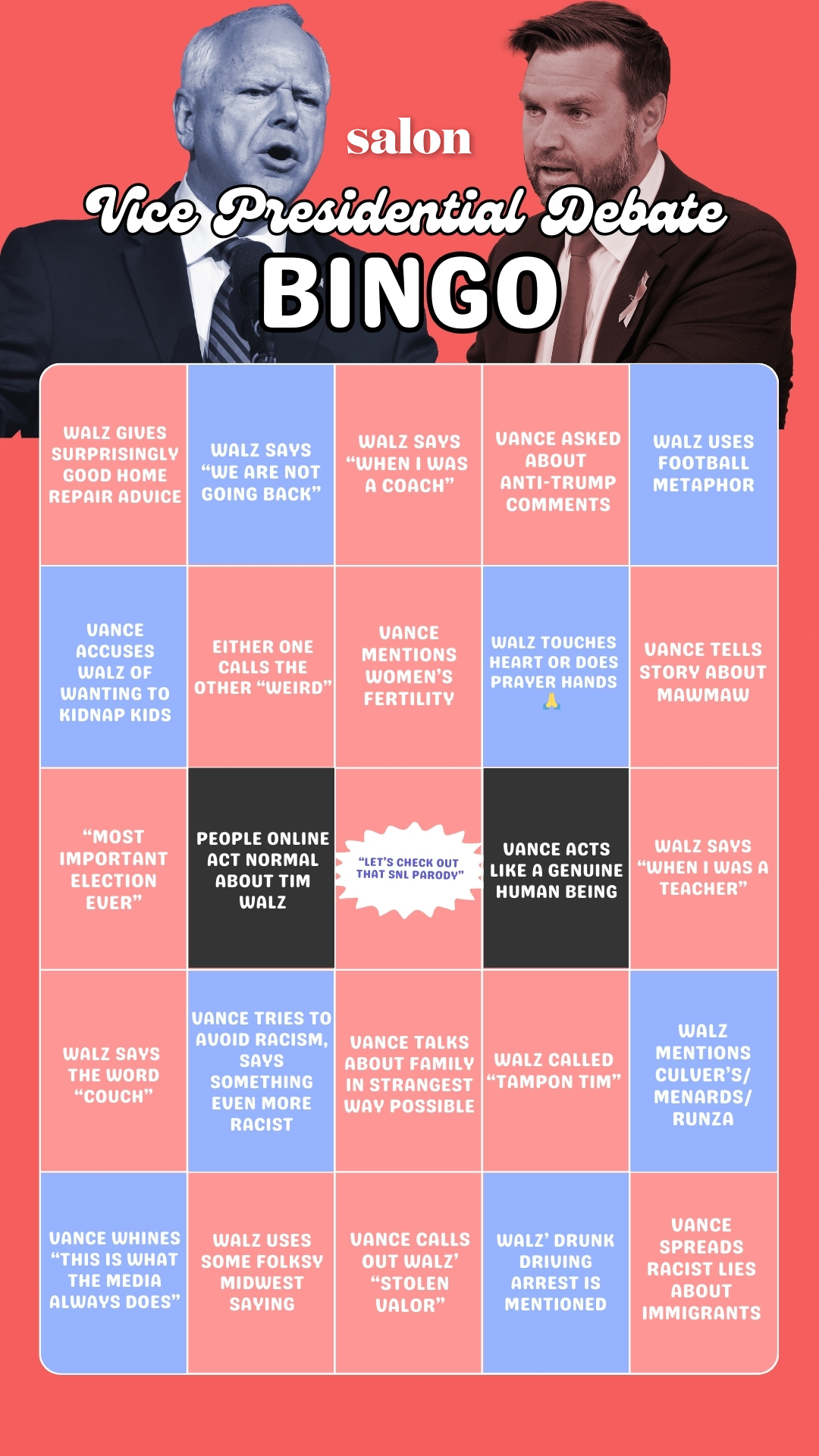
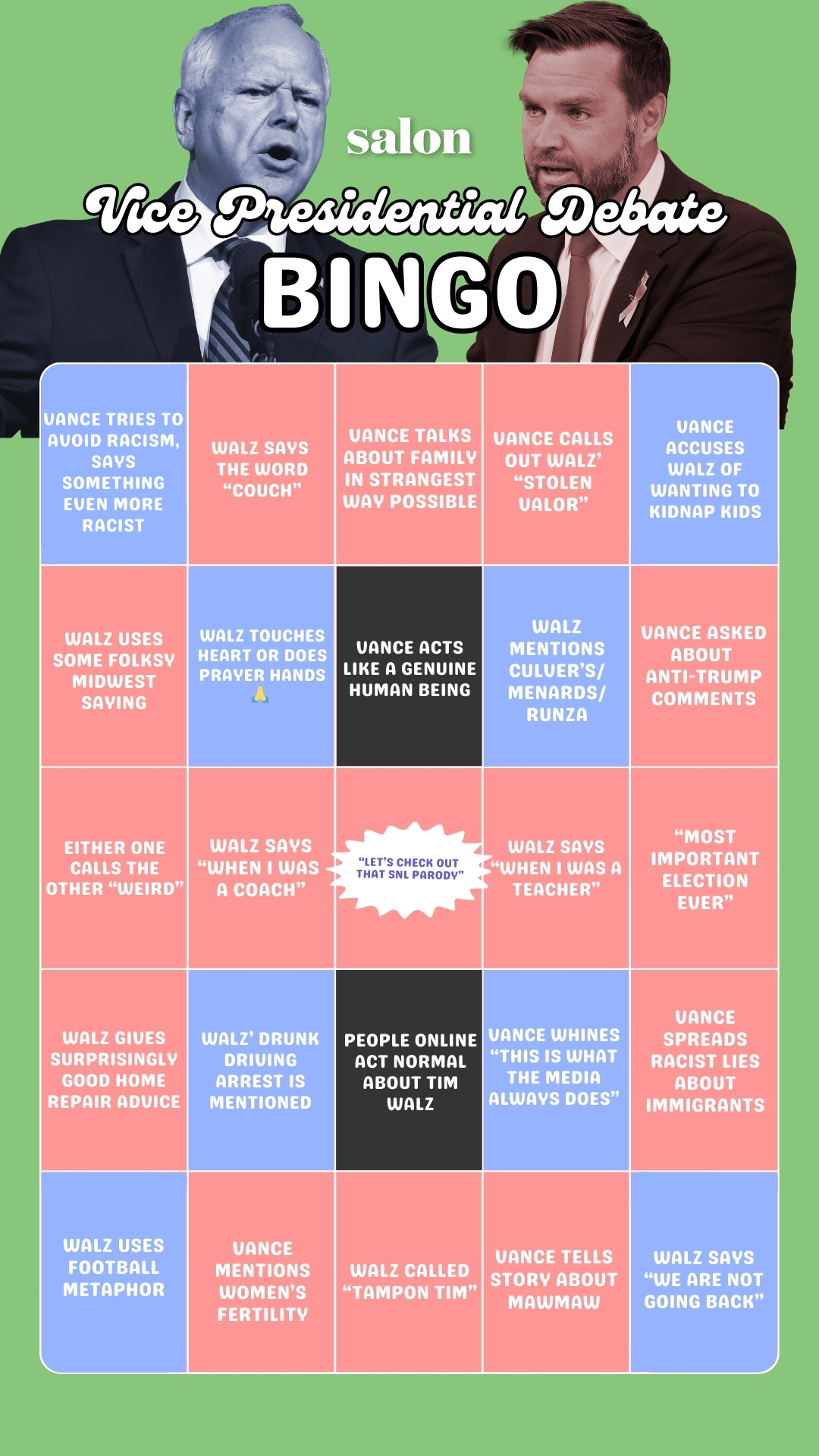
If you still need an excuse to watch Tuesday night's vice presidential debate, look no further than Salon's official VP debate bingo cards:

Debate Bingo Card 1 (Salon)Debate Bingo Card 2 (Salon)

Debate Bingo Card 3 (Salon)

The cards come in three combinations of 24 possible scenarios, ranging from the regretfully inevitable (Vance mentions women's fertility), to the delightfully absurd (Walz gives surprisingly good home repair advice), to the near impossible (Vance acts like a genuine human being). And if even the prospect of claiming five squares in a row doesn't motivate you to tune in, these cards also double as a drinking game to help soothe your nerves (responsibly) during 90 minutes of spirited political debate.

You can learn more about the cards in the video below.

@salonofficial Play along during the #VPdebate ♬ original sound – Salon

Watch the debate on CBS or for free at CBSnews.com, live at 9 p.m. EDT (6 p.m. PDT).

Rachel Maddow sounds alarm on JD Vance’s pro-dictatorship influences

MSNBC's Rachel Maddow on Monday spent a significant portion of her eponymous show detailing the dangers posed by the agenda crafted by Donald Trump's running mate in the 2024 presidential election, Republican Sen. JD Vance, Ohio. 

Maddow kicked off the segment by noting Vance's observation that the majority of American life and culture needs to be "ripped out like a tumor." The host then aired a clip of Vance's recent guest appearance on the "Jack Murphy Live" podcast, hosted by the alt-right blogger and internet personality of the same name.

"Our leader right now is so corrupt and so vile, that if you assimilate into their culture, you're assimilating into like, garbage liberal elite culture. You're not assimilating into traditional American culture," the congressman says. "So this is a tough, tough pickle for me. I don't even know what the right answer is here because you can't just teach these things. You can't teach that we live in a great country if the leaders are actively aligned against it. So step one in the process is to totally replace — like rip out like a tumor — the current American leadership class, and then reinstall some sense of American political religion."

The MSNBC host, clearly disconcerted by the conservative's remarks, then delved into Vance's subsequent elaboration on the influences underpinning his school of thought. "How do we rip out this leadership class? What options do we have besides voting them out? …" Murphy asked in the video.

"This is a tough question, but this is maybe the question that confronts us right now. There's this guy Curtis Yarvin who's written about some of these things," Vance said, referring to the right-wing blogger and anarchist who has championed that ascendence of a singular leader — in favor of the current system of government — who could "dismantle the whole regime." Vance, Yarvin, and Patrick Deneen (author of "Why Liberalism Failed") have all been heavily associated with the New Right movement, which focuses on national sovereignty instead of international cooperation. 

Maddow then shared footage of Yarvin speaking in 2012 saying that he has reduced the "very complicated problem" of "How to Reboot the U.S. Government" with a "simple four-letter acronym, which is RAGE. And RAGE stands for Retire All Government Employees."

"A government is just a corporation that owns the country," Yarvin adds. "And there's a very simple way to replace that, which is what we do with all corporations that have failed. We simply delete them, because it's stale."


Want a daily wrap-up of all the news and commentary Salon has to offer? Subscribe to our morning newsletter, Crash Course.


Maddow then probed Yarvin's process for "deleting" the government, which included putting "generalists" in power and appointing a "CEO."

"If Americans want to change their government, they're going to have to get over their dictator phobia," Yarvin says in the clip. 

Maddow then acknowledged the stark differences in the candidates in Tuesday's Vice President debate: Vance and Vice President Kamala Harris' running mate, Minnesota Governor Tim Walz. In addition to serving as governor, Maddow noted that Walz, the wholesome midwesterner, has also been a long-term congressman, high school coach, football coach, and a decades-long soldier. "JD Vance, the Republican candidate, is a different kind of cat — forgive me," she said. 

"Aside from a brief stint in the Marine Corps, where he served with a public affairs unit, he has spent his entire adult life working for or being financially supported by eccentric right-wing tech billionaires. Specifically, ones who have devoted themselves to the political teachings of this guy," Maddow added, referencing Yarvin's dictator comments.

"I have debated whether or not to talk about this on the show, but I feel like this is an important thing to know about the Republican's vice presidential nominee and what he has to offer. And why he was brought onto the ticket despite his palpable lack of political skill or likeability, his lack of any track record in politics whatsoever. And after he spent less than two years in the only public office he's ever held — which is a Senate seat that he only barely won thanks to one of those eccentric tech billionaires giving the single largest Senate campaign donation in the history of this country. He comes wholly from this very very obscure, eccentric, right-wing subculture of tech billionaires."

"And his relationship with this eccentric, Silicon Valley, pro-dictatorship philosophy has been pretty widely discussed in print, " the host said, showing images of numerous articles from outlets like the New York Times, Politico, The Nation, and more to bolster her claim. 

Chris Brown docuseries centered on history of abuse unveils new accuser

Singer Chris Brown is the next figure in R&B whose history of abuse is set to be put on blast, supported by a new accuser coming forward in a docuseries from Investigation Discovery, the network that produced the bombshell Nickelodeon child abuse exposé “Quiet on Set."

“Chris Brown: A History of Violence,” scheduled to air on Oct. 27, will expose the decades-long legal battles surrounding Brown since his youth, including details of his public assault of ex-girlfriend Rihanna in 2009. 

In the trailer for the upcoming docuseries, the yet-to-be-revealed new accuser is heard saying, “I have not spoken about this matter publicly, but that’s the only way he can be stopped."  

After Brown pled guilty to domestic violence and assault charges in 2009, the singer has been in the news for stalking and threatening to kill his ex-girlfriend Karrueche Tran — which resulted in a years-long restraining order — and was arrested and sued by a woman in Paris alleging sexual assault and several other accusations.

“Chris Brown: A History of Violence” is described by Variety as an examination of “Chris Brown’s past all the way back to his troubled childhood," exploring "the lasting impact of the cycle of abuse" and posing the question: "How does a man with such a violent public record maintain his superstar status?"

Following the premiere of the docuseries, “The View” co-host Sunny Hostin will lead a conversation about intimate partner violence to supplement ID’s third annual “No Excuse for Abuse” campaign. 

Georgia’s strict abortion ban is unconstitutional, judge rules

A Georgia judge struck down the state’s abortion law on Monday, ruling that the prohibition on abortions after six weeks is unconstitutional, CNN reported

In his ruling, Fulton County Superior Court Judge Robert McBurney wrote that the state’s Living Infants Fairness and Equality Act, or LIFE Act, violates a woman’s state constitutional rights. The law had been challenged by the SisterSong Women of Color Reproductive Collective.

"[L]liberty in Georgia includes in its meaning, in its protections, and in its bundle of rights the power of a woman to control her own body, to decide what happens to it and in it, and to reject state interference with her healthcare choices," McBurney wrote.

Georgia's abortion ban was imposed after the U.S. Supreme Court’s decision to overturn Roe v Wade in 2022. After McBurney’s ruling, Georgia must now allow abortions up until about 20 weeks of pregnancy, PBS News reported

“When a fetus growing inside a woman reaches viability, when society can assume care and responsibility for that separate life, then — and only then — may society intervene," McBurney wrote. "An arbitrary six-week ban on (post-embryonic cardiac activity pregnancy) terminations is inconsistent with these rights and the proper balance that a viability rule establishes between a woman’s rights of liberty and privacy and society’s interest in protecting and caring for unborn infants."

This famous hurricane-chasing weatherman says people are avoiding the ugly truth on climate change

Discussing the weather is one of the most politically neutral forms of small talk. Or, at least it was. As climate change has changed the frequency and intensity of devastating storms, including Hurricane Helene, which has claimed over 100 lives in the past week, the changes to our planet have also become a politically fraught topic. How did we get here and how can we move past it toward productive action? Meteorologist Glenn "The Hurricane" Schwartz might know something about explaining complex topics of weather and climate to a general audience.

Growing up in eastern Pennsylvania as I did, Schwartz was a TV staple. Sporting colorful bowties and thick eyeglasses, Schwartz's presence in our day-to-day lives seemed as inevitable as the rising sun. During torrential rainstorms and blistering heat waves, while standing knee-deep in snow or amidst a crowd of friendly WCAU (the NBC affiliate for the Philadelphia area), Schwartz was there, smiling and merrily rattling off scientific trivia along with the pertinent weather-related news.

"Are they so sure that the 97 to 99% of climate scientists are wrong, that they're willing to risk their children's and grandchildren's future? Is that really worth it?"

Perhaps most notably, Schwartz earned his nickname "The Hurricane" because of his experience in the 1970s studying the powerful storms at the National Hurricane Center in Miami, later becoming one of The Weather Channel's first "hurricane specialists" in the 1980s. Much like the heroes of the recent blockbuster "Twisters," Schwartz has lived the weather that he reports on — and this explains why he was vocally dismayed when the filmmakers refused to mention climate change in their movie.

Recently retired and speaking with Salon, Schwartz described how the figurative climate about discussing the weather has changed for the worse since his career began. Although Schwartz traditionally avoids discussing politics (and avoided partisan statements in this interview), he nevertheless felt compelled to speak out on behalf of science. That, of course, means talking about global heating and climate change.

The following interview has been edited for length and clarity.

Can you contrast how the public has reacted to the issue of global warming from when you started your career as a meteorologist to where you are today?

There really wasn't much of a public conversation about global warming until I'd say around 2010 or so. I first learned about it with the National Weather Service in the seventies. I saw Hansen's testimony in the eighties, and of course, Al Gore talked about it a lot, but it was not something that really was discussed on TV, nor were we encouraged or discouraged to talk about it. It was just not a big subject of interest. 

When did that change?

At least in my part of the country, the winter of 2009 and 2010 was so extreme that it got people thinking that something was wrong. They didn't necessarily know what it was. [They believed] it wasn't related to warming — it was something else. But at the same time, there were more studies that were coming out. There are more people, more scientists talking about it, and that really increased during the next decade. It increased a lot. 

That is an interesting observation. I am curious, as somebody who has written "The Philadelphia Area Weather Book," about the history of weather in southeastern Pennsylvania, what observations have you had directly about changes as a result of global warming?

Well, I think the most dramatic change to me is the increase in rainfall, especially during extreme events. I'm not interested as much in averages when it comes to rain or snow, but I'm interested in the extreme events that always have been, and those are the most important ones. Those are the most dangerous ones, and those are the ones that seem to be changing the most over the last couple of decades.

I actually had to adjust my forecasting to some level. When I saw a certain type of storm, I would be predicting more rain than I would have 15 years before, more snow than if the conditions were as they had been 15 years before, because there's just more moisture in the atmosphere. And so if you have the right storm, you're going to get more precipitation. 

You have direct experience encountering extreme weather. Why is it important for the public to contextualize this in terms of climate change?

These are the events that people remember the most. They're the most important ones. They're the most dangerous ones. And it also, it seems to be, and I think a lot of climate scientists agree on it, that the level of extremes has increased more than predicted by climate scientists. The averages are going right along with the predictions, astonishingly accurate over decades. But the extreme weather in the form of floods, hurricane intensification, sea level rise, glacier melting, a lot of those things are happening faster than the predictions certainly early in the IPCC process. It's like each time they come out with a new report, the language gets stronger.

And that's what I've noticed in my writings every time I've written about climate. If I look back at the 15 years that I've been writing about it, my wording is stronger. The level of certainty is higher, and that trend keeps going. And that means that the climate crisis is real. It is continuing, and people don't need to just accept that fact that we need to do some something about it. It needs to be in people's minds that this is a major issue, not just around here, but across the world. And we can see the impacts of this practically every day, on virtually every continent.


Want more health and science stories in your inbox? Subscribe to Salon's weekly newsletter Lab Notes.


"I'm interested in the extreme events… those are the ones that seem to be changing the most over the last couple of decades. I actually had to adjust my forecasting to some level."

So then the question is, what advice do you have for educating the public about this issue? I grew up in southeastern Pennsylvania, so I'm used to seeing you as a weatherman, but discussing the weather wasn't always politically charged. Now it is. How do you suggest people do this? How can they be effective based on your own experiences? 

It's very difficult in today's world. Instead of more consensus in the public, as there has become more and more consensus in science, there is more of a separation. And it is indeed political in many ways. The difficult thing is that people start with the conclusions that fits their political thought and then work their way backwards so that they will then only trust sources that agree with their political interpretation of the science. 

What do you think of people who deny climate change exists? Do you think there is any way to get through to them, or if not, how do we as a society progress despite their stubbornness? 

It's a very difficult thing. When I am dealing with it individually, I try to show the fact that I am not talking about it or analyzing it through a political agenda, but through the accumulation of scientific information and interpretation over decades. Again, in this part of the country, I would hope that my credibility built up over 27 years on Philadelphia television that people know that I'm not an extremist or alarmist. And so when I do have conversations and when I do give speeches about it, I get very little pushback, and I have gotten very little pushback on social media over the years.

It just may be that people don't want to bother arguing with me, or it doesn't mean that everybody agrees, but again, at least in this part of the country, if you watched somebody for many, many years, you get to evaluate them in some ways and get to see if they're bringing your personal biases to the subject or not.

We need your help to stay independent

I think people need to think about their children and grandchildren and their futures. Are they so sure that the 97% to 99% of climate scientists are wrong, that they're willing to risk their children's and grandchildren's future? Is that really worth it? Somebody mentioned recently that you have a car and you're driving, you don't expect to get into an accident, but you know that there is some chance of that. And so having seatbelts and airbags there, just in case. If you have homeowner's insurance, you don't expect your house to catch on fire, but the chance is not zero, so let's take precautions to prevent it from happening.

When I first started and was taught meteorology, [I learned] the consequences of being wrong are different, depending on what you say. If you over-warn your consequence is losing some credibility; if you under-warn, that could lead to lives lost.

The consequences of the deniers being wrong are way worse than the consequences of… there's a difference between being alarmed and being alarmist. So people should be alarmed. You don't need to be alarmist because there are things that can be done to prevent this from getting a whole lot worse.

Corey Feldman on why “The Birthday” is his favorite, even though it took 20 years to release

Corey Feldman claims that his performance in “The Birthday” is his favorite ever. And it is easy to see why. The actor carries this allegorical cult film as Norman Forrester, a young man who is nervous about meeting his girlfriend Alison’s (Erica Prior) parents at her father’s (Jack Taylor) birthday party. His anxiety increases after several awkward exchanges, leading him to admit, “I feel like the wrong corpse at the wrong funeral.”  Then things get really weird as Norman learns of something sinister and life-threatening. But as he tries to save folks, no one will listen to him. 

Feldman’s performance is very distinctive and intentional. He speaks in a nasally tone that sounds whiny even when he is sincere. His body language is coiled until he really gets scared by the situation he is trying to prevent. When Norman is given a gun, Feldman expresses his discomfort and empowerment with aplomb. 

The 2004 film has gone largely unseen since it was made. Jordan Peele screened “The Birthday” in Lincoln Center earlier this year. It will finally get an American theatrical release on October 11, after a screening at Fantastic Fest. 

Feldman’s performance deserves to be seen because it illustrates what he can do as an actor, and in a leading role. His early success came mostly in ensemble films in the 1980s — “The Goonies,” “Stand by Me” and “The Lost Boys.” The latter, of course, also featured Corey Haim, whom Feldman was paired up with for several films, including “License to Drive” and “Dream a Little Dream,” as well as a reality series. 

Feldman’s performance deserves to be seen because it illustrates what he can do as an actor, and in a leading role

While Feldman worked frequently in TV, movies and music videos, his career was, at times, derailed by drug addiction issues, legal woes and sexual abuse scandals. Feldman even produced a 2020 documentary “(My) Truth” The Rape of Two Coreys."

It is frustrating that “The Birthday” went unseen for two decades but now that the film is available, folks can see why Feldman is justly proud of it. The actor spoke with Salon about “The Birthday” in advance of the film’s release.

The following interview has been edited for length and clarity.

How did you come to work on this film and find Norman’s character? He is very mannered and very distinctive. 

I always had this innate ability, since I was a child — and I guess this is part of being groomed to be a lifelong career actor — when you are young and you do this as a matter of habit, you become more engaged in the idea of the art of what you are doing and the aspect of trying to improve it. That gets your imagination going. When you read a script, you visualize what it will look like, how it will play out and how it will feel. I developed this ability very early, and I remember reading scripts for “Gremlins” or “Friday the 13th: The Final Chapter,” where I was able to really visualize the film. I would see how my character would act, behave, my mannerisms and physicality.  

When I was little, I would play act in a swimming pool, for example, creating fake scenes from fake movies. I would imagine doing a Rocky bout underwater and imagine myself as both Rocky and Apollo Creed and would go back and forth and play both roles. That’s how I see and interpret scripts. When I see a character, it comes to life and speaks to me in that way. With Norman, in particular, the moment I read the script that character immediately came to life exactly as you see it on the screen. There was a kinetic writing that went along with Norman’s personality.  I immediately associated that with the writer/director, Eugenio Mira, who has that kind of intense neurotic energy. I didn’t know him when I read it, but I realized that afterward. 
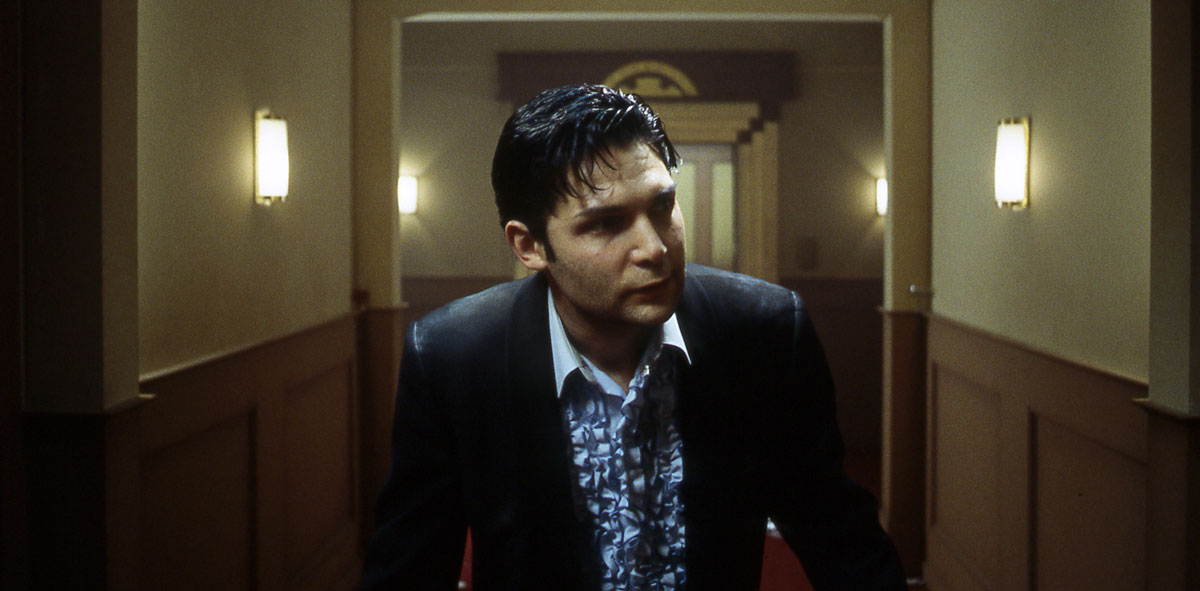
The BirthdayThe Birthday (Courtesy of Drafthouse Films)When I first got there, Eugenio said, “Show me Norman.” I said, “No, we have to wait. When I become Norman, I want you to understand it when I fully engage.” We waited until the first day of rehearsals before he heard the voice. He was scared of it. That it was maybe too much. I said there will be highs and lows, as with any human. There are moments where people are insecure and neurotic and moments where they are much more self-assured and stronger, and that will be what his character is experiencing as we go on this adventure with him. There will be change and growth. Eugenio had to be patient and trust that I knew where this character goes. He gave me all that trust and let me run with it.

Why did the film not see a U.S. release for two decades? 

There’s the million-dollar question! [Laughs] I have my own theories. The official answer is that the Executive Producer said he didn’t want to accept any offer that was not a full refund of his expenses to make it theatrical. We wanted it theatrical, but most distributors wouldn’t give money upfront, or would only give a little upfront, saving most [payment] for the backend. DVDs were fading out then, and times were changing. He held strong. We played at some festivals and got tremendous reviews. It was getting the buzz it needed, but he said, “No.” It is what it is. 

I wish there was a clean answer. But after 20 years, he finally gave in and relinquished this hold over this film and let it go. Thank you to the man who allowed it. I’m not going to mention his name because I don’t want to badmouth. I’m glad he made the right choice, and it is out, and people will have the opportunity to see this beloved film. Although the payoff may not be what people expect, it has its reward. It’s a dark comedy in the Lynchian style. 

Without giving anything away, Norman learns something and tries to warn people, but they don’t seem to listen to or believe him. What about the film’s allegorical nature?

Isn’t it ironic how it parallels the last 20 years of my own experience on this earth? You can’t ignore the paradox or similarities or the timing of it all. It’s almost eerie. So many overlaps and overlays with Norman and the “Boy Who Cried Wolf” experience trying to get out and save the world with no one taking him seriously because he is the unexpected hero. 

No one sees Norman as the lead for a romance. He is not [the object] of a woman’s dreams when you first meet him. He is the opposite of that, a shaky, neurotic, small, insecure man who has little belief in himself. He is scared of his own girlfriend, and his own shadow and has many ailments. Everything in his life is about fear. But here he is, in the end, swinging into action. He finds this inner strength he didn’t know existed to do things that are so unbelievable to him as a character. If you told Norman at the beginning of the film, 'This is where your night will end up,' he would say, “You’re crazy. I would never do that!” and yet, there he is! 

Every moment in that film is based on intent. There is nothing accidental. We wanted to create an awe-inspiring, believable, and fantastical adventure. We want to make you believe that people can transform in a life-threatening situation. We wanted to expose that experience for the audience, taking them on that journey of one man’s mental gymnastics and what he was willing to do for the love of his girlfriend and the idea of love.

Norman has some very interesting exchanges with Vince (Dale Douma), who is attending a different party in the same hotel, and Theodore (Richard Felix) who enlists his assistance as things get weirder. What observations do you have about Norman’s different interactions? The way you recalibrate Norman’s reactions is interesting.

There’s a subconscious thing that people do, which Is when you are in a different environment, with different groups of people, you change your personality and your persona a bit. You craft your communication differently. You go with the flow to some extent. To some degree, you manifest a bit of a different personality that works better for each situation so you and everybody around you are comfortable. 

It's a form of codeswitching… 

That is what that experience is with Norman. He has his high school buddy [Vince] around and he remembers being a kid and talking about girls in the locker room. There was a time when Norman wasn’t so neurotic. But maybe he also felt he wasn’t the best athlete and didn’t fit in because he didn’t like taking a shower with all the guys. I put him back in his school days whenever he interacted with his friend Vince. Juxtaposing that with this Indiana Jones character, Theodore, who may be a kook or savior. Is Theodore out of his mind and wandering in here with this fantasy, or is he really there because there is something going on, and this is Norman’s calling? Is Norman going to warn everyone there’s a crazy person running around the hotel, or is he going to believe this guy and take his gun and go on this adventure too? There is a whole side Norman develops that he didn’t know existed.  

Part of the film’s fun is that many of the scenes feature Norman in the foreground with action often happening behind him. Can you talk about the style of “The Birthday”? 

That’s what makes it so unique. In keeping with the real-time idea of the film, you know Norman’s presence is there even if you don’t focus on him. If a shot starts on his shoe and pans up into the scene, maybe you hear voices before you see who is talking. You are focused on Norman, and this is all [told] through his eyes. The camera later winds back around and is at the center of the situation conveying his message to whoever he is talking to, but in the background, life goes on. 

"So many films forget the people in the background are part of the story and they exist"

In most films, the background actors are pantomiming. They walk by and look good, or they look weird, or they run from a crowd. They are not used as actors. They do basic crowd stuff. But this film choreographs every person in the room with their own agenda, personality and character. Every person has a developed character, except some of the guys at the bachelor party. We create a world within the world. So many films forget the people in the background are part of the story and they exist — especially in the ballroom scenes. We did these seven-minute-long takes with no cuts, so everyone in every corner of the room was working.


Want a daily wrap-up of all the news and commentary Salon has to offer? Subscribe to our morning newsletter, Crash Course.


If this film had come out when it was made, do you think the trajectory of your career would have shifted? 

"There were people in high places that didn’t want me to be a success"

Absolutely! There’s no question. I don’t want to go down that conspiracy theory road. I feel the stop of this film was done intentionally and for that very reason. There were people in high places that didn’t want me to be a success. They wanted to portray the idea of a fallen hero, someone who lost their craft and ability and was no longer the talented kid they once were. That was the image that they tried to hang on me. When I say “They,” who knows who they are? All I know is that there is an obvious lineage and timeline to the great films I made during those years that somehow were not released or did not get seen, this being the cherry on top. The schlockiest films, the ones I had to take for money to survive are strewn about everywhere. You can always see life’s most embarrassing moments. This is the first time where I feel a bit of validation and redemption — Thank God, while I am still here to enjoy it — to watch a piece of art I cared so much about.

Can you talk about your career as a whole? You found early success as a child actor, but you later struggled with addiction issues, legal woes, sexual abuse and other scandals…

To put things in perspective, my drug addiction issues and legal issues consisted of a whole two years. I’ve been in the entertainment industry for 50 years this year. That says it all. Why would you hang on to a folklore story about someone who one time had a problem but ever since has tried to help others, and rebuild themselves, and be a consummate professional who tries to do great work? When you look at someone like that, who has done everything they can on their end, what is the problem? My manager and I would hear that repeatedly, “Oh, Corey, they don’t want to work with you, they are worried about this or that.” But there is no problem. We cleared that up. But no one would have an answer. There was this folklore idea that at one time I was a problem child. That definitely happened for a couple of years, but I was also a teenager who grew up on a set and I didn’t have parents giving me guidance. I was also given drugs by some of the people I was working with. I was a kid in an adult environment where people were partying, because it was the '80s, and this is what you do. Then those very same people started writing stories about me, saying I was a bad guy doing drugs. Once I got sober, I never looked back or showed up high on a set, or got arrested again. I never had any of those problems. So, you would have thought it would be forgiven and forgotten. There has to be a reason why this has continued on. There has to be more to the story, or a bigger picture, but whatever the case may be, I’m not mad at it. I don’t resent it. I had to take a step back and really do only the things that I love because there was a pitfall in doing work for financial purposes. If I want to be taken seriously as an artist, I need to put my foot down and not do any more films that I don’t believe in. If it is not challenging and I am not putting my teeth into my acting, then I don’t want to do it. I made that a policy.

I appreciate what you said, but I was trying to get at you taking control of your career. I know you wanted to do more work behind the camera, producing and directing. 

I have written a lot of the stuff I do, but people don’t realize that because I don’t take the credit. I have been a ghostwriter on a lot of my independent stuff. Even the mainstream stuff, I wrote funny lines in “The Lost Boys” and “The ‘Burbs.” There was always stuff that I added and improvised along the way. As I got better and sharper at it, I was asked to do it more and more, to the point with my independent films, I would rewrite the script or codirect, or give advice. You don’t want to be pushy, so I would do that stuff behind the scenes. 

I tried to direct a film for a low-budget company, but that was a disaster, so we don’t want to talk about that. I had to pull out and they edited the way they wanted to. I was trying to make a mockumentary-type fake B-movie comedy, but the company didn’t see the humor in it and turned it into schlock. I didn’t get away with my little experiment. [Laughs] I have produced 10-15 of my films, but I haven’t fully directed the way I would like to. I would like to dedicate a section of my life and career to that, but I don’t have to, either. It’s been a dream to have a production company, and edit, and write and star in films I direct, and maybe I will. But I didn’t expect to have this burgeoning music career and have arena shows and get Top 40 billboard hits, so that’s been a surprise in my later career, and I’ve enjoyed it very much. The world is my apple, I suppose at this point. We’ll see what happens next. But I am just grateful to still be alive, and to be here, and that people are getting a chance to appreciate some of the art I’ve worked so hard to create.

“The Birthday” will screen at Alamo Drafthouse Theaters nationwide on 10/1 as a one-night-only event, followed by a theatrical expansion throughout October.


From “Orphan X” to AI: How community keeps storytelling alive

The Butt-Clappers

That’s what was displayed on the T-shirt of the dignified-looking man in the front row of Interabang Books in Dallas when I arrived for my author event. It was a line from my latest "Orphan X" thriller, a joke that is (I hope) funnier in context. He’d had it mocked up in the style of a rock band tour T-shirt and other readers were laughing and snapping selfies with him. I did the same before taking the microphone and by the time I was done speaking, the T-shirt had already been posted on various social media platforms and shared among fans. 

Signing is my favorite part because I get to talk to readers one-on-one. A high school teacher had driven over five hours to get books personalized for her students. There were aspiring writers asking for advice, a woman who tearily recounted how a scene had brought up grief about the murder of a friend, fans joking about favorite characters, and a married couple arguing over which actor could play my protagonist. A young man told me in a hushed voice that when he’d been suicidal the summer before, his father had brought my books to him in the facility and that reading had kept him alive. I wanted to hug him but wasn’t sure if that would be weird. Instead, I signed his book with the most popular of The Ten Assassin’s Commandments, How you do anything is how you do everything, along with some words of encouragement. 

I loved being there. How could I not?

My readership is delightfully varied along nearly every demographic criteria—young and old, conservative and liberal, secular and religious, action fans and those who prefer psychological drama. I split my tours evenly between red and blue states and my readers split their intake between ebooks, audio, and good old-fashioned physical copies. They read in English and Hebrew, Dutch and German, French and Bulgarian, and a few dozen other languages.

Not just that. My community has an intimate knowledge of all my characters, starting with my protagonist, Evan Smoak, whom they mostly like but wish would finally make up his mind about Mia. That would be Mia the prosecutor, who lives nine floors down from Evan in their apartment building in Los Angeles. And then there’s Josephine, the seventeen-year-old wunderkind-slash-hacker whose real mission is to turn Evan into a fully-fledged human being. Every time I interact with my readers, we talk about the people we know in common—my characters. And they care a lot. They feel connected to them.

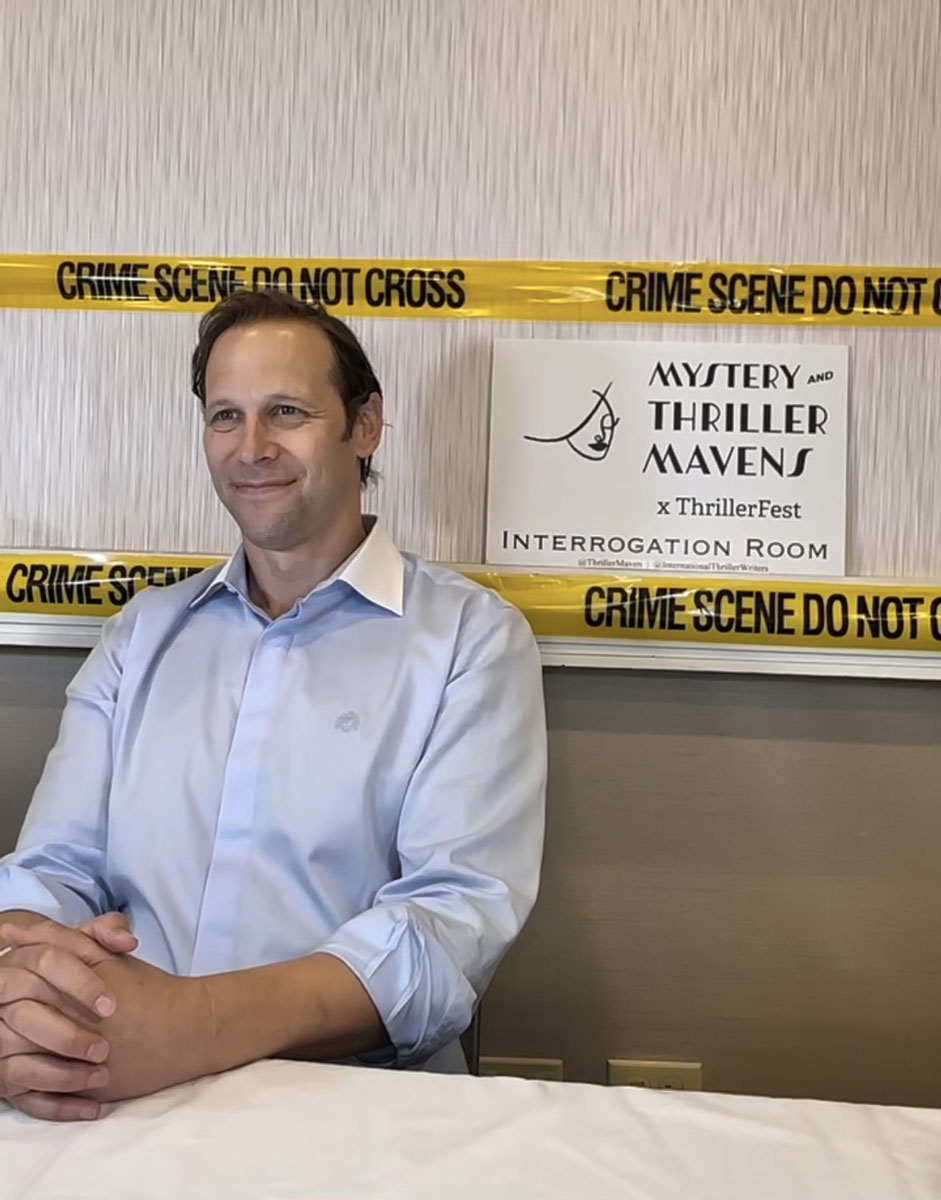
Gregg Hurwitz at ThrillerfestGregg Hurwitz at Thrillerfest (Photo courtesy of Kaye Publicity, Inc.)

"In five years, will human beings, who have been making art and telling stories for tens of thousands of years, still be doing that?"

What does that mean, given that we live on the precipice of an AI revolution? No one is sure whether it’s going to save us or destroy us—and that’s especially true in the world of content production. My friend, the microprocessor engineer and not entirely evil genius Jim Keller, recently told me that the scalable AI hardware he is creating will soon enough be able to help create, say, a Faulkner novel at the touch of a button. We can request however many Faulkeresque tomes we want, specifying the length and topic of each one. We can even dial the vocabulary up or down to match our precise IQ and level of reading comprehension. The same of course will be true of everything else from “news” to porn, which will be generated for us in combinations and contortions we can scarcely imagine.

Amazing, right? Endless Faulkner! Or Stephen King, JK Rowling, Toni Morrison, or anything else! 

The big question is: In five years, will human beings, who have been making art and telling stories for tens of thousands of years, still be doing that? Or will our imagination have been subsumed by the robots? Will we be confined to their imagination? Is it inevitable that AI will become Sorcerer Mickey and we’ll be the eyeless mops hauling the sloshing buckets of our customized content?

I’m here to tell you that the end is not, in fact, near, that human beings will continue telling their own stories.


Want a daily wrap-up of all the news and commentary Salon has to offer? Subscribe to our morning newsletter, Crash Course.


Let’s recall: The promise of AI, at least when it comes to content, is that a computer will produce the perfect novel or movie or sonata or porn star just for you. It will be ideally, mathematically suited to your tastes—in fact, it will do a better job of catering to you than any human being ever could. It will know you better than you know you, and you are going to laugh, cry, be titillated—whatever—more than you ever imagined. 

The only problem with this amazing AI “just for you” content is that you only think you want it.

You don’t actually want it.

Because at the end of the day, who the hell wants to read a book that’s created by a non-human or that’s created only for them?

Turns out, not many. 

At least according to the AI study we commissioned at International Thriller Writers, where I currently serve as co-president with Lisa Unger. Of the let’s-hope-not-prescient 666 respondees, 97.1% believe publishers should be required to explicitly state on the cover if a book has been written using AI. 

It’s the same reason why, in 1996, no one cared to watch Deep Blue play Deep Blue. We wanted to see how Kasparov fared against the AI behemoth. Put differently, who wants to watch an AI-created basketball game? We want to watch Jordan soar. I could computer-generate an athlete pole vaulting three dozen meters. Or show you this. Which has your heart in your throat?

So, what do we actually want? What we want—and I say this having given nearly a thousand readings in hundreds of cities in dozens and dozens of countries—is community

That is what we’re endlessly seeking in this mosaic-fragmented age, what we’re bemoaning the lack of, what we feel as a phantom twitch in our oxytocin-starved souls. I remember lining up for hours to see Burton’s "Batman" as a gawky sixteen-year-old in 1996, when nerdy was truly nerdy, not a front-handed compliment. That weekend premiere was shared communion, the audience gasping as one as the Batwing shot upward to fill the Batlight of the moon. My-favorite-part-ism prevailed as we shuffled out of the theater, into the next week, and back again for second viewing, awash in a collective dopamine glow. 

By contrast today I find myself stupor-scrolling through billions of dollars of entertainment on our Apple TV, unable to determine what will distinguish itself as being interesting to watch. A new "Star Wars" show with nine Oscar nominees? A fresh Marvel sub-franchise directed by Someone Who Made That Wonderful Indy? Nothing feels magical. Luxury has been the death of us, our interests and our passions leeched to a dreary gray blur of programming. Excessive reliance on AI writing rather than creation-driven with community in mind promises more of the same. 

Appointment viewing was once boss in TV, cementing us together in shared narratives of Who-Killed-JR? and Did-Heather-Locklear-Really-Show-Up-In-A-Nighty-On-"Melrose-Place"? But with our household viewing withering on the streaming vine, we can scarcely maintain a shared conversation around the virtual watercooler anymore. Our cultural discourse has grown constipated. Have you heard of "White Lotus?" What app is it on? Wait, don’t tell me anything—I’m only at Season 2 of "Succession." 

The headlong rush into streaming fragmentation was driven, it seems, by a desire to spike short-term quarterly earnings reports to please the Wall Street overlords. In doing so, studios relinquished not merely the talent and experience of the artists, but in fact that of their executives and the producers they employ, deft as (some of them) are at talent relations, shepherding and curating, providing the tools to chisel the living form from the block of marble. 

"What is moving about a novel is not that it can be readily generated for us alone. It’s that we have a chance to share in it together"

Likewise, publishers who opt to create push-button novels will be sawing off the proximal tree limb with Wile E. Coyote abandon. Why relinquish that much narrative and business expertise in steering stories along and bringing them to commercial and literary fruition?

What is magical about a book is not that it is created only for us. Floating around in WALL-E pods imbibing our own bespoke distractions like force-fed ducks is a far cry from the exciting future our tech advancements can promise. It’s Pinocchio’s Pleasure Island, where we can gorge on any immediate desire and have all of our (supposed) wants realized—until they change us into something that we weren’t before. 

What is moving about a novel is not that it can be readily generated for us alone. It’s that we have a chance to share in it together. That someone somewhere created something that could speak to a community of us, that opened the door to new understanding, new possibilities, new meaning. If one of my novels sells a million copies, a million different versions will be spun into life in the brains of my readers—but they are all experiencing, enjoying, discussing, and grappling with the same story. It makes us believe in the possibility of connection—which is the bedrock, the essential underlying ingredient of community

 Ostensibly, "Orphan X" is a series of novels about an ex-government assassin who saves people in a bad spot. Every time someone calls his encrypted phone line, 1-855-2-NOWHERE, Evan Smoak answers, “Do you need my help?” But really, "Orphan X" is about a deeply flawed man gradually becoming a human being, learning to speak the strange language of intimacy, and, yes, building a community. 

That’s the tension that courses through the series—and, in my view, through all of us, all of our lives. We want to be connected to other human beings, and the perfect, algorithmically determined “just for you” content of the AI is the opposite of that. Which is why the storytellers—the humans—will prevail. 

Because together, we can offer something the machines can’t.

Gregg Hurwitz's latest book, "NEMESIS," comes out on Feb 11. 

Our evolving relationship with self-checkouts and self-service kiosks

Back in July, a survey conducted exclusively for Newsweek found that a majority of Americans wanted self-checkout kiosks to be completely removed from retail stores. The poll noted that 62% of shoppers disliked self-checkout technology because it takes away the job of an actual store cashier. Forty percent of shoppers said they were against self-checkouts because they prefer speaking to someone. And 27% of respondents said they don’t like the technology because it doesn’t accept cash.

The overwhelming sentiment customers had towards self-service technology was distrust. Since its inception, self-service kiosks — an interactive touchscreen device that allows customers to purchase services sans any interactions with a store employee — have been vilified for taking away labor opportunities and reducing labor costs. However, according to a new report from CNN, kiosks have shown “the unintended consequences of technology in fast-food and retail settings,” which surprised consumers, fast-food employees and analysts alike.

As explained by Nathaniel Meyersohn, self-service kiosks have largely shifted cashiers to other tasks that “help increase sales, easily adjust prices and speed up service.” For example, several McDonald’s franchisees are implementing kiosks that can take cash and accept change. Those franchisees are also transferring their cashiers to other roles, like new “guest experience lead” jobs that help customers use the kiosks.

At Shake Shack, self-service kiosks help “guarantee that the upsell opportunities” like a milkshake or fries — popular menu options — are suggested to customers upon ordering. “Sometimes that is not always a priority for employees when you’ve got 40 people in line. You’re trying to get through it as quick as possible,” Shake Shack CEO Robert Lynch said during an earnings call last month. He added that cashiers are not stripped of their jobs but instead, reassigned to maintain the dining area, deliver food to customers or work in the kitchen.     

“In theory, kiosks should help save on labor, but in reality, restaurants have added complexity due to mobile ordering and delivery, and the labor saved from kiosks is often reallocated for these efforts,” RJ Hottovy, an analyst who covers the restaurant and retail industries at Placer.ai, told CNN.

In recent years, self-service kiosks have been “threatened as a fast-food industry response to higher minimum wage laws,” Meyersohn wrote. Former McDonald’s CEO Ed Rensi said in a 2016 Forbes op-ed that the fight for a $15 minimum wage “has negatively impacted the career prospects of employees who were just getting started in the workforce while extinguishing the businesses that employed them.”

“I and others warned that union demands for a much higher minimum wage would force businesses with small profit margins to replace full-service employees with costly investments in self-service alternatives,” he added.

California’s $20 minimum wage mandate officially went into effect this year following a months-long battle between state lawmakers, labor unions and franchisees regarding a wage increase. Under AB 1228, fast-food workers are given a 25% hourly raise, which increases the previous $16 per hour rate by $4. The state’s newly created Fast Food Council can also hike up the minimum wage by up to 3.5% yearly, depending on inflation.

Following California’s minimum-wage mandate, state lawmakers have proposed a bill that would require many grocery chains and drug retail stores to have staff members work their self-checkout kiosks. Senate Bill 1446, which is part of a bill package introduced by state Sen. Lola Smallwood-Cuevas in February, would also require retailers to complete a worker and consumer impact assessment before introducing self-checkout technologies, including artificial intelligence.  


Want more great food writing and recipes? Subscribe to Salon Food's newsletter, The Bite.


The bill comes amid growing concerns about “shrinkage” — defined as missing inventory from theft and broken items, per USA Today. According to testimony from Smallwood-Cuevas in a hearing earlier this year, the bill aims to combat retail theft, increase employment opportunities and protect workers and shoppers.

As noted by CNN, self-checkout has not caused retail job losses. Indeed, the technology has some faults. They can cause long lines and prolong order deliveries due to consumers not knowing how to use self-checkout devices. They can break down. And, they can lead to “higher merchandise losses from customer errors,” Meyersohn added. What they haven't caused, though, are fewer job opportunities.

Within the quick-service and fast-casual segments of the restaurant industry, staffing levels were nearly 150,000 jobs (or 3%) above pre-pandemic levels, according to statistics from the Bureau of Labor Statistics

Biden will visit North Carolina to survey Hurricane Helene aftermath

President Joe Biden is set visit North Carolina on Wednesday to survey the devastating damage from Hurricane Helene, the White House announced on Monday.

The record-breaking storm that tore through Florida, Georgia, the Carolinas and Tennessee over the weekend has killed over 130 people as of Tuesday, according to a tally from CNN. Hundreds of people are still unaccounted for.

Buncombe County, N.C., which includes Asheville, was hit the hardest. At least 40 people have died and many remain without running water, electricity, internet or phone service. North Carolina Gov. Roy Cooper said Tuesday that over 1,100 people are in shelters and 57,000 people have already applied for FEMA assistance, WSOC reported.

Biden will start his visit at the Emergency Operations Center in Raleigh before taking an aerial tour of Asheville. He said he plans to visit Florida and Georgia “as soon as possible after that.”

Since Helene touched down in Florida on Thursday, Biden has approved major disaster declarations in both Carolinas, Florida and Georgia and deployed more than 3,000 federal workforce employees to support the impacted states alongside FEMA response. 

“I’ve directed my team to provide every resource as fast as possible to your communities, to rescue, recover and begin rebuilding,” Biden said on Monday.

The president’s response to the storm has been criticized by Republican nominee Donald Trump. At an event in Valdosta, Ga., on Monday, Trump falsely claimed that Biden was “going out of their way to not help people in Republican areas,” asserting without evidence that the president was not responding to Georgia Gov. Brian Kemp because he was “sleeping.”

The same day, Kemp confirmed that he had in fact spoken with Biden, telling reporters that the president asked: “Hey what do you need?”

“And I told him we got what we need, we’ll work through the federal process. He offered that if there’s other things we need just to call him directly, which I appreciate," Kemp said.

Even with the full extent of damage not yet known, Hurricane Helene already ranks among the top 10 deadliest storms in U.S. history.

I tried Dubai inspired chocolate, the latest sweet treat to go viral across social media

Back in 2023, food influencer Maria Vehera went viral for an ASMR video of herself eating a thick chocolate bar filled with green-colored pistachio cream. The video, which garnered over 77 million views and 5 million likes, quickly spurred intrigue amongst hundreds of people who were looking to get their hands on TikTok’s latest confectionary craze. 

Vehera wasn’t eating any ordinary chocolate bar — she was eating Dubai chocolate. The decadent bar is exclusively made at FIX Dessert Chocolatier, a Dubai chocolate shop, and fittingly called “Can’t Get Knafeh of It.” Each bar includes toasted kataifi — thin strands of shredded phyllo dough pastry — pistachio and tahini paste that’s all mixed together and encased in milk chocolate.

@mariavehera257 @fixdessertchocolatier WOW, JUST WOW!!! Can’t explain how good these are! When a chocolate, a dessert and a piece of art meet this is what you get! 🍫 "Can't Get Knafeh of it," "Mind Your Own Busicoff," and "Crazy Over Caramel." Order on Instagram Chatfood or Deliveroo and let me know what’s your FIX? Instagram : fixdessertchocolatier #asmr #foodsounds #dubai #dubaidessert ♬ оригинальный звук – mariavehera257

Sarah Hamouda, the founder of FIX, told CNN that she was inspired by her pregnancy cravings to create something more than the “typical,” everyday chocolate bar. The bar is essentially a pistachio rendition of knafeh: a traditional Middle Eastern dessert made with kataifi, soaked in a sugar-based syrup called attar, and layered with cheese, clotted cream or nuts.  

“We take a lot of time and effort, and put a lot of love into our bars,” Hamouda said. “We want to create an experience.”

In recent months, the demand for Dubai chocolate bars has skyrocketed. Hamouda told CNN that in their early days, FIX was receiving around six orders per day. Now, the company is receiving up to 100 orders per minute — and that’s just exclusively in Dubai.

Indeed, the chocolate bars are currently available only in Dubai. In an Aug. 13 Instagram post, the company told its customers to “beware of scammers” that are reselling their chocolate and claiming to be FIX. Per FIX, the company does not have a website and a physical store. They do not sell their bars on social media nor do they have any authorized resellers located locally or internationally.

“We are working incredibly hard to make FIX available across more cities, ensuring you get the quality and authenticity you deserve,” the company said in its post.

As for U.S. consumers looking to try Dubai chocolate, the closest they can get to the real deal is copycat bars from independent sellers or chocolatiers who have developed similar recipes. It’s not authentic Dubai chocolate by any means but rather, Dubai-inspired chocolate.    

On TikTok, many eager taste-testers have satisfied their Dubai chocolate cravings at the Nuts Factory, a family-run establishment specializing in nuts, dried fruits, spices, coffee, tea and chocolates. Hopping on the bandwagon, I decided to pay a visit to one of its Brooklyn-based shops, which was a mere 25 minute walk from my apartment.

The Nuts Factory sells two kinds of chocolate bars, one made with milk chocolate (similar to FIX’s bar) and another made with dark chocolate. I was tempted to get a dark chocolate bar but in hopes of staying as authentic as possible, I settled for the milk chocolate bar. An employee at the Nuts Factory told me the bar is best enjoyed slightly “chilled” to ensure the filling is “extra crispy.” I disregarded their advice when I enjoyed my first bite of Dubai-inspired chocolate, purely because I was too excited — and impatient — to refrigerate the bar.

The bar was perfection when I unraveled it from its gold foil wrapping. The chocolate was chunky and the filling was bright green in color and creamy in texture, just like the pictures had promised. The only thing that was missing was the bright green swirls seen on FIX’s “Can’t Get Knafeh of It” bar. But considering that this was a dupe, I wasn’t really bothered by the lack of decorations.


Want more great food writing and recipes? Subscribe to Salon Food's newsletter, The Bite.


The highlight of the bar was the toasted kataifi, which was deliciously crispy when I enjoyed the bar moments after I purchased it and deliciously crispy hours later, after it had been chilled in the fridge overnight. I was expecting a stronger pistachio flavor but overall, the flavor was quite subtle. It wasn’t bad per se, but if the bar had stronger notes of pistachio, it would have paired better with the milk chocolate, which I found to be too sweet and overpowering in flavor.

That being said, it’s still a chocolate bar at the end of the day and chocolate is delicious regardless of how simple or fancy it is. Would I go back to the Nuts Factory for seconds? Considering that each bar is priced at $18.99 each, probably not. My Dubai chocolate craving has been satisfied, although I will say that if FIX decides to expand their business to the US, I will definitely try the real deal. 

According to Today’s Rachel Askinasi, it looks like I did miss my chance to try FIX’s Dubai chocolate in the States. “In preparation for the launch of their newly redesigned suite at the U.S. Open Tennis Championships, the team at UAE airline Emirates flew to New York from Dubai with a suitcase full of Fix chocolate bars to share with their guests,” Askinasi, who tried the bars herself, wrote earlier this month.

I’ll be sure to keep my eyes out for the chocolate next time.

Iran launches missiles at Israel following invasion of Lebanon

The Israel Defense Forces confirmed that Iran launched missiles into Israel "a short while ago," NBC reported Tuesday afternoon. It is unknown what if any damage the attack has caused.

The U.S. had earlier warned that Iran was planning to attack Israel by launching a ballistic missile, The Wall Street Journal reported.

The attack could significantly escalate tensions in a region already on the verge of an all-out war, with the government of Israeli Prime Minister Benjamin Netanyahu recently ordering a limited ground invasion of southern Lebanon after earlier rejecting U.S. calls for a ceasefire. Iran had vowed retaliation for last week's assassination of Hezbollah leader Hassan Nasrallah.

“The United States has indications that Iran is preparing to imminently launch a ballistic missile attack against Israel," a senior U.S. official had warned earlier Tuesday, CNN reported. "We are actively supporting defensive preparations to defend Israel against this attack. A direct military attack from Iran against Israel will carry severe consequences for Iran."

In April, Iran launched a wave of drones and missiles toward Israel in a telegraphed response to the assassination of Iranian military officials in Syria. Because the U.S. and Israel had forewarning, the attack resulted in little damage and no loss of life.

The U.S. has said it will again assist Israel in intercepting anything Iran sends its way.

Israeli officials had earlier downplayed the threat of an attack.

“As of this moment, Israel does not perceive [an] imminent threat from Iran,” Israel Defense Forces spokesperson Daniel Hagari said earlier on Tuesday, CNN reported.

The prime of Dame Maggie Smith left us a portrait of what it means to be a lady, upper and lowercase

Dame is a term that shifts dramatically in the cross-Atlantic translation between Britain and the United States. Here it’s considered archaic, a throwback to film noir that taught us to associate it with some of cinema’s immortal screen goddesses – Lauren Bacall, Ava Gardner, Barbara Stanwyck, Joan Crawford. Ladies all, but each with a natural flint that, with the proper friction, could set a poor sap’s life on fire.

In Britain, Dame is a title equivalent to a knighthood, “properly a name of respect or a title equivalent to lady” in status, instructs Brittanica.com.

Dame Maggie Smith fits that descriptor since, to the average American, she is Professor Minerva McGonagall from the “Harry Potter” movies or Violet Crawley, the Dowager Countess of Grantham on “Downton Abbey.” By the time those films and hit series came around, Smith had worn her Dame Commander of the British Empire title for many years, having been appointed in 1990.

In the days since Smith’s death was announced on Friday, Sept. 27 at the age of 89, appreciation for her wide contributions to the dramatic arts, theater and cinema has flowed freely.

So too have the reminders by way of interviews conducted over the years that Smith was more dedicated to her craft than the explosion of attention she received after “Downton” became a worldwide hit, with her as its breakout star.

Smith was an “intensely private person,” according to her family’s statement in announcing her passing, and you only need to watch her 2013 “60 Minutes” interview with Steve Kroft to know that was true. Kroft’s conversational style hinged on approaching the more sensitive side of lighter topics with a big open smile as if to disarm.

Throughout that interview Smith fixed her gaze on a point to the right of the American’s confident grin, not to display a lack of confidence but, instead, a feeling of being done with projecting anything she didn’t wish to.

Kroft’s interview was part of a promotional tour for “Quartet,” the 2012 feature directed by Dustin Hoffman, and eventually gets to a piece of trivia that made my ears perk up – the film represents the first time in some 50 films that Smith used the F-word onscreen.

That wasn’t notable by itself. No, it was Hoffman’s response to being asked about it. He heartily laughs and says, “Well, Maggie, you’ve certainly said it in life! It’s one of her favorite words in life. It’s one of the main reasons I love her. She’s a sailor!”

Ergo, the UK’s beloved Dame was also our kind of dame. Perhaps that goes some way to explain her mass appeal later in life, expanded in no small way by “Downton” creator Julian Fellowes’ dead-on writing for the show.

Fellowes had a test run for “Downton” and Dame Maggie Smith’s abilities in 2001 via “Gosford Park,” directed by Robert Altman. That script cast her as Constance, Dowager Countess of Trentham, whose sense of humor sparkled beside other diamonds. “Smith, in particular, is wonderful here; she gets laughs with her light, squirrelly touch — you sometimes forget what a terrific comic actress she is,” wrote Salon’s former movie critic Stephanie Zacharek at the time.

In “Downton” Fellowes wrote all the best set-ups and punchlines for Violet, inspired by Smith’s near-flawless track record with crusting each phrase with the perfect sear. A pause, a huff, a wide-eyed look of shock at some utterance indicated a forced push into the unknown, including the famous query to the estate’s heir upon hearing his intent to take – horrors! – a job: “What is a ‘week-end’?”

This is also a woman who chided her granddaughter that “vulgarity is no substitute for wit,” while proudly and without apology wielding her class-conscious vulgarity over her family and the servants.

An unspoken truth of adulthood is that we never stop finding new ways to define the person we want to be. That may be truer for women, who are forced to evolve their image of themselves as they mature in ways that men aren’t made to feel as acutely.

Thus the differentiation in relationship the filmgoer may see in the lower-case dame portion of Smith’s career and image, and her aristocracy era. Smith’s Jean Brodie is a woman of high expectations pressing her dark desires into impressionable young women; she likes danger in the way of someone who has flirted with it but has never been harmed.

The actor’s later roles in “Quartet,” 2011’s “The Best Exotic Marigold Hotel” and others reflect a shedding of vanity and hang-ups that Violet couldn’t quite release, all honest reflections of aging. But so is Violet’s abandonment of her inner editor. If only we could all be so fast on the draw and clever in that time of our lives!

Smith is one of many grand Dames in film, of course. She joked in a British Film Institute conversation that Dame Judi Dench often snagged the plumiest roles before they came to her and other actors of her caliber.

But as her “Harry Potter” co-star Miriam Margolyes told the BBC, she had her own talent unlike anybody else’s: “a ferocity, a glint of mischief, delight, and tenderness, a remarkable all-round wizard. . .  she was the wizard of ‘Harry Potter.’” A Dame, and a dame.

We need your help to stay independent

Between “Downton” and Professor McGonagall an adoring public saw in Smith an endlessly entertaining, tippling grandmother and that endearing teacher who balanced strictness with caring. If Violet Crawley seasoned her ripostes with a sense of knowing that comes from having broken a few rules herself – confirmed in the second “Downton” movie, by the way – that explained her charm.

To comprehend the breadth of Smith’s talent, along with the reasons she was, in life, referred to as caring, intimidating, imperious and gracious, all the things you’d expect of a Dame with a capital D, rewind to “The Prime of Miss Jean Brodie,” the 1969 movie for which Smith’s performance earned her the first of her two Academy Awards.

Smith’s Miss Brodie fits the rebellious teacher script so popular in cinema, but in the worst sense. She presents herself as a role model to her pupils and succeeds for the wrong reasons, including manipulating a young girl into bed with a fellow teacher.

She veers off the prescribed material to inject a sense of rosy fantasy into her lessons, including romanticizing Spain’s fascist leader Francisco Franco along with Italy’s dictator Benito Mussolini. Bragging that she’d mingled with Il Duce’s fascist forces, she tells her rapt students that on the occasion, “I wore my silk dress with red poppies, which is right for my coloring.”

But it’s her dreamy delivery of Alfred Tennyson’s “The Lady of Shalott” that stops time, wraps it in gauze and conveys the full tragedy of a heroine yearning to be known and, yet, hidden away. In the moment of her undoing she says, melodramatically to one of her favorites, “Sandy, I believe I am past my prime. I reckoned on my prime lasting until I was at least 50. Are you listening, Sandy?”

The “Miss Brodie” version of Smith, in character, can be best described as tailored, and that refers to more than simple costuming. Smith understood how her features cut into and through a role – wide eyes amply lidded, trenchant cheekbones, features that one might associate with snobbery.

Smith was not like that in life, although she was described as “spiky” according to those who worked with her, she admitted to being nervous before each take, which explains her devotion to precise delivery.  (She also famously never watched “Downton Abbey,” for which she won three of her four Emmys and one of her three Golden Globes.)

There’s a reason she and Michael Caine sold their shaky marriage for appearances believably enough to win Smith her second Oscar for 1978’s “California Suite,” in which she memorably replied to her queer husband’s assurance of discretion with, “Discreet? You did everything but lick his artichoke!”


Want a daily wrap-up of all the news and commentary Salon has to offer? Subscribe to our morning newsletter, Crash Course.


But there’s a special knowing in Violet’s famous exchange with her daughter-in-law Cora (Elizabeth McGovern) when she says, unprovoked, “I’m so looking forward to seeing your mother again. When I’m with her, I’m reminded of the virtues of the English.”

But Cora’s mother is an American, says cousin Matthew Crawley (Dan Stevens). “Exactly,” she replies, brightly and tightly.

Among the losses Smith frequently cited once her profile skyrocketed post- “Harry Potter” and exponentially more so with “Downton” was the disappearance of anonymity. She expressed woe at no longer being able to tour the stores or shop for groceries, which is both utterly normal and difficult to picture given her close association with the Dowager Countess.

“That’s television for you,” she quipped to the highly beloved TV host Graham Norton on his show, to which he replied knowingly, “It’s common.”

Not as much as Americans, who Smith jovially admitted to taking pains to avoid in her walkabouts. “I don’t go anywhere really where they can get at me,” she told Norton. “It’s usually in museums and art galleries . . . so that limits things. I keep away from them. And Harrods I don’t go near.”

This too may be characteristic of a Dame, although pairing that with her unstuffy humor and refreshingly proletarian quick wit engendered in us a familiarity.

Asked to confirm her relationship with the top curse word by Kroft, Smith doesn’t deny it.  “I don’t have any difficulty saying it,” she said. “It’s a word that’s frequently sprung to mind.”

Spoken like a Lady, and a dame . . . a rare kind of person of which there is now one fewer in the world.

Strike over automation fears shuts down operations at 36 ports across the US

Union dockworkers from Maine to Texas began walking picket lines early Tuesday in a strike over wages and automation, halting the movement of billions of dollars worth of goods, ABC News reported

Picketing from the East Coast to the Gulf Coast began shortly after midnight, following unsuccessful negotiations between the International Longshoremen’s Association (ILA) and the United States Maritime Alliance (USMX), the body overseeing ocean carriers and port operators, over a new contract. The strike, if it continues, could cause supply shortages and increase the price of goods.

The last dock worker contract, which expired on Tuesday at midnight, was between the ports and 45,000 members of the ILA. The strike, the first by the union since 1977, is presently affecting operations at 36 ports, according to ABC News.

"USMX brought on this strike when they decided to hold firm to foreign-owned Ocean Carriers earning billion-dollar profits at United States ports, but not compensate the American ILA longshore workers who perform the labor that brings them their wealth,” ILA President Harold Daggett said in a statement, NPR reported.

Workers picketing at the Port of Philadelphia started marching in a circle at a rail crossing outside the port, chanting: “No work without a fair contract.” Meanwhile, the union displayed messages on the side of a truck that read, “Automation Hurts Families: ILA Stands For Job Protection.”

Green Day banned from Vegas radio stations after giving the city an expletive-riddled review

It may be rock and roll to call an American city a "s***hole," but Green Day is paying the price for their sharp words.

During a show at San Francisco’s Oracle Park in September, the band's frontman, Billie Joe Armstrong, let the crowd know his displeasure over his hometown baseball team, the Oakland A’s, being moved to Las Vegas, saying, “I hate Las Vegas," and calling the city "the worst s***hole in America," according to NME

Naturally, this didn't sit too well with Vegas residents, especially those who just so happen to run radio stations. 

After catching wind of Armstrong's comments, Vegas station KOMP 92.3 took to Instagram to write, "KOMP 92.3 has pulled any and all Green Day from our playlist. It’s not us, Billie…it’s you. #vegas4ever.”

https://www.instagram.com/p/DAXFjg1SCcW/

Another station, X107.5 wrote on its website: “Well, Sin City heard him loud and clear—and X107.5 is not having it. In response to Armstrong’s inflammatory comments, the station is banning all Green Day music, effective immediately.”

The statement continued, "Armstrong has crossed a line with Las Vegas locals. So we’re breaking up with Green Day completely. Bye Bye, Billie!”

A local DJ at the station said on-air about the controversy, "Maybe [Armstrong] should take a look at the city and the people involved in that transaction than talking smack about the city of Las Vegas."

Armstrong and the rest of the band have yet to comment on the backlash. 

Georgia judge to decide if the state’s MAGA election board broke the law

Georgia’s Republican-controlled election board will go to trial on Tuesday after Democrats sued to block a last-minute rule change that could delay certification of the vote in November, Reuters reported

In a 3-2 vote last month, the Georgia Election Board, led by allies of former President Donald Trump, passed a rule that allows county election board members to conduct an undefined "reasonable inquiry" into election results before certifying them. Democrats sued, arguing the rules run afoul of state law requiring officials to certify elections by a specified date.

"According to their drafters, these rules rest on the assumption that certification of election results by a county board is discretionary and subject to free-ranging inquiry that may delay certification or render it wholly optional," Democrats claimed in a brief ahead of the trial, USA Today reported

Democrats are requesting that Judge Robert C. I. McBurney issue a “declaratory judgment” to clarify that the state certification deadline of Nov. 12 is mandatory and that no new rule can change that. The judge will decide the case next week without a jury. 

Separately, Democrats are also suing over another late rule change that would require Georgia election workers to count ballots by hand, the Associated Press reported.

Chef José Andrés heads to North Carolina to volunteer and provide food to those displaced by Helene

As Asheville, North Carolina residents continue to struggle following the brutal aftermath of Helene, which hit Florida’s Big Bend region last week as a Category 4 Hurricane, Chef José Andrés has shared on X, formerly Twitter, that he’s going to be doing his part to contribute aid. 

“Quick report on my way to [Asheville] to join @WCKitchen teams, from a @WaffleHouse in Abingdon” he wrote, referring to World Central Kitchen, the food relief nonprofit Andrés founded in 2010. “Picking sandwiches for any hungry first responder I may find [on] the way!” Andrés continued, saying he was also “"proud of the teams responding in many states from Florida to North Carolina plus our response in Acapulco."

As Salon reported over the weekend, Helene’s devastation is far-reaching, with heavy damage done to North Carolina, particularly the western parts of the state, such as Asheville. The city is reportedly only accessible by air at the moment. According to Blue Ridge Public Radio, which shared a press release from the city, “nearly 100,000 Asheville residents may not have access to water for weeks.” 

In total, the storm has left over 100 dead — with at least 42 are dead in North Carolina alone. As Salon’s Marin Scotten noted, supplies have been slow to reach those in need in the area due to “mudslides and flooding blocking interstate highways." 

Biden’s new border restrictions put asylum-seekers in “grave danger,” UN refugee agency says

President Joe Biden announced Monday he is tightening restrictions for asylum-seekers at the U.S.-Mexico border, a decision that puts people fleeing violence and poverty in “grave danger,” according to the United Nations refugee agency.

The new rules will expand on restrictions first announced in June, which prevented people from applying for asylum once official border crossings hit 2,500 a day. Daily numbers will now have to be below an average of 1,500 for 28 days before the restrictions can be lifted; previously, the target was under 1,500 per day for a week. 

“The regulation severely curtails access to protection for people fleeing conflict, persecution, and violence, putting many refugees and asylum seekers in grave danger without a viable option for seeking safety,” the UNHCR said in a statement.  

The more aggressive restriction, which goes into effect Tuesday, will also begin counting children from all countries towards the number of crossings, whereas it previously only counted children from Mexico.

Border crossings reached record-level in the first three years of Biden’s presidency, peaking at nearly 250,000 in December 2023. Illegal entries are down 80% since then, according to U.S. Customs and Border Protection.

“This action has been taken in parallel with other administration actions that have both increased enforcement and delivered to asylum seekers safe and lawful pathways to humanitarian relief that cut out the ruthless smuggling organizations that prey on the vulnerable,” Secretary of Homeland Security Alejandro N. Mayorkas said in a statement.

But human rights groups have expressed concern over Biden’s asylum regulation and how it will impact migrants fleeing violence. In its statement, the U.N. refugee agency, or UNHCR, suggested the Biden administration was running afoul of its international commitments.

"Every person seeking asylum must be granted access to safety and afforded the opportunity to have their claims individually and fairly assessed before deportation or removal," UNHCR said in its statement. "Limiting or blocking such access is a violation of international refugee law and the humanitarian principles to which the United States has long been a leader."

The latest restriction comes as immigration takes center stage in November’s election and anti-immigration sentiment grows across the country, particularly after Republicans led a smear campaign against legal Haitian immigrants in Ohio. 

Amnesty International said in a statement that, amidst all the anti-immigrant rhetoric permeating the political sphere, Americans must be “equally disgusted and dismayed by policies that put Haitians, and other Black, Brown, and Indigenous people seeking safety, in danger.” 

Advocacy group Human Rights First said the Biden administration decision “bolsters xenophobic and racist rhetoric that falsely portrays immigrants as threats,” and is a false solution to a systemic issue. "Instead of playing politics with the lives of people seeking protection, the Biden administration should focus on urgently needed, real solutions, such as fixing the backlogs that undermine the effectiveness of our asylum system,” the organization said in a statement.