Spring Sale: Get 1 Year, Save 58%

Can coffee help you avoid weight gain? Here’s what the science says

Coffee is well recognized as having a positive impact on long-term health. Drinking the equivalent of three to four cups of instant coffee a day reduces the risk of many health conditions including heart disease, type 2 diabetes and some cancers.

Most people gain small amounts of weight each year as they age. But can coffee help prevent this gradual weight gain?

A group of researchers examined whether drinking an extra cup of coffee a day — or adding sugar, cream or a non-dairy alternative — resulted in more or less weight gain than those who didn't adjust their intake.

Their research (currently a pre-proof, which means it has been peer reviewed but is yet to undergo the final formatting and copyediting) found a modest link between coffee and gaining less weight than expected.

People who drank an extra cup of coffee a day gained 0.12 kg less weight than expected over four years. Adding sugar resulted in a fraction more (0.09 kg) weight gain than expected over four years.


How was the study conducted? What did it find?

Researchers combined data from three large studies from the United States: two Nurses' Health Studies from 1986 to 2010 and from 1991 to 2015 and a Health Professional Follow-up study from 1991 to 2014.

The Nurses' Health Studies are two of the largest cohort studies, with more 230,000 participants and investigates chronic disease risks for women. The Health Professional Follow-up study involves more than 50,000 male health professionals and investigates the relationship between diet and health outcomes.

Participants in all three studies completed a baseline questionnaire and another questionnaire every four years to assess their food and drink intake. Using the combined datasets, researchers analyzed changes in coffee intake and changes in the participants' self-reported weight at four-year intervals.

The average four year weight-gains for the nurses' studies were 1.2kg and 1.7kg, while participants in the health professionals study gained an average of 0.8kg.

The researchers found that increasing unsweetened caffeinated or decaffeinated coffee intake by one cup a day was associated with a weight gain that was 0.12 kg less than expected over four years.

Adding creamer (milk) or a non-dairy alternative did not significantly affect this weight change.

However, adding sugar (one teaspoon) to coffee was associated with a weight gain that was 0.09 kg more than expected over four years.

These associations were stronger in participants who were younger and had a higher body mass index at the beginning of the studies.


What are the pros and cons of the study?

This study is unique in two ways. It had a very large sample size and followed participants for many years. This adds confidence that the associations were real and can likely be applied to other populations.

However, there are three reasons to be cautious.

First, the findings represent an association, not causation. This means the study does not prove that coffee intake is the true reason for the weight change. Rather, it shows the two changes were observed together over time.

Second, the findings around weight were very modest. The average four-year weight gain averted, based on one cup of coffee, was 0.12 kilograms, which is about 30 grams per year. This amount may not be a meaningful change for most people looking to manage weight.

Finally, this analysis did not consider the variability in the amount of caffeine in coffee (which we know can be high), it just assumed a standard amount of caffeine per cup.


How could coffee help with weight management?

Caffeine is a natural stimulant which has been shown to temporarily reduce appetite and increase alertness. This may help to feel less hungry for a short period, potentially leading to reduced energy intake.

Some people consume coffee before exercise as a stimulant to improve their workout performance — if a workout is more effective, more energy may be expended. However, the benefit is largely thought to be short-lived, rather than long-term.

Caffeine has also been shown to speed up our metabolism, causing more energy to be burned while resting. However, this effect is relatively small and is not a suitable substitute for regular physical activity and a healthy diet.

Finally, coffee has a mild diuretic effect, which can lead to temporary water weight loss. This is water loss, not fat loss and the weight is quickly regained when you re-hydrate.


Is it worth trying coffee for weight loss?

Losing weight can be influenced by various factors, so don't get too enthusiastic about the coffee-weight link highlighted in this new study or increase your coffee intake to unreasonable levels.

Most adults can safely consume around 400mg of caffeine a day. That's the equivalent of two espressos or four cups of instant coffee or eight cups of tea.

If you are pregnant or breastfeeding, it is important to talk to your doctor before increasing your caffeine intake, because caffeine can be passed through to your growing baby.

If you need individualized weight guidance, talk to your GP or visit an accredited practicing dietitian.

Lauren Ball, Professor of Community Health and Wellbeing, The University of Queensland and Emily Burch, Dietitian, Researcher & Lecturer, Southern Cross University

This article is republished from The Conversation under a Creative Commons license. Read the original article.

“Approximately” 20 Republicans plot to block Jim Jordan amid the “dumbest” pressure campaign

Between 20 to 40 House Republicans may vote against House Judiciary Chairman Jim Jordan's, R-Ohio, speaker bid, a senior Republican lawmaker told CNN.

Jordan eked out an internal win from House Republicans on Friday after finishing behind Majority Leader Steve Scalise, R-La., earlier in the week. Scalise won a GOP majority in a caucus vote but elected to withdraw on Thursday after realizing his chances at winning the speakership were fruitless. 

An unidentified senior Republican told CNN that there could be up to 40 "no" votes if Jordan's bid is put to a floor vote on Tuesday.

“The approximately 20 I’ve talked to know we must be prepared,” the Republican said. “We cannot let the small group dictate to the whole group. They want a minority of the majority to dictate and as a red-blooded American I refuse to be a victim. 

“I know of many hard nos," the lawmaker added. "We can’t reward this behavior. We can’t let a small group be dictators.”

Rep. Wily Nickel, D-N.C., told the publication Semafor that Jordan's attempt to secure the speakership will likely "go down in flames."

“I think they’re going to go down in flames on that because there’s just no way that Jim Jordan, with Donald Trump’s support, gets to 217 or 218 votes in the House," Nickel said. 

"Wiley is backing a plan that would temporarily expand [acting Speaker Patrick] McHenry’s authority in the House for 15-day increments, and direct him to only bring legislation to the floor that would avoid a government shutdown in November, provide aid to Israel and Ukraine, and deal with the remaining 2024 appropriations bills," Semafor's Kadia Goba reports. "They’re also asking McHenry be allowed to introduce so-called suspension bills — which are allowed to head straight to the House floor — 'evenly distributed' between Democratic and Republican priorities, to avoid legislation being held up in the GOP-led Rules Committee."

However, another Republican source familiar with the matter indicated that Jordan's chances at winning the election are favorable, asserting that the Ohioan has had constructive chats with other House members. 

We need your help to stay independent

Jordan allies sought to twist the arms of reluctant Republicans over the weekend. Axios reporter Juliegrace Brufke, on Sunday shared an email she was given that showed how a representative from Fox News host Sean Hannity's show asked officials to explain why they weren't in favor of Jordan. 

"Sources tell Hannity that Rep xxxx is not supporting Rep Jim Jordan for speaker," the correspondence reads. "Can you please let me know if this is accurate? And, if true, Hannity would like to know why during a war breaking out between Israel and Hamas, with the war in Ukraine, with the wide open borders, with a budget that's unfinished why would Rep. xxxx be against Jim Jordan for speaker? Please let us know when Rep xxx plans on opening the People's House so work can be done. Lastly, are there any conditions Rep xxxx will work with Democrats on the process of electing a new speaker? The deadline for comment is 11 AM tomorrow 10/16. Thank you."


Want a daily wrap-up of all the news and commentary Salon has to offer? Subscribe to our morning newsletter, Crash Course.


Rep. Dan Crenshaw, R-Texas, is supporting Jordan's bid for speakership but warned on CNN's State of the Union with Jake Tapper, that the "high-pressure campaign" strategy used by other House Republicans who are supporting Jordan could backfire.

"What I would really recommend to Jordan's allies too, is a lot of them have mounted this high-pressure campaign," Crenshaw told Tapper on Sunday. "They're going to whip up Twitter against the people who are against Jordan."

"That is the dumbest way to support Jordan, and I’m supporting Jordan," Crenshaw added. "I’m going to vote for Jordan. And as somebody who wants Jim Jordan, the dumbest thing you can do is to continue pissing off those people and entrench them."

6-year-old Illinois Muslim boy’s killing “directly connected to dehumanizing of Palestinians”: Dem

A 6-year-old Illinois boy on Saturday was killed and his mother was wounded by a landlord because they were Muslim in an attack linked to the violence in Gaza and Israel, police say.

Joseph Czumba, 71, was arrested on charges of first-degree murder, attempted first-degree murder, two counts of a hate crime and aggravated battery with a deadly weapon after police say he attacked his tenants with a serrated knife at the suburban Chicago home, according to The New York Times.

Police say the man stabbed 6-year-old Wadea Al-Fayoume 26 times, killing him, and stabbed the boy’s mother more than a dozen times. The mother, 32, is in serious condition at a hospital.

The Will County Sheriff’s Office said in a statement on Sunday that “detectives were able to determine that both victims in this brutal attack were targeted by the suspect due to them being Muslim and the ongoing Middle Eastern conflict involving Hamas and the Israelis.”

Relatives said the family is Palestinian American, according to the Times.

“Let’s be clear. This was directly connected to the dehumanizing of Palestinians that has been allowed over the last week by our media, by our elected officials who have lacked the moral compass and lacked the courage to call for something as simple as de-escalation and peace,” Abdelnaser Rashid, a Palestinian American Democratic Illinois state representative, said Sunday.

Officials at the Council on American-Islamic Relations told the Times that they reviewed text messages that the boy’s mother sent his father, indicating that the landlord was angry with what he was seeing on the news. He knocked on the family’s door and tried to choke her and attack her with a knife, yelling, “you Muslims must die,” according to CAIR’s account of the messages.

When she ran to the bathroom to call 911, she came out to find that he had stabbed her son. “It all happened in seconds,” she wrote, according to CAIR.

The boy’s father, Oday El-Fayoume, told The Daily Beast he could not believe what happened because his ex-wife and son “had a good relationship” with the landlord.

“It is hard to picture this man holding a knife about to stab my son. I keep thinking that my son was probably running towards him before getting stabbed, trying to give him a hug,” he told the outlet.

We need your help to stay independent

The Department of Justice said in a statement on Sunday that it has "opened a federal hate crimes investigation into the events leading to the tragic death of Wadea Al-Fayoume and the serious injuries suffered by his mother, Hanaan Shahin.”

"This incident cannot help but further raise the fears of Muslim, Arab, and Palestinian communities in our country with regard to hate-fueled violence," the DOJ added, according to Axios.

President Joe Biden and First Lady Jill Biden on Sunday condemned the “brutal” attack late Sunday.

“The child’s Palestinian Muslim family came to America seeking what we all seek—a refuge to live, learn, and pray in peace,” they said in a statement. “This horrific act of hate has no place in America, and stands against our fundamental values: freedom from fear for how we pray, what we believe, and who we are. “


Want a daily wrap-up of all the news and commentary Salon has to offer? Subscribe to our morning newsletter, Crash Course.


“As Americans, we must come together and reject Islamophobia and all forms of bigotry and hatred.  I have said repeatedly that I will not be silent in the face of hate.  We must be unequivocal. There is no place in America for hate against anyone,” the statement added.

Illinois Gov. JB Pritzker said in a statement that taking a six-year-old child’s life “in the name of bigotry is nothing short of evil.”

“Wadea should be heading to school in the morning. Instead, his parents will wake up without their son. This wasn’t just a murder — it was a hate crime,” he said.

America’s “split screen”: Trump’s lurid fantasy world vs. Joe Biden’s reality

Last month, as congressional Republicans devolved into endless chaos and the political world finally accepted that Donald Trump would almost certainly be the GOP presidential nominee in 2024, Joe Biden's campaign decided it would highlight the fact that the president and the Democrats continue to do their jobs professionally and behave like leaders. They called this the "split-screen" strategy, and according to press reports they sent out talking points and daily memos to illustrate the contrast between the steady leadership of the Biden administration and the constant turmoil on the Republican side .

For instance, while the president was addressing the U.N. in September and walking the picket line with striking auto workers, Republicans in the House were squabbling over a defense spending bill they couldn't pass and preparing to oust their own speaker of the House because a handful of members had a personal grudge against him. Donald Trump was whining about all the legal problems he's faces and ranting about Republican officials he deems to be disloyal. The contrasts have only gotten starker since then.

But Trump is also deploying his own version of a split-screen strategy, and it's a lurid fantasy that rivals anything in "Game of Thrones." His split screen has Joe Biden on one side as a senile incompetent, while all around him crime is rampant, violent immigrant hordes are invading the country, decent Americans are starving and begging in the streets, children are being molested by transgender teachers and the nation's cities look like something out of "A Clockwork Orange." On the other side of the screen is the utopia of the Trump years: Everyone was rich, the world was at peace and the whole country was happy and content like pampered children in a fairy tale, all because of their unfairly-defeated Dear Leader.

Whether Trump consciously conceived such a strategy is unclear, but that's not likely — it's probably just the natural offshoot of his endless bragging and his relentless insults directed at anyone who opposes him. He believes, not without reason, that if he says this kind of stuff often enough lots of people will believe him, and that he can rely on right-wing media to help him convince half the nation that 2017 to 2020 were the apotheosis of American happiness and achievement and that since then we've been plunged into a nightmarish hellscape with no end in sight.

We need your help to stay independent

His problem, of course, is that the Biden split-screen is mostly grounded in realities that even the right-wing media can't fully ignore. At this moment of global crisis, after a catastrophic terrorist attack in Israel with a major war unfolding, the president is behaving like a statesman, conferring with world leaders and giving speeches expressing empathy for the victims. His sincere horror at the Hamas attack was obvious and his administration has supported Israel's right to defend itself. More recently, the Biden administration has shifted its public rhetoric, with the president and others emphasizing over the past few days that they are trying to calm the situation. Biden appeared on "60 Minutes" on Sunday evening, making clear that he is pushing for a process to protect civilians in Gaza from the consequences of what is likely to be a devastating Israeli invasion:

Scott Pelley: There are about 2 million people in Gaza, as you know, Mr. President, 2 million people trapped. About half of them are children. Are you asking Israel to establish a humanitarian corridor in that area or get humanitarian supplies into it?

Joe Biden: Yes, our team is talking to them about that. And — whether there could be a safe zone. We're also talking to Egyptians — whether there is an outlet to get these children and women out of that area at this moment. But it's — it's hard.

Biden went on to express his support for a Palestinian state — difficult as it is to imagine that prospect at the moment — and warned the Israelis not to reoccupy Gaza. One hopes that pressure, mediation and diplomacy behind the scenes reflects the careful balancing act he's attempting to achieve in public and that it will help temper Israel's response, which has already resulted in more deaths than the original Hamas attacks. Just try to imagine Donald Trump in this situation. Or rather, don't.

Trump can't really compete from his presidency-in-exile in Palm Beach, but you might have expected him at least to make statements that appeared serious and on point. That's pretty much the president's main job, and he's running to get that job back. Instead, Trump's first words after the Hamas attack came four days later at a rally for his supporters, where he complained that Prime Minister Benjamin Netanyahu had let him down when he was president, called another Israeli official a "jerk," and made the ludicrous assertion that the attack would never possibly have happened if he were president. Of course he was under no obligation to praise Netanyahu, which nobody in the world is doing at the moment. But his petty and intensely self-centered response struck a sour note, to put it mildly. After hearing criticism from his Republican rivals — a rare event in itself — Trump backtracked slightly, saying that he supports Netanyahu. But the damage was done.


Want a daily wrap-up of all the news and commentary Salon has to offer? Subscribe to our morning newsletter, Crash Course.


The Biden team isn't spending any time on this particular split-screen contrast. They've focused instead on congressional Republicans, whose dysfunctional spectacle gets more and more preposterous every day. While the president carries out his actual duties, speaking with other world leaders and addressing groups like the Human Rights Campaign — as he did this past weekend, delivering a fine speech about empathy, solidarity and tolerance in a time of great upheaval — House Republicans are still unable to perform even the most basic tasks assigned to them as the majority. From what we can gather at the moment, the MAGA candidate for speaker, Rep. Jim Jordan of Ohio, still doesn't appear to have the votes, and nobody else does either. Nothing can happen in the Congress until they get that done.

For a group that bleats incessantly about the Democrats' supposed "weakness," the House Republican majority is offering one of the most pathetic displays of impotence in political history.

So, we have a number of split screens happening. There's Trump's Peter Pan fantasy, in which the former president portrays Biden's America as the poorest, most derelict country in the world and tells his followers to clap their hands and bring back the (completely imaginary) perfect and beautiful years. Then there is the split-screen showing the competent and experienced current president on one side and the absurd circus of the House Republican caucus on the other. Finally, there is the screen that shows Joe Biden acting like a statesman and Donald Trump whining endlessly about how mean everyone is to him. I wish I had confidence that most Americans will be able to tell which of these screens depicts reality and which is total fantasy, but I don't. It all depends on which screen you like the most.

“Keep her legs closed!”: Republicans are mad one of them said the quiet part out loud

With just over a year to go until the 2024 elections, Republicans are beginning to realize that the abortion issue won't just go away. The GOP has faced a political quandary ever since Dobbs v. Jackson Women's Health, the 2022 Supreme Court decision that overturned Roe v. Wade, opened the door to abortion bans, which red states started to enact immediately. On one hand, abortion bans are wildly unpopular, and have only gotten more so as we hear horror stories about women being seriously injured or forced to carry dying babies to term. On the other hand, Republicans don't want to just give up on their long-standing dream of using forced childbirth to punish women for having sex. 

To square this impossible circle, Republicans have relied on their favorite strategy: Relentless dishonesty. Lots of pseudo-compassionate noises about women's pain, while insisting that their sadistic impulses are "pro-life." They pretend to support hypothetical exceptions to abortion bans, which for the most part do not apply in actual reality. They make weak attempts to rebrand their agenda as "pro-baby." They feign support for contraception access while supporting organizations that actively work to demolish viable birth control

That is, most Republicans most of the time are on board with the lying-through-our-teeth strategy. But not all! Meet New Jersey state Sen. Edward Durr, a truck driver-turned-politician who has a habit of saying the quiet parts out loud. 


Want more Amanda Marcotte on politics? Subscribe to her newsletter Standing Room Only.


"A woman does have a choice! Keep her legs closed," Durr wrote in a 2020 Facebook post, in which he also called a pro-choice woman an "idiot." He also "liked" a post that called for "spaying women like dogs." 

Democrats in New Jersey are pouring a lot of money into making sure that voters know about these Facebook comments. One Democratic PAC spent more than $500,000 on a TV ad tying Durr to other New Jersey Republicans by name. Another sent out a mailer highlighting his comments. 

Republicans in New Jersey are crying foul, claiming that this is oh, so unfair. State Sen. Vince Polistina, who's named in the Democratic ads, called them "political hack jobs" and claimed they're "lying to voters." Another group of Republicans issued a joint statement saying that Durr's statements were "offensive and unacceptable" and "don’t represent us or what we believe in any way."

It's true that New Jersey Republicans have the luxury of mostly avoiding the issue, which doesn't come up too often in their largely Democratic state. But their claims that they're miles away Durr's views don't measure up to the evidence. Polistina, for instance, voted against two bills that would protect New Jersey abortion providers from legal persecution if they serve patients from out of state. The other Garden State Republicans complaining about this are tougher to pin down — no doubt on purpose — but would only commit to saying that they support exceptions from a possible abortion ban "for victims of rape or incest, or in case of a serious health risk."

The difference between Durr and most other Republicans is about surface-level rhetoric, not actual substance. That's demonstrated by the routine invocation of "rape exceptions." Making an exception for rape is just a more polite way of saying "shut your legs," since the implication is any woman who consents to sex deserves to run the risk of forced childbirth. And as reproductive health experts routinely point out, these "exceptions" are often meaningless in practice. Even if you're legally entitled to an abortion under those circumstances, you can't get one if all the competent providers have been run out of the state. 

Durr's viewpoint may not be uttered in public very often, but it's at the foundation of the entire anti-abortion movement. Former Texas Solicitor General Jonathan Mitchell admitted as much about his state's abortion ban, which he played a major role in writing. In a 2021 Supreme Court brief defending that law, Mitchell wrote, "Women can 'control their reproductive lives' without access to abortion; they can do so by refraining from sexual intercourse." He condemned pro-choice court decisions for accepting the view that "women (and men) should have the right to freely engage to sexual intercourse."

Mitchell included that parenthetical "and men" to put a pseudo-egalitarian gloss on this puritanical crackdown, but his actual behavior suggests he's a big fan of the sexual double standard, or worse. Right now, he's representing a man named Marcus Silva, who is using the Texas abortion ban to sue friends of his former wife, apparently because they helped her leave him. Court filings suggest that Silva threatened to report his wife to police for having an abortion if she didn't submit to him "mind, body and soul." Other documents indicate that Silva tried to coerce her into having sex with him and doing his laundry, saying he'd drop the lawsuit in exchange. It sure sounds like Jonathan Mitchell believes women have no right to control their own bodies. 


Want more Amanda Marcotte on politics? Subscribe to her newsletter Standing Room Only.


Earlier this month, Audrey Dutton of ProPublica published a story about abortion laws in Idaho, which illustrates how dishonest compassion-shaped words about pregnancy are when they come from the mouths of Republicans. Gov. Brad Little signed a near-total abortion ban in the state soon after the Dobbs decision, and talked a big game about much he and other Republicans would do to take care of the little ladies they were forcing to have babies. 

"We absolutely must come together like never before to support women and teens facing unexpected or unwanted pregnancies," Little said, adding that "local and state government must stand ready to lift them up and help them and their families with access to adoption services, health care, financial and food assistance, counseling and treatment, and family planning."

Readers will not be surprised to learn that every word of that high-minded promise was a lie. Instead, Idaho Republicans have eagerly seized on every possible chance of persecuting and undermining young mothers and their children.

This isn't about some principled division, where Republicans are "pro-life" but also favor "small government." Depriving women of support after they give birth is part of the same misogynist program that motivates abortion bans. Poverty is part of the punishment they are inflicting on women. Once a woman has sex, there's really no limit to the pain that Republicans believe is her just deserts. Bleeding out from an untreated miscarriage, losing a job, delivering a baby to watch it die on the table, struggling to feed young children, being stuck in an abusive relationship: They understand perfectly well that these are among the likely outcomes of forced childbirth for women.

But of course, making women suffer is, and always has been, the point. Ed Durr's only mistake was saying so out loud. 

“A world of chaos, corruption and hypocrisy”: Welcome to Donald Trump’s fundraising emails

Donald Trump's recent fundraising emails appear unhinged and delusional even by his standards. They offer numerous examples of his enraged state of mind, his appetite for conspiratorial thinking and outright lies, his disregard for reality, his cult-like power over his followers and his increasingly explicit contempt for democracy and the rule of law.

Although his language at times appears farcical, these are real-time warnings that Americans who oppose the MAGA agenda should take seriously. Consider this example, sent about 10 days ago after Trump had attended the early days of his New York civil trial:

Friend,

I just finished the third day of my sham trial in New York.  For the past three days, I sat in a courtroom in the city I grew up in, the city I raised my family in, the city I built a tremendous organization in, the city I loved — and I listened to the Democrats fervently try to destroy everything my family and I have built. The Left wants to take down “Trump Tower” — a world-famous New York landmark, they want to dissolve the Trump Organization, and their ultimate goal is to financially ruin me and my family. 

It was also here in New York that I was wrongfully arrested by a Soros-backed District Attorney earlier this year. It was the first time I was ever arrested in my entire life. … But the truth is: this is not the same city I knew and loved. Frankly, this is not even the same country we once knew. Radical Left thugs have let crime, vandalism, filth, left-wing extremism, and illegal immigration pollute what was once the greatest city in the world. 

And that’s what they want to do to all of America. Friend, I’m not running for President for myself. I’m running because I truly believe our country is dying. When I go back to a place like New York and see what’s happened, my resolve grows even stronger to save America. 2024 is our final chance to fix the greatest country in history — and I have absolute faith that with your support, we can turn it around, and turn it around FAST!  

This one went out to Trump's massive mailing list last Monday:

This week, as you watched yours truly stand trial as a completely innocent man, you’ve seen exactly what the Radical Democrats' endgame really is. … A pursuit of absolute power at the expense of our free Republic, our Constitution, and not just my civil liberties, but YOUR freedom as well. The power-drunk Democrats, TERRIFIED by the latest polls that show us LEADING Crooked Joe by 10 POINTS, will do anything — truly, anything — to destroy the one man who can and will defeat Biden in 2024. … They’re attempting to strip me of my livelihood and take away my incredible business. They want to harass my family and take away my home, Trump Tower. And now, they’re trying to GAG me for the rest of the election to prevent me from even criticizing Crooked Joe. … All of this to CANCEL OUT YOUR VOTE!

Our Founding Fathers would be rolling in their graves if they could see what is happening to the America they left us — once the freest country in the world. But these Deep State thugs truly are monsters…

They would trade our Republic for a tin-pot dictatorship in a heartbeat if it meant an everlasting grip on power. And mark my words, if they succeed at INTERFERING in this election, in the FINAL BATTLE for our country, America will never be the same. 

His movement of "more than 74 MILLION patriots," Trump concludes, "will NEVER, EVER SURRENDER our country to Third World Marxist tyranny!" These fundraising emails, and Trump’s larger communications strategy, offer almost a textbook example of how fascists and autocrats seek to erode democracy by maintaining and expanding their control over their followers, and bulid political power more broadly.

Trump also uses these emails to threaten or intimidate prosecutors, judges and law enforcement officials (as well as potential witnesses and jurors) who seek to hold him accountable for his crimes.

While those outside the MAGAverse are understandably tempted to mock Trump’s inflated or hyperbolic language, these emails have proven highly lucrative for the ex-president. The Trump campaign reports that it took in almost $46 million in donations in the third quarter of 2023. Trump is intelligent enough, after his fashion; he knows what his followers want and gives it to them.

I asked Jennifer Mercieca, a historian of political rhetoric at Texas A&M and the author of "Demagogue for President: The Rhetorical Genius of Donald Trump," for her thoughts about Trump’s language in recent fundraising emails. She responded by email:

The goal of fascism is to turn politics into warfare. To do this, [fascist leaders] narrate a world of chaos, corruption and hypocrisy. They position their opposition as enemies who cheat, as untrustworthy and determined to undermine and destroy all that's good and noble. If the fascist can convince his followers that there is so much scary chaos and so many enemies, then the fascist rises to power because people want the "strong arm" of the fascist to solve problems.

Trump follows this fascist playbook to the letter: There are determined and scary enemies. Those enemies have broken all of the rules to attack Trump, whose only crime was trying to defend his followers from their attacks. Trump suffers for his followers, so his followers owe him. They owe him their loyalty, votes and money. Trump vows to continue to fight on, because his fight is really their fight. His followers should stand with him and give him power so he can keep fighting for them.

Federico Finchelstein, a historian at the New School and author of “A Brief History of Fascist Lies,” argues that Trump’s recent fundraising emails offer evidence of his “innovative” ability to combine his roles as an aspiring dictator and a supposedly successful businessman selling “salvation” to his followers:

As usual Trump combines distorting reality, turning facts into lies about imminent destruction and persecution by total enemies (who are not even human — he calls them monsters) and salvation via donation. The first elements (demonization and apocalyptic fears and promises) are rather typical of fascists like Hitler and Mussolini, but the idea of giving money to the leader to avoid calamity and destruction is typically Trumpist.

If fascism was a totalitarian ideology, movement and regime, Trumpism is that plus a personal business. The fascist identification between people, nation and leader mutates in Trumpism. It becomes not only a wannabe fascist project but also a business. … Trump promises a new salvation that invokes the racist past but also is indifferent to it. Reaction and lies about the future are combined by Trump.

Trump has repeatedly shown himself to be mentally unwell and to possess a diseased mind and corrupt personality and evil character. Trump’s fundraising emails and other communications reflect those traits and their resulting behavior.

Dr. Lance Dodes, a former clinical professor of psychiatry at Harvard Medical School and a training and supervising analyst emeritus at the Boston Psychoanalytic Society and Institute, elaborated on this:

Many observers have noted that, in his paranoia, Donald Trump attributes to his “enemies” the exact qualities that describe himself. For example, when he writes of people who are charging him with crimes, and people trying to uphold democracy, that “they would trade our Republic for a tin-pot dictatorship in a heartbeat if it meant an everlasting grip on power,” he has perfectly described himself. This capacity to falsely redefine others by projecting into them one’s own traits is called projective identification. When practiced repeatedly with no insight, as Trump does, it is an indication of severe mental illness, an inability to perceive reality.

The only fortunate aspect of Trump’s comments is that they provide a concise summary of himself.

Marcel Danesi, a professor emeritus of linguistic anthropology at the University of Toronto and the author of “Politics, Lies and Conspiracy Theories: A Cognitive Linguistic Perspective," was struck by Trump’s language suggesting that he views the 2024 presidential campaign as an apocalyptic struggle:

There are three aspects of his rant that stand out to me. First, as a master of projection, Trump knows how to redirect and deflect accusations against him onto his accusers (real or imagined), twisting them for his followers as evidence of an ongoing pseudo-coup by the “Marxist deep state.” Second, Trump never fails to portray accusations against him as an act of war against everyone’s freedom, drumming up conspiracy language of a behind- the-scenes “endgame” that the deep state is planning against America. Rather than a rant of an accused criminal, his followers interpret what he says as the rallying cry of a leader fighting “tin-pot dictators,” as he angrily states, while in reality it is Trump who actually aspires to become a dictator. Third, in step with his usual pseudo-evangelical fervor, he is calling for a “final battle” which, in concrete terms, means that he is anticipating a desperate fight for re-election, framing it in apocalyptic terms — language that has broad appeal among his followers.

In his fundraising emails, interviews and other communications, Trump is teaching and preaching to his MAGA cultists as well as a larger universe of Americans who are at least somewhat sympathetic to their cause. It's easy for those outside TrumpWorld to become exhausted by this language or inured to it — or, even worse, to laugh at Trump and his movement of many millions.

We need your help to stay independent

But liberal schadenfreude and an inflated sense of superiority do nothing to change the fundamental political dynamic: Trump is an aspiring dictator who is effectively even with President Biden in the polls. Ignoring him and his movement will most certainly not stop them.

Americans who believe in genuine democracy owe it to themselves and the future to take Trump and his neofascist followers seriously. They are not kidding about their threats and plans to remake American society in their own image.

Heat is making our planet uninhabitable. Why isn’t this the top news story around the world?

In the 1973 sci-fi movie "Soylent Green," the year 2022 is depicted as a world so ravaged by pollution that the temperature never drops below 90°F (32°C). Food is scarce; millions of people are homeless and crowd together in hallways just to sleep; the government has become overtly authoritarian. While things are not currently that bad (at least not yet), studies on climate change repeatedly indicate that the heat-based premise of "Soylent Green" is rapidly becoming close to reality.

Why is this not universally regarded as the biggest news story in the world?

Consider a study published last week in the journal Proceedings of the National Academy of Sciences (PNAS), which studied wet bulb temperatures (meaning the temperature measured by a wet thermometer in the shade as water evaporates off it). If wet bulb temperatures exceed 31°C (88°F), people cannot consistently perform physical labor without endangering their lives; in temperatures that exceed 35°C (95°F), a healthy human can die within a few hours without access to water or shelter. The authors of the PNAS study analyzed "wet-bulb temperature thresholds across a range of air temperatures and relative humidities" using bias-corrected climate change models. Their conclusions were sobering.

"Some of the most populated regions, typically lower-middle income countries in the moist tropics and subtropics, violate this threshold well before 3°C of [global] warming," the authors write. "Further global warming increases the extent of threshold crossing into drier regions, e.g., in North America and the Middle East. These differentiated patterns imply vastly different heat adaption strategies."

There is no universe in which the spread of intolerable heat and humidity will not lead to millions of agonizing deaths. Temperatures above 95°F "are not conditions we can just get used to."

Put bluntly: If global temperatures increase by 1 degree Celsius or more above their current levels, billions of people will face wet-bulb temperatures every year so intense that their bodies will not be able to naturally cool themselves. Indeed, if global temperatures exceed 2 degrees above pre-industrial levels, 4 billion people will encounter intolerable heat and humidity on a yearly basis, often in regions where air conditioning and other forms of relief are not widely available. That could include more than 2 billion people in Pakistan and India, 1 billion in eastern China and 800 million people in sub-Saharan Africa. Once global temperatures rise 3 degrees above pre-industrial levels, much of the U.S. Northeast, Southeast and Midwest will also regularly experience unlivable wet-bulb temperatures. 


Want more health and science stories in your inbox? Subscribe to Salon's weekly newsletter Lab Notes.


The term "misery" is, if anything, an understatement here. There is no universe in which this development will not lead to millions of deaths. "It is important to understand that wet-bulb temperatures of 95°F (35°C) are not conditions we can just get used to," Dr. Peter Reiners, a professor of geosciences at the University of Arizona, wrote for Salon in 2021. "Human bodies have fundamental physiological limits; our planet's perturbed, angry climate doesn't care about them. Air conditioning may save some, but increased demand and likelihood of outages in already strained power grids makes this a risky bet at best."

The recent PNAS study is hardly the only one to point to a heat-based apocalypse in humanity's near-future. A July study in the same journal analyzed decades of climate and precipitation data and found that by the late 21st century, large sections of the world will regularly experience so-called compound drought and heatwaves, or CDHW events. These events will happen roughly twice a year, each one lasting approximately 25 days, in many of the same areas impacted by intolerable wet-bulb temperatures: from eastern North America to East Africa and Central Asia, among other regions.

We need your help to stay independent

"Compound drought and heatwaves severely threaten socio-ecological systems, leading to greater impacts — e.g., wildfires, crop failure and heat-related mortalities — than individual extremes," study co-author Dr. Ashok Mishra, a professor at Clemson University's Department of Environmental Engineering and Earth's Science, told Salon at the time. Co-author Dr. Michael Mann, a professor of earth and environmental science at the University of Pennsylvania, warned that this overheated future is already visible, given that summer 2023 was the hottest recorded in human history.

"It's a 'new abnormal' and it is now playing out in real time — the impacts of climate change are upon us in the form of unprecedented, dangerous extreme weather events. It will only get worse and worse as long as we continue to burn fossil fuels and generate carbon pollution," Mann told Salon.

If humanity wants to avoid a future in which much of the planet becomes unbearably hot, in other words, it is crucial to reduce the use of fossil fuels and drastically cut down emissions of other greenhouse gases. While hotter summers seem inevitable at this point, scientists largely agree that the worst-case scenario can be avoided through prompt and decisive action. For that to happen, however, we have start by paying attention. Our overheating planet is without question the biggest news story in the world. So why don't we treat it that way?

An earlier version of this article originally appeared in Salon's Lab Notes, a weekly newsletter from our Science & Health team.

Fans and friends mourn the death of TV and fitness legend Suzanne Somers

Capping off the mournful tone of the weekend, the death of TV star and fitness icon, Suzanne Somers, was announced by the star’s longtime publicist, R. Couri Hay, who said she passed away peacefully at home in the early morning hours of Oct. 15 after an aggressive form of breast cancer she'd been dealing with for over 23 years.

Best known for her role as Chrissy Snow on the ABC sitcom "Three's Company," which she landed in 1977, Somers branched off into the fitness world during the 1980s as the spokesperson for the Thighmaster, a piece of exercise equipment that became a household item thanks in large part to her entertaining infomercials.

Aside from her most notable achievements, mentioned above, Somers showcased her ability to be in on the joke when it comes to her status and reputation, appearing in a small but memorable role in John Waters' 1994 film, "Serial Mom." In that role, she plays an over-the-top version of herself cast in the made for TV film on the case of Beverly Sutphin (Kathleen Turner), getting on the bad side of the woman she's portraying at the film's end. Watch a clip here:

“Funny and beautiful. Rest in Peace, Suzanne Somers. I had the pleasure of meeting her several times. Her scenes in American Graffiti inspired me to get a T-Bird,” "Bewitched" actress Erin Murphy shared in a statement to X. 

“RIP icon Suzanne Somers. She passed a day before her 77th birthday and her husband gave her an early birthday present. It was a hand written love poem wrapped in pink peonies, her favorite flowers,” actress Sarah Sansoni wrote.


Cosmic melody: Astronomical data can be converted to music, revealing the universe like never before

Christine Malec, who has been blind since birth, has always been a big astronomy buff, fascinated by major questions about the universe like what happens when a limit reaches infinity and whether things like space travel could one day become a reality. However, throughout her childhood, most astronomical information was only accessible to her via space documentaries or science fiction books.

Nearly a decade ago, Malec discovered a completely new way to experience astronomy when she saw astronomer and musician Matt Russo, Ph.D., give a presentation at a local planetarium in Toronto. Using a process called astronomical sonification, Russo had translated information collected from the TRAPPIST-1 solar system, which has seven planets locked in an orbital resonance, into something people who are blind or have low vision could experience: music. 

Russo’s song sent a wave of goosebumps through Malec’s body. Something she had previously understood intellectually but never had turned into a sensory experience was suddenly, profoundly felt.

“It was unforgettable,” Malec told Salon in a phone interview. “I compare it to what it might be like for a sighted person to look up at the night sky and get a sensory intuition of the size and nature of the cosmos. As a blind person, that’s an experience I hadn’t had.”

Through astronomical sonification, scientists map complex astronomical structures like black holes or exploded stars through the similarly expansive and multidimensional world of sound. Translating data from outer space into music not only expands access to astronomy for people who are blind or have low vision, but it also has the potential to help all scientists better understand the universe by leading to novel discoveries. Like images from the James Webb telescope that contextualize our tiny place in the universe, astronomical sonification similarly holds the power to connect listeners to the cosmos.

Like images from the James Webb telescope that contextualize our tiny place in the universe, astronomical sonification similarly holds the power to connect listeners to the cosmos.

“It really does bring a connection that you don't necessarily get when you're just looking at a cluster of galaxies that's billions of light years away from you that stretches across many hundreds of millions of light years,” said Kimberly Kowal Arcand, Ph.D., a data visualizer for NASA's Chandra X-ray Observatory. “Having sound as a way of experiencing that type of phenomenon, that type of object, whatever it is, is a very valid way of experiencing the world around you and of making meaning.”

Malec serves as a consultant for Chandra Sonifications, which translates complex data from astronomical objects into sound. One of their most popular productions, which has been listened to millions of times, sonified a black hole in the Perseus cluster galaxy about 240 million light-years away. When presenting this sonification at this year’s SXSW festival in March, Russo, who works with Chandra through an organization he founded called SYSTEM Sounds, said this eerie sound used to depict the black hole had been likened to “millions of damned souls being sucked into the pits of hell.” 

Russo told Salon in a phone interview that, growing up, he always saw his scientific and artistic sides in conflict with one another. But as he was finishing his postdoc studies, NASA discovered the TRAPPIST-1 planetary system, and he immediately saw its potential as the most musical solar system ever found, he said. 

“You can speed up [the planets’] motion and hear their orbits as a fixed repeating rhythm, and if you speed it up even further, you can associate their motion with musical pitches,” Russo told Salon in a phone interview. “In this system, the planets are essentially tuned to each other in musical harmony.”

Though the process differs slightly depending on each project, the team at Chandra usually uses Python to create a mathematical map of the data, inputs that into music software and then fine-tunes it, Arcand said. Some projects have more artistic elements that the musicians decide to incorporate, while others are more data-driven. Regardless, the team works with consultants like Malec who are blind or have low vision throughout the process to make sure that what they’re mapping is clear, harmonious and makes sense.

Astronomical sonification has the potential to change how astronomers approach their studies, allowing them to view data more creatively and potentially explore the universe more deeply.

When transforming a portrait of the Pillars of Creation, a region of intense star formation, the team converted the tall pillars of gas and dust where baby stars are born into a sort of roaring, foundational hum that communicated their shape and structure. Young, energetic stars that lie around these pillars emit lots of X-ray data in what Arcand likened to having “temper tantrums.” These young stars were given a short “burpee” kind of sound to capture this behavior, she explained.

“The end result needs to be something that's distinct and clear that has those moments of either harmony or coalescence where the sounds really work together but also are very clear on their own,” Arcand said.

Astronomical sonification has the potential to change how astronomers approach their studies, allowing them to view data more creatively and potentially explore the universe more deeply, Arcand said.

“There are moments in a two-dimensional image that I never noticed when I was just looking at it as an image because there's so much data that I'm looking at all at one time,” Arcand said. “But when you're listening to the data, you're listening to it over time … It helps my brain focus and slow down to notice those kinds of temporal aspects.”

William “Bill” Kurth, Ph.D., a space physicist at the University of Iowa, said the origins of astronomical sonification can be traced back to at least the 1970s when the Voyager-1 spacecraft recorded electromagnetic wave signals in space that were sent back down to his team on Earth, where they were processed as audio recordings.


Want more health and science stories in your inbox? Subscribe to Salon's weekly newsletter Lab Notes.


Back in 1979, the team plotted the recordings on a frequency-time spectrogram similar to a voiceprint you see on apps that chart sounds like birds chirping, Kurth explained. The sounds emitted a "whistling" effect created by waves following the magnetic fields of the planet rather than going in straight lines. The data seemed to confirm what they had suspected: lightning was shocking through Jupiter’s atmosphere.

We need your help to stay independent

“At that time, the existence of lightning anywhere other than in Earth's atmosphere was unknown,” Kurth told Salon in a phone interview. “This became the first time that we realized that lightning might exist on another planet.”

Beyond astronomy, sonification can be applied to any of the sciences, and health researchers are currently looking at tonifying DNA strands to better understand how proteins fold in multiple dimensions. Chandra is also working on constructing tactile 3-D models of astronomical phenomena, which also expands access for people who are blind or have low vision — those who have historically only been able to experience these sciences through words, Malec said.

“As a blind person, your experience of the world is often linear, in that you can't walk into a space and make a survey and take it all in at once,” Malec explained. “When I touch these [astronomical objects], it’s like a window into the universe, which is I guess how sighted people experience pictures."

World War II drama “World on Fire” returns with more terrifying and rage-inducing untold stories

From the outset, "World on Fire" defied the typical expectations for a World War II period drama when it premiered in March 2020. In the series, Douglas (Sean Bean) and Nancy (Helen Hunt) were survivors of previous wars with varying levels of PTSD. The ensemble cast was similarly not made up of the white heterosexual masculine viewpoints of the Allied soldiers found in the typical "Band of Brothers" awards bait, and when the show did consider male perspectives, it always came with a twist. However, like many BBC productions, it still came with a major blind spot: all these stories were from a white perspective.

It's been over three years since that season aired, making "World on Fire" one of the last series renewed pre-pandemic to return to the small screen. In that time, the show lost key cast members to other projects, including Bean and Hunt, along with Brian J Smith, who played Nancy's gay nephew Dr. Webster, and Arthur Darvill, introduced at the end of Season 1 as a wealthy upper-class daredevil pilot. Meanwhile, Ewan Mitchell – who played Douglas' son Tom, who only joined the Navy as a means to escape prison – had his role substantially reduced to fit around his arduous dragon-riding, cousin-beheading schedule over on "House of the Dragon." But instead of giving up, the series has used these losses — nearly all of whom are notably the closest to the traditional white men on the side of the Allies — to its advantage by course-correcting its previously limiting point of view. 

The series has used these losses … to its advantage by course-correcting its previously limiting point of view. 

Not completely, of course. Jonah Hauer-King ("Little Women," "The Little Mermaid," still graces the marketing posters as Harry Chase, who is the "traditional white male war hero" trope turned on its ear. In Season 1, he was an incompetent, unlikable mess whose every life choice only made everything worse. Season 2 puts his follies all under one roof, opening with his arrival home to his mother, snobbish wealthy widow Robina (Lesley Manville), still annoyed we haven't just appeased Hitler already. Also present is Lois (Julia Brown), the mother of his child and Douglas' daughter, who spent Season 1 determined to have a singing career, her pregnancy or the war be damned. This time, he's got his wife in tow, Polish female resistance fighter Kasia (Zofia Wichlacz), who spent Season 1 seducing and murdering Nazis. 

World on FireZofia Wichłacz as Kasia in "World on Fire" (Mammoth Screen/Masterpiece)Harry, naturally, exits as soon as he reasonably can, leaving the three to cope. However, this is where the absence of Bean, Darvill and Mitchell is put to good use, giving more screentime to Kasia, who sometimes felt like she was added in at the very end of episodes, ready to take down another Nazi merely to remind the audience her storyline existed. Now, she's the wartime survivor of sexual assault, suffering from PTSD during an era when it has no name. Her struggle to figure out where she fits, having identified as a soldier for so long, is one of the season's more powerful narratives, moreso because, unlike so many stories of those who come home from war and must reintegrate, this is a soldier who is suddenly told to become a wife and mother. She also discovers her new British neighbors are far more sympathetic to refugees as long as they are theoretical. Confronted with people who "insist on speaking foreign," as one character memorably puts it, and suddenly, they are not nearly as thrilled with your existence. While the parallels to the back-to-back crises in the U.K., first over Syrian refugees and now over those from Ukraine, may not immediately register with American audiences, they certainly should for BBC viewers.

Meanwhile, Lois, who was being set up to marry Darvill's character in Season 2, now has to contend with the loss of father and fiance, along with her singing career, stuck driving ambulances while her brother is off fighting. Season 1 gave her a backup singer BFF, Connie (Yrsa Daley-Ward), who rarely got more than sassy one-liners. Season 2 gives their relationship an actual emotional arc, with Connie struggling to get Lois to recognize how badly her self-destructive behavior is hurting those around her, not to mention scarring her impressionable daughter. 

World on FireEugénie Derouand as Henriette in "World on Fire" (Mammoth Screen/Masterpiece)Connie's not the only supporting character given an arc with white men out of the way. Over in Paris, Season 1 focused on Dr. Webster's denial that France would ever fall, only to see the rise of the Vichy regime and his Black queer jazz musician boyfriend Albert (Parker Sawyers) taken away to the camps in the finale. Albert's journey is now via his own perspective, as he takes over the Paris storyline along with Season 1's Nurse Henriette (Eugénie Derouand), who wasn't given much to do other than be secretly Jewish. Her elevation to a main role adds another female viewpoint to the roster and the show's first explicitly Jewish one. 

These scenes are standouts, as much for the terror they hold as for the reminder of all those inside Germany whose suffering has long been swept aside.

However, it's Egypt introducing Indian Captain Rajib Pal (Ahad Raza Mir) that's the show's jewel in the crown. The Captain at least serves as a conduit to the first time I've seen a series about the Second World War acknowledge the colonial forces that served in the British Army by the millions, and the only time I've seen it shown from the perspective of the colonized. Not unexpectedly, this thread running through this season's six episodes is worth tuning in for alone. Season 2 is set only seven years before the end of the British Raj and Partition, and Viceroy Linlithgow's unilateral decision to declare India at war with Germany without so much as a by-your-leave, was a significant factor in India winning the fight for self-determination, even as many Hindus and Muslims supported the war. It is rich material, an army of volunteers who believe in the cause while also deeply angry with those they fight for.

World on FireAhad Raza Mir as Rajib in "World on Fire" (Mammoth Screen/Masterpiece)

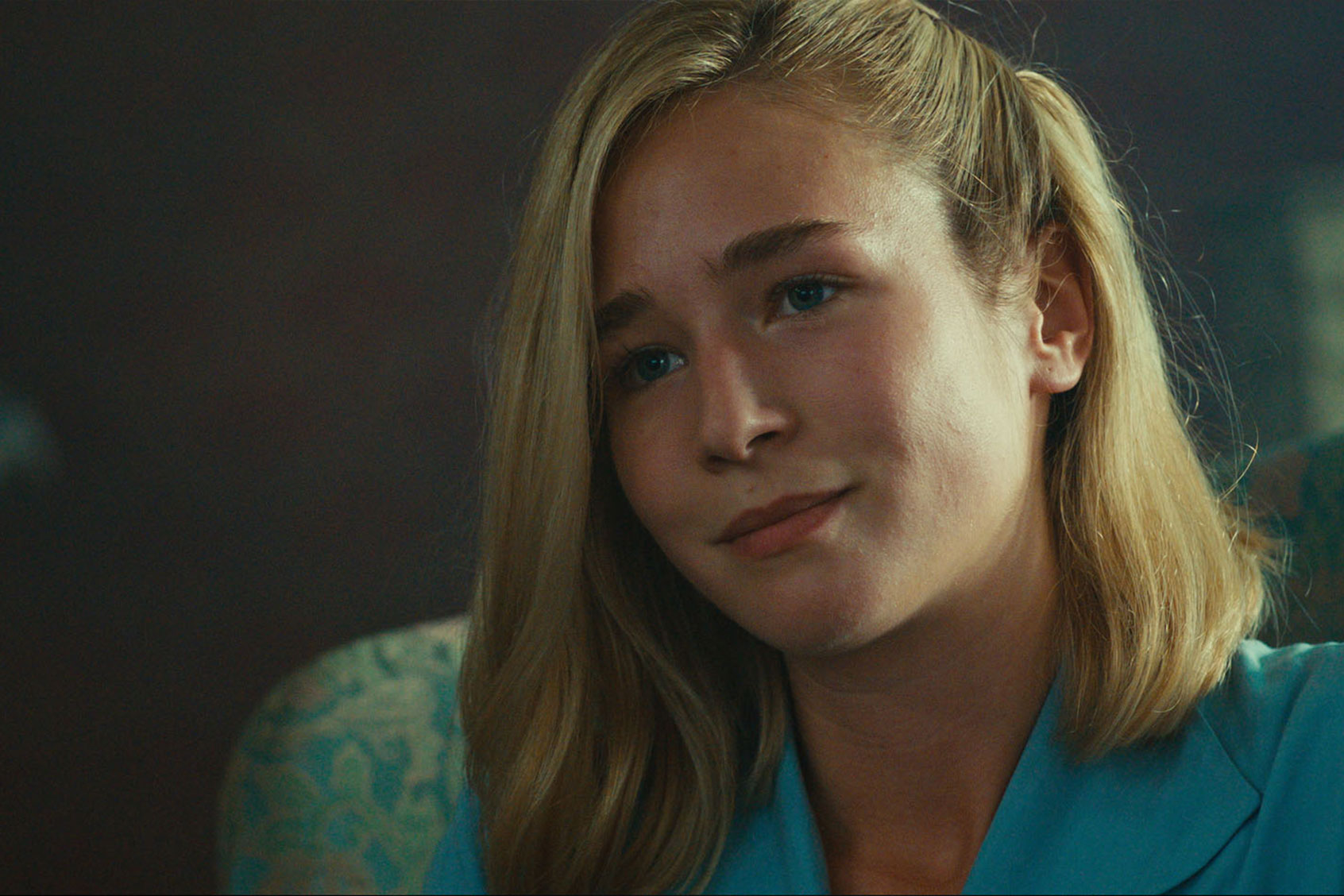
"World on Fire" also continues to bring a rare perspective from inside Germany as well. Season 1 gave Hunt's character Nancy a mystery to solve, uncovering the Aktion T4 Operation, which was the Nazi biological genocidal "health" programs that amounted to the mass extermination of the mentally disabled. Season  2 moves focus to a completely new set of characters centered by schoolgirl Marga (Miriam Schiweck), being recruited for the Lebensborn program, which privately offered underaged girls deemed "racially pure" to SS officers to impregnate with the idea this would create a genetic "super-race." Friends and family helplessly try to stop Marga, so innocent she doesn't understand the danger, all while knowing that no one, not even the girl herself, can be trusted. These scenes are standouts, as much for the terror they hold as for the reminder of all those inside Germany whose suffering has long been swept aside.


Want a daily wrap-up of all the news and commentary Salon has to offer? Subscribe to our morning newsletter, Crash Course.


This sounds like it's a lot of stories, and it really is. Like Season 1, there are a few times when the coincidences that put everyone in the right place at the right time can strain credibility. But somehow, the series never feels like it's trying to do too much, even when it is obviously straining VFX budgets to the limit. In the wrong hands, the whole thing could collapse easily into melodrama or, worse, tedium. But "World on Fire's" second season also highlights how much history is only getting told now for the first time, nearly a century on. One can only hope that the BBC and PBS greenlight more seasons and continue to let the scale of its ambitions soar.   

"World on Fire" returns for Season 2 on Sunday, Oct. 15 at 9 p.m. ET on PBS' "Masterpiece."

Fundraising report shows MTG received donations from McCarthy prior to vote on removing him

In a Federal Election Commission (FEC) fundraising report released on Sunday, two donations in the amount of $5,000 each were listed as being paid by Kevin McCarthy's Majority Committee PAC and received by Rep. Marjorie Taylor Greene's congressional campaign, dated July 19, 2023. 

A vocal supporter of McCarthy — going so far as to pay $100,000 for his used Chapstick in a fundraising auction held back in May — Greene shared Matt Gaetz's frustrations during his move to get McCarthy away from the gavel in early October while, in the same breath, going on record to say that her vote would not lend itself to making that happen.

“I can’t possibly explain to you how difficult it is to get 218 of us to agree on anything,” she said on social media. “So I agree with Matt Gaetz that things must change, but I don’t agree that a motion to vacate will effectively create the changes needed.”

Whether the donations made by McCarthy greased the cogs here or not, who can say? The votes didn't land in his favor regardless. 

No, candy corn isn’t the worst Halloween candy. It’s actually Laffy Taffy

Every October, the age-old debate of which is the worst Halloween candy to ever exist crops up. And time after time, the answer always remains candy corn.

Sure, there’s some merit to that statement. Candy corn, after all, is really sweet — so much so, that it can cause your teeth to ring (and eventually, rot). Candy corn also has a really bizarre texture that can only be described as slightly waxy and chalky all at once. The candy is so hated that there are several Reddit posts decrying the traffic-cone-shaped confection: “One of the most disgusting things on this or any other version of planet Earth,” wrote one user, while another simply called the candies, “Vile little guitar picks of diabetes.”

Candy corn is primarily reserved for Halloween decor in my household. But I’ll admit that I occasionally indulge in a few candies here and there. That being said, candy corn isn’t the absolute worst spooky-themed candy in my books. That title is reserved for Laffy Taffy.

Yes, Laffy Taffy, the nauseatingly sweet, sticky and nearly-suffocating candy that’s available in a variety of colors and artificial fruit flavors. It’s a shame because fruit-flavored sweets are my favorite kind of candies. But Laffy Taffys are so atrociously bad that their fruit flavors are more off-putting than tasty.

My earliest memories of Laffy Taffys were made in middle school, when I was also enjoying my glory years of trick-or-treating. On Halloween day, I’d go around my neighborhood with my large pillow sack, eagerly hoping for a bag filled with Twix Bars, Nerds, Jolly Ranchers, Sour Patch Kids and Warheads. Almond Joys, Yorks, Whoppers and Butterfingers elicited a grimace. However, Laffy Taffys elicited a full-blown scowl. Perhaps this was a fault in my neighborhood — or maybe I just got really unlucky — but it seemed like all the Laffy Taffys I received were either already opened or stuck onto another Laffy Taffy. Forget about enjoying the darn candy, it was almost impossible to get all of the wrapper off of a Laffy Taffy. It certainly wasn't a pretty sight, especially for a child eagerly waiting to feast on their Halloween candies. My Laffy Taffys typically ended up in the trash.


Want more great food writing and recipes? Subscribe to Salon Food's newsletter, The Bite.


The few lucky and untarnished ones were still a pain to enjoy. First, there’s the awful texture of Laffy Taffy, which feels like melted plastic. Chewing on a Laffy Taffy is an absolute pain and so is swallowing — that melted plastic texture suddenly becomes incredibly suffocating. Then there’s the awful choices of flavors.

The most common flavors include banana, strawberry, green apple, grape, blueberry, watermelon, blue raspberry, and cherry. The fact that Laffy Taffy even has a banana flavor says everything you need to know about the candy brand. Let it be known that banana is a bottom-tiered flavor. I mean, who looks at a banana and thinks it would make for a good tasting candy? Maybe that's just my hatred of bananas doing the talking, but I'm still a firm believer that bananas and artificial candies should stay far away from each other.   

I’ll say, the best part about the candies are their short, question-and-answer-style jokes, which are printed on the outside of each wrapper. Those jokes, while cheesy, are reminiscent of the jokes commonly found at the end of popsicle sticks. It’s fun, silly and nostalgic — Laffy Taffy can at least revel in that.

I think my sentiments about (and disappointment for) Laffy Taffy are best summed up in this one, admittedly aggressive Reddit comment: "Every flavor tastes like the ass of a dead skunk, and the aftertaste is even f**king worse. Not to mention the fact that half of the time you can’t even get all of the wrapping off of the f**ker. What the hell even is Laffy taffy anyways?"

Newly discovered margarita snail named for Jimmy Buffett is a delicious yellow — just don’t add salt

According to a recent study in the scientific journal PeerJ, a bright yellow snail unlike any other discovered species lives in the Florida Keys. It's official name is Cayo margarita, which refers both to the type of small, low island where it lives and the bright yellow alcoholic drink that it so closely resembles.

It may not be surprising the snail was given this moniker because the scientists who named it are admirers of tropical rock musician Jimmy Buffett and his hit 1977 song "Margaritaville." Indeed, the lead author of the study is a self-professed "parrothead."

Margarita snail - Cayo margaritaAn underwater closeup of the Keys Margarita Snail, Cayo margarita (new species) in the coral reef of the Florida Keys. Note the two long tentacles, used by the snail to spread the mucus net for feeding. (Photo by R. Bieler)

"So far, this particular snail species is only known from the Florida Keys and the luminous yellow color looked 'citrusy' to me from the first time I saw them underwater while scuba diving," Rüdiger Bieler, PhD, Curator of Zoology/Invertebrates at the Field Museum of Natural History's Negaunee Integrative Research Center, told Salon by email. "Its peculiar coloration led to labeling the Keys species as 'margarita-colored' in the lab — alluding to the regional signature drink and Jimmy Buffett’s music. The name then stuck."

"And, yes, I freely admit to being a parrothead," Bieler added.

Although the Cayo margarita is distantly related to the more familiar land-bound snails, they are different in at least one crucial respect: Their lifestyle makes even the pokiest land snail seem like a veritable speed demon. That's because the margarita snail fuses its shell to a hard surface when it's young, and then stays there for the rest of its life. Once the snail cements its shell to the substrate, it forms an irregular tube around their bodies, where the snail then hunts for plankton and other food sources with a mucus web. But this isn't the only quality that makes Cayo margarita so unique.

"The most distinctive feature of this species is the luminous coloration that we have not seen in any other species," Bieler explained. Moreover, because so-called worm snails like the Cayo margarita are unusual among snails in never moving, "it means having to invent completely new ways of eating, reproducing and defending yourself. In their evolution, this has led to very interesting anatomical and behavioral innovations," Bieler said.

Both in the wild and in his laboratory, Bieler has seen Cayo margarita snails that "have long tentacles that are connected to a mucus gland in the animal’s muscular foot and these tentacles can release mucus threads that combine into a spider-like web to trap plankton and floating particles from the water column." When the animal has caught its fill, it eats the entire mucus web and regurgitates the valuable mucus that it will need for future food gathering.

"Small-bodied invertebrates in particular might vanish before we even had an opportunity to recognize and describe them. "

These dining tricks may seem merely showy, but they allow this worm-snail to stand out when it matters most.

"These animals are directly competing with the surrounding coral polyps for food but use a very different technique for capturing it," Bieler pointed out.


Want more health and science stories in your inbox? Subscribe to Salon's weekly newsletter Lab Notes.

The snail also belongs to a new genus, distinguishing it from every other worm-snail known to scientists (except for one other found by these scientists). "We did not expect the need to describe a new genus (Cayo) for them," Bieler said. "Prior to this study, we assumed all worm-snails that lack a protective lid (and thus display a more-or-less colorful 'face' at the shell opening) belonged to a single genus, Thylacodes, like the new species we named for Bermuda in our article."

After the researchers performed DNA sequencing on the new snail species, however, they realized that this snail had evolved in an entirely different way. "This group represents a separate case of worm-snails having lost the operculum [a plate that closes the aperture of a mollusk's shell] and developed other means of protection from predation," Bierler said.

Unfortunately for C. margarita, even the world's strongest operculum could not protect them from their biggest threat: human civilization. As Bieler pointed out, this species is only known to exist in the Florida Keys, which is a popular tourist destination. The Florida Keys is also very biologically diverse, and as such there are countless animal species there interacting in fascinating ecosystems that people may never even know about.

"Finding such new species in a popular tourist area that has been comparatively well studied points out that there is much undiscovered biological diversity under our very noses — small-bodied invertebrates in particular might vanish before we even had an opportunity to recognize and describe them," Bieler said. "Biologically, these are very interesting and still-understudied organisms — we are just learning of the defensive properties of the mucus and are realizing that these newly discovered species have previously unknown morphological and biochemical features."

We need your help to stay independent

He added that it is especially exciting that this group "represents a second case of 'inventing' colorful bodies is leading to more general questions about the evolution of warning coloration and predator-prey interactions."

The only other worm-snail species that can do this is the related species Cayo galbinus, which was discovered in Belize. It is also colored like an alcoholic beverage — in this case, lime-green.

“Initially, when I saw the lime-green one and the lemon-yellow one, I figured they were the same species,” Bieler said in a statement. “But when we sequenced their DNA, they were very different.”

My favorite cheesy snack is dairy-free and takes only 5 minutes to make

I recently rediscovered a healthy snack that can be prepared in under five minutes — and it’s so easy to make, that even a pedestrian like me can pull it off. 

Like most, I love to snack. Like really, really, love to snack. One of my favorites are Flaming Hot Cheetos, but salt and unidentifiable ingredients like “Red 40 Lake, Yellow 6 Lake, Yellow 6, Yellow 5,” scare me religiously.

And who doesn’t love the legendary Cool Ranch Doritos? But they have even more salt and more unidentifiable ingredients like Dextrose, Malic Acid, Red 40, Blue 1, Yellow 5, Disodium Inosinate and Disodium Guanylate. My favorite you ask? Fuego Hot Taki’s, but by now you should know the cons; honestly, I don’t even know what a Taki is and neither does Google. If I could, I would munch on this crap all day.

However, my age, my health, the fact that like having teeth — and not having the necessary science degree needed to understand the ingredients — prohibit me from doing so. Spicy-flavored corn chips belong to children and wild college students. 

Like a sad lost child, or better yet, a wounded puppy, I slowly stroll up and down the snack aisle with a dry mouth, my stomach growling, and mounting frustration about the lack of options for people who have to pay attention to things such as sodium intake and the amount of cholesterol one can have daily–– and if you are Black, it’s worse. The rules become even more serious for African Americans because you probably have high blood pressure, hypertension, high cholesterol, diabetes or all of the above, trickled all up and down your family tree. In 2019 the Center for Disease Control determined that African Americans are 30% more likely to die from heart disease than non-Hispanic whites. Knowing this would lead you to believe that you must lead a snack-less life. 

However, no one deserves a snack-less life. That is why I’m blessing you with this popcorn. 

Years ago, I was taking a stroll through the Baltimore’s Farmers Market. It’s a glorious event that goes down every Saturday and Sunday, and it's maybe one of the most diverse experiences that the city had to offer. I’ve bumped into every kind of person there: artists, scammers, artist who scam, politicians, gangsters, the clergy, Girl Scouts and high-ranking medical officials. They are all buying fresh meats, produce, sweet and sticky preserves, hot meals and spicy empanadas at the same time. 

So, I’m walking the path of vendors, looking for meal and almost passed by a dreadlock dude doing push-ups. He and his eight-pack of abs popped up. “This popcorn will make you a bull, my family!” he called out.

“I don’t want to be a bull,” I laughed, “I’m OK being a regular guy.” 

He proceeded to tell me how men aren't men anymore because we don't eat ginger or take sea moss or black seed oil — and how, if I did these things, I would become a real man who was a superman lover who could easily perform 12 hours of loving with my "queen." 

We need your help to stay independent

It would have taken me too long to explain that I was actually trying to get out my relationship with my alleged queen at the time and working towards 12 hours of loving could potentially send all of the wrong messages (also, who can do anything for 12 hours? Like, I had two real jobs). Anyways, I bought the popcorn. After all, it was only three bucks and he earned. 

“You have the popcorn," he screamed, pumping his fists. "You are a bull now!” 

“I’m also OK not being a bull,” I said, as I laughed it off. 

The popcorn was actually good. It was tangy, cheesy even, and not salty, but really fresh. I went back and bought two more bags. 

“What’s in this?” I asked the ripped-up king of kernels, “Is it healthy?” 

“Fresh popcorn and nutritional yeast, I make fresh daily and invented myself,” He said, “'Tis beyond health, it is spiritual!” 

Years passed and I don't remember seeing the dreadlock popcorn dude at the farmers market anymore, but I still attended to get warm ginger drinks, huge chicken and egg breakfast biscuits from Black Sauce, and tote bags full of spinach, beets and other vegetables. I had honestly forgotten about the popcorn until I headed toward the snack-less age of my life. What could I eat? I do love popcorn, and it does come from corn, so… 

I looked up different recipes for popcorn and there were so many that called for nutritional yeast, which you can buy from any Whole Foods or your local grocery store. Surprisingly, the dreadlock dude did not invent it, but I'll still give him credit for introducing it to me. 

Now, many of the recipes call for butter or salt-free butter and sea salt. I would recommend you save those for a cheat day. I make it straight up with three ingredients, popcorn, olive or coconut oil and nutritional yeast. 

Nutritional yeast is packed with vitamins and minerals and can even be a strong source of protein for vegetarians. However, don’t go crazy with it, because too much can send you to the bathroom all day long, and no one wants that. Remember everything in moderation. 

Cheesy, dairy-free popcorn
Yields
4 cups, popped popcorn
Prep Time
0 minutes
Cook Time
3-5 minutes

Ingredients

2 to 3 tablespoons of olive or coconut oil. You’ll need enough to coat the bottom of your pan.

2 to 3 tablespoons of kernels, depending on if you use large or small. 

Bragg’s nutritional Yeast (season to taste) 


Directions

  1. Put the oil and kernels into a large saucepan, and immediately put the lid on. My preferred heat temperature is medium. 

  2. When the colonels begin to pop, turn the flame down, and give the pot a good shake.

  3. When the kernels slow down to a few seconds apart, cut the flame completely off, give your part another shake and let it sit for like a minute. 

  4. You can douse the popcorn with more coconut or olive oil, and apply as much nutritional yeast as you like, but remember not to unload the whole bottle. 


The gang that couldn’t shoot straight: Will the GOP’s baffling “ignarrogance” be its undoing?

This may be almost too obvious to say, but even when Kevin McCarthy was occupying the chair as speaker of the House, wasn’t the seat already vacant?

By all reports, McCarthy got zero support from Democrats in his bid to keep his position because he made no effort to negotiate with them. He had also proved himself many times over to be untrustworthy and unprincipled. He did worse than nothing; his approach to cajole the Democrats into voting to retain him was to be arrogant, perhaps aping Donald Trump’s unsurprising decision to attack the judges hearing his various civil and criminal cases.

Ah, that reliable Republican blend of ignorance and arrogance! MAGA members of the House and Senate keep slipping a pinch of it between cheek and gum for its relaxing, yet heady, effect. This ignarrogance, a mashup word that appropriately made the Urban Dictionary around the George W. Bush era, is spreading like climate change–sparked wildfire among the extremists in the Republican Party.

As with their reflexive climate-change denialism, Republicans would scoff at the idea they suffer from ignarrogance, something that all reasoning human beings must admit to. (Most of us don't know all that much about most anything, and the wisest among us are willing to admit it.) But, in the face of their nearly utter ineptitude in governing, they preen. Remember how McCarthy said that the vicious infighting and excruciating 15 ballots it took to elevate him to the speakership back in January had taught Republicans how to govern and that they’d be more effective? Beyond being a global embarrassment and yet another ding on America’s credit rating, how’d that turn out?

Republicans now seem, if anything, even more puffed-up and sure of their mettle and fitness for office, as Jim Jordan spends the weekend trying to terrorize his colleagues into making him speaker. But if, in truth, their primary goal is to undermine or thwart the functions of government, we have to tip our collective caps and say, well done. Still, not even MAGA congressional cult members like to look so utterly inept.

Here in the real world, various iterations of moderates and even some liberals are now doing double duty by also playing the roles of actual conservatives. We should almost refer, these days, to “progressive-conservatives” and “liberal-conservatives” — meaning, you know, people who want to conserve the environment, individual rights, the rule of law, democracy itself. 

When you have only one functioning political party, its members must take the reins dropped by the other. So traditional conservative stances on law and order, support for the police and the military, and upholding the Constitution and the basic tenets of democracy have fallen almost entirely to elected Democrats, along with a few independents. They at least try live up to their oath of office, which includes defending the Constitution against all enemies, foreign or domestic and, it should be noted, giving “true faith and allegiance” to the Constitution, not to, say, talk up the “illiberal democracy” model of Viktor Orbán or semi-covertly cheer on Vladimir Putin.

So what happened to the Republicans, anyway? It’s complicated, but if I were forced to explain it in one word, I’d say the obvious: greed. If you gave me a paragraph, I’d say that with their main idea of “trickle-down” economics utterly discredited by the 1990s (George H.W. Bush was correct to call it "voodoo economics," and was made vice president to shut him up), Republicans had nowhere to go. After the Cold War mindset dissipated with the end of the Soviet Union, they had few ideas or principles to promote, and they loathed the work and compromise required by governance. They admired Rush Limbaugh’s profitable brainwashing formula of heaping praise on non-thinking “ditto-heads” and scorn on "libtards," so they turned to dehumanizing their political opponents, pushing so-called alternative facts and increasingly harebrained conspiracies. Their vision for winning the future lies in suppressing the vote, creating ideological schools to educate for obedience, and cozying up to various authoritarian role models. They didn’t bother to create a new policy platform before the 2020 election and got mighty irritated when prominent members said out loud what the policies should be.

Historian Heather Cox Richardson would likely frame the story of the unhinging of the Republican Party as largely about "movement conservatives" plotting to dismantle Franklin D. Roosevelt’s New Deal. According to Richardson, Republicans cannot abide government spending on a basic social safety net or on maintaining our infrastructure. (Trump’s "Infrastructure Weeks" were just meaningless bluster from our "builder" president.) They think of taxation as redistribution of wealth or “socialism,” and cannot stand the thought of it, especially if it any of that money goes to people of color or immigrants who aren't from, say, Norway.


Want a daily wrap-up of all the news and commentary Salon has to offer? Subscribe to our morning newsletter, Crash Course.


They don’t like to bring up their plans to cut Medicare and Social Security (and, more generally, to dismantle the federal government) because those are highly unpopular with the public. So they cut taxes to reward their already wealthy donors and hamstring the government. They’re now working around the edges to ensure more people remain desperate, by keeping people in debt all their lives to repay college loans or by allowing pharmaceutical companies to gouge elders and the working class with drug costs higher than anywhere else in the civilized world.

Meanwhile, the Trump alliance is now being quite clear about its plans to dismantle our democracy, which, as Mike Lofgren notes in a Salon essay about the conservative pseudo-intellectual loathing for the intellectual, creative and spiritual freedom sparked by the Enlightenment, has been the unspoken plan all along. The counter-Enlightenment movement is alive and seething in today’s Republican Party.

It's surprising that Jim Jordan is even in the mix, given that former Republican Speaker Dennis Hastert went to prison on federal charges related to the sexual abuse of underage boys when he was a high school wrestling coach.

Still, the overweening arrogance in the face of all these blunders is baffling. It’s pretty much the only thing House Republicans have left, all the empty posturing and phony investigations. Even if your purpose is to stop the federal government from functioning, even if you’re an absolute and complete troll. it must be soul-crushing to spout off incessantly about individual freedom while supporting so many policies that hurt your fellow citizens. Even for an absolute tool, it must be disconcerting to hear people cheer and laugh when you deride or belittle women, LGBTQ folks and people of color. For those who consider themselves religious, it must be emotionally deadening to speak of Christian and family values and still support a twice-impeached, multiply-indicted fraudster who was also recently found liable for sexual assault and who regularly encourages violence against those who oppose him. What cognitive dissonance must be caused by saluting a man with five draft deferments who repeatedly says awful things about those who have devoted their lives to their country, whether in the military or the civil service?

You have to wonder how these people sleep at night. 

So what happens next in the House? As mentioned above, Rep. Jim Jordan, who allegedly chose not to investigate serious sexual abuse charges while he was a wrestling coach at Ohio State — and who now, with zero sense of irony, conducts bogus investigations as House Judiciary Committee chairman, is next in line to be speaker. 

As MSNBC’s Alex Wagner notes, it's surprising that Jordan is even in the mix, given the history of former Republican Speaker Dennis Hastert, who went to prison on federal charges related to the sexual abuse of underage boys when he was a high school teacher and wrestling coach. One portrait is missing, Wagner observes, from the gallery honoring House speakers at the Capitol:

When you hear the words "Republican speakers of the House," Republicans really do not want you to think about Dennis Hastert. And today House Republicans are trying to determine who their next speaker will be. And you would think that one of the most basic criteria for Republicans here would be that none of their candidates should be accused of any involvement in any wrestling-related sexual misconduct scandals. Right?

Jordan also did more than anyone else in Congress to support Trump’s attempted 2021 coup and his continued attempts to undermine the legitimacy of elections. If he ultimately succeeds in bullying and blustering his way into the speaker's chair, it will remain vacant in terms of statesmanship. Is there any hope that moderate or centrist Republicans might start to turn the ship of state toward a calmer shore? None is visible right now.

The arrogance of these people is baffling only until you remember that the “con” in con artist is short for “confidence.” The o majority of Republicans in Congress who refused to certify the 2020 election show vastly unmerited confidence because that is an essential part of their ruse. Petty grifters and cult leaders alike need to show confidence as they probe your weaknesses, trying to figure out what will get you to lower your guard and have confidence in them, giving them permission to do things you’d rather not admit, even to yourself, that you want done.

That familiar unfamiliar feeling: What the opposite of déjà vu can tell us about cognitive delusions

As many people know, a bout of déjà vu can be a disorienting experience, like a momentary hiccup that distorts reality. Perhaps a friend says something and you suddenly feel like you’ve had this exact conversation before, or maybe you turn a corner on a street in a foreign city and you get the eerie sensation that this isn’t your first time there.

Some research suggests the part of the brain that recognizes the spatial layout of a place might be activated when it comes across similar physical landscapes, such that visiting a friend in an apartment complex that you’ve never been to before could trigger the sensation of déjà vu if its design shares many of the same features of another place. Yet déjà vu has puzzled scientists and non-scientists alike for centuries, and it’s still not entirely clear what causes it, leading to wilder theories like one that suggests déjà vu is a window into a parallel universe — much like a glitch in “The Matrix.”

If there is still mystery surrounding déjà vu, there are even more unknowns surrounding its lesser-known relative, jamais vu. (For the record, both are French loanwords meaning "already seen" and "never seen" respectively.) Described as the opposite of déjà vu, jamais vu occurs when something that is done repetitively or habitually suddenly feels foreign. If you’ve ever written a word over and over again and suddenly it no longer resembles anything in your lexicon, or if you’ve been practicing a musical instrument for hours and the sounds you’re producing no longer sound like a coherent song — that’s jamais vu.

Although the origins of jamais vu can be traced back to 1907, it’s now being researched with a renewed interest by a group of scientists in the U.K. Salon spoke with a member of the research team, Christopher Moulin, a professor of cognitive neuropsychology at the Université Grenoble Alpes (UGA) in France, about jamais vu and how learning more about it could provide insights into how the brain works and even perhaps help scientists better understand mental illness.

This conversation has been edited for clarity and length.

How did you introduce jamais vu in the laboratory setting and what did you find in your research when studying this?

It was all based on an experience I'd had as a child where I was given lines to write as punishment. I was writing the same thing repeatedly, and I noticed that writing the same thing repeatedly began to feel strange and it lost all its meaning. I always kept that in mind, and when I read about jamais vu, I [thought] this was definitely what was happening with this experience I had when I was a child. I thought we could run an experiment where we ask people to repeatedly write stuff and see if that does indeed lead people to these kinds of strange sensations. 

"Their experiences were feeling strange, like the word wasn't real."

In our experiment, we used the word “the.” Our reasoning for using the word “the” was that we thought the more common a word was, the easier it would be to make it feel weird. Because the word “the” is so frequent and we've encountered it so much in our lives, we are quite sure that it's a real word and it does exist, therefore it should be easier to make it feel weird just because if you did it with a word that didn't really exist or a word that you don't see much in daily life, then presumably it can look weird just because it is an unfamiliar word.

Essentially, the take-home message was: It works, and a reliable amount of people said that they had the experience. Their experiences were feeling strange, like the word wasn't real, or not knowing if it was spelled right or the word kind of splitting down into different elements. So they had all these kinds of weird, jamais vu-type experiences. 

Can you explain a bit about the history of jamais vu? Who originally coined this term or studied it, and what did they find?

They never used the term “jamais vu,” so our unique selling point if we have one is to draw a parallel between this subjective experience of unreality and the strangeness of this kind of procedure for inducing these feelings.

The original experiments, which were done at the turn of the century, involved people staring at words or repeatedly saying words. It was all word-based and described at the time as “word alienation.” … They described it as a loss of associative power. At the time, the whole way of thinking about the human mind had to do with associations that were formed, like the low-level associations that you think of with Pavlov and pioneers of that type. The idea was, when you stared at stuff, you kind of broke down these associative links or over-stimulated these associative powers of the mind and that was what made you think that these words weren’t real anymore. 

What do we know about what is going on in the brain when this happens? What is the psychiatric or neurological element behind jamais vu?

"What's happening with déjà vu is a disconnection or a desynchronization between a part of the brain that is responsible for detecting familiarity."

We know extremely little in terms of concrete processes in the brain. With déjà vu, we know through work done with epilepsy patients which kinds of areas of the brain are involved and how the discharges move from one place to the other. We've also got experiments where we provoke déjà vu in the laboratory and we can see with neuroimaging what's going on in the brain. 

What's happening with déjà vu is a disconnection or a desynchronization between a part of the brain that is responsible for detecting familiarity and the other parts of the brain that are responsible for interpreting all those signals that it gets from familiarity. 

In comparison with déjà vu, we know very little [about jamais vu] … We don't have funded research to look at what happens in the brain whilst people are experiencing it, but that would be a very easy experiment to run because we can reliably produce these weird sensations and then we can see what's happening in the brain.

We do know that certain patient groups can experience déjà vu [more often], and the more we have déjà vu, the more we have jamais vu. 

How does this relate to conditions like obsessive-compulsive disorder (OCD)?  

One of the obvious parallels with jamais vu is the lack of meaning or the disruption in meaning that people get with repeated checking behaviors. So it seems that if staring at a word or repeating a word makes it meaningless, you can imagine that going to a door, for example, to keep checking whether it's locked or unlocked is going to at some point also become a meaningless activity. The more you do it, paradoxically, the less you will be sure that you've actually locked the door because just the act of going back and trying the handle will become repeated and meaningless. When you try and look back in your memory to whether you locked the door or not, instead of having one memory of the one time you went to the door and locked it, you've got to sift through all these many times that you went back and checked the door. 


Want more health and science stories in your inbox? Subscribe to Salon's weekly newsletter Lab Notes.


We haven't tried this and I don't feel particularly qualified to try it, but one thing to do in the context of cognitive behavioral therapy would be to give people jamais vu. … You can perhaps help break this vicious cycle that often exists in these checking behaviors, where people keep doing it because they need to check it in order to feel confident about things but in fact, the more you repeat something, the less confident you feel and there's this paradoxical effect. 

"They're about symptom education and getting people to experience the same kind of feelings or the same kind of traumas differently."

Some clinical psychologists, for instance, ask people to hyperventilate and show them what happens. If you hyperventilate, you start getting all the physiological symptoms that you get during a panic attack. They do that to make you aware of the kind of vicious cycle between starting a panic attack and things you start doing including hyperventilation, which makes you feel more anxious, which makes you hyperventilate more, which makes you feel worse. It kind of changes the relationship between breathing and how they're feeling physiologically.

These cognitive behavioral therapies and metacognitive approaches to understanding behaviors often do that sort of thing. They're about symptom education and getting people to experience the same kind of feelings or the same kind of traumas differently. That’s what you could do with jamais vu. I think you can make somebody feel this kind of strange feeling of unreality in order to help people explain it and maybe control it a bit better.

Are there other ways we could potentially think about how understanding jamais vu could help further our understanding of other psychiatric or mental health conditions?

One we often talk about is delusions like Capgras [syndrome], which is a delusion that occurs with several different kinds of pathologies, including schizophrenia, and I've also seen it in people with Alzheimer's disease. That's where somebody who is very familiar, often like a member of the family, appears as if they're an impostor. So the person says, “I know that looks like my wife, but it's not my wife. It's a robot or it's an alien or it's somebody pretending to be my wife.” 

The cognitive neuropsychiatry of those cases is something which is exactly like jamais vu. But obviously, it's like jamais vu, plus, plus, plus. So with Capgras, you have this underlying knowledge that it looks like your partner, but there's a disruption in your subjective feeling of familiarity. In jamais vu, we correct that. We've got this control over that and it feels weird for a millisecond or second or maybe even a couple of seconds, but then we correct it. There's something that says “No. It's not possible. That's a weird feeling.” And the weird feeling is resolved. 

"Perhaps at the heart of all those kinds of delusional states is something that is a bit like the conflict and confusion of the jamais vu experience."

We think what happens with Capgras is that you get that secondary attribution, which is exactly like the jamais vu, but it runs wild. It's not checked, there's nothing to control it. There's nothing to stop it, so instead of rejecting that weird feeling and this kind of conflict between a feeling — where you know that person looks right, but it's somehow weird — you just start justifying why it feels weird and that's what creates the delusion. 

I'm not saying at all that [jamais vu] is a delusion … But one way to think of Capgras is to think of it in some way like a chronic failure of this kind of familiarity system. Certainly, we're not alone in saying that — the idea with Capgras has been around for at least 20 years, I think. But our novel contribution is to say, perhaps jamais vu is very much comparable to those things, and at the heart of all those kinds of delusional states is something that is a bit like the conflict and confusion of the jamais vu experience.

From an evolutionary sense, this could be a sort of reality check. Can you elaborate on why this is happening in that sense?

When I did my PhD, I was interested in metacognition in Alzheimer's disease. Metacognition is your higher-order thought processes which you use to look at what's happening in your cognitive system. So it's thinking about thinking. In general, it's like the awareness you have, how you're thinking, what you're thinking, how you can better memorize a list of words or the feeling of having a word on the tip of the tongue — that's all a metacognitive feeling. That's a feeling that tells you, “I know this word, yet I can't produce the word.”

"The jamais vu is the detection of that conflict just like déjà vu is the detection of conflict."

You've got this very pure sensation that you know something and that feeling that you know something is metacognitive. The idea with déjà vu and jamais vu and having a word on the tip of your tongue is that they are all connected. In fact, they are metacognitive and [our hypothesis is], they exist to make sure your thoughts don't run away or that you don't start thinking absurd and illogical things based on a tiny error. 

In déjà vu, the error is that you find something familiar, and then there's a bit of information that comes by and says, [that’s not possible]. We imagine for jamais vu, it’s the same thing but maybe there's just a little miniature synchronization of brainwaves or something, a physiological [element] in the brain, which makes you think “This looks strange, or it's not familiar.” Then there's something that quickly comes afterward and says ["That’s not possible."] 

The jamais vu is the detection of that conflict just like déjà vu is the detection of conflict. It's really a higher-order control process, which exists to study what you're thinking and to stop thought processes that would not be beneficial, like repeatedly doing the same thing and getting stuck in a loop or maybe always looking at somebody in the same way. It’s a little reflection, like a safety valve. 

We need your help to stay independent

Are there any plans for future research in terms of jamais vu?

There's some pretty basic research to be done in terms of neuroimaging, even just using electroencephalogram (EEG) technology to see which part of the brain is synchronized or desynchronized at the time in which people feel jamais vu. Because it's so reliable to produce it, I think there's some really decent neuroscientific research to be done.

If we can understand these things, and how they work in the brain, I think on the way we'll unlock lots of things that are important to understanding delusions, conscious control of the mind and conditions like OCD and schizophrenia and all kinds of things like that.

Pete Davidson finds a way to make Israel-Gaza crisis about him during “SNL” cold open

During the cold open for the premiere of the 49th season of "Saturday Night Live," former cast member Pete Davidson made a return as host, kicking off the episode with a statement on the ongoing crisis in Israel and Gaza. Quick to call-out the question, "Why do we have to hear from this guy about it?" before anyone else could ask it first, he worked in personal anecdotes to smooth it out and make it make sense to the best of his ability, ending on the subject of comedy, and how it's important in times of tragedy further on during his monologue.

"This week we saw the horrible images and stories from Israel and Gaza," Davidson said. "And I know what you're thinking, 'Who better to comment on it than Pete Davidson?' Well, in a lot of ways, I am a good person to talk about it because when I was seven-years-old, my dad was killed in a terrorist attack."

Davidson's father, Scott Matthew Davidson, was a New York firefighter who died in 2001 at the World Trade Center during the September 11 attacks. An obvious tragedy, yes. But mentioned here, it brings to mind a question of time and place.

During his opening monologue, Davidson tries out a new comedy voice — as in, he's doing something different with it that's a mix between his normal speaking voice and that of a bus driver doing a Joe Pesci impersonation — and digs himself further into his hole of good intentions, joking about an old flame who died of a drug overdose. Efforts were certainly made here, to be sure. But . . . yeah.

Watch below.

The Smiths recall their bestselling product: the “unique union” that is Will and Jada’s marriage

Product recalls seem to be rampant these days, don’t they? Last week alone, the Family Dollar discount retail chain recalled hundreds of products sold in stores across 23 states. In Canada, Costco issued a recall of its Kirkland Signature brand oatmeal cranberry white chocolate cookie due to an “oopsie” wherein pieces of wood wound up in the dough.

Perhaps the most shocking recall of all impacted millions of consumers, who whether they intended to or not, had swallowed another product: Jada Pinkett Smith’s marriage to Will Smith, which functionally if not legally ended in 2016. The news broke Wednesday by way of a People magazine cover story and an excerpt of an interview teased on “Today," where co-host Hoda Kotb said of the revelation, "I actually had to reread it because I said, ‘Is this true?’"

Yes, Jada confirmed, her smile sparkling as brightly as her platinum pixie coif as she pantomimed their status of living entirely separate lives by placing her two manicured index fingers together and pulling them apart with a flourish. The internet erupted in shock and fury, mostly of the feigned variety because, honestly, who cares? Maybe Black Twitter (which will always be called that despite the platform having been renamed X), which responded with a raging river of jokes, reaction videos and memes. Most involved the common sentiment of wishing the Smith family would remove all of us from the group chat.

That won’t be happening any time soon, I'm sorry to say.

The Smiths are a high-output manufacturing concern whose main product is their image. They're also scrupulous investors, primarily in their own family. Their eldest, Jaden, is a musician, actor and fashion chameleon who founded JUST Water when he was only 12 years old (staked by his gazillionaire parents, naturally). That product hit a $100 million valuation in 2019, according to Fast Company.

Willow is a pop punk musician and actor, who co-hosts “Red Table Talk” with her mom and whose 2022 album “Coping Mechanism” landed her a musical guest slot on “Saturday Night Live.”

Will requires no introduction, though who he was before the 2022 Oscars and after The Slap are fundamentally different properties. His televised assault on Chris Rock transformed him from a box-office hero into a navel-gazing multimillionaire lacking impulse control.

In the year and a half since that happened, you may have noticed that Jada has said next to nothing about The Slap, despite Will’s claim that it was in defense of her and the honor of all Black women. Though “Red Table Talk” viewers expected Jada to address the controversy on her show, the only response came via a title card: "The Smith family has been focusing on deep healing. Some of the discoveries around our healing will be shared when the time calls."

The Smiths are a high-output manufacturing concern whose main product is their image. They're also scrupulous investors, primarily in their own family.

It turns out that the time is now. Jada's memoir “Worthy” hits shelves on Oct. 17, and it comes out just shy of two years following her husband-on-paper’s biography “Will.” To those monitoring developments within the Smith Family Concern, this timing doesn't feel accidental. "Will" emerged concurrent with the release of "King Richard," for which he won the Academy Award for best actor, accepting the golden statue mere moments after slapping the spit out of Rock's mouth and subsequently being banned from attending the Oscars for the next decade. He also resigned from the Academy of Motion Picture Arts and Sciences.

Will apologized for his behavior on social media, then appeared on one of Trevor Noah’s final episodes of “The Daily Show” to seek the public's forgiveness. Aside from those failed attempts at reputational repair and toplining a box office bomb in last winter's prestige drama "Emancipation," the actor has laid low for the most part.

Jada's confession has been the most significant event in the family’s life for months. It also coincides with Will and Jada's production company Westbrook Studios’ search for a new home for “Red Table Talk” after Meta gave it the boot along with all other Facebook original content in April.

If Westbrook can’t land a place for the show, the production company may be able to land a new show for its host. Thus, we have this final admission about Mr. and Mrs. Smith's marriage, which they referred to as a “unique union” in a 2018 episode of “Red Table Talk,” and about which Will observed in a 2021 GQ profile, “I don’t suggest our road for anybody. I don’t suggest this road for anybody.”

They're not divorced on paper, yet their separation in 2016 was, for all intents and purposes, a divorce.

They're not divorced on paper, as Kotb repeated to Jada, yet their separation in 2016 was, for all intents and purposes, a divorce.

The end of the five-month strike by the Writers Guild of America, as well as the eventual resolution of the SAG-AFTRA strike against the Alliance of Motion Picture and Television Producers, will bring about a realignment of the film and TV landscape. (Salon's unionized employees are represented by the WGA East.) That leaves openings for performers to shift roles and meet the needs of this next era.

As I’ve pointed out before, no talk show host has fully stepped into the daytime vacancy left by Oprah Winfrey — that is, the job of celebrity confessor and comforter who is also devoted to making the audience feel better.

Winfrey achieved that status by sharing every aspect of her origin story down to her ugliest memories, making herself an example that it’s possible to live your best life regardless of where you start.

Jada also wasn’t born rich but has resided on the golden end of that rainbow for decades, requiring her to approach her story of overcoming from another angle. Instead of relaxing in her golden cage and allowing her husband to parade her around the world in order to keep up the façade of their devoted coupledom, she's stepping out of his shadow.

To put it another way, she’s re-releasing the product that is her marriage as a cohabitation agreement based on mutual support and unconditional love — the kind that’s offered from opposite ends of the house, country and/or planet.

For those claiming to be incensed that the couple was duping us all this time, allow us to turn any demands made of them back on you: Stop kidding yourselves.

Assuming that most people judged their marital status by the smiling red carpet photos of Jada posing at Will’s side at various industry events, this revelation probably was legitimately shocking. As for those claiming to be incensed that the couple was duping us all this time, allow us to turn any demands made of them back on you: Stop kidding yourselves.

Celebrities have remained in loveless, business-driven marriages since the concept of royalty was invented. Did you ever believe in Tom Cruise and Katie Holmes? What about the pop royalty match of Lisa Marie Presley and Michael Jackson? Were you shocked to find out that Prince Charles and Princess Diana were never actually in love? Come on, people.

I’ll grant you that these comparisons aren’t entirely fair since Will's pursuit of Jada was organic, not arranged, thereby giving hope to a generation starved for an example of what being rich, Black and in love looks like.

Will and Jada were and are a pair of gorgeous movie stars who found each other when they were young and built their empire around and through their family from the ground up. They were Jay-Z and Beyoncé before Jay-Z added Mrs. Carter to Queen Bey's list of titles (and way before the rapper's alleged extramarital affairs may or may not have inspired "Lemonade"). Like said power couple, they're also loaded to the degree that remaining married is simply smart wealth management.

Like Jay-Z and Beyoncé, they're also loaded to the degree that remaining married is simply smart wealth management.

But this duo has been serving breadcrumbs about the true nature of their relationship since those “Red Table Talk” episodes in 2018 when Will admitted how much Jada had dimmed her light in order to let him shine not only in public but also in private.

“Externally, everything was beautiful,” Will said in the first of those two episodes. “As a couple, we are magical. We win in the material world. We do it together. We win . . . Externally, our family was winning, right? And there was a period where mommy woke up and cried 45 days straight. I started keeping a diary.”

“You missed some days,” Jada deadpanned.

“It was every morning. I think that's the worst I've ever felt in our marriage,” Will said. “I was failing miserably, but on the outside, I was winning.”

Will has told versions of this story on various occasions, repeating it to GQ and in interviews related to “Will.” He talks about the elaborate 40th birthday celebration for his wife that he spent three years planning, including commissioning a documentary about her family. He also talks about the giant house he built on a 256-acre compound for Jada, which he named Her Lake, as well as his failure to recognize that these gifts were not for her but entirely about him.

We need your help to stay independent

These anecdotes and others paint Will as a man newly enlightened in middle age, augmenting the show's epiphanic tone. Together, they make their marriage sound resilient if unconventional, as if it's a race they're still winning. “Divorce was never even an option,” they declared in unison, a phrase Jada has repeated in other episodes, as well as to Kotb.

If you re-watch those old "Red Table Talk" unburdening sessions, Will was the one leading the narrative — not his wife. Jada's version of her 40th birthday blow-up is a tale of determination to self-actualize. As for the way their marriage was going, she said, “I had to have the courage to unravel it, and just realizing this next 40, I got to do it my way. This next half has to be directed by my picture for myself.”

She later continued: “There was so much that wasn't me that I was living, so much inauthenticity. I do think that there are a lot more people living lives that aren't true for them because of their fear; so I understand, and there's no judgment. I did it, right?”


Want a daily wrap-up of all the news and commentary Salon has to offer? Subscribe to our morning newsletter, Crash Course.


There it is, folks: the thesis statement for a new daytime talk project. After all, how many people are sharing cohabitation agreements that have devolved from loving marriages into practical partnerships? Enough, at least, for The New York Times to publish a 2022 story titled “Separated but Under the Same Roof."

“I made a promise that there will never be a reason for us to get a divorce,” Jada told Kotb. “We will work through whatever, and I just haven't been able to break that promise.”

The Smiths may not be like us in many ways, but in this respect, lots more people may be able to relate than one might think. Such clarity can only benefit whatever Jada does next. Regardless of what that may be, it will transpire under the light she generates entirely apart from the glow of her husband-on-paper’s fame. That product had been temporarily removed from circulation, pending repair.

Beyond the right’s “woke” slurs, what would a “progressive” U.S. military really look like?

A progressive Pentagon? Talk about an oxymoron! The Pentagon continues to grow and surge with ever larger budgets, ever more expansive missions (for example, a Space Force to dominate the heavens and yet more bases in the Pacific to encircle China) and ever greater ambitions to dominate everywhere, including if necessary through global thermonuclear warfare. No wonder it's so hard, to the point of absurdity, to imagine a Pentagon that would humbly and faithfully serve only the interests of "national defense."

Yet, as a thought experiment, why not imagine it? What would a progressive Pentagon look like? I'm not talking about a "woke" Pentagon that touts and celebrates its "diversity," including its belated acceptance of LGBTQ members. I'm glad the Pentagon is arguably more diverse and tolerant now than when I served in the Air Force beginning in the early 1980s. Yet, as a popular meme has it, painting "Black Lives Matter" and rainbow flags on B-52 bombers doesn't make the bombs dropped any less destructive. To be specific: Was it really a progressive milestone that the combat aircraft in last year's Super Bowl flyover were operated and maintained entirely by female crews? Put differently, are the bullets and bombs of trans Black G.I. Jane somehow more tolerant and less deadly than cis White G.I. Joe's?

A progressive military shouldn't stop with "more Black faces in high places," more female generals "leaning in" around conference tables and similar so-called triumphs for diversity. Consider Lloyd Austin, the first Black secretary of defense, whose views and actions have been little different from those of former Defense Secretaries James Mattis or Donald Rumsfeld, and whose background as a retired Army four-star general and well-paid former board member of Raytheon makes him the very stereotype of Dwight Eisenhower's military-industrial complex.

No, all-female air crews aren't nearly enough. Indeed, they are, I'd argue, a form of "woke" camouflage for a predatory military leopard that refuses to change its spots — or curb its appetite.

A truly progressive military should start with the fundamentals. All service members swear an oath to support and defend the Constitution, the system of laws that defines and enshrines our vital rights and freedoms (speech, a free press, the right to assemble, privacy and so on); in short, the right to live untrammeled by domineering forces. Yet, almost by definition, that right is threatened, if not violated, by a massive military-industrial-congressional complex that penetrates nearly every domain of American life. That complex, after all, is anti-democratic, shrouded in secrecy and jealous of its power, as well as fundamentally and profoundly anti-progressive. Indeed, it's fundamentally and profoundly anti-truth.

Consider these hard facts. All too many Americans didn't know how badly they'd been lied to about the Vietnam War until the Pentagon Papers emerged near the end of that disastrous conflict. All too many Americans didn't know how badly they'd been lied to about the Afghan war until the Afghan War Papers emerged near the end of that disastrous conflict. All too many Americans didn't know how badly they'd been lied to about the Iraq war until the myth of Saddam Hussein's weapons of mass destruction (which had been part of the bogus rationale for invading that country) crumbled; nor did they know how badly they continued to be lied to until the myth of the American "surge" there collapsed when the Islamic State forces triumphed all too easily over an American-built Iraqi security structure that collapsed like a rotten house of cards. Perhaps some of them didn't truly know until a loudmouthed Republican candidate for president, Donald J. Trump, dared to say that the Iraq war had been an unmitigated disaster, or, in Trump-speak, "a big fat mistake." That burst of honesty helped him win the presidency in 2016. (His rival in that election, Hillary Clinton, remained essentially the chief spokesperson for the Pentagon.)

Despite the horrendous failures (and war crimes) of Vietnam, Afghanistan, Iraq and other U.S. military ventures of the past century, no one is ever punished. When Donald Rumsfeld died in 2021, he received glowing tributes and bipartisan salutes for his "service" to America.

Yet despite the horrendous failures (and war crimes) of Vietnam, Afghanistan, Iraq and other U.S. military ventures of the past century, no one is ever punished! Sure, you could point to Donald Rumsfeld being cashiered as secretary of defense amid the rubble of "the Global War on Terror," a belated admission by the administration of George W. Bush and Dick Cheney that the Iraq war was going poorly indeed. Still, all those cracks were later papered over with the myth of "the surge" and when Rumsfeld died in 2021, he received remarkably glowing tributes in obituaries, as well as bipartisan salutes for his "service" to America rather than condemnation for his numerous crimes and blunders.

The Pentagon's rampant culture of dishonesty, a cancer that above all infects the brass, led one serving Army officer, Lt. Col. Paul Yingling, to write a now-renowned (or, if you're part of the Pentagon, infamous) paper for Armed Forces Journal in 2007 on America's failure of generalship. As he memorably noted, a U.S. Army private suffered far more dearly for losing a rifle than America's generals did for losing a war. The Army's response was — no surprise — to change nothing, leading Yingling to retire early.

13 tasks for a progressive Pentagon

Venturing into the Pentagon's innermost corridors of power, one might be excused for recalling Obi-Wan Kenobi's warning to Luke Skywalker in "Star Wars" as they approached the spaceport of Mos Eisley: "You will never find a more wretched hive of scum and villainy. We must be cautious."

How does one possibly reform such a top-heavy, self-serving, and dishonest institution along progressive lines? A moment in Greek mythology comes to mind: Hercules and the Augean Stables. Let me nevertheless press ahead with this all too herculean task.

We need your help to stay independent

Dreaming is free, as Blondie once sang, so why not dream a little dream with me? Here's a list — a baker's dozen, in fact — of ways a progressive Pentagon would both exist and act far differently from America's current regressive (and very, very aggressive) version of the same.

A progressive Pentagon would:

  • Take the lead in working to eliminate all nuclear weapons everywhere — that is, total nuclear disarmament — rather than investing vast sums in the coming decades in the U.S. nuclear arsenal. It would disavow using nuclear weapons first ("no first use") in any conflict. It would cancel all plans to "modernize" the current nuclear triad of missiles, planes and submarines at an estimated cost of $2 trillion. It would also immediately eliminate obsolete and vulnerable land-based ICBMs, and cancel as redundant the Air Force's new B-21 stealth bomber.
  • Oppose sending any more of those devastating cluster munitions or depleted uranium tank shells to Ukraine; indeed, it would take the lead in eliminating such awful weaponry.
  • Stop inflating threats and end all talk of a "new Cold War" with China and Russia.
  • Celebrate the insights of Generals Smedley Butler and Dwight Eisenhower that war is fundamentally a racket (Butler) and that the military-industrial-congressional complex poses the severest of threats to freedom and democracy in America (Eisenhower).
  • Reject the language of militarism, including describing its troops as "warriors" and "warfighters," as profoundly undemocratic and un-American.
  • Recognize the costs of wars already fought to those troops and ensure full funding of the Department of Veterans Affairs, including for post-traumatic stress disorder, traumatic brain injury and moral injuries, among the other wounds of war.
  • End the war on terror, launched just after the attacks of Sept. 11, 2001, and urge Congress to repeal the open-ended war authorization it passed then with but a single dissenting vote, because war itself is terror.
  • Refuse to go to war unless there's a formal congressional declaration of the same as the Constitution demands. If the U.S. had followed that rule, the last war we would have fought was World War II.
  • Reject its present culture of secrecy as profoundly counterproductive to success not just in war but in general. That doesn't mean, of course, sharing specific battle plans (of which there should be far fewer) or detailed information about weaponry with potential enemies. It does mean a willingness to speak truth to the American people, whose support would be needed to prosecute any genuinely necessary war, assuming there even is such a thing.
  • Embrace honor and integrity including a willingness of the U.S. military to fall on its own sword — that is, take genuine responsibility for both its deeds and its misdeeds.
  • Recognize that one cannot serve both a republic and an empire, that a choice must be made and that a Pentagon of the present kind in a genuine republic would voluntarily downsize itself, while largely dismantling its imperial infrastructure of perhaps 800 overseas bases.
  • Lead the way in demilitarizing space, including eliminating America's fledgling Space Force and its "guardians."
  • Clearly acknowledge that large, standing militaries and constant wars, as well as preparations for more of the same, are corrosive to democracy, liberty and the Constitution, as America's founders recognized.

Imagine that! A progressive Pentagon of peace rather than a regressive one of power and unending warfare. You may say I'm a dreamer, but I'm not the only one.

Three maxims for a progressive Pentagon

Careful readers won't be surprised to learn that I was an early "Star Wars" fan. Naturally, I rooted for the underdog rebels against the evil empire and its henchman, Darth Vader. I saw myself as a potential Jedi knight, wielding an elegant weapon, a protector of freedom and the republic. (In my defense, I was 14 years old in 1977 when I first saw "Star Wars.")

Then, in 1980, I watched "The Empire Strikes Back," just as I was pursuing an Air Force ROTC scholarship for college. I heard Yoda, the Jedi master, declare to Luke that "wars not make one great." That pearl of wisdom floored me then and continues to inform my life.


Want a daily wrap-up of all the news and commentary Salon has to offer? Subscribe to our morning newsletter, Crash Course.


I've read my share of "heavy" philosophy and have the academic credentials to pose as a "serious" enough thinker. Yet I come back to the homespun wisdom captured in certain movies and TV shows that still carries weight for me. Let me share bits of such wisdom with you.

The first is from "Kung Fu," the 1970s TV series starring David Carradine. As a young Kwai Chang Caine meets Master Po for the first time, he is astonished to discover that his master is blind. He takes pity on Po, suggesting that his life must be one of endless darkness. Master Po instantly corrects him. "Fear," he says, "is the only darkness."

The second is from "The Outlaw Josey Wales," a classic western starring Clint Eastwood, also from the 1970s. Josey Wales is a renegade, a wanted man who leaves dead bodies in his wake wherever he travels. Yet he's also tired of killing, a man in search of peace. In a moving scene, he negotiates just such a peace with Ten Bears, a Comanche chief, saying that there must be a way for people to live together without butchering one another, without constant bloodletting, without race-based hatreds.

A progressive Pentagon would recognize the deep truth of those three maxims: that wars not make one great, that fear is the only darkness and that there's a better way for people to live together than constantly butchering one another.

As a Catholic youth, I was taught that the beginning of wisdom is the fear of God. Today, I'd put that differently. The beginning of wisdom is the quest to master one's fear, the urge to turn away from fear-driven hatreds, to find better, more pacific, more loving ways.

As a Catholic youth, I was taught that the beginning of wisdom is the fear of God. Today, I'd put that differently. The beginning of wisdom is the quest to master one's fear, the urge to turn away from fear-driven hatred.

At the core of the original "Star Wars" trilogy, George Lucas implanted a message that anger, fear, aggression and violence — the "dark side" of the Force, as he put it — should be resisted. As Darth Vader confesses to Luke, the power of that dark side is nearly irresistible. Fear and related negative emotions, eerily seductive as they are, can consume our minds (and, as it turns out, given the Pentagon budget, our taxpayer dollars as well).

Too many Americans are prey to the dark side, allowing fear to be the mind-killer. It's not entirely our fault. From the end of World War II until this very moment, we've been told time and again to fear — and fear some more. Fear the communists in Korea and Vietnam. Fear Saddam Hussein and his weapons of mass destruction in Iraq. Fear Russia and its Hitleresque leader, Vladimir Putin. Fear China and its growing authoritarian power. Closer to home, we're even now regularly told to fear our neighbors, MAGA or "woke," depending on your "blue" or "red" team allegiance.

In truth, though, fear is the true darkness. You shouldn't have to be a Jedi master to know that wars not make one great, that the darkness of fear (and arming ourselves against it) is a path to hell and that people could indeed live together without eternally slaughtering one another. Those, then, would be my three maxims for a newly progressive Pentagon.

To echo the words of Steven Tyler of Aerosmith: Dream until your dreams come true.

Jim Jordan’s weekend plan: Wrestle his foes into submission

Opinions among the political-observer class vary greatly as to whether Rep. Jim Jordan of Ohio, House Republicans' latest pick for the speakership, can actually claim the gavel. What appears clear, however, is that this weekend will be decisive as Jordan, a former wrestling coach turned bullheaded far-right firebrand and Donald Trump loyalist, hopes to convince or persuade his intra-party opponents that he is literally the last man standing who can return the slender GOP majority to some semblance of functionality.

Jordan emerged from an internal vote of House Republicans on Friday only slightly better off than Majority Leader Steve Scalise of Louisiana did a few days earlier. Scalise had also won a majority of GOP members in a caucus vote, but withdrew on Thursday after it became clear he was never going to get the 217 votes required to be elected speaker on the House floor. Jordan won the speakership nomination with a reported 124 votes, which was 11 more than Scalise received earlier last week, but he still needs to convince nearly every Republican who voted against him to ride along in a showdown before the full House. With two seats currently vacant in the 435-seat House — one reasonably safe seat from each party — Jordan can only afford to lose four votes from the 221 Republican members. 

A CNN report by Clare Foran and Jeremy Herb, published on Saturday morning, makes the conventional-wisdom case that Jordan has little chance of winning the speakership as "deep internal divisions" among House Republicans have led to "a state of paralysis." A second secret-ballot vote on Friday suggested that 55 GOP members were unwilling to support Jordan in a floor vote, which certainly sounds like the kiss of death. "Republicans have grown increasingly frustrated," Foran and Herb write, with some members "openly questioning whether anyone can reach 217 votes."

That all sounds approximately logical, by the norms of Beltway journalism, which is also why it may not reflect reality. There's another perspective available, which starts by understanding that we're talking about Republicans — and for that matter, elected Republicans in Congress — who are driven almost entirely by cowardice, fear and self-delusion rather than by principle or ideology or even what most of us would consider rational political calculation. 

We need your help to stay independent

Jim Jordan has a force behind his campaign for the speakership that Steve Scalise did not, even if there's little or no room between them in terms of what is now hilariously called "conservative" politics. Jordan was the founding chair of the House Freedom Caucus and has been a devoted lieutenant in the MAGA movement since Donald Trump's first moments on the political scene. He represents the most hard-line, intransigent elements of the Big Lie Let's Go Brandon caucus and has never pretended otherwise. Everyone understands that as speaker he will seek to impeach Joe Biden on invented claims of enormous crimes, will relentlessly persecute Merrick Garland and Jack Smith and Fani Willis and Alvin Bragg, and will concoct increasingly outlandish conspiracy theories about government persecution of the right. He will not, of course, propose any significant legislation that has any chance of passing both chambers of Congress, but these days that's hardly the point.

That's why the more hard-headed theory proposed by Politico's Playbook reporters on Saturday seems at least somewhat convincing: Jordan is in a much stronger position to terrorize his "moderate" Republican colleagues into capitulating than Scalise ever could have been. It's true, the authors acknowledge, that some GOP members are concerned that Jordan will be politically toxic as speaker, pushing for a government shutdown and poisoning the party's chance of holding the House next year. But "Jordan and his allies are ready to fight in a way that Scalise wasn’t," they write. "Their strategy is simple: Smoke out the holdouts in a public floor vote and put them in a political pressure cooker."


Want a daily wrap-up of all the news and commentary Salon has to offer? Subscribe to our morning newsletter, Crash Course.


Any Republican members who vote against Jordan on the House floor, predicted Rep. Tim Burchett of Tennessee, will then "hear from the grassroots," by which he means the unbending Trump loyalists who make up the majority of Republican voters in the safest Republican seats. The "belief in Jordan world," Politico reports, is that "his opponents will cave under pressure from the GOP base," and the item concludes by observing that anti-Jordan members do not have "a strong track record of defying their colleagues, to put it mildly."

Neither of these analyses makes explicit a fact that almost everyone understands: Speaker Jim Jordan would simultaneously represent a significant victory for Donald Trump and a significant step along the Republican Party's road to medium-term political self-annihilation. Maybe that's why it was bound to happen sooner or later.


Celebrating Halloween as an ex-Evangelical: The conflicting highs and lows of reclaiming youth

I celebrated my first Halloween when was 22. I had just moved to New York City a few months before in the summer of 2021 and was a green, anxiety-ridden transplant. I was alone and scared of this major life change post-college, but I also thought that it was maybe time for a reinvention — move to a new city, meet new friends, and experience parts of my adolescence on which I'd missed out. 

My first Halloween party was a Bushwick house party, where I went dressed as a Black female lead in a '90s drama think in the vein of Janet Jackson in "Poetic Justice." It was filled to the brim with indie transplants trying too hard to make Halloween seem cool. Not going to lie, I wasn't really sold after that experience and I don't remember much of it because I showed up halfway through the night as I was working a weekend reporting shift, which I absolutely despised. 

I was late to experiencing Halloween because I grew up in an Evangelical African immigrant community. It's the type of bubble where God comes first above all else and, hilariously, Halloween is seen diabolical. As a child, my siblings and I were banned from watching or reading the "Harry Potter" series, listening to secular music on the radio and watching the morally abhorrent MTV — which was blocked on our TV until my older brother found the code to watch "Jersey Shore." My Gen Z childhood never involved magic or "Harry Potter" until I binged the series with my best friend in college when I was 21. 

There were many moments in my childhood when I was taught to believe that Halloween was evil. It was "shaytan," which means the devil in my parent's mother tongue, Amharic. It was the devil's holiday and we would never participate in it, something I never thought to challenge. To me, if they thought this, then they must be right — they're my parents, after all, and what they say is almost as sacred as the Bible by which they lived and breathed. 

When I think back to that time, I see a repressed childhood version of myself, a parentified child who never rocked the boat, who existed to be the perfect, obedient child. 

In reality, I longed to be one of those kids on my neighborhood streets with ridiculous costumes, running from door to door, buzzing to see what massive mega-Halloween candy they would score. Instead, I watched those same kids from our large front windows with our lights off and blinds drawn closed. I secretly pined for that experience until I aged out of really caring about it.

Then I became a sullen, chronically online teenager. I spent some of my formative years obsessing over One Direction and funnily enough, all those years on Tumblr and Twitter opened the gateway into deconstructing my relationship with my strict religious upbringing.

We need your help to stay independent

While I was online, I was exposed to left-leaning progressive ideals and that blew holes in everything I was ever taught in home and in church. It was a major turning point. It was then when I stopped going to church and I was going to a lot of church every week. On Wednesday, I went to my white youth group with friends from school; on Saturday evening I went to a white megachurch; and on Sunday I went to my Ethiopian Evangelical church. By the time I was 16, I was pooped out on religion.

But this newfound progressive consciousness and agency didn't mean that my relationship with Halloween changed. It stayed the same and I was mostly indifferent about the holiday all throughout high school and college. The years I spent not celebrating the holiday made it harder to jump into it in my adulthood because I felt somewhat alienated from the joy and nostalgia people have about it now.

Again, it felt like I was watching those kids from my childhood window, unable to connect to a community that felt so distant and unreachable.

But if we fast-forward to 22, I made sure that because I moved to a new city with no sense of community, I would participate in everything I could so I could feel connected to people again. Since moving to New York City, I realized how the city comes alive during October and it has created a space for me to reclaim what was once a completely lost celebration to me.

Last year, I went to my first haunted house at Universial's Halloween Horror Nights with my best friend from college and it was an exhilarating experience. I will be going again this year, too. It's definitely a conflicting and unmooring feeling because I am healing a part of my childhood as an adult who has no real keen interest in the childhood aspects of Halloween.

But here I am watching the creepy childhood horror film classic "Coraline" for the first time at 24 and enjoying it. Since then, I've really leaned into the spirit of Halloween and the season. I've even fallen in love with the iconic horror film series "Scream."  Every passing year, celebrating Halloween may not be the same as it would have been as a child but bit by bit I'm understanding the immense joy people have in masquerading as an entirely different person for an evening and coming alive.

Prue, proofs and #PizzaGate: Bread week comes to “Bake Off”

It’s Bread Week in the Tent, and we open on co-presenters Alison Hammond and Noel Fielding trading some quick-fire back-and-forth questions, which is really mostly so that Alison can ask Noel, “Do you still find a soggy bottom funny?” 

“Of course I do. I’m not an idiot,” he replies, then moves on without missing a beat as we continue to move briskly through what has (blessedly) been a pretty “business as usual season.” 

It’s time for the ten remaining contestants to move into this week’s signature challenge. Judges Prue Leith and Paul Hollywood want the bakers to make a classic cottage loaf: a multi-level bread that is essentially made by topping one round, yeasted loaf with another slightly smaller round, yeasted loaf. It is light, but hearty enough that bakers can make it their own by incorporating add-ins like spices, herbs, dried fruits, cheese and nuts. 

Remember how last week’s sculpted biscuit challenge turned into a battle of charcuterie? Well, it quickly becomes apparent that the flavor of the week this go-around is roasted garlic and rosemary. Reigning Star Baker Tasha is making a roast garlic and rosemary malted cottage loaf; Dan is creating a version that incorporates a foraged pesto; Abbi’s loaf will include smoked garlic; and Nicky is relying on a Scottish sea salt paste to set her garlic and rosemary loaf apart from the crowd. 

In terms of other flavor combinations that sound intriguing, I’d be most interested in trying Saku’s cinnamon and orange cottage loaf, which is inspired by her kids’ love of cinnamon toast and orange juice for breakfast; in a round that’s otherwise veering pretty savory, perhaps going for sweet and spice-forward will be enough to catapult Saku to the top after a thus-far middle of the pack performance. 

It wouldn’t be “Bake Off” with a little baking-themed innuendo, this week coming in the form of a conversation between baker Matty and Paul Hollywood. Paul prompts Matty to discuss his (dough) ball size and, predictably, tittering laughter ensues. Relatedly, in his corner of the tent, college student Rowan has created a gigantic cottage loaf that seems to get bigger by the second as it proves, Flubber-style. Will bigger actually be better in this case? 

It’s no Hollywood handshake, but I think that’s pretty high praise.

Noel interrupts the bakers’ scoring and oven-watching to announce that they only have a few more moments until “Paul Hollywood comes in with his mahogany fists and smashes [their] dreams.” When Paul, who is known within the tent as The King of Bread, does arrive, he’s pretty metered in terms of his praise and his criticism. 

Abbi’s bland cottage loaf, which she has begun to refer to as “Flat Janice” because of how misformed it became during the baking process, is probably this week’s biggest disappointment. Tasha’s rosemary and garlic loaf led the pack. Paul declared it to be “90-odd percent there” in terms of perfection, however Prue lingered over her slice for a moment before declaring that she wished she had made it. 

It’s no Hollywood handshake, but I think that’s pretty high praise. 

We need your help to stay independent

Moving into this week’s technical challenge — a “mystery shrouded in gingham,” as Alison put it — the bakers are instructed to make eight identical Devonshire splits: soft, light and rich dough buns that are split and then filled with homemade strawberry jam and whipped cream. Per baker Dana, it’s a bit like a doughnut

According to Paul, who devised this week’s challenge, it’s really all down to the proving. The buns themselves are only baked for about 15 minutes, so the bakers need to allot most of their time to letting the gluten develop through the kneading and rising process. The instructions are, per usual, incredibly vague. Step one? Make the dough. It’s early in the challenge, but Abbi makes an ultimately prescient prediction: “There’s going to be a lot of underproved buns today.” 

Noel, of course, whips through the kitchen with a few wrinkly ball jokes, but the mood in the tent is otherwise pretty tense. This dish has a lot of components — the bread, the jam, the whipped cream, sliced strawberries and a dusting of baker’s sugar — which, combined with the mandate that the buns be identical, resulted in the first technical challenge where I felt genuinely stressed watching the bakers cross the finish line. 

As Abbi predicted, after surveying the lot, Paul Hollywood declares that all of the buns are slightly underproved. In a reversal of weeks prior, Dan, Rowan and Abbi lead up the rear in the technical, while Tasha is the runner-up to Saku. 

After flubbing both the signature and the technical, Abbi has to pull it out for the showstopper.

Before announcing the showstopper challenge, the judges briefly discuss who is in danger of elimination this week — and they’re in agreement. After flubbing both the signature and the technical, Abbi has to pull it out for the showstopper. However, neither Rowan nor Dan are in the clear. 

This week, the bakers are instructed to make a plaited bread centerpiece. These can be sweet or savory, but they must have two different types of flour and show off their braiding skills. 

Quickly, I’m most concerned about Rowan. Despite already making the mistake of going a bit too big in the signature, he has a really ambitious piece planned. It’s a “Bread Tree" made up of three distinctly flavored loaves — bacon-parm, marzipan and garam marsala — that are arranged into a vertical structure. While the pay-off could be huge if the Bread Tree is successful, it also just seems like there’s a lot that could go wrong. For what it’s worth, Abbi is also making a braided tree, one that is perhaps more sensibly going to be arranged horizontally. 

I’m excited to see Nicky’s Highland cow, whose face and horns will be rendered from tiny intersecting little braids, as well as Tasha’s Medusa, featuring braided “snakes” for her hair. 

I have to rewind because I think I hear Dan say that he is going to be making pizza-flavored bread in the shape of the word pizza. Surely he means that is going to create a sculpted “pizza” out of his braided bread? 

But nope. Dan is literally going to be spelling out PIZZA in twisted breadsticks and calling it a day. I’m now officially more concerned for him than I am Rowan, especially after he runs out of dough and has to pull his bake from the oven early. It turns out not to be a good week for either of them as Paul declares Dan’s bread undercooked and Rowan’s flavors to be nearly inedible. Surprisingly, Abbi also finds herself at the bottom again as Paul is unimpressed by her underproved and under-flavored bread from hand-foraged ingredients. 

Meanwhile, Tasha comes out on top for the second week in a row, narrowly beating out Josh and his braided tiger (which he and Alison had christened Paul). 

But who is set to go home? I’m thinking that surely it’s going to have to be Dan with his incomplete PIZZA display and am then mildly enraged when the judges announce that actually Abbi is leaving the competition (I’m not the only one; the hashtag #PizzaGate has apparently started to trend among “Bake Off” watchers who disagree with Prue and Paul’s decision). 

Unlike baseball, there is crying in the tents and Abbi breaks down as she prepares to leave. “It’s given me such a massive confidence boost and I’ve had such amazing feedback,” she said. “I’m going to remember it every day for the rest of my life. I am looking forward to getting back to my vegetables.”

Next week: Chocolate.

Spooky films may actually aid your mental health. Experts reveal the psychology of Hollywood horror

The 1973 horror film "The Exorcist" was so scary that audiences left the theater up and out — throwing up and passing out, that is.

Local news reports from the time confirm that some people left the auditoriums early to treat their nerves; others passed out from their fear or vomited profusely. Surprisingly, the Catholic Church did not take a stance against the film about a crucifix-defiling possessed little girl, and reportedly even liked it despite the graphic and often sacrilegious content. Perhaps Christian conservatives accepted the film because, if nothing else, it was effective at scaring people back into church.

The same cannot be said of a horror movie released in 1984, "Silent Night, Deadly Night," which was denounced by Christian conservatives when the trailer showed creepy clips of a mass murderer in a Santa Claus suit. The movie's footage was so unsettling that parents' groups claimed the film would traumatize children and even scare them away from Christmas. More progressive voices like powerful film critics Gene Siskel and Roger Ebert joined the public chorus of outrage, denouncing "Silent Night, Deadly Night" as "blood money" because of how it would supposedly upset audiences.

"What's basically been found is that there's a benefit to rehearsing fears in your mind."

Based on this evidence after the release of such famous horror flicks as "The Exorcist" and "Silent Night, Deadly Night," it would seem that horror movies are bad for people's health. Yet literal hysterical reactions notwithstanding, experts actually argue exactly the opposite: The venerable Halloween tradition of watching scary movies is actually beneficial for your mental health.

"There is some research on this in psychology, but I think what's basically been found is that there's a benefit to rehearsing fears in your mind," Matthew Strohl, an assistant philosophy professor at University of Montana and author of "Why It's OK to Love Bad Movies," told Salon. "You can gain a sense of distance from them. You can gain a sense of control over them through this sort of exposure therapy, as it were, by repeatedly putting yourself in a position where you have to engage with them. But because it's in a fictional artistic context, you have a sense of control."

Frank T. McAndrew, Ph.D. — the Cornelia H. Dudley Professor of Psychology at Knox College, who has studied how places can "creep" people out — elaborated on the science behind how horror movies are in many ways ideal as a specific vehicle for meeting this need to be scared.

"That is kind of wired into us," McAndrew pointed out. "We like stories. We like to learn through the experience of other people. We learn valuable lessons that might be kind of costly to learn on our own. So we gravitate to horror movies and horror experiences because by watching other people deal with scary things, we can mentally practice strategies that will make us better prepared for dealing with that ourselves in the future. If I watch what happens to people who are being pursued by a serial killer and the mistakes they make, maybe I can avoid those myself in the future."

McAndrew added that while people may not do this consciously, this is an impulse derived from how "for our ancestors, it paid off to learn from the experience of others."

That said, subconsciously preparing for potential life-and-death situations is not the only reason why people enjoy horror movies. For others there is also "that emotional bump that we get. We get that adrenaline rush. We get the excitement. We like any exciting movie that's got a lot of action in it. We get our hearts racing and we have this emotional experience that we find to be pleasurable. Now some people find it to be more pleasurable than other people do, but nevertheless, we're not doing it just because we're going to learn something. You come out of there with the same feeling we have on amusement park rides."


Want more health and science stories in your inbox? Subscribe to Salon's weekly newsletter Lab Notes.


"We found that the white knucklers report learning important things about themselves and developing as a person as a result of watching scary movies or going to haunted houses."

Mathias Clasen, PhD — an associate professor in literature and media and the co-director of the Recreational Field Lab at Aarhus University — co-authored a recent study in the Journal of Personality and Individual Differences where he proposed that there are three types of horror movie fans. The first is referred to as the "adrenaline junkie," or "the stereotypical horror fan that everybody has in in mind when they imagine somebody enjoying a scary movie. The adrenaline junkie enjoys kind of the physiological arousal." Next there was the so-called "white knuckler" — essentially a person who will watch a horror film with fists clenched until their knuckles turn pale.

"They're more easily frightened and don't necessarily enjoy very powerful stimulation, but they see horror movies as a personal challenge in making it through with their mental health intact," Clasen said. "And interestingly, we found that the white knucklers report learning important things about themselves and developing as a person as a result of watching scary movies or going to haunted houses."

Finally there is what Clasen described as the "dark coper," or "somebody who actively uses horror movies to cope with a world that they perceive to be frightening. For them it's a kind of medicine and many of them actually quite literally use horror movies as a form of medication to treat symptoms of generalized anxiety or even clinical depression."

We need your help to stay independent

Indeed, Clasen co-authored a different study for the Journal of Personality and Individual Differences in 2021, this one about horror movie-watching during the early days of the COVID-19 pandemic.

"We set out to investigate whether people who watch many scary movies had better mental health, more robust psychological resilience during the stressful days of the first COVID-19 lockdown in 2020, than people who stayed away from frightening entertainment," Clasen told Salon. "The idea driving that research project was that when you engage in recreational fear activities, as we call them — so any kind of activity in which people derive pleasure from being frightened, including watching scary movies — what you're doing is you are actively engaged in regulating your own emotions. And anybody knows this from the experience of watching scary movies, you will find yourself being overwhelmed by fear and then you'll use a bunch of different strategies to regulate that fear."

Whether it is turning down the movie's volume, covering your eyes, or reminding yourself that it is just a movie, Clasen said "that kind of playful engagement with fear comes a sort of training of emotion regulation skills that can be used not only to avoid fainting from horror in the face of a horror movie, but also to handle the stresses and anxieties of the real world." Thanks to their study, "we have evidence from the COVID-19 lockdown that that is indeed the case. People who watch many scary movies did a better job at keeping stress and fear and anxiety down."


“Sometimes you burn the lasagna”: “Lessons in Chemistry” creator Lee Eisenberg is cooking up good TV

Formulas rule our lives, whether we acknowledge their impact or not. Fall, for instance, demands a return to comforts like rich foods, nourishing stories and the warmth of companionship, perhaps from a well-behaved pet. We return to familiar patterns, i.e. formulas, whenever the season rolls around again, and each homecooked habit involves a symphony of molecular reactions designed to produce a desired outcome.

"Lessons in Chemistry" opens with such an experiment as thwarted chemist turned celebrated TV host Elizabeth Zott (played by Brie Larson) shows her audience how to cook lasagna using "a new variable."

Elizabeth trusts science and her mastery of it, and she wants her audience to apply its principles in those home laboratories known as kitchens. For 1950s housewives, Elizabeth's show, "Supper at Six," affirmed their intelligence, original thinking and the worthiness of their efforts, natural traits that sexist male chemists in Elizabeth's field invalidated when she and her partner, Calvin Evans (Lewis Pullman), struggled to have their groundbreaking research taken seriously.

Based on the 2022 bestseller by Bonnie Garmus, "Lessons in Chemistry" has an array of ways to hook you, not the least of which is its canine star Gus, playing Elizabeth's loyal pooch Six Thirty. Primarily, of course, it's Larson, Pullman and Aja Naomi King, who plays Elizabeth's confidante and neighbor Harriet, who maintain the narrative simmer throughout the season. This energy exchange reflects what drew showrunner and executive producer Lee Eisenberg to Garmus' book, to which he was introduced by his wife.

"I was really just taken with the writing," Eisenberg told Salon in a recent interview, "and I devoured it, I think over the course of a day or two." Fans of Eisenberg's other work can understand that compulsion. Though he's best known for "The Office," Eisenberg's most recent coup was co-creating "Jury Duty" with his frequent collaborator Gene Stupnitsky.

"Lessons in Chemistry" would seem to require entirely different applications than a soft-scripted improvisational reality show, but as Eisenberg explained in a wide-ranging interview, the common element is the excitability factor. In our conversation, we also discussed the drama's interpretation of home cooking as seen on TV, got the inside scoop on the show's furriest secret ingredient and much more.
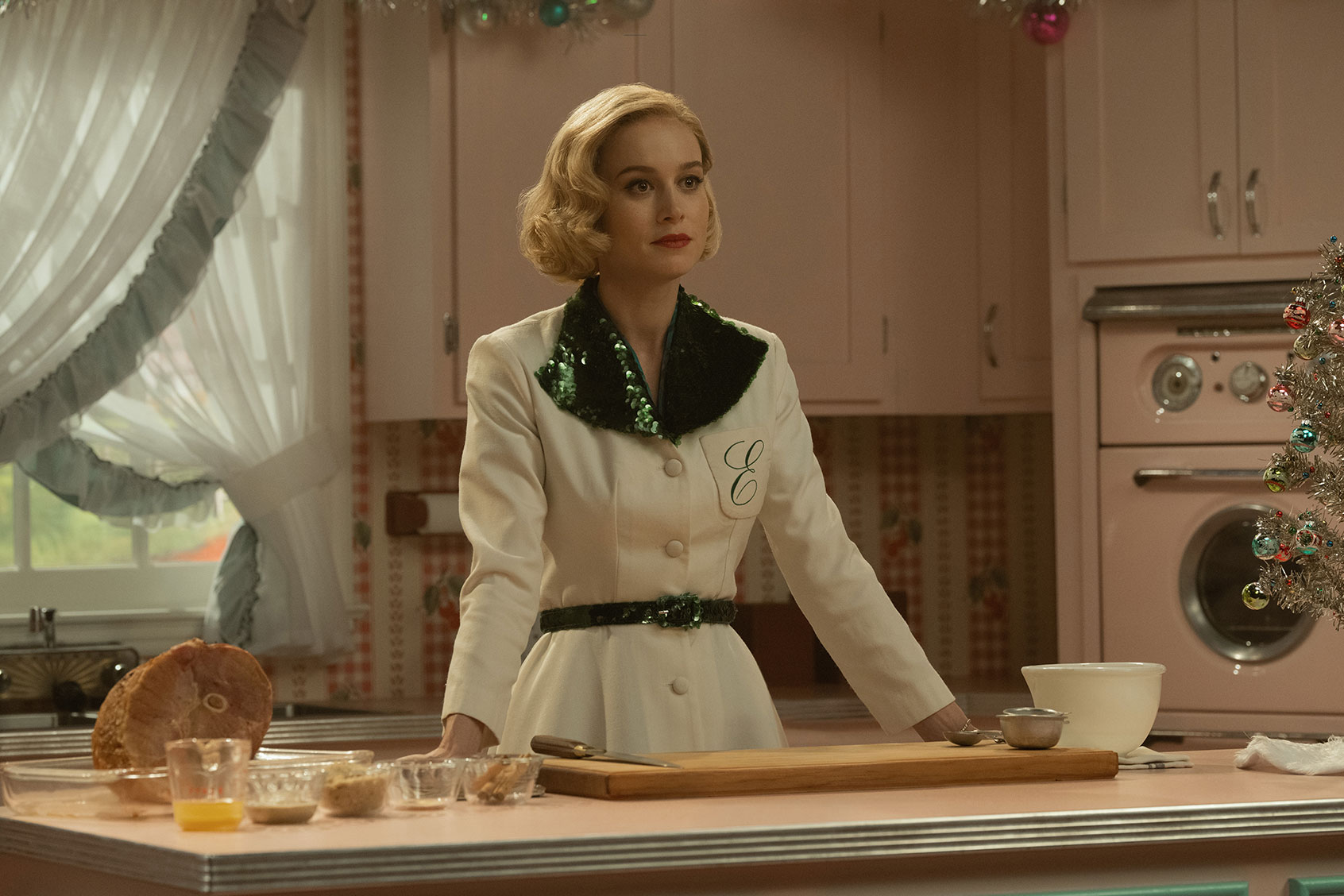
Lessons in ChemistryLessons in Chemistry (Apple TV+)The following interview has been lightly edited for clarity and length.

I'm sure you've probably gotten this question several times already, but I must know the answer: How does one go from “Jury Duty” to "Lessons in Chemistry"? It's quite the transition.

Isn't it? You know, it's funny. I've been writing professionally for 18 years, and I started on “The Office.” My focus for so long was comedy, and then in the last five or so years, I did “Jury Duty.” I did a show called “Little America” for Apple, which was an immigrant anthology series. I did “WeCrashed," and now, “Lessons in Chemistry." I get excited about a project, and then I just kind of chase it . . . I'm writing a thriller right now. I think I'm kind of genre-agnostic. If the idea excites me and I think that I have a way in, then I kind of want to chase it.

I'm a lifelong home chef. Part of the reason for that is when I was growing up, I watched a lot of Julia Child. Whenever the culinary arts are portrayed, what has really foregrounded me more than anything else is the joy of it. One of the things that stuck out to me in “Lessons in Chemistry” was the speech that Elizabeth makes to her producer saying, “This is not fun: Cooking is work — it is worthwhile work.”

Can you speak about how the tone is informed, in terms of finding this balance between cooking as something joyful and something that can be very nostalgic in a way and the real sense that it is work?

So much of that came from the book. And I was really inspired by Elizabeth from Bonnie's novel — that she is so matter of fact, and she approaches the world that way. She’s so smart, but she’s closed herself off. She has put up walls at the beginning of the show, and as the show unravels, you understand why.

She goes to work every day, and the men in the lab don't. They just don't respect her. They're not aggressively mistreating her — it’s subtle sexism, I would say. She's the one who gets the coffee for them, and nobody ever really engages her as a chemist. She has to do her work at night and skulk around in the darkness.

"What was most important to me was the way that people just take for granted the fact that a woman comes home and cooks these meals."

The first time that we see her cook at home: It's really the first time you've seen the character calm, and the music changes. It's almost meditative for her, what cooking provides for her. It becomes the way that she connects with Calvin. Then, ultimately, it's the reason that she gets hired on “Supper at Six,” and it's kind of the conduit to connect with her audience.

It's interesting as you say that line. I don't know that she thinks of it as fun. I don't know what Elizabeth thinks is fun, but I think she thinks it's important. I think she thinks that it's essential, and I think what was most important to me was the way that people just take for granted the fact that a woman comes home and cooks these meals.

I remember being a kid and complaining all the time . . . There are certain dishes I like, and “why are you making this?” Now, I love to cook, also. And the idea of . . . you're the chef and people don't appreciate the work and the effort and the thought that went into it. It so often comes from a place of like, “We're not at a restaurant. This is something I was doing. I wanted to provide for my family and community." And that's so much more of where Elizabeth comes from.

There's this idea of chemistry in cooking that is taken for granted and that is really brought forward in this book. I'm wondering if there were discussions about striking that tone between presenting a show about a chemist and [depicting] a cooking show.

Look, I think that Elizabeth is both things, and she's both things from the beginning. She's a chemist, and she's a cook. And the way that she approaches it is what we did in the pilot: She's working on a lasagna recipe, and she's doing it like it's a science experiment. She's conducted the experiment 78 times . . . and Elizabeth is someone who thinks that if there are no kinds of outside variables or contaminants, you can achieve perfection.

The pilot is bookended by the “Supper at Six” episodes, and we really wanted to introduce that as part of the show. She's this amazing chef — we've seen her make these amazing dishes for Calvin throughout. Then she burns the lasagna, and she uses it as a teachable moment with her audience. You go through life and . . . you've planned and you've prepared and you've done everything right, but sometimes you burn the lasagna. Sometimes, life doesn't go the way you planned. And how do you build yourself back up from that? What happens when you suffer loss or you experience grief or adversity comes into your life? Some people buckle from it, some people can't stand back up. Some people are hardened by it, some people find refuge elsewhere. All of that is kind of a jumping-off point for where the series goes.
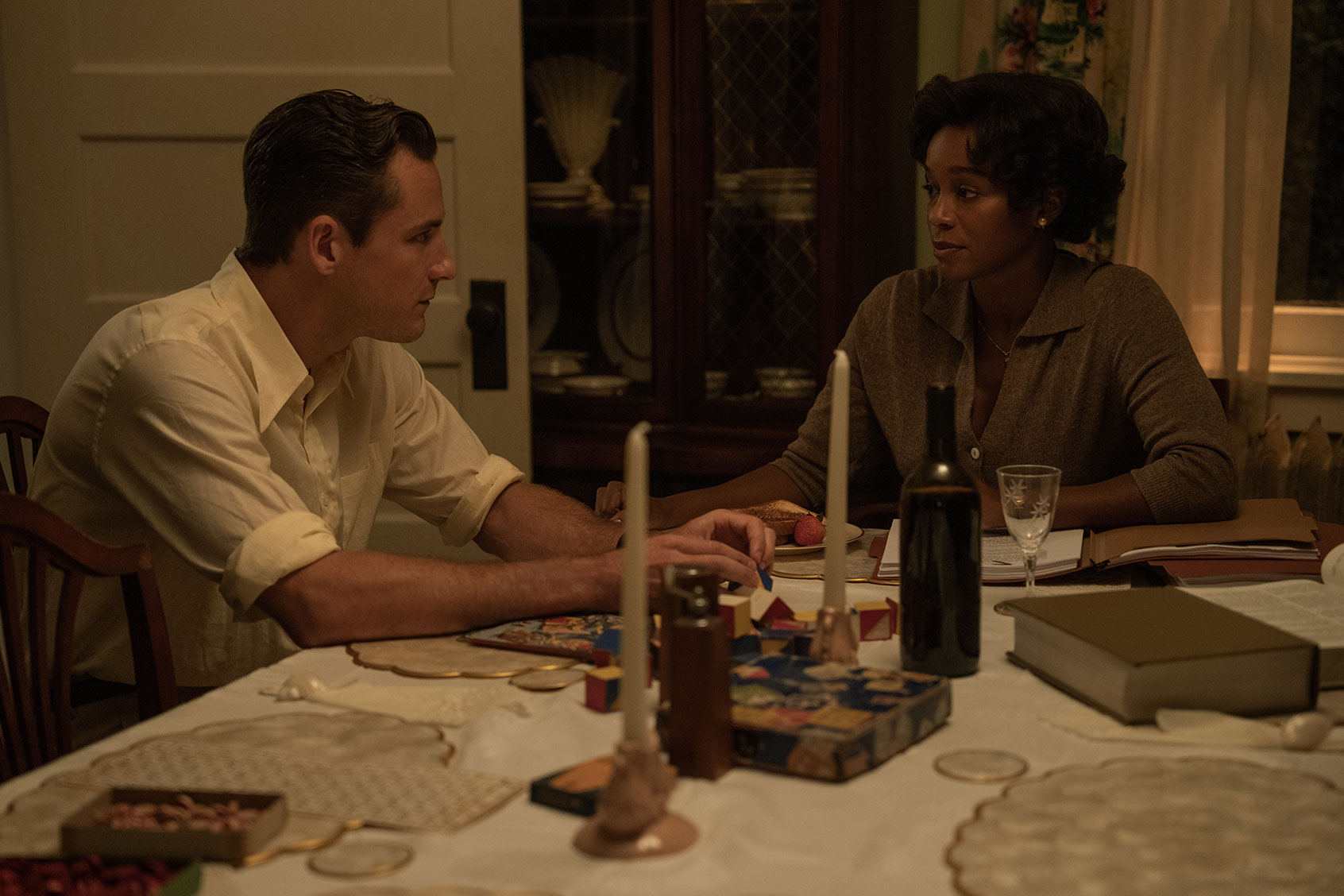
Lessons in ChemistryLessons in Chemistry (Apple TV+)My understanding is that the character of Harriet was created for the series. Is that right?

Yes.

Can you talk about the importance of this and what you wanted to do? “Julia” did something similar to remind people of the reality that in the '50s, the Civil Rights Movement was beginning to blossom and was this discordant aspect of life going on behind the scenes of this very graceful show that was teaching America how to cook.

Yes, absolutely. It really came about from casting. Aja Naomi King is an incredible actress. We were considering her for another role, and we hadn't yet cast Harriet.

Harriet is a very important role in the in the book. She's never kind of described using race, but I think the audience took her to be a mid-50s white woman in an abusive relationship who happens to be a neighbor. As we started talking about where we wanted to take the series, I started having this idea of what if Harriet became this Black woman who lives across the street from Elizabeth in this predominantly Black neighborhood and she's a lawyer.

As we started doing research about that time, we found this neighborhood called Sugar Hill, which is in Los Angeles. The producers and the other writers, you know, we've all lived in LA for so long, and we didn't know the history of this neighborhood. And it was fascinating. This predominately black neighborhood was filled with doctors and lawyers and some of the biggest entertainers of that time who fought to preserve their neighborhood against this racist bureaucracy that had plans to basically put the 10 freeway directly through it.

"It was really important to us that Elizabeth isn't always on the right side of history for every moment of the show."

And putting a fictional character like Harriet, who, like Elizabeth, is pushing up against the system, and because of her race is actually in even more of a deficit than Elizabeth is . . . We thought it was really interesting to show it through a different lens of this Black woman who was also fighting to save her neighborhood. As the series goes on, we get to a place where, you know, Elizabeth is making strides. She's on a pulpit, and she has a real audience and women are listening to her. And she thinks that she's making great changes by rebelling and wearing pants on TV, which at the time was quite quite a statement.

Meanwhile, Harriet is fighting this incredibly important fight that's so personal and so cataclysmic to her life, to her neighborhood and her community's survival.

I love to tell stories where you see the story from different perspectives. When Elizabeth is wearing pants, it's an act of rebellion. And then she calls Harriet with this news, and you see that Harriet is going through her own thing and her friend isn't even asking her what's happening in her own life. Elizabeth is so proud and almost wants a pat on the back for wearing pants, and you see what Harriet is going through in that moment. And this confrontation that those characters have later in that episode really was one of the most powerful moments for me in the writing and the shooting of it.

As a person who's been in Harriet’s situation on the phone, I felt very seen.

Oh, good. Elizabeth, you know, she's the heroine of our series, and she's not without faults. She needs to have growth. It was really important to us that Elizabeth isn't always on the right side of history for every moment of the show. That was something that we really wanted to explore.

We worked incredibly closely with Dr. Shamell Bell, who was one of our consultants, who really spoke to that time and that era in the Black community. That was incredibly important to us. We pitched the Sugar Hill story to her, and then she said, "Oh, my God, here are 15 books you need to read." . . . And then Millicent Shelton, who directed episodes five and six, was incredible when we were getting into the protest and really kind of honing into what those stories are, and what it does mean to show up.

We need your help to stay independent

It's very easy to say, "I support you." But it's a very different thing when there are consequences . . . We wanted Harriet to say to her friend, "Who is your audience? And who are you really standing up for?" and have Elizabeth be set back on her heels a little bit.

There's also a racial dynamic in terms of a Black woman and a white woman being friends at that time, and even the conversations that they could be having with one another, the level of honesty they could have with one another. We needed to get it right.

Let’s talk about the men in Elizabeth's life, not just Calvin or Harriet’s husband, who are gems and wonderful. I'm also thinking about Rainn Wilson's character, who is so overtly misogynistic. I would love to hear about your experience of writing that character. And I’m sure Rainn had lots of fun with it. He’s almost like this over-the-top caricature, and yet there's a lot about him that feels realistic.

The show, in being truthful to the world that we were creating, is not "men are bad, women are great." That's not true, and that's overly simplistic. And so, with the men in Elizabeth's life, there are varying degrees of sh*ttiness, there are varying degrees of decency. I think having a character like Walter (Kevin Sussman), who's going through his own struggles as a single father during that time and just trying to do the best that he can, forming this kind of unlikely friendship between the two of them was something that was really appealing to us.

Calvin's friend — the doctor who encourages Elizabeth to get into rowing — he’s decent in his own way. And that's a character from the book that I had fallen in love with.

Rainn Wilson is a dear friend of mine, and I was desperate to find something for him. When we first started talking about Phil, who's in the book, I thought, "Oh, man, if Rainn is available and would even consider this, what a treat that will be." And he knocked it out of the park.


Hungry for more great food writing and recipes? Subscribe to Salon Food's newsletter, The Bite.


Phil is despicable, but you want to understand where Phil came from. I think Phil is certainly a man of his time. He's also trying to keep a show afloat. I'm never rooting for him. I'm delighted by him at all times, but I've never rooted for him. But I also want to understand why — If you are running a show and your star starts making political statements during that time, what are the consequences for that? — and the fact that people are losing their jobs as he's trying to keep his business afloat. Again, that is not making him a hero in any way, but you want to understand where he's coming from and not simply say, "Oh, he's an ogre." Though he has ogre-like qualities.

And I can't let you get away without asking about Six Thirty. I know everybody is in love with him. With any series, whenever there's an adorable dog, I think there's this question of whether the dog was actually as adorable as he was when action was called, mainly so that if people want to go out and get the same type of dog, they know what they're in for. So, is Six Thirty as sweet as advertised?

Gus, the actor who plays Six Thirty, is completely lovable. And then you know, when you have a dog on set, we had a few things that gave us a little bit of advantage on set. We had a lot of food . . . We made a lot of lasagnas, and you feed the crew with the ones that don't make it to the screen. So, the fact that the crew is well fed and the fact there's delicious food are both incredibly important.

And then I think also having a dog that's as lovable as Gus was on set, it just gives it a different feeling. It is incredibly challenging working with a dog, and Gus was as good as a dog can be.

The first two episodes of "Lessons in Chemistry" are now streaming on Apple TV+.