Spring Sale: Get 1 Year, Save 58%

“Ominous sign”: Legal experts say Jack Smith “closing in” after piercing Trump’s “inner circle”

Special counsel Jack Smith’s team has asked witnesses about a call on which former President Donald Trump pressured former Arizona Gov. Doug Ducey to overturn his 2020 election loss and has shown an interest in Trump’s “efforts to conscript” former Vice President Mike Pence into helping him, according to The Washington Post.

Trump in late 2020 urged Ducey to find enough fraudulent votes to overturn his narrow loss in the state, three sources told the Post, echoing his call to Georgia Secretary of State Brad Raffensperger to “find” the necessary votes to also reverse his loss in that state.

Trump also repeatedly asked Pence to call Ducey and urge him to find evidence backing his widely debunked fraud claims, according to the report. Sources told the outlet that Pence called Ducey several times about the election but did not pressure the governor.

Pence told CBS News on Sunday that he “did check in” with Ducey but “there was no pressure involved.” Pence added that he also doesn’t “remember any pressure” by Trump.

Ducey described the “pressure” to a prominent Republican donor earlier this year, the donor told the Post, and the account was confirmed by others with knowledge of the call.

Ducey told the donor that he was surprised Smith’s team had not yet inquired about his calls with Trump and Pence, though he did not record the call. It’s unclear if Smith’s team has contacted Ducey since the meeting with the donor.

Smith’s team has asked witnesses about Trump’s calls to governors, including one to Ducey, sources told the Post, though it’s unclear how those calls figure into their probe. Prosecutors have also shown interest in Trump’s efforts to get Pence to help him.


Want a daily wrap-up of all the news and commentary Salon has to offer? Subscribe to our morning newsletter, Crash Course.


A spokesman for Trump told the Post that the former president should be credited for “doing the right thing — working to make sure that all the fraud was investigated and dealt with.”

Ducey — as well as hundreds of other Republican officials, judges and investigators — has repeatedly refuted Trump’s claims of fraud.

“Amazing that we’re still learning new ways that Donald Trump abused his power to try to reverse an election loss and keep himself in power, in this case by pressuring the governor of Arizona to overturn that state’s results,” tweeted former federal prosecutor Noah Bookbinder, the head of Citizens for Responsibility and Ethics in Washington (CREW).

While it’s unclear if Smith has spoken to Ducey, “it seems probable and in any event he has the story through Pence (who has testified) and others who were on the call,” added former U.S. Attorney Harry Litman.

CNN legal analyst Norm Eisen, who served as Democratic counsel in Trump’s first impeachment, told CNN that the call “fits into a pattern” in which Trump also pressured other officials and the Justice Department.

“Remember, the Jan. 6th committee has made criminal referrals here, including the pressure campaign on the states,” he said. “The Jan. 6th committee has said it presents overwhelming evidence. I do think it’s a strong case and that the special counsel will likely charge the former president,” he added.

Pence testified before a grand jury for more than five hours in April.

Former White House chief of staff Mark Meadows also testified before the grand jury without Trump’s knowledge, raising concerns among Trump’s team that he may have flipped and is cooperating with prosecutors, though his attorney denied any plea deal.

Prosecutors also reportedly met with former Trump attorney Rudy Giuliani to discuss a proffer agreement, in which a person under criminal investigation agrees to provide prosecutors with useful information.

“It’s typical in cases that prosecutors attempt to secure the cooperation of those also high up in an alleged criminal scheme,” Eisen explained on CNN. “After Donald Trump, Giuliani is one of those who appears based on the evidence, to be most culpable. Typically, a proffer is followed by immunity. Often if you have a culpable individual, a plea bargain. We need to see what happens next with Mr. Giuliani, but it’s another ominous sign for the former president that special counsel Jack Smith seems to be closing in.”

Former Watergate prosecutor Jill Wine-Banks said the Giuliani interview shows that Smith’s team is “moving pretty quickly.”

“I would say we are getting closer and closer to another federal indictment, whether it’s going to be for the fake electors, whether it will be for the New Jersey display of classified documents, whether it will be for more about what happened on January 6th for seditious conspiracy by the president himself in trying to overturn the election, we don’t know,” she predicted. “But the fact that you are at the level of Rudy Giuliani, which is getting pretty much into the inner circle, that means there is nowhere else to go.”

The writing is on the wall for Lindsey Graham

Former president Donald Trump held the first big rally of his comeback campaign over the weekend in a little town called Pickens, South Carolina. Reports of the crowd size vary, with Trump claiming 75,000, which is absurd, but it was a large and very enthusiastic crowd. He gave his usual spiel, whining, “I am being indicted for you.” And he once again delivered his creepy new mission statement, declaring that this 2024 election is the “Final Battle” against the “communists,” “globalists” “warmongers” and the “sick people” and “degenerates” who “hate our country.” It was the usual cheery, positive vision of the future we’ve come to expect from Trump and it was especially uplifting on the 4th of July weekend. It makes you proud to be an American.

He was very well received, which isn’t surprising since the district went for him in big numbers in both 2016 and 2020. The weather was very hot but the people were ready to party:

Georgia Congresswoman Marjorie Taylor Greene appeared as well and was her usual ray of sunshine. She even inspired a good old-fashioned “lock her up” chant, much to the delight of the gathered throng.

Then something very odd and somewhat inexplicable happened. The South Carolina crowd turned on their homeboy, Sen. Lindsey Graham, and I’m honestly not entirely sure exactly what it’s all about.

It was brutal.

Later, when Trump tried to give Graham a shout-out, the jeers started all over again prompting Trump to make this weird statement:

You know, you can make mistakes on occasion. Even Lindsey down here, Senator Lindsey Graham. [more booing] We’re gonna love him. We’re gonna love him.

I know, it’s half and half. But when I need some of those liberal votes, he’s always there to help me get them, OK. We got some pretty liberal people, but he’s good.He’s there when you need him. We know the good ones. We know the bad ones too. We’ve got some real bad ones. But even he makes mistakes on occasion.

Trump seemed surprised by the vehement hostility, even laughing and muttering “Jesus” under his breath at one point.

This is an interesting question because it exposes how much Trump is influenced by his unruly mob.

But this has happened before. You may recall that Graham suffered a humiliating experience being heckled in an airport. Feelings were running hot in the aftermath of January 6 for his momentary lapse of MAGA supplication in failing to vote to challenge the electoral count after the insurrection.

Maybe they’re still harboring a grudge even though Trump himself seems to have forgiven him.


Want a daily wrap-up of all the news and commentary Salon has to offer? Subscribe to our morning newsletter, Crash Course.


One often cited reason in the Youtube comments is Graham’s support for Ukraine. But is it so important to MAGA that they would boo him through an entire speech — in South Carolina, probably the most historically militant state in the nation? Perhaps, but if you listen to what Trump says on the issue he’s not nearly as anti-Ukraine as some of the more vociferous opponents in the Congress. He evades saying what should be done by accusing Biden of “doing it wrong” and insisting that he has a secret plan that will end the war the day after he’s elected. It’s not as if he’s been railing about the waste of money or proclaiming that it’s all a NATO plot as Rep. Greene does.

This is an interesting question because it exposes how much Trump is influenced by his unruly mob. Graham is probably closer to him than any other senator and has been with him since the first days of Trump’s presidency. It’s true that from time to time he would stray and say something vaguely critical but over Trump’s term he became progressively sycophantic to the point of embarrassing self-abnegation.

William Saletan at The Bulwark recently published a series of essays about Graham’s abandonment of his will and his conscience since 2015 as he dedicated himself to serving Trump called “The Corruption of Lindsey Graham. A Case Study in the Rise of Authoritarianism.” He had once fashioned himself as a “maverick” like his idol John McCain who loathed and despised Trump and during the 2016 campaign Graham breathlessly denounced him in colorful terms: “hateful,” a “kook,” a “demagogue,” and a “race-baiting, xenophobic, religious bigot” who “represents the worst in America.” That was just for starters. But once Trump won, Graham turned himself around quickly, seeing an opportunity to school the buffoon on foreign policy. It took some work but he made it into the “inner orbit” over the course of a few months and was soon spending time with him on the golf course and becoming a close confidant.

Over the course of Trump’s four years in office, Graham went through the looking glass, abandoning himself to the emotional appeal of being a Trump courtier. His crucible was the hysterical speech he gave during the Brett Kavanaugh Supreme Court confirmation hearings in which a red-faced Graham seemed to completely come unhinged. The reviews from Trump and the MAGA faithful were rapturous, however, and Graham was hooked.

By the time the 2020 election came around, Lindsey Graham was so deeply attached to Donald Trump that he became one of his strongest surrogates, even involving himself in the attempts to get the election results overturned in the states. He made dozens of appearances on television spreading the Big Lie and stood by his man all the way up until January 6. At that point, if Graham had simply been an opportunist who was trying to deal with the situation in which he found himself, he could have written Trump off and moved on. He was out of power. Instead, Grham was among the first to tell Trump that he needed to immediately plan his restoration to the throne. He didn’t want to let him go.

If Graham had simply been an opportunist who was trying to deal with the situation in which he found himself, he could have written Trump off and moved on.


Saletan’s piece traces Graham’s evolution from a man who believed that he could manipulate Trump to someone wholly in his thrall, stuck in the Trumpian vortex without any idea of exactly how he got there or any real desire to get out. He serves as a perfect example of how a demagogue, even one as ignorant as Trump, can seduce a party and its voters into authoritarianism.

It had to hurt to hear those boos after all he’s done for their idol Donald Trump. It must be frightening to hear Trump give him such a tepid endorsement, agreeing that he’s only “half and half” and that he’s good for bringing liberals on board Trump’s plans (suggesting that Graham is some kind of liberal symp, which is preposterous.) But that’s how authoritarian systems work. Trump heard those boos and the writing is on the wall for Lindsey Graham. Trump will never trust or respect him again.

Blocked artery in your leg? Here’s what you should know

Millions of Americans have peripheral artery disease, a disorder primarily caused by fatty deposits that can narrow arteries and block blood flow to the legs. Often, the first symptom they feel is leg pain. Experts say that most treatments are safe, but some have expressed a growing sense of alarm that doctors may be doing procedures that patients don’t need, exposing them to unnecessary risks.

ProPublica looked into artery procedures and found that some doctors are making millions of dollars doing a questionable number of treatments. Government insurers pay well for vascular procedures that are done outside of hospitals, and doctors can bill tens of thousands of dollars for treatments done in a single office visit.

One doctor in Maryland made millions of dollars from the federal government for performing thousands of vascular procedures. A state medical board investigation found that his inappropriate treatments put patients at risk of serious harm. One man had to have his leg amputated after invasive treatments for mild pain, according to filings in a settled lawsuit. A grandmother bled out and died shortly after the same doctor cut into her, according to another ongoing lawsuit. The doctor denied the allegations in legal filings, but declined to be interviewed and did not respond to emailed questions.

Some doctors worry about the overuse of procedures and think there should be more oversight. They compare outpatient vascular care to the Wild West and say there are not enough protections to stop patients from getting unnecessary treatments.

We made this guide to help patients ask the right questions and get good health care. This article is not intended as medical advice, so it’s important to speak with your own doctor and use other resources before you make any decisions.

What Is Peripheral Artery Disease?

Peripheral artery disease occurs when plaque or other deposits build up on the walls of blood vessels, often in the legs, and restrict blood flow. Smoking, high cholesterol and diabetes can increase your risk of developing the condition. Around 6.5 million Americans over 40 have peripheral artery disease, which usually affects older people.

What are the symptoms of peripheral artery disease?

People with this chronic disease can live a long time, especially if they exercise, stop smoking and eat healthy food. Up to half of patients don’t have any symptoms, but others feel pain when they walk or exercise, a condition known as claudication. This happens because their leg muscles may not be receiving enough oxygen.

At first, the pain might not be severe, but it can worsen over time and begin to occur even at rest. Some people might also feel coldness or numbness in their legs or feet, see changes in the color of their skin or have a weakened leg pulse. A fraction of patients may eventually develop critical limb ischemia, which can result in an amputation, but this is less likely if the disease is diagnosed early and treated appropriately. Experts told ProPublica that only about 5% of patients who are diagnosed early on in the disease will require an amputation within five years.

“If you go to the doctor and you’re having only walking problems and they tell you that you’re going to lose your leg, they are wrong,” said Dr. Michael Dalsing, a vascular surgeon at Indiana University Health Physicians and a former president of the Society for Vascular Surgery.

How Is Peripheral Artery Disease Diagnosed and Treated?

Doctors can administer noninvasive tests like ultrasounds or blood pressure measurements to see how blocked your blood vessels are. They may also suggest a treadmill exercise test to determine how severe symptoms are.

Peripheral artery disease can’t be cured, but it can be managed with routine monitoring and lifestyle changes.

For mild cases, like patients with just claudication, best practices recommend that doctors start with noninvasive treatments, which can slow or even reverse symptoms. Plans may include regular exercise, changes to your diet and quitting smoking. They might also involve medications to lower your cholesterol, control your blood pressure, prevent the buildup of plaque in your vessels, or reduce leg pain.

If the disease worsens or symptoms are disabling or limb-threatening, doctors may suggest more aggressive treatments that unblock blood vessels. Endovascular procedures are minimally invasive treatments, where a doctor makes a small incision near the hip to access the vessels and threads in flexible catheter tubes to treat blockages. Typical treatments may include balloon angioplasty, the placement of stents or the removal of plaque with a bladed catheter, also known as an atherectomy. These treatments have a relatively short recovery time and can be done in outpatient centers. Alternatively, a doctor may recommend bypass surgery, where blood flow is rerouted around blockages in the vessels.

All of these more aggressive treatments have risks of complications, like clots, bleeding or even amputation, so your doctor should talk to you about what could happen.

When Should You Ask Questions About a Vascular Treatment?

While most doctors do their best to help their patients, ProPublica’s reporting has found that some doctors suggest invasive treatments that may be too aggressive for mild symptoms. This can increase the risks of complications and may worsen peripheral artery disease.

“You want to start with the lowest-risk thing because claudication rarely leads to an amputation,” said Dr. Peter Lawrence, the former chief of vascular and endovascular surgery at the University of California, Los Angeles.

Patients should feel comfortable asking questions and learning about their treatment plan, especially before signing off on invasive interventions. ProPublica spoke with more than a dozen vascular physicians to understand when patients should seek more information.

When treatment decisions are not explained well.

“The physician should be able to explain the importance and the significance of what they found to justify what they’re planning to order,” said Dr. Gary Lemmon, a vascular surgeon who serves on the appropriateness committee for the Society for Vascular Surgery.

Navigating the health care system to figure out the best treatments can be confusing. Doctors should take time to explain what tests reveal, what disease progression might look like and how it should be treated. Doctors should be aware of what professional practice guidelines and criteria recommend and be able to clearly explain the options to patients. Setting realistic expectations is important. Doctors should be able to clearly describe how any procedure will impact your life and to what extent you can expect your symptoms to improve.

Decisions about your treatment plan should not be made for you, the experts said. They should be made with you.

When treatment decisions are made too quickly.

“A quality marker that someone can sniff right away is if the decision is made quickly and not a lot of time is spent with the patient,” said Dr. Michael Conte, professor and chief of vascular and endovascular surgery at the University of California, San Francisco. “I would be wary of that sort of interaction.”

Patients should be cautious if doctors immediately suggest invasive procedures instead of first trying exercise, diet changes and medicine.

“If a provider recommends that they be treated without a trial of exercise therapy and use of correct medications, and they recommend treatment before six months of conservative management, that should be a red flag,” said Lemmon.

Once patients start receiving invasive interventions, they might need more procedures; with each treatment, there’s a risk of something going wrong.

“One procedure leads to another procedure to another procedure,” said Dr. Nicholas Osborne, an associate professor of vascular surgery at the University of Michigan. “Two years later, they’ve had failed bypasses, they have dead toes, they’re looking at a major amputation or maybe a Hail Mary kind of salvage bypass to get them out of the trouble.”

Peripheral artery disease progresses differently for each person, so doctors need to assess each case carefully before recommending any procedures. “In some patients, that clock ticks really slowly and it takes a long time for them to get from claudication to ever needing anything,” said Dr. Joseph Mills, the current president of the Society for Vascular Surgery and chief of vascular surgery and endovascular therapy at Baylor College of Medicine. “And for others, it’s a more rapidly ticking clock. But when you start to do interventions, whether it’s a bypass or a stent, the clock speeds up.”

When scare tactics are used to push you into a procedure.

Patients with mild vascular disease told ProPublica that they agreed to invasive procedures because doctors told them they would lose their leg without an intervention.

“I see a lot of patients in clinic that come for a second opinion,” said Dr. Caitlin Hicks, an associate professor of surgery at Johns Hopkins University School of Medicine. “And they’ll have been told by some surgeon, ‘You have a narrowing in your blood vessel, you’re going to lose your leg unless we do something.’ And that’s the story that’s fed to many, many patients.”

Without a full picture of the disease, patients may make less informed choices. Doctors should communicate clearly and explain the risks and benefits of any procedure. Otherwise, patients can get scared and seek a procedure they may not need.

How to Find a Doctor You Trust

Finding a doctor you trust can be tricky. Specialists like vascular doctors are often found through primary care physicians, but some also advertise directly to patients in Facebook and Google ads, on billboards and at community events like church or senior center meetings.

“The vast majority of physicians treating vascular disease practice ethically, but [patients] can’t assume that,” said Dr. Kim Hodgson, a former president of the Society for Vascular Surgery. “They can’t just assume that the physician with the flashy advertising and the certificates on the wall is qualified or competent.”

It’s important to make sure that your health is the doctor’s top priority before agreeing to any procedures. Here are some tips on how to find a trustworthy doctor:

  • Check for board certification. There are three main types of doctors that treat peripheral artery disease: vascular surgeons and specialists, interventional radiologists, and cardiologists. Look for doctors who have passed a specialty test and are certified by a board. You can check whether your doctor has board certification through state medical board databases.
  • Look for membership in medical societies or associations. These organizations are committed to upholding standards of care.
  • Research disciplinary records. Check state medical board databases to see whether doctors have gotten into trouble for poor patient care. Some boards also provide information on malpractice lawsuits, but in most states, the best way to access information about those cases is through court records.
  • Consider a second opinion. If you have concerns, make an appointment with another doctor.
  • Look for involvement in programs committed to transparency and quality patient care. Some medical societies, like the Society for Vascular Surgery, have created initiatives to uphold best practices. The Vascular Quality Initiative collects and analyzes procedure data in a registry. Earlier this year, the society also launched the Vascular Verification Program with the American College of Surgeons to help hospitals improve patient outcomes. “We’re trying to make things more transparent and safe,” said Dalsing, a former president of the society. “As soon as you get things into the light, I think things start to change, and for the better when needed.”

What Questions Should You Ask Your Vascular Doctor?

“Patients have to ask questions, but then the problem is patients don’t even know what questions to ask,” said Dr. Karen Woo, a vascular surgeon and professor at the David Geffen School of Medicine at UCLA. “Most clinicians don’t really go in depth into that risk-benefit conversation and what the consequences are of having an invasive procedure.”

When you receive a new diagnosis from your doctor, it can be overwhelming and hard to know what to ask. But you need to understand your options to make sure you get the best care, so we asked doctors what you should be asking them.

Some recommended questions:

  • Could anything else be causing my symptoms?
  • What are the different ways to treat my illness?
  • Can I make any lifestyle changes before undergoing invasive treatments?
  • What are the risks and side effects of the treatment?
  • Is there a simpler, safer way to treat my illness?
  • What is a good outcome? What is a poor outcome?
  • What happens if I don’t receive any treatment?
  • If the procedure is not being done in a hospital, can the doctor take me to a hospital if complications arise, and do they have privileges at a nearby hospital?
  • Will the procedure require any follow-up procedures?

ProPublica is a Pulitzer Prize-winning investigative newsroom. Sign up for The Big Story newsletter to receive stories like this one in your inbox.


Fraud “justice”: Anti-LGBTQ decision based on a fake case showcases the Supreme Court’s illegitimacy

For a brief moment this summer, after the Supreme Court declined to overthrow democracy and invite Donald Trump to steal the 2024 election, there was a surge of hope that the six justices appointed by Republican presidents were starting to dial back their radicalism in the face of the massive public backlash. For years, the Supreme Court has enjoyed a measure of undeserved goodwill from the public, mostly because people don’t pay close attention and assume the court is still in the business of upholding human rights instead of decimating them.

After the Supreme Court overturned Roe v. Wade last year, however, voters started to wake up to the fact that a well-funded right-wing movement, led by the Federalist Society, had stacked the court with a bunch of hacks who care little for law or precedent. Added to the pile were well-publicized stories highlighting the corruption of justices like Clarence Thomas and Samuel Alito, who shamelessly enjoy free vacations funded by right-wing billionaires. The result is that only 31% of voters approve of the Supreme Court, according to an NBC News poll, which is down from 44% in January 2021. 

Well, any hope that the court has moderated itself was dashed late last week, with a series of decisions that weren’t just awful but involved the conservative justices thumbing their noses at any law, precedent, or even facts that got between them and their preferred far-right policies.


Want more Amanda Marcotte on politics? Subscribe to her newsletter Standing Room Only.


On Thursday, the court overruled 50 years of precedent to decide that affirmative action in college admissions is illegal

On Friday, the court doubled down its attacks on equal education by ruling against President Joe Biden’s student loan forgiveness program. As Justice Elena Kagan wrote in her dissent, “the court today exceeds its proper, limited role in our nation’s governance,” by simply ignoring a law passed by Congress because conservatives don’t like it. 

Many of this term’s Supreme Court decisions are indefensible when it comes to law and precedent.

But for the case that most exquisitely illustrates the illegitimacy of the current iteration of the Supreme Court, we should turn to 303 Creative LLC v. Elenis. This case is a straight-up fraud from every angle and had no business even being before the Supreme Court. To begin with, it’s a redux of a 2018 case, Masterpiece Cakeshop vs. Colorado, which addressed a baker who violated Colorado’s ban on anti-LGBTQ discrimination by refusing to bake a cake for a same-sex wedding. The case was brought by the Alliance Defending Freedom (ADF), a right-wing group demanding that Christians have the privilege to opt out of anti-discrimination laws. ADF lost its case. 

That should have been the end of it, but ADF wanted another bite at the apple. Not because any facts or laws had changed, but because the make-up of the court had, due to Donald Trump getting two more nominees, Brett Kavanaugh and Amy Coney Barrett, on the bench. 

But what makes this clown show even worse is that the complaint at the heart of 303 Creative v. Elenis is completely made up. In Masterpiece, there really was a baker who really did discriminate against a gay couple, creating both standing and a fact pattern to discuss in court. With 303 Creative, however, the “facts” justifying the case are all make-believe. The plaintiff, Lorie Smith, sued on the grounds that she doesn’t want to make wedding websites for same-sex couples. But no one had actually requested that she do so, for one simple reason: She didn’t make wedding websites. Her lawsuit was purely hypothetical. Legally, she shouldn’t have had a right to sue at all. 

To get around the fact that their client had no right to sue, ADF claimed she had received an inquiry from a man named “Stewart” who had some vague questions about maybe hiring 303 Creative in the future for a wedding to “Mike.” But it appears that the entire story may be fabricated. Melissa Gira Grant of the New Republic contacted Stewart, using the email and phone number included in the lawsuit. He denies having sent that request, pointing out that he is already married, to a woman. 

“The initial lawsuit did not mention the ‘Stewart’ inquiry, which was submitted to Smith’s website on September 21, according to the date-stamp shown in later court filings, indicating that she received it the day after the suit was originally filed,” Grant writes. What a remarkable coincidence! How fortunate that this alleged request came in right as ADF needed to shore up their dubious claim that their plaintiff had any business in court at all. 


Want more Amanda Marcotte on politics? Subscribe to her newsletter Standing Room Only.


So what gives? It’s unlikely that ADF was having trouble finding Christian business owners unwilling to discriminate against gay couples in the real world. Assholes are a dime a dozen, after all. But it is worth pointing out that Masterpiece Cakeshop wasn’t just a legal loss for ADF, but bad public relations, as well. By adopting a real case, they put human faces on the issue, both in terms of the baker Jack Phillips and the couple he refused service to, Charlie Craig and David Mullins. The public could see that the real victims here were Craig and Mullins, two perfectly nice guys who got a faceful of hate when they were innocently shopping for a wedding cake. Phillips, however, came across as a jerk. 

With 303 Creative, however, the crime is hypothetical. There are no actual victims to feel sorry for. Granted, any video of Smith erases all doubt that the woman is a smug and despicable Karen, unsurprisingly.

Still, without a real gay couple to talk to reporters, it allowed ADF to present an entirely one-sided narrative. Bigotry is less upsetting to people when it’s abstract.

But it also should have meant that the court rejected her case out of hand since it’s built on a sandcastle of lies. As Vox’s legal expert Ian Millhiser wrote, “federal courts, including the Supreme Court, do not have jurisdiction to decide hypothetical cases.” That they didn’t is yet another sign of how much this isn’t just a Republican court, but a MAGA one, only too happy to adopt Donald Trump’s tactic of using “alternative facts” to bolster their case when the actual facts won’t do it. 

In her dissent, Justice Sonia Sotomayor draws attention to this shadiness, by pointing out the many real world examples of what happens when discrimination against LGBTQ people is legal. It’s a reminder this isn’t an abstract issue about “religious belief,” but a serious threat to the wellbeing of real people. 

It’s fitting that the author of the shameful opinion is Justice Neil Gorsuch, who is only on the court because Republicans literally stole his seat for him. By all rights, that seat should belong to Merrick Garland, who is currently the attorney general, because he was nominated in 2016 by President Barack Obama. But then-Senate Majority Leader Mitch McConnell, R-Ky., illegally refused his duty to hold hearings for Garland. Instead, he held the seat open, in direct violation of the Constitution, until Donald Trump got into office and placed Gorsuch there instead.

This isn’t even the first opinion Gorsuch has written based on made-up “facts.” Last term, Gorsuch ruled in favor of a football coach who wanted to lead prayers at a public high school, in direct violation of the First Amendment. To get to the desired outcome, both Gorsuch flat-out lied about the situation. Gorsuch claims the coach merely “offered his prayers quietly while his students were otherwise occupied.” That, and this cannot be stated firmly enough, is a lie. As Sotomayor noted in her dissent, the coach actually held showy prayers at the 50-yard line during games. He made such a spectacle that “[m]embers of the public rushed the field to join Kennedy, jumping fences to access the field and knocking over student band members.” She even included helpful pictures, which is unusual in a dissent, to illustrate what a lying liar Gorsuch is. 

Many of this term’s Supreme Court decisions are indefensible when it comes to law and precedent. 303 Creative takes it to the next level, however, being a fake case that was decided by a fraudulent judge. The Supreme Court, in its current iteration, is illegitimate. What that means politically is hard to say, though ideally, it would open the door to court reform that would restore both sanity to the decisions and credibility to the court. But with Republicans controlling the House of Representatives, any such reform is a pipe dream. The current situation, with a court that has no right to do what it is doing, is untenable. They’ve forsaken their legitimacy, and hopefully, that means soon Americans will get fed up enough to strip them of their power. 

“Putin is stronger today”: Russia expert explains how rebellion effort may backfire

Ten days ago, the world was on tenterhooks as it watched an apparent mutiny (and perhaps coup attempt) by the Wagner mercenary group, which is led by oligarch Yevgeny Prigozhin, against Vladimir Putin’s regime and its military commanders. But as quickly as the crisis began, it ended abruptly in a type of anticlimax one day later as Prigozhin’s forces stopped their march on Moscow, stood down, and agreed to return to their barracks. Prigozhin has apparently accepted a type of exile in the former Russian Republic of Belarus, where he was promised amnesty by Putin. For now, at least, a civil war or other type of armed conflict inside Russia has been averted.

The punditry and many other professional Russia-Putin watchers quickly reached a consensus that whatever the final outcome of these recent events may be, one thing is certain: Putin has been greatly weakened and huge holes have punched in the appearance of his total control and power over Russia and its military. Ultimately, it is not a matter of if Putin will be brought down (in large part by the failure to win a quick victory in Ukraine) but when and by who.

Matthew Schmidt, a professor of national security and political science at the University of New Haven and an expert on Russia, defense, intelligence and foreign policy, has reached a different conclusion. Schmidt believes that Putin may actually be stronger (in the short term) because of how he was able to stop Prigozhin’s mutiny, further cementing his position as a strongman leader. In this conversation, Schmidt explains why the punditry and experts reached what he sees as very premature (and incorrect) conclusions about the recent events in Russia — and how those errors are indicative of broader misunderstandings that the West holds about Putin and Russian society and politics.

Schmidt also details why the recent crisis in Russia will likely not have an immediate impact on the war in Ukraine as many have hoped. He cautions that the war in Ukraine will ultimately end in the streets of Moscow when the Russian people decide to overthrow Putin. Schmidt warns that the Ukrainian counteroffensive will likely take some time to succeed and that Western weapons and assistance will not be a type of magical solution to the brutal and bloody battles that lie ahead.

This conversation has been edited for clarity and length.

What do we actually know about the recent events in Russia with Vladimir Putin and a revolt or insurrection by Prigozhin’s Wagner mercenary force? Where are we now? 

Anybody who is telling you that they have a good, definitive idea about what’s going on with Putin and these events you shouldn’t trust. There are scenarios that I can draw for you. The common consensus seems to be that Putin is weaker now, that Prigozhin showed that Putin cannot control his country, and this is going to mean that Putin is going to face more threats to his power and that he is severely undermined and damaged. No one in the elite defected from the Kremlin. I think many people were waiting to see what was going to happen with Prigozhin’s moves, they were cautious. But in the end, no one left Putin’s orbit. Putin has shown the elites that he still has the loyalty of the security services. I think Putin is stronger today, but in the long term he’s doomed. The problem is that the war is happening now. 

Now observers are waiting to see if Prigozhin is going to fall out of a window anytime soon — which I also believe is not going to happen anytime soon. He’s useful; he can fall out of a window at any time, so there’s no rush. And now Putin has his putative enemy basically under his control in a foreign state. Putin now has the best fighters on the battlefield under the direct control of his generals. What has Putin really lost? There is another lesson here from what happened last weekend. Prigozhin takes two major cities without any resistance. Now everybody in the West says, “Oh, my God, that shows Putin’s control is weak!” But anyone who has lived in Russia or lived in the Soviet Union or studied it knows that the key to Russian and Soviet control of society was apathy.

That has to be considered as an explanation for why nobody resisted Prigozhin. I am also quite certain that Prigozhin never intended to take Moscow. He’s not stupid. He never had the capability to accomplish that goal. Prigozhin must have known that would be a suicide mission. His goal was to create exactly what he said, which is pressure to get rid of Shoigu and Gerasimov.   

As you watched the pundit and talking head 24/7 cable news machine spin up into crisis mode what did you find most frustrating about the dominant narrative?  

“Putin isn’t stupid. Putin’s economy is weak. All he has is the military. Putin will not risk the total destruction of his military.”

They were hungry to find explanations for things that there wasn’t enough data to have an explanation for. Few if any of the pundits and talking heads were willing to step up and say, “We don’t know”. They were doing what they were asked to do, which was to explain things. We experts and pundits owe it to the public to tell them when we don’t know something and from there a real conversation about current events — especially developing events like in Russia last week — can start.

Words have actual meanings. Was this a “coup”? A rebellion? An “insurrection”? Something else? 

Prigozhin’s military success was impressive. But he did not have the political side of the equation solved. A “coup d’état” has both of those dimensions. I prefer the term “mutiny” to describe what happened with Prigozhin and Wagner PMC, which is simply to say that here is a group of troops who decided to not follow the orders that they were given by their leaders. That term also does not require that we determine a reason or motive. It is descriptive language. The term “insurrection” is almost synonymous with “coup d’état” and the idea that you are trying to overthrow the government. The evidence does not point in that direction at this early point.


Want a daily wrap-up of all the news and commentary Salon has to offer? Subscribe to our morning newsletter, Crash Course.


Prigozhin is a mercenary. Was this just about the money?

Let’s look at the data that we actually have. Prigozhin was criticizing his commanders for months. He threatened to pull out of Bakhmut until his commanders gave him more ammunition and support. Then what Prigozhin claimed is that the Russian military directly bombed his troops in their barracks. That is a huge claim. I have not seen Prigozhin’s allegation proven convincingly. But let’s take Prigozhin at his word for now. Believe it or not, I think he is very much motivated by a sense of honor. Prigozhin doesn’t need the money. That is not his driving motivation. Also, Prigozhin was not attacking Putin, he was very careful about that. Putin was not attacking Prigozhin directly either. They were leaving each other an exit ramp to get what they wanted and also to save face.

Again, I am dubious that his ultimate goal was to march on Moscow. Prigozhin was using military force to send a signal of intention. He had no intention of ever marching to Moscow, his forces would have been crushed. Putin had no intention of allowing Prigozhin’s forces to get to Moscow because that potentially could have swayed some of the oligarchs against him. Putin was not going to let that happen.  

Given all the misdirection and confusion about Russia and what is actually happening domestically, how do we in the West and elsewhere determine the truth about the mutiny and other political matters? How do you suggest we better pierce that opaque Russian box to use that metaphor? 

Look at people’s actual words and do not assume that everybody is lying. Yes, they may be lying about details, but the actual words will tell you important and true things. The second thing you have to look for is evidence that people believe in the ideology they profess. Does the public at large believe in the ideology? Do the elites around Putin believe in ideology? Or are the elites and the public apathetic? If you see evidence that continues to show apathy, or support for the ideology, then Putin is not going anywhere. 

The Soviet system, and Putin’s Russia, depend on people’s political apathy to rule. Putin rose to power by essentially buying off Russian society with oil and gas money. He offered a higher quality of material life in exchange for people’s apathy towards political rights and foreign policy.  

How are the Ukrainians processing the mutiny in Russia and what it may mean for the outcome of the war and counteroffensive? 

I was talking to a reporter yesterday, from Ukraine. When I explained that I thought Putin did not end up weaker, and that he is going to stay in power for the foreseeable future, she asked what does the mutiny really mean for the battlefield? I told her that I don’t think it means much yet. It is too soon to tell. The Ukrainians have not yet had a chance to exploit the mutiny and what it may mean or not for Putin and Russia and the war. The problem that Ukraine has is turning lethal success on the battlefield into political conditions at home in Moscow. Ukraine can have lots of success on the battlefield and not actually do that. That is my sincere worry. In the end, I think the war ends in the streets of Moscow. The Russian people must overthrow the Putinist regime. But there’s going to be a guy after Putin. He may be worse than Putin. He may be slightly better. And then there’s going to be a guy after that guy. That person is the most likely chance for Russia to have a democratic system. That outcome is decades in the future.

Russia will lose the ground war in Ukraine. Russia will be forced to concede territory, albeit not all the Ukrainian territory they conquered. Russia will continue to be an existential threat to Ukraine until a new democratic leader emerges in Russia decades in the future. Ukraine will have to maintain one of the largest armies in the world; it will have to maintain extraordinary levels of competency; it will have NATO forces in Ukraine in large numbers; Ukraine will be like Germany was in the 70s. Ukraine will have to rebuild itself. But Ukrainians right now want to believe in a quick, rapid victory. Unfortunately, Ukraine’s counteroffensive is not going to accomplish that. Ukraine’s leaders have chosen the safer route. For Ukraine to achieve a faster victory and force Putin to settle will require taking Crimea — but that is the hardest military objective. 

How do military professionals such as yourself assess a counteroffensive and its success or failure? What are the metrics?   

What observers tend to look at are the colors on the map and how the territory changes hands. Attrition is another metric. How many vehicles of what type are being destroyed? How many people are being killed? How many are being taken off the line because of injury, total casualties? What the public does not see is what is happening at the National Security Council, for example. How can we move the war in Ukraine to a political conclusion using military force? That does not fit into a sound bite, which explains why the general public and commentariot are not engaging with those questions and themes.  

How are you evaluating the Ukrainian counteroffensive? 

Their counteroffensive is making progress, and that progress is slow and plodding. What they’re trying to do is protect against failure. A large failure really hurts the Ukrainians because it will impede their ability to continue the counter offensive in other places. I don’t see any surprise moves yet, and to be honest that’s what I’m waiting for. The Ukrainian military is also trying to develop units that have figured out how to breach Russian lines. Once they have some units that have learned how to conduct those operations successfully, those units can go and train and then lead larger parts of the counteroffensive in other areas. That’s something that people outside of military experience just don’t pay attention to.

We are also not seeing combined arms maneuvering (Cam) by the Ukrainians. CAM is what makes the Western militaries so good, it was designed with the Soviet military approach in mind. NATO has always assumed it would fight with fewer men and fewer guns. It’s an approach tailor-made to fight Russia, which has largely retained its Soviet culture in the armed forces. But it takes time to learn, and time is not on Ukraine’s side. But it’s partially why I think Zelenskyi is being patient with the start of the full counteroffensive. He’s trying to get more and better training in place. He’s in no real rush, and every week of training time is worth yards of success and buckets of blood saved.  

There was a recent video of the Bradley infantry fighting vehicles and the Leopard tanks being severely damaged and destroyed during a failed breaching operation against the Russians. Of course, you had all the online and other armchair generals making proclamations about that one small battle and of course jumping to incorrect and premature conclusions. What difference will Western equipment and armaments really make in the war? How do we explain to the public what these systems are capable of or not? 

 A good general would never say that a battle is won because of the equipment. A good general will always say that you must have competent, brave soldiers with competent brave leaders who understand that their job is to take care of their soldiers, and the soldiers will take care of the mission. It’s just that simple. You need the right weapons – or alternatively weapons that are close enough to being the right ones. The Ukrainians are getting the right weapons now. A huge critique I have of the Biden administration is that the US should have just given the Ukrainians the weapons and other support they needed much earlier. It would have made a huge difference in the war.

The Ukrainians do need more training. That is a large explanation for what delayed the counteroffensive. We should not underestimate their extraordinary capacity to learn quickly, to learn well, to be brave, and where they didn’t have time to learn well, to substitute bravery for the technical capabilities they may have lacked.  Ukrainian society is totally behind the war. The Ukrainians are going to win. What that victory looks like is what remains to be determined.  

Putin has continued to make threats of using nuclear weapons if he deems it necessary. Are those threats credible? 

The chance of Putin actually using nuclear weapons is very small. Why is that? There are two types of nuclear weapons. The media gets confused. The media hears “nukes” and they think of New York being destroyed. This is not what Putin would do, it makes no sense to achieve his political aims. Battlefield nukes are what we should focus on more. But again, battlefield nukes are not really going to offer Putin either a political, psychological, or tactical advantage. It’s just not a useful weapon. The US has said, publicly and privately, that NATO will enter the fight, and you, Vladimir Putin will lose your military. Putin isn’t stupid. Putin’s economy is weak. All he has is the military. Putin will not risk the total destruction of his military. 

You are not psychic. But how do you think Putin and Prigozhin are feeling right now?   

Prigozhin is probably struggling to find his identity. He is also likely scared for his life and that of his family. Putin, I believe, is riding high for the moment and feels like he now has more undisputed control over the military than he has had during the entire war in Ukraine. Putin feels very good about that. 

Crabs are intelligent, sensitive animals — and some scientists wish we didn’t boil them alive

From the “Little Mermaid” character Sebastian to pet hermit crabs, people think crabs are wonderful — but some experts believe the way we treat crabs is downright barbaric.

“If crustaceans screamed when they were dropped into boiling water, I doubt we’d still be having these kinds of discussions.”

Like many other decapods (the class that also includes lobsters, shrimp, crayfish and prawns), crabs are a popular food item. It is common to prepare them by dropping them while still alive into a boiling pot, then cracking open their shells to suck or scoop out their tasty inner flesh.

Of course, even if humans weren’t regularly sending crabs to a boiling death, we have so polluted the oceans that crabs are losing their sense of smell and failing to develop healthy shells. In other cases, literally billions of crabs have disappeared due to climate change. Overall, it seems that humans are much kinder in practice to fictional crabs than to real ones. But scientists supposedly tell us that crabs are nothing more than stupid sea bugs. Is that truly the case?

“I think we should separate the question of whether an animal is intelligent from whether they are sentient (i.e., can experience positive and negative feelings),” Dr. Andrew Crump, a lecturer in animal cognition and welfare at Royal Veterinary College, told Salon by email. “Intelligence isn’t, on its own, relevant to the question of whether we should care about animal welfare. But sentience is. The human case illustrates this point — we don’t think that people with lower IQs are less capable of suffering.”

From there, Crump informed Salon that experiments on crabs and hermit crabs have revealed “remarkable cognitive abilities.” Even if crabs can’t master Cartesian metaphysics, “the evidence for pain, anxiety, and other feelings in decapods is much more compelling.”


Want more health and science stories in your inbox? Subscribe to Salon’s weekly newsletter The Vulgar Scientist.


“Electrical stunning devices have also been developed, at least for larger decapods. More research is needed, but there’s some compelling evidence that these render crabs and lobsters insensible, so they can then be humanely slaughtered using other methods.”

Crump is referring to the fact that crabs repeatedly demonstrate an aversion to experiences that they have learned can result in adverse consequences to their bodies. One could argue that this aversion is mere instinct or reflex, like a command that was pre-programmed into a machine. Since that is true, how does one then differentiate a superficial impulse from a deeper emotion?

“In the past, the reactions to trauma (that would result in pain in humans) were dismissed in non-human animals as ‘reflex’ reactions, like when the doctor taps on your knee,” Gregory Jensen from the University of Washington’s School of Aquatic and Fishery Sciences wrote to Salon. “But what I’ve always argued is that there is no incentive to avoid that trauma if there is no negative association with it (i.e., pain). If we look at all the pain-inducing defenses that different animals (and plants) have, it is ridiculous to conclude that they all developed to protect them from humans.”

Even if we cannot definitively state whether crabs are capable of more complex emotions, “it makes perfect sense that pain is a universally unpleasant experience,” Jensen said.

Dr. Edward Pope, an associate professor in marine biology at Swansea University, explained to Salon by email that “pretty much anything with a nervous system will be able to detect damage to itself. Whether that signal is then processed as ‘pain’ is a little more nuanced. The term ‘sentience’ is used a lot in this kind of research, which broadly means the capacity to have feelings, both negative and positive. The evidence for sentience in decapod crustaceans (crabs, lobster and shrimp) is pretty good.”

“Pretty much anything with a nervous system will be able to detect damage to itself. Whether that signal is then processed as ‘pain’ is a little more nuanced.”

Pope added that, when the British government commissioned the London School of Economics and Political Science to perform a meta-analysis on the evidence of sentience in both cephalopods (octopuses, squids, etc.) and decapods by reviewing more than 300 studies, it “concluded the evidence for sentience was strong for both groups of animals.” Indeed, even on occasions when a test failed to prove sentience, “it was overwhelmingly because the work had not been done (lack of evidence, not evidence of absence).”

There is not enough scientific information about the most humane ways to slaughter decapods. Certainly boiling them alive or dismembering them alive is extremely painful, but it is not easy to kill them humanely in one stroke, as Crump observed to Salon. For instance, a crab’s central nervous system is better described as a decentralized nervous system.

“You can’t simply destroy one central brain to kill the animal (like you could for a fish, say),” Crump explained. “To abolish nervous system activity, I’d tentatively recommend stabbing crabs through two ganglia (one at the front and the other at the back of the body) and slicing lobsters down the midline (through all thirteen ganglia). These methods require skill and training, so should probably be left to trained cooks.”

Crump added, “Electrical stunning devices have also been developed, at least for larger decapods. More research is needed, but there’s some compelling evidence that these render crabs and lobsters insensible, so they can then be humanely slaughtered using other methods.”

Jensen said that for himself, “when I cook crab, I first chill them down to the point where they are unresponsive. When dropped into the water they seem to be killed by the temperature shock before they ‘wake up.'” Like Crump, he also suggested stabbing or breaking down the middle to simultaneously destroy their brain and thoracic ganglion. Another advantage of this method is that it makes it easier to fit multiple crabs into one pot, since you can throw away the guts and carapace. “I think this is a very humane method. (I usually don’t do this because I don’t need the space and think the body meat tastes better when they’re cooked whole).”

Jensen later added, darkly, “If crustaceans screamed when they were dropped into boiling water, I doubt we’d still be having these kinds of discussions.”

Kim Cattrall deserves her own “Sex and the City” spinoff, as her time on “Glamorous” proves

Last week Kim Cattrall made the daytime talk show rounds to discuss her return to our TV screens in the role of a polished, successful New Yorker with a lifestyle and closet every fashionista covets. Oh, and she also mentioned her upcoming cameo in “And Just Like That…

We should clarify what we mean. Cattrall is currently co-starring in “Glamorous,” a CW castoff snapped up by Netflix in which she plays cosmetics mogul and former model Madolyn Addison. Promoting “Glamorous” is the reason she made the daytime talk show rounds. 

But Cattrall isn’t dumb – she knows what everyone really wants to talk about is her pop into the second season finale of Carrie Bradshaw’s hot flash chronicles.

This pleasant shock follows years’ worth of reports detailing the feud between Cattrall and Sarah Jessica Parker, in addition to contradicting Cattrall’s previous on-the-record indications that she was done with the franchise.

“I went past the finish line playing Samantha Jones because I loved ‘Sex and the City,'” she said in a 2019 article in The Guardian. “It was a blessing in so many ways but after the second movie I’d had enough. I couldn’t understand why they wouldn’t just replace me with another actress instead of wasting time bullying. No means no.”

Four years later . . .  “It’s very interesting to get a call from the head of HBO asking, ‘What can we do?'” she told the ladies of “The View” on Wednesday. “And I went, Hmmm . . .  let me get creative.”

Somebody should.

Look, the public may never know the real story of how things went down behind the scenes on “Sex and the City,” which ran on HBO between 1998 and 2004 and spawned two feature films.

At least HBO chief Casey Bloys understands what “And Just Like That” creator Michael Patrick King and Parker have failed to work around, which is that the audience will only buy Samantha’s physical absence to a point. This is especially true since “Glamorous” dropped. The show remains perched in Netflix’s Top 10 despite not being very good, but also perhaps because it carries no expectations or history.

So why not dispense with the proof-of-life snippets and give Cattrall a spinoff instead of letting other studios profit from what is essentially a designer imposter?

GlamorousKim Cattrall as Madolyn, Miss Benny as Marco in “Glamorous” (Courtesy Of Netflix)

This may offend “Glamorous” viewers who either are or have grown fond of Miss Benny, who plays that show’s charming 22-year-old makeup influencer Marco Mejia, Madolyn’s protégé. Marco is the show’s primary focus while Cattrall is the exacting if kindly matriarch of a boss.

Cattrall is also its biggest name in a cast of relative unknowns, and Madolyn bears enough of a resemblance to Samantha for us to fantasize that Manhattan’s queer kingdom put her in witness protection with a new identity. Why not? That’s basically what Netflix invited the audience to do by premiering it on the same day as “And Just Like That.” Talk about shade.

Still, the weightless writing does not rise to Cattrall’s full ability or Samantha’s character potential.

If “Sex and the City” is in the same category as “The Mary Tyler Moore Show” for the way it depicts independent women and their friends, imagine if Samantha were given the “Lou Grant” treatment. As Ed Asner’s ursine editor found himself back in the day, Samantha is a fox in an unfamiliar den, starting over in a new city and new culture with different rules and feelings about Americans.

Samantha also represents something Carrie, Miranda and Charlotte don’t – she’s a woman in her mid-60s starting over in another part of the world, on her own, which isn’t unique but is certainly unusual. (Cattrall is 66.) She’s in a fantastic situation that could also be aspirational, an energy “And Just Like That” hasn’t plugged into.

GlamorousChiquitita as Chiquitita, Kim Cattrall as Madolyn, Serena Tea as Serena Tea and Priyanka as Priyanka in “Glamorous” (Courtesy Of Netflix)
Carrie has a few “big sister” figures in her life, but they are functionally part of her resource collection as opposed to confidantes. “And Just Like That” writes these women as pushy, clueless jokes or simply unpleasant, as if pushing Carrie’s fear of aging closer to the graveyard instead of showing off that cohort’s vitality.

A smartly rendered show focusing on Samantha could correct that view, and in the same way it could vivaciously trade in wicked farce that reminds us of why she’s the character everyone wants to be. People may want Carrie’s bank account and closet or a marriage like Charlotte’s but as for the rest, New York can keep it.


Want a daily wrap-up of all the news and commentary Salon has to offer? Subscribe to our morning newsletter, Crash Course.


One can see the potential in Madolyn’s narrative subdivision of “Glamorous,” where the tone cuts straighter than the rest of the show. You can tell Cattrall is having fun, and you can see she’s adding value. She reminds us of what we’ve been missing about the “City” sequel, and she knows it.

“I don’t think I’ll ever say goodbye to Samantha,” she told “Today” hosts Hoda Kotb and Jenna Bush Hager. “She’s like a lot of other characters that I’ve done over the years. I get very emotionally attached and protective of my characters. She gave me so much, and I’m so appreciative of her.”

Cattrall says her work on the cameo “felt like dipping my toe back in time and having a wonderful afternoon, and then a great martini.”

When Bush Hager inquired whether Cattrall would ever consider another group swim, she swiftly reined in that hope: “That’s as far as I’m gonna go.” Maybe she would answer differently if Samantha were given her own pool. Who wouldn’t want to jump in with her?

“Glamorous” is currently streaming on Netflix. New episodes of “And Just Like That…” premiere Thursdays on Max.

Is it ethical to eat octopuses? An acclaimed octopus expert and marine biologist weighs in

Whether grilled, on sushin or mixed into stir fry or ceviche, there are many ways to consume octopus. But given their well-known, almost human-like intelligence, it begs the question: is it ethical to eat eight-legged cephalopods?

“You can’t draw a sharp line of saying, ‘Well, I would eat a clam, but I never eat an octopus, and neither should anyone else,’ because there’s a continuum there.”

You might assume that an octopus expert would answer firmly in the negative, but this was not the case with marine biologist Dr. David Scheel. The Alaska Pacific University professor has been studying octopuses for more than 25 years and his new book, “Many Things Under A Rock: The Mysteries of Octopuses,” elaborates on what both he and other scientists have learned. This is no easy undertaking: There are more than 300 known species of octopus, and as highly intelligent animals, they have wildly varying personalities from individual to individual — much less from species to species.

Scheel’s book covers the whole gamut of interesting questions about octopuses: Their feeding habits, their diverse range of environments, their life cycles. More importantly, though, Scheel’s book reveals a childlike joy in spending time with octopuses that is endearing as well as informative. If one needed a perfect literary companion piece to the Oscar-winning documentary “My Octopus Teacher,” this book is it.

The following interview has been lightly edited for length and clarity.

What is your favorite memory of interacting with an octopus?

That’s a good one. Maybe my favorite memory was with a day octopus. It was the first time I saw an octopus come up out of her den. I’d already found her in her den, and she left her den without any interference from me and just went about her way foraging, and I just followed her. That was that, because it was the first time. That was pretty neat. This is a day octopus: It’s the common name for octopus cyanea. It’s the same octopus we have in Hawaii, for example. 

I had a takeaway from your book, and I’m going to address that takeaway with my next question. Do you believe it is ethical for humans to eat octopuses?

Oh, that’s a complex question with a variety of ways that it might be answered. I don’t eat octopuses anymore because I find them more interesting alive, behaviorally, than I think they could ever be on the plate. I don’t think that people ought to be eating octopuses because it’s exotic or interesting or just something they haven’t tried before. But people eat meat for a variety of reasons of all kinds, and I don’t think octopuses are uniquely different from other kinds of meat that we eat.

For some people in certain circumstances, they’d be a lot more ethical, I think, to make different food choices. But I don’t think it’s a blanket statement that people should eat animals. Overall I think we have a long evolutionary history of eating animals and it’s part of the ways that we interact with the natural world. 

Yet octopuses are not ordinary animals. I am going to be bold and argue that octopuses are more intelligent than chickens, turkeys, cows, or pretty much any commonly consumed animal in our culture except for pigs.

The pig is the obvious challenge there. And you’ve accepted it. So I think you probably have a point there. There are interesting things that octopuses do that you might not see in most of the sort of herd animals that you named. But on the other hand, chickens are pretty interesting animals. I haven’t spent a lot of time with them, but there are writers who have, and there are people who will stand up for cows as well.

I think that the octopuses are a very unusual animal, but I don’t think they’re a particularly unique animal in standing apart from the rest of animalkind. They just sort of accumulate a whole bunch of interesting things into one species or one group.

Are there animals that you say should stand apart from animalkind? What about dolphins? Or dogs or cats?

I see the world as connected more so than I do disjointed. And so when I see the world is connected, I see that there are affinities and relationships that — if you look at those — they emphasize how similar we all are rather than how different. So you can’t draw a sharp line of saying, “Well, I would eat a clam, but I’d never eat an octopus, and neither should anyone else,” because there’s a continuum there, and it depends what you’re concerned about and what your needs are. There are people in the world who forage along the ocean shores as their primary way of obtaining food or as their primary way of exercising aspects of their culture. And for those people, I don’t think we need to condemn their diet.


Want more health and science stories in your inbox? Subscribe to Salon’s weekly newsletter The Vulgar Scientist.


“It’s quite easy to over-harvest octopuses. And I think that we need management that takes into account the unique features of octopus biology.”

I am inclined to agree. Would you say to that, to them, octopus meat is what pork and bacon are for us — you’re consuming a relatively intelligent animal, but it still tastes good? 

My way of looking at this is, the biggest problem is not so much the choice of the animal you want to eat, although obviously there are limits there, but the choice of what your relationship is to that animal. And so the biggest concern for me is the kinds of things that we do to the animals that we raise for food. If you’re getting your food out of the wild, that’s the beginning of the interaction in a way, right? Whereas if you’re getting your food from farmers who raised them, then the interaction has been going on since that animal was born. And so the biggest concern to me is what happens during that relationship from beginning to end. 

That actually brings me to my next question. How can octopuses be protected from over-harvesting?

Yeah, I do think it’s quite easy to over-harvest octopuses. And I think that we need management that takes into account the unique features of octopus biology. They’re fast growing. They live off the harvestable population out of the plankton, which can be highly variable and have excessive numbers in some years, very low numbers in others. I relate in the book one of the models that seems to be working in Madagascar. It’s a model of restraint in which they voluntarily close portions of the fishery, periodically, to allow octopuses to recover. And so I think we need management, in our models, that has restraint. 

How has climate change affected octopuses? 

Again, a complicated story. I think there we are already seeing effects of climate change on octopuses. If we look at the octopuses in northern Pacific waters, it’s pretty clear that following unusually warm winters or strings of warm winters, we have fewer octopuses in the population. So warmer temperatures leads to fewer octopuses. At the same time, if you look at the edge of the range of octopuses in the North Atlantic, for example, octopus vulgaris which is more of a temperate-to-warm octopus, as you move towards the northern end of their range, climate change seems to be expanding that range northward. And so following warm periods, it seems like there’s really high recruitment of that octopus. And you get unusually large numbers of them on the southern coast of England, for example.

“Every second counts”: How Jaenicke’s taught me that home is only a hot dog stand away

If something in the deli aisle makes you cry
Of course I’ll put my arm around you
And I’ll walk you outside
Through the sliding doors
Why would I mind?

– “Parentheses” by The Blow (2006)

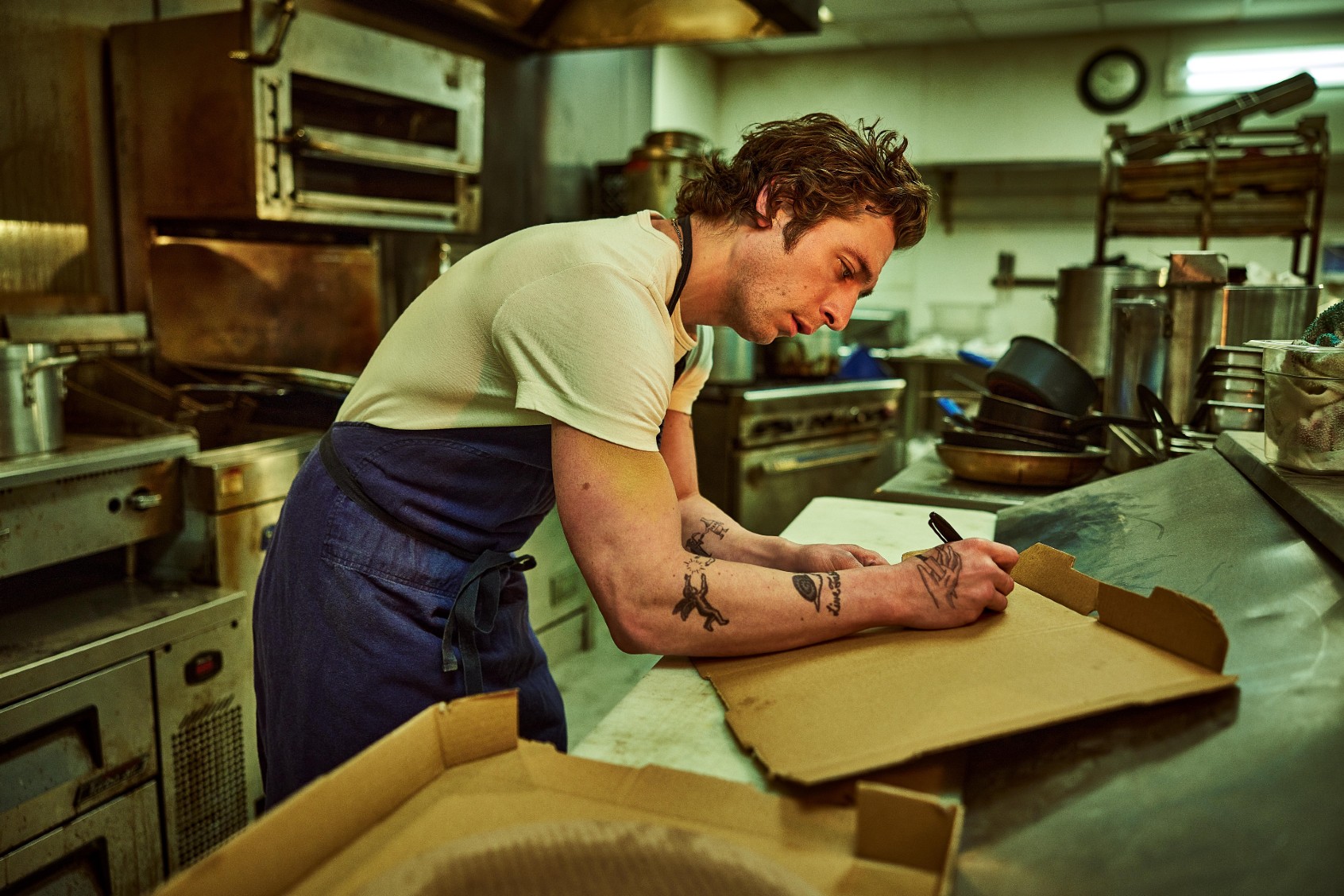
In a short but memorable scene in the penultimate episode of Season 2 of “The Bear,” titled “Omelette,” pastry chef Marcus (Lionel Boyce) gathers Carmy (Jeremy Allen White) and Sydney (Ayo Edebiri) to go over the four signature desserts he’s created for the opening of their beef sandwich shop turned fine dining experience in the River North area of Chicago.

Newly returned from a work expensed sojourn to Copenhagen, which required him to leave his ailing mother’s bedside for a time of investment into his own future, Marcus puts the experience to the best of use, looking proud to showcase his offerings of “Mom’s Honeybun,” an individually wrapped sweet treat; the “Copenhagen Sundae,” a high-end take on the ice cream classic; “Sydney’s Donut,” a fancy donut hole of sorts topped with a sugary red dusting and, as the grand finale, a savory cannoli in honor of Carmy’s dead brother called “The Michael.”

“This one is a little bit of all of us,” he says as he plates the fourth dessert. “Everything that we all kinda know about each other.”

Jeremy Allen White as Carmen “Carmy” Berzatto (Courtesy of FX)Hearing the name, Carmy takes a beat amidst the chaos of the kitchen to let the significance sink in. In his big blue eyes we see appreciation cycle through to sadness before he even has a chance to blink. And then he retreats, allowing for the welcomed distractions behind him to suck him back in, away from the plattered heartbreak at his fingertips.

Up until that moment, Carmy hated cannolis because he associated them with a Christmas dinner made particularly grim by his mentally ill alcoholic mother Donna (Jamie Lee Curtis) years ago, when his brother was still alive. But now, in his own adulthood, standing in his own business, they’ve taken on a new meaning that he can stomach.

The magic ingredient of food is so often sentimentality, which is why “The Bear” hits so hard. Some can look at a  cannoli and it registers as nothing more than a delicious way to top off a meal, but for Carmy, it’s instant transportation to the best and worst moments of his life.

For me — born in Chicago, the only child of a butcher — I can’t get anywhere close to the deli aisle of a grocery store without wanting to plant my face into the first blood-stained white smock I see.

I cried about hot dogs the other day.

It’s a thing.

Depending on where you’re from, there’s likely a very specific food that encapsulates the experience of “going home.”

In Bourbonnais/Kankakee, two towns so near each other in Illinois that they’re basically the same place, Jaenicke’s is all that’s left of my home now that the majority of my core family has passed on.

Best known for their “Red Hots” — steamed beef franks with a natural casing, served in a steamed split-top bun, and topped with a minced meat chili, and Sauce Buns — same as above, minus the hot dog — Jaenicke’s has two locations in between where my parents used to live and where my gramma and papa used to live. And up until roughly ten years ago, we’d go to one or the other of them whenever the mood struck, which was often.

In an interview with Derek and Kris Jaenicke conducted by the “Live with Mike and Jim” YouTube channel, they break down the history of the Chicagoland staple that, since 1940, has become a little piece of home for so many.

The original location at 390 E. River St. in Kankakee was the passion project of the grandparents of Kris’ husband Alan Jaenicke and the keys were handed down the family line until eventually one of Alan’s younger sisters sold out. As of 2018, when this interview took place, the Bourbonnais location at 605 Armour Rd was the only one out of the two still in the Jaenicke family, run by Kris, Alan and their son Derek.

The last time I ate at Jaenicke’s, it was at this newer Bourbonnais location, which opened in 1987, and while sitting at one of their picnic tables out front feasting on my usual order of a Red Hot with fries and a chocolate shake, It felt likely that I’d never be back again. But now I’m not so sure.

On May 31, 2018, myself and other members of my family flew in to Illinois from a variety of coasts to convene in Bourbonnais for my gramma’s funeral. Having previously lost my papa, mom and dad, she was the last core relative tying me to that locale and, over the course of a week spent boxing up her house and finalizing service arrangements, every move through that town felt like the last.

During one of those pre-funeral days, we paused our work to break for food. Being that I’m the youngest out of the bunch, even though I’m in my mid-40s, I was given the opportunity to pick where we’d eat.

“Let’s go to Jaenicke’s,” I said. There was no second choice.

Although I was born in Illinois, I’ve lived the majority of my life elsewhere. That being said, whenever someone asks where I’m from, I say Chicago, which is a city name used to describe any location from Michigan Ave. to the Indiana border, famously.

I’ve lived in Batavia, Schaumburg, DeKalb, Bourbonnais, Barrington and Wrigleyville. Cross that all out and just say “Chicago.” The “Chicagoland area” has a singular feel. And along with it, a singular food memory. Sure there’s deep dish pizza, tightly wrapped tamales from “the tamale guy” and beef sandwiches. But thinking of those foods as friends, Jaenicke’s is the emergency contact. Jaenicke’s is that turn on the off-ramp home.

Over the course of my lifetime I couldn’t even begin to count the amount of times I ate there. My parents and I would usually order from the window and then sit in the car, making fun of people walking by inbetween bites, as was our way. Other times, with my gramma, papa, aunts, uncles and cousins, we’d maybe sit on the picnic tables out front, or take the food back to the house to eat in front of the TV. It was casual. The kind of good food that’s so tried and true as to be taken for granted.

Why would I go back there now that my family exists only in memory?

It would just take one bite.

One bite.

What’s hash is new again: Why cannabis concentrates are finding new life

Call it what you want, hash, also known as cannabis concentrate, is one of weed’s most misunderstood byproducts. Hash has been popular for thousands of years, but I didn’t try concentrates for the first time until 2011. Back then, butane hash oil (BHO) was still considered a cutting-edge innovation in the hash space. And I had no idea that hash would change not only the way I engaged with cannabis, but that it would evolve to become the fastest-growing segment in the legal cannabis market a decade down the road and I now consider it my life’s mission to educate the masses on hash, which is the purest form of the cannabis experience.

Hash is the OG extract — the holistic essence of the cannabis plant. It’s made from plant resin released by cannabis trichomes, parts of the plant that include THC, the drug that gets people “stoned.”

While hash in itself is simple and pure, the role of hash in cannabis culture and the legalization movement is a lot more complicated and fascinating.

Riding the BHO Rocket Ship

When I had my first taste of BHO, there was a tiny community of old-school hash heads in the U.S. who were replicating the methods for making charas, handmade concentrate mostly found in India, and other ancient forms of hash found on the “Hippie Trail” or Amsterdam coffee shops. There was also an even smaller community of early adopters who wanted to flip hash on its head, who were obsessed with exploring the full potential of the cannabis plant.

A decade later, we’re in a full-blown hash renaissance. The cannabis legalization movement and new developments in both production and consumption tech have transformed the concentrates market — and consumers and patients are the big winners.

Finding Enlightenment, from Michigan’s Hash Bash to Frenchy Cannoli

Like the original Renaissance, there were Dark Ages in cannabis. And I’m not talking about just the decades of prohibitionist propaganda, either. In the early 2000s, it wasn’t easy to access the equipment (dab rigs, nails, bangers) needed to properly consume hash. It was even harder to find good hash, or information about how to get started.

There was a lot of stigma, too, even within the cannabis community. After the crack and heroin surges of the ’80s and ’90s, there were a lot of comparisons of early dab rigs and torches to the paraphernalia used to consume stronger drugs.

Today’s hash renaissance really has its roots in the cannabis legalization movement that renewed amidst the AIDS epidemic and the War on Drugs. Michigan’s Hash Bash, which had been bringing Midwestern stoners together since the 1970s, mostly tapped out during the Reagan administration. By the 1990s, the Hash Bash found new purpose and momentum as NORML, the ACLU, High Times and celebs like Tommy Chong went toe-to-toe with politicians over local Ann Arbor pot laws.

That same decade, the famed underground hash maker Frenchy Cannoli started teaching workshops about ancient hash-making traditions after traveling India and the world for 20 years to learn all he could about hash. In 1994, Hash Queen Mila Jansen invented one of the first modern hash production machines, the Pollinator, from her home in the Netherlands. Two years later, California became the first state to legalize medical cannabis.

Around 2010, when butane hash oil hit the scene, it started a real chase of concentrates. People started to ask themselves: Where else could concentrates go? How could they be better? What are easier ways to make them? Some distinct categories started to emerge. Live resin and cured resin became some of the first new innovations in this market.

The more hash improves, the more approachable it becomes. Ten years after Weezer’s 2001 song “Hash Pipe” came out, the hash space was primed for better tech to pop off. People were making resin at home with hair straighteners or spinning bubble hash in old washing machines. But legalization gave entrepreneurs like myself the freedom to explore new ways to engage with this plant.

The next-gen hash heads driving this tech evolution have largely set out to make the hash experience simpler and better. People put away their DIY dab rigs and heat-gun temperature sensors and picked up all-in-one electronic devices. Meanwhile, innovative extractors have filled dispensary shelves with concentrates that are continually pushing the boundaries.

It’s been thrilling to watch the hash renaissance unfold from the crest of the wave. Imagine discovering you didn’t have to eat the orange peel to eat the orange. That’s what more and more cannabis consumers are figuring out when it comes to concentrates.

Industry analyst Headset found that in 2022 concentrates made up 8.3 percen tof the cannabis industry’s market share in the U.S., and 3.8 percent in Canada. That same year, live resin hash oil accounted for 34 percent of U.S. concentrate sales, compared to just 5 percent in 2017 — illustrating how fast some of these new categories of hash are skyrocketing in popularity. The global legal concentrates market, valued at $3.94 billion in 2021, is projected to be worth $18.5 billion worldwide by the end of this decade.

Smoking cannabis flower from a pipe, joint or bong is still the most popular consumption method. 4/20 isn’t going to get unseated by 7/10 (hash’s unofficial holiday) anytime soon. But there is room for both. People are rediscovering the qualities that have given hash both medicinal and spiritual significance since ancient times.

As cannabis culture gets more mainstream and more global, the hash renaissance will only pick up more speed. Keep an eye out for new concentrate formats coming from all over the world, like piattella, which is frozen bubble isolator cold cure. This hash coming out of Spain stopped me in my tracks, as I learned on a recent spin through Barcelona. And I can’t wait to taste what’s next.

Making risotto is so much easier than you think

In recent years, an odd narrative has taken hold, perhaps bolstered by cooking competition shows, which has remained in the general cooking discourse for some time now. But I’m here to stop it. Hunker down, because here it comes: Risotto is not that hard. 

Might I even propose that the classic northern Italian rice dish is actually generally straight-forward — and even a great weeknight meal option? 

I know, I know, this is not par for the course; please relax your arms and put the tomatoes down. 

Making risotto at home shouldn’t be treated as such a gargantuan feat. Truthfully, in no more than 45 minutes — or conversely, as quickly as 18 minutes — you can have restaurant-worthy, silky risotto with whatever mix-ins or toppings you so decree.

It doesn’t call for many ingredients, of course: typically just butter, oil, alliums, a grain (typically rice), wine, broth or stock, Parmigiano Reggiano (or a comparable cheese) and salt and pepper. Even though, yes, you may need a bit more elbow grease than you typically associate with weeknight cooking, I’ve never grasped why risotto has become such a culinary bogeyman for so many people. Relatively recent innovations, like the Instant Pot, have made weeknight risotto even more possible; several of our staff members swear by this method, which takes the arm workout out of the process. Instead cooks can use the machine’s Sauté setting to soften aromatics in butter, then add the rice, stock and a little wine before turning up the heat. Dinner is ready in just a few minutes — no stirring required. 

Don’t have an instant Pot? Some even opt for an oven risotto, but that’s not my forte. I’m good with my pot and wooden spoon. For me, half of the enjoyment of cooking is, you guessed it, cooking. If everything on earth becomes “set it and forget it,” then where’s the fun in that? 

If you’d like to learn how to properly make risotto and put aside all of your unwarranted jitters, then look no further. The worst risotto outcome is anything gluey or “tacky,” so follow these steps to avoid that calamitous result. 

At its core, risotto should be fragrant, incredibly rich and smooth, but consist of easily decipherable grains of rice. The finished risotto should flow together, but not be an amorphous blob of rice a la poorly-made rice pudding. 

Risotto should have some viscosity, but when you plate it on a plate or in a bowl, it should move or flatten a bit — not be stiff or immovable. This is called all’onda in Italian, which is the term for the fluidity your finished risotto should show on the plate, like a “wave.” It’s the perfect consistency: not too brothy, not too stodgy. By no means should you ever rinse your rice grains prior to getting started! That starch is a necessary ingredient in risotto which helps to ensure that classically creamy end product. 

You can use a deep pot or a wide skillet, really — either works. You must opt for Carnaroli or Arborio rice; don’t use just any random rice in your pantry. Also, it should always be noted that risotto isn’t limited to rice! From barley to farro (which Anne Burrell coined as “farrotto,” something I’ve always gotten a kick out of) there are grains galore that can be made in a risotto-like fashion. 

Ensure your mise en place (French for “putting in place,” meaning you have all your ingredients prepped and ready to go prior to your even turning the burner on) is ready and good to go, because once you get moving, you don’t want to stray too far from the stove. Also, keep your broth warmed in a saucepan over low heat; you don’t want to add ice-cold stock or broth, which will cause lots of wonky issues with overcooked or undercooked rice grains, overly-starchy risotto or gummy kernels.


Want more great food writing and recipes? Subscribe to Salon Food’s newsletter, The Bite.


Make sure you’re cutting your garlic, onions or shallots to about the same size as the rice kernels. Don’t forget a good glug of wine prior to adding the stock. Use high-quality Parmigiano Reggiano, ideally freshly grated. Be sure that your heat doesn’t go any higher than medium-low or medium — you don’t want the heat too high or the stock or broth will cook out before the rice is actually cooked through.

Risotto, of course, also benefits from ample mix-ins, toppings or garnishes;  honestly, I find a plain bowl of risotto to be so unexciting texturally and consistency-wise. So, if adding other ingredients, such as mushroom or peas or leeks, be sure to add them at the proper times. I.e peas need maybe 2 minutes of cooking whereas the mushrooms would need much more time. Use the best quality stock and make sure to add your stock gradually, allowing the rice to plump and cook with each addition and then adding another ladle-full once the pan is slightly dryer. 

The Italian methodology always sounds beautiful and is an excellent roadmap: soffritto, tostare, sfumatura, brodo/cottura and mantecatura. The breakdown is essentially as such:

  • Soffritto: diced onion cooking in butter/oil
  • Tostare: toasting the rice
  • Sfumatura: adding and reducing the wine
  • Brodo/cottura: adding the broth or stock gradually and stirring
  • Mantecatura: finishing by adding butter, cheese and/or whipped cream 

Yes, you should be stirring quite often in order to help release the starch from the rice, which will combine with the warm stock as it’s added. Don’t over-stir, though! You may think that you should be incessantly stirring, but really, every 30 seconds or so is best. Aim for a good, hearty stir twice a minute for about 15 minutes — that sounds much more manageable, right?

In most cases, you shouldn’t need more than 20 to 25 minutes, depending on your mix-ins and toppings. There’s a tangible, almost comforting or meditative component to the stirring. Don’t dunk on it — you might wind up enjoying the 20-minute arm exercise. 

Ideally, you want your risotto to be slightly al dente, too — and you never want to forget to whip in lots of butter and Parmigiano Reggiano at the very end. And when I say whip, I mean whip. Don’t be sheepish.

Finally, be sure to add your finishing touches off the heat. I love the addition of unsweetened whipped cream at the end, too, which adds a lovely heft and lightness. 

And would you look at that? You now have a bowl of perfect, sumptuous risotto. Decorate it as you please: some fresh herbs, some sautéed mushrooms, braised leeks, warming spices, a drizzle of mascarpone — or just salt and pepper. A vegetable, or even roasted fruit, puree stirred in afterwards can be a great addition, too. 

As long as you’re no longer afraid to make this iconic dish at home, my work here is done. 

A short history of civilizational collapse: Are we next — and how can we prevent it?

Last week I published a Salon review of Peter Turchin’s new book, “End Times: Elites, Counter-Elites, and the Path of Political Disintegration,” which I have described as the most comprehensive explanation so far of the current and ongoing crisis of American politics. (My interview with Turchin for Salon appeared two weeks earlier.) 

But there’s much more to “End Times” than could possibly be covered in a normal book review, both in terms of Turchin’s cyclical understanding of political history and the interaction of elite groups and counter-elites in what he calls “structural-demographic theory,” or SDT. I believe that the better we understand how everything fits together in Turchin’s system, the firmer our foundation will be in terms of moving forward and saving democracy. 

Admittedly, Turchin’s concepts and references can feel abstruse as first. A section of his book entitled “Contagion and Dynamic Entrainment” refers to a phenomenon observed in physics: “Dynamic entrainment” is what happens when you put several metronomes, swinging out of sync, together on the same board. After some time, Turchin notes, they “all start swinging together in perfect synchrony,” as first observed by Dutch scholar Christiaan Huygens in 1665.

Turchin’s analogy here is that transcontinental waves of instability can sweep around the world. “Why did the English Civil War, the Time of Troubles in Russia and the fall of the Ming Dynasty in China happen at roughly the same time?” Turchin asks. Indeed, that period was known as the “Great Crisis” of the 17th century. On the other hand, he asks, why was the 18th century “a time of internal peace and imperial expansion in all three countries?”

One key factor in both cases, intriguingly enough, was climate. “If one empire is ‘ahead’ in its cycle, a period of good climate will allow it to last a little longer before it spins into crisis. A stretch of bad climate, to the contrary, will push an empire that is behind into crisis earlier.” 

The second synchronizing force, which Turchin calls contagion, is “even more potent.” (He addressed this specifically in an April 2020 blog post, “Coronavirus and Our Age of Discord” which I discussed here.) His analysis, he writes, “indicates that major epidemics and pandemic are often associated with periods of major sociopolitical instability. We observe this pattern for at least the last two thousand years.” Furthermore, he explains why: as popular immiseration rises due to population pressure, people flee the land for the cities, where the elites’ rising fortunes generate demand for urban labor “in crafts and trades but also as servants for the wealthy” as well as for luxury goods. “These trends make the appearance of new diseases and the spread of existing ones more likely,” he continues.

Turchin goes on to describe the specific examples of France and England in early medieval history, and especially how those two powerful nations how interacted with one another. “When France broke down in the 1350s,” he writes, “all the English surplus elites — and there were huge numbers of them in England, just as in France — followed their king across the Channel.” There’s a general principle at work here: “By exporting instability to France during the Late Medieval Crisis England was able to delay entering its own time of troubles,” or to return to his guiding metaphor, this averted “dynamic entrainment” rather than causing it. 

There are four major kinds of governing elites in Turchin’s system: “militocracies,” administrative or bureaucratic elites, ideological or religious elites, and plutocracies. Guess which one dominates the United States of America?

The sheer number of crises Turchin documents allows him to make crucial observations about elites, specifically meaning those groups who concentrate most social power in their hands. There are four major kinds of elites, each of which may dominate a given society. Early states were usually “militocracies” dominated by warrior-kings. But naked force ultimately isn’t very efficient, he argues. Ideological power — usually in the form of state religion, as in pharaonic Egypt — is much more effective.

But as populations cross a certain threshold — around a million or so, he argues — civilizations “either acquire a civil service” or collapse into a “bureaucratic empire” run by administrative elites. This “switch from militarized ruling classes to administrative ruling classes is a general rule in history,” Turchin argues, at least for large states such as China, which has been a bureaucratic empire for two millennia — a continuity unbroken by multiple revolutions, including the overthrow of imperial rule, the triumph of Mao Zedong’s Communist Party or the more recent turn to state capitalism.

States run by ideological elites (most often religious in nature) are relatively rare in history, Turchin argues, as are those run by the fourth kind of elites: plutocracies. Those would include the Italian merchant republics of Venice and Genoa in the late Middle Ages, the Dutch Republic of the 17th and 18th centuries — and the present-tense United States of America. 


Want a daily wrap-up of all the news and commentary Salon has to offer? Subscribe to our morning newsletter, Crash Course.


Yes, really. Turchin devotes a full chapter to his definition of the U.S. as a plutocracy, starting with the European history from which colonial America and then the independent republic emerged. Around 1500, Europe comprised a dizzying array of some 500 states and statelets, nearly all of them either militocracies or plutocracies, the latter particularly common, Turchin writes, “in the more urbanized swath that ran through the middle of Europe from Italy to the Rhine Valley and then along the Baltic littoral.”

Over the next four centuries, however, the subcontinent was utterly reshaped, with he number of states falling by more than 90 percent, to roughly 30 or so. Most of the plutocracies died out, conquered in the “Military Revolution,” including the development of gunpowder weapons and oceangoing ships which brought the major European nations (and later the U.S.) global dominance by the beginning of the 20th century. 1900. That also “triggered a revolution in governance and finance because successful states had to learn how to efficiently extract and use wealth from their populations,” Turchin writes. The military elites of the Middle Ages evolved into “ruling classes that combined military and administrative functions.”

Venice, the Netherlands and Britain were outliers during this period, due to their protection by water. The so-called English squirearchy, which began as a military class, gradually became a landowning caste from which the members of Parliament were elected. Over time, a merchant class evolved as well, and Britain’s ruling elite came to combine economic and administrative functions. America’s ruling class, both during the colonial period and the early decades of independence, was a direct offshoot of English squirearchy.

The American South, after all, was largely settled by “Cavaliers,” meaning the supporters of King Charles I, who was defeated in the English Civil War and executed by the parliamentary forces led by Oliver Cromwell. (To this day, the University of Virginia’s athletic teams are known as the Cavaliers.) They “brought with them their aristocratic ways and indentured servants,” Turchin writes, although the latter were “soon replaced by imported Africans,” with enormous historical consequences.

America thus “inherited plutocracy as part of its ‘cultural genotype,'” Turchin argues. In practical terms, the United States was essentially an island nation, vastly larger than Great Britain but not categorically different. So at least after the War of 1812, no external military threat was plausible. 

America “inherited plutocracy as part of its ‘cultural genotype'” with 17th-century English settlers, Turchin argues — and we’ve never quite been able to get rid of it.

But its continuing survival of the newborn American state depended on race and ethnicity. Turchin contrasts the example of Denmark, whose first social-democratic party was founded in 1871 and came to power roughly 60 years later, laying the foundation of what became known as the the Nordic Model: “tripartite cooperation between labor, business, and government working together for the common good.”

For a relatively brief period through the middle of the 20th century — that is, during the Progressive and New Deal era — America seemed to follow a similar trajectory. But that model in the U.S. never included the Black population, except at the margins. “In order to push his agenda through,” Turchin writes, Franklin D. Roosevelt made “a devil’s bargain with the Southern elites, which essentially made the South immune from the tripartite bargain among workers, business, and government.” That excluded the majority of Black workers, but also millions of southern whites as well. 

That began to change when post-World War II prosperity and the geopolitical competition of the Cold War empowered the civil rights movement to become “an irresistible force for social change.” But that in turn opened the door for a plutocratic backlash, using the Republican Party as a vehicle and dividing the Democratic coalition by way of the “Southern strategy.” No such thing was possible in a nation like Denmark, where (at the time, before recent waves of immigration) the working class was ethnically homogeneous.

Although plutocrats never lost their dominant position in the U.S., in effect they voluntarily switched off what Turchin calls the “wealth pump” — which transferred wealth upward from workers to elites — in the early 20th century, as other elites have sometimes done in response to prolonged periods of political instability. Labor conflicts grew increasingly intense in the 1910s and early ’20s, as did racial conflicts, such as the infamous 1921 “race massacre” in Tulsa. There were also electoral challenges from socialists and populists of the left and right, “as well as external threats resulting from the rise of communism and fascism in Europe.” Progressive ideas first proposed in state and local governments finally became national law after the Great Depression had shaken the confidence of capital to its core. The result of that was clear and indisputable: a two-generation period, sometimes dubbed the “Great Compression,” in which extremes of wealth and poverty in America significantly declined.

The history Turchin surveys here is relatively well known, but the degree to which it reflects larger historical patterns is much less widely understood. The same can be said of his description of how American elites asserted their self-interest once again, beginning in the 1970s and leading to the “Reagan revolution” of the 1980s. “Unfortunately, modern democracies are not immune from the iron law of oligarchy,” he notes. “The United States successfully shut down the wealth pump during the Progressive Era/New Deal but then allowed self-interested elites to turn it back on in the 1970s.”

American elites reasserted their self-interest aggressively in the 1970s and beyond, turning back on the “perverse wealth pump.” As Turchin notes, “modern democracies are not immune from the iron law of oligarchy.”

He cites the role of right-wing foundations that push “extreme ideological agendas,” which sociologist William Domhoff calls a “policy-obstruction network,” noting that unlike more mainstream think tanks, “which develop policy proposals and help steer them through the legislative process, the goal of the policy-obstruction network is to ‘attack all government programs and impugn the motives of all government officials.'” Ultimately, Turchin argues, this nihilistic right-wing network has contributed to “the decline of trust in public institutions and of social cooperation in American society,” trends he says have recurred repeatedly as major states head toward catastrophic crisis. 

Another factor was highly significant: The Democratic Party’s retreat from supporting a working-class agenda, which Turchin dates to Bill Clinton’s presidency, noting that it was part of a much broader global political trend:

When political parties abandon the working classes, this amounts to a major shift in how social power is distributed within society. Ultimately, it is this balance of power that determine whether the selfish elites are allowed to turn on the wealth pump. … [D]emocracies are particularly vulnerable to being subverted by plutocrats. Ideology may be the softest, gentlest form of power, but it is the key one in democratic societies. The plutocrats can use their wealth to buy mass media, to fund think tanks, and to handsomely reward those social influences who promote their messages.

This is reflected in how internal dissidents — meaning those who oppose or resist the current system but stop short of advocating revolution — are treated in America today:

On the ideological front, left-wing dissidents get very different treatment depending on the content of their critiques. Cultural left issues — race, ethnicity, LGBTQ+, intersectionality — occupy large swathes of the corporate media. Populist economic issues and, especially, critique of American militarism, much less so. The situation is different with right-wing dissidents…. [T]oday, as I write this book, the Republicans are making a transition to becoming a true revolutionary party. (Whether this transition is successful or not, we will find out in the next few years.)

Donald Trump himself is no revolutionary, though his erstwhile chief strategist and leading propagandist Steve Bannon would certainly like to be. Turchin defines both as characteristic examples of counter-elites through the ages, who trace two distinct paths: “Trump’s evolution to becoming an anti-regime warrior followed the wealth route, while Bannon’s followed the credential route.”

Turchin also considers recently-fired Fox News host Tucker Carlson and newly-elected Sen. J.D. Vance of Ohio as examples of right-wing populist counter-elites. Without his platform, Carlson now seems unlikely to become “a seed crystal around which a new radical party forms,” as Turchin wrote late last year, although he immediately qualifies that: “[A]nother figure could suddenly arise — chaotic times favor the rise (and often rapid demise) of new leaders.”

As you may have gathered, Turchin’s “End Times” is not an optimistic book. The odds that a given state or society can escape such a crisis relatively unscathed are not good, nor does Turchin perceive many signs of hope on the horizon. As he told me in our interview, “We don’t have to do exactly the same thing the Democrats did in the New Deal, but somehow we have to achieve the same result. And I just don’t see that happening.”

I remain somewhat more optimistic, and often reflect on what Amanda Littman of Run for Something told me in an interview earlier this year:

I think that democracy is at a breaking point. If we can get through the next couple of years, the next three years, then the next five years after that are going to be unbelievably good. 

Getting through the next two or three years is the real challenge, right? I believe that David Pepper’s approach to reinvigorating democracy offers real reasons hope, as do the arguments of Anand Giridharadas in “The Persuaders,” while the focus on the importance of public goods in “The Privatization of Everything” helps point us in the right direction. None of these things, on their own, will be enough. But add to them the shared big-picture understanding of what we’re up against and how to fix it that Turchin provides in “End Times,” and I think there’s reason to hope. 

“Connected through inyeon”: Teo Yoo reflects on the fate that guided his career and to “Past Lives”

“We have inyeon,” Teo Yoo tells me on a Zoom interview.

The “Past Lives” star is using a term that’s an everyday concept for Koreans, referring to a fated human connection. Whether it’s freighted with meaning, such as long-lost siblings reuniting by chance, or a seemingly trivial interaction with a Subway sandwich artist fulfilling your order – that’s inyeon. In fact, your reading this story is inyeon. 

“If two strangers walk by each other in the street and their clothes accidentally brush, that means there have been 8,000 layers of inyeon between them,” Greta Lee (“Russian Doll,” “Morning Show”) explains as Nora in director-writer Celine Song’s beautiful, meditative directorial film debut “Past Lives.”

“I always felt a little bit of somewhat an outsider.”

In the movie, Yoo plays Hae-sung, the childhood friend of Nora (Lee) in South Korea before she makes a life for herself in Canada and then later New York. The two reconnect 12 years later in wistful, nostalgic conversations over Skype before once again falling out of touch. A dozen years after that, Hae-sung visits New York to finally meet Nora again in person . . . along with her husband Arthur (John Magaro). These momentous meetings reflect the inyeon for all involved, including Song, whose real-life experiences inspired the movie.

Destiny, reincarnation and alternate realities where two people may have intersected differently are running themes in “Past Lives,” which evokes existential questions of “What if?” for the characters and the viewers alike. Naturally, even this interview prompts a moment of reflection.

“The concept of inyeon is also used in day-to-day life in Korea, not as philosophically deep but very casually,” says Yoo. “When we are talking together, we have inyeon. Maybe there was something going on in our previous lives that we are now like this, having rapport and talking to each other.”

Those unfamiliar with Yoo’s work might be surprised at the circuitous path he took to eventually play this typical Korean man in “Past Lives.” The trilingual actor was born and raised in Germany before studying acting in the United States. Although he’s made his career in South Korea for the past 20 years – ranging from action projects and thrillers to rom-coms like Netflix’s K-drama “Love to Hate You” – he wasn’t among the actors initially considered to play Hae-sung.

Check out the full interview with Yoo, in which he discusses his career trajectory, the physical and linguistic preparations for “Past Lives” and how he believes inyeon has influenced his roles.

The following interview has been lightly edited for length and clarity.

I’m still reeling from this movie. Even when I rewatched the trailer I cried. Were you surprised about how emotional it was when you first got the script?

Well, when I first got the script, you usually read it without any preconceived notions or expectations. So I wouldn’t say I was surprised, but I was just deeply touched. I had such a visceral reaction because I cried at the end of the script, which is really hard to do, because being affected by music or by anything visual is easier than just reading a text. So yeah, I was really moved by the quality of the writing.

Your trajectory is sort of the opposite of Celine’s and Nora’s — in that you were born in the West and then moved to Korea. What was appealing about Korea, the entertainment industry at that time?

I’ve been an actor for almost over 20 years now. And during the time when I moved to South Korea that was maybe maybe six or seven years into my career. I just got freshly married to a Korean woman. And also the opportunities and the work that was given in the West were things that I couldn’t identify with. So I just packed my bags and went where there was more challenging and interesting work – just the spectrum of the variety of characters that I was able to portray.

What sort of influence did that upbringing have on you to connect to Hae-sung?

Even though I’m not your average Korean man, the way Hae-sung is, ultimately, I was the last to be cast because the audition material came to me fairly late in the game. People wouldn’t think of me for the role because I’m not a traditional Korean man. Even in Korea, we have a word for foreign-born Koreans, and therefore the identity attached to that is somewhat different. So my American manager sent me the script, and this is how I got it.

But I say that having been born and raised as a Korean and looking different from my German peers, and growing up around mostly immigrants from Eastern Europe, and from the Middle East and Northern Africa . . . and then later coming to America, studying acting and living in New York for seven years –  I wouldn’t say that I’m a sad person. But I always felt a little bit of somewhat an outsider. And there was always an undercurrent of melancholy in my life. And it’s really hard to explain because I don’t know how to define melancholy, but it’s an emotion that you all understand when we feel it or when we see it in music or movies or art. I think that I was always looking for a project where I can express that type of melancholy. And I think it worked well for the trajectory of Hae-sung’s character because he is someone who – because of his environment – has to exercise ultimate emotional restraint. And I think melancholy is a result of that. So I knew how to portray that. This is a link that I understood about the character, and I was glad that Celine was seeing the same thing.

It’s interesting that you said restraint, because I think the physicality came across when I was watching Hae-sung approach Nora for the first time in 24 years. I was like, “Oh, he’s totally a foreigner. He’s not Korean American.” What sort of preparations did you do to embody that more traditional Korean man physically?

I would say though, there were two things. One, internally, I met with the child actor, his name is [Leem] Seung-min who played the younger Hae-sung. And he had this wonderful way of showing how – subconsciously, because I think I don’t think he’s aware of it – how shy he was. He always had his elbows glued to his upper body. I thought that felt like an interesting character trait to show physically, so maybe I can take it into the adult Hae-sung. So in my mind, I was working on a sense memory exercise where I have a rope tied around my arms glued to my body. And they only come loose when whenever he drinks with his friends or in the bar scene, so this is when he loosens up a little bit physically.

“People tend to forget that I’m always working on every character with a speech coach no matter what job I do to prep.”

The other thing was that I don’t know who came up with the idea, but it’s such a Method-y thing to do. But Celine didn’t want us, Greta and I, to touch up until that encounter when we meet after 24 years for the first time. So during rehearsal, it’s kind of a funny thing because it’s not a big deal until you make it a big deal. If you’re like, “Come on. We are professionals, we don’t need to do something like that.” But whenever we would have the instinct – because actors are very physical beings and we are huggers – and whenever I would go in for just a handshake, Celine was like, “No, no, no touching. Save it for later for the screen.” So it made for a pretty good hug [when it happened]. And that kind of restraint also, like physically and during preparation, I think, built a kind of love and longing for the other, for the other for your scene partner. And I remember having like this visceral reaction of just waiting there, and my heart pounding out of my chest and having sweaty palms. I’m glad that we did. Like finally, ultimately, the audience gets to experience that first moment with us, so that I think it’s a wonderful thing.

Past LivesPast Lives (A24)It’s certainly impactful and shows when the characters are talking to each other right afterward. We even see this in the trailer: After the hug, all each of you can do is just say, “Wah!” over and over. In the movie that keeps on going and going and going, which was one of my favorite moments. Was there any sort of discussion about how many times you each can say that, or was it all scripted?
Yeah. The “wah” was scripted but then, if you do it consciously a certain amount of times, then it can feel very anticipated and very just like memorized. So I think it was important that we had all the lines and everything really well rehearsed, but then in that moment, you have to trust your gut instinct and the feeling and the energy of how they are working with you and how the the emotional back and forth is going. I think we were then given permission to be free in certain moments of the film, and that was one such moment.

That worked out well, because I was just thinking, “How long this is gonna go?” but it felt authentic. Since you’re trilingual, did you need to improve your Korean fluency at all or, on the flip side – how did you prepare for the more broken English?

Oh, that’s interesting. So I’m coming into it with Korean almost being my third language even though it’s my mother tongue. People tend to forget that I’m always working on every character with a speech coach no matter what job I do to prep. I’ve never actually worked on a German project where I would be really using my German, and then English was my second language, and Korean ultimately my third. I had to prep really hard to show the right sound of the vowels and the intonation of that character, so that we get really a sense of how traditional Korean Hae-sung is. But at the same time, not make his Korean English accent sound funny, and authentic and realistic for this film. That’s something that I work technically on.

Similar to how it was with Greta, you actually didn’t meet John Magaro face to face until Hae-sung meets Arthur in the movie. What was that like?

I think it was great, because, the production team was professional enough to cater to all our needs without us ever meeting. Even during tests or something when we would meet during the same time in the office.  One would usher us in in the front and the other one in the back – those kinds of things. It was kind of fun, like a cat and mouse game, but it all made for like a good first moment. And I remember just I think we even use that first take when we first meet. It was good. I mean it was also very Method-y to do but I would say it worked for us.

I’m no judge but how is John’s Korean? There was laughter in the audience after his Korean lines.

I think it’s better because he was appropriately bad. He was saying, “You know, I could be better. I could prep better.” And Celine was like, “No, no. We want it to be like that because it shows that he makes an effort and it’s kind of sweet.” 

This may seem random, but I often ask this of multilingual people — what language do you dream in? Have you ever noticed?

I dream in English and Korean with German subtitles. [Laughs] It’s actually – I gotta be honest, jokes aside, I think I’m actually a very visual dreamer. And I dream in circumstances and not in language. So that was always interesting to me. I never dreamed and talked in a dream. It’s always like this, like something abstract happening. 

“I was making an essay in the language of film because that’s the only type of media that I really understand.”

You directed a film “Log in Belgium” during COVID lockdown. Directed seems a very limited word – you also wrote and performed in it. In what ways did that experience influence who you are as an actor or artist now? And would you be interested in directing more?

When the chance is given, yeah I’m interested in directing, but not at the moment. I think it would be important to me to because I identify as an actor first, that there would be something on my mind and my circumstance that I really need to express that. Otherwise, I feel like I’m dying. You know, if the stakes are high of me having to express something about myself, that’s very personal to me, then I would look into directing again.

I didn’t direct out of the intention to direct. I was doing COVID lockdown in the beginning of 2020 in March, April, when I was with a production abroad. Basically, I was home alone stuck in my hotel, without being able to go anywhere, in an environment which language I didn’t speak. So I basically just recorded my day-to-day life with my cell phone to grasp ahold onto reality and not go insane.

Then I received an audition, and I didn’t have anyone to read it with. So I taped myself first as a reader, and then I was acting with myself and that had this interesting dynamic that I could break character and ask myself questions about myself that I haven’t thought about. And so thereby, like an interesting second character was born and an interesting interview structure was born. I projected my three languages as a metaphor for different parts of my life: for the present, the past and the future, and with like hopes and dreams and traumas and regrets and worries about the future. So it had an ongoing three-act theme. It’s a very personal – I guess it was more kind of an essay than a documentary. So, basically, I was making an essay in the language of film because that’s the only type of media that I really understand.

Did that experience make you view directors differently? 

Yeah, because I realized it’s never all about the actor. It’s what it’s about the vision of the director. And if you know what the director wants and is confident about their vision, then you can trust them. And on the other hand, it also made me a more confident performer because it made me think about continuity a lot. Because [with that project] I was ultimately the director, but then I had to go back into the actor’s mind and remember what I need to do, but also remember objectively what I need to get. So having those two sides definitely informed me as an actor.

Past LivesPast Lives (A24)You’re also a former athlete, right? So how does physicality inform your acting? We’ve already mentioned Hae-sung’s body language.

“[The concept of inyeon] changed the way I approach my work entirely.”

Yeah, as a teenager, I was very athletic. I believe [it informs my acting] in a great way because sometimes you’re not as heady, even though you do a lot of homework. When the coach says do something, you just do it, you don’t question it. And I think that helps because you basically throw yourself into a situation without fear of failing, but just technically and physically going through it. And that’s what I love about drama. Because ultimately, you’re not thinking about the result, but the process is being captured of what you’re going through. And I think you can only get there by doing it. And by not being lazy and prepping, and rehearsing and trying really hard, and giving it time to repeat, at least for me. Every actor is a little bit different, but I think having that background greatly prepared me as an actor.


Want a daily wrap-up of all the news and commentary Salon has to offer? Subscribe to our morning newsletter, Crash Course.


What can you say about your next project, “The Worst Boy in the World”?

It was really hard to do. It’s a really cool crime story, it’s a noir crime series. And it’s the first time that I’ve ever tackled a character like that, because the guy that I play in it is an attorney. In the first episode, we see him coming out after being five years in the mental asylum. Why he got there, and the crime cases that happened in the high school that he has to solve from then on into the series, are all connected to his past and why he became the way he is. So it’s a very interesting story with a lot of plot twists and turns.

And finally, how did doing “Past Lives” make you reflect on inyeon in your own life?

It had a deep effect on me because it changed the way I approach my work entirely. Before I was more like a very technical actor, and I would rely upon what I learned, and on my experience. But what I realized is if you know what works, then you tend to lean upon those mannerisms because you know they sell. But I feel like in that moment, then you get stuck and you don’t grow anymore.

But coming upon the concept of inyeon, I think that about the characters that I portray from now on in the future. And when I think of it as that, then for me there’s a realistic possibility that the characters that I act actually had a previous life, or something going on in my previous life connected through inyeon, which gives it for me on a personal level a more realistic way of approaching it.

“Past Lives” is currently in theaters nationwide.

“Who are you trying to help?”: Pete Buttigieg reacts to DeSantis’ anti-LGBTQ+ campaign video

Over the weekend, a bizarre campaign video from team DeSantis has been circulating that pokes at Trump’s wishy-washy support/not support of the LGBTQ+ community while reveling in DeSantis’ own machismo.

In the clip, which we’ll link to below, news bites of the former president contradicting his current stance on LGBTQ+ rights and inclusion are interspliced with a fanged and laser-eyed DeSantis in celebration of his goal to position the community as second-class citizens — the later half of the video set to a block-rocking beat, featuring random clips from the film “American Psycho,” and images of beefy, shirtless men for who knows what reason.

In a segment of “State of the Union” on Sunday, openly gay United States Secretary of Transportation and one-time presidential hopeful, Pete Buttigieg, is asked to comment on the homophobic video, and he does so with an admirable amount of restraint.

Speaking to host, Dana Bash, he poses the question, “Who are you trying to help?” in reference to DeSantis’ messaging.


Want a daily wrap-up of all the news and commentary Salon has to offer? Subscribe to our morning newsletter, Crash Course.


“I’m gonna choose my words carefully,” Buttigieg says with a sigh, “partly because I’m appearing as secretary, so I can’t talk about campaigns. And I’m gonna leave aside the strangeness of trying to prove your manhood by putting up a video that splices images of you in-between oiled-up, shirtless body-builders, and just get to the bigger issue . . . Who are you trying to help? Who are you trying to make better off? And what public policy problems do you get up in the morning thinking about how to solve?”

Giving an example of how, elsewhere in the administration, efforts are focused on infrastructure funding and other beneficial uses of one’s time that impact the greater good, he all but shakes his head at DeSantis’ chest-pounding.

Watch here:

Infant formula shortage forced desperate moms to practice unsafe feeding: study

In February 2022, infant formula maker Abbott Laboratories issued a huge recall of its baby formula due to bacterial contamination. The recall, which happened at a time when supply chains were still feeling the strain of the pandemic, included several lots of Abbott’s Similac, Alimentum and EleCare formulas. As the largest formula maker, Abbott provides over 40 percent of the country’s infant formula. Grocery store shelves across the country were empty for months, leaving parents to scramble to find ways to feed their infants.

As Salon previously reported, some parents desperately scoured Facebook groups for formula dealers, or in some cases, bought breast milk on online platforms. Scammers and price gougers wasted no time exploiting this crisis.

Now, a new study aims to quantify how parents were left to cope during the crisis. Published in the journal BMJ Pediatrics, researchers at the University of California, David found that nearly half of parents who relied on formula to feed their babies during the shortage resorted to unsafe feeding methods.

“I think what’s exciting about this publication is that it reports, for the first time, how parents with infants who relied on infant formula responded to the infant formula shortage last year in the middle of the crisis,” lead author Jennifer Smilowitz, a faculty affiliate with the UC Davis Department of Food Science and Technology, told Salon. “That’s unique because we’re not asking people to recall what they did six months ago, or a year ago, but it’s what you are doing right this moment.”

“These practices may seem harmless when we think of an adult diet but we need to remember that infants require a very specific balance of nutrients to grow and develop.”

Indeed, the survey took place in May 2022 when some states had an out-of-stock rate as high as 90 percent. Specifically, Smilowitz and her colleagues found that the number of people that used at least one unsafe feeding practice increased from 8 percent before the formula shortage to nearly 50 percent during the peak of the shortage. The unsafe practices included watering down formula, using expired formula, using homemade formula or using human milk from informal sharing resources.

“These practices may seem harmless when we think of an adult diet. Like you water down chicken soup, but what we need to remember is that infants require a very specific balance of nutrients to grow and develop,” Smilowitz said. “So too much or too little of anything could actually be dangerous to their developing systems. For example, watering down infant formula is unsafe because it can result in electrolyte and mineral disturbances, making homemade infant formula may seem safe. But it’s actually unsafe, because it can introduce nutrient deficiencies if it’s not prepared by a credentialed nutritionist.”

It can also introduce contaminants during the preparation process. As Salon previously reported, recipes for homemade formulas circulated online during the shortage.

“Using expired formula is unsafe because the nutrients in the formula can degrade over time, and so that in itself can interfere with infant growth and development,” Smilowitz said. “And then finally, acquiring human milk informally — so this is milk sharing whether online or with friends and family, versus acquiring pasteurized donor milk — is unsafe because it can introduce health and safety risks.”

“Another crisis is imminent if regulatory, healthcare and workplace policies in the US don’t systemically change.”

According to the survey, these risks jumped during the shortage. The percentage of parents who shared human milk increased from 5 percent to 26 percent while the percentage of using watered-down formula increased from 2 percent to 29 percent. Parents who turned to milk banks, which is considered safe practice, increased from 2 percent to 26 percent. However, donor milk from milk banks can be costly —  between $3 to $5 per ounce.

The study highlighted how lower-income families were hit the hardest, as 75 percent of the study’s participants were either part of The Special Supplemental Nutrition Program for Women, Infants and Children (WIC), or had been part of the program in the last 12 months. Smilowitz said she hopes this is a wake-up call for policymakers to change the monopoly on the U.S. infant formula market. In the U.S., formula supply is controlled by U.S. trade regulation and tariff policies.


Want more health and science stories in your inbox? Subscribe to Salon’s weekly newsletter The Vulgar Scientist.


“This results in a concentrated U.S. infant formula market,” Smilowitz said. “So there are really high tariffs, as high as 25 percent, and this has been preventing the import of infant formula to the U.S. from manufacturers from other countries, including Canada.”

Smilowitz added that there are strict labeling requirements that prohibit the diversification of the infant formula market, too.

“These geopolitics reduce the diversity of infant formula options in the U.S. market,” Smilowitz said. “While this study reflects a catastrophic event that occurred 13 months ago, we should not forget what happened because another crisis is imminent if regulatory, healthcare and workplace policies in the US don’t systemically change.”

“What is American music?”: Ryan Coogler leads a fresh exploration of the national anthem

America has a love-hate relationship with “The Star-Spangled Banner.” Diehard patriots —conservatives, mostly, are in love with the national anthem. They stand when it’s played, right hands pressed against their Republican hearts, thinking about their families in combination with how much they love their country.

Many Black Americans, especially those who hail from oppressed communities, don’t care for the song. They don’t get excited when it’s played, shed a tear when it comes on, or feel any connection to a love of country. They know that the song was written by Francis Scott Key, a slave owner, who was ironically fighting for freedom.

A new Hulu documentary, “Anthem,” backed by Ryan Coogler‘s production company, Proximity, and helmed by director Peter Nicks, asks the question what if America’s national anthem actually sounded like America? I talked to Coogler and renowned film composer and pianist Kris Bowers (“Bridgerton,” “When They See Us,” “King Richard”) on “Salon Talks” about why some Americans cling to the anthem. “Everybody has their individual reasons,” Coogler said. “If we were to try to blanket it and simplify, I think that this country, like many others, but maybe more than a lot of others because it’s so young, it is very tied to specific narratives.”

In the film, available now on Hulu, Bowers along with Grammy Award-winning producer Dahi take a road trip through America to explore those narratives and connect with people along the way who represent all genres of music — from country to the blues — in an effort to rewrite the tainted song.

Watch my “Salon Talks” episode with Ryan Coogler and Kris Bower here or read our conversation below to learn more about “Anthem,” what America could gain by  embracing a new national anthem and Coogler’s take on the Hollywood writers’ strike. 

The following conversation has been lightly edited for clarity and length.

Congratulations on “Anthem.” What does the national anthem actually mean to you?

Kris Bowers: As far as the song, it’s the beginning of a conversation. It’s actually a conversation in song form. Each person getting their moment to speak and share their story and then finding a way to have some sort of common ground essentially. I think that as far as it being a starting point, this whole project’s really about the process more than anything else. We could have made whatever song we were going to make, but the process was the most impactful thing and that feels like it carries through the song. But because the process was so important, it really is our hope that the people take the song and continue to do that work to it, continue to bring their story to it, their sound to it, and want to invite as many people to the table as possible.  

“You have some of those songwriters that feel very differently about the country . . . if it weren’t for this film they probably would never have been friends or talked to each other.”

Ryan Coogler: I became involved with the film through our filmmaker Pete Nicks, who had a relationship with Kris. We founded a company called Proximity Media. It’s me, my wife, Zinzi Coogler, our friend Sev Ohanian, and on the journey with us later on, came Pete Nicks, who runs non-fiction for us, Ludwig Göransson and Archie Davis who run music for us.  We’re looking to tell stories that bring audiences in closer proximity to subject matter that’s often overlooked and specifically through Eventize Entertainment. 

Pete had this idea when he came aboard, and we loved it because it’s ambitious. What the film is, is taking a look at the national anthem for a few minutes, just studying and breaking it down:  where the music came from, it’s origins, how it became the song that we played at graduations and before sporting events and what have you. What’s great about it is that’s only the first five minutes or so of the film.

He finds these incredible musicians, Kris Bowers and Dahi, and they go on a road trip on the mission to answer the question, “What would an anthem sound like if it was written today?” And then they make the song all in the film. The song that they make I think is just absolutely beautiful. I think it’s going to be a utility for people to use and go to and whatever rituals they want to use it in.

Did you guys grow up with the Black National Anthem?

Coogler: I did.

Bowers: Yeah, same.

Coogler: “Lift Every Voice and Sing.” Yeah, for sure.

In my high school, Dunbar High School in Baltimore, we didn’t have any white students and we never sang “The Star-Spangled Banner.” We always hear the first stanza, but in the third stanza there’s a line that goes, “No refuge could save the hireling and slave from the terror of flight or the gloom of the grave.” That was Francis Scott Key‘s message to slaves that wanted to fight with the Brits because they promised freedom if they won the war. When people know this history, why are so many people clinging to that song knowing what’s attached to it?

Bowers: I think it’s the same reason why people cling to idealized versions or stories about family or ourselves. I feel like there’s always trauma in any family. I think about any trauma from my ancestors, my grandparents, my parents that they experienced. I feel like they don’t really want to talk about the hard stuff that much. And then I think that there’s overwhelming feelings sometimes that if you look at that darker moment that we’re going to be stuck there or that it’s going to tarnish the beauty of what we have. 

I feel like what this film does that I really appreciate is it shows that looking at that darker thing only makes what we have now more beautiful or what we can have more beautiful. People that want to ignore any of the darkness are really just trying to hold onto the facade of something that’s really to them feels like safe or whatever it might be. Through exploring conversation and being open about those things we try to explore in this film, it’s really just about how you can hold and balance the darkness with an optimistic look towards the future and have some sort of beauty out of that pain.

Coogler: Kris spoke about it beautifully. It’s hard to say, right? Because this whole concept, man, we in New York City right now, and they say it’s eight to 10 million people here right now, individuals, you know what I’m saying? And you’ll still hear people say, “Oh yeah, New York is this or New York is that.” In many ways that’s like an over simplification that you have to do. So if you ask me why do some people cling to something that is the knowledge is out there that is very flawed? Everybody has their individual reasons. If we were to try to blanket it and simplify, I think that this country, like many others, but maybe more than a lot of others because it’s so young, it is very tied to specific narratives. 

“Looking at that darker thing only makes what we have now more beautiful or what we can have more beautiful.”

There’s a story of America, there is an American dream. There’s a lot of these things and there’s just stories that we tell ourselves. Some people tell a different story about the place and some people, they can sleep easier with a certain story. Everybody got a different perspective on that story. For them, what I think it’s great in the film is that they look at it through both an emotional perspective, but also a straight-up scientific perspective. What is this music from? The music was from a British pub song they was singing when they was drinking ale or whatever. 

They asked the critical question: Why is this the music that we singing? If this was about coming a time when the country was fighting the British, why would the song even have this music associated with it? And then from there, what is American music? What I love about it the most is that it’s constructive. It’s not just being critical of something, it’s actually constructing something new that can be put up and used as a utility, whether it’s in that argument or whether it’s why you want to sing some music.

What was the wildest thing that happened while you were on the road?

Bowers: I was actually expecting more craziness to happen. I think I was mentally preparing myself to have experiences that shocked me, but it wasn’t that much. Honestly, I feel like it wasn’t a wild experience. I think that something that was really interesting to me, we had conversations with people outside of the film that just happened to be cleaning up at the venue or opening the venue for the night after we finished our filming. A couple of them talked about the anthem. In Detroit, there was a woman that came into the club afterward and she’s like, “Oh, I love that you guys are doing this thing about the national anthem. I love that song. It means so much to me.” Dahi was like, “And not everybody feels that way,” and she was like, “I just don’t understand that. I just don’t really get it.” We asked her, “Why do you love that song?” And she was like, “Well, it just reminds me of my family. It makes me think of my home. It makes me think of these things.” And it was like, that’s so wild.

That’s so wild. 

Bowers: That has nothing to do with the song. It’s this symbol now for her. She hears this thing and she thinks of these other things. She’s projected these feelings she has about her family and about all these things that she loves deeply onto this song, so now she has that same love that she has for her family for her song.

And it’s not even a good song. I would’ve asked her, “So telling me you think Francis Scott Key is better than Lil Baby?” 

Coogler: It’s ritual, bro.

Bower: Ritual, yeah.

Coogler: What I’d imagine is she probably participated in some rituals that involved that song with other things. Maybe her family took her to ball games, and when she hears a song, she thinks about she next to her dad with a hot dog at the stadium or whatever. Or she liked a specific school where she learned it at. I think rituals a lot of times can associate. 

It’s legal now everywhere. I never was a big weed smoker, but “Five On It” come on, I’m back with my family. I’m back as a kid, and it’s really ritual and memory association. “Five On It” is a great song, but it’s a lot of that.

Do you think this country is open-minded enough to embrace something brand new that includes us all or is that too loaded of an idea?

Bowers: I think the impossibility behind it is really that we don’t have the time or space maybe to have the conversations that we even have in this film. In this film, you have some of those songwriters that feel very differently about the country, feel very differently about the anthem, and if it weren’t for this film, probably would never have been friends or talked to each other. It’s because of putting them into the same space and allowing them to express their feelings about things — going back to that woman in the anthem, it makes sense if she hears this on the surface level or hears somebody say on the surface level, “I don’t like that song.” If she’s tying her family to that song, that’s basically somebody saying, “I don’t like your family.” And that’s not what’s being said at all. I think you have to have a deeper conversation to get into, “Well actually I don’t like it for these reasons, and I hear you about your family. I actually respect your family,” and then we can actually move forward from there. And I feel like we just don’t have time for that. And there’s just millions of people. 

We be on on our phone too much. No time to be having conversation about unity, we got to check our notifications.

Bowers: And also with social media, you’re talking at people, you’re not talking with people, so I feel like we’re just breeding this culture of, “I’m going to say what I got to say and then I’m out.” I’m not trying to listen.

I think this film could only be made by people who are very accomplished because you get a chance to pull back from the grind of being an artist and pour into things you care about. Is that true? And if so, can you talk about just being able to create the work that is meaningful and that speaks to you the most?

Bowers: I definitely went into this feeling like I was a student. That’s what’s fun for me. I’ll never forget, I did this show once with an indie rock band. At the time I was a jazz student and I was like, “Oh, it’s easy music.” I showed up, and they all had sounds dialed in and they knew the music already, and I was really out of place and I didn’t know how to get the sound. I just was recognizing immediately that I looked down on this music and I was the one that was ill-prepared for the situation. That happened when I was maybe 20 or something like that, so I feel like ever since then, I’ve always looked for moments where I’m going to have that beginner’s mindset of I don’t really know. 

We go on this road trip, and there’s some genres that I actually don’t really know very much about, and there’s some that I maybe knew a little bit more about, but in each of those spaces, I just wanted to ask questions and learn. That was fun for me. I definitely feel like because I never feel like I can stop learning and growing as an artist, it’s nice to have a situation where that’s facilitated. 

“I’m a Black man from Oakland approaching my 40s. There’s not a national symbol of this country I don’t have a complicated relationship with.”

Coogler: Pete [Nicks] is not here, but I was very confident in him and I agree with you in terms of this being a film that would have to be made by people who really knew what they were doing. Had a lot of experience. Pete’s made at a film about the American healthcare system. He made a film about police reform when he embedded himself with a really controversial police force at a time when a lot of scandals erupted. Made a film about public education. He’s got a lot of chops in being in a lot of difficult environments. Being able to allow people to express conflicting opinions in the film, still holding it.

The film was in good hands, and it actually goes down easy when you watch it. You don’t think about how crazy of an idea it is. There’s tension there in terms of like, “Are they going to get it done?” But it took a really deft hand and it was great to be there to support it. I think that assessment is correct, man. These people, Kris, Dahi, Pete, the songwriters, are crazy skilled. Joy Harjo, one of our writers, Indigenous woman, was a U.S. Poet Laureate. The sections in a film where she just breaks into poetry. You seeing some really, really skilled artists at work.

Did you guys change your position on the original anthem while working on the film? Was there any eye-opening type of situation where you found yourself wanting to stand up at a baseball game and go like that.

Coogler: Nah, man, Nah. I’m a Black man from Oakland approaching my 40s. There’s not a national symbol of this country I don’t have a complicated relationship with, but that said, that don’t make me non-American. I think it is something I wrestle with since I was born.

Are going to be seeing more documentaries since we’re dealing with the strike? (Salon’s unionized employees are represented by the WGA East.)

Coogler: Oh, that’s a great question, man. Obviously the Writer’s Guild’s in the midst of a massive strike right now. I’m a member of that union, obviously expressing solidarity with all the writers, and I’m here able to talk to you now because this work did not originate with WGA work. It’s nonfiction. Had this been a television show or film, I wouldn’t be here talking to you. But yeah, I think that you will see the effects of the strike, we don’t know when it’s going to end, but it always affects the business and what you and see because the work starts with writers. The things that are able to move forward, it’ll be a little bit of a ripple effect, but I think in months coming, you’ll feel the work stoppage as an audience for sure.

How Arizona stands between tribes and their water

The Dilkon Medical Center, a sprawling, $128 million facility on the Navajo Nation in Arizona, was completed a year ago. With an emergency room, pharmacy and housing for more than 100 staff members, the new hospital was cause for celebration in a community that has to travel long distances for all but the most basic health care.

But there hasn’t been enough clean water to fill a large tank that stands nearby, so the hospital sits empty.

The Navajo Nation has for years been locked in contentious negotiations with the state of Arizona over water. With the tribe’s claims not yet settled, the water sources it can access are limited.

The hospital tried tapping an aquifer, but the water was too salty to use. If it could reach an agreement with the state, the tribe would have other options, perhaps even the nearby Little Colorado River. But instead, the Dilkon Medical Center’s grand opening has been postponed, and its doors remain closed.

For the people of the Navajo Nation, the fight for water rights has real implications. Pipelines, wells and water tanks for communities, farms and businesses are delayed or never built.

ProPublica and High Country News reviewed every water rights settlement in the Colorado River Basin and interviewed presidents, water managers, attorneys and other officials from 20 of the 30 federally recognized basin tribes. This analysis found that Arizona, in negotiating those water settlements, is unique for the lengths it goes to extract concessions that could delay tribes’ access to more reliable sources of water and limit their economic development. The federal government has rebuked Arizona’s approach, and the architects of the state’s process acknowledge it takes too long.

The Navajo Nation has negotiated with all three states where it has land — Arizona, New Mexico and Utah — and has completed water settlements with two of them. “We’re partners in those states, New Mexico and Utah,” said Jason John, the director of the Navajo Nation Department of Water Resources, “but when it comes to Arizona, it seems like we have different agendas.”

The U.S. Supreme Court ruled in 1908 that tribes with reservations have a right to water, and most should have priority in times of shortage. But to quantify the amount and actually get that water, they must either go to court or negotiate with the state where their lands are located, the federal government and competing water users. If a tribe successfully completes the process, it stands to unlock large quantities of water and millions of dollars for pipelines, canals and other infrastructure to move that water.

But in the drought-stricken Colorado River Basin, whatever river water a tribe wins through this process comes from the state’s allocation. (The basin includes seven states, two countries and 30 federally recognized tribes between Wyoming and Mexico.) As a result, states use these negotiations to defend their share of a scarce resource. “The state perceives any strengthening of tribal sovereignty within the state boundaries as a threat to their own jurisdiction and governing authority,” said Torivio Fodder, manager of the University of Arizona’s Indigenous Governance Program and a citizen of Taos Pueblo.

While the process can be contentious anywhere, the large number of tribes in Arizona amplifies tensions: There are 22 federally recognized tribes in the state, and 10 of them have some yet-unsettled claims to water.

The state — through its water department, courts and elected officials — has repeatedly used the negotiation process to try to force tribes to accept concessions unrelated to water, including a recent attempt to make the state’s approval or renewal of casino licenses contingent on water deals. In these negotiations, which often happen in secret, tribes also must agree to a state policy that precludes them from easily expanding their reservations. And hanging over the talks, should they fail, is an even worse option: navigating the state’s court system, where tribes have been mired in some of the longest-running cases in the country.

Arizona creates “additional hurdles” to settling tribes’ water claims that don’t exist in other states, said Anne Castle, the former assistant secretary for water and science at the U.S. Department of the Interior. “The tribes haven’t been able to get to settlement in some cases because Arizona would impose conditions that they find completely unacceptable,” she said.

Neither Gov. Doug Ducey, a Republican who left office in January after two terms, nor his successor, Democratic Gov. Katie Hobbs, responded to requests for comment on the state’s approach to water rights negotiations. The Arizona Department of Water Resources, which represents the state in tribal water issues, declined to answer a detailed list of questions.

Shirley Wesaw, a citizen of the Navajo Nation, lives near the yet-to-open Dilkon Medical Center. She eagerly watched as it was built, anticipating a time when her elderly parents would no longer have to spend hours in the car to see their doctors off the reservation after it was completed in June 2022. But Wesaw is familiar with the difficulty accessing water in the area. Shared wells are becoming less reliable, she said. It’s most difficult during the summer, when some of her relatives have to wake up as early as 2 a.m. to ensure there’s still water to draw from a community well.

“When it’s low, there’s a long line there,” Wesaw said, “and sometimes it runs out before you get your turn to fill up your barrels.”

Pipe Dream

One impact of Arizona’s negotiating strategy was particularly evident at the outset of the pandemic.

In May 2020, as the Navajo Nation faced the highest COVID-19 infection rate in the country, the tribe’s leaders suspected that their limited clean water supply was contributing to the virus’ spread on the reservation. They sent a plea for help to Ducey, the governor at the time.

More than a decade earlier, as the tribe was negotiating its water rights with New Mexico, Arizona officials inserted into federal legislation language blocking the tribe from bringing its New Mexico water into Arizona until it also reaches a settlement with Arizona. John, with the tribe’s water department, said the state “politically maneuvered” to force the tribe to accept its demands.

A multibillion-dollar pipeline that the federal government is building will connect the Navajo Nation’s capital of Window Rock, Arizona, to water from the San Juan River in New Mexico. But without a settlement in Arizona, the pipe can’t legally carry the water. The restriction left the tribe waiting for new sources of water, which, during the pandemic, made it difficult for people to wash hands in communities where homes lacked indoor plumbing.

“For the State of Arizona to limit the access of its citizens to drinking water is unconscionable, especially in the face of the coronavirus pandemic,” then-Navajo President Jonathan Nez and Vice President Myron Lizer wrote to the governor. Nez and Lizer included with their letter a proposed amendment that would change a single sentence in the law. They asked Ducey to help persuade Congress to pass that amendment, allowing enough water for tens of thousands of Diné residents to flow onto the reservation.

Arizona rejected the request, according to multiple former Navajo Nation officials.

The Department of Water Resources did not provide ProPublica and High Country News with public records related to the state’s denial of the Navajo Nation’s request for help getting its water to Window Rock. Hobbs’ office said it could not find the communications relating to the incident.

Land and Water

Nearly half of the tribes in Arizona are deadlocked with the state over water rights.

The Pascua Yaqui Tribe has 22,000 enrolled members, but limited land and housing allow only a third to live on its 3.5-square-mile reservation on the outskirts of Tucson. A subdivision still under construction has just started to welcome some Pascua Yaqui families to live on the reservation. But the new development isn’t nearly enough to house the more than 1,000 members on a waiting list. More than 18,000 additional acres of land would be needed to accommodate the tribe’s future population, according to a 2021 study it commissioned.

But Arizona has used water negotiations with tribes to curtail the expansion of reservations in a way no other state has.

It’s state policy that, as a condition of reaching a water settlement, tribes agree to not pursue the main method of expanding their reservations. That process, called taking land into trust, is administered by the Bureau of Indian Affairs and results in the United States taking ownership of the land for the benefit of tribes. Alternatively, tribes can get approval from Congress to take land into trust, but that process can be more fraught, requiring expensive lobbying and travel to Washington, D.C.

The policy will force the Pascua Yaqui “to choose between houses for our families and water certainty for our Tribe and our neighbors,” then-Chairman Robert Valencia wrote to the Department of Water Resources in 2020. “While we understand that our Tribe must make real compromises as part of settlement, this sort of toll for settlement that is unrelated to water is unreasonable and harmful.”

For tribes across Arizona and the region, building homes and expanding economic opportunities to allow their members to move to reservations is a top priority.

The Pueblo of Zuni was the first tribe to agree to Arizona’s land requirement when it settled its water rights with the state in 2003. The Zuni had hoped to take into trust more land they own near their most sacred sites in eastern Arizona, but that will now require an act of Congress. Since the Zuni settlement, all four tribes that have settled water rights claims with Arizona have been required to agree to the same limit on expansion, according to ProPublica and High Country News’ review of every completed settlement in the state.

In a 2020 letter, the Navajo Nation’s then-attorney general called the state’s opposition to expansion “an invasion of the Nation’s sovereign authority over its lands and so abhorrent as to render the settlement untenable.”

The Department of the Interior, which negotiates alongside tribes, has agreed, objecting on multiple occasions in statements to Congress to Arizona’s use of water negotiations to limit the expansion of reservations. In 2022, as the Hualapai Indian Tribe settled its rights, the department called the state’s policy “contrary to this Administration’s strong support for returning ancestral lands to Tribes.”

Tom Buschatzke, director of the state’s Department of Water Resources, explained the reasoning behind Arizona’s stance to state lawmakers, noting it’s based on Arizona’s interpretation of a century-old federal law that Congress is the only legal avenue for tribes to take land into trust. “The idea of having that tribe go back to Congress is so that there’s transparency in a hearing in front of Congress so the folks in Arizona who might have concerns can get up and express those concerns and then Congress can act accordingly,” he told the Legislature, adding that the Bureau of Indian Affairs’ process, meanwhile, puts the decision in “the hands of a bureaucrat in Washington, D.C.”

The state water department has even gone outside water rights negotiations to challenge reservation expansion without an act of Congress. When the Yavapai-Apache Nation filed a trust land application with the Bureau of Indian Affairs in 2001, the Department of Water Resources fought it, according to documents obtained via a public records request. The department went on to argue in an appeal that the trust land transfer would infringe on other parties’ water rights. A federal appellate board eventually ruled in favor of the tribe, but the state’s opposition contributed to a five-year delay in completing the land transition.

Pascua Yaqui Chairman Peter Yucupicio has watched non-Indigenous communities grow as he works to secure land and water for his tribe. “They put the tribes through the wringer,” he said.

Arizona’s Demands

No one has defined the terms of water negotiations between Arizona and tribes more than former U.S. Sen. Jon Kyl.

Before entering politics, he was a long-time attorney for the Salt River Project, a water and electric utility serving parts of metro Phoenix. During that time, he lobbied for and consulted on state rules that force tribes to litigate water disputes in state court if they’re unable to reach a settlement. After landing in the Senate, Kyl and his office oversaw meetings where parties hashed out disputes, and he viewed his role as that of a mediator. He helped negotiate or pass legislation for the water rights of at least seven tribes.

“I wasn’t taking a side,” Kyl told ProPublica and High Country News, “but I was interested in seeing if they could all reach agreements.”

Tribes, though, often didn’t see him as a neutral party, pointing especially to his handling of negotiations for the Navajo Nation and the Hopi Tribe. He was shepherding a proposed settlement for the tribes through Congress in 2010 when he withdrew support, saying the price of the infrastructure called for in the proposal was too high to get the needed votes. A 2012 version of the tribes’ settlement also died after he added an extension to allow a controversial coal mine to continue operating.

Even when Kyl wasn’t directly involved, tribes were pushed to accept concessions, including limits on how they used their water. Settlements across the basin, including in Arizona, typically contain limits on how much water tribes can market, leaving unused water flowing downstream to the next person in line to use for free.

And several tribes in Arizona were asked to give up the ability to raise legal objections if other users’ groundwater pumping depleted water underneath their reservation.

Tribes also often have had to trade the priority of their water — the order in which supply is cut in times of shortage like the current megadrought — to access water. The Bureau of Reclamation recently proposed drastic cuts to Colorado River usage, and, in one scenario based on priority, a quarter of the proposed cuts to allocations would come from tribes in Arizona.

“Some of the Native American folks had a hard time with the concept that they had to give up rights in order to get rights,” Kyl said, adding that tribes risked getting nothing if they kept holding out. “If you’re going to resolve a dispute, sometimes you have to compromise.”

Given the long list of terms Arizona typically pursues, some tribes have been hesitant to settle — which can leave them with an uncertain water supply — so the state has tried to push them.

In 2020, Arizona legislators targeted the casino industry — the economic lifeblood of many tribes. Seven Republicans, including the speaker of the House and Senate president, introduced a bill to bar tribes from obtaining or renewing gaming licenses if they had unresolved water rights litigation with the state. The bill failed, but Rusty Bowers, the House speaker at the time, said the legislation was intended to put the state on a level playing field with tribes. “Where is our leverage on anything?” Bowers said. If tribes weren’t using the water, then others would do so amid a drought in the growing state, he said.

The state’s economic and population growth has presented tribes with other challenges. They must now negotiate not only with the state and federal governments but also with the businesses, cities and utilities that have in the interim made competing claims to water.

It has taken an average of about 18 years for Arizona tribes to reach even a partial water rights settlement, according to a ProPublica and High Country News analysis of data collected by Leslie Sanchez, a postdoctoral fellow at the U.S. Forest Service’s Rocky Mountain Research Station, who researches the economics of tribal water settlements. The Arizona tribes that filed a claim but are still in the process of settling it have been waiting an average of 34 years.

Chairman Calvin Johnson of the Tonto Apache Tribe — with a small reservation next to the Arizona mountain town of Payson — remembers as a child watching his uncle, then the chairman, begin the fight in 1985 to get a water rights settlement.

Still without a settlement, the tribe hopes to one day plant orchards for a farming business, build more housing to support its growing population and reduce its reliance on Payson for water, Johnson said. But, faced with Arizona’s demands, the tribe has not yet accepted a deal.

“The feeling that a lot of the older tribal members have is that it’s not ever going to happen, that we probably won’t see it in our lifetime,” Johnson said.

Turning to the Courts

Tribes that hope to avoid Arizona’s aggressive tactics can instead go to court — an even riskier gamble that drags on and takes the decision-making out of the hands of the negotiating parties.

The Kaibab Band of Paiute Indians is the only federally recognized tribe in Arizona yet to file a claim for its water. It has a reservation near the North Rim of the Grand Canyon, but with 400 members and minimal resources, the tribe would face a daunting path forward. To settle its rights, the tribe would have to engage in court proceedings to divvy up Kanab Creek, the only waterway that crosses its reservation; bring to the courtroom anyone with a potential competing claim to the creek’s water; find money to complete scientific studies estimating historical flows; and then, because the waterway spans multiple states, possibly face interstate litigation before the Supreme Court.

“It’s about creating and sustaining that permanent homeland,” said Alice Walker, an attorney for the band, but the path between the tribe and that water “boils down to all of those complex, expensive steps.”

Arguing before the Supreme Court on behalf of Arizona and other parties in 1983, Kyl successfully defended a challenge to a law called the McCarran Amendment that allowed state courts to take over jurisdiction of tribal water rights claims.

“Tribes are subject to the vagaries of different state politics, different state processes,” explained Dylan Hedden-Nicely, director of the Native American Law Program at the University of Idaho and a citizen of the Cherokee Nation. “As a result, two tribes with identical language in their treaties might end up having, ultimately, very different water rights on their reservations.”

Some states, such as Colorado, set up special water courts or commissions to more efficiently settle water rights. Arizona did not. Instead, its court system has created gridlock. Hydrological studies needed from the Department of Water Resources take years to complete, and state laws add confusion over how to distinguish between surface and groundwater.

Two cases in Arizona state court that involve various tribes — one to divide the Gila River and another for the Little Colorado River — have dragged on for decades. The parties, which include every person, tribe or company that has a claim to water from the rivers, number in the tens of thousands. Just one judge, who also handles other litigation, oversees both cases.

Even Kyl now acknowledges the system’s flaws. “Everybody is in favor of speeding up the process,” he said.

After years of negotiations that failed to produce a settlement, the Navajo Nation went to court in 2003 to force a deal. Eventually, the case reached the Supreme Court, which heard it this March. Tribes and legal experts are concerned the court could use the case to target its 1908 precedent that guaranteed tribes’ right to water, a ruling that would risk the future of any tribes with unsettled water claims.

The Navajo Nation, according to newly inaugurated President Buu Nygren, has huge untapped economic potential. “We’re getting to that point in time where we can actually start fulfilling a lot of those dreams and hopes,” he said. “What it’s going to require is water.”

Just across the Arizona-New Mexico border, not far from Nygren’s office in Window Rock, construction crews have been installing the 17 miles of pipeline that could one day deliver large volumes of the tribe’s water to its communities and unlock that potential. Because of Arizona’s changes to the federal law, that day won’t come until the state and the Navajo Nation reach a water settlement.

For now, the pipeline will remain empty.

ProPublica is a Pulitzer Prize-winning investigative newsroom. Sign up for The Big Story newsletter to receive stories like this one in your inbox.

What liberal bias? My media research suggests it’s another right-wing myth

Allegations of media bias are ubiquitous among Republicans. When Donald Trump was asked in June about the federal prosecution against him for illegally retaining classified government documents, he attacked the “fake news” media for their “continuation of the witch hunt” against him “that’s been going on for literally seven years.” 

Such attacks are hardly new for Trump, who in May reportedly became angry with questions from NBC News reporter Vaughn Hillyard about Manhattan District Attorney Alvin Bragg’s criminal investigation, tried to grab Hillyard’s phone and then told aides to “get him outta here.” 

The assault on press freedom is also nothing new for the Republican Party. Florida Gov. Ron DeSantis, now a presidential candidate, recently endorsed a legislative effort to curtail press freedom by designating anonymous news sources as “false” for legal purposes in defamation cases and eliminating the “journalist’s privilege” protection, which shields reporters from having to identify anonymous sources in defamation lawsuits. 

Not to be outdone, Trump weighed in on the question of how to punish journalists, suggesting that reporters who published the leaked Supreme Court decision overturning Roe v. Wade should be prosecuted, incarcerated and then raped in prison.

These developments are part of a larger right-wing assault on media freedom and the right of journalists to critically report the news. These attacks are driven by the assumption that the media has a liberal bias, and is responsible for routinely purveying “fake news” and systematically manipulating the public as a result. 

The response from much of the public, including the GOP base, is what one would expect, with rising distrust of the news media. Recent polling finds a majority of Americans agree that “the news media fuels political division,” with 61 percent of Republicans, 36 percent of independents and 23 percent of Democrats agreeing that the media are “hurting democracy.” Half of Americans think that national news outlets “intend to mislead, misinform, or persuade the public to adopt a particular point of view through their reporting.”

My own research has uncovered little evidence of a pervasive liberal or pro-Democratic bias in the news. But as reporters acknowledge, there’s a pro-official bias that privileges whichever party is in power.

These narratives warning of media manipulation and pernicious liberal bias can create a separate reality for much of the public, independent of whether there is evidence of any such pervasive bias in media content and effects. As a scholar of political communication, I’ve spent the last 20 years studying the question of media bias in politics. My own scholarly work, looking at decades of reporting on various public policy issues, has uncovered little evidence historically of a pervasive liberal or pro-Democratic bias in the news. 

As reporters themselves acknowledge, and as I find in my research, it is more accurate to speak of a pro-official bias in the news, in which reporters privilege whatever party is in power in Washington at a given time. None of this evidence necessarily matters, however, when the prevailing narrative in American political culture — particularly among Republican officials, right-wing pundits and much of the public — is that the media is purveying biased “fake news.”

Independent of this heated and incendiary rhetoric, it’s worth looking at the facts. For example, in my own research examining more than 160 polling questions between the mid-2000s and the mid-2010s, I found virtually no evidence of liberal media effects for consumption of various outlets such as CNN and MSNBC, which are commonly attacked for their purported bias. 

Consumption of news from MSNBC only had a significant association with liberal political attitudes on various questions 15 percent of the time, and that was true just 10 percent of the time for consumption of news from CNN. Rather, the primary culprit when it came to indoctrination effects was Fox News, with consumption of that channel’s news significantly associated with holding right-wing beliefs 60 percent of the time, even after controlling for respondents’ partisanship and ideology, among other factors.

These findings undermine claims about a pro-Democratic or liberal media bias in the years before Trump. But what about the period since he was first elected, which has generally been associated with more extreme partisan polarization? I updated my polling analysis to include the years of Trump’s presidency — and the findings largely reinforce my previous research. Although there is certainly evidence of increasing polarization “on both sides,” such polarization is still primarily a right-wing phenomenon, testifying to highly asymmetrical media effects that appear to favor GOP indoctrination efforts. 

Examining polling from September 2019 and September 2020 from the University of Chicago’s National Opinion Research Center (NORC) and the Pew Research Center, I looked at consumption of various media in relation to public opinion on political questions during the Trump era. I utilized statistical analysis to track how often consumption of CNN, MSNBC and Fox News was associated with respondents forming liberal and conservative political attitudes, after accounting for various factors, including respondents’ ideology, partisanship, age, education, race, gender and income. 

First of all, there is definitely reason for concern about “both sides” when it comes to the rise of echo chambers in American media. Clearly. liberals and Democrats are gravitating toward certain news sources, and conservatives and Republicans toward others. In the NORC survey, Democrats were significantly more likely to say they consumed CNN and MSNBC regularly, while Republicans were more likely to say they relied heavily on Fox News. Twenty-nine percent of Democrats said they relied “a lot” on MSNBC for their news, compared to just 3 percent of Republicans. Similarly, 36 percent of Democrats relied a lot on CNN, compared to 6 percent of Republicans. Alternatively, 44 percent of Republicans relied a lot on Fox News, compared to just 7 percent of Democrats. None of these trends are encouraging in a country that considers itself a democracy — at least if democracy requires an informed citizenry willing to consider different sources of information and views contrary to those they already hold.


Want a daily wrap-up of all the news and commentary Salon has to offer? Subscribe to our morning newsletter, Crash Course.


Beyond the echo-chamber question, there’s the matter of whether consuming these venues has an indoctrination effect on viewers. Here the evidence suggests that Americans should primarily be concerned about the power of right-wing outlets like Fox News. Looking at both the NORC and Pew polls, I analyzed media consumption in relation to a battery of political questions. For the Pew poll, I examined attitudes about how well Trump responded to the COVID-19 crisis; opinions about how truthful Trump was in relation to conveying information about COVID; attitudes about the pro-Trump extremist movement QAnon; and attitudes about alleged mass voter fraud in U.S. elections. 

The NORC survey fielded other political questions, including opinions about the overturning of Roe v. Wade; about efforts to repeal the Affordable Care Act; about laws barring employment discrimination based on sexual orientation; about government financial support for religious schools; about support for Second Amendment gun ownership rights and a ban on semiautomatic rifles; about whether business owners should be able to refuse services to LGBTQ+ individuals for religious (or “free speech”) reasons; about whether Trump should have ended DACA protections for unauthorized immigrants; about same-sex marriage; about affirmative action in college admissions; about Trump’s travel ban against immigrants from Muslim-majority countries; about private companies denying birth control to employees based on religious objections; about corporations and unions spending unlimited money in U.S. elections; about federal court decisions on partisan gerrymandering disputes; about Trump’s job approval rating during the COVID crisis; and about voting preferences between Trump and Joe Biden in the 2020 election. With such a large set of questions, whatever pattern is uncovered should tell us a lot about alleged partisan indoctrination in the media.

What we see here, in fact, is dramatic evidence of partisan indoctrination in the news — and it’s primarily a right-wing phenomenon. In just four of the 20 survey questions was consumption of CNN associated with forming liberal political attitudes, after statistically taking into account viewers’ partisan and ideological predispositions. The findings were stronger for MSNBC, with consumption associated with holding liberal attitudes for nine of the 20 questions. This is certainly evidence of indoctrination in favor of liberal values, significantly more than I found in the previous decade.

What we see here is dramatic evidence of asymmetrical partisan indoctrination in the news media — and it’s primarily a right-wing phenomenon.

But far and away the strongest evidence of indoctrination was observed among consumers of conservative media. Consumption of Fox News was associated with holding conservative opinions an overwhelming 90 percent of the time — in 18 of the 20 questions surveyed. That was a far higher rate than during the decade preceding Trump, when Fox News viewership was correlated with forming conservative attitudes 60 percent of the time. These results tell us that partisan indoctrination has become overwhelmingly asymmetrical in the Trump era.

If we are concerned about ideological and partisan echo chambers, we should reorient the national discussion about media bias to focus first and foremost on the primary culprits: right-wing media outlets such as Fox News. The evidence explored here calls into question Republican claims that the “liberal media” is the leading indoctrination force in American politics and communication today. That role is reserved for the GOP’s primary arm of mass communication, Fox News, which is crucial in mobilizing the party base to support conservative political causes. 

But we shouldn’t only be concerned about indoctrination. There’s also the question of rising support for authoritarianism, and of public outrage being stoked against specific media outlets seen as overly critical of Trump. That rising anger is what fuels the Republican attack on press freedom, an assault that should be deeply concerning to anyone with a basic commitment to freedom of expression and constitutional democracy.

Drag queen story hour doesn’t traumatize my kids — but the anti-LGBTQ protesters certainly could

For the past year, I’ve been holding my breath.

Every time I see coverage on drag queen story hour (even my liberal San Francisco Bay Area), I brace myself for stories of violence and hate. It’s been this way since the sharp rise in hate crimes driven by anti-gay sentiment skyrocketed in 2021. Every time I watch these reports, I find myself frustrated. The media interviews far-right protesters, giving them a platform to tell the world about their beliefs. Some may interview the host or performers. But I haven’t seen the media giving enough space to queer families and allies who attend these events and who want to talk about the irreparable damage that these protests can cause to our children.

This year, my family decided to return to drag queen story hour after a long hiatus during the pandemic. I had a conflicting virtual author event, but I decided to dial in from a library study room so that I could catch the end of the show–and be with my family in case the planned anti-drag protest became violent (as it has at many libraries this past year). During my online panel with the wonderful NYC store, Books of Wonder, I heard shouting. My heart racing, I turned off my camera and moved to the far side of the study room. I knew my husband was with our daughter, but I was terrified–wondering what was happening outside.

Once I finished up with the event, I ran out to find a line of nervous-looking librarians and a few counter-protester allies standing in a line in front of the event space. Protesters held cameras in their faces, yelling that they should be let into the room. A library manager told them that the library’s conduct rules didn’t allow for filming people against their consent — in particular, children. The protesters didn’t listen. They moved closer. They yelled that the library was grooming their children. They accused the librarians of allowing child molestation. Taking a deep breath, I joined the line with the librarians.

Shouting hate speech and detailing horrific acts against children was referred to as peaceful.

I want to explain what this was like to face but, first, let me explain who I am. In addition to being a librarian myself, I am a queer woman. I am also a middle-grade author (“Drew Leclair Gets a Clue” and “Drew Leclair Crushes the Case“). This spring, I found out that a group was trying to get my first book banned for “age-inappropriate” LGBTQ+ content in an Alabama public library. My seventh-grade main character, Drew, has crushes on both “boy and girl characters” in film, but thinks kissing and holding hands are akin to exchanging a snotty tissue. The only thing that separated my book from others on the shelf was its appearance on the American Library Association’s Rainbow Booklist.

For some, the mere presence of a queer character is damaging to youth. This fits with a pattern of these protesters. Where they claim sexually explicit material, there is often merely a book containing gay characters or explaining that families can look different. Many of these book banners will cite content in LGBTQ+ books that are clearly labeled as for teens or adults, but they do so while holding a copy of “Pride Puppy” or “And Tango Makes Three.” This misdirection is only paving the way for more confusion, and more violence.

A similar misdirection happens with drag. While far-right protesters like the ones I was facing that day claim that drag is inherently sexual, I would disagree. I’ve attended drag queen story hour with my child before. Our experience was what can only be described as wholesome: A person in a pretty outfit reading a picture book. The drag queen might wear a tight outfit, but nothing that a child wouldn’t see on a cheerleader at a football game. This argument also ignores the many art forms that have varying levels of content. Adult drag shows can contain kink, yes. But so can movies and television shows. So can musical theater, for that matter. Yet, I don’t often see parents in Times Square protesting “The Lion King” because of the content of “Avenue Q.”

When I stepped into line with the librarians, wondering what was happening with my husband and daughter inside, I felt angry. Who were these people and why were they trying to film my child? However, as they continued to yell hate speech, I also got scared. They shouted that we were protecting pedophiles. That we were grooming children. They asked why we were targeting kids for sex shows. They shouted slurs. All the while, they held up phones, filming us even when we repeatedly asked them to stop.

When the police showed up, one protester got specific, yelling that there was a naked man inside molesting kids as we stood there. The crowd yelled in support. Shaking, I turned to one of the librarians and asked, “Did the kids hear them say this?” She shrugged her shoulders, red-eyed.

Eventually, the library cleared the families and performers from where we had hidden them in the staff room in the back. Reunited with my family, I held my daughter, who asked, “Mom, why were those people so mad? It was fun.” I said I didn’t know.

“I was really scared,” she told me after that. “They scared me.”

I still don’t know if my seven-year-old daughter heard anything they said, or if she knows enough to ask. The news later that night framed the event as “mostly peaceful.” Shouting hate speech and detailing horrific acts against children was referred to as peaceful.

Right now, librarians are being threatened with jail time all over this country to defend the First Amendment, so I know a bit about it. And, yes, hate speech without the inciting of violence is protected under that law. However, just because it’s protected doesn’t mean that the speech is right. Hate speech is not protection. Filming children without their or their parents’ consent is not protection. Using harmful tropes and lies to spread fear isn’t protection. If my daughter caught even a sliver of what those people said, she knows more about sexual acts than I or any drag queen have ever exposed her to.

So, I will exercise my own free speech today by saying this: The speech used in these protests cause real harm to children. And I will not be silent about it. I hope you won’t be, either.

Frozen cup: When the best part of summer cost just a quarter

I’m old enough to remember back when heaven only cost a quarter.

And to the overly literal, I don’t mean tithing or some religious-themed amusement park or you popping out that shiny quarter to cover your entry fee into the pearly gates. I’m pretty sure that’s way more expensive. I am talking about a sweet, syrupy frozen cup on a 95-degree day. That is the heaven I know, and yes, it used only to cost 25 cents.

My childhood babysitter Boo Boo was always pulling my coat to something. Pulling a person’s coat means putting them on, enlightening them with the knowledge they need to better their living experience. Boo Boo introduced me to bitter Maxwell House coffee when I was two years old, showed me how to tuck my shoelaces under my insole when I was too young to tie my shoes, and even though we loved Different Strokes — the show where an old rich white man came to the projects in a limo, and invited two poor Black kids to live in his mansion — she taught me never to trust old rich white men in limos.

“If you see an old rich white man in a limo around here, baby, you better run and don’t stop, don’t even look back!”

All of these life lessons are extremely important and relevant to this day as I still drink my coffee black, and I don’t trust old white men and limos. As a matter of fact, I don’t trust anybody in a limo (why are there still elongated cars riding around in 2023?). But the most important lesson I ever got from my dear babysitter was the instructions for making and enjoying a frozen cup.

Not a snowball — a frozen cup.

Snowballs are everywhere and we don’t want to mix the two summer treats. For one, snowballs are more elite because they require both an ice maker and flavored syrups that aren’t used for anything else for the most part except making snowballs–– like, are you seriously going to make a cup of egg custard-flavored water? I think not. They are also overpriced. Even back in the day when I was a kid, snowballs always cost between 75 cents and $1.50. Add 25 more cents if you wanted melted marshmallows. That’s too expensive, and now they are even higher! I went to a snowball stand last summer, and they were pushing the idea of them being gourmet to justify the ridiculous $5 price tag.

“Five bucks!” I screamed on the inside, “Like a whole five bucks?”

Frozen cups are for the people. Boo Boo, always the eager investor, made a killing off of selling $0.25 frozen cups every summer. She had a corner house with a side window, perfect for serving customers. And you knew she had the best because she always sold out.

Before I introduce you to what heaven tastes like, it’s essential to understand the correct way to eat a frozen cup.

Early on, Boo Boo’s frozen cups consisted of Kool-Aid poured into a Styrofoam cup and placed in a freezer. Once they were frozen entirely, she’d crank open that window, and the kids would line up. The early flavors were grape, strawberry, fruit punch and orange—the basic Kool-Aid flavors. These were not heaven. But as her business grew, so did her ingredients, technique and storage. Everything was enhanced except the price.

Before I introduce you to what heaven tastes like, it’s essential to understand the correct way to eat a frozen cup. I practically lived at my babysitter’s house then, so I used to go into her kitchen and grab a teaspoon, and angle it enough to scrape off this sugary top. A scientist could explain this better, but when you freeze a sugary drink, somehow the sweetest part rises to the top creating a sticky entry point. You don’t have to eat the sugary top, but you do have to use that teaspoon to dig a hole into the center of the frozen cup so that you can scrape, scrape, and scrape, filling your spoon with sweet ice from all angles. Once it looks like a hollow cave, you have probably been in the sun long enough for the sugary top to weaken, and you can use the back of the spoon to turn the remainder into slush. Boo Boo’s transformation changed all of this.

Boo Boo was selling out too much, so she purchased the deep freezer to store more frozen cups. She also got tired of people asking to borrow spoons because children who borrow spoons typically never bring them back. Hence, she found a way to revolutionize her product by eliminating the need for a spoon. This is what made it heaven.

She found a way to revolutionize her product by eliminating the need for a spoon. This is what made it heaven.

Boo Boo did this by purchasing those syrups used for snowballs, yes the elite ones. The new frozen cups recipe was with half Kool-Aid and half snowball syrup –– and she even added one marshmallow that always floated to the top as a chef’s kiss. The new method allowed her frozen cups to freeze perfectly. They were easy enough to devour with a plastic spoon if you wanted to be fancy, but also soft enough for us kids to flip the contents upside down, and stuff the larger side back in the cup. From there, we could eat it top-down without teeth and without making a mess. It was perfect.

I made frozen cups for years and still eat them in my 40s. Except I don’t use Kool-Aid, and I don’t know if they even still sell the Kool-Aid they gave us back in the day. Instead, I make a smoothie with almond milk, agave, fresh blueberries, spinach, fresh strawberries, a banana, water and raw almonds. After I take it out of the blender, I pour some into a cup to drink now, some into my daughter’s little cup, and I put the rest in the plastic cup that I place in the freezer–– because it makes for the perfect adult frozen cup.

I do miss Boo Boo, and her original invention, but at least I still have my teeth along with those sweet memories.

“The Bear”: An appreciation of Claire’s glorious unibrow

Over a decade ago, while employed as an editor at a now financially struggling outlet that rhymes with “rice,” I wrote a semi-regular column in which I enthusiastically and often graphically fawned over celebrities in a way that I viewed as flattering.

My, how things have changed.

Because the internet is — unfortunately — forever, I resurfaced one of those columns not too long ago as I am now old enough to look back at my early 30s with nostalgia, and my attempt to bask in the spry hilarity of my “youth” turned into something else. Let’s call it a “teachable moment.”

I’ll make no attempts here to say that singing the praises of whomever was unlucky enough to catch my eye in what I can now refer to as my “sex pest” years by way of writing, at length, about their physicality and the ways in which I’d enjoy fiddling with it was ever what any reasonable person would call a good idea. But times were different then.

Culturally, changes have been made for the better, and while some may see it as unfortunate that so-called cancel culture or “wokeness” keeps people in line, whether they can find it within themselves to inherently be that way or not, I am happy to be in a place where I can sit down to write about how I’m in love with someone’s unibrow and be fairly confident in my ability to do it in a way that won’t bring shame to my name in 10 more years down the road.

In Season 2 of “The Bear,” Carmy (Jeremy Allen White) reunites with Claire (Molly Gordon), a childhood friend turned love interest, and, with the utmost of respectfulness, she has one of the best faces I’ve ever seen.

Good? Did I do it?

Carmy brings Claire into our lives in Episode 2, “Pasta,” during a chance encounter at a bodega where he’s picking up ice cream to use as an ingredient in veal stock. Is that a thing? Not important.

As he adorably yammers on, visibly nervous and unprepared for the flood of emotions he’s experiencing at that moment, the shot pans back and forth between him and Claire — calm, collected and stunning in a way that feels important to sit with awhile.

Molly Gordon as Claire (Chuck Hodes/FX)In a show that centers on the messiness of striving for perfection, it feels refreshing that this season pairs its star with a love interest who — some would say, not me — has an imperfect beauty.
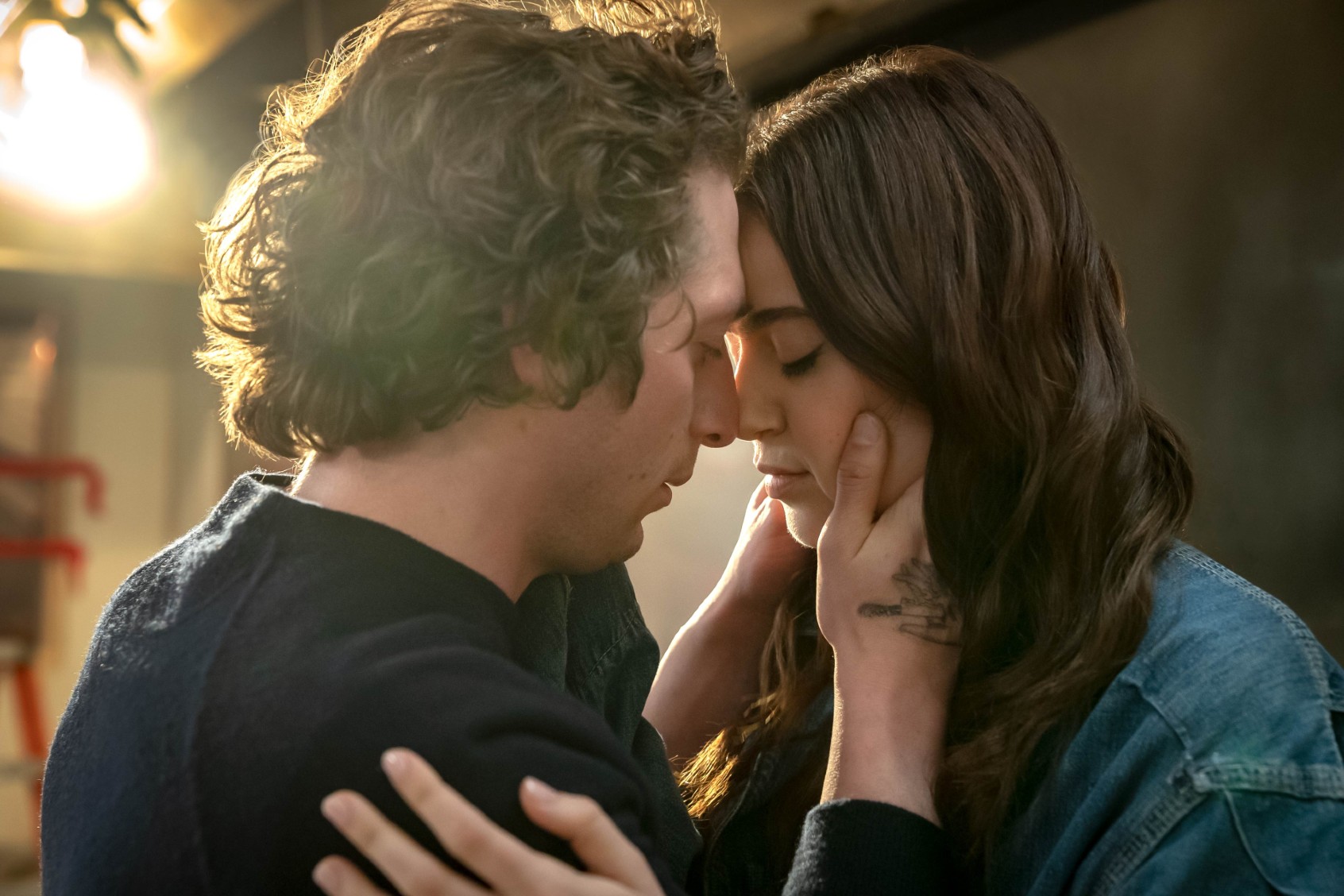
Up against the air-brushed gleam of the “Sex and the City” continuation, “And Just Like That …” featuring a cast that has not aged out of toeing the line of impossible to achieve beauty standards, Claire’s high-definition unibrow is exciting to see in a way that mid-30s me would not have had proper words for. Back then I would have probably said something gross about her making me feel feral and how we could run off into the woods together, two she-devils howling at the moon, very much in love. Now, I see her two-and-a-half brows and imagine the actress enduring countless meetings with publicists and studio executives over her refusal to tidy them up.

“Pluck THIS!” I picture her saying. And I’m here for it. We need more of this.


Want a daily wrap-up of all the news and commentary Salon has to offer? Subscribe to our morning newsletter, Crash Course.


Maybe it’s because I wear glasses and have a gap between my teeth that I’ve developed a discerning taste for “imperfections” in others, but I’m eager for a greater population of individuals who have appreciation for letting bodies do what bodies do.

To no surprise, a quick search of “claire the bear unibrow” on Twitter shows that we’re not there yet, which is so boring and sad.

“Watching Season 2 of ‘The Bear’ with my mom was wrong because all she talks about is Claire’s ‘almost unibrow’ and how she needs to wax her eyebrows,” tweets @yung_bratty.

“Need to know why they thought the unibrow looked okay on Claire in The Bear,” writes @gracepaImer.

To these people I say, look again.

Jeremy Allen White as Carmen “Carmy” Berzatto and Molly Gordon as Claire (Chuck Hodes/FX)

Aside from the fact that Molly Gordon is a famous person and, therefore, more attractive than most, by employ, she and her character Claire are under no obligation to look any way other than how they naturally look for the approval and enjoyment of anyone else.

That being said, I think I have a thing for unibrows?

Catch up.

Elon Musk sets temporary user limitations on Twitter, making it even less usable

If you’ve attempted to scroll through Twitter on Saturday, only to be met with the notification, “rate limit exceeded,” there’s a reason, but it’s not a very good one.

Elon Musk, executive chair and CTO, chose a holiday weekend to enforce new daily limitations for users in response to “extreme levels of data scraping and system manipulation,” further impeding the site’s functionality.

For as long as he chooses to make it so, verified accounts are limited to reading 6000 posts a day, unverified accounts get 600 posts a day and unverified accounts new to the site get the scraps at a limit of 300 posts a day.

Many users have been complaining, but Musk doesn’t seem to care.

In NBC’s coverage of the limitations, they state that, “Twitter responded to CNBC’s request for comment with its customary poop emoji.”


Want a daily wrap-up of all the news and commentary Salon has to offer? Subscribe to our morning newsletter, Crash Course.


In response to Twitter user @MrBeast saying, “Brb, gonna see how long it takes me to look at 6k posts,” a very convincing Musk parody account got back to him saying it would take less than an hour and nine minutes. 

I’d gather more responses to Musk’s news, but my limit has been exceeded. 

“Star Trek: Strange New Worlds” considers the weight of Khan’s wrathful legacy

The latest episode of “Strange New Worlds” beams us to Toronto, Canada, 21st-century edition, where La’an Noonien-Singh (Christina Chong) and Captain James T. Kirk (Paul Wesley) must stop an event that will irrevocably alter the course of time. Since aspects of “Tomorrow and Tomorrow and Tomorrow” invite us to consider the lasting impact of historic reputations, let’s take a short real-world trek to Long Island – home to the remaining known descendants of Adolph Hitler.

A reporter from the German tabloid Bild tracked them down in 2018 to obtain their views on politics. Only one spoke to him, revealing he liked Angela Merkel and was not a fan of America’s president at that time.

All of them changed their last names, and their neighbors had little to report about them save for their niceness. The rest of the article describes what seems to be a low-grade nerve-wracking life if not a lonely one.

This trivia tidbit would not have organically come to mind while watching the latest episode if we didn’t contemplate La’an’s lot as the descendant of Khan Noonien-Singh, a tyrant who lorded over a quarter of the planet during the 1990s . . . according to the original “Star Trek.”

Star Trek: Strange New WorldsChristina Chong as La’an and Paul Wesley as Kirk in “Star Trek: Strange New Worlds” (Paramount+)

“Tomorrow and Tomorrow and Tomorrow,” written by David Reed and directed by Amanda Row, adjusts that history to explain how La’an and Kirk end up encountering a certain version of her past in a decade that doesn’t line up with franchise history. This vital detail drops near the end of the episode, all of which takes place in another timeline. The Kirk who joins La’an’s escapade to the past has never heard of the Federation of Planets. Since Earth had been rendered uninhabitable in his time, he was born in space – on the U.S.S. Iowa, not the state of Iowa.

Even more shocking to La’an is that he doesn’t recognize her surname.

When that dawns on La’an, her brooding countenance relaxes only for a second or two. Her visible relief grants us a sense of what it means to carry a cruel legacy in one’s name. Khan has nothing to do with who she is, yet she has spent her life answering for his crimes against humanity. 

“Strange New Worlds” directly converses with one of the “Star Trek” franchise’s darkest villains through this character, especially in a second season that has used two of its three opening episodes to grapple with the lasting impact of the Eugenics Wars.

The massive destruction and tens of millions of deaths caused by these conflicts led the United Federation of Planets to declare genetic alteration or modification to be illegal. This had the unintended effect of outlawing an entire people, the Illyrians.

Khan is a warning against pursuing supremacy instead of strengthening diversity to make life better for everyone.

But it also leaves La’an in an existential limbo since her genetic augmentations are inherited. Her knowledge of Khan comes from her education, much in the same way we have absorbed the history of World War II. That didn’t prevent her from being bullied and ostracized before she joined Starfleet.

The “Trek” audience knows more than she does, which lends her story an element of mystery and potential that other legacy characters don’t have. We know where Captain Christopher Pike (Anson Mount), Spock (Ethan Peck) and Kirk are destined to land since “Strange New Worlds” is set before the first “Star Trek” and its voyages.

This also means the events of “Space Seed,” the 1967 episode where Khan is introduced, have yet to take place.

Star Trek: Strange New WorldsChristina Chong as La’an and Paul Wesley as Kirk in “Star Trek: Strange New Worlds” (Michael Gibson/Paramount+)

Khan, originally played by Ricardo Montalbán, is charismatic, highly intelligent and manipulative, the “best” of the superhuman dictators who nearly destroyed the planet. Khan and his fellow superhumans were created by scientists trying to create a generation of beings who would steer humanity into an era of peace.

By the time William Shatner’s Kirk and the Enterprise crew encounter Khan and 84 of his fellow Augments, who spent centuries in suspended animation aboard the U.S.S. Botany Bay, they already know what he and his kind have wrought. Those scientists didn’t account for what eventually turned out to be a fatal flaw. “Superior ability breeds superior ambition,” as Leonard Nimoy’s Spock put it.

To Spock’s horror Kirk, Bones, and Scotty speak of Khan in admiring terms. But it is one thing to consider such men from the perspective of hundreds of years after their time and another to have one in your midst. Khan seduces Enterprise’s strongman-obsessed historian, Lieutenant Marla McGivers (Madlyn Rhue), who aids him and his compatriots to seize control of the starship. Kirk and Spock retake the ship before Khan can do any more damage, aided by a remorseful McGivers. Instead of imprisoning her, Khan, and the other Augments, he exiles them to live out their days on the technology-free planet Ceti Alpha V.

Kirk comes to regret that decision when Khan returns in 1982’s “Star Trek II: The Wrath of Khan” to take revenge on the Enterprise captain for marooning them on a planet that McGivers, who became Khan’s wife, did not survive.  

I’ve often wondered whether Khan would have cast such a long shadow over “Star Trek” if Montalbán weren’t starring in “Fantasy Island” when “The Wrath of Khan” was made. Its producers worked mainly in TV, and its director had never watched an episode of “Star Trek” before joining the project. Maybe this lack of preciousness concerning what Trek is supposed to be is why the second motion picture turned out of to be the best of the original franchise’s feature films.

According to lore its producer Harve Bennett plucked Khan out of the series because he gave the story what he believed that the first movie lacked, which was a singularly motivated villain.  “Wrath of Khan” revolved around a vendetta, a more reliable attractor for moviegoers than a story about a speculative concept. J.J. Abrams leaned into this a bit harder with Benedict Cumberbatch’s interpretation of the Kelvin timeline’s  version of the character, which made him a Section 31 agent gone rogue in 2013’s “Star Trek Into Darkness.”

That Khan is a living representation of scientific hubris and man’s obsession with perfection probably mattered less than the fact that fans knew Khan how to make Kirk bleed.

But Khan’s origin story and what it represents keeps his name alive, sadly. Moving beyond the timing Gene Roddenberry predicted for humanity doesn’t mean we’ve escaped its pitfalls. Khan and the other Augments were grown using genetic material from many cultures; he was described as Sikh. That merely meant race didn’t factor into how he discriminated against others — his determination of superiority resembles Darwinism. Only those who submit to him or surpass him are worthy of his respect. That thinking doesn’t fly with the Federation.

Star Trek: Strange New WorldsChristina Chong as La’an appearing in “Star Trek: Strange New Worlds” (Michael Gibson/Paramount+)

A main character in “Star Trek: Prodigy,” Dal R’El, only finds out he’s an Augment well into adulthood, but that still places his status at risk. Commander Una Chin-Riley (Rebecca Romijn), an Illyrian, had to hide her true cultural identity from the Federation and Starfleet due to no actions of her own. Her career record was spotless. Because of Khan, Una had to defend her right to follow a career path for which she was amply qualified and that she loved.

Khan’s origin story and what it represents keeps his name alive.

In “Star Trek: Deep Space Nine” we find out that the parents of Dr. Julian Bashir (Alexander Siddig) had his DNA entirely re-sequenced when he was a child to eliminate a severe learning disability. When the Federation finds out, his father pleads guilty so that Bashir can remain in Starfleet and retain his medical license, with the Judge Advocate General asserting that for every individual like him who benevolently employs his enhancements for the greater good, “there’s a Khan Singh waiting in the wings.”

La’an confronts a weightier choice in “Tomorrow and Tomorrow and Tomorrow” when a Romulan assassin hiding out on Earth offers her a chance to live out her days anonymously in this timeline by allowing her to murder the child version of Khan. It’s something the operative explains was supposed to happen years ago – at least since 1992, she says, when the wars were originally supposed to occur. Instead, the spy claims a different victory by fatally shooting this universe’s Kirk.


Want a daily wrap-up of all the news and commentary Salon has to offer? Subscribe to our morning newsletter, Crash Course.


La’an neutralizes her ancestor’s would-be killer instead, coming face-to-face with him as a frightened child. She comforts him briefly before returning to the Federation timeline we know, where a temporal agent from the future retrieves the device that sent her to the past and orders her not to tell anyone what happened. It’s a happy ending, but only in part. The main timeline’s Kirk is alive but doesn’t remember her.

Heavier than this is her knowledge that she allowed a boy to live that she knew would grow into a man who would go on to murder and subjugate untold numbers of people, and knowing that if he were erased from the universe, humanity would fail to learn the lesson taught by his darkness.

“Tomorrow and Tomorrow and Tomorrow” is a traditional “Trek” alternate universe adventure where key characters are pushed through the looking glass to right something gone wrong on a cosmic scale. It also smooths out significant canonical wrinkles via retcon, which more devoted Trek observers than I have explained in detail.

Aside from that, this “Strange New Worlds” speaks to Khan’s legacy by making a historically heavy conundrum painfully personal. Khan is a warning against pursuing supremacy instead of strengthening diversity to make life better for everyone. La’an’s burden, in this episode and the series overall, is to figure out what it means to carry that red flag in her genes.

In the previous episode, an Illyrian assures La’an that her inherited augmentations make her no more dangerous than anyone else, and that she holds the same capacity for actions, good or ill. The events of “Tomorrow and Tomorrow and Tomorrow” allow her to exercise that capacity, saving millions and a brighter future in the process. Keeping the cost of her choice a secret places a weight on her shoulders she didn’t ask for, separate from the weight of her name and because of it.

New episodes of “Star Trek: Strange New Worlds” debut Thursdays on Paramount +.

“Regrettable substitutions”: Why it’s hard to ban “forever” chemicals, according to experts

Teflon is probably the most famous of the products made with "forever chemicals," but it is far from alone among them. Although one would hope that governments would heavily regulate a product linked to serious health issues like cancer, high blood pressure and infertility, chemicals known as PFAS (short for per- and polyfluoroalkyl substances) are largely able to slip under the radar. This is in large part because of a process known as regrettable substitution — and experts tell Salon that it is helping polluters literally destroy human life on this planet.

"This nickname is forever chemicals, and I think this nickname correctly states it best, because they are very persistent chemicals that accumulate in our bodies."

Regrettable substitution is a term for when chemical companies bypass regulations meant to protect the public by making minor modifications to a banned or overseen substance. Since "forever chemicals" can be very easily manipulated in this way, companies create endless varieties of essentially the same or similar PFAS, while technically being able to tell regulators that they are manufacturing something different. With this effectively limitless number of forever chemicals, companies have been able to use PFAS in a wide range of products: From nonstick cookware to microwaveable popcorn bags, from food boxes to takeout containers, from receipt paper to pizza boxes, from waterproof clothes to umbrella coating, from water bottles to dental floss.

PFAS come in many different varieties. As of 2019, more than 4,700 have been documented, making it so that analyzing them can be like reading a bowl of alphabet soup. Take, for example, PFOA (perfluorooctanoic acid), PFOS (perfluorooctanoic sulfonic acid), HFPO-DA (commonly known as GenX Chemicals, hexafluoropropylene oxide dimer acid), PFHxS (perfluorohexane sulfonic acid), PFOS (perfluorooctane sulfonic acid) and PFNA (perfluorononanoic acid), to name just a few. How did we get flooded with so many unpronouncable, strange chemicals?

This is in large part because the prevalence of regrettable substitution has created an endless variety of them. Dr. Anna Reade, senior scientist at the Natural Resources Defense Council (NRDC), elaborated on this process to Salon.

"There are two really good examples that are supported by just a ton of evidence now," Reade explained, mentioning the two different PFAS known as PFOA and PFOS. PFOA at one point was predominantly used to make Teflon, Reade pointed out, while PFOS was used to create Scotchgard — and both became controversial. "When those came under scrutiny, one of the big substitutions was to use a four-carbon version of PFOS instead" and, when all was said and done, "what they did was they just used a different chain length, exactly the same molecule, but just a shorter version of it, a smaller version."

In the end, "they switched to that and said it was safe because there wasn't any data on it," Reade said. A similar story unfolded with PFOA, where companies "added a couple of oxygens into the tail and said it was different and safe. That's Gen X. Those are two of the main substitutions that happened after the first legacy PFAS chemicals came under scrutiny."

The names of these chemicals can be confusing, as well as the complex chemistry used to make them, but if we think in terms of their properties, it can be easier to follow how these chemicals help in our daily lives — and how they also might pose serious health risks.

"You think about it in terms of things like waterproof mascara, right?" Reade explained. "How is it so waterproof? PFAS are in a lot of products, and I think a lot of times you can actually identify [the PFAS] through the function they provide."

For example, fluoropolymers are a type of PFAS used to make products like wire insulation, satellite wiring and fiber-optic cladding and cable. "You wouldn't pour that onto a table and it would be soap. It would actually look what people are often more familiar with," Reade said. "It's like that thin coating of Teflon on a pan, right? It's actually millions of individual PFAS bonded together to make kind of a sheet of PFAS. You almost could think of it as a material, but it's a polymer."


Want more health and science stories in your inbox? Subscribe to Salon's weekly newsletter The Vulgar Scientist.


"Even if we turned off the tap on all of our production of PFAS today, we have already severely contaminated our environment."

Dr. Katie Pelch, a scientist at NRDC, elaborated that if one had to visualize PFAS, it would be easiest to remember that "they look like our consumer products because they're in so many of our consumer products. They either coat them or our consumer products are derived from them." For example, "raincoats, textile treatments on your sofa, they are the things that we see every day in and around our homes." You can get a sense of the physical property of those PFAS used to repel water "because they repel water, because they repel stains, because they are greaseproof. You see the function that they add when they're added to consumer products. Slick, slippery."

The chameleon-like nature of PFAS goes a long way toward explaining why they are such a problematic class of chemicals. Because PFAS are present in so many commonly-used products, studies show that most humans have them in their bloodstream. PFAS are connected to so many diseases that their prevalence in our environment poses an inevitable health crisis, particularly as they are linked to more and more ailments from liver disease to thyroid disease. Even worse, there is a good reason why they are known as "forever chemicals."

"This nickname is forever chemicals — and I think this nickname correctly states it best — because they are very persistent chemicals that accumulate in our bodies," Jitka Straková, Global Researcher at IPEN (International Pollutants Elimination Network), told Salon. "Once they are released into environment, they really stay in the environment forever. "

As a result, Pelch ruefully observed that merely strengthening chemical regulations will not be enough to help humanity. The existing PFAS will need to be cleaned up.

"Even if we turned off the tap on all of our production of PFAS today, we have already severely contaminated our environment," Pelch explained. "So we need solutions that help remove PFAS from the environment, remove PFAS from drinking water and from all of our contaminated land and air. We need to set safe drinking water standards while also removing PFAS from all of our consumer and industrial products where they're not essential."

She noted that although the chemistry industries often claim that improving regulations will lead to problems with obtaining quality medical equipment or clean energy, the pollution is so severe that innovation can solve it. Indeed, when there were past problems with dangerous products like firefighter foam, consumer outrage eventually yielded the necessary results.

"Now there are multiple options available that work really well that do not use PFAS, and that's because we are innovative enough to figure out a safer solution," Pelch added. "That's one of the things that we're really working on, is trying to encourage people to find a better way."

Certainly people will not be able to protect themselves from PFAS as they might from most other pollutants — by visually identifying them, and then avoiding them.

"It's quite common to say about PFAS chemicals that we cannot recognize them by smelling them, touching them," Straková told Salon. "You basically cannot visualize or use other senses to recognize when we are exposed to PFAS-contaminated water. It's something that makes the PFAS issue even more problematic than other pollution issues because people basically cannot say if PFAS are present in their drinking or other water resources. Only sophisticated laboratory tests can prove if PFAS are present in water."