Spring Sale: Get 1 Year, Save 58%

Trump is using tragedy to hide his bait and switch

When a radicalized US Army veteran mowed down 14 people in New Orleans, Donald Trump wasted no time pointing his finger, blaming immigrants and a non-existent ‘open border’ for the tragedy:

This is what happens when you have OPEN BORDERS… The DOJ, FBI, and Democrat state and local prosecutors… are incompetent and corrupt, having spent all of their waking hours unlawfully attacking their political opponent, ME…. Democrats should be ashamed of themselves for allowing this to happen to our Country.

On-brand, Trump ignored police intelligence that identified the offender as a US citizen, a former U.S. Army staff sergeant and combat veteran from Texas. 

Trump created anti-immigrant fervor to attract low-information voters, but as long as Citizens United is good law, Republicans will always side with their wealthy donors over MAGA.

Also on-brand, Trump co-opted the massacre to redirect attention from his bait and switch on immigration. After convincing 49% of the nation’s voters that immigrants were the root of all evil, leading to a 1% win Fox News calls a landslide, Trump sided with Elon Musk to defend hiring more foreigners for high-paid jobs under the H1-B visa program. 

Trump’s perfidy aside, no one has forgotten Trump’s campaign mantra that ‘illegals’ were stealing American jobs, murdering Americans and eating their pets. The internecine war between MAGA’s anti-immigrant faction and its techbro donors is a by-product of Trump’s own disordered thinking, and it is just the beginning. 

The H1-B debacle

The heart of MAGA’s current discontent is the H1-B program, which allows employers to hire nonimmigrant aliens as workers in specialty occupations. According to the US Department of Labor, a ‘specialty occupation’ is one that requires highly specialized knowledge and at least a bachelor’s degree or its equivalent

Found at 8 U.S.C. § 1182 et seq, the law requires employers to pay H1-B employees the prevailing wage for their job title and location, which is meant to protect workers from exploitation. H1-B critics complain that, in addition to the potential for exploitation, hiring aliens disincentivizes companies from developing and hiring American talent.

We need your help to stay independent

Last week Elon Musk, who brazenly purchased his proximity to power with wealth built in part on exploitable H1-B talent, threatened to go to “war” to protect the program. 

After being obsessed with immigrants in general and the H1-B visa program in particular, and after restricting access to foreign worker visas in the past, Trump has now switched his tune to match Musk’s, saying he has “many H-1B visas on my properties. I’ve been a believer in H-1B. I have used it many times. It’s a great program.” Trump, whose most educated talent includes convicted tax fraud accountants and convicted lawyers facing debarment, has not explained why cooks, servers, housekeepers and groundskeepers at his motels need high-tech visa clearances. 

Aside from exploiting foreign workers desperate to remain in the U.S., H1-B also rewards Republicans for de-funding public education, punishing uneducated Americans whom Musk and the broligarchy deem too “retarded” to power America’s high-tech workforce. 

Proving that a broken clock is still correct twice a day, rightwing provocateur Laura Loomer argues that these high-tech jobs “should be given to American STEM students,” and that Musk et al are enriching themselves at the expense of MAGA loyalists. Musk responded with characteristic immaturity towards critics, prompting Steve Bannon to call Musk  a “toddler” who needed a “wellness check.” Matt Gaetz said Musk was trying to “engineer” immigration policies, while conservative Ann Coulter showed an uncharacteristic concern for labor, stating, “American workers can leave a company. Imported H1-B workers can’t. Tech wants indentured servants, not high-skilled workers.” 


Want a daily wrap-up of all the news and commentary Salon has to offer? Subscribe to our morning newsletter, Crash Course.


Musk bolstered his critics’ argument when he admitted that H1-B engineers accept lower salaries just to work in the US. As Musk framed the debate, “It’s much easier to bring in skilled workers who might not do quite as good a job but will work for a fraction of the cost and be happy just to be here.” Got exploitation, anyone?

Fox anchors will sell Trump until they can’t

The world’s richest man, Musk prefers to pay less for talent and no surprise there. What is yet unknown is how MAGA will react when Trump repeatedly kicks them to the curb. 

Trump created anti-immigrant fervor to attract low-information voters, but as long as Citizens United is good law, Republicans will always side with their wealthy donors over MAGA. Similar dynamics will surface when they try to cut Social Security, impose regressive tariffs, or trim the ACA to fund tax cuts for the rich; the intraparty rifts have only just begun.  

As Trump crosses the line from ignorant bombast to dangerous, Fox News will eventually have to abandon him, given his lame duck status. Too bad Murdoch worked so hard to bash immigrants and accents — he could have imported some foreign models and filled those anchor seats for less. 

Record-high count shows government failing on homelessness. Trump and SCOTUS may make it even worse

On any given night in January of 2024, more than 770,000 people were experiencing homelessness in the United States, according to new data from the Department of Housing and Urban Development. That value marks an 18% increase from 2023 and a new record high since HUD began reporting on homelessness in 2007.  

The Annual Homelessness Assessment Report, released last Friday, uses the nationwide annual Point-in-Time (PIT) counts in the final 10 days of January to produce a snapshot of the nation's growing homelessness crisis. The 2024 report found homelessness reached record levels for almost every population included in the survey. Veterans were the only population to see a decline in homelessness, continuing a year-over-year trend.  

But advocates and policy experts say that the annual point-in-time count ultimately fails to capture a holistic picture of homelessness in the U.S. With groups of people excluded from the count and the data released almost a year to the date of collection, the count and report don't set localities up to address the problem and serve unhoused Americans, argued Adam Ruege, the director of strategy and evaluation for Community Solutions, a national nonprofit working to end homelessness.

"What's required is the ability to understand at any given time how many people are experiencing homelessness, why they're coming into homelessness, and why they're they're exiting homelessness so that communities can actually get a handle around this issue," said Ruege, who previously served as the deputy director of clinical operations for the National Veteran Affairs Homeless Programs Office.

Breaking down the 18% increase captured in the report paints a bleak picture. The number of families experiencing homelessness increased by 39%, a figure that HUD said is largely driven by a 43% increase in the sheltered population between 2023 and 2024. One in five people experiencing homelessness on a single night last year were 55 or older, and nearly half of those adults were unsheltered in "places not meant for human habitation."

The number of unaccompanied youth experiencing homelessness also rose slightly by 10% between 2023 and 2024, while the number of children experiencing homelessness on any given night last year surged by 33%, making them the age group to see the largest increase in homelessness. 

HUD pointed to several factors that led to the historic rise, chief among them the "worsening national affordable housing crisis, rising inflation, stagnating wages among middle- and lower-income households, and the persisting effects of systemic racism." Other factors like public health crises, natural disasters that displaced people from their homes, a rise in immigration and the end of COVID-era homelessness prevention programs also contributed to the strain on the nation's homelessness service systems in 2024, the report noted. 

The data points to a need for these factors to be addressed from a federal level, said Ann Oliva, the CEO of the nonpartisan National Alliance to End Homelessness.

"What we're seeing here in this set of data is homelessness overall being up for the eighth year in a row, but specific populations, like older adults and families being particularly hard hit by the housing crisis," she said.

"What's the point in counting people if we're not going to ensure that next year there are fewer people experiencing homelessness?"

Notably, the number of veterans experiencing homelessness decreased by 8% overall between 2023 and 2024, with the share of unsheltered veterans seeing a slightly larger decline of 11%. These drops are the results of targeted efforts and sustained funding to reduce veteran homelessness, according to the report. 

Oliva said that the factors behind the decline in veterans experiencing homelessness, like the HUD's Veterans Affairs Supportive Housing program, offer a roadmap for extending those gains to other populations. 

"For veterans, what we see is bipartisan leadership and support. We see resources that are much closer to the scale of need, and we see really smart policy and program design coming out of the federal government that focuses on housing and services," she told Salon in a phone interview.

She added that the decline in veterans experiencing homelessness is an example of a policy success both federal and local governments can facilitate. 

Even with record highs, the PIT surveys are widely understood to be an undercount of those experiencing homelessness. The AHAR notes that the PIT count does not include five categories of people experiencing homelessness, including Americans who reside in housing not listed on the housing inventory count and those who are temporarily staying with family or friends. Ruege added that the survey being conducted in the winter — when fewer people are without shelter — also skews the count.

We need your help to stay independent

HUD also noted that the 2024 data is likely out-of-date as the conditions, policies and circumstances around U.S. homelessness changed under the Biden administration over the course of the year. 

While the PIT count allows policymakers and advocates to identify broad trends in homelessness over time, Ruege argued that local homeless service providers can bridge the gaps between reports using by-name data, a comprehensive, opt-in list of everyone experiencing homelessness in a locality that is updated regularly.

Building such data sets off of HUD's Homeless Management Information System, where providers collect client-level data on housing and services provided to individuals and families at risk of and experiencing homelessness, allow communities to report the changes in their local populations experiencing homelessness and better react to the problem "so they can be more proactive in solving it," he said. 

"We know Point-in-Time counts are mandated, required congressionally, they're useful as a snapshot," he said. "But what we believe is that a video is required here, more real-time video, instead of a snapshot."

Oliva also emphasized the importance of looking to other data sources, like part two of the AHAR and HUD's system performance measures to paint a more holistic picture of the nation's homelessness crisis. The former offers insight into the needs of Americans experiencing homelessness and what happens to them as they move through the homeless services system, while the latter provides a better understanding of who is becoming homeless and how many people are experiencing it for the first time. 

"The Point-in-Time Count is really important, but it's not the only part of the story that you need to look at in order to get sort of a comprehensive view of homelessness nationwide," she said.


Want a daily wrap-up of all the news and commentary Salon has to offer? Subscribe to our morning newsletter, Crash Course.


But Jesse Rabinowitz, the campaign and communication director of the National Homelessness Law Center, argued that the issue isn't a lack of holistic portraits of the reality of homelessness — the problem is that the data should be much more of a call-to-action to federal lawmakers than it is. 

"Every year we have seen homelessness go up, but the federal government and city and state governments have not responded with an increase in funding for housing that matches the need," he said. "My question is, what's the point in counting people if we're not going to ensure that next year there are fewer people experiencing homelessness?"

In addition to funding housing at scale to the affordable housing crisis, elected officials must work to not make homelessness worse, which is a goal Rabinowitz said is more challenging given the Supreme Court's Grants Pass v. Johnson decision

That case, decided last summer, saw the Supreme Court effectively give localities license to criminally punish unsheltered Americans for erecting encampments on public property. The justices decided 6-3 that cities enforcing anti-camping laws and doling out penalties for violations did not amount to cruel and unusual punishment under the Eighth Amendment.

Alongside the impact of the ruling, the nation's homelessness crisis is also poised to worsen under the incoming Trump administration, Rabinowitz said. In his campaign platform, Agenda 47, now-President-elect Donald Trump outlined a drastic plan to address what he called the "scourge of homelessness," focusing on making cities "clean, safe, and beautiful."

Those proposed policies included encouraging states to ban camping and force individuals to receive treatment or face arrest; buying land and relocating unsheltered people to tent cities to access social workers, mental health professionals and drug rehabilitation specialists; and reimplementing mental institutions to house and rehabilitate unhoused Americans with a goal of later reintegrating them back into society. 

While it is unclear whether Trump will carry out his proposed plan and, if so, to what extent, Trump's stated plans to curb immigration, cut "vital social safety net programs" and implement tariffs will only push more people into homelessness, Rabinowitz said. 

"We've tried, as a country, the housing last approach. We've tried forcing people into treatment. We've tried forcing people into camps. It doesn't work," he said. "The only thing that has been proven to work time and time again, is getting folks housing that they can afford and pairing that housing with services that folks want and need."

Reading list for a year of chaos: These books make 2024 make sense (kind of)

My end-of-year assignment for Salon's staff was simple, perhaps deceptively so. I wanted to know what books we'd read this year that shed light — from some direction, and in some fashion — on the just-concluded year of extraordinary change, massive disruption and back-to-the-future political amnesia. There weren't any rules: The books didn't have to be new, and didn't have to directly concern politics or history. They didn't even have to be nonfiction, although only Amanda Marcotte went there. (Special gold star!). Saying something like "Enjoy!" here seems positively wrong-headed, but it's one hell of a list. — Andrew O'Hehir

"Down With the System: A Memoir (of Sorts)by Serj Tankian

Serj Tankian's unmistakable voice is not only heard in System of a Down's driving, soaring heavy metal tunes, but also through his bold lyrics. This memoir is the logical extension of his ongoing and uncompromising expression of self, art and activism. While fans of the band may have previously been aware of Tankian’s social and political views previously, 9/11 proved to be a flashpoint. Not only did that day mark the band hitting No.1 on the Billboard charts with the single "Chop Suey!" — banned two days later for its lyric, "I don't think you trust in my self-righteous suicide" –– but the events of that day also prompted Tankian’s controversial essay, "Understanding Oil." His suggestion that U.S. policy in the Middle East was an underlying reason for the terrorist attacks earned him and his bandmates immediate backlash. 

Tankian draws a line from his grandparents' survival of the Armenian genocide and his father's sacrifice of a musical dream to life in America to his own eventual activist awakening. In a year when the world seems to have become desensitized to the word “genocide” and its realities, Tankian’s personal quest to recognize the wrong done to his people is a reminder that denial of these atrocities is an everyday occurrence – but shouldn’t be. — Hanh Nguyen

"The Feminine Mystique" by Betty Friedan

After a lifetime of reading around it, I actually tucked in to Betty Friedan's "The Feminine Mystique," and was shocked at how bracingly relevant this sacred text of second-wave feminism felt.

A great book will always feel relevant to the reader, no matter when or where it was written. But when this year, after a lifetime of reading around it, I actually tucked in to Betty Friedan's "The Feminine Mystique," I was shocked at how bracingly relevant this sacred text of second-wave feminism felt. Spoiler: The villain is capitalism! The skill with which Friedan connects the dots between the subjugation of intelligent, educated women and the ruthless, calculated mind-numbing agenda of consumerism turns out to be her deftest move. "In all this talk of femininity and women's role," she writes, "one forgets that the real business of America is business." After all, a woman shopping remains more useful to the wealthy than a woman thinking or doing ever is. And in a year in which our nation's slavering fealty to billionaires could not be more brazenly, dangerously obvious, "The Feminine Mystique" remains a punch in the gut and a warning to our oppressors. "You'd be surprised," a doctor tells Friedan at one point, "at the number of these happy suburban wives who simply go berserk one night." — Mary Elizabeth Williams

"Antidemocratic: Inside the Far Right’s 50-Year Plot to Control American Elections" by David Daley

“When the Court changes, so does the law,” writes former Salon editor in chief Daley in his latest elegantly written deep dive into the organized conservative machinations to subvert majority rule, “a careful, patient strategy to win through the judiciary what could not be won at the ballot box.” Chief Justice John Roberts’ rise to power as the head voice of the court that has kneecapped the Voting Rights Act, enshrined corporate influence in politics, overturned the right to an abortion and established presidential immunity is chronicled in this deeply researched and sourced investigation. “Antidemocratic” is a meticulously crafted — and yes, entertaining! — true story of the long, organized game the right has played with the Supreme Court, essential reading for understanding how constitutional "originalism" became such a powerful tool in the fight for minority right-wing rule and how the Federalist Society built so much power. “You might even say there is no law,” writes Daley, “only Justices.” As this book details, conservatives not only understand that, they have been laser-focused on the assignment for decades now. — Erin Keane

"The Bright Sword: A Novel of King Arthur" by Lev Grossman

Grossman's newest fantasy bestseller can be ham-fisted at times, but mostly it’s a deeply enjoyable rewrite of the Arthurian legend in the age of Trumpism. The book kicks off with the death of the mythical king to ask deeper questions about why people continue to struggle with the responsibility — and the power — that comes with self-rule. — Amanda Marcotte

"Democracy and Liberty" by W.E.H. Lecky

Reading the work of the formerly famous Anglo-Irish historian William Edward Hartpole Lecky, in his day seen as one of the most eminent scholars of the Victorian age, is like taking a disorienting ride in an intellectual hot-tub time machine. While Lecky’s political sensibilities may seem broadly unappetizing to 21st-century “progressives,” he is too capacious and sympathetic a thinker (and too powerful a prose stylist, in his own overwrought fashion) to be easily pigeonholed or stereotyped. You can find a few contemporary right-wingers along the margins of libertarian and authoritarian thinking who try to claim Lecky as one of their own, but he doesn’t fit their agenda too well either. He was a true believer in the British Empire, and also an Irishman by birth who was all too conscious of its abundant internal contradictions. He feared the advent of socialism, unsurprisingly, but also the rise of “ultramontanism,” a semi-polite term for Roman Catholic theocracy.

This two-volume doorstop from 1896, exploring what Lecky saw as an irresolvable tension between its titular concepts, offers the best summary of his thorny historical analysis, although his undoubted magnum opus is a seven-volume history (!) of 18th-century Britain, which I won’t pretend to have read. Lecky’s fundamental complaint about democracy is along the same lines as those of Plato (which he had certainly read) and Nietzsche (which he almost certainly hadn’t), but his survey of the democratic revolutions of his own century, although tendentious, is highly nuanced. He sees the historical impulse toward mass electoral democracy as both noble and honorable, quite likely reflecting an innate, irresistible tendency in human nature. But its inevitable outcome, he argues, is mob rule, bitter factional division, the debasement of civic culture and finally some version of Caesarism. That prognosis seemed laughably misguided for most of the intervening decades. Does it seem that way now? — Andrew O'Hehir

Richard Cobden: Independent Radical” by Nicholas C. Edsall

Richard Cobden is an obscure figure to most Americans, but students of 19th-century British history will recognize him as the leading political figure advocating low tariffs. Both as a private activist and a member of Parliament, Cobden fought to repeal the onerous Corn Laws of 1846, which imposed tariffs on foreign goods that he proved redistributed wealth from the poorer and middle classes to the wealthy. The anti-Corn Law movement comprises the bulk of Cobden’s legacy today, along with his role in negotiating a trade-based peace treaty with France in 1860. But Cobden supported free trade as one plank of a larger liberal platform that included staunch opposition to imperialism. His grand agenda was literally world peace; as he told a meeting of fellow free traders in 1846, “I believe that the physical gain will be the smallest gain to humanity from the success of this principle,” and the larger one is “drawing men together, thrusting aside the antagonism of race, and creed, and language, and uniting us in the bonds of eternal peace.”

English radical Richard Cobden supported free trade as one plank of a larger liberal platform that included staunch opposition to imperialism. His grand agenda was literally world peace.

Donald Trump’s election makes clear that it’s also possible to gain power by calling for high tariffs and trade war, rather than politicians respecting both other nations’ rights and their own country’s consumers. These gloomy thoughts lurked in my subconscious as I gobbled up this entire book over Thanksgiving weekend. Cobden believed in a world in which the powerful would finally learn that peace could be profitable. Instead, they have focused entirely on profit and ignored the potential for peace. — Matthew Rozsa

Kingdom of Fear: Loathsome Secrets of a Star-Crossed Child in the Final Days of the American Century” by Hunter S. Thompson

Although the works of Hunter S. Thompson have been thoroughly mulled over by every pot-smoking college sophomore and their brother, in this less familiar tome, a collection drawn from HST’s later life, he discusses everything from the jingoistic fever that swept over the U.S. in the wake of 9/11 to his short-lived political career in Colorado to a bizarre and baffling tale of a memorable bender, “Fear and Loathing in Elko.”

Viewed from 2024, the most striking aspect of this book is Thompson’s discussion of the image of America around the world and how, in his view, those in power “would rather kill than live peacefully.” Combine that with his personal accounts of how quickly and effectively those with political power move to squash popular movements, even ones as frankly ridiculous as the “freak power” movement, and the eerie parallels to our current moment are obvious.

Many on the American left felt in 2024 that no lessons had been learned from the 2016 and 2020 elections by those who could have made a difference. Revisiting Thompson’s work made me consider that no lessons have been learned by America’s political classes since at least 2000, and that the failure is deliberate. — Russell Payne

"K-Drama School: A Pop Culture Inquiry into Why We Love Korean Television" by Grace Jung

Sure, we may like to gaze upon beautiful people who fall in love backed by an addictive K-pop soundtrack, but comedian Grace Jung offers a deeper look at why this particular form of Asian drama has become both so addictive and cathartic for viewers around the world, especially since the pandemic started. From "Goblin" to "Squid Game" (and everything in between that may or may not star Gong Yoo) Jung breaks down many popular titles, providing eye-opening cultural context that is rooted in much of South Korea's history and loss, through mini lessons about recurring themes and tropes. 

An extension of her "K-drama School" podcast, this book offers at times an overwhelming crash course, veering from chatty and humorous to raw and harrowing as she delves into many of her own traumas that are reflected onscreen.

Why is K-drama so obsessed with amnesia, disability, bullying, zombies and violent, bloody vengeance? Grace Jung explains the roots of these tropes through historical examination.

Wonder why there's so much product placement for Subway sandwiches or characters who eat ravenously to excess? She has answers for that. Why is there an obsession with amnesia, disability, bullying, zombies and violent, bloody vengeance? Jung explains the roots of these tropes through an examination of Japanese colonialism, generational trauma, governmental corruption and more. Although this book was published in April this year, Jung’s lessons about misogyny and the 1980s Gwanju Uprising illuminate what happened in 2024 with the 4B movementn and the Korean people's well-honed culture of protest that helped block the recent failed coup. — Hanh Nguyen

Encounters: Experiences with Nonhuman Intelligences” by D.W. Pasulka

The plague of UFOs (or alleged “drones”) across the northeastern U.S. probably right now probably doesn't involve aliens, even if the phenomenon remains unexplained. Indeed, scientists, scholars and “well, actually” nerds prefer the term UAPs, or unidentified aerial phenomena (UAPs) but regardless of the terminology, they are anything but new. In religion scholar D.W. Pasulka’s latest book, she attempts to demystify some of these strange encounters, reminding us that humans have long claimed to communicate with non-human intelligences, and that some of these stories are even more outlandish than Hollywood or select government panels would have you believe. It’s little wonder that UAPs have sparked a global religious movement, but whatever is really up there in the skies, the enduring mystery will keep inspiring folks to look up. — Troy Farah

"Late Fascism" by Alberto Toscano

Donald Trump’s name appears on the first page of Italian political theorist Alberto Toscano’s slender but challenging new book, and hardly at all after that. That’s a considered decision: Toscano is less interested in the charismatic figureheads of fascist movements than in understanding fascism as a “dynamic” or “process” that has unfolded throughout recent history, and as a mythical, irrational current running below the surface of capitalist liberal democracy. Few recent books about the fascist tendency (whether in Nazi Germany, Trump’s America or anywhere else) have so precisely identified the allure of fascism, which Toscano calls a “perverted utopian promise” that activates a sense of “unfulfilled pasts and unrealized presents” among social groups who feel “somehow out of sync with the rationalizing present of capitalism.”

Channeling Ernst Bloch’s pioneering study from the 1930s, Toscano makes a point that’s even more difficult to swallow: Fascist ideology is not entirely deceptive, in the sense that it draws upon “an old and romantic antagonism to capitalism, derived from deprivations in contemporary life, with a longing for a vague ‘other.’” Liberalism and socialism, by contrast, offer rational narratives about shared economic progress and greater equality which lack that kind of mythic power, and sound increasingly hollow when their promises are not fulfilled.

One reason Toscano writes very little about Trump (or about Hitler and Mussolini) is because he believes such cartoonish or nightmarish figures are, in a sense, both reassuring and misleading. When we see them coming, we tell ourselves that they mark the dividing line between democracy and fascism, and that we can definitely tell the difference. The question Toscano asks us to consider is where we really are on that continuum right now. — Andrew O'Hehir

The Age of Magical Overthinking: Notes on Modern Irrationality” by Amanda Montell

Unlike what Joan Didion once suggested, magical thinking is no longer reserved for those who are grieving. From QAnon conspiracy theories to a rise in “manifesting” to people who believe Donald Trump is a lightworker to multi-level marketing scams that increasingly resembel cults, it can seem as if many people are “delulu” these days. That’s precisely why I was super excited to dig into Montell’s book this year. In her book, she investigates the world of cognitive biases, the errors in thinking that occur when people are processing information. Cognitive bias have always existed, but her spin on it explores how it has changed in our era as a result of information overload. This book makes sense of all the magical thinking we encounter on a daily basis, and offers ways society can find its way out of it. — Nicole Karlis


Want a daily wrap-up of all the news and commentary Salon has to offer? Subscribe to our morning newsletter, Crash Course.


"How to Fix a Broken Planet: Advice for Surviving the 21st Century" by Julian Cribb

Julian Cribb is one of the few popular authors who thoroughly breaks down the intersection between science and politics in an accessible way. As I wrote in a summary for Salon, Cribb “warns that humanity is running out of time to fix the escalating crisis” facing our planet. Instead of facing up to these problems, we are turning toward far right-wing demagogues selling snake oil.

Cribb proposes creating a Global Truth Commission, using “technological innovation to wean humanity off of agriculture and create food in more sustainable ways” and finding ways to address the various threats to our species holistically, rather than separately. Climate change, he stresses, is not the only existential crisis facing humanity: Others range from the looming menace of nuclear weapons and biodiversity collapse to plastic pollution on the land and in the skies.

“There are 10 major catastrophic threats to the human future,” Cribb told Salon, “and they're all working together. They're all coming together at one time.” — Matthew Rozsa

"Paper of Wreckage: The Rogues, Renegades, Wiseguys, Wankers, and Relentless Reporters Who Redefined American Media" by Susan Mulcahy and Frank DiGiacomo

Fans of “Succession” might also take an interest in this detailed history of The New York Post from shortly before the entry of media mogul Rupert Murdoch up to 2024. The book is constructed almost entirely of interviews with former Post staffers, along with others in the tabloid’s orbit. Their first-hand accounts offer nuggets of insight into how and why American journalism reached its current critical condition. 

While the heirs to the Murdoch business empire vie for control of the business and command of an immense fortune, Mulcahy and DiGiacomo offer a deeper look into the and the deliberate steps taken to create the scandal-obsessed right-wing news machine that today not only dominate the Post’s tabloid space but also the broadsheet and cable news industries. It’s hard to imagine that so many digital-first right-wing outlets would exists in their current form without the example set by the Postl.

There’s a memorable quote early in the book from Roberta Brandes Gratz, a Post reporter who was present during the Murdoch takeover. The paper’s former owner, Gratz says, was removed from reality, but Murdoch was “very involved in reality —- trying to change it.” There’s no doubt in my mind that for better or worse — and it’s mostly the latter — we all live in the reality that Murdoch created. — Russell Payne

Digital smell has arrived. Are we ready for Stinkygram?

Some research suggests that “olfactory training” — practicing to improve your olfaction, or sense of smell — can actually improve your cognitive abilities. So in the interest of self-improvement, I open my pack of what look like markers and sniff at them one by one. I get whiffs of citrus, lavender, driftwood. From a marker enigmatically labelled “hairy,” I register a greasy smell. From another, ominously labelled “barnyard/fecal,” comes the distinct smell of ass.

More appealing is a little bottle that, when opened, emits a scent of plum so vivid it brings to mind the deeper red closer to the pit, the exact feeling of cutting a piece, the interplay of taut skin and juicy flesh as you bite and chew. It brings to mind not a Platonic plum, but a specific plum I must have enjoyed on some long lost summer day. And yet the particles I inhale to recapture that sense memory were never part of a real fruit. They are a re-creation of the molecular structure of scent particles emitted by a real plum in a different country from where I sit, transported to summer on a January day, courtesy of Osmo, a New York software development company which sent me the samples.

Yes, friends. Digital smell has arrived.

The elusive sense

Of all the senses, olfaction — smell —  must be the most primal and evocative, the most magically elusive. With just around 350 olfactory receptors, we can each smell a vast array of different individual molecules, called odorants (one model suggests there could be as many as 40 billion such smellable molecules!).

Research suggests that there are multiple benefits to increasing the diversity of our olfactory environment, which for humans is limited compared to our visual or even auditory or tactile worlds. The Monell Center, a Philadelphia-based independent research center devoted to smell and taste, quotes one of their neuroscientists, Joel Mainland, on olfaction: “Before COVID, [people] didn’t take it seriously. Now, more people are realizing how important their sense of smell is. It’s not a throwaway sense!”

By no means. Disorders of the olfactory system, and growing evidence of how serious they can be, inspired the use of such olfactory training beyond perfumiers or scientists specializing in smell. My sister-in-law, who like thousands of others lost her sense of smell after an early COVID-19 infection, has gradually regained much of it through a disciplined program of smelling things, such as citrus or coffee.

"That’s the only part of the brain that leaves the skull and touches the air."

But many questions about smell remain unresolved. How do we distinguish so many odors? What is the relationship between a molecule’s structure and the scent it evokes? And most importantly, as technology moves virtually everything from analog to digital experiences, why can we not yet send Stinkygrams? Why is the Cloud not scented? Why does 4D cinema suck so bad? As yet, nobody knows — but we’re getting closer to the answer, perhaps making digital smell a future mainstream wing of the digital experience.

The good news: smell exists

Smell is quite different from sight, where the brain relies on information relayed from a limited range of wavelengths of light that is registered by just three types of cones in our eyes, allowing us to perceive a palette of about a million colors. In olfaction, those under-400 olfactory receptors combine, in ways that have been mysterious to researchers, to produce the staggering variety of odors we can perceive.

“You and I have about 350 olfactory receptors but our sets are different from each other,” Mainland, of the Monell Center, told Salon in a video interview from Philly, which he says has become a de facto capital of olfactory research in the U.S. He found, however, that when you set up panels of 15 to 20 people to sample different scents, the average from one group of that size to another really smooths out the variation between individuals. The panels don’t tend to differ from each other significantly, which is allowing scientists to begin developing databases of odors.

Another way in which it’s different from sight: color (probably) doesn’t actually exist out there in the world, but smell does. Or to state it differently, we don’t stick bits of color into our eyeballs to perceive colors, but with smell, we must literally insert odorants into our lucky (or unfortunate) noses in order for us to perceive them. They later succumb to recycling as nasal mucus that finds its way into our digestive systems. And still another difference is that olfaction is the only sense that involves the brain directly reaching out for information from the world: the olfactory bulb in the nose is literally composed of brain tissue, the olfactory epithelium. 

Sigmund Freud thought smell related to animalistic behavior and was relevant in humans mostly in terms of behavioral pathology.

“That’s the only part of the brain that leaves the skull and touches the air. Your brain is physically moving through the skull. There’s nerves that go through porous holes and become our sense of smell, and so molecules physically are touching your brain,” Alex Wiltschko, a neuroscientist who worked at Google Brain, using machine learning to create a map of smells, told Salon in a video interview. Wiltschko is now CEO of the company he founded out of that work, Osmo, dedicated to, as its tagline puts it, “giving computers a sense of smell.” Nobel Prizewinner Geoffrey Hinton, the “godfather of AI,” recently joined the board of Osmo.

And yet the sense of smell has been routinely undervalued. Sigmund Freud thought it related to animalistic behavior and was relevant in humans mostly in terms of behavioral pathology. And a 2011 poll of 700 young people around the world by the marketing company McCann Worldgroup found 53% of 16 to 22 year olds and 48% of 23 to 30 year olds polled were ready to sacrifice their sense of smell if they’d otherwise have to give up an item of technology such as their phone or laptop.

“We think of this as a sort of a layer of information that we’re not currently great at interpreting,” Mainland explained.

Most species, including most mammals, really rely on olfaction to make sense of the world. But as humans, we tend to feel that our sense of smell doesn’t give us very precise or clear information. If we could find reliable ways to extract the information inherent in scent, there are so many ways this could be useful. This is where digitization of scent comes in. As recently as 2016, biophysicist Luca Turin described to a journalist from the Guardian two technical obstacles to digitizing scent: the need for an actual chemical in the air on the receiving end, and the lack of a scent equivalent of primary colors you could mix to create more complex smells. That publication also described the commercial failure of a scent messaging device, inventor and Harvard professor David Edwards’ “oPhone” — nobody was terribly interested. Perhaps we’re still culturally traumatized by Smell-O-Vision.

“If you were early in vision, and sort of asking, “why would you want to digitize vision” There are lots of inventions that came about that you never would have conceived of, right? So I think there’ll be lots of applications for this,” Mainland said.

A fresh-cut plum

Which brings us to the plum. A few months ago, Wiltschko’s Osmo hit a major milestone: they digitized the smell of a freshly-cut plum. Osmo sent me dozens of odor training samples, including three newly-synthesized, never-before-smelled molecules, the fragrances created with them, and that sample of the world’s first digitized — in the company’s marketing language, “first teleported”  — scent (Edwards similarly called the scent of champagne and macarons he “sent” from Paris to New York in 2014 “the world’s first transatlantic smell message.”)

The way Osmo’s digitization process works is that the researchers trap and concentrate a physical scent emitted from a source (a stinky sneaker, say, or a rose, or a freshly-cut plum) in the form of volatile molecules. The researchers then analyse the scent sample to figure out the exact type of molecules involved, and the proportions of each type of molecule found in that air sample. They send that information, which is essentially the chemical formula for that little pocket of air, to a printer equipped with all the molecules or similar-smelling ones, and recreate the exact chemistry that was found in the original scent. Only the printing process could take place miles, or continents, away from the source of the original smell.

This seems like real digitization, unlike the oPhone’s vials of scent cartridges tagged to release the indicated smell. Still, the company makes bold promises indeed regarding the impacts this service could have.

“I think it will be impossible to catalog all the ways in which digitizing our sense of smell will positively impact our lives,” Wiltschko told Salon. “So what we’ve managed to do is demonstrate that with no human intervention, we can digitize a smell, and now what we can do is do that routinely and cheaply for every smell.”

"It will be impossible to catalog all the ways in which digitizing our sense of smell will positively impact our lives."

There’s no particular limit to the kinds of smell that can be digitized, though Wiltschko says Osmo is at work on a database with the molecular compositions of everyday smells, such as everything you might find at the grocery store, for example. He doesn’t intend to stop at retail, though.

“For instance, I have a newborn coming in January. It’s my first. And I know that babies smell great,” Wiltschko said.  “And I want to save the smell of babies. And it’s the same problem as saving the smell of a plum.”

Wiltschko noted that George Eastman, of Kodak fame, introduced the quick and easy preservation of memories dependent on sight back in the 19th century, just as he hopes to do with olfaction here in the 21st. “I really think that we should be able to save the olfactory memories of our family,” the father-to-be told Salon.

Other company initiatives include using chemical sensors and AI training on large data sets to authenticate products — designer sneakers, say, or luxury skin cream or wristwatches — by detecting every volatile molecule released by it; an AI-powered fragrance designer that can generate scents based on your description of a memory or other imagery conveyed in words; and a platform to develop new aromas to repel disease-carrying insects like mosquitoes.

But all of these digitization projects, and others not yet dreamt of, depend on research. We still have a long way to go in understanding how odorants work their magic on our noses — or, rather, how our olfactory systems work their magic on those insignificant-seeming particles.

“We have instruments that basically tell you exactly how loud something is, exactly what color something is, based on physical principles, and we don’t have that in olfaction, right?” Mainland explained. “So there’s no way that I can take an instrument and point it at something and have it tell me that that smells fruity, right? We have to sort of interpret that in a complicated way. And really the only source of truth we have on that is asking people what something smells like. So it’s very different from the other senses.”

Our few hundred olfactory receptors (far fewer than in animals like mice, dogs or elephants) are broadly tuned, with any one receptor responding to many different molecules, and one molecule often activating most or almost all of the receptors, with the relative ratios of their activating apparently providing the olfactory code, a kind of signal that our brain interprets. How exactly the brain pulls this off is still a mystery. 

The dataset on which machine learning models are trained are key to using AI to figure it out. 

“Part of the challenge here is scaling this up to get enough molecules to people to smell and get reasonable reports of those [so] that we can create a large data set and improve the models on those things.” Mainland explained.

Smellorism terrorism

But what are the downsides of future apps like Stinkygram or Nosebook? It’s not here yet, but Wiltschko imagines that we will be able to send scents via email or other online application one day.

With any new technology, of course, it’s wise to consider whether (or how) it will eventually oppress us. For a start, scent is powerful, which raises the everpresent spectre of military applications. Never mind a letter bomb, what about a stinkbomb that is also a letter? The recipient who unwisely opens an attachment might, for example, unleash thiacetone, which could render them unconscious with a sulfurous odor akin to a demonic leek — as well, possibly, as knocking out people within nearly a half mile radius.

Wiltschko isn’t too concerned. “Any new technology, of course, could be used for multiple purposes. What I love about scent in this context is that it truly is just scent, right? […] You may like it, or you may not like a smell. You may remember it, or you may not remember it. But scent is our brain’s way of sampling the chemical slice of reality, and those molecules come into our nose, and then they’re discarded, and they don’t [leave] a trace. And so I think that there’s something really beautiful and almost innocuous about what it is that we do, which is just to basically create memories through chemistry.”

COVID robbed our sense of smell

There’s more though. The most exciting applications — way better scent-enhanced entertainment aside, of course — may be biomedical.

Through changes in how you smell, “dogs and bees and people and all kinds of animals can definitely detect changes in your health,” Wiltschko said, but noted that it’s still unknown what’s actually being detected. “However, we know that whatever is in your blood and in your body does get to the outside. So your breath is a filtrate of blood. So is your sweat. Your earwax is the metabolic sink of all the molecules in your blood. So everything’s kind of leaking out of you at all times.”

Wiltschko hopes to collect this information using their platform and correlate it to health outcomes. He’s not the only one. Research on olfaction was already an area of booming interest by 2020. The arrival of a brand-new virus that had as a signature feature the tendency to steal one’s ability to smell further stimulated interest, and urgency. Things we already knew about the importance of the sense of smell to our cognitive processes and the association of its loss with neurodegenerative conditions suddenly acquired the extra importance of many tens of thousands of potential sufferers of dementia or other cognitive disorders in the coming years. There’s also been an influx of members to charities like the U.K.-based Fifth Sense or AbScent, which are devoted to people who have lost their senses of smell or taste, often a post-viral complication even before COVID existed.

We need your help to stay independent

And yes, a systematic review published last spring in the journal Neuropsychology Review found that it’s not just those who have lost their sense of smell who benefit cognitively from scent training. They found that through olfactory training, people with smell loss and people with normal olfaction alike can achieve increases in the size or volume of the olfactory bulb and hippocampus. And they can improve the functional connectivity of the different structures related to olfaction. In their review of 18 studies that met their criteria, the researchers even found emerging evidence that olfactory training is associated with improved global cognition, with an especially marked impact on verbal learning and memory as well as verbal fluency.

A fine New Year’s goal! So I continue to practice.

And, now and then, I take out Plum 1.0. It’s not a sophisticated smell with the complexity of a carefully constructed fragrance. Rather, it really does smell like a real-life plum, in a way quite different from the approximations of fruit in the average cherry-scented lip balm or even the most complex and luxurious citrus-inspired perfume — even though, unlike some of those, it contains no essential oils literally extracted from the fruit.

This ability to “print” the exact molecular structure of the desired odorant does seem like a significant advance in the reproducibility of scent. Will that lead us to dramatic improvements in our detection of disease… or merely a revival of scented markers and smelly stickers, sports merchandise that smells like unwashed star athletes, or spam attachments redolent of farts? Only time will tell — but the future smells bright.

“Restaurants are magic”: Chef Karen Akunowicz on “Top Chef,” food waste and what keeps her cooking


Chef Karen Akunowicz is a prominent figure in the Boston dining scene. After her celebrated tenure at Myers & Chang, she expanded her culinary empire with Fox & the Knife, Bar Volpe and Fox & Flight. Not to mention her numerous television appearances.

But what inspired Akunowicz to pursue a career in the kitchen and restaurants?

Read on to learn her tips for reducing food waste in a world of rising food prices, highlights from her time on “Top Chef,” her favorite ingredients, a memorable date, the process behind creating cookbooks — and a bit about how she handles her very own little "berry monster, too.

The following interview has been lightly edited for clarity and length. 

I did want to turn back to "Top Chef" for a few questions there. Would you say there was a number one lesson or takeaway you had from either season, or from the experience in general?

I think one of the things about "Top Chef" is that from a more esoteric point of view or big picture point of view, if you can do "Top Chef," if you are lucky enough to be cast on "Top Chef" and compete on a season of "Top Chef," you can do anything.

It's really hard. It remains the hardest competition cooking show on television. It's the real deal. The time is the time. The food's the food, the challenges are the challenges. The judges are awesome and really tough. And if you can go through that, you can really do anything. You should be like, "Well, I did that. I can do anything.' So it's definitely, if you can look at it in that way, I think it's definitely a competence booster.

The other thing that I'll take from it that's interesting is it is also an opportunity to compete with some of the best chefs in your industry. And anytime you are around people that are cooking, competing, working at the same level as you, that is such an opportunity, right? Surround yourself with greatness, surround yourself with greatness. Push yourself to the max of your ability and what you are able to do from that, what you're able to learn from it, what you're able to push yourself to do is pretty incredible. It's an amazing opportunity to meet and cook with the caliber of chefs that compete on Top Chef.

And it really only makes you better. It makes you stronger as a chef, stronger as a person, for sure.

It's also like Chef Camp. It's definitely hard, but you have 16 amazing, amazing chefs all together cooking. It's pretty phenomenal.

Would you say you preferred competing in one season over the other?

I want to say I preferred competing in "All Stars," but the beauty of your first time on "Top Chef" is you don't know. You don't know anything and nobody else knows anything either. So there's kind of a beauty in that, that we're all just like, wait, what's going on?

Whereas when we come back for "All Stars," many of us know each other. We've all gotten a little bit better at playing the game.

Looking back now, do you feel like there was any particular standout dish or dishes that you were really proud of in that moment?

Oh, I've had a lot of dishes that I've made on "Top Chef" that I've been super, super proud of.  I'll name two of them. There's a quickfire challenge that was judged by Ali Wong and Randall Park, who I'm a huge, huge fan of. And I made a nasi garang, Indonesian fried rice. And if you've ever made nasi garang, it's an hours-long, long process. And I managed to do it in — it was a quickfire — so it had to be somewhere between 20, 25 minutes. And I really went all out to make that dish and I tasted it and I was like, "Wow, that is really spot on."

Ali Wong and Randall Park both loved it, but Padma said, "Oh my gosh, this tastes like I'm in Indonesia right now. This tastes like a nasi garang."

And on season 13 … I made a duck dish and I made with a sauce that — I didn't call a mole and I do not want to call it a mole —but it was [made from] beets and I used some orange blossom water and cocoa nib. I was super, super proud of that dish. I think it was delicious. I think it was creative. I think it was beautiful.

What would you say stands out for you as a formative moment that got you into cooking or got you into food at large?

Oh my gosh. Well, I always say I've always loved eating. I do have that story, but I will say, I think that one of the things that has kept me cooking and the reason that I always wanted to own restaurants or have my own space was that I've always thought since I was a little kid, restaurants are magic. We didn't have a lot of money when I was a kid, so if we went out somewhere to eat, it was a really big deal. It was special. It was very special.

Even if it was a very, very casual place. When you're a kid, you don't know the difference. It felt very special and very grown up to me to go out to eat. I always loved the experience of it. There was a restaurant in Kearny, it might've been Belleville, it was called Egan's. And in the front it was quick serve. It was like hot dogs and hamburgers and french fries. And I remember when they would call — the booths and tables were orange — and if you got french fries and gravy, it was a Frenchie with gravy. They would call, "One Frenchie with gravy." And it's so burned in my memory, but they also had a back part of the restaurant that was fancy, and it was dark and wooden booths.There was a swordfish hanging on the wall behind the bar.  It was very grown up and fancy.

So there's this piece of me that has always felt like restaurants are like that. I still feel that way. Really magical places like, "Hey, I've had a really bad day. Can we please go to a restaurant I love so that I can feel better?" Or "Hey, we want to celebrate. Let's go to this restaurant. "

I love to celebrate. I think that they're really special places in our community, especially independent restaurants that have so much heart and soul. I think they really are part of the fabric of all of our communities.

I cooked with my mom when I was a kid because that's what you did. But I was trying to impress a girl, and I was trying to get her to go out on a date with me for a really long time, and I finally was like, "Well, you should come to my house and I'll cook for you." And I didn't know how to cook! I lied. I didn't think she would say yes. And she was like, "Yeah, what time do you want me to come over?" 

So, I went out and I bought a cookbook and I went to Whole Foods and I bought groceries. I'd never been to Whole Foods before and I probably spent more money than I had ever spent on groceries for one silly little meal. I made pasta puttanesca.I'm sure I didn't rinse the capers. I'm sure they were too salty. I think I used fresh tomatoes instead of canned tomatoes because I was like, "This must be fresher," but it was winter — I didn't know!

But the whole process of making it — it was the first time I had made something and been like, "Oh, this is, like, what cooking is." It was so cool and that was the moment that started my love of cooking and cooking for other people. 

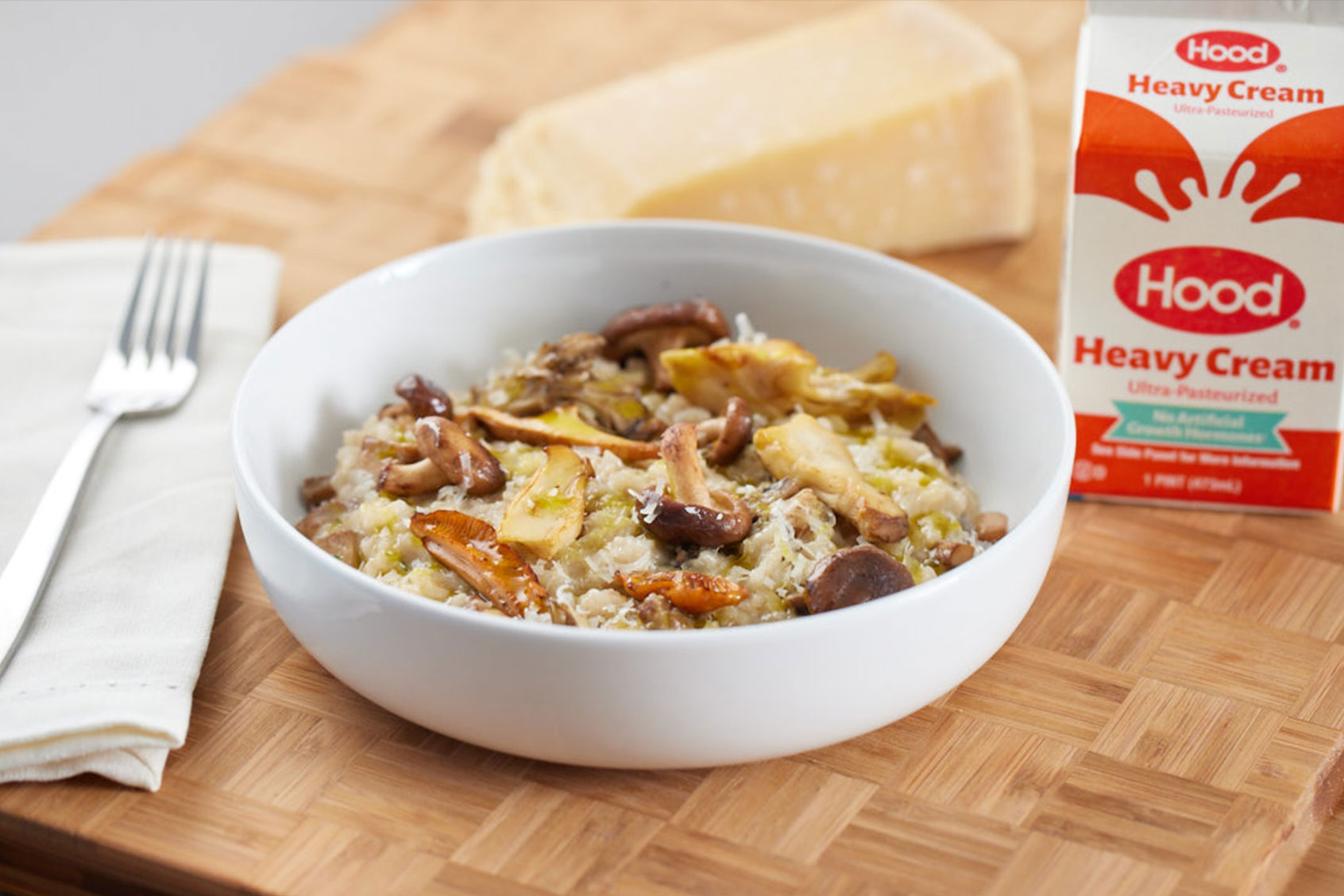
Mushroom risottoMushroom risotto (Courtesy of Agustin Floriano for Hood Cream)

What are your three most used ingredients?

I feel like if I'm honest about it, it's so boring. My top three would be salt, olive oil, maybe lemon juice. You know, I go through olive oil like people go through water. If you go to my home kitchen, I have three different olive oils that are on my counter that stay there all the time. 

I have my own olive oil; I have a Sicilian olive oil blend in partnership with Buona Fortuna in Sicily. I go every year, I go for harvest. It's beautiful, verdant, green, delicious olive oil. People say it's a finishing oil, but I cook with it all the time.

I also have an olive oil from Puglia that has lemons and limes in it, it's not just a flavored oil and I had a case of it in Puglia so I keep that there. I also have a light olive oil from my buddy Brian Malarky that I keep on the counter and cook with all the time. There's, like, very little that I’m making that I'm not putting olive in, on, or in and on.

We need your help to stay independent

Do you have any tips for cutting down on food waste?

If you look at what you're eating, just in your every day — most things you can utilize the whole whatever it is, right?

So one of my iconic — well, maybe not iconic, maybe signature . . .

I'd say it's iconic!

Not sure if i iIve reached that level, but thank you! Anyway, it's the grilled broccoli and caesar salad, which utilizes the entire head of broccoli. Maybe that doesn't seem wildly special, but what do you do at your house? Roast broccoli? I do, I have a two year old, I make broccoli all the time.

At the restaurant is, we take off the stems, we partially grill the stems, cut it in big pieces so it's grilled on the outside and soft on the inside.  We shave the stems. Every salad has raw stem as well as grilled broccoli. So, how do you look at that? Even now, especially now, with the price of food — everything is more expensive.

I'm cutting strawberries for my kid and I'm like "You're trying to cut as little as possible to just take the tops off" — so now I make strawberry simple syrup. How do we make sure we're using everything, not wasting money, the salad is a great example at the restaurant

We also make our ricotta — I think our housemade ricotta is so sublime — and we have lots of whey afterwards, so we then use that to brine the pork in our milanese and we use it in my wild boar bolognese instead of milk. We make maybe 5 pounds of ricotta a day, so it's silly to not utilize that.

Those are easy ways to reduce food waste. In my own home, this year, I became much more of a stickler about wasting food. This is ridiculous, we have so much in this country, there's no reason any kid is hungry, and if we have the privilege to have a fridge full of food, we shouldn't be wasting any of it. So now every week, we all have a clean-out-the-fridge dish we make, but now I'm like "I'm not grocery shopping again until we use every single thing we have" and how do we utilize it to the best of our ability? I think there's so many ways to do that.

I think that's an important question all the time, but right now, it's very important in terms of food cost. Every time I cut those strawberries … kids are like berry monsters, I had to re-up every  three days, I got all the berries — the blueberries, raspberries and strawberries, just a berry factory. I cut those tops off the strawberries and last year I thought that was wild. 

Spaghetti al limoneSpaghetti al limone (Courtesy of Agustin Floriano for Hood Cream)
I love your cookbooks. Do you have any plans for any upcoming ones? 

Well, so it's funny, I wrote this book "Crave" and writing that book was really hard. I didn't work with an author, I wrote the whole book myself.

That's fantastic.

Is it fantastic or is it crazy? I do love it and I love to write and it was such a gift and an amazing experience. My editor told me I'm an excellent writer and asked about the proposal and she was like, "Did you write all these headers?" Yeah, so it's cool and that was so nice, but it's a lot of work.

So when I was finished with that I was like "never again, this is it" . . .  but then it's five years later and I'm like "Well, I need a new project." I definitely want to write an Italian cookbook. I have a few ideas, drafts, proposals, thinking about which direction I want to go in. It's not coming soon, but you know, I have at least one more book in me.


Want more great food writing and recipes? Subscribe to Salon Food's newsletter, The Bite.


What’s next for you?

It has been a really busy few years — so there’s part of me that’s always, like, “no more projects" — but that’s not really in my nature.

In terms of restaurants, people always ask “Are you going to do more restaurants?” I always say that when the right space and the right project comes my way, that’s when we pull the trigger on that. I would like — I have so many amazing team members who’ve been with me for a long time and I want to create — there's a part of me that wants to create more so they have more opportunity. 

I do love being able to work in television, I think it’s such an amazing, broad, wide medium and I have so much fun and you know, my team and I — we’ve been working on some idea for shows for a while now and you never know if any of that will come to fruition but we look at the broader scope of the food world and I think that there’s just so much opportunity. I’ve been so lucky to work on projects like my olive oil or cookbook — and I think “oh wow, I get to do this? How incredible”. So while our day to day is rooted in the practicality of the restaurants and building the company and the brand — the other projects within the food world are the things that kind of light you up and keep you creative. You need both of those things — at least for me.

Trump inauguration pulls in $200 million in donations, doubling previous record

President-elect Donald Trump's second inauguration has raised over $150 million so far, plus another $50 million in post-election PAC cash, soaring far beyond the previous record high of $107 million in funds set by his first inauguration in 2017.

Sources told the New York Times that the president-elect’s fundraising has already surged past his 2017 inauguration sum with weeks to go, promising an opulent ceremony atop the steps his supporters stormed four years earlier.

Per the Times, Trump has bragged to those around him about having raised more than $200 million for the coronation ceremony as the uber-wealthy line up to buy access to Trump.

Corporate donors like Amazon, Ford, Intuit, Meta and Toyota have chipped in $1 million each, while tech CEOs OpenAI’s Sam Altman and Apple’s Tim Cook have pulled from their own checkbooks to ingratiate themselves with the president-elect.

Cook “believes the inauguration is a great American tradition, and is donating to the inauguration in the spirit of unity,” those close to the CEO told Axios. An archived list of all big-money donors to President Joe Biden’s inauguration shows no donation from Apple or Cook.

But pro-Trump lobbyists insist that big business donations are more than a scheme to buy Trump's goodwill.

“It is a time-honored D.C. tradition that corporations are enthusiastically embracing this cycle in all manners, largely because they were on the sidelines during previous Trump cycles,” lobbyist and former Trump fundraiser David Tamasi told the Times. “They no longer have to hedge their political bets.”

Trump has long been driven by the optics of a large and extravagant inauguration, starting his first term in a snit with the press over his inauguration crowd, which he falsely deemed the largest in U.S. history.

Earlier this week, Trump lamented the commemoration of late President Jimmy Carter and fumed over the fact that flags on federal buildings will be at half-mast during his inauguration.

Indie filmmaker Jeff Baena, husband of Aubrey Plaza, dies at 47

Filmmaker and director Jeff Baena died on Friday at the age of 47.

The dark-comedy director and writer known for movies like "The Little Hours" is the long-time partner of Aubrey Plaza. Baena was discovered on Friday morning by his assistant at his Los Angeles residence, according to Variety.

TMZ reported on Saturday that law enforcement officials believe Baena died by suicide, though representatives for Baena did not confirm any cause of death.

Baena is a graduate of New York University and began his career working as an assistant editor to filmmaker David O. Russell. He co-wrote the script for the dark comedy film “I Heart Huckabees” with Russell. Baena’s 2014 directorial debut, “Life After Beth,” featured his partner and future wife, Plaza.

Plaza also starred in Baena’s 2017 film “The Little Hours.”

Plaza cited working with Baena on his first two films as an inspiration for starting her career in production and directing. She spoke to Salon in 2017 about co-producing “The Little Hours” alongside her husband.

“It was an organic next step for me to have a producer credit on that film,” Plaza told Salon. “I was in Jeff’s first two movies and was involved in all of his projects. I was helping with things like casting and pre-production research, so it felt like it made sense.”

Plaza revealed that she and Baena were married in 2021. She told Ellen DeGeneres that their wedding was spontaneous, coinciding with the pair’s tenth anniversary of dating. 

“I just said, 'Hey, it's our 10-year anniversary. We should do something—get an ice cream cone—do something special.' And then I joked about getting married,” Plaza told DeGeneres. “I created a very quick love altar in my yard.”

Baena’s other projects include the 2020 film “Horse Girl” and 2022’s “Spin Me Round.” 

If you are in crisis, please call the 988 Suicide and Crisis Lifeline by dialing 988, or contact the Crisis Text Line by texting TALK to 741741. 

Clinton, Soros among Biden’s Medal of Freedom honorees

President Joe Biden will honor 19 people with Presidential Medals of Freedom on Saturday, including some conservative bugbears like Hillary Clinton and George Soros. 

With just over two weeks left in office, Biden will grant the honors, including four posthumous medals, to philanthropists and politicians who the White House says in a statement “have made America and the world a better place.”

Some of the names on the list sparked backlash, including Clinton and Soros, with critics arguing online that the medals were being used as “rewards for the biggest supporters of the political party in charge.”

Soros, a billionaire and philanthropist, has long been a target of antisemitic and far-right conspiracy theories. The White House announcement sparked fury amongst the online right on Saturday morning, with billionaire and GOP megadonor Elon Musk calling the award for Soros a “travesty.”

Clinton’s inclusion on the list of honorees also sparked backlash from Republican elected officials. The former First Lady and New York Senator has been highly critical of the current Republican Party and has been a target of conservative ire for over 30 years.

Alabama Rep. Barry Moore called Clinton’s receipt of the medal a “disgrace to the memory of the four brave Americans she abandoned in Benghazi,” a sentiment seconded by Ohio Rep. Warren Davidson.

Also among the recipients is Jose Andrés, celebrity chef and the founder of World Central Kitchen. Andrés' charity has worked heavily in war-torn Gaza and has been outspoken in his criticism of Israel after WCK aid workers were targeted and killed in multiple airstrikes by the country's military.

GOP Communications Adviser Steve Guest slammed Biden’s choice of Andrés as “unreal,” calling his aid organization “Hamas Central Kitchen” in a post to X.

The White House also announced Biden would grant the award to champions of LGBTQ+ rights and HIV advocacy like Bono, Tim Gill, and Magic Johnson, as well as other philanthropists, including Michael J. Fox and Lionel Messi.

Other awardees include Ashton Baldwin Carter, Robert F. Kennedy, and Denzel Washington.

The 19 honorees will bring President Biden’s total number of Presidential Medals of Freedom awarded to 56. Biden previously honored civil rights heroes and Democratic leaders like Clarence B. Jones, Jim Clyburn, and Nancy Pelosi.

Why does it feel like I’m ghosting 2025?

Every new year I attempt to tackle a pressing issue that seems to torment my life. In 2024, it was my intimacy issues.  

I suffer from perpetual-25-year-old-single-woman syndrome. These intimacy issues are compressed as tightly as a packed snowball, and I wanted to address them before that icy sphere hurls my way, potentially hitting me smack in the face.

My therapist would say I have an anxious-avoidant attachment style. Let me boil down the therapy-speak for you: I tend to ignore conflict in my relationships because I’m hyper-independent but simultaneously crave intimacy with people even though I also fear it. This push-and-pull dynamic breeds a sense of panic and horror when connecting with people. So, I vanish in a blink of an eye.

With 2025 right around the corner, I'm noticing my avoidant side has already activated. But why does it feel like the upcoming year is just another middling situationship I’m ghosting? 

A year taking action . . .

In recent years, I’ve been action-orientated about my New Year’s intentions. I tend to be quite ritualistic with my traditions as I find my footing as a 20-something. What has helped push me to action is a list of Ins and Outs I curate for the year’s vibe.

One of those Ins for 2024 was finding a creative hobby that furthered my artistic pursuits outside my preferred and beloved relationship with writing. I’ve never particularly been the most traditionally artistic person but last year I would finally try.

So, I picked up a watercolor journal and a matching paint set. Not long after the purchase, I saw people online “junk journaling.” The hobby is essentially an inexpensive version of scrapbooking – the goal is to create using any materials you find for free. It’s the type of journaling you don’t have to overthink. For the last five months, junk journaling has given me solace from my neurotic thoughts.

It’s not just the arts that kept me motivated last year. This was the year I would jet set off somewhere outside of America. It wasn’t easy though. It took months of planning with my long-distance best friend over numerous calls and a handful of small compromises.

Merely weeks after the 2024 election, we whisked ourselves to London and Paris. We both agreed we no longer wanted to be tethered to America. The last time I traveled out of the country was to my parents' home country Ethiopia when I was 9 so I was eager to explore somewhere new. There was a sense of wonder watching a musical on the West End or accidentally stumbling onto the Tuileries Garden and hearing a street performer play “La Vie en Rose” on the accordion.

Finally, I understood why privileged celebrities like Ellen DeGenerous and Portia de Rossi had altogether ditched the States for Europe (despite the continent's own issues). We were so present that we got stuck in Paris overnight because we booked the wrong Eurostar ticket. I promise it wasn’t as glamorous as it sounds. After eating late-night stomach-turning Popeyes in Paris and shedding some tears, we stayed in a trippy '80s-styled hotel, fearful of Parisian bedbugs ready to chomp on our American flesh. Despite it all, I was proud of us. We were just two girls who had always dreamt of experiencing Europe like this and we did it alone but ultimately together until the very end.

The year I'm evading . . .

Now that we are in 2025, I have barely thought about what’s to come this year. Even though it is only the first week, I haven’t written down any Ins and Outs. I usually watch my holiday favorite romcom, “When Harry Met Sally” to ring in the new year. I also spend time with friends on New Year’s Eve. I successfully did both of these things this year but I canceled on other friends who had invited me to a New Year's Day brunch. I spent the day, rotting on the couch, watching endless hours of the K-drama “Business Proposal” with my roommate.

No part of me will abandon my New Year’s traditions but my priorities have shifted. The perfectionist in me wants to race to plan out the rest of the year. But I have decided to let go because maybe I’m not as driven to go on Pinterest-level vacations, force myself to religiously journal every day, or even work out when I know I'm exhausted. It's minuscule but it adds up.

Instead of obsessing over what's to come or the rituals I've built, I’ve turned to something far easier to tackle: movies, which lets me enjoy things passively. As an avid cinephile, I had a personal goal to reach 100 movies before the end of last year.

On Letterboxd, I logged the 2023 French film “The Taste of Things” by Tran Anh Hung as my 100th movie on Dec. 26. It’s an intimate look at the relationship between a French chef and his lover and cook in the 1800s. It’s romantic but also shows such restraint in a simmering sensual way like sauteing onions and garlic. There’s even tension when they eat the elaborate French cuisine they’ve just cooked together.

Immediately after my 100th watch, I also streamed two Wattpad-inspired movies, one starring TikTok star Noah Beck in Tubi's “Sidelined: The QB and Me” and a Spanish dark teen romance “Tuya Culpa.” I never said my taste was all highbrow. I revel in an egregiously unwatchable romantic teen movies from time to time.

I have a secret to admit though. I’ve been using these small acts of solace to avoid the impending doom connected to another Trump presidency –  which already seems to be headed into oligarchic territory –  the rising cost of living in NYC and across the country, endless war and the complete desolation in Gaza.

The overall temperature in this country is as frigid as Antarctica. My own empathy reserve is running low. The emotional labor needed to deal with 2025 is like a rotten, toxic relationship and I’d rather hide out in my cozy apartment from the looming monster. 

At this very moment, I’m just trying to stay in the present and in touch with my body and emotions. As my therapist would say, “You’re always in the cerebral space. How do you actually feel in your body?” while placing her hand on her heart. Maybe with her guidance and my own resolve, I’ll be prepared to shed my avoidant tendencies, finally slay the beast that is 2025 and be free at last.

Can we move past anti-trans jokes? Michelle Buteau and other comics sound the call that it’s time

Midway through her latest comedy special, Michelle Buteau announces a personal career goal that matches what many comedy fans desire, too. “I want to make millions and millions of dollars for making people feel safe, seen, secure, heard and entertained. Entertain me!” Buteau tells her Radio City Music Hall audience.

As a standalone notion, this is a lovely ambition. Read within the full context of the segment within the special, it’s a call to trash the old in favor of a better path forward in 2025. Leading into that act of “manifesting,” as she called it, she talks about the delight her Black lesbian friend takes in using a Theragun, which is not an implement most would use on their naughty bits, for “a little bit of violence on the puss.”

Referring to the joke itself, Buteau points out, “For the most part, we laughed. Some of y'all were judging. Some of y'all were curious…but all I'm saying it can be done. We can tell jokes and stories and not disparage a whole community,” she says.

"We can tell jokes and stories and not disparage a whole community"

Then comes the shot that cracked loudly enough for the back row to pick up what she’s putting down. “So if you guys ever run into Dave Chappelle, can you let him know that s**t? . . . I don't think we'll ever run into Dave, though, because he is the GOAT. And he is the GOAT if that means going off about trans people.”

“Dave,” she concludes, “It's not funny. It's dangerous. Make it funny. That's all. I can't believe somebody would make millions and millions of dollars for making people feel unsafe.”

"Michelle Buteau: A Buteau-ful Mind at Radio City Music Hall" began streaming 24 hours before 2025 rolled in – on Netflix, the same streamer that paid Chappelle millions and millions of dollars for those specials to which Buteau is referring. 

Her profile has also risen over the same ten years in which Chappelle, Ricky Gervais and other top comics’ headline-generating anti-trans material became the green light other comics supposedly needed to go off on trans people too. 

In addition to pushing Gervais and Chappelle’s acts, it’s also the home to Hannah Gadsby’s specials, one of the first comics to speak openly against major media companies platforming performers who traffic in anti-trans material. Netflix trying to have it all ways on this topic is as old as the bit about equal opportunity offensiveness: In 2017 Chappelle developed some of the transphobic jokes that appeared in his special on the same Radio City Music Hall stage where Buteau made history as the first female comedian to record there. 

I’ve lost count of the number of acts I’ve abandoned the moment some performer launches into unfunny yammering about the sanctity of bathrooms or the supposed dissonance of being confronted by body parts that supposedly don’t match someone’s identity. The world is getting meaner by the day to and for everyone, exponentially more so for anybody whose government is actively making their lives harder. Some of us don't need to be reminded of that when trying to enjoy a few jokes.

If there’s some light in all this, it’s seeing that Buteau isn’t alone in taking such a clear stand as we head into a political age fueled by supposed jokes geared toward dehumanizing groups of people. Gadsby, Jerrod Carmichael, and a few other well-known comics have been speaking against this material for years. James Acaster ranted about its creative bankruptcy in a 2021 bit that still makes the rounds.

Buteau isn’t alone in taking such a clear stand as we head into a political age fueled by supposed jokes geared toward dehumanizing groups of people.

Respectfully, though, Buteau is also a Netflix brand star who toplines her semi-autobiographical comedy, “Survival of the Thickest,” and hosts its hit reality competition, “The Circle.” She also co-starred in last year’s acclaimed comedy “Babes.”

Like every other woman in comedy, she does more work for less money than Chappelle or many of her male peers. But her stance is heartening to anyone who’s exhausted with hacky, hateful bits failing to masquerade as edgy, transgressive ticklishness.

That includes Anthony Jeselnik, whose late 2024 special “Bones and All” led with a transgender joke that turned the laziness of trend around on its prime proprietors. Jeselnik’s stage persona is that of an evil, unapologetic jerk whose primary humor vein has to do with dropping babies and terrible things happening to children.

“Look, guys, you’ve gotta do it now – it’s in the handbook,” Jeselnik deadpans about his supposedly obligatory trans joke before launching into a bit that starts with a misdirect before launching into his real (fake) target: pregnant women.

The inference is that both trans and pregnant women are vulnerable, but it’s generally accepted that riffing about something awful happening to an expecting mother is absurd. If that’s the case, then guessing about what’s happening with any person’s body is also absurd, and rude besides. Only terrible people like Jeselnik’s villain persona could get away with that.  

“Bones and All” marks Jesselnik’s 20th anniversary in stand-up comedy, and he uses the special as both a retrospective and a reflection on comedy’s low bar in a time when podcasters drive the touring market. (This explains why Joe Rogan is both the biggest influencer in comedy and produced an unwatchable Netflix special last year – he and others never need to test their material in unfriendly rooms.)

“I’m against cancel culture,” Jeselnik declares in “Bones and All,” before adding, “That’s my impression of a s**t comic trying to get on Rogan.”

His trans-focused opener is also a shot at the man behind 2021’s “The Closer,” as Jeselnik confirmed in multiple interviews, although, unlike Buteau, he doesn’t invoke Chappelle’s name.

“… I think it would’ve done the bit a disservice to actually say his name,” he said in an interview with Cracked.com, adding that he hopes the bit does some small part to squash “99 percent of trans material.”

We need your help to stay independent

As for the one percent that remains, a skilled comedian can navigate the territory with thoughtfulness and good intentions. Seth Meyers’ 2024 stand-up special “Dad Man Walking” took a moment halfway through his set to tell the audience, “This is the time of the night where a lot of comedians will start doing their anti-trans material. I'm happy to inform you, I have no anti-trans material.”

But he can still craft an effective observation about the culture’s backward attitude toward trans people.

Seth Meyers: Dad Man WalkingSeth Meyers: Dad Man Walking (Lloyd Bishop/HBO)“Let's be honest for a second,” Meyers says. “What would actually be harder for you: if someone in your life decided they were transitioning to a new gender, or if someone in your life decided that as of tomorrow they were going to be a vegan?” He makes a compelling case that accommodating veganism is a lot tougher because it is.
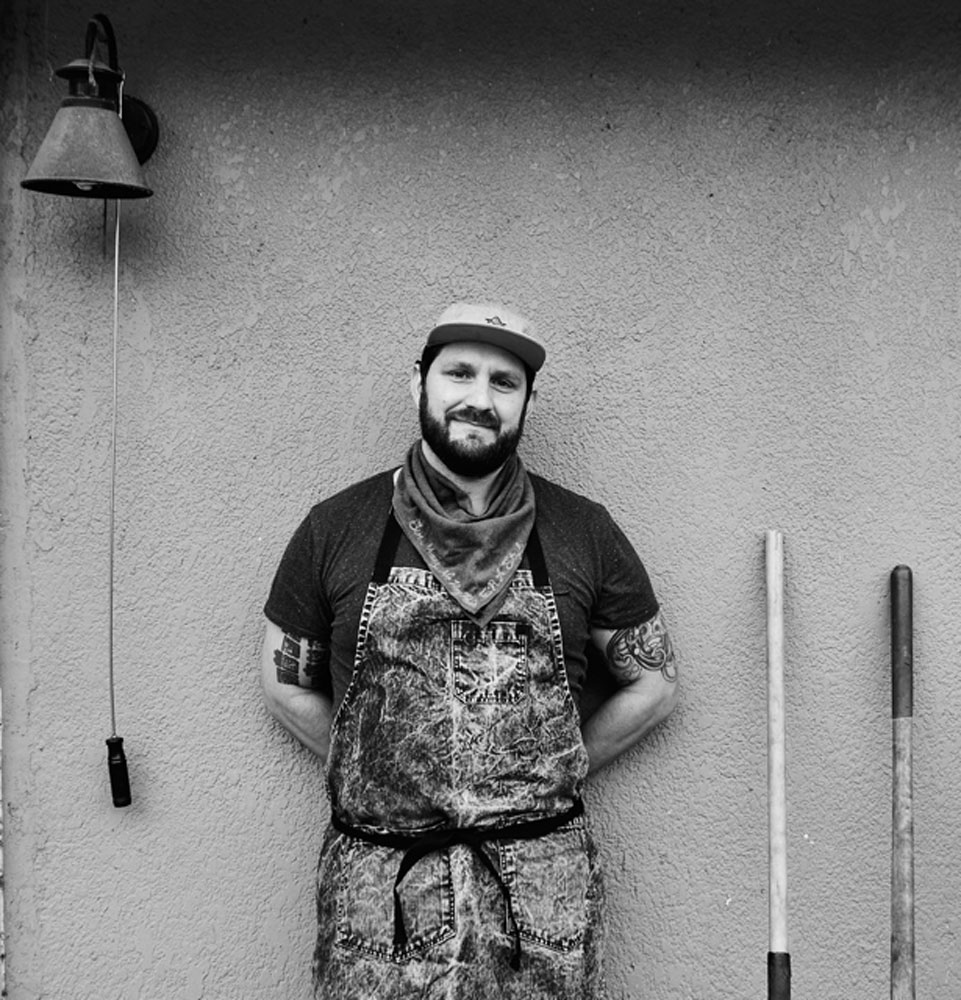
The year is still newly born, and it’s foolish to predict whether the straight cis male comic’s fixation on transness will cease in 2025.

“Like what makes your life harder tomorrow? Because you guys, five years ago, my brother decided to be a vegan, and I've spent multiple Thanksgivings with him, and I 100% would prefer my next Thanksgiving start with my dad walking in and saying, 'I'm a lady now,’ than I would spending another Thanksgiving where my brother keeps asking me, ‘Is there butter in this?’ ”

The year is still newly born, and it’s foolish to predict whether the straight cis male comic’s fixation on transness will cease in 2025. There’s always been a market for giving a powerless constituency a false sense of dominance over people that to most Americans are a concept instead of, say, neighbors or co-workers. Turning someone’s life and bravery into a joke is an effective way to accomplish that.


Want a daily wrap-up of all the news and commentary Salon has to offer? Subscribe to our morning newsletter, Crash Course.


Neither am I naïve enough to think that Buteau’s call to clarity will be the comedy’s “have you no sense of decency” moment after all these years. Our recent election lets us know that inflection point is many miles down the road.

Buteau’s gentle plea at the end of her set “to live in the shades of gray where the love and humanity exists” will go unheard by too many. The incoming president’s winning closer alleged his Democratic opponent Kamala Harris “is for they/them, President Trump is for you."

But it’s possible some may also sit with what Jeselnik had to offer in his Cracked conversation and manifest his wishes moving forward. Pointing out that many professionals have found ways to make jokes about race without invoking racial slurs, he said, “I’m hoping that maybe people will up their game a little bit, especially in terms of trans material. It doesn’t have to be this lightning rod — it can just be a subject.”

"Michelle Buteau: A Buteau-ful Mind at Radio City Music Hall" and "Anthony Jeselnik: Bones and All" are streaming on Netflix. "Seth Meyers: Dad Man Walking" is streaming on Max. 

Washington Post cartoonist quits, claiming comic criticizing Bezos was censored

Pulitzer Prize-winning cartoonist Ann Telnaes is leaving the Washington Post after nearly two decades due to what she claims was editorial interference at the paper.

In a post to her Substack on Friday, Telnaes claimed an editor at the paper killed a cartoon depicting billionaires groveling to President-elect Donald Trump this week. The shared rough draft of the comic included Post owner Jeff Bezos holding up a bag of money at the feet of a looming Trump.

“I’ve never had a cartoon killed because of who or what I chose to aim my pen at. Until now,” Telnaes said. “The cartoon that was killed criticizes the billionaire tech and media chief executives who have been doing their best to curry favor with incoming President-elect Trump.” 

In addition to Bezos, the cartoon features Meta CEO Mark Zuckerberg, OpenAI boss Sam Altman, and fellow newspaper owner Patrick Soon-Shiong of the LA Times. It came as billionaires and tech giants pledged massive sums of cash for Trump’s inauguration and signaled openness to working with the president-elect, Telnaes said.

Telnaes explained that while editorial tweaks are commonplace, an editor wished to suppress her commentary, not her cartoon.

“There have been instances where sketches have been rejected or revisions requested, but never because of the point of view inherent in the cartoon’s commentary. That’s a game changer…and dangerous for a free press,” she wrote.

Bezos and the Post previously drew criticism last year when senior leadership at the paper killed the editorial board’s planned endorsement of Kamala Harris, a move critics argued was a bid to appease then-potential winner Trump in advance. That decision sparked an exodus of staff and subscribers, which Bezos and Post leadership have failed to curtail.

Bezos’s cozying up continued after President-elect Trump won the election, with the billionaire congratulating him in a post to X and meeting with him at Mar-a-Lago.

“As an editorial cartoonist, my job is to hold powerful people and institutions accountable,” Telnaes wrote. “I will not stop holding truth to power through my cartooning because, as they say, ‘Democracy dies in darkness.’”

After “Top Chef,” Gabe Erales finds purpose in supporting marginalized Mexican youth

Chef Gabe Erales had quite the formidable run on the Portland-set, 18th season of "Top Chef," which he eventually won, besting runner-up chefs Dawn Burrell and Shota Nakajima.

Throughout the competition, Erales showcased his talent and passion with standout dishes such as smoked and glazed plums with orchard fruit jus, pork and chicken; banana leaf-steamed black cod with crispy skin and salsa veracruzana; sopa de mariscos; and short rib with chichilo negro mole, mushrooms, and pickled persimmons. His skill was perhaps most evident in his mastery of magical moles and his more inventive creations, like fried cochinita pibil head cheese with habanero ash emulsion, avocado mousse, and kumquat sauce. (His frequent use of fruit in savory dishes was particularly notable.)

Since "Top Chef," Erales has opened two restaurants, but his proudest accomplishment might be his newest venture: his role as executive director of Oido Culinary Academy. In a recent interview with Salon, Erales discussed his new position, the academy’s mission, how he is personally connected to its goals and what he hopes to achieve through the organization.

Chef Gabe EralesChef Gabe Erales (Photo by Mackensie Smith Kelly)
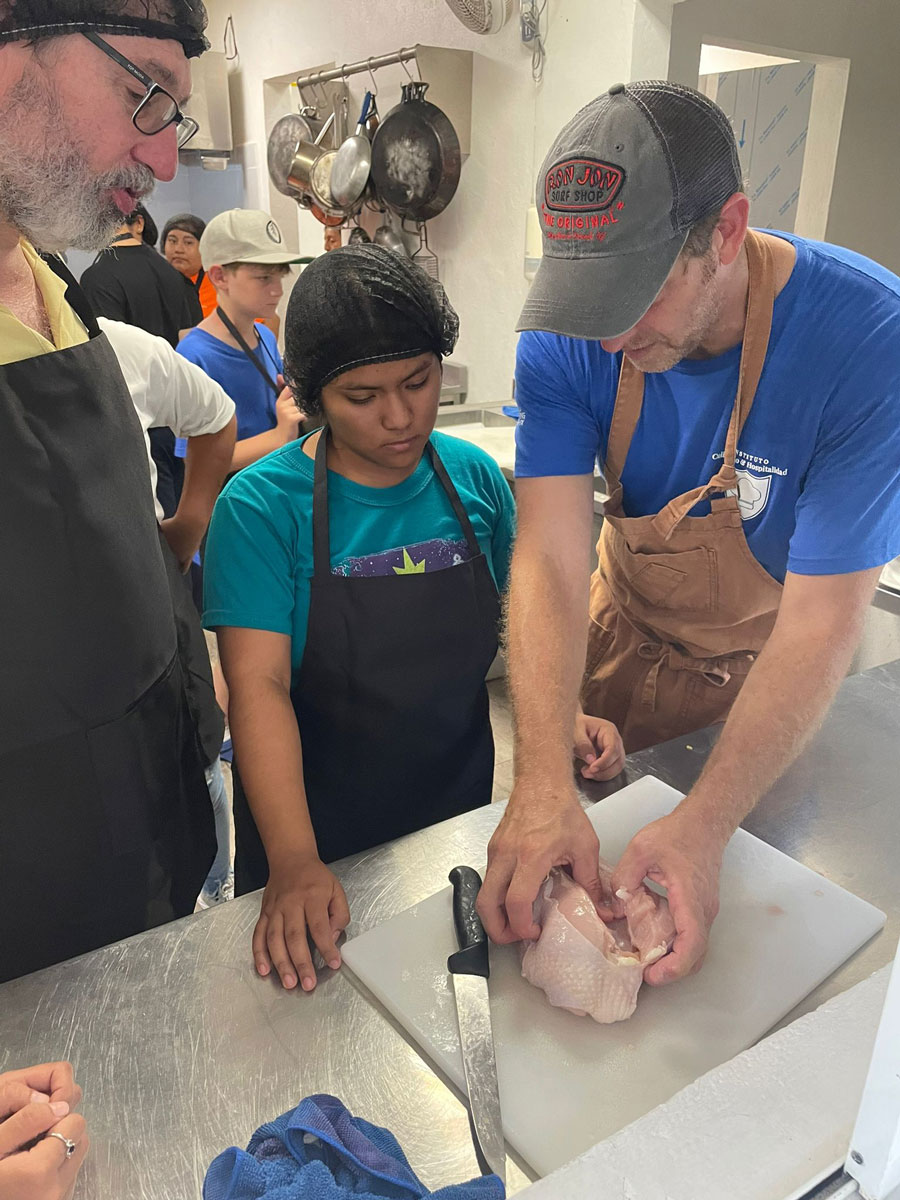
The following interview has been lightly edited for clarity and length. 

The mission behind Oido Culinary Academy sounds wonderful. How did you become involved with the organization? 

I was connected with the founder of the organization,  Amy Dominguez, given my Mexican cooking background and at the time my Yucatan cuisine-focused restaurant, Bacalar. She reached out and invited to participate in the organization’s culinary winter event with other Mexican Chefs. It was such an amazing experience for me personally that I asked to continue to be involved and then became a culinary advisory board member.

Can you tell readers a bit about your personal connection with the Yucatán Peninsula and Quintana Roo specifically? 

Both of my parents were born in Chetumal, Quintana Roo, Mexico and studied in Merida.  I still have a lot of family all over the region and have spent a lot of time there. My culinary focus over the last four years has been really honed in on regional Yucatan cuisine. 

 How does "Oido"  or "I hear you," often used in kitchens  encapsulate the ethos of Oido Culinary Academy? 

The term "oído" is used very often and commonly in the kitchens of Mexico. From a practical standpoint, it is the [Spanish] equivalent of "Yes, chef." It's an acknowledgment of understanding and respect. It's a commitment to following through both on an individual level and with teamwork that is working to accomplish a common goal whether short or long term. This phrase represents our mission and ethos as we seek to listen to the voices and needs of the communities we support and provide adolescent youth with culinary education opportunities, mentorship and guidance. We "hear," "understand," and will "support" you. 

Oido is a nonprofit offering a two-year accredited culinary program to marginalized youth in Mexico. Why does that resonate with you? 

Many of these kids, if they do graduate high school, don't make plans to study and seek a formal higher education. There are expectations to find work quickly and support the family, so in many ways they are left to fend for themselves and figure out life without guidance. Through Oído, we are offering the guidance and path to success, providing opportunities for a better life both for the student and his/her family.

It resonates deeply with me because my parents were very strict about the importance of continuing education and building a career for myself. I moved to Austin, TX and supported myself through UT Austin's mechanical engineering school by working in restaurants which I later found to be a deeper passion that outgrew engineering.

That's terrific. I read that you recently cooked at a dinner celebrating Hanal Pixán. Could you explain a bit about that custom? 

Hanal Pixán is the Maya term for the Day of the Dead celebration which takes place Oct. 31 through Nov 2. There are numerous foods and traditions associated with the celebration and it can differ vastly from the Dia de los Muertos celebration in other parts of Mexico.

Many of the celebratory foods are cooked in a "pib" which is the traditional earthen oven dug in the ground and lined with rocks and coals. It is then covered with palm leaves and dirt to seal in the food being cooked, like a celebratory mucbipollo. Mucbipollo is probably the most popular hana pixán preparation. It’s a large tamal filled with both chicken and pork, achiote, onion, tomato and epazote. It is then wrapped in banana leaves and cooked in the pib. Many of these traditions and foods date back to the pre-hispanic Maya era.

 For those unaware of your journey since winning "Top Chef," can you break it down for them? 

Since winning "Top Chef," I have spent my time planning and opening two restaurants. One in Austin, TX called Bacalar, a Yucatan-inspired restaurant and Ometeo, an upscale Tex-Mex Restaurant in the greater DC-DMV area. Concurrently I had launched a scholarship program for the CIA called Ninos de Maiz and got in involved with Oído (formerly called Hands Offering Hope). I also returned to my alma mater, UT Austin and obtained my SHRM certification.

Most importantly, I took on the role of Exec. Director with Oído. 


Want more great food writing and recipes? Subscribe to Salon Food's newsletter, The Bite.


You were a true master of moles on "Top Chef." What would be your top tips for making elite moles at home? 

Start with a less complex mole like a pipian, mole de olla or a mole verde that doesn’t require as many ingredients as something like a mole negro. 

The biggest mistake people make when making moles is not cooking it long enough which results in a bitter, raw, non-harmonious taste. Do not add all the spices the recipe calls for all at once. Spices vary greatly and the last thing you want is a mole that is overpowered with cinnamon, allspice, clove, etc.

Any plans for a cookbook? 

I have already written one cookbook as a coauthor called Mexican Food: The Ultimate Cookbook by Cidermillpress. The next cookbook project will be for Oído that we are currently working on that will be a compilation of recipes from the Yucatan prepared by both Chefs who have gone through the Oído program and Cocineras Tradicionales. The proceeds will benefit the organization.

 Do you have a number one favorite ingredient to work with? 

Heirloom corn and/or masa definitely. I am obsessed with corn varieties and nixtamalization.

We need your help to stay independent

What was the biggest lesson or takeaways you gleaned from competing in — and winning — "Top Chef"?

As a cook you need to develop a personal cooking voice that represents who you are and where you come from. You can only get so far cooking the food that you learned working underneath other chefs and restaurants. It's important to take pieces from everywhere you cooked and put it in your toolbelt to create a bigger picture of what your own food is. It essentially comes down to being yourself, cooking for yourself and not trying to cook to what you think appeals to somebody else. 

Oido Culinary Academy students and instructorsOido Culinary Academy students and instructors (Photo courtesy of Oido Culinary Academy)

 What stands out for you as a formative moment that got you into cooking or food at large? 

Primarily traveling to Mexico and being excited by the vast diversity of cuisines across so many regions. I would also say the impact that a cooked meal can have on an individual, especially depending on what they are experiencing in their life at that very moment. 

What would you say are your three most used ingredients? 

Heirloom corn or masa, chiles and fermented pantry items (created by kitchen byproduct)

That's fascinating. Any favorite memory from your time working with students at Oido? Or favorite food or cooking memory in general?

I think my favorite cooking memory was being a part of the test kitchen team at Noma Mexico, developing one of the most memorable menus I have ever seen or eaten. We had every special ingredient from every corner of Mexico all in one room at any given time and that doesn't always happen.

My favorite memory to date working with students at Oído was the first time I visited the school and prepared a tamal colado with them. It fed my soul to see the eagerness and excitement of each student to learn and grow, especially when it was a dish from their heritage that they have probably eaten hundreds of times. They trusted me to show them my version and that was special.

What's next for you  and Oido  in an ideal world? 

Ideally, we grow Oído so much financially that we are able to hire more full-time staff in the U.S. to further support efforts at the school in Mexico. Additionally, I would love to see us grow the number of students we enroll in a class (currently eight).

Our school in Kantunilkin is on a large property with a good size building that offers a lot of potential. I would love to gain funding to renovate that building to match our growth. I am still very much involved as a Chef/Partner in Ometeo and we have plans for future growth. I would also love to do a smaller tasting menu style restaurant in Texas at some point in the future.

Any other goals for Oido in 2025? 

The primary focus of my efforts for year 1 are focused on rebranding (Hands Offering Hope->Oido), growing our funding, streamlining our education curriculum, connecting the students with incredible internship opportunities, creating awareness globally for the organization and refining our board and strategy moving forward.

“Fake, made up charge”: Trump calls for judge to be “disbarred” after hush money sentencing date set

Though he's due to get away with less than a slap on the wrist, Donald Trump is not happy about his upcoming sentencing for falsifying business records.

In a series of posts to Truth Social on Saturday morning, the president-elect painted a picture of a corrupt establishment that had unfairly targeted him in a series of civil and criminal cases. 

"There has never been a President who was so evilly and illegally treated as I. Corrupt Democrat judges and prosecutors have gone against a political opponent of a President, ME, at levels of injustice never seen before," he wrote. "Corrupt judges or judges so blinded by their hatred of me … are making a mockery of the United States Judicial System, and the World is watching in disgust."

Trump's rant came a day after New York Supreme Court Justice Juan Merchan ordered that Trump be sentenced for his conviction on 34 felony counts of falsifying business records. Merchan made it clear in his order that he is unlikely to suggest jail time or fines for the president-elect during the Jan. 10 hearing but worried that dropping the case entirely would damage the average citizen's belief in the "rule of law." On Truth Social, Trump said his felonies were "fake" and called for Merchan to be disbarred.

"I never falsified business records. It is a fake, made-up charge by a corrupt judge who is just doing the work of the Biden/Harris Injustice Department," he wrote. "Every legal scholar of note said there IS NO CASE AGAINST ME. The judge should be disbarred!"

Elsewhere in the posts, Trump inveighed against Special Counsel Jack Smith and E. Jean Carroll. Smith wound down his election interference and classified documents cases against Trump following his election. Juries found Trump liable for sexual abuse and guilty of defamation in a series of cases brought by Carroll.

"And then we have, also in New York, the woman I never met (celebrity photo lines from 30 years ago don’t count!), who was awarded almost $100,000,000. A totally out of control, Trump-hating judge presided," he wrote. "Deranged Jack Smith, the evil and sinister prosecutor appointed by Crooked Joe Biden to 'take me down,' was found to be illegally appointed by a CORRUPT DOJ and FBI, and all of his many charges against me were dropped or dismissed." 

John Roberts is worried about all the wrong things

As New Year’s Eve traditions go, this one is pretty tame. At 6 p.m., exactly when one might release news if the goal is the smallest possible audience, Supreme Court Chief Justice John Roberts delivered his annual report on the state of the federal judiciary.

The previous 12 months had certainly been consequential. A flag flown by insurrectionists at the Capitol flew before the home of Justice Samuel Alito, who then refused to recuse himself from cases involving Jan. 6. Clarence Thomas acknowledged that he should have reported luxury vacations gifted to him by a billionaire, which several legal experts suggested could have run afoul of the law. Roberts himself slow-walked a case involving charges against Trump for January 6, then in a stunningly awful decision, awarded him absolute immunity for prosecution for “official acts.” He greased his path back to power complete with a get-out-of-jail-free card.

Americans responded by expressing a staggering lack of faith in the judiciary and the Supreme Court. According to a new Gallup poll, confidence in the judicial system not only plunged to a record low of 35 percent in 2024, but this was one of the fastest and steepest collapses Gallup has measured anywhere in the world, across the many decades it has asked this question. The most comparable cases? Nations under newly authoritarian rule or the grasp of civil war.

Now, in this moment of victory, Roberts and the GOP supermajority want it every way possible: They seek to impose out-of-the-mainstream and deeply unpopular views on the entire nation and also have them accepted as objective, historical readings of the law, rather than grubby politics. 

None of this, however, earns a mention in Roberts’s nine-page report. The word “ethics” does not appear at all. Neither does any awareness that the justices’ own behavior – and a broader conservative legal movement that has worked for decades and built a billiondollar dark money entity to capture the courts – have played a role in birthing a crisis of confidence so massive that nearly 70 percent of Americans (and sometimes more) now back stringent ethics codes, term limits, and mandatory retirement ages for the justices.

No, John Roberts is exasperated and disappointed with all of us. He’s bothered not by the stench of corruption but the criticism, which, he sniffs, is not informed or “anything remotely resembling it.” The mere suggestion of political bias in a decision “without a credible basis for such allegations” is an effort to “intimidate judges.” This not only threatens the independence of the courts, Roberts writes, but creates the potential for violence against judges.

This hackneyed slippery slope argument – conflating entirely fair criticism of the court with fears of political violence – would be laughed out of any serious courtroom. Indeed, it’s difficult to say whether this report is more disingenuous or oblivious regarding the dire situation created by this crisis of confidence. It’s not the doxing of judges. 

We need your help to stay independent

The solution is not for critics to keep silent – even if Donald Trump has suggested they be jailed. It is for those who profess concern about the Court’s integrity and credibility to step forward and address ethical failures, excessive partisanship, and, you know, celebratory spiking of the football at Federalist Society galas and while being feted overseas.

Roberts likely doesn’t even believe what he is selling. He was long ago cast in the role of front man for the conservative takeover. The conservative legal project is his life’s work. When Roberts testified before the Senate Judiciary Committee 20 years ago, he pledged to be nothing but a humble umpire, merely calling balls and strikes without any rooting interest in the game, dedicated to nothing except upholding the rule of law. He charmed the Senate and then the Supreme Court media with this modest, midwestern institutionalist act. 

This choir boy act curdled long ago. How rude of us to suggest that the conservative legal project’s long, patient strategy to win supemacy over the courts has been a political project at all. How discourteous to observe that Roberts’s umpiring act is just that – a means to obscure his role as the most effective Republican politician of his generation, delivering victories on abortion, gun rights, and the regulatory state through the courts, couched in faux-constitutionalese, that his side could never win at the ballot box.

Today, majorities of Americans look at Roberts’s handiwork and a Supreme Court hand-picked from approved lists of conservative ideologues and see the courts as an unelected super- legislature operating above a system of checks and balances. They see a court that upends precedent, rewrites the law as they wish it to appear, eviscerates cherished voting rights protections embraced by bipartisan Congressional majorites, and tilts elections toward the wealthy and the patrons on the right. The nation long ago recognized the justices should wear red and blue robes, and that some should be festooned with patches of those who fund their lavish lifestyles, like race car drivers proclaim their sponsors. Alas, the Roberts court won’t even offer as much transparency as NASCAR. They act as partisans, then hide behind their robes when criticized for egregious misbehavior.

The chief justice, meanwhile, every additional scandal and every new revelation about the justices’ unbecoming financial habits, continues to resist calls to protect judicial independence from the threat that is otherwise clear to all: The untouchable, unelected justices themselves who have asserted themselves as the final arbiter, and become the ultimate source of GOP political power. At some point, everyone must conclude that John Roberts is simply OK with it.


Want a daily wrap-up of all the news and commentary Salon has to offer? Subscribe to our morning newsletter, Crash Course.


Conservatives have not hidden their court-capture strategy. Donald Trump promised to select justices from an approved list of Federalist Society ideologues whose views were known to all because that was how they made the list in the first place. The court has delivered a series of democracy-damaging decisions that have unleashed billions in dark money, gutted the Voting Rights Act, and protected and enabled coast-to-coast gerrymanders of U.S. House and state legislative districts, all of which has helped ensured GOP wins even with fewer votes. Roberts himself delivered the crushing blow to the VRA with a dishonest edit of actual precedent and by making up a legal tradition of equal sovereignty among states. Now, in this moment of victory, Roberts and the GOP supermajority wants it every way possible: They seek to impose out of the mainstream and deeply unpopular views on the entire nation and also have them accepted as objective, historical readings of the law, rather than grubby politics. 

In this respect, Roberts’s report echoes something Justice Neil Gorsuch said this summer while promoting a new book. Court reform, he suggested on Fox News, even the term limits supported so broadly, threatened judicial independence. The Fox interviewer, naturally, did not follow up to ask whether Gorsuch believed that the $10 million spent by conservatives in 2016 to keep his seat warm after Justice Alito died in 2016, or the additional $10 million spent on his confirmation, represented judicial independence or just a stunning return on investment for his work overthrowing the regulatory state on behalf of the wealthy benefactors who installed him.

The state of the federal judiciary? One might look instead to the words of Abraham Lincoln, who declared in his first inaugural that “the candid citizen must confess that if the policy of the government upon the vital questions of the day is to be irrevocably fixed by the decisions of the supreme court” that “the people will have ceased to be their own rulers.”

John Roberts, meanwhile, appeared on C-SPAN in 2009 and noted that “the most important thing for the public to understand is that we’re not a political branch of government. They do not elect us. If they do not like what we are doing, it’s more or less just too bad.” 

You can say that again. In his year-end report, John Roberts just did.

“There is no morality right now”: Former Rep. Adam Kinzinger on Donald Trump’s GOP

If I don't need to tell you who Adam Kinzinger is — well, first of all, you might be a bit of a political nerd. That probably also means you saw his star turn as one of two Republican members of the House committee that investigated the Jan. 6 insurrection, in what now feels like a long time ago in a galaxy far, far away.

Kinzinger was a six-term Republican congressman from Illinois and, by any reasonable measure, a staunch conservative who supported Donald Trump's agenda during his first term more than 90 percent of the time. But after Jan. 6, 2021, Kinzinger belonged to a small and dwindling number of GOP members of Congress who turned on Trump and never recanted. He voted to impeach Trump (who had already left office, however reluctantly) and then voted to create the select committee that held a series of dramatic hearings throughout 2022.

Kinzinger tells director Steve Pink in the new documentary "The Last Republican" that he hoped then-Speaker Nancy Pelosi wouldn't ask him to serve on the committee. In fact, that question was never asked: Pelosi called to tell Kinzinger he'd been appointed, probably understanding that as the ultimate all-American straight arrow — a former Air Force lieutenant colonel who earned six medals for combat service in Iraq and Afghanistan — he wouldn't say no. Unlike the only other Republican member of that panel, Rep. Liz Cheney of Wyoming, Kinzinger grasped the consequences right away: His political career was over.

Kinzinger didn't run for re-election in 2022, and wouldn't have been eligible for the Republican Party's endorsement if he had. As "The Last Republican" details, he and Cheney were both censured by the party and effectively expelled; on a personal level, many of Kinzinger's former colleagues, friends and extended family members no longer speak to him. As Pink's overly ironic title suggests, Kinzinger finds himself in a lonely place that, depending on your perspective, is either, noble, pathetic or ridiculous. While the irony of Pink's title is arguably heavy-handed, Kinzinger really does see himself as one of the few genuine standard-bearers for Reagan-era conservatism, forced to ally himself — very likely for the rest of his life — with a fractured, disunited and defeated opposition, most of whose policies he does not support.

To be clear, that last clause refers to the Democrats. I met Adam Kinzinger in Salon's New York studio about two weeks after Donald Trump won the presidential election, an outcome he had labored to prevent. I liked him immensely. He agreed to make this movie because Pink had directed "Hot Tub Time Machine," and let's be honest — that's the sort of connection that can transcend disagreements about any number of allegedly substantive issues. It's a profound cliché to describe someone of a different political or religious persuasion as "decent," but I can't avoid it: This lifelong true believer in the values of American right-wing politics, struck me as both decent and kind. 

His mood seemed upbeat and cheerful, which served to remind me that the second coming of Trump is not actually the apocalypse. In occupations like politics, war and journalism, that attitude is helpful: You take a beating and learn things about fate, popular opinion and your opponents that you didn't know before. As long as you're still alive and there's something to fight for, you get out of bed the next day and get back after it. Kinzinger's problem now will be figuring out what "it" entails: He's 46 years old, and would be relatively early in his political career if he still had one. 

What follows is a transcript of our conversation, lightly edited for clarity and length.

Many of the people who watch this documentary will not agree with you on a lot of political questions, but they're going to like you a lot anyway. You made a lot of new friends by standing up to Donald Trump — and lost a lot of your old ones.

Yeah, that happens. One of the great things about it is that the director [Steve Pink] is to the far left of me. I would consider myself kind of center-right, but what we show is you can be friends with somebody you disagree with. One of the things I say is you don't need to be friends with an insurrectionist. There's a fine line here, but somebody that has a different view of government — honestly, it makes life kind of entertaining if you can have those kinds of spirited discussions. 

My last four or five years have been marked with losing some family members. More extended family — my close family has been good. Losing, certainly, a lot of friends, people I fought with in Iraq. And making some new friends too along the way.

Right. This conversation shouldn't be about Adam Kinzinger's personal pain, and that's not what the film is about either. But It's obvious this has been a very difficult period for you. It has to be difficult right now in a brand new way, given what happened in the presidential election.

It's very tough because I, like a lot of people, was convinced that, no way the country can do this again. Despite the polls, which obviously showed it was close, I really believed they were under-sampling Harris voters. It's been pretty hard to watch the country do this again, to know what I know, and frankly what everybody knows about Jan. 6, and to see, by and large, the country make a decision that that doesn't matter. We've been so driven by this fear and division that somebody like Donald Trump puts out that it compelled a victory. I have a lot of concerns, but I've pretty much shed all of my friends that were going to let me go because of what I believed anyway, so there haven't been any new broken relationships. It's sad to see what the country's going to go through for four years.

I have to assume that going back to 2021, when you decisively turned against Trump, you could never have imagined him coming back to power.

Right after Jan. 6, a guy named Fred Upton, a congressman from Michigan, told me, "You know Trump's going to run again." I'm like, "Fred, that's BS. Come on, man. Let's be serious here." He goes, "No, he is." He not only ran again, he won the Republican primary handily and then he fricking wins the presidency. 

"The problem is that we're a country that has suffered from a lack of leadership to remind people of the importance of democracy."

No, I never saw this coming. In fact, I assumed, like, I think, most Americans, that after the Jan. 6 committee exposed what Donald Trump himself had a hand in, that the country would be like, "Yeah, we can't do that again, because democracy really is fragile." That's the thing that I try to remind people, but here we are. It's tough to watch.

You and the other members of that committee spent so much time and effort into exposing everything that happened. It was a remarkable investigation, a landmark in American history. And now it feels like the whole nation has repressed it, has refused to acknowledge how bad it was.

Yeah, it does feel like it. Look at the media environment, particularly the news environment. Half of the news media tells the truth about what happened on Jan. 6, and the other half is incentivized to suppress it. When I spoke to the Democratic National Convention, to give you an example, Fox News tuned away from my speech, from Jeff Duncan's speech, and from Olivia Troy's speech. Every Republican who spoke at the DNC, they turned away from. 

It's tough to see what's going on and to understand that America needs to be reminded of this. Hopefully that's one of the things that the film can do, just bring back the reality of what happened. Every time I watch it I'm filled with, “Oh yeah, that's right." I think our consciousness suppressed it and, unfortunately, that came through on the election results.

You gave a memorable speech in one of the later committee hearings. It was almost an operatic address to the nation about what you feel our values are, about the importance of democracy and the way that transcends the temporary issues party politics. I guess my question now is: Was all that even true? You meant it, I don't question that. But right now I'm not sure how much that stuff matters anymore. 

I don't think it was wrong. I think the problem is that we're a country that has suffered from a lack of leadership to remind people of the importance of democracy. This is one of the things I've come to really respect and realize: Whoever's at the top of the nation, whoever is president, that person really does set the tone for the country. We unfortunately have not had somebody remind us of the importance of democracy, of the ideals of democracy. So no, I don't think I was wrong, but I also think there's a lot of people that need to be reminded of it. 

We can have disagreements, and again, disagreements on policy, if done right, can actually be fun. You can have differences over a beer. What we can't have a difference on is the rules of the game. When you threaten democracy, you threaten the rules of the game. If you're playing baseball for instance, if you're the St. Louis Cardinals and you're playing the Cubs, and you make the decision "I'm just going to run to third base and then run to home plate," the game falls into chaos. Screwing with democracy means the whole game falls to chaos.

Well, the question of whether we still believe in those institutions, and how much, strikes me as very crucial. I'm sure you have disagreements with Joe Biden on policy, but when you consider that he ran as the defender of democracy and how that turned out — in that respect, was his presidency a failure?

No, I don't think so. I think he had a fairly successful presidency. I mean, there's a lot I disagree with him on, particularly how we left Afghanistan, although that I think largely still rests on Donald Trump. I think Joe Biden did what we generally expect of a president. He put forward some ideas, passed a lot of these ideas. Infrastructure, which I voted for, the CHIPS Act, which I voted for, those were good things. 

We need your help to stay independent

Merrick Garland not going after Trump criminally for a year and a half — that was a huge failure. Frankly, I think that's part of the reason for where we're at today. I think it was a successful presidency, but only history can judge that, because the question is: We're going to have four years of Trump, what comes after that? In 10 years, I think we'll be able to make a better assessment.

You saw that process unfold almost literally from the inside, so let's talk about Merrick Garland and the DOJ. So that was absolutely a massive failure. What that just about an abundance of caution, not wanting to be seen as partisan and political?

Yeah, it was. When we did our first big hearing — not the one with the police, but the first in the series over the summer, there was kind of an “Oh crap” moment in the DOJ. We had so much information that they realized there was evidence of crime. We proved crime, and that's when the investigation started. We were basically at the end of our investigation, and we had 10 percent of the tools that the DOJ has to get information. Had they actually started investigating when we did, they would have had all of the information that they have today — and probably before we released our findings. 

"Merrick Garland not going after Trump criminally for a year and a half — that was a huge failure. Frankly, that's part of the reason for where we're at today."

If you're going to say that nobody is above the law, you've got to follow that through and investigate. Unfortunately, he didn't. He's probably a great guy. I'm sure he is, but I think history's going to judge that pretty poorly.

It strikes me that certain things were predictable about that process, including the fact that there would be unexpected setbacks and delays. It seemed obvious, even from the outside, that two years was not going to be enough time. I don't know why they didn't understand that.

Yeah, I don't either. Without the delays in both the classified documents case [in Florida] and the Jan. 6 case [in D.C.], those would have been adjudicated by now. They gave him almost a year to release classified documents. You have to assume that Donald Trump's whole strategy from day one was to stall and delay and hope that he would win. Well, he won, and unfortunately these cases will now be dropped. Jack Smith's going to release his findings, so maybe we'll get information, but this guy is now totally exempt from any criminal prosecution. I worry not just about that, but about what message that sends to future presidents.

The statute of limitations is going to run out on these charges by the time he's eligible for prosecution again.

It will, and also nobody will think we should reach back that far to prosecute. I wouldn't put it past Donald Trump, at the end of his presidency, to pardon himself for everything he could potentially be prosecuted for.

What does it mean to be a Republican right now? What's your vision for a possible future for that party?

I think what it means now to be a Republican is just that you're driven by anger. You're driven by division. If you look at the Republican Party and ask what are the unifying principles, most people will go back to the old days of Ronald Reagan and say, "Oh, we're for smaller government, a powerful military." But if you look at it, no, we're not. They're for spending even more than Joe Biden spent. They are for ceding Ukraine to Russia, which would have been anathema to the Republican Party just a few years ago. I think what they stand for is supporting culture war, rage, and one person, one personality, and that's Donald Trump. Now, they'll never admit it, but that's the reality of it. 

Now, what's the future of the GOP? Can it be saved? I don't know. I don't think the GOP can be saved in the near term, but I don't think we should give up on it. Because the reality is that there's probably forever only going to be two major parties in this country, and the Republican Party will be one of them. We can either write it off and lose elections, with such consequences as we've just had, or we can continue to fight inside. That's why I still call myself a Republican, even though I haven't voted Republican in four years. I haven't changed. I'll continue to fight for the soul of that party. It may take 10 or 15 years, maybe 20. Maybe never. But we have to fight for that.

How long is it until we start to see the current Republican Party begin to think about the future? If the Democrats win the House in two years, as almost everyone expects, then we're halfway through a president's second term and everybody's looking for the next guy. At what point does Trump become a lame duck, and a succession battle starts?

I think in a way he's already a lame duck. Obviously, he's not going to come up again. You're going to have jockeying behind the scenes to be the next Donald Trump, or the next iteration of whatever the GOP is. 

There's also something unique about him, which is he controls the base like no other president has. If you think about George W. Bush toward the end of his second term, Republicans were falling away. That won't happen with Trump. All those Republicans who should be falling away will still have to face re-election even though Donald Trump doesn't. So that's a concern.


Want a daily wrap-up of all the news and commentary Salon has to offer? Subscribe to our morning newsletter, Crash Course.


What I observed at the Republican convention in 2024 was a party that has deliberately severed itself from its own history. You saw nothing at all there about George W. Bush and very little about Reagan, and those were two-term Republican Presidents. That's really weird, to have divorced yourself from that history so completely.

IWhat's interesting is, I get called a RINO, meaning “Republican in Name Only.” The reality is the entire Republican Party today is the RINO. They're Republicans in name only. They hold the title to the Republican Party, a lot of them still think they're holding a legacy, but that's exactly right, it's gone.

The things that Republicans should be most proud of, they run away from. We were the party that freed the slaves. We were the party that built the interstate system. We were the party that believed in federal infrastructure. We believed in a small government, but with an important role for the federal government.We believe in a strong national defense. None of that exists today in the GOP. What does exist is culture war. 

In the '80s, an unholy alliance was made between the Republican Party and the Christian right to fight for taking out abortion rights and other things, and that unholy alliance overtook the GOP. If you were a social-issue voter in the '80s, you're probably still a Republican voter today. If you were an economic Republican, you've gone to the Democrats. Kind of the same thing has happened in the Democratic Party as well. If you were a social-issue Democrat, you've stayed with the Democrats. If you were an economic Democrat, the unions and the middle class, you're by and large going to the GOP now.

What do you perceive that the Kamala Harris campaign and the current Democrats did wrong? 

First of all, I think a lot of Republicans did end up voting Democratic this time. The problem is, a lot of Democrats voted Republican, and so it kind of washed that out. This is what I think has happened, frankly, over the last 10 years. 

There were really two issues that doomed the Democrats in hindsight. One is, if you have a college degree, you're most likely to vote Democratic. If you don't, you're going to vote Republican. The other thing is, if you're female, you're going to vote Democratic, and  you're male, you're going to vote Republican, generally speaking. 

"I still call myself a Republican, even though I haven't voted Republican in four years. I'll continue to fight for the soul of that party. It may take 10 or 15 years, maybe 20. Maybe never. But we have to fight for that."

Let's take the gender issue. For the last 15 years, anything masculine had been called "toxic." The term masculine, you had to stay away from it. We couldn't talk about masculinity, and that created a lot of animosity in young men. Men under the age of 25 that are like, "What is my role in this world? I feel this energy that men feel, but I'm told that that's toxic." Donald Trump comes along in that vacuum and he presents real toxic masculinity, actual toxic masculinity. In the absence of any other version, that draws young men, and this is where I think it's not necessarily a Democratic issue, it's frankly a male issue. We have to present a positive version of masculinity. 

The other thing is that the Democrats have got to come up with an agenda for the working class again.

I'm sure you disagree with Bernie Sanders on a wide range of issues, but in his two campaigns he was able to attract working-class voters that the Democrats were otherwise losing. That's important, isn't it?

Yeah, it is. I'm not sure if Bernie Sanders’ brand of politics could have gotten a majority of Americans, but I think — if you take his energy and his ability to talk, he's like Donald Trump except he actually has a moral center. He was speaking like that, just straight up to people. Take that energy of Bernie Sanders with good solid policy and you can win elections forever.

Why didn't the Republicans who knew that what had happened on Jan. 6, 2021, was unacceptable, and knew who was responsible, do anything? What happened that made that energy completely dissipate?

Raw power. Raw power. That's all it is. If Mitch McConnell had voted to remove Trump, you would have gotten enough Republican senators. He believed that Trump was done and he wanted to avoid that pain. The biggest sinner in this is Kevin McCarthy, because for three weeks between Jan. 6 and when Kevin McCarthy went to Mar-a-Lago, the Republican Party did not know what its future was. This was the opportunity for those of us that voted to impeach to basically take over the party, and unfortunately, the other impeachers did not join me in that. 

When McCarthy went to Mar-a-Lago, that changed everything. And he did it for one reason. He wanted to be speaker, and he knew he could not take on Donald Trump and win the speakership. Kevin McCarthy owns Trump as much as Trump owns Trump.

Did you find McCarthy's fate satisfying, in a certain dark way? Ultimately he could not outrun the wackos in his own party?

He surrendered himself to them, andwhen he was surrendering himself, I was like, "You're going to be speaker for eight months. Great, congrats. You're in the history books, but that's it." So yeah, I'll be honest. It it was a little bit of a schadenfreude moment.

What can you tell me about the current speaker, Mike Johnson? How well do you know him?

I didn't know him well in Congress. He was pretty new while I was there, and he's risen in the ranks pretty quickly. Very obviously, he's a religious conservative. He was actually one of the drivers to Jan. 6. He and I got into some arguments over email. He was trying to get all of us to sign onto some lawsuit, an amicus brief when Texas was trying to throw out the [2020] election, and he came out of nowhere. 

Obviously, he's going to have a tough speakership this term, because they're only going to have a one- or two-vote majority. He's been able to hold that together so far.

How bad do you think the second Trump term is going to get? 

I do believe it's going to be a mess. My hope is, and this is the best-case scenario, it's just a government that's incompetent. I really am concerned about Ukraine, for instance. What does this mean for Ukraine? 

"I think there will be an election in four years, I don't think we have to worry about that. But the damage that's going to be done to the guardrails and institutions could be long-lasting."

The worst thing is if it's not an incompetent government, if it's really a move by him and his people to seize power. I think there will be an election in four years, I don't think we have to worry about that. But the damage that's going to be done to the guardrails and institutions could be long-lasting. I'm also concerned when you cross these red lines, things that you never thought politicians would do. They do it now, and then other politicians cross those red lines and eventually you cross too many.

I understand, on a human level, why Joe Biden pardoned his son. I don't feel the need to judge that. But in a political sense, was that crossing a red line?

I think a little bit. If I was president and that was my son and they had come after him because he was my son, I would have pardoned him too. It's understandable. The problem is, when you do that and you say, "Well, Donald Trump does it 10 times worse," which he does, let's be clear — that doesn't give us an excuse then to turn around and do that. That said, the pardon power is a legal power of the presidency. Even when Donald Trump inevitably pardons all the Jan. 6-ers, I'm going to say, "I don't like it, but he was clear and America voted for it."

What is the role of morality in politics now? Is there still room in both parties for morals and principles and ethics?

I think on the Republican side, there is no morality right now. Is there room for it? Yes. I think there is still morality in the Democratic Party. One of the things that I've appreciated over the last four years is my new alliance with liberals, and what I call this is an alliance to defend democracy. When you're in a trench and an enemy is five meters away or 50 meters away, you're going to focus on that five-meter enemy, and that's is the threat to democracy. You go to Ukraine and you're going to see people on the left and the right that are fighting together to defend their country. That's where we're at now. I think there is still morality left in the Democratic Party, and I think there has to be morality. Otherwise politics just becomes an exercise of power, which it generally is — but I still think it's driven by good people who go into it for the right reasons.

“An honest broker”: Wisconsin Democrat “generates excitement” in race for DNC chair

In the run-up to the Democratic National Committee chair election, Ben Wikler, the Democratic Party chair in Wisconsin, has garnered support from across the party’s ideological spectrum and from all levels of the party. While his supporters say he’s the best man for the job, they caution that it’ll be an uphill battle to get new blood the top spot. 

Wikler has been the party chair of the Wisconsin Democratic Party since 2019, but before that, he was a media personality, activist and a Democratic Party staffer. Wikler worked on former Sen. Al Franken’s, D-Minn., radio show before working on Sen. Sherrod Brown’s, D-Ohio, 2006 Senate campaign. He served as an executive at Change.org and as the Washington Director of MoveOn.org. And, ahead of the 2016 primaries, Wikler helped head up MoveOn.org’s efforts to recruit Sen. Elizabeth Warren, D-Mass., to run for president while also helping advocate for Syrian refugees in 2015.

His career in activism and Democratic organizing, however, isn’t what most of his backers point to when they discuss why they’re backing Wikler. Rep. Mark Pocan, the Democrat from Wisconsin’s Second District, told Salon that he’s backing Wikler because he sees him as a DNC outsider who can exceed at the three things a party chair needs to do: communicate, fundraise and organize. 

“I’d met him when he was the political director at Move On. Then he had talked to me and others about wanting to move back to Wisconsin and be active and I think I was one of the first people to back him because I knew his skillset from watching him in Washington,” Pocan said. “I knew he was an organizer by training and he had that box checked but he also became a great fundraiser and a great communicator.”

Pocan said that in Wikler’s time as party chair in Wisconsin, he and other Democrats had been more involved in party decisions both in and outside the context of political campaigns. He also said that Wikler had overseen a dramatic expansion in the role that the Democratic Party was playing in communities across the state, both in Democratic strongholds like Milwaukee and in more rural areas, where the party apparatus had atrophied. 

“What it means is that he’s put an actual investment into grassroots — a financial investment as well as a physical investment like staff. People have interactions with voters even when they’re not asking for a vote,” Pocan said. “Honestly it's the totality. I’ve never seen the amount of offices and the organizational level to get out the vote. In Madison, turnout is at 93 percent plus, which sounds like a mad up number it’s so high, but it's what you get when you have that sort of organization.”

Matt Bennett, a centrist Third Way Democrat who served in the Clinton White House, said he and his organization also support Wikler, an unashamed progressive. Bennet explained to Salon that “Ben is interested in winning the election and is not interested in involving the party or himself in internecine battles within the party.”

Bennett said that he took note of Wikler’s decision to stand by the Democratic nominee in Wisconsin’s Third Congressional District in 2024, Rebecca Cooke, who ran as a centrist in the Republican district. Bennet said Cooke faced some criticism from progressives during her campaign but that Wikler “had her back” despite his own ideological leanings.

“In other districts, he was supporting the person running farther to the left which is how a party chair is supposed to act,” Bennet said. “He can play a role as an honest broker.”

We need your help to stay independent

Bennet added that Wikler’s background in Wisconsin politics is also valuable because he’s proven he can be successful in a state in the heartland of the United States which is also a fierce political background.  

“We need someone from the middle of the country, which is where the battle is being fought. But geography isn't enough. Ken Martin seems like a nice guy but Democrats haven't lost a presidential election since 1972 in Minnesota,” Bennet said. “The final and most important thing is that Ben generates excitement in a way that you don't often see”

For Pocan, Bennet and others backing Wikler, the 2023 Wisconsin Supreme Court election was a touchstone moment. Wikler and the party he chaired were able to get both Wisconsinites and people around the country to tune into an off-year and nominally nonpartisan election. That year, a liberal judge, Janet Protasiewicz, won a seat on the state Supreme Court, flipping the court from a conservative to a liberal majority for the first time in 15 years. 

Wikler supporters point to this dogged willingness to fight in between high-profile elections and an ability to draw attention to issues and battles as lacking in the national Democratic Party, especially in the wake of a crushing 2024 defeat.

Pocan cautions that, despite some support from high-up figures like Sen. Chuck Schumer, D-N.Y., Wikler is still probably the underdog in the Feb. 1 election for DNC chair. 

“I don’t think that he’s the frontrunner. I think it’s the chair of the chairs who is likely the frontrunner because he’s been paling around with those folks for a long time,” Pocan said. “There are 448 people who make this decision and he’s not someone who has spent his life courting 448 people. It’s not something we normally get. If the same insiders are ultimately the people running the organization we get the same ideas.”

While it’s hard to find a Democrat who thinks Wikler has done a bad job as party chair in Wisconsin, he’s not the only candidate for party chair. Other state party chairs like Jane Kleed of Nebraska and Ken Martin of Minnesota are also running for the position as well as ambassador to Japan Rahm Emanuel and former Maryland Governor Martin O’Malley. Of these candidates, Martin appears to have the most endorsements of DNC members, entering the race with 100 endorsements from the 448 DNC members who elect the next party leader.

Feeling better about the economy? The “vibecession” might be ending

While the economy might look strong on paper, the term "vibecession" captures something deeper: the emotional toll of financial uncertainty. 

A vibecession — a term coined by economic commentator Kyla Scanlon — refers to a disconnect between a country’s economy and the public's negative perception, or vibes, about it. At its core, vibecession isn’t about numbers or data; it’s a sentiment. It’s the collective feeling of unease or pessimism, even when official data suggests that the economy is, in reality, performing well.  

Vibecession may be behind us. According to a New York Federal Reserve survey, optimism about household finances hit a multiyear high following Donald Trump’s reelection in November. The survey showed that the share of households expecting a better financial situation in a year from now rose to its highest levels since 2020. And with the stock market charging ahead and inflation cooling down, it appears that the worst of the economic downturn may be over.

However, while data shows that vibecession may be fading and consumer sentiment is on the rise, Nick Seybert, associate professor at Robert H. Smith School of Business at the University of Maryland, believes the fundamentals underlying the vibecession will continue unless major policy shifts occur. “Some people are optimistic because a new set of politicians are taking over, but no obvious real changes are being made to education, childcare or housing," he said.

He considers the term “vibecession” to be an offensive oversimplification of how hard it has become to live as a young worker or a young family in the U.S., especially in major metropolitan areas. “Real policy failures have led to a disastrous living situation for anyone who has children or hopes to have children. So, of course, people feel badly about it,” he explained.

Dave Fortin, CFA and co-founder at Boston-based investing platform FutureMoney, agrees. “Though data shows we’re past peak vibecession, the picture isn’t rosy for everyone,” he said. “For the younger generation, home affordability is still a major issue that can cause people to delay major life milestones and have the feeling of being left behind.” 

We need your help to stay independent

Another point worth noting is that the vibecession is fading more noticeably among Republican voters. “Consumer sentiment is generally on the rise, but there is a large partisan gap — Republicans’ outlook of the economy dipped sharply right after the 2020 election, while Democrats’ rose,” said Wei Xiao, professor of economics at Binghamton University, State University of New York. “But this trend reversed immediately after the 2024 election.” 

Data from Reuters showed that consumer sentiment among Republicans went up by 15.5 points — the biggest increase since Trump’s 2016 win — while it dropped 10.1 points among Democrats.

So while the vibecession may be fading for some, deep-seated economic issues persist and the recovery is far from uniform, especially across political and socioeconomic groups. 

"Consumer sentiment is generally on the rise, but there is a large partisan gap"

The younger generation's struggle

Politics aside, age also separates those who feel like we're still in a vibecession from those who don’t.

According to a Brookings Institution analysis, despite cooling inflation and a strong job market, many young people feel left behind due to growing student loan debt, unaffordability of homes and limited job opportunities. 

These issues hit younger generations much harder than older generations, who often have the safety net of home equity or retirement savings. For young people, it’s a different story. Many are postponing major milestones — like buying a house or starting a family — because financial stability feels so out of reach. For them, the disconnect between optimistic economic reports and real-life struggles is impossible to ignore.

What to do if you feel disconnected?

If you’re still feeling financially anxious despite the state of the economy, it’s best to limit your exposure to social media and news since they can often make you feel even worse about your finances. Instead, focus on what you can control. If you haven’t already, start a budget so you know exactly where your money is going each month. Then build an emergency fund, pay down debt and consider increasing your income through side hustles. When your finances are more stable, you’ll feel more secure regardless of the economic condition. 

Beyond taking control of your own finances, Seybert suggests that you advocate for systemic changes. “Protest and lobby your city, county, senators and congresspeople to stimulate housing supply, vote for politicians who support universal preschool or public childcare, and push to end government-subsidized college loans that contribute to rising tuition costs,” he said. 

Why freezing cold worlds could be our best bet for alien life in the solar system

The universe is full of icy worlds that scientists suspect could serve as homes for alien life. These celestial bodies are so cold that humans could never set foot upon them without freezing to death — yet if they have liquid water and carbon, they could facilitate the evolution of organic beings like the inhabitants of our own planet. In addition to containing organic chemicals, these worlds would need to be stable enough that life could realistically reside there. That is why astrobiologists are increasingly turning their eyes toward icy bodies like the Jovian moons of Europa and Ganymede, Saturn’s moons Titan and Enceladus, Uranus' moon Miranda and the dwarf planet Ceres.

So how could life survive in such a cold, hostile environment? We’ve found plenty of ice in our solar system, but no consistent liquid water is known on any moon or planetary surface aside from Earth. But many theories exist that subsurface oceans could exist, which is why NASA has launched the Europa Clipper last October, which will hunt for signs of life on Jupiter’s moon when it arrives in 2030. In the meantime, scientists are still puzzling out the physics behind such an icy ocean that could harbor life.

Researchers from Texas A & M University and the University of Washington, Seattle recently published a study in the journal Nature Communications proposing a new concept: the “cenotectic,” or the absolute lowest temperature at which a liquid remains stable under varying pressures and concentrations. The term comes from the  Greek meaning “universal-melt.” By applying cenotectic physics to known conditions on various distant worlds, the researchers ascertained how water on these icy distant bodies could remain liquid enough to sustain life.

"Europa contains twice the amount of liquid water compared to all the oceans on Earth combined."

“This low-temperature limit, called the cenotectic, helps us to constrain the conditions under which liquid water — often considered a prerequisite for habitability — might exist on distant worlds,” study co-author Matthew Powell-Palm, an assistant professor of mechanical engineering at Texas A & M, told Salon. 

Those limits mostly include water being frozen and therefore unable to support life; the cenotectic takes into account thermodynamic forces like pressure and chemical activity that can keep water in its liquid state despite the extremely low temperatures on icy worlds.

According to the study authors, "the cenotectic plays a central role in the 'endgame' of planetary oceans. As large water-rich planetary bodies cool over geologic timescales or with loss of internal heating such as tidal dissipation or radiogenic heating, their oceans will gradually freeze from top to bottom, until complete solidification is achieved. This effect is particularly interesting in the case of large icy moons like Ganymede, Callisto, and Titan, but also for cold ocean exoplanets like Trappist 1e-g and water-rich rogue exoplanets."

The authors speculate in their work about the “fascinating applications” of the cenotectic concept to planetary science, particularly for “icy worlds such as Europa, Enceladus, Titan, Ganymede, Ceres, Pluto, and potentially moons of Uranus Ariel, Umbriel, Titania and Oberon.” For instance, “by measuring the cenotectic of various water-salt solutions that may capture some of the chemistry of Europa's oceans, we can identify the lowest temperature at which these solutions will remain liquid, and the according pressure and salt concentrations required for this liquidity,” Powell-Palm said. “Thus, by conceptualizing and measuring the cenotectic, we can constrain the most extreme temperature-pressure conditions under which liquid water might exist” and tie that into other possible variables like gravity or the depth of liquid under a world’s icy and crusty surface.


Want more health and science stories in your inbox? Subscribe to Salon's weekly newsletter Lab Notes.


As another co-author explained to Salon, some of these locations contain so much water that astrobiologists will need a tool for figuring out where and how those worlds contain liquid water on which organic molecules can turn into organisms.

“One of the most significant discoveries in planetary science and astrophysics over the past decade has been the realization that icy moons hold the largest reservoir of liquid water in our solar system,” Baptiste Journaux, research professor of Earth and Space Science at the University of Washington – Seattle, said. “For instance, Europa contains twice the amount of liquid water compared to all the oceans on Earth combined, while Titan and Ganymede are likely to contain over 10 times more liquid water each. Additionally, ocean exoplanets are believed to possess the largest reservoir of liquid water in the entire universe.”

Horizon of the icy moon of EuropaHorizon of the icy moon of Europa (Getty Images/Stocktrek Images)“These icy moons serve as our most promising targets for exploring the possibility of habitability, surpassing even Mars in my opinion,” Journaux added. He hopes that future scientists will be able to use their research after acquiring data from Europa, Ganymede and Titan as a result of impending exploration missions including NASA’s Europa Clipper, ESA’s Juice, and NASA’s Dragonfly. Until that happens, Earth-bound scientists will need to further flesh out the theoretical framework behind the cenotectic.

“While we think the cenotectic concept and our initial measurements are very exciting, we've only scratched the tip of the iceberg,” Powell-Palm said, apologizing for the pun. “In this study, we measure this cenotectic limit for simple aqueous chemistries (water + one salt), but more complicated solutions with many different salts (not to mention organic compounds that may be present) may behave differently, and may better represent the chemical complexity of the oceans of icy worlds.”

Scientists will also need to learn about the numerous new hydrate materials (solid compounds that include both salt molecules and water molecules, bound together) which will be found on these foreign worlds, as the researchers encountered many while working on their own study.

We need your help to stay independent

“The role of these materials in prescribing the limits of liquid stability further complicates the story, and the very existence of these materials tells us we have a ton of exciting exploration left to do in the low temperature/high pressure parameter space relevant to icy worlds,” Powell-Palm said.

As that new information comes in, Journaux is excited about the possibilities of applying the concept of the cenotectic to helping people discover life.

“This is where the groundbreaking discovery and definition of the cenotectic play a crucial role,” Journaux said. “By providing an absolute limit to the existence of liquid water, including at high pressures and high salinities, cenotectic research enables us to establish an absolute limit on the presence of oceans and potentially habitable environments.”

“Hopefully she has learned her lesson”: Trump bashes envoy in announcement of her nomination

In an unusual nomination even by his standards, President-elect Donald Trump nominated diplomat and former Fox News contributor Morgan Ortagus to serve as Deputy Special Envoy for Middle East Peace on Friday.

In a post to Truth Social, Trump admitted that he had squabbled with Ortagus in the past and added that nominations like this “usually don’t work out.”

“I am pleased to announce Morgan Ortagus as Deputy Special Presidential Envoy for Middle East Peace… Early on Morgan fought me for three years, but hopefully has learned her lesson,” Trump wrote. “She will hopefully be an asset to Steve [Witkoff, Trump’s Special Envoy to the Middle East].”

Ortagus previously served as a State Department spokesperson under Trump and worked before that as a national security contributor for Fox News. It was on that network that Ortagus blasted Trump’s “isolationist” foreign policy and “disgusting” behavior, a 2019 CNN report found, before later reinventing herself as a pro-MAGA personality.

The president-elect indicated he could look past her anti-Trump record but seemed less than thrilled about the appointee in the announcement. He went so far as to clarify that he was mainly throwing a bone to his GOP allies with the pick, despite personal reservations. 

“These things usually don’t work out, but she has strong Republican support, and I’m not doing this for me, I’m doing it for them. Let’s see what happens,” Trump wrote. “Good luck, Morgan!”

Ortagus has the backing of high-ranking Republicans, including many in the national security community. Axios reported that her appointment was boosted by closeness with Trump’s Secretary of State nominee Marco Rubio, Sen. Lindsey Graham, R-S.C., and Trump’s national security adviser pick Mike Waltz.

“This was a wake up call”: Letters from Las Vegas Cybertruck bombing suspect shine light on motive

Police shared excerpts of letters and texts that they allege were sent by Matthew Livelsberger prior to the explosion of his rented Cybertruck outside of Trump Tower in Las Vegas on New Year's Day.

In one letter, the 37-year-old Army Green Beret took responsibility for the blast and called the explosion a “wake-up call.”

During a press conference on Friday, Las Vegas Metropolitan Police Department Assistant Sheriff Dori Koren read from a letter that authorities say was found on Livelsberger's phone. In one excerpt, Livelsberger claimed the incident was a spectacle meant to shake up the American people and his fellow veterans.

"We are being led by weak and feckless leadership who only serve to enrich themselves,” Livelsberger wrote in a letter found on his phone. “[The United States is] terminally ill and headed towards collapse.”

In the excerpts shared by law enforcement, Livelsberger wrote that he chose to make an improvised bomb out of fireworks and other explosives as a way to grab the attention of the public.

"Americans only pay attention to spectacles and violence," he allegedly wrote. "What better way to get my point across than a stunt with fireworks and explosives?"

Koren said the letters revealed several motives but highlighted one that centered around Livelsberger's service in the military.

"Why did I personally do it now?" the note read. "I need to cleanse my mind of the brothers I’ve lost and relieve myself of the burden of the lives I took.”

Vegas Sheriff Kevin McMahill wasn't yet ready to “conclusively” speak about political leanings, despite reports from family members that Livelsberger was a fan of President-elect Donald Trump.

The FBI Special Agent Spencer Evans claimed in the presser that Livelsberger was “struggling with PTSD and other issues” at the time of the blast. Livelsberger reportedly died of a self-inflicted gunshot just before the explosion.

The letters are the first indication of motive provided by police in the case. Despite the condemnation of American leadership and the location of the attack – outside a hotel bearing Trump’s name – law enforcement officials don’t believe it was an act of terror. Authorities shared their belief that any connections to a similar attack in New Orleans on the same day are coincidental.

Judge orders Trump to be sentenced in hush money case on Jan. 10

New York Supreme Court Justice Juan Merchan has set a date for sentencing in President-elect Donald Trump’s hush money case. The judge ruled on Friday that Trump would be sentenced on January 10, under two weeks before he’s set to assume the presidency.

The planned sentencing hearing comes more than six months after a Manhattan jury found Trump guilty of 34 felony counts of falsifying business records to hide hush money payments to adult film actress Stormy Daniels. The scheduled date brings to an end the indefinite postponement in sentencing following Trump’s November election win.

In the 18-page order, Merchan tipped his hand and shared that he had no plans to sentence Trump to jail time.

“While this Court as a matter of law must not make any determination on sentencing prior to giving the parties and Defendants opportunity to be heard, it seems proper at this juncture to make known the Court’s inclination to not impose any sentence of incarceration, a sentence authorized by the conviction but one the People concede they no longer view as a practicable recommendation,” he wrote.

While denying Trump's request to vacate the verdict, he shared that he would likely sentence the president-elect to an “unconditional discharge." This sentence without consequences seemed “the most viable solution” to Merchan, granting Trump an opportunity to appeal his conviction without having to face prison time or fines. 

Sentencing has been postponed multiple times since Trump's conviction, once after the Supreme Court established a broader presidential immunity and again as Merchan pushed a hearing until after Election Day to avoid the appearance of political meddling. 

Manhattan District Attorney Alvin Bragg suggested in December that sentencing be held until after Trump’s term ends, an idea Trump’s team rejected. Trump will have the option to appear virtually or in person for sentencing just over a week before he is slated to hold a “victory rally” at a D.C. arena.

Nearly all other criminal proceedings against Trump evaporated in the weeks after his election win. Special Counsel Jack Smith suspended cases concerning Trump's role in the Jan. 6 storming of the U.S. Capitol and handling of classified documents. Still, Merchan said the sentencing must move forward to protect citizens' belief in the "rule of law."

"To vacate this verdict on the grounds that the charges are insufficiently serious given the position Defendant once held, and is about to assume again, would constitute a disproportionate result and cause immeasurable damage to the citizenry's confidence," he wrote. 

“They don’t love our country”: Trump rages over half-mast flags for Carter

President-elect Donald Trump is not happy that American flags will fly at half-mast to honor the late President Jimmy Carter during his inauguration.

In a post to Truth Social on Friday afternoon, Trump expressed his frustration with the symbol of mourning during his second inauguration on January 20 and accused Democrats of being gleeful about the optics of the coinciding commemoration.

“Democrats are all ‘giddy’ about our magnificent American Flag potentially being at ‘half mast’ during my Inauguration. They think it’s so great, and are so happy about it because, in actuality, they don’t love our Country,” Trump wrote. “Because of the death of President Jimmy Carter, the Flag may, for the first time ever during an Inauguration of a future President, be at half-mast."

The former game show host teased upcoming developments in the memorialization of Carter, who passed away on Dec. 29 at the age of 100, feigning uncertainty as to whether flags would be lowered come January 20.

“Nobody wants to see this, and no American can be happy about it," he said. "Let’s see how it plays out.”

A 1954 presidential proclamation from Dwight Eisenhower created the standard 30-day period of public memorialization on all federal buildings, grounds and naval vessels after the passing of a president. During a White House press briefing on Friday, Press Secretary Karine Jean-Pierre ruled out a re-evaluation of the policy before Inauguration Day.

In his life, Carter was a frequent critic of Trump, calling the country “worse” under his tenure in a 2018 interview with Salon and backing all three of his Democratic challengers. Trump took a swipe at Carter earlier this year on his 100th birthday, calling him the second-worst president behind Joe Biden. Still, Trump confirmed to reporters this week that he will be present at Carter’s funeral.

Gaetz’s absence from House met with cheers

Members of the 119th Congress cheered former Representative Matt Gaetz's absence from the session on Friday, applauding as his resignation letter was read into the record.

The formality, in which acting House Clerk Kevin McCumber announced Gaetz’s intention not to return to Congress, created significant buzz on the House floor.

“The clerk is in receipt of a letter from the honorable Matt Gaetz of the state of Florida, indicating that he will not serve in the House in the 119th Congress,” McCumber said, drawing cheers and laughter in the chamber. Multiple Democrats and at least a handful of Republicans could be seen applauding in a C-SPAN clip.

The former Florida congressman quickly resigned from his position after President-elect Donald Trump nominated him to lead the Department of Justice.That nomination was short-lived and plagued with scandal, ultimately ending when Gaetz bowed out of the process.


Gaetz left Congress just two days before a House Ethics Committee report on his alleged sexual misconduct was set to be released. That report found “substantial evidence” that Gaetz broke House rules and committed statutory rape.

Gaetz’s obstructionist conduct and general demeanor earned him widespread disdain on Capitol Hill. Gaetz was the architect of a floor fight that ousted former Speaker Kevin McCarthy. McCarthy later accused Gaetz of toppling his leadership after he refused to step in and squash the Ethics probe, saying the first removal of a House speaker in U.S. history was launched “because [Gaetz] slept with a 17-year-old.”

Johnson wins speakership bid after flipping two MAGA detractors

Louisiana Rep. Mike Johnson narrowly won the House speakership on Friday, overcoming a far-right-led effort to challenge his leadership in the first round of voting.

Representatives Keith Self, R-Texas, and Ralph Norman, R-S.C., initially threw their support behind another candidate. The preliminary count had three members of the GOP defecting, including Johnson critic Rep. Thomas Massie. This left Johnson shy of a necessary majority due to his party's paper-thin advantage in the lower chamber.

But Self and Norman, both members of the far-right Freedom Caucus, flipped their votes before the first ballot concluded, delivering Johnson the 218 votes needed for the speakership. Minority Leader Hakeem Jeffries received 215 votes, essentially a headcount of Democrats in the chamber, while Massie held firm and backed Minnesota Rep. Tom Emmer. 

It is unclear whether Johnson struck a deal with Self and Norman, though their Freedom Caucus has requested a prominent position on the House Rules Committee for Rep. Chip Roy, R-Texas, in addition to commitments to slash government spending.

It's not the first time that the fight over who should hold the gavel has revealed deep rifts in the Republican Party. The chaotic start to the 119th Congress resembled a contentious battle Republican leadership faced in the previous session, in which former Speaker Kevin McCarthy won the seat after a long fight that included 15 rounds of voting in the chamber. Johnson replaced McCarthy after he was ousted by representatives of the party's right fringe.

The row highlights a crucial issue for the Republican delegation in this session: a hyper-slim majority. Johnson’s 219 members constitute the smallest majority in nearly 100 years.  President-elect Donald Trump’s nomination of two members to his Cabinet is expected to shrink the caucus even further.