Spring Sale: Get 1 Year, Save 58%

Scathing DCCC memo offers blueprint for attacking ‘extremist’ Republicans on COVID-19

During the 2020 election, many Democrats hammered Republicans relentlessly over their failure to take the COVID-19 pandemic seriously — and according to a Democratic Congressional Campaign Committee memo that CNN has obtained a copy of, Democrats also plan to make COVID-19 a major issue in the 2022 midterms.

Some non-Trumpian GOP governors have been quite proactive in their response to the pandemic, including Maryland’s Larry Hogan, Massachusetts’ Charlie Baker and Vermont’s Phil Scott. Yet countless other Republicans have downplayed the pandemic’s severity, opposed social distancing measures and discouraged the use of protective mask mandates.

CNN’s Melanie Zanona reports, “The House Democrats’ campaign arm is amplifying their warnings that the GOP’s dangerous rhetoric and misinformation about COVID-19 is threatening to harm public health and thwart economic progress — a preview of how Democrats on the campaign trail plan to address a crisis that is still consuming both the country and Joe Biden’s presidency. In a new memo that began circulating on Thursday, the Democratic Congressional Campaign Committee writes that House Republicans have ‘lied about (Covid’s) impact,’ ‘dangerously rejected medical guidance to wear masks and social distance,’ and ‘encouraged Americans to consume horse and cattle dewormer in lieu of the proven COVID-19 vaccine,’ according to a copy of the memo obtained by CNN.”

The DCCC memo, according to Zanona, specifically mentions far-right Republicans such as Rep. Marjorie Taylor Greene of Georgia, Rep. Louis Gohmert of Texas and Rep. Madison Cawthorn of North Carolina. And it lays out a Republican/Democrat contrast with COVID-19, saying, “Biden and House Democrats have rushed to get Americans back to work and crush the COVID-19 virus and rebuild our economy with the American Rescue Plan. We’ve added 4.5 million new jobs since January 2021, returning the nation’s economy to pre-pandemic levels and put more than 374 million shots in arms. But House Republicans are threatening our economic progress by doubling down on their deadly lies.”

From a health standpoint, the DCCC memo argues, putting Republicans back in control of Congress would be a huge mistake.

The memo reads, “House Republicans’ Extremist Ringleaders Kevin McCarthy and Tom Emmer have a moronic proposal for the American people; hand them control of Congress next November and usher in their clan of dangerous extremists. The American people simply can’t afford to give extremist House Republicans control of Congress.”

DCCC Chairman Sean Patrick Maloney, during an interview with CNN, also offered a sneak preview of what Democratic messaging on COVID-19 will look like in the 2022 midterms. The New York congressman told CNN, “From Day One of this pandemic, Republicans have rejected reality and embraced political extremism by lying about the effectiveness of vaccines, mask wearing and social distancing. Even as school children fill up ICU beds across the country, they’ve taken to social media and conservative media outlets to whip up dangerous conspiracies, including peddling horse dewormer as a COVID treatment.”

In “Lingui,” a teenager is forced to seek an abortion in Chad: “Injustice is against women, always”

Mahamat-Saleh Haroun is a Chadian writer/director who makes exceptional dramas. They may be deceptively simple stories, but the emotions run deep. His latest film, “Lingui, The Sacred Bonds,” which premiered at Cannes and next screens at the Toronto International Film Festival, is his first feature with a female protagonist. Amina (Achouackh Abakar, who appeared in Haroun’s “Grigris”) is a single mother whose 15-year-old daughter, Maria (Rihane Khalil Alio), is pregnant and wants an abortion. Amina, who is a devout Muslim, is shocked by this double reveal, however, she proceeds to investigate Maria’s options to help her daughter.  

“Lingui” never plays Amina and Maria’s story for melodrama; it is quietly empowering as the women find ways of circumnavigating the patriarchy. (A subplot involves the topic of female genital mutilation). Haroun’s talent as a filmmaker — he makes documentaries in addition to features — is to present life simply. His images are spare, artfully composed frames; he uses color, light, and shadow to create emotion. Among the many striking and hypnotic sequences in “Lingui” include a scene of Maria, dressed in white, entering a lake, or Amina and Maria racing through a maze of walls and buildings after an angry confrontation. 

The filmmaker spoke via Whatsapp with Salon about “Lingui,” women’s rights in Chad, and his distinctive style of cinema.

This is your first feature film with a female protagonist. What prompted you to tell a “woman’s story” or work from a woman’s point of view?

When I was a kid, I grew up with my grandmother. I was the eldest in the family and I was always with my mother. I have a lot of aunts and I have four sisters. I am used to being around women, so I understand their problems well. I’m sensitive to their conditions. When I started to tell this story, I read a lot of articles in local newspapers about abandoned newborn babies — sometimes killed or thrown in toilets — and it becomes commonplace. Even 10 days ago, we had an article in the paper about this. I started thinking about this situation, and I had to tell this story.

“Lingui” addresses topics ranging from abortion to female genital mutilation, and rape. What can you say about the attitudes in Chad regarding these issues, and what risks you take as a filmmaker to present them?

As a filmmaker — and maybe the only one in Chad — you have to face this problem. I became, step by step, a spokesman. I have to talk about these stories, even if it is difficult or dangerous. It’s a kind of a duty. I made “Lingui” because in Chad, rape is very common, and people always say it’s the woman’s fault. Everywhere in the world people say that if a woman had been raped, it is her problem. If you are a victim of rape, it’s your fault. It’s a common way to talk about this problem. You have to be educated about it. I tried to reveal these problems to Chadian people. I’m happy that after the screening in Cannes we had a lot of debate on social media about this subject. It’s huge, because they know the problem is there. I had to make the film. 

Female circumcision is also controversial . . .

The solution to female circumcision that I am providing in the film — women can organize something like that. They can organize the circumcision without doing it. It is a way of resistance without the shouting. There is a sorority. This film is a tribute to all these women in Chad. They really try to resolve problems without saying anything because they are dominated by the patriarchy. I discussed these subjects with many women. They know about it and cannot speak about it. If you say you are a victim of rape or something like that, you get blacklisted as a “bad woman.” I’m happy that I had a lot of reaction from women’s associations in Chad. They are very happy that someone talked about these topics, which are a daily problem for them. I am happy to be on the side of these women.

What decisions did you make in terms of creating the characters and their arcs? 

Amina belonged to a middle class, well-educated family, but they threw her out when she got pregnant. Her father banished her, and she has been marginalized. She lives in a poor corner [of the city], and she tries to get Maria a good education. That’s her challenge, and the duty of her life. In contrast, Amina’s sister Fanta (Briya Gomdigue) is married and well educated. I [deleted] scenes of Fanta showing her wealth. If Amina had not [become pregnant] she could be in the same situation. This injustice is against women, always. They become a pariah, and victims of predators.

Achouackh Abakar gives a remarkable performance. You worked with her on “Grigris” but generally do cast non-professional actors in your films set in Chad because of the lack of professional actors. How do you elicit such remarkable performances from these women? 

I don’t have the means to organize casting of 100 people. I see people in the street or my neighbors, and people I know. It if works, that’s good. I have to find the right person without having really a lot of people to choose from. It is difficult. When you are in my situation, working with non-professional actors, you have to rely only on your feelings. I see people, and it’s just a question of feeling. You feel them, or you don’t feel them. Achouackh Abakar, who played Amina, convinced me. She is a mother with two kids. I believe that if she had not been a mother, it wouldn’t have been possible for me to cast her in this role. It was just that she was the right person for me. We did some rehearsals. For Maria, Rihane Khalil Alio was the only person saw. I said let’s do it. I felt something. I discovered we have the same birthday. She is so intelligent. I think that you can’t have good actors if they are not intelligent. She understood the subject. I just had to manage and direct them the right way.


Want a daily wrap-up of all the news and commentary Salon has to offer? Subscribe to our morning newsletter, Crash Course.


Your film is squarely on the side of these women. This story could be played as melodrama, but it is really empowering. What observations do you have about the patriarchal culture in Chad that has men dictating what women should do with their bodies?

I didn’t want to make a melodrama or show the women as victims. I wanted to build a story around two women heroes of daily life in Chad. They live this situation; they know it. They face these problems every day and they know people who face this same situation. It’s their reality. I started thinking and working with them and talking with women and seeing examples that helped us to make the film this way. I’m happy the film works well for audiences. We had an 18-minute standing ovation in Cannes and received great reviews. This is the situation in Chad. I want to stop it. If cinema can stop this situation, that would be great. I made the film so the problem can be discussed and solved.

The film’s depiction of religion is really interesting. Amina’s relationship with her Imam shows her loyalties. There is a discussion of prayer erasing sin. Do you think your film has the power to change how folks think about religion?

Religion in the film is a dominating way of telling people what they have to do. Amina makes a choice of love to save her daughter without stopping her religious beliefs. She stops believing that she has to respect everything religion dictates, or that she has to give religion up completely. She develops free thought. It’s a journey to the light. The story starts in a tunnel and she tries finds the light. It’s a trip to emancipation. She becomes responsible, and religion is not going to be responsible. If she wants to resolve her problem, she had to take her own responsibility. “Lingui” means this precept of “leave it together.” If you belong to community, you need to help each other.  

Your films have a wonderful economy of style. Can you describe your visual approach to storytelling?

The form dictates the style. You can’t have the form if you don’t have content. I wanted to convey that time is always running. They have to get this abortion before it is too late. There was an urgency. In her head, time was always running, and I wanted to be in her head all the time. She is trying to find a way. 

You had hoped to start a film school in Chad. What observations do you have about African cinema these days? 

I would like to see more filmmakers, but we need a big group of 10 or 15 people and really strong filmmakers to change the history of African cinema. I’m always expecting the upcoming filmmakers. We have the Kenyan woman, [Wanuri Kahiu] who made “Rafiki,” and Mati Diop. I hope we see more young filmmakers. We start making features when we are 35, 40, and it’s difficult. I want them to start make features when they are 25, because when you start young, you can build an oevre and career. I’m optimistic. I believe that something is coming.

Years after 9/11, first responders are still dying from exposure. This is their story

Newspapers and magazine retrospectives of the 20th anniversary of the 9/11 attacks tend to frame the attacks as a discrete event. In their telling, the nation was attacked by terrorists on September 11, 2011. They killed around 3,000 people in one day, who were mourned and continue to be mourned.

The problem with this mainstream narrative is that it frames those attacks as something singular and isolated: they happened, and people died tragically on that horrific day. But that is not the reality lived by hundreds of thousands of 9/11 World Trade Center first responders and survivors. For them, it’s not over: the death toll continues to mount every week since. It will continue to do so late into this century. For them, 9/11 is a 20-year (and counting) ordeal of mass death.

This is the untold 9/11 narrative, in which the United States was attacked; and then, in the days and months after, first responders and the people that lived, worked and studied in lower Manhattan and western Brooklyn were betrayed both by municipal officials and the Bush administration’s Environmental Protection Agency. The reason, of course, relates to money: Officials in both agencies were more concerned amount preserving the pulse of Wall Street than the lungs of close to a half million people, including roughly 90,000 rescue and recovery workers.

* * *

Three days after the 9/11 attack, former New Jersey Governor Christine Todd Whitman, then-head of the Environmental Protection Agency, told reporters that “the good news continues to be that air samples we have taken have all been at levels that cause us no concern.”

That upbeat and false statement was uttered as the fires at the World Trade Center site continued to burn and smolder — as they would for months after the Towers collapsed — casting a hazy, toxic pallor over the southern tip of Manhattan that lingered in the lungs of residents.

Undoubtedly, Whitman’s reassurance and the encouraging EPA press releases — along with then Mayor Rudolph Giuliani’s cheerleading — helped Wall Street and lower Manhattan’s businesses and schools re-open so quickly. Within a few years, though, the revelation began to sink in that the danger had not passed. Thousands were becoming sick and dying from their exposure to the unique cocktail of abrasive toxins released by the collapse and fires that followed.

Two years after 9/11, an investigation by the EPA Inspector General found that EPA “did not have sufficient data and analyses to make such a blanket statement” as it did at the time.

“Air monitoring data was lacking for several pollutants of concern,” the inspector general concluded. Moreover, the Office of the Inspector General revealed that President George W. Bush’s White House Council on Environmental Quality (CEQ) heavily edited the EPA press releases “to add reassuring statements and delete cautionary ones.”

The EPA’s Inspector General (IG) found that the CEQ described the readings as just “slightly above” the limit, despite the reality that samples taken indicated asbestos levels in Lower Manhattan were double or even triple the EPA’s limit.

And when the EPA’s IG tried to determine who had written the press releases, they “were unable to identify any EPA official who claimed ownership,” because investigators were told by the EPA Chief of Staff that “the ownership was joint ownership between EPA and the White House” and that “final approval came from the White House.”

The EPA chief of staff “also told us that other considerations, such as the desire to reopen Wall Street and national security concerns, were considered when preparing EPA’s early press releases,” the EPA’s Inspector General continued.


Want more health and science stories in your inbox? Subscribe to Salon’s weekly newsletter The Vulgar Scientist.


According to a 2008 case study by the Union of Concerned Scientists, the EPA press releases were also vetted by Bush’s National Security Advisor.

“Unfortunately, the agency lacked authoritative information on which to base these claims, and internal agency data conflicting with this reassuring public posture were ignored,” the case study reads. “The EPA’s press releases and public statements after 9/11 were vetted by then-National Security Advisor Condoleezza Rice, suggesting that the White House placed politics over science when communicating about ground zero’s air quality.” 

For a number of years after the attack and “clean-up,” which dosed potentially hundreds of thousands of men, women and children with the World Trade Center’s “Drano dust,” the City of New York, then led by Mayor Michael Bloomberg, resisted claims by 9/11 first responders that linked their respiratory diseases and cancers to the lingering toxic air after the destruction of the towers. The Bloomberg denial reached its nadir when, after the death of WTC responder NYPD Detective Jimmy Zadroga, Bloomberg insisted the ailing detective was no hero but had died because he was a drug addict.

It wasn’t until 2006 the official denials stopped. It took a New Jersey coroner to conclude that Zadroga, who had spent weeks on the WTC pile wearing just a flimsy paper mask, had actually died as a consequence of the chronic disease that compromised his vital organs as a result of his post-9/11 WTC exposure to the air Whitman and Giuliani had insisted was “safe to breathe.”

Bloomberg subsequently apologized to the Zadroga family and became a strong advocate for the federal support of what would become the World Trade Center Health Program, an unprecedented collaboration between labor, management and the city’s leading occupational health experts.

More apologies from politicians followed. In 2016, former Governor Whitman told the Guardian she was “very sorry that people are dying, and if the EPA and I in any way contributed to that, I’m sorry. We did the very best we could at the time with the knowledge we had.”

* * *

In the two decades since, the toll from toxic exposure to those in proximity to the World Trade Center has continued to mount. Nowadays, experts generally accept that the post-9/11 death toll likely exceeds the almost 3,000 killed in the actual attack and collapse. The FDNY, which lost 343 members the day of the attack, lost 256 since;  three quarters of the 15,000 FDNY responders on 9/11 are saddled with at least one life-altering health condition.

To this day, close to 110,000 first responders and survivors are enrolled in the federally-funded 9/11 WTC Health Program, with many of these participants suffering from multiple diseases and debilitating conditions. While close to 95 percent of the first responders are participating in the 9/11 WTC Health program and getting screened every year, less than 10 percent of the hundreds of thousands of civilians who were present are enrolled in the program. Part of the reason for that is that one must display symptoms before being able to participate in the program.

The WTC Health Program, now in need of additional federal funds, came into being thanks to the militant advocacy of a powerful coalition of public and private unions as well as local community activists. Many of these fierce labor and neighborhood advocates have since died from their exposure at ground zero. Many still struggle with life-altering diseases; many thousands more are beating the survival odds thanks to the program’s holistic care model, which integrates mental and physical health care as well as lifestyle change.

Catherine McVay Hughes, former chairwoman of lower Manhattan’s Community Board 1, which includes the WTC site, remembers being skeptical when former EPA Administrator Whitman proclaimed that air in lower Manhattan was safe. At the time, the fires at the WTC site were still burning; they would not be fully extinguished until just before Christmas.

But Hughes, who serves on the WTC Scientific/Technical Advisory Committee, said that it was taboo at the time to raise such concerns. 

“First of all, I am one of the most patriotic people out there,” said Hughes, who was speaking only as a longtime member of the community. “But questioning whether or not the air was safe to breathe back then was perceived as almost being unpatriotic; and nowadays, there’s scientific studies indicating how toxic and dangerous it was.”

* * *

Twenty years out, I can’t help but feel that history is repeating itself. There are alarming parallels, then and now, between what happened to WTC first responders and what we see today with essential workers amid the pandemic. Today, the CDC plays the role the EPA played then — particularly with the CDC’s shifting guidance about the need for masks that characterized the early, anxious months of the pandemic.  

And substitute Giuliani’s maniacal push to be “open for business” as the WTC continued to burn for Trump’s willful deceit about the pandemic, followed by his crime against humanity when he pitted red state against blue state to gain partisan advantage.

That cynical ploy continues to kill Americans to this very day.

And now, just as back in 2001, workers for the unions that represent first responders are cognizant of the situation on the ground in a way that politicians aren’t. Long before a public health emergency was declared in New York City for the COVID-19 pandemic, TWU Local 100 subway workers with the Metropolitan Transportation Authority started wearing face masks. They were threatened with being written up by managers who said the mask was not part of their official uniform and that they were frightening riders.

Similarly, the CDC advised healthcare professionals early on that they should ignore existing workplace requirements that they dispose of their N-95 masks after each clinical encounter and keep the same mask for days at a time because of the lack of PPE.

The nation’s nurse unions warned that the watering down of these occupational health protections would result in them dying, their families getting COVID, and the hospitals where they worked becoming vectors for the disease. All three things happened.

Then in May of this year, the CDC struck again when they unilaterally lifted the universal mask mandate for the vaccinated even as vast swaths of the nation were unvaccinated. And once again the unions sounded the alarm that the move was premature, put them at risk, and could spark yet another devastating surge of the virus.

And that happened.

Even as our nation attempts to weather the latest Delta surge, we have still not come close to assessing the long-term health consequences for the millions of essential workers who put themselves and their families at risk to serve society. We know, based on multiple health studies that as many as 25 percent of the people who experienced a bout with COVID will have long term health consequences of varying severity.

Thanks to the reporting of the Guardian newspaper and Kaiser Health Care, we know that at least 3,700 health care workers and professionals who died as a consequence of their COVID exposure. We know that by almost a three to one margin they were people of color.

According to the National Fallen Firefighter Foundation, the number of public safety employee COVID deaths has jumped from 15 in July to 43 in August. All totaled, since the start of the crisis, 483 police officers, 149 firefighters and 78 EMS members have died from the virus, for a total of 737.

The death toll of 9/11 attack was worsened by government deceit. Likewise, we must never forget just like the government’s missteps in battling COVID that continue to exact such a heavy human toll on our essential workforce.

But mercifully, in the World Trade Center Health Program we have a model for COVID survivors that can help heal this workforce, and in the process learn more about how we can make workplaces safer for workers and the public in future pandemics.

In doing so, we will be affirming their value and honoring their service in a way that will be tangible and enduring.

From “The Good Place” to “Nine Perfect Strangers,” Manny Jacinto breaks from “driving the chaos”

From its first episode, “Nine Perfect Strangers” hinted at something more sinister beneath the surface of its health food smoothies and sunlit gardens and waterfalls. Finally, that darkness is beginning to be exposed.

It turns out that the unnervingly charismatic Masha (Nicole Kidman) chose the titular nine strangers to stay at the Tranquillum resort for specific reasons dealing with their past traumas or struggles with self-worth. Throughout their stay, they’ve been dosed with psychedelic drugs without their knowledge. The Marconi family eventually hallucinates interactions with their dead son, causing the situation at Tranquillum to reach a fever pitch.

This puts dedicated resort employee Yao, played by “The Good Place” scene-stealer Manny Jacinto, in a bind. His co-worker and lover Delilah (Tiffany Boone), becomes determined to flee the premises before events inevitably spin out of control, and she wants Yao to join her. The only hitch? Yao is extremely loyal to Masha and Tranquillum, which the former EMT seems to genuinely believe is helping people. He also might just be in love with their vulnerable yet imposing boss, with whom he shares plenty of intimate scenes and underlying sexual tension. 

“I had to put behind the subconscious thoughts of, ‘Holy s**t, this is Nicole Kidman by me,'” Jacinto told Salon in an interview about working with the Oscar and Emmy winner.

The soft-spoken, mild-mannered Yao is a significant departure from Jacinto’s role as Jason, the beloved goofball on NBC’s beloved, philosophical comedy, “The Good Place.” But it’s not so different from other recent roles he’s assumed, like the determinedly loyal friend and local drug dealer Code in Netflix’s “Brand New Cherry Flavor,” and as a young pilot named Fritz in the forthcoming Tom Cruise action flick, “Top Gun: Maverick.”

Jacinto talked to Salon about building the “push-and-pull” of an onscreen love triangle, getting into character as a possible cult member and his goal of “driving the chaos” in future roles.

How has the last year been for you, between COVID and your new shows? What was it like shooting “Nine Perfect Strangers” in Australia during lockdown?

I had so much luck in terms of my circumstances. I was able to work during all of COVID, especially during these more intense circumstances. I was able to work in a place where I felt more safe. We were originally supposed to shoot in LA, but we went down to Australia, and that lingering sense of catching COVID or stopping production was minimized because we were in such an isolated place. I think at the end of the day, the word that sums it up is just, fortunate and grateful.

In “Nine Perfect Strangers” you play Yao, who seems very much indoctrinated by Masha. What was it like to play someone who’s in what seems like a cult? How did Yao get to this moment of choosing between Delilah and Masha?

With Yao, you definitely have to play the line in regards to his commitment to Tranquillum and Masha, but also his love and devotion to Tiffany [who plays Delilah]. He was in this triangle, there’s a tug-of-war, a push-and-pull, a balance he has to play, and it’s purpose-filled vs. love-filled — which one do you choose? 

At the same time, while this inner conflict is going on, he has to keep it together for all the other strangers that are dealing with their own demons. It was very interesting to play, it was a lot of fun at the end of the day. 

How did you get comfortable building your onscreen relationship with Nicole Kidman?

I think this just goes to show how professional Nicole is, in terms of the stage she’s at. She’s just an open book, incredibly vulnerable and open, and makes you feel comfortable, especially with the scenes that we had to take on, how intimate and close they had to be. 

I felt comfortable taking risks, playing it in certain ways, and not a lot of people can have that chemistry with their scene partner. I’m incredibly grateful for her because she allowed for that. I had to put behind the subconscious thoughts of, “Holy s**t, this is Nicole Kidman by me,” but once I got past that, I was really able to just play at the end of the day.


Want a daily wrap-up of all the news and commentary Salon has to offer? Subscribe to our morning newsletter, Crash Course.


What was it like working with such a dynamic cast overall?

It was the dream, I’m not blowing smoke or anything, but to be opposite a pro like Nicole Kidman, and Melissa McCarthy, and Michael Shannon and all those veterans, in the same spot and the same place and the same project, that’s like winning the lottery pretty much. It was a position I tried to take advantage of, learn a lot, the most that I could. It was a dream to be able to act with them because they were so open and genuine, open to giving me, us, the younger kids lessons. It was the best time, I couldn’t have asked for anything better.

Going back to Yao and the decision he now faces, how important is Tranquillum to his identity? How did you portray this conflict between his feelings toward Masha and Delilah?

With Yao, you see a bit of his backstory, his life as an EMT, that kind of world. I had to construct an arc that basically went from him being an EMT to him being this more calm, meditating person, whose sole purpose is to get Tranquillum off the ground and serve these nine perfect strangers. Through that, I was like, “OK, well Yao needs to have some sort of foundation,” and that was found through just finding a new vocation, a new purpose in his life. I think he credits that a lot to Masha, his interactions with Masha. Because of that, he has such a strong devotion to her and her pursuits.

In “The Good Place,” Jason begins Season 1 as a Buddhist monk, who seems to play a similar role to Yao here on “Nine Perfect Strangers.” Did you feel that role or any previous roles prepared you for this show?

I did some work in Canada a bit with a character on a show called “The Romeo Section” where he was more still, he was a lot more centered, more calm, cool, collected, in a sense. Those lessons transferred over to playing Yao. If I were to take lessons from Jason, I would just have to do anything opposite Jason, just do the exact opposite of what he would do. [laughs] They’re just on a completely different spectrum. I think those are the biggest lessons I took away from the previous characters.

In “Nine Perfect Strangers” and your other new show “Brand New Cherry Flavor,” you take on characters who are pretty stoic and calm despite being surrounded by some real craziness. What’s that like? Do you ever hope to take on roles that are more directly involved in the craziness?

Absolutely, I mean, playing Jason on “The Good Place,” he is the epitome of chaos. But getting to exercise the muscles of calm and stillness is exciting for me right now. Down the line, I think a few auditions are going toward driving the chaos, and I can’t wait to get back to that type of energy, because it’s nothing but fun.

“Top Gun: Maverick” will be releasing soon — what can you tell us about your character Fritz, or anything else that’s coming up for you?

I can’t reveal too much. He’s basically one of the younger pilots, he’s under the wing along with other young pilots, of Tom Cruise, and he’s in it for the ride just like everyone else watching. A lot of people have been waiting for this for some time now, and I think people who have seen it already have nothing but kind and exciting things to say about it, so I’m excited for everyone to see it in theaters.

“Nine Perfect Strangers” is currently streaming on Hulu, and “Brand New Cherry Flavor” is available on Netflix.

Meghan McCain has a new job after leaving “The View”

Meghan McCain has a new job.

After a much-discussed run as host of daytime talk show juggernaut “The View,” the daughter of late Arizona Sen. John McCain is returning to political media — this time, writing a column for British tabloid The Daily Mail. 

In a celebratory statement released on the paper’s website, McCain talked about being a fan of the paper’s coverage for the last few years. 

‘I’ve always respected the way DailyMail.com tackles issues across the entire political spectrum and I’m looking forward to sharing my own opinions without fear or favor on the important issues that matter to our readers across the globe,’ Meghan said.

For the past four years, the 36-year-old political scion served as a “sacrificial Republican,” as she put it, on “The View,” often clashing with her more liberal co-hosts. McCain’s antics caused years of on-air infighting and behind-the-scenes sniping before she finally announced her exit in July — though amid the acrimony the show did maintain its ratings despite a cratering daytime TV audience. 

The show began its 25th season this week without a replacement for McCain. In an interview with People Magazine, Brian Teta, executive producer of “The View,” said they were taking “a little time” to find someone to fill her role.

In the meantime, McCain says she is looking forward to getting “back to basics” with her writing.

“Everything in my life these days is about going back to basics,” she tweeted. “I started as a columnist & am thrilled at the chance to return to it @DailyMail – I am so excited to work in a completely uncensored free space.”

Her first article is set to be published on Sept. 20.

Astronomers think they know where to find Planet Nine

Does Earth’s solar system host eight planets — or nine?

The answer depends on who you ask. Ever since Pluto got demoted as a planet, a group of scientists still believe there is a ninth planet out there, somewhere. The evidence for it abounds in our solar system: the weird orbits of a bunch of distant objects near Pluto hint that something massive is perturbing them. 

The challenge is that nobody has been able to directly observe Planet Nine. That’s not entirely surprising: given its likely distance from our sun, it would be incredibly dim.

But as with dark matter and dark energy, one’s inability to observe something doesn’t mean it doesn’t exist.

Now, a new study re-examines old observations, and calculates new ones, suggesting that Planet Nine has a higher likelihood of being a real planet in an icy, faraway part of our solar system —but closer than previously thought. 

The study, published in the preprint arXiv last month and recently accepted for publication by the Astronomical Journal, suggests there is only a 0.4 percent chance that Planet Nine is a statistical fluke. This new calculation is based on both more recent observations and old evidence that made the case for Planet Nine in the first place.

In addition to this calculation, the new study provides astronomers with a map of its orbit, and some of the best places in the sky to look for it. Its orbit was inferred by looking at the way that other objects in the outer solar system have their own orbits seemingly perturbed by some other massive object. The new proposed orbit suggests the hypothetical planet is closer to the sun than previously believed, which could make it easier for astronomers to spot. The predicted mass was also revised: based on new observations, Planet Nine is projected to be only six times the mass of Earth, instead of 20 times the size. 

“By virtue of being closer, even if it’s a little less massive, it’s a good bit brighter than we originally anticipated,” co-author of the study Michael Brown, a professor of planetary astronomy at the California Institute of Technology, told NBC News.  “So I’m excited that this is going to help us find it much more quickly.”

According to National Geographic, Brown estimates Planet Nine is “within a year or two from being found.”

However, Brown admitted: “I’ve made that statement every year for the past five years. I am super-optimistic.”

Meanwhile, in a blog post, Brown further explained that several factors have changed since he and his colleagues first proposed the idea of Planet Nine. First, Brown argues there’s a better understanding of how Planet Nine could affect objects around it. Second, he says scientists have a better understanding of the observations that have been made over the last few years. Third, thanks to various numerical simulations, Brown and his team “understand how changes to parameters of Planet Nine change the outer solar system.” And finally, thanks to a new mathematical model, scientists “now have probability distributions of all of the Planet Nine parameters.”

The new paper is sure to stir a bit of a controversy in astronomy circles. Previously, speculation as to what was messing with the orbits of distant trans-Neptunian bodies fixated on the existence of a massive object — although such an object does not necessarily have to be a planet. 

In 2019, a separate paper proposed a very different theory behind Planet Nine. Then, astronomers asked: what if Planet 9 were not a planet at all, but rather a primordial black hole — as in, a hypothetical type of small black hole that formed soon after the Big Bang, in the early Universe, as a result of density fluctuations? Such a novel idea might have explained why powerful telescopes have never detected so much as a flicker from the theoretical distant planet. Likewise, black holes do not emit visible light at all; rather, they absorb all photons that pass their event horizon, while occasionally emitting energy in the form of (theorized but never directly observed) Hawking Radiation.

However, Brown is hopeful that the Vera Rubin Observatory, which currently under construction atop a Chilean mountaintop, will be able to discover Planet Nine when it is available to astronomers in 2023. 

For the unfamiliar, astronomers believe that Planet Nine exists in part because a handful of objects in the Kuiper Belt appear to be clustered in the same orientation in space. This could be random, but the pattern observed to these objects’ orbits makes it more likely to be the result of the gravitational force of an elusive, massive object — hence, Planet Nine. 

However, critics have often said “observation bias” could be the truth behind Planet Nine. In Brown’s blog post, he admits “bias is real,” but also notes, “I am here to show you that it doesn’t cause the clustering that we see.”

As Brown explains: “There is a lot of bias, and the observations generally fal [sic] along the lines of bias. But the bias clearly cannot account for the fact that the orbits are tilted and that they are tilted in one direction.” 

If discovered, it will be the first planet in our solar system to be found since Neptune in 1846. Similar to Planet Nine, astronomers discovered Neptune using mathematics after noticing Uranus was being pulled slightly out of orbit by an unknown body. Astronomers were able to infer how much mass the unknown planet had, and then where to look.


Want more health and science stories in your inbox? Subscribe to Salon’s weekly newsletter The Vulgar Scientist.


DOJ sues Texas over abortion ban, AG Merrick Garland calls law “clearly unconstitutional”

The Department of Justice filed a lawsuit against the state of Texas Thursday over its ban on abortion past six weeks into pregnancy, calling the Republican-backed measure “clearly unconstitutional.”

“This kind of scheme to nullify the Constitution of the United States is one that all Americans, whatever their politics or party, should fear,” Attorney General Merrick Garland said. “If it prevails, it may become a model for action in other areas, by other states and with respect to other constitutional rights and judicial precedents.” 

“Nor need one think long or hard to realize the damage that would be done to our society if states were allowed to implement laws that empower any private individual to infringe on another’s constitutionally protected rights in this way,” he added. 

The department’s 30-page complaint, filed in federal court in Austin, echoes Garland’s concerns, arguing that the federal government has the “authority and responsibility” to protect its citizens from constitutional infringements posed by legislation like Texas’ new bill. 

Last week, in a 5-4 ruling, the Supreme Court found that a conditional ban on abortion was constitutional via “shadow docket” – a shady legal manuever that allowed the court to avoid traditional legal proceedings. The ban prohibits anyone from providing or receiving an abortion more than six weeks into gestation, a period during which it’s estimated that 85-90% of people find out that they’re pregnant. The law also effectively deputizes private citizens, allowing them to sue offenders for up to at least $10,000 — all while making no exceptions for rape or incest.


Want a daily wrap-up of all the news and commentary Salon has to offer? Subscribe to our morning newsletter, Crash Course.


All three liberal justices dissented from the court’s majority opinion, with Justice Elena Kegan writing: “Because of this Court’s ruling, Texas law prohibits abortions for the vast majority of women who seek them — in clear, and indeed undisputed, conflict with” past court decisions. 

This week, Abbot stood by the law, saying that the state would “eliminate rape so that no woman, no person, will be a victim of rape.” 

In response to the agency’s Thursday suit, the governor’s press secretary, Renae Eze, told The Hill in an emailed statement that “the most precious freedom is life itself.”

“Texas passed a law that ensures that the life of every child with a heartbeat will be spared from the ravages of abortion,” she added. “Unfortunately, President Biden and his Administration are more interested in changing the national narrative from their disastrous Afghanistan evacuation and reckless open border policies instead of protecting the innocent unborn. We are confident that the courts will uphold and protect that right to life.”

So far, Texas abortion clinics have by and large adhered to the new law, mass-canceling abortion appointments and discontinuing their abortion services altogether. 

A jab or your job: Biden issues a sweeping, unprecedented executive order on public health

As mutant coronavirus strains surged across the United States, Dr. Rochelle Walensky was alarmed.

“I’m going to reflect on the recurring feeling I have of impending doom,” Walensky, the director of the Centers for Disease Control and Prevention (CDC), told reporters at a press conference in March. “We have so much to look forward to. So much promise and potential of where we are and so much reason for hope. But right now I’m scared.” The reason, simply put, was that Americans who did not want to get vaccinated, wear masks or abide by lockdown policies were undermining the COVID-19 recovery effort.

Nearly six months later, landmark policies will be implemented as a result of those Americans defying public health advice. In a nationally televised address on Thursday evening, President Joe Biden announced that he is signing an executive order requiring vaccination for executive branch employees and contractors who do business with the federal government. He also said he is going to require employees of health-care facilities that receive Medicare or Medicaid funding to get their shots, as well as pressure businesses to mandate vaccines for their employees. All told, roughly 100 million Americans will be directly impacted by the new policies.

Introducing his multi-point plan, Biden said that “we have the tools to combat the virus” if we simply “come together” to follow basic public health measures like wearing masks and getting vaccinated. He added that “many of us are frustrated with the nearly 80 million Americans” who have not been vaccinated even though inoculations are free and safe, referring to a “pandemic of the unvaccinated” overcrowding our hospitals.

Placing partial blame at the feet of anti-science elected officials and denouncing “pandemic politics,” Biden introduced a six-point plan that includes requiring all employers with more than 100 employees to ensure workers are either vaccinated or tested weekly; forcing all federal workers and all contractors doing business with the federal government to be vaccinated; and requiring employers to provide time off for being vaccinated.

Biden is also funding programs to make sure that vaccinated Americans can receive timely booster shots; doubling the fines on airline and other public transportation travelers who refuse to wear masks; supporting the Food and Drug Administration (FDA) as it evaluates a vaccine for people under twelve; providing more support for small businesses harmed by the COVID-19 pandemic; and requiring educators in the Head Start program to be vaccinated.

The president took aim at governors who have tried to pressure local districts into not implementing public health measures — quipping “talk about bullying in schools” — and said that the Department of Education is already taking legal action against states that undermine those protections and vowed to forcibly restore pay that is withheld from teachers for following science.

He urged parents to get their teenagers vaccinated, school administrators to mandate masking and vaccinations, and large entertainment venues to require proof of vaccination or testing before people can enter. Biden focused his rhetorical energy on the willfully unvaccinated, however, asking them “What more is there to wait for?” and warning that while the vaccinated are patient, “our patience is wearing thin.”

Because so many Americans refuse to get vaccinated (interestingly, Republican men are most likely to be against COVID-19 vaccinations), it has been impossible for a sufficiently large percentage of the population to be inoculated, and thus for herd immunity to be achieved. Not only has this made it harder to combat COVID-19, but it has given the SARS-CoV-2 virus more time to mutate. One of those mutant strains, the delta variant, is more transmissible than the original strain and may even cause more severe illnesses in unvaccinated people. It is the predominant COVID-19 variant in the United States and is particularly harmful to the unvaccinated. While breakthrough cases have been reported, they tend to be less serious than those among the unvaccinated, and the carriers appear to be infectious for a shorter period of time.


Want more health and science stories in your inbox? Subscribe to Salon’s weekly newsletter The Vulgar Scientist.


As the delta variant has overtaken the country, critics have argued for vaccine and mask mandates that will prevent future lockdowns and protect innocent people (particularly those who are unvaccinated due to lack of access or legitimate fears about racism, rather than because of right-wing ideology). As Salon’s Amanda Marcotte wrote last month, Biden could mandate vaccinations for anyone who uses trains and airplanes; local leaders can require vaccines in public places; and schools and businesses can prohibit unvaccinated people from being employed there and/or attending as students. (Recent data reveals that the number of COVID-19 hospitalizations for people under 18 has quintupled since June.)

Although many conservatives are expected to complain about Biden’s new policies, they are not as sweeping as many historic uses of presidential power.

“This is not the most significant of executive orders,” Allan Lichtman, a political scientist at American University, wrote to Salon regarding Biden’s decision that all federal employees must be vaccinated. “There is Lincoln’s Emancipation Proclamation and his suspension of habeas corpus. There are FDR’s orders on private gold holdings, the establishment of the Works Progress Administration, and the internment of the Japanese. There is Reagan’s executive order on federal regulations. There are Trump’s many orders that rewrote environmental and immigration policy.”

He added, “This, however, will be the most significant executive order on public health.”

In addition to expanding vaccination in the United States, Biden also promised to address global vaccine inequity through steps he will announce later in the month.

Trump wants to stage boxing match against Biden: “I think he’d go down very, very quickly”

Former President Donald Trump on Thursday said that he wished that he could fight President Joe Biden in a boxing match.

During a promotional event for 58-year-old Evander Holyfield’s boxing match against 44-year-old Vitor Belfort, Trump was asked who he would like to fight.

“Well if I had to pick somebody in the world, not only a professional boxer because I’ll take a pass on the professional boxers,” Trump said, “I think probably my easiest fight would be Joe Biden because I think he’d go down very, very quickly. Very, very quickly.”

“He’d be in big trouble,” he added. “I think Biden would go down within the first few seconds.”

Watch the video below:

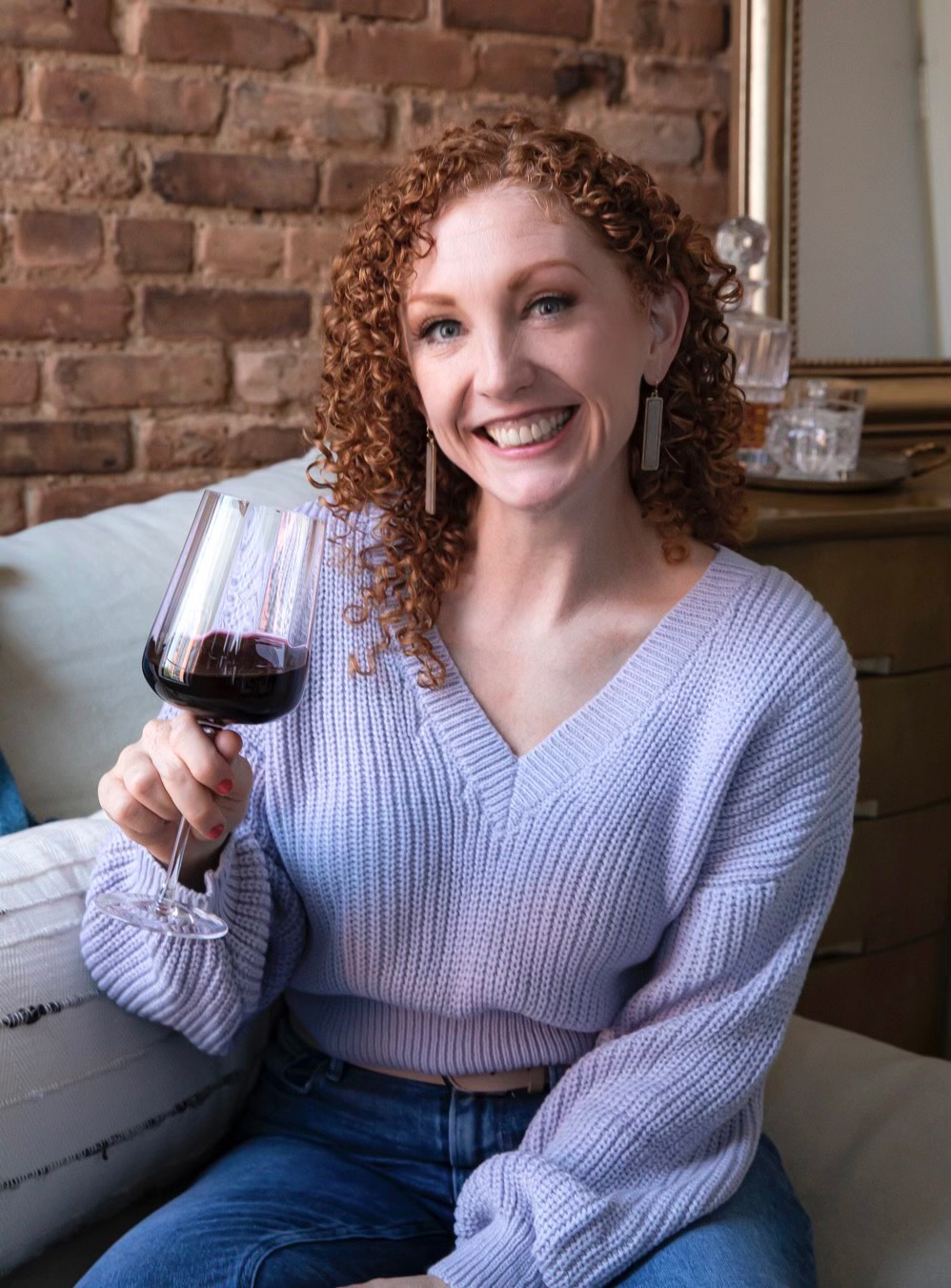
Chillable red wines may be synonymous with poolsides, but they’re equally great in long sleeves

The finest time of year is upon us — those few weeks connecting summer and fall, when a string of steamy days intermingle with dips into crisp, dry 60s and 70s and the sky never looks more cerulean. These are the days you want to maximize — adapting whatever dinner you had planned to the grill and lingering on the patio long past sunset even as the temps slip and the days shrink. 

What better wine to bridge summer and fall than something light and juicy red — best served with a slight chill? Enter chillable reds, those refreshing, light- to medium-bodied red wines that are fruit-forward, acid-driven and usually low in tannins. Think Beaujolais (Gamay), Dolcetto, País, Pinot Noir, Trousseau and Zweigelt. The French call them glou glou, meaning “glug glug.” The wine bros call them porch pounders. Chillable reds may have lately become synonymous with poolsides, but I like them when I’m in long sleeves, too.

“Scientifically, I can’t tell you why these wines are better served a little chilled,” sommelier Sara Moll, the founder and CEO of Vin Social in Brooklyn, tells Salon. “They just become a little more enjoyable, a little more — I don’t want to say chuggable — quaffable.”

Technically, those of us storing our wines at room temp should slightly pre-chill all reds before drinking them, Moll says, as they’re meant to be served closer to cellar temperature (55 to 60 degrees). She suggests popping them in the fridge 15 minutes before opening them; make that 30 minutes for chillable reds. 

Sara MollSara Moll (Courtesy Vin Social)

Best drunk young and not deeply pondered, chilled reds indeed drink great on their own. When pairing them with food, Moll likes the snappy acidity of Beaujolais to cut the richness of a cheeseburger or a seared steak. The silky texture of a cooled California Pinot Noir mirrors that of buttery grilled or roasted salmon. The bright fruit of chilled reds also makes them a fun partner for barbecue — “one with a little edge of smoke from barrel aging would be great with smoked brisket,” Moll adds. 

If you’re feeling a cheese plate, stick to hard cheeses like nutty aged gouda or sharp, crumbly aged cheddar with its bursts of salt crystals. If you’re in a vegetable mood, fire up the grill and sear a mix of peppers and meaty mushrooms, and also plate them with slices of charred bread rubbed with fresh garlic and a batch of romesco, if you’re feeling fancy. Serve said veg feast with earthy, wild País or Beaujolais with its savory cracked pepper notes. 

On that note, keep the Gamay handy if you’re planning a tomato-based pasta dish. “Tomatoes have a good amount of acidity, and you always want the wine to have as much acidity if not more than the food you’re eating,” Moll says. An Old World-style Pinot works beautifully with tomato-based pasta, too — especially if you were mulling a mushroom ragu.

Or simply savor that chilly red all on its own, letting it evolve in the glass as it slowly warms, while outside the golden transition to fall unfolds likewise unseen. 

6 picks for chillable red wines

(from me and an actual expert: Vin Social’s Sara Moll)

Kumusha Cab-CinKumusha Cabernet Sauvignon/Cinsault Blend 2019 (Courtesy Vin Social)

Kumusha Cabernet Sauvignon/Cinsault Blend 2019

World-renowned sommelier Tinashe Nyamudokatasty launched this sustainably certified winery in Johannesburg, South Africa, in 2017. The Slanghoek blends 76% Cabernet Sauvignon with 24% Cinsault. “It’s an amazing chillable red and a cool way to experience Cab Sauv because the Cinsault makes it way lighter on its feet,” Moll says. “It’s such a good burger wine. It has that nice fruit quality but also great spice and little pepper.”

Brooks Cahiers 2017 Pinot Noir

This biodynamic, woman-owned winery in Amity, Oreg., specializes in expressive, complex Rieslings and Pinot Noirs. Cahiers is a sultry, dark wine that smells like black raspberries and blood oranges with a rich, silky palate of red fruits. It’s a match in heaven for a bacon cheeseburger or grilled pork tenderloin. 

Kingston Family Vineyards Tobiano Pinot Noir 2018

Kingston Family Vineyards is a woman-founded brand with a rich history as one of the first organic vineyards and wineries in Chile’s Casablanca Valley. “One of the absolute best affordable Pinot Noirs I have ever come across, Tobiano delivers way above its price point in terms of quality,” Moll says. It smells minerally and a touch smoky, like Oregon Pinot Noir. On the palate, it’s juicy and taut with a nice core of red fruit. “A super small-batch, hand-crafted Old World-style Pinot that will knock your socks off,” Moll adds. ‘Nuff said.

Forlorn hope queen redForlorn Hope Queen of the Sierra Red Blend 2019 (Courtesy Vin Social)

Forlorn Hope Queen of the Sierra Red Blend 2019

The epitome of a chillable, chuggable (whoops!) red made in a natural style, this wine smells like “juicy raspberries and cherries balanced by a nice thread of earth and spice,” Moll says. “On the palate, the wine is light on its feet with lifted acidity and an exuberant pop of raspberry and bing cherry.” Forlorn Hope wines champion grape varieties that are less common and grown in California’s Sierra Foothills. All are made in “very lo-fi fashion,” with native yeasts, unfiltered and unfined, with nothing added but minimal sulfur for preservation, Moll says. 

Red Tail Ridge x Vin Social “Rebel with a Cause” Red Blend 2019

“We love this wine and winery so much. We did a co-labeled project with them!” says Moll of this unique blend from New York’s only LEED Gold Certified winery. Combining Blaufrankisch, Teroldego, Lagrein and Cabernet Franc, Rebel balances dark fruit flavors like plum, fig and blackberry preserves with undertones of warm spices and earthiness. “Owner/winemaker Nancy Irelan is a huge believer in the potential for cool-climate Alpine red grape varieties in the Finger Lakes, and this wine is the epitome of that vision,” Moll says.

J. Bouchon País Salvaje 2019

An organic, wild wine produced from Chilean vines that have grown wild and even up the tree, this fresh and balanced chillable red smells floral and herbaceous with refreshing flavors of cherry, juicy pomegranate and wild strawberry and a long finish. It’s a delicious partner to barbecue, any grilled sausage, a Mediterranean mezze platter or grilled vegetables.

More by this author:

Salon Food writes about stuff we think you’ll like. Salon has affiliate partnerships, so we may get a share of the revenue from your purchase.

Fox anchor Chris Wallace says “no” to election liars on his show: “I don’t want to hear their crap”

Fox News anchor Chris Wallace had some choice words for lawmakers who continue to deny the legitimacy of President Joe Biden’s election, telling Republicans who have spread conspiracy theories of widespread election fraud “I don’t, frankly, want to hear their crap.”

Wallace made the comments during an appearance on “The Late Show with Stephen Colbert” to promote his new book, Countdown Bin Laden, on the assassination of the late terrorist leader. During the conversation, Colbert asked about Wallace’s philosophy on interviewing people he knows are lying for political gain.

“Does it worry you that you give legitimacy to people who have abdicated all public responsibility?” Colbert asked.

Wallace replied that he had “purposely” kept certain Republicans off his Sunday news show since the Jan. 6 Capitol attack for this very reason. 

“Well, there were plenty of people, in the Congress, who were the leaders of challenging it who I have just not had on the show ever since then,” Wallace said. “I have purposefully not had them on because, frankly, I don’t want to hear their crap,” he added.


Want a daily wrap-up of all the news and commentary Salon has to offer? Subscribe to our morning newsletter, Crash Course.


Wallace went on to say that it is important to maintain a dialogue with some of the big-name Republican leaders in both chambers who are pushing policy — though “I won’t let them come on without putting them through the wringer,” he added. 

The longtime political journalist also told Colbert that he was “sickened” by the Jan. 6 insurrection and that it was one of the worst things he has seen over the course of his decades-long career.

“I’ve been in Washington 40 years, so I’ve seen a lot of bad stuff,” Wallace said. “But nothing like this … as I’m sitting there and watching it live on television and seeing this mob coming to the cathedral of our democracy and sitting in the chair that the president of the senate sits in and running around the rotunda, I was sickened.”

Watch the full interview below via CBS:

Why is everyone arguing over horse paste? To avoid discussion about the dangers of vaccine refusal

Perhaps we are bored of sharing stories of unvaccinated COVID-19 patients pleading from their deathbeds for others to learn from their mistakes. (I’m not!) But the hot new trend in liberal-and-vaxxed social media is sharing scare stories about ivermectin — an anti-parasitical drug commonly used in farm animals in the U.S. — that conservatives have convinced themselves is a robust alternative to getting the COVID-19 vaccine. (It most definitely is not.) But unlike the seemingly endless stream of stories about dying people realizing, far too late, that they should have just gotten the shot instead of playing Own-the-Libs Roulette with a deadly virus, scare stories about ivermectin have an undermining tendency of turning out not to be true. 

Last week, a story from Rolling Stone went viral due to a headline that maximized liberal schadenfreude: “Gunshot Victims Left Waiting as Horse Dewormer Overdoses Overwhelm Oklahoma Hospitals, Doctor Says.” Delighted at all these idiotic Trumpers poisoning themselves with horse paste, liberals spread the story far and wide.

The problem was that the story simply wasn’t true.

As Daniel Dale of CNN explains, it seems the source of the story was a bungled mess of “Telephone” that starts with out-of-context quotes from one doctor. To be certain, Oklahoma hospitals are dealing with overcrowding, but the cause isn’t ivermectin overdoses. The actual cause is people refusing the COVID-19 vaccine, then getting COVID-19, and in turn clogging up hospitals because they thought it was more important to thumb their noses as the “liberal establishment” than avoid an extremely dangerous respiratory illness. 


Want more Amanda Marcotte on politics? Subscribe to her newsletter Standing Room Only.


Conservatives were ecstatic about the Rolling Stone retraction, treating this minor mistake as irrefutable evidence that everything that the mainstream media says about anything is B.S. Breitbart declared the story a “hoax,” even though it was most likely just a mistake by overly eager traffic-chasers. Kevin Williamson of the National Review used the story as an anchor for an extremely creepy rant about the largely imaginary problem of the media fabricating the rape crisis. (A few bogus stories don’t change the fact that the vast majority of accusations are true, Kev.) 

Tellingly, both Breitbart’s and National Review’s coverage ignored the real story, which is that risking a severe case of COVID-19 instead of getting vaccinated is a poor lifestyle choice. The word “covid” only shows up in the blockquote from the Rolling Stone correction in the Breitbart story. Williamson uses the word “rape” 13 times in his piece, but he never actually typed the word “covid,” which only shows up, again, in the blockquote from the retraction. Instead, he writes, “The most important word in this story is not ‘ivermectin’ — it is ‘Oklahoma.'” In truth, however, the most important word is “COVID-19.”

While there have been some ivermectin overdoses, the real issue here is not the horse paste or the useless consumption of it by Fox News addicts. The issue is what they’re not doing: getting vaccinated. That is what is causing hospitalizations to spike and over 1,500 people — the vast majority unvaccinated — to die every day. Conservatives want to debate the safety of ivermectin because it’s a way to avoid talking about the real issue, which is COVID-19 — and how refusing vaccination is both idiotic and unethical. 

Conservatives know a debate about horse paste safety is a debate they can probably win. While self-administering a drug that’s packaged in horse-sized quantities has some dangers, the truth of the matter is ivermectin is generally considered a safe drug and it’s used around the world effectively to treat serious diseases in humans, especially river blindness. Making the debate about the ivermectin itself also allows conservatives to pretend that this is a matter of liberal elites mocking the folkways of the common man of middle America — as if consuming horse paste is a noble rural tradition instead of something invented a few months ago as a response to President Joe Biden’s well-publicized vaccine rollout. 

If the debate is on the more substantive grounds of vaccine refusal, then conservatives lose handily because refusing vaccines is both stupidly risky and, crucially, deeply immoral. Republicans and the apologists know this, which is why they’d rather just talk about how the horse paste is safe. They want to ignore the more embarrassing story of how red-state hospitals are filling up with COVID-19 patients because conservatives think they’re too good for a “liberal” shot. 

Ivermectin defenders didn’t invent this strategy, to be clear. This is a common shell game with “alternative medicine” pushers, who like to talk about how “safe” and “natural” their methods are while avoiding the real issue of how useless they are. “What’s the harm?” is a common gambit of alt medicine peddlers. As long as the focus is on the side effects of the fake treatments themselves, they tend to get away with it. But the harm is that people are eschewing treatments that actually work in favor of these fake “alt” treatments, as we’ve seen in high profile cases like the death of Steve Jobs, who delayed cancer treatments in favor of juices and acupuncture. Not, mind you, because drinking juice is dangerous. No, it was the cancer that got him. 


Want more Amanda Marcotte on politics? Subscribe to her newsletter Standing Room Only.


Unfortunately, liberals play into this strategy by hyping the dangers of ivermectin, instead of dragging the conversation back to the dangers of being unvaccinated. And I get it! I too have succumbed to the urge to share stories about the risks of the horse paste. The problem is, in the process, far too many liberals are spreading misinformation. The latest scare story claims that ivermectin causes “sterility,” which is spreading like wildfire in left-leaning social media, even though it’s been thoroughly and easily debunked.  And as much fun as it may be to imagine Joe Rogan inadvertently sterilizing himself, it’s way too easy for conservatives to exploit these fake stories as “proof” that they are being victimized for their quaint horse paste-eating ways.

Far too many liberals are taking the right-wing bait and imagining that this is a debate about the safety of horse paste vs. vaccines. But the real debate, the one conservatives are skillfully avoiding, is over whether it’s safer to be vaccinated or unvaccinated. On that front, the evidence is clear and irrefutable: Being unvaccinated is exponentially more dangerous, as a quick glance of the COVID-19 hot spot map shows. 

This is a classic opportunity cost problem. Time spent arguing about the safety of horse paste is time that could be better used talking about the risks of getting COVID-19 by refusing vaccination. Plus, who knows what the next “miracle cure” the right comes up with as an excuse to avoid taking a safe, effective vaccine? For all we know, it could be meditation and kale juice, long walks in the woods, or just standing on your head for a few minutes a day. The issue isn’t that the “alternatives” to vaccination are dangerous. It’s that not being vaccinated is dangerous. And liberals should resist any and all efforts by conservatives to muddy the waters with distractions like the fake debate over the safety of horse paste. 

Judge orders Florida to stop enforcing Ron DeSantis’ school mask mandate ban

A Florida judge on Wednesday ordered the state to immediately stop enforcing Gov. Ron DeSantis’ ban on school mask mandates after finding that the governor overstepped his authority by issuing the executive order.

DeSantis, who has been positioning himself for a possible 2024 presidential run, in August rejected recommendations from the Centers for Disease Control and Prevention for kids to mask up in classrooms and barred school districts from requiring children to wear masks despite the state’s massive surge in COVID infections. At least 13 school districts have defied DeSantis’ order and a group of parents filed a lawsuit arguing that the directive was unconstitutional. Leon County Judge Leon Cooper last month ruled in favor of the parents, writing that DeSantis’ order is “without legal authority.” 

The DeSantis administration last week defied the judge’s order and sanctioned two school boards that implemented mask requirements after the governor’s directive. Enforcement of the judge’s order was automatically stayed when DeSantis appealed the ruling but Cooper on Wednesday ruled that the state must immediately halt enforcement of the ban because the governor’s appeal is unlikely to succeed.

Cooper said that there would be “no harm” to the state if the order was not stayed but there would be to children who are too young to be vaccinated.


Want a daily wrap-up of all the news and commentary Salon has to offer? Subscribe to our morning newsletter, Crash Course.


“We are not in normal times. We are in a pandemic. We have children that can’t be protected by vaccination,” Cooper said, according to NBC Miami. “Children are at risk and they provide at least some protection by masking.”

Cooper noted that the delta variant is “most infections and more dangerous to children” than previous versions of the virus.

“We’re in a non-disputed pandemic situation with threats to young children who, at least based on the evidence, have no way to avoid this unless to stay home and isolate themselves,” he said. “I think everybody agrees that’s not good for them.”

Cooper also rejected arguments from the DeSantis administration that children would be harmed if forced to wear masks.

“The greater weight of the evidence did not support the claim that mandatory face masks … would create any meaningful harm to those wearing it,” Cooper said, pointing to CDC recommendations that all children over 2 years old wear masks in school.

Lawyers for the state disputed the judge’s ruling, arguing that a new Parents Bill of Rights Law signed by DeSantis gives parents, not school districts, the right to decide whether their kids should wear masks.

“There is no possible way for the court to conclude the defendants would be unlikely to succeed on appeal,” said Michael Abel, an attorney for the administration. “We believe we will prevail on appeal. But even if this is a close call, we would respectfully submit close calls would mitigate toward keeping the stay intact.”

Cooper said that the Parents Bill of Rights also gives parents the right to protect their children against infection risk from unmasked classmates. He ruled last month that the state has no authority to punish districts for policies that are “reasonable” and have a “compelling state interest.”

“By passing the Parents’ Bill of Rights, the Florida Legislature necessarily recognized the importance of parental rights,” Cooper wrote. “But it also recognized that parents’ rights are not immune to some reasonable limitation depending upon safety and reasonableness and compelling state need regarding health care or condition of the child.”

DeSantis, who has staked his political aspirations on his widely-criticized pandemic response, bristled over the judge’s ruling on Wednesday and questioned without a hint of irony why masks had become so politicized.

“I don’t know why the masks have politics around it,” he said at a news conference. “Let the parents make the decision that’s best for their kids. If you want masks, do it. If you don’t, that’s fine.”

Dr. Anthony Fauci, the National Institute of Allergy and Infectious Diseases, rejected DeSantis’ opinion that vaccines are a personal choice that don’t affect others as “completely incorrect.”

When you have a virus that’s circulating in the community and you are not vaccinated, you are part of the problem,” he told CNN. “Because you’re allowing yourself to be a vehicle for the virus to be spreading to someone else.”

The case will now head to the state’s First District Court of Appeal. “They’ll thoroughly consider the arguments of all parties, and they’ll make a decision, then it may or may not end up at the Florida Supreme Court,” Cooper said on Wednesday.

DeSantis said he was confident the more conservative appeals court will sustain his original order, which would then also face a separate legal challenge in federal court by 12 parents of Florida school children with disabilities. The lawsuit argues that children with disabilities are at particularly high risk of becoming severely sick or dying from the virus if they attend classes with unmasked peers and that by withholding funds from school districts the state had violated the Americans With Disabilities Act, the Individuals with Disabilities Education Act and the Rehabilitation Act.

“Governor DeSantis does not have the authority to interfere with these children’s rights under the Supremacy of the United States Constitution,” the suit says, adding that if “students with disabilities cannot go to school safely, then no one can go to school safely.”

DeSantis earlier this year issued another executive order barring private companies from requiring “vaccine passports.” Norwegian Cruise Line sued the administration over the order and federal Judge Kathleen Williams last month granted the company a preliminary injunction because it would be “irreparably injured” by the ban. The judge said that the company was likely to win the case because it had a responsibility to ensure its passengers are vaccinated and that Florida failed to provide a “valid evidentiary, factual, or legal predicate” for the ban.

Marcella Hazan’s tomato sauce recipe — and 8 other favorites

French food has Julia Child and Jacques Pépin. Mexican, Rick Bayless and Diana Kennedy. Italian? Marcella Hazan, who emigrated from Italy to the United States in her early thirties, had no cooking experience when she started, and yet rose to become one of the foremost experts on Italian cooking. She wrote seminal cookbooks, hosted television shows, and influenced a generation of Italian chefs, such as Lidia Bastianich.

She believed that simple food is the best food, and we couldn’t agree more.  The hallmark of her recipes is simplicity at its best — no need to gratuitously fuss about — and the results are sublime. Here are nine brilliant recipes that celebrate her legacy; make them, and know that each time you do, your technique will get better and your food will be utterly fabulous. Just like Marcella.

Marcella Hazan’s Tomato Sauce with Onion and Butter

If there’s one Marcella Hazan recipe that you should cook, it’s this one. It’s her hallmark, her magnum opus, her most famous sauce ever…and it absolutely lives up to the hype. It just has three ingredients: onion, tomatoes, and butter. Yes. really. 

Marcella Hazan’s Rice and Smothered Cabbage Soup

On a chilly night, there’s nothing like digging into a big bowl of this Venetian-style soup that falls somewhere in between a hearty vegetable soup and creamy risotto. Use really good quality beef or chicken broth — it’s the secret to so much of the flavor here.

Marcella Hazan’s Braised Celery with Onion, Pancetta, and Tomatoes

Finishing an entire bunch of celery without putting half (or more) of it into the compost is never an easy feat. A stalk here or there for snacking, a little bit more for stews and soups, but the amount never seems to whittle down. Leave it to Marcella Hazan to save the day with this simple side dish recipe. 

Marcella’s Broccoli and Potato Soup

The star power in this Marcella Hazan soup recipe does not come in the form of the broccoli or Yukon gold potatoes. Sure, both of those are great, but the real trick is caramelizing thinly sliced onions until they’re jammy and golden brown. It adds a layer of sweetness that cuts through the heavy potatoes and bitter broccoli.

Marcella Hazan’s Croccante (2-Ingredient Almond Brittle)

Homemade candy makes the perfect little gift . . . or the perfect little afternoon snack. The only tool you need is a potato. Wait, potato? You thought I was going to say a candy thermometer or silicone baking mat, right. Just trust Marcella on this one. It works.

Marcella Hazan’s Tomato Sauce with Sautéed Vegetables and Olive Oil

This recipe isn’t quite as famous as Marcella’s other tomato sauce recipe, but it’s just as simple and incredibly versatile. The base of it is made with two pounds of super fresh, super-ripe tomatoes. 

Marcella Hazan’s Fettuccine col Sugo di Tonno con Aglio e Panna

Canned tuna is a familiar ingredient in pasta sauces. Although I was once very fond of it, there was a harshness to the taste of tuna sauces, both other cooks’ and my own, that began to trouble me,” writes Marcella Hazan. Her dissatisfaction motivated her to find a way to enjoy tuna, which became this salty, savory pasta.

Marcella Hazan’s White Bean Soup with Garlic and Parsley

In 10 minutes (yes, 10!), this recipe from Marcella Hazan goes from a few ingredients scattered throughout your pantry to a delicious bowl of vegan soup.

Chicken Liver Pasta Sauce Inspired by Marcella Hazan

This isn’t exactly a Marcella Hazan recipe . . . but it’s pretty darn close! In addition to chicken livers, it’s also made with salty prosciutto (or pancetta) and ground beef for an extra-hearty sauce.

This easy vanilla custard slice is no one-hit wonder

I would like to apologize to vanilla. Vanilla, I have not been fair to you; I have taken you for granted. Like a lot of people who consider “Death by Chocolate” not the name of a dessert but a presumed actual end of life plan, I have rarely trifled with the pale stuff. Klondike Bars? Why bother? Yellow cake? Hard pass. But when I had surgery on my throat a few months ago, I woke up from anesthesia and the only thing I wanted in the world was vanilla pudding. Smooth, fragrant, soothing to the soul vanilla pudding. And do you know what I learned though my subsequent, soft foods-based days of recovery? That vanilla pudding is glorious, regardless of your ability to swallow or the strength of the narcotics you’re on. Do you know what’s even better? Vanilla pudding…. sandwiched in puff pastry.

The custard slice, a humble version of the posh French mille feuille aka Napoleon, is pure comfort in dessert form, a homespun version of a patisserie case classic. In “Great British Bake Off” winner Edd Kimber’s ingenious “One Tin Bakes,” the dessert is rustic but still impressive, forgoing icing in favor of a dusting of confectioner’s sugar. These are not the showstoppers of a dramatic television competition. They are instead just a really cheerful thing to have tucked in the fridge for after dinner tonight, made idiot proof thanks to store bought puff pastry.


Want a daily wrap-up of all the news and commentary Salon has to offer? Subscribe to our morning newsletter, Crash Course.


For my own version, I’ve followed Kimber’s path as trod by Smitten Kitchen’s Deb Perlman, and then scaled back and simplified even further. I’ve also cut the recipe in half, because you shouldn’t wait for a big group of people to bake for to bake, and you should have these slices all polished off before they get soggy.

As with all things custard, you do need a little foresight here for things to firm up. This is not a dessert you can throw together at the last minute. It is, however, relatively hands off, so you can make it while you’re puttering around doing other things and then forget it the rest of the day.

You can, if you’re in the mood, make your own custard here. A basic custard is simple to master, extraordinarily decadent tasting and comes together on the stove in minutes, I promise. But you can also can do as I have here and just cook up a box of supermarket pudding. Or you can even buy a few tubs of Snack Packs and save even more effort; I support your choices. Just know that pudding tends to be runnier than pastry custard, so you use your judgment when you’re at the filling stage, lest you wind up crying into your freezer. You may not need to use all of it.

***


Recipe: Vanilla custard slices

Inspired by Edd Kimber’s “One Tin Bakes” and Smitten Kitchen

Makes 8 squares

Ingredients:

  • 1 sheet of puff pastry, thawed
  • 1 box of vanilla pudding mix
  • Confectioner’s sugar

Directions:

  1. Preheat oven to 375°F.
  2. Prepare your pudding according to package directions, or make your own custard. Let it chill in the fridge while you continue the rest of the recipe.
  3. On a lightly floured sheet of parchment, unroll your puff pastry. If you want your pastry thinner and fancier, go over it a few times with a rolling pin, but it’s fine not to. Cut in half lengthwise. Prick your sheets all over with a fork.
  4. Put both sheets, and the parchment, on a large baking sheet. Put another sheet of parchment on top, and then put one or two baking sheets on top of everything to weigh your pastry down.
  5. Bake approximately 20 minutes, then remove the top baking sheets and parchment. Bake another 5 – 10 minutes to get golden. Let cool.
  6. Line a baking sheet with foil, and put one sheet of puff pastry in the middle.
  7. Spoon your custard evenly over the puff pastry, then top with the second sheet.
  8. Gently bring the foil around the pastry to hold its shape, and refrigerate at least 4 hours.
  9. To serve, unwrap and dust with confectioner’s sugar. Cut into 8 slices and serve exactly as is, or with fresh berries.

Mix it up! Sure, this is a pro-vanilla space, but I would definitely not turn down a chocolate or butterscotch version of this dish. Just swap in your favorite custard and proceed as usual.


More Quick & Dirty: 

Salon Food writes about stuff we think you’ll like. Salon has affiliate partnerships, so we may get a share of the revenue from your purchase.

What to cook (when you don’t know what to cook)

Do you ever open the fridge and just stare at it for a while, wondering what to cook? Us too. Sometimes, cooking funks arrive without warning — and they don’t care whether you have a pantry full of groceries, or are having friends over in two hours, or are hungry literally right now. But look, you’ve still gotta eat, and a handful of cereal absolutely won’t do.

Sure, takeout is always an option, but we consulted a few Food52 editors and contributors to find out what they cook when faced with what-to-cook situations, like a rapidly ripening farmers’ market haul or a desperate craving for comfort food. Because maybe you’re in a rut, aren’t feeling your best, or are simply in need of some kitchen-inspiration…and just want to be told what to cook. (We get it.)

* * *

What to cook . . .

. . . when you’re entertaining on a budget

Pita Chip Dinner Salad with Stone Fruit and Chickpeas

Okay, so you want to have friends over for dinner, and you want things to be really cute, but you can’t spend a lot. Plenty of recipes in Assigning Editor Rebecca Firkser’s budget-friendly recipe column, Nickel & Dine, fit this mold (looking at you, grilled tofu cabbage cups, but this month, we’re excited about her Pita Chip Dinner Salad with Stone Fruit and Chickpeas.

. . . when you’ve had a looooooong day

Feta-Brine Martini

It’s 7:46 p.m. You’re stumbling through the door (or finally logging off email for the day), and you need to unwind. And also, you need a snack. No one knows how to do cocktail hour like Food Editor Emma Laperruque, and this time she’s made a Feta Brine Martini — complete with feta-stuffed olives to munch on while you drink. And maybe for dinner, opt for another Big Little Recipe, like a five-minute pickle sandwich or super-garlicky, stupid-quick pasta.

. . . when you’re missing home

Mom’s Pork Soup with Peanuts and Lotus Root

When you’re feeling homesick, there’s no greater comfort food than a family favorite. And for contributor Yi Jun Loh, that’s Mom’s Pork Soup With Peanuts & Lotus Root. He often tried to replicate the dish when he missed his mother’s cooking and lived too far away to visit for dinner, but it was never the same; it wasn’t until moving back home during the pandemic that Jun was able to totally nail this recipe — but he’ll always prefer his mom’s: “Each time she makes it, I’ll sneak into the kitchen, pop open the lid of the simmering brew, and let the porky steam envelop me. Over dinner, I’ll ladle out a bowl for her and for myself, and slurp on it, scalding my lips in the process, but warming my heart — like no soup of my own ever could.”

. . . when you’re pregnant

Breakfast Pasta

Contributor Olivia Mack McCool wants to register a complaint with whoever came up with the term morning sickness, “because if you’ve ever experienced it, you know that it is not relegated to just the early hours of the day.” And when you’re basically feeling hungover all day, every day, for months, nothing takes the edge off like a giant bowl of pasta. A simple mixture of butter, everything bagel spice, and an egg, this pasta is just as good at night as it is for breakfast, and you certainly don’t have to be pregnant to enjoy it.

. . . when you need a sweet pick-me-up, stat

Misugaru Milkshake

“As a pastry chef, I still crave dessert — but I don’t always want to bake, which can feel like an extension of work,” writes contributor Joy Cho. And we bet even folks who aren’t baking for a living will agree that, at the end of the day, turning on the oven is less than desirable. So allow us to suggest Misugaru Milkshakes. The earthy, slightly nutty powdered grain makes a classic vanilla shake sing — and bonus, you can make it totally vegan if you don’t do dairy.

. . . when you feel sick

Rotisserie Chicken Soup with Pierogi and Lots of Herbs

When you’re under the weather, one of the last things you want is to spend time making dinner, but at the same time, maybe find yourself craving a home-cooked meal. How about a compromise: contributor Jessica Romanowski’s Rotisserie Chicken Soup, featuring (duh) a store-bought chicken that’s submerged in water to make a flavor-packed broth, then shredded into a soup along with pierogi from the freezer (only have dumplings? Use those! Noodles will work in a pinch too.) and any herbs you have hanging around. Basically, you’ll dump everything in a pot, shred some meat, and you’ll be settling into the coziest soup in no time. Don’t you feel better already?

Why won’t Donald Trump go away? Because Americans can’t tell appearance from reality

Americans have a huge problem. It manifests itself in our politics and we see it in our daily lives. It is exacerbated by the commercials on television, the internet and our cell phones. 

Many of us can no longer tell the difference between appearance and reality — if in fact we ever could.

This inability explains the appeal of Donald Trump, why some people believe professional wrestling is “real,” why some of us won’t take a COVID vaccine and why some of us will take a deworming drug meant for horses versus a vaccine designed by scientists for humans. It enables people to scream out “I don’t trust the scientists,” while at the same time checking themselves into the hospital if they get sick.

Flooded by a glut of misinformation that overwhelms actual facts, the American public seems to have reached a new level of mistrust and arrogant stupidity, further eroding our ability to take on problems and thus increasing our chances of a calamity heretofore unseen except in gothic horror stories or “Mad Max” movies.

It is why as recently as this week, scientists told NPR they needed to do better in communicating the problems of climate change. It’s one of the reasons why a passenger on an American Airlines flight had to be restrained after he began screaming about Joe Biden. It’s also why CNN published an opinion piece with the headline: “Let’s be clear why the U.S. economy is weakening.” 

There are those who argue we’ve long been unable to tell the difference between appearance and reality, while others believe it is a recent phenomenon caused by misinformation. But rather than arguing which came first, we need to focus on those who don’t recognize the problem at all.

In the case of Donald Trump, he has spent his life making bank on separating people from their cash by claiming to have answers he doesn’t actually have. His ex-fixer, Michael Cohen, once told me that Trump is a master at stating the obvious. “He tells us we have a problem,” Cohen explained, “that everyone will agree is a problem. But he has no answers.”


Want a daily wrap-up of all the news and commentary Salon has to offer? Subscribe to our morning newsletter, Crash Course.


For example: The wall. How simple. How stupid. Building a wall to stop the importation of illegal drugs and immigrants may sound appealing, but that assumes you’ve never heard of a ladder and can’t build a tunnel. Since most drugs are smuggled into the country via ports of entry — that is, in aircraft, motor vehicles or boats and ships — the reality is that a wall does nothing to solve either problem.

Time and again, Trump has sold us the appearance of leadership, but the reality is best represented by what Trump told me on the South Lawn when I asked him whether he would take any responsibility for people ingesting Clorox and becoming sick trying to treat the coronavirus, because of something Trump had said recently in the White House briefing room.

“I take no responsibility,” Trump reminded us.

He took no responsibility for the insurrection — while he provoked it. He took no responsibility for anything when pressed as president, though he and his surrogates drowned us with claims of his leadership prowess. His greatest sleight of hand came when he lost the election and refused to admit it — based on the “Big Lie” that tried to sell the appearance of  a rigged election — when in reality he was the one trying to rig it. Thankfully, that failed. 

But Trump’s efforts have led to the rebirth of modern sadistic fascism, predominantly in the Bible Belt and specifically in Texas and Florida, where you have freedom to choose whether to wear a mask, but women are not free to choose whether or not to continue a pregnancy. As George Carlin once said, the reality is that governments in those states are simply anti-women. They also claim they want to preserve the sanctity of voting, but the laws they’ve enacted, in the realm of reality, do exactly the opposite. Trump may not be with us forever, but his actions have lit a nasty grease fire that threatens to burn down the kitchen. His acolytes and disciples come in a variety of packaging, but whether it is the Lauren Boebert brand, the Marjorie Taylor Greene brand or the Ron DeSantis brand, it’s all merely appearance. The reality is, these people don’t care about you.

By contrast, look at Joe Biden. He has been short on appearance, but long on reality. He claimed responsibility for removing troops from Afghanistan. The appearance was that of an unorganized withdrawal from a protracted war. The reality was we evacuated a population equal to that of Fort Lauderdale in less than a month.

The appearance is that we abandoned our military and caused consternation among veterans who questioned, “Was this all done in vain?” The reality is that it was done in vain and Presidents George Bush, Barack Obama and Donald Trump were responsible for that. Biden ended our participation that needlessly cost American lives and inflicted incalculable suffering on the Afghan people.

The appearance is that science bungled the pandemic response, or was responsible for it — or that scientists are inept, or that Lizard leaders are trying to kill us off. And it doesn’t matter anyway because the vaccine doesn’t work, or is filled with microchips that can track us. And horse dewormer is better anyway. In reality, the vaccine works, you can already be tracked through your cellphone and your life isn’t all that interesting and no one wants to track you anyway — so get the vaccination.

So, if Biden is better on reality, while Trump relied heavily on appearance — then why is Trump still on anyone’s radar? His personal appearances at multiple rallies, and the constant harping on his stale talking points from his fawning minions, while Biden has quietly emphasized the reality he’s trying to build is the answer. Trump screams louder, and has more people parroting his talking points.

That makes some people fearful and others numb as they contemplate the question: Is Trumpism winning? It may seem so, but that is also an appearance. The reality is that Donald Trump is merely better at communicating than most Democrats — including the current president. What he communicates is the pure, unadulterated byproduct of what occurs after ingesting horse dewormer, but no one can deny that Trump was and is masterful at getting a great deal of media attention.

Biden’s White House communication staff is smaller. He doesn’t take as much time on the airwaves as Trump, and he’s willing to let his actions speak for themselves. That leaves a lot of airtime unaccounted for and thus Trump, his minions and the media criticisms fill in the void.

Nature abhors a vacuum, but the airwaves cannot exist in one. The reality is that Trump is an idiot, Biden doesn’t understand how to communicate and the United States is still divided because no one is shouting from the rafters about bringing us together the way that Trump did — and still does — about tearing us apart.

The Democrats’ greatest single failure lies in failing to grasp the reality that for many American voters appearances are reality. While the Democrats, so far, have been much better at dealing with reality, Trumplicans have been better at selling their blue smoke and mirrors. James Carville once said that while he did not like what the GOP stood for, he admired their work ethic because they keep pushing what they’re selling and never give up.

That’s why we are still fighting for a woman’s right to choose, fighting against racism and voter suppression. Too many Democrats believed that one victory was enough. There are people working in the White House today who believe that Trump and his allies are irrelevant because Biden won in 2020.

That’s the appearance.

The reality is much darker — and we’d better come to grips with it before the midterm elections.

How rape affects memory, and why police need to know about that brain science

Annie Walker woke up one morning in 2019 with little recollection of the night before. She had bruises on her arms, legs, wrist and lower abdomen.

“But I literally had no idea what had happened,” she said. “And, for days, I was trying to put the pieces together.”

She knew she had gone to a Sacramento, California, bar and restaurant with a group of people, and she remembered drinking there and being left alone with the man she’d later identify as her rapist. But not much else.

Memories she couldn’t summon that first morning gradually came into focus over days and weeks, she said. The emerging details included what the man had been wearing, and the way he shoved her against the bar. One week after the attack, she reported the crime to the Sacramento County Sheriff’s Department.

Then, in the days after making the report, another wave of memories surfaced — she recalled, vividly, that the man had raped her and had a weapon.

“I knew that there was a gun at my neck, at my back,” she said. “It was just clear.”

The detectives gave her a hard time, she said, when she called to report that she had remembered that her attacker had a gun. The Sacramento detectives assigned to Walker’s case didn’t seem to understand why she couldn’t remember all the details right away.

“I felt like I was just extremely cross-examined on the phone. Like, ‘Why didn’t you remember a gun? That’s, like, a really important thing.'”

Sexual assault survivors say interactions with law enforcement can be so intense, and so unsympathetic, that they add secondary trauma. Reporting a rape can be especially traumatic when officers cast doubt on victims’ stories.

But it doesn’t have to be, say scientists and scholars of criminal justice. If police gain a deeper understanding of what’s going on in the brain during and after a rape, they can change the way they approach rape cases and avoid making survivors feel blamed or disbelieved.

Scientists who study trauma and memory say it’s common for sexual assault survivors — as well as survivors of other serious traumas — to be unable to recall an attack fully. They might remember certain facts but not others, or struggle to recall events in the correct sequence.

When law enforcement officers aren’t aware of the neuroscience of trauma, or have no training to deal with it, there’s a tendency to dismiss or disbelieve victims who experience memory gaps, according to scholars and advocates for sexual assault survivors.

“There’s a real danger when investigators are asking people for information that was never encoded or has been lost,” said Harvard University psychologist Jim Hopper. “They can stress out the victim, leave them feeling misunderstood, incompetent, not wanting to further engage with the investigation.”

Walker’s alleged perpetrator was never arrested. And she’s still frustrated with the way detectives put pressure on her to remember details during the investigation.

The Brain in Survival Mode

When confronted with a crisis, the brain often activates its “fight, flight or freeze” response. In these scenarios, the brain’s “defense circuitry” takes over, explained Hopper. The prefrontal cortex, which is responsible for logical decision-making, is no longer in control and, instead, the areas of the brain responsible for scanning for danger take charge.

“And that’s what people are running on” when trauma happens, Hopper said.

Some people respond by mentally “dissociating,” or disconnecting from their physical selves. That survival response affects the ability to absorb what’s happening around them, Hopper said.

Studies on memory and recall during a traumatic event describe two types of details: central and peripheral. Central details are those that capture our attention and evoke emotions in the moment, such as a location. Peripheral details are those that a survivor might not have been paying attention to during the crisis, such as something the perpetrator said or whether other people were present. Central details tend to be stored more reliably and for longer than peripheral details.

Sometimes survivors are unable to answer what might seem like a simple question if it involves a peripheral detail like the color of the attacker’s shirt. And Hopper said that can make officers suspicious.

Hopper, who gives legal testimony in sexual assault cases, said victims are often held to unfair standards, even compared with other trauma survivors.

“Every day in courtrooms around the country, [defense attorneys] attack and question the credibility of victims of sexual assault for having the same kind of memories that soldiers have for their combat experiences,” he said.

Victim advocates and criminal justice scholars say it’s important for detectives to be open to anything a survivor might say, whenever they say it — even if those details were not available in an initial report — because the information survivors provide later can be helpful for solving the crime.

Maintaining an Open Mind

Nicole Monroe, a police detective in Elk Grove, a suburb of Sacramento, said she and some of her colleagues have gotten additional education on brain science, and it has changed the way they approach sexual assault cases.

Monroe tells victims she works with that more memories will continue to surface in the days, weeks and even months to come.

“Smells will come back. Sights will come back. When you think of these things, give me a call and let me know, so that it can be added,” Monroe said. “Because little things like that are going to make a difference.”

Traditionally, law enforcement officers are trained to conduct an interrogation that may involve drawing out specific details, usually in chronological order.

“The expectation is someone is supposed to come in, sit down, they’re supposed to be ready to talk, they’re supposed to know what to talk about,” said Carrie Hull, a former detective with the Ashland Police Department in southern Oregon. “They’re going to tell you what happened to them from the beginning, through the middle, and then the end. That is a very traditional understanding.”

Hull is now a consultant for police departments, and part of her work involves advocating for the adoption of a technique known as Forensic Experiential Trauma Interviewing, or FETI. The training can help law enforcement learn how to ask questions differently: with empathy, patience and an informed understanding of how a traumatized brain makes memories and recalls them. Training in the technique is available through an online course, but it’s not a mandatory requirement for most police departments.

People who take Hull’s course learn specific strategies for helping someone resurface a relevant memory that he or she may not have had access to when they first walked into the interview room. Hull said FETI discourages counterproductive practices such as paraphrasing, changing the victim’s words, interrupting or giving advice.

Hull said the overarching goal of trauma interviewing is to first “collect the dots, then connect the dots.” In other words, simply interview the victim about what happened. The sharper, more aggressive investigative tactics can wait.

There isn’t research proving that law enforcement departments who take this training solve more rape cases. But victim advocates and scholars said it’s a best practice that could make working with police a more positive experience for victims and, eventually, help bring more perpetrators to justice.

“If I had my way, every one of them would be doing this,” said Dave Thomas, a program officer with the International Association of Chiefs of Police.

Annie Walker is still struggling to recover from her sexual assault, but it’s complicated because she’s also healing from the way law enforcement handled her case. She said both police officers and survivors need more education on the way trauma affects memory.

She said if survivors knew what to expect in terms of memory issues, it wouldn’t be so frustrating. “They need to feel like the way that things are happening in their mind is normal. Normal for them.”

This story is from a partnership that includes CapRadio, NPR and KHN.

KHN (Kaiser Health News) is a national newsroom that produces in-depth journalism about health issues. Together with Policy Analysis and Polling, KHN is one of the three major operating programs at KFF (Kaiser Family Foundation). KFF is an endowed nonprofit organization providing information on health issues to the nation.

The new tyranny in Texas will be America’s future — unless Democrats act now

One by one, they promised to fight. As the U.S. Supreme Court effectively overturned five decades of constitutional protection of reproductive rights, Democratic leaders crafted their toughest tweets and vowed the rule of law would be upheld. Action would commence in Congress. Legislation would be drafted; bills would be passed. “This fight is only just beginning,” said Senate Majority Leader Chuck Schumer. 

If only it were so. If these statements felt familiar, Democrats made similar guarantees to battle Amy Coney Barrett’s norm-obliterating, election-eve nomination to the Supreme Court to fill Ruth Bader Ginsburg’s seat. Democrats banked a fundraising haul off all the fighting they would do, before Barrett’s confirmation hearings ended with Democratic Sen. Dianne Feinstein embracing Republican Sen. Lindsey Graham and thanking him for some of the best hearings she’d ever participated in. Democrats then barely mentioned Barrett over the last three weeks of the campaign. 

So while Schumer’s fight to save Roe v. Wade now belatedly begins, the state legislatures that were gerrymandered into oblivion by Republicans in 2011, again while Democrats snoozed, saw and understood the green light from the Supreme Court. They promised draconian new abortion restrictions of their own, also cleverly engineered like the Texas law to evade judicial review. Congressional action to codify Roe? That’s a meaningless promise, absent the muscle to overcome a guaranteed Republican filibuster in the Senate. Then it would head back to a Supreme Court packed with five conservatives appointed by Republican presidents who lost the popular vote, and confirmed by a U.S. Senate that dramatically over-represents Republican voters. The very court that last week proved itself willing to eviscerate what even Brett Kavanaugh, during his confirmation hearings, had called “precedent on precedent.” 

One might presume from all this that the Democrats are a weak minority party with few cards to play. They’re actually a weak majority party that refuses to play its hand. Democrats control the presidency and both houses of Congress. Thanks to Republican gerrymandering, this is highly unlikely to be true by January 2023. Common sense suggests that  might increase Democrats’ urgency to act. But while every week brings frightful new reminders that a decades-long Republican strategy of constitutional hardball has driven us to the edge of enduring an extended period of GOP minority rule, Democrats remain terminally unwilling to muster the power necessary to counter it. Republicans are committed to seizing power by any and all means. Democrats are committed to … maintaining the filibuster? During the first month of the Biden administration and this new Congress, Democrats could and should have acted. We are in month nine. We are in quicksand. 

If the late-night smothering of Roe and impending GOP minority rule after next November won’t do it, it’s hard to imagine what events would actually push Democrats to action. They could end the filibuster, which requires 60 votes to move legislation to the floor and allows a minority to paralyze the popular will. They have not. They could create a voting rights exception to this arcane Senate rule (which was itself developed to preserve white rule and stall civil rights legislation), and end the assault on free and fair elections driven by GOP state legislatures and the Roberts court, by passing the For the People Act and the John Lewis Voting Rights Advancement Act. They refuse

Democrats could grant statehood and Senate representation to Puerto Rico (with a population larger than 21 states) and Washington, D.C., a city with more people than Wyoming. The filibuster ended those half-hearted efforts as well. Or they could follow the lead of Republicans in Arizona, Georgia and Iowa — all of whom have packed their state supreme courts or reworked appointment rules to their favor — and either add seats to the U.S. Supreme Court or eliminate lifetime tenure, in return for the outright theft of Merrick Garland’s seat and the predictable refusal to play by the same rules with Barrett’s hurried confirmation. There’s no constitutional reason or historical precedent for the court to remain at nine justices. Naively, Democrats say no. 

Their impotence is a policy choice. Representative democracy is unraveling before us. Democrats are standing there watching. This slow-motion collapse has been a long time coming, with the perilous endgame visible to all. Republicans have enacted the most ruthless gerrymanders in history, brazenly packed the courts — while dragging Democrats who dare suggest the same — and ruthlessly exploited any structural or procedural advantage available within the Electoral College, the U.S. Senate and the Supreme Court. They’ve boasted of their success, and their disregard for majority rule, let alone multiracial democracy, has become conventional wisdom.

This makes the Democrats’ complacency all the more confounding. Republicans behave like a party that can run roughshod over constitutional norms without facing accountability because Democrats have made it so, time and again. Now time is running out.

Perpetual minority rule through the courts, which will uphold gerrymandering, voter suppression and now the subjugation of women, was precisely why Sen. Mitch McConnell and his allies were willing to burn D.C. to the ground over the past 12 years to capture the Supreme Court. The high court coup — and the ensuing decisions in Shelby County v. Holder, Common Cause v. Rucho and most recently Brnovich v DNC — have gutted crucial voting protections and allowed Republicans in state after state to build unbreakable circles of unaccountable power, entrenched against any conceivable electoral backlash. The Texas abortion law, which pays citizens to rat each other out like some desperate Stasi initiative, would be inconceivable in a state where the ruling elite actually feared getting tossed out by the electorate. Instead, Republicans secure in their gerrymandered redoubts know that the voters literally cannot dislodge them.

How many times do Democrats need to see the GOP playbook run under their noses before they understand that this is the plan for the entire United States? You can’t out-organize or out-vote or outflank this kind of burgeoning authoritarianism because it is carefully and cleverly constructed to withstand your outrage, your street pressure, your court challenges and even, ultimately, your votes. It enlists the archaic procedures of our crumbling political order to reassert the waning power of white men, now a distinct minority, over the aspirations, rights and hopes of the country’s emerging multi-ethnic majority. It cannot be reasoned with or bargained with or mitigated by bipartisan gangs of six or eight or 12 Senate wise men.

Even now, as leading Democrats huff and fume, Trump’s radicalized foot soldiers are taking over local election administration in key states with razor-thin majorities in the 2020 presidential election. State legislatures in Georgia, Texas and Arizona are laying the groundwork to suppress Democratic turnout and in some cases even take over urban election machinery in an open plot to overturn the results of the 2024 election. They are showing us all exactly what they will do and how they will do it. Now the Texas GOP and the Supreme Court have helpfully given us a vision of what the aftermath of democracy’s destruction will look like. 

So what will Democrats do about it? Sen. Dick Durbin, D-Ill., promises the fearsome vengeance of Senate Judiciary Committee hearings. On Twitter (of course), Minnesota Sen. Tina Smith pleaded for voters to simply elect more Democratic senators in 2022, and then, she promises, they’ll finally get to all this. But by 2022, the U.S. House will be gone. And many competitive states, like Georgia, will hold U.S. Senate races under rigged rules that this Congress could do something about now. In fact, 2022 is not an option. It is simply too late. A Democratic president and the current Democratic majority in the Senate must use all their persuasive power to force sitting senators to act. That’s the only option. Not electing more Democrats somehow, someday. Not owning the cons on C-SPAN. Use the power that you have, and use it now.

The Supreme Court’s decision to eviscerate Roe v. Wade with no hearings and barely a paragraph of explanation should be seen as a fork in the road. Down one path, party elites finally convince holdouts in the U.S. House and Senate that democracy needs reinforcing, and that it must be done with a simple majority vote, while Democrats still cling to the House and a narrow 50-50 Senate majority that could vanish into the Potomac if several senators over the age of 80 fail to outrace actuarial tables (or if someone slips and falls during one of Joe Manchin’s houseboat parties). There is time, just barely, to pass democracy reforms, enlarge the Supreme Court and gird themselves for elections in 2022 and 2024 that promise to be grueling, even given an even playing field.

Down the other path lies the dystopia whose outlines we see clearly in Texas. If Democrats choose to do nothing, the small number of representatives and senators holding up desperately needed action will be regarded, justifiably, as enablers responsible for a descent into authoritarianism. The names of Joe Manchin and Kyrsten Sinema will take their places in history alongside Neville Chamberlain as synonyms for feckless appeasement. And this Democratic Party will be remembered for serving as the handmaiden for a tyranny that could last generations.

“Gavin don’t surf”: The California recall election, on the ground in Orange County

Around Huntington Beach, California, it’s not hard to spot traces of the last election and previews of the next. The must-have red cap of any true Trumpist is still in heavy rotation, as is the serpentine “Don’t Tread on Me” symbol, cast in various forms for wear or display. A flag billowing above a robust two-story home, valued at $1.46 million and situated on a prime stretch of Lake Street, reads “Don’t Blame Me, I Voted for Donald Trump.”

Then there’s a newer catchphrase splashed across locals’ T-shirts and bumpers: “GAVIN DON’T SURF.” Those enjoying coastal living in Surf City, as Huntington Beach is also known, recognize that to take up this slogan is to pile on the Golden State’s besieged governor, Gavin Newsom, with an especially damning brand of homegrown scorn. Inspired by Newsom’s polarizing April 2020 decision to close Orange County’s beaches during the first surge of COVID-19, the phrase also serves as a retaliatory call to arms in a bid to sweep the governor from office in the Sept. 14  gubernatorial recall election, the single most significant political event to be held here in at least 10 months. 

There are few places better positioned to offer a broad view of the stakes, warring factions and sensibilities involved in this recall election than Orange County. Often stereotyped as backward or overshadowed by Los Angeles and the Bay Area, the O.C. is coming into focus as a key battleground in the recall. It’s actually a roiling mix of contradictions, at once laid-back and buttoned-down, beachy and preachy, forward-looking and reactionary, behind the “Orange Curtain” and newly, or nearly, flipping blue. From one block or even one building to the next, residents may inhabit different political universes, consume different media, mask up and vaccinate or refuse to do either. And depending on who you ask, the recall represents a number of possibilities — a referendum on Newsom’s leadership, particularly during the COVID-19 crisis; a chance to undo some of the damage caused by the 2020 vote; an opportunity to leverage momentum from 2020 and push for further change — and its significance extends well beyond state bounds. 

For his part, Newsom seemed well aware of the urgent need to get out the vote in the state’s third most populous county when he beamed in between recent stops on his “Vote No” campaign tour for a Zoom call with O.C.-based Democrats. He framed his own plight not around his decisions relating to the pandemic but in the context of an ongoing struggle between progressive and regressive elements jostling for control of California and the country, claiming that the recall “was initiated when I introduced a budget to the legislature to expand health care regardless of your immigration status.”   

That an upset of this magnitude is possible now is proof, according to Newsom, that Donald Trump hasn’t actually left the national stage, even if he has left the White House. “It’s not surprising,” Newsom said of the recall drive. “We had hoped we had turned the page on after the Big Lie,” he said, invoking the former president. “We recognize that despite the fact Trump was defeated resoundingly, Trump is still alive and well.” 

Reading the California recall battle against the backdrop of Trump’s ongoing influence seems less like a potential deflection tactic when tracking funding sources for the recall. The Los Angeles Times reported that $42.8 million in pro-recall funds have flowed in from coffers within and outside California, including $225,000 from former Arkansas Gov. Mike Huckabee’s PAC, HuckPAC. That figure has been eclipsed, however, by the $81 million raised to ensure Newsom stays put.  

Given the structure of California’s political system, the steady build of pandemic-linked animus targeting the governor, and the outcome and fallout from the 2020 presidential election, it’s no surprise that Republicans, sensing vulnerability and opportunity, are coming for Newsom. Five previous recall attempts since 2019 failed to garner the nearly 1.5 million signatures needed to qualify for the ballot, and this one was also falling far short of qualification when a judge, citing the pandemic, extended by four months the time to gather signatures.

Recent polling numbers from the Public Policy Institute of California are looking better for Newsom, with 58% of likely California voters projected to oppose the recall, but complacency isn’t an option for the governor and his supporters — an Emerson College/Nexstar poll released in early August had Newsom in a dead heat, with 48% against recall and 46% in favor. If more than 50% favor recall, then Newsom is out, and the candidate on the ballot with the most votes becomes governor. Newsom got 62% of the vote in 2018 but could end up unseated by one of 46 contenders, most of them Republicans, including Black conservative radio host Larry Elder (polling highest among likely voters at 26%); former San Diego Mayor Kevin Faulconer; businessman John Cox; and athlete, reality TV star and transgender rights activist Caitlyn Jenner. 

The current moment feels like a throwback to 2003, as another Democratic California governor cut from the career-politician mold faces down a recall election with competition from, among others, a prominent pundit and a sports star-turned-celebrity. In the 2003 vote, then-Gov. Gray Davis was defeated by Arnold Schwarzenegger (with Arianna Huffington trailing behind) in the wake of an energy crisis. But though viewing the “Left Coast” as a monolithic punchline is an enduring tradition, the risks here are sobering and call for a more nuanced understanding.

Should Newsom lose, his defeat would represent a staggering rebuke of the Democratic Party, handing the GOP a major victory accomplished with the help of fewer than 30% of registered voters in the flagship jurisdiction of progressive politics in America, a state with the fifth-largest economy in the world. It would also be devastating to those fighting for climate action, criminal justice reform, immigrants’ rights, a living wage and dozens of other causes. None of the candidates poised to succeed him are qualified to deal with these issues.  

If Newsom was late to acknowledge or to “close that enthusiasm gap,” as he put it, between highly activated Republicans and his own base, that’s evidently no longer the case. Newsom worked from his campaign bus to galvanize his team via a mix of motivating and alarming messages, touting accomplishments such as his “$80 billion operating surplus” (here the governor may have been rounding up) one minute and imagining a California run by Elder — a friend and ally of Fox News fixtures Sean Hannity and Laura Ingraham — the next. In denying the rights of immigrants, women and LGBTQ people, for starters, and swiftly doing away with vaccine and mask requirements, Newsom said, the exploits of a Gov. Larry Elder “would make Ron DeSantis and Greg Abbott blush.”

The Zoom gathering of more than 150 O.C.-based supporters was a big departure from the Orange County of old, whose public officeholders were overwhelmingly white male Republicans. This event, led by Democrats of Orange County chairwoman Ada Briceño, included political leaders, union members and organizers primed to work the phones and Twitter feeds on the governor’s behalf. Progressive Orange County was represented in the attendance list, which featured at least three of the 10 Democratic mayors from Orange County. Two of them — Irvine Mayor Farrah Khan, the first Muslim mayor of a major U.S. city, and Santa Ana Mayor Vincent Sarmiento — are people of color. Huntington Beach Mayor Kim Carr called in from her city, “at the heart of Trump country in Orange County.” 

Khan, the Irvine mayor, pointed to bigger-picture considerations. “We need to let people know that this is not just about the governor’s seat,” she said. “It’s [about] everything that comes with it.” Even if a Republican were merely to take over Newsom’s seat for a year before the scheduled 2022 election, that “everything” could include undermining climate legislation, threatening reproductive rights, handing Sen. Dianne Feinstein’s seat to a Republican in the event of her retirement (or her death, even if no one wants to say that out loud), and appointing any number of conservative judges. The Feinstein possibility is a big one for Democrats still smarting from the Trump-era episode involving Ruth Bader Ginsberg’s Supreme Court replacement.

Briceño took an optimistic tack in an interview, comparing her home county to the O.C. of just a couple decades ago. “This was a place that was not welcoming to a young Latina like myself — someone who decided to represent low-wage workers,” she said. “I’ve seen that evolution, and I’m proud of where Orange County is headed,” said Briceño. “We’re not in Reagan country anymore.” 

Or are we? In Newport Beach on the same day as Newsom’s Zoom summit, a different get-out-the-vote push took place on a busy overpass at the intersection of Newport Boulevard and the Pacific Coast Highway, and the contrasts were stark. During the hottest part of the morning, some 15 to 20 rally-goers waved signs featuring Elder’s face and campaign information, along with the simple command to “Recall Newsom,” to oncoming streams of Saturday beach traffic. Other signs ventured into red-baiting territory, attacking Newsom for his “communist vax travel papers.” A wagonload of merchandise, including shirts with the message “We the People Are Pissed,” scripted in a font with distinct Founding Fathers appeal, was parked in the shade. 

Their efforts were met with a steady cacophony of horns blasting from a range of vehicles — from white Mercedes SUVs to electric blue Ferraris, metallic pickup trucks carrying kayaks and surfboards, a Newport Tattoo company van and a Newport Beach fire truck — in support of the recall. “We want better schools! We want small businesses to come back!” shouted one sign-bearer. There were no exchanges with anyone holding opposing viewpoints that didn’t take the form of hand gestures or insults from one or both sides. “The delusion is so real right now, it’s incredible,” a rally-goer remarked from the sidewalk.

The pro-recall group was, with two exceptions, all white, and with one exception, middle-aged or older. All were maskless, and most were leery of speaking to the press. Though word circulated that a “troll” was in their midst, two Orange County residents, who introduced themselves as Jennifer and Buck, agreed to comment on the record. Tall and athletic, with dark hair pulled back into a ponytail under a Donald Trump visor, Jennifer got right to her list of grievances with the leadership in Sacramento, starting with the claim that “the tax rate in California is the highest in the country, and the world,” and that it had destroyed her business. As for Newsom, she made an unfounded claim seemingly fueled by QAnon misinformation, saying, “He’s a pedophile, and he’s endorsing all the pedophiles in the state.” 

Buck, an affable boomer-era recall supporter in a Trump cap, red polo shirt and khaki shorts, described himself as a “dyed-in-the-wool Republican.” He’d been listening to Elder for about 25 years, and he didn’t believe that the COVID-19 vaccines work. “I take ivermectin and Vitamin D,” he said. Buck said he supported the recall in part because of the “illegal mandates” that the “arrogant” Newsom had instituted during the pandemic.

Though its standing as a conservative stronghold hasn’t fully collapsed under the influence of shifting demographics, the changes in Orange County are evident in more than just census numbers and voter rolls. Take Huntington Beach, where a June 2020 anti-masking “Freedom March” drew international media coverage and where one defiant restaurant owner refused to serve masked customers — while reportedly seeking PPP funds.  It’s also where, less than a year after a loose coalition of white supremacists, business owners, police officers and Trump supporters brought a Black Lives Matter march to a halt on the corner of Pacific Coast Highway and Main Street, a “White Lives Matter” demonstration was overwhelmed by counter-protesters. Just last month, mixed-martial-arts star and local Trumpian curiosity Tito Ortiz’s vacated city council seat was filled by Rhonda Bolton, a civil rights attorney and reportedly the first Black council member in the city’s history.

Orange County may have gradually moved leftward along with the rest of the state, but it’s important, particularly at critical junctures like this, not to overestimate that development. According to Dan Schnur, political strategist and director of the Jesse M. Unruh Institute of Politics at the University of Southern California, it’s happening comparatively slowly and unevenly. 

Northern and eastern Orange County is a completely different place than it was a generation ago,” he said, “but if you go further south and further west, you might just as well be traveling in a time machine.” Schnur views Orange County as an influential player in the recall election. “If there was not evidence of strong recall support in Orange County, it’s almost impossible to see how it would pass,” he said, adding that Newsom’s biggest challenge is getting his supporters as fired up as those of his opponents. “They may not have the numerical advantage that they had 10 or 20 or 30 years ago,” he said, “but it appears that what they lack in numbers, they’re making up in fervency.” 

Longtime political consultant, onetime GOP strategist and O.C. resident Eileen Padberg also stressed that changes in the county’s makeup should always be gauged in context. “The demographics have changed, but the underlying philosophy really hasn’t,” she said. Padberg, who left the Republican Party during Trump’s tenure, saw Elder’s candidacy as emblematic of bigger problems with the country’s politics. She took a similar tone to that of many local Democratic leaders in expressing fears that California could be close to losing the plot. “As I see it, in the last 15 years, we are electing less people of character and more people [from] entertainment looking for a job,” she said.I think there’ll be more yahoos in our future than ever before, and we’ll never get back to governing and policy-making.” 

Joe Biden will be impeached — because Democrats have forgotten how to fight

In 2015, I publicly warned that Donald Trump would win the 2016 presidential election. My prediction was dismissed as “crazy” and “hysterical.”

At the time, the mainstream news media deemed Trump to be a harmless joke, a political circus act with no hope of winning. Surely the American people would never elect such an incompetent person, a buffoon and professional-wrestling heel to the highest office in the land. Moreover, the mainstream news media and political class convinced themselves that the “serious people” and the “gatekeepers” in the Republican Party would never allow such a thing to happen.

We all know what happened. I and others then warned that Trump was mentally unwell, a fascist and white supremacist who would bring ruin to the United States and vast suffering to the American people. We repeatedly sounded the alarm that Donald Trump was quite likely a traitor to the United States and was in league with hostile foreign powers — either intentionally or through being manipulated as a useful idiot.

We were again slurred as suffering from “Trump derangement syndrome” and exaggerating the dangers that Trump and his regime represented to American democracy and society, somehow for our own personal gain. The political class and the hope-peddlers kept on insisting that the “institutions” were “strong” and that the “rule of law” would shut down Trump and his fascist movement if they went too far.

Once again, our warnings were proven correct. If anything, those who repeatedly sounded the alarm about the existential danger that Donald Trump and his movement represent were too careful and restrained.


Want a daily wrap-up of all the news and commentary Salon has to offer? Subscribe to our morning newsletter, Crash Course.


During the first years of the Trump regime, no one could have reasonably predicted that the coronavirus plague would sweep across the United States (and the world), leaving more than 600,000 dead (quite likely much more) and the economy in shambles.

Donald Trump’s apparent sociopathic and psychopathic behavior are well documented, and now a matter of public record. However, the possibility that he would engage in actual democide against the American people seemed like something out of a science-fiction horror movie, not real life. But as the American people and the world would learn, there are few if any limits to Trump and his agents’ appetite for destruction.

Pro-democracy voices and other patriots repeatedly warned that Trump would attempt a coup in order to remain in power. Again, the professional smart people and others invested in “normalcy” dismissed such warnings. In their collective mind, because America was a “democracy” that had always seen an orderly transfer of power between administrations, it would always remain so. On Jan. 6 of this year, they and the world learned that fictions and fables of American exceptionalism offer no real protection against the rising tide of neofascism. Some eight months later, the Trump movement’s coup against democracy continues.

Democrats have been unable to marshal an adequate defense, and are at dire risk of being routed without even putting up a fight. Which leads to one more warning and prediction. The Trump-controlled Republican Party will in all likelihood impeach President Joe Biden if they win control of the House of Representatives in the 2022 midterm elections. They will not be able to convict Biden in the Senate and remove him from office — just as Democrats were unable to convict Trump — but that’s largely beside the point. 

There are many conditional qualifiers to that prediction, but given the Republican Party’s escalating embrace of fascism, Biden’s impeachment is more likely than not. I do not possess superpowers such as the ability to see the future, nor am I a time traveler. I am a working-class Black American, with all the challenges, burdens, responsibilities, varied experiences, cultural memory and insights that come with that identity.

What I possess, however, is a willingness to accept the evidence and what it reveals about the health of American democracy. I am also not hobbled by a faith in American exceptionalism or a belief that democracy is inherent to this country and will endure forever. I am also not so naïve as to believe that America’s democratic experiment is destined to end positively — in reality, America’s multiracial democracy is very much a work in progress.

Some evidence in support of my prediction:

Today’s Republican Party and right-wing echo chamber are obvious and transparent with their intentions. That Joe Biden will and should be impeached is now a given within various parts of the right-wing propaganda machine, which is a closed epistemology and alternate reality. Trump’s political cult members, of course, believe it is real. Their collective delusion is powerful.

Contrary to what the mainstream political class would like to believe, there will be few if any negative political consequences for Republicans if they attempt to impeach Joe Biden, successfully or not. Public opinion polls have shown that 50 percent of Republicans believe that Joe Biden is a usurper who stole the 2020 election from Donald Trump. A third of Republicans also believe that Donald Trump will somehow be returned to power.

About one in four Republicans support the Jan. 6 attack on the Capitol, while 50 percent of Republicans and Trump supporters believe that the Capitol attackers were “patriots” whose cause was “defending freedom.”

A significant percentage of Republicans — especially Trump supporters — are authoritarians who are willing to overthrow America’s multiracial democracy if white people are no longer the dominant group. Today’s Republican Party is effectively a white identity cult. The “independent” voters much loved by the media and discussed by the pundit class largely lean to the right and support Trump and the Republicans.

Approximately 70 percent of Republicans believe in Trump’s “Big Lie” that the 2020 presidential election was stolen by Biden, the Democrats and sinister foreign forces. 

Over the last few decades, the Republican Party, the larger “conservative” movement and the right-wing disinformation machine have programmed their followers to believe that the Democratic Party is illegitimate and does not reflect “real American” values. As seen in the ongoing coup against American democracy, the Age of Trump has made such views even more extreme and dangerous. We have entered a period when any election won by a Democrat will be deemed “stolen” or “illegitimate” by imaginary fraud. Results will then need to be “recounted” or otherwise nullified, with a Republican put in office by whatever quasi-legal means may be available.

Today’s Trump-controlled Republican Party and the larger neofascist movement have rejected normal politics and any commitment to the common good, compromise and a belief in shared democratic values, norms and traditions. As part of this belief system, right-wing terrorism and other forms of political violence are now viewed as an acceptable means of obtaining and keeping political and social power.

Inspired by Trump and his regime, today’s Republican Party and “movement conservatism” operates more like a political crime family than a “mainstream” political party. Ultimately, because Trump was impeached (twice) Joe Biden must now be impeached in retaliation.

During a televised interview with Steve Bannon earlier this week, former Trump attorney Rudy Giuliani was asked about the possibility of impeaching Biden over his handling of the U.S. withdrawal from Afghanistan. 

“I would rather not have an impeachment,” Giuliani said. “However, I think we’re dealing with a situation that just because the Democrats misused it, we can’t be denied the use of it when something is seriously harmful to the United States. I think you have to do it. … This is serious enough so that an American president who — maybe he’s doing it because he’s mentally incompetent, but we don’t know that. And then he can defend himself that way.”

Last Wednesday at an event in Pikeville, Kentucky, Senate Minority Leader Mitch McConnell essentially ducked a similar question about Biden and Afghanistan. “I think the way these behaviors get adjusted in this country is at the ballot box,” he said. “The president is not going to be removed from office with a Democratic House and a narrowly Democratic Senate. That’s not going to happen.”

Notice that McConnell’s did not say that Biden has committed no crimes meriting impeachment. Instead, he spoke in the plain language of realpolitik. If McConnell deems it politically advantageous he will no doubt approve an impeachment of Biden. 

Gregory Wallance writes at The Hill that “a remarkably broad range of Republicans,” from Marjorie Taylor Greene to Lindsey Graham, “are turning the Constitution’s impeachment clause into a negative branding howitzer aimed at the White House”:

Under total war rules, it’s irrelevant that Biden did not commit an impeachable offense, unlike Trump, who committed two, first by pressuring a foreign ally to intervene in his favor in the 2020 election and then, when he lost, by inciting an insurrection to block confirmation of his opponent’s victory. Biden stands accused by Republican impeachment-mongers not of undermining the Constitution but of mismanaging a military engagement. …

Having set their base in motion with “Impeach Joe Biden” demands, Republicans may have created an unstoppable dynamic. Republican congressional offices are already besieged with demands for a Biden impeachment. By next spring, Republicans in primary fights may be booed off campaign stages unless they pledge to impeach Biden if the House changes hands. 

Donald Trump will either be the 2024 Republican presidential nominee or play the role of kingmaker. Impeaching Joe Biden will be a way of further weakening the Democratic Party by forcing it to fight on multiple fronts, making it easier prey for Republicans and the larger neofascist movement. Moreover, a Biden impeachment will excite Donald Trump’s worst impulses, and those of his followers, who will likely engage in more acts of political violence against their perceived enemies. In the end, the events of Jan. 6 may merely have been a preview for what lies ahead.

To this point, the Democratic Party and its leaders have not shown the necessary heart or spirit or urgency to defeat the Jim Crow Republicans and the neofascist insurgency. Unless that trend changes, the Democrats — and the American people as a whole — will lose everything.

Fox viewers hear laughter in the background during exclusive Trump interview

Donald Trump appeared on the Fox News show “Gutfeld!” on Wednesday, and some viewers were confused to hear laughter in the background.

The network says host Greg Gutfeld, “parodies current events and converses on key issues, bringing a comedic twist to the news. Additionally, Gutfeld interviews newsmakers and culture critics on the major headlines of the week.”

Clips posted to social media show Gutfeld gushing with praise for the twice-impeached former president, who had criticized the Fox host.

“I wouldn’t say it’s love,” Gutfeld said. “I would say it’s admiration and admitting that I was wrong because I was focusing on words and not deeds.”

Vox’s Aaron Rupar and Reuters’ Jan Wolfe noted that it sounded like Fox News had added a laugh track to the interview. But it is unclear whether the laughter was from a pre-recorded track or from the show’s live audience.

Correction: A previous version of this story claimed that Fox News had added a laugh track to its interview with Fox News.

Marjorie Taylor Greene hit with $2,500 fine for defying House mask rules

Rep. Marjorie Taylor Greene (R-Ga.) is now facing a hefty fine for her repeated refusal to adhere to the federal mask mandate requiring face coverings in the House chamber.

According to Forbes, the $2,500 fine was announced by the Office of the Sergeant at Arms for Greene. On Wednesday, September 8, the House Ethics Committee released a set of statements confirming the penalty Greene will be facing.

The statement reads:

“On August 2, 2021, the Committee received a notification from the Office of the Sergeant at Arms that Representative Chip Roy has been fined pursuant to House Resolution 38 and House Rule II, clause 3(g). Representative Roy did not file an appeal with the Committee prior to the expiration of the time period specified in clause 3(g)(3)(B) of House Rule II.”

The announcement of the fine comes after Greene and Rep. Chip Roy’s (R-Texas.) ongoing refusal to adhere to the federal mask mandate. According to Forbes, the two lawmakers also received $500 fines back in May for violating the mask mandate. However, the May offense was Roy’s second and Greene’s third which is why she is facing a larger fine now.

The publication notes:

“Greene previously received a $500 fine in May for violating the mask mandate a second time, which was upheld on appeal by the Ethics Committee, meaning she will be hit with a $2,500 fine for her third offense.”

For months, Greene has also railed against Centers for Disease Control and Prevention (CDC) mitigation recommendations for COVID-19. The Georgia lawmaker has also found herself at the center of controversy for repeating a number of conspiracy theories and other baseless claims about COVID-19, vaccinations, and vaccine passports.

Biden DOJ to sue Texas over its anti-abortion law ‘as soon as Thursday’: report

The United States Supreme Court may have punted on Texas’s anti-abortion law for now, but the United States Department of Justice is reportedly preparing to come at it with guns blazing.

The Wall Street Journal is reporting that “the Justice Department could file a lawsuit as soon as Thursday” against Texas’s new law, which offers citizens $10,000 bounties if they successfully file lawsuits against anyone in the state who performs or even assists in an abortion procedure.

“The Justice Department is expected to pursue an argument that the Texas law illegally interferes with federal interests,” the Journal’s sources claim. “The precise nature of those arguments couldn’t immediately be learned.”

President Joe Biden and Attorney General Merrick Garland both vowed to use the power of the federal government to combat the Texas law, which was allowed to go into effect earlier this month after the Supreme Court declined to block it.