Spring Sale: Get 1 Year, Save 58%

Mammogram recommendations will save lives, but don’t go far enough

I ignored the mammogram notification that popped up in my health network’s online portal when I turned 40. It was the summer of 2020, and breast cancer seemed like a remote health concern in the context of a pandemic. And I delayed at 41, distracted by work and life — eventually scheduling my first mammogram for late October 2021. The results came back clear, but with a caveat—”the breast tissue is heterogeneously dense, which could obscure detection of small masses” — and a recommendation: a routine follow-up in one year.

I could have delayed again. National guidance on mammograms for people in their forties is mixed, with little clarity on whether to be screened or how often. The American Cancer Society recommends that women with an average risk for breast cancer “have the option” to be screened at age 40 — and, more forcefully, that women between 45 and 54 “should” have annual mammograms. Starting in 2009, though, the U.S. Preventive Services Task Force recommended that mammograms begin at age 50 for women with average risk, and that screenings should occur every two years.

If I had followed that advice, I wouldn’t have scheduled my second mammogram in November 2022. If I had followed that advice, the “focal asymmetry” that appeared in my right breast on that mammogram would have gone undetected, and I wouldn’t have had a follow-up mammogram, ultrasound and biopsy in quick succession.

If I had followed that advice, I wouldn’t have received my breast cancer diagnosis at age 42, just a little over a month after my second annual mammogram.

With no family history of breast cancer, I fell into the “average risk” category prior to my first mammogram, and subsequent testing revealed I have no known genetic markers for cancer of any kind. I did have an elevated risk factor, though: that “heterogeneously dense” breast tissue that appeared in my mammogram. I’m far from unusual in this. A 2014 study estimates that 43 percent of women ages 40 to 74 have dense breast tissue, and multiple studies show that dense breasts are associated with increased risk of breast cancer. In other words, nearly half of all people assigned female at birth are at an increased risk of breast cancer because of the nature of their breast tissue.

This is an important and well-publicized change to the previous recommendation of age 50, but it does not go far enough.

People who have dense breasts could presumably err on the more cautious side of the recommendations then — or talk to their doctors about being screened even earlier than 40. But it isn’t possible to identify dense breast tissue through self-exams, nor can doctors do so through clinical exams. This leaves anyone with an otherwise average risk for breast cancer in a paradoxical situation: the only way to know if you have dense breast tissue — and if you should more aggressively screen for breast cancer — is by getting your first mammogram at a facility that shares information about breast density. The FDA’s March 2023 updates to mammography regulations now require all facilities to notify patients of their breast density, which will ensure that all people who receive mammograms receive this vital information by the end of 2024.

But the mammograms needed to determine both heightened risk and identify suspicious masses must be more consistently and uniformly recommended for all people assigned female at birth when they reach 40. The U.S. Preventive Services Task Force draft recommendations released for public comment this month are a step in the right direction: they suggest “that all women get screened for breast cancer every other year starting at age 40 to reduce their risk of dying from this disease.” This is an important and well-publicized change to the previous recommendation of age 50, but it does not go far enough.

First, the recommendation of every other year is too conservative, especially for women with dense breasts. Second, this recommendation acknowledges but does little to address health disparities for Black women, who have the highest rate of breast cancer incidence before age 40 and whose breast cancer mortality rate is 40 percent higher than White women.


Want more health and science stories in your inbox? Subscribe to Salon’s weekly newsletter The Vulgar Scientist.


Mammograms alone aren’t enough for people at higher risk. In my case, as a White woman with heterogeneously dense breasts, the initial suspicious area on the mammogram was estimated at 9 millimeters, but an MRI just a month later found the “total extent of suspected disease” was more likely 4.3 centimeters — nearly five times larger. Yet MRIs are not recommended in the new draft guidelines for those with dense breasts. Instead, the task force calls for more research on the efficacy of ultrasounds or MRIs.

Some states have introduced or passed legislation to require insurance coverage for these additional screenings, which can be tracked on the American College of Radiology’s Policy Map. In Pennsylvania, where I live, Senate Bill 8 was approved by the governor on May 1, 2023. It requires insurers to cover “all costs associated with one supplemental breast screening every year” for women with increased risk of breast cancer, including heterogeneously dense breast tissue with one other risk category and extremely dense breast tissue with no additional risk categories. While I wouldn’t qualify for additional screening under this new law, it offers an important model for developing a more complete diagnostic picture for people at high risk of breast cancer.

But you shouldn’t have to live in a particular state — or have access to a health network that initiates mammogram reminders at 40 — to receive full health screenings or care. No diagnostic tool is perfect, but annual mammograms are a low-risk assessment mechanism for all people assigned female at birth. For those with elevated risk factors, including both tissue density and race, additional screening via MRIs could catch cancer growth early and lead to improved outcomes for treatment and mortality.

You shouldn’t have to live in a particular state — or have access to a health network that initiates mammogram reminders at 40 — to receive full health screenings or care.

The tumor my surgical team eventually removed was 5.2 centimeters — far larger than that initial area of concern on the mammogram, and large enough to make me wonder what my first mammogram might have missed. I’m more haunted, though, by what my cancer diagnosis would have looked like if I had not started getting mammograms in my early 40s, and if I had not done so annually. Early detection meant that I was able to get a life-saving double mastectomy just a month after diagnosis, that cancer had not yet spread to my lymph nodes and that I am now able to start the hormone therapy that will, my doctors hope, prevent recurrence elsewhere in my body.

Today, I have — in the words of my fantastic surgical oncologist — “no more mamms to gram.” But my peers do, and it is imperative that they receive consistent guidance regarding the benefits of annual mammograms starting at 40, as well as access to the additional screenings necessary to address elevated risk factors.

This is the best cooking fat for making the fluffiest scrambled eggs ever

Scrambled eggs have long been a quintessential American breakfast food. And while they are pretty easy to whip up in the comfort of your own kitchen, they also require a certain finesse to truly perfect them.

See, making scrambled eggs is more than just beating eggs with salt and pepper, pouring them into a heated saucepan and cooking them till they form into curds. Generally, this will result in nothing but . . . a pan with eggs stuck to it. The secret to transforming your eggs from mediocre to stellar is one simple ingredient: cooking fat.

For years, chefs and home cooks alike have debated which cooking fat makes the best scrambled eggs. And by best, we mean the creamiest, softest and fluffiest eggs ever. Some swear by bacon fat, while others are fans of coconut oil and ghee (clarified butter). Here at Salon Food, we believe butter is actually the best cooking fat to use when making scrambled eggs. Backing us up are several celebrity chefs and breakfast enthusiasts on Reddit.

“As eggs cook, the proteins in the whites form tight, cross-linked bonds that turn their texture dense and rubbery,” explained America’s Test Kitchen. “Adding butter to the mix coats the proteins with fat, inhibiting them from forming bonds so the eggs stay soft and creamy.” The results are even better with frozen butter because “it doesn’t melt as quickly and disperses more evenly throughout the egg.”

The trick is to add the butter with your eggs in the saucepan. Adding cubes of butter after you place your eggs on the heated pan works too. The only way you’ll achieve fluffy scrambled eggs is if the butter is fully incorporated into the eggs and they both are cooked together over low heat. It’s super important that your heat isn’t too high! Also, that’s why frozen butter is actually preferred over room temperature butter; the former will melt more slowly, giving it more time to coat the protein in the egg.

Science aside, butter is a popular choice amongst esteemed chefs, like Gordon Ramsay and our beloved Cosmo queen Ina Garten. Ramsay’s recipe for scrambled eggs calls for six cold eggs, butter, salt and pepper, crème fraîche and chives. If you’re making a smaller batch of eggs, Ramsay recommends using a 2-to-1 eggs-to-butter ratio. After cracking the eggs into a deep saucepan, the butter is added and stirred in gently to mix with the eggs.

Similarly, Garten’s recipe for scrambled eggs calls for two tablespoons of unsalted butter that is melted in the pan before a mixture of 10 extra-large eggs, milk, salt, pepper, parsley, scallions and dill is added.

On Reddit, the general consensus amongst home cooks is that butter is not only the simplest cooking fat to use but also, the best when making eggs in the morning:


Want more great food writing and recipes? Subscribe to Salon Food’s newsletter, The Bite.


“Butter in a pan . . . eggs, no seasoning. Stir constantly, removing from the heat and replacing so that it sets slowly,” explained user u/TheMentalist10. “Depending on the consistency you’re going for (for example, French Scrambled Eggs have almost no curd), you’ll want to stir more or less vigorously. Continue until they’re almost cooked, then remove from the heat and allow the residual pan-heat to finish them off whilst you season.”

Similarly, user u/dustinsrock said, “I use three fresh eggs from my local dairy. Whip them with whole milk and a dash of sour cream. I usually [use] a bit of turmeric and sea salt in them as well. Use Kerrygold butter in the pan . . .  keep scrambling them with a silicone spatula. While they’re scrambling, drop some cream cheese in them. Bangin.”

So there you have it! Butter is indeed the best cooking fat for making the fluffiest, best tasting scrambled eggs ever. Soon enough, you’ll be wowing your friends, family and guests with your expert egg-making skills. Be sure to enjoy your fresh scrambled eggs over a slice of toast and a fresh cup of coffee. Bon appétit!

Saving democracy from the ground up: David Pepper on how to fight the GOP and win

In January 2022, I wrote about David Pepper’s book “Laboratories of Autocracy: A Wake-Up Call From Behind the Lines,” writing that it stood out in the literature on democratic erosion “as arguably the most important for three reasons: It brings the subject down to earth, connects democratic erosion to corruption and the decline in America’s quality of life, and provides a wealth of ideas about how to fight back to protect democracy.”  

Pepper’s new book, “Saving Democracy: A User’s Manual for Every American” builds on that foundation, providing not just a user’s manual, but a diagnostic framework to help users orient themselves to the task at hand. It’s a bottom-up guide for saving democracy from below. Whatever else you may read about saving democracy — history, political science, cognitive science, etc. — this book is essential in terms of  translating a necessary diversity of understanding into coherent, unified (not uniform) action. 

“It’s a pretty tough critique about current pro-democracy efforts” as overly narrow and passive,” Pepper told me when he sent my a pre-publication copy. But it draws inspiration from a lot of people who are already changing that, similar in some ways to “The Persuaders” by Anand Giridharadas, but with a sharper focus on the nitty-gritty of what, why and how, as befits a long-time organizer whose great-great-great-great-grandmother was a conductor of the Underground Railroad. The larger point, Pepper said, “is to show people there’s so much more they can do to lift democracy than they’re ever told.”

In my interview with Pepper, I focused on the action-oriented insights that flow from realizing that the forces opposed to democracy are fighting a very different and more proactive battle than those who are reactively — and only sporadically — defending it. There are whole areas he covers that we didn’t talk about here: issues of messaging, election protection, fighting censorship and more. What I’ve tried to capture in this interview is Pepper’s way of seeing, and his ideas on how to transform the fight for democracy from below — democratically, in fact — to make it as vibrant, inspiring and successful as our children and grandchildren will need it to be if America’s promise is to be fulfilled. 

This transcript has been edited for clarity and length.

You begin your book with Rhoda Denison Bement. Who was she and why do you start with her?

She is a great-great-great-great-grandmother who I’ve heard about since I was a little boy from my mom, and I’ve always been fascinated by her, once you realize what people like her went through to get us some progress. She was kicked out of an abolitionist church before Seneca Falls because she was so fierce about the need for abolition. She did live to see the end of slavery, but [women’s] suffrage was her other big cause, and she never saw it and then the generation after her never saw it. Only the teenagers when she died would’ve seen it. To me that really tells the story of how progress is made in America. I’m using it to say to people today that this very short-cycle, next-election, live-or-die viewpoint gives us the wrong timeframe to see the struggle we’re in. 

You write that there are “two battles taking place” in American democracy being fought on very different terms.  So how does “Team D,” the team that supports democracy, see things? What are its assumptions, what are its goals and how does it try to reach them? 

The side that I call Team D, that generally has an instinct for the small-d democratic process, its battle is based on two assumptions. One, it generally assumes that democracy is intact and generally assumes that it represents a mainstream view, so it’s confident that it can win over the American public on its views. Because of those two things, this side is comfortable fighting a battle through elections. It believes, “Hey, if we go win elections — and we can win them — we’ll get what we want as policy in America.”

The problem is, that side then determined that since it’s about elections, let’s go win the most important federal elections — that’ll get us everything we need. That’ll get us federal policy, the presidency and everything else, which quickly leads this side to being focused, not entirely but mostly, on swing states and swing districts in federal elections, presidential elections. And as I explain, the problem with all that is the first assumption is not correct. 

“There’s nothing more eye-opening about the flaws of your overall battle plan, if you’re celebrating victories, than to learn later that they weren’t really victories.”

So this side celebrates when it wins those federal swing-state elections that it has decided as its primary battleground. It celebrates like it’s won the entire American political battle. As we’ve seen too often, because the other side is fighting a very different battle, that celebration is premature. Often this side finds that within a year or two of the big celebration, it actually hasn’t won. There’s nothing more eye-opening about the flaws of your overall battle plan, if you’re celebrating victories, than to learn later that they weren’t really victories. 

So how does “Team A,” which opposes democracy, see things? What are its assumptions? 

They’re very keen-eyed about two things: One is the reality that on almost every issue their agenda is actually deeply unpopular. They’re not under any illusion that they represent a majority when they want to ban abortions or do trickle-down economics or insane gun laws that are supported by 10% of Americans, not even a majority of gun owners. This side understands very well that its worldview and most of its agenda is deeply unpopular. 

They exhibit that all the time. This is why Mitch McConnell told Lindsey Graham not to bring up a national abortion ban after the Dobbs decision. He knows. That is why he shouted down Joe Biden when he brought up Social Security. They don’t want their views to be at the heart of the political debate, because they know these are views that do not enjoy anything close to majority support.  

Their No. 2 assumption — which, unfortunately, is also correct — is that democracy can be undermined. It happens all the time in other countries, it’s happened over and over again in our country. So their battle is not about winning elections on a fair playing field, because they know they would lose that battle. Their battle is about how to subvert democracy enough to lock in their minority viewpoint that would never survive in a world of fair elections, in a healthy democracy.

This is a lot of what I wrote about in “Laboratories of Autocracy,” expanded on here. They clearly figured out that the way to win their battle plan, which is to subvert democracy enough to lock in their minority worldview, is with all the tools and all the power that come with dominating states across this country. That’s the heart of their battle, and because of that they’re not doing what Team D is doing, which is focusing on a few states every other year and every fourth year in particular. They focus on any state where they can gain power, anytime there’s an election. And they’re building toward that, working on that between elections through organizations like ALEC. So it’s an all-state, state-based battle that they’re engaging in all the time, versus a swing-state sporadic battle that Team D is is engaging in. As I write in the book, that’s why they’re winning. They are on offense all the time, and Team D is not.  


Want a daily wrap-up of all the news and commentary Salon has to offer? Subscribe to our morning newsletter, Crash Course.


You say that seeing things this way “makes painfully clear the strategic adjustments those fighting for democracy must make in order to succeed.” You list seven of them. First you argue that “the battle for democracy is a long battle.”

Just to cite a specific example, this is how Stacey Abrams succeeded in Georgia. She understood this was a long battle. She didn’t quit after the first federal election went red. She knew it was a long, long battle, which I hope leads to optimism. Because it shows you can succeed even when, on the surface, under the old federal lens, you don’t think you are. So for some people, including myself, that long lens brings more hope that you can keep making a difference even in tough years. 

The second adjustment is to argue that the battle must be fought in all 50 states. 

“We are seeing right now across this country an explosion of extremism — because we are not battling for democracy in all 50 states.”

Absolutely. This is crucial. We are seeing right now across this country an explosion of extremism because we are not battling for democracy in all 50 states. People are watching in horror what’s happening in Tennessee, Ohio, Florida. That’s a major result of the fact that there isn’t a counter in those states for the extremism. Why all 50 states? Because you’re going to win sometimes if you compete everywhere, because this extremism is so over the top and often unpopular. If you actually challenge it effectively, as we saw in Kansas both in the governor’s race as well as the [abortion] referendum a year ago, you actually can win. But you never win if if you’re not there. This is how you take on the extremism, by getting in a strong counter-push in all the states. Right now this doesn’t exist because everything is about a swing state now. 

The third adjustment is that state legislatures are the front lines of democracy and you have to contest every district.

Absolutely. The fact that 50% of the Tennessee Republicans who voted out the two Justins didn’t even have an election last November explains so much of their behavior. This is a crisis across the country. Once you have no election where the public actually has a choice, and the politicians know that, the effect on these people’s incentive warps them completely. You have an incentive to be an extremist as opposed to mainstream. You have an incentive against public service, because the public really doesn’t matter anymore. The private players in your statehouse matter more. So the warping of democracy when so many of these people face no democracy, no accountability — we’re seeing it play out. 

The most important solution is, obviously, we have to end gerrymandering. But in a world of gerrymandering it’s still far better to run everywhere than to let gerrymandering succeed by not running in half these places. That makes it so much worse. We want to have, in every one of these districts a fired-up candidate who is knocking on doors, explaining what that extremist down the street did, what that statehouse did. They may win, they may not win. But it starts to bring accountability back to places that simply don’t have it anymore. 

The fourth adjustment is to understand that local offices impact democracy in huge ways.

We saw it recently with [the mayoral election in] Jacksonville, right? There’s so many things that a good school board and a good mayor can do. These are frontline offices in this battle for democracy. They can engage voters, they can stop censorship, they can appoint library commissioners. These are all frontline positions. We make a huge mistake on the pro-democracy side when we call all of these positions the “bench,” as if their importance is only about whether these people may someday be in Congress. This is not the bench. This is the frontline. 

ALEC doesn’t think of these state representatives as the bench. They think of them as the frontline. They’re running school board candidates all across this country not to be the bench, but to be the frontline in their attack on democracy. We have to see it the same way: A school board standing up against censorship is pivotal at this moment. So all these races, all these folks that we can elect, can play a role. Most of the time these are not in gerrymandered districts. So if the other side is running toxic candidates and it’s not gerrymandered, you have a better chance of winning. And we’ve actually seen, across the country, many of these far-right school board candidates lose because of it.  

Then there’s the fifth adjustment: Always fight for democracy. 

“A school board standing up against censorship is pivotal at this moment. All these races, all these folks that we can elect, can play a role.”

It’s tied to the the long game, but we’ve got to get out of this this mindset that it’s just about the election cycle. So much more support work is to be done days after the election, months after the big election and not even related to elections at all. I’m convinced that most of the best voter engagement is not about a political party or a campaign at all. That’s too late. That’s too transactional. That’s too narrow. It’s about people, folks in a community, all sorts of organizations that are not political, who are more connected to many of the people who are left out of the process.

Right now the political cycle is is pushing almost all the work into the final months before an election day, and as I argue, that’s far too late and far too little. We have to incorporate this work into everything we do all the time. It can’t just be tied to the two-year or four-year election cycle. Much of this book has come from all the conversations with the people doing this work around the country. I’ve been inspired to see that there are people doing it right, but the scale of that work is still far smaller than needs to be if we’re going to succeed. 

The sixth adjustment you identify is to redefine the teams.

There’s a real risk that we have blinded ourselves to think of the attack on democracy as basically being Donald Trump. I think that really simplifies in a way that, although kind of convenient, really misleads ourselves on what’s really happening. At the state level, all this would continue if Donald Trump were locked up tomorrow for any of the investigations he’s undergoing. They would still be banning drop boxes, they would still be gerrymandering, they would still be passing these toxic laws. 

If we only make it about Trump, we are we are excusing and giving cover to many other people. Ron DeSantis has shown every sign of being someone who will attack the basic principles of democracy. He already has, repeatedly. In Ohio, [Secretary of State] Frank LaRose has been actually more effective in attacking democracy through a polite narrative than anything Donald Trump has done. He’s gerrymandered the state. He’s violated the Constitution seven times. Now he’s breaking an election law to have a special election in August. When we make it only about Trump and those who act or seem like Trump, we actually blind ourselves to many other people who seem more sort of civil in their appearance but are just as fierce, if not more so, in their attack on democracy. 

The last adjustment is: Accountability is everything.  

This is one that that I came to see more after I wrote this first book. The secret sauce of everything they’re doing is that they’re never accountable for any of it. Every time they aren’t held accountable, it’s not a moment of relief for them, it’s a moment of inspiration to go further. Trump is a perfect example. Lack of accountability just spurs him to go further. That lack of accountability is now playing out in every state and every statehouse in these controversial red states. They don’t feel accountable to the people, and they don’t feel accountable to laws. 

And whenever they see accountability emerging, whether it be through a referendum effort, whether it be through a Supreme Court, like they had in North Carolina and Ohio for a short time — they’ll see it now in Wisconsin — whenever they see a threat of accountability against what they’re doing, they immediately work to strip that threat of any power. 

“There’s a real risk that we think of the attack on democracy as basically being Donald Trump. I think that may be kind of convenient but really misleads ourselves on what’s really happening.”

Whenever we can exert power that brings accountability, we must. We can’t shy away from that. I worry sometimes that Democrats are shy to be as aggressive the other side. But if you are a prosecutor and you have a case that you can bring, like we’re seeing in Atlanta, knowing that many of these states are so locked up that accountability will never come at the state level — we have to remake accountability. That goes from the FBI cracking down on bribery in Ohio — which is happening, which is good — to local prosecutors, to people going to the bar association and challenging people’s law degrees, to private lawsuits, like what we saw happen to Fox News. When we see accountability, it’s an “aha” moment. Jean Carroll is a great example. People have to be brave enough to seek accountability at whatever level they can when we have a chance to, because the right wing is living in a world, for the most part, that has no accountability. It’s critical we bring it back when we can. 

You write that the “first and biggest step” people can take is a shift in your mindset,” which is about incorporating “saving democracy” into your personal mission statement.  What do you mean by that? 

I think of it very simply: You have two ways you can think about what you do for democracy. It’s something you do among many other things, or it’s a core of who you are and what you fight for. And the second one is that commitment. It’s not just some activity I do on Fridays. It’s a core of who I am, just like Rhoda Denison Bement. It was a core of who she was. I think about making it a core mission, like you would do when you make your New Year’s resolutions: I am going to stand for this as a person. My nonprofit is going to incorporate it into its core mission: we serve people, but we serve people by helping enable them to be part of democracy. 

I’m consumed with the idea that we had to fight for this, so I incorporate it into what I do all the time. I’m literally writing books for that reason. I think once people put it there, they can see, “Oh my gosh, I’m on that nonprofit board. I can do it there. I’m an active member of my church, people listen to me.” There’s so many ways you can do it that once you put it as a core mission, it becomes far more clear than if you just are thinking, “I’m part of this one group and we do it every month and that’s fine.” Putting it into your core mission means you going to seek it out far more than you ever have before. 

We all have a footprint of organizations that we’re part of in some way, of family or community things we do every day, ways we communicate. Most people use none of their footprint, or a tiny sliver of it, to lift democracy. What I’m trying to show people is that once you put it as your core mission, once you inventory what your footprint is, you will see that not only are there many opportunities within your footprint to lift democracy, but some of the best opportunities are in your footprint, and you never thought of them.  

You have another chapter called “Democracy Everywhere, Accountability Everywhere, Run Everywhere.” That feels like an effort to define the nature and scale of the problem you’re talking about.

It’s truly a crisis that we have millions and millions of Americans living in a world with no democracy at the state level, and that is leading to the downward spiral of extremism. I mentioned this earlier: In a district with no opposition, all the incentives of your time and power are warped. You are serving an extremist agenda, because that’s how you avoid a primary. That’s why a new mindset is of paramount importance: We have to run against them everywhere and build an infrastructure that values running everywhere, which is something we do not have right now. So I call it a crisis: In a mindset where you largely care about federal swing states, you don’t see this is a crisis. This is seen as how it works. We have to change that. 

There are ways to do it. There are ways to build that infrastructure from the bottom up. I was glad to see Joe Biden endorse in the Pennsylvania special election last Tuesday. We need to build an entire infrastructure that says we value these races so much that we’re going to run in all them, and we’re going to find ways to help these candidates.

Can you talk about Blue Ohio as an example of that?

When I wrote my last book, one of the first emails I got was from a woman in Missouri who started a group that was crowdfunding support for candidates in tough districts. She managed to put together technology that takes small-dollar regular contributions and then it gives out those contributions to candidates, but starting with the very difficult districts, not the swing districts everyone’s already focused on. 

I was so excited about the idea that I said, “Let’s bring this to Ohio.” In only five months we had a thousand members putting in $10 a month, $15 a month, we have monthly meetings that are very well attended. In only five months we were able to take one data point and change it dramatically: In 2020 there were 13 Ohio state-level candidates — beyond the non-contested races — who had less than $5,000 in their entire campaigns. In only five months, we took that number and made it zero. We started at the bottom and worked our way up. 

“Amy McGrath raised $100 million in Kentucky because grassroots donors were told it would make a difference to democracy. Good for her. But some part of that spend would go so much further in states where we have all these uncontested races.”

Again, this is a long game. [Kentucky Senate candidate] Amy McGrath raised $100 million because a mass amount of grassroots donors were told give to that race, because it would make a difference to democracy. Good for her. I don’t criticize that. But some part of that spend would go so much further in states where we have all these uncontested races. Blue Ohio is trying to create a mechanism to do that in one state, and then do it in other states. If we keep growing, if we keep adding over time — it’s all about the long game — all of a sudden you have this institution that is one of the biggest funders of statehouse campaigns in Ohio. It’s funding the hardest districts first and it’s doing it not for some special interest but because these people support democracy. So I think it’s a wonderful vision, a big picture and something we can build on long-term. 

There’s so much more in your book we don’t have time to cover. So let me ask: What’s the most important question I haven’t asked, and what’s the answer?

Two main closing points I’d emphasize: Right now, we too often accept the smaller electorate that is a result of purging and voter suppression, because our political operations only talk to the most frequent voters. That ends up leaving so many others out. It’s critical that as we use our full footprints to lift democracy, we find as many ways as possible to engage the voters that have essentially been removed from the political conversation. That’s why community organizations  and effective precinct organizing are so important. They allow us to get to folks who are too often left unengaged by standard political operations and campaigns.

Second, I’d highlight the second half of my last chapter. There’s a unique opportunity at this moment, where all the work I mentioned can have an especially big impact.  The extremism of the other side, which has been hidden for so long, is now plain as day. We are seeing ever-growing awareness about the threat to democracy, as well as emerging and successful best practices of how to fight back. Some of that work led to historic state-level progress in 2022. The reason I rushed this book out as fast as I could is that, if done right, a broad collective push for democracy can be especially effective right now.

“There’s serious athleticism” to being a professional mermaid

When you think of mermaids, perhaps “The Little Mermaid” or the classic “Splash” comes to mind. Or for younger audiences, “Aquamarine” or even “H2O: Just Add Water”? Maybe your mind goes to children’s fairy tales, in which mermaids are fantastical creatures, destined to become princesses. Or, maybe your mind goes to classic fiction and fables, in which mermaids are portrayed as treacherous sirens, hunting and preying on touch-starved sailors at sea.

Simply put, mermaids have long been associated with fiction and folklore — after all, they have the head and upper body of a human and the tail of a fish. But for many, being a mermaid is a reality, a profession  – a calling. In fact, there’s a whole industry solely dedicated to professional mermaiding. And it’s quite prosperous.

“Representation matters, and mermaids understand that.”

That’s the focus of “MerPeople,” a four-part Netflix docuseries from director and executive producer Cynthia Wade. At the center of Wade’s showcase is mermaiding as an artform — which is less frivolous and more dangerous and physically and emotionally taxing than one might assume. The beauty of mermaiding, however, is that it’s more than just a gaudy performance. It’s also an inclusive, welcoming and body-positive endeavor for women, queer folks and other marginalized groups. 

Throughout the documentary, Wade introduces us to a slew of personalities. There’s former mermaids from the beloved Weeki Wachee Springs State Park. There’s “The Mertailor,” a mermaid tail designer/manufacturer who works hard to launch his very own mermaid aquarium and training center. There’s also aspiring mermaids, who struggle to plant their foot in the industry and, instead, fuel their passion via small gigs that offer measly compensation.

By the end of “MerPeople,” we learn the good, the bad and the ugly sides of mermaiding. At times, the documentary feels like a mockumentary, blending an emotional story with both humor and public misconceptions. But, all in all, it’s a humanizing portrait of mermaiding and how inclusive the industry continues to be.

Salon interviewed Wade, who spoke more about the inspiration behind her project, the dangers of professional mermaiding and its attraction for marginalized groups.

This interview has been edited for length and clarity.

I would love to know what encouraged you to make this documentary. How did you first hear about professional mermaiding?

Well, I love making films and I’ve made a lot of different kinds of films where I love to be able to tell a story from a point of view that hasn’t been fully explored or of a community that hasn’t been fully represented. I come from a social issue documentary background, although I direct commercials too. And so in a way, this was the sort of the perfect mash-up of that. 

The documentary actually came together because of a photographer named Andréanna Seymore, who is an executive producer of the series. She was following mermaids for years and she’s really known as a beautiful photographer who can really embed herself in a community that might be unknown. So, she was photographing mermaids, and she said, “I think there’s a series here.” She ultimately partnered with Scout Productions, the creators of “Queer Eye,” and they went to Netflix and a search for a director then ensued. And eventually, I got the job as the director. I was hired about a year and a half ago, so I’ve been on this project for about a year and a half.

The series features several individuals within the professional mermaid community, including Eric Ducharme — a.k.a. the “MerTailor” — former mermaids from the iconic Weeki Wachee Springs State Park and Chè Monique, founder of the Society of Fat Mermaids. How did you find these individuals? What was the process like?

Andréanna had really forged the initial relationships, and then Scout had also done some initial interviews and sort of test shoots. When I came on, I really wanted to meet as many people as possible from the beginning. I spent months just Zooming with as many mermaids as I could, not only from around the country but around the world. I really wanted to gain a deeper understanding because, of course, there’s not one way of mermaiding. And each mermaid’s experience is different. Their persona is different. Their lived experience is different. 

One of the things that’s wonderful and remarkable about this community is how diverse it is and how it really is so inclusive and really allows people from all walks of life to really come and enjoy the water. That was exciting to me. And it really allowed us to figure out how we can find story arcs that really tell different aspects of the different experiences. That was important just in terms of the depth and the breadth and the diversity of the casting.

That segues into my next question. The series itself features a diverse group of mermaids, including fat mermaids, mermaids of color, queer mermaids and more. So personally, why do you feel that professional mermaiding is so diverse and so inclusive?

First, I’ll just say that one of the things that really moved me about working on the series and making this series is that representation matters, and mermaids understand that. It’s really remarkable to be able to sort of recognize different lived experiences but through this fantastical, beautiful, magical, enchanting underworld — this otherworldly way of expressing yourself. That was really exciting to me. 

“Many of the mermaids that are in the documentary series expressed the feeling of being ‘othered’ in the world as they were growing up.”

I think that there’s something about it just being your chosen family and your safe space, where each of the mermaids, they’re all different and their experiences are different, but many of them expressed that they felt smothered by traditional society, especially as they were growing up. Like Eric Ducharme, who was told that he can’t have a tail because he’s a boy. Chè Monique, who was told that she can’t be a mermaid because she’s fat. The Afro Mermaid Summit — it’s so incredibly important for Black and brown mermaids to be able to come together and have a safe space to swim in these beautiful grottoes. There’s something about the inclusion of it that I think is trailblazing and is really the future.

Speaking of some of the characters who are featured in the series, I’d like to focus on Eric because I found his story and also his efforts to start a mermaid training center to be incredibly compelling. I’m curious to know how profitable mermaid-specific aquariums are. And is Eric’s still up and running?

He’s really busy. What is compelling about his story, among other things, is that he really has leveraged everything he has to build a dream from a very small age. He saw this dream and his mother, this remarkable woman, saw it. And it was so kind of outside the box of what the expected was, but she was like, “OK, you love mermaids. We’ll go with mermaids.” And now, she runs the back end of his business. That he could have the vision to look at an old furniture store — which had been a furniture store on the side of a highway in rural Florida for 25 years — and say, “This could be something that could rival Weeki Wachee or even beyond that . . .” He was seeing something out of nothing in a way that a lot of artists do. Also, if we talk about diversity, he’s somebody who talks about growing up with Tourette syndrome. There’s sort of this obsessive quality to his brain. But those are superpowers. He is so extraordinarily creative.

MerPeopleEric Ducharme in “MerPeople” (Photo courtesy of Netflix)
You also spotlight Mermaid Sparkles, who is a woman from Arkansas who also feels “landlocked” in her endeavors to become a professional mermaid elsewhere. Why was it important for you to highlight her specific story?

This is primarily for a general audience that may not know much about mermaiding. Sparkles is “the girl next door” essentially. “I might not live in a coastal city. I might not live near a beach. I’ve got a job that pays the bills, barely. But I don’t know how to pursue my dream, whatever that dream is.” There’s something that’s so entrepreneurial and optimistic about Sparkles there. There’s this sort of American Dream sort of feel to her. She’s kind of a heroine. So, we go on the journey with her and see her perspective as the audience. We fail with her and also celebrate all her wins.

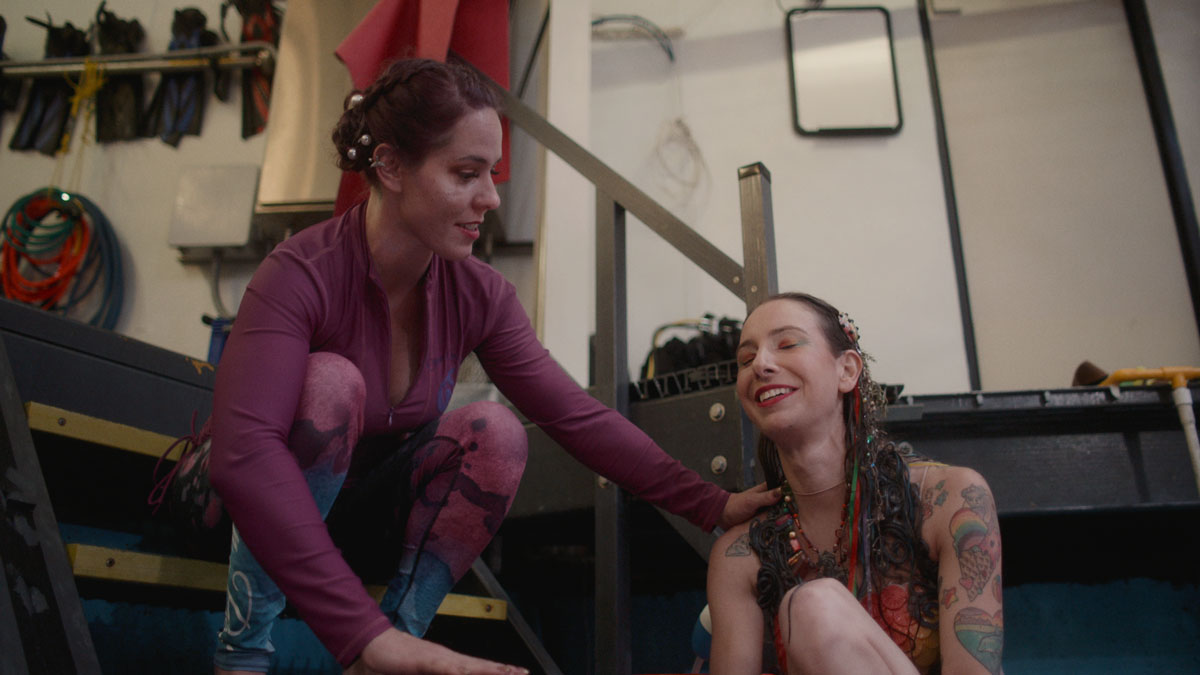
MerPeopleMorgana Alba and Mermaid Sparkles in “MerPeople” (Photo courtesy of Netflix)

Unless they’re in the water, the MerPeople have helpers, not just to zip them up but to carry them. Are there names for these helpers? Who are they?

MerWrangler is usually the term or Wrangler, but you can also have a pirate. So, either you have a pirate or a MerWrangler. Obviously if you’re in the water and you’re wearing a silicone tail that can be 30 to 50 pounds, you need to make it look completely effortless. But your eyes are also burning and you’re practically choking on water and you can’t breathe. You can’t hear, you can’t see but you need to make it look beautiful. Swimming in the water with those very heavy silicone tails and then pulling yourself out of the water or a tank, there’s serious athleticism in it. Mermaiding is a dangerous art. So the MerWranglers are critical, certainly when we were shooting as well. We did a lot of underwater shooting. There were all kinds of safety protocols in terms of having safety divers.

Speaking of how dangerous professional mermaiding is, you open up the documentary with that really powerful scene of the professional mermaids screaming in pain while flushing out their eyes. Why did you decide to begin with that scene in particular?

That scene in a minute, certainly in two minutes, encapsulates the show in many ways where it’s the magic. Just the mystical blue light coming from the water to the mermaids who are smiling and blowing bubble kisses to the adoring audience of children and parents. There’s that sort of otherworldly, very gorgeous underwater world. And then you get to the surface, and it’s like you’re gasping for air. For the mermaids, their sinuses, their ears and their eyes are burning.  Mermaiding is dangerous and it’s way harder than it looks. That dichotomy between the experience in water versus the experience on land for the professional mermaids is the heart of the whole series.

What surprised you about how difficult and even dangerous mermaiding actually is? Is there any sort of union or regulating committee on work conditions?

I think that mermaiding, whether it’s for a hobbyist or somebody who’s pursuing it professionally, is going to really explode at an exponential rate. We’re just at this tipping point with it. There’s work to be done in the future. In the documentary, Mermaid Morgana Alba was somebody I wanted to focus on because she really has been at the forefront of trying to trailblaze and make things safer for the artists.

Given that Florida and other places are anti-drag queens, has the Mermaiding industry felt any blowback from that at all?

Many of the mermaids that are in the documentary series expressed the feeling of being “othered” in the world as they were growing up. Chè said, “Just living in my body every day is a radical act. And I’m not gonna apologize for it.” That’s amazing, that’s trailblazing, that’s culture-shifting and world-changing. Each one of the mermaids has felt like society was telling them to not embrace their true selves. 

My team and I worked incredibly hard with the mermaids as contributors, where we were really working with them so they could film themselves. I wanted them to have a sense of ownership. I’m on the journey with them. This sort of shared journey, and really telling you from the inside out, where you can understand, even if you’re not a water person, why this would be calming and beautiful and a safe space. That’s what comes out in the series. It’s a chosen family. And you know, it should remain so for the mermaids and for anybody who wants to try wearing a tail and being in the water and feeling otherworldly and feeling like they can leave their land problems behind.

I enjoyed the fun mer-lingo in the series. And you use that as well in the storytelling, such as the “Fin” at the end. Did you have to hold yourself back on puns or was it anything goes?

“There is still magic left in the world.”

There are many situations in which a series about professional mermaiding could either feel really cheesy or try to hype up some catty drama or focus on sort of one type of mermaid — maybe the traditional type of mermaid (young, white, cis female). That’s not the filmmaker that I am. I think it’s really important to both bring a lot of fun to the series, but also thoughtfulness. Every morning, when the crew got up, we’d be like, “Shello!” then get all of our gear and get out of the hotel and start our day of shooting. We would also say “fin-tastic” sometimes.

None of us, however, wanted to do anything that felt very cheesy, or quite frankly, I don’t know whether I can say this or not, but reality-TV-like. This is a documentary series. We really took our time with the mermaids, we shot mostly single cameras and we embedded ourselves very quietly and respectfully in the various mermaids’ lives. So yeah, it’s important to have some of that lexicon but it should feel like jalapeño pepper seasoning. You want the series itself to be this authentic, honest meal.

I’m not sure if you asked, but how many of the newer mermaids cited “The Little Mermaid” as an inspiration? Do you think it will inspire a new generation?

They’re obsessed with anything mermaiding! Now, do I think that this is going to be the season of the mermaid? Yes. 100%.

What do you hope viewers will take away from “MerPeople”?

Mermaiding is a beautiful, fierce, gorgeous, kaleidoscopic community that is incredibly inclusive. And it gives people a home, a family, a community and friendships, a place to express who they really are, not what society asks them to be or demands them to be, but who they really are. Spending time with the mermaids was a joy, both professionally and personally. There is still magic left in the world, and I think, for me, it’s about having the audience connect and their own ways of how they feel authentically themselves. There’s something about a world in which you can be you and not only are you accepted for it, you’re celebrated for it. But also, you can sort of find your own identity and you can also find your own community. That’s what I hope the audience takes away from “MerPeople.”

MerPeopleMerPeople (Photo courtesy of Netflix)

“MerPeople” is currently available for streaming on Netflix. Watch a trailer for it below, via YouTube:


AI clones, robot spider arms, and a “Google-killer”: The week’s wildest tech moments

This week’s tech news was almost entirely devoured by a massive wave of coverage on the fast emerging changes promised by artificial intelligence. Sure, there were plenty of hot takes worth mulling in the op-ed sections of the big outlets. But amid the shifting discourse and avalanche of AI news, we can break it down to some key, must-know items: the most important is about the emerging marriage between Microsoft and OpenAI, the company behind ChatGPT. Microsoft has dumped more than $100 million into OpenAI, a relationship that has privacy advocates and technologists concerned. 

But before we sum up the existential dread-mill of AI news, can we just take a moment to appreciate how unbelievably cool it would be to have AI-powered robotic arms that can turn you into Dr. Otto Octavius from Spiderman?

Because that’s what Japanese company Exii recently premiered with their Jizai Arms — a robotic arm bag, or “supernumerary robotic limb system” that enables humans to control six additional AI robotic limbs. Aside from the machine’s potential off-label use in LARPing, it’s a perfect example of how AI is can be used to improve the lives of those with disabilities — a use that is emerging quickly in medical tech, particularly to the future advantage of those with paralysis.

A dancer wears a robotic multi-arm backpack from Japanese company Jizai Arms, which she is able to control with AI assistance.A dancer wears a robotic multi-arm backpack from Japanese company Jizai Arms, which she is able to control with AI assistance. (Screenshot: Jizai Arms / Rae Hodge)Hope for humanity aside, though, let’s turn to Microsoft. The big news this week was that Microsoft announced that AI tech (including OpenAI’s) would be integrated into new computers, operating systems, and even certain chips

At the same time, OpenAI announced that it will start using Bing — not Google — as the default search engine for ChatGPT, a move that’s heating up the Search War between the two tech titans. But Google isn’t out of the fight just yet. Despite struggling initially to get their Bard AI assistant moving, former OpenAI execs just secured an eye-popping $450 million in funding for a Google-backed venture called Anthropic. 

Microsoft took heat this week, however, for bankrolling its AI aspirations at the cost of its workers — freezing pay for many, after already axing 10,000 workers last month. According to the Register, CEO Satya Nadella broke the bad news in an email, even though his own pay increased 10 percent, bringing his salary up to $55 million.  

Bill Gates, meanwhile, said he thinks AI could kill Google Search and Amazon as we know them. Maybe, maybe not — but Google isn’t making any friends in its latest announcement that it will allow companies to publish AI-generated ads in your search results based on your data. 

If you thought nothing could get more soulless and banal than the internets biggest data titan relying on the lack of US data privacy laws so it can serve you AI-generated ads then — in the words of Billy Mays — just wait, there’s more! Like AI-generated music. Congrats go out to Universal Music Group for making all of us feel a little more dead inside this week when they announced new contract with AI sound company Endel, as reported by Pitchfork

The companies say they just want to focus on sleep and meditation soundscapes. But the money quote in Pitchfork’s piece comes from Endel’s co-founder and chief composer, Dmitry Evgrafov, who said last year: “We’re able to create albums with the push of a button.”


Want more health and science stories in your inbox? Subscribe to Salon’s weekly newsletter The Vulgar Scientist.


Meanwhile, in commercial sectors where “content” is “produced” — as opposed to spheres where art, music or literature are the outcomes of original creation —  there’s a lot of talk about the use of AI as a “creative partner.” Given that an AI passed a Turing Test this week, there may be more to that “partner” label than one would want to admit. 

And even as industry leaders confirm that job loss fears will soon be job loss realities due to the break-neck pace of AI deployment and development, there’s no stopping the tone-deaf emergence of products like Phoenix, an AI-powered robot worker designed to look humanoid. 

Without government and industry regulation, AI’s exponential growth already suggests that it will be nearly inescapable in the near future. It’s being used on students in schools, and to create chaos online with fake terrorist events. Opera browser has a new built-in generative AI assistant and TikTok’s using an AI chatbot. You can now get an AI clone of someone and pretend it’s your girlfriend — and there’s even a buzzy new AI legal assistant on the scene called Casetext

The spread is happening beyond the US, of course. 

OpenAI’s app is now available in 10 more countries than it was last week — topping more than half-a-million installs in its first six days on Apple Store, and giving Apple a 30% cut of the profits. Meanwhile, there is a security hole in the heart of OpenAI’s ChatGPT (and Bing) that’s big enough to drive a MacBook truck through. 

One of those 10 new countries is the UK, which has only just this week finally said out loud that, yes, AI may indeed some form of existential risk. As far overdue as that statement is, it’s still more than what the US has put on paper so far as Congress, which doesn’t even include basic data privacy laws — much less a comprehensive AI governance document.

For now, the only regulations on AI are those which appear to come from the industry itself — like those from OpenAI and Microsoft


The best reads this week on AI


“The worst of conservative budget ideology”: Progressives condemn Biden-GOP debt ceiling deal

Progressive economists and advocates warned that the tentative debt ceiling agreement reached Saturday by the White House and Republican leaders would needlessly gash nutrition aid, rental assistance, education programs, and more—all while making it easier for the wealthy to avoid taxes.

The deal, which now must win the support of both chambers of Congress, reportedly includes two years of caps on non-military federal spending, sparing a Pentagon budget replete with staggering waste and abuse.

The Associated Press reported that the deal “would hold spending flat for 2024 and increase it by 1% for 2025,” not keeping pace with inflation.

The agreement would also impose new work requirements on some recipients of Supplemental Nutrition Assistance Program (SNAP) benefits and Temporary Assistance for Needy Families (TANF) while scaling back recently approved IRS funding, a gift to rich tax cheats.

In exchange for the spending cuts and work requirements, Republican leaders have agreed to raise the debt ceiling for two years—a tradeoff that House Speaker Kevin McCarthy (R-Calif.) is pitching as a victory to his caucus, which includes far-right members who have demanded more aggressive austerity.

President Joe Biden, for his part, called the deal “a compromise, which means not everyone gets what they want.”

Lindsay Owens, executive director of the Groundwork Collaborative, said in a statement Saturday night that “this is a punishing deal made worse only by the fact that there was no reason for President Biden to negotiate with Speaker McCarthy over whether or not the United States government should pay its bills,” alluding to the president’s executive authority.

“After inflation eats its share, flat funding will result in fewer households accessing rental assistance, fewer kids in Head Start, and fewer services for seniors,” said Owens. “The deal represents the worst of conservative budget ideology; it cuts investments in workers and families, adds onerous and wasteful new hurdles for families in need of support, and protects the wealthiest Americans and biggest corporations from paying their fair share in taxes.”

The agreement comes days before the U.S. is, according to the Treasury Department, set to run out of money to pay its obligations, imperiling Social Security, Medicare, and Medicaid payments and potentially hurling the entire global economy into chaos.

House Republicans have leveraged those alarming possibilities to secure painful federal spending cuts and aid program changes that could leave more people hungry, sick, and unable to afford housing, critics said.

“For no real reason at all, hungry people are set to lose food while tax cheats get a free pass,” wrote Angela Hanks, chief of programs at Demos.

While legislative text has not yet been released, the deal would reportedly impose work requirements on adult SNAP recipients without dependents up to the age of 54, increasing the current age limit of 49. Policy analysts and anti-hunger activists have long decried SNAP time limits and work requirements as cruel and ineffective.

“The SNAP changes are nominally extending work requirements to ages 50 to 54. In reality, especially as the new rule is implemented, this is just an indiscriminate cull of a bunch of 50- to 54-year-olds from SNAP who won’t realize there are new forms they need to fill out,” said Matt Bruenig, founder of the People’s Policy Project.

Diane Yentel, president and CEO of the National Low Income Housing Coalition, wrote on Twitter that the agreement is “cruel and shortsighted,” pointing to the work requirements and real-term cuts to rental assistance “during an already worsening homelessness crisis.”

“House Rs held our nation’s lowest-income people hostage in exchange for lifting the debt ceiling,” Yentel continued. “The debt ceiling ‘deal’ could lead to tens of thousands of families losing rental assistance… Expanding ineffective work requirements and putting time limits on food assistance adds salt to the wound, further harming some of the lowest income and most marginalized people in our country.”

The White House and Republican leaders also reportedly agreed to some permitting reforms that climate groups have slammed as a boon for the fossil fuel industry. According to The New York Times, the agreement “includes measures meant to speed environmental reviews of certain energy projects,” though the scope of the changes is not yet clear.

And while the deal doesn’t appear to include a repeal of Biden’s student debt cancellation plan—which is currently before the U.S. Supreme Court—it does contain a provision that would cement the end of the student loan repayment pause, drawing fury from debt relief campaigners.

The deal must now get through Congress, a difficult task given likely opposition from progressive lawmakers who oppose attacks on aid programs and Republicans who want steeper cuts.

As the Times reported, “Lawmakers in the House Freedom Caucus were privately pillorying the deal on Saturday night, and the Congressional Progressive Caucus had already begun to fume about it even before negotiators finalized the agreement.”

Sparks talks new album, ever-growing fanbase: “Our audiences are pretty accepting of eccentricities”

Sparks previewed their new studio album, “The Girl Is Crying in Her Latte,” in a suitably Sparks way: a music video for the title track starring actress Cate Blanchett dancing her heart out while wearing a striking yellow suit, while the band — brothers Ron and Russell Mael — nonchalantly go about their business in the background.

Lyrically, the adventurous song is also very characteristic of the Los Angeles band’s approach, mixing a deadpan delivery with some subtle commentary. On the chorus, the titular phrase is repeated four times, with various words — “yeah,” “sad,” “wow,” “bad” — affixed to the end. Elsewhere, the song notes that “so many people are crying in their latte” and explains the behavior by hinting at mundanity. “Every day was the same (so many people)/Tried to figure their game (so many people.)” At the end of the day, however, we’re never quite sure why anybody is crying in their latte — or why everyone is so distressed.

Mystery is certainly part of Sparks’ beauty. But it’s only one reason why the duo remains so beloved more than 50 years after releasing their 1972 self-titled debut album. (“The Girl Is Crying in Her Latte” is Sparks’ 25th studio album, or 26th if you count the band’s 2015 collaboration with Franz Ferdinand, released as FFS.) 

The Maels’ songs are witty and unexpected — such as the new album’s “The Mona Lisa’s Packing, Leaving Late Tonight,” which imagines the legendary painting fed up with museum life (and with keeping up appearances) and deciding to “take her credit card and rack up miles,” or the staid couple of “Take Me For a Ride” letting loose on date night by raising a ruckus.

“We like having situations in the lyrics of our songs.”

Musically, Sparks are also singular. At their core, Ron’s virtuoso keyboards buoy Russell’s bold and operatic vocals, although the Sparks sound then morphs and evolves depending on styles and eras. With its futuristic programming and adventurous synth textures, “The Girl Is Crying in Her Latte” is yet another stellar entry into Sparks’ oeuvre, highlighted by the percolating electro-pop of “Veronica Lake” and the guitar-heavy synth-rocker “Nothing Is As Good As They Say It Is.”

Coming on the heels of Edgar Wright’s thorough, career-spanning 2021 documentary “The Sparks Brothers” and the band’s award-winning movie musical “Annette,” Sparks are also riding an incredible wave of momentum and popularity.

On a recent afternoon, Ron and Russell Mael Zoomed with Salon to discuss the impact of the documentary, as well as “The Girl Is Crying in Her Latte” and the importance of visuals to Sparks’ existence.

SparksSparks (Big Hassle)

You’ve been so prolific in the last few years. When did inspiration for this particular set of songs first arise for you both?

Ron Mael: We had been working on a movie project and so there was some time in between and we were inspired to get back to writing three- and four-minute songs. And so it came together fairly quickly for us. It was about a year’s worth of time, both in the writing and the recording. 

How did doing the movie influence the way you were approaching this music, even subtly?

Russell Mael: I’m sure that everything works with everything else. And so maybe subliminally things creep in them. There’s one song in particular, “Take Me For A Ride,” that is really orchestral in its approach and sounds more cinematic even down to the instrumentation. 

But then in the movie “Annette” that we did — and then even in what we’re writing now for our next movie musical — we are all over the map, even musically in those projects. Sometimes pieces that were in “Annette” that don’t necessarily sound cinematic in a traditional way, like a movie score. They sound almost [like] pieces that are coming from a pop sensibility, but then imposing the narrative of the story within the lyrics and the dialogue. 

Everything with us now is this hybrid where everything feeds off each other. In the movies maybe some of Sparks slips [in] — and then in Sparks, some of the movies slips into that.

Ron Mael: Working on a movie musical feels very natural. Not that it’s easy, but it feels like a natural step for us, because the incorporation of vocals into a musical setting — even though with a movie musical, it’s a long narrative affair and multiple singers, speakers, voices — still doesn’t feel like it’s this completely separate endeavor for us. The incorporation of vocals feels like, even in a movie musical, a natural continuation of what we do ordinarily as Sparks.

You mentioned “Take Me For a Ride” — I like that song especially because it feels like a mini-movie. There’s a story happening; there’s a narrative. And a lot of songs on this record in particular have that characteristic. That’s one of my favorite parts about the record.

Russell Mael: A lot of times we like having situations in the lyrics of our songs. Even if the theme might have some traditional elements to it, [we might be] taking a traditional theme — love or whatever — but saying it in some other way where it doesn’t have to be clichéd or hackneyed.

You could even say to a certain extent that “Take Me For A Ride” is a love song in a way. It’s this couple — but they get together on this crazy ride that they take once a week to take them out of their mundane life, doing almost a Bonnie and Clyde thing or something on the weekend to spice things up. In a way, you could say it’s a love song too — but a love song coming from hopefully a completely fresh angle.

How much significance does it have for you both that this album is on Island Records, which is obviously a label that meant so much to you as well in the ’70s?

Russell Mael: It’s a pretty unique situation and story — well, first of all, that a group has even [25 studio] albums, but that Island Records was so instrumental in launching Sparks to an international audience. They signed the band in late ’73, ’74, and had us come to England and do what turned out to be the “Kimono My House” album [released in 1974]. And there was such an immediate and strong reaction for the band and that album, and especially the song, “This Town Ain’t Big Enough for Both of Us” was a really big hit. We did four albums for Island in the ’70s at that time. And then there was never any falling out or anything. You always try to rejig things to try to find fresh ways of working. And so we parted company then.

“Each album is less going through the motions and reflective of the past, and more something that is a part of the future.”

But the amazing thing is that at this point in our career, Island Records now was given an opportunity to hear the new album and they responded to the music that Sparks is doing in 2023 — and [weren’t responding] to the fact that, “Oh, isn’t it a great story. We had Sparks way back when. Just as a lark, let’s sign Sparks.” They don’t work that way. They obviously want to be passionate about the album they’re promoting.

For us, that was the most satisfying thing — that after 48 years or whatever it is, that now Island Records says, “God, Sparks is still doing really contemporary and provocative music” like we did for them in the ’70s. And so they wanted to sign the band again. We were really excited about the prospect.

It is nice to have someone look at your career and say, “It’s not nostalgia, you’re not resting on any laurels” and recognizing that you’re still moving forward and making good music and making good art that resonates.

Ron Mael: We really take pride in that. We realize that, not to sound arrogant about it, but we’re in a fairly unique position as far as bands that have been around as long as we have. We do feel that each album is less going through the motions and reflective of the past, and more something that is a part of the future. Island saw that in this album, and we’re really pleased about that.

Edgar Wright’s documentary, “The Sparks Brothers,” also really did a good job of showing each distinctive Sparks era and each distinctive album as well. My impression is that documentary helped your fanbase grow and maybe evolve and change. Have you experienced that since the documentary was released?

Ron Mael: Absolutely, yeah.

Russell Mael: Yeah. It’s been, I mean, a day and night situation almost. After the documentary came out, it snowballed. The last tour we did, we were playing to bigger audiences and then more sold-out venues as well. Even on social media, there’s been a new following of people that weren’t aware of the band at all. 

It took someone like Edgar Wright to put his passion for music in general, but specifically his passion for Sparks music, [and him] saying, “Dammit, Sparks need to be heard and seen by a bigger audience,” because he feels that we deserve it and deserve to be on the musical map in a bigger way. He couldn’t figure out why Sparks hasn’t been a household name to more people — and he wanted to try, in his way, to do something about what he considered a thing that shouldn’t be happening to the band.

He devoted three years of his life to making this movie and traveled with us all around the world on tours and did all the extensive interviews that are in the documentary — the different people, talking heads, [that] he has speaking about their appreciation for the band and what Sparks means to them. And [it’s] not just musicians, but he was able to get authors and actors and TV directors and producers. So it’s this wide range. 

Like you mentioned, the thing that we thought was so positive about it too is that he treated all of the eras of the band equally. For him there isn’t one golden era. There are eras where you could say commercially things weren’t happening as well, but creatively things were still happening in those periods. Edgar wanted to get across that through thick and thin, our vision of doing what you think is right creatively has to supersede any other economic considerations or commercial considerations. In the end, the important thing is being true to your creative vision. 

A lot of young people — and a lot of old people, but a lot of new young people also — they took that message and really related that to themselves too. The film’s theme, in a certain way, became more of this universal message for people that have hesitations about what they’re doing in their lives, and in their creative lives as well.

“The people that are following Sparks now, they’re catching up on everything, on all 26 albums.”

In any case, getting back to the main point, what you brought up was that it’s really helped bring in a new audience — and brought back into the fold a lot of people that were peripheral Sparks folks that like one period, and then they just didn’t continue following the band. But then having this movie, they said, “Oh wow, I don’t know why I dropped out for so long, but I’m back and then I’m back in a bigger way now. And I see that that one period was just a part of this whole story.” It’s really been so helpful for the band.

Ron Mael: It’s also really inspiring to us that it’s international. That film had an even bigger impact in Japan than in most places. It’s not done in the Japanese language, but the feel of the documentary touched people there.

We’re doing a tour soon and we’re playing in larger places than we’ve ever played there — partly because of “Annette,” because [director] Leos Carax, aside from France, Japan is where he is the best known. But [it’s] also because of the documentary. It really means a lot to us where your music, but through the documentary, is reaching people in the same way that it’s reaching people where they’re an English-speaking audience.

Did the documentary change your perspective on anything in your career?

Ron Mael: Edgar has a big Rolodex. When somebody like Neil Gaiman — who we really admired in the past, but never met — has been following you for so long, you try to pretend as an artist that you’re not moved at all by other people’s opinions of you, but you have to be, in a certain sense. 

The fact that all these people from all different fields were following what we were doing, it probably would’ve been paralyzing if we would’ve known at the time. But it really meant a lot to us. 

And then also, we had experienced the same thing [the time] we had 21 nights where we played all of our albums consecutively one night after another in the UK in 2008. We experienced that with the documentary, where a lot of periods don’t stand out as much for us — or maybe for other people as well — because there wasn’t a commercial thing that made it stand out. 

To see all the periods from a purely musical standpoint — and the fact that somebody like Flea [in the documentary] could choose a song from an album that was ignored in a way — it is really an equalizer. Sometimes you think, “Well, I wish I could recreate that one period.” But we realize that we put effort into every single album and there is some strength in everything that we’ve done.

At this point, how do you choose a setlist? Because like you said, every fan has a different era they like; you have a couple songs where you can’t get out of the room without playing those. You have so much material. How at this point do you do that?

Russell Mael: Yeah, it’s hard because if there’s 26 albums, say, and then a set for us has turned out to be roughly around 22 songs — if you do the math, four albums aren’t even going to get one song in the set, just because it’s impossible. So it gets harder and harder. 

But it’s actually more fun, in a way, now to pick the set. On the last tour, we did a lot of songs that weren’t necessarily the obvious ones. Kind of what Ron was saying about being a leveler of everything — now if we do something from a more obscure album, the people that are following Sparks now, they’re catching up on everything, on all 26 albums. And so now doing some song that’s from a less-known album — and even a track maybe within that album that’s not that expected — it was well-received on the last tour. 

“We’re really lucky because our audiences are pretty accepting of eccentricities.”

There’s a few songs that are going to be on this next tour that are from albums that we haven’t done and songs that the only time we’ve ever performed them was on that 21 nights. Maybe one time we did the song. So for most of the new-old songs that we’ll be doing, it’s at best the second time ever that they’ve ever been done. [Editor’s note: Sparks kicked off a UK tour on May 23 and the setlist indeed contained several rarities.]

I don’t envy you. That seems like such an arduous task. That’s amazing.

Ron Mael: It’s actually fun, though, because [we’re able to take] a song that maybe doesn’t even sound like a naturally live song, and figure out how to do it. We’re really lucky because our audiences are pretty accepting of eccentricities. We’re really pleased that we can do things where it isn’t like everybody is filing out to buy a drink while we’re doing a certain song. People do really enjoy the fact that there’s such a combination of songs from all periods and styles within what we’re doing. We’re pretty kinetic live, but the songs don’t necessarily also have to be ones where you’re just powering it on. It can be something that actually takes some listening to as well.

Shows are a marathon, not a sprint, especially now. And the way you present shows is very much like a play to me, like when I saw you last year in Detroit. You have your rise up, and your coda and your denouement and everything like that.

Russell Mael: No, that’s a good analogy. Better than we could have said.


Want a daily wrap-up of all the news and commentary Salon has to offer? Subscribe to our morning newsletter, Crash Course.


What are you allowed to say about the other movie musical you have in development? You mentioned that earlier in the interview.

Russell Mael: Not much specifically plot-wise, but we got the bug about doing a big narrative project again after the “Annette” experience. And so it’s a film called “X Crucior.” In Focus Features’ press release, they billed it as an epic musical. We like that, and that can be interpreted however you want to interpret what epic and what musical means as well. All of the dialogue is [again] delivered via song. And the story is probably about as far away from “Annette” as you could get. It’s a different scope and scale too. So that’s suitably vague, I know.

Ron Mael: The one thing it shares with “Annette” is the fact that, stylistically, we didn’t feel that there needed to be a unity to the music. Obviously, there’s a thread because it’s a story; it has a beginning, a middle and an end. But as far as what each singing piece is, we didn’t feel that there needed to be smooth transitions necessarily. And that’s something that’s shared with “Annette.”

We have a preference to a more naturalistic approach to singing within a musical. Even though there are great things written for Broadway, we’re not greatly in love with that kind of singing — that kind of, maybe from our standpoint, [it’s] maybe a little overwrought. And even when things sound done in a more classical sense, we’re still coming at it as pop musicians. Some of that sensibility is going to remain there. 

We were really lucky with “Annette” because both Adam Driver and Marion Cotillard understood what we were trying to get at as far as the delivery. It worked out perfectly for that. And so we know what we’re looking for in a singing way for “X Crucior” as well.

“Hopefully what you’re doing visually is reflective of what the music is all about as well.”

SparksSparks (Big Hassle)

Is there anything else about the new record you want to add? Anything else we haven’t covered you want to point out?

Russell Mael: There’s a beautiful picture disc. [Laughs.] Those things become more and more important, like the artwork, because everything’s sadly been kind of dumbed-down online where there’s no sense of a package and holding a physical object. We wanted to make the most of having those physical objects. There’s I think three different formats of vinyl even. But the one that’s really cool is that there’s an actual picture disc version of the album. 

And you have to have a cassette, just because it’s cool and retro. But those things become more and more important to us anyway, the physical versions of the album. Streaming’s good in that you can access music like a library. But then the downside is there’s not the sense of it being an actual album with an A and a B side, two sides. 

Ron Mael: We always felt that the visual part and the live presentation and the artwork, it’s all one thing with what we’re doing musically. It isn’t that all of that is somehow diminishing you as a musician to be putting so much emphasis on visuals, because from the very beginning we always liked bands that had a visual sense. We really try, as much as we can, to take care with all of the things that maybe seem like a record company decision or somebody else’s decision, like with album artwork. To us all that is really important.

Every era has a visual aesthetic. Absolutely.

Ron Mael: No, exactly. And hopefully what you’re doing visually is reflective of what the music is all about as well.

Then one last question. Have you talked to Cate Blanchett about her potentially joining you on stage to reprise her dance?

Ron Mael: [Laughs.]

Russell Mael: [Smiling.] In our subtle way, we’ve spoken about it. The subject’s been broached. We’ll see. Obviously, there’s scheduling and things like, everybody’s in different parts of the world at different times. We hope it would happen, but we don’t want to promise anything. The song will be good with or without Cate. But with Cate would be pretty cool.

Ron Mael: [Laughs.] It would be better with Cate, have to admit.

Death in Sardinia: Murder, an unpublished masterpiece and Italy’s misunderstood island

As Sardinia, the second largest island in the Mediterranean, readied for the 100th anniversary of D.H. Lawrence’s landmark travel book, “Sea and Sardinia,” I pulled over my car at the Monumental Cemetery in the northern city of Sassari. The cemetery abounded with notable Sardinians, including two presidents of Italy, artists, writers and revolutionaries, but I had come to pay homage to the American writer Ellen Rose Giles. 

“Lawrence of Sardinia,” had haunted my sojourn. The chronicle of his six-day journey in the southern part of the island had dominated the bookstores as the only well-known work on Sardinia in the English language for a century. 

Lawrence took no notes, he famously declared. From his arrival in Cagliari, a “naked town rising steep,” he and his wife Frieda took buses and trains, first to Mandas, “where there is nothing to do,” and then to Sorgono, full of “degenerate aborigines, the dirty-breasted host” and “sordid villagers,” crossed the mountains until they arrived at Nuoro, the home of future Nobel laureate Grazia Deledda, where “there is nothing to see,” to Orosei on the eastern coast, “a dilapidated, sun-smitten, god-forsaken little town,” until they reached Siniscola, where a “young hussy” full of the “barbaric mefiance” served them roughly at a café.

After returning to his home in Sicily, Lawrence wrote “Sea and Sardinia” in a few weeks. Lawrence injected his brilliant novelist skills into the journey, conjuring some beautiful scenes of nature, especially in the train ride through the Gennargentu mountains, and praised the Sardinians for being “downright” and “manly.”

But the Englishman reported “nothing,” travel writer and art historian Georgiana King had snapped, in a footnote in her own book on ancient Sardinian painting in 1923. “His senses are attuned to the inner, not the visible.”

King’s abrupt comment came during a pilgrimage in the wake of the tragedy of a fellow Bryn Mawr college alumna, Ellen Rose Giles, who had seen “just about everything there was” in Sardinia, until “death stepped in and took her” and her “great work” that she was “never to write.”

Ellen Rose Giles already had a title for her book back in 1907: “Sard Folklore, Birth, Marriage and Death.

She told a Sardinian journalist that publishers in New York were awaiting the manuscript; proposals had been lined up for translation. La Nuova Sardegna’s newspaper reporter called it a precious collection of folas e contados, stories and songs; a future art researcher would refer to her work as the most “extensive collection of original data in Sardinia.”

One reporter called Giles’ unpublished work a precious collection of folas e contados, stories and songs; another researcher referred to her work as the most “extensive collection of original data in Sardinia.”

A philosophy major at Bryn Mawr, Giles had come from an affluent family from Philadelphia, her father in finance. She earned scholarships to study at the Sorbonne in Paris, and at the University of Berlin. She traveled the Middle East, becoming an expert on ancient languages, fluent in Greek, Latin, Italian, German, French and Arabic.

On her return voyage back to the States from Italy, Giles wrote that she had experienced a near-mystical experience when the ship pulled into the gulf of Cagliari, the capital of Sardinia. She made up her mind to return. Within a year, she stepped onto the island with a new mission.

Featured in La Donna magazine in 1908, Giles cultivated the image of an adventurous explorer departing into a wintry night in the Barbagia mountains of Sardinia. She packed a camera, a palette and a Browning revolver. She befriended bandits and met with rival clans. She became known as the American writer who had “visited every corner” of Sardinia, conversant in Sardinian languages and fluent in Italian.

In an earlier interview, Giles had declared her book would be a tribute to Sardinian hospitality, and a land “so beautiful and so great, as it is ignored and poorly discussed,” and a land to which she “now feels so fatally linked.”


Want a daily wrap-up of all the news and commentary Salon has to offer? Subscribe to our morning newsletter, Crash Course.


Those last words proved fateful.

When her housekeeper found her body in the drawing room in the northern city of Sassari in the winter of 1914, Giles was clinging to the last minutes of her mysterious life. The acrid smell of gunsmoke still lingered in the air. The Browning pistol was on the floor, amid a scattered array of Italian money. A bottle of chloral hydrate and bromides was nearby. That was a fairly heavy but common cocktail in the “alkaloids era” for anxiety or sleep problems.

Finding Giles still alive, with a bullet wound to her chest, the housekeeper ran for a nearby doctor, but his frantic last efforts to revive her did not succeed. He ruled her death a suicide, and then a murder — and then a suicide again. One strange detail confounded him; the bullet wound had not left a mark on her blouse, as if she had been covered up after the fact, and that detail quickly led to rumors of a mysterious lover who had escaped the scene of the crime.

In the winter of 1914, the American writer’s death headlined all the major newspapers in the U.S., Italy, and Europe. The wire services called it the “tremendous sensation” of the day.

The New York Tribune ran with the lead: “Artist Killed in Sardinia.” That story evolved into various versions: “Bryn Mawr Girl is Murdered in Her Sardinian Home,” the Courier in rural Pennsylvania screamed, running with the story of a nobleman suspected of foul play with the “noted artist and author,” while a newspaper in rural Wisconsin went with “Girl Writer Found Dead in Mystery Case.” The Muskogee Daily Phoenix added its own moral twist: “Girl Artist Who ‘Was Different’ Is Murdered Abroad.”

The Italian newspapers dropped the murder intrigue but kept up the sensational headline: Impressionante Suicidio.

Giles headlines Newspaper collageGiles headlines Newspaper collage (Courtesy of Jeff Biggers)

A New York Times story added more intrigue, noting that Giles had just changed her will, leaving behind $40,000 to her mother, even though they had fallen out over a disagreement. “An unhappy heart affair in Sardinia had resulted in a quarrel with the mother,” the New York Tribune added, as if its readers were part of the family drama now. Strangely enough, Giles’ mother Anne had recently moved to the rustic confines of a rural monastery in another part of Sardinia.

Ellen Giles had been working on her book for years. In 1907, she had mentioned spending 15 months in the most remote areas, listening to “the voices that arise from the Nuraghi and from the forgotten Phoenician and Roman necropolis and from the ruins of medieval castles.” She had crossed the countryside and mountains on horseback, living among the “shepherds’ huts.”

The reports on her funeral noted a huge crowd of onlookers and mourners. La Nuova Sardegna described her as “blond” and in her 40s. A Philadelphia newspaper told its readers she was a “spiritual girl, with dark eyes and dark curling hair.”

A former classmate remarked that Ellen had been “different” from the other students. “Not eccentric,” she added, but Ellen’s life seemed “apart” from the others. She brought to mind Elizabeth Barrett Browning, and a “cultivated circle” of Americans and Brits who had lived in Florence in the Victorian Era.

Her death, ultimately, could have taken place in another era; the Sassari police abandoned any investigation. The body of Giles was buried in a “foreign grave.” 

The incredible treasury of Giles’ notes ended up with King, though they were eventually lost over the years.

There, in the Sassari cemetery, I looked at the grave with only her name — no date or place of birth or year of death, as if only a place marker of her journey in Sardinia. As if only her name, and not the great book on Sardinia, would ever make it into print.

My great-uncle helped liberate a concentration camp. His last words to me were a warning

The last time I saw my great-uncle, he uttered six words that I will never forget. Struggling to speak, as he was already 102 years old, his mouth slowly formed each syllable with excruciating effort: “Nazis… are… bastards… Shoot… to… kill!”

My mother and I laughed. We were visiting Dr. Merrill Stern — retired New Jersey dentist and former officer in the United States Army Air Corps (a precursor to the Air Force) — after receiving a dire update about his health. When we had first arrived, Uncle Merrill saw my beard and in sincere confusion exclaimed, “Rabbi!” My mother soon clarified who I was, and he indicated that he recognized me. The conversation evolved to the subject of my occupation; I reminded him that I’m a professional writer, and he asked how I was doing. At that moment I was dealing with a wave of targeted, antisemitic online harassment, but Uncle Merrill could not keep up with the complicated story surrounding the episode. I then tried a simpler approach: I told him that I was dealing with Nazis at my job. This prompted his “shoot to kill” remark — and, as a World War II veteran who fought in Europe, I soon realized that he was not joking around. Lest I harbor any doubt, it was quickly dispelled because Uncle Merrill responded to my mother’s and my laughter by slowly yet emphatically exclaiming, “I’m… not… joking… around!”

Characteristically, he followed that remark with a wink and a wry smile, adding: “You… liked… that… didn’t… you?”

“Every day for as long as I was there… some people were so close to starvation that they just continued to die, even though we tried to save them.”

Uncle Merrill taught me repeatedly throughout my life that you cannot be a good person if you are weak in the face of evil. Uncle Merrill and I are both Jewish, and as such were both painfully aware of the fact that 6 million Jews were killed by the Nazis during the Holocaust. Yet Uncle Merrill understood that reality with an acuteness that I am incapable of imagining, much less understanding. He had participated in the liberation of Ebensee, a subcamp of the larger Mauthausen concentration camp. Between 1943 and 1945 it housed 27,278 male inmates — many of them Jews and/or political prisoners — of whom between 8,500 and 11,000 died, often from hunger, malnutrition and exhaustion. Inmates were forced to work hard labor, and since they were going to be killed off anyway, they were never given any food or meaningful protection from the extremely cold weather.

Uncle Merrill recalled his experiences while lecturing about the Holocaust to a New Jersey elementary school class in 1994.

“I was with the United States Army with a hospital unit called an evacuation hospital” in Germany, Uncle Merrill told the assembled children. “That’s like the MASH hospital you see on television and in the movies.”

When his evacuation hospital learned that advancing infantry troops had discovered a concentration camp in Austria where people were starving to death, “they called our hospital unit up to take care of them, and we moved up into Austria.” Uncle Merrill then proceeded to describe the town of Ebensee as “one of the most beautiful sections of the entire world,” a quiet place full of friendly people who invariably claimed they had no idea what had been going on in the middle of their community. The camp itself was filled with emaciated inmates in striped uniforms.

“I saw diseases that I had never seen before and never seen since. I’d only read about them in textbooks.”

“Every day for as long as I was there — which was several months, because you couldn’t reverse the starvation — some people were so close to starvation that they just continued to die, even though we tried to save them,” Uncle Merrill recalled. “Some were lying around in the wet, muddy ground, too weak to move or eat, and were basking in the sun, trying to regain their strength.” He witnessed firsthand how “when a person is dying of starvation, there is no resistance anymore. Everything is broken down. And as a dentist, I saw all the varying degrees of how a person dies when there’s no resistance anymore.”

Indeed, as a dentist, Uncle Merrill had the unenviable responsibility of taking an up-close look at how starvation destroys even tooth enamel, one of the body’s hardest substances. “I saw diseases that I had never seen before and never seen since,” Uncle Merrill explained. “I’d only read about them in textbooks.”

One of these diseases is called noma, an often fatal ailment of the mouth and face characterized first by ulcers and then necrosis (death) of the tissues and bones surrounding the mouth. “The professor who wrote the textbook would describe the disease and say he had never seen a case, but he had read about it. And yet I was seeing that type of thing every single day because people dying of starvation have no resistance anymore.”

These ordeals did not stop the inmates from sharing their stories, with horrors such as lining up outdoors nude in the bitter cold and being told to stand there until many people dropped dead, an eventuality rendered more likely by how guards hosed inmates with water. (“Ice actually formed on them when they died.”)

And, of course, there were the ovens. “I didn’t see them used, thank God, but there were ovens there to burn and cremate the bodies of the dead,” Uncle Merrill said. “There were bones and ashes outside the ovens because after the ovens actually destroyed the bodies, then they had to rake out the ashes and throw them aside.”

He vividly recalled the smell, not just of the ovens but of death itself. “I’d go home and there would be a smell in my nose leaving the camp with the smell of decaying bodies, the smell of fecal matter all over the ground because people were incontinent and couldn’t restrain their bodily functions,” Uncle Merrill remembered. “They urinated and defecated on themselves and on the ground, and that stench would remain with me.”


Want a daily wrap-up of all the news and commentary Salon has to offer? Subscribe to our morning newsletter, Crash Course.


Near the end of his 1994 lecture to the children, he mentioned genocides occurring in Rwanda and Bosnia as examples of how the world was continuing to stand aside while evil was triumphing. The apartheid regime in South Africa, which he compared to Nazi Germany’s government, had only recently been overthrown.”You may have, or your parents may have, different opinions about that, but it just seems to me like this is such an alarming thing that happened, and it seems like we’re almost letting it happen again,” Uncle Merrill explained as he and the children conversed.

All of those atrocities were born of hate and of lies — such as Adolf Hitler’s Big Lie, blaming Jews and socialists for Germany’s loss in World War I. Uncle Merrill connected all of these issues as linked by hateful, bigoted, murderous ideologies. “I don’t want you to just dismiss [the Holocaust] and say, ‘This will never happen again. It just can’t happen. I can’t imagine it happening.’ It’s happening right now. That’s how serious it is, and don’t just dismiss it as ‘the old days.'”

I found myself mourning not just his death, but the loss of the direct connection to World War II that is taking place as we lose the few surviving members of the Greatest Generation.

Three years after his speech, Uncle Merrill received a brutal reminder that the so-called “old days” are not quite so old. While attending a sixth-grade picnic in upstate New York in 1997, I was nearly murdered by a group of my classmates when they held my head underwater in a lake while chanting, “Drown the Jew!” When Uncle Merrill first learned about this shortly after my family moved to Pennsylvania, he became very quiet. My mother recalled, “more as a conclusion rather than a question, he asked, ‘they wanted to kill him?’ We answered ‘yes.’ He got up and walked quietly out of the living room and out of the house and came back about 10 minutes later, eyes wet. I wanted to go after him, but Aunt Rhoda told me to leave him be. I think he may have hugged you more that day. I know he gave me one of the tightest hugs when he left.”

He did not limit his investment in my life to tragedies. After learning in 2006 that I had written my Bard College senior project about President Jimmy Carter, he asked to read it. At the next family gathering, he pulled me aside to discuss it. He reminisced about the 1976 election, how he had heard about Carter’s then-innovative grassroots primary campaign at the beginning (Uncle Merrill was active in community and civic affairs) and was an early supporter of his candidacy. When I asked how he felt about Carter’s recent book criticizing Israel, “Palestine: Peace not Apartheid,” Uncle Merrill said that people can criticize Israel in good faith without being antisemitic — and that, given the Israeli government’s mistreatment of Palestinians, Jewish liberals like himself also had serious criticisms of Israeli policies, even though he regarded himself as pro-Israel. After I spoke with Carter for Salon in 2018, Uncle Merrill was incredibly proud — and strongly agreed with Carter’s criticisms of America’s then-president, Donald Trump.

After he passed away last month, I found myself mourning not just his death, but the loss of the direct connection to World War II that is taking place as we lose the few surviving members of the Greatest Generation. They had an immediate awareness of the threat posed by Nazism and all of its ugly ideological brethren — an awareness that is dangerously lacking in modern politics.

This can be seen most notably in the Trump movement, which traffics antisemitism and weaponized its very own Big Lie (that the 2020 election was stolen from Trump) against the U.S. government on Jan. 6, 2021. Yet Trump is far from alone among Republicans in behaving as if the lessons of World War II have been forgotten: There is Alabama Sen. Tommy Tuberville, who expressed skepticism about the growing problem of white nationalists in the military by saying of the so-called white nationalists “I call them Americans,” and Georgia Rep. Marjorie Taylor Greene, who has a long history of antisemitism and recently compared calling someone a “white supremacist” to calling a black person “the n-word.” This erosion of awareness is not limited to partisan politics: In 2021 a Texas school official argued that books about the Holocaust should be balanced with books that have “opposing” perspectives (she later apologized).

This is why I cherish my great-uncle’s parting advice. They are the words not just of a man, but of an entire generation. Politics has plenty of room for socialists, liberals, moderates, conservatives, libertarians and all other non-hateful ideologies. But when it comes to the hate-based ideologies of the far right, the only appropriate attitude is absolute opposition. Why? To quote Uncle Merrill, “Nazis are bastards.” While I can not advocate killing Nazis, no society that can call itself civilized will long endure unless we forcefully oppose their ideas.

“The Pasta Man” Mateo Zielonka demystifies homemade pasta for beginners: “Simple is best”

Dubbed “The Pasta Man” by his hordes of fans and adherents, Mateo Zielonka has had a meteoric rise within the realms of food — and of course, pasta, specifically. 

Zielonka details his journey on the homepage of his website: “When I first arrived in London from Poland I had only packed for a two-week trip, but I ended up taking a job in the kitchen at Mischkins, a Jewish deli in Soho. I’d never really cooked anything before and I only had one cookbook – “The Sopranos Family Cookbook,” a birthday present I got when I was 17 – but I felt completely at home in the kitchen. I loved the buzzy atmosphere, the people, discovering new foods, and so I ended up staying.”

(Fun fact: I bought that same cookbook for my brother for Christmas a few years back; it’s “compiled by Artie Bucco” and that alone should sell you on it.)

Since then, Zielonka has explored various kitchens and restaurants and is currently the head chef at 180 Studios in the Strand in central London. His new cookbook, “Pasta Masterclass” is stunning, comprehensive and amazingly thorough, even encompassing QR codes to give visual aids for readers as they begin to tackle the myriad beautiful pastas in the book. In addition to homemade pastas, Zielonka also includes flavorful sauces, garnishes, toppings and sides to help round out your homemade pastas in the best ways. 

Read ahead for more on making pasta at home, why you shouldn’t be spooked about doing so and how to feel confident in your newly acquired pasta-making skills, all courtesy of “The Pasta Man” himself.

The following interview has been lightly edited for clarity and length.

What are your favorite pasta dishes? 

My favorite filled pasta is tortelli con la coda, filled with salmon, capers and herbs. It’s a special dish, so I save it for special occasions. For a more everyday pasta, I love a slow-cooked tomato sauce (either using tinned tomatoes or fresh when they’re plentiful and sweet). I serve it with spaghetti chitarra and a portion of burrata if guests are there, too.

What began your love affair with pasta?

I started making pasta at a busy London restaurant and fell in love with all the process and the range of ways it can be served.

What do you think would be a great starter recipe or dish for a beginner? 

I always say simple is best, so if you have a pasta machine then making tagliarini, tagliatelle or pappardelle is the simplest pasta shape. If you don’t have a pasta machine, start with malloreddus. Either way, try serving with pesto trapanesse. 

Mateo ZielonkaMateo Zielonka (Photo courtesy of Dave Brown)

What’s your favorite under-utilized pasta shape? 

I love culurgiones, from Sardinia. They’re tricky to make, but so worth persisting with because they are beautiful and extremely tasty – filled with potato, mint, garlic and cheese.

Are there any pasta cooking “myths” you’d like to debunk? 

Don’t put any oil in your pasta cooking water (you really don’t need to) and never drain all of the water after cooking. You need this beautiful starchy water to add to the sauce and help it cling to the strands of pasta. 

What are some top tips for pasta beginners?

Just start! It’s fun, it doesn’t have to be perfect, and look for videos to help you learn. There’s plenty of shaping videos on my website.


Want more great food writing and recipes? Subscribe to Salon Food’s newsletter, The Bite.


Where did the name “the Pasta Man” come from? 

I posted lots of pictures on Instagram when I was first making pasta at home. I was learning, improving my technique and sharing the images online. I was obsessed! That’s when people started calling me the Pasta Man as I never posted pictures of anything else.

How are the QR codes incorporated into the book? 

The QR codes link to shaping videos which help people to understand the step-by-step process of pasta making. I think very visually, so they are the best way for me to share the information.

The caramelle on the book cover are stunning! What recipe/dish are they used in? 

There are two caramelle recipes in the book. One is filled with sweet potato and goat cheese, the second is filled with duck and served with pickled rhubarb

https://www.instagram.com/p/CsWJcHRgT8u/?hl=en

Tell me about your fascination with multi-colored pastas? They are so striking.

Making pasta is so relaxing for me. It’s such an absorbing process and many people say they find it good to work with their hands to create something – whether that’s food or anything else creative. Adding color to the process adds an imaginative dimension, which I just love as it feels challenging, as well as creative and fun.

What are some ingredients that you like to use in your pasta dishes that might seem unusual or unique? 

I’ve mentioned pickled rhubarb above. I’ve used seaweed, miso, cod . . . often, I’m looking for a twist on a more conventional recipe, but I try to stick to my own advice that simple is best. It’s too easy to overdo something. 

Pasta Masterclass by Mateo ZielonkaPasta Masterclass by Mateo Zielonka (Photo courtesy of Dave Brown)You can purchase Mateo Zielonka’s “Pasta Masterclass” here!

Tagliarini with Creamy Ricotta, Lemon and Spinach

Once, when I was talking to my friend Guiseppe in the kitchen, he told me that his mum often served him spaghetti with ricotta sauce when he was a kid, a fond childhood memory that made us both smile. In my version, I’ve added chopped spinach and nutmeg to give the sauce some body, and because I’m always looking for ways to add greens to a meal. 

Yields
04 servings
Prep Time
10 minutes
Cook Time
15 minutes

Ingredients

400g/14oz tagliarini (page 78) [in the book]

45ml/3 tbsp olive oil

2 garlic cloves, finely chopped

2 small shallots, finely chopped

½ nutmeg, grated

200g/7oz spinach leaves, washed and chopped

350g/12oz ricotta

grated zest of 2 lemons, plus juice of ½ lemon

45g/1½oz Parmesan, finely grated

pangrattato (page 248) [in the book], to serve


Directions

  1. In a large saucepan, heat the olive oil and fry the garlic for 1 minute until fragrant, then add the shallots and cook on a medium-low heat for 5 minutes. Grate over the nutmeg and cook for a further 3 minutes to let the shallots absorb the aromatic flavor. Add the spinach along with 1 tablespoon of water, cover the pan with a lid and cook for a further 2 minutes until the spinach has wilted. Set aside to cool.

  2. Combine the ricotta, lemon zest and Parmesan in a large bowl.

  3. When the spinach is cool enough to handle, remove the excess liquid by squeezing it with your hands, then add it to the bowl of ricotta and combine everything together with a wooden spoon.

  4. Bring a large pan of water to the boil and season generously with table salt. Take a ladleful of the boiling water and add it to the ricotta and spinach mixture, stirring it in to create a loose, creamy sauce. Now transfer this to a large saucepan and set it on a really low heat, keeping the sauce warm rather than cooking it.

  5. Carefully drop the tagliarini into the boiling water and cook for 1 ½ minutes, then use tongs to lift the pasta into the sauce. Toss to mix it well. If the sauce is too thick, simply loosen it with more pasta cooking water. Squeeze over the juice of half a lemon and season to taste with sea salt and freshly ground black pepper.

  6. Serve into four warmed bowls, with a generous sprinkling of pangrattato on top and a large dish of garlicky sautéed broccoli on the side.


Goodbye to “Mrs. Maisel”: You were almost briefly marvelous

It changed faster than many of its characters talked, a rapid-fire delivery that creator Amy Sherman Palladino was known for. At first: a beautiful rich bride, then a distraught, drunk wife and mother brought down by her (aspiring, awful comic) husband’s sudden infidelity, then a fledging star stepping into the stoplight, unexpectedly.

It was “The Marvelous Mrs. Maisel” and from the beginning, it was one woman’s journey. And from the beginning, we wanted the journey to be a little more meaningful and the title character to be a little more than she was capable of being. 

Its best moments were the most specific, the ones firmly rooted in its art form.

It dipped into alternative history, with appearances from real-life figures, most notably Luke Kirby as Lenny Bruce, whose loving and unflinching performance brought the famous, late comedian into the realm of all new-viewers. It introduced, like Sherman’s and husband / creative partner Daniel Palladino’s show “Gilmore Girls,” an entire borough’s worth of side characters, often more interesting than the stars. That includes feisty manager Susie (Alex Borstein). Let’s be honest. It was Susie’s show all along. Or, it should have been. 

“Mrs. Maisel” took its final bow May 26, after a five-season run which saw multiple Emmys, Golden Globes and Screen Actors Guild awards, critical frustration as well critical acclaim. It was almost what we needed, and in its last episode, it proved what once we loved about it and what it could have been. 

Set in 1950s and ’60s New York, “Mrs. Maisel” followed the adventures of one Midge Maisel (Rachel Brosnahan), a wealthy housewife who stumbled onto the Gaslight Café stage after a night of heavy drinking. We’ve all been there. Well, we’ve all been brought down by something or someone, although hopefully our lowest points didn’t end with an arrest, like it did for Midge. For Midge, it did repeatedly. One of the deserved criticisms of the show was that there were no consequences for our main (rich, white, heterosexual) heroine. Every arrest went away. Every money problem vanished.

But “Maisel” gave us a tour of comedy ups and downs, including the struggle to find gigs, to be taken seriously as a woman in comedy (everyone thought Midge was a singer, at first, because of the way she looked), juggling day jobs and the pressures of family, performing on tour and being fired. Its best moments were the most specific, the ones firmly rooted in its art form: comedy.

The Marvelous Mrs. MaiselRachel Brosnahan (Miriam ‘Midge’ Maisel), Luke Kirby (Lenny Bruce) in “The Marvelous Mrs. Maisel” (Philippe Antonello/Prime Video)
That includes Lenny, who deserves a better ending. His complicated arc dipped and in out of the comedian’s real life, such as actual Lenny’s struggles with addiction. But those struggles were only alluded to in the show — quick glimpses of needles in a bag in a bathroom, Lenny passed out in a gutter and rescued by Midge — which did not deal with them in enough of a real way. While the emotional heart of last season ended with a huge moment: Lenny and Midge finally sleeping together after years of tension, and true love and support from Lenny for Midge’s work, a rare move compared to most of the men in her life, the storyline was dropped in Season 5, like last season’s unfashionable hat.

Susie deserved better too. Hilarious and complicated, with a difficult family and the shadows of poverty also looming over her, many accused the show of queer baiting with her character. The show sort of had her come out in its final season, revealing a long-term relationship with a former roommate. But that relationship ended tragically and abruptly and Susie seems to be another in a long line of queer characters not allowed to have real or lasting love.

The Marvelous Mrs. MaiselAlex Borstein (Susie), Rachel Brosnahan (Miriam ‘Midge’ Maisel) in “The Marvelous Mrs. Maisel” (Philippe Antonello/Prime Video)

A lot of people want more, have hidden depths inside them of beauty, talent and innovation. Art can come from anywhere. 

Stories don’t and can’t always get the chance to end perfectly, to wrap everything up. Midge’s father Abe certainly has an emotional revelation, but the arc of his wife, Rose (Marin Hinkle), feels truncated, as does that of Joel (Michael Zegen). Supporting characters like Bailey De Young’s Imogene have been forgotten, and it’s hard to shake the feeling that Shirley (Caroline Aaron), Midge’s mother-in-law, never got her time.

The Marvelous Mrs. MaiselRachel Brosnahan (Miriam ‘Midge’ Maisel) in “The Marvelous Mrs. Maisel” (Philippe Antonello/Prime Video)As for Midge? Her time is coming. And we know this for sure, because the show kept reminding us this season with flash-forwards through the ages, when Midge becomes a kind of Joan Rivers, Phyllis Diller figure. She makes it, OK? She makes it big. But we didn’t love her when she was being rich, acting on the privilege she always had. We didn’t love her when she was confident and blasé about the spotlight and had a certain future.
We loved her when she was open and raw, giving unflinchingly monologues on small stages she often ran onto, with piddling crowds she had to win over. Under stress and pressure, she rose. The finale gives us one moment of that, one brief and shining moment when she takes the mic. And the show takes us back, emotionally and physically, spinning around her to return us to her point of view — and to a dark, spotlit crowd that recalls the Gaslight, her humble beginnings (well, Susie’s humble beginnings). Back when she was someone we could root for, someone we weren’t actually sure would make it.


Want a daily wrap-up of all the news and commentary Salon has to offer? Subscribe to our morning newsletter, Crash Course.


In her final act of the show, Midge talks about her kids, specifically, her daughter, Esther. Because of Midge’s unexpected life: “She’s going to grow up tougher.” Maybe it was Esther’s show all along. Bookending the final season with Midge’s daughter, and giving us that one last triumphant, unexpected set is a reminder that a lot of people want more; they have hidden depths inside them of beauty, talent and innovation. Art can come from anywhere. All we need is four tight minutes. And a chance.

Goodbye, “Mrs. Maisel.” Thank you and goodnight. 


Kentucky man wounded in gun fight over the last Hot Pocket

Things got heated in a Kentucky kitchen earlier this week after an altercation over a Hot Pocket ended with a felony assault charge. According to NBC News, Clifton Williams was arrested on Sunday after shooting his roommate, who sustained non-life threatening injuries. 

“Mr. Williams got mad he ate the last Hot Pocket,” the reporting officer wrote in the police report, who added that Williams then “began throwing tiles at [his roommate].” 

As Louisville NBC affiliate WAVE reported, the victim told investigators that he initially tried to fight back, but then decided to leave. Williams briefly followed, but then returned inside to get a gun. Williams then shot his roommate “in the ass while he was trying to leave,” according to the citation.

The victim said he then went several blocks away to get help. 

If this story sounds like a joke, it’s because it is — and America is the punchline. 

As CNN reports, this incident is just another example of how, in a country with more civilian guns than people, simple disagreements can escalate into incidents of gun violence very quickly. 

Individuals in customer-facing positions are particularly vulnerable. 

In Keene, Texas, earlier this month a 12-year-old boy allegedly shot and killed a Sonic Drive-In employee during an argument in the restaurant’s parking lot. 

In 2022, an Atlanta man opened fire in a Subway, killing one employee and injuring another, after complaining there was too much mayonnaise on his sandwich. Just a few days later, in Brooklyn, a customer shot a McDonald’s worker in the neck because their fries were cold. 

In the case of Clifton Williams, under Kentucky law, a person convicted of a second-degree assault conviction can be sentenced to five to 10 years in prison. He was arraigned in Louisville Metro District Court earlier this week, where he entered a not-guilty plea. A bond was set at $7,500 cash. Per WAVE, Williams was ordered to have no contact with his roommate and not to possess a firearm or any other weapons. 

The next court date for Williams is set for May 30. 

How to create a realistic grocery budget (and actually stick to it)

After several years of a global pandemic, supply-chain issues and skyrocketing inflation, grocery prices are finally starting to come down. 

Well, somewhat. 

As CNN Business reported earlier this month, from March to April, grocery prices ticked down 0.2%. It’s not a big number, but it is heartening for a couple reasons. The first is that there are specific categories that saw a more drastic drop, like milk which saw a 2% decline in price. The second reason is that this is the first time supermarket prices have dipped as a whole since September 2020. 

That said, many Americans are still feeling the squeeze — especially when it comes time to ring up the items in their cart. But this week Salon Food is focused on cutting costs.  As part of “Budget Week,” keep an eye out for stories, recipes and how-tos that center on eating better for less

What’s the first step? Here is our beginner’s guide to setting a realistic grocery budget (and actually sticking to it). 

Establishing your budget 

Like anything having to do with money, the final number you land on is going to be unique to you based on your income, family structure and dietary needs. That said, here are some figures to get you going: Many financial experts recommend spending between 10% and 15% of your monthly paycheck on food. That includes both dining in and eating out. 

So, for ease of math, if you brought in $1,000 per week — and that figure worked for your larger budget — you would budget between $100 and $150 for groceries and food each week, or between $400 and $600 per month. 

A great place to look for guidance is The United States Department of Agriculture (or the USDA) website, which offers sample food spending plans for singles, couples and families of four divided into four categories: thrifty, low-cost, moderate-cost and liberal. As an example, the department estimates that a single female in the 20 to 50 age category could eat a full, healthful diet at “moderate-cost” for $314.80 per month. However, the best place to start establishing a realistic budget is by looking at your current food costs. 

Check your last few credit card statements or banking app to determine how much you are spending each month on groceries, dining out, delivery and take-out (I know when I’m trying to budget or save money, delivery and take-out are the first things to get put on pause, which causes me to really make sure that I’m getting the most out of my groceries at home).

Once you’ve nailed down a specific number, it’s time to plan your next supermarket trip. 

Shop your pantry 

Much like fashion experts recommend “shopping your closet” when you feel like you have nothing to wear and the siren song of Shein is calling to you, taking a look to see what is in your pantry — and taking a few moments to consider how it could be used or remixed in the coming week — is one of the easiest ways to trim grocery costs. 

Before I made my meal plan for the week, I took five minutes to take my notebook into the kitchen and jot down what “meal starters” I had in the pantry, refrigerator and freezer. I found: 

Whether I use a physical notebook or the Notes app on my phone, jotting down those ingredients helps me both meal plan and also helps me avoid re-buying an ingredient that I actually already have — which I’ve totally done before and I always kick myself for it after the fact. 

Tip: A friend of mine who used to work as a chef at a small hotel on the coast of Maryland — and who was a master at making the kitchen’s small budget stretch — told me that whenever he did a survey of food costs, he made sure to look for “leaks” in the budget. Much like you check your windows and doors for leaks that can result in a costlier eclectic bill, he looked for food items that sat unused or weren’t used to their full capacity. For him one summer, it was mango for a dessert that consistently wasn’t selling, so it got kicked off the menu. 

For me, it was the extra-large tub of arugula that I never quite made it through. For you, it may be a bag of snacks you can’t  make a dent in before they go stale. Whatever it is, while taking notes about what is in your pantry, consider jotting down items that you don’t need to re-buy because they will go unused. 

Meal plan 

One of the benefits of “shopping my pantry” is that it gives me a quick jolt of inspiration for meal planning, which can otherwise feel like a bit of a chore. Typically, I play a little bit of “mix and match” with the ingredients on-hand to get things going. So, for instance, here are the meals I planned for this work week: 

  • Chinese stir-fried tomatoes and eggs: This Francis Lam recipe is both simple and satisfying. I’m going to use the cans of tomatoes, as well as a few of the eggs I have on hand, as the base of the dish. As a side, I’ll plan on air-frying the scallion pancakes that have been lingering in my freezer. 
  • Smoky black bean soup with cheese quesadillas: I’ll plan on combining the black beans, some of the vegetable stock, chiles in adobo and pico de gallo to make a simple black bean soup, served with quesadillas made with some of the white cheddar. 
  • Coconut and chicken corn chowder: This is one of my favorite throw-it-together dinners. I combine fresh or frozen corn with diced onion, diced jalapeño, shredded rotisserie chicken, stock and coconut milk (plus a lot of coriander, paprika and cayenne pepper) for a hearty, dairy-free chowder. It’s great with avocado and tortilla strips. 
  • Sweet potato, spinach and caramelized onion breakfast tacos: I love breakfast for dinner and I’ve also been dying to riff on the fantastic sweet potato taco at Zombie Tacos in Chicago. I’m going to use the eggs and remaining cheddar that I have on-hand as a base, plus I’ll add some frozen spinach for a little greens injection. 
  • Air-fried chicken, peas, Annie’s macaroni and cheese: I try to bake a few easier meals into the weekly rotation. I’m going to use the frozen peas I have in the freezer as a side. 
  • Deli counter take-and-bake pizza: I may zhush this up with hot honey and some fresh basil. I may just eat it like a raccoon over the sink. We’ll see what this week brings. 

Typically, if I am buying meat or fish at the store, I’ll try to stretch it across at least two meals. For instance, I’m buying chicken for the corn chowder, so I’m going to plan on incorporating that into a simple meal, alongside peas and macaroni and cheese, later in the week. 

This work week is actually a slight anomaly in that I don’t have any “repeat dinners,” but I just want to stress you are meal planning: repeat meals are totally OK (and they are often cheaper to prepare!). 

I may zhush this up with hot honey and some fresh basil. I may just eat it like a raccoon over the sink.

Let’s say you get a great deal on pork sausage, which you whip up into a delicious pasta sauce. Go ahead and plan on making an extra big batch of baked pasta that you and your family can eat on for another day or two — or pack for lunches. I promise, they won’t get bored. 

To that end, I typically only choose one breakfast option and one lunch option per week for both ease and cost. This week, it’s going to be Greek yogurt, lemon zest and berries for breakfast, and then chicken salad wraps for lunch. 

Once you’ve established your meal plan for the week, double-check what ingredients you need to make the recipes you’ve picked, including spices and cooking fats. 

Think about the “extras” 

Depending on where you shop, you may toss items onto your grocery list other than food, like coffee, paper products and toiletries. If you are trying to stick to a specific food budget each month, make sure that you account for these items and — if necessary, based on how you split your household expenses — add or deduct them from your calculations. 

For instance, if I buy a $5 bag of dog treats at the supermarket, I note after the fact that the $5 expense is deducted from my “pet costs” monthly budget, rather than my “food costs” monthly budget. 

Supermarket hacks 

As mentioned, grocery prices are slowly creeping down, but in the meantime, here are the main tips I follow at the supermarket to trim costs even more: 

  • Loyalty cards: Most major supermarkets and many locally-owned stores offer loyalty cards that provide members with special prices and coupons. Those extra cents can really start to add up over a large grocery order. 
  • Discount sections: The supermarket closest to my apartment has two discount sections that I make sure to hit whenever I go. They have a discount produce table filled with bags of 99-cent produce that is just slightly bruised, discolored or nearing its sell-by date. I score cheap bags of avocados, citrus and potatoes on a regular basis. They also have an “Oops, we baked too much!” bakery section, which is perfect for quick treats and bagels. 
  • Calculator and cash: I know this is old-school, but if you really want to stick to a grocery budget, you can’t go wrong with taking a calculator and just the cash you need to the store (with maybe an extra $10 or $15 float, just in case). 

How to make your money stretch 

I’m not a fan of “just eat rice and beans” as advice to folks who are looking to eat more cheaply. Don’t get me wrong — I love beans and rice, but all Americans should be able to afford a nutritious, vibrant diet complete with fresh produce and diverse protein on a regular basis. That said, one of the best ways to practically make your money stretch is by increasing the number of plant-based meals you eat on a regular basis. 

Look into the Salon Food archives for some inspiration. 

I’m not a fan of “just eat rice and beans” as advice to folks who are looking to eat more cheaply. Don’t get me wrong — I love beans and rice, but all Americans should be able to afford a nutritious, vibrant diet complete with fresh produce and diverse protein on a regular basis.

Another longer-term strategy for cutting costs over time is by building up both your freezer and your pantry. If a particular cut of meat or fish that I like is on sale and I have the money in my budget, I’ll pick up an extra serving or two to freeze for a later time. I try to do the same with homemade meals. For example, if I’m buying ingredients for one pasta bake, could I stretch that into two dinners and freeze one? 

Similarly, adding “pantry staples” to your kitchen that are shelf-stable and take up minimal space — like bags of beans and legumes, canned vegetables and spices — as you have the funds to do so can really help you become more inventive and inspired when it comes to day-to-day cooking. 

If applicable, check to see if you and your family qualify for Supplemental Nutrition Assistance Program (or SNAP) benefits. According to the Center on Budget and Policy Priorities, in order for most participants to qualify, their “household income before any of the program’s deductions are applied — generally must be at or below 130 percent of the poverty line.” 

“For a family of three, the poverty line used to calculate SNAP benefits in federal fiscal year 2023 is $1,920 a month,” they write. “Thus, 130 percent of the poverty line for a three-person family is $2,495 a month, or about $29,940 a year. The poverty level is higher for bigger families and lower for smaller families.” 

Also, just so you know — everyone is welcome at food pantries and community refrigerators. Often you can find schedules and locations for both in your area simply by searching the phrase “food pantry” + your city, neighborhood or zip code. Your local council person’s office should also have the information available. 

“The Secrets of Hillsong”: The 8 major bombshells from FX’s new Hillsong Church docuseries

When Carl Lentz co-founded Hillsong Church New York in 2010, he emerged as a media spectacle known particularly for his unconventional look: tattoo sleeves, body piercings, Supreme sweatshirts, sagging pants, snapbacks and aviator glasses. It didn’t take long for Lentz to garner an impassioned fanbase of young churchgoers, who were smitten by his charisma and grand promises.  

So, it came as a major surprise when on Nov. 4, 2020, Lentz was fired from Hillsong over leadership issues and an affair. Just a few months later, Lentz — who also served as a spiritual advisor to Justin Bieber, Kevin Durant, Selena Gomez and the Kardashians — was accused of manipulation, bullying and sexual abuse by his family nanny. Lentz subsequently went into hiding amid his legal troubles. But despite the scandals that plagued his name, Lentz remained a figure of fascination and admiration amongst several of his followers.

Now, almost three years after Lentz’s firing, the disgraced pastor is sitting down to give his first interview about his Hillsong tenure and termination in FX’s on Hulu docuseries “The Secrets of Hillsong.” The four-part feature covers a slew of allegations made against Hillsong that have already been covered extensively in news reports. There’s the allegations of discrimination, racism, grooming, sexual abuse; exploitation of volunteer labor and misuse of church funds by higher ups.

There’s also considerable focus on Hillsong church founder Brian Houston and his father, pastor Frank Houston. The former resigned last year following an internal probe that found he had breached the church’s code of conduct by behaving inappropriately towards two women. Houston also stood trial for concealing child sex abuse committed by his father Frank, who confessed in 1999 to repeatedly raping and assaulting a seven year old church member.

While the stories of Lentz, Houston and Hillsong aren’t particularly new, there’s still plenty of major revelations made in the series. From Lentz’s childhood sexual abuse to the church’s reliance on free labor from its congregants, here are eight major bombshells from the doc:

01
Lentz was sexually abused as a child and had an addiction
The Secrets of HillsongCarl Lentz from “The Secrets of Hillsong” (Photo courtesy of FX Networks)
In the second episode of the docuseries, Lentz revealed that he was sexually abused by a family friend when he was a child. This, in turn, made him develop a “pattern of secrecy,” where he would lie and hide things from his parents and loved ones.


“For a long time, I defended everybody . . . And it took me a while to get out of that headspace and realize that there were some unhealthy mindsets that I was intertwined with,” Lentz added. “[W]hen I really started unwinding what had happened to me as a child, it was really rough. I’m able to talk about it now . . . barely. But I pushed it down for a long time because I didn’t want to hurt my parents.” 


Lentz also revealed that he was diagnosed with ADHD after college and was prescribed medication, which he began abusing during his time at Hillsong. His grueling work schedule coupled with pressures from Hillsong leadership fueled his addiction to a breaking point.


“Any sort of drugs mixed with any sort of sexual addictions mixed with any sort of pressure, it’ll create a storm of problems,” Lentz said.


Following his departure from Hillsong, Lentz went to rehab and therapy as part of his healing journey.


“Unfortunately, sometimes in our Christian community, we have neglected logic, neglected science, neglected therapy, neglected help,” Lentz said. In his therapy sessions, he said, “We prayed. We talked about God. But then we talked about stuff that prayer in and of itself and talking about Jesus is not going to fix.”

02
Lentz had a second affair with his family nanny
The Secrets of HillsongCarl Lentz from “The Secrets of Hillsong” (Photo courtesy of FX Networks)
In addition to his affair with New York designer Ranin Karim — which resulted in his Hillsong firing — Lentz admitted that there were several other affairs. The most notable one was with Leona Kimes, who worked as the Lentz family nanny and currently serves as a lead pastor of Hillsong Boston. 


Lentz’s wife, Laura, recalled finding both Lentz and Kimes “in a compromising position” one night. She then “ran into the room and shoved Carl and hit him, then I jumped on top of her and punched her.”


“Something came over me and I was angry and I definitely freaked out,” Laura said.


On May 31, 2021, shortly after Lentz’s firing, Kimes penned an essay titled “Writing My Voice Back,” in which she accused Lentz of “manipulation, control, bullying, abuse of power, and sexual abuse.”


“I didn’t speak up. I felt uncomfortable and I also felt guilty for feeling uncomfortable. I wondered if I was the problem, and I wasn’t sure anyone would believe me, anyway,” Kimes wrote. “Like many women in the workplace, I never dreamed I would have to guard myself from my boss. And, in my case, my boss was also my pastor.”

03
Lentz denied Leona’s sexual abuse allegations
The Secrets of HillsongCarl Lentz from “The Secrets of Hillsong” (Photo courtesy of FX Networks)
Although he admitted to the affair, Lentz denied the allegations from Leona, saying in the documentary, “I am responsible for allowing an inappropriate relationship to develop in my house with someone who worked for us. Any notion of abuse is categorically false.”


He continued, “They were mutual adult decisions made by two people who lied profusely, mainly to my wife. It’s an issue because I was a boss and this person was an employee. I am responsible for the power dynamic and the management of it and the wisdom that goes with it. And I failed absolutely miserably.”

04
Hillsong betrayed Laura Lentz by explicitly detailing her husband’s affairs
The Secrets of HillsongLaura Lentz from “The Secrets of Hillsong” (Photo courtesy of FX Networks)

Amid news of Lentz’s infidelity, Lentz’s daughter attempted to take her own life. For the sake of her daughter’s mental health, Laura asked Hillsong leadership to not release explicit details of Lentz’s affair. 


In a string of text messages shown in the documentary, Laura wrote, “If the way this is announced is detailed it could push our traumatized child over the edge.” Another text read, “If the language is vague enough to allow us to handle our own personal family crisis that would help the safety of our children.”


Hillsong, however, disregarded Laura’s pleas when they leaked the details of Lentz’s affairs. In an audio recording obtained by The Daily Mail, Brian Houston is heard detailing a timeline of improper behavior by Lentz. 


“When we talk about an affair, these issues were more than one affair,” Houston said. “They were significant moral failure.”


In addition to Lentz’s firing, Laura was fired by the church, which Houston denied in the leaked audio. Instead, he asserted that she resigned, saying, “We didn’t just ruthlessly fire an innocent person because of their husband’s sins.”


“We were fired,” Laura maintained in the documentary. “It just felt like I was fired because it wasn’t really an option.”

05
Many Black congregants said Hillsong “colonized the city”
The Secrets of HillsongMary Jones from “The Secrets of Hillsong” (Photo courtesy of FX Networks)

Although Lentz was one of the only Hillsong leaders who voiced their support for the Black Lives Matter movement, many Hillsong congregants of color believed Lentz had given up in his attempts to diversify Hillsong’s overwhelmingly white leadership.


Alex French, a Vanity Fair contributing editor who covered Hillsong and Lentz in the bombshell exposé “Carl Lentz and the Trouble at Hillsong,” said many churchgoers had told him, “What Hillsong did was colonize the city, and I don’t know if I want them here anymore.”


As for Lentz’s efforts, he spoke up about the church’s lack of Black pastors and blatant disregard of race within a highly diverse city. Lentz also advised the church to not have an all-white panel at a women’s conference in Harlem. But, he was met with backlash and decided to stay mum about such issues.


Black congregants, like Mary Jones, felt as though Lentz hadn’t followed through with his promises.


In response, Lentz said, “To the people who say I dropped the ball when it comes to the whole question of race in church, that I didn’t do enough, I would reject that completely.”


He continued, “I do find it ironic that I’m being asked about those questions when I feel like those were one of the things we did the absolute best. Is it enough? I don’t know. What is enough?”


Despite the lack of change, five female congregants from Hillsong NYC attempted to make a difference themselves. In 2017, the group wrote a letter asking leadership to formally address the alleged inappropriate sexual affairs between staff and interns. The women met with Lentz and other leaders, but when no change came out of it, they all left the church for good.

06
Hillsong volunteers said they were used for free and underpaid labor
The Secrets of HillsongTiff Perez from “The Secrets of Hillsong” (Photo courtesy of FX Networks)
Former Hillsong Boston volunteer Tiffany Perez said she was asked to take care of the top pastor Josh Kimes’ daughter, Lyla, for just $150 a week.


Perez worked up to 25 hours a week babysitting, which means she earned about $6 an hour, or half the minimum wage in Massachusetts. In addition to looking after Lyla, Perez was asked to clean the Kimes’ home and care for their dog. She was not compensated for those additional duties.


Perez also attended Hillsong College in Australia in hopes of fulfilling her dream to become a pastor. In the documentary, she said the college “didn’t really teach me much” and “was not what I thought it would be.”


“I wanted to be a pastor, but the closest I could get to it was being a pastor’s nanny,” Perez said.

07
Brian Houston’s abuse of power and control
Pastor Brian HoustonGlobal Senior Pastor Brian Houston speaks on stage during the Hillsong Atlanta grand opening at Hillsong Atlanta on June 06, 2021 in Atlanta, Georgia. (Marcus Ingram/Getty Images)
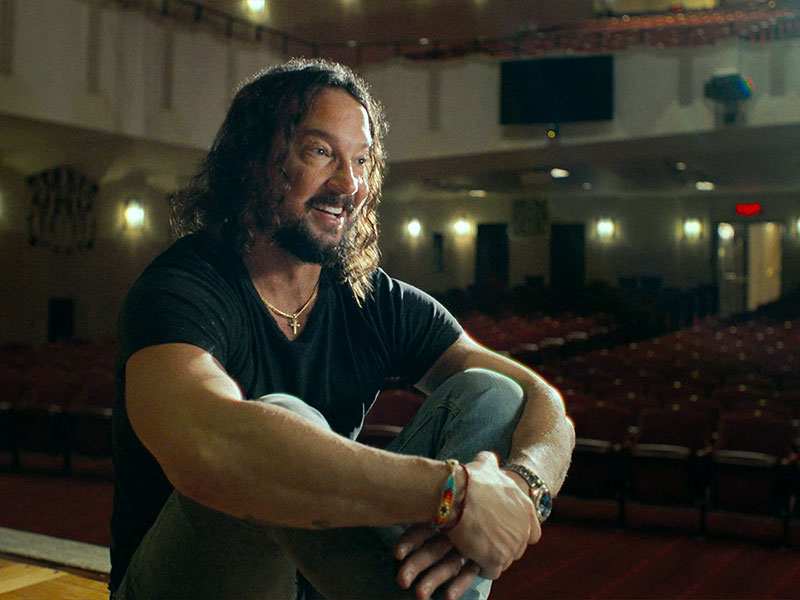
Geoff Bullock, who was one of Hillsong’s founding members and its worship pastor, said he grew wary of Houston’s leadership once Hillsong became less “fun” and more “corporatized.” 


“I said to Brian, ‘Look, we worked together for the past 12 years,'” Bullock recalled. “‘You are my family, but I’ve gotta tell you we are doing things where we are pushing all our people to the limit.'”


He continued, “Brian just said to me, ‘It’s not your job to come to senior management to represent the rights of the workers. No, if they don’t like it tell them to go to another church, and they’ll find somebody else.'”


Bullock said Houston described his own anger as “strong leadership.” He recounted an incident when Brian reduced his secretary to tears when she was unable to find him a business class seat on a flight to Los Angeles. As his relationship with Houston progressed, Bullock said he was “struggling with the intense pressure on me to be somebody that I wasn’t. I just couldn’t go on.”


In three months’ time, Bullock said he was ostracized by the Hillsong. He lost his friends, his community and his own wife. As if that wasn’t enough, Houston also prohibited Bullock’s new music from being played at all Hillsongs.


On March 22, 2022, Houston resigned from the megachurch after internal investigations found he had engaged in inappropriate conduct of “serious concern” with two women.

08
Hillsong still remains in hot water today
The Secrets of HillsongCarl Lentz from “The Secrets of Hillsong” (Photo courtesy of FX Networks)
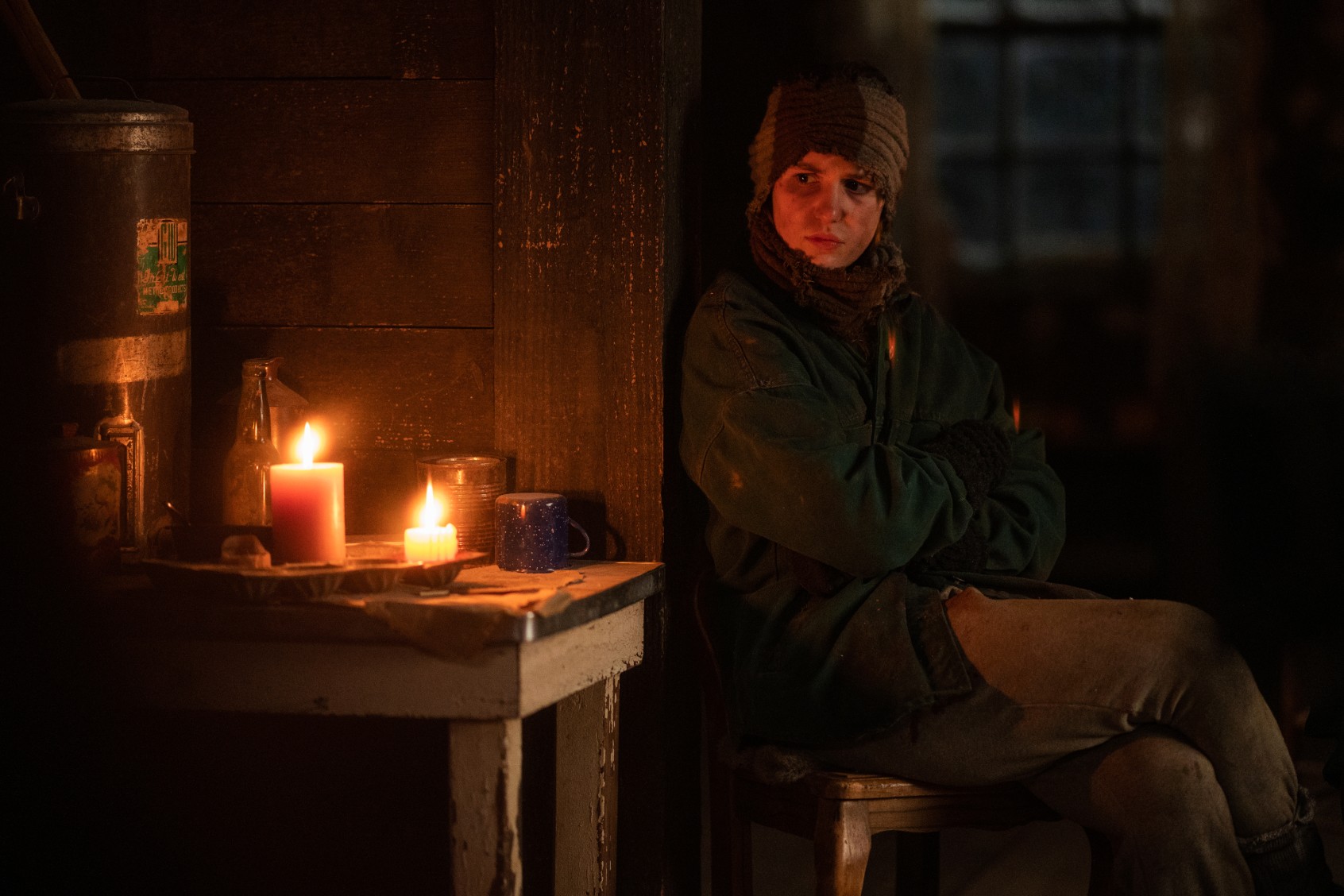
Earlier this year, the Australian Charities and Not for Profits Commission launched an investigation into Hillsong Church and its executive members following allegations that the church engaged in mass money laundering, tax evasion, and fraud, and used church money “to do the kind of shopping that would embarrass a Kardashian,” per independent MP Andrew Wilkie.


The church is under fire for hiding millions of dollars — up to $80 million — that they didn’t declare publicly. “These documents show former leader Brian Houston treating private jets like Ubers,” Wilkie said in court. “Hillsong followers believe that the money they put in the poor box goes to the poor.”


“Whatever happens with Hillsong, whatever happens with Brian Houston, they have provided a template for churches all around the world, to charismatic Christians to exploit and to convert their personal careers and art into financial acquisition,” said journalist Lech Blaine. “That doesn’t end with Brian Houston.”  


The documentary noted that at its peak, Hillsong boasted locations across 30 countries around the world and over 150,000 congregants. As of March 2023, only six out of 16 Hillsong U.S. locations remain.


The verdict for Houston’s court trial for the alleged concealment of child sex abuse is expected in June 2023. Additional charges are also expected in regard to Hillsong’s alleged financial malfeasance.

All four parts of FX’s “The Secrets of Hillsong” are now streaming on Hulu. Watch a trailer for the documentary below, via YouTube:


Former Trump adviser linked to dating site for anti-vaxxers called 4ThePURE

Michael Flynn, Trump’s former national security adviser, appears to be launching an online community for anti-vaxxers called 4thePURE.

For a lifetime founding membership of $2,500, users will be free to connect with unvaccinated singles and also gain access to a directory of “COVID-19 unvaccinated patriot businesses,” according to Insider

In a video promoting the site, which first made the rounds on Twitter on May 9, Flynn delivers a pitch saying, “I’m honored to announce an opportunity to support a new freedom movement sweeping across the nation. 4thePURE is an online community meant to connect likeminded individuals who courageously stood against the COVID-19 jab campaign.”

Although Flynn has established a reputation for being vocal about his anti-vax beliefs and his creative views on the origins of the COVID-19 virus — saying on Alex Jones’ “Infowars” in 2022 that George Soros and Bill Gates may have had something to do with it — there’s been question as to whether or not 4thePURE is a deep fake or hoax of some sort.

As of this writing, the Twitter account for the new site only has 27 followers, but according to Snopes, it seems legit.

“Though we have found no evidence to suggest that the ad and video are inauthentic, Snopes is still in the process of trying to confirm Flynn’s direct participation in them. We have reached out to Flynn for comment and will update this fact check if and when we receive a response. For now, we rate the claim “Research In Progress.'”


Want a daily wrap-up of all the news and commentary Salon has to offer? Subscribe to our morning newsletter, Crash Course.


The 4thePURE website, which features Flynn’s photo along with a lengthier statement on the site’s offerings and how to become a member, also includes a Q&A section which would, again, lead one to question if this is all a joke.

One question prompts an explanation for what the ‘4’ stands for in 4thePURE, listing the answer as, “4thePURE of mind, body, soul, and spirit.”

Meet Russ Vought: Mild-mannered mastermind of the GOP’s debt-ceiling power play

Russ Vought, former head of the Office of Management and Budget (OMB) under Donald Trump, appeared on Steve Bannon’s far-right “War Room” show on April 19. 

Vought is a bespectacled, mild-mannered person, but his words conveyed a quite different feeling. “We [will] have the sword of Damocles, every spring, every summer, to force the cartel to come out of the closet,” he said.

He was talking about the still-unfolding battle between Congress and the Biden White House over raising the federal government’s debt ceiling, which as this article is published appears to be on the verge of at least a tentative resolution. His comments came right after House Speaker Kevin McCarthy released his “Limit, Save, Grow” Act, offering a $1.5 trillion debt limit increase in return for a range of budget cuts targeting much of President Biden’s agenda. 

Lately, as negotiations between McCarthy and the White House appeared to be moving in a more conciliatory direction, Vought has stuck to his guns. Appearing Friday on C-SPAN’s “Washington Journal,” where he is a frequent guest, he brushed aside concerns of catastrophe if the government did not raise the limit by June 1 — the potential date, according to Treasury Secretary Janet Yellen, that the government would run out of money to pay its bills. (Yellen sent Congress a letter on Friday clarifying that June 5 is now the date she expects the government would be forced to default on its debt.)

Vought promised “trench warfare” if McCarthy surrendered the GOP’s leverage in a deal with Biden. His allies in Congress — including Sen. Mike Lee, R-Utah, and Rep. Chip Roy, R-Texas — have promised to hold the line for terms favored by Vought.

Raising the debt limit has historically been no problem. Technically, it’s just a congressional vote to pay the debt the government has already incurred. But this year a cadre of right-wing House Republicans are trying to use their narrow majority to block payment until they can extract painful concessions from Biden and the Democrats. Or, as Vought would have it, the “cartel.”

Russ Vought is certainly no household name. Very few voters could pick him out of a police lineup. Most news reports about the debt limit make no mention of him. He is not a member of Congress, nor a current staffer. Yet he is without doubt an important power broker, coaching the hardliners in the House Freedom Caucus to exert influence over McCarthy. (Salon sent Vought a written list of questions two days before this article was published. He has not responded.)

It is not surprising that many congressional Republicans turn to him for fiscal advice. Even before heading Trump’s budget department, Vought built his career around shaping Republican policy in D.C. He spent some years on Capitol Hill as policy director for the House Republican Conference, and then as executive director for the Republican Study Committee. 

What is considerably more surprising is that Vought has emerged from the Trump administration as a born-again culture warrior. Last year, he took on “critical race theory,” producing an A-Z toolkit on how to fight it; this year, he pushed the idea of forming a new version of the 1970s Church Committee to investigate what he called the “weaponization” of federal law enforcement. Lo and behold, House Republicans later formed a committee along those exact lines, led by Rep. Jim Jordan of Ohio, a Vought ally.

Vought’s brand of budget-cutting wonkery now comes packaged with fiery culture-war rhetoric, and his brand of culture war comes with a combative form of Christianity. To introduce his budget, he chose 1 Samuel 8:14-18 — perhaps the only Biblical verses that can be read as simultaneously condemning high taxes and democracy: “He will take the best of your fields and vineyards and olive orchards and give them to his servants,” it begins, ending after a list of further confiscations with, “you will cry out because of your king, whom you have chosen for yourselves.”

Vought’s brand of budget-cutting wonkery now comes packaged with fiery culture-war rhetoric, and his brand of culture war comes with a combative form of Christianity.

Last January, while most of the Washington press corps was covering the vote to elect a House speaker that required an unprecedented 15 ballots in what was widely seen as a humiliation for Republicans, Vought went on Bannon’s show to exult. He had reason to do so. After all, the 20 Freedom Caucus members who refused to give McCarthy an easy victory were performing a script written by Vought himself. 

“The terms that McCarthy was willing to agree to almost no other speaker would agree to,” Vought said, describing the power-sharing concessions that McCarthy was forced to make as a paradigm shift. 

Dubbing Bannon’s listeners the “War Room Posse,” he said, “When you have the triangle of influence — the grassroots, the House conservatives, and outside groups like ourselves, you can roll any cartel.”

The debt ceiling fight is the first test of whether the power-sharing agreement McCarthy was forced to strike with the right-wing hardliners will give them any real leverage.

From the Tea Party to Trump

Vought is no stranger to the power of the grassroots. During the Tea Party movement of the 2010s, he spent seven years as vice president at Heritage Action, the most prominent right-wing think tank of that era. During that time, he worked on the Sentinel program that trained grassroots activists to pressure Congress.

Then came Donald Trump, who shattered the existing conservative movement like an orange-hued wrecking ball, destroying old alliances and forming new ones. Some of the old guard from the Tea Party movement jumped into the Trump era with both feet. Vought was one of the substantial number of Heritage alumni who ended up staffing Trump’s cabinet and numerous lower-level positions.

During his term as director at Trump’s OMB, an agency that produces the federal budget and oversees the work of other agencies, he repeatedly clashed with Democrats in Congress as they attempted to exert oversight. Although Vought was named as a key figure involved in blocking defense funds for Ukraine during Trump’s first impeachment, he refused to testify, calling it a “sham process.” 

In an administration full of loyalists, Vought stood out as something different: an ideologue. The fights he picked as OMB director appear to have come from conviction, not mere loyalty to the boss. Long after leaving the administration, for example, he has spoken out against funding Ukraine’s defense against Russia’s invasion. 


Want a daily wrap-up of all the news and commentary Salon has to offer? Subscribe to our morning newsletter, Crash Course.


Throughout his term in the White House, Trump chafed against the entrenched civil service bureaucracy, so often demonized by conservatives as the “deep state.” He perceived them as fundamentally disloyal, whether in blocking funds for his cherished border wall, launching the Russia investigation that targeted multiple members of his circle, or the deluge of leaks to the press. He repeatedly found himself frustrated because federal employees are given employment protection that spans administrations; in most cases, the president can’t simply fire them.

Vought was Trump’s attack dog in fighting the power of the “deep state,” and fully shared his  antipathy to the civil service professionals, who repeatedly thwarted the president’s will to seize total power. 

In an interview with the podcast “Moment of Truth,” Vought put it this way: “The agencies had believed that they got to run their turf. And that’s not the vision the President had.” 

Schedule F: Weapon against the “deep state”

This war against the deep state culminated in an executive order signed by Trump in October of 2020, just two weeks before the presidential election. It created Schedule F — a new way to classify some federal employees that would permit the president to fire them at will.

The legal reasoning behind Schedule F came from another member of the administration, James Sherk, who later wrote about Trump’s battles with the civil service in an article titled “Tales from the Swamp.” But as Vought said in an interview with Epoch Times, he was instrumental in getting it over the finish line. He wanted to prove that political appointees could combat the civil service — and win. In January 2021, days before the end of the Trump administration, Vought reclassified 88% of his own OMB staff under Schedule F — thus denying them employment protection.

That reclassification sent shockwaves through the government. Democrats on the House Oversight Committee sent Vought a scathing letter, urging him to refrain.

“It is simply cruel to strip federal employees, who have faithfully and consistently served the American public throughout the pandemic, of civil service protections,” wrote Reps. Gerry Connolly, D-Va., and Carolyn Maloney, D-N.Y.

In an administration full of loyalists, Vought stood out as something different: an ideologue. The fights he picked as OMB director appeared to come from conviction, not mere loyalty to the boss.

The executive order creating Schedule F was overturned by Joe Biden on his third day in office. But the idea it represents is not dead. As Vought made clear in his Epoch Times interview, he is laying the groundwork to “neutralize” the federal bureaucracy as soon as a Republican returns to the White House — in January of 2025, or so he hopes.

In a February podcast interview with the “Federalist Radio Hour,” Vought made clear that he wants conservatives to staff all federal agencies throughout the government — even in the professional, nonpartisan roles. “The level of technical detail and complexity is so great. We need more conservatives that can go that deep and be able to staff out the administration.”

Political scientists and government insiders alike have decried the likely impact of such a reclassification.

“These are people who know more than most political appointees about how the government works, because their career has been spent inside government,” said Martha Coven, former OMB official under Obama, in an interview with Salon. “They pride themselves on giving honest assessments of policy options, though they realize they’re not the ultimate decision makers.”

“If Schedule F succeeded, we would have rampant corruption and distortions of policy,” Norm Ornstein, senior fellow emeritus at the American Enterprise Institute, said in an email, “with incompetent and unqualified individuals filling posts only because they are loyalists to an authoritarian, anti-government corrupt president. No thanks.”

A uniquely hostile transition

But Schedule F was not the only aspect of Vought’s war on the civil service. 

This played out particularly during the transition after the 2020 election, after Biden’s victory had been certified. A former official familiar with the situation says that during that transitional period, leaders at OMB created an atmosphere of intimidation by demoting high-level civil servants. 

Vought’s team “didn’t have enough time on the clock to exercise Schedule F authority,” the official said. “But in the meantime, they were taking well respected people, who were a little bit too vocal, or that they didn’t like for some reason, and they were moving them around and scaring them.”

This apparent intimidation resulted in OMB staff being blocked from fully cooperating with Biden’s transition officials.

Several news reports during that period noted the Biden’s team’s complaints that the Trump White House was not exactly offering fulsome cooperation. One report from a nonpartisan group, issued a year later, elaborated on these complaints, calling out the political appointees at OMB in particular. 

Vought rejected this criticism, asserting in a letter now in the Trump White House archives that he had directed OMB staff to provide all the information they could. However, he added, “What we have not done and will not do is use current OMB staff to write the [Biden transition team]’s legislative policy proposals to dismantle this Administration’s work.”

According to the official mentioned above, there had previously been a decades-long tradition during presidential transitions of career staff working shoulder-to-shoulder with the transition team in tasks that require analysis, not just on providing facts when asked. Barack Obama’s team got this sort of fulsome cooperation from George W. Bush’s White House, as did Trump’s team from Obama staffers in 2017. 

“To the surprise of the transition team, the guidance from the Trump political leadership that came down through the career civil servants who were tasked with communicating with the Biden team was: We cannot provide you with any analytical support,” said the official, speaking in particular of Vought’s staff at OMB. 

After Trump: Building a new movement

In that fraught post-election period, with the electoral verdict clear but Trump still contriving to stay in office, Vought began plotting his post-Trump career. On Nov. 23, the same day that the General Services Administration ascertained that Biden was the apparent winner of the election and the transition should begin, Vought registered the website domain AmericanRestorationCenter.com.

A month after that, on Dec. 22, while Vought was still stonewalling the incoming transition team, he applied for tax-exempt status for a public charity, the Center for American Restoration.

Formal announcement of the charity’s existence had to wait, however — until six days after Biden took office. In that announcement, Vought wrote what can be described as a battle plan for conservatives in exile. He presented Trump’s “America First” movement as the counter to the left’s cultural hegemony; as “forgotten men and women” pitted against Marxists and a weak-kneed Republican establishment.

He ended on a note of invitation. “Join us,” he said. 

The IRS has blessed the think tank with “public charity” status, which not only means it pays no taxes but that its donors can remain anonymous.

Along the way, Vought tweaked the name of the group, which is now called the Center for Renewing America (CRA). It was initially staffed by a number of people drawn from Trump’s OMB, including Mark Paoletta, the former general counsel at the budget office, who came under fire from Democrats for his role in blocking defense funds for Ukraine, along with fellow Trump OMB alumni Ashlea Frazier, Rachel Semmel and Edie Heipel

Six days after Biden took office, Vought published a battle plan for conservatives in exile: Trump’s “America First” movement was the counter to the left’s cultural hegemony in a war against Marxists and weak-kneed Republicans.

Using this vehicle, Vought has been diligently laying the groundwork for what he and his allies hope is another and more powerful Republican presidency in 2025. Their goal is to take Trump’s populist and isolationist instincts — and some personal vendettas — and turn them into coherent policy. If, as they hope, a right-wing populist returns to the White House — whether Trump himself or Ron DeSantis or someone else — these policies will be ready to be implemented on Day One. 

Election denial by another name

As we know, the 2021 transition was especially fraught. For one thing, the outgoing president did not believe it should happen at all. Right up until the end, several in his White House staff, including chief of staff Mark Meadows, special assistant Peter Navarro and various others, were immersed in a frantic effort to overturn the results of the election.

Vought himself has been more careful. To date, he has never made any public statement explicitly denying Biden’s victory. On Jan. 7, one day after the insurrection at the Capitol, he tweeted out a condemnation of the violence.

At times, however, he has promoted election denialism in an indirect fashion. 

On his website, he claims that the increase in voting by mail in 2020 likely led to an increase in voter fraud, which experts say is false. His think tank, the CRA, has hired several election denialists. 

For example, Vought’s group hired former Department of Justice lawyer Jeff Clark, whom Trump nearly appointed as acting attorney general as part of his apparent plot to overturn the election, according to testimony before the Jan, 6 Select Committee. In June 2022, Clark’s home was raided by federal investigators.

Not only did Vought hire Clark at CRA — to work on “election integrity,” no less —  he also condemned the raid at Clark’s home as “criminalizing politics” and defended Clark’s attempts to overturn the election as merely a matter of “investigating voter fraud.”

Ken Cuccinelli, the former acting deputy secretary of Homeland Security, who according to the Jan. 6 report had back-channeled Dominion conspiracy theories to Trump’s chief of staff, and former Pentagon official and hardcore Trump loyalist Kash Patel were also both hired by the CRA.

Some close allies of Vought were among the 73 conservatives who signed a now infamous letter in December 2020, denying that Biden was the legitimate president-elect and demanding that legislatures of six states send in false slates of Trump electors. Among them were former congressman Jim DeMint, head of the Conservative Partnership Institute; Ed Corrigan, who sits on CRA’s board; and Mary Vought, of the Senate Conservatives Fund, who happens to be Russ Vought’s wife.

A budget warrior turns to culture war

Despite his dry title at a fiscal agency within the Trump administration, Vought threw himself into culture war battles.

During the summer of 2020, conservative activist Christopher Rufo made several appearances on Fox News claiming that “critical race theory (CRT) pervaded every institution in the federal government.” He complained that employees were being taught that white supremacy defined America and that white people were responsible for it. 

Rufo was presenting a one-sided view of the sort of diversity training that has become almost routine both in corporate and government settings, and that typically issues no such grand or systematic indictments. Nevertheless, his appearances set off a wave of outrage against CRT in conservative media. 

Newly confirmed as OMB director, Vought joined forces with Rufo, issuing two memos banning diversity training within the federal government, claiming that such training taught that “virtually all White people contribute to racism,” which he condemned as “un-American propaganda.” These edicts were formalized into an Executive Order issued by Trump on Sept. 22.

Vought himself made the rounds of conservative media, simultaneously whipping up outrage about CRT, and lauding his administration’s actions in supposedly killing it. In one appearance with host Glenn Beck, he called his directive a “cease and desist” order. 

By that fall, Vought and Rufo were tag-teaming on stamping out any instance of such “un-American” training. Rufo posted a selfie with Vought from the OMB office, calling him the “Voughtinator.”

Months after leaving the administration, in June of 2021, Vought’s group published a “toolkit” on how to organize around opposition to the supposed prevalence of CRT in public schools. The battle had shifted away from the federal government and into local communities, and at least in the short term this crusade proved astonishingly successful. Analysts generally agree that it led to the election of Republican Glenn Youngkin as governor of Virginia that November.

Assault on a “woke and weaponized” government

Vought has mastered the packaging of budgetary priorities inside a highly charged culture-war envelope. His proposed budget cuts being promoted by his allies in the Freedom Caucus are framed as an assault against the “woke and weaponized” bureaucracy. Vought claims, with very little supporting evidence, that his plan can balance the federal budget in 10 years with no reductions to Social Security and Medicare benefits, entirely by cutting programs that fund racial justice, LGBTQ rights and the like.

Blending culture war with more traditional Republican fiscal policy is clearly a deliberate strategy. On the “American Moment” podcast of May 15, Vought denigrated the traditional Republican focus on cutting entitlement spending as “Tea Party Inc.”, explaining that the populist energy of the Tea Party movement had been siphoned off by Republican elites, who he calls “propeller-heads”. “You look at their bios, and they have Ukraine flags and rainbow flags,” he said, indicating squishy liberal views that divide them from the right-wing grassroots.

Vought has been pushing the idea of using the debt limit as leverage in order to force cuts to “woke” programs since early in the year. On April 19, McCarthy released a draft bill that took Vought’s advice from January: Like his budget, it purports to leave Social Security and Medicare untouched, while demanding deep cuts elsewhere in the budget. Notably, McCarthy’s bill is vague about exactly where those cuts would be, although Republicans have further insisted that veterans’ benefits would not be impacted.

Vought claims, with very little supporting evidence, that his plan can balance the federal budget in 10 years, entirely by cutting programs that fund racial justice, LGBTQ rights and the like.

According to a Congressional Budget Office scoring requested by Democratic senators, this seems like voodoo economics, to borrow George H.W. Bush’s immortal phrase. If Medicare, Social Security and veterans benefits are held harmless, and the Trump tax cuts are extended, there is no possible way to balance the budget in 10 years through spending cuts alone (table on page 9).

Bobby Kogan, senior director of federal budget policy at the Center for American Progress, a moderate Democratic-leaning think tank, says that while Congress “can and should debate fiscal policy,” that cannot and should not be linked to the government’s legal requirement to meet its statutory obligations.

Perhaps the most remarkable fact about Vought’s proposed budget, however, is not its math nor its hold on a significant cadre of House Republicans — but its presentation. The document uses the same template, font and structure as the official budget released by the White House each year. This further supports the idea that Vought’s group — which can now be considered a movement — sees itself as a government in exile, hoping to force the “America First” agenda, one way or another, onto a country whose voters have repeatedly rejected it at the ballot box.

Going into the Memorial Day weekend, with McCarthy poised to strike a compromise deal with the White House, CRA executive director Wade Miller threatened McCarthy with the loss of his speakership if he discarded the “woke and weaponized” cuts of the Limit, Save, Grow Act.

This was not how Team Vought had envisioned the debt limit battle playing out. On the same day McCarthy released the bill, Steve Bannon and Vought celebrated on “War Room.” Vought’s goal, he said, was to set up a debt limit battle in Congress every few months to force the Biden administration into increasingly painful budget cuts, especially as we get closer to campaign season. 

“We are going to have to demand that cuts be enacted, or Joe Biden doesn’t get a dime,” Vought said. “He has to govern on the terms of the Make America Great movement.”

“Succession”: We have questions about Shiv’s news

HBO’s “Succession,” a drama about the inner workings of media tycoon Logan Roy (Brian Cox) and his family and business associates, is full of people who cannot be trusted. Keep this in mind.

Are Swedish tech giant Lukas Matsson’s (Alexander Skarsgård) numbers actually garbage like his supposed scorned publicist/ex-girlfriend Ebba (Eili Harboe) said to Logan’s sons/replacements Kendall (Jeremy Strong) and Roman (Kieran Culkin)? Or is this just one of the many ways Lukas & Co. have derailed and embarrassed the Roys and others at their company, Waystar Royco?

Shiv is an outsider, even within her own family.

Did Logan underline or cross out Kendall’s name on his private list of possible successors? And are we sure the document came from the safe? Or that it even was edited by Logan and not something slipped in by the executor of his estate, Frank (Peter Friedman)? Does that old-school Logan crony harbor a vendetta against the family after Logan fired him and replaced him with Roman?

No one knows because no one is checking the sources.

And if we can’t trust what these characters say to each other, can we trust what the actual sources — series creator Jesse Armstrong and his writers — tell us about these characters? If we’ve learned anything from the current media climate and the past four seasons of “Succession,” it’s to nurture a healthy skepticism.

Here’s what we have been told about actress Sarah Snook’s Shiv Roy, Logan’s third child and only daughter: She is smart, although not as smart as she thinks as her actions in the show’s second season led to her dad giving her the company and then taking it away. 

And she’s competitive, even if those instincts kick in a little too late. She gives an impromptu eulogy at her dad’s funeral after she sees her brother Kendall win over the crowd when he gives one. This probably isn’t out of filial love or really even to gain any good-faith, boss-b***h news headlines. It’s because she’s also looking to head a version of her dad’s company that might emerge from the rubbled aftermath of his demise, and she needs to show that she has charisma. 

Shiv is also an outsider, even within her own family. The only one of her dad’s kids to be anointed with an endearing pet name (unless you count Logan bellowing “Romulus” every time he needed Roman), “Pinky” started the series across the ideological divide from Waystar Royco’s news channel ATN and deep within the Democratic trenches. She dated, and then married, Matthew Macfadyen’s Tom Wambsgans, a self-made commoner who worked himself up in the company instead of someone else born into her pedigree. She’s the only one of Logan’s kids to voice serious political and social concerns with the family backing extreme right-wing presidential candidate Jeryd Mencken (Justin Kirk).

We need to question our sources.

Even when it comes to her family’s business decisions, she’s told her value is largely gender-based. During one of Kendall’s innumerable attempts to take down Logan, he angrily tells her the only reason he wants her on his team is because “Girls count double now. Didn’t you know?”

Shiv’s marital power play

Like her brothers (and most everyone), Shiv wants power and control. When she can’t find it among her siblings or at work, she seeks it out in her marriage. On their wedding night, Shiv tells Tom she wants to be in an open marriage (her ex-boyfriend, Ash Zuckerman’s Nate ​​— a man she was involved with during her engagement to Tom — was even at their wedding). When a scandal at the company requires a fall guy, she backs a nomination for her husband and convinces him to prepare for prison time because it will help him get in good with her dad. And, when this issue is resolved and Tom won’t be sent upstate, Shiv is anything but relieved. “I thought maybe you were thinking about all the d**k you were gonna ride when he was inside,” Roman tells her after clocking her dismay.

Shiv also has made it clear to Tom that she does not want children, at least not yet. He asked her to get pregnant when he thought he was preparing for prison. She turned him down.

Things change in the third season’s penultimate episode, though. Dared on by her own mother’s (Harriet Walter’s Caroline) words that she’d be an unfit parent, Shiv goes from telling Tom they shouldn’t be in a rush to have kids when they could just “bank some embryos” to passionately kissing him and stating, “Let’s have a baby.”

And . . . success(ion)! Congrats to the Roy-Wambsgans! Despite the alienation and backstabbing that happened in subsequent episodes, Shiv is pregnant from that encounter. As Tom tells Caroline in last week’s episode, “If it wasn’t such a total f**king disaster, it would be a dream come true.”

But just before he greets his estranged mother-in-law, Shiv gives Tom the bombshell that she “wasn’t expecting” to get pregnant that night. 

And this is why we need to question our sources.


Want a daily wrap-up of all the news and commentary Salon has to offer? Subscribe to our morning newsletter, Crash Course.


Because we have questions. If Shiv “wasn’t expecting” to become pregnant, is that just general surprise she’s voicing? Or is it disbelief . . . because she took preventative measures? The latter seems the most likely because of who she is and the lifestyle she’s chosen.

Look, no one is here to judge whether (or not, in this case) Shiv should use birth control. She is an adult woman in an open albeit totally dysfunctional marriage. She should be able to have consenting sex with whomever she wants however she pleases and with or without whatever precautions. And she should be able to make her own decisions about whatever outcome occurs.

This is less about inflicting shame upon this woman and more about confusion.

We have been told that Shiv is a calculated player who’d sooner send her husband to prison than have kids with him. So wouldn’t she have that birth control situation locked down?

Given her stature, age and frequently voiced position on procreation, it’s probably likely Shiv would have had an intrauterine device, or IUD. It’s not the most comfortable procedure to have a medical professional insert one of these T-shaped pieces of plastic into your uterus, but this form of birth control is appealing to busy women on the go because it requires almost no afterthought. However, its implantation kills any chance of spontaneous conception. Ditto the arm implant.

Shiv also could have been on oral contraception or a patch, which are more easily removed in case of trying to conceive. But even those don’t just stop working the minute you stop taking them. And, of course, any in-the-moment precautionary devices like a condom or even a diaphragm wouldn’t have been called upon, given the supposed intended nature of this tryst.

So . . . what are we supposed to infer from what the writers have now told us about Shiv? Is she more premeditated than we originally gave her credit? Is this a clue that she’s planning a bigger coup as we go into the series finale? Is she a next-gen Marissa Mayer?

Or are we being lied to again?


The Supreme Court’s decision helping polluters is “ideologically driven,” says expert

The Supreme Court ruled on Thursday that the Environmental Protection Agency (EPA) may only regulate wetlands when they possess “a continuous surface connection” to other large regulated bodies of water. While this may on the surface seem like a mundane decision, experts believe it will have profound implications for environmental protection in America, putting some of its most vulnerable ecosystems at risk. Indeed, by limiting the EPA’s authority in its recent decision, the Supreme Court is continuing a pattern of rolling back environmental regulations that could radically alter life on this planet.

“This decision makes plain how ideologically driven and non-judicious the group of justices led by Alito and followed by Thomas, Gorsuch, Barrett, and often (including this time) Roberts clearly are.”

The case involved a couple in Idaho, Michael and Chantell Sackett, who wanted to build a property on a land that the EPA had deemed a protected wetland. Throwing out a precedent by moderate Justice Anthony Kennedy, which allowed the EPA to protect wetlands if they have a “significant nexus” to nearby regulated waters, conservative Justice Samuel Alito’s majority opinion in Sackett v. EPA limited the scope of the Clean Water Act of 1972 in ways that benefit businesses over the environment. Although the court ruled unanimously for the Sacketts, the three liberal judges were joined by conservative Justice Brett Kavanaugh in articulating different reasons than the one propounded by the majority. Although they felt there were other reasons why the Clean Water Act did not apply to the Sacketts’ property, they expressed concern with the conservative ruling for making it more difficult to protect water in the name of the public interest.

Justice Elena Kagan, one of the liberal judges, wrote in her opinion that the Supreme Court has appointed “itself as the national decision-maker on environmental policy” instead of applying the Clean Water Act as its authors intended. Kagan added that “that is not how I think our Government should work — more, because it is not how the Constitution thinks our Government should work — I respectfully concur in the judgment only.” In agreeing with the three liberal judges, the usually-conservative Kavanaugh argued that “the Court’s new test will leave some long-regulated adjacent wetlands no longer covered by the Clean Water Act, with significant repercussions for water quality and flood control throughout the United States.”

Harvard University law professor Laurence Tribe told Salon by email that the recent decision reflects the larger right-wing agenda of the Supreme Court’s new majority.

“I think the four justices who were prepared to read what Congress wrote as genuine textualists clearly had it right and was especially impressed by Justice Kagan’s opinion and by that of Justice Kavanaugh,” Tribe explained. “Taken together with last year’s equally dismal and probably even more damaging ‘major questions’ ruling in West Virginia v. EPA, this decision makes plain how ideologically driven and non-judicious the group of justices led by Alito and followed by Thomas, Gorsuch, Barrett, and often (including this time) Roberts clearly are.”


Want more health and science stories in your inbox? Subscribe to Salon’s weekly newsletter The Vulgar Scientist.


“The Court’s new test will leave some long-regulated adjacent wetlands no longer covered by the Clean Water Act, with significant repercussions for water quality and flood control throughout the United States.”

West Virginia v. EPA was a Supreme Court case last year in which the conservative majority gutted the EPA’s powers to regulate carbon dioxide emissions related to climate change. It did this so radically that historian Heather Cox Richardson argued it could “signal the end of the federal government as we know it.” It certainly will make it more difficult for the federal government to regulate climate change, which poses an existential threat to humanity. As Kagan wrote at the time, “Today, the court strips the EPA of the power Congress gave it to respond to the most pressing environmental challenge of our time. The Court appoints itself — instead of Congress or the expert agency — the decision-maker on climate policy. I cannot think of many things more frightening.”

She later added that, “Whatever else this Court may know about, it does not have a clue about how to address climate change.” 

Similarly, scientists and environmental experts believe that the decision in Sackett v. EPA will make it impossible to protect as many as 118 million acres of wetlands, or an amount larger than the entire land area of California. “No environmental rule is safe in the wake of this decision,” Patrick Parenteau, an environmental law expert at Vermont Law School, told The Washington Post.

In an ironic twist, the EPA has actually been criticized by many environmental activists groups for not doing enough to protect water quality. An April study in the journal Science of the Total Environment found that the Environmental Protection Agency is failing to monitor almost half of the dozens of PFAS (per- and polyfluoroalkyl substances) that are quietly lurking in many municipal drinking water. These so-called “forever chemicals” are commonly found in water-and-stain-resistant coatings for furniture, leather, carpets and various fabrics. They are linked to health problems including lowered sperm count in male fetusesdifficulties with pregnancieshigh blood pressureliver disease and testicular and kidney cancer, among other diseases.

The study’s authors told Salon at the time that although they praised the EPA for taking “a historic step by proposing strong standards for 6 individual PFAS,” they also believed that the agency “needs to regulate the full class of PFAS under the Safe Drinking Water Act by adopting a total PFAS drinking water standard. Otherwise, we will be running on a toxic treadmill, trying to regulate 14,000 or more PFAS and never finishing the job.”

Texas keeps on burying kids from gun violence — while Republicans fight among themselves

There was a time when Texas was famous for the line Col. William Travis drew in the sand at the Alamo. The mission was surrounded by Mexican soldiers. Travis had been informed by Gen. Antonio López de Santa Anna that if he didn’t surrender the Alamo, all of Travis’ soldiers would be killed. Travis drew his sword and dragged it through the sand to make his famous line. His men could choose to surrender and leave the Alamo and their lives would be spared, or they could cross the line, remain with him at the Alamo and defend the honor of Texas to the death. Legend has it that all but one of Travis’ men crossed the line and fought to defend the Alamo to the death.

The line in the sand for the state of Texas today is where you stand on gun violence and no one has crossed it to defend the citizens of Texas against the mass murderers who have taken the lives of 17 Texas citizens so far this year: five killed in a family’s home in Cleveland on April 28; eight killed outside a shopping mall in Allen on May 6; and on Tuesday of this week, four family members killed in Texarkana by their 18-year-old son and brother. A year ago this week, 19 schoolchildren and two teachers were killed at an elementary school in Uvalde by another 18-year-old with an AR-15 semiautomatic rifle, the same weapon used in Cleveland and Allen.

Texas is way ahead of the rest of the nation this year when it comes to gun violence, according to figures from the Gun Violence Archive. As of May 8, Texas had 17 mass shootings this year; the national average for other states was 4.04. At least 214 people have been killed by firearms in Texas; the national average is 92. Texas has had three mass murders this year; the national average is 0.42. Thirteen children under the age of 11 have been killed in Texas this year; the national average for that age group is 1.83. Fifty-six teenagers between 12 and 17 have been killed this year in Texas; the national average for that age group is 10.52.

Texas has some of the loosest gun laws in the country. Many states ban the sale of rifles like the AR-15 to people between the ages of 18 and 20. Not Texas. The AR-15 rifle used by the 18-year-old murderer in Uvalde was bought legally just before he went to Robb Elementary School and killed 19 children and two teachers. In 2021, the Texas legislature passed and Gov. Gregg Abbott signed a “constitutional carry” bill that allows anyone to carry a concealed weapon pretty much anywhere they want, because Texas also passed laws allowing firearms on state college campuses. Abbott recently refused to propose a bill limiting the sale of AR-15 rifles to those under 21, telling reporters it “would be unconstitutional.” Many other states have exactly that law.

With hundreds of Texans dying every year from gun violence, with the number of mass killings and mass shootings significantly higher than most states in the country, with little children under age six among the dead in three recent mass murders, you would think that the Texas legislature and the governor would be trying to pass at least some law or laws that would help protect innocent people from the murderers among them. You would be wrong.

With hundreds of Texans dying every year from gun violence, you might think the Republicans who run the state would do something to protect innocent people. You would be wrong.

What has the Texas legislature been doing since the mass killings in Cleveland and Allen and Texarkana? In a state with one-party rule – Republicans control the state House and state Senate, and hold the governorship,  lieutenant-governorship and the state attorney general’s office – the party in charge have been squabbling. And what have they been squabbling about? Well, on Wednesday, the day after the 18-year-old in Texarkana killed his entire family, Texas Attorney General Ken Paxton accused House Speaker Dade Phelan of being drunk as he presided over the state’s lower legislative body during a late-night session last Friday. Paxton made the accusation as a legislative committee, the Committee on General Investigating, was sitting to consider allegations against Paxton for firing members of his staff who accused him of criminal acts in office as well as breaches of ethical rules.

Attorneys for the committee met on Wednesday to hear witnesses and consider written and electronic evidence that Paxton had accepted gifts and other remittances from a major political donor in return for favors regarding real estate deals the donor was involved in. When members of his office filed whistleblower complaints against Paxton, he fired them. When the whistleblowers sued him for improper termination, Paxton sought to use $3 million in state tax money to settle the lawsuit.

On Thursday, the Republican-dominated investigative committee voted to recommend articles of impeachment against Paxton. Attorneys for the committee told reporters that evidence they had accumulated would be sufficient to bring at least a dozen criminal charges against him. That committee cannot charge Paxton criminally, but among the crimes cited by the lawyers were using his office in an official capacity to benefit the donor, harassing and oppressing members of his own staff, securities fraud and making false statements to investigators. The allegations include a charge that Paxton turned over an FBI investigative file related to his friend and donor, and also used state funds to hire a lawyer to do work that benefited the donor.


Want a daily wrap-up of all the news and commentary Salon has to offer? Subscribe to our morning newsletter, Crash Course.


Paxton has been under state indictment for crimes he allegedly committed while a member of the state House in 2011. Those indictments were handed down after he assumed office as attorney general in 2015, and Paxton has resisted them ever since. In fact, he has been reelected twice since he was indicted, which gives you some idea of the stranglehold the Republican Party has on Texas politics.

Late on Thursday, the General Investigating Committee voted 20 articles of impeachment against Paxton, including disregarding official duties, bribery, making false statements, misappropriation of public funds, dereliction of official duties and obstruction of justice.

As I write this on Friday, the Texas House has scheduled a vote on the articles of impeachment against Paxton for Saturday. If the vote is successful, Paxton would become just the third official impeached in Texas history. Under Texas law, he would be removed from office pending a trial on the charges and vote in the state Senate. State law allows the House to keep working on the impeachment after the legislative session ends on Monday. But the law also permits the House to call itself back into session at will, and the state Senate has the same option. So Paxton’s impeachment could continue despite the end of the legislative session.

An Associated Press report on the fight within the Texas Republican Party called the speed with which the state house has proceeded “dizzying.” At this writing, conservatives in the party, including Paxton’s own wife — who holds a Senate seat and will presumably vote in her husband’s trial when it is considered by that body, are standing by Paxton, although some of his support is slowly bleeding away. The chairman of the state Republican Party, Matt Rinaldi, called the impeachment a “sham” and called on the senate to vote to retain Paxton in office.

Here’s where it gets interesting, even fun. Rinaldi targeted Speaker Phelan as a “liberal” trying to wrest control of the party from conservatives. Rinaldi implied that the voters of Texas had already spoken, re-electing Paxton in 2022, and what was going on was “a liberal speaker trying to undermine his conservative adversaries.”

Texas Republicans have started calling each other “liberals” — in a state whose gun laws have been rolled back to the 18th century, when it was part of Spanish-ruled Mexico.

The gradations of “liberal” and “conservative” among Texas Republicans appear to be unique to the state. Paxton has accused Phelan of “slow-walking” new gun legislation that would further loosen any restrictions still remaining on guns in the state. A case brought in Texas has already overturned the state’s law banning ownership of firearms by spouses accused or even convicted of domestic violence. The arch-conservative Fifth Circuit Court of Appeals overturned the law because there were no laws against domestic violence at the time the Second Amendment was written in 1791, and therefore could have been no laws restricting the sale or use of firearms by persons who committed domestic violence. The decision essentially returns state law to the 1700s — when Texas was still part of Spanish-ruled Mexico — when it comes to domestic violence and the regulation of firearms.

One major flashpoint in the internecine warfare within the Texas Republican Party is, of course, Donald Trump. Paxton has been a strong Trump supporter and has vowed to support him in 2024. Phelan has been less supportive of Trump and has been described in press reports as “a moderating influence” in the party.

Nobody in the Texas Republican Party, however, is “moderate” enough to stand up for the rights of the citizens of Texas to be safe in their own homes, schools, shopping malls and Walmart stores. That’s where freedom stands in Texas today. You’re free to go out and buy an AR-15 and all the ammunition you can carry, even when you’re too young to buy a drink in a bar, but you’re not free go to school or to the mall or to a church or even to sit in your home watching television without being shot and killed. That’s a line in the sand which neither faction in the Texas Republican Party is willing to cross.

In B.C., Alberta and around the world, forcing drug users into treatment is a violent policy

Intervention without human rights goes by many names — involuntary institutionalization, compulsory drug treatment, “coerced care,” forced abstinence or a combination of all of those terms.

The evidence shows that forced treatment leads to increased risk of death and deprives survivors of autonomy, while no positive benefits have been established.

Involuntary treatment in the Global South has been labelled inhumane by rights-based organizations, including the United Nations Office on Drugs and Crime, UNAIDS and Human Rights Watch.

But after years of housing unaffordability, an increasingly poisonous drug supply and inaccessible voluntary mental health supports, mainstream political parties in Canada — including Alberta’s United Conservative Party (UCP) as the May 29 provincial election approaches — are seemingly toying with the idea of making the people most affected by inequality and poverty simply disappear via involuntary institutionalization.

The British Columbia NDP under David Eby, as well as Kevin Falcon’s B.C. United Party, have floated the idea of expanding forced institutionalization to include aspects of substance use.

In Alberta, Danielle Smith’s UCP has also proposed apprehending those with, in her words, “severe drug addiction.”

Increased risk of overdose

Pivot Legal Society, Eby’s former employer and a human rights organization, has responded with a statement condemning the practice. It was endorsed by 16 other community organizations.

The evidence shows that forced treatment leads to increased risk of death and deprives survivors of autonomy, while no positive benefits have been established. The discretionary power to forcibly institutionalize people also causes harm and erodes trust in health-care services on a systemic level.

From Mexico to Sweden, Vancouver and England, involuntary treatment has been found to increase risk of overdose and shows no significant impact on substance use patterns.

Studies on involuntary treatment for psychiatric reasons also show negative outcomes. Not only is forced institutionalization deeply traumatic, it’s associated with longer stays in hospital, increased hospital readmission rates and a greater likelihood of dying by suicide upon discharge.

Lowered tolerance

Being discharged after involuntary drug treatment has long been linked to overdose risk, even before the drug supply was as poisonous and unpredictable as it is now.

Data from the United States shows that from 2010 until 2017, all inpatient forms of substance use treatment, even those that included prescribed alternatives, increased the risk of overdose upon discharge.

The association between forced treatment and overdose has been made clear in studies of both existing pathways of involuntary institutionalization in B.C.: the criminal justice system and public health mechanisms.

These overdoses are trending away from being predominantly non-fatal to being deadly due to the toxicity of the supply. People are being discharged into the same living conditions with lowered tolerance.

Settler colonial violence continues

Not only is forced institutionalization deeply traumatic, it’s associated with longer stays in hospital, increased hospital readmission rates and a greater likelihood of dying by suicide upon discharge.

In B.C., young people cannot be involuntarily institutionalized for substance use alone. But reports suggest it is occurring through misuse of the province’s Mental Health Act.

The B.C. NDP proposed involuntarily institutionalizing youth who experience overdoses in 2020, but dropped the idea after intense scrutiny from advocates with lived experience of forced detention, drug policy experts and academics.

Involuntary psychiatric detentions among youth, however, are at an all-time high in the province.

According to B.C.’s Representative for Children and Youth, more than 2,500 children, some as young as 10 years old, were hospitalized against their will in 2018. That’s a 162 per cent increase since 2008.

As with most punitive and carceral policies in Canada, the province’s Mental Health Act is used disproportionately against Indigenous people in British Columbia, including children — a disturbing continuation of the violence against Indigenous children that Canada is founded upon.

The B.C. Ministry of Health has acknowledged the over-representation of Indigenous children involuntarily detained in the province, though it says it’s not aware of the extent because provinces aren’t required to record patient ethnicity.

Relying on involuntary treatment

Involuntary psychiatric hospitalizations under the B.C. Mental Health Act for those older than 14 also increased to 23,531 from 14,195 from 2008 until 2018 in the province.

The liberal use of forced interventions is in part due to B.C.’s abysmal voluntary mental health service landscape characterized by lengthy wait times, high access fees, capacity shortages and a lack of culturally appropriate services. This creates barriers for people seeking timely support.

Relying on a system designed to criminalize drug use, while temporarily stabilizing people via involuntary mental health treatment, risks causing further harm, trauma and death.

Forced institutionalization is weaponized against drug users already; 18.8 per cent of apprehended people in B.C. had a primary diagnosis of substance use disorder. Likewise, 10 per cent of involuntarily hospitalized youth were labelled as having the disorder from 2013 to 2018.

Moral panics

Expanding forced treatment in Canada and elsewhere stems from the same moral panics that drove earlier drug prohibition regimes imposed through colonial power.

Instead of locking people up against their will, governments should intervene in the poisoned drug supply and turn to other more humane methods, including compassion clubs for drug users as advocated by drug user groups and front-line workers.

Provinces should collaborate with municipalities and health boards to expand life-saving and life-affirming safe use sites, and all levels of government must urgently prioritize solutions to the housing crisis.

Tyson Singh Kelsall, PhD student, Health Sciences, Simon Fraser University; Alya Govorchin, MSc Candidate, Faculty of Health Sciences, Simon Fraser University, and Lyana Patrick, Assistant Professor of Indigenous Health, Simon Fraser University

This article is republished from The Conversation under a Creative Commons license. Read the original article.

Elon Musk’s Twitter emerges as right-wing media’s new center amid Fox’s plummeting ratings

Elon Musk could be positioning Twitter to replace Fox News as the network’s views plummet from the recent firing of Tucker Carlson and its bank account suffers from settling a hefty defamation suit with Dominion Voting Systems.

For years, Fox News has attracted the right-wing base and served as a powerful force in Republican politics so much so that officials target the network’s coverage as a political tactic. 

But with the recent firing of Carlson, who raked in millions of views, Fox’s recent ratings have slumped and its grip on the Republican base is slipping, presenting a ripe opportunity for another platform to surpass the network’s reign.

“It’s basically a far-right platform now,” Wendy Via, co-founder and president of Global Project Against Hate and Extremism, told Salon. “Musk is either ignoring or eliminating the civil and human rights rules that have been put in place over the years in the name of newsworthiness or free speech, which is an entirely false proposition.”

Musk has used this as an opportunity to establish the network as the centerpiece of right-wing media offering Republican governor Ron DeSantis a space to officially launch his presidential campaign in a live Twitter-streamed conversation and letting Carlson bring some version of his show on the platform.

But that’s not where it ends. The Daily Wire, a prominent conservative news outlet, has also announced plans to stream all of its top shows directly on Twitter.

The Daily Wire hosts are key figures in popularizing the right’s campaign against “wokeness.” Its co-CEO Jeremy Boreing told Axios in a statement that “Twitter is the largest free speech platform in the world.”

“If Elon Musk stands by his commitment to make Twitter a home for free speech and delivers on monetization opportunities and more sophisticated analytics for content creators, I imagine we will invest even more into the platform,” he said.

The new owner of Twitter has already won over the far-right by relaxing Twitter’s policies on hate speech and disinformation and reinstating previously banned right-wing extremists. 

His actions are increasing Twitter’s reputation “as the wild west of disinformation,” said Jill Garvey, chief of staff at Western States Center.

“This is the place now where people can go who want to spread conspiracy theories and content that is not allowed on other platforms,” she said. “Fox News isn’t going anywhere so the threat may be less about Twitter replacing Fox News and more about Twitter just becoming an ever-expanding network of places where disinformation can spread.”

Soon after he acquired ownership, the platform saw nearly a fivefold increase in the use of the n-word, the most engaged tweets were overtly antisemitic and the site was flooded with anonymous trolls spewing racist slurs and Nazi memes. 

Now as Fox deals with legal troubles facing its organization – including a lawsuit filed by former producer Abby Grossberg, who alleges she endured a hostile work environment while working on Carlson’s program – Musk is allowing users like Carlson to continue feeding fringe conspiracy theories to a mass audience on his platform.


Want a daily wrap-up of all the news and commentary Salon has to offer? Subscribe to our morning newsletter, Crash Course.


Via added that Fox is “getting hammered by the right-wing and losing viewership,” giving Musk a financial opportunity to promote Twitter and draw users who promote similar far-right views. The algorithm has already shifted to reflect that. 

“There have been numerous studies that show that far-right, antagonistic content spreads faster and so the algorithms pick it up and it gets promoted more,” Via said. 

Different users like Rep. Marjorie Taylor Greene of Georgia and former President Donald Trump, who were previously banned from the platform, have been allowed back on. At the same time, Musk has quietly let back other users who are part of white supremacy networks, Via pointed out.

“People who have been removed for promoting violence and inspiring such ideologies are back and you’re combining that with former right-wing politically powerful people who are advocating for these actions that defy civil and human rights,” Via added. 

Carlson, who became one of Fox’s most recognizable and polarizing figures, has promoted false narratives like the “great replacement” conspiracy theory, which claims that liberal elites are deliberately driving high levels of immigration in order to “replace” white Americans.

Carlson had mentioned replacement theories more than 400 times on the air before the deadly mass shooting that killed 10 Black people in a Buffalo supermarket last May. It was later revealed that the shooter, a young white man, believed in this racist fiction and had driven for several hours to stage a violent assault in a predominantly Black neighborhood. 

Some of his ideas, which were once confined to the far-right white nationalist fringe, are now gaining traction among the Republican Party. 

But what’s more concerning is that Twitter has a far wider reach and a global audience, Via said. This will allow more users to have exposure to fringe ideas that far-right figures are promoting. 

“It’s going to pull more people to the fringe and I think you’re going to see a surge in users on the far-right,” Via said.

Musk has also allowed users to buy the “verified” blue check mark, which has been purchased by several accounts with a history of spreading conspiracy theories and hate speech, according to Media Matters.

Unlike extremist platforms that draw users who already hold fringe beliefs, Twitter has access to users from all across the political spectrum, including teenagers who are at risk of interacting with extremist content, Garvey said. 

Twitter could potentially expose younger users to bigoted content or conspiracy theories and serve as a “gateway to radicalization,” she added.

“I don’t think it remains to be seen if it’s going to be detrimental. I think it simply remains to be seen how detrimental is going to be,” Via said about Musk’s ownership of Twitter. 

Depression is an illness — and it’s time we got real about that

Lately I’ve been thinking about Sen. John Fetterman of Pennsylvania, and not just because it’s Mental Health Awareness Month. Fetterman did a very honorable thing when he was very sick: He let the world know about it. He let it be known that his sickness was depression, that he needed a long time to get better enough to return to work, and that he needed hospitalization to do that. And now he is better. He was helped.

Though it’s none of my business, I wonder how his after-treatment is going. Does he see his depression as a chronic thing, one that he’ll work to ward off throughout his life? How is his self-care? Is he making time for what his health demands?

I wonder about these things, though my speculations are all projections. That’s because I’ve been hospitalized three times for mental health myself. One of those was after my suicide attempt the night of Sept. 30, 2014, following a day of dissociation while at work at The New York Times, where I was an editor until later that year.

I’d had phases of depression since my teens in the mid to late ’70s. At first, I didn’t have a label for what I was experiencing. I just knew I had days when I wanted to fall to the floor in the halls of Manning High School in small town South Carolina, just fall, not get up, and admit I couldn’t do it. Couldn’t get through the next hour, or this life.

I told no one, of course. At the time, I felt like it had to stay my secret.

In a bad monthslong bout as a junior in college, I tried to share my state of mind with two close friends. They shut me down: one by avoiding me with an abrupt directness, another by telling me flat out that she didn’t want to hear it. I learned not to try that again. It reinforced to me that no one wants to hear about a person’s depression. I believe that today.

Sure, we’re more compassionate about the abstract idea of depression, and that’s progress. But the details of how it manifests, those still look like moral failings that are best left unspoken. They’re messy. They’re shameful. We try to stuff them way down, when the exact opposite is what will help us get better.

During the phase of depression that led to my suicide attempt, I’d been struggling but largely hiding it, as I’d always done. But this year the sickness was more severe. My mental illness snuck out of me a few times in indirect and, for my personality, bizarre ways as early as January 2014. The biggest warning sign came that June, when a cry for help led to my first, and quite traumatic, weeklong hospitalization. Afterward, I forced myself to get back to normal right away, taking an out-of-state trip on the weekend of my release to pick up a new puppy. But I had severe panic attacks on the highway whenever the car windows were open.

Nope, I was not well — in fact, I was worse. Still, I put on my mask of friendly functionality, and it held up — until the day it didn’t. 

On the September day that almost ended with my death, I’d gotten atypically angry at the top of the work morning when told to cut a freelancer’s book review by some 400 words. My objections went on until I yelled, “Then you can cut it yourself!” An improper threat, yet one that’s happened in a newsroom before. 

My mask of friendly functionality held up — until the day it didn’t. 

A colleague told me later that he thought the anger was unusual coming from me, as I was typically a polite Mr. Dependable around the copy desk. But he chalked it up to my finally having some of the normal give and take of our workplace. Most others around me, including the friend who told me to trim 400 words, told me later that they didn’t notice the outburst at all.

This rare fit, which I’d presaged the night before in a brief but explosive argument with my partner, was like an earthquake. The tectonic plates of my mind shifted, one might say. I spent the rest of the day somehow doing little work. I mostly wandered around the photo and culture departments in a slow trudge, feeling that I was in a bubble, not sure whether I or my co-workers were real. I fixed my wordless stare at the people around me, standing a few feet or a few inches away.

No one seemed to notice.

By the evening, after walking into traffic on 23rd Street in Manhattan’s Chelsea neighborhood (again with my curious fixed stare as cars slowed to a stop in front of me), and then taking a train home — during which I did little but write “I want to die, I want to die, I want to die” in a notebook — I arrived in the dark Ossining, N.Y., Metro North station, stared at the Hudson River, and wandered around the parking lot, knowing I was going to kill myself.

It was the most blissful peace I’d ever experienced.

The sickness can make it all make sense, somehow, even when it’s not the case. I left no note. I just wanted to take the trip into the afterlife as soon as possible. Getting past my partner, who was fast asleep in an easy chair, I settled upon my task.

I had no gun at home — I’m not an arms enthusiast, thankfully — so I tried to slit my wrists. To help me on the ride, I took handfuls of prescription drugs. And those put me to sleep before I could manage to sever my veins. In my last moment of semi-consciousness, I must’ve felt something like guilt, because I texted this to my therapist: “Sorry. Knives too dull. Txvvys$.”

My therapist saw the text right away and knew what it meant. He tried to call my sleeping partner, who didn’t answer, so he then called the Ossining police. They found me and got me to an area hospital, where I spent that night and the next day in intensive care. When my partner called, I didn’t want to talk to him. I didn’t want to talk to anyone. I was ashamed and sad I was alive.

After a week of hospitalization and five more weeks of full-time outpatient therapy at a nearby treatment center, I was shaky but sure I’d had a breakthrough to health in the wake of my breakdown.

Both during treatment and afterward, I told a few colleagues and friends of my attempt. While I still felt guilty and ashamed, I’d also hoped that the truth would set me free, as they say. But my truth wasn’t exactly embraced.

My two immediate bosses knew pretty much from the start, and both were compassionate in small but meaningful ways when I returned to work. Others there and in my circle of friends were mostly sympathetic. But they were also uneasy; I had to make them feel OK about it by changing subjects quickly and reassuring them with the mask of the jolly good fellow.

Does our reticence to know about such a catastrophic event help? Or does it make a mental health crisis into a Great Unmentionable?

A couple of folks told me how selfish I’d been — not terribly helpful, especially as I couldn’t have discerned what was selfish at the time. Others tried to placate me with bromides, which felt dismissive. Some put me off completely. I don’t blame them. I might’ve been uncomfortable, too.

Maybe that’s why no one acknowledged some warning signs that summer, including the days I showed up for work, sat down and sobbed at my desk before taking on my first article. And I was in a friendly environment where I felt secure! Maybe they were preserving my privacy, then and after my attempt.

Still, does our reticence to know about such a catastrophic event help? Or does it make a mental health crisis into a Great Unmentionable? Would we react the same to news of a heart attack?

Feeling that I needed a change, I took a buyout soon after returning to work and spent the last day of my almost 18 years at The Times on a New Year’s Eve shift, setting off with a new goal to do something pure by teaching high school. Now I’m back working as an editor, and very satisfied.

Why tell this story? Because I was a high-functioning professional and person, active and lively, who tried to hide his ailment from those nearby until he had a nearly terminal breakdown. And that just shouldn’t be. We need radical change in our national conversation about mental health, acknowledging depression as the serious everyday illness that it is.


Want more health and science stories in your inbox? Subscribe to Salon’s weekly newsletter The Vulgar Scientist.


From the perspective of one in recovery, I’d say we have a long way to go. In fact, I had to think hard about whether it was even a good idea to make this public disclosure. When I had my last hospitalization, a week over Thanksgiving 2016, the policy in the New York City school system didn’t allow me mental health leave, as I’d had at The Times. I feared I would lose my job while trying to get well.

And I did get well, and I’m still better now — benefiting from exercise, medication, meditation, and therapy, if always at risk of more major depressive disorder. The peace I’d felt that fateful night had nothing to do with being alive, which I now fully embrace and celebrate.

Truth is, though, I’d feel the need to say I was well even if it weren’t the truth. Because I know that we don’t quite accept this invisible illness as we do Parkinson’s disease, or even substance abuse. Yes, we feel sympathy, or even pain, when Robin Williams, Anthony Bourdain, or the “mommy blogger” Heather Armstrong dies of depression. But mostly, we don’t want anything to do with such struggles.

I’m a gay man who came out during the early years of the AIDS crisis, as did many others. And that exposure made a huge difference in the rights and health of LGBT folks. Perhaps we can learn from that and more of us can come out with our mental health challenges, as Sen. Fetterman did, as I’ve just done. Because Lord knows we have to change the status quo, don’t we?

Debt ceiling deal may be close, McCarthy says — but will the rest of Congress buy it?

House negotiators and the White House have made progress toward an agreement to raise the country’s debt ceiling as the deadline to reach a compromise draws nearer, Speaker Kevin McCarthy told reporters outside the Capitol Friday.

But, McCarthy added, there remains more work to do to strike a deal before the nation defaults on its debt.

“I thought we made progress last night, we’ve got to make more progress now,” he said. “Now we’ve got a short timeframe.”

President Biden and the Republican speaker are racing to reach an agreement to raise the $31 trillion debt ceiling before the Memorial Day weekend, and appear to be close to reconciling their differences on a two-year compromise that would reduce federal spending and raise the borrowing limit, The Associated Press reports. The deadline facing them could be as soon as Thursday, June 1, Treasury Secretary Janet Yellen’s projected date when the Treasury could run out of money to pay the country’s bills.

The obvious difficulty here is that any deal struck between Biden and McCarthy would require the political support of both Democrats and Republicans in order to pass, with some far-right Republicans certain to oppose a deal and at least a few progressive Democrats likely to join them. The two sides are stuck on whether to meet GOP demands to implement stiffer work requirements on some of the most vulnerable Americans — those who receive food stamps, monetary assistance and health care from the government, a source with knowledge of the talks said.

McCarthy and Biden, however, seemed optimistic about the negotiations going into the holiday weekend.

“The only way to move forward is with a bipartisan agreement,” Biden said in Thursday remarks at the White House. “And I believe we’ll come to an agreement that allows us to move forward and protects the hardworking Americans of this country.”

Since Republicans called Congress into recess early on Friday, lawmakers are not expected to return to work before Tuesday, meaning that a vote to pass the compromise, which McCarthy promised to post 72 hours beforehand, in line with currentHouse rules, could come dangerously close to the possible deadline. The Democrat-led Senate has vowed to move quickly to send the bill to Biden’s desk.

News of continued progress comes amid widespread discord between Democrats and Republicans on Thursday and Friday, with each party accusing each other of prolonging the negotiations to the detriment of Americans.


Want a daily wrap-up of all the news and commentary Salon has to offer? Subscribe to our morning newsletter, Crash Course.


On Thursday a group of 34 Republican representatives affiliated with the House Freedom Caucus posted on Twitter a letter to McCarthy urging him to add additional provisions to the “Limit, Save, Grow” Act they passed — such as a bill addressing border crossings and removing funding for new FBI headquarters —  and to demand Yellen provide evidence justifying the June 1 deadline. The GOP members also encouraged McCarthy to combine and pass two other provisions “clawing back unspent COVID funds and repealing Democrats’ funding for 87,000 new IRS agents” as a standalone measure.

“House Republicans have done our duty in passing the Limit, Save, Grow Act and you were repeatedly rebuffed in your attempts to bring President Biden to the negotiating table,” the letter read. “Despite claiming he would be ‘blameless,’ President Biden is entirely responsible for any breach in the debt ceiling, period.”

The letter concluded with what could be a veiled threat, telling McCarthy that the best hope for “transformative change in Washington comes from a unified House Republican Conference. You have that. We are behind you. Use our unity to make history.”

Rep. Chip Roy, R-Texas, one of the letters’ signatories, attacked the entire debt-ceiling negotiation process on Thursday, calling on fellow lawmakers to employ their “power of the purse” to control government spending.

“When it comes down to game time, are we going to use the power of the purse to defend the American people against the onslaught of the tyranny of the executive branch?” Roy said. “Or are we going to tuck tail, take the first exit ramp off and walk away? #HoldTheLine.”

“Joe Biden refused to negotiate with Speaker McCarthy on the debt ceiling for months,” Freedom Caucus member Rep. Ben Cline, R-Va., tweeted Friday. “House Republicans did our job. We passed a bill to responsibly raise the debt ceiling & cap future spending. This is the Democrats’ Debt Crisis.”

Some Democrats also weighed in online Friday, accusing Republicans of holding Americans and the nation’s economy hostage

“Republicans are responsible for: $10,000,000,000,000 in tax cuts for the wealthy $8,000,000,000,000 endless wars,” Rep. Ilhan Omar, D-Minn., tweeted. “And now they are holding the American people hostage to take away healthcare, food and veterans benefits??”

Rep. Pramila Jayapal, D-Wash., who chairs the Congressional Progressive Caucus, echoed those sentiments in a Friday tweet, linking to NBC News coverage of the debt ceiling negotiations.

“The GOP is taking our economy hostage over the debt ceiling because they say they want to cut the deficit, but they’re rejecting every single deficit-reduction proposal we make. It’s simple: this is a crisis manufactured by Republicans,” she said.

“Republicans are threatening a default on our debt — just so they can rip away healthcare & life-saving assistance for vulnerable people,” added Rep. Ayanna Pressley, D-Mass. “Their cruelty, callousness, and contempt is the point. We need a clean debt ceiling increase now.”

“Yellowjackets” destroys both the tiger and the cage in its shocking second season finale

When “Yellowjackets” debuted its pilot episode in 2021, its use of a dual timeline to introduce the series’ core characters as teens, and then as adults, caused viewers to worry about the safety of people already shown to have survived the worrisome thing. 

Over the course of the episodes leading up to the Season 2 finale, we came to understand the literal and figurative ways in which we were right to be concerned. Witnessing most of the ’90s Yellowjackets make it through 19 months trapped in remote Canadian wilderness by sacrificing the goodness innate to youth — both outwardly as well as inwardly — they made it possible for their adult selves to live, not knowing, but maybe sensing somewhere deep inside, that there would come a day when it would become too burdensome to push away the feeling that they didn’t deserve to. 

The gift of youth is feeling like death is just a possibility. The curse of adulthood is living long enough to experience the possibility of death switch over to a looming inevitability. So in that sense, when teen Natalie (Sophie Thatcher) appears at the side of her adult self (Juliette Lewis) at the time of her death and says, “This is exactly where we belong, we’ve been here for years,” it’s not meant to be sad or spooky. It’s delivered as the last sentence of a story that wrote itself while she was still believing that something as insignificant to death as “the wilderness” could maybe, possibly, have had other plans. Especially for its favorite. 

Out of all of the adult Yellowjackets who could have died in this finale as the big gut punch we knew was coming, Natalie wanted it the most but deserved it the least. Unable to move past her own methods of survival, which were minimal, if not even helpful compared to the others, she saw forgiveness as a “nice idea” that she dare not seek out for herself.

No one else has even thought to bother. 

Shauna (Melanie Lynskey) — saved from going to prison after murdering Adam (Peter Gadiot) and then hot-potatoing responsibility for it to everyone in her life that she possibly could — has shown no remorse for crimes committed in the wilderness as a teen nor in her hunting ground of suburban New Jersey as an adult. Top that with the fact that she avoided prison only because Misty’s new boyfriend (shudder) Walter Tattersall (Elijah Wood) had the wherewithal to clean up after her for no other conceivable reason but to spend some quality Citizen Detective time with the woman who would have gladly killed her herself had she known how this would all shake out. Double top that with a sprinkle of nugget (RIP) and a drizzle of strawberry lube for the stink eye she gave her own daughter, Callie (Sarah Desjardins), in what read as jealousy for, what, her growing up to be someone who saves people rather than killing them out of desperation, fear or a way to avoid the boredom of hijacked domesticity?

Sophie Nélisse as Teen Shauna (Kailey Schwerman/SHOWTIME)

Tawny Cypress, who plays adult Taissa, has been issuing warnings via press that many people will be angry after watching this episode, and she’s right. Her character – same as Shauna, Misty (Who USED TO BE my favorite), Van (Lauren Ambrose) and Lottie (Simone Kessell) – is more deserving of the demise that befell the wilderness’ true

Tawny Cypress, who plays adult Taissa, has been issuing warnings via press that many people will be angry after watching this episode, and she’s right.

champion come home, who, out of necessity only, hunted and fed with an honor greater than the phony one shoved off on her after the “antler queen” found her crown to be too heavy. And sure, Natalie really did a number on Travis (Kevin Alves and Andres Soto) and let Javi (Luciano Leroux) die to save her own ass, but everyone makes mistakes, and at least she felt bad about them. 


Want a daily wrap-up of all the news and commentary Salon has to offer? Subscribe to our morning newsletter, Crash Course.


More than any other episode in this series to date, “Storytelling” dropped and walked away from the idea that the “it” Lottie chased after (until it became inconvenient) and insisted was inside everyone was anything other than a tool used to spread delusion. 

“You know there’s no it, right?” Shauna said while dodging her former teammates after pulling the dreaded Queen of Hearts in Lottie’s curtain call ceremony (for now) before being wheeled back to the nut house.  

“Is there a difference?” 

The answer to that is yes and no. 

Whether there is a supernatural woo-woo “it” that followed these ladies home from the woods and wants them to do bad things in its name or not (I’m leaning back towards not. This will change) — “its” don’t suffer consequences. People do. So that’s the difference.

In this finale, the consequence of a narrative that began with Lottie and infiltrated the hearts and minds of a group of people who would otherwise just have been friends — minus one plane crash — was the death of Natalie. And while the remaining characters will quickly recover from the loss after doing whatever it is they normally do to make themselves feel better (kill someone, abandon dogs and family members to die, etc.) Lottie will be left to simmer in that consequence, once she’s fully medicated again. 

Goodbye, Sunshine Honey’s Wellness Community.

Goodbye, wilderness cabin, with the blazing fire set by Ben (Steven Krueger) sending smoke into the dark Canadian sky, up and over the city lights just beyond. 

And goodbye, Natalie. Gone too soon. A few times.

QUICK BITES:

  • Kevyn Tan (Alex Wyndham) and Matt Saracusa (John Reynolds) were the least enjoyable narrative tools this season. ACAB. I’m glad Kevyn is dead. He was a d**k to Jeff (Warren Kole), and it serves him right for accepting a mug of cocoa from a man singing a song about clowns. 
  • Travis taking a nibble out of his brother’s carved-out heart was very goth. And very sad.
  • Callie shooting Lottie in the arm and Lottie being like “Oh, hey!”
  • Not Shauna scribbling in her journal about the wilderness not picking her to take over for Lottie, AND THEN bringing her best friend, who she KILLED AND ATE, into the mix. I’m mad at you. Don’t talk to me for one year. Longer, if this writers strike continues.
  • “I thought it wanted what was best for us, now I’m not so sure,” – Lottie, a completely full of s**t person for nearly her entire life.
  • Ben really did just steal matches and an axe from a bunch of teenagers, burn their only shelter down, and then flee into the night. Flash-forward to his high calorie butt meat being the first course on next season’s menu.
  • I hope Lisa (Nicole Maines) comes back for her f**king fish. 
  • Related to the above, there’s a very sad new message on the Sunshine Honey hotline.
  • “I’m a lifelong asthmatic,” – Walter.
  • The implication that Van’s cancer was magically cured because Natalie was given over to the hungry “wilderness.” . . . OK. 
  • Anyone notice how Shauna never once came close to even pretending to hug or otherwise comfort her daughter in this episode? Much less thank her for saving her life.
  • The use of Nouvelle Vague’s cover of Echo & the Bunnymen’s “Killing Moon” was so perfect in the scene where everyone was giving tribute to Natalie in the cabin.