Spring Sale: Get 1 Year, Save 58%

“A colossal giveaway”: A tax break for big polluters is also starving public schools in Texas

Gliding through the shallow channel on the north side of Corpus Christi Bay, you will see stubborn remnants of a barrier island estuary that was once home to vast oyster beds, seagrass meadows, teeming fish nurseries and abundant alligators. You will see dolphins, terns, maybe even a roseate spoonbill. “You still see glimpses of the natural beauty,” said Jennifer Hilliard, 56, over the growl of dredgers that were deepening the channel to accommodate larger tankers. Hilliard, a former architect, is treasurer of the Ingleside on the Bay Coastal Watch Association. She and her partner, Tom Daley, 67, took me on a boat tour of the waters they have both fished since childhood. “I’m just hoping it won’t all be destroyed,” Hilliard said.

In less than a decade, the northern coastline of Corpus Christi Bay, in San Patricio County, Texas, has been developed from a greenspace of wetlands and dunes into a miles-long corridor of petrochemical and industrial facilities, their cracking towers rising hundreds of feet into the air. Dominating that cyborg skyline is the tower flare at the Corpus Christi Liquefaction facility, owned by gas giant Cheniere. The plant’s three operational “trains,” which came online in 2019, produce 16.5 million tons of liquefied natural gas (LNG) per year for export to hungry markets in Europe, Asia, and other international destinations. There are plans to add seven smaller trains at the facility, equivalent to another 11 million tons of capacity.

Within sight of Cheniere, there is a hot briquetted iron plant now majority owned by Luxembourg-based ArcelorMittal that began operations in 2016; there is the Enbridge Ingleside Energy Center, built in 2018, the largest crude oil export terminal in North America; there are growing chemical plants owned by ChemoursAir Liquide and Occidental; a few miles inland is the world’s largest ethane cracker, a joint project of Exxon and Saudi Basic Industries Corporation (SABIC), switched on for the first time in 2022.

With the exception of the Enbridge terminal, all of these projects — and hundreds more across Texas — have benefitted from Chapter 313, a two-decade-old tax abatement program that critics have described as “free money for big business.” The enabling legislation expired on Dec. 31, but a flurry of last minute proposals approved before the deadline may have irreversible effects for decades into the future. Crafted to lure businesses to Texas, Chapter 313 allowed companies to lock in a minimal property valuation for a proposed industrial project for 10 years in exchange for economic growth commitments and kickbacks to local school districts. Advocates for retaining the tax break liked to point out that renewable energy companies have comprised the majority of Chapter 313 applicants in recent years.

In simple dollar terms, however, the petrochemical industry has been the program’s largest beneficiary — receiving abatements worth $7.6 billion in 2020 alone, compared to $2.1 billion for wind farm companies. A study by the nonprofit Central Texas Interfaith reveals that the top 10 beneficiaries of existing Chapter 313 agreements are all linked to the petrochemical industry like the companies expanding along the shore in San Patricio County, receiving annualized tax breaks from school districts worth more than $250 million. Opposition to the program, described by one group as a “colossal giveaway” to industry, grew so loud that, in a rare show of bipartisanship, Republican and Democrat legislators combined forces to block the law’s reauthorization in the 2021 session.

The program may not be that easy to get rid of. House Speaker Dade Phelan (R-Beaumont) has vowed to pursue revival of Chapter 313 in the 2023 session. But for now, Chapter 313 is dead. Proposals that remained in process as of Jan. 1 have been nullified.

During the lifespan of the program, the Texas comptroller was charged with reviewing and certifying Chapter 313 proposals, but in a weird twist of design, terms of these abatements were negotiated directly with local school boards, which also had final approval authority. “There’s no accountability at the statewide level; nobody administers it,” said Bob Fleming, an organizer with the Metropolitan Organization of Houston who campaigned against Chapter 313 reauthorization back in 2021. “A bunch of local school districts make singular decisions based on what they think is in their interest. Nobody is looking out for the statewide interest. Local school districts are overmatched when the $2,000 suits walk into the room.” The comptroller’s office did not respond to an interview request from Capital & Main.

“It’s a perverse incentive,” said Doug Greco, lead organizer at Central Texas Interfaith, one of the organizations that helped shutdown reauthorization of Chapter 313 in the 2021 legislative session. “We approach it on a school funding basis,” said Greco, who is already gearing up to fight any Chapter 313 renewal efforts in 2023. “It’s corporate welfare and the people who pay over time are Texas school districts.” In 2020 alone, school boards awarded Chapter 313 abatements worth more than almost $11 billion over 10 years — money that would have otherwise gone to support statewide school funding.

Jobs for Texas, a coalition of powerful lobbying groups — including the Texas Association of Manufacturers, the Texas Oil and Gas Association, the Texas Chemical Council and the Texas Taxpayers and Research Association — had been consistently outspoken about the need to renew the incentive program, claiming that it has made the Lone Star State attractive to businesses that might have chosen to invest elsewhere. In 2021 that argument failed to convince legislators, who cited numerous examples of companies that began construction in Texas before receiving an abatement or that went ahead with moves to Texas even after their Chapter 313 applications fell through. Legislators also expressed concern that corporations had often failed to deliver on job creation and economic growth promises. As of January 2023, Jobs for Texas has been disbanded.

Dick Lavine, a senior fiscal analyst with the progressive organization Every Texan, maintains a list of major industrial projects in the petrochemical, renewable energy and tech sectors that have been built without Chapter 313 abatements, including a $600 million Koch Industries refinery in Corpus Christi and a $500 million steam methane reformer in Texas City. Lavine said the argument for the state’s need for generous incentives to grow the petrochemical industrial sector is especially bizarre. “It gives tax breaks to companies that probably would have located to Texas anyway,” he said. “Natural gas comes from Texas and goes to the Gulf Coast to be processed and put on ships, stored or turned into a product. It’s all right here, so where else are they going to go?”

News of the program’s death sentence unleashed a deluge of applications — nearly 500 between the end of the 2021 legislative session and August 2022, according to the Texas Comptroller’s online database. According to the same list, only 31 proposals failed to attain final approval. The comptroller will release a final official list of Chapter 313 agreements in February. The Houston Chronicle tallied the value of the more than 900 existing agreements at more than $31 billion. Two companies made a last-ditch effort to get the Texas Supreme Court to extend the deadline, but the court refused.

Beaumont Independent School District, in Speaker Phelan’s district, received last-minute comptroller certification for a Chapter 313 agreement worth $395 million in tax breaks for a proposed Enterprise ethane cracker. According to the Enterprise application documents, the facility would provide 10 permanent jobs with a minimum average salary of $63,000. Beaumont ISD school board members approved the agreement during a public hearing on Tuesday, Dec. 13. Beaumont ISD school board members did not respond to an interview request from Capital & Main.

Project timelines for some Chapter 313 beneficiaries stretch decades into the future. A trio of agreements for Cheniere’s expansion of its Corpus Christi Liquefaction plant, in the Gregory-Portland Independent School District, are worth an estimated $172 million in tax breaks throughout their respective life cycles. In exchange, Cheniere has agreed to provide $36 million in “revenue protection and supplemental payments” to the school district to compensate for lost property tax revenue. These payments in lieu of taxes are attractive to school districts because, unlike normal property tax revenue, they are relatively unrestricted and not subject to “recapture” by the state, a process by which education funds from property taxes are diverted from wealthier to less wealthy districts.

Like the Enterprise agreement with Beaumont ISD, the Cheniere agreements in Gregory-Portland ISD received last-minute comptroller certification and were approved by the school board in a special meeting on Dec. 13, 2022. They will lock in tax relief until 2052.

To Errol Summerlin, 71, a retired Legal Aid attorney who has lived in Portland, Texas, for 38 years, the unchecked industrialization of San Patricio County has felt like an assault. Having watched the Hillcrest neighborhood across the bay get walled in and eviscerated by the growth of what locals call “refinery row,” Summerlin felt compelled to fight to prevent San Patricio County from suffering the same fate. But so far, the explosive industrial growth has been unstoppable.

“I used to call this area paradise,” Summerlin, an avid birder, told me while we were driving down Highway 181, which runs northeast from Corpus Christi through Portland and Gregory. We could see industrial plants rising over the rooflines of residential neighborhoods and shopping strips in every direction. “Now I call it hell’s highway to paradise,” he said.

In Summerlin’s opinion, the supplemental payments promised to school districts in Chapter 313 agreements amount to little more than legal bribery. “If Cheniere had come to these school board members individually and said, ‘I need a favor, here’s X amount of dollars for a favorable vote on this particular issue,’ that would be unlawful,” he said. “They would feel compelled to report Cheniere for having offered that bribe.” A spokesperson for the Gregory-Portland ISD declined to make district leadership or school board members available for an interview.

We drove north of Portland to see the hulking Exxon-SABIC plant, which manufactures nurdles, tiny plastic beads which The Guardian calls “the worst toxic waste you’ve probably never heard of.” In 2016, the Exxon-SABIC plant received three Chapter 313 abatements worth a combined $531.4 million from the Gregory-Portland ISD. For now, the plant sits by itself in an expanse of pancake flat agricultural fields, juxtaposed against dozens of wind turbines. But Summerlin worries the surrounding fields will sprout massive industrial facilities in the coming years, too, and at the expense of taxpayers, students and the environment.

Coastal Alliance to Protect Our Environment (CAPE), the group Summerlin helped found, commissioned a review of existing Chapter 313 agreements in the Coastal Bend counties of Nueces (in which the city of Corpus Christi lies) and San Patricio. The resulting study found that total forgone tax revenues amounted to roughly $2.47 billion. Cheniere’s current agreements in those three counties amount to an estimated $1.2 billion in tax savings, after supplemental payments to school districts. Gregory-Portland ISD’s current Chapter 313 agreements with numerous corporations amount to more than $1.3 billion in corporate tax relief, according to the CAPE analysis.

While school districts like Gregory-Portland ISD may benefit from a short-term injection of surplus payments, critics of the program say it starves statewide education funding and harms the overwhelming majority of Texas students. An analysis of operative Chapter 313 agreements by Central Texas Interfaith found that only 5% of Texas students — the program’s “winners” — benefit from corporate payouts. Gregory-Portland ISD, the proposed site of the three pending Cheniere projects, is the second from the top on the winner’s list, with annual revenue from current agreements totaling nearly $20 million. According to the Gregory-Portland ISD, existing Chapter 313 agreements have brought in $77.5 million to the district since 2016.

All told, the program costs the remaining 95% of Texas students — the Chapter 313 “losers” — an estimated $678 million every year, according to Central Texas Interfaith’s numbers. “The district my granddaughter goes to [Edinburg Consolidated ISD] is losing $4 million to $5 million every year,” said Rosalie Tristan, an organizer with the community organization Valley Interfaith, who lives north of McAllen, in the Rio Grande Valley. “They could be using that money to get more teachers for these students. For a parent, or for a grandparent raising her granddaughter, it’s a hit in the gut.”

Chapter 313 opponents did successfully block several high profile proposals around the state. Last July, the school board of the Point Isabel ISD, on the far southern Gulf Coast, just north of Matamoros, Mexico, voted down a Chapter 313 proposal from Texas LNG to build a liquified natural gas export plant in the Port of Brownsville. It was the third time the Point Isabel ISD school board rejected a Chapter 313 proposal for an LNG facility since 2015. Opponents of the program are hopeful that the awareness-raising they did over the last year will work against any efforts to renew Chapter 313 in 2023.

Summerlin, who spoke against the Cheniere proposals at the Dec. 13 Gregory-Portland ISD school board meeting, said environmental concerns did not seem to be a factor in the decision-making process. “I think they feel compelled to grant these abatements because it benefits their school district, to hell with the rest of the state,” he said. “They’re not concerned about greenhouse gases, not concerned about emissions, noise, dust, all of the other impacts.”

A section titled “What About Environmental Concerns?” on Gregory-Portland ISD’s website seems to confirm Summerlin’s assessment: “Chapter 313 agreements are intended and written into law as financial agreements,” it reads, “not environmental agreements.”

“These abatements serve one purpose: to make these international companies more profitable,” Jennifer Hilliard told me toward the end of our boat tour. “And most of that money doesn’t even stay in Texas. The school boards are just selling our communities out, selling our students out.”

On the La Quinta Channel, Hilliard talked about how the fishing has declined in recent years as the waters have become choked with silt from dredging and ship traffic, which she said has killed off seagrasses, depleting critical nursery habitat. She showed me the spot where the Port of Corpus Christi has proposed to build a massive desalination plant to meet growing demand from industry for water. The brine, she said, would be discharged back into the bay, with potentially destructive consequences for the estuary. Behind her, the Cheniere tower flare roared like a second sun. A chemical fog hung heavy in the humid air. The black hull of an LNG tanker sat motionless in its berth. Perched on a pylon, a pelican sunned its wings. Here and there, mullet skipped and splashed.

“They’re granting these abatements without any concern for the environmental and health impacts,” Hilliard said of the school districts. “They’re signing their own death warrants.
“Reckless and cruel”: House GOP quietly kills civil rights panel days after Tyre Nichols video

House Republicans on the Oversight and Accountability Committee dissolved the panel’s Subcommittee on Civil Rights and Civil Liberties amid nationwide calls for police accountability and criminal justice reform. GOP Oversight members shot down Democrats’ effort to reinstate the disbanded panel in a party-line vote on Tuesday

Oversight Chairman James Comer, R-Ky., gave no reason why the subcommittee was disbanded but suggested members bring the former panel’s roster of civil rights topics to the main Oversight Committee for consideration — which Comer previously said is already slated to investigate “40 or 50 different things” this session. 

“Let me be very clear. Any topic that’s not mentioned in the subcommittee jurisdiction is reserved for the full committee,” Comer said. “We can have a committee hearing in this committee on basically anything we want.”

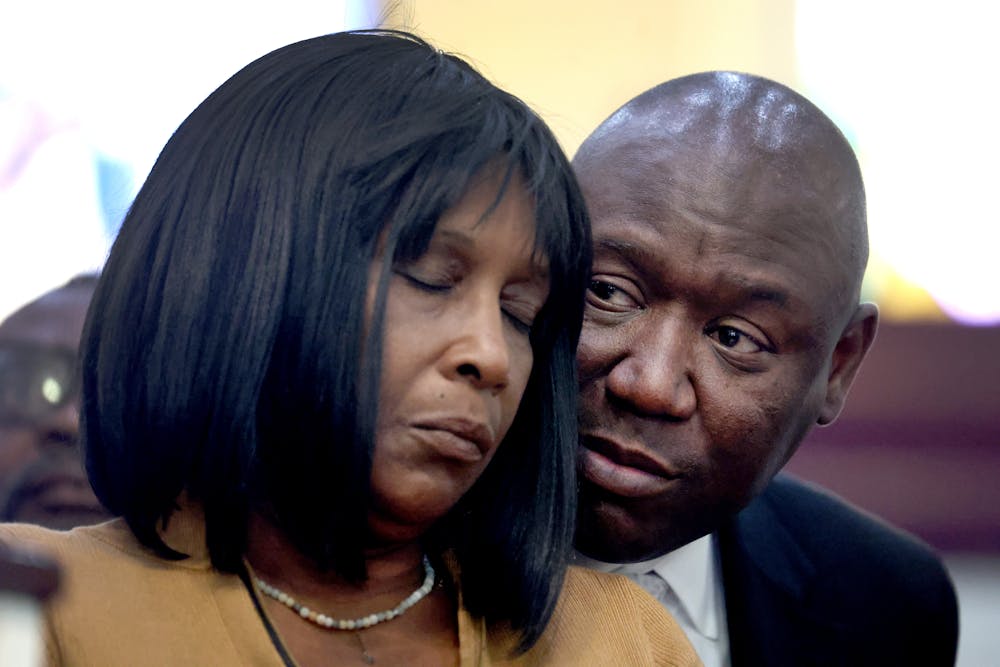
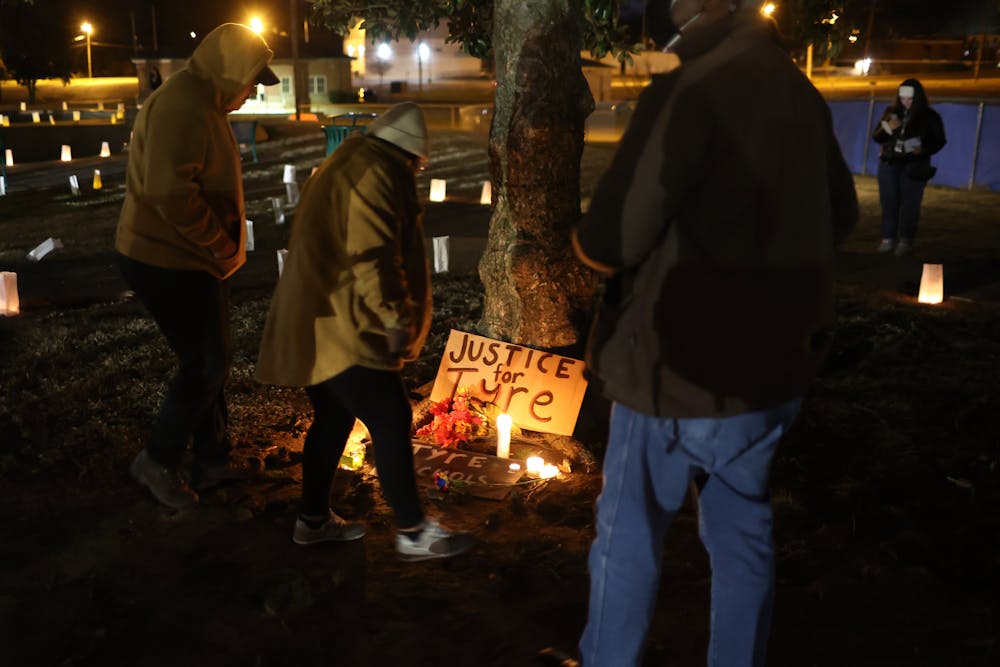
The panel’s shutdown comes just days after the city of Memphis released video of several Black Memphis police officers brutally beating Tyre Nichols, a 29-year-old Black man, during a traffic stop days before he died from his injuries. Renewed calls for civil rights protections and police oversight quickly followed, with the Congressional Black Caucus and Senate Democrats urging conversations on federal reform efforts. Nichols’ family members are expected to attend President Joe Biden’s upcoming State of the Union address. 

Along with other investigations, the Civil Rights Subcommittee tackled extensive investigations into the role of white supremacy groups in the Jan. 6 attacks on the Capitol — with witnesses highlighting the growing influence of Christian Nationalism in terroristic events.

The proposal to reinstate the panel came from Rep. Jasmine Crockett, D-Texas, who pointed at the outcry over Nichols’ killing in her defense of the subcommittee. In a Friday statement, Crockett called the dissolution “an abject failure” by the Oversight Committee.

“In the midst of this tragedy and nationwide time of grief, the House Oversight Committee Chairman made a reckless and cruel decision to eliminate the vital Civil Rights and Civil Liberties Subcommittee when we need this subcommittee’s leadership and insight the most. This is an abject failure by one of the most powerful committees in the House of Representatives,” Crockett said. “Systemic policing and extremist violence are killing people, devastating our communities, and breaking the hearts of families we took an oath to defend and protect at all costs … I will be consulting the Chairman and House Republicans to bring back accountability and transparency to one of the most influential Committees in Congress.”


Want a daily wrap-up of all the news and commentary Salon has to offer? Subscribe to our morning newsletter, Crash Course.


In a later tweet, Crockett added: “GOP Oversight⁩ tried to toss out the Civil Rights and Civil Liberties Subcommittee without anybody noticing, but we won’t sit idly by! The pursuit of justice is ongoing and I’ll defend our civil rights at all costs.” 

Ranking member and former chair of the disbanded panel, Rep. Jamie Raskin, D-Md., echoed Crockett’s calls in a tweet of his own. 

“Police who break the law by brutalizing and murdering citizens endanger the social contract and become outlaws. We need sweeping reforms to make sure officers act as servants of the law. This is a democratic imperative only achieved by nonviolent political action and organizing,” he said.  

Voting with her party during the Tuesday hearing, far-right GOP Rep. Marjorie Taylor Greene, compared Nichols’ killing to the death of Ashli Babbitt. The Georgia Republican then called on the committee to investigate potential civil rights violations of those accused of being involved in the Jan. 6 attack on the Capitol. 

Babbitt was shot in the left shoulder by Capitol Police during the Jan. 6 attacks, as she and other rioters tried to break into the House chamber. Babbitt was given medical assistance by Capitol Police and later died at a hospital. 

“I believe that there are many people that came into the Capitol on Jan. 6th whose civil rights and liberties are being violated heavily. And this committee will, I hope, Mr. Chairman, look into those civil rights abuses,” Greene said.

“There’s a woman in this room whose daughter was murdered on January 6th. Ashli Babbitt … there’s never been a trial. As a matter of fact, no one has cared about the person that shot and killed her. And no one in this Congress has really addressed that issue. January 6th Committee didn’t address it,” she added. 

“Civil rights and liberties are important, but there is a clear difference between Tyre Nichols and Ashli Babbitt,” Greene said in a Tuesday tweet. 

White House spokesman Ian Sams called out Greene’s comments. 

“This is what new member of the House Oversight Committee, Rep. Marjorie Taylor Greene, wants to prioritize,” he wrote.

“Increasingly being weaponized”: New Pentagon rules keep many military court records secret

ProPublica is a Pulitzer Prize-winning investigative newsroom. Sign up for The Big Story newsletter to receive stories like this one in your inbox.

In 2016, Congress passed a law that was supposed to make the military justice system more transparent, instructing the U.S. military’s six branches to give the public broader access to court records. Seven years later, the Department of Defense has finally issued guidelines for how the services should comply with the law, but they fall far short of the transparency lawmakers intended.

Caroline Krass, general counsel for the Defense Department, told officials from the Army, Navy, Air Force, Marines, Coast Guard and Space Force in a memorandum last month that they could mostly continue doing what they have been for years: keep many court records secret from the public.

In their 2016 law, lawmakers had envisioned a military justice system that operated much like federal courts, where the public has real-time electronic access to dockets, records and filings. Concerned about fairness and secrecy in the military system, Congress wanted the public to have similar access to records for courts-martial to allow for more scrutiny of how the military handles criminal cases, particularly sexual assault.

The law calls for the “timely” release of court records “at all stages of the military justice system … including pretrial, trial, post-trial, and appellate processes.”

The newly released Pentagon guidance, however, does little to make the system more open. The guidance tells the services they do not have to make any records public until after a trial ends. It gives the military the discretion to suppress key trial information. And in cases where the defendant is found not guilty, the directive appears to be even more sweeping: The military services will be allowed to keep the entire record secret permanently.

The Pentagon did not respond to ProPublica’s questions about the new guidance. A Navy prosecutor argued in a court filing last year that the military cannot act like its counterparts in federal court because the military system doesn’t have a clerk of court and needs to be “fluid and mobile.”

Despite the 2016 law, which required consistent standards across the military, the Pentagon for years let the individual services decide how to comply with the law, and public access to court-martial records remained extremely limited.

Frank Rosenblatt, vice president of the National Institute of Military Justice, said even before the new guidance was issued, the spirit of the law wasn’t met. Leaving access decisions “to the discretion of military officials really is a default towards secrecy,” he said.

In September, ProPublica sued the Navy for refusing to provide nearly all of the court records in a high-profile arson case. The Navy prosecuted a sailor for allegedly setting the USS Bonhomme Richard on fire. In 2020, the amphibious assault ship burned for more than four days and was destroyed, a more than $1 billion loss. A ProPublica investigation showed there was little evidence of the sailor’s guilt, and Seaman Recruit Ryan Mays was found not guilty at his court-martial.

ProPublica’s lawsuit was successful in getting the Navy to release hundreds of pages of court-martial documents in the Mays case. The suit also challenges the Navy’s overall policy for withholding records and is ongoing. The lawsuit could end up questioning Krass’ new directive as well for not following the 2016 law or abiding by the First Amendment and judicial rulings that grant timely access to court records.

ProPublica’s lawsuit appears to have spurred the new Pentagon guidance. ProPublica, along with the Reporters Committee for Freedom of the Press and other media organizations, also wrote a letter to Krass requesting she outline standards for the military to follow. The National Institute of Military Justice supported ProPublica’s lawsuit and wrote a separate letter to Krass.

However, nothing in the new policy would force the Navy or the other services to release similar court records in the future.

The guidance allows the military to withhold records when public access and scrutiny is often most important: leading up to and during a court-martial. Under the new policy, the military doesn’t have to make records public until after a verdict is reached and the trial record is certified. The guidance says the services can take up to 45 days after certification to release any documents.

That arbitrary time frame is out of step with how every other court is run, Rosenblatt said. After a trial is over, “the newsworthiness is gone,” he said.

Even then, only a limited part of the trial record has to be produced. The services do not have to provide transcripts or recordings of court sessions or any evidence entered as exhibits, according to the Pentagon guidance. And the Pentagon does not consider any preliminary hearing documents to be part of the trial record.

In the military, there is a proceeding called an Article 32 hearing to decide whether there is enough evidence for a trial. Under the new guidance, the military won’t have to put these hearings on the docket, so the public won’t even know they are happening.

Records from Article 32 and other preliminary hearings tell the public a lot about whether the system is just. That’s where citizens can review and assess what cases the military are deciding to prosecute, Rosenblatt said.

In Mays’ case, for example, the judge who presided over the Article 32 hearing recommended that the Navy drop its case against him for lack of evidence. The Navy ignored that recommendation and moved forward with the prosecution. The service then refused to make that recommendation public.

The new Pentagon guidance also allows the military to permanently seal the trial record if the defendant is found not guilty. This could also prevent an assessment of fairness. For example, if a general is accused of sexual assault and found not guilty, the military doesn’t have to release any court records about the case, and the public would not be able to scrutinize how the case of a high-ranking officer was handled.

The new guidelines make one change in favor of transparency. The military will no longer use Freedom of Information Act exemptions to justify redacting information from court records. FOIA law is not used to withhold or redact court records in any other court in the country, and it was inappropriately applied in military courts, Rosenblatt said.

For example, in the Mays case, the Navy cited FOIA to redact the names of witnesses who testified in open court at trial.

Krass’ new guidance says that the 2016 law makes access to courts-martial records “distinct from the right” to federal records granted under FOIA. Instead the federal Privacy Act, which regulates how the government can collect and release information about private individuals, should guide “which information and documents from the military justice system are to be made accessible to the public.”

Although Rosenblatt said eliminating FOIA from the military judicial process was progress, the Privacy Act also doesn’t belong in the equation. The guidance also leaves how to interpret the Privacy Act and release of documents up to the services.

“The Privacy Act,” Rosenblatt said, “is increasingly being weaponized to shield what’s going on in the military justice system from the public.”

John Roberts’ wife’s client list raises concern about “conflicts of interest and influence peddling”

A former colleague of Jane Roberts, the wife of Chief Justice John Roberts, filed a complaint with Congress and the Justice Department alleging that her work as a legal recruiter poses a conflict of interest at the Supreme Court.

The complaint, which was first obtained by The New York Times, accuses the chief justice of failing to acknowledge the full extent of his wife’s work in his ethical disclosures. 

Jane Roberts, who quit her job as a law partner when her husband was confirmed as chief justice in 2005, made millions of dollars in commissions helping recruit for firms – some of which had business before the Supreme Court, according to a letter obtained by The New York Times.

Boston lawyer Kendal Price argued in the letter last month that the justices should be required to disclose more information about their spouses’ work. 

“I do believe that litigants in U.S. courts, and especially the Supreme Court, deserve to know if their judges’ households are receiving six-figure payments from the law firms,” Price wrote.

Patricia McCabe, a spokeswoman for the Supreme Court, told The Times that all the justices were “attentive to ethical constraints” and complied with financial disclosure laws.  

McCabe cited the code of conduct for federal judges, including an advisory opinion that says a judge “need not recuse merely because” his or her spouse had worked as a recruiter for a law firm with issues before the court.

A statement provided by Price’s attorney explained why he came forward years later.

“I made the disclosures at this time for two principal reasons. First, any potential influence on what cases are accepted by the Supreme Court is a serious matter that affects the justice system in the U.S., particularly if that influence is not publicly known,” Price said.

“Second, the national controversy and debate regarding the integrity of the Supreme Court demanded that I no longer keep silent about the information I possessed, regardless of the impact such disclosures might have upon me professionally and personally,” he added.


Want a daily wrap-up of all the news and commentary Salon has to offer? Subscribe to our morning newsletter, Crash Course.


As the Supreme Court faces another ethics scandal, several legal experts have raised concerns about the public’s trust being at an all-time low. 

“Another day, another ethics concern about another life-tenured conservative justice on the most powerful court in the world, which has no binding ethics rules,” tweeted Doug Lindner, an Advocacy Director for Judiciary & Democracy for the League of Conservation Voters.

Justice Clarence Thomas ignored calls to resign or recuse himself after he came under scrutiny for his wife Ginni Thomas’ involvement in helping former President Donald Trump overturn the results of the 2020 presidential election. 

“If Chief Justice Roberts really wanted to address Supreme Court ethics, he would have immediately worked to implement a Code of Conduct after Clarence Thomas failed to recuse from cases involving January 6th despite having a clear conflict of interest,” the government watchdog group Citizens for Responsibility and Ethics in Washington tweeted in May 2022.

“Jane Roberts is just the latest Supreme Court spouse to raise questions about potential conflicts of interest and influence peddling before the nation’s highest court,” said Brett Edkins, the managing director of policy and political affairs for Stand Up America.

Edkins added that while Jane Roberts “did not join a seditious conspiracy to overthrow the government” like Ginni Thomas did, her actions still undermine Chief Justice Roberts’ impartiality when his wife’s clients argue before the court.

“It’s clear that the ultraconservative justices in particular cannot be trusted to hold themselves to the same ethical standard as other federal judges,” he said. “It’s time for Congress to step up and pass meaningful reforms to fix the Supreme Court, including a code of ethics that would require justices to recuse themselves from cases where they have an actual or apparent conflict of interest.”

Asteroids made of “rubble” might be very, very hard to destroy, astronomers say

Though a common premise in science fiction, the prospect of a large asteroid smashing into Earth is not fiction at all, but rather a guarantee. Extinction-event asteroids are a periodic occurrence, just like the tides or the full moon; just ask the dinosaurs. That’s why the National Aeronautics and Space Administration (NASA) spent so much time and money on the Double Asteroid Redirection Test (DART) mission, which successfully tested our ability to deflect an asteroid from hitting Earth. That mission was a success, and (seemingly) suggests that asteroids aren’t as dangerous as one might think. 

But what if the asteroid in question was almost indestructible? 

According to new research published in the Proceedings of the National Academy of Sciences (PNAS), led by planetary scientist Fred Jourdan from Curtin University in Australia, rubble pile asteroids are more durable (and common) than previously thought, possibly changing the way scientists think about potential planetary defense measures. Rubble pile asteroids are a particular type of asteroid that, true to their name, consist of smaller debris pieces the size of boulders and rocks that have coalesced under the influence of gravity. These types of asteroids are notoriously diffuse compared to solid rock.

Yet if you thought these rubble piles were, by virtue of their composition, weak and easily broken up, you would be mistaken.

In the study, Jourdan and his colleagues looked at the origin, composition and durability of rubble pile asteroids thanks to the Japanese Space Agency’s (JAXA) Hayabusa 1 probe sample-return mission. 


Want more health and science stories in your inbox? Subscribe to Salon’s weekly newsletter The Vulgar Scientist.


As you may recall, JAXA collected samples from an asteroid named Itokawa in 2005 — and despite numerous setbacks to bring them back to Earth — they succeeded in 2010. Over a decade later, using a technique called electron backscattered diffraction, Jourdan and his team were able to determine if the returned particles of Itokawa had previously been impacted in space. Through this process of scanning the surface of the particles, the researchers concluded that these asteroids are nearly indestructible, thanks to a unique “cushion”-like feature.

“Asteroids are usually thought of as a big chunk of solid rock, but they are not all like that — some are called rubble piles because they are rocks, boulders, and pebbles agglomerated together, but there is a lot of void spaces between those rocks and that extra void space make them shock-absorbent,” Jourdan told Salon via email. “Rubble pile asteroids like Itokawa are like a giant space cushion.”

Jourdan further explained that cushions are soft because there is a lot of air trapped in them.

“So it’s good to absorb shock, right?” Jourdan said. “Same for rubble pile asteroids, they are just good at absorbing shock.”

This new discovery could be why the team of researchers discovered that Itokawa is so old — an estimated 4.2 billion years old, which is nearly the same age as our own solar system.

“We were surprised,” Jourdan said about the asteroid’s age. “Most models predict that an asteroid with a size of a few hundred meters to a few kilometers should survive ambient bombardment in the asteroid belt for a few hundred millions of years – yet Itokawa survived more than 4.2 billion years; much longer than we thought it would.”

Jourdan said the most important implication of his research though is that rubble pile asteroids are “resistant to bombardment.” While that might sound like we Earthlings are doomed in terms of planetary defense, he said we can “use that to our advantage.”

“So what we are suggesting in our study is that we should explore the possibility of blasting a nuclear device very close to the asteroid.”

When it came to the DART mission 2022, NASA sent a 1,320-pound spacecraft to crash into a small asteroid called Dimorphos and throw it off orbit. While the mission was a resounding success, Jourdan said “the problem is that it requires to detect the asteroids very early on since the push will be very small.”

“So if the asteroid starts to be pushed by kinetic impact say three years before it collides with Earth, no problem; DART-like devices can do it,” Jourdan said. “But what if we don’t have enough time? What if we suddenly discover that an asteroid will impact Earth within 3 months? What do we do?”

This is where Jourdan’s new research comes into play. 

“So what we are suggesting in our study is that we should explore the possibility of blasting a nuclear device very close to the asteroid,” Jourdan said. “Why? Because the shock wave would be much more energetic than small kinetic impactors like DART.”

Jourdan said the fact that rubble pile asteroids are so durable means that the goal of the blast wouldn’t be to destroy them, but merely to nudge their trajectory so that they wouldn’t hit Earth.

“Exploding an asteroid is really not the way to go since all the debris would rain down and cause similar devastation,” he said.

MTG compares police killing of Tyre Nichols to shooting of Capitol rioter Ashli Babbitt

United States Congresswoman Marjorie Taylor Greene, R-Ga., claimed on Tuesday that the shooting death of Capitol rioter Ashli Babbitt was on par with the January 7th, 2023 murder of Tyre Nichols at the hands of five Memphis, Tennessee police officers. Greene tweeted a video of her address – with Babbitt’s name misspelled.

“I do agree with you about Tyre Nichols’ death. I watched the video, and it was tragic and extremely difficult to watch. I would also like to point out that that city is Democrat-controlled and the five officers that have been arrested and charged are Black. And I think that this isn’t an issue of racism or anything like that. I think that the judge and the jury in the trial needs to work out what happened there. But I share that with you,” Greene began.

“But I’d like to also point something that I’d hope you share with me,” Greene continued. “There’s a woman in this room whose daughter was murdered on January 6th. Ashli Babbitt. And Ashli babbitt has, there’s never been a trial. As a matter of fact, no one has cared about the person that shot and killed her. And no one in this Congress has really addressed that issue. January 6th Committee didn’t address it.”

The Capitol Police conducted an investigation and concluded that Babbitt’s killing was justified given the circumstances.

Greene then declared that insurrection defendants – who are either awaiting trial or have already been convicted – are being mistreated.

“I believe that there are many people that came into the Capitol on January 6th whose civil rights and liberties are being violated heavily. And this committee will, I hope, Mr. Chairman, look into those civil rights abuses, because they’re happening in a jail right here in this city. And I hope Ms. Norton will care about that as well, as well as jails across the country. I’ve been in that jail. And it’s not just the January 6th defendants’ pretrial, by the way. It’s many of the inmates in there living in horrific conditions. So I think that’s something that you and I can care about,” she said.

“Will the gentle lady yield just for a moment?” a representative asked.

“No, I will not yield,” Greene replied. “But I would like to say and point out that civil rights and liberties are important, but we have to make sure that we crack down on the two-tier justice system, because that needs to end. I yield back the remainder of my time.”

Social media observers responded to Greene’s remarks.

Luke Zaleski: [Former President Donald] “Trump’s lies killed Ashli Babbitt. Shooting her stopped the coup attempt and protected congress and the sovereignty of the United States and the peaceful transfer of power.”

Chidi: “Yes, there is a clear difference, one was stopped for no reason, and he complied but was beaten to death. The other was a domestic terrorist who tried to break into the Capitol chambers to harm people. She refused to comply and was shot to death.”

Mike Harvey: “You’re right. Tyre wasn’t committing a crime, according to the Memphis Police Dept. Ashli participated in a massive effort to overturn an election, according to the Capitol Police Dept. Facts, not opinion.”

The Fact Checker: “Fact Checking: Conclusion: Agreed. Ashley Babbitt was shot by Capitol Police during the commission of a violent crime despite numerous warnings there was a gun trained on her. Tyre Nichols was murdered. Fact Check Completed.”

OnTheFritz: “The difference is very clear; Ashli Babbit was committing a crime when she was killed by police and Tyre Nichols was not.”

Eric Johnston: “Yes, there is a clear difference between the two. One was a domestic terrorist, and the other wasn’t.”

Stella: “Yup. Ashli was a terrorist who stormed the Capitol, because Trump sent her there to fight his fight. Tyre was a victim of police brutality.”

MaximillianPotter: “This performative disgrace to Congress can’t even spell the name of the anti-democratic seditionist she allegedly cares so much about. It’s Babbitt. Greene doesn’t even take 2 seconds to look up how to spell the name before she pushes out a show-tweet.”

Watch below or at this link.

Ron DeSantis targets diversity programs, tenured professors in “unhinged”​ attack on higher ed

Taking aim yet again at higher education, Republican Florida Gov. Ron DeSantis on Tuesday proposed sweeping changes to the state’s university system, including banning state funding for diversity, equity, and inclusion programs and critical race theory education, as well as forcing tenured professors to undergo reviews at any time.

Speaking during a press conference at the State College of Florida in Bradenton, DeSantis said he is asking the state Legislature to cut all funding for programs he believes are “ideological.”

Referring to diversity, equity, and inclusion programs—which aim to promote fair treatment and full participation—and critial race theory, a graduate-level framework dealing with systemic racism, DeSantis said that “we’re also going to eliminate all DEI and CRT bureaucracies in the state of Florida. No funding, and that will wither on the vine.”

Apparently not satisfied with a state law requiring tenured professors at state colleges and universities to undergo reviews every five years, DeSantis also called for legislation that would subject such educators to reviews at any time, at risk of their jobs.

“Yes, we have the five-year review of all the tenured faculty, which is, which is good… and the board of trustees has to determine whether they stay or go. But you may need to do review more aggressively than just five,” he said.

“I’ve talked with folks around the country who’ve been involved in higher ed reform, and the most significant deadweight cost at universities is typically unproductive tenured faculty,” the governor added. “And so why would we want to saddle you as taxpayers with that cost if we don’t have to do that?”

United Faculty of Florida (UFF), the union representing college and university educators in the state, said it would fight DeSantis’ proposals.

“The United Faculty of Florida stand in lockstep opposition to any and all so-called ‘reforms’ that will actually destroy our state’s world-class degree programs and their ability to serve our students,” UFF President Andrew Gothard said in a statement. “We will not allow Florida’s future to be sacrificed for cheap political points.”

Writing for The Chronicle of Higher Education, Francie Diep and Emma Pettit contended that “it’s been a dizzying month for higher ed in the Sunshine State.”

As the authors explained:

The recent avalanche of activity began in late December, when DeSantis’ office requested that state colleges and universities list their spending on programs related to diversity, equity, inclusion, and critical race theory. Florida’s Republican House Speaker, Paul Renner, later asked the same campuses to turn over a mountain of additional DEI-related information.

DeSantis’ office also requested that state universities report data on transgender students, and he appointed six new trustees to the New College of Florida’s board because, according to his press secretary, the small liberal arts institution has put “trendy, truth-relative concepts above learning.”

“What I find most troubling is that DeSantis is putting out a blueprint for other governors and state legislatures,” Kristen A. Renn—a professor at Michigan State University who researches LGBTQ+ college issues—told The Chronicle of Higher Education. “He’s doing these things in ways that anybody else can pick this up and do it.”

DeSantis—a potential 2024 presidential candidate—has also come under fire for other policies and actions including rejecting a college preparatory African-American studies course, banning unapproved books from K-12 libraries, and the Stop WOKE Act, a CRT ban that applies to schools from the primary through university levels and is meant to combat what the governor called “wokeness as a form of cultural Marxism.”

Mia Brett, legal historian at The Editorial Board, last week compared Republicans’ attacks on education across the country to similar moves by the leaders of Nazi Germany during the early months of their regime.

“I’m not being hyperbolic when I say this is directly out of Nazi laws passed in 1933. Though if this Republican effort is successful, you might not be able to learn things like that anymore,” she wrote, adding that the legislation banning courses on CRT and racial and gender identity are a “chilling erosion of academic freedom and a huge step toward fascist academic control in the service of right-wing narratives.”

“While it’s still legal to teach history, remember where such efforts have led and take them seriously,” Brett ominously warned.

It’s “telehealth vs. no care”: Doctors say Congress risks leaving patients vulnerable

When the covid-19 pandemic hit, Dr. Corey Siegel was more prepared than most of his peers.

Half of Siegel’s patients — many with private insurance and Medicaid — were already using telehealth, logging onto appointments through phones or computers. “You get to meet their family members; you get to meet their pets,” Siegel said. “You see more into their lives than you do when they come to you.”

Siegel’s Medicare patients weren’t covered for telehealth visits until the pandemic drove Congress and regulators to temporarily pay for remote medical treatment just as they would in-person care.

Siegel, section chief for gastroenterology and hepatology at Dartmouth-Hitchcock Medical Center, is licensed in three states and many of his Medicare patients were frequently driving two to three hours round trip for appointments, “which isn’t a small feat,” he said.

The $1.7 trillion spending package Congress passed in December included a two-year extension of key telehealth provisions, such as coverage for Medicare beneficiaries to have phone or video medical appointments at home. But it also signaled political reluctance to make the payment changes permanent, requiring federal regulators to study how Medicare enrollees use telehealth.

The federal extension “basically just kicked the can down the road for two years,” said Julia Harris, associate director for the health program at the D.C.-based Bipartisan Policy Center think tank. At issue are questions about the value and cost of telehealth, who will benefit from its use, and whether audio and video appointments should continue to be reimbursed at the same rate as face-to-face care.

Before the pandemic, Medicare paid for only narrow uses of remote medicine, such as emergency stroke care provided at hospitals. Medicare also covered telehealth for patients in rural areas but not in their homes — patients were required to travel to a designated site such as a hospital or doctor’s office.

But the pandemic brought a “seismic change in perception” and telehealth “became a household term,” said Kyle Zebley, senior vice president of public policy at the American Telemedicine Association.

The omnibus bill’s provisions include: paying for audio-only and home care; allowing for a variety of doctors and others, such as occupational therapists, to use telehealth; delaying in-person requirements for mental health patients; and continuing existing telehealth services for federally qualified health clinics and rural health clinics.

Telehealth use among Medicare beneficiaries grew from less than 1% before the pandemic to more than 32% in April 2020. By July 2021, the use of remote appointments retreated somewhat, settling at 13% to 17% of claims submitted, according to a fee-for-service claims analysis by McKinsey & Co.

Fears over potential fraud and the cost of expanding telehealth have made politicians hesitant, said Josh LaRosa, vice president at the Wynne Health Group, which focuses on payment and care delivery reform. The report required in the omnibus package “is really going to help to provide more clarity,” LaRosa said.

In a 2021 report, the Government Accountability Office warned that using telehealth could increase spending in Medicare and Medicaid, and historically the Congressional Budget Office has said telehealth could make it easier for people to use more health care, which would lead to more spending.

Advocates like Zebley counter that remote care doesn’t necessarily cost more. “If the priority is preventative care and expanding access, that should be taken into account when considering costs,” Zebley said, explaining that increased use of preventative care could drive down more expensive spending.

Siegel and his colleagues at Dartmouth see remote care as a tool for helping chronically ill patients receive ongoing care and preventing expensive emergency episodes. It “allows patients to not be burdened by their illnesses,” he said. “It’s critical that we keep this going.”

Some of Seigel’s work is funded by The Leona M. and Harry B. Helmsley Charitable Trust. (The Helmsley Charitable Trust also contributes to KHN.)

For the past nine months, Dartmouth Health’s telehealth visits plateaued at more than 500 per day. That’s 10% to 15% of all outpatient visits, said Katelyn Darling, director of operations for Dartmouth’s virtual care center.

“Patients like it and they want to continue doing it,” Darling said, adding that doctors — especially psychologists — like telehealth too. If Congress decides not to continue funding for remote at-home visits after 2024, Darling said, she fears patients will have to drive again for appointments that could have been handled remotely.

The same fears are worrying leaders at Sanford Health, which provides services across the Upper Midwest.

“We absolutely need those provisions to become permanent,” said Brad Schipper, president of virtual care at Sanford, which has health plan members, hospitals, clinics, and other facilities in the Dakotas, Iowa, and Minnesota. In addition to the provisions, Sanford is closely watching whether physicians will continue to get paid for providing care across state lines.

During the pandemic, licensing requirements in states were often relaxed to enable doctors to practice in other states and many of those requirements are set to expire at the end of the public health emergency.

Licensing requirements were not addressed in the omnibus, and to ensure telehealth access, states need to allow physicians to treat patients across state lines, said Dr. Jeremy Cauwels, Sanford Health’s chief physician. This has been particularly important in providing mental health care, he said; virtual visits now account for about 20% of Sanford’s appointments.

Sanford is based in Sioux Falls, South Dakota, and Cauwels recalled one case in which a patient lived four hours from the closest child-adolescent psychiatrist and was “on the wrong side of the border.” Because of the current licensing waivers, Cauwels said, the patient’s wait for an appointment was cut from several weeks to six days.

“We were able to get that kid seen without Mom taking a day off to drive back and forth, without a six-week delay, and we were able to do all the things virtually for that family,” Cauwels said.

Psychiatrist Dr. Sara Gibson has used telehealth for decades in rural Apache County, Arizona. “There are some people who have no access to care without telehealth,” she said. “That has to be added into the equation.”

Gibson, who is also medical director for Little Colorado Behavioral Health Centers in Arizona, said one key question for policymakers as they look ahead is not whether telehealth is better than face-to-face. It’s “telehealth vs. no care,” she said.


This story can be republished for free (details).

KHN (Kaiser Health News) is a national newsroom that produces in-depth journalism about health issues. Together with Policy Analysis and Polling, KHN is one of the three major operating programs at KFF (Kaiser Family Foundation). KFF is an endowed nonprofit organization providing information on health issues to the nation.

Subscribe to KHN’s free Morning Briefing.

Some addiction treatment centers turn big profits by scaling back care

Near the end of his scheduled three-month stay at a rehab center outside Austin, Texas, Daniel McKegney was forced to tell his father in North Carolina that he needed more time and more money, he recently recalled.

His father had already received bills from BRC Recovery totaling about $150,000 to cover McKegney’s treatment for addiction to the powerful opioid fentanyl, according to insurance statements shared with KHN. But McKegney, 20, said he found the program “suffocating” and wasn’t happy with his care.

He was advised against the long-term use of Suboxone, a medication often recommended to treat opioid addiction, because BRC does not consider it a form of abstinence. After an initial five-day detox period last April, McKegney’s care plan mostly included a weekly therapy session and 12-step group meetings, which are free around the country.

McKegney said a BRC staffer recommended he stay a fourth month and even sat in on the call to his dad.

“They used my life and [my] father’s love for me to pull another 20 grand out of him,” said McKegney, who told KHN he began using fentanyl again after the costly stay.

BRC did not respond to specific concerns raised by McKegney. But in an emailed statement, Mandy Baker, president and chief clinical officer of BRC Healthcare, said that many of the complaints patients and former employees shared with KHN are “no longer accurate” or were related to covid safety measures.

But addiction researchers and private equity watchdogs said models like the one used by BRC — charging high patient fees without guaranteeing access to evidence-based care — are common throughout the country’s addiction treatment industry.

The model and growing demand are why addiction treatment has become increasingly attractive to private equity firms looking for big returns. And they’re banking on forecasts that predict the market will grow by $10 billion — doubling in size — by the end of the decade as drug overdose and alcohol-induced death rates mount.

“There is a lot of money to be made,” said Eileen O’Grady, research and campaign director at the Private Equity Stakeholder Project, a watchdog nonprofit that tracks private equity investment in health care, housing, and other industries. “But it’s not necessarily dovetailing with high-quality treatment.”

In 2021, 127 mergers and acquisitions took place in the behavioral health sector, which includes treatment for substance use disorders, a rebound after several years of decline, according to investment banking firm Capstone Partners. Private equity investment drove much of the activity in an industry that is highly fragmented and rapidly growing, and has historically had few guardrails to ensure patients get appropriate care.

Roughly 14,000 treatment centers dot the country. They’ve proliferated as addiction rates rise and as health insurance plans are required to offer better coverage of drug and alcohol treatment. The treatment options vary widely and are not always consistent with those recommended by the federal Substance Abuse and Mental Health Services Administration. While efforts to standardize treatment advance, industry critics say private equity groups are investing in centers with unproven practices and cutting services that, while unprofitable, might support long-term recovery.

Baker said BRC treats people who have been unsuccessful in other facilities and does so with input from both clients and their families.

Private Equity Skimps on the Known Standards

Centers that discourage or prohibit the use of Food and Drug Administration-approved medications for the treatment of substance use disorder are plentiful, but in doing so they do not align with the American Society of Addiction Medicine’s guidelines on how to manage opioid use disorder over the long term.

Suboxone, for example, combines the pain reliever buprenorphine and the opioid-reversal medication naloxone. The drug blocks an overdose while also reducing a patient’s cravings and withdrawal symptoms.

“It is inconceivable to me that an addiction treatment provider purporting to address opioid use disorder would not offer medications,” said Robert Lubran, a former federal official and chairman of the board at the Danya Institute, a nonprofit that supports states and treatment providers.

Residential inpatient facilities, where patients stay for weeks or months, have a role in addiction treatment but are often overused, said Brendan Saloner, an associate professor of health policy and management at Johns Hopkins Bloomberg School of Public Health.

Many patients return to drug and alcohol use after staying in inpatient settings, but studies show that the use of medications can decrease the relapse rate for certain addictions. McKegney said he now regularly takes Suboxone.

“The last three years of my life were hell,” he said.

Along with access to medications, high-quality addiction treatment usually requires long-term care, according to Shatterproof, a nonprofit focused on improving addiction treatment. And, ideally, treatment is customized to the patient. While the “Twelve Steps” program developed by Alcoholics Anonymous may help some patients, others might need different behavioral health therapies.

But, when looking for investments, private equity groups focus on profit, not necessarily how well the program is designed, said Laura Katz Olson, a political science professor at Lehigh University who wrote a book about private equity’s investment in American health care.

With health care companies, investors often cut services and trim staff costs by using fewer and less-trained workers, she said. Commonly, private equity companies buy “a place that does really excellent work, and then cut it down to bare bones,” Olson said. During his stay, McKegney said, outings to movies or a lake abruptly stopped, food went from poke bowls and pork tenderloin to chili that tasted like “dish soap,” and staff turnover was high.

Nearly three years ago, BRC landed backing from NewSpring Capital and Veronis Suhler Stevenson, two private equity firms with broad portfolios. Their holdings include a payroll processor, a bridal wear designer, and a doughnut franchise. With the fresh funds, BRC started an expansion push and bought several Tennessee treatment facilities.

NewSpring Capital and Veronis Suhler Stevenson did not respond to emails and phone calls from KHN.

High Prices and Low Overhead = Big Business

Before the sale to BRC, Nashville Recovery Center co-founder Ryan Cain said, roughly 80% of the center’s offerings were free. Anyone could drop by for 12-step meetings, to meet a sponsor, or just to play pool. But the new owners focused on a new high-end sober living program that cost thousands of dollars per month and relied on staffers who were in recovery themselves.

In 2021, Nanci Milam, 48, emptied her 401(k) retirement fund to go through the sober living program and tackle her alcohol addiction. She had been sober for only six months when she was hired as a house manager, overseeing some of the same residents she had gone through the program with. She had to handle other residents’ medications, which she said she could have abused. Milam said she was fortunate to maintain sobriety.

“I think it served their need. And I was ambitious. But it should not have happened,” said Milam, adding that she left because the company hadn’t helped her start her certification as a drug counselor as promised.

A licensing violation reported to Tennessee regulators in late 2021 involved a staffer who was later fired for having sex with a resident in a storage area. And KHN obtained a copy of a 911 call placed in August 2022 — after a resident drank half a bottle of mouthwash — during which a staffer admitted there was no nurse on-site, which some other states require.

Removing the Burden from Consumers

The regulations of treatment providers largely focus on health and safety rather than clinical guidelines. Only a handful of states, including New York and Massachusetts, require that licensed addiction treatment centers offer medication for opioid use disorder and follow other best practices.

“We have a huge issue in the field where licensing standards don’t comport with what we know to be the most effective quality-of-care standards,” said Michael Botticelli, former director of the Office of National Drug Control Policy during the Obama administration and a member of a clinical advisory board for private equity-backed Behavioral Health Group. Some organizations, including Shatterproof, guide patients toward appropriate care. The federal and state governments largely direct public funds to centers that meet clinical quality-of-care standards.

But access to treatment is limited, and desperate patients and their families often don’t know where to turn. State or federal regulators aren’t policing claims from rehab facilities, like the “99% success rate” touted by BRC.

“We cannot put the burden on patients and their families” to navigate the system, said Johns Hopkins’ Saloner. “My heart really breaks for people who have thrown thousands of their dollars at programs that are bogus.”

When her niece was ready for inpatient rehab in summer 2020, Marina said, sending her to BRC was a “knee-jerk reaction.” Marina, a physician in Southern California, requested to be identified only by her middle name to protect the privacy of her niece, who suffers from alcohol addiction.

She had researched the facility three years earlier but didn’t investigate deeper because she was worried her niece would change her mind. BRC advertised success stories on the television show “Dr. Phil” and posted affirmations on social media.

Marina agreed to BRC’s upfront cost of $30,000 a month for a three-month stay in Texas, which she paid for out-of-pocket because her niece lacked insurance. She allowed KHN to review some of her niece’s pharmacy and treatment bills.

Marina said she paid for a fourth month, but said ultimately the program didn’t help her niece, who remains “horribly sick.” She said her niece felt constant guilt and shame at rehab. Marina thought there was inadequate medical oversight, and said the program “nickeled and dimed” her for additional services, like physicians’ visits, that she thought would be included.

“It almost doesn’t matter if you are educated and intelligent,” Marina said. “When it’s your loved one, you are just desperate.”


KHN (Kaiser Health News) is a national newsroom that produces in-depth journalism about health issues. Together with Policy Analysis and Polling, KHN is one of the three major operating programs at KFF (Kaiser Family Foundation). KFF is an endowed nonprofit organization providing information on health issues to the nation.

Subscribe to KHN’s free Morning Briefing.

Stormy Daniels thanks Trump for “admitting that I was telling the truth” in Truth Social rant

Adult film star Stormy Daniels suggested on Tuesday that former President Donald Trump appeared to admit to claims that he paid her hush money to keep quiet about their alleged affair in a Truth Social post.

Manhattan District Attorney Alvin Bragg, who declined to charge Trump in connection to the tax fraud violations by his company, has begun presenting evidence to a newly impaneled grand jury related to the alleged $130,000 hush money payment. Prosecutors have begun to interview witnesses to determine whether they will seek to charge Trump with misclassifying the cash as legal expenses to cover up a violation of New York state election law by paying Daniels during the campaign. Trump has denied that he had an affair with Daniels and the hush money payment but his longtime former fixer Michael Cohen pleaded guilty to federal charges in connection with the scheme, which he said was at the direction of Trump.

Trump lashed out over the renewed probe on Truth Social, claiming that the statute of limitations had run out on the 2016 allegations, though legal experts say Bragg has a strong case that the statute of limitations was tolled while Trump was mostly out of the state during his presidency.

“With respect to the ‘Stormy’ nonsense, it is VERY OLD & happened a long time ago, long past the very publicly known & accepted deadline of the Statute of Limitations. I placed full Reliance on the JUDGEMENT & ADVICE OF COUNCIL [sic], who I had every reason to believe had a license to practice law, was competent, & was able to appropriately provide solid legal services,” Trump wrote, referring to Cohen. “He came from a good law firm, represented other clients over the years, & there was NO reason not to rely on him, and I did.”

Daniels cited the post as an admission of guilt.

“Thanks for just admitting that I was telling the truth about EVERYTHING,” she wrote.

Trump previously insulted Daniels by calling her “horseface” in another Truth Social post insisting that he “NEVER HAD AN AFFAIR.”

“Guess I’ll take my ‘horse face’ back to bed now, Mr. former ‘president’. Btw, that’s the correct way to use quotation marks,” she wrote on Tuesday.


Want a daily wrap-up of all the news and commentary Salon has to offer? Subscribe to our morning newsletter, Crash Course.


Trump has repeatedly denied that he had an affair and that he had anything to do with the payment to Daniels but she has repeatedly stuck by her story that they had sex in 2006, a year after he married Melania Trump and described the alleged encounter in graphic detail in her 2018 book.

Cohen in 2018 pleaded guilty to a campaign finance violation in relation to the payment. Trump was never charged but was referred to as “Individual-1” in charging documents.

“Dopey Donald gets it wrong AGAIN and AGAIN! First, the [statute of limitations] has not expired. Additionally, Donald is so angry he can’t even get his spelling correct,” Cohen tweeted on Tuesday. “The proper word is Counsel…not Council. Either way…love the all CAPS.”

While New York has a five-year statute of limitations on many potential violations related to the alleged payment and the Trump Organization’s tax fraud conviction, prosecutors could argue that the actions were part of an ongoing crime, noted Norm Eisen, a senior Brookings Institution fellow who served as a Democratic counsel during Trump’s first impeachment. Prosecutors could also “argue that the statute of limitations should be extended as to Trump because he has been outside of New York ‘continuously’ over at least the last four years, during the term of his presidency,” he wrote, adding that the Manhattan D.A.’s office successfully did this in its prosecution of Harvey Weinstein.

Durham investigation goes bust: Bill Barr blew up mission to expose the deep state — to save Trump

One of the most mysterious chapters of former Attorney General Bill Barr’s tenure at the Department of Justice got a little sunlight last week when the New York Times published a deeply reported piece on the Durham Investigation, Donald Trump’s “investigation of the Mueller investigation.” We knew that Special Counsel John Durham, a man whose reputation was one of seriousness and rectitude, had only brought two prosecutions but failed to win convictions in both. And we knew that there had been turmoil in his office with several people resigning at what seemed to be pivotal moments in the case. But, until now, we didn’t know the details — and they are explosive.

The Times story, reported by Charlie Savage, Adam Goldman and Katie Benner, essentially reveals that the investigation which was supposed to blow the lid off of the Russia investigation by proving that it was a “partisan witch hunt,” was itself a witch hunt — only on behalf of Trump. Barr was enabling and covering for Trump throughout his tenure as we saw with his preemptive press conference to diminish the Mueller Report and mislead the public as to its conclusions and his willingness to back Trump’s strategy to discredit Vote-By Mail during the 2020 campaign. Even when he finally deserted the sinking ship in December of 2020, his letter of resignation showered Trump with praise even as he knew he was plotting to obstruct the peaceful transfer of power. But the Durham investigation was his personal project and it turns out that it was a monstrous abuse of power.

The whole point of naming a Special Counsel is to remove the taint of political interference by keeping a distance between the politically appointed Attorney General and the investigation. Barr did not do that. In fact, he directly participated in the probe by traveling overseas to the United Kingdom and Italy with Durham to interrogate their intelligence officials about whether they helped American investigators frame Trump which apparently offended them to no end since they did nothing of the sort. Durham and Barr became bosom buddies, throwing back scotch together at the end of the work day and having dinner on a regular basis. And Barr, who was convinced that the CIA had created the whole “Russia hoax,” eagerly ran interference with the Intelligence agencies for him as needed. Evidently, Durham was very taken with Barr and agreed from the get-go that Trump had been set up.

We had previously heard that Barr and Durham went to Italy on some sort of Hardy Boys expedition, but now we learn that they had been told by Italian authorities about some very credible information that Trump had committed serious financial crimes. Barr and Durham realized that it wasn’t something they could completely ignore (as much as they probably wanted to) so Barr assigned that case to Durham instead of another prosecutor and opened a criminal investigation. This was then leaked to the public in a way that implied they had found evidence of criminal behavior on the part of the FBI, the intelligence agencies or possibly even Hillary Clinton. They certainly didn’t let on that they were investigating Trump. 

Bill Barr was enabling and covering for Trump throughout his tenure.

From what we know, Durham quietly closed that “investigation” without much fuss. Considering the rest of their behavior one can’t help but suspect that he and Barr either didn’t look too closely or decided that revealing Trump’s crimes wasn’t worth jeopardizing their crusade to expose the “deep state.”

This is stunningly unethical behavior by an Attorney General. But we shouldn’t be too surprised. After all, Barr got the job in the first place by sending an unsolicited letter to Trump in which he criticized the Mueller investigation by claiming that a president can’t obstruct justice. In fact, Barr pretty clearly believes former president Richard Nixon’s famous line “when a president does it it’s not illegal” since his view, according to legal expert Marty Lederman, was that “the president has absolute constitutional authority over actions by executive branch officers in carrying out law enforcement powers given to them by Congress.” If you ever wondered where Trump got the idea that the Constitution gave him the power to “do whatever I want,” look no further than Bill Barr.


Want a daily wrap-up of all the news and commentary Salon has to offer? Subscribe to our morning newsletter, Crash Course.


He and Durham colluded together for months and came up with zilch. There simply was no evidence that the FBI, DOJ, CIA or the Mueller team had done anything untoward. But that didn’t stop Durham. He decided to focus on Trump’s bête noire Hillary Clinton and he brought a couple of cases designed to show that she set Trump up with bogus claims of Russian collusion. That blew up in his face too. He’s still in business today doing what we don’t know, yet Attorney General Merrick Garland doesn’t seem to be willing to pull the plug.

The Durham investigation was Barr’s personal project and it turns out that it was a monstrous abuse of power.

As a New York Times op-ed by David Firestone points out, this exposè pretty much destroys Barr’s attempt to rehabilitate himself with the public. He famously dissed Trump repeatedly in his January 6 Committee testimony and wrote a book in which he turns on his former boss, calling him “detached from reality” and urging Republicans not to nominate him for the presidency in 2024. But he narrows his criticism to the post-election period conveniently forgetting the previous four years of incompetence, corruption and mental instability which Barr encouraged. It’s a little too little and way too late.

Unfortunately, while Barr’s lame attempt at rehabilitation may have finally been put on ice by these latest revelations, the conspiracy theories that fueled it have not. As Firestone notes:

Republicans in the House are launching a new snipe hunt for proof that these same government offices were “weaponized” against conservatives, an expedition that is likely to be no more effective than Mr. Durham’s and Mr. Barr’s.

In fact, now that I think about it, this might be the one thing that will make Bill Barr and John Durham look good by comparison. These House extremists will air every half baked, fever dream of twitter randos and QAnon weirdos in public hearings and present them as facts. At least Barr and Durham mostly kept their conspiracy theories to themselves over scotch and prime rib. That’s about the best you can say for them

Government lets health plans that ripped off Medicare keep the money

Medicare Advantage plans for seniors dodged a major financial bullet Monday as government officials gave them a reprieve for returning hundreds of millions of dollars or more in government overpayments — some dating back a decade or more.

The health insurance industry had long feared the Centers for Medicare & Medicaid Services would demand repayment of billions of dollars in overcharges the popular health plans received as far back as 2011.

But in a surprise action, CMS announced it would require next to nothing from insurers for any excess payments they received from 2011 through 2017. CMS will not impose major penalties until audits for payment years 2018 and beyond are conducted, which have yet to be started.

While the decision could cost Medicare plans billions of dollars in the future, it will take years before any penalty comes due. And health plans will be allowed to pocket hundreds of millions of dollars in overcharges and possibly much more for audits before 2018. Exactly how much is not clear because audits as far back as 2011 have yet to be completed.

In late 2018, CMS officials said the agency would collect an estimated $650 million in overpayments from 90 Medicare Advantage audits conducted for 2011 through 2013, the most recent ones available. Some analysts calculated overpayments to plans of at least twice that much for the three-year period. CMS is now conducting audits for 2014 and 2015.

The estimate for the 2011-13 audits was based on an extrapolation of overpayments found in a sampling of patients at each health plan. In these reviews, auditors examine medical records to confirm whether patients had the diseases for which the government reimbursed health plans to treat.

Through the years, those audits — and others conducted by government watchdogs — have found that health plans often cannot document that they deserved extra payments for patients they said were sicker than average.

The decision to take earlier audit findings off the table means that CMS has spent tens of millions of dollars conducting audits as far back as 2011 — much more than the government will be able to recoup.

In 2018, CMS said it pays $54 million annually to conduct 30 of the audits. Without extrapolation for years 2011-17, CMS won’t come near to recouping that much.

CMS Deputy Administrator Dara Corrigan called the final rule a “commonsense approach to oversight.” Corrigan said she did not know how much money would go uncollected from years prior to 2018.

Health and Human Services Secretary Xavier Becerra said the rule takes “long overdue steps to move in the direction of accountability.”

“Going forward, this is good news. We should all be happy that they are doing that [extrapolation],” said former CMS official Ted Doolittle. But he added: “I do wish they were pushing back further [and extrapolating earlier years]. That would seem to be fair game,” he said.

David Lipschutz, an attorney with the Center for Medicare Advocacy, said he was still evaluating the rule, but noted: “It is our hope that CMS would use everything within their discretion to recoup overpayments made to Medicare Advantage plans.” He said that “it is unclear if they are using all of their authority.”

Mark Miller, who is the executive vice president of health care policy for Arnold Ventures and formerly worked at the Medicare Payment Advisory Commission, a congressional advisory board, said extrapolating errors found in medical coding have always been a part of government auditing. “It strikes me as ridiculous to run a sample and find an error rate and then only collect the sample error rate as opposed to what it presents to the entire population or pool of claims,” he said. (KHN receives funding support from Arnold Ventures.)

Last week, KHN released details of the 90 audits from 2011-2013, which were obtained through a Freedom of Information Act lawsuit. The audits found about $12 million in net overpayments for the care of 18,090 patients sampled for the three-year period.

In all, 71 of the 90 audits uncovered net overpayments, which topped $1,000 per patient on average in 23 audits. CMS paid the remaining plans too little on average, anywhere from $8 to $773 per patient, the records showed.

Since 2010, the federal Centers for Medicare & Medicaid services has threatened to crack down on billing abuses in the popular health plans, which now cover more than 30 million Americans. Medicare Advantage, a fast-growing alternative to original Medicare, is run primarily by major insurance companies including Humana, UnitedHealthcare, Centene, and CVS/Aetna.

But the industry has succeeded in opposing extrapolation of overpayments, even though the audit tool is widely used to recover overcharges in other parts of the Medicare program.

That has happened despite dozens of audits, investigations, and whistleblower lawsuits alleging that Medicare Advantage overcharges cost taxpayers billions of dollars a year.

Corrigan said Monday that CMS expected to collect $479 million from overpayments in 2018, the first year of extrapolation. Over the next decade, it could recoup $4.7 billion, she said.

Medicare Advantage plans also face potentially hundreds of millions of dollars in clawbacks from a set of unrelated audits conducted by the Health and Human Services inspector general.

The audits include an April 2021 review alleging that a Humana Medicare Advantage plan in Florida had overcharged the government by nearly $200 million in 2015.

Carolyn Kapustij, the Office of the Inspector General’s senior adviser for managed care, said the agency has conducted 17 such audits that found widespread payment errors — on average 69% for some medical diagnoses. In these cases, the health plans “did not have the necessary support [for these conditions] in the medical records, which has caused overpayments.”

“Although the MA organizations usually disagreed with us, they almost always had little disagreement with our finding that their diagnoses were not supported,” she said.

While CMS has taken years to conduct the Medicare Advantage audits, it also has faced criticism for permitting lengthy appeals that can drag on for years. These delays have drawn sharp criticism from the Government Accountability Office, the watchdog arm of Congress.

Leslie Gordon, an acting director of the GAO health team, said that until CMS speeds up the process, it “will fail to recover improper payments of hundreds of millions of dollars annually.”

KHN senior correspondent Phil Galewitz contributed to this report.


This story can be republished for free (details).

KHN (Kaiser Health News) is a national newsroom that produces in-depth journalism about health issues. Together with Policy Analysis and Polling, KHN is one of the three major operating programs at KFF (Kaiser Family Foundation). KFF is an endowed nonprofit organization providing information on health issues to the nation.

Subscribe to KHN’s free Morning Briefing.

Tired of being told to “adapt,” an Indigenous community wrote its own climate action plan

The Confederated Salish and Kootenai Tribes live among some of the most spectacular landscapes in the country. Their home, the Flathead Reservation, covers 1.2 million acres dotted with soaring mountains, sweeping valleys, and lush forests. Flathead River bisects the land and drains into Flathead Lake, the largest body of fresh water west of the Mississippi River. 

Long before anyone called this place northwest Montana or considered it a tourist destination, it sustained the tribes and they sustained it. “We have a proven track record of sustainability,” says Shelly Fyant, former chair of the CSKT Tribal Council. “We can trace it back 14,000 years.”

Climate change looms large here, threatening not just the physical well-being of the reservation’s 5,000 inhabitants, but their spiritual and cultural health, too. Temperatures continue rising, threatening plants and wildlife. Rivers run higher in spring and lower in summer, jeopardizing fish. Wildfires menace communities. Entire species, including whitebark pine and the native bull trout, have diminished, harming ecosystems that rely upon them.

With these upheavals come requisite changes to traditions that revolve around a sacred connection to the land. To the Salish and Kootenai people, the fight against climate change is not some high-minded pursuit, but a defense of their way of life. “These aren’t resources to be used up,” Fyant says. “They are life sources.”  

Yet Indigenous communities are often excluded from any discussion of how best to mitigate the impacts of climate change — even as they bear a disproportionate share of them. The CSKT are a notable exception to that dynamic. They have, since 2013, written and twice revised a comprehensive strategy to manage and protect their lands, one that draws heavily from an unwavering belief that the land, its ecosystems, and its people are intrinsically interdependent. 

The CSKT Climate Change Strategic Plan, and how it came together, provides a model of how community engagement, making it as easy as possible for people to participate, and respect for diverse perspectives and experiences can help any city grapple with the changes wrought by a warming world.

* * *

Much of the work that led to the plan fell to Mike Durglo, a CSKT member who has spent three decades in conservation and leads the tribes’ climate action efforts. He decided early on to have tribal residents drive the decision-making process, but he also opened it up to anyone with a stake in the outcome. This was key, because arriving at consensus required thoughtful consideration of, and respect for, the perspectives of the tribes, surrounding communities, the U.S. Forest Service, and others. 

“I told them, ‘If you want to be on the Climate Change Advisory Committee, you are going to be a member for life.'”

– Mike Durglo

The committee that developed the climate plan grew to roughly 100 people, most of whom are members of the tribe and all of whom were expected to commit themselves to a task that would unfold over many years. 

“I told them, ‘If you want to be on the Climate Change Advisory Committee, you are going to be a member for life,'” Durglo says. Ensuring long-term commitment required giving people the flexibility to participate when and how they could, as long as they stuck to it.

The committee focused on nine areas of life — including things like water and air, forestry and fish — directly impacted by climate change, then ranked them by their threat to residents’ well-being. That done, it convened subject-matter experts and people with relevant lived experiences to develop mitigation strategies. Grants and other funding supported community listening sessions to hear what people wanted from the plan and gin up enthusiasm to combat doom-and-gloom climate rhetoric. It’s important to remember that “you’re not trying to change the whole world,” Durglo says. “Your world could be the reservation, or it could be the small [Flathead Reservation] community of St. Ignatius.” 

* * *

Durglo repeatedly heard from people who were “sick and tired” of being told to adapt to a changing environment when they bore little responsibility for those changes. That’s why the plan focuses on climate mitigation, not adaptation, and embracing Indigenous customs and stewardship. Eight tribal elders were invited to share recollections of how the land has changed, and their insights helped shape mitigation projects. 

Among other things, the plan calls for restoring whitebark pine populations that feed dozens of species and hold spiritual significance; removing invasive fish species so native populations can thrive; developing resilient potable water and community cooling strategies; restoring bison populations; and enlisting more youth in preservation and conservation to ensure these efforts continue. You can already see the fruits of the plan in things like the tribes’ nursery of 30,000 whitebark pines.

Such tactics may be unique to the Flathead Reservation, but coalition members point out that the collaborative process they followed could be used anywhere to create climate plans that serve everyone. Any community can engage with its own history, learning from, say, those who work the land or have deep insight into how things once were. “No single person, community, or government, Indigenous or otherwise, has all the answers for climate change,” says Lori Byron, a physician who has spent three decades working in Indigenous communities and helped craft the CSKT climate plan. 

The Salish and Kootenai people have committed to making their response to the crisis an iterative process, and the next update is expected within months. After all, any plan to address something as complex as climate change must adapt to new challenges. “It’s a living document,” Durglo says. “Everything is changing around us as we speak.”


This story is part of the Cities + Solutions series, which chronicles surprising and inspiring climate initiatives in communities across the U.S. through stories of cities leading the way. For more solutions stories like these, subscribe to the Looking Forward newsletter.


Explore more Cities + Solutions:

Conspiracy nation: The rise of Trump, QAnon and mass shootings

America is a conspiracy nation awash with guns. It is an exceptionally deadly combination. 

The antisemitic QAnon conspiracy theory, for example, has been linked to many incidents of lethal violence, most notably the Jan. 6 coup attempt at the Capitol orchestrated by Donald Trump. 

The white supremacist great replacement theory is an absurd and fantastical lie that there is a plot by Democrats and other so-called multiculturalists working in the name of diversity to eliminate white people and replace them with Black and brown people in the United States and Europe. It has been propagated by the likes of Fox News’ Tucker Carlson, the network’s biggest star. And it has been directly linked to hate crimes like the May 2022 massacre of 10 Black people in a supermarket in Buffalo by an avowed white supremacist.

And while extreme beliefs have grown increasingly common among Republicansnew research by the United States Secret Service sounds the alarm about the link between such widespread conspiracy theories and the country’s plague of mass shootings.

A full 26% of the attackers studied from 2016 to 2020 were motivated by conspiracy theories or a “hate-focused belief system.” A Christmas Day 2020 bomber, the Secret Service determined, was motivated by a conspiracy theory. “The day before Memorial Day was chosen by one attacker because, according to a conspiracy theory at the time, this was the day before society would collapse,” the report explains. 

The Secret Service report specifically points to the role played by misogyny and other forms of hatred against women in mass shootings:

Gender-based biases and extreme misogyny continue to pose a threat to women. As stated earlier, though not all who possess misogynistic views are violent, viewpoints that describe women as the enemy or call for violence against women remain a cause for concern. At least 35 attackers (19%) displayed misogynistic behaviors prior to their attacks, including calling women derogatory names, engaging in sexual harassment, and threatening sexual violence. …

As described in prior NTAC publications, including Hot Yoga Tallahassee: A Case Study of Misogynistic Extremism (2022), those who subscribe to extreme misogynistic belief systems often communicate about, promote, and consume these views across various online communities. In some instances, some of these community members go beyond simply advocating on behalf of men, expressing extreme ideologies involving the sexual objectification of women and calls for violence against women.

The report also highlights loneliness and other forms of anti-social behavior among mass shooters, with approximately one-third of them fitting that profile.

The increase in mass shootings and other forms of anti-social behavior in the Age of Trump is a symptom of deep cultural problems in the United States.

More than one-third of the mass shooters were bullies or had a history of harassing other people.


Want a daily wrap-up of all the news and commentary Salon has to offer? Subscribe to our morning newsletter, Crash Course.


A new op-ed in the New York Times by Jillian Peterson and James Densley echoes the Secret Service’s findings. “We Profiled the ‘Signs of Crisis’ in 50 Years of Mass Shootings. This Is What We Found” focuses on the role of what social scientists and other experts describe as “the deaths of despair.” Often used to explain increasing mortality rates among predominantly middle-aged white men caused by suicide, drug overdose and alcohol abuse, Peter and Densley say the term “also helps explain the accelerating frequency of mass shootings in this country.” 

The Republican Party’s willing surrender to neofascism is a type of permission for violent and pathological behavior across American society.

White Americans as a group are much more vulnerable to the “deaths of despair” than are Black and brown Americans because white privilege and other unearned advantages have left many white people unable to confront the challenges and disappointments of life. (Black and brown people are instead barraged by racial battle fatigue.)

In their op-ed, Peterson and Densley offer this warning and advice about mass shootings and an American society that is literally gun crazy:

Mass shooters are not the victims. But in order to prevent future tragedies we must treat the underlying pathologies that feed the shooters’ despair.

Mass shootings must no longer be written off as “inexplicable” episodes of “unthinkable” violence.

Our communities and governments need to find ways to reduce social isolation more broadly and improve access to mental health care and substance abuse treatment.

These steps must be taken not in place of but in addition to passing widely supported gun safety laws like background checks, longer waiting periods, safer gun storage requirements and red flag laws.

Instead, we have allowed mass shootings to become normalized in American culture, and ask our children to participate in active shooter drills and pass through metal detectors on their way to class.

We say “never again” and yet less than 48 hours elapsed between the shootings in Monterey Park and Half Moon Bay, Calif. “Again” keeps happening because mass shooters are not monsters who appear out of thin air.

Mass shooters live among us. They are us. They are for the most part the men and boys we know. And they can be stopped before they pull the trigger.

The increase in mass shootings and other forms of anti-social behavior in the Age of Trump is a symptom of deep cultural problems in the United States. As Richard Slotkin, Roxanne Dunbar-Ortiz, Carol Anderson, and other experts have examined in great detail, America’s gun sickness is centuries old. The other causes are more immediate, like the rise of Trumpism, neofascism, and an illiberal and larger anti-democracy political project that views violence as a legitimate and necessary means of obtaining and keeping political and social power.

The gun is the ultimate conversation stopper.

The Republican Party knows that the public as a whole rejects its policies. As a response to that reality, political violence is viewed as a “reasonable” and “necessary” tactic and strategy for imposing their will on others in what they believe is an existential battle for “the future of the country.” In that way, the Republican Party’s willing surrender to neofascism is a type of permission for violent and pathological behavior across American society. Ultimately, the Age of Trump represents the normalization of deviance and a permission function for the worst of human behavior.

Donald Trump may, and hopefully will soon, disappear from American life but what he and his movement have encouraged and given permission for will remain for a very long time to come.

America is very sick; the rot is down in the bones. Unfortunately, America’s leaders and most everyday people do not want to do the necessary and hard work to get better. Even worse, many of them are not able to discern the difference between healthy and unhealthy behavior. Sick societies produce sick leaders and America is no exception.

What the end of COVID health emergencies means for anti-vaxxers: meltdown

It’s one thing to know intellectually that anti-vaccination fanatics are people completely unmoored from reality, but it’s another thing to be bombarded with their delusions in a highly personal manner.

“Lucky” for me, such an opportunity was recently inflicted on me — where else? — on Twitter. For no discernible reason, a couple of weeks ago my replies started to fill up with “this u?”-style taunts. Traditionally, “this u?” receipts are about digging up some prior public statement that the target is expected to feel shame about. For instance, if a right-winger gets violently ill with COVID-19, they run the risk of pro-vaccine people hitting them with “this u?” reminders of the times they dismissed the disease as a hoax. 

But what these folks kept tweeting at me, clearly believing I’d feel ashamed, was nothing embarrassing at all: an opinion column I wrote in August 2021 headlined, “It’s OK to blame the unvaccinated — they are robbing the rest of us of our freedoms.” None of my hecklers could explain why, exactly, I should feel bad about this. A couple of medical details are out of date, but overall, it remains a strong argument. It didn’t take long to suss out, however, that the people tweeting vitriol at me were anti-vaxxers. Worse, they’re people who are so caught up in their bubble of disinformation that they have convinced themselves it is self-evident that being pro-vaccine in 2021 would cause a person great remorse in 2023. 

I had a front row seat to the ongoing meltdown of a group of people who built their entire identity around the pandemic.

It’s never fun being dogpiled on Twitter, but this was one of the more intriguing versions of the experience.


Want more Amanda Marcotte on politics? Subscribe to her newsletter Standing Room Only.


There was a fascinating pathos to these people — due to their conviction that their anti-vaccine views have been vindicated — but also in their desperation. They had such a longing for relevance that they resorted to claiming to be victimized by a two-year-old headline. (Analytic data showed that few bothered to actually read the essay.) For the of couple days that I was being bombarded by tweets, I had a front row seat to the escalating meltdown of a group of people who built their entire identity around the pandemic. Without the culture war around COVID-19 to give their lives meaning, they are losing their already shaky grips on reality. 

It does help to explain why Republican politicians still obsess about COVID-19.

In their pre-primary slapfight, Donald Trump and Florida Gov. Ron DeSantis have grown consumed with an argument over who downplayed the virus more, with DeSantis even going so far as to prop up a fake “investigation” of the vaccines. Meanwhile, the newly empowered Speaker Kevin McCarthy says House Republicans plan more fake “investigations” of the pandemic response, led by prominent conspiracy theorists like Rep. Marjorie Taylor Greene of Georgia, who regularly pushes anti-vaccine lies

Relitigating the COVID-19 culture wars seems like an odd choice, politically, since this is all yesterday’s news to most of the country. Sure, there is a debate over whether it’s still a “pandemic” in some scientific sense, but in a socio-cultural sense, the emergency is over. Mask mandates and social distancing are gone and unlikely to come back, and fears of another winter onslaught have largely not manifested. The White House is winding down the pandemic emergency declaration. For most people, life is relatively normal again. In politics, it’s usually considered unwise to waste energy fighting past battles.

It all makes sense, however, when one realizes that a huge chunk of the GOP base — the kind of people who donate to campaigns and vote in primaries — have constructed their entire identities around COVID-19 denialism.

For a solid two years, the pandemic was the most important story in the country, and for many on the right, denying medical science became an obsession. Led by Trump’s glib dismissals of the virus’ dangers as a “hoax,” conservatives erected an entire mythology about how they were underdog heroes for resisting public health measures. They threw tantrums over the lockdowns. They had fits over masks. They refused to get vaccinated. Resisting COVID-19 precautions became, for many of them, central to who they are. And once something becomes central to your identity, it is hard to let go. Ask anyone who has left a church or a profession or even just a beloved hobby. Without “Christian” or “accountant” or “D&D enthusiast” as a rock to anchor a sense of self, a person can often feel adrift. For those who made being “anti-vaxxer” a linchpin in how they view themselves, the fact that few people care anymore must be unmooring. 


Want more Amanda Marcotte on politics? Subscribe to her newsletter Standing Room Only.


It’s made worse by the fact that conservatives always need some B.S. story about how they’re the “real” victims to justify adhering to a political ideology that is about oppressing others. That’s why right-wing media is a steady stream of lies about how white people are the “real” victims of racism, that feminism has gone “too far,” or that LGBTQ rights are somehow a threat to conservative families. Anti-vaccination ideology suits this desire on the right to play the victim, giving them the chance to pretend to be persecuted by vaccine mandates. 

For those who made being “anti-vaxxer” a linchpin in how they view themselves, the fact that few people care anymore must be unmooring. 

Alas, the phony cries of oppression, coupled with the GOP dominance of federal courts, were a little too successful. Vaccine mandates are all but gone. For the Republican seeking opportunities for self-pity, “prejudice” against the unvaccinated is non-existent. It’s hard to be a victim of bigotry when no one cares enough to discriminate against you. That’s why the efforts to reignite the Covid culture wars are getting increasingly baroque. Conservatives have tried to grab at anything in a feeble attempt to get people arguing about the pandemic again. Unsurprisingly, these efforts have been both maximally tasteless, mainly coming in the form of exploiting the health problems of strangers by blaming it on the vaccine.

A rush of right-wing media personalities, including popular Fox News personality Tucker Carlson, tried to blame the vaccine for Damar Hamlin of the Buffalo Bills having a heart attack. Perhaps even more troubling, the obituary for anyone under 80 seems like it’s fair game to right-wing nuts who act like strokes, aneurysms and accidents never happened before the Covid vaccine. In a particularly grim bit of grifting, Silk of the Trumpist duo “Diamond and Silk” went so far as to insinuate that Diamond’s recent death was caused by the vaccine. (The death certificate lists the cause as heart disease.) 

Watching conservatives try to keep a zombie culture war alive would be funny if there weren’t real-world consequences. But now that being anti-vaccine is one of the stations of the Republican cross, there are serious public health implications. The rates of people getting COVID-19 boosters, for instance, have been declining, leading to otherwise preventable deaths. No doubt that a lot of the reasons are procrastination and pandemic fatigue, but there’s also reason to believe that a lot of people, not just right-wingers, are justifying skipping the shot because they saw some “died suddenly” anti-vaxx meme on Facebook. To make things worse, the anti-vaccine ideology is starting to expand beyond Covid. Ohio is currently enduring a horrible measles outbreak among children, due to freshly radicalized anti-vaxxers not getting the jab for their kids. 

Ultimately, I’m fascinated by what it tells us about politics and identity, to see so many right-wingers clinging to the anti-vaccine hysteria long after most Americans have moved on from the pandemic. Escalating Republican fanaticism and social media-fueled culture wars mean that many dumb ideas that would have once been lightly held on the right are instead being incorporated into their very self of self. Once an idea stops being about what a person thinks and becomes part of who they are, it is exponentially harder for them to have a sense of rationality or proportion about it. In that sense, being anti-vaccine is no longer just a passing notion, but has morphed into something closer to a religion. 

Donald Trump is the worst kind of fool

On Saturday, January 28, former President Donald Trump made the first speech of his 2024 presidential campaign since he announced his run back in November. Speaking at the annual meeting of the New Hampshire Republican Party, Trump claimed he was more committed than he had been in his previous two runs to campaigning and launching a grassroots effort.

He also revealed that he had a new angle to the way he wanted to frame his story of what is wrong in the United States under Joe Biden’s administration. According to Trump, he is always thinking about the United States, but the other day, he had an idea of a good way to describe what he thinks is wrong. Then he decided to share it with a few buddies to see if it made sense to them:

 “It’s sort of strange, but I think of the United States, every day is April Fools’ day. And they said, sir, what do you mean by that? I don’t like the sound of that. I said, listen to this, and I just gave a couple of ideas. We have open borders when they should be closed. It’s April Fools’ Day. We have prisoners, people from as we just said mental institutions, and terrorists being dumped into our country when they should not be accepted. April Fools’ Day, right? Who would do that? Who would do this? Who would allow prisoners in?”

Yeah, that’s right. Donald Trump’s big epiphany is that every day that Biden is in office is like April Fools’ Day.

We are so accustomed to wading through the linguistic morass that spews out of Trump’s mouth each and every time he talks that this particular claim might not get the attention it deserves. So, let’s pause and unpack it for the glorious example of Trump-style foolishness that it is.

First of all, Trump has absolutely no idea what April Fools’ Day even is. As most of the rest of the nation understands, April Fools’ Day is about pranks, hoaxes and practical jokes. And, typically the prank is eventually announced with the prankster shouting “April Fool!” after the pranked person has been sufficiently duped.

Infamous April Fool jokes include the various times that Google has pranked its users, such as including a “Really Advanced Search” function in 2012 that allowed users to narrow searches by filtering for fonts like Comic Sans. Netflix has gotten in on the fun too, adding, for example, a “Netflix Original” of 20 minutes of sizzling bacon in 2014.

Let’s follow Trump’s odd logic for a minute: If life under Biden is like April Fools’ Day every day, then the things that Trump is worrying over aren’t real.

Not everyone enjoys the jokester spirit of April Fools’ Day, of course. Some consider it a nasty form of manipulation that just leaves the pranked person feeling bad.

There seems little doubt that the mean-spirited nature of the holiday is part of what Trump was trying to tap into. But even if you think that April Fools’ day is not nice, Trump’s rendition of life under Biden as a perpetual April Fools’ Day still makes no sense. Because — and this is critical — April Fools’ Day pranks are not real. So, for example, when the BBC famously ran a story in 1957 that farmers were harvesting spaghetti from a tree, that was not actually true, even if some people thought so until the hoax was revealed.

Let’s follow Trump’s odd logic for a minute: If life under Biden is like April Fools’ Day every day, then the things that Trump is worrying over aren’t real. The open borders and teams of mental patients he conjures up are a hoax.


Want a daily wrap-up of all the news and commentary Salon has to offer? Subscribe to our morning newsletter, Crash Course.


But we know that isn’t what Trump is trying to say. He seems to be suggesting that Biden is deliberately putting into place policies that are designed to destroy the country and enjoying himself while he is doing it. The fools are the public who thinks things are fine while Biden is pranking all of us, having fun at our expense.

Again, even if we were inclined to buy that logic, it still reveals that Trump doesn’t get the prankster holiday: The entire point of the mischief is to get everyone to take themselves less seriously and to reveal how easily we can get duped. April Fools’ Day jokes are designed to expose gullibility, which in turn helps develop critical thinking, while also getting everyone out of their shell for a moment. If you actually believed that Burger King once launched a “Left-Handed Whopper” designed for left-handed Americans, well, perhaps you might need to think about why you’d believe that.

Here is the real takeaway though. We have long known that Trump doesn’t understand comedy and can’t process jokes. In fact, we know that the only thing that really animates Trump when it comes to jokes is whether or not he thinks they flatter him (even if he often isn’t right about that). We also know that Trump’s trouble with comedy, irony and satire is common among Republicans who have been shown to have less capacity to process complex forms of comedy that include irony.

Even worse, we now see that Trump equates pranks with evil intent. For Trump, the jokester of April Fools’ Day is akin to a cruel bully who intends to do damage, not play a prank that might get missed by the audience. Even more, under Trump, the prankster isn’t just a cruel bully, he gets pleasure from it. The fun is in hurting others.

So, Trump isn’t just flat-out wrong about the point of April Fools’ Day; he is actually describing himself. This is the same guy who viciously mocked a disabled reporter and then claimed he would never do that. Under Trump, mockery is aggressive and angry and mean. The possibility of a prank used to poke fun in a productive way is lost.

We now see that Trump equates pranks with evil intent.

A fool can be silly or stupid, but most importantly, a fool lacks judgment and common sense, which is why the April Fools’ Day prank works, ideally, to help them see their foolish ways. The fool is also the playful trickster. The term captures both sides of the game. In the best sense of how this works, the jokester fool plays the prank on the unwitting fool, and when the game is revealed there is mirth, even if the pranked fool feels foolish at first.

But, under Trump, all of these concepts shift. Just as his administration redefined words like “great” and made other ones up like “alternative facts,” with Trump the fool loses all of its play and acquires a terrifying severity. He may be describing Biden as the fool playing a game on the public, but we know that all he is doing is describing a projection of himself.  

Trump doesn’t just misunderstand the purpose of April Fools’ Day; he is warping it in a way that makes it deceptive, dangerous and designed to help him play us all for fools. How else to understand his reference to April Fools’ Day in a speech filled, yet again, with deliberate misinformation?

As the speech in New Hampshire showed us, Trump will run a campaign based on lies, deception, faulty logic and hubris. But it also served as an excellent reminder that Trump’s entire campaign depends on pranking voters into believing in him.

Conservative explains why Trump won’t pick “low rent” MTG as VP: “Might outshine him with his base”

Rep. Marjorie Taylor Greene of Georgia is making no secret of the fact that if former President Donald Trump is the 2024 GOP presidential nominee, she wants to be his running mate. But Never Trump conservative and Daily Beast opinion columnist Matt Lewis seriously doubts that Trump would choose her.

A main reason, according to Lewis’ January 30 column: “attention whore” Trump wouldn’t want a running mate who overshadowed him in any way.

“The obvious things that should disqualify Greene have nothing to do with her political resume,” Lewis argues. “I mean, if the Jewish space lasers aren’t enough to shoot down her candidacy, you’d think the 9/11 trutherism would.”

The subject of Greene being a possible Trump running mate if he gets the nomination came up during an appearance on Real America’s Voice, where she said, “I have a great relationship with him. I talk to him frequently. I’m so thankful for him and his family, as we all are, and I defend him all the time. I swear, I would fight for that man because he fought for us, and that’s the kinda president we need back. And if he were to ask me, of course, I would be honored.”

According to NBC News, major figures in the MAGA movement are taking Greene quite seriously as a potential Trump running mate — including “War Room” host and former White House Chief Strategist Steve Bannon, who said of the far-right MAGA congresswoman, “This is no shrinking violet. She’s ambitious — she’s not shy about that, nor should she be…. She sees herself on the short list for Trump’s VP. Paraphrasing Cokie Roberts, when MTG looks in the mirror she sees a potential president smiling back.”

Lewis stresses, however, that Greene’s extremism isn’t what would likely disqualify her as a 2024 Trump running mate.

“I wouldn’t bet on Greene for a few reasons,” Lewis writes. “First, I believe that deep down, Trump sees her as being too ‘low rent,’ as Jonah Goldberg put it. Behind the populous facade, one gets the sense that Trump is secretly something of a snob…. Second, does Trump want Greene to inherit the family silver?…. Third, does he want to pick someone who might outshine him with his base? Trump is an attention whore. Deep down, Trump would prefer a straight man or woman he could outshine and later throw under the bus.”

Lewis is not alone in the belief that Trump may avoid selecting a running mate who could upstage him.

“Unfortunately for her, honestly, Donald Trump is a shallow human being,” Olivia Troye, a Never Trumper ex-aide to former Vice President Mike Pence, opined to MSNBC host Jonathan Capehart on Sunday. “And I don’t think she’s gonna meet the looks match for him. I hate to say that to disparage another female, but we know how shallow this man is.”

Troye also cautioned that like Trump, Greene’s ambitions should be taken seriously.

“Remember when we used to just kind of write off Donald Trump? When he started running for office and everyone thought it was a joke and that he wouldn’t make it, and he made it to the Oval Office,” Troye said. “When I watch people like Marjorie Taylor Greene say that they want to potentially be Madam Vice President someday under Trump, I don’t write that off.”

Troye added that “I actually think that’s a very big concern and we should be paying attention to this because she’s clearly clamoring for the attention. She put that out there so that Trump can see it and he can keep it in the back of his mind.”

Read Matt Lewis’ full Daily Beast opinion column at this link (subscription required)

Black cops aren’t colorblind – they’re infected by the same anti-Black bias as American society

Once again, Americans are left reeling from the horror of video footage showing police brutalizing an unarmed Black man who later died.

Some details in the latest case of extreme police violence were gut-wrenchingly familiar: a police traffic stop of a Black male motorist turned violent. But, for many of us, other details were unfamiliar: The five police officers accused of using everything from pepper spray to a Taser, a police baton and intermittent kicks and punches against the motorist were also Black.

After pulling over 29-year-old Tyre Nichols for what they said was reckless driving, Black officers in the Memphis Police Department’s now disbanded SCORPION unit beat Nichols, ultimately to death.

The Conversation asked Rashad Shabazz, a geographer and scholar of African American studies at Arizona State University, to explore the societal conditions in which Black police officers could brutalize another Black man.

What could influence Black police officers to savagely beat a Black motorist?

Policing in the U.S. has, from its inception, treated Black people as domestic enemies. From the the slave patrols, which some historians consider to be among the nation’s earliest forms of policing, to the murder of George Floyd, and now the death of Nichols, law enforcement officers often have viewed Black people as what sociologist and civil rights activist W.E.B. Du Bois, in “The Souls of Black Folk,” called a “problem.”

American society assumes that Black people are prone to criminality and therefore should be subject to state power in the form of policing or, in some cases, vigilantism – as in the killing of Ahmaud Arbury. This is a link deeply woven into American consciousness. And Black people are not immune. In this way, the long-held targeting of Black men by police and widely held negative beliefs about them are a powerful cocktail that can compel even Black officers to stop, detain and brutally beat a man who looks just like them.

Could their actions have been motivated by anti-Black bias?

It’s hard to investigate the minds of the officers who beat Nichols so savagely and say for sure what motivated them. But there is ample research that suggests anti-Blackness is a factor in American policing. And Black officers, agents of an institutionally racist system, are affected by this. Anti-Blackness affects Black people, too. And this might explain why Black police officers exhibit more anti-Black bias than the Black population as a whole.

A woman stands with her eyes closed, her head tilted in the direction of man leaning in to comfort her.

Civil rights attorney Ben Crump comforts RowVaughn Wells, mother of Tyre Nichols, during a press conference hours before the video of police beating Nichols was released. Scott Olson /Getty Images News via Getty Images


To comprehend this, we have to take a step back and think about race. Stuart Hall, a cultural theorist, described race as a sign. When we look at skin color or people as racialized subjects, they signify something to us. Black people, in this society – and in other parts of the worldfor many signify danger, threat and criminality. And as a result, institutions like the criminal justice system respond to their perceived threat with profiling, harassment and violence.

Our surprise that five Black police officers could brutalize another Black man indicates we have an impoverished understanding of race and racism in this country.

What does Tyre Nichols’ death mean for calls to diversify policing?

For years, elected officials, activists and citizens have been making calls to reform policing. Many have said bringing more people from ethnically diverse backgrounds onto police forces would go a long way toward correcting institutional racism in the criminal justice system.

The final report of “The President’s Task Force on 21st Century Policing,” commissioned through an executive order by President Barack Obama, called for law enforcement agencies to “strive to create a workforce that encompasses a broad range of diversity, including race, gender, language, life experience, and cultural background to improve understanding and effectiveness.”

One recent study concluded that Black and Hispanic police officers make fewer traffic stops and use force less often than their white counterparts. But, at the same time, Black and brown police officers live in the same culture that sees Black people as criminals and threats. So simply having more officers of color doesn’t do enough to fix the problem.

How does seeing video of another Black man brutalized by police, this time Black officers, affect Black people?

Over the past decade, videos of Black people killed at the hands of police officers have filled social media and news sites. I, for one, cannot watch them because they terrify me and amplify fears for my safety and that of my family and friends. I watched about 30 seconds of the Black police officers pummeling Nichols and couldn’t take any more. I know I’m not alone. Studies tell us that police killings of unarmed Black people are psychologically traumatizing events for Black people. This kind of horror should be traumatizing to the nation. But if Black is the sign of danger and criminality, who will have empathy for the Tyre Nicholses of the world?

At night, three people wearing coats stand before a sign that is leaning against a tree and lit by candles. It reads, 'Justice for Tyre.'

People honor the memory of Tyre Nichols during a candlelight vigil held in his honor. Scott Olson/Getty Images News via Getty Images

Rashad Shabazz, Associate Professor at the School of Social Transformation, Arizona State University

This article is republished from The Conversation under a Creative Commons license. Read the original article.

Reporters expose how police use “junk science” forensic techniques to arrest innocent people

ProPublica is a Pulitzer Prize-winning investigative newsroom. Sign up for The Big Story newsletter to receive stories like this one in your inbox.

It’s been decades since the intersection of forensic science and criminal justice first became a pop culture phenomenon, popularized by countless TV shows, movies and books. But the public’s growing awareness of forensic techniques obscures a far more complex field that’s chock full of bogus science — and the people who champion it, often for profit.

For years, ProPublica has reported on these dubious techniques as they’ve wormed their way into every corner of our real-life criminal justice system.

So, what’s legitimate forensic science and what’s junk? Let’s start with the basics.

What Is Junk Science?

Junk science refers to any theory or method presented as scientific fact without sufficient research or evidence to support it. Some types of junk science have virtually no supporting evidence, while others are oversimplifications of real but complex science findings.

Adding to the risk they pose to the justice system, many forms of junk science are very subjective and depend highly on individual interpretation.

How to Spot Junk Science in Forensics

When ProPublica has reported on junk science, we’ve found many common traits. They could include:

  • It has limited or no scientific evidence or research supporting it.
  • It is presented as absolutely certain or conclusive, with no mention of error rates.
  • It relies on subjective criteria or interpretation.
  • It oversimplifies a complex science.
  • It takes just a few days to become an “expert.”

Examples of Junk Science in Forensics and Law Enforcement

Tracing the spread of junk science through the criminal justice system can be difficult. But ProPublica has followed forensic junk science in various forms for years.

911 Call Analysis

Police and prosecutors trained in 911 call analysis are taught they can spot a murderer on the phone by analyzing speech patterns, tone, pauses, word choice and even the grammar used during emergency calls. These are known as “guilty indicators,” according to the tenets of the program. A misplaced word, too long of a pause or a phrase of politeness could reveal a killer.

Analysis of 911 calls appears in the criminal justice system in lots of different ways. Some detectives say it’s a tool to help build a case or prepare to interrogate a suspect. They have used it to help extract confessions. Others present their analyses to prosecutors or enlist Tracy Harpster, the program’s creator and a retired deputy police chief from Ohio, to consult on cases.

During Harpster’s career, he had almost no homicide investigation experience or scientific background. He developed the 911 call analysis technique based on a small study for his master’s thesis in 2006. After teaming up with the FBI to promote his findings nationwide, there was enough demand from law enforcement to create a full-fledged training curriculum.

Since the technique’s development, 911 call analysis has been used in investigations across the country. ProPublica documented more than 100 cases in 26 states where Harpster’s methods played a role in arrests, prosecutions and convictions — likely a fraction of the actual figure. In addition, Harpster says he has personally consulted in more than 1,500 homicide investigations nationwide.

Despite the seeming pervasiveness of the technique, researchers who have studied 911 calls have not been able to corroborate Harpster’s claims. A 2020 study from the FBI warned against using 911 call analysis to bring actual cases. A separate FBI study in 2022 said applying 911 analysis may actually increase bias. And academic studies from researchers at Villanova and James Madison universities came to similar conclusions.

Ultimately, five studies have not been able to find scientific evidence that 911 call analysis works.

In a 2022 interview, Harpster defended his program and noted that he has also helped defense attorneys argue for suspects’ innocence. He maintained that critics don’t understand the research or how to appropriately use it, a position he has repeated in correspondence with law enforcement officials for years. “The research is designed to find the truth wherever it goes,” Harpster said.

Example: ProPublica chronicled how 911 call analysis was used in the case of Jessica Logan, who was convicted of killing her baby after a detective trained by Harpster analyzed her call and then testified about it during trial.

Bloodstain-Pattern Analysis

Bloodstain-pattern analysis is a forensic discipline whose practitioners regard the drops, spatters and trails of blood at a crime scene as clues that can sometimes be used to reconstruct and even reverse-engineer the crime itself.

The reliability of bloodstain-pattern analysis has never been definitively proven or quantified, but largely due to the testimony of criminalist Herbert MacDonell, it was steadily admitted in court after court around the country in the 1970s and ’80s. MacDonell spent his career teaching weeklong “institutes” in bloodstain-pattern analysis at police departments around the country, training hundreds of officers who, in turn, trained hundreds more.

While there is no index that lists cases in which bloodstain-pattern analysis played a role, state appellate court rulings show that the technique has played a factor in felony cases across the country. Additionally, it has helped send innocent people to prison. From Oregon to Texas to New York, convictions that hinged on the testimony of a bloodstain-pattern analyst have been overturned and the defendants acquitted or the charges dropped.

In 2009, a watershed report commissioned by the National Academy of Sciences cast doubt on the discipline, finding that “the uncertainties associated with bloodstain-pattern analysis are enormous,” and that experts’ opinions were generally “more subjective than scientific.” More than a decade later, few peer-reviewed studies exist, and research that might determine the accuracy of analysts’ findings is close to nonexistent.

When MacDonell, who died in 2019, was asked whether he ever considered changing his course structure or certification process after seeing students give faulty testimony, MacDonell answered in the negative. “You can’t control someone else’s thinking,” he said. “The only thing you can do is go in and testify to the contrary.”

Example: ProPublica has also reported on how bloodstain-pattern analysis was used to convict Joe Bryan of killing his wife, Mickey.

Other Junk Science Examples

ProPublica’s reporting on junk science in forensics goes beyond bloodstain-pattern analysis and 911 call analysis. We’ve also covered:

How Does Junk Science Spread in Forensics?

Junk science can spread a lot of different ways, but there are some common patterns in how it spreads across forensics and law enforcement.

Often, junk science originates when an individual devises a forensic technique based on minimal or narrow experience and data. For example, the original 911 call analysis training curriculum was based on a study of just 100 emergency calls, most of which came from a single state.

The creators of these techniques then put together curriculums and workshops targeting law enforcement at every level around the country. As more police officers take these courses, these techniques are employed more often in investigating crimes and interrogating suspects. When officers testify in court, the impact of junk forensic techniques makes its way into the justice system.

Other times, prosecutors call the creators and trainees of these forensic methods as expert witnesses, as was common with bloodstain-pattern analysis.

In the courtroom, it’s up to the judge to decide whether certain evidence is admissible. While judges are experts in the law, they aren’t necessarily experts in the scientific disciplines that make up forensics. Once a type of junk science is admitted in a case, other prosecutors and judges can use that as precedent to allow it in future cases too. In this way, new junk science methods like 911 call analysis can spread quickly through the justice system.

How Long Has Junk Science Been a Problem in Criminal Justice?

Forensic science has had a junk science problem for decades. In the 1980s and ’90s, the FBI and other law enforcement agencies used faulty microscopic hair comparison in hundreds of cases, only formally acknowledging the problematic science in 2015. Since at least the 1990s, law enforcement has used a written content analysis tool with no scientific backing to interpret witness and suspect statements.

The 2009 report from the National Academy of Sciences, which reviewed the state of forensic science in the United States, found that a lot of forensic evidence “was admitted into criminal trials without any meaningful scientific validation, determination of error rates, or reliability testing to explain the limits of the discipline.” A 2016 report from the President’s Council of Advisors on Science and Technology found that despite efforts to fund forensic science research, there was still a major gap in understanding the scientific validity of many forensic methods.

In 2017, the Trump administration allowed the charter for the National Commission on Forensic Science to expire, further limiting the progress on validating forensic science methods. Since then, many forensic professionals have critiqued the junk science problems rampant in forensics and criminal justice.

What’s new on Netflix in February, from a Reese Witherspoon rom-com to a doggy true crime docuseries

It’s about that time when everyone’s New Year’s resolutions have worn off, and we’re back to binge-watching on the couch. Luckily, Netflix is here to make sure you have plenty to add to your watch list. And if you’re more strong-willed, it can still provide you with new content to keep your attention while you’re on that treadmill. 

But before diving into the streamer’s new original content, you can also catch up on older movies that are joining the service in February. If you’re missing “The Rings of Power,” all three of Peter Jackson’s “Lord of the Rings” films can scratch that Middle-Earth itch for now. And if you still feel a bit of that travel bug, you can “Eat Pray Love” with Julia Roberts in Italy, India and Bali. 

Or perhaps you’re feeling nostalgic for Will Smith before all The Slap controversy? Netflix is offering “Pursuit of Happyness,” in which he plays a homeless man and single parent of a boy, who’s played by real-life son Jaden Smith. But there’s also the first two “Bad Boys” movies, which you can watch as research since reports are that Will Smith and Martin Lawrence are coming back for a fourth installment. 

Or if you really want to lean into disregarding any resolutions, check out “”The Great British Baking Show: The Professional.” Sure the appeal of the flagship show is that it’s about amateurs, but at least you can drool over Victoria sponges and iced treats, maybe even while eating some baked goods from the comfort of your couch.

Here’s what else is coming to Netflix this month that’s noteworthy:

01
“Gunther’s Millions,” Feb. 1

The concept of this four-part docuseries is already a draw — a wealthy pet, a German shepherd to be exact, with a higher net worth than you and probably everyone you know . What lies underneath, though, is who the dog was left in the care of and how many versions of “Gunther” have inherited this fortune. “Gunther’s Millions” dives into the man behind the dog, Maurizio Mian, who’s an Italian celebrity known for having tenuous ties to the mafia and the cult-like following surrounding him.

02
“Freeridge,” Feb. 2

Netflix’s “On My Block” was loved for its inclusive cast, talented young actors and the show’s coming-of-age story set in a predominantly Black and Latine neighborhood in Los Angeles. When the show ended its four-season run in late 2021, a lot of people were disappointed to see it go. But now it’s getting a spinoff: “Freeridge.” 
 

“On My Block” managed to balance real sociopolitical struggles with a lighthearted mystery, friendship and innocent romance, and “Freeridge” looks like it’s set up to do the same. Following a new set of characters, sisters Gloria (Keyla Monterroso Mejia) and Ines (Bryana Salaz) and their friends Cam (Tenzing Norgay Trainor) and Demi (Ciara Riley Wilson), who accidentally curse themselves with a mysterious old box, “Freeridge” puts a fresh spin on the neighborhood and its residents that viewers had come to love.


03
“True Spirit,” Feb. 2
This biopic tells the story of Jessica Watson (played by Teagan Croft) — the youngest person to sail solo, non-stop and unassisted around the world. The real-life journey took place in 2009, with Watson sailing through challenging waters and surviving seven knockdowns on her 210-day journey. “True Spirit” highlights the way she overcame her struggles with loneliness, fear and dyslexia to achieve her goal.


04
“You” Season 4: Part 1, Feb. 9
Joe Goldberg (Penn Badgley) is back. When last we visited the charming serial killer, he was following Marienne (Tati Gabrielle) and her daughter all the way to Paris. Now, as we enter the fourth see we see Joe in London pretending to be an English professor and promising to start over and be his best self. That is, until someone begins targeting and killing the circle of friends he’s made, and even appears to know something of his true identity. Make sure to catch up with these first five episodes before the second part releases in March.


05
“Your Place or Mine,” Feb. 10

A updated take on the house swap rom-com, “Your Place or Mine” stars Reese Witherspoon and Ashton Kutcher as close friends Debbie and Peter, who absolutely have no romantic feelings for each other at all (beyond that one-night hookup when they first met). Not only do they live on opposite coasts, but they have nearly opposite lifestyles — Debbie is a type-A single mom whereas Peter changes out life plans (and girlfriends) with ease. When the two swap homes for a week, they get a glimpse into each other’s lives that may lead to love.


Written by “Crazy Ex-Girlfriend‘s” Aline Brosh McKenna, which is probably why the movie also co-stars alums Rachel Bloom and Vela Lovell, along with Jesse Williams, Tig Notaro, Shiri Appleby and Steve Zahn.


06
“Re/Member,” Feb. 14
If Valentine’s Day isn’t your thing, “Re/Member” could be the Japanese horror film to get you through the holiday. Based on a manga series, the film follows six high school students stuck in a time loop that ends with their death. In order to escape the curse, they’re tasked with finding the scattered remains of a body hidden in their school. 


07
“African Queens: Njinga,” Feb. 15
“African Queens: Njinga” is the first installment of a documentary series executive produced by Jada Pinkett Smith that tells the story of Njinga, the 17th century warrior queen of Ndongo and Matamba, in modern-day Angola. Njinga was not only the nation’s first female ruler, but also became an icon of resistance, using her political and diplomatic skill, as well as her military prowess, to resist Portuguese settlement. The docuseries gives viewers a look into an often overlooked past through dramatization and retellings from historians.


08
“Red Rose,” Feb. 15
Technology is becoming scary. But even scarier than that is the deep relationship we have with it, explored in this British horror series. In “Red Rose,” a group of teenagers who just made it to summer vacation are terrorized by an app that makes dangerous demands with even more dangerous consequences. From the producers of “Sex Education.”


09
“Unlocked,” Feb. 17
Proving that the fear over our entanglement with technology is global, “Unlocked” is a Korean film that highlights the dangers of storing all of our information on our devices. Based off of a Japanese novel of the same name, this film follows the life of an ordinary office worker, Na-Mi (Chun Woo-hee), whose life becomes very much unordinary when a dangerous man gets a hold of her lost cell phone and uses it to track her every move.


10
“Murdaugh Murders: A Southern Scandal,” Feb. 22

Previously known as one of South Carolina’s most prominent families, the Murdaugh family has been swept up in scandal and allegations (and, subsequently, all over the news) for over a year. Soon after the Murdaugh’s son, Paul, was accused of being responsible for teenager Mallory Beach’s death after a drunken boating accident, he and his mother Maggie were found murdered. What followed was the uncovering of a century of corruption, power and cover-ups around the family. The three-part series will feature first-hand accounts from those on the boat that fateful night, many of whom have not spoken about the crash or double homicide of Maggie and Paul until now, including: Paul Murdaugh’s longtime girlfriend, Mallory Beach’s childhood friends, Mallory’s boyfriend and others.

11
“Call Me Chihiro,” Feb. 23
This film, adapted from the manga “Chihiro-san,” follows the life of Chihiro (Kasumi Arimura), a free-spirited and outspoken former sex worker, who settles in a small seaside town to work at a bento stand. Chihiro had a lonely life from the time she was a child, but now she spends her time making conversation with, and bringing comfort to, the customers and lonely souls she meets.


12
“We Have a Ghost,” Feb. 24
Featuring well-known names like Anthony Mackie, David Harbour and Golden Globe winner Jennifer Coolidge, this adventure-comedy tells the story of a family moving into their new home only to find that it is already inhabited by a ghost they call Ernest. When the father, Frank, turns their haunting into a viral sensation, he enlists his son, Kevin, to help to keep their popularity going. But when Kevin and Ernest disappear to investigate the mystery of Ernest’s past, they become targets of the CIA.


Fearsome and fierce? How creepy robot doll M3GAN become a queer icon

In recent years, fictional movie characters have been hailed as queer icons  … Many of these characters are non-human and appear in horror  — a genre that has often been linked with queerness. 

Even if you haven’t watched James Wan’s latest horror-comedy flick “M3GAN,” you’re probably already familiar with its titular and viral star. We’re talking about M3GAN, the life-sized humanoid AI doll who dances, sings and murders with great panache. Some say she looks like a young Scarlett Johansson while others say she resembles Renesmee from “Twilight.” Simply put, M3GAN is a legend. She is the moment. And, she’s undeniably a queer icon.     

In the film, M3GAN (voiced by Jenna Davis and portrayed by Amie Donald) is created by Gemma (Allison Williams), a roboticist at the high-tech toy company Funki, and designed to be a companion to her orphan niece Cady (Violet McGraw). It doesn’t take long for M3GAN to adapt to her new living situation — she quickly befriends Cady and aids Gemma with her parenthood duties.

But unbeknownst to the two is that M3GAN’s learning abilities has helped her develop into a silent killer who targets anyone (and anything) that she deems is a threat to Cady. M3GAN soon grows more violent, leading to an epic showdown with a robot and two tenacious human nerds.

M3GAN is clearly no saint. But she’s amassed a huge fandom within the online queer community. Shortly after the film’s trailer dropped, M3GAN was catapulted into Internet stardom via a series of memes, fancam edits and TikTok clips. There’s a video of M3GAN dancing to Beyoncé’s “Alien Superstar” before she sashays down the hallway to kill her victim. There’s a meme of M3GAN singing David Guetta and Sia’s 2011 hit “Titanium” on loop. There’s even an ongoing fight between M3GAN and fellow horror queen Annabelle (spoiler: most people believe M3GAN would win).

M3GAN is indeed the internet’s newfound queer hero. But how did she get here? And why does her story resonate with so many queer folks? Here’s a closer look at M3GAN’s icon status and her popularity within the queer community:

What makes a queer icon?

As explained by Vox’s Alex Abad-Santos, when it comes to real people, “Pop-culture LGBTQ heroes come in all shapes and sizes, but those who join the pantheon of legends are often revolutionary, sometimes tragic figures who inspire the community regardless of their professed sexual orientation.”

Take for example Britney Spears, whose electropop tunes empowered queer fans for years. Although Spears herself is not openly queer, she’s continually showcased her support for the community, once by penning a heartfelt note in Billboard’s viral Love Letters to the LGBTQ Community and signing an open letter against two anti-LGBTQ bills. Spears’ tale of hardship and perseverance, specifically involving her tumultuous career and her 13-year-long conservatorship, also resonated with many queer individuals.

Britney SpearsBritney Spears performs during 2001 MTV Video Music Awards – Show at the The Metropolitan Opera House at Lincoln Center in New York, NY. (Kevin Kane/WireImage/Getty Images)

There’s actor Judy Garland, whose camp aesthetic and personal tale of suffering struck a chord with numerous gay men. And within the music industry, there’s Lady Gaga, Beyoncé, and Carly Rae Jepsen whose songs have also transformed into queer anthems.

In addition, Elliott H. Powell, an assistant professor at the University of Minnesota, told NYLON that queer icons are “those who consistently and publicly transgress boundaries and who push back against racial, gender and sexual norms.” Their refusal of the status quo makes them “teachers and guides of nonnormativity; they help us navigate the oppressions of the present, and they help us imagine another world of possibility.”

“[Being adopted later in life] resonates for a lot of people in the gay community, the idea of found family.”

The idea of “another world of possibility” has diversified our understanding of who or what can be a queer icon. In recent years, fictional movie characters have been hailed as icons due to their distinct fashion, their relatable origin stories and/or no-nonsense attitudes. Many of these characters are non-human and appear in horror  — a genre that has often been linked with queerness. 

Specifically, it’s horror’s survival elements that have resonated with many in the queer community and their experiences. 

“I think as a teen, your body is betraying you. And if you’re queer, you have an extra betrayal. We’re like, wait a second, I’m not like the others. How do I fit in?” explained “Queer for Fear” executive producer Steak House in an interview with Salon. “And I think, horror, for as much as it’s scary, it also has a lot of survival narratives and ways that we can see ourselves, if society’s calling us a monster. We’re able to see ourselves in horror movies, too.”

What makes M3GAN suited to be a queer icon

Similar to the icons who came before her, M3GAN’s tale is one of isolation, struggle and perseverance. An early, glitchy version of her was dismissed as too expensive to develop. Later, as she came into her final form, we see her be dumped, albeit comically, into a pile of teddy bears and children’s play toys when Cady attends an outdoor school program. We see her protect Cady and attack her bullies, like Gemma’s neighbor Celia’s dog, Celia and Cady’s bully at camp Brandon. We also see M3GAN ruthlessly fight Gemma, even after her limbs, face and hair are all torn apart.

There’s also the relatable elements of “strained family dynamics, grandiose outfits, themes of loneliness that stem back to childhood, being bullied and feeling othered,” per The Daily Beast’s Justin Kirkland. “M3GAN” screenwriter Akela Cooper further reinforced M3GAN’s reputation, saying the film’s theme of found family rang true for many queer viewers.

“I actually asked one of my friends who is a gay man about that and he was saying this setup is actually found family, where this little girl has lost her family, and she has to go live with her aunt,” she said in an interview with SFX Magazine. “Then this doll is also brought into the situation. That resonates for a lot of people in the gay community, the idea of found family.”

M3GANM3GAN and Cady (Violet McGraw) in “M3GAN” (Geoffrey Short/Universal Pictures)

Cooper continued, “Then you get to the dance scene. And it’s like, ‘Yes! Yes to all of this!’ and it’s just even better. So I like to think that it is the emotional aspect that pulls people in first, and then M3GAN’s awesome dance moves seal the deal.”

It’s also worth mentioning M3GAN’s preppy yet costume-like getup, which consists of a pussy-bow scarf, a beige shift dress layered over a striped long-sleeve shirt and black Mary Janes. Her aesthetic is reminiscent of classic “twee” outfits featured on “Gossip Girl” or worn by Zooey Deschanel’s Jess on “New Girl” or the fussiness of certain American Girl dolls. And while M3GAN’s sense of fashion is outdated, it’s also flamboyant and makes her stand out from the rest.

M3GAN is following in the footsteps of other horror queer icons, notably the Babadook and Octavia Spencer’s Ma. The Babadook was first hailed as an icon in the original “Babadiscourse” on Tumblr, which interpreted the storybook character’s story as one of queer resistance.  

“[T]he Babadook’s new fabulousness seems to align, quite reasonably, with queer readings of better-known beasts such as Frankenstein and Freddy Krueger,” wrote The New Yorker’s Eren Orbey. “Like those other misunderstood figures, he originated in anonymity, shunned by the traditional folks whom his presence threatened.”

M3GAN ascends

In response to “M3GAN,” the online queer community posted memes and TikTok edits that joke about but also, celebrate M3GAN. The most popular memes are of M3GAN dancing and cartwheeling to Taylor Swift, Beyoncé, Megan Thee Stallion, RuPaul and Charli XCX. Others praise her performance in the film and poke fun at her many doppelgängers.

M3GAN even has her own verified Twitter account, in which she only types in lowercase letters and uses slang terms like “slay” and “besties.” There’s also the absurd and outrageous “M3GAN” marketing campaign, which involved several M3GAN cosplayers running around the streets of New York City. Social media videos captured a few M3GANs on the subway and on top of the Empire State Building. Several M3GANs also made appearances on the “Today” show and “The Tonight Show with Jimmy Fallon.” 

And speaking of resilience, M3GAN was seemingly destroyed by a screwdriver, she is apparently coming back in a couple years, because you can’t keep a good, homicidal doll down. A sequel, called “M3GAN 2.0” is in the works and slated to premiere on January 17, 2025.

Cindy Williams, a role model for working class girls

The story in my family goes that my mother shoveled snow on my due date. As a public school teacher, she only had a couple weeks of maternity leave and she wasn’t going to waste it. I was born in the deepening blizzard, right on time. By the time I was old enough to watch television, we had models for working women, like my mom. The first show I apparently ever expressed any interest in, “Happy Days,” featured a prime example: Shirley Feeney.

“They don’t teach you show business, so I became the next best thing: a waitress.”

The Shirley of Cindy Williams, who died Jan. 25 at the age of 75, was streetwise, energetic and usually at the side of her best friend, roommate and colleague Laverne (Penny Marshall). The majority of Williams’ appearances on “Happy Days” were in the middle of the show’s long run. Set in Milwaukee during the 1950s and ’60s, the show revolved around high schooler Richie Cunningham (Ron Howard) and his family, though another character, cool boy greaser The Fonz (Henry Winkler) soon proved to be the show’s big draw.

Williams’ character of Shirley, along with Laverne, got her own spinoff starting in 1976. By then, “The Mary Tyler Moore Show” had been running for years, where Tyler played the associate producer of a television news show who happened to be a single woman. But Shirley was different from Moore; she was different from any woman on television at the time. She was unapologetically herself: a working class girl with big dreams. 

A 2005 A & E Biography on “Laverne & Shirley” describes Williams’ background as if taking a page from her most famous character, Shirley: “She didn’t have Penny [Marshall]’s connections, but she found her own path to stardom.” Born in California, Williams studied theater at Los Angeles City College. She said she had wanted to be a nurse, but she fainted during a frog dissection, and acting was the only other thing she loved. 

“They don’t teach you show business,” Williams says in the documentary, “so I became the next best thing: a waitress.” She appeared on a few commercials and TV shows in the ’70s, before landing a role in “American Graffiti,” her big film break. 

Intended to be a one-time guest spot with Marshall – with whom Williams already had a strong friendship, having met Marshall on a film shoot – Laverne and Shirley were a hit on “Happy Days.” When it came to their own spinoff show, the critics didn’t love it. But viewers did, immediately. 

Somehow, life hasn’t made her hard. Somehow, Shirley keeps trying. 

Both Laverne and Shirley were relatable, young women who worked (in their case, at a brewery in Milwaukee), who didn’t have very much — or anything — handed to them. They were on their own, without family help or husbands. But Shirley always wanted more. From her very first episode in the show, in which the girls get invited to a “high society” party and the struggle to find appropriate dresses to wear is only the beginning, Shirley yearns. She’s earnest and hopeful while still having one foot grounded in the reality of her life, which hasn’t been easy.

Somehow, life hasn’t made her hard. Somehow, Shirley keeps trying. 

That hope exploded later in the show when the girls lose their jobs and move across the country to California, deciding to make a go of it there and maybe break into the movie business. Perhaps no state is more romantically hopeful in the American imagination than California, and what higher dreams can one girl from Wisconsin have than showbiz? As the years wore on, Williams did the often-demanding, over-the-top physical comedy of the show with beauty and grace. In one episode, famished at a party, she leaps onto a cracker on the carpet. A famous bit saw the two friends hung on coat hooks, unable to reach the floor or get down, and swinging wildly into each other.

In the show’s eighth season, pregnant with her first child and worried about the physical demands of the intensely active show, Williams left. She filed a $20 million suit, which was later settled out of court, against Paramount for their demands she work on her due date. 


Want a daily wrap-up of all the news and commentary Salon has to offer? Subscribe to our morning newsletter, Crash Course.


In addition to TV and film work, which she returned to after “Laverne & Shirley,” Williams was an accomplished stage actor. After appearing in multiple national tours, including of “Grease,” she made her Broadway debut in 2007 in “The Drowsy Chaperone” at the age of 60. In 2015, she published a memoir “Shirley, I Jest!” 

Girls who work don’t stop working, never stop striving and that burning hope never seemed to leave Williams. In 2021, she toured with her one-woman show “Me, Myself, and Shirley” across the country. At the time of her death, more dates of her stage show had been planned for later this year. 

“The Deluge” is a climate nightmare — and it’s based on reality

It was the year 2028, and I was hiding with eco-terrorists in a cabin deep in the woods. We were trying to avoid detection by the surveillance state, which was tracking activists after attacks on oil and gas infrastructure. Birds were dropping dead from the sky, and a dust storm raged around us, turning the sun crimson.

I was relieved to wake up from this dream and shake my paranoia that the FBI was after me. That’s how immersive The Deluge is, an ambitious new novel by Stephen Markley. My subconscious had picked up the storyline around page 200, and after I got out of bed, I couldn’t remember exactly where the book stopped and my dream began. Was getting followed by a police cruiser while driving a van full of explosives part of the plot? What about that night walk through the forest with the conspirators?

Bridging the recent past with a climate-wrecked future, the hyper-realistic novel follows a sprawling cast of characters from 2013 until the 2040s. The Deluge stars both the people trying to save the world and the ones wrecking it: a scientist, an advertising strategist, a math genius, a drug addict, politicians, activists, and right-wing authoritarians. Over the course of nearly 900 pages, climate disasters get personal, with roaring fires and ferocious floods coming for the characters’ loved ones. And the brutal weather brings a violent reaction with it. By extrapolating from present trends, Markley conjures a future filled with even more extreme far-right zealots, savvy fossil fuel PR campaigns, and laws cracking down on protesters as terrorists.

Markley’s dark debut novel, Ohio, also took on a big social subject — the opioid crisis — but focused on one single night in a working-class town. The Deluge, by contrast, spans continents and careens through decades’ worth of nightmarish scenes that feel like they were made for Hollywood. (Markley has also written storylines for the Hulu comedy Only Murders in the Building.) Stephen King, who read an advance copy of The Deluge, called it “the best novel” he read last year. That a horror novelist loved it tells you something.

It’s rare to find a book that captures the complexity of the climate crisis, from the real-life scientific projections to the social and political trends, especially one that’s compellingly readable. I called Markley to learn more about how he accomplished it. This interview has been condensed and edited for clarity.

Q. Let’s talk about the challenges of turning climate change into really good art. It often feels like a book or movie is trying too hard to inspire people to change their behavior, and that attempt is almost distracting from the story. How did you deal with that?

A. I identified a bunch of traps with writing about any big social subject matter. Unfortunately, telling the reader what they should believe is always a pretty surefire way to make a bad piece of art. So even though I have, especially after all this time, very, very strong opinions about the climate crisis, I was never using a character as my mouthpiece, but rather looking at a variety of opinions and ideas and trying to decide, “What would the human being I’m creating actually think about this?”

And in doing that, you have main characters who all want to do something about the climate crisis, but are really annoyed with each other, or actively despise each other. Because, much like in the real world, everybody thinks they’re right about everything. It’s getting at that real feeling when you’re in the midst of a crisis, how human beings can splinter and decide, “No, I am right, this faction is correct. We have to do it this way” — that sort of polarizing atmosphere.

Q. Do you think that the polarization around climate change could be fixed?

A. Well, right now, no, absolutely not. There are people who are so ideologically committed to not doing something about this, there’s barely any point in trying to change their minds. Having said that, I do think that as we change the industries, the politics will begin to change. You know, I think that was one of the smartest elements of the Inflation Reduction Act — scatter your investments in every single congressional district and basically make it politically impossible to dislodge.

One of books that I really admired was Leah Stokes’ Short Circuiting Policy, and the way in which clean energy laws in different states have produced really different effects on Republican legislatures in those states. In Iowa, where wind has become an enormous political force, people have a different set of ideas about clean energy than in Ohio, my home state, where it’s just been so much more difficult. Part of the challenge that lies ahead is changing the industries quickly enough to change the politics on the ground. I do think once people’s livelihoods are invested in decarbonization, we will see a shift.

Q. I’m from Indiana, so it was cool to see that so much of the book was set in the Midwest.

A. Yeah, it’s obviously partly because I’m from the Midwest. To me, it was important to have characters who don’t believe in the climate crisis or don’t care about it, and to see them on the ground living lives that I think a lot of people can recognize.

Q. I liked how your book portrayed the PR messaging coming from fossil fuel companies — one of the characters helps the oil industry create a giant greenwashing campaign. Where did you get that idea?

A. It seems so cartoonishly evil, right? But people go to work every day in these jobs, and they decide how to deny, delay, and stall action on climate. You know, I’ve talked to a lot of those people. I asked them for interviews on background and promised not to reveal their names. I thought it was one of the most fascinating elements of my work on the book, because you sit down, or you have a phone conversation, and it’s just like, everybody’s a human being. Everybody’s talking about their kids and their job and what they do on the weekends. And I took that and put it into characters in the book. 

You know, I find that a fascinating piece of the puzzle, because people like us who work on climate are filled with dread about it more or less all the time. It’s like, “How can we not be moving faster on this?” It is really mystifying. And so demystifying it was something that was important to me personally. But it also lent the book a very realistic vantage point.

Q. Speaking of realism, we’ve been seeing disasters that keep outpacing what climate models thought was possible, like the heatwave in the Pacific Northwest a couple of years ago. How did you decide what kinds of events were scientifically plausible?

A. My thinking was, let’s go to the absolute outer edge of what’s possible, first of all, to create a good Hollywood scene, but second of all, because just in case one of them happens … I know that sounds nuts. But let’s take the Pacific Northwest heat wave. When that happened, I was editing the book, and suddenly I’m looking at all my temperature numbers — like, “Oh, this was a record temperature in London at this date, and this is a record temperature in D.C. at this date” — and the numbers in the book all looked so silly because of this insane heat that engulfed several provinces and a few states. It was just totally jaw-dropping. 

I wanted to have the meteorological events in the novel be outside of anything we’ve experienced yet so they couldn’t be usurped. And there are a couple of big ones that are definitely on the outside fringes of what is possible. I was living in L.A., and I woke up at night, and everybody in the county got a text like, “Just in case this wildfire destroys the city, prepare to evacuate.” Well, that was terrifying. And that text message became a major chapter in the novel.

Q. A few years ago, it felt like climate fiction was a pretty niche subject. Do you think that’s changing?

A. One of the things that bothers me about climate fiction — I don’t want to disparage any author, because it’s really hard to write a novel — but none of it laid out the real choices we have to make or talked about the carbon lobby as an actual force in our society. I’m painting with a really broad brush — I’m sure there are stories that do this. But let’s look at the actual problem, and every single issue that stems from it, and what to do about it. And when you get into the nitty-gritty, that was a novel I wanted to write. So nothing allegorical, just straight to the eye — what is the situation we’re in and what do we do about it?

FDA experts are still puzzled over who should get which COVID shots and when

At a meeting to simplify the nation’s covid vaccination policy, the FDA’s panel of experts could agree on only one thing: Information is woefully lacking about how often different groups of Americans need to be vaccinated. That data gap has contributed to widespread skepticism, undervaccination, and ultimately unnecessary deaths from covid-19.

The committee voted unanimously Thursday to support the FDA’s proposal for all vaccine-makers to adopt the same strain of the virus when making changes in their vaccines, and suggested they might meet in May or June to select a strain for the vaccines that would be rolled out this fall.

However, the panel members disagreed with the FDA’s proposal that everyone get at least one shot a year, saying more information was needed to make such a declaration. Several panelists noted that in recent studies, only about a third of people hospitalized with a positive covid test actually were there because of covid illness. That’s because everyone entering a hospital is tested for covid, so deaths of patients with incidental infections are counted as covid deaths even when it isn’t the cause.

The experts questioned the rationale for annual shots for everyone, given that current vaccines do not seem to protect against infection for more than a few months. Yet even a single booster seems to prevent death and hospitalization in most people, except for the very old and people with certain medical conditions.

“We need the CDC to tell us exactly who is getting hospitalized and dying of this virus — the ages, vulnerability, the type of immune compromise, and whether they were treated with antivirals. And we need immunological data to indicate who’s at risk,” said Dr. Paul Offit, director of the Vaccine Education Center and a pediatrician at Children’s Hospital of Philadelphia. “Only then can we decide who gets vaccinated with what and when.”

Offit and others have expressed frustration over the lack of clear government messaging on what the public can expect from covid vaccines. While regular boosters might be important for keeping the elderly and medically frail out of the hospital, he said, the annual boosters suggested by the FDA and the drug companies may not be necessary for everyone.

“The goal is to keep people out of the hospital,” he said. “For the vulnerable, it would be important for vaccines to keep up with circulating strains. But for the general population, we already have a vaccine that prevents hospitalization.”

Other panelists said the government needs to push research harder to get better vaccines. Pamela McGinnis, a retired official of the National Institutes of Health, said she had trouble explaining to her two young-adult sons why they promptly got sick after venturing out to bars one night only weeks after getting their bivalent booster.

“‘Think how sick you would have gotten if you weren’t fully vaccinated’ is not a great message,” she said. “I’m not sure ‘You would have landed in the hospital’ resonates with recipients of the disease.”

Members of the FDA’s advisory committee have been irked in recent months, saying the agency didn’t present them with all the data it had on the bivalent vaccine before it was released in September. And some critics have said the FDA should have instructed drug companies to include only the newer strains of the virus in the shot.

Asked about that Thursday, Jerry Weir, a senior FDA vaccine officer, said his “gut feeling” was that a vaccine matched to a single omicron strain would have performed better than the bivalent shot, which also contains the original covid strain. “But the real question is where we’re headed,” he said, “and I don’t know the answer.”

Perhaps the most important presentation Thursday was from Heather Scobie, who keeps tabs on covid at the Centers for Disease Control and Prevention. She reported that fewer than half of Americans 65 and older had gotten the latest booster, and that only two-thirds of that age group had gotten even a single booster.

Yet evidence continues to mount that it’s mostly the elderly who are at serious risk from covid. Death rates from the disease have declined in every age group except those over 75 since April, despite the uptick in new strains. Except for the very old, the death rate has hovered around 1 in 100,000 since April. Earlier in 2022, babies 6 months old and younger were hospitalized and died at relatively high rates. Vaccination levels in the 4-and-under group hover at about 10%.

While acknowledging the FDA’s desire to regularize its covid vaccine policy, panel members said it’s still too early to know for sure whether covid will surge only in the winter, like flu, respiratory syncytial virus, and other respiratory infections.

“For the next few years we may not know how often we need to make a strain change in the vaccine,” said Dr. Steven Pergam, medical director of infection prevention at the Seattle Cancer Care Alliance. Or even if people who are not in poor health or elderly need additional boosters.

One vaccine-maker represented at the meeting, Novavax, said it would need to know by the end of March which strain to include in its vaccine for fall. Companies with mRNA vaccines like Pfizer and Moderna can change their formulas faster, but their products aren’t clearly better than Novavax’s.

All three of those vaccine-makers revealed at the meeting that they are developing single-dose vials or prefilled syringes. Up to now, they’ve delivered their vaccines in multidose vials, but since the government has run out of money to buy vaccines, individual pediatricians may order them in the future. Since the vaccine must be used quickly once a vial is open, doctors are leery of wasting vaccine and losing money.


KHN (Kaiser Health News) is a national newsroom that produces in-depth journalism about health issues. Together with Policy Analysis and Polling, KHN is one of the three major operating programs at KFF (Kaiser Family Foundation). KFF is an endowed nonprofit organization providing information on health issues to the nation.

Subscribe to KHN’s free Morning Briefing.