Spring Sale: Get 1 Year, Save 58%

9/11 changed surveillance — and capitalism reaped the benefits

I’ve forgotten what it’s like to not be watched. I’ve forgotten what it’s like to feel strange about being watched, or that I had any choice in the matter. I’ve forgotten all the ways that I brought this on myself.

Those who can remember life before 9/11 recognize that surveillance was not suddenly invented in its aftermath. CCTV technology had been in use for decades. But, at least in the U.S., it had been used more for business security — convenience stores and ATMs, for example. Cameras were by and large there to protect assets, not public safety. That’s not to say they were not also being used by official agencies as well. (You can, for example, watch footage of the hijackers who crashed Flight 77 into the Pentagon going through airport security that morning — and of them doing apparent airport test runs months before.) But what’s important to note here is that despite everything that 9/11 upended, one thing that has remained consistent has been the triumph of capitalism above all.

It’s astonishing the speed with which it all happened, and who benefited first. It was a combination of anti-terrorism anxiety and opportunism, mixed with the accelerated sophistication of technology, that brought us to our current overwhelmingly surveilled existence. “The thing that was really prompted by 9/11, on top of the general trend,” American Civil Liberties Union police analyst Jay Stanley told the BBC in 2013, “is the introduction of the police-run cameras.” 


Want a daily wrap-up of all the news and commentary Salon has to offer? Subscribe to our morning newsletter, Crash Course.


“A week after the attacks of Sept. 11,” the New York Times reported in October of 2001, “One of the fastest growing stocks was Visionics, whose price more than tripled. The New Jersey company is an industry leader in the fledgling science of biometrics, a method of identifying people by scanning and quantifying their unique physical characteristics — their facial structures, for example, or their retinal patterns.” By the end of that same month, the sweeping and unprecedented Patriot Act was signed into law, essentially authorizing the federal government to spy on anybody, any time, for any reason. Critics called it “a chilling intrusion” but, hey, it was all to protect our freedom, so objections were largely ignored. A dozen years later, in the aftermath of the Boston bombing, one Huffington Post/YouGov poll found that 40% of respondents felt that “We need more surveillance cameras monitored by police in public places.”

But it’s not just the police and the government who are watching us. After all, the number of terrorists and murderers lurking around on our street cameras is negligible compared with the number of us who buy cereal and large appliances and watch “The Handmaid’s Tale.” The ways in which 9/11 was leveraged to play fast and loose with civil liberties are numerous. The ways in which we as consumers willingly signed up to be watched all the time are even more staggering. I know that the device I carry in my pocket that knows where I am at all times is undoubtedly of less interest to the NSA than it is to Yelp. Who monitors me more, really? The cops or Sephora?

Cybersecurity and national security expert Charles Denyer was in Washington, D.C. on 9/11, and is the author of an upcoming biography of Dick Cheney. He points out how surveillance evolution is not just in those single moments on a camera, but behavioral patterns over time. And patterns are what make us not just citizens, but consumers.

“We were caught off guard twenty years ago,” he says. “I would argue we did not have a lot of the surveillance information that we have now in terms of predictive modeling — understanding user behavior, patterns of where people are going and what people are doing.”

“You have to look at surveillance in two aspects: physical surveillance like cameras, and digital surveillance like credit cards — how we purchase things, where we’ve flown to. Those patterns are being studied and monitored. That to me is probably the heart of surveillance, understanding those patterns and what we can predict, what we’re going to do, what we’re going to buy, where we’re going to go. That’s never going away. That’s here to stay.”

Denyer observes that the information companies have on us can be shared. “Big industry, tech, consumer products, anything that you do, they’re watching you,” Denyer says. “They’re understanding your user behavior. Some of those institutions are connecting with government databases to give the government information about you.” Why? Because, as Denyer explains, “The government has limited avenues of monitoring that are much more afforded to the private sector. Because of that, there are partnerships between the government and the private sector. There’s a vested national interest.” So if the U.S. government decides it wants to see everybody’s phone activity? Thanks, Verizon. And that’s just for starters. As digital consultant David Attard says, “Since it was not possible for the U.S. government to collect all data, they outsourced it. Even right now 70% of the U.S. intelligence budget goes to private contractors.”

Today, despite legitimate concerns over the potential for abuse with technologies like facial recognition and surveillance drones, we are more watched than ever. Just recently, I took the subway from my apartment in uptown Manhattan midtown to renew my driver’s license. Afterward, I walked back to the train through Times Square to Columbus Circle. It’s estimated that Americans appear on security cameras over 30 times a day. In New York City, with its estimated 15,000 surveillance cameras, that number is likely higher. In 2019, Business Insider writer James Pasley documented every camera he encountered on a single journey from his home to his office. Door-to-door, he estimated he spotted around 50. My DMV excursion surely racked up at least a hundred, beginning with the cameras positioned in my hallway, building lobby and front door.

My own relationship with surveillance is, like I think it is for many of us, one of conflicted resignation. I stopped using rewards cards a few years ago because getting a few cents off on my vitamins didn’t seem worth the price of feeling like my drugstore knew my most intimate habits. That was around the time I decided to start paying cash more often, an incredibly old-fashioned and mostly useless gesture. I like incognito mode on my browser and searching on DuckDuckGo; I quit social media. But I don’t kid myself. I traded my privacy long ago for the knowledge of how many miles I run every morning, a bargain that I couldn’t even have imagined way back on September 11. 

Will declassifying long-secret 9/11 files answer lingering questions about that tragic day?

With families of 9/11 victims threatening to protest his appearance at events commemorating the 20th anniversary of the attacks, President Joe Biden took the notable step last week of ordering the Justice Department and other agencies to disclose new portions of their long-secret files on the Qaida plot.

The executive order on Sept. 3 appears to stave off the prospect that the president might be picketed on the eve of 9/11 memorial services, just days after the final, chaotic withdrawal of U.S. forces from Afghanistan.

What remains in doubt is whether the declassification of FBI documents will resolve the mysteries that still surround the case or provide evidence to support the families’ claims in a federal lawsuit that the kingdom of Saudi Arabia bears some responsibility for the attacks.

“He has the power to give us closure,” a spokesperson for the families, Brett Eagleson, said of the president. “He has now made us a promise, but he still needs to fulfill it.”

The relatives’ yearslong fight against Justice Department secrecy has lately centered on a list of 45 FBI documents that the government has identified as relevant to the families’ lawsuit in a federal district court in New York.

Lawyers for the families said those documents represent only a small fraction of the government files they should be entitled to under a 2018 judge’s order. That order limits the plaintiffs to information on a handful of figures who have been tied to the first two Qaida hijackers to arrive in the United States, Nawaf al-Hazmi and Khalid al-Mihdhar.


Want a daily wrap-up of all the news and commentary Salon has to offer? Subscribe to our morning newsletter, Crash Course.


The two Saudis flew into Los Angeles from Bangkok on Jan. 15, 2000. Although they had been trained as terrorists, they spoke almost no English and had only the vaguest notions about how to operate in a Western society, people who knew them told the FBI after the attacks.

The pair quickly made their way to a new mosque that the Saudi government had built in Culver City, California, not far from Sony Pictures Studios. During a purportedly chance meeting at a nearby cafe, they were invited to settle in San Diego by Omar al-Bayoumi, a shadowy middle-aged Saudi graduate student who had already been investigated by the FBI as a possible spy for the kingdom.

The CIA had been following Hazmi and Mihdhar as they met with other Qaida operatives in Malaysia in early January 2000. The agency somehow lost their trail when the hijackers flew with their own Saudi passports to Thailand and on to Los Angeles. Even after the CIA learned in March 2000 that at least one of the terrorists had entered the country, it did not notify the FBI until late August 2001.

CIA officers would later interrogate the architect of the plot, Khalid Sheikh Mohammed, about why he sent the first two hijackers to Southern California and whether they had any support network waiting there. (The bipartisan 9/11 Commission found his account implausible.) But most FBI agents investigating the attacks had limited access to the CIA’s intelligence, and even less of that information has since been made public.

Among the other potential pieces of evidence that have never emerged from the government’s investigation are closed-circuit videotapes showing Hazmi and Mihdhar’s arrival at Los Angeles International Airport. Former FBI investigators said they were never able to locate any tapes despite their repeated requests, leaving questions about whether anyone had met the hijackers’ plane.

The FBI’s handling of evidence it did gather has raised even sharper questions. Just last week, representatives of the 9/11 families wrote to the Justice Department’s inspector general, Michael Horowitz, asking that he investigate whether the FBI might have deliberately hidden or destroyed some evidence to avoid its disclosure.

That request followed claims by the government in federal court that it could no longer find some materials and information it had gathered in the inquiry, including FBI witness interviews and telephone records of people linked to the hijackers. Among the items that the bureau has said it had lost is a home video from a party in San Diego where Bayoumi introduced the two hijackers to a group of his friends.

A report in 2020 by ProPublica and The New York Times Magazine recounted that soon after the FBI launched Operation Encore, a follow-on investigation to the original 9/11 case, in 2007, agents learned that FBI archivists were about to dispose of evidence seized from Bayoumi in the days after the attacks.

Those materials included a diagram that seemed to show the trajectory of a plane crashing to the ground — resembling the way that American Airlines Flight 77, which Hazmi and Mihdhar helped to hijack, had flown into the Pentagon. A former commercial airline pilot who reviewed the diagram in 2012 told FBI agents there was “a reasonable basis” to suspect that it might have been used in preparation for the attacks, according to a newly disclosed statement in the federal litigation.

At the center of the 9/11 families’ lawsuit is the theory that Bayoumi and a Saudi religious official based in Los Angeles, Fahad al-Thumairy, provided help to the two hijackers. In an interview with the 9/11 Commission, Bayoumi claimed he had no idea the men were Qaida members. Thumairy told the commission staff he did not even recall meeting the two men.

Most of the U.S. national security establishment has long discounted the possibility that the Saudi royal family might have knowingly supported the plot. The kingdom viewed Osama bin Laden as a subversive enemy, and the attacks had overwhelmingly negative repercussions for Saudi interests.

But questions remain about the ties between the Qaida operatives and Saudi religious institutions. Saudi clerics operated with considerable autonomy before 9/11, propagating the kingdom’s conservative Wahhabi doctrine around the world with generous funding from the state. They also supported a number of charities tied to al-Qaida and other militant Islamist groups.

After 9/11, two teams of FBI investigators began to examine the activities of Saudi religious officials who had been operating in the United States. By 2006, the bureau had quietly forced dozens of accredited diplomats and others to leave the country, usually without filing any criminal charges.

Operation Encore, which is also referred to as “the subfile case,” concentrated closely on Hazmi and Mihdhar and the people who assisted them in California. But the investigators also left behind big holes: Although they discovered that Bayoumi was not actually studying and was being paid indirectly by a Saudi defense agency, for instance, they were unable to determine whether he had ties to the kingdom’s intelligence services or its religious bureaucracy.

Encore received little support from senior FBI officials, agents involved in the effort said. It was effectively shut down in 2016, when the chief of a New York counterterrorism task force disbanded the small team of investigators and analysts who were working the case.

However, as ProPublica revealed last year, a senior analyst on the Encore team left an important marker behind. Before moving on to a new post, other investigators said, the analyst compiled a detailed 16-page summary of the Encore findings and filed it electronically so that it could not be easily deleted from the FBI’s computer system. That document, dated April 4, 2016, is one that Biden specifically ordered the Justice Department to review for declassification “no later” than Sept. 11 of this year.

Until last month, the Justice Department had argued repeatedly in court that the FBI could not disclose key documents from the 9/11 inquiry because its investigation was ongoing. Since 2017, though, virtually no significant investigative activity has been cited in FBI files that have been shared with lawyers for the families.

During his campaign, Biden wrote to the 9/11 families that he supported their quest for “full truth and accountability” in the attacks, promising new transparency if he was elected. After more than 1,700 family members warned him to avoid memorial events this year unless he made good on his pledge, the Justice Department announced on Aug. 9 that the FBI had finally closed the Encore investigation and would work to “identify additional information appropriate for disclosure.”

That wasn’t good enough, the families responded. As they moved forward with plans for anti-Biden protests one day before the 20th anniversary, the president issued his executive order.

The aggressive secrecy of the Justice Department peaked under the Trump administration and former Attorney General William Barr, who asserted in 2019 that materials from the FBI investigation must be protected as state secrets. But efforts to safeguard both intelligence sources and Saudi sensitivities date back to the Bush and Obama administrations.

“The Bush administration was cozy with the Saudis, and Obama didn’t want to fight and was concerned about keeping Saudi support because of ISIS,” one former senior intelligence official said. “Now, there is an opportunity for this administration to say, yes, the Saudi relationship is important, but we can take a different approach to this issue.

ProPublica is a Pulitzer Prize-winning investigative newsroom. Sign up for The Big Story newsletter to receive stories like this one in your inbox.

Last American drone strike in Afghanistan killed U.S.-allied aid worker — not ISIS bomber: report

Referring to it as a “righteous strike,” the U.S. Military carried out the last known drone strike in Afghanistan on Aug. 29, claiming they were targeting an ISIS suicide bomber who posed an imminent threat to U.S. troops. But a new report from The New York Times says that it was a case of mistaken identity that killed a U.S.-allied aid worker along with other innocent people.

“Military officials said they did not know the identity of the car’s driver when the drone fired, but deemed him suspicious because of how they interpreted his activities that day, saying that he possibly visited an ISIS safe house and, at one point, loaded what they thought could be explosives into the car,” the Times reports.

“Times reporting has identified the driver as Zemari Ahmadi, a longtime worker for a U.S. aid group,” the report continues. “The evidence, including extensive interviews with family members, co-workers and witnesses, suggests that his travels that day actually involved transporting colleagues to and from work. And an analysis of video feeds showed that what the military may have seen was Mr. Ahmadi and a colleague loading canisters of water into his trunk to bring home to his family.”

Additional reporting from The Intercept’s Murtaza Hussain highlights suggests the U.S. lied about the incident to cover up the fact the innocents were targeted.

“[U.S. Central Command] claimed in its statements about the strike that there were secondary explosions on site, implying the car was full of explosives when hit. Reporters who visited scene found no evidence of this. It appears to have been a lie to cover-up killing an innocent family,” Hussain tweeted.

Read the full report over at The New York Times.

Broadway’s 9/11 musical “Come From Away” lands on TV, offering kindness & laughter in dark times

The acclaimed Broadway musical “Come From Away” pours several glasses full of Mr. Rogers’ adage, “look for the helpers” when scary things are happening on the news. While the phrase was intended first for preschoolers, it became a consolation meme to all ages circulating the Internet habitually during times of crisis. Sharper perspectives have evolved this reassurance for adults: be the helper as well. Riding the wave of success from Disney+ release of “Hamilton” filmed on Broadway, “Come From Away” reminds us to be the helpers during the most harrowing and darkest times.

Presenting a book and a folksy score and lyrics by Irene Sankoff and David Hein, the sleeper hit “Come From Away” spotlights the helpers and those helped in the wake of the terrorist attacks on September 11, 2001 in which three of four hijacked American planes hit their intended targets, killing thousands. With numerous planes diverted from their destinations, 38 were ordered to make emergency landings at Gander, Newfoundland for security purposes. While the influx of planes was an unusual sight for Gander, how the townpeople were able to accommodate, feed and shelter 7,000 passengers hailing from all corners of the globe for five days was nothing short of miraculous. 

Strung together by real stories from Newfoundlanders and passengers, “Come From Away” eschews high-budget musical norms with ensemble-driven numbers and no defined protagonist. With a mundane focus on procedure and a penchant for humor, the play did not initially appear to be a substantial pitch for a musical. “You’re writing a show about giving people sandwiches? Good luck with that!” said one Ganderian when he learned of the project.


Want a daily wrap-up of all the news and commentary Salon has to offer? Subscribe to our morning newsletter, Crash Course.


Seven Tony nominations and one win later, the musical was filmed live for its Apple TV+ release at the Gerald Schoenfeld Theatre in front of a masked audience (before pausing its run for COVID). The cast is small, yet no absence is felt because each person plays multiple people simply by swapping out coats, caps and vocal inflections. Anyone can be the helper or the receiver, operating as both at times. The 12-member chorus includes Jenn Colella, Petrina Bromley, Joel Hatch, Caesar Samayoa, Q. Smith, Astrid Van Wieren, Sharon Wheatley, De’Lon Grant, Emily Walton, Jim Walton, Paul Whitty and Tony Lepage.

When the play opens, Ganderians invite us to Newfoundland with the raucous opener “Welcome to the Rock,” setting the scene and the locals’ hardy ways before the news disturbs their routine of animal tending, dropping kids off at school, supervising traffic and following the school bus worker strike. The early number “Blankets and Bedding” answers the question, “Where were you during 9/11?” for the mobilizing Newfoundlanders who are shocked at the news footage and 38 planes landing at the Gander airport (“Population has gone from 9,000 to 16,000” in the words of the reporter played by Emily Walton). Crying “I need something to do, cuz I can’t watch the news anymore,” Ganderians convert anxiety into action by gathering all the necessities — medicine, toiletries, secondhand clothing, and sanitary pads and tampons (the women know more instinctively than their local cop that’s not an option but a need) — off the store shelves and their own closets. 

Over the course of a 100-minute runtime, tension and humor is layered through dispatched information (“Crisis counselors are called to Gander Academy”) and weary observations (“Flight attendants keep telling us nothing’s wrong but I got kids and grandkids and I know when someone’s hiding something.”) Meanwhile, in “Costume Party,” travelers feeling out of place change into donated clothing, and Newfoundlanders entertain their guests with the footstomper “Heave Away / Screech In.”

“Come From Away” gradually introduces us to each character, who is either based on a real person who went through these events or composites, some of whom are pictured in the end credits. As the individuals emerge from the chorus, their stories stitch a tapestry of testimonial threads that share snippets of actions and memories, similar to the documentary approach of talking heads. We meet passengers with their own histories and arcs: a Texas divorcee (Wheatley) finding herself in a courtship with an Englishman (Jim Walton), a mother (Q Smith) worried for her firefighter son on Ground Zero, a gay couple (LePage and Samayoa) on the verge of a breakup who happen to be both named Kevin (“it was cute for a while,” one says), and more.

Come From AwayCaesar Samayoa, Sharon Wheatley, Q. Smith and Tony LePage in “Come From Away” (Apple TV+)

While the majority of the songs are ensembles, the one solo is granted for the showstopping “Me and the Sky,” sung by Colella playing real-life pilot Beverley Bass. She shares her experiences as the first female American captain in history and her uneasy reaction to the attacks: “The one thing I loved [flying] more than anything ever was used as the bomb.”

The musical has a charming simplicity, owing much to the scenic design by Beowulf Boritt, which favors a near bare-bones humility with sprigs of trees over a floorboard stage populated with tables and chairs, moving bodies that rarely depart the stage, and a seven-piece band situated behind the woods. Christopher Ashley, who directed the production, directs the camera work that floats to showcase Kelly Devine’s unfussy choreography.

While tied to 9/11, “Come From Away” avoids the day’s more traumatic or provocative realities, such as opting out of the imagery of the Twin Towers. Instead, the mass hospitality in Gander almost feels like the sidelines of history, yet so inexplicably linked to the passengers outside of the devastation at Ground Zero and cut off from their grieving nation. This collective cognitive dissonance is sorrowfully expressed in the penultimate number “Something’s Missing” once they’re no longer basking in that hospitality. 

A 10-second glimpse of then-President George W. Bush (LePage in low lighting) delivering a fragment of a speech – “the resolve of this nation is being tested” – is meant to dispense a token context rather than sit on the implications and aftermath of American wars waged overseas and U.S. policies that infringed on human rights and escalated Islamophobic violence. Oh, the irony of Bush’s featured line: “We will show the world we will pass the test.”

It isn’t that “Come From Away” neglects to illustrate escalating Islamophobia, however. In a sea of stories, we follow a composite character: the Muslim passenger, Ali (Samayoa), navigating his surroundings and the bureaucracy with trepidation. He’s singled out by a loud racist when speaking his mother tongue on the phone, and then by officials. A daring scene plucks Beverley Bass, who by then finished her showstopper, and positions her as a white woman in power responsible for having officials subject Ali to a strip search, an act that violates his privacy, being, and his faith. Bass delivers a token apology afterward; the unspoken rationalization is that they were just following procedure. 

While the sequence is disturbing, the play quickly transitions to Bass professionally tending to passengers, cutting off an opportunity for the audience to further absorb her part in institutional xenophobia. Here, there’s a distinct difference in watching the filmed version versus live. The recording is competent at delegating focus to its performers, but it does not match up to my personal experience of sitting in the mezzanine. The camera work and editing cannot convey the chilling image of Ali isolated outside of the rotating turntable circle during “Something’s Missing,” since he’s too traumatized to speak his plight among the collective until he finds the energy to do so.

Other passengers bring their own wariness with them, shaped by life experiences of prejudice from their homeland. The Kevins are initially reluctant to reveal their couplehood and become nervous when one spills the information, before they are pleasantly surprised by locals casually speaking of gay, lesbian, and bisexual family members. A Black passenger (Grant) fears getting shot at by strangers. His unease is stressed when a mayor (Hatch) who shelters him instructs him to take grills from people’s yards (yes, just walk in and take them) to assemble a community BBQ. In a played-for-laughs moment that doesn’t stick the landing, he freezes up when a Newfoundlander sees him and innocuously offers his grill.

While best watched while being aware of its shortcomings, “Come From Away” encapsulates a reflection on the 9/11 crisis, visceral when experienced in person (it resumes live Sept. 21 with vaccination and mask required) but no less refreshing to see its humor and heart preserved on the accessible small-screen. The buzzword “feel-good” is frequently applied to “Come From Away.” While not inaccurate, the benevolence depicted emphasizes just how much labor goes into softening the psychological blow of a crisis, and how being the recipient of such kindness doesn’t always resolve turmoil. Those who absorb the themes of “Come From Away” will be reminded that aid must respect cultural idiosyncrasies. Breakfast is cooked according to Germany’s time zone, a rabbi is employed to make kosher food for Jewish passengers, and a Muslim man finds privacy praying in the library since he’s wary of stares. What makes acts of humanity universal are respecting the tiny details and specifics.

“Come From Away” is now streaming on Apple TV+.

More from Salon on the 20th anniversary of September 11: 

In the haunting “Silent Land,” a couple’s seaside stay in Italy plunges toward a moral implosion

In the bracing Polish drama, “Silent Land,” which is having its World Premiere at the Toronto International Film Festival, Adam (Dobromir Dymecki) and Anna (Agnieszka Zulewska) have rented a house by the sea in Italy. Little about this couple is known — how long they have been together, what their relationship was like prior to their arrival, or even what they do back in Poland. Writer/director Agnieszka Woszczynska shrewdly lets viewers make their own decisions about the characters. Moreover, she effectively uses her camera to provide clues about them as the story unfolds.  

Adam and Anna are attractive and bourgeois. After they fill their fridge and unpack their stylish clothes, they are disappointed that the pool they wanted to use is not functioning. They contact their lessor, Fabio (Marcello Romolo), who hires a migrant worker to address the situation. Anna compliments Adam for being assertive in the exchange, a telling remark, no doubt. As the couple eat, dance, and even make love that night, there is an unspoken tension between them. Their emotions become heightened when the Arab worker dies in an accident — Woszczynska films this event brilliantly — leading to Adam and Anna being questioned by the police.

The local Carabinieri, however, are mostly unconcerned. The worker was probably not legally in the country, the couple are on holiday, and it was an accident (as even the security cameras confirm). Yet there is something that nags at Anna and Adam: Did their response, which was to call Fabio for an ambulance, deny the victim first aid? Could they have done something to save the man? Adam and Anna try to convince themselves (and others) that they “did everything they could” — when, in fact, they did almost nothing. It begins to splinter their relationship.

“Silent Land” certainly punctures Adam and his weak masculinity. One scene features him shaving his chest, signifying his vanity, not his virility. (Woszczynska frequently objectifies Dymecki). Anna does appear to be the more powerful partner. An early scene has her admiring the attractive, shirtless Arab worker only to be surprised by Adam. She scolds him for sneaking up on — really, catching — her. The characters are superficial, and, it is suggested, only really interested in the surface of things. Because beneath those surfaces lie much deeper, scarier traits that neither wants to admit or reveal. 

Woszczynska’s film is all about cool, undisturbed surfaces, and it is shot in a style that emphasizes emptiness and sterility. The couple’s bedroom is practically monochromatic and drained of color. There is also minimal dialogue in the film. Adam and Anna rarely talk to one another. When one even says, “We need to talk,” the discussion never happens. An early scene has Adam and Anna discussing renovations of some kind, but Woszczynska moves the camera away, as if uninterested in the conversation, to focus on the crashing waves from the sea nearby. 

Water is an apt metaphor in “Silent Land.” The couple, ironically, never use the pool that they wanted fixed. (Perhaps because it is tainted by the worker’s death). Adam does take multiple showers, either to cool off, or to have some alone time. At one point, he jumps off a cliff, into the sea, as if expressing his pent up anger, self-loathing, and frustration. 

Anna, meanwhile, finds herself interested in sea diving with Arnaud (Jean-Marc Barr, of “The Big Blue” fame), a local who takes her deeper and deeper below the surface. The friendship that develops between Adam and Anna and Arnaud and his partner, Claire (Alma Jodorowsky) provides some interesting exchanges. Adam and Anna lie to Arnaud and Claire when they describe the events surrounding the worker’s death. In contrast, Arnaud recounts a story of a client who did a dive despite health issues, which Claire later confesses to Anna, was not completely accurate. The way the truth is bent to provide a comforting narrative (especially for the fragile male egos) is one of the film’s most intriguing elements. These reveals force the viewer to work at who and what to believe and where one’s sympathies should lie.


Want a daily wrap-up of all the news and commentary Salon has to offer? Subscribe to our morning newsletter, Crash Course.


If “Silent Land” is deliberately ambiguous, Woszczynska’s camera is unflinching. She scrutinizes Anna in a private moment as she cries following a police interrogation. Adam, too, has a breakdown in solitude, that rattles him. But there is something cathartic about these scenes which is why this film is so gripping. Viewers will absorb all of Adam and Anna’s emotional body blows.

The performances are beautifully modulated. Agnieszka Zulewska exudes composure as she quietly fumes with resentment. One night, she gets pulled into a dance with some villagers and appears lost as she is carried away in the movement. It is a terrific visual for her perpetual state of being unsettled. In contrast, Dobromir Dymecki gives an oddly poignant performance as Adam, who seems stunned by all that has transpired. On a few occasions, Woszczynska films Adam in a dream-like state, wandering through the forest searching for something elusive.

In support, Jean-Marc Barr provides a lively, welcome distraction to the mostly somber couple as a man who embraces life and even a little danger. 

“Silent Land” ends with a haunting, wordless, final scene that illustrates what cannot be discussed. Woszczynska’s potent film expertly plumbs the depths of denial.

Giuliani associate Igor Fruman pleads guilty to campaign finance violations

One of Rudy Giuliani’s former associates pled guilty to illegal campaign finance violations Friday. 

Igor Fruman, 56, was one of a team of collaborators Giuliani tapped to collect damaging information about the Biden family in Ukraine during last year’s contentious presidential election. Fruman, who was born in Belarus, was charged alongside business partner Lev Parnas for covering up an illegal donation of more than $325,000 to Trump’s 2020 re-election campaign.

Both men, alongside a third defendant named Andrey Kukushkin, were also charged with soliciting donations for U.S. political campaigns as part of a plot to obtain legal marijuana distribution licenses, according to Reuters.


Want a daily wrap-up of all the news and commentary Salon has to offer? Subscribe to our morning newsletter, Crash Course.


During court proceedings Friday, Fruman pled guilty to the latter crime and admitted to soliciting money from a foreign national as a part of the scheme. He faces more than three years in prison.

“At that time, I had little experience in the rules surrounding political donations,” Fruman said during Friday’s hearing. “But I generally understood that foreign nationals and individuals who are not American citizens were not allowed to make political donations in the United States.”

The plea agreement does not include any indication that Fruman will cooperate with prosecutors working on a parallel investigation into Giuliani’s dealings in Ukraine, Reuters reported.

“Wealth is a higher power”: Amazon’s “LuLaRich” & the ultimate suburban white women “pyramid scheme”

Skinny jeans. Facebook albums brimming with family photos. “Girlboss” as a compliment rather than a scathing meme. The mid-2010s were an iconic era — especially for the suburban women and mothers who flooded Facebook with attempts to sell brightly patterned LuLaRoe leggings.

You remember LuLaRoe: a multi-level marketing (MLM) company founded in 2012 by Mark and DeAnne Stidham, a couple who both hail from devout and entrepreneurial Mormon families. 

Amazon Prime documentary series “LuLaRich” shines new light on the company we thought we knew. Directors and executive producers Jenner Furst and Julia Willoughby Nason interviewed the charismatic and unapologetically evasive Stidhams, former and current LuLaRoe retailers, and legal experts, as their documentary exposes how LuLaRoe operated as infinitely more than a legging company. 

The company thrived throughout the 2010s, culminating in a reported $2 billion in sales and estimated 80,000, mostly white, female “independent retailers” in 2016. These retailers had been drawn to the company by its promise of helping women “have it all” — make a full-time income on part-time work, selling leggings to other women in your community from the comfort of your living room. This would leave you time to raise your children and cook for your husband. Such a dream life could be yours, for a small $5,000 buy-in fee, LuLaRoe assured them.

Of course, we all know how LuLaRoe’s success story ends. The company remains in business, but with a fraction of its retailers, and all as it wades through dozens of lawsuits, including one from the state of Washington

“This company peddled #Girlboss,” Nason told Salon. “And all of that was totally a tool for commodifying and ultimately putting women in harm’s way in a patriarchal structure, and mirrors our society at large. There’s veiled misogyny in this company, about being a woman who can have it all — she can raise her kids and sell leggings from home.”

The docuseries outlines how LuLaRoe capitalized on the lack of support systems and equitable opportunities for working women and mothers. It exploited white suburban fantasies about what it means to be a woman who “has it all.” Some former LuLaRoe retailers featured even recall how retailers who didn’t fit the model of thinness and whiteness embodied by the company were personally encouraged by DeAnne to travel to Mexico for cosmetic surgeries.

Ultimately, “LuLaRich” explores how LuLaRoe used women’s empowerment language as a honey trap to ensnare thousands of women and mothers, even as its founders deny allegations that it’s a pyramid scheme to this day.

In an interview with Salon, Nason and Furst recount getting Mark and DeAnne to open up, the stigma around the common experience of being victimized by MLMs  and where the company and the documentary subjects are today.

As you were filming, were these lawsuits against LuLaRoe ongoing? How did you get Mark and DeAnne to talk about them?

Jenner Furst: I think our pitch to Mark and DeAnne was, “We’re making this story one way or another. We’re making this film. Then we come to very big events; you can either tell us your side of the story or you can leave that to others to tell.” That strikes at human instinct to want to tell your own story, share your side. They had to straddle a line because many of the things they’re saying are part of active lawsuits. At parts of the interview, Mark says his tongue is bleeding because he’s biting it so much because he can’t speak, or [else] his lawyers will be really upset with him for what he’s going to say. That was definitely the elephant in the room.

How did you get Mark and DeAnne to open up, in general? What did it take to establish enough comfort or trust with them?

Julia Willoughby Nason: I think with all our documentaries, we like to show a 360-degree view, so we really explain that to the subjects. To Mark and DeAnne, we said, “We want to hear your side of the story.” Because they still have a business up and running, it’s in their best interest to get ahead of that narrative. All our interviews are between two and seven hours, or sometimes over years, so we get to know them for a very long time in that way to build trust, and hear them out on a lot of their stuff, not just try to get plot points or allegation points. But we try to understand their backstory, their history, what motivated them to be in the position they’re in now.

Furst: And I think trust is earned. We are seeking to tell real, authentic stories, and if you look at LuLaRoe and “LuLaRich,” we give Mark and DeAnne an opportunity to tell us where they came from. They were the only people telling us where they came from, what their childhoods were like, what was impactful to them. We approached that with all of our subjects — we don’t believe that people just materialize as owners of a multi-level marketing company. You have to come from somewhere. That’s the humanistic approach, to understand that no matter who they are.

As you learned more about their childhoods and backgrounds, did more of their story start to make sense to you?

Nason: I think so. They come from families of Latter-day Saints, so they have huge lineages, siblings. Their family structure is everybody works in the business together, so that made a lot of sense in terms of why their whole family worked at the top-levels of LuLaRoe and were mostly men. It also made sense that Mark and DeAnne had histories working at companies like multi-level marketing companies. There was a thread of entrepreneurship that really drew from their past to their present day.

Furst: I think why we ask questions about people’s childhoods is the stories that are selected and retold are emblematic. Mark and DeAnne both told stories about money. For DeAnne, it was her mother raining down bills from the top of the stairs, and the fervor with which she told that story was like an immediate window into her soul. And similarly, the only time Mark ever cried in the interview is when his dad lost his job, and he was offered a job in the coal mine making $400 a month, and he turned it down. Mark said there’s nothing more depressing than knowing what you’re going to make for the rest of your life. 

Those two stories from childhood are so emblematic of the idea that money, prestige, wealth is a higher power. It’s something to seek and pursue for all of your days. Even in the LDS Church, you’re more revered, more faithful the more money you give back. Well, to give more money you have to make more money. That in itself almost lends to this religiosity of success and opulence, that somehow it’s all tied in to God. 


Want a daily wrap-up of all the news and commentary Salon has to offer? Subscribe to our morning newsletter, Crash Course.


Were there concerns about giving Mark and DeAnne a platform given their long history of deception? How did you toe that line?

Nason: That’s always the case, in terms of what side the filmmakers are on. We keep a very neutral side, we want the audience to ultimately come to their own conclusion about what happened in this story. It is a delicate balance in terms of how anyone we interview is edited and curated.

Furst: I think we presented a very balanced portrait, one in which if you are believers in LuLaRoe, you can listen to your founders expound messages of optimism and hope and opportunity. And if you’ve been hurt by the brand, you can listen to those who articulate why it was fraudulent to them. That’s up to the viewer to decide what resonates with you the most. That’s what makes documentaries like this so powerful. 

Ultimately, what’s been presented is now in the viewers’ hands. LuLaRoe is still in business. You can buy their leggings, you can boycott their leggings, you can talk about the series and other multi-level marketing companies your friends are involved in, and ask questions about them. The attorneys general for 49 other states could do what Washington did and try to protect their consumers. So it’s for us to present that in a package that’s a funny, exciting adventure from top to bottom. But stories like this are sticky and they have more substance than just entertainment.

There’s often stigma around getting caught in MLMs of any kind. How did you get subjects who were victimized to share so much with you?

Nason: I think the victims, or the people who got hurt by joining this company, we talked a lot about being bullied and peer-pressured, and the shame that comes along with being taken advantage of. The people that spoke in the documentary were very courageous to show their vulnerability so other people can hopefully come forward too, to see they’re not alone. Because when people are hurt, there’s a sense of deep isolation that makes their hurt become unimaginable until they can find others who share the same abuses with them. I would hope people would be inspired to build up the courage and strength to share their similar experiences.

What was it like interviewing the subject or subjects who remain involved with LuLaRoe? What did they know about the documentary, and was it harder to get them to open up?

Furst: I actually found Jill Drehmer to be an open book. Her story is inspirational. In no way do we seek to portray her as anything other than what we believe she is, which is a really hardworking woman who has provided amazing opportunities for her family and continues to work hard. One thing Jill said that resonates is, if LuLaRoe did something wrong, that means every single multi-level marketing company that’s ever existed did something wrong, and she unknowingly has repeated the thesis of our documentary, the ultimate real question to our viewers and legislators. 

[LuLaRoe] may have been condoned or legal in some way, but even if it is, is this all we have? Is this really the best opportunity for people to get out of poverty? Is this the only good chance of being able to have abundance in your life? It seems like in order for you to win, countless other people have to lose. Is that who we are as a people? These are the questions we have to ask ourselves.

A documentary about a legging company went to some pretty unexpected places. “LuLaRich” shows that race and catering to white suburban fantasies were clearly integral to the LuLaRoe strategy. How willing were interviewees to talk about this?

Nason: In all our work, we try to look at systems of oppression and corrosion and power structures, so with this series, this is a really important topic to us. What was shocking or somewhat surprising to me was, a lot of the people we interviewed that were hurt or affected by this company in negative ways mentioned that this company peddled women’s empowerment. Even retailers like Ashley, who made a lot of money from LuLaRoe, on the outside she had it all, but it was a shallow basin. She lost a lot, like her marriage. 

What was surprising to me as the director of this, asking questions to women who have been hurt by these systems of patriarchy and misogyny, when we asked them, “What do you feel about patriarchy? About this misogynistic structure?” There was a recoiling to respond to these questions. Even to the men who study pyramid schemes and structures and understand this is a “women’s empowerment”-specific business, it almost felt like they were insulted to even be asked the question of whether LuLaRoe was a patriarchal system. It’s like they don’t know the definition of it, or they’re repulsed to even be asked this question. It’s very interesting that this is the subject matter we’re focusing on, and people have been deeply affected by, but they can’t pin the tail on the donkey on it. There’s a stitch missing.

Furst: They can’t even define “what is patriarchy.” All of a sudden, they go blank, and they answer, and get angry that there was a question they weren’t prepared for. That’s what’s so fascinating. That’s why [“LuLaRich”] is so fascinating, because it’s comedic, and it’s a whacky journey down the rabbit hole of leggings and patterns and crazy stuff. But you change the news channel, look what’s happening in Texas [the abortion ban] — it’s all related. Doing a series like this is exciting because there’s a story, there’s characters, there’s a bigger zeitgeist that we’re all living and feeling in this moment. And this series showcases that in a unique way.

What do you think the success of LuLaRoe in those years says about the lack of options for women and mothers trying to make an income? What if anything do you think has changed since the mid-2010s?

Furst: Well I think it’s a sad statement about opportunity in this country, if for women to be empowered, someone needs to be committing a crime. Basically, what’s been revealed is there was a set of years in which LuLaRoe was not honoring protocols that multi-level marketing companies should be honoring to protect consumers. That was the time of the explosive growth, or as Mark called it, catastrophic growth. It’s a sad statement for our economy, our society, if for a company that touted women’s empowerment to blow up, something had to be criminal. That requires a second look.

Where are Mark and DeAnne, the company, and the subjects you spoke with since finishing the documentary? How much has changed to your knowledge since you stopped filming?

Furst: Conveniently for LuLaRoe, there’s been a right-sizing, that the company can’t sustain the way it was, but now it has fewer members. So, members are able to sell more successfully because they’re not competing with so many people in their area or around the country for selling merchandise. I would say you can go to their website, and they’re in business. You can look to enroll, they’ve lowered their enrollment cost by almost 90%, from $5,000 to under $500. That is very telling as to where they’re at.

As far as Mark and DeAnne go, we’re not in touch with them, we’re not friends. We don’t continue to communicate with them after the interview or after we sent them a list of allegations we’re giving them a chance to respond to. But the way the series ends is our impression of the way that things keep going. The band marches on. DeAnne, when we asked her about the future in that interview, she just kept going. It was like this stream of consciousness pitch for, I don’t even know what. That is her gift, she’s got the gift of gab, and it would be hard to believe even if they were held accountable, DeAnne and Mark wouldn’t go and start another business someday.

Are there any other multi-level marketing schemes you think you’d want to shine a light on in the future? Did you feel LuLaRoe was pretty emblematic of most of these companies?

Furst: I think sadly, if you’ve seen one you’ve seen them all. It’s just a different product. I’m sure there are multi-level marketing companies really looking to be as fair as possible. I think for us, every film is like a master’s class. For us, this film was a master’s thesis in multi-level marketing that helped us understand the system, and every film we have in development is another opportunity to learn something about the human condition and the zeitgeist, and we’ll leave it to other filmmakers. If there is a great multi-level marketing company story that someone knows about you can contact our website, but I don’t know if it’s for us at this point after this incredible story about LuLaRoe.

The four-part docuseries “LuLaRich” is now streaming on Amazon Prime.

GOP strategists fear Larry Elder is blowing his chances in the California recall: report

The last time a Democratic governor faced a recall election in California, the Republican candidate prevailed. In October 2003, Californians voted to replace Democratic Gov. Gray Davis with Republican Arnold Schwarzenegger. But 18 years later, Gov. Gavin Newsom’s main GOP challenger is someone much more controversial and divisive than the moderate Schwarzenegger: far-right radio host Larry Elder — and California Republicans, according to the conservative Washington Examiner, now fear that they may have blown a chance to unseat Newsom.

Rob Stutzman, a Sacramento-based Republican strategist who advised Schwarzenegger in 2003, told the Examiner, “Newsom has successfully framed the race as him versus Elder, and Democratic voters are responding by voting. Elder has no appeal outside of GOP voters.”

The 69-year-old Elder is much different from Schwarzenegger, who leans conservative but isn’t far-right. Schwarzenegger has been vehemently critical of former President Donald Trump, whereas Elder is an in-your-face Trump apologist in a state that Trump lost to now-President Joe Biden by 29% in the 2020 presidential election. Schwarzenegger, in contrast, had a lot more crossover appeal; many Democrats voted for him in 2003, and he was reelected in 2006. The Austria-born action film star turned politician is a textbook example of how a Republican can win a gubernatorial race in a deep blue state — not unlike Gov. Charlie Baker in Massachusetts or Gov. Phil Scott in Vermont.

Elder courts controversy. In July, Elder offended many people when, in July, he told right-wing pundit Candace Owens that arguably, former slaveowners were owed reparations after the Civil War because the federal government took their “property” away from them. But while “owning the liberals” and making outrageous comments can draw ratings in right-wing talk radio or on Fox News, it isn’t a good strategy in a state as Democratic as California.

Regardless, Democratic organizers and strategists are leaving nothing to chance. Biden, Vice President Kamala Harris and Sen. Elizabeth Warren are among the major Democrats who have either visited California to campaign for Newsom or plan to do so.

The Examiner’s David M. Drucker explains, “Earlier this summer, Democratic strategists who lived through the 2003 recall worried Newsom could be toppled despite California becoming a deeper shade of blue since then. Some believe this recall might have ended similarly if a centrist, such as former San Diego Mayor Kevin Faulconer, emerged as the consensus GOP contender. Elder’s swift rise after entering the race late compared to the rest of the Republican field has them breathing a huge sigh of relief.”

Conservative pundit Tim Miller, a Never Trumper and ex-Republican who supported Biden in 2020, views Elder as an extremist and believes that Republicans would have been much better off if Faulconer, not Elder, were the GOP frontrunner in the recall election. In a video posted on the conservative website The Bulwark earlier this week, Miller said of Faulconer, “He’s a moderate Republican former mayor of San Diego. He wants to address climate change and supports citizenship for undocumented immigrants. Sounds like my kinda guy. But of course, he also voted for (Donald) Trump.” And Miller slammed Elder as “basically a walking Boomer Facebook meme” who has “made countless crazy statements.”

California Republicans, according to Drucker, “claim Elder squandered opportunities to hobble Newsom when he was on the ropes.” A California-based GOP consultant, presumably interviewed on condition of anonymity, believes that if Newsom survives the recall, Elder will be to blame.

That Republican told the Examiner, “Before Elder, the race was all about Gavin, and our polls were looking very good. If the election had been four or more weeks ago, we would have won.”

Muslim-American comics after 9/11: “I thought comedy was over, but it was more important than ever”

Comedians typically are focused on getting laughs. But in post 9/11 America, Muslim comedians had to not only be funny, but also try to break stereotypes about who we were (without unintentionally furthering them) and help our community cope with the post 9/11 backlash. 

I spoke to two of my fellow Muslim-American comedians for “Salon Talks”: Maz Jobrani who co-created the groundbreaking “Axis of Evil” comedy tour, which in 2007 became the first TV special featuring Middle Eastern American comedians when it aired on Comedy Central and Negin Farsad, who can be heard frequently on NPR’s “Wait, Wait . . . Don’t Tell Me!” and who co-directed (along with me) the comedy documentary, “The Muslims Are Coming!”  

Farsad and Jobrani candidly shared the challenges and joys of being Muslim-American comedians in post 9/11 America. As Jobrani noted, the Middle Eastern community was overjoyed when tours in the mid 2000s like the “Axis of Evil” began because they had been waiting to finally hear and laugh about their own experiences. But it was not always full support from some parts of the community. Farsad shared there were times as a female, Muslim comic she was criticized by members of our community for simply being who she was. 

For me, performing comedy actually helped me process the new world I found myself in after 9/11. Prior to 9/11, I truly considered myself a white guy, but in the years that passed I became a minority because society made it clear I had lost my “white card.” Overall, though the hope for these comedians — including myself — is that our comedy not only helped our community cope with the post 9/11 backlash and countered misconceptions, but it also inspired others in our community to go into comedy. That’s not the typical goal of comedians, but our lives after 9/11 were anything but typical.

Watch my “Salon Talks” here, or read a transcript of our conversation below, to hear more about how comedy played a role in helping our community cope then and how we see comedy today.

The following has been lightly edited for length and clarity.

I’m joined by two of my friends: first Negin Farsad, host of “Fake the Nation” podcast at TEDFellow. You hear her often at NPR’s “Wait, Wait . . . Don’t Tell Me!” and also we co-directed the comedy documentary, “The Muslims Are Coming!” Negin, welcome to “Salon Talks,” my friend.

Negin Farsad: Hey Dean. How’s it going?

Doing good. Thanks for being here and then also a fellow Middle-Eastern American comedian, my buddy Maz Jobrani. Comedian, actor. He co-created the “Axis of Evil” comedy tour, which became a special. The first special Middle-Eastern American comedians ever on American television on Comedy Central. He’s also been on NPR’s “Wait, Wait . . . Don’t Tell Me!” often. He’s got a podcast, “Back to School.” Bottom line, I’m the only person not on “Wait, Wait . . . Don’t Tell Me!”

Farsad: Yes.

So maybe you guys could help me. Can you guys help me get booked for “Wait, Wait . . . Don’t Tell Me!”? Okay, Maz, my friend. Good to see you.

Maz Jobrani: How are you, Dean? You’re too busy doing your MSNBC. CNN, N-B-B-C-D whatever. I always look up, you’re always there. You’re always the guy.

I do my best to prevent them from booking anyone else. That’s sort of my rule. Let’s talk about, we are right now looking back at 20 years since 9/11. I want to talk about also as fellow comedians, what it was like navigating that world, but just on a personal level and I’ll start with you, Negin. When you look back 20 years ago through today, how did 9/11 and the repercussions from it and the consequences from it affect you personally?

Farsad: It’s funny, in the last couple of weeks, a lot of people have been asking about comedy since 9/11 and I wasn’t a comedian before 9/11. I’m just far too young for that, for the record. I’ve only known comedy since 9/11. I think one of the interesting things is that I feel like I noticed it has increased over the years, is this kind of Pan-Middle-Eastern, Pan-Muslim identity in the United States. We weren’t necessarily all grouped together in the ’80s and ’90s or not in good and bad ways, we weren’t building coalitions. We didn’t necessarily have each other’s back, but right now here we are, two Iranians with an Arab dude and we’ve done a lot of stuff together, the three of us, right? And so that kind of Pan-Middle-Eastern relationship between people in the diaspora is kind of delightful. Just to start off with a nice thing that I think has developed for us as first-generation people in the United States.

That’s a good point. Maz, just on a personal level, before we get more into comedy, how was your life affected by 9/11? If it was? In terms of the 20 years that we’ve just gone through?

Jobrani: Well, unlike the young Negin, I am old. So I was doing comedy before September 11th and I remember when September 11th happened, I had this feeling of, “How can we ever be funny again?” It just felt like such a traumatic experience for everyone in this country and probably around the world that I thought . . . It kind of felt to me like that song of “the day the music died.” It felt like the day the laughter died and I couldn’t envision being funny and slowly, slowly though, as time went by and we started seeing the Bush administration using 9/11 as an excuse to go into Iraq and then we started seeing anti-Muslim sentiment.

That’s when I realized, “Oh, we need to be funny and we need to, A, point out the hypocrisy and B, make fun of any sort of racism that’s happening, any sort of xenophobia that’s happening,” and that’s kind of what led to the “Axis of Evil” and you, me, Ahmed [Ahmed] and Aron [Kader] doing that special because I think that we had to express our voice after September 11th and show the counter to what many Americans started seeing. How many times did we hear people say, “Oh, just bomb the whole goddamn place. Just bomb them. Bomb them all,”? And you’re going bomb who? What are you talking about?

Right.

Jobrani: So for a minute I thought comedy was over, but then quickly I realized it was more important than ever.

Maz, since you did do comedy before 9/11, did you feel any different sense of responsibility in the post 9/11 world than you did in a pre-9/11 world when you were talking about your background, your heritage, your faith on stage?

Jobrani: Well, the truth is I came to America in the late ’70s and then quickly the hostage crisis happened. So as a kid I got picked on, and they would call us F’in Iranians. So anytime people say, oh, September 11th really made your life different. I go, no, I had the hostage crisis then we had Iran Contra and then we had the movie, “Not Without My Daughter.” Iran was and continues to be the enemy for 40-plus years. So there was already a lot of anti-Iranian, anti-Muslim sentiment. All it did was probably even make it more so. I remember doing some show somewhere. I forget where I was but it was a morning show to promote that night’s stand-up show and the DJ goes, oh, “September 11th was really good for your career” and I was totally offended by it.

I go, “You wouldn’t say to an African-American comedian, oh, slavery was good for your career.” And the fact is, I wanted to reiterate, no, I got into comedy before September 11th. I got into comedy because I was a fan of Eddie Murphy. I got into comedy because I just want to be funny. It’s just that when, no matter what background you come from, you’re encouraged to talk about that background because that’s what you know. So I was talking about it before. I was talking about it after. It just felt like it became even more well-known after September 11th.

But Negin, in your case, you cashed in on 9/11, right?

Farsad: I think the funny thing about Muslims is that we walk among you. We’ve been around and obviously our numbers have gone up. I think we were in the one millions around 2001 and now we’re in the three millions of the population. Our actual numbers have grown, but there were Muslims around. I think part of it is they weren’t a main part of our media diet. We didn’t talk about them as much. With the exception of the many years of the Iran hostage crisis and the demonizing of just Iranians, which was just a little special note in the ’80s. We didn’t take that much time on Muslims.

So we sort of were able to walk amongst you without making too much noise and just kind of subtly becoming Omar Sharif or whatever. I feel like that’s a little thing, that we’ve been around. We’ve been doing this work and then after 9/11, I think, Maz was right, there. It was like, “Oh, I actually now have a responsibility.” 

I feel like every time there’s like a Catholic joke or something and stuff like that comes up all the time, right? It makes sense. We’re in a majority Christian country, so jokes like that will come up and if I’m on stage, I’ll just suddenly throw in, as a Muslim, this is what I think of that. And I throw it in because it’s funny or whatever, but also because this beloved mainstream show (“Wait, Wait . . . Don’t Tell Me!”) has a Muslim on and it’s not a big deal and it’s cool and it’s fine. I do feel a little bit of that responsibility of just reminding everybody this is fun. We’re making jokes about Christianity and then also, so is a Muslim and I think it helps kind of normalize.

Who books “Wait, Wait . . . Don’t Tell Me!”?

Farsad: Moving on Dean, moving on.

Jobrani: They’ve reached their quota, pal. There’s no more room for you.


Want a daily wrap-up of all the news and commentary Salon has to offer? Subscribe to our morning newsletter, Crash Course.


Maz, can you remember your first show after 9/11 and what that was like?

Jobrani: I was a regular at The Comedy Store already and The Comedy Store that Tuesday – Comedy Store is open every day of the week, to the point where, I remember one time they booked me; I did a show on Christmas and it was interesting because I showed up and there was, in a room that sat 350 people, there was one booth with maybe four people or something. It was ridiculous. The Comedy Store never closes. So obviously that day they closed and I believe they were closed all the way until that Friday, and Mitzi Shore, who was the owner of The Comedy Store, Jewish lady who had put me, Ahmed and Aron together and called us the Arabian Knights. She was the founder of the club, but she was also a mother to the comics. She also cared for the comics.

I think, at first, she was hesitant to put us back on stage because she was afraid of the anti-Muslim backlash that was happening and so that first week I didn’t go on stage. However, I had been booked to do a private event somewhere in Irvine or Orange County and it was someone’s private party and I called to cancel. I said, “Listen, I don’t know how it could be funny,” and they said, “No, you should come.” And they go, “By the way, if it makes you feel any better, the guy whose house it is, his wife is Turkish.” And I was like, okay, well, that’s kind of close. Maybe they’re allies. I don’t know. And so I went there and again, I was relatively new to comedy.

I’ve been doing it for about three years at that point. I wasn’t well versed enough to necessarily know how to navigate a major tragedy that just happened. I remember going on stage and whereas maybe before 9/11, I would go on stage and start talking about my background right away, in this case, I think I remember going on and maybe doing a couple of jokes that were just neutral jokes and didn’t have anything to do with my background. And then I think when I mentioned my background, I said something along the lines of, “So the name Maz Jobrani. I was born in Iran.” And then I go, “I know I’m not too excited about it either,” or something along the lines. I just wanted to, right out the gate, I wanted them to make sure I’m on your side. Even though I think most educated people understood that. I think the fear that we had as comedians from that part of the world, even though Iran was not . . . Nobody from Iran was involved in 9/11,

Farsad: It doesn’t matter. 

Jobrani: It doesn’t matter.

Not overtly.

Jobrani: Yeah. And so I did feel you had to be very careful how you opened up the subject because you left that door open for the guy or whoever was in the audience to go, “Get them!” Or whatever they were going to yell at you. I remember being fearful of it the first time I performed.

Farsad: And I think that’s also a function of comedy just being such a white-male dominated sport to begin with. I feel like in this, very much the same way, but since the very beginning of my career in comedy, I have to go on stage and sort of be like, “I’m Iranian-American Muslim lady like all of you.” And I point that out because I just want the audience to be at ease. I know that you know, that no one can pronounce my name and everyone’s confused. What is this ambiguously ethnic person doing in front of me? Plus she’s a woman that’s really strange. So it’s like I just have to defuse the thing by pointing it out and then we can all move on with the task of laughing. I feel like that’s been a part of just, in general, the comedy life of so many kind of minority groups.

But also, just on the question of security and whether or not it was safe to put you guys up after 9/11 at The Comedy Store. The interesting thing is just in terms of the last 20 years, the security issue continued to play a role. Dean and I even had to deal with security issues, doing a show in 2019 in Charlottesville because the venue was afraid that we were going to attract haters and some kind of violence by just being there. And this is something that, again, right before the pandemic we had to deal with. So it’s years and years and years and years later, venues will still be nervous about having too many Muslim comedians on one set. Obviously, it’s not every venue, #NotEveryVenue. But it’s happened enough that it’s a thing. A thing that when the email comes to me, I’m not shocked by it.

Jobrani: Mitzi, to her credit, when you’re a regular at The Comedy Store, there’s shows every night and they have a lineup of just diverse comics going up after each other, no theme. Once in a while, then they would do African-American night, Latino night, ladies’ nights. Mitzi put together the Arabian Knights, which was again, her handful of Middle-Eastern comedians and they would put that on the marquee, pre-September 11th. You’d have that in the marquee. Well, after September 11th, she said, we’re not going to do an Arabian Knights show for a little while. Let it cool down. The first time we did an Arabian Knights show was at the LA Jolla Comedy Store, which we all know is near Camp Pendleton. Who knows who’s down there or what what’s going on or anywhere in America?

We were doing a show with me, Ahmed and Aron and maybe it was Sam Tripoli at the time with us and the manager called and said because our name was . . . It said the Arabian Knights, this weekend. The manager called and said, “Look, we got a death threat against you guys that someone wants to come do something.” And the guy goes, if you guys want to cancel the show, we’re totally cool with that and we kind of talked about it and we go we feel it’s an empty threat, number one. And secondly, I thought, well, gosh, if you got to go, that’s probably a great way to go, telling jokes.

On stage.

Jobrani: It’ll be good for the career.

Farsad: It’ll get you a really long obituary at the very least.

Jobrani: Yes. Yes.

For me, the first show I did after 9/11, was at Stanhope, New York and the manager there at the club, a guy named Jerry called me before, right when they reopened and he booked me and he said, “I’m really concerned about using your last name on stage. Did you think about using your middle name?” Because he goes, “What’s your middle name?” I go, “Joseph.” And he goes, “Why don’t you use that?” And I go, “Why?” And he goes, “Well, people are getting beaten up. It’s not because I think people are going to come here to beat you up. But what if it prompts a conversation you don’t want to have on stage with someone who goes, ‘What kind of name is that?'” And there’s awkwardness. I thought about it for a while, and then for the first couple of weeks after 9/11, I did go up as Dean Joseph. Even though I was not going to talk about being Arab all the time, but it made me become self-conscious about my own heritage in ways pre-9/11 . . . That made it really clear . . . the world was changing. America was changing where you had to think about things. My first joke after 9/11 about your heritage was six months later. Someone said, about my credit card, what kind of name is Obeidallah? And before 9/11, they’d asked it all the time. I actually became self-conscious to say Arab at that point. In my first joke, I’m not going to do it now, but my first joke was based on this real life experience. Negin, do you remember what your first joke was about your heritage on stage in the post 9/11 world?

Farsad: I did a solo show sort of before I did stand-up and I talked about going to Iran and going to a cousin’s wedding and being nervous that I had to censor myself around her. If I had to hide the freedoms I enjoyed like boys and alcohol and peaceable assembly. And I was worried that if she knew the truth about me, she’d consider me some kind of Iranian-American slut, whore, hooker, prostitute, which in New York, we just call a Facebook friend. 

It’s interesting because it was almost more about me confronting actual Iranians in Iran than it was . . . It was sort of like, hey, Americans, take a glimpse at this other thing I have to deal with, as opposed to let me introduce . . . Let me try and build a bridge with you. It was like, watch me try and build a bridge with Iranians and so it was a little bit of a different approach.

Maz, while you’re doing Arabian Knights, there was no Middle-Eastern comedy tours going on. There was no theme about that. Was the reaction from the community different than say a white audience that would laugh at the jokes? What can you share that’s more unique about the community that came out and saw you?

Jobrani: Well, the community felt like they’d been waiting for us because based on what we’re talking about, there’s also an issue if you go back, I think a lot of immigrant cultures when they come to America, the first generation sets up shop. They buy stores. They do their business. They do whatever they can to be able to afford to then send their kids to college, and those kids go off and become doctors and engineers and what have you.

And it takes maybe a second or third generation of their kids to go, “Oh, I can be an artist or do something else.” So we were kind of the first wave. I mean, if the Iranians came in the early ’80s, late ’70s, we were the first wave of people from these cultures doing comedy, and so people didn’t know we existed. I mean, a lot of people didn’t know we existed, but then once they found us, I think the community goes, “Oh my God, this is . . . They’re talking about my experiences. They’re talking about what I’m going through. They’re talking about what I’m thinking.” 

It was very interesting to us where our audience grew fast, and that’s why “Axis of Evil” was so successful because there was an audience waiting for us. I say, it’s like a “Waiting for Godot” moment. They’re waiting, waiting, waiting. We show up, and then all of a sudden we’re packing – You guys remember we did . . . One of our biggest shows was 2005. When we did the Lisner Auditorium in DC. The comedy club in DC, didn’t think we could do a big show. So they kept giving us Monday night, Tuesday night and a 200-seat comedy club at the DC improv and we kept saying, “Give us the weekend,” and they said, “Well, you guys aren’t really headliners.” But we were selling out the Monday, Tuesdays, but they weren’t giving us the weekend.

So we took it upon ourselves. So, you know what? Screw it. We took our own money, rented the theater, Lisner Auditorium, 1,400 seats and sold it out. And then went to San Francisco, The Palace of Fine Arts, thousand seats. Sold it out and that’s when our agents and manager were going, who’s promoting you? Is it Live Nation? Is it AEG? And we go, no, it’s us! And they go, what? There’s an audience for this? It was crazy. The audience was waiting for us, and then it got even crazier in 2007 when we took the “Axis of Evil” with me, Ahmed and Aaon and we flew to the Middle East to do it and that was the first time there was a group of American-based comics performing in the Middle East for the people of the Middle East. And that was 27 sold out shows over 30 days. I felt like we became the Beatles going over the Atlantic.

What I was amazed by the Middle-Eastern American audiences was more of this sense, especially in the early years of, they didn’t come up after the show and go, “Hey, you were funny.” They come up and go, “Thank you.” And I go, thank you? And it was just, “Thank you for doing this.” Thank you for talking about our experience. Thank you because they got, the ones who came to our shows, understood we were trying to use our art form as a way to entertain, but also as a form of activism. I could do a great show in the city, wherever. People didn’t come up afterwards and go, thank you. They just go, “Hey, you’re funny.” Our community, I remember over and over people saying thank you. In the beginning, I didn’t understand it, and it took time. Negin, what about the reaction of the community to you over the years?

Farsad: I mean, yeah, I don’t mean to rain on the parade here with a little feminist analysis of what may have also been happening, but I started stand-up in, let’s say 2006-ish and at that time, the community that was embracing you guys was 100% suspicious and or insulted by my very existence. So I got a ton of hate mail and death threats from my own people, which has its own interesting flare to it. But so they weren’t comfortable with women, and I think someone like me didn’t necessarily have the same opportunities to go to Arab countries and perform. It just was 100% a completely different way. 

I often was like, it doesn’t matter because I’m an American and I’m trying to reach a more mainstream American audience. And if the Muslim Americans don’t want to support me, it’s fine. My comedy just isn’t for them and so I sort of had to talk myself through those really tough times and there’s even scenes in “The Muslims Are Coming!” where you see tons of people walking out, because I made a joke that involved dating and sex. They just were not comfortable with a woman talking out loud in that way and so I think that’s something that I had to deal with a lot in the early years.

So now I’m coming out of the raining on the parade to say that in these intervening years, I’d say in the last five years, things have felt remarkably different. I think more and more Muslim women are in the spotlight and that has made it. And I do more and more things in the mainstream. They’re like, oh, white people are not disgusted by her. You know what I mean? They are not insulted by her very existence. I think the Muslim community is also kind of evolved to understand that someone like me could even be, dare I say, useful in building that bridge between the Muslim community and the white mainstream American community.

Jobrani: First of all, Negin, I’m sorry I walked out on you. It was a bathroom break. I had to go and pee.

Of course, Maz. I remember.

Jobrani: Secondly, I’m going to rain on Negin’s parade, raining on our parade because the past five years for me has been different because all of a sudden I’ve run into Muslim supporters of Trump, and so all of a sudden my fan base started turning on me a little bit when I would make fun of Trump because a majority of people that come to the shows were on board. But when I would do Trump jokes, there were people within the community who thought somehow Trump was going to get rid of the Islamic Republic of Iran, because Trump said he’s going to and we saw the great negotiations he did in Afghanistan with the Taliban.

So perhaps I don’t know what their strategy was, but Negin, just like you were saying, where they were with me for the longest time and then the past four years, pre-Biden, they really – some people really turned on me. There were like, “I can’t believe you’re criticizing our president.” I’m going, he banned people from your country from coming and they’re like, “Well, I’m here. It doesn’t matter.” So that was an interesting twist as well, to find these immigrants who supported Trump.

The last 20 years has actually been kind of remarkable when you think about it. There were no Muslims in Congress 20 years ago. There was no TV shows starring Muslims talking about being Muslim. There were Muslims but they were terrorists or people depicting our community. Twenty years later, we have three Muslims in Congress. We have a statewide elected official, an AG Keith Ellison in Minnesota. You have shows like “Ramy.” You have Oscar winners and stuff. In 20 years I’ll still be hosting on Salon, but what do you guys think? What do you think will be happening? Negin, what do you think for our community more broadly? Are you optimistic for the next 20 years?

Farsad: I mean, it’s interesting because I think, bigotry follows trends, and so it will just be . . . We’ll be supporting some other marginalized group, that’s being demonized and then maybe it’ll come back to us and then we’ll just be on the offensive again. Then we’ll have to lean on other groups to defend us, and I think it’ll just kind of ebb and flow like that, which I think is what we’ve sort of seen in the last 30 years, including 9/11, which is just we go away from and come back to Muslims. And I think a lot of different groups feel the same way, but I think in general there is incremental change that is positive and yeah, Muslims are more visible than we’ve ever been in America. And in a good way, not in just “footage of dusty dudes in a desert with arms” way.

Maz, what do you think? Are you optimistic?

Jobrani: Oh gosh. So much to unpack there. First of all, I think we learned our lesson from watching other groups and their struggles. Look at, for example, African-Americans they made a lot of progress, but we still have a lot of racism. We still have a lot of issues. Mexican Americans made a lot of progress and then they say, “Build a wall. They’re rapists and drug dealers.” And Mexican Americans have got to be going, what do we got to do? This was our land. Now you guys keep coming back to us? Similarly with Muslims and Arabs and Iranians and people from that part of the world, I think that, like you said, we’ve made some progress. The bright side is we see a lot more when we go do shows now, stand-up shows.

The reason I felt that this idea of Arabian Knights or “Axis of Evil” was limited. I was like, “There’s only five of us.” We’ve got to keep writing new material, but now you do a show and it’s packed. And there’s all these young comics and I’m so excited by that and we have more of our people in stand-up. We have more of our people in front of the camera, behind the camera. More importantly, we have more of our people in the world of social media. There’s people that, I don’t even know who they are. There’s another guy named Ahmed, something. I don’t know what his last name is. He’s a YouTube star. He’s got 20 million followers or like DJ Khaled.

And I don’t know where they stand in their race, in their religion or race or where they stand. But these people are making a difference and I think they’re getting to the point where the hope comes when we have white kids and Black kids and Asian kids and all these other kids going, “DJ Khaled. I love that guy.” They don’t care about his background. They just go that’s who that guy is. So that progress will continue to be made.

However, we’re going to continue to have this backlash from the fear-mongering of… I mean, almost in the same breath, the Republicans in their criticism of the Biden pull out of Afghanistan. They go, “Biden pulled out of Afghanistan. He really messed that up. And now these terrorists are coming from Afghanistan to America. We shouldn’t let them in.” I go, wait a minute, are you guys opening your arms to the refugees? Or are you… Where do you stand?

9/11 brought Americans together. Why is the pandemic tearing them apart?

In a 2018 interview with Lisa Luckett, whose husband Teddy worked and died in the World Trade Center building on September 11, 2001, Luckett told Salon one memory she never wants to forget from that horrific day was the “beauty,” “grace,” “compassion,” and “incredible strength of the human spirit” that followed.

“I never expected people to show up for me,” Luckett said. Yet they did.

Like many survivors and family members of those who passed away on September 11, 2001, Luckett was struck by the unique, communal sense of unity that followed. In New York City, service members and citizens dubbed the “Bucket Brigade” volunteered on their own to pass buckets of debris to investigators as they searched for human remains. Stories of civilian helpers, from taxi drivers to ​​Hudson River rescue boats evacuating people from Manhattan, made headlines.

There is no shortage of think pieces on how Americans united around the tragedy of 9/11. The nation was in shock and grieving, but they were in their grief together. This so-called unity infiltrated the very rhetoric people used to refer back to this day. A benefit concert was billed as “United We Stand”; in remembering the awful tragedies, newscasters would often repeat the line, “today, we are all New Yorkers.”

Despite the sense of national solidarity, it would be remiss not to mention the xenophobic reaction. Following 9/11, Muslim Americans were discriminated against, scapegoated, and faced an unprecedented wave of violence — very different from America’s big group hug that played out on mainstream media.

Yet experiencing a collective sense of unity and a deep desire to help strangers in the wake of a tragedy isn’t unique to 9/11. Sociologists and experts in disaster resilience studies often see that a “therapeutic community” surfaces in the wake of a disaster — whether that’s a hurricane, wildfire, or a terrorist attack. According to the American Red Cross, the “honeymoon phase” after such a disaster occurs when people are nicer, kinder and feel a deeper sense to go out of their way to help others. Non-profits see an uptick in donations and volunteers.

The 20th anniversary of 9/11 comes at a peculiar moment in American history, when the country finds itself in another period of crisis: the COVID-19 pandemic. Yet unlike 9/11, there hasn’t been an overwhelming sense of unity or kindness. In fact, the opposite seems to be occurring.

Certainly, the crises are different, particularly in the gravity of the loss: 2,996 people died in 9/11, while 653,000 Americans have died from COVID-19. It is hard to imagine that, 20 years from now, Americans will look back on the pandemic with a sense of sentimental nostalgia for the feeling of national unity that followed. Has America ever felt “in this pandemic together?” Will we don t-shirts commemorating the pandemic, the words “Never Forget” emblazoned across them?

Probably not. Americans are sharply politically divided over public health measures that could help end the pandemic, like masks and vaccine mandates. Many do not even believe the pandemic is real (although, truthfully, there were 9/11 “truthers” too; this, at least, is a familiar national reaction to tragedy).

Sure, at the beginning of the pandemic, we saw fragmented public displays of support for healthcare workers and essential workers. And there were stories about people helping their elderly neighbors by doing their grocery shopping or donating a stimulus check to a stranger. But those anecdotes are fading now, or at the very least, they aren’t talked about as much. Rather, the country appears riven by the virus; Americans are having furious, even violent outbursts towards their neighbors in grocery stores, airplanes, and in elementary schools. The furor seems poised to have a devastating effect on social cohesion for years to come.

This kind of rancor over a national tragedy is a sharp contrast to 9/11, and feels incongruous. So what is it about the pandemic that makes it such a different kind of disaster, in terms of people coming together and uniting around tragedy? Experts in sociology and disaster resilience have a few ideas.

First, it may be that the coronavirus is still ongoing — and it’s everywhere in the United States. 9/11 was a discrete event that took place over the course of one day (though the aftermath of the dust and smoke killed people years later). In contrast, the pandemic has lasted for more than a year, and has directly affected far more people.

That 9/11 was one day gave Americans one point of focus, explained Jennifer Trivedi, an assistant professor of anthropology at the University of Delaware who studied disaster recovery after Hurricane Katrina.

“There was really in a lot of ways, a key date and a key location that people could really focus on and kind of coalesce around,” Trivedi said. “It is really hard to have a very visible, come together moment around something that’s, in some ways, so scattered.”

It is telling that many Americans watched 9/11 unfold in real-time from their own homes on their televisions. According to Pew Research Center, 90 percent of people surveyed said they received most of their news about the attacks from television; only 5 percent reported getting their news online at the time. The attacks had an emotional effect on the populace: People who weren’t even directly impacted by the attacks reported feeling depressed and unable to focus. Pew Research Center’s first survey following the attacks found that a majority of adults (71%) said they felt depressed, 49% had difficulty concentrating, and a third said they had trouble sleeping.

Together, this created somewhat of a bonding experience for many Americans.

“The way we’re getting our news has changed a lot in the last 20 years,” Trivedi said. “The sources of news that people are turning to have changed in the last 20 years, and so I think that’s definitely playing into things and the way people are thinking about and learning about what’s happening on a larger scale but also in their own backyard.”

Social media’s innate tendency to balkanize users into discrete political and social groups led to a profoundly different media consumption during the pandemic. Of course, Instagram wasn’t around in 2001; nor was Twitter, or Facebook. Can you imagine how 9/11 would have unfolded differently had it occurred twenty years later?

Some experts argue any possibility of unity was doomed from the start of the pandemic, in part because of how politically divided and polarized the nation was before the novel coronavirus began spreading.

“Even the very existence of this crisis is politicized and debated,” said Daniel Aldrich, professor and Director of the Security and Resilience Studies Program at Northeastern University. “No one disagreed that there in fact was an attack on 9/11 that killed several thousand Americans that day.”

Alice Fothergill, a professor of sociology at the University of Vermont, said former President Donald Trump’s messaging created division from the very beginning.

“I think a lot of it has to do with Trump’s leadership and the way in which the very initial ways that the public was presented with the problem, how the problem was defined, and how it got framed early on,” Fothergill said. “Right from the beginning, that was a moment where we lost a little bit about being united because people were defining the situation in different ways, the risk was being communicated in different ways, and people chose different ways to approach the crisis. It’s almost as if right from the beginning we missed our opportunity to frame it.”

Former president George W. Bush received bipartisan support for his handling of the days that followed 9/11. Bush had the highest Gallup approval rating in history at the time. Democrats widely approved of the Republican president.

The same cannot be said about Trump, who referred to the coronavirus as the Democrats’ “new hoax,” and predicted the coronavirus would disappear “like a miracle” — at the end of February 2020.

“It’s really hard to understand the lack of unity with COVID without looking at political leadership,” Fothergill said. “The Trump presidency has polarized us in ways that I think affected the way this disaster played out. We often say in disaster research that sometimes disasters just exacerbate the conditions that are there already, so whatever is already operating is going to become heightened or louder.”

Today, the pandemic is a horrific ongoing disaster. And the fact that it is still happening could be another reason why the nation lacked that moment of coming together, despite our differences and political affiliations.

“It’s really challenging for us to move through a long-term crisis without a clear end date and a start date,” Aldrich said. “I think that that makes it really challenging for us to unify.”

Plus, with 9/11, ways that the average person could help were more obvious, Aldrich said.

“You could sign up to give blood, you could volunteer to join the National Guard,” Aldrich said. He added that, with COVID-19, this hasn’t been as obvious, as opportunities aren’t as widely available. Plus, the social distancing aspect of the pandemic makes rendering direct help more difficult.

The lack of such volunteer opportunities matter, particularly because volunteering after a crisis is a way for affected people to move through their negative emotions.

“If people can find a way to help, it really helps them personally with their own emotional well-being,” Fothergill said. “That’s a pretty consistent finding in disasters . . . . In my work on 9/11, people were just desperate to figure out ways to help.”

That’s not to say that Americans weren’t scrambling to offer help at the beginning of the pandemic. Yet the moment of national unity, in which Americans were applauding healthcare workers on their way to work, appear to be over.

While disaster resilience researchers have strong thoughts on how the nation’s response to the pandemic contrasts with 9/11, they also are trying to factor in what this means for disasters in the future. Aldrich said in studying disaster resilience, researchers will be factoring in how political polarization, a lack of social ties in communities, and the rise of social media affect social cohesion.

“This very idea that the political party you vote for will now influence how you respond, evacuate, or listen, to health authorities — I’ll be honest, it was not a top priority for my work, five to 10 years ago,” Aldrich said.

Kathleen Tierney, Professor Emerita in the Department of Sociology at the University of Colorado, said she hopes the situation will “turn” in the pandemic, and that some sense of unity will surface. But the past two years have been a “lesson in absolutely how not to manage a pandemic, and how not to communicate with the public.”

“It violates every rule of crisis communication,” Tierney said.

“No explanation”: Why is gunmaker Remington subpoenaing school records of kids killed at Sandy Hook?

Gunmaker Remington subpoenaed the academic records of five children killed in the Sandy Hook school massacre amid a lawsuit over its marketing of the rifle used in the attack, lawyers for the victims’ families say.

The gun manufacturer, which faces a lawsuit from nine families of children killed in the 2012 school shooting in Newton, Conn., subpoenaed the academic, attendance, and disciplinary records of five slain children and the records of four educators who were also killed in the attack, according to a court filing from the families’ lawyers. The subpoena demanded the children’s “application and admission paperwork, attendance records, transcripts, report cards, (and) disciplinary records.”

“There is no conceivable way that these [records] will assist Remington in its defense, and the plaintiffs do not understand why Remington would invade the families’ privacy with such a request,” the filing said. “Nonetheless, this personal and private information has been produced to Remington.”

The families are seeking a protective order to keep the records sealed, calling it an invasion of privacy.

“We have no explanation for why Remington subpoenaed the Newtown Public School District to obtain the kindergarten and first-grade academic, attendance and disciplinary records of these five school children,” Josh Koskoff, a lead attorney for the families, told the Connecticut Post. “The records cannot possibly excuse Remington’s egregious marketing conduct, or be of any assistance in estimating the catastrophic damages in this case. The only relevant part of their attendance records is that they were at their desks on December 14, 2012.”


Want a daily wrap-up of all the news and commentary Salon has to offer? Subscribe to our morning newsletter, Crash Course.


That was the day that Adam Lanza used a Remington-made Bushmaster assault-style AR-15 rifle belonging to his mother to kill her, 20 first-graders, and six educators. Nine of the victims’ families filed a wrongful death suit against Remington, arguing that the gunmaker marketed a military-grade weapon to civilians. The company says the rifle was legally purchased by Lanza’s mother.

A state judge in 2016 ruled that the gunmaker was protected by a federal law shielding gunmakers from lawsuits when their firearms are misused by but the state Supreme Court ruled in 2019 that the families could sue the manufacturer under the state’s Unfair Trade Practices Act.

Remington has since filed for bankruptcy and the company was dissolved. Four insurance companies have since taken over the defense in the suit. Last year, two of the companies offered a $3.6 million settlement to each of the families but they have yet to respond, according to the Post.

“Clearly Remington’s lawyers are trying to get the families to settle by threatening them with using the information to further engage and empower the conspiracy theorists who’ve made the Sandy Hook School families’ lives a living hell for almost a decade,” argued Shannon Watts, the founder of the grassroots gun reform group Moms Demand Action.

The settlement offer came after a bizarre episode when lawyers for the families accused the gunmaker of trying to stall the case by responding to a document request with thousands of “random cartoons.”

“There are 18,459 more images such as these in Remington’s document production,” the families’ lawyers said in a complaint in July. “But these cartoons are not all.  There are also another 15,825 image files of people go-karting, riding dirt bikes, and socializing, another 1,521 video files of gender reveal parties and the ice bucket challenge, not to mention multiple duplicate copies of Remington catalogues.”

The attorneys said that despite assuring the court that it was devoting “extensive resources” to the document production, “Remington has instead made the plaintiffs wait years to receive cartoon images, gender reveal videos, and duplicate copies of catalogues.”

“There is no possible reasonable explanation for this conduct,” the lawyers said.

The document dump did include thousands of relevant materials.

“When the seemingly random cartoons, images, videos, duplicates, and other items noted are accounted for, Remington, it would seem, has spent the better part of seven years producing 6,606 potentially useful documents in response to the plaintiffs’ requests,” the complaint said.

The lawyers argued that the document production showed the company’s “real motive,” which they say is to “avoid a true review of the internal and external communications detailing its abusive marketing practices.”

“Now seven years into this litigation — a litigation that has twice been delayed by Remington’s bankruptcy filings — the plaintiffs are no longer to having their day in court,” the families’ lawyers said. “The reason is simple: Remington refuses to comply with their discovery obligations.”

Mike Lindell held secret meeting with Trump on “reinstatement day”

MyPillow CEO Mike Lindell and a group of his allies met with Donald Trump over dinner on Aug. 13 — the date Lindell had previously promised would bring Trump’s “reinstatement” as president — sources have told Salon. The previously-unreported meeting occurred shortly after the bedding tycoon’s “cyber symposium” in South Dakota, which failed to produce anything close to proof of election fraud.

Josh Merritt, a former member of Lindell’s “red team” at the South Dakota gathering, told Salon that the meeting occurred at Trump’s Mar-a-Lago club in Palm Beach on the evening of Aug. 13. According to Merritt, New Mexico State University law professor David K. Clements, a Lindell associate and “election truther,” talked about the potential Trump meeting ahead of time, during the cyber symposium. “David said he was trying to get on as a lawyer for 45,” Merritt said adding that Clements saw Lindell’s relationship with Trump as a way to gain access to the inner circles of TrumpWorld. 

(David K. Clements Telegram Page)

Following the Aug. 13 event at Mar-a-Lago, Clements took to Telegram to praise Trump and boast about their meeting. “The greatest honor of my life. My President. Your President,” he wrote. “Spent an unforgettable evening with the real President of the United States.”

(David K. Clements Telegram Page)

The Office of Donald J. Trump didn’t return a Salon request for comment on the meeting. 

In a photo obtained by Salon, which has not been previously released, a large group of Lindell allies, including his girlfriend Kendra Reeves, pro-Trump lawyer Kurt Olsen and Trump spokesperson Liz Harrington, can all be seen seated with Lindell and Trump himself at a large dining table. 

(Photo provided to Salon by Josh Merritt)

In the weeks before Lindell’s South Dakota event, Lindell repeatedly claimed that on Aug. 13 Trump would be reinstated as president (by some unexplained mechanism involving a unanimous Supreme Court decision). On one occasion the pillow king told LindellTV co-host Brannon Howse, “The morning of Aug. 13, it’ll be the talk of the world, going, ‘Hurry up! Let’s get this election pulled down, let’s right the right, let’s get these communists out.'”

As that deadline drew nearer, Lindell became less specific about the August date, although he continued to say on former Trump adviser Steve Bannon’s podcast that it was only a matter of time before the former president returned to the Oval Office. During a late August rally in Cullman, Alabama, Lindell had to move the reinstatement goalposts once again, telling Right Side Broadcasting Network (RSBN) that Trump will find himself holding the reins of power by the end of the year.

“It has to happen now. It’s Trump 2021,” Lindell said. “One hundred percent Trump 2021! And it’s — this election, when it does get pulled down, there were so many down-tickets affected. Maybe the Supreme Court and that they just do a whole new election, which is fine. But remember, everybody, we have to melt down the [voting] machines to make prison bars out of them!” 

One might think that the apparent failure of Lindell’s South Dakota symposium could have soured his relationship with Trump, but that appears not to be the case, Trump praised Lindell and his underwhelming event at the same Alabama rally, calling it “incredible” and “true.” 

“I watched him over the last week at his symposium, which was really amazing. Some of the people he had were incredible, incredible people. Mike Lindell!” Trump said. “True! I’ll tell you, true. It’s true. He had some people up there, really — they were scientists, they were political scientists and beyond. They were incredible, what they said and what they understand.” 

This wasn’t the duo’s first meeting of the summer. In July, Trump and Lindell met backstage for a roundtable discussion at the Conservative Political Action Conference in Dallas, shortly before the former president’s keynote address. 

Lindell did not return a Salon request for comment on this story. 

As Salon reported last week, Lindell recently sold one of his private planes, perhaps to raise money for legal defense against the $1.3 billion civil lawsuit brought by Dominion Voting Systems, and has paid millions this year to his self-appointed cyber experts.

From 9/11 to 1/6: What does “terrorism” look like?

The definition of “terrorism” is, in theory, not that difficult to understand. The Code of Federal Regulations defines terrorism as “the unlawful use of force and violence against persons or property to intimidate or coerce a government, the civilian population, or any segment thereof, in furtherance of political or social objectives.” The FBI further teases this out by defining domestic terrorism as motivated by a desire to “further ideological goals stemming from domestic influences” and international terrorism committed by those “inspired by, or associated with, designated foreign terrorist organizations or nations.” So terrorism is violence, usually of the showily public sort, committed to achieve a political end. It is really that simple. And yet, getting people to agree to a definition of “terrorism” has been notoriously difficult even in the best of times. After 9/11, the situation became impossible.

Conservatives have spent the past two decades successfully bullying anyone who pointed out that the category “terrorist” encompassed a lot more people than Islamic fundamentalists violently striking out against Western institutions. The result, 20 years after the events of 9/11, is the current situation in the U.S. The same Republicans who started the “war on terror” and spent years defending indefensible foreign policy on the grounds of “homeland security” have, under Donald Trump’s leadership, organized themselves around coddling and minimizing the much more pressing threat of domestic terrorism.

After the attack on the Capitol on January 6, which was absolutely a terrorist attack by any reasonable definition, Republicans are more committed than ever to turning a blind eye to terrorism and allowing violent extremists to control American politics. 

It’s arguable that, for conservatives, this is just a return to the historical status quo. Most terrorism in American history has been committed by homegrown radicals who are motivated by white supremacy, Christian fundamentalism, or other far-right ideologies. That was true in the late 19th century when President Ulysses Grant unleashed the newly formed Department of Justice to shut down the KKK, which was the terrorism arm of a larger movement to force formerly enslaved people back into second-class citizen status. It was also true in the various periods of American history, such as the 1920s and 30s, when mass lynching became a tool for white supremacists to kneecap Black economic empowerment. Critically, it was true in the decade before the 9/11 attacks, which bore witness to a rise of racist and Christian fundamentalist terrorism, including the targeted shootings of abortion doctors. One of the most famous terrorists of the 1990s was Eric Rudolph, a Christian fundamentalist who bombed abortion clinics, a lesbian bar, and the Atlanta Olympics of 1996, all in protest of what he saw as evil progressive values. Another was Timothy McVeigh, a white supremacist who bombed a federal building in Oklahoma City, killing 168 people — 19 of whom were children at the building’s daycare — in a strike against what he saw as a “liberal” federal government. 

Now the logic driving McVeigh and Rudolph — that vigilantes should be able to force right-wing views on a public that has rejected them democratically — is becoming the standard operating logic of the Republican party. We see this in the GOP cover-up of Trump’s January 6 insurrection. We also see this in the new abortion ban in Texas, which bypasses law enforcement altogether and empowers self-appointed bounty hunters to chase down anyone suspected of helping women abort their pregnancies. 


Want more Amanda Marcotte on politics? Subscribe to her newsletter Standing Room Only.


After 9/11, there was an effective campaign on the right to erase this extensive history of right-wing violence from the American conception of “terrorism.” George W. Bush leaned heavily into using “terror” as a vague word connecting Islam and violence. The “war on terror” was used as cover to invade Iraq, a sovereign nation, and depose their president, even though there was no connection of Iraq or Saddam Hussein to 9/11. Bush’s defenders would also pretend like his leadership protected Americans from terrorism, even though Bush’s own FBI recorded multiple incidents of domestic terrorism linked to American politics, including the white supremacy and anti-choice movements. 

It was so bad that the right was able to bully Barack Obama’s administration into ignoring that homegrown right-wing terrorism is still terrorism.

In 2009, the Department of Homeland Security issued a memo warning that “[r]ight-wing extremists will attempt to recruit and radicalize returning veterans.” It wasn’t a surprising observation. Just such recruitment is how McVeigh, the most famous terrorist of the 90s, got radicalized. Republicans nonetheless went full tilt in faking outrage, using the “honor the vets” cover for what was clearly a campaign to conceal the very real terrorist threat emanating from the extremist right. Unfortunately, the administration caved and withdrew the report, which turned out to be incredibly accurate, as one in five people who were arrested for participating in the January 6 insurrection were veterans. Distorting the word “terrorism” to make it a Muslim-only thing served not just the racist purposes of the right, but their own political goals.

The sad fact of the matter is that terrorism works. That is true of 9/11, which functioned exactly how Osama bin Laden wanted it to, by provoking an American overreaction that would radicalize young Muslims to his holy war. And it’s true stateside, as demonstrated by the way the “mainstream” anti-choice movement works in tandem with terrorists to scare doctors away from providing abortion, a relationship which became even more explicit after the Texas ban. The January 6 insurrection proves this unfortunate truth once again, as evidenced by the Republicans who have stuck by Trump and denied the seriousness of the terrorist attack he incited. Running cover for domestic terrorists pays political dividends for Republicans, as those folks are using violence to achieve conservative political ends that more peaceful legislative means cannot. 

Trump had what you might call a friendly relationship to the terrorist impulse from the very beginning. Trump’s unsubtle winking and nodding to white supremacist terrorism started early during his campaign, in August 2015, when he praised two supporters who beat up a Mexican-American man by calling them “passionate” and saying they “love this country.” He proceeded to escalate for years, most infamously when he called neo-Nazi rioters “fine people” in 2017 and culminating on January 6, when he incited the assault on the Capitol. 

It is true that, in the face of rising white supremacist terrorist acts like the Pittsburgh synagogue shooting in 2018 or the El Paso Walmart shooting of 2019, all linked to racist rhetoric Trump and his supporters routinely espoused, it became harder and harder to pretend that white supremacist terrorism wasn’t a real thing that was killing real people. Even Trump’s appointed FBI director, Christopher Wray, admitted to Congress in 2019 that, “A majority of the domestic terrorism cases we’ve investigated are motivated by some version of what you might call white supremacist violence.” Despite all this, Republicans have stood by Trump and refused to admit that what he’s unleashing on the U.S. fits the definition of “terrorism.” 

On the contrary, Republicans have only doubled down on equating the word “terrorism” with that single strain of political violence committed by Islamic extremists. Even worse, many conservative pundits and Republican politicians have become even freer than they were during the Bush administration in conflating all Muslims everywhere with terrorists, which is the equivalent of saying all Christians are terrorists because of Eric Rudolph.

We see this in the demagoguery around the admission of Afghan refugees to the U.S. after the fall of Kabul to the Taliban, which Republican politicians and Fox News pundits have routinely equated with allowing, as House Minority Leader Kevin McCarthy, R-Calif., said, “terrorists coming across the border.” This is the same McCarthy who tried to block an investigation of the January 6 attack, and who continues to buddy up to Trump, the man who instigated the whole thing. 


Want more Amanda Marcotte on politics? Subscribe to her newsletter Standing Room Only.


It makes a grim sort of sense that Republicans are growing increasingly anti-democratic. They can’t win people over by persuasion and so turn to blunt force in order to get their way. The GOP increasingly leans on the same logic as terrorists. That’s why their anti-voting laws have echoes of the Jim Crow laws that were coupled with racist terrorism in the past. And that’s why their new abortion law relies on right-wing vigilantism. Mother Jones recently released an important video of their reporter Becca Andrews connecting the Texas law to the Capitol insurrection and right-wing militias, all rooted in a terroristic approach to gaining power. 

In an atmosphere of what pundits delicately call “political polarization,” it’s an open question of whether the word “terrorism” can be meaningful used anymore.

A huge bulk of American terrorism is related to the Republican Party, and not just because domestic terrorists and Republican politicians have the same general policy platform. We literally experienced a terrorist attack meant to gain the White House for a Republican who lost the election. But the American conception of “terrorism” has always been one of fringe actors lashing out against the powerful, not as a support system to help the powerful gain more power. It’s been 20 years since 9/11, but it’s still an open question whether we can update our image of “terrorism” to encompass what it really looks like in 2021. 

Republicans vow to block Biden’s “tyrannical” vaccine mandates

Conservative politicians and pundits are fuming over President Biden’s new plan to impose sweeping vaccine mandates, calling him a “tyrant” and an “authoritarian.”

The plan, announced during a White House speech on Thursday, features a vaccine mandate for all federal workers and new contractors, as well as a requirement that companies with over 100 employees get their workers either vaccinated or tested on a weekly basis, a major offramp to be sure. 

“My job as president is to protect all Americans,” the president said. “So tonight, I’m announcing that the Department of Labor is developing an emergency rule to require all employers with 100 or more employees that together employ over 80 million workers to ensure their workforces are fully vaccinated or show a negative test at least once a week.”


“Some of the biggest companies are already requiring this,” he pointed out. “United Airlines. Disney. Tyson’s Food. And even Fox News.”

Unsurprisingly, Republicans were quick to call the mandate a massive overreach, suggesting that Biden is attempting to enact an authoritarian regime. 

Shortly after the president spoke, Fox News ran multiple banners reading “BIDEN IS AN AUTHORITARIAN” and “BIDEN DECLARES WAR ON MILLIONS OF AMERICANS.” Right-wing publications like Breitbart and The Federalist ran stories that described Biden’s mandates as “FULL TOTALITARIAN” and a “fascist move,” according to CNN Business

A handful of current and potential conservative legislators also came forward to air out their grievances.

Rep. Dan Crenshaw, R-Tx., a vocal critic of Biden’s approach to COVID-19, called mandates “cheap governance” on Thursday. 

“The right path is built upon explaining, educating, and *building* trust, including explaining the risks/benefits/pros/cons in an honest way so a person can make their own decision,” he tweeted. “The Biden Administration has completely failed in that regard.”

Author of “Hillbilly Elegy” and Ohio Senate candidate J.D. Vance told his followers: “Don’t comply. If all of us ignore this garbage they won’t be able to enforce it.”

A number of conservatives also critiqued Biden’s move on constitutional merits, suggesting they may challenge the mandates in court. 

“​​From ignoring property rights, to shirking his duty at the border, and now, coercing private citizens to undergo a medical procedure, Joe Biden has shown a wanton disregard for the U.S. Constitution,” said Sen. Mike Lee, R-Utah. “As a would-be autocrat, Biden endangers the very fibers of this great nation. Freedom and agency are the hallmarks of the American experiment.”

Rep. Barry Moore, R-Ala., called Biden’s policies “blatantly unconstitutional.”

“The decision to get vaccinated lies between you and your doctor – NOT the federal government,” he added. “We must fight back against medical tyranny that dangerously violates Americans’ individual freedoms.”

“I will be introducing legislation to block this egregious assault on Americans’ freedom and liberty,” echoed Rep. Andy Briggs. “We must fight against these attempts to force vaccine mandates on the American people.”

During his speech, the president blamed the recent surge in COVID-19 cases on “pandemic politics,” arguing Americans were not getting vaccinated for political reasons. He also announced plans to bolster the FDA’s vaccine for children under twelve and allot funding for a booster shot.

Its time to call it the Republican Supreme Court

The U.S. Supreme Court won’t block a Texas law that allows private individuals to sue to enforce a ban on abortion after about six weeks of pregnancy – before many women are even aware they’re pregnant. The law went into effect Wednesday, September 1. 

It’s the most restrictive abortion law in the country, imposing a huge burden on women without the means or money to travel to another state where later abortions are legal. 

It’s also a sign that the Republican-appointed justices, who now hold six of nine seats on the Court, are ready to overturn the Court’s 1973 decision in Roe v. Wade, striking down anti-abortion laws across the nation as violating a woman’s right to privacy under the fourteenth amendment to the Constitution.

Last week the Court held that Biden’s moratorium on evictions was illegal. A few days before, it refused to stay a lower court decision that people seeking asylum at the southern border must remain in Mexico until their cases are heard – often subjecting them to great hardship or violence.

What links these cases? Cruelty toward the powerless. 

I remember a very different Supreme Court which I had the honor of arguing cases before almost fifty years ago. It embodied the idea that the fundamental role of the Court is to balance the scales in favor of those who are powerless. The other two branches of government cannot be relied on to do this. 

Even Nixon appointees Harry Blackmun, Lewis Powell, and Warren Burger understood that role. Blackmun wrote the Court’s decision in Roe v. Wade, and Powell and Burger joined him, as did four Democratic appointees to the Court – William O. Douglas, Thurgood Marshall, William Brennan, and Potter Stewart. 

The cases I argued were insignificant. I was a rookie in the Justice Department who was given either sure winners or sure losers to argue. But I vividly recall Douglas, who had recently suffered a stroke and was in obvious discomfort, looking sharply at me as I made my arguments.

I was awed. Here was the justice who wrote the 1965 decision in Griswold v. Connecticut, finding that a constitutional right to privacy forbids states from banning contraception. The man who argued the Vietnam war was illegal and issued an order that temporarily blocked sending Army reservists to Vietnam. The justice who wrote in the 1972 case Sierra Club v. Morton that any part of nature feeling the destructive pressure of modern technology should have standing to sue in court – including rivers, lakes, trees and even the air – because if corporations (which are legal fictions) have standing, shouldn’t the natural world?

Sitting not far away from him was Thurgood Marshall – who succeeded in having the Supreme Court declare segregated public schools unconstitutional in the landmark 1954 case Brown v. Board of Education, and who did more than person then alive to break down the shameful legal edifice of Jim Crow.

Today’s Supreme Court majority is a group of knee-jerk conservatives whose intellectual leader (to the extent they have one) is Samuel Alito, perhaps the most conceptually rigid and cognitively dishonest justice since Chief Justice Roger Taney.

Five of today’s Supreme Court majority were appointed by presidents who lost the popular vote; three of them by a president who instigated a coup against the United States.

The authority of the Supreme Court derives entirely from Americans’ confidence and trust in it. As Alexander Hamilton wrote in The Federalist Papers 78, the judiciary has “neither the sword” (the executive branch’s power to compel action) “nor the purse” (the Congress’s power to appropriate funds).

The Court I was privileged to argue before almost fifty years ago had significant authority. It protected the less powerful with arguments that resonated with the core moral values of the nation. Americans didn’t always agree with its conclusions, but they respected it.

Today’s cruel and partisan Supreme Court is squandering what remains of its authority. It is also imposing unnecessary suffering on those least able to bear it.

As the Taliban returns, 20 years of progress for women looks set to disappear overnight

As the Taliban takes control of the country, Afghanistan has again become an extremely dangerous place to be a woman. 

Even before the fall of Kabul on Sunday, the situation was rapidly deteriorating, exacerbated by the planned withdrawal of all foreign military personnel and declining international aid.

In the past few weeks alone, there have been many reports of casualties and violence. Meanwhile, hundreds of thousands of people have fled their homes. The United Nations Refugee Agency says about 80% of those who have fled since the end of May are women and children.

What does the return of the Taliban mean for women and girls?

The history of the Taliban

The Taliban took control of Afghanistan in 1996, enforcing harsh conditions and rules following their strict interpretation of Islamic law.

The Taliban took control of Afghanistan in 1996, enforcing harsh conditions and rules following their strict interpretation of Islamic law.

Under their rule, women had to cover themselves and only leave the house in the company of a male relative. The Taliban also banned girls from attending school, and women from working outside the home. They were also banned from voting. 

Women were subject to cruel punishments for disobeying these rules, including being beaten and flogged, and stoned to death if found guilty of adultery. Afghanistan had the highest maternal morality rate in the world.

The past 20 years

With the fall of the Taliban in 2001, the situation for women and girls vastly improved, although these gains were partial and fragile.

Women now hold positions as ambassadors, ministers, governors, and police and security force members. In 2003, the new government ratified the Convention on the Elimination of all Forms of Discrimination Against Women, which requires states to incorporate gender equality into their domestic law. 

The 2004 Afghan Constitution holds that “citizens of Afghanistan, man and woman, have equal rights and duties before the law”. Meanwhile, a 2009 law was introduced to protect women from forced and under-age marriage, and violence.

According to Human Rights Watch, the law saw a rise in the reporting, investigation and, to a lesser extent, conviction, of violent crimes against women and girls. 

While the country has gone from having almost no girls at school to tens of thousands at university, the progress has been slow and unstable. UNICEF reports of the 3.7 million Afghan children out of school some 60% are girls.

A return to dark days

Officially, Taliban leaders have said they want to grant women’s rights “according to Islam”. But this has been met with great scepticism, including by women leaders in Afghanistan. Indeed, the Taliban has given every indication they will reimpose their repressive regime.

In July, the United Nations reported  the number of women and girls killed and injured in the first six months of the year nearly doubled compared to the same period the year before. 

In the areas again under Taliban control, girls have been banned from school and their freedom of movement restricted. There have also been reports of forced marriages.

Women are putting burqas back on and speak of destroying evidence of their education and life outside the home to protect themselves from the Taliban. 

As one anonymous Afghan woman writes in The Guardian: 

I did not expect that we would be deprived of all our basic rights again and travel back to 20 years ago. That after 20 years of fighting for our rights and freedom, we should be hunting for burqas and hiding our identity. 

Many Afghans are angered by the return of the Taliban and what they see as their abandonment by the international community. There have been protests in the streets. Women have even taken up guns in a rare show of defiance. 

But this alone will not be enough to protect women and girls. 

The world looks the other way

Currently, the US and its allies are engaged in frantic rescue operations to get their citizens and staff out of Afghanistan. But what of Afghan citizens and their future? 

US President Joe Biden remains largely unmoved by the Taliban’s advance and the worsening humanitarian crisis. In an August 14 statement, he said: 

an endless American presence in the middle of another country’s civil conflict was not acceptable to me.

And yet, the US and its allies — including Australia — went to Afghanistan 20 years ago on the premise of removing the Taliban and protecting women’s rights. However, most Afghans do not believe they have experienced peace in their lifetimes. 

As the Taliban reassert complete control over the country, the achievements of the past 20 years, especially those made to protect women’s rights and equality, are at risk if the international community once again abandons Afghanistan. 

Women and girls are pleading for help as the Taliban advance. We hope the world will listen.

Azadah Raz Mohammad, PhD student, The University of Melbourne and Jenna Sapiano, Australia Research Council Postdoctoral Research Associate and Lecturer, Monash Gender Peace & Security Centre, Monash University

This article is republished from The Conversation under a Creative Commons license. Read the original article.

5 end-of-summer recipes that don’t require turning on the oven

While many view Labor Day as the end of summer, the official start of autumn isn’t until Sept. 22 — which means there’s still time to knock a few things off your to-do list. So, take a weekend, hit the farmer’s market for end-of-season produce, make a dinner that doesn’t require turning on the oven and kick back outside with a nice cocktail to soak up some sunshine. 

Tomato and Brie Pasta 

As Maggie Hennessy writes, “think of this dish as bruschetta in pasta form, best eaten on the desk in a shirt you’re not afraid of splattering with pinkish sauce.” The prep for this pasta is minimal; chop the buttery brie and juicy tomatoes, mince some garlic and tear the basil. Once the simple ingredients are combined, the dish really becomes greater than the sum of its individual pieces. The tomato sauce takes on a milky richness with some subtle verdant sweetness and black-pepper spice from the basil. 

Plus, this is a one-pot wonder of a meal — all the better for the final hottest days of summer. 

 Cherry and Goat Cheese Couscous Salad

This recipe from America’s Test Kitchen’s “The Complete Salad Cookbook” has been a fun addition to my one-port summer rotation, especially while cherries were in peak season (the recipe calls for dried ones, but fresh farmer’s market cherries are hard to resist). It’s an easy recipe that hits all the flavor notes: a little vegetal zing from scallions, some peppery bite from arugula, some funk from the goat cheese and brightness from lemon. Best part? No ovens involved. 

Midori-zu and Sashimi 

Garden still overrun with cucumbers? Chef Sho Boo of Maki Kosaka in New York City recommends using them as the base for midori-zu, a refreshing Japanese condiment made with cucumbers, rice vinegar, dashi, light soy sauce and mirin. Serve it with thin-sliced sashimi-grade salmon and a serving of rice. 


Want more great food writing and recipes? Subscribe to Salon Food’s newsletter.


Shaved Summer Squash with Parmesan, Lots and Lots of Herbs, and Olive Oil

In “Ruffage: A Practical Guide to Vegetables,” former farmer, chef and author Abra Berens writes that having thinly-shaved, raw summer squash for the first time was “a revelation to me as much as eating sushi for the first time. Equally as implausible as it was delicious.” Her recipe, which she discussed with Hennessy, features this produce sliced raw, young summer squash, dressed with lots of herbs, lemon juice, parmesan and olive oil.

Luscious Chocolate Zuccotto

If you’re looking for a light dessert that doesn’t require turning on the oven, look no further than Giada De Laurentiis’ zuccotto, a semi-frozen cake with a luscious whipped filling. 

The cake is made by lining a large bowl with plastic wrap and thin slices of store-bought pound cake. The center is then packed with a simple chocolate mousse, sweetened whipped cream and sliced. After freezing for several hours, the cake is turned out of the bowl where it maintains a beautiful round shape.

Related: 

Salon Food writes about stuff we think you’ll like. Salon has affiliate partnerships, so we may get a share of the revenue from your purchase.

Why Donald Trump is now using Robert E. Lee to rehab his own reputation

As we commemorate the 20th anniversary of 9/11 this weekend it’s hard not to think of how different everything would have been over these past two decades if it had never happened. The attacks changed America in some fundamental ways and I’m not sure we’ve ever fully grappled with it. Our government responded in a primitive, unthinking way and unearthed an enduring weakness in our national character that continues to haunt us to this day.

We should have known that when Dick Cheney, the vice president at the time, appeared on television just days after the attacks and announced that the country would have to go to “the dark side” and “use any means at our disposal” that we were going down an immoral path that would lead us to an ignominious end. And it did.

Spencer Ackerman, author of “Reign of Terror: How the 9/11 Era Destabilized America and Produced Trump” makes the case in his book that the ongoing war on terror primed the country for MAGA nihilism and violence by demonizing Muslims and “the decadent left” which Trump successfully capitalized on in his run in 2016. I think there’s something to that.

Trump instinctively understood the undercurrent of racist violence that was electrified when he “took off the gloves” and he used it to great effect, spending hours on the campaign trail repeating lurid details of alleged deviant criminality by immigrants and insisting that torture works, gleefully promising to do more of it with descriptive detail. One of his greatest hits was endorsing an apocryphal story about General Blackjack Pershing dipping bullets in pig’s blood before he summarily executed Muslim prisoners in the first World War. His campaign was drenched in violent rhetoric and yet somehow the fact that he had read the polls and determined that the “forever wars” were unpopular — and unwittingly appropriated the isolationist slogan of the pre-WWII era, “American First” — he got a reputation as some kind of anti-war pacifist. Recall that New York Times writer Maureen Dowd even characterized him as “Donald the Dove” in one notorious column.

His followers, of course, never believed it. Trump was a bloodthirsty leader, and they knew one when they saw one. He was just going to wage his war at home — and that suited them just fine.

As it turned out, this left Trump with a conundrum as president. He actually saw himself as a great warrior leader but he couldn’t pull the trigger on a big military adventure. I always suspected that it was because he was justifiably insecure about which way to turn and relied on his 2016 promise to keep from having to test himself in that way. Instead he talked loudly and carried a small stick. At one point in 2019 during a joint appearance with the Prime Minister of Pakistan, he said:

“If we wanted to fight a war in Afghanistan and win it, I could win that war in a week. I just don’t want to kill 10 million people. I have plans on Afghanistan that, if I wanted to win that war, Afghanistan would be wiped off the face of the Earth. It would be gone. It would be over in — literally, in 10 days. And I don’t want to do — I don’t want to go that route.”

For all his chillingly inane bluster, he clearly didn’t have a firm grip on national security and foreign policy, consistently falling back on stale bromides about trade and antagonizing allies he knew were no threat while kissing up to tyrants and dictators. He constantly fought with his military advisers, seeing them as “losers” who didn’t know how to win wars, but never really had the nerve to do what he always threatened to do which was unleash the full might of the U.S. military. (Thank God!)


Want a daily wrap-up of all the news and commentary Salon has to offer? Subscribe to our morning newsletter, Crash Course.


Now that he is out of office, ensconced in temporary exile at one of his resort palaces, anticipating his full return to campaigning, he is busily re-writing the story of his presidency to fit the current facts. Early in the process he took credit for negotiating the withdrawal with the Taliban and insisted that Biden was dragging his feet. In April, he said, “Getting out of Afghanistan is a wonderful and positive thing to do. I planned to withdraw on May 1st, and we should keep as close to that schedule as possible.” He boasted two months later, “I started the process. All the troops are coming back home. They couldn’t stop the process.”

Then during the chaotic final days in Kabul last month, he frantically shifted his posture.

As Trump saw the right revert to its warmongering ways, he saw the opportunity to airbrush his involvement and pretend that he had the war “won” until Biden surrendered. He said that the situation was not acceptable and demanded that President Biden “resign in disgrace for what he has allowed to happen to Afghanistan.” Babbling incessantly about the mostly defunct military equipment left behind, he declared that if the Taliban didn’t return it, “we should either go in with unequivocal Military force and get it, or at least bomb the hell out of it.”

Now, during this week of commemoration of 9/11 and the beginning of that misbegotten war from which we have finally, painfully, withdrawn military troops, Trump has outdone himself.

On the occasion of the removal of the statue of Robert E. Lee from the capital of Virginia, he managed to thread together his grotesquely racist impulses, his embarrassing ignorance of history and his incompetent national security and foreign policy leadership all in one stunningly stupid statement:

“Robert E. Lee is considered by many Generals to be the greatest strategist of them all. President Lincoln wanted him to command the North, in which case the war would have been over in one day. Robert E. Lee instead chose the other side because of his great love of Virginia, and except for Gettysburg, would have won the war … If only we had Robert E. Lee to command our troops in Afghanistan, that disaster would have ended in a complete and total victory many years ago. What an embarrassment we are suffering because we don’t have the genius of a Robert E. Lee!”

That is the very stable genius who has the entire Republican party on its knees begging for his favor.

I don’t know if Spencer Ackerman is correct to say that the War on Terror “produced” Donald Trump. But it certainly did rouse some of the violent, lizard brain racism and ignorance that’s never very far from the surface of our culture. And nobody in this country better personifies that violent, lizard brain racism and ignorance than Donald Trump. 

More from Salon on the 20th anniversary of September 11: 
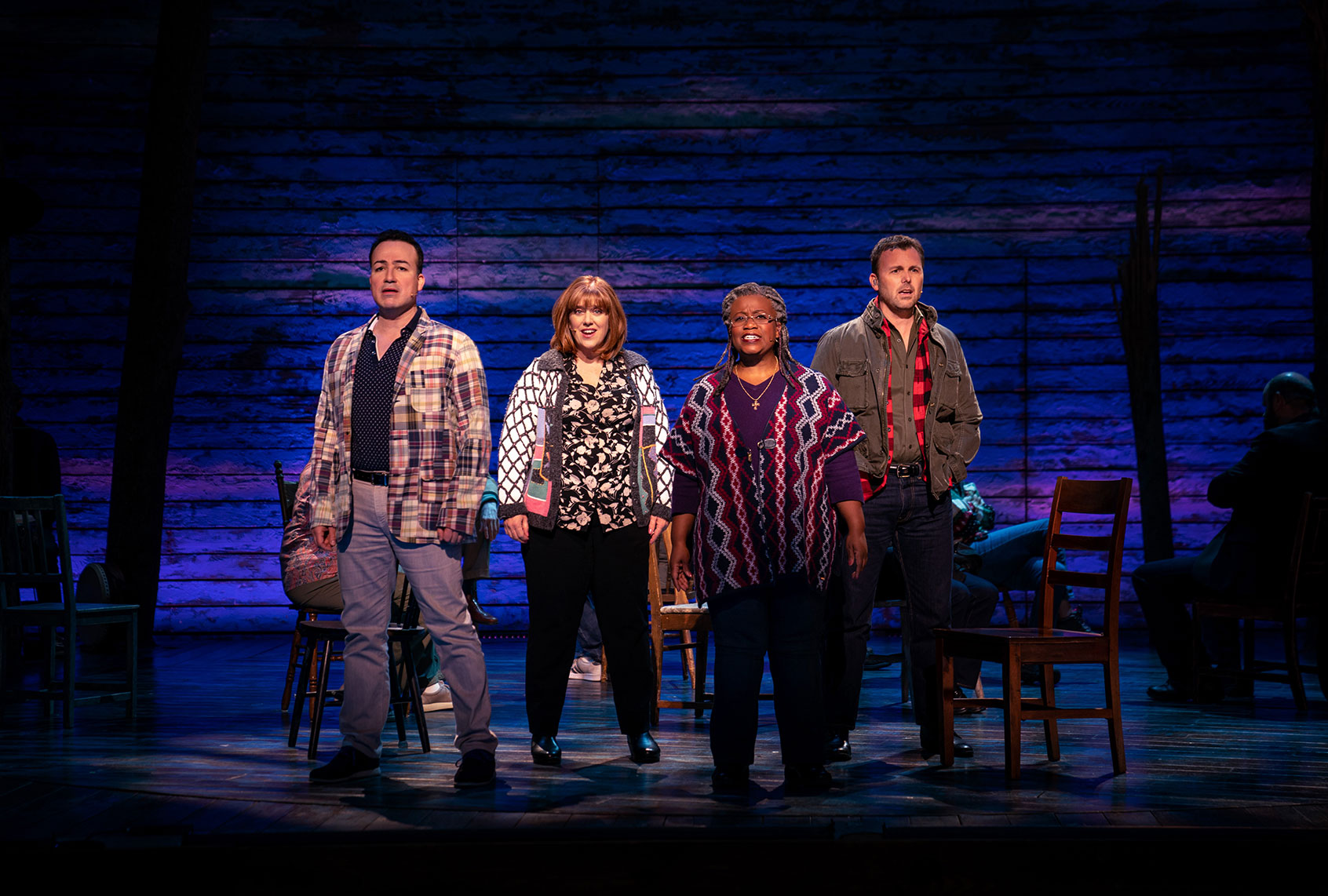
Even in red states, colleges gravitate to requiring vaccines and masks

As students head to college this fall, hundreds of schools are requiring employees and students to be vaccinated against covid, wear masks on campus or both.

But at some schools, partisan politics have bolstered efforts to stymie public health protections.

Events at the University of South Carolina, in a deeply conservative state, demonstrate the limits of political pressure in some cases, even though “South Carolina is a red state and its voters generally eschew mandates,” said Jeffrey Stensland, a spokesperson for the school.

As the fall semester approached, Richard Creswick, an astrophysics professor at the University of South Carolina, was looking forward to returning to the classroom and teaching in person. He felt it would be fairly safe. His graduate-level classes generally had fewer than a dozen students enrolled, and the school had announced it would require everyone on campus to wear masks indoors unless they were in their dorm rooms, offices or dining facilities. For Creswick, 69, that was important because he did not want his working on campus to add to the covid risk for his wife, Vickie Eslinger, 73, who has been undergoing treatment for breast cancer.

But state Attorney General Alan Wilson weighed in early in August, sending a letter to the school’s interim president, Harris Pastides, that a budget provision passed by the state legislature prohibited the university from imposing a mask mandate. Pastides, who previously served as dean of the university’s school of public health, rescinded the mask mandate, although he encouraged people to still use them.

“We were very upset,” Creswick said.

After the university revoked its mask mandate, within days Wilson sent out a campaign fundraising letter touting his intervention in public health measures and stating, “The fight over vaccines and masks has never been about science or health. It’s about expanding the government’s control over our daily lives.”

Creswick and Eslinger, who felt strongly that the mask mandate was indeed about health, filed a lawsuit, arguing that the legislative provision cited by the attorney general did not prohibit a universal mask mandate. The state Supreme Court took up the case on an expedited basis and on Aug. 20 ruled 6-0 in their favor.

The school immediately reinstated its mask mandate and other colleges in the state followed suit.

After the court ruling, Creswick said he heard from professors at several other South Carolina colleges. “They’re calling me a hero,” he said, sounding bemused.

The attorney general’s office didn’t respond to a request for comment.

The Centers for Disease Control and Prevention recommends that everyone at colleges and universities wear masks indoors, even if they are fully vaccinated, in locales with substantial or high transmission of the coronavirus. Most of the country meets that standard at this point. The CDC also recommends that colleges offer and promote covid vaccines.

To be sure, many colleges and universities already require students to mask up or be vaccinated.

As of Aug. 26, the Chronicle of Higher Education had tallied 805 campuses that require at least some employees or students to be vaccinated. Most schools grant exemptions from the vaccine mandate, often for religious or medical reasons. And hundreds of colleges are requiring students and staff members to wear masks on campus this fall, according to a running tally by University Business.

Still, 12 conservative-leaning states prohibit vaccine mandates at higher education institutions, according to an analysis by the National Academy for State Health Policy. The rules vary, and some apply only to public institutions. The group is in the process of analyzing mask mandate bans that apply to colleges and universities.

At Indiana University, a group of students challenged the school’s vaccine mandate on the grounds it violated their constitutional right to “bodily integrity, autonomy and medical choice.” The U.S. Court of Appeals for the 7th Circuit refused to block the school’s policy. The court reasoned the universities can decide what they need to do to keep students safe in communal settings. The students then appealed to U.S. Supreme Court Justice Amy Coney Barrett, who refused without explanation to block the mandate.

Red states with Republican leadership are hardly the only ones where colleges and universities are facing restrictions on their ability to put public health protections in place. But for teachers, whose professions are rooted in encouraging the pursuit of learning and knowledge, prohibitions that fly in the face of science and jeopardize public health can be tough to swallow.

“It’s completely demoralizing to realize that our health and safety has been trumped by politics,” said Becky Hawbaker, an assistant professor in the College of Education at the University of Northern Iowa in Cedar Falls, Iowa, who is president of United Faculty, the union representing 600 faculty members at the school. “It seems like you know a train wreck is coming and you’re sounding the alarm, and no one seems to listen.”

At the University of Georgia in Athens in August, a professor who made masks mandatory in his classroom because of his advanced age and health conditions promptly resigned when a student refused to don a mask. Georgia’s university system does not mandate masks or vaccines.

In May, Iowa Gov. Kim Reynolds, a Republican, signed a law prohibiting mask mandates at K-12 schools, and within city and county governments. A few days later, the Iowa Board of Regents, which oversees the University of Northern Iowa, the University of Iowa and Iowa State University, lifted emergency rules that had been in place the previous year requiring indoor masking and physical distancing at the colleges.

The University of Northern Iowa held classes in person throughout the past school year, without major problems, using those mask and distancing requirements, Hawbaker said. But with the rise of the delta variant and the increase in covid cases in the community, now is not the time to remove safety restrictions, the union asserts.

So far, more than 200 people have signed an August letter sent by the union to the Board of Regents requesting mask and vaccine mandates on campus, and classroom changes to allow physical distancing, Hawbaker said.

“Both the Board and our universities recommend and encourage individuals to wear a mask or other face covering while on campus, and anyone who wishes to wear a mask may do so,” Josh Lehman, a spokesperson for the board, wrote in an email. The board also supports students and staffers getting covid vaccines, which are available on campus.

At Clemson University in Clemson, South Carolina, associate professor Kimberly Paul planned a protest with other faculty members in August to push for a mask mandate. After the state Supreme Court ruled in favor of Creswick, Clemson announced a mask mandate until Oct. 8. That stretch covers the period of greatest covid risk, according to the school’s modeling.

Paul and her colleagues want a mask mandate for the entire semester, after which the need can be reevaluated, she said.

“I’m a biologist, and this hits close to home,” she said.

KHN (Kaiser Health News) is a national newsroom that produces in-depth journalism about health issues. Together with Policy Analysis and Polling, KHN is one of the three major operating programs at KFF (Kaiser Family Foundation). KFF is an endowed nonprofit organization providing information on health issues to the nation.

There’s one surefire way to end big sewage spills: end big sewage

Call it the summer of sewage.

In July, Los Angeles’ Hyperion Water Reclamation Plant, the city’s largest municipal wastewater treatment facility, spilled 17 million gallons of raw sewage into Santa Monica Bay after an unexpected surge of debris overwhelmed the plant, resulting in beach closures during the height of beach season. Weeks later, The Los Angeles Times revealed that the still-damaged plant was continuing to release partially-treated wastewater into the Pacific Ocean.

Earlier in the month, England’s Southern Water, a privatized utility, was fined 90 million pounds (roughly $125 million) for intentionally releasing untreated sewage between 2010 and 2015, apparently in order to save money. And The New York Times reported on the growing, climate-change-exacerbated problem of sewer overflows in Chicago, where backups disproportionately burden poor, non-White communities.

The takeaway from reports like these is often that more investment and regulation are needed to prevent sewage spills, be they a result of accident, negligence, or plain old bad behavior. That’s true.

But there’s only one surefire way to end big sewage spills, and that’s to end big sewage.

Modern urban wastewater infrastructure started with the Victorians, who in the 19th century confronted the messy consequences of piping water to homes and businesses for drinking, bathing, cleaning, and, above all, toilet flushing. In London, this used water washed haphazardly out of homes into cesspools, streets, and ditches, fueling disease outbreaks and ultimately polluting the River Thames. When that became untenable, the city built a remarkable comprehensive system of sewers to pump all the wastewater downriver.

In the early 20th century, British engineers invented a microbe-driven wastewater treatment process to clean the sewage before releasing the effluent, but it wasn’t until the second half of the century that most high-income cities implemented the technology in large-scale treatment plants. (Unfortunately, many middle- and low-income cities worldwide lack these systems, leaving huge quantities of sewage untreated.)

The public health and environmental gains from the successful centralized management of sewage have been remarkable. But massive, centralized facilities make for massive, centralized catastrophes — and the risk of public health and ecological disasters.

One way to reduce the impact of sewage spills is to reduce the amount of sewage available to spill, but conservation can only go so far in the face of urban growth. According to a 2020 paper in the journal Natural Resources Forum, global wastewater production was set to increase 24 percent by 2030 and 51 percent by 2050. In the United States, the American Society of Civil Engineers estimated in 2017 that 56 million new users would need to be connected to centralized wastewater treatment systems over the following two decades.

Cities can also incorporate more green infrastructure, such as green roofs and bioswales to absorb stormwater and reduce the load on wastewater systems. Constructed wetlands can also mitigate pollution from sewer overflows. Massive underground reservoirs can hold storm flows until plants have capacity to handle them again.

But as governments allocate new infrastructure investments — such as those in the bipartisan infrastructure plan currently working its way through the U.S. Congress — they should also reconsider whether it even makes sense to expand centralized wastewater treatment in the future. Large, centralized systems can benefit from economies of scale, but that scale may itself be a liability in the face of climate change and other threats such as terrorism.

One problem is that centralized treatment plants tend to be located in low-lying areas, to take advantage of gravity, and near bodies of water, to release their effluent. So storm surges and flooding can easily bring them down — and sometimes it takes weeks to get them working again. Drought also affects their operations: Too little water can cause a sewage flow to stagnate, and thirsty tree roots can penetrate underground pipes in search of a drink. What’s more, if power goes out, pumping stations and wastewater treatment plants can go offline too. And since centralized systems are practically invisible to users, people just keep showering and flushing even during announced failures, when the wastewater they’re creating will just flow directly out to rivers, lakes, and the sea. (And, anyway, what choice do they really have?)

Instead, sewage should go local. New residential and commercial developments, in particular, can take advantage of innovations for buildings and neighborhoods that allow wastewater to be recycled for immediate use, its nutrients and energy used onsite. In my reporting on sanitation and the environment, I’ve come across increasing numbers of such projects, many of them pilot-scale, ranging from high- to low-tech.

In Portland, Oregon, a luxury residential and commercial complex with 657 housing units received a nearly $1.5 million refund from the city for incorporating an off-grid system in order to avoid further straining the city’s century-old sewers. A series of tanks, filters, and constructed wetlands, which takes pride of place on the main plaza, recycles the community’s wastewater for cooling, irrigation, and toilet flushing, reducing water use by more than 50 percent. (In an emergency, the complex can discharge to the city’s sanitary sewer.) Solid residue gets taken offsite for reuse as fertilizer and energy.

When it comes to urban infrastructure, it’s “probably the largest and most advanced on-site wastewater treatment facility in the United States,” says sustainability consultant Lynn Broaddus, an advocate for distributed water infrastructure who is currently the president of the Water Environment Federation, an association of water quality professionals.

In Europe, a multi-country European Union-funded research project, Run4Life — Recovery and Utilization of Nutrients for Low Impact Fertilizer — is optimizing a more radical modular treatment concept that processes waste from water-efficient vacuum toilets and food grinders to produce biogas fuel and nutrients for fertilizer. Other wastewater, collected separately, can be cleaned, mined for heat, and then reused.

Local systems such as these can — depending on the circumstances — use less energy and emit less greenhouse gas than centralized ones. Some can be installed in a corner of a parking garage, or feed lush greenhouse gardens. They can create local, green jobs.

On a city scale, a network of distributed systems, or a combination of centralized and distributed systems would be less concentrated in flood zones, could have more built-in redundancies, and would be more nimble in recovery. That would make it more resilient to extreme weather events and other shocks like the surge in Los Angeles.

Finally, distributed systems can make wastewater management more flexible and modular, allowing them to shrink and grow with cities and making them additionally “future-proof.”

If this approach sounds strange, consider that there’s a trend to localize almost every other type of infrastructure system, from agriculture to energy grids. Local sewage makes sense, too, for many of the same reasons. While more research and pilot projects will be helpful in both evaluating and raising awareness of decentralized systems, the shift also requires a change in incentives and regulations, which in most places currently favor traditional, centralized approaches.

To be sure, distributed systems could and would at times fail like centralized ones do. They would also need investment, maintenance, and regulation like centralized systems. But small-scale facilities embedded in communities would be more visible to their users than big sewage treatment plants on the outskirts of town, meaning that people would be more likely to make the connection between their water use and pollution. Community members could also spot failures more quickly and demand accountability.

And then they could go swim at the beach.

* * *

Chelsea Wald, an award-winning science and environmental journalist based in the Netherlands, is the author of “Pipe Dreams: The Urgent Global Quest to Transform the Toilet.” She was the recipient of a 2018 European Journalism Center Innovation in Development Reporting grant, funded by the Bill and Melinda Gates Foundation, and will receive an honorarium to speak about her book at an upcoming Plumbing Manufacturers International conference.

This article was originally published on Undark. Read the original article.

Michigan GOP launches not-so-secret plan to undo Whitmer’s veto on voting bill

A Republican-backed group launched a petition drive last week to create tougher voting laws in a scheme to get around Democratic Gov. Gretchen Whitmer’s veto of Republican voting proposals.

The “Secure MI Vote” committee filed a proposed petition with the secretary of state’s office that would tighten the state’s voter ID law, ban the state from sending absentee ballot applications unless they are expressly requested, and bar outside groups from helping to fund elections.

The petition comes after Republican lawmakers in May introduced a 39-bill package to change a variety of voting laws in the wake of former President Donald Trump’s baseless post-election crusade. The Republican-led state Senate Oversight Committee released a report in June that found “no evidence of widespread or systemic fraud” and severely criticized conservatives who have tried to cash in on the lies. That hasn’t stopped many Republican legislators from continuing to push for new voting restrictions.

Whitmer has vowed to veto the restrictions, which are among more than 400 proposed by Republicans across the country this year. But under a peculiar provision of Michigan’s state constitution, Republican organizers can get around Whitmer’s veto by collecting at least 340,047 valid signatures to send the initiative to the state legislature rather than put it on the ballot for voters to decide. If the measure passes the Republican-controlled legislature after that — as it surely would — Whitmer would have no power to veto it.

Democrats cried foul over the scheme, accusing Republicans of dipping into their “playbook of losing, lying, and attempting to cheat their way into office.”

“Michigan Republicans will try every trick in the book to confuse and intimidate voters,” Michigan Democratic Party Chairwoman Lavora Barnes said in a statement. “They want fewer people to vote because they just discovered what we have always known, when people vote, Democrats win. That is what this ballot proposal is all about, creating barriers to voting so fewer people have access to the polls.”

State Rep. Matt Koleszar, the Democratic vice chair of the House Elections Committee, said that the Republican playbook “reads more and more like it was written by a Disney villain.”

“Republicans have created a voter-fraud boogeyman to justify their voter suppression efforts, and they continue to feed it lies,” Koleszar said in a statement. “We already have voter ID laws that we know work, and any attempt that casts doubt on that fact only further undermines faith in our election system. If we continue to let the Big Lie grind away at our institutions, strip away our freedoms and divide us as a people, we’ll end up with nothing left.”

Michigan Republican Party chairman Ron Weiser first floated the plan in March while railing against Whitmer, Secretary of State Jocelyn Benson and Attorney General Dana Nessel as “witches” who should be burned at the stake. Senate Republican Leader Mike Shirkey publicly endorsed the plan in July. The “Secure MI Vote” committee is working separately from the state GOP but is led by longtime Republican consultant Jamie Roe and longtime Republican operative Fred Wszolek, who led a similar “Unlock Michigan” petition drive to strip Whitmer of emergency powers she used to enact business restrictions during the pandemic.

“What we are trying to do here is just restore the confidence and the belief in the integrity of the system,” Roe told Bridge Michigan.

Voting rights groups, however, have called the Republican proposals “voter suppression” and warned that the party aims to impose the “most restrictive voter ID law in the entire country.”

The petition includes “particularly egregious” measures that were not included in the original legislative package, including new hurdles to access absentee ballots, said Nancy Wang, executive director of Voters Not Politicians, which organized a 2018 ballot initiative to create an independent redistricting commission.

The state already has a voter ID law, but the petition would eliminate the ability of voters with no photo ID to cast a ballot if they sign an affidavit to confirm their identity. Instead, voters without a photo ID would only be allowed to cast a provisional ballot that would not count unless the voter presents a valid ID at their local clerk’s office within six days of the election. Republicans argue that the tougher voter ID law is intended to prevent fraud, even though their own Senate probe found no evidence of fraud in the 2020 race. Local election clerks have expressed concerns that the proposal would “reduce voter turnout, especially amongst people with lower income and people with disabilities.” The petition includes a $3 million “voter access fund” to provide free state IDs to people facing economic hardship.

Wang said the ID fund was an example of the state trying to “disenfranchise” voters but then helping a “portion of those people to get their rights back.”

“You’re limiting people’s choices, you’re taking away [the affidavit] option, but then you’re saying, ‘Well, we’ll use taxpayer money to make sure that voters have the ability to get this one kind of ID,'” Wang said in an interview.

The petition would also require voters applying for an absentee ballot to provide their driver’s license or state ID number and the last four digits of their Social Security number. Some election clerks have expressed worries that the requirement may deter some people from voting and that requiring voters to mail personal information could open them up to identity theft.

The petition would prevent Benson and her staff from sending absentee ballot applications to every voter, as she did last year. A state court ruled that Benson acted lawfully but Republicans have argued that some applications were incorrectly sent to addresses where voters no longer lived. There has been no evidence of mail ballot fraud in Michigan’s 2020 election, and it is already a crime to fill out another voter’s ballot application.

The petition would also ban “corporate entities” from contributing funds to Michigan’s elections. Democratic and Republican election officials alike in 465 Michigan cities, townships, and counties received “COVID-19 Response” grants from the Chicago-based Center for Tech and Civic Life, which got $400 million in funding from Facebook CEO Mark Zuckerberg. Trump supporters pushed conspiracy theories about Zuckerberg’s contribution, even though there is no evidence the grants were used for political influence, according to Bridge Michigan. Some clerks worry that the proposal would cut off key funding sources that helped them operate amid the pandemic.

Roe, the petition organizer, denied that the initiative has anything to do with Trump.

“I’m not one who’s been out there crying about that the election was stolen — I don’t believe it was — but I do believe that there are people who think that it was just as there are people who thought wrongly after 2016 that that election was stolen,” he told Bridge Michigan. “So, let’s do something common sense that restores confidence in the system and empowers our clerks to do it right.”

While the effort is likely to yield enough signatures and Republicans are expected to adopt the proposals, it is unclear whether it can be approved by the 2022 election, when Whitmer, Benson and Nessel will all be up for re-election. Because state Senate Republicans do not have the two-thirds supermajority needed to immediately enact the initiative, organizers will have to collect all the requisite signatures and complete the state review before the end of 2021 for the changes to be enacted next year.

“Getting it done by the end of the year is a very daunting hurdle,” Roe told Bridge Michigan. “But you never know. We’ll see what the reaction is. We’re very very excited about the opportunity to get it rolled out and to get people fired up.”

Wang, who has experience with organizing petition drives, said she expects the group to rely on paid petition gatherers, but raised concerns about the signature-gathering process after the Unlock Michigan effort came under fire for its tactics. A company collecting signatures for the petition coached paid petition gatherers to give voters false information, illegally collect signatures without witnessing them, trespass on private property and lie under oath, according to a surreptitious video obtained by the Detroit Free Press.

“Given what we’ve seen as part of the national voter suppression campaign, what’s playing out in all these different states like Michigan,” Wang said, “the plan of these extreme politicians is to affect the outcome of the 2024 election.”

What year is it in America, anyway? How complacency and naiveté brought us to this crisis

Are you terrified? If not, then you should be.

Last Wednesday, the U.S. Supreme Court allowed a Texas law to take effect that, in practical terms, overturns the landmark Roe v. Wade decision which gave women the right to make their own reproductive health choices.

The new Texas bill outlaws abortions as determined by “fetal heartbeat” pseudoscience, meaning at about six weeks, when many women don’t even know for sure they are pregnant. There are no exceptions granted for girls or women who are victims of rape or incest. The Texas forced pregnancy law also creates a barbaric system under which $10,000 bounties may be paid to private citizens who win lawsuits against anyone who helps a woman or girl get an abortion after the six-week mark.

At its core, Roe v. Wade is a defense of the basic universal human right of bodily autonomy. Texas Republicans have rejected that right.

As others have observed, by the logic of the Texas forced pregnancy bill — and the Supreme Court’s tacit endorsement of it — corporations now have more rights than women. In a new essay for the Guardian, constitutional law expert Laurence Tribe warns of the consequences:

It wasn’t just Roe that died at midnight on 1 September with barely a whimper, let alone a bang. It was the principle that nobody’s constitutional rights should be put on sale for purchase by anyone who can find an informant or helper to turn in whoever might be trying to exercise those rights.

That, after all, is how the new Texas law works. Its perverse structure, which delegates to private individuals anywhere a power the state of Texas is forbidden to exercise itself until Roe is overruled, punishes even the slightest form of assistance to desperate pregnant women. Doctors, family members, insurance companies, even Uber drivers, are all at risk if they help a woman in need. And the risk is magnified by the offer of a big fat financial reward for whoever successfully nabs a person guilty of facilitating an abortion once a heartbeat can be detected …. No law remotely like this has ever been allowed to go into effect.

The prospect of hefty bounties will breed a system of profit-seeking, Soviet-style informing on friends and neighbors.

On the same day that Texas overturned Roe v. Wade, another new set of laws went into effect that aim to subvert democracy by making it more difficult for Black and brown people to vote. Summoning a 21st-century version of Jim and Jane Crow, the new Texas anti-democracy laws encourage voter intimidation and harassment, make it easier for votes to be disqualified, restrict mail-in voting, and selectively target those means of voting used disproportionately by Black and brown people.

In total, these new laws are part of a nationwide attempt by the Jim Crow Republicans and larger neofascist movement to return the United States to a 19th-century version of itself — if not earlier — when white male domination over society was the norm. In that sense, it feels as if American society is broken, pulled through some type of time vortex and vomited out in a strange and horrible place where the worst aspects of the country’s past are becoming its present and future.

Thus the question: What year is it really? Some time before Roe v. Wade? The end of Reconstruction and the beginning of Jim Crow and the Black Codes? Some alternate America in a parallel universe?

Borrowing from the first “Matrix” film, do we even know what year it is anymore?

This is not entirely accidental. Dread, disorientation and confusion are among the primary and most effective weapons used by neofascists and other authoritarians in their assault on reality and the truth. Such feelings make it far less likely that the victims will be able to effectively fight back.

Too many liberals, progressives and other pro-democracy forces are saddled with an additional disadvantage in the battle against the Republican Party and rising neofascism: They have convinced themselves that their humanistic values are shared by all Americans. This is a narcissistic conclusion, and deeply counterproductive. They have refused to accept the fact that one person’s dystopia is another person’s vision of paradise. Privilege in its various forms empowers such delusions.

In the real world, the Jim Crow Republicans, the Trumpists, Christian nationalists and other elements of the white right are celebrating the new laws in Texas that have overturned Roe v. Wade and further restricted the right to vote.

At the Guardian, Rebecca Solnit writes that the American right has been freed “from two kinds of inhibition since Donald Trump appeared to guide them into the promised land of their unleashed ids. One is the inhibition from lies, the other from violence”:

This is the logical outcome of a party that, some decades back, looked at an increasingly non-white country and decided to try to suppress the votes of people of color rather than win them. Not just the Democratic party but democracy is their enemy. In this system in which some animals are more equal than others, some have the right to determine the truth more than others, and facts, science, history are likewise fetters to be shaken loose in pursuit of exactly your very own favorite version of reality, which you enforce through dominance, including outright violence.

Too many Americans, because of their investment in the country’s national mythology of progress, inherent goodness and exceptionalism, are poorly equipped to comprehend neofascism and its use of pain to advance its agenda, still less to defend themselves against it.

Historian Timothy Snyder describes this dynamic as an example of “sadopopulism.” In his book “The Road to Unfreedom” he writes that a voter who supports an authoritarian leader

is changing the currency of politics from achievement to suffering, from gain to pain, helping a leader of choice establish a regime of sadopopulism. Such a voter can believe that he or she has chosen who administers their pain, and can fantasize that this leader will hurt enemies still more. The politics of eternity converts pain to meaning, and then meaning back into more pain…. The electoral logic of sadopopulism is to limit the vote to those who benefit from inequality and to those who like pain, and take the vote away from those who expect government to endorse equality and reform.

Normal politics and its bedrock assumptions about the viability of the “system,” the “rule of law” and “democratic institutions” offer little protection in an American society where a fascist movement now controls one of the country’s two institutional political parties along with tens of millions of followers. The new American right also commands Fox News and a vast echo chamber that constitutes one of the most powerful disinformation and “disimagination” machines in human history.

The feelings of extreme fear, anxiety and dread that many (white) Americans are experiencing before the fascist tsunami are mostly new to them. As such, even after five years of Trumpism they still find themselves unable to respond appropriately to what is happening.

America’s democracy crisis is fundamentally one of morality and culture. To defeat neofascism will require that the American people give up childish things and embrace a new maturity. Central to that new maturity will be accepting the fact that human deplorables are real — and they are everywhere.

Your fellow Americans are not universally kind and just and decent. A good number of them want to hurt you — and will celebrate while doing so.

As the horror-movie cliché holds, the call is coming from inside the house.

Lauren Boebert allows 8-year-old to play alone, next to possibly-loaded firearm

In a video reviewed by Salon and apparently recorded on July 25, the 8-year-old son of Rep. Lauren Boebert, R-Colo., can be seen singing, dancing and playing with cigarette lighters — while left alone in a room a few feet away from a high-capacity rifle. This would appear to violate a new Colorado state law, under which gun owners are required to store their deadly weapons in a gun safe, with a trigger or cable lock, whenever the owner is aware, or should reasonably be aware, that a “juvenile or a resident who is ineligible to possess a firearm can gain access to the firearm.” 

As a newly-elected member of Congress in February, Boebert was widely criticized after appearing at a House Natural Resources Committee meeting via Zoom before a backdrop of a bookshelf bearing several high-capacity weapons.  

In response to the outcry, the far-right lawmaker fired back on Twitter by suggesting that the weapons were loaded, posting, “Who says this is storage? These are ready for use.” Additional photos of the firearms in question suggest that two of the rifles were loaded with 30-round magazines and a third with an even larger magazine. Firearm magazines that hold more than 15 rounds of ammunition at any one time, such as those Boebert appears to possess, have been banned in Colorado since 2013.

The bookshelf and chair seen in that February Zoom call are also visible in several of the videos featuring Boebert’s son, which indicate that she was in the bedroom of her home in Silt, Colorado, for the congressional meeting.

In the July 25 video, Boebert’s son is seen dancing alone in that same bedroom, close to a weapon that appears to be one of the same rifles seen loaded during the February Zoom call. It’s in a different position in the July video, leaning casually against the headboard of a bed, near what appears to be a handgun lying on the floor.  

Boebert did not return Salon’s request for comment on this story. 

That high-powered rifle is still visible in a video posted by Boebert’s son in late August, in which he shows off his abdominal muscles. Several TikTok videos viewed by Salon reveal that Boebert’s son was playing in the bedroom, at times with two young friends, but with no parental supervision. 

Boebert appears to have been home during the weekend her son posted the video showing the rifle. On July 24, she appeared at the Mesa County GOP Lincoln Day Dinner with Rep. Jim Jordan, R-Ohio. On the morning of Sunday, July 25, Boebert spoke at Faith Heights Church in Grand Junction, Colorado, about an hour away from her home in Silt.


Want a daily wrap-up of all the news and commentary Salon has to offer? Subscribe to our morning newsletter, Crash Course.


In one video, Boebert’s son says that Donald Trump “is the real president, not Joe Biden — Joe Biden sucks.” Then he explains, “My mom is Lauren Boebert” before describing a red cigarette lighter as Biden and a green lighter as Trump. In several other videos, Boebert’s son lights and relights the lighters, tossing them on the floor behind him towards the rifle.

Boebert is well known for requiring her employees at Shooters Grill, the restaurant she owns in Rifle, Colorado, to carry firearms, and ought to be well versed in proper gun storage protocols. A training company called Legal Heat has conducted numerous concealed-firearm training sessions at Boebert’s restaurant. A similar training session on safely and correctly storing firearms would also be required for a concealed carry permitwhich the lawmaker received in Washington, D.C., earlier this year.

“Storing firearms securely is one of the simplest ways to prevent gun violence, especially when unintentional shootings are rising at an alarming pace,” Nick Suplina, managing director of law and policy at Everytown for Gun Safety, told Salon. “Almost every day in the United States, a child gets their hands on a gun and unintentionally kills or injures someone. In fact, research from Everytown shows that there have been at least 259 unintentional shootings by children so far this year.”

In 2018, Boebert explained gun safety by saying, “Accidents happen by being careless or ignorant. Either people don’t know what they’re doing, or they think they know everything.”

She has ignored safety measures designed to protect children in the past. Boebert pled guilty to failing to use child restraints while driving in 2011 and was charged with the same offense in 2017 but pled guilty to a lesser charge. In May 2020, Boebert said that she had not had health insurance for her four sons for the previous three years, “We’re a family of six, and we haven’t had health insurance for, gosh, maybe three years, maybe more than that.”  

Violations of Colorado’s new gun safety law are classified as Class 2 misdemeanor offenses that carry penalties of fines and, in rare instances, jail time. In April, a spokesman for Boebert told the Wall Street Journal that the congresswoman has concerns about “the government deciding for citizens what would qualify as safe-storage standards.”

“Colorado is one of the many states that has taken action on this issue to save lives,” Suplina added. “Since July 2021, a person who does not ensure that their firearms are both stored securely and rendered inaccessible to a child or prohibited person can be charged with a crime.”

Biden refutes claim that vaccine mandates are tyranny: “Even Fox News” has one

President Joe Biden on Thursday announced plans to mandate that all businesses with more than 100 employees require their employees to either get vaccinated or to submit to weekly COVID-19 tests.

When discussing his plan, Biden pointed out that many private businesses are already asking their employees to show proof of vaccination — including one business whose employees frequently go on air and complain that such mandates amount to “tyranny.”

“Some of the biggest companies are already requiring this,” he said. “United Airlines. Disney. Tyson’s Food. And even Fox News.”

Biden’s claims about Fox News happen to be completely correct.

An internal Fox News memo obtained by Ad Week last month shows that the right-wing cable news network is enacting its own kind of vaccine passport program.


Want a daily wrap-up of all the news and commentary Salon has to offer? Subscribe to our morning newsletter, Crash Course.


Specifically, the memo asks all Fox employees, including those who are working remotely, to upload their vaccination status to a central database, where it will be used for “space planning and contact tracing purposes in conjunction with CDC/state/city health and safety guidelines.”

In addition to making employees reveal their vaccine status, Fox is also requiring certain employees to be tested for COVID-19 at least once a week at the network’s on-site COVID testing program.

Watch the video below.