Spring Offer: Get 1 Year, Save 58%

A salty, sweet croissant butter to spread on your croissants — and everything else

I'm usually impervious to the siren call of Instagram advertisements, but this one couldn't help but get my attention.

From the beautiful Pollen Bakery in Manchester, England was an intriguing looking jar of something called croissant butter — or as they put it, "a crunchy sweet spread made with caramelized croissant crumbs and toasted white chocolate." There isn't a word in that phrase I don't heartily endorse.

The ad promised that the item was "back in stock from Christmas," but it hadn't shown up in my feed until after the holiday. Unfortunately, I can't just drop into an English bakery any old time to pick some up in person, so I was left to figure out how to make croissant butter on my own.

I'm a big fan of cookie butter, or one of the most delicious formats in which cookies may be eaten. The thought of that delightful concoction adapted to the greatest pastry invented seemed like a stroke of genius. While I can't vouch for my how my knockoff stacks up to Pollen's original, I can attest that the test version I made in my house was gone in matter of minutes.

I started with the distant memory of a Martha Stewart recipe for sweet croutons, shredding a croissant from my neighborhood bakery and toasting it in a skillet with butter and sugar. I didn't feel like taking the time and effort involved in making homemade caramelized white chocolate, so I enlisted some of the salted caramel sauce I keep on hand to active duty. Then, to pull it all together, I relied on Lauren Toyota's foolproof formula for cookie butter.

We need your help to stay independent

The whole thing took about 15 minutes of active time. I seriously can't wait to make it again — only this time in a larger quantity.

Do as Pollen recommends and spread the croissant butter on your croissants, or enjoy it straight out of the jar. I'm dipping strawberries in mine for a kind of reverse jam on toast situation.

Trust me, there's absolutely no wrong way to enjoy this stuff.

* * *

Inspired by Pollen Bakery and Hot for Food by Lauren Toyota

Croissant cookie butter
Yields
 4 to 8 servings
Prep Time
 5 minutes 
Cooking Time
 10 minutes 

Ingredients

  • 2 croissants, preferably from your local bakery
  • 3 tablespoons white sugar
  • 4 tablespoons butter 
  • 2 tablespoons warm water 
  • 2 tablespoons homemade or jarred caramel sauce
  • Pinch flaky sea salt

Directions

  1. Heat a large skillet over medium heat and melt the butter.

  2. Shred the croissants into bite-sized pieces and add to the skillet. Cook about 5 minutes, until the pieces are toasted and buttery.

  3. Sprinkle the croissants with sugar to coat and stir another 30 seconds or so.

  4. In a food processor or blender, add the croissants, salt and caramel sauce and blend.

  5. With the machine going, add the water, one tablespoon at a time. Process until the mixture comes together as a spread — you don't want it completely smooth.

  6. Spoon into a jar or small container and enjoy.


Cook's Notes

If you're moved to make caramelized white chocolate, the Pioneer Woman has an excellent step-by-step tutorial to get it done.

What the “Bachelor” televised weddings offer us, despite roots in a franchise rife with fakery

Poll after study shows a society-wide reappraisal of marriage’s necessity, but the “Bachelor” Nation will never accept those findings. There are two very simple reasons why. One, weddings make for the kind of event-driven TV spectacle that gives broadcast an edge over streaming. And two, the popularity of “The Golden Bachelor” proves there are some TV-generated unions worth rooting for – and few more than Gerry Turner and Theresa Nist’s, captured in ABC’s live Thursday night telecast of “The Golden Wedding.”

The septuagenarian couple’s exchange of rings and vows before a millions-strong audience of well-wishers is the ninth televised ceremony in the “Bachelor” franchise, including weddings of couples produced by “The Bachelor,” “The Bachelorette” and “Bachelor in Paradise.”

But out of all those series, Turner and Nist’s may be the most representative of lovelorn prayers answered. Viewers young and old were smitten by “The Golden Bachelor” mission to prove nobody is too old to find love along with falling head over heels for how genuine and normal these two seem.

That’s valuable currency in a genre stacked with fakery.

Their affection for each other is convincing. Why wouldn’t it be? These two subjected themselves to the TV reality romance competition gauntlet when they could have done virtually anything else.

That includes waiting to get married. A little more than four months is all that has transpired between the last day of filming, when the two became engaged and their wedding.  

“Think about it this way,” Turner explained in a post-finale episode of the “Bachelor Nation” podcast. “You know, you can wait a year when you're 20 years old and it might be three or 4% of your remaining life. When you're 70, a year could be 10% or 20%. So we didn't want to put off what we really felt was right.”

He has a point. Turner’s also smart enough to know that this explanation may assuage some doubt as to whether “Bachelor”-manufactured “I do” will stick for the long haul. Lasting love is uncertain in any marriage, but when your courtship is compressed to a month, presented as a speed-dating cage match and televised in a heavily edited format, you can’t blame us for wondering.

Lasting love is uncertain in any marriage, but when your courtship is presented as a speed dating cage match, you can’t blame us for wondering.

This week provided us with fresh evidence that few “Bachelor” and “Bachelorette” matches are built to last, even ones that look solid. Days before Turner and Nist became marriage certificate official, Bryan Abasolo, the man “Bachelorette” star Rachel Lindsay chose in the 2017 edition of the series, filed a petition for divorce in Los Angeles Superior Court, citing irreconcilable differences.

Lindsay parlayed her popularity into a post-“Bachelorette” career that included a three-year stint as an “Extra” correspondent. As of now, we don’t know that Lindsay’s skyrocketing career is the reason for their bust-up after three years of marriage, although Abasolo, a chiropractor, is requesting spousal support and for Lindsay to pay his attorney’s fees.

But that confirms the cynical view that this made-for-TV marital pageantry is mostly meant to satisfy our parasocial craving to participate in entertainment industry coupledom. People have been pinning their hopes and disappointments on celebrities since cinema’s Golden Age. When they wed, their fans swoon; when stars divorce, people agonize over what went wrong.

We need your help to stay independent

So of course we’re invested in Turner and Nist’s Hollywood ending because, unlike the stars, they really are just like us. And if they don’t make it, despite their affection being nurtured in a laboratory setting, what hope do the rest of us have?

The first “Bachelor” wedding ever aired in 2003, for which ABC paid $1 million to inaugural “Bachelorette” Trista Rehn and Ryan Sutter to broadcast. That three-episode special drew some 26 million viewers, a feat few expect Turner and Nist to repeat today regardless of the notable uptick in ratings for “The Golden Bachelor.” The finale scored the franchise’s best total viewership since March 2021, with 6.1 million viewers tuning in, according to Nielsen live-plus-same-day data – impressive, but still 20 million shy of Trista and Ryan’s heights.

Today’s lower numbers aren’t evidence that we lack faith in true love’s existence – though that’s pessimistically prevalent these days among singles – but of wedding-driven reality TV’s expansion.

Love Is BlindLydia Velez Gonzalez and Milton Johnson in season 5 of "Love is Blind" (Rebecca Brenneman/Netflix)“The Bachelor" inspired "Love Is Blind,” a franchise whose nuptial returns have been steadily diminishing with each new season; the most recent yielded one ceremony that took. (In case you’re wondering, Lydia Velez Gonzalez and Milton Johnson were still going strong as of October 2023.)
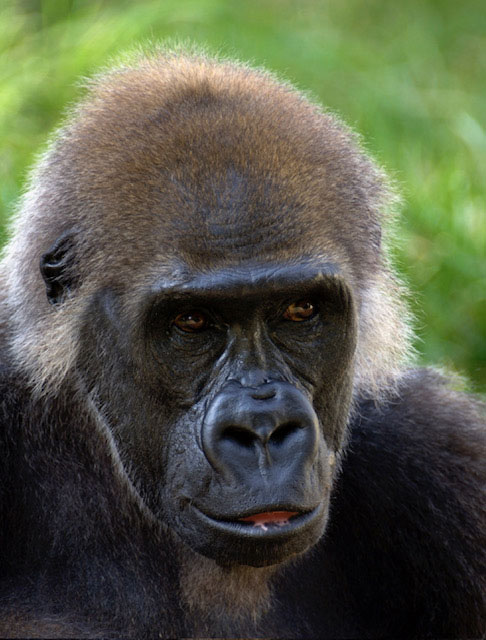
In case you’ve forgotten, though, America first got to know the Netflix series’ host Nick Lachey in 2003 as the co-star of MTV’s “Newlyweds: Nick and Jessica,” in which he played the sensible Ricky Ricardo to his first wife Jessica Simpson’s exaggeratedly imbecilic Lucy.  

Like “The Osbournes” heads of the household before them, Lachey and Simpson were already married before the cameras moved in, leaving us no opportunities to coo over rose petals, sequins and tulle.

If Taylor Swift and Travis Kelce take things to the next level, imagine what they could rake in through media coverage exclusivity fees.

The following year MTV's "'Til Death Do Us Part: Carmen & Dave" filled that gap by following Carmen Electra and Jane’s Addiction guitarist (and “Ink Master” judge) Dave Navarro for seven episodes, culminating in their over-the-top wedding and reception.

These early aughts relics ran around the same time as such there-and-gone ratings-grabs as Fox’s “Married By America” and Fox’s "Who Wants to Marry a Multi-Millionaire?” and the expressly exploitative “The Littlest Groom” which, surprise surprise, also aired on Fox. Other reality TV wedding circuses emerged from this primordial soup too, including a few that built an entire marriage-accessory block on TLC and a market for rubbernecking horror comedies like WEtv’s “Bridezillas.”

It can’t be an accident that this type of TV scattered across the landscape in the wake of Jennifer Aniston and Brad Pitt’s very private million-dollar Malibu wedding in 2000. That marriage didn’t last either, as grocery checkout tabloids keep reminding us 23 years and an additional (and even messier) Pitt divorce later.

To be clear, Brad and Jen’s reception was far from the only outsized wedding of its time to which 99.99% of the population wasn’t invited. It happened to be one that proved anew that the right stars – namely ones between a desirable, trendsetting star of TV’s top-rated show and one of cinema’s most popular leading men – could draw and hold a curious audience. Fellow A-listers were reminded that keeping one’s nuptials gathering private makes the public hungrier to glimpse their wedding photos. There’s a reason that Taylor Swift and Travis Kelce insist on teasing their fan. If they take things to the next level, imagine what they could rake in through media coverage exclusivity fees.


Want a daily wrap-up of all the news and commentary Salon has to offer? Subscribe to our morning newsletter, Crash Course.


But since then pop stars have been supplanted by Bravo housewives, “Bachelor” and “Bachelorette” stars are our celebrity wedding go-to in a culture lacking royals. We may have collectively cooed over The Duke and Duchess of Sussex’s televised 2018 marriage ceremony, but that is a once-in-a-lifetime extravaganza that decidedly will not repeat.

A “Bachelor” wedding has traipsed across our TV screens every couple of years since Jason Mesnick and runner-up Molly Malaney tied the knot in 2010. Not all of these unions have lasted, and at least one that transpired in Season 2 of “Bachelor in Paradise” was, in the eyes of the law, purely for show. (Although Lacy Faddoul appeared to pledge her troth beachside to Marcus Grodd in a 2015 episode, he told Life & Style magazine in 2017 that she never completed the paperwork once they returned to their real lives.)

But that hasn’t prevented us from getting hooked on the possibility of seeing two people go from horny strangers to a betrothed couple over the space of a few weeks.

“The Golden Wedding” and the years-long “After the Final Rose” show to which we probably won’t be privy to defy the previous long odds of success. Turner and Nist are at a point in their lives at which (one hopes) they have enough self-awareness to know what they want and what they’ll put up with. Both are either widows/widowers who enjoyed lasting marriages with the previous loves of their lives.

That makes them two people who already lived the romantic fantasy that “Bachelor” Nation sells and many of us aspire to achieve, whether in existing partnerships or potential ones. And they are famous, for now. But they also seem refreshingly common, two people who already lived the dream of loving marriages and had the good luck of finding love a second time around. If ABC wants us to witness the start of their happily ever after, who are we to turn our nose up at that sweet favor?

“We have receipts”: Democrat demands House investigate Trump family “bribes” after damning report

Donald Trump reaping millions from business transactions with foreign governments while serving as president warrants further investigation into his family's dealings, a Democratic lawmaker argued on Friday.

Rep. Robert Garcia, D-Calif., during an appearance on MSNBC's "Morning Joe," outlined what he called Trump and his family's acceptance of "bribes" from foreign governments, which precipitated the bombshell report House Oversight Committee Democrats released Thursday.

Garcia told host Mika Brzezinski that the at least $7.8 million in payments from foreign governments and their controlled entities make up only a fraction of the "receipts" pointing to criminal activity the Democrats have collected, arguing that further investigation into the transactions is needed.

He also suggested that the total amount of the Trumps' "grift" could be colossal given that the report only details two years' worth of proceeds the Trumps received from only four properties among the former president's massive business empire.

"This is an enormous grift, this is a violation of the Constitution, this is about foreign payments and bribes to the president of the U.S. from multiple foreign governments and countries," the legislator said. 

"I also just want to note because it's important, what we have in front of us is really the tip of the iceberg," he added. "The nearly $8 million that we're discussing is essentially not only a two-year window, it is only from four properties owned by Donald Trump. Donald Trump has hundreds, hundreds of properties and businesses around the world, so we were very limited to what we could actually look at."

House Democrats know the full breadth of the Trump family dealings are much larger, Garcia explained. But House Oversight Committee Chairman James Comer, R-Ky., brought the investigation to a screeching halt, he said.

"This is very, very concerning. We demand this investigation to continue and to reveal the full scope of this incredible grift," Garcia said, emphasizing that they believe payments from other governments not mentioned in the report, like Russia, exist, but they don't currently have receipts and records for them. 

Comer led Republicans on the committee in probing President Joe Biden, accusing him of participating in illicit overseas business activity with his son, Hunter Biden. The investigation has failed to produce any evidence directly linking Biden to his family's business dealings, and its witnesses have also negated allegations of a bribery scheme involving then-Vice President Biden. 

Ex-Speaker Kevin McCarthy, R-Calif., announced an impeachment inquiry into Biden in September, and the House voted to formalize the impeachment investigation last month despite a slew of Republican representatives admitting that they don't possess any evidence to impeach the president. 

We need your help to stay independent

The Democrats' 156-page report "shows where the real grift and corruption and illegal activity is. We have receipts. We have bank records. We have accounting. It's all there laid out in the report, and there is much more that has yet to be uncovered," Garcia said.

"It's incredible to see the hypocrisy that the House Republicans, that James Comer, that the new speaker are trying to put together with this impeachment scam that they have put together, essentially to try to attack the Biden family," he added.

Former U.S. Attorney Barbara McQuade echoed some of Garcia's comments, arguing that then-President Trump's intake of millions of dollars makes him constitutionally "compromised" and makes clear that he should be disqualified from further office.

"The emoluments clause says that the president cannot receive any payments or gifts from a foreign source, unless he gets the consent of Congress," McQuade said during a separate appearance on MSNBC. "Certainly, Donald Trump didn't get any such consent; he didn't ask for any such consent — so, he violated the Constitution."


Want a daily wrap-up of all the news and commentary Salon has to offer? Subscribe to our morning newsletter, Crash Course.


Even with the Oversight Democrats' findings, McQuade said there is little chance of them prompting criminal prosecution years after Trump's left office. 

"There is not a criminal statute that makes it an offense for which it could be charged with a crime," she said. "But if that information had come to light while he was in office, it would certainly be grounds for impeachment."

The transactions, however, could be used to knock Trump's campaign as the election year unfolds and he attempts to win the GOP primary and subsequently a second run in the Oval Office.

"It should be grounds that his opponents can use against him in the campaign that he's unfit to serve as president because of this," McQuade said.

"A really important point about government ethics: Some of this has been explained away by the Trump family as nonsense or, 'This is just business. It doesn't have anything to do with decisions being made by a president,'" she continued. "But government ethics are all about the appearance of the conflict of interest, so accepting money from a foreign source does demonstrate a compromise of a president's situation."

That compromise can spark questions about whether he treats countries with a lighter hand when they give him money, and treats countries more harshly when they don't, McQuade added.

"Those are questions that the American public should not have to ask themselves," she said.

“Overwhelming cause”: Illinois, Massachusetts voters join fight to bar Trump from ballots

Just two days away from the anniversary of the January 6, 2021 insurrection, voters in Illinois and Massachusetts on Thursday joined the nationwide effort to boot former Republican U.S. President Donald Trump off state ballots on constitutional grounds.

Since Trump's attempts to overturn his 2020 loss to Democratic President Joe Biden culminated in his supporters attacking the U.S. Capitol three years ago, a growing number of scholars, lawyers, advocacy groups, and voters have argued that the Republican is disqualified from holding office again under the 14th Amendment to the U.S. Constitution.

The amendment bars anyone who has taken an oath to the Constitution and then engaged in "insurrection or rebellion" from holding "any office, civil or military." Despite that, and his various criminal cases—including two related to 2020 election interference—Trump is the Republican front-runner to challenge Biden, who is seeking reelection this year.

"Donald Trump violated his oath of office and incited a violent insurrection that attacked the U.S. Capitol, threatened the assassination of the vice president and congressional leaders, and disrupted the peaceful transfer of power for the first time in our nation's history," Free Speech for People (FSFP) legal director Ron Fein said in a statement.

"Our predecessors understood that oath-breaking insurrectionists will do it again, and worse, if allowed back into power, so they enacted the insurrectionist disqualification clause to protect the republic from people like Trump," he added. "Trump is legally barred from the ballot."

FSFP has joined with local attorneys to represent voters behind previously filed 14th Amendment cases in MichiganMinnesota, and Oregon as well as the objections filed Thursday with the Illinois State Board of Elections and Massachusetts State Ballot Law Commission.

"Our country faces a crisis in Trump's bid for reelection. We cannot let a candidate who revels in undermining the rule of law continue his candidacy in clear violation of a constitutional mandate," said Illinois attorney Caryn Lederer. "In Illinois, the electoral board has a mandatory duty to keep disqualified candidates off the ballot. As the growing consensus of legal decisions show, Trump engaged in insurrection; he cannot run for president."

Massachusetts litigator Shannon Liss-Riordan stressed that "today's legal action is not about partisan politics but about upholding our Constitution, and that is why Massachusetts voters across the political spectrum have joined together to challenge Donald Trump's wrongful placement on the Massachusetts ballot."

"As two other states have already recognized, Donald Trump's instigation of and participation in the insurrection three years ago provide overwhelming cause for his disqualification from holding office in the United States," Liss-Riordan added.

Thursday's filings come as the right-wing U.S. Supreme Court—which has three Trump appointees—has already been asked to review the Colorado Supreme Court's December decision to kick him off the state primary ballot. Last week, Democratic Maine Secretary of State Shenna Bellows also removed Trump from her state's primary ballot.

Both of those decisions are on hold pending court review. Trump has filed appeals and blamed disqualifications on Biden, who is not involved in any 14th Amendment cases—a trend campaign spokesperson Steven Cheung continued in response to the new voter objections.

"These shams are all part of a coordinated election interference… campaign designed to disenfranchise millions of American voters by depriving them of the right to vote for the candidate of their choice because Crooked Joe's allies see the writing on the wall, President Trump is winning and Biden is losing," Cheung told WBEZ Thursday.

WBEZ noted that "Illinois could be a politically hospitable legal venue" for a battle similar to the one which led to the Colorado disqualification, explaining that "if the State Board of Elections sidesteps the question, the dispute could move into a state court system governed by the Illinois Supreme Court, where Democrats hold a 5-2 majority."

The Colorado case was launched in September by the government watchdog Citizens for Responsibility and Ethics in Washington (CREW) and law firms representing six GOP and unaffiliated voters, who filed a response to Trump's appeal on Thursday.

"The facts and the law are clear: Donald Trump is disqualified from holding office under the 14th Amendment after he incited the January 6th insurrection following his loss in the 2020 election," said CREW president and CEO Noah Bookbinder. "The Supreme Court of Colorado came to the right conclusion in favor of our clients, and the U.S. Supreme Court must now uphold it."

14 fetching facts you didn’t know about 2004’s “Mean Girls”

Everyone knows "Mean Girls." You either have seen the movie or lived long enough to hear its jokes, use its gifs or recognize its most iconic talent show routine, the tantalizing "Jingle Bell Rock" number. Its raunchy, satirical take on the hierarchical structures that run rampant in high schools and the competitive nature of adolescent female friendships has cemented itself in the hall of fame of teen movies.

"Mean Girls" stars Lindsay Lohan as Cady Heron, a newcomer to North Shore High School the Plastics rule as the most popular clique on campus. Cady befriends two fellow outcasts who encourage her to infiltrate the Plastics, which consists of queen bee Regina George (Rachel McAdams), the some dim Karem Smith (Amanda Seyfried) and try-hard Gretchen Wieners (Lacey Chabert). But what starts as a way to ruin Regina ends up blowing in Cady's face when she starts to take on some of the more superficial and manipulative Plastics traits.

The 2004 Tina Fey cult classic hits its 20 anniversary this year, not to mention that its Broadway remake also hits the big screen. To honor this milestone, we looked back at the iconic film that made "fetch" happen.

01
Tina Fey wrote the screenplay after the parenting book "Queen Bees and Wannabes"
The early '00s were hell for teen girls. With stories of girl-on-girl bullying, cliques and gossiping running rampant in teen girls, Rosalind Wiseman wrote the book "Queen Bees and Wannabes" to shed light on what their kids faced in school. The book was aimed to help parents navigate the ruthless world of teenage girldom.
 
In the book, Wiseman writes that "Girl World," girl-led cliques run the world — I mean high schools.  There’s the queen bee, the sidekick, the banker (the gossip keeper), the wannabe, the torn bystander. These roles work in tandem with each other that allows the group to move in a predatory pack to isolate and bully other girls. Do these roles sound familiar? The Plastics are shaking. 
 
"This was something I feel that I could write about,” Fey told the website Blackfilm in 2004, about her inspiration for her film. “And because it was about girls. And it was nasty and violent. And that appealed to me,” she added. Thus, "Mean Girls" was born.


02
Lindsay Lohan was almost cast as Regina George
Now all that was left was figuring out who to cast Who else better to star in the film than the pinnacle of early '00s teen girl representation, Lindsay Lohan?
 
Director Mark Waters shared with Vulture, that Lohan originally auditioned for Regina, not Cady. He added that Lohan had the right "aggressive, testosterone-laden energy" to be the vengeful blonde, but they had difficulties finding someone who could face off with her as Cady. But then in 2003, Disney's "Freaky Friday" remake — also directed by Mark Waters – was released and changed Lohan's public perception to be more wholesome.
 
Waters said the former CEO of Paramount Sherry Lansing told him, Lohan, as Regina, it wasn't going to work "because she now has an audience that won't accept [her as a villain]."
03
Rachel McAdams auditioned for Cady
Not only did Lohan audition for Regina but Rachel McAdams auditioned for Cady too. Waters said that he thought McAdams had movie star potential but told her, "You’re way too old for this character. You just aren’t going to be able to play the ingenue." McAdams was 24 at the time.
 
But McAdams instead read for Regina, and it was the perfect match. “When Lindsay was acting with Rachel, she got very shy, because Rachel was older and a very accomplished actress,” said Waters. McAdams snagged the role as Regina because she intimidated the 18-year-old Lohan, and the dynamic shows in the movie. 
04
McAdams was up against Amanda Seyfried for Regina
The role of Regina was a toss-up between the actresses McAdams and Amanda Seyfried.
 
“The person who was neck and neck for the role of Regina — and we agonized over which one we were going to cast — was Amanda Seyfried,” said Waters. “She tested for Regina and was kind of brilliant, and very different than Rachel’s approach. She played it in a much more ethereal but still kind of scary way. She was more frightening, but oddly, less intimidating.”
 
But Seyfried got lucky and read for the happy, self-described psychic Karen. Waters said "And I think it was [producer] Lorne Michaels who had the genius idea of saying, 'What about the dumb girl? I think Amanda could play the dumb girl.' So she came in and read it and nailed it, and we got the best of both worlds.”
 
Blake Lively ("Gossip Girl") and Ashley Tisdale ("High School Musical") also auditioned to play the Plastics at that time, but didn't land the roles.
05
James Franco was almost hottie Aaron Samuels
Before Jonathan Bennett was cast as the hottest boy in school, Aaron Samuels, the now elusive and canceled actor James Franco was considered for the role, Damien's actor Daniel Franzese told Grazia in 2014. Franco was well known at the time for his roles as Harry Osborn in Sam Raimi’s "Spider-Man" movies and the cult classic high school series "Freaks and Geeks."
06
Jonathan Bennett was a replacement Aaron Samuels
Let's face it, every one of us used to have a major crush on Aaron Samuels and that's thanks to Jonathan Bennett. But Bennett was a last-minute Aaron replacement. Tina Fey revealed that the actor originally cast as Aaron was fired from the movie two days into production.
 

“I was actually cast last minute,” said Bennett. “I was flown up the night before because they did a switch or something. . ." “Yeah,” Fey said. “Someone got fired.”


After 20 years, the mystery actor's name has still not been revealed. Fey also said Bennett snagged the role because of his similar looks to her friend Jimmy Fallon.

07
Tim Meadows broke his hand while shooting the movie
The ever-stressed and pressed Principal Duvall is known for his iconic white arm cast which is due to the character's carpal tunnel. It's random, gimmicky and perfect for the absurdity of "Means Girls." But "Saturday Night Live" veteran and actor Tim Meadows actually broke his wrist a week before production for the film began. The gag was not in the original script but Fey used the carpal tunnel bit as cover.
08
Amy Poehler crafted the Kevin G rap performance
Fey's bestie Amy Poehler, who plays Regina's overbearing cool stage mom, actually helped craft the nerdy but suave mathlete Kevin Gnapoor's (Rajiv Surendra) talent show rap. His outrageous rap goes, "Yo, yo, yo!/All you sucka MC's ain't got nothin' on me/From my grades, to my lines, you can't touch Kevin G."
 
“She’ll actually give credit to Amy for this, because Amy is more of the rap person,” said Waters. “Amy definitely coached him on how to do the rap, and she actually gave him some of the moves and choreography for it.
 
"The character’s great, because a small guy acting big is always funny,” Waters said.
09
Janis was literally named after the 1970s singer Janis Ian
Lizzy Caplan's terrifying and vengeful mastermind behind the plot to infiltrate the Plastics through Cady is the perfect supporting character. Not only is she a memorable part of the movie for her line humbling the now villainous Cady, "You're cold, shiny, hard plastic!" Janis was also named after the famous 1970s singer Janis Ian. The musician's song "At Seventeen" was also played in the movie when Regina is crying about being “half a virgin.”
10
 "Mean Girls" was about to be a rated R movie
While "Mean Girls" eventually was rated PG-13 for its “sexual content, language, and some teen partying,” that was a rating Paramount had to fight for because the MPAA (Motion Picture Association of America) wanted to give the movie an R rating.
 
The creative team behind the movie had to change the line, "Amber D’Alessio gave a blow job to a hot dog," to become the less provocative, "Amber D’Alessio made out with a hot dog," Waters said. But there were some lines the team refused to compromise on a joke about a wide-set vagina.
 
"We told them, ‘You’re only saying this because it’s a girl, and she’s talking about a part of her anatomy. There’s no sexual context whatsoever, and to say this is restrictive to an audience of girls is demeaning to all women.’ And they eventually had to back down,” Waters said.
11
The movie was nominated for MTV Movie Awards and Teen Choice Awards
When the film came out in 2004, it made $130 million at the box office, and rocketing the cast and crew into newfound heights of success.
 
It did so well with teen audiences that it was nominated for the Teen Choice Awards, MTV Movie Awards, Kid's Choice Awards and the People's Choice Awards. Lohan won three Teen Choice Awards surfboards, and the ensemble, Lohan and McAdams all won MTV Movie Awards.
12
Jonathan Bennett wrote a "Mean Girls"-inspired cookbook
If you wanna cook like a mean girl, you should get Jonathan Bennett's "The Burn Cookbook: An Unofficial Unauthorized Cookbook for Mean Girls Fans." The cookbook details tasty parody recipes from the movie with plenty of behind-the-scenes stories from Aaron Samuels himself. The book is said to be packed with "creations like Fetch-uccine Alfredo, You Go, Glenn (Hot) Cocoa, and Just Stab Caesar Salad." The book's forward is also written by the fetch queen herself, Gretchen Weiners aka Lacey Chabert.
 
13
The Broadway musical adaption starring Renee Rapp rocked the theater community

"Mean Girls" will always be fetch — no matter how much time has passed, and the Broadway musical adaption that debuted in 2018 proves exactly that. The musical was written by Fey, music by Jeff Richmond, and lyrics by Nell Benjamin, and was nominated for 12 Tonys in 2018. Its popularity has now been translated into a film adaption of the musical which will have its theatrical release on Jan. 12. The new version of "Mean Girls," starring up Reneé Rapp, reprising her role as Regina George from Broadway, will be brought to a new generation, waiting to relish in the pure evil brilliance of now-singing teenage girl rivals.


14
The OG "Mean Girls" appeared in a Black Friday commercial together
For anyone craving, more "Mean Girls" nostalgia — Lohan, Seyfried, Chabert, Franzese and Surendra came together to reprise their roles to film a "Mean Girls"-inspired Black Friday commercial.


The commercial used some of the movie's iconic lines: "Some things never change. On Wednesdays we wear pink, but now we shop Walmart Black Friday deals," Cady says as Gretchen pulls up in a convertible filled with Walmart shopping bags.


But one head Plastic in charge is missing: Regina George. When asked why McAdams said even though she would've loved to be reunited with her Plastics, “I don’t know; I guess I wasn’t that excited about doing a commercial if I’m being totally honest. A movie sounded awesome, but I’ve never done commercials, and it just didn’t feel like my bag. . ."


“Painful”: Nikki Haley slammed for using “Black friends” defense after Civil War debacle

Republican presidential candidate Nikki Haley on Thursday attempted to clean up her answer omitting slavery as a cause of the Civil War last month by citing her “Black friends” growing up.

Haley last month came under criticism after a New Hampshire town hall in which she failed to mention slavery as a root cause of the Civil War.

 “If you grow up in South Carolina, literally in second and third grade, you learn about slavery. You grow up and you have, you know, I had Black friends growing up. It is a very talked about thing. We have a big history in South Carolina, when it comes to, you know, slavery, when it comes to all the things that happened with the Civil War, all of that,” the former South Carolina governor said at an Iowa CNN town hall.

“I was thinking past slavery, and talking about the lesson that we would learn going forward. I shouldn’t have done that. I should have said slavery but in, in my mind, that’s a given that everybody associates the civil war with slavery,” she said, citing her childhood in the only Indian family in a small, rural town.

“It was not just slavery that was talked about, it was more about racism that was talked about,” she said. “We had Black friends, we had White friends, but it was always a topic of conversation.”

Haley’s comments were panned during a post-town hall panel on CNN.

The former U.N. ambassador “hasn’t learned the critical issue of cleaning things up, which is sometimes less is more,” said Republican strategist Scott Jennings, according to The Washington Post. “It unspools and it unspools … less is more here, take the L and move on.”

We need your help to stay independent

Former Trump White House communications director Alyssa Farah Griffin added that “she did herself no favors, and she kind of put herself back where she was at the beginning of this issue.”

CNN host Van Jones called Haley’s remarks “painful.”

“She was cleaning it up with a dirty rag. I mean it wasn’t a cleanup at all. It’s painful; I don’t get it. I think it says something about her; I think it says something about the Republican base,” he said.

“I think it says something about the Republican base that she is so afraid that there’s some big number of people that can’t hear that, that she’s got to tiptoe through every tulip she can find and wrap herself around the axle avoiding saying stuff that’s true,” he added. “I found it painful. I mean, not personally painful, but it’s awkward to watch a grown woman not be able to say what any kindergarten teacher could say, any third grade teacher could say, because there’s either something off about her or about this party that will not be able to speak the truth.”


Want a daily wrap-up of all the news and commentary Salon has to offer? Subscribe to our morning newsletter, Crash Course.


Haley during the town hall also defended her vow to pardon former President Donald Trump.

“When you talk about a pardon, the person has already been found guilty. You know, when it comes to President Trump, he still has to face and we’ll find out whether he’s guilty or not. But if we’re talking about a pardon let’s — you’re assuming he’s guilty because nobody gets pardoned if you’re not guilty,” she said.

“For me, it’s not about guilt or innocence. It’s about what’s in the best interest for the country. And I don’t think our country will move forward with an 80-year-old president sitting in jail that allows our country to continue to be divided,” she added.

Trump’s shamelessness could save him

A few months back I noted a little story in the New York Times about special prosecutor Jack Smith's investigation that didn't get much circulation. It pertained to Donald Trump's classified documents case:

One of the previously unreported subpoenas to the Trump Organization sought records pertaining to Mr. Trump's dealings with a Saudi-backed professional golf venture known as LIV Golf, which is holding tournaments at some of Mr. Trump's golf resorts.

It is unclear what bearing Mr. Trump’s relationship with LIV Golf has on the broader investigation, but it suggests that the prosecutors are examining certain elements of Mr. Trump’s family business.

We knew they were. As the Times had earlier reported :

Federal prosecutors overseeing the investigation into former President Donald J. Trump’s handling of classified documents have issued a subpoena for information about Mr. Trump’s business dealings in foreign countries since he took office, according to two people familiar with the matter.

The subpoena — drafted by the office of the special counsel, Jack Smith — sought details on the Trump Organization’s real estate licensing and development dealings in seven countries: China, France, Turkey, Saudi Arabia, Kuwait, the United Arab Emirates and Oman, according to the people familiar with the matter. The subpoena sought the records for deals reached since 2017, when Mr. Trump was sworn in as president.

Since the last flurry of activities around the Mar-a-Lago witnesses a few months ago, that documents case has gone very quiet. It's a national security case so one wouldn't expect any leaking and it's being run by an inexperienced Trump appointed judge who is clearly dragging her feet in order to delay the trial until after the election (or have it canceled if Trump happens to win.)

The corruption was obvious from the start when Trump refused to divest himself of his business and instead put it into a phony "trust" ( from which he could “withdraw profits” whenever he pleased) run by his two sons.

This little episode came back to me when I saw that the Democrats on the House Oversight Committee had issued a report Thursday about the millions of dollars Trump made from foreign countries while he was president. Anyone who's been charged under the Espionage Act, as Trump has been, would have their finances examined with a fine tooth comb, wouldn't they? And according to this new report there is ample reason to be suspicious.

The corruption was obvious from the start when Trump refused to divest himself of his business and instead put it into a phony "trust" ( from which he could “withdraw profits” whenever he pleased) run by his two sons. Everyone knew that he was still in control of anything in the business he wanted to be in control of which made the conflicts of interest unprecedented in the annals of the US presidency. He had buildings, hotels and resorts all over the world, even one right down the street from the White House where the entire Republican Party and administration staff hobnobbed with foreign dignitaries and wealthy offshore businessmen who were spreading around a lot of cash.

The Democratic majority on the House Oversight Committee opened an investigation into whether or not Trump was pocketing cash from all these foreign interests in violation of the Constitution's emoluments clause which states that a president cannot accept any gifts from Kings and Princes and foreign governments without congressional approval (which he never sought.) They were thwarted at every turn in their attempts to obtain financial documents from the Trump Organization and the case was tied up in court for years. The Supreme Court declined to review one case, upholding the ruling by the DC Circuit Court of Appeals that members of Congress lacked the legal standing to sue under the foreign emoluments clause. Later they dismissed two other cases as moot after Trump left office.

We need your help to stay independent

However, in late 2022, Mazar's, Trump's longtime accounting firm, reached a settlement with the Oversight Committee and agreed to start turning over financial information. The House Democrats finally got to see some of what they had been asking for for years. Needless to say, the Republicans promptly shut down the investigation when they took over in 2023 but the Democrats were able to see information about four of Trump's domestic properties and who spent money there in the first two years of his term.

Even with those limitations on their investigation, they uncovered a huge amount of potential corruption. According to the report, over 20 foreign governments put cash into Trump's pockets at just those four properties in 2017 and 2018, to the tune of $7.8 million. The greatest largesse came from just four countries:

-Kuwait paid him at least 300k and moved their lavish holiday party to his hotel, after which he proclaimed that he was proud to ensure they got a big $5 billion sale of American F/A-18 Super Hornet fighting jets.

-Qatar was declared by Trump as corrupt and a funder of terrorism when he first took office. But miraculously, after their Permanent Mission to the United Nations spent $6.5 million for an apartment in Trump World Tower (as well as almost half a million more in other expenditures), he feted their King at the White House and welcomed them as an ally in the fight against terror.

-Saudi Arabia paid Trump over $800k in those first two years, no doubt in gratitude for his unprecedented decision to visit there on his lavish first foreign trip and his decision to bypass congress to sell them 8 billion dollars worth of weapons. And they were very happy to cut him in on their new golf tour after he left office. 

And, of course, there's this:


Want a daily wrap-up of all the news and commentary Salon has to offer? Subscribe to our morning newsletter, Crash Course.


As president, Trump pulled in the most money at his properties during his first two years from China, which is richly ironic considering the current push to impeach President Biden without evidence for allegedly receiving money from China when he was out of office. (Oversight Committee Chair James Comer called the Democratic report "beyond parody" because Trump had "legitimate businesses.")

Chinese interests spent more than $5.5 million at Trump Tower and at his hotels in Washington and Las Vegas including millions from the Chinese Embassy and a state-owned bank which the Justice Department believes helped the North Korean government evade sanctions.

Remember this?

Keep in mind that this is likely the tip of the iceberg. He owns hundreds of properties around the world which were wide open to foreign money and there can be no doubt that this went on until his last day in office and beyond.

Trump was the most corrupt president in American history but the fact that he did so much of this in plain sight seems to have strangely inoculated him from accountability on any of it. It's possible that the special prosecutor is pursuing it as part of his espionage investigation and has discovered more evidence but we may never know about it. Even if we do it looks like it will almost certainly come after the election.

However, this absurd impeachment crusade against Joe Biden may just be the hook that pushes the media and the Democrats to refocus the people on what we know he did. It says everything that this man has so many scandals that corruption on this scale has been considered a minor offense by comparison. 

“Unprofessional”: Experts blast Trump lawyer for saying Brett Kavanaugh “quid pro quo part out loud”

Trump attorney Alina Habba on Thursday suggested that Supreme Court Justice Brett Kavanaugh would “step up” and rule in favor of the former president because he “fought for” him.

Trump on Wednesday asked the U.S. Supreme Court to overturn a Colorado Supreme Court ruling barring him from the presidential primary ballot under the Constitution’s “insurrectionist” clause. Trump has privately told people that he thinks the Supreme Court will “overwhelmingly” overturn the ruling but has also expressed concern that the conservative justices he appointed “will worry about being perceived as ‘political’ and may rule against him,” according to The New York Times.

Habba echoed Trump’s worries in an interview with Fox News.

"That's a concern that he's voiced to me, he's voiced to everybody publicly, not privately. And I can tell you that his concern is a valid one," she said. "They're trying so hard to look neutral that sometimes they make the wrong call.”

But in a later appearance on the network with host Sean Hannity, Habba said the case should be a “slam dunk in the Supreme Court.”

“You know people like Kavanaugh ― who the president fought for, who the president went through hell to get into place ― he’ll step up,” she said. “Those people will step up. Not because they’re pro-Trump but because they’re pro-law. Because they’re pro-fairness, and the law on this is very clear.”

CNN host Phil Mattingly was taken aback as he played the clip on Friday.

 "If a Democrat said that about the Justice Department or Merrick Garland or fill-in-the-blank here, there would be an absolute implosion. That's bonkers,” he said.

We need your help to stay independent

"She's saying the quiet part out loud," replied panelist Jon Avlon. "She's saying that Brett Kavanaugh will step up and side with the president because he appointed him. That goes against every basic idea of law and independence of the judiciary. And frankly, it puts Kavanaugh in a bit of a box."

Legal experts skewered the lawyers’ Fox News remarks.

“That’s not how this works,” tweeted national security attorney Bradley Moss. “Imagine for a second if a lawyer for Clinton, Obama or Biden said this. It’d be a massive scandal at Fox,” he added.

“Alina Habba saying the quid pro quo part out loud here,” wrote MSNBC legal analyst Katie Phang.

“Yet another example of Habba demonstrating how unprofessional she is as an attorney,” national security lawyer Mark Zaid added.

What a gorilla named Lia taught scientists about human facial expressions

There’s a lot we don’t know about gorillas. This is due to the lack of legal dead gorillas to dissect. And that means many details of our shared family tree remain unclear. For instance, we used to believe that if you look at all the primates, you’d see a gradual increase in the complexity of the lower facial muscles — important in human speech and facial expressions — as you moved from primates that are closer to our common ancestors, like the loris, say, to the Great Apes and humans.

But scientists haven’t had much of a chance to see for themselves where gorillas actually fit in this supposed spectrum. Now science — and a gorilla named Lia — may be shedding light on a question that’s more complex than it sounds.

It’s for good reasons, ethically and conservation-wise, that it’s so rare for anatomists to have a dead gorilla you can legally dissect. Despite this essential restriction, it does unfortunately slow the progress of scientific understanding. As anatomist Anne Burrows, at Duquesne University, puts it in relation to all primates, “It’s not like you can go to the grocery store and pluck a head off the shelf. They are very rare and difficult to come by.” 

So an anatomy lab came up with a plan and reached out to several zoos. Fast forward: Lia the Gorilla lived a good life in a zoo before dying of a heart attack, at which point the zoo contacted the researchers. As a result, anatomists Assaf Marom and Liat Rotenstreich, at the Israel Institute of Technology, were able to fill in some gaps in our knowledge of the evolution of orofascial (lower facial) muscles in primates. Other body parts went to scientists at a different institution so as to make maximal use of this rare donation. The results were published in The FASEB Journal in 2023.

Lia the GorillaLia the Gorilla (Photo courtesy of Tibor Jäger)

“One of the most important things we told ourselves that we have to do is to dissect the facial muscles, because in the literature there is hardly any information on facial architecture in gorillas,” Dr. Marom, also a medical doctor, told Salon in a video interview, explaining that they had to go back to the 19th century to find previous work on the subject.

"In the literature there is hardly any information on facial architecture in gorillas."

“Facial expressions are a very appealing topic because they present an intersection of neurology and psychology anatomy and of course neuroanatomy,” Marom said, “because all of these actions of the muscles of the face are controlled of course by the brain. Because facial expressions are perceived as something that is intended for another to receive and to interpret, they also have some latent mind-body problem.”

That is, they raise questions about the relationship between the physical body and the mind, emotions or consciousness. In a gradual undermining of the idea that the lower facial muscles simply follow a spectrum from ancestral to more derived groups of primate, more recent findings suggest that rather than a spectrum of increasing complexity, the differences we see among primates reflect their specialization for different niches.


Want more health and science stories in your inbox? Subscribe to Salon's weekly newsletter Lab Notes.


The lower face in primates is chock-a-block with muscles that enable our pie holes to carry out a wide range of functions – like respiration, the suckling characteristic of all mammals, and – in a later adaptation of these muscles, which create negative pressure in the oral cavity to enable suckling, facial expressions and speech.

In particular, Marom and his team looked for a modiolus, a tendon-like structure at the corner of the mouth where many muscles insert, allowing for manipulation of the mouth, and at the SMAS (superficial musculoaponeurotic system), a layer of connective tissue prominent in humans that may give greater muscular control over the dermis, the middle layer of skin that supports the epidermis, the part you see, giving us an unparalleled range of facial expressions.

Humans are fatheads, and gorillas, it seems, are not.

As it turns out, the careful dissection of Lia’s face – by Rotenstreich, an MD-PhD student – and comparison with human and chimpanzee facial musculature reveals gorillas to be a kind of intermediary species between humans and chimps and the other primates. The gorilla lacks a modiolus, and its SMAS lacks the fatty deposits characteristic of the human SMAS. Humans are fatheads, and gorillas, it seems, are not. In general, these and other findings of more primitive (or ancestral) characteristics in the gorilla reflect molecular findings of evolutionary relationships, which do generally put gorillas in a separate branch – or clade – from chimpanzees, bonobos and humans.

The gorilla research in fact built on Burrows’ earlier finding that in lower primates or prosimians like lorises and lemurs, the area of greater complexity lies near the ear, while in higher primates, the area of fascial musculature complexity has shifted to the oral cavity – the mouth region. Burrows’ work further stressed understanding the ecological context – integrating what we learn about facial anatomy through dissection with what is observed about the behavior of animals in their natural environment.

Lia the GorillaLia the Gorilla (Photo courtesy of Tibor Jäger)
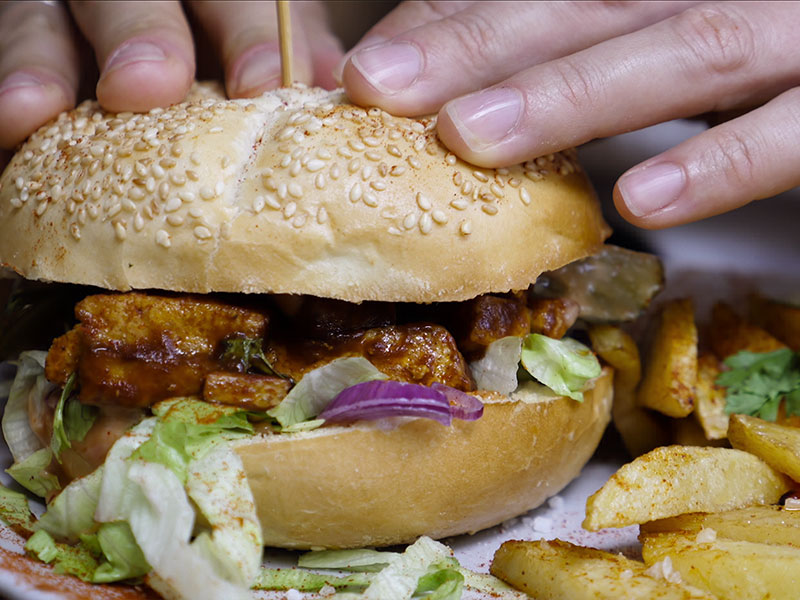
The gorilla, for example, needs strong muscles near the ear to chew fibrous vegetable matter, while the chimpanzee uses its incisors to bite into tasty fruit. These differences can influence the musculature around the mouth. Likewise, if your species specializes in social communication, the musculature might reflect that.

Other researchers, like evolutionary neurologist Chet Sherwood at George Washington University, further complement the work of anatomists like Marom and Burrows by studying relevant structures in the brain. In one review article, he notes that unlike chimpanzees and humans and orangutans, gorillas don’t seem to recognize themselves in the mirror, while chimpanzees, bonobos and gorillas, but not orangutans, can follow a human researcher’s line of sight to see what they’re looking at, and chimpanzees, bonobos and gorillas are all able to use gestures to communicate intention. In the same article, he notes that all the great apes show some dominance of the left brain hemisphere in regions associated in humans with language

Each of these findings helps us inch forward in our understanding of the facial and corresponding brain structures found in the last common ancestor of the great apes, or the last common ancestor of just chimps, bonobos, gorillas and humans, or of chimpanzees, bonobos and humans alone.

“The evolution of the brainstem connectome is what enables these intricate functions, and in humans — this is what enables speech,” Marom explained.

It’s actually not yet clear whether or not chimpanzees have a modiolus, as there are conflicting reports among the incredibly few dissections that have been done, although from Dr. Burrows’ dissections she says that most appear to have it (there is substantial individual variation in where muscles attach in this incredibly complex area of the face).

As shown by 19th century neurologist Guillaume Duchenne, a correspondent of Charles Darwin, it is the eye muscles that reveal genuine expression of the emotion we associate with the human smile. Still, the modiolus and the SMSH are important in the kind of communication at which humans excel.

We need your help to stay independent

“Isn’t it fascinating,” Marom said, returning to the mind-body problem, “that just by looking at someone’s face, such a small portion of the face is moving so delicately and you will easily gain a window into the person’s inner world. And you know something about what they’re feeling and what they think and whether they are pleased or more upset or annoyed by something that you said or by your behavior.”

This leaves us with work to do if we want to find out when this structure – the modiolus – evolved in primates, and thus when in our evolution we acquired the musculature, and perhaps the corresponding brain structures, for things like joyful smiles, speech and jokes. If indeed chimpanzees and humans have a modiolus but, as Marom and Rotenstreich have shown, gorillas don’t, this would mean that this unique aspect of facial architecture evolved after our shared ancestors diverged into Hominini (chimpanzees, bonobos, humans and extinct humans like Neanderthals) and Gorillini groups (gorillas and extinct gorilla-like Great Apes).

In fact, we might hope for more zoo and researcher collaborations like this one, which help us map out our primate family tree, while shedding light on such profound aspects of our existence as how we intuit what others are feeling –– all without causing harm to beautiful gorillas, like Lia.

Jan. 6 was bound to be celebrated by Republicans — it was only a matter of time

Saturday is the third anniversary of January 6, the day Donald Trump incited an insurrection on the Capitol in order to nullify an election he lost. The country is still dealing with the fallout, and much is still unknown: Will Trump pay for his crimes? Will his co-conspirators? Will Trump be able to finish the job by seizing power this election cycle? But one dark outcome is coming more into focus: Republican voters are increasingly silencing their doubts about political violence, and are joining Trump's effort to rewrite history to portray January 6 in a positive light.

The Washington Post and University of Maryland conducted extensive polling about American attitudes regarding January 6, timed for the third anniversary. What they found is alarming, but unsurprising to anyone who understands the trajectories of authoritarian movements. Larger numbers of Republican voters embrace both conspiracy theories to minimize January 6 and the view that political violence is fine if it's their own people doing it. 

"January 6 was an inside job" is merely a proxy for the real sentiment, which most Republicans don't want to utter out loud to a pollster or in mixed company.

A big development is the rapid spread of an asinine conspiracy theory that the FBI "instigated" Jan. 6. It's a lie that was heavily hyped by Tucker Carlson, who started invoking it very shortly after the riot itself. Carlson was fired last year from Fox News, but his hoax has spread to every corner of right-wing media and is frequently invoked by both Trump and Republican members of Congress. With that kind of all-hands-on-deck flogging of the lie, what's surprising is how the nonsense is not even more popular. Forty-four percent of Trump voters espouse the lie, with another 33% demurring with "not sure." Only 21% of Trump voters would admit that the FBI did not do January 6. 


Want more Amanda Marcotte on politics? Subscribe to her newsletter Standing Room Only.


As many people have pointed out, even by the low standards of a conspiracy theory, this one is especially illogical. One Trump supporter told the Post the violence was all from "the FBI, the police people that were put in there, the antifa and BLM hired by George Soros." It's silly to imagine such a massive conspiracy of unrelated people going off without a hitch or a leak. It's also disproved by the over 700 court convictions of Capitol rioters, every single one a loud-and-proud Trump lover.

The lesser version of the conspiracy — that Trump supporters were "whipped into a frenzy by the FBI," as another conspiracist told the Post — also doesn't make sense. For one thing, the rioters are grown adults who were not forced to riot, no matter how "whipped" they were. Also, while we have no evidence of any FBI agents "whipping" people, we do have video of Trump doing exactly that, with his infamous "fight like hell" speech. If imaginary FBI agents can be blamed for "whipping," then surely Trump is even more guilty because he whipped them up with a podium and microphone. 

But of course, Republican voters don't look too closely at the flaws in their own conspiracy theories, because they don't really believe any of this nonsense they're spouting. "January 6 was an inside job" is merely a proxy for the real sentiment, which most Republicans don't want to utter out loud to a pollster or in mixed company: They support the aims of the people who used violence to try to overthrow American democracy.

People often resort to conspiracy theories when they know their true beliefs are indefensible. The conspiracy theory functions primarily as deflection. When people are arguing over whether the FBI instigated Jan. 6, what they're not doing is talking about who actually started it (Trump) or why he did it (to end democracy). If Trump gets into office and declares Jan. 6 a national holiday, perhaps his followers will become more comfortable just admitting outright that they support fascist violence. But right now, they know that's generally considered an immoral view, so they want to talk about anything other than their own shameful opinions. 

The Washington Post poll has many questions that offer this proxy function: Is Trump culpable for January 6? Were the rioters violent or peaceful? Was Joe Biden's presidential win legitimate? Did January 6 threaten democracy? On every metric, Republican voters have drifted further away from the truth and into the land of conspiracy theories.

This is not because they've been presented with new information that changed their minds. On the contrary, the information that's emerged since January 6 has only confirmed everything we saw that day on TV: Trump did it, he wanted it to go further, and the rioters were well aware that they were trying to overturn an election. The reason Republican voters are moving in this direction is because increasing numbers of them have gotten on board with Trump's not-exactly-subtle agenda to destroy American democracy. They also tacitly agree with using violence to do so, which is why there's so much hand-waving and excuse-making for the violence that's already happened. 

We need your help to stay independent

Ultimately, there's no coherent way to support Trump without supporting his fascist war on democracy. The cognitive dissonance is too great. Trump's fascist aims are not a minor issue. This is not the same thing, for instance, as disagreeing with Biden's stance on student loan relief but voting for him anyway. The centerpiece of Trump's campaign is "retribution" against everyone who stood in his way of seizing power illegally. Fascism isn't one aspect of Trump's agenda. It's the totality of it. 

For better or worse, Trump's brazenness forces everyone, both his opponents and supporters, into a binary position: You are either against Trump or you're for fascist insurrection. Republicans may not be ready to admit that to a pollster, but it is the inescapable truth. There's only so much cognitive dissonance the human mind can take, and "I'm against insurrection, but backing the guy who calls the Capitol rioters 'hostages'" is well beyond the self-delusion powers of even the most cheese-brained QAnoner. As Election Day draws nearer and more voters pay attention to Trump's pro-January 6 rhetoric, I expect the number of Republicans who cite conspiracy theories to justify fascist revolt will rise. 

The good news is that, as Aaron Blake at the Washington Post reports, there's no evidence that these conspiracy theories have persuasive power. There's a vanishingly small number of people who voted for Biden but have been swayed to Trump by some Facebook rant about the FBI and "antifa" working together. These conspiracy theories were never meant to win people over. They exist solely to give cover to Republicans who want to vote for Trump again without admitting out loud they are supporting the overthrow of democracy.  Biden faces a lot of electoral obstacles going into 2024, but Trump's strategy of leaning into everything most people hate about him won't do him any favors. 

How Christofascists became the heart of the MAGA movement

The 2024 election is now less than one year away. This will truly be a historic election where the American people will quite literally be deciding if their country will remain a real (albeit flawed) democracy or instead succumb to neofascism and autocracy modeled on Putin’s Russia or Orban’s Hungary with Donald Trump and his Republican fascist successors as dictators for life.

The less than 11 months remaining until Election Day will be both painfully slow and extremely fast. Such a distortion of time and the disorientation it creates are defining features of a society and people that are under assault by fascists and other malign actors. In the time remaining, Democrats will need to focus their messaging and create a compelling story that creates a clear contrast between Biden and Trump. This is essential if Biden and the Democrats are going to be able to mobilize their base while also bringing in enough independents, first time voters and perhaps even the few disaffected “traditional” Republicans who abhor Trumpism and who are willing to vote for Biden (or at the very least not support Trump). Unfortunately, it appears that the Democratic Party and its consultants are unwilling and/or unable to craft such a winning narrative.

Donald Trump, his MAGA people and the larger Republican fascist movement will use these remaining months before Election Day to continue to assault and undermine reality, the facts, the truth, democracy, and the rule of law with the goal of mobilizing their voters while simultaneously demobilizing and confusing those Americans who would potentially vote for Biden.

Donald Trump faces hundreds of years in prison for his many obvious crimes. Ultimately, Trump will fight with all of his energy (and then some) to become America’s first dictator because he correctly views “winning” the 2024 election by any means necessary as one of the few ways he can escape spending the rest of his natural life in prison or some other form of confinement.

What about the American mainstream news media?

As an institution, it must commit itself to the principles of the Fourth Estate as the “guardians of democracy." In practice, this means consistently speaking truth to power, and educating and informing the public about what Trumpism and the end of democracy will mean for their day-to-day lives and futures. The mainstream news media must also reject “horserace” coverage, “bothsidesism”, and false “fairness” and “balance”, what are collectively obsolete norms that treat Trumpism and neofascism and other antidemocratic practices and beliefs as being merely “polarization” or “partisanship” instead of as anathema to real democracy and a good society.

Writing at the American Prospect, Rick Perlstein deftly summarizes the perilous convergence of these forces and the system-breaking challenge that awaits American democracy in 2024 as, “The triangle represents the three forces that have succeeded in getting America within spitting distance of losing its democracy: Republican authoritarianism, Democratic timorousness, and media incompetence.”

And what about the American people?

We need your help to stay independent

Pro-democracy Americans must unify, organize, coordinate their resources, and build the institutions and organizations across civil society that will be necessary to slow down Trump and the Republican fascists on Election Day 2024 and then continue to sustain those organizations for a long-term victory over the larger antidemocracy movement both here in the United States and around the world.

Unfortunately, early polls show that too many everyday Americans (most of whom are politically unengaged and unsophisticated) are ready to put Trump back in the White House because democracy is something abstract and relatively unimportant to them and they find Trump’s chaos, destruction, and “excitement” (and hatred and rage and strongman thug appeal) more compelling than President Biden’s responsible and steady leadership.

In an attempt to better orient myself about the escalating democracy crisis, how we got here, and what these next months will bring as the 2024 Election approaches, I recently spoke to Kathryn Joyce. She is a long-time observer and expert on the American right-wing and conservative movement. Joyce is currently an investigative editor at In These Times, a freelance investigative reporter and the author of two books: "The Child Catchers: Rescue, Trafficking and the New Gospel of Adoption" and "Quiverfull: Inside the Christian Patriarchy Movement."

"The left needs to pay serious attention to the right, and not dismiss 'the culture wars' as a sideshow to the struggle over American democracy and freedom."

She was formerly a reporter here at Salon and a contributing editor at The New Republic. Joyce’s work has also appeared in Mother Jones, Vanity Fair, The Marshall Project, The New York Times Magazine, Pacific Standard, Wired, Vox, Slate, The American Prospect, The Intercept, The New York Times Sunday Review, The Nation, The Atlantic, and other leading publications and news media outlets.

In this conversation, Joyce highlights the central role of the Christian right in the rise of Trumpism and neofascism and the types of institutions and knowledge-production the larger right-wing has built and engaged in to create and sustain their movement to end multiracial secular democracy. She also reflects on the decades-long pattern of failures by the mainstream news media (such as succumbing to right-wing lies and bullying about “liberal bias”) which helped to create this existential democracy crisis.

How are you feeling? How are you making sense of the Age of Trump and the rising fascist tide? 

We're entering a really alarming year. What we’ve seen from the Republican Party in 2023 hints at how bad things could get in 2024. Trump is "joking" about being a dictator on day one of his new administration if he takes back the White House, talking about how undocumented immigrants from non-white countries are "poisoning the blood" of the nation. A large number of Republicans now believe in the white supremacist “great replacement” conspiracy theory. It feels like things are getting worse very quickly and people need to pay a lot more attention. The prospects can feel really grim some days. On other days it seems like there’s a growing movement of people paying more attention and organizing to stop these anti-democracy forces.

To that point, how bad things are going to get? Trump and his Republican Party are now openly channeling Hitler and Nazism. The mainstream news media who are supposed to be the "guardians of democracy" but have failed to properly respond to the Age of Trump and the existential dangers it embodies. 

Other people have made this point, but there’s a pattern where Trump does something that's wildly outrageous—like suggesting that non-white immigrants are poisoning the blood of the American population—and it will get a bunch of attention from the news media. Then Trump will do it again, and it won't be deemed "newsworthy" anymore. That’s how truly awful things get normalized.

What of the role and responsibility of elite news media such as the New York Times, in their enabling and normalizing of Trumpism and larger failures to consistently practice real pro-democracy journalism? 

It often seems like mainstream news outlets such as the New York Times overreact to right-wing accusations that they are "the liberal press" and "biased" against conservatives. They bend over backwards trying to disprove that, often with the result that they’re overly credulous about right-wing claims or hold conservative op-ed contributors to lower factual or ethical standards, in hopes that will stave off more accusations of “liberal bias” from the right. It never prevents those attacks, but it does help mainstream far-right arguments and ideas. 

The Christian right — I describe them as “Christofascists” — are playing a central role in Trump's MAGA movement. You have been following the Christian right for a long time. What is your assessment of how the American mainstream news media has been covering that movement? 

There’s a lot more coverage of this than there used to be, which is overall a good thing. But it hasn’t always been that way. I've been writing about the right-wing in America for nearly twenty years, and before Trump, this beat was often dismissed as alarmist or accused of overstating the threat. After Obama was elected, for example, a lot of mainstream liberals or centrists felt certain that the religious right of the George W. Bush years had been beaten, and that we were in a new America where right-wing activism and strategizing weren’t major threats anymore. There was a vein of argument that those of us covering the Christian right were being hysterical or "mean" to evangelicals. Then came Trump. As a result of his campaigns and presidency, there’s been a lot more mainstream coverage of the right, with a lot more people doing really good work. That’s incredibly important. But I think it’s worth remembering where earlier warnings were ignored in the past, and what those blind spots can tell us about what we need to be paying attention to today.

Given your expertise, what are you focusing on in terms of the Christian right? What are you seeing through your critical lenses? 

I’ve always been pretty interested in how ideological systems work and how political movements come together. What are their arguments and how do those filter down to inform the mainstream GOP? In particular, over the last couple years, I’ve been focusing on the intellectual work that’s being done on the right and far right, because I think we can often see a clear pattern of voices and thinkers who are dismissed as being “fringe” who turn out to be a vanguard that has a huge impact on the broader conservative movement. The right and far-right are also very adept at understanding how incremental steps to create coalitions can be instrumental in building power. Those things aren't always immediately recognizable as significant but can add up to something quite profound later on.

You have attended many of the conferences and other spaces where the right wing develops its policies and ideas and builds its coalitions and networks. What type of knowledge production is taking place in those spaces?

Right-wing conferences are spaces where new arguments and frameworks are piloted, so they can then get rolled out more broadly. For example, at recent National Conservatism conferences, which I wrote about for the New Republic and Salon, numerous speakers argued that conservatives need to move beyond the classically liberal conception of "live and let live" pluralism, individual liberty and free expression, to a totalizing culture war fight that sees its aim as “defeating the enemy and enjoying the spoils.” They were explicitly arguing that there is one acceptable culture in the United States—a Christian, conservative culture—which should be supported by the law and assumed to be the norm across all areas of public life here. 


Want a daily wrap-up of all the news and commentary Salon has to offer? Subscribe to our morning newsletter, Crash Course.


At that same conference, I heard speakers making the argument that, since conservatives had “lost” cultural institutions like the media and academia, they must be willing to use all the levers of government power to enforce their ideology, much as Hungary does. And now we hear that rhetoric all the time from mainstream conservative politicians.

It's important to recognize that the ideas and policies Republican leaders advance have an origin, and it’s often from the far-right thought leaders who speak at these conferences or events, but whose arguments there get ignored as just hot air or red meat. Another example is the way that the right is increasingly reclaiming the label of "Christian Nationalism" as something to be proud of—Marjorie Taylor Greene says it today, but before her, people were saying it at these conferences. That’s one way that ideas that were once considered fringe or extreme make their way into the mainstream Republican Party.

When you look at Donald Trump, what do you see? How do you make sense of him?

On one hand, Trump is incredibly motivated by self-interest and doesn’t seem to care about anything more than himself. And in that, he represents a lot of chaos. But he’s also a vehicle for a lot of people on the far right who view him as a very useful wrecking ball that clears the way to create a social and political order that they didn’t think was going to be possible anytime soon.

What is your biggest hope for next year? And what's your biggest fear for 2024 — especially if Trump wins the election and takes back the White House?

We are in a very serious moment, and the left needs to pay serious attention to the right, and not dismiss "the culture wars" as a sideshow to the struggle over American democracy and freedom. That’s why In These Times published our recent special issue on the spread of the far right—the first time the magazine has ever dedicated an issue to the right—in the hopes of helping make the case for a broad popular front that can fight the right while organizing for the rest of the changes we need. The American right wing has built a really ugly machine that's already demonstrated its opposition to fair elections, the will of the people and the rule of law. We all need to take that seriously and be ready for this fight.

If Trump and the Republican fascists win in 2024, what does resistance look like? 

I think we have to do everything we can now to prevent that from taking place.

But if it does, resistance will require tremendous solidarity across political factions. This is a fight that’s going to require all of us. 

New research reveals the strange ways gut bacteria breathe without oxygen, influencing our health

In the wellness world, there’s a lot of pseudoscience circulating around about the human gut microbiome, the swimming colonies of microbes that inhabit our bowels, especially when it comes to selling supplements and remedies alleging to improve microbiome health. There’s even a whole industry to test your microbiome which has been dubbed as “snake oil.” One in four Americans are affected by digestive disorders, so it’s no surprise that people are becoming increasingly curious about the human gut.

But where information lacks in science, misinformation thrives. And the truth is science is still searching for answers about what’s really going on in our intestines, where hundreds to thousands of species of bacteria and archaea exist.

Indeed, the gut universe inside us is extremely complex. It’s full of different species of microbes, but differences that exists between strains carry different genes and can affect a person’s health and the diseases they’re susceptible to. But before we can even really untangle how these tiny single-celled organisms influence us, we need to know how they got inside us in the first place. After all, the human gut is dark, lacking in oxygen and has a built-in surveillance system for killing outsiders — the immune system. How did our gut microbiome evolve to navigate this toxic environment and even thrive within us?

A new study published in Nature Microbiology takes a step forward in microbiome science by identifying 22 specialized metabolites, which are chemical byproducts resulting from metabolism, that organisms can breathe in to generate oxygen and energy inside our intestines. This new paper highlights how resourceful some of these microbes can be, and how some gut bacteria may have the ability to produce energy from other compounds — with big implications for direct impacts on our health.

“We've basically found that there are bacteria that can essentially breathe other molecules [aside from oxygen]," Dr. Alexander Little, co-author of the study, told Salon. On Earth, the majority of living organisms use oxygen to generate energy. But in our intestines, the bacteria can’t use oxygen because human intestines are an oxygen-depleted environment. A common way to generate oxygen is through fermentation and breaking down sugars, but that’s not the only way bacteria survive. 

"If they're able to cross the intestinal barrier and get into the bloodstream, they're presumably going to have some impact on our health."

Little and his colleagues went "mining" for reductase enzymes, which are a large pool of genomes outside of gut bacteria that allow these microscopic bugs to breathe in oxygen-less environments — essentially the oxygen tanks of the microbe world. They found that the vast majority of bacteria had little to no reductase enzymes, but certain groups of bacteria expressed dozens to hundreds of these enzymes. 

“Which suggests to us that there are these groups of really specialized bacteria,” he said. “By doing some fancy science magic, like mass spec [spectrometry], we were able to definitively show that they're breathing, and these molecules are shuttling electrons onto them.”


Want more health and science stories in your inbox? Subscribe to Salon's weekly newsletter Lab Notes.


One of the main ways the microbiome impacts our human health is that when these metabolites enter our bloodstream, they are essentially drugs — chemicals that can impact our inner chemistry, with profound impacts for health.

“If they're able to cross the intestinal barrier and get into the bloodstream, they're presumably going to have some impact on our health,” Little said. “The idea of acting like drugs is that like all drugs that cross into our bloodstream, they have some impact on our health — but we just don't necessarily know what they could be doing [in the body].”

We need your help to stay independent

In other words, if these bacteria are breathing thanks to the energy of other molecules, it could mean that these molecules could have a direct impact on our health. Little said people with type 2 diabetes have higher levels of an amino acid byproduct called imidazole propionate in their blood. By understanding how these molecules and bacteria work together, researchers hope that either through diet or medicine, they can develop interventions to treat such conditions or improve existing ones. Some gut microbes possess enzymes that can make Parkinson's disease medications less effective, for example. Understanding these relationships is critical for fully understanding human health.

"Considering that the vast majority of reductases encoded by gut bacteria remain functionally uncharacterized, identified metabolisms may only scratch the surface of interactions between respiratory reductases and the gut metabolome," the study authors wrote. "Continued study of respiratory electron acceptor usage may thus provide an important avenue for informing our understanding of the functional capacity and metabolic output of the gut microbiome."

“We're really just starting to scratch the surface of what this could mean,” Little said. “I 100 percent believe what you could be eating, and what bugs are there, certainly are going to impact your health, but it's also a very, very complex ecosystem and we're just starting to understand how this all manages to Tetris itself together into this functional system.”

Florida venue cancels Marjorie Taylor Greene’s 3rd anniversary of Jan 6 party

Westgate Resorts in Kissimmee, Florida pulled the date for an event set to be hosted by the Republican Party of Osceola County this week after learning that it was not simply a book signing and meet-and-greet with Marjorie Taylor Greene but, in actuality, a 3rd Anniversary of Jan 6 party.

“Please be advised that Westgate was not made aware of the purpose of this event when we were approached to host a book signing,” Westgate Resorts said in a statement. “This event has been canceled and is no longer taking place at our resort.”

According to NBC News, which first reported on the event, a text message invitation from the Osceola County Republican Party detailed, “A prominent MAGA leader, Congresswoman Greene is a staunch advocate for American priorities over foreign interests and special lobbying," and that the cost of attendance would be $45 to $1,000 to meet Greene and "receive a signed copy of her book.”

“Just another day in Florida where the local Republican Party in Osceola County is hosting an ‘anniversary’ event to mark January 6th and Marjorie Taylor Green is the ‘special’ guest,” Democratic Florida state Rep. Anna Eskamani wrote on X. “Was really hoping this was a joke when I first saw it.”

As of the time of this writing, the event link is still visible on the Osceola County Republican Party's Facebook page, and no indication has been made as to whether or not a new venue will be sought out. 

“I have nothing to hide”: Alan Dershowitz comes to his own defense regarding Epstein documents

Over the past two days, the release of hundreds of pages of sealed documents in the now-settled litigation between Jeffrey Epstein victim Virginia Giuffre against Ghislaine Maxwell have prompted certain figures named within to ready statements in their own defense, but Alan Dershowitz, the former lawyer for the now-deceased Epstein — mentioned in the files as having sex with a minor girl, named in court documents as Jane Doe 3, on several occasions — says he "has nothing to hide."

In an interview with Newsmax, Dershowitz says, "I'm the only person who was ever accused who wants all the information out for good reason." In the interview, he states that since the day he met Epstein until the day he died, he's only had sex with one woman, his "wonderful wife."

"Other people did have relationships, and they have things to hide," Dershowitz furthers. "I volunteered to be deposed about everything. And I was deposed, and I told the truth."

On Wednesday, after the first batch of Epstein documents were released, Dershowitz dropped a 31-minute video speaking in his own defense on the matter, titled "The Epstein list and guilty by association." In that video, he says, “Of course I’m on that list, I was his lawyer. I flew on his plane . . . I had an innocent relationship with a man who I didn’t know, nobody suspected, had done anything wrong."

Watch here:

Martin Sheen disputes rumor that he supports Robert F. Kennedy Jr.

Back in December, there was quite a bit of buzz surrounding an upcoming fundraiser event doubling as a 70th birthday party for Robert F. Kennedy Jr., with Daily Mail and other outlets reporting that celebs such as Martin Sheen, Mike Tyson and Dionne Warwick would be in attendance. This week, Sheen has enlisted the help of his peers — namely "West Wing" co-star Bradley Whitford — to help him spread the word that he is strictly pro-Biden and does not support JFK Jr. as a potential candidate in 2024.

“I wholeheartedly support President Joe Biden and the democratic ticket in 2024,” Sheen said, according to Whitford. In a statement on his friend's behalf, written to his more than 475,000 followers on X (formerly Twitter), Whitford added, “The story is incorrect. Martin asked us to post this on his behalf." 

Warwick has also issued a statement of her own, in her signature style, shooting down the rumor of her attendance at the gathering.

“I don’t know anything about this event. I did not agree to it and I certainly won’t be there,” Warwick wrote on X.


Starbucks drops new winter menu, now allows reusable cups to be used on most orders

With every new year comes change, like the fact that you can finally use a reusable cup on most Starbucks orders. In case you missed it: If you opt to use a personal cup or mug when you order, you'll receive a 10-cent discount, and if you're signed up for Starbucks Rewards, you'll collect 25 additional bonus stars.

But that isn't the only change at Starbucks, which has added several seasonal items to its menu, including a new rival to those very popular egg bites. In addition to the savory, new potato, cheddar and chive bakes, there's also a new sweet option, the vanilla bean custard danish, as well as the new chicken, maple butter and egg sandwich. Served on a toasted oat-biscuit roll, it's being teased as a "savory and sweet start to the day."

Also back on the menu are drinks starring the "it flavor" of early winter: pistachio. Alongside the pistachio cream cold brew and pistachio latte, a brand new drink makes its debut: the iced hazelnut oat milk shaken espresso. According to the coffee chain, it's "made with Starbucks blonde espresso, which is sweetened with hazelnut syrup, and then shaken to perfection and topped with smooth, creamy oatmilk."

If you visit a coffee shop right now, I almost guarantee there's a pistachio-flavored drink on the menu. That has been the case at Starbucks for five years now, since it launched the original pistachio latte in 2019.

My neighbor’s crab pie tastes like an “upscale Southern quiche” — and it’s absolutely perfect

I've shared quite a few crab dishes over the years, most from my husband’s side of the family, but this crab pie is from my neighbor, Dawn, who will emphatically tell you she can't cook.

For years and years, I believed her, but not anymore.

This is her original recipe, and one you'll want to print out and save because these pies are undeniably, addictively delicious and absolutely, without question, the easiest thing in the world to make. 

Her recipe yields two pies from one pound of crab, which is a bargain in my book, and you don't even have to use the highest grade of crabmeat for these to be wonderful. My foodie friend, who currently lives in Portland, Ore., describes them as a rich version of an upscale Southern quiche, and since getting the recipe, she has made them on repeat over the holidays at the request of her family.

These pies freeze exceptionally well, so you can make them ahead of time for easy (or last-minute) entertaining. For variation, you can switch up the types of cheeses specified in the recipe, and if appetizers are what you need, reduce the cook time and use mini-muffins pans to turn out perfectly bite-sized hors d’oeuvres.

We call Dawn "the mayor" of our little bayside community because she knows everyone and takes care of everything. She's kind and thoughtful, outgoing and gregarious, and we all depend on her. My husband loves to tease her; in fact, he wanted me to call this recipe "The Gadfly’s Crab Pies," which I must say, does have a nice ring to it.

On any given day, you can spot Dawn on her bike, sometimes not even pedaling, but being pulled by her neighbor’s big dog that she is "walking." She could be on her way to disarm another neighbor’s security system that has errantly been triggered or heading over to my house, if I'm out-of-town, to feed the feral cat for whom I'm hopelessly attached.


Want more great food writing and recipes? Subscribe to Salon Food's newsletter, The Bite.


There's no telling where she’s off to, honestly, because she does so much for so many. It's in her genes to love and give back to this place: Her grandparents, mother and aunts sure did, and in doing so, they instilled in her the value of nurturing the things you hold dear. Like my husband, her earliest memories were made picnicking and exploring along this shared shoreline of theirs, so also like him, the roots of this place run soul deep.

I joke that we live in a blue-zone, at least for women, because we have so many healthy, active, vibrant female octo- and nonagenarians. I don't claim the same for our men, but our ladies thrive. I believe it's because of Dawn, and a few others like her, who include these wise and wonderful senior gals in everything from sunset-watching and porch-sitting cocktail hours to after-church lunch excursions and impromptu gatherings for "Wheel of Fortune." She even takes a group out dancing most every week. My theory is Dawn “can’t cook” because she doesn't have time to cook, and for that we are all grateful.

We need your help to stay independent

This recipe came into being a few summers ago when Dawn had a string of out-of-town friends lined up for visits. She had to feed them since she was hosting them, and since she “doesn’t cook,” she became reliant on the in-house made crab pies from our local seafood shop, which aren't cheap. After a while, she decided she would try her hand at making her own, so with the bones of a recipe that looked like it would produce the blandest crab pie ever, she tweaked and experimented until she came up with this one.

It's no exaggeration to say that she perfected the crab pie — and made two for the price of one at that. There's also widespread, unanimous agreement among all who have tried these that they're simply the best ones going.

Dawn's Crab Pie
Yields
2 pies
Prep Time
15 minutes
Cook Time
40 to 50 minutes

Ingredients

  • 2 deep dish 9” pie shells
  • 4 large or 5 small eggs
  • 2 tablespoons flour
  • 1 cup mayonnaise
  • 1 cup milk, cream or half-and-half
  • 3 teaspoons Old Bay Seasoning
  • 4 tablespoons onion, very finely chopped
  • 4 tablespoons red or yellow bell peppers, finely chopped
  • 2 cups freshly grated Swiss cheese (or white cheese of choice)
  • 2 cups freshly grated cheddar cheese
  • 1 pound fresh crabmeat, thoroughly picked for bits of shell and cartilage


Directions

  1. Using a fork, poke holes in the bottom and sides of the pie shells to prevent bubbling, then pre-bake 3 to 5 minutes at 350 degrees Fahrenheit and set aside to cool.

  2. Combine the eggs, flour, mayo and milk; then add the Old Bay, onion, peppers and cheeses.

  3. Fold in the carefully picked crabmeat.

  4. Pour into the pie shells and sprinkle with a little more Old Bay.

  5. Bake for 40 to 50 minutes, or until knife comes out clean.


Cook's Notes

– If you can't find Old Bay Seasoning where you live, I'm told Jacobson’s Seafood Seasoning can be substituted.

– After baking, these can be wrapped well and frozen. When ready to use, thaw in the refrigerator overnight and reheat in the oven.

As salmon disappear, a battle over Alaska Native fishing rights heats up

When salmon all but vanished from western Alaska in 2021, thousands of people in the region faced disaster. Rural families lost a critical food source. Commercial fisherfolk found themselves without a major stream of income. And Alaska Native children stopped learning how to catch, cut, dry and smoke fish — a tradition passed down since the time of their ancestors.

Behind the scenes, the salmon shortage has also inflamed a long-simmering legal fight among Native stakeholders, the Biden administration and the state over who gets to fish on Alaska’s vast federal lands.

At the heart of the dispute is a provision in a 1980 federal law called the Alaska National Interest Lands Conservation Act, which gives rural Alaskans priority over urban residents to fish and hunt on federal lands. Most rural families are Indigenous, so the law is considered by some lawyers and advocates as key to protecting the rights of Alaska Natives. State officials, however, believe the law has been misconstrued to infringe on the state’s rights by giving federal regulators authority over fisheries that belong to Alaskans.

Now, a lawsuit alleges the state has overstepped its reach. Federal officials argue that state regulators tried to usurp control of fishing along the Kuskokwim River in western Alaska, where salmon make up about half of all food produced in the region. The suit, originally filed in 2022 by the Biden administration against the Alaska Department of Fish and Game, escalated this fall when the state’s lawyers effectively called for the end of federal oversight of fishing across much of Alaska. Indigenous leaders say the state’s actions threaten Alaska Native people statewide.

“What’s at stake is our future,” said Vivian Korthuis, chief executive officer of the Association of Village Council Presidents, a consortium of more than 50 Indigenous nations in western Alaska that’s one of four Alaska Native groups backing the Biden administration in the case. “What’s at stake is our children. What’s at stake is our families, our communities, our tribes.” 

The lawsuit is a microcosm of how climate change is raising the stakes of fishing disputes around the world. While tensions over salmon management in Alaska aren’t new, they’ve been exacerbated by recent marine heat waves in the Bering Sea and Gulf of Alaska and rising temperatures in rivers like the Yukon and Kuskokwim, where king, chum and coho salmon populations have plummeted. In warmer waters, salmon burn more calories. They’re more likely to become malnourished and less likely to make it to their freshwater spawning grounds. With fewer fish in places like western Alaska, the question of who should manage them — and who gets access to them — has become even more urgent.

The Alaska dispute erupted in 2021, when state regulators on the Kuskokwim issued fishing restrictions that conflicted with regulations set by the U.S. Fish and Wildlife Service. People along the river, who are predominantly Yup’ik, were forced to navigate contradictory rules about whether and when they could fish legally — adding to the pain and frustration of an already disastrous season shaped by the coronavirus pandemic and historic salmon shortages. 

“We can face large penalties and fines if we make mistakes,” Ivan M. Ivan, an elder in the Yup’ik village of Akiak, said in an affidavit

The conflict spilled into 2022, another year of abysmal salmon returns, when state and federal regulators again issued contradictory restrictions. Alaska officials blamed the U.S. Fish and Wildlife Service for opening up fishing prematurely, before salmon had begun their migration upstream and with an “apparent lack of concern” for the species’ conservation. The Biden administration sued, arguing that the state illegally imposed its own rules in the Yukon Delta National Wildlife Refuge, a federal reserve of wetlands and spruce and birch forest that encircles more than 30 Indigenous communities. 

The fight played out quietly for more than a year — until September, when the state’s attorneys filed a brief that explicitly asked the court to undo legal precedent widely viewed as a safeguard for rural, mostly Indigenous families who depend on salmon. That move caused Alaska’s biggest Indigenous organization, the Alaska Federation of Natives, to join three smaller Native groups that had intervened on behalf of the federal government. 

Those organizations are concerned that the state wants to reverse a string of court decisions, known as the “Katie John” cases, which held that rural Alaskans have priority to fish for food in rivers that flow through federal conservation areas, including long sections of the Yukon, Kuskokwim and Copper rivers. Alaska Native leaders fear that doing away with that priority would endanger salmon populations and limit access for locals by opening fishing up to more people. 

“It really will put a lot of pressure on stocks,” said Erin Lynch, an Anchorage-based attorney at the Native American Rights Fund, which is representing the Association of Village Council Presidents. 

That concern isn’t limited to western Alaska. Ahtna Inc., a corporation owned by Indigenous shareholders in the Copper River region — some 500 miles east of the Kuskokwim — has also sided with the Biden administration. Without federal protections on the Copper River, Ahtna anglers would risk getting “pushed out,” according to John Sky Starkey, a lawyer representing Ahtna.

“There are only so many fish. There are only so many places [to fish],” Starkey said.  “It’s a significant danger.” 

State officials see the issue differently. They say there would be no threat of overfishing or competition between urban and rural residents, partly because rivers like the Yukon and Kuskokwim are so hard to reach from cities like Anchorage. They note that state law explicitly protects the subsistence rights of all Alaskans, including Alaska Natives. And they blame the feds for picking the fight by taking the issue to court.

“We did not initiate this lawsuit,” said Doug Vincent-Lang, commissioner of the Alaska Department of Fish and Game. “We provide for subsistence priority, and we take that seriously.”

The state’s lawyers also claim that federal policy is unfair for Alaska Natives who have moved to cities because it bars them from fishing with relatives in rural areas. Some Indigenous leaders see it as flawed, too, but they disagree with the state about the solution. Rather than do away with federal management, they have called on Congress to strengthen protections for Alaska Natives. 

The case, now before the U.S. District Court for Alaska, is likely to heat up even more in the coming months. A ruling is expected in the spring.

Expert: “Treasure trove” of documents debunks Trump claim that president isn’t an “officer” of US

Former President Donald Trump on Wednesday asked the Supreme Court to reverse the Colorado Supreme Court's decision to exclude him from the state's 2024 ballot based on the "insurrectionist clause" of the 14th Amendment.

His legal team argued that if the ruling stands, it would “mark the first time in the history of the United States that the judiciary has prevented voters from casting ballots for the leading major-party presidential candidate." 

The Colorado Supreme Court based its ruling on a post-Civil War provision of the Constitution, which bars anyone who "engaged in insurrection or rebellion" from holding public office. The landmark decision marked the first time in history that the disqualification clause has been used to render a presidential candidate ineligible for the White House. 

With the Supreme Court under intense pressure to resolve the issue of whether Trump can be disqualified from holding public office, this case poses several unique legal questions. Two of the central issues involve settling whether the language in the constitutional provision applies to individuals running for president and who gets to decide whether someone engaged in insurrection.

“In our system of ‘government of the people, by the people, [and] for the people,’ Colorado’s ruling is not and cannot be correct,” Trump’s lawyers wrote in the filing. “This Court should grant certiorari to consider this question of paramount importance.”

His team argued that the court should "return the right to vote for their candidate of choice to the voters."

The state's highest court overturned a prior ruling in which a judge asserted that while Trump had engaged in insurrection by inciting a riot at the Capitol, the former president is exempt from the insurrection clause of the 14th Amendment, noting that it explicitly lists all federal elected positions except the presidency. The state court had already put its decision on hold allowing Trump to remain on the ballot if he appealed. The Colorado Republican Party had already appealed the state court's opinion to the Supreme Court.

Trump has also appealed a similar decision to a Maine state court, which prohibited him from the primary ballot under the same constitutional provision in question in the Colorado case. Likewise, the decision could make its way to the Supreme Court. 

“I expect that the Colorado decision will affect all the cases being raised on this issue,” Laurie Levenson, a law professor at Loyola Marymount University, told Salon. “I don’t think the Supreme Court wants to handle this issue in a piecemeal fashion.” 

As Trump's filing thrusts this explosive case into the nation's highest judicial body, a Supreme Court with a 6-3 conservative majority – including three justices appointed by Trump himself – is poised to influence a broader initiative to disqualify the GOP presidential front-runner from other state ballots in the lead-up to the 2024 election. 

Citizens for Responsibility and Ethics in Washington, the government watchdog group that brought the ballot challenge in Colorado, said it has already requested that the  ourt “move quickly” to provide voters the answers they need about this “urgent question."

Legal experts remain divided on how quickly the justices will rule on the matter and how they may ultimately reach a final decision.

But while the big question about whether or not Trump is eligible to be on the ballot is of significant importance, it's also just as imperative that the Supreme Court answer that question in the right way, James Heilpern, practicing appellate attorney and a senior fellow at BYU Law School, told Salon.

Several examples show that both at the time of the Founding and the ratification of the Fourteenth Amendment, the term "officer of the United States" clearly encompassed the presidency, Heilpern pointed out, referring to his research.

These include an act of Congress that specifically identifies the president as an officer of the United States and presidential proclamations that specifically identify the president as the "chief executive officer of the United States" or "chief civil executive officer of the United States.”

We need your help to stay independent

In his brief to the Colorado Supreme Court, Trump stated that “despite the many words and citations that treat the President as an officer not one authority holds that the President is an officer of the United States no case, no statute, no record of Congressional debate, no common usage, no attorney general opinion." 

However, Heilpern’s research suggests otherwise. The Postal Act of 1799, for example, specifically identifies the president as an officer of the United States. The language clearly states which “officers of the United States” should be granted a franking privilege – the ability to send mail by their signature rather than by postage – listing both the president and vice president as officers of the United States.

There are also several presidential proclamations written by President Andrew Johnson, who was in office during the drafting and ratification of the 14th Amendment. In these proclamations, he referred to himself as either the "chief executive officer of the United States" or the "chief civil executive officer of the United States," Heilpern explained. 

In their research, Heilpern and co-author Michael Worley found a “couple of instances” in the impeachment trial of Johnson where the president is “implicitly or explicitly” referred to as an “officer of the United States.”


Want a daily wrap-up of all the news and commentary Salon has to offer? Subscribe to our morning newsletter, Crash Course.


“The argument that the president is not an officer of the United States is based on two assumptions,” Heilpern said. “First, several scholars have argued that the term ‘officer of the United States’ is a term of art. In other words, they're arguing that the term officer of the United States, electively as an entity, means more than the sum of its parts.”

But from analyzing a “treasure trove” of documents that were produced at the time of the founding, the researchers learned that the phrase “officer of the United States” was not being used as a term of art. Instead, i​​t was being used “simply to designate any old federal official.”

“The term ‘officer of the United States’ in the 1789 Constitution is not a term of art,” Heilpern said. “It thus applies to all ‘officers of the United States,’ as a standard textualist interpretation of the phrase implies. There is no doubt that the person who holds the office of President of the United States becomes an officer of the United States when the person takes the Presidential Oath. Donald Trump was an officer of the United States.”

For the Supreme Court to claim otherwise, would be a “bad way” to resolve this case, he added.

In general, the court is “likely” to rule for Trump, but not decide the issue of insurrection, David Schultz, professor of political science at Hamline University, told Salon. 

“It will argue that either the insurrection clause is not self-executing or it does not apply to the president or that the clause only applied to factors around the Civil War,” Schultz predicted.

Trump’s legal team has argued that even if the provision could be applied to the former president, he did not participate in insurrection on Jan. 6, referencing a lengthy history of political protests that escalated into violence.

This may be their “best argument,” Levenson said. It is unclear what has to be proved, and how, to show the former president engaged in insurrection since Trump has not been criminally charged with this crime, leaving him room to argue he did not engage in such behavior.

“I think the historical record shows that this question of whether the president is an officer of the United States isn't a viable avenue for the Court to avoid the thornier – and frankly much more important issues – of whether the Fourteenth Amendment is self-executing and whether the president's actions on January 6 qualify as insurrection," Heilpern said.

To eat or not to eat vegan? The 8 biggest takeaways from Netflix’s “You Are What You Eat” food doc

Many nutritionists have preached about the benefits of going vegan, but how beneficial is the diet truly? That’s what a few Stanford Medicine researchers sought to find out, and their results proved to be more surprising than anticipated.  

The recent study examined 22 pairs of identical twins and the effects of their dietary habits over the course of eight weeks. One twin was instructed to follow a strict plant-based diet (free of any meat, seafood, eggs and dairy), while the other followed an omnivore diet (including plants, meat and animal products). 

“Although it’s well-known that eating less meat improves cardiovascular health, diet studies are often hampered by factors such as genetic differences, upbringing and lifestyle choices,” the study explained. “By studying identical twins, however, the researchers were able to control for genetics and limit the other factors, as the twins grew up in the same households and reported similar lifestyles.”

This is the first time researchers have conducted a study like this. It's also the first time researchers have attempted to change people’s underlying biochemistry in a short period of time.

“We’re taking a comprehensive approach to this study, looking at body composition, the epigenome or biological clock, the microbiome and the brain,” said Christopher Gardner, a nutrition scientist at Stanford University. 

The study is further explored in Netflix’s food documentary “You Are What You Eat: A Twin Experiment.” The four-part series chronicles the study from start to finish and reveals its results at the very end. 

Four out of the 22 pairs of twins are featured in the series. They include sisters Pam and Wendy, who both grew up in South Africa and run several food businesses together; brothers Charlie and Michael, better known as the “Cheese Twins”; sisters Carolyn and Rosalyn, a sports relationship coach and high school teacher respectively; and brothers John and Jevon, two recent nursing graduates.

Here are eight of the biggest takeaways from the study:

01
The Standard American Diet took off after World War II
You Are What You Eat: A Twin ExperimentYou Are What You Eat: A Twin Experiment (Photo courtesy of Netflix)
The infamous Standard American Diet, better known as S.A.D., became mainstream in a post-World War II society. Many aspiring soldiers weren’t qualifying for the military because they were too thin and undernourished, explained Christopher Gardner, a nutrition scientist at Stanford University.


“And there was a huge push to get enough calories out there, be as efficient as we could,” Gardner continued. “We saw a growing availability of convenience foods, a lot of low-cost food, which then started to morph into more and more processed and packaged foods. And we saw the same thing with animal-sourced foods. Beef, pork, chicken, eggs, dairy products, cheese.”


The animal agriculture sector quickly industrialized and soon enough, factory farms took over to improve efficiency, said physician and author Michael Greger. Animal products decreased in cost but increased in availability and overall consumption.


Cheap, ultra-processed foods still remain a core part of our food system today. High consumption of such foods have been linked to an increased risk of obesity, hypertension and cardiovascular disease.

02
Regardless of the diet, not eating enough results in loss of muscle, not fat
You Are What You Eat: A Twin ExperimentPam and Wendy in “You Are What You Eat: A Twin Experiment” (Photo courtesy of Netflix)

After eight weeks of following their respective diets, Pam and Wendy both lost muscle mass but increased their fat levels. Pam, who followed the plant-based diet, lost one pound of fat and almost seven pounds of muscle. Her sister Wendy, who followed the omnivore diet, lost almost four pounds of muscle and gained 0.3 pounds of fat.


It was later revealed that both sisters failed to eat all of the food that was provided to them, simply because they felt as though their individual diets contained high amounts of carbohydrates and beans. Because their bodies weren’t obtaining enough energy from food, they instead sought energy from their muscles. Most of the muscle they had built in the gym was also being used to fuel their workouts, thus explaining the loss in muscle mass and gain in fat.

03
A plant-based diet may promote better sexual health for women
You Are What You Eat: A Twin ExperimentCarolyn and Rosalyn in “You Are What You Eat: A Twin Experiment” (Photo courtesy of Netflix)
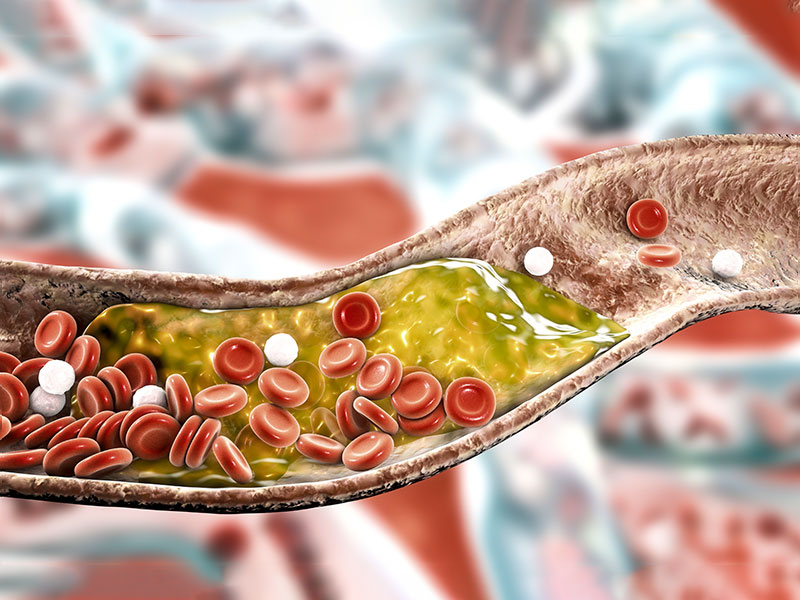
To assess the diet’s impact on women’s sexual health, a thermograph was used to measure genital arousal in Pam, Wendy, Carolyn and Rosalyn. Temperature changes in each participant’s genitals were recorded while they watched their choice of pornography. The final results found that Pam and Carolyn, who both followed the plant-based diets, had increased genital arousal.


Pam experienced a 371% increase in her arousal compared to her sister, who experienced a 288% hike. Carolyn experienced an astounding 383% increase, while her sister Rosalyn experienced a 212% hike.

04
Those who followed a plant-based diet experienced drops in “bad” cholesterol levels
Atheromatous plaque in artery, illustrationAtheromatous plaque in artery, illustration (Getty Images/KATERYNA KON/SCIENCE PHOTO LIBRARY)

A plant-based diet may contribute to lower levels of low-density lipoprotein cholesterol, sometimes referred to as “bad” cholesterol. Over the course of eight weeks, researchers found that LDL cholesterol dropped significantly amongst those who followed a vegan diet. 


Carolyn’s LDL levels dropped 12.9%, while her sister Rosalyn’s levels went up slightly 1.7%. High levels of LDL cholesterol can clog arteries and cause heart disease and stroke.


While the omnivores in the study saw their LDL cholesterol remain the same on average, the vegans saw their LDL cholesterol levels drop 10% on average.

05
A plant-based diet may decrease unhealthy levels of inflammation of the body
A man having a heart attackA man having a heart attack (Getty Images/boonchai wedmakawand)

Researchers studied the presence of trimethylamine N-oxide, simply known as TMAO, a substance that is produced by the body after meat consumption. TMAO is said to increase unhealthy levels of inflammation and is associated with a higher risk of heart disease.


Expectedly, omnivores had higher levels of TMAO compared to their vegan counterparts. Pam and Wendy’s results revealed that Pam’s TMAO plummeted 350% and remained low while Wendy’s increased 160%.

06
Those who followed a plant-based diet had higher levels of healthy gut bacteria
Gut bacteria, microbiomeGut bacteria, microbiome (Getty Images/ChrisChrisW)
A healthy microbiome – the collection of all the bacteria, fungi and viruses that naturally reside in our bodies – leads to better metabolism, a stronger immune system and better overall health. 


Researchers looked at several groups of bacteria, like bifidobacterium, which helps prevent infection and produces vitamins and other vital chemicals. Bifidobacterium increased in twins who followed a vegan diet and remained level in twins who followed an omnivore diet.

07
Those who followed a plant-based diet are considered biologically younger
Crossing-over of chromatids, illustrationCrossing-over of chromatids, illustration (Getty Images/ARTUR PLAWGO/SCIENCE PHOTO LIBRARY)
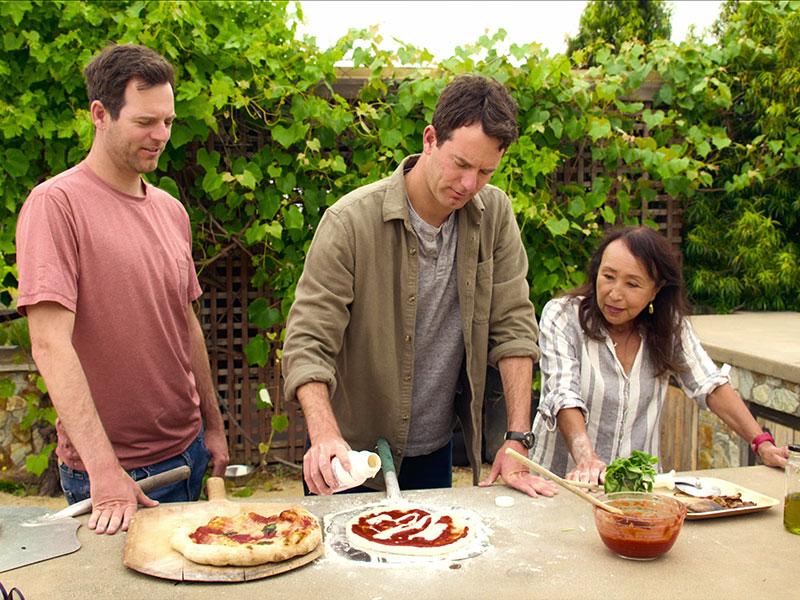
Researchers differentiated between biological age and chronological age in their study. Biological age refers to how old your cells and tissues are, while chronological age is the number of years you've been alive. Biological age was determined based on the lengths of each twin’s telomeres, the protective caps on the ends of DNA strands. Lengths of telomeres decrease as we age, so longer telomeres signify better health and a younger biological age.


At the beginning of the study, each twin had telomeres that were the same length. After eight weeks, however, the vegan twins had longer telomeres compared to their omnivorous twins, whose telomeres remained unchanged. That means the vegan twins were considered biologically younger than their omnivore twins.

08
The twins are committed to incorporating more vegan meals into their diets
You Are What You Eat: A Twin ExperimentMichael, Charlie and Miyoko Schinner in “You Are What You Eat: A Twin Experiment” (Photo courtesy of Netflix)

Although none of the twins have fully gone vegan, many said they are committed to eating more plant-based meals in their regular diets.


“For me, plant-based eating is the way to go,” said Carolyn. “I feel healthier . . . If I’m gonna put crap into my body, then I’m gonna feel like crap. But if I do the opposite, it'll be enhanced.”


As for Pam and Wendy, the sisters have been decreasing their intake of animal products. When it comes to eating meat, “less is more,” Wendy said.


“Change starts with one person,” Pam added. “With making food for other people, we realize that we don’t need so much meat.”


Michael expressed similar sentiments, saying he’s “cut out meat for the most part.”


“I think there are just too many benefits to cutting it out and not enough benefits to keep it in,” he said.

"You Are What You Eat: A Twin Experiment" is currently available for streaming on Netflix. Watch a trailer for it below, via YouTube:


Israeli officials double down on mass expulsion of Gazans despite rebuke from Biden administration

Two leading Israeli government ministers have brushed aside criticism from the U.S. State Department and doubled down on their push for the ethnic cleansing of the Gaza Strip, publicly demanding what they have cynically described as the "voluntary migration" of Palestinians out of the besieged enclave and the return of Jewish settlements that were removed nearly two decades ago.

Bezalel Smotrich, Israel's finance minister, claimed Wednesday that the mass expulsion of Gazans would be a "humanitarian solution" and declared that "a small country like ours cannot afford a reality where, four minutes away from our settlements, there is a hotbed of hatred and terror, where there are two million people who wake up every morning with the desire to destroy the state of Israel."

Smotrich's comments came a day after U.S. State Department spokesman Matthew Miller issued a statement rebuking the finance minister and Israel's national security minister, Itamar Ben-Gvir, for "advocating for the resettlement of Palestinians outside of Gaza."

Miller called the high-ranking officials' comments "irresponsible" and claimed they don't align with what the Biden administration has "been told repeatedly and consistently by the government of Israel, including by the prime minister."

Ben-Gvir quickly hit back, writing in a social media post on Tuesday that Israel is "not another star on the American flag."

"The United States is our best friend, but first of all we will do what is best for the state of Israel: The migration of hundreds of thousands from Gaza will allow the residents of the enclave to return home and live in security and protect the IDF soldiers," the Israeli minister wrote.

Asked during a Wednesday press briefing about Ben-Gvir's response, Miller said that "Israel is a sovereign country that does make its own decisions."

"I'm not surprised that he continues to double down and make those statements," Miller added, "but they are not only in contradiction with United States policy and what we think is in the best interests of the Israeli people, the Palestinian people, the broader region, and ultimately stability in the world, but they are in direct contradiction of his own government's policy."

Miller's insistence that Smotrich and Ben-Gvir's position is not aligned with official Israeli policy toward Gaza is belied by repeated public and private comments from Israeli lawmakerskey government ministries, and top officials—including Prime Minister Benjamin Netanyahu, who has reportedly sought out countries willing to "absorb" displaced Gazans.

On Wednesday, The Times of Israel reported that "Israeli officials have held clandestine talks with the African nation of Congo and several others for the potential acceptance of Gaza emigrants."

Expert observers have argued that Israel's U.S.-backed military, which has relentlessly bombed Gaza for nearly three months straight, is clearly acting as if its objective is to permanently expel Palestinians from the enclave, where 90% of the population has been internally displaced. If allowed to return, many Gazans won't have a home to go back to, as 70% of the territory's housing units have been damaged or destroyed by Israeli airstrikes.

"As evacuation orders and military operations continue to expand and civilians are subjected to relentless attacks on a daily basis, the only logical conclusion is that Israel's military operation in Gaza aims to deport the majority of the civilian population en masse," United Nations' special rapporteur on the human rights of internally displaced persons said last month.

Forcible transfer is a war crime under international humanitarian law.

South Africa is currently leading a case at the International Court of Justice accusing the Israeli government of genocide and ethnic cleansing in Gaza.

In an editorial on Wednesday, the Israeli newspaper Haaretz called South Africa's charges "a wake-up call for Israel" and accused government officials—including Smotrich and Ben-Gvir—of inciting war crimes.

"Israelis do not hear themselves," the editorial reads. "Since the war began, lawmakers and cabinet members have repeatedly made statements that could be seen as indicating an intention to carry out crimes against humanity."

The editorial points to a Knesset meeting on Wednesday during which one lawmaker suggested that Israel should "raze all the buildings" in northern Gaza and "build neighborhoods" for Israeli settlers.

Haaretz's editorial board argued that "the most effective way" for Israel to push back on South Africa's genocide case is to "remove from the government those who incite war crimes."

"This is the only way to persuade the world that the deranged ideas they are spreading do not reflect reality," the editorial states.

Former U.S. Rep. Mayra Flores accused of cribbing others’ pictures of Mexican food as her own

"Former U.S. Rep. Mayra Flores accused of cribbing others' pictures of Mexican food as her own cooking" was first published by The Texas Tribune, a nonprofit, nonpartisan media organization that informs Texans — and engages with them — about public policy, politics, government and statewide issues.

Sign up for The Brief, The Texas Tribune's daily newsletter that keeps readers up to speed on the most essential Texas news.


In a bizarre micro-scandal that some have dubbed "GrubGate," a former GOP congresswoman who is running for her old seat in South Texas is being accused of routinely stealing photos of Mexican food from other social media accounts and passing them off as her own cooking.

Earlier this week, Mayra Flores, the first Mexican-born woman to serve in Congress, posted a photo on social media that she described as "gorditas de masa" with the caption, "the Ranch life with family is the best."

[Republican Mayra Flores announces bid to retake South Texas congressional seat]

Soon after, a user on X, formerly known as Twitter, pointed out that that the image was previously posted on a Facebook page, "Visit Guyana," in March 2022. Others said that the food in the photo was not gorditas de masa. That prompted the conservative website Current Revolt to dig further into Flores' social media accounts, where they found numerous other posts in which Flores used others' photos of campfire cooking or homemade tortillas to illustrate her own idyllic life on a ranch.

"As a proud Latina who knows how to cook, homemade Mexican food tastes better from a gas stove," she wrote alongside one photo of eggs and tortillas on what appears to be a wood-burning stove. The photo was initially posted on Facebook in 2021 by a Spanish-language magazine.

The Tribune separately reviewed Flores' Instagram and found at least two such instances in the last year, including one post from July in which she shared a photo of meat and tortillas on a grill with the caption, "Joe Biden is not invited to the carne asada" in both English and Spanish. A reverse image search found that the exact photo was posted a year prior by a Facebook page for tourism in Tamaulipas — the state in Mexico where Flores was born.

In another post, she praised the "simple things in life" like a "good breakfast" alongside a photo that was first published two years ago by a Mexican food photographer.

In a text message on Wednesday, Flores said it wasn't her "intention to mislead."

"The photo simply reminded me of my upbringing in Mexico and childhood," she said. "I deleted the tweet to clear up any confusion. I actually spend my Christmas at ranch with my In-Laws. Happy New Year!"

Asked to specify which of the photos she was referring to, Flores suggested that the Tribune focus on "the border crisis."

She also changed her handle on X amid the criticism and has been blocking people on social media throughout Tuesday and Wednesday who have accused her of falsely passing the photos of cooking off as her own.

"The George Santos of the [Rio Grande Valley]," wrote the campaign for U.S. Rep. Vicente Gonzalez, D-McAllen, who Flores is currently challenging.

Flores is running to retake the South Texas seat that she initially won in a June 2022 special election. Her win was seen by the GOP as a sign of momentum among heavily Hispanic voters there. But redistricting made the seat more favorable for Democrats in the November election, and Flores lost to Gonzalez.

This article originally appeared in The Texas Tribune at https://www.texastribune.org/2024/01/03/mayra-flores-mexican-food-photos/.

The Texas Tribune is a member-supported, nonpartisan newsroom informing and engaging Texans on state politics and policy. Learn more at texastribune.org.

“These guys were so insecure”: How mobsters inspired Netflix’s dark action-comedy “The Brothers Sun”

"I've never done anything quite like it."

Sam Song Li is describing a scene from Netflix's dark action-comedy "The Brothers Sun," in which he and his onscreen brother played by Justin Chien are going mano a mano with . . . dinosaurs. To be more accurate, they're fighting mobsters dressed in inflatable dinosaur costumes at a child's Jurassic-themed birthday party. 

"So much of it is about Asian American masculinity and insecurity, and that just permeates how we want to present gangs."

"The Brothers Sun" examines what happens when long-estranged siblings – one working for the Triad in Taiwan, one studying pre-med in California – reunite and reckon with the dangerous legacy that a secret their parents kept from them has wrought. As with any self-respecting mob project, "Brothers Sun" packs fight scenes into each of the eight episodes, ratcheting up the action as loyalties are tested and bodies start to pile up. What sets this series apart, however, is how it challenges that violent mindset and hyper-masculinity by reframing the narratives through unexpected left turns and humor.

Salon spoke to several cast and crew members to unpack what makes "Brothers Sun" unique. Byron Wu, who co-created the series with Brad Falchuk ("Pose"), grew up watching organized crime movies, from Hong Kong's "Infernal Affairs" to Martin Scorsese's oeuvre. But it was after seeing an interview with Japanese director Juzo Itami ("Tampopo," "A Taxing Woman") that inspired Wu to write a series that would upend the Triad stories that we know.

"Itami was a very tongue-in-cheek filmmaker and he did a movie about the yakuza," Wu said. "After the movie came out, he went back home to his apartment, and there are these gangsters waiting for him. They beat him up, cut his face and told him, 'Don't you dare make another movie making fun of yakuza ever again.'

"I thought that was so funny that these guys were so insecure about their jobs that they felt the need to beat up a comedy director. And so that is where that comes from, in terms of how we're looking at these gangsters. So much of it is about Asian American masculinity and insecurity, and that just permeates how we want to present gangs."

Into this framework comes Charles Sun (Chien), a deadly enforcer and heir apparent to Triad gang the Jade Dragons in Taipei. An expected event leads him to suspect a rival gang is going to target his mother Eileen "Mama" Sun (Michelle Yeoh) who's been hiding out in the States and raising his younger brother Bruce (Li) on her own. When Charles heads to California to protect them, he discovers that Bruce has no idea about his family's murderous, criminal side and what dangers that will bring into his life. Meanwhile, Bruce's mind is on his true passion, to be the next improv star for the Groundlings, even though Mama Sun has raised him to someday become a doctor and save lives – not take them. 

The mother of all gangsters

The Brothers SunMichelle Yeoh as Mama Sun in "The Brothers Sun" (Michael Desmond/Netflix)Any project starring Michelle Yeoh comes with certain expectations. Whether she plays an intimidating mother of a child seeking approval ("Crazy Rich Asians"), an acrobatic and skilled martial artist ("Crouching Tiger Hidden Dragon") or a mix of those and then some ("Everything Everywhere All at Once"), Yeoh commands respect for both her presence and physical prowess. In "The Brothers Sun" she doesn't perform martial arts but is somehow more formidable as a mother who won't compromise the safety of the son she raised. And if she does need to get her hands dirty, well, let's just say you wouldn't want to be the other guy. 
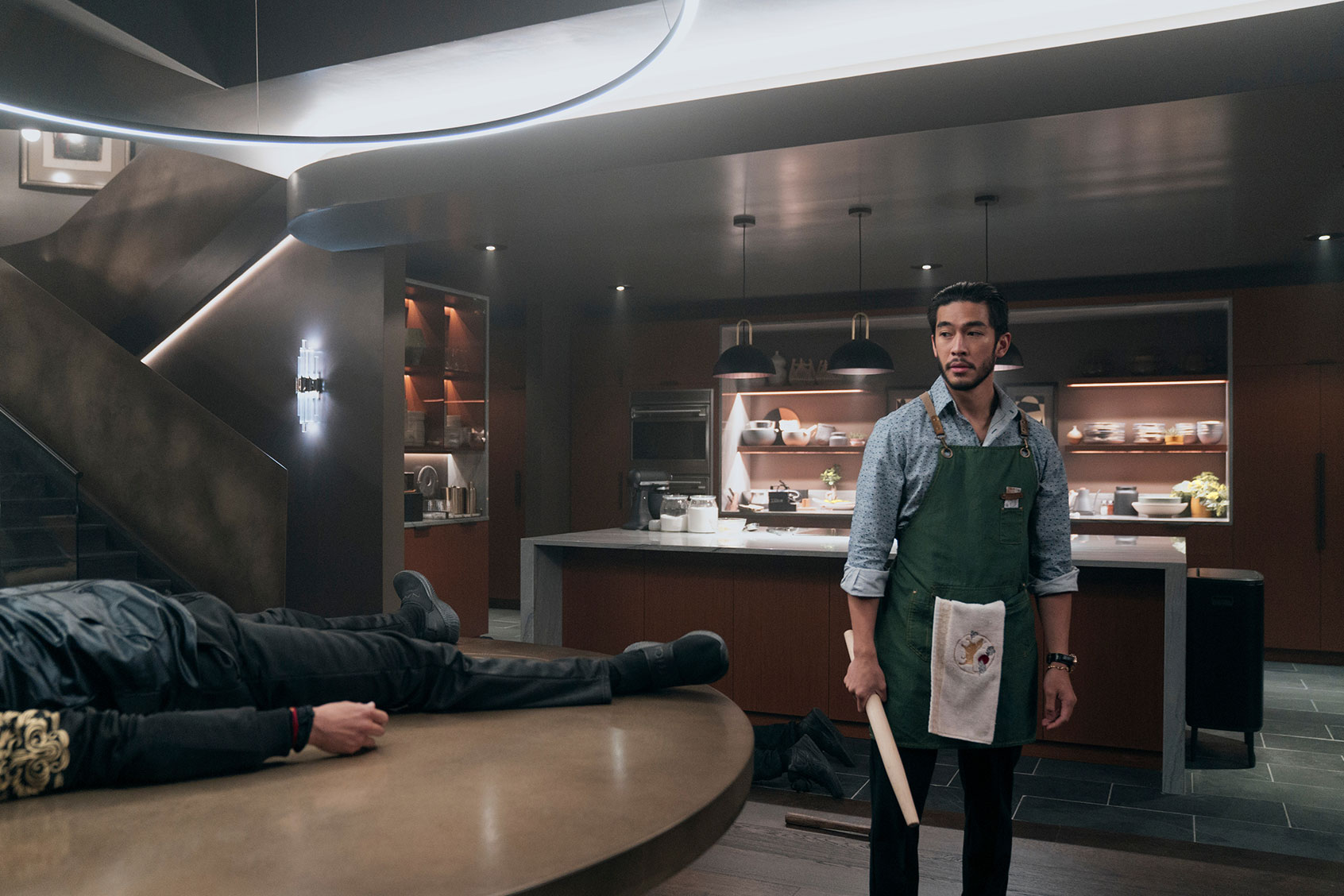
Wu explained how Mama Sun was inspired by his own mother.

"I remember growing up and being embarrassed by my mom," he said. "I remember going with her to work where she was a development manager at Microsoft, and people were scared of her there. And that was a realization. I was like, 'Oh my God, my mom's actually a bada**.' 

"Learning about her story – where she came from, how much struggle she had in China, her dream to go to college, coming to the United States with so little English as well as connection and forging her own way here – that understanding of how powerful she really is was such a huge part of Mama Sun as a character."

We need your help to stay independent

This emphasis on motherhood adds nuance to the usual Triad tales where the action is often predicated on revenge or damaged pride. In "The Brothers Sun," the idea of saving something precious is the impetus for the action, with Mama Sun's sacrifice doubled. Not only did she abandon her husband and one son, but she also had to start with a blank slate in a new country, shielding Bruce from the reality of his father and brother's criminal enterprise in Taiwan. Therefore, when Charles shows up on her doorstep with killers trailing behind, it's not exactly a warm reunion.

"She struggles with the son she had to leave behind and the reasons why she did it," explained Wu. "She had to save one of her sons and she sees Charles is capable of something dark that happens at a young age, so dark that she wonders if there is redemption for him in his future. There's that tragic underpinning in the relationship."

The son also rises

The Brothers SunJustin Chien as Charles Sun in "The Brothers Sun" (Netflix)Chien did his homework to play a man born and raised to be a Triad member. While he watched "The Godfather," "Goodfellas" and "Infernal Affairs," it was Taiwanese films "Gatao" and "A Sun" ("Yanguang Puzhhao") that helped him "pick up all the mannerisms and understand the hierarchy." It's Charles' duty to protect the family name and reputation – even if he hasn't seen his mother in years. That's why we find him in a small house in Southern California, battling a giant home invader with kitchen utensils.
Chien was well-prepared to play the son who could take charge and take action. His 10 years of Muay Thai and four years of Brazilian jiujitsu meant he had the physical ability to pull off the numerous fight scenes, while also working with fight coordinator Eric Brown ("John Wick") and stunt coordinators Justin Yu and Michael Lehr to hone a style more fitting of a Taiwanese mobster.

"I remember learning Wing Chun, taekwondo, karate," said Chien. "I definitely had to brush up and improve my kicks. There's a big difference in Muay Thai kicking versus taekwondo and karate kicking. I learned some elements of kali, which is Filipino stick fighting that influenced a lot of the knife work. And then I also had the chance to shoot at Taryn Butler's range to help inform some of the scenes of firearms."

All of this training prepared Chien to wield unconventional weapons as well, ranging from a pineapple to a wok. After all, this is a show where gangsters attack a sauna or masquerade as dinosaurs; Charles needs to be ready no matter what. Chien points out, however, that all that training "also affects Charles' mental and emotional states."

Like "The Sopranos," having multiple episodes allows "The Brothers Sun" to delve more into the mind of a gangster, exposing both mental health issues and also a lighter human side. Can Charles ever escape his killer tendencies? He's been raised to put the survival of his family's criminal interests first. However, we soon learn that he has another passion: baking.

"It's an allegory to what a lot of Asian Americans go through . . . they have their own secret things that they want to do, but they don't feel like they can."

Charles is a devoted viewer of "The Great British Bake Off" and uses baking as an appropriate outlet for his emotions. (Downside: When his souffle deflates, so do his spirits.) Once he lands in California, he also discovers a new goal: to perfect his churro recipe. Baking is no mere hobby for Charles but an essential aspect of how he can maintain sanity as a Triad member.

"Charles had no choice but to be a killer," explained Wu. "We wanted him to have something that was just for himself, a selfish personal love and desire that he keeps at. It's an allegory to what a lot of Asian Americans go through with their parental pressure of wanting of them being whatever it is considered those good professions – engineering, doctor, lawyer – while they have their own secret things that they want to do, but they don't feel like they can."

Chien confirms that despite being the consummate gangster, Charles would prefer to spend his time far from violence.

"For Charles, his perfect day would be a quiet peaceful one where he doesn't have to do Triad activities, where he doesn't have to kill anybody," said the actor. "Where Charles would probably spend the day, lock his door make sure none of his colleagues or associates come in and watch 'The Great British Bake Off,' work out and probably bake a few things. Order takeout. And I don't know, maybe stalk [his old friend] on Instagram."

The "Yes, and . . ." man

The Brothers SunSam Song Li as Bruce Sun and Michelle Yeoh as Mama Sun in "The Brothers Sun" (Netflix)As different as Charles and Bruce are, rebelling against how a parent want to direct your passions may be where the brothers overlap. While Bruce's skills are decidedly not in the criminal realm – unless it's stealing from his own college tuition to use toward improv classes – his pursuit of comedy is in direct opposition to his mother's medical goals for him. But what happens when an improv actor is faced with the threats coming for and from his family?

"Bruce is Mama Sun's baby. She rescued him from that life and she wants him to stay out of that life," said Wu. "Bruce wants some respect, right? He believes it's through improv that he'll be achieving this respect. But then you learn through the series, there's a deeper respect to this family and how he has to earn that through stepping up in other ways. 

"We talked about thematically duty to self versus duty to the the family with Charles representing duty to family and Bruce representing that duty to self. It's such an Asian American story of how much do you do for yourself and how much of you for your family? Bruce's arc is really going from doing things for himself – the improv goofing off, selling drugs and all that stuff – and then he learns how important it is to do things for family."


Want a daily wrap-up of all the news and commentary Salon has to offer? Subscribe to our morning newsletter, Crash Course.


The answer, of course, lies in comedy. In this case, Bruce's Groundlings improv instruction is literally his secret weapon to dealing with the various Triad members who only know how to approach situations through violence or intimidation. In the series, Bruce has a pin on his bag that reads, "Yes And" referring to the improv mindset to accept a situational prompt and then expand on it. Li believes that ability to riff creatively on the spot serves Bruce well.

"In anticipation for this project, I definitely brushed up on my improv and specifically took Groundlings classes to really just figure out what the headspace is for Bruce and for the improv scenes. I feel like there's the beauty of the 'Yes, and. . .' It's a term that is used in improv to go with the flow, and it's a recurring theme. It's shaped the way that I think Bruce views life and every circumstance that appears before him or challenges him. That's why Bruce is able to adapt so quickly and think so quickly on his feet."

It's a lesson that Li took to heart as well when battling the dinosaur-suited stuntman. While the script originally intended Bruce to knock off his assailant's dinosaur mask, the show's pivoting to inflatable dinosaur costumes changed the action on that day of shooting.

"We made changes to one of the beats that Bruce does with one of the dinosaurs," said Li. "In the script I was supposed to hit the dinosaur and make their mask fall off, and the assassin behind the mask is just deadpan and goes right back trying to kill me. 

"But because they were inflatable costumes, they go right back [into shape]. We just played off of that. It's funny how the inflatable dino head . . . shoots back up. There was a lot of little improv things that on the day that we actually got to do because of those inflatable dino suits."

Check back with Salon for more about "The Brothers Sun" (and that dino fight). "The Brothers Sun" streams all eight episodes beginning Thursday, Jan. 4 on Netflix.

Trump lawyers’ latest filing is only “helping prosecutors” prove their D.C. case: analysis

Donald Trump's legal team "appears bent on helping prosecutors" in their election interference case against him based on a report cited in the former president's latest legal brief, according to a Washington Post analysis. Prosecutors have said the former president's false voter fraud claims fabricated grounds for him to illegally overturn the 2020 election, with special counsel Jack Smith writing in his indictment of Trump that the fake electors plot was intended to "create a fake controversy" that could be used to fuel the events of Jan. 6, 2021. 

Deep within the Tuesday filing in Trump's appeal for presidential immunity in the criminal case, senior political reporter Aaron Blake notes that the former president's attorneys cite a social media post from Trump that links to a report from an unnamed source pushing similar claims. The report, which Blake writes "is a mess," puts forth a number of false voter fraud allegations, its first paragraph concluding "there is no evidence Joe Biden won." It also cites multiple accounts of alleged election fraud that don't appear to be publicly available, in one instance citing seven chapters from a so-called "Report on Widespread Fraud in the Georgia 2020 Presidential Election" but failing to provide an author or link. A Google search, Blake added, does not return any report with that title. 

Trump's attorneys don't state that the report's claims are true in the brief, but, they argue, it shows there are still “vigorous disputes" and "questions" surrounding the "actual" 2020 election results. "The aim is to apparently cite the smoke without actually claiming there’s fire," Blake concludes. "But what it demonstrates is how much this entire effort was about manufacturing smoke. And in that way, the Trump lawyers in effect just proved the prosecutors’ point."