Spring Sale: Get 1 Year, Save 58%

Mike Johnson’s MAGA honeymoon: How long can the new House speaker hold the GOP intact?

Now that the curtain has finally come down on the sideshow of the House of Representatives speaker's race, it's tempting to think we can leave that political circus behind and focus on something else. Unfortunately, nothing could be further from the truth. If anything, the next few weeks and possibly months will be just as dramatic and much more relevant to the everyday lives of the American people. The MAGA movement is now 100% in charge of one chamber of Congress and they show no signs that they have accepted the fact that their tiny majority doesn't entitle them to get their way 100% of the time. The new speaker is a far-right Christian Nationalist and Trump cultist and he appears to be ready to push the envelope farther than it's ever been pushed before. 

Speaker Mike Johnson, third in line for the presidency, is the most extreme leader this country has ever had. When asked about his governing philosophy he said, "Go pick up a Bible off your shelf and read it. That’s my worldview. That’s what I believe. And so I make no apologies." That appears to be literally correct. As my colleague Amanda Marcotte points out, Johnson is an antediluvian, patriarchal, misogynist with all that that implies and he has devoted his life to re-making America into an explicitly Christian fundamentalist state. 

Despite his belief that the 1960s ushered in a decadent culture that is destroying the moral fabric of the nation, like most conservative Evangelicals, Johnson is also a fervent follower of the thrice-married, sexual abuser Donald Trump. He was deeply involved in the GOP House conference's attempt to help Trump overturn the 2020 election, which he no doubt believes was justified since the United States is a "biblical Republic" rather than a constitutional one in his view. It would seem that his stern morality does not preclude him from being practical enough to make allowances when political power is at stake. 

So, what can we expect going forward?

Johnson is evidently a very affable fellow, not as grim or hostile as some of his colleagues on the MAGA right. That will probably buy him a bit of a honeymoon. After all, he was voted in unanimously by the full conference, which nobody thought was possible. And his extremist credentials help him with the bomb-throwing backbenchers who ousted his predecessor, Kevin McCarthy. The main instigator of that coup, Matt Gaetz, R-Fl., appeared on former Trump adviser and podcaster Steve Bannon's show and crowed, "MAGA is ascendant":

The swamp is on the run, Maga is ascendant and if you don’t think that moving from Kevin McCarthy to Maga Mike Johnson shows the ascendance of this movement, and where the power of the Republican party truly lies, then you’re not paying attention.

There couldn't be a more enthusiastic endorsement for an extremely pious Christian from a man who was credibly accused of partying and drug use with very young women for years. Who says the Republican Party is in disarray? 

There's a very good chance his honeymoon will be over before Christmas.

"Maga Mike" is going to have to hope that his party is in full cooperation mode because he has no leadership experience of any kind. He was a staff lawyer for an ultra-rightwing Christian advocacy organization for years before he ran for office. But perhaps he's a natural and will be able to bring this fractious caucus together in ways that former GOP speakers John Boehner, Paul Ryan and Kevin McCarthy were unable to do. His poise and demeanor in presenting himself to the media as a very measured, dare I say, moderate fellow shows a certain amount of public relations savvy that will certainly be useful, at least in the beginning. 

We need your help to stay independent

He appeared with Sean Hannity for the ceremonial softball Fox News interview and sounded very much like his predecessors. He heavily criticized the Biden administration, of course, made a passing insult implying that the president has diminished capacity and indicated his support for impeaching him. I assume a majority of his colleagues feel the same way since their 2024 strategy is to create a counternarrative of Biden's alleged corruption to offset the fact that Trump is under 91 felony indictments. 

But everything else he said was anything but fire-breathing wingnut rhetoric. The man whose entire career has been based on the idea that gay sex and abortion should be criminalized told Hannity that gay marriage has been decided and that there's no national consensus on abortion, suggesting that they will not take up the issue in the House. His pro-Israel comments weren't particularly bellicose. He indicated that he was ready to engage in talks over the budget with the White House and said he didn't want a government shutdown. 

I wonder if the audience was impressed with his newfound pragmatism. Or is it just that he's in over his head? 

He railed against Vladimir Putin saying that Ukraine defeating him was essential in order to dissuade China from moving on Taiwan. But this is a person who Republicans for Ukraine gave an “F” rating for voting over and over again to deny funding to help repel Putin's invasion of the country. What gives? Well, if one were to guess, it would be that Mike Johnson is pulling a fast one:


Want a daily wrap-up of all the news and commentary Salon has to offer? Subscribe to our morning newsletter, Crash Course.


For all his alleged concern about Putin's aggression, it appears that he hasn't changed his spots. Johnson is slickly using Israel to advance his agenda to stop funding for Ukraine. And keep in mind that one of the Gaetz faction's obsessions is to have each bill decided separately — for everything, not just Ukraine and Israel — so this is yet another feint to the MAGA caucus of which he is a card-carrying member. 

We'll have to see how this all shakes out over the next few weeks. The continuing budget resolution expires on Nov. 18 and Johnson has said that he would like to extend it to January 31 — with conditions. What those are going to be is anyone's guess. But it does appear that at least in the beginning he'll have the support of the hardliners. But he should keep in mind that Kevin McCarthy's ouster was precipitated by his debt ceiling negotiations and with the White House that contained numerous concessions to the GOP and Johnson's MAGA friends who refused to take yes for an answer. Unless any deals he makes with the White House and the Senate are tantamount to complete capitulation by the Democrats, they're not going to be happy. There's a very good chance his honeymoon will be over before Christmas.

Legal experts: Trump may have already “violated” gag order minutes after judge reimposed it

A federal judge on Sunday reimposed a limited gag order on former President Donald Trump barring him from targeting court personnel, prosecutors and potential witnesses.

U.S. District Judge Tanya Chutkan, who is overseeing Trump’s election interference case in D.C., issued a limited gag order earlier this month but temporarily halted it after Trump appealed. Chutkan on Sunday reinstated the order after special counsel Jack Smith’s team called out the former president’s attacks on potential witnesses in the case on Truth Social while the order was paused.

“As the court has explained, the First Amendment rights of participants in criminal proceedings must yield, when necessary, to the orderly administration of justice—a principle reflected in Supreme Court precedent, the Federal Rules of Criminal Procedure, and the Local Criminal Rules,” Chutkan wrote. “And contrary to Defendant’s argument, the right to a fair trial is not his alone, but belongs also to the government and the public.”

Chutkan noted that at least one post by Trump, targeting former chief of staff Mark Meadows, would have “almost certainly” violated her gag order if it was in place at the time.

“The statement singles out a foreseeable witness for purposes of characterizing his potentially unfavorable testimony as a ‘lie’ ‘mad(e) up’ to secure immunity, and it attacks him as a ‘weakling and coward’ if he provides that unfavorable testimony—an attack that could readily be interpreted as an attempt to influence or prevent the witness’s participation in this case,” Chutkan wrote.

Prosecutors called Trump’s post targeting Meadows an “unmistakable and threatening message,” urging Chutkan to prevent Trump’s “harmful and prejudicial attacks.”

About an hour after the gag order was reimposed, Trump lashed out at former Attorney General Bill Barr, a potential witness in the case, on Truth Social, calling him “Dumb, Weak, Slow Moving, Lethargic, Gutless, and Lazy, a RINO WHO COULDN’T DO THE JOB.”

“With the gag order being reimposed, these posts will come under scrutiny again,” tweeted national security attorney Bradley Moss.

Former U.S. Attorney Joyce Vance called Trump’s posts about Barr and Meadows a “continuing violation” of the reimposed gag order.

We need your help to stay independent

Trump also lashed out at Chutkan after the order was reinstated, calling her a “TRUE TRUMP HATER” with a “major, and incurable, case of TRUMP DERANGEMENT SYNDROME!!!”

“I have just learned that the very Biased, Trump Hating Judge in D.C., who should have RECUSED herself due to her blatant and open loathing of your favorite President, ME, has reimposed a GAG ORDER which will put me at a disadvantage against my prosecutorial and political opponents,” he wrote in another post.

“This order, according to many legal scholars, is unthinkable!" he claimed. "It illegally and unconstitutionally takes away my First Amendment Right of Free Speech, in the middle of my campaign for President, where I am leading against BOTH Parties in the Polls. Few can believe this is happening, but I will appeal. How can they tell the leading candidate that he, and only he, is seriously restricted from campaigning in a free and open manner? It will not stand!”


Want a daily wrap-up of all the news and commentary Salon has to offer? Subscribe to our morning newsletter, Crash Course.


Trump’s team is appealing the order.

“Judge Chutkan is on solid legal ground,” wrote former U.S. Attorney Barb McQuade. “She could gag Trump completely if she wanted to. Instead, she has given him wide latitude to criticize Biden, DOJ, and even her. Trump just can’t target parties and witnesses outside of court.”

“Sexual anarchy”: New House Speaker Mike Johnson showcases the incel-ization of the modern GOP

Ahead of his sudden ascension to House speaker late last week, the media had little time to vet Rep. Mike Johnson, R-La., thoroughly. And because he sucks in so many ways, it's been hard for his critics to settle on one of his many evil inclinations to focus on. He's a Christian nationalist. He's an election denier. He wants to destroy Medicare and Social Security. He's a fan of neo-Nazi conspiracy theories. As Brian Beutler of Off Message writes, "typecasting an opposition leader" may be tedious, but it's politically necessary. Democrats have benefited from the fact that the most famous Republican villains have one standout trait that defines their personality: Rep. Jim Jordan of Ohio is a pugnacious bully. Rep. Marjorie Taylor Greene of Georgia is a loudmouthed Karen. Rep. Kevin McCarthy of California is a spineless suck-up.

But so far, no single narrative about Johnson has emerged. Which of the many flavors of "right-wing radical" is best to focus on?  As I offered my newsletter Friday, what stands out to me about Johnson — and I suspect will be compelling to most people — is what a sinister little creep he is. The man gives off strong incel energy, and his elevation really showcases how much the politics of bitter sexual obsession have come to dominate the Republican Party. 

Journalists and Democratic researchers have been carefully compiling a couple decades worth of quotes from Johnson, who flat-out rejects the First Amendment prohibition against government-imposed religion. Instead, he falsely claims the Founders wished to impose his deeply fundamentalist faith on the public on the grounds that we "depend upon religious and moral virtue" to "prevent political corruption and the abuse of power." 

We need your help to stay independent

Johnson is lying, of course, as demonstrated by the fact that he helped lead the effort to steal an election for Donald Trump, which was a corrupt abuse of power on behalf of a man lacking all moral virtue. As usual with these right-wing freaks, the Jesus chatter is just a thin cover for the real fixation: Fury at other people for having all the sexy fun times. 

His elevation really showcases how much the politics of bitter sexual obsession have come to dominate the Republican Party.

Johnson warned that legalized same-sex marriage is "the dark harbinger of chaos and sexual anarchy that could doom even the strongest republic." (If only it were that exciting! Most same-sex marriages, like most straight ones, are harbingers of binge-watching TV from a well-worn couch.) He's repeatedly described homosexuality with terms like "sinful," "destructive," "deviant," and "bizarre." He, like all these bigots, compared same-sex marriage to the right of "a person to marry his pet." 

No, he has not backed off these positions. When asked on Fox News about it this week, he said, "Go pick up a Bible." In truth, the Bible is not nearly as interested in policing people's sex lives as Johnson is. (Not that it should matter, since this is not a theocracy.) This level of outrage about the acrobatic sex lives he imagines other people have draws more on the incel-style fantasy than anything in scripture. 

In true incel fashion, Johnson is haunted by all the erotic adventures he imagines the straight ladies of America are having when he's not in the room. When New York's Irin Carmon interviewed him in 2015, he blamed legal abortion for school shootings, saying, "When you break up the nuclear family, when you tell a generation of people that life has no value, no meaning, that it’s expendable, then you do wind up with school shooters.” Nor was that a one-off. In 2016, he gave a speech in which he blamed feminism, liberal divorce laws, and the "sexual revolution" for mass shootings. 

In this view, Johnson agrees with mass shooters, who claim they were driven to it because of women's sexual freedom. In the year before Johnson blamed male violence on women's sexuality, the incel-identified killer Elliot Rodger went on a shooting spree in California, claiming he was forced to do it to "punish" the "sluts" who had sex with other men while he remained a virgin. Since then, there's been a rash of violent incidents, some quite deadly, conducted by men who employ the same logic: Female sexual autonomy offends them, and must be punished with pain and death. 

As David Futrelle, who has tracked incel forums at his blog We Hunted the Mammoth, has detailed over the years, at the center of incel ideology is a simple claim: That women cannot be trusted with the decision of who to be in a sexual relationship with. If women are allowed freedom of choice in their romantic endeavors, incel thinking posits, they'll be too preoccupied with "sleeping around" to settle down. And that women's gallivanting about leaves men, especially "beta males," lonely and frustrated. So women have to be locked down for the good of "society," by which they mean men. Or really, just those men who fear they can't get a wife without coercion.


Want more Amanda Marcotte on politics? Subscribe to her newsletter Standing Room Only.


Johnson has similar views. He wants to lock women down into unhappy marriages with abortion bans. And, in a twist that incels will love, he wants to throw away the key. He's long been outspoken against "no-fault" divorce, which allows someone to leave simply because they no longer want to be married. These laws don't just benefit those in garden-variety unhappy marriages. By lifting the burden to "prove" their suffering in court, abused women have an easier time escaping. That's why liberalized divorce laws led to a 20% decline in female suicides

Johnson's own marriage was licensed under the "covenant" law in Louisiana. Couples who get married with that license have almost no right to divorce, and can only do so if they prove adultery or physical abuse. Religious conservatives passed covenant marriage laws in the 90s with much fanfare, but almost no couples opted in. And it's no wonder. "If I don't trap you, I know you'll leave" isn't really the marriage proposal of romantic dreams. But it is, of course, the guiding view of incels when it comes to relationships. 

Johnson is such a weirdo about sex that it might be hard to get people to believe it. Luckily, there are a lot of clips showing the creepy obsession with controlling women that really drives home the incel vibe Johnson is throwing. Such as "joking" that his wife spends all her time "on her knees."

Or how he talks about women like he's a villain in "The Handmaid's Tale." 

There are still many in the punditry who are confused about why Christian conservatives like Johnson glommed onto Trump, a thrice-married chronic adulterer who touches the Bible like it will burn him. But, of course, it was never really about Jesus. What Trump and the men who worship him share is anger that any woman would have the right to say no: To a date, to a marriage, to having your baby. It's why Trump has a long history of sexual assault. And it's why men like Johnson embrace a "religion" that is hyper-focused on caging women like they're farm animals. And why they resent gay people for their perceived sexual adventures. It's a coalition of men who fear, often for very good reason, that their repulsive personalities exclude them from a world where sexual expression requires consent. Johnson's now the most powerful Republican in Congress. The incel-ization of the GOP is complete. 

What about the West Bank?

Israel has a little-noticed, rear-flank menace that’s undermining its war against Hamas.Ironically, this threat comes from a segment of Israel’s Jewish population: settlers in the West Bank who commit violent acts, including murder, against Palestinian civilians.

This mostly overlooked problem represents a two-pronged threat. One, it’s a drain on the Israeli Defense Forces, which already is overextended fighting Hamas terrorists in Gaza, contending with militant threats in the West Bank and holding off Hezbollah on the Lebanese border.

Two, this issue imperils global public support for Israel and the country’s moral high ground in its war — critical factors that affect the Israeli military’s ability to operate unhindered against foes.

These extremist settlers may give off the appearance of being Israeli patriots, with their tzitzit fringes, large yarmulkes, Israeli flags and claims to the mantle of Zionism. But make no mistake about it: They are undermining Israel at one of the most vulnerable moments in its history.

Not all Jewish settlers in the West Bank are extremists. Most are ordinary people drawn to the territory for lifestyle reasons, the relative affordability of West Bank real estate or the belief that occupying those hilltops is critical to holding onto the disputed territory considered part of the biblical Land of Israel. For example, in the two largest Jewish settlements — Modiin Illit and Beitar Illit, ultra-Orthodox cities that are home to 30% of all Jewish settlers — less than 5% of voters cast ballots for Israel’s far-right parties in the last election.

We need your help to stay independent

Most settlers do not rampage through Palestinian towns and villages torching homes and cars, uprooting olive trees, and shooting people.

But some do, and they’ve stepped up their violence against Palestinians since Hamas’ Oct. 7 attacks. On October 11, settlers entered the Palestinian village of Qusra, near Nablus, attacked a home and killed three Palestinians. The next day they attacked the funeral procession, killing two more. In an Oct. 13 video from Al-Tuwani, near Hebron, a settler with a machine gun shoots an unarmed Palestinian standing opposite him while an Israeli soldier looks on. Since Oct. 7, over 550 West Bank Palestinians have left their homes due to settler violence, according to the Israeli human rights group B’Tselem.

To be sure, Palestinian assailants from the West Bank also perpetuate frequent attacks against Jews both in the West Bank and Israel, and fatal attacks by Palestinians are more numerous than fatal attacks by Jewish settlers.But the Israeli Army and police pursue Palestinian assailants in the West Bank and protect the settlers. When settlers attack Palestinians, the Israeli Army usually stands by; protecting Palestinians is not part of its mandate.

“Since the war in Gaza began,” B’Tselem reports, “state-backed settler violence against Palestinians has risen in both frequency and intensity, with soldiers and police officers fully backing the assailants and often participating in the attacks. Events on the ground indicate that under cover of war, settlers are carrying out such assaults virtually unchecked, with no one trying to stop them before, during, or after the fact.”

To be clear, these violent settlers aren’t pursuing Hamas terrorists. They’re preying on Palestinian civilians — often in neighboring villages, usually unarmed.

And they’re getting away with murder, literally, thanks in part to a far-right Israeli government that not only casts a blind eye on settler violence but often encourages it.

Security Minister Itamar Ben-Gvir on multiple occasions has whipped out his handgun and threatened to shoot Palestinians to show them who’s boss. Finance Minister Bezalel Smotrich, the man in charge of Jewish settlement policy in the West Bank, in March called for “wiping out” the Palestinian city of Huwara following a Palestinian terrorist attack (he later apologized).

Violent Jewish settlers have been attacking Palestinian farms, towns and people for years, but their intensity increased after Israeli Prime Minister Benjamin Netanyahu returned to power 10 months ago with the most right-wing government in Israel’s history. Security Minister Itamar Ben-Gvir on multiple occasions has whipped out his handgun and threatened to shoot Palestinians to show them who’s boss. Finance Minister Bezalel Smotrich, the man in charge of Jewish settlement policy in the West Bank, in March called for “wiping out” the Palestinian city of Huwara following a Palestinian terrorist attack (he later apologized).

Such attacks are morally reprehensible under any circumstance. But even Israelis who don’t care about the plight of Palestinians should oppose these rogue attacks because they’re putting Israel in mortal and moral danger.


Want a daily wrap-up of all the news and commentary Salon has to offer? Subscribe to our morning newsletter, Crash Course.


They’re fueling tit-for-tat violence that risk further inflaming the West Bank at a time when the IDF already has its hands full, and they undercut Israel’s moral claims in this conflict: If Jews are terrorizing Arabs in the West Bank, how can Israel expect the world to condemn and stand against Arab terror against Jews?

What Hamas did on Oct. 7 — massacring over 1,300 civilians and soldiers, butchering the elderly and children, beheading and torturing victims, taking more than 220 captives — is not the same thing as what’s happening in the West Bank.

But if Jewish settlers are given free rein to wreak mayhem, destruction and death in Palestinian villages, then the difference becomes one of degree and scale.

Violent Jewish settlers don’t care much about how the world views them. They care about how Palestinians view them. They want Palestinians to be afraid, cede their land, and leave.But Israel should care how the world views it, and how it views itself. Israel must be a place of laws and respect for human life, and preserve the IDF as a military force that seeks to minimize casualties of war, not maximize them. This is what sets Israel apart.

Violent settlers are trying to destroy that. Israel should crack down on them before they further deplete the country’s military and moral reserves.

Climate change is killing river dolphins, but 11 nations have signed a pledge to protect them

In early October 2023, it was reported that more than 120 pink river dolphins had been found dead in Lake Tefé, which is connected to the Amazon River. Local scientists hypothesize that the deaths occurred because the region has experienced record heat and drought, which in turn places the blame on human-caused climate change. Yet in addition to reducing greenhouse gas emissions from fossil fuels and other sources, other direct efforts will be necessary to save pink river dolphins — and, for that matter, all six surviving species of river dolphins — from extinction.

"River dolphins are very social animals, and they love to play."

Many nations are aware of these risks, and one proposal to address it is the Global Declaration for River Dolphins, which was signed earlier this month by 11 out of the 14 countries that are native to river dolphins.

"The Declaration has 8 elements, including concrete aspects on threat reduction (reduce unsustainable fisheries, work to solve water quantity and quality issues), increasing protection (more and connected protected areas, with effective management), invest in awareness raising, working closely with the local communities and fundraising," Daphne Willems, WWF Lead River Dolphin Rivers initiative, told Salon by email.

Willems added that the different nations will need to collaborate effectively for the agreement to be effective, noting that "dolphins do not respect country borders." She also stressed the importance of local cooperation, saying that "the local communities are the eyes and the ears of the river and the river dolphins, so they will need to play an active role in all of this, to make true change happen."

Although the deaths of the 120 pink river dolphins underscored the need for this agreement, it is hardly the only major incident. According to Fernando Trujillo, a National Geographic Explorer and founder of the Omacha Foundation (which engages in Colombian conservation projects), the Amazon pink river dolphin population in the Mamirauá Sustainable Development Reserve declined by 65% between 1994 and 2016. While climate change is not the only factor in this depressing phenomenon, it is certainly a significant one.

"River dolphins across the Amazon face threats from deforestation, pollution of the rivers and wetlands where they live, loss of connectivity of bodies of water, hydropower dams, unsustainable fishing practices and habitat loss," Trujillo said. "Threats to their habitat are becoming exacerbated by climate change which has intensified drought and access to water resources as well as livable conditions due to intense heat waves."

Willems further elaborated on Trujillo's point, describing how previously experts believed the three major threats to river dolphin populations were unsustainable fishing practices that led to entanglements and drownings, contamination like chemical and agricultural pollution and infrastructure development like the construction of dams. Yet climate change has added an entirely new variable into the mix of anthropogenic factors that hamper dolphins' quality of life.


Want more health and science stories in your inbox? Subscribe to Salon's weekly newsletter Lab Notes.


"When you rescue a river dolphin from a situation he cannot get out of himself (like when trapped in a pool that is disconnected from the main river), he cooperates with his rescuer, trying to help you to help him."

"Climate change in itself does not need to be a problem per se; rivers and river species are used to dynamic situations and can adapt," Willems explained. "Natural, healthy river systems are resilient, and so are the species living there. But the systems cannot adapt when they have been altered too much. River dolphins can live in water until 38° Celsius [100.4º Farenheit]. But what we saw last month in the Brazilian Amazon, where Tefe lake was heated until 41° Celsius [105.8º Farenheit], is beyond their adaptation potential."

Willems added, "Climate change worsens all the mentioned negative effects from human interventions."

If river dolphins are ultimately lost to the world due to climate change and other human-driven factors, Earth will lose one of its most intelligent and unique species. Willems, for example, shared a story about how she observed a male river dolphin put on a sophisticated dance for the entertainment of a female river dolphin.

"River dolphins are very social animals, and they love to play. I once witnessed a dolphin that tried to impress a female dolphin; an impressive smashing of water, almost dancing," Willems described. "They go as far as using ‘instruments’: tree branches functioning like sticks. We have footage of two dolphins playing together with one anaconda – they clearly enjoy themselves (as you can see by the very pink skin at that moment, showing their excitement)."

Willems also described how river dolphins show intelligence when trying to extricate themselves from situations that less intelligent animals might find overwhelming.

"When you capture a dolphin to get it a satellite tag in its dorsal fin (to follow migrations movements, to learn and be able to better protect the species), he understandably resists," Willems told Salon. "But when you rescue a river dolphin from a situation he cannot get out of himself (like when trapped in a pool that is disconnected from the main river), he cooperates with his rescuer, trying to help you to help him."

The dolphin expert stressed that river dolphins are so intelligent, they actually have easily distinguishable personalities.

"Dolphins are individual characters; some stay around at the same place all their life, with daily routines," Willems explained. "They recognize the boats that pass, some local community people told us they recognize individual people. Other dolphins migrate and explore, travel until 100s of kilometers."

They also communicate with each other using complex combinations of echolocation clicks that "gives them a super-power," Willems said, because "these click sounds are very directional – so a river dolphin next to me could be telling you some tale without the dolphin behind me having a clue. Just three years ago, we saw for the first time the extraordinary vocal repertoire of the Boto, the Amazon River dolphin – they are using up to 2000 ultrasonic clicks per second in complex patterns that clearly represent many distinct ‘words.'"

We need your help to stay independent

Trujillo even shared a story of a river dolphin showing respect for a valuable piece of his property.

"A vivid memory I have is a beautiful experience when National Geographic Society sent a photographer with me to document swimming in a lagoon with the river dolphins," Trujillo recalled. "As I was descending into the water I lost my head scarf, I thought, oh my God, now it’s gone! But after two minutes, I felt something on my arm. It was the flipper of a dolphin with the head scarf laid on top of it. It was incredible. Everybody on the boat was in shock."

Ammonium chloride: A surprising sixth basic taste may join salty, sweet, sour, bitter and umami

Salmiak, a Scandinavian salt licorice, is definitely an acquired taste. Sometimes the confection is a little sweet, but often it’s this unique (if slightly addictive) combination of bitterness and salinity, a flavor profile so distinct that it helped inform a major scientific discovery. 

For decades, the scientific and culinary communities have recognized five basic tastes: salty, sweet, sour, bitter and umami. However, researchers from the University of Southern California Dornsife College of Letters, Arts and Scientists believe that there may be one more called ammonium chloride, also called salmiak salt, which happens to be the ingredient that gives salmiak its signature salted pucker. “If you live in a Scandinavian country, you will be familiar with and may like this taste,” USC Dornsife neuroscientist Emily Liman said in a release

Liman and her team of researchers published their findings earlier this month in the journal “Nature Communications.” They wrote in the introduction to the study that ammonium — and its gas, ammonia — are generally noxious to humans and other animals. High tissue concentrations of ammonium found in conditions, such as hyperammonemia, can be life-threatening. 

“Thus, it is not surprising that animals from the nematode C. elegans to fruit flies and humans have evolved multiple mechanisms to detect ammonium/ammonia,” they wrote. “Ammonium has a unique and strong taste, described as a combination of bitter, salty, and a little sour.” 

For decades scientists have known that the tongue responds strongly to ammonium chloride, but weren’t sure which receptors were responsible for being able to do so. Liman and her team, which includes scientists from the University of Colorado Medical School, theorized that the same protein that detects sour tastes, OTOP1, might respond to ammonium chloride, too. 

According to a release from the university, the researchers tested this hypothesis by introducing the OTOP1 gene into lab-grown human cells. Some of these cells were then exposed to acid and ammonium chloride and “the results showed that ammonium chloride activated the OTOP1 receptor just as effectively as acid.” 

"If you live in a Scandinavian country, you will be familiar with and may like this taste."

“Further tests on mice confirmed that those with the OTOP1 gene avoided ammonium chloride, while those without it didn’t mind the taste,” the release continued. 

As this finding would indicate, many animals, including humans, find the taste of ammonium chloride to be aversive — but as the popularity of salmiak would indicate, that’s not universally the case. 

“While no one knows what twisted soul was the first to add NH4CL, ammonium chloride, to licorice root extract and sugar, some suspect old-time pharmacies used the salty compound for housemade cough syrups, as it is powerful enough to clear your sinuses,” wrote Andrew Richdale for “Saveur.” “By the 1930s, licorice bits loaded with the expectorant had blown up across and beyond the Nordic region, including Holland, the world's largest consumer of the treat. The tang of salmiak is so popular in the region today, it's used to flavor pastries, tobacco packets, and even meat dishes.”

So, what will it take for the scientific community at large to sign on to the idea of another basic taste? If it’s anything like umami’s ascension to the group, the answer may simply be time. 

In the early 1900s, a chemist named Dr. Kikunae Ikeda of Tokyo Imperial University observed there was a quality in Dashi — a clear, savory stock made from kombu and dried bonito flakes — that was distinct from the other four basic tastes: sweet, salty, bitter and sour. Ikeda said that the flavor is “usually so faint and overshadowed by other stronger tastes that it is often difficult to recognize it unless attention is specifically directed towards it,” however it could not be produced by any combination of the other four basic tastes. 

We need your help to stay independent

Eventually, Ikeda found that the taste, which he called “umami,” was made of glutamate, an amino acid that is one of the building blocks of protein. With his newfound knowledge, Ikeda went on to found the company Ajinomoto and started mass producing the food additive monosodium glutamate or MSG. However, the broader scientific community didn’t begin to recognize umami as a discernible taste until the mid-1980s, nearly eight decades after Ikeda’s original findings. 

Through the years, other research teams have advocated for yet other tastes to be added to the Big Four (now the Big Five with the addition of umami). In 2016,  Juyun Lim at Oregon State University in Corvallis posited that humans could taste the “starchiness” associated with carbohydrate-rich foods. “Asians would say it was rice-like, while Caucasians described it as bread-like or pasta-like. It’s like eating flour,” she told The New Scientist

A year prior, a paper published in the journal “Chemical Senses” argued that we were missing another basic taste called oleogustus, or the unique taste of fat. One of the study authors, Richard D. Mattes, told TIME that while there is no single definition of what makes something a basic taste, for it to be recognized by other scientists, it really  needs to meet several categories. According to him, “the stimulus should have a unique structure, it should bind or interact with a unique receptor, it should be carried by the taste nerves to the central nervous system where taste information is decoded, and it should have a particular function.” 

For now, the scientists behind the ammonium chloride study plan to explore the OTOP1 receptor’s response to ammonium chloride, hoping to uncover more about its evolutionary significance.


Trump comments on Pence dropping his presidential campaign by saying he should endorse his

During the Team Trump Nevada Commit to Caucus Event held at Stoney's Rockin' Country on Saturday, the former president commented on the news that his one-time VP, Mike Pence, had dropped out of the 2024 presidential race against him by saying that he should just go ahead and back his campaign as he plunders forth.

“People are leaving now and they’re all endorsing me,” Trump said to the crowd. “I don’t know about Mike Pence. He should endorse me. You know why? Because I had a great, successful presidency and he was the vice president.”

In what could be taken as a pointed call-back to Pence's refusal to help overturn the 2020 election for his former boss, which tainted their relationship, Trump went on to comment that "people in politics can be very disloyal." As Axios points out, the two had "a fraught relationship" after Pence accepted electoral college results in Jan. 2021. Adding that "Pence has repeatedly said that the vice president doesn't have the authority to reject the elector's votes and Trump was wrong in his belief that he could." 


Has the winter COVID variant arrived? Here’s why experts are closely monitoring the JN.1 strain

SARS-CoV-2 continues to mutate, as is natural for a virus, always trying to evolve news ways of infecting us. Though the pandemic has seemingly slipped from most people's minds, there are still dedicated teams of virus trackers who are closely monitoring these microscopic changes, to see if they can predict which ones may prove problematic, like the Omicron variant.

In August, virus trackers discovered a new strain — BA.2.86, nicknamed “Pirola” — that was as genetically different from Omicron as Omicron was from the original "wild type" strain from Wuhan, China. With nearly double the number of mutations on the spike protein than other strains, Pirola has a stronger ability to bind to our cells and is thus more infectious. However, without a specific mutation in which neighboring genes swap places called the “FLip mutation,” Pirola didn’t spread throughout the population as quickly as many other variants that do have this mutation did — like EG.5 and HV.1, which together account for over 47% of estimated cases in the U.S.

“This has all the features of becoming a dominant lineage."

Now, the virus has once again mutated, and this time, BA.2.86 underwent a mutation very similar to the FLip mutation in a new strain called JN.1, making its ability to bind to our cells even stronger than most other Omicron variants still currently dominating as well as increasing its transmissibility. 

First detected in Luxembourg in late August, JN.1 has since been identified in 130 infections, including cases in England, France, the U.S. and 15 other countries. However, because very few COVID-19 cases are sequenced and testing, in general, has fallen by the wayside after the public health emergency ended in May, virus trackers believe this is only a fraction of the true number of JN.1 cases in circulation. With the winter and holiday season approaching, this strain is expected to become “the winter variant,” said Dr. Rajendram Rajnarayanan, of the New York Institute of Technology campus in Jonesboro, Arkansas.

“With travel and the holidays coming up, we know that it's gonna spread everywhere,” Rajnarayanan told Salon in a video call. “This has all the features of becoming a dominant lineage like EG.5 or XBB.1.16.6.”

Although JN.1 has characteristics that suggest it could become a dominant strain, the landscape of COVID-19 variants has transformed since last summer when one variant could cause a new wave of cases, said Dr. T. Ryan Gregory, an evolutionary and genome biologist at the University of Guelph in Canada. Instead, cases have been sustained at a high baseline over the past year with highs and lows caused by dozens of different variants coming and going within an “alphabet soup” of circulating variants. 

The Centers for Disease Control and Prevention (CDC) are currently monitoring 35 variants, but there are hundreds more that haven’t reached the level of community spread to appear on their radar. In August, the CDC and the World Health Organization (WHO) added the original Pirola “parent,” BA.2.8.6 to the agencies’ respective lists of variants to monitor.


Want more health and science stories in your inbox? Subscribe to Salon's weekly newsletter Lab Notes.


“I am not so concerned about any one variant causing a huge wave anymore,” Gregory told Salon in an email. “I don’t think wondering if any particular new variant will take over and cause a huge wave is the right way to think about variants anymore.”

Instead, it’s more about the cumulative effects of multiple strains circulating and putting a constant stress on health systems, Gregory said. JN.1 isn’t the only mutation stemming from the BA.2.86 lineage. JN.1, JN.2, JN.3 and JQ.1 have all diverged from the original strain in what trackers are calling the “Pirola clan.” Other variants, including HK.3, have diverged from the EG.5 variant, nicknamed “Eris,” that has been dominating in the U.S. since August. 

Vaccine manufacturers said the latest shots hold up against the Pirola lineage, and the CDC said antibody therapies like Paxlovid, Veklury and Lagevrio should work against it as well. Because sequencing has been minimal and virus trackers are relying on hospital or wastewater data for their analyses, it’s still unclear whether the BA.2.86 lineages will cause differences in COVID-19 symptoms or whether they increase the chance of things like long COVID.

We need your help to stay independent

“We’re really just getting a glimpse of what is out there, so it is a certainty that any of the variants appearing in multiple countries are more common and widespread than the number of sequences alone would indicate,” Gregory said. “This is a good reminder that the virus continues to evolve in many different ways and that our best approach is not to rely only on one measure but to take a layered approach that includes vaccination but also mitigation.”

JN.1 isn’t yet a cause for alarm, but it is a signal to vaccine manufacturers that can help them ensure future vaccines and therapies continue to protect against new variations in SARS-CoV-2, Rajnarayanan said. At the moment, there are plenty of mitigation measures in the country’s toolkit to prevent JN.1 and other strains from spreading further, including vaccination, public health measures like masking and improving air filtration in closed buildings, he added.

Although data released last week showed just 3% of the population had gotten the latest COVID-19 vaccine, many Americans at this point have also had a COVID-19 infection, meaning they have some natural immunity as well. However, a study published in August in the International Journal of Molecular Science found the risk of long COVID increases with multiple COVID-19 infections, and many people like those who are immunocompromised still are not able to get vaccines and protect themselves from what could be a life-threatening infection. 

“Right now we have so many things that are protecting us from having the big catastrophe that we had with Delta or Alpha or variants before that, and we are not in that situation yet,” Rajnarayanan said. “If we go there, we do have the tools and the capability of quickly mitigating it compared to previously.”

Those tools, of course, entail the same advice since the beginning of the pandemic: wearing masks in public, testing when exposed or experiencing symptoms, improving indoor air quality and staying up to date on vaccinations.

Twenty years after “Kill Bill” came out, The Bride’s bloody rampage cuts differently

Twenty years ago, if you had asked me whether “Kill Bill: Volume 1” would become a go-to rewatch, I would have rolled my eyes violently enough to cause a headache. Nearly everything about it screamed macho indulgence of a stripe now codified as “Tarantinoesque,” beginning with a runtime that was, in its day, excessive at 111 minutes.

A movie you watch when all you want to do is cut a B, but recognize that stewing on your couch in the comfort of home is better than catching a case.

Much of that consisted of a parade of ‘70s and ‘80s midnight movie tributes and Hong Kong action flick legends including Sonny Chiba and Gordon Liu, interrupted by an anime flashback that never . . . seemed . . . to end. As a fan of all these genres, I should have immediately taken to the adventures of Beatrix Kiddo, initially only known as The Bride – a creation credited to Q & U, or Quentin Tarantino and Uma Thurman, its star.

For an array of reasons anyone worn out by culturally overcompensating hipsters probably understand, it took a while. About as long, I’d say, as it took for fanboys to realize that their ability to cite all the cinematic references that made “Kill Bill” the ultimate movie homage to movies was neither impressive nor the stuff of scintillating small talk.

That was less of a factor than the natural progression of life, the shuddering inevitability of sustaining betrayal, humiliating loss or chilly loneliness. Whatever that turn of events was, The Bride’s defiant drive to roar, rampage and get bloody satisfaction became a go-to release valve. A movie you watch when all you want to do is cut a B, but recognize that stewing on your couch in the comfort of home is better than catching a case.

Everyone has one of those, and if they tell you they don’t, they’re either lying or lacking a list of worthwhile viewing suggestions; either way, if they don’t, they should.

“Kill Bill: Volume 1” has less value in the long run as a cinematic scrapbook than for the naked emotional honesty Thurman brings to The Bride – first as a survivor of rape and assault, then as a mother whose child was taken from her along with four years of her life. She was betrayed by her chosen family, the people she trusted the most, who also robbed her of a new circle that was caring and supportive . . . as far as one can tell before the Deadly Viper Assassination Squad murdered them all.

It wasn’t merely that Bill, the man she used to love and left (revealed to be David Carradine in the second movie), took out his rage on these innocent strangers. The women who participated in the group jump out – Vernita Green, aka Copperhead (Vivica A. Fox); O-Ren Ishii, aka Cottonmouth (Lucy Liu) and Elle Driver, California Mountain Snake (Daryl Hannah) – joined in gleefully, and their sinister grins as she blacked out are in some ways a worse affront than Bill’s deadly malice.

Mix all of it with Thurman’s performance, and the whole four hours and eight minutes becomes a stellar exercise in female catharsis. Just not a perfectly defensible one – not anymore.

If you think of some movies as old friends, then it follows that like most friendships between people, our bonds aren’t always unconditional. They may serve us for a season, and then we outgrow them. Conversely, some transform as we change, enabling fresh interpretations to emerge and shading our perspective in new ways.

It occurred to me recently that I hadn’t watched “Kill Bill: Vol. 1 and 2: since 2018, when Uma Thurman finally opened up to the New York Times' Maureen Dowd about the abuses she endured on her way to making what many consider to be Tarantino’s opus – and during its production. In this profile Thurman revealed herself to be one of Harvey Weinstein’s victims and admitted to feeling bad about all the women who were attacked after she was.

We need your help to stay independent

“I am one of the reasons that a young girl would walk into his room alone, the way I did,” Thurman said. “Quentin used Harvey as the executive producer of ‘Kill Bill,’ a movie that symbolizes female empowerment. And all these lambs walked into slaughter because they were convinced nobody rises to such a position who would do something illegal to you, but they do.”

Dowd’s profile also breaks a heretofore never-revealed account about a sequence where The Bride is shown driving what turned out to be a mechanically unsound Karmann Ghia on her way to fulfill the title's promise. She asked Tarantino to use a stunt double, expressing her concern that the car wouldn’t drive correctly, and he bullied her into getting behind the wheel anyway. It crashed, and the footage of that moment is bone-chilling.

She and Tarantino fought for years afterward, and though he finally handed over the raw footage of the incident to her 15 years later, that was long after she says Miramax and Weinstein swept it under the rug. In an Instagram post that Thurman released after the story ran, she said that Tarantino is “deeply regretful and remains remorseful about this sorry event,” later adding, “. . . THE COVER UP after the fact is UNFORGIVABLE. for this i hold [film producers] Lawrence Bender, E. Bennett Walsh, and the notorious Harvey Weinstein solely responsible.”

Several shattering pop cultural events have demanded that we reevaluate our relationship with works of art woven into our lives and, more than this, our identities.

For many years after its release, “Kill Bill” and Thurman’s Beatrix Kiddo were held up as symbols of female empowerment, much in the way Buffy Summers, Sydney Bristow, and Xena were. Generation X's Third Wave feminists treasured those characters for fulfilling our view of what a woman's physical power and prowess can look like. They still do, albeit with caveats – starting with the fact that all these characters were created by men. Thurman collaborated on The Bride, but the film itself is as Tarantino as his oeuvre gets. 

Putting aside the debate about how feminist a character can be when her existence, personality and quest are all informed by a man, what altered my esteem for “Kill Bill” are the circumstances behind what is otherwise a benign driving shot. 

Thurman collaborated on The Bride, but the film itself is as Tarantino as his oeuvre gets. 

Once I knew about that, I couldn't refrain from viewing another “Volume 1” scene differently, the one where The Bride is being strangled by a chain. Thurman’s face visibly reddens as the blood flow is cut off, letting us know that her discomfort is real. 

And Tarantino was pulling that chain, a flourish to which Thurman consented, as she did in a “Volume 2” scene where Madsen’s Budd spits on The Bride. My mind travels back to those self-satisfied film obsessives marveling at male genius, and how they would have praised both Tarantino for his commitment to artistic realism and Thurman for gamely playing along. 

Another way of describing that is . . . compromise. 


Want a daily wrap-up of all the news and commentary Salon has to offer? Subscribe to our morning newsletter, Crash Course.


It is not for me to presume whether Thurman would agree with the stinging disempowerment implied by that term. It’s not her place to tell me or any other viewer to refrain from interpreting the context thusly. But that thought angers me on her behalf, with empathy for what she went through.

At some point I'll watch "Kill Bill: Vol. 1 & Vol. 2" again, with a new understanding of what went into making this classic along with additional respect for Thurman, and an appreciation of the wisdom she gained from her healing process. 

“Personally, it has taken me 47 years to stop calling people who are mean to you ‘in love’ with you,” she told Dowd. “It took a long time because I think that as little girls we are conditioned to believe that cruelty and love somehow have a connection and that is like the sort of era that we need to evolve out of.”

Yes, this – along with evolving our concept of what a strong, determined woman of action looks like onscreen. Every woman lead of an act produced after “Kill Bill” – Zoe Saldana, Charlize Theron, Angelina Jolie, and others – owes a debt to Thurman’s elegant, focused screen rampage. 

And every woman who takes a vicarious thrill in this now 20-year-old cultural legend should also appreciate the fortitude it required for its star to swallow her own rage for many years, so as not to assassinate the fantasy of every inspiration its fans saw in it and everything they needed it to be. 

Never mess up a pot of rice again

Rice is, arguably, the single most-important grain on the planet earth and one of the most significant crops throughout time and history. It also happens to be immensely reliable and terrific tasting, no matter the variety, how it's cooked, if it's served in a savory or sweet manner or what it's served alongside. A bed of rice is welcome next to practically any dish, soaking up some of the sauce and providing a soft, familiar chew with each bite. It also has a deep, symbolic meaning in so many different cultures.

One issue with rice, however — is that it's not always easy to cook! Take a look at endless examples of professional, tenured chefs with years of experience who've whiffed rice in a reality cooking competition in recent years (or maybe even that botched batch sitting in the garbage from your attempt at cooking rice the other night).

For such a reliable, ubiquitous ingredient, rice remains such a challenge for many — and one of the reasons that rice cookers sell so well. JJ Johnson, a full-blown rice enthusiast, recently wrote a book (in partnership with Danica Novgorodoff) all about rice called "The Simple Art of Rice," which delves into its history, its prominence in so many different cultures, the best dishes to make with it and much, much more.

Salon Food recently spoke with Johnson to learn the answers to all of our questions about rice — and then some. 

The Simple Art of RiceThe Simple Art of Rice (Photo courtesy of Beatriz da Costa)

You can purchase the book here!

The following interview has been lightly edited for clarity and length.

The book is stunning; I love the illustrations. Were they all drawn especially for the book? They're so engaging, colorful and vibrant.

The illustrations were all drawn for the book. My co-author, Danica Novgorodoff, created them once all the text and recipes were complete to deepen the narratives about the culture and history of rice. She wanted them to add a little extra insight and character that neither the photos nor the text could provide, like a landscape of a rice plantation from the 19th century, prehistoric rice farmers along the Yangtze River or the steps for folding a potsticker. 

You have a section dedicated to the history of rice. Could you give us an abridged version? 

While it’s unknown exactly when and where rice was first cultivated, the Asian species of rice (Oryza sativa) was probably first domesticated from a wild grass between eight and ten thousand years ago somewhere in Southeast Asia (likely the Yangtze River basin in China). From there, Asian rice migrated westward with traders, explorers and armies, eventually reaching the Middle East and Europe.

However, a distinct species of African rice (Oryza glaberrima), was domesticated in present-day Mali over 3,000 years ago, long before Europeans ever arrived on the African continent. Therefore, it was likely African rice that was first introduced to the Americas during the Columbian Exchange beginning in the 16th century, as it was used to provide sustenance onboard ships during the long transatlantic journeys from the West Coast of Africa to the Americas. And it was undoubtedly West African farmers who brought their rice farming knowledge and expertise to the Americas during the slave trade and who made the success of the rice industry possible in the American South, the Caribbean and South America.

We need your help to stay independent

How exactly does rice harvesting work?

Rice may be harvested by enormous combines on an industrial-scale farm or by hand on a small village family plot. It’s quite labor intensive! Rice must be reaped (the mature plants cut), threshed and cleaned (separating the rice seeds from the rest of the plant), transported and dried. To process the rice, the grains are milled to remove the inedible hulls (leaving you with brown rice) and further polished to remove the bran and germ layers for white rice. Finally, winnowing is the process by which the hulls are separated from the rice. All of these steps can be done by hand or machine.

Jollof is a dish that is so immensely personal and diverse from country to country and home to home. Tell me about your recipe?

I won’t take sides in the jollof wars, but I am showcasing a Liberian version that’s somewhat reminiscent of a New Orleans jambalaya — soupy and full of seafood and meat, with a deep tomato flavor. A classic jollof consists of rice, a tomato base and spices, but this less-familiar iteration, which has a lot more to it, is a complete surf-and-turf meal rather than a side dish. Jollof is traditionally spicy, but hot peppers have different levels of heat. If you’d like to temper the heat in this dish, use less of the Scotch bonnet or habanero pepper. If you want more heat, use more of it.

This is a challenging one: If you had to pick your favorite recipe in the book (or, more broadly, your favorite cuisine when it comes to rice), what would you say?

Right now, it's the Cinnamon Lamb Rice dish that I am really loving. That's definitely going to be my holiday go to! Just so much flavor and a really good-looking dish.

 JJ JohnsonJJ Johnson (Photo courtesy of JJ Johnson

What is the most important advice for rice cookery for beginner cooks (or anyone, for that matter  rice can be immensely difficult to cook properly!)

You need a big enough pot, do not stir, do not move, put a lid on it and salt when it's done. 

What is your take on savory vs. sweet rice dishes? Do you think the grain lends itself better to one over the other? Or there's room for everything?

Rice is such a versatile ingredient that it can be adapted to a wide range of flavors and culinary traditions. Savory rice dishes like paella, biryani or Jollof rice showcase the grain's ability to absorb and enhance savory flavors. On the other hand, sweet rice dishes like rice pudding or mango sticky rice highlight its versatility in creating delightful desserts. Rice truly lends itself well to both savory and sweet preparation 

Would you pinpoint any of the specific discussions or interviews in the book as being especially important? 

Some of our (Danica and me) favorite interviews are with Parisa Parnian because of her interesting take on culinary authenticity and cultural fluidity and with Chef Pierre Thiam because he describes the spiritual and cultural significance of rice in Senegalese culture and the Diola ethos of community — the way both music and farming bring people together in spirit and body.


Want more great food writing and recipes? Subscribe to Salon Food's newsletter, The Bite.


Tell me a bit about the deep, cultural relevance of rice at large?

From Asia to Africa to Latin America, rice has been a symbol of sustenance, community and celebration. It often features prominently in rituals, festivals and family gatherings, making it an integral part of our cultural heritage. 

I'd love to hear some of the lore behind a dish like "Limpin' Susan!"

A traditional South Carolina dish, Limpin’ Susan comes from the same Lowcountry region as Hoppin’ John, a rice and black-eyed peas dish purportedly named for a mid-nineteenth century Black vendor who walked through Charleston with a tottering gait, selling rice and peas. Some stories hold that Limpin’ Susan was Hoppin’ John’s wife and in any case the dish is likewise heavily influenced by African food traditions, with its signature ingredients of rice and okra both having been originally introduced to the Americas from Africa during the Atlantic slave trade. 

Veggie Limpin' SusanVeggie Limpin' Susan (Photo courtesy of Beatriz da Costa)

How did working on this ingredient-specific, love letter to rice differ from writing "Between Harlem and Heaven?"

Diving in deep to one specific ingredient was a real journey. I worked on this book for a long time, I fully immersed myself in the grain and I know there's still so much unsaid. I feel grateful I've been able to shed light on something so important to our cultures and help everyone feel comfortable cooking something that may intimidate them. 

Could you explain a bit about FIELDTRIP? It's so unique.

Thank you. I was travellng after culinary school and kept seeing rice as the center of everyone's table. Every country I visited had their own unique, delicious take on the grain. When I came back to the states, I longed for that dish everyone could enjoy and I felt like other people probably did too. From there, I decided a fast-casual concept could bring rice back and FIELDTRIP was born. Today, we serve 5 different kinds of freshly milled rice that represent dishes from all over the world. 

Do you often cook rice dishes on Just Eats with Chef JJ?

Whether it's a quick and easy weeknight meal or a more elaborate rice-based recipe, I enjoy demonstrating how accessible and delicious rice dishes can be. 

After working on this book, did any of your opinions about rice, rice cookery or any specific rice dishes charge?

I've gained a deeper understanding of the cultural significance of rice in various cuisines and learned new techniques and recipes from around the world. It's reinforced my belief that rice is a unifying ingredient that brings people together through food, no matter where they come from.

Lessons on living to 100: Four “blue zone” strategies that can be applied anywhere

On the island of Sardinia, 120 kilometers off the Italian coast, shepherds chase their goats across the mountains, supplying local milk and cheese for the island’s inhabitants. Families live together in multigenerational homes, and friends gather in cafes to share a laugh and a glass of wine after work. As one of the world’s five “blue zones,” Sardinia has long captivated scientists with its high concentration of centenarians, or people living to age 100, that roam its steep streets.

The blue zones — which were named as such when longevity researchers Michel Poulain and Giovanni Mario Pes circled regions of Sardinia on the map with blue ink — are generally thought to include Sardinia as well as Nicoya, Costa Rica; Ikaria, Greece; Okinawa, Japan; and Loma Linda, California. Although there has been some recent debate on whether all of these zones should be considered blue zones, studies show people in places like Nicoya and Sardinia seem to live longer healthier lives. Sardinia, for example, contains twice the number of centenarians than the global average.

Meanwhile, the life expectancy in the U.S., about 76 years, has been on the decline for several years in a row, recently reaching its lowest point since 1996, according to the Centers for Disease Control and Prevention (CDC). The obesity rate in the U.S. is twice the rate of the global average, and Americans experience higher-than-average rates of other chronic illnesses like diabetes. U.S. residents also report higher levels of stress than most other people in the world. 

Yet paradoxically, while many in the U.S. seem to be on an endless quest for the latest diet or exercise trend that can maximize their longevity, this attitude is for the most part absent among residents of the world’s Blue Zones, says Dan Buettner, who worked with Poulain and Pes and authored the book, “The Blue Zones Secrets for Living Longer: Lessons From the Healthiest Places on Earth.” 

“In America, we tend to pursue health,” Buettner told Salon in a phone interview. “In blue zones, nobody tries to live a long time. … Longevity doesn’t seem to be successfully pursued, but rather it ensues from the right environment.”

Although one of the big questions that remains in longevity research is what role genetics play in the unusually high rates of people living to 100 in blue zones, researchers say there are some things in the lifestyles of the residents of these centenarian-rich regions that may be contributing to their longevity. Here are four of the patterns they’ve noticed hold true across the different regions:

01
Residents eat local and seasonal food — and not a lot of it

In a meta-analysis of dietary surveys Buettner conducted, about 90% of blue zone resident diets were composed of whole food and plant-based, usually heavily reliant on things like whole grains, greens, beans and nuts. Although the actual cuisine of these five regions differs dramatically, one thing they all have in common is that they are sourced locally and tend to follow their respective natural seasonal trends. 

In Okinawa, there is a popular phrase that translates to "belly 80 percent full” that is said habitually before meals to ensure Okinawans don’t overeat. In contrast, many in the U.S. pick up their meals from a drive-thru, supersize it and have no idea where it's sourced from. According to a study in the Journal of the Academy of Nutrition and Dietetics, portion sizes more than doubled in the U.S. between 1986 and 2016.

“These are some factors we have lost in our society,” Poulain told Salon in a phone interview. “We are trying to eat tomatoes and strawberries all year, and they come from far away. It’s not produced naturally.”

02
They incorporate physical activity into their everyday habits 

You probably won’t find too many centenarians at the gym, yet physical activity is a constant throughout all blue zones. Instead of following strict exercise regimens that count calories consumed or burned off, residents naturally incorporate movement into their everyday lives. Many stay active or keep working beyond retirement, according to a review of the blue zones published in the Journal of Population Aging.

This level of physical activity is accomplished by walking up and down the steep streets of Sardinia to salute neighbors, kneading bread by hand, or tending to their gardens — which provides the added bonus of sourcing local and seasonal foods.

“These people are in an exceptional physical condition,” Poulain said. “I remember in Ikaria, somebody shook my hand, and I felt it for two days after it was so strong. There is this physical activity that is part of their daily life.”

03
People prioritize family and community 

One study in Finland published in the International Journal of Behavioral Nutrition and Physical Activity found physical activity decreased in retirees over time after they stopped working. It’s estimated that about 8% of Americans over 85 reside in assisted living facilities, and that portion is expected to grow. Yet the majority of nursing homes have insufficient safety protocols in place — as was highlighted when 200,000 residents died in the pandemic — and a loneliness epidemic contributing to poor health outcomes is estimated one in four older adults in these homes and beyond. 

In blue zones like Sardinia, elders are cared for within the family, with siblings sometimes rotating the responsibility of taking care of parents. This is thought to not only reduce loneliness and negative health outcomes for elders but also to be beneficial for the caretakers, who learn from them.


Want more health and science stories in your inbox? Subscribe to Salon's weekly newsletter Lab Notes.


Actually, close to 40% of the world’s population over 60 lives with family members in this setting, but just 6% of Americans this age do, according to a 2020 Pew Research Center study. Beyond family, older individuals also come together in various social circles across the blue zones — like “moai,” in Okinawa, which are groups of social circles that come together to talk, play games and also pool together group finances when one member needs assistance.

“In Sardinia, women go to church together, and they also have these committed social circles that help people assure that they are never lonely,” Buettner said. “Since they all share healthy behaviors, there is a certain positive contagion that helps people eat the right things and move and stay social.”

04
Centenarians have a sense of purpose that drives them

In Nicoya, there’s a phrase called “plan de vida” or “life plan,” similar to the French's “raison d’etre”: a purpose, north star or driving force behind a person’s actions and decisions. In Okinawa, the phrase that portrays a similar idea is “ikiga,” while in Sardinia, it’s "a chent annos,” which roughly means, “see you when we’re 100 years old,” Poulain said.

Buettner said he’s interviewed 380 centenarians and all but five said they belonged to a faith-based community. Regardless of whether they were religious, there was usually some sort of daily ritual like a meditation or something more social like a happy hour after the work day to relax and reconnect to this sense of purpose, he explained.

We need your help to stay independent

Across blue zones there also seems to be some reverence for place, Poulain said. Residents live in agreement with their community and the environment around them. In one study in Nicoya, the longevity effect did not apply to residents who had migrated there, which highlights the "importance of the environment, relative to genetics," according to the study. It emphasizes the importance of connecting with your sense of place or where you are from, rather than connecting to Sardinia or any of the other blue zones themselves, Poulain explained.

“In your country, what you can do is to try to adapt some of the principles of the blue zone like what you eat, how you act during the day and with your family or your community,” Poulain said. “There are many things that you can do individually to try to live longer, but don't go and be a shepherd in Sardinia or a fisher in Okinawa. You will not succeed in living longer.”

Decadent pumpkin blondies are the best way to embrace sweater weather season

I never quite do pumpkin season right. Pumpkin spice time, sure. It's easy to slip a cinnamon or nutmeg element into everything from baked goods to morning oatmeal this time of year. But how many pies can a person really bake? How much pumpkin bread does anybody — especially someone who's not much of a quick breads person to begin with — really want? I tend to fare better with pumpkin's savory side, embracing it in my ravioli and favorite fall pizza. 

We need your help to stay independent

But after the longest, hottest summer in imagination, I've been itching to go as all out on coziness as possible, down to my desserts. And that's necessitated finding some new uses for those omnipresent orange cans at my supermarket — all while staying true to my default mode of trying to expend as little effort as possible in the kitchen.

As I often do, I turned first for inspiration to Inspired Taste's brilliant and endlessly adaptable blondies recipe. It's a weeknight workhorse that bakes up a perfect portion of treats in a little over a half hour from start to finish. As a bonus, it's got just one egg, one stick of butter, one kind of sugar and no baking powder or baking soda, so it bakes up more densely than your typical blondie — exactly what I wanted from something with the elevating element of pumpkin going for it. I then just cross checked it against Two Peas in Their Pod's pumpkin blondies, to arrive at something pillowy but not too cakey, just right that after school time of day, or the unpretentious finale of a comforting dinner. 


Hungry for more great food writing and recipes? Subscribe to Salon Food's newsletter, The Bite.


While these are perfect exactly as is, you could add some pecans or a shake of pumpkin pie spice here to push the sweater weather effect even further. Personally, I have been eyeing the jar of caramel in my cupboard and getting ideas. And of course, a squirt of whipped cream is never a bad idea.

* * *

Inspired by Inspired Taste and Two Peas and Their Pod

Luscious chocolate pumpkin blondies
Yields
 9 – 12 servings
Prep Time
 10 minutes 
Baking Time
 25 minutes 

Ingredients

  • 8 tablespoons (1 stick) of butter

  • 1 cup of lightly packed dark  brown sugar

  • 1 large room-temperature egg 

  • 1 teaspoon of vanilla extract

  • Pinch of sea salt

  • 1/2 cup of pureed pumpkin

  • 1 cup of all-purpose flour

  • 3/4 cup of dark chocolate chips


Directions

  1. Heat oven to 350 degrees Fahrenheit. Lightly grease an 8 x 8-inch baking pan and line it with parchment paper.

  2. In a small pan, melt the butter, or if you prefer, go a few minutes longer and brown your butter.

  3. In a medium bowl, add the brown sugar and stir in the butter. Stir in the pumpkin, egg, vanilla and salt.

  4. Stir in the flour until just mixed and not lumpy. Stir in half the chips.

  5. Pour into your pan and smooth out so the batter reaches the corners. Sprinkle the other half of the chips on top. Bake for 20 – 30 minutes, until the edges pull back a little from the pan and the center looks a little underbaked but not wet.

  6. Cool to room temperature and enjoy.


Cook's Notes

Mixed with your favorite milk, a little cinnamon and frozen banana, the leftover pumpkin makes great smoothies.

Salon Food writes about stuff we think you'll like. While our editorial team independently selected these products, Salon has affiliate partnerships, so making a purchase through our links may earn us a commission.

“Antisemitism is not a cudgel”: Jake Tapper rips Marjorie Taylor Greene’s censure resolution

During a segment of "State of the Union" on Sunday, CNN's Jake Tapper chews up Marjorie Taylor Greene's censure resolution accusing Rep. Rashida Tlaib of inciting an insurrection and spits it out, suggesting that the Georgia Congresswoman is using antisemitism as a "cudgel" to be used for political points. 

In reference to Greene's proposal earlier this week on the House floor, in which she called-out Tlaib for “antisemitic activity, sympathizing with terrorist organizations and leading an insurrection at the United States Capitol Complex," Tapper said, "When you read Greene's resolution, you realize that it's written by someone who seems to have learned about the Arab/Israeli conflict maybe ten minutes before, who maybe didn't even have access to Wikipedia . . . this resolution twists a bunch of things that [Tlaib] said beyond recognition."

Adding that Greene's resolution seems much more focused on January 6 than it does on October 7 — the start of the Hamas attack — he furthers that her gripe is about something that could not be called an insurrection just because it pertains to something she disagrees with personally. 

"Just over three weeks ago, 1,400 people — mostly Jews, mostly civilians — were slaughtered here in some of the cruelest and most unimaginable ways, in the deadliest day for Jews since the Holocaust," he emphasized. "This s**t is not a game."

Watch below:

Lies, damned lies and “corporate bulls**t”: A consumer’s guide to bad-faith arguments

Corporate bulls**t is everywhere around us, like the atmosphere of capitalism. I don't just mean advertisements for specific commodities, although that's everywhere too, but propaganda for an entire worldview that encompasses obvious things, like climate denialism or opposition to universal health care, taxing the rich or enforcing regulations, and also deeper and sometimes surprising things. The scale of this can seem overwhelming, and making sense of it can seem impossible. That's where the new book "Corporate Bullsh*t: Exposing the Lies and Half-Truths That Protect Profit, Power, and Wealth in America" comes in.

As co-author Nick Hanauer, host of the "Pitchfork Economics" podcast, writes in the preface, "while there is simply no bottom to this well of shamelessness" — meaning corporate bullshit, of course — "there is a pattern.” Not only is this pattern simple, the authors argue, it’s remarkably comprehensive. Once you learn it, you'll see it everywhere. Better yet, you'll learn how to see through it systematically, through six categories that begin with denial, and then a series of fallback strategies and retreats ending in plaintive cries of catastrophe. 

Two things make "Corporate Bullsh*t" particularly compelling. The first is the wealth of illustrative quotes that are both hilarious and insightful, showing how those who deploy this kind of propaganda will use almost identical arguments generations or even centuries apart. I wasn't prepared for how much fun this would be, resulting in multiple LOL moments.

The second is the way the logic of the fallback strategies within corporate bullshit flow easily from one to the next, like a skillful salesperson's pitch. Seeing them explored in this serial fashion, with one failed argument giving way to the next, exposes the internal logic of corporate bullshit as essentially driven by desperation: Ultimately, there's no there there, and those who deploy these lies actually know it.

While co-authors Hanauer and Joan Walsh, the Nation columnist and former editor of Salon, are no doubt better known, it was the workhorse research of Donald Cohen, the founder and executive director of In the Public Interest, that laid the foundation for the book. Cohen shared some of what he learned from me in this interview, which has been edited for clarity and length. 

Corporate propaganda is such a vast and omnipresent phenomenon. How did you manage to identify a small set of categories that capture so much of it

Through a lot of research. The original idea, almost 10 years ago, where I started to see these arguments over and over again in the work I was doing. Then I started to look back and say, “Well, did we hear those same arguments when they passed the minimum wage, or the Clean Air Act?” 

So the project was really about collecting the quotes and then after getting a whole lot of quotes, probably a thousand, and then stepping back and saying, “OK, there's a pattern here.” So the pattern came from the assembly of quotes on dozens and dozens of different issues. I looked at every new regulatory law, starting with the Pure Food and Drug Act of 1906, and it became clear that there's a game, there's a playbook.

So the first category you start with is denial. In other words, with the argument, “It's not a problem.” What's a common example of that?

Currently climate change, of course. Go back a little bit, it was tobacco: Not a problem, doesn't hurt anything. Go back a little further and you'll find the argument that lead is healthy. Lead is good for you! In all these cases — and there are many others — corporations and others already had research saying exactly the opposite, that these things were harmful. 

The most striking example you give goes back much longer, all the way to the era of slavery, which illustrates the tendency to go beyond denial, when some supporters of slavery argued it was a positive good. That seems like an extreme example, but how does it help us understand and respond to the pattern as a whole? 

Because at the core of the propaganda is self-interest. It was in the self-interest of the plantation owners and other folks in the South to defend slavery when it was under attack. So the best defense is an offense: This thing your attacking isn't only not bad, it's actually good.

So the next category is that if there is actually a problem, "the free market knows best" and will fix it. What's a common example of that one? 

There's so many. Think of auto safety. If people demand seat belts, then auto manufacturers will make cars with seat belts. If workplaces are unsafe, workers won't want to work there, unless they get paid more. So the market takes care of that, and people who are willing to do unsafe jobs can make their own decision in the market. 

There's a great quote on this from the U.S. Chamber of Commerce: "Employers do not allow work conditions to exist which cause injury or illness. Safety is good business." So individual choice in the market takes care of things. If there is demand for healthier food or safer cars or drugs that don't have debilitating side effects, then the market will take care that because companies will just get it.

You cite civil rights legislation as providing a classic case study of the role this argument has played in our history. How prominent was this argument in response to civil rights laws. What's a particularly outrageous example?  

"If people demand seat belts, then auto manufacturers will make cars with seat belts. If workplaces are unsafe, workers won't want to work there, unless they get paid more. So individual choice in the market takes care of things."

The market basically says we are all free agents and are able to negotiate with one another to buy and sell goods and services. So segregationists and racists who didn't want to serve Black people believed that was their right because this is a private business, a private lunch counter, I can decide who I will serve or not serve. That's freedom. That's how the market should work. Ayn Rand said, "Private racism is not a legal issue, it's a moral issue." People should be able to decide who they want or don't want to associate with. That's how the market works: We decide what we want to buy or don't want to buy, and that should be the same for who we serve and don't want to serve. 

This argument was central in the 1960s, wasn't it? 

Well, we have a quote from George Wallace and from folks who were opposing the Civil Rights Bill. It was very much about "freedom to choose," a phrase we know know from Milton Friedman's work. But the freedom to choose who you want to associate with, who you want to sell things to, who you go to school with, was very much part of the language of the segregationists and the racists in the '50s, '60s and '70s. And we're seeing the same arguments today. The "freedom to choose" is really about market fundamentalism. We're all individuals.As Margaret Thatcher said, there's no such thing as "society."

The next category is about shifting the blame: "It’s not our fault, it’s your fault." What's a common example of this? 

We see a lot of that in workplace safety. If there's a coal mining accident, it was because a miner made a mistake, so it's their fault, and the only solution is to educate the miners or fire the ones who don't do a good job. Which of course ignores the systems and the working conditions that are entirely within the control of the mining company. 

And we hear that a lot in auto safety: It's not unsafe cars, it's "the nut behind the wheel." That was the response when Ralph Nader showed up on the scene and wanted to create safer cars. There's a great quote I'll share when the loss of the ozone layer was first being recognized as a problem,and they were trying to regulate CFCs. Ronald Reagan's secretary of the interior said in 1987, "Well, people who don't stand out in the sun, it doesn't affect them." Meaning that it's not our responsibility to save the planet: Just don't stand out in the sun! 

We need your help to stay independent

We heard the same thing with smokers and opioid use: Individual behavior is the problem here. As it was becoming clear that there was an opioid problem and there was an increasing numbers of addiction problems and overdoses and deaths, the Sackler family, who owned and created Purdue Pharma, made a conscious strategic decision to blame the victim: It's just people who become addicts because they have flawed characters. It's not our responsibility. We do all the right things. 

The case study for blame-shifting would tort reform, with the classic example of 79-year-old Stella Liebeck. For those who don't know that story, or may have forgotten the details, what happened to her and how was it spun to blame her?

She bought a cup of coffee at a McDonald's in 1992. McDonald's policy was to create very hot coffee, for whatever reason. She got in her car and put the coffee between her legs, it spilled and she got third-degree burns. The coffee was 180 to 190 degrees, super, super hot. She required skin grafts, had large hospital bills, it was serious, she was 79 years old. So what the joke, and the counterargument, became was that a 79-year-old lady couldn't manage her cup of coffee. She sued and won a substantial settlement but that was usedby McDonald's and various conservatives to argue, “Well, she should've known the coffee was hot.” 

What makes these arguments in the book so interesting to me is that there's a degree of plausibility with many of them, and that's the secret to their weaponry, the secret to their trade — semi-plausible arguments that at their core are ridiculous. So McDonald's had a responsibility not to make coffee that burned you, that scalded you. She certainly should not have held her coffee between her legs, no question about it. But she didn't make the coffee. I don't know anybody who makes their coffee at 190 degrees, that's nearly boiling. 

Also she didn't start off trying to sue McDonald's for millions. 

Yeah, actually she just wanted her hospital bills and medical bills paid. That's exactly right. She said, “You are responsible for this. I suffered, and I just want you to pay for it.” And they went to denial, “It is not our fault,” and then a bigger lawsuit happened. They were found guilty and the jury awarded her a sizable amount of money. 

That case was used as a poster child for "tort reform." How did they build on that?

"What makes these arguments in the book so interesting is that there's a degree of plausibility with many of them, and that's the secret to their weaponry, the secret to their trade — semi-plausible arguments that at their core are ridiculous."

Well, it became about how we're a litigious society. An old lady spilled her coffee and got a million bucks out of it. It's the lawyers' fault. The lawyers are ambulance chasers. Often things like this become tropes, the simple story that tells a bigger story. This is the one that said, “Lawyers are out of control, they're suing about everything and they're taking companies' money.” That became one of the emblematic stories that was used over and over" “A lady spills her coffee and gets a million bucks. That’s what’s wrong with America today!"

In your introduction, you refer to "threats masquerading as economic theories." With the last three categories, this really comes to the fore. The first of them is, "It’s a job killer." I’ve encountered this a lot as a journalist through the years, especially from the California Chamber of Commerce. What’s a common example more generally?

If you raise the minimum wage, it will be a job killer, thousands of people will lose their jobs. That's a super-common one. But I did a lot of work on this. Every law and regulation that would impose requirements on businesses — to raise wages, to provide health care, to spend money on safer jobs or products — pretty much everything gets this argument. 

This is not in the book, but in the '70s and '80s farmworkers in California were forced to use short-handled hoes because the growers said that was better for dealing with the crops. The farmworkers wanted long-handled hoes, because it hurt their backs to kneel down all day. I got the transcripts from the hearings and basically they said "This will kill jobs. This will destroy agriculture, if you create a long-handled hoe." Something that made it easier for workers to go home at night and still be healthy.

This comes up virtually everywhere — in drug safety laws, environmental laws, paid family leave, auto safety, auto emissions. We have Lee Iacocca talking about the Clean Air Act of 1970. He said, "This bill could prevent continued production of automobiles and is a threat to the entire economy and every person in America." That was the argument against making our air cleaner and building automobiles to produce less pollutants. 

The next threat is, "You’ll only make it worse." What's a common example of this one? 

I go back to the minimum wage again. The idea is that you hurt the very people you're trying to help by this law. Every time you try to pass a minimum wage, it would be, “Well, you'll hurt poor Black teenagers, because then if the wages are higher, no one will hire them.”  

Medicare or Medicaid will make the problem worse. You'll destroy private initiative. You actually hurt people if you give them free care because they become irresponsible. With unemployment insurance, you'll hurt those people because they will become dependent on the government and not only will that burden taxpayers, it will destroy their personal dignity. If you give people something you hurt them, because it weakens their dignity, it creates illegitimacy as they used to call it, it will make poor people poorer.


Want a daily wrap-up of all the news and commentary Salon has to offer? Subscribe to our morning newsletter, Crash Course.


Another example is that if you regulate auto emissions and make cars more efficient, people won't buy them. They'll be more expensive, and poor people will still buy dirtier polluting cars. So anti-pollution laws will actually create more pollution.

Let me read one about women's suffrage. "Women's participation in political life would involve the domestic calamity of a deserted home and the loss of womanly qualities for which we find men adore women and and marry them. Doctors tell us too that thousands of children would be harmed or killed before birth by the injurious effect of untimely political excitement on their mothers." 

"We cannot get rid of slavery without producing a greater injury to both the masters and the slaves." This stuff goes all the way back. 

In your case study on the welfare debate, what's an over-the-top example that people might not know about, and what's the reality? 

So here's one: "Concern for the poor is often equated with expanding government programs… The reality is that, in many cases, government policy can make it more difficult for those striving to make ends meet." That's from the Heritage Foundation. They're basically spelling out exactly the theme of this chapter. You provide welfare — they're talking about food stamps, Medicaid, services for lower-income people — that will make it harder for them to live a decent life. I actually don't understand that argument. It's crazy, to my mind.

"In reality, people who receive benefits become less poor. It does not create dependency. People still go out and get jobs. If you feed children, they do better in life. If you give them health care, they are healthier and do better in life."

In reality, people who receive benefits become less poor. It does not create dependency. People still go out and get jobs. Access to food stamps in childhood leads to a significant reduction in obesity, high blood pressure and diabetes, and to an increase in economic self-sufficiency. If you feed children, they do better in life. If you give them health care, they are healthier and do better in life. There's common sense and there's tons of research that bears that out. 

The final threat is a familiar one: "It’s socialism!" What's a common example? 

The creation of an income tax. "It may be impracticable that our distinctively American experiment of individual freedom should go on." That's a quote from 1894, when they began trying to tax income. It's basically saying if you pass taxes, American freedom will disappear. "The lash of the dictator will be felt, and 25 million free American citizens will for the first time submit themselves to a fingerprint test." That was for Social Security. The Fair Labor Standards Act, which established the minimum wage, "is a step in the direction of communism, Bolshevism, fascism and Nazism." That's from 1938.

Over and over again, government regulations that  require behaviors from businesses that ultimately cost them money are seen as state control, and anything that the state does is called socialist. Biden is called socialist now because of the infrastructure act and because of a set of policies which are decidedly not socialist. But that has been the attack line for over a century, and still is today, against everything we try to do that makes people's lives better, that reduces pollution, that eliminates structural discrimination and racism, virtually everything. 

You end the book with some recommendations about how to fight back. Can you briefly describe them?

The first thing is I would say is that the purpose of the book is to be a vaccine. Like I said earlier, these arguments often have a a patina of possibility, they sound good. They've been processed by PR professionals. So the first thing is to identify that the argument you're hearing is one of those six. That's the first thing we set out to do. 

Part of the way to do that is to figure out who's saying it. Is this coming from industry, is this coming from a PR company, a think tank, or Chamber of Commerce, or industry association, is it coming from a politician who is close to the business community or is a free market fundamentalist? That's the first thing. 

The second thing is to say, “OK, that's familiar. Have I heard it before?” And go back and look, so we can say, “Oh, they said that in 1906 and they said that in 1930, and the world didn't come to an end when our meat was safer or when our drugs are safer.” Then make that point in public: "Wait a second. You said it before, it didn't happen. You said again it, didn't happen. And now you're saying it now. Why should we take you seriously?” 

Of course, once you've done that, it's also really important to reassert why we want to do this thing in the first place. Why we want more people to have health care, why we want cleaner air. Those things are in the public interest and a vital, urgent public need that we need to attack together. It's really important always to assert those things. Because the arguments in this book are about self-interest, and we want to say, “No — we're concerned about the public interest, about everybody.” 

Finally, what's the most important question I didn't ask? And what’s the answer?

How come this works so well, over and over again? The answer would be because there's an enormous amount of money and self interest that is driving, influencing and impacting public decisions about public things, meaning health and safety and jobs and all that. It's about power. The book is about power, and propaganda, if you have resources — which corporate interests certainly do — is one of the key tools in the tool chest to maintain that power. 

Celebrities mourn the loss of “Friends” star Matthew Perry

After the news broke of Matthew Perry's death while most of the world was out in costumes, living it up on the last Saturday before Halloween, the celebratory vibe of the weekend took on a somber note as many flooded social media to post remembrances of the "Friends" star, and to reflect on what he meant to them throughout the years. 

According to Los Angeles Times, authorities had been called to Perry's home in Los Angeles on Saturday afternoon after he'd been discovered by his assistant unresponsive in a hot tub. A widespread assumption is that his cause of death was drowning, but the Los Angeles County coroner’s office has yet to make an official statement to confirm or deny at this time. It has been said by many sources that no drugs were discovered at the scene, and no foul play was involved.

Sadly, Perry's last Instagram post — shared six days before his death — is a photo of him lounging in a hot tub at night, along with the caption "Oh, so warm water swirling around makes you feel good? I'm Mattman." It's presumed that the hot tub featured in the photo is the very same one he'd eventually die in.

https://www.instagram.com/p/Cyuv2zDrL0r/?hl=en

In addition to his work on "Friends," on which he played the beloved character Chandler Bing for 10 seasons spanning September 22, 1994 – May 6, 2004, Perry had an expansive list of credits in many other TV shows and films, dating back to when he first got his start in the business at the age of 15. Notably, he had roles in "Charles in Charge," "Silver Spoons," "Growing Pains," "The West Wing," "The Good Wife," and starred in "A Night in the Life of Jimmy Reardon" alongside River Phoenix, Meredith Salenger and Ione Skye, all legends of that time. Most recently, Perry published a memoir in 2022 titled, "Friends, Lovers, and the Big Terrible Thing," in which he opened up about his history of substance abuse. 

“I say in the book that if I did die it would shock people, but it wouldn’t surprise anybody. And that’s what I’m doing with writing this book. That’s why I wanted to do it,” Perry told People ahead of the memoir’s release last November. 


Want a daily wrap-up of all the news and commentary Salon has to offer? Subscribe to our morning newsletter, Crash Course.


“We are devastated to learn of Matthew Perry’s passing,” a post from the official “Friends” account on Instagram reads. “He was a true gift to us all. Our heart goes out to his family, loved ones, and all of his fans.” 

“Even in his darkest moments his comedic timing was impeccable,” says actress Maggie Wheeler, who portrayed his character Chandler's ex-girlfriend, Janice, on "Friends." “Matthew suffered so terribly as his book revealed to the world. I hope he is at peace beyond that suffering. He died way too soon and will be missed by all who loved and knew him in life, and as the beloved Chandler Bing," she adds.

Even singer Adele paid remembrance during her Las Vegas residency performance last night, saying, “If any of us were having a bad day or feeling low [she and her friend Andrew] would just pretend to be Chandler and I remember that character for the rest of my life."

Morgan Fairchild, who portrayed Chandler’s mother on the show, had this to say in a statement made to X: "I’m heartbroken about the untimely death of my 'son', Matthew Perry. The loss of such a brilliant young actor is a shock. I’m sending love & condolences to his friends & family, especially his dad, John Bennett Perry, who I worked with on 'Flamingo Road' & 'Falcon Crest.'"

In the foreword to his memoir, "Friends" co-star Lisa Kudrow reflected on her friend, writing, "I wasn't exactly sure how Matthew was doing. As he'll tell you in this book, he was keeping it a secret. And it took some time for him to feel comfortable enough to tell us some of what he was going through . . . Over those years I didn't really try to intervene or confront him, because the little I knew about addiction was that his sobriety was out of my hands. And yet, I would have periods of wondering if I was wrong for not doing more, doing something. But I did come to understand that this disease relentlessly fed itself and was determined to keep going."

At the end of last night's episode of "Saturday Night Live," the show featured a special tribute card for the actor, who hosted on Oct. 4, 1997.

“We are incredibly saddened by the too soon passing of Matthew Perry,” NBC said in a statement to The Times. “He brought so much joy to hundreds of millions of people around the world with his pitch perfect comedic timing and wry wit. His legacy will live on through countless generations.”

Why do celebrities like Justin Timberlake exploit Blackness to get ahead?

Justin Timberlake — I'm begging you please put the blaccent down.

In Britney Spears' bombshell memoir, "The Woman In Me," the 'NSYNC singer takes an unfathomable amount of hits to his mostly rehabbed persona as a post-modern reformed woman hater. But this time, Spears chars her publicly despised ex-boyfriend with accusations of cultural appropriation. Spears said that Timberlake and his bandmembers in 'NSYNC were "white boys" who loved "hip-hop" and "hung out with Black artists. Sometimes, I thought they tried too hard to fit in.” 

Timberlake's career has mostly benefited from his Black-adjacent persona.

A viral clip of the memoir narrated by Oscar winner Michelle Williams recently took the internet by storm in which Spears recalled an interaction between Timberlake and R&B singer Ginuwine. She said that Timberlake said in a blaccent, an accent that approximates African American Vernacular English (AAVE) that racists and cultural appropriators use when they mimic Black people, which is perfectly and hilariously performed by Williams, “Oh yeah, fo shiz, fo shiz! Ginuwine! What’s up, homie?”

The internet had a field day with the clip, finding more ammo to call out the star for his past digressions. Timberlake didn't get off scot-free either. People dug up photos of the singer wearing cornrows multiple times. The internet also found archival footage of him performing in the early '00s, and the singer is adorned with a bandana and saggy pants while he beatboxes his name in a blaccent. "See they call me Lake — T-T-T-Timberlake." Even other 'NSYNC band members like Chris Kirkpatrick were caught in the crossfire for wearing box braids and faux locs which are two very specific Black hairstyles.

Timberlake's career has mostly benefited from his Black-adjacent persona. Post-'NYSNC, his solo career has revolved around his successful collaborations with many Black artists like Timbaland, Jay-Z, Missy Elliott and many more. He currently writes, produces and sings with some of the most hyper-visible, chart-dominating, and pop culture-shaping Black artists in the industry like Beyoncé and SZA. Timerberlake's forced proximity to Blackness and Black culture has only benefited his career.

Nevertheless, Timberlake's pathetic antics are not the first time a white or non-Black celebrity has cosplayed as a Black person to get ahead in their careers — and it certainly won't be the last either. The list is extensive and crosses genders and races. Some of pop culture's biggest stars like long-time racebending Gwen Stefani, traumatic twerker Miley Cyrus, blaccent queen Awkwafina (Nora Lum), repeated offenders Kardashians-Jenners and cornrow-wearing Justin Bieber will never beat the culture vulture allegations. All are grave and guilty offenders in their own right, whether that is using African American Vernacular English (AAVE), wearing Black hairstyles or just loving Black people and culture just a little too much (the fetishization is real).

Beginning with Gwen Stefani, the No Doubt lead singer may be the worst of them all. She has run through almost every race's cultural hairstyles, clothes or traditional garments. She's worn dreadlocks, Bantu knots, bindis, a feathered headdress and traditional Indigenous jewelry and dressed as a Chola. This is not hella good. Of course, she has apologized for her offenses but her most recent wrongdoing was in 2022 so how sorry is she if the outrage still keeps her relevant? 

Once Cyrus milked all she could out of the aesthetic, the culture and the music she returned to her white country-folk roots.

Similar to Stefani, child star Miley Cyrus also cherry-picked from Black culture in her "Bangerz"-era. To break free from the Hannah Montana mold Disney had superglued Cyrus in — she decided going Black or more "urban" was the way to break free and cause a stir. She was right. Her pop-trap music-like songs such as “23” enraptured a nation so fascinated with her problematic and new hyper-sexual image, so different from squeaky clean Hannah Montana. In her music video for “We Can’t Stop,” Cyrus was dripping in gold grills and acrylic nails, getting “turnt up” with her “home girls." I mean who can forget all the twerking on creepy Robin Thicke at the 2013 VMA performance of "Blurred Lines" where she wore a nude two-piece and a foam finger that she motioned she was fingering herself with? It was a fever dream that a 14-year-old version of me fervently loved to deny I ever watched live.

Funny enough, once Cyrus milked all she could out of the aesthetic, the culture and the music she returned to her white country-folk roots. She told Billboard Magazine: “I can’t listen to [hip-hop] anymore. That’s what pushed me out of the hip-hop scene a little. It was too much ‘Lamborghini, got my Rolex, got a girl on my c**k.” She has since apologized for her comments on the hip-hop genre that has propelled her career to such great heights. Ultimately, the damage is done.

That's the thing, once all the damage is inflicted, all that's left is the person they were trying to run from that they failed to mask with Blackness. Blackness is cool until it's not. Someone like Awkwafina knows that all too well. The Queens-born comedian spent most of her early career in comedy sporting a thick blaccent. Not only was it present in her comedy, the infamous Awkwafina blaccent made its way into the blockbuster "Crazy Rich Asians" too.

We need your help to stay independent

After years of criticism from the Black community, she finally responded in an incredibly lukewarm nonapologetic statement: “As a non-Black POC, I stand by the fact that I will always listen and work tirelessly to understand the history and context of AAVE, what is deemed appropriate or backwards towards the progress of ANY and EVERY marginalized group,” she said. “But I must emphasize: to mock, belittle or to be unkind in any way possible at the expense of others is: Simply. Not. My. Nature. It never has, and it never was.”

One thing I've noticed with these celebrities is their ability to shapeshift into anything regardless of the cost. I'm not even sure that Blackness even means anything to them, which is why they're so easily able to move in and out of it. But that's the thing, a real Black person knows it's something we can't turn off. A specific memory comes to mind for me. When I was in elementary school cornrows were the bane of my existence. As an insecure Black girl in a predominately white school, I feared the tight rows my mom spent hours braiding clung onto my head too tight and made my already large forehead more real estate space for prying eyes. So how does someone like Timberlake or Stefani steal parts of my culture that made me feel insecure and make it into something chic and edgy while I feared being criticized for it?  

Unfortunately, I believe that even in a post-racist America, this will continue. Celebrities will continue their same song and dance, and Kim Kardashian will continue to be the ring leader (Kim, I see you with that deflated BBL). But I find humor in knowing the internet will always flame the culture vultures ready to swoop in and steal more of the Blackness that has been the backbone of pop culture and its biggest moments.

How white should your teeth really be?

The actor I was interviewing had the kind of smile that could light up a room. And by that I mean he had a glow in the dark, Ross in season six of "Friends," shade that doesn't occur naturally in humans of smile. I'd never noticed it in any of his performances, but in person, every perfectly straight, perfectly-sized tooth seemed to shine with a luminosity that wasn't merely white, it was "My dead relatives are beckoning to me from beyond these incisors" white.

If there's such a thing as too much of a good thing, I think I saw it in the wattage inside this guy's mouth.

The quest for a perfect, bright smile — and the corollary association of a dimmed one as a moral failing — is as old as human nature. The book of Genesis references Shiloh, with "teeth white from milk," while generations of readers have been forever haunted by Holden Caufield's description of a classmate with "mossy-looking" teeth in "The Catcher in the Rye." 

"Without a doubt, white teeth are perceived as more attractive," says Jordan Weber, DDS, a general dentist in rural Kansas. "And this makes sense — teeth that are decayed, diseased, or otherwise improperly cleaned will have a brown or yellow shade, so teeth without this appearance appear as healthy." Bright teeth, in contrast, signal a clean, healthy mouth. And because our enamel wears down and our teeth discolor over time, they also telegraph youth. 

A 2021 study in the Journal of Dentistry bears that out, to an overachieving degree. Subjects presented with a variety of digitally modified photos revealed that "Tooth color exerts an influence upon the appraisals made in social situations." Further, the study found that "Whitened tooth appearance is preferred to natural tooth appearance, irrespective of age and gender of the judge," and "The faces with more whitened dentition are perceived to be younger across all age groups and gender of the judges." 

We need your help to stay independent

If our current preference is for our teeth to be extra white, it's no doubt in part because we can get them that way. An ancient Egyptian recipe for teeth cleanser relies on "salt, pepper, mint, and dried iris flower" to keep the pearly whites pearly white, while medieval Britons relied on "honey, salt, and rye flour." But we've historically always had a limited range of gradient possibilities with our own mouths, based on diet, genetics and other unique factors. A childhood round of antibiotics, for example, led to my spouse's permanently discolored set of choppers.

  "White teeth doesn’t mean healthy teeth."

The modern era and the rise of social media have changed our expectations and abilities. A 2022 analysis from Insight Partners estimates Americans spend over $6 billion per year on the home whitening market alone, including strips, gels, devices and specialized toothpastes.

You wouldn't know it from my decidedly non-movie star wattage smile, but I am right there in that number, spending a lot of time and money on my teeth. A few years ago, I went all in on Invisalign, an investment I rank up there with graduate school in terms of prolonged discomfort and priceless confidence boosting. And I'll regularly blow thirty to fifty bucks on some luminous dazzling effects home whitening kit, just to mitigate some of the effects my coffee and Malbec lifestyle. 

But that super brilliant, elusive white is hard to get for a reason. "Although cosmetics and beauty are subjective, ultimately human teeth are not, in their natural state, supposed to be sheet of paper white," says Weber. And Scott Cardall, owner of Orem Orthodontics in Utah, gives further background. "Teeth have three main layers," he says, "the exterior enamel, the middle dentin, and the interior pulp. The exterior enamel is naturally translucent, the dentin is slightly yellow, and the pulp isn't usually visible so it's not usually relevant (except with broken or severely diseased teeth). Because the exterior layer is translucent and the middle layer is slightly yellow," he explains, "it's natural for teeth to be slightly yellow."

For those still determined to aim for the furthest, glossiest reaches of the Benjamin Moore color wheel, there are some caveats. Deirdre Dunne, a hygienist at the Irish practice Bandon Dental, notes, "You can put your enamel at risk by overusing whiteners, excessive use can cause it to thin or weaken, which can be detrimental to the overall health of your teeth." She says, "Like with most things in life, overuse or misuse can lead to unwanted side-effects. Tooth sensitivity and gum irritation are some of the most common issues for example, so It's crucial to follow the instructions provided by the product and consult with a dentist before undergoing any teeth whitening treatment." And she notes, "White teeth doesn’t mean healthy teeth. Good oral health includes healthy gums, proper alignment and the absence of cavities or oral diseases."

"Simply put, these procedures require the removal of healthy enamel to fix a tooth that was perfectly healthy to begin with."

More extreme procedures can bring more serious consequences. "The only way to achieve the bleached tooth color is through means that are relatively new and unnatural, such as hydrogen peroxide bleaching or bonded veneers," says Weber. "As for veneers and crowns," he says, "which are other common means of achieving ultra-white teeth, these are invasive procedures that are damaging to otherwise healthy teeth. Simply put, these procedures require the removal of healthy enamel in order to fix a tooth that was perfectly healthy to begin with."

"Additionally," Weber adds, "the maintenance and upkeep expenses of crowns and veneers are often not fully understood or appreciated by patients until it is too late. While TikTok personalities love to show off their brand new turkey teeth, they never show their followers the thousands of dollars in maintenance expenses required."

I don't want my teeth to ever be the shade of a tobacco-stained old pub. But after getting a blinding eyeful of what a mouth that looked like it had gargled in Clorox looks like, I don't want that either. "Clearly there is nothing advantageous about coffee, tea, or tobacco stains on teeth," says Weber. "But at the same time, there is nothing wrong with teeth at a natural color."

“We’ve got a Marvel movie here”: Stephen Gyllenhaal reframes the not-for-profit battle for justice

Stephen Gyllenhaal has decades of experience as a filmmaker and Hollywood insider. In person he's a charming raconteur who stuck around Salon's New York studio for several minutes after our interview was concluded, live-streaming an impromptu backstage video on Instagram. He seems relatively good-humored about the fact that his last name is most familiar because of other people who share it. (To be clear, those people would be actor Jake Gyllenhaal and actor-director Maggie Gyllenhaal, who are his children.) 

In his new film, "Uncharitable" — which he doesn't want to call a documentary, for somewhat inscrutable reasons — the senior Gyllenhaal has adopted a peculiar but arguably important social justice crusade: redeeming the reputation and the transformative possibilities of the nonprofit sector and more specifically of "charities," which as he observes has become a mildly poisonous term. Thanks to the repeated attacks of TV journalists, often in the form of misbegotten "exposés" largely devoid of nuance or context, numerous prominent not-for-profit charitable organizations have either been destroyed or radically downsized in this century, amid the widespread perception that they're wasting money on "overhead": executive salaries, marketing campaigns, travel, conferences and consultants and so on. Donors often insist that their dollars must go to "programs" — whether that means housing the homeless, feeding the hungry, providing medical care to children with disabilities, funding cancer research or any of a million other worthwhile causes — as if those things could happen in an institutional vacuum, with no professional management, strategy or planning. 

"Rich people, middle-class people and poor people all are in need of understanding how charity really works."

The decidedly unsexy but provocative message of "Uncharitable" is that given the realities of a capitalist economy — language Gyllenhaal carefully avoids, both in his film and in conversation — the nonprofit sector is crucial to creating social progress and social change, and is being unfairly hamstrung by made-up standards that no one would ever apply to an ordinary for-profit business venture of any scale or any size. We know what the CEOs and other top executives at major corporations earn (and in most cases it's way too much — another issue Gyllenhaal steers around), and we know that billions of dollars are spent every year on advertising and marketing campaigns for consumer products and services whose social value is, shall we say, debatable. Why should charitable nonprofits have to operate by completely different standards, following some invented monastic code, paying starvation salaries and avoiding the kinds of marketing or advertising campaigns that can help organizations become larger and more successful at doing what they do?  

One might argue that the answer to that question lies in the inherited puritanical ethos of capitalism, which essentially holds that working in order to maximize profit and wealth is inherently virtuous and normal, whereas working for the benefit of others — the poor, the disadvantaged and disenfranchised, the sick and injured (or, for that matter, the whole society) — is inherently suspect, the domain of religious zealots and radicals and other marginal characters, who in any case are fine with tiny apartments and 15-year-old Subarus. "Uncharitable" put me in mind of Max Weber's famous quip that all Americans are Protestants, whether they think they are or not. So anyway, Stephen Gyllenhaal stopped by to talk about all this, and despite the earnest nature of the message, it was good fun.

Watch my "Salon Talks" with Gyllenhaal here or read a transcript of the interview below, lightly edited for length and clarity.

Let's acknowledge right up top that people may recognize your last name and it is not in fact an accident. You are related to other people with that last name; it appears that two of your children have done pretty well.

I don't know, I'm slightly disappointed. I thought they'd make something of themselves.

It's hard to be a parent.

Yeah, it's hard. It's hard to face these things, and I've learned — I shouldn't really joke about it because there are a lot of parents that really do struggle, of course. In another part of my life I have my own charity, which is about mental health, but I still think you have to joke about everything, even when you're facing really, really dark stuff. So I'm going to keep joking about my sad kids who have made nothing of themselves. And, I'm not riding on their name in any way whatsoever.

Let's get to the reason why we're here. So the minute you say the words “nonprofit sector” to someone, how close to sleep are they?

If they're even awake when you get past the word “non.” I mean, you might as well shoot yourself making your sector about non-something. I think "nonprofit" is one problem. Another problem is "charitable."

I mean, I'm a charitable human being. I say that, and you want to run out of the room. If you use the word charitable, you're a hypocrite. I think the level of skepticism around this sector, which I had as well, is unwarranted but is deeply ingrained in the culture. If you work in the sector and you go back to your class reunion and you say, “I work in the charitable sector,” they just look over your shoulder to talk to anyone else. It would've been me. I'm the Hollywood director that, when I go back to my class reunion I'm the star, until I said I was making a movie about charity. Then they have to remember that somewhere I had a career and also I had these kids, so I was still worth listening to. But a lot of the shine went out of their eyes and what they thought of me.

In fact, it's been profoundly difficult. imagine you have a lot of money, and I say, "You want to invest in a movie about charity?" What would you say? We're not going to make any money and we're going to make it on a wing and a prayer, so it's only going to cost whatever. In the end, the movie did not cost nothing, and the marketing of it has not cost nothing, because we made a movie, not a documentary. I take offense to that.

Oh, I'm so sorry. Personally, I like documentaries.

I love documentaries, but I love movies. I tried to make a movie here that's a real movie because I want people to be entertained. I want them to be moved. I want them to learn something, but "learning" is also a bad word when it comes to movies, because you want to learn from the heart, not from the head. That was a complicated process with this movie, but I have to say I have never been happier making it.

OK, so you wanted to tell a story. A story has to have characters and conflict, and this one definitely does. Your main character is a guy named Dan Pallotta, kind of a famous and in some ways controversial figure in the nonprofit world. Tell us about Dan and why you focused on him.

Dan first was a friend of mine, because we kind of thought the same way about the world. That's really what our connection was. Whatever you work in, you kind of believe you're not that good at it, particularly if you do it well, because if you do it well, you have to admit to having made a thousand mistakes all the time. All the people I know who are amazingly successful in IMDb or in the real world or whatever, when you hang out with them, they feel humbled and oftentimes humiliated because the reality is, you just don't know what you're doing most of the time.

The people who are the best filmmakers in the world are the ones who never made a movie. Once you've made a movie, you know you're not the best. Even Steven Spielberg, who is a friend, is real and alive and has doubts about himself. 

Dan and I never really talked about what we did, the fact that he was becoming a very successful activist and that I was becoming a pretty successful filmmaker in Hollywood. I had two kids I was raising — again, we talked about the sadness of how they've turned out. It was a lot of work raising them, so I never went on Dan's AIDS rides. I didn't really pay much attention to it, but I knew he dressed well, for one thing,

Dan created the AIDS rides, which were a huge deal in the late '90s into the 2000s, approximately speaking, and also created walks for breast cancer. Hugely successful charitable ventures, for a while.

He raised half a billion dollars in unrestricted funds. "Unrestricted funds" is a really important piece about this because that means it was given to organizations, AIDS charities being the most benefited by it, to do with as they thought. 

If you look at a lot of charities, they don't work out so well, and a lot of the movie is about that. AIDS research worked out OK because it really took a disease that, at the time, looked like it was going to destroy a huge amount of the population, and eventually made it highly treatable. Because of those unrestricted funds, at least in part. But at the time that Dan did it, Ronald Reagan was president and there was a whole thing about it. It's their fault. 

So there was this invented scandal, basically . . .

Yeah, related to the unrestricted funds, which had profoundly impacted that sector. He was destroyed by it. 

I was actually scouting a location in Canada. I remember I was driving down the coast looking for a location, and we were in a production van listening to NPR, and up came the news Dan's venture had all been destroyed. He'd gone under. I hadn't talked to him in a month or two, and I called him right away assuming I wouldn't hear from him for a long time because usually he'd take a week or so to get back to me. He picked up the phone like that. I said, "What the hell happened? What's going on?" And he said, "Well, it's over. It's finished. I'm finished." And he said, "Oh, by the way, you're the third person to call me today. I am now totally a pariah." That was my first real intimate connection with all of this. 

"A majority of my donors are conservatives . . . Charity is nonpartisan."

Quite a few years later, Dan had moved to Boston and we were having lunch. It was around 2016, and he said, "Do you think there's maybe a movie in what happened to me?" And over a sandwich I said, "It's interesting, but I'm not sure there's really a movie here. More like a home movie really.” Then when he told me about some of the other people, [leading figures in the charitable sector] like Steven Nardizzi, Jason Russell and Roxanne Spillett, it became clear to me there was a systemic problem, No. 1, which helped me understand what had happened to Dan, because I didn't really, except that it was very dramatic. Also the stories were dramatic. I went, OK, we've got a Marvel movie here.

We need your help to stay independent

Had he done his TED Talk at that time already?

He had, and he'd written his book [also called "Uncharitable," and the basis for the film]. I didn't know about either one of them.

So what happened to him and what has happened to the nonprofit sector or the charitable sector generally is this focus on "efficiency" and on not spending money on "overhead." Dan's argument is that if you can't spend money on overhead, you completely destroy the mission. Explain why he thinks that's true?

Well, Darren Walker, president of the Ford Foundation, talked about it in one way. He says, "OK, you want to give all your money to the cause, the homeless cause. Why don't you just go take a bunch of $100 bills and just give them to the homeless people? Why not? That's what you expect." That's what people expect, and not just what what individuals who are uninformed think.

It takes a little while, although not a lot, to understand that if you have homeless people, you have psychological problems, you have physical problems, you have housing problems. Forty percent of the homeless are military veterans, often suffering from PTSD or other mental health issues. You have to have professionals solving the problem, for instance, of homelessness. You have to have infrastructure to have them taken care of. You have to begin to lay out psychological help, physical help. How do you build the politics of setting up a homeless environment? Where do you get housing? In Los Angeles, this is a huge problem. It demands really smart people doing it. Now, there are a lot of smart people in the sector, but they are so beaten down by having to — has anyone out there ever tried to fill out a grant form? Have you ever done that?

Yeah, it's a nightmare.

You go, "I want to shoot myself." I tried to do a grant for this movie. First of all, nobody would give a grant in the foundations because making a movie is "overhead." How I got here today, in an Uber, that cost money. That was overhead. Everything in the movie is overhead. Yet the movie may have more impact on changing the sector than anything. 

I tried to fill out one of those grants and yeah, I wanted to shoot myself. That's what primarily these charities have to deal with. Or you have to go out and beg for money. We actually ended up raising almost $2 million to make this movie and to market it, to the point where we are. 

Now I'm trying to raise another million dollars to give out free tickets, and we're in the process of doing that. Charity is about helping people in need. Rich people, middle-class people and poor people all are in need of understanding how charity really works. That's what this movie's really about, so we're giving out free tickets. I'm trying to raise money where we would spend 30% on marketing and 70% on giving away free tickets. We're already starting that process, which is a very complicated process.

Right now I am booking theaters, we're in 34 cities, and we want to be in more cities. So anyone out there who goes, "Well, you're not in Cincinnati," please go to a theater near you and say to them, "I want to bring the movie here." Connect with our team. They will help set up all the charities in the area to help fill the theaters. We also want to move beyond charities, ultimately, into the mainstream. It's a movie! It's not a boring documentary. OK, documentaries are not boring, but they have their own reputation that's hard to shake. The dynamics of really changing this sector, the dynamics of allowing charities to do their work, is very expensive. All money is energy and we're trying to move energy into this sector.

Dan's argument, if I understand it correctly, is that if nonprofits, charitable organizations, are a type of business, they need to be allowed to operate by the same rules as other businesses. But effectively they are not, because of demands that are put on them that are not put on Coca-Cola or Amazon or Google or Apple or any other giant corporation. Is that fair?

Totally fair. I would say, I'm not sure which version of the movie you saw, because I've been finishing it. I finished it literally a week ago because I'm a crazy filmmaker. I'm one of those people who drive everybody crazy. Did you see the version where the video comes on at the end and Dan says, "Please donate"?

I don't think so.

You didn't, because that's just in the last couple of weeks. So what we're doing is: Go see the movie for free, and at the end it asks you to donate so other people can see it for free. We're trying to build a forest fire of energy around the movie. I'm seeing, now that the movie is done, that it helps to have that little video because it tells the audiences there's a call to action. A QR code comes up and you do this whole thing.

Another piece of it is to sign the Uncharitable Pledge, which is basically about the "five discriminations" [against charitable organizations] that Dan lays out. One of those is about competitive compensation. You should get paid as well, or almost as well, as you would in the for-profit sector. If you're a CEO — for instance, Milton Little in talks about how he had a funder who said, "You can make no more than $65,000 a year." He says, "But I'm running $100 million organization." The funder says, "It doesn't matter, you should only make $65,000."

Which is a demand nobody would ever even consider for a for-profit business that was at that level. Everybody would expect that CEO to be making well into the six figures, or maybe seven.

So why should CEOs make into the six figures? I think sometimes it's too much, but if the company's doing really well, who cares? People have too much money, that's another problem. Too much money. You talk to kids who are from families that have too much money, that's a problem too. But if someone is making a couple of million dollars, you would hope that means the people under them are doing well too. If your CEO is making $65,000, the people under that are making nothing and then it means you need to work with volunteers.

"There are trillions of dollars locked up in the charitable sector in which 5% is just spun off in a year."

There's nothing wrong with volunteers, except when you're dealing with profoundly complicated problems. The thing that's interesting about the sector, as I've gotten deeper and deeper into it, it's that one thing to make Coca-Cola or even a Tesla. Those are products. In the charitable sector you are working with people, and working with almost intractable problems that we generally feel pretty hopeless about. We don't really expect them to get better, but what we're talking about is actually solving these problems. 

Billy Shore, who's in the film, has actually made it possible that almost every kid in the United States will not go hungry by using all these various methods. It took a very sophisticated, very brilliant person. You're either going to find them at all the best schools, people who are not working in the sector now who are going into it, or you're going to unleash the ones who are already there. A lot of people in the sector are terrific, but they are so hamstrung by one grant after the other grant after other grant and then having to kiss some funder on the a**. Sorry. But we are on Salon so it's OK.

I have had spectacular donors on this movie, and they've had their little moments when they've been worried that I don't know what I'm doing, making a movie. Well, I don't know what I'm doing. That's the biggest thing you have to learn when you're making a movie. You don't know what you're doing, so you have to rely on other people. I had great people helping me make this movie. I'm lucky to have had a lot of experience in it and I also know it takes a long time to figure out what the hell you're doing.

I remember a great moment watching Francis Ford Coppola shoot on Sullivan Street when I lived in the city and he was doing “Godfather II.” He had a big megaphone, a lot of people gathered around, maybe like 2,000 people in the street. It was a funeral scene at that church on Sullivan Street and West Houston there was a coffin, and he goes, "OK, everybody go back three feet." Then, "No, no, go five feet forward.” "Oh, s**t. Oh, can we take those three people . . .?" He went on for like 20 minutes, and that was a huge lesson. He didn't know what the hell he was doing until he kind of figured it out, and that is one of the great movies of all time, in my mind.

What's underneath this film, to me a central problem in the way our economy is structured. It's about a word that I don't believe appears in your film, that word being “capitalism.” I don't know if that was a deliberate decision. But Dan talks about the fact that making profit is seen as virtuous in our world and doing what charities and nonprofits do is seen as a little bit dubious or marginal.

I would correct one thing which I get caught into. It's not "nonprofit." It's not-for-profit,

Not-for-profit. Thank you.

That's important because I think there are a lot of companies that may make a profit, but it's not for profit, it's for the mission. For instance, Dan talked about it at one point in something I heard recently: The refrigerator changed food. Elon Musk, whatever you think of him, changed the auto business. Steve Jobs and the computer, profound effect. Steve Jobs never did anything for charity overtly, but he changed it.

So am I a capitalist? Am I a for-profit person? I've been in Hollywood my whole life. There've been some movies where I've been nonprofit, but there've been other movies and things I've done where it's been for-profit. The thing is there's about 10% of the population that don't really have a market, so the capitalist system is better than any other system, not great, but better than any other system. It's sort of like what Churchill said about democracy: It sucks, it's lousy, but it's better than anything else. I think is the same thing true here so far. I think I'm a progressive, I love AOC, all that kind of stuff, but I also am aware and honor the right-wing.

A couple of examples: one is a lot of my donors, in fact, a majority of my donors are conservatives.

That's interesting.

The reason why is because charity also is not using government. But also the left-wing is very interested because it's involved social programs. So for instance, Bill O'Reilly, who's in the movie who made a mistake about Dan, but Bill O'Reilly supported and brought in Steve Nardizzi around Wounded Warrior and said, "This is wrong." I don't agree with Bill O'Reilly about a lot of stuff, but also I grew up in a very conservative environment, I grew up in a religious environment. I left mainly except I have a lot of friends there and a lot of them are Trumpers and their argument is sort of like the end justifies the means, which is what they used to say the communists said, so it's all complicated. But I think charity is nonpartisan and part of what I think the movie is about more than anything else is how the audience feels.

You walk out on an unconscious level going, I hope by the end of the movie, we go some dark places, I mean we go down to Bosch, that weird, horrible hell and all the apocalyptic movies and all those things. I really wanted on purpose to take us down, down, down to the worst possible thing, and the despair I think we feel now, the hopelessness we feel and the cynicism that we feel now and then slowly bring you out to a sense of real hope at the end. 

I retired from the movie business. I wanted to let my poor sad kids take it over. They're doing fine, the Gyllenhaal name is doing just fine, I'll retire. But when I got into this, and also I was like, there's no place for me. I'm older now, the whole older thing, and I'm a white guy too. There's a problem. And, I agree there's a problem with us white guys. I got a daughter who's now directing and got a son, but we're all white. I think you were talking earlier about how inexpensive it is now to [make a movie]. 

The song at the end, which is a very sophisticated song produced by Joel Sill who started with doing “Easy Rider” and has done everything since, he figured out a way to do that song at the end with everyone singing from around the world with iPhones which is 4K. Why is that so important? Because it means that rich white people, used to be men, can make movies. One of the things I've been really aware of is that where are the best stories being told? They're with kids who know cinema. These kids may not be able to do grammar because they have lousy schools and all that kind of stuff. They know film inside out. One of the things that moves me really deeply about homelessness for instance, and the fact, oh, we can't solve the problem of homelessness. Well, we haven't yet. We also haven't solved the problem of fires catching, so do we get rid of fire departments? I don't think it's a smart idea. But in LA there are kids who are homeless who go to the library, the public library, who at night lean up against the wall so they can get wifi. 

I've seen that happen in the Bronx, which is where I live.

Those are the kids that are going to solve climate change. Those are the kids who are dealing with really complex issues and are developing minds that if they are just nourished a little bit, which is what these services do now, will solve these problems. That's why this is such an important sector and why it needs to be made far more robust and why I think the film finally is about each of us, rich, middle class, white, trans, anything at all. With all this wonderful mosaic of all of us, if we can feel charity inside of ourselves, if the film can help . . . And I think one of the things I would hope in theaters is the people . . . I'm going to be at the Angelic, I'm going to be wherever I can be at screenings. I've learned you're the director, big deal, if there are three people in there, you speak to them and you're there for them because those are three people are seeing this.

I want people to talk to each other. I want to really have it be a time when you begin to take the skeptical part of yourself, honor the skeptical part of yourself, that scientific methodology, but begin to allow more in the charitable part, the kind part. And capitalism, coming back to that is a really important piece. But the other piece which is giving and caring is critical. Not just for the species to survive, but for each of us to have fun. I mean, I'm having so much fun doing this now and I'm coming back into the movie business because I'm going, wow, there's stuff to do here. I'm going to keep going until they drag me away or until I'm dead. That's my position.

Would you agree and would Dan Pallotta agree that, OK, unleashing this sector seems really important and you make a really good case for that. There are problems in the world that this kind of essentially private foundation level endeavor cannot solve. We cannot solve climate change through not-for-profit foundations. That has to happen, as one example, that has to happen at a global governmental and intergovernmental scale. Do you think that's true?

Totally. I think first of all, what is going on now though? First of all, let's take it one step at a time. There are trillions of dollars locked up in the charitable sector in which 5% is just spun off in a year. The idea of keeping that money in place is problematic. I've been sort of talking about it as financial constipation. It's like let it go. All these billions of dollars, all this money, all this . . .

I know so many – I know because I'm very privileged and white and male and in Hollywood, all that kind of stuff – I know many, many, many families who are billionaires who have everything, five houses, all that kind of stuff. They're not happy and their children, it breaks my heart some of the things that happen to those kids, how lost they get believing that stuff solves something. It's not great to be poor. It's not great anywhere right now because we have a feeling of hopelessness. It's not hopeless.

"It's not great anywhere right now because we have a feeling of hopelessness. It's not hopeless."

To come to your question, first of all, there's trillions of dollars that should be let loose. They almost let some of it loose during the pandemic, because they're holding onto it because they're afraid. These people are afraid. We're all afraid. Dr. Gabor Maté, who's in the . . . movie that I made, “In Utero” said, "Safety is not in protection. It's in connection." Having a gun in your house to protect yourself from thieves may very likely get your child killed. But going to your next door neighbor, having a party hanging out, no matter what neighborhood you, I don't care if you live in a f**king mansion or if you live in next to nothing or if you're even homeless, connect with everyone else. You're going to be much safer, much, much safer.

It's all about connection and comes back to theaters. So secondly, the connection between the charitable sector and government, for instance or the charitable sector and a mission-driven sector and the for-profit sector is what has to be expanded. If we really make the charitable sector powerful, and this is sort of the strategy behind all this. It's going to, for want of a better word, infect the other two.

For instance, civil rights and all the laws that changed around civil rights started with nonprofits. All those kinds of things, they were all nonprofits and they were fueled by donations. And as that grew and built in, then there were donations from other sectors, white sectors, Jewish sectors, all those kinds of things that really moved that forward, drove it forward and kept it going.

“An Inconvenient Truth,” which by the way was a movie that really began an impact, Meredith Blake, who's one of the executive producers on the film, was the impact producer on “An Inconvenient Truth,” and said, "This is the next movie that will have as much impact as ‘An Inconvenient Truth.’" 

The problem with “An Inconvenient Truth,” the challenge was, it was Al Gore, so it kept half of the world out. It was almost, if you could have just had Ronald Reagan do that thing, then the left wing would've said it's bad, and then the right wing would be doing climate change and going, we got to . . . So it's like you're going, "Can we get over this thing?" I think that's a piece of this is that if we are charitable, if we connect, I mean, I had said to someone, when this movie comes out, I want to be on Tucker Carlson show and I want to speak to all that stuff. Well, he's gone.

He doesn't have a show anymore. So, you're here instead.

But I would go on Bill O'Reilly's show because even though he's in the movie in a bad way, he was also in the movie in a good way because we have to reach across. I think that's where the charitable sector works also, that we're not going to get our senators and congressmen who've got to get elected and are doing all the things they have to do to do it. If we can get to the mainstream, if we can get them to open up, and it has to only be a little bit, all you need is five or six votes and we'll get things through that we need to get through and we have to respect each other. 

I can go on and on and on and on and on and on. You cannot get me out. You got to drag me out of these rooms now. But there's so much to talk about, but it's like the truth is those of us who are progressives can learn a thing or two about family from the conservatives. We can learn a thing or two about the universe is huge. I mean, I am not irreligious, I grew up being religious, but I certainly have kind of gone, well my son, my eight-year-old son who loves Marvel movies and loves all those things, said "Dad, dad, what was there before The Big Bang?" "And what is it all going into?" And you're going, "Guys, gals, whatever. We haven't answered that question." We live without really any understanding. And the James Webb Telescope, which I adore, which is going, it's way bigger. We can learn. We being I am progressive, can learn a tremendous amount from their efforts to try and make some sense out of it. I disagree with a lot of it, but it opens doors there. So the fact that we go after each other the way we do, or have been forced to go after each other the way we do. And in a way, the battles between the right and the left that go on and the things we get fed are not all that different from what we've been fed about the charitable sector and going after.

That's why media is so important. That's why this movie is so important. That's why people really should go see it. First of all, it's fun and it's interesting and it's inspiring and blah, blah, blah, blah. And we want to get box office and then it'll be in streamers, it'll be in the educational things. And we are going to probably make a TV show after this.

What we're going to do, finally, I think I want to get to is something Dan came up with a long time ago having done the AIDS rides and all these things and having seen more than anything else, it wasn't the raising of money for the charity, it was more about the connection between people. 

I think the next piece of all this, and I'm not going to do all this, but I'm going to pull in people who've made a fortune and go, "What am I doing with my life?" I'm going to go, "Come help me, help this, put this together. Go back to creating these big events where people connect with each other." And one of the things Dan talked about when he came up with this idea was, you're all walking down . . . Bikes are tough, particularly when you get older. I'm not going to ride a bike. I know. We're almost done. We got to stop. We got to stop. You got to just tell me "Cut." You got to just say "Cut. We're done with you. We're done. Please go away."

He just said you walk down with a hundred people and there'd be a sign that says, "Turn to the next person, tell them what most scares you." And one person would be a climate change person and the other would be a sex trafficking person, right and left. That's sort of what's going on right now. And you're going, and the two people talk to each other, one is a kid, a teenage kid dealing with whatever. People start connecting with each other and then a little while later, now turn to the other person and say it. So the idea of connection, connection, connection warms us up, and that's really what ultimately this is all about.

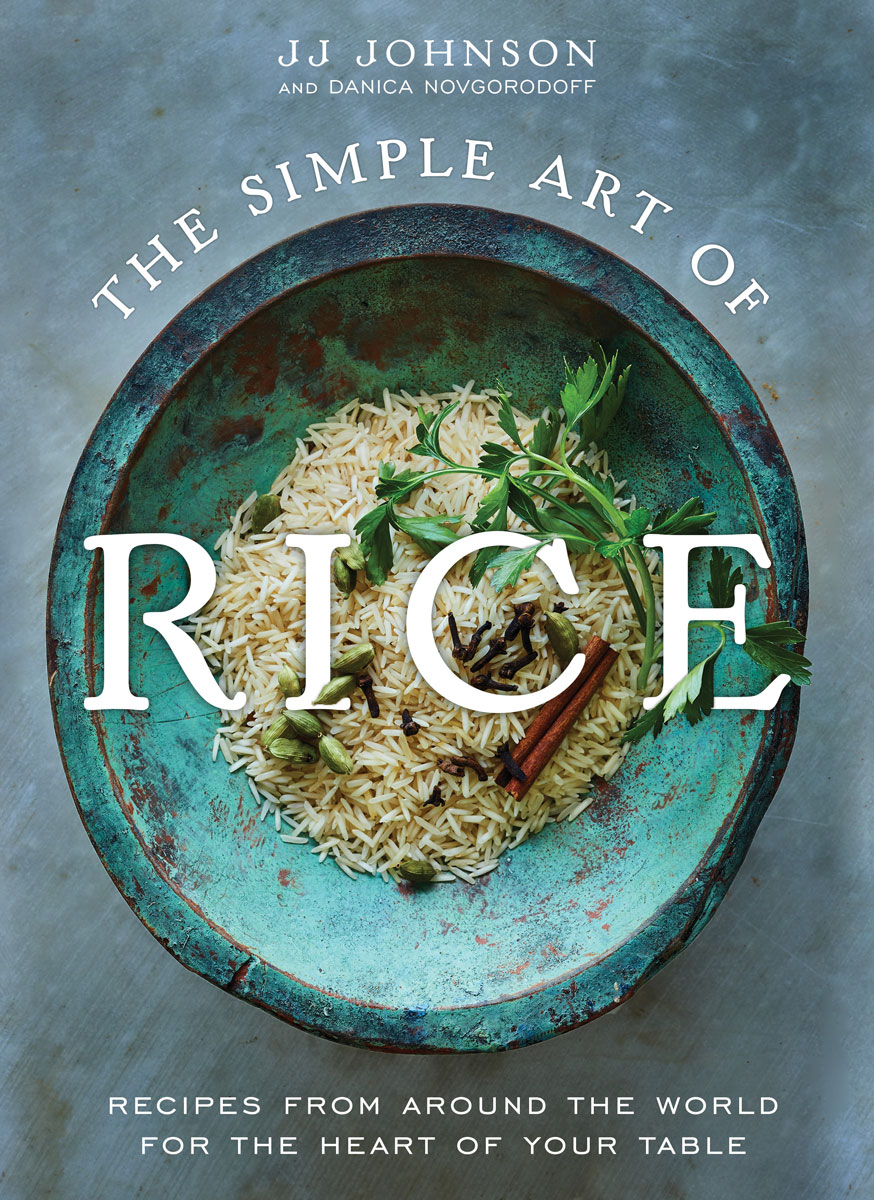
On being a man: Andrew Tate and Donald Trump are the worst possible examples

The current panic about masculinity and what it means to be a man, I have to say, is perhaps the dumbest problem ever discussed in the public arena. And we're in a very unhealthy place if any significant number of young men look to people like Donald Trump or Andrew Tate as role models.

It's certainly true that there's a traditional idea in American culture about what it means to be a man, and that this is backed wholeheartedly by my brethren evangelical church. You know what I mean: A man is supposed to protect, provide for and control his household. He is the general and he needs to be tough. To be honest, this is something I have simply never understood. If you want to be all those things, then go ahead and be them. But no one should need to check off items on a list in order to define themselves as a man.  

I must admit that as a man, I am different from that model. I certainly do some "manly" things. I drive an American-made pickup truck. I can fix things around the house, carry heavy objects and kill spiders on demand. I know the names of most tools that I own. On the other hand, my daughters, who label themselves as sexually fluid, gay and various other things I do not entirely understand, tell me I have suppressed my gayness. They may have a point: I obsessively watch "The Crown," I'm extremely neat, I appreciate women's fashion and I enjoy mopping up in the kitchen more than going on dates with women. I have no problem with any of that: I think mopping is plenty manly. And who doesn’t love "The Crown"?

Most men of my generation and older were never permitted to be fluid in their sexuality or their gender identity. We suppressed any and all feelings about that stuff. We signed up for the football team and slapped each other on the butt to express affection for our friends. Nowadays we just show this through our love of Tom Brady, or our obsession with MMA fighting and WWE wrestling. I'm not sure if you ever watch those things, but both MMA and WWE generally involve two men in their underwear putting each other in various suggestive positions, while an audience largely consisting of "straight" men cheer in approval.  

I drive an American-made pickup. I can fix things and kill spiders. But my daughters claim I'm suppressing my gayness, and maybe they have a point: I watch "The Crown," I'm obsessively neat and I appreciate women's fashion.

With all that in mind, maybe the current debate over masculinity makes a bit more sense. I've heard it preached loudly by Josh Hawley, the Republican senator from Missouri who went running out of the Capitol on Jan. 6 when he saw scary people coming. The world has heard too much of Donald Trump's phony tough talk, usually from his exclusive private club where he never has to encounter gross working-class people, unless they're cleaning his room or delivering his nachos.  

More recently I have heard the dumbest possible version of this masculine energy coming from Andrew Tate, a mysteriously popular podcaster and "manfluencer." Tate is so desperate to control the women in his life that he uses religion to do so. Even as a believing Christian, I must admit that if you want to convince a woman to submit to your control, religion can be a valuable weapon. First, Tate tried the Christian faith. Although the Bible has verses about submission, apparently that wasn't strong enough language for him. Now he has converted to Islam, I suppose because he feels that faith really places men over women in authority, value and strength.  His main point of view, as I perceive it, is that a man should have a car, a house, lots of money and a submissive woman, preferably posed naked on a bearskin rug.  

I am somewhat familiar with the teachings of Jesus, who is a prophet in the Islamic faith and the messiah of the Christian faith. But I must have missed or overlooked the part where Jesus says, "Love yourself, worship money, and own and control women." Maybe Tate can point me to those verses? After all my research on Andrew Tate, I have reached a clear conclusion: He is quite simply an idiot.

I've watched a couple of Tate's interviews and he strongly reminds me of a certain segment of the population that I've dealt with quite a bit: 16-year-old boys. Like him, they are full of anger, empty of thought, low on education and experience, completely self-absorbed and almost entirely driven by insecurity.  

I find that intriguing in a man like Tate. He's a talented athlete who has made lots of money and has clearly been with a lot of women, but none of those stereotypically masculine qualities make him feel secure in his masculinity. Is it that weak chin or his bald head or the fact that he avoids any real fight? I have seen him suggest that if women under the oppressive Taliban regime in Afghanistan want freedom, then feminists should go their to fight for that freedom. In his view, the oppression of women is only the responsibility of women. At any rate, don't see him willing to put his life on the line for any of his supposed beliefs. 


Want a daily wrap-up of all the news and commentary Salon has to offer? Subscribe to our morning newsletter, Crash Course.


To be fair, like Andrew Tate (and like Donald Trump too) I am losing my hair, I've never served in the military and I have never been in a fight. Who cares? I've always thought that only the most insecure men felt they needed to be seen as tough and strong. Truly tough and strong people, whatever their gender, never talk about it. They certainly feel no need to brag about it or show off constantly. 

As a former pastor in New England churches, I have come across many military veterans, and I don't remember any of them ever bragging about anything they did when they were fighting overseas. In fact, most preferred not to be recognized, although I tried to do that on the Sunday service leading into Veterans Day. I don't remember my grandfather, a World War II vet, ever discussing the war. He put his uniform away after he got home and it was never seen again. He went to work every day, took care of his family and never required anyone to see him as hard or tough. That's a man to me, a thousand times more than pretenders like Tate and Trump. Neither of them has any understanding of what a man is, and I find it deeply unfortunate that so many millions still listen to these phony, simple-minded idiots.  

My advice as a pastor, a man and a human being is simple: Stop trying so hard to be a man. Being a man is a lot like being a woman. Try to be honest, work hard, love your neighbor as yourself and have integrity. Stop worrying about how you are defined. Grow up; quit whining like a two-year-old or, more to the point, like Andrew Tate and Donald Trump. Whatever it means to be a real man, those guys do not represent it in any way, shape or form. 


Mike Pence calls it quits on presidential campaign due to no one really caring about him

Taking into account that the most exciting buzz about Mike Pence was in regards to a literal fly landing on his head during a debate back in 2020, it tracks that his campaign for a 2024 presidency would go out with a Zzzzzzzz.

On Saturday, Trump's former vice president called it and marked it during an appearance at the Republican Jewish Coalition in Las Vegas, saying that "after much prayer and deliberation" he has officially decided to suspend his campaign, effective today.

“We always knew this would be an uphill battle, but I have no regrets,” he said in closing.

According to AP News, Pence — the first major candidate to leave a race that has been dominated thus far by Trump — pulled the plug this early in the game after failing to gain sufficient support in the way of campaign donations and favorable poll numbers. At least we'll always have his strange campaign video where he pretended to pump gas

As of Saturday afternoon, Trump has yet to weigh-in on Pence taking a knee via a post to Truth Social, but it's a safe bet that it's coming.  

How old is too old to trick-or-treat? Leave the Halloween custom to the kids

If I had to recall when I went trick-or-treating for the very first time, I’d say it was probably in the second grade. I may not remember much from that night, but I do vividly remember my costume of choice — Spiderella, a sort-of spider witch who donned a weblike headpiece. I also remember abandoning my pumpkin basket for a hefty pillow case prior to embarking on a candy-filled excursion.

Ever since then, I’ve always gone trick-or-treating. But by the time I was around 13 or 14 years old, I called it quits on the Halloween tradition. It wasn’t a decision made out of force. My parents never forbade me from seeking a sugar high while in costume. Nor was it a decision made out of embarrassment. My friends never deemed trick-or-treating “uncool” or “dorky.” Rather, it was just a consequence of societal norms. Something about trick-or-treating as a teen, who was just a few years away from legal adulthood, felt…wrong. Even selfish, as if I was robbing little kids of their youth — and, of course, of valuable cavity-causing treats.

That’s why it came as a major surprise when I recently came across several online posts advocating for the practice of adult trick-or-treating. Basically, adults go out in costume and collect candy door-to-door. Some trick-or-treaters go out in groups while others prefer to go solo.

I’ll be honest, if an adult (or group of adults) showed up at my doorstep, shouting “trick-or-treat!” and eagerly waiting for candy to be given to them, I’d probably shut the door on them. Mainly because it’s a bit jarring and, frankly, unsettling. Even the thought of adults digging into a bowl of candy, choosing which ones are worth taking home and which ones aren’t is pretty bizarre to fathom.  

Perhaps that makes me sound judgmental and close-minded. And maybe I am indeed both those things. However, my stance on trick-or-treating is pretty firm: let the traditional Halloween custom be reserved just for the kids (yes, that includes teens too).

Naysayers argue that adult trick-or-treating doesn’t deserve all the hate it gets because it’s purely wholesome. After all, adults “are happy, dressed up, and going door to door for candy,” wrote one Redditor. So if they want to take part in a harmless activity that brings them joy, why stop them from doing so?

“At least they are not out doing drugs, committing crimes, etc,” they added. “Let the adults have fun too and let them gather candy as well. Adulting sucks and being able to ‘act childish’ should be allowed and not frowned upon.”

Many of us can agree that being an adult is pretty darn hard. And while getting old and enjoying more independence comes with its perks, it also comes with its fair share of downsides: more rules, responsibilities and expectations. When we enter adulthood, we essentially sign an unspoken contract that dictates what we can and can’t do, along with what is and isn’t acceptable. I don’t say that from a place of elitism. But some activities, which we once enjoyed as a child, are a bit too over-the-top for us to participate in as adults. Long gone are the days spent frolicking around at the local playground. Long gone are the days spent manning a lemonade stand amid the sweltering heat of summer. And long gone are the nights spent trick-or-treating.

We need your help to stay independent

In recent years, the concept of tapping into one's inner child has garnered popularity across social media. “Hashtags like #innerchildhealing and #innerchildlove have been viewed billions of times on TikTok, with some people sharing healing activities and others describing conversations with their younger selves,” wrote Time magazine’s Angela Haupt. The concept isn’t new. In fact, psychologist Carl Jung is credited with coining the term about 100 years ago, “and research has long suggested that the quality of our childhood relates to later-in-life outcomes,” Haupt added.

That being said, many adults never had the opportunity to go trick-or-treating amid their childhood. And now that they have more ownership over their lives, they’re seizing the opportunity to partake in a longstanding Halloween activity. It’s really hard to deny someone that sense of happiness. And it’s really hard to say that what they’re doing is wrong. However, the cold hard truth is that we can’t enjoy everything we weren’t able to experience as children. Some things are simply meant to be enjoyed in the past, like trick-or-treating.


Want more great food writing and recipes? Subscribe to Salon Food's newsletter, The Bite.


Although there’s no specific age restrictions nationally for trick-or-treating, a few cities do have certain guidelines on who can go out and seek candy from their neighbors. Since 2008, Belleville, Illinois, has placed a Halloween ordinance that requires trick-or-treaters to be 12 years of age or younger. Trick-or-treating outside of that age range is considered "Halloween solicitation" and could lead to a fine of up to $1,000, according to NBC 5 Chicago. Several other cities in the U.S., including ones in Virginia and Maryland also have similar age requirements.

Amid a ruthless pandemic, it became incredibly difficult to simply exist as a person. Those difficulties were arguably more pronounced for younger folks, who were stripped of the activities we once took for granted. Classrooms became fully virtual and basic social interactions either became virtual or were done so with barriers (i.e. masks) in place. Now that society has eased up on the COVID restrictions and living has become slightly less dangerous, it’s only fair that children be able to enjoy a longstanding Halloween tradition to its fullest. 

Trick-or-treating was always for the children. Let’s keep it that way.

The Jonathan Majors case: the latest celebrity trial variant where women lose

A famous actor with a recurring role in a Disney franchise. A celebrity domestic abuse case resulting in the arrests of both parties involved. A low-grade rumble on social media pitting a fandom against people who are intolerant of malicious behavior, including but not limited to physical assault, by privileged celebrities.

These are a few of the reasons Jonathan Majors’ legal drama has an unsettling familiarity about it. Majors, whose acclaimed performances in “Lovecraft Country” and “Creed III” made him a rising star in Hollywood, was charged with assault and aggravated harassment on March 25 related to an argument with his former girlfriend Grace Jabbari.

The complaint, as described by a Reuters report, alleges Majors struck Jabbari’s face with an open hand causing a laceration behind her ear, as well as grabbing her hand and neck, resulting in bruising.

Through his attorney Priya Chaudhry, Majors has refuted the allegations and, in June, filed a counter-complaint against Jabbari claiming she assaulted him.

He has since been dropped by his management and PR teams, scrubbed from a U.S. Army recruitment ad campaign, and removed from consideration for several films, including an Otis Redding biopic and an adaptation of the Walter Moseley novel “The Man in My Basement.” As of Friday, Disney also removed his bodybuilding film "Magazine Dreams," which was slated for a December release, from its schedule, reports Variety.

One company that hasn’t parted ways with him is Marvel.

Currently, Majors co-stars in the second season of Marvel’s “Loki” as a variant of Kang the Conqueror, the major villain introduced in Phase Five of the comic book franchise’s two-decade saga playing out in theatrical releases and its TV shows.

On Thursday, one day after his lawyer’s motion to dismiss the charges against him was rejected by a New York judge, “Loki” viewers watched the continuation of the role he debuted in the “Loki” first season finale, where he was introduced as He Who Remains.  

Season 2 brings him back as one of the endless variants of this supervillain, a genius stumblebum named Victor Timely who appears at the 1893 Chicago World’s Fair and has made a prototype of an invention that will eventually realign the multiverse.

LokiJonathan Majors in "Loki" Season 2 poster (Marvel Studios)Victor is weird, easily frightened, and eventually bullied by a clock-shaped AI, Miss Minutes, who has gone rogue. He cons a group of condescending racists after his tent presentation, only to return to his lab to discover Miss Minutes is crazily in love with him. This persona is one of many versions of the same being – a variant, as he’s called in the series, of an intergalactic dictator known as Kang the Conqueror.

Related to his performance outside of "Loki," critics and audiences have either loved his performance or deemed it "borderline unwatchable." Some of the more troubling takes, if predictable, relate the quality of one to his plausibility as an assault defendant.

"Where are the blogs and people that was complaining and accusing Jonathan Majors? Why isn’t this a big deal?" asks one X user. "His ex getting arrested for actually being the one doing the assaulting lol meanwhile he killed Mr Timely on Loki."

As Kang, Majors made his MCU theatrical debut in “Ant-Man and the Wasp: Quantumania,” which was first released in theaters nearly two months before Majors’ arrest. As more details about the case emerged, accompanied by other people sharing their negative experiences of working with Majors in the past, many people wondered whether Marvel would also distance itself from Majors.

But as of now he remains slated to play a central role in the MCU’s Phase Six movies “Avengers: The Kang Dynasty” and “Avengers: Secret Wars,” a source of bafflement and consternation. Season 2 of “Loki” was already shot by the time the allegations against Majors surfaced. The technology exists to digitally replace him, and the season could have been delayed. (See: Tig Notaro replacing Chris D’Elia in 2021’s “Army of the Dead” following sexual misconduct accusations involving underage girls.)

Those options were never in consideration. At the beginning of October, the show’s executive producer Kevin Wright told Variety that owing to the strength of the performances in “Loki,” this is the first Marvel series to never have any additional photography. “It felt hasty to do anything without knowing how all of this plays out,” Wright said.

The charges Majors’ is facing initially recalled the legal scandals surrounding Ezra Miller, including various assault allegations and a felony burglary charge. Warner and DC still released “The Flash” this spring. (It bombed spectacularly, which is neither here nor there.)

But Marvel has a more solid precedent bolstering its bet in the protracted case between Johnny Depp and Amber Heard extending back to their 2016 divorce, which involved Heard accusing Depp of domestic violence in police reports. Majors and Jabbari weren’t married, of course. More to the point, Majors' career ascent was only just beginning whereas Depp has enjoyed more than 30 years of fame and celebrity and has the multimillion-dollar net worth to prove it.

To this end, the public sympathy weighted in Depp’s favor came from a passionate multigenerational fandom, one buoyed by his playing Jack Sparrow in Disney’s lucrative “Pirates of the Caribbean” movies and pumped by his colorful villain in the “Fantastic Beasts” of "Harry Potter."

But Majors’ situation brings other social factors.

He’s a Black man being accused by a white woman of domestic abuse, a reliable accelerant that brings racists, sexists and domestic abuse denialists around the same campfire to cast aspersions on Jabbari’s credibility.

Ant-Man and the Wasp: QuantumaniaJonathan Majors in "Ant-Man and the Wasp: Quantumania" (Jay Maidment/Marvel)Along with this, he’s also a highly skilled actor who reportedly inspired Marvel’s executives to change the plans for the franchise’s future and build Phase Six around his performance of Kang. Fan culture has long nourished the sentiment that extraordinary talent should, in some cases, operate as a kind of holy water washing away the sins of a problematic artist.

We need your help to stay independent

This is why so many legendary performers and visual artists have gotten away with despicable behavior. Their violence, whether verbal or physical, was chalked up to eccentricity, something we all have to put up with to experience genius.

But as some of the people who claim to have experienced intolerable behavior by Majors point out, when that behavior comes at the cost of the physical and mental health of the people they work with, excusing it eventually becomes a matter of public endangerment. In 2018, a crew member on one of Depp’s films sued him for assault; a settlement agreement was reached before the matter went to court.

The producers of both '"Pirates of the Caribbean" and "Fantastic Beast" dropped Depp from their franchises after Heard’s allegations became public, and in a 2021 profile published in U.K.-based Times he lamented that Hollywood had boycotted him. He’s still working, mainly in Europe where other disgraced Hollywood luminaries including Kevin Spacey and Roman Polanski have found refuge.

But triumphing over Heard in their widely reported 2022 defamation suit fed the misogynist claim that Heard was a lying woman scorned as opposed to a domestic abuse survivor – which understandably proved detrimental to the psychological well-being of survivors who aren’t rich and famous. Their court case became a media feeding frenzy, kicking off social media attack campaigns that asymmetrically pummeled Heard.

We’d experience something similar later when Megan Thee Stallion’s assailant Tory Lanez went to trial last fall, bringing out celebrities and mudslingers masquerading as freelance journalists to attack her character, causing her substantial emotional and psychological distress.

A jury went on to find Lanez guilty of three felony charges related to injuring Megan Thee Stallion in 2020 by shooting at her feet. He was sentenced to 10 years in prison in August 2023. But Megan Thee Stallion is still ridiculed on social media.

Since Wright’s Variety interview was published in early October, the start date for Majors’ trial has been set to begin on Nov. 29. On the same Wednesday that a judge cleared the prosecution’s way to proceed, Jabbari was arrested on Wednesday at Manhattan’s 10th precinct on suspicion of misdemeanor assault and misdemeanor criminal mischief but subsequently released. In a Hollywood Reporter story published Thursday an outside expert described Majors’ counterclaim against Jabbari and subsequent arrest as a “publicity stunt” by the actor’s defense team.


Want a daily wrap-up of all the news and commentary Salon has to offer? Subscribe to our morning newsletter, Crash Course.


As we said: a mess, on many fronts. And it's set to get messier for the public witnessing this case unfold along with an accompanying flood of poisonous TikTok takes and insta-punditry on X, the social media platform formerly called Twitter.  

A jury may end up clearing Majors on these charges, making Marvel’s position seem prudent from a business perspective. For a public exhausted by the angry magpie chatter that always erupts around these trials, getting there will not be pleasant – and far less so for Jabbari and women in relationships they may view as akin to hers, who will see another survivor dragged through thorns in the public square.

Marvel executives know all of this, certainly. That may be why Kasra Farahani, who directed Majors in this season’s third episode of “Loki,” did both Majors and the studio a solid by telling Variety that. while he did not know of Majors’ arrest as the episode was being shot, “we had, honestly, such a great experience on the set. The cast was a wonderful ensemble. They all worked together super well. Tom would have an idea, Jonathan would have ideas, Owen is an idea machine. The experience on set was without any drama, and just a joy.”

There’s no reason to doubt Farahani’s take. As “Loki” proposes, everybody has behavioral variants.

Marijuana and Morpheus: Why does pausing cannabis use spark vivid dreams?

In a dream that has stuck with him long after waking, Eric was caught in the middle of a flood. As he helplessly watched the water rise around him, he felt an overwhelming sensation of panic. He tried to find his wife while dodging debris and fragmented pieces of glaciers around him, but he had the sinking sensation that he was experiencing his imminent demise. At last, he found her, and a deep calm washed over him. He no longer worried about the rising waters surrounding him — he was at peace with death.

Eric, who asked to be referred to by only his first name, attributes the vivid dream to not smoking marijuana, which he does habitually. In periods when he is smoking, he rarely remembers any of his dreams. But once he stops, the dreams come back more frequently and in more detail.

“When I'm not using, I will always remember more dreams,” Eric told Salon in an email. “Not every night, but definitely more often, and the memories are more vivid.”

This is a common phenomenon involved in marijuana cessation, said Dr. Ryan Vandrey, a professor in the department of psychiatry and behavioral sciences at John Hopkins School of Medicine. Many people, including Eric, use marijuana in part to help them fall asleep. While some evidence suggests that marijuana may help with the onset of sleep, there are still some unknowns around its impact on the quality of sleep.

What is known is that the main intoxicating ingredient in marijuana, THC, (tetrahydrocannabinol) is associated with decreases in rapid eye movement (REM) and increased slow wave sleep. However, another chemical in cannabis, CBD (cannabidiol) is associated with either increases or decreases in REM, depending on the dose. Many of these studies are in animals, not humans, and the ratio of THC to CBD in marijuana can differ significantly from product to product — not to mention the wealth of other sleep-impacting cannabinoids like CBN — so it's not easy to tease out what's really going on.

Regardless, REM is critical to the whole architecture of dreaming. Typically, if you wake up during this stage of sleep, you’ll be able to remember your dreams. It follows that reduced REM sleep leads to a lesser chance of remembering your dreams.

But when people using marijuana develop a tolerance to it — meaning they smoke regularly for weeks, months or even years — and then stop using it, the body can have withdrawal effects that behave opposite to typical use of the drug. That means, during the withdrawal period, people who stop using marijuana may take longer to fall asleep, have more REM sleep and have more memorable dreams that reemerge more intensely and vividly.

There could be some memory-impairing effect of THC that suppresses dream recall, which bounces back with a vengeance once people stop using it.

“As with most drugs, whatever the drug does, as soon as you take that drug away, there’s the opposite effect,” said Margaret Haney, Ph.D., the Director of the Cannabis Research Laboratory at Columbia Psychiatry. “The REM is no longer depressed, and it rebounds. We suspect that is why people report intense dreams because they're probably having more REM than the average person during their sleep.”

While most symptoms of cannabis withdrawal, including not being able to fall asleep, changes in appetite and anxiety, tend to go away within a few weeks, the effects on dreaming occur on the day people stop smoking and can last for up to 45 days.

In addition to changes in REM, Vandrey said there could also be some memory-impairing effect of THC that suppresses dream recall, which bounces back with a vengeance once people stop using it.

“When you stop using it, that goes away and the recollection of dreams is there and restored,” he told Salon in a phone interview. “For someone who's been a daily, habitual user for years and years, the sudden recall of dreams, especially in a vivid way, is shocking and very notable.”

Sleep medicine physicians typically only recommend sleep agents in the short term in order to avoid dependency. Long term use of marijuana can also develop a dependency that impacts sleep. It’s still unclear to what extent changes in REM and other aspects of sleep — in what is sometimes called “sleep architecture” — caused by THC use are affecting overall health.


Want more health and science stories in your inbox? Subscribe to Salon's weekly newsletter Lab Notes.


“That medication is only going to be effective until it's not, and we know that when people develop tolerance to the sleep-promoting effects of THC, that long-term heavy use can lead to this withdrawal effect,” Vandrey said. “That's the concern.”

Because of the challenges and restrictions on studying marijuana, which is a Schedule I substance still illegal in 27 states, it’s still unclear whether there’s certain dosing that enriches sleep or deteriorates it, how smoking versus eating edibles changes sleep or whether any effects can be mitigated with using combinations of THC and CBD) The fact that many CBD products on the market have small amounts of THC and vice versa further complicates things.  

Moreover, many studies examining cannabis and dreaming were done in the 1970s, and the cannabis landscape has changed drastically since then, said Dr. Timothy Roehrs, a psychiatry professor who studies the effects of drugs on sleep at Wayne State University. Far more research has been conducted on the effects of sleep on alcohol, which operates differently on the brain and body but does seem to reduce REM sleep in high doses and is thought to change sleep architecture.

We need your help to stay independent

THC is lipophilic, meaning it binds to fat molecules and can stay in the body for up to 30 days as it is slowly released in the blood stream. As Roehrs explained: “There are a lot of factors that can be affecting the amount of THC in your body at any given time.”

Although some marijuana brands might promote its effects on sleep, the jury’s still out on whether that’s true. Its effects on dreaming certainly indicate it’s disturbing at least some aspects of the process.

“People are making decisions about using it for medical reasons based on very, very, little data — and a whole lot of marketing,” Haney told Salon in a phone interview. “Right now, we don't have the information we have for every other medicine.”

Trump calls fraud trial judge “grossly incompetent” in latest Truth Social freak-out

A day after Judge Arthur Engoron ruled that Donald Trump's eldest daughter, Ivanka Trump, will testify in the civil trial centered on puffed-up financials within her family's business empire, Truth Social is yet again the sounding board for her father's grievances.

Ignoring continued warnings from judges to mind his manners on social media, and to refrain from making targeted attacks — lest he be hit with more fines, or even jail time — Trump railed against Engoron in a message rattled off on Saturday morning, calling him "grossly incompetent" and "a partisan political hack who totally disregards the Court of Appeals decisions against him."

"The New York State legal system has broken down completely, and everybody who is watching this Witch Hunt so agrees," the former president continues. "Hopefully, that will soon change. This CRAZED Judge ruled against me before the Trial even started, and said Mar-a-Lago is worth only $18,000,000. Other properties, likewise. This is a Biden Election Interference Scam! There were No Crimes & No Victims, and there is NO JURY ALLOWED. This Radical Trump Hater Must Be Taken Off This Case!"