Spring Sale: Get 1 Year, Save 58%

Celiac disease numbers keep going up — yet due to lack of funding, researchers still aren’t sure why

A few decades ago, the initialism “GF” on a menu could have easily been mistaken for “good food.” Nowadays, it is common knowledge that it stands for “gluten-free” — and now, the shorthand adorns restaurant menu items nationwide. This shift in understanding is partly due to the rise in celiac disease, an immune reaction to gluten that causes inflammation and atrophy in the intestines. Coupled with increased awareness and internet access, gluten-free living is no longer just for the health-conscious; rather, celiac disease is an exceedingly common condition whose numbers keep going up every year.

According to Dr. Peter Green, Director of the Celiac Disease Center at Columbia University, celiac disease has increased fivefold over the past 50 years, with the majority of that occurring in the 1990s. A meta-analysis study published in the American Journal of Gastroenterology in 2020 supports this claim, finding that celiac disease has been on the rise throughout the Western world, with higher incidence rates in females and children.

The reason for this increase in celiac disease continues to vex scientists. Yet there are some compelling theories as to what could be causing it.

“We don’t know why it increased,” Green said. “But there is evidence that it’s leveling off,” he said, pointing to some research from Finland.

Despite a common misconception, celiac disease isn’t a gastrointestinal disease, but an autoimmune one. People who have celiac disease have developed an immune reaction to gluten, which is a protein found in wheat, rye, barley and triticale.

Green said it is not a “typical” allergy, so to speak, because the response can be delayed.

“There’s a period of time in which an individual tolerates gluten and then for some reason, they develop this immune reaction which causes inflammation, the development of the antibodies, the inflammation in the intestine which causes atrophy,” Green said.

Notably, doctors say many people with celiac disease aren’t diagnosed properly. One issue is that physicians often don’t think about the diagnosis, partly because symptoms can vary. Indeed they include bloating, chronic diarrhea, constipation, gas, lactose intolerance, nausea, vomiting, or pain in the abdomen. A flare-up can physically manifest itself as an itchy rash on a person’s skin that can appear as clusters of bumps or blisters.

Green said that “failure of physicians” to think about the diagnosis, and a lack of knowledge of the testing and how a diagnosis should be made, is the primary cause of people not being diagnosed.

“There’s actually less gluten ingested by the public now than 100 years ago.”

“We often hear stories, people say, ‘I’ve been going to a doctor for a long time and then the doctor had a new person come into the practice and a new person diagnosed me,’ or ‘I’ve been seeing doctors and then I had to go to the emergency room for some reason and the doctor in the emergency room diagnosed by celiac disease,'” Green said. “We often see people who are told they have celiac disease based on very spurious information.”

However, with so many unknowns surrounding celiac disease — like how many people have it, and what’s causing the rise — misinformation follows. A search on Instagram with the hashtag #glutenfree yields over 41 million posts. Between holistic healers peddling untested remedies and pseudoscience around the effects of gluten, it can be hard to sift through the noise. Yet some in the medical and scientific community have been actively researching the possible reasons for this dramatic rise in autoimmune issues with ingesting wheat.

“One of the common myths out there is ‘we have genetically modified wheat,’ but there is no genetically modified wheat in the U.S.””

An oft-seen, unfounded rumor as to the cause of celiac disease has to do with industrial manipulation of grains.

“One of the common myths out there is ‘we have genetically modified wheat,'” Dr. Amy Burkhart, a physician and registered dietitian, told Salon. “But there is no genetically modified wheat in the U.S.”

Yet some patients insist something is different about American wheat. Both doctors said they’ve heard from patients with gluten sensitivities who reported that they have visited another country — say in Europe where food safety standards are more stringent — where they ate food with gluten didn’t have symptoms.

“I’ve heard this, and it’s a really interesting kind of phenomenon, but it’s important to say that this is people with gluten sensitivity — not with celiac disease. People with celiac disease should never go to Europe assuming that they can eat the gluten foods,” Burkhart said.

She noted that that those with a gluten sensitivity have a spectrum of gluten they can tolerate.

“People think maybe because the gluten content of wheat in Europe is lower — maybe it’s because the growing conditions are different and the climate that the wheat is grown in can affect how much gluten is in that food.”

Burkhart said there are more additives in food in America than in Europe, which could be part of the phenomenon. Green said he suspects that high-fructose corn syrup could be part of why people with gluten sensitivities feel better eating abroad.

“I have many patients who go to Europe and say ‘my stomach feels right,’ but we don’t know what that’s due to,” Green said. “Food is different in the United States, but part of that is always high fructose corn syrup that people add to food in the United States, as a replacement for sugar.”


Want more health and science stories in your inbox? Subscribe to Salon’s weekly newsletter The Vulgar Scientist.


But Green emphasized that wheat in America is almost certainly not the cause of the rise of celiac disease. He pointed to the fact that celiac disease is rising in countries like Australia and Canada, too. He said that theories that suggest grain has been altered or that gluten has changed over the last hundred years aren’t true either.

Celiac disease “has not received a large amount of research” monies, Green said. “It has been under-investigated.”

“There’s actually less gluten ingested by the public now than 100 years ago,” Green said. “Celiac disease has increased, and we don’t know why, but autoimmune diseases and allergies have also increased and we don’t know why.”

Burkhart said she does believe that an increase in public awareness of celiac disease has understandably played a role in the rise of celiac disease, in addition to an increase in testing and the rise of the internet as a forum for medical discussion.

“People talk, information is shared, and symptoms are discussed; this quickly spreads awareness of information, including information regarding celiac disease,” Burkhart said. “Patients began asking for testing and recommending it to friends; some of these patients, of course, have been diagnosed with celiac disease and they might not have otherwise thought of celiac disease or asked for testing if they hadn’t read about someone with similar symptoms.”

Despite the mystery surrounding celiac disease, Green said researchers struggle with a lack of funding that might help them get answers.

Celiac disease “has not received a large amount of research” monies, Green said. “It has been under-investigated… there are only a few individuals actually, all around the world who have demonstrated the mechanism of celiac disease.”

Hence, a few researchers are doing a lot of the legwork, Green said. “We understand how the gluten fragment interacts with the immune system and results in inflammation in the intestine… we have a very great amount of knowledge now, and that’s been developed by just a few people.”


“Judy herself is furious”: “Judy Blume Forever” directors on today’s book banning and moral panic

Some of Judy Blume’s books are nearly 50 years old, and they’re suddenly everywhere, as is the writer. The documentary about her life and work “Judy Blume Forever,” premiered at Sundance and is now streaming on Prime Video. At the same time, the feature film adaptation of her novel “Are You There God? It’s Me, Margaret” – starring Abby Ryder Fortson, Rachel McAdams and Kathy Bates – is arriving in theaters.

So too the climate of moral panic that dogged Blume’s work in the 1970s and ’80s has returned. The banningcensorship and criticism of children’s books has reached a fever pitch. Books have been stripped from the shelves. Libraries and writers alike have been threatened with persecution. According to TIME, which quoted a new report from PEN America, “book bans in the U.S. have reached their highest levels yet.”

That’s familiar territory for Blume, writer of more than 25 published novels and winner of a slew of awards, including the E.B. White Award from the American Academy of Arts and Letters and the Distinguished Contribution to American Letters Medal from the National Book Foundation. Blume has also been called “a Pied Piper leading kids down the wrong path,” as the Christian Science Monitor wrote in 1981, in a piece which also cited unnamed critics labeling her work as “‘pandering,’ ‘salacious,’ and ‘trashy.'” Why? Because Blume dared to write about menstruation, sex, death, masturbation, birth control, disability and emotions in books for children and teens. 

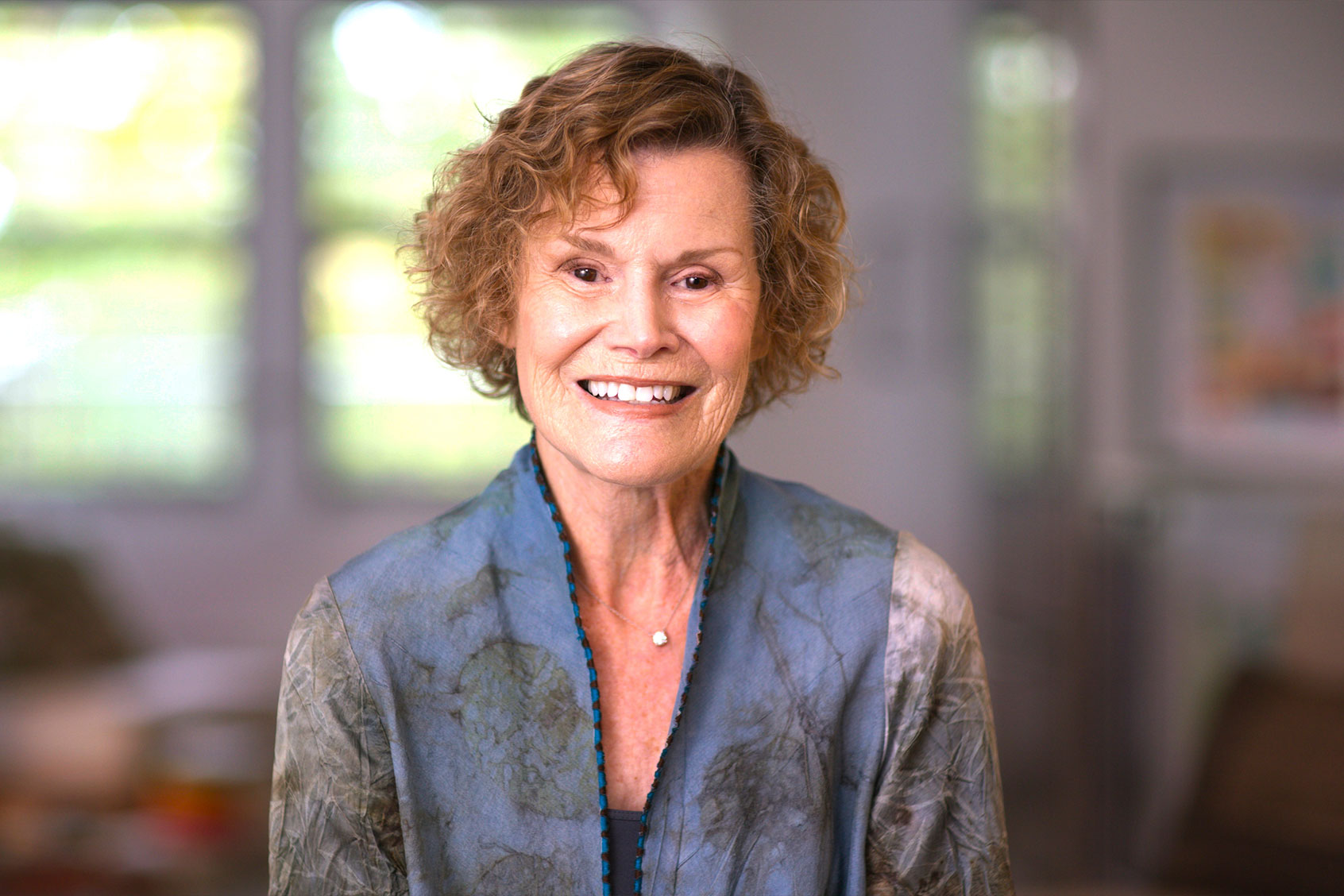
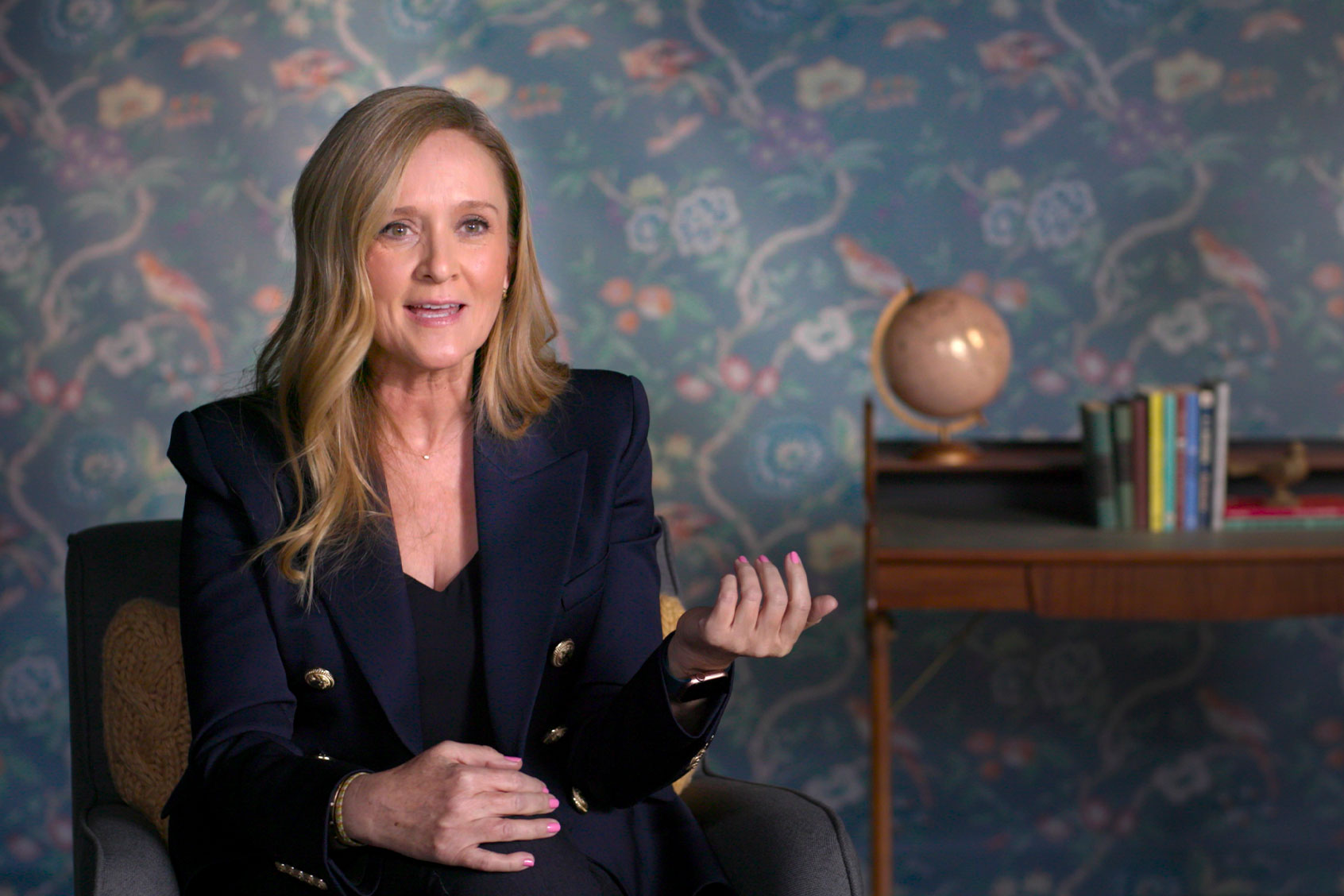
Judy Blume is back, baby. She never went away, but as the “Judy Blume Forever” documentary proves, her writing is still both controversial and beloved, and kids and adults alike need such candor and openness in stories more than ever. Salon spoke with Davina Pardo and Leah Wolchok, co-directors of “Judy Blume Forever,” which, along with vintage footage, features interviews with Blume herself, children from the ’70s and ’80s and children now, and celebrities from Molly Ringwald to Samantha Bee

This conversation has been lightly edited for length and clarity.

How did you first encounter Judy Blume’s books? Did you read them as children? Did you love them when you were little?

Davina Pardo: We will give you two very different answers. I did. I was a shy bookworm who loved reading Judy Blume books. I think they were among the ones that I went back to again and again until the paperbacks were sort of threadbare. I had a little spot at my house that I sat in. There was a chair next to a wall, and I was supposed to sit on the chair. But I sat in the space between the chair and the wall. It was just such a cozy place to be alone with a book. And I remember being there and reading Judy Blume books. I think there’s a sense that she was always there. I don’t know what the first book was, but her books were sort of always there with me and the most formative was probably “Are You There God? It’s Me, Margaret.” Because I was an early bloomer and got my period when I was 10, before my older sister got hers. And that book, going inside the head of a kid who wanted this thing that I was so ashamed of, was so incredibly comforting for me.

I wish I could go tell my 11-year-old self not to listen to all the people who said, ‘That book is not OK for you. It’s a dirty book. It’s a naughty book. Don’t read it.'”

Leah Wolchok: I was a late bloomer in every sense of the word. I did not get my period until I was 16, which was embarrassing in a whole different way. Because I was just waiting and waiting, like, what is wrong with my body that I am not getting my period? But also, I grew up in Jacksonville, Florida in the ’80s when Judy’s books were seen as taboo and where they were banned. I think I internalized a lot of the shame surrounding periods and puberty and girls’ bodies. Women’s bodily autonomy was something to be feared. And I listened to those messages. I wish I hadn’t, but I did. I was a good girl who just did what I was told.

I will tell you that we were passing around V.C. Andrews books, I devoured “Flowers in the Attic,” and that whole series. How was that OK, but reading a book about a girl who is wondering about her body and questioning religion and having certain feelings about her friends — why wasn’t that OK? I wish I could go tell my 11-year-old self not to listen to all the people who said, “That book is not OK for you. It’s a dirty book. It’s a naughty book. Don’t read it.” Because I think it would have really helped me as a flat-chested, shy, insecure 11-year-old to meet Margaret.

Judy Blume ForeverJudy Blume Forever (Courtesy of Prime Video)

That’s a good point. Because at that age, I was devouring Christopher Pike books, which were these murderous teen stories, and somehow that was OK, you’re right. But Judy Blume? Too much.

Wolchok: Empowerment was so frightening.

That’s the scariest thing of all for young kids, especially for girls to be doing, right? So that kind of leads into my next question, which is, why is now the time for a documentary on Judy Blume?

“You wish it weren’t quite so timely, because what’s going on in the United States right now is so upsetting, so disturbing.”

Pardo: When we started the film, we knew her work was still relevant. We knew it still resonated with kids. We started this film when Trump was president; we knew that bodily autonomy wasn’t something we could take for granted. And we knew that books were still being banned. But we had no idea how timely it would be. We had no idea how book banning would just explode in the way it has the last couple of years. It’s one of those things where you wish it weren’t quite so timely, because what’s going on in the United States right now is so upsetting, so disturbing. Judy herself is furious and has been speaking out a lot about it. But we hope that the film can help inspire people to kind of push back against what’s happening, even if it’s not happening in their community. It’s so important to get involved and push back because it’s happening in a much more political way than it ever has. It’s being legislated in very frightening ways across all levels of government.

Judy Blume ForeverJudy Blume Forever (Courtesy of Prime Video)

“They thought no one else in their life could understand them, but Judy Blume could.”

I was really surprised in the documentary to learn that Judy Blume is in her 80s — talking about her speaking up still, the fact that she still uses her voice in that way. I guess in my head she always seems timeless and very young — like how kids in the documentary think that she’s a kid too, like them. Why did you decide to include many of the letters that kids had written to her over the years? And some of the letter writers? And how did you decide which letter writers to feature?

Wolchok: I think we knew from the beginning that the letters will be a big part of the film. For a while, we used to think that the title of the film was going to be “Dear Judy” or “Dear Judy Blume” because the letters are such an important part of her story. They show that deep connection that she’s had to her readers and with her readers, not just through her words and her stories, but through her words and her personal letters that she wrote when she was responding to kids. In the ’80s, she was receiving 1,000 letters a month from kids who were pouring their hearts out to her about how they were feeling about their bodies, their friends, their parents. They were writing to her about eating disorders, depression, sexual abuse, suicidal thoughts, and she was really seen as their fairy godmother, their guardian angel in a way that they thought no one else in their life could understand them, but Judy Blume could.

She has this incredible memory for childhood.”

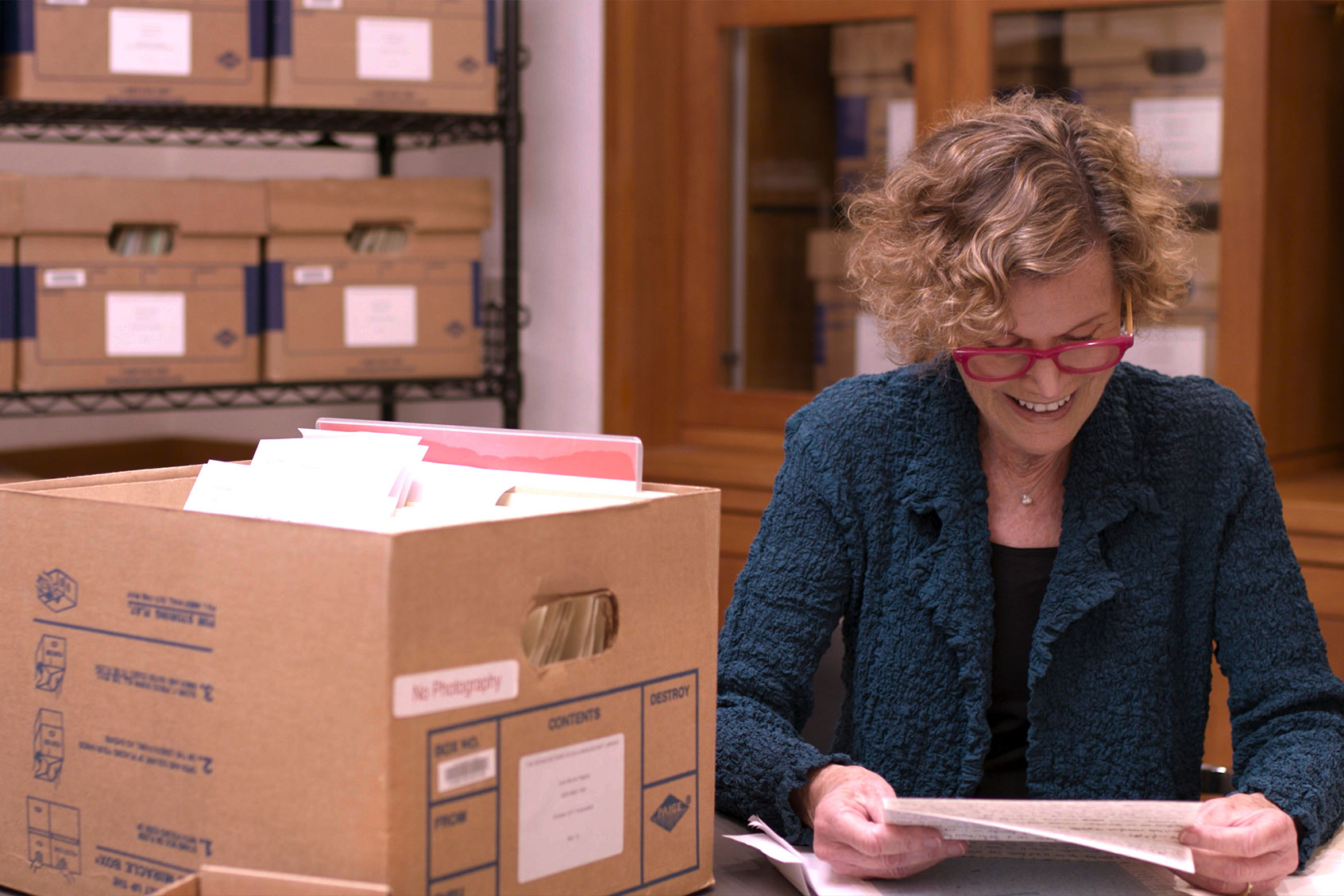
So we knew the letters, the words of the kids, and we really wanted the handwriting of some of those kids to be able to be included in the film. We asked Judy in one of our first meetings with her, if she would be willing to introduce us to any of the women who wrote to her when they were kids and who she still kept up with. All of the letters are now housed at the Beinecke Library at Yale. But they’re under very strict protections to protect the privacy of all the people who wrote to her so if you ever research her letters of the library, you’re not allowed to reach out to any of the letter writers. You have to ask Judy Blume for permission, and have her make the introduction. So she did, she introduced us to Laurie Kim and Karen Chilstrom, who were so open. And we feel really grateful for their openness and their honesty and sharing their stories in the film.

Judy Blume ForeverJudy Blume Forever (Courtesy of Prime Video)And it’s nice to see that she did stay in their lives. She did write back. I interviewed R.L. Stine, and he told me that any kid that hand writes him, he writes them back. Not just emails, but if they hand write or type a letter, he writes them back. That was amazing to me, that Judy Blume stayed in touch too; she went to the college graduation of a letter-writer. Why do you think she was able to make that connection with kids, both through her books and it sounds like in other ways as well? What about her makes kids relate to her so much?

Pardo: She has this incredible memory for childhood. We went to see her childhood home in New Jersey. And I remember her looking out the window of her childhood bedroom and going down the block and saying the first and last name of every single person in every single house. But not only does she remember those details, she remembers the feelings of being young and she remembers what it feels like to be misunderstood by an adult or to have a conflict with a friend or to feel like your body is doing all kinds of things that you don’t understand. She poured that, that empathy and that memory for childhood, into her books in a way that I think resonated so deeply with kids. She also created characters who screwed up, and that’s so important: for children to see you don’t have to be perfect. You’re not. You can think mean thoughts and wish your siblings didn’t exist, all that stuff. It stays with you. I think we’re not used to hearing that from adults.


Want a daily wrap-up of all the news and commentary Salon has to offer? Subscribe to our morning newsletter, Crash Course.


I loved how you interview some kids of today. And they also love her books and read her work as well. Were you surprised that kids right now still read these 40-year-old books?

There are things that are dated, but the feelings that kids have about their bodies, their families, their friends —those feelings don’t change.”

Wolchok: Well, we each have our own kids who we sort of fed the entire Judy Blume canon to so we knew. We watched our own kids experiencing Judy Blume now and seeing how resonant her words still are and how resonant her stories still are. We were really grateful that our co-producer, Emily’s mom is an English teacher at a middle school in Long Island and she’s the one who started this Judy Blume curriculum in her sixth grade classroom. We were able to go in and meet some of her students who had read some of the books that she had introduced to them as their teacher. 

I love that we include these contemporary middle schoolers. There’s that funny moment in the film where the girl is like, What do you call that [rotary] phone? Some of the technology in the book seems obsolete, obviously. The fact that gender representation in Judy’s books is pretty binary, down-the-line binary as our sex educator Rachel Lotus says in the film. And as Gabrielle Moss says in the film, none of the moms [in the books] work. There are things that are dated, but the feelings that kids have about their bodies, their families, their friends — those feelings don’t change. And I think it was so great to be able to talk to kids who feel connected to Judy’s characters still 50 years later.

“Judy Blume Forever” is now streaming on Prime Video. Watch a trailer via YouTube below:


Bye George! Here are the weak GOP seats that could let Dems win the House in ’24

Despite its early furor and spectacle, the Republican majority in the House of Representatives hangs by a thread. First-quarter fundraising results have led some analysts to give GOP incumbents a narrow edge against Democrats in 2024 congressional races, but that’s all dubious methodology based on ambiguous evidence. The “blue backlash” has already begun: Democrats, pouring millions into hyper-targeted races, aim to reconquer the House by demolishing the weakest MAGA extremists.

Technically, Democrats only need to flip five seats in. ’24 to regain a majority — but that’s assuming they can hold all the seats of their own vulnerable members, which isn’t a safe bet. For once, Democrats seem determined to go on the offensive, with a strategy that provides a thicker buffer against net losses and targets 31 seats from the party’s New York war room.

At least in the House, Republicans will be on the back foot this time around, defending narrowly won turf that has already started attracting the attention of potential opponents. (The Senate is a different story, and a lot less friendly to Democrats next year. It’s entirely possible that both houses of Congress will change hands.)

“With 18 Republicans sitting in districts carried by President Biden in 2020 and just five Democrats sitting in districts carried by Donald Trump, there are more than enough vulnerable GOP seats on the table to keep the House in play for Democrats,” wrote Cook Political Report’s Dave Wasserman in his February analysis. 

As Wasserman has repeatedly noted in recent months, gerrymandering has meant that most congressional districts are non-competitive, but an unpopular presidential candidate can definitely change that calculus. Ironically, if Republicans nominate Donald Trump that’s likely good news for Democrats in a number of suburban swing districts where many conservative and independent voters are tired of extremism and over the former president. Those voters could make Kevin McCarthy’s tenure as House speaker exceedingly brief.

Cases about congressional redistricting in North Carolina and Ohio are likely to be decided in the courts, and could well change the math — although no one’s exactly sure how. And while both the normal cyclical patterns of electoral politics and the GOP House’s remarkable record of getting exactly nothing done could well spell Democratic victory in 2024, the outlook in the Senate is very different — and much better for the GOP. 

Two overwhelmingly blue coastal states with a number of newly-elected and vulnerable Republicans, California and New York, may well be where Democrats take back control of the House. The pro-Democratic House Majority PAC announced last month it would throw $45 million at New York House seats, and the Democratic Congressional Campaign Committee has rolled out a new fund to specifically go after the five freshman Republicans in Biden districts who took campaign funds from the GOP’s Mr. Untouchable, Rep. George Santos of New York. Kevin McCarthy has already lined up a defense fund for New York Republicans, led by Rep. Elise Stefanik, a onetime moderate turned Trump loyalist. Stefanik’s upstate district is likely safe for the GOP, but this next guy’s seat isn’t.

Rep. George Santos (New York 3rd district)  — The already-notorious Long Island congressman with the largely fictional résumé and the nonexistent volleyball injuries (from a college he did not attend) heads their list of no-brainer losses. According to a Newsday/Siena College poll. 78% of the voters in Santos’ own district (including 71% of Republicans) said they want him to resign. In first-quarter FEC filings, Santos’ campaign is in the red, a truly bizarre thing to report: He claimed only $25,000 on hand, $715,000 in debt, just $5,000 raised and $8,000 refunded. The real kicker? As spotted by the New York Times, McCarthy’s New York defense fund is missing just one name: George Santos. Ouch. 

It’s just as likely, of course, that Santos will be defeated in the primary by GOP challenger and Air Force veteran Kellen Curry and won’t even get the chance to lose to a Democrat. But he’s unlikely to be in Congress for a second term. 

There are several other vulnerable names in the House GOP’s New York contingent, given the unexpected gains the party made last year, including  Reps. Brandon Williams, Nick LaLota, Anthony D’Esposito, Marc Molinaro and Mike Lawler. Ousting three or four of those five would go a long way toward making Rep. Hakeem Jeffries of Brooklyn the new speaker.

Rep. Lauren Boebert (Colorado 3rd district) — One of the biggest surprises of 2022 was something that didn’t quite happen, as the ultra-MAGA Colorado congresswoman with a passion for firearms and a colorful past was re-elected by a whisker, eventually beating Democrat Adam Frisch by about 600 votes, the closest congressional race anywhere in the country. Frisch plans to be back for a rematch, and according to Punchbowl News, Republicans now view Boebert as their most vulnerable incumbent next year.

Money won’t be her problem: Boebert brought in a formidable $764,000 in Q1 after a previous-cycle total of more than $7 million, but Frisch is also pulling in national money, garnering $500,000 within just three days of launching his 2024 bid, with donors checking in from all 50 states.

During the tensest moments of Boebert’s 2022 recount, she cast aspersions on the national GOP for a lack of support and blamed local-ticket Republicans for failing to drive turnout. But as CNN has reported, GOP sources actually warned Boebert to insulate herself against blue backlash in her district by burning more 11th-hour campaign cash in the 11th hour. This one’s gonna be expensive. 

Rep. John Duarte (California 13th district) 

Analysis from Cook Political Report, FairVote and others have all ranked Duarte’s seat — in California’s Central Valley, south of Sacramento — among the most vulnerable on the West Coast. Like Santos on the opposite coast, he eked out a victory with a margin of less than two percentage points in a purple district. Duarte has reported $586,000 raised in Q1, an example of how quickly the House GOP’s campaign cash-grab has taken off

They’ll need it DCCC Chair Rep. Suzan DelBene of Washington has said that Duarte’s district is among 13 California seats in Democrats’ battle plan. Other notable Golden State targets include Reps. Mike Garcia, Young Kim, Ken Calvert and Michelle Steel, all recently elected in swing districts where Dems clearly have a shot. Those four have also amassed intimidating Q1 totals, with Steel and Calvert each reporting $1 million or more.  


Want a daily wrap-up of all the news and commentary Salon has to offer? Subscribe to our morning newsletter, Crash Course.


Rep. Juan Ciscomani (Arizona 6th district) 

Ciscomani has obvious symbolic value to Republicans, as a Mexican immigrant newly elected to represent a border district east of Tucson. Democrats thought they could beat him in 2022 and think they can beat him now — but he was the top-raising GOP incumbent in Q1, ending the quarter with more than $1 million in his coffers.

Rep. David Schweikert, the Republican who represents Arizona’s 1st district in the northern suburbs of Phoenix, could be in an even trickier position, although he raised $400,000 in Q1. These two seats will be among the most important targets for the DCCC, which views the Grand Canyon State’s purple-to-blue shift of recent years as a critical ingredient in the national balance. Arizona will also see a hotly contested U.S. Senate race, with Rep. Ruben Gallego, a Democratic progressive, likely to challenge Democrat-turned-independent Sen. Kyrsten Sinema from the left, while Republicans vie to out-Trump each other on the right.  

Rep. Lori Chavez-DeRemer (Oregon 5th district) 

This one comes with a lot of bad feelings, since the only reason Chavez-DeRemer holds this seat southeast of Portland (at least arguably) is because the DCCC and House Majority PAC ghosted her Democratic opponent in the final weeks of the 2022 campaign. Progressive Democrat Jamie McLeod-Skinner had ousted centrist incumbent Rep. Kurt Schrader, and party bigwigs washed their hands of the race, teaming up instead with cryptocurrency un-billionaire Sam Bankman-Fried for a failed race in a different district. It was a deeply inglorious moment for the Democratic Party writ large. In political terms, this is a seat they can probably win back. In karmic terms, it should be first on their list

The Biden Administration vowed to be a leading voice on opioid settlements but has gone quiet

Early in President Joe Biden’s tenure, his administration promised to play a key role in ensuring opioid settlement funds went toward tackling the nation’s addiction crisis.

During the 2020 campaign, Biden had laid out a plan to appoint an “opioid crisis accountability coordinator” to support states in their lawsuits against companies accused of sparking the overdose epidemic. The following year, the White House convened a meeting about the soon-to-be finalized settlements, noted that the money could support drug policy priorities, and helped create a model law that states could adopt in anticipation of receiving funds.

But today, as billions of dollars actually start to flow and state and local leaders make crucial decisions on how to spend the more than $50 billion windfall to tackle this entrenched public health crisis, the federal government has gone mostly quiet.

No federal employee holds the title of opioid crisis accountability coordinator. The Office of National Drug Control Policy has not released public statements about the settlements in over a year. And the settlement funds are mentioned just twice in a 150-page national strategy to reduce drug trafficking and overdose deaths.

The federal government is not legally obligated to engage in the discussion. After all, states filed the lawsuits against companies that made, sold, or distributed opioid painkillers, including Johnson & Johnson, McKesson, and Walmart.

But there is an expectation that the federal government, including the nation’s leading agencies on mental health and addiction, should play a role. Public policy and health experts say a vacuum of federal leadership could lead to serious wasted opportunities and missteps in the use of the billions that will be paid out over nearly two decades — in what could be an unfortunate reprise of the multibillion-dollar 1998 settlement with tobacco companies.

“States get wide eyes when they get these huge pots of money,” said Bill Pierce, who served as spokesperson for the Department of Health and Human Services in the early 2000s. He was there when states began receiving cash from the tobacco settlement. Soon enough, money “starts to seep out to other areas that could be completely unrelated,” he said.

Back then, tobacco companies agreed to pay states billions annually for as long as they continued selling cigarettes. But there were no restrictions on the money’s use and much of it went to plugging state budget gaps, filling potholes, and even subsidizing tobacco farmers. Today, less than 3% of the annual payouts support anti-smoking programs.

Protecting the Opioid Cash

The opioid settlements have a built-in protection to address this concern. At least 85% of the money states receive must be spent on opioid-related expenses. But interpretations of qualifying expenses vary widely — often based on state politics. And oversight so far has been weak. The companies paying out the money are responsible for holding states to that threshold, but they’re unlikely to monitor closely, legal experts say.

Public vigilance could help, but most states have promised little to no public reporting, making it difficult to track their use of funds. KFF Health News is following how state and local governments use — or misuse — the cash through this year.

Some people hope the federal government can fill this gap in oversight.

“There are opportunities to incentivize” and support state and local governments “in the right direction,” said Michele Gilbert, a senior policy analyst with the think tank Bipartisan Policy Center. The Biden administration can issue official guidance, promote the findings of national research, or leverage the power of its purse strings. But so far, “there hasn’t been a lot of federal government action on the settlement.”

The Office of National Drug Control Policy told KFF Health News it regularly discusses the use of settlement dollars with governors, mayors, and other elected officials to ensure the money bolsters federal efforts already underway. Beating the opioid epidemic by disrupting drug trafficking and expanding access to treatment is one of the four pillars of Biden’s “unity agenda.”

“We know that expanding access to treatment for substance use disorder, lifesaving interventions like naloxone, and recovery support services will reduce the harms of addiction and the overdose epidemic,” said Rahul Gupta, director of national drug control policy.

That’s why the administration helped create a model law, as “a blueprint for states and communities on evidence-based ways to use opioid settlement funds,” he said. It’s been adopted, at least in part, by 11 state legislatures and is being considered by two others.

Lessons in Lax Oversight

But history suggests optional federal guidance may not be enough to ensure the money is used for its intended purpose.

Matthew Myers, president of the nonprofit Campaign for Tobacco-Free Kids, said it was a mistake for the federal government to take a back seat on the tobacco master settlement more than two decades ago.

Those lawsuits aimed, in part, to recover health care costs for smoking-related illnesses. Medicaid, a public insurance program for people with low incomes or disabilities, was a leading payer. Since Medicaid is jointly funded by the U.S. and state governments, federal authorities had a right to some of the settlement money.

States lobbied Congress to forgo that claim. Myers and other advocates asked legislators to do so only if they required states to spend at least 25% of the funds on anti-smoking efforts.

But Congress waived its right to the money unconditionally.

“It was a significant missed opportunity,” Myers said, “because it meant the federal government ended up having no say whatsoever in how the dollars were used.”

When it comes to the opioid settlements, it’s not clear if the federal government will try to claim repayment for Medicaid expenses linked to opioid addiction, which was estimated at $23 billion in 2019. Bruce Alexander, spokesperson for the Centers for Medicare & Medicaid Services, declined to answer specific questions and simply wrote, “CMS is currently reviewing the issue.”

The agency has tried to recoup costs in at least one case.

In 2019, CMS sent a letter to Oklahoma asking for part of the state’s $270 million settlement with Purdue Pharma, maker of OxyContin. According to Phil Bacharach, spokesperson for the Oklahoma attorney general’s office, the state eventually reached an agreement to keep all its Purdue settlement but later pay $390,000 to the federal agency from a separate settlement with opioid manufacturer Endo.

Some states, like Arkansas and Oregon, have planned for similar possibilities in their public documents about the opioid settlements. But as of mid-March, neither state had received federal requests for their share.

A Carrot-and-Stick Approach

Health policy experts suggest the Biden administration could use the possibility of claiming those funds as leverage: In return for allowing states to keep the cash, it could require all of it be spent on addressing the opioid crisis or be used only for treatments backed by research.

Alternatively, it could attach conditions to the more than $6 billion in federal grants that is funneled to states each year to address addiction.

“The federal government is spending a lot of money on opioids,” said Pierce, the former HHS spokesperson. “If they want, they could try and tie that money to requirements that settlement money be spent on opioids.”

In the 1970s, the Nixon administration used a similar tactic, with federal transportation funding as the carrot. Given the energy crisis at the time, the administration wanted states to reduce oil consumption by imposing a maximum speed limit of 55 mph. But it couldn’t mandate states to do so. Instead, Nixon signed a law saying states could receive federal highway funding only if they lowered speed limits. In the end, all states complied.

Myers, of the Campaign for Tobacco-Free Kids, put it this way: “States will only listen to the federal government if there’s a financial reason to do so.”

The federal government also can suggest the settlements be used to augment, not duplicate, existing federal funding, said Gilbert, of the Bipartisan Policy Center.

For instance, the money could support grassroots organizations that don’t have the time or ability to apply for federal grants, she said. Or it could go to groups that provide sterile syringes and other supplies to people using drugs, which can’t be purchased with taxpayer dollars.

The federal government can emphasize the more flexible options for spending the settlement money compared with federal funds, Gilbert said.

The Biden administration has been the first to embrace grassroots programs and has called for sustainable funding for “harm reduction services” in its national overdose prevention strategy. But it has stopped short of explicitly recommending settlement funds for this purpose.

Such initiatives are designed to minimize the risks of using drugs but are politically fraught, with critics saying they encourage illegal activity and supporters saying they save lives. Local opposition often takes the form of “not-in-my-backyard” or questions about why certain neighborhoods bear the brunt of addiction and homelessness concerns.

In such turf disputes, the lack of federal leadership is acutely felt, say some advocates.

For example, in New York, Democratic Gov. Kathy Hochul rejected a recommendation to use opioid settlement funds to support two overdose prevention centers — places where people can use illicit drugs under supervision. She cited “various state and federal laws” that make such sites illegal. A similar conversation is taking place in San Francisco, with the mayor citing a lack of federal legal clarity on the issue.

Federal authorities haven’t acted to shut down any sites so far but haven’t publicly supported them either. The Office of National Drug Control Policy declined to comment, given ongoing litigation in a related case in Philadelphia.

Some people question whether the Biden administration’s weighing in would have much impact, given the deep political divisions in some states where local officials are eager to flout federal guidance. Earlier this year, Republican leaders in Tennessee rejected millions of dollars in federal funding for HIV prevention to push back on federal support for transgender and abortion rights.

But Regina LaBelle, who was acting director of national drug control policy during Biden’s early years and now works for Georgetown University’s O’Neill Institute, said the federal government has managed to guide state policy on controversial topics before.

In 2015, shortly after intravenous drug use sparked a major HIV outbreak in Scott County, Indiana, the Centers for Disease Control and Prevention published a study showing other counties were similarly vulnerable. Kentucky, identified as a hot spot, went on to implement policies that dramatically increased the number of syringe service programs, which are known to reduce HIV transmission.

Today, the Biden administration could provide data to similarly inform local decisions, LaBelle said. A national dashboard launched late last year to show nonfatal overdoses is a start. And there is time to build on that, since the opioid settlements will be stretched out over many years, she added.

“We have an opportunity to see what’s the appropriate role of the federal government,” LaBelle said. “It’s not too late.”


This story can be republished for free (details).

KFF Health News is a national newsroom that produces in-depth journalism about health issues and is one of the core operating programs at KFF—an independent source of health policy research, polling, and journalism. Learn more about KFF.

Subscribe to KFF Health News’ free Morning Briefing.

“Oprah, you need to try this”: Chef Kenny Gilbert on fusion food and his famous fried chicken

When I read cookbooks — for both work and pleasure — I tend to keep notes: about recipes I want to make, new techniques I plan on trying and, sometimes, like in the case of Kenny Gilbert’s “Southern Cooking, Global Flavors,” how the writing makes me feel. 

“Each recipe is like a hug,” I scribbled, flipping back and forth between the meatloaf and macaroni and cheese chapters. I’m not really surprised. You may remember, as I did,  Gilbert’s warm, gregarious personality from the seventh season of “Top Chef.”  

And like he did on the series, Gilbert uses this book as an opportunity to reimagine iconic dishes of the American South, like fried chicken and biscuits, fish and grits, and ribs and slaw, using global flavors. For instance, the “meatloaf and mashed potatoes” chapter includes recipes for: bacon-wrapped meatloaf with sour cream mashed potatoes; shawarma-spiced lamb meatloaf with feta and kalamata mashed potatoes; turkey meatloaf with moroccan spices and cashew-cauliflower mash; Italian meatloaf with white truffle and mascarpone mashed potatoes

When speaking with Gilbert about “Southern Cooking, Global Flavors,” which was released this week, it turned out that my hug analogy wasn’t far off from his intention with this cookbook. 

“If I’m talking to one of my best friends who’s Italian and we’re talking food, and I want to cook for him, I want him to have something that’s like that warm hug from grandma — but his grandma,” Gilbert explained. That said, he loves to mash it up with the foods he was raised on and still serves in award-winning restaurant Silkie’s Chicken and Champagne Bar in Jacksonville, Florida. 

He continued: “I wanted to be able to share my experiences through common foods people can relate to.”

Gilbert spoke with Salon Food about the concept of “fusion cuisine,” beating Bobby Flay and the first time Oprah Winfrey tried his fried chicken. 

This interview has been lightly edited and condensed for clarity. 

What can people expect when they use your cookbook?

What they can expect is to get some very basic southern preparations dishes that speak to my heart and my upbringing growing up and whatnot. Each chapter will take you on a journey through my lens of my experiences with other cultures through friends, family, coworkers and just breaking bread and talking about, “Hey, what did you eat when you were growing up?” It literally came about like that. I wanted to be able to share my experiences through common foods people can relate to.

I noticed that your mom pops up a lot in the cookbook from the introduction to the meatloaf recipe. Can you talk about your relationship with her, how she played a role in your cooking and how she framed cooking for you as a boy?

I was very fortunate that my mom, she had two boys, me and my brother Kirk, who’s also a chef, she nurtured us. Anything that she saw that we actually had an interest in, she nurtured that talent. If we wanted to play a sport, like swimming, she’s like, “Okay, cool. You’re going to swim as long as you want to do it.” 

“Each chapter will take you on a journey through my lens of my experiences with other cultures through friends, family, coworkers and just breaking bread.”

In terms of cooking, I was always by her side as she was walking around the house and when she was cooking meals. I was right there paying attention and she was a very warm and friendly person but very firm at the same time. She raised two boys very fairly and I credit my whole career really to her nurturing ability to teach. She taught me how to scramble my first egg at three years old and then she also taught me how to clean and to pay attention to safety and things like that. My whole career has really been shaped around her starting that time with me back when I was a little boy.

In the introduction you said, “Every American has their own food culture at home.” What are some examples from your childhood that come to mind that were specific to your home food culture?

My mom is from the South and my dad’s from the Midwest, so in our household there were two different perspectives on food and the idea of what we should be eating during different meal periods. Not really realizing what was going on, all of a sudden we’re having cornbread dressing and maybe this dressing had oysters in it and then all of a sudden we have a shrimp perloo rice dish. I started to realize as I talked to her more about food that it was all based on, “Oh, well this is what I had when I was growing up as a little girl.”

Southern Cooking Global FlavorsSouthern Cooking Global Flavors (Photo by Kristen Penoyer)Then my dad, very well traveled, was more meat, potatoes, and also would try different things from other ethnicities and cultures around the city by trying different restaurants. So growing up in Cleveland, Ohio, suburb of Euclid, actually, we had these neighborhood pockets. I was a swimmer as a kid, and being on a swim team, and having friends and just spending the night over at a friend’s house, the friend might have been a white kid that was Italian. Me opening up the refrigerator and seeing what was in their refrigerator was way different than what was in mine. Throughout growing up, I associated what my friends looked like and what their cultural influence was related to food. That’s how the dots connected for me.

Do you consider the dishes that you’ve created to be fusion cuisine? How do you classify them?

As I mentioned, my mom was from the South and she raised me up in Ohio, and so to be up there, she was craving some things that are southern, but her ingredients around here were very Midwestern. She wasn’t able to get grouper, and mahi-mahi or a local Mayport shrimp that’s very regional to the South, so she adapted the flavors that she wanted to enjoy based on the ingredients that were around there. I grew eating a lot of say fried perch or things like that and so if she wanted to have fried green tomatoes and fish with grits and whatever, it was like, “Oh, okay, we’re going to get some perch or we’re going to get some pike.” That’s what I had. Whereas if I’m down in the South and say a person is a transplant from New York, and Northern Italian American, but all of a sudden they figure they had a love for biscuits, but they wanted flavors that they can relate to other than that basic buttermilk biscuit.

“Mr. Graham had the fried chicken and he took a bite of it and said, ‘Oh no, Oprah, you need to try this.'”

I love chicken parmesan, but I love a biscuit. Why can’t I make a biscuit that has a flavors of the Parmesan, and garlic, and everything that it has? So that’s how I did it. I more so looked at who we are as people and families, and this whole melting pot of families, but we’re embedded in the South. If you’re craving oxtails and you love the basic oxtails, but maybe your husband, or wife or whoever is Filipino and they love oxtails too but they want it to have some flavors that they grew up having, why can’t we make those oxtails like an adobo style versus a classic Southern or a Guyanese pepperpot style? So that’s how it all came about. 

I really wanted to have some of those common dishes where they could be a flex. You could twist it, and actually take a couple of these ingredients out, and put these other ingredients in. I wanted to show the diversity of the dishes and the commonality of it.

There were a couple dishes that I wanted to highlight, partially just because I’ve already put them on my menu. There’s this step in your meatloaf and mashed potatoes that I thought is noteworthy to home cooks where you actually blend the vegetables. Could you talk me through how you came to do that and what it offers the dish in terms of texture and flavor?

The classic meatloaf, a lot of times you have this ground beef and then it’s like “Oh, let’s take some peppers, onions and maybe celery and throw it all in, and mix it in, and then you bake it off.” And then when this meatloaf is baked off, and you put a glaze of ketchup on it and you slice it, then you see these chunks of peppers and onions in there. I never really liked that. I felt like I was being cheated with the vegetables throughout the bite. So I said, “Well, why not take these vegetables and puree it up and then fold it in?” That way every bite, I’m getting equally balanced flavors with purpose. If I wanted to put celery and garlic, and so on, so forth in there, then I want to taste it through every bite with the meat versus having hints of different chunks.

Southern Cooking Global FlavorsSouthern Cooking Global Flavors (Photo by Kristen Penoyer)

So it was one, because I didn’t like the chunks in it, two, in a restaurant setting, when you’re cutting up a bunch of vegetables, it’s a lot faster also for me to take my trinity, my pepper, celery, and onions, puree that with some garlic and some herbs, have that base, and then say, okay, cool. I need to have eggs in here too. I got to puree all that up together and then add it in. And I’m not having to sit there, and slice and dice all these vegetables up. I can cut it up in bigger chunks, wash the vegetable really nice, puree it up, and then add it. So it was two part, one, I didn’t like the individual chunks, and then two, it made it more streamlined and faster to execute larger batches of products.

That ties into the next recipe that I wanted to talk about. It’s the miso honey-glazed salmon with bamboo rice grits. I feel like this is a good example of a dish that, when I saw it, I’m like “Oh, this feels very fancy,” but then I started reading and I’m like, “Oh, this is something that’s actually totally doable on a weeknight as well.” Walk me through the development of that dish. 

I’m been fortunate that I travel abroad, cook a lot of things, eaten a lot of different things, and at one point I was in Japan, I have a lot of friends that are Chinese-American and whatnot, and I love the idea of say the rice porridge or kanji or rice grits. It’s almost the same thing. It’s this neutral base that you can place something on and that actually has more flavor to enhance. I felt like the bamboo rice grits would be something, again, unique to get those kind of rice, but the technique of cooking it is very simple. If you can make a pot of grits, you can make this dish. It’s very, very easy. You’re not worrying about the rice being cooked perfect, you want the rice to break down, have some texture, but have a very creamy finish to it.

“You could twist it, and actually take a couple of these ingredients out, and put these other ingredients in.”

As far as the fish, if you go to a Nobu or something like that where the original miso cod was or sablefish was introduced, I wanted to have something that I think that the home cook could actually execute very easily that has good flavors, a very simple recipe, a matter just mixing up some miso and honey, a little sake, season it up, and let the fish marinate in that. You want to actually have a fatty fish, so salmon being very common for a lot of times people will buy and have it home, I thought it would be a very good pairing that would be relatable if you wanted to go in more of a Asian direction in terms of flavor profiles.

What would be some good novice recipes from your book?

I taught a lot of cooking classes throughout my career. I was with the Ritz-Carlton for a long time, and I used to teach a cooking class program the second Tuesday and Wednesday of the month. I did it for years, and years, and years, so for me to finally be able to write a cookbook, I felt like I’ve already done it a million times by the amount of recipes I’ve already created for these classes and curriculum, but that’s a hard question. 

I guess a question for me would be what steps are they at? Are they super, super entry-level basic? I think that the drop biscuits and the fried chicken surprisingly is a good chapter, because it teaches you how to make a good drop biscuit. It’s teaching you how to bake and fry, two very basic techniques, and it walks you through the process of how you can season the chicken, how you can dredge the chicken. And then also how you can take these basic ingredients of self-rising flour, and some buttermilk, and melted butter, and mine has a little bit more ingredients in there, but it’ll show you how to make something that is very simple. If you like that Red Lobster cheesy, soft, buttery biscuit, that’s a drop style biscuit. I wanted to introduce that because a lot of people are doing laminated doughs or laminated biscuits that are layered with the chilled butter and everything, which is great, but I figured that this would be a good way to start and then also evolve to other flavor profiles.

That’s a good chapter to start because sometimes people are intimidated by a biscuit and they’re intimidated by fried chicken. I did a cooking class during COVID for a couple, the husband paid for me to do a Zoom cooking class and I didn’t realize where they were from. All of a sudden we got on the call, and she’s Indian and he’s English. They were in London. We were literally doing a Zoom call across the world. It was funny because I was showing them how to do my mom’s fried chicken, and so I had some basic spices that we take for granted that are here. It was like, “Oh, I’ll give you some lemon pepper. Here’s some Lawry’s Seasoned Salt, stuff like that.” “Well, we don’t have those spices here specifically.”

Then when I sized them up I was like, “Well, do you have any Madras curry powder? Do you have any garam masala? Do you have any fenugreek? Do you have any ground cumin or ground coriander?” I already assumed just by looking at the family dynamic what their core basics were going to be in their pantry because of the ethnicity, the cultural background. And sure enough, she had all those spices. I said, “Okay, I’m going to show you the technique of how to cook the fried chicken, but the flavors are going to be identifiable because of the spices you have in your pantry.” It went off without a hitch. That’s how this whole thing came about as well, so he bought that for her because she was a decent cook, but never did fried chicken or biscuits. And I said, “Well, this is a good recipe. This drop biscuit is very easy and the fried chicken is easy as well.”

I was talking with one of my producers this morning and we were joking that we were going to meal prep for next week, but we were just going to use all of your mac and cheese recipes, and have a a week of mac and cheese. How did you take something that everybody thinks that they have, this is the perfect mac and cheese recipe, and then start to riff on that? 

“I wanted to be able to share my experiences through common foods people can relate to.”

The way my brain works is just whatever I’m thinking about. If I’m talking to one of my best friends who’s Italian and we’re talking food, and I want to cook for him, and I want him to have something that’s like that warm hug from grandma, but his grandma, but also from my side of things in terms of this would make a good mac and cheese, and some chicken or whatever. I transport myself into that realm and then I think about all the core basics of flavor profiles, whether it’s the cheese, whether it’s the type of pasta that would be more relatable, the chicken that’s going with it, how am I going to season that to compliment. And so that’s how that all came about, I wanted something that would be unique. Because if you’re a mac and cheese lover, you’re going to be like, “Oh cool, wait a minute, there’s more than one variation.”

I wanted to be able to show, “Hey, this is my basic foundation, how I make mac and cheese.” And then now, you can take these cheeses out, add these cheeses in, and then now you have a different experience. And you can pair that up with different proteins, or vegetables, or whatever. So that was a fun chapter because I knew that people would definitely vibe off of that.

Southern Cooking Global FlavorsSouthern Cooking Global Flavors (Photo by Kristen Penoyer)

You mentioned in your cookbook that your fried chicken recipe is tailored to the palate of Oprah Winfrey. Can you tell me a little bit more about that?

My original fried chicken I learned how to make with my mom, she would take chicken, wash it in the sink with some cold water, and then season it up, have a cast iron skillet going, flick a little flour in there to see that it’s bubbling, and then put the flour on the chicken, let it get a little tacky, flour one more time, fry. Rotate, rotate, rotate. Fast-forward to me having the opportunity to cook for Oprah Winfrey. A good friend of mine was her personal chef for years, and I’ve been cooking for her since 2014.

The first time I had the opportunity to cook fried chicken for her was leading into the new year. It was actually New Year’s of 2015. We were doing a classic Southern New Year’s Day dinner, and we had fried chicken, we had collard greens, black-eyed peas and all that. It was my first time frying chicken for her. Art Smith, who was her previous personal chef, had the best fried chicken that she ever had for a long time, and so we wanted to try to beat that impression. That was the goal.

We want you to say we love your fried chicken. I wanted to hear from her mouth. After a prayer over the table, she was like, “Hey, Stedman, you need to finish off that prayer a little bit faster. I hear that chicken crackling in the back.” And when we were done, we pulled the chicken, and we head out there on a beautiful display. Kirby was the first person to eat a bite of fried chicken, Gayle’s daughter, and she was like, “Oh my gosh.” And everyone was like, “What happened?” And she was like, “This has to be the best fried chicken I’ve ever had in my life.” And then Ms. Winfrey was like, “Oh, is it better than Art’s?” And I had a beautiful smoked ham, and I was carving the ham and whatnot, and Kirby was like, “Oh yeah.” And ironically, Art and I did a beautiful event weeks prior, and so it was fresh in everyone’s mind. And so Mr. Graham had the fried chicken and he took a bite of it and said, “Oh no, Oprah, you need to try this fried chicken.” 

“Being that I grew up cooking with a lot of spices, that was my first love.”

She’s just an amazing hostess, and she’s waiting for everyone to go through this beautiful buffet we had and start eating before she went in, and she then got a piece of fried chicken thigh, and then she sat down. She had a little bit of peas and greens. And I said, “Ms. Winfrey, would you like any hot sauce?” And she was like, “If it needs it, I’ll grab it.” And I was like, “Aw,” because I made all these homemade hot sauces with peppers from her garden. She took a bite and she loved it, and she looked at me, she said, “Kenny, you did all this, right?” And I said, “Yes, ma’am.” And she said, “All my years, 60 years I’ve been on this earth, this has to be one of the best Southern meals I’ve ever had in my life. Thank you very much for sharing your passion with us.” Everyone clapped and everything. And then from that point on, every time there is an event, usually she would ask me to come out and do fried chicken and biscuits and stuff like that. So for the last eight, nine years now, that’s what’s been happening. 

A few years ago now, you beat Bobby Flay on his television show “Beat Bobby Flay,” and I was curious if you could talk a little bit about on that day, what do you think gave you the edge? 

Cooking competitively is great, but regardless who the judges are, it’s subjective. They’re going to get the food in front of them, and then based on how they like to eat and the idea that dish will speak to them. Usually because they’re going to select some judges that are very well traveled, and have great palate, and are probably restaurateurs, they’re used to eating for a living. They get it. 

That particular day, I like to say a lot of times that Bobby is such a talented chef and the ego of the chef to be able to say, “Hey, you know what? Come on my show. Try to beat me with your recipe.” Because that’s how the show is set up, you have to beat another chef from an ingredient that he basically shares. So, “Hey, here’s okra. You guys duke it out on okra and then whoever wins, tell me what your best dish is, and I’m going to beat you at that as well.” That New York ego, swag is special. 

For me to be able to take a dish that I feel like I make very well, which was chicken and dumplings, that I have a personal connection to, it’s been a lot different than his connection to it. Has he had it? Yes. Has he eaten it since he was five, six years old every pre-Thanksgiving for 12, 13 years? Probably not. So I have a edge on that, so for me, to be able to put together something that I thought that everyone could identify to, that had a little twist, that was flavorful, I felt like I had more of an edge than me competing against an Iron Chef in that particular situation.

I would love to be able to compete against him in an Iron Chef setting where it’s truly like, “Hey, here’s ingredients,” it’s an even playing field, because I felt like I had an edge on him. And again, when you’re cooking against an Iron Chef, that’s the thing, these guys are more experienced, they’ve been cooking a little bit longer than you have, they’ve got a lot more accolades. As many accolades as I have, that particular episode, I was the last episode of the season for him. So he was already super warmed up. See, people don’t think about that. He’d already competed eight episodes, I was the ninth episode or something like that. So over the course of a couple weeks, he’s already in his kitchen that they set up based on how he likes to cook, and he’s already cooked against seven or eight other chefs. So he has an advantage. You’re coming into his house, cooking your dish, but he’s in his house. He’s on TV all the time, he’s cooking all the time.

And competitive cooking all the time which, like you said, is such a different thing. Can you talk about that? How closely does the type of cooking you see on TV resemble the kind of cooking that you do in a restaurant? 

It’s actually pretty fair in a sense and pretty close to a restaurant because all your cooking equipment, they have you locked in. It’s like here, you already have a pot of water boiling, you already have a little fryer already at 350, your oven’s already set at 350, you have plenty of burners. You have every core ingredient you can think of for dry goods, produce, so your common pantry items is amazing. And it’s just as amazing for the chef that you’re cooking against. These are the best ingredients. If you grab a tomato, it’s going to be sweet, it’s going to be beautiful. You grab kohlrabi or a mushroom, it’s going to be the best. If you need truffles, they’re there. So you have even playing fields and it’s very, very close.

For some kitchens, more likely you’re going to have more in this competitive kitchen setting than you are in your kitchen, because if your restaurant is set up to be Southern from Charleston, and you might be a Sean Brock type, you’re not cooking with anything that is not in this particular vicinity because you’re really, really farm-to-table and artisanal, when you see something that’s like oh man, I’m not used to getting this type of mushroom here or whatever, that could trip you up a little bit. At the end of the day, they’re some of the best ingredients out there, and that’s the great part about it. And your equipment, you have everything you need. You might have anti-griddles over here, you’re going to have a Carpigiani ice cream machine over here, you’re going to have a circulator already set. You’re got liquid nitrogen around the corner. You’re going to have a lot of the bells and whistles.

Like we’ve talked about, everybody has a different culture that they cook from at home, so what are certain things that you make sure that you have stocked in your pantry? 

So spice. Being that I grew up cooking with a lot of spices, that was my first love. Always a plethora of spices. And usually in the individual form versus blend. So I’m always going to have granulated garlic, granulated onion, a nice salt, probably a couple different types of salt, whether it’s a kosher salt, whether it’s a pink Himalayan salt, a really good black pepper, like a Tellicherry black peppercorns that you can grind fresh. I don’t mind dry herbs, so sometimes dry parsley or dry dill, dry oregano, not necessarily dry basil.

Olive oil, a good olive oil, like a pomace, so not necessarily extra virgin, something that I can cook with. A neutral oil, like a safflower oil. I’ve been using a lot of avocado oil or I buy a oil that’s associated with the culture that I’m going to be cooking with so it’s all relatable. And then vinegars, usually apple cider vinegar, balsamic or white vinegar. Self-rising flour, usually, sugar, granulated white sugar, brown sugar, some kind of syrup. Usually cane syrup because I grew up eating an ALAGA cane syrup with my mom, usually molasses, honey. So I usually have two or three of every kind of section there.

My pantry is pretty vast, but those are the core. If I have that, and then I just need to go to the store and buy fresh produce and some proteins, I usually even go from there. Pasta, rice. I prefer jasmine rice. Usually always some grits, nice stone-ground. I might even have some quick grits in there just to cheat if I want to have a nostalgic cooking with my mom, really quick grit versus the one that takes 30 minutes.

Salon Food writes about stuff we think you’ll like. While our editorial team independently selected these products, Salon has affiliate partnerships, so making a purchase through our links may earn us a commission. 

Bizarre and gruesome cattle deaths leave Texas authorities stumped

Texas authorities are investigating the gruesome deaths of six cattle discovered this week along Texas State Highway and are gathering evidence to determine what, or who, removed their tongues, genitalia and anuses.

According to NBC, the bodies were dumped along the highway in three counties — Madison, Brazos and Robertson — and despite their injuries, no blood was detected at the scenes.

Per NBC’s reporting, each of the cattle originated from a different pasture and one of them was a yearling.

The Madison County Sheriff’s Office described one particular scene in a statement saying, “A straight, clean cut, with apparent precision, had been made to remove the hide around the cow’s mouth on one side, leaving the meat under the removed hide untouched. The tongue was also completely removed from the body with no blood spill.” No footprints or tire tracks were detected near their bodies.

“The other cows were found in the same condition, lying on one side with the exposed side of their face cut along the jaw line and the tongue, once again, completely removed,” the sheriff furthered. “On two of the five cows, a circular cut was made removing the anus and the external genitalia. This circular cut was made with the same precision as the cuts noted around the jaw lines of each cow . . . No predators or birds would scavenge the remains for several weeks after death.”


Want a daily wrap-up of all the news and commentary Salon has to offer? Subscribe to our morning newsletter, Crash Course.


 As of Saturday, no further updates have been given and the cause of the cattle deaths remains unknown.

Need more payback? 9 revenge-themed K-dramas to binge after “Beef”

While getting revenge may not be the best course of action in real life, it can be incredibly satisfying to see it play out onscreen. We’ve seen how showcasing revenge can make for a great story, like in Netflix’s “Beef,” a tale of road rage taken to the next level.

But if you’re still not satisfied, K-dramas could provide your next revenge-filled watch. 

When most people think of K-dramas, the first word that comes to mind is romance. And, usually, a cheesy slow-burn romance. And they’re not wrong. But — if you haven’t seen “The Glory” yet — you may be surprised to find that K-dramas can provide a satisfying revenge plot in a way that’s not often seen in Western media.

Revenge in K-dramas can be classified as slow-burn, too — but in the best way possible. Unlike the impulsive acts of retaliation in “Beef,” revenge is more methodical in K-dramas.

Avenging a family member’s death, which is a common theme, or getting back at anyone who did you wrong, requires years of careful, intricate plans. Plans that often attack not only the people responsible, but the system that allowed it to happen.

K-drama revenge plots consist of anything from getting a specific job to take down a business, to changing your identity and intertwining your life with your target’s in order to take them down. And even, in the case of the recent drama “Reborn Rich,” reincarnation and time travel.

So if you’re less interested in love and more interested in vengeance, there could very well still be a K-drama that’s right for you.

01

“The Glory,” Netflix 

Only three days after its release this March, the second part of “The Glory” ranked No. 1 on Netflix’s most-streamed non-English shows. “The Glory” tells the story of Moon Dong-eun (Song Hye-kyo) a woman who had faced horrific abuse from a group of bullies in high school — horrific enough that it can be uncomfortable to watch. Dong-eun then dropped out, and spent years planning revenge. Now, she is an elementary school teacher at the same school her head bully’s child attends, and is just waiting for the pieces to fall into place. 


Beyond its popularity, “The Glory” is making a real-world impact as well. The events of the show, while fictionalized, are based on real events that took place at a school in Korea in 2006. And just recently, a bill was proposed in South Korea that makes instances of bullying permanent on students’ educational records. 

02
“Reborn Rich,” Viki

Starring well-known Korean actor Song Joong-ki, “Reborn Rich” combines a story of wealth-inequality and revenge with fantasy. Song plays Yoon Hyun-woo, a longtime employee of the chaebol family-run Soonyang Group. When he discovers the family’s slush fund and tax evasion schemes, he is accused of embezzlement and killed, all in the first episode.


But then, Hyun-woo is thrown back in time to 1987 and reincarnated as Jin Do-jun, the family’s youngest grandson. This begins his plot to take revenge on the family that had him killed and take over their company.

03
“Eve,” Viki

Starring Seo Yea-ji, known for her role in the popular Netflix drama “It’s Okay to Not Be Okay,” as Lee Ra-el, who uses a new identity, an affair and divorce as her means of revenge. The target of the revenge plan she spends 13 years concocting is the CEO of the LY Group, Kang Yoon-gyeom (Park Byung-eun), who acquired the company by helping orchestrate her father’s death. Ra-el begins an affair with Yoon-gyeom, plotting to turn him and his family against each other and bring his company down, by putting herself at the center of his high-profile divorce lawsuit worth ₩2 trillion ($1.6 million). 


04
“Itaewon Class,” Netflix

The story of revenge in “Itaewon Class” starts in high school, when Park Sae-ro-yi (Park Seo-joon) punches a bully, Jang Geun-won. Geun-won turns out to be the son of CEO Jang Dae-Hee (Yoo Jae-myung), who owns the restaurant business that Sae-ro-yi’s father works in. When Sae-ro-yi refuses to apologize, he is expelled and his father gets fired.


Soon after, his father dies in an accident caused by Geun-won, and Sae-ro-yi retaliates, beating him up. He then gets arrested and imprisoned, which gives him plenty of time to plan his revenge on the CEO and his son. Once he’s released from prison, he begins the laborious process of opening a new restaurant, just the first step to to competing with their business empire. Here, the revenge is served decades-long ice cold.


05

“Vincenzo,” Netflix

“Vincenzo” combines Korean drama with the Italian mafia. Park Joo-hyung (Song Joong-ki again) was adopted from Korea by an Italian family when he was a child. Later, he’s adopted by Don Fabio, head of the Cassano crime family, changes his name to Vincenzo Cassano and becomes a lawyer and consigliere for the family.


When Fabio dies and his biological son tries to kill Vincenzo, he goes back to Korea. In trying to recover wealth that he helped hide, he’s stopped by the Babel Corporate Group that’s gentrifying a town. Vincenzo then teams up with locals of the town to take down the business and, ultimately, fight against its injustice. 


06
“My Name,” Netflix

“My Name,” which placed in Netflix’s Top 10 when it was released, features the star of popular K-drama “Nevertheless,” Han So-hee, as a much different character. She plays Yoon Ji-woo who, after her father’s murder, is determined to find whoever is responsible and take revenge. To do so, she joins the gang her late father was a part of and enlists the help of the boss, Choi Mu-jin (Park Hee-soon). She then joins the police department as a mole for the gang, and has to hide her true identity while still seeking the truth about her father’s death. 


07
“Lawless Lawyer,” Netflix

In “Lawless Lawyer,” set in the fictional city of Kisung, the story begins with murder, blackmail and gang activity. It centers around Bong Sang-pil (Lee Joon-gi) and Ha Jae-yi (Seo Yea-ji) who both lost their mothers when they were young — Sang-pil’s was killed and Jae-yi’s forced to leave the country. The woman behind this, Cha Moon-sook, is now a chief justice of the Supreme Court, gaining her power and influence through corruption. Sang-pil, a practicing lawyer in Seoul, returns to Kisung to seek justice for his mother. And when Jae-yi, also a lawyer in Seoul, loses her job after assaulting a judge, she moves back to Kisung and joins Sang-pil in the mission to bring Cha Moon-sook down and expose her corruption. 


08
“Remarriage & Desires,” Netflix

Described as a satire of Korean society’s attitude toward marriage, this drama centers around Seo Hye-seung (Kim Hee-sun), a middle-class housewife living in Gangnam, who loses everything after her cheating husband suddenly dies. While trying to make it on her own, Hye-seung gets signed up for Rex, a matchmaking agency targeted to the upper class. In doing so, she crosses paths with her late husband’s mistress and sets her sights on getting revenge on the woman who caused her marriage to fail.


09
“Tracer,” KOCOWA
Like others in the list, this drama sticks with the theme of avenging a father’s death. In “Tracer,” accountant Hwang Dong-joo (Im Si-wan) joins Korea’s National Tax Service and becomes a department team leader working with agents to investigate financial crimes like tax evasion and money laundering. In his position, his goal is not only to reform the National Tax Service, but also to uncover the truth behind his father’s death. This means completely dismantling the system by taking down the other department heads and the corrupt Executive Director, In Tae-joon.


A beginner’s guide to cooking with kief and hash

Next to my olive oil and kosher salt sits a small, hotel-size jam jar of decarbed kief. As a food writer, recipe developer, and maker of my own cannabis-infused confections, this simple form of concentrated cannabis allows me to have weed at the ready to sprinkle into any recipe without extra work or complicated calculations. Kief is to cannabis cooking what granulated sugar is to sugar cane, or all-purpose flour is to wheat: the accessible, easy-to-use version of a plant that’s been processed for home-cooking convenience.

Like all-purpose flour versus wheat kernels, using kief instead of flower cuts the cooking time for making edibles in half. It also leaves the more expensive cannabis buds for the format in which they taste best: twisted up in a joint, not steeped in butter for hours on end. Meanwhile, kief—aka the concentrated resins of cannabis plants—is easily available in states where weed is legal and is ideal because it simply melts into any fat. That’s right: You can use kief to make edibles without worrying about preparing cannabis-infused butter or oil ahead of time. Beyond the ease of cooking with it, kief tastes less grassy than flower and packs a lot more potency. In a nutshell, cooking with kief (and other concentrated forms of cannabis, such as hash) yields tastier edibles while delivering a powerful high.


Note: If you’re considering enjoying the recipes below, please consult and follow the legal restrictions for controlled substances where you live. Because there are so many variables with homemade edibles, go slowly. You may want to start with half a serving and determine your tolerance and ideal dose from there. And always wait a couple hours to feel the effects. While we love cooking with cannabis, it’s also important to address the complicated relationship the United States has with cannabis and incarceration. To read more on the topic, check out the articles below: 

How to make kief and hash

In the bottom compartment of a three-piece grinder, the crystals (aka trichomes) of sticky buds collect with each turn of the lid. These trichomes break off from the buds, sift through a mesh screen, and pile into a tacky powder called kief. Most grinders with a kief catcher come with a miniature spackle tool for scraping the crystals from the grinder. Once collected, the kief is best stored in a glass or plastic container in a cool, dark space.

Another—albeit slightly more involved—method for making kief calls for dry ice. On the cooking show I co-hosted, “Bong Appetit,” we made a kief shaker out of a cylindrical coffee tin and a fine screen. The weed went into the tin with dry ice, then we fitted the screen to the top of the tin with rubber bands. With a gentle shake, the dry ice made the frigid crystals (or trichomes) break off like powdered sugar, and the fine dust fell through the screen onto a sheet of parchment paper.

Whenever home growers ask me how to cook with trim (leftover bits from cannabis plants that are collected after harvest), which makes very green edibles, I tell them to make kief. While it’s true that the process requires a lot of weed or trim to get a substantial amount of kief, a little goes a long way when it comes to edibles.

Wherever you find cannabis, you’ll also find hash or hashish, a concentrate made from kief. From Moroccan majoon to Alice B. Toklas’ iconic hashish fudge, hash has long played a role in the history of making edibles. The oldest method of making hash, known as ‘finger hash,’ is made by scraping off the residue that builds up on trimmers’ hands over time. For a cleaner product, similar to the dry-ice method of making kief, cold-water hash (also known as bubble hash) uses ice water to make the crystals brittle. Then, with a little agitation (as if inside a washing machine), the crystals break off from the plant. The hash gets washed further with a spray hose through several layers of screens, with each progressive layer producing a finer, purer final product. Because it’s processed in this way, cold-water hash tends to be higher potency than kief or finger hash. Other methods for making hash use butane or carbon dioxide to extract the trichomes, whereas bubble or cold-water hash is solventless. Hash can be packaged as-is or pressed, heated, and rolled into balls (known as temple balls). The compressed hash preserves the trichomes by removing oxygen which can degrade THC to CBN, the sleepy time cannabinoid. (For more info on the art of hash making, check out the Dank Duchess.)

Buying kief and hash

If you live in a state with legal cannabis, the potency of kief or hash will be clearly labeled on the store-bought package. Depending on the strain, high-quality kief has a light green, golden, or even a purple hue, while its lower-quality counterparts look like broccoli. Hash quality, in contrast, requires more than just a trained eye: Because hash ranges in color from sand to a dark brown sugar, looks alone won’t tell you much about its quality. The real test for hash quality comes down to how it melts. High-quality hash will fully melt without residue, whereas low-quality hash with more plant debris will only partially melt.

When I buy hash for cooking, I pay attention to its potency and smell. When lab-tested hash is available, I look for upwards of 50% potency. Otherwise, I follow my nose and smell for flavors depending on the recipe. When I made a hot fudge sauce, I used a fruity Banana Taffy strain to play on a banana split. For something more savory, like these Cheesy Turmeric Crackers, I’d find a strain with more peppery notes (a product of a compound known as beta-caryophyllene).

Keep in mind that regardless of what strain you pick, it won’t affect the type of high created by your edibles. This is because edibles, unlike smoked cannabis, are metabolized by the liver. Simply put: When choosing a strain of hash or kief, use potency and your edibles’ flavor profile as your guide.

Activating kief and hash for cooking

Just like flower, hash and kief need to undergo decarboxylation, the process by which heat is used to activate the psychoactive properties of cannabis. Per my lab testing with Encore Lab, both hash and kief decarb at much the same rate. I tested some 23% THCA cold-water hash by baking it in a toaster oven at 245°F, in both parchment and in an oven-safe silicon pouch. After five minutes, 10% of the THCA was decarboxylated into THC. After 10 minutes, that decarb rate jumped to 80%. By 30 minutes, the hash reached 88% decarboxylation. Based on these lab results, we know that most of the decarboxylation happens within the first 10 minutes—an additional 20 minutes only gains another 8%. The hash I used for this experiment was low potency to begin with and over two years old, so some of the THCA had naturally decarbed over time at room temperature—24 milligrams to be exact. The hash started with 206 milligrams of THCA per gram of hash and after thirty minutes had 202 milligrams of THC and 2.79 milligrams of THCA left. I like to save time, so I usually only decarb hash for 10 minutes rather than convert every last milligram of THCA, but feel free to take it all the way. Once the hash has been decarbed, you can get baking with it.

Getting The Right Dosage

Because hash and kief are more potent than flower, you’ll want to start cooking with it in small, controlled dosages. Buy a metric scale that measures milligrams—the more precise the measurement, the more consistent the dose. Most bakers use scales to weigh ingredients for replicable results, and the same applies to edibles. The only difference is that a heavy hand with edibles can lead to couch lock.

One gram of hash (about half a teaspoon) packs anywhere from 500 milligrams to 800 milligrams of THCA, the non-psychoactive cannabinoid that becomes THC when activated. For comparison, bud or flower ranges from 120 milligrams to 350 milligrams THCA per gram. Meanwhile, in most recreational states, the maximum dose for an edible tops at just 10 milligrams per serving.

When I plan to infuse a recipe, I always look at the batch size and consider how many servings people eat. Take these Twice-Baked Soufflés, for example: The recipe makes six soufflés. To dose them at approximately 10 milligrams of THC each, using a hash with 50%THC potency, I would use 0.15 grams of decarbed hash. Here’s why:

  • Each gram of raw hash (at 50% potency) contains 500 milligrams of THCA.
  • As a general rule, I calculate a 20%loss of potency during decarboxylation and the overall cooking process, which brings down the final potency per gram of hash to 400 milligrams of THC.
  • Reverse engineer the math by dividing one gram by 400 then multiplying by 60 (for six soufflés at 10 milligrams THC each) and voilà, you only need 0.15 grams of hash for the whole recipe—barely a pinch.

For recipes without clear batch sizes, like this Scottish Toffee, be honest about serving sizes. I eat toffee by the handful, not by the crumb. To play it safe, I like to test out the batch size by making the recipe sans weed. Then, once I know exactly how much a recipe yields, I figure out the dose size. Plus, then I have more toffee to munch on once the edibles kick in—a win-win.

Once I have the dose down, I look for a fat in the recipe to mix in the hash or kief. The best part about cooking with kief, hash, or any other concentrate boils down to the ease of infusion. Let’s go back to the soufflé recipe as an example. Instead of making cannabutter, which requires infusing and straining the weed in the butter, you can simply sprinkle the decarbed kief or hash into the 4 tablespoons of melted butter in the base of the soufflé. I like to call this infusion à la minute.

Since hash and kief have had most of their plant matter removed, they simply blend into recipes without needing to steep in a fat—but homogeneity matters. To ensure the hash or kief gets fully incorporated throughout a recipe, I whisk it into melted butter, let it melt into lightly heated olive oil as I fry my onions for tomato sauce, or whisk it into heated cream for salted caramels. Even distribution can mark the difference between a pleasant trip filled with giggles and munchies and a full-on meltdown. If a large chunk of kief or hash lands in one cookie, caramel, or piece of Scottish Toffee, the game of edible roulette risks becoming an unpleasant, anxiety-riddled experience. Moral of the story—make sure the hash or kief gets fully blended and evenly dispersed into each portion.

There you have it: Edibles that are easier to make and taste better than those made with long-steeped cannabutter and infused oil. When I started making edibles over a decade ago, growers would give me their leftover trim in garbage bags. It smelt dank, and it made a very green-tasting final product. Cooking with hash or kief removes all of that plant debris and the chlorophyllic aftertaste that comes with it, resulting in a truly delicious edible without all the fuss.

“Soylent Green” scarred me with its disgusting twist ending – but scientists love its prescience

A 50-year-old spoiler alert: At the end of “Soylent Green” — a classic 1973 science fiction movie directed by Richard Fleischer, written by Stanley R. Greenberg and starring Charlton Heston, Leigh Taylor-Young and Edward G. Robinson — the protagonist learns that human beings are being tricked by an evil corporation into eating human flesh. The final line of the film, which dramatically reveals this disgusting discovery, is so famous that the American Film Institute deemed it the 77th greatest movie quote of the 20th century:

“Soylent Green is people!”

When I first learned about “Soylent Green,” I had no idea what the shocking ending would be. I was a 10-year-old boy in the mid-1990s; the commercialized Internet was brand new, so the days had yet to come where a quick Google or Wikipedia search could spoil all of a movie’s details for impatient would-be viewers. Since I had grown up hearing about a “brilliant” twist ending for “Soylent Green” from my father, I was extremely curious to watch the movie. My mother was firmly against this, insisting that I was much too young to see such a bleak dystopian satire. I distinctly recall her warning my father with the exact words that it would be “too scary” for me. Soon I began to wield every child’s most potent weapon of persuasion: A habit of politely yet persistently requesting (some might choose the word “nagging”), so that I might be allowed to watch “Soylent Green.”

“Not only is the movie relevant . . . it is eerily prophetic!”

My efforts paid off. One day, when my mother and sisters were out running errands, my father and I were left home alone. With a twinkle in his eye, a sly smile on his face and barely a word of explanation uttered, my dad popped the “Soylent Green” VHS tape into our VCR and quietly watched the movie with me. Until I began the process of writing this article more than a quarter-century later, I kept that fact a secret from my mother. The main reason is that she was absolutely right: “Soylent Green” scared the ever-loving crap out of me. After I saw “Soylent Green,” I became obsessively nervous that I might unwittingly consume human flesh in my food.

Yet the reason my mother was correct about “Soylent Green,” ironically, is that my father was also right about the movie: “Soylent Green” was indeed one of the smartest, most thought-provoking works of social commentary that I had ever seen. Unfortunately, many scientists agree it is also terrifyingly relevant today.

Set in the year 2022, “Soylent Green” is a perfect movie for ecological awareness issues. It depicts a future world in which pollution and overpopulation have caused severe shortages in food, housing and other resources. Although “climate change” had not entered the mainstream conversation at this point, “Soylent Green” was based on a 1966 science fiction novel by Harry Harrison called “Make Room! Make Room!” that had explored how societies would deteriorate if pollution and poor natural resource management led to global starvation. (The novel, notably, did not include the cannibalism twist.)

The movie proceeds from the same premise, but focuses on one character — a grizzled, cynical cop named Robert Thorn (Heston) — as he attempts to solve the mystery behind the murder of a corporate executive named William R. Simonson (Joseph Cotten). A big clue, of course, is that Simonson works for the Soylent Corporation, which manufactures colored wafers that serve as substitutes for real food. Eventually the mystery is solved by Thorn’s best friend Sol Roth (Edward G. Robinson), who discloses what he learned. That sets off a chain of violent, dramatic events that culminate in Thorn’s iconic final declaration.

Soylent GreenActors Edward G. Robinson and Charlton Heston in a scene from the movie ‘Soylent Green’, 1973. (Stanley Bielecki Movie Collection/Getty Images)Since 2022 has come and gone, and the film just turned 50 on April 19, there are plenty of commentators on hand to remark on the accuracy of how “Soylent Green” was prophetic — or, to be more precise, semi-prophetic. The Washington Post highlighted the film’s predictions of varying quality about climate change (the temperature never drops below 90), assisted dying, overcrowding and even the development of video games. Mental Floss also gave the movie credit for its semi-accurate predictions about climate change, consumer good shortages and even inventions like motivational exercise bikes. CNET praises the film’s astuteness in anticipating ecological catastrophes.

Salon reached out to several scientists for their views on the prophetic nature of “Soylent Green.” One of them, esteemed climate scientist Dr. Michael E. Mann, mentioned that he plans on referring to the movie in his upcoming book “Our Fragile Moment.”


Want more health and science stories in your inbox? Subscribe to Salon’s weekly newsletter The Vulgar Scientist.


“All utopian futures are alike; each dystopian future is dystopian in its own way.”

“‘Soylent Green’ is a prescient cautionary tale not just because it was ahead of its time in predicting the climate crisis, but because of its depiction of the ruthlessness of powerful corporations willing to do anything to silence whistleblowers,” Mann wrote to Salon, alluding to the brutal attempts by the Soylent Corporation to repress Simonson, Roth and Thorn as they attempt to expose the company. Dr. Ali S. Akanda, an associate professor and graduate director of civil and environmental engineering at the University of Rhode Island, reinforced Mann’s observations.

“Not only is the movie relevant . . . it is eerily prophetic!” Akanda told Salon by email. He added, “It is clear we are heading for a disaster as a planet,” as many parts of the world are already dealing with overcrowding and the ecological consequences of a constantly rising climate. “The coast of Bangladesh and the city of Jakarta are fighting as the sea level encroaches . . . The poles are losing the ice shelves at a rapid rate . . . Megacities like Chennai and Sao Paulo are often running out of sufficient water for its residents. I feel these movies are already here!”

Liz Costello, MPH — a PhD student at the University of Southern California who has studied PFAS, or dangerous “forever chemicals” that are in our water and food — told Salon by email that when she first saw the film last year, she was “struck by how realistic it felt, and how so many of the social and ecological issues highlighted in the film could have come from today’s headlines (unfortunately). What stayed with me was the sense of helplessness and apathy in so many of the characters, and I think that’s how many people feel about our environmental, political and social situation today.”

Dr. Ken Caldeira from the Carnegie Institution for Science perhaps summed up all of the views most succinctly: “Dystopian futures will be forever relevant. But who can say whose dystopian future will come to pass? Paraphrasing Tolstoy, all utopian futures are alike; each dystopian future is dystopian in its own way.”

Soylent GreenCharlton Heston slips on a conveyor belt in a scene from the film ‘Soylent Green’, 1973. (Metro-Goldwyn-Mayer/Getty Images)While I agree with all of these commentators’ observations, I feel the need to share how my own personal experience shapes my perspective on the film.

“‘Soylent Green’ is a prescient cautionary tale not just because it was ahead of its time in predicting the climate crisis, but because of its depiction of the ruthlessness of powerful corporations willing to do anything to silence whistleblowers.”

As a science journalist, I regularly cover the various ways that big business hides disgusting things in our food. While I have not had to write about actual human flesh being used (yet), this by no means reduces the sheer grossness of what humans are tricked into putting into their bodies. Take fish fraud, or the widespread practice of mislabeling seafood so that consumers aren’t eating what they think they purchased. In 2018, New York Attorney General Letitia James issued a report revealing that a significant percentage of the fish purchased in New York City was mislabeled, including 87% of lemon sole and 67% of red snapper fillets. She is hardly alone is raising alarm about people who buy fish literally not getting what they paid for.

“Overall, what we found is that seafood fraud can happen anywhere both geographically and in the supply chain,” explained Beth Lowell, Oceana deputy vice president for U.S. campaigns, who told Salon by email in 2021 that supply chains which transport seafood from the ocean to your table are “often opaque.” This, combined with pro-business government policies, makes it easy for businesses to mislead consumers. “Oceana found that nearly one out of every three fish tested in the United States — in grocery stores and restaurants alike — were mislabeled.”

Fake meat problems are not limited to what we eat from the ocean; ask any of the Europeans who a decade ago learned they had unwittingly consumed horse meat that had been mislabeled as beef. Yet this issue goes beyond the realm of swapping animals for animals. One can also examine plastic pollution, which is so pervasive that nearly every human being alive regularly consumes unhealthy chemicals in their food and water. Plastic pollution – which forces humans to consume chemicals like phthalates and bisphenols — isn’t merely disgusting; it is also linked to plummeting sperm counts that could render humanity infertile (a different type of dystopian crisis than the one posed in “Soylent Green,” but no less sobering).

In addition, chemicals like phthalates are linked to cancer, which makes it all the more unsettling that microplastics have been detected in human blood. Even if one avoids cookware and food packaging that contains these plastics (which is effectively impossible), the planet is covered in billions of microplastics, or plastic particles less than 5 mm in length. Since these get eaten by animals and absorbed in plants through their roots, there is simply no way to avoid them.

Soylent GreenA poster for Richard Fleischer’s 1973 science-fiction film ‘Soylent Green.’ (Movie Poster Image Art/Getty Images)There are also the aforementioned “forever chemicals,” or PFAS (per- and polyfluoroalkyl substances). As I’ve covered extensively for Salon, PFAS — which are used to create water-resistant and stain-resistant coatings — enter your body through fast food wrappers, microwave popcorn bags, and nonstick cookware such as those covered with Teflon. Most people have measurable amounts of PFAS in their bodies, and these chemicals are linked to high blood pressure, liver disease and fertility problems.

This list of “ways evil companies are messing with our food” could go on and on, covering everything from the unhygienic and environmentally disastrous conditions in factory farms to how food corporations manipulate consumers into eating more by stimulating cravings for junk food. When it comes to assessing “Soylent Green’s” accuracy, though, the bottom line is clear: The movie was nauseatingly accurate in predicting that businesses would work with corrupt and/or negligent government officials to trick people into eating gross things. I may have been wrong about the exact nature of the disgusting stuff in my food, but not that it would be in there.

I suspect future culture historians will view “Soylent Green” in the same manner that they today regard the 1906 novel “The Jungle” by progressive muckraker Upton Sinclair. Although Sinclair’s goal was to expose unjust working conditions in meat-packing plants to spur socialist labor reforms, his vivid depictions of unsanitary conditions instead inspired widespread revulsion. In a sense, this was a good thing, as it prompted President Theodore Roosevelt to successfully push for the passage that very same year of both the Meat Inspection Act and the Pure Food and Drug Act. (The latter led to the establishment of the Food and Drug Administration.) Yet since Sinclair’s main goal had been to help workers, and not merely to create hygienic food, he later commented, “I aimed at the public’s heart, and by accident I hit it in the stomach.”

There is something to be said about arousing interest in justice by depicting the vomit-inducing world we might inhabit — or already inhabit — rather than appealing to conscience. In that sense, “Soylent Green” serves as an example that other social satirists may want to emulate. Its greatest attribute is not that it accurately anticipated many things about humanity’s future. “Soylent Green” stands the test of time because it does these things while slamming you right where real anxiety festers and brews . . . in your guts.

There’s a river in Pennsylvania whose endpoint is unknown — and it’s not the only “lost” river

On maps, rivers are typically depicted as blue lines — with a starting point, usually near a mountain where rainwater collects; and an endpoint, usually in a lake or ocean. With the advent of satellite imagery, tracing the path of a river is typically a simple exercise; no more hacking through brush and scaling mountains to map geography.

Yet peculiarly, there are still rivers in the world, in 2023, that have unknown destinations. One such river is in Pennsylvania’s Lehigh Valley. Lest you think this river is in the middle of nowhere, know that the Lehigh Valley is a mere 115 miles west of the New York City metro area, one of the most populous regions in the country.

The geological formations are meticulously formed and vividly colored, as if carved by the hand of a Renaissance artist and painted by a ’90s Nickelodeon set designer.

The Lehigh Valley itself is a lush and green region of Pennsylvania (as well as my home for a quarter-century). It is located on famously fertile land, a region of tiny creeks and tributaries as well as the famous Delaware River to the east. Indeed, Lehigh Valley real estate is so valuable that the entire region was stolen from the native Lenape in 1737 with a forged document and a rigged footrace (look up the “Walking Purchase”). Cornered into the state’s eastern armpit by the Blue and South Mountains, the Lehigh Valley is named after the titular Lehigh River, which roars through and powers the metropolitan area of more than 860,000 residents.

Yet there is another famous river in this region, one that has attracted thousands of tourists over the centuries. All you have to do is journey 170 feet below the surface through a series of limestone caverns filled with stalactites and stalagmites. The geological formations are meticulously formed and vividly colored, as if carved by the hand of a Renaissance artist and painted by a ’90s Nickelodeon set designer. Then you arrive at the river itself: On the smaller side, but undeniably a full-fledged river, colored like the Lehigh as its gentle current echoes through the cavern’s cool walls.

A “lost river,” by definition, is any large and natural stream of water which flows into an underground (and often undetectable) passageway. Such is the case with Pennsylvania’s aptly named lost river.

Robert Gilman — whose family has owned Lost River Caverns for generations — spoke to Salon about a particularly famous effort to understand exactly where this enigmatic river is going.

“They put information on the ping pong balls and let them float down into the stream so other people would find them,” Gilman recalled. “They were never found.”

“This area that we’re standing in, it was a limestone mining operation that we were digging back along the whole hillside,” Gilman told Salon. He explained how the cavern where we were conducting the interview had once been an active limestone quarry until quarry workers discovered the lost river and spacious caverns in 1883. By the end of the century, the caverns were a major tourist attraction in the region. One particularly spacious and brightly hued room, the Crystal Chapel, was frequently the location of major social events. Even today the Lost River Caverns are one of the defining natural landmarks of the Lehigh Valley, and many long-term residents have a personal connection to it. (In my case, a friend of mine from high school, Adam Hollingsworth, gives enthusiastic tours there.) Yet the mystery of the lost river’s destination remained, thwarting human ingenuity at every turn.The most famous attempt to find its origin occurred in 1930, Gilman recalled. That was when scientists sent ping pong balls with red dye downstream “to find the destination of the river.”


Want more health and science stories in your inbox? Subscribe to Salon’s weekly newsletter The Vulgar Scientist.


“Ping pong balls would flow downstream, obviously, so they put information on the ping pong balls and let them float down into the stream so other people would find them,” Gilman recalled. “To the best of my knowledge, they were never found. There may be a chamber somewhere filled with ping pong balls.”

The Lehigh Valley isn’t the only “lost” river, now or historically. The Roman emperor Nero was fascinated by the Nile River, which despite being the longest river in the world had an unknown origin until relatively recently. Determined to crack this mystery — especially since their hold over the Nile River was key to the Roman empire’s control over northern Africa — Nero organized expeditions down the river in 60-61 AD. Eventually they got stuck in the Sudd, a giant swampy region in South Sudan. It would take centuries until explorers finally ascertained its destination as Lake Victoria, more than 6,600 miles to the south of where the Nile empties into the Mediterranean Sea.

Up at the northern end of the ancient Roman Empire, one might find dozens of subterraneans rivers flowing out of the Thames as direct and indirect tributaries. Today most of these have been covered up. That may be for the best, as for centuries they were used by the medieval English for sewage disposal. In the United States, there are famous lost rivers from Idaho to Indiana. The one in Idaho is known as the Big Lost River because, per its name, its surface flow ultimately pushes into the Earth itself, disappearing into the Snake River Aquifer near the Idaho community of Arco. Meanwhile, the most well-known lost river in Indiana rises in Vernon Township, Washington County but is mostly underground. Because there are so many underground caverns and sinkholes in the area, it has never been fully explored, and as such the lost river there could have dozens of offshoots covering hundreds of miles.

Of course, one does not have to go to well-known lost rivers to find them. Gilman himself shared one of his own favorite experiences when it comes to lost rivers other than his own.

“I also saw another one out in Wyoming that was part of the Wind River Range,” Gilman recalled excitedly. “You could actually see this water flow along and would disappear into the ground. And then, I think it was maybe a hundred yard or so be downstream, it did come back up at the surface.”

When it comes to fast food, customers are craving more flavor — and brands are happily serving it up

There’s a reason why fast food continues to reign supreme generation after generation. Well, more like reasons. After all, fast food is cheap, convenient and incredibly tasty. What more could you ask for?

Turns out, a lot actually. Cult-favorite fast food brands have been able to sustain their popularity for years now, thanks to their reliable menu offerings. But with different times also comes different cravings. So, as expected, customers are looking to be surprised — shocked even — and, in response, fast food brands are upping their game.

Take, for example, drive-in fast food restaurant chain Sonic, which combined tater tots and chips to make its BBQ Chip-Seasoned Tots (which were available from Feb. 27 to March 26). There’s Dominos, which added three types of loaded tots to their menu: The Philly cheese steak, which includes steak, Alfredo sauce, onions, peppers and a cheese blend; the cheddar bacon, which includes bacon, mozzarella, cheddar and garlic Parmesan sauce; and the melty three-cheese tots, which include mozzarella, cheddar provolone and Alfredo sauce. There’s also Taco Bell, which launched their limited-time-only crispy melt taco following a popular test run in Birmingham last year. The limited-time item features a crispy taco shell with a choice of beef or black beans and adds nacho cheese sauce, their three-cheese blend, lettuce, diced tomatoes, sour cream and extra cheddar cheese.  

We also can’t forget Papa Johns and their limited-edition, thin-crust Crispy Parm Pizza, which flaunts shredded Parmesan and Romano cheeses on the bottom of the pie to increase its crunch factor. And Burger King’s international chicken sandwiches, a trio of sandwiches that includes the returning Italian and American original chicken sandwiches and the new Mexican original chicken sandwich.

McDonald’s also rolled out a series of broader upgrades after experiencing a drop in sales. In the second quarter of 2015, McDonald’s saw its sales and earnings per share (EPS) fall, according to Investopedia. Former CEO Steve Easterbrook, who was appointed that same year, managed to turn the stock price around considerably. But as of 2022, Easterbrook had “yet to bring innovation to the stalling fast-food giant, leading to deficiencies in operations that are frequently noted by consumers and franchise owners as areas that need improvement,” the outlet noted.

The brand’s recent menu improvements include softer buns, meltier cheese and grilled onions, which will be added to the patties right on the grill. As for its Big Mac sauce, McDonald’s is allowing fans to order dipping cups of the famed burger sauce for the first time ever, beginning at the end of April.

“We found that small changes, like tweaking our process to get hotter, meltier cheese and adjusting our grill settings for a better sear, added up to a big difference in making our burgers more flavorful than ever,” said chef Chad Schafer, senior director of culinary innovation of McDonald’s USA, in a statement to CNN. The changes specifically apply to the Big Mac and the McDouble burger as well as the classic cheeseburger, double cheeseburger and hamburger. They’ll also be available nationally by early next year.

The upgrades follow a series of major menu changes that McDonald’s introduced in recent years. In 2018, the brand swapped frozen beef for fresh beef in its Quarter Pounder, which subsequently increased sales by 30% in one year’s time.

“Our customers are loving it,” Marion Gross, McDonald’s senior vice president of supply chain management, said in a 2019 interview with USA TODAY. “We sold 40 million more Quarter Pounder burgers nationally in the first quarter of this year compared to the quarter in 2018.”  

In addition to the taste, customers appreciated the increased transparency regarding their foods’ ingredients. The new upgrade gave McDonald’s a leg up amongst its competitors, who continued to use frozen meat in their burgers. 

“Our customers tell us they have an interest in understanding where it comes from, what goes into it and how is it prepared,” Gross said about the company’s food. “We’re trying to be more transparent and make some necessary changes to delight our customers as we embark on our journey to be a better McDonald’s.”


Want more great food writing and recipes? Subscribe to Salon Food’s newsletter, The Bite.


In 2021, the brand released its own crispy chicken sandwich, thus diversifying their menu options and putting them in competition with Popeyes. They also served up nostalgia with their new, limited-time adult Happy Meals.

Consumers once again reacted favorably, which expectedly boosted sales — in the US, sales at stores open at least 13 months “jumped 5.9% in the fourth quarter of 2022, rising 10.3% for the whole year,” CNN noted.

“We are gaining market share in both chicken and beef,” said McDonald’s CEO Chris Kempczinski during a January analyst call with CNN. “In an environment where our customers are looking for the simple and familiar, our core menu items have never been more relevant.”

Of course, the changes have all been met with both positive and negative reactions. But for the most part, fast food companies seem to be heading in the right direction when it comes to satisfying their customers. At the core of it all is reliability and familiarity sprinkled with a bit of extra flavor and uniqueness.

It’s also worth mentioning that consumers love controversial menu offerings — it gives them something to enjoy and debate about, which creates online buzz. Some people may hate extra onions on their burger while others may love it. Still, will both consumers continue coming back to their go-to fast food joint? Probably. And they’ll definitely be keeping an eye out for what’s coming next…

“It’s going to destroy jobs”: When an AI image won a photo contest, its human refused the award

While many artists and creatives see AI as a threat and fear its potential to take over their jobs, German artist Boris Eldagsen sees AI as a collaborator

“I think in the arts there’s enough space for any approach, any tool,” Eldagsen told Salon in an interview via WhatsApp

Eldagsen put this to the test. Last December, he submitted his AI-generated image “The Electrician,” part of his Pseudomnesia series, to the Sony World Photography Awards (SWPA). The haunting black-and-white image features two women of different generations, the elder behind the younger. What appears to be electrical cords hang overhead. 

“The Electrician” won, but Eldagsen realized Sony hadn’t publicly acknowledged that the work was AI-generated in any of the promotional material or signage. The artist had submitted the image to deliberately create a discussion about the future of AI-generated work in the photography world, and once accepted, had informed the SWPA about his usage of AI and his desire to share that fact.

Therefore, at the exhibit’s opening ceremony earlier this month in London, Eldagsen showed up to refuse the award in public and start the conversation on his own. 

“They don’t want to talk about the nature of that image. They don’t care.”

“We, the photo world, need an open discussion. A discussion about we want to consider photography and what not. Is the umbrella of photography large enough to invite AI images to enter – or would this be a mistake?” Eldagsen said during his impromptu speech. “With my refusal of the award I hope to speed up this debate.”

The conversation is becoming increasingly important as AI becomes more integrated in the creation of news and other media.

Last month, Buzzfeed began publishing AI-generated quizzes and articles under the byline “Buzzy the Robot.” Thursday, it was announced that Buzzfeed is shutting down their news division and, according to CBS, also cutting 15% of jobs throughout the company. Buzzfeed denied that any jobs are being replaced with AI. 

And following a January report from Futurism that tech news outlet CNET had published around 73 AI-generated articles, layoffs began at that company as well. Last month, Futurism reported that 50% of CNET’s news and video staff had been laid off, but the company denied that AI had any involvement in that decision. 

Check out the rest of the interview with Eldagsen, who addresses the need for AI creations to be clearly delineated for the sake of art and journalism.

The following has been lightly edited for length and clarity.

Why do you think this particular image won out of the ones you submitted?

Because it has all the qualities an artwork needs. It needs to have an openness, a certain mystery, it needs to touch you on many different levels — emotionally, intellectually. And art, in my opinion, is not to convey a message. So, the question, “What does the artist want to tell us?” is totally wrong, in my opinion. It’s much better to ask what impact [the artwork has] on me as a viewer. What emotional impact, what kind of memories and thoughts are triggered? Am I drawn to it? Is it pushing me away? It’s a journey inside. And a good artwork can give an impulse to do so, and I think the image gives that impulse. And on that level, it’s not important how it was produced.

Pseudomnesia: The ElectricianAI-created image “Pseudomnesia: The Electrician” (Boris Eldagsen)What would Sony have to have done in order for you to accept the prize and why? 

I think they had two options. One option would have been saying, OK, you fooled us just handing in the image [and] not telling us what it was. But you have a point. You found a weak spot, and we are going to talk about it. What do we need to change for future regulations? Is it a good thing to mix AI-generated images and photography in one category? I think not. If they would just have one online Zoom or interview, that would have been fine . . .

What I thought was totally wrong was that if the press, after the press release, inquired about my image — if it’s AI or not — that they did not respond saying yes or no. They just sent a generic “blah blah,” keeping it open. Not even using the term AI and not even telling me that they didn’t use my statement. I think that was the point that changed a lot, because I realized they don’t want to talk about the nature of that image. They don’t care. And the difference between photography and AI-generated images does not exist for them.

But I think for the photographic community, it is very important to tell [everyone] it’s not the same. And, for me, it’s also very important. And you have to take into account, I love to photograph. I have been doing it for 30 years. I love to work with AI — I’m doing it on a daily basis for a year now.

“It’s a technical revolution. It’s going to destroy jobs, it’s going to create new jobs.”

You’ve chosen to work with AI, stating that for you it is “a co-creation” in which you are “the director.” What are your thoughts on some artists/creatives concerns about AI taking over creative fields?

I think one concern that I share is the training material. We need to have a close look at the legislation — if it can still be allowed to use training material without asking the owners of the copyright. There needs to be an opt-in, opt-out option. And photographers who are afraid of losing jobs — well, they feel it; it’s going to happen. There’s nothing more to say about it. It’s a technical revolution. It’s going to destroy jobs, it’s going to create new jobs. Those jobs which are threatened, and the people who are having those jobs, it’s a terrible situation. Because once you realize there’s nothing you can do against it, you can basically just try to find a new job and start again. And who would like to do that if you love what you do?

Boris Eldagsen refuses the Sony World Photography Award at the ceremonyBoris Eldagsen refuses the Sony World Photography Award at the ceremony (Petra Gerwers)You differentiate between photographs that you create yourself and the AI-generated images, aka “promptography,” a term you say is coined by Christian Vinces. What sort of space do you see for both in the art world?
I think in the arts there’s enough space for any approach, any tool. And we just need to be clear that things are produced differently and have different names. It’s just having some kind of structure. A painting is not a sculpture, and a drawing is not a performance. Most of the time. 


Want a daily wrap-up of all the news and commentary Salon has to offer? Subscribe to our morning newsletter, Crash Course.


Some AI-generated images have gone viral before yours (Trump in handcuffs, the Pope in a puffer jacket). While these are certainly fun, what do you see as the wider implications when it comes to what the public may mistake as truth?

I think it’s very necessary for news [and] press to distinguish between images that are authentic or manipulated or generated. If you show those funny images of the Pope in [a] puffer jacket without any comment, people will believe it happened. And if you say, right now, we could [in]fer that it did not happen — what about in five years? In 10 years? In 50 years? What is going to remain? What kind of history has to be rewritten? I think we need to come up with a clear system that the press is sticking to. And we need to support the press in setting up a structure of fact-checking, of doing the work of picture editors, which takes a lot of time, and which is costing more than the nominal magazines can afford. But I think we as citizens of a democratic state and the democratic state itself, should invent a structure where this is co-funded. I think it’s very important not to give up the fight with this information. 


This is the best-tasting alternative to white-flour pasta (hint: it’s not chickpea)

Anyone who knows me knows this much: Pasta is my favorite food.

Pasta is the first thing that I eat when I get back from a trip. Pasta is what I ask for on my birthday. Pasta is what I serve my husband, Craig, on our anniversary—even when he asks for scallops. It’s what I cook when I get good news. Or bad news. Pasta is the meal that I want on my deathbed, and also the first meal that I want when I get to heaven, assuming they serve pasta in heaven. (If they don’t serve pasta, it’s definitely not heaven.)

Since pasta is a main character at my dinner table, I decided that the time was finally ripe to explore the vast (and I mean vast) world of alternative pastas.

Don’t believe me? Just head to your grocery store and check out the rows and rows of alternative pastas next to the De Cecco and Barilla. You’ll find alternative pastas made from edamame, brown rice, black beans, lentils, mung beans, and even kelp. Name an ingredient, and you can probably find an alternative pasta made from it. Peanut butter pasta? Asparagus pasta? French onion soup pasta? They either exist or they’re about to. (Kidding—sort of.)

For my taste test, I decided to concentrate on three brands of alternative pastas.

The first happened upon me before I happened upon it. Tumminia Busiate ($15 from Gustiamo), which my friend Ben Mims, the Los Angeles Times recipe columnist, used to serve with his four-hour Bolognese when I went over to his house for dinner. He didn’t know that I was writing this column, but when I told him about it, he eagerly showed me the packaging.

Calling Tumminia Busiate an alternative pasta is kind of like calling Coldplay alternative rock: It’s a bit of a stretch. The stuff is made from flour, only instead of highly processed white flour, the flour is stone-ground from durum wheat semolina. Not just any durum wheat, however—Tumminia is an ancient variety with roots in Sicily. According to the website, “Tumminia is very digestible and even suitable for people with some wheat sensitivities” and “rich in vitamins, minerals, and protein,” too.

Purported health benefits aside, for Filippo Drago—the Sicilian grain miller, bread baker, and pasta maker behind the brand—it all comes down to taste: “It’s not a penance, it’s a joy,” he says.

Hear, hear, Filippo Drago. And I’m here to tell you that of the three alternative (or semi-alternative) pastas that I sampled, this one was easily my favorite. The pasta itself had a nuttiness and a rough texture that played beautifully with the Bolognese, but I can also understand why Drago says he likes to eat his plain with just a little olive oil. It’s just that good.

I suppose it’s not that shocking to learn that I loved this imported, hand-crafted (and yes, pricey) pasta from Italy so much. So let’s talk about another hand-crafted pasta from Italy that I tried: Monograno Felicetti Farro Fusilli Pasta ($8.99 from the Felicetti website). The idea of farro pasta greatly appealed to me because I like farro in and of itself. Tossed with a citrusy vinaigrette, toasted nuts, raisins, and goat cheese, farro makes for a great lunch—only the texture can be unpredictable if you don’t boil it long enough. Transforming it into pasta seemed like a potential win-win for everyone.

If I were a true scientist (note: I’m not any kind of scientist), I would’ve sampled all of these pastas plain. Unfortunately, I’m a hedonist and decided to serve this pasta with a zesty puttanesca made with lots of garlic, anchovies, San Marzano tomatoes, and capers.

Turns out, this was a wise thing to do. Much like the Bolognese with the Tumminia, the sauce here melded so well with the fusilli, I didn’t think about it too much. Only, after chewing for a while and contemplating the pasta beneath the sauce, did I begin to notice a few unpleasant sensations on my palate. I opened my Notes app and wrote down the following:

  • Rubber bands
  • Pencil shavings
  • Hamster food

Unlike the Tumminia, which had a pleasant complexity, this had the undeniable whiff of what I can only describe as “health food.” Craig, who’s neither a scientist nor a hedonist, thought I was being dramatic. “It tastes fine,” he said. And truth be told, you could do a lot worse than farro pasta.

Like chickpea pasta, for example. This was my third and final experiment: Banza Chickpea Pasta ($3.39 from Target). Of all of the alternative pastas I’ve heard touted, chickpea pasta comes up the most frequently. It’s the one that I was most excited to try because I love chickpeas; I love putting them in salads, in soups, I even love smashing them with tahini and putting them on toast. Theoretically, grinding them up and turning them into a pasta makes good sense. That is until you taste it.

“Pathte!” I called from the kitchen, my mouth stuck together.

“What?” answered Craig.

“It tathtes like pathte,” I struggled to say, like Flick in “A Christmas Story” with his tongue frozen to a pole.

After tasting it straight out of the pot, I tossed the chickpea pasta with a sauce made from hot Italian sausage, lots of garlic, and broccoli. If those things weren’t there, I may have never opened my mouth again. Once incorporated, however, the chickpea pasta served its purpose. Was it good? Not particularly. Did it come anywhere close to a more traditional pasta? It did not. But if you’re comfortable with pasta not being the star of the dish, is it a decent alternative to white-flour pasta? I’ll go with yes.


Strikes on campus: A chance to take back college from the corporations

Here are some of the senior administrators I did not see joining us on the picket lines set up by striking teachers and staff at Rutgers University. Brian Strom, the chancellor of Rutgers Biomedical and Health Sciences, whose salary is $925,932 a year. Steven Libutti, the vice chancellor for Cancer Programs for Rutgers Biomedical and Health Sciences, who makes $929,411 a year. Patrick Hobbs, the director of athletics, who receives $999,688 a year. The president of the university, Jonathan Holloway, who is paid $1.2 million a year. Stephen Pikiell, the university’s head basketball coach, who has received a 445 percent pay raise since 2020 and currently gets $3 million a year. Gregory Schiano, the university’s head football coach, who pulls in $4 million a year.   

Here is who I did see. Leslieann Hobayan, a poet and single mother with three teenage daughters who makes $28,000 a year teaching creative writing as an adjunct professor and could not afford health insurance last year. Hank Kalet, who, by teaching seven courses a semester at Rutgers, Brookdale Community College and Middlesex College as an adjunct professor (a full course load for a semester is normally four courses) as well as teaching summer courses, can sometimes make $50,000 a year. But even he only has health insurance through his wife’s employer. Josh Anthony and Yazmin Gomez, graduate workers in the history department who serve as teaching assistants, and who each struggle to survive on $25,000 a year, $1,300 of which is deducted by the university for library, gym and computer fees.

Rutgers, like most American universities, operates as a corporation. Senior administrators, who often have MBA degrees but little or no experience in higher education, along with athletic coaches who have the potential to earn the university money, are highly compensated while thousands of poorly paid educators and staff are denied job security and benefits. Adjunct faculty and graduate workers are often forced to apply for Medicaid. They frequently take second jobs teaching at other colleges, driving for Uber or Lyft, working as cashiers, delivering food for Grubhub or DoorDash, walking dogs, house sitting, waiting on tables, bartending and living four or six to an apartment or camping out on a friend’s sofa. This inversion of values is destroying the nation’s educational system. 

Rutgers, in a questionable campaign to become a national powerhouse in sports, has an athletic department debt of more than $250 million with half of that being loans to cover operating deficits, according to an investigation by NorthJersey.com.

“Even as Rutgers athletics continued to rack up annual operating deficits of $73 million — covered in part by taxpayers and student tuition revenue — athletics showed little restraint as it dropped millions on credit cards to pay for Broadway shows, trips to Disney, meals at destination Manhattan restaurants and other perks for its coaches, athletes and recruits, including a luau and beach yoga at sunset in Hawaii, a guided snorkeling tour in Puerto Rico, ax throwing in Texas, luxury hotels in Paris and London, and chilled lobster, seafood towers and Delmonico steaks back home in New Brunswick,” the NorthJersey.com report reads. “For more than a year, Rutgers University football players enjoyed a pricey perk that few other students had access to — free DoorDash food deliveries from restaurants, convenience stores and pharmacies, paid for by the university, and ultimately by taxpayers and students. And the costs piled up. Football players ordered more than $450,000 [paid by the university] through DoorDash from May 2021 through June of this year, according to a review of invoices and other documents obtained by NorthJersey.com.” 

Rutgers’ football team, with a terrible win-loss record over the last decade, rarely fills its 52,454 seat stadium.

The members of Rutgers American Association of University Professors – American Federation of Teachers (AAUP-AFT), Rutgers Adjunct Faculty Union (PTLFC-AAUP-AFT) and Rutgers American Association of University Professors – Biomedical and Health Sciences of New Jersey (AAUP-BHSNJ) represent more than 9,000 faculty, part-time lecturers, graduate workers, postdoctoral associates and physicians. Union leaders, who shut down 70 percent of the university’s classes, are demanding increased pay, better job security and health benefits for part-time lecturers and graduate assistants. They’re also asking the university to freeze rents on housing for students and staff and extend graduate research funding for one year for students who were affected by the pandemic. Tenured professors, in an important show of solidarity, agreed not to accept a deal unless the lowest paid academic workers’ demands were addressed. Last weekend the unions called for a pause to the strike pending a possible agreement. Talks are continuing, but no resolution has been reached and some workers want to return to the picket line.

I have been teaching as a part-time lecturer, or adjunct, in the Rutgers college degree program in New Jersey prisons for a decade. I’m a member of the union and joined the strike. We have been without a contract for eight months. The 2,700 adjunct professors, who are usually informed only a few weeks in advance if they will be teaching a course, are responsible for 30 percent of the university’s classes. Adjuncts are paid about $6,000 a course. 

At Rutgers, 2,700 adjunct professors are responsible for 30 percent of the university’s classes. They are paid about $6,000 a course. Rutgers football players ordered more than $450,000 from DoorDash, paid for by the university, in 2021 and 2022.

A little more than 10 percent of faculty positions in the U.S. were tenure-track in 2019 and 26.5 percent were tenured, according to a study last year by the American Association of University Professors (AAUP). Nearly 45 percent were contingent part-time employees or adjuncts. One in five were full-time, non-tenure-track positions. Universities, by radically reducing tenure-track and adequately paid positions, are becoming extensions of the gig economy. 

Rutgers laid off 5 percent of its workforce during the pandemic, throwing many into extreme distress, even as the university’s net financial position — total assets minus total liabilities — “increased by over half a billion dollars to $2.5 billion, a 26.7 percent rise in a single year,” according to Rutgers AAUP-AFT’s review of the university’s financial records. Rutgers’ savings, which can be used for financial emergencies, grew by 61.9 percent to $818.6 million. 


Want a daily wrap-up of all the news and commentary Salon has to offer? Subscribe to our morning newsletter, Crash Course.


Strikes are taking place at other universities, including at Governors State University in Illinois, the University of Michigan and Chicago State University, and are poised to take place at Northeastern Illinois University. The University of California, New York University and Temple University have also seen strikes. These labor actions are part of the fight to take back universities from corporate apparatchiks.

These institutions, including Rutgers, often have the funds to pay a living wage and provide benefits. By keeping faculty underpaid and refusing to provide job security, those who raise issues that challenge the dominant narrative, whether about social inequality, corporate abuse, the plight of Palestinians living under Israeli occupation and apartheid, or our regime of permanent war, can be instantly dismissed. Senior university administrators, awarded bonuses for “reducing expenses” by raising tuition and fees, cutting staff and suppressing wages, pay themselves obscene salaries. Wealthy donors are assured that the neoliberal ideology that is ravaging the country will not be questioned by academics fearful of losing their positions. The rich are lauded. The working poor, including those employed by the university, are forgotten.

“Rutgers sports programs lose more money than any of the other Big Ten schools,” Kalet, who teaches writing and journalism, said. “This says a lot about the priorities of this administration and previous administrations. It is a large part of the argument we’ve been making. We know you guys have the money, you’re running a big surplus, you have a huge $868 million reserve account which has been growing.’They’re taking in more money than they’re spending. They have a growing endowment. They’re giving money to the coaches, but refusing to pony up for adjuncts and grad workers who are paid poverty wages.”

And then there is the rank hypocrisy, with universities such as Rutgers purporting to defend values of equality, diversity and justice, while grinding its teaching and service staff into the dirt. Holloway, the university’s first African-American president and a labor historian, called the strike “unlawful” in a university-wide email sent out before the strike began. He has threatened to use the power of injunction to punish, impose fines and arrest those participating in the strike. The lead negotiator for the university is David Cohen, who was the head of labor relations when then-New Jersey Gov. Chris Christie was engaged in open warfare with the state’s teachers’ unions. Christie referred to the teachers’ unions as “New Jersey’s version of the Corleones,” the Mafia family from “The Godfather,” and suggested that the leaders of the American Federation of Teachers “deserved a punch in the face.”

The defunding of universities, along with their seizure by corporations and the über-rich, is part of the slow-motion corporate coup-d’état. The goal is to enforce conformity and obedience, to train young people to fill their slots in the corporate machine.

The nation’s universities have been deformed into playgrounds for billionaire hedge fund managers and corporate donors. Harvard University will rename its Graduate School of Arts and Sciences after the billionaire hedge fund executive and right-wing Republican donor Kenneth Griffin in honor of his $300 million donation. A decade ago, Harvard renamed the W.E.B. Du Bois Institute for African and African American Research after Glenn Hutchins, a private equity oligarch who donated $15 million to the institute. Harvard, to save face, said the famed Du Bois Institute was subsumed into the new entity, but the fact that Du Bois, one of America’s greatest scholars and intellectuals, would have his name replaced by a white equity mogul lays bare the priorities of Harvard and most colleges and universities.

The public defunding of universities, along with their seizure by corporations and the über-rich, is part of the slow-motion corporate coup d’état. The goal is to enforce conformity and obedience, to train young people to fill their slots in the corporate machine and leave unquestioned the status quo. The accumulation of vast wealth, no matter how nefarious, is prized as the highest good. Those who mold, shape, inspire and educate the young are neglected. Rutgers, like most large universities, pours resources into Science, Technology, Engineering and Math (STEM) programs that “Corporate America” values. The fundamental aim of an education, to teach people how to think critically, to grasp and understand the systems of power that dominate our lives, to foster the common good, to construct a life of meaning and purpose, are sidelined, especially with the withering away of the humanities. 

“When I was applying to grad school and talking to my professors about getting a PhD, most of them told me not to do it,” said Anthony, bearded and wearing a black T-shirt with the word “Solidarity” and a logo with a raised fist clutching a pencil. “Almost all of them said, ‘This profession is dying, you’ll never get a job, you’re going to be paid so poorly while you’re in grad school’ and ‘Make sure you have your funding, what matters most is what your funding package is.’ I thought very, very seriously about not doing this, but I was in love with history. I’m good at it. It’s the thing I’m meant to do.”

“It’s really tough,” he added. “There are a lot of times when you’re looking at your bank account and trying to figure out what you can give up to pay the rent.” 

Most adjunct professors and graduate workers hang on because of their students, enduring economic instability and job insecurity for those sacred moments in the classroom.

“I feel like I need to be checked into a mental hospital because I keep teaching despite these poverty-level wages,” Hobayan said as she surveyed the picket lines where strikers were chanting, “We’re not a corporation! We’re here for education!”

“I love sharing the knowledge that I have gained with other people,” she went on. “I love seeing what happens when the lightbulb goes off in their head. You see it on their faces. They’re like, ‘Oh, this is possible! This is what can exist outside of my bubble of knowledge!’ I talk to them a lot about their bubble of knowledge because everyone is in their silos, right? And I say, ‘Have you considered this perspective, or have you considered trying this out?'”

She spoke about a student who was a talented writer but who studied engineering because he wanted a job where he could make money. Hobayan steered him towards his passion. He became an English major, got a masters degree and is now an ESL teacher in northern New Jersey.

“He’s happy,” she said. “It sucks that we don’t get compensated for the things we love, the things that change people’s lives, that change the world.”

Barbara Feldon on the Beatles, how to be happy alone, and turning down her now-iconic Agent 99 role

Emmy-nominated actress, model and author Barbara Feldon joined host Kenneth Womack to talk about the “freedom and fun” of the 1960s, being a contemporary of the Beatles and her new memoir “Getting Smarter” on “Everything Fab Four,” a podcast co-produced by me and Womack (a music scholar who also writes about pop music for Salon) and distributed by Salon.

Feldon, best known for portraying the striking, sophisticated superspy Agent 99 on Mel Brooks and Buck Henry’s classic sitcom “Get Smart,” started out as a showgirl and model in New York City before moving on to acting. In fact, she and her husband at the time, the charming Lucien Feldon-Verdeaux (whose shocking story she details in her memoir, which is available on her website), were living in a fifth floor apartment off Park Avenue when the Beatles arrived to play “The Ed Sullivan Show” (on which Feldon herself had previously performed as a dancer) in February of 1964. “We heard this roar coming up from the street,” she explains to Womack. “And looking down over the parapet, we saw this mob of young women.” When she asked what they were screaming about, someone yelled up, “It’s the Beatles!”

At first, she was “totally skeptical” and expected them to be “so silly,” but she tuned in to watch “The Ed Sullivan Show” and says, “I got it instantly. I was absolutely charmed by their light, the optimism of it, that spirit that they had.” Feldon further saw the colorful ’60s culture unfolding when she went to London for some TV work that year (“it wasn’t negative, it wasn’t angry – it was life.”) Not long after, she got called for the role of Agent 99 and left New York for Hollywood – a move that would forever change her career and her marriage.

LISTEN TO THE CONVERSATION: 

Subscribe today through Spotify, Apple Podcasts, GooglePodcasts, Stitcher, RadioPublic, Breaker, Player.FM, Pocket Casts or wherever you’re listening.

Working opposite comedian Don Adams in “Get Smart,” with whom Feldon says she immediately had “incredible chemistry” on camera, and playing a female role so evolved (created by the “clever and brilliant” Brooks and Henry) which “projected feminism, independence and intelligence” helped give her the confidence she needed to stand on her own. After several years, a divorce, another failed relationship and therapy, she returned to New York City (where she had a very “sweet” brush with a former Beatle) and wrote her first book, “Living Alone and Loving It: A Guide to Relishing the Solo Life” (2003).

“I grew to live alone and was happier than I’d ever been in my life,” she says to Womack. “And I started writing essays about it, which turned into the book. The thing is, we’re not alone. That’s such a false premise. Valuable human connections are everywhere. For instance, people who are obsessed with the Beatles – it informs their lives because they go deeply into it. They know other people who are into it. When you have that, you never get bored because you’re always connected. You can build a life on your own where every day truly is engaging.”

Listen to the entire conversation with Barbara Feldon on “Everything Fab Four” and subscribe via Spotify, Apple Podcasts, Google, or wherever you’re listening.

“Everything Fab Four” is distributed by Salon. Host Kenneth Womack is the author of a two-volume biography on Beatles producer George Martin and the bestselling books “Solid State: The Story of Abbey Road and the End of the Beatles” and “John Lennon, 1980: The Last Days in the Life.” His latest project is the authorized biography and archives of Beatles road manager Mal Evans, due out in November 2023.

Our misplaced faith in AI is turning the internet into a cesspool of misinformation and spam

The printing press is surely near the top of any list of the greatest inventions of all time. Before the printing press, books were transcribed by hand, and innovations were spread by explorers and adventurers like Marco Polo who traveled the Silk Road to Asia and returned to Europe with news of paper, paper money, compasses, coal, porcelain, and more. Isolated people who lived on distant islands, in dense forests, or on the wrong side of deserts might be deprived of great inventions for centuries.

Conspiracy theories and paranoia are as old as the human race, but the internet has made their circulation fast and frenzied.

The printing press made books less expensive and more accessible and allowed ideas and inventions to be spread widely and improved. Even more powerful communication innovations appeared in the 19th and 20th centuries with the development of the telegraph, telephone, radio, and television. There were also growing concerns about their overuse. Though it is hard to disentangle correlation and causation, education studies repeatedly found lower test scores for Americans who watched more television than others. Likewise, there were concerns about teenagers who spent hours a day on the telephone.

Nonetheless, the perception that communication technologies had a positive impact on our lives and, particularly, innovation, was deeply entrenched. Many economists believe that communication is the lubricant that spurred the diffusion of scientific advances, useful inventions, and technological improvements.

These beliefs were one reason for the optimism surrounding the Internet in the 1990s. Originally intended to allow military and academic networks to share information and computer resources, it soon became available to everyone. Many expected a golden age as the development and diffusion of new innovations accelerated.

There is certainly a wealth of information on the internet — ranging from specialized research papers to detailed instructions on how to adjust the height of a reel lawnmower. (Yes, one of us did that this past weekend.) One of us is also happy that his 10-year old son can find so many high-quality videos on YouTube, helping him learn about science, technology, and history.

The use of large language models by unscrupulous actors means these tools are unleashing a tsunami of spam, phishing, clickbait, and viruses that is going to drown the internet.

However, optimism about the internet ushering a new golden age has been battered and crushed. One unexpected development is the number of hours people spend on the internet. Worldwide, internet users spend almost 7 hours a day on the internet—and very little of that time is spent reading research papers, preparing for a do-it-yourself project, or watching history videos. An average of 2 1/2 hours a day is spent on social media; teenagers, on average, spend more than 6 hours a day. Not surprisingly, some experts speculate that the internet has made us less productive.

These many hours spent online might be rationalized as entertainment or social bonding, but the reality is hardly benign. The promise of Facebook, Twitter, Instagram, and other social media platforms was that they would bring people closer together by allowing friends and family to maintain and nourish social ties by sharing events in their lives—a new dog, a birthday party, and even what was eaten for lunch. When Facebook went public, Mark Zuckerberg issued a statement of intent that repeatedly stressed the communal power of sharing:

At Facebook, we build tools to help people connect with the people they want and share what they want, and by doing this we are extending people’s capacity to build and maintain relationships.

This was surely corporate BS, and certainly fantastically naive. One outcome of social media that should have been foreseen is the allure of posing—exaggerating or diminishing as needed in order to appear happier and more successful than we really are, which provokes others to do the same. I’m having more fun than you. I’m more successful than you. I’m happier than you.

This bragging contest was amped up when Facebook introduced the Like and, later, Share buttons; and when Twitter in turn introduced a Retweet button. The goal of social media shifted from sharing and bragging among family and friends to becoming a social media celebrity—amassing followers by posting content that persuades strangers to watch and click. Hyperbole, stunts, and dishonesty are rewarded.

The internet is an extremely efficient transmitter of disinformation spread by individuals, businesses, and governments. Many people—especially teenagers and children—have become addicted to videos that promote skin bleaching, weight loss, drugs, firearms, racism, misogyny, and self-harm. Russia has an army of cyberwarriors spewing a “firehose of falsehoods” all day every day.

Conspiracy theories and paranoia are as old as the human race, but the internet has made their circulation fast and frenzied. A 2019 YouGov poll of British adults found that 20 percent believe that the Moon landings were probably or definitely faked. Similar polls in the United States and Russia have given similar results.  A 2016 Public Policy Survey found that 4 percent of Americans (12.5 million people) believe that the U.S. government is controlled by alien lizard people. Millions believe that the Earth is flat; school shootings are false-flag operations; and Bill Gates orchestrated the COVID-19 crisis so that he could use vaccines to insert microchips in our bodies. Instead of disseminating useful information and debating important ideas, the internet is too often used to promote whacky theories and titillate users with inane gossip. Instead of nurturing communal feelings, social media is tribalizing in that the world becomes increasingly divided into groups convinced that they are right and others are wrong.

It is going to get worse, much worse. Chatbots like ChatGPT and other large language models (LLMs) are, in a similar techno-utopian vein, supposedly going to revolutionize the way we write, research, and search the internet. But these amalgamations of algorithms aren’t “intelligent” in any real sense of the word, as we have argued previously; as a result, they tend to often spit out misinformation and falsehoods. And their use by unscrupulous actors means these tools are unleashing a tsunami of spam, phishing, clickbait, and viruses that is going to drown the internet. Just this past week, ChatGPT told voters in one Australian town that their mayor had been sent to prison for bribery and corruption, and that a Washington Post story reported that a Georgetown University law professor had sexually harassed a student on a class trip to Alaska. The mayor was not in prison and had, in fact, helped expose a bribery scandal involving the Australian National Reserve Bank. The law professor had never taught at Georgetown, had never taken students on a trip, had never been accused of sexual harassment, and there was no Washington Post story. Our faith and excitement in the promise of chatbots like these to revolutionize access to information is misplaced.


Want more health and science stories in your inbox? Subscribe to Salon’s weekly newsletter The Vulgar Scientist.


Even if the major tech companies limit their LLMs’ capacity to generate disinformation, bad actors won’t — and it is surprisingly easy to construct LLMs. A few weeks ago, a Stanford research team built a ChatGPT-level LLM for $600. Soon after, another group built one for $300.

In the very near future, most things (maybe nearly everything) on the internet will be garbage. A tempting conclusion is that we now live in an era of too much communication. Instead of spreading good ideas and spurring innovation, the internet has spurred distraction, dissent, and disinformation.

How will this play out? We don’t know but some scenarios seem likely. Unless the social media platforms shut down the bots, sane people will flee. What other rational response is there when your Facebook, Twitter, WhatsApp, Instagram, and TikTok accounts receive hundreds, thousands, millions of daily messages? For other parts of the Internet, perhaps a viable solution is a paywall inside which humans vet content for accuracy and usefulness. It will be expensive, but not as expensive as trying to navigate a vast unmonitored internet in which almost everything is BS.

Sick of Trump? Try laughing at him

We are sick of Donald Trump. Totally and completely sick of hearing his voice, seeing his image, and watching his latest idiotic, sinister move. We are sick of his hold on the GOP, his incessant need for attention, and his bullying, bigoted swagger.

We are over him. Done. Ready to move on.

And yet, almost eight years after he descended a golden escalator and issued one of the most baffling presidential campaign announcements in the history of televised news, he’s not gone. And no matter how sick we are of him at this point, he’s not going away. At least not in the immediate future.

He may have gotten indicted and he may get indicted again soon, but that still hasn’t shut him up or taken him off our feeds. We are stuck watching this guy, reading his inane social media messages, checking his polling numbers, and wondering what crazy thing he will do next. And it all makes us nauseated.  

But there is one antidote to the depression, anxiety, and frustration we feel in having to pay attention to this narcissistic, antidemocratic loser and that’s comedy, especially satirical comedy.

There is no better way to expose what a total joke Trump is than using jokes. And by that, I don’t mean he is just an innocuous goofball we should giggle at: I mean that he is both absurd and dangerous, stupid and stealthy, powerful and pathetic, and that political satire is particularly good at exposing this extreme and seemingly incompatible set of qualities.

In my new book, Trump Was a Joke: How Satire Made Sense of a President Who Didn’t I analyze exactly how it came to be that satire has proven to be such an exceptional foil to Trump and Trumpism. One of my core arguments is that when politics gets absurd, satirical comedy is one of the few ways to not just expose absurdity, but also counteract it.

No doubt we all have Trump fatigue, but that isn’t the same as Trump comedy fatigue. So, here are five reasons why we should keep laughing at him.

1.     Comedy makes the story about the joke.

As sick as you may be of Trump, you have to give the guy credit for one thing: He knows how to keep the spotlight on him.  Since well before he announced his 2016 campaign, Trump has had an uncanny ability to the cameras focused on him.  Whether trolling Barack Obama to produce his birth certificate, calling Mexicans rapists, or bragging about grabbing women by their p*##ys, he’s the car crash we can’t stop watching.

This is not just a story about a guy who knows how to manipulate the media; this is a story about a guy who profits from it. Thomas Patterson, Bradlee Professor of Government and the Press at Harvard’s Shorenstein Center, wrote back in December 2016 that from the moment that he announced, Trump “was the center of press attention.” Patterson’s research shows that the disproportionate coverage of Trump may well have led him to win the election, in part because the media allowed Trump to define his opponents.  Whether he was ranting about Hillary Clinton’s emails or calling Marco Rubio short, Trump always had his hand in framing the story.

One of the most interesting aspects of Trump comedy that I analyze in my book is the way that it empowers nonprofessional comedians and everyday citizens to express themselves by mocking Trump.

Not so, though, with satirical comedy. Before, during, and after Trump was elected, the one source of media that was able to effectively and persuasively reframe the story of Trump was comedy and this has been true ever since the satirists at Spy Magazine called Trump a short-fingered vulgarian back in 1988.

Whether we think of Alec Baldwin impersonating Trump for Saturday Night Live or the massive Trump baby balloon that flew over London in 2018 or Sarah Cooper lip syncing an unhinged Trump, there are countless example of times that comedy has disrupted the Trump-controlled narrative.  

The best proof we have of the power of comedy to deflate Trump’s massive media ego is the fact that he was obsessed with its power over him. He not only tweeted each and every time, Baldwin played him, he also tried to pressure Seth Meyers to publicly apologize to him after Meyers mocked him at the 2014 White House Correspondents’ Association Dinner.  

Trump doesn’t just whine about jokes that mock him; he also has a history of suing or threatening to sue comedians. Even better, we also know that when he was in office he asked advisors about what the Justice Department, the Federal Communications Commission, and the court system could do to punish comedians who made fun of him.

2.   Trump comedy isn’t going anywhere.

Much has been made lately that the moment for televised Trump-focused comedy has ended. Part of the story relates to the relative success of the right-wing insult comedy of Fox News’ “Gutfeld! Folks watching Nielsen ratings have noted drops in the traditional late-night comedy line-up and started to speculate that the drop is due to audiences being tired of Trump-bashing jokes.

The ratings are real, but they are only part of the story. Actually, a pretty small part.

Writing last year for Forbes, Mark Joyella noted that “Gutfeld!” was out-pacing other late-night comedy shows with 2.94 viewers as compared, for example, to “The Late Show with Stephen Colbert” at 2.1 million. What these ratings watchers miss, however, is the fact that those of us who watch satirical comedy rarely watch it when it airs on TV. In fact, most TV watchers are over 65, which tracks well with the Fox News demographic. Not only are cable TV watchers older, there are less and less of them, with cable TV watchers declining 20 percent from 2015 to 2021.

Even more, ratings don’t capture the various other ways that viewers watch clips of comedy. “Gutfeld!” does pretty badly on YouTube, regularly getting less than 500,000 views, as compared to both Stephen Colbert and John Oliver, who each have over 9 million subscribers to their respective YouTube channels. 

Here’s the other thing: We don’t just make fun of Trump on TV.  In fact, one of the most interesting aspects of Trump comedy that I analyze in my book is the way that it empowers nonprofessional comedians and everyday citizens to express themselves by mocking Trump. From social media sites to protests signs, there is virtually no act or utterance by Trump that isn’t countered by a heaping dose of citizen-led satirical sass.

3.   Satire is highly effective at revealing the irony in an ironic situation.

One of the core truths of satire is that the more absurd things get, the more satirical comedy there will be.  This is true across time and place.  But the most important lesson in this is why this happens everywhere, all the time.

Because the Trump persona was such a complex mess of frightening, stupid, callous, calculating and inept, it was extremely difficult for the straight news media to handle those various personas. But satire was able to hit at them all together, all the time.

Satire is uniquely suited to combat abuses or power, political folly, deceit, and deception and that is because when the world is absurd, it takes absurd forms of communication to make it easy to see. So, when a politician says he is going to make the country great, but actually makes it worse, it takes satire to expose that in a way that is easy to recognize and possible to counteract.

Because satire is playful, clever, and uses irony creatively it is the perfect foil for deceptive political rhetoric.

This is always true, but under Trump it became truer than ever, in part, because the Trump persona was such a complex mess of frightening, stupid, callous, calculating and inept. It was extremely difficult for the straight news media to handle those various personas, but satire was able to hit at them all together, all the time.

We have literally been laughing at this guy for decades. And, as I point out in my book, whether we laugh at a Trump cartoon by Gary Trudeau or a Jimmy Kimmel tweet or a satirical essay by John Oliver, satire always gives us insight into the ironies of the Trump persona we just don’t get anywhere else.

4.   Satire is never just a distraction.

Comedy is great for dealing with stress, but satirical comedy does more. Satirical comedy is designed to fire up the mind in ways that allow its audience to foster, develop, and deploy critical thinking skills. Satire consumers are smarter, better at nuanced thinking and open to complexity.

Satire, also, makes us better at politics. Research shows that satire helps audiences feel more confident about their political beliefs and that this translates into higher rates of political action. Satire consumers also have better memory recall for political information.

From voting to donating to petitioning to protesting, satire lovers get involved in politics and they do so while laughing at their opponents. It is a highly powerful model and one that has been especially useful as a counterforce to the MAGA crowd. 

5. It is good for us to laugh at him.

Satire wasn’t just powerful at reframing the Trump narrative and keeping us politically engaged, it also feels good and helps us feel less isolated.  My research shows how Trump satire helped to build a community of “it getters,” who both had a laugh at the absurdity of Trump but also felt connected and engaged. We can see this at work in the way that political movements like Indivisible incorporated satire and laughtivism into their grassroots movement.

Michael Moore has also talked about how Trumpism led us to build an “army of comedy” to not just get under his skin but help us feel empowered.  Research proves Moore’s point, documenting how humor increases the likelihood that audiences will share political information with others.

Trump satire played a major role in helping fight off depression, despair, and disillusionment after the 2016 election. Because satire excites the mind while targeting a social problem, it helps its audience feel pleasure at getting the joke and laughing at something that deserves mockery. 

And if there is one thing we have needed during the Trump era it is to feel good even when he is making us sick.  He may be making us sick, but we can still enjoy laughing at him.

Climate change: Multi-country media analysis shows skepticism of the basic science is dying out

Any regular viewer of BBC’s Question Time could be forgiven for thinking that old-fashioned climate science denialism is alive and kicking. In a recent edition, panellist Julia Hartley-Brewer called the IPCC’s climate models “complete nonsense”, and dismissed the 2022 record UK heatwave and the floods in Pakistan by saying: “It’s called weather.”

But for some time now, researchers have suggested that the balance of arguments propagated by climate sceptics or denialists has shifted from denying or undermining climate science to challenging policy solutions designed to reduce emissions.

For example, computer-assisted methods applied to thousands of contrarian blogs or websites have found that since the year 2000, “evidence scepticism” which argues that climate change is not happening, or is not caused by humans or the effects won’t be too bad, has been on the decline, while “response” or “solutions scepticism” has been on the rise.

In the US media and UK media, there is strong evidence too that the prevalence of these arguments may be shifting. By 2019 much less space was being given to those denying the science in newspaper outlets in Australia, Canada, New Zealand, the UK and the US, except in some right-leaning titles.

But what about television coverage? Recent survey work finds that in most countries, television programmes, including news and documentaries, are by far the most used source of information on climate change compared to online news, print or radio.

In a new study published in Communications Earth & Environment my colleagues and I looked at 30 news programmes on 20 channels in Australia, Brazil, Sweden, the UK and the US which included coverage of a 2021 report by the IPCC on the physical science basis of climate change. Australia, the UK and the US were chosen for their long history of climate scepticism, whereas Brazil and Sweden were included for the more recent arrival of scepticism among key political parties.

These channels included 19 “mainstream” examples such as the BBC, ABC in Australia and NBC in America, and 11 examples from a selection of “right-wing” channels ranging from Fox News, which commands a large audience, to more outliers such as GBTV in the UK, SwebbTV in Sweden, Sky News in Australia and Rede TV! in Brazil.

We then watched and manually coded all 30 programmes (around 220 minutes of content) for examples of the different types of scepticism present, following the broad distinction above between “evidence” and “response/policy” scepticism. But we also distinguished between “general response” scepticism, usually advanced by organised sceptical groups, and “directed” response scepticism, where country-specific economic, social and political obstacles to enacting climate policies were mentioned.

Science scepticism is no longer mainstream

First, we found that on mainstream channels, the presence of science scepticism, science sceptics and general contestation around the IPCC’s report was much less present in our sample than in the coverage of the previous round of IPCC reports in 2013 and 2014, even in countries that have historically had strong traditions of science denial.

Second, response scepticism was in some of the coverage by mainstream channels. But in most cases, these were examples of “directed” scepticism. In contrast, there was more non-specific response scepticism on right-wing channels such as right-wing politician and pro-Brexit campaigner Nigel Farage on GBTV arguing that “whatever we do here [in the UK], it’s China that needs to do far more than us”, or a commentator on Fox News suggesting that “only being able to fly when it is morally justifiable would lead to people having to entirely change their lifestyles”.

Also on right-wing channels, in four countries (Australia, Sweden, the UK and the US) sceptics were combining evidence and response scepticism. For example, Fox News continued its historical record of scepticism by criticising the IPCC report and hosting evidence sceptics, but it also included a wide range of examples of response scepticism (such as the infringement on civil liberties by taking climate action).

Finally, we looked at the sorts of arguments that were being made, following a useful taxonomy of climate scepticism or obstructionism published in the journal Nature in 2021. We found a wide variety of claims, but the most common concerned the high cost of taking action and “whataboutism” (typically questioning the need to take action when other countries such as China were not doing enough).

Graph showing types of policy scepticism

The most common policy scepticism concerned the economic cost of climate action. Painter et al / Nature Comms, Author provided

Why does this matter? First, how these arguments play out on television is hugely important because of its dominance as a source of climate information. Second, there is strong evidence that media has a very powerful agenda-setting effect, and in certain contexts, can exert a strong effect on attitudes and behaviour change.

Legitimate policy discussion needs to be carefully distinguished from false claims put out by organised sceptical groups. But for those active in opposing organised scepticism, any definitive shift towards response scepticism across the media, such as vocal opposition to net zero policies, represents an important new challenge to climate action.The Conversation


James Painter, Research Associate, Reuters Institute, University of Oxford

This article is republished from The Conversation under a Creative Commons license. Read the original article.

“QAnon sheriff” Mark Lamb goes deep into far-right fringe in Arizona Senate race

Mark Lamb, the sheriff of Pinal County, Arizona, is no stranger to conspiracy theories. He first became a celebrity in right-wing media by refusing to enforce Arizona’s stay-at-home order during the COVID-19 pandemic, which earned him praise on Fox News and helped him build a large online following.

Now, as Lamb begins a campaign for the U.S. Senate seat currently held by Democrat-turned-independent Kyrsten Sinema, the Republican sheriff is attempting to boost his political profile by appearing on shows hosted by QAnon conspiracy theorists, according to Media Matters.

“He’s basically spent years trying to build up his political profile by appearing on these fringe toxic media outlets, including QAnon,” said Eric Hananoki, a senior investigative reporter at Media Matters. This is more than a matter of endorsing unpopular or extreme supporters, Hananoki continued. “QAnon supporters have a history of violence, including attacking police officers. You never want to give fuel to conspiracy theories, but especially conspiracy theories that have a violent aspect to them —that’s what the concern is.”

To date, Lamb has appeared on at least five QAnon-friendly shows, including the podcasts “X22 Report” and “Uncensored Abe” as well as shows hosted by John Michael Chambers and Sean Morgan, both prominent figures in the QAnon movement who have pushed a variety of conspiracy theories to their audiences.

During his appearance on “X22 Report” last January, Lamb said: “I follow the show, so this is a treat for me.” That show literally features a section on its website titled “Latest From QAnon.” 

In that interview, Lamb claimed that “drag shows” were “designed to break the moral compass that exists in each and every one of us, and so it’s easier for them to really push that evil and corrupt agenda.”

Law enforcement agencies have warned about the potential for violence by QAnon believers, and very few Republicans in elected office have engaged the movement directly, which makes Lamb a notable exception. His office did not respond to Salon’s request for comment.

“When people in power believe stuff that is completely disconnected from reality, and especially when they accept conspiracist rules of ‘evidence’ for those beliefs, we’re in trouble,” said the founder of the Q Origins Project, who requested anonymity because of their work tracking the movement. Lamb is using his status as a law enforcement officer to pander to QAnon believers, who this person described as “an audience that’s desperate to watch their opponents be arrested for crimes that exist only inside the conspiracists’ heads.”

To those familiar with Lamb’s history as sheriff of Pinal County — a heavily Republican rural and suburban area south of Phoenix — it comes as no surprise that he violates political norms in an effort to appeal to far-right audiences, including appearing on a network that has engaged in overt antisemitism, according to Media Matters.

“When people in power believe stuff that is completely disconnected from reality, and especially when they accept conspiracist rules of evidence for those beliefs, we’re in trouble.”

Lamb emerged as a prominent figure both for rejecting pandemic restrictions and for endorsing election conspiracy theories. He has been a major figure in the Constitutional Sheriffs and Peace Officers Association, a controversial group of right-wing sheriffs who embrace the fringe belief that under the U.S. Constitution, county sheriffs have extensive power that supersedes all other federal, state or local authorities. (The word “sheriff” does not appear in the Constitution.)

CSPOA, founded by former Oath Keepers board member Richard Mack, was especially active during and after the 2020 election campaign, spreading false claims about widespread voter fraud and endorsing Donald Trump’s allegations that the election had been rigged or stolen.

Lamb also helped found Protect America Now, a coalition of almost 70 sheriffs from different parts of the country who say they are working together to protect America against “an overreaching government.” In published ads, the coalition described its mission as “fighting back against a liberal takeover.”

In partnership with True the Vote, a right-wing group that promotes debunked voter fraud conspiracies, the coalition raised more than $100,000 to fund sheriffs’ surveillance of ballot drop boxes and an anonymous hotline for tips about voter fraud ahead of the 2022 midterm election.


Want a daily wrap-up of all the news and commentary Salon has to offer? Subscribe to our morning newsletter, Crash Course.


  In the hothouse world of Arizona Republican politics, Lamb has built a profile painting himself as a staunch Trump supporter, even though nearly all the GOP candidates who backed Trump’s election claims were defeated in 2022. As he aims for Sinema’s Senate seat, which is likely to be one of the hottest races of 2024, Lamb is evidently trying to position himself as far to the right as possible. 

Hananoki of Media Matters said that Lamb was following the pattern set by gubernatorial candidate Kari Lake, attorney general candidate Mark Finchem, U.S. Senate candidate Blake Masters and Rep. Paul Gosar. (Only Gosar, running in a safe GOP seat, actually won last year.) “These are people who have no problem appealing to far-right constituencies like QAnon,” Hananoki said.

Many candidates who cozy up to QAnon are not being “strategic or calculated or cynical”, the Q Origins Project researcher said. “It reflects their actual personal beliefs, maybe not in QAnon itself, but in the whole constellation of right-wing conspiracist claims about what’s going on in the world,” the researcher said.

“Even if they don’t believe in QAnon itself, it’s clear that a lot of Republican legislators, candidates and officials believe narratives that float around right-wing conspiracist circles,” the researcher said. “The idea that ‘cultural Marxism’ is destroying America from inside by using corporations to turn our kids trans, although it’s a totally incoherent word salad, is a mainstream belief among conservatives.”

Lamb has also developed powerful allies at conservative institutions much closer to the Republican mainstream, including the Claremont Institute, a Trump-aligned think tank the where he is a fellow. He once spoke at a rally organized by the Federation for American Immigration Reform (FAIR), a prominent anti-immigration organization that the Southern Poverty Law Center has designated as a hate group. 

“Lamb has spent a lot of years trying to give validation to toxic media outlets. There is a danger with all that, as we’ve seen, especially with Jan. 6,” Hananoki said.

There’s an obvious irony to Lamb expressing sympathy for the Jan. 6 rioters, Hananoki observed. “It’s sort of interesting, him being a law enforcement officer. He gives a pass to people who actually commit crimes, in this case on Jan. 6, but he’s still running a campaign on law and order. It’s an unusual contrast with his media appearances and also with his public rhetoric.”

Convicted murderer Greg Abbott wants to pardon sought “chats to meet young girls”

Former U.S. Army Sgt. Daniel Perry not only fantasized about killing Black people, and admitted to “accidentally” killing a homeless man — he also intentionally sought out kids online for his sexual grooming chats. Those details are all now public, recently appearing in the damning trove of Travis County court documents released during Perry’s trial in the murder of 28-year-old Black Lives Matter protester and Air Force veteran Garrett Foster in 2020.

But the most notable fact about Perry? Almost immediately after his conviction this month, Texas Republican Gov. Greg Abbott pledged to pardon him. 

At a July 2020 Black Lives Matter protest, held in Austin on behalf of George Floyd, some protesters who’d already faced death threats were legally open-carrying guns. Foster was one of them. Perry was an active Army sergeant, working for Uber while stationed at Fort Hood. He drove downtown where protests were occurring just blocks from the Capitol, stopped and honked at protesters crossing the street, then ran a red light so he could drive his car into the crowd where Foster was pushing his fiancés’ wheelchair.

When Perry ran over a traffic cone and protesters crowded his car in response, Perry shot and killed Foster. Perry’s Apr. 7 conviction has since become a political rallying cry for conservatives.

“I’m working as swiftly as Texas law allows regarding the pardon of Sgt. Perry,” tweeted in an Apr. 8 response to the growing clamor, most notably led by Fox News’ Tucker Carlson. 

Abbott’s tweet pledging to pardon Perry came less than 24 hours after Carlson ribbed Abbott about not coming on his show to address Perry’s murder conviction. 

“So that is Greg Abbott’s position. There’s no right to self-defense in Texas,” Carlson goaded in an Apr. 7 segment, calling the conviction “a legal atrocity.”

Carlson’s follow-up tweet, specifically tagging Abbott in an invitation, has since become a chaotically bipartisan dunking ground. And even though Perry has now been publicly confirmed as a racist murderer who preys on purported 16-year-olds for textbook sexual grooming chatter — Carlson is still awkwardly silent on his own call for Perry’s pardon. 

The call for pardon elicited fierce backlash online, where Twitter users called it “sickening.”

Days later, a flood of harrowing evidence about Perry surged into the spotlight on Apr. 14, revealing his attempts to find and sexually groom young girls online.

“Included in the tranche of documents the court released after Daniel Perry’s murder conviction were sexual communications he appeared to be exchanging with a minor,” tweeted Dallas News’ Lauren McGaughy. 

The excerpt — from the full 75-page filing, hosted online by the Houston Chronicle — reveals a series of disturbing messages between Perry and contacts.

“Ok so im 16 ill be 17 in 3 months u sure u want me,” one user wrote to Perry on Kik Messenger.  

Perry apparently had to consider it.

“What state?” he asked. Adding later, “promise me no nudes until you are old enough to be of age.” 

In what may be the most overlooked part of Perry’s humiliating exposure, the young girl actually appears put-off when Perry tells her to “come up with a reason I should be your boyfriend.” When he then tries to elicit praise from her by asking “So why an old man like me?,” the 16-year-old tosses back an impressively savage ego-torcher: 

 “Wym,” [What do you mean?] she says. “I don’t want u.”

Perry’s hunt for minors was also documented in his internet search records — where “good chats to meet young girls” appeared alongside “attack on Jews in Texas.”

Further conversations reveal Perry’s years-long habit of sharing “white power” memes with friends and fantasizing about killing Black people and Muslims. In one text, he laments: “To bad we can’t get paid for hunting Muslims in Europe.”

In a May 2020 Facebook message, Perry told a friend he was “imagining standing on a roof top with a megaphone and a MAGA hat, saying looters will be shot leave the area immediately and then count down to zero or when they start breaking down the front door just opening up like it is open season.” [sic] 

The new revelations only heightened backlash against newly passed anti-LGBTQ laws signed into law by Abbott.  


Want a daily wrap-up of all the news and commentary Salon has to offer? Subscribe to our morning newsletter, Crash Course.


In his article, the Texas Observer‘s Steven Monacelli points out that Abbott stayed quiet for a while after the Apr. 14 revelations. Monacelli notes that Abbott and the Republican-controlled Texas Senate led by Lieutenant Governor Dan Patrick more or less control the composition of Texas’ Board of Pardons and Paroles. That board currently has not formally recommended a gubernatorial pardon — which Abbott would need in order to get Perry off the hook for a murder conviction — largely because Perry hasn’t even been sentenced yet. 

“Governor Abbott, are you aware that the man that you hope to pardon was apparently having inappropriate conversations with underage youth?” Monacelli asked in a tweet. 

So far, Abbott doesn’t appear to have responded to Monacelli’s request for comment, save for a spokesman’s hand-waiving assurance that “all pertinent information is for the Board of Pardons and Paroles to consider, as this is part of the review process required by the Texas Constitution.” Alas, neither Abbott — nor Carlson — immediately responded to Salon’s requests either.   

Supreme Court ruling means the abortion pill is safe for now; Alito dissents

The abortion pill will remain legal in the United States.

On Friday, the Supreme Court issued an order halting a federal judge’s previous ruling that effectively banned mifepristone, a medication that is used in combination with misoprostol to induce medical abortions. The highest court’s order did not offer a written majority opinion, only a dissenting one from Justice Alito, meaning at least five of the nine justices agreed with the opinion. Justice Thomas also noted that he would have denied the application for a stay on the matter. 

The landmark case was brought to the Supreme Court’s desk as a direct result of their 2022 ruling in Dobbs v. Jackson, in which six Republican judges overturned the 1973 decision Roe v. Wade that had legalized abortion throughout the United States. That ruling emboldened Republican judges and other politicians to try to ban or impede access to abortion both in their states and on a national level. The mifepristone case reached the Supreme Court due to a controversial decision from Trump-appointed Judge Matthew J. Kacsmaryk of the U.S. District Court for the Northern District of Texas.

“Two Trump-appointed judges… have acted in ways that dramatically disregard the legal limits on their powers and have done so for reasons that can only be regarded as ideological and even partisan.”

On April 7th, Judge Kacsmaryk sided with the Alliance for Hippocratic Medicine — an organization of anti-abortion activists backed by the Christian right-wing lobbying group Alliance Defending Freedom — in its campaign to ban mifepristone. His ruling overruled the Food and Drug Administration’s (FDA) approval of the drug over two decades ago. 

In overruling the regulatory authority of a federal agency —  which previously deemed mifepristone safe and effective — Kacsmaryk’s decision effectively prohibited the drug nationwide. The decision prompted alarm from legal experts, who noted that individual judges do not have the authority to unilaterally ban medicine and also questioned the legal ability of the justice system to interfere with a purportedly independent federal agency. 

The Supreme Court ruling means that both the FDA’s ability to approve drugs as an independent agency is maintained, and also means that medication abortions will remain accessible in states that do not have abortion bans or strict rules against them. 15 states restrict access to medication abortion, according to the Guttmacher Institute, an advocacy group. 

Justice Alito’s dissent was based on the court rules regarding issuing a stay, as he did not believe the case rose to the standard required to be fast-tracked. “The applicants are not entitled to a stay because they have not shown that they are likely to suffer irreparable harm in the interim,” Alito wrote. Alito clarified that his opinion was based on this procedural note, and it did “not express any view on the merits of the question whether the FDA acted lawfully in any of its actions regarding mifepristone.”

Scientists and doctors overwhelmingly agree, based on hundreds of studies, that mifepristone is safe and effective as the FDA has repeatedly found. Indeed, more than half of all recent abortions performed in the United States were medication abortions, which used the combination of the two aforementioned drugs.

Legal critics also noted how Kacsmaryk’s ruling eschewed scientific fact and medical terminology in favor of right-wing activist jargon. Likewise, his ruling ignored the majority of scientific studies on mifepristone; voiced a debunked conspiracy theory that the FDA had approved the drug without going through complete trials; and incorrectly stated that medical abortions are unsafe (patients need hospitalization in fewer than one percent of cases).

In response to Kacsmaryk’s decision, the US Court of Appeals for the Fifth Circuit issued a contradictory ruling that pointed out, among other things, that the Alliance for Hippocratic Medicine lacked standing and that the plaintiffs’ challenge to the FDA’s process in 2000 was unconstitutional. A different appeals court and President Biden both took additional measures to counter Kacsmaryk, culminating in the emergency application asking that the U.S. Supreme Court rule on the case.

Outside of the legal battle, American Medical Association President Dr. Jack Resnick Jr. wrote in The New York Times about the medical community’s concerns regarding Kacsmaryk’s decision. Resnick wrote that the Alliance for Hippocratic Medicine had no standing because they “never prescribed the pill mifepristone” and had not provided evidence that “23 years ago the F.D.A. did not follow proper protocol in approving it as part of a two-drug regimen for abortion.” He further added that the decision, if upheld, would “upend the Food and Drug Administration’s drug regulatory process” and “throw our health care system into chaos in ways that extend far beyond the specific fight over mifepristone.”

The Supreme Court had initially said it would announce its mifepristone decision on Wednesday, but on Tuesday announced it needed until Friday. On Friday the court waited until near the end of the day to announce its decision, prompting Vox legal correspondent Ian Millhiser (who has a law degree) to comment on Twitter, “When I was a law student, if it took me a week to figure out that a bunch of doctors who don’t prescribe mifepristone don’t have standing to challenge the FDA’s approval of mifepristone, I would have received an F.”

As Millhiser had previously observed, Kacsmaryk’s decision was significant not only because it attacked women’s reproductive rights, but because it continued a pattern of Republican-appointed judges making rulings for seemingly partisan reasons. Millhiser was not alone in this assessment.

“So far, I can say for sure that two Trump-appointed judges on the lower federal bench – not to comment on the three he appointed to the Supreme Court – have acted in ways that dramatically disregard the legal limits on their powers and have done so for reasons that can only be regarded as ideological and even partisan,” Harvard University law professor Laurence Tribe told Salon by email when asked if there was a pattern of Trump judges being excessively partisan. “Judge Aileen Cannon in her outlandish special master rulings, and Judge Matthew Kacsmaryk in his even more outrageous mifepristone ruling. Although two points define a line in Euclid’s geometry, I hesitate to generalize from the loose cannon and the even looser Kacsmaryk and am not yet ready to pronounce the existence of a provable pattern. But we’re moving in that direction, and it’s deeply regrettable.”


Want more health and science stories in your inbox? Subscribe to Salon’s weekly newsletter The Vulgar Scientist.


Kacsmaryk’s decision was also controversial because of his ties to the far right Christian group which benefited from his decision. As Vanity Fair pointed out, one of the lead lawyers presenting arguments for the banning of mifepristone before Kacsmaryk was Erin Morrow Hawley, the wife of Sen. Josh Hawley, R-Mo. After Kascmaryk was nominated to his federal judgeship by President Donald Trump in 2018, but before he was confirmed, Kacsmaryk had donated $500 to Hawley, his first political donation in three years. Additionally, Kacsmaryk has come under fire for allegedly withholding requested information about his past media appearances during his confirmation process, including occasions when he stated that he opposes contraception rights.

While banning mifepristone would not have made it impossible for women to receive medical abortions, it would make the process much more painful, as Salon’s Amanda Marcotte recently explained. Given Kacsmaryk’s lack of a legitimate scientific or legal basis for banning the pill, Marcotte described the ruling as “sadistic.”

“It’s a movement rooted in a deeply sadistic urge to inflict pain on other people for having very normal, natural, and universal desires, such as the desire to have sex without making babies,” Marcotte wrote. “Kacsmaryk can’t turn women into what he wants them to be, which is desire-free dolls who only tolerate sex in order to procreate. But he can make them needlessly suffer for the ‘sin’ of being human.”

Florida town cancels annual Gay Pride parade as DeSantis set to sign anti-drag ban

A Florida nonprofit has canceled its LGBTQ+ pride parade and restricted its “Pridefest” events to adults 21 and older in anticipation of Gov. Ron DeSantis’ signing of a bill intended to prohibit children from attending drag shows.

The Pride Alliance of Treasure Coast announced the decision on Wednesday in a Facebook post, citing multiple conversations with Port St. Lucie officials ultimately advising the organization to “be on the side of caution” as they awaited DeSantis’ signing.

“We are obviously upset and disheartened that it has come to this. We also regret to announce that we will have to cancel our plans to bring back our beloved parade,” the post read. “We hope that everyone understands that this is definitely not what we wanted at all and are working with the city to assure our safety as well as produce a positive event.”

On Wednesday, the Florida House sent the bill aimed at the Republican governer’s opposition to drag to his office. The legislation, which has not yet been signed, would give the state the power to revoke food and beverage licenses from businesses that admit children to those performances. DeSantis’ administration has already started to act against these businesses, attempting to pull the liquor license of a Miami hotel they allege exposed children to “lewd displays” during a Christmas drag show.

The bill is one of three attacking the LGBTQ community the Florida House of Representatives has passed; the others further target transgender youth and medical care for trans people.

The Florida Board of Education also approved an expansion of last year’s “Don’t Say Gay” law on Wednesday, enforcing a ban on classroom instruction on gender identity and sexual orientation through to the 12th grade as opposed to the initial limit up to the 3rd grade. 

“Gender ideology has no place in our K through 12 school system,” CNN reports DeSantis said on Wednesday during a South Carolina book tour stop. “It’s wrong for a teacher to tell a student that they may have been born in the wrong body or that their gender is a choice and so we don’t let that happen in Florida.”


Want a daily wrap-up of all the news and commentary Salon has to offer? Subscribe to our morning newsletter, Crash Course.


In lieu of the parade, the Pride Alliance said in its post that it will be hosting a family-friendly “Party in the Park” event “where our youth can celebrate who they are as well in conjunction with the Sanctuary of the Treasure Coast.”

The event organizers also encourage people to continue to support and attend the Pridefest events in whatever form they take.

“We’re not protesting,” P.J. Ashley, the board president of Port St. Lucie’s Sanctuary LGBTQ+ Community Center’s, told WPTV. “We’re coming out to show that we’re not going to hide. We’re going to show up we’re going to enjoy each other. We’re going to be one.”

As the Netflix red envelope era ends, here’s what’s really lost to us

It was a shocking announcement, in part because of the larger change and loss it represents and in part because we didn’t see it coming. On Tuesday, in a tweet, DVD Netflix announced that in September of 2023, “we will send out the last red envelope.” Netflix, now known primarily as a streaming service, will end its rental DVD program this fall, after 25 years and 5.2 billion DVDs sent through the mail. 

How many of us had aspirational queues?

“You don’t know what you’ve got till it’s gone,” Joni Mitchell sang in “Big Yellow Taxi.” Such may be true of the DVD; specifically, the rental DVD. It was a staple of the early 2000s, those thin red and white envelopes with movies and shows inside. Organizing your queue — the list of rentals you wanted to request, in order of when you wanted them to arrive — became an obsession for many. (Netflix also taught me the word “queue.”) The loss of the DVD rental service is eliciting more than a nostalgia ache for older technology. It’s bringing up a problem: we don’t have access to everything, and the art we have will not last forever.  

Netflix sent its first DVD in 1998. It was, apparently, “Beetlejuice.” Say his name three times and the mischievous spirit, played by Michael Keaton, will appear. Subscribe, pay a monthly fee, and DVDs would appear in the mail like magic. It was always exciting to open the mailbox to discover one of those slender red envelopes along with junk and bills. It was a ritual, which replaced for many — quickly — the previous ritual: of going to a video rental store early on Friday evening, spending an hour or so browsing and debating with friends and family about what film to watch, picking it out (do they have it, or is it sold out, simply the empty box on display?!), getting snacks and heading home for the big night in.

Netflix brought the movies to you, and with the mailed rentals came a whole other culture. It was a pressure, getting your queue in line. (Yes, I know that means getting your line in line.). The way the service worked was that you could only keep out so many movies at a time. You had to watch or send back a movie before getting the next one, and you might have been in a different mood when you listed it than when it arrived. How many of us had aspirational queues? How many of us watched intense, artistic or experimental films that we might not have finished otherwise just to be able to send them back and get the next disc of  “The L Word“? 

“What if streaming goes away?”

It isn’t just the end of a culture that the ceasing of the Netflix DVD represents. It’s also a lack of access. As behemoth as Netflix’s streaming service is, it doesn’t have everything. As soon as the shuttering of the DVD service was announced, fans took to social media to bemoan the movies about to be lost to us. The Daily Mail ran a list of movies that aren’t available on streaming anywhere. One DVD fan told CNN, “He’s determined to finish seeing every film listed in the book ‘1001 Movies You Must See Before You Die’ with the help of Netflix. ‘I absolutely would not have been able to find all of those movies if not for the Netflix DVD service,’ Colin McEvoy said. ‘I only have four movies left to go.'”


Want a daily wrap-up of all the news and commentary Salon has to offer? Subscribe to our morning newsletter, Crash Course.


The ending of the red envelope era also underscores a technology gap. Not everyone has the internet, especially not at speeds fast enough to stream. Libraries depend on DVDs — their patrons still need them and ask for them, perhaps especially patrons who are elderly or live in rural areas. Streaming services are expensive — and ever-changing.

I will never forget when “Buffy the Vampire Slayer” left Netflix.com. My comfort watch, the show that was always there, was suddenly not always there, not easily. You can’t count on streaming to have the shows and films you want. You can’t count on streaming at all, to be affordable, to work. Slate wrote in a piece earlier this year, “What if streaming goes away?”

I still have VHS copies of “The Hunger,” “Legend” and the Canadian miniseries adaptation of “Anne of Green Gables.” Does my household have a VHS player? No. Are the tapes even still playable or have they degraded? I don’t know. But at the time when I scored the tapes — all at the closing sales of video stores — I was thrilled to find copies. They were all art that I had loved seeing years ago, that I had not been able to find since. Like a treasured book, it felt important to hold those stories close, to be able to return to them.  

There’s a reason why adult Van (Lauren Ambrose) owns a video store in Showtime’s “Yellowjackets.” The cozy store is called While You Were Streaming, a pun on one of Van’s beloved Sandra Bullock films, “While You Were Sleeping,” whose story she tells to the girls in a pivotal moment when they’re in the woods. The video store and its tangible medium is a way to hold to the actual good parts of her youth, before trauma. It’s a way to hold on, period. 

A new bill in Oregon could target environmental protesters as terrorists

A bill that could stifle environmental protests has emerged in an unlikely place: the Democrat-controlled Oregon state legislature. Lawmakers in the Beaver State are considering a bill that could make “disruption of services” provided by so-called critical infrastructure, which includes roads, pipelines, electrical substations, and some oil and gas infrastructure, a felony punishable by up to 10 years in prison and $250,000 in fines. The bill labels such activity “domestic terrorism.”

The bill’s sponsor, Democratic state Representative Paul Evans, and other proponents argue that the legislation is necessary to adequately punish extremists who may seek to damage facilities that provide essential public services. The bill appears to be a direct response to the 2020 racial justice protests that turned violent in Portland and the breach of the state capitol in Salem by far-right protesters the same year. A recent report by the Oregon Secretary of State claims that the state has experienced one of the highest rates of domestic violent extremism in the country and that critical infrastructure “continues to be a high-risk target.”

“What happens when someone decides that for a fun evening they’re going to go out and destroy an electrical substation that cripples a community for a day, a week?” Evans said during a committee hearing. “The fact is we have some gaps in the way in which we approach those sorts of crimes.”

But existing state laws already make trespassing and property damage criminal offenses, and environmental and civil liberties advocates are concerned that decreeing “disruption of services” to be domestic terrorism could result in charges for nonviolent protesters who may block a road, bridge, or oil and gas site during a protest.

“That’s stuff that could happen at ordinary protests,” said Nick Caleb, an attorney with the environmental nonprofit Breach Collective. Caleb said that this bill may not have received much traction prior to 2020, but that the violent events of that year changed the calculus for many lawmakers. “Suddenly there’s enough Democrats that also think labeling things as terrorism will have an effect on stopping that type of disruptive activity,” he said.

The bill is still in the early stages of consideration. It successfully passed out of a state House committee and has received a hearing, but it has several more hurdles to clear in both chambers before it can become law.

As state legislatures kick into high gear this year, many other states are proposing and passing similar legislation. In the last few months, state legislatures in Georgia, Tennessee, and Utah have all passed bills that increase penalties for interfering with or damaging critical infrastructure. A number of other states — including Minnesota, Illinois, North Carolina, and Oklahoma — have similar legislation pending.

Over the last six years, at least 19 states have passed this kind of critical infrastructure law. The bills were first proposed after the 2017 Standing Rock protests against the Dakota Access Pipeline received national attention. In response, primarily Republican lawmakers explicitly cited the Standing Rock protests as the impetus for the legislation. But this year, lawmakers have mostly pointed to a more recent spate of attacks on electrical substations in North Carolina, Washington, and Oregon as the reason such critical infrastructure bills are needed.

Advocates in Oregon have pointed to other events in Georgia as an example of the ways in which a domestic terrorism bill could be used to target protesters. Georgia lawmakers first expanded the state’s definition of domestic terrorism in 2017 to include crimes committed with the intent to “alter, change, or coerce the policy of the government.” Since then the law has been used to target environmental activists protesting the construction of a police training center colloquially referred to as “Cop City.” Of the roughly two dozen protesters arrested under the law, arrest warrants showed that several were being charged with domestic terrorism even though they weren’t alleged to have engaged in any specific illegal activity other than trespassing.

“There was a stated reason for why the [Georgia] law was passed — to target mass shootings,” said Sarah Alvarez, a staff attorney with the Civil Liberties Defense Center. “Now it’s being twisted to apply to environmental protesters who haven’t harmed anyone. That is the concern that I have when I look at the Oregon bill.”


This article originally appeared in Grist at https://grist.org/protest/oregon-critical-infrastructure-bill-terrorism/.

Grist is a nonprofit, independent media organization dedicated to telling stories of climate solutions and a just future. Learn more at Grist.org