Spring Sale: Get 1 Year, Save 58%

Herschel Walker rails against “fatherless” Black homes — but has a secret son he never sees: report

On Tuesday, The Daily Beast published a bombshell report revealing that Trump-endorsed Georgia Senate candidate and former football star Herschel Walker has a secret son.

“‘And I want to apologize to the African-American community, because the fatherless home is a major, major problem,’ Walker said in a September 2020 interview, adding that he had been ‘like a father to some of those kids that had never had fathers,'” reported Roger Sollenberger. “The month before, Walker — who co-parented his 22-year-old son, Christian with both his ex-wife and current wife — told right-wing internet personalities Diamond and Silk that if you have ‘a child with a woman, even if you have to leave that woman … you don’t leave the child.'”

“What Walker hasn’t publicly acknowledged is that he has a second son, who has apparently been estranged from his biological father since his birth a decade ago,” said the report. “The son, whose name The Daily Beast is withholding out of privacy concerns, has grown up more than 1,500 miles from Walker’s Texas home. And the mother, whose name we are also withholding for privacy reasons, had to take Walker to court a year after giving birth in order to secure a declaration of paternity and child support. The Daily Beast confirmed these events through public posts, a court document where Walker is declared to be the child’s father, and a person close to the boy’s family with direct knowledge of the events.”

According to the report, the boy receives Christmas and birthday presents from Walker — but otherwise there is no contact between them.

This comes amid a slew of other controversies facing Walker, who is running against Democratic Sen. Raphael Warnock.

Walker has faced questions about his alleged history of domestic violence, including threatening a former partner with a gun. He has also been caught repeatedly lying about his life background, including a claim that he graduated top of his class at the University of Georgia (he didn’t graduate at all), and repeatedly claiming that he worked in law enforcement (he never did).

GOPer’s Capitol tour group threatened Pelosi, recorded areas “not typically of interest to tourists”

On Wednesday, the House Select Committee investigating the January 6 attack sent a letter to Rep. Barry Loudermilk, R-Ga., flagging the suspicious behavior of people he gave a tour of the Capitol one day before the insurrection.

The letter from Committee Chair Bennie Thompson, D-Miss., highlighted, complete with photographs, that the people on this tour appeared to be doing reconnaissance of the Capitol.

“Individuals on the tour photographed and recorded areas of the complex not typically of interest to tourists, including hallways, staircases, and security checkpoints,” the letter noted.

Although the letter does not specify that the people on the tour actually invaded the Capitol, they were present at Trump’s rally on the National Mall immediately preceding it — and one man in the tour was filmed holding a flagpole with a “sharpened end,” saying, “It’s for a certain person” and warning “There’s no escape Pelosi, Schumer, Nadler. We’re coming for you … We’re coming to take you out and pull you by the hairs.”

“We again ask you to meet with the Select Committee at your earliest convenience,” concluded the letter.

Loudermilk initially tried to deny that members of Congress had even given tours of the Capitol on the day before the attack, but walked back his denials weeks ago.

Watch the video below or at this link.

GOP senator suggests winning midterm elections is more important than gun safety after Uvalde

Sen. Kevin Cramer, R-N.D., on Tuesday suggested that he cares more about winning elections than gun safety. 

“I think we’re more interested in the red wave than we are in red flags,” the Republican lawmaker reportedly said during a caucus lunch. “Quite honestly, as Republicans .. and we have a pretty good opportunity to do that.”

Red flaw laws refer to policies that allow law enforcement to confiscate firearms from gun owners who present a heightened threat to themselves or their communities. At present, nineteen states currently have such regulations on their books, as Rolling Stone noted.

RELATED: Matthew McConaughey accused of “grandstanding” after emotional White House gun reform speech

https://twitter.com/igorbobic/status/1536773840839360518

Carmer’s remarks come just weeks after a string of mass shootings across the country, most notably in Buffalo, New York and Uvalde, Texas. 

In the wake of those massacres, a bipartisan coalition of senators have proposed a gun reform package that would incentivize states to enact red flag laws, improve mental health resources, expand background checks, and provide more support for school safety. And on Tuesday, outlets reports that the legislation is backed by Senate Minority Leader Mitch McConnell, R-Ky., who told reporters, “I am comfortable with the framework and if the legislation ends up reflecting what the framework indicates, I will be supportive.”


Want a daily wrap-up of all the news and commentary Salon has to offer? Subscribe to our morning newsletter, Crash Course.


https://twitter.com/ChrisMurphyCT/status/1536013602846560256

The bill currently has support from ten Republican senators, meaning it will be able to bypass a Republican filibuster. However, the exact details of the legislation still have yet to be ironed out, and it could take weeks or even months before the final product reaches President Biden’s desk. 

RELATED: New “steps in the right direction” with agreement on gun safety legislation

Many gun reform advocates have argued that the bipartisan proposal is insufficient, in large part because it would not require owners of semi automatic assault rifles – the weapon of choice for many mass shootings – to be 21 or older. 

Meanwhile, numerous Republicans are saying that red flag laws would curtail gun owner’s Second Amendment rights. 

“We’ve seen consistently whenever there is a horrific criminal event that Democrats’ top priority is not stopping the bad guys, not stopping the criminals, but rather disarming law-abiding citizens,” as Sen. Ted Cruz, R-Tex., said of the bill on Tuesday. “If that’s what they try to push with this proposal, I think that would be a serious mistake.”

But despite that objection, most polling overwhelmingly indicates that Americans support gun reform, including mental health restrictions, background checks, red flag laws, and concealed carry permits.

New Mexico commission led by “Cowboys for Trump” founder trying to throw out every primary vote

Otero County is once again facing an election scandal as the Republican-controlled county commission is threatening to throw out over 7,000 votes by refusing to certify the results of the June 7 primary.

“Democratic Secretary of State Maggie Toulouse Oliver on Tuesday asked the state Supreme Court to order the three-member Otero County commission to certify June 7 primary election results to ensure voters are not disenfranchised and that political candidates have access to the general election ballot in November,” the Associated Press reported Tuesday. “On Monday, the commission in its role as a county canvassing board voted unanimously against certifying the results of the primary without raising specific concerns about discrepancies, over the objection of the county clerk.”

The county counted 7,123 votes in the state’s gubernatorial primaries.

“Members of the Otero County commission include Cowboys for Trump co-founder Couy Griffin, who ascribes to unsubstantiated claims that Trump won the 2020 election. Griffin was convicted of illegally entering restricted U.S. Capitol grounds — though not the building — amid the riots on Jan. 6, 2021, and is scheduled for sentencing later this month. He acknowledged that the standoff over this primary could delay the outcome of local election races,” the AP reported.

The complaints over the primary stem from GOP conspiracy theories about Dominion voting machines.

Trump won over 60% of the vote in Otero County in 2020, but Griffin conducted a door-to-door “audit” anyway.

“The post-election canvassing process is a key component of how we maintain our high levels of election integrity in New Mexico and the Otero County Commission is flaunting that process by appeasing unfounded conspiracy theories and potentially nullifying the votes of every Otero County voter who participated in the primary,” the secretary of state explained.

The watchdog group Citizens for Responsibility and Ethics in Washington filed a lawsuit in March seeking to have Griffin removed from office.

Read the full report.

Accomplices to a coup: Trump’s lackeys must be held to account for the Big Lie

Back in 2018, the New York Times published an anonymous op-ed called “I am part of the resistance inside the Trump administration.” It set off quite a stir throughout Washington and got everyone in the executive branch looking over their shoulders wondering if their officemate might be the writer. Donald Trump had a fit, of course, and set off on a crusade to find the nefarious leaker. Before too long, however, the whole thing had blown over and we were off to the next crisis. But the idea that there was a “resistance” to Trump’s unpredictability and ineptitude within the government soothed many people and led to a certain complacency that there were “grown-ups” stopping the president from going off the rails and keeping the engine of government humming.

The author wrote:

[W]e believe our first duty is to this country, and the president continues to act in a manner that is detrimental to the health of our republic. That is why many Trump appointees have vowed to do what we can to preserve our democratic institutions while thwarting Mr. Trump’s more misguided impulses until he is out of office.

The root of the problem is the president’s amorality. Anyone who works with him knows he is not moored to any discernible first principles that guide his decision making.

This wasn’t a complete surprise. From the moment Trump was inaugurated there were almost daily reports of the chaos inside the White House and it was obvious from his public appearances that he was in over his head. The turnover was unprecedented with Trump firing people nearly every week and others being forced to resign under a cloud of corruption and scandal.

This op-ed suggested that we needn’t worry about all that. Yes, Trump was a complete disaster, but anonymous heroes were on the inside working to preserve our constitutional order. It was a pompous, self-serving declaration that was also total nonsense. The chaos itself was tremendously damaging, causing disruption and confusion day in and day out. Trump was systematically destroying the United States’ reputation around the world which is a very dangerous situation for the world’s only military superpower. And when confronted with a real crisis, as we were with the global pandemic, a dysfunctional government led by an incompetent narcissist was naturally overwhelmed.

The government may have been running during Trump’s term but it was on fumes. All Trump had to do was light the match and the whole thing could have blown up. It almost did.


Want a daily wrap-up of all the news and commentary Salon has to offer? Subscribe to our morning newsletter, Crash Course.


In September 2020 we learned the author of that op-ed was a senior DHS employee named Miles Taylor who finally quit the administration and more or less admitted that the “grown-ups” had failed. He and other horrified Trump administration alumni signed letters saying Trump should not be re-elected and made appearances on TV trying to persuade the public that the country couldn’t tolerate another four years of him. The majority of the public agreed and Joe Biden was elected to replace him.

The January 6 committee is now looking closely at what happened after that in the period between the election and the Capitol riot. What they have found is that the remaining protectors of the guardrails didn’t do much to stop Trump from attempting to overturn the election.

Their reticence to do something other than watch from the sidelines led to Trump empowering Rudy Giuliani and the rogues gallery of misfits and weirdos who helped him spread the Big Lie that led to the insurrection. Some of the anonymous heroes even suggested in the press that Trump just needed to cry it out and then he would bow out gracefully. The Jan 6 committee hearing this week revealed that within the White House during this period they called themselves “Team Normal” apparently because they knew the Big Lie was a big lie and they didn’t go out of their way to help Trump spread it. However, some helped Trump lay the groundwork for his claims that the election was being rigged and only balked after the fact when he insisted that it was. Some of them helped him raise hundreds of millions of dollars in a clear-cut scam while others are even currently working for people who are running for office on the Big Lie platform. They all stayed mum about what Trump and his crazy accomplices were up to. It’s good they are telling the truth under oath to the committee but it doesn’t speak well of them that they didn’t step up when it really counted. Their silence led to death and mayhem and an ongoing crisis in our democracy.

The Washington Post reported some new details about the one group in “Team Normal” who did manage to hold Trump back from doing his worst in those final days: the lawyers in the Department of Justice(DOJ) and the White House Counsel’s office. While Jared Kushner testified that he dismissed them as a bunch of whiners, it was their threats to quit that kept Trump from firing the Acting Attorney General and replacing him with an obscure toadie named Jeffrey Clark who was somehow persuaded that he could take over the DOJ and use it to help Trump overturn the election.

The Post describes a meeting two days before the insurrection in which Trump seemed to be prepared to take that step until the lawyers made it clear that if he did, he wouldn’t just be firing the top two lawyers in the DOJ, nearly 50 of the top lawyers in the department would quit as well. Pat Cipollone, the White House counsel, called it a “murder-suicide pact.” Trump relented. And it’s interesting what he allegedly said to Clark:

“These guys are going to quit. Everyone else is going to resign. It’s going to be a disaster. The bureaucracy will eat you alive. And no matter how much you want to get things done in the next few weeks, you won’t be able to get it done, and it’s not going to be worth the breakage.”

Considering it was coming from a man who was neck-deep in fantasy, that sounds like a pretty rational assessment, doesn’t it? It makes you wonder what might have happened if the whole “Team Normal” had come to Trump and said they were going to walk out en masse, hold a press conference and tell the country that the election was not stolen and that Trump was lying to them. They all knew that was the truth.

I don’t know what Trump would have done but in this one instance at least he seems to have understood that destroying his administration in order to save face wasn’t worth the “breakage.” Maybe if they had the guts to confront him for once, he might have realized that it was time to throw in the towel. After all, it only would have taken two little words from Trump and the insurrection wouldn’t have happened. All he needed to say was “I concede.” 

“Absolute joke”: Republicans “disappointed” after pro-Trump Nevada GOP primary loser cries fraud

The Nevada Republican Party on Tuesday refuted baseless allegations of voter fraud from losing Republican gubernatorial primary candidate Joey Gilbert.

Joe Lombardo, the former Clark County sheriff who rebranded in the primary as a hardline right-winger,  is projected by the Associated Press to defeat Gilbert, a COVID truther and voter fraud conspiracy theorist who marched on the Capitol on Jan. 6. Lombardo led Gilbert 38.4% to 27.6% with 82% of precincts reporting Wednesday morning.

Gilbert immediately declared that he would not concede the race and may even file a lawsuit contesting the race.

“Maybe the establishment and swamp rats forgot who they’re dealing with,” he wrote on Facebook, adding a rat emoji. “I smell a lawsuit because this STINKS! I will concede nothing. No one likes No Show Joe and he absolutely is not beating me, and will not beat me in a fair fight/race. There’s a reason a real fighter with real legal teams is in this fight.”

RELATED: Trump-loving Nevada Republican preparing “voter fraud” challenges — 220 days before election

The Nevada Republican Party, which is being overrun by election conspiracy theorists in the wake of former President Donald Trump’s “Big Lie” grift, stoked baseless allegations of fraud after Trump’s 2020 loss and backed his failed lawsuits seeking to overturn the results. The party’s voters on Tuesday nominated for Senate former state Attorney General Adam Laxalt, who has been likened by local media to the “Nevada version of Rudy Giuliani” after leading the failed Trump lawsuits and vowing lawsuits in his general election matchup months before anyone votes. And GOP voters also nominated for secretary of state election denier Jim Marchant, who has vowed to impose severe new voting restrictions in the state and is backing other notorious conspiracy theorists.

Despite its embrace of election conspiracy theorists, the Nevada GOP, whose executive committee endorsed Gilbert in the primary, expressed dismay that he was challenging the results of their primary election, which, like the 2020 presidential race, has not seen any evidence of widespread fraud or irregularities.

“There’s no indication that there’s any fraud right now,” party Chairman Mike McDonald told the Review-Journal’s Colton Lochhead. “It’s disappointing that those comments come out of the Republican Party.”

“I don’t know what his comments alluded to. My goal is to unite the party and bring everyone together so we have a Republican red wave,” McDonald told the Las Vegas Sun.

McDonald’s comments came under criticism given the party’s headfirst dive into election denialism.

“Can you imagine the chutzpah or stupidity or both that it takes for a guy who helped lead the voter fraud nonsense in 2020 to say something like this?” Jon Ralston, a longtime Nevada reporter and CEO of The Nevada Independent, wrote in response to McDonald’s remarks. “Imagine going through life without caring about truth, without caring how you damage your own party. Absolute joke.”


Want a daily wrap-up of all the news and commentary Salon has to offer? Subscribe to our morning newsletter, Crash Course.


It’s not just Nevada: Trumpist election denialism has gripped this cycle’s Republican primaries. More than 100 Republican supporters of Trump’s election lies have already won party nominating contests just a third of the way through the primary season, according to a Washington Post analysis. And some aren’t waiting for general elections to cry fraud.

Kandiss Taylor, a right-wing Georgia gubernatorial candidate who received just 3.4% of the vote after running on a platform of “Jesus Guns Babies,” cried fraud after losing the race by more than 70 points. MyPillow founder Mike Lindell, a Trump ally who has spent tens of millions pushing bogus fraud claims, also claimed that an unspecified “algorithm” was used to cheat Taylor and vowed a “big investigation” to prove it despite failing to prove any fraud claims since November 2020.

Lindell has repeatedly pushed a fantastical conspiracy theory that Dominion voting machines are used to flip votes from candidates he supports. Former Attorney General Bill Barr in testimony to the House Jan. 6 committee called the conspiracy theory “complete nonsense” and “idiotic,” adding that there is “absolutely zero basis for the allegations.”

Nevertheless, the Republican-led commission of rural Otero County, New Mexico is refusing to certify last week’s primary results because of distrust of Dominion voting machines and voted to recount ballots by hand in violation of state law, according to the AP. The commission, which is led by Cowboys for Trump co-founder Couy Griffin— who was convicted of illegally entering the Capitol grounds on Jan. 6 —  previously spent tens of thousands performing a door-to-door audit of the 2020 election even though Trump won the county by 25 points.

New Mexico Secretary of State Maggie Toulouse Olive, a Democrat, said the commission is violating the law and asked the state Supreme Court to order the panel to certify its results.

“The post-election canvassing process is a key component of how we maintain our high levels of election integrity in New Mexico,” she said in a statement, “and the Otero County Commission is flaunting that process by appeasing unfounded conspiracy theories and potentially nullifying the votes of every Otero County voter who participated in the primary.”

Read more:

Bird flu outbreaks: When will we learn our lesson?

Last month a man in Colorado became the first human known to have contracted a new, highly infectious strain of avian flu.

The man — a prisoner culling infected poultry while on a work-release program — only experienced a case of mild fatigue.

The birds contracting this new version of the H5N1 flu have not been so lucky.

Since it first turned up, this highly transmissible and lethal new strain of avian flu has circulated at high rates among domestic fowl on backyard and commercial farms, resulting in the deaths of a reported 37 million birds on farms in the United States alone. Some died directly from the infection, while many others were culled as part of the country’s response to the disease outbreak. Bird flu has spread to at least 176 commercial farms and 134 backyard bird farms, housing mainly poultry like chickens and turkeys, across 34 states. It has hit especially hard in the Midwest and Central United States, regions with intensive commercial poultry operations.

The disease has also turned up in wild birds, with fatal consequences never previously observed. The first confirmed case was reported in a wild bird killed by a hunter and tested in January as part of routine U.S. wildlife-disease surveillance efforts. As of this month, more than 1,000 wild birds across the country have died after being infected.

Wild birds, including many waterfowl species, are often carriers of low-pathogenic or mild bird flu viruses. These viruses rarely cause severe disease in their natural hosts. But lethal bird flu viruses can and do kill wildlife, and this year’s hybrid H5N1 is proving especially deadly to wild birds in the United States and Europe.

It’s also spreading fast: While people have been busy navigating the second year of the global Covid-19 pandemic, this worrying bird virus outbreak has spread in more than 60 countries across Europe, Africa, Asia and the Americas. Many European countries face record-high levels of lethal bird flu.

Repeat Offender

“This clade ‘family’ of H5 viruses has been with us since 1996,” says Bryan Richards, emerging disease coordinator at the U.S. Geological Survey’s National Wildlife Health Center in Madison, Wisconsin. Much of the government’s research on bird flu impacts on wild birds is done by the Geological Survey at the National Wildlife Health Center. “As with all viruses, it has changed over time, as have its relative impacts. Over the past two years or so, this specific H5N1 lineage has had increasing impacts in Europe and Asia. Now that this lineage of virus is here in North America, our experience is similar to that in Europe.”

As the virus rages and government workers deal with the gruesome task of killing infected birds and disposing of the corpses, experts have stood up with one key question:

Why have we allowed this to happen again?

The last time a bird flu epidemic hit this hard in the United States was in 2014-2015. That event, considered the worst-ever animal disease outbreak in U.S. history, struck 211 commercial farms and 21 backyard farms, mainly in the West and Midwest. The government responded by killing tens of millions of domestic birds to try to stop the spread, at huge cost to the federal budget and with no clear beneficial results — the same way it’s responding to the present lethal outbreak.

Then and now, bird flu proves that a reaction-oriented approach to serious viruses emerging at the intersection of human and nonhuman health is inadequate for stopping the spread of disease. Many animal-health and infectious disease experts now underscore the need to prevent rather than fight the next animal disease epidemic.

The Previous (But Not the Last) Outbreak

The 2014-2015 outbreak cost the federal government nearly $900 million to respond to and provide indemnity (financial security) to farmers forced to kill their flocks. Still, U.S. poultry farmers reported economic losses of $1.6 billion, and the poultry industry lost at least $3.3 billion from that single epidemic.

Government staff and scientists examined the outbreak and response strategy to see if they could shed any light to help the country avoid another epidemic. Their final report found that “despite” the government’s massive effort to stop the spread by killing all birds on infected farms, while also using quarantine and disinfection, bird flu continued to swiftly infect huge numbers of domestic birds.

We’re now seeing a repeat of that failed strategy. During the current outbreak, government employees and contractors are again tasked with culling tens of millions of infected domestic birds, mainly poultry like chickens and turkeys. Paying for that plus indemnity to farmers for lost birds has cost the government $400 million in emergency funding since March.

One reason why this response doesn’t work is that wild birds spread bird flu but cannot be contained.

Research shows bird flu can live in the natural environment for extended periods, and healthy wild birds can become infected by living in proximity to those who are ill.

Watching for Danger

As a country we’re constantly on the outlook for warnings of possible new disease outbreaks.

The U.S. Department of Agriculture and Geological Survey, along with their state and Tribal partners, have for decades collaborated to test deceased, hunter-caught and live wild birds for bird flu, especially at areas popular for congregating birds like lakes and wetlands.

That kicked into overdrive this past year. When bird flu cases surged in Europe in 2021, these partners coordinated testing of thousands of additional birds outside their usual quota of about 3,000 samples per year.

“This year’s surveillance was extremely effective,” says Richards of the USGS. “It provided situational awareness, early detection and warning. We did a dramatic amount surveillance in fall and winter based on the increased activity in Europe. We’ve been watching.”

But watching for outbreaks is not the same as preventing them.

Failure by Design

Some lethal bird flu cases seem to spring from direct interactions between wild and domestic birds. This can happen in backyards and on poultry farms that have full or partial outdoor access.

On farms where birds are kept exclusively indoors, the movement of farmworkers and equipment outdoors and among farms — common practice on some of the biggest poultry operations — can allow lethal bird flu to enter.

While wild birds carry disease, large commercial farms act as super-spreaders and disease incubators.

Laying hens are housed with other birds in wire battery cages, each allotted a space with a footprint smaller than the width of a single sheet of letter-sized paper. Birds are stacked side by side and sometimes on top of one another.

Meanwhile chickens and turkeys raised to be slaughtered and sold for their meat can live in flocks of 10,000 or more birds, who spend their entire lives indoors.

The more birds on a farm, the less natural the living conditions, the lower the costs to keep each bird — and the higher the potential profits in today’s commercial-dominated food landscape.

https://www.instagram.com/p/Cdgjm8hhk5q/?utm_source=ig_embed&ig_rid=4ac45951-d327-478c-b856-9696a55c215a

“This year’s surveillance was extremely effective,” says Richards of the USGS. “It provided situational awareness, early detection and warning. We did a dramatic amount surveillance in fall and winter based on the increased activity in Europe. We’ve been watching.”

But watching for outbreaks is not the same as preventing them.

Failure by Design

Some lethal bird flu cases seem to spring from direct interactions between wild and domestic birds. This can happen in backyards and on poultry farms that have full or partial outdoor access.

On farms where birds are kept exclusively indoors, the movement of farmworkers and equipment outdoors and among farms — common practice on some of the biggest poultry operations — can allow lethal bird flu to enter.

While wild birds carry disease, large commercial farms act as super-spreaders and disease incubators.

Laying hens are housed with other birds in wire battery cages, each allotted a space with a footprint smaller than the width of a single sheet of letter-sized paper. Birds are stacked side by side and sometimes on top of one another.

Meanwhile chickens and turkeys raised to be slaughtered and sold for their meat can live in flocks of 10,000 or more birds, who spend their entire lives indoors.

The more birds on a farm, the less natural the living conditions, the lower the costs to keep each bird — and the higher the potential profits in today’s commercial-dominated food landscape.

Another lesson that’s come out of the past few outbreaks is this: We need to rethink our farms and food systems.

“A certain way to reduce risk of zoonosis and emerging infectious diseases globally … is to reduce dependence on intensive animal-based food production systems,” says Stevenson, pointing to findings in a recent report by the International Union for Conservation of Nature.

That involves eating less meat as a society, as well as using well-planned approaches to growing plants and raising domestic animals in ways that are considered ethical, ecologically sound, fair and humane. Experts also point out that it’s vitally important to protect nature so that wild animals stay healthy and aren’t forced to interact with people — a common effect of deforestation and development.

Reducing our dependence on industrial farms is not always cheap, but it saves major costs in the long run as farmers create life-sustaining systems that keep animals healthy and best prevent disease. According to an international team of animal disease and ecology experts, “Even a one percent reduction in risk of viral zoonotic disease emergence would be cost-effective.” In contrast, conventional commercial poultry farms are owned by major corporations that appear to give little thought to any tasks other than maximizing profits. On these major farms, which are prevalent in the United States, birds are commonly sick, crowded and in constant pain.

Besides causing major animal welfare concerns, industrial farming has hugely negative effects on the environment, creating serious pollution and contributing to the climate crisis through generation of greenhouse gases. U.S. farmworkers are often people of color and are often exploited.

Experts say shifting our ideas of what we accept as normal in our food system, both nationally and globally, could significantly transform the way we value people, nonhuman animals, and the planet, and in turn could prevent the next pandemic — to which we’re all vulnerable.

But is there hope for achieving that? The experts we spoke with aren’t too sure.

“These companies have immense political power, which they use to influence policymakers and to obstruct reforms,” says Stevenson. “They are able to shape the narratives that entrench the status quo.”

Until we learn from the lessons of this and other outbreaks, it seems the status quo will continue to involve lethal bird flu and devastating impacts on domestic and wild birds.

Southern Baptist battle goes full MAGA: Far right seeks to purge CRT and “Race Marxism”

Just weeks after the Southern Baptist Convention was rocked by a report documenting sweeping mishandling of sexual abuse, the nation’s largest Protestant denomination gathered this week in Southern California for its annual meeting, where delegates known as “messengers” elected a new SBC president: Texas pastor Bart Barber, who defeated right-wing Florida pastor Tom Ascol in a runoff late Tuesday night. What happens in the SBC, with its deep connections to the Republican Party and the anti-abortion movement, inevitably affects U.S. politics more broadly. But this year, the reverse was true as well: The fight for the SBC presidency didn’t just track the nation’s wider political divides but seemed largely driven by them. 

As Michelle Boorstein reports at the Washington Post, this year’s meeting began Sunday with a pugilistic tone, at an opening event hosted by the Conservative Baptist Network, part of the denomination’s most right-wing faction. At the event, neo-Calivinist megachurch pastor John MacArthur inveighed against progressive positions on race and women’s roles in the church by declaring, “You don’t advance the kingdom of God by lining up with the kingdom of Satan” — the latter apparently exemplified by the threat of “women preachers, social justice, then racism, then CRT, then victimization.” 

RELATED: Southern Baptist scandal: It’s no coincidence that anti-abortion churches protect sexual abusers

The SBC is no stranger to intense internal politics. In the late 1970s and ’80s, the denomination underwent a conservative revolution — or, in SBC parlance, a “conservative resurgence” — led by right-wing leaders like Paige Patterson and Paul Pressler who sought to transform the previously moderate church into one oriented around staunchly conservative positions on both theology and social issues. (Although the SBC was originally founded to defend slavery, the first Southern Baptist to become president, after all, was Jimmy Carter.) Conservatives were appointed throughout SBC leadership positions and seminaries amid a purge of liberals and moderates, and the new leadership went on to institute a more literal approach to theology, which in turn helped cement conservative positions on social issues like gender roles. One of the most consequential changes was a new article added to the Southern Baptist statement of faith, affirming the idea of complementary gender roles, under which wives must graciously submit to the authority of their husbands. In response, Carter left the denomination, along with nearly 2,000 SBC churches. 

As historian of Christianity Diana Butler Bass wrote recently at Religion Dispatches, what was long cast as an SBC “myth about saving their church from liberalism” was in fact “always about exerting control — especially about controlling women.” And as Mark Wingfield wrote at Baptist News Global this March, “After running off all the left wing and most of the moderate wing of the SBC, the convention was left with a national body that sits even further right on the American political and theological spectrum than it did before.” 

Although the Southern Baptist Convention is further right than ever before, this year’s election revolved around charges that it’s being overrun by “wokeism.”

Nonetheless, this year’s election largely revolved around the charge that the SBC has become too liberal and is at risk of being overrun by “wokeism” and critical race theory (CRT). That charge has been lobbed with particular vehemence by conservative Florida SBC pastor Tom Ascol, who was one of the two leading candidates for the convention’s presidency and represented a decidedly right-wing agenda. In an explanation of his candidacy earlier this year, Ascol declared that the SBC is “in danger of being derailed by the subtle infiltration of secularism and godless ideologies into our ranks.” 

The substance of these charges dates back two years, to a complicated 2019 debate about the question of CRT — a debate which, notably, predated the broader Republican panic about the academic theory by more than a year. As Thiel College religious studies professor Daniel Eppley explains at Political Research Associates, in 2019 an SBC pastor in California proposed a resolution for that year’s denominational gathering to condemn CRT. The pastor said he was motivated by concerns that too many SBC parents were sending their children off to college — even to Bible college — only to have them return talking about “white privilege.” After lengthy debate, including intense pushback from some Black pastors concerned about racism in the denomination, the original resolution was revised into a compromise that pleased hardly anyone: CRT could be an acceptable tool for Christian scholars, the new text maintained, while warning that it could also be misused. 

In 2020, as CRT became a national right-wing focus, the presidents of all six SBC seminaries released a statement condemning it as incompatible with the faith and warning seminary faculty not to teach it. Some Black pastors left the denomination in response, Eppley notes, and others threatened to do the same if the SBC passed a resolution condemning CRT. One pastor, Joel Bowman of Louisville, Kentucky, told the Washington Post at the time, “I can’t sit by and continue to support or even loosely affiliate with an entity that is pitching its tent with white supremacy.” 


Want a daily wrap-up of all the news and commentary Salon has to offer? Subscribe to our morning newsletter, Crash Course.


The resolution that ultimately emerged in June 2021, “On the Sufficiency of Scripture for Race and Racial Reconciliation,” again attempted to hedge its position against the complaints of both sides, and once again made no one happy. As Boorstein notes, conservatives were also disgruntled about perceived trends in the convention regarding the role of women and calls for more robust responses to sex abuse. (Messengers at the 2021 meeting also voted to launch an investigation into how the denomination had handled sex abuse allegations, leading to the explosive report that made national headlines in May. On Tuesday night, Kate Shullnutt reports at Christianity Today, the messengers followed up by voting to overhaul the SBC’s response to abuse, including by creating a public database of abusers.)

This year, the issue returned again with the candidacy of Ascol, who had called the 2019 resolution a “disaster” and argued that “Critical race theory and intersectionality are godless ideologies that are indebted to radical feminism and postmodernism and neo-Marxism.” 

If that sounds exactly like the rhetoric of the secular right-wing, that’s because Ascol’s nomination was deeply enmeshed with it. Many of Ascol’s supporters, reported Religion News Service’s Bob Smietana last week, hailed from a coalition of three right-wing groups — the Conservative Baptist Network (which hosted Sunday night’s event); Founders Ministries, which Ascol himself leads; and a Christian nationalist group called Sovereign Nations — that argues the convention “has drifted away from the Bible towards liberalism.” 

This faction of the denomination is so closely tied to conservative politics that, as Baptist News Global reported in March, when its members nominated Ascol and fellow right-winger Voddie Baucham — an icon in fundamentalist homeschooling circles who has denounced racial justice movements — they broke with longstanding tradition, making the announcement through the right-wing publication Daily Wire, rather than the SBC’s official news service.

In a statement nominating the two men published on Founders Ministries, 11 SBC leaders outlined their reasoning in terminology that merged conservative theology and conservative politics: “While baptisms and evangelism continue their freefall, a small group of leaders steers our institutions ever closer to the culture, from radical feminism marked as ‘soft complementarianism’ to the false gospel of Critical Theory and Intersectionality. In Christ there is no Jew or Greek, there is no slave or free, we are all made one in him. But this ‘Race Marxism’ divides everyone by their most superficial features, in a never-ending cycle of recrimination and hate.” 

A month earlier, in February, the term “Race Marxism” had swept across social media with the publication of a book by the same name by James Lindsay, a right-wing activist who has been credited by Manhattan Institute fellow Christopher Rufo as “the theory expert” behind conservatives’ anti-CRT crusade. The SBC’s use of the term is no accident. Although Lindsay first made his name in the militant New Atheist movement, over the last year or so he’s become deeply involved in the SBC’s internal debates, with the help of leaders like Ascol. 

As Smietana reported in 2021, Ascol’s Founders Ministries featured Lindsay in a documentary inveighing against the supposed “liberal infiltration of the SBC” by ideas like CRT. In a promotional clip shared on Twitter, which intersperses footage of moderate SBC leaders with shots of burning buildings and street protests, Lindsay warns that the best way to “end Christianity” would be to “make ’em woke.” This January, Lindsay went a step further, calling for the SBC to eject leaders who don’t denounce CRT forcefully enough, saying on his podcast, “we really don’t want to see our large religious institutions taken over by a totalitarian ideology that’s trying to infect and command everything. We want to have something that can stand up against it.” 

In his 2021 report, Smietana also noted that the website where Lindsay publishes his work is owned by a leader of Sovereign Nations, part of the SBC triad that is backing Ascol, and which has claimed that liberal philanthropist George Soros “purchased the support” of many insufficiently conservative Christian churches. This week Sovereign Nations released a new video, “The Only Way Forward,” in which Ascol addresses its “Great Awokening” conference, noting in the text, “The challenge to remove the stain of Marxism from the SBC is not a struggle that Christians can opt to ‘sit out.'” 

In the lead-up to this week’s convention meeting, noted Revs. Brian Kaylor and Beau Underwood at the religion news Substack A Public Witness, Ascol continued this secular-flavored hard-right strategy, scoring appearances on numerous right-wing media outlets associated with the Trump/MAGA movement. For instance, he was featured by David Brody, a longtime analyst for the Christian Broadcasting Network and author of a “spiritual biography” of Trump, who now hosts a political talk show on far-right TV network Real America’s Voice. Brody introduced Ascol by saying, “If we’re going to make America great again, we’re going to have to make the church great again” by electing “better leaders.” Ascol in turn told Brody, “you better bet your bottom dollar that leftists are trying to take [the SBC] over for their own purposes.” 

Ascol has also recently appeared on One America News Network, Glenn Beck’s BlazeTV, Sirius XM’s right-wing Patriot Channel and on shows hosted by author and activist Eric Metaxas — emcee of the Jericho March that preceded the Jan. 6 Capitol riot — and Turning Point USA founder Charlie Kirk. Ascol has been praised by non-Southern Baptists on these shows, Kaylor and Underwood note, for seeking to right the ship of “one of the most culturally influential enterprises we had in the country” and for “blasting SBC leaders for abandoning biblical truth and embracing radical feminism and race Marxism.”

Right-wing candidate Tom Ascol, who claims “leftists” are trying to take over the SBC, has retweeted “Stop the Steal” messages and called Kamala Harris a “Jezebel” who is “going to hell.”

This Monday, Kaylor noted in another piece, Ascol appeared on the podcast of Jenna Ellis, one of the lawyers who helped Trump craft his baseless argument that the 2020 election was stolen. In the weeks leading up to Jan. 6, Kaylor observed, Ascol wrote sympathetically about “stolen election” claims on Twitter, shared tweets from Trump’s “Stop the Steal” attorneys and suggested on his podcast that election fraud had occurred. After the Biden inauguration, Kaylor added, Ascol called Vice President Kamala Harris a “Jezebel” who was “going to hell.” 

And on Tuesday morning, reported the Houston Chronicle’s Robert Downen, when the Conservative Baptist Network held a breakfast meeting at the SBC event, Kirk of Turning Point USA showed up to a hero’s welcome, warning attendees that many pastors were “complicit” in destroying Christianity.

As Kaylor and Underwood write, the prominence of the Conservative Baptist Network and its allies “reflects an intensification of two important trends in the SBC”: “a strengthening fundamentalism that allows no dissent” and “leads to a constant purging of the ranks” and “the rising influence of an unapologetic and partisan Christian Nationalism” that envisions the SBC as “a denomination intricately intertwined with a particular political vision for America.” 

Two of the main architects of the original conservative takeover of the SBC have fallen into disgrace — with Paige Patterson accused of mishandling rape allegations at an SBC seminary and Paul Pressler accused of sexually abuse by multiple men — but the movement they launched continues to gain momentum. So at least one Marxist idea may have indeed gotten entrenched within the SBC: The revolution never ends. 

Read more on the fusion of Christianity and the far right:

MSNBC’s Katy Tur on covering Trump and relentless tragedy on TV: “It drags me down”

“We’re all rough drafts … we don’t know how we do in our lives until the very end,” MSNBC anchor and journalist Katy Tur told me me in a recent “Salon Talks” conversation about the dual meaning behind the title of her new book, “Rough Draft.” Of course there’s the truism that journalism is a first draft of history, which Tur laid out in her first bestseller, “Unbelievable,” about her time covering Donald Trump’s 2016 campaign and being bullied by the former president.

This time, Tur sharies the stories of her childhood, including details about her parents, trailblazing journalists who utilized their own helicopter to videotape iconic events from the air, such as the 1994 low-speed police chase of O.J. Simpson in his white Ford Bronco. She also writes about her father’s abusive behavior towards her mother and herself and the economic pain the family endured when her parents’ journalism career took a tailspin.

Her parents’ journey took an even more unexpected turn when Tur’s father, Bob, called her one day to say, “I’ve decided to become a woman.” Tur was brutally honest in sharing her visceral reaction to her father’s declaration and the challenges that flowed from her father’s transition from Bob to Zoey. There’s no made-for-TV, happy Hollywood ending to this tale. Tur says she currently has no relationship with Zoey, who has not even Tur’s two children because, as Tur sees it, Zoey refuses to address what happened in the past.

Tur and I also discussed the troubled state of journalism. As she notes in her book, public trust in the media is down to 32% in recent polls. That makes it almost impossible for the media to hold those in power accountable, if the public only believes those journalists they agree with politically. “I don’t know how to fix it,” Tur said, adding that she’s not optimistic it can be fixed. Watch my interview with Katy Tur here or read a transcript of our conversation below.

This transcript has been lightly edited for clarity and length.

In your book, “Rough Draft,” you talk about the idea that journalism is the first rough draft of history. I think people would have expected that this book to be a political book, but instead you’v shared your family’s personal story. What inspired you to go there?

That’s a complicated answer, but “Rough Draft” is also a spin on us. We’re all rough drafts. The final draft isn’t until we kick it and then that’s it. We don’t know how we do in our lives until the very end. I was supposed to write a follow-up campaign book about 2020, but the pandemic hit and I didn’t leave my basement. So it wouldn’t have been a very interesting book. Instead, I, like so many of us, found myself thinking about my life, having a period of reflection and wondering where I was going and whether it was where I was supposed to be going.

Was I doing what I wanted to do for a living? Who am I? All the stuff that we all dealt with in the solitude of the pandemic, especially in those first early months. And during that time, my mom sent me a hard drive with all my parents’ videotape library. They were helicopter journalists. They documented everything from their career, but they also documented all our lives, and it unlocked a flood of memories and emotions. I found myself forced to get the rough draft of me and my childhood down to be able to answer the questions of: What am I doing? Where am I going? Who am I?

Share a little bit about what your parents did during their career in journalism and some of the things they captured on camera?

They did amazing journalism. They have more awards than I could hope to gather in my journalism career. Every single one of them, Peabody, Edward R. Murrow, Emmys, Golden Mics, everything. They’re best known for a couple of very big global stories. One of them is that they found O.J. on the slow speed pursuit in Los Angeles. They were the first ones to pick that up. They had it for 10 or 20 minutes, which is an eternity on live television. And that ushered in a whole era of reality TV-style journalism that we’re still dealing with today. I think it peaked with Donald Trump.

They also covered the L.A. riots in 1992. They were at the intersection of Florence and Normandie when a man was pulled out of a red gravel truck and beaten viciously on live television within an inch of his life, with a brick thrown at his head. They were airing it live, and it ended up being broadcast around the world. It was the moment of the L.A. riots that showed how brutal things got. Those were their two biggest stories. They’re also most notably famous for televising one of the first, if not the first, police pursuits in the country. They made it very popular. They covered it all through the ’90s. Some people at the time said that they were responsible for the downfall of local news, and maybe national too. They don’t dispute it, and I don’t dispute it. It certainly changed this business a lot. 

In the book you share a very personal moment where your father calls you up and says, “I’ve decided to become a woman.” When you first hear your dad say that to you, what was your reaction?

It’s really hard, because you have a whole history of somebody being a certain way and then they tell you that way is not the real them at all and they’re actually this entirely different person. It’s hard to wrap your mind around, especially in the first few moments. That conversation, at the time, felt like it was coming out of nowhere, because I just didn’t see it coming. It was a difficult conversation, not because of the transition, but because of him transitioning from the person who was wonderful, but also very scary in my childhood, and was trying to write all that off. And I said, “If you want to make this break, and if we’re going to all do it together and come on the other side of this as a tighter, stronger, happier family” — because things had been really rocky before that — “we need to confront some of the stuff that happened growing up, some of the violence, the anger and the emotional abuse.” That was just a hard thing for my dad to reckon with. She didn’t want to do it then.

“I don’t think journalism is going to save us. … It’s up to Americans to decide that they want to engage with facts and reporting.” 

How is your relationship with your father Zoey now?

My relationship with my dad is there’s not much of a relationship, and it’s sad. It’s really sad. It’s another reason why I wrote the book because I miss so much of it. I was trying to understand if I made the wrong decisions, if I was partly in the wrong here for how our relationship has turned out. And those are just really hard questions to answer, even after writing the book. When I read it, I go through a lot of emotions. I had to read it again to edit it and I found myself really, really, really missing my dad. And then I find myself really, really angry. I go back and forth. Mostly though, I’m just really sad. I’ve got two kids, I’ve got a husband, and my dad’s never met her grandkids. She’s never met my husband. She’s missing out on a lot. I think we’re all missing out on a lot. 

In your book you talk about how when you were younger you dated Keith Olbermann, and he told you that when you’re on the air you should talk like you’re speaking to just one person. Do you still do that? Is it a different person every time? Or is it just a generic person?

I don’t consciously pick a person every day. That was really good advice that Keith gave me. You never want to say, “Hey, everybody,” because most of the time people are watching alone and they’re engaging personally. So you want to engage directly with that person who’s watching, as opposed to making it about everybody. But I tend to try to talk to one of my best friends growing up who still lives in Los Angeles. She is not engaged with the daily news cycle. In fact, during the insurrection, she texted me, “What do you think of these pillows?” I’m like, “You’re not watching TV?” I looked at the text and responded, “Oh, my God. Turn the television on.”

It reminds me that there’s a large segment of the population that is just not focused on the daily news cycle. But even though I am limited in who I can talk to because not everybody is forced to watch three different networks, I do try to make it valuable and insightful for somebody who has just turned it on and knows the broad strokes. Even though you might not be engaging in the cable news cycle, you know the broad strokes of everything that’s going on because we all have a smartphone. So I try to explain it and give some context.

You’re on an hour a day, sometimes covering fun stories, but generally not. We live in a harsh world, and we’re just going through the aftermath of two mass shootings right now. Are you able to compartmentalize things?

It drags me down. It drags me down more now that I have kids. It’s much harder to compartmentalize. It was much easier when I was younger. Also, even though I was covering a lot of tragedy, it didn’t feel so relentless. And lately it just feels relentless, one horrible, awful thing after another. After the mass shooting in Uvalde, Texas, with all the kids that got killed, I went home and I played with my kids and then I put them to sleep, and I turned on one of my streaming networks and I just chose anything else. I didn’t pick up my phone. I didn’t turn on the news. I just knew that I couldn’t engage with it that night because I would have to engage with it all the next day. Beyond just trying to book the show, I would let the details wash over me and I’d dig into all of it today. But if I keep my phone on and if I watch news 24/7, I won’t be able to breathe. Especially with Ukraine. There was a while where I couldn’t get enough of Ukraine. I was just constantly consuming it. And that was so awful that on the weekends, I just had to take a break. Obviously, it’s not as awful as anybody that’s experiencing any of these things, so I don’t want to compare, but it’s hard for all of us to watch something so horrible.

RELATED:  Uvalde hiring more police — as new report reveals 60 cops waited 77 minutes while kids bled out

You’ve talked about how you felt like you had this odd connection with Donald Trump. Did you feel like there was something there? Did you feel like he understood you and you understood what kind of person he was, and it gave you more insight in covering him?

I think that was part of it. I think he focused on me for probably a handful of reasons, but one of them was I was the first network reporter to cover him full-time. I think he saw me being there as a validation that he was being taken seriously. I was there from the beginning, I became the most familiar face. I think the early stages was one of the most important phases because he was getting on network television. But that type of personality, that very big, outspoken, in-your-face personality that he has, it was very familiar to me. It was very much like — I’m not saying it’s the same — but very much like my dad’s personality. So I felt like I understood how to talk to him and maybe that’s what he saw. Who knows what it was on his end. But I certainly understood that in the face of someone like that, standing up and not backing down is the more effective tool.

You wrote in your book about trust in the media, how it peaked the time of Watergate and slid down by the Clinton era to 53%. Now it’s down to 32%. How do you hold people accountable if they’re just looking to their own news sources and they won’t listen to the other side? How do we address this? Because I think it is an existential threat to our democracy in the long run.

I don’t think journalism is going to save us and I don’t think journalists can fix it. I think it’s up to Americans to decide that they want to engage with facts and reporting. But it’s really hard because people have been led to believe that anything that disagrees with their worldview or their chosen political team is a lie and wrong and insidious and anti-democratic. It’s a very big problem. It’s made worse by social media. It’s made worse by all the different ways you can get your news. It’s no longer just three major gatekeepers. I think there’s something to be said about a certain level of quality control. Understanding that certain stories were not covered or were under-covered and the fact that everyone can shed light on things now has been a positive addition, but everything has its good and bad. It’s a double-edged sword. I don’t know how to fix it. I’m not optimistic, and I hate to say it, but I’m not.


Want a daily wrap-up of all the news and commentary Salon has to offer? Subscribe to our morning newsletter, Crash Course.


People in the media have told me that a lot of times when they feel like there’s a choice between covering drama versus democracy, they’ll pick the drama. How much of a balance is there? How much is there a push and pull between what we should cover but really isn’t the most appealing?

I think you’ll different answers to that on different outlets. Climate change is not something that rates well, but we cover it. I wish we covered it more, but it’s on my end. It’s a lack of resources and getting reporters on the ground. If I could assign reporters, I’d be assigning them every day to stories like that. It’s difficult. The flashiness gets the ratings. Look at what my parents covered with the police pursuits. The first police pursuit televised live in Los Angeles was a red Cabriolet where a guy carjacked another driver. He shot the person. He ended up dead, and they took it live and it beat “Matlock.” And so that was born. This is a ratings-getter. Is it the most substantive? No, but it started driving the news. It would blow up poll rundowns, which would anger a lot of producers.

I wish it wasn’t driven by ratings entirely — and I don’t think it is driven by ratings entirely. Part of the problem is what people choose to watch. We’re corporate media because we’re not funded by the government, and maybe you don’t want us funded by the government because that’s problematic too. And we’re not nonprofits. I mean, it’s just the way that it works: In order to make the money we need to sustain a news-gathering operation, which is a very expensive endeavor. You’ve got to have people watching your channel so you can get advertising. Advertisers can buy time and pay you. I mean, it’s the nature of the beast. It’s problematic.

Near the end of your book, you talk about Jan. 6, 2021, and Donald Trump’s role in all of that. Are you surprised that 500-plus days later he has not been held accountable in any way, shape or form?

No, because that’s the world we’re living in. There are all these seminal moments that we’ve had in the past few years where you thought, well, this is going to be the moment that changes things. When Steve Scalise was shot, this is the moment that they’re going to figure out something on assault-style rifles at the very least. And they didn’t. Jan. 6, where hundreds or thousands of people stormed the Capitol and chanted, “Hang Mike Pence.” You thought that might be the breaking point for the Republican Party to say, “Hold on. We got to be serious about what we tell people. Otherwise, if we perpetuate this lie that the election was stolen, we might find ourselves in mortal danger, or democracy might fall apart, and it’ll be on us.” We live in a weird, scary time and who the heck knows what’s going to happen? It’s nerve-wracking. It’s scary to bring up kids.

Jan. 6 hearings: Collective therapy with no catharsis — and probably no convictions

During its second televised hearing on Monday, the House Jan. 6 select committee continued to pummel Donald Trump, his coup cabal and the Big Lie with facts. If these hearings were a boxing match, the referee would have stopped the fight already to prevent a permanent if not lethal injury.

In its first hearing last Thursday, the committee clearly established that Trump and his cabal attempted a coup aimed at nullifying the 2020 presidential election and, in effect, ending American democracy. The conspiracy was complex and nationwide in scale. It involved legal and quasi-legal maneuvers as well as a violent insurrection. It came close to succeeding. In total, Trump and his cabal committed unprecedented crimes against the United States, which have imperiled the future of the country.

In Monday’s hearing, the committee presented evidence that Trump was repeatedly told by his political and legal advisers that he had lost the election to Joe Biden, yet he continued to lie to the American people — and most importantly his political cult members — by claiming the election had been rigged or stolen and the results were illegitimate. Trump used the Big Lie to raise hundreds of millions of dollars from his followers — most of which was diverted to Trump’s political and business operations — and as the pretext for his coup attempt. 

RELATED: Jan. 6 committee makes the case clear for Merrick Garland: Failure to prosecute Trump is political

Legal experts have described these actions as constituting criminal fraud and conspiracy, with malice aforethought. At Rolling Stone, Ryan Bort reports that Trump’s “Official Election Defense Fund,” which apparently never existed, raised $250 million,

most of which did not go to election litigation, but to Trump’s newly created Save America PAC. The PAC then made contributions to Mark Meadows’ charity, to a conservative organization employing former Trump staffers, to the Trump Hotel Collection, and to the company that organized the rally that preceded the attack on the Capitol last Jan. 6.

“The evidence developed by the select committee highlights how the Trump campaign aggressively pushed false election claims to fundraise, telling supporters it would be used to fight voter fraud that did not exist,” said Amanda Wick, a lawyer for the Jan. 6 committee. “The emails continued through Jan. 6, even as Trump spoke on the Ellipse. Thirty minutes after the last fundraising email was sent, the Capitol was breached.”

In my recent interview with criminologist Gregg Barak, he offered this profile of Donald Trump:

Trump has no principles or ethics that he truly subscribes to. The only thing that matters to Trump is the accumulation of power and glorification.

Trump’s basic con is that he’s going to bring something to people who feel aggrieved or that they need something. That he is fighting on their behalf. But again, it’s not even that Trump doesn’t deliver what he promises. Those people are not even really being conned: They know that Trump is a con artist. But they admire the fact that Trump can push back, that he can thumb his nose at the law and rules and norms, that he can abuse the law — and everyone else, for that matter — and get away with it. A big part of why Trump’s followers are captivated by him is because he’s basically saying “fuck you” to everyone and getting away with it. Donald Trump is a type of outlaw.

The Jan. 6 committee’s public hearings would seem to support Barak’s conclusions, and are clearly intended to provide evidence that could lead to Trump’s prosecution and conviction. To this point, Attorney General Merrick Garland and the Department of Justice have given no indication that is likely. 

But these hearings are much more than an attempt to provide a thorough accounting of the crimes of that day and the Trump movement’s threats against American democracy. They also serve as a type of public teaching on the importance of shared understandings of truth and reality in a democracy.

In his book “On Tyranny,” Timothy Snyder writes: “Believe in truth. To abandon facts is to abandon freedom. If nothing is true, then no one can criticize power, because there is no basis upon which to do so. If nothing is true, then all is spectacle. The biggest wallet pays for the most blinding lights.”


Want a daily wrap-up of all the news and commentary Salon has to offer? Subscribe to our morning newsletter, Crash Course.


For many Americans, the Jan. 6 committee’s hearings are also a type of collective national therapy session — especially for those who have been most alert to the dangers of the Trump movement. Many of those voices were marginalized or ignored by the mainstream media, political elites and other gatekeepers who continued to insist that Trump might “pivot” and become more “normal” and “presidential” in his conduct. Those same gatekeepers tended to dismiss warnings about rising American fascism and right-wing political violence as being hysterical or hyperbolic signs of “Trump derangement syndrome.” The institutions of democracy were strong, we were told; America is an “exceptional nation.”

Even after the events of Jan. 6, many of these same political elites tried to minimize the events of that day as proof that somehow America’s constitutional order was in fact “strong” because the coup did not succeed. Furthermore, the coup attempt was not “serious” but the actions of a spontaneous “mob.” Members of Congress were not in “real danger” and the transfer of power was not in jeopardy. 

As public evidence continues to affirm how serious Trump’s coup attempt actually was, many of those gatekeepers are now literally rewriting history in real time to make themselves look like stalwart guardians of democracy rather than de facto collaborators or enablers of Trumpism.

This collective therapy session may be exhilarating, but also frustrating. We must approach it with limited expectations of what it can actually deliver.

In short, the Jan. 6 committee hearings stand as confirmation that those of us who sounded the alarm early and often about America’s democracy crisis and the dangers of the Age of Trump were not delusional. We chose to see reality for what it was, rather than continue to believe in a fantasy colored by privilege and emotional or material investments in a dying political order. 

But we must approach this collective national therapy session with great caution and measured expectations. As new information is revealed and many of our suspicions are confirmed by the committee hearings, there will be a temptation to feel relief and exhalation — and also to feel considerable anger and frustration.

These hearings will not offer anything close to a real catharsis for those who are fighting to defend American democracy against Trumpism and the Republican-fascist movement. American society is too divided and the rot is too deep to be cleansed by a few weeks of public hearings, no matter what “revelations” they may offer.

Psychologist Erich Fromm said this about the process of catharsis:

Real conflicts between two people, those which do not serve to cover up or to project, but which are experienced on the deep level of inner reality to which they belong, are not destructive. They lead to clarification, they produce a catharsis from which both persons emerge with more knowledge and more strength.

We are not likely to experience such a thing in America in 2022. In fact, the Jan. 6 committee hearings will likely change very little about the country’s overall political dynamics and democracy crisis. Expecting the hearings to bring justice is unrealistic. Considered as therapy, these hearings are more likely to bring disappointment than some type of healing and closure.

Last Thursday, CNN’s Stephen Collinson echoed these concerns, noting that what happened on Jan. 6, 2021, is already familiar to most Americans, at least in general terms:

That represents a challenge to the panel in creating a new understanding of the outrage since almost every potential viewer saw Trump trash the election for weeks and watched on television as his supporters marauded through Congress when it was certifying Biden’s 2020 win.

Many Americans are now more preoccupied with current crises, including record gasoline prices, a soaring cost of living and a pandemic that never seems to end, so the chances of the hearings stirring a new political awakening seem low. And many voters long ago made up their minds about Trump, an extremely polarizing figure who draws revulsion but also great partisan loyalty.

Furthermore, Collinson notes, the “powerful conservative news machine” embodied by Fox News will largely ignore the hearings, and the country’s “deeply politicized mood” means that the committee’s findings will inevitably “be viewed through a partisan lens”: 

A poll in April from the Washington Post and ABC News found that 40% of Americans believed the committee was conducting a fair and impartial investigation while 40% disagreed. In a CBS/YouGov poll in May, 89% of Democrats said it was at least somewhat important to find out what happened on January 6, 2021, while only 48% of Republicans believed so.

That “national fracturing,” Collinson concludes, makes it virtually impossible for these hearings to have “the same effect the Watergate television blockbusters had in 1973,” which was ultimately to bring down Richard Nixon’s presidency. 

Ultimately, American society is divided between those who live in empirical reality and those who have chosen by the millions to live in the upside-down universe of TrumpWorld. There are few if any facts that could persuade those people to return to normal society. If anything, learning the truth about Donald Trump’s criminal regime will, in all likelihood, only intensify the loyalty of his followers.

The American people are still at the beginning of what may be a decades-long battle against Trumpism and the Republican-fascist movement. This series of public hearings on the crimes of Jan. 6, 2021, will be over before the end of June. (There may be further hearings this fall.) Fascist movements tend to break time and reality. Whatever “revelations” emerge from these hearings will likely disappear down the memory hole, especially in a traumatized nation whose people seem to have difficulty remembering last Tuesday.

What then? What are we to do, those of us who see the fascist nightmare clearly and the doom that is already here and getting worse?

We must fight like our lives and democracy depend on it — because they do — even if  too many of our fellow Americans are already exhausted and in a state of learned helplessness before the battle has even been fully joined. There is no other option in this struggle to save American democracy — and ourselves — from the fascist tide.

Read more on the Jan. 6 committee hearings:

From valedictorian to “honorary deputy”: 5 times Herschel Walker was caught inflating his resume

In the not-so-distant past of American politics, lying about oneself, even amongst Republicans, was seen as a political liability. It was a liability that, if bad enough, could sink campaigns and get longtime politicians removed from office. Since Donald Trump’s presidency, that paradigm has changed dramatically; Republicans are now eager to envelop themselves in untruths, wearing them like a badge of honor – a trend that’s still picking up in breathtaking fashion from the latest slate of pro-Trump candidates running to represent their states as attorneys general, secretaries of state, governors, and U.S. senators. 

No candidate has quite embraced the habit so shamelessly as former NFL running back Hershel Walker, who is seeking to represent Georgia in the U.S. Senate. Walker, who has no political experience, has a complete distaste for truth, boasting with an entire Wikipedia section devoted to his history of falsehoods. Over the past several months, the Republican candidate has lied about his education, his employment history, his experience in business, and much, much more. Just this week, Walker was mocked after claiming that he used to be both a police officer and an FBI agent. (Spoiler: He was neither.) To paint a fuller picture of his dishonesty, Salon has compiled some of Walker’s most bizarre and despicable fabrications to date. 

1 Walker falsely claimed that he was an FBI agent and a police officer 

In the past, the ex-NFL star has said that he served as both an “honorary deputy” in Cobb County, Georgia as well as an FBI agent. In a 2017 speech, he specifically stated, “I work with the Cobb County Police Department.” And in 2019, Walker similarly told an audience, “I spent time at Quantico at the FBI training school. Y’all didn’t know I was an agent?”

But according to The Atlanta Journal-Constitution, the Cobb County Police Department has no record of Walker’s employment. The department has also said that his alleged status as an “honorary deputy” was meaningless and compared it to having “a junior ranger badge.” 

It is true that Walker spent a week in an FBI training program in Quantico, Virginia. However, in order to become an FBI agent, candidates must possess a college degree, which Walker lacks, even though he’s said otherwise.

RELATED: Trump’s “hole-in-one” and Herschel Walker’s “degree”: Why MAGA loves lies too big to be believed

2 Walker falsely claimed he graduated from the University of Georgia

In December 2021, Walker’s campaign website alleged that the former athlete graduated from the University of Georgia, which he actually left during his junior year to play football professionally. However, that claim was shortly removed from the campaign’s website after the Journal-Constitution inquired about its veracity. 


Want a daily wrap-up of all the news and commentary Salon has to offer? Subscribe to our morning newsletter, Crash Course.


CNN later found that Walker had been bandying this falsehood since as early as 2008, telling people that he graduated in the top 1% of his class. 

As he stated in a 2017 speech, “And all of sudden I started going to the library, getting books, standing in front of a mirror reading to myself. So that Herschel that all the kids said was retarded become valedictorian of his class. Graduated University of Georgia in the top 1% of his class.”

Likewise, in a promotional bio for his 2008 book, Walker claimed to have “finished his Bachelor of Science degree in Criminal Justice at the University of Georgia.”

RELATED: “I’m mad at him”: Herschel Walker accuses Trump of lying by “taking credit” for his election win

3Walker falsely claimed to own a drapery business

As early as 2016, Walker has said that he owns a drapery company, which he recently claimed employed 250 people.

“I started this little [inaudible] drapery company, where I still have about 250 people that sew drapery and bedspreads for me,” the former football player told an audience back in February. At one point, Walker went so far as to claim that he owned “the largest upholstery company in the United States.” 

But according to The Daily Beast, it’s not apparent that Walker owns any such business. And after reviewing numerous corporate filings, the Beast found that Walker has no financial connections to Renaissance Manufacturing or Renaissance – the two businesses to which he might’ve been referring.

4 Walker has inflated the size and success of his food business

In October, Walker said in a podcast, “I own a food company – that’s going to freak you out – I own the largest minority-owned food company in the United States.” By his account, that company, Renaissance Foods, has over 100 employees and rakes in $70 million in annual sales. 

But Walker’s business did not feature in Black Enterprise magazine’s list of the biggest 100 black-owned firms in America, as the Beast noted. And in the Payment Protection Plan (PPP) application back in April 2020, the company indicated that it only employs eight workers.

RELATED: Herschel Walker left out millions in his financial report

5 Walker has overstated his role in a veteran support program

For years, Walker has stated that helped create Patriot Support, a for-profit program designed to support veterans struggling with mental health issues. But a recent Associated Press investigation found that Walker has vastly overstated his role in the program. Despite alleging that he helped create it, Walker is only a paid spokesman for Patriot Support, whose corporate sponsor, Universal Health Services, paid him a salary of $331,000 last year.

Prosecutors investigating Universal Health Services have also alleged that the Patriot Support was part of a systematic effort to push “those with government-sponsored insurance into inpatient mental health care to drive revenue,” as the Associated Press reported. The company reportedly “pushed staff at its mental health facilities to misdiagnose patients and falsify documents in order to hospitalize those who did not require it,” and in other cases, refused to discharged patients from the hospital who no longer needed support.

“Unconscionable”: Texas cops refuse to provide Spanish-language info to majority-Hispanic Uvalde

Lawmakers urge DPS to give more Uvalde shooting information in Spanish” was first published by The Texas Tribune, a nonprofit, nonpartisan media organization that informs Texans — and engages with them — about public policy, politics, government and statewide issues.

Sign up for The Brief, our daily newsletter that keeps readers up to speed on the most essential Texas news.


Two congressional Democrats from Texas are calling on the state Department of Public Safety to provide more Spanish-language communication in updates about the mass shooting at Robb Elementary School in Uvalde, a predominantly Hispanic community.

Reps. Joaquin Castro, D-San Antonio, and Veronica Escobar, D-El Paso, said in a letter to DPS that the high number of Spanish speakers in Uvalde necessitates more Spanish communication from DPS officials. Democratic Reps. Norma Torres of California, Chuy García of Illinois and Raúl Grijalva of Arizona also signed the letter.

“It is unconscionable that public safety officials are neglecting to provide critical information in Spanish to a predominately Spanish-speaking community,” the representatives said in a letter Friday to DPS Director Steven McCraw. “As investigations continue, all Uvalde residents deserve to know the full details of this horrifying tragedy.”

DPS has come under fire for its lack of Spanish communication in the aftermath of the shooting in which 21 people were killed last month. More than 80% of Uvalde’s population is Hispanic or Latino, and more than half of households in Uvalde speak Spanish, according to census estimates. Less than 10% of households in Uvalde speak “limited English.”

“Steve McCraw is from El Paso,” Escobar said in an interview. “He should know better.”

In a press conference two days after the shooting, DPS officials ignored calls from reporters to answer questions in Spanish.

Journalists reporting from Uvalde have also said officials did not provide information in Spanish after previously promising to do so.

“The people of Uvalde cannot be ignored, and they deserve answers in their preferred languages,” the letter said.

DPS did not immediately respond to a request for comment.


Join us Sept. 22-24 in person in downtown Austin for The Texas Tribune Festival and experience 100+ conversation events featuring big names you know and others you should from the worlds of politics, public policy, the media and tech — all curated by The Texas Tribune’s award-winning journalists. Buy tickets.

This article originally appeared in The Texas Tribune at https://www.texastribune.org/2022/06/13/texas-veronica-escobar-joaquin-castro-uvalde-spanish-language/.

The Texas Tribune is a member-supported, nonpartisan newsroom informing and engaging Texans on state politics and policy. Learn more at texastribune.org.

When all else fails to explain American violence, blame a rapper and hip-hop music

The day after the May 24, 2022, mass shooting at an elementary school in Uvalde, Texas, U.S. Rep. Ronny Jackson promptly blamed the violence on rap music and video games.

“Kids are exposed to all kinds of horrible stuff nowadays,” the Texas Republican told Fox News on May 25, 2022. “I think about the horrible stuff that they hear when they listen to rap music, the video games that they watch … with all of this horrible violence.”

For Jackson and other critics, rap seems to explain criminal behavior and signal moral decline. In the eyes of Fulton County District Attorney Fani Willis, rap might be something else as well – evidence.

Atlanta rappers Young Thug and Gunna were among 28 defendants charged under Georgia’s Racketeer Influenced and Corrupt Organizations Act in May 2022 with conspiracy and street gang activity.

They are now in jail in Atlanta awaiting trial.

In the indictment, prosecutors cite lyrics from Young Thug’s songs as “overt acts in furtherance of the conspiracy.”

Several tracks are quoted, including “Slatty,” on which Young Thug raps: “I killed his man in front of his mama /
Like f–k lil bruh, his sister, and cousin.”

Free speech has its limits.

“The First Amendment,” Willis explained, “does not protect people from prosecutors using [lyrics] as evidence if it is such.”

Scapegoating rap

Rap has long been used to conspicuously stereotype, caricature and reinforce mythologies about Black people. As a rapper and scholar, I wrote about this scapegoating in a chapbook, “Rap & Storytellingly Invention,” published with the peer-reviewed album I released in 2020.

Since the rise of hip-hop in the early 1980s, critics of rap sought to tie the music to violent crime.

One of the first targets was Run-DMC, the rappers from Queens, New York, given credit for bringing hip-hip to mainstream music and culture.

During the group’s 1986 “Raising Hell” tour, police and journalists blamed its music for violence that occurred in towns it visited. At its show in Long Beach, California, gang violence in the crowd also was blamed on rap.

In the 1990s, politician and civil rights activist C. Delores Tucker became one of the most outspoken anti-rap voices, focusing her ire on Tupac Shakur and the “gangsta rap” subgenre.

The finger-pointing against rap – or some version of it – continues to this day.

The latest target is drill rap, a hip-hop subgenre that originated in Chicago and has since spread across the world.

New York City Mayor Eric Adams condemned drill rap on Feb. 11, 2022, after the murders of two Brooklyn rap artists, Jayquan McKenley and Tahjay Dobson.

Adams said the violence portrayed in drill rap music videos was “alarming” and that he would sit down with social media companies to try to remove the content by telling them they “have a civic and corporate responsibility.”

“We pulled Trump off Twitter for what he was spewing,” Adams said, “yet we are allowing music, displaying of guns, violence. We’re allowing it to stay on these sites.”

Similar tactics have been employed in the past to shut down drill music.

London drill rappers have been targeted since 2015 by the Metropolitan Police’s Operation Domain, a joint effort with YouTube to monitor for “videos that incite violence.”

It’s as if politicians and police don’t understand that the music emerging from these places is a reflection of crisis, not the source of it.

Tragic myths and realities

Despite the immense popularity of hip-hop, the culture and the music continue to be portrayed as a cultural wasteland in both subtle and explicit ways.

Worse, in my view, these harmful assumptions affect the ways ordinary people who experience tragedies are described.

The word “rapper” is used to conjure negative imagery. It leaves hollow expectations in its place, to be filled with the specter of death and the spectacle of violence. The person described by it becomes a boogeyman in the public imagination.

In the most unjust of circumstances, “rapper” has become a social shorthand for presumptions of guilt, expectations of violence and sometimes worthiness of death.

Such was the case with Willie McCoy. In 2019, the 20-year-old was killed by six policemen while he slept in his car at a Vallejo, California, Taco Bell. The officers claimed they saw a gun and tried to wake him. When McCoy moved, the officers fired 55 shots in 3.5 seconds.

While rap music appears to have had nothing to do with the tragic events of his death, descriptions of McCoy as a rapper were reported more prominently and consistently than the 55 shots police fired at him while he slept.

Even playing rap music might result in death. In 2012, a 17-year-old named Jordan Davis was shot and killed by a man who complained about the “loud” music Davis was playing in his car at a Florida gas station.

During the proceedings dubbed “the loud music trial,” Michael Dunn testified that the music Davis and his friends were playing in Davis’ car was “thug music” or “rap crap.”

Dunn’s defense depended on his victims’ being viewed as thugs by association with rap.

In jail, Dunn was recorded on the phone speculating whether Davis and his friends were “gangster rappers.” He claimed he’d seen YouTube videos.

In describing these tragedies, the words “rappers” and “rap music” are code for “Black” and “other,” meant to elicit fear and justify violence. There’s no question in my mind that they would have been perceived differently if the words “poets” or “poetry” were used instead.

Made in America

Indeed, violence perpetuated by people who rap is as real any other American violence.

Young Thug, Gunna, or any other rapper accused of crimes are not exempt from accountability. But, in my view, assuming people are criminals simply because they rap – even if they rap about violence – is wrong.

Admittedly, throughout hip-hop history, rappers have constructed personas as antiheroes. Performances of masculinity, violence, intimidation, gun ownership and misogyny are meant to signal a kind of authenticity.

In her 1994 book “Outlaw Culture,” bell hooks included a chapter on “gangsta rap.” Hooks explained that the abhorrent behaviors scrutinized and highlighted in rappers are American values that people living and surviving here adopt.

In his December 1986 story on Run-DMC, Rolling Stone writer Ed Kiersh said out loud what many were thinking.

“To much of white America,” Kiersh wrote, “rap means mayhem and bloodletting.”

Perhaps.

But those who still seek to vilify rap might do well to focus on the sources of the crisis of violence in America rather than blaming the music that reflects it.

A.D. Carson, Assistant Professor of Hip-Hop, University of Virginia

This article is republished from The Conversation under a Creative Commons license. Read the original article.

Google claims it bans gun ads — but new research shows it actually makes millions from them

For roughly two decades, Google has boasted that it doesn’t accept gun ads, a reflection of its values and culture. But a ProPublica analysis shows that before and after mass shootings in May at a New York grocery store and a Texas elementary school, millions of ads from the some of the nation’s largest firearms makers flowed through Google’s ad systems and onto websites and apps — in some cases without the site or app owners’ knowledge and in violation of their policies.

Ads from gunmaker Savage Arms, for example, popped up on the site Baby Games, amid brightly colored games for children, and on an article about “How to Handle Teen Drama” on the Parent Influence website. Ads for Glock pistols loaded on a recipe site’s list of the “50 Best Vegetarian Recipes!” as well as on the quiz site Playbuzz, on the online Merriam-Webster dictionary and alongside stories in The Denver Post, according to Adbeat, which aggregates data about web and mobile digital ads.

Ads for guns also showed up on Britannica, the media site Heavy, the employer review site Glassdoor, and on MacRumors, U.S. News & World Report, Publishers Clearing House and Ultimate Classic Rock.

A ProPublica analysis found that 15 of the largest firearms sellers in the United States — including Daniel Defense, the company that made the AR-15 used by the Uvalde, Texas, gunman — used Google’s systems to place ads that generated over 120 million impressions, a measurement roughly equivalent to an ad being shown to one person, between March 9 and June 6. And every time an ad was viewed by a user, Google earned a small fee.

Some of the ads likely violated Google’s rules, but the vast majority were placed thanks to longstanding loopholes in the company’s ban on ads for guns, related weapons and ammunition. The loopholes allow the company to publicly claim it has a no-gun policy while facilitating the placement of — and earning money from — more than 100 million gun ads each year. The ad data was gathered using Adbeat and Similarweb, a digital intelligence platform.

The gun ads came as a surprise to representatives of some of the sites where they appeared. Spokespeople for Heavy, The Denver Post, U.S. News & World Report, Publishers Clearing House and MacRumors said they don’t accept gun or weapons ads and the ads shouldn’t have appeared. Playbuzz said it was launching an internal investigation after being contacted by ProPublica. The owners of other sites did not respond to requests for comment.

If this all sounds confusing — how can Google say it doesn’t accept gun ads but allow them to appear? — it is, perhaps by design.

In reality, Google has two sets of rules for weapons ads. One is for Google Ads, the ads that run on the company’s own ad network and on properties it owns, such as YouTube or Google.com search results. The other is for ads sold by partners, such as ad exchanges, that place ads using Google’s systems. Ad exchanges enable digital ads to be bought and sold via an automated bidding process. For these partners, Google operates as an “exchange of exchanges” — in which it facilitates the buying and selling of ads on other exchanges — and takes a cut of each ad transaction. Partner exchanges are guided by a set of more permissive rules that allow gun ads to flow through Google’s ad systems.

“We do not allow Google Ads to run alongside firearms content, nor do we allow Google Ads that promote weapons,” said Google spokesperson Michael Aciman. “While we offer tools for publishers to decide if they want to accept third party ads for weapons, we do not block sites from running these types of ads if they choose to do so. As always, we work diligently to provide users with a safe experience and ensure that ads comply with all applicable policies.”

Firearms sellers also use Google tools and partners to target ads at people as they browse the web — a process known as retargeting — at times resulting in gun ads appearing on sites where they’re prohibited. After visiting the websites of gun manufacturers, for example, a ProPublica reporter was shown Brownells Armory’s ads for a Smith & Wesson handgun and gun accessories when visiting Ultimate Classic Rock and was served ads for tactical vests and gun accessories on Baby Games. The tactical vests and gun accessories ads appeared on the page for “Royal Family Christmas Preparation,” the same URL that Adbeat recorded showing a Savage Arms ad in late March. (Google only allows ads for gun accessories “that increase the safety of a gun.”)

In both cases, data examined by ProPublica shows the Brownells Armory ads were delivered using Google’s ad systems. Brownells did not respond to a request for comment.

Zach Edwards, a security researcher and founder of digital ads consultancy Victory Medium, said canny marketers have for years used Google’s policy loopholes to place ads for restricted items such as guns and sexual products.

“The truth of it is Google makes money while looking the other way,” he said.

He compared Google’s approach to a mullet: “Google has corporate policies in the front and exchange-of-exchange internet chaos in the back.”

The placement of gun and ammunition ads is especially sensitive as the country reels from a series of mass shootings in recent weeks, including the 10 killed at a Buffalo, New York, supermarket and the 19 children and two adults gunned down in Uvalde, Texas. The shootings resulted in renewed calls for gun control legislation.

Google stands to benefit from the millions of dollars that gun safety and gun rights groups are spending on marketing to sway politicians and voters. While Google’s policies ban gun ads, they allow ads about guns and Second Amendment issues to run across its ad network without restrictions, according to Aciman.

The NRA has announced a $2 million ad campaign targeting gun safety proposals. And national gun violence prevention group Everytown for Gun Safety said it will spend $400,000 on a campaign “urging Senators to take action and reach a deal on gun safety measures.”

Most TV networks, magazines and newspapers banned gun ads years ago, which caused firearms companies to seek out digital marketing opportunities, said Lisa Jordan, a professor at Drew University and the lead author of a 2020 research paper about gun ads on social media.

“For firearms companies, it was this transformation following a big clampdown in access to ads,” she said. “The internet makes it so much easier.”

At least one firearm maker said it was not to blame if its ads turn up on sites that don’t want them. Glock, whose ads appeared on several general-interest websites in the past three months, said in a statement that it has “very strict guidelines in place for its advertisements including demographic, content and site level restrictions.”

“However, Glock does not control the ad exchange for any content placement that may be visible within Google,” said spokesperson Brandie Collins. “We suggest that you contact Google for any further information in this regard.”

She did not respond to follow-up questions to clarify which Google partner ad exchanges Glock works with and whether the company had intended to place ads on general-interest websites.

Savage Arms and other firearms companies did not respond to requests for comment.

Google: Gun Ads “Incompatible” With Values

Google has spent years touting its refusal to accept gun ads. In 2004, cofounder Sergey Brin said the policy was a matter of ethics and a reflection of the company’s “don’t be evil” corporate value.

“We don’t allow gun ads, and the gun lobby got upset about that,” he told Playboy magazine nearly two decades ago. “We don’t try to put our sense of ethics into the search results, but we do when it comes to advertising.”

Today, the company’s “dangerous products or services policy” even bans ads for devices that “appear to discharge a projectile at high velocity,” such as paintball guns and BB guns.

“Our company has a strong culture and values, and we’ve chosen not to allow ads that promote products and services that are incompatible with these values,” the company said in a statement when it banned weapons-related items from Google Shopping in 2012.

Google’s dangerous products or services policy does, indeed, block sellers of guns, ammunition and many weapon accessories from using the Google Ads tool to place ads on Google properties or across the millions of websites and apps in the Google Display Network. Weapons makers and sellers can use Google’s advertising tools and partner exchange system to place ads on firearm and outdoor enthusiast properties and on other sites that have not blocked weapons ads.

This is where the vast majority of gun manufacturer ads end up — on sites with names like thefirearmblog.com, gundigest.com, and survivalistboards.com.

Critically, gun makers also use Google’s tools to track the activity of visitors to their sites and target users with ads as they browse other websites and apps. The websites of gun makers such as Glock, Daniel Defense and Sig Sauer use Google products called Floodlight and Spotlight to facilitate this process, which is called retargeting. Advertisers typically pay a premium for retargeting since those ads are more likely to lead to a purchase or other action. Google allows retargeting of gun ads when they are placed via one of its ad exchange partners and end up on a site that accepts weapons ads, according to Google’s Aciman.

But rather than block weapons ads by default in this scenario, Google requires publishers to opt out of receiving ads from Google partners for guns and other weapons or related accessories.

Edwards calls this Google’s “gun retargeting product for firearms manufacturers.” He said it’s a major loophole that gun marketers can use to place ads on sites they would otherwise not have access to.

“Google purposefully built a loophole into all of their retargeting systems so that policy violations pour like a noncompliant firehose,” he said. “It has been a full decade or so of this retargeting loophole existing and Google is still acting dumbfounded that firearms manufacturers are having their retargeting ads show up on kids websites and other publishers.”

And even if the owner or publisher of a website or app opts out of receiving gun ads via retargeting, they still slip through. This is one reason that gun ads from companies such as Glock and Savage Arms ended up on general-interest websites even after publishers had opted out.

A spokesperson for Playbuzz.com, a popular site for quizzes and other entertainment content, told ProPublica it does not accept weapons ads of any kind. Yet Adbeat data shows a Glock ad with the message, “For Sport. For Fun. For Everyone,” appeared on a page filled with Chinese-language quizzes between late April and early May.

“We have started an investigation to determine if prohibited content appeared on Playbuzz.com and if so, which one of our demand partners (including Google) may have accidentally caused this error,” said Tammy Blythe Goodman, a spokesperson for the site’s parent company.

Also in May, an ad featuring two “slimline” pistols from Glock appeared on a feastingathome.com post about vegetarian recipes.

“I do not accept gun ads,” Sylvia Fountaine, a chef who runs the recipe site, told ProPublica.

Ads for Savage Arms rifles and shotguns generated roughly 4.6 million impressions on the website of Publishers Clearing House in the previous three months, according to Adbeat. PCH said it does not accept gun ads and blamed the automated, or programmatic, bidding process used by ad exchanges for the placements.

“PCH’s policy is not to accept or carry firearm advertisement,” said Christopher L. Irving, the company’s vice president of consumer affairs. “The recent ads you referenced appear to have been placed programmatically without advance approval or review by PCH. PCH has restrictions in place that should have prevented such programmatic ads from appearing.”

A spokesperson for U.S. News & World Report also said ad exchanges were likely to blame for the presence of Savage Arms ads on its site.

“U.S. News does not accept firearm advertising,” the spokesperson said. “If an advertisement from a firearm or ammo company was displayed on our site it may have come through programmatically without our knowledge. We have taken steps to ensure that firearm ads will not appear on USNews.com to the best of our ability.”

The misplaced gun ads are just one way that the opaque and complex digital ads ecosystem, which Google dominates, causes ads to appear on websites and apps in ways that violate publisher or brand rules. In November, ProPublica revealed how Steve Bannon, ex-President Donald Trump’s indicted former adviser who made death threats against officials, found a way to keep earning money from Google Ads after being banned from YouTube. Ads from Land Rover, Volvo, DoorDash, Staples and Harvard University appeared on his site, War Room. Spokespeople for Harvard, DoorDash and Land Rover told ProPublica the ads were a mistake and, like Glock, blamed ad partners for any errors.

Vexed by Unwanted Gun Ads

Google has a history of failing to properly identify and block weapons ads. In 2019, shortly after a mass shooting in Dayton, Ohio, The Verge reported that Google’s owned and operated ad network placed ads for high-capacity ammunition magazines. The company acknowledged it was a violation of its policy.

In April, a publisher complained on a Google support forum about gun ads showing up on their website. “Google is showing clear and obvious ads for guns on my site, with no way to remove them and no way to contact Google,” wrote the website owner, whose name was not listed.

The publisher said they had used the option in Google’s ad tools that was meant to allow them to opt out of accepting weapons ads from Google’s partners. The publisher provided screenshots of a gun ad and of their Google AdSense dashboard to back up the claim.

“I have done everything I’m aware of to not allow deadly weapons to be advertised on my site, but Google AdSense is essentially forcing them on my site… and profiting off of the ads … all while offering no help in removing them,” they wrote.


Can you share any tips or information about Google’s ad business? Do you have screenshots of ads we should investigate? We want to hear from you. Fill out the form below or get in touch using one of our encrypted options.

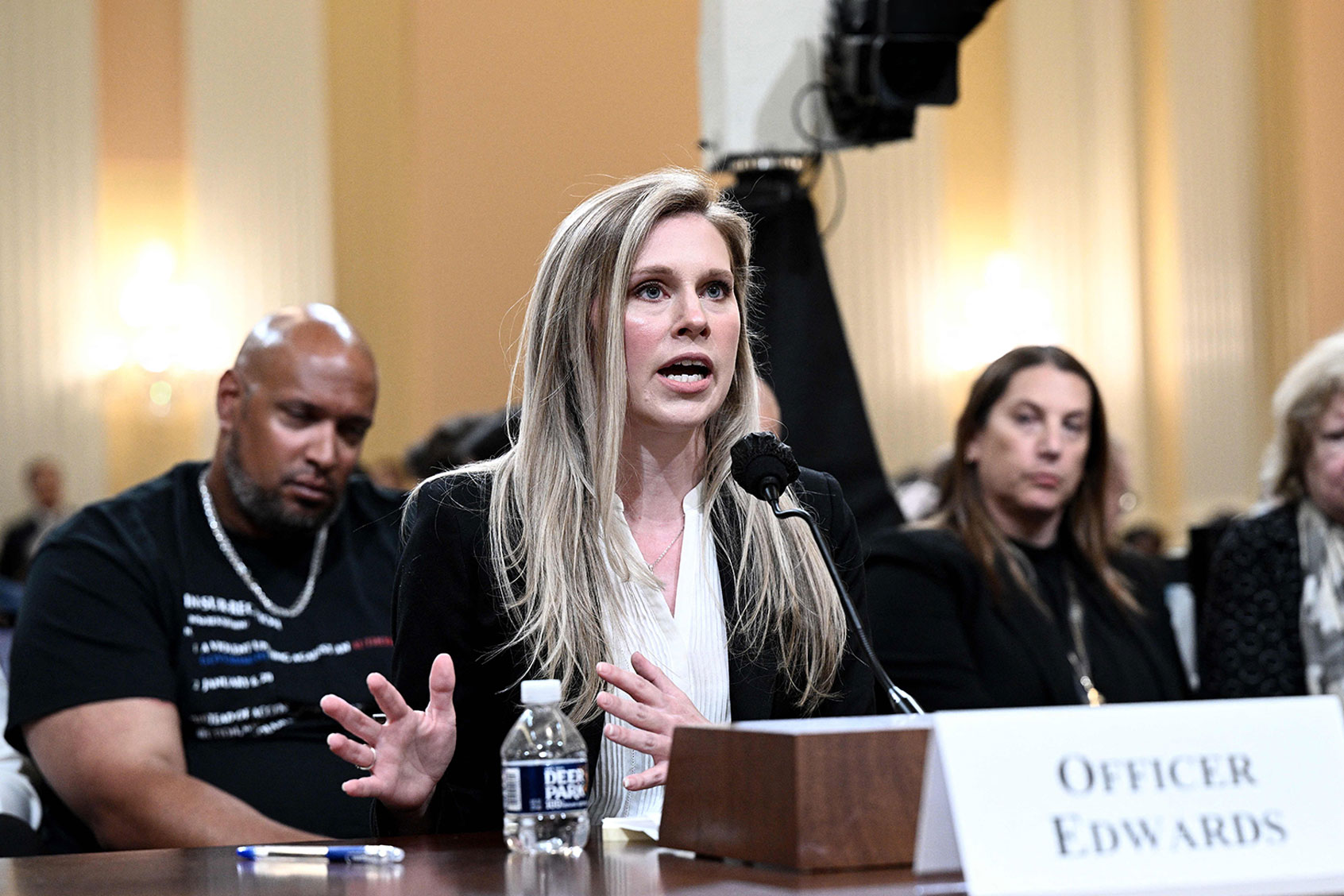
From clear scripts to big-name casting, the Jan. 6 hearings meet the standards of must-see TV

Among the factors leading to “Lost” and “Desperate Housewives” becoming the talked-about dramas of their debut season, as in 2004-2005, was their novel usage of bodies and questions in their respective premieres. “Lost” opens with wide shots of bodies scattered on a beach amidst a plane crash’s wreckage. “Desperate Housewives” shocks with just one, that of the omniscient narrator who dies by suicide without warning.

Each show could have rolled along as straightforward relationship-driven dramas from there, save for the questions ending each pilot: “Oh Mary Alice, what did you do?” “Guys . . . where are we?”  These simple queries establish there’s something bigger going on than any individual character’s story arc or their conflicts – a potential threat that supersedes individual problems.

I can almost guarantee that nobody on the congressional committee investigating the Jan. 6 insurrection thought about either of these shows or the many subsequent series influenced by them when they laid the groundwork for their televised hearings.

Scratch that – I’m positive of that, given the straightforward presentation witnessed by more than 20 million prime-time viewers on Thursday, June 9. None of the committee members made extra efforts to play to the cameras, and at times its chairman, Representative Bennie Thompson, D-Ms., stumbled when reading his lines from the teleprompter.

The unspoken understanding, at least among viewers watching in good faith, should be that none of these people were elected based on their acting ability. But the committee does understand how potent a tease, cliffhanger, and “coming up this season” montage can be to persuade a skeptical viewer to stick with the story. Rather, the man producing these televised hearings, former ABC News president James Goldston, understands this.

RELATED: Jan. 6 committee: Pointless spectacle

This approach is necessary given the grave danger the Jan. 6 insurrection represents and its relationship to a slow-moving, ongoing coup. Our entertainment landscape is awash with alternatives more exciting than a stodgy congressional committee hearing run by a bipartisan committee – a team of Democrats and two Republicans who, can you believe it, appear to respect each other.

But that also means not enough people are paying attention or simply won’t, abetted by Fox News’ refusal to carry the first prime-time hearing live in favor of featuring Tucker Carlson deriding it as propaganda.

Thus, last Thursday’s episode served as a plainspoken table-setting chapter and an educational reset for any tuned in to ABC, NBC, CBS, CNN, PBS, C-SPAN or MSNBC, with Thompson explaining why the committee embarked on its investigation against the wishes of nearly every Republican member of congress.

Our entertainment landscape is awash with alternatives more exciting than a stodgy congressional committee hearing.

“I come before you this evening not as a Democrat but as an American who swore an oath to defend the Constitution,” Thompson said, explaining that every member of Congress swears the same oath upon taking office: “to defend the Constitution against all enemies, foreign and domestic.”

The prime-time opener of the Jan. 6 committee’s hearings demonstrates comprehension of dramatic structure, not only regarding episodic presentation but in terms of spelling out a full season arc. Mind you, it was devoid of puzzle-box flourishes or the type of juiced-up “Desperate Housewives”-style heat that amplifies unscripted reality and episodic true crime.

Cheney introduced the committee’s aim in these hearings to clearly spell out “plots to commit seditious conspiracy on Jan. 6” by explaining exactly what each episode is going to show us. Monday’s second hearing presented recorded testimony from campaign chief Bill Stepien and aide Jason Miller, who told the committee that they informed Trump the election was lost and advised him against making any statement on the night of the election.

The next hearing is a dive into Trump’s efforts to corrupt the Justice Department, a development about which former Attorney General Bill Barr has already dropped hints.

Some of its “loglines” were teased before the hearings began, mainly the revelations that in the days leading up to January 6, 2021, former President Donald Trump pressured his Vice President Mike Pence to assist him in overturning the election results. Because of this the first Pence-centered hearing, originally estimated to be the fourth, will probably be a popular one.

Other were announced by Cheney during the first telecast, along with scheduled appearances such as Monday’s main “get”: live testimony by former Fox News political editor Chris Stirewalt, the man behind that network’s controversial and ultimately correct decision to call Arizona for Joe Biden on election night.

The coda of its curtain-raiser featured committee Vice-Chair Liz Cheney, R-Wy., spelling out the themes of each hearing to come and, where relevant, announcing corroborating testimony from a variety of witnesses – many of them former members of Trump’s inner circle.

Before that came the drama’s introduction of its first hero, Capitol Police officer Caroline Edwards, and a few of this story’s monsters, including the Proud Boys meeting and the Oath Keepers.

US Capitol Police Officer Caroline Edwards testifies during a House Select Committee hearing to Investigate the January 6th Attack on the US Capitol, in the Cannon House Office Building on Capitol Hill in Washington, DC on June 9, 2022. (BRENDAN SMIALOWSKI/AFP via Getty Images)

It injected unintentional comic relief in the guise of Barr’s taped deposition in which he described Trump’s claims about the 2020 election having been stolen as, among other epic terms, “crazy,” “garbage,” “idiotic” and “bulls**t.”

In the telecast’s closing moments, their members’ words speak to the question driving the season, the hearing’s “Guys . . . where are we?” equivalent. At the root of all of this, the premieres spell out, the committee endeavors to prove, is Donald Trump’s desire to hold on to power at any cost.

To some, describing this historic televised chronicle in the terms of scripted drama may seem to cheapen the proceedings. The opposite is true – it’s a highly rational strategy to meet the audience where it is.

Goldston’s hand in the hearings’ production is light enough for the viewer to appreciate how easy-to-follow each installment is. For the most part, the committee has delivered as promised, save for a last-minute cancellation by Stepien, whose wife went into labor. Even then, his video deposition was edited in a way to fit within the flow of the committee’s script.

It’s also present in the “casting,” as it were, of the committee’s witnesses. Footage of Ivanka Trump’s agreement with Barr made headlines, understandably. However, the conscious decision to call upon Edwards to testify is particularly savvy.

Describing this historic televised chronicle in the terms of scripted drama may seem to cheapen the proceedings. The opposite is true.

Edwards is a compelling witness in any forum; the footage shows her single-handedly doing her best to hold back a surge of insurrectionists and sustaining a head injury when they overwhelmed her. She’s also a blonde, white woman and a veteran’s daughter, which is to say she embodies the type of woman the far-right professes to champion.

Establishing a public record of the committee’s findings is the main mission here, but so is persuading any skeptics or deniers. Edwards pushes back on those assumptions with her statements and her image.  

But the hearings also employ the all-important element of unpredictability, keeping its most quotable segments under wraps until broadcast.  Miller’s and Stepien’s testimony that Trump’s false claims of a stolen election may have begun with a drunken suggestion by an “apparently inebriated Rudy Giuliani,” generated the second-best catchphrase of the day after Stepien’s bumper sticker-ready “Team Normal,” as he describes the group advising Trump against declaring victory.

Every show worth watching generates merchandising opportunities.

A few analyses of Thursday’s primetime broadcast try to whet the reader’s appetite by calling the committee’s televised hearing the must-watch event of the summer. This is probably an exaggeration in a media environment as fractured as this one, to say nothing of how jaded we are after living through a presidency that warped reality for a frighteningly large percentage of the American population.

Our lawmakers have taught the modern TV audience that congressional and senatorial committee hearings deemed important enough to lead or drive the news cycle are merely opportunities for them to grandstand for their constituents. Since their votes are already decided and no amount of qualifying evidence or disqualifying evidence could change their minds, weighing facts doesn’t enter the equation.


Want a daily wrap-up of all the news and commentary Salon has to offer? Subscribe to our morning newsletter, Crash Course.


Viewers presumed to be actively engaged in watching this committee’s presentations are accustomed to having such cases built up by cable news hosts and experts only to be denied a payoff of comeuppance.  We all lived through televised hearings of special counsel Robert Mueller’s investigation into whether Trump courted Russian interference in the 2016 election, which was hyped for nearly two years and resulted in a flurry of criminal charges brought against Trump’s associates but none against Trump himself.

In terms of the hearings for Supreme Court Justice Brett Kavanaugh and associate justice-designate Ketanji Brown Jackson, the notion that senators debated their fitness to hold a position was a farce, giving way to the spectacle of surmising how well one’s “team” holds up against the opposition.

The viewer, therefore, expects chaos and cacophony from these events, not debate or elucidation or, heaven forbid, progress or results.

Jan. 6 committee members who have spoken to the press outside of the hearings have been careful to say they’re not necessarily counting on results, either. They’re focused on ensuring their findings are witnessed and considered, that they become the topic of whatever the equivalent of water cooler discussion is at a time when gathering around a single reference point feels impossible.

Obviously they committee is doing whatever they can to lay a narrative course solid enough to end with an indictment for Trump, regardless of how notoriously difficult finales are to nail to everyone’s satisfaction – ask the creators of both of those dramas mentioned up top. But if enough of us remain tuned in to that point, that counts as a win by any metric.

More stories like this:


Why long COVID is often overlooked in children

As the COVID-19 pandemic winds on, and many Americans come down with COVID-19 a second or even third time, there has been a shift in our collective fears. Infection — particularly for the vaccinated — is often mild, and mortality rates have fallen significantly. For many, it is now the risk of aftereffects that is most frightening, more so than the initial diagnosis itself. Colloquially known as “long COVID” or “long-haul COVID,” the term applies to an increasingly nebulous array of health afflictions that can appear well after an initial infection. Those afflictions span a variety of cardiovascular, muscular, and neurological conditions, even neurological impairment. 

Unlike COVID’s mortality rate, long COVID doesn’t discriminate based on age: around 10% of children who come down with COVID-19 are estimated to develop one such condition, according to at least one study. And for a variety of reasons, long COVID cases in children have gotten less attention — and in many cases, the very real symptoms some children experience after COVID infections have been dismissed, despite evidence that suggests an actual disorder related to COVID-19. (A similar pattern of dismissal occurred with elderly patients whose impairments were sometimes chalked up to dementia.)

Now, the Centers for Disease Control and Prevention estimates that roughly one out of five adults in the United States have developed a health condition that may be the result of a COVID-19 infection. Yet far less is known about the prevalence among children; and indeed, the studies on children seem to vary wildly in their findings. Some indicate that less than 1% of children will develop one of these conditions; another study found that an estimated half of children who came down with COVID-19 would have long-term symptoms. 

RELATED: Omicron is affecting children more than previous strains

According to Dr. Lynora Saxinger, who leads the COVID-19 Scientific Advisory Group for Alberta Health Services, reporting bias plays a big role in the discrepancy — as does a lack of clear definitions of the condition, or rather a multitude of conditions.

“It is not at all uncommon for people to have symptoms from their infection for a month or six weeks after the infection, depending on how you ask the question and what symptoms you look for,” she told Salon.

Often, it is hard for physicians to tell whether very common mental health conditions — such as anxiety or depression — are a result of long COVID or not. One study, titled “Long COVID — the physical and mental health of children and non-hospitalised young people 3 months after SARS-CoV-2 infection; a national matched cohort study,” found that about 40% of children involved reported feeling worried, sad, or unhappy. The authors found little discrepancy between those who had tested positive for COVID-19 and those who had not.

“Adolescents are passing through a transition in life where there are a lot of stressors, and if some of them are also suffering these symptoms but there are no lab tests to verify it, then they’re kind of left adrift within a system that isn’t prepared to support them and has very little evidence to go on about what to do,” said Professor Harlan Krumholz, a cardiologist and a professor at Yale University. “It’s a terrible situation. It’s a predicament.”

Long COVID also moves on its own schedule, which complicates diagnoses. Some patients who had asymptomatic COVID-19 cases developed long COVID conditions weeks or months after their infection.

For those who fear long COVID, vaccines do seem to offer protection. Indeed, evidence suggests that vaccinations not only reduce the risk of infection which would lead to long COVID but in fact, vaccinations reduce the risk of developing these post-COVID conditions for those infected as well.


Want more health and science stories in your inbox? Subscribe to Salon’s weekly newsletter The Vulgar Scientist.


According to Saxinger, excessive negative messaging about post-COVID conditions has added significantly to nihilism and pandemic fatigue. She highlighted that regardless of whether mental health symptoms are caused by long COVID or the social stress of the pandemic itself, getting children vaccinated is the best solution to balance the risk of long COVID and the detrimental impact of pandemic restrictions.

“We really should get everyone vaccinated,” Saxinger said. “Even if you still get infected, we believe it will modulate your body’s response to the virus in a way that’s protective.”

For children under the age of five, COVID-19 vaccination remains out of reach in the United States. In other words, younger children lack protection against long COVID. That may soon change though.

On Wednesday, a Food and Drug Administration committee will meet to discuss approval of the primary series Pfizer and Moderna COVID-19 vaccinations for children 6 months of age and older. Pending their decision and recommendations from the CDC, the White House aims to make vaccinations available for infants as early as next week.

Read more on COVID and kids:

Is James Patterson’s claim that white men face racism an enraging PR stunt from a former ad man?

One of richest living writers in the world, James Patterson, said in an interview with The Times on Sunday that white men like him face racism within the publishing, theatre, and film and TV industries. He described the alleged difficulty confronting the most privileged members of society as “just another form of racism. . . . Can you get a job? Yes. Is it harder? Yes. It’s even harder for older writers. You don’t meet many 52-year-old white males.”

Citing industries almost entirely dominated by white men, Patterson doesn’t have the facts on his side. The respected Lee & Low Books Diversity Baseline Survey reported in its 2019 findings that 76% of the publishing industry is white. According to a different 2020 study, 95% of published writers are white. Male writers receive more attention, acclaim and income than female writers, with 75% of books reviewed in the prestigious Times Literary Supplement written by men. Books about women are less likely to win prizes (which can translate into sales). Their titles receive about “half (45%) the price of male authors’ and are underrepresented in more prestigious genres.” 

On the performance side, a study from The Asian American Performers Action Coalition found almost 90% of playwrights who had their works staged in the 2016-17 New York season were white and male (87.1% of those performances were directed by white directors). As Playbill reported: “On Broadway alone, 95% of all plays and musicals were both written and directed by Caucasian artists” while 89% of Broadway-produced playwrights were male.

Hollywood has a similar record. In 2019, over 85% of directors were white and over 84% were male. In 2017, only 11% of the year’s top 250 films were written by women.

Good thing Patterson doesn’t publish nonfiction (wait, he does — sort of). Is this a matter of an extremely wealthy older white person continuing to be out of touch? Yes. Is this racism manifesting in a gross form? Yes to that too. (It’s also strange that a 75-year-old would call a 52-year-old “old”)

But is this also a publicity stunt by an expert at the con? Maybe.

RELATED: James Patterson laments white male writers are facing racism, and then receives immediate backlash

Since 1976, the Patterson name has been embossed on hundreds of novels you can find at airports; 260 were New York Times bestsellers. He may not even know how many he’s published, as he didn’t write all of them. 

Co-writers fuel his productivity which is, as The New Yorker wrote, “the secret of Patterson’s success . . . Like the Stratemeyer Syndicate, which, in the early 20th century, produced hundreds of novels for young readers, featuring such characters as Nancy Drew and the Hardy Boys, Patterson supplies detailed outlines for his books. His co-writers then flesh out these narrative skeletons into installments of popular series.”

When I lived briefly in New York in my 20s, I met one of Patterson’s writers, a young man in a very nice suit. He was supporting himself and his family thanks to the Patterson machine though not, I believe, writing his own work, which is what most writers set out to do. 

How does a writer become a brand? It’s complicated. But it helps if you’re in the business of branding to begin with. 

The many popular series of Patterson include the genres of thriller, crime, romance, mystery, comedy, science fiction, children’s books and YA (he once described his foray into young adult writing as “I can write for these little creeps“). His Alex Cross books were adapted into films. Many of his books have been.

Vanity Fair, which once called him the “Henry Ford of Books,” says that he employs an “army” of co-writers, like the one I met. But The New Yorker points out that, unlike some other writers who rely on ghost writers, “Patterson credits his co-writers, even if his eminently bankable name appears in much larger type on their books’ covers.”

How does a writer become a brand? It’s complicated. But it helps if you’re in the business of branding to begin with. 

Most don’t even have final say over titles or covers, especially not those writers of color that Patterson claims are so advantaged.

In that same article, Vanity Fair writer Todd Purdum describes Patterson as an “advertising Mad Man,” which he was. Patterson had a lengthy first career in advertising, working his way up from copywriter to C.E.O. of the North American branch of huge international ad agency J. Walter Thompson. He also worked as its creative director. Among his inventions, the lyrics for the Toys R Us jingle, which will be stuck in my head until I die: “I don’t wanna grow up. /I’m a Toys R Us kid.”

Patterson also led the “Aren’t You Hungry?” Burger King campaign, another hugely successful and popular campaign, which included an ad featuring Meg Ryan behind a fast food counter.

Patterson worked for 25 years in advertising. (He keeps the industry’s highest award, a Clio, in his office along with writing awards.) He had to have picked up some tricks. When his publisher, Little Brown, refused to do a TV ad for his book “Along Came a Spider,” Patterson did it himself, ensuring the book’s success. 

Patterson’s former life, the business of advertising, is, in a sense, the business of cons. 

He helps design his books and their advertising campaigns, which is something only the most powerful of traditionally published writers are allowed to do. Most don’t even have final say over titles or covers, especially not those writers of color whom Patterson claims are so advantaged.

Patterson knows what he wants and what he’s doing, and even though few people, maybe not even the writer himself, would call what he’s doing art, it’s certainly financially successful. With a net worth of $750 million, he earns an estimated $90 million a year, has a beachfront home in Palm Beach and enjoys summering in the toity Westchester County, New York village of Briarcliff Manor

But Patterson’s former life, the business of advertising, is, in a sense, the business of cons. 


Want a daily wrap-up of all the news and commentary Salon has to offer? Subscribe to our morning newsletter, Crash Course.


From the claims of Airborne that it kills germs (the company had to pay over $23 million in a class-action lawsuit) to cosmetic companies cited for excessive photoshopping to a distorted image of the Whopper of Patterson’s old client, Burger King, advertisements twist and tweak. They tell us what we want or hope to hear — or sometimes, what will inflame us.

As the quote goes from that most famous ad man, Don Draper, who once said he slept “on a bed of money”: “If you don’t like what’s being said, change the conversation.” Try to get it focused on what you want it focused on: you, as Patterson did with his remarks in yet another interview about this writer who published 15 books last year.

Patterson conned the world that he writes these books. Has he conned us again? Does he truly believe that white men actually face racism? And/or, is this yet another gimmick from the ad man, designed to get the creaky publicity machine grinding once more, determined to get his name in the press? We’re talking about him, after all. And what’s that they say about all publicity? 

More stories like this

Anti-vaxxers seize on Justin Bieber’s facial paralysis as “proof” of a COVID conspiracy

Last Friday, pop icon Justin Bieber revealed he has a rare neurological disorder that has paralyzed half of his face. The condition is known as Ramsay Hunt syndrome.

“As you can probably see from my face, I have this syndrome called Ramsay Hunt syndrome,” the singer told fans in a video posted to social media. “And it is from this virus that attacks the nerve in my ear and my facial nerves and has caused my face to have paralysis.”

In the Instagram post in which he revealed the diagnosis, Bieber said he can’t blink his right eye, nor can he smile on that side of his face. His right nostril won’t move, either. The 28-year-old emphasized he’s “physically not capable” of doing any shows right now and that his body needs to rest.

Bieber explained that it is “pretty serious,” and that he wishes he was still able to tour. Bieber cancelled several upcoming performances for his Justice tour in North America.

RELATED: What happens when you drink blood

According to the National Organization for Rare Disorders, Ramsay Hunt Syndrome is the second most common cause of atraumatic peripheral facial paralysis; it affects 5 out of every 100,000 people in the United States each year.

So, what could cause Bieber to have to face such a debilitating and rare disorder? It turns out the culprit is the same virus that causes chicken pox.

Most adult residents of developed nations are immune to chicken pox, either because they were vaccinated against it as children, or gained immunity after contracting it as children. However, unlike some viruses (including COVID-19), the chicken pox virus doesn’t actually ever leave one’s system after infection. 

“When we used to get infected with the chicken pox virus, before the vaccine, we’d of course recover — but the chicken pox virus doesn’t go away, it actually becomes latent or dormant,” William Schaffner, a professor of infectious diseases at the Vanderbilt University Medical Center, told Salon. “Think of it as hibernating in certain areas in our nervous system, and then years later elements of that chicken pox can reactivate and can come out and express themselves in parts of the surface of our body.”

Thus, Ramsay Hunt syndrome is technically caused by the varicella-zoster virus, which is the same virus that causes chicken pox. As Schaffner explained, the virus can remain dormant for decades but can be reactivated at any time in someone’s life. In some cases, this results in the shingles, which is a more well-known condition that frequently occurs in seniors whose immune systems are weaker. But in rare cases, varicella-zoster can develop into Ramsay Hunt syndrome, even in younger people like Bieber.

Technically, anyone who has had chicken pox can develop Ramsay Hunt syndrome. Most cases affect older adults, especially those over 60. Bieber was born in 1994; the chicken pox vaccine became available in the United States in 1995, and it is unknown if the Canadian pop star was vaccinated as a baby. Schaffner notes that it took time for the vaccine to be widely administered in children.


Want more health and science stories in your inbox? Subscribe to Salon’s weekly newsletter The Vulgar Scientist.


“It took several years for the chicken pox vaccine to really become widely accepted,” Schaffner said. “And now in virtually the whole country, it’s on that list of vaccines that children need to get before they can go to school.”

Why varicella-zoster can cause shingles for some people, and Ramsay Hunt syndrome in other cases, is not well understood. Schaffner explained the older someone gets, the more common it is for the virus to be reactivated and become shingles.

If the varicella-zoster virus is reactivated and turns into Ramsay Hunt syndrome, this can happen in any major nerve that comes out of the central nervous system — such as the brain or the spinal cord.

“There is a nerve called the seventh cranial nerve that’s involved with the Ramsay Hunt syndrome and it involves part of the face, particularly the ears,” Schaffner explained, noting that it may only happen on one side of the face. “You can often see these blisters in your ear canal when the doctor looks in,” which can cause deafness, he added.

“Another part of this seventh nerve involves being able to move the muscles of your cheek and Justin Bieber has those paralyzed at the moment; he can’t smile on that side of his face,” Schaffner noted. 

Unfortunately, the revelation of Bieber’s condition has become fodder for anti-vaccine conspiracy theorists, who falsely connected Bieber’s Ramsay Hunt syndrome to the COVID-19 vaccine. Misinformation to that effect, claiming that the syndrome is frequently caused by COVID vaccines, is rife on Twitter and TikTok. 

“Justin Bieber got that disease from the Covid 19 vaccine, they are NOT safe,” one user on Twitter wrote.

“Justin Bieber has a vaccine injury (his tour requires proof of vaccination for entry) & he’s voiced in the past how important the Covid-19 Vaccine is. Now the popstar has facial paralysis that could end his career,” another user wrote. 

There is no evidence that Bieber’s diagnosis is an adverse side effect from the COVID-19 vaccine. Moreover, Bieber has never spoken out whether he has been vaccinated against the coronavirus or not. Notably, he does require attendees at his concerts to be vaccinated.

There is very limited evidence to suggest that Ramsay Hunt Syndrome can occur after vaccination. The only known possible case occurred in January 2022, and was reported in a 78-year-old woman three days after receiving the Pfizer-BioNTech vaccine. The doctors who flagged her case did so in a letter to the editor in the science journal Elsevier. Because Ramsay Hunt syndrome is caused by the varicella-zoster virus, the biology of this kind of case is complicated — and would involve an immune system reaction caused by the COVID-19 vaccine that would result in the varicella-zoster virus emerging from dormancy to cause Ramsay Hunt syndrome. 

The authors said that at the time of publication they weren’t aware of any other reported cases of Ramsay Hunt syndrome following COVID-19 vaccination. They also emphasized “the importance of vaccination to put an end to the pandemic,” and that “the possible onset of these conditions is rare and the risk is very low.”

Bieber’s case might be more logically perceived as a case for vaccines in general — as being vaccinated against chicken pox could prevent the possibility of one developing Ramsay Hunt Syndrome in the future.

Schaffner noted that there are other symptoms that are associated Ramsay Hunt Syndrome, such as dizziness and hearing loss. The onset of symptoms can be pretty rapid, over the course of a couple of days, depending on the spectrum of symptoms.

“The blisters can take a day or two to appear, and you can have itching and pain before then, and you can start to develop some of this paralysis of the cheek — so you can’t smile — and by the time the doctor looks into your ear canal with their otoscope, the blisters are often there for viewing,” Schaffner said. “It depends a little bit on the distribution of that nerve in each person, and how much it’s involved, but it can happen over I would say two or three days.”

Fortunately, there are treatments available such as antiviral medications like acyclovir or famciclovir, in conjunction with corticosteroids. As for how long this syndrome can last, Schaffner said, it depends.

“It can last several weeks, getting slowly and gradually better,” Schaffner said. “Most people are restored to complete normal function, but some people are left with one or another degree of impairment after this syndrome; it’s very difficult to predict.”

Read more about chicken pox

We asked an AI to draw its favorite food. The results were bleak

If one looks to a certain subset of science fiction, the future of food is edible sludge. There’s the porridge from “The Matrix,” the protein paste from “Alien” and the off-green cottage cheese-like lumps of “Brazil.” In these universes, taste has been supplanted by technology, a development that is equal parts grotesque and nutritionally expedient. 

There’s a certain spartan logic to it that would appeal to a robot, which is why when I tasked an AI with drawing its favorite meal, I suppose I expected it to render a bowl of gruel (or perhaps a tasty-looking plate of wires?). Instead, DALL-E Mini’s tastes are decidedly more Midwestern

DALL-E is an AI system created by OpenAI, which uses a machine learning model with billions of individual parameters to generate images from text prompts. The results vacillate between surreal and hyper-realistic. Currently, it’s only available to a certain subset of researchers, but free-use copycats have surged online in recent weeks, including the popular DALL-E Mini.

Related: From computerized carts to “Chef Bots,” how AI is becoming a bigger part of grocery shopping

Users have adapted this more accessible AI into something of a meme template. Type in any string of words, and it will produce a grid of nine images. Chicago Mayor Lori Lightfoot riding a dinosaur? Done. Bob Belcher as Jesus? A little blurry, but sufficiently sacrilegious. Serial killer Aileen Wuornos on the set of “Drag Race”? As unsettling as one would predict. 

Things get a little more complicated, however, when users give DALL-E Mini more introspective prompts. VICE, for instance, wrote about asking the AI to draw a self-portrait. 

“Based on what prompt I chose,” the outlet’s Janus Rose wrote, “DALL-E Mini either sees itself as some sort of seabird, a goat-like creature or a mysterious orb that resembles a microscopic organism — among many other bizarre mutations.” 

Similarly, on Sunday night, I asked DALL-E Mini to depict “your favorite meal.” 

DALL-E's favorite mealImages of DALL-E’s “favorite meal.” (Images generated by DALL-E ) 

The results were a little surprising in their averageness. While the plates DALL-E rendered were incredibly blurry, they didn’t look unlike a diner menu (with pictures!) that had been run through a photocopier running tragically low on toner. You can definitely make out the steak. There are a couple of brown blobs that could be chicken-fried-anything or schnitzel. Three or four plates have potatoes, or what at least appear to be steak fries or tater tots

If you look hard enough, there are definitely some vegetables — celery sticks, a row of off-red logs that could be either carrots or peppers — but the bulk of the greenery comes in the form of decorative parsley. 

Different prompts, like “DALL-E’s favorite meal” and “Delicious dinner,” yielded similar results. 


Want more great food writing and recipes? Subscribe to “The Bite,” Salon Food’s newsletter.


Now, it’s tempting to look at the results and simply classify DALL-E as a meat and potatoes man, but of course, the AI has no preferences of its own. Even simple terms like “favorite” denote the ability to rank items based on feelings and experience. Despite more global concerns to the contrary — many of which came to a head at Google headquarters earlier this week after an employee flagged concerns that their AI chatbot had developed free will — this AI is not sentient. 

The images that it produces are an amalgam of the training data that it’s fed, which include innumerable images from the internet, along with their descriptions. Eventually, the AI builds associations between the two. That means its “understanding” of the world around it is based on existing data, which comes with its own limitations. In the project’s documentation on GitHub, OpenAI admits that the system “inherits various biases from its training data, and its outputs sometimes reinforce societal stereotypes.” 

To use a food analogy, think of the internet as the contents of a “Chopped” basket and DALL-E as a contestant. DALL-E may produce something unexpected given a specific prompt, however, the creation is still a sum of the parts found in the basket. In the end, DALL-E is more of a reflection of us and our tastes. And, simply put, steak and potatoes are a ubiquitous combination. While definitely not as dystopian as edible goop, the lack of variety is still pretty bleak. 

That said, people enjoy putting these prompts in front of AI largely to see the results. Though, perhaps, Siri sums it up best. When asked whether she eats, she’ll merely reply, “I leave the eating to you.” 

Read more commentary on food: 

Texas Attorney General Ken Paxton on the Uvalde massacre: “God has a plan”

Texas Attorney General Ken Paxton said recently that he would tell parents of young children killed in the Uvalde school shooting that “God has a plan.”

Paxton, who took the leading role in a failed Supreme Court case aimed at overturning the results of the 2020 election, went on a media blitz to fight calls for gun restrictions shortly after an 18-year-old shooter killed 19 children and two teachers at Robb Elementary School in the West Texas town of Uvalde.

In an interview with right-wing radio host Trey Graham, Paxton acknowledged that it is “difficult to give comfort” to families who lost their kids. “If I lost one of my children I’d be pretty devastated, especially in a way that is so senseless and seemingly has no purpose,” he continued. “I think … I would just have to say, if I had the opportunity to talk to the people I’d have to say, look, there’s always a plan. I believe God always has a plan. Life is short no matter what it is. And certainly, we’re not going to make sense of, you know, a young child being shot and killed way before their life expectancy.”

RELATED: Uvalde hiring more police — as new report reveals 60 cops waited 77 minutes while kids bled out

Paxton’s comments last week came ahead of emotional testimony by parents of Uvalde victims in the House last week. Kimberly Rubio, whose 10-year-old daughter Lexi was killed in the attack, pleaded for Congress to take action on gun safety in response to the massacre.

“We understand that for some reason, to some people — to people with money, to people who fund political campaigns — that guns are more important than children,” Rubio said while testifying with her husband, Felix. “Somewhere out there, there is a mom listening to our testimony thinking, ‘I can’t even imagine their pain,’ not knowing that our reality will someday be hers. Unless we act now.”


Want a daily wrap-up of all the news and commentary Salon has to offer? Subscribe to our morning newsletter, Crash Course.


Dr. Roy Guerrero, a Uvalde pediatrician who treated some of the victims, made a similar plea as he described how children’s bodies were “pulverized” and “decapitated” by the bullets from the AR-15-style rifle used by the gunman, to the point that “the only clue as to their identities were the blood-spattered cartoon clothes still clinging to them.”

“Making sure our children are safe from guns, that’s the job of our politicians and leaders,” Guerrero said. “In this case, you are the doctors and our country is the patient. We are lying on the operating table, riddled with bullets like the children of Robb Elementary and so many other schools. We are bleeding out, and you are not there. My oath as a doctor means that I signed up to save lives. I do my job, and I guess it turns out that I am here to plead, to beg, to please, please do yours.”

But after the heart-wrenching testimony, all but five Republicans in the House voted against a package that would raise the age to buy an AR-15 from 18 to 21 and toughen existing gun laws. Senate Republicans have already ruled out any new gun restrictions, as have Republican state leaders in Texas.

Paxton’s immediate response to the shooting was to call for arming teachers, which some schools in Texas already do despite strong pushback from teachers.

“We can’t stop bad people from doing bad things. We can potentially arm and prepare and train teachers and other administrators to respond quickly. That, in my opinion, is the best answer,” Paxton said following the shooting.

Other Texas Republicans have also tried to blame anything but widespread easy access to guns. Sen. Ted Cruz, R-Texas, called for “door control” in schools and Gov. Greg Abbott pushed an emphasis on mental health — despite slashing funds for mental health treatment.

RELATED: Texas Republicans loosened gun laws and slashed mental health funding before Uvalde shooting

Rep. Louie Gohmert, R-Texas, after Wednesday’s hearing suggested that the answer is more “prayer.”

“Look, maybe if we heard more prayers from leaders of this country instead of taking God’s name in vain, we wouldn’t have the mass killings like we didn’t have before prayer was eliminated from school,” he said.

Paxton in particular has a long history of opposing gun restrictions in response to mass shootings in Uvalde, El Paso and Sutherland Springs, arguing that mass shooters are “not going to follow a single gun law” even though gun laws prevented the shooter from getting a gun until he turned 18 — the legal age to purchase an AR-15, but not a handgun — just days before the attack.

Paxton has a close relationship with the gun lobby. The NRA, the Texas State Rifle Association and the Gun Owners of America Political Victory Fund have all contributed heavily to his campaigns. Paxton also signed an amicus brief backing the NRA’s petition asking the Supreme Court to strike down California’s ban on high-capacity magazines. He even “welcomed” the NRA to Texas after the group tried and failed to file for bankruptcy to dodge a corruption investigation by New York’s attorney general.

After a gunman killed 26 people in the 2017 Sutherland Springs church shooting, Paxton argued that the only answer to gun violence was more guns.

“In Texas at least we have the opportunity to have concealed carry,” he told Fox News. “And so if it’s a place where somebody has the ability to carry, there’s always the opportunity that gunman will be taken out before he has the opportunity to kill very many.”

After another gunman killed 23 people at an El Paso Walmart, Paxton again argued that more guns were the answer rather than fewer guns.

“The best way is to be prepared to defend yourself,” he told CBS News.

Ironically, Paxton himself cannot buy a gun under federal law, because he has been under indictment since 2015 for breaking state securities law.

Researchers have found no evidence that arming teachers or other school personnel has any effect on school shootings. A review of 89 journal publications and media reports by researchers at the University of Toledo and Ball State University similarly found that armed school resource officers, restrictions on the number of school exits and active-shooter drills do not help either.

The “ideal method for eliminating school firearm violence by youths is to prevent them from ever gaining access to firearms,” the researchers concluded, adding that “unfortunately, studies have found an alarming rate of firearms accessible to youths.”

Read more:

Lizzo listened and changed an ableist lyric. Will it be enough for white critics?

On Friday, Lizzo released a new song. Almost immediately an outcry was raised regarding the lyrics of “Grrrls.” In the original song, the award-winning singer, rapper and songwriter used the word “spazz” to refer to losing control. That word comes from spastic diplegia, a kind of cerebral palsy, a group of disorders that impact a person’s movement, posture and balance. 

Historically, the word has been used negatively as a slur against people with cerebral palsy, “particularly harmful in some countries where it has a history of being used as a schoolhouse taunt,” as The New York Times reported.

But those were the first lyrics. Following the intense criticism, Lizzo changed her song within three days.

RELATED: Churches are preaching the Gospel of Lizzo now

By Monday, there were new lyrics to “Grrrls.” The offensive term had been replaced by the line: “Hold me back.” Lizzo re-recorded the song, slated to be included on her upcoming album “Special,” and the new version now appears on her YouTube.

Disability advocates, those who are disabled and others had expressed concern and disappointment about the original lyric. But still others brought up the finer points that the criticism was spearheaded overwhelmingly by white voices and the discussion should have been led by Black disabled people.

This concern has ramifications now, after Lizzo swiftly and efficiently admitted her mistake and took decisive action, doing so in record time. Will it be enough for white critics?  

Having released three successful studio albums and over 20 singles, Lizzo is considered a role model for body positivity both in her lyrics and her quotes to the media. “I’m all about body positivity and self-love because I believe that we can save the world if we first save ourselves,” she said at a show in 2000.

The artist faces additional scrutiny and pressure because she’s a Black, fat woman. “I’m not ignorant to the fact that we had to have a demeanor of lowering ourselves culturally just to exist. But I’m trying to shake up the narrative about how we’re supposed to act,” she told Essence in 2020. In the same article, Sylvia Obell wrote: “Being a proud fat Black woman isn’t just a form of activism, it’s who she is.”

Along with making the swift changes to the song, Lizzo released a statement on social media acknowledging the original lyric used a harmful word and asserting: “I never want to promote derogatory language.”

https://www.instagram.com/p/Cew0HrlPhEq/?utm_source=ig_embed&ig_rid=f8aa6295-e9ae-43c0-9e44-848bba49e091


Want a daily wrap-up of all the news and commentary Salon has to offer? Subscribe to our morning newsletter, Crash Course.


As Glamour wrote, “There’s also a fair argument to be made that the new lyric is better.” Language that uses ableist slurs often falls back on these easy and outdated terms, rather than finding more specific and less derogatory descriptions. Terms that refer both negatively and incorrectly to disability are still in popular usage (“blind to” to mean willfully ignoring, “tone deaf” or “deaf to” to refer to inconsiderateness or inattentiveness). They shouldn’t be. 

Lizzo’s statement — and her quick action — could be part of a larger conversation acknowledging that slurs against disabled people are still used widely, how that language harms and how Lizzo’s work is an example of what to do to make things right.

More stories like this


Ali Slagle knows best: It’s almost impossible to resist a good Caesar salad

This salad’s genius starts with a double-duty dressing-slash-marinade (that you don’t have to let marinade, or even wipe off before cooking), but doesn’t stop there. It’s fitting that in her new cookbook, “I Dream of Dinner,” Ali Slagle called this Not Just Another Caesar Salad, because it redefined what I want in the classic — and gave me a crunchy crouton trick that means I’ll never skip making them again.

As Ali writes in “I Dream of Dinner,” “It’s hard to resist a good Caesar salad, so step right up.”

A few more tips: Ali says that this recipe is also excellent on the grill for both the chicken and the croutons, with similar timing. Because the croutons are a mix of crisp sides and fluffy middles and don’t have a hard outer shell on all sides (a good thing), scatter them on top rather than tossing them through with the dressing, so they stay crisp longer.

Recipe adapted very slightly from “I Dream of Dinner (So You Don’t Have To): Low Effort, High Reward Recipes (Clarkson Potter, April 2022).

This post contains products independently chosen (and loved) by our editors and writers. As an Amazon Associate, Food52 earns an affiliate commission on qualifying purchases of the products we link to.

Hear more about this recipe from Ali herself on our podcast The Genius Recipe Tapes— Genius Recipes

Watch the recipe

Not Just Another Chicken Caesar Salad from Ali Slagle

Yields
4 servings
Prep Time
30 minutes
Cook Time
10 minutes

Ingredients

  • 3 garlic cloves
  • 4 anchovies
  • 1 1/2 ounces Parmesan, divided
  • 1 lemon
  • 1 cup mayo
  • 1 teaspoon low-sodium soy sauce
  • 2 teaspoons Dijon mustard
  • 1 pound boneless, skinless chicken thighs
  • Few heads crisp lettuces (like Little Gem, romaine, or chicories)
  • 2 tablespoons olive oil (optional, for croutons)
  • 2 thick slices of crusty bread (optional, for croutons)


Directions

  1. Finely chop and smash together the garlic cloves and anchovies until a coarse paste forms. Transfer to a medium bowl. Finely grate 3/4 cup Parmesan (about 1 1/2 ounces) and add 1/2 cup to the bowl. Zest half of the lemon into the bowl. Stir in the mayo, soy sauce, and Dijon mustard.
  2. Transfer half the dressing to a shallow dish. Pat the chicken thighs dry, season with salt and pepper, then add to the dish and turn to coat.
  3. Heat a large nonstick skillet over medium. Add the chicken and cook until golden brown and juices run clear, about 5 minutes per side. Transfer the chicken to a cutting board.
  4. Separate the leaves of the lettuces and toss into a big bowl. Squeeze half the lemon (about 1 1/2 tablespoons) over the greens, sprinkle with salt, then toss to combine. Add the remaining dressing and remaining 1/4 cup Parm and toss to combine. Thinly slice the chicken. Add to the salad and season to taste with salt and pepper, lemon, and Parm.
  5. (Optional) For croutons, after step 2, heat the olive oil in the skillet over medium-high. Add the slices of crusty bread and toast until golden brown, 2 to 3 minutes per side. Transfer to a cutting board and season with salt. Cut into croutons and sprinkle over the salad.

The ultimate sweet and sour sauce, according to Lucas Sin

Make any sweet and sour sauce! For most of my culinary career, I’ve made sweet and sour sauce at a 1:1 ratio between vinegar and sugar. The two are combined, boiled, and reduced.

But obviously it shouldn’t end there; this recipe is an exercise in intuitive cooking. Sweet and sour, at its core, is a mother sauce that can be taken into any direction, into the orbit of Filipino agre dulce, French gastrique, Italian agrodolce, Cantonese sweet and sour, and Northeastern Chinese guo bao rou.

Other than the construction of the sauce, in the video below, we’ll demonstrate three applications and variations on sweet and sour:

1) With SPRING ROLLS, layered with fresh and dried fruits for dipping

1 cup granulated sugar
1 cup white vinegar
2 rolls Haw flakes (hawthorn candy)
1/4 cup pineapple juice
1/4 cup Chinese red vinegar
5 pieces dried hibiscus
1 piece salted plum
2 pieces strawberries, sliced

In a small pot, combine vinegar and sugar. Bring to a boil. Add haw flakes (hawthorn candy), pineapple juice, Chinese red vinegar, hibiscus, salted plum, and strawberries. Continue to boil and reduce to thick consistency, about 7 min. Strain. Set aside.

Prepare the spring rolls according to package instructions. Serve with prepared sweet and sour dipping sauce.

2) In an HERB SALAD, bolstered with lime, ginger, and fish sauce

1 cup granulated sugar
1 cup white vinegar
1/4 cup fish sauce
2 tablespoons freshly squeezed lime juice
Zest of 1 lime
6 pieces fresh lychee, peeled and pitted
1/4-inch knob ginger, sliced

1 handful cilantro
1 handful Thai Basil
2 radishes, sliced thinly
1 endive, washed and separated
1/2 Fuji apple, sliced thinly and soaked
1/4 cup peanuts, roasted
2 tablespoons fried shallots
1/4 long red chili, sliced thin

In a small pot, combine vinegar and sugar. Bring to a boil. Add fish sauce, lime juice, lychee, and ginger. Simmer for 5 minutes until the flavors have infused. Turn off the heat. Strain if desired and add lime zest.

In a bowl, combine all the herbs and ingredients. Toss with sweet and sour sauce.

3) In a stir-fried SWEET AND SOUR PORK from Northeastern China — aka, the recipe that follows. — Food52

Watch this recipe

Guo Bao Rou (Plus Bonus Sweet and Sour Recipes) from Lucas Sin

Yields
4 servings
Prep Time
10 minutes
Cook Time
30 minutes

Ingredients

Sweet and Sour Sauce:

  • 1 cup granulated sugar
  • 1 cup white vinegar
  • 2 tablespoons freshly squeezed lemon juice or rice wine vinegar

Crispy Pork:

  • 1/2 pound pork shoulder, sliced thinly
  • 1/2 tablespoon kosher salt
  • 1 pinch white pepper
  • 1 tablespoon Shaoxing wine
  • 1/2 inch knob ginger, cut into very thin 2-inch strips
  • 3 scallion whites, cut into very thin 2″ strips
  • 4 cloves garlic, cut into thin slices lengthwise
  • 1 cup potato starch
  • 3 cups water
  • 1 tablespoon neutral oil


Directions

  1. In a bowl, marinade the slices of pork shoulder by combining the salt, white pepper, and shaoxing wine. Mix thoroughly, gently squeezing the seasoning into the meat. Refrigerate and let sit for at least 30 minutes, up to 3 days.
  2. Make the sweet and sour sauce: In a small pot, combine vinegar and sugar. Bring to a boil. There is no need to stir. Continue to boil until most of the vinegar flavor has evaporated, at least 2 minutes. Take off the heat, add lemon juice, and stir. Set aside.
  3. In a large metal bowl, combine potato starch and water. Mix well until combined. Leave the bowl on the counter and let it sit for 30 min until the water and starch have separated again. Pour off the excess water and keep the remaining oobleck (cornstarch-water slurry).
  4. In the bowl of marinated pork, gradually add oobleck to the pork and massage pork. Until a thin coating of starch batter barely coats each piece so you can faintly see pink. Add 1 tablespoon oil and mix well.
  5. Heat oil to 325°F in a wok or dutch oven over medium-high heat. Adjust the heat as necessary to maintain the temperature. Carefully drop slices of battered pork into the oil, frying until they flat and set in shape, about 2 minutes. Remove and let drain.
  6. Raise the oil temperature to 375°F and fry again to finish cooking the pork for another minute. Raise the oil temperature to 400°F. Fry one more time for color, about 30 seconds.
  7. In a wok or skillet, heat 1 Tbsp oil until shimmering. Add garlic and ginger. Stir-fry until aromatic, about 30 seconds. Add the prepared sweet and sour sauce, mixing vigorously until bubbles appear and the sauce thickens slightly. Add the fried pork, cilantro stems, and scallion whites to the wok. Toss to combine. Serve warm.

Making sense of a senseless world: How children’s books can mitigate the horror around us

Long before Korean horror movies and shows like “Parasite” and “Squid Game” captivated the world, my mother told me Korean horror stories. Most were fables passed down through generations, like the one about a tiger who prowls villages at night to devour children, and other thinly veiled morality tales. But there was one story my mother recited repeatedly, a story that wasn’t as overtly horrific as the others but which chilled me to the bone because I could tell it had been selected specifically to address my foibles.

The story was an allegory about how persistently disobeying one’s mother will lead to lifelong heartache. Like me, the doomed protagonist (a rascally young frog) often tested his mother’s patience, even making a game of disobeying her. When Mama Frog ordered her son to play nicely on a hillside, he would instead head to the riverbank to make mischief. His gleeful disobedience reminded me of how I routinely provoked my mother, who—to me—seemed rather uptight and in need of some ruffling.

Toward the end of her life, Mama Frog had a bright idea: she would instruct her son to bury her body near the river rather than on a mountainside. But upon his mother’s death, Rascal Frog was overcome with grief and finally honored his mother’s instructions: he buried her near the river. A storm came and washed his mother’s body away, disappearing forever.

RELATED: “Firestarter” taught me the mighty power and powerlessness of childhood

And this is the part that tortured me: Rascal Frog sobbed and sobbed with shame and regret when he realized his error, and that is why, whenever it rains, frogs cry out on riverbanks. (The true reason frogs croak during rainstorms is because the conditions are ideal for mating—but that’s not what my mother told me.) No matter how many times my mother recounted this story, it always stunned me into silence and several days of good behavior.

These were probably not the best stories to tell a four-year-old before sleep, but my mother clearly had an agenda. Also, the stories undoubtedly reflected her state of mind. Most horror stories feature characters who are powerless in the face of malevolent forces, and like such characters, my mother probably felt a lack of agency. During that early phase of our American journey, powerlessness defined our lives. Neither of my parents spoke much English, and my mother reluctantly came to the U.S. at my father’s urging. My dad was one of many seduced by the “American Dream.”

When I was nearly two, we traveled from my family’s seaside village in South Korea to a crummy apartment building near downtown L.A., where the possibility of violent crime lurked around every corner. A few years into our residence in that building, my mother was robbed at knifepoint while doing laundry at the machines in the underground carport—a terrible event she disclosed to me only very recently. I still don’t know exactly what happened since she refuses to go into detail.

Our building housed many people in transition—low-income families, penniless divorcees, recent immigrants—who moved in and out due to changes in financial, marital, or even immigration status. So while my mother’s anxiety bubbled out in whispers at story time, the overwhelming lack of autonomy colored not just our lives, but the lives of the other tenants. People moved away suddenly, often with no warning or any choice in the matter. This sense of powerlessness trickled down to the children. For instance, during games of hide-and-seek in our communal courtyard, some kid would invariably yell out, “La migra!” to ratchet up the tension by positing the chasers as mock immigration enforcement officials. And even though their specific circumstances weren’t my own, the expressions of terror on the kids’ faces as they ran to hide left a deep impression. Now, in retrospect, this reinforces the notion that horrific circumstances shape the lives of those who lack agency.

When I first drafted my children’s story “Rosa’s Song” in 2019, the 2020 presidential election was looming, and the nation was polarized about what it meant to be American — some took a narrow, “zero tolerance” viewpoint, resulting in migrant families being separated at the southern border of the country. To be clear, “Rosa’s Song” is not a horror story! Instead, the book is about the transformative power of imagination. Specifically, it’s a vibrant picture book about an intense friendship between two kids from different backgrounds (Rosa from Peru, and Jae from South Korea) who must part ways due to forces beyond their control. Though the story avoids overt explanations, grown-ups will understand exactly why Rosa’s family has to move away.

The story concludes with Jae making a choice: instead of crumbling with despair, he decides to pass along Rosa’s kindness (in the form of a love song she taught him) to newcomers in his building, thereby preserving the love and warmth of their short-lived but life-changing friendship. And this is what I love so much about children’s books: they can be revelatory, even subversive. While the book is about how exercising kindness and using one’s imagination can provide solace in sad times, the story also hints at the harm of uprooting lives. We’ve seen friendships lost, families separated, dreams disrupted due to xenophobic rhetoric and policies. I’ve always believed that children’s books are not just for kids, but for everyone. And in fact, I can think of a number of public figures who’d greatly benefit from spending time with a good children’s book and meditating on its spirit of hope and humanity, so often lost in a world leaning toward hate, violence, and oppression. 

RELATED: Finding Cézanne in “Goodnight Moon

Our world is currently a horror story yet again—in just the past few years, we’ve seen a senseless war in Ukraine, persistent violence against the AAPI community, and more mass shootings, including one very recently that affected me closely. My husband’s friend Dr. John Cheng was killed at a church in the sleepy community of Laguna Woods, California, while charging a gunman who’d plotted to slay many on that otherwise peaceful Sunday. John’s act of heroism saved the lives of his mother and other churchgoers.


Want a daily wrap-up of all the news and commentary Salon has to offer? Subscribe to our morning newsletter, Crash Course.


As a children’s book author, it’s difficult to know what to do while facing the world’s despair, which often makes writing and revising stories about imaginary characters seem meaningless. Do words and stories even matter? My editor Maria recently emailed to say, “Sometimes I think the only way to handle hard times like these is through the written word.” And deep down, I agree. As a writer, I have to believe in the power of words in order to keep moving forward. Stories of hope and triumph have mattered since the dawn of our species, when humans lived closer to the violence that is a part of nature, as evidenced in stories captured on the walls of caves. Stories are a form of self-defense, a refusal to allow despair to take hold. If stories didn’t have such power, crusades to censor books wouldn’t exist at all, and people wouldn’t reach for books again and again, especially during tough times.

RELATED: Ohio school district bans children’s book with rainbow cover

Even my mother, who had a penchant for relaying dark parables to her willful daughter, knew that I needed a message of hope to cling to. She would conclude each story time with takeaways such as, “I know you’re much smarter than this frog” or “You’ll make better choices.” She’d also grasped a truth about horror stories: the best ones show how a helpless character finally exercises agency, taking action and making choices that impact the plot. I think of John, who refused to be powerless, who exercised valiant agency to stop real-life horror.

The great writer and activist James Baldwin left this call to action for writers and other artists: “You are responsible to those people to lighten their darkness.” In a world where horror invades even places where horror has absolutely no business — churches, schools, grocery stores — this is what we have to do over and over again: continue to seek beauty, search for hope, look to the heroic examples of John, the people of Ukraine, those around you who refuse to be powerless. To mitigate the persistent problem of evil and suffering, even small things can help one endure and overcome. And this has always been the case for me: in times of uncertainty, there’s nothing quite like opening a beloved book, an old friend who provides solace and helps make sense of a senseless world.

More stories about children’s books: