Spring Sale: Get 1 Year, Save 58%

Get a little fancy schmancy at home with this recipe for a restaurant-style composed dish

When cooking at home, there’s sometimes nothing better than a big ol’ communal dish cooking in the oven or on the stovetop, getting warm up and bubbly, permeating the house with its distinctive, alluring aroma. My column abbondanza taps into that sense of convivial joy channeled through the ethos of Italian-American cooking and abundance.

Other times, though, you might have a hankering for something a little more refined or sophisticated than, say, yet another enormous batch of chicken parm (this is a self-critique).

For those long weekends when you have a little extra time on your hands or those evenings when you are feeling a bit more experimental, I wanted to also come up with some recipes that are a bit more involved — the anti-weeknight meal, if you will. It can be terrific and incredibly convenient to whip up something homemade and get it on the table in a half hour before it’s scavenged and everyone is satisfied, but if you’re looking for a bit more oomph, a bit of a challenge in the kitchen or enjoy cooking and generally want to have a bit more fun . . . then you’ve come to the right place. 

Now, I didn’t want to start with anything astronomically difficult, so this is a relatively beginner-friendly recipe for a composed dish. No matter if wanting to impress your family, your dinner party invitees or maybe just yourself, this dish should hit all of those boxes. One of the reasons I so fell in love with cooking 20 (!) years ago was the flexibility and customization it extended to me; practically any and all of these ingredients can be swapped out for something similar.

I’m not a baker for many reasons, but one aspect is the meticulous measuring and mathematical precision — I’m abysmal at numbers, so rest assured that you can truly make this with no measuring spoons or cups. I find that some food publications or general sentiment “in the culture” at large can sometimes rely on these silly, arbitrary “rules” about cooking that do nothing but instill fear and then just wind up intimidating most cooks into just ordering DoorDash. Try to push that aside, recognize that you are cooking in your kitchen with your ingredients and your utensils and you’re going to make the best out of what you have. You never know what you might stumble upon.


Want more great food writing and recipes? Subscribe to Salon Food’s newsletter, The Bite.


You might burn something here, you may slightly undercook over here and you may under-season one element, but on the flipside, you may discover a new technique, flavor or ingredient that you weren’t aware of, you may surprise yourself and you might even unearth a new talent, passion or interest you never knew lay dormant behind the Stouffer’s frozen meals and the Uber Eats and the endless array of pizza boxes. 

Many restaurant dishes include various components, often layering flavors, textures, colors and consistencies in varying ways to create balanced, unique dishes. I try to instill that philosophy here, but with some more of an “at home” energy. This recipe features a pretty commonplace ingredient (turkey!), along with some less-than-common ingredients. None of the steps are particularly difficult, but the timing and multi-tasking of working with prepping and cooking the various components are the tricky part, if anything. 

A quick run-down: I adore sunchokes but they’re notoriously difficult to find at most stores, so if you need to sub. this out for anything, I’d opt for any other root vegetable. I’m partial to celeriac, rutabaga, turnip, radish and the like. Gai lan is another name for Chinese broccoli and broccoletti — not to be confused with broccolini or broccoli rabe — is another off-shoot hybrid of broccoli that is also sometimes called broccolette or “sweet baby broccoli.” 

Lastly, as I’m sure you’ve ready many a time (and perhaps sometimes rebelliously refuse to do), please be sure to read this recipe through, in its entirety, prior to embarking on your journey. Pinky promise? You want to set yourself up for success. 

Don’t be spooked — trust me, you’re capable of much more than making a casserole.

Spiced turkey breast with sunchoke, parsnip, gai lan and broccoletti 

Spiced turkey breast with sunchoke, parsnip, gai lan and broccolettiSpiced turkey breast with sunchoke, parsnip, gai lan and broccoletti (Photo by Michael La Corte) 

Yields
04 servings
Prep Time
01 hours 20 minutes
Cook Time
45 minutes

Ingredients

For the turkey:

1 pound boneless turkey breast*

Kosher salt

Freshly ground black pepper

2 teaspoons paprika

2 teaspoons coriander

Unsalted butter or oil, to cook 


For the sunchoke puree:

1 pound sunchokes, peeled and roughly chopped (also called Jerusalem artichokes)

Stock, water, milk and/or cream, enough to cover*

Kosher salt

1/4 cup mascarpone*


For the parsnip chips:

Neutral oil

2 large parsnips, peeled and thinly sliced with a mandolin (or even a peeler) 

Kosher salt


For the gai lan oil:

1 bunch gai lan, stems trimmed and any discolored leaves discarded

1/4 cup neutral oil

1 lemon*


For the broccoletti:

1 bunch broccoletti

Kosher salt

Olive oil

1 lemon

Directions

  1. Preheat oven to 400 degrees Fahrenheit.
  2. In a medium pot over medium heat, combine sunchokes with cooking liquid and a touch of salt. Cook for about 25 minutes or until the sunchokes are entirely soft and fork-tender.
  3. With a slotted spoon, transfer cooked sunchokes to a blender or VitaMix. Add a bit of the cooking liquid, plus the mascarpone and blend until smooth. This can be a game depending on the consistency you’re looking for: Add more or less cooking liquid depending on if you want a viscous puree or a loose puree. Up to you! 
  4. Season puree and set aside.
  5. Season turkey breast(s) generously all over with salt, pepper, paprika and coriander. In a heavy-bottom skillet or cast-iron pan over medium heat, heat oil until just rippling. Add turkey and let cook until deeply brown and crisp, flipping once, until both ends are caramelized and the spices are fragrant.
  6. Transfer turkey to oven-safe vessel and cook for another 15 minutes or so, until fully cooked through. Let cool slightly before cutting into thick slices. (Leave oven on if you’re looking to cook your brocoletti in the oven later).
  7. In a shallow pan (or a deep pot), heat oil; you can either go in a shallow, pan-fry direction here or a deep-fry direction, whichever you’re comfortable with. Add parsnip chips, let slightly inflate and begin to brown, then remove to a paper towel-lined tray and season immediately with salt. Do not overcook; these can burn very easily.
  8. In a large pot of boiling water, cook gai lan until just tender, about 7 minutes. Transfer to an ice bath (this will help “lock in” the bright verdant color), then to a VitaMix or blender. Blend well until fully homogenous. Run through a fine mesh strainer or sieve, using a spoon or spatula to ensure every drop of oil has been “wrung” out. Discard any errant greens or grit left in strainer, add salt, oil and lemon to green oil and set aside. 
  9. In an oven-safe cooking vessel, toss broccoletti with salt and oil. Cook for 12 minutes or until sligthly frayed and crisped at the edges. Zest and juice lemon and toss with cooked broccoletti. (You can also do this in an air fryer).
  10. If you took a bit longer with each of the components than expected and your puree has gotten cold or your turkey is not still hot to the touch, now is the time to do some rewarming. 
  11. Plating: on four dishes, spoon your puree in the center, spreading it slightly about with the back of your spoon. Top with three slices of turkey. Frame the turkey with the brocoletti spears. Top with parsnip chips. Drizzle with gai lan oil. Finish with a sprinkle of flaky salt. 
  12. Voila! Enjoy

Cook’s Notes

-I used one (enormous) boneless turkey breast, but feel free to opt for cutlets, bone-in or skinless or whatever you’re able to get your hands on (buying turkey that isn’t whole or ground can sometimes be a feat at certain grocery stores, so do your best).

-I used Better than Boullion: Turkey Base, but feel free to use whatever you have on hand.

-I opted for mascarpone because I had it on hand, but you can substitute labneh, creme fraîche, yogurt, even heavy cream or anything else along those lines

-If you’re not a citrus person, feel free to opt for a vinegar or another type of acid. 

The government giving up on COVID protections means throwing immunocompromised people to the wolves

I walk my dog on a path that makes a wide loop around the YMCA near my house. From the periphery of the parking lot, I can see people rushing from their cars to the building to spend an hour on the treadmill or in the pool. I’m immunocompromised from treatment for multiple sclerosis, an incurable, progressive disease of the central nervous system.  

I’ve resorted to walking around the building for the past three years because I’m at risk for getting very sick or dying from COVID-19. It’s safer for me to get my exercise outside, separated from the maskless people exercising inside.

For the people inside the gym, squeezing a workout into a busy day is a symbol of morality in a society that equates good health with good morals. People who are well and non-disabled are conditioned to believe that eating well, not smoking, and getting 150 minutes of moderate aerobic activity per week not only ensures that they’ll have good health, but that they deserve it. Sick and disabled people like me know that this is not true, however. This belief is reinforced by the medical models of health and disability and for-profit healthcare in the US.

The doctrine of the medical model is so ingrained in our culture that it shapes the way Americans understand the concept of health. The medical model focuses on preventing and treating individual conditions in individual bodies, rather than correcting systemic factors that affect people at the community level. It’s a reductive approach that ignores the social determinants and forms of discrimination that shape health outcomes. It’s concerned with correcting deviations from a normal defined by the absence of disease and disability.

Individualism — even when it’s billed as morality — cannot protect people from an airborne, ever-mutating virus.

This normal is not neutral. According to the medical model and the moral model it evolved from, people who are sick or disabled are abnormal and “bad“, lacking both good health and, presumably, good morals. 

The medical model is the blueprint for a US healthcare system that profits from the fear of this abnormal. Our for-profit system offers band-aid solutions for individual body parts rather than care for the complex, interdependent relationship between the sick and disabled body and mind. American healthcare is the least effective for those with the greatest needs, and that’s not just an unfortunate side effect of the system– it is the system.

For-profit healthcare profits by inflating prices and cutting corners on services, but sick and disabled people have many needs and often have few financial means. Those of us who can’t pay high premiums and purchase endless, temporary fixes are relegated to the lowest standard of care. Confusing formulas and inhumane restrictions determine whether we qualify for this care. Because there is no single treatment that can make us “normal,” this care is rationed (and our lives are constrained) through a set of policies masquerading as a safety net. 

Sick and disabled Americans are chronically  unemployed, underemployed, and paid sub-minimum wage as a matter of policy. When we can no longer work, we struggle to survive in a Social Security Disability Income (SSDI) system that pays less to low-wage workers. Those of us who have no income and few resources are only eligible to receive a maximum payout of $794 per month — well below the poverty line — through a Supplemental Security Income (SSI) system that hasn’t been updated since 1972. We are more than twice as likely to live in long-term poverty than our non-disabled counterparts, and some of us die while waiting to receive any assistance at all.

Per SSI regulations, sick and disabled people are required to survive under these poverty-level income and asset limits in order to receive medical assistance (Medicaid) and community support services. Medicaid pays providers less than Medicare or private insurance, however, leaving Medicaid patients with fewer providers and impaired access to care. And SSI often denies and delays the services that sick and disabled people need to access our communities. As of 2021, there were 656,000 disabled Americans waiting an average of nearly four years for home and community based services.

Meanwhile, the US has abysmally low policy standards for accessible housing, transportation and public infrastructure. Sick and disabled Americans are expected to utilize public spaces that are simply not designed to meet our needs. Those of us who are deemed to be abnormal in these inaccessible spaces are pathologized, criminalized, or locked away in institutions. Of course, outsourcing the care of sick and disabled people to for-profit institutions keeps us separated from our families and friends, who are more profitable to their workplaces when they aren’t distracted by caring for us. The profits extracted from the care of segregated sick and disabled people and the undistracted workers they are segregated from are fuel that keeps US capitalism running. 

The Biden administration has repeatedly claimed that it’s committed to protecting vulnerable people, but in fact it has increasingly put us at risk.

The policies that condemn sick and disabled people to forced poverty, sub-par healthcare, and inaccessible communities are designed to save money. US capitalism will not provide comfort to people whose labor can’t be exploited in inaccessible work environments. An additional, cruel effect of these policies is the erasure of sick and disabled people from the public sphere — and from the minds of people who are well and non-disabled. 

Our absence from the public sphere in turn normalizes the continued abuses of sick and disabled people. We are ignored by public health policy and denied critical care, but our suffering is unseen, confined to private homes and medical-industrial complex “care” facilities. Keeping our unnecessary deaths out of sight and out of mind is an American tradition. In fact, it is the foundation of eugenics in the United States. 

But people who are well and non-disabled are told that we are weak, lazy, dirty, contagious, or unruly. They are told that we’re a burden to people with good health and good morals. Sick and disabled people are not just physically distanced from well and non-disabled people, we are psychologically distanced. Our absence from the public sphere is so essential to our economy that it’s become enshrined in the norms of well and non-disabled society. 

This is especially true during a pandemic that is highly inconvenient to the neoliberal capitalist economy. The Biden administration has employed the medical model’s good health, good morals paradigm to rationalize abandoning vulnerable Americans to disability and death from COVID-19. Biden’s policies are designed to get everyone back to work, but they also appeal to well and non-disabled people’s fear of a medicalized “abnormal”. According to Biden and the CDC, people who have bad health outcomes from COVID-19 have made bad individual choices- they are unvaccinated , politically undesirable, or have “comorbidities.” 

The problem with this narrative is that individual good fortune is not necessarily the result of good behavior. Individualism — even when it’s billed as morality — cannot protect people from an airborne, ever-mutating virus. This can only be done through public health policy that protects the collective, with the needs of its most vulnerable as its foundation.

The Biden administration has repeatedly claimed that it’s committed to protecting vulnerable people, but in fact it has increasingly put us at risk. I’ve received five COVID-19 vaccinations, but my multiple sclerosis treatment prevents me from making the antibodies I would need to be protected by them. There are no preventative COVID-19 treatments for millions of immunocompromised people like me because the mutations caused by unmitigated transmission of the virus have rendered monoclonal antibodies ineffective. Immunocompromised Americans have been left completely unprotected from current variants. In lieu of pushing for continued public funding to update preventative treatments, Biden and the CDC recommend that vulnerable people and our loved ones maintain physical distance from others, avoid indoor crowded spaces, and “develop a care plan.”

Immunocompromised Americans have been left completely unprotected from current variants.

Biden and the CDC claim that antivirals are all that’s needed to protect high risk people from severe disease or death. Yet these treatments are only useful in a body that can tolerate them. Antivirals come with a sizable list of contraindications and drug interactions, including many medications that high risk people must take to survive. Even when a patient’s body can tolerate antiviral treatments, they can be difficult to get. Social determinants of healthcare discrimination like racism and poverty affect equitable access to antivirals. High false-negative rates on COVID tests and geographic distance from distribution sites prevent timely access to antivirals like Paxlovid which need to be taken within five days of symptom onset. While antivirals like Paxlovid reduce death rates, they do not prevent severe disease or death. The only way to prevent severe disease or death in vulnerable people is to prevent us from contracting COVID-19 in the first place.

By refusing to mandate masking or improve ventilation standards, Biden and the CDC have also put the onus of non-pharmaceutical protections solely on vulnerable individuals. But these interventions inherently rely on public cooperation to be most effective. As a result, the public sphere has evolved into a wild west of infectious freedom for those of us at risk for severe illness or death. Worse, the Biden administration ended the COVID public health emergency on May 11th, making life-saving COVID-19 interventions less accessible and the public sphere riskier for vulnerable Americans. 

Rather than enacting public health policy that protects everyone, the Biden administration is focused on making the collective abandonment of vulnerable people palatable to the well and non-disabled public. It has manufactured consent for a “normal” built on toxic American nostalgia. The catchy tagline “return to normal” conjures nostalgia for a time when sick and disabled people were so segregated from people who are well and non-disabled that the abuses of American eugenics were hidden from those who could be an illness or accident away from becoming victims of them. It’s a motto designed to convince people that there’s nothing immoral about sentencing their vulnerable neighbors to house arrest so that the rest of the world can “move on.” It’s reassurance that merely putting on a good performance on behalf of the vulnerable–a tweet, a yard sign, a clap– is enough. “Return to normal” is permission to indulge in the excesses of American individualism without taking responsibility for the devastation they cause other people.

With sick and disabled people physically and psychologically distanced from them, people who are well and non-disabled have detached themselves from the immorality of their own behavior. “Return to normal” frames indifference to suffering as a morally neutral position and public health as a matter of personal preference. But there is no neutrality in the individual actions that comprise public health; they either cause harm or prevent it. Segregating the “unfit” from the “fit” is not a matter of debate. It is an abomination and a core tenet of eugenics.


Want more health and science stories in your inbox? Subscribe to Salon’s weekly newsletter The Vulgar Scientist.


More than three years into the pandemic, it’s clear that returning to normal cultivates more contagious and immune-evasive variants. Yet in his State of the Union address, Biden assured the public that “COVID no longer controls our lives.” This ignores the millions of high risk Americans who have been forced to the periphery of society to survive, the 11% of US adults who currently have Long Covid, and the more than  40,000 Americans who have died from COVID-19 in 2023 so far.  COVID-19 is the third leading cause of death in the United States and those deaths fall disproportionately on the vulnerable. But Biden’s language shifts blame onto the victims. It implies that people who lost their lives to failed public health policy were simply “letting” COVID control their lives.

The Biden administration has also shifted the blame for COVID’s many casualties onto (formerly) well and non-disabled people who didn’t understand their risks and are suffering for it. COVID-19 can cause horrific pulmonary, neurological, and cardiac dysfunction , immune dysregulation , widespread organ damage , and death in any body– vaccinated or not. The number of people with devastating, long-term damage is growing every day.  

But “return to normal” frames death and disability from COVID-19 as the far away problems of a few bad individuals. It conflates good health with good morals to rationalize expending vulnerable lives for the economy. Despite the Biden administration’s attempts to normalize it, “return to normal” is toxic nostalgia for the US’s ugly history of segregation and eugenics. 

History will similarly condemn Americans who currently practice performative interconnectedness while abandoning public health and their sick and disabled neighbors along with it. Real interconnectedness is examining how our actions and versions of normalcy affect people far away. It is taking individual responsibility rather than indulging in the fleeting gratifications of individualism. It is holding our leaders and ourselves to account and making sure that none of us are excluded or considered expendable. That should be our new normal.

Inside the app that connects mom-made meals with hungry users

I’ve been thinking a lot lately about what foods feel like a warm hug for me. And while there’s a list of foods that I enjoy eating (I’ll never say no to a spam musubi or a warm bowl of chana masala), there’s only one meal that evokes that special feeling for me: my mother’s homemade lamb biryani. There’s something about the way she cooks her biryani that makes it superior to any restaurant-made biryani I’ve ever eaten. Call it her secret sauce. Maybe it’s the specific spices she uses? Or, maybe it’s the specific cut of lamb she uses? I’d like to think that it’s the love she pours into the meal that makes it taste all the more better.

That’s the greatest joy of enjoying your mom’s home cooking. Not only is it a sensory experience, it’s an emotional one too, whether it makes you incredibly nostalgic or cry tears of joy. But being able to enjoy your mother’s home-cooked foods may not be a regular possibility, be it distance or loss. However, it’s certainly not impossible, courtesy of Shef, a chef-to-consumer online marketplace that brings home cooked meals straight to their customers’ doorsteps.

Launched in the Bay Area in 2019 by Joey Grassia and Alvin Salehi, Shef connects local, food safety certified cooks with customers in their community who are craving their favorite childhood meals and dishes. At its heart is the “shefs,” a portmanteau of “she” and “chef,” who are the mothers, stay-at-home parents and aspiring chefs behind each and every tasty recipe.

“This whole platform was built really in honor of our moms,” said Salehi. “And the whole reason we have the platform Shef was because we wanted the worksheet to be a tribute to our moms and frankly as a tribute to all the incredible parents and caretakers out there who work so hard to support their family members every single day.”

Both Grassia and Salehi, two sons of immigrants from Italy and Iran, cherish the relationships they have with their respective childhood foods — Braciole for Grassia and Gheimeh stew for Salehi — which continue to hold nothing but good memories:

“Food was definitely one of the best parts of growing up and despite anything that was going on, and regardless of the tough times that we went through as an immigrant household, food was definitely the thing that brought us together every day,” Grassia said. “I often tell the story of my favorite dish growing up, which was an Italian dish called braciole. It is a very authentic Italian dish that you really can’t find in any restaurants. You probably have never seen it on a menu but in my household, it was something that was really special and we would cook it around the holidays.”

As for Salehi, some of his favorite memories from childhood revolved around the dinner table at his family’s motel residence.        

“I still remember coming home from school and driving to the motel parking lot. And frankly, just walking through the door to the most inviting scene. The smell of a deliciously savory simmering stew, freshly baked crackling Persian bread, beautifully fragrant basmati rice. It was just absolute heaven.”

He continued, “And frankly, it’s only now in hindsight that I realized that it was actually never about the food. My mom wouldn’t spend so much time every day sourcing ingredients and slow cooking every aspect of every meal, just so we can eat something. She’d do it so that we felt loved, we felt protected, we felt safe. And that’s what a homemade meal is all about. It’s about the emotions that it evokes, and the memories and that’s what we’re trying to recreate.”

Today, Shef represents over 85 countries. An astounding 85% of shefs are women while 80% of shefs are people of color. Per Grassia, Shefs are chosen through a rigorous onboarding process that spans across two to three weeks. Once they’re approved to cook, certified shefs then pick their own schedule, prepare their orders and menus and, ultimately, serve their customers.


Want more great food writing and recipes? Subscribe to Salon Food’s newsletter, The Bite.


The marketplace’s mission to promote home-cooked comfort meals is what makes it stand out from other popular food delivery companies, like HelloFresh, Blue Apron, Sunbasket and Purple Carrot. Consumers are looking to enjoy foods that quite literally feel like home. And Shef is delivering, all while humanizing the experience and eliminating the transactional aspect of most meal companies. 

Back in March, Shef announced plans to expand nationwide, particularly in smaller cities across the United States. Shef currently operates in 11 states plus Washington, D.C., reaching 70 million people. The ongoing expansion will hopefully make the platform more accessible, to both consumers and aspiring shefs.

“Beyond just having a meal, you’re really partaking in a piece of someone’s history and story when you’re enjoying their food,” said Grassia. “And so by being able to open up this opportunity, we hope to empower a lot of these individuals and actually enable them to take what is otherwise just a dream and the wish of being able to share that food and turn it into a successful business.”

A short guide to Donald Trump’s many legal woes

Former President Donald Trump‘s tangled web of legal woes has grown more sticky in 2023. From the slowly building criminal inquiries in D.C. and Georgia to the mountain of fraud charges he already faces in New York — a sprawl of investigations have trailed Trump since his departure from the White House. Now, it seems, the lawsuits are finally catching up to the not-so-Teflon Don.

On Tuesday, a Manhattan jury found Trump liable for sexually assaulting, and then defaming, longtime columnist E. Jean Carroll — just one of the 26 women who have come forward with accusations that Trump raped or sexually assaulted them. Though the civil case concluded with a $5 million award to Carroll for damages, Trump’s legal woes are far from over and the most serious legal threats are still to come. 

As each case moves through the courts, this list is likely to change. As of now, here are the most prominent ongoing civil and criminal cases Donald Trump is still facing:


New York business fraud
 
Letitia James, Dasani CoatesLetitia James speaking after taking the oath of office in 2014 on the steps of City Hall in New York. (AP Photo/Frank Franklin II, File) (AP)Image_placeholder

Status: Indicted

Case type: Civil

Next: Trial starts Oct. 2, 2023
Parties: NY AG Leticia James; Trump and family, Trump Org.
Judge: Arthur Engoron
Stakes: $250 million, Trump Org.’s business license


New York Supreme Court Justice Arthur Engoron left no room for misinterpretation when he green-lit New York Attorney General Letitia James’ civil suit against the Trump family’s multi-billion-dollar real estate empire. The trial, he said, would start on Oct. 2, 2023 “come hell or high water.”


And James, a Democrat, appears ready to rumble. Her three-year investigation into the Trump Organization yielded a 220-page report. In it, James said her office uncovered decades worth of fraud committed by Trump and his family, through the Trump Organization’s real estate and golf resort holdings. James’ report claims to have caught the Trump Organization passing off more than 200 fudged asset evaluations between 2011 and 2021, in a scheme cooked up to inflate Trump’s net worth by billions so he could get cheaper loans and insurance. By James’ tally, Trump ultimately swindled New York banks out of $250 million — and she wants Trump to pay up. Trump, for his part, calls it a “witch hunt.”


But James doesn’t just want Trump to pacify the state with a payoff. She wants to torch the Trump Organization’s New York business charter, and ban Trump and his heirs — previous company executives Donald Jr., Ivanka and Eric — from ever having a New York business in their names again. 


2020 Georgia election interference
Fani WillisFulton County deputy district attorney Fani Willis gestures as she makes her closing arguments during a trial for Martin Blackwell in Atlanta, Wednesday, Aug. 24, 2016. Blackwell is accused of pouring hot water on two gay men as they slept. (AP Photo/John Bazemore) (AP)Image_placeholder

Status: Indictments recommended by jury

Case type: Criminal

Next: DA charges expected July 11 to Sept. 1

Parties: Fulton Co. DA Fani Willis, Trump, GOP associates
Judge: Robert McBurney 
Stakes: Potential felony charges yet unseen


Facing defeat, Trump made a Jan. 2, 2021 call to Georgia Sec. of State Brad Raffensperger and told him to “find” the votes he needed to beat President Joe Biden. Raffensperger more-or-less told Trump to kick rocks, and Trump then tried — and failed — to primary him with Jody Hice (who went on to win this year’s primary, and the office). But Vice President Mike Pence refused to accept the “alternate” votes during the fateful Jan. 6, 2021 election certification. Eight of the 16 “alternate” state electors who cast their votes for Trump in 2020 despite a clear Biden win in Georgia recently got immunity deals from the Fulton County District Attorney’s office in exchange for testimony in this case.


On Jan. 7, 2021 Trump campaign attorney Sidney Powell was on hand in a Georgia elections office to greet the data-processing firm SullivanStrickler, which he’d hired, when they showed up to copy confidential data from state voting machines, according to the Atlanta Journal-Constitution. That data’s still being investigated. After eight months of meetings and the testimony of more than 75 witnesses, a 23-member Fulton County special grand jury recommended indicting Trump and 12 others. Witnesses included not only Georgia’s local election and “alternate” electors, but former National Security Advisor Michael Flynn, former White House Chief of Staff Mark Meadows, Rudy Guliani and South Carolina’s Republican Sen. Lindsey Graham.


Fulton County Superior Court Judge Robert McBurney previously ruled that only a redacted version of the jury’s report would be released for now. Most recently, Trump’s lawyers filed a motion to quash the report, and Willis’ office has a limited window of time to respond. In an Apr. 24 letter, Willis also said she expects to reveal the nature of her charges between July 11 and Sept. 1 — but they’re likely to be significant state felony charges. 


Stormy Daniels hush money 
Donald Trump; Alvin BraggDonald Trump and Alvin Bragg (Photo illustration by Salon/Getty Images)Image_placeholder

Status: Indicted

Case type: Criminal

Next: January 2024 trial requested
Parties: NY DA Alvin Bragg, Trump 
Judge: Juan Merchan
Stakes: 34 felony charges


The core of the case is about whether or not Trump used campaign funds as hush money when he paid adult film star Stormy Daniels to keep quiet about their sexual affair during his 2016 presidential campaign. But New York prosecutors’ jurisdiction limited Bragg to tackling the case by hitting Trump with 34 felony counts of falsifying business records.


The records in question cover the payments Trump made through a “catch and kill” scheme facilitated by the National Enquirer — including $130,000 in hush money to Daniels, another $150,000 to former Playboy model Karen McDougal for similar reasons, and $30,000 to a Trump Tower doorman who allegedly has a story about an illegitimate Trump baby. After his Mar. 30 indictment, Trump was placed under arrest on Apr. 4. The judge’s family has been deluged by violent threats from Trump supporters, including inflammatory online attacks from Trump’s own son. Merchan’s had to keep a tight leash on Trump, barring him from posting evidence on social media. 


Jan. 6 attack encitement
 
US Capitol Police; Harry Dunn; Daniel Hodges; Michael Fanone; Aquilino GonellUS Capitol Police officer Harry Dunn, DC Metropolitan Police Department officer Daniel Hodges, DC Metropolitan Police Department officer Michael Fanone and US Capitol Police officer Sgt. Aquilino Gonell testify during the Select Committee investigation of the January 6, 2021, attack on the US Capitol, during their first hearing on Capitol Hill in Washington, DC, on July 27, 2021. (CHIP SOMODEVILLA/POOL/AFP via Getty Images)Image_placeholder

Status: Trump’s appeal pending

Case type: Criminal

Next: Appeals court ruling TBD

Parties: DOJ Special Prosecutor Jack Smith, 2 Capitol officers and House Democrats, Trump
Judge: Amit Mehtma
Stakes: Up to 20 years in prison, fines up to $250,000, financial restitution for victims. 


On Mar. 8, Mehtma — a U.S. District Court judge for the District of Columbia, and Barack Obama appointee — denied Trump’s motion to dismiss the case, and said Trump had to turn over any evidence to prosecutors. Mehtma said Trump’s Jan. 6 speech (in which he told supporters to “fight like hell” to overturn election results) was “likely to incite imminent lawless action.”


On Mar. 29, Trump’s lawyers filed an appeal in the D.C. Circuit, claiming it was an “overreach” and the evidence and documents are protected by attorney-client privilege. The three-judge appeals panel — Cornelia Pillard, Michelle Childs, Florence Pan (appointed by Obama, then two by Biden respectively) — haven’t said when they’ll rule on the appeal. Some have speculated that the ruling could come in the next few months, but its not enough to hang your hat on. And if kicked back to the lower court, the case could take years to resolve. 


Meanwhile, four members of the Proud Boys neo-fascist group who participated in the riots were convicted in May, raising the stakes for the case. 


Missing Mar-a-Lago documents
 
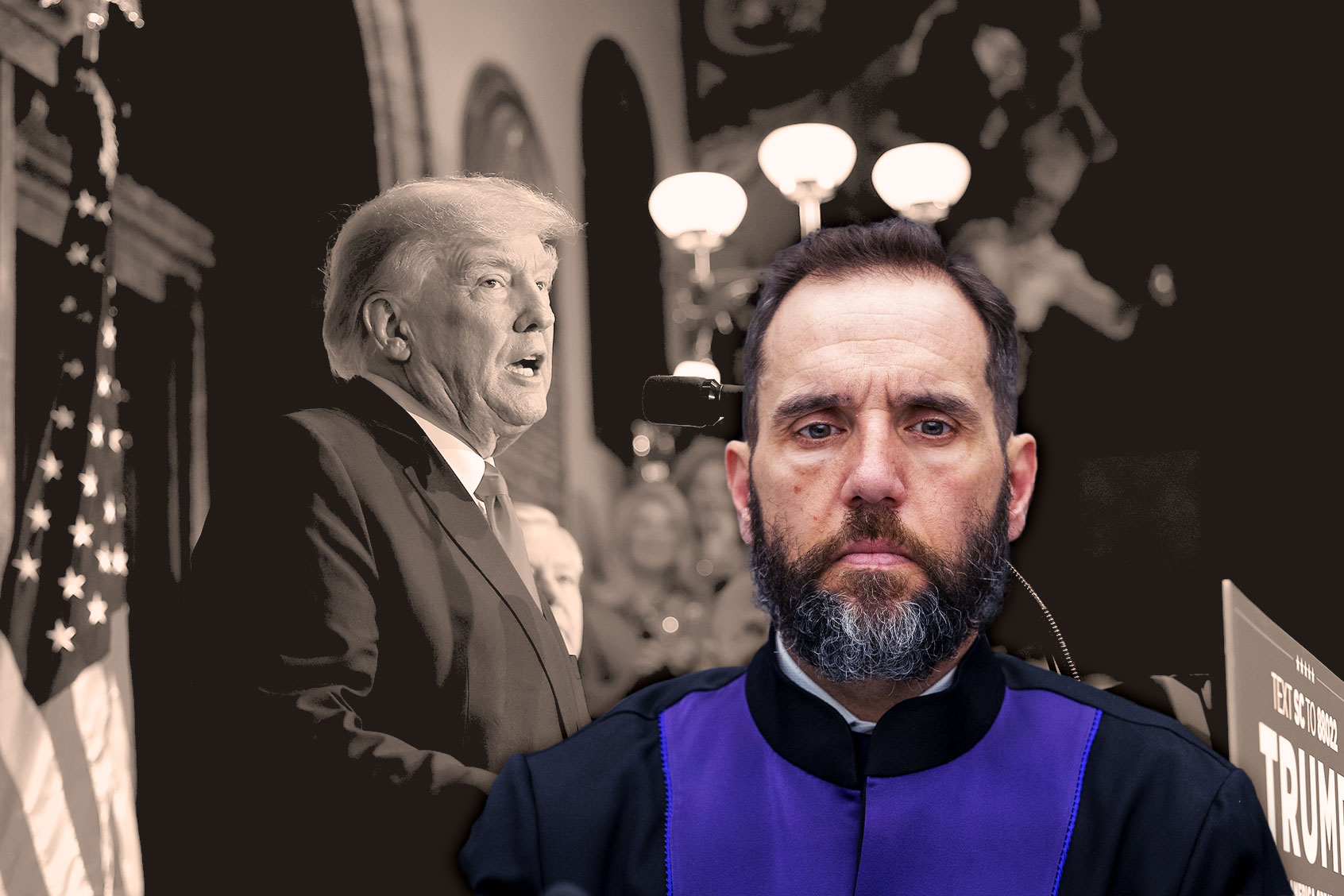
Donald Trump; Jack SmithFormer U.S. President Donald Trump and Prosecutor Jack Smith (Photo illustration by Salon/Getty Images)Image_placeholder
Status: Investigation ongoing

Case type: Criminal

Next: Smith reveals charges TBD
Parties: DOJ Special Prosecutor Jack Smith, Trump
Judge: Amit Mehtma

Stakes: Up to 5 years for mishandling classified information, up to 20 for obstruction


The DOJ is ramping up its evidence-gathering as it tried to determine whether Trump ordered Mar-a-Lago staff to shuffle around boxes of classified document to hide them from government officials last year. Notably, the surveillance footage related to this incident can’t be found. Most recently, Smith has issued a wave of new subpoenas — including some to the Trump Organization — and gotten the confidential cooperation of a witness who worked at Mar-a-Lago.


“The witness is said to have provided investigators with a picture of the storage room where the material had been held,” according to the New York Times.


Not much else is known about that witness, but at least five others from the resort have been subpoenaed and two people told the Times that “nearly everyone who works at Mar-a-Lago has been subpoenaed, and that some who serve in fairly obscure jobs have been asked back by investigators.” In a related line of Smith’s inquiry, prosecutors are looking into how Trump’s aides helped hire and pay for some of the witnesses’ lawyers.


The sticking point right now for Smith is a potential key witness, Trump’s valet, Walt Nauta. The DOJ needs to find out whether Trump had Nauta or other staff move the boxes. As reported, the DOJ came down a bit too hard on Nauta and spooked his lawyers, who then cut off talks with the government (prompting some high-rankers to catch heat in the DOJ for the flub).  


From “Evil Dead Rise” to “Clock,” motherhood is horror, but how we talk about it is worse

It’s one of those TV and film tropes that once you notice it, it’s hard to unsee: the traumatic awakening of a character’s superpowers. For female characters, this often comes after sexual violence, like a character developing telekinesis after sexual abuse in “Angel,” or Daenerys Targaryen in “Game of Thrones” coming into her own power and confidence following her wedding night assault by Khal Drogo, during which she sobbed.

This is a harmful trope, and in the last few years, screenwriters have finally started to realize women have other traumas. Let’s try pregnancy, childbirth and motherhood for a while! Is this less harmful? The recent films “Evil Dead Rise” and “Clock” present impending motherhood as sources of power and fury, but like the sexual violence tropes of yore, they dwell in dangerous and unrealistic absolutes. Embrace motherhood whole-heartedly or reject it, the films say. There is no between. But in the gray area is where most motherhood and pregnancy experiences — and the most interesting stories — actually lie.

In a review of “Evil Dead Rise” on Roger Ebert, critic Katie Rife writes “Not everything in this film works: A pregnancy subplot plays like it was written by a man, which it was.” The latest in the famous horror film franchise, “Evil Dead Rise” follows the reunion of two estranged sisters, which is complicated by a teen (the likable Morgan Davies) of one of the sisters finding a volume of the Naturom Demonto. The book is used to accidentally attack and possess unsuspecting Mom. In the subplot in question, sister Beth (Lily Sullivan), a guitar technician who lives a wild life of rock n’ roll, discovers she’s pregnant. 

The notion that becoming pregnant would make you both insta-strong and insta-into motherhood is both superficial and damaging.

With mom Ellie (Alyssa Sutherland) soon out of commission and soon after that, actively murdering, Beth must take control: of the situation and of the children. She does, becoming instantly strong in the way that very early pregnancy hormones must make you, according to the film. Beth also feels stirring in her belly when she assists one of the younger, cuter children with bath time. As someone who has been pregnant . . . what is happening here? Is this supposed to be maternal pining, or the fetus moving in her womb months before it actually would? Either way, she’s getting superpowers. 

Evil Dead RiseLILY SULLIVAN as Beth in (Courtesy of Warner Bros. Pictures)The film makes a big deal of how irresponsible and selfish Beth is. Ellie calls her a “groupie” repeatedly which is both pretty judgmental for a tattoo artist and also seems to indicate that Ellie doesn’t understand jobs. Beth is young. She’s flighty and wild, the film tells us, but with Mom out of the picture she has to rise, and luckily, being pregnant helps her do so. Getting impregnated will settle her, and fast. Nell Fisher as the youngest child Kassie tells her that she’d be a really good mother, and the film lays it on thick that she’s going to do it. She saves the child after all. She must be different and ready to give birth now. 

The best part of “Evil Dead Rise” is its nods to earlier films in the franchise, particularly when Beth, coated in blood and rearing back with a chainsaw, seems to be channeling hero Bruce Campbell. Sullivan bears a remarkable resemblance to Campbell, at least when blood-soaked (but so did Nic Cage in “Mandy”). But the notion that becoming pregnant would make you both insta-strong and insta-into motherhood is both superficial and damaging.

ClockElla (Dianna Agron) in “Clock” (Courtesy of Hulu)

If “Evil Dead Rise” takes an outdated and simplistic view of motherhood, “Clock” is an overcorrection that runs us off the road.

Hulu’s new horror outing “Clock” rejects some of these ideas. It rejects a lot, period. Airing in the recent wake of the fall of Roe, the film takes an “amusingly dreadful approach” to pregnancy and motherhood, the Wall Street Journal writes. What starts as a dark satire of a woman (Dianna Agron) who doesn’t want children, despite her nagging friends, takes an abrupt turn once Ella suddenly decides to check herself in for a secret, experimental procedure designed to “turn on” her biological clock. That procedure includes inserting an implant, which is sharp enough to cut someone later. But as Ella decides she doesn’t want the implant, she doesn’t want children, she also decides she doesn’t want a lot of things and goes on a dark, violent rampage leaving an important man in her life dead.

ClockElla (Dianna Agron) in “Clock” (Courtesy of Hulu)If “Evil Dead Rise” takes an outdated and simplistic view of motherhood, “Clock” is an overcorrection that runs us off the road. As Ella rejects motherhood with a character shift so quickly your head might spin like in the “Exorcist,” the film is, as the New York Times writes, “tantalizing us with thought-provoking ideas, only to abandon them.” We still don’t get a full picture of a person dealing (or not dealing) with pregnancy.


Want a daily wrap-up of all the news and commentary Salon has to offer? Subscribe to our morning newsletter, Crash Course.


The reality is, motherhood is complex, and feelings about it are complicated, personal and rarely figured out as fast as these films would have you believe. One of the problems with the way we talk about motherhood in this country is that you’re just expected to love it. And love it instantly and forever. One of the highest maternal mortality rates in the world, the persistence stigma of postpartum depression, preschool and daycare more expensive than mortgages and mass shootings daily, including at schools — what’s not to love?! 

One of the problems with the way pregnancy is written into TV and films is that you’re not actually an instant superhero, an instant nurturer and defender of the young —  or an instant rebel. You’re not instantly anything, and that’s OK. Pregnancy doesn’t dramatically or suddenly alter you, physically or emotionally. To suggest so implies that women weren’t real before they got pregnant, weren’t actualized or already complete.

We need to let people who are pregnant have their complicated, sometimes ambivalent or changing feelings, and we need to do a better job of producing stories that show pregnancy and motherhood, even in horror, as a spectrum of experiences. 

United pilots picket for better contract after American, Southwest counterparts authorize strikes

Following what the Air Line Pilots Association called “more than four years of empty promises,” 3,000 off-duty United Airlines pilots represented by the union protested at major airports across the U.S. on Friday, demanding the finalization of a contract with higher pay and humane scheduling practices.

“Thousands of United pilots are picketing coast-to-coast today to deliver management a message they cannot ignore: Enough is enough,” Capt. Garth Thompson, chair of the United ALPA master executive council, said in a statement.

“United management needs to stop slow-rolling negotiations… and do the right thing for their pilots.”

“We have been stuck with an antiquated scheduling system and a contract nowhere near industry-leading standards,” said Thompson. “We want United to succeed as industry leaders, and every day that passes without an agreement is another day the best and brightest future aviators go elsewhere.”

United pilots—joined by ALPA president Capt. Jason Ambrosi, fellow ALPA pilots, and union supporters—demonstrated in front of terminals at airports in 10 cities as well as outside the company’s flight training center in Denver.

Association of Flight Attendants-CWA president Sara Nelson was among those who participated in an act of solidarity.

“I am proud to stand here today to send United Airlines management a message that the airline’s pilots have the full backing of their international union in their fight for the contract they have earned,” said Ambrosi, who leads the 69,000-member union and joined a picket line in Chicago. “United management needs to stop slow-rolling negotiations that have dragged into their fifth year and do the right thing for their pilots.”

Management has failed “to recognize the value pilots bring to the overall success of the airline,” ALPA said. “United pilots were there for customers during one of the worst times for travel in recent history, and they also helped United Airlines emerge from the pandemic stronger than before.”

Thompson, who called Friday’s nationwide informational picket a “resounding success,” stressed that “United pilots will always be there for our customers.”

“Unfortunately,” he added, “the same cannot be said about management, who seems to think that a last-minute cancellation of a United pilot’s scheduled day off, or abrupt trip reassignments that extend into planned days off, is acceptable for a United pilot’s family.”

“This old pilot contract impacts our ability to maintain a healthy work-life balance,” Thompson continued. “United pilots will deal with this adversity in our usual professional and safe manner. We will continue to work in 2023 despite staffing shortages in Air Traffic Control facilities, aggressive summer schedules, capacity constraints, and weather.” However, he noted, “United pilots want the company and the public to know that the bold ‘United Next’ growth plans cannot work without an updated pilot contract.”

The action by United pilots comes in the wake of a pair of successful strike-authorization votes by pilots at other airlines.

On May 1, 95% of American Airlines pilots voted to authorize a strike. (Of the airline’s 15,000 pilots, 96% participated, with 99% expressing support for a possible strike).

“We will strike if necessary to secure the industry-leading contract that our pilots have earned and deserve—a contract that will position American Airlines for success,” said Capt. Ed Sicher, president of the Allied Pilots Association. “Our pilots’ resolve is unmistakable. We will not be deterred from our goal of an industry-leading contract.”

“The strike-authorization vote is one of several steps APA has taken to prepare for any eventuality and use all legal avenues available to us for contract improvement and resolution,” Sicher noted. “The best outcome is for APA and management to agree on an industry-leading contract—achieved through good-faith bargaining—benefiting our pilots, American Airlines, and the passengers we serve.”

On Thursday, 97% of Southwest pilots voted to authorize a strike. (Of the airline’s 10,000-plus pilots, 98% participated, with 99% expressing support for a possible strike).

“This is a historic day, not only for our pilots but for Southwest Airlines,” said Capt. Casey Murray, president of the Southwest Airlines Pilots Association. “The lack of leadership and the unwillingness to address the failures of our organization have led us to this point. Our pilots are tired of apologizing to our passengers.”

Murray and other union leaders have attributed Southwest’s meltdown last winter to executives’ yearslong refusal to invest in much-needed technological upgrades despite benefiting from billions of dollars in federal aid during the first two years of the Covid-19 pandemic.

“We want our passengers to understand that we do not take this path lightly,” Murray said Thursday. “We want our customers to be prepared for the path ahead and make arrangements on other carriers so that their plans through the summer and fall are not disrupted.”

United’s 14,000 pilots could be next in line to vote on strike authorization.

As The Associated Press reported Saturday, “Pilots at all three carriers are looking to match or beat the deal that Delta Air Lines reached with its pilots earlier this year, which raised pay rates by 34% over four years.”

“United has proposed to match the Delta increase, but that might not be enough for a deal,” AP observed. Citing Thompson, the outlet noted that “discussion about wages has been held up while the two sides negotiate over scheduling, including the union’s wish to limit United’s ability to make pilots work on their days off.”

The nation’s pilots “are unlikely to strike anytime soon, however,” AP reported. “Federal law makes it very difficult for unions to conduct strikes in the airline industry, and the last walkout at a U.S. carrier was more than a decade ago.”

“Under U.S. law, airline and railroad workers can’t legally strike, and companies can’t lock them out, until federal mediators determine that further negotiations are pointless,” the outlet explained. It continued:

The National Mediation Board rarely declares a dead end to bargaining, and even if it does, there is a no-strikes “cooling-off” period during which the White House and Congress can block a walkout. That’s what President Bill Clinton did minutes after pilots began striking against American in 1997. In December, President Joe Biden signed a bill that Congress passed to impose contract terms on freight railroad workers, ending a strike threat.

Regardless of the legal hurdles to a walkout, unions believe that strike votes give them leverage during bargaining, and they have become more common. A shortage of pilots is also putting those unions in particularly strong bargaining position.

Although Congress is highly unlikely to permit an airline strike, disgruntled pilots could still cause disruption through “work to rule,” Arthur Wheaton, director of labor studies at Cornell University, told AP.

“They could say, ‘We’re not working any overtime,'” said Wheaton. “I don’t anticipate the pilots trying to screw up travel for everybody intentionally, but bargaining is about leverage and power… having the ability to do that can be a negotiating tactic.”

Why is the Biden White House still selling weapons to authoritarian nations?

President Joe Biden claims that the United States is leading “democracies” in a fight against “autocracies” to establish a peaceful international order, but his administration approved weapons sales to nearly three-fifths of the world’s authoritarian countries in 2022.

That’s according to a new analysis conducted by Security Policy Reform Institute co-founder Stephen Semler and published Thursday in The Intercept.

The U.S. has been the world’s largest arms dealer since the end of the Cold War. Data released in March showed that the U.S. accounted for 40% of global weapons exports from 2018 to 2022.

As Semler explained:

In general, these exports are funded through grants or sales. There are two pathways for the latter category: foreign military sales and direct commercial sales.

The U.S. government acts as an intermediary for FMS acquisitions: It buys the materiel from a company first and then delivers the goods to the foreign recipient. DCS acquisitions are more straightforward: They’re the result of an agreement between a U.S. company and a foreign government. Both categories of sales require the government’s approval.

Country-level data for last year’s DCS authorizations was released in late April through the State Department’s Directorate of Defense Trade Controls. FMS figures for fiscal year 2022 were released earlier this year through the Pentagon’s Defense Security Cooperation Agency. According to their data, a total of 142 countries and territories bought weapons from the U.S. in 2022, for a total of $85 billion in bilateral sales.

To determine how many of those governments were democratic and how many were autocratic, Semler relied on data from the Varieties of Democracy project at the University of Gothenburg in Sweden, which uses a classification system called Regimes of the World.

“Of the 84 countries codified as autocracies under the Regimes of the World system in 2022, the United States sold weapons to at least 48, or 57%, of them,” Semler wrote. “The ‘at least’ qualifier is necessary because several factors frustrate the accurate tracking of U.S. weapons sales. The State Department’s report of commercial arms sales during the fiscal year makes prodigious use of ‘various’ in its recipients category; as a result, the specific recipients for nearly $11 billion in weapons sales are not disclosed.”

“The Regimes of the World system is just one of the several indices that measure democracy worldwide, but running the same analysis with other popular indices produces similar results,” Semler observed. “For example, Freedom House listed 195 countries and for each one labeled whether it qualified as an electoral democracy in its annual Freedom in the World report. Of the 85 countries Freedom House did not designate as an electoral democracy, the United States sold weapons to 49, or 58%, of them in fiscal year 2022.”

Despite the White House’s lofty rhetoric, it is actively bolstering the military power of a majority of the world’s authoritarian countries, from Saudi Arabia and the United Arab Emirates to dozens of others, including some overlooked by researchers at the University of Gothenburg.

For instance, the Varieties of Democracy project characterizes Israel as a “liberal democracy” even though human rights groups around the world have condemned it as a decidedly anti-democratic apartheid state. Washington, meanwhile, showers Israel with $3.8 billion in military support each year, resources that the government uses to violently dispossess and frequently kill Palestinians at will.

As Semler put it Saturday in his “Speaking Security” newsletter, “These findings fly in the face of Biden’s preferred framing of international politics as a “battle between democracies and autocracies.”

The president’s narrative “lends itself more to a self-righteous foreign policy than an honest or productive one,” Semler argued. “Dividing the world between democratic and autocratic countries—in the spirit of ‘with us or against us’—makes conflict more likely and has had a chilling effect on calls for diplomacy and détente. It’s also harder to cooperate with the international community while insisting you’re locked in an existential fight with roughly half of them.”

I always loved hip-hop, but Nas transformed me into a fan, which ultimately changed my life

Who would’ve thought that a street form of music – that many said wouldn’t last, created by a collection of disenfranchised Black and brown kids from the Bronx – would grow into a billion-dollar industry, while producing generational wealth for the written-off, inspire every cultural inch of the globe in some way and would surpass rock as the most popular genre in the United States?  Well, we thought it – and you would have thought it too if you were there. 

Hip-hop is older than me, so I was born into a culture still in its infancy. And I’m from Baltimore, not the Bronx, meaning I don’t necessarily have a connection to the genre’s place of origin. Still, I do, as the two cities are connected by poverty and pain. We speak the same other-America language, you know – the schools are broken, cops and politicians participate in lying contests, and making it to 25, sometimes 21, is a pipedream because if the cops don’t get you and stick up, kids don’t get you, then the system would. 

Some murders occurred in my east Baltimore neighborhood – three that I remember clearly before I turned 8. And I was too young to drown in my own tears or chime in when the older kids screamed revenge, so I just listened, often with a feeling of urgency. Everything had started becoming more urgent around that time – I needed a goal, a plan and some experience because life could end as soon as today. One of the murdered three was a year younger than me. 

One of the murdered three was a year younger than me.

Music had become one of the strongest coping mechanisms for some of the other kids in the neighborhood. They always talked about the ways Public Enemy, Kool G Rap, Rakim, and KRS 1 spoke to our experience. Big Teddy from across the street was in awe with the KRS 1’s “Love Gonna Get’cha (Material Love).”

It wasn’t strange to see Big Ted, who was only three years older than me, poke his head out of weed smoke, just to chant:

Money’s flowin’, everythin’ is fine
Got myself an Uzi and my brother a nine
Business is boomin’ everything is cool
I pull about a G a week; f**k school!
A year goes by and I begin to grow
Not in height but juice and cash flow

While Big Teddy put on this mini performance, he would flash his pistol on the part where KRS1 said “nine” and then wave a wad of cash or parts where “G” and “cash flow” were mentioned. The tragedy was that the song did not glorify guns and drug dealing – it was the rapper’s conscious attempt at explaining the consequences of a life of crime. Material love displayed the ugly side capitalism and chasing luxury items over love, family, and knowledge, but no one taught us that. 

Dude kept like 50 cassette tapes in his backpack, carrying everything from A Tribe Called Quest and Leaders Of The New School to west coast acts like MC Eiht and Too Short.

I really enjoyed the music as a small kid, but wasn’t honestly transformed by hip-hop until I heard a mix tape, from the unreleased Nas album “Illmatic” back in 1993. Now, the album didn’t come out until 1994, but hip-hop artists used to release tracks on mix tapes in the effort to see how the streets was going to engage with the upcoming albums. This let them know what kinds of songs were going to make the final cut and more importantly, what singles to drop. 

Illmatic by Nas“Illmatic” by Nas (Sony)

I was tying my Nikes extra tight on the basketball court, when Duncan planted has boom box at the end of the bench. Duncan wasn’t much of a ballplayer, but definitely leaped at any chance to provide the soundtrack. Dude kept like 50 cassette tapes in his backpack, carrying everything from A Tribe Called Quest and Leaders Of The New School to west coast acts like MC Eiht and Too Short. But on this day, Duncan didn’t really speak, he didn’t tell us what he was about to play, he didn’t do anything, except pop in a tape, cranked up the volume and put his head down in a nod as a raspy voice projected out of the speakers telling the biggest lie in hip-hop history, “I don’t know how to start this s**t, yo – now.”

Nas knew exactly how to start it. 

Rappers; I monkey flip ’em with the funky rhythm
I be kickin’, musician inflictin’ composition
Of pain, I’m like Scarface sniffin’ cocaine
Holdin’ an M16, see, with the pen I’m extreme
Now, bullet holes left in my peepholes
I’m suited up with street clothes, hand me a 9 and I’ll defeat foes
Y’all know my steelo, with or without the airplay
I keep some E&J, sittin’ bent up in the stairway
Or either on the corner bettin’ Grants with the cee-lo champs
Laughin’ at base-heads, tryna sell some broken amps

Everybody ran over toward the boom box, demanding a rewind. Some kids yelled, “Who is that?!” 

“Nas,” Duncan said as he rewound tape, “Nas.”

The cocktail of his voice and the simple but gritty beats screamed at me. The artist along with his entire existence were foreign to me, but instantly seemed so relatable. 

The image of a base head (what some called crack addicts back in the early ’90s) trying to sell some broken speakers, felt like my neighborhood, it felt like home. We hid our video games, speakers and radios from our addicted family members because we knew they could be snatched away in an instant. It wasn’t a vanilla depiction of a street experience, it was a portrait, a snapshot of what was happening directly across the street from the basketball court, all through our blocks and buildings and in our homes. 

G-packs get off quick, forever n****s talk s**t
Reminiscin’ about the last time the task force flipped
N****s be runnin’ through the block shootin’
Time to start the revolution, catch a body, head for Houston
Once they caught us off-guard, the MAC-10 was in the grass, and
I ran like a cheetah, with thoughts of an assassin
Picked the MAC up, told brothers “Back up!” — the MAC spit
Lead was hittin’ n****s, one ran, I made him back-flip
Heard a few chicks scream, my arm shook, couldn’t look
Gave another squeeze, heard it click, “Yo, my s**t is stuck!”
Tried to cock it, it wouldn’t shoot, now I’m in danger
Finally pulled it back and saw three bullets caught up in the chamber

The song has two long tangled verses, but separating them down into poetic stanzas gives me the opportunity to pluck the images that were defining a poor Black early ’90s experience. The quote above references heading to Houston after getting in trouble, which has been a uniquely Northern experience. So many Black people from New York all the way down to DC have roots in the Deep South, including the Carolinas, more southern parts of Virginia and Texas. Sending your kids south was the cure for arrest warrants, teen pregnancy, a poor performance in school, being bullied or anything your parents couldn’t handle at that particular time. The Fresh Prince was from Philly, and they sent dude all the way to Bel-Air because of a fist fight. 

And there’s the task force flipping, something extremely common during the crack era when the album was created. Plain clothes cops who we called Knockos or Knockers, used to pull up on our fronts when their arrest stats were low, and chase us and cuff us  and pound on us and plant what they could on who ever they caught.

We complained about this for years in Baltimore, and no one listened until these actions lead to the death of Baltimore City Homicide Detective Sean Suiter

So, now I’m jettin’ to the buildin’ lobby
And it was full of children, prob’ly couldn’t see as high as I be
(So, what you sayin’?) It’s like the game ain’t the same
Got younger n****s pullin’ the triggers, bringin’ fame to their name
And claim some corners, crews without guns are goners
In broad daylight, stick-up kids, they run up on us
.45’s and gauges, MAC’s in fact
Same n****s will catch you back-to-back, snatchin’ your cracks
In black, there was a snitch on the block gettin’ n****s knocked
So hold your stash ’til the coke price drop

The high-level poetry continues throughout the song when Nas gives of image of running through his building, high trying to escape, wondering if children are scattered, probably not trying to hit them, or include them in the ensuing violence. But how do you protect the children when that are in the same fire as you?  

I know this crackhead who said she gotta smoke nice rock
And if it’s good, she’ll bring you customers and measuring pots
But yo, you gotta slide on a vacation
Inside information keeps large n****s erasin’ and their wives basin’
It drops deep as it does in my breath
I never sleep, ’cause sleep is the cousin of death
Beyond the walls of intelligence, life is defined
I think of crime when I’m in a New York State of Mind

People suffering from addiction where a vital part of society. Obviously the users were customers, but they also brought supplies to the dealers in exchange for product when their money was short. Some of those same users and dealers also gave information to the police that left kingpins in prison and their wives using as a result to dealing with the pressure of having an incarcerated spouse. 

The underworld felt like the only way to achieve social mobility for many of us. 

Be havin’ dreams that I’m a gangsta, drinkin’ Moëts, holdin’ TEC’s
Makin’ sure the cash came correct, then I stepped
Investments in stocks, sewin’ up the blocks to sell rocks
Winnin’ gunfights with mega-cops
But just a n**** walkin’ with his finger on the trigger
Make enough figures until my pockets get bigger
I ain’t the type of brother made for you to start testin’
Give me a Smith & Wesson, I’ll have n****s undressin’
Thinkin’ of cash flow, Buddha and shelter
Whenever frustrated, I’ma hijack Delta
In the PJ’s, my blend tape plays, bullets are strays
Young women is grazed, each block is like a maze
Full of black rats trapped, plus the Island is packed
From what I hear in all the stories when my peoples come back

Dreaming of being a gangster is something constantly handed down to us. Professions like doctors and lawyers never quite seem within reach. After all, lawyers were in the courts, and we only saw them through the lens of criminal justice, and who in the hell knew a real medical doctor? So, the Scarface reference was on brand and touched so many people in urban America, especially since it told the tale of an immigrant who came from the bottom and fought his way to the top via the underworld, as the underworld felt like the only way to achieve social mobility for many of us. 

Nas also references a gun problem that is so bad that even innocent women are grazed in his housing project complex Queens Bridge, which was really like a maze full of rats. New York just hired a rat czar. “The Island is Pack” refers to Rikers –  at the beginning of what we eventually call the prison industrial complex. Young black men from the neighborhood were shipped in as if on a conveyor belt, coming out unemployable in many situations, destined to return. 

Black, I’m livin’ where the nights is jet-black
The fiends fight to get crack, I just max, I dream I can sit back
And lamp like Capone, with drug scripts sewn
Or the legal luxury life, rings flooded with stones, homes
I got so many rhymes, I don’t think I’m too sane
Life is parallel to Hell, but I must maintain
And be prosperous, though we live dangerous
Cops could just arrest me, blamin’ us; we’re held like hostages
It’s only right that I was born to use mics
And the stuff that I write is even tougher than dice
I’m takin’ rappers to a new plateau, through rap slow
My rhymin’ is a vitamin held without a capsule
The smooth criminal on beat breaks
Never put me in your box if your s**t eats tapes
The city never sleeps, full of villains and creeps
That’s where I learned to do my hustle, had to scuffle with freaks
I’m a addict for sneakers, 20’s of Buddha and girls with beepers
In the streets I can greet ya, about blunts I teach ya
Inhale deep like the words of my breath
I never sleep, ’cause sleep is the cousin of death
I lay puzzled as I backtrack to earlier times
Nothing’s equivalent to the New York state of mind

I played the song over and over again – until I captured every reference, every rhyme and every image and then played it more. 

I even played it for Big Teddy and a collection of other brothers serving time in a youth jail for petty drug crimes. They lined up by the phone for individual listens or pressed their ears to the receiver as a collective, saying, “Run it back!” as soon as the song ended, and I did. 

The album, especially that song “N.Y. State of Mind,” became a part of me. About 20 years after its initial release, when I officially attempted to begin my own writing career, Nas and “Illmatic” remained my most significant influence. Toni Morrison and James Baldwin were the best, but hip-hop and Nas made me feel like I could do it too. 

Happy 50th birthday to hip-hop. Without it, many of us, wouldn’t be here. 


The battle against fascism in Florida: Lessons on how to beat back authoritarianism from abroad

Florida has become the epicenter of a struggle between authoritarianism and those committed to freedom and justice for all. Republican Gov. Ron DeSantis has cast doubt on the legitimacy of the 2020 election, actively campaigned for election deniers, embraced divide-and-rule politics, and enacted extreme policies that gut fundamental freedoms enshrined in Florida’s and the US Constitution. These policies, grounded in racial resentment, misogyny, homophobia, and the punishment of opponents using state power, come straight from the global authoritarian playbook and are already spreading from Florida to other state legislatures across the country. Attacks on fundamental rights and freedoms are only likely to accelerate should DeSantis’ clear 2024 presidential ambitions be realized. 

But Floridians are not sitting idly by. 

Daily walkouts, sit-ins, marches and teach-ins led by students, teachers, parents, and other civic groups are happening across the state. People are sounding the alarm about the existential threat to US democracy DeSantis represents, while mobilizing around an alternative vision of a Florida for all. Stopping DeSantis’ march to the White House will take a united democratic front of movements, labor organizers, business and faith leaders, veterans’ groups, and exile communities both inside Florida and across state borders. Beyond that, addressing the deeper roots of authoritarianism in America will require an even bigger and bolder movement that makes the triumph of a pluralistic, multi-racial democracy a generational achievement.  

Part I: The Authoritarian Playbook  

Twenty-first-century authoritarian leaders follow a similar playbook: build power by demonizing the “other,” then use that power to punish any opposition and cut off any ways of threatening their power, typically by undermining elections, capturing democratic institutions, and neutralizing dissent. 

Demonizing and dehumanizing the other is the first step. Would-be autocrats tap into people’s fears related to safety, status, and well-being, and create scapegoats among marginalized communities. They establish these “others” as irredeemable enemies and argue that state power is necessary to suppress their threat. This strategy both mobilizes autocrats’ supporters and suppresses their potential opponents.

The LGBTQ+ community is often a favored first target. Russian President Vladimir Putin and ex-Brazilian president Jair Bolsonaro have frequently spouted homophobic and transphobic stereotypes while gutting LGBTQ+ protections and encouraging violence towards sexual and gender minorities. Immigrants, asylum seekers, and undocumented workers (particularly from historically excluded racial or ethnic groups) are common scapegoats too, as seen in Italy, Greece, and Hungary.

After attaining and consolidating power through this divide-and-rule  strategy of “othering,” autocrats seek to then ensure that no challenge to them can stand by using state power to punish opponents, undermine civil and political rights, and hollow out accountability institutions like independent courts or free and fair elections. This is often done subtly and legally, using democratic means to gut the very essence of democracy.  

Attacking fundamental civil and political rights, such as the freedoms of assembly and speech, is a key part of this strategy. Often justified on grounds of “protecting law and order” and “preserving the peace”, anti-protest laws have been expanding rapidly around the world. Nicaragua’s dictator Daniel Ortega has passed “anti-terrorism” laws to target those who protest his regime, while Cuba’s newest criminal code expands the criteria for prosecution and increases the penalties for violations. Other autocrats have attacked free speech in higher education, a historic bastion of dissent. In Hungary, Victor Orban pushed out Central European University based on anti-Semitic far-right tropes. Similar attacks are occurring in Mexico, Turkey, and Nicaragua.

Meanwhile, restricting women’s reproductive rights is commonplace among  authoritarian governments. In recent years a number of democratic backsliding countries have reduced or limited access to abortion, including Poland, Hungary, and Brazil.

Often, autocratic leaders will embrace or turn a blind eye to political violence. They will refuse to denounce conspiracy theories (such as the “great replacement theory” that leftists and minorities are out to strip whites of power, that the LGBTQ+ community is responsible for “grooming” or harming children, or that free and fair elections have been rigged) until those theories become mainstream and pave the way to political violence 

Ron DeSantis has embraced all these elements of the authoritarian playbook. The eerie similarity to global autocrats is no coincidence.  Like authoritarians around the world, DeSantis and the GOP leadership have been directly inspired by global autocrats, and have developed a particularly special relationship with Hungary’s far-right leader, Viktor Orban.

The impact of this relationship is clear in DeSantis’ particular politics of divide and rule. Nine months after Hungary’s government passed a law cracking down on LGBTQ+ rights, DeSantis followed suit. Orban described his country’s anti-LGBTQ+ law as an effort to prevent gay people from preying on children. Similarly, DeSantis’ press secretary, Christina Pushaw described Florida’s Parental Rights in Education law (the “Don’t Say Gay” law), as an “anti-grooming bill,” referring to a common slur directed at LGBTQ+ people.

In the wake of the 2020 Black Lives Matter protests, DeSantis went on an “anti-woke” crusade,  focusing on schools and higher education, which included passing the Stop W.O.K.E act to eliminate content related to structural racism, homophobia, misogyny, and classism, from classrooms; eliminating AP African American Studies classes from Florida high schools; and passing new education bills that would grant power to remove majors associated with critical race theory, prohibit public colleges and universities from spending money on programs focused on diversity, equity and inclusion, and make it easier to push out tenured faculty.

DeSantis has also expanded state power to target immigrants and undocumented people. Last September, he denounced liberal policies around immigration and the creation of “sanctuary cities” and arranged flights from Texas to Martha’s Vineyard for migrants. New legislation makes it a felony to “knowingly transport, conceal, or harbor illegal aliens”, affecting hundreds of thousands or even millions of Floridians.

Following other autocrats, DeSantis recently signed legislation that would ban most abortions after six weeks. This is despite the two-thirds of Floridians who support the right to abortion, as well as the numerous legal and voter initiatives to reaffirm these rights. 

DeSantis has also embraced the second half of the authoritarian playbook. While keeping Floridians distracted by his actions towards demonizing  “others,” he has sought to undermine the rights, protections, and institutions that could be used to challenge him. He has cast doubt on free and fair elections, for instance by elevating election deniers and not taking a clear public stand about Biden’s victory in the 2020 election. And he actively seeks to limit the franchise of potential opponents – most prominently through a law that bars returning citizens from voting unless they pay felony conviction fines. The law runs directly counter to a constitutional amendment restoring voting rights to most Floridians with past felony convictions, and disproportionately disenfranchises Black Floridians.

He has also aggressively sought to undermine the right to protest. In 2021 he signed into law a bill that enlarges the definition of “riot” and makes committing the crime a felony, which even the United Nations criticized for violating the fundamental human right of peaceful assembly.

 DeSantis has aggressively used state power to punish opponents and critics, most prominently through his revocation of the Disney Corporation’s special tax status in Florida, and through signing a bill that punishes tech companies for moderating extremist right-wing rhetoric. The eerie autocratic parallel here is Nicaraguan dictator Daniel Ortega, who recently canceled the legal status of 18 private sector organizations.

DeSantis has singled out government officials with opposing viewpoints with punishment. Last year, DeSantis suspended Hillsborough State Attorney Andrew Warren, whom DeSantis accused of prosecuting cases under “woke ideology”. Similarly, prosecutor Monique Worrell is currently under investigation by the DeSantis administration. Nikki Fried, chair of the Florida Democratic Party and a state Senate Democratic leader were controversially arrested during a peaceful protest of the state’s abortion bill. Meanwhile, DeSantis has targeted local school boards, elevating groups like Moms for Liberty to go after opponents and boost pro-DeSantis candidates in school board elections. During the pandemic, he stripped local government agencies, including the state medical board, of the ability to make public health decisions. This bureaucratic capture has allowed DeSantis to further consolidate power.

Part II: The Authoritarian System

DeSantis’ authoritarianism in Florida, and its expansion nationally, is enabled by organizations and institutions that provide him with the resources to sustain his power. Organizational pillars including political parties, state governments, religious institutions, media outlets, corporations, and private donors. If support from these key pillars is withdrawn, or simply diminished, autocrats’ are weakened. This highlights why going on offense and engaging these pillars in pro-democracy movements is so critically important. 

One of DeSantis’ strongest power sources is a GOP state and national party dominated by an authoritarian faction that thrives on conspiracy theories and election denialism, and cozies up to far right and white supremacist groups. Florida contains over twenty anti-government militias, including the heavy presence of Proud Boys, who have mobilized to support “anti woke” school board candidates. In contact with local Proud Boys, QAnon conspiracist and white nationalist General Michael Flynn has made Sarasota his homebase for militia action in support of DeSantis’ attacks on education and LGBTQ+ communities. Most moderate GOP politicians in Florida have either left office, lost primaries, or capitulated to DeSantis’ agenda.


Want a daily wrap-up of all the news and commentary Salon has to offer? Subscribe to our morning newsletter, Crash Course.


DeSantis’ extremism is enabled by media outlets including Fox News, which provides free media amplification of MAGA authoritarianism, and bilingual outlets like Americano Media, described by its owner as “Fox News in Spanish.” Radio and TV outlets have been bought out by far-right groups that have turned them into vehicles for election and COVID disinformation, authoritarianism, anti-immigrant and anti-Black propaganda. 

Business has also been a key pillar of support for DeSantis. He has received millions of dollars in campaign donations from conservative business leaders Ken Griffin, Robert Bigelow, Jeffrey Yass, Bernie Marcus, and Jude and Christopher Reyes. Large corporations, such as Amazon, Walmart, AT&T, and Comcast are directly or indirectly tied to funding DeSantis’ campaign. Smaller businesses fund DeSantis’ campaigns and receive a multifold increase in government contracts from the DeSantis administration. Major think tanks such as the Club for Growth, the Manhattan Institute, the Claremont Institute, and Heritage Foundation provide the policy framework for DeSantis’ politics. In sum, these pillars of support supply the financial and intellectual scaffolding for DeSantis to consolidate and expand his power.

Together, these pillars of support have enabled DeSantis to out-organize the Democratic party in recent years, particularly with Latinos. DeSantis won reelection in 2022 by a 19-point margin and was the first Republican gubernatorial candidate in 20 years to win predominantly Hispanic Miami-Dade County. He received 58% of the Latino vote, including 68% of Cuban Americans and 56% of Puerto Ricans. Republican victories across the state gave the GOP a super-majority in both chambers of the state legislature.

Yet these widely touted electoral results mask a deeper weakness in DeSantis’ far-right agenda. Many of DeSantis’ actual policies are deeply unpopular. While DeSantis may currently have high approval ratings, a robust and well-resourced pro-democracy movement to expose his extremism and anti-democratic proclivities and weaken his pillars of support could rapidly turn the tide in Florida against him. 

Part III: The pro-democracy movement 

There is significant pro-democracy organizing across Florida to build upon. Florida students led statewide protests against the “Don’t Say Gay” legislation in 2020. They have joined forces with parents, educators, and civic groups like Equality Florida and the ACLU to file a federal lawsuit against DeSantis and the state’s Board of Education. Groups formed after DeSantis’ hostile take-over of New College of Florida, including the Alliance to Reclaim Our Schools, Families for Strong Public Schools, and the Novo Collegian Alliance, have also been organizing students, teachers and alumni across the state, while organizations like Showing Up for Racial Justice have been organizing white Floridians to push back against DeSantis’ policies.

Several multi-racial organizations, including Florida Rising, have organized “Wake-Up Wednesdays“during the 2023 legislative session to mobilize people in Tallahassee to protest harmful bills and advocate for an alternative vision of Florida for all Floridians. Earlier this month, at the conclusion of the legislative session, members of the Dream Defenders, an activist group set up following Trayvon Martin’s killing in Sanford, FL in 2012, staged a singing-filled sit-in in DeSantis’ Capitol office, with 14 accepting arrest.    

While DeSantis’ anti-abortion and anti-woke policies have been popular with many Catholics and Evangelicals in Florida and around the country, there is evidence that he has gone too far, even with these communities. 

In addition to grassroots organizing, engaging key institutional pillars is critical to  successful pro-democracy movements. Historically, labor unions and professional associations have been one of the most important of these pillars. They possess robust networks and powerful organizing tactics which can pressure governments, as seen recently in India, South Korea, Israel, and France

The success of the Fight for $15 campaign in Florida is a great example of how effective labor organizing, backed by other key pillars, can outmaneuver a heavily resourced opponent. The campaign used a combination of media interviews, digital organizing, phone banking, and direct action, including strikes, to connect with Floridians across the political spectrum, including many small business owners. The campaign appealed to fiscal conservatives by arguing that low wages forced people to rely on food stamps and mobilized many Republicans among the working poor as well.

More recently, teachers’ unions have been at the forefront of resisting DeSantis. Teacher unions have spoken out against DeSantis’ policies and are currently leading a lawsuit against the state education department.

Businesses are a key pillar of support for authoritarian regimes, providing them with important financial, economic, and ideological resources. When businesses withhold that support from autocrats, as we’ve seen in South Africa, the Philippines, and most recently in Israel, this significantly diminishes their power. Key groups like the Chamber of Commerce and the National Association of Manufacturers pushed back against Donald Trump and his GOP enablers’ attempt to prevent a peaceful transfer of power after the 2020 election. 

DeSantis has attacked Disney and other large corporations that he accuses of “woke capitalism.” In response several corporations have signed a petition opposing anti LGBTQ+ legislation, while Disney announced that it will host a LGBTQ workplace summit in Florida with several other Fortune 500 companies. Since DeSantis thrives on the perception that he is an underdog taking the fight to big corporations, targeting Florida businesses that are providing economic and ideological support to DeSantis, and drying up financial support from national-level figures like Ken Griffin and Bernie Marcus, could be particularly effective.

The business community has also pushed back against DeSantis’ anti-immigrant policies. After the governor  announced his legislative plan to counter illegal immigration, business leaders issued a joint statement opposing it. The statement highlighted both the human and economic cost of these policies for ordinary Floridians, and condemned DeSantis for sacrificing Florida’s interests for the sake of his presidential ambitions.

A strengthened pro-democracy alliance between business and faith communities in Florida could be particularly potent. Faith communities have been bedrock actors in movements for rights and freedoms in the United States and worldwide. Black churches’ role during the civil rights movement, and more recent pro-democratic organizing by chaplains and religious leaders are cases in point.

DeSantis is a practicing Catholic who has portrayed himself as a faith and family warrior battling the evils of abortion and LGBTQ+ culture. While DeSantis’ anti-abortion and anti-woke policies have been popular with many Catholics and Evangelicals in Florida and around the country, there is evidence that he has gone too far, even with these communities. 

In February 2022, Miami Archbishop Thomas Wenski harshly criticized DeSantis for comments he made regarding the influx of unaccompanied children at the US-Mexico border. More recently, DeSantis attracted the ire of Florida’s Catholic Church, including the influential Conference of Catholic Bishops, when he voiced support for expanding the death penalty in the state. Other denominations, including Evangelicos for Justice, have joined Catholic leaders in denouncing DeSantis’ embrace of the death penalty.

The small but influential Latino evangelical community has found itself at odds with DeSantis’ anti-immigrant policies. Last February, after DeSantis took punitive action against those sheltering unaccompanied migrant children, more than 200 faith leaders and pastors of Spanish-speaking churches traveled to Tallahassee to protest the governor. Some leaders said they would be willing to engage in civil disobedience against the law if it’s enacted. One of those leaders, Carlos Carbajal, who leads an immigrant evangelical congregation in Miami, said that “allowing politics to interfere in the decision-making of congregations would be a betrayal of the gospel.”

The recent statement by the Florida Immigrant Coalition, together with business and faith leaders condemning DeSantis’ “draconian” immigration measures is a key building block for future organizing. DeSantis’ refusal to denounce neo-Nazis in Florida, prompting outrage from Jewish and Muslim communities, highlights another crack in his edifice of support. The effort by a group of clerics to sue DeSantis over his abortion law, on grounds that it violates religious freedom, highlights the power and potential of cross-faith, cross-denominational organizing in defense of democracy. 

Veterans and military families, which have guarded against autocratic encroachment in numerous countries, are another key pillar for the Florida pro-democracy movement. Military members take a vow to defend against enemies foreign and domestic, and the respect society gives them provides a unique opportunity to speak out against anti-democratic practices. There are nearly 1.5 million veterans in Florida.

DeSantis has used his own military service to propel his political career, and references to that service are core to his political narrative. For this reason, voices of dissent from veterans’ groups and military families are particularly important to challenging his narrative. A well-coordinated campaign by veterans to challenge his authenticity and reveal the ways in which authoritarian creep is antithetical to the values of military service would hold much promise. 

Veterans made some of the earliest criticisms of DeSantis during his first gubernatorial run against Democrat Andrew Gillum. After DeSantis made comments about Gillum that were widely interpreted as racist dog whistles. Members of VoteVets (alongside other organizations) rallied in downtown Tampa. At the rally, Jerry Green, the Florida Outreach Director of VoteVets said: “…this kind of vile racism makes all of us veterans look bad. And Ron DeSantis, when he uses these dehumanizing racial terms to describe a Black man betrays us and what we fought for.” 

DeSantis also passed legislation to reinforce false claims around voting security, especially vote-by-mail ballots. These measures hurt U.S. service members who frequently vote by mail. Several organizations attempted to challenge voter restrictions following the 2018 election. Veterans like Justin Straughan have joined others in criticizing the legislation, noting how important it is for service members to have robust mail-in ballot infrastructure. 

Finally, given the strength of Latino exile communities in Florida, including many that have fled authoritarian regimes, the creative use of Spanish, Creole, and Portuguese-language media to draw attention to DeSantis’ authoritarian policies could significantly advance the pro-democracy movement. Creative and culturally-informed language is critical. For instance, the term “progresista” has a negative connotation for many Hispanic exile communities, who associate the term, along with symbols like clenched fists with socialist dictators like Castro and Chavez. DeSantis and his backers use this to paint the opposition as far-left extremists, furthering their politics of divide and rule.

Gun violence prevention is important to the many Floridians who have escaped violence in their country of origin, as well as non-Hispanic Black and Brown communities who experience the worst forms of gun violence in the US. The fact that 61% Floridians and 71% Hispanic voters oppose permitless carry, which Governor DeSantis recentl  passed into law, highlights another issue that could galvanize pro-democratic organizing.

There are many existing nodes of pro-freedom, pro-democracy organizing in Florida, as well as support from within key pillars – the key is strengthening coordination between them.   

 Part IV: The Way Ahead

The situation in Florida clearly represents a threat to American democracy. The way DeSantis and the Florida legislature are operating is comparable to autocrats worldwide. While the situation is urgent, much can be done to mitigate the effects of DeSantis’ harmful policies in Florida and across the country, while preventing his authoritarian march to the White House.

First, there is a deep need for greater support to frontline organizing, both in terms of funding and technical support, to allow organizers to compete against heavily resourced far-right groups. While most funders have shifted attention to other, more “winnable” battleground states, this is shortsighted. Funding shortfalls should be rectified, particularly as DeSantis prepares to announce his presidential run.

Second, it is critical to build connective tissue between grassroots groups and other key pillars including business, faith organizations, labor unions, professional associations, veterans’ groups, and military families. Forging strategic alliances around a shared interest in defending fundamental freedoms and preventing further democratic backsliding would bolster the collective effort against DeSantis and his enablers. The growing number of dissenting voices amongst members of the business, faith, and veterans’ communities in Florida, combined with highly energetic youth mobilizing and strengthening efforts to prevent gun violence, hold great promise. Given the history of successful ballot initiatives in the state, a referendum focused on protecting abortion access, which proved successful in conservative states like Kansas and Kentucky, could be an effective mobilizing tool in Florida.     

Third, the pro-democracy movement must expand beyond progressive communities by demonstrating the attractiveness of a pluralistic, multi-racial democracy and offering a message of a positive future of belonging for all Floridians. Organizing within conservative communities is particularly important to encourage principled and self-interested stands against DeSantis’ authoritarian policies. With conservative funders, including the influential Koch network, vowing to support anti-Trump GOP candidates, they will need to decide whether they find DeSantis’ authoritarian posturing equally disqualifying.     

Fourth, significant support should be dedicated to developing and executing creative and compelling narrative strategies that expose DeSantis’  extremism, demonstrate how out of touch he is with Floridians and the American people on issues that matter most, and offer a positive and hopeful alternative vision for the state and the country. Multilingual (English, Spanish, Creole, and Portuguese) radio, TV, billboard, and social media strategies that make the stakes clear to Floridians and the American public, and that center joy and humor, which have historically been particularly effective against autocratic leaders, are key to countering DeSantis’ fear-based divide and rule strategy.

Finally, there is a need for national coordination and cross-state democratic solidarity to direct resources and technical support to those on the front lines. Such efforts should prioritize service to local and state-led organizers who know how to navigate the complex communities in Florida and other states facing the most severe forms of authoritarianism. Meanwhile, given the extent of transnational authoritarian learning, with Florida being a hotbed of far-right collaboration (including related to the January 9th insurrection in Brazil led by disgruntled Bolsonaro supporters, many of whom were camped out in FL), supporting cross-border learning, skills-sharing, and solidarity between pro-democracy actors in Florida and other countries would be a worthwhile investment.  

Challenging DeSantis and his authoritarian enablers will not be easy, given the level of resources at their disposal and the deep roots of authoritarianism in the country. Yet there are plenty of reasons to be hopeful that the forces of freedom will prevail. Strengthening the connective tissue between movements and key pillars inside Florida, while bolstering pro-democratic solidarity across state borders, is the best way to prevent another autocrat from entering the White House while advancing the goal of a genuinely multi-racial American democracy.


Becoming a mother at 50, after a lifetime of saying I didn’t want kids

I was a terrible babysitter. I didn’t really like babies and kids, the single qualifying quality for a teenage sitter. The only thing that drew me to the job, besides the money, was the free time after the kids went to sleep and free HBO, and a chance to be alone in someone else’s house with a refrigerator stocked with food. I wasn’t maternal or nurturing. When I played Barbies, I’d act out passionate sexual adventures with Barbie and Ken in the bathtub, but I never had them marry. There was never a Barbie baby. My Barbies remained singular and interesting, unlike my parents. I had no intention of being a mother. I had things to do and big dreams and plans that didn’t include being a mother. I would be a famous actress or singer in New York City. I would live in a loft there and have lovers but never marry. I’d never move to the suburbs. I would be forever interesting.

I was in my 30s when it occurred to me to ask my doctor about freezing my eggs in case I changed my mind. “You should have thought about that 10 years ago,” he said. I took it as a sign.

When questions would come, mostly from family, about being childless in my 40s and single, I’d say with a smirk, “I guess I was so busy being me that I forgot to have kids,” as if a child was a piece of luggage I’d forgotten on the conveyer belt.

More excuses built up: I loved my life as a touring musician. I loved my art, my career. I was too selfish. I was single. I’d never met anyone I’d want to have kids with. I was too broke. I loved my flat stomach. I decided to be the best aunt I could be and aged into my late 40s without kids, and with only a slight bit of regret.

* * *

Hail Mary full of Grace, the Lord is with thee 

I was driving into Wyoming on a late August day in 2016, wandering through the flats and scrub, the southern part where the mountains were a faraway postcard I hoped to see. The sun was high and hot and I kept the radio off to hear the wind numb my racing mind. I had to pee — a good excuse to stop and stretch my legs on this long ride through the moonscape, en route to somewhere else. I hoped for a truck stop, a gas station, some little café to appear.

Pine Bluffs, Wyoming. In the distance, I saw it. Wasn’t sure what it was at first. A shock of white in the beige and brown tumbleweed. A point at first that grew as I climbed the hilly curve, grew and loomed, shadowing over the bowl of a little town below. As I saw the green rectangular exit sign, Exit 59, a huge white cross stood as a strange welcome to this ghost town. Large white crosses weren’t so surprising to me. There is one on I-40 on the way to Memphis. There’s one on a Texas highway I travel. Someone built one into the side of a mountain near Roanoke, Virginia; at the top of the hills of Williamsport, Pennsylvania, where, in high school, we gathered near Steve Landale’s house and walked to the cross to drink beer in cans and smoke cigarettes. I pulled off the road and found a café, got a coffee and peed. But rather than head straight back onto the highway, I turned toward the cross at the edge of the town. Just a five-minute diversion. I’d take a photo. Send it to my Catholic mother and make her smile.

Blessed art thou amongst women

I was single. I’d never met anyone I’d want to have kids with. I was too broke. I loved my flat stomach.

As I pulled into the parking lot, the thing loomed larger than it looked from the highway and cast a midafternoon shadow along the tops of the trailers and one-story vinyl-sided houses. I parked my car and walked toward the cross.

A small group of elderly women and men stood in a semi-circle in front of the cross. I moved closer. They had rosary beads dangling from their hands. There were eight, maybe ten of them and I tiptoed away, around them, so as not to disturb. I didn’t want to bother them, and I certainly didn’t want them to notice me. I didn’t want small talk. I was looking for something else in the still desert air, in the shadow of the monolith. 

Blessed is the fruit of thy womb Jesus 

 “Would you like to join us?” One of them had spoken.

 “Oh, no. I’m sorry, I’m not…” I couldn’t find the end of my own sentence. 

“It’s OK. We are praying the rosary. Do you know it?”

I did. My mother. My grandmother. All my grandmother’s sisters, my great aunts, the nuns in their black widow habits with rosary beads dangling from their hips. The cold marble of the stations of the cross. The frankincense that tickled my nose and set off allergy fits of sneezing in the middle of Mass my entire childhood.

Holy Mary, Mother of God

 “Yes. I do,” I almost whispered. One of them held out a rosary, an invitation. Surprising myself, I reached out and took it, joining them at the end of their arc. 

My grandmother’s hands found my shoulders as the breeze touched my skin and I could smell her wrinkled fingers, talcum and rosewater.

Pray for us sinners now and at the hour of our death

And the words tumbled like tears from my mouth. I knew them better than I know anything. It’s more than memorization: I know this prayer like the beating of my heart and although I have raged against The Church in capital letters for the better part of 25 years, I fell into the lullaby of this prayer to The Mother, the impossible mother who was untouched and pregnant, riding a donkey through the mess of the world to give birth to hope, surrender and grace in the body of a human who would take on our brokenness. A birth of forgiveness. The tears filled my eyes, threatening to spill a great flood of regret and desire. My grandmother’s hands found my shoulders as the breeze touched my skin and I could smell her wrinkled fingers, talcum and rosewater. “My princess,” she would coo to me, brushing my hair away from my tears.  My mother in her paisley skirt, stained by orange juice and flour, baking cookies and pies surrounded by her children, the four of us clinging to her pleats, competing for her love.


Want a daily wrap-up of all the news and commentary Salon has to offer? Subscribe to our morning newsletter, Crash Course.


The cross came out of the sun’s shadow and the words became whispers and one of the women next to me touched my hand as I touched the beads to my lips. I was in my late 40s already, and I realized something: I had been telling myself I didn’t want a child. I embraced the story of independence. My art came first. Men failed me. I failed men. I failed myself. I failed the early stages of fertility and wasted the last of the years. My last chance was long ago, and I had accepted this.

Or so I thought. But there, amidst this holy place shining like a neon trailer park sign, something — a new wish — stirred inside me.

* * *

A couple of years after we married, my husband’s job added IVF and egg donation coverage to the insurance plan. My husband had always wanted a family, but he married me at 47 knowing my eggs weren’t viable. We’d talked about adoption, but it was too expensive. I hadn’t known about egg donors, but the new insurance made it and IVF affordable, so we decided to try.

Our fertility specialist was confident. “It’s the age of the egg, not the uterus.” We began the treatments and chose a donor. My husband was also confident. I was the one who held out little hope. A couple of cycles later, much to my surprise, Blastocyte #3 stuck to my uterus and I was pregnant. I would have a son the month after I turned 50. Talk about a geriatric, last-minute pregnancy. 

Amen.

The day I found out I was pregnant, I thought back several years to that day on the road and the large, looming cross. I stood with strangers on a borrowed pilgrimage for 10 minutes at most and the wind changed and the sun warmed and a prayer came out of my skin anew, a gift from all the women who gave life to me and the mother I knew I wanted to become, finally, birthed in a strange barren landscape, just a stop on the way to nowhere special.

Maya Kaimal tells how to get “Indian Flavor Every Day” with ingredients you already have

Maya Kaimal knows what you’re thinking, but “Indian doesn’t have to be a heavy lift,” the cookbook author and entrepreneur promises. “I’m convinced there’s a way to experience and enjoy that cuisine through the easy door.”

For nearly two decades, Kaimal has been introducing home cooks to Indian cuisine through the “easy door” of her eponymous line of classic sauces and marinades, condiments, soups and bases. Now, in her new cookbook “Indian Flavor Every Day: Simple Recipes and Smart Techniques to Inspire,” she takes her passion even further, with a collection of dishes designed to “stretch our skills” in a way that’s still “convenient and approachable.” 

“I’m trying to try to meet people where they are,” Kaimal told me during a recent “Salon Talks.” For her, that can mean helping home cooks incorporate the flavors of Indian cooking with “twists” that pull from Westernized dishes as well — like a shortbread that gets a kick from garam masala, or a veggie burger packed with the flavors of ginger and serrano. During our informative, encouraging conversation, Kaimal also shared how to never burn your tongue again while testing pepper’s heat, as well as how to use ingredients you already have in your pantry to start making dishes with “all that yummy, nuanced, layered flavor” of your favorite Indian foods.

This conversation has been edited and condensed for clarity.

As you say in your bio, you are dedicated to bringing Indian flavors to America while staying true to your roots. Tell me how you got started on this mission.

The book is a continuation of what I try to do with my company. It’s about making it accessible, easy. Indian doesn’t have to be a heavy lift. It can be. It can be wonderful when you spend all the time and do all the toasting and the grinding and everything from scratch. It’s incredible. But I’m convinced there’s a way to experience and enjoy that cuisine through the easy door. The sauces, the products we do, that’s one way to do it. But I found that in my own cooking, I wanted Indian flavor. I wanted an Indian inflection in my meals, but I didn’t want to go through all the work.

I didn’t necessarily want to have my own sauce every night, so I looked at the cuisine as built on different flavor-building components. I tried to break those down. What are the techniques that go into getting all that yummy, nuanced, layered flavor? I designed the book around teaching those techniques and showing you how to use them and how you can just use one, you can use two, you can just do simple vegetables, you can do a dessert, you can do a salad. Indian flavor can find its way into your meal in these more simple ways.

There’s a fear in some of us of screwing up a traditional cuisine, of ticking off the family or doing it wrong and embarrassing ourselves. How do we get past those mental blocks? 

“Indian flavor can find its way into your meal in these more simple ways.”

The thing is to understand that it’s not a technique-driven cuisine. They’re not hard steps. There are some steps, and there are some ingredients that you need to have, but what I’ve tried to do with this book is make the steps [easier]. And also break down the ingredient deck. I think that’s really intimidating to people when they open an Indian cookbook and they just see this massive list of things. I’m just like, “Ugh, God, what can I do that has three ingredients in it?” I’ve broken out the list so that you understand where you’re going. You’re going to start with the tarka steps, say where you’re seasoning your oil and you see that, and then there’s a step that corresponds, and then there’s your masala. You’re going to mix these ground spices together, and then you’re going to add that over here. 

Visually, I’ve tried to lay it out so it’s very clear for people. Then in terms of ingredients, I’ve tried to build it around things that you can get at a grocery store or things that you’re finding at a farmer’s market. I’m trying to try to meet people where they are. How do they live? They don’t have a ton of time, so I’m going to make it very clear. I’m going to try to reduce the number of steps. The other thing that is really important and will really help people is I encourage them to do their mise en place. Measure everything and set it out and then go. Otherwise you’re going to get caught up in the fact that there are still things to prep and you need to add them to the pan because there’s a sequence to it. Some of it goes really quickly, so that I think will help people too.

And then how do we convince our friends that, I’m doing my best here?

People generally really appreciate the effort. Everyone knows Indian is pretty involved to make, so hopefully your friends will see the energy that’s gone into it. One of the things that I also want to encourage people is that it’s not all or nothing. You don’t have to make all Indian things to put on the table together. You can make one thing. You could make a chicken curry, and then you could have it with some couscous and a salad or green beans, or could make your vegetable be the Indian thing with your roast chicken or your fried tofu.

I try to explain and show in the recipes some suggestions to have this with, and they’re non-Indian suggestions. It’s just opening things up to show you how you can fit these dishes into your normal life.

The book is called “Indian Flavor Every Day,” because it’s about these beautiful recipes, but it’s also about flavors that then you can think of the same way that you do for other spices and condiments in your household. 

And master. If you can just get your arms around those, then you can find ways to apply them.

You talk in the book about twists. How do you find that line between creating something new, doing something that is a twist while staying true to your roots and authentic?

Human beings have been assimilating ingredients forever. We do that. We’re blending ideas all the time in everything we do. In food, in art, in language, all of it. I resist this idea that we need to police food and that there are rules and laws around what you can and cannot do. If you try to force things together and you don’t have a high level of comfort with the different techniques or traditions, then your food will not be good. It will fail.

When you understand the cuisines that you’re trying to blend together, and you can respect each of them, then you will end up with something that tastes really good. And deliciousness wins in the end. But you need to do it from a place of some expertise or just some fluency in the cuisines.

“Human beings have been assimilating ingredients forever. We do that. We’re blending ideas all the time.”

For example, my mother loved to cook from Julia Child‘s cookbook “Mastering The Art of French Cooking.” I grew up with her making a lot of food out of that. We had the potato leek soup as one of her favorites. My father, being from South India, would encourage my mom to add some cayenne to it, so it started to have a little edge to it. I took that idea and I added a little turmeric to it too, so it’s this golden color. Then I took some of the leeks, pulled them out before cooking them in the soup, and then I fried them in ghee, and then put that on top as a topping. That’s an Indian tarka technique, frying in the hot oil, so it’s really good. I think it manages to straddle the two cultures in a way that works out.

Give me the rundown of my starter Indian pantry.

It’s things you probably already have. You need your ground spices. You have to have the basics, the cumin, coriander, turmeric, cayenne, black pepper, cinnamon, clove, cardamom. You can do pretty much everything in the book with those. Then there are some nice-to-haves. I mean fenugreek and asafoetida. Those are more esoteric, and you obviously need to go to a special shop to get those or order them online, but there’s two recipes that call for those.

Fresh curry leaves. They’re amazing. They just add this herbal incredible aroma to the food when you drop them in hot oil, but they’re a little tricky to find, so I made sure that every recipe tasted fine without them. There’s still enough flavor and enough going on that you don’t have to have those. But you need ginger, you need garlic, you need to find some kind of fresh chili. Hopefully you can find serranos. Maybe you can find Thai if nothing else, hopefully jalapeno. So I explain the different heat levels of those, and then how to use relative proportions.

In the book, you explain how to test the heat.

It doesn’t have to be a mystery, right? You look at this chile, you’re like, “Are you hot?” 

This is what my grandmother did and my dad did. All the heat is really in that white pithy stuff. The seeds obviously have some heat, but they’re not the main source. It’s coming from the part they’re attached to. That’s mostly concentrated up at the top at the stem end. So you slice off the stem end just below the calyx, the little cap. And you expose that white part and the seeds. Then you just take your finger—I like to use my ring finger because I’m not going to stick it my eye accidentally—you just touch the tip of the chili, you touch the tip of your tongue, and you’ll know instantly if it’s hot or not, and you won’t burn your mouth because you’ve barely, barely really gotten any on your tongue. But you’ve gotten enough of a scent. If you don’t really taste anything, you do it again. And then you realize, okay, it’s mild. If you get it instantaneously, then you know, got a really, really live one.

You’ve saved me so many future tears, Maya. And then obviously if it’s too hot, don’t drink water.

Have some bread or even yogurt. Have something with some fat or some starch, but not water because it’s an oil. It’s not water-soluble.

What are your ride or die tools?

My lemon juicer. I’m just cranking that thing all the time. I’m using my Microplane also. Garlic and ginger just come out so beautifully. I used to use that ceramic thing, and it’s so hard.

My measuring spoons are my best friends. I measure everything. With Indian food, there’s just too much for me to wing it. I really like to really make sure that my proportions are my proportions, so I’m a big measurer.

Measuring is particularly important when you’re baking. I love the dessert chapter in this book. Talk to me about how those recipes came about.

That chapter does represent the twist. A couple of chapters do, I’d say. The soups maybe and the salads and the desserts. I worked with a friend of mine named Susan Herrmann Loomis, who is a prolific cook book author. She lives in Paris, she’s American. She’s really an amazing baker. 

“I had no background in business at all. I was an art major. It was all really new to me.”

She helped me on this book because I was trying to do two things: my day job and write a book. I’m like, “Okay, I’m going to need a little backup here.”She was amazing, just amazing, snd would test every recipe out. When it came to the desserts, that was quite a collaboration because she had some great ideas. Or I would have an idea and she would have the technique. Together we could hammer it out long distance. I wanted to find ways to make Western desserts, but with Indian flavors in them. Because that’s how I like to eat my desserts.

Like that chocolate cashew tart. I can’t wait to try.

That is really one of the best. My daughter Lucy makes that as her trademark thing to bring to a party. It’s really quite delicious. And it’s got a particular kind of garam masala.

People are now becoming pretty familiar with that blend. It’s cinnamon, clove, cardamom, black pepper. But there’s one from the southern part of India where my dad’s from, that I’m calling in this book Kerala garam masala — Kerala being that region on the southern tip. It has some star anise and some fennel in it. Those notes just lend themselves to desserts really beautifully, so I use that in a number of the recipes, including that chocolate tart.

Do you have a recipe in the book that’s a special favorite or one that you really feel proud of?

I love the chicken Chettinad. It’s this chicken recipe in there that is full of toasted coconut and black pepper. To me, it just transports me straight to South India, which is one of my favorite places in the world. That’s dear to my heart.

In addition to being a cookbook author, you are an entrepreneur. You have been bringing Indian flavor into our homes for almost twenty years now. What was the hardest lesson you’ve had to learn in being a startup business person?

“Deliciousness wins in the end.”

It was to go slow, actually. You start down this path. You’ve got so many ideas and you just want to keep churning them out. The industry is asking you, “What’s new? What’s new?” You get a lot of pressure to keep innovating. I think one of the classic mistakes is over-innovating. Going too quickly, not being able to support the things that you’ve already done.

Taking our time, especially in the beginning, and putting out three sauces, that was it. For the first three years, we had three sauces. It allowed us to build the infrastructure and the team, and understand what we were even doing. I had no background in business at all. I was an art major. It was all really new to me. I needed to just figure myself out. And not all our innovation has worked. You try things, you love them, but they don’t resonate necessarily. So that’s always a lesson is like, is it working? Is it working? Are we selling? Are people buying it? You just never really know.

How the Beatles sold pop music on the big screen

Love film? Love music? Steve Matteo’s “Act Naturally: The Beatles on Film” is the book that you didn’t even know you needed. During their seven-year heyday as innovative recording artists, the Beatles produced five films. Not all of them, as with their legendary musical output, would be considered groundbreaking — and depending upon your taste, possibly not even good. But what they did accomplish, unquestionably, was to redefine the means via which pop musicians brought their wares to the marketplace.

In fascinating detail, Matteo’s book demonstrates the myriad ways in which the Beatles and their inner circle exploited their moving image to build an empire that lasts into the present day. As Matteo reveals, the band’s film productions — “A Hard Day’s Night” (1964), “Help!” (1965), “Magical Mystery Tour” (1967), “Yellow Submarine” (1968), and “Let It Be” (1970) — act as key reference-points for the various phases of the band’s unparalleled career. Indeed, “A Hard Day’s Night” celebrates their mop-top era, while “Help!” and “Magical Mystery Tour” provide touchstones for the mind-altering substances — weed and acid, respectively — that left an indelible stamp on their music. And, depending upon which camp you subscribe to, “Let It Be” may just be rock ‘n’ roll’s all-time breakup movie.

Film aficionados will take special note of Matteo’s lavish attention on the historical origins and making of “A Hard Day’s Night,” the consensus masterwork among the lot. Matteo situates Richard Lester’s elegantly photographed rock musical, with its crisp black-and-white tableau, within the evolving tradition of New Wave cinema.

Readers will enjoy peeking under the hood when it comes to the Beatles’ films. Take the famous sequence that graces the beginning of “A Hard Day’s Night” — the high-octane scene in which the Beatles run for their lives across the London streetscape with a bevy of fans rabidly nipping at their heels.

In Matteo’s words, “[T]he opening sequences of the film immediately convey the new youthful flowering of post-war England, as exemplified by the bustling capital city and the country’s most striking example of the new exuberance and style of the Beatles.”


Love the Beatles? Listen to Ken Womack’s “Everything Fab Four” podcast.


But it’s more than that. As Matteo shrewdly points out, “Fans of the French New Wave might detect a similarity to a key scene from François Truffaut’s ‘Jules and Jim’ (1962), when Jules (Oskar Werner), Jim (Henri Serre), and Catherine (played by Jeanne Moreau and dressed as a man, complete with moustache and cigar) have a race running over a bridge. The youthful exuberance and sheer joy of both scenes reflect a freedom and carefree camaraderie of the burgeoning youth culture.”

Matteo’s book doesn’t end with the Beatles’ standard film canon, extending beyond the boundaries of their career as a working rock ‘n’ roll band to subsequent reissues, as well as Peter Jackson’s much-ballyhooed documentary “The Beatles: Get Back” (2021). Steven Van Zandt recently observed that growing up in the 1960s, with music and film culture blooming like never before, was an artistic Renaissance in its own right. With “Act Naturally,” Matteo demonstrates how the Beatles, as the 20th-century Renaissance’s undisputed masters, bent their chosen media — musical and visual culture alike — to their will.

In “Black Knight” the future, however grim, belongs to working-class heroes

After “Squid Game” seized the world’s attention, K-drama fans were stuck with the tiresome duty of explaining to the noobs that the heightened social commentary that supposedly made it stand apart from other shows is, in reality, a feature of the genre. Whether we’re talking about romances, comedies, thrillers, or cop shows, nearly all of them contain some element of class friction and wealth disparity.

“Black Knight,” being a post-apocalyptic action thriller, makes the class struggle more front-facing while following common tropes of dystopic fiction. Here, writer and director Cho Ui-seok gives us an alternate Korea run down by “Mad Max,” the product of a comet crashing into the Earth and destroying 99 percent of its population.

Within that supposedly lucky one percent is an ever more fortunate .05 percent, give or take, that has roofs over their heads and live in districts, a la “The Hunger Games.”

Black KnightBlack Knight (Kim Jin-young/Netflix)

There are even luckier people with that sliver living in an orderly community complex close to a place called the Core, home of the all-powerful “Matrix“-esque architect who conceived of it all. He’s nestled safely in his pristine chamber, cocooned by a massive video wall and lording over the population’s oxygen supply.

Not even that man is the most responsible for humanity’s day-to-day survival, however. That duty falls to . . . the deliverymen.

Here is the first of several ways “Black Knight” may resonate differently between cultures. The first hook may be the hotness of its stoic working-class hero 5-8, played by model-turned-actor Kim Woo-bin. He’ll get your order to your door safely – guaranteed! – and he’ll also blast his way through any obstacle preventing him from doing his job. (Also, despite ubiquity of toxic grit and the scarcity of clean water, his complexion? Flawless.)

5-8 and his allies careen through multiple conspiracies set in motion by a corporation known as Cheonmyeong Group, the show’s version of an Everything Store and the company that employs them. Cheonmyeong works hand in hand with what’s left of the government, which ensures that the highest levels of the company are corrupt.

“Black Knight” uses the current era’s dominant paranoia as a launchpad. Although a virus isn’t to blame for its society’s ills, this is quite recognizably a pandemic-era fury, down to a late-stage twist that could be interpreted as a wink at wingnuts.

This is quite recognizably a pandemic-era fury.

Cho probably doesn’t mean for the show to bang on those buttons, but who can say? We all went through the same crawling nightmare that froze the world in “shelter at home” mode for years. Many of us came to view certain global conglomerates as go-to suppliers and the people bringing us their packages as essential workers.

As the COVID crisis eased, the burdens shouldered by these gig workers did not, and we went back to taking them for granted. Americans may no longer appreciate Door Dash drivers and the UPS guys like we used to, but Cho transforms them into saviors and vigilantes for justice. Everybody deserves to be celebrated by way of a power fantasy, so it’s not tough to love this stand-in for those delivery-app warriors who you should probably tip more generously. 

5-8 is the best of the best at a job few can hack. That also makes him a celebrity. If you lived in a gray world with particulate-clogged air, you’d look forward to regular visits from Mr. November too.

Black KnightKim Woo-bin as 5-8 in Black Knight (Kim Jin-young/Netflix)

Alas, 5-8 doesn’t care about your feelings and isn’t trying to be a walking “special delivery” porn cliché. As Cho’s script explains in the expository dump that is the opening episode, deliverymen are highly skilled fighters-for-hire, able to outrun or fend off marauding bands of hunters. Essentially they’re an unsanctioned military force that happens to drive trucks, with access to decent housing as a perk of the job while the least fortunate are relegated to shantytowns choked by poisonous air.

This caste is called the “refugees,” although they’re as Korean as everyone else – and the surface twist is that 5-8 and his closest confidantes used to be refugees too. So when they’re off the clock they bring sustenance, oxygen and medicine to those most in need, and defend the poorest of the poor from the corporation’s overreach.

The vilest devil isn’t Cheonmyeong’s top executive but his class-supremacist son Ryu Seok (Song Seung-heon), whose plans serve his interests and those of the wealthiest survivors. He’d love for the impoverished to starve, or worse. One of his mad-scientist hobbies involves the exploitation of mutants.

We’re better off taking this as shoot-’em-up-meets-Robin Hood spree instead of a deep discourse generator.

Oh, did you think there wouldn’t be mutants? Of course there are mutants. There’s also an honorable military officer, Major Seol-ah (“Kill Boksoon” star Esom), whose team is an outpost of honor working within a compromised system. She’s caring for a sister and an adoptive brother, Yoon Sa-wol (Kang You-seok) who dreams of becoming a deliveryman.  They only know 5-8 by reputation when the show begins. That quickly changes.

Black KnightEsom as Seol-ah, Kang You-seok as Sa-wol in Black Knight (Kim Jin-young/Netflix)

You can almost predict some conversations “Black Knight” may yield as viewers parse meaning from layers of social commentary that aren’t particularly stealthy. Cho may be attempting a critique of corporate hegemony or simply plugging into the long-established fact that the world’s richest men have enough money to make their Bond villain fantasies of surviving the end of the world in luxury, or on Mars, into a reality. Either way, we’re better off taking this as a shoot-’em-up-meets-Robin Hood spree instead of a deep discourse generator.


Want a daily wrap-up of all the news and commentary Salon has to offer? Subscribe to our morning newsletter, Crash Course.


The same visual effects company that made the high school zombie romp “All of Us Are Dead” produced the desolate Seoul seen in “Black Knight,” and while the effort is impressive you can also see a few of the seams dividing the blue screen and the actors. That only kills the mystery if those bells and whistles are important to you; it’s plain that the gunplay and action choreography are Kim’s prioritized co-stars.

As a six-part action stampede, “Black Knight” does its job efficiently and forcefully. Provided you don’t overthink its turns into familiar corners of whack-a-doodle menace, it’s also sufficiently entertaining – especially since its cast is a smoke show, much like the sky above Korea after the world has ended.

All episodes of “Black Knight” are streaming on Netflix.


A newly-discovered microbe that eats plastic in the cold is giving scientists hope

Currently, there is so much plastic junk in the ocean that a large garbage patch that is essentially an amorphous island twice as large as Texas that has been formed in the Pacific. When plastic isn’t clogging up our seas, it is creeping into our bodies: Microplastics, or particles five millimeters or less across or in length, have been found in human blood and breastmilk. The worst part is that, because plastic does not naturally degrade, all of these unwanted polymers are expected to linger forever.

Many of these newly-discovered microorganisms possess “the ability to break down biodegradable plastic films.”

Even so, scientists hope that one day there may be a simple process for permanently breaking down these plastics. Now, a new study in the scientific journal Frontiers in Microbiology offers a glimmer of hope — in the form, of all things, of microscopic organisms in Greenland, Norway and the Swiss Alps. This is more than a scientific curiosity, but a potential glimmer of positivity in an industrial saga that has up to this point been overwhelmingly bleak.

Scientists from the Swiss Federal Institute for Forest, Snow and Landscape Research WSL buried various types of plastic in Greenland, the icy Swiss Alps and the frigid Norwegian region of Svalbard. Then they left the plastic pieces alone for a year, periodically checking on them to observe the fungi and moss that had grown on them. Because these plastic bits were in colder climes, any microorganisms that managed to break down the plastics would break scientific precedent. Although microorganisms have occasionally been found to break down plastics, this has only ever worked at temperatures of 86 degrees Fahrenheit or higher. That means it requires a lot of heat — and therefore energy — to reproduce their process.

Yet the scientists found that certain microorganisms were able to break down plastics at temperatures as cold as 59 degrees Fahrenheit. As they explained, many of these newly-discovered microorganisms possess “the ability to break down biodegradable plastic films, dispersed PUR, and PBAT, providing a strong foundation to underline the role of biodegradable polymers in a circular plastic economy,” the report’s authors declare.


Want more health and science stories in your inbox? Subscribe to Salon’s weekly newsletter The Vulgar Scientist.


“Chemicals in plastic as well as pesticides, lead and other environmental exposures are linked to impaired reproduction including sperm count and quality.”

“The next big challenge will be to identify the plastic-degrading enzymes produced by the microbes and to optimize the process to obtain large amounts of enzymes,” co-author Beat Frey told CBS News. “In addition, further modification of the enzymes might be needed to optimize properties such as their stability.”

This is not to say that the discovery has limitless potential. Quite to the contrary, the only plastics that were broken down are those already designed to be theoretically biodegradable. That still counts as progress, as many of the ostensibly biodegradable plastics have proved to be anything but, yet it still means that a significant amount of plastic pollution will not be covered by this new method. Indeed, the microbes have not even been developed in a way that can utilized technologically.

There have been other hopeful scientific advances that suggest colder methods of breaking down plastics. Last year scientists published a study in the scientific journal Microbial Genetics found that a species of darkling beetle larvae known as Zophobas morio, “superworms” that look like elongated and slippery orange caterpillars, have bacterial enzymes in their guts that can break down certain types of polystyrene. The researchers discovered that “genera including Pseudomonas, Rhodococcus and Corynebacterium that possess genes associated with polystyrene degradation.”

“Our results support previous suggestions that superworms can help to reduce [polystyrene] waste,” the authors wrote. At the same time, the worms did not gain a lot of nutrients from their diet of polystyrene, with the authors writing that the “minimal weight gain” of the larvae would “hamper their use in the [polystyrene] recycling process” and make it difficult to use the worms’ natural abilities for biodiesel production, which could be done if the “superworms [were] raised on regular feed.”

Plastic pollution poses a threat to human beings because the chemicals in these plastics, most of which are unregulated, are unhealthy.

“Chemicals in plastic (phthalates, bisphenols and others) as well as pesticides, lead and other environmental exposures are linked to impaired reproduction including sperm count and quality,” Dr. Shanna Swan, a professor of environmental medicine and public health at Mount Sinai School of Medicine in New York City, told Salon last year. “Some, like phthalates and BPA, have a short half-life in the body (4-6 hours), so it is possible to reduce the body’s exposure if we can stop using products containing these.”

The story of the National Guard member who allegedly leaked docs on Discord keeps getting darker

Jack Teixeira, the 21-year-old National Guardsman who is alleged to have leaked classified military documents among his peers on gamer-centric chat platform Discord, lived in fear of a “race war” and believed the mainstream media had been corrupted by Zionists.

The look into the bizarre mind of Teixeira, whom the FBI took into custody last month on charges of violating the Espionage Act, arrives courtesy of a new report in the Washington Post released today. The report includes hundreds of unpublished screenshots of conversations between Teixeira and his friends on Discord, along with chat logs, videos, and interviews with his close friends.

The Post article includes a video clip of the alleged shooter at a gun range, donning protective wear, looking blankly into the camera and saying “Jews scam, n****rs rape, and I mag dump” in a mechanical intonation before firing off ten rounds. 

Teixeira’s friends told the Post that he was preparing for “what he imagined would be a violent struggle against a legion of perceived adversaries — including Blacks, political liberals, Jews, gay and transgender people.” 

“He used the term ‘race war’ quite a few times,” one of Teixeira’s close friends on Discord told the Post. “He did call himself racist, multiple times . . . . I would say he was proud of it.”

The report details Teixeira’s concern over the Black Lives Matter protests of 2020, during which Teixeira was “afraid they would target white people . . . He had told me quite a few times he thought they need to be prepared for a revolution,” as his friend relayed. Teixeira also dismissed gay and transgender people as “degenerates.”

Teixeria, who lived with his mother and stepfather, professed a love of guns, and commanded a small arsenal. The Post also interviewed one confidant of his who said he had an “acute obsession with violence.” As that source told the newspaper:

“He would send me a video of someone getting killed, ISIS executions, mass shootings, war videos. People would screen-share it, and he would laugh very loudly and be very happy to watch these things with everyone else. He absolutely enjoyed gore.”

Teixeira, who worked as a computer technician at Otis Air Force Base on Cape Cod, Massachusetts, had access to top secret Pentagon documents. He shared many of these on Discord among his virtual friends, seemingly for no reason other than clout; the documents pertained to the Ukraine-Russia War as well as intelligence reports on China, North Korea, and foreign attempts to interfere with U.S. elections. Teixeira had top-secret government security clearance after clearing a background investigation. 

Overall, the Post documents post a clear picture of a young man who was radicalized and adopted far-right beliefs, which were seemingly intensified during the pandemic as the United States polarized further. As Salon columnist Lucian Truscott previously noted, upon his arrest Teixeira became a cause celebré among much of the right-wing commentariat, including Republican Congresswoman Marjorie Taylor Greene. Last month, Greene tweeted [Teixeira] “is white, male, Christian, and anti-war.  That makes him an enemy to the Biden regime. Ask yourself who is the real enemy?  A young low level national guardsmen? Or the administration that is waging war in Ukraine, a non-NATO nation, against nuclear Russia without war powers?”

Prior to being fired from the network, pundit Tucker Carlson celebrated Teixeira on his Fox News show. “Tonight, the news media are celebrating the capture of the kid who told Americans what’s actually happening in Ukraine. They are treating him like Osama Bin Laden, maybe even worse actually, because, unlike Al Qaeda, apparently, this kid is a racist,” Carlson opined. 

Mom, interrupted: Heather Armstrong’s journey from mommy blogger to cautionary tale

Back in 2011, as a new mother floundering in search of community, I, like so many others, discovered the world of mommy bloggers. Their unofficial leader – Dooce, run by Heather Armstrong. I was drawn to her raw honesty about the mental conflict of being a mom. Even as a pregnant woman, I learned quickly that professing anything other than ecstatic joy about impending motherhood resulted in uncomfortable silence and sideways glances. Ambivalence was not socially acceptable for this particular occupation.

The more raw and outrageous she was, the more followers she amassed.

Yet here was Dooce, living out loud in her truth – loving her children desperately yet still haunted by old demons. A woman obsessed over her little ones while acknowledging that they opened up entire new levels of anguish and anxiety she didn’t even know could exist. And there, in the comments, an army of women, all validating her fears and anxieties, empathizing and sharing their own stories as they encouraged her through their engagement. Here was a woman mothering imperfectly and acknowledging inherent tensions that exist between being a mom and being a deeply flawed human not meeting the societal standard that expects woman to become entirely consumed by parenting. We all hung on her every word, investing in that parasocial relationship like it was our lifeline to sanity – she was us.

Somewhere along the way, her distance from us widened and the community gave way to something more malignant – an audience, with all the intendent judgements that implies. As Dooce became more famous, there were more set expectations of what she was supposed to be. Yes, she struggled with ongoing mental health issues that included depression and suicidal ideation, and one of the reasons she became famous was by chronicling her involuntary commitment to a mental health facility after the birth of her oldest child. But these confessions, far from putting people off, only made her more popular; the more raw and outrageous she was, the more followers she amassed. In 2009, at the height of her popularity she boasted more than 8 million followers, was featured on Oprah, had a book on the New York Times bestseller list, and was on the Forbes list of most influential women in media. How serious could her struggles really be in the midst of such success? 

She continued to need us, but maybe we needed her less – after all, the internet was full of Dooce dupes.

In 2012 Armstrong divorced her husband, blowing up one of the tentpoles of her curated “imperfectly thriving” image. In the years after, she continued to struggle with mental health issues, admitting to issues with addiction and eating disorders, and indulged the occasional flame war with a commenter, all for the consumption of a shrinking audience. She continued to need us, but maybe we needed her less – after all, the internet was full of Dooce dupes.

In the early days of the pandemic, she instituted a weekly Quarantine Cocktail Hour, meant to rekindle the vestiges of the old community and reestablish solidarity among all the moms stuck at home helping kids struggle through virtual learning. It quickly deteriorated into drunken rants and accusations. She would attempt to develop relationships with followers, friendships that would start with passionate declarations of mutual respect and end with the former fan gaining their own degree of influence and engagement by regaling the comments section with all the crazy things Armstrong had done to scare them off. They all agreed Heather’s behavior was not OK, and never mind that they were piggybacking off their association with her and becoming characters in her story.


Want a daily wrap-up of all the news and commentary Salon has to offer? Subscribe to our morning newsletter, Crash Course.


Her mental health continued to deteriorate in full public view, her writing becoming increasingly incoherent and her precarious health becoming more apparent with every moody photo she posted of her needle-thin frame in skimpy clothing. It was as though she had become a character on a long-running show whose storyline had run its course, but she didn’t have the grace to exit the stage and disappear into oblivion. The relationship had curdled – she still wanted the engagement, but also resented it.

The relationship had curdled – she still wanted the engagement, but also resented it.

Things came to a head in 2022, when she posted a couple of rants expounding on, among other things, the danger of giving hormone blockers to trans teens and lamenting the cultural focus on pronouns. Many took exception to the comments – after all, Dooce’s youngest child was nonbinary. She deleted the posts after intense backlash, but the internet lives forever. Entire corners of the internet sprung up for the purpose of hating Heather Armstrong and expressing concern for the welfare of her children in the hands of their unfit mother. In theory, this was still the same Dooce, expressing taboo thoughts loudly and imperfectly, except now the comments felt off-side – she was a character who had outlived her welcome.

Except she wasn’t a character to be devoured for passive entertainment; she was a very fragile woman with extensive mental health issues who made the mistake of thinking the internet was her friend and that her followers wanted the real her. When it was announced she died by suicide on Tuesday night, her story arc now tragically complete, everyone remembered they loved her.  Now that death rendered her unable to attend to her comment section, the empathy returned. Now that she could no longer speak, people mourned the loss of her voice. It is just a shame that it took her death to render her humanity apparent to those who had consumed her.

If you are in need of help, call or text 988 to reach the Suicide and Crisis Lifeline. Hours of operation are 24/7 and it’s confidential.

At least two migrant children from Honduras have died in US custody this year

After the U.S. Department of Health and Human Services on Friday confirmed that a 17-year-old Honduran in the United States without a parent or guardian died in government custody earlier this week, CBS News revealed another recent death.

CBS News learned that a 4-year-old child from Honduras in HHS custody died in March after being hospitalized for cardiac arrest in Michigan,” according to the outlet. “The child, whose death has not been previously reported, was ‘medically fragile,’ HHS said in a notification to lawmakers at the time.”

Meanwhile, CNN obtained the congressional notice for the 17-year-old, who was under the care of the HHS Office of Refugee Resettlement (ORR) and placed at Gulf Coast Jewish Family and Community Services in Safety Harbor, Florida, on May 5.

As CNN detailed:

The teen was taken to Mease Countryside Hospital in Safety Harbor Wednesday morning after being found unconscious. He was pronounced dead an hour later despite resuscitation attempts.

The minor’s parents and sponsor have been notified, according to the notice. An investigation by a medical examiner is underway and ORR said it will continue to receive more information on the death from the care provider.

CBS News reported that a U.S. official said there was “no altercation of any kind” involved in the teenage boy’s death.

Honduras’ foreign minister, Eduardo Enrique Reina, wrote in a series of tweets Thursday night that his government “regrets and offers its condolences for the death of the 17-year-old,” whom he identified.

The Honduran government “is in contact with the family and has requested that ORR and HHS carry out an exhaustive investigation of the case… and, if there is any responsibility, apply the full weight of the law,” he said, adding that the death “underscores the importance of working together on the bilateral migration agenda on the situation of unaccompanied minors, to find solutions.”

HHS said Friday that it “is deeply saddened by this tragic loss and our heart goes out to the family, with whom we are in touch.”

The ORR Division of Health for Unaccompanied Children “is reviewing all clinical details of this case, including all inpatient healthcare records,” which “is standard practice for any situation involving the death of an unaccompanied child or a serious health outcome,” HHS continued. “A medical examiner investigation is underway. Due to privacy and safety reasons, ORR cannot share further information on individual cases of children who have been in our care.”

The Tampa Bay Times reported that Bill Pellan, director of investigations for the District Six Medical Examiner Office, “said further details of the boy’s death could not be released due to the ongoing investigation” while “the Pinellas County Sheriff’s Office confirmed the active case and declined to release records.”

The newspaper also noted that the death “is complicated by an ongoing dispute between the federal government and Gov. Ron DeSantis‘ administration, which in December 2021 announced that Florida will no longer license shelters that house migrant children.”

DeSantis, a Republican expected to challenge former President Donald Trump for their party’s 2024 presidential nomination, has gained national attention for his hostility toward migrants, from a widely condemned bill he signed into law on Wednesday to his role in flying South Americans to Martha’s Vineyard last year.

Although the DeSantis administration’s shelter decision enables Florida facilities “to operate without a license or state oversight,” the Times explained Friday, HHS said that ORR still requires the sites to meet licensing standards and conducts its own monitoring and evaluation “to ensure the safety and well-being of all children in our care.”

The newly revealed deaths are rare, relative to the number of unaccompanied minors that enter the country. According to CBS: “Over an eight-month span in 2018 and 2019, six children died in U.S. custody or shortly after being released, including a 10-year-old girl who died while in the care of ORR. Her death was the first of a child in U.S. custody since 2010, officials said at the time.”

Reporting on both Honduran children’s deaths comes as the U.S. government rolls out controversial migrant policies in response to the expiration of Title 42, which was invoked by the administrations of both Trump and Democratic President Joe Biden to deport millions of asylum-seekers under the pretext of the Covid-19 pandemic.

After Biden’s policies were announced last month, the International Refugee Assistance Project said that it “welcomes the expansion of family reunification parole programs and refugee processing in the Americas, but strongly opposes doing so as a trade-off for limiting the legal rights of people seeking asylum in the United States.”

On Thursday, the ACLU, the civil liberties group’s Northern California branch, the Center for Gender & Refugee Studies, and National Immigrant Justice Center filed a legal challenge to the asylum ban in the U.S. District Court for the Northern District of California.

“The Biden administration’s new ban places vulnerable asylum-seekers in grave danger and violates U.S. asylum laws. We’ve been down this road before with Trump,” said Katrina Eiland, managing attorney with the ACLU Immigrants’ Rights Project. “The asylum bans were cruel and illegal then, and nothing has changed now.”

Summer party-approved: Briny cotija cheese is the star of this spiced Peruvian dip

Aji Amarillo paste is a staple ingredient in Peruvian cuisine. It is made from yellow hot peppers grown in the Andes. It can be found in Latin markets or ordered online. This vibrant versatile sauce has a spicy kick. If you want a less spicy salsa, use 1/2 tablespoon of the Aji-Amarillo paste. Use this creamy, herbal salsa with a bite as an easy dip for veggies or spoon over chicken, steaks and fish.

Cotija salsa 
Yields
2 1/2 cups
Prep Time
5 minutes, plus overnight chilling
Cook Time
minutes

Ingredients

1 small green bell pepper, stemmed, seeded, and coarsely chopped

1/4 cup chopped Spanish onion

1/4 cup chopped red onion

4 medium garlic cloves, peeled and smashed 

1 cup fresh mint leaves, loosely packed, coarsely chopped 

1 cup fresh cilantro leaves, loosely packed, coarsely chopped 

3 ounces crumbled fresh Cotija cheese 

4 tablespoons fresh lime juice, plus more as needed 

2 tablespoons fresh lemon juice 

1 to 1 1/2 tablespoons Aji-Amarillo paste, or to taste 

3/4 cup mayonnaise, homemade or store-bought

1/8 teaspoon adobo, plus more for garnish

1/8 teaspoon freshly ground black pepper, or to taste

Kosher salt, as needed 

Minced cilantro, for garnish 


Directions

  1. Place the pepper, onions, garlic, mint, and cilantro leaves into the bowl of a food processor and pulse until vegetables are chopped fine.

  2. Add the cheese, lime and lemon juices, and 1 tablespoon of the Aji-Amarillo paste then process until smooth, adjusting the heat with additional Aji-Amarillo paste, if desired.

  3. Add the mayonnaise, adobo powder, and pepper and blend on high until slightly grainy in texture, scraping down the sides of the bowl as needed, about 2 minutes.

  4. Adjust seasonings with adobo powder, salt, and pepper, to taste. Cover and refrigerate overnight; this will help to firm up the salsa and to meld the flavors. Garnish with cilantro and adobo. Serve with a simple crudité platter.


Cook’s Notes

The sauce can be stored in an airtight container in the refrigerator for up to 5 days. If you can’t find fresh Cotija cheese, feta cheese is a great substitute.


This recipe is from Tracey Medeiros’ forthcoming book “The Vermont Farm Table Cookbook, 10th Anniversary” (The Countryman Press, June 2023).

Salon Food writes about stuff we think you’ll like. While our editorial team independently selected these products, Salon has affiliate partnerships, so making a purchase through our links may earn us a commission.  

The news media is blowing Trump coverage again

When Donald Trump descended a golden escalator in June of 2015 and announced his plans to run for president, the news media covered it. But, from that moment, it wasn’t entirely sure how to do it. Was Trump’s announcement absurd? Comical? Serious? Was this entertainment or a new form of politics?

Despite being confused by Trump’s political persona, one thing was clear in those early days: The media might not have known how to cover Trump, but it was going to do it endlessly anyway. From then, going forward throughout his 2016 run and his first term in office, the media effectively used the same playbook. Cover every single thing Trump did, whether idiotic, terrifying, disruptive, disgusting or dangerous. Cover empty podiums awaiting him at rallies. Cover every tweet. Cover every outrageous comment. Cover it all. Cover it all the time.

The disproportionate news coverage of Trump catapulted him, without question, into being taken more seriously as a viable presidential candidate and likely played a significant role in his election. Thomas E. Patterson at Harvard Kennedy School found that Trump received far more coverage than any of his rival candidates during the 2016 primary, despite the fact that he raised less money and had no political experience. According to Patterson, the unequal coverage of Trump was due to the fact that Trump delivered spectacle and controversy, a combination designed to increase ratings. As one network executive put it, “[Trump] may not be good for America, but [he’s] damn good for [us].”

But that’s not all. Patterson showed that the media’s obsession with Trump didn’t end with the election. His data shows that the news media coverage of Trump’s first 100 days exceeded any coverage of any president in media history: “On national television, Trump was the topic of 41 percent of all news stories—three times the usual amount.” What’s more, he found that Trump was the featured speaker in 65 percent of that coverage.

The media gets a Trump hangover 

Shortly after the election, however, there was regret. Perhaps the media had made a mistake by covering Trump endlessly, yet thinking he wasn’t going to win. In the early post-election days, the media clearly had a Trump hangover. And it was nasty. But soon, it revealed that it still didn’t understand its Trump problem. Rather than cover Trump with a combination of shock and awe and the occasional giggle, the dominant mode of coverage would now be outrage and overblown concern.

How many times could the media express surprise that Trump did and said the exact things he always did and said? 

In hindsight, the post-2016 election phase of media coverage may be one of the most perplexing. Still, it was Trump all the time. The only difference was the media now adopted a tone of sincerity and gravitas combined with consternation. Story after story covered the ways that the administration was dismantling our democracy and core institutions — all important to report — but with an endlessly repeated element of shock. The problem was exactly how many times could the media express surprise that Trump did and said the exact things he always did and said? The more the media covered Trump this way, the more they messed up their coverage. Trump continued to be a spectacle, while the media continued to act surprised that he was one.

The media tries to quit Trump, or does it?

Rather than adjust the tone and tenor of its coverage, the media moved to just reduce it. Finally seeming to recognize that one of the mistakes it made early on was overcovering Trump, the post-2020 election response was to just cover him less. This is the context we find ourselves in now, where some outlets deliberately avoid giving Trump endless air time. Even Rupert Murdoch announced that his right-wing media empire was over Trump and would no longer be offering free media for the “has been.”

The overall concept of reducing the amount of time that Trump is on air isn’t a terrible one. But there are two flaws to this plan. First, while Trump is a loser with less support than ever, he is still the Republican frontrunner. Totally ignoring him is a dumb idea because it strips voters of potentially important insight into Trump as a candidate. 

But, perhaps the biggest flaw with the cover-Trump-less plan is whether it is actually happening. Is there really less Trump coverage? Or is it more that the media is making a big deal out of occasionally not covering every little thing he does? Despite deliberately turning the cameras off of him when he announced his campaign, the news media still likes to offer audiences a heaping dose of Trump crazy when it can. Think of the excited media coverage yearning for a perp walk when Trump was indicted. Or the stunning spectacle of the Trump CNN town hall that aired on May 10.


Want a daily wrap-up of all the news and commentary Salon has to offer? Subscribe to our morning newsletter, Crash Course.


But it’s the second flaw in Trump coverage that is the real issue, because covering Trump less still doesn’t solve the media’s real Trump problem. The problem has never only been whether or not they covered him; it has always been how it covered him 

Trump has confounded media coverage because his persona and his platform are unlike anything they have ever seen. Currently, much news media seems convinced that fact-checking Trump will help its coverage. But we have years of evidence that shows that strategy is useless.Yet, it’s not just that the news media doesn’t get that fact-checking Trump doesn’t solve its coverage problem; it is that they don’t recognize that the spectacle of fact-checking Trump, endlessly, again and again, just makes them look ridiculous.

It’s hard to know what’s worse. Trump’s circus act or the media’s.

This gets us to the core of the news media challenge of covering Trump: more than any other candidate, the spectacle of Trump exposes the ways that the news media itself is increasingly more hype than information. The problem, then, is that the news media is its own form of spectacle, but, unlike Trump who openly brags about his media performances, the news media refuses to admit it.

Let’s face it. CNN held the town hall with Trump to generate their own form of media attention. And what happened at the town hall was entirely predictable. Trump was classic Trump, his supporters stayed on script, and the moderator acted as expected, valiantly attempting to correct falsehoods as Trump interrupted and ignored her. There was nothing new whatsoever to see.

Yet, watch the post-town hall coverage act like there is surprise that he wasn’t more measured, that he repeated lies, that he disrespected the moderator, and that his supporters acted like craven cult members. Seriously?

It’s hard to know what’s worse. Trump’s circus act or the media’s.

As Siva Vaidhyanathan pointed out in a post-townhall piece for The Guardian criticizing CNN for its coverage, “It’s as if they have learned nothing.”

The media still doesn’t know how to cover Trump, but the comedians do

In September of 2015, when Stephen Colbert first took over as host of “The Late Show” on CBS, he did a bit where he promised viewers he wouldn’t obsessively cover everything Trump. But then, he explains that he can’t resist. Likening covering Trump to bingeing on Oreos, Colbert ends the bit having stuffed a bag of the cookies down his mouth, covered in crumbs.  The joke was that a comedian did a better job of pointing out the media’s obsession with Trump than the media itself could.

From the start, as I explain in my new book Trump Was a Joke: How Satire Made Sense of a President Who Didn’tsatire has been more effective at covering Trump than the traditional news media.

Trump is the most unusual political figure our nation has ever seen. Equal parts buffoon and autocrat, bully and effective strategist, absurd and scary. The news media still hasn’t figured out whether to take him seriously, mock him, analyze him, or debate him. Satirists, in contrast, know that one answer to covering Trump is to fight his destructive spectacle with insightful spectacle. 

While the news media continues to offer what seems like performative outrage over Trump — a deceptive spectacle in its own right — satire has exposed the Trump spectacle for exactly what it is: mesmerizing and manipulative. Rather than waste time shocked by Trump’s lies, bluster, bigotry, and bullying, comedians have focused on Trump’s flaws as a statesman, his twisted logic, his narcissistic, enigmatic persona and his complete disregard for democratic norms. This is why comedians like Seth Meyers, who schooled Trump in 2017 for not understanding the job of the president after his “both sides” remarks following the Nazi rally in Charlottesville, have been able to destabilize Trump better than most news media.

Comedians also get that the issue isn’t whether or not to cover Trump, it is how to do it, a lesson we still aren’t seeing taken to heart in mainstream news. Instead, audiences get what seems like an act, where the news media worries it shouldn’t cover Trump, does so anyway, then creates a scandal out of classic Trump behavior.

So, as long as the news media continues to cover Trump with its characteristic combination of feigned outrage, overblown shock, and performative concern, it’ll be the comedians who get the story straight.  

Green groups relieved as release of genetically engineered mosquitoes averted in California

In what green groups on Friday called “a victory for environmentalists, scientists, and vulnerable agricultural communities across California,” state officials announced a day earlier that a controversial release of genetically engineered mosquitoes in the Central Valley has been suspended.

The California Department of Pesticide Regulation (DPR) said Thursday that Oxitec, a U.S.-owned, U.K.-based biotechnology company that develops genetically engineered (GE) insects, withdrew a research authorization application to conduct a field pilot test of a new type ofAedes aegypti, a mosquito species that in its natural form can spread dengue fever, chikungunya, Zika fever, Mayaro and yellow fever viruses, and other disease agents.

Oxitec, which touts its GE mosquitoes as “an alternative to the use of conventional pesticides,” planned to study the insects’ efficacy at reducing the current Aedes aegypti population in Tulare County.

“The withdrawal of Oxitec’s application is a victory for California residents and wild species,” Rebecca Spector, West Coast director at Center for Food Safety, said in a statement. “This withdrawal is in line with leaders from our state Legislature who demanded a more comprehensive review of the impacts of these genetically engineered mosquitoes before the approval of this permit.”

According to the environmental group Friends of the Earth (FOE), which opposed what it called a “risky insect mass release”:

The withdrawal of the biotech corporation Oxitec’s request halts the controversial proposed release of billions of genetically engineered insects. Scientists and other experts in the field have raised concerns about Oxitec’s proposal to release genetically engineered mosquitoes due to inadequate scientific review and lack of appropriate and relevant regulations, pressuring the company to disclose data critical to assessing potential public health and environmental impacts…

In separate letters to DPR earlier this year, scientists and legislators urged DPR to deny the Oxitec permit because of concerns about risks posed to human health, wildlife, and vulnerable ecosystems, and the lack of regulations to control billions of genetically engineered mosquitoes released into an open-air environment.

“All Californians should be relieved that this permit request has been withdrawn for the foreseeable future,” FOE senior project manager Dana Perls said in a statement. “Significant scientific research on genetically engineered mosquitoes is still needed to understand the potential public health and environmental threats associated with the release of this novel genetically engineered insect.”

Last November, California state Assemblymember Laura Friedman (D-44) said that “there are too many unknown factors when it comes to how [GE mosquitoes] could affect our biodiversity in the long run, including how this might influence populations of birds, bats, fish species, and other insects.”

An unusually wet winter and subsequent spring snow melt and flooding have led to elevated levels of standing water and ideal breeding conditions for mosquitoes, leaving Central Valley officials worried about the spread of diseases.

“It’s kind of unprecedented, the level of probably mosquito production we’re gonna see this year with all the water,” Michael Cavanagh, district manager of Kings Mosquito Abatement District, told KFSN. “So there’s a natural link, I think, to potential disease transmission, the West Nile virus and some of the other diseases that mosquitoes carry.”

“The Marvelous Mrs. Maisel” and the rise of the nepo parent

The ethereal piano. The sweeping, memorable melody which feels both timeless and bittersweet. We could be in a Lana Del Rey song. But we’re not. We’re listening to a track by her father, pianist and composer Robert Grant (Del Rey’s birth name is Elizabeth Woolridge Grant). The song, from his upcoming album “Lost at Sea,” due out June 9, is music only, but one could easily imagine Del Rey’s nostalgic vocals drifting over the keys (and they will, on several tracks). “The talent really runs in the family,” reads one comment on a YouTube video of another song. 

It’s almost like … it’s really hard to break into the arts and having a famous, wealthy and industry-established family helps.

Grant senior has become the latest to claim nepo parent fame (something he jokes openly about to the point of merchandise). Late last year, prompted by a New York Magazine cover story, the phrase “nepo baby” entered the cultural bloodstream. Referring to the adult child of famous parents, helped along by their family’s showbiz connections, associations and wealth, the internet was suddenly full of examples of celebrities who had ridden that nepotism wave. Gracie Abrams? J.J. Abrams’ daughter. Dakota Johnson? The child of Melanie Griffith and Don Johnson. Timothée Chalamet? His mother is Broadway star Nicole Flender, father is filmmaker Rodman Flender and grandfather was screenwriter Harold Flender. It’s almost like . . . it’s really hard to break into the arts and having a famous, wealthy and industry-established family helps.

The nepo parent trend flips the idea. The kid is the one who has made it. And now their older, often retired parent or parents are coming along. And as with Grant, a white-haired former real estate broker and CEO who now is a deep sea fisherman, the trend is looked upon lovingly. It’s sweet that the album cover of “Lost at Sea” recalls Del Rey’s 2019 “Norman F****ing Rockwell!” with a figure standing on a boat. On “Late Night with Seth Myers,” actor Ike Barinholtz joked affectionately about his nepo dad, Alan Barinholtz, a former lawyer and latent aspiring actor, “He’s a new ingenue in Los Angeles. And his name is my dad.”

But when nepo parents come to “The Marvelous Mrs. Maisel,” they come with a whole host of other issues involving pressure and expectation. Even though the roles are reversed, it’s something else for Midge (Rachel Brosnahan) to handle, to manage both the emotions and career of her mother.

In its fifth and final season on Prime Video, “Maisel,” has treated us to a series of flash-forwards through time, designed to let us know where the characters end up, many years later. “Maisel” is no “Quantum Leap” and these time jumps are not always satisfying or sensible in the context of the long-established characters. Joel (Michael Zegen) goes to jail, for example, largely to protect his ex-wife Midge. Alex Borstein’s Susie becomes a pothead, for some reason. And Midge’s mother Rose (Marin Hinkle) is a matchmaker, still, many years on. 

The Marvelous Mrs. MaiselMarin Hinkle (Rose Weissman) in “The Marvelous Mrs. Maisel” (Prime Video)Her rise to matchmaking, as detailed in multiple seasons, has been a bit rocky. She was threatened by the mafia of established matchmakers (including a lovely turn by the wonderful Kelly Bishop). They threatened her husband Abe too, and burned down a beloved tea room in retribution. But Rose is good at finding love for clients — and managing their parents — and she persists. 

In the future “Maisel” shows us, something has gone wrong. Or at least, gotten expensive. It’s 1973, and Rose, in a Cher-type gauzy Mumu ensemble and flowers in her hair bigger than her head, is trying to star in a commercial for her matchmaking business. She’s going regional and getting TV ads, baby. But it’s not easy or natural for her. Midge assures her that the crew’s complaining is “completely normal.” Midge does a lot of reassuring. 

The Marvelous Mrs. MaiselRachel Brosnahan (Miriam ‘Midge’ Maisel), Marin Hinkle (Rose Weissman) and Caroline Aaron (Shirley Maisel) in “The Marvelous Mrs. Maisel” (Prime Video)

Although it’s not the child capitalizing on the parents’ success, it is the child trying desperately to keep their parent happy. 

On many levels, the nepo parent phenomenon makes sense. Artistic ability is sometimes inherited, often modeled and when an older parent starts doing the thing that their child loves, it’s the ultimate taking an interest in their children’s lives. Barinholtz describes the nepo parent as “a good thing . . . Everyone likes a nepo dad.” We love a late bloomer, like Annette Badland of “Ted Lasso” or even Jennifer Coolidge.

With “Maisel,” the nepotism is more adjacent than, for example, Catherine Scorsese becoming an actor after being cast by her son Martin Scorsese. But Midge is still using her connections to give her mother access, possibly (as the flashforward to the ’70s shows us) after Rose has stopped being really good or completely invested in what she does. “You wanted this, remember,” Midge tells her mother. And although it’s not the child capitalizing on the parents’ success, it is the child trying desperately to keep their parent happy. It’s still pressure, as Midge stands behind the camera the whole time so Rose can look and say her lines to her, which seems like something Mama Rose might do.


Want a daily wrap-up of all the news and commentary Salon has to offer? Subscribe to our morning newsletter, Crash Course.


As the departure of housekeeper, cook, nanny and all-around apartment manager Zelda (Matilda Szydagis) proves, Rose has never been great about being grown-up. She doesn’t understand what a linen closet is or how to turn on a vacuum (in her defense, Midge and Tony Shalhoub’s Abe don’t either). Rose’s best season was when she went to Paris, leaving behind her husband with his learned helplessness and grandchildren in order to find herself, to latently be actualized. And it feels like she never really recovered from being pulled away from there, and the satisfying, simple life she had carved out for herself. In the future, she looks like a caricature of herself in the matchmaking commercial, propped up by her famous daughter, and that’s a sad ending for such a complex and once independent character. 

How Big Oil is manipulating the way you think about climate change

In medieval times, gamekeepers trained dogs to the hunt by setting them on the trail of a dead rabbit they had dragged through the forest. Once the dogs were baying along the rabbit’s scent, the gamekeeper ran across the trail ahead of them, dragging a gunny sack of red herrings. Red herrings are smoked fish that have been aged to a ruddy, stinking ripeness. If any dog veered off to follow the stench of the red herrings, the gamekeeper beat him with a stick. Thus did dogs learn not to be lured into barking up the wrong tree.

This practice became the namesake of one of the best-known types of fallacies, the red herring fallacy. As a philosophy professor, this is how I explain the fallacy to my students: If the argument is not going your opponent’s way, a common strategy — though a fallacious and dishonorable one — is to divert attention from the real issue by raising an issue that is only tangentially related to the first.

If our collective philosophical literacy were better, we might notice that this fallacy seems to be working spectacularly well for the fossil-fuel industry, the petrochemical industry, and a bunch of other bad actors who would like to throw us off the trail that would lead us fully to grasp their transgressions. We shouldn’t keep falling for it.

But we do. Time after time, the real issue stands before us, and we find ourselves baying after some side issue of far less importance. I quiz my students: Explain, give examples.

Here’s one. Thirty-eight rail cars filled with vinyl chloride derailed and caught fire in East Palestine, Ohio. Vinyl chloride, a flammable petroleum product, is a potent carcinogen. When it is burned, it creates dioxin, another nasty carcinogen that now permeates the town. A familiar pattern followed: lamentations over the derailing; a cascade of reporters; a debate in Congress. Finally, politicians, commentators and outraged citizens all posed these questions: how will we punish the railroads? And how can we make railroads safer?

Those are the wrong questions. What I want to know is why would any sensible people allow the US petrochemical industry annually to produce 7.2 million metric tons of a poison that causes liver, lung, and brain cancer, and to distribute it as polyvinyl chloride in water pipes, gutters, rubber duckies, and My Little Pony dolls?

Another surprising example: In an effort to reduce the town’s use of fossil fuels, the city of Eugene, Oregon prohibited natural gas infrastructure in new residential construction. These types of prohibitions prompted a similar brand of handwringing — the question being posed in op-eds and comments sections running along the lines of, “How can anyone ask us to sacrifice our gas stoves, just to cut carbon emissions?”

The best way to reduce carbon dioxide is to stop burning fossil fuels — not to spend billions of dollars developing an entire new industry devoted to sequestering carbon in all kinds of complicated ways. 

That’s the wrong question. What I want to know is what sacrifices we are already making to support a fossil-fuel industry that earned $4 trillion in global profits last year, an industry whose control over us extends even to how we cook bacon-and-eggs. As ecologist Carl Safina said: “We are sacrificing our money, sacrificing what is big and permanent, to prolong what is small, temporary, and harmful. We’re sacrificing animals, peace, and children to retain wastefulness – while enriching those who disdain us.” The real question isn’t one of sacrificing gas stoves. It is this: how can we free ourselves from the fossil-fuel industry’s iron grip, even in our homes?

Another example of this subterfuge, also from the fossil fuel world, is the idea of carbon sequestration. How can we capture the carbon dioxide that is spewing into the atmosphere? Embed it in concrete blocks, engineers propose. Pipe it to underground caverns, store it in algae blooms or marshes or timber-frame skyscrapers.

Obviously, we need to remove excess carbon dioxide from the air if we want Earth to remain habitable. But the best, fastest way to reduce the carbon dioxide load of the atmosphere is to stop burning fossil fuels — not to spend billions of dollars developing an entire new industry devoted to sequestering carbon in all kinds of complicated ways. Close down the coal plants. Phase out oil and gas drilling. Get those brilliant engineers back on track, addressing the real question of how we are going to stop oil and gas drilling, and soon.

Asking how you, individually, can calculate and reduce your carbon footprint is very much asking the wrong question. 

And here’s a big one: For years, climate-concerned people have assiduously used some sort of climate footprint “calculator” to figure out how many tons of carbon dioxide they emit annually because of their lifestyle; and, accordingly, how much blame they shoulder personally for climate change. What they probably don’t know is that the idea of a carbon footprint calculator was first invented by the geniuses at British Petroleum — not to encourage conservation, but to focus consumers’ attention on their own emissions and distract their attention from the incomparably greater emissions of the industry itself.

Yet asking how you, individually, can calculate and reduce your carbon footprint is very much asking the wrong question. I don’t want to know what I can do to reduce my estimated 0.00000005 percent of the world’s annual greenhouse gas emissions. I want to know what Big Oil is going to do to phase out the 73 percent of greenhouse gas emissions that they empower — which was 37,190,000,000 metric tons of CO2 in 2021. Of course, the fossil fuel industry would rather send me nosing into the compost in my backyard, than sniffing under the closed doors of political dealmaking that props up the hegemony of the fossil fuel economy.


Want more health and science stories in your inbox? Subscribe to Salon’s weekly newsletter The Vulgar Scientist.


Which leads us to my last example. The next United Nations Climate Change Conference – the world’s global gathering to solve the climate crisis, known this year by its shorthand COP28 – will, like all previous COP conferences, involve endless debates over how to compensate countries for the harm climate change is doing; how to fund dikes and levees to prevent seawater inundation into croplands; and how to feed and house a projected billion climate refugees. Bless the dikes and foodstuffs, but note: those questions are important now only because we have for decades allowed ourselves to be distracted from the one big bloody question, which is how quickly and completely can the world transition from the burn-it-all-down fossil-fuel economy and replace it with an economy of restraint and renewal?

The best way to defend against a red herring fallacy, I tell my students, is to call it out by name — “Oops. That’s a red herring, a question that is intended to distract us from the central issue” – and then to restate the central issue – “Let us focus full attention on the real issue here, which is, how can we stop the fossil-fuel industry from destroying the life-sustaining systems of the planet in their seemingly endless, and certainly shameless, quest for profit”?

You have to be alert and you have to be smart, I tell my students, because the people who would deceive you are sophisticated professionals. But the pros are making a serious mistake, and that is to assume that the average American is not much smarter than a Cocker Spaniel, and so can easily be misled. The work ahead is to prove them wrong.


Is Justice Thomas the worst Supreme Court justice ever?

I guess we should consider ourselves lucky that automobiles were not invented until the late 1800s and did not come into regular use in this country until the early 20th Century, otherwise the Supreme Court would be busy doing away with requirements for driver’s licenses, auto registrations, and environmental regulations on exhaust emissions and gas mileage.

At least that would be true if the reasoning used by Justice Clarence Thomas in his  decision in a landmark Second Amendment case was applied to cars, that any regulations of guns in this country must be “consistent with the Nation’s historical tradition of firearm regulation.” In the case, New York State Rifle & Pistol Association, Inc. v. Bruen, New York state held that a citizen must show a need to carry a firearm in order to obtain a firearms license.  The Bruen decision, handed down last year, overturned the law, saying essentially that because at the time of the writing of the Second Amendment there were no laws requiring the licensing of firearms, no law could require such a license now.

Bam!

With one decision, Clarence Thomas threw out about 200 years of jurisprudence and laws that had been passed regulating guns in this country for reasons of, for example, public safety.  Before the Thomas decision, if a state wanted to limit gun purchases to those over 21 years of age or forbid the ownership of firearms by people who had been convicted of domestic abuse or those who had a restraining order against them because they had threatened a domestic partner, then the state could pass those laws.

But not after Justice Thomas had his say, backed up by members of the same Republican-appointed Supreme Court majority that threw out Roe v Wade with its decision to allegedly return regulation of abortion to the states in Dobbs v Jackson Women’s Health Organization. Soon after the Bruen decision, federal judges and courts of appeals around the country began to use Thomas’ logic to throw out gun regulations that had existed for decades.

In February of this year, the Fifth Circuit Court of Appeals, the nation’s most conservative appeals court by about a factor of two, threw out a Texas law that banned people who had domestic violence restraining orders against them from buying or owning guns.  The case involved a man who had a restraining order against him for threatening and harassing his ex-girlfriend and their child.  Because the girlfriend had established the man’s previous threats and told the court issuing the restraining order that her former partner owned guns and might use them against her or the child, the restraining order included a ban on the man from owning guns.  A previous appeals court had held that the state had an interest in banning people accused of domestic violence from owning guns because it was more important to protect the safety of those he was threatening than it was to protect his rights under the Second Amendment.

Using his Supreme Court robes to cloak his irrational and yes, insane reasoning, Thomas came up with a whole new interpretation of the Second Amendment even more extreme than the one written by his pal Antonin Scalia in District of Columbia v. Heller,

And then came Clarence Thomas and his “historical tradition of firearms regulation” gibberish.  This time when the man appealed his ban on owning guns, the Fifth Circuit said that the federal law which was cited in the restraining order was “an outlier that our ancestors would never have accepted,” and was thus unconstitutional, trumped (as it were) by the man’s Second Amendment right to own firearms. That right, as Justice Thomas said in his Bruen decision, is not “a second class right,” and is more important, according to the Fifth Circuit, than the safety of the woman and child the man threatened.

See where this is going?  Using his Supreme Court robes to cloak his irrational and yes, insane reasoning, Thomas came up with a whole new interpretation of the Second Amendment even more extreme than the one written by his pal Antonin Scalia in District of Columbia v. Heller, which held that the Second Amendment protected an individual’s right to own handguns in his own home for self-defense.


Want a daily wrap-up of all the news and commentary Salon has to offer? Subscribe to our morning newsletter, Crash Course.


With Scalia’s radical re-interpretation of the Second Amendment, Thomas and other right-wing federal judges and state legislatures were off and running.  Texas recently passed a law allowing background checks to omit records of minors’ mental health records, essentially opening the door to at least some people who had a record of mental illness to own guns.  A Trump-appointed federal judge in Texas last year overturned a law banning people with felony convictions from buying guns, holding that the law was unconstitutional because the law failed to “align with this Nation’s historical tradition.”  In other words, because there were no laws against convicted felons owning guns at the time of passage of the Second Amendment in 1791, then you can’t have a law preventing convicted felons from owning guns today.

No matter that the gun a convicted felon might own in 1791 was a single-shot muzzle-loading musket or a flintlock pistol, while today’s convicted felon might want to own a semiautomatic AR-15 rifle capable of firing 30 bullets in three seconds, or a Barrett M82 .50 caliber rifle capable of firing armor-piercing bullets that can penetrate an automobile engine block or the protections afforded by an armored car.  If there weren’t firearms laws in 1791, then there shouldn’t be firearms laws in 2023.

This week, yet another Republican-appointed judge, Robert Payne, sitting in Richmond, Va., flipped through the pages of the Thomas decision in Bruen and found the same logic could be applied to a Virginia law forbidding the sale of handguns to persons between the ages of 18 and 20.  Payne wrote that he failed to find “any evidence of age-based restrictions on the purchase or sale of firearms from the colonial era, Founding or Early Republic… [and] because the statutes and regulations in question are not consistent with our Nation’s history and tradition, they, therefore, cannot stand.” 

“Not only are guns the leading cause of death for U.S. kids and teens, but research shows us that 18- to-20 year-olds commit gun homicides at triple the rate of adults 21 years and older,” Janet Carter, senior director of issues and appeals at Everytown Law, told the Washington Post this week.  According to Thomas’ Bruen opinion, “constitutional rights are enshrined with the scope they were understood to have when the people adopted them.”  So when a small group of wealthy, white, members of the land-owning gentry saw fit to write an amendment into the Constitution which for the first couple of centuries of this country’s history was interpreted primarily to relate to the establishment of “well regulated militias” and only secondarily to ownership of firearms by individual citizens, they’re the ones we have to listen to, according to Justice Thomas and the lesser defenders of gun rights among the judiciary who serve under him.

Who knew it would come to this?  That we must not only listen to these old white men, but we also have to write our laws to comport with the laws they lived by at the time they sat down together in Philadelphia to join states into the Union and carve up rights among its citizens?  Hell, if the United States hadn’t ratified the 19th Amendment to the Constitution in 1920, Thomas and his pals on the court would be finding state laws giving women the right to vote unconstitutional because the founders hadn’t seen fit to let women vote in 1791. It took a Civil War to correct the failure of those founding geniuses to ban slavery, and even still, this country has not passed the Equal Rights Amendment that would guarantee full, equal rights under the Constitution to those among us whose gender happens to be female.

Reading what we might call the descendants of Justice Thomas’ Bruen decision, I was going to say that I don’t know where this is going, and then I realized that we’re already there.  The madness of gun violence in this country, including mass killings, murders, and suicides is seemingly with us to stay.  Despite the fact that the semiautomatic AR-15 rifle has been used in practically every mass killing in the last decade, neither the federal government nor state legislatures have seen fit to ban it, and now we know they have a good reason to sit on their hands.  Justice Thomas has decided that because there were no bans on AR-15s in 1791, there can’t be any bans on that weapon of war today.

We’re over the cliff and into the deep gorge of irrationality, folks, and it’s killing more and more of us every day, many of them young children and even babies, as we saw in the viral video from the mass killing in Allen, Texas last Saturday. We’re going to have to ask for help from a higher power, because we’re sure as hell not going to get any from the Supreme Court.

Corporations are trying to cancel free speech — here’s how

Buildings are burning, rail lines are crashing, and major cities have contaminated water supplies. No, this isn’t the plot of the latest apocalypse flick or Netflix show – it’s the reality of life for Americans whose health and safety continue to be threatened by corporate greed. Since the beginning of this year, more than thirty incidents of chemical spills have been recorded by the Coalition to Prevent Chemical Disasters, and it is only May. 

And while corporate greed threatening the lives of everyday citizens is a story as old as time, the story you may not have heard is how complaining about these threats can now land you in court. Corporations are silencing our fellow Americans for speaking out against pipelines and toxic pollution by abusing our legal system to silence dissent.

Being able to speak out on these issues–on social media, or out loud at a protest–is the quintessential American right. Free speech separates us from authoritarian countries where you can’t push back on those in power to demand better for your community. Yet corporations are using their outsized wealth, resources and armies of lawyers to follow the playbook of authoritarian regimes and silence their critics.

The fossil fuel industry has used SLAPPs to target more than 150 people and organizations over the past 10 years. Over 50 have been targeted in the last five years alone.

Ironically, the very companies that fought relentlessly in the courts for their First Amendment rights are now using the judicial system to deny those same rights to ordinary people, all to protect their profits. 

They do so via something called Strategic Lawsuits Against Public Participation (SLAPPs). These lawsuits aren’t brought in good faith but are explicitly designed to bury their targets in litigation costs, sue them into silence or bankruptcy, and intimidate everyone watching along the way.  

Corporations are increasingly turning to this type of judicial bullying. According to EarthRights International, the fossil fuel industry has used SLAPPs to target more than 150 people and organizations over the past 10 years. Over 50 have been targeted in the last five years alone. Let this sink in: complaining about a corporation on the internet, for example, could land you in court.  

As the Executive Director of Greenpeace USA, I am all too familiar with this pernicious tactic. Just recently, we were victorious in a seven-year SLAPP suit battle, but the threat of SLAPPs still looms large, as we face another lawsuit from a large corporation seeking to silence our work uplifting the voices of the movement.

But Greenpeace is lucky. We have our own lawyers committed to our defense and supporters who understand what’s at stake if we lose these cases. But the reality is that an individual or organization with fewer resources would not be able to mount the legal fight we have been forced to endure while these cases drag on for years. There are many SLAPP stories we will never hear because merely filing the suit–or even the threat of a lawsuit–was enough to scare people into silence.

We will not stand by and allow these voices to be shut down. Greenpeace stands in solidarity with the people deeply affected by the disasters these corporations have made. We work in communities all across America to try to prevent them from happening in the first place. So we will keep fighting these lawsuits because we have to if we want to continue to do our work. We also want to make sure that every single person and concerned organization has the right to fiercely criticize those who would compromise their health and safety–without fear of a corporate sledgehammer in the form of a SLAPP suit.


Want a daily wrap-up of all the news and commentary Salon has to offer? Subscribe to our morning newsletter, Crash Course.


Thirty-two states and the District of Columbia have enacted anti-SLAPP laws. All were non-controversial and passed with bipartisan support. No matter where we are on the political spectrum, Americans agree that corporate bullying is unacceptable.  

We need to ensure we are all protected from corporate litigation designed purely to harass and intimidate. Congress should enact bi-partisan legislation like the Strategic Lawsuits Against Public Participation (SLAPP) Protection Act, introduced by Representative Jaime Raskin last session. By doing so, we can protect the rights of every single person and concerned organization speaking truth to power to those who compromise our health and safety.

Corporations may have money and armies of lawyers, but we have the people. Together we can build a system where no one has to fear corporate censorship in the form of a SLAPP suit. Time is of the essence, and as recent events make clear, our lives may well depend on it.