Spring Sale: Get 1 Year, Save 58%

6 ways to add a touch of wildness to your garden

Even if you’re not an avid gardener, you may have noticed a shift in garden design in recent years. Gone are the perfectly manicured designs of the past — now, wilder, more naturalistic gardens like the High Line in New York City or the Lurie Garden in Chicago are en vogue, and if you love the look of these wild gardens, you should definitely check out “WILD: The Naturalistic Garden,” a new book by Noel Kingsbury.

The new title gives home gardeners a comprehensive overview of this relatively new approach to planting, featuring more than 40 stunning gardens. (It’s honestly worth buying for the photographs alone!) A lot of the featured gardens are from England — Kingsbury’s home country — and northern Europe, but there are also designs from around the world, including a drought-resistant Australian garden and a northern California coastal garden. The gardeners featured in his book have created landscapes that not only look more natural, but are more biodiverse and filled with native plants that benefit wildlife and environment, too.

While the gardens and concepts showcased in “WILD” are on the high end of the spectrum — these are serious gardens belonging to career garden designers — the book is a surprisingly useful resource for beginners. Its sheer breadth makes it a great guide to the new style of naturalistic gardening, and Kingsbury also explains whose work influenced the featured gardens. He even includes discussions on topics such as “Natives vs. Exotics” and shares a ten-page directory of key plants at the back of the book. Perhaps most importantly, there are also detailed captions that tell you exactly what you’re seeing in each and every photo, making it easy to recreate the designs at home, if you’re so inclined.

If you’re inspired by natural designs in the book — we certainly are! — here are six easy ways to add a little wildness to your own gardens.

1. Soften the edges

An easy way to make your garden look more natural is to let plants spill over into paths, walkways, and patios, softening the borders where the garden ends and hardscaping begins. All you have to do is resist the urge to cut back unruly plants and let Mother Nature do her thing. You may also want to select plants that will creep and trail, such as a low-growing sedum or cranesbill geranium, near the garden’s edge.

2. Add native plants

Native plants — aka plants that are indigenous to your area — will always read as more natural than exotic options. Plus, they’re extremely beneficial to the local insects, birds, and other creatures. You don’t have to forgo exotic plants completely, but think of ways that you can weave in more flora that would grow naturally in your region. The bees and butterflies will thank you!

3. Don’t deadhead

While most of the gardens in “WILD” are photographed in their full summer splendor, they’re also designed to look lovely in the winter months. Left to stand in the garden over the winter, plants like coneflowers and sedums have sculptural seed heads that create visual interest in the off-season. Not only does it save you the work of mowing or deadheading, it also feeds the birds when food is scarce. A win-win!

4. Naturalize your lawn

The “WILD” gardens don’t have much turf — after all, a lot of popular lawn grass varieties are non-native — but if grass is a big part of your landscape, there are ways you can make it look a little less pristine and a little more wild. Try letting your grass grow longer, making your lawn smaller, or creating curved edges instead of sharp lines. You might even want to overseed the turf with clover or plant spring ephemerals in the lawn for a more naturalistic style.

5. Embrace abundance

Mulch is another garden element you won’t see in “WILD.” Instead, the gardens are planted so densely that greenery covers all the exposed earth. This dense planting style is a hallmark of the naturalistic style, as it mimics how plants would grow on their own in the wild. You can help your gardens along by selecting plants that re-seed themselves — flowers such as columbine, coreopsis, and lupine will self-sow and spread throughout your gardens each year.

6. Learn to love grass

Ornamental grass is a big component of the European prairie-style gardens in the pages of “WILD,” and they’re also one of the key plants that Kingsbury recommends for the new naturalistic style. Big Bluestem, Tufted Hairgrass, Chinese silvergrass, and Golden Oats are all recommended, and these ornamental grasses are great for softening hardscapes, edging garden beds, or even creating a bit of privacy in your yard.

The best travel mugs go beyond stainless steel — Sponsored

The best travel mugs are the ones that are a joy to drink out of without being a burden to carry around. And since every decent mug these days will keep your beverage hot or cold longer than you need it to, there’s no reason to settle for stainless steel or plastic — even if that’s not something you’re typically picky about.

Fellow’s ceramic-lined Carter Mug was a niche product when it launched. The original Everywhere model is a lot thicker than most drinkware, and the only lid on offer was a simple screw-top. Those choices were made to maximize the coffee-drinking experience, but they didn’t lend themselves to taking the Carter further than the next room.

Slide-Lock lid offers the one-handed ergonomic operation (courtesy of Fellow)
Coffee that’s ready when you are.
Fellow’s award-winning Carter Move Mug just got even more convenient. The uniquely angled lid slides open with the flick of a thumb for mid-commute coffee breaks, then effortlessly slides back securing your drink and locking in heat and flavor.

BUY FOR $35

Fast forward to today, and the Carter is available in the aptly named Move shape at 8-, 12- and 16-ounce volumes and with three different lids — including the Slide-Lock shown above — as well as a splash guard for lidless drinking. The newly-released Slide-Lock lid offers the one-handed ergonomic operation and reliable seal essential to commuting. Most days for walking, however, my dog and I reach for my 16-ounce Carter Move with 360-degree Sip Lid, which maintains temperature while being usable anytime from any side.

With an increasing lineup of lid options and sizes (and a revolving door of fun colors and collaborations), Fellow has taken the Carter from a coffee enthusiast-only product to the most versatile, no-compromise mug on the market. The only drawback is that the mug and lids are all hand-wash only. With a decade’s worth of travel mugs I’ve tested in the cupboard, the Carter Move is my go-to.

The Move range is priced from $27.50 to $35 with the lid of your choice, depending on the size. All the lids can be purchased separately for $10 each, and bundle discounts are available, as well.

(courtesy of Stojo)
These cups collapse and stack neatly for compact storage.
This “grande” sized bundle contains four of Stojo’s best-selling 16 oz cups. Pick up a cup for everyone in the family — or keep them all for yourself. 

4-PACK FOR $68

I know I said most travel mugs these days have temperature retention on lock, but there’s a case where you may want to make an exception. You could argue that the best travel mug is the one you have with you, and Stojo’s collapsible cups and containers fold down to be pocketable, clippable and just forgettable once tossed in your bag.

Starting at an impulse purchase/stocking stuffer price of $12 for an 8-ounce cup and available in sizes up to 24-ounces and more than 20 colors, there’s a Stojo for everyone looking to make sure they never need to use another disposable cup or straw. 

Salon Food writes about stuff we think you’ll like. Salon has affiliate partnerships, so we may get a share of the revenue from your purchase.

Culture, progress and the future: Can the West survive its own myths?

When I was young, back in the 1970s, I spent two years traveling across the world: by truck with a group through Africa from south to north; in a camper van with a friend through Northern and Eastern Europe and Russia; on foot along most of the south coast of Crete; and by boat, bus, truck and train across Asia to India and Nepal.

The most difficult cultural adjustment I had to make was not to the cultures of other countries, but to my own on my return home to Australia. Many long-term Western travelers have the same experience, shocked in particular by the West’s extravagant consumerism. My initial response on flying into Sydney from Bangkok was one of wonder at the orderliness and cleanliness, the abundantly stocked shops, the clear-eyed children, seemingly so healthy and carefree. However, this initial celebration of the material comforts and individual freedoms soon gave way to a growing apprehension about the Western way of life.

In a way I hadn’t anticipated, the experience allowed me to view my native culture from the outside; and in ways I hadn’t appreciated before, I became aware ours was a flawed and harsh culture. I realized that the Western worldview was not necessarily the truest or best, as I had been brought up and educated to believe, but just one of many, defined and supported by deeply ingrained beliefs and myths like any other. 

We in the West tend to see material poverty as synonymous with misery and squalor; yet only with the most abject poverty is this so. Mostly the poorer societies I travelled through had a social cohesion and spiritual richness that I felt the West lacked. We see others as crippled by ignorance and cowed by superstition; we don’t see the extent to which we are, in our own ways, oppressed by our rationalism and lack of “superstition” (in a spiritual sense).

There were other elements to my “re-entry trauma” besides the experience of other cultures. My lifestyle, very open in some respects, was closed or contained in others: the consequences of being on the road; and the almost total absence of mass media in my life. The exposure to the counterculture of my fellow travelers, especially in Asia, was another influence.

Over the following decades, as a journalist, researcher and writer, I developed these early insights into an analysis of cultural influences on health and well-being, how we define and measure human progress and development, and what the future holds for our civilization and species. This work is available on my website, including my book, “Well & Good: Morality, Meaning and Happiness,” published in 2005.

“Culture” is often understood to mean the arts, or to mean ethnicity and ethnic differences, or to describe a quality of specific institutions, especially when their “cultures” become toxic. In scientific research, culture is a challenging topic, much debated and contested, defined and used differently in different disciplines and even within the same discipline. It can be difficult to pin down cultural qualities to measure their effects, which are often diffuse and pervasive, with complex interactions with other social factors.

In this essay, I use “culture” to refer to the language and accumulated knowledge, beliefs, assumptions and values that are passed between individuals, groups and generations; a system of meanings and symbols that shapes how people see the world and their place in it, and gives meaning and order to their lives; or, more simply, as the knowledge people must possess to function adequately in society.

Culture and health

The dominant discipline in research on population health is epidemiology (although other disciplines also contribute). Over the past few decades, epidemiologists have become more interested in the so-called social determinants of health, with a particular focus on socioeconomic inequality. Research suggests that the greater the inequality, the steeper the gradient in health is (meaning that at any point on the social ladder, people on average have better health than those below them and worse health than those above them), and the poorer people’s health is overall.

As anthropologist Ellen Corin argues, “culture” shapes every area of life, defines a worldview that gives meaning to experience and frames how people locate themselves in the world.

I felt cultural factors were being neglected in this literature, however. This is unsurprising: Epidemiology (and science more generally), tends to overlook or underestimate the intangible, abstract and subjective in favor of the tangible, concrete and objective, which are easier to measure. A notable exception in the research was the work in the 1990s of psychologist and anthropologist Ellen Corin, to which I immediately related because of my travel experiences.

In contributions to two books on social determinants of health, Corin argues that culture shapes every area of life, defines a worldview that gives meaning to personal and collective experience, and frames the way people locate themselves within the world, perceive the world and behave in it.

Humans do not live in a purely objective world in which objects and events possess an inherent and objective significance, she says; instead, these things are imbued with meanings that vary with individuals, times and societies, and emerge from a network of associations: “Every aspect of reality is seen embedded within webs of meaning that define a certain worldview and that cannot be studied or understood apart from this collective frame.”


Want a daily wrap-up of all the news and commentary Salon has to offer? Subscribe to our morning newsletter, Crash Course.


As reflected in my own experience, Corin notes that cultural influences are always easier to identify in unfamiliar societies. “As long as one remains within one’s own cultural boundaries, the ways of thinking, living, and behaving peculiar to that culture are transparent or invisible; they appear to constitute a natural order that is not itself an object of study. But this impression is an unsupported ethnocentric illusion.”

In contrast to this way of thinking about culture, epidemiology understands “culture” mainly in terms of “subcultures” or “difference,” especially ethnic and racial difference, and therefore usually as one dimension of socioeconomic status and inequality. Generally speaking, the broader influence of culture on health has been seen as remote and diffuse, pervasive but unspecified. As Corin observes, epidemiology’s “categorical” approach to sociocultural factors, which fits comfortably within prevailing scientific paradigms, strips human realities of much of their social context and disregards and dismisses other approaches to social and cultural realities.

Modern Western culture’s health hazards

I have written many scientific papers discussing culture and health. Perhaps the most influential is a 2006 paper, “Is modern Western culture a health hazard?” published in the International Journal of Epidemiology, together with three commentaries by other researchers. In this paper, I argue that cultural factors such as materialism and individualism are underestimated determinants of population health and well-being in Western societies and that an important and growing cost of our modern way of life is “cultural fraud”: the promotion of images and ideals of “the good life” that serve the economy but do not meet psychological needs or reflect social realities.

Research suggests that inequality impacts health through both material and psychosocial processes: In other words, such processes result from differences in material conditions, experiences and resources and from people’s position in the social hierarchy and their perceptions of relative disadvantage, which contribute to stress, depression, anxiety, isolation, insecurity, hostility and lack of control over one’s life. These qualities affect health directly, and also indirectly by encouraging unhealthy behavior. If factors such as perceptions, expectations and emotions were part of the pathways by which inequality affected health, I argued, research needs to take culture into account, since culture influences these things.

A growing cost of our modern way of life is “cultural fraud”: the promotion of images and ideals of “the good life” that serve the economy but do not meet psychological needs or reflect social realities.

Even if we look just at inequality, culture affects the extent to which a society tolerates or even promotes inequality rather than discouraging it. If perceptions of social status influence levels of stress and anxiety, then cultural factors also play a critical role: For example, by amplifying a sense of relative deprivation through media images of “the good life” and celebrity lifestyles that are increasingly beyond the reach of most of us; or moderating that sense by providing alternative cultural models, such as downshifting and simple living, that undermine conventional social comparisons. Culture also influences the social distribution of risk behaviors like smoking and alcohol use.

Culture’s impacts are far more pervasive than these effects on inequality, however, penetrating and shaping every facet of life in ways that affect well-being, including meaning, identity, belonging and security. Consider how Western culture construes the self. When I was at school, 60-odd years ago, we were taught that the atom was made up of solid particles, with electrons whizzing around the nucleus like planets orbiting the sun. Similarly, we think of the self as a discrete, biological entity or being. Sociologists talk of modern society as one of “atomized” individuals.

But these days science depicts the atom in quite different terms, as more like a fuzzy cloud of electrical charges. What if we were to see the self like this, as a fuzzy cloud of relational forces and fields? As a self of many relationships, inextricably linking us to other people and other things and entities? Some are close and intense, as in a love affair or within families; some more distant and diffuse, as in a sense of community or place or national or ethnic identity; some maybe are more subtle, but still powerful, as in a spiritual connection or a love of nature.

These relationships can wax and wane, vary in intensity and charge (positive or negative). Importantly, they never end — for example, the breakup of a marriage, or the death of a parent or child, does not “end” the relationship, just changes it. Transforming how we see the self in this way — as a fuzzy cloud of relationships — would change profoundly how we see our relationships to others and the world. It would bring us closer to the way many indigenous peoples see the self, and would alter radically our personal choices and our social and political goals. 

Vices and virtues

A critical consequence of the trends in modern Western culture has been their effect on moral values. Values provide the framework for deciding what is important, true, right and good, and have a central role in defining relationships and meanings, and so in determining well-being.

Most societies have tended to reinforce values that emphasize social obligations and self-restraint, and to discourage those that promote self-indulgence and antisocial behavior. Virtues are concerned with building and maintaining strong, harmonious personal relationships and social attachments, and the strength to endure adversity. Virtues serve to maintain a balance — always dynamic, always shifting — between individual needs and freedom on one hand, and social stability and order on the other. “Vices,” on the other hand, typically involve the unrestrained satisfaction of individual wants and desires, or the capitulation to human weaknesses.

Christianity’s seven deadly sins are pride (vanity, self-centeredness), envy, avarice (greed), wrath (anger, violence), gluttony, sloth (laziness, apathy) and lust. Its seven cardinal virtues are faith, hope, charity (compassion), prudence (good sense), temperance (moderation), fortitude (courage, perseverance) and religion (spirituality).

French philosopher André Comte-Sponville, in his 2002 book “A Short Treatise on the Great Virtues,” lists these as the most important human virtues: politeness (as the “imitation of virtue,” paving the way for true virtue to be learned), fidelity, prudence, temperance, courage, justice, generosity, compassion, mercy, gratitude, humility, simplicity, tolerance, purity, gentleness, good faith, humor and, finally, love (which transcends virtue). He says that a virtuous life is not masochistic or puritanical, but a way of living well and finding love and peace.

Modern Western culture undermines, even reverses, universal values and time-tested wisdom. The result is not so much a collapse of personal morality, but a loss of moral clarity: a heightened moral ambivalence and ambiguity, a tension or dissonance between our personal values and our lifestyles and the institutional values of the organizations we work for, and a deepening cynicism and mistrust toward social institutions, especially government.

Think for a moment about how much of public life, especially as revealed by politics and the mainstream and social media, reflects and promotes the “great virtues” (or, conversely, the vices).

Modern Western culture undermines universal values — the result is not so much a collapse of “personal morality” but a heightened moral ambivalence and ambiguity, a dissonance between our personal values, our lifestyles and the institutional values around us.

Without appropriate cultural reinforcement, we find it harder to do what we believe to be “good”; it takes more effort. Conversely, it becomes easier to justify or rationalize bad behavior. There are positive (reinforcing) feedbacks in the process: Antisocial values weaken personal and social ties, which in turn reduce the “hold” of a moral code on individuals because it is those kinds of ties that give the code its “leverage”; they are a source of “moral fiber.” 

Values are the foundations of social organization, and any discussion of personal well-being and social functioning must begin here. The sounder the foundations, the less we need to rely on elaborate supporting structures of legislation and regulation. As the 18th-century political philosopher Edmund Burke said, the less control there is from within, the more there must be from without.

Human societies are complex systems, and the management of complexity requires rules that are generic, diffuse, pervasive, flexible and internalized; in other words, they need a strong framework of values. As moral frameworks erode, and our culture becomes more rational, legalistic and technocratic, the more the work of values is supplanted by laws and regulations, which tend to be rigid, specific and externally imposed; they are often a poor or inappropriate substitute.

Cultural fraud

The apparent harm caused by materialism and individualism raises the question of why these qualities persist and even intensify, a point I discuss in my 2006 paper. Both have conferred benefits to health and well-being in the past, but now appear to have passed a threshold where their rising costs exceed their diminishing benefits. Various forms of institutional practice encourage this cultural “overshoot”: Government policy makes sustained economic growth a priority, but leaves the actual content of growth largely up to individuals, whose personal consumption makes the largest contribution to economic growth.

Ever-increasing consumption is not natural or inevitable. It is culturally “manufactured” by a massive and growing media-marketing complex. I cite a figure from Michael Dawson’s 2003 book “The Consumer Trap: Big Business Marketing in American Life“: At that time, nearly 20 years ago, corporate business in the U.S. spent more than $1 trillion a year on marketing, about twice what Americans spent annually on all levels of education, private and public, from kindergarten through graduate school. That spending includes “macromarketing,” a term describing the management of the social environment, particularly public policy, to suit the interests of business.

Government policy makes sustained economic growth a priority, but leaves the actual content of growth largely up to individuals, whose personal consumption makes the largest contribution to economic growth.

While other species have “cultures” in the form of learned behaviors, humans alone require a culture to give us reasons to live, to make life worth living: to give us a sense of purpose, identity and belonging — personally, socially and spiritually — and a framework of values to guide our actions. There may be many cultural paths we can follow in meeting human needs (as I discuss later). This is the source of our extraordinary diversity and versatility, but it is also a source of danger: We can lose the path altogether, run off the rails.

In my 2006 paper, I argued that Western culture’s promotion of images and ideals of “the good life” amounted to cultural fraud, concluding:

To the extent that these images and ideals hold sway over us, they encourage goals and aspirations that are in themselves unhealthy. To the extent that we resist them because they are contrary to our own ethical and social ideals, they are a powerful source of dissonance that is also harmful to health and wellbeing.

Nevertheless, there are reasons for optimism (on this score at least). As Western culture becomes more harmful to health, we are seeing a diminishing “cultural consonance”: Increasing numbers of people in Western nations are rejecting this dominant ethic of individual and material self-interest, and making, or trying to make, a comprehensive shift in their worldview, values and ways of life as they seek to close the gap between what they believe and how they live.

This is a driving dynamic behind various countercultural movements such as simple living, downshifting, minimalism and transition movements. We are witnessing parallel processes of cultural decay and renewal, a titanic contest as old ways of thinking about ourselves fail, and new ways of being human struggle for definition and acceptance.

Culture and progress

This cultural contest has obvious significance for the notion of progress — the belief that life is constantly getting better — which is a defining feature of modern Western culture. Another line of my research has been to address this topic, including its cultural and subjective elements. The measures of progress that we use matter: Good measures are a prerequisite for good governance because they are how we judge its success; they also influence how we evaluate our own lives because they affect our values, perceptions and goals. Models and measures both reflect and reinforce how we understand progress: If we believe the wrong thing, we will measure the wrong thing, and if we measure the wrong thing, we will do the wrong thing.

Essentially, we equate progress with modernization. Modernization is a pervasive, complex, multidimensional process that characterizes our times. It includes industrialization, globalization, urbanization, democratization, scientific and technological advance, capitalism, secularism, rationalism, individualism and consumerism. Many of these features are part of the processes of cultural Westernization and material progress (measured as economic growth). This equation of progress and modernization reflects a deep cultural bias.

We equate progress with modernization, and with a specific definition of economic growth. That reflects a deep cultural bias.

Western nations dominate the top rankings of most indices of progress and development, and Western nations are promoted as a model of development for other countries. On the face of it, the equation seems compelling. The UN Development Programme has noted that past decades have seen substantial progress in many aspects of human development. Most people today are healthier, live longer, are more educated and have more access to goods and services, it reports; they also have more power to select leaders, influence public decisions and share knowledge.

Let us notice that indicators focus on those qualities that characterize modernization and that Western culture celebrates as success or improvement, such as material wealth, high life expectancy, education, democratic governance and individual freedom. However valuable these gains are, they do not represent the sum total of what constitutes optimal well-being and quality of life. Emotional, social and spiritual well-being barely register in this view of progress. It is precisely in these areas that progress has become most problematic, especially in rich nations.

Nor does this view of progress adequately integrate the requirements of environmental health and sustainability. This dimension is being addressed in new indices, although not yet adequately. Despite devoting a huge amount of social and political energy to attempting to get the policy settings right, development — at least as currently understood and pursued — and sustainability remain fundamentally irreconcilable. Modernization’s benefits are counted, but its costs to well-being are underestimated and downplayed. At best, the qualities being measured under orthodox approaches may be desirable and even necessary, but they are not sufficient. At worst, the measures result in a consistent decline in quality of life, and lead us toward an uncertain and potentially catastrophic future.

Transforming culture

Our flawed idea of progress is being challenged by the realities of global threats to humanity, such as climate change and biodiversity loss; pollution of land, air and water; food, water and energy security; global economic crises; nuclear war; and technological anarchy (where technologies become so powerful and develop so rapidly that we lose control over them). Without a deep change in culture, we will not close the gulf between the magnitude of the problems we face and the scale of our responses.

A cultural transformation of this extent is very different from the policy reforms and technological remedies on which public discussions and political debates typically focus. The history of climate-change politics provides a clear example of the “scale anomaly” or “reality gap” between the threat and our response. Politics continues to produce slow, incremental change, while science demands urgent, radical action. The pressure on the political status quo is increasing, but has yet to crack it open; we are still “kicking the can down the road.”

This predicament applies across the range of humanity’s challenges. These are “existential” in that they both materially and physically threaten human existence, and also undermine people’s sense of confidence and certainty about life. Culture is central to resolving the situation, meaning both Western culture in general and the specific institutional cultures of politics and journalism, which concentrate some of the worst aspects of the broader culture (making them more visible).

Cultural factors are one driver behind growing electoral fragmentation and tribalism. A lack of a sense of belonging or social attachment was important to Donald Trump’s election as president. Veteran journalist Carl Bernstein (of Watergate fame) observed recently that American democracy had not worked well for decades, and that Trump had ignited what he called a “cold civil war.” It was a mistake, he said, “to look at the country just in terms of politics and of media. This is a cultural shift of huge dimension.” 

In a previous essay in Salon, I argued that a deep and dangerous divide existed in liberal democracies between people’s concerns about their lives, their country and their future, and the proclivities and preoccupations of mainstream politics and news media. The cultures of politics and journalism are too short-sighted and narrow-minded to bridge the gulf between what we are actually doing as a society and what we now know we need to do. Adding to this failure is a focus on division and conflict over a multiplicity of discrete issues, which are dealt with in isolation from the totality, complexity and interconnectedness of life. As I concluded in that essay, political debate needs to encourage the conceptual space for a transformation in our worldview, beliefs and values as profound as any in human history.

This cultural transformation can be compared to that in Europe from the Middle Ages to the Enlightenment: from the medieval mind, dominated by religion and the afterlife, to the modern mind, focused on material life here and now. Historian Barbara Tuchman, in “A Distant Mirror: The Calamitous 14th Century,” writes that Christianity provided “the matrix and law of medieval life, omnipresent, indeed compulsory.” Its insistent principle was that “the life of the spirit and of the afterworld was superior to the here and now, to material life on earth.… The rupture of this principle and its replacement by belief in the worth of the individual and of an active life not necessarily focused on God is, in fact, what created the modern world and ended the Middle Ages.”

Today, humanity faces another rupture or discontinuity in its view of what it is to be human, and that rupture will profoundly change how we live. Just as it was impossible for the medieval mind to anticipate the modern, so too is it impossible for the modern mind to grasp what might come next. A greater awareness and acknowledgment of the flaws and failings of material progress and modernization, however, can encourage us to think more positively about alternative ways of living that deliver a high quality of life with much lower material consumption and social complexity. Growing and deepening crises will help to precipitate this change.

Alternative perspectives

The modern myth of material progress implies, even insists, that past life was wretched, as expressed in the oft-quoted words of 17th-century philosopher Thomas Hobbes that the life of man in his natural state was “solitary, poor, nasty, brutish, and short.” It is true that people were materially poorer and their life expectancy lower in the past, but they often led rich social and spiritual lives, as recent accounts of the quality of life among indigenous Australians show.

Just as it was impossible for the medieval mind to anticipate the modern, so too is it impossible for the modern mind to grasp what might come next. A greater awareness of the failings of material progress and modernization, however, can encourage us to think more positively about alternatives.

Traditional indigenous ways of living were devastated by the arrival of Europeans, but early accounts suggest a life of relative abundance and ease. Culturally speaking, the lesson is that we need to realize and accept that other, quite different and even better ways of making sense of the world and our lives are possible. Furthermore, we need to examine our situation at this fundamental level if we are to have a chance of achieving a higher and sustainable quality of life.

Anthropologist Wade Davis’ writing offers an eloquent exposition of this viewpoint. In his books “Light at the Edge of the World: A Journey Through the Realm of Vanishing Cultures” and “The Wayfinders: Why Ancient Wisdom Matters in the Modern World,” he urges us to heed the voices of other cultures because these remind us that there are alternatives, “other ways of orienting human beings in social, spiritual, and ecological space.” They allow us “to draw inspiration and comfort from the fact that the path we have taken is not the only one available, that our destiny is therefore not indelibly written in a set of choices that demonstrably and scientifically have proven not to be wise.” By their very existence, Davis argues, the diverse cultures of the world show we can change, as we know we must, the fundamental manner in which we inhabit this planet. 

Davis learned as a student to appreciate and embrace the key revelation of anthropology: the idea that distinct cultures represent unique visions of life itself, morally inspired and inherently right. Cultural beliefs really do generate different realities, separate and utterly distinct from each other, even as they face the same fundamental challenges.

The significance of an esoteric belief lies not in its veracity in some absolute sense but in what it can tell us about a culture, he says. “What matters is the potency of the belief and the manner in which the conviction plays out in the day to day life of a people.” A child raised to believe that a mountain is the abode of a protective spirit will be a profoundly different human being from one brought up to believe that a mountain is an inert mass of rock ready to be mined. A child raised to revere forests as a spiritual home will be different from one who believes that they exist to be logged.

Davis cautions that modernity (whether identified as Westernization, globalization, capitalism or democracy) is an expression of cultural values: “It is not some objective force removed from the constraints of culture. And it is certainly not the true and only pulse of history.” The Western paradigm, for all its accomplishments, and inspired in so many ways, is not “the paragon of humanity’s potential,” he writes; “there is no universal progression in the lives and destiny of human beings.”

The writer Barry Lopez, in his 2019 book “Horizon,” also brings an anthropological perspective to humankind’s current state of precarity, “a time when many see little more on the horizon but the suggestion of a dark future”:

As time grows short, the necessity to listen attentively to foundational stories other than our own becomes more imperative…. Many cultures are still distinguished today by wisdoms not associated with modern technologies but grounded, instead, in an acute awareness of human foibles, of the traps people tend to set for themselves as they enter the ancient labyrinth of hubris or blindly pursue the appeasement of their appetites.

Lopez warns that if we persist in believing that we alone (whatever our culture) are right, and that we have no need to listen to anyone else’s stories, we endanger ourselves. “If we remain fearful of human diversity, our potential to evolve into the very thing we most fear — to become our own fatal nemesis — only increases.”

The future of cultures

Davis and Lopez’s warnings take me back to an early 1990s UNESCO project on the futures of cultures, which had as its hypothesis that “cultures and their futures, rather than technological and economic developments, are at the core of humankind’s highly uncertain future.” A project report noted: “Some of the participants expressed the view that culture may well prove to be the last resort for the salvation of humankind.”

The project considered some critical questions about culture. Will economic and technological progress destroy the cultural diversity that is our precious heritage? Will the “meaning systems” of different societies, which have provided their members with a sense of identity, meaning and place in the totality of the universe, be reduced to insignificance by the steamroller effects of mass culture, characterized by electronic media, consumer gadgets, occupational and geographic mobility and globally disseminated role models? Or, on the other hand, will the explosive release of ethnic emotions accompanying political liberation destroy all possibility of both genuine development founded on universal solidarity and community-building across differences? Will we witness a return of local chauvinisms, breeding new wars over boundaries and intercultural discriminations?

Background papers for the UNESCO project proposed two scenarios: one pessimistic, one optimistic. The pessimistic scenario was that cultures and authentic cultural values will be, throughout the world, bastardized or reduced to marginal or ornamental roles in most national societies and regional or local communities because of powerful forces of cultural standardization. These forces are technology, especially media technology; the nature of the modern state, which is bureaucratic, centralizing, legalistic and controlling; and the spread of “managerial organization” as the one best way of making decisions and coordinating actions.

The optimistic scenario was that humanity will advance in global solidarity, with ecological and economic collaboration, as responsible stewards of the cosmos. Numerous vital and authentic cultures will flourish, each proud of its identity while actively rejoicing in differences exhibited by other cultures. Human beings everywhere will nurture a sense of possessing several partial and overlapping identities while recognizing their primary allegiance to the human species. Cultural communities will plunge creatively into their roots and find new ways of being modern and of contributing precious values to the universal human culture now in gestation.

Participants in the UNESCO project appeared to see the pessimistic scenario as more likely, as things stood then (it is perhaps even more likely today), while the optimistic scenario was more an ideal to guide policy.

With culture as with so many other areas of modern life, humanity’s destiny hangs in the balance: A dominant culture that is deeply flawed is nevertheless spreading throughout the world. Epitomized by today’s global, technocratic, managerial elite, this culture has become hugely powerful, the default setting for running national and world affairs. Yet its failures grow correspondingly more profound, with growing inequality and concentration of wealth and power, growing mistrust of government and other institutions, growing global problems such as climate change. At the same time, ethnic and other “tribal” feelings have become more fervent and exclusive, often fanatical, including in the West. The 20-year war in Afghanistan offers one powerful symbol of this cultural contest.

On the other hand, somewhere beyond this ugly mix, largely hidden by the outdated and dysfunctional cultures of mainstream politics and the news media, through these same dual processes, there is also the potential, the possibility, for the optimistic scenario: a world where rich cultural diversity underpins a new and vital cultural universality.

At least we should hope so. Humanity’s fate hangs on the outcome.

“I am very worried about this,” Elizabeth Warren says while talking inflation on CNN

Senator Elizabeth Warren appeared on CNN’s “State of the Union” on Sunday morning to talk inflation concerns with host Dana Bash. During the segment, Warren made it clear that she’s “very worried” about the way the scales are tipping.

“The [Federal Reserve] chair, Jerome Powell, signaled this week ‘forceful and rapid’ action on inflation,” Bash said in the segment. “It could be coming by keeping interest rates high for some time. Is raising interest rates again a mistake? And how likely do you think it is that a recession is coming if the interest rates continue to go up?”

“I am very worried about this,” Warren said. “The causes of inflation; things like the fact that COVID is still shutting down parts of the economy around the world, that we still have supply chain kinks, that we still have a war going on in Ukraine that drives up the cost of energy, and that we still have these giant corporations that are engaging in price gouging. There is nothing in raising the interest rates, nothing in Jerome Powell’s tool-bag, that deals directly with those, and he has admitted as much in congressional hearings when I’ve asked him about it.”

Continuing to express her views on the likelihood of a recession, Warren posed a question to Bash asking “Do you know what’s worse than high prices and a strong economy? It’s high prices and millions of people out of work.”


Want a daily wrap-up of all the news and commentary Salon has to offer? Subscribe to our morning newsletter, Crash Course.


Switching the topic over to Biden’s student loan forgiveness plan, Bash highlighted that this very thing was a key part of Warren’s Presidential campaign and asked if the Senator is disappointed that the relief offered by Biden was not quite the amount she’d been pushing for.

“I am so happy to see what has happened,” Warren said. “I recognize that right now hard working families, middle class families, working class families have gotten some real relief. Think about it this way. Most of the relief that the president has given —remember the majority of people are gonna get $20,000 in student loan debt relief — 40% of the folks who have student loans do not have a college diploma, a four year diploma. These are people who are truck drivers, and who are nail technicians, and nurse’s aides, they are actually going to get their debt cancelled out. And that means they’re gonna be able to build stronger futures for themselves and for their children.” 

The best child on TV is on “What We Do in the Shadows”

Some of the most popular television at the moment has a weird lack of children. 

Virgin River,” for example, despite being set in a busy, populated town, has only one young child: Christopher, and the poor thing keeps getting kidnapped, a hazard of life on the Netflix show. It’s a beautiful, riverfront place, but the price to live there is a steady stream of trauma, being pregnant for longer than an elephant and not having any other kids around to play with once yours finally show up. Other shows like Netflix’s “Sweet Magnolias” give teenagers the same intense, drawn-out storylines as the adult characters, though they are not nearly as compelling. 

But portrayals of kids that are both realistic and engaging are in short supply. Human form! “What We Do in the Shadows” has entered its fourth season in a cloud of smoke to present the best child on television. He’s not human and yet he’s all human.

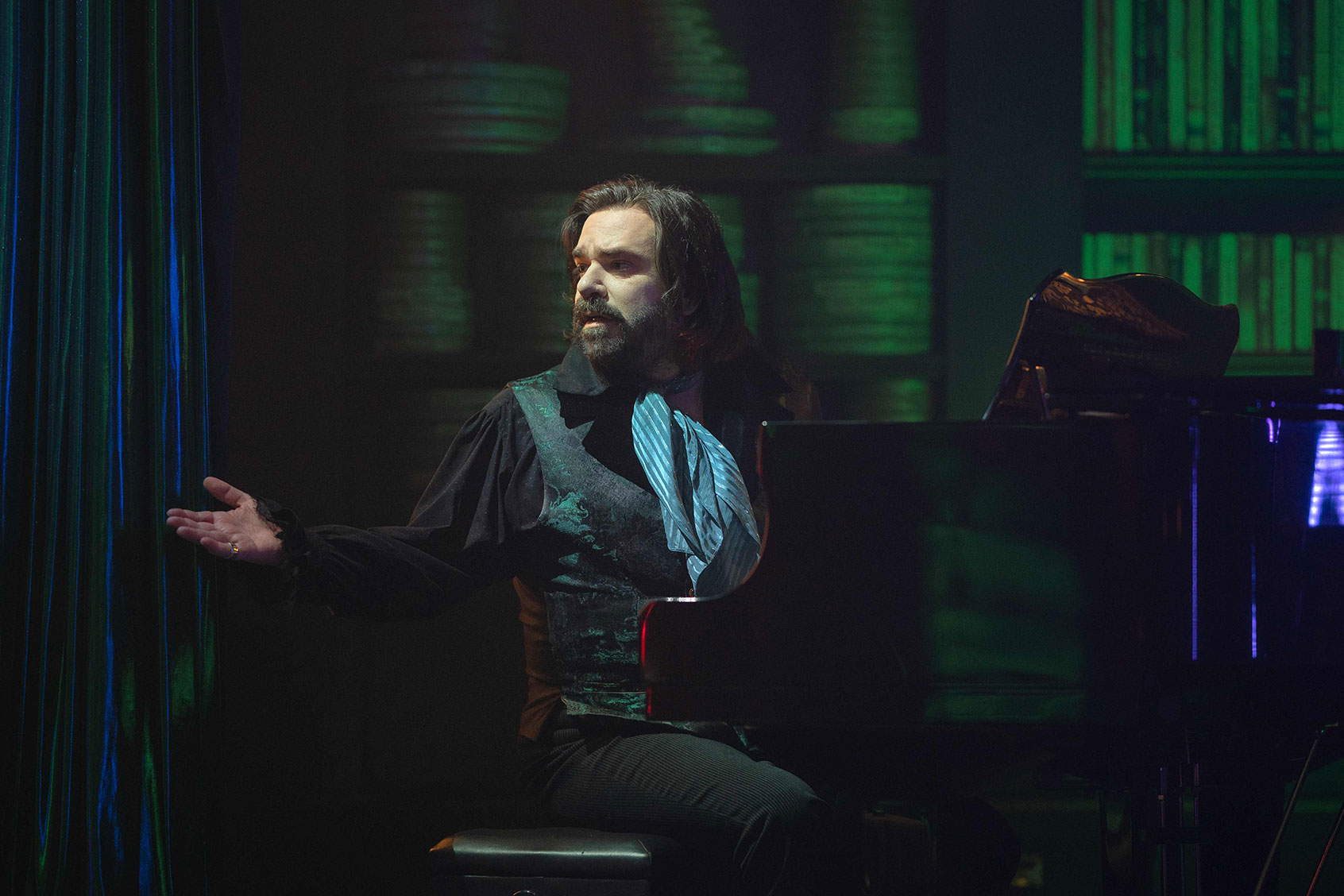
Season 4 of “What We Do in the Shadows,” the FX show adapted from the 2014 film of the same name, finds the vampires down a man. The conclusion of last season featured what seemed to be the end of Colin Robinson (Mark Proksch), a fan-favorite character who differed from his fanged roommates in that he was an energy vampire. According to one roommate – Laszlo (the always delightful Matt Berry), the best, most bombastic bisexual since perhaps Lord Byron – Colin came with the house, like a weird armoire too heavy to be moved. 

Most children are just one missed snack away from goblin.

As an adult energy vampire, Colin worked an office job. He wore a lot of gray sweaters. He fed, not by sucking blood, but by sucking the life out of others through droning on in a monotonous voice, bringing up inane subjects and just in general, being a bore.

In last season’s finale, that humdrum life appeared to end. Shockingly, violently so. For a creature who had lived his life in tedium, he sure went out with a bloody bang. And like a pale phoenix, started again. Laszlo follows a blood trail to find a strange baby has emerged from the shell of dead Colin, a baby with Colin’s big face. As someone who has given birth, I really can’t think of a better way to describe it than “the child who crawled his way out of the abdomen of our dead friend.”  

Though the character — baby Colin, creature that emerged: call him what you will — starts this season with a kind of uncanny valley appearance, his pint-sized body (played by several child actors) with Proksch’s face looking like a CGI, bobble-headed “Squid Game” doll, he morphs into a believable kid. Laszlo takes it upon himself to raise him. Nadja (Natasia Demetriou), Laszlo’s partner, wants nothing to do with the child, and can you blame her? She has a business to run and she never asked for motherhood. 

What We Do in the ShadowsWhat We Do in the Shadows (Russ Martin/FX)Baby Colin truly starts to come into his own as he approaches tween age — or, as Nadja calls it, “that wild age.” This is when things start getting real. Colin pranks his older housemates. He has seemingly limitless energy, especially ironic given his energy vampire origins, and he zooms about the decrepit house, destroying things. One of his only hobbies is putting holes in the wall, personifying the imploding of your life once parenthood enters it like a bomb going off. The vampires complain that he doesn’t sleep during the day like them — but he also doesn’t seem to sleep during the night, either. Nandor says, “We try to distract him by buying him toys but he just breaks the toy and plays with the box. Which he then sets on fire.”

This is an extreme example. Except it isn’t, really. It’s difficult to convey just the precise chaos of parenthood, but the show does so with aplomb. It goes all in on the “child who crawled his way out of the abdomen of our dead friend” and in doing so, makes the viewer realize most children are just one missed snack away from goblin. At the start of one episode, child Colin rushes forward with a sword he’s found and smashes the screen, breaking our fourth wall. Quite literally. 

At this point, my partner and I turned to look at each other, aghast at our actual lives as parents playing out in this vampire show. “One of the writers must have a tween,” I said.

Laszlo, the child’s de facto parent, dismisses his roommates’ concerns. When Nadja protests that the kid with his mysterious origins must be part demon, he waves her away like a divorced dad. “Nonsense. He’s all boy!” Boys will be boys, even ones that tear out of bodies, a lot more developed than newborns and with uncanny, adult-sized heads. Laszlo is convinced, like a proud and vaguely absent parent, that the child must be a genius, an artist.

What We Do in the ShadowsWhat We Do in the Shadows (Russ Martin/FX)But he’s all kid. Young Colin is put to work by stage mother Laszlo, who recognizes the kid has a spark of presence perhaps that he himself lacked (also: vampires just really love child stars). But little Colin interrupts his own set on stage when he thinks he sees other children in the crowd. They’re really vampires who are hundreds of years old, but Colin can’t help but pepper them with questions about his favorite YouTuber MrBeast and an episode with elephant toothpaste.

At this point, my partner and I turned to look at each other, aghast at our actual lives as parents playing out in this vampire show. “One of the writers must have a tween,” I said.

And that’s the case. Writer and producer Sam Johnson told Rolling Stone, “So much of what we have here is taken word-for-word from Paul [Simms]’ son Charlie, who is 10 and loves Legos. There’s a certain joy of a kid who is just so in love with something that he has no awareness of the people around him or what their interests might be.” Along with providing research for the show on Legos and Roblox, Charlie and Simms’ daughter Violet were responsible for the all-too realistic YouTube interjection: “They began saying, ‘You know what? You should also put in something about [YouTube stars] Mark Rober and MrBeast.’ And I’m like, ‘Guys, I can’t fit everything in.'”

In a house of ancient vampires, he was born only recently.

But they fit in a lot, including how young Colin becomes enamored with technology. His face glows for much of the episode “The Pine Barrens,” cast down into a screen. Adults use him to look up things. When Colin goes missing, he’s in a tree, playing with his technology. 

How Colin disappears into his screens also exemplifies the young character’s deep loneliness. It’s typical of tweens to have intense, conflicting and changing feelings, but Colin is largely separated from peers (one of the reasons Laszlo tries, unsuccessfully, to enroll him in a fancy private school). He’s even more adrift. In a house of ancient vampires, he was born only recently. He has the seemingly innate clue into new technology that the adult vampires lack, but it’s no substitute for friends, for real kid life, even if he isn’t actually a kid. He’s still the best, most realistic example on television we have and by being so, Colin makes parents feel seen. 


Want a daily wrap-up of all the news and commentary Salon has to offer? Subscribe to our morning newsletter, Crash Course.


As tweens, kids are on the knife edge of change, walking that border — sometimes not well or very equally — between childhood and adolescence. Then so quickly: adulthood. Tween Colin exemplifies this. Sure, his quickly growing weird genesis serves as a metaphor for childhood (they grow up so fast!). But more than that, kid Colin is real and a real lesson: do your research. It pays off in the creation of character. 

And give those showrunner kids a raise. 

“What We Do in the Shadows” airs Tuesdays at 10 p.m. on FX and streams on Hulu.

When an ER doctor becomes an ER patient

Pushed through the ER entrance on a gurney. A voice directed the medics to a treatment bay. Hands removed my shirt and attached wires to my chest and finger. Monitors stood at my head, passing judgments. I eyed the fast heart rate and low oxygen level in my blood as if the numbers belonged to someone else. In Providence, Rhode Island, where I’m an ER doc, these monitors are my allies. Now, I was in a North Carolina ER, sweat-soaked, breathing hard, caked in vomit, and my scalp a bloody mess.

Doctors and nurses spoke to me and across me. Visual noise competed for my attention: scrubs, white coats, medic uniforms, and in the distance, police and patients on gurneys. My throbbing head was alert to strange background chatter — alarms and urgent hospital-wide announcements, including code words for a life that needs saving and a Jell-O spill that requires mopping.

My EKG showed an injury pattern seen with people having an acute heart attack. I tried to inform my fretting doctors the ugly-looking EKG was better than it once was. It’s hard to reconcile the past when the disorienting present feels like a carnival

That evening, I had torpedoed an after-dinner stroll with my wife and son on the University of North Carolina campus by passing out. We were visitors this Labor Day weekend to the USA Baseball National Training Complex in nearby Cary. My son was selected to join other thirteen-year-old baseball players from New England for a few days of humility at the hands of teams from California, Georgia, Texas, and other hothouses of baseball talent. The beating from the sun was equally relentless that day. Later, my head lost a scuffle with the sidewalk, as heads often do.

I also aspirated souvlaki with yogurt dressing into my lungs. Oxygen had to compete with my partially digested dinner. “A Mediterranean diet is healthy as long as you keep it out of your lungs,” I whispered to my doctor, my voice raspy, my chest burning with each inhalation. I forced a few deep breaths hoping the oxygen level would rise. The monitor wanted nothing to do with my parlor tricks.

Another large IV. More blood samples. A second EKG. Chest X-ray — “take a deep breath and hold.” Sitting up on the ER gurney — breathing was easier — I found myself the object of attention and the subject of an experience. I was a citizen healthcare provider, fluent in the language. I understood the patois pocked with abbreviations — low pulse ox, ST elevations —  and terms like hypoxia, tachycardia, and soft blood pressure spoken around me. And yet, at that moment, the entire situation felt strange and otherworldly. I thought, “How can any patient not feel intimidated and lost in this space?”

My perspective shift could be explained by my unexpected position, the result of wearing an uncomfortable gown and not a stethoscope. But it also diminishes my experience by slotting it into a category with other stories where the doctor finds insight after being a patient. My story becomes a type of story, and in doing so, ceases to be mine.


Want more health and science stories in your inbox? Subscribe to Salon’s weekly newsletter The Vulgar Scientist.


I have a healthy suspicion for neat narratives, the cozy moral. Life is messy and difficult to penetrate. In medicine, there’s a tendency to force experiences into a script or into a diagnosis. I’m not saying such gestures are wrong or untrue; they’re just inauthentic in certain situations. 

Even as I write these words, I struggle to fully understand how we come to describe and understand our experiences. In “The Poetics of Space,” Gaston Bachelard writes, “We must look for centers of simplicity in homes with many rooms. . . . In a palace, ‘there’s no place for intimacy.'” Hospital ERs, spaces with rooms upon rooms, designed with more empathy for technology than humans, risk leaving patients feeling like uninvited but tolerated guests. The challenge becomes taking these spaces and creating simplicity and intimacy that coexist with monitors, fear, and patients’ complicated narratives. 

Syncope is the medical term for a transient loss of consciousness with spontaneous recovery resulting from inadequate blood flow to the brain.

I wasn’t the medical trainwreck suggested by my medical history, though I recognized my problems were difficult to ignore. Open-heart surgery. Mitral valve repair. Atrial fibrillation. Multiple cardiac ablations. A period of rate-related cardiomyopathy that weakened the heart muscle. For a time, I was on the same medications as my heart failure patients. And yet, recovery put that turmoil in the past. With denial’s expert help, I considered myself healthy.

Luckily, my wife contacted the on-call physician for my internist, who had access to previous EKGs. The concerning changes in my EKG were old, a remnant of prior injury and surgery. My doctors sighed in relief. My response was more somber. I could ignore my past struggles, pretend they no longer matter, but indelible tracings remain. The body betrays as much as it conceals.

Syncope is the medical term for a transient loss of consciousness with spontaneous recovery resulting from inadequate blood flow to the brain. Interestingly, another meaning for syncope is to contract a word by omitting middle sounds or letters. When you pass out, you become cut off from your experience and the return feels like an unwrinkling of the senses. Voices floated in my head, then entered my ears as strange faces emerged into tighter focus. “Dude, you passed out,” a slurred voice said, standing over me, holding a red solo cup. It was the opening home game for the University of North Carolina football team, and there were parties everywhere.

“Dude. You have a few?”

I tried to tell him I hadn’t been drinking, but he kept asking. I can only assume people were partying hard and hitting the ground harder on this beautiful and festive evening. His brain made assumptions and created a believable story. It was easier to marvel at my condition than to be curious about it.

The sound of my son’s voice settled me. “You okay? Don’t touch your head, Dad. You’re bleeding.” He was half-naked, pressing his T-shirt to my bleeding scalp, terrified.

Once in the back of the ambulance, lying on the gurney, I felt the doors slam closed more than I heard them. I saw my wife frantically talking to the medics, who were pointing and directing her to the hospital. The sunlight had softened into nightfall when EMS started the engine. Red lights strobed through the street, dispersing onlookers. I followed my wife and son, running to our car, their bodies growing smaller as we pulled away, thinking, “I’m not making it to the hospital, I’ll never see my family again.”

This emotional run-in with my mortality had happened only once, the day before my heart surgery. Then, I met it by peddling the exercise bike. This time, I sank into the gurney and closed my eyes. There was a foreboding symmetry to this disorientating experience, for it was Labor Day, ten years earlier, when I nearly passed out while working in the ER. I convinced colleagues that I was fine. The next day I was admitted to the hospital with rapid atrial fibrillation and pneumonia. The day after that, they diagnosed my lousy heart valve. I started accumulating medical problems like cheap coins, and my journey as a doctor–patient began.

“Stay with us,” the medic said. I didn’t like his tone, reassurance with a vibrato of contained panic. He told me he was starting an IV in my arm. I worried that the large gauge needle didn’t hurt, that I was calm even though I couldn’t breathe. I heard the medics discuss my case over the radio — my EKG, low oxygen level, and soft blood pressure. That’s a worrisome story, I thought, bathing in sweat.

I was thinking on that moment later in the ER, after my doctors and nurses left me alone, and the medics rolled in a guy whose heart wasn’t beating at all. I heard the familiar orders of the code through the curtain separating us — the call and response. I tried hard not to imagine my naked body on the stretcher getting cardiopulmonary resuscitation (CPR) and having a breathing tube pushed down my throat into my airway. I wondered what went through his mind when his heart stopped. Did he sense he was about to die? Was he convincing himself the discomfort was only indigestion? Was death a welcome relief from pain and dependency or a source of sudden fear? These questions became a matter of surprising urgency. I could tell from their tone the doctors didn’t expect this resuscitation to be successful. It wasn’t long before the time of death was called, the team dispersed, and the poor guy was left alone, just as I’ve done after codes throughout my career.

My wife came into the room, her worry taking on a different type of pale. “That’s the first time I’ve ever seen a dead person,” she said.

I peeked through the gaps in the portable curtains. The nurses wrapped the body in a white sheet. A life, however, can’t be bundled that easily. They wheeled his body away. I hoped he was off to a viewing room filled with teary-eyed family and friends. His doctors, I knew too well, weren’t thinking about the man anymore. They were busy with the bureaucracy of death. Talk to any family. Fill out the death certificate. Call the medical examiner and the organ bank. Having no responsibility for him, I had the luxury to mull over the life left behind.

My wife came into the room, her worry taking on a different type of pale. “That’s the first time I’ve ever seen a dead person,” she said.

In that moment, I thought back to my ambulance ride, the belief that I wasn’t going to make it to the hospital. What if I was the code called overhead? What if I was the first dead person my wife and son ever saw? Thinking on certain possibilities produced a pain so unlike anything else that it’s easier not to consider it. What’s in the “it”? Fear of dying? The distress of leaving the people I love so much? I’m still rummaging through the “it.”

There’s an unfathomable gravity to the ER space, where lives in crisis pass through and some depart forever. We can’t forget the word “patient” is derived from the Latin patiens, which means “to suffer.” Whether it’s failing bodies, bad choices, the fear of losing control, or morphing identities, suffering is a deeply personal matter. Sometimes, it’s the story that runs beneath or in between the stories being told, undetected by beeping monitors.

The embarrassment was unbearable. I had passed out in front of my son. I was bloodied and covered in vomit. A father wants to display strength to his son. That’s hard when you can’t even compete against gravity. I was told he was terrified when I hit the ground. Apparently, I jerked a little, too. Probably myoclonic jerks. Intellectualizing the experience is easier than imagining what my son was feeling, especially when I passed out just when my wife left him to look out for me as she ran for the car.

An ER patient should have time to ruminate on matters such as death and fear and embarrassment, but I discovered we get interrupted, too. EMS pushed a mouthy drunk driver into the newly emptied spot on the other side of the screen. “Keep your neck collar on,” I heard a doctor or a nurse say, followed by mechanical words I’ve used so many times myself: “We’re trying to help you.

ERs and hospitals are designed to be healing spaces, but people are the sources of intimacy and warmth. Stories open up to other stories once you try to tell it. I remember the jokes the CT techs told me as they moved me into the scanner, the concern from a former medical student now training in emergency medicine, afraid of violating privacy laws but she saw my name on the board, the nurse who swaddled me in blankets when I couldn’t stop shivering throughout the night. I was discharged from the hospital the following morning to fly home, where I became sicker and then slowly recovered.

A story is a house with many rooms. Bringing order to any story is challenging. The present can’t always shake memory’s shadows or prevent thoughts about the future from echoing off the walls.

You don’t want to be the patient everyone remembers. When intense experiences populate a typical ER shift, the background blurs, making it hard for a singular experience to stand out.

Before this incident in Chapel Hill, I spent a few years in atrial fibrillation, an irregularly irregular heart rhythm. I continued to run three to four miles most days of the week. My heart raced, and over time it became damaged and weakened from overwork, a condition called cardiomyopathy. Simple walking made me breathless. I collapsed on the couch when I came home from an ER shift. I needed a last-ditch ablation, and if it didn’t hold, my cardiologist mumbled the word transplant. My body was the problem, but the deep hurt, I later realized, was the possibility of not being able to provide for my family, of being a reduced version of myself, and thus, becoming a different self altogether.

The cardiac ablation was a success. Electrophysiologists must first map the heart’s aberrant electrical impulses, a feat as astonishing and inscrutable as a city power grid. Then they zap these intruders, erecting a line of defense so my sinus node, the heart’s steady pacemaker, can do its work uninterrupted. Some experiences are harder to map. I’ve rewritten this piece countless times. I can’t describe the scene in the ambulance, pulling away from my wife and son, without tears filling my eyes. I was scared, aware that my medical knowledge couldn’t protect me. We strive for strength and resilience, but to get there we must sometimes tip a respectful nod to vulnerability and frailty.

Around five years after passing out, I was invited to give a late-afternoon talk at a Midwest medical school where the newly installed emergency medicine chair was none other than the ER attending who supervised my care that evening in Chapel Hill. We shook hands and exchanged pleasantries. After a few minutes, I realized he didn’t remember caring for me. I jogged his memory, but I was convinced his acknowledgment was nothing more than politeness. I felt slighted, then happy. You don’t want to be the patient everyone remembers. When intense experiences populate a typical ER shift, the background blurs, making it hard for a singular experience to stand out. Luckily, my notable experience was, for him, just another case.


Excerpted from “Tornado of Life: A Doctor’s Journey Through Constraints and Creativity by Dr. Jay Baruch, used with permission from The MIT Press. Copyright 2022.

“The Sandman” and the American Dream: Donald Trump is the Corinthian

In Netflix’s adaptation of Neil Gaiman’s graphic novel “The Sandman,” dreams are not just good or bad, but truthful, deceptive, or hopeful . They can reveal things about our innermost desires, inspire our imaginations, and drive our actions in the waking world, but can also be weaponized as powerful tools of manipulation  —  and sometimes they are, and do, all these things at once.

Rather than a metaphor for blindness, the Corinthian’s toothy eyes indicate that, like Donald Trump, he is only capable of seeing that which can benefit him … that he can use or literally consume.

One such dream, the American Dream, is a powerful source of hope for many people because it draws on the timeless archetype of the hero rising from nothing to become everything they’d ever hoped to be. The flipside of this dream, however, is a nightmare: the resentment, hatred, and violence of those who feel they’ve failed to live up to it or have been cheated out of it. Demagogues like the series’ Corinthian and Donald Trump gain, maintain, and expand their power by inciting this resentment to ever greater and more dangerous heights, and by directing it toward already-marginalized communities. Convincing those who have long held power in our society that they are the true victims not only legitimizes our violent history as one long act of self-defense but licenses whatever violence may be necessary in the future to maintain this brutal status quo.

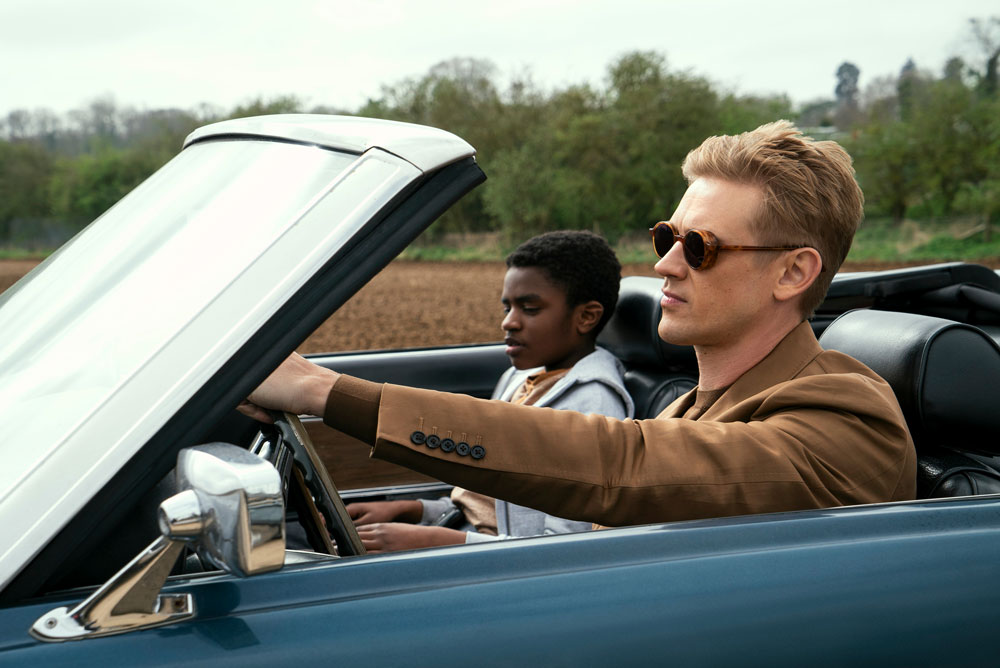
The main villain of “The Sandman” is the Corinthian (Boyd Holbrook). An incarnation of a Nightmare that’s escaped from the dream realm, he is the manifestation of the most base and corrosive human desires. The form he takes is strikingly American  —  slick, sadistic, and self-absorbed, the American id personified.

We first meet the Corinthian in Episode 1, as Morpheus (Tom Sturridge), the lord of dreams and protagonist of “The Sandman,” attempts to return his creation to the dream realm before being captured himself and imprisoned for over 100 years. The Corinthian wonders why, when they are so powerful, Dreams should refrain from running amok in the waking world.

“There is nothing preventing us from taking whoever, whatever we want,” he says, immediately evoking Donald Trump’s “You can do anything” ethos.

By the end of the episode, we see who the Corinthian is in more detail, and what taking what he wants really means. Standing over a young man’s corpse, its eyes removed, we see that the Corinthian is also missing his eyes — in their place, however, are mouths full of teeth. Speaking to his deceased victim, he says, “I’m not gonna stop until I’ve reshaped this world to look just like me.” 

The SandmanEddie Karanja as Jed Walker and Boyd Holbrook as The Corinthian in “The Sandman” (Liam Daniel/Netflix)

Rather than a metaphor for blindness, the Corinthian’s toothy eyes indicate that, like Donald Trump, he is only capable of seeing that which can benefit him — things, or people, that he can use or literally consume. To get these things, however, neither sticks to overt coercion alone — being as charming to those they need as they are ruthless to those who cross them.

Over the course of the season, the Corinthian aids several characters, including freeing a child, Jed (Eddie Karanja), from his abusive foster parents and reuniting him with his sister Rose (Kyo Ra). But as with Trump, who is known not just for spitefully turning on those he feels have betrayed him, but also for fawning over those he thinks he could gain something from, there is always an ulterior motive. Charisma, flattery, deceit, and force are different means for the Corinthian and Trump to pursue the same pathologically egotistical and, in many ways, very-American dream: to remake other people, systems, and even entire worlds in their image, no matter the cost. 

As has begun during Morpheus’ more than 100-year absence, dreams can also be weakened … The American Dream was always an exaggeration —  for certain groups, the most marginalized to this day, it was never attainable.

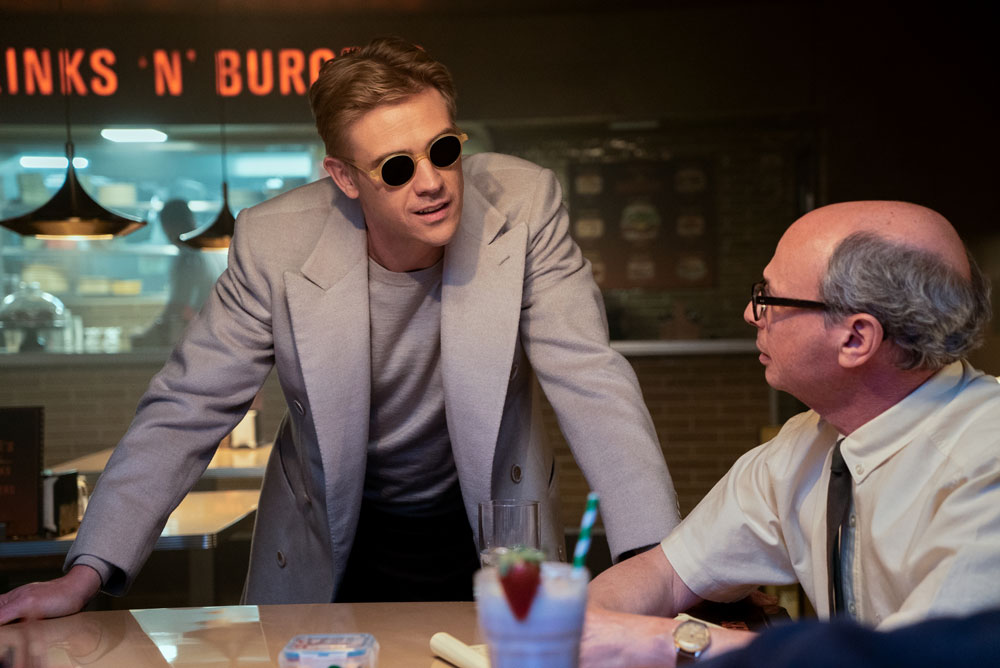
Another villain in “The Sandman” is John Dee (David Thewlis). Whereas the Corinthian uses charm, deception and brutality to further his goal of domination, Dee wants to use the power of dreams to remake the world into an entirely truthful one. Toward this end, he manipulates a diner full of people into revealing their darkest secrets and eventually killing each other and themselves. Over a gruesome montage in which the diner’s patrons cut, burn, chop and stab themselves, Dee intones, “The truth is a cleansing fire, which burns away the lies we’ve told each other and the lies we’ve told ourselves.”

When Morpheus finally confronts him, he argues that the dreams that Dee’s victims had weren’t lies . . . but aspirations  —  features of their personalities that were just as true as any failures to live up to them. Hope, the Sandman argues in an earlier episode, is the most powerful force in the universe, paradoxically continuing to exist even in hopeless situations. But, as has begun to happen during Morpheus’ more than 100-year absence, dreams can also be weakened if they are not defended and maintained, their foundations cracking and crumbling into dust. The American Dream was always an exaggeration —  for certain groups, the most marginalized to this day, it was never attainable  — but even for many who could hope to achieve it in the past, the cracks have grown cavernous.

The SandmanBoyd Holbrook as The Corinthian and Kerry Shale as Nimrod in “The Sandman” (Liam Daniel/Netflix)

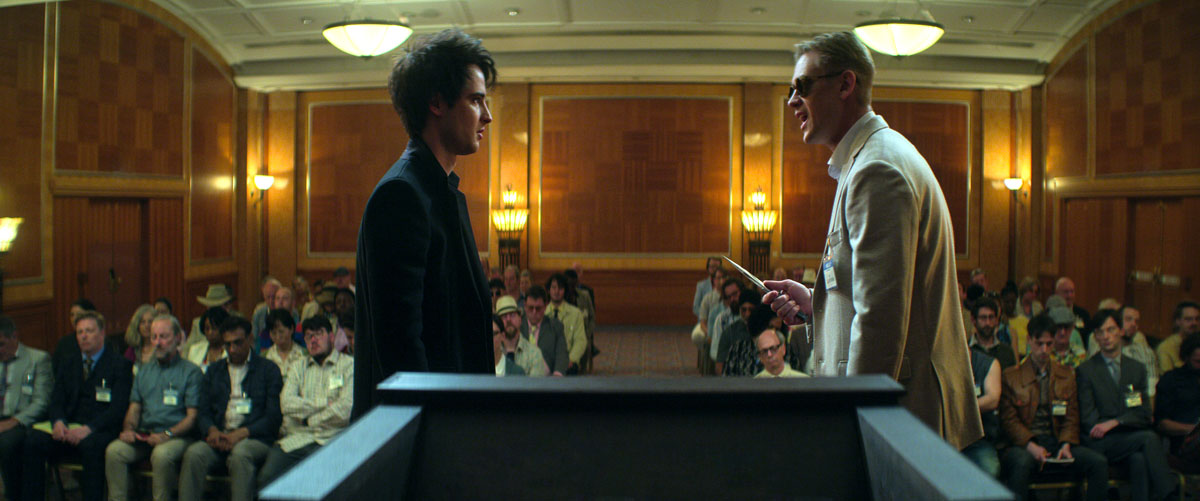
By Episode 7, we are introduced to the result of the crumbling dream realm paired with the Corinthian’s unchecked mayhem: the “Collectors.” The Collectors are a group of serial killers, motivated by the exploits of the Corinthian, who are planning their annual gathering, the cheekily named Cereal Convention. Unable to locate a suitable headliner for their convention, they settle on the desperate idea of copying the Corinthian’s horrific style of murder.

“If we want to get his attention,” one of the chairs of the planning committee rationalizes, “we have to think like him. Act . . . like him.”

The Corinthian finds the Collectors and, pleased with the idea of “a gathering of like-minded souls . . . sharing the same dream,” agrees to speak. It’s “a dream that the Corinthian inspired,” one of the flock replies.

At the convention, the Corinthian delivers the keynote speech, telling the Collectors that they are “very special people,” almost exactly what Trump called the Jan. 6 insurrectionists, and that together they are the “American dreamers driving down the holy road of true knowledge that’s paved with blood and gold.”  He wants them to know that – even though they’re ostensibly killing for neither power nor profit and may be invisible to most people, or misunderstood and maligned – he sees their true greatness and he wants them to see themselves that way, too. Looking out over a sea of faces, eyes closed and absorbing his every word, he says, “We are gladiators. Conquerors. We are explorers . . . truth seekers. We are swashbucklers. We are hunters. Soldiers of fortune. And kings of the night.”


Want a daily wrap-up of all the news and commentary Salon has to offer? Subscribe to our morning newsletter, Crash Course.


Cult leaders and their followers serve as mirrors for one another — each side needing the other to know how special it is because it reflects their own specialness back. For followers, the leaders show how great someone like them can become if they conform to the leader’s example, while leaders can extrapolate from their leadership of such a special group that they are the most special. Like a hall of mirrors, though, this twisted feedback loop of validation distorts the perspective of everyone who participates in it. 

First, if everyone in the cult is special, then why have many of their dreams failed to materialize? Why are they not successful, happy, and envied in addition to merely being “special”? The deprivation that they feel — a feeling constantly being reinforced — must have a cause that’s proportional, in scale and malevolence, to their extraordinary specialness.

Second, if everyone in the cult is so special, then everyone who is opposed to its goals, or merely not a part of it, is not just mediocre but also part of the sinister force that’s stealing the dream from those who truly deserve it. The reason followers of demagogues haven’t achieved their dreams isn’t because of unjust structural factors, which make even relatively simple dreams unreachable for many, nor because most of them are not that special — reasons far too mundane for them to consider — but because they are being viciously attacked and oppressed by the very groups that they themselves have long attacked and oppressed

The SandmanTom Sturridge as Dream and Boyd Holbrook as The Corinthian in “The Sandman” (Courtesy of Netflix)

There should be no shame in having one’s dreams dashed in an economic system that makes even modest hopes for a better life unobtainable so that a handful can live out their wildest fantasies. Unyielding optimism in the face of daunting odds is often an asset, but it can also obscure our deeper problems – papering over the cracks as they are forming, until they have become too large to fix without a major overhaul. Anger is an appropriate response to the slew of crises that we’re facing as a country and as a species – many of which average people have had little say over. But directing this anger at those who have suffered from these problems the most, rather than into collective action aimed at resolving the underlying issues, is not only counterproductive but morally repugnant. Harnessing this anger for their own aggrandizement at the expense of others, however, is something that the Corinthian and Donald Trump, and all those who aspire to be like them, specialize in.

When Morpheus unmakes the Corinthian, he denounces the aggrieved entitlement of the Collectors telling them, “Until now, you have sustained fantasies in which you are the victims, comforting daydreams in which you are always right.” Then, relieving them of their delusions, he condemns them: “You shall know, from this moment on, exactly how craven, and selfish, and monstrous you are.” The collective fever dream of victimhood and violent retribution conjured by Trump and his followers, however, will not be dispelled so easily.

“The Sandman” is currently streaming on Netflix.

Republicans and the crisis of “manhood”: Who are the real sex-obsessed pervs in America?

Why do people who attack the gender identities and romantic and sexual affiliations of others often seem so twisted up? I suppose history tells us that it pretty much goes without saying. But we need to speak plainly about it because we are all now hyper-aware of the serious damage that damaged people can do to others and to society. 

The Republican Party long ago slipped under the sheets with the religious right to become bedfellows in the culture wars, encouraging bigots, misogynists and Christian zealots to insist that others live by their morals (or lack thereof).

This bizarre-tent party of religious grifters, pussy grabbers, gun polishers, closeted men, angry incels, alleged rapists and take-girls-across-the-state-line Lotharios is evangelically intolerant of the personal business of others and determined to dictate whom you can love or marry, how you should come to terms with your gender identity and how much of your reproductive future you should control. These people believe they have the right to demand that you go through your entire pregnancy even if you have been raped or are the victim of incest, and they’re not particularly concerned if you die fulfilling their will. 

In a country with a maternal mortality rate that ranks last among all industrialized nations, these religious and political grifters have created anti-abortion statutes that make health care professionals hesitate to address dire childbirth situations and even delay urgent treatment because they need to consult with lawyers.  

This hyper-focus on anything and everything sexual extends to the right’s self-proclaimed tough guys, the seeming adults who so much enjoy playing dress-up. When five members of the Proud Boys were indicted on charges of seditious conspiracy for their role in the Jan. 6 insurrection at the Capitol, we were reminded in various news stories that members of their “fraternity” are told to masturbate no more than once “in a calendar month.” (Is that part of the bylaws? Is there an actual calendar with titillating monthly photos of white guys carrying tiki torches, or manly images of Confederate heroes?)

Of that rule limiting self-pleasuring, Stephen Colbert quipped: “That’s going to make those 20 years in prison seem pretty long. But I do understand why they are so angry.” He went on to ponder, “I don’t get once a month. I get none. That makes sense. But once a month?”

Rep. Madison Cawthorn of North Carolina claimed he was invited to orgies by other members of the House Republican caucus? And those claims, unlike all the false and outrageous things a certain Republican former president has said, were enough to get Cawthorn literally canceled and expelled from the GOP.  

Madison Cawthorn claimed he was invited to orgies by other House Republicans. Unlike all the false and outrageous things Trump has said, that got him literally canceled.

Look, if longtime Trump confidant Roger Stone who, as we know, was present at the Willard hotel on Jan. 5, 2021, proudly being “protected” by those white-supremacist boys considers himself a “trysexual” (because he says he’s willing to try everything) or Cawthorn enjoys a bit of frat-boy-style cross-dressing while drinking with his bros, that’s none of my business.

Which is exactly the point.

For all Tucker Carlson’s bluster about masculinity (including his risible special “The End of Men” whose promo included a fair amount of plausibly-homoerotic imagery), a more accurate tagline for his Fox News show program might be a variation on Teddy Roosevelt’s famous saying: Speak hysterically — and fret about carrying a tiny stick.

Among those most vocal about the supposed crisis of masculinity, Republican Sen. Josh Hawley’s much-publicized scamper away from his own insurrectionist supporters inside the Capitol building on Jan. 6 wasn’t much of a revelation, though it was objectively hilarious.

It bears repeating that creating fear about the “state of manhood” is a key move in the authoritarian playbook (and abstention from masturbation was, by the way, a Nazi rule.) As historian Ruth Ben-Ghiat noted in an essay last November for the Atlantic:

Illiberal political solutions tend to take hold when increased gender equity and emancipation spark anxieties about male authority and status. A conquest-without-consequences masculinity, posing as a “return to traditional values,” tracks with authoritarianism’s rise and parallels the discarding of the rule of law and accountability in politics.

These days, boys will adamantly be boys, and this means they don’t expect to be held accountable. For anything. The more loutish among them long for the days when they could easily slide from responsibility for their actions. That’s why many Republicans, including a distressingly large number of obedient Republican women, are willing to support men who face multiple allegations of sexual abuse, or who have been accused with domestic violence.


Want a daily wrap-up of all the news and commentary Salon has to offer? Subscribe to our morning newsletter, Crash Course.


Insecure young men are not being taught how to be better persons in their relationships with young women; they are being taught to hate by misogynistic grifters.

On the Trumpian right, flip a coin heads is racism; tails is misogyny and homophobia. Heads they win, tails you lose.

Meanwhile, as Republicans rant about fantasy pedophiles and LGBTQ “groomers” and call others (and often each other) “cucks,” school children and ordinary citizens are being cut down by young men with legally purchased assault-style weapons. Survivors get “thoughts and prayers”; families are left to figure out how to carry on after the lights of their lives have forever been extinguished.

Gun fetishes, closeted sexuality, talk of “pussy” and rape, sadistic name-calling and general hate-mongering, worship of power and that telling focus on “manliness” anyone else feel like we’re back in a really bad high school locker room? That stink isn’t coming from healthy athletics.

I agree that there is a masculinity crisis in this country, but it is most obviously found among the cohort of Republican politicians and their supporters who have prostrated themselves before Donald Trump. I would add fathers who refuse to teach their sons about sexuality and healthy, nurturing relationships but are all too eager to teach them that their guns and their jobs should define who they are as men.

There is a masculinity crisis in our country — most obviously found among the spineless Republican men who spent six years prostrating themselves before Donald Trump.

Boys and girls both desperately need our help. They need to feel safe at home and at school. They need to grow up in a reasonably clean environment. They need to learn from their parents and teachers to treat one another respectfully. They need to build a strong sense of community, and to know they can get an affordable education (and/or job training) and find a decent job at a living wage, with benefits. They should be able to find a comfortable and affordable place to live, and be able to start a family of their own, if such is their choice. They should be able to find affordable health care throughout their working lives and into retirement. All of that, in fact, should be considered the bare minimum, the starting point.

Furthermore, children and young adults need to be educated broadly, so they can find something more in life than a cycle of consumption, acquisition and constant work-related striving. They should feel psychologically safe to love who they choose to love. (Our younger daughter just introduced me to the sad phrase “compulsory heterosexuality,” which I’d somehow missed but which makes sense in this patriarchal, still-puritanical country.)

But as the younger people in our society wait for adults to do positive things that may help them move forward in life, they are, by force, living in a country with more guns than people. 

Does anyone genuinely believe that Republicans in Congress or the mean-spirited, small-minded Trumpians who have taken over so many state legislatures are even the slightest bit interested in elevating the lives of young people? Even so-called moderate Republicans don’t care a whit about, say, the concept of a living wage.

So-called conservatives dehumanize liberals with horrifying and hateful epithets, calling them “cucks,” cannibals, “groomers” and pedophiles  again, tellingly sexual insults while leaders of the Southern Baptist Convention, the largest Protestant denomination in the country, have a massive, far-reaching sex scandal  to face up to.

In his seminal 1964 essay “The Paranoid Style in American Politics — which famously begins, “American politics has often been an arena for angry minds” — Richard Hofstadter noted that sexual obsessions are frequently projected on one’s political opponents, to build a case that they are inhuman or unacceptable:

[T]he sexual freedom often attributed to the enemy, his lack of moral inhibition, his possession of especially effective techniques for fulfilling his desires, give exponents of the paranoid style an opportunity to project and express unacknowledged aspects of their own psychological concerns.

We all knew mistreated or abused boys in school who felt they had to play “yes men” to the local bully, no matter how badly he treated them — or, more likely, because of how badly he treated them. I can easily imagine the young Lindsey Graham or Sean Hannity or Marco Rubio or Tucker Carlson or Kevin McCarthy really, any of the spineless, fawning, unprincipled Republicans who failed to stand up to Trump at any point during his rise or reign, playing that part in their youth.  

In the face of all the grim, twisted, hateful and self-hating moralism from the right, liberals and progressives must reclaim their mojo as celebrants of the beauty and joy of life, as Salon’s Amanda Marcotte argued a few months ago. Masculinity and femininity need not be prisons or traps or destinies. Those supposed poles, and all points in between, are available to all of us as we go through life figuring out who we are. Isn’t that wonderful?  

DeJoy moves to consolidate USPS facilities

Postal union officials are sounding the alarm about the potentially damaging impacts of Postmaster General Louis DeJoy’s effort to consolidate hundreds of post offices across the U.S. as part of his widely condemned 10-year plan to reshape the public mail agency.

Government Executive reported Friday that “more than 200 post offices and other U.S. Postal Service facilities are set to shed some of their operations as soon as this year as the mailing agency seeks to consolidate those functions at larger buildings, according to documents shared by management.”

“The changes will mean letter carriers no longer go to their local facility to pick up mail for their route, instead traveling farther distances after starting at a consolidated location. The impacted post offices will still conduct their retail operations, but many of the back-end functions will be stripped away and relocated,” the outlet noted. “The impacted sites are located in Georgia, New York, Texas, Florida, Michigan, Pennsylvania, Ohio, Kansas, Maryland, Massachusetts, West Virginia, Kentucky, Washington, North Carolina, Indiana, and Arkansas. The initial consolidations are expected to begin as soon as next month.”

Unions representing postal workers have accused USPS management of keeping them in the dark about the consolidation plan, an integral component of DeJoy’s strategy for the next decade.

Charlie Cash, the industrial relations director at the 200,000-member American Postal Workers Union (APWU), wrote in a message to members on Thursday that “we do not know much more than what is already published in the public domain.”

Cash said that he and other APWU leaders spoke with postal management last month “in what we thought was a meeting to discuss the ‘mega-plants'” that DeJoy—a Trump donor and former logistics executive—is seeking to establish as alternatives to smaller postal facilities spread out across the nation.

“Instead we were ambushed with the [Sortation and Delivery Center] concept,” Cash continued, referring to DeJoy’s strategy. “We voiced various concerns, especially on the timeline and how we were not given an opportunity for input.”

“We have not been given the number of employees impacted,” Cash added. “We do not have enough information to make a determination of how this will impact service to the public.”

Chuck Zlatkin, legislative and political director for the New York Metro Area Postal Union, expressed similar concerns in a Twitter post late Friday.

“How many post offices will be closed?” Zlatkin asked. “How many clerks and drivers will lose jobs? DeJoy’s Great Consolidation is a true danger to the public post office.”

Late last month, DeJoy—who has been mired in scandal throughout his tenure as postmaster general—laid out his plan to cut 50,000 USPS jobs in the coming years, an announcement that also drew backlash from the APWU.

DeJoy has remained in his post and vowed to stay for a “long time” despite Democratic control of the White House, which has authority over the postal board that can fire the postmaster general.

While Biden appointees constitute a majority of the Postal Service Board of Governors, one of the body’s Democrats—Donald Moak—has joined the board’s Republicans in supporting DeJoy.

But Moak’s term, along with that of Republican William Zollars, expires in December, giving Biden an opportunity to nominate their replacements and secure enough votes to oust DeJoy.

In a letter earlier this month urging Biden to choose progressive replacements for Moak and Zollars, a coalition of 83 advocacy groups noted that “despite the passage of the Postal Service Reform Act (PSRA), DeJoy still plans to raise postage prices at ‘uncomfortable rates’ around the country.”

“Additionally, numerous post office locations are set to be shuttered under his 10-year restructuring plan, potentially impacting thousands of employees during a time of economic crisis,” the groups continued. “After DeJoy’s numerous failings at the helm, it is imperative that we have a strong, full, and reform-oriented Postal Board of Governors in place to hold him accountable to the true mission and public service goals of the USPS.”

Truth Social is headed for bankruptcy

According to a report from the Washington Post, prospects that Donald Trump’s Truth Social will survive are growing bleak with the company that had planned to take the social media platform public now suggesting that a probable bankruptcy is on the horizon.

As the report points out, Truth Social has not been paying for web-hosting fees to the point where attorneys are now involved, traffic is collapsing, the value of stock in the company is plunging and money is running out.

With the Post reporting, “Former president Donald Trump’s Truth Social website is facing financial challenges as its traffic remains puny and the company that is scheduled to acquire it expresses fear that his legal troubles could lead to a decline in his popularity,” WaPo’s Drew Harwell wrote that the former president’s legal problems have added another cloud of Truth Social’s future.

In a filing this week, Digital World Acquisition, which planned to take Trump Media & Technology Group public, is now issuing warnings about what the future may bring.

“The company warned this week that its business could be damaged if Trump ‘becomes less popular or there are further controversies that damage his credibility.’ The company has seen its stock price plunge nearly 75 percent since its March peak and reported in a filing last week that it had lost $6.5 million in the first half of the year,” the report states adding, “There are signs that the company’s financial base has begun to erode. The Trump company stopped paying RightForge, a conservative web-hosting service, in March and now owes it more than $1 million, according to Fox Business, which first reported the dispute.”

According to Harwell, “Trump’s businesses have faced many similar payment battles over the years. In past SEC filings, Digital World has also noted that ‘a number of companies that were associated with [Trump] have filed for bankruptcy’ and that ‘there can be no assurances that [Trump’s media company] will not also become bankrupt.'”

“In fact, Digital World’s filings have been consistently downbeat on the likelihood that Truth Social will be a success. Trump’s company ‘may never generate any operating revenues or ever achieve profitable operations,’ it said in May, and if it is ‘unsuccessful in addressing [its] risks, its business will most likely fail,'” the report adds while noting that traffic on the site has collapsed, with Harwell writing, “Trump, the site’s most popular user, has fewer than 4 million followers, and the site’s most active trending topics, including #DefundTheFBI, have shown only a few thousand people posting to them in recent days, data from the site shows. For comparison, Twitter says it has about 37 million people in the U.S. actively using the site every day… But in the days since the FBI search of Mar-a-Lago, Truth Social’s viewership has slowed, according to traffic estimates from Similarweb, an online analytics firm. Its U.S. audience has tumbled to about 300,000 views per day, down from nearly 1.5 million on the day of its launch.”

My father, the Rorschach test: My mother and I couldn’t see the same man, in life or in death

“I think Daddy did something to himself to get away from me,” my mother said.

Three years after my father’s death, my mother was focusing on what she believed was a white stain on the brown rug in his home office, where he died. She thought it had something to do with whatever he’d done to hasten his demise. Gentle attempts I made to tell her that wasn’t the case proved fruitless. So on a visit, I went into the office with her.

“Look, Mom,” I said, leaning down, rubbing my hand on the threadbare area, which she’d mistaken for a stain. “It’s just worn out.” I looked up at her. “From the wheels on his office chair.” I rolled the chair back and forth. “See?”

She wasn’t buying it. “Well, that’s what you think,” she said, as if to indulge me. “I think something else.”

That’s how it was with us when it came to my father. He was our Rorschach test. My mother saw a self-sacrificing savior. I saw a self-serving aggressor. She saw a suicide. I saw a heart attack.

The stain may have been caused by bleach, my mother thought. Or maybe it was ground-up pills. She didn’t offer many details of her theory, and I didn’t push. “You know how smart he was, how much he read,” she said. “He could have figured something out.”

My father died the night before Labor Day in 2019. I went back to my childhood home with a suitcase full of every black dress I owned and whatever else I thought I might need for the next week, month, year, or forever. In the end, it was five weeks, the longest my mother and I had been together since I left for college 25 years earlier.

“I live here now,” I said on the phone to friends during those weeks. It was a joke, and maybe also a prayer. My father and I had been adversaries, rivaling for my mother’s affection. We had grabbed her back and forth from each other over the years. Now, finally, she was mine again. It was hard to let go.

But I had a job from which I had taken family medical leave, a husband and a nine-year-old son. My home was in New Jersey and my mother lived in Massachusetts, a four-hour drive away. Over the past 45 years, she had been diagnosed first with major depression and then with bipolar disorder. Lately, she had developed mild cognitive impairment, most likely caused by over 60 rounds of electroconvulsive therapy (ECT), begun seven years earlier, to treat her depression when no medication would work.

This was part of my mother’s theory, that my father killed himself to get away from the relentlessness of her depression. “He hated driving me to all those ECT treatments,” she told me. But that wasn’t true. Taking care of my mother was the cornerstone of my father’s identity. It made him both the hero and the victim at the same time. As a child, he had just been the victim.


Want a daily wrap-up of all the news and commentary Salon has to offer? Subscribe to our morning newsletter, Crash Course.


No one ever told me my father had been sexually abused as a little boy by an older male cousin, but as a teenager I heard him hurl the information at my mother when they were arguing over who had it worse. I think it angered her, his being so vulnerable. That was her role. Their relationship was like an Escher drawing with his need to care for her twisting around her need to be cared for, in an endless loop that defied logic. No way in. No way out.

This was part of my mother’s theory, that my father killed himself to get away from the relentlessness of her depression.

In the weeks my mother and I spent together, I was alarmed to realize she no longer knew how to use a credit card at the grocery store, open the front door to the house with a key or turn on the TV. She hadn’t driven in years. So I found 24-hour care, and used the money my father left behind to pay for it. I filled a notebook with everything I could think of: names and phone numbers for her friends and family members and doctors and favorite stores and what she liked to eat for dinner. I left a note on her bed saying our time together had been magical. Then I got into a cab to take me to the train station, with the promise that I’d be back in a week for a visit. My mother stood on the front stairs beside the woman who would move into my room and take my job as her caretaker. They both waved.

For the first time in many years, I regretted leaving. Usually, all I felt was relief.

The bad visits home after I left for college had all collapsed into each other, like folds in an accordion. All I could see clearly were the ones at either end. On my first return home, I didn’t spend as much time with my mother as she thought I would. The day I was set to leave, she sat on the couch, catatonic, unwilling to speak to me or even look in my direction. “You broke your mother’s heart,” my father said. He may as well have said: I won.

This is one reason I knew my father didn’t kill himself. To do so would have been to give her back to me. And he never would have done that.

The last time I saw them together, about a month before my father died, we went out to eat with my husband and son. My father was impatient and cutting. His face was an enraged mask. He pulled my mother along when she walked more slowly than he did, was exasperated when she took too long to order, then was disparaging of what she did order. Meanwhile, my mother was like a turtle near a predator, head pulled into her shell. She used to defend herself. “Is there a nicer way you might say that?” she would ask. But not anymore. After dinner, back at their house, I beckoned my mother down the hall to my childhood bedroom, increasing my father’s fury. The only thing he seemed to hate more than being with her was being without her. I closed my door and whispered, “If you want to leave, I will help you.”

She looked at me like I was insane. “Of course not,” she said. “Daddy takes care of me.”

“Never ask for what you want,” was the first rule of our family.

Seeing them bring out the worst in each other was more than I could bear. I loved my father, who could be as kind as he was harsh. He held my hand when I was in labor. He carried my antique steamer trunk up four flights of stairs when I moved to New York City on my 23rd birthday. He supplemented my income so I could work in publishing, at a job that paid $7,000 less than what one year of my private liberal arts education had cost.

I imagined the abuse he suffered as a child made it terrifying for my father to engage in a true partnership with my mother. He always had to be in control, for fear of what happened when he wasn’t. But like so much else between them, it went unexamined. I wanted relationships with my parents independent of one another. But they were unwilling to spend any time apart. So in the end, I called once a week, visited less and less. I know they counted the number of days per year they saw me. It was their bitterness math.

Of course, it was not overt. Better they had said, “It’s nearly June and we’ve only seen you two days since January.” “Never ask for what you want,” was the first rule of our family. If you have to ask, the thinking went, the person from whom you wanted something never really loved you anyway.

My mother most wanted my father’s time. She described her life with him like this, “Out early. Home late. And meetings.” They met in college, both twins who were set up by friends. My father was tall and smart and Jewish, and my mother couldn’t believe her good fortune when he gave her his fraternity pin after they’d been together for a year. “What could he possibly see in me?” she asked her sister. It was a question she never stopped asking.

For her, his death is just another abandonment. But a heart attack is random. A suicide is personal. A suicide centers my mother in his death in a way she never felt centered in his life. Every suicide is also a murder, they say. A suicide says: You didn’t only do this to yourself. You did it to me, too.

My father didn’t kill himself. There was no evidence of self-harm, no note. He had a mild cardiac condition. He died of a cardiac arrest. It was written on the death certificate. It was the truth. But it wasn’t my mother’s truth, so it came up again and again when we talked, and we talked every night. Without my father there to undermine her, she was better than she has been in decades, having scaled down from 24-hour care to no care at all. No more ECT, either. She drove, volunteered, made art, did her own shopping and cooking.

“If only he had waited a little longer,” my mother said. “So he could see me now.”

If you are in crisis, please call the National Suicide Prevention Lifeline at 800-273-8255 (TALK), or contact the Crisis Text Line by texting TALK to 741741.

This deliciously simple fish recipe has an unexpected secret ingredient 

This recipe was given to me by my Atlanta friend, Connie. 

Despite meeting and becoming friends when we were both tweens living in Mobile, Ala., Connie is my “Atlanta friend.” Even when she traveled across the globe to live in Nairobi, Kenya, I still referred to Connie as my Atlanta friend. She moved to Atlanta after college, and except for the few years she spent in Africa and a short stint later in Palm Springs, Calif., Atlanta has been her home for most of the last 30 years.  

Connie is an epicure, a gourmand, a bon vivant, a lover and appreciator of fine food and drink. She’s known for going to great lengths and traveling far distances to experience the best of the best of the best. From meager backpacking in her youth to the most lavish of transport as she aged, Connie has traversed the world to beautiful, tucked-away places of unmatched beauty and amazing cuisine.

Her true passion is finding unspoiled, unpopulated spots and traveling to them with those she loves. Somehow, no matter how remote or out of the way her destination may be, Connie manages to have something special like a magnum (or two) of La Grande Dame waiting and plenty more to follow. 

Nothing if not prepared, Connie is also an accomplished chef, restauranteur and sommelier. She’s a tiny little powerhouse of a person who takes no crap, tells it like it is and dares anyone to underestimate her. She may clock in at only 5 feet tall and look as though a big gust could bring her down, but make no mistake, my friend is a force.     

Connie began cooking professionally in Atlanta as a personal chef under her business name, “Spoon,” but went on to co-own “Kosmos,” a restaurant for which she created the menu and served as head chef. This recipe for snapper fingers began in her home kitchen, but it became a mainstay on the menu and a customer favorite at Kosmos. You can substitute any fresh-caught, mild, wild fish, but red snapper is awfully hard to beat.        

Like her fast-paced home city of Atlanta, Connie has a frenetic, exciting energy about her. If she’s not working hard, she’s playing hard with her finger always firmly on the pulse of all the current “bests.” Connie knows the current best restaurant and can get reservations; she knows the best place to go right now; and she knows several best wines to have for the current season or even for your current mood. She’s on it; she’s got it handled. Enjoy not having to make any decisions, in fact, allow her to order for you as well. Relax, you’re in good hands.   

Connie introduced me to the fine art of self-indulgence and self-care in our early 20s, treating me to quite a few “firsts”: my first massage and facial, my first weekend getaway at a spa, my first bottle of Verve Clicquot, as well as my first wine-paired, multi-course, fine dining experience, to name a few. 


Want more great food writing and recipes? Subscribe to Salon Food’s newsletter, The Bite.


From her, I gained an appreciation for table setting etiquette and hosting while trying to absorb all I could about food and wine. Thanks to Connie, I can still explain to anyone willing to listen how Champagne can only be referred to as “Champagne” if it comes from the Champagne region of France, specifically from either the city of Reims or Epernay. 

I could go on and on, because I’m the queen of French Champagne minutia. Though I didn’t retain as much practical kitchen knowledge as I wish I had, I’m clear on the difference between upper-case “C” Champagne and lower-case “c” champagne. And I think of Connie every time I open a nice bottle.

Connie was the first person to introduce me to sushi and white-water rafting. She was also the reason I traveled to Africa for what was literally the trip of a lifetime, where I was introduced to stunningly beautiful places I could never have dreamed existed. Connie made me my first martini and the best carrot-ginger soup I’ve ever tasted. Without a doubt, she played an integral role in my life and had a hand in shaping who I am today. She taught me how to cook with confidence, host graciously and what generosity looks like. 

What a fateful day it was when we met as children some 40-plus years ago! Neither of us could have imagined the meandering paths our lives would take, or what each of our lives would look like at our ages now. I’m fortunate to call her my friend and happy beyond measure to share this recipe. 

Like all of my favorite summer meals, this recipe takes very little time to prepare and bake.

Like all of my favorite summer meals, this recipe takes very little time to prepare and bake. Most days, I’m only cooking for two. So, I bake the fish in my toaster oven, which is great when we’re in the midst of another heat wave with heat indexes into the triple digits. (At this rate, I may need to leave my oven off until October!)

Because the banana salsa also comes together fast and doesn’t need to marinate for long, you can truly whip this entire thing up in no time. Snapper is abundant in the summer where I live, but choose any fresh, firm, mild fish for this recipe.   

If you’re so inclined and would like to step into Connie’s world (which I highly recommend!), here’s something to try. Find the loveliest location (outside with a great view if possible), take out your fanciest champagne flutes, invite a cherished friend over and open a cold bottle of French Champagne (Verve Clicquot will do!). Toast to friendship, the beauty around you and the delicious nectar-of-the-gods you’re blessed to be drinking. Laugh together, wax poetic, share with one another the challenges you’re facing. 

It’s a splurge — and a completely frivolous one — but two friends making time for one another in our now busy, busy world is itself a cause for celebration. Here’s to you! Here’s to Connie! Cheers!  

A note on red snapper

The banana salsa may steal the show in this fish dish, which marks another successful red snapper season. 

In Alabama, red snapper season begins the last Friday in May or the first Friday in June and stretches across consecutive four-day weekends through mid-August. In Florida, the season will feature 12 extra days this fall. 

Rarely found north of the Carolinas and primarily in the Gulf of Mexico, it’s a delicious, firm, lean, mild fish found at depths of 30 to more than 600 feet.

***

Snapper FingersSnapper Fingers (Courtesy Bibi Hutchings)Snapper FingersBanana Salsa (Courtesy Bibi Hutchings)

Connie’s Snapper Fingers with Banana Salsa
Yields
8 servings
Prep Time
30 minutes
Cook Time
10 minutes

Ingredients

Snapper Fingers

  • 1 1/2 cups plain potato chips, uniformly and thoroughly crushed
  • 1/4 cup grated Pecorino Romano or Parmesan cheese
  • 1 pound red snapper filets, cut into strips
  • 1/4 cup milk

Banana Salsa

  • 2 medium-sized, ripe bananas, chopped
  • 1 cup mix of yellow, red and/or green bell peppers, chopped
  • 3 green onions, chopped
  • 1 tablespoons fresh cilantro, chopped
  • 2 tablespoons light brown sugar
  • 1-2 fresh limes
  • 1 tablespoon avocado or grapeseed oil
  • Salt and pepper
  • Optional: 1 small jalapeño, de-seeded and chopped

Directions

  1. Preheat the oven to 400 degrees. 

  2. First, make the salsa by combining all the salsa ingredients together in a small bowl. Cover and refrigerate for at least 3 hours. (See Chef’s Note)

  3. Next, combine the crushed potato chips and cheese in a shallow dish.

  4. Pour the milk into a separate shallow dish.

  5. Place the fish in the milk, then piece by piece, remove and dredge in the potato chip mixture, placing each piece on a greased baking sheet in a single layer. 

  6. Bake for about 10 minutes, or until the fish is to your preferred degree of doneness. 

  7. Serve with the banana salsa.


Cook’s Notes

If you don’t have any avocado or grapeseed oil, reach for any neutral tasting salad oil.

I’ve made this salsa and only allowed it to marinate for as long as it took me to prepare and serve the fish. If you have time to make it early, do so, but it will still be good if you make it closer to serving time.

Salon Food writes about stuff we think you’ll like. Salon has affiliate partnerships, so we may get a share of the revenue from your purchase.

6 best corn recipes for anyone and everyone

A friend of mine, who happens to be an elementary school teacher, sent me a video the other day alongside a text that read: “Future food writer?”

The clip was from Recess Therapy, a web series in which host Julian Shapiro-Barnum interviews children between the ages of two and nine years old in New York. What I appreciate about Shapiro-Barnum’s conversations is that they truly reflect the weird, single-minded obsessions that only young kids can have. Thus far, these have included komodo dragons, splashing in the pool, and in the video my friend sent me, corn.

“For me, I really like corn,” says the boy, whose video started making the rounds on social media under the hashtags #cornboy and #CEOofCorn. “Ever since I was told corn was real, it tasted good. When I tried it with butter, everything changed!”

Corn Boy, whose real name is Tariq, has since appeared in a follow-up video in which he discusses, among other things, the top three ways to eat corn: with “the grease,” “toasted” and “toasted with butter and the grease.”

And while I can’t necessarily attest to the culinary definition of “the grease” — though he tells Shapiro-Barnum that it’s “actually kind of the thing that makes the corn good” — I do agree with Tariq that eating good, fresh corn is one of the highlights of summer, something we’ve explored wholeheartedly this week here at Salon Food.


Want more great food writing and recipes? Subscribe to Salon Food’s newsletter, The Bite.


During Corn Week, we dove into the various ways to prepare corn (which, fun fact, can actually be a grain or a vegetable depending on when it’s harvested), whether chargrilled for elote or ground for cornbread and Milk Bar-inspired truffles.

Here are six of our favorite recipes using the summer staple:

This crispy, fried secret ingredient is the best way to upgrade homemade chili

My dad doesn’t have many rules in the kitchen — but one nonnegotiable is that chili has to be topped with hand-torn cornbread tossed in spitting hot oil. The resulting cornbread croutons are crispy and a little sweet, making them the perfect thing to soak up umami-rich, spiced broth.

The trick to perfect cornbread is letting the cornmeal, corn flour and buttermilk sit overnight

On that note, are you looking to make your homemade cornbread even better? According to chef Kelly Fields, the trick to this perfect cornbread is letting the cornmeal, corn flour and buttermilk sit overnight.

“This allows the corn flour to fully hydrate, while the acid from the buttermilk tenderizes the cornmeal, helping to create a tender, almost cakey bread that still retains that slightly gritty texture you expect,” she writes.

A spicy taste of Mexican street corn, ready in 15 minutes

Speaking of street corn, Salon senior writer Mary Elizabeth Williams was inspired by a recent trip to Sedona to give frozen corn — mixed with mayonnaise, cotija and lots of fresh cilantro — a trip under the broiler to make a delectable dip that hits all the same notes as esquites.

Missed the Milk Bar-Taco Bell collab? You can still make your own strawberry taco truffles at home

Earlier this month, Milk Bar and Taco Bell briefly collaborated on a limited-edition strawberry taco truffle made of “vanilla cake studded with strawberry pieces and soaked in strawberry milk . . . filled with a sweet corn fudge center . . . coated with strawberry and sweet corn cake coating, studded with tiny pieces of Taco Bell’s Crunchy Taco Shell.”

While trying one in-person eluded Williams, she took to the kitchen to make an easy at-home version.

The truth behind my grandma’s (not-so-secret) corn casserole

Kelly Vaughan grew up eating what she knows as corn casserole, and what you may know as a corn bowl or spoon bread. “It’s not quite cornbread, but also not a layered casserole or gratin,” she writes. “To call it magical might be a bit of an overstatement, but not by much.”

When Vaughan was 10 years old, she decided that she wanted to start her own cooking show. It was filmed by her parents, and the “theme song” was performed by Vaughan on the clarinet. One of the first recipes she tackled was this corn casserole, thanks to her grandmother’s 6-ingredient recipe.

Summer corn and fresh blueberries meet in this decadent cannabis-infused frozen dessert

Maybe you’re just looking for a way to chill out — figuratively and metaphorically — as summer starts to fade into fall. To that end, look no further than Tracey Meidoros‘ luxurious sweet corn ice cream topped with fresh blueberries and a brown sugar crumble. There’s the option to add THC, as well.

This story originally appeared in Salon Food’s weekly newsletter, The Bite. Be sure to subscribe so you don’t miss the unique original essays, how-to’s, recipes and more.

A newbie’s guide to mid-century modern in your home

Mid-century modern decor first arose in the late 1940s, right after World War II. Its modern visuals, sleek lines, vibrant colors, and nods to everything space-age was more than just a new design style — it was hope for the future represented through home decor. Much of the world had just gone through the challenges of war, and was yearning for something fresh and encouraging. In its own way, mid-century decor answered that call.

While interior design certainly won’t save the world, it can make us feel more joyful. Little acts of bettering our homes have proven to be a healing salve throughout these tough times, and decorating does its part to help us feel like we’re in control of our own little universes.

If you’ve been thinking about starting to collect bits of mid-century decor of your own, now’s as good a time as any — our collective love for mid-mod style shows no signs of fading out. Don’t worry — tour entire house doesn’t have to be an homage to the 1950s. Instead, you can start small and build from there (think: a single light fixture instead of an entire living room filled with mid-century furniture).

For some truly special mid-mod inspo, these tips from five top mid-century experts will start you on your way. Good vibes and mid-century decor — here we come.

Do your homework

“If you want to start collecting any kind of authentic vintage decor, you need to be educated so that you can spot the good stuff and not overpay,” says designer Emily Henderson. She recommends going on websites like Chairish or 1stDibs to start learning about names and prices and scoping out what you actually might want to look for — and own.

There are several mid-century buzzwords you can learn about and locate during your quests. For example, Audrey McGill, who has dressed up her 1960s home in authentic mid-mod finds, shares that Charles and Ray Eames are particularly iconic designers. She says, “Designed in 1956, their Eames lounge chair is one of the most recognizable pieces of the mid-century era. Its design was considered groundbreaking and has been replicated many times over.”

She adds that Danish Modern is a particular style of note from this era, known for its sleek, minimal lines along with quality materials. “The use of teak was quite popular, as well as oak,” she says.

McGill says that Hans Wegner, known for the “Papa Bear” and “Wishbone” chairs, and Arne Jacobsen, famous for the Egg and Swan chairs, are just a couple notable Danish Modern designers to be aware of. If you really want to go for broke while seeking out mid-century finds, research the time period (from 1945 to 1969) and learn more about the designers and specific design movements associated with that period.

Don’t count out thrift shops

Contrary to what you may have heard, mid-century pieces aren’t always expensive. In fact, you might be able to score some amazing pieces at the Goodwill down the street.

“The great thing about vintage mid-century pieces is that they are pretty easy to find at many vintage shops, flea markets, or even at Goodwill,” says Dabito, designer and creative director of Old Brand New. “Before I embarked in a career in interior design, I started thrifting and found a variety of chairs and lamp options. They’re some of the easiest ways to incorporate mid-century decor into a space.”

While you can certainly buy whatever you’re drawn to, if you want to get serious, Carrie Waller, founder of the lifestyle and DIY blog Dream Green DIY, recommends looking for original labels.

She says, “Always look inside the drawers or on the underside of tables and chairs to see if you can find an original brand stamp or label. This should provide you with an authentic maker’s mark and date of production.”

Be a vigilant online shopper

Some of the best mid-century treasures around can be found online, through Facebook Marketplace, Etsy, Craigslist, and curated spots like Chairish.

Noel Fahden is the VP of Merchandising at Chairish and says that it’s very important to pay attention to the descriptions of the items.

“When a description says, ‘in the style of,’ that can mean a number of things,” she says. “It can be a modern-day reproduction, or it can be an authentically vintage piece that was made in the style of an iconic design or maker. A vintage ‘in the style of’ piece can still offer great quality at a more approachable price point — it’s really a matter of what provenance and price point you are looking for.”

Also something to keep in mind as you start your quest: There’s a difference between actual vintage and new but reissued (with rights from the original makers) mid-century decor. You can always choose to have a mix of old and new as you build the style into your home.

Fahden also suggests really studying the photos in the listing. Fahden says, “When shopping online, look closely at the images of the item you’re considering. Especially for vintage pieces, minor scratches are part of the aging process and will most likely add character to the piece. When looking at silver or brass decor pieces, aging adds a wonderful patina.”

Start small

Like we mentioned, you don’t have to have a top-to-bottom mid-century living room, complete with a retro sofa and chiminea, to start an authentic MCM collection. We recommend starting with smaller, attainable accessories like ceramics, smaller furniture like shelves, or even a bedside lamp. Fahden agrees that lighting is an ideal starting place.

“A great place to start small with MCM style is with lighting,” Fahden says. “Consider something like a Verner Panton table lamp or a Louis Poulsen PH 5 Mini Pendant to add vibe to your space and personal style without making a huge commitment.”

And finally . . .

Keep in mind that if you aren’t a vintage devotee (which is totally fine) but are still jonesing for some mid-century-like pieces in your home, there are lots of retailers that specialize in brand-new pieces that look exactly like the real deal or hint at bygone design while still looking decidedly contemporary. Burrow’s editor-favorite modular sectionals are a modern interpretation of the era’s clean lines, while Interior Define’s custom upholstery lets you lean into the mid-century vibes as much or as little as you want, and Castlery’s pieces mix mid-century with a bit of coastal flare.

Let me be something every minute: How “A League of Their Own” mirrors “A Tree Grows in Brooklyn”

In Prime Video’s series adaptation of the 1992 film, “A League of Their Own,” friends can mean a lot of different things, same as the act of playing baseball. Throughout the eight episodes of this first season we’re shown the different ways in which women grant themselves permission to make the most of what they have while they have it, and encourage in each other the desire and the freedom to want more — even more than they could have ever dreamt was possible.

Betty Smith’s 1943 novel, “A Tree Grows in Brooklyn,” handed from one character to another in the second episode, and not referenced again until the last, encapsulates in many ways the heart of the show in that it too deals with hope that roots with little to no encouragement from outside forces — thriving in defiance and kept going by sheer will to grow into something bigger than it started as.

In the second episode, “Find The Gap,” we see the character Carson Shaw (Abbi Jacobson) beginning to realize that breaking away from her town, her judgmental sister, and her off-to-war husband to join one of the first women’s professional baseball teams, the Rockford Peaches, is just the beginning of a new life filled with desires that she never knew she was allowed to want in the first place. One of those desires comes in the form of a teammate named Greta Gill (D’Arcy Carden) who, although bolder than Carson, is also fueled by the encouragement of the women around her to never feel guilty for wanting something, even if that something goes against the norm of the times.

Seeing Carson struggle with guilt over quite literally running off to pursue her dreams while her husband Charlie (Patrick J. Adams) is off fighting as a soldier in World War II, Greta tells her, “I don’t think you’re running away from anything. I think you’re running towards your destiny.” While eavesdropping on a phone call Carson has with her sister – in which she’s shamed for being seen visibly sweating, with her bra hanging out, hurrying to catch the train that brought her to Illinois – Greta takes a book off of a shelf and interrupts her call to give it to her.

“Here, I think you should read this book. You’ll like it,” Greta says, laying it down and exiting the room to give Carson her privacy. Only sharp-eyed viewers would have caught its title at that point. It’s not until the last episode, “Perfect Game,” that we see “A Tree Grows in Brooklyn” again when Carson reads an emotional and inspiring passage from it to the Peaches before they go on to play the last game of the season, which they lose, but only after winning so much more.

Abbi Jacobson as Carson Shaw (Courtesy of Prime Video)“A Tree Grows in Brooklyn” centers on the story of a young girl named Francie Nolan and follows her as she strives to carve out a life for herself in a time and place when the world felt small on a day-to-day basis, but still large enough to swallow her whole and sink her down. Francie’s mom is overworked, her dad’s an alcoholic, and she doesn’t have any friends outside of her own younger brother, Neeley. Her world is only as big as whatever rundown Brooklyn apartment she and her family are living in at the time, and everything she learns comes from observation, or from two tattered books her mom insists she read from on a daily basis: the Protestant Bible, and the complete works of Shakespeare. When we first meet Francie it’s 1912 and she’s 11 years old. At the end of the book she’s 17, saying goodbye to the trappings of her youth as she enters womanhood and prepares to start college at the University of Michigan.


Want a daily wrap-up of all the news and commentary Salon has to offer? Subscribe to our morning newsletter, Crash Course.


In an early passage of “A Tree Grows In Brooklyn” Francie and her family have just moved from one apartment to another and she does a mental inventory of their few possessions, one of which is a conch shell kept on a shelf that she has named “Tootsy.” Having never been to the beach, although it wasn’t terribly far from where they lived, all she knew of the ocean was gleaned from the mental images that would flood her mind when she pulled Tootsy down from the shelf and held it to her ear. Later, when her dad took her to Canarsie to see the ocean for the first time ever, she found that she preferred what she heard inside her shell at home over the real sound of crashing waves. In the book, Smith describes this moment writing, “The sea was remarkable only in that it sounded like the tiny sweet roar of Tootsy, the conch shell.”

The Peaches have never been told anything other than “you can’t.” But in their own minds, and whispered safely to those they trust, “you can’t” turns into “the hell I won’t.”

Reading passages such as this one, it’s clear why this book was chosen specifically to reference in “A League of Their Own.” Carson, the rest of the Peaches, and the character Max (Chanté Adams) — a fellow ball player pushing through closed doors as a Black queer woman in the 1940s — have never been told anything other than “you can’t.” But in their own minds, and whispered safely to those they trust, “you can’t” turns into “the hell I won’t.”

Like Francie in “A Tree Grows in Brooklyn,” most of us grew up thinking that if we put a seashell to our ears we could hear the ocean inside of it. Somewhere in between the vast dreaminess of youth and the lowered ceiling of reality brought about by adulthood was the theory that the sound we heard was caused by our own blood rushing in our ears — as though something so average as our body’s constant chore of keeping itself alive could be made grander in our hopefulness to make that very life larger than it was — to connect it to something unknown and outside of ourselves like the unexplored depths of the sea. The final fact and indisputable knowledge that what we hear in a shell is nothing more than ambient noise, amplified in a concave chamber makes no difference. Women like Carson, Greta, Max, and the rest of the Peaches granted themselves permission, long ago, to accept a larger explanation. A more monumental option. And there’s no going back.

In “A League of Their Own” Carson’s character starts off as a catcher with a strong batting arm, and by the end she’s the team’s head coach. She’s not a natural leader, but she’s the best leader because in her learning how to encourage herself, she encourages others. All she needed to get herself going was that initial thought of “maybe I can do this.” And when that turned into “I don’t ever want to go back to not doing this,” she was, at that point, strong enough to fertilize that same sprouting seed in the rest of her teammates.

Abbi Jacobson, who not only stars in the show but co-creates it along with producer, director and screenwriter, Will Graham, plays Carson as insecure, because she sees a lot of the character in herself. In an interview with The New York Times Jacobson refers to herself as “an introvert masquerading as an extrovert” saying, “The stories that I want to tell are about how I’m a messy person, and I’m insecure all the time. And then what if the most insecure, unsure person is the leader? What if the messy person gets to own herself?”

Prior to “A League of Their Own,” Jacobson was best known for “Broad City,” which she created and starred in along with friend and co-creator Ilana Glazer. That show, which centers on the stories of two friends trying to make lives for themselves in New York, began as a web series in 2009, got picked up by Comedy Central in 2014, and ran until 2019. In a video interview with Huffington Post several years ago, Jacobson talks about how she and Glazer made the leap from web series to one of the best ranked TV shows of the 2010s through their own sheer will and the extended hand of actress, writer and comedian, Amy Poehler. Jacobson has referenced Poehler’s early encouragement of her in interviews leading up to the premiere of “A League of Their Own,” and mentions in that earlier Huffington Post video that she told her and Glazer to always be the “police of their own brand.” The ways in which that encouragement from one woman to another lit a fire within her to continue encouraging herself, and other women, is tangible in “A League of Their Own.”

The Rockford Peaches (Courtesy of Amazon Prime)

“Let me be hungry or have too much to eat. Let me be honorable or let me sin. Only let me be something every blessed minute.”

From the moment Greta gives Carson a copy of “A Tree Grows in Brooklyn” in Episode 2, till Carson carries it into the locker room before their big game in the finale, life is growing. At the start of her speech to her team, Carson opens the book and reads, “Let me be something every minute of every hour of my life. Let me be cold, let me be warm. Let me be hungry or have too much to eat. Let me be honorable or let me sin. Only let me be something every blessed minute.”

As the rest of the Peaches stand in front of her – confused, frustrated and nervous in the face of this one last game that will not only make or break their shot at winning the series, but end their time in this new world of freedom they’ve created for themselves — or at least this version of it, Carson explains.

“So in this book, there’s a tree that grows out of cement. No one waters it. It hardly gets any light. No one pays any attention to it. But somehow, it still finds a way to grow. That’s us.”

During the 1940s timeline in which “A League of Their Own” is set options were, by design, limited for women. Even more so for Black women like Max. It may be hard for us now to imagine a time like that where even a woman’s dreams were limited because they had no frame of reference for what to dream of beyond . . . more. Sometimes there’s a passion that grows inside of you that there’s no name for. When Greta gives Carson that copy of “A Tree Grows in Brooklyn,” and punctuates her days with stolen kisses as though waking her from a deep slumber, she shines further light on what was already starting to grow inside. And from that first seed of “more” grew branches. And those branches grew strong enough to hold the weight of anyone else who found it within themselves to hold on.

“How do you want this to end?” Carson asks her team before they head out for that last game. And the answer to that question, which has meaning beyond the game of baseball, or even new love, is a passionately implied, “We don’t. It can’t.”

Should “House of the Dragon” have included a trigger warning for the birth scene?

The series premiere of “House of the Dragon” included some shocking moments, none moreso than the horrific caesarean section procedure performed on Aemma Arryn, done without the pregnant queen’s consent in order to remove her breeched baby from her womb. “Game of Thrones” was known for hitting viewers with gory twists, but even compared to most of the things shown on the original series, what happened to Aemma was hard to watch.

While showrunners Miguel Sapochnik and Ryan Condal have insisted that the scene was done with the utmost care and that it was shown to “as many women as possible” to gauge their reactions, it’s understandably sparked a lot of debate online. On the one hand, “Game of Thrones” has often tried to realistically depict some of the more violent aspects of the Middle Ages from which “A Song of Ice and Fire” author George R.R. Martin drew inspiration, and childbirth during that time was extremely dangerous. That said, childbirth today is still pretty dangerous even if modern medical advancements do make things like C-sections much safer, and many people have traumas related to difficult births. Those viewers might not want to see something so triggering dramatized like this, or at the very least, they might want to know about it in advance.

This has brought about the question: should “House of the Dragon” have included a trigger warning to let viewers know the series premiere would include a traumatic birth scene?

Experts weigh in on whether the “House of the Dragon” premiere needed a trigger warning

“I think it’s fairly traumatic for anybody actually. With 13 babies dying every day in the UK, the situation impacts an enormous community of people directly too,” Jen Coates told Radio 1 Newsbeat, per the BBC. Coates is the director of the bereavement support charity Sands, and is of the opinion that it is “really important” that shows like “House of the Dragon” give viewers notice before depicting something with so much real-world trauma associated with it. “That way, people can be better equipped with the knowledge and make an informed decision to watch or skip particular scenes or episodes.”

Writer Laura Birek examined whether “House of the Dragon” should have included a trigger warning at Shondaland, where she notes how the traumas associated with her own labor caused her and her husband to swiftly turn off the series premiere in the middle of Aemma’s controversial scene. Birek herself had a C-section birth, and co-hosts a pregnancy podcast where she was able to give some viewers a warning about Aemma’s scene.

“I genuinely wish I had this warning before watching it, as I’m scheduled for a C-section in 32 days,” replied one listener, while others thanked her for helping them make a more informed decision about whether watching would be too traumatic given their own experiences.

“What Condal and Sapochnik fail to recognize is that childbirth is still an incredibly dangerous situation,” writes Birek. “To claim that modern medicine has fixed ‘all of the complications’ demonstrates a breathtaking ignorance about pregnancy and childbirth. To think that the violence of birth disappeared with jousting tournaments and the feudal system shows that they’ve never had to contemplate how to extract an 8-pound baby from their midsection.”

“House of the Dragon” is not the only show to feature a sequence that brought about calls for content warnings. Back in May, both “Obi-Wan Kenobi” and “Stranger Things 4” premiered shortly after the Uvalde shooting, which was bad timing because both open with instances of violence being committed against children. “Stranger Things” added in a trigger warning ahead of release. “Obi-Wan” did not, but retroactively put a warning on the first episode.

“I physically held my mouth closed as tears poured down my face,” one of Birek’s friends — who recently had her own difficult pregnancy experience — said of Aemma’s traumatic birth scene. “‘Stranger Things’ edited in a content warning because they premiered so close after the Uvalde massacre. But this [premiere] had nothing, when women since the beginning of time have had difficult births. Women remain so incredibly and astoundingly unconsidered.”

“House of the Dragon” premiere probably should have had a trigger warning

Birek puts forth that she’s “not saying the episode should be taken down or even revised,” only that “some of us are exhausted parents trying to survive and heal our own trauma. Give us a little heads-up, and let us decide whether this is something we can handle.”

For my own part, I’ll just put it out there and say that I wholeheartedly agree with this stance. In fact, I gave both of the people I watched the premiere with — one of whom recently had a difficult pregnancy — this exact trigger warning so that they could better decide whether they wanted to watch Aemma’s scenes or not. It doesn’t take a lot.

“Game of Thrones” often shocked viewers with its bloody twists. Would trigger warnings give viewers an advance heads up of what lies ahead? Perhaps, slightly. But I’d say it’s worth it to give the show’s audience a more respectful viewing experience. “House of the Dragon” is a show about a misogynistic patriarchal system bucking against the idea of women having power. Almost by definition, it is going to have difficult scenes that will likely make some modern viewers uncomfortable. Therefore, “House of the Dragon” has a responsibility to handle its presentation well and not jar viewers with thoughtlessness.

For those of you reading this, wondering what other horrors await on “House of the Dragon” Season 1, I will give you a slight warning now. I’ve seen the first six episodes, and have written up my spoiler-free thoughts about them here. Aemma’s birth scene is by far the most uncomfortable scene of the show out of what I’ve seen, but this is a medieval milieu family saga centered on an incestuous dynasty. There will be other birth scenes. Not all of them will end badly, but some will. Consider yourself warned.

“House of the Dragon” airs new episodes on HBO and HBO Max Sundays at 9:00 p.m. EST.

Human-level AI is a giant risk. Why are we entrusting its development to tech CEOs?

Technology companies are racing to develop human-level artificial intelligence, whose development poses one of the greatest risks to humanity. Last week, John Carmack, a software engineer and video game developer, announced that he has raised 20 million dollars to start Keen Technologies, a company devoted to building fully human-level AI. He is not the only one. There are currently 72 projects around the world focused on developing a human-level AI, also known as an AGI — meaning an AI which can do any cognitive task at least as well as humans can.

Many have raised concerns about the effects that even today’s use of artificial intelligence, which is far from human-level, already has on our society. The rise of populism and the Capitol attack in the United States, the Tigray War in Ethiopia, increased violence against Kashmiri Muslims in India, and a genocide directed toward Rohingya in Myanmar, have all been linked to the use of artificial intelligence algorithms in social media. Social media sites employing these technologies showed a proclivity for showing hateful content to users because it identified such posts as popular and thus profitable for social media companies; this, in turn, caused egregious harm. This shows that even for current AI, deep concern for safety and ethics are crucial.

But the plan of cutting-edge tech entrepreneurs is now to build way more powerful human-level AI, which will have much larger effects on society. These effects could, in theory, be very positive: automating intelligence could for example release us from work that we prefer not to do. But the negative effects could be as large or even larger.

Oxford academic Toby Ord spent close to a decade trying to quantify the risks of human extinction due to various causes, and summarized the results in a book aptly titled “The Precipice.” Supervolcanoes, asteroids, and other natural causes, according to this rigorous academic work, have only a slight chance of leading to complete human extinction. Nuclear war, pandemics, and climate change rank somewhat higher. But what trumps this apocalyptic ranking exercise? You guessed it: human-level artificial intelligence.

And it’s not just Ord who believes that full human-level AI, as opposed to today’s relatively impotent vanilla version, could have extremely dire consequences. The late Stephen Hawking, tech CEOs such as Elon Musk and Bill Gates, and AI academics such as the University of California San Francisco’s Stuart Russell, have all warned publicly that human-level AI could lead to nothing short of disaster, especially if developed without extreme caution and deep consideration of safety and ethics.

And who’s now going to build this extremely dangerous technology? People like John Carmack, a proponent of “hacker ethics” who previously programmed kids’ video games like “Commander Keen.” Is Keen Technologies now going to build human-level AI with the same regard for safety? Asked on Twitter about the company’s mission, Carmack replied “AGI or bust, by way of Mad Science!”

A democratic society should not let tech CEOs determine the future of humanity without regard for ethics or safety.

Carmack’s lack of concern for this kind of risk is nothing new. Before starting Keen Technologies, Carmack worked side by side with Mark Zuckerberg at Facebook, the company responsible for most of the harmful impacts of AI described earlier. Facebook applied technology to society without any regard for the consequences, fully in line with their motto “Move fast and break things.” But if we are going to build human-level AI that way, the thing to be broken might be humanity.

In the interview with computer scientist Lex Fridman where Carmack announces his new AGI company, Carmack shows outright disdain for anything that restricts the unfettered development of technology and maximization of profit. According to Carmack, “Most people with a vision are slightly less effective.” Regarding the “AI ethics things,” he says: “I really stay away from any of those discussions or even really thinking about it.” People like Carmack and Zuckerberg might be good programmers, but are simply not wired to take the big picture into account.

If they can’t, we must. A democratic society should not let tech CEOs determine the future of humanity without regard for ethics or safety. Therefore, we all have to inform ourselves about human-level AI, especially non-technologists. We have to reach a consensus on whether human-level AI indeed poses an existential threat to humanity, as most AI Safety and existential risk academics say. And we have to find out what to do about it, where some form of regulation seems inevitable. The fact that we don’t know yet what manner of regulation would effectively reduce risk should not be a reason for regulators to not address the issue — but rather a reason to develop effective regulation with the highest priority. Nonprofits and academics can help in this process. Not doing anything — and thus letting people like Carmack and Zuckerberg determine the future for all of us — could very well lead to disaster.

How to make Hong Kong-style egg sandwiches, according to Lucas Sin

I have vivid memories of my father waking up early and going to cha chaan tengs, or Hong Kong diners, and asking for scrambled eggs on untoasted white bread. They’re beautiful: a thick, stacked layer of custardy eggs that can only be found in Hong Kong, between fluffy, gently sweet milk bread.

This dish is relatively simple, of course, but it’s a wonderful context in which we can learn the Hong Kong scrambled egg technique. It’s a short 10-second technique that includes whipping eggs with a touch of potato starch, oil, milk and salt, then folding gentle layers over each other.

I’m also introducing here two popular variations: corned beef and “satay” beef. The two versions speak to the amalgamation of cultures that is Hong Kong diner cooking, which has an interesting history. Finally, a classic Hong Kong variation features corned beef that’s crisped and rendered before being folded into the egg for the sandwich. It’s a favorite of mine that ties together Hong Kong and America’s wonderful, mutual love of shelf-stable meats. — Food52

Watch this recipe

Hong Kong Egg Sandwich from Lucas Sin
Yields
1 servings
Prep Time
15 minutes
Cook Time
15 minutes

Ingredients

Eggs and Sandwich Assembly

  • 2 slices milk bread (crusts optionally but ideally removed)
  • Butter, for toasting bread
  • 3 large eggs
  • 1 teaspoon neutral oil, plus more for pan
  • 1 teaspoon potato starch
  • 1 tablespoon evaporated milk
  • 1/4 teaspoon kosher salt
  • 1 pinch white pepper

Filling Variations

Corned beef variation

  • 4 ounces canned corn beef

“Satay” beef variation

  • 350 grams flank steak, sliced thinly
  • 1/4 teaspoon baking soda
  • 1/2 teaspoon chicken powder
  • 1 pinch white pepper
  • 1 tablespoon light soy sauce
  • 1 tablespoon dark soy sauce
  • 1 tablespoon Shaoxing wine
  • 1 tablespoon potato starch
  • 2 tablespoons neutral oil, plus more for searing
  • 2 medium shallots, chopped finely
  • 4 garlic cloves, chopped finely
  • 1 Bird’s Eye chile, chopped finely
  • 1 1/2 tablespoons Shacha sauce
  • 1/2 teaspoon shrimp paste
  • 1 tablespoon peanut butter

Scallion variation

  • 2 scallions, sliced thinly

Directions

  1. Eggs and Sandwich Assembly: In a lightly buttered skillet, toast two slices of milk bread on one side. Remove and set aside.
  2. In a cup or small bowl, combine the potato starch and 1 tablespoon water and mix until fully dissolved. In another small bowl, combine the eggs, oil, evaporated milk, salt, white pepper, and potato starch slurry. Beat thoroughly until fully combined with no lumps or streaks of egg white.
  3. If making the corned beef or scallion variation: Whisk the corned beef or scallions into the eggs, taking care to break up any lumps.
  4. Set a nonstick skillet over high heat. Add 2 teaspoons of oil and heat until smoking. Once hot, turn off the heat. Quickly pour the egg mixture into the pan. By pushing the egg mixture around with a rubber spatula and tilting the skillet, create thin layers of cooked egg by pushing the uncooked mixture around. Once uncooked egg comes in contact with the pan, a layer of cooked egg should immediately form. Continue to push the mixture around until the egg is barely set, around 10 seconds in total. Gather the egg towards one end of the pan so that it can roughly fit a sandwich.
  5. Place the egg in the center of one slice of bread on the toasted side. Place the second slice of bread over the filling and very gently compress. Slice in half with a bread knife and serve warm.
  6. Filling Variations: For the corned beef variation: In a skillet, over medium-high heat, sear corned beef, crumbling the meat with a spatula until crisp, caramelized, and separated. For most brands, additional oil is not necessary, as the fat from the corned beef will render out. Set aside.

    For the satay beef variation: Marinade the flank steak with baking soda, chicken powder, white pepper, light soy sauce, dark soy sauce, Shaoxing wine, potato starch, 4 tablespoons of water, and oil. Mix thoroughly, gently squeezing the seasoning into the meat. Refrigerate and let sit for at least 30 minutes, up to 3 days.

    Drain the marinated steak of excess liquid, reserving the extra marinade. In a wok or skillet, heat 2 teaspoons oil over high heat until smoking. Add the marinated beef and sear the steak until barely not pink, about 1 minute. Remove and set aside.

    In the same skillet or wok, heat 2 teaspoons of oil until smoking. Add the shallots, garlic, and chilis and saute until aromatic, about 30 seconds. Add the reserved marinade, shacha sauce and shrimp paste and continue to cook until aromatic, another 30 seconds. Add 1/2 cup of water and peanut butter and simmer until the sauce has come together, about 1 minute. Return the beef to the sauce and simmer to infuse flavors, about 1 min. Remove and set aside.

John Waters talks President Biden and monkeypox on “Real Time With Bill Maher”

Director and author John Waters appeared as a guest on Friday’s “Real Time With Bill Maher” and during his interview — conducted remotely from San Francisco — he proclaimed his love for President Joe Biden.

After talking with Maher about how he was recently awarded an Honorary Doctorate of Fine Arts Degree from The School of Visual Arts in New York City, and how he is considering using that degree to pursue a new career in performing late term dog abortions, Waters fielded questions about being more than just a provocateur. From here, Waters prefaced his feelings towards Biden by saying it’s possibly the most radical thing he could say.

“Can I say the most radical thing?” Waters asked Maher. “Of anything I could say; rather than me saying I’m Antifa or a Proud Boy or anything . . . I love Joe Biden. I really do,” Waters exclaimed. “You know why? He has a great hair transplant. He’s had drugs in his family, he can identify with what a lot of American families are going through. He’s a Catholic for abortion and gay marriage. So what if he’s senile? Maybe he’ll send us all $500,000. I hope so.” 

Moving on from the topic of Biden, Maher got Waters to weigh in on monkeypox saying it “sounds to me like the title of a John Waters movie.”

“Well, I call it monkeyballs,” says Waters. “You know, that’s the worst. You get big goiters on your balls. That’s a nice look for summer. And then I hear you can get it in your ass so you can have monkeyhole. Oh great. Wait till straight people have that! They’ll have a vaccine.”


Want a daily wrap-up of all the news and commentary Salon has to offer? Subscribe to our morning newsletter, Crash Course.


Watch a clip from the segment here:

We tried that bizarre “Only Murders in the Building” sandwich and have thoughts

We judge others, and are judged, by what we eat. That makes the American diner equal parts courtroom and psychologist’s office for those who think they glean everything they need to know about a person from how they like their eggs prepared or what type of toast they prefer. You know, the normal stuff.

Then there are people like Poppy, Adina Verson’s “Only Murders in the Building” mystery hiding in plain sight. Poppy presents herself as an introverted woman with a Bettie Page haircut and huge glasses – a mousy urban intellectual. She is a type, formulated by one’s picture of what a certain person would look like, how they would think . . . and their taste level.

When you break down Poppy that way, the lunchtime order that gives her away is completely understandable. Quirky sophisticates know a restaurant’s specialties, including the choices that aren’t listed on the menu. So it’s a forgone conclusion that when Poppy visits The Pickle Diner, she’s going to ask for its “Off Menu” Special, which is The No. 14 Sandwich: Liverwurst and Marmalade.

When our sleuthing trio hears her place that order before stepping away to take a phone call, they react as most people probably would.

“OH my GOD,” Oliver says, wincing.

“That’s horrible,” Mabel adds in agreement.

Then Charles asks their regular waiter, Ivan, “Liverwurst and marmalade. Is that a thing?”

It’s the owner’s sister’s favorite sandwich,” Ivan replies. “Bunny was so disgusted we had it on the menu – she called it ‘freak food’!”

Boom! Between a convenient DNA match on the murder weapon and Mabel’s realization that she misheard Bunny’s last words – “14 Savage,” Mabel thought Bunny said – they had their murderer.

Turns out that Bunny might have been on to something. Maybe Poppy is a freak.

But to a person who loves experimenting with flavors that don’t sound like they go together, the No. 14 Sandwich’s ingredient combo sounds . . . intriguing.

Only Murders In The BuildingBunny (Jayne Houdyshell) in “Only Murders In The Building” (Patrick Harbron/Hulu)

Liverwurst never had a place in my refrigerator, or in my affections, for reasons that probably don’t require much explaining. Although sausage lovers associate the term “wurst” with delicious grillables, appending it to an organ meat negates all of its appeal.

Rebrand liverwurst as pâté, however, and suddenly many more people’s yummy detectors light up. But when it comes down to brass tacks, liverwurst? Pâté? it’s pretty much all offal. (Don’t @ me.) Liverwurst is a boiled sausage typically made with pork liver that originated in Germany, while pâté can be made with duck, chicken, pork, fish or game. It’s also spreadable.

When it comes down to brass tacks, it’s all offal.

Since it’s French, chic diners view pâté as a gourmet food as opposed to the reputation liverwurst or its smoked and spiced cousin Braunschweiger carry. Gen Xers and Boomers typically encountered some of either during the odd visit with their grandparents or their Midwestern cousins.

A dollop of pâté, on the other hand, is not out of place on upscale charcuterie boards presented at gastropubs or other fine dining establishments, where it might be served with a fig jam, a grainy mustard and other appetizing accompaniments.

In other words, the No. 14 sandwich isn’t necessarily “freak food.” The Pickle Diner menu, which explains that it’s a family favorite, is also right to call it “an acquired taste for sure!”

The question, what type of person would want to acquire it?

Obviously the clerk at my local grocery store did not expect that person to be me. He was scanning other pre-packaged lunchmeats when I walked up to him and asked if the store carried liverwurst.

The man’s response was to glance at me before reaching to an less-than-obvious nook to produce a plastic-encased roll.  He unenthusiastically held it up while saying, “We got Braunschweiger,” before putting it back where he got it and listlessly resuming his task.

I paused for a moment in annoyance, then asked, “Can I have one, please?”

Then he turned and really took in the sight of me,  a slight tug of confusion yanking one eyebrow skyward while disgust simultaneously curled his upper lip.  He retrieved the roll again and gave to me without a peep while seeming to wonder what type of demon I must be.

Honestly, reader? It was not terrible. Nor did it make me want to murder anybody.

The marmalade was an easier score. I completed my shopping mission by obtaining a loaf of sliced sourdough and headed back to my mad scientist’s lab (read: my kitchen) to construct my monster.

On one bread slice I placed two thin slices of Braunschweiger. On the other I slathered a healthy but not overpowering dollop of marmalade, enough to win the approval of Paddington but not enough to make him weep at knowing it was going to be pressed against ground-up liver. At the suggestion of a cooking blog’s recipe for a pâté and jam sandwich, I tossed a modest pile of arugula between the two.

Then came the moment of truth. I took a bite.


Want more great food writing and recipes? Subscribe to Salon Food’s newsletter, The Bite.


Honestly, reader? It was not terrible. Nor did it make me want to murder anybody. The arugula amplified the pepper in the Braunschweiger, and the liver taste actually played nicely with the bitter sweetness of the citrus peel in the marmalade.

Would I add it into my regular menu rotation? Absolutely not. Did I finish the sandwich? Yes . . . but only because I was ravenous.

Only Murders In The BuildingPoppy (Adina Verson) in “Only Murders In The Building” (Patrick Harbron/Hulu)

And that is the part of this experience that tells us what we need to know about Poppy, the alias for a woman who faked her own murder to escape a life she didn’t want and killed Bunny in a twisted quest to create a podcast that would make her famous. Ordering the No. 14 Sandwich doesn’t make Poppy or anyone else who acquires that taste a freak.

But it might mean they have a hole inside of them they’re willing to fill with anything, especially if what they consume makes them seem a little more interesting.

Looking at it that way perhaps Oliver, Charles and Mabel might not have been as disgusted at the notion of that flavor combo. After all, only the hungriest people have what it takes to make it in New York City.

All episodes of “Only Murders in the Building” are currently streaming on Hulu.

Way up there in blue: Seven children dead in Kabul — who is to blame?

United Flight 244 from Atlanta to Denver sits on the runway. Delayed. Sept. 16, 2021. My fellow Georgians, clad in SEC college football tribal fan wear, carry on industrial sized bags of Chick-fil-A. Soldiers fresh from basic at Fort Benning dot the cabin. Dustin, from Paducah, Kentucky, sits to my right. He is the same age as the war in Afghanistan, which is now over.

“You hate it too?” the woman to my left asks. Before I can answer, she whispers she has to pee. We clear out as Tracy breezes by in a halter kimono displaying a diamond strand belly button ring. 

I’m bound for Wyoming where my wife has an art show at Sheridan College. My flight plans? Catch up on “Ted Lasso.” Watch the NFL. Finish this book on George Custer. Grade. I teach English at a magnet high school in the tony northeast suburbs of metro Atlanta. Previously, I taught refugee high school students at a charter school in Clarkston, Georgia (“The South’s Ellis Island”). My students were from Afghanistan, Burundi, Congo, Iraq, Syria, Sudan, Myanmar, Nepal. I left the school, but not the students. 

Memories of my students blur with images from the final shot of our longest war. On Aug. 29, a Predator drone strike killed seven Afghan children. I check my phone for updates. I have no ties to the Ahmadi family from Kabul. But I want their deaths, and the war in Afghanistan, to mean something. 

 Dustin yawns. Later, we’ll debate college hoops and rank the all-time best Kentucky Wildcat outside shooters, but for now he closes his eyes. I look out the window across the tarmac to the pines. Michael Herr wrote that Vietnam was where the Trail of Tears was headed all along. That long trail begins just up I-75 from this runway, but after the wars of this century, where does it end?    

“OK,” Tracy says, floating back to her seat, “confession.” 

She tells me she will have to go again. Earlier, she had two White Claws with her Adderall and Ativan. She’s headed to a girl’s weekend in Durango. It’s her first time flying since the pandemic. Mine too, I say. We joke about remembering how and when she laughs the stones against her belly bounce.

“Folks,” the pilot announces, “looks like we need to peek under the hood back at the gate.” 

The cabin groans. Tracy arches back, sighs and sinks into her seat. 

“Thank you again for your patience.” 

To Tracy, to wit: I don’t hate flying. Even in the middle seat. Even on United. Even five days after the 20th anniversary of 9/11. I want to see Alice’s artwork. I want to drive through wide open spaces and stand where Lakota arrows filled the sky. But that’s not all. I want someone held accountable for the final shot in our longest war. I want you to see my refugee students and what they saw in America. And I want this flight to be over, but first it must begin. 

*  *  *

First day of school, 2016. I fumble with keys at my classroom door. Late for lunch. Inside the room sits my personal laptop, phone, wallet. You never know. The school for refugees is housed in an abandoned, Cold War-era Methodist church. The linoleum tile classroom floor is peeling. The overhead fluorescent lights flicker. The classroom, with its lattice barred windows, overlooks the Clarkston city jail. 

Are my students as nervous as me? They have reason to be uneasy. The world keeps changing its mind about refugees. Sympathy swelled the previous summer after the corpse of a two-year-old Syrian washed ashore in Greece. 

Are my students as nervous as me? They have reason to be uneasy. The world keeps changing its mind about refugees. Sympathy swelled the previous summer after the corpse of a two-year-old Syrian washed ashore in Greece. Syrian children fill our lower grades. Most are cocooned in silence. But not all. A few middle school boys approached me before school, eyes wide: Are you army? Police

No, but I am the one white male in the building and the only teacher who can’t operate a key. 

By the summer of 2016, sympathy had waned. Presidential candidate Donald Trump called for a wall on America’s southern border. As president, he’ll issue an executive order banning foreign nationals of seven Muslim states. He will lament refugees from “shithole countries.” That same year, a gubernatorial candidate will drive a “Deportation Bus” through Clarkston with a message: “Fill this Bus with Illegals.”

 Hearing the jangle of keys, Sabir, a senior from Afghanistan, emerges from the copy room. 

“This happens,” he says, as he approaches. “New teacher. Old building. Funny door.” 

Sabir puts the key halfway into the lock, turns, and click

“See?” he says, smiling. 

I thank him. 

“No problem, Mr. Jeremy, I got you. But your things? Back there? They’re safe. Promise.” 

We go downstairs, eat lunch, and for the next five years my door stays open. 

*  *  *

Aug. 29, 2021. Zemari Ahmadi, age 43, sits in Kabul morning traffic. His boss forgot his laptop at home. Can Zemari drop by and pick it up? Can he also pick up a former colleague who needs help with a passport? Another co-worker needs a ride to the office. Can Zemari help? 

Zemari is an engineer at Nutrition and Education International, a California based NGO. NEI provides food for refugees and displaced rural Afghans. For 15 years, Zemari has done it all. A famine now grips the country. One crisis compounds another. American forces are leaving. Helicopters fill the skies as the streets of Kabul bustle and boil. But Zemari has seen the end before. He’s seen the Taliban leave; the mujahideen leave; the Soviets leave. Now, he must leave too. 


Want a daily wrap-up of all the news and commentary Salon has to offer? Subscribe to our morning newsletter, Crash Course.


NEI has petitioned American officials for the Ahmadi family to resettle as refugees in America. The family’s bags are packed. His children Zamir (age 19), Faisal (16), Farzad (9), and Eman (3) play with their cousins at home as they await word. America, America. The invitation, the incantation. 

As Zemari drives through Kabul, nameless CIA and Air Force personnel across the ocean watch his every move. Along with an array of 368 cameras, including advanced geothermal imaging, the Predator carries four AGM-114 Hellfire missiles with 20-pound warheads. 

*  *  *

The final shot in our longest war is made possible by so many snowflakes. Position papers. Orders. Dictums. Donald Rumsfeld, America’s only two-time secretary of defense, coined his memos “snowflakes.” The tempest they created swept America into a massive Cold War escalation, post-Vietnam.

In Gerald Ford’s White House, Rumsfeld led a staff shakeup at the CIA to install George H.W. Bush as director. Together, they positioned “Team B,” a group of hard-right ideologues, to inflate the CIA’s own estimates of Soviet strength. The expansion of American weapon systems, in peacetime, swelled. The defense budget soared; so did our escalation in Afghanistan. Declassified CIA documents, released in 2018, show the U.S. sent weapons to rebel groups 10 months before the Soviet invasion. “We now have the opportunity of giving to the USSR its Vietnam War,” said Jimmy Carter’s national security adviser, Zbigniew Brzeziński.

Donald Rumsfeld led a staff shakeup at the CIA, installing George H.W. Bush as director and positioning a group of hard-right ideologues, to inflate the CIA’s own estimates of Soviet strength and create a massive arms expansion.

With the election of Reagan, Operation Cyclone directed the flow of more than $20 billion of aid and weapons into the hands of mujahideen forces. The CIA also led a sweeping study-abroad program, and recruited more than 100,000 Arab fighters to Afghanistan. Overnight, the USSR dissolved. On every count of Soviet strength, Team B was wrong and their trillion-dollar dreamcasts sank America into debt, boosted defense budgets, enriched contractors and flooded the globe with weapons. And weapons need targets.

“There aren’t any good targets in Afghanistan,” Rummy told defense officials after 9/11. But why attack Iraq when al-Qaida was in Afghanistan? Rummy explained: “There are lots of good targets in Iraq.” To sell the war, Rumsfeld claimed Iraq had chemical weapons, links with al-Qaida, and the war would be swift. Wrong on all counts, Rummy was right on Afghanistan. No targets were left. Even the 6th-century Buddhas, carved into the Valley of Bamiyan, were gone. Dynamite blew the heads to dust. After Operation Cyclone, warlords, heroin and human traffickers, and zealots fought in the ruins. By 1994, Arab recruits left to show off their new skills. One superpower had been laid low. What was one more?   

Six hours after United Flight 175 hit the second tower, a snowflake: hit S.H. [Saddam Hussein] @ same time not only UBL [Usama bin Laden]….go massive — sweep it all up — Things related & not. 

A brief and incomplete history of things related and not include more than 900,000 dead, 37 million refugees, and 1,598 Afghan children maimed or killed from 2016 to 2020 by American drone strikes. 

I have no visibility into who the bad guys are in Afghanistan … Rummy’s snowflake from Sept. 8, 2003 reads … we are woefully deficient in human intelligence. 

*  *  *

Somewhere over Oklahoma, Tracy shows me pictures of her kids as her voice trails off. We both have two children, the same ages (10 and 7). We compare notes on metro Atlanta school mask policies and Zoom classrooms and vaccines. She starts to cry. “It’s all too much,” she says. “Last year.” 

Unlike the panic attack she’ll have when we encounter wind shears over Colorado’s front range and our plane is forced to circle Denver’s airport until we detour to Colorado Springs where the flight attendant announces our missed connections (Sheridan, Vegas, LAX) and a man up front stands and yells about a missed tee time, I’m able to help. I offer Tracy my other earbud. Together, we watch “Ted Lasso.” Season two. Episode four.

Ted — recently divorced, working in England — buys his son an expensive drone for Christmas. He tries to connect with the boy, but he’s laser-focused on his new toy. To boost Ted’s spirits, his boss takes him Christmas shopping for poor British children. The grateful kids sing carols. Ted smiles. Tracy smiles too. And for a moment, even if it is just a play of light on a laptop: all is calm, all is bright.

*  *  *

In a different zip code, yellow tape would corridor off the courtyard. But in the Khaje Bughra neighborhood of Kabul, veteran war reporter Matthieu Aikins and photographer Jim Huylebroek find their way to the crowded courtyard of the Ahmadi home and into an updated scene from hell. 

 The white Toyota Corolla lays smoldering in a heap. Broken glass covers the courtyard. Bones are scattered in the bushes. Human flesh and streaks of blood cover the clay walls. The blood of children. 

After the blast, orange flames jumped from the Corolla to the courtyard. Neighbors doused the fire with what little water they had. 

Over the phone in the spring of 2022, Aikins tells me that he and Huylebroek were the first reporters on the scene that Saturday morning. The crowd was angry but not hostile. 

“You can hear it,” he said, “in their voices. The people were outraged and they wanted us to convey that outrage.”  

Unlike with strikes in rural Afghanistan, Aikins and the investigative team at the New York Times were able to locate the scene and puzzle out pieces. The story from U.S. officials of a “righteous strike” against an “ISIS facilitator” didn’t fit. 

The wailing from the grieving family were echoes from the initial screams of terror. 

“There was screaming from everyone,” Ahmadi’s eldest daughter Samaria told CNN reporters of the blast that swallowed her family. “At first I thought this is an attack on the whole of Afghanistan and everywhere must be taken by terrorists. I did not know that the attack was only on our house.”

Reporters also noted among the wreckage: a child’s slipper, a twisted plastic toy.

Zemari’s brother Romal was on the first floor when the Reaper fired. He and his wife Arezo rushed to the courtyard where their three children were playing. None survived. 

“Arezo witnessed her family scattered in pieces,” Dina Hamidi, a relative, told Turkish World News. “She saw her two-year-old daughter’s head separated from her body.” 

Zemari’s nine-year-old son, Farzad, was in the car too. He liked to park the car with his dad. Of Farzad, a neighbor told Al Jazeera, “We only found his legs.” 

Their coffins will be small. The funeral public. The survivors at risk. Where will they turn? To what authority? Who will hold the killers responsible? 

Zemari’s brother, Emal, whose three-year-old daughter Malika was killed in the blast, told AP reporters: “The USA should find the person who did this.”

As Aikins and Huylebroek depart on their motorcycle, more reporters and camera crews flock to the Ahmadi home. During his 13-year career in Afghanistan, Aikins covered the 2013 slaughter of civilians by U.S. Special Forces units in Nerkh and the 2015 destruction of a Kunduz hospital by U.S. and Afghan forces. He is no stranger to such scenes. Back in the house, he alerts his editors, eats breakfast (eggs sunny-side-up with tomatoes) and goes outside to smoke a Gauloise cigarette. Then it hits him. 

“I don’t know if it was the intensity of what had happened over the last two weeks,” he tells me, “but I cried a bit in the yard from the emotion of it. And after I was like, this is not going to stand. We are going to tell the truth about what happened here.” 

*  *  *

Students wear uniforms every day, with one exception. International Day. On this day, Sudanese boys glide by in white flowing Jalabiya while Nepali girls — in orange blouses and saffron scarves — float into second period from behind the clouds. Teachers dress in saris, Scottish tartan skirts, and kente hats. 

I keep it local. Braves baseball cap, blue jeans, white T-shirt. Weekend Dad Wandering Home Depot. The Syrian middle school boys (still in Axe Body Spray) wear black jeans, white T-shirts, and checkered keffiyeh. They give me big thumbs up. 

“Fresh, Mr. Jeremy, fresh!” they say.

Before lunch, students sing Burmese folk songs and dance and drum to Liberian beats. Nepali girls dance in unison, and the whole hall comes apart with the Congolese rumba. At lunch, we feast on plantains from Burundi, Kurdish flatbread and yogurt, falafel from Syria, shawarma from Iraq and coconut-sweetened Halwa from Nepal. By the end, no one can move.  

And on this day of cultural goodwill, not all are so accepting. As we break down tables and stack the chairs, Sabir puts his hand on my shoulder and shakes his head. 

 “I’m sorry, but this won’t do, Mr. Jeremy. This outfit. Next year, I got you.” 

I laugh and tell him that he’ll be graduated and gone. 

“For this, I’ll come back,” he says. “Promise.” 

*  *  *

The final shot in our longest war is made possible by Neal and Linden Blue. The Blue Brothers. CEOs of General Atomics. The world’s leader in drone technology and fathers of Predator and Reaper. 

At Yale, they’re Air Force ROTC, on staff at Yale Daily, and Skull & Bones (Geronimo’s skull and bones). In 1957, as cover boys for LIFE magazine, they fly around Latin America in a TriPacer-22 and befriend Nicaraguan dictator Anastasio Somoza. After Yale, they buy a banana plantation in Nicaragua. The decades to come yield much fruit, but few bananas. The coastline buzzes as the CIA trains for the Bay of Pigs. Neal gets caught up before the invasion flying over Cuban airspace. For 12 days, he sits in a Cuban jail for taking pictures of Cuba’s nationalized oil refineries. 

The Blues abandon farming life and venture into oil and gas extraction and real estate acquisition. They enrich and spill uranium in Oklahoma on Native American land. Later, with the rise of the socialist Sandinista government in Nicaragua, they experiment with pilotless planes similar to the Nazi V-1 rockets.

The unmanned kamikaze project shifts to surveillance when the brothers purchase General Atomics. Predator appears over Bosnia in the mid-’90s and surveils Osama bin Laden in Afghanistan. The Blues try to sell more Predators to the military, but the Cold War is over. The banana stand closed. 

Then: 9/11. Flocks of armed robotic pterodactyls take flight. Predator fires the first shot in the search for bin Laden (Operation Geronimo). It misses. Yet many shots remain. How many? Legion. Since the CIA runs the drone program, exact figures remain unknown. But Forbes estimates Neal’s recent net worth at $3 billion and Linden’s at $4 billion. “That’s just part of the capitalist world,” Linden once told CNN about his industry, “which has provided so much to so many.”  

*  *  *

Inside a Denver hotel lobby, I stand in line with an Ohio wedding party. It’s 2 a.m. My back pocket is flush with United Airlines vouchers. Restrictions apply. I hand over the hotel voucher. 

“This is not Mainstay Suites,” the clerk says, handing me back the voucher.

I’ve taken the shuttle to the wrong hotel. See the fine print. I apologize and say that I’m an absent-minded English teacher who left his glasses at home. She stares at me. I’ll take a room, I say, any room. Mainstay is one mile down the road, she says. My flight for Sheridan boards in less than five hours, I say, I just want to sleep. She nods, runs my credit card, and copies my driver’s license.

“Your card was declined,” she says, handing me back the expired card.

The new Discover card is back in Atlanta. On the kitchen window sill. With my glasses. 

“Do you take Apple Pay?” I ask. 

“We need a valid credit card,” she says, without looking up from her screen.

 I show her the digital Visa card on the Apple Pay wallet app. She says she needs a credit card. “But it is a credit card,” I say, pointing to my phone. 

She says she will need to call someone but makes no move. The eyes of a thousand aggrieved Buckeyes are upon us. She asks me to return to the back of the line. I yield to the pasty pilgrims and entire epochs pass before I return to the front desk. I ask if we can try again. 

“I am going to have to ask you to leave the premises,” the clerk says, “before I call the police.” 

“For using Apple Pay?” 

“For failure to leave the premises.”  

She picks up the phone and dials. “Hello. Yes. I need an officer. We have a disturbance.” 

I sit down on the lobby sofa. She’s bluffing. An Ohioan purchases Doritos. Is she bluffing? Mainstay Suites is 1.3 miles away. I grab my bag, double-check my back pocket, and head for the door.

Maybe it’s the long flight. Maybe the pandemic. But I feel a presence. Invisible hands. I’m walking in America. Anywhere, America. Or maybe Mars. A sudden gust of swirling dust. A shark-nosed police cruiser glides by. Anchor Church: You are Loved. The stars blaze.

Traffic lights sway on cables as tumbleweed rolls across Tower Road. The silhouetted purple mountains are not without majesty. 7/11. Conoco. Scents of sage, cottonwood. Chains of charter schools, check-cashing places. Catamount Construction. Cranes, bulldozers, giant mounds of earth. Maybe it’s the long flight. Maybe the pandemic. But I feel a presence. Invisible hands. I’m walking in America. Anywhere, America. Or maybe Mars. A sudden gust of swirling dust. A shark-nosed police cruiser glides by. Anchor Church: You are Loved. The stars blaze. Rent this Space. A man approaches pushing a grocery cart. Hispanic. Older. Camo hoodie. Dallas Cowboys cap. The cart’s left front wheel capers. 

“Hey,” he calls. He asks if I have heard about the party. 

I confess. I don’t know about the party. Ah, man, he says. Well, no problem, he tells me. He says he bets for a fact that the party is almost over anyway.  

*  *  *

Monday morning. Winter break approaches. Cold. First period starts in 30 minutes. My classroom slowly comes into light. A desk lamp. A lava lamp. A bookshelf lamp that casts a buttery glow on the plastic “Moana” figures who keep watch near the classroom set copies of “Animal Farm.” Goodwill rugs dot the floor. My dry-erase board has once again been tagged by a Nepali ninth-grader with a penchant for after-school anime-style renditions of her English teacher. Poor guy. Perpetually bemused.  

Sabir appears at my door. Shoulders slouched, he slides into an undersized desk and sighs. 

“I’m lost, Mr. Jeremy,” he says.  

The Common Application college essay prompt has asked him to describe in 500 words or so a meaningful story related to his life. 

“Why this question?” 

He can’t do it, he says. His life? Pretty boring. Why must he write about his life? Now he won’t be able to go to college. Now, no good job awaits him. I stifle a smile. I’ve learned not to underestimate the cyclopic hold of applications in the life of a refugee. 

I invite him to the dry-erase board. We talk about life as a series of choices along a journey. How did he get here? What were the steps? Sabir taps the marker top and then writes: Afghanistan, Refugee Camp, America. He outlines that journey. We discuss. Then I ask him to think of what he saw, smelled, heard or touched. What stood out? Three things. Sabir waits and writes: Snow. Dust. Sky

I wonder, I say, if a good start might be to write a paragraph on each of those items on the board. 

Sabir takes a seat, opens a yellow spiral notebook, and writes. I play music — a student-inspired playlist filled with instrumental songs from the video game soundtrack “Halo 5: Guardians.”

To the brink of the bell, Sabir writes. 

“OK, Mr. Jeremy, OK,” he says, standing up. “I got you.” 

The next morning he’s back. Each morning he’s back. By Friday, all that’s left is Sabir’s story. But that story belongs to Sabir. He’ll have to tell you. This story goes: As the dinosaur radiator rumbled awake each morning and Moana and Maui kept watch, Sabir carved from the past a vision for his future.

*  *  *

The blue light of “SportsCenter” floods room 206 at Mainstay Suites. I close the book on Custer, pull up a chair and open the window. Washington beat the Giants on a last-second field goal. It is too late to sleep. I scroll Twitter: pictures of Afghanistan, pundits on Afghanistan, Afghanistan in peril. A football floats in slow motion, end over end. The Giants hang their heads. I try to picture Rosebud Creek and the bluffs and prairie gone mad with color and smoke. Tractor-trailers whine in the distance. I wait for sunrise. The blue light pulses and room 206 floats like a fishbowl. I close my eyes. Once we called Washington the Redskins. We don’t use that name anymore.

*  *. *

By year two, when new Syrian students ask if I am police or special forces, I stare into the middle distance and lower my voice. Shirttails askew, ties crooked, they huddle closer. It’s true, I say, I have received advanced training. Oohs come from the crowd of “Call of Duty” players. In what? they ask.  

“Books,” I whisper. 

“Books,” they whisper back. 

Books,” I say. 

Books?” they ask.

“Books!” 

A collective groan and laughter follows. In high school, they will later read “The Diary of Anne Frank,” “A Long Way Gone” and “Persepolis.” The personal essays they write will be filled with superheroes, annoying siblings, grandparents they miss and homes they barely know. 

The unofficial anthem of the school that year is “Country Roads” by John Denver. 

A student will call out … Country roads? … and a chorus follows … Take me home! 

Students sing on the way to soccer practice, on the bus back from away games, off-key in the kitchen while washing dishes after lunch. To the place … I belong! 

A group of Burmese kids sing it at the talent show … Life is old there, older than the trees … their voices almost trembling.  

Before International Day, Sabir returns. He waits by my door. His classmates swarm and bury him in high-fives and hugs. We talk about his college classes and his plan to transfer to a college in New England. I warn him of the cold. He smiles. “The cold is my friend, Mr. Jeremy,” he says. 

Handing me an Adidas duffel bag, he says, “For you.”    

Inside: a black perahan tunban and a black velvet vest embroidered in red, green and gold. I change in the bathroom and step into the hallway with a smile that matches Sabir’s. We embrace, pose for a picture, and head downstairs. 

Before we break bread, we all join hands in a wide circle across the assembly hall. The Iraqi and Syrian students teach us how to dance the dabke. On the heels of our first and final lesson, the exam falls fast. The music begins and we swing and kick, haltingly, until we find a rhythm. Smiles alight the circle. Around the hall we go — students, coaches, teachers — swinging and kicking and gathering speed as the music picks up. The circle begins to blur when Mohammad, a senior from Iraq, breaks away and sashays to the center. His hands cut the air, his feet float. A group of friends break off to form a small circle around him. Mohammad is spinning now, really going. We whistle and roar and clap and call for more. Mohammad rises higher. Louder, we cheer. Closing his eyes, he soars. 

*  *  *

The final shot in our longest war is made possible by the 2009 Nobel Peace Prize winner, President Barack Obama. Speaking in Oslo before a dinner of lobster consommé with shellfish tartare, Obama pledged to close Guantánamo Bay and ban torture. “Let us reach for the world that ought to be,” Obama said, “that spark of the divine that still stirs within each of our souls.”

The first Hellfire missile of the Obama presidency tore through the roof of the Qureshi family home in North Waziristan, Pakistan. Jan. 26, 2009. Flames licked the left torso of 13-year-old Faheem Querishi. Blinded, he ran for the door. A boy on fire. Outside, he collapsed. Forty days later, he woke up in a hospital with his scorched torso stitched together. Doctors saved his right eye, but not his left. 

The blast killed two uncles and an older cousin. None were al-Qaida or Taliban. For Faheem, the oldest male in a family of 14 cousins, the blast marked the end of his student days. Manual labor, with a body mangled, awaited. 

Days later, Obama announced the end of American torture. Yet its architects received reassignments and promotions. The lights at Guantánamo Bay stayed on as drones spawned to new skies. 

Obama praised the surgical precision of drones, but their value was efficiency. Why detain or torture suspects when you can shoot them from the sky? Strikes took on a uniquely American art form. Signature Strikes. Decapitation Strikes. The Double Tap. 

“Turns out,” Obama told aides in 2012, “I am rather good at killing people. Didn’t know that was going to be a strong suit of mine.”

Obama praised the surgical precision of drones, but their value was efficiency. Why detain or torture suspects when you can shoot them from the sky? Strikes took on a uniquely American art form. Signature Strikes. Decapitation Strikes. The Double Tap.

After blowing a hole through the Qureshi home, the misses kept coming. For every bad guy killed, the sky itself collapsed on untold innocents. Take the drone strike in 2009 that killed Baitullah Mehsud, the Pakistani Taliban leader. The 16 previous attempts killed 280 to 410 civilians. Consider Obama’s first drone-assisted airstrike in northern Yemen: Fifty-five people killed, including 21 children. Ten of the children were under the age of 5, and of the 12 women killed, five were pregnant. An October 2015 drone-assisted airstrike on a Kunduz trauma hospital in Afghanistan was one for the books. Forty-two killed in that one: Twenty-four patients, 14 staff members and four caretakers. Victims were shot while they fled the flames. Trauma patients burned in their beds. Several members of the medical staff were decapitated. 

If Obama rewrote the book on extralegal drone assassinations, his 2020 memoir, “A Promised Land,” settles few scores. Drones are mentioned only 11 times. However, Obama reveals a burden straight from the pages of Kipling or Graham Greene. He writes of the “desperate young men” he droned:

I wanted somehow to save them — send them to school, give them a trade, drain them of the hate that had been filling their heads. And yet the world they were a part of, and the machinery I commanded, more often had me killing them instead.

Faheem Qureshi already attended school. Chemistry and games of badminton filled his head. But the machinery Obama commanded allowed for no such variables. To save the boys, we had to kill them. 

“The machinery of it started becoming too easy,” Obama admitted to Stephen Colbert in December 2020, “and I actually had to impose internally a substantial set of reforms in the process.”

Obama built a drone leviathan, tweaked the decision matrix, and handed the keys to his successor. 

“If there is a list of tyrants in the world,” Faheem told author and reporter Spencer Ackerman in 2016, “to me, Obama will be put on that list by his drone program.”

Tyranny, however, is in the eye of the beholder. Look at Obama. Podcasting with Bruce Springsteen. Producing Netflix originals. Partying on his 60th birthday at his Martha’s Vineyard estate with Jay Z, Beyoncé, Tom Hanks, George Clooney, Erykah Badu. The menu (inspired by Questlove) featured Spam Musubi made with plant-based beef, pork and eggs. The cheesesteak egg rolls consisted of Impossible beef and dairy-free cheese. The vegan Hawaiian pineapple-shaped cake was courtesy of PETA. So few animals suffered for the summer soiree. Alicia Keys and John Legend serenaded into the night. Cocktail glasses clinked. Cigar smoke drifted to the stars.  

Among the stars, Obama relaxes. With celebrities, he can perform. Crack wise. He doesn’t have to explain, equivocate or retreat into the passive voice. Remember the 2010 White House Correspondents Dinner? Kim Kardashian! Justin Bieber! Chef Bobby Flay! That year, Obama quipped:

“The Jonas Brothers are here; they’re out there somewhere. Sasha and Malia are huge fans. But boys, don’t get any ideas. I have two words for you, ‘Predator drones.’ You will never see it coming.”

Indeed. Ask Faheem. Or if you could, the Ahmadi children. They never do. 

*  *  *

The man with his hands on my thighs in the Denver International Airport says he will be taking a swab from the inseam of my pants and my shoes. He swabs and stands and gestures toward a seat. It will just be a minute, he explains. I’m grounded at the TSA security annex. My wallet, with my license, sits back in Room 206. On the microwave. The place I wouldn’t forget it. Am I losing it? 

The agent, Van, returns and says he needs to inspect my bag. He asks permission. Permission granted. I apologize for the hassle. Van says they see it more and more. 

“Early-onset dementia?” I ask. 

“You’d be surprised,” he says. “People forget stuff. Basics. Especially these days.” 

Van swabs my computer, running shoes and books. He runs the tests again. When he returns, he says we will now wait for a call from the Identity Verification Call Center. He asks if the book on Custer is any good. I tell him the timeline jumps, but I like it. I mention I’m meeting my wife in Sheridan and we’re visiting Little Bighorn. 

“Romantic getaway?” he asks. 

“During our honeymoon in Charleston, we may have spent an afternoon at Fort Sumter,” I say. 

“Patient lady,” Van says. 

Van says he used to love history, but after tours in Iraq and Afghanistan, he was done with history. Now, he reads Robert Jordan and the “Wheel of Time” series. Am I familiar? Van describes the plot in elaborate detail. I try to keep up. Post-apocalypse. Children of light. One Power

Van tells me he’s never been to Little Bighorn, but last summer he took his mother and daughter to Yellowstone. His mom flew in from Boston and they rented a car. When they arrived in the park, they were shocked by the traffic. His mom worked at the Massachusetts Registry of Motor Vehicles. Why the long line of cars? Traffic, here? So they sat. And waited. And then they saw.

“Huge buffalo,” Van says, “strolling down the middle of the road. All ancient, shaggy. Eye to eye with SUVs and trucks. My mom was hysterical. In tears. Laughing and calling out, ‘Hello, Buffalo!'”

I suggest there aren’t many buffalo in Boston. No, Van says, but there were in Vietnam. She came to America in 1980. Van was born the next year. His mom was the “refugee whisperer.” In the camps, she helped people with paperwork and the daily tasks of survival. In America, she threw herself into her work at the RMV and did not lose touch. Now, she visits old friends in Philly, Houston, San Jose and New Orleans. They throw parties. The boat people. Take pictures. Tell stories.

“And get this,” Van says, “she still hasn’t learned to drive.” 

I tell Van his mother is a hero. I tell him that for five years, I taught high school English at a school in Atlanta for refugees. One thing the kids had in common was powerful parents like his mother.

Van nods and asks what the parent-teacher conferences were like. 

I try to describe the line of families waiting outside my room. Afghan and Iraqi parents. Congolese mothers. A single dad from Myanmar. Families from Syria, Sudan, Nepal. Siblings playing Candy Crush and tending to toddlers. The English they knew eclipsed my twisted tongue. Once they were farmers, engineers, teachers, upholsterers. Now, they worked third shift at chicken factories as their children wrote on mice and men and how caged birds could sing. What did I know? What could I tell them? This was my refrain: Your child is learning. Your child is happy. Your child is safe

“Right,” Van says. “And I bet a few parents asked you to spank their kid if they were out of line.”

Some made that request, I say, yes. 

He chuckles: “I told my daughter the other day after our Zoom conference with her teacher, ‘Kid, be glad you don’t have to deal with a wound-up Vietnamese mother on a mission.'” 

Van’s radio buzzes. The IVCC. Yes, he says. Got it. The gates will be opened. I pick up my bag and extend my fist. Thanks, Van, I say. We dap. Absolutely, he says. Good luck up there. And then he tells me to keep an eye out for the buffalo. 

*  *  *

The food Zemari distributed was a protein rich, soy-based naan. According to the NEI website, more than 125,000 farmers had been trained across 34 provinces to utilize the seven soy processing plants in Afghanistan. On one of his final stops, Zemari went to the police station to coordinate drop-off locations with the new Taliban police in Kabul. The drought, in late August 2021, was dire.  

Now, a year later, Afghanistan teeters on collapse. According to a May 11, 2022, report from the International Rescue Committee, 97% of Afghans are in poverty and 20 million face extreme hunger. This humanitarian catastrophe is projected to kill more people than the war. One million children are in danger of dying. The engine driving this collapse? Economic shock triggered by American sanctions. 

Upon withdrawal, the U.S. seized $9.5 billion from Afghanistan’s central bank, effectively nuking the Afghan economy. President Biden allocated $3.5 billion for American families who were victims of 9/11. The stubborn fact that none of al-Qaida were Afghan is lost to the wind.

“The reality is, the Afghan people didn’t stand up to the Taliban,” lawyers for the American families seeking payment claimed. “They bear some responsibility for the condition they’re in.” 

Everyday Afghans can no longer access their own savings. Public service employees are no longer paid. Afghans abroad cannot send money home. The borders are closed, prohibiting migrant work. Premature Afghan babies weigh less than two pounds. To survive, some Afghans have sold their children.

If Operation Cyclone triggered one civilization-level collapse in Afghanistan, the current sanctions imposed by our government will provide a less explosive, more pervasive, totalizing ruin.  

On his way home, Zemari stopped at the office. From his car, he unloaded and filled several large plastic canisters and put them into the vehicle. The substance Zemari was stockpiling? Water. His neighborhood had lost water. He’d been delivering it to his neighbors. 

American forces, after a wayward drone strike, typically offer the surviving family a condolence payment of $5,000. In some cases, in rural Afghanistan, a goat is offered too. 

Who won America’s longest war? According to the Cost of War Report, the Pentagon spent $14 trillion on the war on terror. Almost half that treasure has gone to military contractors, including five main corporations: Lockheed Martin, Boeing, General Dynamics, Raytheon and Northrop Grumman.

The Ahmadi family still resides in Kabul. A condolence payment was issued in November. There was no mention of the amount or whether the family had been offered a goat. 

“I like to think grief is the price we pay for truly loving someone,” @TedLasso tweeted on Sept. 21, 2021. “And it’s worth every penny.”

*  *  * 

The white Toyota Corolla pulls down the narrow alleyway. Farzad, age nine, bolts outside. His siblings and cousins give chase. Zemari stops the car and opens the door as Farzad hops onto his lap. Behind the wheel, Farzad peers over the dash. This is their ritual. Picture an open road. Pretend America. So many days have not yet broken. Days of snow and sky and pine. The monstrous blessedness of being wraps them into a moment. A split second. May it never end. 

Before we get off the phone, I ask Matthieu Aikins about guilt. Does he feel any upon leaving Afghanistan? He says guilt is not a useful emotion. If people tell you you made a difference enough times, you should believe it. During his time in Afghanistan, he saw that actions, even in the face of so much catastrophe, were not pointless.”We should resist these narratives of our own guilt and the piety of our own privilege,” he says, “and look more at the specifics of our life and what we actually do.”

Sabir’s family filled an entire row at graduation. Cousins, nephews, nieces. So many variations on Sabir. There was middle-aged Sabir: barrel-chested, formidable in a black suit and green tie. There was preteen Sabir, a tad unsure, the same flop of black hair. Sabir’s smile rested with his aunt. His eyes belonged to his mother. When his name was called, Sabir received his diploma, and presented his mother with a yellow rose. They hugged and held tight. The family stood and applauded as a photographer circled, snapping pictures of mother and son who swayed in an embrace at the still point of the world. 

 “I can still hear Zemari’s joking and laughing.” Dr. Kwon, the CEO of NEI, tells me by email. He and his wife considered Zemari their “Afghan son.” Everyone, he says, loved Zemari. They spent countless hours traveling together and talking about their families, work and life. It is Zemari’s laugh he remembers most. Dr. Kwon writes: “Nothing can bring him, his three sons, or his six nieces and nephews back, but the U.S. government can and must help the innocent people impacted and directly at risk because of this deadly ‘mistake,’ by bringing them to safety so they can rebuild their lives.”

*  *  *

The Wyoming sky stretches indigo, an endless blue. Alice and I read the names of the U.S. soldiers on the obelisk at Last Stand Hill. In Sitting Bull’s prophetic vision before the battle, American soldiers pinwheeled through the sky, bleeding from the ears. On this late September afternoon, sunlight floods the windswept prairie and catches my wife’s blonde hair. 

“Does the monument,” Alice asks, “remind you of some lost lawn decor?” 

The Vermont granite feels off. No jingle jangle here. No climbing cadence or trumpet calls: Custer! That teetotaler, raconteur and hoarder who kept a pet bulldog, peacock, porcupine and a Cheyenne wife. He dashed first for Lakota women and children. Hostages, human shields. Just like 1868 at the Washita River in Oklahoma. But the Lakota and Cheyenne warriors swarmed and now fate anchors him to this stone. A stone that serves as the bookend to Plymouth Rock. After this victory, the fate of the Lakota was sealed. Custer’s legacy? He is our final real estate agent. Destiny, manifest. 

Amongst the Winnebagos“Amongst the Winnebagos,” gouache on paper, cut and collaged (Painting by Alice Stone-Collins)

Later, Alice will paint the monument surrounded by pink flamingos. 

Home is different things to different people. On these bluffs, I think of the boulders at Riverside Park by our home in Atlanta and a King Edward cigar box filled with bone-white arrowheads. The arrowheads were a boyhood gift from a neighbor, an old-timer, who told me to watch my step — we were surrounded by Indian burial grounds. Here, I try to picture a vast camp of 10,000 displaced people in the valley below. The gathering stretched for four miles. The last stand of Native America. The U.S. government had offered the Lakota $6 million for the Black Hills. The Lakota countered: $70 million. The U.S. countered with a war of extinction. Reservation. Genocide

Alice says she wants to walk the circle once more. And once more we circle the bluffs.

An apology from the U.S. government in 2009 acknowledged “a long history of official depredations and ill-conceived policies” against Native peoples. It was signed in obscurity and folded into the 2010 Defense Appropriations Act.

An apology from the United States government wasn’t swift in coming. In 2009, S.J.Res.14, a joint congressional resolution, acknowledged “a long history of official depredations and ill-conceived policies” against Native peoples. At the end of the resolution, the U.S. government absolved itself from any financial liability. President Obama did not deliver the decree during his historic visits to Standing Rock or the Crow reservation. No tribal leaders were invited to Washington. The resolution was signed in obscurity and folded into Section 8113 of the $630 billion 2010 Defense Appropriations Act, which also earmarked $4.5 billion for drones.

As Alice and I walk to our rental car, back in Washington at the Pentagon, an apology for the final shot in America’s longest war is issued to no one. The Ahmadi family is not present at the Friday press conference. No Pashto translator is made available. The names of the family are not mentioned. An investigation is announced. No fault will be found. The strike was a mistake, but who’s to blame? 

Maybe Don Rumsfeld. The brothers Blue. Obama too. You and me and George Custer. We, the people, are busy. We aren’t feeling so good, actually. We’re heavily armed. We need to speak to a manager. We got the wrong car. We forget things. We’re masked, vaccinated. Or we’re not. We can summon feelings of mutual obligation and sacrifice only in light of military action which requires perpetual violence. From our ears, we bleed. We cannot hear the cries of children in Kabul or Uvalde, Texas. We are defended by an American soldier, who has fallen from the sky, and been replaced by a drone that circulates day and night over the bright and darkened lands of the earth.  

Just outside the park, we pull into the Crow Nation Express gas station and shop. Alice hands me a $20 and sets the GPS for Sheridan. I head inside where two teenage Native girls fold Pendleton blankets. They glance at their phones and speak the shorthand of teens, punctuated by laughter. I pass bins of toy horses and stuffed buffalo. Under a dreamcatcher, I enter the convenience shop. A Native man behind the counter teeters on a stool. He’s massive. He might weigh 400. 

I grab water, a couple Gatorades, a few CLIF bars and Advil. Outside, Winnebagos and Harleys, sedans and SUVs fuel up. I ask the clerk if it’s always this busy.

“Eh,” he shrugs. “Summertime.” 

He rings up the items and slides a green wicker basket to the center of the counter. 

“Want a cookie?” he asks. 

Two dried-out chocolate chip cookies sit on wax paper. I decline. He gives the basket a shake. I ask if they’re homemade. He shrugs. I ask if they’re any good. He puts his hands on his belly and wiggles. Waves of subcutaneous fat wobble and spill over the elastic band of his shorts. 

“OK,” I say laughing, “deal.” 

He smiles. I hand over the cash and he makes change. Forty-eight cents. Palming the quarter and both dimes, I spot a plastic dish on the counter: “Take a Penny, Leave a Penny.”

And on this day, dear reader, downhill from Little Bighorn, I leave a penny. Three, actually. My two cents plus one more. The coins roll and spin before coming to a stop. Heads. Tails. Heads. 

R.E.M.’s “Chronic Town” EP at 40: An underground rock release full of mystery and magic

On August 24, 1982, R.E.M. released their debut EP, “Chronic Town.” Even today, it’s difficult to categorize the five-song release: Bookended by the ringing, yearning “Wolves, Lower” and the rhythm-heavy “Stumble,” the EP turned underground rock on its head, adding equal parts delicacy and tenacity to the music.

“Chronic Town” … turned underground rock on its head, adding equal parts delicacy and tenacity to the music.

That magical alchemy endured across the decades. In high school, I borrowed the cassette from my town’s library for weeks on end, renewing it at the end of each cycle. “Chronic Town” was also my go-to soundtrack for getting ready before school. The 20-minute release was the perfect length for eating breakfast — cereal piled high with multiple heaping spoonfuls of sugar — while reading the morning newspaper and mentally recharging for the long day ahead. 

If I was running late (a rather common occurrence, as I wasn’t a morning person) I wouldn’t make it through the whole EP. At other times, I’d make it through to the last song, “Stumble,” which was introduced by the sound of Michael Stipe chomping his pearly whites and announcing, “Teeth!” 

Mitch Easter, who co-produced “Chronic Town” and would go on to co-produce R.E.M.’s first two albums, “Murmur” and “Reckoning,” with Don Dixon, contributed liner notes to a new 40th anniversary reissue of the EP. The notes are a delight — detailed and informative, and full of trivia even the most hardcore R.E.M. fans might not know. For example, Michael Stipe recorded one song with a garbage can over his head, but nobody can quite remember which song that was.

Easter’s assessment of R.E.M. at that time is also understandably spot-on. “They all told me that they were very deliberately figuring out their sound, and what they were going to be about,” he writes. “The fantastic thing is they landed in this magic intersection of understandable + mysterious, in perfect proportion.  You could rock out at a show with the people or listen in your bedroom and feel like only you and they were in the same secret world.”  

In another spot, Easter writes that guitarist Peter Buck “notes that the band specifically didn’t want to make an album yet.  Even if they had enough songs to make an LP, they wanted to proceed incrementally.”

Speaking to Salon today, the band’s advisor, Bertis Downs, remembers wondering at the time why the band wanted to do an EP, though hindsight has offered some wisdom. “I think it was really the songs they felt the most strongly about that were finished,” he says. 

Chronic Town“Chronic Town” album (I.R.S.)

But after “Chronic Town” was done — and Downs heard how it turned out — he says it taught him an important lesson going forward: to let the members of R.E.M. take the lead on creative choices and directions. “I learned: ‘It’s their band. It’s their decision,'” he says. “And [it became] ‘Let’s make it work.'”

“Somehow R.E.M. ‘ticked all the boxes’ of the new music era and equally transcended them. They were like a punk band live, but wrote songs that didn’t seem punk at all.”

This was certainly a successful strategy, as “Chronic Town” placed No. 2 on the EP list on The 1982 Pazz & Jop Critics Poll and set the stage for R.E.M. to release their debut album, 1983’s “Murmur.” The rest, as they say, is history. 

Easter — who also fronted frequent R.E.M. tourmate Let’s Active — shared some additional thoughts about making “Chronic Town” with Salon via email.

Reading the liner notes, what came to mind is reading about how an album like the Beach Boys‘ “Pet Sounds” was made: experimentation with techniques, using environments and other things around for sounds. Why did this approach to recording make sense for R.E.M. at this time and the batch of songs they had?

Thanks for this flattering comparison! So many of my favorite records give me the feeling that everybody involved was motivated by the love of sounds, unconcerned with how the record would fit with the conventional wisdom of the era.  When I heard the songs the band had for “Chronic Town,” I thought we had the perfect situation to hit a place between the familiar and the slightly off-kilter. I mean, that’s in the songs, but ideally a recording can bring out the intrigue a little more.

In hindsight, what made R.E.M. so unique and different from other young bands who were also striving to grow and become a success at the time? What made the band stand out?

Thinking about the band now, I’m struck by how they were simultaneously “of their time” but not defined by it. Maybe that fact was crucial for them to ultimately reach so many people.  When “Chronic Town” was made, we had all these strongly held views about music, as The Kids disassociated themselves from mainstream commercial music — opinions about synths, the kind of guitar tone you had — there were some serious dogmas happening!  But these notions put energy into things. 

Somehow R.E.M. “ticked all the boxes” of the new music era and equally transcended them. They were like a punk band live, but wrote songs that didn’t seem punk at all. People didn’t know what Michael was saying, but they knew he was speaking to them. The band was really hard to pin down and it served them well, especially in a kind of anti-(whatever) music scene. 

In concert, Let’s Active supported R.E.M. from the very start — and even played some shows with the band right before the January 1982 “Chronic Town” sessions. Did having this exposure to the band’s live show give you specific insights into the best ways to record the band — or ideas on ways to approach the recording session? If so, in what ways? (I ask this especially because you note this in the liner notes: “To me, stage and recordings are complementary parallel universes.”)

I don’t mean to sound flip when I say that I like for recording to feel like finger painting, but I really do think that, especially with bands. When everybody gets together in the studio there’s something in the air and I think you just go with it. The atmosphere on “Chronic Town” was:  Let’s go! And, freedom, exploration, and a little bemused contrariness. It was great, nobody was worried about anything. I suppose some of this was informed by what I’d seen of them so far, mainly their confidence. They had their own pretty serious quality control, which they trusted.  This leads to boldness and greatness! 

When you (and Don Dixon) went on to work with the band on “Murmur” and “Reckoning,” what insights or approaches did you take from the “Chronic Town” sessions to the later ones?

As is well-known now, things were different once they signed to I.R.S. [Records] and had worked, at the suggestion of the label, with real producers (as opposed to us unknown hillbillies, as I like to say), which had not been a happy situation.  So the confidence they had on the “Chronic Town” sessions had been shaken and I think they had a sense of dread about the whole enterprise. They seemed to have gone from loving recording to seeing it as a place where everything gets ruined.  

I think maybe the most important thing Don and I accomplished was to get them un-freaked out about recording and establish a new range of sounds that suited them. They were, wisely, not interested in a lot of the currently fashionable sounds, and they were prepared to make a record that was essentially live-in-the-studio. Don and I thought that a record like that would sell the songs short, since “records” really are another universe, and it’s a shame to not make some use of that. 


Want a daily wrap-up of all the news and commentary Salon has to offer? Subscribe to our morning newsletter, Crash Course.


The fast version of “Wolves, Lower” surfaced on a bootleg at some point — and, in hindsight, it is head-spinningly fast! Why did the band choose to recut it at a later date, do you recall?

I think maybe we all started thinking that the fast version was just a little breathless, although it’s definitely an impressive testament to youth! When I spoke to all of them recently, most of them had completely forgotten about the two versions.

As a musician yourself, did you leave the “Chronic Town” session with any takeaways you applied to your own songwriting, bands or live show?

Songs like “Wolves, Lower” were indeed inspiring to me as a songwriter and guitar player because I immediately loved the song, it didn’t remind me of any other song, and it was one of those great examples of how you can take the standard rock band setup and do something that feels different and interesting.  Being fired up by music in general is good for the soul and everything else! 

You recently worked with Peter Buck and Mike Mills as part of the new Baseball Project record. Forty years later, how has it changed — or not changed — working in a recording studio with them?

Peter and Mike are always ready to jump in and do their parts. They don’t require a bunch of takes or fixes, [and] they’re quick learners and accurate players. The Baseball Project is an altogether different band, but in so many ways the session was exactly like what we did 40 years ago. We even used some of the same equipment. There was a good bit of In the Grand Tradition going on, I’d say.


5 books and films that tell the story of the trauma of the Partition of India and its aftermath

Editor’s note: At midnight on Aug. 14, 1947, India achieved independence from British colonial rule and Pakistan was created as a separate homeland for Muslims. More than 200 years of British rule had come to an end – a painful process in which some 15 million people were displaced and another million or more killed. The trauma of the Partition is seared in the collective memory of the two countries to this day.

For the 75th anniversary of this momentous day, The Conversation asked scholars from the U.S., Canada, France, U.K. and Australia to provide a list of the best Partition films, literature or art. Here are some recommendations:

1. “My Name is Radha: The Essential Manto”

  • Recommended by professor Madhur Anand, University of Guelph, Ontario, Canada

Partition in South Asia refers to that horrific year when an arbitrary red line was drawn across a map by British colonial rulers – namely, the last viceroy, Louis Mountbatten, and Cyril Radcliffe, a barrister from England who was given five weeks to draw the line that severed India and created Pakistan. The violence of that crooked line has traumatized an uncountable number of people. I know some of this history through the lives of my own parents.

While writing my memoir based in part on the Partition and my parents’ childhood, I hunted for nonfiction books and memoirs written by witnesses, but when I found little, I turned to fiction and poetry. One of the most influential books for me was Saadat Hasan Manto’s “My Name is Radha,” a collection of translated short stories.

A former journalist and screenwriter, Manto was one among the millions who were displaced: Manto moved to Pakistan and wrote fiction about the lives of marginalized people. He wrote about Partition from the perspective of insane asylum residents and prostitutes and, in so doing, powerfully illustrated the unimaginable horrors and absurdities of Partition. He was tried in India for obscenity in his writing, but never convicted. He said, “With my stories, I only expose the truth.”

2. “Midnight’s Children”

  • Recommended by professor Geetha Ganapathy-Dore, “Université Sorbonne Paris Nord”

Salman Rushdie’s “Midnight’s Children,” which won the Booker Prize in 1981, the “Booker of Bookers” in 1993 and was judged “Best of the Bookers” in 2008, has not aged one bit. Translated into over 24 languages, the book was adapted for the stage by British directors Simon Reade and Tim Supple in 2003. In 2012, filmmaker Deepa Mehta brought out a cinematic version of it.

It is a must read on the multiplicity of India: There are as many dreams of India as there are people in this dramatically diverse land – plus the “moth-eaten” Pakistan, as founder Muhammad Ali Jinnah described it, with a divided Punjab and Bengal.

History, in this novel, is inseparable from story, as its protagonist Saleem Sinai was born on the same day as the nation. The twin hero of “Midnight’s Children,” Shiva, though he shares his name with one of Hinduism’s most important deities, is ironically the son of a Muslim couple. Yet this embodies the hybrid nature of identity in the subcontinent, which is almost always multicultural. The epic narrative also incorporates the history of Pakistan and Bangladesh, which was carved out of Pakistan in 1971.

Writing back to the empire, asserting its independence in “chutnified” Indian English, this masterpiece of magic realism borrows the device of the storytelling scribe from the “Mahabharata,” an ancient Indian epic.

“Midnight’s Children” thus remains an incontrovertible narrative on decolonization and the birth of new nation states.

3. “Train to Pakistan”

  • Recommended by professor Amitabh Mattoo, University of Melbourne, Australia

Khushwant Singh’s “Train to Pakistan” is one of the most moving accounts of the Partition of India and the way local communities, which had lived peacefully for generations, were torn apart by the forces of communalism. As the Partition plan is announced in the summer of 1947, millions of Hindus, Muslims and Sikhs flee across the new border between India and Pakistan. Mass violence ensues.

“Train to Pakistan” is set in what at first seems like an island of hope: the imaginary village of Manmo Majra, on the border of India and Pakistan, inhabited primarily by Sikhs and Muslims. In the viciousness of the violence, this small village’s traditional social structure and relative harmony is destroyed to a point where all sense of humanity is lost. There is still hope, however, in the resilience of love.

One day, a train arrives from Pakistan, “a ghost train” full of corpses of Hindus and Sikhs. The Sikhs are provoked to retaliate, with a plan to murder en masse Muslims leaving the village on a train traveling back to Pakistan. But a local outlaw, Jugga – a Sikh – sacrifices his life to save the train. He does so because be believes his Muslim lover, Nooran, is traveling on it.

4. “Earth”

  • Recommended by professor Ajay Verghese, Middlebury College, U.S.

Deepa Mehta’s 1998 film “Earth” is a chilling story about the horrors of the Partition. Based on Bapsi Sidhwa’s novel “Cracking India,” the film revolves around three friends in colonial Lahore, in present-day Pakistan: Shanta, a Hindu nanny to a young Parsi girl named Lenny, and two Muslim suitors, Hassan and Dil. The film portrays how their carefree friendship is upended by the violent division of India, slowly turning them against each other and finally into enemies solely on account of their religion.

Several aspects of the movie provide viewers with a unique window into the ground-level realities of the Partition, which included, as one grisly scene shows, an entire train car of slaughtered Muslims arriving to Lahore. The narrative is presented via the recollections of a young girl who lived through the event. Lenny is also from a wealthy Parsi family, a minority religion in India and one that is not normally featured in Partition discussions. Her family’s naïve attempt to stay neutral during the conflict when the mob comes reflects the reality of times when not just Hindus and Muslims but every religious group was involved in some act of violence. It was almost impossible to stay neutral.

Finally, the film powerfully centers the narrative around Shanta. She’s last seen when she is abducted and taken away by a Muslim mob, and viewers never learn of her ultimate fate. Shanta’s story is a reminder that Partition was not just about religion or land, but also about widespread, underreported sexual violence against women.

5. “The Long Goodbye” (album)

  • Recommended by professor Uditi Sen, University of Nottingham, U.K.

Riz Ahmed’s album “The Long Goodbye” is a commentary on contemporary race relations in Britain. It explores British-Asian belonging in the context of rising racism and xenophobia, using the metaphor of a breakup. It takes a deeper look at the lyrical complaints of the dumped partner, whose pain and anger mirror the emotions of contemporary British Asian and Muslim communities – shot through with a historical awareness of the British empire and the Partition of India.

In the song “The Breakup (Shikwa),” “Brittney baby” is the partner who took the money (“my stash was a quarter of the cash in the world”) and labor (“my people built the west”, “fought for you in the war”), and yet seeks to disown “the new kids” (the South Asian diaspora in the U.K.). It’s impossible to separate what Ahmed says of the now from the then as he evokes the history of the equally impossible Partition of India.

Ahmed raps that during the Partition, Britain “carved a scar down my middle just to leave me stretched out.” It’s left a bloody legacy of conflict: “My Kashmir jumper still stained red” and “the bleeding never ends man.”

He highlights how seemingly overnight, Muslims in India and Hindus in Pakistan became foreigners in their own home. Ahmed notes in the song “Where You From” that this racist question takes on a deeper meaning for British Pakistani Muslims, whose ancestors survived the Partition’s displacement: “My ancestor’s Indian but India was not for us.”

Ahmed uses the Partition to lay bare the violence inherent in racist ideas of national belonging. “The Long Goodbye” dares listeners to learn from the past and imagine a form of belonging that celebrates being from “everywhere and nowhere.”

Madhur Anand, Professor & Director, Global Ecological Change & Sustainability Laboratory, University of Guelph; Ajay Verghese, Assistant Professor of Political Science, Middlebury; Amitabh Mattoo, Honorary Professor of International Relations, The University of Melbourne; Geetha Ganapathy-Doré, Maîtresse de conférences HDR en anglais, Université Sorbonne Paris Nord, and Uditi Sen, Assistant Professor the history of modern and contemporary India, University of Nottingham

This article is republished from The Conversation under a Creative Commons license. Read the original article.

Abraham Lincoln, master inventor: The true story of the only president to ever patent an invention

When you think of Abraham Lincoln, your mind probably conjures up an image of a tall, lanky man with a chinstrap beard and a stovepipe hat. Perhaps you also think of the 16th president's most famous accomplishments — winning the Civil War and freeing the slaves — or of his early life, much of which was spent reading and writing even when his family wanted him engaged in physical labor. Like many daydreaming youths throughout history, Lincoln yearned to do great things with his mind, even though his peers insisted that he pursue work through his hands.

This, no doubt, explains why he is the only American president to patent an invention.

On May 22, 1849, only three months after the native Kentuckian celebrated his 40th birthday, the United States Patent Office issued Patent No. 6,469 for a device "buoying vessels over shoals." The impetus for this invention was Lincoln's own hard experience; as a ferryman navigating boats along the Sangamon and Mississippi Rivers, he had repeatedly been frustrated when his flatboat would get stranded and take on water. On one occasion, while he and several other men were trying to get to New Orleans, their flatboat became stranded on a milldam (a dam built on a stream to raise the water level for a water mill) near the small pioneer settlement of New Salem. 

Having your flatboat regularly get stuck would be the equivalent today of facing massive traffic jams, or having your car constantly stall out.

As the boat took on water, Lincoln rose to the challenge. To right the boat, he dropped part of their cargo, then purchased an auger so he could drill a hole in the vessel's bow and let out the water. Once that had been accomplished, Lincoln plugged the hole and then worked with the rest of the crew to move the boat over the dam. They succeeded, and soon he was back on his way to New Orleans.

Although Lincoln rarely shared this anecdote with people he met later in his life, it obviously stuck with him at the time it happened. In the mid-19th century Mississippi River Valley, rivers were the equivalent of roads and highways today; people needed them to easily transport themselves. Having your flatboat regularly get stuck would be the equivalent today of facing massive traffic jams or having your car constantly stall out. In other words, it was a big problem — and Lincoln clearly thought he could solve it.


Want more health and science stories in your inbox? Subscribe to Salon's weekly newsletter The Vulgar Scientist.


Hence his invention. Lincoln's idea was to place "adjustable buoyant air chambers" on the sides of any boat that would be traversing a river. Obviously inspired by the financial loss he had suffered by dumping part of his cargo on the last occasion when he had been stranded, Lincoln's patent specifically mentioned that it would enable vessels to reduce their water intake and pass over bars or shallow water "without discharging their cargoes." That is because the invention, once lowered into the water, could in theory be inflated to simply lift a boat over the various obstructions.

At least, that was Lincoln's invention intention. To the best of our knowledge, his device was never sold or used by anyone, with Lincoln's former law partner and biographer William Herndon dismissing it as "a perfect failure." Yet in a 2018 article for the Journal of the Abraham Lincoln Association, industrial designer Ian De Silva conducted a number of experiments to see if Lincoln's invention could have worked. It didn't — but not because the future president got the science wrong. 

"On the contrary, it was a prescient concept and one that was scientifically tenable," de Silva wrote. "Where Lincoln erred was in the execution, specifically his complicated system of poles and ropes that made it an invidious contraption. Had he devised a simpler and less intrusive means of inflating his bellows, the Great Emancipator might have also been remembered for an emancipation of a different sort — freeing boats captured by river sand."

"…it was a prescient concept and one that was scientifically tenable," de Silva wrote. "Where Lincoln erred was in the execution…"

David J. Kent, President, president of Lincoln Group of DC and author of the new book "The Fire of Genius: How Abraham Lincoln's Commitment to Science and Technology Helped Modernize America," told Salon by email that he too believed that Lincoln's invention likely would have worked in practice if not for the cumbersome "system of ropes and poles and pulleys." He also pointed out that Lincoln's inability to make money off of the invention had less to do with his engineering aptitude than with more mundane realities.

"It is common for patents to meet the standards for being accepted but not ever be commercialized," Kent pointed out. "Lincoln made no attempt to commercialize his design. He was too busy running a law firm and dealing with big picture political issues."

At the same time, the invention is more notable for what it tells future historians about Lincoln's character — and here, we must return to the young boy who found farm life to be dull and yearned to indulge his natural intellectual interests.

"For Lincoln, this was about observing a technical problem and his natural curiosity about how to resolve it," Kent explained. "He never planned to try to make money off of it; solving the problem was his goal. He hated the subsistence farm life he was born into and was intellectually curious. He always sought to 'better his condition.' He did so through self-study, augmenting his meager formal schooling (less than a year total) with many hours of reading, writing, and turning over problems in his head until he felt he fully understood them."

One can also glean something about Lincoln's political philosophy through his invention. In his mind, scientific innovation and infrastructure improvement were moral imperatives as well as subjects of personal interest.

"Lincoln was a big believer in what we call infrastructure as the key to economic development and general prosperity," Columbia University historian Eric Foner, author of "Free Soil, Free Labor, Free Men: The Ideology of the Republican Party Before the Civil War," told Salon by email. "His invention was connected with his support for making the Sangamon River more navigable, to spur the development of New Haven." Although the development of American railroads changed transportation in America, Lincoln "gave a speech quite a few times in the 1850s on the history of inventions." He strongly believed in the value of knowledge, and how it could be used for the betterment of mankind.

"For Lincoln, this was about observing a technical problem and his natural curiosity about how to resolve it," Kent explained.

Harold Holzer, also a renowned scholar on Lincoln's life and times, told Salon last year that Lincoln's former political affiliation as a member of the Whig Party further explains his passion for infrastructure. Lincoln had "always passionately believed in infrastructure, including government investment in railroads, canals, and roads," just like Whig Party leader Henry Clay, and as president this led him to push for major projects like the building of a transcontinental railroad.

Tellingly, Lincoln's support for investments in science and technology put him on the wrong side of the racists of his time.

"In general, the slaveholding states rejected science and technology," Kent wrote to Salon. "They, as many do today, said this was because they thought it would give too much power to the federal government. In reality, it was because they feared that it would loosen their power over both enslaved African Americans and poor white farmers in the South."

By contrast, "Lincoln saw science and technology (and education) as a way to improve democracy by ensuring all of its citizens could 'better their condition.' This conflict between those who see America as a broad democracy where all of us have an equal chance and those who see America best served by a class of powerful leaders overseeing the masses has defined our history and continues to this day."