Spring Sale: Get 1 Year, Save 58%

A second civil war: One year after Trump’s violent insurrection, how worried should we be?

To no one’s surprise, Donald Trump wanted to use the anniversary of the insurrection he incited on January 6 to incite more violence. To commemorate the day when he sent a violent mob to the Capitol to intimidate then-Vice President Mike Pence into refusing to certify Joe Biden’s electoral win, Trump scheduled a press conference at Mar-A-Lago. The content wasn’t hard to predict: self-pitying claims to be the “real” winner of the 2020 election, racist insinuations that voters of color who had backed Biden are illegitimate, and inciting more violence by lauding the insurrectionists as martyrs and political prisoners. The whole thing was causing all manner of hand-wringing about media responsibility not to air Trump’s violence incitement live vs. the responsibility to cover this important news event.

Then suddenly, Trump canceled the press conference. He incoherently blamed “the total bias and dishonesty of the January 6th Unselect Committee of Democrats, two failed Republicans, and the Fake News Media” for the decision. It didn’t take long for the truth to come out: Republican leaders were begging him not to do it. Axios reports that “several key allies — including hardline Fox News host Laura Ingraham and Sen. Lindsey Graham (R-S.C.) — made clear they thought it was a bad idea to invite the national media to Mar-a-Lago to mark the deadly riot.”

RELATED: Why Donald Trump exalts Kyle Rittenhouse: Nothing gets the base going like violence

Graham confirmed this reporting to Axios, and his reasoning was quite telling: “[T]here could be peril in doing a news conference. … Best to focus on election reform instead.” (“Election reform” being one of the many euphemisms Republicans use for rewriting laws to make it easier to steal elections.) His argument cuts to the core of the internal struggle over strategy in the GOP.

Institutional Republicans have fully come on board with Trump’s plan to steal the 2024 election. But they remain conflicted with Trump over whether or not violence is the best way to make that happen. Trump gets caught up in his violent fantasies, which he correctly believes are shared by a huge chunk of his base. Republican leaders, however, feel that stuff backfires. Arguments like the one floated by Graham suggest they think it will be easier to end democracy with paperwork, rather than guns. They are busy rewriting state election laws so they can throw out any results they find displeasing, all while pretending to be a normal political party to the media, so that they don’t get called out on it. The idea is to gut democracy in such a way so that the majority of Americans don’t even know it happened. Violence interferes with that plan.

Most people, including journalists, assume guns and bombs are what makes a coup a coup. A bloodless coup is, in fact, quite likely to be covered as not a coup at all — and therefore more likely to be accepted, however reluctantly, by the public. 


Want more Amanda Marcotte on politics? Subscribe to her newsletter Standing Room Only.


Thursday is the one-year anniversary of the Capitol riot that left five people dead and dozens of officers injured, some quite severely. The coverage of this anniversary has largely focused on the threat of future violence. Multiple outlets commissioned polls meant to measure Republican propensity for violence and the results — such as 30% of Republicans hinting that they’re open to future violence — have generated plenty of alarming headlines. Meaty long-form stories about our current dilemma — such as a piece titled “How does this end?” by Zack Beauchamp of Vox and “Trump’s Next Coup Has Already Begun” by Barton Gellman of the Atlantic — are peppered with alarming quotes from political scientists worried about a bloody civil war. Our Canadian neighbors are even openly worried about the possibility of the U.S. devolving into violence. 

The threat of political violence is, make no mistake, quite real. And yet, I remain skeptical that the U.S. is going to see anything like a full-blown civil war. After all, a huge chunk of Americans has been nurturing fantasies of civil war for a long time. Mostly, they don’t act on it, having neither the courage to do so or any sense of what such violence would actually accomplish. And the reality is that most Republicans are too old and comfortable to imagine throwing it all away for some violent revolution. Even the January 6 insurrectionists only acted because they clearly didn’t realize that legal consequences would follow. Most of them even left their guns at home, figuring that would be the only thing they’d get in trouble for. Republicans may have most of the guns, but they know full well that their political opponents are, on average, younger and healthier. That puts them at a huge disadvantage in a physical conflict. 

RELATED: Fox News has a Jan. 6 problem: Sean Hannity’s text messages make clear his complicity

More importantly, it’s not clear what widespread violence would actually accomplish, outside of making Trump gleeful as he sits in the safety of his own home, watching people put their lives on the line for him. On the contrary, it’s still the rule of thumb in American politics that those who resort to violence end up losing support. Fox News hyped the hell out of the extremely rare occasions of violence at Black Lives Matter protests precisely because they knew it was the best way to discredit the movement. Polling shows strong majorities of Americans disapprove of the Capitol riot. That’s why Republican leaders and pundits go out of their way to minimize the violence of that day, and, when they can’t pull that off, they pretend to oppose it. Republicans know their best way to grab power is to lean into a press that is desperate to normalize them, and disassociate themselves from the violence of January 6. 


Want more Amanda Marcotte on politics? Subscribe to her newsletter Standing Room Only.


To be clear, just because we’re unlikely to see an all-out civil war doesn’t mean violence isn’t a threat. There are just too many leaders — including Trump — who are too infatuated with doing things like exalting vigilantes such as Kyle Rittenhouse as heroes. We should be prepared for a constant drumbeat of self-directed terrorism from the right, much of it politically incoherent and useless for advancing Trump’s political goals, such as the mass shooting in Denver over the holiday that left five people dead. But organized armies of right wing yahoos will remain more of a fantasy than a reality. 

RELATED: Denver shooting spree suspect raged about “female premarital sex” and “male honor violence”

Instead, the real threat is the one Lindsey Graham is offering: The paperwork coup.

As Beauchamp argues in his piece, we’re like to see something like what happened when authoritarians took over Hungary. “The change was subtle and slow — a gradual hollowing out of democracy rather than its extirpation,” he writes, noting that high profile fascists like Tucker Carlson see Hungary as the ideal model. The appeal of the paperwork coup is that one can end democracy without the mainstream media ever coming out and telling the public that it’s happened. Instead, you get stories with quotes from Democrats warning that democracy is ending vs. Republicans claiming they’re trying to “save” it. Cowardly reporters will throw up their hands and pretend there’s no way to know who is telling the truth, rather than bluntly tell readers that Republicans are simply lying. 

Even Trump sees this, which is why he reluctantly agreed to call off January 6 celebration event. He loves a violent spectacle, but he loves power even more. So he’ll keep the hyping violence for his rallies, and allow the Republicans to pretend to journalists that they are not plotting alongside Trump to overthrow democracy.

In a lot of ways, the GOP strategy is far more sinister than openly advocating for the violent overthrow of democracy. After all, a bloodless coup is far more likelier to work. 

Brian Sicknick’s partner: Lindsey Graham was “very disrespectful” in meeting with Jan. 6 officers

Sandra Garza, the longtime partner of Capitol Police Officer Brian Sicknick, who died shortly after the Jan. 6 attack, accused Sen. Lindsey Graham, R-S.C., of being “very disrespectful” during a meeting about a commission proposal that was rejected by Republicans.

Sicknick died on Jan. 7 last year, one day after fending off Trump supporters at the Capitol. The officer suffered two strokes and died of natural causes, though the medical examiner ruled that the events of Jan. 6 had “played a role” in his death. Garza, along with Sicknick’s mother, Gladys, and two officers who survived the riot, later lobbied Congress to create an independent commission to investigate the siege.

Garza joined former D.C. Police Officer Michael Fanone, who was badly injured by the rioters, and other officers involved in the response in meeting with Republican senators in May. Most of those senators told the officers how “tragic” they found the attack, thanked them for their service and made eye contact during the meeting, according to the New York Times. But Graham’s behavior upset Garza to the point where she confronted him, she told the outlet.

As Fanone recounted the attack he survived, Graham appeared “bored and distracted,” she said. “I said, ‘I feel like you’re being very disrespectful, and you’re looking out the window and tapping your fingers on the desk,'” she recalled.

Another senator present at the meeting told Garza that she was “misreading” Graham’s body language, which only “infuriated” her more, she told the Times.

RELATED: Conservatives go after Capitol police officers who testified before Jan. 6 commission

Capitol Police Officer Harry Dunn, who also attended the meetings, told the outlet he was equally angry that the Republican senators refused to commit to doing the “minimum” in response to the attack. Graham, who made a “big show of how angry” he was with the riot, opposed the commission, he recalled. Sen. Tim Scott, R-S.C., who was also in the meeting, told the officers that while he and Graham agreed that there should be “accountability” for the attack, they would not back an independent commission, Dunn told the Times.

Graham said after the meeting that he had a “very productive” discussion with Garza and the officers but opposed the commission because it would “turn into a partisan food fight.”

Garza after the meetings slammed Republican senators as “all talk and no action.” She also recalled confronting Sen. Ron Johnson, R-Wis., who has repeatedly downplayed the riot. “For them to vote ‘no’ — it’s not protecting law enforcement,” Garza told the Washington Post. “And more importantly, it’s not protecting our democracy.”


Want a daily wrap-up of all the news and commentary Salon has to offer? Subscribe to our morning newsletter, Crash Course.


The proposed commission died on Capitol Hill due to Republican opposition, leading House Speaker Nancy Pelosi to create a select bipartisan committee to investigate the attack. But House Minority Leader Kevin McCarthy pulled all Republicans from the panel after Democrats balked at his selection of election conspiracists like Rep. Jim Jordan, R-Ohio, to the commission. Pelosi ultimately appointed Reps. Liz Cheney, R-Wyo., and Adam Kinzinger, R-Ill., both of whom voted to impeach Trump for inciting the riot, as the only Republicans on the committee.

In another interview ahead of the one-year anniversary of the riot and Sicknick’s death, Garza said that she and Sicknick had both supported Trump and initially had doubts about the results of the 2020 election. But she told “PBS NewsHour” that her opinion of the former president had changed after the riot, calling him a “horrible person.”

“I hold Donald Trump 100 percent responsible for what happened on Jan. 6 and all of the people that have enabled him, enabled him that day, and continue to enable him now,” said Garza, who was with Sicknick for 11 years.

“Personally, for me, I think he needs to be in prison,” she added. “That is what I think.”

The House committee investigating the riot recently released evidence that Trump continued to watch the attack unfold on television even as various of his allies pleaded for him to intervene.

“He stood by for hours and watched what was going on at the Capitol during this insurrection, watching everything unfold like it was an action movie,” Garza said in an interview with MSNBC, arguing that Trump “instigated this entire event.”

Garza also discussed her late partner’s support for Trump, telling CBS News that Sicknick even had a photo of Trump’s personal plane as his background image on Twitter. She said she now believes his opinion would have changed had he survived, adding that Trump still has not contacted her about her partner’s death nearly one year later.

“I think, sadly, Brian did not live long enough to see the evidence that has come forth to show what kind of man Donald Trump really is,” she told PBS. “I think Brian would be horrified. I think he would have viewed Donald Trump in a very different light.”

Read more on the unfolding Jan. 6 investigation:

Fox News has a Jan. 6 problem: Sean Hannity’s text messages make clear his complicity

Tomorrow is the first anniversary of the Capitol insurrection and attempted coup of the U.S. government by former president Donald Trump. There was a time not long ago when everything about that sentence would have made us laugh at the sheer absurdity of it. Nobody’s laughing now.

Trump was apparently persuaded by his advisers to cancel his scheduled press conference for Jan. 6 after seeing that he would not get live coverage on all the networks to spread the Big Lie and excuse the violent mob that stormed the capitol a year ago vowing to hang Vice President Mike Pence. He promised to deliver that message to his loyal followers at a rally next weekend instead, drawing a huge sigh of relief from most Republican officials in Washington who just want to keep a low profile and put the unpleasantness behind them.

Unfortunately for them, however, it’s not going away.

Trump will be talking about this for the rest of his life and the January 6th committee is revving up for several months of public hearings. Even some MAGA Republicans on Capitol Hill are determined to try to muddy the waters by dusting off their Benghazi playbook and holding their own “investigation” into why House Speaker Nancy Pelosi, D-Calif., was derelict in her duties by allowing hundreds of rabid Trump-voting fanatics to breach the Capitol that day.

RELATED: Networks, do not air Trump’s Big Lie event

On Tuesday, committee chairs, Reps. Bennie Thompson, D-Miss., and Liz Cheney R-Wy., released a letter they sent to Fox News host Sean Hannity in which they revealed that they had many text messages from him to high-level members of the White House staff in the run-up to January 6th. They ostensibly want Hannity to cooperate with the committee, but I doubt that there is any expectation that he will. This seemed more likely to be a notice to anyone who ever texted people in the White House during this period that the committee probably has them and intends to make them public. And it will almost certainly cause more dissension in Trumpworld. Meadows is already on thin ice. Now Hannity’s backchannel “concerns”, as Thompson and Cheney put it, about what Trump and his cronies were up to before and after January 6th leave him at odds with the president, who very likely had no idea that Hannity was pressing his staff to stop him from doing what he did.

Hannity’s lawyer issued a statement saying they were examining the letter and had First Amendment concerns. However, his texts indicate that he was acting as an adviser to the president and comparing what he said privately to what he was saying on the air at the time, it’s quite clear that he wasn’t acting as any kind of journalist. It will be interesting to see if his bosses at Fox News have a problem with one of their stars brazenly lying to their audience. (Yeah, never mind. They won’t.)

The committee homed in on just the period between December 31 and January 20th when Trump finally left office. They mention a text to Meadows in which Hannity said:

“We can’t lose the entire WH counsels office. I do NOT see January 6 happening the way he is being told. After the 6 th. He should announce will lead the nationwide effort to reform voting integrity. Go to Fl and watch Joe mess up daily. Stay engaged. When he speaks people will listen.”

It’s impossible to know for sure what he meant by “January 6th happening the way he is being told” but according to a number of accounts this was when Trump’s henchmen were hatching their plot to have Republicans in Congress object to the electoral count and have Pence throw the election to the House of Representatives where Trump would win despite losing through legitimate means. In other words, the coup was being planned. And apparently, the White House counsel’s office knew it was illegal and was threatening to quit en masse over it, or at least that’s the suspicion based upon what Hannity was texting.

Hannity was obviously very much in the loop inside the upper echelons of the White House and knew all about the discussions to put the heat on Pence. On January 5th he wrote to Meadows “Pence pressure, WH counsel will leave.” On the night before the insurrection he wrote, “I’m very worried about the next 48 hours” which prompted the committee to ask, “why?” — which is a very good question. Surely he couldn’t have foreseen the violent insurrection. But was Hannity worried that the entire administration would resign? Massive protests? It would be very interesting to know, although I doubt we ever will.

The letter suggests there are other texts which indicate that Hannity spoke with Trump personally that night as well as others. I have a sneaking suspicion that he didn’t express his “concerns” quite as openly with Trump. Nobody does that. No, this was Hannity wringing his hands with the chief of staff and others in the White House while he put on a happy face with Trump and his MAGA-crazed audience.

After Trump’s egregious performance on that day, which will live in infamy, and in the days after, Hannity once more proved that he was anything but a member of the press when he texted Meadows and Trump sycophant Rep. Jim Jordan of Ohio, worried about what Trump might do before the inauguration:

“Guys, we have a clear path to land the plane in 9 days. He can’t mention the election again. Ever. I did not have a good call with him today. And worse, I’m not sure what is left to do or say, and I don’t like not knowing if it’s truly understood. Ideas?”

Trump responded to that on Thursday night, telling Kaitlin Collins of CNN, “I disagree with Sean on that statement and the facts are proving me right.” Actually, they are not.

As I said, I don’t think Hannity will cooperate and there’s no doubt that there will be much shrieking and caterwauling about the freedom of the press and Hannity’s sources being revealed. But Meadows is the one who turned over the texts and Hannity never reported any of this. In fact, this was what he was sharing with his audience which he was clutching his pearls behind the scenes:

Every day we hear new evidence about the attempted coup and insurrection of January 6th and there’s every reason to believe that the next few months will offer even more. It is simply astonishing that this happened in America in 2021. But even more astonishing than that is the fact that after all that (and everything that came before) Donald Trump is still the most popular and influential Republican in the country and is overwhelmingly favored to win the nomination for president in 2024. The man plotted a coup and incited a violent insurrection and he didn’t lose any voters. No wonder he just keeps spewing the Big Lie. It works. And I have no doubt that Sean Hannity will be at his side helping him do it.

European regulators propose “dramatic” new regulation for BPA

Scientists have known for decades that bisphenol A, or BPA, a plastic additive used in products like food storage containers and food can liners, is harmful to human health. And the mountain of science on the chemical is finally spurring tighter regulations in Europe.

The European Food Safety Authority, or EFSA, proposed new safety standards for BPA last week, radically scaling down the recommended exposure limit by a factor of 100,000, to just 0.018 nanograms per pound of body weight per day. The new standard, based on years of scientific evidence of BPA’s harms to people’s immune systems and bodily development, is so low that it would all but bar BPA from use in any products that come into contact with food.

“In effect it’s a ban,” Terry Collins, a green chemist at Carnegie Mellon University, told me. “It’s an incredibly dramatic number.”

The chemical industry first began using BPA for plastics in the 1940s, when they started using it to make a hard plastic material called polycarbonate, as well as durable epoxy resins. BPA became prevalent in all sorts of everyday plastic products like water bottles and dishware. It also made its way into food packaging such as plastic leftover containers and the lining on the inside of cans of food, where it helps prevent the food from corroding the inside of the can.

Although there are no restrictions on BPA use in the U.S. except for baby bottles and infant formula packaging, many manufacturers say they have phased it out. The Can Manufacturers Institute claims that more than 95 percent of canned food contains BPA-free lining. But other research suggests it was still widespread as recently as 2016, detected by infrared spectrometer in as many as 67 percent of cans.

According to Collins, the problem with BPA is that it messes with people’s hormones. It mimics estrogen, causing endocrine disorders in both men and women and potentially contributing to male infertility by decimating sperm countsOther research has linked BPA to increased blood pressure, type 2 diabetes, heart problems, and problems with brain and prostate development in young children. Public health and environmental advocates have long advocated for it to be much more strongly regulated, if not phased out altogether. “BPA is a toxic chemical that has no place in our food supply,” said Sarah Janssen, a senior scientist in the Natural Resource Defense Council’s public health program, in a 2012 statement responding to the U.S. Food and Drug Administration’s declination to ban BPA.

If approved following a public comment period that lasts until early February, the EFSA’s guidelines for BPA will be some of the strictest in the world — far more stringent than in the U.S., where the Environmental Protection Agency’s daily recommended exposure threshold of 22.7 micrograms per pound of body weight has not been updated since 1988. Even before the EFSA’s proposal last week, the U.S. recommendation was already more than 12 times higher than the European standard. Other countries like Denmark and Belgium have an outright ban on BPA in food contact materials for children. France has forbidden it in all nonindustrial uses since 2015.

Although scientists have framed the EFSA’s proposed rule as a necessary step toward protecting public health, many have also raised concerns that it does not apply to paper products like receipts, which are often lined with a BPA coating. It also fails to regulate potentially dangerous replacement chemicals. “The industry will likely comply by shifting to other chemicals with concerning health profiles,” Laura Vandenberg, a professor at University of Massachusetts Amherst School of Public Health and Health Sciences, told Grist.

However, Vandenberg and others said the new guideline highlights a growing recognition of the need for more stringent regulation, and the fact that BPA is unsafe even in tiny doses.  “We can no longer accept the industry’s statement that ‘exposures are too low to hurt,'” Vandenberg said.

Hannity’s texts about Jan.6 revealed: Fox News star frantically tried to rein in Trump

Fox News host Sean Hannity repeatedly tried to rein in former president Donald Trump in text messages to his chief of staff, Mark Meadows, in the days before and after the Jan. 6 insurrection.

In a letter requesting Hannity’s testimony on Tuesday, the House select committee investigating the Capitol insurrection revealed several of the Fox News host’s text messages to Meadows and others.

“We can’t lose the entire WH counsel’s office,” Hannity wrote to Meadows on Dec. 31, apparently referring to White House lawyers’ threats to quit over Trump’s efforts to overturn the election.

“I do not see January 6 happening the way he is being told,” Hannity wrote of Trump, before effectively encouraging the former president to accept defeat.

Hannity wrote that after the certification of electoral college votes on Jan. 6, Trump “should announce (he) will lead the nationwide effort to reform voting integrity.”

“Go to Fl (Florida) and watch Joe (Biden) mess up daily. Stay engaged. When he speaks people will listen,” Hannity wrote.

On Jan. 5, Hannity wrote to Meadows that he was “very worried about the next 48 hours.”

Apparently referring to efforts by Trump and his allies to pressure Vice President Mike Pence into blocking certification of Biden’s victory, Hannity warned, “Pence Pressure. … WH counsel will leave.”

Following the insurrection, Hannity appeared to be struggling to convince Trump to accept his defeat.

“Guys, we have a clear path to land the plane in 9 days,” Hannity wrote in a message to Meadows and Rep. Jim Jordan (R-OH) on Jan. 10. “He can’t mention the election again. Ever. I did not have a good call with him today. And worse, I’m not sure what is left to do or say, and I don’t like not knowing if it’s truly understood. Ideas?”

According to Politico, Hannity’s text messages are “the latest indication that some of the former president’s closest allies grew increasingly alarmed by his actions in the aftermath of his defeat, despite not saying so publicly.”

“Hannity was one of Trump’s staunchest media allies throughout his candidacy and presidency and he has often relied on Hannity for his counsel and conservative media megaphone,” the site noted.

The committee previously released a text message from Hannity to Meadows on the day of the insurrection, calling on Trump to “ask people to peacefully leave the [C]apit[o]l.”

“Hannity was not the only Fox News host urging Meadows to get Trump to take action,” CNN reports. “According to documents on file, the committee has a message from Laura Ingraham to Meadows saying, ‘Mark, the President needs to tell people in the Capitol to go home. This is hurting all of us. He is destroying his legacy.’ Fox News’ Brian Kilmeade texted Meadows stating, “‘Please get him on TV. Destroying everything you have accomplished.'”

Our professional diagnosis: Joe Biden is normal; the “Insurrection Caucus” isn’t

The era in which we live provides us with 24-hour access to publicly available examples of what people say and do. Even so, there is the inherent danger that the information can not merely be used to provide evidence-based thoughtful analysis but, conversely, to be weaponized for political purposes. As our 22-month battle with COVID-19 and the ongoing and widespread dissemination of the Big Lie regarding the 2020 presidential election demonstrate, a large segment of our population is comfortable operating without evidence. To put that another way, many people, notably elected officials, are lying with malice and impunity

Due in large part to the animus that exists in today’s sociopolitical environment as well as the advanced age of our current president, there are countless baseless observations and accusations bandied about popular and social media regarding his cognitive competence and fitness for duty.

During the previous administration, there were ongoing public (and likely private) discussions about the former president’s apparent disordered personality and the relevance and applicability of the “Goldwater rule,” an American Psychiatric Association stipulation that mental health professionals should not comment on the psychological or psychiatric status of a person whom he or she has not directly assessed in a clinical setting. As we have stated in our previous work, we believe the Goldwater rule to be outdated and antiquated. When Sen. Barry Goldwater was a presidential candidate in 1964, data on his behavior was severely limited. Mental health experts today have access to thousands of videos, audios, tweets, interviews and speeches of the president and innumerable other public figures and politicians. In other words, we have vast amounts of real-time, real-life, behavioral data that far exceeds what can be obtained in a semi-structured clinical session. 

RELATED: Here’s one thing we should be happy Trump destroyed: The “Goldwater rule” bites the dust

What we have seen for the past six years is the muzzling of experts on abnormal human behavior and free rein for unqualified or underqualified journalists and public figures to weigh in on subjects that are far more serious and consequential than their pay grade. 

To be clear, the “QAnon caucus” in Congress (including, but not limited to, Reps. Lauren Boebert, Marjorie Taylor Greene, Matt Gaetz, Jim Jordan and Madison Cawthorn) are grossly unqualified repeat liars, who are organizing yet another movement based in falsehood. Furthermore, members of this group and the Republican Party at large display a twisted combination of limited intellectual ability, a penchant for gullibility, vulnerability to cult ideology, a Dunning-Kruger level lack of awareness and, in some cases, sociopathic tendencies. 

In addition, Dr. Ronny Jackson, the former White House physician turned Republican congressman, was derelict in his duties as Donald Trump’s chief medical provider and has made libelous remarks regarding Joe Biden’s mental acuity and fitness. This is especially disheartening given that Jackson achieved the rank of admiral in the U.S. Navy and swore multiple oaths to the U.S. Constitution, as well as the one he pledged to Hippocrates.

Since Trump’s election in 2016, data and facts about his pathological personality have been ignored and swept under the rug by his sycophants and by Republicans as a whole. In fact, there are numerous reports from those who served in close proximity with the former president who have provided detailed accounts to journalists and authors regarding how his behavior — variously described as “crazy,” “wacky” and “nuts” — was managed in the White House.


Want a daily wrap-up of all the news and commentary Salon has to offer? Subscribe to our morning newsletter, Crash Course.


All mental health experts on record have been nearly unanimous in their view that Trump has malignant psychopathology. Only one or two psychiatrists have supported Trump, largely due to their allegiance to the Goldwater rule or through reliance on an overly strict interpretation holding that Trump could not be considered psychiatrically disordered because he had attained the presidency and was not publicly distressed. The rationale behind that was essentially that since Trump did not show distress or obvious impairment in his daily life, his dangerously pathological narcissism did not qualify as a disorder.

We refuse to render our professional opinions based on political ideology or blind adherence to the Goldwater rule. Rather, we always approach our clinical work in an intellectually and professionally honest manner.

For the record and based on hundreds of hours of available behavioral data, we state the following:

Joseph R. Biden Jr does not show evidence of:

  1. a psychiatric condition;
  2. a major mental illness;
  3. a severe personality disorder;
  4. alcohol or substance abuse problems; or
  5. serious cognitive dysfunction, including, but not limited to, Alzheimer’s disease or dementia.

President Biden does, however, show:

  1. a decent, empathetic, competent and moral disposition;
  2. intact cognitive and intellectual function, intact memory and recall abilities, appropriate range and degree of emotional expression;
  3. intact attentional skills;
  4. healthy fine and gross motor ability;
  5. intact verbal comprehension and production;
  6. compensatory behaviors to address his lifelong problem with stuttering; and
  7. age-associated cognitive slowing (e.g., word finding, pace of speech) that does not require any clinical intervention

In sum, at age 79, the president shows no concerning behavior regarding his competence and fitness for duty. Any claims to the contrary should be considered in terms of the source. 

We derive and express our clinical opinions based on data and science. Political ideology of any kind, including an extremist desire to undermine our representative democracy, has no place in mental health assessments.

Read more on Donald Trump’s mental health — and America’s:

Support for conspiracy theories, armed rebellion isn’t new: We just didn’t believe it till now

Americans had to confront a new reality when an angry mob attacked the U.S. Capitol on Jan. 6, 2021: Some of their fellow citizens were in the grips of a false reality and had resorted to violence to support it.

Conspiracy theories about the 2020 presidential election and the strange alternate universe of QAnon helped drive the attack, which has prompted concerns about further domestic upheaval.

In the year since, a flurry of studies and analyses have tried to gauge the American appetite for conspiracy theories and the likelihood of more violence — even civil war. As someone who has studied the conspiracy theories that followed the December 2012 mass shooting at Sandy Hook Elementary School, I keep revisiting a May 2013 poll about gun control that found widespread doubts about that shooting and shockingly high support for armed rebellion.

RELATED: A terrifying new theory: Fake news and conspiracy theories as an evolutionary strategy

Almost eight years before the Capitol was attacked by partisans bent on reversing the results of an election, nearly one-third of Americans surveyed — and a whopping 44% of Republicans — said in a 2013 PublicMind poll by Fairleigh Dickinson University that armed rebellion might soon be necessary in the U.S. to protect liberties.

The finding was so disconcerting that the poll was dismissed by some prominent political observers as too unbelievable to be true.

A screenshot of an Atlantic story with the headline,
Philip Bump, in The Atlantic on May 1, 2013, called the poll ‘a doozy of a survey.’ Screenshot, The Atlantic.

Motivated reasoning

I recently interviewed the political psychologist who designed the poll, as well as a journalist who blasted its conclusions and now writes about the fallout from the Jan. 6, 2021, insurrection.

Daniel Cassino, a professor of government and politics at Fairleigh Dickinson University and director of the FDU poll, said the 2013 survey sought to gauge the impact of motivated reasoning around gun policy. Motivated reasoning is the emotional bias that can influence judgment or cause someone to dismiss facts that don’t align with their beliefs.

“If reality doesn’t fit what you want it to be, you have to change what you believe — or you have to change reality,” Cassino explained.


Want a daily wrap-up of all the news and commentary Salon has to offer? Subscribe to our morning newsletter, Crash Course.


That’s where conspiracy theories come in. If you oppose firearm restrictions, then the slaughter of 20 first-graders and six adults at an elementary school with an AR-15 is a real problem for you. Cassino explained: “It’s easier for people who believe strongly in gun rights to say it didn’t happen rather than change their minds” about guns.

One in four people surveyed in the 2013 poll said they believed the truth about the school shooting was being hidden to support a political agenda. Many others were unsure. People who opposed new gun control measures were more likely to have doubts about the shooting.

Cassino said the question about armed rebellion explored a belief that is normally attributed only to members of militias and extremist groups. The finding didn’t necessarily indicate that regular people would pick up arms, but it did show this notion was becoming part of the Republican partisan identity, Cassino said.

“That is scary because once something becomes part of that belief structure, it becomes self-fulfilling,” he said. The notion of a possible armed rebellion has since spread through the Republican Party and has been espoused by party leaders and elected officials.

“The actual armed insurrection that happened in January [2021] showed us this is a real strain in American politics that has gotten stronger and is not going away,” Cassino said.

Motivated coverage

When the poll came out, some commentators used it to ridicule Republicans. Comedian Bill Maher, for example, tweeted about the study: “So … 44% of Rep.s think an ARMED REBELLION might be necessary in the next few years. So if u say most Rep.s r f–king nuts u’d be off by 7%.”

Others dismissed the findings entirely. The Atlantic slammed the “doozy” of a poll as “highly questionable.”

“The poll is at-best semi-scientific and should probably not be taken seriously,” Philip Bump wrote. “It certainly should not be written about by other media outlets.”

Today, Bump is a national correspondent at the Washington Post who specializes in the numbers behind politics and has written about the Jan. 6 insurrection.

In a recent phone call, he told me he thinks his reaction to the 2013 poll was “over the top.” He still thinks Cassino’s numbers seem high compared to some recent findings, but Bump said he would not dismiss the poll today like he did back then.

“It obviously takes on a much different light given the last eight years,” he told me.

A second Civil War

After the 2013 poll, Cassino said he was inundated with phone calls from people accusing him of being part of a conspiracy to take away guns. Many of the calls were made to his home number and were threatening. The calls, along with the negative media coverage, dissuaded him from asking about armed rebellion in future polls, he told me. Now he wishes he had collected that data.

Just after the 2021 insurrection, a Zogby Poll found that nearly half of Americans — 46% — thought another civil war was likely. The American Enterprise Institute found that four in 10 Republicans thought political violence might be necessary. A more recent survey published in November 2021 by the nonprofit Public Religion Research Institute found that nearly one-third of Republicans — 30% — agreed with the statement: “True American patriots may have to resort to violence in order to save our country.”

Even the pragmatic folks at the nonpartisan Brookings Institution recently cautioned that the possibility of a second civil war should not be dismissed: “We should not assume it could not happen and ignore the ominous signs that conflict is spiraling out of control,” Brookings fellows William G. Gale and Darrell M. West warned.

Opposition to vaccines in the face of a global pandemic, and obstinate belief in Trump’s debunked claims about the 2020 presidential election, have shown journalists and the public just how much strongly-held beliefs can shape the perception of reality, Cassino said.

“People’s beliefs about reality are infinitely malleable,” he said. “I wish it wasn’t the case, because it is really bad for society. I wish I had been wrong.”

Amanda J. Crawford, Assistant Professor of Journalism, University of Connecticut

This article is republished from The Conversation under a Creative Commons license. Read the original article.

Read more on the power of conspiracy theory in post-Trump America:

Republicans suddenly favor small election reforms after Manchin opens door to filibuster change

On Tuesday, Axios reported that a top Republican leader has signaled there is some Republican support for legislation to reform the Electoral Count Act of 1887.

“While broader federal voting rights legislation remains mired in the Senate as long as the 60-vote filibuster rule applies, Senate Minority Whip John Thune (R-S.D.) told Axios there’s ‘some interest’ among Senate Republicans in reforming the Electoral Count Act of 1887,” reported Sophia Cai. “The goal would be to clarify the role the vice president and Congress play in certifying presidential elections. Both were flashpoints a year ago as Donald Trump challenged the finalization of the 2020 election results.”

There is still no indication that there is any Republican support for the two flagship Democratic pieces of voting rights legislation — the Freedom to Vote Act, which would set minimum standards of voting access and ban partisan gerrymandering, and the John Lewis Voting Rights Advancement Act, which would restore and fix the voting rights protections struck down by the Supreme Court in 2013.

However, the statement by Thune comes just hours after Sen. Joe Manchin (D-WV), who supports both voting rights bills, told CNN reporter Manu Raju, after months of resistance, that he might be open to some modest reforms to the Senate filibuster rule.

Manchin’s suggestions include lowering the vote requirements to break a filibuster if some senators are absent from the floor, and removing filibusters from certain procedural votes — though neither of these changes would likely be enough on their own to allow passage of the voting rights bills.

Senate Majority Leader Chuck Schumer (D-NY) has vowed to pass the voting rights legislation in January, and to change Senate rules if necessary to do so.

Trump abruptly cancels planned Jan. 6th anniversary speech, throws temper tantrum

Former President Donald Trump abruptly canceled his planned speech on the anniversary of the Capitol riots on January 6th.

In a statement released on Tuesday, Trump said he was cancelling the speech “in light of the total bias and dishonesty of the January 6th Unselect Committee of Democrats, two failed Republicans, and the Fake News Media.”

He then went on to lob insults at members of the committee, as well as assorted political foes, including “Adam Schifty Schiff” and “Crazy Nancy Pelosi.”

Trump tried to blame Pelosi for supposedly not doing enough to stop his supporters from rioting at the Capitol, and also demanded that the House Select Committee investigating said riot look into his baseless claims of voter fraud.

“This was, indeed, the Crime of the Century!” the twice-impeached former president falsely claimed.

Trump also vowed that he would relitigate these topics during an event with supporters in Arizona.

Read the full statement below.

Ron DeSantis hounded during press conference: “This governor is an enemy of the people”

A community activist was arrested at a Florida press conference held by Gov. Ron DeSantis on Tuesday after he protested the state’s protest and coronavirus policies. 

The confrontation began when DeSantis’ aides began asking attendees for their press credentials at the Florida Department of Health prior to the governor’s entrance. One attendee, Ben Frazier, the 71-year old president of Jacksonville’s Northside Coalition, was asked to leave the room because he wasn’t a journalist. 

But Fraizer, who was there to challenge the state’s lack of COVID-19 precautions, stood his ground, along with a group of likeminded citizens. “This is a public building, and we don’t intend on moving,” he said. “We’re here to hold the governor accountable.”

RELATED: Floridians ask, “Where is Ron DeSantis?” as state shatters COVID records

“That’s not the proper way to do that,” an aide responded. 


Want a daily wrap-up of all the news and commentary Salon has to offer? Subscribe to our morning newsletter, Crash Course.


“What’s the proper way, sir, not to follow our First Amendment rights?” Frazier asked. “Public expression, sir, it’s critical to our democracy. This governor has stood against our rights to protest and to assemble peaceably. It is wrong.”

Frazier’s remarks refer to Florida’s “anti-riot” bill signed back in April of last year, which stiffened the penalties associated with participating in “riots.” Critics have broadly demurred the measure as an attempt to silence free speech and peaceful protest. 

RELATED: Cops and their allies have pushed hard for new wave of stringent anti-protest bills

During the presser, Frazier pointed to a lawsuit by several states currently aimed at challenging the bill’s constitutionality.

“This governor is an enemy of the people,” he said. “We have a right to be here and we are not moving.”

Eventually, Jacksonville Sheriff’s Office deputies put handcuffs on the community organizer and escorted him out of the building. Frazier, a Black man, asked the officers why he was the only one being arrested. 

According to the Tampa Bay Times, Frazier faces one trespassing charge, which is a misdemeanor punishable by up to a year in jail.

Asked about the incident, a DeSantis spokesperson told The Tampa Bay Times that Frazier had “the right to protest in public places — but not to trespass in a secured facility in order to disrupt a press briefing and prevent information from being conveyed to the public.” 

The development comes amid a massive upsurge in COVID-19 cases throughout the Sunshine State. This week, DeSantis, who has vociferously opposed mask and vaccine mandates, said that Democratic COVID policies have been driven by a sense of “hysteria,” disputing the science of common-sense health precautions.

For Kristen Bell it’s always wine o’clock in new psychological thriller spoof “Woman in the House”

Wine, pills and casserole are a recipe for disaster in Netflix’s latest thriller miniseries “The Woman in the House Across the Street from the Girl in the Window.” (It’s a mouthful).
 
In a newly released trailer, Anna (Kristen Bell) is convinced that she’s witnessed a gruesome murder from her window. The lone protagonist also suffers from a drinking problem — sometimes mixing her daily beverages with an assortment of pills — and is demeaned by her neighbors who believe she’s “bats**t crazy.” Ultimately, no one sides with Anna or bothers to take her seriously. But that doesn’t stop her from taking matters into her own hands and cracking the case.  
 
“If they won’t be the detectives, then I will,” Anna says while typing away on her keyboard and thoughtfully staring at her computer. A tall glass of wine, filled close to the brim, comically rests by her side. 

RELATED: “Cruel Summer” and “Woman in the Window” explore the real-life horrors of sexist disbelief

In most whodunit tales, the thrill lies in the adrenaline-inducing pursuit of the sought out culprit(s). But in Anna’s story, the thrill stems from her own sanity — did she actually witness a grisly murder or did she let her vivid imagination get the best of her? Can she really be trusted but also, does she even trust herself? 

The latest Netflix series — which combines the titles of the 1942 short feature “The Woman in the House” and the 2021 film “The Woman in the Window” — spoofs female-centric psychological thrillers and films. Besides the ones that inspired the title, there are nods to “Gone Girl” and “The Girl on the Train” where disbelieving and underestimating women is central to the tension. 

The show also parodies the great obsession with true crime content. In one scene in the trailer, Anna tells a friend that she just wants “things to get back to normal.” 
 
“I bet they do a ‘Dateline’ on it,” her friend responds after a brief pause.


Want a daily wrap-up of all the news and commentary Salon has to offer? Subscribe to our morning newsletter, Crash Course.


Fast-paced snippets illustrate the dire consequences of Anna’s endeavors. There’s a fatal car crash — where a speeding car violently rams into a standing body — shadowy figures, bloody walls and what looks like a lethal fall off of a lighthouse. 

“I know what I saw,” Anna confidently proclaims . . . “Didn’t I?” she questions.

“The Woman in the House Across the Street from the Girl in the Window” is created by Rachel Ramras, Hugh Davidson and Larry Dorf. Tom Riley, Michael Ealy, Shelley Hennig and Benjamin Levy Aguilar also star alongside Bell.

“The Woman in the House Across the Street from the Girl in the Window” premieres Friday, Jan. 28 on Netflix. Watch the trailer for it below via YouTube.     

More stories you might like: 

“The View” calls Jan. 6 Capitol attack deniers “people who live in this fantasyland”

In a recent segment on “The View” the hosts tackle the aftermath of the Jan. 6 insurrection, tied to the upcoming anniversary of the attacks.

In particular, they address its lasting impact on ardent Trump supporters, who still adamantly believe the attacks were coordinated and executed by opposing Democrats. 

“There is no way that a Republican would act that way and there is no way that Trump had anything to do with what happened on Jan. 6,” says one supporter in a previously recorded CNN clip aired on “The View.” Additional supporters branded the incident as both a “hoax” and a “setup.”

“So, a year later, from this whole mess, how are we supposed to deal with people who live in this fantasyland I’d like to know?” asks co-host Joy Behar. “They seem to be in complete denial.”

RELATED: “The View” has an anti-vaxxer problem

The attacks were spurred by a call to action from former president Donald Trump, who erroneously claimed that the 2020 presidential election results were rigged. During his publicized speech on Jan. 6, Trump encouraged loyalists to “show strength” moments before chaos ensued, according to the New York Times. Crowds of rioters — which included members of the Proud Boys, a far-right group — quickly breached the Capitol’s outdoor barricades before storming inside and disrupting a joint session of Congress. The mob subsequently vandalized property and clashed with law enforcement — a total of 140 officers were injured after the attacks, according to the Washington Post.

“It’s so fascinating to me because it appears now that 34% of Americans say violent action against the government is justified,” said Sunny Hostin. “40% of Republicans, 41% of independents but only 23% of Democrats say violence is sometimes justified. And so when you look at those stats, I mean, where are we in this country? We’ve become so much more of a fascist government. It appears to be much more of a dictatorship and I’m terrified for the future of the democracy in this country if that’s what people are really believing.”

Guest co-host/comedian Yvette Nicole Brown echoed Hostin’s sentiments and emphasized the importance of being “egregious with the truth.” “What Trump showed the world is that if you lie long enough and brazenly enough, there are people that will believe it,” Brown said. “So, let’s truth brazenly.”

The segment — where all the panelists appeared remotely — also featured co-host Ana Navarro-Cárdenas but was missing Whoopi Goldberg and Sara Haines. According to Behar, Goldberg tested positive for COVID-19.

“Why am I here instead of Whoopi? Well, Whoopi, unfortunately, tested positive over the break but she’ll be back probably next week,” Behar said. “Since she’s vaxxed and boosted, her symptoms have been very, very, mild. But we’re being super cautious here at ‘The View.'”

Behar also announced that Haines had come into close contact with the virus.

“Sara was in close contact, so she’s not here. It’s like Agatha Christie, ‘And then there were three,” Behar said. During the holiday break, Hostin also caught COVID but has fully recovered.

Watch the full clip below, via the show’s Twitter account.

More stories to read:

Amazingly, “Abbott Elementary” finds laughter in the challenge of teaching in underfunded schools

Four days after “Abbott Elementary” debuted a sneak peek episode in December, 10 South Dakota teachers made headlines by scrambling on their hands and knees to grab their share of $5,000 in cash as local hockey fans cheered them on. Footage of the stunt, which took place during a half-time break, went viral . . .  but not in the way its sponsor expected.

Randi Weingarten, president of the American Federation of Teachers, rightly called it “demeaning.” “…[T]eachers shouldn’t have to dash for dollars for classroom supplies,” she tweeted. “No doubt people probably intended it to be fun, but from the outside it feels terrible.”

That’s because the players in this scene are real people – teachers who are hideously underpaid, emotionally overwhelmed and eternally underappreciated, not actors in a dark sitcom. A writer might have figured out a way to make this scenario more ridiculous than hideous; nevertheless, I cannot fathom any from “Abbott Elementary” subjecting its teachers to such an indignity.

RELATED: Robin Thede’s new revolutionary comedy

The best comedies discover their magic somewhere along that fine line dividing stark reality and absurd honesty, often taking a few episodes to get there. But from its very first episode, Philadelphia native Quinta Brunson‘s show takes a magnifying glass to a scenario that objectively is not funny – that is, the deplorable underfunding of public schools in lower income communities – and finds a vein of inspired humor within that adversity.

The list of TV shows set in schools could wrap around the walls of a classroom, but “Abbott Elementary” stands out by making systemic scarcity and deprivation an invisible main character. By itself, this is a tragic situation. But the teachers at Abbott, tasked with doing the most with nothing and keeping their places afloat by any means necessary, find levity in the wreckage because they have no other choice. They’re the ones tasked with educating the next generation with tools that are decades out of date.

A scrappy, unsinkable optimism informs Brunson’s character Janine Teagues, a second-year teacher at Philadelphia’s Willard R. Abbott Elementary School.

Although her school is falling to pieces around her – making it the perfect subject for the invisible documentary crew covering underfunded, poorly managed public schools in America – Janine brims with a can-do outlook she tries to model for her second-grade class.

When a hallway light bulb goes out, and there’s nobody around to fix it, she takes it upon herself to at least try.

When a simple request to replace a ruined rug is laughed off before she can even put in the paperwork, she and her fellow second grade teacher Melissa Schemmenti (Lisa Ann Walter) figure out how to source one themselves.

When her students need school supplies, Janine must rely on the kindness of strangers won over by her entertaining social media posts. (Melissa, a South Philly girl through and through, sources her classroom by tapping into her expansive web of criminal underworld connections.). She can’t even count on money for new textbooks and must resort to taping in photos of recent American presidents to her social studies tome, which dates to the George W. Bush era.

Despite her efforts, Janine struggles to get her children to listen to her, as does fellow second-year teacher Jacob Hill (Chris Perfetti), the progressive white guy who obviously grew up elsewhere and can barely relate to his predominantly Black students. At least Jacob strives to have more of an emotional connection with his kids than incoming substitute teacher Gregory Eddie (Tyler James Williams), who views his time at Abbott less as a calling than a stepping-stone on a path to achieving greater ambitions.

Occasionally their personal frustrations become part of the A-plot, alongside the burgeoning crush Gregory has on Janine, affection that fails to register since she lives with a boyfriend dressed head to toe in red flags.

Abbott is a fictional representation of every inner-city public school that receives less funding (to the tune of get $23 billion, according to a 2019 report from the nonprofit EdBuild) than its counterparts in wealthier, predominantly white communities.

Of course, this being a broadcast TV series marketed to the widest audience possible, race never explicitly enters the script’s dialogue. But it’s impossible to ignore that the student body at Abbott is almost entirely made up of Black and brown children who the teachers bend over backward to understand, including the ones making their lives hell.

Most of the core ensemble is Black too, with everyone deferring to the wisdom and experience offered by veteran kindergarten teacher Barbara Howard (Sheryl Lee Ralph). Barbara constantly reminds her colleagues and the audience of the extent to which America’s public school educators are undervalued, unusually devoted and certainly not in their profession for the money.

At a school where the average teacher lasts for two years, and where Janine and Jacob are the only rookies remaining from the group of 20 hired at the same time, Barbara is the teacher who has at this for long enough to be instructing the children of some of her former pupils.

She’s also familiar enough with school district’s bureaucracy to know what level of support to expect from the local government – which is to say, little to none.


Want a daily wrap-up of all the news and commentary Salon has to offer? Subscribe to our morning newsletter, Crash Course.


“Abbott Elementary” may not break new ground in terms of format; its breezy mockumentary style is reminiscent of “Modern Family,” ABC’s most successful recent comedy, with a workplace comedy hierarchy modified from “The Office” blueprint.

But this show uses its motif and the platform to distinctly make a statement about the grotesquely lopsided priorities of local government bureaucracies honors teachers as witty, resourceful and stalwart servants. Each challenge they face doubles as a critique of a system that constantly fails educators, represented by a useless, self-serving school principal (Janelle James) who got her job based on connections instead of experience.

Every episode juggles these actualized anecdotes we’ve seen in newscasts, documentaries and read about in coverage of education disparities – and the great feat of “Abbott Elementary” is that it starts and stays funny through to the end credits. Brunson (formerly of “A Black Lady Sketch Show“) and Ralph are outstanding, and Walter is the queen of deadpan delivery in every appearance. 

But the child actors working in this show are gift, not only due to their acting abilities but because of the conscientious way that they’re written.  Where other shows exploit the teacher-student relationship purely for the laughs and build moppets into joke machines, “Abbott Elementary” highlights the ways unequal allocations of resources impact children. Janine losing her classroom’s rug also means her kids lose a safe space to gather. For one of her pupils who has a tough home life, it’s a more comfortable place to sleep than his own bed.

Threading everything back to the humanity of what these teachers do keeps “Abbott Elementary” sharply antic, humane and kind. “You can’t teach the kids right unless you respect where they’re from,” Ms. Schemmenti tells Jacob, speaking to a certain situation while also speaking aloud the tenet of the show that makes it special.

Much of our conversation about teachers and education revolves around respect, specifically the lack of it. We know that teachers don’t make enough and are burned out, but tend to accept that this is just the way it is.

Worse, people treat helping underserved teachers as opportunities to create a spectacle, a fact the show lampoons in an upcoming episode where a (mostly white) gaggle of social media influencers storm the school to film the moment a teacher receives their donation of school supplies. They’re not there to celebrate the teacher. They want to burnish their own do-gooder reps with a one-time prize offer.

We live in impatient days when parents attack school boards and rally to get teachers fired for striving to give their students the best education possible. The first five episodes of “Abbott Elementary” doesn’t bring any of that ugliness into the mix, and it probably never has to.

Those developments relate to partisan politics, while the show focuses on the people who simply want to teach their kids how to read and write, and send them off into the world with the best base of knowledge they can provide with the tools they have available.

It also helps us comprehend why, after being made to crawl on ice to get funds for their classrooms, the teachers quoted in the Sioux Falls Argus Leader had nothing but positive quotes about the experience. Honestly, look at Janine. “I’d say the main problem in the school district is yeah, no money,” she explains at one point, her smile never losing its cheerfulness. “The city says there isn’t any, but they’re doing a multi-million-dollar renovation to the Eagles stadium down the street from here. We just make do.”

Indeed.

“Abbott Elementary” airs Tuesdays at 9 p.m. on ABC. Past episodes are available to stream on Hulu. Watch a trailer for the series below, via YouTube.

More stories like this:

Salmon is the star of this dressed-up version of hot artichoke dip — and it’s so darn easy to make

I hate to toot my own horn, but my dressed-up version of hot artichoke dip is going to blow you away. It looks great, it smells great and it tastes absolutely amazing. Not to mention, it’s incredibly easy to throw together, and it comes in and out of the oven in a flash. 

Yes, artichoke dip is a classic, but this elevated version has enough pizzazz (both in terms of taste and appearance) to shine alongside a beautiful glass of French champagne. From college football championships in January all the way to holiday parties in December, it’s the perfect starter for any occasion. 

RELATED: Martha Stewart reimagines spinach and artichoke dip as a healthy one-pot weeknight meal

Best of all, it’s easy to customize, depending on your dietary restrictions and/or whatever ingredients you have on hand in your pantry. I use arugula in my “dressed-up” version, but spinach is a perfectly fine substitute. You can omit the salmon, or you can use dairy-alternatives — no problem at all. This recipe says “bring it on” — no matter what dairy or green you use, it’s going to be delicious. 

If you’re looking for the perfect post-holiday, game day appetizer, go the spinach route. Toss in chopped, fresh jalapeños to the mix for a kick that’s sure to fire up an audience. 

This customizable starter will quickly become a must-have any time you’re hosting loved ones, regardless of the season. Whether you’re in a ball cap or a ball gown, it’s an elevated take that’s always a winner.


Want more great food writing and recipes? Subscribe to “The Bite,” Salon Food’s newsletter.


Recipe: “Dressed-Up” Salmon Artichoke Dip 

Are you ready for some creamy, delectable goodness?

Ingredients:

  • 1 can wild-caught, boneless, skinless salmon, drained
  • 1 cup shredded parmesan cheese
  • Fresh arugula
  • 1 14-ounce can chopped artichoke hearts, drained and squeezed to make as dry as possible
  • 8 ounces cream cheese, softened
  • 1/4 cup mayonnaise
  • 1/3 cup sour cream
  • 1/2 teaspoon garlic powder (or more to taste)
  • 1/2 teaspoon onion powder (or more to taste)
  • Optional: a light dusting of paprika for added color

Instructions:

  1. Preheat oven to 375 degrees. 
  2. In a large mixing bowl, stir together all of the ingredients except the arugula until well-combined. 
  3. Cover the bottom of an an oven-safe, buttered baking dish with the fresh arugula. Use as much or as little as you desire.
  4. Spoon the dip on top of the arugula and bake in a preheated oven for 20 to 25 minutes, or until the top is beginning to brown and the dip is hot. 
  5. Serve on toast points. (If you don’t already have a recipe handy, try this one from Martha Stewart.)

If you’re hosting loved ones, you’re likely looking for a dessert to provide the perfect sweet note at the end of the day. Bibi has you covered with her recipes for Old-Fashioned Coconut Pie and Southern Pecan Pie.

More beloved dips from the Salon Food archives: 

  1. This queso spiked with beer guarantees there won’t be leftovers
  2. You won’t believe this creamy spinach dip has less than 300 calories
  3. Tzatziki is by far the most popular Greek dip — and it’s easy to make, too

This coastal town needs federal aid for climate adaptation. Instead it’ll get a military truck

Surfside Beach, South Carolina is on the frontlines of climate change. Rising sea levels have left daunting prospects for the city’s heavily tourism-dependent economy. In a population of 4,000, roughly half of the workforce is centered on the business of tourism: retail, food service, and entertainment. Five years ago, Hurricane Matthew destroyed the main tourism attraction, the Surfside Beach Pier. But in a region that has an 80 percent chanceof being hit by a tropical storm each year, little federal aid has appeared to fund more climate-resistant infrastructure.

Instead, the small coastal town’s sliver of federal support against climate change will now be coming in the form of a military armored vehicle.

Last week, the Surfside Beach town council unanimously passed a motion to participate in the U.S. Department of Defense’s “1033 Program.” The program, created in 1997, allows the U.S. military to transfer weapons, gear, and vehicles once used in foreign wars to the possession of local law enforcement agencies. Over the program’s existence, more than 8,000 local law enforcement agencies have requested $7 billion worth of excess military equipment, everything from assault rifles to respirators. 

According to reporting by WMBF News in South Carolina, police chief Kenneth Hofmann will use the program to procure several pieces of military equipment, including generators and armored tactical vehicles, such as “humvees” and “5-ton trucks” to “help the department when hurricanes come through.” Although the surplus program was not originally designed to mitigate the logistical problems created by severe weather events, municipalities across the country have increasingly named weather events as a justification for their inclusion in the program. 

Over the last few years, hundreds of local agencies have cited “catastrophic storms, blizzards, and especially floods to justify why they ought to receive an armored vehicle,” according to a recent HuffPost investigation. But most departments, according to the investigation, rarely use the equipment for severe weather events. 

In Johnson County, Iowa, for example, sheriffs have never used their military-grade “mine-resistant” armored vehicle to support residents during blizzards as it was originally procured for in 2014. Instead, it has been used to do things like disrupting Black Lives Matter protests and serving arrest warrants. Across the country, 1033 equipment has even been used to dispel protests against global warming causing pipeline projects, including during protests against the Dakota Access Pipeline

Despite ample examples of misuse, last year Congress tweaked the 1033 Program to give priority access for armored vehicles to police and sheriffs’ departments that claimed to need them for disaster-related emergencies. Following the racial uprisings of 2020, a nationwide campaign spearheaded by the American Civil Liberties Union showed how local municipalities were abusing the equipment and turning communities into “war zones.” This fall, however, Congress whiffed at the chance to dramatically limit the program’s power. 

It’s unlikely that an armored vehicle will be used to suppress racial protests in Surfside Beach, which is 95 percent white. But the continued use of the military program under the guise of combating climate change leaves many justice-oriented organizations worried. Advocates understand the need to prepare cities for climate disasters, but many contend regions will be better equipped and more safely prepared if these functions were transferred from police departments to dedicated disaster response networks that don’t require people equipped with guns or tanks, as outlined in various federal proposals such as President Joe Biden’s Civilian Climate Corps or aspects of the Green New Deal

If anything, the 1033 program highlights the country’s weak protections against climate change, Lindsay Koshgarian, program director of the National Priorities Project, told Grist. “It shows that our funding priorities are all backward and it’s completely hobbling our ability to do anything about climate change,” she said. “When there are terrible hurricanes, when we need search and rescue operations, or when there are wildfires, we have military being deployed because we won’t fund other programs to deal with these things.”

Among other things, Koshgarian and other advocates point out the hypocrisy of the program, namely using equipment that helped fuel climate change to combat its impacts. The U.S. military is one of the largest polluters in history, emitting more greenhouse gasses than 140 countries combined, according to a 2019 study by researchers at Lancaster University in England. Not to mention, every year the U.S. spends more than $80 billion to position its military in oil-heavy regions to “protect” the global oil supply

“We’re constantly told we can’t afford a Green New Deal, we can’t afford the modest half-measures for climate change that are in the Build Back Better Act,” she said. “But the Pentagon just got a $770 billion budget to fuel its petroleum guzzling.” 

While it seems like the Build Back Better Act – the most comprehensive climate change spending plan in U.S. history – is not totally dead yet, other parts of the country’s climate policies need more attention, too. The 1033 program is only expected to grow after the withdrawal of the American troops from Afghanistan.

Ex-Trump aide Peter Navarro says 100 House members were “ready” to carry out election coup

In the year since last Jan. 6, we’ve heard numerous accounts of unsuccessful “coup plots” allegedly or reportedly devised by Donald Trump’s allies and followers. But this week, in an interview with Rolling Stone, former White House adviser Peter Navarro revealed a scheme that, by his account, nearly worked to keep the former president in office. 

Although officially a Trump adviser on trade and economic issues, Navarro has become a leading promoter of Trump’s grandiose claims that the 2020 election was “stolen” through widespread voter fraud. 

RELATED: 6 ways to overturn an election, according to Team Trump memos

Following Trump’s defeat in November of that year, Navarro told Rolling Stone, the adviser did “research” on how Trump could be legally and rightfully reinstalled — at least in Navarro’s mind — for a second term. 

That research apparently laid the foundation for the “Green Bay Sweep,” an ambitious scheme that would have required the cooperation of former Vice President Mike Pence and every Republican member of the House of Representatives. During the certification of electoral votes on Jan. 6, Pence would “provide a public forum” in which grievances and complaints about “fraud and election irregularities could be aired in 24-hours of televised hearings to the American public.”


Want a daily wrap-up of all the news and commentary Salon has to offer? Subscribe to our morning newsletter, Crash Course.


Once Congress had created a legal basis for challenging the Electoral College votes, in Navarro’s narrative, there would have then been an unspecified “mechanism” — definitely not mentioned in the Constitution — “that would allow those likely illegal [Electoral College] votes to be sent back to the states for further review.”

At this juncture, Navarro said, at least some Republican-dominated states would “withdraw any certification” of their electoral votes, making an Electoral College majority impossible. That would have thrown the presidential election into the House — and that part actually is in the Constitution — with each state’s delegation casting one vote. Since Republicans controlled more states than Democrats, Trump would presumably have been “elected” to a second term. 

RELATED: No, Pence can’t start a coup: Despite Trump’s bullying, VP has no power to “reject” Joe Biden’s win

“My role in the whole thing was basically to provide Congress, via my reports, the analytical material they needed to actually make the challenges,” Navarro explained. “And the president himself had distributed Volume One of the report to every member of the House and Senate a week or so earlier.

“It’s a well thought-out plan based on sound, constitutional law and existing legislative precedent. And all it required was peace and calm on Capitol Hill for it to unfold,” he added.

Navarro’s “well thought-out plan” fell apart when Pence refused to object to the electoral results, after various legal experts made clear that the vice president’s constitutionally-mandated role is ceremonial: He or she supervises the vote count, and nothing more.  

The scheme, which allegedly had the support of 100 members of Congress, was originally concocted by Steve Bannon, who was indicted for contempt of Congress in November after refusing to comply with a subpoena issued by the House committee investigating the Capitol riot. 

RELATED: Steve Bannon’s criminal indictment is the best thing that’s ever happened to him

In recent months, the committee’s findings have broadly indicated that Trump incited the Capitol insurrection. Navarro claimed, however, that the former president never wanted a violent coup carried out in his name. “My premise,” he explained, “is that President Trump wanted only peace and calm so that we could meticulously implement the Green Bay Packers Sweep play.”

In a more entrepreneurial vein, Navarro this week unveiled an “election fraud” board game of his own design, complete with designated “safe spaces” and “fake news” cards. Its retail price is $49.95.

“Want to know how the Democrats stole the 2020 election? Play the game,” he said in a promotional video. “Want to know how Tony Fauci likely helped create a deadly virus in a communist Chinese bioweapons lab? Play the game. Want to get to the bottom of the Russia collusion hoax? Yep. Play the game.”

How reliable are at-home COVID tests? Here’s what we know

As the omicron variant continues to spread across the United States, at-home COVID-19 antigen tests have become an in-demand item. 

During the holiday season, at-home tests became stocking stuffers. Some families required that family members take such tests before attending gatherings. Yet because of high demand, such tests are in short supply — and across the country, there have been multiple reports of shortages at stores.

Meanwhile, some municipalities have chosen to give away free at-home tests as cases surge following holiday gatherings. In Connecticut, demand far outweighs supply. In the county of Los Angeles, public health officials have established a program offering free, at-home COVID kits via mail to all county residents who have symptoms or have been exposed.

Given the scarcity of tests, and their relative lack of controversy compared to vaccines or mask mandates, the call for free or discounted COVID tests is a politically popular idea. Indeed, President Joe Biden recently announced new measures to ensure Americans have access to free testing. As part of this initiative, the Biden administration promised to buy half a billion at-home tests to be provided to Americans for free this winter, starting in January.


Want more health and science stories in your inbox? Subscribe to Salon’s weekly newsletter The Vulgar Scientist.


Yet just as with any medical test, taking one outside of a controlled medical setting can sometimes lead to mistaken results — as a layperson is not as careful of an administrator of medical tests as, say, a nurse or phlebotomist. Fortunately, many experts agree at-home COVID tests are generally quite accurate, assuming the taker follows instructions carefully. In an interview on NBC’s “TODAY” show, Centers for Disease Control and Prevention (CDC) Director Dr. Rochelle Walensky told the audience that they are both sound as well as “helpful.”

“Antigen tests are really helpful for things like testing to stay in school, where we’re getting an antigen test every day, or every other day, or where they’re using them in higher education to screen students every several days, that’s where they perform really quite well, as well,” Walensky said. 

“But what we would reiterate [is] that if you have a negative antigen test and you have symptoms, then you should go ahead and get that PCR test,” Walesnky said.

At-home COVID tests that do not need to be sent back to a lab are antigen tests, which work by detecting the presence of substances called antigens that stimulate an immune response against COVID-19. The presence of antigens is an indicator that a patient has the SARS-CoV-2 virus. 

Polymerase chain reaction tests, also known as PCR tests, are considered the gold standard for detecting the virus — but these require much more time and support, which ultimately makes it so that PCR tests can detect even the smallest trace of the virus. The samples for PCR tests can be taken at home, but they must be analyzed in a lab setting.

In any case, the key advantage of at-home antigen testing is its ability to give a result in 15 minutes. While they vary by brand, at-home tests generally work like this: a person swabs their own nostrils and then exposes the sample to a liquid chemical, which will then determine if they are positive or not by detecting the presence of the antigen being tested. There are a handful of these tests on the market, including the Ellume Covid-19 Home Test, the Abbott BinaxNOW, and the Quidel QuickVue At-Home Covid-19 Test.

While it is accurate to say that PCR tests are more accurate than at-home antigen ones, antigen tests still play an important role — especially as omicron spreads. 

Dr. Amesh Adalja, a senior scholar at the Johns Hopkins Center, told Salon that in deciding on which test to take, it depends on the reason.


Want more health and science stories in your inbox? Subscribe to Salon’s weekly newsletter The Vulgar Scientist.


“There are two questions to ask a COVID-19 test: ‘Am I safe to be around other people? Or what am I sick with?’ Those are the two questions that any tests will answer for you when it comes to COVID,” Adalja said. “When it comes to the person getting tested, if they’re just testing asymptomatically to understand whether or not they can be around other people, an antigen test is perfectly sufficient,” he said. “If you are positive, that tells you that you have enough virus in your nose or your mouth to be able to infect other people; if it’s negative, that tells you you’re not a danger to other people at that moment.”

At-home antigen tests such as BinaxNOW or QuickVue have an accuracy in the range of 85 percent, meaning they miss about 15 out of 100 people who are infected. However, they are known to be good at detecting an infection when a person has a high viral load, meaning the point of illness that someone is most likely to infect others. The test is more likely to produce a false negative than a false positive (though false positives can happen, as the MIT Technology Review found). If one tests negative, yet is showing symptoms, Adalja said that person should press on with trying to uncover why they are sick.

For those who are ill with COVID-like symptoms but test negative on an antigen test, “you don’t want to expose other people just based on that first negative test,” Adalja said. “You want to repeat it, and you may need to get another test; you might need to get a formal antigen test at an urgent care center or or a PCR test; or you could have influenza.”

Adalja emphasized that PCR tests do not measure contagiousness.

“A PCR test picks up minute amounts of virus — so you might recover from COVID 10 weeks ago and still be positive on a PCR test, but you’re not a danger to others,” Adalja emphasized. “I think that antigen tests and PCR tests are both extremely valuable and both have their own roles; if you’re trying to decide whether or not you are contagious, whether you are a danger to other people, the antigen test is a first line test if you have symptoms.”

What if you test positive for COVID-19 on an at-home COVID-19 test?

“If you’re positive, then you have an answer on an antigen test at home,” Adalja said.

According to the Centers for Disease Control and Prevention, if you do test positive on an at-home test, it’s time to quarantine.

“A positive self-test result means that the test detected the virus, and you are very likely to have an infection and should stay home or isolate for 10 days, wear a mask if you could have contact with others, and avoid indoor gatherings to reduce the risk of spreading disease to someone else,” the CDC states on its website. “A negative self-test result means that the test did not detect the virus and you may not have an infection, but it does not rule out infection.”

As for at-home antigen tests detecting the omicron variant specifically, U.S. health officials recently said early data suggests they may be less sensitive at picking it up. However, the agency still recommends them as a way to test at home.

“The FDA continues to authorize the use of these tests as directed in the authorized labeling, and individuals should continue to use them in accordance with the instructions included with the tests,” the FDA stated. “Antigen tests are generally less sensitive and less likely to pick up very early infections compared to molecular tests.”

Omicron’s rise:

Ted Cruz says GOP will impeach Biden if it retakes Congress — whether it’s “justified or not”

Sen. Ted Cruz, R-Texas, last week predicted that Republicans would impeach President Biden if the party wins control of the House in the 2022 midterms (as is widely expected).

On the latest edition of his “Verdict with Ted Cruz” podcast released last Friday, the senator said he expects House Republicans to retaliate against the Biden administration for the numerous investigations Democrats launched into Donald Trump’s scandal-plagued administration.

“If we take the House, which I said is overwhelmingly likely, then I think we will see serious investigations of the Biden administration,” Cruz said. He predicted that Republicans may also impeach the president “whether it’s justified or not.”

“They used it for partisan purposes to go after Trump because they disagreed with him,” Cruz said, referring to Democrats. “One of the real disadvantages of doing that, and it is something you and I talked about at great length, the more you weaponize it and turn it into a partisan cudgel, what is good for the goose is good for the gander.”

RELATED: Will Republicans really try to impeach Biden? Sure — he’s wounded, and they smell blood

Trump is the only president to be impeached twice. Multiple former advisers testified during his first impeachment in 2019 that Trump had withheld aid from Ukraine to force that country’s government to launch a spurious investigation into Biden’s son Hunter. The Senate, then controlled by Republicans, voted to acquit Trump on both counts of the impeachment, although Sen. Mitt Romney joined all 47 Democrats to vote for conviction on one count. Trump was impeached again last year, shortly after leaving office, on charges of inciting the Jan. 6 Capitol assault. Although 57 senators, including seven Republicans, voted for conviction, that was 10 votes short of the required two-thirds majority. 

“I said at the time, when we have a Democratic president and a Republican House, you can expect an impeachment proceeding,” Cruz said on the podcast. “That is not how impeachment is meant to work. But I think the Democrats crossed that line.”

Cruz claimed that there are “potentially multiple grounds” to consider a Biden impeachment.

“Probably the most compelling is the utter lawlessness of President Biden’s refusal to enforce the border,” he said, even though Biden has left many of Trump’s controversial border policies in place. “That is probably the strongest grounds right now for impeachment, but there may be others,” Cruz continued. “Because the Democrats decided this is just another tool in the partisan war chest, I think there is a real risk that this turnabout will be fair play.”

Cruz predicted that Republicans have a 90% chance of regaining the House this November. Election analysts generally expect Democrats, who control the House by just a handful of seats, to lose the chamber due to a combination of aggressive Republican gerrymandering, Biden’s low approval ratings, the party’s unusual 2018 success in red areas during Trump’s tenure, and the stalled Democratic agenda in Congress, largely due to resistance from “centrist” senators such as Joe Manchin of West Virginia and Kyrsten Sinema of Arizona.


Want a daily wrap-up of all the news and commentary Salon has to offer? Subscribe to our morning newsletter, Crash Course.


Even if House Republicans vengefully impeach Biden, Republicans will not have anywhere near the 67 votes required to convict in the Senate. Despite his optimism that the GOP will regain the House, Cruz acknowledged that it will be tougher for the party to regain control of the Senate.

“It’s a bad map,” Cruz said, with more Republicans defending vulnerable seats than Democrats.

In fact, Republicans are not even waiting for a legitimate chance to impeach Biden. Rep. Bob Gibbs, R-Ohio, and three other House Republicans filed articles of impeachment in September, seeking to remove Biden from office over his border policies, his withdrawal from Afghanistan and his extension of the pandemic eviction ban. Rep. Marjorie Taylor Greene, R-Ga., filed similar articles of impeachment last summer. Rep. Lauren Boebert, R-Colo., went further in September, introducing articles of impeachment against both Biden and Vice President Kamala Harris, accusing them of “giving aid and comfort to America’s enemies and colluding with the Taliban” by going through with Trump’s plan to withdraw from Afghanistan.

Read more on the GOP’s grandiose impeachment plans:

Republican voters don’t actually “believe” the Big Lie about January 6 — they’re in on the con

Of the 725 people arrested so far for the January 6 insurrection incited by Donald Trump, perhaps one of the most telling stories is that of the very first person sentenced, Anna Morgan-Lloyd. On Facebook, Morgan-Lloyd’s attitude about participating in a violent attempt to overthrow democracy was jubilant, declaring it the “best day ever.” But, when faced with the possibility of prison time, she masterfully escaped punishment by pretending to be reformed. After talking up all of the studying she did in jail about the importance of democracy and evils of fascism — she even claimed to have watched “Schindler’s List” — Morgan-Lloyd turned on the waterworks.

The act worked. Morgan-Lloyd was let off with a slap on the wrist, getting probation with no prison time. The judge seemed to sincerely believe her tale of being fooled into fascism and finding redemption through the magic of learning. This is why he was furious later to learn that Morgan-Lloyd’s gut-wrenching show of remorse was all nonsense. Indeed, it was only a day after she was handed her light sentence that Morgan-Lloyd was telling lies on Fox News, saying “we see nobody damage anything” and the rioters were “actually very polite.”

RELATED: It’s time for Democrats to remind Republicans: The GOP is very much in the minority

In reality, the rioters did $1.5 million in damages, injured nearly 140 officers, and were so out of control that five people died on the scene. Many of the officers who defended the Capitol from the violent mob are still paying the price one year later. Six months after the insurrection, 17 were still on leave due to injuries. Four have committed suicide in the past year. As officer Michael Fanone testified about that day, “I’m sure I was screaming, but I don’t think I could even hear my own voice.”

So was Morgan-Lloyd just delusional? Did she not have eyes in her head? Was she unable to see the violence plainly visible in the overwhelming amount of video and photographic evidence of the day? No, of course not. As the judge who sentenced her later noted when issuing a harsher sentence to another rioter, hopes that her contrition was real were quickly “dashed.” 


Want more Amanda Marcotte on politics? Subscribe to her newsletter Standing Room Only.


The lesson here is clear and should remain clear: Fascists lie. That is the nature of the authoritarian ideology, which doesn’t value good faith discourse in a democracy. Indeed, they spit on democracy, or, as rioters in the Capitol reportedly did, they shit on it. All that the fascist respects is power and domination. Lying, if anything, is valorized in the authoritarian ideology because lying is an expression of power. To lie to someone else — a judge, a journalist, randos on social media — is a display of dominance over them and contempt for their petty attachment to Enlightenment values. 

That bad faith is the lingua franca of fascism is not a new observation. Jean-Paul Sartre famously noted that fascists see lying as a delicious troll “for it is their adversary who is obliged to use words responsibly, since he believes in words.” All of which is why it’s important not to take it at face value when Republicans claim to “believe” various lies around Trump’s attempted coup, from the claim that the election was “stolen” to the justifications rolled out for the rioters’ behavior that day. None of it.

RELATED: Do GOP voters actually believe Trump’s Big Lie about “rigged” elections? They don’t act like they do

Unfortunately, the word “believe” still gets attached to the various nonsense Republican voters spout about the attempted coup. “Republicans who watch Fox News are more likely to believe false theories about Jan. 6,” blared a Washington Post headline on a Monday morning analysis of new polling about what Americans say about the insurrection. “What makes someone think that the 2020 election was stolen?” writes Philip Bump in the opening paragraph. 

It’s important to note, however, that there’s good reason to believe that Republicans do not actually believe the election was stolen. Nor should one assume they are legitimately deluded when they tell pollsters lies like “Trump didn’t incite it” or “it was antifa” or “the protesters were peaceful” or “the attack was justified”. As Heather “Digby” Parton noted Monday, “78% of Republicans now believe that Trump bears only a little or no responsibility for the attack, which is contradictory since they also profess to believe that the mob was protecting democracy.” 


Want more Amanda Marcotte on politics? Subscribe to her newsletter Standing Room Only.


These contradictions between professed beliefs reflect the contradictory lies that are flowing from Fox News. Tucker Carlson, the most adamant rewriter of the coup’s history, switches seamlessly between denying that the riot was an insurrection, claiming that the insurrection was a “false flag” orchestrated by the FBI and antifa, and claiming that the insurrectionists were justified. That each of these claims contradicts the other is of no matter because Carlson believes none of it, and neither do his viewers. They are engaged in a collective act of dissembling and gaslighting, deliberately filling the discourse with noise so they never have to actually defend what their true beliefs about the insurrection actually are.  

So what is that true belief? Hard to say exactly under all that noise, but the likeliest one is that democracy is a threat to white supremacy, therefore democracy must be ended. This deeper, more unspeakable belief peeks out occasionally. We see it when Carlson claims that opposition to Trump’s attempted coup and the insurrection is an attack on “legacy Americans,” his latest clunky euphemism for the conservative white people he believes should be treated as the only legitimate Americans.

As Media Matters documented at the end of December, Fox News, and Carlson especially, spent the bulk of 2021 hyping the neo-Nazi “great replacement” theory. The theory starts from the assumption that white conservatives are entitled to be the dominant class in the U.S. From there, demographic changes are recast as a giant conspiracy against white people. The neo-Nazis explicitly say Jews are conspiring to “replace” white Christians with people of color that they supposedly can control. The Fox News crew euphemizes that by saying it’s the “elites” or the “globalists.” Either way, the same conspiracy theory bounces around the right-wing media ecosphere and creates a permission structure for conservative whites to treat racial diversity as an act of deliberate aggression. It’s used to justify their embrace of fascism and violence as an act of self-defense. It’s the same game Nazis played by accusing Jews of secret conspiracies — and it’s for the same general purpose. 

That’s why it’s so critical to abandon the hope that Republicans are merely delusional when they parrot the Big Lie. As the judge who sentenced Anna Morgan-Lloyd learned to his regret, authoritarians will say whatever they feel they need to in order to evade accountability, whether consequences come in the form of a prison sentence or merely having someone point out that they are racist. Fascists lie, especially to pollsters, who are viewed as part of the “elite” class of pro-democracy forces they are trying to destroy. Seeing them for who they are is the first step of fighting back effectively. 

Garlic confit will make any winter dish glow

Big Little Recipe has the smallest-possible ingredient list and big everything else: flavor, creativity, wow factor. That means five ingredients or fewer — not including water, salt, black pepper, and certain fats (like oil and butter), since we’re guessing you have those covered. Inspired by the column, the Big Little Recipes cookbook is available now. Like, right now.


We have entered the season of chicken soup, thick sweaters, throat-coat tea, double socks, and, coziest of all, garlic confit. With this stowed in the fridge, there is no meal you cannot make snugger at the drop of a dime.

Confit is a classic French technique that traditionally involves meat, especially goose or duck. In that case, you’d leisurely cook the meat in its own fat, then use that fat to extend its shelf life.

“In the days before vacuum packing, confit meats were placed in crockery pots or jars filled with duck fat, then covered with pork fat and stored in a cool cellar,” according to D’Artagnan, a leading purveyor of specialty meats.

Beyond meats, though, there is a whole world of ingredients that long to be swaddled in fat, tucked in the fridge, and told everything is going to be all right.

There is onion confitmushroom confit, and eggplant confit, to name just a few. Like poultry, garlic confit is another specialty of the Gascony region of France. Unlike poultry, garlic confit isn’t a meal in itself — it’s a seasoning.

Or, as I like to think of it, a superhero.

If you have garlic and oil, you can have garlic confit. And if you have garlic confit, you can have a lot of things, from salads to soups to inner peace. But let’s start with the salads.

10 ways to conquer winter with garlic confit

1. Vinaigrette: Add a few cloves of garlic confit to a jar. Top with equal parts of garlicky oil and your pick of vinegar (say, sherry, or a mix of red wine and balsamic). Sprinkle with lots of salt and freshly ground black pepper. Mash and stir with a fork.

2. Avocado toast: To a piece of grainy-seedy toast, add half an avocado, a spoonful of Greek yogurt, and a couple cloves of garlic confit. Smush with a fork to roughly combine. Spritz with lemon juice, then dust with flaky salt and chile flakes (bonus points for urfa biber).

3. Mashed anything: Boil or roast whatever you want: gold potatoes, sweet potatoes, carrots, parsnips, cauliflower. Purée with a fork or masher or food processor. Stir in some garlic confit cloves and oil. Season with flaky salt and roughly ground black pepper. Drizzle with honey or maple syrup.

4. Grilled cheese: Between two slices of sourdough, sandwich shaved cheddar, smashed garlic confit, grainy Dijon mustard, and a fistful of baby arugula. Smear the outside with mayonnaise and toast in a hot skillet until crispy and melty.

5. Creamy soup: Just before you purée any soup — butternutcarrottomato — add several cloves of garlic confit, however many you think will make you hoot and holler. Blend into oblivion. Ladle into a bowl and swirl with garlic confit oil.

6. Scrambled eggs: Heat a spoonful of garlic confit oil in a nonstick skillet over medium-high heat. Beat a couple eggs with a fork in a bowl. Pour the eggs into the hot oil and immediately lower the heat to low. Drag the eggs around the pan until ruffly and almost fully cooked, then cut the heat. Top with a couple torn cloves of garlic confit, plus a whoosh of crème fraîche.

7. Fried bread: Pan-fry thickly sliced challah or brioche in garlic confit oil until golden brown. Let cool, then top with labneh or ricotta, garlic confit cloves, a squeeze of lemon, and thinly sliced jalapeño.

8. Busy beans: Open a can of chickpeas. Drain, rinse, and dry them. Dump in a bowl and dress with garlic confit oil, balsamic vinegar, plus shaved (insert whatever cheese is in the fridge) plus chopped (insert whatever herb is in the fridge).

9. Twirlable noodles: Boil half a pound of spaghetti or ramen in salty water. Add half a dozen garlic confit cloves and a few spoonfuls of oil to a bowl. Use tongs to transfer the pasta and toss with a big splash of pasta water. Tack on a bonus or two if you want (spinach or arugula, Parm or pecorino, soy sauce or miso).

10. Boiled vegetables: Are loveable! Cook until crisp-tender in salty water, transfer to a plate or platter, and drown in garlic confit oil. That’s it.

Heads up: Because garlic confit is so low in acid, mindful storage is especially important. To reduce the risk of food-borne botulism, garlic confit should always be chilled, not kept at room temperature. When working with garlic confit, use a clean utensil to take out what you need, then immediately return the jar to the fridge to avoid the batch coming up to room temperature. And make sure you use it up within 2 weeks. (Luckily, this has never been a problem for me.) ​​

***

Recipe: Garlic Confit

Prep time: 5 minutes
Cook time: 1 hour 30 minutes
Serves: 6 to 8

Ingredients

  • 3 heads garlic, broken into cloves, ends trimmed, peeled
  • 1 cup extra-virgin olive oil

Directions

  1. Combine the garlic cloves and olive oil in a small saucepan over medium-low heat and bring to a gentle simmer. Lower the heat, likely all the way, to maintain a gentle simmer, like bubbling seltzer, for 45 minutes to 1 1/2 hours, until the cloves are very tender and golden brown. Transfer to an airtight glass jar, making sure the cloves are submerged in the oil, and refrigerate for up to 2 weeks. Or freeze in an airtight freezer-safe container for up to 3 months.

We tasted 10 vegan butters in the name of science

Plant-Based Any Day is a column by our favorite expert-on-all-things-produce: Gena Hamshaw. A writer, cookbook author, vegan recipe developer, and registered dietitian, Gena will be reporting from the frontlines of the plant-based world, sharing with us all the new and wonderful ways we can work with vegetables.


It’s 1995, and I’m in eighth grade. Each morning I wake up, put my uniform on, and drag my stocking-clad tights into the kitchen for a toaster bagel. Once the bagel is ready, I trot over to the fridge and pull out a spray bottle of butter alternative (I can’t believe you can’t guess the name). And so, buttering commences: six or seven pumps of fluorescent yellow, salty, oily goodness. It soaks into my bagel and leaves a faint sheen on my plate.

I’m a child of the margarine generation. The fridge I shared with my mom was always stocked with some butter alternative or another, be it in a spray bottle, a tub, or wrapped in foil. When I tasted the “real stuff,” at friends’ homes or in restaurants, I was always suspicious of the texture (less homogenous than I was used to) and missed the flavor and saltiness I’d come to expect. What is that flavor, exactly? Let’s call it “butter” flavor. Like the fruitiness of fruit-flavored candy, it’s an intense and concentrated simulacra of the original. By the time I graduated college, when butter was making its comeback, I was well on my way to becoming vegan.

My limited exposure to regular butter may or may not be an asset in sizing up the vegan alternatives. If verisimilitude is the goal, then I can’t claim to be certain of what I should be looking for. On the other hand, the fact that I’ve been eating some sort of butter alternative or vegan butter for over three decades gives me perspective on how these plant-based options are evolving. Because I don’t need my vegan butters to taste like “the real thing,” I can approach these products at face value.

Doesn’t vegan butter taste bad?

I know what you’re thinking, but no. Vegan butter has come a long way since 2004 and there are so many more plant-based options that have the flavor and properties of real butter. You can generally substitute vegan butter for regular dairy butter in most baked good recipes. It’s not exactly the same, but it’s close.

If you’re using just a couple of tablespoons to make a roux, caramelized onions, or a buttery spread for garlic bread, dairy-free butter is a seamless substitute. Along the way, I’ll share more details about how to bake with vegan butter, but for now all you need to know is Yes! You! Can!

Where to find vegan butter

Walk into any grocery store and you’ll be able to find vegan butter. Will there be as many options as regular butter? Probably not, but that’s the name of the game for vegan food products. You should be able to easily pick up some of the most popular brands: Earth Balance, Milkadamia, and plant-based margarine from Country Crock. Of course, go to any health-food store and you should have your pick of the cream of the crop (pun intended) of plant-based butter.

Vegan butter will generally be more expensive than regular commodity butter, but in line with organic or good-quality Irish or European-style butter.

What’s the deal with palm oil?

Another exciting thing happening in the vegan-butter sphere? Many are now made without palm oil. Palm oil is a major ingredient in a number of mainstream butter alternatives, and it’s been demonstrated to cause significant damage to native animals and to the environment in Malaysia and Indonesia, where it’s farmed. Earth Balance’s parent company, Conagra brands, has committed to greater sustainability in sourcing palm oil, in accordance with guidelines established by the RSPO, a not-for-profit working to minimize environmental damage and cost to communities as a result of palm oil farming. Even so, there remains debate around whether any palm oil farming is too damaging to tropical habitats, and so some consumers are now intentionally seeking out palm oil-free options.

In the name of vegan butter science, I tasted and tested ten plant-based butter brands. Some (Earth Balance, Smart Balance, and Miyoko’s Creamery) were familiar to me already. Most, though, were new — an illuminating peek at new technologies, new ingredients, and a brave new world of home baking possibilities. I was so emboldened by what I found that I dared to attempt baking my first-ever pastry (keep reading for the big reveal). Here’s some reporting from the front lines of plant-based creameries.

The 10 best vegan butters

If breadsbagelsbaguettes, and English muffins are your favorite vehicles for butter, you’ll have no shortage of options. Most vegan butters are spreadable because of the low melting points of their oil base — usually palm, coconut, canola, or olive.

1. Milkadamia Salted Buttery Spread

Milkadamia, maker of macadamia nut milk and creamer, has recently released macadamia-and-coconut-oil buttery spreads. They come in salted and unsalted versions (worth noting, as unsalted vegan butter is tricky to find). In my tastings, I found that vegan butters with blended bases needed a little warming up to become easily spreadable, but that they do melt easily. The Milkadamia spreads have a mild, buttery, not-at-all-nutty flavor because the macadamia is present only in oil form (not as nut solids, like in other vegan butters). True to form, I preferred the salted to unsalted.

2. Forager’s Project Buttery Spread

Forager Project’s smooth, creamy, and mildly tart cashew milk yogurt is already my go-to for plant-based yogurt, so I was excited to learn that the brand is now making its own buttery spread. Its base consists of whole cashews, coconut oil, sunflower oil, and sunflower lecithin as a thickener. Despite not being able to taste the cashews, I still found the spread’s flavor to be more distinctive than Milkadamia’s: It was milky and slightly sweet, like a custard (albeit a salted one). It, too, needs some softening at room temperature before becoming spreadable, but it’s quick to melt and great on a thick slice of toasted sourdough.

3. Wayfare Foods Dairy-Free Salted, Whipped Butter

Wayfare Foods dairy-free, salted whipped butter consists of water and butter beans (!), along with coconut and sunflower oils. I get plenty of legumes in salads, soups, and other savory fare, so I don’t tend to seek them out in more unusual places (chickpea pasta, black bean brownies, and so on). I was a little skeptical about how beans would work in a butter.

But Wayfare actually emerged as my favorite, thanks to its bean-induced umami. The texture is slightly grainier than some of the other butters I tried, but I didn’t mind it. The graininess made for a spread with more heft and substance, that was surprisingly spreadable at room temperature. Swirling into it with my butter knife, without having to scrape away patiently at the surface, was a luxe surprise.

4. Wildbrine European-Style Cultured Cashew Butter

Like Miyoko’s Creamery and Forager’s Project, Wildbrine’s butter is based on fermented cashews. The cashews provide a mild, creamy base to the butters (as I was tasting, it occurred to me that “buttery” is my favorite adjective to describe raw cashews), while the fermentation adds depth and tanginess. The brand Wildbrine is known for their fermented offerings, including sauerkraut, kimchi, sriracha, a cashew-based “Neo Classic Brie,” and now, a cashew-and-coconut-based butter. The taste was similar to other butters in this roundup but with an added, subtle acidity which helped to offset the butter’s richness. A few tiny air bubbles dotted the butter’s otherwise solid surface (proof of its live cultures!), but the amount you’d need to eat for this product to have a probiotic benefit is colossal.

5. Om Sweet Home Non-Dairy Butter Alternative

Om Sweet Home is a woman-owned bakery in Cliffside, N.J., which specializes in both vegan and gluten-free baked goods. The butter was developed from owner Dawn Pascale’s own baking trials, and is based primarily on coconut oil (no palm oil, no tree nuts, no soy). The package said that it whips like real butter, which inspired me to try it in a batch of vegan buttercream. I had to keep the buttercream cold (because of its coconut base) lest it melted, but I was happy with the rich, creamy texture of my frosting. (One downside: the brand is difficult to locate outside of the N.Y.C. area.)

6 and 7. Oldies But Goodies: Smart/Earth Balance and Country Crock

For the past 15 years or so, there’s really been only one vegan butter option. It was Earth Balance butter, which is still alive and well, readily available in sticks and in a tub in grocers across the country.

I love Earth Balance. It’s similar to the margarines and butter alternatives I grew up with in its assertive saltiness and flavor. Earth Balance spreads smoothly and adds moisture and color to baked goods, all at a reasonable price point (somewhere in the range of $4.50 per pound). As someone who’s been vegan for a long time, I’ve appreciated that the brand has provided a quality and affordable option since 1998, well before other brands were entering this space. Smart Balance is a sister brand to Earth Balance, and it features a similar ingredient list (canola, palm, and olive oils, depending on which flavor you get). The main difference between the two products seems to be one of marketing, rather than flavor or texture: Earth Balance announces itself proudly as being vegan, while Smart Balance is sold as a healthful butter alternative.

Country Crock’s margarines have been around for a while (since the ’50s!), but they’ve recently released a line of plant butters — in stick and tub form — each with a different advertised oil: avocado, almond, or olive. As it turns out, palm or canola oil make up most of each blend, which makes me wonder about the taste differences, if any, between the three options. I only tasted the avocado plant butter, but I did like it: The taste was similar to the mainstream plant butters I’ve been using for a decade: salty and “butter”-flavored. It was slightly lighter than Earth Balance, though, in both texture and taste: Country Crock reminded me a little of the salted, whipped Breakstone’s butter that my grandmother used to keep around (unlike my mom, she was not a champion of butter alternatives).

8. Melt Organic Butter

Finally, I enjoyed a few toaster bagels (still a favorite) slathered in Melt Organic Butter. Its wonderfully silky and spreadable texture, and salty — not artificial-tasting — butteriness made it a close second to Wayfare. Like Wild Creamery, Melt has a butter that’s infused with probiotics, though I didn’t taste that variety.

The base of the Melt butter blends (available in a tub or in sticks) is coconut and palm oil, and its organic palm fruit oil is Rainforest Allianceand Fair Trade USA certified and sourced from Colombia. According to Melt’s statement, this origin is supposedly less likely to contribute to rainforest loss, displacement of native people, or the loss of Orangutans or Sumatran tigers.

9. Miyoko’s European-Style Cultured Vegan Butter

Miyoko’s butter has a whipped texture that’s specifically intended for spreading. I’m one of the few vegans I know who doesn’t love Miyoko’s butter on bread: In spite of its being a fermented product, the flavor is a little mild for my taste. I do love to bake with it, though, as it only comes in sticks and so is always plastic-free.

When I saw a claim on the label of Miyoko’s European Style Cultured Vegan Butter that the sticks can be browned, my curiosity was piqued. I transferred a stick of my Miyoko’s butter to a hot sauté pan, and waited patiently as the cashew solids in the butter browned, just as milk solids are supposed to.

10. Fora Foods

I was given a push in this direction when I spoke to Aidan Altman, co-founder of the plant-based startup Fora Foods. Fora is currently only available to restaurateurs, but it’s poised to become more readily available this spring. The first time I saw the ingredient list (coconut and sunflower oil, coconut cream, sunflower lecithin, and aquafaba), I was struck by the even balance of fats and emulsifiers, liquids and solids. It’s a suitable option for those who are looking to avoid palm oil, while being free of nuts, soy, and other major allergens. Eaten on its own, on bread, or on top of morning oatmeal, Fora was actually pretty mild-tasting.

The best vegan butters for sautéing and brown-butter-ing

I was, admittedly, more interested in putting my many butters onto bread than I was cooking with them, but I did sauté some green beans, gnocchi, and radishes in butters from Melt, Earth Balance, Country Crock, and Forager. I chose these four because they each had oil bases appropriate for high heat cooking (palm, canola, sunflower, and refined avocado), I’d enjoyed them all from a flavor standpoint, and there were some distinctions between them to explore (Forager contains whole, fermented cashews, Country Crock the addition of pea protein). The distinctions in taste, sadly, were ultimately less apparent in cooking than in sampling on toast, but all of the products gave my vegetables good browning and butteriness.  So far, so good. Baking was next.

He best vegan butters for baking

My experience was that the best brands for baking came in a stick form — easiest to measure and swap in recipes — and could be softened at room temperature without totally melting, most likely due to the specific emulsifiers and thickeners used.

I’ve used Earth Balance or Miyoko’s butter in cakescupcakesquick breads, and cookies for over a decade, but there have always been limitations. My vegan buttercream is inconsistent unless I add shortening. My pie crust is never perfectly flaky. I’ve made a lot of vegan cookies that were suspiciously oily.

Is it the butter, or is it me? Hard to say, but I’ve always wondered if the butter was to blame. Now, armed with ten different varieties of vegan butter at home, I wanted to make something new and ambitious.

Recipe: Vegan Croissants

Fora has the claim of being Michelin-starred chef-approved (it’s distributed to Eleven Madison Park, Tartine, and Larder in Los Angeles, among other high-end eateries). Yet it wasn’t the butter’s fine-dining credentials so much as Altman’s unwavering confidence in its similarity to real butter that struck me. It can brown, bake, clarify, and emulsify into a beurre blanc, he assured me. And if I really wanted to see what it can do, he noted, I should try to make a vegan croissant, the most flaky, finicky, butter-dependent pastry out there.

Fora’s croissants emerged the absolute butteriest of the four butters I tested (Miyoko’s, Om Sweet Home, and Earth Balance being the other three). All four butters gave me pretty layers of lamination, but my Fora croissants “shattered” into flakes, the way a proper croissant is supposed to.

Even though Fora butter came out the clear winner in the pastry contest, I was still pretty happy with the croissants made with Miyoko’s, Om Sweet Home, and Earth Balance. Miyoko’s butter gave the least airy, pillowy result, but they were nicely flaky. My Om Sweet Home croissants rose high and had a beautiful, honeycomb interior, but they were the least flaky of the batches. The Earth Balance croissants had the layers and flavor I wanted, but their interiors were denser than the others.

Conclusion and cheat sheet

Croissants are a good example of a food I assumed I’d never have again once I became vegan.And that’s been OK with me — there are so many things I’ve discovered or learned to cook by becoming vegan, that I haven’t spent much time dwelling on the things I’m not able to eat anymore.

Well over a decade later, my diet is expanding to include some foods — a vegan scrambled egg, different types of alt-meats, and now, beloved pastries — that I’ve gone a long time without eating. I was content before, but it feels fun and exciting to have previously inaccessible foods figure in my kitchen again. Today, it’s flaky croissants and nutty brown butter cookies. Tomorrow, we’ll see.

Vegan Butter Cheat Sheet

Palm oil-free: Om Sweet Home Non-Dairy Butter Alternative, Miyoko’s Creamery Organic Vegan Butter, Fora Butter, Wayfare Foods Dairy Free Butter, Wildbrine Creamery European-Style Butter Alternative, Forager’s Project Buttery Spread, Milkadamia Buttery Spread

Best for baking: Om Sweet Home Non-Dairy Butter Alternative, Miyoko’s Creamery Organic Vegan Butter, Fora Butter, Melt Organic Butter Sticks, Earth Balance Vegan Buttery Sticks, Country Crock Avocado Oil Plant Butter Sticks

Best for spreading: Earth Balance Organic Whipped Buttery Spread, Wayfare Foods Dairy Free Butter, Milkadamia Buttery Spread, Wildbrine Creamery European-Style Butter Alternative, Forager’s Project Buttery Spread, Melt Organic Rich and Creamy Butter

Best for browning: Miyoko’s Creamery Organic Vegan Butter, Fora Butter

Like everything in life, my assessment of the best vegan butter brands might not line up with yours! Give them all a try — spread them on a craggy English muffin, bake a batch of cookies, or whip up mashed potatoes. Find out which kind you like based on flavor, meltability, texture . . . and then please report back here with your thoughts!

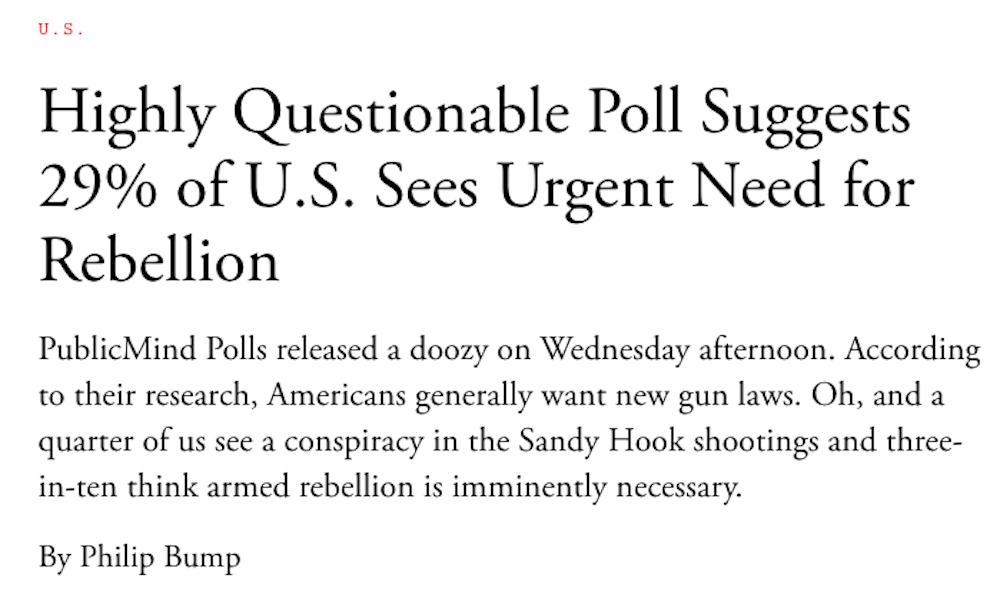
Are we normalizing the “death of democracy” by talking about it so much? Definitely not

With Donald Trump’s Big Lie about the 2020 election, his followers’ insurrection at the Capitol and the ongoing attacks on voting rights in GOP-controlled states across the country, most people should now recognize that our democracy is in real peril. The undoing of the U.S. democracy is being carried out slowly, in stages, to wear down opponents and normalize what would otherwise be outrageous. 

According to the detailed reporting of the late Village Voice journalist Wayne Barrett, this has been the modus operandi of Donald Trump from the beginning of his public career, after he was born on third base and then began whining that the public was not applauding his mighty triple — to obfuscate, obstruct, lie, manipulate, cajole, gaslight, demand loyalty, sue and repeat, ad nauseam, to wear down those trying to expose his misdeeds. He learned most of his underhanded tricks from his father, Fred, and his mentor, the lovely Roy Cohn.

We find ourselves living in a country where the traditions of political discourse were systematically destroyed, over a number of decades, by the likes of Rush Limbaugh and Newt Gingrich, who taught Republicans to always be aggressively aggrieved and to treat political opponents as enemies; where the norms of presidential behavior were turned on their head during Trump’s years in the White House; where Republicans in Congress now compete with each other to see who can reach the next new low; and where a far-right media empire profits most when it spews out disinformation and trades in conspiracy theories.

RELATED: Meet the scariest Republican candidates of 2022: It wasn’t easy to pick ’em

And all this despicable behavior — from demonizing political opponents to praising white supremacists to passing laws that hinder voting rights and even harm public health — is being done in the name of making America “great again.”

In such a hostile environment, how can a democracy best defend itself? Benjamin Franklin famously remarked, when questioned by Elizabeth Willing Powel of Philadelphia about the form of government that had been devised, that we had “a republic, if you can keep it.” (We can speculate as to whether Powel, a well-connected and politically astute upper-class woman, wondered at that remark, given that she didn’t have the right to vote.)

Matters are, of course, more complicated now. We live in an extremely large republic with a diverse population, and our government has long faced serious issues with representation. Because every state, despite its population, gets two senators, North Dakota, South Dakota and Wyoming (with a collective total population of about 2 million) have triple the clout of New York (20 million) or California (39 million). The 50 Democratic senators now represent 41.5 million more people than the 50 Republican senators. If population trends continue, by 2040 it is estimated that 70% of Americans will be represented by only 30 senators, while the other 30% will be represented by 70 senators.

Even in the House of Representatives, where population is supposed to count for fair representation, congressional districts are heavily gerrymandered to ensure one party has more representatives in the House and at the state level than they otherwise would. In the past couple of decades, the Electoral College has allowed Republicans to win the White House twice (Gore v. Bush in 2000 and Clinton v. Trump in 2016) when they’ve lost the popular vote.

 RELATED: Will Arizona’s relentless Republican gerrymander decide the 2024 presidential election?

Still, a broken democracy might be fixed. A slide into theocracy or autocracy would mark the end of the American experiment of freedom of speech — especially press freedom — separation of church and state and the rule of law. Grifters and oligarchs would have free play. 

RELATED: Can American democracy escape the doom loop? So far, the signs are not promising

We should all sound warnings about it, but this creates an apparent dilemma: Does it help that more people are speaking about it, or does having this issue in the news so often simply normalize the idea, giving sustenance to those who plan to subvert it? The warnings have been crystal clear:

  • Many warned about Trump’s thuggish, autocratic tendencies from the beginning of his run for the Republican nomination in 2015, after he kicked off his campaign by saying of  Mexican immigrants “They’re bringing drugs. They’re bringing crime. They’re rapists. And some, I assume, are good people.”
  • Former Secretary of State Madeleine Albright was concerned enough by anti-democratic movements she saw around the world, and growing signs of it at home, to publish “Fascism: A Warning” in 2018 and to speak both knowledgeably and passionately about it in interviews.
  • All 10 living former defense secretaries warned in an op-ed in January 2021 about the possibility of Trump using the military to overturn the fairly decided election. We have lately learned that military leaders’ concerns about Trump’s plans for the National Guard, which he allegedly wanted to use to protect Trump supporters from imaginary counter-protesters, may have caused them to be deployed so late on Jan. 6.
  • Retired generals have recently warned of the possibility of a civil war in 2024, with the military splitting along ideological lines.
  • Prominent political scientists and journalists have warned about the characteristics of autocratic and fascist movements (e.g., make your political opponents the enemy, denigrate the free press) for years now.
  • Mary Trump, a clinical psychologist and the former president’s niece, wrote a book about his malignant narcissism and continues to warn the country about what he is capable of and what he represents.  
  • I don’t know what’s happening in your town, but our favorite local radio guy here in St. Louis is counting down on his podcast the number of days remaining for democracy in America “as we have known it.”

And of course everyone in the country saw with their own eyes the “Stop the Steal” protest that was followed by the brutal, deadly, feces-smeared assault on the Capitol. Those people had just heard their president exhort them for more than an hour with clear directives: “We want to go back, and we want to get this right, because we’re going to have somebody in there that should not be in there and our country will be destroyed, and we’re not going to stand for that.”

Trump told them to go to the Capitol to “fight like hell, and if you don’t fight like hell you won’t have a country anymore.” We all knew he was unwilling to call the attack off, and now the House committee investigating the events of Jan. 6 wants records of his calls to allies at the so-called war room at the Willard Hotel the day before.

RELATED: Jan. 6 committee to investigate Trump’s calls to allies at Willard Hotel before Capitol riot

The rest of us had already heard Trump pressuring Georgia Secretary of State Brad Raffensperger to “find” him the 11,780 votes he needed to prevail in that state.

Citizens of good faith naturally wonder: How much does it take to get charged with tampering with an election? Are certain crimes no longer crimes if you are white and wealthy, and you commit them brazenly?

Sometimes it seems like the kid’s game of Chutes and Ladders: People who stormed the Capitol are prosecuted, pulling us closer to a seeming level of justice and a discouragement of continued acts of insurrection, but then Kyle Rittenhouse gets a standing ovation at a right-wing conference, and we find ourselves sliding down again, back to where we began. In the meantime, the true instigators — those who planned and funded and exhorted the insurrection — slip off the hook, time and again, pointing a toddler’s finger back at those who charge them with anti-democratic actions, stamping their feet and saying, “No, you are the insurrectionists.” 

In this the bully-is-really-the-one-getting-bullied world (which apparently now has a name), the coup took place on election day and the tyrant is Joe Biden. Oh, and Democrats are pedophiles who hate their country and are trying to destroy it, and they must be stopped—which is not only psychological projection, as we are all tired of pointing out, but also quite politically useful in creating the sub-human enemy one needs to justify the use of violence. 

Thanks again, Rush. Thanks, Newt.

RELATED: The conservative urge to be a victim: Why right-wing victimhood is spreading so fast 

So, what can one do with this? How does one warn people about the distinct possibility of the United States becoming a Putin-like dictatorship when Trump’s fans seemingly adore Putin (remember “I’d rather be a Russian than a Democrat” T-shirts during the Obama years?), talk up autocrats like Hungarian strongman Viktor Orbán and are themselves normalizing the idea of a violent insurrection on Trump’s behalf?

As Salon columnist Amanda Marcotte noted in a recent piece about how Fox News hosts follow the Trumpian method of coupling shamelessness and belligerence to spew out disinformation, it is all about flooding the information zone, wearing opponents down, and further indoctrinating their cult-like following:

In a sense, it’s not even really lying. Lying is an attempt to deceive. Gaslighting, however, does not try to convince anyone of anything, except their own powerlessness. Trump’s incessant insistence that the election was “stolen” convinces no one. But, by grinding at it day and night, Trump has indoctrinated his followers into parroting the lie, not because they believe it, but as a means to demonstrate loyalty.

Trump’s fans are now so tribal, and so deeply steeped in his demagoguery about Democrats and “elites” and experts in general being the enemy, that they even boo him if he strays from the message — in admitting that he got the vaccine and then the booster — in a belated attempt to promote public health or, more likely, try to seize personal glory from the vaccines. 

With despotic leaders working together despite competing ideologies, as Anne Applebaum wrote recently in the Atlantic, and the far right apparently now collaborating to create a global think tank to push its oligarchic or autocratic ideology in Steve Bannon style, how should democracies respond?

In the first Summit for Democracy, held in early December 2021, President Biden laid out three key areas for action: strengthening democracy and defending against authoritarianism, fighting corruption and promoting respect for human rights. Fighting corruption must of course begin at home, not only by stopping the money-laundering operations of oligarchs but by getting money out of our own politics.

To get back to my original question: Are our constant warnings about the rise of autocracy and fascism only serving to normalize it, in effect to talk it into being? I think the question hardly matters. More than 70% of Republicans already believe that democracy in this country is facing a “major threat” — not because of the Big Lie about the election and the insurrection, but because they’ve swallowed Trump’s lies about the election. Only 35% of Democrats, on the other hand, feel democracy is facing such a threat. A Harvard poll of voters aged 18 to 29 shows that a majority (52%) feel our democracy is in trouble or failing. 

You’re not crying wolf if the wolves are all around you — and even roaming the floor of Congress.

Will our democracy become a pretend one, backsliding into “competitive authoritarianism”? As Christopher Sabatini and Ryan C. Berg wrote in Foreign Policy last February, the autocrats have a playbook; those who want to keep their democracies — as imperfect as they may currently be — need a playbook too. We need to learn from other countries where democracy has been challenged, and we need to let the wannabe dictators know that we see their slow-motion coup game and are ready to fight it — by exposing it to the light of day, by strengthening the rule of law and by insisting on the right to vote and then exercising it.

Are we talking about this too much? No; that’s not possible. 

From the left, we often hear that we really don’t have a true democracy. That is undoubtedly true: It is a republic, and one that is dangerously unfair in terms of representation, for reasons noted above. How can the rights of citizens be protected by a Congress that continues to operate through bribery? Still, the underlying message of such analyses may be that such a “democracy” is not worth saving. Such arguments end up being uncomfortably akin to the “whataboutisms” perfected by dictators like Putin.

RELATED: Democracy vs. fascism: What do those words mean — and do they describe this moment?

As much as we may critique the democratic system in the United States for not living up to its name, or the Democratic Party for not getting enough done, what we now face is dire. Trump himself may not precisely fit the “classic” definition of a fascist leader — we can quibble about that around the edges — but he’s close enough for many experts. More to the point, he is a nonstop liar, a conman and a sociopath. He doesn’t care about his own followers, only about himself. No such person should be in a leadership position at any level.

Democrats are at least trying to save our democracy by proving it can works for the average person. Trumpists? To paraphrase the presidential candidate who went on to become the first twice-impeached president, in one White House term: They’re bringing ultra-nationalism, they’re bringing white supremacy, they’re spreading COVID, but we assume some of them are good people. Those “good people,” if they still exist, need to step back from the brink and help us save our democracy.

The “runner’s high” may result from molecules called cannabinoids – the body’s own version of THC

Many people have experienced reductions in stress, pain and anxiety and sometimes even euphoria after exercise. What’s behind this so-called “runner’s high”? New research on the neuroscience of exercise may surprise you.

The “runner’s high” has long been attributed to endorphins. These are chemicals produced naturally in the body of humans and other animals after exercise and in response to pain or stress.

However, new research from my lab summarizes nearly two decades of work on this topic. We found that exercise reliably increases levels of the body’s endocannabinoids – which are molecules that work to maintain balance in the brain and body – a process called “homeostasis.” This natural chemical boost may better explain some of the beneficial effects of exercise on brain and body.

I am a neuroscientist at the Wayne State University School of Medicine. My lab studies brain development and mental health, as well as the role of the endocannabinoid system in stress regulation and anxiety disorders in children and adolescents.

This research has implications for everyone who exercises with the aim of reducing stress and should serve as a motivator for those who don’t regularly exercise.

Health benefits of exercise

Several decades of research has shown that exercise is beneficial for physical health. These studies find a consistent link between varying amounts of physical activity and reduced risk of premature death and dozens of chronic health conditions, including diabetes, hypertension, cancer and heart disease.

More recently – over about the past two decades – mounting research shows that exercise is also highly beneficial for mental health. In fact, regular exercise is associated with lower symptoms of anxiety, depression, Parkinson’s disease and other common mental health or neurological problems. Consistent exercise is also linked to better cognitive performance, improved mood, lower stress and higher self-esteem.

It is not yet clear what is behind these mental health boosts. We do know that exercise has a variety of effects on the brain, including raising metabolism and blood flow, promoting the formation of new brain cells – a process called neurogenesis – and increasing the release of several chemicals in the brain.

Some of these chemicals are called neurotrophic factors, such as brain-derived neurotrophic factor. BDNF is intricately involved in brain “plasticity,” or changes in activity of brain cells, including those related to learning and memory.

Scientists have also shown that exercise increases blood levels of endorphins, one of the body’s natural opioids. Opioids are chemicals that work in the brain and have a variety of effects, including helping to relieve pain. Some early research in the 1980s contributed to the long-standing popular belief that this endorphin release is related to the euphoric feeling known as the runner’s high.

However, scientists have long questioned the role of endorphins in the runner’s high sensation, in part because endorphins cannot cross into the brain through the blood-brain barrier, which protects the brain from toxins and pathogens. So endorphins are not likely to be the main driver for the beneficial effects of exercise on mood and mental state.

This is where our research and that of others points to the role of our body’s natural versions of cannabinoids, called endocannabinoids.

The surprising role of endocannabinoids

You may be familiar with cannabinoids such as tetrahydrocannabinol – better known as THC – the psychoactive compound in cannabis (from the Cannabis sativa L. plant) that causes people to feel high. Or you may have heard of cannabidiol, commonly known as CBD, an extract of cannabis that is infused in some foods, medicines, oils and many other products.

But many people do not realize that humans also create their own versions of these chemicals, called endocannabinoids. These are tiny molecules made of lipids – or fats – that circulate in the brain and body; “endo” refers to those produced in the body rather than from a plant or in a lab.

Endocannabinoids work on cannabinoid receptors throughout the brain and body. They cause a variety of effects, including pain relief, reduction of anxiety and stress and enhanced learning and memory. They also affect hunger, inflammation and immune functioning. Endocannabinoid levels can be influenced by food, time of day, exercise, obesity, injury, inflammation and stress.

It’s worth noting that one should not be tempted to forgo a run or bike ride and resort to smoking or ingesting cannabis instead. Endocannabinoids lack the unwanted effects that come with getting high, such as mental impairment.

Understanding the runner’s high

Studies in humans and in animal models are pointing to endocannabinoids – not endorphins – as the star players in the runner’s high.

These elegant studies demonstrate that when opioid receptors are blocked – in one example by a drug called naltrexone – people still experienced euphoria and reduced pain and anxiety after exercise. On the flip side, the studies showed that blocking the effects of cannabinoid receptors reduced the beneficial effects of exercise on euphoria, pain and anxiety.

While several studies have shown that exercise increases the levels of endocannabinoids circulating in the blood, some have reported inconsistent findings, or that different endocannabinoids produce varying effects. We also don’t know yet if all types of exercise, such as cycling, running or resistance exercise like weightlifting, produce similar results. And it is an open question whether people with and without preexisting health conditions like depression, PTSD or fibromyalgia experience the same endocannabinoid boosts.

To address these questions, an undergraduate student in my lab, Shreya Desai, led a systematic review and meta-analysis of 33 published studies on the impact of exercise on endocannabinoid levels. We compared the effects of an “acute” exercise session – like going for a 30-minute run or cycle – with the effects of “chronic” programs, such as a 10-week running or weightlifting program. We separated them out because different levels and patterns of exertion could have very distinct effects on endocannabinoid responses.

We found that acute exercise consistently boosted endocannabinoid levels across studies. The effects were most consistent for a chemical messenger known as anandamide – the so-called “bliss” molecule, which was named, in part, for its positive effects on mood.

Interestingly, we observed this exercise-related boost in endocannabinoids across different types of exercise, including running, swimming and weightlifting, and across individuals with and without preexisting health conditions. Although only a few studies looked at intensity and duration of exercise, it appears that moderate levels of exercise intensity – such as cycling or running – are more effective than lower-intensity exercise – like walking at slow speeds or low incline – when it comes to raising endocannabinoid levels. This suggests that it is important to keep your heart rate elevated – that is, between about 70% and 80% of age-adjusted maximum heart rate – for at least 30 minutes to reap the full benefits.

There are still a lot of questions about the links between endocannabinoids and beneficial effects from exercise. For example, we didn’t see consistent effects for how a chronic exercise regimen, such as a six-week cycling program, might affect resting endocannabinoid levels. Likewise, it isn’t yet clear what the minimum amount of exercise is to get a boost in endocannabinoids, and how long these compounds remain elevated after acute exercise.

Despite these open questions, these findings bring researchers one step closer to understanding how exercise benefits brain and body. And they offer an important motivator for making time for exercise during the rush of the holidays.


Hilary A. Marusak, Assistant Professor of Psychiatry and Behavioral Neurosciences, Wayne State University

This article is republished from The Conversation under a Creative Commons license. Read the original article.

Matt Gaetz’s no good — but not so horrible — 2021. What’s next?

In March of 2021, the Department of Justice (DOJ) revealed that it was investigating 39-year-old Rep. Matt Gaetz, R-Fla., over allegations that he’d had a sexual relationship with a 17-year-old girl. At the time, the public had every reason to believe the probe would be career-ending for the Florida flamethrower. According to Axios, Gaetz had already been “seriously considering” bowing out of a re-election bid, instead eyeing a position at the conservative network Newsmax. GOP insiders further told Politico in early April that Gaetz had been notorious for his “reckless” lifestyle and many regarded him as “a grenade whose pin had already been pulled.” Even Gaetz’s apparent allies among the far-right – some of whom were well-practiced in the art of demurring sexual assault allegations – refrained from rushing to the lawmaker’s defense. 

While Gaetz has maintained his seat in Congress, as well as all of his committee assignments, as the federal probe remains underway – and the cast of right-wing rabble-rousers grows more crowded by the day – it’s unclear whether the congressman will remain a rising Republican star, gradually fade into persona non grata, or suffer a very public explosion. 

RELATED: Rep. Matt Gaetz under investigation for sexual relations with teenager — he claims extortion

A former Florida state legislator, Gaetz first entered the national political arena back in 2016, when he was elected to represent the state’s 1st congressional district with 69% of the vote. Within months of his tenure, the conservative firebrand had already become one of Donald Trump’s most loyal attack dogs, making headlines with aggressive rhetorical crusades against anyone who questioned the former president’s conduct.

In November 2017, Gaetz introduced a resolution aimed at compelling former special counsel Robert Mueller to recuse himself from the Russia investigation, calling the probe an attempted “coup d’etat” that was “infected with bias.” The next year, the Republican invited a Holocaust denier to the State of the Union and led a brigade of 30 House Republicans to “storm” a private deposition Mueller was holding. In 2020, Gaetz would go on to ventriloquize Trump’s baseless claim that the presidential election was “stolen” by dint of widespread fraud. And after the violent culmination of this lie played out on January 6, the Florida lawmaker repeatedly downplayed it, claiming that the Capitol riot may have been provoked by antifa. 


Want a daily wrap-up of all the news and commentary Salon has to offer? Subscribe to our morning newsletter, Crash Course.


Unlike many GOP operatives who hide in the shadows, Gaetz has conducted much of his business in plain sight. Over the past five years, the lawmaker has consistently made the rounds on Fox News, Newsmax, and One America News Network, trumpeting his right-wing theatrics for the widest audience possible. “Virtually everything Gaetz has done in Congress,” a Mother Jones profile put, “has been designed for maximum publicity.” 

On the day the DOJ’s sex trafficking probe was first made public, Gaetz embraced this very ethos. Appearing for an interview with Fox News host Tucker Carlson, the Republican congressman denied any allegations of having sexual relations with a minor, claiming that they were part of a complicated extortion scheme orchestrated by a former DOJ official against him and his father. 

RELATED: Fox News made Matt Gaetz a GOP star. Now he’s trying to take Fox News’ Tucker Carlson down with him

Since then, Gaetz has turned his attention toward re-election. In May, the Florida conservative teamed up with Rep. Marjorie Taylor Greene, R-Ga., to launch “America First Tour,” a nationwide speaking tour designed to rile up their bases and line their campaign coffers. However, from a fundraising perspective, it’s not apparent that Gaetz has been able to shake off the DOJ’s probe.   

According to Mother Jones, the first quarter of Gaetz fundraising haul started off strong, raking in $1.8 million dollars – more than he spent during that period. But during the second quarter, just after the DOJ’s sex trafficking investigation was publicized, donations dropped to $1.4 million, and Gaetz’s campaign had to spend a million more than it raised. (During that same period, Greene, his campaign partner, managed to amass over $4.5 million.)

To boot, Gaetz’s goodwill with the Trumpworld may be souring.

According to CNN, the congressman was reportedly denied a meeting with Trump back in April because the former president’s aides advised against it. That month, Trump also reportedly omitted Gaetz’s name when rattling off a number of his allies in a speech with GOP donors. 

The GOP House leadership has stayed mostly mum on the DOJ probe, though several of his colleagues have given their campaign donations from Gaetz to various charities, according to Forbes.

RELATED: Matt Gaetz, MTG’s PAC has blown through all of its money in last six months: report

The new year may offer fresh developments for Gaetz, whose political ascendancy has slowed down since the probe. But so long as no charges are brought, his relationship with the GOP will likely be salvageable. 

“The Gaetz scandal will be another test to see how far Republicans are willing to go to protect their own,” CNN’s Julian Zelizer writes. “After Trump, it’s clear the Republican Party seems willing to defend just about anyone in the name of power. Gaetz’s political future rests not on the morality of his actions, but how much power he can bring to the party.”