Spring Sale: Get 1 Year, Save 58%

3 reasons US coal power is disappearing – and a Supreme Court ruling won’t save it

The U.S. coal industry chalked up a rare win this summer when the Supreme Court issued a ruling limiting the government’s ability to regulate greenhouse gas emissions from power plants. But that doesn’t mean coal-fired power plants will make a comeback.

As an economist, I analyze the coal industry, including power plant construction and retirement plans. I see three main reasons U.S. coal plants will continue to close down.

A detail related to the Supreme Court case helps tell the story. The case, West Virginia v. EPA, involved the Clean Power Plan, a set of Obama-era regulations proposed in 2015 that would have required power plants to make deep cuts in greenhouse gas emissions. For those powered by coal – historically the dominant source of carbon dioxide emissions in the U.S. electricity sector – that likely would have meant shifting away from coal altogether.

Yet even though the Clean Power Plan never went into effect, coal use has declined so much that the U.S. power sector has already met the plan’s 2030 target.

Why the power sector is moving away from coal

At its peak in 2007, coal was responsible for almost 2 trillion kilowatt-hours of electricity generation in the U.S., equivalent to powering over 186 million homes for the year.

By 2021, that total had dropped by 55%.

The drop was due in large part to an industrywide shift in electricity generation, away from coal-fired units toward natural gas and renewable energy. That shift is happening for three main reasons.

1. Natural gas prices

Natural gas prices have decreased significantly – over 60% between 2003 and 2019 – mainly because of improvements in hydraulic fracturing and horizontal drilling, which allow drillers to extract more gas from shale.

The influx of natural gas led to substantial increases in additions of natural gas-fired electricity generators. These natural gas power plants are newer, have similar and sometimes lower fuel costs, and are more efficient at generating electricity than the existing coal-fired generators.

They also are able to come online at full power within one to 12 hours, while a coal-fired generator can take up to 24 hours to be fully ready to produce power. Because of this necessary lead time, it is difficult to rely on coal-fired generators when demand rises and the power grid needs more electricity quickly.

For example, the electric system faces the highest demand for electricity generation between 7 a.m. and 11 p.m. on weekdays. If demand spikes, a coal-fired generator will miss the window when electricity is needed. Natural gas generators can meet the demand much faster, often making them more profitable for utilities.

2. The rise of renewable energy

Solar and wind energy are now cost competitive with fossil-fueled generators, primarily because of technological advancements.

Many states and the federal government also offer incentives for renewable energy production, which lowers the cost to install them. President Joe Biden’s climate plan aims to increase those incentives. And, once built, renewable energy sources have no fuel costs and relatively low operational costs compared with coal-fired generators.

A record 17.1 gigawatts of wind capacity came online in the U.S. in 2021 after a tax incentive was extended, and 7.6 gigawatts are planned this year.

Solar energy accounts for 46% of all new electricity generating capacity expected to join the grid in 2022, about 21.5 gigawatts.

3. Environmental regulation

The government has instituted several environmental regulations over the past few decades aiming to reduce sulfur dioxide, nitrogen oxides, particulate matter, mercury and other hazardous air pollutants emitted by the electric power sector.

These hazardous emissions are linked to health problems including respiratory illnesses and neurological and developmental damage, as well as smog, acid rain and climate change. According to the U.S. Government Accountability Office, coal-fired generators are by far the largest electricity-sector sources.

To comply with the regulations, coal power plant operators have installed scrubbers to remove the pollutants from their emissions, switched coal types to lower-sulfur coal, and invested in other methods to reduce sulfur and other impurities. As a result, costs have increased for the coal-fired fleet.

These higher environmental mitigation costs, coupled with lower wholesale electricity prices over recent years, have meant coal plant operators have had a tougher time recovering the cost of the capital investments to maintain their older coal-fired generators. Instead, many have chosen to retire those units.

Coal power’s future: More early retirements

So what does this mean for the future of U.S. coal power?

The U.S. Energy Information Administration reports that coal generators account for 85% of the electric generating capacity being retired this year nationwide.

This trend is expected to continue, with substantial coal generator retirements occurring by 2030. This is a result of both market factors – cheap natural gas and affordable renewable energy – and regulatory measures.

Coal is used more widely in other countries, including China, and U.S. coal companies have increased their exports in recent years. However, at the 2021 United Nations climate change conference, over 40 countries committed to completely shift away from coal, and 20 others – including the U.S. – pledged to stop government financing of coal use, unless it includes carbon capture technology.

The Biden administration, which has struggled to get its climate policies through a deeply divided Congress, appeared to have movement on a large climate change-focused package in late July. An agreement announced by Sen. Joe Manchin of West Virginia included support for renewable energy and electric vehicles. The administration has been weighing new regulatory options that could further affect the cost of generating electricity with coal.

It all adds up to a difficult economic environment for U.S. coal power for the foreseeable future.


This article was updated July 28, 2022, with an agreement announced on Biden’s climate plan.The Conversation

Rebecca J. Davis, Assistant Professor of Economics and Finance, Stephen F. Austin State University

This article is republished from The Conversation under a Creative Commons license. Read the original article.
Blake Masters, a mini Trump, has a plan to privatize (almost) everything everywhere

Since the beginning of his campaign, Blake Masters, the conservative venture capitalist turned U.S. Senate hopeful from Arizona, has been drawn to the kind of rhetorical extremism that now animates the Republican Party, bandying insults and talking points of the kind that require no specialized knowledge or experience but nevertheless leave an indelible impression on Republican voters. As far back as 2015, Masters told The Washington Post, he’d been entranced by the rhetoric of Donald Trump, a loud misogynist, who during one of his presidential debates proudly embraced accusations of sexism rather than deny them. 

“You’ve called women you don’t like fat pigs, dogs, slobs, and disgusting animals,” then-Fox News anchor Megyn Kelly said to Trump during a 2016 GOP debate. “Your Twitter account ––”

“Only Rosie O’Donnell,” Trump interjected, before getting rapturous applause from the crowd. 

It was during this now-notorious back-and-forth, Masters explained, that he had his lightbulb moment.

“Somehow he just busted through some wall,” Masters recently told the Post of Trump. “He didn’t apologize. He kind of just picked on her as this target.”

Since then, Masters has largely emulated the former president’s brashness on all matters political. Just this May, in the wake of the Supreme Court’s rescission of Roe v. Wade, the former tech executive stressed the need for nationwide ban on abortion, a practice that he called “demonic” just last year, according to The Tuscon Weekly. Masters also believes that the Capitol riot was an FBI-led “false flag operation”; that the American education system is pushing “gay sex ideology” onto students; and that Democratic elites are deliberately attempting to loosen borders and win future elections with a more pliant voting bloc from the Third World.

Of course, none of this is particularly unique to the MAGA agenda, which has for the most part set its sights on culture war issues like abortion, race, immigration, sex, and gender. But Masters also espouses a strange flavor of half-baked libertarianism that calls for the complete abolition of long-standing cornerstones for American welfare. 

For one, Masters supports a generalized push to privatize the country’s water supply, according to audio provided to Salon by American Bridge, a Democratic Super PAC. 

“Would you support the transferring of water resources to private ownership?” a voter asked Masters two weeks ago during a campaign event in Sedona, Arizona. 

“In general, yes,” Masters responded, because “the state can’t do it and you don’t want the government doing a lot of this stuff.”

To be sure, private water companies would be nothing new for the nation. But anecdotal evidence suggests that water is the kind of basic human right that has no business under Corporate America’s thumb.

Back in 2017, The Washington Post reported that states that offload their publicly-owned water infrastructure to private corporations tend to see rate hikes for customers, adding to the millions of Americans whose sinks, toilets, and showers are routinely disconnected for unpaid bills, as The Guardian reported.  

RELATED: Making big bucks off water: Private, for-profit water companies charge 58% more than the government, report finds

Janice Beecher, the director of Michigan State University’s Institute of Public Utilities, told the Post that state officials “should ask good questions, and they should understand the trade-offs” before selling off their municipal water systems, because “once it’s gone, it’s gone.”

According to a sweeping 2016 analysis from the Food & Water Watch, a consumer rights organization, private water companies charge 58 percent more than their publicly-owned counterparts. In states like New Jersey and Pennsylvania, the premium can be as high as 79 and 84 percent respectively. 


Want a daily wrap-up of all the news and commentary Salon has to offer? Subscribe to our morning newsletter, Crash Course.


And that’s just pricing. Public Citizen, another consumer rights group, found that privatization leads to worse water quality, job losses, over-extraction, and corruption. To add insult to injury, $26.5 billion of the EPA’s budget goes to for profit-water providers, which presently control 10% of the nation’s water supply, suggesting that water companies have trouble sustaining themselves without the largesse of the government.

Meanwhile, cities all across America are now attempting to expropriate water infrastructure they sold off in response to complaints about rate hikes and bad service. However, as the Post reported, exercising eminent domain in this area can be extremely costly, leading to municipal deficits that, ironically, might have been the original impetus for privatization. 

Apart from water, Masters also has a grand, albeit ill-defined, vision to privatize Social Security, the federal insurance program that provides benefits to 65 million retired, disabled, and unemployed people.

RELATED: GOP’s new plan: Raise taxes on working people, end Social Security and Medicare

“We got to cut the knot at some point though because I’ll tell you what, I’m not going to receive Social Security,” Masters said at a primary debate back in June. “I’m a millennial.”

“We need fresh and innovative thinking, maybe we should privatize Social Security,” he added at the time. “Private retirement accounts, get the government out of it.”

Make no mistake: Social Security security has been a perennial punching bag for the Republican Party for decades. 

As early as 2004, then-President Bush campaigned on privatizing the program, arguing that young people should be able to take “ownership” of their future benefits by investing their tax withholdings into a private account that would be subject to the whims of market forces.

“We should make the Social Security system a source of ownership for the American people,” Bush said in a January 2004 State of the Union address.

However, the plan ultimately unraveled once it became clear that it was massively unpopular amongst the American public, 96 percent of whom currently support Social Security as is.

RELATED: Social Security fund would run out of money in 3 years if Trump eliminates payroll tax: SSA analysis

Today, both parties agree that Social Security needs to be reformed, in part because the retirement funds are projected to run dry by 2034. But what that reform should look like breaks down across party lines. 

Democrats, for their part, have argued that the program should be expanded – along with provisions that would create a minimum benefit and a cost-of-living adjustment – through tax increases. Unsurprisingly, Republicans have repudiated this plan as anti-business, instead proposing plans to raise the minimum age of retirement, establish “rescue committees” that would mull cuts behind closed doors, and even sunset the program every five years. 

Trump hasn’t been on Fox News in a long long time

Donald Trump’s insistence on repeating his debunked claims of election fraud has harmed his relationship with the Murdoch family, according to a new deep-dive published by The New York Times.

“The network, which is owned by Rupert Murdoch and boosted Mr. Trump’s ascension from real estate developer and reality television star to the White House, is now often bypassing him in favor of showcasing other Republicans,” Jeremy Peters reported. “In the former president’s view, according to two people who have spoken to him recently, Fox’s ignoring him is an affront far worse than running stories and commentary that he has complained are ‘too negative.’ The network is effectively displacing him from his favorite spot: the center of the news cycle.”

Trump is reportedly angry with Sean Hannity in particular.

“Mr. Trump has complained recently to aides that even Sean Hannity, his friend of 20 years, doesn’t seem to be paying him much attention anymore, one person who spoke to him recalled,” The Times reported. “The snubs are not coincidental, according to several people close to Mr. Murdoch’s Fox Corporation who spoke on the condition of anonymity to discuss the company’s operations.”

On Thursday, Tara Palmeri reported, “my sources say that Trump has started to complain about how [Dr. Mehmet Oz] is running his campaign to the man who pushed the endorsement, Sean Hannity.”

Last Friday, Murdoch’s Wall Street Journal and NY Post editorialized against Trump.

On Monday, Trump lashed out at “Fox and Friends” in a Truth Social post.

Trump complained the show “just really botched my poll numbers, no doubt on purpose. That show has been terrible – gone to the ‘dark side.'”

“RINO Paul Ryan, one of the weakest and worst Speakers EVER, must be running the place,” Trump said, referring to the former Speaker of the House of Representatives who sits on the News Corporation’s board of directors.

“The skepticism toward the former president extends to the highest levels of the company, according to two people with knowledge of the thinking of Mr. Murdoch, the chairman, and his son Lachlan, the chief executive. It also reflects concerns that Republicans in Washington, like Senator Mitch McConnell of Kentucky, the minority leader, have expressed to the Murdochs about the potential harm Mr. Trump could cause to the party’s chances in upcoming elections, especially its odds of taking control of the Senate,” The Times supported. “The Murdochs’ discomfort with Mr. Trump stems from his refusal to accept his election loss, according to two people familiar with those conversations, and is generally in sync with the views of Republicans, like Mr. McConnell, who mostly supported the former president but long ago said the election was settled and condemned his efforts to overturn it.”

It has been 113 days since Trump has appeared on Fox News.

“On April 13, Mr. Trump called into Mr. Hannity’s show and ran through a list of crises he claimed would not be happening ‘had we won this election, which we did.’ He hasn’t been interviewed on the network since,” the newspaper reported.

Ron DeSantis accused of extremism

Florida Commissioner of Agriculture and Consumer Services Nikki Fried had harsh words for Gov. Ron DeSantis as the Sunshine State’s GOP leader wages culture wars issues inside public schools.

“In response to a Florida Department of Education memo that said school districts can ignore federal sex discrimination guidelines, Fried criticized Gov. Ron DeSantis and Education Commissioner Manny Diaz for encouraging schools districts to ignore federal anti-discrimination law and risk the loss of federal funds for free or reduced-price school meals,” the Tallahassee Democrat reported Friday.

Fried is running for the Democratic nomination for governor in the August 23 primary. Also running for the nomination is Rep. Charlie Crist, who was a Republican when he previously served as governor from 2007 to 2011.

“I’m going to just come out and call this exactly what this is,” Fried said. “It’s extremism politics getting in the way of feeding our children. I will not allow Gov. DeSantis or anyone to deny food to hungry kids for any reason.”

Fried’s office administers school lunch programs and coordinates with the U.S. Department of Agriculture’s National School Lunch Program. After the Biden administration issued new anti-discrimination rules, her office instructed schools to comply.

But on Thursday, the DeSantis-appointed education commission, a former GOP legislator, issued a memo telling the schools that they do not have to comply with Fried’s guidance.

“Commissioner Diaz is now actively encouraging Florida schools to disobey the guidance, refuse to hang the poster, and feel free to deny nutritious meals to children on the basis of race, color, national origin, sex, including gender identity and sexual orientation, age or disability,” Fried said. “It’s weird, and rather creepy.”

The 6 most disturbing “The Most Hated Man on the Internet” revelations from Netflix’s docuseries

Hunter Moore rose to notoriety during social media’s most vulnerable era. The self-proclaimed “King of Revenge Porn” thrived off of exploitation and rampant internet trolling culture, later making a profit off of the trauma he inflicted on others.

In 2010, Moore founded the now-defunct porn website Is Anyone Up? which allowed users to submit nude and sexually explicit photos of people without their consent. The posts were oftentimes created by the victims’ closest acquaintances, be it friends looking to pull a sick prank or hateful exes. Each post was also accompanied by the victims’ personal information, including their full names, home addresses and links to their social media profiles.

It didn’t take long till Moore and his site became the subjects of international controversy. Moore was targeted by the FBI, attorneys and, even, the hacktivist collective Anonymous. But his main opponent was one determined mother, who worked tirelessly to see Moore’s undoing after her daughter fell victim to his ploys.

From the producers of “The Tinder Swindler” and “Don’t F**k with Cats,” comes “The Most Hated Man on the Internet,” a three-part docuseries that follows Moore’s dangerous rise and subsequent fall. Netflix’s latest release spotlights the webmaster’s victims and their families along with the agents, journalists and lawyers who investigated the high-profile case.

Here are 6 disturbing revelations from the series:

01

Hunter Moore’s sinister motive for creating Is Anyone Up?

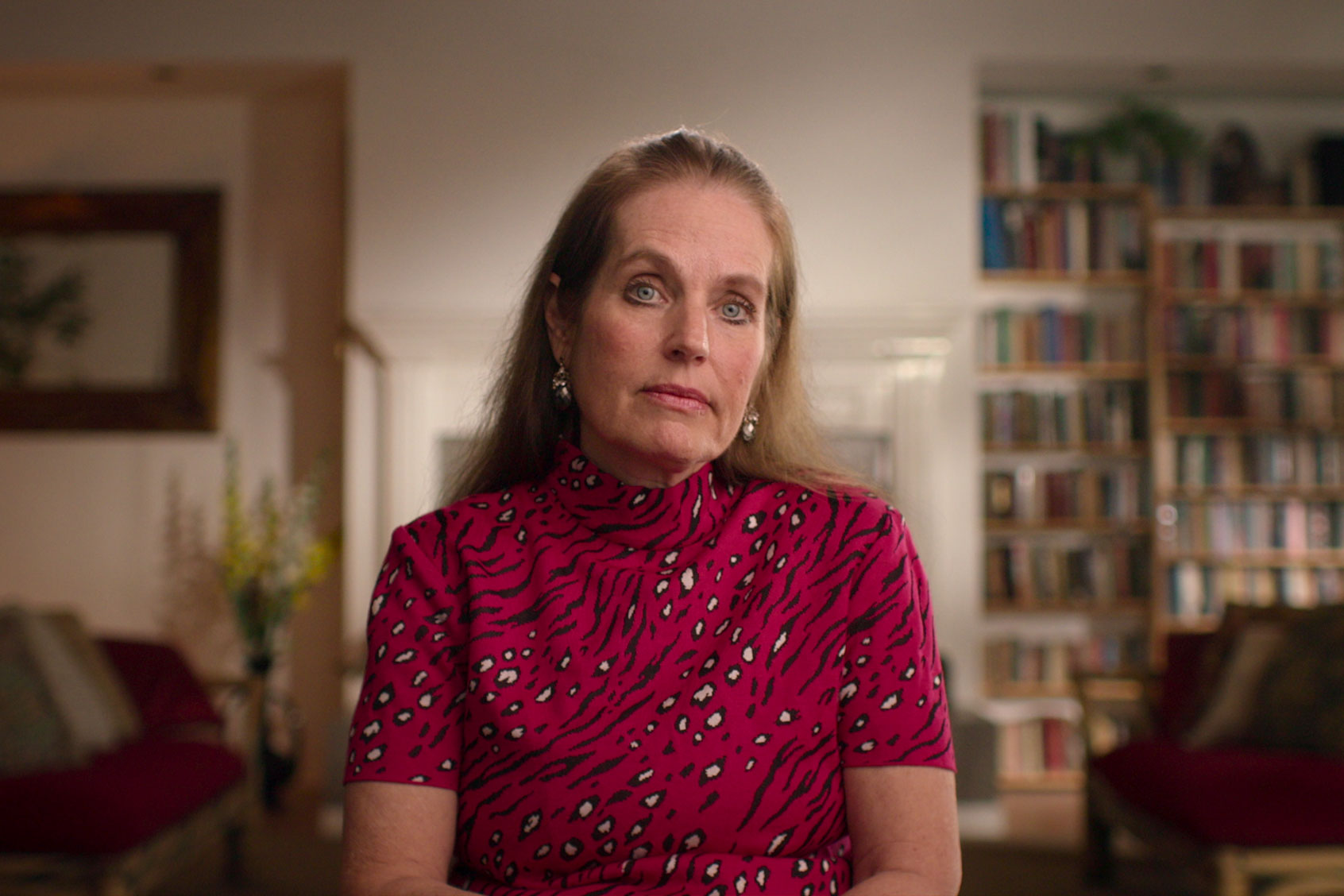
The Most Hated Man on the InternetCharlotte Laws from “The Most Hated Man on the Internet” (Netflix)

“Well, it all started with, you know, me hating some dumb b*tch who broke my heart, really. And that’s how it started, dude,” Moore said in an old interview. “Me and my friends would post a bunch of girls on Is Anyone Up? And we just got a bunch of traffic one day, and I was like, ‘Yo, I can make money off titties and f**king people over.'”
 
Moore, who took part in the scene subculture (a continuation of the early 2000s’ emo subculture), first hosted nude photos of metalcore and punk rock musicians on Is Anyone Up? Once the website garnered significant attention, Moore targeted women, posting photos – mostly of them engaging in sex acts – without their consent.
 
“I started scrolling through the rest of the website and seeing other women’s pictures, and it was just everything you can imagine,” recalled Charlotte Laws, whose daughter, Kayla, was posted topless on the site.
 
“It was from very young up to 70-year-old women. It was people who were 300 pounds. It was people who were incapacitated. You know, a blind paraplegic was on there.”
 
The site also included a comment section under each post, allowing users to critique the victims, their appearances and their morals. Some choice descriptors included, “whores,” “sluts,” “ugly b*tches,” “nasty b*tches” and “fat cows.”
 
“It was very clear that the site was about humiliating people as much as possible,” Laws said.
02
The brainwashed worshippers
Arms raised in praiseArms raised in praise (Getty Images/fstop123)

Moore’s mass of online fans were formally known as The Family. Members of The Family revered Moore, referring to him as their “Father” and “God,” and did whatever he said, no matter how ludicrous the request was.


Some lit their genitals on fire or stuck firecrackers up their anus. Others took videos of themselves urinating and defecating, sometimes in the comfort of their own bathrooms and sometimes out in public spaces. Members willingly filmed themselves punching strangers, attacking innocent bystanders and harming themselves.


However, the most infamous member of The Family was an unnamed girl, who took a video of herself dipping her toothbrush into her own urine and feces, and then brushing her teeth with that same brush.


“There was no doubt that Hunter Moore was a master of manipulation,” said Mike, a former scene kid and Moore follower who appeared in the series’ pilot episode. “And I think the most extreme example of that was Butthole Girl.”

03
Butthole Girl
The Most Hated Man on the InternetDestiny Benedict from “The Most Hated Man on the Internet” (Netflix)

Destiny Benedict first learned about Is Anyone Up? through a close friend. The then-19-year-old was working as a cam girl in order to move out from home and support her two children financially. Benedict said she sent her nudes to Moore in hopes of attracting more people to her webcam sites, acquiring fame and making boat loads of cash.


Benedict’s plan, however, did not go as planned.


During a webcam chat with her friends, Benedict was dared to insert a bottle of hair mousse inside her anus, which she did. One of her friends secretly took a screenshot of Benedict and submitted it to Is Anyone Up? The following day, Benedict’s new post was on the site, along with a screenshot of her Facebook profile which included a cover photo of her two children.


Benedict said Moore was not willing to remove the screenshot of her children off his site. So, she offered to take more pictures of foreign objects inside her buttocks, hoping he would then satisfy her request.


A post titled, “Pick what you want her to put in her butt,” soon appeared on the site and encouraged users to name obscure objects for Benedict to insert. Moore himself suggested a cell phone, saying it would be funny to then call the cell phone and have it vibrate inside Benedict.


“So I took the photo, and that’s how Butthole Girl was born,” she explained.


Once Benedict’s photo went public, Moore took down her cover photo from the site. The famous Butthole Girl became an overnight internet sensation, with members of The Family asking for her hand in marriage and social media influencers, like Jeffree Star, praising her work on Twitter.


“I had never imagined myself being famous for putting things in my butt,” Benedict said. “I wanted more than that.”

04
Moore’s wild nights on tour
The Most Hated Man on the InternetAlex Morris from “The Most Hated Man on the Internet” (Netflix)
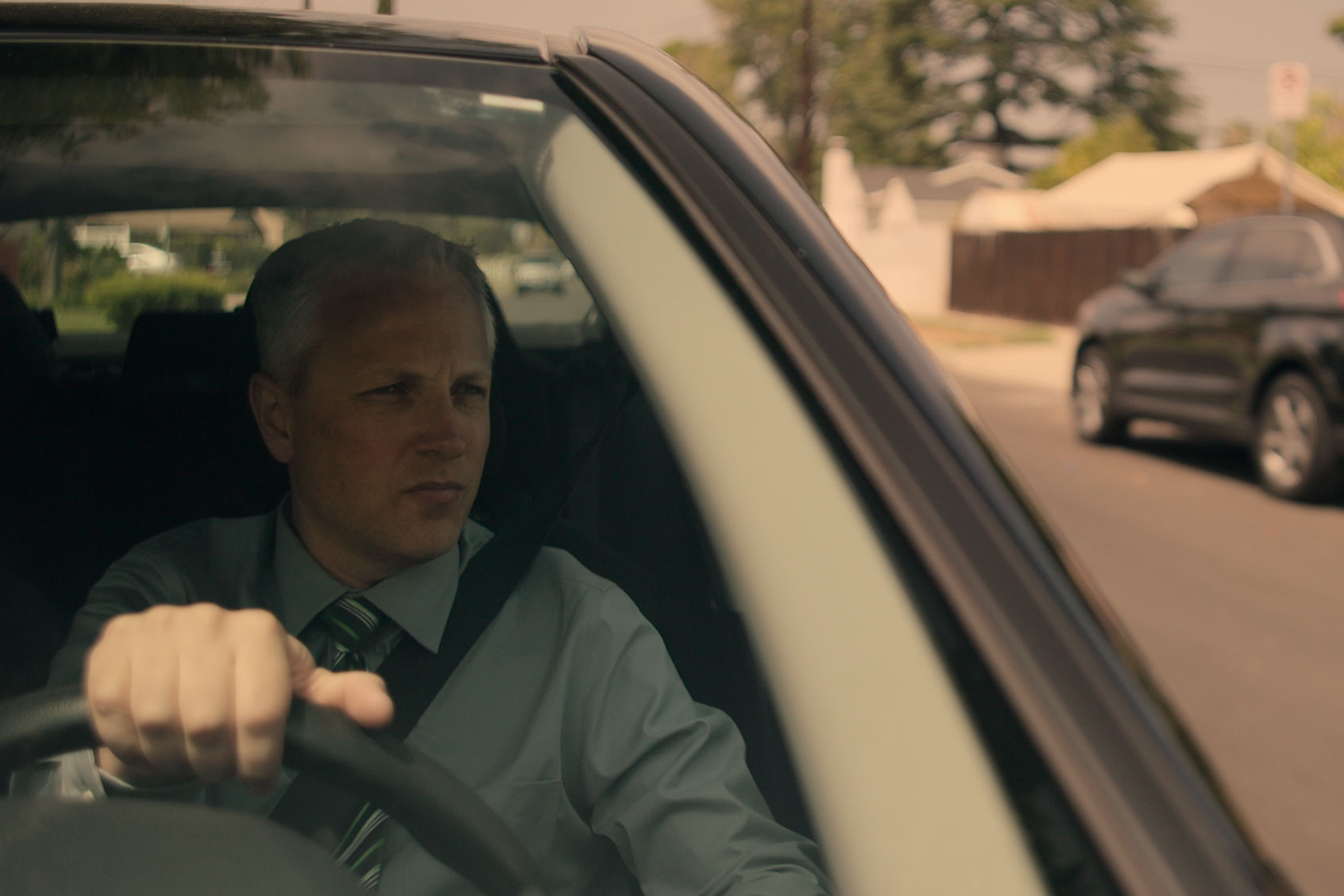
In 2012, Alex Morris, a Rolling Stone journalist, joined Moore, who was working as a DJ and professional partier at the time, on one of his East Coast tours. Morris had been assigned to write a profile piece on Moore titled, “Hunter Moore: The Most Hated Man on the Internet.”


Hard drugs, hard liquor and wild, unabashed sex were common happenings at Moore’s late-night shindigs. Moore described his shows as “pretty gangster,” saying in an old interview, “It’s literally mayhem . . . we’ve had girls poop phones out on stage.”


While recounting the experience, Morris said that nothing could have prepared her for what she would witness on Moore’s tour:


“I mean, first of all, he was doing coke. He’s drinking a lot. But women were just lining up outside the green room to sleep with him. It wasn’t just about having sex. It was about what he could do for shock value to post online. So, he was having women do lines of coke off of his penis. He was drinking vodka out of their vaginas. It was like Howard Stern meets ‘Jackass’ every single night.”

05
Is Anyone Up? 2.0
The Most Hated Man on the InternetJeff Kirkpatrick from “The Most Hated Man on the Internet” (Netflix)
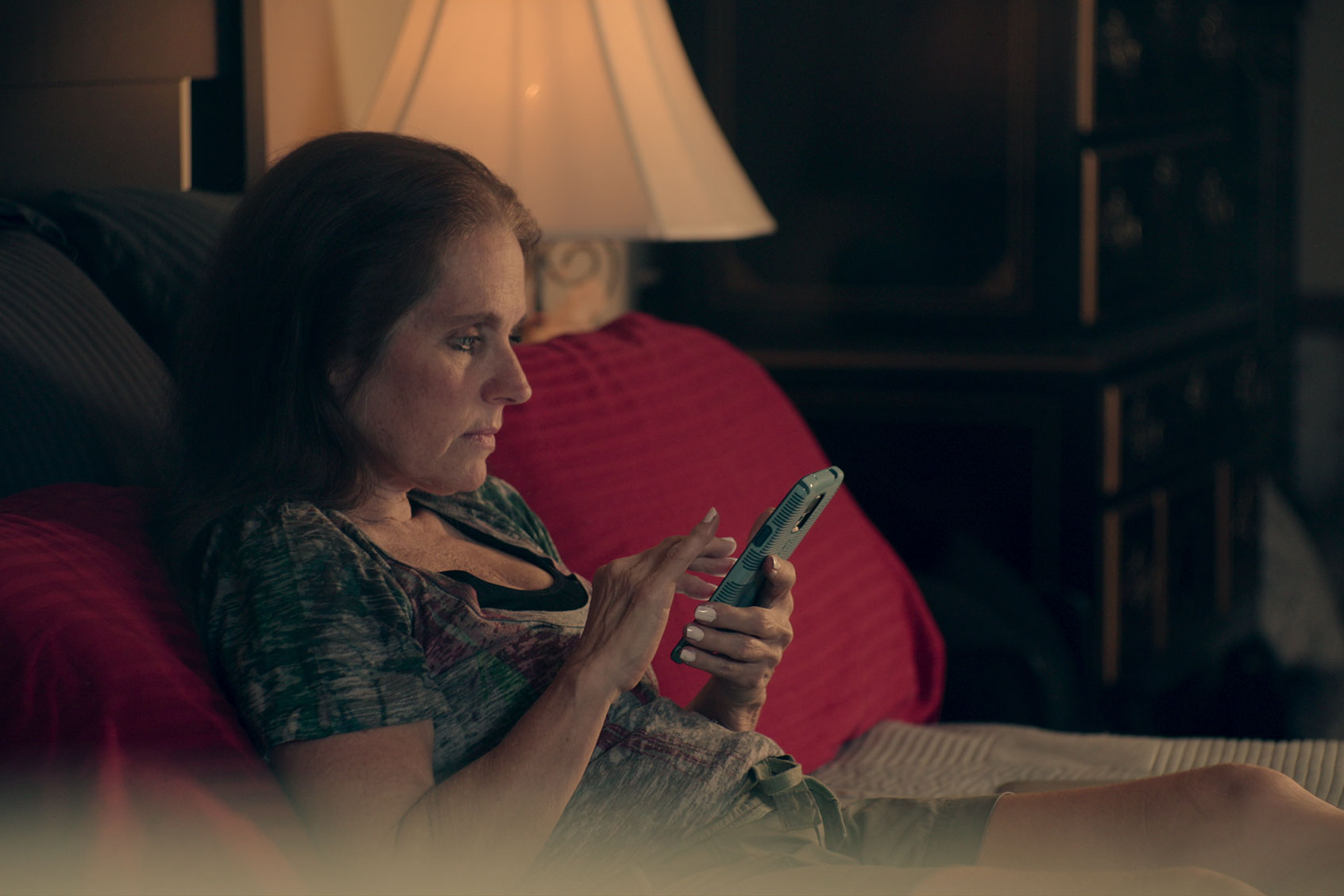
Following an elaborate hacking scheme and a lengthy FBI investigation led by Special Agent Jeff Kirkpatrick, Is Anyone Up? was successfully shut down on April 19, 2012. Moore was also stripped of all his electronics, devices and USB cables . . . but that only motivated him to create a more harmful platform than before.


Moore’s new website was called HunterMoore.tv and followed a similar concept, wherein users could freely submit (and re-upload) explicit photos of others along with their names and social media profiles. But unlike Is Anyone Up?, HunterMoore.tv contained a new address field, allowing users to provide driving directions to the victims’ places of residence and violently target them.


It was clear at this point that Moore felt no remorse for his actions and instead, enjoyed the fear and harm he continued to spur.


“I don’t give a f**k about emotionally. Deal with it. Obviously, I’d get a ton of heat for it,” Moore said in a 2012 Village Voice profile written by journalist Camille Dodero. “But — I’m gonna sound like the most evil mother**ker — let’s be real for a second: If somebody killed themselves over that? Do you know how much money I’d make? At the end of the day, I do not want anybody to hurt themselves. But if they do? Thank you for the money.”

06
Laws gives Moore a taste of his own medicine
The Most Hated Man on the InternetCharlotte Laws from “The Most Hated Man on the Internet” (Netflix)

Shortly after the debut of HunterMoore.tv, Laws challenged Moore by exposing his personal home address on Twitter.


“I mean, no one told me it was going to be a good idea,” Laws said. “I thought that it was important to let him know the victims were now gonna fight. We’re gonna fight harder than ever before.”


Her tweet was met with a flood of hate-filled comments, from both Moore and his warped followers. “By the way, when you and your daughter get my d*ck out of your mouths, you will realize how hard I can troll you,” read one response from Moore. In a subsequent tweet, he wrote, “Posting your daughter’s nudes tonight. I am the Internet genius and will ruin your life and your daughter’s the fun way.”


A separate tweet from a member of The Family simply asked, “How about we shoot you in the head?” Another read, “What a worthless c*nt, hope you and your slutty daughter die choking on a big fat c*ck.”


Despite the safety risks and concerns, Laws said she did not regret tweeting Moore’s home address.


For more than two years, Laws worked relentlessly to defeat Moore and seek justice for her daughter and countless other victims. In February 2015, Moore pleaded guilty to aggravated identity theft charges and aiding and abetting in the unauthorized access of a computer. He was sentenced to two and a half years in prison and ordered to pay a $2,000 fine. 

“The Most Hated Man on the Internet” is streaming on Netflix. Watch a trailer for the series, via YouTube:


House passes semi-automatic gun ban

After an 18-year lapse, it was announced on Friday evening that the House has passed a semi-automatic gun ban.

According to AP News, this ban is in direct response to the surge in mass shootings over recent years where many lives were lost to such weapons. Speaker Nancy Pelosi, who is credited for helping the Democratic-run House move forward with the ban, highlights that the previous ban “saved lives.”

The purpose of the ban is to “prohibit the sale, manufacture, transfer or import of all semi-automatic rifles that can accept a detachable magazine and have a pistol grip; a forward grip; a folding, telescoping or detachable stock; a grenade launcher; a barrel shroud; or a threaded barrel,” according to The Hill

“The House legislation is shunned by Republicans, who dismissed it as an election-year strategy by Democrats,” reports AP News. “Almost all Republicans voted against the bill, which passed 217-213. It will likely stall in the 50-50 Senate.”

A breakdown of House votes that came as a surprise in relation to the ban are listed as such:

Republicans voting in favor of the ban:

Reps. Chris Jacobs of New York

Brian Fitzpatrick of Pennsylvania

Democrats voting against the ban:

Reps. Kurt Schrader of Oregon

Henry Cuellar of Texas

Jared Golden of Maine

Ron Kind of Wisconsin

Vicente Gonzalez of Texas

Judiciary Committee Chairman Rep. Jerry Nadler, D-N.Y points out that although the ban will make it illegal to “import, sell or manufacture semi-automatic weapons,” such weapons already in possession will be exempt. It also, according to The Hill, will not be enforced upon “antique firearms, manually operated firearms and upward of 2,000 specific models of firearms used for hunting and sporting.”


Want a daily wrap-up of all the news and commentary Salon has to offer? Subscribe to our morning newsletter, Crash Course.


“As we have learned all too well in recent years, assault weapons — especially when combined with high-capacity magazines — are the weapon of choice for mass shootings,” Chairman of the committee Rep. Jerrold Nadler said last week when it was announced that the legislation would move forward. “These military-style weapons are designed to kill the most people in the shortest amount of time . . . Quite simply, there is no place for them on our streets.”

Why “Yakety Sax” makes anything funny and has morphed into the soundtrack of political failure

We’re frequently reminded of the “special relationship” America shares with Britain, a concept that takes on another meaning in a political context versus that of popular culture. But the two often synchronize beautifully, as we saw this month.

July is bookended by Boris Johnson’s resignation from his position of Britain’s prime minister at its start, with the Jan. 6 committee hearing in which footage of Sen. Josh Hawley, R-Mo., cowardly fleeing insurrectionists he courted outside the Capitol building on Jan. 6, 2021, made its debut serving as its closer.

Neither of these events is naturally comedic . . . until you add a soundtrack. And this is where that so-called “special relationship” comes into play, since the device most popularly used to satirize and shamed each man is the same: Boots Randolph’s “Yakety Sax.”

Popularly known as the closing theme to “The Benny Hill Show,” a classically British TV sketch show, “Yakety Sax” is an American-born tune that has enjoyed popularity in some form since the early 1960s, both here and abroad.

Randolph, a Kentucky-born saxophone player and musical legend who died in 2007, was central to the development of the “Nashville Sound.” His 1963 release of “Yakety Sax” made it a novelty pop hit.

Once Hill adopted the tune as his show’s closing theme, playing it underneath sped-up footage of him and other cast members (including scantily clad women) running around all willy-nilly, “Yakety Sax” zipped around the world. It has popped up in sitcoms and animated series and been written into dramas such as “V for Vendetta” along with genre favorites like “Doctor Who.”

“There’s a punchline in the melody,” said Steve Milton.

YouTube is awash with outtakes from horror and action movies, along with local news footage and politicians’ gaffes, all set to Randolph’s frenetic melody. It lends a gentle madcap, somewhat cognitively dissonant vibe to everything from the climactic shootout in “Scarface” to footage of escaped llamas.

All of which is to say, Americans and Brits have long understood “Yakety Sax” to be the universal theme of lunacy and fecklessness, regardless of whether a person has seen “Benny Hill” or even knows who he was. And that leads us to wonder what it is about this tune that lends it the ability to inject hilarity, appropriate or otherwise, into everything from the benign to the enraging, including the most abhorrently violent movie scenes imaginable.

Jason King, the Chair of New York University’s Clive Davis Institute of Recorded Music, has a few theories. King was first exposed to “Yakety Sax” through “The Benny Hill Show,” which he watched as a kid growing up in Canada. He sees “Benny Hill” as the main reason people associate the melody with “farce, madcap humor, and zany high jinks.”

“But I also think there’s a couple of reasons why the people who put ‘The Benny Hill Show’ together even used that song,” he said in a recent interview. “On a compositional level, it almost sounds like compositional slapstick. Because you’ve got those musical slides where he’s anticipating the down beat. It’s almost like the sound of somebody slipping on a banana peel.”

Steve Milton, a musicologist and co-founder of the innovation and experience design studio A_DA, echoes this while viewing the tune as a cultural signifier. 

His first exposure to “Yakety Sax” was via memes, not “Benny Hill.” But it didn’t matter that he hadn’t seen that show before hearing the song because its comedic association was already established in other contexts, particularly TV comedies such as “The Simpsons” and “Family Guy.”

He likens the sonic branding power of “Yakety Sax” to that which we assign to John Williams’ theme to “Jaws.” That music was written expressly for that movie, he explained, but it ended up branding all sharks. “When we want to communicate that there’s danger in the water, probably a shark, all you have to do is –” he then sings a few of those ominous two notes that have haunted nightmares since 1975, dun-dun . . . dun-dun, before finishing with, ” – and then everybody knows what that means, right?”

There’s the auditory impression of the saxophone itself, which King describes as a kind of barreling, bawdy instrument. Factoring in the melody, he said: “There’s a simplicity to it, or maybe a simpleness to it, that is also part of the allure of that song. “

Milton agreed. “The melody itself is almost like a chitter-chatter, playful laughter kind of thing,” he said. “There’s a punchline in the melody.”

Now, on top of that simplicity, layer the song’s breakneck tempo. “It’s just a perfect storm for that song to be considered something that basically has become like a musical condiment, like hot sauce,” King said. “You just put it on, and it just makes anything funnier.”

Boris Johnson; Josh HawleyUK Prime Minister Boris Johnson and Sen. Josh Hawley (R-MO) (Photo illustration by Salon/Getty Images)
King sees another reason for the durable nature of “Yakety Sax” in political and cultural commentary too. “I associate the instrumental with farce, with madcap high jinks,” he said, “And I associate farce and madcap high jinks, sometimes, with failure.”

“Just by playing the song and juxtaposing it to what’s happening, you’re also making a kind of commentary about the implied failure of the participants, or what they did or didn’t do in terms of leading the country or not leading a country,” King continued. “So you play it as a kind of slapstick, but you’re also making a comment on the nature of failure itself, right? The fact that, you know, these people have kind of slipped on metaphorical banana peels on many levels, and worse.”

That made it an appropriate theme for Johnson’s July 7 departure, as actor Hugh Grant surmised. He tweeted a request to activist and Anti-Brexit campaigner Steve Bray to blast “Yakety Sax” outside the Houses of Parliament while the proceedings were underway. 

When the music was met by newscasters’ attempts to cover this anxious moment with seriousness and dignity, the result was magical.

The same was true of the song’s usage behind previously unaired footage of Hawley running from the same violent insurrectionists he had riled up earlier by raising his fist before entering the Capitol. Nothing about what committee member Rep. Elaine Luria, D-Va., said about Hawley is funny. As she pointed out, he riled up the group that went on to brutalize Capitol police and storm the building’s halls.

But as a loud champion of He-Man masculinity fundraising off the photo of him raising his fist in solidarity with the people who hunted for him and his colleagues not long afterward, the footage reveals his hypocrisy and wimpiness. That called for yet another “Yakety Sax” reprise. “Yakety Sax” wasn’t the only tune used to ridicule Hawley’s sad dash, but it popped up in several social media feeds because it simply must.

Like many repurposed inventions, “Yakety Sax” has a straight-faced origin story.

In the late ’50s, Randolph collaborated with guitarist James “Spider” Rich on an early version of “Yakety Sax” that was inspired by the hit “Yakety Yak” recorded by The Coasters. The song eventually led to Randolph signing with RCA in 1958, but that recording failed to break through. Only after Randolph left RCA for Monument, which re-released the song, did it become a popular hit. It remained on the charts for a year, peaking at No. 35.

Even for the most skilled saxophone players, “Yakety Sax” is highly challenging to perform.

Watching archival footage of Randolph playing his signature hit solidifies how serious of a tune it is.

“Yakety Sax” has been adapted by guitarists – Chet Atkins recorded a version he dubbed “Yakety Axe” – but there’s a significant difference between shredding a stringed instrument with one’s figures and employing that same level of dexterity and acuity to a woodwind. Even for the most skilled professional saxophone players, “Yakety Sax” is highly challenging to perform. Randolph’s singular athleticism in performing the tune regularly for decades is an astonishing feat of precise breath work and fast finger placement.


Want a daily wrap-up of all the news and commentary Salon has to offer? Subscribe to our morning newsletter, Crash Course.


Subtle musical cues woven through the composition keep it light without us even noticing why. One of the two references inserted into “Yakety Sax” is taken from Julius Fučík’s “Entrance of the Gladiators,” an early 20th-century song originally written as a military march that ended up becoming popularized by circus bands. If the original runs in Randolph’s song didn’t automatically register as humorous, his sending up a melody associated with clowns surely does.  

Speaking with the Associated Press in 1990, Randolph embraced “Yakety Sax” as his trademark. “I’ll hang my hat on it,” he said. “It’s kept me alive.”

One wonders whether Randolph would be tickled to know that piece of his musical legacy maintains the uncanny ability to blunt the scary or unpalatable, thanks to a melody that disguises its difficulty in absolute absurdity.

“From all the cultural stuff to the intrinsic qualities of the music itself, there’s a lot a lot there,” Milton said. “Why it has such staying power is because it works so well to communicate the things that are supposed to be communicated.”


“Flowers in the Attic: The Origin” Part 3 ending explained: Corrine’s choice

Flowers in the Attic: The Origin‘s” third episode, “Part 3: The Murderer,” was partly about forbidden love. Joel and Corrine were involved in relationships that were taboo.

Joel’s feelings for Harry were considered to be both a moral failure and a weakness of character despite there being nothing but a shared love of music and a reciprocated sense of peace between the two men.

Meanwhile, Corrine and Christopher’s attraction was incestuous. Their softness toward one another and immediate infatuation didn’t change the fact that they’re related and aware of said relation. Granted, the two think they’re uncle and niece not siblings, but that also doesn’t change the facts of their situation.

So, when Joel’s love for Harry and his desire to live as he is without his father’s restrictions and cruelty ultimately set him free from Foxworth Hall, Corrine’s relationship with Christopher only seems to pull her further into the darkness that permeates her home.

The two fight what they feel for one another after Christopher makes it clear they can’t be together. And, it seems as if they might be able to leave each other alone once Corrine sets her mind on Rockford Taylard, the same fool who impregnated her in “Part 2: The Mother” which resulted in Corrine getting an abortion.

Rockford even went so far as to ask Malcolm for Corrine’s hand in marriage, but should we be expecting wedding bells any time soon? Here’s what we know!

Do Corrine and Christopher get together in “Flowers in the Attic: The Origin”?

Fortunately, Malcolm didn’t say yes to Rockford’s request for permission to ask Corrine to marry him. It’s unclear what exactly went down between the two at Corrine’s debutante ball, but Malcolm told Olivia he “took care” of Rockford.

We suspect the young man may have gotten the scare of his life from Corrine’s father, and was possibly harmed in the process, but we know he’s been disavowed of any notion that Corrine is his future.

Malcolm, of course, did this for selfish reasons. He wants his daughter to himself as he’s projected his unhealthy and incestuous infatuation with his mother onto his own child.

Corrine was disappointed that her parents didn’t approve of Rockford, but Olivia made it clear to her that she shouldn’t see marriage as a means of getting out. A husband shouldn’t be an escape or an idea of what a young woman thinks she wants for her life. She promised her daughter that whatever her choice is, she’ll be there to support her.

It was a statement that came back to bite Olivia by the end of the episode. While she was busy burying Mrs. Steiner’s body with Malcolm, Corrine and Christopher were having sex.

Tired of trying to push her feelings away, Corrine had confronted Christopher and told him that she’s in love with him. He reciprocated and then the two proceeded to sleep together in Malcolm’s mother’s bed, the same place he raped both Olivia and Alicia. The very bed in which Corrine was conceived.

Olivia truly couldn’t catch a break. She’d been stressed due to Mrs. Steiner’s attempt to blackmail the family with threats of outing Joel unless she was financially compensated. Then when that didn’t work, Mrs. Steiner revealed she knew Alicia was Corrine’s biological mother not Olivia. She’d threatened to destroy everything Olivia had been trying to protect.

When Olivia tried to stop her from leaving the room where she’d initially had her former employee detained, she inadvertently pushed her which resulted in the woman hitting her head on the side of a desk. Malcolm finished her off by beating her with the phone.

Olivia was so traumatized by the whole situation that she let Malcolm kiss her before he sent her off to go rest while he finished burying Mrs. Steiner. Before she could make it to her room, Olivia happened upon Christopher and Corrine. The sounds of their lovemaking carried down the hall and when she peeked through the keyhole, she got more than an eyeful.

Nothing is out of the realm of possibility in this show. So, while Corrine and Christopher are together now, we have no idea how Olivia seeing them is going to play into what happens next in their relationship. But, we suspect it’s going to be explosive or at least Dramatic with a capital D.

In crime comedy “Vengeance,” B.J. Novak dares to mess with Texas while also skewering all the rest

Mark Twain‘s quote, “Never let the truth get in the way of a good story,” comes to mind watching “Vengeance,” B.J. Novak‘s terrific feature directorial debut about a New York writer who inexplicably gets involved in a murder investigation in West Texas.

Ben Manalowitz (Novak) is a know-it-all Brooklyn hipster who overuses the phrase “100 percent.” One morning, he is awakened by a phone call from a stranger, Ty Shaw (Boyd Holbrook), who tells him “the worst news he will ever hear”: Your girlfriend — Ty’s sister Abilene (Lio Tipson) — is dead. However, Ben is in bed with another girl at the time, and Abilene, was just one of Ben’s many hookups. Of course, Ty, in his grief, is not going to want to hear that, so Ben reluctantly goes to the funeral — where he is even asked to speak! — for a young dead girl he barely knew. 

It would be easy to dismiss “Vengeance” for its unlikable hero and flimsy plotting at this point, but that would be a mistake. This film is just getting started and it unleashes some delightful surprises that upend expectations, while also making some profound and pretentious comments on life, America, and civilization as we know it.

The plot kicks into gear when Ty tells Ben that he believes his sister did not die of an overdose — she wouldn’t touch an aspirin! He wants Ben to help him find the killer and exact vengeance. Ben sees this as an opportunity to do a podcast for Eloise (Issa Rae), and he pitches the story as an “In Cold Blood“-like case study of the grieving family and — podcast catnipa dead white girl. It’s an existential crime story and a portrait of America “struggling with a truth that is too hard to accept.” 

Like “Only Murders in the Building,” “Vengeance” becomes hard to resist. Yes, it is a fish out of water story, where the clever New Yorker looks down on Middle America and the gun-toting Texans. But Abilene’s sister Paris (Isabella Amara) has read Chekhov — whom Ben references with a gun, and it going off — and Ben must sheepishly admit that he hasn’t read the Russian playwright. Likewise, when Ben meets Quentin Sellers (Ashton Kutcher), a local music producer, he is unexpectedly impressed by the man’s erudition, and how he can coax a performer to deliver her very best. 

“Vengeance” is both clever and too clever as its characters express ideas about art and culture as well as humanity and hamburgers. The film is amusing puncturing smug self-important types, who are being mocked right alongside the Texans. And the crime-solving is fun, too, as Ben interacts with four different police departments — each passing the buck.

Yet Novak’s film also slyly seduces viewers with the same killing-with-kindness approach that Abilene’s family applies to Ben. They are likable people, who are more than the stereotypes that they lean into or subvert. When Ben tries to get the Shaws to define their love for Whataburger, and they can’t, he does not understand it. Then, he finally has one, and can’t define it either. In one of the film’s best bits of absurdist humor, Ben is asked at a rodeo what he does, and when he tries to mansplain that he is writer, not a rider, he is called a “condescending a**hole.”

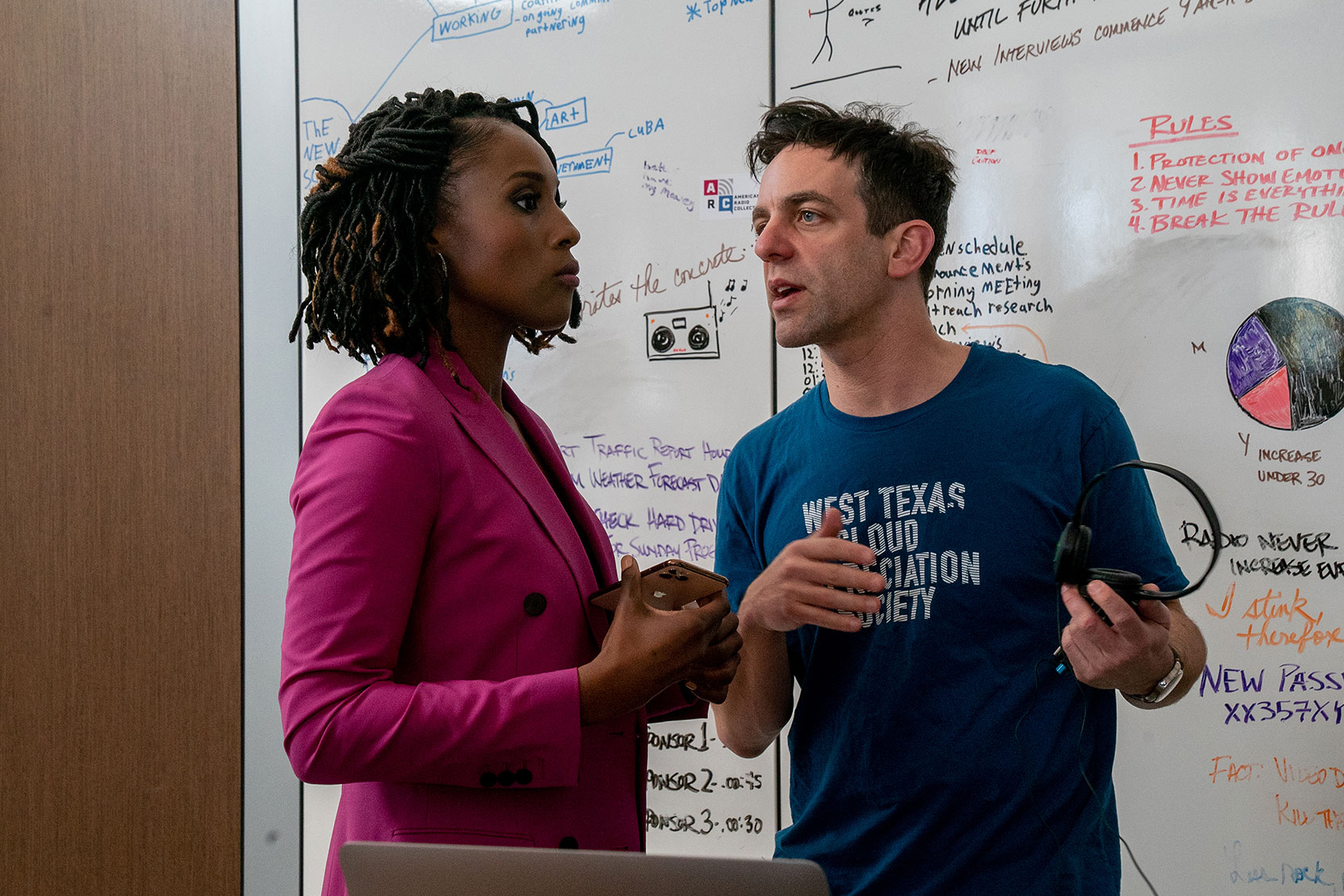
VengeanceIssa Rae as Eloise and B.J. Novak as Ben Manalowitz in “Vengeance” (Patti Perret/Focus Features
“Vengeance” has fun with taking Ben down a peg or six even as he starts to appreciate his new environs and admits to enjoying Frito Pie. (He tells Eloise, it is a bag of Fritos, cut open, with chili poured over it and eaten out of the bag with a fork. She finds it gross.) 

Novak also makes Ben likable when he has a nervous meeting with Sancholo (Zach Villa), the local drug dealer, about Abilene’s death. Their exchange is a highlight, as are Ben’s bedroom chats with El Stupido (Eli Bickel), Abilene’s younger brother who is afraid of ghosts. There is a disarming wit and wisdom in these conversations as well as the ones Ben has with Quentin. It is Quentin who tells Ben to “Listen to what is around you and repeat back what you hear.” Ben becomes more observant even if he doesn’t get smarter. He is mocked by a cop for noticing cowboy prints at the crime scene, but he does come to understand that line dancing is a form of “collective consciousness.”


Want a daily wrap-up of all the news and commentary Salon has to offer? Subscribe to our morning newsletter, Crash Course.


As his podcast clips are getting Eloise’s approval, “Vengeance” throws some curveballs that force Ben to climb his way out of the rabbit hole he has fallen into. This gives the film a little momentum, which it needs so as not to overstay its welcome. Watching Ben slowly piece together hard truths is gratifying, as is how things ultimately come together and get resolved. 

The murder story is mostly an excuse for the culture-clash comedy, but it all does have a point. “Vengeance” is addressing issues of identity, myth, and cultural appropriation, but it is self-aware enough to call itself out as it is doing this very thing. Part of that is Novak’s script which is as smart as it is smartass. 

But as a director, Novak wisely lets scenes play out and gives space to the other characters who all get great moments. The supporting cast are all pitch perfect, with Ashton Kutcher especially noteworthy in his role as a cosmopolitan cowboy. 

“Vengeance” is as entertaining as it is offbeat, and it showcases Novak’s talents in front of and behind the camera well.

“Vengeance” is in theaters July 29. Watch a trailer via YouTube.

Jared Kushner’s new book claims Bannon threatened to “break him in half”

Jared Kushner‘s upcoming book, “Breaking History: A White House Memoir,” sheds light on some of the more violent aspects of The White House witnessed by Kushner first-hand during Trump’s presidency.

According to Kushner, former Trump adviser Steve Bannon was “a toxic presence who accused him of undermining the President’s agenda and threatened to break him in half if Kushner turned on him,” according to CNN

The memoir describes an event that took place in the West Wing where senior economic adviser, Gary Cohn, informed Kushner that Bannon was “leaking negative information about him,” and when Kushner approached Bannon to discuss the matter things got tense.

“Steve, you gotta stop leaking on Gary,” Kushner describes telling Bannon. “We’re trying to build a team here.” Bannon’s response, as described in the memoir and reported on by CNN was to say “Cohn’s the one leaking on me. … Jared, right now, you’re the one undermining the President’s agenda . . . “And if you go against me, I will break you in half. Don’t f— with me.”

Kushner’s book goes on to describe that he felt “woefully unprepared” to handle Bannon “declaring war” on him, and he describes Bannon as being “a black belt in the dark arts of media manipulation.”


Want a daily wrap-up of all the news and commentary Salon has to offer? Subscribe to our morning newsletter, Crash Course.


In another section of his memoir, Kushner describes an incident where he alleges that his wife, Ivanka Trump, was physically pushed by Trump’s second chief of staff, John Kelly in what he recalls being a “fit of rage following a heated Oval Office meeting,” according to The Washington Post

“One day he had just marched out of a contentious meeting in the Oval Office,” writes Kushner. “Ivanka was walking down the main hallway of the West Wing when she passed him. Unaware of his heated state of mind, she said, ‘Hello, chief.’. . .”Kelly shoved her out of the way and stormed by. She wasn’t hurt, and didn’t make a big deal about the altercation, but in his rage Kelly had shown his true character.”

In an email responding to Kushner’s allegation, Kelly said “It is inconceivable that I would EVER shove a woman. Inconceivable. Never happen. Would never intentionally do something like that.”

Great Salt Lake “not that far off” from an ecosystem collapse: Toxic dust storms, die-offs loom

Kentucky bluegrass adds a touch of green to the dusty Northern Utah landscape, an area with little summer rainfall. Yet despite the paucity of water from the sky, the residents of Utah use more water per person than almost anywhere else in the country — and only a quarter of that water ever makes it inside.

Two decades into a megadrought, water irrigation keeps manicured lawns and fields alive in the middle of the desert. Yet dust storms have become a growing problem for human health and the health of ecosystems. Only a briny crust and sparse plants may soon remain of the Great Salt Lake. Indeed, as water levels drop in the shallow terminal basin, heavy metals and toxins accumulate in their place in the ancient lakebed. Now, experts fear that the drying lake’s accumulated dust — some of it toxic — could blow across the region, potentially entering the bodies of the people living there in the process. 


Want more climate and science stories in your inbox? Subscribe to Salon’s weekly newsletter The Vulgar Scientist.


Human activity has already led to a generally dustier world, but in naturally dry climates, the effect is amplified. The Great Salt Lake sits in a rain shadow, which is at least partially responsible for the lake’s salinity; indeed, almost any moisture in the air precipitates before it ever reaches more than 2 million residents in metropolitan areas. Instead, the Salt Lake region’s residents rely on snowmelt from the Wasatch Mountains, where far less snow has accumulated in recent winters. Another source of dust may seem insignificant, but along the Wasatch Front, where two-thirds of the state’s population lives, the Great Salt Lake has the potential to add more hazardous contaminants to the mix.

“It’s on our doorstep, and when it does blow, it impacts everybody along the Wasatch Front,” Dr. Kevin Perry told Salon.

But just because the lakebed has contaminants in it doesn’t mean they will necessarily blow into the environment. That depends on erosion. 

In 2016, the University of Utah atmospheric scientist set out to determine if a briny crust and vegetation will keep contaminants and sediment alike contained and hold toxic dust plumes at bay. Perry spent the next two years biking across exposed areas of crust to document potential “hot spots” where loose soil could become airborne.

Utah was not spared from record heat last summer, and neither was the Great Salt Lake. The shallow terminal lake shrank to 950 square miles, nearly half its historical size.

In the drought-stricken state, public officials often perceive water entering the Great Salt Lake as water that is wasted. The very salt that makes the lake water unfit for human consumption may be a saving grace when it comes to holding in its dust and contaminants. While other dry lake beds, called playa, often become significant dust generators, Great Salt Lake remains an outlier. Unlike most other playa, which typically lack a salt crust, Great Salt Lake’s sediment remains, for the most part, in the ground.

With historically low water levels in rivers and streams, Utah has been in a drought for eight of the last 10 years. Utah was not spared from record heat last summer, and neither was the Great Salt Lake. The shallow terminal lake shrank to 950 square miles, nearly half its historical size. As Utah braces for another summer of extreme drought, experts expect the Great Salt Lake will soon hit another record low.

With water levels remaining low on the Great Salt Lake, thinner areas of the crust are becoming more susceptible to erosion. If the trend continues, 22% of the natural salt crust could disappear, and dust from the lake could become a real problem. In an assessment prepared for the Utah Department of Natural Resources and Utah Division of Facilities Construction and Management in 2019, Perry reported that only 9% of the exposed lakebed were hotspots at the time.

Since then, graduate students working with Professor Brahney have been monitoring the situation on the ground. According to Ph.D. student Molly Blakowski, hot spots have been growing in the last few years.

Even at lower levels, dust poses a health hazard to people with respiratory conditions such as asthma. When high winds kick up a lot of fine sediment, smaller particulate matter can enter the bloodstream of those who inhale it.

“These sites are becoming dustier and dustier, and last year was by far the dustiest year of our study,” Blakowski asserted in an interview with Salon. “I don’t have any reason to expect that this year won’t be the same or worse.”

Even at lower levels, dust poses a health hazard to people with respiratory conditions such as asthma. When high winds kick up a lot of fine sediment, smaller particulate matter can enter the bloodstream of those who inhale it. For that reason, the Environmental Protection Agency sets limits on particles measuring 10 microns or smaller — less than half the size of a human white blood cell.

Blakowski added, however, that dust particles from the Great Salt Lake mostly measure around 30 microns. While the exact health impacts of exposure remain unknown, these dust plumes can make air quality unbearable, forcing people to take shelter inside more often and decreasing the overall quality of life.

Professor Janice Brahney of Utah State University, who advises Blakowski’s research, told Salon that the danger is a matter of proximity to the Great Salt Lake. 

“Millions of people that live in the watershed contribute to the pollution that drains into the lake and can bind to the sediments,” said Brahney. “That also means that those same people are exposed to the dust when it’s produced in the toxins that are in that dust.”

Not only does runoff from metropolitan areas also carry contaminants, but it may well fuel the synthesis of other toxins in the lake itself. Algal blooms that thrive on agricultural and industrial waste in Great Salt Lake host bacteria that produce cyanotoxins have become increasingly prevalent. At the Environmental Biogeochemistry and Paleolimnology Laboratory, Dr. Brahney and her colleagues found that cyanotoxins in the lakebed may also enter the lungs of residents.

With more than 1.2 million people already, Salt Lake City’s metropolitan area alone accounts for a third of Utah’s population and will likely double by 2060, both contributing to the problem and suffering the consequences. Still, it is unclear what health impacts more frequent exposure would have on residents. Brahney emphasized that a growing list of contaminants should spur action nonetheless. 

Although drought has put a large burden on the lake, the problem is largely an artificially created one. Without current diversions, it is estimated that the Great Salt Lake would be 11 feet higher. According to Zachary Frankel, of the Utah Rivers Council, diversion of the Bear River, effectively the last major water source for the Great Salt Lake, would ensure its total desiccation.

“The proposed diversion of the Bear River upstream of the Great Salt Lake would be the real knife into the patient,” he told Salon.

The Bear River Development has remained merely a proposal since legislators approved it in 1991, but millions of dollars are spent annually to continue to advance it, despite the ramifications of the project.

Drying in the Great Salt Lake is also contributing to a larger feedback loop whereby less snowfall creates less snowfall. Dust itself contributes to further drying. 

When the dust settles on snow, it makes it darker. Because darker snow can absorb more sunlight instead of reflecting it, it heats up faster and melts earlier. With less surface area, there will also be less “lake-effect snow,” as the phenomenon is called. Both impacts are detrimental to water resources and a skiing industry that advertises the “greatest snow on Earth.”

Likewise, the brine shrimp industry is threatened by drying of the lake. For Utah, brine shrimp are a vital source of revenue. Already, the state’s brine shrimp industry, the largest in the world, is under duress. As water levels continue to drop, salinity will also soon reach levels that will make the lake uninhabitable for salt-tolerant brine shrimp and brine flies. 

“We’re not that far away from a tipping point to where the Southern part of the lake will become so salty that the brine shrimp won’t be able to survive,” Perry explained, adding that “ecosystem collapse” would follow.

Perry expects that a mass die-off not just for salt-tolerant species of the lake but also for some 10 million migratory birds that feed on them would be likely. Native plants and animals already struggle to survive, and climate scientists expect the American West will only become drier as the Earth heats up. Climate change has already contributed to later snowfall, earlier melt, and lower accumulation.

Although ranking second in the nation behind Idaho for municipal water use per person, Utah is fairly average when it comes to overall water consumption. Municipal use only takes up 10% of the state’s water supply, while 85% is used for agriculture. Alfalfa farming takes an especially large sip of the water supply, but as Dr. Wayne Wurtsbaugh noted in an interview with Salon, there’s no water quality standard to protect water itself.

“You can take all the water out of the stream and decimate all the organisms in there, and that’s okay in terms of water quality,” he explained, underlining a major flaw in EPA standards.

Will Smith breaks his silence on the Oscars slap: “Disappointing people is my central trauma”

Months after actor Will Smith slapped comedian Chris Rock on stage live at the Oscars, Smith has publicly addressed questions about the incident for the first time.

Smith posted a video titled, “It’s been a minute” on his personal YouTube channel. Wearing a white baseball cap and casual clothes, Smith sits on a couch and reads aloud questions about the altercation, questions he then answers. Smith describes the questions as “fair.” The brief introduction to the video reads: “Over the last few months, I’ve been doing a lot of thinking and personal work.”

During the Oscar broadcast back in March, Smith unexpectedly rose from his seat in the audience and walked up to the stage as Rock was performing. Smith then slapped Rock. The slap came after Rock had made a joke about Smith’s wife, actor Jada Pickett Smith, and her hair. Pickett Smith has alopecia, an autoimmune disease which can cause severe hair loss, among other issues. Her head was shaved at the time. Smith returned to his seat after the slap and shouted at Rock, who continued performing.

Watch the moment via YouTube.

In his new video, Smith describes his state during the slap as “fogged out at that point,” alleging that he has little memory of it. He says he has reached out to Rock but “he’s not ready to talk.” Smith then addresses Rock directly, looking straight at the camera and saying, “Chris, I apologize to you. My behavior was unacceptable and I am here whenever you are ready to talk.” He also apologizes to Rock’s parents: “I wasn’t thinking, but how many people got hurt in that moment.”

Smith acknowledges that “this is probably irreparable,” and that he has spent the past three months “replaying” the event in his mind. Answering a question about his wife’s role in the slap, Smith says she had “no part in it,” that he acted alone. He then apologizes in the video to her and to his children.

Rock publicly addressed the incident himself only recently. He made a joke about it July 23 during a set he was performing at the Only Headliners Allowed comedy tour at New York City’s Madison Square Garden, saying “anyone who says words hurt has never been punched in the face.” According to Harper’s Bazaar, Rock “previously hinted that he would be making jokes about it once he fully processed what happened.”


Want a daily wrap-up of all the news and commentary Salon has to offer? Subscribe to our morning newsletter, Crash Course.


Shortly after the altercation, Smith resigned from the Academy of Motion Picture Arts and Sciences, which then banned the actor from attending the Oscar ceremony for 10 years. This is significant since traditionally, as this year’s winner of the Best Actor Oscar for his role in “King Richard,” he would’ve been set to present the Best Actress award next year. Smith stars in an upcoming film “Emancipation,” a thriller from Apple TV+, which was originally delayed after the Oscar incident, but is now set for a December release.

In the YouTube video, Smith says, “Disappointing people is my central trauma.”

“I can say to all of you,” Smith says, addressing the audience in his video, “there is no part of me that thinks that was the right way to behave in that moment. No part of me that thinks that is the optimal way to handle a feeling of disrespect or insult.”

Watch Will Smith’s video via Youtube.

Major handouts could make Big Oil companies the biggest “beneficiaries” of Manchin’s climate deal

The U.S. oil and gas industry is openly lauding elements of a reconciliation package that includes historic renewable energy investments, a response likely to heighten climate advocates’ wariness of the bill as Democrats look to push it through the Senate as soon as next week.

The legislation, whose scope and ambitions were dictated by fossil fuel industry ally Sen. Joe Manchin, D-W.Va., includes components “that are helpful to our business,” Rich Walsh of Valero said during the fossil fuel giant’s earnings call on Thursday, referring to tax credits in the 725-page bill that could benefit the company.

Valero wasn’t alone in celebrating aspects of the bill that President Joe Biden hailed Thursday as “the most significant legislation in history to tackle the climate crisis”—an emergency for which the fossil fuel industry is responsible.

Politico reported Thursday that the oil and gas industry—which has spent more than $200 million since last year to tank climate legislation—has “identified provisions that may make the climate medicine go down a little easier.”

For instance, fossil fuel companies that are already posting record profits could benefit massively from the part of the legislation that requires drilling in the Gulf of Mexico and off the coast of Alaska. Another potential boon is the bill’s mandate that oil and gas lease sales be held before the federal government can greenlight new solar and wind development.

“If you look at the pros and cons, the pros generally outweigh the cons,” an unnamed oil and gas industry lobbyist told Politico. “The Easter eggs that Manchin forced into the bill on leasing, they’re a big deal.”

The American Petroleum Institute, the fossil fuel industry’s largest U.S. trade organization, responded less enthusiastically, but still welcomed what it described as “some improved provisions in the spending package.”

Barrons reported Thursday that ExxonMobil Chevron, Occidental Petroleum, and Equitrans Midstream could be among the bill’s leading beneficiaries given its incentives for carbon capture technology, which climate advocates and scientists have decried as a false solution pushed by oil companies trying to stop genuine efforts to slash emissions.

“The legislation extends a tax credit for carbon capture and storage that oil companies can claim based on how much carbon they capture and sequester,” Barrons noted. “Exxon has made carbon capture a centerpiece of its low-carbon investments, and wants to build hubs in industrial areas where several companies could collaborate on projects… While it’s still a relatively small business, the big oil companies could start growing their projects quickly with federal help.”

Such provisions have drawn the ire of climate organizations that argue the bill’s sizable renewable energy spending could be undermined by its promotion of new fossil fuel production and reliance on industry-backed faux solutions.

“The Inflation Reduction Act injects $369 billion into programs to support renewable energy production and innovation and creates the clean energy economy that can power this country into the future, while finally spending real money to clean up deadly fossil fuels pollution. This is a once-in-a-lifetime opportunity, and we urge the Senate to seize it,” said Abigail Dillen, the president of Earthjustice.

“At the same time,” Dillen continued, “we have to recognize the many provisions in this bill that hold back progress. Tax credits that extend the life of dirty coal plants will make it harder to reach critical targets for clean power, and we are outraged that this deal would undermine historic investments in clean energy by holding wind and solar projects hostage to massive new oil and gas leasing off our coasts and on our public lands.”

“We can’t afford to double down on fossil fuels at this late stage of the climate crisis,” she added.

“Didn’t he already sell his manhood on Jan 6?”: Josh Hawley mocked for titling his book “Manhood”

Less than a week after being labeled a national “laughingstock” after the Jan. 6 select committee showed video of Sen. Josh Hawley looking like a “fleeing coward,” the Missouri Republican is once again the butt of jokes online.

“Missouri U.S. Sen. Josh Hawley is writing a book called “Manhood: The Masculine Virtues Americans Need,” building off a speech he gave at a conservative conference claiming the political left is waging a war on masculinity,” the Kansas City Star reported Thursday. “Hawley’s focus on masculinity comes at a time where politicians have leaned into stunts displaying performative masculinity, like shooting guns and carrying blowtorches.”

The book is available for pre-order for $29.99.

The newspaper reported Hawley “will be speaking at the Stronger Men’s Conference — which features things like monster trucks — a few weeks before the book goes on sale.”

Hawley was widely mocked online. Here’s some of what people were saying:

Trump violates federal law by showing off presidential seal while hosting Saudi-backed golf event

Donald Trump appears to be breaking federal law as he hosts a Saudi Arabia-backed LIV golf tournament in Bedminster, The Washington Post reported Thursday.

The article is illustrated with a picture from Associated Press photographer Seth Wenig showing the presidential seal and Trump’s signature on a towel attached to his golf bags. 

“The seal was plastered on towels, golf carts and other items as the former president participated in the pro-am of the Saudi-sponsored tournament Thursday,” the newspaper reported. “While violating this law could result in imprisonment of ‘not more than six months,’ a fine, or both, these punishments are rarely doled out.”

In a June thread posted to Twitter, Forbes correspondent Zach Everson reported four Trump golf courses have been implicated in using the presidential seal.

Trump’s golf course in the Bronx was implicated in October followed by Florida’s Trump National Golf Club Jupiter in November.

And the presidential seal was also seen at Trump International Golf Club in West Palm Beach, Florida in June.

How to improvise a cocktail, Rick Martinez style

Whether he’s pairing coconut shrimp with a pineapple-habanero salsa or drizzling fried chicken with hot honey, Food52 Resident Rick Martinez is all about sweet heat — after all, that is the name of his show. In the latest episode, our host faces a somewhat daunting task: Using ingredients from the local market, Martinez must improvise three spicy summer drinks. To complicate things even further? He has to make them in the comfort of his sparsely equipped AirBnB — meaning no fancy barware or tools allowed.

So, how did the “Mi Cocina” author approach this on-the-fly assignment? “One of my favorite ways to cook is to go to the market and let the market tell me what it wants me to make,” he explains in the video. “I don’t want to follow a recipe to make a drink.”

After choosing his ingredients — a vast array that included everything from fresh coconut water to chiles and cinnamon sticks — Martinez built two cocktails and one mocktail, each with its own distinct vibe and flavor profile. The first drink, a refreshing coconut-lime cocktail, features bourbon (or whatever liquor you have on hand!) and spicy fresh ginger. The alcohol-free hibiscus mocktail, meanwhile, gets its punch from a jalapeño-infused simple syrup and a mixture of muddled lime and mint. A grapefruit-habanero shandy rounds out the trio, with its balanced notes of smoky mezcal and sweet citrus juice.

To learn how Martinez put together these drinks (along with other tips, like how to cut a perfect wedge of citrus or make crushed ice in a pinch), you can watch the full video above. Or, to find the full roster of his Sweet Heat recipes, click here.

The backlash to Christianity: Republicans are now panicked — but they only have themselves to blame

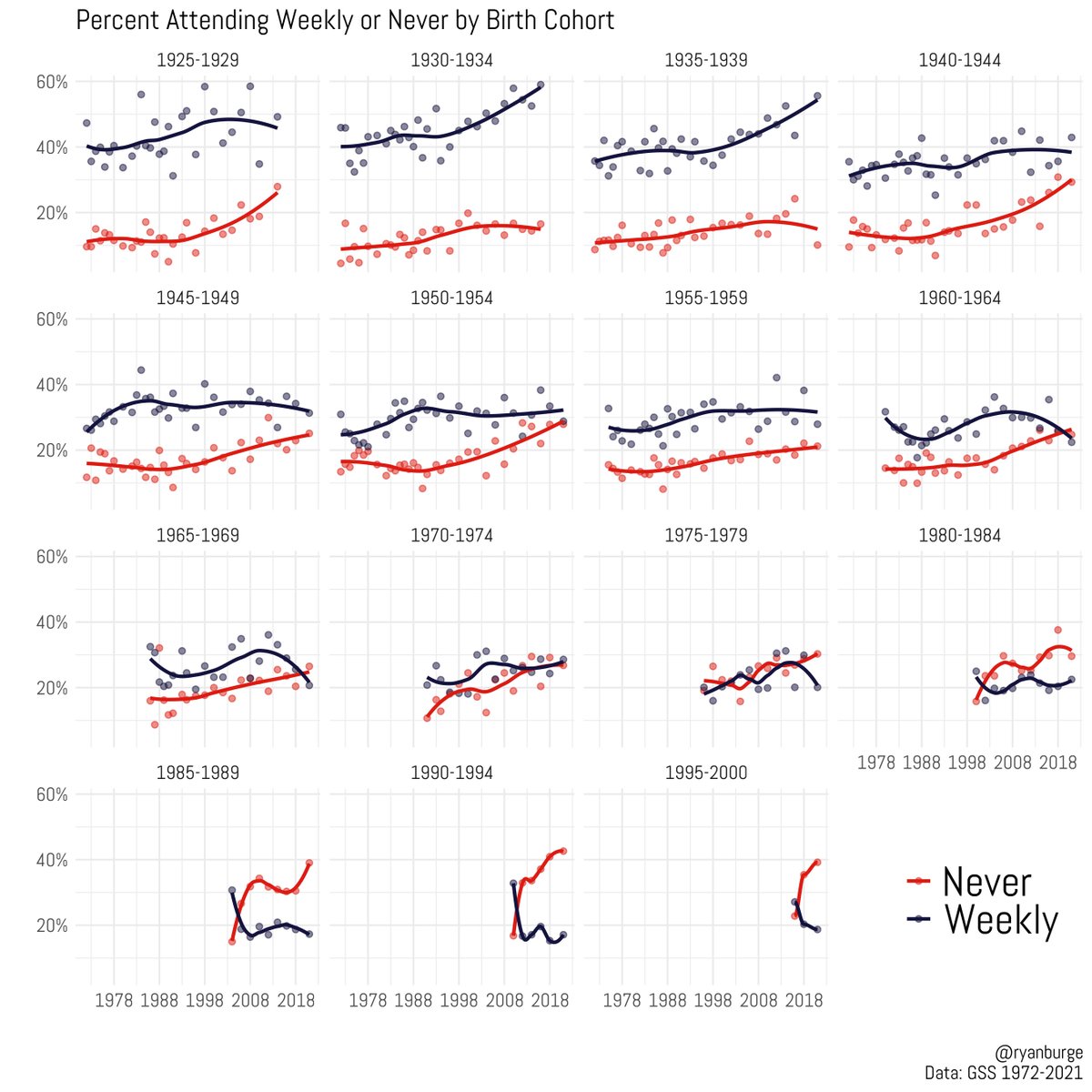
There can be no doubt about it: Religion, especially Christianity — while still powerful in American culture — is in decline. Fewer than half of Americans even belong to a church or other house of worship. Rates of church attendance are in a freefall, as younger Americans would rather do anything with their precious free time than go to church. As religion researcher Ryan Burge recently tweeted, “Among those born in the early 1930s, 60% attend church weekly. 17% never attend. Among those born in the early 1950s, 32% attend weekly. 29% never attend. Among those born in the early 1990s, 18% attend weekly. 42% never attend.”


In response to Americans losing interest in faith, Republicans are in a full-blown panic, lashing out and accusing everyone else — liberals, schools, immigrants, pop culture, you name it — for this shift in religious sentiment. Worse, more are advocating the use of force to counter this decline. If people don’t want religion, well, too bad. More Republicans are arguing that Christianity should not be optional — First Amendment be damned. 

“There’s also growing hostility to religion,” Justice Samuel Alito recently whined, in response to criticism of recent Supreme Court decisions meant to foist fundamentalist beliefs on non-believers, particularly the overturn of Roe v. Wade

Republicans are justifying this turn towards compelled religious performance by whining about the empty pews in their church.

As Jack Jenkins of Religion News Service reported, increasing numbers of Republicans are ignoring the plain text of the First Amendment — which says the government shall “make no law respecting an establishment of religion” — in favor of the tortured myth that there’s no separation of church and state. Former Ohio treasurer and failed Senate candidate Josh Mandel, Rep. Lauren Boebert of Colorado and, most troublingly, Justice Neil Gorsuch have all dismissed the idea that such a separation is mandated by the Constitution. 


Want more Amanda Marcotte on politics? Subscribe to her newsletter Standing Room Only.


Christian nationalism, the idea both that the U.S. should be an explicitly Christian nation and that the laws should enforce fundamentalist Christian beliefs, used to be an unthinkable idea in American politics. Now it’s normal among the Trumpist branch of the GOP. As Heather “Digby” Parton writes, the GOP candidate in Pennsylvania’s gubernatorial race, Doug Mastriano, barely hides his Christian nationalist views. Instead, he pals around with Gab CEO Andrew Torba, who openly says things like, “We don’t want people who are atheists. We don’t want people who are Jewish,” because this is supposedly “an explicitly Christian country.”

And, of course, Rep. Marjorie Taylor Greene of Georgia has made this crystal clear, recently declaring: “We should be Christian nationalists.” 

This term, the Supreme Court ruled in favor of a high school football coach who wants to lead Christian prayers from the 50-yard line during games, which is a direct reversal of decades of jurisprudence against coerced religious displays in public schools. Gorsuch defended the ruling by claiming that the prayer was merely a private act, despite being held in public and done in a way to make players feel they would be penalized for not joining. But right-wing groups understand fully that the ruling was meant as an open invitation to forced Christian prayer in schools. As the Washington Post reported this week, “activists are preparing to push religious worship into public schools nationwide.” Your kid may be Jewish, Muslim, Buddhist, atheist or otherwise non-Christian, but too bad. They better recite the Lord’s Prayer in class or risk being punished or ostracized. 

Since the churches won’t reform to be more egalitarian and pro-science, they find that these younger people are walking away altogether. 

As blogger Roy Edroso documents, Republicans are justifying this turn towards compelled religious performance by whining about the empty pews in their church. He points to an op-ed by David Marcus at Fox News in which Marcus complains about declining faith and argues that the recent Supreme Court ruling will turn things around. “[I]t will be a new day for prayer in public schools. And God will operate a bit more openly,” Marcus gushes. 

Mandated faith is morally reprehensible and in direct violation of human rights. But it’s also wrong to pin this decline in religious fervor to laws and customs protecting religious minorities from such coercion. On the contrary, if Republicans want to know who is to blame for young people abandoning the church in droves, they should look in the mirror. 


Want more Amanda Marcotte on politics? Subscribe to her newsletter Standing Room Only.


As Robert Jones of the Public Religion Research Institute told Salon in 2017, there’s “a culture clash between particularly conservative white churches and denominations and younger Americans” over issues like science, education, and gender equality. Younger people brought up in these churches increasingly reject the sexism, homophobia, and anti-science views of their elders. Since the churches won’t reform to be more egalitarian and pro-science, they find that these younger people are walking away altogether. 

These trends will likely only accelerate in the wake of the Roe overturn, especially as Republicans grow more fanatical in their efforts to punish Americans for having sex. All but eight Republicans in the House voted against the legal right to use contraception. Fewer than a quarter of them voted to support same-sex marriage rights. Both of these rights are wildly popular. Eighty-four percent of Americans believe in the right to use contraception (and over 99% of those who have had heterosexual sex have used it). Over 70% of Americans believe in the right to same-sex marriage. 

The more both Republicans and the Christian establishment reject these basic rights, the more they can expect to be rejected themselves, especially by younger people.

“[T]hese days it seems the people most likely to identify themselves as Christians tend to be Republicans as well the most vicious, hateful, un-Christian sons of bitches you’d ever want to meet,” Edroso writes. Sure, some people respond by seeking liberal churches. But it’s simpler and easier to just give up on being a Christian altogether, to drop all that baggage.

As an atheist myself, I really don’t care if large numbers of people give up religion. On the contrary, it seems like a sensible choice to me. But if Republicans don’t like people losing faith, well, they need to admit they did this to themselves. If they’d moderated their views and made their churches more tolerant and welcoming places, more people would be interested in attending. And all this talk of forced prayer and Christian nationalism isn’t going to help matters, but will instead make ordinary people hate them even more. As with the GOP-led book bans only leading more kids to read the forbidden books, Republican attempts to foist their beliefs on others only causes more backlash against Christianity itself. 

Jon Stewart rips “despicable” Ted Cruz and Josh Hawley for fist-bumping after blocking veterans bill

During an appearance on MSNBC”s “Morning Joe,” TV host and commentator Jon Stewart rained hell on Republicans in the Senate for killing a bill that would supply much-needed help to military veterans facing crippling illnesses due to exposure to burn pits overseas.

Stewart, who has become the country’s most prominent advocate for the bill, lashed out at Republicans for killing a bill that they had previously supported in massive numbers and accused them of cynically playing to the extreme rightwing that doesn’t want to see President Joe Biden sign the bill.

During his MSNBC appearance, Stewart also focused on the majority of his fury over the betrayal at Sens. Ted Cruz, R-Texas, and Josh Haley, R-Mo., for celebrating after the bill was shot down — and then accused them of lying about their motivations.

“I want you to fact-check that while I am sitting here,” Stewart told host Willie Geist. “Did Ted Cruz and all those other Republicans who voted yes on this bill and then switched their vote to no, was that the provision of how the bill was paid for when they voted yes?”

“Now [Republican Senator Pat] Toomey, on the other hand, he’s been against this all along, at least he’s been a consistent dick, but that’s not — this is nothing new,” he added. “This is how it was paid for: the fix in the House was a tiny constitutional provision. This is the same bill that they passed, and by the way, all that nonsense that Toomey says about $400 billion of a slush fund that opens the door to that possibility. You know who can close that door? The senate and the house because they have the power of appropriation.”

“They always have money for the war with no guardrails and no oversight, but all of a sudden they get religion on a healthcare bill for veterans,” he continued. “And I’ll say this, the most despicable part of this whole thing is watching on the Senate floor Ted Cruz fist-bumping and then patting each other on the back when they blocked this bill. Josh Hawley and Pat Toomey celebrating their victory over veterans with cancer.”

‘Way to go, guys! You finally handed it to ‘big veteran with cancer.’ Well done!” he sarcastically added.

Watch the video below or at this link.

Trump claims “nobody’s gotten to the bottom of 9/11” while defending hosting Saudi-funded golf event

Former President Donald Trump on Friday defended his decision to host the LIV Golf Tournament sponsored by the Saudi Sovereign Wealth Fund at his Bedminster, New Jersey country club.

“I’ve known these people for a long time in Saudi Arabia and they have been friends of mine for a long time,” Trump told The New York Times. “They’ve invested in many American companies. They own big percentages of many, many American companies and frankly, what they are doing for golf is so great, what they are doing for the players is so great. The salaries are going to go way up.”

Trump, who once boasted about doing business with Saudi elites because “they pay cash,” was later confronted by an ESPN reporter who wanted to know if Trump had any concerns about the optics of his event.

“You’re so closely associated with the city of New York. You of all people understand the passion surrounding 9/11. What do you say to those family members who protested earlier this week and will be doing so again on Friday?” the correspondent asked.

Trump replied with a conspiracy theory.

“Well, nobody’s gotten to the bottom of 9/11, unfortunately, and they should have, as to the maniacs that did that horrible thing to our city, to our country, to the world, so nobody’s really been there,” he said.

That statement is false. Click here for The 9/11 Commission Report.

“But I can tell you that there are a lot of really great people that are out here today and we’re gonna have a lot of fun and we’re gonna celebrate and money is going to charity,” Trump added. “A lot of money is going to charity and you have really the best players in the world, many of the best players in the world, and soon you’ll probably have all of them.”

Watch below or at this link.

Parkland survivor calls out Democrats for misleading mass shooting victims on assault weapons ban

House Democrats will finally vote Friday on a package of gun control reforms following a series of deadly mass shootings — but the bill’s coupling with a massive police funding package has angered some activists and gun violence survivors.

Amid possible fears of being perceived as “weak on crime” in the upcoming midterms, centrists in the House of Representatives teamed up with some members of the Congressional Black Caucus (CBC) to craft legislation aimed at threading the needle on police accountability and public safety. According to Politico, however, progressives in the House believe they have enough votes to kill the deal.

The chamber was expected to hold a vote on the measure this week, but unexpectedly pulled the bill from consideration after the House Oversight and Reform Committee held a hearing on the role of gun makers in driving the country’s epidemic of mass shootings. Contained within the bill were provisions that would ban assault weapons, supply police departments with new grant money, and heighten liability faced by gun manufacturers. However, intra-party tensions on each of the issues stalled the bill.

Progressives, for their part, have taken issue with providing more funding to law enforcement as police budgets have ballooned in response to a recent wave of violent crime. Meanwhile, police are continuing to kill Americans at an alarming rate, revitalizing concerns around police brutality and the need to shift federal resources toward mental health and poverty. As a result, many members of the CBC have argued that improved accountability mechanisms should be put in place if more money is directed to police departments. 

At the same time, a handful of conservative Democrats, including Rep. Henry Cuellar, D-Tex., and Rep. Kurt Schrader, D-Ore., have objected to the measure’s assault weapons ban. 


Want a daily wrap-up of all the news and commentary Salon has to offer? Subscribe to our morning newsletter, Crash Course.


The deal has sparked the ire of numerous gun rights advocates, including David Hogg, a survivor of the Marjorie Stoneman Douglas High School shooting in Parkland, Florida. 

Over Twitter, Hogg suggested that he and other advocates had been misled and argued that the Democrats are “afraid of the effect it will have on moderates in midterms.”

“They won’t have the votes come August because there will be major backlash against reconciliation,” he added, noting that the party is considering a separate bipartisan bill on climate and healthcare. In the end, he added, Democrats would be “killing our chances of passing an assault weapons ban in the house.”

Even if the House did pass a gun reform package today, the measure would almost certainly see a Republican filibuster in the Senate.

How to layer rugs — because why stop at one

Rugs might be one of the simplest ways to add an interesting dimension to a room. “Rugs are perfect for defining a space and pulling in texture, pattern, or color to bring everything together,” says designer Nicole Arruda.

Layering rugs, one on top of the other, is an even more interesting decor choice, whether you’re placing an accent rug over a larger area rug or covering up that blah wall-to-wall carpeting with a piece that’s much more your style. Layered rugs evoke coziness and warmth, and it’s an especially great idea if you’re someone who likes to switch up your space frequently: “Rugs give you the flexibility to make an easy swap down the road when you’re ready for a change,” adds Arruda.

That said, layering rugs can still feel a little intimidating, so we decided to get some tips from the experts on how to guide your design process.

Covering up that wall-to-wall carpeting

Don’t worry if the wall-to-wall carpeting in your bedroom isn’t everything you’ve ever dreamed about — your space can be saved with a bit of layering. “When layering rugs over wall-to-wall carpeting, I make sure the pile of the carpet is not too plush,” designer Alex Epstein of Purple Cherry Architects notes. If carpeting is too thick, the area rug won’t sit as nicely on top of it, Epstein explains. She offers another tip to ensure that an area rug remains neat and sleek once it is placed. “Be sure to use a sticky, non-slip rug pad,” Epstein advises. “It will tape the rug to the carpet surface without leaving any residue, while also holding it perfectly in place.”

https://www.instagram.com/p/Cdlp6pHJGEn/

Be mindful of the thickness of the layering piece, too. “You need to make sure that the layered rug is a flat woven rug, as you do not want anything too thick,” designer Jennifer Hunter says. We particularly like vintage pieces atop wall-to-wall carpeting for this reason — they’re excellent for adding intrigue and personality to a space. Plus, as designer Kelsey Haywood notes, using a vintage rug as the top layer means that you don’t have to shell out for an oversized piece. “Oftentimes, sticker shock is what keeps someone from purchasing a vintage rug,” Haywood comments. “Layering a smaller vintage rug on top means you don’t have to spend thousands on an area rug andcan avoid navigating the tricky, non-standard dimensions vintage rugs come in. It’s a win-win!”

https://www.instagram.com/p/CWzAlD8v2ir/

How to arrange your furniture accordingly

Once you’ve layered your accent rug over the wall-to-wall carpeting in your space, it’s time to set out your furniture. However, Sharon Derry and Casey Stallings of Lime Tree Home offer a key tip to keep top of mind during the design process. “One thing we remind our clients to consider — especially if layering over carpet — is that lighter-weight furniture pieces may not be as stable, and may wobble or tip over because the increased density and plushness of layered rugs doesn’t provide a level surface,” the designers note. “This doesn’t mean you can’t, or shouldn’t, layer a rug over carpet — it just means you’ll need to be mindful of furniture placement.”

https://www.instagram.com/p/CVdqlm5pK-z/

Be mindful of sizing

So, how large should your base rug and the accent rug be — and does scale matter? According to Abbes, an accent rug should be two-thirds of the size of the rug underneath it. This doesn’t hold true in the case of cowhide or sheepskin, though, according to Abbes. “Since those particular rugs are smaller in scale it’s important to make sure that these are still proportionate to the furniture layout.” Your larger rug should be sizable enough to “cover the entire seating area” in a living room, Hunter notes.

https://www.instagram.com/p/CbLAecdJ_bG/

Play with pattern

When layering one rug over another, don’t be afraid to mix and match styles and textures, designer Michelle Gage says. “I often layer a smaller vintage woolen rug over a larger jute,” she notes. “This gets you the size you need for the room but also adds a little color and pattern to keep things interesting.” Or opt for something even more dramatic. “I always like to go a bit more drastic with my textures when layering rugs,” designer Fanny Abbes says. “For instance, pairing a plush sheepskin accent rug on top of a woven sisal rug is a great way to contrast the two materials in a soft yet effective way.”

https://www.instagram.com/p/CHQjUGnAcZL/

Remember to have fun!

Despite all these tips and tricks, ultimately, it’s important to remember to trust your gut and have fun with your choices. Once you start experimenting, you’ll realize just how versatile your space — and this trend — can be.

“Evidence that has vanished”: DHS missing Trump officials’ texts from “key period” before Jan. 6

The scandal over missing Jan. 6 text messages has expanded from the Secret Service to the top of the Department of Homeland Security, according to a bombshell new report published online by The Washington Post on Thursday evening.

“Text messages for former President Donald Trump’s acting Homeland Security Secretary Chad Wolf and acting deputy secretary Ken Cuccinelli are missing for a key period leading up to the Jan. 6 attack on the Capitol, according to four people briefed on the matter and internal emails. This discovery of missing records for the senior-most homeland security officials, which has not been previously reported, increases the volume of potential evidence that has vanished regarding the time around the Capitol attack,” Carol Leonnig and Maria Sacchetti reported.

Also on Thursday, U.S. Secret Service Director James Murray announced he was delaying his retirement, planned for July 31.

The newspaper reported. “The Department of Homeland Security notified the agency’s inspector general in late February that Wolf”s and Cuccinelli’s texts were lost in a ‘reset’ of their government phones when they left their jobs in January 2021 in preparation for the new Biden administration, according to an internal record obtained by the Project on Government Oversight and shared with The Washington Post.”

The Secret Service blamed a “system migration.”

“The office of the department’s undersecretary of management also told the government watchdog that the text messages for its boss, undersecretary Randolph ‘Tex’ Alles, the former Secret Service director, were also no longer available due to a previously planned phone reset,” the newspaper reported. “The office of Inspector General Joseph V. Cuffari did not press the department leadership at that time to explain why they did not preserve these records, nor seek ways to recover the lost data, according to the four people briefed on the watchdog’s actions. Cuffari also failed to alert Congress to the potential destruction of government records.”

The report came more than one year after the first public hearing by the House Select Committee Investigating the Jan. 6 Attack on the U.S. Capitol.

Pennsylvania GOP candidate Doug Mastriano finally gives up Gab — but won’t quit Christofascism

Pennsylvania’s GOP nominee for governor, Doug Mastriano, is under fire again for his extremist views. The Republican is in hot water for paying consulting fees to Gab, a white nationalist social media site owned by a raging anti-Semite named Andrew Torba. Torba is quoted saying:

“We don’t want people who are atheists. We don’t want people who are Jewish. We don’t want people who are, you know, nonbelievers, agnostic, whatever. This is an explicitly Christian movement because this is an explicitly Christian country.”

Needless to say, Torba is also a raging Islamophobe.

Gab is probably best known for being the site that helped inspire the Tree of Life Synagogue mass murder in 2018, but Torba has also supported white nationalist influencer Nick Fuentes, as well as the Great Replacement theory currently being mainstreamed by Fox News’ Tucker Carlson. Torba’s a Vladimir Putin super fan, endorsing Russia’s invasion of Ukraine for being “liberated and cleansed from the degeneracy of the secular western globalist empire.” He’s also expressed support for an idea popular among neo-Nazis, the theory of “accelerationism,” which holds that society needs to be “burned to the ground” and has been cited in numerous far-right mass murderers’ manifestos. He is, in short, a Christofascist.

Mastriano, who is set to face off against Pennsylvania’s Democratic attorney general this fall, has reportedly been an eager participant on Gab for some time now. Such views are common on the platform, but Mastriano’s presence should not be surprising considering that he was also a participant in the January 6 insurrection (he denies going into the Capitol although there is evidence that he did) and has affiliated himself with some of the most extreme Christian Nationalist organizations in America.

Sarah Posner reported for Talking Points Memo last spring that Mastriano “announced his run for governor at a Christian nationalist event at which a shofar was blown, an increasingly commonplace occurrence as a symbol of Trump’s victory over satanic forces, otherwise known as our democracy.” Mastriano commonly appears at events hosted by Christian Nationalist extremist groups like Pennsylvania For Christ and Patriots Arise for God, Family, and Country, and has even been associated with a group headed by the son of Unification Church leader Sun Myung Moon called the “Rod of Iron Ministries” at which adherents perform ceremonies wearing bullet crowns and carrying AR-15s. Moon and some of his followers were also among the Jan. 6 insurrectionists.

After the media started to pay attention to his close ties to Gab founder Torba, and it was revealed that Mastriano actually paid Torba for campaign consulting, the gubernatorial candidate issued a statement saying that he rejects anti-semitism and railing against the Democrats. He complained that Democrats were smearing him by calling attention to his affiliations with Christofascists. On Thursday night, however, Mastriano finally deleted his account on Gab and Torba released a statement saying that his words are his alone and do not reflect Mastriano’s beliefs. Mastriano, most notably, did not repudiate Torba.

The fact is that the GOP nominee for governor of Pennsylvania is also a Christofascist with Neo-Nazi ties. That may sound hyperbolic but the record is clear. If he were alone in this, a fringe character who accidentally fell into the nomination it would be one thing. But he has a real constituency in the party.


Want a daily wrap-up of all the news and commentary Salon has to offer? Subscribe to our morning newsletter, Crash Course.


The Great Replacement Theory has gone mainstream, having been promoted heavily by Tucker Carlson on Fox News. The New York Times did an in-depth profile of Carlson’s show and determined that “in more than 400 episodes of his show, Mr. Carlson has amplified the notion that Democratic politicians and other assorted elites want to force demographic change through immigration” and “replace” what he calls “legacy Americans.” This is a common theme in right-wing media and what’s left unsaid is just as interesting as what they are saying: Who is defined as the “invaders”  coming to destroy American culture?

In Europe, where this theory really took flight in the last decade as immigration from the middle east and Africa, under pressure from war and famine, it is Muslim immigrants who are seen as the invaders. In America today, most people would say that any foreigner with black or brown skin would qualify. In earlier times on both continents, however, Jews were always portrayed as representing this threat. You can see by the comments of fascists like Torba that anti-semitism remains a big part of this belief system. The Nazis marching in Charlottesville chanting “Jews will not replace us” made that very plain.

The European right has tried to downplay the anti-semitism in recent years and it helped them move into the mainstream. But it’s still there. A case in point is the vaunted leader of the European right today, Viktor Orban. I wrote about his affiliation with Tucker Carlson and the Conservative Political Action Committee (CPAC) earlier, which showed the tremendous influence Orban is having on the American right. Using government power to hobble the media, academia, the judiciary and manipulate the voting system, he has managed to subvert the Hungarian democracy and institute a modern fascist state and they are watching him closely.

He has long derided Muslim immigrants as a threat to European “Christian Identity” but last week, he made some statements that lowered the veil and exposed his true intentions. He gave a speech in which he described immigration as “population replacement or inundation.” But he went further, making it clear just what that means:

“Migration has split Europe in two — or I could say that it has split the West in two.One half is a world where European and non-European peoples live together. These countries are no longer nations. They are nothing more than a conglomeration of peoples…We are willing to mix with one another, but we do not want to become peoples of mixed race.”

The speech was so noxious that it caused one of his longest standing associates, who happens to be Jewish, to resign in disgust calling it “a pure Nazi speech worthy of Goebbels” that would “please even the most bloodthirsty racists.” She said he had advocated an “openly racist policy that is now unacceptable even for the Western European extreme right.” She could hear the echoes of the past in his speech. And while he didn’t explicitly say “Jews will not replace us” his constant haranguing of pro-democracy philanthropist George Soros, who was born in Hungary, is a perfectly adequate wink and nod.

If it’s true that the Western European right is rejecting him, Orban can take heart in the fact that he still has plenty of friends right here in the good old USA. He is going to be a featured speaker at the CPAC conference in Dallas next week alongside the likes of Ted Cruz, R-TX., Rick Scott, R-FL., Greg Abbott, R-TX., and various right-wing luminaries such as Sean Hannity and Steve Bannon. Donald Trump will keynote, of course. When asked about whether it was right to allow Orban to attend the conference after making his poisonous comments, CPAC executive Matt Schlapp just said, “let’s listen to the man speak.” I would expect nothing less. Doug Mastriano, for his part, isn’t scheduled to speak. No doubt he’s busy on the campaign trail. But he will assuredly be there in spirit. These are his people. 

“Embarrassment to the Supreme Court”: Alito gloats and taunts critics of his anti-abortion ruling

Supreme Court Justice Samuel Alito mocked world leaders who criticized his anti-abortion ruling last month and decried what he called a “hostility to religion” in his first public comments since the decision.

Alito, who authored the court’s majority opinion in the Dobbs case that overturned Roe v. Wade, bragged during a surprise appearance at a religious conference hosted by the Notre Dame Law School’s Religious Liberty Initiative in Rome last week that he wrote the opinion in what he described as the case “whose name may not be spoken.”

“I had the honor this term of writing I think the only Supreme Court decision in the history of that institution that has been lambasted by a whole string of foreign leaders who felt perfectly fine commenting on American law,” he said.

“One of these was former [British] Prime Minister Boris Johnson. But he paid the price,” Alito said, referring to Johnson’s unrelated decision to resign, drawing laughs and cheers from the crowd.

“Others are still in office,” he added, calling out French President Emmanuel Macron and Canadian Prime Minister Justin Trudeau for their remarks before lobbing an attack on Prince Harry.

“But what really wounded me was when the Duke of Sussex addressed the United Nations and seemed to compare the decision whose name may not be spoken with the Russian attack on Ukraine,” he quipped.

Prince Harry during a speech at the U.N. said that the court’s decision, along with the invasion of Ukraine, are both evidence that “we are witnessing a global assault on democracy and freedom.”

“Despite this temptation, I’m not going to talk about cases from other countries,” Alito continued. “All I’m going to say is that, ultimately, if we are going to win the battle to protect religious freedom in an increasingly secular society, we will need more than positive law.”

Alito during his remarks alleged that “religious liberty is under attack” even though the impenetrable conservative majority on the Supreme Court gave religious rights groups their biggest wins in generations this term: striking down abortion rights, siding with a public high school football coach who prayed on the field after games, and banning Maine from excluding religious schools from tuition assistance programs.

“It is hard to convince people that religious liberty is worth defending if they don’t think that religion is a good thing that deserves protection,” Alito said.

Alito’s speech came on the same day that liberal Justice Elena Kagan warned that the court’s hard-right majority risks losing legitimacy in the eyes of Americans.

“I’m not talking about any particular decision or even any particular series of decisions, but if over time the court loses all connection with the public and with public sentiment, that’s a dangerous thing for a democracy,” she said during a conference in Montana last week. “People are rightly suspicious if one justice leaves the court or dies and another justice takes his or her place and all of sudden the law changes on you.”

Confidence in the Supreme Court hit a record low after the Dobbs decision, according to a Gallup poll, falling to just 25%.


Want a daily wrap-up of all the news and commentary Salon has to offer? Subscribe to our morning newsletter, Crash Course.


Alito’s appearance at the conference was not announced in advance and the video was published by the law school on Thursday. The event was sponsored by the school’s Religious Liberty Initiative, which aims to promote “religious freedom for people of all faiths through scholarship, events, and the Law School’s Religious Liberty Clinic,” and files briefs to the Supreme Court, according to The Washington Post.

Rep. Ted Lieu, D-Calif., called out Alito’s remarks at the conference, calling him an “embarrassment to the Supreme Court.”

“He doesn’t understand there are different religions in America,” Lieu tweeted. “What makes America great is that we let you practice your faith, change your faith or have no faith at all. Some religions support abortion, some don’t.”

Rep. Alexandria Ocasio-Cortez, D-N.Y., said that Alito’s leaked opinion ahead of the ruling “paired with his politicized remarks” should be “alarming to anyone.”

“The Supreme Court is in a legitimacy crisis,” she tweeted, calling on Chief Justice John Roberts to get to the bottom of who leaked the draft opinion.

Roberts sought to save Roe and lobbied fellow conservatives to change their vote until the leak upended his attempts just as anti-abortion activists were growing concerned about his efforts, according to CNN.

Other critics also cited Alito’s remarks as further evidence of the politicization of the Supreme Court.

“Alito is not just a partisan hack. He is the leader of this partisan and reckless court, and he is a clear and present danger to our basic system of governance and of justice,” wrote Norm Ornstein, an Emeritus scholar at the conservative American Enterprise Institute.

“Alito is so extremist far right,” quipped former Obama adviser Ben Rhodes, “that his idea of owning the libs is taking shots at Boris Johnson.”