Spring Sale: Get 1 Year, Save 58%

“He could have killed me”: Skepticism after video shows “slap” that made Giuliani cry “assault”

Former Trump lawyer Rudy Giuliani called police on a man who slapped him on the back at a New York supermarket but a video of the incident cast serious doubts on Giuliani’s claim that he could have been “killed.”

Giuliani was campaigning at a Staten Island ShopRite for his son Andrew’s Republican gubernatorial bid when a store worker slapped him across the back and called him a “scumbag” over his support for overturning Roe v. Wade, according to The New York Post.

Giuliani called the police over the slap and cops arrested 39-year-old Daniel Gill, charging him with second-degree assault involving a person over age 65, according to the report.

Giuliani told reporters after the incident that the slap felt like “somebody shot me.”

“Luckily, I’m a 78-year-old who is in pretty good shape,” he said after the incident. “He could’ve easily … knocked me to the ground and killed me by my head getting hit.”

But a surveillance video of the incident cast doubt on Giuliani’s claims and raised questions about why police were involved at all.

RELATED: Was Rudy Giuliani drunk on election night? Maybe so — but that’s not why he’s dangerous

“Maybe Rudy Giuliani, who tried to orchestrate a failed overthrow of the 2020 election, is not the most reliable narrator about other things too,” tweeted NPR reporter Stephen Fowler.

“Surprised [Giuliani] survived this brutal assault,” quipped former GOP operative Tim Miller. “Glad the cops got involved here.”

While some Trump supporters tried to stoke outrage over the “leftist assault” on America’s mayor, even some conservatives pushed back on those overhyping the incident.

“This is assault in a very technical legal sense of an aggressive, unwanted touching, but it’s not assault in the way ordinary people talk,” tweeted National Review columnist Dan McLaughlin. “Politically, this is flailing.”

Nevertheless, Andrew Giuliani’s press shop sent out a statement on Sunday previewing a virtual press conference by Rudy Giuliani to discuss the “attack.”

“Innocent people are attacked in today’s New York all of the time. This particular incident hit very close to home. The assault on my father, America’s Mayor, was over politics. We will not be intimidated by left wing attacks,” Andrew Giuliani said in a statement.


Want a daily wrap-up of all the news and commentary Salon has to offer? Subscribe to our morning newsletter, Crash Course.


Giuliani told the Post that he was attacked by a worker upset over last week’s Supreme Court ruling overturning federal abortion rights.

“All of a sudden, I hear this guy say, ‘You’re a f–king scumbag,’ then he moves away so nobody can grab him,” he told the outlet. “And he says, ‘You, you’re one of the people that’s gonna kill women. You’re gonna kill women. You and your f–king friend are gonna kill women.’ Then he starts yelling out all kinds of, just curses, and every once in a while, he puts in that woman thing.”

“The Supreme Court made a decision,” Giuliani added. “You don’t go around attacking people because of it. I mean, go get it changed.”

He told the Post he had an obligation to call the police.

“I say to myself, ‘You know something? I gotta get this guy arrested,'” he said. “I talk about ‘broken windows’ theory all the time. You can’t let the little things go. I’m like, ‘I’m gonna get this guy arrested as an example that you can’t do this. And I said, also, in New York, we don’t prosecute people anymore. And one of the reasons I brought crime down is I didn’t ignore stuff like this.”

Giuliani on Monday likened the attack to the Jan. 6 deadly Capitol riot that he helped stoke.

“We don’t do vigilante justice. I don’t care if we’re on the right, if we’re on the left, if we’re talking about Jan. 6 or yesterday,” he said on his Facebook page. “Let’s not participate in that. Let’s be peaceful.”

Read more:

Dr. Lance Dodes: Trump is a dangerous sociopath — but he’s sane enough to stand trial

The House Jan. 6 committee’s public hearings have made it increasingly clear that Donald Trump and his confederates attempted a coup to nullify the results of the 2020 presidential election and, in effect, end American democracy. The coup plot involved every branch of government including the courts, Congress, the Department of Justice and (at least potentially) the military. It was nationwide and included plans to rig the Electoral College results and alter actual vote totals at the state level. Contrary to what too many public voices have continued to suggest — in a collective state of willful denial — Trump’s coup plot was highly sophisticated and came very close to succeeding.

It is equally clear that the Capitol attack of Jan. 6 was not spontaneous or purely coincidental. Donald Trump and his confederates welcomed and incited the lethal attack as a central element of the attempted coup. The violence of Jan. 6 appears to have been a pretext for Trump to invoke the Insurrection Act and declare a national emergency as a means of remaining in power indefinitely.  

RELATED: Ringing the alarm for Merrick Garland: Department of Justice stands in real peril because of Trump

Former CBS News anchor Dan Rather summarized the nature of the threat to American democracy, writing in his newsletter that there “is nothing past tense” about Jan. 6, “even though the date itself is about 18 months ago”:

The currents that exploded that day are, and will continue to be (with an emphasis on the present and future tenses), a direct threat to the continuation of the United States as a democratic republic. 

The congressional committee investigating the insurrection represents not merely a fact-finding exercise to correctly document history, as important as that mission would be. They are firefighters battling a blaze of autocracy and unconstitutional depravity sweeping across the country. 

The House Jan. 6 investigation has three immediate goals. Primarily, it is an attempt to offer a public accounting of Trump and his confederates’ crimes against democracy, both on that day and in a larger context. As part of that accounting, the House select committee is also attempting to make clear that the Republican plot against democracy is continuing and that the country remains in extreme peril.

The House Jan. 6 hearings are also intended to serve as a de facto criminal indictment of Donald Trump and several of his co-conspirators, which may finally compel Attorney General Merrick Garland to seek prosecution. These hearings also appear to confirm that Trump is a mentally unwell person, perhaps a sociopath or psychopath, who continues to be a great danger to the American people and the world.

To discuss those issues and others, I recently spoke with Dr. Lance Dodes, one of America’s foremost mental health professionals. He is a retired assistant clinical professor of psychiatry at Harvard Medical School and a training and supervising analyst emeritus at the Boston Psychoanalytic Society and Institute. He was a contributor to the bestselling volume “The Dangerous Case of Donald Trump: 37 Psychiatrists and Mental Health Experts Assess a President.” Dodes belongs to a small and courageous group of mental health professionals who consistently sounded the alarm about Trump, both before and during his presidency, arguing that he should never have been allowed to hold high public office and should have been removed at the earliest opportunity.

In this conversation, Dodes argues that the Jan. 6 hearings offer further validation of his warnings about Trump, and discusses why so many Americans, especially among the political class and mainstream media, remain in denial about the dangers the Trump movement represents. The “revelation” that former Education Secretary Betsy DeVos and other members of the Cabinet discussed removing Trump by way of the 25th Amendment comes as no surprise, he says. 

Dodes still views Trump as a mentally pathological person with grandiose desires for power and little or no regard for human life. He argues, however, that Trump is legally sane and culpable for his actions on and around Jan. 6, 2021 and beyond — but if Trump is eventually indicted, Dodes warns, he will encourage his followers to engage in massive acts of violence and destruction.

I’m angry on behalf of all the mental health professionals who argued that Trump was dangerous and were met with deflections and denials and condemnation. I consistently offered a platform to those mental health professionals who tried to warn the American people and the world, but the mainstream media and political elites largely avoided the issue. Now it’s been confirmed that Trump’s own Cabinet members viewed him as unstable and discussed removing him.

Donald Trump is not like other human beings, and you can’t treat him as if he is. He is a severe sociopath, and his willingness to see others suffer and die pushes him into the realm of a psychopath.


I have been frustrated for so many years now, really since 2016. I’ve said this so many times in various settings, but people don’t quite get it. Donald Trump is not like other human beings, and you can’t treat him as if he is. The news media refused to accept that. He is a severe sociopath, and his willingness to see others suffer and die pushes him into the realm of a psychopath. He lacks the core of normal empathy, and the ability to appreciate that other people have rights. He is a very sick man. Yet the media and others treated him like an ordinary person.

How did you respond to the reports that Betsy DeVos and other Cabinet members actively considered invoking the 25th Amendment to remove Trump from office?

In the end they lacked the moral courage that was required to stand up and say, “This is not right, and I’m going to do whatever I can to protect democracy.” All those politicians whose main goal has been to protect Trump are traitors, in the same way that Trump is a traitor. It’s hard to act. It’s heroic for people in public office and other positions of power to act, because they have to put themselves at political risk. There were no heroes among Trump’s party.

Given what has been revealed by the House committee hearings, one would think that the mainstream media would be discussing Trump’s mental health. But for the most part they are continuing with the same dangerous habit of normalizing Trump’s mental pathologies and the danger he represents. Why aren’t you and your colleagues being interviewed across the 24/7 cable news channels?

I have been a guest on MSNBC, with Lawrence O’Donnell. I wasn’t interviewed elsewhere on a major network. The media has got to do a much better job looking at how they colluded with this assault on democracy, and why it wasn’t a headline every day that our democracy is under attack. The New York Times published a letter by me and 30 or so other mental health professionals in early 2017. A month or two later I wrote another letter, because it was obvious that things were only getting worse with Trump. The Times didn’t publish it. They told me they had covered that topic already. 


Want a daily wrap-up of all the news and commentary Salon has to offer? Subscribe to our morning newsletter, Crash Course.


Very few major institutions in this country spoke up. The worst was the American Psychiatric Association, which should have been leading the effort to help people understand Trump psychologically and the danger he presented. Instead, they actively tried to suppress criticism about Trump’s mental health. They threatened to throw people out of their organization if they spoke up. The Goldwater rule never applied to this situation, and was touted to protect the reputation of the APA at the cost of protecting truth, democracy and mental health.

People still don’t quite understand the enormous danger from Trump. He is a man much in the mold of Hitler. Trump is completely dishonest and lacks the ability to understand what other people want or care about. It’s all about him. He is adamantly opposed to democracy. He seeks to be a king, and is in fact a tyrant.

What is your general response to the House Jan. 6 hearings?

What fills me with despair is that I am afraid that the people who need to hear this information about Trump are not listening to it. I just don’t know how much impact the facts are going to have on the people who are listening to Fox News.

What have the hearings revealed about Donald Trump, and his mental state and behavior, that you think is particularly noteworthy?

There’s nothing new here. Once you understand what is wrong with Donald Trump mentally and emotionally, and how deeply different he is from normal human beings, the rest of it follows.

I have repeatedly written that Trump is the most dangerous man in this country and one of the most dangerous people in the world. I also use moral language to describe Trump: He is evil. Why are so many people still in denial about Trump’s obvious pathologies, which are a matter of public record? They keep expressing shock over these revelations when, as you say, there’s really nothing new. 

Most of us would like to believe that our leaders are loving and kind people who are looking out for us.  When a truly evil person came to power, we were unable to react appropriately.


Most of us would like to believe that there are benevolent powerful authorities at work in the world, leaders who are loving and kind. In this country, many of us were brought up to believe that the leaders of the country are fine people who are looking out for us. We want to believe it. When a truly evil person came to seize power, the country, the free press, was unable to react appropriately, and we still see people who are “shocked.”

Reporters and commentators repeatedly proclaim that they are shocked that Trump wanted Mike Pence to be killed, and that he actually encouraged his attack force to do such a thing at the Capitol on Jan. 6. What are the psychological processes at play in such extreme denial?

At the beginning of his first presidential campaign, Trump said that he could kill somebody in the middle of Fifth Avenue and get away with it. That tells you how this man’s mind works. What happens to another person’s life means nothing to him. How many people’s lives has he ruined in one way and another? That’s what he does. The easiest way to understand Donald Trump is to think of him as a serial killer or a monster. The word “monster” means a creature without empathy, without caring, willing to kill or maim or hurt or destroy anything in its path for its own purposes, a sadistic creature lacking normal human capacities. There’s nothing shocking about Trump’s behavior when you see him for the fundamentally disordered person that he truly is.

To be even more specific, when we see pundits and other public voices proclaiming that Trump’s conduct was shocking or unimaginable, do they actually believe it? Are they just feigning that response because it’s not acceptable to tell the whole truth about this man? Or are they just profoundly immature about reality and so privileged that they have never encountered such people?

If a tiger attacked a person, you would not be shocked. You have to understand, that’s what Trump is. You can’t think of him as a regular person. Stop expecting him to be like you or your neighbors.

They’re ignorant, and I don’t say that as an insult. They’re literally ignorant of human psychology. If a tiger attacked a person, you would not be shocked. So you have to understand, that’s what Trump is. You can’t think of him as a regular person because he is vastly different from a normal human being. To say you are shocked by anything he does means you just don’t understand how extraordinarily different Trump is from other people. “Evil” is good word to describe him, and once you stop expecting him to be like you or your neighbors or anyone else in your life, then you’re not surprised anymore.

The American people need to grow up. Part of that is accepting that human evil is real, and that there are evil people here in America. Once you accept that evil is real and that human monsters are real, then you can understand Trump, fascism and these other anti-human and antisocial threats. But if you are repeatedly shocked by evil, or pretend to be, then you are actually defenseless against it.

There are some people who don’t grasp the concept of psychopathy. I’ve had the same thought that you did: They must have never seen it. If you’ve never seen somebody who has that gaping maw at the bottom of their psyche where there’s nothing but sadism and pain for others, if you haven’t met people like this, you don’t understand that evil can exist in people. 

As a mental health professional, how do you make sense of Mike Pence? Trump basically tried to have him assassinated. Yet Pence still, for the most part, remains loyal to him.

He appears to need to have somebody powerful to attach himself to, no matter whether the person is evil or not. He appears to be a sycophant. Pence is probably not quite as bad as Trump, but he seems to be a small and dishonest person.

How will Donald Trump respond if he is finally prosecuted by the Department of Justice for his crimes?

He won’t be able to accept it. He’ll respond just as he did to his loss in the 2020 election. For Trump, anything other than worshipful obedience is an unjustified attack. He’ll get the most expensive lawyers available to him. He’ll accuse other people of being guilty of the exact things he and his party are doing. Trump and the Republicans will call the Democrats “fascists” when they are the true fascists. They already claim that Democrats are the authors of the Big Lie, when of course it is them. Trump will attack, and will be willing to destroy anybody who stands in his way. It would be nothing to him to kill Mike Pence, be it literally or figuratively. Other people do not matter to Donald Trump.

Based on his public statements and other behavior, Trump would in all likelihood tell his followers to engage in acts of violence and terrorism to defend and protect him if he is prosecuted. It appears that Merrick Garland and the Department of Justice are terrified of that possibility.

It’s the same thing Trump did on Jan. 6, absolutely. Whether he would succeed is another matter. Once Trump incites more violence, the question will be whether his followers obey him, and whether the country’s leadership will have the courage to act to prevent a coup.

Does Donald Trump know what he’s doing? Is he responsible for his actions? Those questions loom over any decision to prosecute Trump.

Donald Trump certainly knows what he’s doing. That’s a different question from whether he has personal insight into his behavior. He doesn’t know that he is a sociopath. He’s too far gone. He has a psychotic core, in that he is fundamentally out of touch with reality when it comes to his view of himself as a godlike figure, as we’ve seen in his many grandiose and delusional statements. But does he know what he’s doing? Of course Donald Trump knows what he’s doing.

So he is legally culpable? Is he sane enough to be held responsible for his actions?

I’m not an attorney, but it seems to me that Donald Trump is legally culpable for his behavior, just as any serial killer is. He’s not insane in the legal sense.

Read more on Jan. 6 and Donald Trump’s attempted coup:

Democrats face rage after Roe disaster: “It feels like they couldn’t care less”

Friday’s landmark Supreme Court decision ending the federal right to abortion has enraged people who can get pregnant around the U.S. — and a good portion of that anger is being directed at politicians in the Democratic Party for their insufficient response. 

The party’s use of the decision for fundraising, and the way its supporters are blanketing social media with the assertion that voting is the only way to address the systemic failures that led to the ruling are coming in for the harshest criticism.

RELATED: The end of Roe v. Wade: American democracy is collapsing

“My rights should not be a fundraising point for them, or a campaigning point,” Zoe Warren, a protester outside the Supreme Court, told MSNBC Sunday morning. “They have had multiple opportunities to codify Roe into law over the past 20, 30, 40, 50 years — and they haven’t done it.”

The fury comes as the right wing in America appears to be moving quickly to cement its minoritarian control of federal and state government around the nation and Democrats, despite having control of the federal government, are doing nothing with their power. 

I talked to people whose bodily autonomy could be affected by the Supreme Court ruling. Here’s what they told me. 

Abandonment

Texans on Friday evening chanted, “Voting blue is not enough; Democrats, we call your bluff” as Democratic candidate for governor Beto O’Rourke made his way through the crowd. 

The anger over Democratic inaction has been a major component of the reactions to the end of Roe around the country. People are fed up. Jane S, a teacher in upstate New York, said she’s had it with Democrats. 

“I’ll vote in local and state elections, but I don’t give a shit about federal anymore,” Jane told me. 

“It’s obvious that this was the Republican long game, and the Democrats were content to sit there with their heads in their asses, acting like the moment we’re in would never come.”

“It’s infuriating that ‘defend Roe’ has been a rallying cry for fundraising, but they’ve never seemed to take the courts seriously,” Jane added. “To anyone paying attention, it’s obvious that this was the Republican long game, and the Democrats were content to sit there with their heads in their asses, acting like the moment we’re in would never come because of precedent or status quo or whatever.”

Not everyone is going to be as lucky as Jane was.

“I’m thinking about how fortunate I am that I could get the abortion that I needed when I was 17, that I have a doctor who trusts me to make decisions about my fertility going forward, and I know I’d be stuck in the generational poverty trap if I didn’t have that control,” Jane told me. “If this all happened in 2004 and I was in the ‘wrong state,’ the Democrats would have abandoned me, as they’re abandoning countless others right now.”

“I just can’t get behind people basically fundraising off my health”

President Biden has continually refused to even entertain the possibility of expanding the Supreme Court, the Democratic-controlled Senate won’t end the filibuster to codify Roe with the narrow majority they enjoy, and promises that the party will hold hearings in July are woefully short of what’s needed. 

That’s not going to help the people who need help now and will be denied it — 13 states have trigger bans which will go into effect within 30 days, and eight have already banned the procedure outright.


Want a daily wrap-up of all the news and commentary Salon has to offer? Subscribe to our morning newsletter, Crash Course.


That Democrats are asking for money at this moment is an outrage, Lauren L, a 33-year-old in Los Angeles, said. A better use of cash is to send it to local abortion and legal defense funds, whether in one’s own community or in areas where people are going to face challenges around reproductive health care access.

“I just can’t get behind people basically fundraising off my health — and the health and lives of other potentially pregnant people,” Lauren said.

It’s as if the party never actually wanted to codify the right to begin with, Rook, a 30-year-old nonbinary person in the Northeast, told me. And that doesn’t bode well for the rights of trans people. 

“As a trans-masc person, I also know people like me are going to be left out of the conversation entirely, despite our continued struggle to access even the most basic health care, let alone reproductive health care,” they said.

“Asking us to buy into a broken system yet again”

But while that real anger is pushing people around the country to express their disgust with the party, liberals and other Democratic-supporting groups are still fired up. A CBS News poll released Sunday morning indicates that Democrats are ready to go out and vote, their levels of enthusiasm exploding after the ruling. 

That doesn’t necessarily translate into positive feelings about the party, however. In fact, for some people I spoke to, it was the opposite — a feeling of resignation that they would probably vote for the party on Election Day despite not having any faith in what comes next.

The party’s inability to offer people anything other than empty platitudes about voting in five months is indicative of a broader laziness at the core of the institution. Democrats had ample time to prepare, Cat Becket, a 31-year-old in Chicago, told me, but aren’t offering much. 

The appeal to “just vote” feels remarkably tone-deaf in a political environment of gerrymandering and voter suppression.


“Real people are going to die because of this decision and it feels like they couldn’t care less. As far as I know they haven’t even bothered to frame it like that, which would at the very least bring home the reality of the situation,” Becket said. “I’m for sure less likely to vote.”

Becket’s not alone. Brenna Miller, a 25-year-old from Boston, said that she finds the appeal to “just vote” to be remarkably tone-deaf given the gerrymandering and voter suppression in the U.S. system. 

“It’s like asking us to buy into a broken system yet again in the hopes it might fire itself; it won’t,” Miller told me. 

Miller added that while she’s on the fence about voting this year, she’s ultimately likely to cast her ballot for the party anyway because of the federal-level sweep that looks inevitable and will deliver Republicans control of Congress.

“I feel obligated to participate in the attempted prevention of that,” Miller said. 

One step, not the only step

Not only is the reliance on voting and donating to Democrats an inadequate solution, it leaves out the other aspects of organizational community building and outreach. Marie Follayttar, executive director of Mainers for Accountable Leadership, told me that in her view the hair-trigger reaction from Democrats doesn’t take into consideration the need for tending to and validating people who are in distress and under threat. 

“Voting is one action but lacks a theory of change,” she said.

Follayttar added that voting alone is not a long-term solution. 

“Extracting free labor and small-dollar donations when our people are in pain is diverting funds for organizations that are doing the real work,” she said.

Lack of enthusiasm

Still, for most people I spoke with, there was a general understanding that they will continue to vote, albeit strategically. There’s not a lot of enthusiasm after the decades of inaction that led to this point. Christine, a 29-year-old in Lehigh Valley who works as an organizer for a group pushing to elect Democrats around the country, said she’s still going to hold her nose and cast her ballot to ensure the state doesn’t ban abortion. 

But she’s still angry about the inaction.

“I’m fucking sick of the idea that all of that work is going to mean that politicians will do anything more than a photo op,” Christine told me. “They’re not going to fight because they aren’t the people impacted. They aren’t the patients, they aren’t scared about choosing between affording an abortion and affording rent.”

Read more on the end of Roe and the threat to reproductive rights:

The right’s war on abortion will become the new War on Drugs

In 2014, a Phoenix cop killed 34-year-old Rumain Brisbon. Police got a tip that Brisbon was selling drugs, so they went to find him. When Brisbon tried to pull what officers said they thought was a gun from his pocket, they opened fire. Only he didn’t have a gun at all — just a bottle of oxycodone.

This is not an unusual story for anyone paying attention to the news in America over the last 50 years. Brisbon was one of countless casualties of our ill-conceived War on Drugs. We occasionally catch the names of collateral damage — Breonna Taylor is a notable example — but for the most part, we’ve accepted the constant buzz of unnecessary assault, state-sanctioned home invasions, robbery and death as background noise. The War on Drugs is a war, after all, and we can’t be expected to monitor every injustice in war, can we?

By now, it is widely accepted that the American drug war has been a colossal failure. Mainstream conservatives like the Koch brothers admit that our continued obsession with drug crime has had “huge negative manifestations, not only for the individuals who get trapped in that system, but also for society.” Even the most fringe GOP fascist loonies now support legalization of cannabis. Maybe, just maybe, we’ll see drug incarceration rates continue to fall.

Ah, but the prisons are still standing, and the prisons demand bodies.

But do we think these bodies, without more, will meet the needs of the insatiable criminal-industrial complex? Surely not.

Enter the War on Abortion. Elective abortion is now functionally illegal in more than 20 states. In those states, the mechanisms used to keep providers in check will be those we utilize to deal with all other crimes: police, courts and prisons. At a bare minimum, we can expect that those caught aiding and abetting anyone who seeks abortion care will have their houses raided by SWAT teams, their personal effects scattered about, their bodies twisted and mangled, their pets killed and their freedom summarily revoked. The patients themselves are not safe either, no matter how much mainstream anti-choice groups claim they have “never advocated for penalties for women.” Women have already been charged with murder, feticide and manslaughter for miscarriages. We’ll see more of that.

RELATED: What the anti-abortion movement wants next — and how we can respond

But do we think these bodies, without more, will meet the needs of the insatiable criminal-industrial complex? Surely not. A War on Abortion, like a War on Drugs, is an ever-expanding concept, something that adapts to claim as many victims as possible. Even now, the idea that IUDs and Plan B should fall into the category of “abortion” has worked itself into mainstream conservative thought. And if those are valid targets of the War on Abortion, why not synthetic estrogen and progesterone pills? Why not spermicidal lubricant? Why not barrier methods like diaphragms and condoms? Why not onanism?

God forbid the feds get in on this, but if the GOP ever takes control of both houses of Congress again, that’s exactly what will happen. Now that the courts are out of the way, nothing would stop a Republican Congress from passing a 50-state ban on abortion that will supersede whatever “safe harbor” laws blue states put in place. Then the anti-choice movement will have fully coopted the machinery used to create so much misery during the Drug War era. You can be sure they will use it. Perhaps the FBI will form an Abortion Crimes Task Force. Perhaps the Customs and Border Patrol will establish an elite Abortion Travel Enforcement unit. Perhaps an entirely new agency, like the DEA, will be necessary to police all the “abortion” happening everywhere — a Reproduction Enforcement Agency.

RELATED: How will laws against abortion be enforced? Other countries offer chilling examples

Like their drug warrior predecessors, these abortion warriors will make sure the prisons stay full for yet another generation.

A new war on American soil will help ensure the continued employment of the boys in blue, too. If millions of law enforcement officers could be conscripted into kicking in doors to private homes and killing people over a bag of marijuana or a bottle of Xanax, it should be even easier to find soldiers for the War on Abortion. What more noble cause could there be than saving innocent babies? Like their drug-warrior predecessors, these abortion warriors will make sure the prisons stay full for yet another generation.

Back in 1989, Justice Thurgood Marshall denounced what he called the “drug exception to the Constitution,” referring to the idea that the courts tend to turn the other way when individuals fall victim to the nebulous crusade of the War on Drugs. The Bill of Rights, international human rights standards, our communities’ norms and mores, any basic notions of decency; these are all pushed aside to make way for the mass grave we’ve dug in the name of stamping out narcotics. There is every reason to think that the same atrocities — and worse — will happen when the government fully commits to the War on Abortion. There is no fantasy too dystopian, no prediction too bleak, no outlook too pessimistic for what lies ahead.

RELATED: The end of Roe v. Wade: American democracy is collapsing

The cop who shot Rumain Brisbon never faced criminal charges for his death. I never heard Brisbon’s name until I sat down to write this, or if I did, I don’t remember it. I likely will have forgotten it again by next week. When the War on Abortion claims its casualties from the periphery of what reasonable people might call “abortion,” will we care any more than we did during the War on Drugs? When the 100th person is shot grasping a bottle of birth control pills, will we remember her name? It seems unlikely. 


Want a daily wrap-up of all the news and commentary Salon has to offer? Subscribe to our morning newsletter, Crash Course.


Read more about the fight for reproductive rights:

Biden receives backlash for not wanting to expand Supreme Court

President Joe Biden was rebuked Saturday for doubling down on his opposition to expanding the U.S. Supreme Court even after its deeply unpopular right-wing majority spent the past week ending the constitutional right to abortion care, weakening gun restrictions, undermining the separation of church and state, and eroding hard-won civil rights, with more attacks on equality and federal regulatory power expected.

“That is something that the president does not agree with,” White House Press Secretary Karine Jean-Pierre told reporters when asked about the possibility of court expansion. “That is not something that he wants to do.”

MSNBC host Mehdi Hasan called the president’s lack of urgency “ridiculous,” “infuriating,” and “inexplicable.”

“What does Biden ‘agree’ with doing?” Hasan asked on social media. “What does the leader of this country want to do to stop the increasingly fascistic assault on our democratic institutions and basic rights?”

Hasan and other outraged commentators were responding to a viral tweet suggesting that Biden is opposed not only to court expansion but also to filibuster reform.

While ABC News confirmed that Biden doesn’t support expanding the high court, CNN reporter Mike Valerio deleted his tweet because, as journalist Judd Legum explained, it misrepresented Jean-Pierre’s comments about the president’s position on the filibuster. Although Biden has typically defended the Senate’s 60-vote threshold for advancing most legislation, he has called for carve-outs on voting rights. He may or may not do the same for reproductive freedom, but Jean-Pierre dodged the question.

“I don’t care what President Biden thinks about the filibuster,” said Rep. Ted Lieu (D-Calif.). “He is no longer in Congress.”

“This is the messaging and the actual facts,” Lieu continued. “If we elect two more Democratic U.S. Senators and Democrats hold the House, we can pass the bill that codifies Roe v. Wade into law.”

The House passed the Women’s Health Protection Act last year, but it has stalled in the Senate because right-wing Democratic Sens. Joe Manchin (W.Va.) and Kyrsten Sinema (Ariz.) have repeatedly refused to back abolishing or suspending the filibuster, thus giving the GOP minority veto power over most legislation.

While Lieu argued that the Senate Democratic Caucus needs just two more members to be able to repeal the filibuster and codify Roe, others made the case that Biden and other party leaders need to do much more, including expanding the Supreme Court, to prevent the Republican Party from continuing to impose a reactionary agenda opposed by the vast majority of Americans.

“Any Democrat not calling for the expansion of the Supreme Court,” journalist Jordan Zakarian said Friday on social media, “is now in favor of the end of abortion rights and the coming attacks on same-sex marriage, contraception, and every other right we have.”

Reps. Alexandria Ocasio-Cortez (D-N.Y.), Ilhan Omar (D-Minn.), Ayanna Pressley (D-Mass.), and Pramila Jayapal (D-Wash.), as well as Sens. Ed Markey (D-Mass.) and Elizabeth Warren (D-Mass.), are among the lawmakers who have demanded court expansion since Roe was overturned.

Last April, Biden appointed a 36-member bipartisan commission to study potential reforms to the Supreme Court—including the addition of more seats, the establishment of term limits, and the creation of a code of ethics for justices.

Although the panel found “considerable” support for 18-year term limits for justices, proposals to increase the size of the court were met with “profound disagreement.”

“As we watch this court majority go berserk for its right-wing overlords,” Sen. Sheldon Whitehouse (D-R.I.) tweeted Saturday, “is there any regret that the anodyne, feckless Supreme Court commission missed all the major issues: no transparency, no ethics code, dark money appointments, secret gifts, hypocrisy, capture, corruption?”

“More and more people are understanding what I’ve been saying is going on,” he added, pointing to recent reporting by The Lever. “The court got captured by special interests using gobs of dark money.”

In a Sunday appearance on ABC‘s “This Week,” Warren told host Martha Raddatz that the high court has “burned whatever legitimacy they still may have.”

“They just took the last of it and set a torch to it with the Roe v. Wade opinion,” she said. “I believe we need to get some confidence back in our court and that means we need more justices on the United States Supreme Court.”

Soon after Biden created his Supreme Court commission, congressional Democrats—led by Reps. Jerry Nadler (D-N.Y.), Hank Johnson (D-Ga.), and Mondaire Jones (D-N.Y.) in the House and Markey in the Senate—introduced legislation that would expand the number of seats on the high court from nine to 13.

While its passage is unlikely barring the election of more progressive lawmakers in the upcoming midterms, there is no shortage of ideas for immediate steps the Biden administration could take to protect abortion access in post-Roe America.

In a letter sent to the White House on Saturday, 33 Senate Democrats told Biden that “now is the time for bold action to protect the right to an abortion.”

“You have the power to fight back and lead a national response to this devastating decision,” the letter states, “so we call on you to take every step available to your administration, across federal agencies, to help women access abortions and other reproductive health care, and to protect those who will face the harshest burdens from this devastating and extreme decision.”

Biden has instructed the Justice Department to ensure that pregnant people can travel to states where abortion remains legal, and Attorney General Merrick Garland has vowed to crack down on states that attempt to ban federally approved abortion pills.

But there is much more that can be done, progressives say. As of Sunday, more than 14,200 people have signed Ocasio-Cortez’s petition urging Biden to open abortion clinics on federal lands, especially in states where access to care has already been eliminated or severely reduced.

Cop put on leave for punching his female Senate opponent at a pro-Roe rally in Rhode Island

A police officer was put on leave after he became too emotional at a rally in support of Roe v. Wade and he punched his Democratic opponent for state Senate, who happens to be a mother of four, The Providence Journal reported.

According to the video posted by reporter Bill Bartholomew, Officer Jeann Lugo was shown punching Jennifer Rourke in the face at least twice. Lugo is fighting Rourke for state Senate District 29.

“This is what it is to be a Black woman running for office,” Rourke tweeted. “I won’t give up.”

She has filed a police report, she said so there will be an investigation into the attack and Rourke will be given an opportunity to press charges for assault.

The Providence Police Department released a statement on Saturday morning saying Lugo was placed on administrative leave “pending a criminal investigation and administrative review.”

See the video below:

What “The Boys” Cinematic Universe has learned from the MCU

Amazon has something special with “The Boys,” a blistering satire that uses superheroes to skewer things like corporate greed, domestic extremism and, of course, Marvel movies. But it’s also imitating the Marvel Cinematic Universe as it grows. Amazon has already released an animated anthology show based on “The Boys,” and there’s a college-themed spinoff on the way.

Can “The Boys” continue to satirize Marvel even as it turns itself into yet another cinematic superhero universe? However different the two properties are, “The Boys” showrunner Eric Kripke thinks there are things to be learned from the MCU. “The one lesson I’d certainly taken away from Marvel and what a brilliant job Kevin Feige does is he busts his ass to not repeat himself,” Kripke told Rolling Stone. “Especially in the early days when there weren’t quite as many [projects] but each and every hero had a totally different-feeling movie. You go from a World War II movie, to a political thriller, to a John Hughes movie. And so, if anything, what we’re trying to do is that. We have an R-rated universe that’s sexually explicit. But what’s a totally different show that could live in that universe? And it’d be an interesting experiment to see if people like it. I love it, but we’ll see if people love it.”

[The upcoming “The Boys” spinoff will] tell a very gritty and real college experience through the metaphor of the superhero lens. But we’re not like “Undeclared,” which was a straight comedy. And we’re not “Euphoria” either, which got to a level of darkness I don’t think we’re doing. We’re just somewhere in between. We’re really trying to be safely within our world but tell stories that the mothership just simply could not tell. And have new characters that are every bit as appealing, but couldn’t be in the other show.

“The Boys” spinoff will have cameo appearances from the original show

Another way the expanding “The Boys” universe intends to ape the MCU: crossovers. “Without spoiling anything, I think there will be several very, very cool cameos,” Kripke said. “Because it’s a Vought-run college, so crossover with Vought characters is inevitable, really.” “The Boys” is pretty good at doing meta-commentary, so I’m sure the producers could find a fun way to work in cameos.

But will that be enough? As good as “The Boys” is, a lot of the reason it feels so intense is because of Homelander (Antony Starr), who for my money is the best TV villain to come along in a while. And he can’t really transfer that intensity to other shows that hope to stand on their own.

So where does that leave “The Boys” Cinematic Universe? We’ll have to wait and see. I have my doubts, but “The Boy”s has always surprised me with how bold and inventive it is, so maybe they can pull off an expanded universe, as well.

In the meantime, new episodes of “The Boys” air on Amazon Prime Video on Fridays.

The 20 cutest dog breeds, according to science

Sorry, dog owners: Insisting your pet is the cutest creature on Earth doesn’t necessarily make it true. Some dog breeds are objectively more adorable than others—at least according to a mathematical ratio that appears frequently in art and nature.

To quantify cuteness in dog breeds, MoneyBeach judged their face shapes against the Golden Ratio. This number (1.618 when rounded) shows up when the ratio of two quantities is the same as the ratio of their sum to the larger of the two quantities. Put more simply, it’s when the smaller is to the larger as the larger is to the whole.

Even if you can’t grasp the math behind it, you likely respond to the Golden Ratio when you see it. It appears in such aesthetic marvels as nautilus shells, Leonardo da Vinci’s “Vitruvian Man,” and Robert Pattinson’s face. The facial configurations of many dog breeds also approach this magic number.

According to MoneyBeach’s calculations, the Dalmatian is the cutest dog breed, with a face that adheres 67 percent to the Gold Ratio. The Irish water spaniel, wire fox terrier, Labrador, and basset hound also sport mugs that are scientifically proven to pull at our heartstrings. You can read the full list of the 20 cutest dog breeds based on science below.

The arrangement of your pet’s facial features is just one factor that contributes to their appeal. A creature’s helplessness and tininess also determines whether or not we find it cute. And if you’ve ever been hit with the urge to squeeze, bite, or crush your precious pet, science can explain why.

  1. Dalmatian
  2. Irish Water Spaniel
  3. Wire Fox Terrier
  4. Labrador Retriever
  5. Basset Hound
  6. Samoyed
  7. Jack Russell Terrier
  8. Rottweiler
  9. St. Bernard
  10. Golden Retriever
  11. Newfoundland
  12. Pug
  13. Schnauzer
  14. Leonberger
  15. Cavapoo
  16. Springador
  17. Siberian Husky
  18. Bernese Mountain Dog
  19. Old English Bulldog
  20. Bloodhound

How to make compost (because it’s not hard)

You can Grow Your Own Way. All spring and summer, we’re playing in the vegetable garden; join us for step-by-step guides, highly recommended tools, backyard tours, juicy-ripe recipes, and then some. Let’s get our hands dirty.


I have a love affair with compost — no, seriously, I do. It’s not just the magic of witnessing the breakdown process (how did my soup scraps turn into this?), but also how the resulting compost then becomes the hardest worker in my garden. Enriching poor soil? Check! Retaining moisture? Check! Helping suppress plant diseases and pests? Check, check! Healthy plants need healthy soil and the best way to get there is by adding compost and its beneficial microbes to your garden.

No garden? No problem! Compost is also a great fertilizer for houseplants, outdoor potted plants, and seed starting mixes, too. You can even package it up and donate it to your local community garden. No matter how we use it, it’s time to take responsibility for our waste.

If you haven’t started on your own personal compost journey, I’m here to encourage you to just do it already!

How to contain it

First things first: Let’s set you up with a scraps sanctuary that serves your personal needs. There are a few options to consider, depending on the outdoor space you have and how much work you want to put into it.

Continuous pile

Called “continuous” because you add material to the pile all the time, this method generates compost a bit slower, usually only offering compost from the bottom of the pile a few times a year. You can start your own pile without any commercial products by simply piling up your browns and greens in a designated area, but most find that building a corral or purchasing an expandable cagewill keep the pile more manageable. There are also enclosed bins made from recycled plasticcreated specifically for this method in which the bottom of the bin has an access door to the compost that’s ready to use. This is a great option for those with outdoor space.

Barrel tumbler

I love the tumbler option, which makes turning your pile super simple — no pitchforks needed! This method cranks out compost fast, usually in 4 to 8 weeks if you’re checking in on moisture and turning often. There are a lot of different sizes and styles depending on the needs of your garden, even for those living in smaller spaces (yes, even ones that could fit on a tiny balcony patio!). If you’d like to pull compost more frequently, consider a two-barrel design where one side cures while the other compartment allows you to keep filling in more material.

Bucket (the bokashi method)

Looking for ready-to-use compost in as little as 10 days? Perhaps the Japanese fermentation method bokashi is for you. This process uses an airtight container and layers your kitchen scraps with an inoculant that is most commonly a mixture of wheat bran and molasses. By placing the bucket in direct sunlight, the materials break down quickly into a liquid that is a perfect “fertilizer tea.” This method is very popular with apartment dwellers and homesteaders alike.

The non-recipe

There is no perfect recipe for composting. This is one of the biggest hang-ups that people have when starting to compost — they think it’s too complicated. I agree it can be confusing when some experts recommend a 3:1 ratio of brown to green while others say you can just go 50:50 (I personally try to stick to the 3:1 recommendation). Just start adding to your pile, monitor it, and make adjustments if any “problems” should arise (I’ll walk you though those solutions, too).

The greens

Kitchen fruit and vegetable scraps, grass clippings, coffee grounds/brewed loose leaf tea, garden clippings, and eggshells all count. Herbivore pet manure such as cow, horse, sheep, chicken, rabbit can also be used, but please note there are usually additional curing times and temperatures needed to make sure that compost that contains manure is safe for use.

The browns

This is your drier, more fibrous organic matter — quite literally tan or brown in color. Dry leaves, twigs, straw, sawdust, pine needles, shredded paper, cardboard, and that eco packaging you’re getting deliveries or lunch in — just remove any attached tape or labels.

What to avoid

Do not add meat, fat, oil, dairy, or pet feces, all of which can turn your compost rancid fast. Your home composting system also might not sterilize adequately to prevent E. coli or salmonella contamination. To save yourself additional work in the garden, hold off on adding any weeds, especially those that have gone to seed, which could potentially sprout and spread wherever you place your final compost.

Steps to success

Here are a few things to consider to get your pile producing on the quick.

Size and spot

While composting can be done on a smaller scale, to really get your pile hot and curing quickly you should consider working with a space that’s at least one cubic yard (that’s 3 feet by 3 feet). This allows the center of the pile to heat up quickly and efficiently, breaking down materials faster. Smaller piles will still produce usable compost, just on a much longer timeline.

When it comes to location, convenience is key. Yes, a warm location helps break down your pile faster, but it can also dry it out quicker. Find a spot that gets both sun and shade, but not somewhere you have to hike out to. I have mine in the back of the garden, where I don’t mind bringing a bucket of kitchen scraps while also doing my garden rounds. Put your pile where you’ll tend to it most.

Mix and moisture

Oxygen and water are your two best friends when it comes to breaking down your goods. By turning your pile every 1 to 2 weeks, or right after adding in a new batch of greens, you are providing air flow and speeding up the breakdown process. While your organic matter breaks down, it should have the consistency of a damp — but not soggy — sponge. If it gets too dry, the breakdown will come to a halt. I like to add freshly brewed tea or coffee grounds to the pile to add extra moisture when needed, but if your pile is in need of hydration, a quick shot with the hose works, too.

Speed it up

I keep a pair of kitchen shears near our compost tumbler to cut up larger pieces of kitchen scraps straight into the bin (some people blitz them up in a blender before adding). If you’re dealing with a lot of heavy brown matter, a mulcher might come in handy, but just cutting up cardboard with a box cutter works, too. The smaller the pieces, the quicker the composting.

Get it hot

Yes, heat is a factor when trying to break down organic matter fast, but I’m not going to tell you to run out there with a thermometer every day to try to keep it at 140°F — it will break down regardless. However, if you plan to use compost for seedlings, it needs to be completely sterilized, as they are more susceptible to lingering bacteria (which means it needs to hit a consistent 140°F to 160°F before being usable).

Or cold?

A note for those living in cooler climates: You should definitely continue to compost through the winter season. The process will just take a little longer, so keep at it and know that come warmer days, you’ll have plenty of material ready to break down fast. However, do try to move or transition your pile to a sunny spot and insulate your barrel with leaves, straw, cardboard, or sawdust to keep it as warm as possible.

The Good, The Bad . . . The Stinky?

There are really only three main reasons that can contribute to your pile becoming problematic: poor air flow, too much moisture, and the incorrect balance of nitrogen and carbon materials. But here’s the good news: It’s all easily corrected. Here are a few common problems that are easily resolved.

It smells!

Contrary to what so many think, compost should never smell. Ever. If you have a stinky situation on hand, you may have gone too heavy on the greens, and need to add in some browns to balance things out. Another reason is the lack of oxygen, which means you just need to turn your pile a little more often. Add some extra browns, turn it more than usual that week, and you should have almost overnight relief.

Are those . . . bugs?

Bugs happen, and it’s honestly nothing to be too concerned about, especially since they actually aid in the breakdown process. Most often, an influx of bugs means your greens are overwhelming the browns. Try adding in more carbon (that’s the brown stuff) and you should see a decrease in squirmy activity. Another reason is not turning the pile enough or covering your food scraps with browns. Bugs will see a fresh batch of scraps exposed at the top of your pile as a welcome mat. Cover, turn, repeat.

Nothing is breaking down!

The breakdown process usually slows down dramatically when there’s not enough heat or the pile is too dry. Try adding more greens or even a little bit of water to reactivate the microbes. Some people swear by adding “enhancers” to speed up the breakdown process — alfalfa from your local feed store being a popular choice — but it’s not necessary, as your compost is designed to be self-sufficient.

This post contains products independently chosen (and loved) by Food52 editors and writers. As an Amazon Associate and Skimlinks affiliate, Food52 earns a commission on qualifying purchases of the products we link to.

Former marketing executives launch campaign to keep Fox News from “fueling next insurrection”

An organization called Check My Ads has launched a campaign in an effort to restrict Fox News ad revenue to prevent them from “working overtime to fuel the next insurrection.”

The organization, which is run by two former marketing executives, has already collected over 40,000 signatures from people backing their efforts in just five days, according to The Guardian, and the goal is to get ad exchanges to drop the news site.

“Foxnews.com benefits enormously from being a part of the global advertising society. Foxnews.com receives ads from blue chip brands, which gives incredible legitimacy to the lies that they are publishing. That brand equity is intrinsically valuable,” says Claire Atkin, a team member of Check My Ads. 

RELATED: Fox News viewers have no clue: Network blocks nearly all critical coverage of Donald Trump

The messaging included in the campaign reads:

HERE’S THE PROBLEM

Advertisers don’t place ads on the internet themselves. They use ad exchanges — technology companies that run ads for them.

Ad exchanges don’t work with just anyone. They choose which websites to work with and which ones to drop. They have standards to protect advertisers from funding violence. This is so important to advertisers that they have it written into their contracts.

When Fox News promoted the January 6th insurrection, it was violent. We all saw it — but ad exchange executives pretended it didn’t happen.

Since then, Fox News has just gotten worse.

So here’s the plan: we need to tell ad exchanges to block their ads from FoxNews.com now.


Want a daily wrap-up of all the news and commentary Salon has to offer? Subscribe to our morning newsletter, Crash Course.


“Advertisers have been crystal clear that they do not want to sponsor violence. And we all saw what happened on January 6. It’s not just violence, this was the attempted overthrow of the government. This is world-scale political violence,” Atkin said. “We are opening the conversation up for everyone who wants to say enough is enough.”

Read more:

Assimilate us, “Westworld”: With humanity this horrible – onscreen and off – just let the robots win

Every fresh season of “Westworld” brings more opportunities for Jonathan Nolan and Lisa Joy to make old tricks new again. That’s more apparent in this fourth season, where every character finds themselves recycling loops they’ve traveled many times, along with the audience, reminding them of how fleeting progress can be.

Returning to the show’s chilly, elegant dystopia as our country pulsates with red rage over elimination of abortion rights also changes the lens through which one might view the story. If you’re anxious or despairing, as so many of us are, a character coded to be this season’s villain might not seem so terrible.

They are not Team Humanity, understand. Their aim is to supplant us with sentient android hosts, and their tactics are frighteningly efficient, heartless. We should pull for their demise. Then they explain what’s driving them.

You and your associates created a world and ruled it absolutely, controlled our every move. And now, I’m going to do the same to you,” they say, adding, “It would be pointless to bring children into a world where they will be consumed by jackals. I had to make sure that they’d be safe.”

Fair enough. Let the robots win.

RELATED: “Westworld” finale: A mad new world

This probably isn’t the intended takeaway from the first four new episodes since 2020, but yeah, I understand. As dystopian as the “Westworld” society is, how much worse is it than what we’re sliding into now?

In case you’ve forgotten – and why wouldn’t you, since forgetting is a national pastime? – this is a story that began with showing its main protagonists, Maeve (Thandiwe Newton) and Dolores (Evan Rachel Wood) being brutalized over and over, only to be rebooted and returned to their stations to be hunted, murdered and raped by new sadists.

In the terrible light of all that, watching Wood’s Dolores upgrade into a vengeful Terminatrix and Maeve’s escapades with her unlocked God-level controls, katana and a madam’s wit is thrilling. “Westworld” may have shed a few of its I.Q. points over the years, but it’s still a decent shoot-em-up that gives us women fighting back and winning.

If you recall, Season 3 coincided with the pandemic’s arrival and ended a few weeks before George Floyd’s murder, and long before anti-vaccination hysteria became a regular fixture in our lives.  

The near-future of “Westworld” maintains its fidelity to a vision divorced from current events, but nobody skated through the experience of this pandemic and its accompanying social and political fallout unscathed. The fourth season proves this, with its writers drawing both material and figurative inspiration from the last two years’ largest destabilizing forces, starting with how easily the human mind can be infected with self-destructive ideas.

Siri, what’s that old cliché about absence and the heart? Well, distance is a different matter.

Or through Delos Inc. executives explaining, “We aren’t revisiting the past, we’re recreating it.”

Or by way of a character musing, “That’s the thing about this world – some of the most unbelievable things turn out to be true, and the things that feel the most real are nothing but stories we tell ourselves.”

Siri, what’s that old cliché about absence and the heart? Well, distance is a different matter. Distance can be murder on relationships, as you may find when you reenter “Westworld” after two years of being away from it.

Like humanity itself, as the reach and scope of “Westworld” increased, its storytelling ambitions thinned. With each new season the character development wanes further, and metaphors lose more of their creative veiling. That hasn’t stopped it from being a good time, but it has dumbed down substantially from its auspicious start to what it is now: a puzzle show challenge rated for toddlers.

Where the third season mimicked action flicks, the new season arranges itself into three different movie plots running in tandem. A few years after the society-crumbling chaos in the third season finale, we find Caleb (Aaron Paul) and Maeve comfortable in their separate lives. Caleb has a daughter, Maeve has sweet isolation, peace and quiet.  But there is ugliness in this world that brings them back together for . . . reasons.

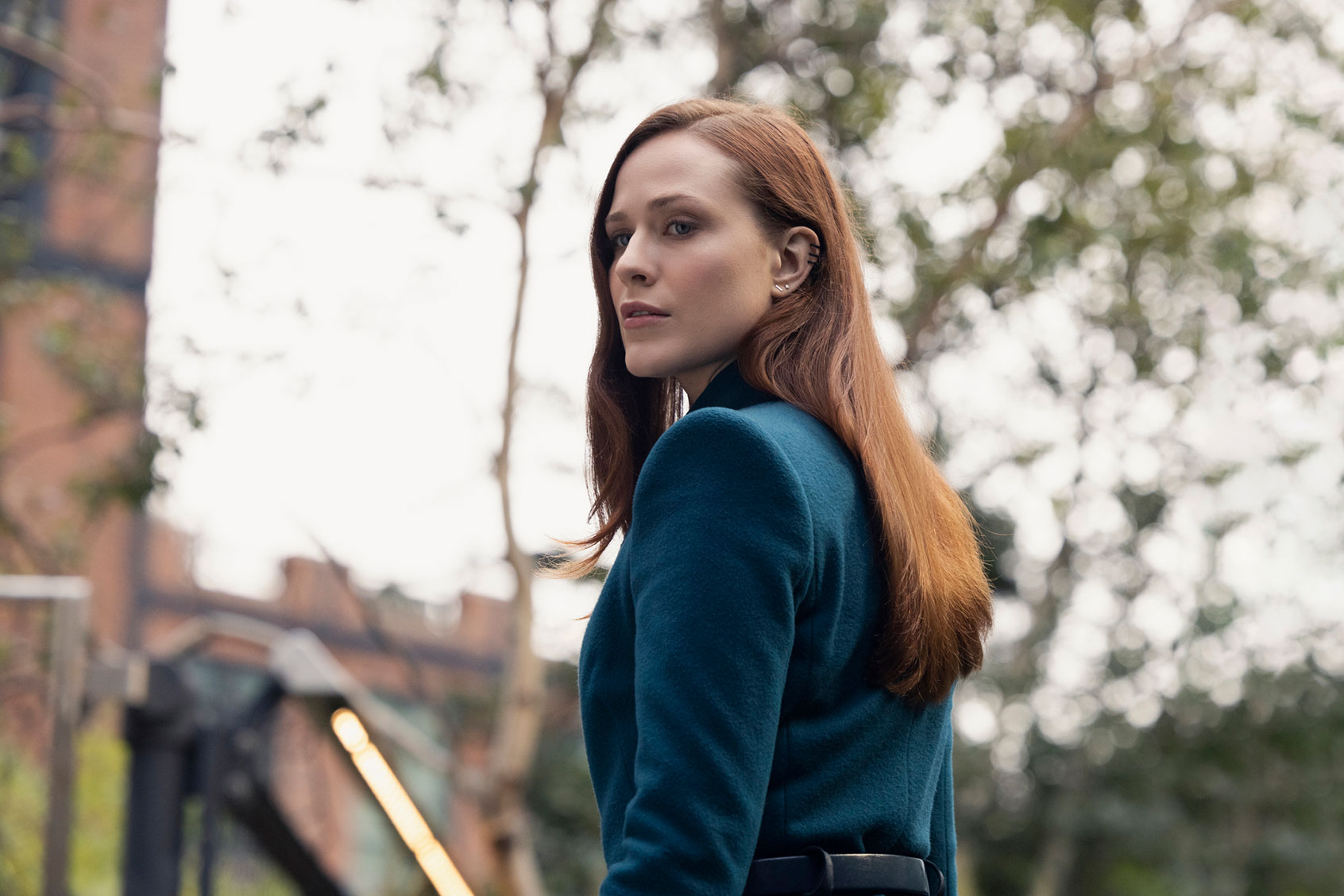
WestworldEvan Rachel Wood in “Westworld” (John Johnson/HBO)

Elsewhere, since the Dolores we once knew is no more, we meet Wood’s new character, a writer named Christina who’s also a romantic in the vein of first-season Dolores, minus the dreaminess.

Whatever fighting spirit burned in Dolores has been replaced in Christina by a low-grade apathy; she’s unhappy at her job and reluctant to dip a toe in the dating vortex. Christina also has the suspicion she’s being watched and stalked on her phone for reasons she can’t explain. She knows something isn’t right, but she isn’t sure what to do about it.

Magnetic as Wood may be, her new plotline drags. Charlotte Hale (Tessa Thompson) and the fiendishness she busies herself with are the cure for that. Charlotte is simply Old Testament Dolores in a new skin, still gunning for William, the Man in Black (Ed Harris) – along with the return of Bernard (Jeffrey Wright) from the android afterlife known as “The Sublime.”

Like Moses coming down from the mountain, Bernard holds new directives, and an uncanny level of prescience, and hauls Stubbs (Luke Hemsworth) along for a buddy-action complement to Caleb and Maeve’s espionage plot, which mainly involves them slicing through a new maze of nefarious [spoilers].

Specificity is the ruin of “Westworld” in write-ups like this one, particularly in a season reliant on twists that the trained observer will probably see coming. One misses the way earlier iterations of the “Westworld” operating system kept us guessing. Now that we know how the show works, it’s easy to bird-dog the secrets hiding in plain sight.


Want a daily wrap-up of all the news and commentary Salon has to offer? Subscribe to our morning newsletter, Crash Course.


The performances are what keep us hooked to “Westworld” despite the circular nature of its adventures, such as the weary certainty Wright brings to Bernard, the most human and humane of the hosts. Wright’s bearing is the able ballast steadying an otherwise wobbly subplot.

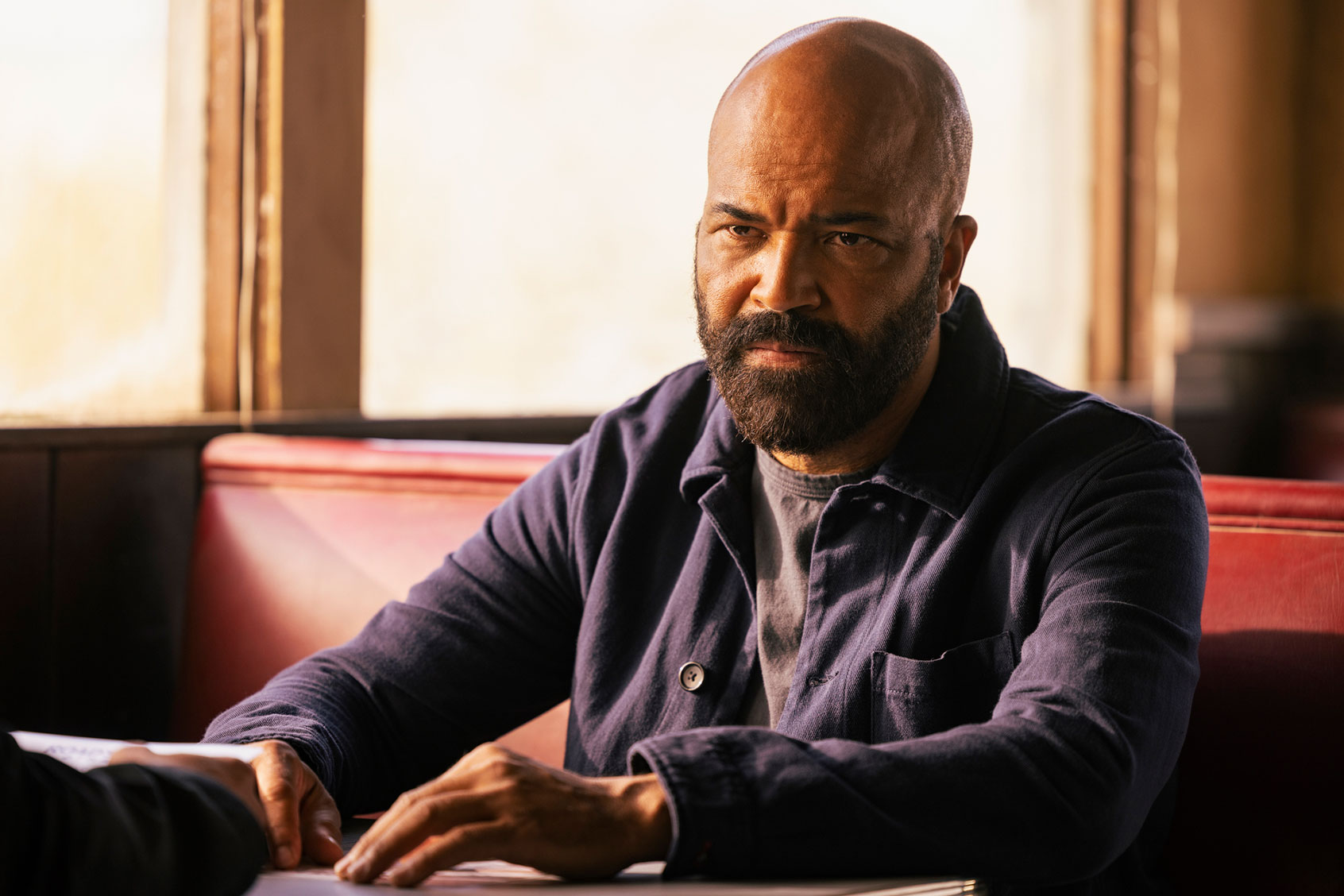
WestworldJeffrey Wright in “Westworld” (John Johnson/HBO)

Like him, Newton’s whip-smart energy ensures Maeve will always be watchable; there’s an imitable way that she cocks her hip in the face of fear that quickens the pulse. Pairing her with Paul, who brings a hardened soulfulness to Caleb, freights their adventure with palpable tautness. Regardless of the slack in other plotlines, their propulsive force is sufficient reason to stick around and see where this season is going.

Eventually we settle into nightmare realities and learn to navigate them, if not live with them uncomfortably. Another show launched with a terrifying quote that gets to the heart of this, but “Westworld” fine-tunes it by literalizing how easily we accept falsehoods as real.

But it also holds hope that even the worst of us can change. Originally, Dolores’ motivations weren’t altruistic, remember? She broke out of Westworld to take over and rid the world of human barbarity. But her time with Caleb made her realize that all of humankind wasn’t causing the problem. That fault lies with overlords who believe their wealth gives them the right to control everyone else.

The cure for what ails us, Dolores realizes, is choice. Let that sink in.

After that, Alexa, assimilate me. That maybe the only path to logic and serenity in this reality.

“Westworld” returns Sunday, June 26 at 9 p.m. on HBO. Watch a trailer, via YouTube.

More stories like this:


Martha Stewart’s nicoise-inspired salmon salad will elevate summer lunches

While it’s always nice to freestyle a salad, sometimes coming back to a classic feels like a reset. A Nicoise salad is light and balanced, but also filling. Martha Stewart has her own version that can please a crowd or liven up your weekday lunches. 

On Instagram she wrote that, “The key to fantastic salads isn’t a laundry list of ingredients, instead it’s a few well selected ones with varied flavors and textures. “

First you’ll start on your dressing by taking your anchovies and mashing them with a spoon in a small bowl. Next, add your Dijon mustard and lemon juice, and whisk in your extra virgin olive oil. Season with salt and pepper to your liking.

Related: Ina Garten would “happily” eat this salad every day — it’s that good

Next you will cook your potatoes. Add a tablespoon of salt and bring to a boil. Once your pot is boiling, reduce the heat to a simmer and cook until the potatoes are tender enough to poke through with a fork, about 10-12 minutes. Drain the potatoes and let them cool, halving them before you move on to the next step.

Now you will cook the salmon. Set your grill to medium-high. Brush your salmon with your oil, sprinkle with lemon zest and your remaining lemon juice, and season with salt and pepper to your liking. Lightly coat the grill grates with oil and place the salmon on the grill skin side down. Once your salmon is crisped and brown, cooked for about six minutes on each side, remove from the grill.

Begin boiling a pot of water to boil your eggs, and move on to the next step in the meantime.

Using a grill basket, toss your snap peas with your leftover oil and toss them over the grill until they are lightly charred in some spots, then set them aside.

Gently lower your eggs into the pot of boiling water and simmer for about 8 minutes. Once they have finished cooking, run them under cold water to stop the cooking process and make it easier to peel the shells. Halve them once you’ve peeled them all.

Finally you’ll pour about half of your dressing into a serving bowl. Add your potatoes and toss to coat them evenly. Add your watercress and repeat the tossing process. Flake your salmon into large chunks, and add to the bowl as well. Top with your egg halves, peas, and serve. You can prep this salad in advance, or save it for later and it will keep just as nicely. Find the full recipe and measurements here.

More super simple weeknight recipes from Martha Stewart: 

Salon Food writes about stuff we think you’ll like. Salon has affiliate partnerships, so we may get a share of the revenue from your purchase.


“We all keep the same kinds of secrets”: An expert on what our secrets mean and why we carry them

Quick — what’s a secret you’re holding on to right now?

Perhaps the most revealing thing about that question is the kind of answer that leapt to your mind. Did you think of a small, relatively inconsequential thing like, “I didn’t shower this morning“? Did you think of something great that made you light up, like, “I’m throwing my best friend a surprise party tonight”? Did you think of something from the past that you still feel ashamed about — an affair, a crime?

Author, researcher and Columbia University professor Michael Slepian is a professional expert on secrets. He’s devoted much of his career to exploring why we keep them, who we tell them to, and the effects they have on our minds and our relationships. And in his revealing and entertaining “The Secret Life of Secrets: How Our Inner Worlds Shape Our Well-Being, Relationships, and Who We Are,” Slepian pulls back the curtain on all the ways we rely on our secrets — and, at times, the sharing of them — revealing the hidden lives of our lives. 

Drawing on research with tens of thousands of subjects around the world, Slepian’s been able to create a kind of taxonomy of secrets, and even estimate how many secrets — both big and small — you’re keeping right now. Yet as he describes in the book, what he hadn’t imagined when he began his work was there was a secret lingering within his own family too. Salon spoke to Slepian recently via Zoom about our fascination with secrets, the ones that weigh on us, the ones that thrill us — and the ones we should probably give away. 

This conversation has been edited and condensed for clarity.

You start out the book with learning a family secret of your own, and how your work influenced your parents’ choice to come forward with it. What has changed in your understanding of secrets in the nine years since? It really did upend your life in certain ways.

“It’s not the hiding, it’s the having to live with it.”

Certainly from a research perspective, we’ve learned so much since then. But as I’m learning this big family secret and at the same time shifting toward understanding secrecy itself, we’ve learned so much. We’ve learned the whole angle of [how] it’s not the hiding, it’s the having to live with it. That was something that came later. It’s really changed how I think about secrecy. In my own life, I try to not have a secret that I’m the only one who knows. I try to confide in people whenever I can. It’s certainly changed how I deal with secrets in my own life, and that we’ve learned so much since then about how secrets affect people.

You talk about cultural secrecy, but we also have different generational ideas about secrecy. We live in such a confessional culture now. What is different? What is changing? What’s good about that?

I think you’re right that in olden days, secrecy was a way to deal with problems. “Just don’t talk about it” was a solution to something uncomfortable or something that other people would find scandalizing. Family secrets are a really good example of this. Today, people understand that’s not the way to deal with problems, more so than in prior generations. Young people today are much more encouraged to speak their mind, to share their feelings and to find words to describe their feelings.

This is just my observation from afar. I don’t have children myself, but it certainly seems like people are more in line with talking about these things. I feel like in the ’90s, there was this idea of the sensitive man who talks about his feelings that sounds weirdly dated today. It’s because of what you’re talking about here, that we understand that the way to get help from other people or the way to solve a problem is talking about it.

“The ones that hurt us the most are the ones that are constantly on our minds.”

You make distinctions in the book about the types of secrets we carry and the ways in which they affect us differently. “Secret” is such an all-encompassing word. What are the secrets that are the worst for us to carry around?

The ones that hurt us the most are the ones that are constantly on our minds, the ones we feel at a loss for what to do, or the ones we feel ashamed with or feel inauthentic keeping. When you keep something entirely to yourself, it’s very hard to find a healthy way to think about it, especially if it’s something that’s bothering you or upsetting you. So the secrets that harm us the most are the ones that we feel upset about or bother us and we are the only ones who know them. And it’s something that our mind turns to time and time again.

RELATED: How “weaponized incompetence” is killing marriages

Certainly, if there’s a secret that you’re struggling with, keeping it entirely to yourself is not typically going to help you move forward. That requires talking about it with someone. It doesn’t have to be the person you’re keeping the secret from, but just someone you can trust, someone who should be able to understand it.

When we talk about who you should confide in, we say someone who will keep your secret safe. It turns out that the average conversation about a secret is helpful. Someone has to respond very negatively for you to feel like you did the wrong thing for confiding to have backfired. Even just a lukewarm response, people find typically helpful. Other people have perspectives that they can share with you that are hard to find on your own. Other people can offer you emotional support or validate your experience or just listen. That’s something you can’t get on your own. There’s so much that other people can offer you when it comes to a secret like that.

There are the secrets that we keep because of our own sense of shame or stigma. There are also the secrets that we keep because we want to protect other people, or we don’t want to burden them. That’s very generational. It’s very cultural, these ideas of, “I have to carry it so that someone else doesn’t,” which are different from, “I have to carry it because everything would be taken away from me.” Is there something more positive or affirming about carrying a secret to protect someone else?

When should you keep a secret? If revealing a secret would hurt someone else’s feelings or damage their relationships or somehow lead to something bad, it would seem at least keeping the secret is the right thing to do. Even in that situation, I would advise people to talk about it with a third party, just to be sure. If we’re talking about something big like someone’s cancer diagnosis in “The Farewell,” even when you feel like you’re doing the right thing, you don’t have to make that decision alone. I would still advise people to talk to someone that they trust to make sure that this is the right decision. That other person can really help you think through what is probably a very difficult situation.

You write about happy secrets. There is something special about having information that the rest of the world doesn’t necessarily know yet. What is the benefit of those, and what is it that we love so much about those secrets?

“Keeping a happy secret allows us to savor that positive information.”

There’s essentially two different kinds of happy secrets or positive secrets. One is the kind with a very clear expiration date. Some of the most momentous occasions start off as a secret — a marriage proposal, some surprise for someone. Gifts often are kept secret until they revealed. What’s really beneficial for the person who keeps that secret is how, even if you have to be careful about what you say, your mind is returning to this thing that you are really excited about. Keeping a happy secret or a positive secret allows us essentially to savor that positive information. It allows us to live with it in our thoughts. It’s something we’re excited about. The more we reflect on or spend time thinking about things that we’re excited about or that we’re happy about, that’s associated with increased life satisfaction. Positive secrets really enable us to do that.

The second thing is, it doesn’t just help us savor that positive experience and think about it. This thing that we’re excited about, we also feel control of. This is the lesson when it comes to our negative secrets. When it comes to positive secrets, we know what we’re doing. We feel like we have complete control over the information. That also is something that feels good. Feeling in control of things in your life is one of the major predictors of life satisfaction. It’s even associated with living longer.

There’s another kind of happy secret. It is one that we don’t plan on revealing. This one really interests me. We’re at the forefront of what we know about this. We’re doing research on it right now. It’s something you feel good about, and you don’t talk about it with other people because you feel like they won’t understand or that they might look down upon it. A lot of hobbies fall into this category.


Want more health and science stories in your inbox? Subscribe to Salon’s weekly newsletter The Vulgar Scientist.


Someone who collects stamps might keep it a secret, because they’re like, “I just really enjoy this and I don’t need like other people’s thoughts on the matter.” Those are a little bit different, because there isn’t this plan to reveal them. But still, it’s, “This is something that’s special to me and I feel good about keeping it to myself. I don’t need other people’s thoughts to make me feel worse about it.” It’s interesting because it starts sounding like the other kind of negative secrets, but it’s not. It allows us to keep this thing special to ourselves and it makes us feel good.

The types of secrets that we feel the worst about aren’t surprising  you’ve hurt someone, you’ve been unfaithful. But I was surprised to see how often pregnancy and abortion came up, because that is a secret that women uniquely carry. Do women experience secrecy differently? And is there a gender that is more likely to share secrets?

That’s the one big gender difference. We see women are more likely to confide their secret in a third party — not reveal the secret to the person they’re keeping it from, but more likely to confide in others. Why? It’s research that we need to conduct still. But I think it gets wrapped up in these gender roles and stereotypes of how we expect men and women to act and this idea of being emotional and making yourself vulnerable. That’s what it means to confide a secret in someone. You’re making yourself vulnerable and you’re asking for help in a lot of cases. That lines up with what we think about gender stereotypes. Why don’t men feel comfortable opening up? I think it comes down to these gender roles.

As far as the different kinds of secrets that people keep, the only gender differences we see are about having that experience in the first place. For example, abortion, that’s going to be a secret more women keep of course. So when we see gender differences in the kinds of secrets people keep, it’s driven by gender differences in experiences people have in the first place.

Let’s talk about the number of secrets we keep. The book theorizes we are carrying up to around a ballpark of 13 at any given time. What is that doing to us? Is there an optimal number of secrets we should be keeping?

One of the first major stepping stones of understanding how our secrets affect us was just simply creating a list of common secrets people keep. We asked a couple of thousand people, “What’s a secret you’re currently keeping?” We looked at those thousands of responses and looked at the common themes that emerged. It turned out that with 38 categories of secrets, we could really comprehensively cover what people typically keep secret. When we show this list to people, we see that very typically people have at least one secret from that list. On average, they have 13 secrets from that list. If we just ask people open ended, “What’s a secret you’re keeping?” 92% of the time it’s one of these 38 categories of secrets.

For something that can feel so personal and so individual and isolating, actually we all keep the same kinds of secrets. We’re all in the same boat, essentially. A lot of what we do in the research is ignore in a sense what the secrets are about, with the goal of being, what are the experiences people have that transcend these common secrets, irrespective of what the secret is about?

“We all keep the same kinds of secrets.”

It turns out that the secrets that we think about more are the ones that hurt us, not the ones that we hide more. That’s something we know that generalizes across all these different categories of secrets. In starting to think about, “What about the different kinds of secrets?” that’s when we think about these different dimensions. That’s when we start seeing that there are these larger ways that we can sort these 38 categories of secrets.

Some secrets people find more immoral, and those are the ones that cause us shame. Some secrets, people feel are more personal and individual, and those are the ones we feel more isolated with. Some secrets feel more emotional and those are the secrets we feel less certain about that, we feel like we lack insight into.

The number of 13, in some ways it’s an overestimate, but in other ways it’s kind of an underestimate. Let’s say one person has 13 [secrets] from the list, since that’s the average number. In some cases, they’re like checking a box. They’re like, “This is something from a million years ago, but yes, I still keep it a secret.” Those kinds of secrets get included in that number of 13. It’s not 13 currently pressing secrets. It might be only like two or three or the ones that are really impacting you today.

Some secrets just become less relevant to life as time marches on. Those secrets can still hurt you as something that makes that secret relevant again. One interesting thing that I’ve been meaning to study is this idea of when you start a new romantic relationship, all of a sudden these things that didn’t really matter anymore, you’re like, “Well, I guess I have to reveal these things.” They become active again.

So that number 13 includes old secrets that you haven’t thought about in a while. That’s why it’s an overestimate in that sense, because when we think secrets, we think about like secrets that are currently bothering us. It’s also an underestimate in that we don’t allow people to say, “I have four secrets related to finances,” or, “I have three secrets related to sexual behavior.” The number of 13 is the number of categories of secrets that people currently have, not each individual instance of a secret.

“If your intention is for that truth to be kept secret, then the lie itself is a secret.”

When I think of the word “secrets,” I see it in the middle of this Venn diagram with privacy on one side, which most of us would say is a good thing, and then lying, which is a bad thing. What do you think are the distinctions? You can’t really lie without keeping a secret. 

Lying is interesting because lying is a way you can keep a secret. You say something that’s not true because that helps you maintain the secret. But also, you can keep a lie a secret. Like you’ve said something untrue, and it’s really a big thing that you’ve done. You consider this a significant instance of saying something not truthful. If your intention is for that truth to be kept secret, then the lie itself is a secret. People will say that the most common secret that they currently have is that there’s something really big that they’ve lied about. Of course, you can keep a secret without lying.There’s many secrets where all you have to do is just not talk about it and you don’t have to lie to keep the secret. That probably captures a lot of the secrets that we keep.

Where to draw the line between secrecy and privacy comes down to intention. If you intend for other people to not learn this thing, it’s a secret. But there’s this fuzzy boundary with matters that we consider private. It’s not that we are intending to hold it back from other people, but it’s rather just not the kind of thing people talk about. We don’t talk about money with our friends, for some people. We don’t talk about sex at work because it’s not even appropriate. If there’s something that people don’t know about you, but if you got asked a question about it, you would reveal it, that might be closer to privacy. If you got asked about it and you would not reveal it, because you don’t want people to learn that thing, then we’re talking about a secret. But there’s cases where it can be a little mixture of each.

One useful way of thinking about privacy is, this is something I would tell people, but only people I’m really close to. I wouldn’t just tell anyone about this. Those are matters we consider private. But if your friend asks you about something that you don’t want them to know about, that you would not reveal it if asked about it, then we’re at secret.

Relationships are an interesting example because there are some things that the reason that it’s private and not a secret is we just feel it doesn’t make sense to talk about. People will often not talk about prior romantic experiences, prior sexual experiences, with their current partners as a matter of privacy. They just feel like it’s not that they’re holding it back, it’s not relevant to talk about, or it’s not productive to talk about.

Looking at it from the perspective of the person who doesn’t know this thing, if they would consider that thing to be really relevant to know about it, they would consider it a secret. If there’s something that your partner did that you would really want to know about it, then it starts feeling like a secret. Then also if it’s immoral. People will consider something more immoral as a secret rather than a matter of privacy.

I have to ask, when people find out what you do, do they immediately want tell you all their secrets?

It does sometimes will lead people to be like, “What’s a secret I’ve never told someone?” People will sometimes play that game with me. Once in a while, I’ll feel like I want to reciprocate. I’m like, “Well, what’s something I’ve never told this friend of mine?” It does lead to secret sharing, for sure.

More on the science of what makes us tick: 

A step-by-step guide to making easy BBQ sauce

There are, approximately, 185,573,202 bottles of store-bought barbecue sauce available at the grocery store and no, that’s definitely not an exaggeration. Most are a generic version of Kansas City-style sauce — thick with a viscosity that’s far closer to ketchup than vinegar and sweet, most likely thanks to brown sugar, honey, or both. And yes, there are variations like smoky or spicy (or, again, both!). There are a lot of delicious brands of grocery-store barbecue sauce (read our ranking of the best ones here) and they’re great for backstock or picking up at a pinch. But what I love (almost) as much as a plate of pulled pork sandwich with a side of mac and cheese and cornbread is homemade barbecue sauce, preferably one that I can smother on said sandwich.

So I read the back of dozens of bottles of barbecue sauce (because reading 185 million bottles would simply be too many) to determine what components were essential to a classic Kansas City-style sauce and which were optional. Most started with a tomato base — specifically tomato purée, so that you get a really smooth texture (who’s ever heard of chunky barbecue sauce, anyway? If you have, we need to talk. I have questions.)

All of them contained some combination of ground spices — some were minimal, containing just black pepper, paprika, and chili or cayenne pepper, while others also had onion powder, garlic powder, celery powder, and secret seasoning blends. For an added depth of flavor, some brands also used liquid smoke and tamarind concentrate, the latter of which is a highly concentrated syrup that offsets the otherwise sweet sauce with its sour edge.

I landed on what I thought was a responsible number of ground spices for my barbecue sauce recipe — ground mustard, ground smoked paprika, garlic powder, onion powder, cayenne pepper, and salt and pepper.

How to make homemade barbecue sauce

Making barbecue sauce is so easy, promise — you need a saucepana whisk, and a jar to store it in. Combine tomato purée, brown sugar, honey, liquid smoke, and ground spices in a medium saucepan and whisk to combine. Cook over medium heat until bubbles break across the surface, which takes about two minutes. Continue to cook for an additional 5 to 7 minutes until the sauce has thickened and spices have completely dissolved, whisking frequently so that the sauce doesn’t scorch. Cool completely before transferring to an airtight container or mason jar. You can safely store homemade barbecue sauce in the refrigerator for up to seven days.

Recipe: Best Kansas City–Style Barbecue Sauce

We need to talk about whiteness — and then we need to dismantle it

I was 16 years old, I was white, and I was drunk in the back of a police car. The radio squawked. But I was silent. 

I had spent the rainy day with a couple buddies drinking beer and that afternoon, when the car in front of me stopped at a yellow light, my car didn’t, and I crashed into it.

The driver of that car was an elderly Black man. He didn’t seem to be hurt, but my old Volkswagen bug was wrapped around his bumper, and the sheriff’s deputy knew I had been drinking. I was in big trouble.

Then, the driver’s window of the sheriff’s car darkened with the shadow of someone standing there, rapping against the glass. It was my grandfather, who asked for a moment alone with the deputy, whom he knew. A few minutes later, the deputy said he would write up the accident as driving too fast for conditions.

My grandfather was not unique in possessing the power he had as a wealthy, white man in Greenville, South Carolina. We called it the Good Ole Boy System, but it was, in fact, a web of white men looking out for each other. Nor was that system unique to Greenville. Though my family had nowhere near as much money or power as the Murdough family in Beaufort County, SC, the viral unraveling of the impunity surrounding that family’s viral saga makes it clear how smoothly the system functioned — up to a certain point — in other times and places.

In that moment, I didn’t think of myself as a racist. I wasn’t actively trying to harm the Black driver. I held no personal animus against him and yet I was participating in white supremacy. All it required was my silence and my feigned ignorance and I was happy to oblige. I didn’t like talking about my whiteness but I was happy to partake of its privileges.  But that moment stuck with me, because I couldn’t help but realize that race played a significant role in the way an encounter played out.

* * *

I didn’t like talking about my whiteness but I was happy to partake of its privileges. 

From the earliest days of the Carolina colony until well after the passage of the Civil Rights Act, white South Carolinians openly espoused white supremacy and obsessed over their whiteness and the privileges attendant upon it. Even into the 1960s when my parents were teenagers, every public door they walked through was labeled “white.”

The apartheid segregation of the South ended after the upheavals following the passage of the Civil Rights Act, but a new strategy of whiteness emerged. In order to preserve as much white power as possible, white people essentially agreed not to talk about whiteness anymore.

RELATED: White America’s “hidden wound” threatens to destroy the country — and not for the first time

Lee Atwater, a South Carolina native and Republican strategist, explained in a 1981 interview, how open discussions of white power got coded into more abstract, systemic principles.

“‘We want to cut this,’ is much more abstract than even the busing thing, uh, and a hell of a lot more abstract than” chanting the N-word, he said. 

In other words, if you didn’t talk about whiteness the privileges that had been amassed for white people over centuries could not be criticized or dismantled and could continue to exercise its racial hierarchy, unremarked upon.

I was born in the 1970s and for most of my life, the primary experience of whiteness was not having to think about race at all.

* * *

Numerous scholars, including Nell Irvin Painter and Ibram X. Kendi, have shown that there is no idea of whiteness without white supremacy. Whiteness was a conspiracy to value European descent, codified in part by skin color, but also according to the stringent “one drop” rule which even the Nazis found extreme, into a system of power and subjugation.

Of the British colonies that later became the United States, Carolina was at the forefront of crafting and legislating this hierarchy. By 1708 — a short time after some of my ancestors first arrived there — the colony was majority African and the Anglo minority set up increasingly stringent definitions of the “races” and their duties, freedoms, and responsibilities. 

For most of my life, the primary experience of whiteness was not having to think about race at all.

The Negro Code of 1740, which was passed into law after a rebellion of enslaved Africans around Stono Creek, solidified and exported to the rest of the slave states the fabricated hierarchy based on race, with an even more rigidly totalitarian system where the small minority used extreme violence to extract absolute value and exert absolute control over the majority population. 

The Negro Code was also a white code, legislating the way that white men must act in relation to those they enslaved, fining whites for “failing to whip unruly slaves,” as scholar Peter Wood puts it in his book Black Majority. 

Similarly, the colony fined any plantation that did not have at least one white for every ten enslaved people–and used the fines to strengthen the slave patrols, to which many have traced the origins of our modern police forces. From the very creation of whiteness, whites have been worried about some “great replacement,” which could justify extreme violence. 

In effect, the “slave codes” of South Carolina created a system of law which, to borrow a phrase from Frank Wilhoit, was intended to bind Black people without protecting them and protect white people without binding them (except when they threatened white rule as a whole).

RELATED: The Black Codes never went away — they just became the “Black Tax

Despite some advances in the way the culture views the plight of those enslaved on the concentration camp plantation sites in recent years, white people have done very little to ask what living amidst such horror did to our ancestors on a moral and psychological level–and how much of that they passed on to us.

The grandfather who got me out of my bind was not the product of slavers. He grew up poor in a mill village on the outskirts of town for which he was derided as a “linthead,” as the mill-workers were derogatorily called. Nevertheless, he had been white in a Jim Crow regime during America’s post-war boom — and he had made the most of it. The deed to the house he bought in 1947 contained a racial covenant.


Want a daily wrap-up of all the news and commentary Salon has to offer? Subscribe to our morning newsletter, Crash Course.


By the 1980s, he seemed to know every cop, judge, and lawyer in town. He was always helping friends and family members “fix” a ticket or get into somewhere free. In many ways, his greatest joy came in the demonstration of his white male privilege. It formed his idea of his place in the world — and that place went back to the “slave codes.”

If we want to deal with racism, we need to deal with whiteness.

The logic established by those laws have informed the ways white people move about the world. When I crashed my car, the deputy, my grandfather, and I were all ensuring that the law protected me without binding me, while it bound the Black driver without protecting him. Just as our skin is the place where our body intersects with the world, our whiteness is where our experience of the world is shaped by power. That power is now mostly invisible, but when it is thwarted, it erupts as violence.

RELATED: Mitch McConnell’s moment of truth: For many whites, Black people aren’t real “Americans

In 2015 a young white man who had been radicalized by white supremacist websites, drove to Charleston, which had been the heart of the totalitarian slave regime that dominated South Carolina for centuries, and murdered nine parishioners in a church at the heart of the city’s Black community, in the name of whiteness. 

When I read about these murders, I felt like I could finally see how whiteness worked. Everything I had repressed, the shame and ignominy, the miasma of whiteness had returned in the form of fury. In that moment, I realized that whiteness was something that must be reckoned with.

If we want to deal with racism, we need to deal with whiteness.

* * *

Whiteness only exists as a way to exercise power. It is part of America’s conspiratorial agreement on what matters and what counts as success, including the color of our skin. And like most conspiracies, it contains elements of both silence and violence, which work together and feed into each other. 

We can’t be “colorblind” or “post-racial” and simply ignore the power structures we have inherited without participating in the conspiracy. We have to dismantle them.

The backlash against “CRT” and the 1619 Project have shown how powerful it can be simply to name whiteness and outline the way it uses power. The fact that so many prominent white people are scared of discussions of whiteness shows the value of the conversations.

White people are not being replaced. But whiteness needs to be abolished.

We can’t legislate the conversation away. Anti-CRT laws and bills banning books will push the discussions of whiteness back underground where kids like Dylann Roof or Payton Gendron, who allegedly killed 10 Black shoppers at a grocery store in Buffalo last month, will find hundreds of sites ready to play on their confusion and turn them from silence to violence. 

We can’t pretend to be perfect, condemning others as if racism hasn’t affected our thinking. We need to be open about our own mistakes, we need to seek to repair, we need to address and confront the horrors that have created our history and our psyches.

RELATED: White men as victims: America’s most dangerous fantasy

White people are not being replaced. But whiteness needs to be abolished. In the same way that prison abolition involves a grand reconsideration of categories and priorities, the abolition of whiteness will not happen overnight. But we need to work toward it, even though we will sometimes be wrong. We need to acknowledge what whiteness does and what it has done in our own lives; we need to begin the process of reparations; and we need to fight against our own power, as white people. 

This should feel liberatory. We can struggle to be free from a system of brutality that relies on our complicity. It is not about feeling guilty for the past, but rather eradicating its effects on our own actions. 

I know that part of my character was formed in my acquiescence to an obvious injustice on the day of the crash and I know that I am worse off for it. And though I have no way to find the driver I crashed into — and though that is far from the worst thing I’ve done — I know that I didn’t have to personally be around in “slavery times,” as I’ve heard my family call it, to owe some reparations.

Read more stories about whiteness: 

From “Fargo” to “Dark Winds,” Zahn McClarnon keeps perfecting his art – but don’t call him an artist

Until recently “Dark Winds” star Zahn McClarnon was one of those actors better known for his presence than his name. Even that factor, presence, makes him stand out among performers whose recognizable faces are their calling card; McClarnon boasts that along with an intensity that isn’t easily described, since it radiates from his eyes, his brow, his measured gestures.

That uniqueness has kept him working constantly since the mid-Aughts, although his film and TV credits date back to 1988. It also means that for most of his career, like other Indigenous and non-white actors, McClarnon wasn’t cast as the lead in TV shows or even recurring roles. That changed around 2011, when he recurred as a mob boss in the one-season drama “Ringer” followed by another recurring part on A&E Western lawman drama “Longmire.”

Arguably, however, his magnetic portrayal of the enigmatic Hanzee Dent in FX’s “Fargo” – a figure who ends up being central to that property’s lore – accelerated the 55-year-old actors career toward where he’s always wanted to be. That means executive producing a noir-soaked mystery drama based on Tony Hillerman’s Leaphorn and Chee novels, mainly “Listening Woman,”  and starring as Lieutenant Joe Leaphorn, a Tribal Police officer heading up an outpost in the heart of the Navajo Nation, with Kiowa Gordon stepping into the role of his new deputy Jim Chee.

McClarnon’s portray of Joe Leaphorn allows him to dabble in a broader palette than the heralded stoicism for which he’s long been known. His Joe is principled, non-nonsense man who affectionately glows when he’s with his wife Emma (Deanna Allison) and taps into a dry humor when he’s among neighbors and trusted associates like Sergeant Bernadette Manuelito (Jessica Matten).

That places him on an entirely different plane than his deadpan Lighthorseman Big, who very loosely polices the Oklahoma tribal lands featured in FX/Hulu’s “Reservation Dogs,” and his Ghost Nation hero Akecheta on “Westworld” – each distinct in personality, and all of which are in play.

RELATED: “Westworld” is America

Between “Dark Winds,” “Reservation Dogs,” possibly “Westworld” (where his character has crossed over into an afterlife, but none of the hosts truly die), and his upcoming role in the Marvel series spinoff “Echo,” McClarnon is going to be in front of us a lot more often in the coming months and years.

In Salon’s recent conversation McClarnon came across as  humble, down-to-Earth and dedicated to always being student regardless of where his work takes him. For now that means through the end of “Dark Winds”‘ first season and the second season of “Reservation Dogs,” premiering in August. 

We chatted about his work in those shows, his relationship to Hillerman’s work and what he sought to bring to his interpretation of his iconic character.

This interview has been edited for length and clarity.

I’ve read Tony Hillerman novels in the past, and when I would read them before I’d always wonder what is was like for the Indigenous actors playing these roles – which are very well written, to be clear, but isn’t necessarily from an Indigenous perspective. What are these novels’ significance to you, and as part of that, what you want to bring to the role of Joe Leaphorn?

The novels were in my world, growing up, wherever Tony Hillerman was. I read a few of his novels back in my early 20s, so I was very familiar with who Tony was and, and how the community felt about him as well. Within Indian Country, there was a lot of support of Tony. His intentions were not only to write these characters, but also to inhabit the Navajo culture. So he worked with the Navajo and most of his friends were Navajo. I think his intentions were pure.

Some people within the Navajo culture, I think, are very wary about people writing about their culture, especially if it’s a white guy. You have different perspectives on it, you really do. You have the older generation that are big fans of Tony; you have the younger generation, not so much. But the reason why I was attracted to Tony Hillerman was because I knew when George R.R. Martin and Robert Redford and Chris Eyre, Tina Elmo and Vince Gerardis came to me to play Joe Leaphorn, we were going to have cultural advisors in every facet of production, as well as Navajo writers in the room, as well as other tribes of Native American writers in the room. That’s what I wanted to make sure that we had going into this.

What I wanted to have was a different perspective on on Tony’s books. And that’s what we went for.

Joe Leaphorn was played previously in a series of TV movies by Wes Studi, with Adam Beach as Jim Chee. What you’ve done with him is impressive in its own right, of course. So what does it mean to be playing this role today, in 2022, versus when those previous Hillerman movies aired in early aughts on PBS?

Just like every role, you have to bring yourself, obviously. But it’s a really difficult question because I don’t sit down and think about what I’m going to bring to the role. I get the material, and I’m going to bring my experiences – from my childhood, from me growing up, you know, on and off the reservation. Growing up in my culture. I’m going to bring all of that to the character of Joe Leaphorn: my pain, my tragedies, you know. Joe is a character that has a lot going on, obviously. But I just have to bring those elements of my own life to that character.

“What I wanted to have was a different perspective on on Tony’s books.”

In “Dark Winds” we have this rich, noir thriller that involves Joe and Jim but at the same time, brings people inside the lives of these characters, and inside of a certain period in this part of the country. Which transformations were there from the page to the screen that you wanted to incorporate to give a fuller view of what life for Joe and life on the rez was like in the 1970s?

Again . . . somebody that has grown up in their culture and within their ceremonies, they’re going to bring something a little bit different. I don’t know how that materializes. But I know how I grew up. And I know the people I grew up around, and the cops and my uncles and . . . I don’t know if it’s tangible. But I think you can see it, if that makes sense. I can’t really express what that is that I’m going to bring to that role. But I understand those nuances, the humor, the relationships, of what it’s like to grow up on a reservation, what it’s like to be there.
Dark WindsZahn McClarnon in “Dark Winds” (Michael Moriatis/Stalwart Productions/AMC)

You know, I guess what we tried to do is kind of recontextualize it from a different point of view, through the Indigenous writers, through me, through the other actors, the Navajo actors, the non-Navajo actors, from the writers room, the directing, within the crew – we had a lot of Indigenous crew as well – and just kind of trying to establish their lived experiences. We’re proud of what we did, and we’re hoping we get a second season to kind of add and improve on some of the mistakes that I personally see.

What mistakes did you see?

Well . . . I don’t know if I want to go into that. Personally, there’s a few things that I saw, like every actor sees in a performance, little things that you can change.

Much has made about the stillness in your acting. But what I’ve seen in your performances,  especially since you played Hanzee on “Fargo,” is a quiet dynamism that’s been really coming to the fore in recent years.

I think it’s maturation, you know. Just getting a little bit older, and understanding the craft a little bit better through studying. I think the best place to study is on the set, they get to learn the most by being on the set. And since 2014, I guess I’ve been on a lot more sets and have more opportunity to just be more comfortable with who I am as a human being now. I’m 55 years old, you know. I went through quite a bit my 20s and my 30s. And, it wasn’t pretty. What would the right word be? I had a lot of issues and I had a lot of things that I was dealing with. I finally got through those things and I was able to settle into who I am and become a bit healthier – psychologically, physically, a healthier person. You just become a little bit more comfortable in your skin, and you’re able to take more risks as an actor.

Noah Hawley said something to me in the beginning of shooting “Fargo.” I’d go, “What do you think? What do you want to do here?” And he just said these two words: “Be still.” And it made a lot of sense.

I learned how to be still by studying. Like anything, it just takes years of working at it. I don’t know any other way to put it other than just, I’m relaxed a little bit more now and willing to take risks. And willing to fail.

I mean, look at “Reservation Dogs.” It’s all over the place, you know? You just go for it. And you have an environment where you’re able to do that, because you’re surrounded by people who support you.

Long story short, it’s just relaxation, maturity, and a lot of my work, I think, is pretty instinctual.

For someone who’s been doing this for a long time and, like many non-white actors, has had to perform in tens of roles before finally getting the parts in shows that receive serious critical notice, you are very humble about your success.

I appreciate that so much. You know, I heard an interview recently, I can’t remember what they said on it. But it’s almost like you’re never satisfied. And I think that’s a love-hate thing I have with this craft, this profession. I love doing the work. But usually I’m not satisfied. I’m always striving for those moments of honesty, always striving for something better and being a better actor.

As much as I can call it this, it’s a struggle like, I think, with any – I don’t like using the word – artist. You know, anybody who paints or writes music, they’re just striving to be better and better. And they’re always looking for that honesty and that truth.

Why don’t you like to use the word artist?

Oh, I guess it sounds a little pretentious to me. I think it’s thrown around a little too much, maybe. People overuse a word. And, you know, acting is a branch of the arts, as a performing art. But is it one of the main branches of the arts?

I’m a performing artist. I’m good with that. I hear you. I’m a performing artist. But I don’t know. It just gets thrown around a lot.

Viewing your filmography, you’ve been in many films and made an impression with memorable performances in single episodes of series, to the point that you’ve become recognizable. And then you started getting series regular roles in “Ringer” and “The Red Road,” leading up to now when you’re in, or were in, “Westworld.”  I don’t know if you can say anything about that.

Not yet.

“You just become a little bit more comfortable in your skin, and you’re able to take more risks as an actor.”

We do know you’re returning in “Reservation Dogs,” though, and now you’re in “Dark Winds.”  What did the time spent with those one-shot roles teach you about  developing characters that you bring to these performances where you are regulars, or in this case, the lead?

Again, I think it’s just the best place to learn, I think is on the set. And just taking those experiences and building on those experiences. And all this time, I never stopped studying. I was in class until I got really busy in the last year, before “Dark Winds.” I plan on going back to class when I have some time.

I’ll continue to keep practicing for the rest of my career. I’m satisfied with moments, but overall stuff, it’s very difficult. And I have a really hard time watching what I’ve done. I haven’t watched quite a few of my things that have been in. As an EP on “Dark Winds,” I have to watch these episodes. But “Rez Dogs,” I mean, I watched the whole series except for my episode. I haven’t seen it yet.

Are you kidding me? That episode is incredible.

It’s like reviews. I’m not going to read reviews. I’m not going to read good reviews, and I’m not going to read bad reviews. I have the kind of psychological makeup where, like a lot of people, they just grasp on to things. I try to stay centered or, a good word for it is equanimity, where you just kind of in between and you’re calm. And I’m sure people have been saying wonderful things. That’s beautiful. I love it. And I’m sure people said some sh**ty things as well. But you know what? I just try to stay out of it as much as I can and focus on the work and be present.


Want a daily wrap-up of all the news and commentary Salon has to offer? Subscribe to our morning newsletter, Crash Course.


You said before, and your presence as an executive producer confirms this, that Joe Leaphorn is one of the roles you’ve wanted for quite some time. What are some others?

I have some things I would like to personally develop. I think that I’m going up that path of where maybe in the next year or two, I can start thinking about developing my own stuff.

I don’t have kids and I don’t have an immediate family, you know. I’m not married or anything like that. So exploring those things because I don’t have them is a lot of fun. I enjoy the father-son, daughter-son kind of relationship, and the intimacy that goes along with that.

Now that I’m in my 50s, I can finally play characters that are old enough to have kids, etc. So I like exploring stories about relationships and humans connecting.

Comedy or drama? Does it make a difference to you?

I like drama. Comedy is very, very difficult. I really have a hard time with comedy and I’m very unsure about timing and things like that. I mean, you know, I love doing “Rez Dogs.” That’s a big family. I love working on that. And Season 2 will be out in August, and it’s going to be phenomenal. I can’t really give you any details on the character what he goes through, but I’m looking forward to people seeing it.

Mainly I want to know what the deal is with the fishes turning up in that field.

Oh, good! That’s crazy that you said that, because that’s kind of what Big, my character, explores. So that’s great.

New episodes of “Dark Winds” premiere Sundays at 9 p.m. on AMC and stream on AMC+. Moments after our interview ended, AMC picked up the drama for a second season. “Reservation Dogs” returns for its second season Aug. 3 on Hulu.

More stories like this:

Biden’s “new normal” on COVID is neither normal nor new

Since winter’s Omicron surge, the Biden administration has been trying to normalize the COVID-19 pandemic. In February, Biden remarked that “our country is taking everything that COVID has to throw at us, and we’ve come back stronger.” Even more audaciously, at the State of the Union Address, he claimed “COVID need not control our lives anymore.”

Yet it is seeming less and less likely that the administration will conclusively deliver on its campaign promise to “beat COVID-19.” Instead, the goalposts are being shifted. As a news report revealed earlier this month, the Biden administration has deliberated internally on how to”gauge what the American public would ‘tolerate'” in terms of pandemic deaths per day.  This is a disturbing deviation from responsible public health policy, which requires breaking chains of transmission, driving case numbers down, and treating deaths as preventable — not inevitable.

But amid bad news, the White House has remained relentlessly optimistic. Recently, COVID-19 Coordinator Ashish Jha claimed “We’re in a way better place than where we were two years ago” — just days after the US recorded 1 million pandemic deaths. In March, the White House released the National COVID-19 Preparedness Plan, a document intended to “enable America to move forward safely (…) as we get back to our normal routines.” If the country’s current pandemic outcomes are indeed the “new normal” we’ve been promised, Americans should be looking carefully at what we are normalizing.

RELATED: Public health experts are horrified at the rift between red and blue states on COVID

In particular, a great deal of hope has been pinned on the idea that death rates will be lower in the months ahead—given that “we have the tools,” as the administration and its supporters are claiming. Yet there is no guarantee that death rates are going to drop. If increasingly immune-evasive and transmissible variants continue to infect high numbers of susceptible people — and if immunity conferred by vaccination wanes across the general public — then conceivably, there is no upward limit in future American pandemic mortality.

The last time the United States saw an infectious disease as a top-three cause of death was 1937, before the availability of penicillin.

Given this, our nation’s leaders and public health authorities should be working against public complacency and the false sense of security that can be conjured by terms like “normal.” As a medical anthropologist and a scholar of the history of medicine and public health, we see nothing normal about the present moment.

Part of our concern stems from COVID-19’s enormous epidemiological footprint. In 2020, the novel coronavirus became the third leading cause of death in the United States. Provisional 2021 data show it remains there, led only by heart disease and cancer. From a historical perspective, this is a shocking development: the last time the United States saw an infectious disease as a top-three cause of death was 1937, before the availability of penicillin.

As only readers in their eighties or nineties will remember, Americans used to die easily and frequently from bacterial and viral infections such as pneumonia, influenza, and tuberculosis. In the late 1930s and early 1940s — just shy of the “Antibiotic Era” — these high rates of mortality from infectious disease diminished drastically, mostly due to decades’ worth of public health interventions, including improvements in sanitation and hygiene.

These achievements were bolstered by the ability to treat bacterial infections with an expanding arsenal of antimicrobial drugs. In just seven years — from 1943 to 1949 —  Americans saw the age-adjusted death rate from influenza and pneumonia get cut in half, dropping from 101.7 deaths per 100,000 to 45.1 per 100,000

The outsize share of death now caused by an infectious disease could threaten a reversal of the gains we’ve made in public health over the last seventy-five years. 

Since the “Antibiotic Era,” Americans have been — in the aggregate — safer and safer from infectious disease, with noncommunicable diseases increasingly representing the country’s leading causes of death. That trend reversed abruptly in 2020: the American age-adjusted death rate for COVID-19 was 85 per 100,000. In 2021, it reached 101.3. This death rate is on par with the rates of influenza and pneumonia deaths recorded in 1943 — a year marked by race riots, the internment of Japanese Americans, and the escalation of World War II.

Where many pundits have attempted to normalize COVID-19 or make it seem trivial by comparing it to other causes of death, such as cancer and the flu, this is a misleading way of thinking about death at the level of the national population. The impact of COVID-19 has caused a sea change in patterns of mortality in the United States. Indeed, the outsize share of death now caused by an infectious disease could threaten a reversal of the gains we’ve made in public health over the last seventy-five years. This concerning trend in mortality is not our only cause for concern: as the CDC recently reported, some 1 in 5 Americans who are infected with COVID-19 will experience long COVID symptoms.

To be sure, the way forward is not simple. But the alternative is unacceptable. Now is not the time to seek the upward threshold for accepting pandemic deaths, nor to recalibrate expectations for public health to the standards of the last century. The “new normal” that we’re being asked to settle into is no best-case scenario, but a shocking anachronism—a detour into a less healthy and more dangerous past.

Read more on how COVID-19 has altered our political landscape:

“Thanks for giving white life an edge,” Illinois Republican says to Trump

Rep. Mary Miller (R-IL) is being targeted for a comment she made Saturday night at a rally for Donald Trump.

Miller told the crowd how thankful she was for Trump appointing three Supreme Court justices that ensured the Supreme Court overturned Roe v. Wade. What followed, however, left people questioning whether she revealed herself to be a white supremacist or it was an accidental slip.

“President Trump, on behalf of all the MAGA patriots in America. I want to thank you for the historic victory for white life in the Supreme Court yesterday,” she said.

She is up against Rep. Rodney Davis (R-IL) in a GOP primary on Tuesday.

See the moment in the video below:

How “Bob’s Burgers” and its loving queerness became a cult favorite among the LGBTQ community

In the “Bob’s Burgers” episode “Manic Pixie Crap Show,” Louise (voiced by Kristen Schaal) is forced to attend a fairy-themed event in order to pay off a debt to her clingy frenemy Millie (Molly Shannon). It’s a glitter-covered, tutu-enveloped extravaganza which is decidedly not Louise’s scene. She far prefers her Burobu card collection and participating in Go Kart League to, as she puts it, all that “girly girly-ness.” 

However, that discrepancy between what Louise likes and what her peers like causes her some internal conflict, which plays out over the course of the episode, culminating in a heartwarming exchange between Louise and her older sister, Tina (Dan Mintz). 

“Why have I never liked any of this stuff?” Louise asks. “I mean . . . ugh. Is there something wrong with me? Am I not being a girl right or something?” 

Related: How “Bob’s Burgers” uses “foxhole humor” to keep the American dream alive after 200 episodes

Tina responds: “What? Louise, it’s fine that you don’t like it. It doesn’t mean anything is wrong with you. I mean, you like your stuff like your Burobu cards, and they like their pixie princess stuff. Everyone can just like what they like and be who they are, and that’s OK.” 

“Everyone can just like what they like and be who they are, and that’s OK.” – Tina Belcher

That level of joyful acceptance is overwhelmingly present in the world of “Bob’s Burgers,” a pun-filled town — which is nameless on the show itself, but apparently called Seymour’s Bay among the writing staff — that’s packed with lovable oddballs, from the Speedo-clad rollerblader who glides down Ocean Avenue to Nat Kinkle (voiced by Jillian Bell), a boisterous limo driver with a love of reptiles and waterparks. 

The writers of the show have constructed a fictional community where everyone is free to be their complete selves, which is one of the many reasons that the show has developed something a special following among members of the LGBTQ community for its inherent (though often undefined) queerness. 

“Before joining the show, I was a huge fan of it,” said Simon Chong, the supervising director of “Bob’s Burgers,” in a phone call with Salon. “That was, in large part, because it was so accepting and it was very fun to see the underlying themes of acceptance.” 

He continued: “For me, personally, I’m gay myself and I just enjoy seeing a world where being gay — or whatever you may be — isn’t questioned. It’s just a very nice, inclusive world to let yourself get lost in for 20 minutes at a time.” 

Tina in “Bob’s Burgers” (FOX)From the top, as Chong puts it, the humor in “Bob’s Burgers” doesn’t come from punching down. This is distinct from many other popular animated family sitcoms. For instance, “Family Guy” has a long history of making homophobic jokes (all of which are frankly pretty tired). Most egregiously, perhaps, Brian the Dog was once shown vomiting for a full minute as a punchline after finding out he had slept with a trans woman. 

In January 2019, executive producers Rich Appel and Alec Sulkin pledged to move away from humor that targets marginalized groups as “the climate is different, the culture is different, and our views are different.” 

However, as Out Magazine pointed out, that just resulted in an episode called the “Disney’s The Reboot” in which regular characters Quagmire and Joe were “turned into one-dimensional gay neighbors whom Lois greets by saying: ‘Oh, hello gay couple who’s constantly jogging.'”  

When she asks what the couple is up to that morning, Quagmire responds by saying, “Just adopting and pucker-kissing.” Joe adds, “Yeah, we’re network TV gay, so all we can do is adopt children and pucker-kiss, no tongue stuff.” 

In attempting to skewer other shows for their limited depictions of the LGBTQ community on-screen, “Family Guy” simply churned out another stereotype. Over the course of the show’s 20 seasons, there has been no growth in how the writers’ room depicts queer characters. This isn’t the case the for “Bob’s Burgers,” especially when it comes to characters who are expressly queer. 

Sarah — who asked to use their first name only for privacy — has been a fan of “Bob’s Burgers” since they first cycled through the show in 2014 after finishing their post-doctorate degree. 

Nat was “was “a lesbian from the beginning.”

“I think the show’s queer representation has improved remarkably,” they said. “The early episode where Bob drives a cab to pay for Tina’s 13th birthday party — because they have to work extra for extra money!— is both funny and amazing, but also not really the best in the way it shows the characters who are trans sex workers.” 

Sarah continued: “Though even then Bob doesn’t react to them with disgust or stigma, but welcomes them as friends! But there’s pretty significant growth in the queer characters on the show between those early days and now. I’m thinking especially of Nat, but also others.”  

Tina, Nat, Gene and Louise in “Bob’s Burgers” (FOX)The aforementioned Nat is a fan-favorite character who, according to Chong, was “a lesbian from the beginning.” The boisterous limousine driver has appeared in four episodes so far, two of which center loosely around her relationships. 
In “Just the Trip,” the Belcher family aids Nat in returning a reptile to the exotic animal farm where her ex-girlfriend works, and Nat makes it apparent that she’d like to rekindle that relationship. In the most recent season’s episode “Clear and Present Ginger,” Nat again enlists the Belchers’ help in a Limo Wars event in order to impress a crush and her teenage daughter. 

“It wasn’t mentioned in the first episode,” he said. “But it’s not something that was thought of afterwards where they [the series writers] were like, ‘Oh, should we make Nat a lesbian?’ The writers of the show and those who are directing it are very conscious of what we are putting out there in terms of what the show is, who the characters are, what they need and what they represent. We want to be respectful and we want to craft characters that people really find themselves in.” 

As such, Alexi Lock, a longtime fan of the show who is also an admin of a “Bob’s Burgers” Discord group, said that as a pansexual man, he appreciates how the many members of the Belcher family is coded as queer. He specifically points to the Thanksgiving-themed episode titled “Turkey in a Can.” After a series of mishaps that lead Bob to having to visit the butcher for multiple Thanksgiving turkeys, the butcher starts to think Bob is interested in him romantically. 

Initially, he tells Bob that he has a boyfriend, but offers to set him up with a friend who likes “sloppy bears.” When Bob returns a final time, the butcher admits that things actually haven’t been great with his boyfriend, so says that it may be time for a change. He asks where Bob wants to go on a date. 

Bob, who is flustered, but not put off, replies that he is “mostly straight,” and that the butcher is “way out of his league.” Bob adds he likely won’t be back to buy another turkey the next day, but that he’ll call him. 

(Fox)“In the group, we also talk about how Bob has an obvious crush on Marshmallow, who is one of the glam trans sex workers he met in the episode ‘Sheesh! Cab, Bob?” Lock said. “Some think Bob is bi, others say he is pan. Regardless, he’s an ally.” 

Series fan Sarah feels similarly. 

“I read Gene as transfeminine, Louise as a lesbian and Tina as pan,” they said. “Jimmy Jr. and Zeke also have some kind of clear attraction to each other and Tina, so there’s a fun triad dynamic going on there.” 

Those themes are unsurprising because, as Charlotte Shane wrote for Salon in 2013, “Bob’s Burgers” is one of the most sex-positive shows on television. Whether it’s Tina’s “erotic friend fiction” or family friend Chad’s attraction to a mannequin, the Belchers take it all in stride. 

Many fans, including Sarah and Lock, say that most episodes can also be viewed through a queer lens, which is one of the reasons that the series’ ongoing Pride Month collaborations with Toddland, which was spearheaded by Chong, feels genuine. 

“”I read Gene as transfeminine, Louise as a lesbian and Tina as pan.”

“One of my favorite episodes is the two-part Christmas episode where Linda’s tree topper gets stolen and the family ends up breaking into an underground rave,” Sarah said. “It ends up being this great distillation of celebrating queer spaces, queer chosen family, rejection of carceral state structures — everyone is mad Linda called the cops, even Bob — and learning how to be a better ally to marginalized communities.” 

Sarah points out that in this episode — which features voicework from Todrick Hall, the artist fittingly behind the song “Gay Excellence” — Bob literally uses his body to lure the police away by donning a costume and creating a distraction. 

Tina, Gene and Louise in “Bob’s Burgers” (FOX)“Maybe it sounds pretentious or whatever, but I could do deep reads of episodes all day,” Sarah said. 
But as Simon Chong points out, the show’s appeal can also be distilled much more simply. It’s about a supportive family, both biological and chosen, that really wants the best for those in their circle. 

“They love each other and accept each other for who they are, flaws and all and whoever they may be,” Chong said. “I just think that really resonates with people.” 

“Bob’s Burgers” episodes debut on Fox before streaming on Hulu. “The Bob’s Burgers Movie” is now showing in theaters. It will be available to stream on Hulu and HBO Max on July 12.

More stories about “Bob’s Burgers” 

Catholic bishops celebrate a big win: But as they have sowed, so shall they reap

In 1974, the Rev. Theodore Hesburgh, then president of the University of Notre Dame, warned Roman Catholics against ceding the abortion debate to “crude zealots who have neither good judgment, sophistication of procedure nor the modicum of civility needed for the rational discussion of disagreements in a pluralistic democracy.”

This week, the “crude zealots” won. America’s Catholic bishops are doing a victory lap over this decision. Four of the five justices who voted to overturn Roe v. Wade were conservative Catholics. (Chief Justice John Roberts, also a conservative Catholic, voted to uphold the Mississippi abortion ban at issue in the Dobbs case, but did not support overturning Roe outright.)

The bishops have been pushing for the overturn of Roe for decades, and many of them were glad to overlook Donald Trump’s moral lapses because he declared himself anti-abortion. In his single term (at least so far), Trump, with the help of then-Senate Majority Leader Mitch McConnell, kept his promise and larded the court with three conservative justices eager to reverse 50 years of court precedent. 

RELATED: Amid all the gloating, anti-abortion right dreams of bigger wins — and possible violence

Now these same church leaders are calling on Americans to unite, and for dissension to end. “It is a time for healing wounds and repairing social divisions,” the bishops wrote in a statement. “[I]t is a time for reasoned reflection and civil dialogue, and for coming together to build a society and economy that supports marriages and families, and where every woman has the support and resources she needs to bring her child into this world in love.”

What planet do they live on, to suggest that such an outcome is remotely plausible? Strife will just devolve to the states. Indeed, a 2021 investigation by the National Catholic Reporter found that major anti-abortion groups were funding voter suppression efforts in key states, endorsing Donald Trump’s Big Lie and pushing for future Republican victories. That doesn’t sound like “coming together” to me.


Want a daily wrap-up of all the news and commentary Salon has to offer? Subscribe to our morning newsletter, Crash Course.


Worse, abortion bans could be the first step toward a police state for pregnant women and anyone who may help them terminate a pregnancy. As the New Yorker’s Jia Tolentino predicts, pregnant people could conceivably be surveilled to ensure they do nothing to endanger a “preborn” child — and could be charged with murder if a miscarriage or stillbirth is confused with an abortion. 

But women who want to get pregnant may also be at risk. The Catholic church condemns in vitro fertilization (IVF) because of its doctrine that life begins at conception, wary that some fertilized eggs could be discarded or used in medical research. If a state decides to take the same position, where does that leave infertile women and couples? 

In their statement hailing the Roe decision, the bishops congratulated anti-abortion activists on all the alleged good they have done to support pregnant women over the years. But they might also consider all the money that was squandered on this decades-long struggle, and the moral compromises they made along the way. Trump’s narrow election victory in 2016 was almost certainly fueled by older, white Catholics in swing states like Wisconsin, Pennsylvania and Michigan who listen to what the church says. 

The bishops also might meditate on the fact that the so-called help that pregnant women received was clearly insufficient. The U.S. has the highest rate of maternal mortality among wealthy nations and also ranks poorly on infant mortality, with rates far higher than other major Western nations like France and the U.K. 

But the Catholic hierarchy’s abortion obsession has had other pernicious side effects. During the pandemic, bishops’ nitpicking over the extremely remote connection between abortion procedures and the development of life-saving COVID vaccines meant that the U.S. church did not wholeheartedly endorse Pope Francis’ view of vaccination as a moral obligation

How many hundreds of thousands of unvaccinated Americans died because of those strange abortion qualms? On the bishops’ planet, only the innocent “preborn” have any real right to life. The rest of us must adjust to the dictates of what increasingly looks like a doctrinaire Supreme Court dominated by ultra-conservative Catholics. 

Read more on the Supreme Court and the fall of Roe v Wade:

Driver attempted to run over protestors during abortion rights rally in Iowa

An unidentified male motorist in Cedar Rapids, Iowa intentionally rammed into several women on Friday night as abortion rights defenders peacefully protested the right-wing U.S. Supreme Court’s overturning of Roe v. Wade.

The driver of a Ford truck maneuvered around multiple cars at a red light and drove through the tail end of a group of demonstrators who were crossing a street downtown, running over one woman’s ankle and sending her to the hospital, witnesses told HuffPost.

“He tried to murder them,” said Lyz Lenz, a local journalist and witness to the attack. “These women see him coming and a bunch of people put their hands out to stop him. And he just keeps going.”

Video footage recorded by Linn County Supervisor Stacey Walker shows several women standing in front of the truck with outstretched arms, trying to persuade the driver to stop. But the motorist keeps plowing forward, knocking down and injuring several of them.

Alexis Russell, who can be seen reaching into the driver’s side window in an attempt to steer him away from other protestors, told HuffPost that he “grabbed my sign and ripped it, and I fell, and he proceeded to run over one of the girls.”

Although the Cedar Rapids police reportedly interviewed the driver Friday night, no arrests were made.

Iowa is one of three states that have enacted laws shielding motorists who run over protestors from liability under certain circumstances.

The bill that Republican Gov. Kim Reynolds signed into law last June grants a driver “who is exercising due care” immunity from civil lawsuits for injuring someone “who is participating in a protest, demonstration, riot, or unlawful assembly or who is engaging in disorderly conduct and is blocking traffic in a public street.”

Similar bills have been introduced in more than a dozen other states since 2017.

According to HuffPost, “Several witnesses argued that the attack was motivated by anger over the protest,” one of many that erupted nationwide after the high court’s reactionary majority eliminated the constitutional right to abortion, immediately harming pregnant people in Republican-controlled states with “trigger bans” and endangering many more elsewhere.

Molly Monk, a witness, told the outlet that the driver went “out of his way to hit protesters in the street who had very visible, very clear signs that they were pro-choice.”

“It makes me feel like the pro-life movement is a complete lie if, in order to be against people who are protesting for abortion rights, you try to murder them in my street, in my neighborhood,” said Monk. “It makes me very, very sad, very hurt, and very angry that this is what people think pro-life means.”

The anti-abortion movement has an extensive history of violence.

Over the past 43 years, anti-abortion extremists have committed at least 11 murders, attempted over two dozen more, issued almost 1,000 threats of harm or death, and been involved in 614 stalking incidents and four kidnappings, according to the National Abortion Federation. They have also bombed more than 40 abortion clinics, set fire to nearly 200, and made roughly 670 bomb threats.

Antyesti in Brooklyn: How NYC honored my father upon his death, during a time of anti-Asian hate

When my father dies, he’s in a nursing home, seated upright in a chair. He hasn’t been out on the ocean, in a boat, in years, maybe decades, and I know he’s not a beach person. He hates the sand and wet and cold. But days before his death, he can remember this clearly enough to reminisce in his hoarse voice: wearing a jacket and a scarf despite it being early spring in America, taking a ferry to the Statue of Liberty, then Ellis Island. Walking past all those names. None like his own. And yet he never doubted that he and his younger brother and my mother, who all lived together in a tiny apartment after I was born, had arrived in America, and would be welcomed in one way or another.

His journey to the water started in the late 1960s, early 1970s. He had come here after the assassination of Martin Luther King, many years before my birth, the birth he had imagined, hoped, would be of a son. Was New York safe then for Asians? I try and imagine. There were 45,000 South Asians in the United States by then, a small fraction of the nearly one million strong tristate area desi community today. He wouldn’t have felt entirely alone, though most in that first wave of immigration — the 1965 Immigration and Naturalization Act giving preference to those with professional training — were doctors, engineers, or successful businessmen with relatives already here to sponsor them. My dad was none of these. He was ambitious about emigrating to America but lackadaisical about academics during his student years in India, more interested in acting in plays and going to parties than career planning. Yet he married a doctor, my mother, who gave him passage here.

RELATED: Whose country is this? America and the immigrant experience are intrinsically linked

There are Polaroids, somewhat faded now, of my parents wearing garish fashions: orange, yellow, paisley prints and bouffant hair. A young Chinese American woman at a restaurant, posed between my beaming father and recalcitrant mother, her identity never explained to me when we sifted through old albums. All the women in cat-eye glasses, mostly unafraid, mostly enjoying America. In 1965, laws that invited Asian immigration seemed to let them in. All over the city, evidence of Asian America, present and future. Frank Chin, producing the first Asian-American play in a New York theater in the early ’70s. Protests against housing discrimination erupted across Chinatown. Asian Americans joined civil rights marches, and Asian Americans for Equal Employment convened. My dad, secretly proud of his “light skin,” considered whether to change his first name from Munuswami to Mike or Michael.

Was New York safe then for Asians? I try and imagine.

Jackson Heights in Queens was known to my father, of course. It was where he could see a Bollywood movie, grab a snack, do grocery shopping for my mother to make Indian meals for him, my uncle, and eventually for me. But he was never satisfied, or comfortable, being around “too many” Indians. Instead, the Empire State building; Wall Street; Pace University, where my father in his late twenties took an MBA, bounded by South Street Seaport and the Brooklyn Bridge — these were his haunts. Bodies of water in New York and long walks on the pier were as familiar to him as the Bay of Bengal lapping the hot sand of Golden Beach in Chennai, where men of all ages smoked and walked at all hours, the earliest flickers of sunrise or late at night, dirty jokes and laughter shocking in the dark.

What is the antyesti and what is it doing in Brooklyn? This question, a version of which was hurled at my parents when they came and had trouble finding a landlord who would rent to them (What are you, what are you doing here?), was answered quietly, gracefully, and with beauty the morning of September 30, 2021 — a few days after my father’s sudden death from a stroke, and not long after a slew of anti-Asian attacks against people like my dad who were frail, elderly Asians but also decades-long New Yorkers.

He’d gotten an American degree and his English was comfortable, fluent, and yet his name, skin and decided lack of connections made his first attempts to find work frustrating. Longing to be and feel American at 29, taking himself to steakhouses and tailors of ‘Western” bespoke suits (like Gandhi once had in London, just as eager for assimilation, several decades before), my immigrant father walked alone, unemployed, around the same Brooklyn pier where his ashes would eventually be scattered.

What is the antyesti and what is it doing in Brooklyn?

The antyesti is an important phase of Hindu death ritual. After cleansing, prayers, processions, only ashes remain, to be dissolved in sacred water. Antyesti is this scattering of ashes. Talked about most often with reference to the Ganges river, perhaps it’s a less known fact that thousands of Hindus in the tristate area participate in the antyesti off Seaview Boulevard, where more than one small-boat company (most of them run by Italian-Americans proud of their many generations in Brooklyn) also offer a sensitive and compassionate boat journey long enough for families to say the right prayers, scatter ashes along with rose petals, stare out at the glimmering waters, and silently commemorate.

2.

The phone call comes, in Korean-accented English, from short-term rehab, his place to recover after being hospitalized for post-stroke pneumonia. The medical rehab in Flushing is almost 100 percent Asian American, all its occupants well over age 70. When I go there to visit — including for the last time, to pick up all his things after his death — I’m haunted by how visible a target for hate it is.

After the first few days of confusion and sadness, not to mention stirrings of family disagreements that feel impossible to resolve, I put aside the newspaper accounts of violence against Asian Americans of all ages, but particularly those aged and perceived as vulnerable. One in particular haunts me: a Sri Lankan immigrant man, 68, on his way to work on the subway when he was beaten. Years before his death, while standing on a sidewalk in Queens, my father was shoved hard by a stranger, his wallet snatched out of his hand. He quickly recovered, leaned on his cane and summoned help. He was “fine, more than fine,” he quickly reassured me. He did not change his walking habits, refusing to be distracted by what he thought of as “routine muggings.”

RELATED: My mother and I haven’t talked about the Atlanta spa attacks

But the man who was attacked while riding the subway in March 2021, less than six months before my father’s death, when (perhaps thankfully) my father was too weak to think of getting out of bed by himself, much less ever getting on a train again — that man was punched in the head and face so many times he couldn’t get up. His image, the shape of his head like my father’s, color of his skin identical, burned into me: a white- and grey-haired old man, face and neck bleeding and beaten, able to do nothing more than sit as still as he could while waiting for help. I stared at the image of his poor bloodied face looking down and saw my father in his chair. Narayange Bodhi, the victim, could have been him.

The morning of the antyesti ritual for my father, the last time any of us will have a physical connection to him, I take the subway to Brooklyn from Penn Station, afraid. Too afraid to sit near anyone, remembering my growing-up years of taking the subway to and from high school every day, Queens to the Upper East Side and back, fearless, excited, inserting myself in the dense crowds, taking the frequent and expected racial or gendered racial slur (“fucking dink slut,” “Hindoo bitch,” “look, it’s Gandhi”) in stride, because they were familiar words that hadn’t permanently gotten in my way. Never imagining all the ways we could be crushed.

3.

Improbably, an Uber driver comes for me on time to the station — a Latinx Brooklynite as caring as George Okrepkie, a 9/11 survivor and white man who called the ambulance for the Sri Lankan elderly immigrant, waited with him and took photos with his phone that he shared with police.

The scattering of my father’s ashes in Jamaica Bay, near Canarsie Park, is a sacred reversal, a form of healing of the loss and sacrifice of “crossing the seven seas,” which Hindus are not supposed to do.

Inside the car, the fist that is my heart opens. My back, warm against the black leather seat, can finally relax. When the Midget Squadron Yacht Club gate is closed, the Uber driver helps me find a fitness club nearby where I can wait. The front desk worker, a Haitian-American teenager, makes conversation about the water and the boats, the weather this time of year, how he still speaks Haitian Creole with his parents the way I spoke Tamil with mine.  

My mother’s impatience with her two sisters when they arrive; my brother’s watchful silence, at times suspicion-filled — these are familiar, expected. What takes me by surprise is the warmth of the boatmen, Italian American, old, kind, used to Hindu families carrying out the ritual of scattering ashes on water. The older of two men watches over me, seeing that I step safely from ground to dock to boat, helping make sure my mother and her sisters do not fall. The older women in our family all wear bindis, red dots on their foreheads that, while innocuous, are capable of inciting rage in hate groups like the Dotbusters, a violent white nationalist gang that attacked South Asians in New Jersey and New York in 1970-’90s. But somehow on the water, we don’t feel oppressed by hate.

The scattering of my father’s ashes in Jamaica Bay, near Canarsie Park — named for the Indigenous American Canarsee tribe — is a sacred reversal, a form of healing of the loss and sacrifice of “crossing the seven seas,” which Hindus are not supposed to do. The step of scattering the ashes completes the antyesti as a whole, which starts with preparation of the body for cremation, the burning, and then this.  Some families cry. I see a few wiping away tears while getting off their boats. I didn’t, though once we were out on the water, awed by the moment of inclusivity, of respect, I am surprised into silence, comforted by following the rules: Hold the railing tightly, balance here, watch my step like the two boat owners said. They let us do this, I can’t help thinking, they let us come here to do this, in that moment of grief, joy and gratitude, completing a task my father wished us to do. Forgetting, for the moment, as he often did, though he died a naturalized citizen, that there isn’t some “they” of strangers more entitled than us to be here. I am part of “they” who were born in New York.

But still. We are quiet, relentlessly hopeful, listening to the small talk of the boat owners, looking at the coastal landmarks they point out, that what we do today brings peace. In the moment the Bay opens before us, cut by the sharp bow of the small ship, the water parts and makes a shape like the great fin of an animal. Not a shark but one of the mythical sea animals associated with Vishnu, the god believed to be asleep for all time, somewhere in the ocean, holding up the earth. Incarnate as a beautiful man, handsome with symmetric features like those my father was so proud of having — the imprint of his face, with his eyes closed, pressed down on waves, saying goodbye — or swimming away, down in the deep like Vishnu does in avatars, like the great fish or an invisible sea turtle holding up entire oceans, like the one under this beloved city.


Want a daily wrap-up of all the news and commentary Salon has to offer? Subscribe to our morning newsletter, Crash Course.


Read more personal stories about family, mourning and remembrance:

A travel writer’s guide to eating New Orleans

Sometimes my travels take me to places I’ve always wanted to visit, and other times, I adventure in cities that were never on my radar. New Orleans was certainly the latter. I knew next to nothing about the city, other than its popular drinking culture, great food and of course, “NCIS: New Orleans.” Since I’ve never been a big drinker, and heavy drinking culture kind of skeeves me out, it’s never been high on my list of must-visit cities.

Related: Journeying through New Orleans for the best vegan king cakes

My passing impressions from pop culture couldn’t be further from accurate. Sure, there is an active bar and drinking scene, but New Orleans has so much to offer its visitors. The first thing that hit me when I arrived was the thick heat. It had to have been over 90 degrees in early May, which was definitely a shock to my system coming from Milwaukee, Wisconsin, but with a bottle of water in hand, I was ready to take on the city. 

Come along, let’s talk about being fat in NOLA. 

Four Seasons

Before we got right into the thick of things, Morgan and I headed to the Four Seasons to drop off our bags, freshen up and put on a new outfit. After staying at the Four Seasons in Las Vegas, we were expecting a serene oasis in the midst of the action, but the Four Seasons in NOLA had a bit of a different vibe. 

As soon as you walk into the building, the stunningly beautiful chandelier bar is directly in front of you, and the check-in area is directly on your right. Between the bar, restaurant, staff at the front entrance and the check-in area, it’s pretty dang loud. 

But once you get past the hubbub and get to your room, you’re transported into a relaxing, luxurious room with a gloriously comfortable bed, and massive European-style bathroom. Our room also had a beautiful freestanding tub, which I was easily able to enjoy.

Speaking of relaxing, before heading off to adventure in the city, get breakfast at the hotel restaurant Chemin a la Mer. In addition to a glorious view of the city and the river, Chemin a la Mer has the very best pancakes on the menu that I’ve ever had at a restaurant! 

Squish factor: Like most hotels, the towels couldn’t wrap all the way around me, and the robes were too small. However, despite the European-style bathroom with a separate water closet, the bathroom had enough room to be comfortable.

Compère Lapin

Have you ever eaten a meal that you just know you won’t be forgetting any time soon? Well, my dinner at Compère Lapin was definitely one of those meals. Chef Nina Compton grew up in St. Lucia, and with classic Fresh culinary training under her belt, “she mixes the indigenous ingredients and rich culinary heritage of New Orleans with those of her Caribbean roots,” creating magic on a plate. That might seem like an overused cliche, but when it comes to Chef Compton, it’s the real deal.

Ceviche (Jodyann Morgan )

Dinner started with buttermilk biscuits which you certainly should not skip as they were heavenly. The broiled peel-and-eat jumbo shrimp surprised me with just how much flavor Chef Compton managed to infuse them with. They were so good I didn’t mind the slightly annoying task of peeling them at the table. Then there was the curried goat with sweet potato gnocchi — a genius combination that requires you to throw everything that you think of when you eat curry, goat or gnocchi out the window to enjoy. I could eat just that as a whole meal. 

Be sure to end your meal with the Bolivian chocolate cake with passionfruit even if you usually skip chocolate desserts because it was simply divine. 

Swamp Tour

I’ve always enjoyed just about anything that happens on a boat. Romantic dinner cruises, fishing boats and even ferries keep a permanent smile plastered on my face. There is just something special about feeling the wind in your hair while you enjoy the beauty of nature. And if you’re visiting New Orleans, that means taking a swamp and bayou tour. Grayline offers the full experience, including a relatively comfortable bus out to Jean Lafitte National Historical Park-Barataria Preserve, and then the boat tour itself. 

You’ll be serenaded with local history on the ride over and have plenty of time to buy an alcoholic slushie to enjoy on board. There are snacks, too! The tour itself is very relaxed. What exactly you’ll see depends on the season — I was expecting to see more wildlife than we did — but the crocodiles were definitely worth going out for! 

Squish factor: We took the traditional tour, which I’m grateful for since once we arrived the airboats didn’t look particularly accessible. 

Saba

For Middle Eastern-inspired food with Jewish roots that’s full of flavor and joy, you’ll have to make reservations at Saba. We were seated on the patio which was a really relaxing way to enjoy a really hearty meal. The Louisiana blue crab-topped hummus was a fascinating combination that worked really well, and you absolutely must get a floral soda which is a refreshing addition to any meal (add a shot of vodka if you’re partial to a cocktail). 

Housemade soda (Jodyann Morgan )

While I don’t usually order chicken, the harissa roasted chicken with charred scallions and caramelized lemon was perfectly balanced. There is only one thing on the menu that I wouldn’t order: the duck matzah ball soup. But that might be because I grew up on the stuff and have a very specific idea of how it should taste. 

Squish factor: While the chairs outside don’t have arms and were relatively wide, they do have a little ledge that can be really uncomfortable if you spill over the edge of the seat.

Harissa roasted chicken (Jodyann Morgan )

Waldorf Astoria Spa

Folks, not only did the Waldorf Astoria Spa in the Roosevelt Hotel have a robe big enough to actually cover all of me, but they have the locker rooms set up so you get a locker with a robe that should fit you right away, without having to ask for one. And the locker room attendant was plus size, too! 

Morgan and I enjoyed a leisurely glass of champagne and chocolates in a relaxation room, before being whisked off to the treatment room. 

Laying on my stomach can be difficult for me sometimes, as my chest is so big I feel like I’m suffocating. Usually, I deal with it for a massage, but this time I asked for a massage on my back, and the massage therapist happily obliged. It was a perfect way to enjoy a glamorous afternoon in NOLA. 

Brennan’s

For a peak old-school dining experience that isn’t a steakhouse, you’ll have to give Brennan’s a try. Not only do they knock the favorites out of the ballpark, but their unique spins on more contemporary cuisine are nothing short of marvelous. I had the pleasure of enjoying the perfect spring appetizer salad made of fresh asparagus and avocado with salmon roe and horseradish cream, which was truly to die for. You shouldn’t miss it. 

The steak tartare was traditional with a twist, served on top of a potato hashbrown, for the perfect bite. For dessert, we got one of those flambé desserts, which was just a little too sweet for me. But a little sprinkle of salt fixed that, and the meal ended on a good note. My only regret was visiting for brunch and not going all out for dinner, because Brennan’s deserves your full attention.

Museum of The Southern Jewish Experience

If you’ve been watching my Tiktoks or reading my travel articles, you’ve probably noticed that I’m not really big on Museums. I’m more interested in finding out-of-the-box experiences, hands-on workshops, and of course, mouth-watering meals, but I occasionally make exceptions. The Museum of the Southern Jewish Experience is one such exception. My parents were immigrants to this country, refugees, and Chassidic Jews, but I never learned much about the history of southern Jewish people. 

The museum is relatively small, but the history was familiar to me, like reading the same book, just from a different perspective. If you know little about the history of Jewish immigrants, involvement in slavery, and social justice, and how they kept Jewish history and traditions alive — you’ll want to carve out an hour while you’re in town. While there were several interactive elements and some artifacts, the museum is text-heavy, so come ready to read a lot. 

Mardi Gras School of Cooking Class

If you want a meal that’s a little different from the same old restaurant service, you’ll want to take a cooking class (I took the brunch one) at the Mardi Gras School of Cooking. Not only will you learn how to make New Orleans favorites like delicate crab cakes and rich creamy shrimp and grits, but you’ll also get to enjoy the meal you made with newfound friends. And bottomless mimosas and other beverages are included. The class I took was really easy to follow and hands-on. That means you’ll actually be peeling and deveining shrimp, chopping veggies for the holy trinity and poaching eggs. You’ll even learn how to make a shrimp stock! You’ll go home with new recipes to enjoy and a full belly. 

Read more: 

Texas Senator John Cornyn says “Now do Plessy vs Ferguson/Brown vs Board of Education”

On Saturday morning, Texas Senator John Cornyn tweeted a racist comment along with a share of former President Barack Obama‘s statement regarding Friday’s Supreme Court ruling to reverse Roe v. Wade.

Obama, making his statement on Twitter on Friday morning shortly after the ruling was handed down, said “Today, the Supreme Court not only reversed nearly 50 years of precedent, it relegated the most intensely personal decision someone can make to the whims of politicians and ideologues—attacking the essential freedoms of millions of Americans.” 

The following morning, Cornyn shared that statement from Obama to his own Twitter account adding “Now do Plessy vs Ferguson/Brown vs Board of Education.”

RELATED: Texas GOP senator didn’t “graduate” from Oxford University law program, as claimed in prior campaign

Brown v. Board of Education, ruled on by the Supreme Court in 1954, did historical justice in wiping away the 1896 Plessy v. Ferguson ruling, making “separate but equal” rightfully unconstitutional.

Following Cornyn’s initial tweet, which received tremendous heated backlash, he fired off another one saying “Thank goodness some SCOTUS precedents are overruled.”


Want a daily wrap-up of all the news and commentary Salon has to offer? Subscribe to our morning newsletter, Crash Course.


“Let’s help out less intelligent fellow Americans out,” one commenter said in response to Cornyn’s initial tweet. “Plessy stood as law of the land longer than Roe. That was [John Cornyn’s] point. Now if liberals are arguing Brown v. Board of Ed was wrongly ruled because of long standing precedent, then they should openly say so.” 

That comment was retweeted by Cornyn. The following replies were not.

One commenter tweeted a photo of Cornyn with the word “racist” in red over his chest.

Another commenter shared an archival photo of a Black man drinking from a water fountain labeled “colored” and asked “You miss this sort of thing?”

And yet another out of the thousands of similar commenters shared an illustration of a Klan hood next to a MAGA hat featuring the text “Evil doesn’t die, it reinvents itself.”

Read more: