Spring Sale: Get 1 Year, Save 58%

Working hard, but never enough: How to tell if you’re an “anxious achiever”

I felt like Morra Aarons-Mele was talking directly to me. “Are you ambitious and driven — but you also ruminate, stew, and have a hard time letting things go?” she writes in the introduction to her new book. “Do you sometimes feel you’re in over your head and any day now others will discover you’re faking it?”

Do I ever. I’ve been in the workforce for decades now, and those exact queasy fears are as real as they were the first day of kindergarten, when I was positive I would accidentally end up in the wrong room and get in trouble.

As Aarons-Mele explains in “The Anxious Achiever: Turn Your Biggest Fears Into Your Leadership Superpower,” anxiety is “the world’s most common mental health ailment.” And, as she articulates, it can sabotage us in our ambitions — or it can inspire us to be our troubleshooting, creative thinking, empathetic best selves in our careers. Aarons-Mele’s book is a blueprint for understanding why we get so anxious at work, how to accurately assess what’s really going on in our heads and at our desks — and then how to tackle those issues in a practical, self-compassionate way.

I talked to Aarons-Mele recently about why anxious people can make great workers, how to talk back to our fears — and why the entire culture of work needs to change to make room for our mental health. This conversation has been edited and condensed for clarity.


Want more health and science stories in your inbox? Subscribe to Salon’s weekly newsletter The Vulgar Scientist.


I do think it is an achiever thing to say “even my disorder is a superpower.”

I actually don’t think that anxiety is a superpower. I think that learning how to manage it, that’s the superpower. Because it’s hard. And it’s a lot.

Everybody’s anxious — and for good reason, by the way. You talk about this in the book. What’s the difference between being anxious and just living on this planet in 2023?

I don’t think there is a difference. I always joke, “if you’re not anxious, you’re not paying attention.” Our brains are not wired for so much uncertainty; it just activates our threat response all the time. Especially when you add that to digital media, and the immediacy of everything, that response has been triggered all day long.

When we talk about anxiety, who did you write this book for? Is it for people who have a diagnosed disorder? Is it for those of us who are feeling pressured, but maybe don’t have that therapeutic relationship? Who is an anxious achiever for you?

This book is for anybody who feels like anxiety is impacting their daily life. A lot of us have traveled with anxiety for decades. Some people are feeling it for the first time recently. But if you’re noticing it, especially if it’s showing up for you  in your work context, this book is helpful.

“The anxious achiever is never still, they’re never done. They are always seeking, can I do better? Was I good enough? Am I a fraud?”

The anxious achiever is a special kind of person in my mind. I truly believe it’s the sort of thing that people just kind of get, and they’re like, “Oh my gosh, that’s me.” The anxious achiever is never still, they’re never done. There’s always more. They are always seeking, can I do better? Was I good enough? Am I a fraud? Am I worth it? Is everything going to explode? Am I going to go broke? Am I going to fail? Am I going to lose what’s valuable to me?

When you get to the part in the book about overfunctioners and underfunctioners, I thought, I’m both because I can overfunction in one thing, and therefore not do other things.

That’s the thing, though. We love to apply our anxiety to something that feels productive so we don’t have to feel it in a place that feels harder. It becomes like our oxygen, then we can’t separate it. We just operate from anxiety. What I want people in the book to say is, “Is this really what I want? Is this really working for me?”

You introduce this idea early on that was very reassuring: Here’s why anxious people are good workers. Here’s why we’re good at what we do. Here’s what makes us valuable in the world, and valuable in our workplaces. Tell me why it might actually be good to be the reasonably anxious person on your team or have an anxious person on your team.

Because anxious people want to please. They plan for the worst. They feel some internal drive.

The most interesting thing to me in all my hundreds of interviews, is people always go back to their childhood and this

“You’re always pushing yourself forward. But it comes at a cost.”

sense of, “I always felt like I had to get A’s. I don’t even know if it was my parents. It was just something I did.” There was this sense that, “I am based on my achievement. And I have to keep chasing the achievement in order to be loved, to be worth it, to be the person I want to be.” And that makes you productive. It makes you willing to do things that a boss can take advantage of. It also can make you amazingly successful. It can make you creative, it can make you even take risks, actually, because you’re always pushing yourself forward. But it comes at a cost.

You also say it also can make you very empathetic.

I truly believe it can make you empathetic. Anyone who’s in the midst of a mental illness knows that when you’re in the middle of it — if you have an anxiety disorder, if you’re depressed — you’re all about you. But if you can do the work, unpack and understand and manage why this anxiety is showing up for you, you develop incredible empathy. You learn, well, I felt this way, I wonder what that person’s feeling? Can I help them feel better? I think also you can become more compassionate too.

It’s also I believe strategic, because you’re also thinking, “That person needs this, aAnd I can be the one that problem solves.”

I’ve been in client services most of my life, and the lengths I will go to make a client happy. That anxious achiever in me is like, this person has to be happy, otherwise, I’m not worth it. I’ve failed. Which I’m not saying is healthy. 

I appreciate that you put this in terms of childhood experiences, and how they are then carried through. And some people are just born more anxious.

I’m not Wendy Suzuki, I’m not a neuroscientist, but I think that the whole idea of trauma is really interesting. I’m wondering now if managers need to become trauma-informed. Because we are living in a world of that. I believe in ACEs [adverse childhood experiences]. They show up in how we manage people. They show up in how we build trust, or don’t build trust. It shows up in even mundane ways, and so we’ve got to work on it.

As you’ve said, we have reasons to be anxious. When we’re trying to get good at listening to ourselves. one of the first things that’s hard to parse is, “How much of this is coming from within me, and my own interesting brain and my own interesting history?” And how much of this is, “Actually, I’m in a really scary workplace, or I have a really screwed up co-worker?”

I would add also, “How much of this is because I’m the only Black person on the team and I’m facing a lot of bias?” We work in systems that are imperfect and toxic and biased and racist and patriarchal. The anxiety isn’t in our heads a lot of times. We are being made anxious because we are facing all those barriers. That’s where honestly, therapy helps tremendously, and having a way to check in with something that’s a little bit more objective. 

I’ve interviewed Minda Harts. She writes about racial trauma in the workplace. At some point, her trauma was so bad, her anxiety was so bad, she just said, “I can’t fix this. I’m out. I’m done with this.” She realized objectively, I don’t want to be part of this anymore. At some level, sometimes you get objective facts and you’re like, “This workplace is bad for me. This boss is bad for me.” I can’t tell you how many people message me, and they’re just like, “I think my boss is hurting my mental health.” And how do you build in a way to get outside of your own head and get some objective data advice to make an informed decision?

There’s so much sneaky language around “self-care” — so that then you can be more productive and then you can be better at your job. This book is saying no, the answer is not to fix yourself, so that you can be more exploited. 

One of the things that I have always been passionate about and that I also love about the neurodiversity movement, is people saying, “We have to work differently, and that’s okay. I need to be this kind of person at work and if I can’t be that kind of person. That’s not my fault.” What I want people above all to understand about themselves is that  first of all, you cannot have self-care when you’re anxious. You will sit at the massage table, and you will ruminate. We really have to go deep sometimes. Ultimately, it’s really coming back to values. Values play plays such a role in all of this. I love Acceptance and Commitment Therapy, because it does come back to your values.

Taking care of yourself is time-consuming. If you are an anxious person,  spinning your wheels about “I’m going to lose my job if I’m not productive enough,” the last thing you have time to do is take that step back and ask, “What’s really going on? How do I critically assess?” That is hard. It’s hard when you don’t have a mental health issue, but it’s especially hard when your disorder is exactly the thing  standing between you and that kind of work. What’s the first step in that process of taking a beat to see what’s really going on?

“Culture at work has to change. This has to come from the top.”

Culture at work has to change. That’s why I’m always banging on about leaders talking about their own mental health. This has to come from the top. Because if I’m trying to feed my family, put three kids through college, in an industry that’s making job cuts, it’s all I can do to just keep going. Advocating for myself asking for the time out, that’s not my job. But when I’m in a culture where hopefully leadership has that compassion, has that empathy, it’s, “I’ve been through this myself,” or “I know that Sarah has been through it in the C suite; let’s try to make time for this, let’s value this.” Companies are investing a ton of money in mental health. But are they investing it the right way?

One of my mentors is Cali Yost, and she has a theory of work-life fit. Not work-life balance. Work-life fit. If you want to work all the time, go for it. I don’t want to judge people, and I don’t want to give blanket recommendations. I want people to understand where they thrive, and how to protect their own mental health. Some people, and I am kind of one of them, love to work. That’s part of it, too, to stop blaming yourself and stop comparing yourself to others. It’s hard to do. But I also don’t want people  to feel like they’re prescribed wellness. Everyone has their own wellness.

I want to ask you how this particularly affects women. We’re doing our jobs, we’re taking care of our family in an environment of, “I have to seem hyper efficient, but I also have to be approachable.” 

“Until we decouple emotions and women, we will never, ever win.”

One of the things that I have purposely done, the minute I started my podcast, is to book lots and lots of men, consciously, and even to go further, white men in power. Because until we decouple emotions and women, we will never, ever win. And men suffer too. My own mission is also to get men to talk about this stuff. Women own emotionality right now, and it’s not doing anyone any favors. Part of the reason why mental health is so stigmatized is because people think it’s a weakness, it’s vulnerability, it’s emotional, and those are coded “female.”

I really like that when you talk about things that you can do, the first thing you say is to get the treatment you need. You can’t wait on that. You can’t say “I’ll get better mentally when I get my promotion, when I finish this project.” Why do we have to figure that part out first? 

You have to invest in the treatment. What every therapist will tell you to do is you’ve got to take the goal away. You’ve got to decouple the goal from the living your life. That is my struggle, and I have empathy for everyone who is trying to do this. I am always about the goal, and I never let myself to sit. And, you know, it’s that is probably the hardest thing, 

This is truly the work of a lifetime. People invest a lot of time in coaching, they invest a ton of time in working out and their eating, which is great. I’m for all of that. But if you don’t look at what I call your vulnerable underbelly, it’s never going to change.
The rate of older Californians dying of malnutrition has accelerated


A growing number of California’s oldest residents are dying of malnutrition, a yearslong trend that accelerated during the covid pandemic.

Deaths attributed to malnutrition more than doubled, from about 650 in 2018 to roughly 1,400 in 2022, according to preliminary death certificate data from the California Department of Public Health. The same trend occurred nationwide, with malnutrition deaths more than doubling, from about 9,300 deaths in 2018 to roughly 20,500 in 2022, according to the U.S. Centers for Disease Control and Prevention.

Malnutrition is particularly common among older people, especially those who are ill, low-income, homebound, or without reliable access to healthy food or medical services. It can result from not eating enough but also from poor eating habits that lead to nutritional deficiencies. The majority of deaths in California from malnutrition last year occurred in residents 85 and older.

Several experts said covid lockdowns likely cut off access to healthy food. Because the oldest people were the most likely to die from covid, officials encouraged them to limit their exposure to others who might have the disease.

“People who may have been reliant on public transportation or reliant on others to get to the grocery store — suddenly they’re nervous to take the bus,” said Lindsay Clarke, senior vice president of health education and advocacy at the Alliance for Aging Research, a nonprofit group in Washington, D.C. “That family member or friend who would have come to pick them up and take them to the grocery store is worried about having them in their car.”

Pandemic lockdowns also hindered safety net programs that feed seniors. For example, many adult day care centers closed, eliminating places for seniors to go during the day as an alternative to nursing care. Dr. Louise Aronson, a geriatrician and professor at the University of California-San Francisco, said seniors who used the programs “may rely on the food they get there as their best meal of the day.”

Malnutrition deaths rose in 2022 even as lockdowns faded. Experts said the persistence of the trend could be due to some of the oldest residents continuing to isolate.

Covid remains a serious danger for that demographic. About 5,400 Californians 85 and older died from covid last year, making it the fifth leading cause of death for that age group — responsible for more than twice as many deaths as diabetes, preliminary state data show.

“For a lot of people who are older adults and people with disabilities, it’s not really over,” said Trinh Phan, who works from California for the nonprofit Justice in Aging. Phan said many older Californians are afraid of covid, asking themselves, “Do I actually want to risk that for myself given my own risk factors?”

While the number of California malnutrition deaths jumped during the pandemic, it had been increasing for years. Some of that increase may be due to the overall aging of the population, experts said.

About 678,000 Californians are 85 or older, a number that increased by roughly 59% from 2000 to 2021, census data show.

Californians 85 or older accounted for almost three in five malnutrition deaths in the state last year. Those 95 or older make up almost one in five malnutrition deaths, even though only about one in 700 Californians fall within that age group.

“Biologically we do eat less as we grow older,” Aronson said. “You’re just literally less hungry.”

In addition, particularly old people have slower metabolism and digestion than younger people. “When you’re eating less food overall, it’s hard to get all the nutrients you need,” she said.

More factors beyond pandemic lockdowns and an aging population may be causing the steep rise in reported malnutrition among older people. The rate of malnutrition deaths per 100,000 residents in California among those 85 or older rose precipitously around 2013, jumping fivefold by 2019 and from there doubling during the pandemic.

Complicating the picture is how often malnutrition appears in conjunction with other illnesses. Older adults are more vulnerable to diseases — such as heart failure, cancer, Alzheimer’s, and depression — that can reduce their appetites and lead to malnutrition as a secondary cause of death.

Malnutrition was a contributing cause in 5,600 deaths in California on top of the 1,400 deaths for which it was the primary, underlying cause, provisional CDC data show. The number of deaths for which malnutrition was a secondary cause of death rose by about 1,700, or 43%, from 2018 through 2022.

“You might be admitted with diabetes but at the same time you’re also malnourished, and so the malnourishment adds to your problems,” said Paul Brown, a professor at the University of California-Merced who has co-presented papers on malnutrition in California at an American Public Health Association conference.

There is also an increased push to recognize malnutrition. Two of the nation’s leading nutrition science organizations released updated guidelines in 2012 to better standardize diagnosis.

The highest malnutrition death rates among older Californians from 2020 through 2022 were in rural or semirural counties: Lake, Merced, Butte, Tuolumne, and Sutter.

Brown said older residents living in rural counties often live in “food deserts,” which are areas that lack access to healthy food.

Among large, urban counties, Sacramento had the highest rate of malnutrition deaths among those 65 or older from 2020 through 2022. County spokesperson Macy Obernuefemann said the public health agency helps control and manage chronic diseases often accompanied by malnutrition and that several programs help seniors get the food they need.

Several programs in California seek to lower malnutrition among older people. The state’s network of 33 Area Agencies on Aging often offer healthy meals to older adults, according to Sara Eisenberg, a spokesperson for the California Department of Aging. Organizations such as Meals on Wheels do so as well. The agencies also regularly try to make sure seniors are enrolled in CalFresh, the state’s food assistance program for eligible low-income residents, Eisenberg said.

CalFresh benefits increased in late 2021 by 27%, helping many seniors afford food. A bill in the legislature, SB 600, would increase the minimum CalFresh benefits from $23 a month to $50. There’s also a push to expand CalFresh benefits to more undocumented immigrants, many of whom face food insecurity.

“I think that there has been really positive movement,” Phan said.

However, enhanced CalFresh benefits that gave millions of people more money during the pandemic expired in late March.

Population trends suggest malnutrition will continue to be a problem. The number of Californians 85 and older, the group most prone to malnutrition, is projected to grow by about 420,000, or 54%, from 2020 to 2030, according to state Department of Finance projections.


Phillip Reese is a data reporting specialist and an assistant professor of journalism at California State University-Sacramento.

This article was produced by KFF Health News, which publishes California Healthline, an editorially independent service of the California Health Care Foundation. 

KFF Health News is a national newsroom that produces in-depth journalism about health issues and is one of the core operating programs at KFF—an independent source of health policy research, polling, and journalism. Learn more about KFF.

Subscribe to KFF Health News’ free Morning Briefing.

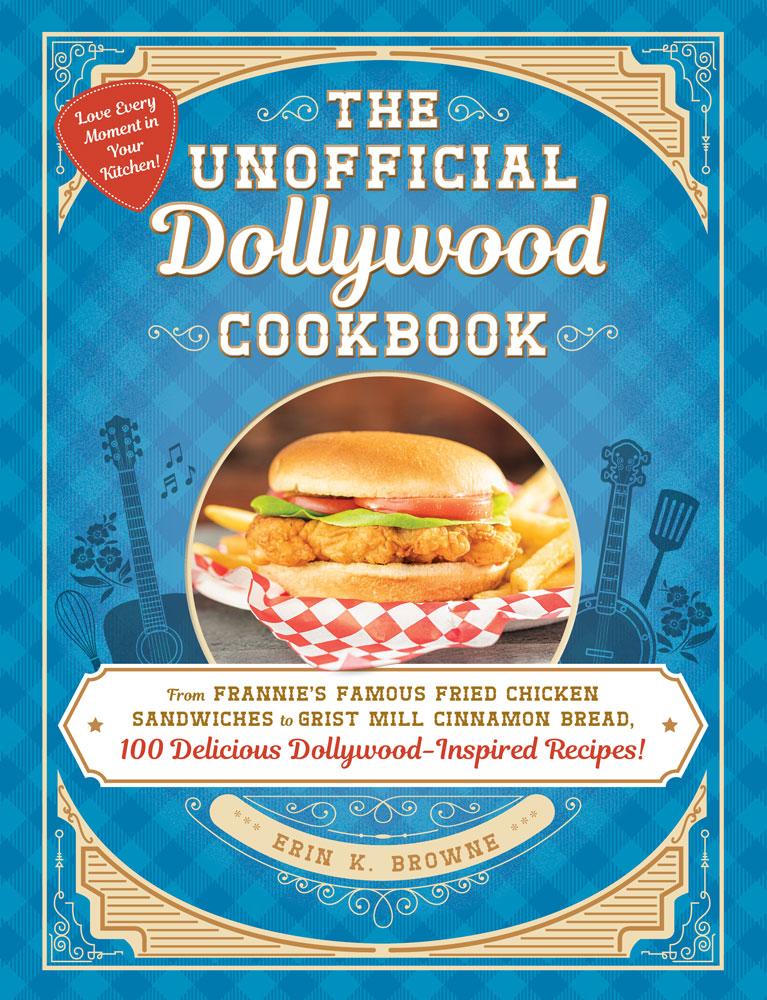
A country-fried conversation with the author of “The Unofficial Dollywood Cookbook”

It goes without saying that everything about Dolly Parton is iconic.

Also iconic? Dollywood, the beloved amusement park based in Pigeon Forge, Tennessee. Whether it’s the Grist Mill cinnamon bread or the cherished 25-pound apple pie, the park boasts a bevy of gastronomic gems that have titillated (and satiated) many visitors over the years.

Dollywood has cultivated such a hoard of loyal superfans that Erin K. Browne actually opted to write a cookbook to collect all of the recipes and stories that make Dollywood such a special place. 

The Unofficial Dollywood Cookbook“The Unofficial Dollywood Cookbook” by Erin Browne (Photo by Harper Point Photography)

Salon Food reached out to Browne to chat about all of the good things that Dollywood (and Dolly herself) offer the world, her favorite memories of the park and the food and much more. 

The following interview has been lightly edited for clarity and length.

What was the inspiration for the book? What is your connection to Dollywood?

Dollywood has been a go-to destination for my family since my kids were babies. I have been a blogger for 12 years and I have shared photos and memories of our Dollywood trips, especially the delicious food we’ve tried over the years. Eventually, I started to re-create our favorite Dollywood treats at home!

What is your #1 favorite Dollywood food to enjoy there? To make at home?

I can only pick one? Impossible! We always grab a bag of Kettle Korn to munch on throughout the day and we love the BBQ sandwiches from Hickory House. As far as my favorite to make at home, I gotta go with the cinnamon bread. Eaten warm and soft straight from the oven, of course.

Have you gotten any cooking tips from Dolly?

Dolly seems to always have a personal story to share behind so many of the wonderful dishes served on Dollywood properties. She’s taught me to slow down and be present during moments in my life and also to realize that creating something special in the kitchen means so much more than just the food itself.

Can you tell us a bit about the history of Dollywood? (The overview in the beginning of the book is amazingly comprehensive!)

The park existed under three different names  Rebel Railroad, Goldrush Junction and Silver Dollar City  before Dolly Parton came on board and opened the park under the Dollywood name in 1986.  Since then, its growth has been explosive and each season brings new attractions, performances and creative menu items. 

And yes, the book contains a whole chapter loaded with fun details about Dollywood’s evolution into what it is today! 


Want more great food writing and recipes? Subscribe to Salon Food’s newsletter, The Bite.


Do you know if there is a best/top selling food item at Dollywood?

By far, Dollywood’s top seller is the hot cinnamon bread from the Grist Mill. It’s completely irresistible. There’s nothing else like it.

Would you classify any of the recipes as a “project,” meaning it’ll take a bit of a time and/or effort to really turn out well? Or are all the recipes relatively straight-forward?

Most of the recipes are fairly simple and readers with all skill levels in the kitchen should be able to create them. The giant homemade cinnamon rolls are a little time and labor intensive, but they are oh so worth it. I’m going to make them for Christmas morning every year.

Beyond the food, what else about Dollywood is so captivating?

The park is so clean and beautiful. I enjoy walking the paths and taking in the flowers, music and seasonal decor that is ever-changing. Even if there were no rides, I would go there to soak in some sunshine and lounge at the picnic tables next to the bald eagle sanctuary. No two visits are the same and that’s what keeps my family coming back several times per year.

Do you have a favorite Dolly song and/or movie?

Steel Magnolias is my all-time favorite Dolly movie. In fact, I named my daughter “Shelby” after the main character in the story! I’ve known since I was little if I ever had a girl of my own, that’s the name I would choose.

Have any of the recipes in the book become a common go-to for you since developing them? 

Yes! The three-bean pumpkin chili has become my favorite chili recipe. The pumpkin purée does something amazing to the texture without imparting too much of an overpowering flavor. It’s so good!

Do you have any helpful tips or tricks for beginner cooks looking to capture the magic of Dollywood in their home kitchen? 

Something I have always encouraged my blog readers to do is not be intimidated in the kitchen. Food is fun and preparing it should be an enjoyable  not stressful  experience. I would give the same advice to readers of this book: Just go for it! Pick a recipe, gather the ingredients and have at it. Don’t get derailed by little mistakes here and there — they happen to us all. 

Buy “The Unofficial Dollywood Cookbook” here

Salon Food writes about stuff we think you’ll like. While our editorial team independently selected these products, Salon has affiliate partnerships, so making a purchase through our links may earn us a commission. 

The pandemic cracked the door open to universal health care. Here’s how we could still get there

Just over three years ago, New York City reported its first confirmed death from COVID-19. Many more followed, with over 20,000 New Yorkers dying in the devastating first wave alone. They were our relatives, friends, and neighbors.

As with so many other health workers, the memories of that time — the unimaginable suffering and tragedy — are seared in my brain forever. The freezer trucks used as portable morgues; the chaotic din inside the hospital, juxtaposed against the eerie silence of the streets; and the unsettling fear we felt, for our patients and our families.

As of this week, an estimated 15 million people will start to lose their health coverage, as the COVID-19 public health emergency ends.

But through the darkest days of the pandemic, one notion gave me succor: that finally, we would summon the will to change our broken health system. That seeing how your health affected mine — the revelation that we were bound up together — would shift the dialogue on universal health care. That with society shaken to its foundations, we would be shaken out of our complacency.

Needless to say, that hasn’t happened. In fact, as of this week, an estimated 15 million people will start to lose their health coverage, as the COVID-19 public health emergency ends. And a U.S. District Court judge just struck down the part of the Affordable Care Act that provides no-cost preventive care for a range of services, such as cancer screenings, affecting 150 million people. We are missing the opportunity to cement the coverage gains made during the pandemic — and instead will move further away from the aspiration of universal health care.

Despite universal health care being the norm in almost every other wealthy country, it remains a distant possibility in the United States. A divided Congress means that bold health proposals are unlikely to advance this year or next. Yet this also opens up a window to craft a fresh political approach, particularly one that rises above the rhetorical ruts of socialized medicine and fearmongering over fictitious “death panels.”

How can we advance the public dialogue on universal health care? As a practicing physician and the former health commissioner for New York City, I have meditated on this topic for years. And despite the aforementioned political challenges, there are some openings in the public discourse to advance the idea.

It starts with displacing some key narratives that have held us back. For instance, the notion that only some people are deserving of health care. This narrative particularly plagues the debate over Medicaid, seeking to draw distinctions between the deserving poor, who want to work, and the idle poor. Such a distinction ignores evidence from recent Medicaid expansions that policies like work requirements do not lead to higher rates of employment and that health coverage makes it easier to seek and hold a job. Or as The Economist, not a magazine known for its left-wing views on human nature, bluntly stated: “No, health insurance is not a disincentive to work.”  

Even President Richard Nixon agreed that people who are unemployed or disabled warranted support in obtaining health coverage. Fifty years ago, he argued that there was “a need to assure every American financial access to high quality health care.” Clearly, conservatism can be consistent with universal health care, both historically and in the present day. When Medicaid expansion is brought directly to the ballot, it wins, including in conservative states as diverse as Idaho, Maine, Missouri, Nebraska, Oklahoma, South Dakota, and Utah. The Republican legislature in North Carolina also recently agreed to Medicaid expansion, covering 600,000 additional people statewide, by pairing it with reforms meant to increase health care competition.

North Carolina’s example shows how a breakthrough on coverage can help us reach other policy priorities. The amount of oxygen taken up in political debates about coverage has narrowed the dialogue from health policy to health care policy to health insurance policy. Yet the top two concerns of the public in 2022 were strengthening the economy and reducing health care costs. Universal health care offers elected officials a path to addressing both.

Indeed, there are benefits to both workers and businesses from universal healthcare. Notably, the intertwining of health insurance with employment in the United States leads to “job lock,” which puts a damper on the labor market — as well as the future prospects of workers themselves, whether seeking a higher-paying position or becoming a self-employed entrepreneur. Labor unions for low-wage workers as well as companies struggling to fill job vacancies both benefit from toppling this status quo.

About two-thirds of adults already agree it is the government’s responsibility to make sure all Americans have health care coverage. Given the gridlock in our political systems, an even higher proportion will need to be persuaded to make universal health care a reality. Changing minds requires a focus on the values that move people, or what Jonathan Haidt terms “moral foundations“: harm, fairness, loyalty, authority, and sanctity. While the harm and fairness domains are more important to those with liberal political leanings, conservatives place more emphasis on loyalty, authority, and sanctity.

Loyalty (as a moral foundation) can be summarized as the feeling that it’s “one for all, and all for one.” This was the impulse that drove us to distance and don masks in the early days of the pandemic. While that notion of self-sacrifice for the group may have tapered off during COVID-19, it also points toward the right messaging for a movement around health care for all. Fundamentally it must invoke our sense of human connection, particularly to those who are currently excluded from coverage.

 The path in the United States is fraught, but it is not impossible — and there are multiple policy approaches that could start to galvanize momentum.

The faces of the uninsured, many may be surprised to learn, include veterans, family farmers, new mothers postpartum, and children. Over 6 million kids are at risk of losing coverage as the COVID-19 emergency ends, potentially doubling the uninsured rate for children. Because our identities as parents, grandparents, and caregivers are often stronger than our political identities, centering children is an important way to reset the national dialogue on universal health care.

In other countries, the path to universal health care has not always been simple. Australia adopted universal coverage, repealed it, and then re-adopted it years later — only to encounter widespread doctors’ strikes lasting several months. The path in the United States is even more fraught, not least because of entrenched and politically powerful interests in the health care industry. But it is not impossible, and there are multiple policy approaches that could start to galvanize momentum: adding a public option to insurance exchanges, allowing currently ineligible individuals to buy in to Medicaid or Medicare, or radically simplifying and automating enrollment processes for individuals already eligible but not enrolled.

All of these approaches depend on enough organizing muscle to overcome political headwinds. There is latent power in tapping into the disaffection that so many clinicians feel in today’s health system. Nurses’ unions, for example, have already raised the issue of widespread staffing shortages successfully—and they have long been proponents of universal health care.

Martin Luther King, Jr. titled his final book, “Where do we go from here: chaos or community?” As we reflect on the last three years — and as we consider every human being who will lose their health coverage in the coming months — the American health system must grapple with the same question. King challenged the premise that the community serves the economy, telling us that is exactly backwards; that education, housing, and health care are ends in themselves. From this vantage point, universal health care is about common dignity, the idea that each of us believes in the basic worth of another’s life. We may not have lived up to that standard yet, but there is a path from here.

Wait, do household cleaning products and disinfectants expire?

You’ve finally cleaned out the cabinet under your kitchen and bathroom sink, only to find half-empty containers of cleaning products you’d forgotten about months (even years) ago. Are these products, despite their indeterminate age, still safe and effective to use? Or do household cleaners eventually expire, just like the food we eat?

Unfortunately, the answer is yes: According to experts, cleaning products do, indeed, expire. However, the lifespan of a product can vary greatly, spanning from several months to years, depending on its ingredients and active components.

“Most cleaning products have preservatives to maintain the shelf life and prevent microbial growth over time, but preservatives themselves can break down over extended periods,” says Syed Naqvi, Chief Innovation Officer at Blueland, a brand known for its eco-friendly cleaning products. Notably, this breakdown of preservatives can negatively impact the potency and cleaning properties of a given product. “There are also ingredients like solvent [and] active ingredients that can evaporate [or] breakdown over time, which can lead to lower efficacy or product even separating in solution,” says Syed. Another effect you might encounter when dealing with past-their-time cleaning products is a change in scent. “You’ll notice products will start to smell different than initially intended as fragrances break down,” he says.

While it’s impossible to speak for every cleaning product on the market, there are some general guidelines to help you determine if a product is past its prime. According to the American Cleaning Institute, disinfectants specifically have a shelf life of about one year, starting from the date of manufacture. After that point, the active ingredients responsible for killing bacteria might become less effective—meaning that the cleaner itself will be less effective, too.

Bleach, too, has a surprisingly short shelf life. According to Clorox, bleach stored away from heat and direct sunlight will stay good for one year, at which point it will start to degrade. Other sources, however, estimate that its lifespan is actually closer to six months.

Beyond disinfectants, household cleaners can include multi-surface sprays, glass and tile cleaners, and more—and while the shelf lives of these products also vary, two years seems to be a safe estimate, according to the brands I spoke to.

“The shelf life of our products is two years. After that, you may begin to see changes in the way they look, smell, or work,” says a representative from Seventh Generation. “However, your product could be older than that and still work perfectly well. Light, heat, and other factors can age products faster, so if it hasn’t been exposed to them it may be just fine.”

Syed from Blueland had a similar answer. Rather than traditional bottles of cleaning solution, Blueland sells tablets which are then mixed at home by the consumer, which eliminates the use of single-use plastics and makes for lower-impact shipping. However, the lifespan of these products is comparable to other cleaners on the market. Specifically, Blueland’s products “stay stable for two years in their dry format and one year when dissolved,” says Syed.

If you’re unsure of whether a specific product is past its prime, be sure to look for an expiration date on the package. If there’s no expiration date, the date of manufacture will help you figure out how old the product actually is, which, in turn, can help you determine if it’ll still be effective.

This post contains products independently chosen (and loved) by our editors and writers. Food52 earns an affiliate commission on qualifying purchases of the products we link to.

What 5 ridiculous “woke food” boycotts can tell us about the GOP’s culture war

These days, it feels like at least once a week a mainstream company comes out with a new product or campaign that — because of how it’s packaged or advertised or has been modified — throws prominent conservative public figures into a tailspin because yet another American company has gone “woke.” 

As Salon’s Amanda Marcotte pointed out in March, the GOP is “obsessed with ‘woke,’ but can’t define it.” 

“That was hilariously demonstrated in a viral video clip of conservative author Bethany Mandel falling completely apart when asked in an interview to define ‘woke,’ a concept she wrote an entire book denouncing. Mandel couldn’t do it,” Marcotte wrote. “‘So, I mean, woke is sort of the idea that, um…’ she stammered before admitting it ‘is something that’s very hard to define,’ and then failing utterly to get close.” 

But, as Marcotte wrote, this is a “feature, not a bug.” It can mean whatever Republicans want it to mean in the moment, which has led to some objectively ridiculous boycotts that didn’t really pan out as planned for the participants — especially in the world of food and drink. 

For instance, remember in 2017 when fans of Sean Hannity destroyed their Keurig coffee machines after the company pulled its ads from Hannity’s Fox News program? As Zachary Petrizzo wrote for Salon, “Hannity tried to save the advertiser (and the valuable ad dollars) by giving away 500 Keurig machines, but it was too late. By the end of the boycott, an unknown number of Fox News viewers were just left with expensive coffee machines they had tossed off balconies or otherwise obliterated.” 

Just a year prior, angry Breitbart readers flushed Kellogg’s cereal down toilets because the cereal company didn’t want to associate their brands with Breitbart News, whose former executive chairman was Steve Bannon. 

But as silly and cyclical as conservatives’ constant declarations of a “culture war” feel (and they certainly are both silly and cyclical) these boycotts are most often driven by hateful rhetoric surrounding marginalized people and communities, as is the case with the latest call for a boycott against Bud Light beer, which is still simmering this week. 

Here’s a breakdown of five recent conservative boycotts that tell us a lot about the ways in which members of the Republican party rely on fanning fears of ambiguous “wokeness” to make their constituents feel like they are under attack. 

01
Bud Light

You’ve probably seen the video of Kid Rock tearfully shooting cases of Bud Light off a folding table in a field — but what you may not know is why exactly he punctuates said video with the sign-off, “F**k Bud Light and f**k Anheuser-Busch.” 


While Rock doesn’t explain in the video, as Salon Food reported last week, the musician released the clip on Twitter after other other conservative public figures said the beer brand had become”woke” because of an Instagram partnership between the Bud Light and trans actress and activist Dylan Mulvaney.


The partnership itself was pretty minimal: Mulvaney posted a single photo in her Instagram grid featuring herself with a few cans of the beer, then in her Instagram stories, shared a photo of a can of Bud Light branded with her face. 


It was a one-off promotional can sent to Mulvaney to celebrate the 365th day of her viral TikTok series “Days of Girlhood.” As reporter Miles Klee noted for Rolling Stone, this was a single can of beer featuring Mulvaney’s likeness “and it didn’t even appear on the grid: You had to look at her Instagram stories to see it.” 


However, its existence prompted some vitriolic statements from prominent conservative figures. Fox News published an article describing how “many people mocked Bud Light over the partnership.” 


In it, Fox shared statements made by conservative commentators, including John Cardillo, who wrote on Twitter, “Who the hell at @budlight thought it was a good idea to make a grown man who dresses like little girls their new spokesperson? Brands have to stop listening to their woke creative teams and get in touch with their consumer demographics.”


“Might genuinely be the weirdest thing I’ve ever seen in my life,” The Spectator contributing editor Stephen Miller remarked. Townhall.com columnist Derek Hunter wrote: “@budlight: the groomer of beers.”


Along with Kid Rock, country musicians like Travis Tritt have decided to boycott Bud Light and its parent company, as well. As Salon Food reported, Country singer Travis Tritt announced that he would be banning Anheuser-Busch products from his tour hospitality rider, referring to the list of requests — including food and drink items — an artist provides to concert venues.  


“I was on a tour sponsored by Budweiser in the 90’s. That was when Anheuser-Busch was American owned,” he wrote on Twitter. “A great American company that later sold out to the Europeans and became unrecognizable to the American consumer. Such a shame … Other artists who are deleting Anheuser-Busch products from their hospitality rider might not say so in public for fear of being ridiculed and cancelled. I have no such fear.”


However, for some Republicans, the boycott just isn’t really working out. For example, look at Rep. Dan Crenshaw, R-Texas, attempted to boycott Bud Light — by filling his fridge with one of its parent company’s beers, a move that Instagram commenters classified as a “tremendous self-own.” 


02
M&M’s

In January, less than two weeks into the New Year, Fox host Tucker Carlson gloomily announced that “woke M&M’s” had returned. You may remember that in January 2022 — a full year prior to Carlson’s most recent candy rant — he had dedicated an entire segment on his program to picking apart the revamped looks of the anthropomorphized M&M’s mascots. 


As Brett Bachman wrote for Salon, the company released new packaging in which the brown M&M swapped out her signature stilettos for kitten heels, while the Green M&M’s go-go boots were replaced with white sneakers.The relatively benign changes were meant to promote “inclusivity” and bring the female-presenting characters in line with “current” trends that are more “representative of our consumer,” Anton Vincent, the company’s president, said.

That didn’t fly with Carlson, though, who attempted to connect “Mars’ decision to make its cartoons ‘less sexy’ to the decline of American society.”


“M&M’s will not be satisfied until every last cartoon character is deeply unappealing and totally androgynous, until the moment you wouldn’t want to have a drink with any one of them,” the Fox News said. “That’s the goal… When you’re totally turned off, we’ve achieved equity.” 


A year later, M&M’s unveiled a new promotional wrapper featuring the three “female” candy characters, including the classic green and brown characters and the new purple peanut M&M. This is, again, where things start to feel cyclical because of course Carlson managed to find something threatening about the campaign. 


“The green M&M got her boots back, but apparently is now a lesbian, maybe?” Carlson said in a “Tucker Carlson Tonight” segment, a reference to a viral 2015 tweet depicting the green and brown M&M holding hands that he’d ostensibly dug up for the occasion. 


The caption on said tweet read: “It’s rare Ms. Brown and I get to spend time together without some colorful characters barging in.”


Carlson then turned his attention to the newest M&M character.”And there’s also a plus-sized, obese purple M&M,” he said. “So, we’re gonna cover that, of course.”


As Forbes reported, this prompted conservative influencer Nick Adams Adams to release “a weird video in which he emphasizes how disturbing the feminist M&Ms are, and calls for ‘a complete and total boycott of all things Mars.’ He also called for the same thing a few days ago for pregnant Joker, so these sternly-worded boycotts don’t seem to have much commitment behind them.”

03
Oreo

“COOKIE!” Newsmax host Greg Kelly wrote on Twitter above a photo of Sesame Street’s Cookie Monster in April 2022. “I love COOKIES. C is for COOKIE. COOKIE IS FOR ME.  I do NOT like GAY COOKIES.  ‘Sexuality’ has NOTHING TO DO with the Cookie experience.  Cookies are for ALL!  Basically Cookies are ‘asexual’—why is the WOKE LEFT messing around with OREOS?!?!  STOP THE INSANITY.” 


This … statement was prompted by a video that had been released by Oreo a few days prior.


The Note,” which was directed by Alice Wu (“Saving Face” and “The Half of It”), depicts a young Chinese-American man practicing a coming-out speech before a few close family members. Before the young man shares his truth with his grandmother, his mom slips him a note. “She might be my mother,” it reads, “but you are my son.”


The video ends with a message for viewers to pay it forward. “Coming out doesn’t happen just once,” it says. “Be a lifelong ally.”


It’s honestly a beautiful short film about an important part of the queer experience (and one that was refreshingly not released during Pride Month), but it prompted conservative public figures, including Kelly and Ben Shapiro, to call for a boycott against the cookie brand. At the time, Lila Rose, the founder of a movement dedicated to ending abortion, told Oreo to “stop sexualizing children.”

04
Cracker Barrel

In August 2022, Cracker Barrel Old Country Store accidentally joined the culture war when they decided to add plant-based sausages to their menu. The company wrote in a Facebook post: “Discover new meat frontiers. Experience the out of this world flavor of Impossible™ Sausage Made From Plants next time you Build Your Own Breakfast.” 


Note that I said “add” — the Impossible Sausage was not replacing the pork sausage on the menu, but its customers saw the change as a sign that the restaurant was caving to the whims of liberal vegans. 


“We don’t eat in an old country store for woke burgers,” one commenter wrote, while someone else added: “I just lost respect for a once great Tennessee company.” 


“Not going to happen!” another customer vowed. “Cracker Barrel use[d] to be so good, we looked forward to eating in them but not anymore.” 

05
Coca-Cola

In April 2021, Donald Trump’s former legal advisor Jenna Ellis, distributed a statement from the former president on Twitter. It read: “It is finally time for Republicans and Conservatives to fight back—we have more people than they do—by far! Don’t go back to their products until they relent. We can play the game better than them.”


The tweet came after Georgia-based companies, including Delta Airlines, ViaComCBS and Coca Cola, spoke out against new restrictive voting legislation that would, among other things, criminalize bringing food and water to voters as they are waiting to cast ballots. At the time, prominent Republicans, including Sen. Minority Leader Mitch McConnell, R-Ky., characterized the situation as corporations allowing themselves to be bullied while “join[ing] in the bullying themselves.” 


“From election law to environmentalism to radical social agendas to the Second Amendment, parts of the private sector keep dabbling in behaving like a woke parallel government,” McConnell said in a statement.


This resulted in calls from conservatives, including Trump, to boycott the companies that had “gone woke” — though, as Salon Food reported back then, Trump’s own boycott was relatively short-lived. Within just a few days of making his public statement urging his constituents to not “go back to their products until they relent,” online sleuths spotted a Coca-Cola bottle on the president’s desk. 


Two years later, he would reportedly be found drinking “non-stop Diet Cokes” in that same office “to avoid filming [the] video announcing he’d leave the White House.” 

Are you putting vinegar on your eggs? You should be

There are infinite ways to use vinegar in the kitchen, and while you’re probably aware of many of them—for pickles, marinades, dressings—some might surprise you.

For his new cookbook, “Acid Trip: Travels in the World of Vinegar,” author Michael Harlan Turkell traveled the world exploring the vinegar traditions of France, Italy, Austria, Japan, and North America. Along the way, he asked chefs from Boston’s Barbara Lynch to Houston’s Chris Shepherd what they do with the tangy elixir, and boy, did they have ideas. Below are just a few.

Fried Egg With Vinegar

While it may seem odd to an American palate, serving eggs topped with vinegar is not uncommon in France. Parisian chef Bertrand Auboyneau’s version fries an egg in “an ample knob of butter,” then reduces a couple tablespoons of white wine vinegar in the leftover pan butter, and tops the whole thing with chopped tarragon. You can try his version, or just sprinkle a touch of vinegar over your next batch of scrambled eggs.

Ice Cream With Vinegar

Jeni Britton Bauer of Jeni’s Splendid Ice Creams shares a recipe for Parmesan Ice Cream with Balsamic Cherry Shrub. And while that sounds absolutely amazing, you can achieve a similar-yet-simpler flavor by spooning a bit of real-deal balsamic over ice cream at home.

Pepper And Vinegar Jelly

Vinegar loves heat, and Boston chef Barbara Lynch combines them in her recipe for pepper jelly. Diced bell peppers and jalapenos are combined in an apple cider vinegar syrup that Turkell says is great on a cheese board or even a BLT.

Vinegar Pie

This one is a classic, although perhaps one you’ve never heard. Born of the Depression, vinegar is used instead of then-pricey citrus to provide tang to a custard base. “Acid Trip” includes a version from Houston chef Chris Shepherd, who adapted a customer’s family recipe after she called to ask if they made her childhood favorite.

Vinegar Negroni

You have, perhaps, had vinegar in cocktails. But have you had a vinegar negroni? Acid Trip features Brooklyn bartender Damon Boelte’s version, which includes strawberries and cucumber. Try it out at home by making a classic negroni—equal parts Campari, sweet vermouth, and gin—and then adding a drop of balsamic on top.

Pickled Sausages

These bar snacks are made by letting cooked sausages like Kielbasa sit in a brine of garlic, sugar, bay leaves, and apple cider vinegar for about a week. Turkell includes a recipe from a friend in the book, but get a feel for the flavor by sprinkling a bit of apple cider vinegar over sliced sausages on your next snack plate.


Right-wing story hour, part 2: Chaya Raichik and the Libs of TikTok saga

Chaya Raichik was standing alone off to the side of the Cleveland Park Library’s main reading room. Across from her, gathered together on the carpet, a dozen or so children were growing restless. At their occasional outbursts — their shouts and rapid movements — she glanced in their direction.  

For much of the morning, she’d been talking with Jack Posobiec. Now she had her back to the wall. She was wearing a denim dress over black leggings, her dark hair parted down the middle. Tall and standing apart from the crowd — unable to keep herself from repeatedly glancing up at the fidgeting kids across the room — she was doing her best to conceal her impatience. 

At 28 years old, Chaya Raichik was the youngest author at the event. As the proprietor of the Twitter account Libs of TikTok, she had become infamous for mocking the left, largely by reposting content from left-leaning social media accounts. She did this anonymously for almost a year, growing in popularity until Washington Post reporter Taylor Lorenz revealed Raichik’s identity in an investigative article.

She was scheduled to read third, after Posobiec and before Sean Spicer, Donald Trump’s former White House press secretary, but already the Freedom Island Story Hour was running behind. The event’s headliner, child actor turned evangelist Kirk Cameron, hadn’t yet arrived. 

All these people were  here to promote their books. Raichik was holding at her chest a copy of her own, “No More Secrets: Candy Cavern.”

Raichik is a relative newcomer to the field of right-wing influencers — a loose array of minor celebrities who, as the 2024 presidential primary heats up, hold astonishing sway in determining the Republican party’s eventual nominee — and her unlikely rise is best understood as a tale of two radicalizations. 

*  *  * 

Raichik grew up in Los Angeles in an Orthodox Jewish family. She went to a private Hasidic high school. As a teenager she had her own smartphone and was often online, but she didn’t use Facebook. “I never really felt the need to have a social media account,” she explained recently. “As a person I’ve always been super private.” After college, she lived in Brooklyn, earning her real estate license, but in the initial bewildering days of the pandemic, she returned to Southern California and moved back in with her parents and siblings. 

For the next few months she rarely left her childhood home. Instead, she spent her time online. She discovered TikTok. She watched video after video of the platform’s predominantly young users responding to issues like lockdown, masking and vaccination. “All the fear-mongering,” she’d later say, “people getting kicked off planes for not wearing masks, for two-year-olds not wearing masks… Fauci’s lies…” 

Raichik’s family was always conservative. She identified that way too, growing up. But she didn’t consider herself political. The pandemic, with its isolation, changed that. “I’ve never been told that I can’t go to work, I can’t leave my house,” she said. “It was like a wake-up call, COVID. You can’t just let people tell you what to do, let people control you.” 

Later that summer she moved back to New York. She started working again as a real estate agent. In November she created her first Twitter account, posting anonymously. She supported the false claim that Donald Trump had won the 2020 election. On Jan. 6, 2021, she traveled to Washington for the Stop the Steal rally and was in the audience for Trump’s speech at the Ellipse. She witnessed the Capitol riot firsthand.

Chaya Raichik was in the audience for Donald Trump’s speech at the Ellipse on Jan. 6. She saw the Capitol riot firsthand. A few months later, she changed her Twitter handle to @libsoftiktok.

A few months later, she changed her Twitter handle to @libsoftiktok and began posting videos along with short, emoji-laced summaries. “Your daily dose of cringe,” she explained in the bio. The initial content was predominantly pandemic-related. Her first tweet to break 100,000 views was of a young woman singing about being a “vaccine slut.” She doggedly tagged prominent right-wing figures in an effort to increase her visibility.

That summer, her number of followers skyrocketed after Joe Rogan mentioned Libs of TikTok multiple times on his podcast. But many of her daily posts were simply echoes of popular conservative talking points on topics like police violence or the state of American cities or the purported hypocrisy of mainstream news sites. In other words: Take away the TikToks, and the account was just another outrage outlet. 

It was the videos that changed everything.

Some weren’t just cringeworthy; they felt deeply unsettling. In September, she reposted a skirmish captured at Arizona State University’s library, in which two white students were confronted for studying in an area reserved as a multicultural space. For more than two minutes, a group of college kids shout  accusations at one another, speaking in the rigid language of their cultural identities and ideological affiliations. No one comes out of it looking good. 


Want a daily wrap-up of all the news and commentary Salon has to offer? Subscribe to our morning newsletter, Crash Course.


At the end of 2021, Raichik quit selling real estate and moved back to Los Angeles. Combing the internet for material became a full-time task. Seth Dillon, the owner of the conservative satirical news site The Babylon Bee, had provided her with funding in exchange for a share of equity — so she more or less had a regular salary. While her account was still anonymous, Raichik had laid the groundwork for monetizing its popularity.

By now Raichik had found her sweet spot: an unrelenting attack on transgender and queer identity, especially within the context of childhood education. The videos she shared increasingly depicted young adults discussing LGBTQ issues.

By late 2021, Raichik had found her sweet spot: an unrelenting attack on transgender and queer identity, by way of reposting videos of young adults discussing LGBTQ issues.

In one example, a young couple explains how they’d like people to address them. “Hi, my name is Jasper, I use they/it pronouns,” one of them says. “Hi, my name is Leona, I use they/demon pronouns,” the other adds. The two people are standing together, their faces powdered, their eyes outlined with mascara. They look like Gen-Z’s answer to the band KISS. Both appear to be, at best, in their 20s. Clearly they’ve already been through multiple takes. The whole thing has a harmless, earnest feeling, like a VHS tape from some long-lost slumber party — except you can’t shake the sense that they’d shot the clip in hopes of becoming influencers themselves. It’s clearly meant for a public audience. Smiling, Jasper explains the subject-object grammar that their new identity prescribes: “For the demon pronouns, it would be: ‘Leona is my partner. Dem is cute and I belong to dem. I love demon very much.'”

In another, a young high school teacher says she has secretly replaced the American flag in her second-grade classroom with the Pride banner. (She lost her job after that clip went viral.) There’s also a video of a middle school teacher, who posted about protecting a 12-year-old student who had come out as agender from the student’s parents. In Raichik’s summary, she adds, “This is groomer talk.”

Groomer, the word and the concept, had begun to appear more and more often on Libs of TikTok. America’s children, Raichik repeatedly suggested, were being coerced into adopting queer and trans lifestyles. “The left has taken over all the schools and universities and turned out all these people now who are so confused about their identity,” she told the New York Post in an anonymous interview in February 2022. “And they’re teachers now. We need to stop this cycle.” 

Around this time she also appeared, again anonymously, on the Habibi Bros. podcast. In conversation with her host, Washington Examiner writer and video editor Siraj Hashmi, she openly derided the people in the videos she’d spent the previous year reposting.

“It’s disgusting,” she said about the Demon-pronouns clip. “Oh my God, I hate her so much,” she said of the teacher who’d swapped in the Pride flag. “That one made me the most proud, like, when she was fired.” Raichik spoke giddily, seemingly unaware that anyone who disagreed with her might be listening. “Not to brag,” she added, “and not that I’m counting, but I did get a few teachers fired. I’m starting to get them mixed up.” 

Young people who claim to be autistic, she said, were doing so “just for attention.” 

Female-to-male transitions, she said, were aesthetically displeasing: “You were so pretty!” 

Liberals in general, she said, were “so smug, they’re so demanding, like, ‘You have to call me this.’ They’re narcissistic.”

Her rhetoric in the Hashmi interview is mild compared to things other right-wing influencers regularly say, but it speaks to something essential to her perspective: a vein of cruelty that runs through her entire social media history. 

“Not to brag, and not that I’m counting, but I did get a few teachers fired. I’m starting to get them mixed up.”

I’m not saying that being cruel is unique to one side of the political spectrum. I don’t even mean to judge the trait itself beyond the context of its utility. The point, instead, is this: Chaya Raichik, as Libs of TikTok, has lighted upon a fresh mode of political influence, one that supercharges the cruelty she seeks to inflict on others by bypassing the limitations of her own personality.

These videos are brutal because she didn’t make them. They are public, willingly composed by the individuals depicted in them and posted to an audience they presume to be friendly. Raichik widens the circle of distribution — and, in so doing, mercilessly pops their proverbial bubbles. 

The content strikes at the apparent cultural politics of the left from within the confines of its own assumed logic. Her most virulent posts present to her audience aspects of relatively new and unformed progressive ideology, incompletely expressed by young and vulnerable people who are poorly equipped to recognize (let alone address) the limits of the language with which they’ve armored themselves. This also speaks to the hollowness that all ideological language contains, to paraphrase Orwell, in its swindles and perversions, its slovenliness and vagueness. 

By the spring of 2022, almost a year into her startling rise through the far-right ecosystem and still anonymous, Chaya Raichik had attained a position in our culture that she’d never be able to replicate. Her videos were regularly picked up by more mainstream outlets. Her account was being credited for inciting Ron DeSantis’ controversial “Don’t Say Gay” legislation in Florida. Under her pseudonymous handle, she was phoning in to the most-watched conservative shows and podcasts to express her views . 

On April 13, just over a year ago, she appeared for the first time as a guest of Tucker Carlson on Fox News. The voice was her own, unmodulated. “I get a ton of hate mail,” she said. “You can’t even play a video of what the left themselves are saying.”

She had five days of anonymity remaining.

*  *  *

Back at the Cleveland Park Library, it was nearly noon when Raichik finally started reading from “No More Secrets: Candy Cavern.” The morning was gone. The turnout was modest. The children in the audience had been sitting on the library’s thin carpet for nearly two hours. Kirk Cameron had finally shown up and gone over his allotted time. After he finished reading, he’d talked to the children for 15 minutes about something called “The National Monument to the Forefathers,” a miniature statue of which he’d placed on the table behind him. (Your guess is as good as mine.)

Raichik stood at the front of the room, her back just inches from the large wall screen onto which the pages of her book were displayed. The projector beam kept threading its blue light into the top of her head, catching along the evenly combed part that divided her dark hair. Occasionally she held up a hand against the glare.

“No More Secrets” is about a second-grade teacher, Mr. Wooly, who, as a literal wolf in sheep’s clothing, gets his student Rose, a lamb, to eat candy, making her promise not to tell her parents about how sick this candy makes her feel. 

She read for just over 12 minutes. From the beginning, the children at her feet kept interrupting the story she was trying to tell.

“The teacher looks like a wolf,” an older kid in a tie-dye tank top said.

 “Well, don’t give the book away,” she shot back.

“Everybody looks different!” a girl called out.

“It’s the next day,” she said. “So they changed the next day.”

“They’re going to his wolf’s house!” a boy with a lisp exclaimed.

Don’t give the story away,” she said again. The adults laughed. Raichik, after a moment, did too. 

From the beginning, the children at Raichik’s feet kept interrupting the story. “The teacher looks like a wolf,” an older kid said. “Well, don’t give the book away,” she shot back.

By now she was halfway through the story. She read slowly and clearly. Unlike some of her fellow presenters, she wasn’t preoccupied with rendering the moment into branded content she could later blast out to her followers. There was no potential audience for this experience, beyond the one that faced her now. 

The climax of “No More Secrets” is predictable: At last the students’ parents show up to defeat the Big Bad Wolf. “Rose’s father came and saved the day!” Raichik explained. “See? He’s opening the cage.”

“That’s the mom,” one of the children corrected her. 

Raichik glanced down. “Yeah, well, the mom also helped the dad with that. They both did it together.”

She looked up again. The light from the projector briefly illuminated her hair. 

I couldn’t help but wonder what she’d really say to these kids if she could be sure no one else was listening.

This was, in fact, the exact sort of situation that, a year earlier, her anonymity had protected her from.

*  *  *                                                  

The second radical turn in Chaya Raichik’s career as a far-right influencer came during the third week of April 2022, while she was celebrating the Passover holiday with her family.

On April 15, Travis Brown, a software developer, revealed her name on Twitter after discovering it through his research into her online history.

A friend of Raichik’s alerted her to the disclosure, but Brown had few followers, and the information didn’t immediately reach a larger audience. Raichik also learned that a reporter from the Washington Post had been knocking on her family members’ doors and asking about her identity.

Four days later, Taylor Lorenz published her article in the Washington Post. “Libs of TikTok reposts a steady stream of TikTok videos and social media posts,” she wrote, “primarily from LGBTQ+ people, often including incendiary framing, designed to generate outrage.” Lorenz highlighted the influence these anti-trans and anti-gay tweets have had, noting that Libs of TikTok “has become an agenda-setter in right-wing online discourse, and the content it surfaces shows a direct correlation with the recent push in legislation and rhetoric directly targeting the LGBTQ+ community.” Lorenz concluded with the accusation that Raichik was responsible for stoking a moral panic against marginalized groups. 

When Raichik read the piece, the accusations of homophobia and anti-trans bigotry didn’t bother her. What hit home, she’d later say, was the realization that her anonymity was lost, and she’d never be able to reclaim it.  

“My heart literally stopped. I still remember exactly where I was standing,” she recently told David Freiheit, the host of the podcast Viva & Barnes, as she recounted the moment she learned her name would be made public. “I was like, oh my God, this is happening.” She had expected this day to come, as a likely result of her shift toward monetization. “I had known for probably like two, three months that it was inevitable.” Still, she panicked. “Do they have photos of me?” she found herself wondering. “Do they have videos of me as a kid, like, acting weird? Did they find out where I went to school and contact my teachers to say bad things?”

She appeared to have no awareness that what was happening to her was exactly what her own Twitter account had done to so many others whose content she’d featured. Over the course of her career, her essential defense for running Libs of TikTok hasn’t changed: “If you don’t want your stuff to be shared, then don’t share it in the first place publicly.” She was a careful person, she reasoned, and they were not.

Lorenz, in an appearance on the podcast QAnon Anonymous, offered a counter-argument: Raichik was “taking content from private citizens, often marginalized people, and decontextualizing it, misrepresenting it to a massive audience that’s primed for outrage…. You don’t get to do an entire right-wing media tour and have all this political power and remain anonymous.”

Across the conservative world, the response to the Washington Post article was  unanimous in its support. Overnight, Raichik became a celebrity, someone who’d singlehandedly managed to represent the American right’s collective plight.

When Raichik read the Washington Post article about her, she appeared to have no awareness that what was happening to her was exactly what she had done to so many others.

Later that week, she appeared on Carlson’s show again, this time as his featured guest — but only on the phone. He told his millions of viewers that the Washington Post had published Raichik’s home address. That she had been forced into hiding. That the Biden administration, in coordination with the German government, had tried to take down Libs of TikTok along with the person behind it.

None of that was true, of course. But it didn’t matter. From that point forward, Raichik would characterize any scrutiny or criticism as further proof of a conspiracy to silence her or  harm her. Her opponents, she claimed, were groomers and pedophiles. What’s more, it was up to her to defeat them. “I think that God put me in this position for a reason,” she said recently. “I think that this is my mission.” 

 A week after the Carlson interview, she took the next step toward monetizing her popularity, establishing a Substack that might position her to earn as much as $40,000 a month — more than some of the teachers she’d gotten fired make in a year. Throughout the spring and summer of 2022, she refused to rush things along.

Last December she finally decided to appear on camera for the first time, as a studio guest on Carlson’s show — her “face reveal,” as she later characterized it.

From this point on everything sped up. Brave Books published “No More Secrets.” She met with Donald Trump for dinner at Mar-a-Lago. Afterward he blurbed her book on Truth Social: “Such an important message! Support Chaya and the work that she is doing by getting a copy.” She spoke at CPAC. She embarked on an extensive far-right podcast tour, disparaging the LGBTQ community at each subsequent stop. With like-minded influencers she participated in a series of nationwide events—including the one in Washington I attended in late March.

That morning at the Cleveland Park Library, Raichik, arriving ahead of the general audience, had been greeted in the entryway by a prominent display of queer-positive reading material and Pride flags, set up by library staff the night before. 

Immediately she posted a photo on Twitter. “They’re after our kids and they’re not even hiding it,” she added.

Recently, Raichik has been broadcasting her plans to endorse future Republican candidates and even hinted she might run for office herself. There’s no going back to the anonymity she once enjoyed. She has now become a national brand, for which the Libs of TikTok account is  just another revenue stream. Any news she makes, from here on out, will be under her own name.

Whether that’s a good bet — whether being Chaya Raichik, rather than the unidentified force behind a media aggregator with explosive growth — remains to be seen. 

*  *  *

Raichik’s reading at the Cleveland Park Library wasn’t the only stop on her recent visit to Washington.

Later that afternoon she headed to the Capitol, where, while attempting to file an official ethics complaint, she found herself at the center of an exchange with Rep. Alexandria Ocasio-Cortez, the progressive Democrat from New York.

The video released afterward by the Heritage Foundation (which provided Raichik with both a lawyer and a camera crew ) goes like this:

Raichik is standing outside Ocasio-Cortez’s office. But AOC’s not there. Her communications director, Lauren Hitt, is at the door instead. 

“Dropping off some mail for the congresswoman,” Raichik tells her, handing over the complaint. “So basically, a few weeks ago, AOC lied about me in a committee hearing.” 

“OK?” Hitt says.

“So I tried to come last week and talk to her but she kind of cowered away.”

“OK.”

“If you can give it to AOC, I’d really appreciate it.”

“Right,” Hitt says, trying to close the door. “Thank you.” 

“And tell her to stop lying about American citizens,” Raichik adds.

Afterward, as Raichik walks back through the Cannon Office Building, it happens: She and Ocasio-Cortez cross paths in the hallway.

Raichik asks for a picture.

Ocasio-Cortez agrees, clearly with no idea who Raichik is.

Together they lean in, nearly cheek to cheek, and smile for the camera. 

“I just delivered an ethics complaint to your office,” Raichik says, “because you lied about me in a committee hearing.”

The congresswoman turns to face Raichik. “Oh, hi!” she says. 

“I never inspired a bomb threat,” Raichik tries to tell her.

Ocasio-Cortez doesn’t let her finish. “No, you’re actually super transphobic,” she says, “and I never want to share a space with you.” Her delivery is assured, perfected over the years through a series of far tougher run-ins than this one. As she walks off, she turns to the Heritage camera crew and points at the lens. “Thank you!”

Raichik is left standing alone. How did she think this was going to go? She tries to smile. She opens her mouth as if to laugh. But nothing comes out. The camera cuts away. 

In praise of “Yellowjackets” hubby Jeff, who elevates the mediocre white man to an art form

Earlier this year, TIME wrote, “‘Yellowjackets’ — like so much recent TV about young women, matriarchy, and the mixed blessing of personal empowerment — also forces us to consider whether its girls might have been better off in the off-grid society they created for themselves.” And given those themes, the friends I mostly discuss the show with, trading theories and memes over long message threads, are women. Some men I’ve tried to share the Showtime hit with have been less than enthusiastic, which has occasionally been mirrored in critics’ responses, especially when the show first aired. 

If you tell him you’re going to book club, he believes you’re going to book club.

It’s unclear if their reticence is old-fashioned sexism, an unwillingness to engage with trauma and its aftermath, or something else perhaps related to the show’s centering of women, girls and violence. Matthew Jacobs called the show “inessential” in his review for TV Guide, while Brian Lowry of CNN described it as “a disappointment” though its “stars still merit a look.” 

Good news, men. A hero has arisen from the ashes of Flight  2525 (well, technically he arose from the smoldering home fires back in New Jersey, where he was left). He’s ordinary and he’s awesome. It’s Jeff! And he’s here to elevate white man mediocrity. Look out, guys. There’s someone new, supportive and extraordinary just by being ordinary in town. 

“Yellowjackets,” now in its second season, follows the high school girls of a champion 1996 soccer team whose plane crashed in the Canadian wilderness. The survivors turn to desperate measures to make it through the harsh winter, and the show follows two main threads: the 1996 woodsy trauma and what happens to all the survivors later as adults. Spoiler alert: they don’t feel or do so great.

As the husband of our main Wiskayok star, Shauna, Warren Kole is Jeff. He runs a furniture store. He married his high school sweetheart. Well, technically he married the girl he was cheating on his high school sweetheart with. But he did marry the mother of his (possibly multiple) children. He married young and has stayed married in the face of difficulties. He has the floppy hair of a YA love interest (perhaps a nod to Shauna’s teenage dreams), despite being in his 40s. Jeff is the definition of peaked in high school, the golden boy who never left town and never did much. He’s also done everything. 

YellowjacketsWarren Kole as Jeff Sadecki and Alex Wyndham as Kevyn Tan in “Yellowjackets” (Kailey Schwerman/SHOWTIME)Jeff is every man. Specifically, he’s every man in a TV show led by women. He’s Dean Boland to glamourous criminal mastermind Beth Boland of “Good Girls,” Rob to mayor Margot in “The Power.” Jeff is not the main attraction. He doesn’t get the teary, intense, Emmy-worthy speeches (that’s Melanie Lynskey’s Shauna). He doesn’t get to wave the gun around (OK, that’s Shauna too). He’s not the action star or any star. His attempt to do crimes ended badly, and with him covered in glitter. Shauna thought he was cheating on her (Jeff would never), but he was simply fumblingly trying to blackmail her friends. It didn’t end well. Nothing Jeff does ends well but he keeps on trying, the Energizer Bunny of husbands.

He understands more than any male character in recent memory: trauma changes you. 

Jeff is a simple man. He works out at the gym. He’s excited about making sales at work. When he gets upset, he deals with his anger by listening to Papa Roach alone in his car and violently air drumming. He enjoys eating dinner with his family, and when the women in his life, Shauna and defiant teen daughter Callie (Sarah Desjardins) tell him things, he believes them. Jeff is a believer. His exterior of tanned, floppy commonness conceals a steadfast heart of gold. He’s pure. If you tell him you’re going to book club, he believes you’re going to book club. Why would you lie to him? Why would you murder? (If you do, though, he’s got you.)

Jeff supports his wife through an avalanche of devastating revelations. She had an affair. She murdered a guy. Not only does he not leave Shauna upon the news of her cheating, he doesn’t leave after the killing either. He does what he can to support his family. He’s read her teen diaries, trying to understand the most difficult and life-altering trauma of her life, which not every man would do or care to know about. That trauma includes Shauna eating his high school girlfriend. Again, not every man is going to get over that.


Want a daily wrap-up of all the news and commentary Salon has to offer? Subscribe to our morning newsletter, Crash Course.


But Jeff’s got Shauna’s back. And in doing so, perhaps he understands more than any male character in recent memory: trauma changes you. Violence is forever. Shauna is the way she is (secretive, hypervigilant, occasionally violent and cold) because of the past, and the past is always with her. Jeff accepts her for who she is, not the idealized way she could have been if only those terrible events hadn’t happened, if only that plane hadn’t crashed and everybody got real hungry. Jeff is the evolved man, the ally who has done the work (reading the diaries! Burning the diaries! Cleaning up the murder/affair evidence!). 

He’s willing to try new things, like strawberry lube. He’s amendable to change, to doing the work. He wants it all to work out, and he loves Shauna because, as he says, she’s the smartest woman he’s ever met. Jeff is a blueprint for a way to be a good man. Rise himbo, rise. Not all heroes wear capes. Some of them wear sleeveless hoodies. 

Mother Nature can’t stop evolving eyes

The human eye was once considered so complicated and well-designed that it posed a problem for evolutionary biology — and an opportunity for creationists. How could something so useful evolve from random genetic mutations? Creationists took advantage of the conundrum of eye evolution, posing it as an example of something that, they claimed, must have been made by a higher power — or at least steered by one, which is the crux of the pseudoscientific idea of intelligent design. To this day, an online search for “eye evolution” yields multiple results from religious groups trying to muddy the scientific waters

Yet to Mother Nature, the evolution of the eye isn’t really a difficult feat at all, it turns out. Indeed, there are about 10 different types of eye design in the animal kingdom, and eyes have evolved independently across animal species approximately 50 times or more. Furthermore, genetic evidence reveals that eyes can evolve relatively quickly — in as short as just a few hundred thousand years. That may sound like a long time, but on geological timescales, it’s a blink of an … well, you know.

Even though vision is complex, the genes that make it possible are abundant and it doesn’t take much to tweak them in a way that benefits an animal.

In other words, the eye isn’t really a problem for evolution; in fact, nature can’t stop evolving eyes. And those eyes are incredibly varied: just look at some of the varied and bizarre eyes on animals like sea urchins, vultures or dragonflies. But scientists have only recently begun to figure out how eye evolution is able to happen so fast, and how and why it happens so often in natural history. 

“Vision is remarkable because it’s a process that reciprocally shapes what the world looks like,” explains Adriana Briscoe, an evolutionary biology professor at University of California, Irvine who specializes in butterfly vision. In other words, we not only use our eyes to generate reality, but to influence it.

To get even more fundamental, eyes are capable of capturing and interpreting wavelengths of light. But for a long period in early life, some 3.7 billion years ago, most creatures were completely blind. Then, around 538 million years ago came the Cambrian Explosion, one of the most momentous periods in the history of life on Earth, in which life began to rapidly diversify. This is when most of the major animal groups started to appear in the fossil record.

“Before the Cambrian Explosion, we don’t really see much going on or at least we can’t really detect eyes very well in the available fossils,” Briscoe explains. “And what’s really interesting about this is that during the Cambrian Explosion, we see both invertebrate compound eyes and vertebrate camera style eyes suddenly appear in the fossil record. And they do so alongside organisms that have simple eyespots or more primitive-looking compound eyes.”

The first eyes in history were extremely simple light-sensitive cells known as photoreceptor cells, which are a type of neuron. When a light particle called a photon hits them, they change shape, sending nervous impulses to the brain. (It’s worth noting that it’s not really possible to have vision without a brain. Sorry, plants and fungi, but you can’t technically “see” like animals.)

“Because these genes are used over and over in development in in the same organism, it’s relatively straightforward to make a few changes in gene regulation that that are going to produce eyes. So a lot of the mystery associated with eye evolution goes away with that knowledge.”

These primitive photoreceptors can detect light, but that’s about it. They’re too rudimentary for forming images. For example, if a species of blind worm at the bottom of the ocean could develop the ability to detect shadows or movement, that could be enough for the creature to flee or detect food. This advantage would allow the worms to pass on their genes, allowing for natural selection to continue favoring genes that produce photoreceptor cells and benefit its survival.

Sometimes these photoreceptors form clusters called eye spots, like in some flat worms or jellyfish. But this sensitivity to light can get too dialed up, a process known as “bleaching.” In response, an organism might develop pigment cells that prevents photoreceptor cells from becoming overwhelmed. It also starts to give more dimension to what one is seeing.

“If you put the pigment cells in one part of the tissue compared to another, you can begin to get a sense of directionality to light at that point,” Briscoe says. “What we think starts to happen on the pathway to develop a camera-type eye is that simple layer of photoreceptor cells starts to invaginate. Sort of forming a little cup, a little dimple. And together with the pigment cells, it enhances directionality.”


Want more health and science stories in your inbox? Subscribe to Salon’s weekly newsletter The Vulgar Scientist.


This directionality becomes even more precise if the eyes can move around. The eyes in some insects, like ants, can’t change position. But everyone is familiar with the googly-eyed chameleon, which can move its peepers independently of one another. Human eyes can wobble around in their sockets, which is helpful so we don’t have to turn our heads to focus on something. They essentially function as cameras — or more precisely, cameras were invented using the same principles as certain eyes.

Essentially, a camera is a chamber in which light is funneled through a pinhole. Whether it’s a camera on your phone, an old school film camera or the globes in your skull, all cameras work on the same principles. The tiny hole allows the light to be focused, bringing out definition and allowing for more focused imagery. Our eyes have lenses called corneas and instead of a sliver of film or an image sensor, we have a retina, a layer of tissue in the back of our eyes that absorbs light and sends signals about it to the brain.

These types of eyes evolved in humans, but also in cephalopods, which include squids and octopuses. It’s a little weird that we have eyes so similar to underwater molluscs which have more in common with slugs than us, but it’s true. This is an example of convergent evolution, in which something functional emerges entirely separately. The quintessential example being the development of wings in insects, birds and bats, which all came via different forks in the tree of life.

Some animals evolve eyes and then later shed them. Creatures that live in total darkness their entire lives, such as blind salamanders that dwell in caves or fish that live in total darkness at the bottom of the ocean, have no need for vision. Indus River dolphins have eyes so small that experts believe they are functionally blind, barely able to sense more than the intensity or direction of light. But they spend most of their time in extremely muddy water, so seeing isn’t really a possibility, let alone a priority.

Why would evolution work “backwards” like this? First, discard the idea that evolution flows in a single direction. Humans are not the “apex” of evolution, though we’re certainly quite good at natural selection. Everything from our eyes to our complex intelligence are simply the result of a long cascade of genetic traits that allowed us to continue breeding, but there is no true hierarchy to evolution. In some instances, discarding vision makes total sense.

“Photoreceptors are incredibly energetically costly to maintain. Perhaps they’re the most expensive of all tissues,” Briscoe says. “Because energy is scarce, that scarcity drives tradeoffs in how organisms allocate their resources. If an animal ends up in a cave or in the deep sea, where vision is no longer needed, natural selection will reallocate that energy and that tissue to an alternative purpose. And so taste, smell, touch, for example, might become more significant for that animal.”

Even though vision is complex, the genes that make it possible are abundant and it doesn’t take much to tweak them in a way that benefits an animal. In 1997, for example, scientists were able to generate extra eyes on fruit flies’ antennae, wings and legs by manipulating a single gene.

“There are these circuits of interacting genes that get turned on to specify an eye or a leg or an antenna. But a lot of those genes get deployed in other tissue types and other developmental stages,” Briscoe explains. “Once you have a circuit evolve, because these genes are used over and over in development in in the same organism, it’s relatively straightforward to make a few changes in gene regulation that that are going to produce eyes. So a lot of the mystery associated with eye evolution goes away with that knowledge.”

There’s still a lot to learn about how eyes evolved and why it’s happened so many times. For example, a study published this month in the Proceedings of the National Academy of Sciences revealed that bacteria played a crucial role in the development of the vertebrate eye by transferring a gene across domains. So not only does vision arise by modifying existing genes but also by acquiring and integrating new genes from different sources.

Eyes are beautiful, intriguing and extremely useful organs which have inspired endless metaphors and artwork. From a scientific perspective, their complexity is just as compelling, but by studying these fascinating organs, we can make their complexity a little less impenetrable.

A smart move on Tax Day: Get health insurance information using your state’s tax forms

Many of her clients don’t believe it when Maryland tax preparer Diana Avellaneda tells them they might qualify for low-cost health insurance. Or they think she’s trying to sell them something. In reality, she wants to help her customers take advantage of an underused feature of her state’s tax forms that allows them to get financial assistance for health insurance.

Avellaneda said she wants people to avoid the financial risk of a medical emergency: “I have health insurance right now, and I feel very, very peaceful. So I want my community to know that.”

The process is simple: By checking a box, taxpayers trigger a “qualifying event,” enabling them to sign up for insurance outside the traditional open enrollment period and access subsidies that can bring the cost of that insurance down, if their income is low enough. Doing so also allows Maryland’s comptroller to share a person’s income information with the state’s insurance exchange, created under the Affordable Care Act.

After checking the box, people receive a letter with an estimate of the kind of financial assistance they qualify for, whether subsidies for an exchange-based plan, Medicaid, or, for eligible minors, the Children’s Health Insurance Program. Also, a health care navigator may call taxpayers offering them enrollment assistance.

Avellaneda said most of her clients who apply end up qualifying for subsidized insurance. Many are surprised because they had assumed financial assistance was available only to those with extremely low incomes. Avellaneda thought this as well until she did her own taxes a couple of years ago.

“I was one of the persons that thought that I couldn’t qualify because of my income,” said Avellaneda, with a chuckle.

A growing number of states — including Colorado, Massachusetts, and Massachusetts — are using tax forms to point people toward the lower-cost coverage available through state insurance marketplaces; by next year, it will be at least 10, including California, Maine, and New Jersey. Illinois is working on a program as well.

“We all file taxes, right? We all know we’re filling out a bazillion forms. So what’s one more?” said Antoinette Kraus, executive director of the Pennsylvania Health Access Network, who advocated for Pennsylvania to create a program modeled on Maryland’s.

Often, efforts to enroll people in health insurance are scattershot because the data sets of uninsured people are incomplete. This can lead outreach workers to try to find people who have submitted unfinished Medicaid applications to try and sign them up for coverage.

But nearly everyone has to file tax paperwork, and that existing infrastructure helps states connect the dots and find people who are open to signing up for insurance but haven’t yet.

“It’s hard to imagine more targeted outreach than this. I think that’s one reason it’s become popular,” said Rachel Schwab, who researches the impact of state and federal policy on private insurance quality and access at Georgetown University.

The rise of these initiatives, known as easy enrollment, is happening at a time of incredible churn for health insurance.

The end of some policies launched during the height of the covid-19 pandemic is forcing people to reenroll in Medicaid or find new insurance if they make too much money to qualify. At the same time, marketplace subsidies created in response to the pandemic have been extended through the end of 2025 via the Inflation Reduction Act. So having a simple way to connect people to health care coverage and make the most of federal dollars is a good idea, said Coleman Drake, a health policy researcher at the University of Pittsburgh.

He cautions that these initiatives won’t get everyone covered. Data bears this out: Only about 10,000 Marylanders have gotten insurance this way since 2020, less than 3% of that state’s uninsured population. The number in Pennsylvania is estimated to be small, too. Still, it’s a step in the right direction.

“Uninsurance in general is extremely costly to society,” said Drake. “Whatever we can do here to make signing up for health insurance easy, I think, is an advantage.”


This article is part of a partnership that includes WESA, NPR, and KFF Health News.

KFF Health News is a national newsroom that produces in-depth journalism about health issues and is one of the core operating programs at KFF—an independent source of health policy research, polling, and journalism. Learn more about KFF.

Subscribe to KFF Health News’ free Morning Briefing.

Natalie Merchant on overcoming pain, roadblocks to produce the “best-sounding record I’ve ever made”

Natalie Merchant has worn many hats in her career: leader of the beloved, folk-influenced college rock band 10,000 Maniacs; solo artist creating ornate, meditative music; director of “Shelter,” a documentary on domestic violence; and artist-in-residence working with students at a nonprofit pre-school.

“There’s no limit to the things I could do, except time and the fact that my clone hasn’t arrived yet,” she says lightly in a phone call with Salon. “I’ve got enough projects lined up to keep me busy until 2027.”

In the very near-term, Merchant is releasing the gorgeous “Keep Your Courage,” her first album of all-new original material in nine years. Produced by Merchant herself, the collection is a lush, stunning record brimming with strings, piano, and horns, led by the orchestral grandeur of “Sister Tilly,” a stark interpretation of “Hunting the Wren” by Lankum’s Ian Lynch, and the majestic, deeply moving “Feast of Saint Valentine.”

“I’d been through some pretty rough times . . . This album was written at a time when I was emerging from that personal pain and struggle.”

Collaboration is also essential to “Keep Your Courage”: Merchant worked with seven composers — including her longtime collaborator Stephen Barber; Megan Gould, a member of her string quartet; and noted musicians Gabriel Kahane and Colin Jacobson. On “Big Girls” and “Come On Aphrodite,” Merchant duets with Abena Koomson-Davis from Resistance Revival Chorus. Throughout the former song, the women repeatedly sing the phrase “Hold on” in unison as horns bloom around them. It’s a deeply inspiring moment that sets the tone for the rest of the record, which Merchant describes in promo materials as “a song cycle that maps the journey of a courageous heart.”

But even as there’s a thematic throughline on the record, each song is different orchestrally and musically. “They’re all little intrinsic worlds unto themselves,” Merchant says.

Salon spoke with Merchant on the spring equinox – “Blessed equinox to you, sister,” she says in response upon realizing the significance of the date – and despite fighting off a cold, she was talkative and in good spirits. 

Among other things, she shares she’s been hard at work since May 2022 putting together the orchestral program for upcoming shows. (Her forthcoming tour is a mix of concerts with symphony orchestras and shows with a string quartet.)

“I’ve done probably 75 orchestral shows in the last 10 years,” she says. “It’s been my bread and butter. But we’ve expanded a lot of the string orchestra arrangements to include woodwinds and brass, which is exciting. And then all the new stuff – like ‘Sister Tilly’ live is going to be orgasmic. [Laughs.] It’s going to be transcendent. Transcendent’s better than orgasmic. 

“I’m traveling with a string quartet, so we’ll approximate the arrangements,” she continues. “But to have the brass section and the woodwinds, it’s going to be blissful.”

“Keep Your Courage” album by Natalie Merchant (Nonesuch)One of the things I really loved is you said the album is “a song cycle that maps the journey of a courageous heart.” What drew your writing in that direction and when did you realize that’s what you had landed on?
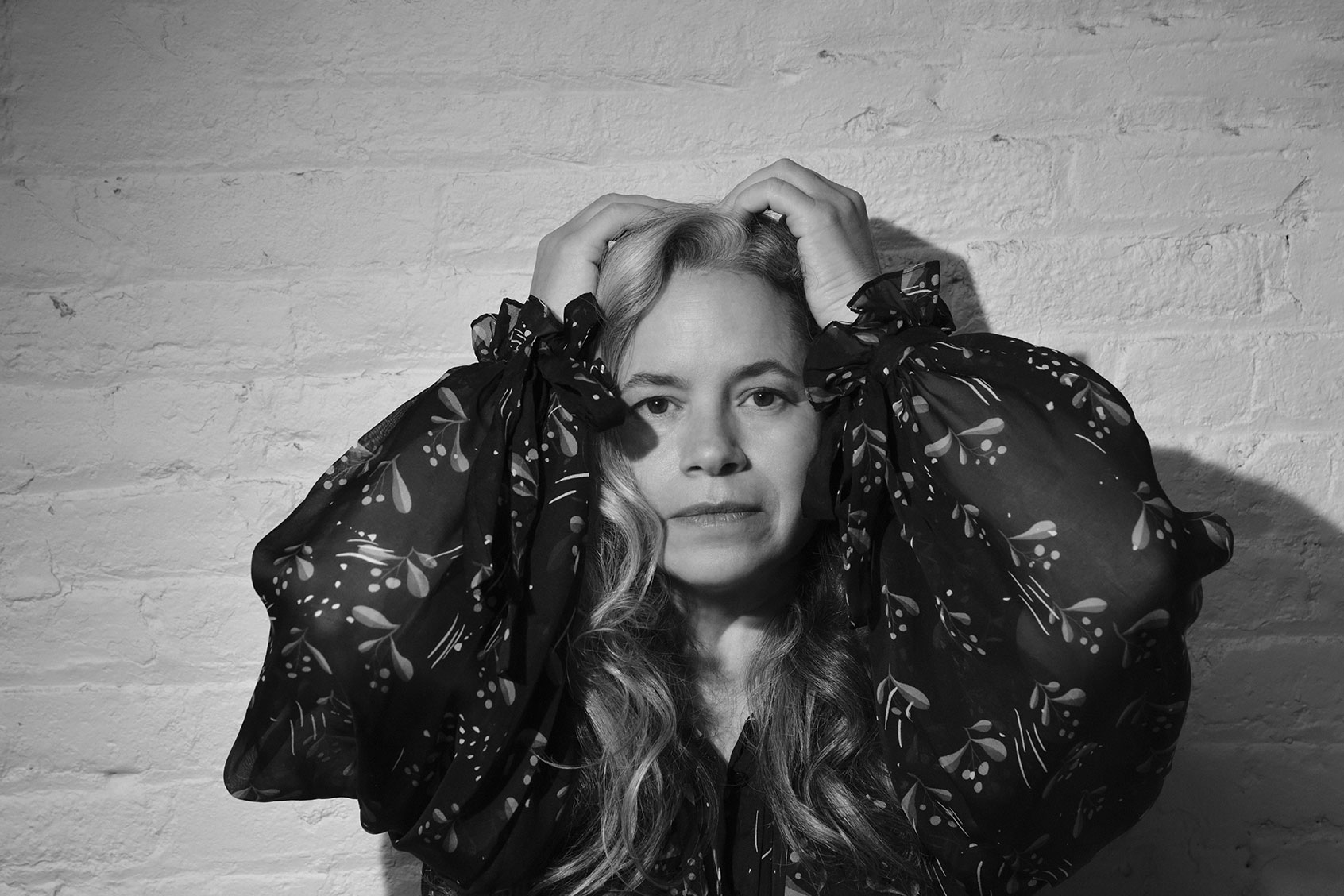
I started writing songs, which I hadn’t done in probably five years, and it seemed like the theme that just kept recurring was intimacy and risking intimacy. So that’s what I started writing about. I think it was the isolation of the pandemic. [Laughs.]

Also, I’d been through some pretty rough times. I had major spine surgery the week before the lockdown, so there was a lot of pain and struggle. This album was written at a time when I was emerging from that personal pain and struggle. But then also as the pandemic eased, that’s around the time that I went in to record the record.

When you were recovering from something, you want to be around someone, and all of a sudden, it’s like, “Nope, you need to be by yourself.” 

[I wanted to be around] my surgeon and nurse and possibly a physical therapist. [Laughs.] There were just so many reasons why I wanted to be around other people. But I had my daughter, which was such a godsend. The two of us spent a full year alone in our house together. We couldn’t risk me getting infected, so she didn’t go back to school for a year.

Talk about silver linings – what a gift that you were able to spend that time with her.

Yeah, and it was her senior year of high school, and she went off to college. Just around the time she went to college in September, and then I went into the studio in October. The timing for that was perfect.

When you started writing songs again, was there any ramping up period? How did you find yourself writing differently this time around?

Just the fact that I was doing it, that was what was different. [Laughs.] I redirected my creative energies for years into other areas, in other directions. I couldn’t commit to that cycle of writing, recording, touring that I’d lived for 20 years before I had my daughter. It consumes so much energy and time. I wanted to be a good parent. And I’m a single mother, so I’m it. 

So I really stepped away from that way of life. But I felt that if she’d be going off to college, that I would suddenly have this massive expanse of time and space that I would want to fill, and I wouldn’t want to feel alone, because it’s a big transition when your child goes away to college. So those were some of the motivations.

You worked with seven different composers on the album. What drew you to working with so many people rather than just maybe one partner or one collaborator on this?

“There were so many roadblocks on this record.”

In the past, I’ve mostly worked with Stephen Barber. For the last 20 years, he’s been my arranger, for the most part. So as I was writing the songs, I had Stephen in mind. But then when I wrote to him, he said, “Well, actually, I’m getting older and I want to focus on my own composing of my own work more than doing commissions.” Womp, womp, womp, womp. [Laughs.] And then [it’s] the f**king pandemic. Where am I going to find . . . It’s just really hard. There were so many roadblocks on this record. It might sound effortless, but it was not effortless.

So I thought, “Well, this is a good opportunity for growth here.” I’d loved Gabriel Kahane’s work for years, and so I wrote to him and he was open to the idea. Actually, Nico Muhly was open to the idea, and then he got a big commission for a Korean television show, and he had to back out. But we’re definitely doing something in the future. I love his writing too.

And then I have sort of this secret weapon in my string quartet, Megan Gould, who has done a little bit of arranging for me, but she did a gorgeous job with “Feast of Saint Valentine.” And David Spear, who was a recommendation from Stephen.

Colin Jacobson. I wanted to do some shows once the record was out with orchestra, and I’ve been looking at The Knights for several years. It’s a younger, sort of hip orchestra, small chamber orchestra in Brooklyn. So I went to see them perform at this outdoor event, and it was the first time I’d seen music in two years, probably.

He’s the first chair violinist, but he’s also a violinist in Brooklyn Rider, and his brother plays cello. But they also do a lot of work with Yo-Yo Ma and the Silk Road Ensemble. So anyway, I got connected with them through that concert, and they’re doing my Lincoln Center shows. But then Colin did an arrangement for the album too. He did “Guardian Angel.”

So it was a combination of people I had known before or connections to them through people I’d worked with in the past, and then also just cold calling people I admired. So in the end, each song was able to have a different composer work on it, and I think it really adds to the variety.

What did you learn from working with all those people then? Did they teach you anything, or what takeaways did you have from working with all those different people?

I learn all the time from everybody. Gabriel has a lot of fanciful counterpoint going on that I normally would shy away from, because I would think it would be cluttered. But he’s so skilled at it, that you’re able to focus on both melodies at the same time and not be distracted from the lyrics, which I think is an amazing accomplishment.

I loved working with Steve Davis. He’s more of a jazz horn player. He’s a trombone player. So he’s really steeped in that jazz world. But I loved working with him because it wasn’t all on paper. There was a lot of improvisation, and I could sing a line, and then it’s so exciting when you sing a line and then the trumpet plays the line . . . [Laughs.] [sings trumpet line] That was a line that I kept singing to my guitar player. But when he played on the guitar with a slide or whatever, it didn’t sound right, but when Steve took my guitar line and turned it into a horn section, that was what it was supposed to be.

Natalie MerchantNatalie Merchant (Photo by Shervin Lainez)I loved your duets too with Abena Koomson-Davis from Resistance Revival Chorus. Your voices just sounded so good together. Did you just cold call her too, or did you know her previously?

Abena I met through doing a Get Out the Vote event. I’m part of the Hudson Valley Votes Coalition, and we invited the Resistance Revival Chorus to come up for this rally that we’re doing. It was the biggest rally that had ever been held by the Democrats in the Hudson Valley, which was really gratifying. 

One of our candidates was Antonio Delgado, who was a young Black lawyer who was running for Congress for our district, and now he’s our lieutenant governor. [He’s] really incredible, gifted, bright star. I think he’s going to do great stuff for us.

“There’s a sisterhood there that’s mutually respectful.”

But Abena came up with the Chorus, and I was really blown away by her. Not just her voice — her voice is incredible — but her spirit. She’s actually an ethics teacher down in the city, in New York.

Because of that, she can’t really go on tour or anything with us, which I fully understand. But she’s really very smart, very empathetic, [has] very interesting perspectives always when we talk. It’s become a great friendship as well as a collaborative, creative partnership.

And I love that she’s in the videos for “Come On, Aphrodite” and “Big Girls,” so people are going to get a chance to see her sing and see the two of us interacting. It’s a rare energy to capture between two female singers. It doesn’t happen that often.

You mentioned empathetic. I think that’s what struck me so much about the record and about her performance and your performance too. There’s a lot of empathy.

Yeah. And her energy is very sisterly. That’s the thing that people are telling me about the duets, that there’s a sisterhood there that’s mutually respectful. An equal partnership, instead of “guest vocalist.” It’s more like we’re doing this together. And it’s such a thrill to hear her sing my words. I’ve always wanted to hear other people sing my songs.

Do you have any other dream collaborators or people you tried to get on the record that weren’t available? Or for a future record that you want to sing with.

Everyone I invited showed up to the party except Nico, but he promised to come to dinner another time. Well, I have a dream of producing a record of my catalog, some of the deeper catalog songs, sung by other people. After hearing Abena, I’m convinced that’s a project I need to do.

“It’s a complicated album with a lot of moving parts, but somehow it doesn’t sound too cluttered.”

What are you most proud of of the record, now that it’s done?

Very proud of the songwriting. I’ve been doing this for many decades, but I really feel like this album proves that I’ve mastered the craft of songwriting. I’m proud of that.

But also the production. I’ve had less opportunities to perfect that, because I only make a record every five years. But it feels like this is the culmination of all those recording projects I’ve ever been involved in. I’m really proud of the production on this record. I think it’s the best-sounding record I’ve ever made.

And it’s complicated. It’s a complicated album with a lot of moving parts, but somehow it doesn’t sound too cluttered. And there are these amazing, crystal clear spare moments, and then there are these multi-layered, almost Phil Spector moments where there’s a quartet triple-tracked with a horn section, triple-tracked with backing vocals, with six tracks of vocals. [Laughs.] I think “Sister Tilly” has 110 tracks. 

And during the recording, we had to limit ourselves to five people at a time, because we didn’t want to expose ourselves to COVID. But also there were only accommodations for five people and I didn’t want to expand beyond that and have people staying in hotels and whatever. So it was a layering process. . . . Well, the actual core band was in the same room making music at the same time, but then all these other ancillary groups of people came and added their layers, but it’s cohesive. Yeah, I’m proud of the production.

Balancing doing the creative side and then also the production side — how did that all fit together for you? Was there any sort of adjustment period?

I lost a lot of hair, because it’s very stressful to be the person that is . . . And I financed the whole thing too, so I’m keeping track of the budget [Laughs] while I’m also trying to be creative and making sure the catering is right and doing the packaging. It’s just a lot of different jobs, which I love. I’m totally addicted to work. I love working, so I’m happy to do that, but I really do feel like I need a clone to do all the different things that are required of musicians these days.

It’s a lot more DIY.

“It’s a very challenging song, subject matter and it’s super bleak.”

You have more creative control if you’re financing things, but it’s a bigger burden for you. It’s another thing on your list. And I really love doing my own production, but sometimes I just want to be the singer in the corner, working on “How am I going to phrase this perfectly? How am I going to emote this properly?” But when you’re the producer, [you have to ask] “Was that the tempo that I want it to be? Is everything in time? Is everything in tune?”

Also my production style is very maternal. I’m also making sure, “Is everyone happy? Is anyone having a blood sugar crash? Does someone need to take a walk? Did someone not sleep enough last night?” Musicianship is really tied into physicality. When I see people flagging, they need food. Being a mom, I could just read the signs. [Laughs.] I know what’s happening. I just scan the room and I can tell how much sleep or food everybody in the room has had. A little [pie] graph in my head.

You’re building in your snack break, and be like, “All right, drink some water. You need some snacks.”

It’s amazing how you can play a song before lunch and have a complete attitude change after lunch. And it’ll affect tempo, it’ll affect everything. And sometimes you just need to know when’s the right moment to abandon a song and come to it another time. 

And there were a couple songs I wrote for the record that we tried and I realized they didn’t fit in with the others. It’s just smarter to make that decision earlier than later.

I didn’t expect to put “Hunting the Wren” on the record. That was kind of a spontaneous decision. 


Want a daily wrap-up of all the news and commentary Salon has to offer? Subscribe to our morning newsletter, Crash Course.


How did that come in then? Was it at the last minute? Why did it fit so well then?

It was something I wanted to give a try, and a lot of people weren’t on my side, because it’s a very challenging song, subject matter and it’s super bleak. It’s very bleak. And some people felt it didn’t really fit the record. But as we played it over and over, the song won everybody over eventually. I’m so glad it’s on the record now.

I want to say it fits so well where it’s placed in the record sequencing and then also the sound. You would never know that it was potentially not going to be on there. It’s so natural and logical where it is.

Thank you for noticing, listening to the record in sequence. “Keep Your Courage” is definitely a full work and it’s meant to be listened to as a full album. I don’t know if you’ve seen the vinyl, but it’s a gatefold sleeve. It’s two discs. I haven’t held an album of my own in my hands in years, and it’s a different experience. It feels like a more substantial creation.

Dominion v. Fox News goes to trial: Fall of the Murdoch empire, or attack on press freedom?

Unless the two parties reach a last-minute settlement — which seems unlikely — Fox News and Dominion Voting Systems are scheduled for their first day in court Monday. Delaware Superior Court Judge Eric Davis is expected to finish the jury selection process in Dominion’s $1.6 billion defamation lawsuit against Fox News before hearing opening statements later in the day. 

Offering a blizzard of damning evidence in the form of emails, texts and phone calls exchanged among high-profile Fox News figures, Dominion has accused the long-dominant conservative infotainment channel of knowingly perpetuating false claims that the 2020 election was stolen — and, more importantly, that Dominion somehow aided this effort through the nefarious use of its technology. Dominion said these false claims have cost the company major contracts with state legislatures who were persuaded not to purchase or use its voting machines. 

What are the competing arguments? 

Dominion’s case is straightforward: Fox “manufactured a storyline about election fraud” in which Dominion was made the “villain.” 

Dominion laid out its claims in a 141-page complaint, which argues that Fox News hosts not only knowingly promoted and endorsed false claims that the election was stolen in 2020 but also selected high-profile guests who the network knew would parrot that claim, giving them near-boundless airtime for outrageous  allegations that Dominion had rigged the election by manipulating vote counts.

Furthermore, Fox insiders knew or at least suspected that these claims were untrue, according to the lawsuit: “Fox witness after witness has admitted under oath that they have not seen evidence proving Dominion stole the 2020 Presidential Election or that they do not believe Dominion did.” 

“Not a single Fox witness has presented evidence that Dominion rigged the 2020 election because no evidence, documentary or otherwise, suggests it.” 

Fox News, on the other hand, has repeatedly claimed that it was doing journalism. The network’s position is that even though some anchors and guests promoted false claims of election fraud, which many people at Fox News understood to be baseless, the company did its ethical due diligence by giving airtime to Dominion spokesman Michael Steel, who disputed the claims. 

“Fox News Media is proud of our 2020 election coverage, which stands in the highest tradition of American journalism, and will vigorously defend against this baseless lawsuit in court,” the company said in a statement

When Dominion’s filing dropped in February, Fox News hit back with a longer and broader statement, which it has persistently requested that journalists include in any and all coverage of the Dominion suit. Editors at Salon, for example, have received such requests on numerous occasions. 

“There will be a lot of noise and confusion generated by Dominion and their opportunistic private equity owners, but the core of this case remains about freedom of the press and freedom of speech, which are fundamental rights afforded by the Constitution and protected by New York Times v. Sullivan,” the company said.


Want a daily wrap-up of all the news and commentary Salon has to offer? Subscribe to our morning newsletter, Crash Course.


Fox Corporation chair Rupert Murdoch — who is likely to appear as a witness, as is Fox News CEO Suzanne Scott — has admitted that some Fox News hosts pushed false claims, but has argued that outrageous allegations made by guest commenters were simply the free expression of opinion, and cannot be attributed to Fox News itself. 

This suit has been in process since 2021, but most recently Judge Davis set Fox News’ lawyers back on their heels by ruling that one of their primary defenses — that the allegations of election fraud were newsworthy because they came from then-President Donald Trump — was too weak a claim to be argued in court. 

That move came after Dominion released a flurry of emails and text messages making clear that high-profile Fox News anchors and top executives knew the guests they hosted had no evidence of election fraud and that many people inside Fox News believed the network had gone too far. 

Notably, when Davis greenlit the case to proceed to trial, he also ruled that Fox News’ claims of election interference by Dominion were to be treated as totally false by jurors. This could protect the jury pool from having to give any weight to the validity of groundless conspiracy theories. He also allowed lawyers to ask potential jurors whether they were Fox News viewers, although not how they voted. 

The most dramatic setback for Fox News leading into Monday was the penalty they received from Davis, who ruled that Fox lawyers had withheld evidence and slapped the company with a fine. 

What about the texts and emails?

A flood of emails, texts and deposition statements regarding the Big Lie promoted by Trump and his allies — exchanged between Fox News hosts and high-ranking executives — were revealed in early March as part of Dominion’s suit. Fox News hosts repeatedly admitted in those contexts that they knew the claims of 2020 election fraud were false, but said they would push them out to viewers anyway,  even as they mocked their right wing sources in private. 

Tucker Carlson, for instance, was revealed to be a prolific texter and a privately ferocious critic of Trump. Speaking to members of Fox staff about Trump in January 2021, he wrote, “We are very, very close to being able to ignore Trump most nights. I truly can’t wait. … I hate him passionately.”

In the aftermath of the Jan. 6 attacks on the Capitol, he had even spicier words for Trump in a text conversation: “He’s a demonic force, a destroyer. But he’s not going to destroy us. I’ve been thinking about this every day for four years.”

Carlson described right-wing attorney Sidney Powell as “insane” and a “nut” for her false and “dangerous as hell” claims against Dominion in a litany of angry insults. “Hope she’s punished,” he said.

As for Rupert Murdoch, he described the Jan. 6 Capitol attack as “a wake-up call for [Sean] Hannity, who has been privately disgusted by Trump for weeks, but was scared to lose viewers.”

After the Jan. 6 attack, Tucker Carlson had heated words for Donald Trump: “He’s a demonic force, a destroyer. But he’s not going to destroy us. I’ve been thinking about this every day for four years.”

“Maybe Sean and Laura [Ingraham] went too far,” Murdoch wrote in an email to Scott following Joe Biden’s inauguration, referring to the network’s post-election coverage. Murdoch then wondered whether it was “unarguable that high profile Fox voices fed the story that the election was stolen and that January 6th was an important chance to have the result overturned.”

On whether he could have forced Fox News to stop hosting election deniers, Murdoch made an apparently damaging admission: “I could have. But I didn’t.”

But the texts and emails weren’t the only evidence drops. 

“Alex Wagner just broadcast audio of a Trump campaign official acknowledging during a phone call with a Fox News producer in December 2020 that there was no evidence of physical issues with Dominion voting machines,” journalist Aaron Rupar tweeted. 

What comes next? 

Opening statements in the trial should come on Monday afternoon, once jury selection is complete. No, the trial won’t be televised. But reporters for major networks will be allowed to relay events in old-school fashion. 

Davis said if Dominion filed the appropriate subpoenas, he would compel Murdoch and other Fox officials to take the stand. Among the big names expected to appear are Carlson, Hannity, Jeanine Pirro, Bret Baier, Dana Perino, former Fox host Lou Dobbs (perhaps the most unrepentant super-spreader of false election claims) and Murdoch himself. 

Despite rampant speculation from legal observers and self-appointed media experts, the outcome of this case is impossible to predict. Defamation cases are notoriously difficult, requiring proof that false statements were made with “actual malice,” that is, either knowingly and willingly or with reckless incompetence. Fox has shelled out millions in settlements through the years, as recently noted by The Hill. It remains possible that the network may seek a last-minute settlement, if only to keep Murdoch and its celebrity hosts off the stand. 

The filings and evidence already made public against Fox, along with the judge’s pre-trial sanctioning of Fox attorneys, have convinced many legal experts that Dominion’s case is unusually strong. As a not-insignificant side note, Fox News is also fighting a $2.7 billion suit by Smartmatic, a different voting technology company that was targeted with similar claims of 2020 election fraud. 

In the courtroom, the bar Dominion must clear is high. But all those mocking remarks captured in the text and email evidence have led some observers to wonder whether Fox News can prove it didn’t act with actual malice.  

“Davis is not an intemperate judge, but he was really steamed at Fox today.  The biggest points 1) he intends to appoint a special master to see if Fox intentionally failed to disclose evidence and 2) could instruct jury that Fox inappropriately blocked Dominion from getting (evidence),” writes Larry Hitman of the Los Angeles Times. 

Is press freedom really the issue? 

Although it’s a case that could shape legal history, Dominion v. Fox News is ultimately a defamation case that’s limited in scope. It’s not about the limits of press freedom or the First Amendment. It’s about one company claiming that another company’s defamatory actions caused it to lose business, not about “fighting words” or incitement to violence. 

This case may, however, offer the courts a chance to raise the threshold of what cable shows can get away with calling “news,” by resurrecting via case law the ghost of the “fairness doctrine,” once a core ethical tenet of news journalism, which Rupert Murdoch helped bury.

Dominion v. Fox News may offer the courts a chance to remake the “fairness doctrine,” or at least raise the threshold of what cable outlets can get away with calling “news.”

Dominion’s damage claims are premised on Fox “knowingly” perpetuating false allegations about election fraud, which led not just to Dominion’s lost government contracts but the Jan. 6 Capitol attack. In that sense, the core principles hint at the benefits of regulated public speech (e.g., it’s illegal to shout “Fire!” in a crowded theater) and could open up news conglomerates like Fox to future legal scrutiny through that lens. 

Loopholes in U.S. press law have also made legitimate defamation and libel suits exceptionally difficult to win, forcing prosecutors to prove the accused’s “state of mind” rather than a breach of policy. Fox’s own legal crusades have a history of widening the courts’ definition of “truth” and “news,” and one such loophole lies at the heart of the Dominion case. 

There’s no “right of reply” under U.S. law, at least not since the FCC under Ronald Reagan repealed the last shreds of the fairness doctrine in 1987. That effectively rolled out the welcome mat for the explosion of right-wing talk radio, and spurred Murdoch to bring around-the-clock GOP talking points to cable news in 1997.

There are right of reply laws in the U.K., for example, where the BBC‘s internal policy is seen as the industry. The EU inherited a right-of-reply standard first codified in 1974, the UN enacted its own version in 1962 and France has had such a law on the books since 1881. The core principle at work here — audi alteram partem (“listen to the other side”) — is found in legal systems and philosophical traditions around the world, stretching back to the ancient Greeks.

Instead of any version of that right, the U.S. has a messy body of press law that leans heavily on an obligation to distinguish “news” from “opinion” content and to correct inaccurate statements. In short, “news” in the U.S. is understood to involve reported facts, including the factual reporting of blatantly untrue statements made by “newsworthy” figures (such as the president). There is no legal requirement that a journalist must push back or offer corrections to such false statements (even if, by most applicable ethical standards, they should). 

In most journalistic ethical codes and some countries’ laws, the right of reply includes the right to accusations made by an interviewee, such as a guest commenter on a Fox News program. No such clear standard exists in this country.

That’s the legal shield Murdoch and Fox News have historically employed. The network has frequently presented controversial opinions or false claims as “news” by allowing prime-time guests to spout whatever egregious nonsense they wish, without Fox News hosts explicitly endorsing them, and then airing pro-forma rebuttals during undesirable late-night or weekend time slots. 

Judge Davis specifically shot down that argument during pre-trial discussions. “It’s a publication issue, not a who-said-it issue,” he said. “You can’t absolve yourself of defamation by merely putting somebody on at another time to say something different.”

The only semblance of the right of reply found in American journalism typically looks like this: “The central person named in this story did not immediately reply to this reporter’s request for comment.”

If you see a version of that line in a reported news article, it ought to mean that either the outlet or author has done the minimal due diligence required by professional standards. It’s probably true most of the time, but there are rarely serious consequences if it isn’t.

If Fox News wins this case, it will no doubt be emboldened to repeat its borderline-reckless behavior. If Dominion wins, we need not expect some scary rollback of First Amendment rights. There’s at least a chance that this case could begin a revival of the once-treasured fairness doctrine, on the principle that a “news” badge only protects those who wear it honestly.

Medicare taxes are projected to increase. Here’s why

President Joe Biden’s 2024 proposed budget includes plans to shore up the finances of Medicare, the federal health insurance program that covers Americans who are 65 and up and some younger people with disabilities.

His administration aims to increase from 3.8% to 5% an existing Medicare tax that’s collected on the labor and investment earnings of Americans who make more than US$400,000 annually. It also aims to reap some savings from having the government negotiate prices on more prescription drugs.

The White House projects that these changes would generate an additional $650 billion in revenue over a decade. Some independent experts concur.

As economists who have long researched the Medicare and Social Security programs, we believe the president’s proposal is an important first step in opening the necessary debate on strengthening Medicare’s finances.

Part A’s precarious funding

Medicare consumes more than 15% of the federal budget. The program cost $975 billion in 2022, out of the government’s $6.5 trillion in total federal spending.

As anyone who has enrolled in it can tell you, the program itself is rather complicated. It’s divided into three parts, known as A, B and D, each of which relies on revenue from a different mix of sources.

Medicare Part A covers care delivered at hospitals and nursing homes, as well as home health care. Part B pays for doctor’s visits and outpatient procedures, and Part D pays for prescription drugs. There’s also Part C, a private insurance option, known as Medicare Advantage. However, its costs are included in the accounting for Parts A and B.

Part A is primarily funded by a 1.45% Medicare payroll tax on both employees and employers. When that tax and the program’s other tax revenues don’t raise enough money to cover Part A’s costs, the program dips into the Medicare Hospital Insurance trust fund to make up the difference. The trust fund, amassed from past surplus payroll taxes, currently stands at around $143 billion.

Without spending cuts, funding increases or a combination of the two, the Medicare program’s trustees have predicted in their annual report that the Medicare trust fund will be exhausted by 2028. The trustees are the secretaries of the Treasury, Labor and Health and Human Services departments, plus the Social Security commissioner. There can be up to two additional trustees, but those seats are vacant.

Medicare’s expenses are rising rapidly with the retirement of baby boomers, the large generation of Americans born between 1946 and 1964, and rising health care costs.

Should the trust fund be emptied out, the trustees predict that hospital benefits would have to be cut by 10%. But those cuts are widely considered to be politically unacceptable, as illustrated by statements from Biden and his predecessor, former President Donald Trump.

In addition to proposing an increase in the tax levied on the investment earnings of high-income Americans, Biden also proposes that these revenues be fully dedicated to the trust fund. Currently the government treats that money as general revenue that can be used for any government program.

2 very different scenarios

Unlike Medicare Part A, Parts B and D are funded largely by general federal revenue and by premiums paid by retirees.

Because the government is allowed to use general revenue to pay for them, the funding of Parts B and D isn’t jeopardized by the depletion of their trust fund – no matter how fast those costs rise.

Even without Biden’s proposed changes, official Medicare spending projections rise rapidly through the mid-2030s and then plateau as a percentage of gross domestic product.

However, those projections are based on a presumption that payments to hospitals are constrained as specified in the Affordable Care Act and that other spending constraints on physician payments are realized.

Unfortunately, history provides little assurance that lawmakers will maintain all of these requirements to restrain future payments to health care providers.

We say this because of what happened after 1997, when Congress approved the sustainable growth rate system, which was intended to limit the annual increase in cost per Medicare beneficiary to the rate of economic growth. Starting in 2002, Congress passed legislation year after year to override it – and only stopped doing that once it did away with the system altogether in 2015.

Reflecting this uncertainty, the annual trustees report features an alternative projection that is arguably more credible and more scary. It indicates that Medicare costs will grow much faster than the economy starting in 2036.

Competing demands

The Social Security program, a national pension program that primarily supports older Americans, faces similar funding shortfalls.

Its trustees anticipate that the Social Security trust fund will be depleted by 2035 without changes in funding, promised benefits – or both. In that event, Social Security benefits may have to fall by about 20% from anticipated levels.

Medicare and Social Security are the nation’s largest entitlement programs. Almost all Americans, if they live long enough, will eventually be eligible to obtain these benefits – regardless of their income or wealth.

While Americans do not yet agree on how to put these programs on a steadier fiscal footing, the math is clear.

Our elected representatives cannot avoid making hard decisions that involve increasing taxes, reducing benefits or both.


Dennis W. Jansen, Professor of Economics and Director of the Private Enterprise Research Center, Texas A&M University and Andrew Rettenmaier, Executive Associate Director of the Private Enterprise Research Center, Texas A&M University

This article is republished from The Conversation under a Creative Commons license. Read the original article.

The song that left me speechless: In Studio 111, music and poetry let youth in detention be heard

“But what if you don’t know no beautiful?”

As many times as I’ve been inside the carceral state conducting writing workshops — listening and reading memories of trauma, pain — the quote coming from the young student inside Ross G. Bell Jefferson County Youth Detention Center in Birmingham, Alabama, hit me hard, like a gut punch. I’m never at a loss for words dealing with difficult situations, but hearing this, at that moment, inside that detention center, chilled me to the bone matter. I scanned my mind for the appropriate words/sentences to motivate this student, because it seemed, at least to me, necessary that she find something beautiful in all the ugliness that drapes the landscape of her existence.

If race is a scratched vinyl record, then the needled groove stays stuck on the Magic City, that place known for whistling dixie and dynamite blast, where railroad tracks were assembled long ago to demarcate and divide an already divided existence. I did not know at that time, but this interaction with Lil K from Alpha Unit, in Room 111, would reaffirm and fine-tune the mission and goal of Radical Reversal, and that is to amplify the dialogue concerning incarceration and create justice, racial and rehabilitation equity through creative outlets inside mortar and brick places many have deemed to be outdated and are searching for alternative solutions.

Besides operating as a social justice poetry band, we install creative/performance/spaces in detention centers and correctional facilities.

How did we get here?

In 2021, our organization, Radical Reversal, received a Creative Capital award that would allow us to imagine and begin our quest to implement the impossible. A collaboration between myself and composer/multi-instrumentalist Devin Brajha Waldman, Radical Reversal’s core mission is to improve rehabilitative services for those entangled within the criminal justice system. We are interested in projects that explore how art can play pivotal roles in social justice reform while offering pathways for artists to give back. These installed spaces present the flexibility to conduct poetry workshops, seminars in music and music production, readings and performances.

Originally, we were slated to focus on Minnesota Correctional Facility-Faribault and Suffolk County House of Corrections in Boston as part of our proposal.

Ms. Monique Grier, the Director at Birmingham’s YDC, and I had been trying to connect on the recommendation of a childhood friend who’d recently retired as a correction officer at that facility to do programing with Freedom Reads, a nonprofit organization that installs bookcases filled with books on the “inside,” of which I am a Literary Ambassador. My friend told me, Ms. Grier different. This was during the infancy of the COVID-19 pandemic, and Ms. Grier and I failed to make a serious connection on any type of programming. I had all but given up doing anything of significance in my home state.

After receiving the award, I placed one more call to Ms. Grier, and upon hearing about the scope of our newly awarded project, she invited me to fly down from New Jersey and discuss Radical Reversal in her office in Birmingham. When we talked face to face at the YDC, and as I explained our vision and mission, Ms. Grier became excited about offering something different for the young kids there. My childhood friend was correct. Ms. Grier different.

This was my first time dealing with someone with this much authority, so close to the carceral state, that operated differently, like they had been on the frontlines of the justice system, and understood justice isn’t black and white, though it often is. With that said, perception versus reality will always lead one to an incorrection conclusion. There are “keyholders” that want change as much as any social justice organization out there.

Ms. Grier proceeded to show me Room 111.

Room 111

Room 111 was cluttered with rustic metal cabinets and desks along with a staidness, as if waiting to be resuscitated back to life. On the back right wall sat a tiny desk with a computer the YDC used for virtual court appearances during the pandemic. Nothing about this space wreaked creativity; yet, I could envision the picture behind the picture. I could imagine the unique access we would have to tell a unique story. Birmingham would be our pilot program. I willingly said, “Yes, we’ll take it!”

During the interim, the Radical Reversal team ordered a plethora of musical equipment and instruments, the same ones our band used as a sample to receive the Creative Capital award and would be our first album: “Not One Real MF.”

Radical Reversal · Not One REAL MF

The next time we arrived at Room 111, a mountain of boxes lined the outside door. When we entered, the clutter had evaporated, the walls had been stripped naked and freshly painted, new carpet graced the flooring and, in artist’s terms, a blank canvas awaited us to imagine what a radical reversal might look like on the “inside.” Like kids in a candy store, we opened the boxes, placing each piece against a backdrop in Room 111 that would never be the same. The ProRak studio workstation would host the brain, complete with a Mac Studio M1 Pro, a Scarlett Focusrite 18i20 interface, an MPC ONE, two Yamaha HS8 monitors and a midi keyboard. We situated it on the left back wall, dead center. Building from that epicenter, we lined the corner of the desks on each side with two keyboards on stands. On the wall furthest from the epicenter, we placed a Pearl jazz drum kit with an acoustic drum shield for sound protection.

Against the wall, closest to the door, we positioned the guitars, both lead and bass, on stands adjacent to their amps. We filled sections of the walls with black and grey acoustic foam panels to control sound as well. Closer to the studio workstation, on each side, we placed condenser mics on boom stands with vocal shields for recording. Maintenance installed the 50-inch flatscreen we ordered on the wall behind the epicenter, which we linked to the Studio Mac M1 on the desk via HDMI for visual instruction. Lastly, we arched a wide semi-circle of chairs in the middle of the room for class and workshop.

Buzz

After setup, I walked into each housing pod escorted by Ms. Grier. In each, there awaited a level of anticipation, bordering on excitement — word had gotten out about the studio. I presented a brief synopsis of our rotating two-week program, explaining the concept of Radical Reversal, my own personal journey from the streets to prison to Ph.D., and how it was creative inquiry that offered me a pathway to another life centered with a moral compass, one I wanted desperately. These young people were curious but reserved, as if they didn’t trust what they were hearing, as if they’d been lied to more times than they could remember, as if this was a pipe dream, literally.

The potential students were required to submit answers to a questionnaire Ms. Grier and I designed for our first students to enter the pilot program. Going over the answers in her office, one particular response caught our attention. When asked: Why do you want to be in this program? The answer was: Everything I’ve ever wanted to do in life is right in front of me. I have never had this kind of opportunity. I will make the best of it.

Before we picked the initial eight students that would rotate every two weeks, we brought each unit to visually see the creative space, to let them know the buzz regarding a recording studio being placed at the YDC was not a figment of someone’s imagination, but it was real, tangible, here — right now. Then, with the last group, the unexpected happened.

During my presentation, one of the correctional officers said he could play lead guitar, and in the semi-circle, the so-called ex-felon and the correctional officer began creating at the intersection of poetry and music. He strummed a tune alongside the MPC One beat our Radical Reversal producer on-site Travis Scott created while I read from “#289-128: Poems,” and we were collaborating, had ascended that thing they call prison, if only for a moment. The magic was evident, and we would rename the space Studio 111.

Origin

They came, the generation of the forgotten, with no expectations to live an alternate reality, where a bullet could be a clarion call to death and a switchblade an archeological wonder. These young students didn’t know the language of hosannas, only the hollowed-out echo of shotgun houses dead with racial memories. They came from places where the sun forgets to shine, and any given day could draw a body outlined in chalk. They came from dots on the city map where nothing grows, railroad tracks divide and loop communities into a noose, and it’s all by design, as in pigmentation is the flashpoint to the slow erasure of a people.

Gunshot wounds, broken wings, battle scars and, most of the time, the cross inside the barrel’s scope is where they resided.

These young people were curious but reserved, as if they didn’t trust what they were hearing, as if they’d been lied to more times than they could remember, as if this was a pipe dream, literally.

When we began poetry workshops, these kids — not almost all, but all — arrived from heartbreaking, troubling situations, where the social structure in which they were expected to thrive gave little to no hope in life as presently presented. And yet, we as a society expect containment and confinement to be the answer to a systemic problem that has plagued our nation since the conception of the criminal justice system. For these young people, gunplay is not a downloadable video game, and survival on a human level often requires some sort of illegal activity. But then too, they were curious young minds, and this curiosity ran the gamut from theology to sociology. I talked to them as I would my curious students at the University of New Haven, treated them no different and asked that they think outside of themselves in order to understand the systems in life they were up against, and then write about it. We laughed and cried in that space. I’m thinking about the poem from WB, a student with great verbal skills who could not rise above talking about violence in his raps. Over time, we gained his trust, the armor dropped, and we learned we were dealing with a kid who slept on the floor, wore the same clothes every day, saw his friends die by the bullet, and admitted: It gets real scary in the hoods sometimes.

Alpha Unit

Because the girls had been on lockdown, we did not work with them until a month into the program. Their pod was adjacent to Studio 111, and when movement happened for them, they would have to pass by the studio when we were recording, on the open mic, or creating music on the beat machines. The girls were curious, would sneak glances inside the rectangle window pane, trying to get a full picture of what the space looked like. When we finally brought Alpha Unit inside Studio 111, the first thing they wanted to do was listen to the tracks and poems the boys laid down. After reviewing a few songs and poems we played, they all looked at each other, and one of the students blurted out, Oh, we got them! 

Like the boys, the girls wrote about violence and gunplay, which we let them do initially because we always meet our students in the languages they practice and begin from there. Of course, we want them to articulate their lived reality, but what we did not want was for them to write in a way that would predict their return inside a cell. After close to two weeks of working with these students, we sat in the semicircle, and I asked each to imagine or peel through all the ugly in their lives and formulate something beautiful out of the wreckage.

That is when Lil K sheepishly raised her hand and inquired: But what if you don’t know no beautiful?

Like I said, the response shook me. I’d witnessed a lot on the streets of Washington, D.C., and other cities. I’ve been in unimaginable hellholes (crack dens, trap houses), broke bread with all kinds of night dwellers and hustlers, and yet Lil K’s response rendered me speechless for a second. I regrouped, and thought about it. I gave her the same two questions to answer in essay format that were given to me while in Montgomery County Detention Center in the Jail Addiction Services Program (JAS), questions that unlocked my voice, allowing me to begin to express myself and communicate with people, something I never did. I kept feelings and emotions close to the vest.

We want them to articulate their lived reality, but what we did not want was for them to write in a way that would predict their return inside a cell.

I asked Lil K to let it spill on the page. To this day, I do not fully know the answers to what she wrote, so I will not reveal the questions. I told her I didn’t want to see what she’d written; this was for her to go back to and reflect upon, by herself, in solace, alone. I did ask if she would like to grab pieces of what she’d written and write either a poem or a rap, which she agreed to do. Lil K stepped to the mic and began with:

I never had it easy/got it out the mud/watched my momma start to fiendin/you know what it was

And then, the words she mouthed would not come, what she had written was too emotional for her reflective memory. We told her it was OK, the girls in the semi-circle told her it was OK, the correctional officers told her it was OK. Before Lil K left, we asked if she would like to come back by herself and record, and she agreed as long as her friend “E” from the unit could accompany her. 

The next day, we brought them into the studio. Lil K seemed to have gained confidence and was adamant about recording what she’d written. Dez Wilson, cofounder along with Dr. Martez Files of Black Arts Academy — one of our collaborative partners in Birmingham — had been working on a musical sketch on the MPC One, which she liked and chose. Travis Scott, our Radical Reversal producer, proceeded to record the vocals, and we all began to collaborate on what would become “Ain’t No Love in the Streets.” “E” would later add the refrain Ain’t No Love in the Streets when we would edit and fine-tune the cut over numerous sessions.

Radical Reversal · Aint No Love in The Streets

What I witnessed as an instructor in the room was the creative arts having the power to transform. Not only Lil K, but the correctional officers, the RR team — we all worked as a unit to help this one person achieve something. After hearing a draft I sent, poet and Guggenheim Fellow Patrick Rosal added a flute, Radical Reversal’s Brendan Regan laid down a guitar groove for melodic tone, and this song that originated from the student who didn’t know no beautiful became the flagship of creative excellence in Studio 111.

End Game

Where students once came with broken wings and busted hearts only to realize through the creative process they could soar, others came to witness what they had heard through the community grapevine. When court judges, city council people, politicians — including Birmingham Mayor Randle Woodfin, among others — came to visit Studio 111, we always played the song created by Alpha Unit’s Lil K. We made sure Lil K was in the room to hear the handclaps, the cheers, the standing ovations for a young student trying to find her [self] inside a detention center. Each time, Lil K seemed as if she was living inside a dream of perfect morality, that these respected people were now respecting her, her work, and the possibility of what she could be. I witnessed a once unsure kid become sure of her [self] and become a leader in the collaborative process with students in Alpha Unit. Often, during workshop, Lil K took control of the room, helping others through analysis and deconstructing their work. Her energy became contagious.  

They say if you build it, they will come. If you love on it, it will prosper and grow — maybe not in traditional terms or norms, but nothing about these kids is traditional.

We developed a Radical Reading Series with some of the most visible poets publishing in contemporary America, authors and scholars these kids would have never had a chance to interact with. Poet Laureates Ashely M. Johnson (Alabama), Willie Perdomo (New York), Frank X Walker (Kentucky), NAACP Finalist DaMaris Hill (University of Kentucky) and Mississippi Book Award Winner Derick Harriell (University of Mississippi), to name a few. Legendary rap artist Talib Kweli was gracious enough to zoom in and spend a solid hour with the kids listening to their musical aspirations and talking hip-hop and poetry. When the musician Masego, who’d been working with Drake and was in town for the World Games, got word of the studio at YDC, he came and visited with the students for two hours in Studio 111. After hearing “Ain’t No Love,” he left them an original Masego beat to work on! When I asked Ms. Grier did she know what that meant, she replied, “Yes, Randall, I know!”

They say if you build it, they will come. If you love on it, it will prosper and grow — maybe not in traditional terms or norms, but nothing about these kids is traditional. The YDC is in perhaps one of the most economically depraved sections of Birmingham and there is nothing beautiful in the architecture or geography that surrounds this carceral structure. So, we decided to love on this one little place where kids will never receive opportunities others are privileged or lucky enough to have. Even though we are gone, we are still connected and committed to programming and amplifying the project in Birmingham to get the most out of Studio 111. That began with a commitment for me to zoom into the YDC until Lil K left, which was three months later. That commitment also means seeking continuous support through grants and donations to make this YDC a model for rethinking how we deal with young people.

The pilot program in Birmingham was pivotal to the growth and success of the Radical Reversal experience as a bourgeoning organization. We learned if you have a willing collaborative partner inside the carceral state, change can come, that when we are talking about outcomes and assessments for kids, we need new rubrics, methodologies and measuring models, ones that are compassionate in understanding what a person is capable of, if given the chance. Since that time, we have installed creative spaces at Suffolk County House of Corrections inside the PEACE unit, which is for 18–22-year-old young men, and most recently we finished up installation at Minnesota-Faribault Department of Corrections. Radical Reversal has taken what we’ve learned in Birmingham to provide the best program possible.

At some point doing the negotiation period with DOC officials, I will most assuredly get the question: What is the purpose? I tell them I do not know if these students will become writers or artists, because that is not the goal, though we encourage and provide opportunities to all who display talent that can excel at the highest level. Without hesitation, I channel Lil K, and tell them, “What we are after is to make human beings whole, make them feel like they have some kind of self-worth in this unforgiving society. Through the creative process, we want them to believe they can do anything.”

This no-cook smoked almond dip is a rich, flavorful starter that’s a definite crowd-pleaser

Here’s a tasty dip to toast the almond — the nutritional powerhouse that’s high in antioxidants, vitamin E, protein and fiber and has remained at the top of every health guru’s list for years now.

From early January through mid-February 2020, my husband and I rented a house in Del Mar, CA, just a couple of doors down from the beach overlooking the Pacific Ocean. Lulled by all the natural beauty and charmed by the laid-back and easy going people, we were smitten with Del Mar within days of arriving.

The lawn-less yards fascinated me, made of pebbles and rocks instead of grass and dotted with huge succulents that looked like enlarged versions of the miniatures I sometimes set on my kitchen windowsill. In between the stone-like mulched areas and along walkways and drives was a shimmery green ground cover, called Silver Carpet, that I became obsessed with. My favorite, though, was a flowering shrub called Pride of Madeira — and it grew everywhere. Some of the single bushes looked to be over eight feet tall, but regardless of size, all were covered with stalks of the prettiest elongated cones of small petaled blossoms, each one a slightly different shade of my favorite color: purple. The tall flowers shot up out of spiky, gray-green leaves and were brilliant against darker, rustier tones in the yards.

Having never spent time along the southern California coast, I was awed by the blue, blue ocean — so different from the greener tones of the Atlantic and the Gulf of Mexico — and the many miles of deep uninterrupted shoreline. With dramatic cliffs, sea lions and coarser darker sand, it was a drastically different world and such a different kind of beautiful from where we live along the bay in Coastal Alabama.

Many evenings, we walked from our house the few blocks north, parallel to the shoreline, to one of many restaurants that were neighborhood favorites. We couldn’t help but return often to the cozy little Italian place on the corner with dim lighting, an impressive wine list and delicious appetizers like sweet pea pesto crostini and focaccia barese, but there was so much wonderful food within walking distance that anywhere we landed, we were happy.

This recipe for Smoked Almond Dip is actually mine, but it’s inspired by one we purchased on repeat while in Del Mar. We bought it from a little market located right on Camino Del Mar, the name of a small portion of Highway 101 that runs through town. You entered through a very small door into a rather unappealing entryway. Once inside, it was only a couple of hundred square feet, with low ceilings, made to feel even lower by the incredibly tall man who ran it.

dip, nuts, almond, appetizer, rawSmoked almond dip (Courtesy of Alicia Miranda)This market had a variety of pantry staples, along with made-in- house, grab-and-go lunch options like sandwiches, soups and salads. Attractively labeled containers of hummus, olive tapenades, gourmet dips and spreads and an assortment of cheeses lined their cold cases. Despite their daily offerings changing, this Smoked Almond Dip was generally available and with its simple and few ingredients listed right on the label, it was pretty easy to replicate once I got home. I doubt we would have sought out this market, but it happened to be along our well trodden path to the bakery.

We walked to our favorite bakery most every afternoon for the best homemade chai either of us had ever tasted and for our sugar fix that inevitably showed itself around midday. The heavenly smell of their daily breads baking was enough to summon angels to their door, but upon entering, my eyes feasted on the display of perfectly lined and stacked pastries, fruit tarts, little quiches, and croissants. Just above it all was a handmade sign that read: Made with imported Normandy butter. All of that, plus a huge, state-of-the-art espresso machine with locally roasted Cafe Virtuoso beans; call it a contact high, but I was happy as soon as I walked through the door.


Want more great food writing and recipes? Subscribe to Salon Food’s newsletter, The Bite.


Most evenings, we were home in time for sunset. Whether relaxing on the deck or walking the beach, we witnessed some of the most spectacular displays of nature imaginable. With magenta and coral slashes lighting up the sky in front of faded and wispy azure and purple clouds, we watched in awe as the brilliant orange and yellow rays, emanating from the almost white ball of sun, dropped lower and lower before fading below the horizon line of the ocean. We generally fell into silence, overwhelmed by what was happening right before our eyes. All above the calm lap of waves, glowing blue to white as they made it up the deep shoreline, until receding and leaving just a strip of dry sand.

It’s crazy thinking back to that time, over three years ago now, to how just like everyone else on the planet, we had no idea what was lurking around the corner. We had plenty of cares and concerns at the time of that trip, as we were actually there for medical reasons, but the “novel coronavirus” occurring overseas at that point was hardly a blip on our screen, despite hearing of travelers being quarantined at a military facility on the outskirts of La Jolla.

dip, almond, nut, raw, appetizer Smoked almond dip (Courtesy of Alicia Miranda)
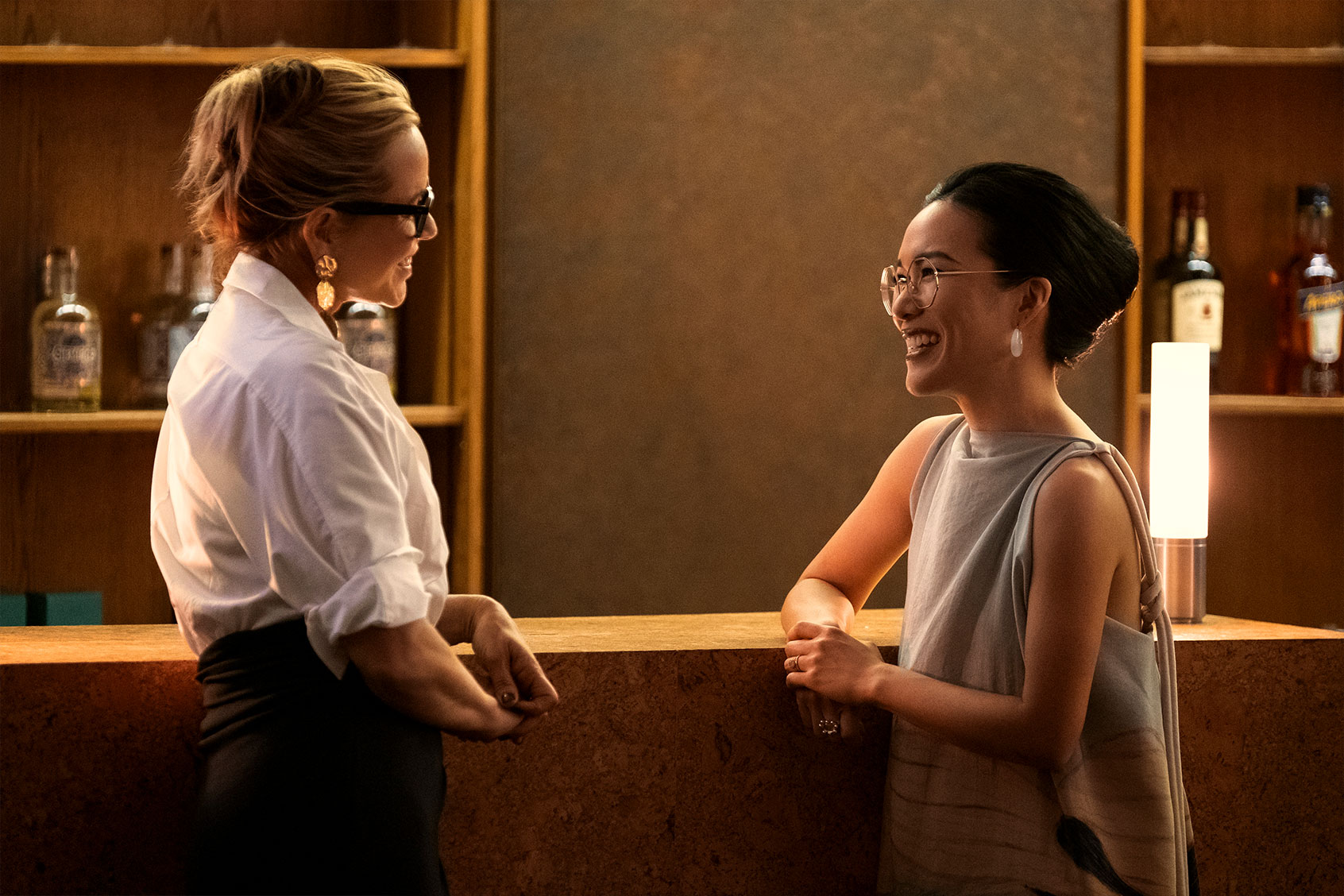
I wonder, had we known what was coming: the shutdowns, the losses, the restrictions and lockdowns of the pandemic that upended every facet of our lives; could we have enjoyed ourselves even more than we did? I don’t see how we could have . . . but maybe?

Perhaps knowing that life as we knew it was about to change the way it ultimately did would have made our time in Del Mar sweeter. I will never know. But I do know those weeks along the Pacific were some of the best of my life.

Smoked Almond Dip
Yields
08 servings
Prep Time
05 minutes
Cook Time
00 minutes

Ingredients

1 bunch parsley

2-4 fresh garlic cloves

1 scant cup or 1 small can of smoked almonds**

8-12 oz sour cream, cream cheese, mayo, plain, full-fat yogurt or combination of these.


Directions

  1. Place all ingredients in a food processor and blend well.
  2. Refrigerate at least an hour or two for the dip to thicken and the flavors to marry.
  3. Serve with plain crackers and/or raw veggies. 

Cook’s Notes

– This also makes a great salad dressing!

– This dip is even better the next day. Basically, the longer it is refrigerated, the thicker it becomes — in a good way.

-If you don’t have or can’t smoked almonds, you can substitute regular roasted almonds, but add the following to make up for the difference:

1/2 tsp smoked paprika

1 tsp maple syrup

Dash of Worcestershire (optional)

Salt (if your almonds are unsalted)

The heavy mask of perfection in “Beef” speaks to many women’s fear of revealing their true self

I felt a sort of vicarious satisfaction as I watched Ali Wong’s character Amy in Netflix’s dramedy “Beef” let loose on her newfound nemesis Danny (Steven Yeun), tossing objects at his windshield and chasing his car through the streets of Los Angeles. Amy’s long-festering frustration and repressed anger from hiding her true feelings from loved ones explodes on Danny.  

Amy and I believed our parents’ love and approval were conditional.

Like Amy, I am a people-pleasing perfectionist. I’m fortunate to have a supportive husband, great kids, and in theory nothing to complain about. But like many women, I struggle to manage work, relationships and more. My kids are grown, and I don’t have to contend with modern-day extreme parenting, which for Amy includes mindfulness classes and organic gardening playgroups.

In the pilot of the 10-episode limited series, Amy (almost literally) runs into struggling contractor Danny in a parking lot. After their wild road-rage altercation, Danny tracks her down to her beautiful house. She doesn’t know the man knocking at her door is the one she tried to run off the road. 

Tellingly, Amy worries she was rude when she spoke to the unknown man through a speaker and lets him in. Once inside, Danny needles her, pointing out supposed remodeling mistakes throughout her house. He urinates all over her bathroom, and Amy plots her revenge. The tit for tat grows more severe – and damaging – as the show progresses. 

Crucially, with Danny, someone outside her carefully curated world, Amy can expose her true feelings. Their relationship, such as it is, provides the one release valve for her pent-up rage from dealing with the non-obvious flaws in her life. It turns out her handsome husband is a clueless momma’s boy. As the breadwinner, Amy works long hours while her husband creates unsellable art. Her passive-aggressive mother-in-law constantly pushes Amy’s  buttons. Stressed about selling her business so she can spend more time with her child, Amy lives in a constant state of anxiety. 

BeefBeef (Netflix)To Amy, everything – her home, her family, her, had to be perfect. For women juggling multiple roles – and expected to do them all with aplomb, exhaustion and frustration can fester within. But for those like Amy and me who grew up with emotionally distant parents in dysfunctional homes, we can become anxious overachievers.
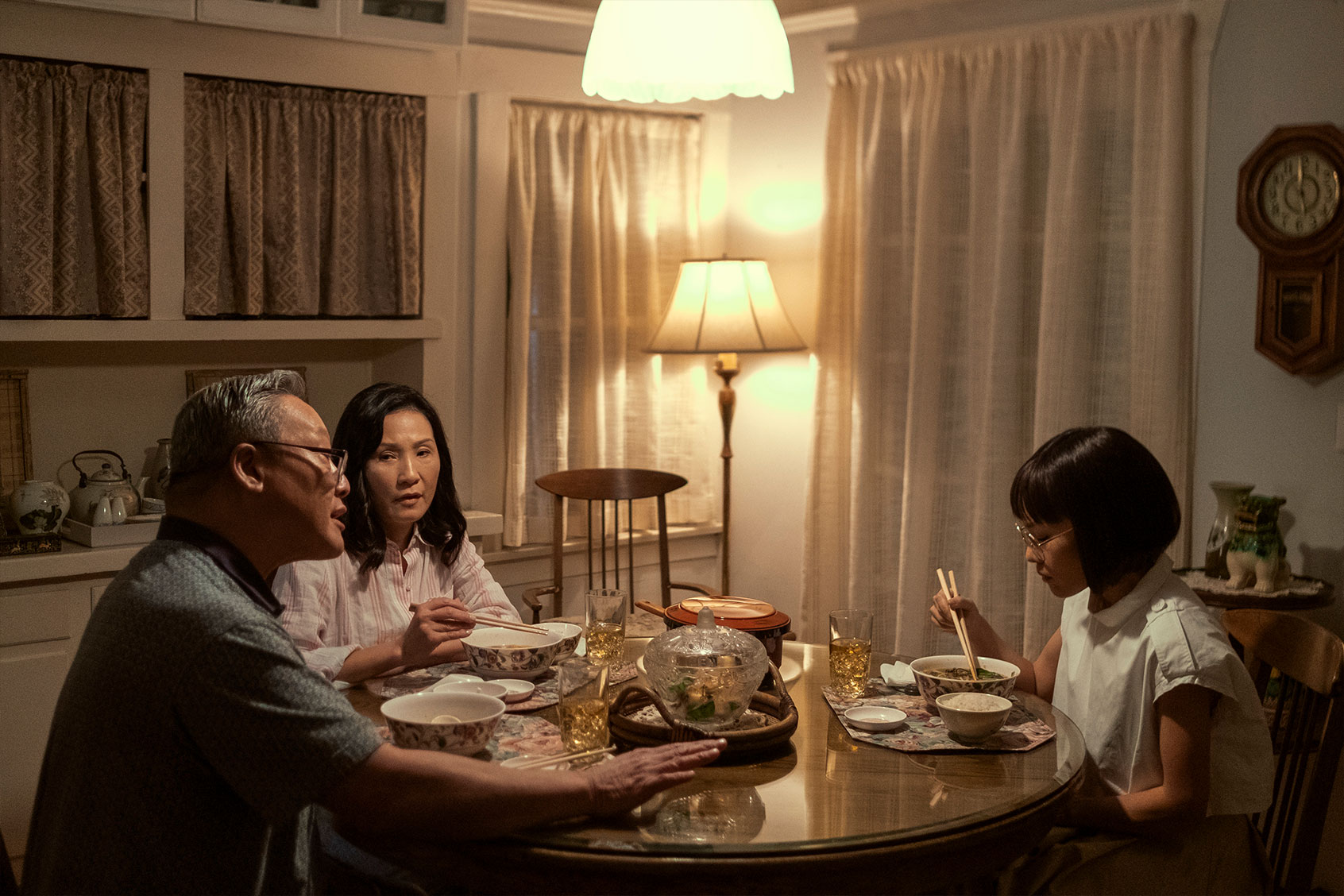
In a childhood flashback, Amy overhears her father complain to her mother that he didn’t even want a child. Young Amy then imagines a witch from a book she’s reading come to life and says: “I’m always watching, I can’t tell anyone your secrets. Because no one would love you.” 

Amy and I believed our parents’ love and approval were conditional. My parents also bickered regularly. Unable to stop our parents from fighting, we strove to control what we could.

Failure is not an option for many children of immigrants. 

Amy builds a successful company and an enviable suburban house. I threw myself into academics, graduating as a high school valedictorian. When I won several awards and accolades at my graduation, my dad took lots of photos. His attention and pride lasted one week. I later earned a scholarship to a top MBA program. Anxiety fueled my drive. However, it’s impossible to please an unpleasable parent.

BeefBeef (Netflix)Amy and I were both aware of how much our immigrant parents sacrificed for us. Amy’s mother told her she never saw birds until she came to America because people had to eat them during the Vietnam War. My parents fled communist China with two suitcases to Taiwan. Later, my father arrived by boat in America with $50 in his pocket, toiling as a dishwasher on weekends while attending graduate school. Failure is not an option for many children of immigrants. 

I too was a powder keg set to explode, working and raising three children, trying to project the image of a model wife and mother, until I unfurled my wrath on my family. As it happened, my fury was connected to a remodel of my house. My three children and my husband and I found ourselves sharing one small room while walking through a dusty house with workers stomping and drilling and hammering throughout the day. I cooked ramen on a hot plate in our one working bathroom. Throughout the remodel, I tried to remain calm. I didn’t want to share my frustration with my husband. 

The final straw came when our contractor told us our kitchen would be delayed several weeks because he’d mismeasured a corner cabinet. My husband turned to me and said, “Why didn’t you recheck the measurements?” 

I shrieked at him and threw his beloved college mug and other mementos into the dumpster occupying our driveway. When my youngest child sobbed, I had the sense to stop, and then I had to crawl into the dumpster to retrieve the items. 


Want a daily wrap-up of all the news and commentary Salon has to offer? Subscribe to our morning newsletter, Crash Course.


At one point, Amy says, “I have worked so hard for this shit.” Yet when she reaches what she longed for – the sale of her company for $10 million – she’s unable to relax with her family beside the pool of their new vacation home. She insists on helping their new nanny.

While I initially felt a kinship with Amy’s repressed anger, “Beef” is ultimately a cautionary tale of the consequences of repressed emotions. I was encouraged that Amy could finally share her feelings with at least one person, even if he was a virtual stranger. But by the end of the series, it’s clear she should have been more honest with her husband all along. Fortunately for me, the repercussion of my outburst was digging through a dumpster. For Amy, her explosion – while often hilarious – is far more damaging. 

Amy says, “I don’t want anyone to see who I really am.”

Hiding our true selves from our loved ones can be more harmful in the end. 


“Most of us are broken”: Author Cheryl Strayed embraces the imperfection of “Tiny Beautiful Things”

The Hulu show "Tiny Beautiful Things," based on Cheryl Strayed's book and starring Kathryn Hahn, is a tearjerker. "I love to make people cry," Strayed said on "Salon Talks." "It's really one of my favorite things."

Strayed is an executive producer of the series in which Hahn plays 40-something Clare, a version of Strayed who has a similar past but never hiked the Pacific Coast Trail, aka the version of Strayed we got to know from her bestselling memoir "Wild" and the film starring Reese Witherspoon. Clare's life is messy and difficult. She hasn't written the great American novel like she'd hoped, her marriage is in trouble, her teenage daughter hates her, and no matter how long ago it happened, her mother is dead. Clare, like Strayed, is tapped to anonymously write the "Dear Sugar" advice column – which Strayed took over 11 years ago.

Strayed says you don't need to be an expert to give advice. "If you speak from your truest voice, by which I mean the deepest one, the most vulnerable one, the one that's willing to risk vulnerability . . . almost always, it's going to ring a bell in the hearts of other people."

At this point in Strayed's career, where she's podcasting, producing and has two on-screen adaptations of her work, Strayed says her definition of success as a writer remains unchanged. It's about making people feel less alone and fostering connection through vulnerability.

Watch the "Salon Talks" episode with Strayed here, or read a Q&A of our conversation below to hear about the process of adapting her column for TV, why she loved creating a show with a female lead in her 40s and how writing as Sugar has made her a better person. 

The following conversation has been lightly edited for clarity and length.

You've been the voice behind the "Dear Sugar" advice column for over 10 years now. In 2012, you released a collection of some of your best nuggets of wisdom, the most beautiful letters, and your best pieces of advice in a collection called "Tiny Beautiful Things." How did you turn these separate entries into a narrative story for the show?

Well, that was an undertaking, let me tell you, because of course, in one way I was sure that this book could be adapted for TV because it is so full of stories. Not only do I tell stories about my own life in the course of giving advice to people, but really every letter that's written to me is a story. 

People present their struggles and their secrets and their sorrows and their conundrums and all of that stuff in the book, so innately I knew anything rich with story is great fodder for television. And yet when it came to figuring out how to make it into television, it took some doing. Really, Liz Tigelaar, the creator and showrunner, she's just such a wonderful human and also a really smart and amazing writer. She and I began having conversations and really landed on this idea of the story being very much about this woman at the center of the column, Sugar herself.

I think Liz was really sparked by this notion that I tell stories from my own life by way of giving advice, which what I always hope conveys is this truth that like, "OK, listen, I'm not the one who knows. I'm not like the guru who's going to tell you all the wise things and tell you how to live and give you instructions." What I'm going to do is say, "I am right down in there with you. I'm also grappling, I'm also struggling. I also don't always know." I always think of myself as almost trying to expand the questions that were asked of me, trying to help through sentences and stories to illuminate the situation in a way that allows the letter writer and everyone reading it to see the situation differently. 

"Our work here is not to be perfect. Our work here is to evolve and not just once."

We began from that premise: what if we have a woman who isn't a guru? Who's just like an ordinary woman who in some ways has a messed-up life and has made some mistakes and in other ways, has wisdom and experience to share, and who is a writer, whose calling is to be a writer and to share her wisdom through the written word? So we began with that. We began with that character of Clare played by Kathryn Hahn, who is me, in that she and I have a lot of the same formative experiences, and yet in her adult life, she took a very different path than me, so she's very much a fictional character as well.

What was it like to develop a character who is sort of you, but not quite?

Developing the character of Clare was actually developing two characters. We have the adult Clare, who's Kathryn Hahn, who's married and has a teenager and a job and always wanted to be a writer and actually had some early promise as a writer, published a bit in her 20s, but then never followed through on it because life took over. And then we have the younger version of Clare played by Sarah Pidgeon. Sarah Pidgeon really enacts in her scenes Clare in her teens and in early 20s, and those scenes are really my story. 

Many of the stories that you see that I tell in "Tiny Beautiful Things," I said to Liz and the writers in the room it was really important to me that those formative experiences I had in my youth and childhood were the things that in so many ways inform Clare, Kathryn's character.

I lost my mom to cancer very suddenly when she was 45. I grew up poor and working class in a rural environment. I have a father who was abusive and from whom I've been estranged for years. I got married in my 20s, insanely young. I was 19 when I got married, which just makes me think, "What was I thinking?" And divorced by the time I was 25. So those things are all behind Kathryn's Clare in the form of Sarah Pidgeon. So there's the autobiography, and then Clare took a different path than me, and so it's both deep autobiography and deep fiction.

We meet Clare at a really difficult time in her life. Her relationship with her husband is in trouble, her teenage daughter hates her guts, and she's not doing the thing that she loves to do, which is writing, and she's trying so hard. She is well-intentioned, but life is a mess. What do you think that says about Clare and then the rest of us?

Well, I think what it says about Clare is, "Welcome to being 49," or being middle-aged. One of the things that I always have tried to write about as Sugar, you see it everywhere in "Tiny Beautiful Things," is I'm always saying, "Our work here is not to be perfect. Our work here is to evolve and not just once." I think that so many of us, maybe because it gives us a sense of safety or false security, we think, "OK, in your 20s that's the decade where you're like, 'Who am I? Should I go here or there? Should I be in this relationship or that relationship? Which path should I take?'" There's a sense that in your 20s you do a lot of stuff, get lost, go down some wrong paths, but eventually you find your path and then you're set for life. And of course, that's not true.

"When we see people being vulnerable or living vulnerably or speaking vulnerably something inside of us opens up."

I love the opportunity in this show that we get to say, "OK, she did choose her path in her 20s and she followed it and it worked out pretty well. And now look, she's at this other moment in her life where it's time for her to evolve again." Her teenage daughter who, as you say, hates her, like every teenage daughter on the planet. I mean, having my own 17-year-old teenage daughter, I can tell you they absolutely love you too. Sometimes it's buried. I mean, all of that, the love and the turmoil, that separating from the parent stuff, all of that is so natural and normal. There's so much love between them, but there is that conflict.

As we see that, what Clare is realizing is her life has to evolve and change in this next chapter as her daughter is going to be leaving home soon. And a lot of people, they reexamine their lives during that point, so it was really a pleasure to get to tell a story about a woman who is my contemporary – I'm 54, and going through so many of the same things that Clare is going through on the screen – to really tell a complicated story that was about all the beautiful mess of life.

In the introduction to "Tiny Beautiful Things," Steve Almond writes something like, "One reads Sugar with tears in their eyes." And I will tell you, one watches Sugar with tears in their eyes as well. I cried almost every episode. Why do you think your work is so emotional?

I love to make people cry, so thank you, Olivia. It's really one of my favorite things. I think that it's emotional. And I want to say too about that crying, I'm going to guess that sometimes you cried because something was sad, but a lot of times you cried because something was beautiful. I think that that's what I most strive to do. 

The truth is beautiful. The complicated, contradictory, raw, real truth is emotional and it opens our hearts. I think that when we see people being vulnerable or living vulnerably or speaking vulnerably something inside of us opens up. And I think that that's really the mission of art. It is to tell us who we are as humans, and not just who we are, but who are we really? That is everything I always wanted to do, and I love that in this show, I think it asks those same questions.

Your work, even when it's dealing with the saddest parts and just the most heartbreaking stories, it makes us feel human and more connected. Is that also something you strive to do?

That's what I do. That's what I strive to do. Really, what do I want to do with my writing? I want to make people feel less alone. And because I know that literature and television and film — all art forms really — have the power to do that, that's why I love art of all forms, because I say, "Oh, yes, this is what it does feel like to grieve," or, "This is what it does feel like to love," or, "This is what it feels like to be jealous or to have a sense of longing." All of those emotions that we experience in a really particular individual way are actually universal experiences. And so when you do write a show or a book, that other people say, "Oh yes, me too," I mean, that's my whole intention and dream.

This book is 10 years old. What is your relationship to the work that you created that long ago? How have these essays changed for you?

"Most of us are broken. I don't know a perfect person."

It was published first now almost 11 years ago. It's been reissued. There's a 10th anniversary edition that's out with a new introduction and some new columns in it as well. When I was choosing the new columns to add, I went back and read the book for the first time, honestly, in probably a decade. I was struck by, again, really, we all have the same problems throughout all time. That's so fascinating to me. Somebody could have written to me 12 years ago about infidelity, and that problem hasn't changed. The truth, the core truths about how we address any one of these struggles has remained the same.

Always as a writer, you could go back and say, "Well, I would've tweaked that sentence," but I never would've changed the core advice in any of the columns, which, whew, was a relief to me because I would hate to be like, "Whoops, I shouldn't have said that." It really was a wonderful experience for me to say that this advice is still relevant now.

The show makes a point that being broken is a beautiful place to start, but I also think that when we think about seeking advice, we want to go to the experts, whatever that means. What do you want people to take away from watching Clare's story?

I first want to say about that expert thing, I think that wisdom comes from so many different sources, and that's where we should seek advice, from all of the sources, from the therapist and the "experts" who have been trained in psychology and emotional well-being. But we all know, too, that sometimes there's nothing like a conversation with a friend who says, "I know you and I love you, and I see you, and this is what I think you should do," or a beloved family member.

Or sometimes it's just a stranger actually having an interaction with you that blows you away because you're awakened to something or an advice columnist who you write and say, "Here's what I can't say to anyone else, and I'm going to tell you because it's anonymous and you can answer me." I think that all of those sources are the ways that we seek wisdom and learn how to thrive. 

You don't have to be an expert to contribute. You don't have to be an expert to say, "I have something to say that might be of use." If you speak from your truest voice, by which I mean the deepest one, the most vulnerable one, the one that's willing to risk vulnerability, say the scary thing that you feel or that you know, if you speak from that voice, almost always, it's going to ring a bell in the hearts of other people because they will say, "I recognize you. I know what you're saying. I believe you because I feel it too." And I hope that people take that from the show.

Broken is a beautiful place to begin. And what I want to say is most of us are broken, most of us are. I mean, I don't know a perfect person. What I love about myself and so many others are really the ways that we can both be perfect and imperfect at the same time, that we can have messy lives that are falling apart in some ways and also have so much courage and strength and wisdom, and that we all have something to offer wherever we are on that spectrum.

And it's also interesting to see how much Clare gets out of being Sugar, and presumably how much you got out of being Sugar, in those early days. Was that how it was for you?

"The meaning of success has remained unchanged for me for a long time now."

For sure. I wouldn't say that when I began writing the column, I felt like my life is falling apart. I don't share that aspect with this character. But I will say there was no question whatsoever that writing the "Dear Sugar" column has made me a better person because I have been forced to reflect on so many people's problems now. I still am.

Once a month, I write another "Dear Sugar" column, and I'm still constantly thinking, "Well, how can I help this person who's asking a question about . . .?" Fill in the blank. I have to search my own soul to answer it. I have to examine my own life. And a question I often ask myself when I give people advice, I think, "Am I doing that? Am I taking my own advice?" And I can tell you this, I would be a better person if I did. It forces me to be more contemplative about my own life as well as the lives of others.

You're still a writer, but now you're also a podcaster and a producer. You made this show with Reese Witherspoon's production company, Hello Sunshine, which is all about telling women's stories. How has your career changed over the years? And what does success mean to you now?

The meaning of success has remained unchanged for me for a long time now. Way back in my 30s when I was trying to finish my first novel, "Torch," and I felt like I couldn't do it, I couldn't do it, I couldn't be successful. I realized that I was going to have to change my definition of success. To me, it's this, can I answer yes to these two questions? "Did I do what I said I would do? Did I make good on my intentions? And did I do it to the very, very best of my abilities? Did I hold myself to a rigorous standard?" If I can say yes, and yes, I succeeded.

I think this translates to every profession, but certainly when you're writing a book, if the measure of success was going to be that it's published or that it's a bestseller or that it wins a national book award or it gets adapted into a TV show, you can't base success on that because that's all so much outside of my power. What's in my power is me doing my work and doing it well. That, to me, is my measure of success for sure. 

Now, when it comes to my career, what's happened is it's expanded in beautiful and surprising ways because I have held true to what I just said. I held true to doing the work, doing the work to the best of my abilities, to the best of my abilities, over and over and over and over again. And then every time, because of that, an opportunity came up. I said yes and I followed the path down all of these wild directions that took me here to you. I mean, if you think that I had any inkling that this "Dear Sugar" column that I said yes to, that I was paid nothing for, and that I wrote anonymously, would end up being a book, let alone a TV show, I would've said you're fooling me because it can't be true. And yet here we are.

It's such a good reminder of the long game too, especially thinking about this show where we see young Clare who wants to be a writer right then and there and then considering how long these things actually take. But like you said, it's so simple, the two questions you have to answer.

That's one of the sweetest parts of the show to me, those young moments where young Clare is finding her way into her writing and then when we see adult Clare stepping back into her writing. I find that very moving because it is really important to learn how to keep faith with yourself and believe in yourself because no one else is going to believe in you quite the way you believe in yourself when you're writing. I love that that's reenacted, that that's captured very much in the show.

"Tiny Beautiful Things" is streaming on Hulu.


111 years after the Titanic sank, TikTok is helping spread misinformation

It is a strange irony that the internet — the byproduct of millennia of scientific and technological progress — has evolved into a wellspring for the dissemination of pseudoscience and unfounded conspiracy theories. The latest example is the proliferation of Titanic conspiracy theorists, who believe that the fabled ship that sank 111 years ago today never actually sank at all. 

Conspiracy theories around the ship have existed for a while, but social media has supercharged their dissemination.

In one viral video that is exemplary of this bizarre and increasingly popular conspiracy theory, TikTok creator @_mia.w22 claims that the company that built the Titanic, the White Star Line, instead purposely sank another one of its ships, the Olympic, to collect insurance money.

“They look identical,” Mia says in the TikTok. “The Olympic was on the water for a while. She was reaching for retirement and they knew that. They were like, ‘well, it was a lot of money to make the Titanic, and it’s gonna be even more money to repair the Olympic.’ So what if we just sent the Olympic out instead, sink it, claim some insurance money and then just scrap the Titanic like it was the Olympic for some spare parts.”

The video was astoundingly popular, garnering over 11 million views, and was reported on by media outlets like the Miami Herald and Insider.

Though the video has since been deleted, conspiracy theory videos continue to swirl around the Titanic like debris around a sinking ship. In fact, there is a whole subculture on the social media platform devoted to them.

Another TikTok user posted a conspiracy video that claims that banker J.P. Morgan sank the Olympic, and not the Titanic, to kill his competitors. That video has 13.8 million views. A separate conspiracy theory claims that J.P. Morgan sank the Titanic to push forward plans to create the Federal Reserve. (J.P. Morgan figures into a lot of these conspiracies, interestingly.) Some conspiracy theorists are even going as far as claiming that the Titanic sinking was a “hit job.” The TikTok hashtag #TitanicConspiracyTheory has over 2.5 million views.

Experts who study the Titanic say that conspiracy theories around the ship have existed for a while, but that social media has supercharged their dissemination. 

“It’s become more prevalent in the internet age,” Titanic historian Parks Stephenson and executive director of USS Kidd Veterans Museum tells Salon. “It’s always been out there, but now there are your trolls, doing it on purpose to elicit reactions from people — they can’t participate in the story so this is their method of participation, throwing a wrench into the works and seeing what shakes out.”

As Stephenson said, Titanic misinformation predates social media. Indeed, after the ship sank back in 1912, a rumor surfaced that it was because it was cursed by a mummy. As explained by History.com, a British editor named William Stead, who believed in early 20th century spiritualism and was a Titanic passenger, spread a rumor that a cursed mummy was causing inexplicable destruction around London. During the voyage, he shared this tale with other passengers. Though he died during the tragedy, another passenger who survived told the story to the New York World. The Washington Post picked up the story and ran the headline: “Ghost of the Titanic: Vengeance of Hoodoo Mummy Followed Man Who Wrote Its History.”

Another conspiracy theory suggested that the ship’s number, 3909 04, read as “no pope” when viewed in a mirror — an omen that portended the ship’s doom. But as explained in the Titanic history book “The Night Lives On,” there was no such number attached to the Titanic.

“Because of the internet, instant communication, conspiracy theories are becoming more widespread,” Stephenson said. “I look around, I see lots of Titanic experts . . .  but from my perspective, most are regurgitating things that are already out there.”

Don Lynch, historian of the Titanic Historical Society, told Salon he is often contacted online by people asking him if various bits of misinformation are true. Lynch blames amateur videos on YouTube that call themselves “documentaries,” but which don’t live up to that label. 

“People think that anything that is called a ‘documentary,” whether it’s on YouTube or something, that because it’s in a new medium, that it must have new information,” Lynch said. “Literally, people have told me ‘I saw it in a documentary, you should do your research,’ and they think if they watch a documentary, they’ve done the research.”

“A lot of people don’t understand what original sources are,” he rued.


Want more health and science stories in your inbox? Subscribe to Salon’s weekly newsletter The Vulgar Scientist.


One peculiar part of the puzzle is why people are still so fascinated with a 111-year-old ship. On TikTok, conspiracies aren’t the only pieces of Titanic-related content. The hashtag #TitanicCosplay has 11.3 million views; in these kinds of cosplay videos, users dress up like characters from the 1997 movie “Titanic” and recreate their favorite scenes from the film.

Stephenson said historians are often asked why the public obsession with the Titanic lives on over a century later.

“It is the ultimate story: it’s unsinkable, supposedly, and you’ve got it full of all these key people, like the president of the company that owns it, and the president of the company that built it, and as well as all these famous people . . . and then on its maiden voyage, it hits an iceberg and then sinks so slowly,” Lynch said. “And then there’s all this time for all this drama to be acted out, like the band playing — that just doesn’t get duplicated.”

Lynch said there are other shipwrecks that he finds fascinating, but that for some reason the Titanic has captivated people for over a century.

“It just happened at a time when the world was fairly sure of itself, and at that point it was the top headline,” Stephenson said. “And the Titanic just has all the makings for a great drama, and subsequent disasters didn’t have such a collection of all these dramatic elements coming together to make this fabulous story.”

Both Stephenson and Lynch fear that misinformation online could affect how a new generation learns about the Titanic.

Stephenson added that many people seem to find their own lessons and parables in the disaster. 

After the blockbuster 1997 James Cameron movie came out, a man named Robin Gardiner wrote a book called “Titanic: The Ship That Never Sank?” which likely started the conspiracy theory that the White Star Line switched the Titanic with the Olympic and then purposely sunk it.

“He threw this out there, I think, to just to stir up the Titanic community,” Stephenson said. “He’s no longer with us, so you can’t interview him today, but that’s what started the whole insurance-fake-scam theory — and if you read through his book, if you research his allegations, you find they lead nowhere.”

Both Stephenson and Lynch fear that misinformation online could affect how a new generation learns about the Titanic.

Lynch said he has seen people on Facebook post, “‘my six year old is fascinated with the Titanic, he watches every video he can get.’ And I’ll immediately say, ‘Well, you might want to introduce him to printed matter — and here’s a good children’s book.'”

Lynch added that AI-generated photos of the Titanic are a new and dangerous source of misinformation.

“They’re putting out photographs that are so realistic, it’s scary,” Lynch said.

Stephenson said that aggressive conspiracy theorists have caused him to distance himself from Titanic research.

“I believe these conspiracy theories are detrimental to research because they tie you up,” Stephenson said. “I’m passionate about it [Titanic research], but I’m not passionate about going over the same material over and over again to people who won’t listen.”

Why are so many fast food brands obsessed with bucket hat merch lately?

Whether you love ’em or hate ’em, there’s no denying the fact that bucket hats, the cylindrical-shaped accessory, has made a big comeback.

Fashion experts over at Who What Wear, The Hollywood Reporter and Cosmopolitan know it’s true. And so do major fast food brands, who have been launching their collection of bucket hat merchandise like clockwork. Back in July 2019, KFC Russia partnered with Russian streetwear label Mam Cupy to launch their limited-edition bucket hats, which are adorned with the brand’s iconic red and white stripe pattern and logos. To the naked eye, the hats may be mistaken for an overturned bucket of the chain’s signature 8 pc. fried chicken meal. But a closer look reveals that the accessory is indeed meant to be worn on your head, rather than served on the dining table.

Following suit was KFC’s U.K. wing, which partnered with lifestyle brand Hype to create a limited-edition clothing line inspired by their iconic logo. The complete collection included bralettes, joggers, tees, puffer jackets, backpacks, bucket hats and, even, dad caps with the slogan “Bargain Bucket” embroidered across the front. Here in the states, Wendy’s linked up with “Rick and Morty” in celebration of its sixth season to release a few limited-time meal options and themed merch, like bucket hats, sweatpants, and hoodies. McDonald’s also released its McFlurry Bucket Hat, which is currently on sale for just $9.99.

The latest fast food brand to join the bandwagon is Pizza Hut, which partnered with Chain, the Los Angeles based pop-up culinary collective, to release its limited-edition reversible Hut Hat. Per Pizza Hut, “The Hut Hat is a reversible bucket hat with one side resembling Pizza Hut’s iconic red roof and the other a checkered design with black, white and red, resembling the lampshades hanging within Pizza Hut restaurants nationwide.”

https://www.instagram.com/p/Cqqli07uolV/?utm_source=ig_web_copy_link

“Those Pizza Hut Tiffany lamps are some of the most iconic pieces of New Americana design,” said Nicholas Kraft, a co-founder at Chain, “They elicit such joy and fond memories — and let’s be real: they kinda look like bucket hats all on their own.”

The nostalgia factor has been a major reason why bucket hats are making their resurgence in 2023. Thanks to TikTok fashion, celebrity street style and Gen Z’s fascination with the Y2K aesthetic, the accessory — which was a divisive trend circa the ’90s — is acquiring a new generation of fans. It’s also worth mentioning that bucket hats are incredibly versatile: Depending on the fabric it’s made of, the hat can either be a spring or summer accessory (if it’s made from a light material like denim or cotton) or a winter accessory (if it’s made from a thicker material like wool or terry cloth). And, it’s effortlessly chic. As Vogue’s Christian Allaire wrote:

But even in classic black, paired with a dressier ensemble, I’ve learned that the bucket adds just the right amount of extra, without going overboard. It adds instant personality to a look in a way that a dad cap simply cannot. And so what if people think you look like you’re trying to dress like a teen? If the topper is good enough for Rihanna, it’s good enough for all of us.

Essentially, bucket hats are simple, convenient and timeless — which are, surprisingly, the same traits that make fast foods so popular amongst consumers. The hats also greatly resemble popular food items, making them the perfect accessory to don when you’re not quite hungry but are still thinking about your favorite cravings. A simple bucket hat can be transformed into a bucket of fried chicken. Sprinkle in a bit of imagination and the hats can also be transformed into a cake, a cupcake and, yeah, even a gumdrop!


Want more great food writing and recipes? Subscribe to Salon Food’s newsletter, The Bite.


Fast food’s latest fashion obsession further illustrates how more brands are appealing to their younger consumers. In recent years, fast food has become a hot and buzzy subject for content creators, who have garnered significant followings simply by sharing menu hacks, mukbangs and videos of themselves eating their go-to orders from their local Mickey D’s. Such content is enticing and attractive and tempting. So, what better way to enhance those posts than with some fun and funky fashion.

It will be interesting to see what other fast food brands will jump on the trend next. Personally, we’d love to see a hat that looks like Auntie Anne’s blue-and-yellow pretzel cups (and smells faintly like their signature cinnamon sugar pretzel). As for now, we’ll wait patiently for that release and, in the meantime, try our best to secure a Hut Hat.

American prophet: Nearing the end of his life, Daniel Ellsberg can’t be confined to the past

In just a few words — “Those who control the present, control the past and those who control the past control the future” — George Orwell summed up why narratives about history can be crucial. And so, ever since the final helicopter liftoff from the U.S. Embassy’s roof in Saigon on April 30, 1975, the retrospective meaning of the Vietnam War has been a matter of intense dispute.

The dominant spin has been dismal and bipartisan. “We went to Vietnam without any desire to capture territory or to impose American will on other people,” Jimmy Carter declared soon after entering the White House in early 1977. “We went there to defend the freedom of the South Vietnamese.” During the next decade, presidents ordered direct American military interventions on a much smaller scale, while the rationales were equally mendacious. Ronald Reagan ordered the 1983 invasion of Grenada, and George H.W. Bush ordered the 1989 invasion of Panama.

In early 1991, the first President Bush triumphantly proclaimed that reluctance to use U.S. military might after the Vietnam War had at last been vanquished. His exultation came after a five-week air war that enabled the Pentagon to kill upwards of 100,000 Iraqi civilians. “It’s a proud day for America,” Bush said. “And, by God, we’ve kicked the Vietnam syndrome once and for all.”

Two decades later — delivering what the White House titled “Remarks by the President at the Commemoration Ceremony of the 50th Anniversary of the Vietnam War” — Barack Obama did not even hint that the U.S. war in Vietnam was based on deception. Speaking in May 2012, after he had more than tripled the number of U.S. troops in Afghanistan, Obama said: “Let us resolve to never forget the costs of war, including the terrible loss of innocent civilians — not just in Vietnam, but in all wars.”

Moments later, Obama flatly claimed: “When we fight, we do so to protect ourselves because it’s necessary.”

Such lies are the opposite of what Daniel Ellsberg has been illuminating for more than five decades. He says about the Vietnam War: “It wasn’t that we were on the wrong side; we were the wrong side.”

Outlooks like that are rarely encountered in U.S. mass media. Overall, major newspapers and cable news outlets have far preferred to make only sanitized references to Ellsberg as a historic figure. Much less acceptable is the Daniel Ellsberg who has been arrested nearly a hundred times since the end of the Vietnam War, largely for acts of nonviolent civil disobedience against nuclear weapons and other aspects of the warfare industry.

After working inside the U.S. war machinery as a military analyst employed by the RAND Corporation, Ellsberg became its highest-ranking operative to opt out, bravely throwing sand in its gears by revealing the top-secret Pentagon Papers, at risk of spending the rest of his life in prison. That 7,000-page study, an internal Defense Department history of U.S. involvement in Vietnam, exposed lies about U.S. policies that had been told under four successive presidents. During the 52 years since then, Ellsberg has continually provided key information and cogent analysis of the pretexts for U.S. wars, and has also focused on what those wars have actually meant in human terms.

Ellsberg has explained, most comprehensively in his 2017 landmark book “The Doomsday Machine: Confessions of a Nuclear War Planner,” what is worst of all: The nation’s military-industrial-media establishment refuses to acknowledge, let alone mitigate, the insanity of the militarism whose logical end point is nuclear war.

Helping to prevent nuclear war has been an overriding preoccupation of Ellsberg’s adult life. In “The Doomsday Machine,” he shares exceptional insights from working for the doomsday system as an insider and then working to defuse it as an outsider.


Want a daily wrap-up of all the news and commentary Salon has to offer? Subscribe to our morning newsletter, Crash Course.


An upsurge of media attention to Ellsberg resulted from the emergence of other heroic whistleblowers. In 2010, U.S. Army private Chelsea Manning was arrested for leaking a vast quantity of documents that exposed countless lies and war crimes. Three years later, Edward Snowden, who had been employed by a National Security Agency contractor, went public with proof of massive Big Brother-style surveillance with mind-boggling technological reach.

By then, Ellsberg’s stature as the Pentagon Papers whistleblower had made him widely venerated by many liberals in media and by others who were happy to consign the virtues of such whistleblowing to the Vietnam War era. But Ellsberg emphatically rejected the “Ellsberg good, Snowden bad” paradigm, which appealed to some eminent apologists for the status quo (such as Malcolm Gladwell, who wrote a specious New Yorker article drawing an invidious contrast between the two). Ellsberg has always vigorously supported Snowden, Manning and other “national security” whistleblowers at every turn.

Ellsberg has emphatically rejected the “Ellsberg good, Snowden bad” paradigm that has appealed to some eminent apologists for the status quo.

Ellsberg disclosed in a public letter in early March that he has been diagnosed with pancreatic cancer, with a likely medical prognosis of three to six months to live. Now, in the final stage of his life, he continues to speak out with urgency, in particular about the need for genuine diplomacy between the U.S. and Russia, as well as the U.S. and China, to avert nuclear war.

Many recent interviews are posted on the Ellsberg website. Ellsberg remains busy talking with journalists as well as activist groups. Last Sunday, as vibrant and eloquent as ever, he spoke on a livestream video sponsored by Progressive Democrats of America.

Grassroots activists are organizing for the national Daniel Ellsberg Week, from April 24 to April 30, described as a “week of education and action,” which the Ellsberg Initiative for Peace and Democracy, based at the University of Massachusetts Amherst, is co-sponsoring with the RootsAction Education Fund (where I am national director). One of the week’s central themes is “to celebrate the life’s work of Daniel Ellsberg, to take action in support of whistleblowers and peacemakers, and to call on state and local governments around the country to honor the spirit of difficult truth-telling.”

No matter how much the defenders of the militaristic status quo in America have tried to relegate Daniel Ellsberg to the past, he has insisted on being present — with a vast reservoir of knowledge, an awesome intellect, deep compassion and a commitment to nonviolent resistance — and has insisted on challenging systems of mass murder, especially when they go by other names and seek to conceal their true motivations.

“Fossil fuels are natural and amazing,” says Rep. Marjorie Taylor Greene in a rant on Twitter

On Saturday morning, Rep. Marjorie Taylor Greene launched into a creative explanation for how climate works, providing a graph on fossil fuels in an effort to prove her points.

“If you believe that today’s ‘climate change’ is caused by too much carbon, you have been fooled,” Greene wrote on Twitter. “We live on a spinning planet that rotates around a much bigger sun along with other planets and heavenly bodies rotating around the sun that all create gravitational pull on one another while our galaxy rotates and travels through the universe. Considering all of that, yes our climate will change, and it’s totally normal!”

Going on to champion carbon, Greene stomped down with the emphatic statement, “Don’t fall for the scam, fossil fuels are natural and amazing. They produce an abundance of energy that we all need to survive along with more products than you can possibly imagine.”

Responses to Greene’s statements were a mish-mash of various ways to pose the question, “What are you talking about?”

“Madam, Can you touch on the impact that the Jewish Space Lasers will have on the rotation of our planet and the potential effect they will have on the weather,” one person asked in a reply.

“She’s a mad scientist now!” another person wrote.


Want a daily wrap-up of all the news and commentary Salon has to offer? Subscribe to our morning newsletter, Crash Course.


As the National Resources Defense Council has pointed out in numerous studies, “Using fossil fuels for energy has exacted an enormous toll on humanity and the environment—from air and water pollution to global warming.”

In addition to causing harm to the environment, studies from Harvard University have proven that the use of fossil can “lead to early death, heart attacks, respiratory disorders, stroke and asthma.”

It’s unknown what set MTG down this trail of thought so early into the weekend. Her last tweet prior to her fossil fuel love-letter was, “Ukraine is not the 51st state.”

This ingredient makes my homemade lattes taste barista-made

I cherish my morning coffee ritual. Before the rest of the house wakes up, I head to the kitchen, pull out my canister of espresso beans, and begin the process of grinding, tamping, and pulling the shot. Then, I steam the milk (oat is my preference these days) and pour it all into my favorite ceramic mug. I didn’t think the process could be improved. That is, until I found Alfred’s World Famous Vanilla Syrup.

Like many of us, I’d gotten into the habit of getting my lattes from my neighborhood Starbucks. But splurging on a daily coffee drink is not a sustainable practice for me, especially when I can technically make it at home. The only snag: I love the taste of toasty vanilla in my coffee, and Starbucks does this very well. Surely this could be replicated at home, I thought. And so began my quest for the perfect vanilla syrup.

I tried several brands—six to be exact—each offering a different price point and taste. I even attempted to make my own vanilla syrup, which turned out decently (it did the job of sweetening), but not as well as the professionals’ (it lacked the creamy, floral notes). After a few weeks of striking out, I happened to be skimming an interview with fashion writer Leandra Cohen where, while giving a tour of her kitchen, she referenced Alfred’s World Famous Vanilla Syrup. This was the first I had heard of the brand. Apparently, they are well known on the West Coast, but as a New Yorker, I was unfamiliar—and, surprisingly, the algorithm had not fed it to me during my internet research. Intrigued, I immediately placed an order and have not looked back since.

The product is as delicious as it is straightforward. With just three ingredients (vanilla bean, pure cane sugar, and a bit of Vitamin C to help preserve things), this syrup doesn’t have the distinctly artificial tinge of others I tried. Jordan Hardin, Alfred’s Director of Food & Beverage, explained to me that while pretty much every coffee shop has a vanilla syrup, most source it from a large manufacturer because it’s generally more affordable. Alfred’s choice to use quality ingredients and produce smaller batches means a slightly higher price tag ($12.50 for 12.6 ounces), but the difference in taste is notable.

The syrup’s subtle sweetness showcases the vanilla without overpowering it. Flecks of vanilla bean are distinctly visible, and the syrup is best kept refrigerated—further evidence that it’s made with high-quality ingredients. I also appreciate that it comes in an easy-to-use glass bottle that is appropriately sized for a home kitchen. (Conversely, many of the other syrups arrived in large plastic containers that were hard to fit in my limited kitchen space and featured tall pumps that were prone to clogging.) Alfred’s syrup fits tidily inside my refrigerator door.

Beyond your everyday cup of coffee, there are lots of other potential applications for the syrup. I’ve been mixing it into my overnight oats, smoothies, and even my go-to pound cake recipe to great success. If using it for baking, I’d suggest reducing a teaspoon of sugar for each teaspoon of Alfred’s stirred into the wet ingredients.

If you, too, are seeking ways to elevate your coffee game, I highly recommend giving this product a try—I don’t think you (or your wallet) will regret it.


“Flashdance” turns 40, but our attitudes about working-class artists still need to grow

Launcher of a thousand off-the-shoulder sweatshirts, popularizer of leg warmers: it’s “Flashdance” and the film turns 40 this year, just like some of us are or have too. It’s hard to believe a beloved film can be aging so, though a rewatch reveals some of the racist and homophobic jokes that defined its time. The film is also chock-full of very high-cut leotards that scream 1983 and more dance interludes than a high school musical.

“Flashdance” was star Jennifer Beals’ breakthrough role, responsible for her winning an NAACP Image Award and receiving a Golden Globe nomination, and the movie stayed with us: the character of Alex, a loner and dreamer who works as a welder during the day and a bar dancer at night, while dreaming of more. Her dream feels different now. We’re all older and we’ve been through the world. We know how it chews us up and spits us out, and we know to make it, like Alex does, we need more than just one shot. But Alex’s rise from welder/bar dancer to different, “respected” dancer isn’t so surprising, and the film presenting this as a shocker may say more about how we view working-class artists than any personal, well-choreographed triumph. 

“If a dream comes true just one time it can change your life for all time,” the velvety-voiceover for the “Flashdance” trailer promises. Directed by Adrian Lyne, the film follows Alex, who works at a steel mill in Pittsburgh and lives in an old warehouse with her adorably tough dog, Grunt. Nightly, she performs in the cabaret at Mawby’s, a gritty neighborhood bar and grill that also stages burlesque performances.

There are multiple kinds of art in “Flashdance.” There are the inventive, often dazzling and highly stylized acts of Mawby’s dancers with at times grotesque makeup, involved props and changing backdrops (and the infamous water that Alex rains down upon herself via a pull-chord). When it comes to the bar dancers and their acts, I’m reminded of the Billy Joel “Piano Man” lyric: “Man, what are you doing here?” There’s also the short order cook (Kyle T. Heffner) who wants to be a comedian, part of the film’s mini-“Fame” charm; that classic film about performing art students in New York came out only three years before “Flashdance.” Alex’s best friend Jeannie (Sunny Johnson) is training to be a figure skater, and trying to reach the starry potential her skater mom failed to reach. There’s also the art that Alex aspires to, which she and others view as higher than her Mawby’s dancing: the Pittsburgh Conservatory of Dance and Repertory.

There’s a lot of dreams deferred and wish fulfillment in “Flashdance.” Along with Jeannie’s mom, there’s beloved mentor and friend to Alex: Lilia Skala as retired ballerina Hanna, who first plants the seed in Alex about the Conservatory. Alex has something to shoot for. She has something beyond her manual labor job.

Being working class and being an artist don’t mix in “Flashdance.” 

Alex’s job is a big deal in “Flashdance.” The rich, ex-wife of her boss (soon to become her boyfriend — yes, it’s problematic), sneers at her, asking if the girl is really a welder. Alex is only 18, which is another problem, given that the boss-lover (Michael Nouri as Nick) is quite a bit older, established and very wealthy, quite literally The Man. There are multiple, stylized shots of Alex in her welder mask, sparks flying poetically. The work is romanticized to be like a kind of dance.

But being working class and being an artist don’t mix in “Flashdance.” Cook Richie’s show biz dreams are crushed by Los Angeles and he returns home and to Mawby’s. When Jeannie’s dreams are also crushed, she turns to working at Zanzibar. The opposite of Mawby’s friendly and arty burlesque, the Misfits to its Jem and the Holograms, Zanzibar is a literal strip club where the women are referred to repeatedly as “bimbos” and the dancing is presented in completely different terms: this isn’t art and it isn’t acceptable. Alex drags her friend out of the club. Nearly naked, covered by Alex’s coat, Jeannie drops her tip money in the street. She cries, on her knees trying to grab the dollar bills in the puddles. That image will stay with you.  

However, Alex has bootstraps she can pull up. Specifically, she has big work boots, which the camera also lingers on multiple times. Such a contrast to the dainty, white leather slippers and pink toe shoes of her fellow Conservatory applicants. Though they’re all young, thin and very in shape, Alex is not like those other girls. Her hair is wild, a mess of curls. She wears baggy, dark work clothes, stained with her lower class status. 

The film also wants us to believe, in that glossy ’80s way, that if Alex can make it, any of us can.

Alex makes it. There was never any doubt. But is it really the long shot the film wants us to think? 

But Alex is 18, old to begin ballet training yet not at all impossible or unprecedented in the world of professional dance. She had the support of an actual ballerina for years. And she has the support of Nick who, along with being rich, has connections. You have to be invited to audition for the Conservatory. Alex has no formal training so her resume wouldn’t impress anyone. Nick makes a call to get her that audition, which at first angers her, but at least she realizes this is a shot she has to take, no matter how it came to her.  


Want a daily wrap-up of all the news and commentary Salon has to offer? Subscribe to our morning newsletter, Crash Course.


Of course Alex makes it. There was never any doubt. But is it really the long shot the film wants us to think? In the final, thrilling dance scene when Alex kills her audition for the severe panel of judges, she makes a flying leap across the floor. Young, talented and connected, maybe Alex doesn’t have to jump that hard or high to get in, and it shouldn’t be inconceivable, a marvel or even uncommon for a working-class girl to be an artist, to be a really great artist. 

But rewatching “Flashdance,” one of my favorite films as a child, now that I’m closer to the age of the film itself, I’m drawn suddenly to the dance company’s secretary, an unnamed, minor role played by Lucy Lee Flippin. Slightly suspicious of Alex at first, by the girl’s second time in her office, finally to leave with an application, you can tell this working woman is rooting for her.  When Alex makes her big leap, she cries.