Spring Sale: Get 1 Year, Save 58%

Many Ukrainians will experience lasting psychological wounds

“Polina came to our bedroom awakened by the sound of explosions. I didn’t know and still don’t know what to tell her. Her eyes today are full of fear and terror; eyes of all of us.”

Alina, a family friend who is a marketer and mother of two children from the Ukrainian capital of Kyiv – which is under seige by Russian forces – shared this reflection on her Instagram story. Her daughter Polina is 7 years old.

The unprovoked assault by Russian President Vladimir Putin’s army on the sovereign nation of Ukraine has left the world in disbelief. While it is painful to see the direct impact of this war on human lives and livelihoods, this invasion will also produce less invisible psychological wounds that could linger for generations.

I am a psychiatrist with expertise in post-traumatic stress disorder, or PTSD, and stress. I research trauma and treat trauma-exposed civilians, refugees, survivors of torture and first responders and veterans.

Civilians, the defenseless

Until very recently, Ukrainians lived a normal life. But that changed abruptly when, over the course of a few weeks, they witnessed their country being circled by Russia, armed by one of the world’s most lethal armies, directed by an unpredictable authoritarian leader.

This fear and uncertainty was followed by direct threats to their lives and their loved ones when the full invasion began on Feb. 24, 2022. As Ukrainian cities came under attack, civilians saw explosions and death firsthand and began experiencing immediate disruptions to basic resources like electricity, food and water, and problems with reliable communication with loved ones.

Ukrainians are also experiencing agonizing feelings of injustice and unfairness as their hard-earned democracy and freedom are being unjustifiably threatened, leaving some feeling insufficiently supported by their allies.

There is abundant research that such difficult experiences can lead to severe consequences including PTSD, depression and anxiety. PTSD symptoms include terrifying and realistic flashbacks of war scenes, intrusive memories of the trauma, panic, inability to sleep and nightmares, as well as avoidance of anything that resembles the trauma. Prevalence of these conditions is higher in human-caused catastrophes than, for example, natural disasters. For example, a third of U.S. civilians exposed to a single incident of a mass shooting can develop full-blown PTSD.

The Russian invasion of Ukraine has caused a mass exodus of Ukrainian refugees into nearby countries. For some, the experience may lead to post-traumatic stress disorder. Beata Zawrzel/NurPhoto via Getty Images

As of now, about 1 million Ukrainians have fled their homes, cities and jobs for safety to Poland and other Eastern European countries. A larger number of people have been internally displaced. They have limited resources as refugees and are uncertain about the future – chronic stresses that are detrimental to their mental health.

Research from our group and others shows that PTSD affects between a third to one half of adult refugees. In one study I led, published in 2019, more than 40% of adult Syrian refugees resettling in the United States experienced high anxiety, and nearly half had depression. Another study in 2019 found a high prevalence of PTSD – 27% – and depression – 21% – among the 1.5 million internally displaced Ukrainians due to the last invasion of Russia and rebels in east Ukraine in 2014.

The Russian invasion has torn apart thousands of Ukrainian families.

Children are specifically vulnerable. Imagine the terror that a child faces in a dark basement, watching the faces of their parents praying that the next missile will not hit their building. Parents can shield their children against trauma to some extent, but they can only do so much. In my team’s research on Syrian and Iraqi refugees resettled in Michigan, we found that about half of the children experienced high anxiety. Up to 70% of refugee children that our team surveyed experienced separation anxiety after arrival in the U.S. These children often are so scared that they cannot leave their parents’ sides even when they are no longer in direct danger.

Trauma can also be transferred from parents to their current and future children via subtle but heritable shifts to the genome and by way of exposure to their parents’ continuous anxiety caused by the war experience. In this way, the suffering can be passed along for generations. Childhood trauma also increases the likelihood of many mental and physical health problems in adulthood like depression, PTSD, chronic pain, heart disease and diabetes.

Importantly, unpublished data from our research shows that especially for war trauma, many people do not recover for up to three years after the trauma unless adequate support and mental health care are available.

Not all of those who endure trauma will develop PTSD, of course. Individual genetic differences and environmental support, as well as personal past experiences and proximity and severity of a trauma, all factor into who is most affected. Some people do recover, and some come out stronger and more resilient psychologically. But human tolerance for horrific experiences is limited.

Those who go headlong into danger to save others

Police, firefighters, dispatchers and paramedics face firsthand the ugliest results of wars. They endure long hours of physically and emotionally intense work and frequently see scenes of death and suffering, while having the same concerns of other civilians about their own families. Research shows that PTSD affects between 15% to 20% of firefighters and other first responders during peacetime. For the Ukrainian first responders, who still have to attend to the injured civilians and extinguish burning buildings, it is much harder to go through their highly challenging job while being under fire themselves.

Combat veterans also face unthinkable traumas; in the U.S., some 12% to 30% of combat veterans experience PTSD. In Ukraine, the disproportionate lack of protection and firepower of Ukrainian forces against the aggressor increases the risk of harm and casualties, and can exacerbate mental health consequences of their trauma exposure.

Putting human suffering into numbers as I’ve done here is not in any way meant to convert a human tragedy into a cold statistical concept. The purpose is to show the enormous impact of such calamity. Each life or livelihood lost is a tragedy in and of itself.

“The most difficult for me is to accept that I am a refugee,” wrote a Ukrainian woman on Instagram. “My apartment is in Kyiv, and my family is in Kyiv. All my life and my work is there, … I left for vacation with my daughter. I left without anything. All documents of my child except her passport and birth certificate are in Ukraine, and this is hard to accept.”

But the resilience and determination of the Ukrainian people are formidable. She wrote of her focus, and that of many others who had fled, on returning home to clean up and rebuild. “I want very much to go home.”

Arash Javanbakht, Associate Professor of Psychiatry, Wayne State University

This article is republished from The Conversation under a Creative Commons license. Read the original article.

Don’t fall for this information-gathering Easter chocolate scam

At first, the proposition of receiving a complementary basket of Easter candies from the Cadbury company seems to fulfill the age-old adage that many of the best things in life (like chocolate!) can be free. But the recent victims of an increasingly popular mass-text phishing scam can tell you from experience that everything has a cost. 

Last week, the official Cadbury Twitter account shared that they had received numerous reports of unofficial social media messages offering free chocolate Easter baskets to thousands of people online, stating that, “We can confirm this hasn’t been generated by us & we urge consumers not to interact.”

Related: Transform your leftover Easter candy into gourmet-inspired cookies

Users on Twitter shared images of the messages they had received on Whatsapp and Facebook, that offered an invitation to “Join the Cadbury egg hunt” and win prizes.

The actual link itself led victims to a page that asked for personal information like email addresses and log ins. In the days since the scam became widely publicized, many have theorized that the link could be connected to a Russian data harvesting operation. The URL contained ‘.ru’, which is the domain used for URLs from the country.

As reported in The Takeout and The Daily Mail, this type of scam is nothing new, and has notably increased in the past few years. Experts advise to avoid clicking any links or messages that are from unknown numbers, or seem out of character from a friend who may have gotten hacked. Sounds like those who want a deal on Easter candy will have to wait till the clear-out sales on Monday just like everybody else.

This is another wrinkle in Cadbury’s public image leading up to Easter. As Salon’s Kelly McClure reported, “Cadbury Exposed,” a newly-released documentary series led by Antony Barnett takes a close look at the labor practices of the popular chocolate brand, particularly in relation to children.

Some of our favorite Salon recipes:

SpaceX sent three rich businessmen to space and plans to leave them there for ten days

On Friday, Elon Musk’s SpaceX departed Kennedy Space Center for its first private charter flight to the orbiting lab with three well-off businessmen and an astronaut escort onboard.

According to ABC the private citizens who paid $55M each for the week-long trip, brokered by Houston, Texas-based startup Axiom Space, included Larry Connor of Connor Group; Mark Pathy of Mavrik Corp.; and Eytan Stibbe, of Vital Capital.

Related: 40 SpaceX satellites that astronomers loathe were destroyed by a geomagnetic storm

The cost of the trip included access to everything but the Russian section of the space station, according to ABC’s coverage, and it’s said that any talks of politics are staying off the agenda for the trip.

“It was a hell of a ride and we’re looking forward to the next 10 days,” NASA astronaut and chaperone Michael Lopez-Alegria said. “I honestly think that it won’t be awkward. I mean maybe a tiny bit.” 


Want a daily wrap-up of all the news and commentary Salon has to offer? Subscribe to our morning newsletter, Crash Course.


Each of the men are said to have their own personal reasons for taking their SpaceX adventure, and left with their own “slate of experiments” they hope to conduct during their time in space, according to ABC.

“They’re not up there to paste their nose on the window,” said Axiom’s co-founder and president, Michael Suffredini, a former NASA space station program manager.

The first leg of the trip was completed as of Saturday, when the men and their astronaut guide arrived at the International Space Station. According to CNN the journey took around 20-hours after reaching orbit. Once the SpaceX Crew arrived at the ISS they were met by seven professional astronauts already onboard. 

CNN’s coverage points out that this is not the first time a civilian paid money to travel to space, as Russia’s Soyuz spacecraft beat us to the punch years ago, but it is the first time a crew has been entirely comprised of private citizens with no “active members of a government astronaut corps.”

Read more:

What it’s like tripping on mad honey, the hallucinogen that (maybe) is an aphrodisiac

“Don’t eat two big spoons of mad honey a day,” read the awkward warning on the side of the jar. But by the time I read it, I had already gulped down three. Like most honey, it was predictably sweet, but with a faint smoky flavour that burnt the throat and the tongue. Unlike most honey, consuming it would lead to visions, vomiting and horrific diarrhea.

Mad honey, or deli bal as it’s known in Turkish, is one of the most expensive honeys in the world — and the deadliest. A couple of spoonfuls of mad honey, either on their own or with hot water or boiled milk, are enough to induce a mildly psychotropic sensation. At least, that’s how it’s advertised. Mad honey’s psychotropic effects are not well-documented on the Anglophone side of the internet; trip reports on Erowid, the online psychonauts’ Bible, are sparse.

I picked up two jars from the Grand Bazaar in Istanbul, an ancient marketplace of kiosks selling carpets, caviar, old Ottoman daggers and scimitars, spices, trinkets and antiques. One can find deals here, but tourists like me are also apt to be ripped off. Hence, just to be safe, I bought two small jars from two different merchants, and watched carefully from where they poured the sweet sticky stuff.

I ended up in Istanbul because of war. At the start of the year I was working on an article about Russian mushrooms that make you trip for eight hours and think you died as many times in a row. Thanks to Vladimir Putin starting a nightmarish, fratricidal war with our neighbor, Ukraine, that would have to wait. As a journalist I had to get the hell out, and so I joined the Russian exodus to Istanbul.

When the Greeks under King Mithridates were retreating from Roman general Pompey the Great in 97 BC, Mithridates ordered his men to lay pots of honey as they made their tactical withdrawal. The Roman soldiers couldn’t help themselves and pigged out until they couldn’t move, leaving them easy for the slaughter.

Well, I’m here now, and I’ve always been partial to sampling the local delicacies.

The ancient Greek commander and historian Xenophon (434–354 BCE) mentioned a disease afflicting his men with delirium, vomiting, and diarrhoea while they retreated from the Persians on Anatolia’s Black Sea coast. Later, when the Greeks under King Mithridates were retreating from Roman general Pompey the Great in 97 BC, Mithridates ordered his men to lay pots of honey as they made their tactical withdrawal. The Roman soldiers couldn’t help themselves and pigged out until they couldn’t move, leaving them easy for the slaughter.


Want more health and science stories in your inbox? Subscribe to Salon’s weekly newsletter The Vulgar Scientist.


Mad honey is still gathered by beekeepers braving forests full of bears in the Kaçkar mountains above the Black Sea in Turkey. There, native species of rhododendron flowers produce a potent neurotoxin called grayanotoxin, which can affect the nerves, heart and respiratory system. If bees feed on enough rhododendron nectar, the mud-red honey they produce is said to have a sharp scent, bitter taste and a trippy high.

“Grayanotoxin (GTX) is present in rhododendron forest rose leaves and flowers that grow in the damp forests that along the Black Sea coast, in the eastern parts of the Black Sea Region of Turkey,” Dr Özgür Tatlı at the Department of Emergency Medicine of Karadeniz Technical University in Trabzon, Turkey, told me in an email. “Also, there are reports from different parts of the world such as Portugal, Spain, Brazil, Japan, Nepal and the USA. Mad honey production in rural areas is still done by traditional methods in these regions. The fact that it is more pure and not mixed with other honey causes this sensation.”

Aside from Turkey, a substantial portion of mad honey is produced in Nepal, where the rhododendron flowers grow; there, it is traditionally used by the Gurung people in the Annapurna foothills, and the Kulung people in the remote eastern mountains, as a cough syrup, pain reliever and an antiseptic. Twice a year, honey hunters scale mountain peaks to gather the narcotic nectar from the nests of Himalayan giant honeybees on rickety ropes and bamboo ladders, lighting fires to ward off the bees. It’s dangerous work, but it’s a custom dating back generations, and for the poverty-stricken hunters the best way of earning a living. The honey and beeswax is sold in the markets of the faraway capital Kathmandu, or exported abroad. In the early 2000s, South Koreans grew fond of the Nepalese honey as an aphrodisiac. But in 2005, someone ate too much and died, and the honey was declared contraband.

A middle-aged customer I meet in the honey store attests to mad honey’s curative properties: “I’m buying two kilos: it’s good for everything, good for sex!” he says.

“Mad honey is consumed as an alternative medicine for the treatment of stomach pain, intestinal disorders, hypertension and sexual dysfunction,” Dr Tatlı explained.

Its medicinal use in Turkey dates back to 2100 BC, and is usually consumed just before breakfast as a traditional remedy for impotence and hypertension. A middle-aged customer I meet in the honey store attests to mad honey’s curative properties: “I’m buying two kilos: it’s good for everything, good for sex!” he says, carrying away two massive jars of deli bal.

Mad honey’s arousing effects are why older and middle-aged men slurp the sensuous sap, and one reason why they are the most at-risk for grayanotoxin poisoning. (Unfortunately I am single, so I will have to test mad honey’s purported amorous effects another time.)

And what does grayanotoxin poisoning feel like? At first you’d feel nausea, dizziness, confusion and a feeling of being about to faint. More side-effects include nausea, numbness, itching in the mouth and nose, reddening of eyes and skin, headache, vertigo, cramp-like stomach pain, vomiting, blurred vision or temporary blindness, potent hallucinations, seizures, delirium, hypotension, deep bradycardia gastroenteritis, weakness, fainting, “possibly” a coma and even hypotension leading to death. The unpleasant experience can last up to a day, and treated with saline infusion. Fatal doses are rare, especially from commercial-grade honey where the level of toxins is diluted, but do occasionally happen. The majority of poisoning cases happen in Turkey.

That sounds scary, but you have to remember there are only a handful of cases a year, and for something sold with no age restriction over-the-counter that thousands of horny, middle-aged men have each with their morning tea, that’s pretty good.

“Patients do not generally go to hospital when this occurs and use treatments based on local customs, such as resting and eating salty yoghurt,” said Dr Tatlı. “Such patients generally recover within a few hours. Mortality rates are very low in these cases.”

The subtle effects set in a few minutes after consuming the mad honey. I thought I could feel a gentle euphoria, a relaxing, slightly “out there” buzz, and a light-headedness not unlike smoking pot.

I couldn’t tell if I were high or if it were a placebo effect. Given the price — one kilo is 3,500 lira (approx. $235) — I really wanted it to work. You know, like when you smoked banana peels when you were a kid and convinced yourself, “yes — yes, it’s definitely kicking in now!”

I was not some naïve mad honey-buyer: I looked up one of the merchants before dropping in and he seemed legit. But as Dr Tatlı said, the purest stuff is found at the source, in the Kaçkar mountains. Perhaps one or both of my jars was diluted, in the same way that a drug dealer cuts his drugs with benign substances to save money.

So the following night, I tried once more. This time, I mixed a couple of spoonfuls with my tea. A light, gently pleasant buzz flowed over my whole body. I felt slightly dizzy and relaxed, and had a mild sense of lightness and euphoria, even though my head felt a little heavy. Feeling lazy, I didn’t want to stand up from my chair, and things did seem slightly slower and dreamlike. But even though by now I’d eaten more than half the jar, there were no hallucinations so far — unless I’m hallucinating that I’m getting fat.

So that’s it, I guess. Don’t expect to hear about mad honey on Fox News as the latest party drug that’s killing YOUR kids. It really is just an expensive thing middle-aged men put in their breakfasts for their jollies — not an exotic intoxicant you’re going to take at Burning Man.

Having said that, grayanotoxin poisoning, though rare, is no joke, so I asked Dr Tatlı for advice.

“First of all, don’t try to stand up because of probably hypotension, and call the ambulance. You have to tell the doctor you consumed mad honey, and as with other such toxins, treatment with intravenous atropine and a normal saline infusion can be life-saving in this poisoning.”

Read more on drugs and the brain:

A weeknight pasta dinner that involves very few ingredients and almost no effort

Salami hive, this recipe is for you. Inspired by classic aglio e olio but with a porky twist, this weeknight dinner involves very few ingredients and almost no effort. In fact, you can whip up the sauce in about as much time as it takes to boil pasta. For that reason, I highly recommend prepping the ingredients while the water comes to a boil. Once the pasta goes into the pot, queue the 10-minute dinner countdown.

Genoa’s got that quintessential salami vibe while still being mild — a blank meat canvas, if you will. But, feel free to play around with different varieties. Swapping in soppressata results in a spicier dish. Subbing the salami for pepperoni is perfect for nights when you can’t decide between pizza or pasta. Why choose?

For some spiciness, I added some chopped Calabrian chile peppers. If you can’t find a jar in your store (or you don’t have any on hand), use crushed red pepper flakes instead. Just add them to the oil along with the garlic so the heat permeates the dish.

Want to throw in some greens? You totally can. Thinly sliced fennel, shredded radicchio, or wilted kale are all welcome. But for me, six cloves of garlic and a sprinkle of parsley is all the vegetable matter I need. 

***

Recipe: Spicy Salami Spaghetti

Yields
3-4 servings
Prep Time
10 minutes
Cook Time
15 minutes

Ingredients

  • Kosher salt, to taste
  • 12 ounces spaghetti
  • 6 garlic cloves
  • 8 ounces pre-sliced Genoa salami
  • 1/3 cup extra-virgin olive oil
  • 1/2 cup finely grated Parmesan, plus more for topping
  • 1 teaspoon chopped jarred Calabrian chiles
  • 1/4 cup finely chopped flat-leaf parsley
  • Freshly ground black pepper, to taste (optional)


Directions

  1. Fill a large pot with water and bring to a boil. Once boiling, generously salt. Add the pasta and cook to al dente, reserving 1/2 cup of cooking liquid before draining.
  2. Meanwhile, thinly slice the garlic. Slice the salami circles into 1/4-inch strips and separate any stuck-together pieces. In a large sauté pan over medium-high, heat the olive oil. Add the garlic and salami and cook, stirring occasionally, for 3 to 5 minutes, until the garlic is soft and the salami is starting to crisp. If the garlic begins to brown, you can lower the heat.
  3. Drop the heat on the sauce to low, then add the cooked pasta, reserved cooking water, Parmesan, and Calabrian chiles. Toss and stir the pasta to coat evenly with the sauce.
  4. Divvy the pasta into serving bowls and top with parsley, freshly ground black pepper if you’d like, and more Parmesan.

To renew democracy, we need big dreams: Why utopian visions are necessary

How does the historically impossible become reality? It’s a timely question in the days after the U.S. Senate confirmed Ketanji Brown Jackson to be the first Black woman to serve on the Supreme Court. A crucial part of the answer can be found in “Living in the Future: Utopianism and the Long Civil Rights Movement” by Victoria Wolcott, to be published later this month. It’s not about the famous period of civil rights activism starting with the 1955 Montgomery bus boycott, but rather about the under-appreciated decades of activism that built the foundation for that period of rapid, epochal change. 

One thing that sustained that struggle throughout labor education organizations, cooperatives, churches and pacifist groups was a utopian belief that another world was possible, if not inevitable, and that it could be brought into being by dedicated believers who were willing to act as if that future already existed. That kind of utopianism had significant resonance in 19th-century America, but one singular expression of it, Christian socialist William Bellamy’s 1888 novel, “Looking Backward: 2000-1887,” played a particularly significant role. In a vignette that opens Wolcott’s book, a young woman named Coretta Scott gives a copy of that book to her future husband, Martin Luther King Jr.

“I welcomed the book because much of its content is in line with my basic ideas,” King responded, “I imagine you already know that I am much more socialistic in my economic theory than capitalistic…. Let us continue to hope, work, and pray that in the future we will live to see a warless world, a better distribution of wealth, and a brotherhood that transcends race or color. This is the gospel that I will preach to the world.” 

RELATED: Think Black Lives Matter Is “divisive”? The Civil Rights Movement split the U.S. far more

Bellamy influenced others to go beyond preaching. As Wolcott notes, some in the civil rights movement “lived their utopian dreams, creating small communities that modeled Bellamy’s vision.” This included noted figures like Ella Baker, Pauli Murray, Rosa Parks, Bayard Rustin and James Farmer, whose shared utopian orientation tells a deeper story than individual biographies can capture. Bellamy wasn’t the only influence, of course. Gandhi’s example played a similarly powerful role, spreading through the same network of activists whose visionary activism Wolcott traces from the late 1910s to the Freedom Rides of 1961, when a young John Lewis spent three days engaged in nonviolence training and preparation at the Washington Fellowship House, a utopian outpost that caused him to marvel, “I’d never been in a building like this. I’d never been among people like this.”

Those influences persist to the present day, Wolcott notes in her afterword, which culminates in a reflection on the resurgence of utopianism in activist movements like Occupy Wall Street to Black Lives Matter and the proliferation of local and specific organizations and struggles who have much in common with the subjects of her book. 

Utopianism was not the only driving force behind the civil rights movement, of course. “Without mass marches, Black Nationalist strategies, and political mobilization, among other elements, the major successes of the movement would not have been achieved,” Wolcott writes. “But it is striking how little known utopian practices and ideas are in the civil rights movement’s public image and in many scholarly works.” Recovering that missing history provides an invaluable resource for similarly situated activists today and tomorrow, whatever struggles they may face. That was why Salon was eager to speak with Wolcott about her book and the history behind it.

This transcript has been edited for length and clarity.

Your book is called “Living in the Future.” Why that name? 

Because that reflects the fairly capacious definition of utopianism that I use. Another way to think of it that political scientists use is the word “prefigurative,” where the idea is that you’re creating the world that you’re imagining for the future. So if utopia is a form of social dreaming, what these folks do by “living in the future” is trying to create the future in the here and now. That’s really key to the idea of prefigurative politics, the idea of balancing means and ends. Rather than sacrificing the means to get to the desired ends, these folks very much want to have the means — the practice and the politics — match what they want to see at the end point. 

You open with an anecdote about Coretta Scott giving a copy of Edward Bellamy’s “Looking Backward” to her future husband, Martin Luther King Jr. You go on to say that the book “helped shape the twentieth century’s most powerful social movement,” not just through its influence on King, but also through “contemporaries [who] went even further and lived their utopian dreams, creating small communities that modeled Bellamy’s vision.” What was distinctive about Bellamy’s vision and the impact that it had?

It had a really enormous impact. I think we’ve forgotten how important that novel was, how much it reverberated. He was as part of this group that’s often referred to as the utopian socialists in the late 19th century, in contrast to the scientific socialists, like Marx and Engels. In fact, Marx and Engels are very critical of the utopian socialists. Bellamy and other utopian socialists wanted essentially a nonviolent revolution. Bellamy envisions this transition to a socialist future for the United States without the violence of revolution and class conflict. So that’s going to be very appealing to pacifists and other intellectuals and political activists who were put off by some of the violence and conflict of the late 19th century. 

We’ve forgotten how important the novel “Looking Backward” was. The followers of Upton Sinclair, the socialist author who ran for governor of California, were enamored with it — that’s probably why Coretta Scott knew about it.

After the publication of the novel, there are these Bellamy clubs that form by the hundreds — many are in the Northeast, but they’re elsewhere in the United States and in Europe as well — where you have folks sitting around talking about the book and talking about ways to usher this socialist future in more quickly. It had a revival in the 1930s: The followers of Upton Sinclair, the socialist who ran for governor in California were very enamored with Bellamy’s ideas. I think that’s why Coretta Scott was familiar with it. It had a sort of second life during the Great Depression, when people are really struggling.

In your first chapter, you discuss a trio of workers’ education institutions. The earliest was the Women’s Trade Union League’s Training School for Women Organizers, which opened in Chicago in 1914, followed by Brookwood Labor College and Highlander Folk School. How did their concept of workers’ education build on that definition of “living in the future” and did it set them apart from other things in the labor movement at that time?

I think the workers’ education movement, while it sounds very dry, was really powerful and is a possible model for contemporary labor politics. It was explicitly developed by feminist labor activists in the International Ladies Garment Workers Union, and they often talked about the concept of bread and roses, which might be a phrase that people are familiar with. They were emphasizing the roses alongside the bread. What’s distinctive was that they weren’t only asking for higher wages or seeking safer working conditions — although those things were significant, obviously — but also saying that working-class people had a right to leisure, had a right to intellectual life, had a right to artistic endeavors. They had a right to live a full life. The ILGWU set up these wonderful things called Unity Houses, often on the outskirts of cities in rural, natural areas, where workers could go for a long weekend, could go swimming, eat good food and have some exposure to a broader vision of life. 


Want a daily wrap-up of all the news and commentary Salon has to offer? Subscribe to our morning newsletter, Crash Course.


That gets reflected in the Brookwood Labor College and the Highlander Folk School, which brought workers to communities, again in bucolic, rural areas, giving them access to a fuller education and also access to leisure, access to companionship, access to music and theater. That was and this is in distinction to the pure and simple trade unionism that the AFL practiced — the American Federation of Labor, which was about working conditions and higher wages, and was very much limited to skilled workers, the vast majority of whom were white. The workers’ education movement, “social unionism” as it’s sometimes termed, was explicitly was trying to bring in women and African-Americans in the 1930s and trying to democratize the labor movement. 

One method that comes across as really important in your book was the use of theater, particularly at Brookwood. You write, “Workers’ theater had a direct application to the civil rights movement. Nonviolent direct action was inherently performative.” Could you elaborate on that? 

It’s one of the things that surprised me when I was doing the research. I wasn’t thinking I’d be writing much about theater, but it was really central to workers education, and it becomes clear that once you get into the 1930s and early 1940s, when you start having the application of nonviolent direct action, that people need to know what to expect when they engage in a sit-in, whether as a labor activist in the factory floor or at a segregated park or other public accommodation. 

Theater was really central to workers’ education: Training programs in nonviolent direct action used theatrical skills, so people would have a narrative, a script, that was refined over time.

The nonviolent activists actually set up training programs where they’re using theatrical skills to train people to respond appropriately when they’re being attacked, to know what to expect, to have a kind of narrative, a kind of script, which is refined over time. In terms of the nature of the nonviolent direct action, that was absolutely key. That’s something that Martin Luther King talks about later in the movement. But again, you see it in the late 30s and early 1940s, where the very act of confronting segregation and white supremacy in public spaces, with this script in mind can really effectively engender change.

There was actually a direct connection to the famous sit-down strike in Flint, Michigan, in 1936. 

The major organizers of the UAW and the CIO in the 1930s were all graduates of the Brookwood Labor College. So the sit-in as a tactic was something that was basically developed in many ways though conversations at workers’ education institutions. And then the Brookwood Players actually go out with their bus, during the strike itself in Flint, and they are performing plays outside the factory floor, they’re singing songs so that the workers who are sitting down can hear them, they hand out lyrics to sing along, so it literally becomes a theatrical moment, the performative nature of the sit-down itself. 

The other major institution you talk about is the Highlander Folk School, which is better known and associated with the civil rights movement. But it started as a labor institution.

Its founder was Myles Horton, a white Southerner who had gone to Europe and gotten some training there, particularly in the Dutch folk schools. He had that background and he knew about Brookwood Labor College and wanted to do something similar in the South. But it was in some ways even more democratic than Brookwood. Horton felt very strongly that the folks who were going to come to Highlander — initially mostly labor activists and workers, and then later more civil rights — should develop the curriculum themselves. So it was very much a grassroots form of education. A big part of the Highlander mission was living in community, cooking and cleaning and singing together as you’re developing these kind of skills. 

Horton and other Highlander teachers — very much like you would see with the Student Nonviolent Coordinating Committee, later in the larger civil rights movement — were intent on trying to understand what people actually needed on the ground. That might be child care, that might be food aid, along with organizing CIO unions throughout the South, which was really their goal. They shifted to civil rights, in part, because the labor movement, by the time you get to the mid-1940s, begins to fall apart in the South because of the rise of conservatism, Cold War politics and also white supremacy, because these were interracial unions in many cases. 

So Highlander shifts its focus away from labor and more toward civil rights and interracial organizing around issues of mass segregation and the vote. Rosa Parks goes to Highlander just a few months before the Montgomery bus boycott starts. Martin Luther King Jr. goes there as well. All the major civil rights activists of that period spent time at Highlander, engaged in that training and trained other people as well.

You write about notable people who came through these institutions, such as Ella Baker and Rosa Parks, who became known for their roles in the civil rights movement of the ’50s and ’60s. Can you give an example of someone who engaged with them and what that journey looked like? 

I’ll say something about Pauli Murray. Some people might be familiar with her, there’s a new documentary about her. An absolutely fascinating, important figure in the 20th-century civil rights and feminist movements. She goes to Brookwood Labor College in the 1930s and spends time there, with workers education, and then she goes to Harlem and does some work alongside Ella Baker on developing cooperatives as part of the New Deal program. She goes to Howard University, where she works with theologian Howard Thurman, who I write about in the book. Thurman goes on to form this interracial church in San Francisco, the Fellowship Church of All Peoples. And Thurman also becomes the African-American to meet with Gandhi in India, and was instrumental in bringing down his teaching about nonviolence to the United States. 

So Pauli Murray is involved with that, and also involved in the Fellowship House movement. The Fellowship House in Philadelphia is where Martin Luther King Jr. hears about Gandhi and nonviolent direct action, so there’s a direct connection there as well. She spends time in the Harlem Ashram, which is one of these “peace cells” or utopian communities that I talk about, in the 1940s. So she has interactions in all sorts of ways with these groups who are talking about cooperation, who are talking about nonviolence and applying those things to the civil rights struggle. 

In Chapter 2, you tell the story of the Delta Cooperative and the Southern Tenant Farmers Union. What led to the creation of these organizations? 

The Delta and later Providence Cooperative farms were developed by a group of international Christian socialists, and the most important figure here was a white man named Sherwood Eddy. He ran these amazing things called the Americans Seminar, where he would take radical activists across the country to Europe, including into the Soviet Union. They’d go to Eastern Europe, to the Soviet Union and elsewhere to learn about different kinds of models of labor organizing and cooperation. 

Eddy was very interested in the Southern Tenant Farmers Workers Union, a very interesting socialist-leaning union trying to organize sharecroppers in the South during the Great Depression. Lots of violence and oppression is associated with their organizing. So he goes down and experiences some of this violence first hand, and has the idea to raise money to develop a cooperative in Mississippi where black and white sharecroppers could live together, which of course was quite radical for this period. And also try to develop an economic cooperative. It’s largely funded through other like-minded individuals sending money. People like Eleanor Roosevelt, for example, supported the Delta Cooperative. Pauli Murray and other activists often we travel down there and spend time there.

It was a grand experiment in interracial living and using cooperation to eventually become self-sufficient. There was a lot of interest in this, for instance in developing health care because sharecroppers were often malnourished. Eventually, by the 1950s when you get to the white supremacist massive resistance to both the Brown v. Board of Education decision and the growing civil rights struggle, white terror becomes so extreme that they have to disband. But there was a period through the ’30s and ’40s where they were quite successful. 

Chapter 3 is all about Father Divine’s Peace Mission, which to be honest I knew almost nothing about. It was really astonishing to find a major part of American history that I was truly ignorant about. Who was Father Divine, and what did his organization accomplish? 

Father Divine, for the most part, has been misremembered or forgotten, but his Peace Mission movement was the most successful utopian community of the 20th century. It was the largest and it achieved the most.

I think you are certainly not alone. For the most part, except maybe in some pockets, he’s been misremembered or forgotten. But his movement, the Peace Mission movement, is really the most successful utopian community of the 20th century. It is the largest, it achieves the most and it made a huge impact. It was very much known in everyday households during the late 1930s. There was a lot of media coverage of the Father Divine movement, but it was part of a a broader charismatic religious movement, mostly among African-American migrants. 

The other one that people might be familiar with is the Nation of Islam, which emerges around the same time, in Detroit in 1933. Father Divine is a little bit earlier. Father Divine, however, has the idea of an interracial utopia. He believes that race is purely a construct and does not exist in any other level except as a kind of human construct. So it is an interracial movement, which is really interesting. It has all sorts of religious teachings which he takes from various strands of African-American religious traditions, as well as things like New Thought, which is a 19th-century Protestant idea, very American, faith healing. 

He also combines this with civil rights activism. So the Divinities actually use nonviolent direct action to carry out desegregation campaigns, they deliberately buy properties in segregated communities and desegregate them by having his followers go there. Economically, he’s very successful. He uses the model of cooperatives to great effect. He ends up having a lot of his cooperative businesses — apartment buildings, gas stations, all sorts of properties — both in Harlem and upstate New York, in an area he calls “the Promised Land,” and also in Philadelphia. This was a utopian community experiment that’s quite successful, and was really important at the time. 

The next chapter deals with a broad movement in the Christian left, and the key figure there is Howard Thurman. As you’ve already mentioned, he was the first to African-American to meet with Gandhi, and he went on to lead a major interracial church in San Francisco. So what was distinctive about Thurman and about that church? 

Thurman was a hugely influential theologian. His most famous book, “Jesus and the Disinherited,” sold huge numbers of copies and Martin Luther King Jr. had a copy in his pocket as he carried out his various civil rights campaigns. In fact, Thurman and King had a close relationship. Thurman was influenced broadly, for example, by some of the mysticism of the Quaker church. He spent time in Kendall Hill, which is a Quaker retreat. He also comes out of more traditional Black Protestant traditions, similar in some ways to Father Divine, although in a more “respectable” way. He believed in trying to basically eliminate any kind of racial barriers. He wanted to create an interracial, intercultural church, where people of all races, ethnicities and even faiths could come together and engage in a variety of practices, including meditation. He was interested in Eastern religion, so he brought some Eastern practices into his church, in his liturgy. There is often dance and theater involved in his liturgy at the Fellowship Church, and of course at a certain level political activism. 

They were interested in what was happening with the early civil rights movement, with labor organizing. They were in touch with some of the major people like A.J. Muste, who was probably the most prominent pacifist of this time, who headed up the Fellowship of Reconciliation. I already mentioned his relationship with Martin Luther King. He was really a mentor for Pauli Murray, as well as people like James Farmer and other early Black activists. He was very much part of the network that was developing nonviolent direct action, tactics that would prove to be so central and powerful for the movement.

It’s striking that the Fellowship Church in San Francisco wasn’t just biracial. It was actually in a building that had been a Japanese church and been dispossessed. A group of women who were crucial in its founding lived in a house called … 

The Sakai House. They took possession of a house that was dispossessed when Japanese-Americans were interned during the war. That was true of the first church, which had been Japanese as well. And they were advocating against Japanese-American internment and were also safeguarding property so they could return it to the rightful owners when they were released from internment. There was a lot of concern about the plight of the Japanese-Americans on the part of this pacifist community, and they became very much part of that interracial intercultural community, those who actually returned to San Francisco. So that was definitely part of the movement as well: It has a global human rights aspect. There was a famous pacifist from England, Muriel Lester, who spent time there in San Francisco. This was a global movement in the 1940s for intercultural, interracial understanding, essentially to fight against fascism and militarism.

Your next chapter deals with the broad movement associated with the Congress of Racial Equality (CORE). What struck me most was the scope of success they had in desegregating the North in battles that are largely forgotten but were clearly foundational for the later mass movement in the South. Could you give some examples of what they were able to accomplish?

This relates to my last book — this is how I got into this project. I wrote this book called “Race, Riots, and Roller Coasters,” about the struggle against segregated recreation. That’s when I realized how extensive these desegregation campaigns in the North and Midwest were, much earlier than anybody really talks about — as early as the late ’30s but really in the ’40s and early ’50s. In much of the history that’s been written, the importance of these radical pacifists in this earlier period has been very much downplayed.

The assumption was that CORE wasn’t really doing very much in this period, and that’s just not the case. When you delve into the records, you find that there’s chapters either of CORE or affiliated groups, often radical pacifists living in peace cells or ashrams, and they’re using this playbook that CORE has developed to go into local restaurants and swimming pools, places like that — which should have been protected by civil rights laws, but were routinely segregated throughout the North — and using nonviolent direct action tactics to challenge that. This often turned into lawsuits and court cases, so sometimes the NAACP or the ACLU would take up these cases and get them through the courts. But CORE was actually quite effective throughout this period: You see a lifting of some of the segregated accommodations by the time we get to the second half of the 1950s. 

But they didn’t completely ignore the South.

They only did one major campaign in the South, which was called the Journey of Reconciliation, in 1947. There was a Supreme Court ruling that transportation between states had to be desegregated — within a state it was still considered legal. So they were trying to demonstrate that and publicize it. It was somewhat successful, although they ended up in jail, unsurprisingly, once they got to the South. The Journey of Reconciliation was the first Freedom Ride. When you get to the Freedom Rides that we’re more familiar with in 1961, one things I thought was interesting is that the training for that ride was done at the Fellowship House in Washington. So this physical space, a house where John Lewis and other activists could go and live in an interracial community and be trained in what to expect during the Freedom Ride, would do meditation and read these important works, translating Gandhi for American audiences and so forth.

The folks who were training those Freedom Riders in the early ’60s were these radical pacifists, now a little bit older, including Bayard Rustin, who was involved in the 1947 Journey of Reconciliation, who had come of age in the 1940s in this Christian left pacifist culture. At this point they had 20 years of experience on how to do this work, and they went on to train the students and younger activists who carried out the mass civil rights movement of the early 60s. 

You have a quote from John Lewis about how he’d never seen a place like that before or experienced people like that before.

Yeah, people talk about that with Highlander as well, particularly African-Americans when they go there and they’re being served food by white people. Rosa Parks talks about that, it was a powerful experience to live in that situation. 

It struck me that these were small communities, but there’s a constant flow of people, so they influence many more people than just the numbers in the communities. Can you talk about how their influence circulated?

They are small communities and I’m glad you picked up on this circulation piece, because that’s what really struck me as I started to add up how many workshops they had, how many activities they did, how many people they corresponded with. The numbers got larger and larger. But they also created publications, training manuals on how to do this kind of activism. Thousands of these were printed up and disseminated across the country, and then you have some of these pacifist groups creating basically left-wing, progressive publications with all sorts of important information about how to carry out this kind of activism and how it relates to Cold War pacifism, anti-militarism. Over time this is very important for the antiwar generation in the Vietnam era, who also are reading these publications. 

In your afterword you bring things more up to date, and talk about some of the heritage that lived on. You mention Afro-futurism in the ’70s, for example, up through the prison abolition and Black Lives Matter direct action movements. How does this connection continue through time? 

I think there’s a resurgence of interest in utopia. I just saw the other day that Margaret Atwood has created this eight-week online course where she’s having people from around the world collaborate to come up with ideas about practical utopias, how we can envision a future that combats climate change and racial injustice. What would our houses look like? What food would we eat? That’s just one example, but there is a lot of interest right now in this idea of social dreaming or, as my favorite historian, Robert Kelly, talks about, this idea of freedom dreams.

There’s a resurgence of interest in utopia: Margaret Atwood has created an online course where people around the world come up with ideas about practical utopias: What will our houses look like? What will we eat?

In the 1970s, the most important utopian thinking was being done within the Black Power movement, which I talk about in the afterword. This is different from the interracialism that I talk about throughout the book, but you do have Black Power experiments in creating communities like Soul City, or the community MOVE, which people mostly know about because of the bombing that happened there in Philadelphia in the early 1980s. But that’s a very important strand, Afro-futurism in the ’70s. 

But today, I’m in Buffalo, where on a local level you see a lot of interest in a cooperatives as a way to address issues about poverty. Living community is something that young people who are dealing with the housing crisis are doing in some ways. I think right now there’s also a recognition, because of COVID of a kind of care crisis and the ways in which creating community, creating networks of support, can fill in the gaps when the state is failing us in so many ways. 

I also saw your book as a mirror image of another impressive book, “The Long Southern Strategy,” (author interview here) which talks about how not just race but gender and religion were involved in forming identities that were inherently fragile and how reactionary politics was built around these sort of identity formations. You’re describing the polar opposite, telling the story of a shared quest to transcend our fixed identities and to imagine new, shared identities. So I wonder if you have any thoughts on what this says about the basic nature of progressive versus reactionary politics?

That’s a really interesting point about identity formation, because they are trying to create alternative identities. There is a belief among many of these folks that human nature is, if not maybe perfectible, that there’s a kind of openness, what bell hooks talks about as revolutionary love. Martin Luther King talks about the kind of concept of love, which is an optimistic idea that for some on the left can sound mushy or emotional or not pragmatic. But I think you see, in places like Highlander, this being played out in ways that were really powerful but also fragile. 

It’s not as though a place like a Brookwood Labor College, for example, did not have hierarchy. It did. A.J. Muste was very much in charge. There were definitely issues around questions of hierarchy, questions of gender tensions, within these groups. They are not perfect societies. But there is a kind of openness — again, this idea of social dreaming or freedom dreams — and openness to thinking about a world in which full equality was actually possible. That’s very regenerative, and it creates strategies for change that can be can be very powerful.

Finally, what’s the most important question I didn’t ask? And what’s the answer?

The utopian tradition in America is not totalitarian or authoritarian. It’s about small communities developing ways of life that offer alternatives to capitalism and inequality.

I get asked lot about why utopia is considered so problematic as a concept. One thing  I see often is people associating notions of utopia with totalitarianism or authoritarian states. So one reasons the whole concept of utopia loses traction during the Cold War is because it’s associated with fascism and it’s associated with Stalinism. And you might think of Cambodia later, with Pol Pot, or Mao’s Cultural Revolution. These kinds of authoritarian, totalitarian states are trying to create the perfect society and it all goes terribly wrong and millions died. So therefore the concept of utopia is inherently problematic. 

But I don’t see authoritarian or totalitarian states being utopian. The utopian tradition within the United States is more based on a kind of anarchism in terms of political philosophy, that is, small communities that are relatively self-sufficient, often deliberately separate from the state and not dependent on it, who are developing this way of life that offers alternatives to things like competitive capitalism, environmental destruction and, in some cases, racial violence and inequality. That’s really the kind of utopian tradition, that American tradition, that we should be thinking about.

Why is China delivering missiles to Serbia?

Six Chinese Air Force Y-20 transport planes made a delivery of HQ-22 surface-to-air missile systems to the Serbian military in what’s being referred to as a “veiled operation.”

According to the AP News report, Serbia, a Russian ally, received the delivery of the anti-aircraft weapons during a period in time where such a delivery holds especially ominous connotations, given the ongoing tumult between Russian and Ukraine.

Related: We saw this coming: For Russia’s neighbors, Putin’s brutal invasion came as no surprise

“The Y-20s’ appearance raised eyebrows because they flew en masse as opposed to a series of single-aircraft flights,” wrote The Warzone online magazine in a quote circulated by AP News. “The Y-20′s presence in Europe in any numbers is also still a fairly new development.”


Want a daily wrap-up of all the news and commentary Salon has to offer? Subscribe to our morning newsletter, Crash Course.


The AP reports that the Chinese cargo planes were spotted at Belgrade’s Nikola Tesla airport and that Serbia’s defense ministry did not respond to requests for clarification.

In the Global Times coverage of this operation they point out that this “could be the largest overseas operation by the Chinese domestically developed large transport plane yet, displaying the country’s strategic transport capabilities,” according to writers Liu Xuanzun and Guo Yuandan.

According to The Drive flight trackers first noticed the Chinese cargo planes on Friday as they headed west in Turkish airspace towards Serbia.

“This was my cue to bring up both Flightradar24 and my ADSBexchange selective database that includes Y-20A/U known hex codes,” Evergreen Intel told The War Zone in a quote used by The Drive. “Sure enough, the different apps showed other Y-20s along the same flight route, spaced out about 100km apart stretching from Istanbul all the way to almost the Georgian border … This was unique in that it was in the early hours and with so many Y-20s together, all using MLAT (multilateration). Given that it was said to be a scheduled weapons delivery, this makes sense. Similar NATO deliveries to Poland or Ukraine by military transports have used MLAT  before.”

Read more:

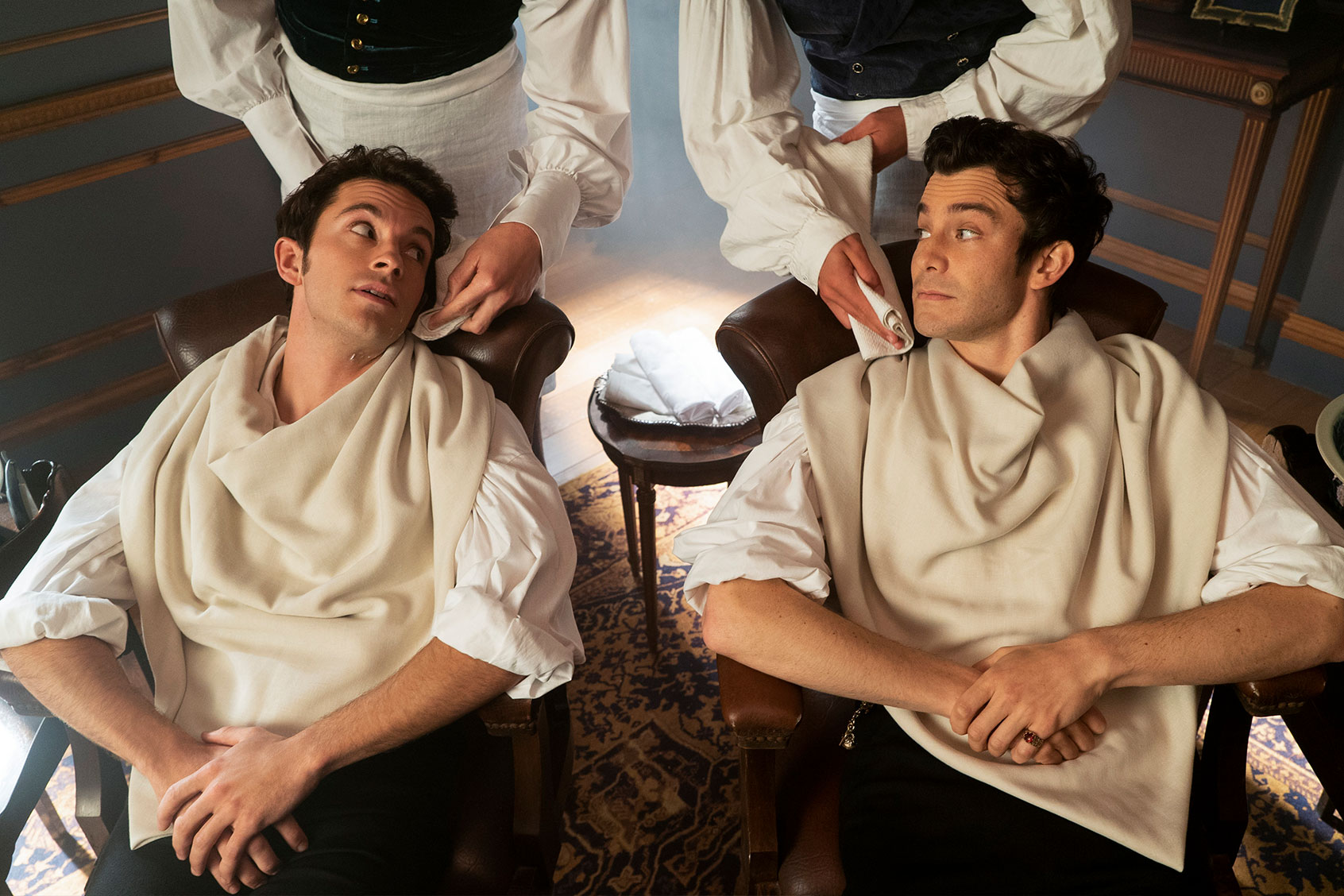
Why “Bridgerton” probably won’t make Benedict queer (but should)

The first season of “Bridgerton” might have been all about Daphne’s (Phoebe Dynevor) marriage to the Duke of Hastings (Regé-Jean Page), but Benedict’s (Luke Thompson) interest in a male artist (Julian Ovenden) didn’t go unnoticed by the show’s fans. It suggested that the second eldest Bridgerton might actually be gay — or, at the very least, bisexual.

So when the show’s second season appeared to backtrack as the character explored a heterosexual relationship with Tessa (Emily Barber), a woman from art school, fans were predictably upset. And their anger seems well placed in light of showrunner Chris Van Dusen recently giving an interview and saying that the character’s storyline in Season 1 was not meant to suggest he was gay and that it was a “conscious choice” not to have his sexuality be fluid in Season 2. 

It’s still possible that the show’s third season (the series has already been renewed through Season 4) will alter the course of Benedict’s story once again. But there are a couple explanations for why the series is unlikely to feature a same-sex relationship for Benedict and doom him to be yet another one of TV’s straight white boys.

RELATED: Why “Bridgerton” and “Sanditon” dialed back the sex – and came out stronger for it

There’s no rule that says narrative arcs cannot be altered.

The first explanation is the most obvious, but it’s also the easiest to ignore or fix given how arbitrary it is: Benedict being queer doesn’t align with the character’s storyline in the books. In “An Offer From a Gentleman,” the third novel of author Julia Quinn’s best-selling series, the character embarks on a very Cinderella-like story when he meets a young woman named Sophie at a masquerade ball. 

But while the show is a pretty faithful adaptation of Quinn’s novels when it comes to the gist of the Bridgerton clan’s romances, there’s no rule that says narrative arcs cannot be altered, especially if doing so would offer better representation or a more inclusive depiction of the world. We’ve already seen more people of color cast in starring roles – and as romantic interests – than in any other period drama (except perhaps Hulu’s “The Great”). And so far, it’s been nothing but a net positive.

The Great Bee Encounter of Season 2 plays out much differently in the novel.

Besides, we’ve already seen the series make changes to major storylines during adaptation; The Great Bee Encounter of Season 2 plays out much differently in the novel. By changing it for the screen, it frames and shapes Anthony (Jonathan Bailey) and Kate’s (Simone Ashley) relationship much differently – making their eventual marriage one of mutual agency and love, not based on being compromised. (Daphne already did that in Season 1.) So, it’d be quite easy for the writers to alter Benedict’s love story as well to feature a male love interest in place of Sophie.

The second explanation is a bit more complicated, less concrete, and admittedly requires a bit of reading between the lines. It has to do with Netflix itself and the way that the company operates globally. As we saw with the cancellation of “The Baby-Sitters Club,” the streaming service’s (apparent) goal is to grow its subscriber base outside of North America. One of the ways to do that is to bring the platform’s biggest and most successful shows (think “Bridgerton,” “Stranger Things,” “The Witcher,” etc.) to countries around the world. But if shows feature queer characters, it could potentially make doing this more difficult.


Want a daily wrap-up of all the news and commentary Salon has to offer? Subscribe to our morning newsletter, Crash Course.


Consider how Disney has been self-censoring its properties in order for them to be available in the sizable Chinese market. There are multiple cases of Beijing’s censors removing same-sex kisses from films and eliminating scenes in which queer individuals’ sexuality is mentioned. Now, Netflix is not currently available in China (or North Korea, Crimea, Russia, or Syria, for that matter), but the underlying idea is the same: It’s possible that it is easier for the streaming service to release and promote content around the world when it conforms to certain (if limited) societal views. So if “Bridgerton” were to actually commit to Benedict being queer and embark on a storyline in which it is confirmed that he is canonically bisexual (and again, I stress that it should), it could potentially limit where the show streams and/or cost the company subscribers. That could even explain why Benedict’s gay pal is nowhere to be seen this season; he’s much easier to leave out than to edit out.

BridgertonJonathan Bailey as Anthony Bridgerton and Luke Thompson as Benedict Bridgerton in “Bridgerton” (Liam Daniel/Netflix)Of course, there’s no definitive proof that the company is actively censoring “Bridgerton” (or any of its properties), or even influencing the show’s creative team’s decisions. But a quick glance at some of the most popular shows on the streaming service does reveal that some of them are lacking in terms of queer representation. It’s not to say there aren’t any characters who identify as queer appearing on Netflix series, but how often are they the main characters (like Benedict would be in his season, obviously) versus a supporting or side character? And while I don’t want to wade too deep into conspiracy theories, it does seem a bit telling that the character appeared to be coded as at least curious in Season 1 and then quickly put back into the heterosexual box for Season 2. It reads like a network note, which is quite unfortunate.

It would also, for lack of a better word, make the show a lot more interesting.

The London depicted in “Bridgerton” is already a more racially diverse world than exists in Quinn’s novels. The show has also been been sex-positive in the past. It now has an opportunity to make a difference by further increasing its on-screen representation. By bringing a queer relationship to the forefront, the writers have a chance to tell a story that doesn’t often get to be told, especially not on a major TV show. It would also, for lack of a better word, make the show a lot more interesting. Because with eight Bridgerton siblings potentially in need of love — and with the show already setting up a Colin (Luke Newton)/Penelope (Nicola Coughlan) romance — it’s going to get pretty damn boring if everyone is straight.

More stories to check out: 

Vegans rejoice! We have 18 Passover recipes for you

During Passover, certain plant-based foods are already verboten, which makes finding vegan Passover recipes tricky. During the holiday, most Jewish households avoid chametz, or grains that have come in contact with water for longer than 18 minutes. Depending on which ethnocultural group and branch of Judaism one belongs to, there may be other avoided foods during Passover, from rice to sunflower seeds to lentils. (For some, it also means avoiding anything packaged that isn’t explicitly labeled “kosher for Passover,” even if it does fall within the dietary requirements.) This can make nourishing oneself a bit challenging for vegans who thrive on plant-based staples like grains and legumes. When it comes to vegan Passover recipes that meet most of the religious guidelines, lean heavily into vegetables, quinoa, fruit, matzo, and most nuts. Same rules go for dessert — just add (dairy-free) chocolate.

These 18 vegan Passover recipes are free of chametz, and should be welcome at any seder (or for any meals throughout the week). However, some do include kitniyot (non-chametz grains and legumes that many Ashenaski Jewish households historically avoid). In recent years, the Committee on Jewish Law and Standards, which represents the interest of Conservative Jews, decided that kitniyot are kosher for Passover. If that’s not your style, skip them. You also may see a few packaged baking items, like 1:1 gluten-free flour and baking powder, that may not be specifically certified kosher for Passover. So we’ll recommend that you check with your guests to see which specific and additional dietary requirements they follow during the holiday before diving in.

For your seder (plus other dinners and lunches)

1. Vegan Matzo Ball Soup

Eggless matzo balls are totally possible! These are made with chickpea flour and aquafaba, and float in a rich, golden, you-won’t-believe-it’s-chicken-free vegetable broth.

2. Creamy, Vegan Italian Root Vegetable Soup

If you’re skipping matzo balls and chicken broth but still craving soup, try this creamy potato, celery root, and turnip number.

3. Roasted Endive with Walnut Vinaigrette

Endive is often one of the bitter herbs present on the Passover seder plate, but it makes a delightfully crunchy salad as part of the festive meal.

4. Grilled Chicory Salad with Chile-Fennel Dressing

Chicories also check the “bitter herbs” box on the seder plate — in this recipe, jazz them up with this spicy and fragrant fennel seed dressing.

5. One-Pot Kale and Quinoa Pilaf

If you skip the cheese, this kale and quinoa pilaf is a filling and flavorful one-pot meal that just may become a new weeknight go-to, even after Passover’s over.

6. Quinoa Salad with Hazelnuts, Apple, and Dried Cranberries

This sweet and crunchy quinoa salad can start as a side on your seder table, but it’s never a bad idea to make extras (lunch tomorrow!).

7. Tzimmes

While “tzimmes” translates from Yiddish as “a big fuss,” the dish is pretty simple: carrots and sweet potatoes stewed with dried fruit and warming spices. (Swap the butter in this recipe for olive oil or vegan butter.)

8. Ziggy’s Charoset

Charoset is another traditional food on the seder plate. In Ashkenazi Jewish households, it’s a mixture of apples and nuts.

9. Safta Rachel’s Iraqi Charoset

This Iraqi-style charoset is a super-simple mixture of date syrup and chopped pecans. It’s especially tasty slathered over a salted matzo.

10. Garlicky Sautéed Asparagus with Toasted Sesame

Welcome spring with this super-simple sautéed asparagus recipe (I’d recommend making a double batch, these tend to disappear in my house).

11. French Lentil and Arugula Salad with Cashew Cheese

This simple and springy lentil salad is topped with cashew cheese — it’s a bright side (or even main) dish.

For dessert (or breakfast)

12. Farmacy Kitchen’s Raw Chocolate Tart

This medjool date- and nut-heavy tart is a totally raw treat that would please any chocolate fan at the end of the passover meal.

13. Raw Avocado Chocolate Tart

If you’re not already wise to the brilliance that is avocado-based chocolate mousse, please make this tart. Even simpler, skip the crust and spoon the filling into cups and top with toasted chopped nuts.

14. Fudgy Vegan Banana Brownie Cake

This cake can’t decide if it’s a brownie or banana bread, but it is just as welcome after the seder for dessert as it is the following morning for breakfast.

15. Gluten-Free Banana Flapjacks

Much as I love a sheet of salted matzo slathered with almond butter, a stack of these pancakes is a bit more filling for breakfast.

16. Apricot, Date, and Cashew Snack Balls

Pop a few of these dried fruit and nut balls into your bag for any hanger-induced emergencies.

17. Vegan Banana Cashew Yogurt

Here, blend creamy cashews with sweet banana into a totally dairy-free meal that looks just like yogurt.

18. Olive Oil and Brown Sugar Granola, Minus the Grains

Who says you can’t have granola without grains? This recipe leans into nuts and seeds, for a super-crunchy and totally satisfying sweet snack.

Americans don’t like talking about it, but the Soviet Union produced a golden age of science

Russia has never had a great image in the United States. Long before Vladimir Putin invaded Ukraine, the biggest country in the world was notorious in the public consciousness for controlling the Soviet Union during the Cold War, spreading Communism after the Bolshevik Revolution and even purportedly throwing its weight behind Donald Trump in the 2016 presidential election.

Yet if not for Russian scientific genius, Americans — and the rest of the human race — would live in a very different world, and certainly a far less interesting one.

The Golden Age of Soviet Science is, not coincidentally, pretty much one and the same as the Golden Age of Space Exploration. The pivotal year was 1957, when a satellite the size of a beach ball was shot into space. Known as either Sputnik or Sputnik-1, the seemingly insignificant hunk of metal came into being because both the Soviet Union and the United States recruited as many German scientists as they could for their missile programs. Although Soviet space programs languished when Joseph Stalin led that empire — he had little interest in aerospace technology — his successor, Nikita Khrushchev, instantly saw the potential of having the Soviets eclipse the United States in this budding tech sector.

RELATED: Science quietly wins one of the right’s longstanding culture wars

Under the leadership of rocket scientists like Mikhail Tikhonravov and Sergei Korolev, a new program was approved by the Soviet Academy of Science in 1954 and quickly put America’s scientists to shame. When Sputnik was launched on Oct. 4, 1957, the 183-pound gizmo circled Earth’s surface once every 98 minutes, transmitting interesting data (by the standards of the 1950s) about various points on the planet’s surface. At the same time, it was hardly a masterpiece of technology — the Soviets knew that it would not last very long, nor was intended to. The goal was to achieve the historic first, in this case being the first country to send a man-made object into space.


Want more health and science stories in your inbox? Subscribe to Salon’s weekly newsletter The Vulgar Scientist.


Their next goal was to be the first country to send a living creature into space. Soviet scientists picked Laika, a stray mongrel found on the cold streets of Moscow. Experts were not sure if any organism could survive outside of the planet’s orbit, and Laika’s journey would if nothing else demonstrate whether that was the case. On Nov. 3, 1957 — less than one month after Sputnik-1 was launched — Laika became the first animal to enter space on board Sputnik-2. While scientists dishonestly claimed at the time that they unsuccessfully tried to bring her back home alive, subsequent reports reveal that they knew before her launch that she was doomed. One scientist, Dr. Vladimir Yazdovsky, took her home with his children the night before she was strapped into the satellite, later writing that “Laika was quiet and charming” and that “I wanted to do something nice for her: She had so little time left to live.”

When his spacecraft landed near the western Russian city of Engels, Gagarin was greeted by a bewildered farmer and his daughter who had wandered over the mysterious round capsule that fell from the sky. Approaching them in a strange silver suit, Gagarin reassured them, “Don’t be afraid, I am a Soviet like you, who has descended from space and I must find a telephone to call Moscow!”

Laika’s final hours were far less wholesome: She died of either overheating or asphyxiation shortly before she was meant to be euthanized by poison. (Notably, American space programs also resulted in the deaths of a number of space-borne animals, mostly monkeys.)

Of course, the crowning achievement of Soviet science occurred when a human being, Yuri A. Gagarin, finally journeyed through space. Finishing the trail that Laika had blazed, Gagarin’s spacecraft Vostok 1 launched in what is now Kazakhstan on April 12, 1961 — only five days before America would humiliate itself again with the failed Bay of Pigs invasion in Cuba. Gagarin only stayed in space for 1 hour and 48 minutes. When his spacecraft landed near the western Russian city of Engels, Gagarin was greeted by a bewildered farmer and his daughter who had wandered over the mysterious round capsule that fell from the sky. Approaching them in a strange silver suit, Gagarin reassured them, “Don’t be afraid, I am a Soviet like you, who has descended from space and I must find a telephone to call Moscow!”

This is not to say that all aspects of the Soviet scientific golden age were, well, truly golden. There was also a tremendous amount of censorship, especially if a scientific discipline ran afoul of the whims of the Soviet intellectual elite. Perhaps the most notorious incident involved Trofim Lysenko, a biologist and agronomist who abused his power as director of the Institute of Genetics at the Soviet Academy of Sciences. Lysenko disagreed with Mendelian genetics, which correctly held that genetic traits are passed through chromosomes. Lysenko, by contrast, argued that both environmental and somatic factors could also influence heredity. Scientists who did not echo his inaccurate views were fired, imprisoned and sometimes even killed. These included one of Lysenko’s mentors, botanist Nikolai Vavilov.

Nor was his negative legacy limited to persecuting dissidents. When Lysenkoism was applied to agricultural policy in Communist countries like the Soviet Union or China, the end result was invariably famine.

The point here is not that the Soviet Union was inherently superior to the United States, either morally or scientifically. It is rather that, while it is easy to condemn Russia when it is causing geopolitical chaos due to the machinations of a despot, it is important to remember the nation’s positive legacy in many respects. Indeed, the space race spurred by Soviet scientific advances led to American state investment in science and education to a degree that still resonates today — yielding a generation of American scientists and engineers who might not be here if not for the non-violent Cold War competition. 

For more Salon articles about science and history:

Is Michelle Wu America’s food justice mayor?

On a raw, 24-degree February morning, Boston Mayor Michelle Wu is waxing philosophical about food and farming. Standing in front of a shivering who’s-who of Boston’s urban agriculture, food access, and economic development communities at the Fowler Clark Epstein Farm in the historically Black Mattapan neighborhood, Wu is announcing the formation of two new city offices — the Office of Food Justice and the GrowBoston: Office of Urban Agriculture — to tackle food access and production, respectively.

In a multicultural, nearly 400-year-old city with a massive economic gulf between the city’s wealthiest and poorest residents, the two offices will oversee what is arguably the most ambitious food policy agenda Boston has ever seen and one that could serve an example for other cities nationwide.

When a reporter asks Wu what this day means to her personally, she launches into an heartfelt recollection. As a child, she says, her Taiwanese American family drove an hour every week to the grocery store “that had the vegetables and spices that my parents felt were home.” Then she reflects on the bureaucratic hurdles of opening a small tea shop in Chicago in her early 20s after graduating from Harvard, an experience that would inform and inspire her later work to clear some of those barriers in Boston as a City Hall staffer and then as an at-large city councilor.

“Food is so intrinsically part of our identities, our cultures, and our humanity,” she tells the crowd, “and the chance that Boston has to keep building the movement that has been growing here is incredible.”

Other Boston mayors have cared about food and farms, of course, but Michelle Wu is a former small restaurant owner whose experience navigating tricky licensing landscape in Chicago inspired, in part, her entry into law school (she is the first lawyer to serve as Boston’s mayor since 1984) and government service after that.

Food justice advocates laud the access they had to Wu when she was a city councilor and praise her depth of knowledge on the issues. She is Boston’s first mayor who is also a mother, and she knows how to feed a family, advocates say. But will a perfect storm of challenges in Boston — including a high-profile search for the city’s seventh schools superintendent in 15 years and the ongoing recovery from the pandemic — put food justice on the back burner in New England’s largest city?

A foundation of food, family

By all accounts, Michelle Wu’s deep appreciation for food — and the power it has as a cultural force — runs deep. After eating her parents’ home-cooked Taiwanese food growing up, she moved east from Chicago in 2003 to attend Harvard and quickly landed a job at the prestigious Boston Consulting Group after graduation. But when her younger sisters called with the news that their mother, Yu-Min, was exhibiting signs of a mental health crisis, Wu and her then-boyfriend, Conor Pewarski, moved back to Chicago to care for her.

And instead of jumping into Chicago’s corporate world, as she had in Boston, Wu took her savings and opened Loose Leaf Tea Loft — a tea shop she imagined Yu-Min taking over as a retirement project when she was well enough. But red tape with the city delayed the shop’s opening several times, forcing Wu to “go beg our local alderman for assistance,” Wu told the Boston Globe in 2021. Once the shop opened, everyone helped keep it going, with Wu making dumplings and cookies and her sisters tasting the teas that they would serve. The space, a former antique shop, became the site of poetry readings, entrepreneurship courses, and open mic nights.

“I loved it. Once we actually got it open, it was beautiful,” Wu told the Globe. “It really felt like creating a space that was welcoming people into our home. We were able to find and become part of the local arts scene.”

The energy in the shop brought a needed distraction from her mother’s worsening mental health condition. Wu and her family were coming to grips with the reality that Yu-Min would never be well enough to take over the shop, so they sold it and moved her mother, sisters, and Conor (whom she married in 2011), to Boston in 2010. At 23, Wu became her sister Tori’s legal guardian and entered Harvard Law School, where she studied under and befriended Elizabeth Warren, now a Massachusetts senator.

Read more Civil Eats: A Regenerative Grazing Revolution Is Taking Root in the Mid-Atlantic

Wu went to work as a law fellow in former Mayor Thomas Menino’s administration developing more streamlined processes for food trucks and restaurants to get their businesses up and running — work that was fueled directly by her own experience.

Dr. Julian Agyeman, professor of urban an environmental policy and planning at Tufts University, remembers receiving a call in 2013 from Wu, who was running for the Boston City Council as an at-large candidate and wanted to meet to discuss food and environmental policy. After a 30-minute meeting with her in a local café, Agyeman called up a colleague, Dr. Justin Hollander, who teaches land use and environmental planning at Tufts.

“I’ve just met the future mayor of Boston,” he remembers telling Hollander.

As a city councilor at large representing every resident of Boston from 2013 until 2021, Wu continue her work to cut red tape at City Hall to help small businesses. She co-wrote the city’s first BYOB legislation for restaurants, and filed legislation to limit the rights of chain stores and restaurants in Boston’s neighborhoods. Wu sponsoredBoston’s Good Food Purchasing Program (GFFP) — which passed in 2019 but hasn’t been implemented yet — requiring large public food purchasers (including Boston Public Schools) to give preference to regional producers who use sustainable practices, protect the livelihoods of farmers and workers, treat animals humanely, and promote health and well-being in their foods.

After announcing her candidacy for mayor in 2020, Wu released a massive, 66-page “Food Justice Agenda for a Resilient Boston,” the result of years of listening and responding to community needs around nutrition, land use, and economic development.

Beyond signing her name to food-related policies, Wu has ardently educated herself about Boston’s food justice and urban agriculture landscape and supported its growth, advocates say. As a young city hall staffer, she shadowed a dietician in charge of food access programming at Boston Medical Center and, in the early days of the pandemic, helped connect an Eastie Farm food distribution program with unreached families in need.

“We’re thrilled for Mayor Wu to be in this position,” says Erin McAleer, executive director of Project Bread, a nonprofit that addresses food insecurity in Massachusetts and worked with Wu while she was a city councilor to increase awareness of the Supplemental Nutrition Assistance Program, or SNAP, among Boston residents. “She understands food insecurity as a systemic issue, not an individual failing,” said McAleer. “She recognizes the power of policy change, but she also recognizes the importance of community-informed solutions.”

Besides marketing SNAP benefits to more low-income Bostonians, McAleer said the Wu administration has the opportunity to address food insecurity by addressing the economic foundations of hunger: the rising cost of housing and childcare, and the widening wealth gap between the city’s richest and poorest residents, among others.

From access to justice

The announcement of the city’s new food and farm offices within the first 100 days of Wu’s administration was intentional, aides say, signaling the importance of expanding access to local, nutritious food — and to the urban soil to grow it — as a policy priority. But the fact that the event took place just under the wire, on the 100th day — also signals the fact that Wu has a lot on her plate.

The pandemic hit Boston’s immigrant, low-income, and essential worker communities particularly hard, resulting in lost wages and an inability to put food on the table. Community leaders say the pandemic created an acute economic and food access crisis, but also shined a light on inequities that have been present in under-resourced Boston communities for decades.

Before former Mayor Marty Walsh left office early to join the Biden administration as Secretary of Labor, the city set up the Boston Resiliency Fund in 2020 to coordinate assistance for those who were most affected by the pandemic, an initiative “that allowed so many [food access] initiatives to either scale or to take off,” McAleer says. Walsh’s Office of Food Access, which was the Office of Food Initiatives under his mayoral predecessor Thomas Menino, played a vital role connecting food insecure Boston families with their most basic need.

Read more Civil Eats: A New California Law Will Create a Lot More Compost — but Will it Make it to Farmland?

Wu’s agenda is designed to go beyond access to pursue food justice, which she says includes community control of land for their own food; dismantling systems that oppress food chain workers and elevate white supremacy; and creating real economic opportunity for all Bostonians, especially those in BIPOC communities, to create food businesses and build assets and wealth.

She’s restructuring City Hall names and departments to reflect that change. In her February announcement, Wu said the Office of Food Justice, now housed within the Environment, Energy, and Open Space Cabinet, will “bring together all the ways in which food security, economic development, and climate justice are deeply intertwined.” The office will work in concert with the new Office of Urban Agriculture — Boston’s first office focused on food production — which will coordinate urban farms, food forests, and gardens and permanently convert unused city-owned land into food oases.

One of the principal objectives of Wu’s new Office of Food Justice is to begin implementing the Good Food Purchasing Program, which Wu championed as a City Councilor. She sees a future where not just school children are eating local, sustainably and humanely produced food from Black-owned farms and businesses across the region, but patients, city workers, and college students, too.

As a candidate for mayor, Wu laid out a plan to get Boston’s 11 hospitals (which spend an estimated $18.2 million per year on food), 31 colleges and universities (and their collective meal budget of $34 million), and other anchor institutions to commit to the six good food purchasing standards. It can do so through the convening of an “anchor council” wherein institutions will set goals together and leverage their collective purchasing power, according to Wu’s food justice plan.

“Imagine if each one of our hospitals and universities serving their faculty, patients, and students joined together with the City of Boston to think about how we can source, collectively, the healthiest, farm-produced Massachusetts apples, the jobs right here in Mattapan to help produce that produce,” Wu said in her announcement of the new offices. “We know that it’s possible, and that food is a way to touch and intertwine each one of our collective futures.”

Such an ambitious food justice agenda will not be easy to fulfill. Wu’s feuds with several public safety unions over a requirement that city workers be vaccinated and boosted against COVID-19 took some wind out of her policy sails in the early months of her term. And the resignation of embattled Boston Public Schools Superintendent Brenda Cassellius in January leaves Wu with the unenviable task of hiring the city’s seventh head of schools in the past 15 years.

Still, there is a palpable optimism among the food justice community toward the new administration.

The immediacy of the climate crisis is both what got Kannan Thiruvengadam into urban agriculture and what attracted him to then-candidate Wu. Thiruvengadam directs Eastie Farm in the city’s East Boston neighborhood, a multisite urban farm that is also a food distribution and youth training center. Speaking to a crowd of his food justice friends and colleagues at the February press conference, he pauses to collect himself.

“I feel like we’re at a good time here in the city because the people who ‘get it’ are also in the position to make it happen,” he said. “I get a little emotional because I’ve been waiting for something like this, and it’s happening.”

For Tufts’ Agyeman, Wu’s success will be wrapped up in an approach that harnesses the full power of city government alongside a collection of veteran food justice and urban agriculture groups who are ready for a change.

“Boston has an incredible group of community-based organizations — I mean, really world-class — and the enthusiasm that you’re seeing [about Wu] is a recognition that she has spelled out not just a government agenda but an all-hands-on-deck agenda,” Agyeman said. “This is an inclusive agenda, this is a visionary agenda, and this is an achievable agenda over the medium term.”

Biden allocates $3 billion for low-income families to retrofit homes

Low-income families will be able to lower their utility bills with $3.16 billion in funding for home retrofits made available by the Biden administration on Wednesday. The move will also help the U.S. reduce greenhouse gas emissions.

The funding, approved as part of the infrastructure bill that Congress passed last year, will flow to states, tribes, and territories through the federal Weatherization Assistance Program, or WAP.

The surge in federal dollars means that the program will be able to retrofit about 450,000 homes by installing insulation, sealing leaks, upgrading appliances to more energy-efficient models, and replacing fossil fuel-powered heating systems with cleaner, electric options. That’s a significant increase; in recent years, the program has retrofitted about 38,000 homes annually.

The boost to WAP comes amidst an embargo on Russian oil, soaring energy prices, and rising inflation — circumstances strikingly similar to those when WAP was created in the 1970s. Congress authorized WAP in 1976, just a few years after the Organization of Petroleum Exporting Countries imposed an oil embargo against the U.S., causing energy prices to spike and inflation to climb. Lawmakers reasoned that one way to achieve energy independence was to reduce energy demand by making buildings more efficient.

Now, the current administration sees WAP as a tool for curtailing greenhouse gas emissions and promoting environmental justice, too.

Improving energy efficiency and electrifying homes (while also cleaning up the electrical grid) can make a significant dent in the U.S.’s greenhouse gas emissions. According to the Environmental Protection Agency, the residential sector was responsible for 20 percent of the country’s greenhouse gas emissions from fossil fuel combustion in 2020.

It can also be a way to improve the finances and health of environmental justice communities. Department of Energy eligibility guidelines allow households bringing in less than twice the federal poverty income level to apply for WAP, meaning a family of four can apply if their combined income is less than $55,500 a year. The agency estimates that the program helps the families served save an average of $283 on their utility bills each year.

Electrifying homes can improve people’s health, and even save lives. Studies have found that gas stoves release hazardous levels of air pollution, and are especially harmful to children. A Harvard study found that fine particle pollution from gas-burning appliances in residential and commercial buildings caused nearly 6,000 premature deaths nationwide in 2017.

Jasmine Graham, energy justice policy manager at WE ACT for Environmental Justice, a group founded in West Harlem, applauded the administration for boosting funding for WAP, but pointed out that energy woes aren’t the only challenges plaguing environmental justice communities. “Residents of these communities tend to live in older, under-maintained housing that often has issues such as mold, lead, and asbestos,” she said. She hopes that the Biden administration will also do more to address these concerns.

“Is It Cake?” feeds viewers visual catharsis for uncertain times

I doubt that even Netflix expected “Is It Cake?” to be such a hit.

The premise, if you haven’t already binged the TV series, involves professional bakers trying to fool judges by creating cakes that don’t look like dessert but instead appear to be everyday commodities – purses, toys, fast food.

But while most critics see this as just another iteration of mindless TV, I see “Is It Cake?” as deeply tied to a cultural moment in which deception – and learning how to recognize it – has become a part of everyday life.

A show like “Is It Cake?” offers a safe way for viewers to test their capacity to spot a fake. This may seem like a stretch; cake and conspiracy are hardly the same thing.

Yet as an art historian who researches the history of visual deception, I’ve noticed that throughout American history, moments of social anxiety around truth tend to be accompanied by similar “fool the eye” pop culture phenomena, from P.T. Barnum’s hoaxes to a painting technique called “trompe l’oeil.”

Guessing games

In the last decades of the 19th century, while the art world was enamored with Van Gogh and Matisse, middle-class Americans became obsessed with trompe l’oeil paintings – hyperrealistic still lifes that featured life-size everyday objects. They looked so real that people reportedly tried to grab painted violins and dollar bills off the wall.

Even those prone to suspicion could fall victim, because the paintings were exhibited without frames and in atypical settings like pubs, shop windows and hotel lobbies. In these quintessential urban public spaces, the act of being fooled became a collective social experience, much as it is on “Is It Cake?” Not only are viewers taking pleasure in the failure of the on-screen judges, but the judges themselves must also reach a collective verdict after 20 seconds of debate.

One particular 1890 painting of stamps is remarkably reminiscent of a bit called “Cash or Cake” that closes out each episode of “Is It Cake?” The painting, by Jefferson Chalfant, unassumingly features two Lincoln stamps side by side, one painted, the other real. Below them, a painted news clipping invites viewers to decide which is which.

On the show, the winning baker faces this exact predicament when offered the opportunity to win bonus prize money: Guess which of two containers overflowing with cash is actual money, and which is cake. The point of the confounding exercise is to show that even the most talented illusionists can be made the fool.

Self-conscious humor was also central to trompe l’oeil. Rather than signing their names as artists are apt to do, trompe l’oeil painters often painted their own photographs or letters addressed to their studio into their still lifes as an inside joke.

In the past, what fascinated Americans about trompe l’oeil was not just that they could be tricked by talented artists, but the how and why of their deceptions. The Secret Service questioned one painter named William Harnett after he painted a wrinkled five-dollar bill.

Another, John Haberle, had one of his paintings forensically examined by a panel of experts who observed it under a lens and even rubbed off some of the paint.

This investigative penchant explains the curious genealogy of “Is It Cake?” The show traces its roots to a series of viral Instagram videos from 2020 that featured illusionistic cakes at their moment of denouement.

Most viral videos don’t become television series, but this one has because the esoteric process of creating the illusion equally fascinates, even if viewers have no fondant-focused aspirations.

A sugary allegory

Trompe l’oeil is an ancient art form, but it exploded in the United States, and nowhere else, in the 19th century because deception was a new and particularly American problem.

Cities and industries were growing more rapidly than ever before, and many Americans moving from rural areas faced urban anonymity for the first time. Cities were rife with crooked opportunists, from con artists to counterfeitersthe Anna Delveys and Tinder Swindlers of their day. Trust was a tricky matter.

In this milieu, trompe l’oeil had a social function. It gave Americans an outlet for testing their discernment in a manageable and pleasurable way.

So it doesn’t surprise me that the gravitation toward a show like “Is it Cake?” is happening at a time when more ominous deceptions lurk in the media landscape. There are even moments when the show veers in darkly suggestive directions. In one episode, the bakers collectively try to educate host Mikey Day by teaching him the term “tiltscape,” which, they explain, has to do with the balance and weight distribution of baked goods. After Day uses the word in his appraisal of the contestants’ work, they later reveal that the term was a hoax all along – a sugary allegory for socially fueled misinformation.

At a time when we often don’t know if what we encounter on our screens can be trusted, it feels good to alleviate those anxieties with a show in which the only consequence of being fooled is cutting into a shoe that we assumed was a cake.

This article is republished from The Conversation under a Creative Commons license. Read the original article.

Ukraine war is testing evangelicals’ love of Putin as a conservative hero

In February 2022, evangelical leader Franklin Graham called on his followers to pray for Vladimir Putin. His tweet acknowledged that it might seem a “strange request” given that Russia was clearly about to invade Ukraine. But Graham asked that believers “pray that God would work in his heart so that war could be avoided at all cost.”

The backlash was fast and direct. Graham had not solicited prayers for Ukraine, some observers commented. And he had rarely called on believers to pray for President Joe Biden.

A significant subset of the U.S. evangelical community, particularly white conservatives, has been developing a political and emotional alliance with Russia for almost 20 years. Those American believers, including prominent figures such as Graham and Jay Sekulow of the American Center for Law and Justice, see Russia, Putin and the Russian Orthodox Church as protectors of the faith, standing against attacks on “traditional” and “family” values. At the center is Russia’s spate of anti-LGBTQ laws, which have become a model for some anti-trans and anti-gay legislation in the U.S.

RELATED: Russia’s holy war: Vladimir Putin, Pope Francis, the Virgin Mary and the fate of Ukraine

Now, with Russia bombing churches and destroying cities in Ukraine, the most Protestant of the former Soviet Republics, American evangelical communities are divided. Most oppose Russia’s actions, especially because there is a strong evangelical church in Ukraine that is receiving attention and prayers from a range of evangelical leaders.

Nonetheless, a small group of the most conservative American evangelicals cannot quite break up with their long-term ally. The enthusiasm for Russia is embodied by Graham, who in 2015 famously visited Moscow, where he had a warm meeting with Putin.

On that trip, Putin reportedly explained that his mother had kept her Christian faith even under Communist rule. Graham in turn praised Putin for his support of Orthodox Christianity, contrasting Russia’s “positive changes” with the rise of “atheistic secularism” in the U.S.

But it was not always so. Once upon a time, American evangelicals saw the Soviet Union and other communist countries as the world’s greatest threat to their faith.

They carried out dramatic and illegal activities, smuggling Bibles and other Christian literature across borders. And yet, today, Russia, still a country with low church attendance and little government tolerance for Protestant evangelism, has become a symbol of the conservative values that some American evangelicals proclaim.

Bible smuggling

Starting in the 1950s, but intensifying in the 1970s and 1980s, U.S. and European evangelicals presented themselves as intimately linked to the Christians who were suffering at the hands of communist governments.

One evangelical group that emerged at this time was Open Doors, whose main aim was to work for “persecuted Christians” around the world. It was founded by “Brother Andrew” Van der Bijl, a Dutch pastor who smuggled Bibles into the Soviet Union and Eastern Europe.

Brother Andrew and other evangelicals argued that what Christians in communist countries really needed were Bibles — reflecting how important personal Bible reading is in evangelical faith.

Brother Andrew turned the smuggling into anti-communist political theater. As he headed toward the border in a specially outfitted vehicle with a hidden compartment that might hold as many as 3,000 Bibles, he prayed. According to one ad that ran in Christian magazines, he said:

“Lord, in my luggage I have forbidden Scriptures that I want to take to your children across the border. When you were on earth, you made blind eyes see. Now I pray, make seeing eyes blind. Do not let the guards see these things you do not want them to see.”

Van der Bijl’s memoir, “God’s Smuggler,” became a bestseller when it was published in 1967.

Taking Jesus to the communist world

By the early 1970s, there were more than 30 Protestant organizations engaged in some sort of literature smuggling, and there was an intense, sometimes quite nasty, competition between groups.

Their work depended on their charismatic leaders, who often used sensationalist approaches for fundraising.

For example, in 1966, a Romanian pastor named Richard Wurmbrand appeared before the Senate Judiciary Committee’s Internal Security subcommittee, stripped to the waist and turned to display his deeply scarred back.

A Jewish convert and Lutheran minister, Wurmbrand had been imprisoned twice by the Romanian government for his activities as an “underground” minister before he finally escaped to the West in 1964.


Want a daily wrap-up of all the news and commentary Salon has to offer? Subscribe to our morning newsletter, Crash Course.


Standing shirtless before U.S. senators and the national news media, Wurmbrand testified, “My body represents Romania, my country, which has been tortured to a point that it can no longer weep. These marks on my body are my credentials.”

The next year, Wurmbrand published his book, “Tortured for Christ,” which became a bestseller in the U.S. He founded his own activist organization, Jesus to the Communist World, which went on to engage in a good bit of attention-grabbing behavior.

In May 1979, for example, two 32-year-old men associated with the group flew their small plane over the Cuban coast, dropping 6,000 copies of a pamphlet written by Wurmbrand. After the “Bible bombing,” they lost their way in a storm and were forced to land in Cuba, where they were arrested and served 17 months in jail before being released.

As I describe in my book “The Kingdom of God Has No Borders,” critics hammered these groups for such provocative approaches and hardball fundraising. One leading figure in the Southern Baptist Convention complained that the practice of smuggling Bibles was “creating problems for the whole Christian witness” in communist areas.

Another Christian activist, however, admitted that the activist groups’ mix of faith and politics was hard to beat and had the ability to draw “big bucks.”

After communism: Islam and homosexuality

These days, there is little in the way of swashbuckling adventure to be had in confronting communists. But that does not mean an end to the evangelical focus on persecuted Christians.

After the fall of the Berlin Wall in 1989, advocates turned their attention to the situation of Christians in Muslim-majority countries. Evangelicals in Europe and the U.S. increasingly focused on Islam as both a competitor and a threat. Putin’s war against Chechen militants in the 1990s, and his more recent intervention on behalf of Bashar al-Assad’s government in Syria, made him popular with Christian conservatives. Putin claimed to be protecting Christians while waging war against Islamic terrorism.

For American evangelicals, the most salient issue has been Putin’s opposition to LGBTQ rights and “nontraditional” views of the family. 

Meanwhile, Putin’s policies of cracking down on evangelism do not seem to overly bother some of his conservative evangelical allies. When Putin signed a Russian law in June 2016 that outlawed any sharing of one’s faith in homes, online or anywhere else but recognized church buildings, some evangelicals were outraged, but others looked away.

This is in part because American evangelicals in the 2010s continued to see Putin as being willing to openly support Christians in what they saw as a global war on their faith. But the more immediately salient issue was Putin’s opposition to LGBTQ+ rights and nontraditional views of the family.

Graham was among those who waxed enthusiastically about Russia’s so-called gay propaganda law, which limits public material about “nontraditional” relationships. Others, such as the World Congress of Families and the Alliance Defending Freedom, have long been cultivating ties with Russian politicians as well as the Russian Orthodox Church.

Putin allies on defensive

In the 21st century, then, the most conservative wing of evangelicals was not promoting its agenda by touting the number of Bibles transported across state lines, but rather on another kind of border crossing: the power of Putin’s reputation as a leader in the resurgent global right.

Now, the invasion of Ukraine has put Putin’s allies on the defensive. There are still those, including the QAnon-supporting 2020 Republican candidate for Congress Laura Witzke, who explained in March 2022 that she identifies “more with Putin’s Christian values that I do with Joe Biden.” But Graham himself emphasized to the Religion News Service that he does not support the war, and his humanitarian organization Samaritan’s Purse sent several teams to Ukraine to operate clinics and distribute relief.

For the moment, Putin’s status as the global right’s moral vanguard is being severely tested, and the border-crossing advocates of traditional marriage may find themselves on the brink of divorce.

This article includes material from a piece published on Sept. 4, 2018.

This article is republished from The Conversation under a Creative Commons license. Read the original article.

Read more on Vladimir Putin and his allies:

Texts show Trump Jr. pushed Meadows to overturn election

Text messages obtained by the House select committee that is investigating the January 6, 2021 insurrection revealed that people in former President Donald Trump’s closest circle—specifically his son, Donald Trump Jr.—were strategizing before the votes were even counted how they could overturn the results of the 2020 election and make sure Trump served a second term.

As CNN reported late Friday, Trump Jr. texted former White House Chief of Staff Mark Meadows on November 5, 2020—just two days after the election and before President Joe Biden was announced the winner—to urge White House officials to use “operational control” to ensure a Trump victory regardless of the results.

“POTUS must start 2nd term now,” Trump Jr. told Meadows.

He then suggested that Republican-controlled state legislatures in Pennsylvania, North Carolina, Wisconsin, and Michigan “step in” and put forward “Trump electors.”

“This is as explicit as it gets,” tweeted Yale University philosophy professor Jason Stanley.

The former president’s son also suggested that the U.S. House could vote for president by state party delegation if neither Trump nor Biden got enough electoral votes to be declared the winner, with each state getting one vote.

“We either have a vote WE control and WE win OR it gets kicked to Congress 6 January 2021,” said Trump Jr.

His final suggestion was having the White House dismiss FBI Director Christopher Wray, who angered Trump and his allies by not releasing information that they believed would be harmful to the former president’s rivals.

“Fire Wray,” the president’s son told Meadows, adding that former acting Director of National Intelligence Richard Grenell should replace him.

Later that same day, Grenell announced that he was joining Trump campaign officials in filing a lawsuit to “stop the counting of illegal votes.”

“Jr. was all in on the coup and demanding misuse of the government to investigate Trump’s enemies,” said New Yorker staff writer Susan Glasser.

Trump Jr.’s text messages were revealed less than two weeks after a federal judge found that the former president and his lawyer likely committed a felony in their efforts to overturn the election by filing dozens of lawsuits and demanding vote recounts—which took place in several states and never unveiled any irregularities that would have changed the outcome of the vote.

As Common Dreams reported last month, U.S. District Court Judge David Carter found the Trump campaign’s strategy after the election was “a coup in search of a legal theory.”

Fox News airs disparaging Biden clips

On Tuesday, April 5, former President Barack Obama visited the White House to celebrate the 12th anniversary of the Affordable Care Act of 2010, a.k.a. Obamacare — marking his first time in the White House since leaving office in January 2017. Progressive and liberal media outlets responded to the event by discussing the achievements of Obamacare (millions of previously uninsured Americans obtained coverage) as well as its shortcomings (the U.S. still doesn’t have universal healthcare, unlike other developed nations).

But Fox News used the event to take a cheap and ageist shot at President Joe Biden. Fox News, according to Rolling Stone’s Ryan Bort, aired clips of Biden and took them “out of context” to promote the conspiracy theory that the president is mentally impaired.

Bort explains, “Biden does look a little confused in the first clip, but it’s only because he’s looking for someone — perhaps Interior Secretary Deb Haaland, whom he brings up onstage to applause shortly after the conservative media cut ends. The second clip ends right before Biden gets Obama’s attention and introduces him to someone. Twitter user @acyn helpfully attached the full clips to the end of the Fox News segments lambasting the edited versions.”

Fox News host Laura Ingraham commented, “Biden doesn’t know what on Earth he’s doing or, at times, where he even is.” Meanwhile, on Fox News competitor Newsmax TV, one of the far-right pundits remarked, “This is a lost old man” and argued that Biden should be removed from office via the 25th Amendment to the U.S. Constitution “if the evidence continues to mount that” he “is actually incapable of performing his job.”

As Russia attacks Ukraine, experts weigh European “renaissance” for nuclear energy

As European leaders condemn Russia’s unprovoked invasion of Ukraine and unspeakable violence against civilians, many have found themselves in an awkward situation: They need Russian gas to heat buildings and generate electricity. Roughly one-fourth of Europe’s energy comes from natural gas, and as much as 40 percent of it flows from Russia.

To help wean Europe off Russian gas as soon as possible, some experts are now calling for a boost in nuclear power generation. Although nuclear power plants already represent an important energy source for the continent, at least 30 facilities have either recently been decommissioned or are slated to close in the next few years. Keeping them running could provide a reliable and low-emissions alternative to fossil fuels. The idea is controversial — especially because of fears of a meltdown — but advocates have argued that, in the face of a crisis, existing reactors should be kept online and those scheduled for retirement should be allowed to keep producing energy.

“Nuclear provides a lot of energy and it does so without impacting the environment by producing greenhouse gases,” said Adam Stein, director of nuclear energy innovation at the Breakthrough Institute. “Keeping those plants on the grid allows them to offset potential imports of fossil fuels.”

Indeed, this was the argument made last month by the International Energy Agency — an intergovernmental body that analyses the world’s oil supply — in a 10-point plan for European Union leaders. To cut reliance on Russian natural gas this year, the agency said, countries should “maximize generation from existing dispatchable low-emissions sources” — including by completing a reactor that’s being built in Finland and by resuming operations of facilities that were taken offline last year for maintenance and safety checks. 

According to the IEA, these two actions alone could quickly add 20 terawatt-hours of power generation to the European grid in 2022 — about as much energy as five Hoover Dams would produce in a year. Additionally, delaying the closure of five nuclear reactors slated for retirement later this year and in 2023 could reduce the European Union’s gas demand by nearly 1 billion cubic meters per month — slightly more than one-third of Spain’s natural gas consumption in 2020

Part of the reason the idea has gained attention is because of the daunting prospect of scaling up alternative solutions, both fossil and renewable. Shipments of liquefied natural gas are constrained by global supply and a lack of import and export terminals. And at the current pace of wind power installation — about 14 gigawatts per year — it could take decades to build the 370 gigawatts that experts say is needed to supplant the energy provided by Russian gas.
Leaders in at least one country have been convinced by this logic. In mid-March, Belgium announced it would keep its seven nuclear reactors online for another decade, despite previous plans to retire them by 2025. The U.K. has also toyed with the idea of keeping one of its nuclear power plants online past its planned retirement date, but has yet to make a final decision.

Stein, with the Breakthrough Institute, thinks that more countries should adopt this approach to foster a “nuclear renaissance” — not only keeping existing reactors in operation but bringing back those that have recently been retired. Germany, for example — which has pledged to end all nuclear power generation by the end of this year — lost about 4 gigawatts of nuclear power capacity between 2020 and 2021 as it switched off three of its last six power plants. For context, this is roughly enough energy to power 3 million homes. But the plants are still there and could, in theory, be turned back on. Any obstacles to doing so, such as procuring a workforce or quickly lining up uranium orders — which are typically placed years in advance — are largely “overcomable,” Stein said, and regulators could streamline the process by loosening recertification requirements for facilities that have only recently shut down.

“We know that the operating characteristics of these plants are safe,” he said, and called for “cutting the red tape, as it were, to meet emergency needs.”

The German government, however, didn’t find the nuclear argument quite as compelling. Germany ruled out a nuclear revival earlier this month on the grounds that it would “not help” alleviate the country’s energy crunch. An assessment by the German economy and environment ministries concluded that bringing back nuclear power generation would not begin to offset fossil fuel demand until fall 2023 and would pose legal and safety risks.

Public polling suggests that much of the German public would agree with this decision. In a series of Europe-wide surveysconducted last year by the pollster YouGov, nearly 60 percent of German respondents said the country should not produce nuclear energy or that it should only play only a “small role” in the country’s energy mix. The poll showed similar skepticism in countries with longstanding stances against nuclear power, such as Denmark and Italy. Respondents from countries that are more dependent on nuclear power — particularly France and Sweden — expressed greater support, with up to 45 percent saying nuclear should play a “major role” in their countries’ energy mix, on par with solar and wind. 

European opposition to nuclear power is informed by high-profile disasters in decades past, including the 2011 meltdown at Japan’s Fukushima Daiichi facility. These fears were heightened in early March, when Ukraine’s Zaporizhzhia power plant was attacked by Russian forces. Many feared an unintended radiation leak or the weaponization of the facility’s atomic resources.
“This sort of thing could happen anywhere at any time,” said Linda Pentz Gunter, director of media and development for the nonprofit Beyond Nuclear. Even short of a deliberate attack on nuclear facilities, she added, a natural disaster or even a prolonged power outage could lead to a potential catastrophe — especially for reactors that are decades old and are nearing the end of their scheduled lifetimes. “The potential for a high amount of radioactivity, for where it could blow, is really frightening.” This view is contested by those who point out that nuclear power plants are associated with far fewer deaths per year than other energy sources such as natural gas and even wind power.

Kai Vetter, a nuclear engineering professor at the University of California, Berkeley, pointed out that there are downsides to any power source. Natural gas fuels war, creates air pollution, and contributes to climate change; nuclear power carries some risk of a meltdown; and the expansion of renewables requires destructive mining for rare earth metals. 

Given the current context, however, Vetter says the risks from nuclear are small compared with the danger Ukrainians are facing every day. “You can compare a gamma ray from a nuclear reactor with a bullet flying from a gun,” he said. “One will kill you and the other will not kill you. One has to keep that perspective.”

However, there is further controversy over the economics of nuclear power. The cost of renewable energy has fallen dramatically over the past few years, and some experts say that it would be faster and cheaper to offset Russian gas demand by building new solar and wind and making efficiency improvements to help buildings use less energy. According to Amory Lovins, an adjunct professor of civil and environmental engineering at Stanford University, unsubsidized efficiency upgrades or renewables can compete with existing nuclear reactors’ operating costs. A yearly benchmarking study from the asset manager Lazard estimated that generating nuclear energy from existing facilities costs between $24 and $33 per megawatt-hour, whereas the levelized cost of unsubsidized energy from solar and wind — which includes the money it takes to build solar panels and wind turbines in the first place — can be as low as $26 per megawatt-hour. Plus, Lovins argues that there is an opportunity cost to keeping nuclear reactors online: More money going into nuclear operations equals less money available for renewables, which most countries agree they need more of. 

“Nuclear restart or extension in Europe is a distraction,” Lovins said. “It’s more about politics than a realistic strategy.” Because of significant regulatory hurdles and safety concerns, he also disagreed with the assertion that retired nuclear reactors could be easily brought back online.

Instead, Lovins and others support an alternative plan to cut Russian gas dependence that was put forward by the European Commission in early March. Dubbed REPowerEU, this proposal does not include nuclear power, but instead calls for diversified gas supplies, expedited permitting for renewables, and support for other fuel sources such as hydrogen and biomethane. Behavioral change is also an underappreciated way to slash Russian gas dependency, Lovins argued, and he suggested that if Europeans who use gas for heating turn down their thermostats by 1 or 2 degrees Celsius, they could make a big impact on overall demand.

It’s not yet clear whether the crisis in Ukraine will spur a significant change in European nuclear power. Countries that have long opposed nuclear continue to do so, while those that are heavily reliant on it have no plans to change course. It may take a policy change at the E.U. to turn the tide one way or the other. Against the backdrop of the war in Ukraine, the bloc is in the midst of a fierce debate over whether to define nuclear as a “green” source of energy. A final taxonomy is set to inform climate-conscious investors as they decide which new energy projects to fund.

Meanwhile, Vetter stressed that conditions in Ukraine are forcing hard decisions that are unlikely to please everyone. Between needing to keep energy supplies stable, supporting Ukraine, and getting off fossil fuels, every option comes with its tradeoffs. While he vocally supports keeping nuclear reactors online, he expressed hope that the situation will catalyze a more balanced discussion of the continent’s energy future. “It’s really sad what’s happening in Ukraine,” he said, but “even the more idealistic politicians are saying we need more pragmatic solutions.”

Our group chat is a sacred space to talk openly about being Black in America

A computer geek probably could have figured out a faster way to get to our first communication with one another on Facebook’s Messenger, but I just went the old-school route.

I used my finger to scroll back on my phone. And I scrolled. And scrolled. And scrolled some more. It took so long that I had to keep putting the phone down to do other things. But after about 45 minutes, I finally got to that first message in a private conversation between four Black Facebook friends — two women, two men — that started in early fall 2018 and has never stopped.

We are four people who live in four different cities across more than one time zone and have four different careers in various industries; four friends who have never been in the same city at the same time, let alone in the same room together. Four friends who, through a weird alchemy of Facebook connections, became cyber friends and cultural soulmates.

Whether you call it a secret society, a backchannel, a mastermind group, a hivemind or a book club where we don’t read books, we just consider it a sacred space to talk openly about being Black in America.

RELATED: The queering of friendship: Rethinking platonic relationships, guided by LGBTQ models

It’s a conversational touchstone without veils or filters, rules or conventions. Our hundreds of collective spontaneous contributions to this private thread probably crossed the 1,000th interaction mark a long time ago. While we do a minimal amount of off-topic bonding — happy birthdays and holiday wishes, news about moves, job changes, family and travel, the funny or the trivial — it’s rare. Small talk is not our norm. We don’t disconnect long enough to need to reconnect. This is a place where we do the call-and-response of analysis, links to articles, funny gifs and vulnerable check-ins, where we share the occasional anger when there is yet another Black attack on the public highway we’re always traveling down in our regular, unconnected lives.

None of us are in this conversation because of a lack of people in our worlds we can talk to. It’s not that.

Social media is responsible for a lot of good, but it’s also responsible for a lot of harm. Our four-person Illuminati (minus the global domination, cryptocurrency wealth and superhero powers) has saved us over and over again as we speak without the white gaze or conservative Black glare beating down on our conversations. The four of us are professionals in our mid-40s to late 50s and are absurdly busy in the other areas of our lives. None of us are in this conversation because of a lack of people in our worlds we can talk to. It’s not that. We range from “it’s complicated” to long-time marriage, from no kids to small kids to grown kids, with tons of family, friends, colleagues and memberships in various communities. Personally, I have several close friends, including a best friend of 21 years with whom I have yet to find a topic we can’t talk about or a burden we can’t share.

So we four Facebook amigos don’t come together because of missing pieces in our lives. We come together to have a dedicated space and place to acknowledge and explore ongoing racial trauma in ways that leave us each feeling seen, heard and nourished.

In the more than three and a half years since our thread first started, there have been weeks when not a word is shared between us. But we live in America, where there is an incessant drizzle — sometimes an avalanche — of events and incidents that claw at our psyches. And that’s just the societal issues. That doesn’t count our collective frustrations about personal issues of race in our lives, such as workplace interactions with peers and supervisors, events within our families (because being Black doesn’t mean that you only have Black family members or that all your Black family members are right in the head) and public interactions that have distinct overlays of racial bias.

It’s not that any of us think every unpleasant and challenging interaction is about race. Nope. Not at all. But just like a person with bad allergies can usually tell the difference between an allergic reaction and coming down with a cold, Black people who interact with white people daily usually know the difference too.

The most recent gathering in our cyber secret lounge was over our simultaneous frustration with all the bootleg think pieces about the slapping incident between Will Smith and Chris Rock. I’m not going to revisit our conversations about that. It exhausts me to even type out their names. But our exchange was yet the latest example of how grateful I am to know that if I send a bucket down this particular well, it’s going to come up with fresh water. It’s not that we all think alike. We don’t. But on this, we had the same issue of being tired of seeing so many people, most of them white, have these takes on the incident that lacked nuance, cultural competency or understanding of the gender dynamics and issues in the Black community. It wasn’t that any of the four of us remotely thought Will was justified in slapping Chris. We were just all sick of seeing people rushing to have more commentary about the Black people at the Oscars than we’ve seen with talk about the deaths of Oscar Grant through Daunte Wright put together. It’s not that we didn’t get why people wanted to talk, joke and meme this to death. We were just exhausted. Exhausted over how, once again, unless literally charged with a hate crime, whiteness gets to have the luxury of having individual bad actors while Black people have to debate how to shift the burdens on our collective backs when any Black person does any bad thing.

Our foursome has provided an organic source of self-care that doesn’t require maintenance but maintains each of us during some of the most trying of times to be Black in America.

Since fall 2018, our foursome has provided an organic source of self-care that doesn’t require maintenance but maintains each of us during some of the most trying of times to be Black in America. And my point isn’t that these times compare to slavery or the legalized segregation of Jim Crow. Historically, as well as on a global scale, we four friends live with a measure of wealth and privilege that our great-great-grandparents could never have envisioned for us. Not that any of us are wealthy. But collectively, we’re educated and have good jobs. However, for Black Americans, those privileges come with a different set of problems. Because with those advantages, we’re still dealing with the stereotypes and biases and prejudices and hypocrisy and glorious, never-ending double standards that have always impacted Black people in America. We don’t get a pass because we speak the King’s English well or don’t have one mark on a criminal record between us or any of the other Black respectability measurements we’re constantly expected to stay ahead of.

While I have the blessing of my three compatriots to write this, I promised that I would not name them, give identifiable details or quote from our thread. All three gave me immediate and warm support. Which didn’t surprise me. They trust me, as I trust them. And that battle-weary trust and camaraderie sustains us.

I offered up those conditions of anonymity and they agreed, because we all know the cost — actually, the price — Black people have to pay for being too honest about race in public spaces. Depending on where we work or what we do, it can threaten our livelihoods. That’s not new. That’s why when certain people talk of cancel culture, we note the irony of how we Black people have always had to deal with being “canceled” the second we get too outspoken or real or combative or unrelenting or just speak too much. Or, as I said years ago, Back people are evaluated in the workplace on two things — the actual job we’re hired to do and how we make the white people in the room feel. In modern times, that room extends to social media.

RELATED: “Say ‘no’ nicely”: Toxic workplace culture demands Black women shrink themselves and never speak up

So yes, accidentally we created a place where we can lay our burdens down and take a rest. Or lay burdens down where we can say all the things we can’t say at work, or in our racially mixed communities, or even on our own Facebook posts where we have to worry about the sensibilities and sensitivities of people irritated and threatened by Black opinions that don’t center them, cater to them and allow them to feel like good white people who are better than the bad white people.

I was reminded that I was the one who brought the four of us together privately after we all had a like-minded but nuanced approach to a post about a Black piece of entertainment that was all the rage at the time. Little did I know the conversation would never stop as we each needed a safe place to navigate, validate, unpack, console, counsel, laugh, grieve and breathe together through the constant assaults on our peace. The peace we each had to find during the big societal events like the increase in hate crimes and hateful speech under the Trump presidency, the 2020 presidential campaign, the George Floyd and Breonna Taylor protests, police shootings, the perceptions of those shootings and how COVID was disproportionately impacting the Black community. We even have had to find peace in the moments of historic victory because they were tinged with unwarranted attacks, hypocrisy and gaslighting.

The most important thing I love about our fabulous four is that we did remote communication before remote was cool or necessary. Yet, we’ve never Zoomed or Facetimed or arranged even to be on at the same time to exchange messages. In addition to my job, I’m a playwright, and the closest we’ve ever come to an organized meeting is when two of my three cohorts, separately, in two different cities at two different times, went to see two different plays of mine. Our norm is someone making a comment in the middle of the night or the middle of the day, and as work and family and other obligations allow, we all respond when we can. The baton is never dropped because the race is never over.

No matter how tough the conversations get, there has always been an understanding that ego never enters the room.

In all organizations, institutions, groups and even families there are unspoken contracts. As I thought about what makes our bond through a conversational thread so strong, it’s because it’s not trying to be. Yet it is. And no matter how tough the conversations get, there has always been an understanding that ego never enters the room. Grace and a feeling of safety with one another is the default. In other words, the opposite of the social media site that brought us together — where ego dominates so many conversations, even with people you agree with, and you find that the more people there are commenting on a substantive post, the less grace and safety there is in the discussion.

I know that if I had this little cabal on day one of joining Facebook, I would have gotten into far fewer arguments and been far less combative and antagonistic with others on the issue of race. I would have walked away from those conversations and walked into our thread.

While there may come a day when on conversation ends, it will be because Mark Zuckerberg burns Facebook to the ground. It won’t be because in our lifetimes America will magically have a reckoning on the issue of race and heal itself. And it certainly won’t be because our village of four stops needing one another, stops needing sacred space.

So, dear Black people, if you don’t have a four-pack like mine, I heartily suggest creating one. Trust me, your soul will thank you — and the rest of your world will be better for it, too. 


Want a daily wrap-up of all the news and commentary Salon has to offer? Subscribe to our morning newsletter, Crash Course.


More personal essays on friendship bonds: 

This genius shrimp and spaghetti deserves a spot on your spring dinner rotation

Shrimp and spaghetti is a dinner party staple in my southern kitchen, especially around this time of year. The sauce in my spin of this comfort classic has a freshness that is welcome after the heavier comfort foods of winter, to which the shrimp provides the perfect complement.

I wasn’t ever given a hand-written recipe for shrimp and spaghetti. I was told how to make it in great detail, and I later wrote down what I remembered. While I had a better memory back then and probably penned the instructions pretty well, I wasn’t given exact amounts for any of the ingredients. 

As the years went by, I developed a sense of how much of this and how much of that goes into this dish. The truth, however, is that my recipe can handle some improvisations. As long as you stick to the basic bones, you can use what you have on hand in terms of tomatoes and tomato sauce.

Related: Travel south to the “Seafood Capital of Alabama” with these delectable, punchy pickled shrimp

This recipe for shrimp and spaghetti brings me back to the point in my life when I began branching out and trying new cuisines like Indian and Thai food and sushi. Up to that point, I basically ate what I grew up eating.

The excitement of learning how to cook things that I didn’t grow up eating made me more confident in the kitchen, and I wanted to share my newfound passion with everyone. Before long, Sunday brunches and casual dinner parties for family and friends had become a thing at my house. In fact, I served this shrimp and spaghetti when I hosted my first get-together, complete with Chianti in those little basket-wrapped bottles.


Want more great food writing and recipes? Subscribe to Salon Food’s newsletter.


I’m not saying that I ever thought of shrimp as exotic or even as something different from the norm. I’m from the South, so I grew up having shrimp and seafood at home. But we didn’t have shrimp at my house like they have shrimp down in Bayou La Batre. Don’t get me wrong: My mom put together a great shrimp boil, but she never would have dreamed of putting shrimp in spaghetti.

You won’t need anything more than a simple green salad and crusty bread to make this meal feel complete. Whatever you serve on the side, I promise you’re going to love my shrimp and spaghetti. 

***

The ingredients

Tomatoes and tomato sauce 

I was told to use 2 cans of tomato sauce and 1 can of tomatoes. There are so many tomato sauces to choose from in today’s grocery stores — just reach for what you like. In my latest batch of shrimp and spaghetti, I added a fancy jar of pizza sauce — it was delicious. I also had a couple of gorgeous hot-house-grown tomatoes on hand, so I included them, as well. The most important thing is to stick to the same 2:1 ratio of sauce to tomatoes.

Shrimp

Use small to medium, wild-caught shrimp that are peeled and deveined. The only dance you have to master for this recipe is when to add your spaghetti and shrimp to the sauce.

It varies so much from person to person as to when the shrimp are perfectly cooked. The truth is the shrimp will continue to cook a bit even after you remove this dish from the heat. Don’t be scared. Simply taste the shrimp once you think they’re done and cut the heat as soon as you’re satisfied. 

Another thing I learned from my time in Bayou La Batre is to soak your peeled and deveined shrimp in milk while you’re chopping and preparing everything for this dish (or any shrimp dish, for that matter). Allow them to soak for about an hour, if possible. The milk takes any “funky” taste out of the shrimp.

Spaghetti

Feel free to use whatever type of spaghetti you prefer, whether that means traditional or gluten- or grain-free. But do reach for spaghetti rather than a thicker linguine or a thinner angel hair pasta. You want the noodles to soak up the flavor of the sauce and still hold up. 

Cook your spaghetti just to the point of al dente because the pasta will cook a bit more once you add it to the sauce. Lastly, only briefly rinse your cooked noodles. You don’t want them to cool the sauce too much when combined. 

Celery

As with many shrimp dishes, celery is important in this recipe. Though it’s thoroughly cooked without any discernible crunch, it adds a bright, additional layer of flavor to an otherwise more typical red sauce.

Use a sharp knife when you chop the celery to prevent “strings.” With a bit of care, you can prevent this from happening. 

Herbs

Most of the time, I have fresh herbs in my kitchen. I reach for those, but it’s not a big deal if you use dried ones. I generally use more than what is called for (as I do with the garlic). Use however much you desire. (Remember: You can always add more, but you can’t subtract.)

***

Recipe: Gulf Coast Shrimp and Spaghetti 

Yields
4-6 servings
Prep Time
10 minutes
Cook Time
60 minutes

Ingredients

  • 1 large bell pepper (any color), seeded and chopped
  • 2 medium onions, chopped
  • 3 stalks celery, chopped
  • 1-4 cloves garlic, chopped fine
  • 2 cans tomato sauce
  • 1 can tomatoes
  • 1-2 teaspoons sugar 
  • 2 pounds small to medium wild-caught shrimp, peeled and deveined
  • 1 pound spaghetti
  • Fresh basil 
  • Fresh parsley
  • Olive oil (or oil of choice) to sauté onions, peppers and celery
  • Salt and pepper, to taste
  • Optional: parmesan and red pepper flakes


Directions

  1. Sauté the onions in 1-2 tablespoons of oil over low heat until very soft and mostly translucent. Add the bell pepper and celery and continue cooking until they’re soft and the onions are a bit browned.

  2. Add the cans of tomato sauce and tomatoes, 1 teaspoon of sugar, the chopped garlic and some of the herbs.

  3. Simmer very low for 30 minutes.*

    *If you also cook on a gas stove, you may need to turn off the fire a few minutes here and there to prevent scorching your sauce as it simmers. (It’s ideal to let your sauce cook long and slow so the flavors have time to come together.)

  4. Adjust the seasonings (herbs and sugar), plus salt and pepper to taste. 

  5. While the sauce is simmering, cook the spaghetti (according to the directions on the package), rinse briefly and set aside.

  6. In a colander, rinse the shrimp and set aside.

  7. Add the spaghetti and shrimp to the sauce. Cook very low until the shrimp are done.

  8. To serve, add a hefty sprinkling of parmesan, some red pepper flakes for heat and a drizzle of the best olive oil you have.


Cook’s Notes

Start with one teaspoon of sugar. If your sauce is too acidic/sour, add a little bit more. I’ve never had to add more than 2 heaping teaspoons of sugar, but adjust to taste as needed.

The rule of thumb for serving shrimp is 1/2 pound per person, but said rule really doesn’t apply here. This is a hearty dish — you can easily serve 6 people with 2 pounds of shrimp.

If you’re using fresh herbs, save some to add after serving.

More recipes from Bibi’s Southern kitchen to try: 

Salon Food writes about stuff we think you’ll like. Salon has affiliate partnerships, so we may get a share of the revenue from your purchase.

A 5-ingredient formula for the perfectly creamy spring pea soup

I’m all about recipes that allow you to riff based on what you have on hand in your kitchen. Pantry pasta? Yes, please. A free association salad? Sign me up. My current seasonal favorite is a really simple pea soup that takes different forms based on whatever ingredients are hanging out in my crisper drawer

The general formula is simple: sauté some alliums, add some stock and peas to the pot, swirl in something a little creamy and gently flavor with some herbs or zest. Let the whole thing simmer until you’re ready to serve, preferably along with some fresh, crusty bread or toasty croutons

Well, what are you waiting for? Grab a spoon — and let’s dive into why this combination of flavors works well.

Alliums 

Alliums include ingredients like onions, garlic, scallions, shallots, leeks and chives. They all have that kind of slightly biting, verdant and funky flavor — typically with a little sweetness and umami if caramelized just enough. They’re the workhorses of the kitchen, which is why so many recipes use them as a base ingredient. 

Related: Gives peas a chance? It’s time for their turn in the “it vegetable” spotlight

Stock 

While I wouldn’t use a super “meaty” stock, such as beef or mushroom, the only requirement for the one used in this soup is that it tastes good. Splurge (if you can) for the “nice” boxed stock or simply make your own. Either chicken or vegetable stock would be delicious. 

Peas

Behold, the star of this recipe! Both fresh or frozen shelled peas work beautifully here.

Dairy (or non-dairy) cream 

Basically, you want to add just a hint of creaminess to this recipe. You can, of course, use actual cream or half-and-half, but there are some delicious alternatives, too. A dollop of sour cream or yogurt adds a really pleasant tang to the soup, while coconut milk and oat milk also add additional depth of flavor.

Herbs or zest 

Peas pair really well with a variety of herbs, including tarragon, dill, sage, mint, chives (pulling double duty as allium and herb!) and parsley. A modest handful makes a big difference to a pot of soup. Similarly, a tablespoon or two of zest — either lemon or lime — can brighten the flavor.

Some of the best combinations I’ve tried include: 

  • 4 minced scallions, 4 cups vegetable stock, 4 cups peas, 1/2 cup full-fat coconut milk and 1 tablespoon lime zest 
  • 2 minced shallots, 4 cups chicken stock, 4 cups peas, 1/2 cup cream and 1 tablespoon minced tarragon 
  • 1/2 cup chopped leeks, 4 cups chicken stock, 4 cups peas, 1/2 cup sour cream and 2 tablespoons chives 
  • 1 cup chopped white onion, 4 cups vegetable stock, 4 cups peas, 1/2 cup cashew yogurt, 2 tablespoons chopped mint 
  • 4 cloves minced garlic, 4 cups chicken stock, 4 cups peas, 1/2 cup oat milk, 1 tablespoon lemon zest

Like most soups, the longer you let the pot simmer, the more flavorful the end result will be. That said, if you have 30 minutes to let this soup cook, that’s more than enough. For the sake of a classic texture (and aesthetics), I like to blend the final soup using a small food processor or immersion blender — but that’s honestly optional. 

Bonus: Pea soup is one of the few soups that works well both hot and cold, making this a staple that you can carry along with you into the early summer. 


Want more great food writing and recipes? Subscribe to Salon Food’s newsletter.


 More of our favorite simple weeknight recipes: 

Salon Food writes about stuff we think you’ll like. Salon has affiliate partnerships, so we may get a share of the revenue from your purchase.

Of course Ina Garten’s ice cream hack is totally brilliant

Ina Garten’s cooking is always alluring in its simplicity, making it seem like it is easy to be as effortlessly fancy as she is. Part of that is her expertise in knowing exactly which parts of a meal you should spend time on, and which parts can be best assembled from store-bought ingredients.

In a segment this week on the Today Show, she offered a brilliant suggestion: how to gussy up plain ol’, store-bought vanilla ice cream and make it into a dinner party-worthy dessert.

She went on to promote her new show, called “Be My Guest,” where she invites people over to cook, eat, and chat. She also shared some recipes — as well as some ideas that barely qualify as such because they’re so simple. For dessert, she suggests serving a few scoops of vanilla ice cream with limoncello poured over it and biscotti from a bakery tucked into the side.

“Everybody will lose their mind,” she claimed. If you ask us, that’s a pretty enticing endorsement for something that takes almost no effort.

In the course of serving it, she also declared Taylor Swift the best dinner party guest, saying “She was pretty great. And perhaps more importantly, Ina admitted that she also bought the lasagna she served them for their meal. When asked if the host needs to ‘fess up when something they are serving was purchased rather than made from scratch, Ina gives everyone permission to keep your own secret.

All you need to say, the dinner party queen directs, is: “I’m so glad you like it.”

In “Severance” a sham work/life balance cuts the same when the body keeps the score

"Severance," the Apple TV+ sci-fi thriller that wrapped its head-scratchingly captivating first season on Friday, has sent viewers and critics into a heady clue-piecing whirlwind that I'm seeing many compare to the puzzle box of Showtime's "Yellowjackets." But where the mysteries of "Yellowjackets" sprout from the duality of pre- and post-trauma female athletes, "Severance" is spun around a group of office drones who elected to have the memories of their work lives and personal lives surgically severed. 

Executive produced and primarily directed by Ben Stiller, which is a fun little pondering all its own, "Severance" opens with the voice of Mark Scout (Adam Scott) asking, "Who are you?" Everything we experience thereafter echoes that same question.

RELATED: "Fresh" risks its butt to innovate the horror kill

Mark, or Mark S. as he's called, works as part of the Macrodata Refinement division of a company called Lumon Industries. He organizes numbers into electronic files, but does not know the purpose of doing so. He strives to stay in the good graces of his stern and monosyllabic boss Harmony Cobel (Patricia Arquette) who treats him, and the rest of his co-workers, more like lab rats than people, offering brisk handshakes as a reward for a job well done . . . only by direct request. Mark S. also finds enjoyment in the "defiant jazz" dance parties and oddly specific food feasts (fresh melon, deviled eggs, waffles) dangled as incentives for passing workload milestones.

Britt Lower in "Severance," now streaming on Apple TV+ (Apple TV+)Mark's work life is that of an "innie," meaning that as soon as he exits the elevator leading into Lumon Industries, he leaves all the memories and character traits of his "outtie" behind. He doesn't know that he has a sister. Doesn't know that he's a new uncle. Doesn't know that he elected to have his work/life balance severed to get an eight-hour respite from the reality that his wife died in a tragic car accident (or so we're told . . .  but more on that later). But when the elevator dings, and his "outtie" life goes up on the hanger, his eyes are still red from crying, and his breath still reeks of booze from the night before because, as the saying goes, the body keeps the score. 


Want a daily wrap-up of all the news and commentary Salon has to offer? Subscribe to our morning newsletter, Crash Course.


Who is a person without their memories?

The "Who are you?" of "Severance" pushes further into the larger philosophical question of who a person is without their memories, and whether detachment from memory in an effort to detach from psychological pain could ever work. If you get hit in the head, but don't remember how, or why (a thing that happens to Mark S. in the premiere), won't you still come away with the pain of it? And if you're grieving the loss of a loved one; a physical pain, as much as a mental pain, as anyone who's experienced it would know; wouldn't your body still feel that screaming ache, even if the memory of what caused it wasn't immediately accessible?

Adam Scott, Zach Cherry, John Turturro and Britt Lower in "Severance," now streaming on Apple TV+ (Apple TV+)

The episodes ramping up to Friday's finale are infused with "whys" and "hows." Some we got answers to, and some we didn't. Mark S., prompted by clues left behind by a co-worker named Petey (Yul Vazquez) – who found his way out of Lumon, but to a tragic end – seeks out answers, but finds only more questions. 

What does Mark's Macrodata Refinement division really "do?" How does the severance process actually work? And who is the cult-like figure Kier Eagan who is the founder of the company but, seemingly moreso, deity of it?

In a grand-slam of anxiety-inducing synchronicity, Mark S., along with his co-workers Helly R. (Britt Lower), Irving B. (John Turturro) and Dylan G. (Zach Cherry) use intel gleaned from snooping and clues left behind by Petey, to throw the switches that make the severance process work in reverse long enough to where their "innies" become conscious during the time of day usually occupied by their "outties." All but Dylan, who bravely stays behind to do the necessary work that allows this to happen.

As Dylan locks himself into the inner sanctum of Lumon with one hand on one lever, and another stretched the opposite way, his co-workers see, for the first time in their severed recollection, all the memories they tried so hard to remove themselves from. Helly learns that she's the granddaughter of Kier Eagan, Irving learns that he spends his "outtie" time painting the same bleak images of Lumon hallways, over and over, in thick black paint. And Mark learns that his landlady has been his boss all this while, spying on his every move.

Why does this new reality have to include work at all?

The kicker leaving us hanging until the second season, which has already been greenlit, is that Mark also learns that the wife he thought was dead either looks exactly like, or actually is, Ms. Casey (Dichen Lachman), a wellness counselor at Lumon. This sets up two possibilities for next season. One being that Mark's wife actually did die, and Lumon is somehow reanimating people. Or she didn't die, but took on a non-severed job at Lumon, similar to Ms. Cobel, leaving Mark behind. Which painful reality would be worse? That's sort of the heart of the show in and of itself, when you think of it.

In the world of "Severance" many questions jump from reality to reality, like the numbers the Macrodata Refinement division watch floating around the screens of their "Being John Malkovich"-esque desktops. One that lingers in my own mind is the question of why, in a world where it's been made a scientific goal to remove pain like scraping peas from a dinner plate, why does this new reality have to include work at all? As though, even in our wildest dreams, we're still somehow fine with being cogs in a machine.

Read more:

With threats of nuclear war and climate disaster growing, America’s “bunker fantasy” is inadequate

At the end of the Academy Award-nominated film “Don’t Look Up,” with a meteor hurtling toward Earth, the movie’s three scientist-protagonists gather with family and friends for a last supper around a dinner table in central Michigan.

Having exhausted their efforts at action, they eat the food they’ve prepared and purchased, give thanks and pray before “dying neighborly” – to borrow a phrase coined by poet and writer Langston Hughes in 1965.

“Dying neighborly” was something of a common refrain in the small number of stories told by those writers and artists in the 1960s and 1980s who recognized the dangers of nuclear war but were unwilling or unable to accept the only measure recommended by the government: to buy or build your own shelter and pretend that you’d survive.

These stories didn’t get as much attention or acclaim as “Don’t Look Up.” But they continue to influence how the climate emergency or nuclear war is depicted in books and films today.

Shelter or die?

Faced with a Congress unwilling to fund large-scale sheltering measures, the Kennedy administration decided instead to encourage the private development of the individual shelter industry and to establish dedicated spaces within existing public structures.

Although in Europe and elsewhere, vast public shelters were built, the community bomb shelter was almost universally rejected in the U.S. as communistic. As a result, sheltering was available primarily to the military, government officials and those who could afford it. The practicality and the morality of private shelters were debated publicly. The morality or survivability of nuclear war itself seldom was.

Hughes’s phrase comes from “Bomb Shelters,” one of his “Simple Stories.” These were brief and humorous vignettes of the serious issues faced by Jess and Joyce Semple, a fictional working-class Black couple living in Harlem. In this story, Jess vainly tries to adapt the government’s basement and backyard bomb shelter initiative to his cramped urban neighborhood.

With so many people living in every rooming house, “Even if the law required it, how could landlords build enough shelters for every roomer?” he wonders. “And if roomers built their own shelters – me and Joyce living in a kitchenette, for instance. . . . How would we keep the other roomers out in case of a raid?”

Jess then imagines Joyce’s response following an air raid test: “Thank God, you’re saved, Jess Semple! But let’s tear that shelter down tomorrow. I could not go in there and leave them children and Grandma outside. . . . If the bomb does come, let’s just all die neighborly.”

The opposite of dying neighborly was the mainstream debate over the right to shoot someone you didn’t want intruding into your private shelter.

This debate was dramatized in a 1961 episode of “The Twilight Zone,” in which desperate neighbors storm the entrance to the basement shelter of the only suburban family with enough foresight to build one.

Yet as musician Bob Dylan recalled of the mostly working-class region of Minnesota where he was raised, nobody was much interested in building shelters because, “It could turn neighbor against neighbor and friend against friend.”

Resignation and retreat

The binary Cold War equation of “shelter or die” meant that the only story that effectively expressed resistance to the premise of nuclear weapons was to die with dignity, according to one’s values.

And it meant that stories of resistance were nearly always elegiac retreats to traditional values of community, religion or family that echoed the hodgepodge collective at the dinner table in “Don’t Look Up.”

In Lynne Littman’s low-budget 1983 drama “Testament,” the citizens of an isolated northern California community cling to their liberal small-town values until they succumb to nuclear fallout from a war viewers never see. Near the end of the film, the surviving and adopted members of the Wetherly family make their last, meager supper a testament to what they have already lost.

In Helen Clarkson’s 1959 novel, “The Last Day,” the members of a Massachusetts island community pool their resources, take in urban refugees, and even tolerate dissenting voices as they die peacefully, one by one, from nuclear fallout.

“We’ve already survived an apocalypse”

Stories of active resistance, radical policy proposals and advocacy for change really were there for the telling during the Cold War, and they’re certainly there today.

But most of the stories that get told, and especially on the biggest platforms, are still formed by the “shelter or die” scenario. This constrains the way change is imagined.

Whether it’s a meteor strike, climate disaster or nuclear war, the end has nearly always been told in the same way for over 60 years: abruptly, hopelessly and completely. Any solutions tend to be limited to the kinds of short-term reactions or speculative technological quick fixes we see in “Don’t Look Up” rather than long-term change or human-centered initiatives.

Until culture finds effective ways of telling other stories than the one I call the “bunker fantasy,” it will be difficult to sustain effective action in response to the climate emergency or the persistent threat of nuclear war.

This is not to say that the bunker fantasy story is useless as a tool for activism or change. As the popularity of “Don’t Look Up” demonstrates, the specter of instant apocalypse can be galvanizing and focusing on a large scale. And in the right hands, its form can be bent toward messages other than “shelter or die.”

But a better use to which we can put the bunker fantasy today is to show how partial a story it really is. The more storytellers can learn to recognize the limitations of certain forms, the more open readers and viewers may be to conceptualizing what the end of the world means.

I don’t think it’s an accident that the examples I’ve found of “dying neighborly” all come from marginalized perspectives: African Americans in Harlem; rural working-class communities in the upper Midwest; female writers. In many ways, these people – as Ohkay Owingeh Pueblo speculative fiction writer Rebecca Roanhorse observes – have “already survived an apocalypse.”

In other words, if you’ve experienced genocide, slavery, colonizing, patriarchy or the explosion of an atomic bomb, you don’t need the specter of imminent destruction to focus your attention. You know all too well that apocalypse is not the end of human history. It has always been part of it.

When survival is something you’re thinking about every day of your life, apocalypse is not a newly emerging threat but an ongoing existential condition. And perhaps the best way to learn how to survive cataclysm while retaining your humanity is by listening to the stories of those who have already been doing it for centuries.

This article is republished from The Conversation under a Creative Commons license. Read the original article.

Why teens are self-diagnosing on TikTok

We were a year into the pandemic when a friend’s teenaged daughter announced decisively that she had ADHD and needed medication. Her mother had shared the news with me during an anxious, socially distanced morning walk — along with her private concern that it wasn’t the correct diagnosis. The girl, however, was convinced. She’d been researching it online, and she didn’t see the need to entertain any other possibilities.

American teenagers and college students are facing a deluge of mental health crises unprecedented in modern history. Contrasted with the clenched determination of prior generations to never admit when there’s a problem, Gen Y’s hunger to identify and treat its emotional challenges isn’t just understandable, it’s pretty commendable. It’s vital, however, for them to be able to distinguish between self-labeling and professional help, especially because neither is 100% accurate or effective.


Want more health and science stories in your inbox? Subscribe to Salon’s weekly newsletter The Vulgar Scientist.


Humans are highly suggestible creatures — as we have all learned from two years of nervously swabbing the insides of our noses. It doesn’t negate the reality of what we may be feeling at any moment; it does however create a need to understand that sometimes belief can create or accelerate symptoms that defy diagnosis. And that adolescents, with their developmentally appropriate need for peer group identification and their upwards of seven hours a day spent on social media, are unique.

In a recent post for Banner Behavioral Health Hospital, psychiatrist Dr. Adeola Adelayo noted a striking rise in “physical and verbal tics” in teen girls. “We’ve seen an explosion of Tourette-like tics in our unit and every single case has been linked with watching countless TikTok videos about people with Tourette syndrome,” she said. “These kids don’t have Tourette’s, but they aren’t pretending either. They have a functional movement disorder as a result of stress, and possibly underlying anxiety or depression, which may or may not have been properly diagnosed.”

Similarly, a December Wall Street Journal feature explored why “Doctors around the country say they’re seeing more teens coming in with self-diagnoses derived from TikTok,” including rare mental health issues like borderline-personality disorder and multiple-personality disorder. Evan Lieberman, a Minneapolis clinical social worker, also noted another aspect of the phenomenon. “There seems to be a trend,” he said, “of using mental-health diagnoses as a social currency.” 

When the algorithm rewards even a casual search for information with recommendations for more and more of the same, within a system that is rife with a mix of legitimate and dubious self-described mental health influencers, it can be tricky for anybody to differentiate between what’s real and what’s the so-called “horoscope effect” of taking generalized information as personal insight. And the fact that the Diagnostic and Statistical Manual of Mental Disorders — the Bible of psychiatry from which most of our modern terminology springs — is a wildly imperfect, frequently arbitrary document only adds to the potential confusion here. 

RELATED: Parenting a teen is intense. Why don’t we talk about it more?

Among professionals, opinions about the convergence of social media and mental health are mixed. Dr. Michael J. McGrath, a psychiatrist and the medical director of the Ohana Luxury Alcohol Rehab in Hawaii, says, “Self-diagnosing a mental health disorder based on social media is a very dangerous trend. Many mental health disorders can lead to fatal outcomes if not diagnosed and treated properly. A person should never use information that they see or read about online to determine if they have a mental health disorder or to determine what treatment they need.”

He adds, “It’s great that there are online creators who are shining the spotlight on mental health conditions. That is great to raise awareness and reduce the stigma associated with mental health conditions. However, it’s vital to regard the information that you see or read as informational only.”

But Manhattan psychotherapist Z Cordero points out that access to resources varies incredibly, and notes the “lack of readily available appropriate and inclusive information” for many. “Visits to therapists, psychiatrists, and neurologists take time, money, and transportation access,” says Cordero, “all things that teens and college students may not have readily available to them. A lot of mental health providers do not accept insurance, and that number will probably grow. Even if young people have access to all these resources, the professionals that they can work with may not be the right fit for them. Is the young person Black, Indigenous, Queer, Trans? What is the professional’s level of cultural awareness around these areas?”

And Dr. Holly Schiff, a doctor and licensed clinical psychologist in Greenwich, Connecticut, advises everyone to be a smart consumer. “Usually the credibility of the source is your first clue to whether the advice will be helpful versus something that has no merit or that could potentially be harmful,” she says. “There are some users that are part of a community that actually encourages unhealthy behaviors and they share tips and tricks of how to self-harm and hide it from others, or strategies to maintain your eating disorder and lose weight faster. These are dangerous and harmful and can be triggering for those who come across these posts. If they don’t have any credentials or their posts are sponsored or they are partnered with brands and products, I would be wary of any advice they post. Social media is a complex tool that can exacerbate anxiety or promote unhealthy habits, but it also positively contributes significantly to the ongoing dialogue surrounding mental health.” She advises, simply, “Don’t try everything you see!”

Of course, it’s not just teens and college students who are self-diagnosing, and it’s not just for mental health or neuro-developmental conditions. I recently attended a medical conference, and one of the biggest frustrations doctors there expressed had to do with adult patients who arrive in their offices certain about both their pre-existing conditions and current complaints, without prior testing or confirmation. We all could use regular reminders that the internet is just a component of information gathering and support, just as providers — and parents — could frequently do a better job of building collaborative, empathetic treatment plans together.

When it comes to talking to our kids, the most important thing is keeping an open mind. If your kid comes to you with a concern or even a strong declaration of apparent fact, start first by taking it seriously. You want to build a trusted team of helpers, not shut down a line of inquiry. When I asked my own teen why she thinks so many teens are self-diagnosing on social media, she told me bluntly, “Because adults don’t believe them.” That strikes me as incredibly sad — and wildly dangerous.

A full dozen years ago, Dr. Srini Pillay warned in Psychology Today that that “One of the greatest dangers of self-diagnosis in psychological syndromes is that you may miss a medical disease that masquerades as a psychiatric syndrome. Thus, if you have panic disorder, you may miss the diagnosis of hyperthyroidism or an irregular heartbeat. Even more serious is the fact that some brain tumors may present with changes in personality or psychosis or even depression.” 

In addition to keeping the lines of communication open, we can remind our kids and ourselves that having a word for something is less significant that having a plan for addressing it. Author Sarah Fay recently reminded in a Salon interview, “There isn’t a single DSM diagnosis that has an objective measure.” And a 2021 Psychology Today feature on the rise of TikTok diagnoses pointed out the need to be mindful of “the central idea of traits and states, with the former being more stable and enduring and the latter a temporary way of being.” A teen may be eager to lay claim to an “I am ___” identity without considering the possibility of being more in an “I currently have ____” situation. That doesn’t diminish the reality of anxiety or depression or distraction, it simply reframes them as not always chronic or defining.

I don’t know if my friend’s daughter has ADHD, or even if she ever got a professional diagnosis. Shortly after that conversation, we lost touch. I do know the girl was wise enough to recognize she was struggling with something, to seek information, and that she had enough trust in her parents to talk to them. That’s a better start than a lot of kids get. “Social media platforms offer a place for healing and fosters a sense of community, as well as reducing stigma,” says Dr. Schiff. But she encourages young people to take the next step and “Tell an adult or talk to their parents. Seeking professional help,” she says, “is the first step into figuring out what you are experiencing, and getting yourself on track to feel better.”

More on teens and health: