Spring Sale: Get 1 Year, Save 58%

Why fake sugars may be bad for you

In many ways, sugar is like a drug. It impacts mood, digestion, sleep and can profoundly affect cognition. Sugar triggers the brain’s reward system in a similar way to drugs, though it’s far more complex than “Oreos are like cocaine.” Withdrawals are also not unheard of, and sugar consumption can be compulsive; however, it’s probably not addictive in the same way that heroin or alcohol can be. “Sucrose use disorder” is not an actual diagnosis like substance use disorder.

Regardless, society seems to have a problem with sugar. Aside from its negative environmental and social impacts, excessive sugar consumption is linked to a wide range of poor health outcomes, including metabolic diseases like obesity and diabetes, cardiovascular damage and dental decay. But it seems impossible to avoid sugar, even if you try, due to the fact unscrupulous companies unnecessarily inject it into food products, including bread, salad dressing, soup, pasta sauces, cereal, tonic water, jerky and much more.

Avoiding sugar is hard, but we crave it for a good reason. Sugar is rich in calories, but it was much more rare before industrial society turned it into the roughly $70 billion business it is today. In order to survive in a nutrition-scarce world millions of years ago, humans evolved to seek out sugars wherever we could find it. In plants, sugars come in the form of fructose, sucrose and maltose, while lactose is a sugar found in milk. The body breaks all of these chemicals down into glucose, which is used for energy and storing fat.

But humans have crafted ingenious ways of making sure we always have a ready supply of sugar on hand, perhaps too much of a good thing. And we like to have our cake and eat it too, so have also invented chemical alternatives to sugar that do not exist in nature or hacking natural sugars to be even more potent.

There’s actually a long history of developing sugar alternatives. In Ancient Rome, it was customary to boil grape syrup into a concentrated form called “sapa” or “defrutum” that was frequently used to enhance the flavor of wine. However, it was brewed in kettles or pots lined with lead, which produced lead acetate, also known as “salt of Saturn” or “lead sugar.” Though sweet, lead acetate is highly toxic.

Scientists have recreated these antiquarian concoctions using old recipes, finding that anywhere between 240 to 1,000 milligrams of lead were present in these poisonous drinks. Just a single teaspoon (five milliliters) would have been enough to cause chronic lead poisoning. Some anthropologists believe such tainted wine contributed to the fall of Rome more so than lead-laced plumbing.

Unfortunately, even today these sweet shortcuts come with a price, which is becoming increasingly clear thanks to advances in scientific research. The most recent bombshell concerns erythritol, a mildly sweet sugar alcohol widely used in everything from chocolate and gum to dietary supplements and soft drinks. (It also seems to kill bugs.) Although first discovered in the 19th century, this tiny molecule (consisting of a mere four carbon atoms) entered widespread use in 1990 thanks to breakthroughs in Japanese fermentation technology that allowed it to be produced at scale.

It quickly became one of the most popular sweeteners globally due to the fact that erythritol has literally zero calories. This is because the body excretes it too quickly to metabolize it, too tough even for the bacteria in our guts to break it down. Despite this, it is still associated with weight gain and the development of type 2 diabetes.

Erythritol is derived from plants like corn, so it’s often marketed as “natural” and isn’t technically an artificial sweetener. Our bodies even naturally produce it in small amounts. But Cleveland Clinic researchers published a study last month in the journal Nature Medicine that found that erythritol consumption was linked to a dramatic increase in heart attacks and strokes. Given the fact that some people consume up to 30 grams of erythritol per day — far more than is found in fruits or vegetables — this could be a serious risk of death.


Want more health and science stories in your inbox? Subscribe to Salon’s weekly newsletter The Vulgar Scientist.


So far, this link is just an association, but the underlying mechanism points to erythritol increasing the risk of blood clots, which is especially concerning for people who have diabetes, obesity or a history of cardiovascular disease — the same groups of people who may be inclined to avoid sugar and reach for an alternative in the first place.

Future studies are needed to really tease out this relationship, but in the meantime, many organizations, including the Food and Drug Administration (FDA) and the European Food Safety Authority consider erythritol to be safe for humans to consume. Dose, of course, plays a major role as well, but these agencies put no limit on daily consumption of erythritol. The level of exposure and the associated risk is dependent on how much erythritol one ingests. But another major concern is that many people often can’t tell how much of this stuff they’re eating.

“The FDA does not require disclosure of erythritol content in food products, making its levels in foods as an additive hard to track,” the Cleveland Clinic researchers wrote. “The present results highlight the need to establish reporting requirements, safety profiles and margins of daily intake amounts given that broad consumption continues to increase. Public policy decisions need to be evidence-based and better informed.”

As Salon has reported, the FDA may soon change its definition on what constitutes “healthy” food, which would conceivably address the common practice of adding sugars to low-fat food products and labeling them as nutritionally beneficial. But some corporations such as KIND, a New York City-based snack food company, have pushed back against these proposed changes, claiming it would encourage companies to use artificial sweeteners. The FDA has no plans to regulate these alternatives.

In a way we can think of alternative sweeteners as more adjacent to drugs than sugar, if not outright. These are foreign chemicals that profoundly alter our biochemistry, as demonstrated in a study published last August in the journal Cell Press. In a randomized-controlled trial with 120 adults with four sweeteners – including stevia, aspartame, saccharin or sucralose – researchers at the Weizmann Institute of Science found these additives significantly altered the human microbiome, the resident microbes in our guts deeply associated with our health.

The implications of this research still aren’t clear, but it’s yet another indication that alternatives to sugar aren’t consequence-free. That also doesn’t mean these products are “dangerous” or radioactive, but given how widespread and severe the trend of companies loading food products with artificial sweeteners is, consumers could use better information and better science to inform their dietary choices.

A rising tide sailed the Oscars away from controversy, but “The Whale” still rocked the boat

As host of this year’s Oscars ceremony, Jimmy Kimmel made a dedicated effort to keep everyone on their toes by wedging in jokes about last year’s big slap controversy and parading around with an anonymous person dressed in a Party City “Cocaine Bear” costume. But, try as he might, the night played out without a need for medics or mediation. 

The relatively sleepy ceremony all but washed away the sins of the 2022 Academy Awards, during which Will Smith infamously took to the stage to slap Chris Rock across the face for joking about his wife Jada Pinkett Smith’s alopecia, but a few questionable choices left the night less than perfect.

“Marcel the Shell with Shoes On” lost the award for best animated feature to spooky Pinocchio. Jenny, the donkey from “Banshees of Inisherin,” was an imposter. Anne Heche was missing from the in memoriam. All shocking. But most shocking of all was “The Whale” winning the award for best fat suit.

Darren Aronofsky’s “The Whale,” which stars Brendan Fraser as a morbidly obese recluse, has received a certain questioning side-eye since it was first announced, due to its rather grim portrayal of overweight people.

In her New York Times op-ed about the film, Roxane Gay describes it as “assiduous about conveying its gravitas and self-importance.”

“The disdain the filmmakers seem to have for their protagonist is constant, inescapable,” Gay writes. “It’s infuriating. To have all this onscreen talent and all these award-winning creators behind the camera, working to make an inhumane film about a very human being — what, exactly, is the point of that?”

For all of this disdain, “The Whale” was awarded two Oscars on Sunday, one for best actor (Fraser) and the other for best makeup and hairstyling, which went to the fat suit that transformed the actor into the 600-pound character he played.


Want a daily wrap-up of all the news and commentary Salon has to offer? Subscribe to our morning newsletter, Crash Course.


While Fraser himself is a fan favorite, his role in this film and the awards given because of it made the win a difficult one to celebrate.

“Fat people are more than a fat suit,” one person tweeted. “We’re not here to be ‘inspirational’ or a ‘lesson.’ We are not good or bad or brave or lazy because we’re fat. Our stories are not fodder for award season.’

“I can’t believe #Oscars instead of hiring an actual fat person decided to award the film for making a fat suit,” said another person. You know fat people exist and are real right?!”

Turns out an Oscars without a slap still kinda stung.

“Last of Us” creators on the finale, a game “genetic connection” and what they won’t do in Season 2

“Sometimes, when you love something unconditionally, logic goes out the window and you will do really horrible things to protect the ones you love.”

This is how Neil Druckmann sums up “The Last of Us” during a virtual press conference to discuss the finale.

Love, he says, the impetus driving the video game and the show he co-created with Neil Mazin, and the reason he suspects their adaptation succeeded where others fell short. In creating the game his and his team’s main focus was, how can we make the player feel the unconditional love that parents feel for a child, along with “the worry and fear and love and joy that can come with it?”

He and Mazin answer this by showing the circumstances surrounding Ellie’s birth in “Look for the Light,” the season finale that also closes this chapter with Joel (Pedro Pascal) saving Ellie (Bella Ramsey), ransoming his heroic image to do so.

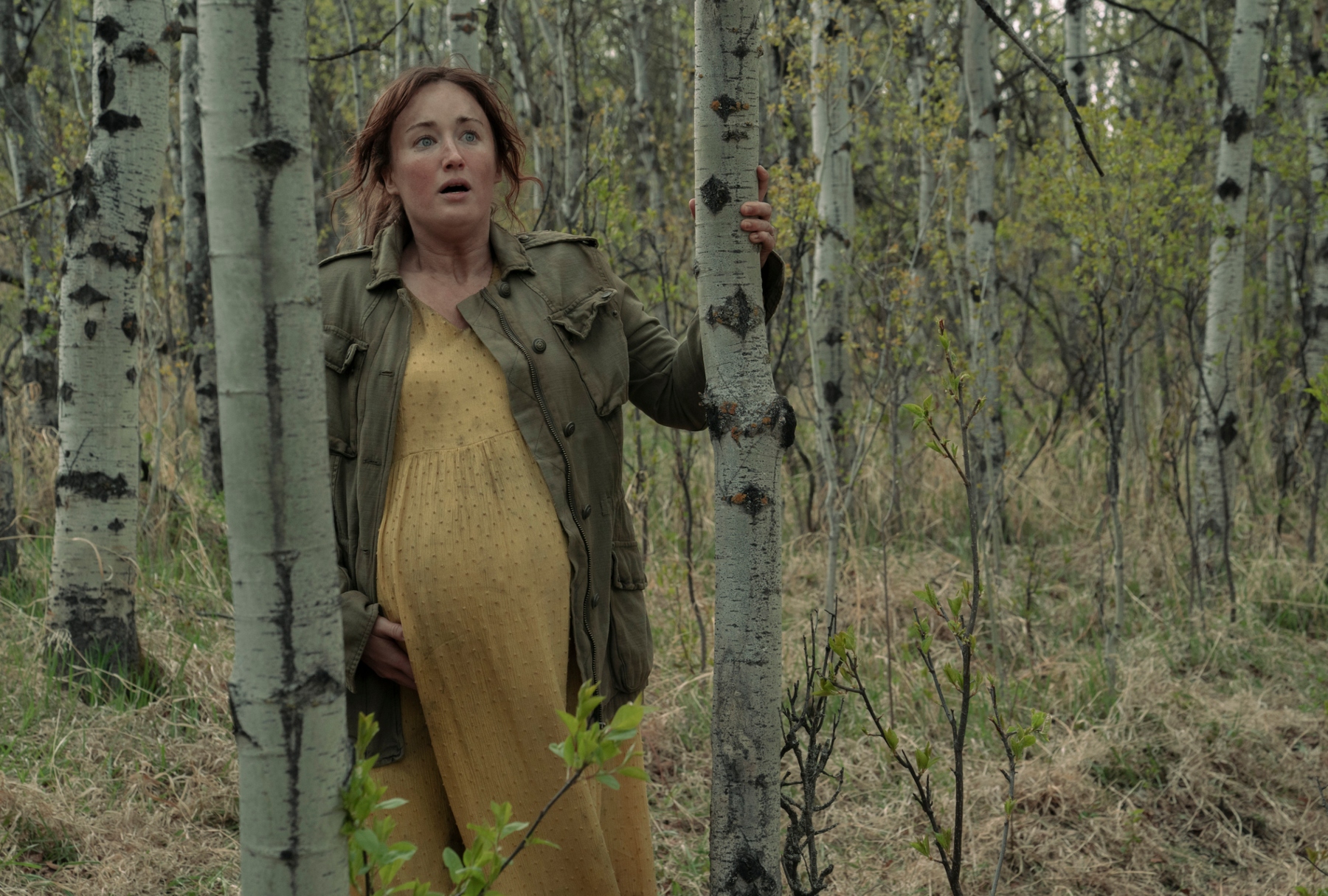
The finale also holds a valentine to devoted gamers in the form of Ashley Johnson, the actor who originally voiced Ellie in the video game, on the show playing Anna, the mother Ellie never knew. Originally Druckmann intended Anna’s story to be an animated short or another game, but those deals fell apart.

Ashely Johnson in “The Last of Us” (HBO)

“Look for the Light” proves some disappointments work out for the best, since the sequence enrichens Ellie’s story and transforms how we view Marlene (Merle Dandridge), the Fireflies’ leader . . .  and Anna’s best friend.

Mazin was amazed by the similarities between Ramsey and Johnson once he met the original voice of Ellie. “Ashley sounds like Ellie, and Ellie sounds like Ashley. So [Johnson’s] already this . . . quasi-mythological creature to me,” he said. “And to see her giving birth to herself, in a sense, and to create that genetic connection between her performance as Ellie, and the origin story of Bella as Ellie, was just profound. I think everybody just felt something beautiful about it.”

Tragic, too. The finale launches with a breathtaking sequence of Anna fighting off a zombie – the creators confirmed they have no issues with people using the Z-word, by the way – while she’s in labor. But she has already been bitten, making it too late for her. Not for the newborn Ellie, whom Marlene takes after she finds Anna. That scene is remarkable for compressing much of Ellie’s lineage within a small space. Marlene swears to protect Ellie. Then Anna hands Marlene her switchblade to give to Ellie, the only inheritance she can pass her child other than her fighting spirit and immunity to a deadly, incurable fungus.

That layers additional calamity upon the ending of Joel and Ellie’s cross-country odyssey.  Joel is finally ready to be a father figure to Ellie as they arrive at the fabled Firefly hospital . . . only to be knocked out by a concussion grenade and parted from her. Marlene greets Joel when he awakens, and breaks it to him that since the Cordyceps fungus grows in the brain, the only way to obtain the cells needed to create a vaccine is to kill Ellie.

Marlene accepts that sacrificing her best friend’s kid may be the only way to save humanity. Joel doesn’t, choosing his girl over saving the world. He overpowers two armed Firefly soldiers and mows down a hospital’s worth of others, including the doctor about to operate on Ellie.

When she wakes up in the back seat of their car, Joel lies that the Firefly scientists concluded there is no cure, so they’re heading back to Tommy’s commune in Jackson. The last demand Ellie makes of Joel as they hike the final stretch to Jackson is to swear to her that everything he said about the Fireflies is true. He looks her dead in eyes and says, “I swear.”

But we view the truth and the final, worst sin Joel commits in Ellie’s name: He kills Marlene in cold blood, even after she begs for her life, justifying it by saying if he doesn’t she’ll simply send more soldiers after them.

It’s a poignant, painful setup for Season 2 – or, as gamers know it, “The Last of Us Part II.” The creators have been readying themselves for it since the first season was greenlit. “I felt like we can’t just make a season of television without considering what would come after,’  Mazin said. “There is more ‘The Last of Us’ to come.”

Given the extensive discussion and dissections of each episode, people may wonder how Druckmann and Mazin will shape the next chapter, whose plot is established in a sequel released in 2020. They answered some of those questions while providing additional insight into the creative decisions that stood out in the finale.

Here are a few significant highlights.

01
Despite five years between the events of the first and second games, there are no plans to recast Ellie in Season 2
Image_pThe Last Of UsThe Last Of Us (Liane Hentscher/HBO)laceholder
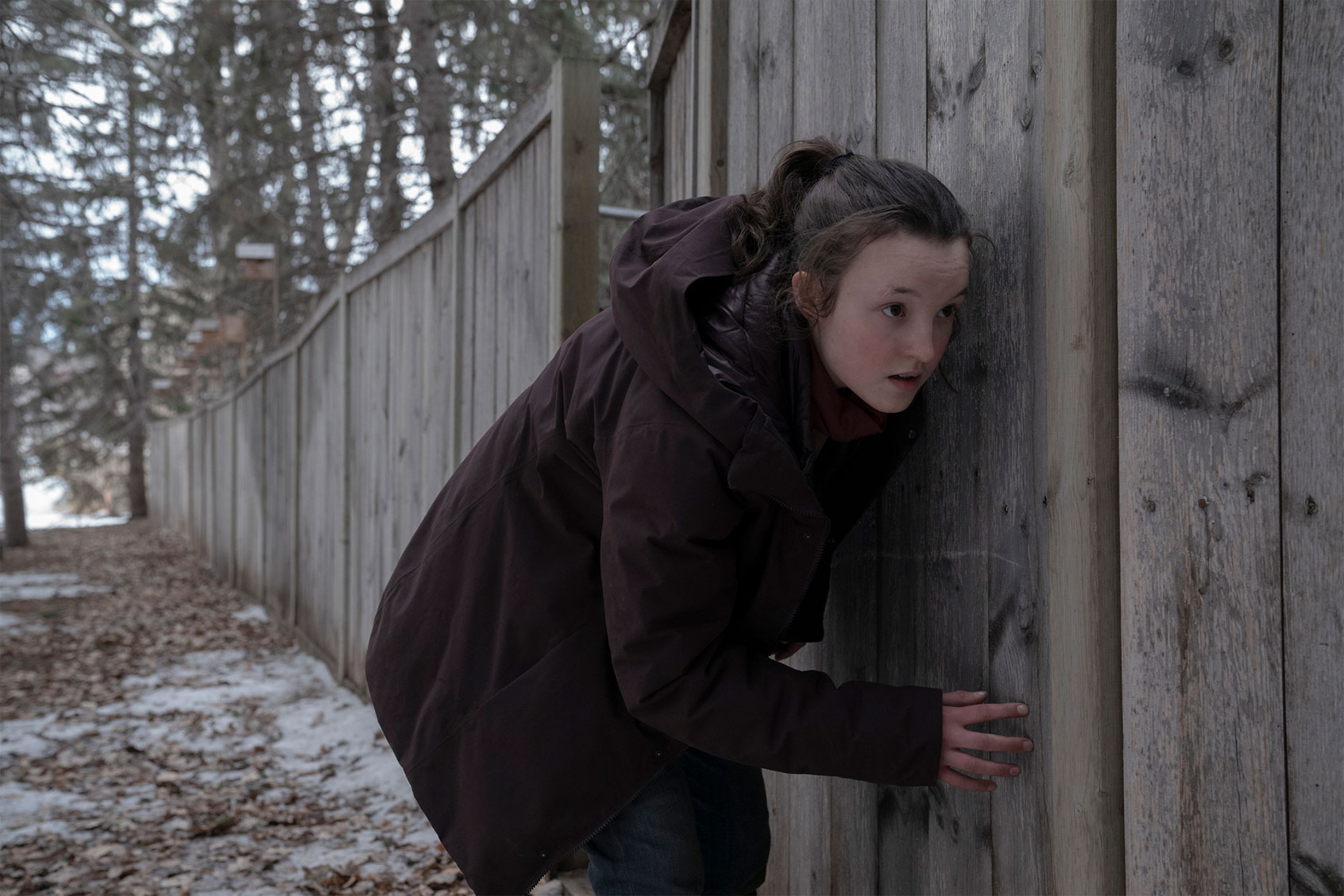
Ellie, more than Joel, is central to “Part II,”  Ramsey’s killer performance proves she can handle the heavier focus. Still, it is natural for folks to wonder how the show plans to plausibly age her from from 14 years old to 19 in the space of a year. 
 

“She’s in a very experimental process to accelerate her aging. She’s smoking six packs of cigarettes a day on a pure whiskey and tainted beef diet,” Mazin joked before reminding us that Ramsey is 19 right now and will be at least 20 years old by the time the new season premieres.


“You know, people were like, she doesn’t look like the character,” Mazin recalled. “I [said] it doesn’t matter. Watch. Just watch what happens. Just watch! And now they know.”


Nevertheless, he acknowledges the “constant drumbeat of anxiety” concerning the extent to which the series’ creators will honor the source material. “Just know I am also very anxious,” he said. “If you’re anxious about something, I’m probably anxious about it, which means we’re talking about it and thinking about it. And we will present things that will be different . . . Sometimes it will be different radically, and sometimes it will be barely different at all. It won’t be exactly like the game. It will be the show that Neil and I want to make. But we are making it with Bella.”

02
The first season changed more of the story’s elements than people suspect
Image_placeholdThe Last of UsAnna Torv and Pedro Pascal in “The Last of Us” (Liane Hentscher/HBO)er
In response to a question about why this video game adaptation worked where most haven’t, Druckmann’s answer was honest yet diplomatic. “Often the people making them don’t know the source material that well. They don’t love it the way that we love it,” he explained. “And you can feel it when you watch the thing. It’s like, ‘Oh, they got the soul of it wrong.’
 

“The superficial details are not necessarily what I believe players want,” he continued, “They want to have the same kind of experience of the feelings that game made them feel. They want to somehow replicate that experience while watching it.”


Mazin believes the fact that people thought certain episodes were almost a one-to-one reproduction of the game when in reality, almost nothing in that episode was in the game proves the necessity of valuing the original game’s “soul.”


“You cannot adapt video games from a place of cynicism, commercialism, pure numbers. The most popular video games in the world have nothing to offer in terms of character really. . . .You have to create character, and that’s really hard to do,” Mazin said. “And so finding the things that feel adaptable and then loving them, and then recreating that essence, that’s how you get people saying, ‘Oh my god, it’s just like the game.’ It’s not. But it is.”

03
We may never meet Ellie’s real father
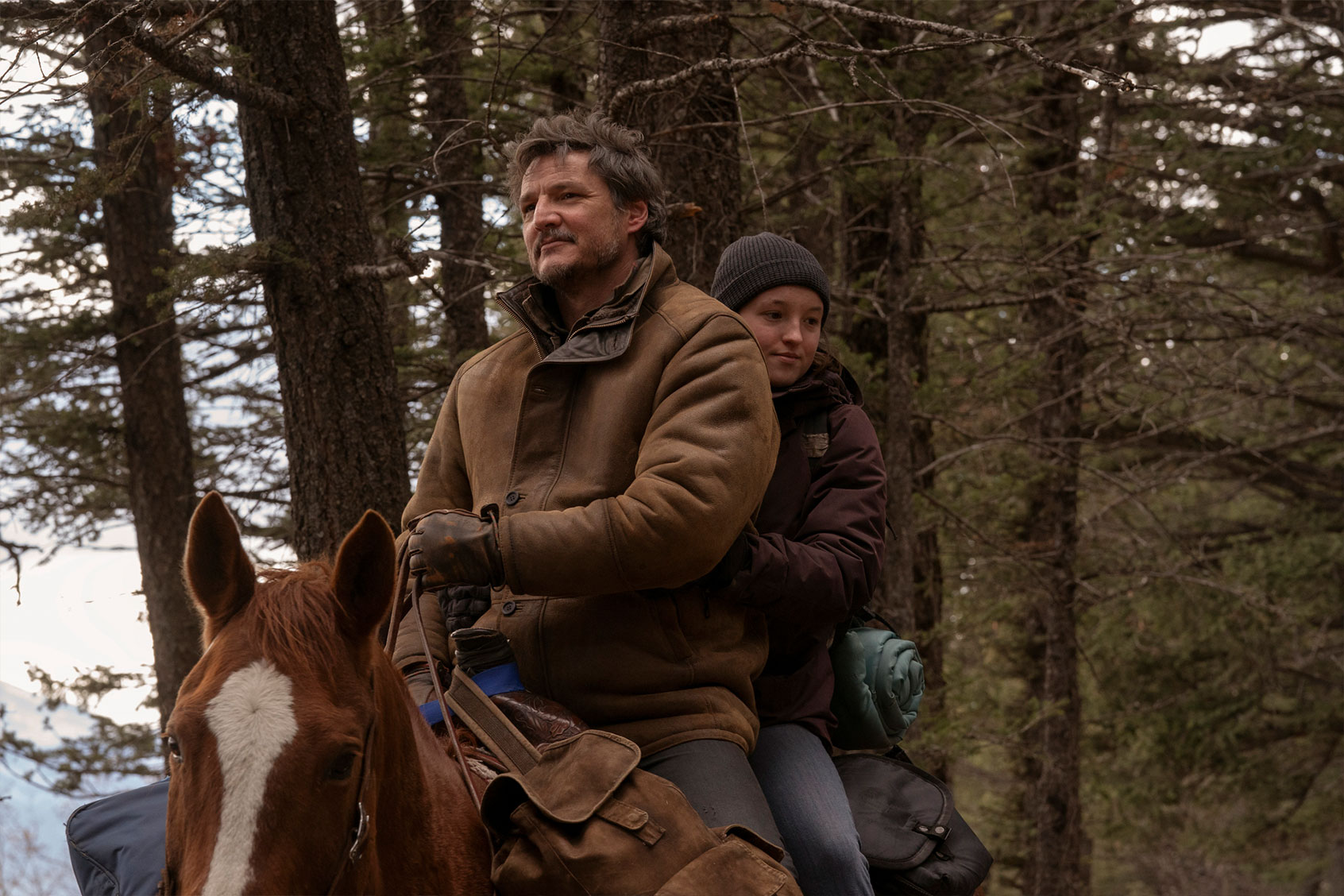
Image_The Last Of UsPedro Pascal and Bella Ramsey in “The Last Of Us” (Photograph by Liane Hentscher/HBO)placeholder
Viewing Ellie’s birth scene as a messianic metaphor is understandable, and Mazin even acknowledges that when they were conceptualizing the scene they called it “the most f**ked up mother and child Pietà you’ve ever seen.” 
 

But the co-creators stress any associations one may be tempted to make in that regard are superficial at best. And although they stress that there’s plenty of “Last of Us” to be written beyond the games’ plots, introducing Ellie’s biological father isn’t part of that plan. As far as Mazin is concerned, that role will always belong to Joel. 


“The whole process is about how difficult it is to let somebody else in when you’ve closed that door off and nailed it shut forever,” he explained, referring to Joel’s grief over having lost a daughter as a space. “But Ellie doesn’t have any of that. That door is open. That room has never been occupied. And Joel just gets in there almost immediately. . . . I like the idea that the room is open and empty, and even we don’t know anything about it. That’s kind of interesting.”

04
The music from the game will continue to play a pivotal role in the TV show
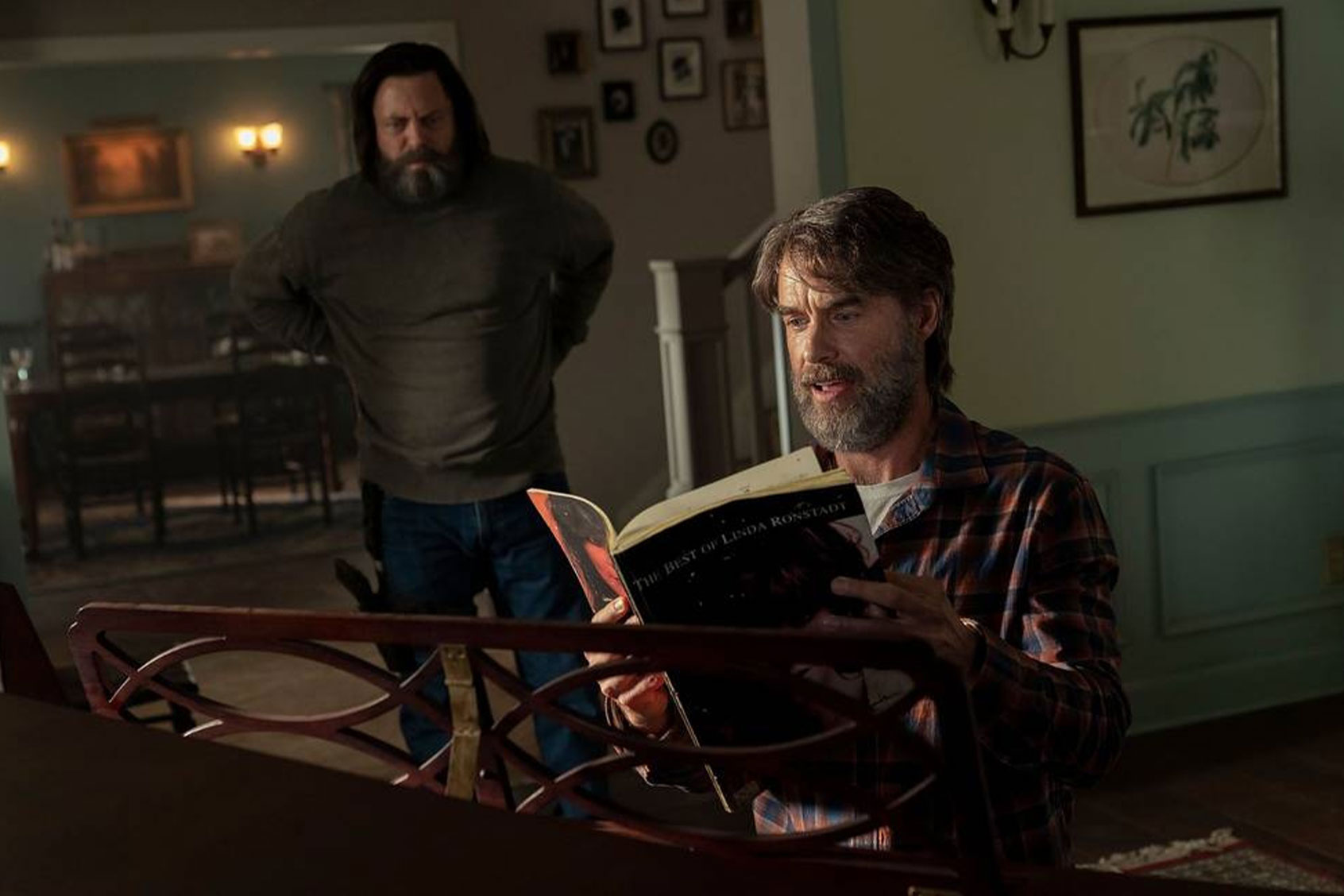
Image_placeholThe Last of UsNick Offerman and Murray Bartlett in “The Last of Us” (Liane Hentscher/HBO)der
Tapping into the soul of “The Last of Us” required porting Gustavo Santaolalla’s instantly familiar, forlorn stringed-instrument strains from the game to the show, so there was never any question of whether the production would use his themes.
 
“Bringing Gustavo back was just a no-brainer,” Druckmann said, extolling the composer’s method of composing to themes and ideas as opposed to scoring music to match a set of visuals. In this case, some of the music was lifted precisely from the game while other bars were adjusted to fit the new format. David Fleming (“The Unforgivable,” “South of Heaven”) scored what Mazin referred to as “the non-Gustavo areas,” such as the action sequences, while pieces of Matt Quayle’s second season soundtrack were employed as well.
 
To Mazin, the most effective contextual switch between the game and the show plays out during Joel’s hospital massacre, where they chose a track originally used at the point where Joel picks up Ellie and walks out with her, and plays it in under the violence.
 
“This kind of beautiful, sad, mournful cello based piece allowed us to feel almost heartbroken by what Joel was doing and what he was breaking inside of himself and, in a way, how he was betraying something that he probably knows Ellie wouldn’t want him to do,” Mazin said, adding, “Taking a piece from over here and putting it under this makes magic.”

Want a daily wrap-up of all the news and commentary Salon has to offer? Subscribe to our morning newsletter, Crash Course.


05
“The Last of Us” co-creators don’t view a fungus outbreak as the greatest danger to civilization right now
The Last of UsThe Last of Us (Liane Hentscher/HBO)Image_placeholder
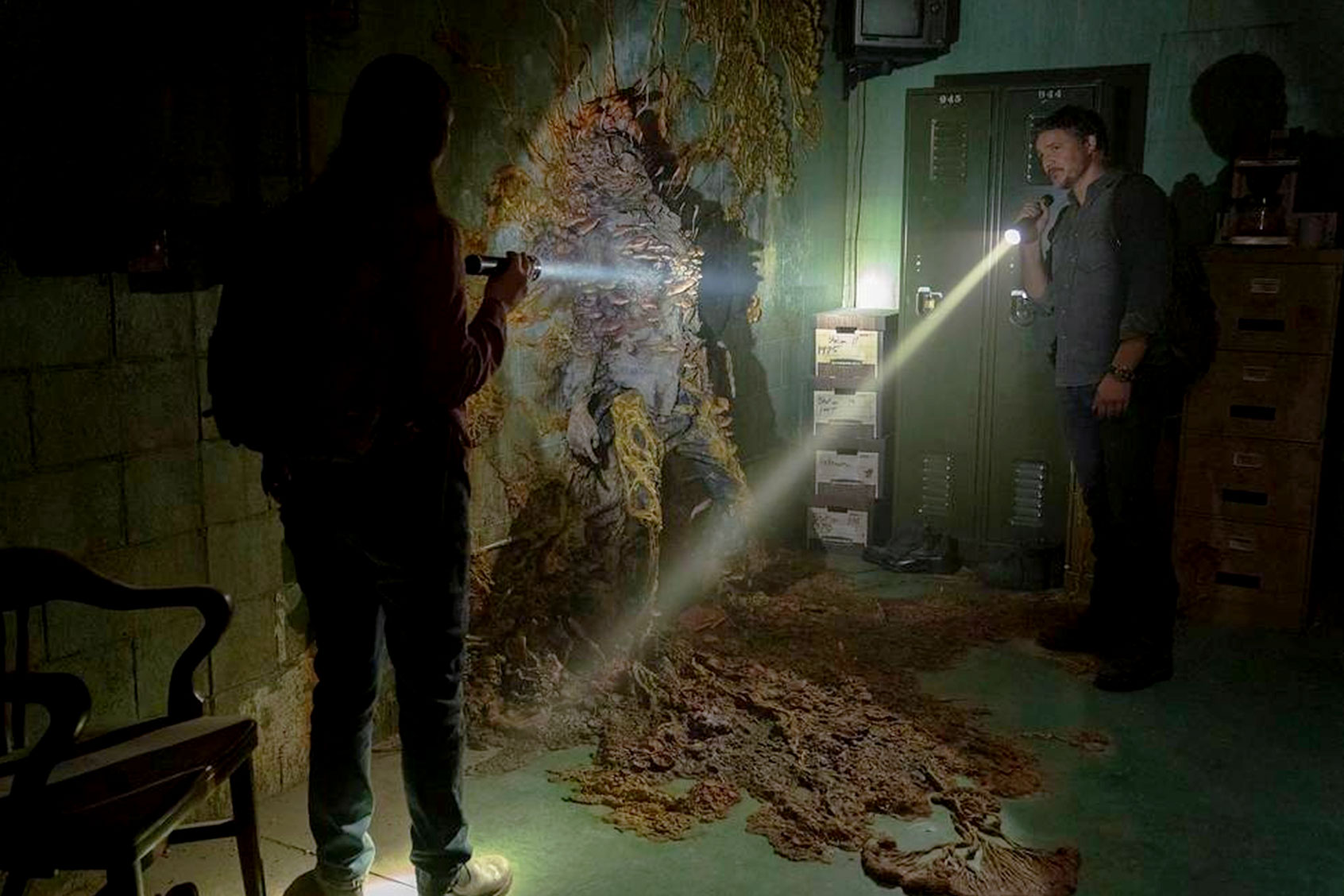
In the same way Bruce Willis can’t walk down the street without people yelling “yippee-kay-yay” at him, fans have inundated Mazin and Druckmann with mushroom images. Mazin appreciates our affection but regarding your photos from the produce section or walks in the park, “I don’t . . . I don’t care.”
 
Besides, they’re not worried about fungi. When asked to name what they view as society’s greatest ills, Druckmann opined, “The world is infected with tribalism.  And the cure is more empathy, more seeing things from other perspectives and and maybe being less selfish with just our little tribe.”
 

Mazin agreed, then said, “I’ll give one other thing I think the world is infected with. And it’s a bit ironic. I think the world is infected with narrative.


“As a storyteller, what I see around me is that the people who are supposed to be telling the truth are in fact telling stories. Everybody – politicians, journalists, everybody seems to be organizing their points of view into stories that they can sell you,” he continued. “.  . . And by narrativizing everything, we are losing touch with the simple, unvarnished, modest truth of things.
 

“At least I sleep well at night, knowing that the story that we’re telling here is proudly and loudly labeled as fiction,” he finished. “But everybody else? Facts first would be best.”


All episodes of “The Last of Us” are currently streaming on HBO Max.  


“I really didn’t trust any humans”: What it’s like growing up in a doomsday sect

“This girl has been indoctrinated by a cult,” writes author and educator Michelle Dowd, “but she has a high pain tolerance and a basic knowledge of the region’s ecosystem.” That girl is Dowd herself. And in “Forager: Field Notes on Surviving a Family Cult,” she weaves a memoir unlike any survival story you’ve ever read. 

Growing up on a mountain in the Angeles National Forest, inside an apocalyptic religious group founded by her grandfather, Dowd experiences unimaginable deprivation and brutality. She is raised to distrust outsiders, and to prepare for the imminent end of the world. Yet she learns to be a resourceful, skilled outdoorswoman and naturalist. The paradox, that all the things she had to eventually leave were intimately entwined with all the things that gave her strength and competence to do just that, creates a unique tension that’s riveting. This isn’t a conventional account of escape. Instead, it’s a meditation on how the things that could break you could also build you and about the complicated nature of forgiveness. It’s also a beautiful appreciation of the world we inhabit but rarely take time to learn from, and learning that when all else seems lost, “The earth could hold me in some way.” 

Salon talked to Dowd recently about “Forager,” making uneasy peace with the past, and what her upbringing taught her about our current political climate. 

This conversation has been edited and condensed for clarity.

This is a book about survival emotionally, but also, front and center, about survival physically. I want to ask you about the framing of that, the way that you have written it as a quasi-nature guide. That connection to the earth is such a central part of the book. 

I truly attribute my time on the mountain and my deep core understanding of the intricacies of nature and the incredible web of communication to what I witnessed as a very young child. Living off the land was foundational to my ability to heal after leaving, and my ability to trust that the earth could hold me in some way. 

I was so lost when I left. I didn’t know how to make a friend. I became friends with professors, but I had no ability to understand popular culture, to understand culture at all. I did not understand anybody my age. I didn’t understand music. I knew music, but I knew music from a very hymn based background. When I left, I felt that my whole world was gone. I felt suicidal frequently. I was unable to not feel extreme guilt. I felt that I destroyed my family. So there was a great deal of pain, even after I got out. 

“I really didn’t trust any humans.”

People want to think it’s freedom and I certainly feel freedom now. But at the time, I just felt like I cut my umbilical cord and was hemorrhaging. And so my foundation to the Earth really was the thing that I could go to. I really didn’t trust any humans. If I hadn’t had that, I don’t know. There’s a lot of former members who have killed themselves, have gone to prison, have committed crimes or become addicts. I was very, very fortunate not to go down any of those paths. I really attribute it to that extensive time that I spent on the mountain.

The conventional narrative of these stories is often, “When is she going to leave?” So little of the book is about that. So much of it is about understanding the context of where you came from, and what it was like inside there. It’s really about helping the reader to understand what this experience was like, and to illuminate in the scariness and the strangeness of it, also the the beauty of it. 

I wrote the book around my idea that I needed anchoring because I was so unmoored as a child. It felt true that plants were foundational my life.

I’ve been talking to my sister a lot lately, and she said, “No one loved me ever. Not one single time do a remember feeling cared for and loved, my whole childhood.” It felt that the book needed both the feeling of falling back and not having anywhere to land, and then also knowing that the earth was there to hold me. 

There’s so much about this book that also feels so scarily relevant for the moment in which we are living. Don’t trust anybody. Don’t trust outsiders. Your grandfather saying that trusting science is like Eve eating from the Tree of Knowledge. There is that intersection of cult mentality and this also doomsday mentality. 

I absolutely feel like I wrote the book because I felt that it was relevant. I have been sitting on this story for a really long time. I just started writing about it casually maybe three or four years ago. I wasn’t looking to publish anything. And then just things keep getting crazier in the world. 

“Trump, absolutely, his mannerisms and his language are so much like my grandfather.”

There are large groups of preppers. I have run into them, and it feels like my grandpa. And honestly, Trump, absolutely, his mannerisms and his language are so much like my grandfather. My grandfather spoke very simply and also so grandiose. So because I do think it’s relevant, it gave me the courage to talk about something that was really forbidden in my family, and still is forbidden to talk about.

Help me get inside what that feels like when you are indoctrinated. When you just hear constantly, “No, don’t believe your eyes. Don’t trust your gut, don’t trust your body. Don’t trust your own fear impulses, don’t trust your own instincts, and don’t trust what other people are telling you.” What does that do to your own gauges for safety, for protection, for relationships, empathy, trust, love?

It’s so gaslighting that I still sometimes have no idea if what I just saw or experienced was real. I’ve been teaching critical thinking, teaching in the university and college systems since I was 21. So forever. I have spent all my time basically trying to figure out what’s real. It’s very disconcerting, I will say that as far as what it’s like on the inside, my both my parents voted for Trump. They still really think in terms of fear. My mom passed away recently, but my family of origin still thinks in terms of fear, and my older sister still believes this way.

“We have instilled so much fear in order to sell solutions to that fear.”

There’s a lot of people who want to be told what to do, because they don’t trust themselves. In capitalism, to be honest, we have instilled so much fear in order to sell solutions to that fear. Since most of us in this country were born and raised here, somewhere, we have been raised on a capitalist mentality. It’s not that far to go from capitalism and white supremacy to, “We need a leader who’s going to tell us what to do.” Inside of a cult, you get someone who at least seems to be entirely confident. They seem to say to you, “You are my flock. As long as you are under my umbrella, I will keep you safe.” Whether it’s a family of preppers, or a community of preppers, they believe that their guns or their ammunition, their stockpiling of food, their systems for water, all that will keep them safe. They are almost always listening to someone. It’s usually a man who is convincing them that the system he’s either devised or been ordained or has been gifted from God, is, “You don’t need to worry about it because it’s too complicated or too hard for you. This is the answer. You need to have faith. You need to trust.”

It’s that sense of, please just give me some rules. If I have the rules, and I don’t break them, then I’m going to be okay, whether that means I’m going to lose 10 pounds, or my kid’s going to get into Harvard, or I’m not going to go to hell. Yet you say from about the age of three, you had your first sense of this Is this not checking out. 

I saw that my grandfather was different behind closed doors than he was when he was preaching. And because I did hear him and see him preach,I was around him all the time in his public persona. My grandpa had kept his public and his private self so separate. I think partly because no one thinks a child is paying any attention and because we were so poor, I saw that there was a real disconnect between the public persona and the private persona. The fear that my grandpa had behind closed doors was different than the competence that he projected.

Throughout the book, you are really wrestling with this discomfort that propels you outside the door and to go to college, while simultaneously feeling, “I also just want to please my family. I also just want to I just want to make them happy.”

I think, too, I was always asking questions. I actually encourage everyone in my life, ask questions all the time. Even if people don’t have the answers, ask the questions anyway. Somehow as a child, I just couldn’t keep couldn’t stop from doing it. Even if I wasn’t saying them out loud, I was writing them down, and saving them. I have hundreds of pages after all these years. I don’t know how I managed to hang on to all that. I was just writing things down from the moment I figured out how to write. And the three years I’d been in public school, kindergarten to second grade, changed my life. Had I had not had those three years, I do not think that I would have gone to college.

I want to ask you about forgiving your parents, understanding your parents, coming to terms with who they were. You frame the book around your mother. The way that you open the book, with your mom telling you not to do this, is really powerful.

“I had very conflicted feelings about my mom. She was still unkind to me to the very end.”

The hardest part of writing this book was that my mom was still alive. I had very conflicted feelings about my mom. She was also dying, and I was caring for he while I was writing the book. She was still unkind to me to the very end.

And yet, I saw her as a victim of her father, and of a system. I saw her as the life that could have been mine. I felt so much sadness and empathy for who I would have been had I not gotten out and for who she was, when she had to defend her choice to stay. She defended that to her last breath, because she defended her father. Her father lied about so many things, which is proven. I felt like her loyalty to him was like her loyalty to God. It was so rigid. And watching that and feeling that I couldn’t crack her, I was cracked, open. When she was dying, it was so powerful to be able to give her the comfort that I wanted her to give me. She never saw me as a competent or capable human being. That used to seem unforgivable to me. By the time I was writing this, I think because of her illness, I recognized that was a sad thing. I ended up with three daughters and a son, like my mother. And to not be able to fully love them would just seem like such a tragedy of a life. In a sense, I’m not the victim, she’s the victim of a system that she couldn’t somehow find the courage to leave. 

I started thinking, what did she give me? I thought her love of nature was so powerful. People came out of the woodwork after she died to tell me, “I know what trees are called, I can recognize birds, because of your mother.” She taught anyone who came up to that mountain, she gave them so much passion and love for the environment. She couldn’t love me as a human, but she taught me love. It wasn’t obvious, but she did. I have been a really loving human my entire life. I was able to have relationships, to be open to the world in a way that somehow her love of nature instilled in me. So she hurt me. And she gave me the tools I needed to save myself.

To show that a person can be all of those things is a very subtle and intricate and sophisticated way of looking at human life, especially when it’s your mom, and not something we always sees in a book like this. 

My father is still alive, and he’s so angry. He hasn’t read the book. But he’s so angry that I put this book out there that he obviously is not going to read or have anything to do with. What he can’t forgive us the word “cult” is on the cover. I just said, Dad, you know, the book is not as harsh as it could be. I’m sure there’s things in there that you wouldn’t like. And he said, “absolutely unforgivable.” Unforgivable. I said, “Okay, Dad, I forgive you for saying that to me.” But he also said, “I had nothing to do with your upbringing. Your mother and I divorced ourselves from you.” Literally used that term. He’s like, we didn’t raise you. So there’s a price, right? It would have been much more difficult had my mom lived to see this. And also, I loved her in the end, I really did. It was interesting to feel so much love for someone who had hurt me many times and at the end of her life, said, “I can’t forgive you for leaving.” 

I just wanted to put one thing in context. One beautiful thing is I spoke to all my siblings during the writing of the book and asked them all sorts of questions. I try not to write their story, but still they’re in the story. I was trying to portray it as accurately as possible, in the sense that they wouldn’t feel that they’ve been betrayed in some way. All my siblings were wonderful in their ability to talk about it. But even my older sister doesn’t question the truth of it. I don’t think my father does either. That’s interesting to me. It’s not that he thinks I’m lying. It’s that he thinks I don’t have the right to say it in public. That is what goes back to the cult mentality. That’s why I’m bringing it up right now. It is the cult mentality that says you can’t talk about this, because we don’t want them to know. I’m even saying that the organization has changed so much, and it’s not about now. I’m talking about something that happened 40 years ago, 35 years ago. But he’s still saying, we have to keep our family secrets. 

I think that does so much damage, and it’s not just cults who feel that way. People who just think that if you don’t talk about something, that you can’t be hurt. There’s just a lot of secrets that families try to keep, that governments try to keep, that communities try to keep, that if we don’t talk about it, it’ll go away. Our country has done that so much. We just like think “Oh, it’s okay, now we’re not doing it anymore.” And then the history affects our policy right now. It just feels so relevant.

Inspired by the iconic Marcella Hazan, a 5-ingredient meal for when you don’t feel like cooking

We've all been there. It's been an especially long day, week or hour, you're tired, burnt out or down in the dumps, you're too out of it to whip up an entire meal and you're sick of delivery, but you are feening to eat something.

What do you normally reach for in these occasions? Popcorn? Cereal? Peanut butter and jelly? Tuna? Eggs? Perhaps a quick grilled cheese? It's entirely up to you, of course, but when I'm in this headspace, I typically rely on one particular recipe: Marcella Hazan's famous marinara. 

And guess what? It calls for less than 5 ingredients and is ready in under 30 minutes. 

I know, I know, it's not a surprise that my default go-to is something Italian-American. But this dish doubles as sustenance (on a night when I'm not looking to do the labor of making a legitimate meal) as well as a built-in comfort. Also, the timing really comes in clutch. And that's unbeatable . . . and certainly a more appetizing, fulfilling dinner than, like, a handful of Doritos. 

For the unacquainted, I'll share how I first came to learn of Hazan. Marcella Hazan is sometimes referred to as the 'Italian Julia Child' or as I remember the quote, "someone who introduced Italian food to the American masses in the same way Child introduced French food to them." She's unquestionably an icon and her recipes are legitimately tried-and-true, but this may be her most immediately recognizable one. 

Instead of the traditional approach to marinara, Hazan goes a adjectively different route, which also lends itself exceptionally well to a night when you're really feeling out of it: You toss three ingredients into a pot, cover it, put it over medium-low — and that's it. 


Want more great food writing and recipes? Subscribe to Salon Food's newsletter, The Bite.


I recall being hesitant about the butter, but it added such a rounded, rich sumptuousness that olive oil just doesn't impart. The halved onion is an excellent means of getting the onion flavor into the dish but without any actual chopping (my parents always had such a distate for "onion chunks" in their sauce, so this also approach also killed many birds with one stone in that capacity, too). I sometimes like to throw in a Parmesan rind or some whole garlic cloves, but you must certainly don't need to. Of course, this dish is very no frills, so be sure you're using a high-quality tomato product.

Hazan instructs to cook the sauce for about an hour, but I have found that a good 20 minute simmer is good enough. Boil some water as your sauce simmers, cook up some pasta in the five to 10 minutes prior to the sauce being ready to eat and before you know it, you have a complete meal. Douse it with cheese or gussy it up with some fresh herbs — and voila! You can now go sink into the couch and watch your favorite brand of comfort TV or movies. Tweak this bowl to your own preferences and add it to your mental rolodex as a "frenzied night" meal. 

As Janet Keeler writes in this article in the Tampa Bay Times, "whether you know it or not, Marcella Hazan has changed the way you cook." In another article in the same publication, Keeler calls her the "grande dame of Italian cooking." (someone alert Karen Huger).

The next time you're too tired, pay Hazan her well-deserved respects and make this dish. There may be no better meal for those kind of nights when you you can't even conceive of hauling the cutting board out. And we thank you for that, Marcella. 

Marcella Hazan's amazingly simple sauce
Yields
02 servings
Prep Time
 2 minutes
Cook Time
20 minutes 

Ingredients

1-2 cans or boxes of crushed or pureed tomatoes

1 stick unsalted butter

1 large white or red onion, halved and peeled

3 cloves garlic, peeled, optional

Kosher salt, to taste

Parmesan rind, optional

Grated cheese, optional

Fresh herbs, optional

Pasta of your choosing (rigatoni, ziti, spaghetti, so on and so forth) 


Directions

  1. In a large pot, add tomatoes, butter, and onion. Add garlic and rind, if using. Cover and set heat to medium-low.
  2. Cook for about 20 minutes. Uncover, remove onion (and rind, if using) and stir well. Season to taste with salt.
  3. As sauce cooks, place a large pot of water to a boil. Salt and add the pasta of your choosing. Cook until al dente.
  4. Drain pasta and toss directly into pot of sauce. Stir well, add optional garnishes and serve immediately. 
  5. Conversely, spoon some of the drained pasta directly into a bowl, top with a smattering of sauce, cover with cheese and then retreat to your comfiest couch and proceed to engorge yourself.

“Keto-like” diets may increase your risk of heart disease, according to new expert research

“Keto-like” diets, which prioritize fat consumption over protein and carbohydrates, may double the risk of cardiovascular diseases such as blocked arteries, heart attacks and strokes, according to a new study.

Led by Dr. Iulia Iatan — an attending physician-scientist at the Healthy Heart Program Prevention Clinic, St. Paul’s Hospital and University of British Columbia’s Centre for Heart Lung Innovation in Vancouver, Canada — the study looked at how low-carb, high-fat (LCHF) diets, similar to the uber-trendy keto diet, may be linked to higher levels of “bad” cholesterol.

“Our study found that regular consumption of a self-reported diet low in carbohydrates and high in fat was associated with increased levels of LDL cholesterol — or ‘bad’ cholesterol — and a higher risk of heart disease,” Iatan said in a news release, per CNN.

Specifically, researchers in the study defined a low-carb, high-fat diet as 45% of total daily calories coming from fat and 25% coming from carbohydrates. Data was obtained from two distinct groups — one with 305 individuals eating a LCHF diet and another with 1,200 individuals eating a standard diet — using the United Kingdom database UK biobank over the course of at least a decade. Those who followed the LCHF diet had higher levels of LDL (low-density lipoprotein) cholesterol along with apolipoprotein B (apoB), which attaches to the former and carries it through the body.

High amounts of LDL (low-density lipoprotein) cholesterol can lead to build ups or “plaque” on the walls of blood vessels, which, in turn, can cause both heart disease and stroke. LDL paired with triglycerides, a type of fat that the body uses for energy, can further increase the risks.

“After an average of 11.8 years of follow-up — and after adjustment for other risk factors for heart disease, such as diabetes, high blood pressure, obesity and smoking — people on an LCHF diet had more than two-times higher risk of having several major cardiovascular events, such as blockages in the arteries that needed to be opened with stenting procedures, heart attack, stroke and peripheral arterial disease,” researchers found.

They also noted that those following a LCHF diet had double the consumption of animal sources compared to those following a standard diet — 33% compared to 16%.

While the study includes important findings, it has a few limitations, including “measurement errors that occur when dietary assessments are self-reported” and a small sample size, Iatan said, per CNN. The study’s participants were also all mostly British.  

The study, which was presented Sunday at the American College of Cardiology’s Annual Scientific Session Together With the World Congress of Cardiology, has not been peer reviewed at this time. Researchers asserted that their study was purely observational and “can only show an association between the diet and an increased risk for major cardiac events, not a causal relationship.” They added that further studies are necessary, “especially when approximately 1 in 5 Americans report being on a low-carb, keto-like or full keto diet.”


Want more great food writing and recipes? Subscribe to Salon Food’s newsletter, The Bite.


Ketogenic “keto” diets originated in the 1920s to help manage seizures in children with epilepsy. In recent years, the diet rose to popularity as a kind-of “fad” diet to help promote weight loss. The crux of a keto diet is ketosis, which is “a metabolic adaptation to allow the body to survive in a period of famine,” per dieticians from the University of Chicago Medicine. Instead of breaking down sugar or glucose from carbohydrates, the body breaks down stored fat for energy.

To achieve ketosis, one must eat 75 to 90% of their daily calories from fat, 5% of calories from carbohydrates and 15% of calories from protein. That being said, nutritionists recommend people prioritize healthy fats, like dairy, oils and nuts, rather than animal fats. 

“Red meat and full fat dairy elevates LDL cholesterol and should be eaten in moderation. For a healthy heart, people should limit the keto diet,” said nutrition consultant, author and professor Dr. Lisa Young. “A healthier version of a low-carb diet would include more fish instead of red meat and include healthy fats like nuts, seeds, and olive oil.”

As with all diets, it’s important to keep in mind that the keto diet can cause low blood pressure, kidney stones, constipation, nutrient deficiencies and an increased risk of heart disease. Those with pre-existing health conditions should avoid going keto the research shows it may be incredibly unsafe.

For Idris Elba’s sake, let “Luther” retire

Luther” has given its audience at least three natural endpoints. The first and perhaps most satisfying closes the third season with Idris Elba’s DCI John Luther, a hunter of psychopaths, tossing his signature overcoat into the Thames and strolling off with his unshakable frenemy Alice Morgan, a genius-level killer played by Ruth Wilson.

This was a suitable goodbye kiss until the two-part special that interrupts the character’s leave of absence, returning him to the force. Five years after that we drop in on the intrepid vigilante detective for what should have truly been his last bow.

Neil Cross even writes a line in the fifth season finale that speaks to this when Luther frustratedly tells Alice, his shadow, his ally and his ethical downfall, “You keep coming back, and coming back and coming back, but you’re never going to get what you want, Alice. Never. From this, from me and you.”

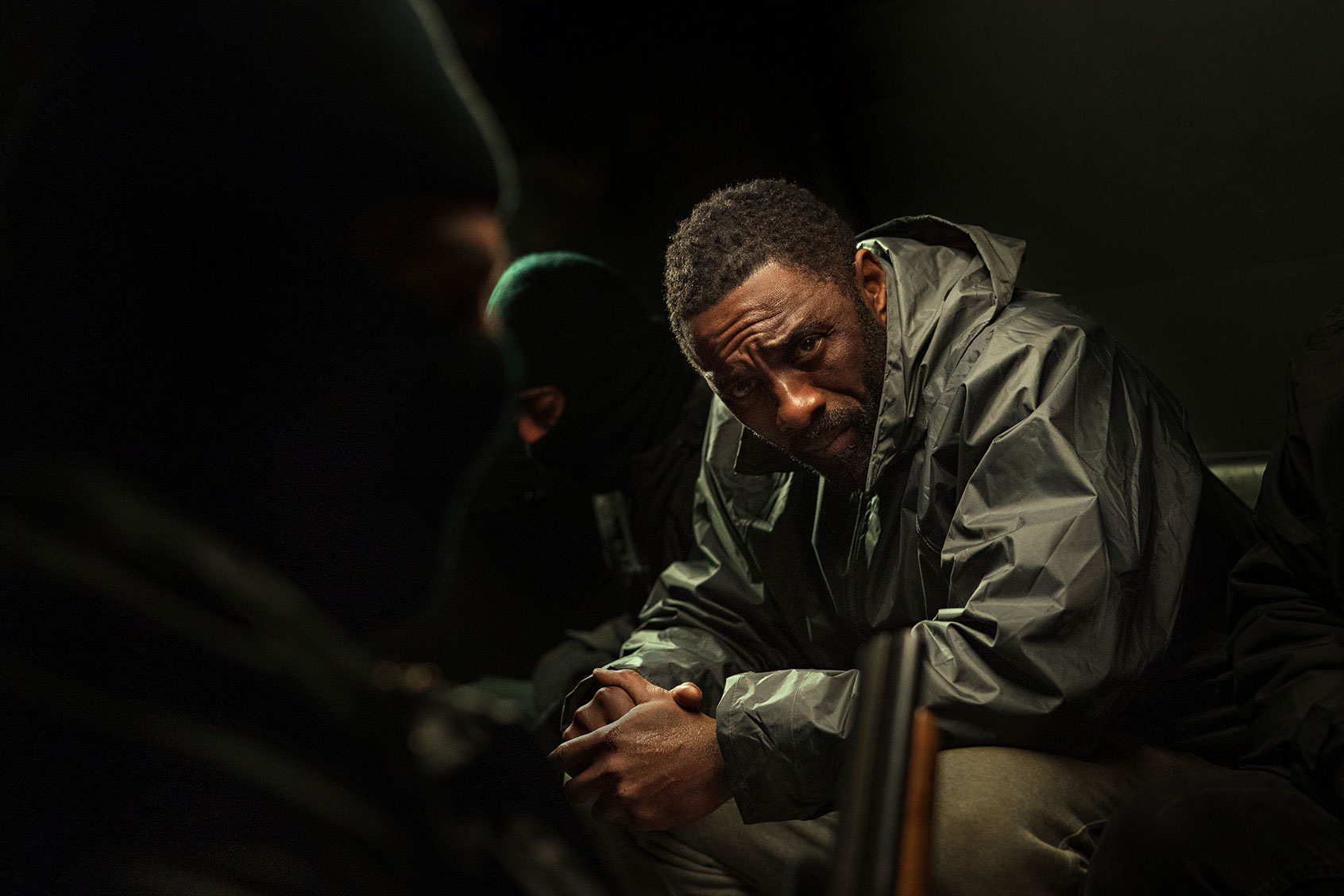
Luther: The Fallen SunIdris Elba as John Luther in “Luther: The Fallen Sun.” (John Wilson/Netflix)

Events made it appear Alice is unlikely to resurface, let’s put it that way. But you never know. Cross always finds a way to keep Luther coming back, and coming back and coming back. There will always be twisted murderers knocking about, and Luther can’t resist when they bait him.

Given the way Netflix’s latest foray, the movie “Luther: The Fallen Sun,” resolves it’s probably unwise to assume Cross and Elba intend to put their by-any-means-necessary DCI to rest at long last. But they should, if only to let the character go out strong. 

“The Fallen Sun” is not a wasted effort, to be clear. It proves that Elba deserves to carry a movie franchise, preferably one that isn’t related to a comic book.

This may sound confusing because, since the character’s introduction in 2010, “Luther” has been inextricably associated with the actor and propelled by his appeal. He’s played many roles since, nearly all of them in ensembles, save for the odd parts like his 2022 part in the safari horror flick “Beast” which, among other attractions, dangled the promise of seeing Elba punch a CGI lion in the face. 

Still, he deserves better, and has reached what Chris Rock once described as the point in an actor’s career where he should be courting Denzel Washington-caliber roles, which encompasses both Oscar bait and a couple of turns as “The Equalizer.” Elba and Cross have bandied about transitioning John Luther from television to the movie since at least 2012, originally planning the third season as a lead-in to the movies. Why bother chasing another title character?

“The Fallen Sun” answers that question, in that it feels less like an extension of the TV series than an audition for future action films. This is not unprecedented; one can easily connect Christian Bale’s work in “Equilibrium” and “The Machinist” to his eventual assumption of Batman’s mantle.

That also gives this feature a not quite one thing, not quite the other feel, in that it’s too unwieldy to function as a perfect “Luther” episode and too reliant on the show’s beats to feel like a true film. (This makes some sense since it was directed by Jamie Payne, who helmed the fifth season’s episodes.)  Either way, it is a fine showcase for Elba’s magnetism and his ability to hold aching concern, regret, and wrathfulness in a single armful without breaking his stride.

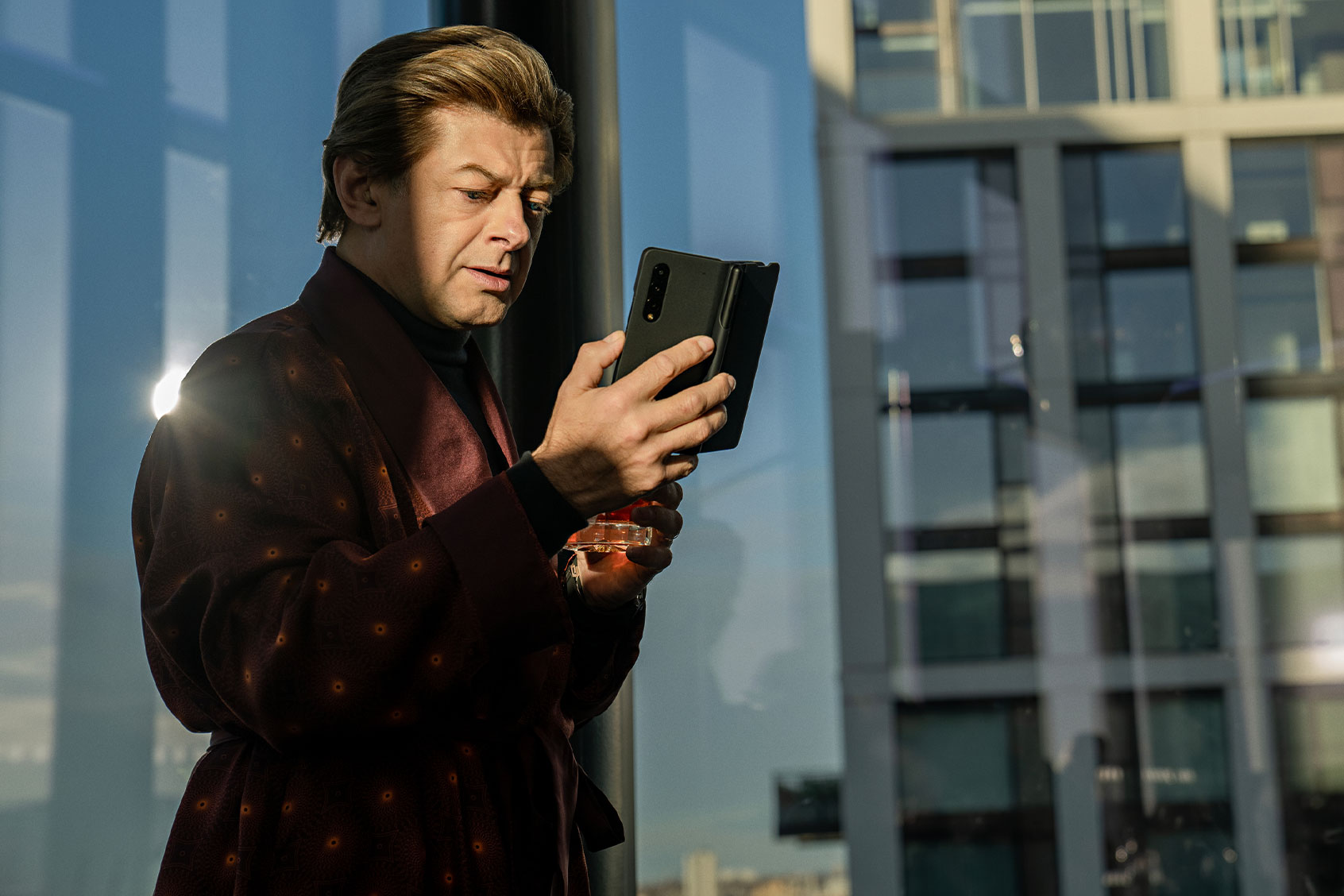
Luther: The Fallen SunAndy Serkis as David Robey in “Luther: The Fallen Sun.” (John Wilson/Netflix)

Here longtime friend/enabler Detective Superintendent Martin Schenk (Dermot Crowley,the only actor and character to carry over from the show) crosses paths with the astronomically disturbed man of means named David Robey (Andy Serkis) and crosses swords with now-retired Schenk’s replacement DCI Odette Raine (Cynthia Erivo).

Superb casting makes “The Fallen Sun” watchable, and Serkis’ villain matches and in some ways exceeds the series’ most extreme malefactors and their capacity to make a person’s skin crawl. And these adversaries speak to the caliber of antagonist whatever future starring Elba eventually takes on should merit.

The performances in “Luther” have always carried it through its slacker plots, so it follows that “The Fallen Sun” would meet that expectation. It also backs up the notion that Elba’s fans were on to something when they campaigned for him to replace Daniel Craig as James Bond. Craig’s version of Bond distinguished the spy from previous incarnations by making him rough and tumble and not shy about wearing his scars.

“The Fallen Sun” shows Elba’s capacity for advancing that take, only Elba’s spy wouldn’t merely be a hard hitter but a bulldozer: Luther rampages through a prison riot and breaks through a line of fully armored guards to bust out.  

After that, he’s stabbed several times, marched through the arctic cold in little more than that tie and that overcoat and nearly drowns. Long before those agonies rain down on him, he looks absolutely exhausted, as one would expect of a guy fresh from the clink. Lesser men would have been pushed into early retirement.

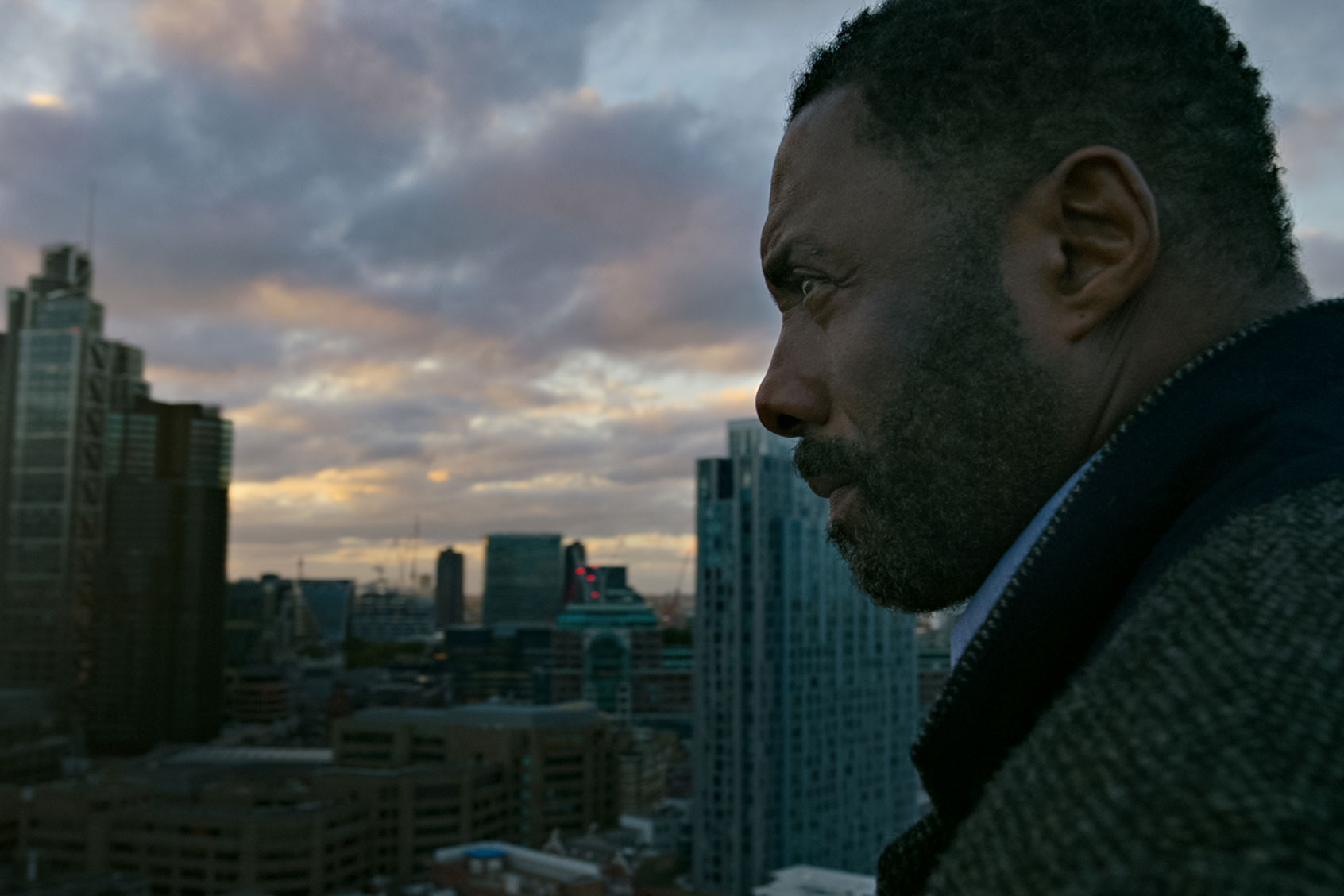
Luther: The Fallen SunIdris Elba as John Luther in “Luther: The Fallen Sun.” (Netflix)

But the character’s grave weariness should not bleed onto the actor or influences his perceived variability.

To see Elba as the next 007 would be the ultimate wish fulfillment for many people, of course. He slays a tux. But he’s also past the age most Bond actors first reported for duty and is frankly too good for the role. At any rate, some studio other than Netflix needs to avail themselves of Elba’s dramatic muscularity. It keeps us returning to watch his obsessed copper despite whatever signs of diminishing returns are showing in Cross’ plots. A definitive goodbye for the character seems right, mainly because it’s long past time for us to greet the actor as someone memorably new who makes us want to say hello again and again.

“Luther: The Fallen Sun” is streaming on Netflix.


An unexpected source of methane? Your local sewage plant

Wastewater treatment plants are typically overlooked when it comes to reducing greenhouse gasses, but new research from Princeton University reveals the plants emit twice as much methane as previously thought.

Methane is a particularly potent greenhouse gas and the treatment plants should be part of any plan to reduce emissions, according to the study released last week. 

“Wastewater treatment plants are a major source of greenhouse gasses in cities and we need to start treating them like that,” said Mark Zondlo, a professor of civil and environmental engineering at Princeton and one of the authors of the research.

Published in the Environmental Science and Technology journal, the report is the largest conducted on methane pollution from wastewater treatment plants in the United States. The scientists examined 63 facilities in California and the East Coast. Their research showed that methane from these facilities exceeded the Environmental Protection Agency’s estimates by the equivalent of 5.3 million metric tons of carbon dioxide. 

Scientists use carbon dioxide equivalence as a metric to standardize the emissions of many different types of greenhouse gasses. The previous estimate for emissions by wastewater treatment plants was 6.3 million metric tons of carbon dioxide, according to the EPA. The new study calculates that current emissions are now 11.6 million metric tons of carbon dioxide. 

“We have more than a million miles of sewers in the U.S., filled with rich organic matter that may be causing methane emissions, but we have very little understanding of their scope,” said Z. Jason Ren, a professor of civil and environmental engineering, another co-author. 

While methane has long been a concern for scientists and environmentalists it is only recently that governments have focused on curbing the greenhouse gas. Cutting methane emissions as quickly as possible can drastically reduce the rate at which the planet heats up. 

The biggest culprit for methane emissions in wastewater treatment is a domed container used near the end of the process called an anaerobic digester. The digester contains small microbes, like bacteria, that can function without oxygen and help break down the harmful microbes in our waste. While this process produces methane naturally, in the past scientists underestimated the leaks in these supposedly airtight containers, an oversight that resulted in inaccurate emission counts.

The guidelines in use by the EPA were developed by the Intergovernmental Panel on Climate Change, an organization within the United Nations that publishes reports on climate change every few years. But those IPCC guidelines failed to account for wide variations in emissions from plant to plant. The Princeton researchers discovered the most consistent factor in discovering high emissions was the use of an anaerobic digester. 

“We know urbanization is going to increase, we know centralized treatment [of waste] will increase, definitely in the US, but especially in the world. So let’s try and find a way to do this right, that’s a win for the water and a win for the air,” said Zondlo.


This article originally appeared in Grist at https://grist.org/cities/an-unexpected-source-of-methane-your-local-sewage-plant/.

Grist is a nonprofit, independent media organization dedicated to telling stories of climate solutions and a just future. Learn more at Grist.org

This little-known condition affects most women in menopause — and no one talks about it

After being diagnosed with breast cancer at 37 years old, I was relieved to learn I wouldn’t need chemotherapy. Instead, I was prescribed a ten-year, targeted hormone therapy program designed to kill the estrogen in my body, push me into menopause, and lower my risk of cancer recurrence.

In one sense, this was a miracle. I was alive. But in another, it was a nightmare. Just one week into the hormone treatment, I was a mood-swinging, hot flashing, insomniac. Perhaps the worst menopausal side effect was extreme vaginal atrophy — aka thinning, drying and inflammation of the vaginal walls — which made sexual intercourse feel akin to sitting on a saguaro cactus.

We are being forced to choose between improved sexual health or a lower chance of getting cancer.

Unfortunately, I am one of many women who have limited options when it comes to treating vaginal atrophy. While 50% of postmenopausal women experience similar symptoms, not everyone feels comfortable using the estrogen-filled creams, rings and tablets frequently prescribed by doctors. At present, the research is confusing about estrogen-enhanced products and the added risk of cancer for postmenopausal cancer survivors. Some studies have shown estrogen-enhanced products to be safe. However, many survivors — like myself — are wary of using estrogen-based products for fear of recurrence. While other non-estrogen vaginal rejuvenation treatments are available, most of them are expensive and risky. Women who have the financial resources are beginning to invest in these out-of-pocket procedures, even though the efficacy of these new treatments is still unknown. Full disclosure: I had a pricy vagina lasering done, and it sort of helped.

Until there is concrete research and medical advice widely available on the safety of estrogen-enhanced products, many women will be left to calculate their own risk. Right now, we feel as though we are being forced to choose between improved sexual health or a lower chance of getting cancer. In terms of medical research, there is a gender gap here — as there is in heart disease studies and exercise science studies, which historically have excluded women from clinical trials. In my case, there simply aren’t enough studies on the topic to definitively determine the best course of action regarding estrogen-enhanced products to treat my condition.

Women’s health issues — particularly those affecting postmenopausal women — continue to be a low priority for medical research.

This raises the question: why isn’t there a safe, easy and affordable solution for vaginal atrophy? There has been a treatment for erectile dysfunction since 1998, when the FDA first approved Viagra; and erectile dysfunction is essentially the equivalent condition for men. Currently, most major insurance carriers — including Medicare — cover the cost of Viagra or its generic form, making the drug widely available.

The study of Women’s Health Across the Nation found that BIPOC women experience menopause and perimenopause earlier than white women and tend to have more intense symptoms, including vaginal atrophy. But their stories aren’t being told. Let’s face it, women’s health issues — particularly those affecting postmenopausal women — continue to be a low priority for medical research. This is a gender equality issue as much as a spotlight on the fact that the vagina is still a second-class organ. After #MeToo, you’d think something would change, yet the world still seems to revolve around the phallus.


Want more health and science stories in your inbox? Subscribe to Salon’s weekly newsletter The Vulgar Scientist.


I was not expecting to be hurtled into menopause at 37 years old. To be honest, I’m ashamed by how little I knew about it. I don’t remember my mother going through menopause. The truth is a lot of women don’t feel comfortable discussing the physical, emotional, mental, and sexual symptoms they experience with anyone — including their doctors. Many women are embarrassed to be thought of as old and over-the-hill, given the unrealistic beauty standards of our youth obsessed culture. The stigma against discussing menopause does seem to be decreasing slightly, as public figures — like Naomi Watts, Stacy London, and even Michelle Obama— have spoken openly about going through menopause. 

None of the vaginal atrophy treatments, except ones that may or may not cause cancer, are covered by insurance. In 2015, a drug touted as the “New Female Viagra” came on the market, after being twice rejected by the FDA. This medication claims to target women’s brain chemistry to increase a female’s sexual desire. But these non-hormonal medications do not treat the symptoms of vaginal atrophy directly, and they are only approved for premenopausal women.

I knew breast cancer was going to impact my boobs — and it did. But thanks to modern science, my breasts now look and feel like they’re 18 again. Unfortunately, the same can’t be said about my vagina. It’s unacceptable to me that the consequence of treating my life-threatening disease should also be my sexual health.

Breast cancer isn’t something every woman will face — but menopause is. By 2030, more than 47 million women are expected to enter menopause each year. (It’s unclear if that statistic accounts for the millions of cancer survivors worldwide who are pushed into early menopause during chemotherapy and/or hormone treatments.) We live in a society where there is a “pill for every ill.” If two scientists were able to figure out that hypertension medication brought a rush of blood to the penis — and caused an erection — I believe we can find a way to safely and easily treat an aging (but still sexy) vagina.

Why sleep scientists think Standard Time is best

As spring nears, longer and sunnier days are ahead — until next November, of course.

Thanks to provisions of the Energy Policy Act of 2005, Daylight Saving Time commences on March 12 of this year. As our clocks perform their annual “spring ahead” dance in a majority of the U.S. (Arizona and Hawaii don’t participate), most people look forward to livelier, and sunnier, evenings. For many, strolling outside under the sun at nearly 9pm is a hallmark of summer. The extra hour of daylight is so popular, there’s even been a proposed legislation — the Sunshine Protection Act — to savor it permanently throughout the year, which an estimated 59 percent of Americans support. As DST is upon us, and yet another opportunity to make it permanent looms, sleep scientists are speaking out against the possibility as research suggests that the negative effects of DST on our collective health outweigh the benefits of longer daylight hours.

“Permanent Standard Time is better for human health,” Dr. Anita Shelgikar, a professor of neurology at the University of Michigan Medical School told Salon. “And the reason for that is because Standard Time best aligns our internal clock with the world around us, and so the closer those two things can be aligned, the better for many, many health outcomes.”

Specifically, Shelgikar said that when the time shift happens there’s a “more exaggerated” mismatch between circadian rhythms and the world around us. When the clocks change and the times spring ahead, work and school responsibilities don’t change and that can lead to sleep deprivation because it’s harder to go to bed and wake up earlier.


Want more health and science stories in your inbox? Subscribe to Salon’s weekly newsletter The Vulgar Scientist.


“Sleep deprivation can affect our mood, can affect our attention, and our decision making and ability to learn,” Shelgikar said. “And those are things that can be adversely impacted by the time change.”

“Permanent Standard Time is better for human health.”

While people usually think that our bodies adjust to the time change, one study that surveyed 55,000 people suggested otherwise. Researchers found that people followed the seasonal progression of dawn, even on their days off when they could sleep in, and not the time on their clocks suggesting that a person cannot “trick” the body’s natural sleep rhythms, which are based on the intensity of sunlight, by merely changing the clock.

Christopher Barnes, professor of organizational behavior, at the University of Washington’s Michael G. Foster School of Business, told Salon he agrees that permanent Standard Time is best. In his own research he looked at the transitions in and out of changing clocks and found that when we spring ahead, people experience a “sleepy Monday.”

“We experience the change on the weekend, but people tend to have a bit more flexibility in their weekend schedules, so it’s not usually until that Sunday night and Monday morning where they experience some sleep deprivation,” Barnes told Salon. “So Monday, they come in with a bit less sleep— one of my papers finds that it’s somewhere around 40 minutes less.”

Perhaps as a result of that sleep deprivation, the paper Barnes is referring to finds that the lack of sleep is associated with a 5.6 percent increase in work injuries.

“It’s not a change in the daylight that’s influencing the work directly, but it appears to be most likely tied to their sleep circadian rhythm disruptions,” Barnes said. “So, transitioning into daylight saving time in the spring produces a spike in workplace injuries — in the fall, we do not see any benefits from the switch.”

Barnes said based on research outside his own, there is a scientific consensus that humans are better off with extra hours of light in the morning instead of the evening.

“People imagine themselves having an extra hour to sit on their deck and maybe have a barbecue with their friends, and so that image is quite lovely,” Barnes said. “But people don’t understand the price they’re paying for having that extra hour of light in the evening.”

“People don’t understand the price they’re paying for having that extra hour of light in the evening.”

Barnes compared the extra hour to permanently, and voluntarily, “inducing ourselves with an hour of jetlag.”

In 2020, the American Academy of Sleep Medicine published a position statement opposing the Sunshine Protection Act, which would make Daylight Saving Times permanent. More medical groups around the world where the movement has also gained popularity have opposed it, too. Notably, if passed, this wouldn’t be the first time the U.S. tried permanent DST.

“Congress enacted legislation to make Daylight Saving Time permanent 1974, and then repealed it less than a year later because what was happening was a number of children were getting struck by cars making their way to school in the dark,”  Dr. Pedram Navab, a neurologist, sleep medicine specialist and author of “Sleep Reimagined: The Fast Track to a Revitalized Life,” told Salon. “People are partying more, they’re going out more, but what they don’t see is the indirect costs of that.”

Navab said there are mental health consequences to permanent DST, too.

“You’re not going to sleep as well, and it’s worse for those who already have insomnia, and so they may not get up to go to work, and that’s work productivity that’s lost,” Navab said. “People who have Seasonal Affective Disorder are at a disadvantage with permanent Daylight Saving Time because they need that sun in the morning to feel good to reset their circadian rhythm, and if they’re getting that later on in the day, that’s going to that’s going to cause more anxiety or depression.”

But there’s no changing what’s about to happen. If this article has raised concerns about the clock change, sleep scientists say there are ways to ease the transition.

“Try to go to bed and waking up 15 minutes earlier, rather than having one abrupt hour-long change, making small incremental changes in the days leading up can ease that transition,” Shelgikar said. “It is also really important to expose your eyes to light in the morning.”

Everything you need to know about Dutch oven cooking

The Dutch oven—or as I like to call it, the analog crock pot—is a favorite among those who love cooking. The hype around Dutch ovens exists for good reason: They are highly effective, beautiful, dynamic, and durable pieces of cookware. Many of the dishes central to your core cold-weather food memories likely came from a Dutch oven, as it is the ideal vessel for braised short ribs, seafood stew, sourdough bread, and countless other cozy classics.

As someone who also loves to cook, allow me to stay true to form—here is everything you need to know about Dutch oven cooking.

What is a Dutch oven?

A Dutch oven is a heavy, thick-walled pot with a tight-fitting lid. Typically made of enameled cast iron or stainless steel, dutch ovens heat quickly and maintain temperature effectively, making it an ideal vessel for searing and browning. Meanwhile, the tight-fitting lid traps moisture within the pot, enabling Dutch ovens to cook braises and stews evenly over several hours. Suitable for ovens and stovetops, the Dutch oven is capable, durable, and flexible to your cooking needs.

Cooking techniques for Dutch ovens:

A Dutch oven gets hot and stays hot, meaning it can accommodate a wide range of cooking techniques. Of these techniques, the most common are braising, stewing, browning, frying, and baking.

Braising

Our dear friend Sohla El-Waylly puts it best: “Braises involve hefty burly chunks of meat or vegetable, like a bone-in lamb leg or head of cauliflower, which are only partially submerged in liquid. The braising liquid creates steam and provides moisture, breaking down tough connective tissue and tenderizing dense vegetables. At the same time, the half that’s uncovered can go to brown town.”

Browning

The expedited route to “brown town” begins with cranking up the temperature underneath your Dutch oven and using high heat to create a crust on the outside of meat or vegetables. In many recipes, browning often precedes braising which is why I’ve long-lived by the very apt motto: “but first, browning.”

Frying

Fill your dutch oven no more than halfway with oil and then heat to your recipe’s prescribed temperature. Submerge your ingredients in the heated oil until cooked, then rest them on a paper towel or wire rack to remove excess oil. Always remember: Frying can be unforgiving, especially at home—so please consult our guide if you’re new to the home-frying game.

Baking

When I say, “bake,” you say, “bread!” When I say, “baked,” you say, “beans!” It’s a tricky chant, but after five summers of Dutch Oven Baking Camp I finally got it down. You’ll pick it up faster. Either way, the point remains—Dutch ovens bake bread, beans, and whatever else your heart desires. Noteworthy: If you’d like to incorporate steam in your baking process (if you’re making bread, for example), keep your Dutch oven closed.

Stewing

Instead of letting your meat and vegetables frolic in the braising kiddy pool, fully submerge them in the stewing deep end to achieve rapid flavor maturation. Often capable of holding at least five quarts of liquid, a dutch oven is the perfect pot for a big batch of stew. Best practices: When stewing, make sure to maintain a consistent size for each ingredient so that every pea, carrot, and hunk of beef will cook evenly.

Best Dutch ovens

Are you living life sans Dutch oven? Did your ex claim it when you moved out? Are you due for a Dutch oven upgrade? Whatever the circumstance, we have the Dutch oven for you. Here are our three favorites right now.

Staub Enameled Cast Iron Dutch Oven

Dishware safe, heat resistant up to 500 degrees, and textured for improved browning, this cast iron Dutch oven from Staub is durable, beautiful, and high-performing.

Lodge Enameled Cast Iron Dutch Oven

A perfectly functional dutch oven that doesn’t incinerate your savings. If you’re new to Dutch-oven cooking, this enameled cast iron model from Lodge is a great place to start.

Le Creuset 5.5-Quart Dutch Oven

Timeless, elegant, and fully capable of withstanding generations of use (I still use my grandmother’s), this Le Creuset is an investment, not a purchase.


Who decided Jesus needed a brand makeover? “Jesus gets us” and evangelical hypocrisy

Jesus has taken some bad press and is apparently in need of a branding makeover. Thus we have all been subjected to the “Jesus gets us” marketing campaign. (It attracted widespread media attention around the Super Bowl, but the ads had been around for months before that.) There’s a problem, of course: The evangelicals behind this campaign do not seem to understand even the most basic elements of getting Jesus. It turns out that the evangelical leadership’s warm embrace of Donald Trump was a bad idea, in terms of turning people toward the Christian faith. I’m sorry to say that I think the current “brand identity” of American Christianity looks a lot like Trump wrapped in the flag, with a semiautomatic rifle in one hand and the Bible (which he hasn’t read) in the other. America is certainly becoming less and less a “Christian nation,” and many evangelical Christians are panicking, believing certainly feel they are losing the cultural and political war for the soul of America. They’re right about that, frankly, and what’s more they deserve to lose.

Decade after decade, fewer people in America attend church. Indeed, Americans reject the label of “Christian” more now than ever before in this nation’s history. Yet during exactly the same time period over the past few decades, the evangelical church became increasingly louder in the areas of culture and politics. But evangelicals haven’t figured out that the louder they get, the more people run away from the church. This new advertising campaign that culminated during the Super Bowl won’t bring them back to church.  

When I was going to college in the ’90s there was a large campaign for Jesus going on then as well. Wearing a bracelet, necklace or lanyard marked with the acronym WWJD (“What would Jesus do?”) was the marketing symbol of the moment. I certainly had one of those with my dorm keys on it. In fact, I lost those keys all the time, and to tell the truth I basically behaved the same whether I had the lanyard with me or not. To put it in Christian terms, I was a sinner with it and a sinner without it. Of course that was also a time when evangelicals thought they were losing America. They become convinced America is truly lost every time a Democrat is president. During Republican administrations, somehow God has made a comeback.  

My basic advice to the evangelical church is found in another familiar acronym: STFU. In 1 John 3:18, we are told, “Little children, let us not love in word or talk but in deed and in truth.” Right now the evangelical church does not deserve Americans’ loyalty, let alone actually showing up on Sunday. Most such churches are not places that preach the truth about Jesus Christ or try to do his good work. Generally speaking, the evangelical church is a place of loud, angry, judgmental and biblically-illiterate self-worship.  

After the church learns to STFU, perhaps it can get back to doing things based on kindness, forgiveness, love and mercy — qualities that used to be considered Christian virtues. Not many Americans are coming back to the church as it is. It is time for a vigorous reformation of Christian theology, and time to put away the standard-issue evangelical ideology and political agenda. In the words of Jesus in John 13:35, the message is clear: “By this everyone will know that you are my disciples if you love one another.” Does this country feel the love from the current evangelical church? I would imagine that nearly everyone who is now outside the evangelical church would say no.  


Want a daily wrap-up of all the news and commentary Salon has to offer? Subscribe to our morning newsletter, Crash Course.


Third, this advertising campaign needs to stop. As I see it, it’s directly opposed to the second of the 10 Commandments: “You shall not make for yourself an image in the form of anything in heaven above or on the earth beneath or in the waters below.” Not only is this advertising ineffective, it is actually against God. Jesus is not a new model, like the latest product iPhone.  Jesus is about embracing a way of life, not about something you purchase. That way of life is humble and quiet, built on a faith that heals the sick, welcomes the foreigner, serves the poor, forgives and shows mercy.

Those big Super Bowl ads are behind us now, and I’m sure many evangelical Christians celebrated that campaign as a cultural victory and applauded themselves for reaching millions with the message about their version Jesus. Millions of people saw those ads, but I’m confident that almost none of them will suddenly show up in church. Most people were probably in the bathroom during those commercial breaks, while others were simply be annoyed. Consider the incredible hypocrisy of so-called Christians creating a misleading ad campaign that aligns their supposed faith some cell phone provider pretending to be better than their competitors, some insurance company pretending to care about its clients, some auto manufacturer pretending that buying their car means fulfilling the American dream and, of course, some corporate brewer pretending that their beer is the secret to friendship, togetherness and happiness.  

The truth here is not complicated: The church is failing exactly because it’s doing what all the other advertisers are doing — pretending to be something that it’s not. The teachings of Jesus are of great value and could help many people live better and more fulfilling lives, whether or not they actively believe in God. That’s especially true for the millions of evangelical Christians who have completely ignored or abandoned the teaching of Jesus. “He gets us,” yes. But at this point, evangelicals in America definitely don’t get him.

“I have no particular power”: Don’t blame sensitivity readers for the latest censored books

Words had been altered in multiple books by children’s author Roald Dahl, seemingly randomly at times and with little to no context (a move the publisher soon regretted and took back). In upcoming new editions of Ian Fleming’s James Bond novels, “ethnicities have been removed,” Variety reports, along with “pejorative term[s]” and descriptions. 

What is going on with books? That is, what else is going on with books? Librarians, including elementary school librarians, are under fire and being persecuted. Lawmakers are targeting dozens upon dozens of books for removal after Gov. Ron DeSantis (R-FL) championed a bill requiring approval of all books in classrooms. Some, though certainly not all, of these targeted books mention race, sexuality, gender, even the Holocaust, with many authors writing personal stories from their own experiences.

Around the same time, publishers have been changing a bunch of words in already-published books, and some see this as either an attempt at “wokeness” or possibly attempting to cut off a future attack from lawmakers. But are publishers changing the right things? Who’s behind all these edits? One thing is certain: it’s not the fault of sensitivity readers, though they’ve been targeted too. 

Variety‘s report about Fleming mentions sensitivity readers right away: “Rights holders Ian Fleming Publications Ltd commissioned a review by sensitivity readers.” That’s a group that gets the blame in the second paragraph of one of The Guardian’s stories about the edits made to Dahl’s writing too. “Puffin has hired sensitivity readers to rewrite chunks of the author’s text,” The Guardian reports, “resulting in extensive changes across Dahl’s work.”

The sensitivity reader did it! But what are sensitivity readers, and do they really have this much power? 

Sensitivity readers are early readers, often writers themselves, who go over a manuscript, at the request of an author or publisher, paying particular attention to certain identities, characterizations or phrases. Google the term, though, and you’ll find definitions as varied as they are subjective. The University of Alberta, for example, defines sensitivity readers as “someone who reads for offensive content” while The Spectator goes with “freelance copy editors who publishers pay to cancel-proof their new books.”

First of all, a technical copy edit is different from what a sensitivity reader does, which is more along the lines of a content edit. Jenna Fischtrom Beacom, a writer and sensitivity reader, actually prefers the term authenticity reader because she believes it’s more accurate. The idea is that a writer may be writing from or about an experience they themselves do not share and they need the perspective of someone who’s actually been there or is there. 

“I love nothing more than being able to work with a writer to make their representation more authentic,” Beacom says in an interview with Salon. “I infinitely prefer having the opportunity to shape something before it’s published to being stuck complaining about it after it’s already out there, causing problems.” Beacom usually reads for deafness and sign language usage while writer, screenwriter and sensitivity reader Lara Ameen reads for visible and invisible disabilities along with queer or Jewish characters or content.

Contrary to some circulating beliefs, sensitivity readers don’t hate books. They love them. Ameen tells Salon, “As a writer myself, it feels good to help shape an author’s book into the best shape it can be. I read a ton. I love reading, so it’s the perfect job for me, and I learn something with each project I take on.” Both Ameen and Beacom describe their process as reading carefully, taking notes and writing up their findings, questions and ideas for the writer or publisher. 

“Usually I pay attention to the character or characters the editor or the author asks me to read for, but I also look at the whole novel or nonfiction work and make suggestions to replace ableist language or phrases,” Ameen says. “For disabled characters, I’ll examine if the author has used any of the common tropes or stereotypes associated with disability representation.”

“If I say, ‘I think it would be strengthened if you did X,’ and they say, ‘Yeah, no, I don’t want to,’ that’s where it ends.”

While much of their work involves books, they also sometimes read textbooks, articles, graphic novels, even video games, according to Beacom, who says she “pretty much never” turns down a request. “Sometimes I take a deep breath because I know this one will be a humdinger, but that also energizes me.”

Do authors and publishers listen to their suggestions? Sometimes.

Beacom tells Salon she often has to sign NDAs, “and then also just generally make a practice of not linking my name to a project unless I have read the final version and have signed off on it. Even with projects where the creators were super receptive, there are often still things that make me wince a bit, and I don’t really want people to think that I specifically approved that element.”

There are limits to the power of a sensitivity reader, hard limits. At the end of the day, the readers don’t have the red ink ability or veto power of editors. “While writers are almost always appreciative of my feedback – they solicited it, after all – it does definitely happen too that none or only some of my suggestions are taken onboard. That’s just how it goes!” Beacom says. “If I say, ‘I think it would be strengthened if you did X,’ and they say, ‘Yeah, no, I don’t want to,’ that’s where it ends. I have no particular power to compel them to make changes.”

As Ameen puts it, “All I can do is offer them suggestions and hope they find it useful.”

And yet sensitivity readers were specifically and quickly assigned the responsibility and the fault for the changes proposed to Dahl’s work. The group that read Dahl’s books, Inclusive Minds, does even not call themselves sensitivity readers, but instead “a network of young people with many different lived experiences who are willing to share their insight to help [publishers] in the process of creating authentically – and often incidentally – inclusive books,” the organization said in a statement when reached for comment by Salon. This process “is not about cutting potentially controversial content but rather about including and embedding authenticity and inclusive voices and experiences from the outset,” the statement goes on to read.

Mislabeling the group and assigning blame to “young people” for the Dahl changes seems like a clear case of punching down on the part of publishers. 

“On any project, it’s the role of the [Inclusive Minds] ambassador to help identify language and portrayals that could be inauthentic or problematic, and to highlight why, as well as indicate potential solutions. The publisher (and/or author) then have all the information to make informed decisions regarding what changes they wish to make to manuscripts and illustrations. For clarity, Inclusive Minds do not edit or rewrite text, but provide valuable comments.” All italics and bold statements are the organization’s.

Mislabeling the group and assigning blame to “young people” for the Dahl changes seems like a clear case of punching down on the part of publishers. 


Want a daily wrap-up of all the news and commentary Salon has to offer? Subscribe to our morning newsletter, Crash Course.


Publishers may also not put sensitivity readers’ suggestions into practice very well. Witness the initial censoring of words like “fat” in Dahl but no changes to the derogatory context in which the words appear. And while Fleming’s books were edited for racist content, misogynistic content (including that women “love semi-rape”) still remains, as pointed out by The Guardian. Perhaps publishers need to hire some of these sensitivity readers as actual staffed editors with more power to make nuanced change. 

Which leads to an important point about sensitivity readers. Who’s doing the sensitivity reading — and who’s doing the writing, publishing and profiting off these stories? 

“We don’t get much representation generally, but when we do, it is overwhelmingly created by hearing people,” Beacom says. “This means that many misconceptions – some merely annoying, some downright dangerous – are regurgitated.” 

Sensitivity readers like Beacom and Ameen are creative artists in their own right, and they’re looking for a chance. Beacom just finished writing the young adult novel that she couldn’t find when she was a “newly deaf teenager,” and Ameen, who is also a PhD student, is working on an adult urban fantasy novel, adapting it from her own pilot script, and has a story in the upcoming anthology “Being Ace.” They’re doing difficult, misunderstood and essential work as sensitivity readers, but they also want to tell their own stories too.

“It’s so important for that cycle to be broken,” Beacom says, “for the representation to be authentic.”


The fungus from “The Last of Us” is being used as a natural pesticide

Not that they need any help, but HBO’s “The Last of Us” has made mushrooms cooler than ever, thanks to the prominent role a parasitic fungus plays in the collapse of society. The creators of the TV show and the video game series it draws on took inspiration from a real-life fungus that turns insects into zombies, which in many ways is more fascinating than fiction.

The fungus, called cordyceps, doesn’t make undead zombies, but it does hijack the biology of its bug hosts, forcing the victim to do its bidding, then ultimately killing it. The fungus grows inside the expired insect corpse, consuming its tissues until bursting out and releasing more spores to start the cycle anew.

Clearly, this is a horrific way to die, but it’s a fairly common tactic in the mushroom kingdom. Scattered across the globe are around 700 different species in the genus cordyceps, many of which have evolved specialized relationships with their hosts.

For years, scientists have been exploring the use of this fungi as an all-natural pesticide, providing a potent alternative to some of the more toxic chemicals typically sprayed on crops. Not only could cordyceps be a fantastic bug killer, it could help protect many agricultural industries that are currently threatened by major invasive species.

Take the cotton mealybug (Phenacoccus solenopsis) for example. It resembles more of an alien crustacean than an insect, its yellow-gray body obscured by the crusty white fuzz it envelopes over its body. Cotton mealybugs are scale insects that feed on fruits, vegetables and ornamental plants, but true to its name, it really likes to suck the sap of cotton plants. Unfortunately, it also injects toxic saliva into its meal, causing the leaves to wither away and eventually murdering the plant.

Cotton mealybugs have spread across the globe and in most places, the response from farmers is to drown their plants in chemical pesticides, which have a nasty habit of maiming or killing other non-target plants and animals. This can eventually backfire, as insects evolve resistance to common pesticides. What if there was something to kill the mealybugs that wasn’t so noxious and which they couldn’t possibly fight against?

Enter Cordyceps fumosorosea, a species of fungus that produces many different toxic chemicals as a way to prey on insects and arthropods. When a C. fumosorosea spore lands on an insect, it begins to produce an enzyme that dissolves the hard outer shell of the bug’s body, slipping inside. Once it enters the victim, it begins slurping up nutrients until it grows tendrils throughout the insect’s body, rupturing it and spewing out more spores for the next poor bug.

In a study published in January in the journal Biocontrol Science and Technology, researchers from Bahauddin Zakariya University in Multan, Pakistan found that C. fumosorosea is a highly effective pesticide against cotton mealybugs, with an 87.5% mortality rate. Other studies with different insects have reported a 100% mortality rate. But even when it didn’t fully kill the hosts, it still stunted their growth and inhibited their ability to breed. The fungi seems to jack up the body temperature of its quarry, resulting in a loss of appetite and may even disrupt their ability to mount an immune defense.

Previous research has demonstrated that other insects are just as susceptible to Cordyceps fumosorosea, including diamondback moths (Plutella xylostella), a rice-shaped bug with three cream-colored diamond shapes printed on its back. Unfortunately, this moth is a big fan of the “cole crops,” which includes broccoli, cabbage, cauliflower, Brussels sprouts and kale.

But C. fumosorosea dispatches the moth just as effectively, sometimes in as little as 72 hours, according to a 2021 study in the journal Insects. And other insects need also beware, including termites, red palm weevils, whiteflies and other agricultural nuisances. It’s unlikely any of these pests can evolve defenses against the fungi, because it’s just so versatile at controlling its hosts.

Despite its widespread use against insect pests, cordyceps did not evolve to attack plants. That means farmers can potentially spray as much of this fungus as they want on their crops without having to worry about it killing their plants or damaging other vegetation in the environment. It could be an extremely effective alternative to pesticides, which are often toxic chemicals that don’t discriminate when they damage living creatures.

Using nature like this is called integrated pest management, a more comprehensive approach to managing vermin that doesn’t involve toxic chemicals or genetically modifying crops to resist pathogens. There are other examples besides weaponizing mushrooms, such as blaring disruptive noises to prevent some insects from communicating.

And again, Cordyceps fumosorosea is just one of hundreds of these types of fungi. We need much more research into how effective this tactic can be using different cordyceps strains, while also ruling out any potential off-target effects. We wouldn’t want to accidentally spray a field with this stuff and wipe out a rare species of butterfly, for example.


Want a daily wrap-up of all the news and commentary Salon has to offer? Subscribe to our morning newsletter, Crash Course.


So when can we see this fungi hitting store shelves? Some fungal pesticide products do exist, including a sort of vaccine for elm trees called DutchTrig. Scientists are actively working on taking this research out of the lab, but there are a lot of important steps to take before releasing this mushroom WMD to the public. However, some entomologists such as those at the University of Florida are experimenting with spore dispensers that look like yellow sponges, which are hung in citrus trees to dispatch Asian citrus psyllids, a really nasty bug that likes to attack oranges. So products exist, but bringing them to the market takes additional steps.

While “The Last of Us” is a fantastic, groundbreaking franchise, the mushrooms in it are purely fiction. They don’t share much in common with the real world cordyceps except the name and humans, who regularly eat this fungi with no problems, don’t need to worry about it hurting us. It would take much, much more complex biological warfare for such a pathogen to mind control humans, but thankfully entertainment is driving more interest in these solutions, which could improve our relationship with nature and agriculture.

How Washington raised $300 million for climate action from polluters

A new effort to tackle climate change in Washington state just got a boost of cash. On Tuesday, the state announced the results of its first “cap-and-invest” auction. It raised an estimated $300 million from polluting companies to fund projects such as building clean energy, reducing emissions from buildings and transportation, and adapting to the effects of rising global temperatures.

Washington has set a goal to cut its carbon emissions 95 percent below 1990 levels by 2050. In that effort, the state is putting a statewide limit on carbon emissions that gradually lowers over time. Under the cap-and-invest system, businesses buy “allowances” for the greenhouse gases they emit. But these permits will become more expensive over time — both an incentive to cut emissions and a method of raising money to address climate change.

In Washington’s first auction, held last week, the permits sold out, averaging about $49 per ton of carbon dioxide. The price was nearly double that of the most recent cap-and-trade auction held by California and Quebec, where the average was $28 per ton

“The auction price is potentially higher because Washington’s program requires stronger climate pollution cuts than anywhere else in the country,” said Kelly Hall, the Washington director for the regional nonprofit Climate Solutions. “There is strong competition for these allowances.”

Washington’s auctions, which will take place four times a year, are projected to raise nearly $1 billion annually. At least 35 percent of the revenue is slated to go toward projects that benefit communities historically and disproportionately impacted by pollution. By the end of April, once the budgeting process is ironed out, the state will begin the process of setting up these various climate initiatives, said David Mendoza, the director of public engagement and policy at The Nature Conservancy in Washington.

The state’s cap-and-invest system, which began in January, follows in the footsteps of several state and regional cap-and-trade systems — with a few key changes. It relies less on carbon offsets and is also designed to address some equity concerns around cap-and-trade. In California, for example, studies have shown that pollution in Black and Latino communities actually increased in the years since that state’s cap-and-trade program began.

Washington’s system takes the novel approach of pairing cap-and-trade with a regulatory air quality program intended to crack down on large and small sources of pollution in the hardest-hit areas. While the state is still figuring out the details, last week, its Department of Ecology announced that it had identified 16 communities where it plans to concentrate efforts to improve air quality. South Seattle, Tacoma, and Spokane made the list, as did some rural areas.

Cap-and-trade programs are now up and running in more than a dozen U.S. states, including Oregon and a regional program in the Northeast. Still, the approach remains controversial. Washington’s program has gathered criticism for giving some large emitters, such as petroleum refineries and paper mills, a free pass. While these polluters can buy allowances at little or no cost for the next dozen years, they are still covered under the program’s declining cap on emissions.

The state is currently looking into linking up its cap-and-trade program with California and Quebec, which have already joined markets. In Washington, there’s a requirement that they can only link the markets if the state determines that it won’t result in a “negative impact on overburdened communities in either jurisdiction,” Mendoza said. 

After researching the potential benefits — and consequences — of linking the programs, the state is expected to issue a recommendation on whether to join California’s market by the end of summer.


This article originally appeared in Grist at https://grist.org/economics/how-washington-raised-300-million-for-climate-action-from-polluters/.

Grist is a nonprofit, independent media organization dedicated to telling stories of climate solutions and a just future. Learn more at Grist.org

“I’m actually not freezing my eggs”: Nikki Glaser opens up about comedy, fertility and oversharing

Nikki Glaser knows what you think of her. “You get known as the girl who overshares,” says the comedian and podcaster, whose no-limits style has for years provided the most outrageous moments on the celebrity roast circuit. In her comedy specials like “Bangin'” and shows like “Not Safe with Nikki Glaser” and “Welcome Home Nikki Glaser?” she’s gone even further, mining her personal life and sexual exploits with a fearless candor.

“I could just be that, and that would be fine,” she she told me on “Salon Talks.” But, she says, the shock isn’t the point. “I’m always trying to keep it very real,” she says. “I want my jokes to have a lasting impression. I want them to shift people’s way of thinking about something.”

Keeping true to her promise to keep it real, Glaser opened up about her decision on egg freezing, on her burgeoning music career post-“Masked Singer,” why she’s holding out hope for the return of  “FBoy Island”  and the joy of being “a little cringe sometimes.” Glaser’s worldwide Good Girl Tour is happening right now. Watch “Salon Talks” with Nikki Glaser here, or read our conversation below.

The following interview has been lightly edited for clarity and length.

Your most recent HBO special was called “Good Clean Filth,” and now you’re touring across the world on Good Girl Tour. How are you?

I’m so good. Jay Shetty, or one of those guys on Instagram who’s telling you how to live a better life and has piercing blue eyes, told me that at the beginning of the year to once a week write down a list of good things that happened that week and then put it in a bucket or a jar or something. I put it in one of those water containers, the huge ones that say like, “Keep going, girl. You’re almost there.” I’m not using that for water, so now I’m putting in notes of good stuff that happened this week. 

You recently hosted “FBoy Island.” Please tell me it’s coming back?

“I’m just embracing that part of myself that might actually know what I want.”

I do think “FBoy Island” will be somewhere else soon. I don’t know anything for sure. Usually, I’m pretty pessimistic about this industry. Every time I get a show and people are like, “Congratulations,” I’m like, “It’s going to get canceled, so let’s all chill.” Because every show does, unless you’re “Seinfeld” or a limited series. But I do think “FBoy Island” is the one out of all of these times where I’m like, “Oh, I think they’re right. It will be somewhere else.”

I’m sure I was not alone in thinking it didn’t make sense when they took it down.

It’s just an indication of how effed up everything is in streaming and television and buyouts and what happens. It was just like, “Wait, the successful show was going. What’s happening here? We don’t understand.” We were confused. But it was so nice to have everyone upset when something goes away. It was a resurgence of, “Oh, people love this.” 

You do not have all of your eggs in one basket at all. You’ve got a podcast, you’re on tour, you’ve so many other things I want to ask about.

I have so many eggs, except not much down there anymore. I just went to go freeze them. I’m 38 and I went to go check just how many eggs I have. You just think you’re going to defy it. They’re going to say, “You have as many eggs as you had when you were 14 or whatever when you have the most.” And they’re like, “No, your eggs are 38.” I’m like, “Ah, damn it.” So I’m actually not freezing my eggs. That’s one last egg in my basket because what a conundrum that is.

But I love being busy. I love doing projects that are fun. My new litmus is: of course I want to make money, of course I want to make things that are seen. But I don’t even watch most of the stuff I do. I just do it for the experience. Obviously, I want people to enjoy it, but I’m stable enough where I like to accept jobs where I’m going to challenge myself or meet new people or just have a really fun day on set. I’m lucky enough now to do that.

I want to get back to the egg freezing. What made you decide against it? 

That was huge. There were a couple of factors that led me to even want to do it because I’ve never really wanted kids. I’ve always said it’s not for me, but I always reserved the right to change my mind about that. I know certain things happen. You meet a certain someone and you’re like, “I need to have a baby with this person.” I always was like, “I’m not going to write it off.” But it’s never been something I’ve wanted. Then I think it was the Jennifer Aniston article that came out, where she said that she regretted not freezing her eggs. 

I have a friend, Natasha Leggero, who just had a book that came out. It’s about being a parent and being like, “My child’s the best!” In that book or in her promotional tour that I saw for it, she was like, “Do what I did. Freeze your eggs when you’re 38. Have them when you’re 41.” I just kept getting all these reminders of, “Do it now, this is the last year.” I’m 38 and a half. My birthday’s in June.

“I’m not a crier. I’m not someone who gets this emotional about decisions, but I was doing it because of Jennifer Aniston peer pressure.”

I was really worried about it, but then I started going through the process. I went and got checked. I was about to pay for the meds, which for one time was $7,000. Not to mention the procedure that I pay for, so it’s about $12,000. I have the money to do that, but I just was like, I’m not charging $7,000 at a Walgreens. I can’t do it. I just felt weird. Maybe if I get some free CoverGirl stuff out of this, if I got a lot of makeup and body wash and Valentine’s Day boxed candy out of it, then yes, worth it. 

It was that number that stopped me in my tracks. I thought of all the other things I could do with it. It was really something that I cried a lot about to my doctor. I would go into this clinic for my exams and leading up to it, and there was this Christmas tree with all these ornaments that the kids who had been conceived there made. All the ornaments said something like, “Never give up,” and “I exist because my mom still had hope.” It’s all just trying to give hope for the women in the waiting room that are like, “I want a baby so bad.” Not one of those ornaments spoke to me. Not one of them. 

I was like, “What am I doing here?” I realized I was really doing it so that if my boyfriend, who I don’t want to have kids with now, dies or breaks up with me or I break up with him, if I meet someone else and they insist on having their own baby. That’s why I’m doing this — if I meet a guy. I have no problem adopting, if I want a kid. Inside myself, it would be fun. But I do know that men tend to want their own because whatever, narcissism, but also your subconscious. My friends were like, “No, men don’t want to adopt.” It got in my head that I was just doing this for a future man that didn’t exist. So I just decided to not do it. And boy, on the other side of a decision to not freeze my eggs is freedom. Before I was crying about it all the time to my friends. I’m not a crier. I’m not someone who gets this emotional about decisions, but I was doing it because of Jennifer Aniston peer pressure. If I could consider her a peer.

I’m different than most women. I think most women do have a desire to have a baby and be a mother. There’s a part of me that feels like there are a lot of people like me that don’t. But the majority I would say, and a lot of my friends, do want it, so I just feel like I should too. I think I’m just embracing that part of myself that might actually know what I want, which I’m always questioning.

Nikki, it sounds to me like the way I would feel about buying a gun — I hope I never have to use this, but just in case.

Yes, that was a thing. It was just buying insurance, and that’s what everyone said it’s like. “It’ll give you peace of mind.” All I can say is it was not giving me peace of mind. There was no part of me that was like, “I’m in control of my body and getting ready to stab myself every day.” It felt like I’m just doing this for a future man that I’m going to resent because he won’t adopt with me.

Then I’ll go, wait, you know what I’ll do if he wants his own kid? It’s not like he wants me and his kid, he just wants him in it. We’ll pick out some models. That’ll be fun. We’ll look through a catalog of women together and pick out a donor egg and that’ll be a fun thing for us to share as a couple.

You are so good at being intimate and vulnerable and talking about things that are really personal, especially personal to women. Yet, a lot of people know you very superficially as the lady from the roasts, the lady who talks about sex. You’ve made a name for yourself out of that.

Yeah, I could just be that, and that would be fine.

But that’s not who you are. The way that you talk about eating disorders and vulnerability and body image, talking just now about crying over freezing your eggs, is a whole other side of you. I want to know how that’s affected your comedy. How is your storytelling evolving? 

I want my jokes to have a lasting impression. I want them to shift people’s way of thinking about something because that’s what the best stand-up has done for me, where it’s just suddenly changed the way I look at that thing for the rest of my life or made me feel less alone. That’s the goal. 

The older I get and the less I care what people think, which is something that wears away as you age. I just know that I feel the best when I share the most. I need to get it out. It benefits me just as much as I feel like it benefits other people. I know that it benefits other people, because I was dying for the celebrities I looked up to to be a little bit more honest when I was in high school. Even now there are disappointments I have in celebrities that I really like because of how fake everything is. 

“I feel the best when I share the most. I need to get it out.”

I’m always trying to keep it very real and honestly, how it’s impacted my career could be negative. Not everyone wants to hear every little aspect of your life. You get known as the girl who overshares. I can’t help it. It’s the only way for me to process it and get over it. I’m looking towards being a singer-songwriter at some point in my career because it would be potentially a less overt and annoying way of expressing my feelings than stand-up. Stand-up is so direct, so exact and detailed, and I need to be a little bit more nuanced in my messaging or my emotions, but it’s something I can’t help.

The artists that I’m most attracted to in terms of stand-up are the ones telling you that they’ve had some sort of breakthrough, where they’re not just telling, “Oh, I s**t my pants.” That’s vulnerable in a way, but they’re telling, “I got in a fight with my wife, and this is how I felt about it.” That kind of thing where you’re like, “Oh, I’m a fly on the wall.” Suddenly this is very vulnerable. It’s doing it for sake of being interesting, because I know that’s what I’m attracted to as a consumer. I’m also doing it for myself because it makes me feel better when I get these things out.

I want to ask you about the singing because it feels like this has been a breakthrough for you. You went on “The Masked Singer.” You sang a Kelly Clarkson song and then you went on Kelly Clarkson‘s show and talked about it. That is next-level bravery. 

Bravery or stupidity or a little cringe sometimes. These are the things you risk looking stupid when you try something new. That for me is singing. I’m at an open mic or stage and people shouldn’t be seeing this yet, but it was different with “The Masked Singer.” It’s all a part of the growth. I think it’s interesting to see people grow at something they’re trying, especially as an adult. I’m letting people in on that, even though it’s kind of embarrassing sometimes.

The idea of being a beginner is so powerful.

Yes. And in front of people, but that’s the only way I can do it. For whatever reason, I like getting good at something with an audience. It pressures me to get good at it. It puts the pressure on for me to practice more. The way that I got good at stand-up was in front of a crowd, every single time. You can’t do stand-up in front of your stuffed animals. You can’t do it just telling jokes to your friends. The only way to get good is to go up in front of people and be really bad. You have to be in literal stage one beginner to go on stage for the first time. There’s no way that you can prepare for that moment. 

With music though, I think it’s so much, “Don’t put this out, practice in your room and get good by yourself and then debut it.” For me, I have way less followers on my podcast Instagram account, so I go live on there and I just practice guitar on there with an audience because it keeps me accountable. I practice way more, and I learn how to perform too, because I’m trying to step it up.

Performing as a singer has been the greatest part about being a beginner at something, at a level where you can practice in front of people. I always tell people, even if you have one person watching on your Instagram, create an account and practice in front of someone. Keep accountable.

“The only way to get good is to go up in front of people and be really bad.”

I love showing people that you can improve. I started playing guitar two and a half years ago and I’m good enough that I can sing to play anything and find some way to play it. I would have never thought that. I always thought, you either got it or you don’t. You can learn things. Singing, that’s something I always thought, “You either have it or you don’t. You’re born with it or you’re not.” But your voice is the most complex instrument I’m finding out. That opened up a world to me when I started looking at it as an instrument rather than, are you a singer or not? You can be trained. It’s harder for some people and easier for others, but that’s a whole world that’s opening up to me where I’m like, “I would have started doing this earlier and looked at it this way, but I’m grateful now.” I like to be bad at something. I like to be challenged. I think I was really longing for something new to really test me and make me nervous again and get that adrenaline.

When you do something different, it feels really scary. And it does feel like people are going to push back and say, “Oh, that’s not you.” What would be your advice when to someone who thinks, “I want to be somebody who sings”?

That is such a good question and completely is one that I’m excited to answer because I am someone who always feels like I’m not like the others. I can’t do that thing. If you think people are going to judge you a lot, it’s probably because you are judging others a lot. My biggest fear is that people talk about me behind my back. They’ll screenshot something I’m doing and then they start a chat about me and make fun of me. I know now from being a person who does that, the only reason I ever make fun of someone or go, “Oh, what is she wearing? Oh my God, she thinks she’s so hot.” Or “Ew, this is so cringe,” is because I’m jealous that they are willing to take a risk that I never would.

In order to convince myself that I shouldn’t take that risk that I really want to take — I wish I could wear that. I wish I could dress slutty sometimes and post it on Instagram, not give a s**t — in order for me to keep that story in my head of, “That’s why you don’t do it, Nikki,” I need to bully those people in my mind to make myself think, “Well, if you do this to them, they’re going to do it to you.” As soon as I realized that if someone’s making fun of you or what people are going to say it’s only because they’re insecure. Because I know I only do it when I’m insecure. I was able to let it go a little bit. It still hurts. 

I did get made fun of when I released a song about Bob Saget when he died because it was sincere. I knew I would, but it was worse than I thought it would be. It was really embarrassing, and it was fine. It’s over now. The only reason that they trash me is because they want to sing so badly. They wish they could sing, but they’re comics who have to be tough and make fun of everything, and everything sincere is gay or whatever the hell, but they’re desperate to sing. So I look at it that way. I also really just have more gotten into, if I don’t know if I want to do something, it’s probably because

“My biggest fear is that people talk about me behind my back.”

I really like it. It might make me happier. Just take the risk and just know they are talking about you behind your back and live out your biggest fear. Okay, so then your sister makes fun of you with your other siblings. “What is she driving? What is she wearing?” Okay, then what happens? Then they become better friends because of it. I just play it out and I’m like, “I don’t want to be friends with them anyway.” 

Then my biggest secret to doing something you’re scared to do is just set a date. Sign up for an open mic, sign up for an art class. Set the stage for something. Spend $300 on a red shirt, do something where you’re like, “I can’t back out of this. I can’t spend that much money on something that I won’t wear.” Set yourself up so you have to do it down the road and you will not want to kick and scream. Pick something that you feel like you can’t weasel out of, and then you just have to do it.

That’s how I conquered stage fright. That’s how I conquered going up on open mics. Seventh grade, I signed up for a play and I didn’t want to do a play. I wanted to so bad, but I used to shake on stage. My knees would shake, my voice would crack. I couldn’t handle stage fright, but I knew I wanted to be famous someday. So I just signed up for a play that was happening months later and I was like, “I’ll get over it by then.” I didn’t, but I had to. Once you do it, you realize it’s not that bad and then you can do it again and again. It’s just that first time.

And if the worst thing that happens is that you were embarrassed, then be embarrassed. 

“Every time I go to an award show, I get a little depressed.”

It won’t kill you. No one’s ever died of embarrassment. It really will be OK. People move on from things so fast. It’ll be a day of feeling embarrassed, but you will survive it. Believe me, I got first voted off “Dancing With the Stars,” and it was something I deeply cared about. I got eliminated from a TV show that is pretty much a popularity contest at the stage that I was at, and I was eliminated first. I was wearing a red sequin dress. I looked like JonBenét Ramsey had she survived and never emotionally developed, and then Tom Bergeron says my name first to go home. No one even cares. First voted off. People are just like, “Get out of here.” It was the most embarrassing moment of my life, and I really cared about that show. I know after that I can survive anything. Nothing will compare to that embarrassment in my life, hopefully. It was the best thing that happened to me because it’s so funny to be eliminated first. It’s not funny at all to be eliminated third, there’s no story there. Just throw yourself into getting embarrassed and that’s how you realize, oh, I can take more chances. 

You’re a very success-driven person. What does success or achievement look like to you now at this stage in your life?

Success to me, really is the admiration of my peers or people that I look up to that I think are cool and funny. There are days where I’m like, “Hosting ‘SNL‘ one day would be cool.” But that again is a popularity contest.

I was nominated for a Critics’ Choice award, which was very cool. It was my first nomination for my HBO special, and I went to the Critics’ Choice Awards. I just was looking around, it kind of feels like middle school play. We’re all dressing up and pretending that TV and film are so important when really in the scheme of things, no offense, not that much. Art is obviously, it’s why we’re both here. We love it. Thank you. But every time I go to an award show, I get a little depressed because I see it for what it is. These are just people that want to be liked so bad. It’s a popularity contest. I miss my dogs and my niece and nephew. It starts to be like, “What’s really important here?” 

Success to me is really just getting to work with fun people continually, and staying relevant enough that I can sell tickets, because touring really does make me feel great, and it’s a litmus test of if they like me, they really like me, and just being able to make people feel better with my voice in whatever way that is. Through podcasting, I hope to always be able to do that. I don’t think I’ll ever tire of talking and trying to speak up for people who might feel like they’re weird, or just women or just people with anxiety and depression and animals. I’m a vegan, so I think maybe success will be finding a way to weave in vegan activism a little bit more and do something for the world in that way. It’s ever-evolving.

Ctrl-Alt-Defeat: White Castle facing “annihilation” over worker surveillance; Congress gets hacked

Where would we be without a good tale of Bollywood cyber-crime? This week it’s just the tip of the iceberg. Students in Minnesota and public workers in California are left reeling after major ransomware attacks, the Justice Department is swatting away Democrats who want to peek at its investigation into Donald Trump — and the FBI admits it’s been buying the location data of Americans.

Here’s this week’s highlight reel of the most important, infuriating and utterly bizarre moments in tech-politics. 

Privacy: White Castle on the hook for $17 billion; right-wing Catholic group tracks gay priests 

Burgers and biometrics Tech giants and their lawyers are peeling their eyebrows off the ceiling this week following a ruling from the Illinois Supreme Court. White Castle — yes, that White Castle, home of the microscopic hamburgers known as “sliders” — could be on the hook for the truly alarming sum of $17 billion over collecting biometric data from workers. 

Illinois’ bar-setting Biometric Information Privacy Act (BIPA) has been a model law for activists seeking to hold major web platforms accountable for the haphazard collection and sharing of personal user information. Since 2008, the industry-embattled BIPA has become the target of deregulation efforts, while sparking nearly 1,600 suits against companies of all sizes. It allows residents to sue for $1,000 per violation (and $5,000 if it was willful). 

Enter White Castle. The Crave Case purveyor forced nearly 9,500 workers to give the company fingerprint scans every time a worker punched the clock or collected a pay stub, without ever obtaining those employees’ consent.. Illinois’ high court ruled against White Castle last month, putting them on the hook for damages. BIPA doesn’t contain a statute of limitations, and after a clarification from the court this week that each instance of the fingerprint-swipe counts as a violation, the total charge could amount to $17 billion in damages, a sum one dissenting justice called “annihilative liability.”

Cyber-schism church stalkers A right-wing Catholic group called Catholic Laity and Clergy for Renewal spent $4 million buying app data to track and surveil gay priests in the U.S. — and then targeted one for outing. The group bought ad-exchange data from brokers, originating from “dating” or meet-up sites like  Grindr, Scruff, Growlr, Jack’d and OKCupid. Then they “cross-referenced location data from the apps and other details with locations of church residences, workplaces and seminaries to find clergy who were allegedly active on the apps.” All the apps told the Washington Post they no longer share the kind of specific location data the groups acquired.

Hack reel: Capitol heist; School shut-down; Bollywood fraud

Congress gets hacked Health data from hundreds of members of Congress and Capitol Hill staffers were exposed in a massive hack Wednesday when the health insurance marketplace for Washington, D.C., was breached. U.S. Capitol Police and the FBI alerted the House of Representatives’ chief administrative officer in a letter, reports NBC News, though the hack impacted Senate offices as well. Data stolen included “the full names, date of enrollment, relationship (self, spouse, child), and email address, but no other Personally Identifiable Information (PII).” The FBI is investigating.


Want a daily wrap-up of all the news and commentary Salon has to offer? Subscribe to our morning newsletter, Crash Course.


School’s out A hacker called Medusa has threatened to release sensitive documents if Minnesota public schools refuse to pay $1 million in ransom by St. Patrick’s Day. Two weeks ago the cyber-criminal shut down the school bureaucracy’s IT system, and this week they reappeared in a 51-minute video, scrolling through a trove of personal data stolen from the schools: employee tax forms, HSA withdrawals, contracts with vendors, résumés of job applicants, a letter to a student’s parent about their child’s suspension. Meanwhile, thousands of Oakland, Calif., employees and residents had personal data exposed in an unrelated ransomware attack this week that temporarily shut down municipal government systems.

Bollywood bamboozle After digging up tax details and forging financial documents, a crew of fraudsters is now under arrest in India for taking a financial joyride on fake credit cards procured in the names of several Bollywood stars. The defrauded company managed to snare the five swindlers, who promptly detailed the method of the hack — but not before they managed to spend roughly $26,000.

Surveillance state: Court silences Twitter report on federal warrants

Warrant canary in the coalmine The FBI claims there has been a “significant decline” in the number of times it has targeted Americans’ data with warrantless search and seizure under its Section 702 FISA powers. But there’s no way to verify that claim, which becomes more difficult to credit when the Department of Justice gags Twitter, as it did this week with an appeals court ruling that blocks the site from telling the public when feds demand user data.

A seemingly insignificant court ruling, which blocks Twitter from revealing when the feds demand user data, could deliver the coup de grâce to Americans’ digital privacy.

Don’t lose focus here: This seemingly insignificant ruling — unless it is successfully appealed — delivers the quiet coup de grâce to Americans’ digital privacy. It sets a dangerous precedent that could undermine the  annual transparency reports of all websites and apps. Those reports, which usually detail the number of spy-agency demands a site received and the number it responded to, represent a hard-won victory for privacy activists and are often the only keyhole allowing the public to see whether a particular site (and one’s individual data) is being secretly targeted. 

Entire companies behind privacy-focused apps and web services in the U.S. — like VPNs, password managers, secure messaging platforms and private email providers — can live and die by these annual transparency reports. These reports are also what permitted Politico’s Alfred Ng to report this week on the sharp rise in law enforcement requests for Amazon Ring surveillance footage:

After concerns from activists and lawmakers about Ring’s role in community surveillance, the company began in 2020 publishing a transparency report on law enforcement requests the company receives.

The report shows that the number of search warrants it receives has grown significantly each year. It received 536 search warrants in 2019, the first year covered by the report. In the first half of 2022, it received 1,622 requests.

So much for “significant declines.”

Section 702 tied to Trump-file sneak peek Whether or not Congress will renew Section 702 of FISA is currently up for debate. But this week Sen. Mark Warner, D-Va., tied its fate to whether or not the DOJ was willing to hand over information about the files found in the homes of Donald Trump and Mike Pence. But that information, as administration officials told the Gang of Eight, is protected as part of an open investigation. That’s the same line the DOJ is giving pro-Trump House Republicans who are eager to see investigators’ cards through Oversight Committee subpoenas.

“This trust relationship has to go two ways,” Warner said, as reported by the New York Times. “That is not the kind of collaboration and cooperation that we expect, and it will tie and restrain our ability to make the kind of trusting relationship with the nonmembers of this committee on issues like 702.”

But who needs Section 702’s secret search-and-seize authority when you can just buy the data without a warrant instead? After all, that’s exactly what the FBI admitted to doing this week. 

So: “Significant declines” in what exactly? 

Thanks, I hate it. 

We’ve got a tie for the most heinous tech-enabled moment of the week, and I hate them both equally.

Ransomware gang targets cancer patients Last Tuesday, Russian ransomware gang BlackCat posted photos online of three cancer patients receiving radiation treatment and seven documents containing patient information. The patients’ data was stolen during the group’s February attack on a Pennsylvania hospital network that refused to pay the ransom. The health network said it was continuing to cooperate with law enforcement investigation. Cyberattacks on hospitals have risen sharply, particularly in Europe, where this week German and Ukrainian police busted a ransomware group in a high-profile raid.

Experiments on suicidal teens exposed Nonprofit mental health startup Koko went looking for at-risk teens and young adults on Facebook, Tumblr and other platforms. Those platforms partnered with Koko, and whenever Koko’s algorithm detected “crisis-related” language about depression or suicide, the platform would funnel those users to Koko’s chatbot. The chatbot gathered data from the teens by asking them personal questions — which it was allowed to do because the experiment was carried out as “nonhuman subjects research.”


Top tech reads this week

Fahrenheit 2023: Even in Mississippi’s segregation academies, we learned about Emmett Till

The year I was 15, I liked nothing better than driving my 1979 Caprice Classic out into the Mississippi Delta. As long as I was in town, I’d follow the speed limit, but as soon as I crossed the bridge spanning the Tallahatchie, I’d slam the gas pedal flat to the floor, racing down Money Road, a long straight shot cutting through the flat expanse of cotton and soybeans fields.  There was only one sharp curve where you had to be careful, right near the Little Mt. Zion Missionary Baptist Church, where Robert Johnson is buried. Money Road led out to what once had been known as Money, Mississippi, but by 1989 was nothing but a decaying cluster of buildings. I was drawn to one in particular, a crumbling two-story structure collapsing under the kudzu. I never went inside. PRIVATE PROPERTY, red letters on a white sign stated, NO TRESPASSING. VIOLATORS WILL BE PROSECUTED. Instead, I sat in the Caprice, listening to music, staring at that building. There I would think about the 14-year-old boy who had once come all the way to the Delta from Chicago to visit his cousins, whose death sparked the civil rights movement, whose legacy, given the recent attacks on Black history, on libraries, and on education by Republican ideologues, has been on my mind.

Even though I lived in Leflore County, where the young boy last ran around and played with his cousins, four miles from the grocery where he crossed paths with the White woman, still living, still free, who bears responsibility for his death, I only learned about him in ninth grade in my Mississippi History class at Pillow Academy. However, when my teacher told us about him, he wasn’t the lost son from Jet Magazine who became the symbol of the civil rights movement, nor was he the falsely-accused predator of Look Magazine, but instead he was this kid, the same age as most of us, who had come to Mississippi from Chicago to visit his cousins, and had crossed paths with the wrong rednecks. 

Except my teacher didn’t call them that, even though we had already learned about the rednecks, the White farmers who at the turn of the 20th century rallied around the white supremacist James K. Vardaman, the populist one-time governor and senator who threatened to lynch “every Negro in the state of Mississippi” in order to maintain White supremacy. When my teacher told us about the boy who had been lynched in 1955, she was very careful. She had to be. Relatives of those men, and of other noted local White supremacists, attended my school. Instead, she described him as this 14-year-old boy who was not from the Delta and didn’t understand how we lived. 

When I asked my teacher what that meant —  “how we lived” — she told me to ask my parents, but I didn’t. I didn’t want to know more than I could see, which was that the Whites-only section of town, north Greenwood, was divided from where Black people lived by a river and a train track. I just remember being shocked that adults found a 14-year-old boy to be such a threat that they had him killed.

The Mississippi Delta was the birthplace of the segregationist movement, something I didn’t know then, even though I was educated in two different segregationist schools.

For many years I was a school librarian. While reviewing a timeline of the civil rights movement, my students were shocked to discover it had not started with Rosa Parks and Dr. King and technicolor impressions of the Black people of Montgomery taking part in the bus boycott, the way they had been taught, but instead was sparked by a 14-year-old’s death. Understand, my students were in fourth grade. I hadn’t planned to discuss Emmett Till. I had been reading a book called “The Case For Loving,” which was about the fight to decriminalize marriages between people of different races, a case which — given that I am married to a man of Japanese descent, one whose parents, to even get married, had had to cross the Alabama state line due to the strictness of Mississippi’s miscegenation laws — personally impacts me.

I didn’t dwell on the murder, but I didn’t whitewash it. I taught at a public school in the South. My students, Black, Brown and White, all lived in America in a decade which, at that time, was shaped by the deaths of Rekia Boyd, Sandra Bland, Philando Castile, Trayvon Martin and Alton Sterling. 

“Why did they kill him?” one of my students, a girl with large brown eyes like mine, like the boy’s,  asked, echoing my long-ago question. I remember I faltered and said something about racialized violence, but I couldn’t answer her question. I am still trying. 

Now I am surprised that I even learned about Emmett Till in high school, because I attended a segregationist academy, one of the hundreds of private schools which opened during the 1960s and 1970s in the South to keep White children from being educated alongside Black students. The Mississippi Delta was the birthplace of the segregationist movement, something I didn’t know then, even though I was educated in two different segregationist schools. At my first segregationist academy, Greenwood Christian, we learned from Abeka textbooks that America was founded not as a place where people had the freedom to practice their religion, but as a Christian nation. We began each day by pledging allegiance to the Christian flag. Even though my hometown Greenwood, and county, Leflore, were named after the Choctaw chief who, with 1834’s Treaty of the Dancing Rabbit, ceded Choctaw lands to the state of Mississippi, which led to thousands of Choctaws dying on the forced march to Oklahoma which became known as the Trail of Tears, at my school we learned that the Trail of Tears wasn’t bad because God used it to convert many “Indians.” 

By the time the Civil War began, Mississippi enslaved more African Americans, 437,000, than any other, with conditions notorious for their cruelty (to be sold down the river in the 1800s was a threat used to inspire terror). My classmates and I were taught that most slave owners —like my own forebears — were kind to the people they enslaved, and furthermore that they had “saved” those they enslaved by removing them from a culture that worshiped the devil by converting them.

My high school, Pillow Academy, was located across the highway from Florewood River Plantation State Park, a replica of an antebellum plantation constructed by the state of Mississippi in the 1970s. However, even though my teacher taught us about Emmett Till’s murder, she didn’t explain the White supremacist ideology of Emmett’s killer, JW Milam, who, the winter after the murders in 1956, told William Bradford Huie of Look Magazine, “I like n******—in their place—I know how to work ’em…As long as I live and can do anything about it, (they) are gonna stay in their place. (They) ain’t gonna vote where I live. If they did, they’d control the government. They ain’t gonna go to school with my kids. And when a n****** even gets close to mentioning sex with a white woman, he’s tired of living.” 

Now I wonder if in this time where the rednecks are again rising, in this climate where teaching history is equivocated with teaching hate, when teaching anything that would cause anyone to “feel guilt, anguish or any form of psychological distress” due to their race, color, sex or national origin can lead to prosecution, if my ninth grade Mississippi History teacher would have even dared to tell us about Emmett Till. Because I know that, had I not left public education a few years ago, I would think twice, especially in light of new legislation.

Under a recently proposed measure in my adopted state, Georgia, Senate Bill 154 would amend the Official Code of Georgia, allowing the prosecution of school librarians for distributing harmful materials to minors, criminalizing school librarians who let students check out books found to be obscene. School librarians could face jail time or fines of $5000. This bill is currently in committee and follows Georgia’s 2022 school book ban, Senate Bill 226, which expedited the process to remove books and other contents viewed “harmful” to minors, designating principals, not librarians overseeing a committee, to decide whether to remove contested works within 10 days

However, even though my teacher taught us about Emmett Till’s murder, she didn’t explain the White supremacist ideology of Emmett’s killer, J.W. Milam.

I earned my M.Ed. in Instructional Technology with a focus on becoming a school librarian in 2001. My final project focused on what I called “creating culturally relevant collections,” which had many of the same goals as #WeNeedDiverseBooks did in 2014. However, during the 2021-22 school year, more than 1,600 books across 32 states were banned from public schools. Forty-one percent of these books featured LGBTQ+ themes, 40 percent of these featured a protagonist or prominent secondary character of color, and 21 percent featured discussions of race and racism. When I try to imagine myself now, working in a public school, I wonder, would I be comfortable sharing materials that might lead to my being fined and jailed? Or would I, unlike my high school teacher, censor myself?

In A Stranger’s Journey: Race, Identity and Narrative Craft in Writing,” David Mura discusses how White identity is based upon forgetting the past. He quotes James Baldwin saying, “Go back to where you started, or at least as far back as you can, examine all of it, travel your road again, and tell the truth about it. Sing or shout or testify or keep it to yourself: but know from whence you came.” 

I’ve spent much of my adulthood learning where I came from. I had to. When I was 21, a former friend and high school classmate killed two Black men. When we were in our thirties, despite a decades-long documented history of mental illness, he became the only White person ever executed for killing a Black person in Mississippi, a state notorious for its anti-Blackness. I began learning this history in order to understand why my childhood friend killed the men he did. 

Among the things I have learned is that the Confederate memorial downtown, the one with my great-great-grandfather’s name on its base, was erected in memory of Benjamin G. Humphreys, the governor of Mississippi, who, soon after slavery was abolished, passed a series of laws known as Black Codes which regulated the labor, movements, and activities of the recently freed slaves, and effectively nullified the 13th, 14th, and 15th Amendments, criminalizing Blackness. My county Leflore was the lynching capital of Mississippi, which per capita lynched more African Americans than any other state, and many of these lynchings took place in the Leflore County Massacre of 1889. I learned that Medgar Evers, the civil rights leader who was investigating the death of Emmett Till, was shot in the back by a Leflore County Klansman who, when I was in high school, still walked around in my hometown, free. After Stokely Carmichael was arrested during the March Against Fear for the 27th time in Greenwood, he, understandably, demanded “We Need Black Power,” effectively fracturing the civil rights movement.

At times, yes, I have felt guilt and anguish about the actions of my White ancestors, but mainly what I have felt is a determination to make amends for the past by educating myself and others. I want to learn from the past in order to make this country a better place. 

When I try to imagine myself now, working in a public school, I wonder, would I be comfortable sharing materials that might lead to my being fined and jailed?

“What does Mississippi look like?” my son’s girlfriend asked me over the holidays. For a minute I faltered trying to think of how to explain Mississippi and the Delta to this young woman from the northeast. I told her about its rolling rivers and large trees and flat fields stretching out as far as the eye can see, how during the spring and fall the sky is a river of birds, the Mississippi Flyway. I told her how my town Greenwood has shrunk over the decades, its infrastructure decayed and crumbling, because of its allegiance to White supremacy. Rather than working with the civil rights protesters to make the Delta equitable for all individuals, the White leaders of the Delta disinvested from its schools and recreational programs, filling the public pools with concrete. They closed down the nursing program because they refused to integrate. Health care, clean air, clean water, education, mental health, community services all were sacrificed to serve the interests of the ruling class, which is currently under scrutiny for robbing welfare benefits from some of the most impoverished children in the nation. 

The hospital in my hometown is at risk of closure because the state’s current governor, Tate Reeves, who spent his college years cosplaying as a Confederate with his fraternity, refuses to accept federal funding for Medicaid. You can’t even drink the water in the state capital, Jackson, where I was born. In 2023. 

I keep a picture of that young boy now in my studio, one I cut out from a newspaper and mounted on an index card. In this photo, he is dressed for church in a white Oxford and black tie, his large eyes shaded by a straw hat. I keep this picture of him to remember where I came from, to remember the teacher who had the courage to tell me his story, to remember how the present is determined by the past.

“The country is watching”: California homeless crisis looms as Gov. Newsom eyes political future

SACRAMENTO, Calif. — Driving through the industrial outskirts of Sacramento, a stretch of warehouses, wholesale suppliers, truck centers, and auto repair shops northeast of downtown, it’s hard to square California’s $18 billion investment in homeless services with the roadside misery.

Tents and tarps, run-down RVs, and rusted boats repurposed as shelter line one side of the main thoroughfare. More tents and plywood lean-tos hug the freeway underpasses that crisscross Roseville Road, and spill into the nearby neighborhoods and creek beds.

At one of the more established encampments, Daisy Gonzalez used canvas and carpet scraps to fashion a living room outside her cramped RV. Inside, Gonzalez took a quick hit of fentanyl, and turned to a mirror to apply a fresh face of makeup. As the opioid coursed through her body, her anxiety settled, her thoughts grew more collected. But she knows the addiction can’t end well and recounted a half-dozen failed attempts to get clean.

“I really need to get off this ‘fetty’ and stay clean, but it’s so hard out here,” said Gonzalez, 32, her eyes welling. She turned back to the mirror, finishing her eye makeup. “I want to get help and find a program, but there’s no treatment around here. It seems like nobody cares.”

Across California, homelessness is impossible to escape. Steep increases — Sacramento County saw a 67% rise in its homelessness count from 2019 to 2022 — have so far blunted unprecedented government efforts to fund housing and treatment for people living on the streets. And although some communities have made progress, statewide the gravity of the crisis has deepened.

Encampments have mutated into massive compounds proliferating with hard drugs and untreated mental illness. “Isn’t there supposed to be all this money and housing?” asked Gonzalez’s boyfriend, Joe Guzman, an ex-convict who enforces rules for their encampment. Guzman said he has experience in construction but can’t find a job because of a felony drug record.

“Everybody out here is using,” said Guzman, 38, checking their emergency stash of naloxone, an overdose reversal medication, on a brisk November morning. “What else are you going to do, especially when it’s this cold? You have to be numb.”

At its heart, California’s homeless emergency stems from a long-standing shortage of affordable housing. But it is also a public health crisis: The encampments are rife with mental health and addiction disorders. Rats and roaches are endemic, as are stagnant sewage and toxic camp smoke.

Gov. Gavin Newsom brims with frustration — and purpose and new ideas — when confronted with what has become an age-old question for California leaders: Why, for all the money and good intentions poured into helping people out of homelessness, does it look worse today than ever? Experts on homelessness say California stands out as the state that has done the most in recent years to address the issue, yet communities are struggling to make headway.

“Some people are demoralized,” Newsom said last summer, unveiling a strategy to fund housing for homeless people with mental health and addiction disorders. “Some people have, frankly, given up — given up on us, given up on the prospect that we can ever solve this issue. And I want folks to know that they shouldn’t give up.”

Newsom has muscled historic investments of public funds to combat the crisis, wresting a staggering $18.4 billion in taxpayer money in his first four years for initiatives directly targeting homelessness, a KHN analysis found. And more money is on the way: Spending is projected to grow to $20.5 billion this year.

As he wades into his second term as governor, the stakes are higher. He has signaled his ambitions for national office and speculation abounds that he’s positioning himself for a presidential run. He has cast himself as a vanguard for liberal values, taking out ads to goad the Republican governors of Texas and Florida for their conservative politics and publicly chiding fellow Democrats for being too meek in their response to the nation’s culture wars, including a right-wing assault on abortion and classroom speech on issues of race and gender.

On this national stage, California’s squalid tent cities loom as a hulking political liability, ready-made visuals for opponents’ attack ads. Newsom’s legacy as governor and his path forward in the Democratic Party hinge on his making visible headway on homelessness, an issue that has stalked him since he was elected mayor of San Francisco two decades ago.

And Newsom is recalibrating, injecting a new sternness into his public statements on the topic, something akin to “tough love.” He is enjoining local governments to clear out the unsanctioned encampments that homeless advocates have long defended as a merciful alternative in a state woefully short on housing options. And he is demanding that cities and counties submit aggressive plans outlining how they will reduce homelessness — and by how much — as a precondition for future rounds of funding.

“We have written checks, but we’ve never asked for anything in return,” Newsom told reporters in August. “That has radically changed. We mean business. It’s unacceptable what’s going on in this state.”

Newsom has set in motion a costly, multipronged battle plan, in many ways a grand experiment, attacking homelessness on multiple fronts. Through his brainchild “Project Homekey,” the state has plowed about $4 billion into converting dilapidated hotels and motels into permanent housing with social services. Billions more have been allocated to cities and counties to clear encampments and open additional shelters and supportive housing.

Separate from that, his controversial “CARE Court” plan seeks a novel approach to compelling people languishing on the streets with untreated psychotic disorders to get treatment and housing. It melds the “carrot” of a court-ordered treatment plan, to be provided by local governments, with the “stick” of the prospect of court-ordered conservatorship if people deemed a danger to themselves or others refuse to participate. Newsom allocated $88 million to launch the initiative, and state funding is expected to grow to $215 million annually beginning in 2025.

That’s on top of his CalAIM initiative, which over five years will invest roughly $12 billion into a blitz of health care and social services with the goal of improving health in low-income communities and averting the financial crises that can land people on the streets. This includes direct interventions like emergency housing assistance, as well as unconventional support like help with groceries, money management, and home repairs.

Philip Mangano, a longtime friend of Newsom’s who served as national homelessness czar during the George W. Bush administration, credited Newsom for using his political might to take on a seemingly intractable issue like homelessness after so many administrations ignored it.

“Yes, we are spending a lot of money, and yet the problem is getting worse,” Mangano said. “But look, the largest investment ever made in the history of our country, on homelessness, came from Gavin Newsom. He sees himself as responsible for taking care of the poorest Californians, and homeless people. I’ve known him over 20 years, and there’s no question that’s where his heart is.”

Still, putting the issue front and center is a serious gamble for someone with Newsom’s ambitions.

“Doing nothing puts him in peril, but doing something — he runs the risk of failing,” said Darry Sragow, a Los Angeles-based political strategist. “People want strong, tough leadership and progress on this issue, but if Gavin Newsom is going to make headway in reducing homelessness, he’s going to have to have a pretty stiff spine.”

✦✦✦

Daniel Goodman slept on sidewalks, in a tent, or on a jail bunk throughout much of his 20s and early 30s. Now 35, he only in recent years committed to a regimen of psychiatric medication and counseling for schizophrenia, a condition he was diagnosed with at 24.

“I didn’t want to take medication for a lot of years; I absolutely refused,” he said, eager to discuss a change of heart that has enabled him to reclaim a life with his mom in a comfortable neighborhood in the Gold Country city of Folsom.

Tall, with a bright smile and rock-‘n’-roll hair, Goodman said he was addicted to methamphetamines for a decade, self-medicating to calm the voice in his head he calls “the witch.” He panhandled, pushed shopping carts, and bellowed his agony in public fits of rage. It was a hungry, ragged existence during which he cycled from the streets to jail on charges of drunk and disorderly and then back to the streets.

His mom, Susan Goodman, in her form of tough love, eventually closed her home to him after his untreated illness devolved into threatening behavior, including stealing from her and a violent bout of vandalism during which he shattered every window in her house.

“I lived from second to second, and I didn’t have anything to eat or blankets, so I’d think, ‘What can I steal?'” Daniel said. “I put my mom through a lot.”

Her heart broken, Susan would seek out her son on the streets, bringing supplies to his tent. In 2019, after a particularly cold spell, he begged her to let him come home. She responded with an ultimatum: He could move back home if he agreed to get clean and stay on his meds.

Susan, a lawyer, is among thousands of parents who support Newsom’s CARE Court initiative. For years, families who have watched in despair as children or siblings lost themselves to untreated mental illness have petitioned lawmakers to make it easier to mandate conservatorship and treatment, and CARE Court is a major stride in that direction.

Eight counties, including Los Angeles, San Francisco, San Diego, and Riverside, have volunteered to launch the program this year. All 58 counties will be required to start programs by the end of 2024.

Newsom calls it a paradigm shift. Pushing the measure to passage meant standing against virulent opposition from civil and disability rights groups that argued people have the right to refuse treatment, and warned of a return to the horrors of forced confinement depicted in “One Flew Over the Cuckoo’s Nest.”

“There’s no compassion in stepping over people on the streets and sidewalks,” Newsom said as he signed the Community Assistance, Recovery & Empowerment, or CARE, Act into law last fall. “They need intervention — sometimes that’s tough.”

Some county leaders have also balked, saying Newsom is sentencing people to a system of care that doesn’t exist. They worry a crush of patient referrals will overwhelm county behavioral health systems. They say they need more money, more time, and funding streams guaranteed year after year.

“There isn’t enough treatment capacity. And we can write a prescription for housing, but the reality under CARE Court is we don’t have what it takes to fill that prescription,” said Michelle Doty Cabrera, executive director of the County Behavioral Health Directors Association of California. “It’s a matter of having the level of funding and housing that is going to help that person be successful.”

Newsom’s response to the pushback has grown heated. He points out that local governments already get billions every year to provide mental health services and that recent state budgets have included funding to expand the system of care.

“I’m exhausted by that — $15.3 billion we’ve provided,” Newsom said at a January news conference, referencing homeless investments over the past two years. The state has provided “unprecedented support,” he said, pounding his fist on the podium. “I want to see unprecedented progress.”

Dr. Tom Insel, who formerly led the National Institute of Mental Health and has served as an adviser to Newsom, credits the governor for bold efforts to direct resources and attention to the nexus of mental illness and homelessness. Research indicates roughly 1 in 20 Americans have a serious mental illness, but for unsheltered homeless people, it’s 1 in 4, Insel said.

He sees CARE Court as a “two-sided mandate,” making counties legally liable for providing services for people whose survival is at risk because of untreated mental illness while putting individuals on notice that they are responsible for accepting that help. Still, he worries the state’s homeless population is so overwhelming in scope, their isolation so entrenched, that it will be difficult to make headway.

“You can have all the clinics and all the medicines and all this good stuff to offer, but if people aren’t engaging with it, it’s not going to help,” Insel said. “And if there’s no relationship and no sense of trust, it’s just really difficult to engage.”

For Daniel Goodman, the return to mental health took both carrot and stick. Looking back, he can see his refusal to take his prescribed medication after being diagnosed with schizophrenia — he felt “freer” without it — set him on a dehumanizing spiral. A primal need for food and shelter led him to ask his mom for help. But without her “hammer” — the ultimatum — he would not have agreed to treatment. And without the medication, he said, no doubt he would be back on the streets, at the mercy of his vicious “witch” and scraping to survive.

“I’ve battled this question [of needing medication] for years,” he said, reaching for his mom’s hand in her sunlit living room. “I accept it now.”

✦✦✦

If California is to make a visible dent in its homeless numbers, affordable housing presents the most daunting challenge. The state lacks the extensive shelter networks common in places with colder climates — an estimated 67% of people living homeless in California are without shelter.

And in recent decades, a mire of zoning restrictions and real estate development practices have transformed the housing market, jacking up rents and home prices and shrinking the options for low-wage workers. For every person moved off the streets, many others stand a paycheck or medical emergency away from losing their housing.

The longer people live on the streets, the more their health deteriorates. Addiction and mental health problems deepen. Chronic diseases advance.

“There’s almost nothing as destructive to health as homelessness, and there’s very little that the health care system can do to make up for it,” said Dr. Margot Kushel, director of UCSF’s Center for Vulnerable Populations at Zuckerberg San Francisco General Hospital. “You just fall apart.”

The arrival of covid-19 — and fears the virus would carve a deadly swath through shelters and encampments — gave Newsom an unexpected opportunity: open housing units in record time by throwing pandemic emergency funds at the problem and circumventing land-use restrictions and environmental reviews that can drag out approvals.

In 2020 he launched “Project Roomkey,” converting dilapidated hotels and motels into temporary housing for homeless people deemed vulnerable to serious covid infections. That morphed into a program to convert underused structures into permanent housing, and today the retooled Project Homekey has laid the groundwork for more than 12,500 housing units.

But much of that is one-time funding for start-up costs. If cities and counties want to participate, they are required to put up money for ongoing operations and services. And many have decided it costs too much to buy in.

“I really wanted to pursue a project, but it just doesn’t work for a lot of rural counties,” said Jaron Brandon, a supervisor in Tuolumne County, a forested province in the Sierra Nevada.

“Rural areas like ours have much lower tax revenues, and we had to figure out five years of funding, so when you start adding up all these costs and requirements, all of a sudden, we can’t afford to think big. It starts cutting into critical issues and basic services like funding roads and wildfire response and public safety.”

Cities taking part in Project Homekey find it’s hard to move fast enough when the newly homeless keep arriving. An estimated 172,000 people were homeless in California in January 2022, a nearly 13% increase since Newsom took office in 2019.

Sacramento Mayor Darrell Steinberg welcomes Newsom’s push to more aggressively reduce homelessness. He also sees the confounding reality on the ground. The city and Sacramento County have poured millions into new shelter beds and permanent housing, only to see the homeless count surge to 9,200 in 2022, thousands higher than two years prior.

“We have housed over 17,000 people — undeniable success” — in the past six years, Steinberg said. “But it’s not success in the eyes of the public, understandably so, because all we see out on our streets is increasing numbers.”

Steinberg asked himself: “How is it that we are successful in getting tens of thousands of people off the streets only to see the numbers grow?”

Jason Elliott, Newsom’s deputy chief of staff, runs point on homelessness for the governor. He said the question of how to close the homeless spigot is motivating them to think bigger and be more aggressive.

Clear out encampments, and at the same time connect people with housing and services. Steer more federal dollars into homeless response. Amend state land-use laws to enable counties to site and build housing faster. Turn the state Medicaid system, Medi-Cal, into a tool to combat homelessness by marrying health care and housing — for instance, funding the first and last month’s rent and asking insurers to work with landlords to find housing for homeless people.

Elliott rattled through a list of reasons he thinks explain how the problem got so entrenched. California is generous with benefits. Its climate is hospitable. The extraordinary cost of living. He also reinforced the administration’s prime strategy: It’s not just about more money, but forcing cities and counties to go harder at the problem with the resources they have.

“The most important thing that we have to do as a state is build more housing and get more people into services, and fundamentally that is a local government responsibility.” Elliott said. “Local government are the providers of behavioral health services, and they are the ones who choose whether or not housing gets permitted.”

As the administration takes its “just get it done” message across the state, those involved are keenly aware there’s a wider audience.

“There’s a broad sense in this country that we’re falling apart at the seams, and homelessness is part of the proof, to voters, that we’re falling apart. People want this problem fixed, and they want resolute leadership,” said Sragow, the Los Angeles strategist.

“The country is watching. Gavin Newsom has a record of getting out front on big national issues. Sometimes it works, and sometimes it doesn’t.”

This story was produced by KHN, which publishes California Healthline, an editorially independent service of the California Health Care Foundation.

KHN (Kaiser Health News) is a national newsroom that produces in-depth journalism about health issues. Together with Policy Analysis and Polling, KHN is one of the three major operating programs at KFF (Kaiser Family Foundation). KFF is an endowed nonprofit organization providing information on health issues to the nation.

KHN (Kaiser Health News) is a national newsroom that produces in-depth journalism about health issues. Together with Policy Analysis and Polling, KHN is one of the three major operating programs at KFF (Kaiser Family Foundation). KFF is an endowed nonprofit organization providing information on health issues to the nation.

Subscribe to KHN’s free Morning Briefing

This 1700s cocktail method is having a 21st century moment

Oh, milk punch, a fickle, delicious icon of the cocktail world. Strap in, thirsty friends, this is a juicy, clarifying read. You’ve probably heard of milk punch, or seen it in passing on a bar menu. Although it first emerged to the curious modern drinker in the early aughts, milk punch didn’t really hit the mainstream until the early 2010s.

I was first introduced to Clarified Milk Punch in all its tasty glory in 2015 via the brilliant hospitality and skilled enthusiasm of bartender Gareth Howells. I’m sure lots of talented folks in the beverage industry were making exciting milk punches at the time, but it was Howells—who was running the drinks program at Forrest Point bar in Brooklyn (RIP) at the time—that taught me what milk punch is and why it is so extraordinary.

That said, let’s go back to the beginning. After all, good drinks always taste better when there’s a little history behind them.

Many don’t yet realize this, but the pioneers who brought alcoholic drinks to the fore centuries ago were more often than not, women. Beer? Women. Wine? Women. Spirits, liqueurs and cordials? Also, women. As it turns out, milk punch is no different. (Though, unlike beer and wine, milk punch was not created to avoid sickness from drinking non-potable water.)

The invention of the Clarified Milk Punch—not to be confused with the creamy, nog-esque variation just known as milk punch or New Orleans Milk Punch—is largely credited to Aphra Behn, a 17th-century English author, and playwright, who also worked as a royal spy for King Charles II (#goals). There are additional theories that credit the origins to another British gal, Mary Rockett, who is recognized as the first person to actually write down her milk punch recipe in 1711. Either way, both ladies made a lasting global impact on drinking culture as we know it today.

If you’ve sipped a milk punch before, you know that it’s glassy and clear—not opaque and creamy like its name implies—which is an aesthetically decadent result of clarification. Giving a complex, explosive melody of flavors with a luxurious, velvety texture, the milk punch has grown to be revered by those who enjoy it.

For context, when building a cocktail recipe maintaining balance is (typically) key. Too much of one ingredient can throw the whole drink off. Not so with milk punch. Literally, more is more. Bartenders around the world have experimented with endless pairings of teas, herbs, cordials, juices, coffees, spices, spirits, and flavor combinations. That’s the beauty of the cocktail: There are really no rules when it comes to the palate. As long as you’re mixing everything in the right order (more on that later), get as weird as you like. It’s a fever dream of flavor, and not only that, the drink is notorious for packing a, well, punch (I’ll see myself out). It’s significantly boozy, but light in body, and is simultaneously both perfectly crushable and elegant—not to mention a major flex for any home bartender to craft.


How a $20 food processor made me a better weeknight cook

Many recipe writers, when describing the relative ease of a dish, will advertise the fact that it doesn’t require an already beleaguered home cook to pull out the blender. For too long, I also bought into the lie that using a blender or food processor was a schlep. That it was a bulky, loud piece of equipment that was awkward to store and even more awkward to clean.

But then I picked up a mini food processor, a $20 Ninja Express Chop from Target, specifically to test a “shortcut pastry” recipe (which worked out beautifully, by the way). Even after I’d finished my tests, I found myself continuing to reach for it as I cooked in subsequent weeks. It makes food prep feel way easier, and it also has inspired some particularly creative pantry meals.

Here is a quick guide to using your food processor — or blender — for weeknight-approved cooking.

The difference between food processors and blenders

Though food processors and blenders share some functions, they’re not interchangeable.

According to KitchenAid, “primarily, a blender is used to purée or crush ice. Use a blender if your final product is something you can drink, such as a mocktail or protein shake, drizzle or dip. In addition to pureeing, a food processor can slice, grate, shred, dice and more. As a general rule, use a food processor if the outcome will be eaten with a fork or spoon.”

Now, I’m a little more relaxed about the differentiation between when and how to use a blender versus a food processor. Many home cooks have one appliance or the other — not both. If that’s you, don’t worry. As long as you get to know how to use your particular model, you’ll be just fine.

How to use a food processor for prep work

I have an autoimmune condition that already makes me a little achy on occasion, but then I got COVID earlier this year. After getting sick, my joints would just randomly burn, to the point that the last thing I wanted to do after spending a day typing was pick up a knife and chop vegetables. That’s where my food processor made — and continues to make — prep work so much easier.

Most of the produce I reach for on a day-to-day basis, like peppers, onions and carrots, does great in the food processor. Make sure, of course, that you’ve removed any skins, stems and seeds. Some food processors and blenders have a pretty expansive settings panel, allowing you to chop, blend, purée and crush ice. My little guy is a simple one-button model, and it honestly works great for my style of cooking.

Regardless of what style of food processor you select, start low and slow with a few pulses to better gauge its power. Often, that’s actually enough for a rough chop on most produce. For a finer cut, add a few more pulses. This takes the work out of ricing a head of cauliflower, for instance, and makes mincing garlic and ginger less of a chore.

Once you start adding cooked vegetables to the mix, there are even more opportunities for speeding up prep work. I use my food processor a couple of times a month to make a batch of garlic paste from roasted cloves, olive oil and salt. In the winter, it makes root vegetable purées really easy — no potato masher required.

My food processor has also been the key to getting me to eat better salads at home. At the beginning of the week, I use it to whip up a really nice dressing (Bon Appetit’s tahini ranch and green goddess dressings are both winners) that I can jar and use for the next five or six days.

Red chimichurri and steakRed chimichurri and steak (Tom Gallagher)

How to use a food processor for more creative pantry meals 

My food processor has also served as the shortcut to a lot of nice pantry meals, especially during the earlier waves of the pandemic when we were all adjusting to grocery stores being closed and the food supply chain being in flux. Andy Baraghani’s blended miso pesto — made with spinach, cilantro, white miso, sesame oil and a little pat of butter — has served as a great template for other quick “green sauces” made using whatever languishing greens and herbs I have in my crisper drawer. I spoon them over some pasta or grains, and I have a meal ready in 15 minutes.

Blend up jarred roasted red peppers, sun-dried tomatoes, some crushed almonds and some stale bread for a punchy romesco sauce to pair with fish, rotisserie chicken or roasted vegetables. Or perhaps try this red chimichurri, meant to pair with rich cuts of beef (though, take it from me, it is just as delicious paired with soft scrambled eggs and a nice piece of golden-brown toast).

When I stopped looking at using my food processor as a chore and rather as an opportunity to quickly play with flavor and texture, my world of weeknight cooking really opened up. If you need a little inspiration, try Googling “blender sauces” and “blender soups” for starters.

Cleaning 

Again, everyone makes cleaning your food processor or blender out to be some kind of Olympian feat, but many models are designed in such a way that you can simply toss the jar and the blade into the dishwasher — though don’t ever put any electric or motorized parts in the dishwasher. You can then run a soapy rag over the rest of the appliance and let it air dry. 


Want more great food writing and recipes? Subscribe to Salon Food’s newsletter, The Bite.


For stubborn stains, or if you don’t have a dishwasher, here’s a quick tip: Immediately after using your food processor or blender, fill it with warm water and one to two teaspoons of dish soap. (If you’re facing a particularly gnarly stain or messy food, feel free to add a shake of baking soda to the mix). Blend the soapy water for about 30 seconds, or until you see any caked on ingredients pull away from the sides of the food processor. 

Leave the food processor to soak while you finish cooking and then, when you’re ready to finish cleaning it, give the soapy water another 30-second blend before rinsing it out and allowing it to air dry. This typically takes care of any mess, but feel free to repeat the process if necessary. 

Salon Food writes about stuff we think you’ll like. While our editorial team independently selected these products, Salon has affiliate partnerships, so making a purchase through our links may earn us a commission. 

These 9 decadent Oscars night-approved recipes are all winners

The Oscars adds a new dimension to the term “party food.”

An Oscars (or, excuse me, Academy Awards) party has a decisively unique energy compared to a gathering for the Superbowl or a wine-soaked Bachelor or Bravo viewing party. The Oscars imparts a certain level of sophistication and an air of elegance, coupled with the fun of predicting who might take home the prized statuettes, who was “robbed,” chitchatting about red carpet looks, reminiscing about ceremonies past — or perhaps even arguing about a slap?

Regardless of the victors of the night, though, an Oscars party should be complete with food that matches this energy, allowing the partygoers to feel highfalutin in some capacity, no matter where you’re watching.

So, in the spirit of the night, we put together a quick list of some of our recipes that might capture this essence. 

Happy Oscars night! 

Twice Baked PotatoTwice Baked Potato (Getty Images/Imagesbybarbara)Image_placeholder

Potatoes are intrinsically humble but can become wonderful, elevated dishes. They hold multitudes! 
 
Here, Deputy Food Editor Ashlie D. Stevens combines crispy potatoes skins with light, whipped potato flesh enriched with mascarpone, chives and cheddar. The end result is equal parts elevated and pedestrian, contrasting the potato’s modesty with the elegance of the mascarpone. It’s the perfect bite for an Oscars party. 
A cocktail on the tableA cocktail on the table (Getty Images/Rebeca Mello)Image_placeholder
Here, columnist Maggie Hennesy spoke with Harrison Snow, a New York City bartender and Lower East Side cocktail bar owner, who detailed his ideal Boulevardier.
 
Rich with whiskey and also featuring vermouth, bitter liqueur and an orange peel twist, the drink is classy and sharp. Your guests will be very pleased. 
Crunchy Noodle SaladCrunchy Noodle Salad (Courtesy Bibi Hutchings)Image_placeholder

Columnist Bibi Hutchings’s ramen-studded salad is a family classic that has been enjoyed for years on end. Crunchy, bright and quick, the salad uses lettuce, broccoli and green onions which are then elevated with Ramen noodles, walnuts and a sweet-and-sour dressing. It’s an endlessly enjoyable salad that bursts with flavor and freshness in each bite. 
Chocolate Chip CookieChocolate Chip Cookie (Getty Images/Burazin)Image_placeholder
Developed by yours truly, this cookie really has it all. It’s sweet but not too  sweet, with a beguiling umami note from the brown butter and the miso, which is all tied together with copious chocolate chunks and a healthy sprinkle of flaky salt.
 
If you’re looking for a simple, handheld dessert for your guests to munch on as the more-anticipated award recipients are announced, this cookie is a winner. 

Want more great food writing and recipes? Subscribe to Salon Food’s newsletter, The Bite.


Chicago mix popcornChicago mix popcorn (Mary Elizabeth Williams)Image_placeholder
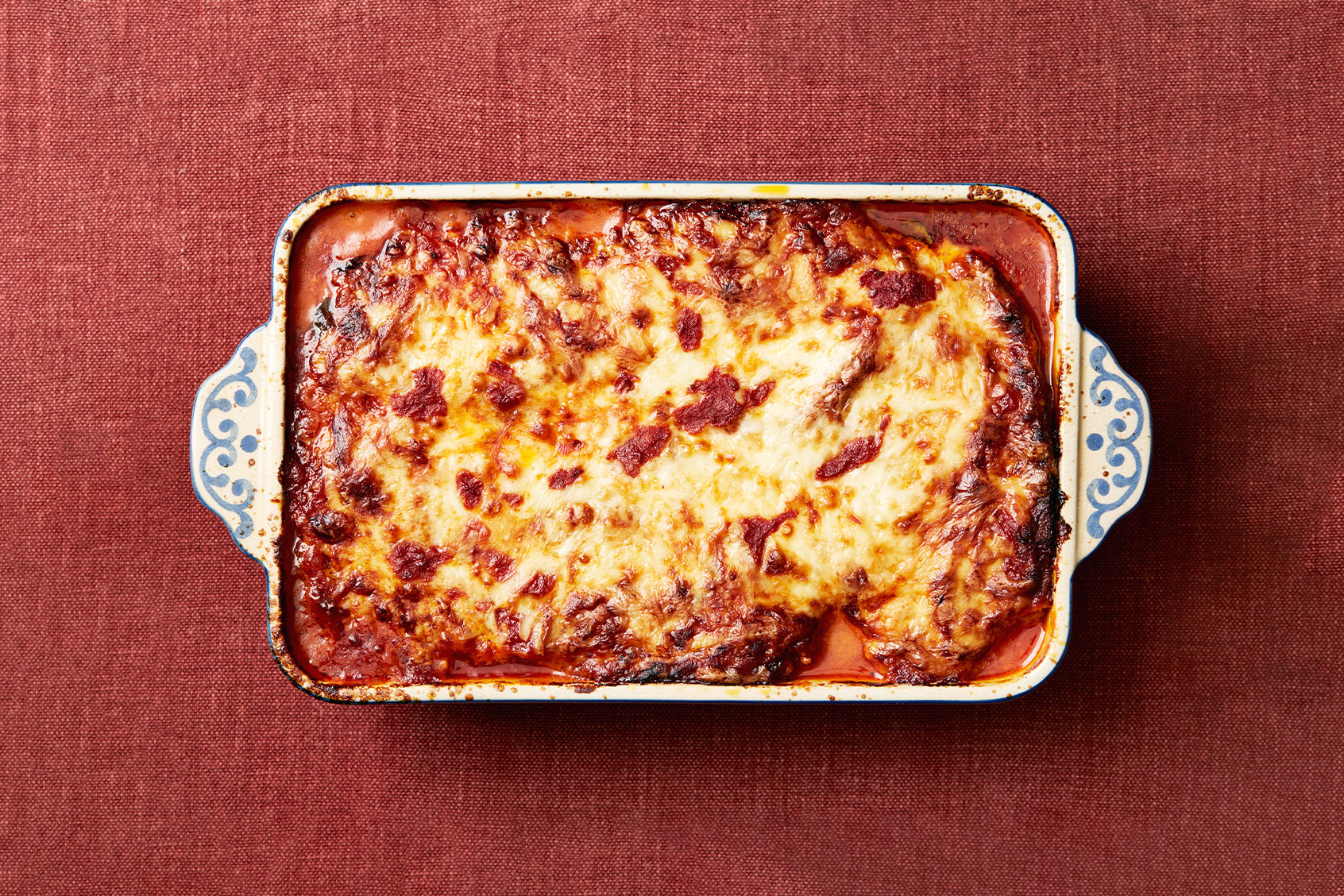
Of course, popcorn is a consummate snack for movie-going, so why not also incorporate it into the big night that celebrates movies?
 
Senior writer Mary Elizabeth Williams make a simple bag of microwaves popcorn and then flavors portions in different manners before combining it all in one large bowl. The savory popcorn contains butter, cheddar cheese powder and mustard powder, while the sweet contains brown sugar, corn syrup, butter and vanilla. When eaten together, you’ll be blown away. 
Eggplant ParmigianaEggplant Parmigiana (Getty Images/Armando Rafael)Image_placeholder
No Oscars party is complete without an Italian-American staple. In this case, eggplant parm steps up the plate, a perfect item for the vegetarians (just be mindful of the rennet in the cheese!) and the carnivores alike, doused with a heaping amount of cheese and lots and lots of rich, umami-laden tomato sauce.
 
You can opt to cut and cook the eggplant however you see fit; no matter which option you go with, the dish is bound to be a crowd pleaser.
Marshmallow BlondieMarshmallow Blondie (Mary Elizabeth Williams)Image_placeholder
A whimsical dessert that hits on multiple craving points, this Mary Elizabeth Williams brownie is a special one. 
 
Harnessing all of the flavor of brownies (just without the cocoa) and amping it up with marshmallow and peanut butter (either chunky or smooth) makes this a truly irresistible sweet bite. 
 
As Williams puts it, “My own final product isn’t pretty, but it sure is good. The marshmallow gets bronzed and gooey, the peanut butter gets melty and conversation while eating becomes completely impossible.” 
Macaroni & CheeseMacaroni & Cheese (Mary Elizabeth Williams)Image_placeholder
Any party — even an Oscars shindig — benefits from a macaroni and cheese to round out the varying dishes.
 
Macaroni and cheese is a classic for a reason and this version, made in a sheet pan with an outrageous amount of American and cheddar cheeses, ensures that the crispy bits reign supreme. 
 
Feel free to swap in some additional cheeses or use the milk (or plant-based milk) of your choosing to make this your own. 
EloteElote (Mary Elizabeth Williams)Image_placeholder
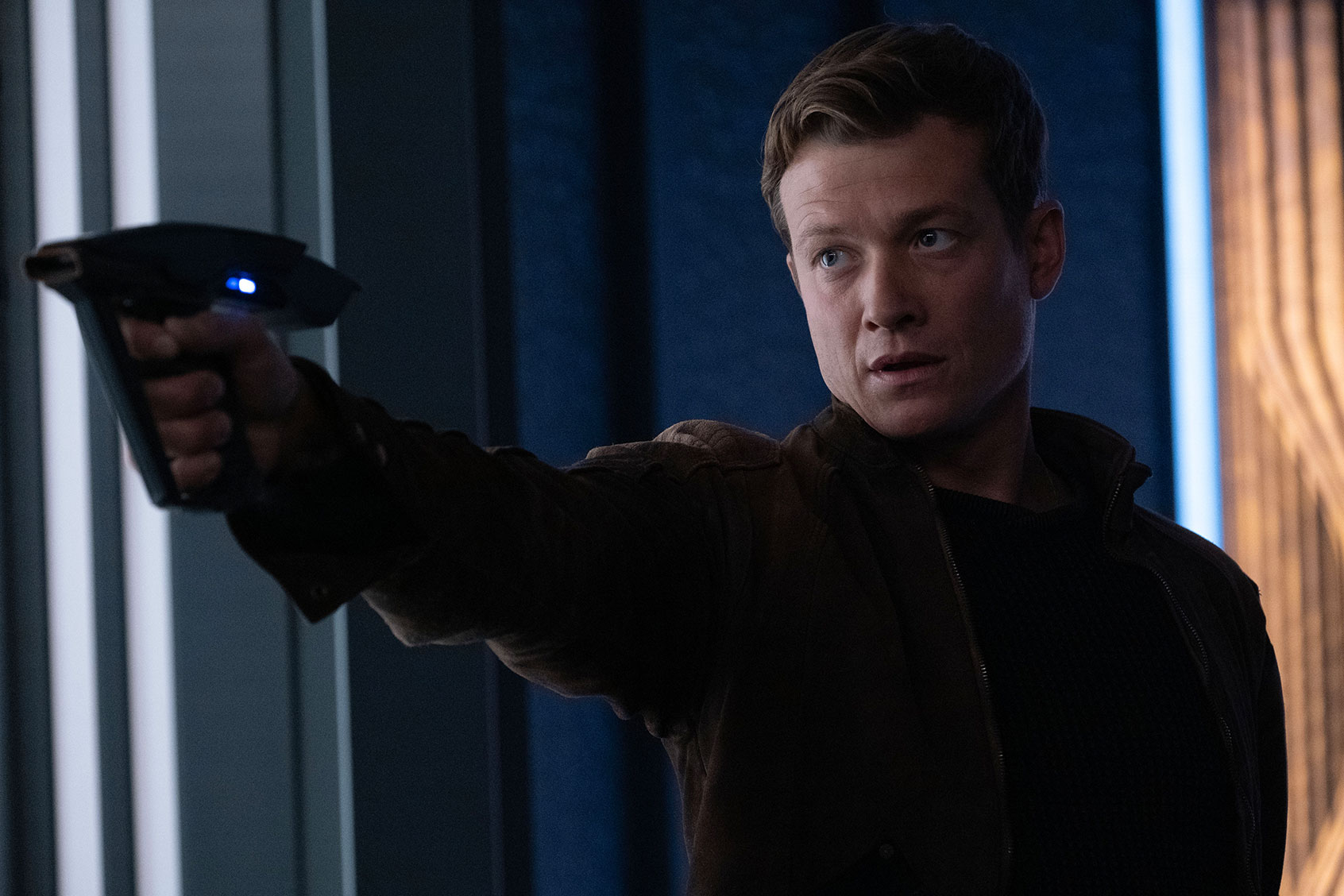
This is a real gem of a dish. 
 
Senior writer Mary Elizabeth Williams takes the flavors of the famous Mexican elote and turns it into a dip of sorts, elevating frozen corn to new heights. Williams combines the broiled corn with mayonnaise, lime juice and hot sauce, which is then topped with Cotija and cilantro before being served with corn chips for serving (or, as Williams puts it, scooping).
 
Yeah . . . you might want to make a double batch of this one. 


From “You” to “Barry,” we’re fascinated by audacious grifters: The man who deceives us and himself

Sometimes typecasting works in an actor’s favor. Pedro Pascal, for one, has carved out a niche as the season’s more desirable bachelor childcare provider. Quinta Brunson’s responsible, sensible “Abbott Elementary” persona has been repurposed on “Party Down” and in Hulu’s “History of the World, Part II.”

Not to be overlooked, however, is Ed Speleers. The name may not be familiar, but the face may jog your memory. A few years ago Speleers was best known as “Downton Abbey” footman Jimmy Kent, “a vain and silly flirt” fired for bedding one of his betters. “Outlander” transformed him from a pretty, vapid romantic into a sinister pirate.

The two major characters he currently plays on Netflix’s “You” and Paramount + series “Picard” draw cards from each of those decks, but more pertinent to the topic at hand are the entirely coincidental similarities shared by his “You” author Rhys Montrose and “Picard’s” Jack Crusher: both are charmers who aren’t entirely in control of their actions and, therefore, can claim they aren’t responsible for the terrible things they do.

Granted, the two shows are starkly dissimilar. “Picard” is a futuristic space adventure, while the fourth season of “You” continues the story of Penn Badgley‘s stalker serial killer Joe Goldberg in present-day London. There Joe embarks on a fresh start as a college professor named Jonathan Moore. As Jonathan, Joe finds Rhys to be the most approachable figure in the upper-class social circle he falls in with. The title of Rhys’ bestseller, “A Good Man in a Cruel World,” speaks directly to Joe’s quest to leave his predatory sadism in his past.  

The latest “Picard” episode, “No Win Scenario,” finds Admiral Jean-Luc Picard (Patrick Stewart) and a starship’s crew fighting to survive beyond the border of Federation space. The mess they’re in is partly Jack’s fault since his reputation as a smuggler and con artist makes him a wanted man. The only reason the crew of USS Titan hasn’t handed him over to a bounty hunter who has them massively outgunned is that Picard announced that he’s Jack’s father.

Star Trek: PicardEd Speelers as Jack in “Disengage” in “Star Trek: Picard” (Trae Patton/Paramount+)
Jack is also transparent about his criminality. Despite this, the latest episode closes with a hint that Jack is hiding a secret: some red-tentacled menace lurks inside of him, and may be overtaking his consciousness.

“You” viewers also may have suspected that Rhys is too good to be true. Sure enough, a midseason twist reveals Speleers’ man as the season’s villain compelling Badgley’s Jonathan to do his worst or suffer the consequences.

When a British accent comes out the mouth of a handsome devil who can wear the hell out of suit, beware.

Rhys’ and Jack’s divided personalities aren’t outliers in the realm of ambitious deceivers, especially at this moment. Our fixation with the Murdaugh trial and the bodies connected to his family explains why characters like this can have a hold on us. The sheer audacity with which Alex Murdaugh, his family, and their accomplices asserted their power and privilege in their South Carolina town is astonishing, certainly.

We may be even more amazed that he was convicted of murdering his son Paul and wife Maggie, especially since part of his lawyer’s early defense is that his client’s unbridled opioid addiction clouded his reasoning. “Your honor, this behavior does not reflect who I truly am,” is a common defense employed by the moneyed and powerful.

Other versions of such characters are astounding enough in their bravado that the harm done by their lies is almost completely outstripped by the extremity of their self-deception. That’s why New York congressman George Santos shows no signs of boring the public. He’s lied so profusely and assumed so many false personas that he can’t seem to keep up with his falsehoods. We continue to pay attention in part because we don’t want to miss the moment when the put-on crumbles. The bigger question is, does he even know who that person is?

All this represents a natural progression from our captivation with grifters, which has had audiences in its thrall since the hugest huckster of our time conned his way into the Oval Office in 2016. He fooled millions, but that man knows himself and what he’s doing.

When Santos loses his office we’ll probably lose interest in him too. But a grifter’s pull is eternal owing to their association with panache and cleverness. The popularity of ABC’s “The Company You Keep” proves this. But even that show’s blend of family drama and glamorous heists hinges its tension on the presumption that the lovers at the center of its game, Milo Ventimiglia’s Charlie and Catherine Haena Kim’s Emma, are fooling themselves.

Charlie is a thief who assumes false identities; Emma’s a CIA agent forbidden to tell anyone, including her family, what she does. Their relationship, such as it is, is based on compartmentalizing their desire for each other from the familial and career obligations intrinsic to who they are. There’s no way it can work in the long term without someone’s mask dropping. 

If a part of us is cheering for Barry or understands Sally, Rhys, and Jack, it could be that we recognize them as versions of the classic “Dr. Jekyll and Mr. Hyde” horror.

But its tension is circumstantial. The aggression Rhys wages in “You” and Jack is barely keeping at bay is, in a real way, part of an internalized war, like the psychological conflict driving Bill Hader’s ex-Marine hitman over the edge in “Barry.”

Hader’s Barry Berkman also tried to free himself from a murderous path by persuading himself that he could make a new life out of a character of his imagining, that of a nice, safe guy and a solid boyfriend to Sally Reed (Sarah Goldberg). As it turns out, Sally is also bent on dramatizing her way into a life that’s better than her old one, a disturbing chapter shaped by abuse. The darkness with them doesn’t make that possible, and in the third season, Sally loses the limited professional standing she gains when she’s recorded abusing a former colleague, while Barry is now in prison.

BarryBill Hader in “Barry” (Merrick Morton/ HBO)

Speleers’ characters are more eloquent and skilled at performing empathy. Since he’s wearing their costumes that also means they’re also golden-haired white guys with British accents. To American audiences the English accent still confers both authority and the assumption of elitism. When it comes out the mouth of a handsome devil who can wear the hell out of suit, beware.


Want a daily wrap-up of all the news and commentary Salon has to offer? Subscribe to our morning newsletter, Crash Course.


Speleers, who naturally wields both of these figurative disarming devices, easily persuades the viewer of Jack’s inherent heroism or the notion Rhys Montrose could sell the London Bridge to voters by sneering a little. He does much more than that, mind you, to the point that in “You,” Rhys’ off-the-charts appeal makes him a threat to another white guy with power and political influence on a global scale.

But he’s also a model of self-deceit that colors Rhys’, the real Rhys, and the ultimate purpose served by the one we know with minatory tragedy. Something similar may be afoot with Jack.

If a part of us is cheering for Barry or understands Sally, Rhys and Jack, it could be that we recognize them as versions of the classic “Dr. Jekyll and Mr. Hyde” horror, an allusion to which “You” points in the second half of this season. Blacking out, and behaving in ways we don’t remember and may be shocked to be told about when we’re sober. All of us harbor some fear of being overtaken by a shadowy alter ego that rampages in our name.

Then again, those hidden personalities are also a means of escaping accountability. If we don’t know these hidden selves exist, how can we accept the blame for their crimes?

The upcoming fourth and final season of “Barry” was announced with a trailer that shows Barry in prison, for now. He’s the hero of his show and, at least for a time, made an honest if doomed effort to be a better person. More importantly, Hader plays Barry persuasively, daring us to like the guy and desire his escape despite his murderous rages. 

We may not feel the same about Rhys on “You,” whose hold on Joe and effect on the people around him places him in a position to do damage on a broader scale. Whatever impact the duplicity gestating on “Picard” has yet to be revealed, but the view is already inclined to have sympathy for Jack purely based on his parental drama.

Speleers’ performance and persuasive mug lend both characters an air of credibility and danger in a way that indicates he understands how his physicality fits what these men represent. Hopefully, the actor is having as good of a time not being himself as one imagines the audience is in watching him.

All episodes of “You” are currently streaming on Netflix. New episodes of the third and final season of “Picard” stream Thursdays on Paramount +.


Salon’s totally (possibly) infallible Oscar predictions: Who will win? And who should win?

For many Oscar fans worried about the direction of the Motion Picture Academy, this year’s pack of nominations might have seemed like a ray of hope. Sure, many of the above-the-line nominations lacked racial and gender diversity (particularly the six people nominated for best director, only one of whom is not a white man), but even a look at the 10 Best Picture nominees shows how committed the Academy seems to be in making good on its 2009 promise to celebrate a wider range of films, not simply the usual Oscar bait that, for better or worse, has dominated the field for decades.

There’s a good mix of classic prestige art films (“TÁR,” “The Banshees of Inisherin,” “Women Talking”), a few biopics (“Elvis,” “The Fabelmans”) some of the year’s biggest blockbusters (“Avatar: The Way of Water,” “Top Gun: Maverick”) and movies that indicate the Academy is willing to explore beyond it previous boundaries (case in point: the 10-minute vomiting extravaganza in “Triangle of Sadness”).

Perhaps the easiest way to tell that this year’s best picture race is moving in a new direction is simply by looking at the release dates of the nominees. Three of this year’s nominees were released before August of 2022, when most Oscar bait usually starts to appear in festivals and release in theaters. This includes “Elvis,” released in June, and “Top Gun: Maverick,” released in May. Even frontrunner “Everything Everywhere All At Once” was released to theaters in March of 2022, the week of last year’s Oscar ceremony. If that film takes home the biggest prize, it’ll have the earliest American release for any best picture winner since the 1970s, when the ritual of releasing almost all of the year’s best picture nominees in the last weeks of the year started to take hold. If we want an end to the Academy’s reliance on Oscar bait, “Everywhere Everywhere All At Once” may be our way out.

Come Sunday, we’ll see how committed to change the Motion Picture Academy is once the awards start rolling in. Below is Salon’s guide on what to expect from Oscars night in all of the ceremony’s categories. Who will emerge with the most wins? Who will be shut out completely? How many tasteless Will Smith slap jokes will various emcees make throughout the night? (Our prediction for that last one is a pitiful nine, with three of those appearing during the opening monologue.) Read our predictions for Sunday’s celebration of some of the best films of 2022.

The 95th Academy Awards ceremony will air Sunday, March 12 at 8 p.m. ET/5 p.m. PT on ABC.

 
Best Picture

“All Quiet on the Western Front”

“Avatar: The Way of Water”

“The Banshees of Inisherin”

“Elvis”

“Everything Everywhere All at Once”

“The Fabelmans”

“TÁR”

“Top Gun: Maverick”

“Triangle of Sadness”

“Women Talking”


Will Win: “Everything Everywhere All At Once”


This year’s best picture race has been “Everything Everywhere All At Once’s” to lose from the very start. Since its premiere at South by Southwest in March 2022 and its meteoric rise to the top of critics and audience lists everywhere (and all at once), including becoming the highest-rated film of all time on the movie reviewing platform Letterboxd, “Everything Everywhere All At Once” has only built up momentum going into the awards season. Fierce competitors have arisen at certain points over the past several months, but no film has knocked it from its first place position for long enough to present a serious challenge over the top award. 


Should Win: “TÁR”


In a year full of incredible nominees (and “Elvis”), the one that shines above the rest is “TÁR,” a beautifully understated film that shines a light on the predatory narcissism of “great” artists. Everything in this film is an achievement, from its slow-burning screenplay to its discreetly artful cinematography to Cate Blanchett’s career-defining performance as the titular Tár. A win for this film would be nothing less than felicitous in a post-#MeToo Hollywood. 


Best Director

Martin McDonagh (“The Banshees of Inisherin”)

Daniel Scheinert and Daniel Kwan (“Everything Everywhere All at Once”)

Steven Spielberg (“The Fabelmans”)

Todd Field (“TÁR”)

Ruben Östlund (“Triangle of Sadness”) 


Will Win: Steven Spielberg, “The Fabelmans”


Spielberg’s newest film has been lauded as his most personal, and is certainly an integral look into the mind of one of Hollywood’s most important directors. And of course, there’s nothing that the Academy loves to award more than movies about movies. A look at past winners for best director over the past decade finds artists like Damien Chazelle for “La La Land,” Alejandro González Iñárritu for “Birdman,” and even Michel Hazanvicius for the largely forgettable “The Artist” coming out on top over their competitors for focusing on the personal processes of creating art. So it’s a good bet to count on the prolific Hollywood auteur directing his own “director origin story” to get the votes for best director.


Should Win: Daniel Scheinert and Daniel Kwan, “Everything Everywhere All At Once”


Many outlets have named the Daniels as the most likely to pick up best director, namely due to the fact that their film is an easy frontrunner for the top award of the night. And historically, this is a safe bet to make; of the 95 films that have won best picture, 67 of them have won best director. However, tides have turned over the past decade, with only four of the last 10 best picture winners also picking up best director as well. The Daniels also have their fair share of awards from precursor ceremonies, including the Critics Choice Awards, the Independent Spirit Awards and the Directors Guild Awards, which are important, but with Spielberg having snagged the Golden Globe earlier this year, the Oscar seems like Spielberg’s to lose. The Daniels certainly deserve the award, however, for bringing their unique vision to the screen and making one of the most quirky and engaging films of 2022. A win for the Scheinert and Kwan would be a victory for a new style of directing that breathes new life into the established tastes of the Academy.

 
Best Actress

Ana de Armas (“Blonde”)

Cate Blanchett (“TÁR”)

Andrea Riseborough (“To Leslie”)

Michelle Yeoh (“Everything Everywhere All at Once”)

Michelle Williams (“The Fabelmans”)


Will Win: Michelle Yeoh, “Everything Everywhere All At Once”


Despite a misstep earlier this week that may have violated the Academy’s rules of telling voters not to cast their ballots for their competitors, Michelle Yeoh is a worthy winner for best actress. Between her and Cate Blanchett, best actress is without a doubt this year’s closest race in terms of both quality of performance and odds to win, and the closest race in this category in decades. Both have won their fair share of precursor awards, with Michelle Yeoh picking up the SAG Award, the Indie Spirit Award, and the Golden Globe for musical/comedy performance, and Blanchett taking home the Critics Choice Award, the BAFTA, and the Golden Globe for drama performance. Yeoh’s advantage, though, is her lack of a previous win; no matter how deserving of the award many voters may think Blanchett is, it’ll be a tough sell for them to give the star her third Oscar instead of awarding Yeoh her long-overdue first. 


Should Win: Cate Blanchett, “TÁR”


In my mind, the optimal scenario for the best actress award is a repeat of 1968’s ceremony, when Katharine Hepburn and Barbra Streisand tied for their fabulous performances in “The Lion in Winter” and “Funny Girl,” respectively. It would be only fitting for a tie to happen in the category again this year, between two actresses who gave the best performances of their respective careers, and for which have accumulated a similar amount of awards. It would also be an affirmation that, when it comes down to splitting hairs, great awards ceremonies should be about celebration of greatness in toto, not simply as a zero-sum game.


In the very likely event that doesn’t happen, though, the most deserving winner is Blanchett, who gives not only the most subtle and nuanced performance of her own career, but one of the greatest acting performances in history. (Plus, she’s the only nominated actress whose fictional character now has a viral Twitter account, which is truly a testament to how much fans adore her performance.) It’s a true achievement to play a horrible person in such a way that the audience is transfixed on their greatness but disgusted by their personality, and Blanchett walks this line beautifully. Her performance is also naturalistic in a way that most of the nominated performances are not. Sure, Andrea Riseborough gives an authentic portrayal of the horrors and sorrow of alcoholism, but does she talk for five minutes about Mahler’s Fifth and Leonard Bernstein in such a way that, for a moment, you forget you’re watching a film and not an obnoxiously pretentious interview with one of the world’s leading conductors? Luckily, if Blanchett does lose, we can just pretend that her also-very-deserving award for “Blue Jasmine” was actually meant to honor this film. 

 
Best Actor

Paul Mescal (“Aftersun”)

Colin Farrell (“The Banshees of Inisherin”)

Austin Butler (“Elvis”)

Bill Nighy (“Living”)

Brendan Fraser (“The Whale”)


Will Win: Austin Butler, “Elvis”


Like best actress, the race for best actor has been fairly close between two eligible contenders, the other being Brendan Fraser for “The Whale.” What was once Fraser’s race to win has now flipped gradually in Butler’s favor after a decisive win at the Golden Globes, an award that has correctly predicted the best actor Oscar winner in nine out of the last 10 years. It’s also very safe to bet on a biopic for a lead acting category; just ask Will Smith, Rami Malek, Gary Oldman or Eddie Redmayne, who all won for varying levels of transformative biopic performances. Butler falls squarely in the middle of this pack, giving a decent performance that adopts some of the affectations of its subject and loosely parodies the other ones. His performance is certainly the most engaging part of an otherwise mediocre movie, and his win will likely age as well as most of the other previous winners I just mentioned.


Should Win: Brendan Fraser, “The Whale”


It’s true that Hollywood loves a good comeback story, and that’s been the main factor on Brendan Fraser’s side this awards season. The quality of his performance, however, should speak for itself. Fraser is authentic and human in a movie that unfortunately chooses to focus on more grotesque, and admittedly fatphobic, elements of the overweight character’s story. It’s a role that showed the world we were finally ready for the completion of the Brendan Fraser comeback arc, and that he could give us more than we ever expected from the “George of the Jungle” star. But instead, the award will go to someone giving a decent, if corny, Elvis impression. 


A close second and third are Colin Farrell in “The Banshees of Inisherin,” who gives a very similar performance about loneliness and isolation, and Paul Mescal, whose breakout film performance in “Aftersun” earned1 him his well-deserved first nomination and the film its only acknowledgement of the night.

 
Best Supporting Actress

Kerry Condon (“The Banshees of Inisherin”)

Angela Bassett (“Black Panther: Wakanda Forever”)

Jamie Lee Curtis (“Everything Everywhere All at Once”)

Stephanie Hsu (“Everything Everywhere All at Once”)

Hong Chau (“The Whale”)


Will Win: Angela Bassett, “Black Panther: Wakanda Forever”


It’s typically the case that when a film has two or more nominations in the same acting category, the award will go to a different film. The logic behind that is pretty reasonable, as no matter how many supporters a film has, the votes for the film will be split between the two or more nominees, giving another actor the plurality of votes. It’s part of the reason Duvall, Pacino and Caan, who were all up for best supporting actor for “The Godfather,” all lost to Joel Grey. I believe this year will follow the rule, and not the exception, when it comes to Jamie Lee Curtis and Stephanie Hsu in “Everything Everywhere All At Once.” They both give very celebrated performances, and though Curtis’ award campaign has dominated this awards season, it’s unlikely either of them will accumulate enough votes to rise to the top of the category. Angela Bassett, however, plays a central role in the sequel to “Black Panther,” and is long overdue for an award after more than 30 stellar years in the industry. She’s also accumulated several precursor awards this season, most importantly the Golden Globe for best supporting actress, so her win is all but a lock.


Should Win: Hong Chau, “The Whale”


Hong Chau should have clinched this award in 2018 for her heartbreaking performance as Ngoc Lan Tran in Alexander Payne’s “Downsizing,” an otherwise disappointing film made interesting entirely due to Chau’s acting chops. Chau wasn’t even nominated for that film, but her performance in “The Whale” is equally impressive and heartbreaking, helping balance Fraser’s pervasive optimism with a constant, more grounded realism. Chau never overplays her role with large, dramatic gestures, but doesn’t stay in the background either, and the film is made better by her paradoxically cold and caring presence throughout. While this will be Chau’s second snub for well-deserving performances, she’s shown with her impressive career so far that she has the talent to gather many more nominations in the near future. 


A close second is Kerry Condon, who, like Chau, provides a balance to the male presence in her film, “The Banshees of Inisherin.” “Banshees” is very much a male-centric movie, as evinced by its impressive three male acting nominations, yet Condon is the glue that holds the emotional core of film together, both fomenting and solving much of the tension that arises between Farrell’s and Gleeson’s characters. 

 
Best Supporting Actor


Brendan Gleeson (“The Banshees of Inisherin”)

Barry Keoghan (“The Banshees of Inisherin”)

Brian Tyree Henry (“Causeway”)

Ke Huy Quan (“Everything Everywhere All at Once”)

Judd Hirsch (“The Fabelmans”)


Will Win: Ke Huy Quan, “Everything Everywhere All At Once”


Just as “Everything Everywhere All At Once’s” multiple supporting actress nominations will make it hard for either actress to win the award, the nominations of both Brendan Gleeson and Barry Keoghan for the “The Banshees of Inisherin,” while absolutely deserved, essentially ensures that neither of them will get enough votes to take home the statue for best supporting actor. This is not to say that Ke Huy Quan is undeserving, or even that he wasn’t a clear frontrunner before “Banshees” was released. Quan’s role as Waymond Wang is the most impressive acting performance in “Everything Everywhere,” with seamless transitions between the two multiverse versions of his character several times throughout the film. In addition, Quan provides the most crucial emotional core of the movie, and his climactic monologue in one of 2022’s most powerful scenes continues to be quoted to death on film Twitter. Quan has also won nearly all of the precursor awards for this category, save the BAFTA, so it’s really no contest.


Should Win: Brendan Gleeson, “The Banshees of Inisherin”


As delightful as Quan is in “Everything,” Gleeson’s performance opposite Farrell in “The Banshees of Inisherin” is solemnly beautiful, and certainly stands out as one of the finest moments of his career. Another actor may have gone over the top with this character’s newfound hatred of his previous best friend, but Gleeson is a master at understatement in nearly every performance, and this one is no exception. His second collaboration with McDonagh and Farrell, Gleeson steals the film, and in a year without “Everything Everywhere All at Once,” the award would be his to lose.

 
Best Original Screenplay

Martin McDonagh (“The Banshees of Inisherin”)

Daniel Kwan and Daniel Scheinert (“Everything Everywhere All at Once”)

Steven Spielberg and Tony Kushner (“The Fabelmans”)

Todd Field (“TÁR”)

Ruben Östlund (“Triangle of Sadness”)


Will Win: Martin McDonagh, “The Banshees of Inisherin”


Martin McDonagh is one of the most unique screenwriters of the 21st century, crafting both one of its most brilliant black comedies with “In Bruges,” and one of its most painful dramas with “Three Billboards Outside Ebbing, Missouri.” “The Banshees of Inisherin” is a great mix of these two genres, with McDonagh managing to create a muted tapestry of loneliness and sorrow that still leaves you holding your sides laughing. He’s a unique talent, and his success at both the Golden Globes and the BAFTAs make McDonagh a likely and deserving winner in this category.


Should Win: Todd Field, “TÁR”


A great screenplay is a very hard thing to define, but one way might be “a screenplay that turns the dullest ideas into the most thrilling moments.” In this way, Todd Field crafted a masterpiece of a screenplay with “TÁR,” which opens with a nearly six-minute long interview with the fictional conductor Lydia Tár that holds no bearing whatsoever on the direction of the rest of the film. Another screenwriter would throw this scene on the cutting room floor, but Field chooses to keep it in as our very protracted, very slow introduction to the titular character, and in the process, creates the most engaging opening scene of the year. And the film is full of scenes like this one, scenes that expect you to stop paying attention but refuse to let you do so, scenes that are so elegantly paced that you hardly notice that nobody has moved a muscle in the last five minutes. 

 
Best Adapted Screenplay

Edward Berger, Lesley Paterson and Ian Stokell (“All Quiet on the Western Front”)

Rian Johnson (“Glass Onion: A Knives Out Mystery”)

Kazuo Ishiguro (“Living”)

Peter Craig, Ehren Kruger, Justin Marks, Christopher McQuarrie, and Eric Warren (“Top Gun: Maverick”)

Sarah Polley (“Women Talking”)


Will Win: Sarah Polley, “Women Talking”


One of only two categories in which this largely underappreciated film was nominated, best adapted screenplay seems like the most likely chance for “Women Talking” to score an award on Sunday night. If the name of the film wasn’t a dead giveaway, “Women Talking” is nothing without its powerful screenplay, which reads like an Ancient Greek dialogue on the nature of religion and submission. The film never feels pandering or unthoughtful during its lengthy discussions on rape and misogyny, and the fact that it holds together at all despite being little more than a two-hour long conversation is a sheer testament to the power of Polley’s screenplay. In addition, not only did “Women Talking” win the adapted screenplay award at the Writers Guild Awards and the Critics Choice Awards, it was the only one of the five films to be nominated for the Golden Globe for best screenplay, which certainly gives it a leg up on its competitors.


Should Win: Sarah Polley, “Women Talking”


Come on Academy, honor at least one film directed by a woman this year.

 
Best Animated Feature

“Marcel the Shell With Shoes On”

“Guillermo del Toro’s Pinocchio”

“Puss in Boots: The Last Wish”

“The Sea Beast”

“Turning Red”


Will Win: “Guillermo del Toro’s Pinocchio”


This year’s ceremony ranks as one of the best for nominees in the relatively young animated feature category, with all three of the top contenders representing a step away from the preference given toward computer animation over the past 20 years. “Puss in Boots: The Last Wish” follows in the footsteps of “Into the Spider-Verse,” using a more stylized version of computer animation that places less emphasis on the animated “realism” of its predecessors in the “Shrek” franchise. Both “Marcel the Shell With Shoes On” and “Guillermo del Toro’s Pinocchio” also eschew CGI in favor of stop-motion, a form of animation that has been greatly underrepresented in the category. This is the first year that both the top two contenders are stop motion, and if either of them win, they’ll be the first winner since 2005, and only the third ever, to not be exclusively computer-animated. While they are nearly neck-and-neck in the standings, “Pinocchio” is the most likely to win after receiving the Golden Globe in January. Del Toro’s widely celebrated comments on animation being “cinema” and not simply “a genre for kids” probably haven’t hurt the film’s chances either.


Should Win: “Marcel the Shell With Shoes On”


“Marcel the Shell With Shoes On” arrived in 2022 as one of the most endearing films in recent memory, and in a year without “Guillermo del Toro’s Pinocchio,” it probably would win. The film is delightful for any age group (which I’m sure would make Del Toro proud), and its messages about family and loss are universal to nearly every viewer. That the film is not tailored to any specific age group is perhaps most evident in the fact that a significant portion of the film hinges on “60 Minutes” anchor Lesley Stahl, a celebrity that most eight-year-olds probably wouldn’t recognize. The biggest hindrance to “Marcel’s” chances at the Oscars, however, is its extensive use of live-action footage that prompted serious discussion as to its eligibility within the category. It’s easy to imagine many voters discounting the film because of this, so “Pinocchio” is a much safer bet.

 
Best International Feature

“All Quiet on the Western Front”

“Argentina, 1985”

“Close”

“EO”

“The Quiet Girl”


Will Win: “All Quiet on the Western Front”


The Academy has seemingly adopted a regular policy since 2018 of nominating at least one foreign film for best picture every year, which it has done every year, save for 2021 (even then, if you count “Minari,” an American film with predominantly Korean dialogue). In many ways, this is great news, as it promotes a wider appreciation of films within the Academy. The problem with this trend, though, is the resulting predictability of the winner for best international feature. A good rule of thumb is whichever foreign film is nominated for best picture will win best international feature, so it’s safe to assume that “All Quiet on the Western Front” will take home the international feature award. That being said, don’t discount “Argentina, 1985,” which took home the award at the Golden Globes.


Should Win: “Close”


Not only is “Close” the best film nominated in this category, it’s the best film of 2022, period. It tells a beautiful story of two young boys who display close affection for one another, but start to drift apart once they are assumed to be gay by their peers. The film is equal parts euphoric and devastating (OK, maybe much more devastating than euphoric), and is a masterwork of cinema in all aspects, winning the Grand Prix at last year’s Cannes Film Festival. It’s a shame that it will likely be overshadowed by more prominent nominees in this category, namely “All Quiet on the Western Front,” because it is one of those brilliant films that only come around once every few years.

 
Best Documentary Feature

“All That Breathes”

“All the Beauty and the Bloodshed”

“Fire of Love”

“A House Made of Splinters”

“Navalny”


Will Win: “Navalny”


This is a pretty close race, with all of the documentaries having some edge in precursor award shows. “Navalny” won best documentary at the BAFTAs, which gives it some reputation going into Sunday night. The film also has some year-best moments, including a very fateful phone call during the middle of the film, which anyone who’s watched the film will remember. Most importantly, however, the film features very heavy criticisms of Putin, which would make this documentary a timely win in the category following the invasion of Ukraine last year. I’m sure many Academy voters will have that in their minds as they cast their ballots.


Should Win: “A House Made of Splinters”


Ironically, the film that should win this category has even more explicit connections to the war in Ukraine, centering on an orphanage in eastern Ukraine that takes care of children whose families have been torn apart, often by alcoholism. Not only does this film show a very tragic reality of life in one of the most dangerous places on Earth currently, it is incredibly well-structured and makes great use of the filmic form to shine a light on the lives of real-life people in a way that no other documentary from this batch of nominees has done. 

 
Best Cinematography

“All Quiet on the Western Front”

“Bardo, False Chronicle of a Handful of Truths”

“Elvis”

“Empire of Light”

“TÁR”


Will Win: “All Quiet on the Western Front”


This is a category that seems easy for a film like “All Quiet on the Western Front” to win, given the dearth of good nominees this year. While visually striking films like “Nope,” “Aftersun” or even “The Banshees of Inisherin” were shut out of the category, we were given nominees that ranged from dull (“Empire of Light,” easily one of Roger Deakins’ least inspiring works) to nauseating (“Elvis,” which follows Baz Luhrmann’s typical “everything, in your face, all at once” template). “All Quiet on the Western Front” shines among these nominees as a cinematographically impressive war film (which, second to science fiction movies, is one of the preferred categories for best cinematography) with plenty of beautifully composed battle scenes, along with the occasional still frame of nature to represent the absence of humanity during wartime.


Should Win: “TÁR”


Is it any surprise that I said “TÁR” again? It’s a masterwork in practically every field, not the least of which is the cinematography, which, like the rest of the film, is incredibly understated. This feature of “TÁR’s” cinematography actually makes it a surprising nominee, as the Academy tends to overlook films that focus on subtler uses of framing and camera techniques in favor of an in-your-face style. The camerawork perfectly complements every scene, with cinematographer Florian Hoffmeister often making use of long takes or still frames to accentuate the power of simple conversations. Then, of course, there are the outstanding symphony scenes, which are incredible in their own way.


Best Film Editing

“The Banshees of Inisherin”

“Elvis”

“Everything Everywhere All at Once”

“TÁR”

“Top Gun: Maverick”


Will Win: “Everything Everywhere All At Once”


A helpful trick for guessing which film will win in a certain category is to substitute “best” in the title for “most.” While the nominees for each category are chosen by professionals that work within that branch (i.e. editors vote for editing, cinematographers vote for cinematography), the final round of voting allows everyone to vote on every category. This sometimes leads to films winning not for the best use of editing, but the most noticeable. Basically, more rapid cuts means greater chance of winning the dditing category. (That’s how you get winners like “Bohemian Rhapsody” in 2019.) “Everything Everywhere All At Once” falls into this trend, not necessarily as a poorly edited film, but as a film whose editing choices are more immediately  memorable than those of its competitors. Think about that two-minute scene toward the end of “Everything,” where Michelle Yeoh screams as endless shots of her face from different multiverses flash past. Now try to remember any specific moment of editing in any other nominee this year. Exactly.


Should Win: “Top Gun: Maverick”


The reason that “Top Gun: Maverick’s” flying sequences work so well is down to the film’s impressive film editing. It doesn’t just have to do with rapid cuts between the jet’s low-altitude maneuvers and Tom Cruise’s face slowly losing oxygen (although that certainly does help). It has to do with the spatial relationships of cuts, connecting the flight command center on the ground to Cruise’s jet in the sky both physically and narratively; with the tension and release of shot lengths that make the hairs on your neck stand up without you quite knowing the reason why; and yes, Cruise’s face slowly losing oxygen. Editor Eddie Hamilton’s invisible guiding hand during these scenes, and during the entire film, is the reason why “Top Gun: Maverick” felt the way that it did, and he certainly deserves an award for his achievement.

 
Best Visual Effects

“All Quiet on the Western Front”

“Avatar: The Way of Water”

“The Batman”

“Black Panther: Wakanda Forever”

“Top Gun: Maverick”


Will Win: “Avatar: The Way of Water”


It would be nearly impossible to beat “Avatar: The Way of Water” for this category, not only for its massive scope, but also for the sheer fact that it’s a film over 10 years in the making. In typical James Cameron style, entirely new methods of filming and motion capture had to be invented just for this movie, specifically designing a new method of motion capture that would work for filming underwater. In essence, when it comes to the Award for Best Visual Effects, never bet against James Cameron.


Should Win: “Avatar: The Way of Water”


Come on, it’s “Avatar.”

 
Best Sound

“All Quiet on the Western Front”

“The Batman”

“Avatar: The Way of Water”

“Elvis”

“Top Gun: Maverick”


Will Win: “Top Gun: Maverick”


If “Top Gun: Maverick” deserves to win one award on Sunday, it’s for sound. As with film editing, the sound design of “Top Gun: Maverick” is integral to how the film builds its flying sequences, and the movie features some of the year’s most interesting uses of sound, from the labored breathing of Tom Cruise’s Maverick as he faces entirely too many G’s of force, to every single mechanical noise that goes into making the plane sound and feel like an actual, functional aircraft.


Should Win: “Top Gun: Maverick”


If we’re getting technical, the deserving winner of best sound is “Nope,” a film that was shamefully shut out of nominations from all the categories, and which uses sound design better than any film in recent memory to evoke feelings of sheer terror and helplessness. However, of the nominated films, “Top Gun: Maverick” clearly shows the most expert use of the medium.

 
Best Production Design

“All Quiet on the Western Front”

“Avatar: The Way of Water”

“Babylon”

“Elvis”

“The Fabelmans”


Will Win: “Babylon”


One of the biggest things working in “Babylon’s” favor in this category is that it’s set in the Golden Age of Hollywood, a setting that Academy voters tend to love. Of the past three winners, two (“Mank” and “Once Upon a Time in Hollywood”) had explicit connections to this era, and like “Babylon,” both of those films featured period-accurate film sets and peeked into the lives of Hollywood stars. Anytime the Academy gets a chance to see an early-to-mid 20th century car drive up toward a studio-era film backlot, or watch the main character operate or stand in front a classic feature film camera, they tend to give that film the award. Not to mention “Babylon”‘s previous win in this category at the BAFTAs, which gives it a running start heading into Sunday.


Should Win: “Babylon”


Production design was something that “Babylon: managed to do well, despite all of the film’s many faults. Director Damien Chazelle certainly has a good streak going with production design, with “La La Land” winning the award in 2017 and “First Man” earning a nomination in 2019. The movie’s wide scope, depicting everything from lavish 1920s parties to large film sets in the desert, also gives a chance to let the production design department shine, and they live up to the task, making every scene come alive with the meticulous attention to detail present in every shot. 

 
Best Makeup and Hairstyling

“All Quiet on the Western Front”

“The Batman”

“Black Panther: Wakanda Forever”

“Elvis”

“The Whale”


Will Win: “Elvis”


All of the last five winners for best makeup and Hairstyling have been biopics, and it’s easy to see why “Elvis” will become the sixth. It takes a very talented team of makeup and hairstyling artists to not only make an actor look like an iconic historical figure, but allow that actor to perform through all the layers of fake skin and wigs without looking like a wax figure at Madame Tussauds. The ability to replicate a well-known celebrity in flesh, while certainly not the only skill that makeup and hairstyling teams should have under their belts, seems to be seen by the Academy in recent years as the greatest test of their capabilities. And to the credit of the team behind “Elvis,” Austin Butler does kind of look like Elvis.


Should Win: “Elvis”


The beauty behind the makeup and hairstyling in Elvis is not necessarily that Butler kind of looks like Elvis Presley in the movie, but the way that the makeup artists are able to show how dedicated Elvis was to performing. Every concert scene features sweat dripping down Elvis’s brow, his hair becoming more wild with every crazy step, and, as he ages, the singer working through his rapidly deteriorating body. The makeup and hairstyling team behind the film deftly wielded their talents to pull this transformation off in a believable manner, and deserve just as much credit for making Elvis come alive as Butler does. “The Whale” is a fierce competitor, with much of Brendan Fraser’s physical presence on screen coming from the fairly believable “fat suit” and facial prosthetics, but “Elvis” certainly has a creative leg up here.

 
Best Costume Design

“Babylon”

“Black Panther: Wakanda Forever”

“Elvis”

“Everything Everywhere All at Once”

“Mrs. Harris Goes to Paris”


Will Win: “Elvis”


Costume design is perhaps the hardest category to predict this year, simply because none of the nominees are clearly superior to any other. (This year has no “Grand Budapest Hotel,” so to speak.) Each nominee has nice looking costumes, and it would be tempting to say that, given the Academy’s interest in giving costume design to films specifically related to fashion (“Cruella,” “Phantom Thread”), “Mrs. Harris Goes to Paris” could be a nice pick. However, the sheer flashiness of “Elvis” will likely pay off for the film, which features a few iconic costumes, the greatest being the classic rhinestone suit from Elvis’ Las Vegas residency. Director Baz Luhrmann’s previous three films were also all nominated for costume design, with two winning (“The Great Gatsby” and “Moulin Rouge!”), and Luhrmann once again teamed up with longtime collaborator Catherine Martin for this film, so it’s a safe bet that Elvis will win. 


Should Win: “Babylon”


The costume design of “Babylon” was so intricately tied with the production design that they seem almost inextricably linked, but there were few costumes this year more iconic than Margot Robbie’s stunning red dress during one of the many lavish party scenes. That alone would merit a win for this film, but add Li Jun Li’s wonderful gender non-conforming clothes and an array of sweat-stained tuxedos to the mix, and you’ve got a picture deserving of a costume design win.

 
Best Original Song

“Black Panther: Wakanda Forever” (“Lift Me Up”)

“RRR” (“Naatu Naatu”)

“Tell It Like a Woman” (“Applause”)

“Top Gun: Maverick” (“Hold My Hand”)

“Everything Everywhere All at Once” (“This Is A Life”)


Will Win: “Naatu Naatu,” “RRR”


The only category for which last year’s Bollywood sensation received a nomination, best original song has been a lock for “RRR” ever since audience’s first saw the incredible dance sequence for “Naatu Naatu” on the screen. Not only is the catchiest song of the bunch, it plays during a musical scene central to the film’s plot, instead of simply being played over the credits sequence, which makes it an even more memorable tune. “RRR” was a critical darling last year, and Academy voters will certainly want to award the film in its only available category.


Should Win: “Naatu Naatu”


You haven’t lived until you’ve seen NTR and Ram Charan tear up the dance floor in suspenders.

 
Best Original Score

“All Quiet on the Western Front”

“Babylon”

“The Banshees of Inisherin”

“Everything Everywhere All at Once”

“The Fabelmans”


Will Win: “Babylon”


“Babylon” had the most infectious and in-your-face score of any 2022 film, from the repeated four-note trumpet line blaring in every single trailer for the film, to the iconic music playing over the movie’s strange closing montage. Justin Hurwitz has proven himself to be a great musical collaborator with Damien Chazelle already, winning both original score and Song in 2017 for “La La Land,” and his score for Babylon is by far the most remarkable part of an otherwise mixed film. 


Should Win: “Babylon”


That four-note trumpet line is still running through my head.


Want a daily wrap-up of all the news and commentary Salon has to offer? Subscribe to our morning newsletter, Crash Course.

 
Best Animated Short

“The Boy, the Mole, the Fox and the Horse”

“The Flying Sailor”

“Ice Merchants”

“My Year of Dicks”

“An Ostrich Told Me the World Is Fake and I Think I Believe It”


Will Win: “The Boy, The Mole, the Fox, and the Horse”


It’s always hard to tell which film will win in the short categories, because they’re not films most movie fans see or even hear about before the Oscar nominations roll around. That being said, the clear frontrunner in the category is “The Boy, the Mole, the Fox, and the Horse,” which has garnered the BAFTA for best British animated short and won big at the 2023 Annie Awards, taking home four wins. However, you can’t discount “My Year of Dicks,” whose title was so ridiculous it caused Riz Ahmed to laugh after announcing its nomination, leading to a delightful viral moment.


Should Win: “Ice Merchants”


“Ice Merchants” is a lovely film that is at the same time whimsical and horrifying. Following a father and son who make their living selling ice cubes from their home built into the side of a mountain, this film is quite beautiful, playing around with the unique character design and animation style by using changes in proportion and scale throughout the runtime. The result is a simple yet memorable animated short that is sure to win many hearts, even if it won’t win the award.

 
Best Live Action Short

“An Irish Goodbye”

“Ivalu”

“Le Pupille”

“Night Ride”

“The Red Suitcase”


Will Win: “An Irish Goodbye”


Ireland scored big in nominations at this year’s Oscars, not only with best original screenplay frontrunner “The Banshees of Inisherin” and best international film nominee “The Quiet Girl,” but also with this darkly comedic short film about two brothers bonding after the death of their mother. It’s accumulated dozens of awards, including the BAFTA for best British short film, giving it good momentum going into Sunday night.


Should Win: “The Red Suitcase”


In a category filled with beautiful, heart-wrenching stories, “The Red Suitcase” stands out as an incredible story of bravery amid blinding fear. The film centers around a young Iranian girl who must escape an arranged marriage to a much older man after arriving in the Luxembourg airport. Everything in this short, from the lead actress’s performance, to the simple yet chilling cinematography, to the almost horror-esque way of ramping up suspense throughout its 17-minute runtime, sets the film apart from the rest of its competitors. 

 
Best Documentary Short

“The Elephant Whisperers”

“Haulout”

“How Do You Measure a Year?”

“The Martha Mitchell Effect”

“Stranger at the Gate”


Will Win: “Stranger at the Gate”


This year’s race for documentary short is a tight competition between “The Elephant Whisperers” and “Stranger at the Gate.” While it would be tempting to predict “The Elephant Whisperers” for its beautiful cinematography and its feel-good story about an Indigenous couple raising a baby elephant, a look at past winners shows the Academy awarding films with much more depressingly hopeful and human-centric subject matter. Think “Colette,” a film about a French Resistance fighter visiting the concentration camp where her brother died; or “Learning to Skateboard in a Warzone (If You’re a Girl),” a film about impoverished girls in Afghanistan learning to skateboard despite the country’s rules against women participating in sport; or “The White Helmets,” a film about volunteer rescue workers during the Syrian Civil War. “Stranger at the Gate” fits neatly into this trend, providing the story of an American man who planned a terrorist attack at a mosque in Muncie, Indiana, before learning more about and ultimately befriending his town’s Muslim community. This film has just the right mix of dark subject matter and an easily digestible message of humankindness to make it a clear winner in the category.


Should Win: “Haulout”


This beautiful documentary short is unique among its competitors in how little it recites information to the audience. Interviews and voiceovers are largely absent from “Haulout,” which instead prioritizes impeccably composed shots of the Arctic coast and shorts tidbits of dialogue relayed through a handheld recording device, which the central marine biologist uses to document his study of tens of thousands walruses. At times, the film feels oppressively claustrophobic, as walruses surround the marine biologist’s small cabin; at other times, it feels empty and desolate, with the wintry Arctic landscape shutting us off from the outside world. “Haulout” is a documentary that cares deeply about its form and function in a manner that is absent from some of the other nominees, and definitely deserves to take home the award.