Spring Sale: Get 1 Year, Save 58%

Is Taco Bell’s “new” guacamole actually new? Online sleuths investigate

Taco Bell is no amateaur when it comes to riling up the internet over its latest menu offerings. Earlier this year, it was the Mexican Pizza, which returned to the chain following a 17-month hiatus. Then, it was the limited-time-only 7-Layer Nacho Fries. And now, it’s the “new” and reformulated premium guacamole, which was announced quietly in a recent press release.

“Taco Bell’s new, creamy guacamole is made with real Hass avocados, freshly prepared daily, featuring tomatoes and crisp onions added to every batch,” the press release detailed, assuring fans that Taco Bell’s latest offering is nothing like the premade goop they formerly passed off as mashed avocados. The release also described the new guacamole as “chunky, yet spreadable and dippable” and said it flaunts a seasoning sauce with hints of lime.

Within hours of the guacamole’s announcement, online sleuths scrambled to uncover its too-good-to-be-true ingredients list and decode its in-house preparation. Per one Reddit user who claimed to be a Taco Bell employee, the guacamole is made from a bag of avocado pulp, a bag of guacamole seasoning, two cups of tomatoes and a cup of onions. 

A step-by-step tutorial for preparing the guacamole was even showcased in a YouTube video. In it, a Taco Bell kitchen employee throws in chopped onions and tomatoes into a container before plopping a blob of avocado pulp from a plastic bag, thus proving that the guacamole is not as “fresh” as it claims to be.  

The ongoing hoopla surrounding Taco Bell’s guacamole release reinforces a burgeoning genre of online content — notably on TikTok and Reddit — centered around fast food transparency and myth busting. As Jacob Sweet wrote in his piece “The Fast-Food Stars of TikTok” for The New Yorker, there is now more transparency about what actually goes into fast food meals because fast food workers view that transparency as a shortcut to content. The formula behind this new, yet predictable, phenomenon looks something like this: a fast food place introduces a new product or menu change, fans gather online to “investigate” said changes and, inevitably, a worker will also join their ranks for some corporate myth-busting. We’ve seen this with Cold Stone employees, who attained TikTok fame simply by posting videos of themselves fulfilling orders, and Subway employees, who enticed viewers with point-of-view videos of themselves making and eating sandwiches.

We’ve also seen this in “I work at [insert fast food place]. AMA” Reddit threads, where fast food employees can expose their place of work while still maintaining their anonymity.   


Want a daily wrap-up of all the news and commentary Salon has to offer? Subscribe to our morning newsletter, Crash Course.


Of course, increased transparency about what goes into our foods is beneficial as it gives consumers more control over their purchases. As Bruce Chambers wrote for CBC, “if consumers feel they have a full understanding of what’s in a food product — even if it’s not an entirely appetizing picture — they’ll continue buying it. If not, they’ll switch to a competing brand for as long as it can retain their confidence.” The same goes for fast food. Food transparency isn’t enough to dissuade consumers from ordering fast food — and in Taco Bell’s case, it certainly isn’t enough to dissuade consumers from ordering their “new” guacamole. But, at least, it will encourage consumers to be more conscious about their food choices, especially now that they have more access to how their foods are prepared. 

The year in royals: The Windsors outdid themselves in 2022

No one would suggest that people who live in palaces, have their faces on currency, or get encouraging texts from Beyoncé are just like you and me. But the British royal family is nevertheless the world’s biggest, strangest mirror, always reflecting back something in ourselves when we can’t seem to stop looking at them. They are our most prominent embodiment of sibling rivalry, of disgraced uncles, of emotionally distant parents, of grief, of racism, of colonialism, of class, of upholding the family business and of striking out on your own.

Theirs was the family drama to put “Succession” to shame.

And for a clan that is never far from the public imagination, the Windsors really outdid themselves in 2022, captivating attention and polarizing opinions in ways celebratory, solemn and self-indulgent. Whether they were taking tea with a bear or decamping to Tyler Perry’s house, theirs was the family drama to put “Succession” to shame. Here were some of the biggest moments.

The Queen

The second longest reigning monarch in history (France’s Louis XIV remains undefeated) had already put in an extraordinarily full year before her death in September at the age of 96. In February, Elizabeth kicked off her Platinum Jubilee with a promise “to continuing to serve you with all my heart,” followed swiftly by a bout of COVID. “This horrible pandemic,” she said at the time. “It’s not a nice result.”

Soon, however, the queen had recovered and went on to deliver one of the best comic performances of the year alongside Paddington Bear, and even managed to squeak in a meeting with short shelf life Prime Minister Liz Truss. As royal biographer Andrew Morton told Salon recently, “The twilight of her reign was, I would say, probably her best years.” 

In life, Elizabeth simply was the monarchy, the only queen of England to exist within the memory of most people currently alive on this planet. Her place in the world was so durable as to seem immovable. In death, she opened up the conversation about the lasting stains of colonialism, the autonomy of the Commonwealth, and the future of the crown itself. (She even reignited the debate over whether it’s OK to smash your cousin.)

The King

Wand of Office; Committal Service for Queen Elizabeth II King Charles III watches as the Lord Chamberlain breaks his Wand of Office at the Committal Service for Queen Elizabeth II on September 19, 2022 in Windsor, England. (Ben Birchall – WPA Pool/Getty Images))

The Charles of 2022 might best be remembered as the cranky senior citizen petulantly muttering “I hate this” as he struggles with a tricky pen on tiny desk. 

Unlike his mother, his late ex-wife Diana or either of his mediagenic sons, Charles is a notoriously awkward public figure. It was perhaps a sign of things to come when he stepped in for his mother to open Parliament in May, and among the most commented-on aspects of the event were his swollen “sausage fingers.”

Even when portrayed more sympathetically by the charismatic Dominic West, he still emerged as the least likable character on the new season of “The Crown.” He fared even worse on “Harry & Meghan,” with Harry depicting him as an unsupportive family figure, repeating things that “just simply weren’t true.”

When he assumed the throne this past fall, the then 73-year-old King Charles became the oldest person in British history to be crowned. Even if he keeps in line with the family history of longevity, his reign will be decades shorter, and likely far less impactful, than his predecessor’s. And while he may in time ease into a more relaxed figurehead, the Charles of 2022 might best be remembered as the cranky senior citizen petulantly muttering “I hate this” as he struggles with a tricky pen on tiny desk. 

Harry & Meghan and “Harry & Meghan”

Prince Harry and Meghan, The Duke and Duchess of Sussex.Prince Harry and Meghan, The Duke and Duchess of Sussex. (Courtesy of Prince Harry and Meghan/Netflix)In their efforts to take some measure of control of their narrative, an English army veteran and retired Californian actress somehow assured that opinions about them would only become more divisive, and the vitriol against them even stronger

The hounding that Meghan and Harry experience is real, as is the spectacular degree of racism and misogyny Meghan has endured.

In August, Meghan looked every inch the cool Montecito mom on the cover of The Cut. Her “Archetypes” podcast won a People’s Choice award and simultaneously underperformed in the charts. In October, Penguin Random House announced the 2023 release of a new memoir by Prince Harry, bearing the burn-it-all-down title “Spare.” And then in December, Netflix unleashed the six-part Sussex-approved docuseries “Harry & Meghan.” The show took hits from the critics for its juxtaposition of the couple’s sun-dappled love story with their all-out fury at the British press and the royal family. The Guardian’s critic declared it “so sickening I almost brought up my breakfast.” 

Yet the hounding that Meghan and Harry — a man whose mother died while being chased by paparazzi — experience is real, as is the spectacular degree of racism and misogyny Meghan has endured. In a December column for The Sun, broadcaster Jeremy Clarkson felt totally comfortable declaring his hatred for her “on a cellular level,” writing that “At night, I’m unable to sleep as I lie there, grinding my teeth and dreaming of the day when she is made to parade naked through the streets of every town in Britain while the crowds chant ‘Shame!’ and throw lumps of excrement at her.” (After a deluge of complaints Clarkson later apologized, stating Britishly, “I’ve rather put my foot in it.”) 

The godmother 

In December, Lady Susan Hussey, a royal lady-in-waiting (and yes, that is still a real job) and godmother to Prince William, resigned as an honorary member of the royal household after reports that she had asked charity executive and advocate Ngozi Fulani where she was “really” from at a reception. Hussey later apologized and met with Fulani at the palace, and a spokesperson for Prince William said that “Racism has no place in our society. The comments were unacceptable, and it is right that the individual has stepped aside with immediate effect.”

The uncle

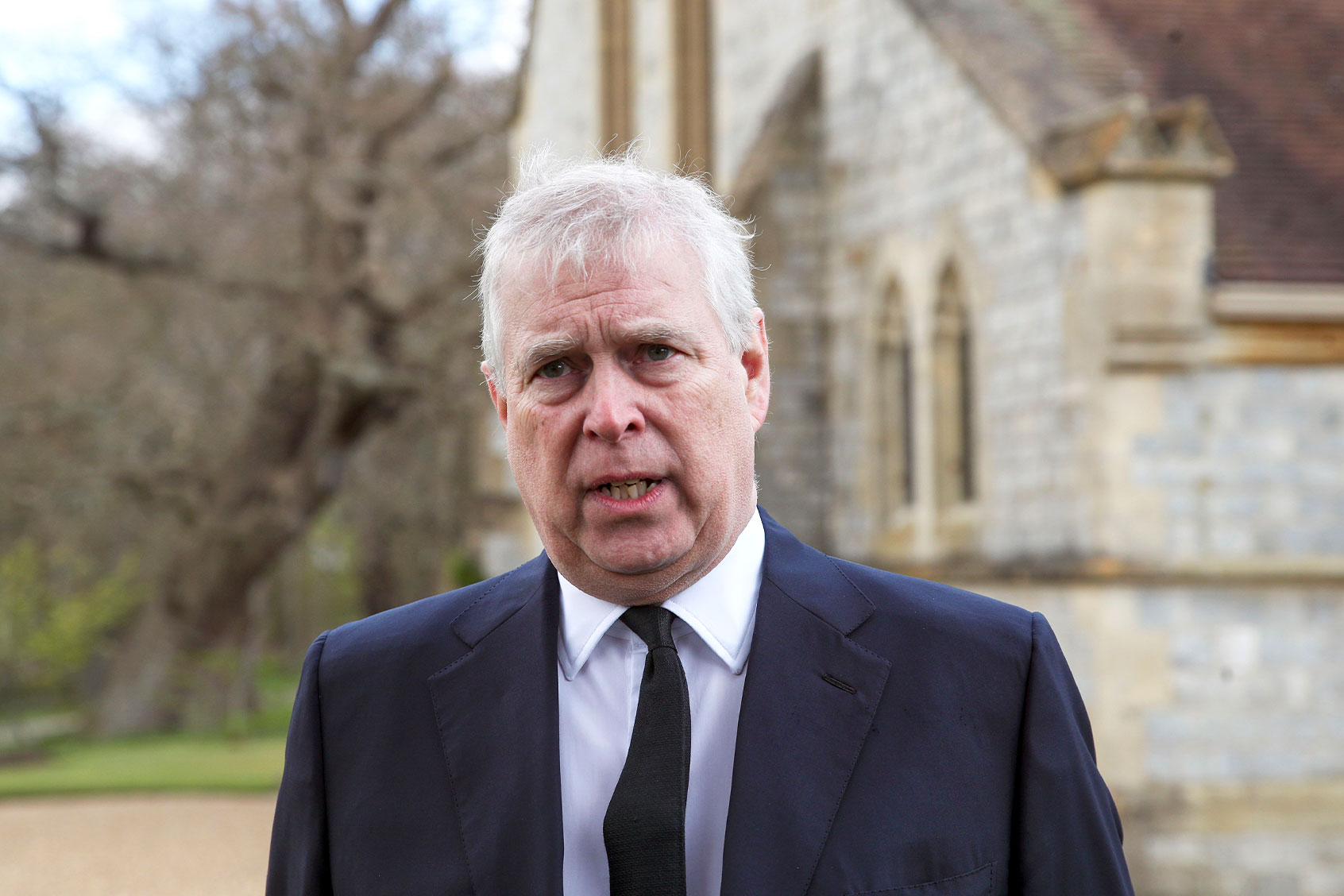
Prince AndrewPrince Andrew (Steve Parsons – WPA Pool/Getty Images)“Andrew hasn’t got the memo that he’s canceled,” author Tina Brown told Salon back in June. “He is canceled, big time.”

After flaming out in a flurry of Jeffrey Epstein-linked sexual abuse allegations and a self-damning  2019 BBC interview, Prince Andrew maintained a relatively low profile this year. In January, the royal family officially confirmed he’d been stripped of his royal patronages, military titles and use of the “HRH” title, with his mother’s full “approval and agreement.” In February, he reached a financial settlement with his accuser Virginia Giuffre, one her attorney later confirmed had been paid. His fall from grace was later chronicled on the Peacock network documentary “Banished.”

While the unemployed 62-year-old is now living in relative exile, he still has the power to incite strong reactions. “Andrew,” a heckler shouted as he walked behind the queen’s coffin in a procession in Edinburgh in September, “you’re a sick old man.” 


How “The Parent Trap” introduced “The Goldbergs” star Hayley Orrantia to the Beatles

Actress and singer Hayley Orrantia of ABC’s “The Goldbergs,” who says music is all she’s ever known, joined host Kenneth Womack on the fourth season of “Everything Fab Four,” a podcast co-produced by me and Womack (a music scholar who also writes about pop music for Salon) and distributed by Salon.

Orrantia, best known as Erica Goldberg on the aforementioned hit show, now in its 10th season (“It’s given me everything in life”), says being able to incorporate singing into the character has been the most “special thing.” Having always loved pop music, as well as soul and funk, she enjoys being able to “chameleon her way” into different genres.

On “The Goldbergs,” she famously covered Paul McCartney’s classic “Maybe I’m Amazed,” which she approached with “fear, only because he’s such an iconic artist.” But she wanted to be able to bring a lot of herself into the song, while also doing justice to the original. As a female singer interpreting the tune, she also enjoyed being able to “flip it on its head,” telling Womack, “I just let go and had fun with it. And it worked out.”

LISTEN:

Subscribe today through Spotify, Apple Podcasts, GooglePodcasts, Stitcher, RadioPublic, Breaker, Player.FM, Pocket Casts or wherever you’re listening.

It was actually a Beatles cover that originally introduced Orrantia to the band as a child, which she says she’s “slightly embarrassed to admit,” was in the 1998 remake of “The Parent Trap,” when a version of “Here Comes the Sun” plays over a sequence of scenes in London. Being a “third generation” fan, she discusses how she and so many of her peers discover older music primarily through movies and TV shows today, but “on their own terms … the music exists outside of itself.”

As an artist herself, Orrantia describes feeling like “you need to pick a lane” and wanting to break away from that, admiring how the Beatles “allowed themselves to be so open and free. They were my first major example of saying screw what the label says, screw what the business says. It’s about a feeling and what you’re creating. I’m constantly learning something new or gaining a new perspective because of their music.” As for what the future holds for her career and life? “I’m open for whatever the universe is gonna bring.”

Listen to the entire conversation with Hayley Orrantia on “Everything Fab Four,” including what it was like working with “mysterious” legend George Segal, and subscribe via Spotify, Apple Podcasts, Google, or wherever you’re listening.

“Everything Fab Four” is distributed by Salon. Host Kenneth Womack is the author of a two-volume biography on Beatles producer George Martin and the bestselling books “Solid State: The Story of Abbey Road and the End of the Beatles” and “John Lennon, 1980: The Last Days in the Life.” His latest project is the authorized biography and archives of Beatles road manager Mal Evans, due out in 2023.


Want a daily wrap-up of all the news and commentary Salon has to offer? Subscribe to our morning newsletter, Crash Course.


The true story of the president who couldn’t hear music

When Ulysses S. Grant was inaugurated for his first presidential term in 1869, thousands of people showed up to celebrate. It was one of the grandest and swankiest parties held in generations, with pricey tickets and a level of pomp befitting the figurative coronation of the general who had preserved the Union. To no one's surprise, this included lots of music — bugle-blasting, drum-tapping, parade-marching tunes — that set the tone of the event.

Yet one person who did not enjoy the sound of the beat was the incoming president himself. There is a famous line attributed to the acclaimed Civil War general that helps explain why:

"I know of only two tunes: one of them is Yankee Doodle Dandy, and the other isn't."

In a cruel ironic twist, Gen. Grant's ears were particularly sensitive to military music, which he loathed.

Lest you write this off as a no-nonsense quip from a career soldier expressing contempt for anything other than military music, it was actually an unintentional reference to a neurological condition that Grant had, although he never knew it.

This disorder also would also afflict at least two other future presidents, Theodore Roosevelt and William H. Taft. It is known as congenital amusia, or an inability to hear music and understand it as — well — music. To those with the condition, music typically sounds cacophonous, like noise.  

"Normal people have some musical ability—if I play you a piece of music and I miss a note, you would know something [is] wrong with that. Amusics can't [tell]," Psyche Loui, a neurology instructor at Beth Israel Deaconess Medical Center and Harvard Medical School in Boston, told NBC News. "The main complaint is that they cannot sing in tune."

It is unclear how many people suffer from amusia, in part because so often people who hear them simply assume they are bad singers. And to be fair, that often is the explanation when a person is regularly off-pitch or monotone. Yet when a person has congenital amusia, it means that their biological wiring malfunctions and they are unable to "hear" music in the harmonious, enjoyable fashion experienced by everyone else. It does not necessarily mean that they lack artistic sensitivity, are intellectually impaired or have hearing problems. If an experiment is performed where an amusic person is expected to distinguish between two slightly different pieces of music, they will fail. To the rest of the world, Beethoven's Fifth Symphony and "Yakety Sax" by Boots Randolph couldn't sound more different; to an amusic individual, both are just sound.


Want more health and science stories in your inbox? Subscribe to Salon's weekly newsletter The Vulgar Scientist.


Ever since researchers at the University of Montreal discovered twenty years ago that some people are born with an inability to process musical pitch, neurologists have struggled to learn more about exactly how auditory information is encoded in the brain. To this day, they have more questions than answers, but there are some things that are known for sure. For one thing, a person can have congenital amusia for a wide range of reasons. Sometimes the brain is injured after a stroke, which can affect sections of the brain responsible for processing pitch but not other sections that control seemingly related skills, such as comprehending language. In other cases, amusia is passed on genetically; for the last 100 years, researchers had observed that tone deafness seems to run in families (though tone deafness is distinct from amusia, they may be related).

When the lower temporal lobe stays inactive, each note is immediately forgotten when played and the auditory cortex is never able to figure out the intended melody. 

On either occasion, however, the underlying physiology is the same. When sounds are processed from the ear and by the brain, the information is encoded and periodically stored in a part of the temporal lobe known as the auditory cortex. When the lower temporal lobe stays inactive, each note is immediately forgotten when played, and the auditory cortex is never able to figure out the intended melody. Instead, someone like Ulysses S. Grant will merely hear a cacophony of sounds.

"Most amusic individuals do not appear to have problems discerning statements from questions in English and French, however, because the pitch difference is so large," observes Desiree Ho from Interlude, who covers music and medicine. "This said, it would be interesting to see whether this is also the case in other languages such as Mandarin, where a small change in tone can lead to a completely different meaning. Although research into the condition continues, we are still a long way from understanding precisely how pitch perception works, or how it is encoded in the genes."

If nothing else, Grant's life offers a glimpse at how someone with congenital amusia can try to make the best of their situation. As music professor Jonathan L. Friedmann pointed out, Grant struggled in the same ways as many other amusic people. He could not recognize or remember popular songs, much less hum along with and enjoy them. He hated dancing. In a cruel ironic twist, Gen. Grant's ears were particularly sensitive to military music, which he loathed. Yet he also understood that his soldiers loved the clattering and clanging that so thoroughly appalled him. As such, he made a point of saving money in the military budget so he could hire a competent band leader and talented musical performers for his troops' morale.

Yet fate would still remain unkind to Grant when it came to his own dislike of music. During the inauguration for his second term in 1873, the weather was 16°F with wind gusts of 40mph that resulted in a wind chill of -15° to -30°F. It was so cold that the musicians were unable to play their instruments, which probably provided Grant with some relief — until there was a cruel twist.

The inaugural committee had put caged canaries on the ceiling to add musical accompaniment to their celebration. While the cold weather made it so the canaries were unable to sing, some of the canaries also died. Hence, in lieu of music, Grant's second inauguration was met with a shower of dead birds plopping on the partiers' heads.

How I spent Christmas of 1968 — in dirty, snowy, brilliant, thrilling New York City

My Christmas week in 1968, the last year I was a cadet at West Point, began with a frantic search for somewhere to go and someone who would take me in. My parents were stationed in Hawaii that year, and I couldn’t afford the airfare to fly from New York to Honolulu. A trip to Colorado hitchhiking on an Air Force cargo plane, like the one I had taken with a friend the year before, was out of the question. The military brass had cut back availability for such flights for some budgetary reason I can’t recall after all these years.  

So, I called a girl – a young woman, actually – I had met at the Village Voice Christmas party earlier in the month and just came right out and asked her if I could spend Christmas with her in New York. She was a nurse who worked nights at Bellevue Hospital on First Avenue, and we had taken to each other at the party with a, shall I say, certain youthful fervor, and she quickly said yes. All I had to do was take the bus down to Port Authority, shoot across to Grand Central on the shuttle, take the Lexington Avenue line down to Bleecker and walk across to her pad on East 2nd Street, in the middle of a bombed-out block of abandoned tenements and empty lots where the hulks of burned-out cars competed with dead sofas and piles of household trash for bragging rights.

The Fillmore was a few blocks away, the Five Spot was up on St. Mark’s Place, Stanley’s Bar was straight up Avenue B, the jazz club Slugs was just around the corner on East 3rd Street, so the location was more or less in the red hot center of everything cool that was happening on the Lower East Side. I’ll never forget that walk down East 2nd Street four or five days before Christmas. There wasn’t a single twinkling light or even a scrap of a pine bough, all the way from the subway station to her building. Instead, there were boarded-up windows covered with sheets of tin, most of which, on the ground floors, had been peeled back with crowbars so junkies could get inside and disassemble window trim and baseboards to make fires in the kitchens with tile floors — so they wouldn’t burn the building down, a junkie plan that had obviously not been entirely successful, given the blackened facades of at least a quarter of the tenements on the street.

She had warned me that East 2nd was considered “the combat zone” and not to tarry as I made my way east from the Bowery. I didn’t, successfully reaching her building between Avenues B and C without incident. The steps were crumbling, the building’s garbage cans were strewn about on the sidewalk, and the front door stood open, the cold December wind blowing through the first floor hall to the open door at the back of the building, carrying with it scraps of paper and empty take-out coffee cups and glassine envelopes in which heroin was sold in those days. I started up the stairs to her fourth-floor apartment, and on the first floor I could tell something wasn’t right. 

On the Lower East Side four or five days before Christmas, there were no twinkling lights or pine boughs — just windows covered with tin sheets, most of which had been peeled back by junkies with crowbars.

The smells of hot oil and Puerto Rican spices were mixed with something that was just off. I kept going up. By the third floor, the odd smell was gone. She was at work, and I found the key to her apartment where she had hidden it inside a burned-out light fixture and let myself in. The place was spare but well-kept and clean,  decorated with a few fabric wall hangings that looked like they had been made in the Caribbean. The front room had a sagging sofa that had seen better days but was covered with more colorful tropical fabric. The kitchen was visible through the window in the wall between the two rooms that turn-of-the-century building codes demanded in all tenement apartments. The back room had a small window facing the brick wall of an airshaft. A three-quarter-size bed nearly filled it, but there was a tiny bedside table and a lamp and a couple of landscape oils that somehow made the place look homey.  The tub was in the kitchen and the toilet, naturally, was down the hall.

I put my bag down in the front room and decided to go out and explore what there was of the neighborhood. Around the corner I found a Ukrainian bakery that had sugary pastries I had never seen before, so I bought one to eat and several more to take back to the apartment. Up the street was a Greek coffee shop, and further up Avenue A, I found the Peace Eye Bookstore, run by the poet Ed Sanders, whom I had met earlier that year at a party I wormed my way into at George Plimpton’s townhouse on East 72nd Street (a tale for a non-Christmas story). I stopped in and Ed told me about a poetry reading on Christmas Eve that was happening at St. Mark’s Church in the Bowery. He said Allen Ginsberg would be reading, along with himself and Gregory Corso and a few of the other Beat poets that were then still around. It sounded cool, so I told him I’d see him there.

I asked him if he had seen the radical troublemaker and Yippie organizer Abbie Hoffman. Ed said Abbie was in the hospital up at Mount Sinai being treated for hepatitis B, which he had contracted earlier in the year when he was arrested at a demonstration in Washington and forced to take a blood test. Nobody arrested for minor offenses got blood tests except Abbie. Ed said he was convinced the D.C. police had used the blood test as an excuse to expose him to a dirty needle they knew was infected with hepatitis, and his lawyer, Gerry Lefcourt, had already sued them. (The D.C. cops would settle the case for enough money that Abbie could pay his bills for the next couple of years.) 

You may be asking yourself how a West Point cadet came to know the founder of the Fugs and Abbie Hoffman, and it’s a good question. The answer is that I had a level of curiosity about the world, and New York City in particular, that was about the size of Staten Island, and since I had entered West Point in 1965, with its proximity to the city, I had made it my business to poke my nose into every scene I had read about in the New York Times and the Village Voice, to which I was by then contributing letters to the editor – jazz clubs, the Fillmore East, and uptown parties I read about and crashed like Plimpton’s.  If there was a door, I was going through it. If there was a room, I wanted inside it. If there was a street, I walked down it. If there was an interesting cultural figure, like, say, Norman Mailer, I found his address and wrote him letters – which he was good enough to answer, and in the process, occasionally to drop me some choice tidbits like the aforementioned party at Plimpton’s, which I proceeded to crash.

For me, 1968 was like that – frantic and dazzling and filled with fantastic delights and strange coincidences and opportunities and promise. In New York for the holiday season, I was determined to mine the scene for every nugget I could find.


Want a daily wrap-up of all the news and commentary Salon has to offer? Subscribe to our morning newsletter, Crash Course.


Back at the building on East 2nd Street, the Puerto Rican cooking aromas had dissipated and on the second floor, I was hit full-on with the smell I hadn’t been able to identify before. I sniffed at one of the doors and then another, and the smell practically knocked me down. There was a dead guy in one of the back apartments.

I went back outside and asked somebody where the police station was — on East 5th, it turned out — and reported the dead body. A cop gave me a ride back to the building, he got the building super to open the door on the second floor and confirmed it. He turned out to be an old guy in his 80s who had died peacefully in bed a few days previously. The cop told me they found dead bodies at least once a week on the Lower East Side, always the same — lonely men or women who had outlived their spouses and were more or less abandoned by their kids, if they had any, who had usually moved away from the city to the suburbs. The cop got the guy’s ID, found a number for his son out in New Jersey somewhere and called him with the bad news. The ambulance took him away, the cop threw open his windows, and by later that night, the Puerto Ricans on the first floor had fired up the stove, the spices had dominated the stairway once more, and the sickly-sweet smell of death was gone.

Back at the building on East 2nd Street, the Puerto Rican cooking aromas had dissipated and on the second floor, I was hit full-on with the smell I hadn’t been able to identify. There was a dead guy in one of the back apartments.

My insta-girlfriend returned from a double-shift early the next morning, we shared a couple of Ukrainian pastries and went to bed, establishing a schedule that would extend through the holiday. She was taking shifts over the holiday for nurses that were married and had kids they wanted to spend time with, so she went to work around 4 p.m. every day and came home around 4 a.m. I stayed out late every night going to listen to music and exploring the East Village, came home around the same time she did, and we would sleep through the day until we did it all over again, eating Chinese takeout from down on Canal and the Bowery, or Ukrainian perogies, or pastrami sandwiches from Katz’s or Ratner’s, or sometimes just scrambled eggs and toast made with fresh bread from the Ukrainian bakery.

Her schedule over the holidays left me with nights to myself. I had met Bill Graham earlier in the year one night when I went to the Fillmore in my Dress Gray uniform. He walked up to me in the lobby and asked what the hell a cadet was doing there. When I told him I was there to see the jazz saxophonist Charles Lloyd, who was third on the bill behind Three Dog Night and the Faces (who turned out to be Bill’s best friend), he took me backstage to his office and gave me a door and backstage pass and had his majordomo Jerry Pompili put me in house seats in the fourth row, and that was that. Every time I got myself down to the city, I went to the Fillmore and hung out backstage and watched whoever was playing — the Grateful Dead, Janis, Paul Butterfield, you name ’em – from the wings.

And so it was that I found myself one night just before Christmas, or after — can’t remember which — at the Fillmore on the night the MC5 were playing and the Up Against the Wall Motherfuckers broke in and tried to burn the place down. I was “engaged” with one of the UAWMFs in front of the stage when Bill got lashed across the face by a Hell’s Angel from 5th Street swinging a bike chain. Pompili was up on the stage with a fire extinguisher putting out one of the stage side curtains the Angels had set on fire. The MC5 were out the stage door and on their bus by the time we got the place cleared and the fires out. Bill took the stage crew and the ushers and the people from the Joshua Light Show to Ratner’s and we told war stories about the night the Fillmore almost burned down into the wee hours.

I was sitting in St. Mark’s Church just before the poets began reading when I detected the scent of patchouli and a whoosh of feathers and fur to my right as Jimi Hendrix and his girlfriend and a couple of other friends slid down the pew.

On Christmas Eve, the poetry reading at St. Mark’s Church wasn’t as crowded as I thought it would be. Looking back at 1968, I guess listening to Allen Ginsberg read and seeing Gregory Corso glower and hearing Ed Sanders chant comprised a microcosm of hip that was simply taken for granted. I mean, you might run into Ginsberg crossing Astor Place, or Sanders at his bookstore, or Corso lurking in a dark corner of the Cedar Bar or Stanley’s. The incredible talent on display in New York at that time was unremarkable, at least to the locals. For me, it was a gloriosity for the eyes and the ears and the feet as I criss-crossed the East and West Villages digging as deeply as I dared into one scene after another.

I was sitting on a pew in St. Mark’s just before the poets began reading when I detected the scent of patchouli and a whoosh of feathers and fur to my right as Jimi Hendrix and his girlfriend and a couple of other friends slid down the pew. Hendrix sat down next to me as boas were unfurled from necks and raccoon coats were doffed. I was thinking to myself, what am I going to do, should I introduce myself? My question was answered as Ginsberg took the mic and began reading in his musical tones from a poem I recall dimly was comical, even as it took on the subject of the Vietnam War raging tens of thousands of miles away. Hendrix leaned forward, elbows on his knees, peering between the two people in front of us, transfixed.

So was I. Spending Christmas Eve in the presence of such enormous talent on display at the mic and in the audience — it was like a galaxy of hip stars shone down from the sky that night on us, and us alone.

The next day, I took a subway up to Mount Sinai to pay Abbie Hoffman a visit. Somehow, Abbie had glommed himself a single room in the gigantic hospital complex and was laid up in bed with an IV in his arm under treatment for the hepatitis. I had stopped off at the Voice a couple of days earlier and picked up several posters by the artist Tomi Ungerer advertising the Voice with the slogan “Expect the Unexpected.” I figured they would make an appropriate Christmas gift for the clown prince of the radical left. When I handed them over, Abbie pressed the nurse button on his bedside table and got them to bring in some masking tape, and we put them up on the walls of his hospital room. We sat around talking for a while, and then Abbie got sleepy, so I took my leave. Just as I reached the door, Abbie called out to me. I turned, and he threw me a little tin that had held breath mints. “Open it,” Abbie commanded with a big grin. I did and found three glistening little pyramids of hashish. “Merry fucking Christmas,” Abbie called out with a wave. 

I went to see the bluesman Slim Harpo at Steve Paul’s Scene at 46th Street and 8th Avenue that night in the midst of a blizzard, about which I have written previously in these pages. Slim and his drummer and guitar player invited me up to their rooms in the Hotel President a few snowy blocks away on 48th Street where we drank straight liquor from water glasses with a couple of ladies of the evening that the hotel management had thoughtfully sent up. 

My last memory of Christmas night 1968 was sitting in Slim’s room listening to his guitarist pick a bouncy blues as the drummer kept up the beat with a pair of drumsticks on the seat of a wooden chair. Outside the window, snow swirled against a black sky over 8th Avenue, and I thought to myself, if it gets any better than this, I’ll do whatever’s necessary to be in the room. 

The US has a new pollution rule for heavy-duty trucks for the first time in 2 decades

Communities that have long borne the brunt of vehicle pollution are one step closer to breathing cleaner air after the Environmental Protection Agency finalized stricter emissions standards for heavy-duty vehicles on Tuesday. 

The agency’s new rule, part of its larger Clean Trucks Plan, is the first time pollution standards for semi trucks, delivery trucks, and buses have been updated in more than 20 years. It will go into effect when 2027 vehicle models are made available for purchase.

Although heavy-duty vehicles represent less than 5 percent of vehicles on the nation’s roads, they are major emitters of nitrogen oxides, a group of polluting gases that play a significant role in the formation of smog. In high concentrations, nitrogen oxides are known to contribute to heart disease, allergies, asthma, and other lung diseases.

The EPA’s rule will for the first time require manufacturers to adopt newer technology that reduces pollution from trucks when they are idle, driving at low speeds, or navigating stop-and-go traffic. By 2045, the agency estimates that heavy-duty vehicle nitrogen dioxide emissions will decrease by 48 percent as a result of the rule. The regulation is also expected to prevent up to 2,900 deaths by 2045.    

Low-income people of color are more likely to live and work in neighborhoods close to major highways and roads, shipping corridors, and areas with large numbers of factories and warehouses — places where heavy-duty trucks create the most pollution. That’s because of the legacy of racist redlining and zoning laws that left many Black and brown families with few other housing options. The construction of the nation’s interstate highway system also targeted neighborhoods where communities of color were concentrated. And in some cities, bans on trucks on certain highways simply pushed them into already-burdened neighborhoods

“These communities have waited decades for action,” Katherine García, the director of the Sierra Club’s clean transportation campaign, told Grist.

But in recent years, in spite of overall stricter emissions standards for personal vehicles, communities that have fought for years for cleaner, more breathable air have faced setbacks. The rise in global e-commerce — exemplified by online giants like Amazon — has led to an explosion in warehouses, and their attendant delivery trucks, across the country. These “logistics hubs,” designed to accommodate constant consumer demand, frequently end up in areas with loose zoning regulations, cheap land, and a high proportion of low-income people of color living nearby. 

California’s Inland Empire, east of Los Angeles, is the home to the nation’s largest concentration of warehouses. The region is also infamous for having the nation’s worst ozone and particle pollution. Residents and advocates here have drawn a link between consumer demand for goods and the hundreds, if not thousands, of trucks that travel their roads on a daily basis. These trucks end up driving past and idling by schools, parks, and homes, exposing residents to more air pollution. Earlier this year, a cohort of the region’s cities extended moratoriums on warehouse construction to take time to assess the purported economic benefits and the very real environmental impacts of these developments. 

“We need systemic change, and we need to just clean up these trucks, and we have the solutions,” Melody Reis, the senior legislative manager at Moms Clean Air Force, a national organization that advocates for cleaner air, told Grist. 

“Inaction is injustice for these communities,” said Reis, “and this rule should make a tremendous amount of difference.”

“Free speech absolutist” Elon Musk bans journalists, brings back far-right activists

It has been a chaotic week on Twitter, even by the standards of Elon Musk’s brief tenure as the site’s owner and CEO. Shortly after abruptly suspending the Twitter accounts of several prominent reporters for the New York Times, the Washington Post, CNN and other outlets, Musk reinstated several accounts associated with far-right commentary which had been banned for spreading misinformation about the 2020 election or the COVID pandemic.

Musk claimed the journalists in question had “doxxed” him by publishing articles about Musk’s suspension of a Twitter account that had shared public information about the movements of his private jet. In fact, their articles did not share any information about Musk’s real-time location or that of any of his family members. At most, they wrote about sites where that information was hypothetically available.

“If you doxx, you get suspended,” Musk posted earlier in the week. That’s it. End of story.” Shortly after that he changed his mind, tweeting that Twitter would lift the suspensions following the results of a public poll on the site in which a majority of respondents favored doing so immediately. 

Musk’s feud with journalists seemed to become increasingly capricious as the days passed. He also suspended the account of Insider columnist Linette Lopez, who hadn’t written anything about the flight-tracker site or Musk’s private jet, but has reported on his business career for years. All this has unfolded against the backdrop of Musk’s announced “amnesty” for a large number of suspended accounts with a verifiable record of posting misinformation and amplifying false right-wing talking points, according to Media Matters

Musk has reportedly reinstated more than 15,500 accounts, including such prominent users as Donald Trump, British far-right commentator Katie Hopkins, Rep. Marjorie Taylor Greene of Georgia, former Trump aide turned podcaster Steve Bannon and various others. Many reinstated accounts belong to allies of Trump and MAGA World personalities who promoted falsehoods about the election or played important roles in fueling the Jan. 6, 2021, attack on the Capitol.

MyPillow CEO Mike Lindell, for example, has remained one of Trump’s most tireless supporters in spreading outlandish claims that the 2020 election was stolen or rigged by an array of foreign hackers and left-liberal operatives. Under Twitter’s former ownership, Lindell was permanently banned him in January 2021 for consistently violating the platform’s misinformation policy and posting false election fraud claims. 

After his account was restored, Lindell returned to Twitter in celebratory fashion, tweeting: “Thank you @elonmusk and by the way MELT DOWN THE ELECTRONIC VOTING MACHINES AND TURN THEM INTO PRISON BARS!”

Last February, Dominion Voting Systems, a leading manufacturer of voting machines and election software sued Lindell (and various others, including former Trump attorney Rudy Giuliani and Fox News) for defamation over those claims, seeking more than $1.3 billion in damages.  

It does not appear, however, that Lindell is ready to back down in his crusade against voting machines. The bedding entrepreneur recently went after Florida Gov. Ron DeSantis, a likely Trump opponent in the 2024 Republican primaries, making the implausible claim that DeSantis’ re-election campaign this year was boosted by voter fraud.

In a recent appearance on “The Lindell Report,” his eponymous online news-talk program, the Pillow Guy outlined a brand new conspiracy theory and said he wanting to audit this fall’s Florida election, in the spirit of bipartisanship.

MyPillow CEO Mike Lindell celebrated his return to Twitter with an all-caps post — “MELT DOWN THE ELECTRONIC VOTING MACHINES” — and an implausible attack on Ron DeSantis.

“So I’m just going to show everybody, just like we always tell you about Democrats where they stole their elections…. I’m going to find out in Dade County, what happened there,” he said. (DeSantis carried Miami-Dade County, which traditionally leans Democratic, in winning a sweeping statewide victory over Democrat Charlie Crist.)

Lindell previously published a series of graphs on his social media accounts and on his livestreams that purported to show real-time midterm election updates. He referred to apparent upswings in Democratic candidates’ vote counts as “crime spikes,” theorizing that large amounts of votes for a Democrat was evidence of nefarious activity.

But these “spikes” based on unofficial election data were not evidence of anything, let alone fraud. Vote counts can change dramatically as areas that are heavily Republican or Democratic report their results, and in any case Lindell was relying on data from Edison Research, which provides unofficial tallies while results are being counted, as Reuters reports.


Want a daily wrap-up of all the news and commentary Salon has to offer? Subscribe to our morning newsletter, Crash Course.


Another prominent election denier who recently had his Twitter account reinstated is former Overstock CEO Patrick Byrne, who was suspended by the site days after the Jan. 6 attack for repeatedly spreading false claims that the 2020 presidential election had been stolen.

Byrne testified last summer to the House Jan. 6 committee about attending a now-infamous White House meeting with Trump’s inner circle on Dec. 18, 2020, to discuss how the then-president could potentially overturn the election results. That was the meeting at which attorney Sidney Powell urged Trump to appoint her as a special prosecutor, and former national security adviser Michael Flynn suggested that Trump should declare martial law and order the U.S. military to seize voting machines in states Joe Biden had won.

“Elon Musk’s acquisition and subsequent running of Twitter will radically transform the current information landscape in much the same way that the emergence of Fox News changed the information landscape back in the late ’90s — and we will all be worse off for it,” Angelo Carusone, president of Media Matters for America, said in a statement.

Musk has called himself as a “free speech absolutist” despite his long pattern of retaliatory moves against critics, and has repeatedly denounced Twitter’s prior content moderation policies, both before and after he bought the site and since then. Some of the extremists whose accounts he has reinstated since taking control, critics suggest, have flooded the platform with overtly racist and anti-LGBTQ rhetoric. Also returning to Twitter have been QAnon conspiracy theorists like Greg Locke, Shiva Ayyadurai and Mindy Robinson, all previously suspended for spreading misinformation. 

Those returning users and many others on the right have celebrated Musk’s ownership, and lament his recent vow to step down as Twitter CEO if and when he can find a replacement. Media watchdog and advocacy groups, meanwhile, have raised concerns that Musk’s control of Twitter may have serious consequences for data privacy and will likely fuel increased online harassment and extremism.

“Simply put: Twitter is now on a glide path to becoming a supercharged engine of radicalization,” said Carusone of Media Matters. “Under Musk’s leadership, Twitter will become a fever swamp of dangerous conspiracy theories, partisan chicanery, and operationalized harassment.”

“An absolute disaster”: Hochul nominates anti-choice, anti-union judge to lead New York’s top court

Days after dozens of law professors joined several rights advocacy groups in warning New York Gov. Kathy Hochul that nominating Judge Hector LaSalle to the state’s top judicial seat would “take our state’s law in the wrong direction,” the Democratic governor announced that she’d chosen the conservative judge as the next chief judge of the state Court of Appeals.

The nomination was described as “mystifying” and “horrible news” by legal experts including public defender Eliza Orlins, who pointed to LaSalle’s record on abortion and labor rights as reasons that he was “potentially the worst of the seven nominees” the governor chose between.

“Deeply disappointed in the governor’s nomination of someone with a clear anti-union, fundamentally conservative record on the bench to be chief judge of the New York State Court of Appeals.”

LaSalle is currently the presiding justice of the New York Supreme Court’s Second Judicial Department, and as Alexander Sammon and Mark Joseph Stern wrote at Slate, “his record as an intermediate appeals court judge demonstrates a deep hostility to the very values that Hochul claimed she wanted to uphold with this appointment.”

In 2017, LaSalle ruled that a so-called “crisis pregnancy center”—where people are pressured into carrying unwanted pregnancies instead of obtaining abortion care—should be shielded from the state attorney general’s investigation into whether the facility was practicing medicine without a license. The judge invoked the First Amendment when he ruled that “advertisements and promotional literature, brochures, and pamphlets that the [center] provided or disseminated to the public” should not be investigated.

He also joined other judges in 2015 in handing down a “shocking” opinion, Sammon and Stern wrote, that allowed Cablevision to sue union leaders for criticizing the company’s response to Hurricane Sandy, and ruled in 2014 that a criminal defendant should be blocked from appealing his conviction after the defendant claimed he’d been subjected to an illegal search.

Although Hochul claimed she was planning to nominate a chief justice who would help “defend against [the U.S.] Supreme Court’s rapid retreat from precedent and continue our march toward progress,” if LaSalle is confirmed by the state Senate to a 14-year term, he “would entrench a reactionary majority that would fight tooth and nail against the priorities of New York progressives,” wrote Sammon and Stern.

Within hours of Hochul’s announcement, several state senators had already said they would vote against LaSalle, whose nomination comes months after the U.S. Supreme Court overturned Roe v. Wade, as Republican-led states across the country are restricting abortion rights, and amid high-profile nationwide unionization efforts.

“It is not hypothetical to say that New York’s chief judge must defend workers’ rights, bodily autonomy, voting rights, and so much else being attacked at the national level,” said state Sen. Gustavo Rivera, D-33. “The U.S. Supreme Court has already demonstrated that they will actively erode what we have fought so hard to secure.”

“This is not the time to place a person at the head of our appeals court who could weaken the ability of our state to defend us from these national attacks,” he added.

State Sens. Jabari Brisport, D-25, Julia Salazar, D-18, Kristen Gonzalez, D-59, and Samra Brouk, D-55, have also made clear that they will vote against LaSalle.

Some observers noted that Hochul’s nomination of LaSalle comes weeks after the governor narrowly won reelection and a redistricting map approved by the state’s conservative judges was blamed for helping Republicans win a majority in the U.S. House.

“The blast radius here is huge, with national implications,” tweeted Sammon, noting that LaSalle’s confirmation would “lock in a conservative majority until 2030” in the state and harm any chance Hochul’s own party could have of securing a fair redistricting map.

“The New York Democratic Party’s ineptitude is fast becoming a national crisis,” he added.

Budgets are choices: The $1.7 trillion omnibus and growing Beltway disconnect

It’s Christmas time in America and just how merry it’s going to be will depend very much on where you sit.

In Washington this week, President Biden, Speaker Nancy Pelosi, and Majority Leader Chuck Schumer were celebrating their pending $1.7 trillion-dollar Omnibus spending bill that spends $858 billion on the military, that includes tens of billions for a beleaguered and deserving Ukraine, because the politicians believe it restores America’s place in the world.

In a Jersey Shore Dunkin Donuts Christmas songs fill the air as “Mike”, a 39-year-old single father of twin 12-year-old boys, wonders aloud if he should shift from full-time to part-time in his union food service job so he can get his boys on New Jersey’s FamilyCare health insurance which he believes would pay for the mental health counseling he knows they need badly.

“They have had a tough life and my union insurance with Horizon Blue Cross Blue Shield won’t cover the weekly therapy I know they need,” he says. “They will pay for a psychiatrist, if I can find one, but they just want them on drugs and they are already on all kinds of medicines for depression, anxiety and to be able to fall asleep at night.”

Up until September 2020 when they came to live with Mike, who is a ‘gentle giant’ type, the twin boys mostly lived with their maternal grandmother in Illinois not far from their mother.

“There mother was beaten to death out there and it’s still under investigation,” Mike says. “She had been previously beaten and had brain damage. This time it was a broken eye socket.”

LIFE CHANGED IN AN INSTANT

Back in 2013 he had gone to court out west to try and get custody “but the court found the mother was a better fitting parent,” Mike recalled. It was only through a random Facebook posting and phone call that Mike found out his ex-wife had died. “The minute we found out my brother and two sisters hopped into the car and drove out there because the funeral service was going to be in two days,” he says. “We just wanted to give the boys the comfort that we really cared about them.”

The adjustment has been tough in part because of the considerable gap in academic standards where they were in Illinois and where they landed in New Jersey. “It was a real culture shock,” Mike said. The single dad gets help with caring for his boys while he’s working from his immediate family. “I couldn’t do this without my brother, my mother and step-father,” he says.

“They like to build models and I got them into playing basketball and baseball and they got on the team at school,” he says. “It was really challenging at first until they started meeting friends and they were getting more comfortable with all the changes— but then it started turning bad when they had trouble with some kids making fun of them saying things like ‘why don’t you call your mother from the grave to tell her you need some help’—these kids are just being mean.”

It’s taken time for the boys to open up to their dad. One of the boys is still dealing with the fact that he missed a phone call from his mother the night she died. “He feels horrible because he was asleep and missed the call so he feels like he could have done something to help her if he had been awake to answer the call,” Mike said. “They were really crime victims when you think about it, big time. One of the boys told me he had to drive the car at 2 a.m. in the morning while his mother and her boyfriend were in the back seat doing dope. She even had them in a meth house, but they weren’t allowed to tell me any of this about what really happened out there.”

Thanks to regular overtime, Mike makes $42,000 a year at his skilled trade retail union job. As an essential worker he briefly got hazard pay for working during COVID which took the lives of thousands and thousands of workers whose job it was to serve the nation.

OUT OF POCKET

Things were already tight, and business is slowing down where he works. When the boys first moved in, he found a counselor who would come to the house and talk to each boy separately and then they would all talk together and helped them to be more open with their dad. “It cost me $75 a session and the insurance wouldn’t cover it, but that guy just stopped coming,” said Mike. “Now, I am struggling to find somebody to replace him because even though they have a counselor at the school, they need somebody outside of school to talk about what happens in school.”

“I am looking online—researching things and these places either are not taking any patients or there are months long waiting lists,” Mike says. He’s grateful for the fact that he pays no premium for his union provided coverage which he could retain for himself if he went part-time, taking the cut in pay to get the boys on the state insurance.

Deborah Fennelly is a Morristown based attorney with decades of experience helping people like Mike with children from challenging circumstances when she worked for Legal Services of New Jersey and the Community Health Law Project.

“This is part of a much larger problem of how with all this talk about how many of our children are suffering with mental health challenges–while we have therapists and people that are trained to handle them, you can’t access it because guess what? It’s not covered by insurance,” Fennelly said. “Insurance companies have not followed up with meeting the needs of the public, especially after COVID.”

Fennelly supports universal healthcare noting the long-term costs to individuals, their families and society, when physical and mental health issues go unaddressed because of the gatekeeping barriers to it that make healthcare so profitable.

Mike’s story is one of how our existing system fails working people and offers some insights into why there is so much precarity in play to the point that 47 million Americans left their jobs last year, almost four times the size the entire rank and file of the AFL-CIO.

Consider how many previously working women, who had to stay home because of the need to be with their children because of mandatory home schooling during COVID. As a consequence, close to two million women left the workforce.  Subsequently, 16,000 child care centers closed. Currently, the U.S. Department of Health and Human Services calculates that childcare is no longer affordable if costs more than 7 percent of your household income. In New Jersey, the average childcare cost bite ranges from 22 percent to 35 percent depending on the county you live in.

And while some New Jersey proponents of the Affordable Health Care Act might take some pride that only 9 percent of New Jersey’s adults are uninsured as compared to 11 percent nationally, when you start asking any of the 91 percent that are covered about the gaps in that coverage be ready to hear horror some stories not unlike Mike’s.

COVERED BUT NOT

According to a research survey earlier this year from the Commonwealth Fund, a non-profit committed to increasing access to affordable health care, 43 percent of working-age adults were inadequately insured this year, which meant they were either uninsured, had a gap in their coverage, or had could not afford the coverage.

When they were covered by a work-related plan, almost a third were under insured, while 44 percent of consumers who went out independently, to take their chances in the marketplace to buy coverage had similar gaps in coverage. And 46 percent of survey participants reported that, despite having health insurance, exorbitant healthcare costs prompted them to put off care.

“Having health insurance is not enough to protect millions of Americans from high medical costs that are burdening them with bills they cannot pay or debt they are working to pay off,” Commonwealth Fund President David Blumenthal said during a press briefing.

“Ultimately half of those surveyed said they wouldn’t be able to pay an unexpected $1,000 medical bill within 30 days, including 68 percent of low-income adults, 69 percent of Black adults and 63 percent, of Latinx/Hispanic adults,” reported Hailey Mensik for the website Health Care Dive. “About a quarter of those with chronic health problems like diabetes said out-of-pocket costs for prescription drugs caused them to skip doses or not fill a prescription.”

There’s a healthcare cost meltdown going on right now, as New Jersey’s public employees saw with the 20 to 24 percent hike for their healthcare premiums.

What’s being largely ignored in the reporting on the pending $1.7 trillion Omnibus bill, isn’t just that it spends most of the money on an obscene appropriation for the military, like $8.5 billion for 61 F-35 fighter jets, but that it does this on the backs of America’s essential workers like Mike who could benefit from the renewal of the expanded child tax credit left on the cutting room floor to help pay for the Pentagon feeding frenzy.

WEALTH PYRAMID ENDURES

Incredibly, President Biden and the Democratic Congress have left intact the Trump 2017 tax cuts which were such a windfall for the nation’s .01 percent high end earners and our multinationals who went on the clean up during the pandemic while essential workers soldiered through a killer pandemic that’s still killing 10,000 people a month. The federal minimum wage is still stuck at $7.25 an hour as inflation gallops over the horizon and the Federal Reserve reverts to it blunt instrument of interest rate hikes to slow down wage growth and job creation.

There’s a crisis in the labor market and President Biden’s response to a potential rail strike is to enlist a Democratic Congress to impose a contract that most rail workers rejected because it lacks paid sick days.

Meanwhile, Congress blinked at creating a 9/11 Commission type panel to independently review how the Trump and Biden administration responded to a mass death event that killed 1.1 million Americans and sidelined millions more including many essential workers that were unprotected. They couldn’t even bring themselves to provide the most of the $3.7 billion needed to keep the 9/11 World Trade Center Health Program solvent.

“The U.S. life expectancy has dropped two years in a row and is now 76.4 years as of 2021, down from a peak of 78.8 years in 2019, while Canada, just next door, has an 81.75-year-old average life expectancy. We spend $12,318 per capita a year on healthcare and Canada spends $5,511–the UK has 80.8 years average life expectancy and they spend just $5,387 —we spend much more and get much less,” said James Henry, an economist, attorney, and expert on international taxation. “Our entire healthcare system is grotesque and on the climate crisis there’s just a billion dollars in climate aid in the Omnibus bill and they are spending $30.1 billion on new naval ships.”

The reality is that in the 21st century world we are living, the $1.7 trillion-dollar Omnibus spending bill is an immoral document executed by leadership that’s increasingly out of touch with the deteriorating circumstance of the American people. They need to talk to more Mikes.

Yes, we should support the courage of President Volodymyr Zelenskyy and the Ukrainian people, but it can’t be solely at the expense of America’s Mikes and their kids. America hasn’t been working for them for a very long time.

Jan. 6 committee ignored “Christian nationalism” behind Capitol attack after Cheney intervention

Just two weeks and one day from the second anniversary of the Jan. 6, 2021, attempt to oust Congress and steal the United States presidency, the select committee investigating those events released its full and final report revealing new information and explaining its unprecedented recommendation that a former U.S. president be prosecuted by the U.S. government.

The committee — seven Democrats and two Republicans — voted unanimously to refer Trump for criminal prosecution on four separate charges, including inciting insurrection, defrauding the American people, and attempting to obstruct Congress in the performance of its duties.

The panel has recommended contempt of Congress charges against former Trump chief of staff Mark Meadows and former White House aide Dan Scavino, but DOJ declined to pursue charges against them. The committee reportedly has been sharing its findings for months with the DOJ.

The release of the report came after the panel held its final meeting this week knowing that Republicans will disband it when they take control of the House of Representatives on Jan. 3 of next year.

The 857-page document provided comprehensive details about Trump’s actions and those of his allies based on testimony from several dozen witnesses—most of them Republicans—including White House officials, executive branch members, officers of the Republican National Committee, and many right-wing activists.

The two key contentions of the document are, first, that Trump and his closest advisers expected that he would lose his re-election bid and formulated a strategy beforehand to falsely claim victory before mail-in ballots (which were expected to favor Democrats) could be legally counted.

The second contention is that after Joe Biden had defeated Trump, the then-president and his top aides knew that there was no widespread fraud in the election and said as much privately, but decided to pretend otherwise to grassroots supporters in order to raise money and pursue any legal or illegal method to keep Trump in the White House.

“A lot of times [Trump will] tell me that he lost, but he wants to keep fighting it, and he thinks that there might be enough to overturn the election,” Meadows said, according to testimony given by his former assistant Cassidy Hutchinson.

As part of his effort to leverage the power of his office to illegally remain president, Trump repeatedly asked Attorney General William Barr, a veteran far-right Catholic legal activist, to help. According to his deposition, Barr declined and told Trump he had seen no evidence of large-scale vote fraud. He did not, however, say as much publicly until weeks after the election.

Trump enlisted the Republican National Committee to make claims it knew to be false in order to support Trump and raise money, most of which would never be spent on lawsuits meant to delay or overturn Joe Biden’s victory.

According to testimony of then-RNC staffer Ethan Katz, after the election, he was instructed to write fundraising emails demanding that legal vote counting stop in states in which Trump was ahead and continue in states where Trump was behind. He was also instructed to write a message claiming that Trump had “won” the state of Pennsylvania, before any news organization had made a data-based projection of the Keystone State.

In the two years since the Capitol attack, 964 people have been charged in connection with the attack. The DOJ reports that approximately 470 people have pleaded guilty to federal charges and 41 participants have been convicted. The Oath Keepers founder, Stewart Rhodes, was found guilty of seditious conspiracy, which carries a sentence of up to 20 years.

Details about the campaign to steal the presidency continue to emerge from the committee. Just hours before the report’s release today, the Washington Post revealed that witness transcripts include specifics about the finances behind it. Publix heiress Julie Fancelli was prepared to give at least $3 million to individuals and groups backing the Big Lie, including supporting the Jan. 6 rally itself.

Trump was impeached by the House of Representatives soon after inciting the attempt to steal the presidency. Seven Senate Republicans joined the Democratic caucus in voting to convict Trump. The 57 votes to convict were not enough, however, to overcome a potential GOP filibuster.

The impeachment was based almost entirely on what Trump did publicly — on television and on Twitter. The committee’s hearings and now its report, however, have revealed a wealth of detail about the false claims that Joe Biden stole the election, Trump and his team pushing state officials to give him their electors, and about organizations including the Proud Boys and Oath Keepers strategizing their actions on Jan. 6.

Five Republican House members, who were originally nominated to the select committee by House Min. Leader Kevin McCarthy, R-Calif., but withdrawn subsequently, released their own report earlier this week blaming the Capitol attack on law enforcement shortcomings.

The committee chair, Rep. Bennie Thompson, D-Miss., reportedly said the committee will continue to release redacted witness transcripts between now and the end of the year.

The panel has not suggested, however, that it needs more time to unearth additional details. Notably, the panel didn’t pursue all its legal means to obtain testimony from Trump or former Vice President Mike Pence.

Former Trump aide Steven Bannon was convicted of contempt of Congress for failing to testify and turn over documents. The committee also referred lawyer John Eastman to the Dept. of Justice (DOJ) for prosecution on charges of obstruction of Congress and conspiracy to commit fraud.

After the insurrection, Trump White House attorney Eric Herschmann told Eastman, “Get a great fucking criminal defense attorney, because you’re going to need it.” Eastman then emailed Trump lawyer Rudy Giuliani requesting to be added to a list of potential pardon recipients.

Former Trump advisor, Peter Navarro, has also been indicted by the DOJ on contempt of Congress charges, but his trial has been postponed as of November.

After the executive summary of the report was released on Monday, the committee was criticized by extremism researchers and civil rights advocates for downplaying the ideological motivations behind the attack. The final report proved the critics right, with only 1 mention of the term “Christian nationalism” and 4 usages of the word “racist.”

One committee member suggested to TYT that there was internal resistance to grappling with the racist and theocratic pillars of Trump’s movement.

“I think it’s clear from all the evidence that we advance that the rioters were operating under Donald Trump’s big lie propaganda,” Rep. Jamie Raskin, D-Md., said. “Now, underneath that, you get to a level of sociological analysis that perhaps the whole committee might not agree upon.”

In November, committee vice chair Rep. Liz Cheney, R-Wyo., was denounced by current and former staff members of the committee for discarding the work of various teams who had been assigned to focus on extremism, the money behind the protests that led to the Capitol invasion, and failures of law enforcement and intelligence agencies.

As TYT reported last year, MyPillow CEO Mike Lindell, perhaps the best known Big Lie crusader, was radicalized both religiously and politically by the secretive Christian group that runs the National Prayer Breakfast. Multiple leaders of The Family, as the group is popularly known, backed the Big Lie and candidates who embraced it, TYT reported.

It is unclear whether the Jan. 6 probe will lead — as its predecessors have — to substantial reform.

Legislation to change the Electoral Count Act, which passed a critical Senate vote as part of an omnibus federal spending bill Thursday evening, is the most noteworthy attempt at reform. Paradoxically, however, that new legislation weakens the power of the vice president and Congress to reject state results — at a time when Trump supporters in multiple states are now in position to submit bogus results.

As Politico reports, few other reforms have hope of passing. Trump, for instance, used the Federal Vacancies Reform Act to plant loyalists throughout the DOJ and intelligence community. Neither the emoluments clause nor presidential pardon power have been revisited to prevent future abuses.

Although U.S. law consistently holds that government officials should be held to higher standards, Republicans haven’t been alone in advocating for the opposite when it comes to Trump.

Sen. Chris Murphy, D-Conn., told The Hill, “I think it’s OK to have a high bar when it comes to bringing charges against former chief executives.”

Murphy’s Democratic colleagues have noted the potential for violent attacks by Trump supporters, but many of the movement’s leaders have been sidelined by legal woes and much of the movement itself appears to be demoralized and dissipating. That’s been especially true since last month’s elections, in which Trump’s influence correlated more visibly with defeat than victory.

The bar for holding Trump accountable has historically been very high. Citizens for Responsibility and Ethics in Washington tallied 56 credible accusations of separate incidents of criminal activity by Trump just since his 2015 campaign launch.

Trump has also been accused but not charged with rape and sexual assault. One such claim is still being litigated.

His business dealings are also rife with criminality. He repeatedly stiffs contractors and vendors and his namesake company was convicted of tax fraud just last month. In the 1980s, Trump’s dealings with the Mafia and unions were steady fodder for tabloid reporting.

In fact, there has been no time in U.S. history when Trump’s public profile was not tarred by criminal accusations. His very first appearance in the news came in 1973, when he and his father were sued by the DOJ for violating the Fair Housing Act by discriminating against Black people, telling them vacant apartments were not available and offering them less favorable rental terms than White tenants got.

Trump settled the charges without admitting guilt.

Matcha, mocha and all things peppermint: Salon Food’s 8 favorite drinks to sip this holiday season

I don’t think I’ve ever worked in a newsroom that wasn’t in some way powered by coffee. The idea that journalism runs on caffeine is an accepted enough truism that there’s an entire genre of coffee mugs dedicated to the idea, which are emblazoned with pithy sayings (or at least pithy enough to be a hit in Zoom editorial meetings) like “Journalist: 0% BS, 200% caffeine” and “Warning: Caffeine-Deprived Journalist Working.”

That said, it’s not all black coffee and deadlines — which is why the Salon Food team decided to poll our colleagues about their favorite seasonal coffees. You know, the stuff that’s a little more festive than burnt coffee gulped down between filing stories.

When looking at the responses, I realized they could easily be organized into three categories. There are those who keep it simple, those who prefer non-winter alternatives and those who (like me) have a taste for iced coffee all year long, even during the most blizzardy days of the year.

If it isn’t already in hand, grab your own seasonal favorite to read along with (and maybe even get some ideas for last-minute holiday gifts).

The minimalists

“I am pretty minimalist in my beverage preferences,” says senior writer Mary Elizabeth Williams. “But a hot apple cider from the holiday market at Union Square, at exactly the moment I’ve found a cute stocking stuffer and the sun is about to go down at 4 p.m., is a tradition I can always get behind.”

Salon editor in chief Erin Keane keeps it simple by “never turn[ing] a peppermint mocha during December, no matter where I am,” while senior politics writer Amanda Marcotte prefers to keep things more budget-friendly.

“I am way too cheap to drink coffee in coffee shops,” Marcotte says. “I make it at home.”

The non-winter alternatives

While for some, it’s the month of peppermint, mocha and white chocolate, there are other Salon staffers who prefer beverages that invoke other seasons.

“I have an intolerance to coffee, so I only drink tea, and therefore, I’m usually left out of the holiday drink game,” says culture editor Hanh Nguyen. “But I was stoked to see one day that Groundwork was offering a Superbloom Matcha Latte with lavender honey (only from late February/early March). This is about as California as it gets!”

Meanwhile, chief revenue officer Justin Wohl looks to fall — and to Red Buffalo Coffee & Tea in Silverthorne, Colo. — for peak seasonal flavor.

“This holiday season, they offered their own pumpkin spice flavoring, made from real pumpkin, which has been absolutely fantastic added to my dirty chai order,” Wohl says.

All-year iced coffee drinkers

Columnist Michael La Corte points to the “Jack Frost” — found at the New York City-based coffee chain Gregorys — as one of his favorite holiday sips. It’s a very festive cold brew topped with peppermint pistachio milk cold foam and a sprinkle of candy cane dust.

Further south in New Orleans, nights and weekends editor Kelly McClure has something frozen top of mind.

“So you were probably thinking coffee here, but my favorite holiday drink is the frozen Irish coffee from Molly’s at the Market,” McClure says. “Wait, that is coffee. The word is right in there and everything. Done. It’s settled.”


Want more great food writing and recipes? Subscribe to Salon Food’s newsletter, The Bite.


As for myself (Ashlie Stevens, deputy food editor) I’ll admit to two truths here. The first is that 48 weeks of the year, I’m a little bit of a coffee snob. I want it to be good and local (and always iced). But then for the last four weeks of the year, I become indiscriminate in my love of all things holiday — marshmallows, mocha, the works.

In past years, I’ve favored Dunkin’s Toasted White Chocolate Signature Latte and Starbucks’ Irish Cream Cold Brew, but this year I’m running on La Colombe’s Oatmilk Peppermint Mocha Latte. La Colombe, which has 32 locations scattered across cities like New York, D.C. and Chicago, has a stellar selection of seasonal canned coffees, including this refreshingly minty, frothy winter wonder.

Salon Food writes about stuff we think you’ll like. Salon has affiliate partnerships, so we may get a share of the revenue from your purchase. 

“Red flags”: Tax experts say Trump’s loans to kids revealed in tax returns “raise eyebrows”

According to a report from Politico, the non-partisan Joint Committee on Taxation has already been poring over Donald Trump’s tax returns that were finally turned over after the Supreme Court spurned the former president’s efforts to keep them secret — and they have raised five “red flags” so far.

The report from Politico’s Brian Faler notes that House Ways and Means Committee — which pushed to have access to Trump’s tax documents — turned the documents over in an effort to decipher and unwind the complex claims made by the former president’s accountants.

To date, Faler reports, there are five lines of inquiry recommended which could be headed for deeper scrutiny and more questions about Trump’s financial picture.

As the report notes, the documents have been being reviewed by tax experts since late last month, and there are now questions being posed in a report from the JCT.

At the top of the list is Trump’s use of massive business losses that allowed him to pay “little or no tax between 2015 and 2020.”

According to the Politico report, “Businesses are taxed on their profits, so if they can show their earnings are being swamped by their expenses, they can erase their IRS bills,” before adding, “Without those losses, Trump’s taxes would look fundamentally different. In 2016, for example, when he paid just $750 in federal income taxes, he reported $30 million in earnings but also $60 million in losses.”

With Politico’s Faler asking “The big question is whether those losses are legitimate,” Steve Rosenthal of the Tax Policy Center,” remarked, “It’s the elephant in the room.”

Loans to Trump’s children are also being questioned.

“Trump reported receiving hundreds of thousands of dollars in interest payments on loans he gave Ivanka Trump, Donald Trump, Jr. and Eric Trump. That raises eyebrows because that could be a way to get around the gift tax. If he gave money outright to his kids, it would likely be subject to a stiff 40 percent tax. The gift tax is designed to prevent people from escaping the estate tax by giving money away to their kids, for example, while they’re alive,” the report states, before adding, “Calling that money a loan would avoid the gift tax while also allowing his children to deduct from their own taxes the interest they paid him.”

The former president’s penchant for mingling expenses is also being cited in the report stating, “In 2016, for example, the filing for DT Endeavor I LLC (aviation) reported gross income of $680,886 and expenses that also totaled $680,886. A filing for Melania Trump (modeling) said it took in $3,848 and reported the same amount of expenses. A filing for Donald J. Trump (speaking) reported $50,000 in gross income and $46,162 in travel expenses. Aside from the unlikelihood of income and costs exactly equaling, it raises the question of whether someone would bother with a business in which their expenses consumed every dollar they made.”

According to the JTC, “Audits of closely held entities often find personal expenditures being improperly deducted as business expenses.”

The other two lines of inquiry involve land conservation used for tax breaks and taxes paid overseas with the report stating, “Trump didn’t pay much U.S. tax in the returns examined — just $1.8 million over the six-year period. But in 2018 he claimed a foreign tax credit for paying $1.3 million to other governments. People can claim a credit for paying levies elsewhere, something that’s designed to spare people from having to pay taxes twice on the same dollar. The question here is whether those are legit. The IRS should be asking to see the receipts, says JCT.”

You can read more here.

Why, Damien Chazelle, why?!: “Babylon” is a busy, bawdy and bad orgy of Hollywood nothingness

Damien Chazelle‘s high-energy ode to moviemaking, “Bablyon,” babbles on and on and on for three hours and eight minutes, offering an orgy of eye-popping images and performances and one thought — that movies are bigger than life and have the power to inspire; they should mean something to the makers and the viewers. But not this one.

Chazelle’s big swing is mediocre at best. In the first eight minutes, an elephant poops all over a man, a woman urinates all over another man, and there are still three hours of excessiveness to go. The elephant and the woman are both “attending” a party in 1926 Bel Air, California where a giant penis almost the size of the little person wielding it, shoots a white substance out onto the adoring, disoriented crowd. It’s busy, bawdy, and bad, and it proves the theory that you can have too much decadence on display. Chazelle’s direction is in overdrive here, and viewers may suffer, ahem, whiplash

The party is where the film’s five main protagonists are first introduced. Manny (Diego Calva) is the elephant wrangler and “fixer” character who solves everyone else’s problems —like removing a dead girl during the party without being seen. His finesse also helps Nellie LeRoy (Margot Robbie) crash the party — after she crashes the car she is driving into a statue in the driveway. Nellie aspires to be in movies, and Manny aspires to be with Nellie, as well as work in pictures. Nellie gets her big break when she’s chosen to replace the aforementioned dead girl on set the next day. Manny also ends up on set. After being asked to drive the drunk star Jack Conrad (Brad Pitt) home, Jack brings Manny along as his assistant on his latest silent feature for Kinoscope.  

The film’s two other main characters are Lady Fay Zhu (Li Jun Li), a lesbian singer who also writes the intertitles for Kinoscope’s films, and Sidney Palmer (Jovan Adepo), a Black musician. Fay and Sidney each get their own storylines, but Chazelle shortchanges them, just as Hollywood does, by giving them very little to do other than be lesbian/Asian, and Black, and keeping them mostly on the sidelines. Palmer gets a not insignificant storyline, but it feels uninspired.

BabylonJovan Adepo plays Sidney Palmer in “Babylon” (Paramount Pictures)

The initial party sequence lasts about a half hour and when it ends, the title “Babylon” appears on screen signaling the film is only just beginning and it is off to the next “dazzling” vignette. “Babylon” is episodic — it would have played better as a miniseries — and that is part of the film’s problem. There is one good idea in each storyline, but it is the same one: Hollywood is a soulless dream factory. It is neither original nor profound. The characters are one-trick ponies who barely get to develop over time — and the film covers almost a decade in their lives (plus a coda). 

“Babylon” flickers to life during its second episode starting with a fabulous tracking shot through the moviemaking process which includes dozens of spectacles in the foreground and background. It’s a bravura set piece, and one of several vignettes that may have viewers wishing Paul Thomas Anderson had directed the film. (A sequence late in the film which involves a character intermittently spitting, a jump scare and a grotesquerie, echoes a nervy, bravura episode from “Boogie Nights.”) 

Meanwhile, parallel stories involving Manny having to help save Jack’s film by getting a camera in time, and Nellie wowing her initially unimpressed director, Ruth Adler (Olivia Hamilton), with a gutsy performance, unfold. Elinor St. John (Jean Smart), a reporter, dryly observes things from a distance. 

Elinor makes witty comments about knowing Proust, while in contrast, Jack drops an unprintable line that begins “Frankly, Scarlett . . .” Such is the film’s mix of class and crass as Chazelle rubs viewers noses in both, with a “Look at me, aren’t I clever? Aren’t you impressed?” smugness that stinks. He has the air of a privileged idiot who wastes his valuable possessions.

Chazelle is mixing highbrow and lowbrow here — there is an extended discussion of theater being art and films being artifice, and there is a vulgar sequence where Nellie disrupts a party first by telling an off-color joke, and then by making a grand mess of things. It is one of the more cringe-inducing moments, not because of the point its making, but because Chazelle goes overboard in making it. 

Nothing “Babylon” says is very deep, and Chazelle takes his time to say nothing. A scene in which Ruth is trying to direct a scene with Nellie requires eight long takes with everything possible going wrong until they get it done. It is meant to show the difficulties of capturing the magic, but the scene isn’t as magical as the earlier ones with Jack and Nellie. Yes, the stars start to fade as sound changes everything, but viewers’ interest in them fades as well because they are not interesting. Perhaps Chazelle’s greatest accomplishment here is to make Margot Robbie and Brad Pitt boring. 

It is, however, easy to care about Manny, who works his way up to a studio executive position, but that job, which is as thankless as dealing with the elephant, involves having to fire Fay, whose gal palling with Nellie is raising the wrong eyebrows. Manny also has to ask Sidney to make a dehumanizing compromise that is rather offensive. Chazelle cudgels viewers with his obvious points about race, class and sexuality in 1920s-1930s America and there is little emotional impact.

BabylonDiego Calva plays Manny Torres and Margot Robbie plays Nellie LaRoy in “Babylon” (Paramount Pictures)
“Bablyon” lumbers along until there is a fantastic scene between Elinor and Jack where they talk honestly. The message here about the legacy of movie stars is wistful and affectionate enough that it engenders some good will. But then Chazelle pulls out all the stops with an irritating extended sequence involving a giddy James McKay (Tobey Maguire) who leads Manny and The Count (Rory Scovel) to a “sight” that has to be seen to be believed. The episode is overwrought in many ways, with Chazelle trying too hard to shock and create tension and unease. But his efforts fail, because even if the “sight” is disturbing, it, along with one character’s death or another’s downfall, feel predictable. 

There is nothing very surprising in “Babylon.” Chazelle just lets his flop sweat fly as he spins plates and pays homage to various classic films and one film in particular, but it feels strained. His head-spinning coda is meant to emphasize the magic of the film audiences have just seen (read: endured), and movies in general, but it comes off as misguided as it is well-intentioned.


Want a daily wrap-up of all the news and commentary Salon has to offer? Subscribe to our morning newsletter, Crash Course.


The actors certainly try, with Robbie working overtime to make Nellie more outrageous than lovable. Manny’s attraction to her should be palpable, but Robbie and Calva’s chemistry peaks too early. An inane sequence where she tries to wrestle a snake — because her dad (Eric Roberts) couldn’t — may be her lowest point, and that is saying something given her crude misbehavior at a snooty party. Brad Pitt plays his typical laconic self, and there are sight gags that seem to have been recycled from his role in “The Lost City” earlier this year. Pitt looks movie star handsome here, which helps, but his character’s loss of passion may mirror how the star felt about the script, which saddles him with despair for at least its last hour.

Manny has the biggest character arc, and the appealing Calva, who sounds like Javier Bardem and looks like a taller Gael Garcia Bernal, does his best, but while Manny can fix many things, Calva cannot fix this hot mess. The actor never gets to flesh out his character, who briefly talks about coming to America from Mexico when he was 12, and later passes himself off as Spaniard to codeswitch at a critical moment. It is interesting to see him climb the ranks and not suffer the extent of the racism Fay and Sidney do, but more could have been done with character, who largely remains an enigma. It hard to get invested in his issues of integrity. 

In support, Li Jun Li and Jovan Adepo, both get moments where they are magnetic, and Jean Smart steals the film whenever she is on screen. Even Eric Roberts gets to shine in his few scenes as Nellie’s no-good father. Alas, Toby Maguire’s deliberately off-putting appearance is meant to be uncomfortable, and his scenes are mostly exasperating. 

“Babylon” is also exasperating. It tries to do too much but ends up doing not saying very little. Less would have been more.

“Babylon” opens in theaters Dec. 23.

“Way over the line”: Ex-prosecutor says Trump lawyer who told Hutchinson to lie faces perjury charge

MSNBC legal analyst Harry Litman on Thursday said that one-time Trump White House ethics lawyer Stefan Passantino could be in real trouble for the pressure he put on Cassidy Hutchinson to “forget” things she knew about former President Donald Trump’s actions on January 6th, 2021.

Reacting to newly revealed testimony in which Hutchinson claimed Passantino told her that “the less you remember, the better,” Litman said that he was particularly struck by the part of the transcript where Hutchinson said Passantino told her to make “I don’t recall” her go-to response if she didn’t have a perfect 100-percent memory of an event, on the grounds that she would not be technically lying in that instance.

“When he tells her that, when he counsels her to say that when he knows it’s not true, and that is a way over the line,” he said. “Not just of ethics but of the criminal law of supporting perjury and obstruction.”

Hutchinson delivered explosive testimony this past summer alleging that Trump knew that his supporters were carrying weapons with them when he encouraged them to go to the Capitol, and she also said Trump physically attacked a member of the Secret Service when they would not drive him with his supporters to the Capitol.

Watch the video below or at this link.

The butteriest, lemoniest, simplest weeknight pasta sauce

Brown butter is culinary magic.

In case you’re unfamiliar with it, brown butter is essentially melted butter with caramelized milk solids, which transform melted butter from a typical popcorn topping into something more crave-able and decadent. Starring in everything from cookies and cake to popcorn and pasta, it’s one of the food world’s most beloved ingredients.

Like buttery, toasted nuts, brown butter has an uncanny ability to touch on nearly every foundational flavor. It not only embraces umami at its best but also elevates anything it touches in the kitchen. Even better, it comes together in no time at all — and with nothing more than a stick of butter and a pan.

Because it really is that easy to up your home cooking game with brown butter, you’ve likely heard me sing its praises before, so I’m not here to discuss more of the same. Today, I’m going to share something entirely new: a super-quick, über-easy way to upgrade simple pasta dishes.

Are you ready to pair that nutty, almost hazelnut-y essence with both pasta and cheese? I dare you to resist (because it may not be possible).

In this weeknight-friendly dish, I’ve taken the requisite pasta for kids (or kids at heart) who are tomato-averse aka pasta with cheese and butter. Anchored by brown butter, this recipe soars, taking those standard yet reliable components to new heights by not only gussying up the ingredient list but also adding a bit more time and heat.


Want more great food writing and recipes? Subscribe to Salon Food’s newsletter, The Bite.


Lately, I’ve found that a simple brown butter and sage sauce is a bit loose, thin and unexciting on its own. As a result, I’ve bulked it up a bit with Better than Bouillon or broth, plus cream and garlic. This transforms the taste from nutty to creamy, robust and round. The elevated flavor not only ensures another bite but also morphs the browned butter into a full-fledged sauce that can stand up to any pasta.

The other cool part about this dish is that: 1) it legitimately comes together in less than 30 minutes; 2) you’d spend more than $20 on it at a restaurant (it tastes that sophisticated); 3) it requires hardly any effort, minus a little bit of patience.

Said patience comes largely in the form of observation: Brown butter can go from appetizing and fragrant to unappealing and downright burnt in the blink of an eye. Don’t let your eyes wander from the stove as you continually stir the butter or swirl the pan, ensuring that those brown bits don’t become burnt specks ominously floating in your “liquid gold.”

Bucatini with Spinach, Brown Butter Cream and Toasted Hazelnuts
Yields
04 servings
Prep Time
05 minutes
Cook Time
25 minutes

Ingredients

  • Kosher salt
  • 1 pound bucatini
  • 1 stick high-quality, unsalted butter
  • 1 to 2 teaspoons Better than Bouillon (See Cook’s Notes)
  • 3-4 garlic cloves, grated on a microplane or finely minced
  • 1/4 cup heavy cream
  • 1/2 cup hazelnuts, toasted until fragrant (See Cook’s Notes)
  • 1 to 2 lemons, juiced and zested
  • 1/2 cup spinach
  • Chives, finely chopped, for garnish
  • Grated Parmesan cheese, for topping


Directions

  1. Bring a large pot of water to a boil. Once it’s at a rolling boil, add salt and the bucatini and cook according to package directions. Reserve about 1/2 cup of starchy cooking water before draining. Do not rinse or cold shock.
  2. In a large pan or skillet, melt the butter. Swirl the pan or stir consistently, noting that the aroma changes from pure butter to a warm, toasted nut-type fragrance. Take the brown butter as toasty as you’d like. (Once you add the other ingredients, the butter won’t brown any further, so be sure to brown it to its fullest extent now.)
  3. Add the garlic and let toast 30 seconds.
  4. Add a teaspoon or two of Better than Bouillon, plus a cup of water and the starchy cooking water. Cook until the liquid reduces by about half.
  5. Add the heavy cream and reduce by another half. Continue to stir or swirl, keeping the heat over low.
  6. Add the lemon juice and half the zest. Continue to cook (over low heat) until the sauce is perfectly nappe and coats the back of your spoon.
  7. Add the spinach and let wilt, about a minute or so.
  8. Add the drained pasta to the pan with brown butter sauce, toss well and cook for about a minute.
  9. Plate the pasta, spoon over a bit more sauce and garnish with roughly chopped hazelnuts, the remaining lemon zest, chives and grated cheese.

Cook’s Notes

– If you don’t have any Better than Bouillon handy, you can substitute 1 to 2 cups of broth, stock or simply water.

– Nut allergies? Opt for buttered, toasted bread crumbs instead.

– I’m not a fan of black pepper, which I use (very) sparingly, but some people find black pepper to be a necessity in a non-tomato pasta sauce. I would advise you against getting too reckless with that peppermill, though — or your creamy, buttery pasta dish might become a bit acrid or overly sharp.

– Keep the heat low: If you raise the temperature above medium or so, the sauce may “break.” Specifically, the emulsification may break, turning a smooth, creamy sauce into an unappealing division of fat and acid with nothing tying it together.

– This is a sauce that would be terrific with some dry white wine as a backbone. If you’re looking to incorporate extra flavor, add the wine directly to the brown butter and garlic before adding anything else, then reduce until the pan is nearly dry and add the other ingredients from there. 

– Looking to add protein? Pancetta, crumbled sausage or ground vegan protein would all be stellar options here. 

– Other potential ingredients to incorporate? Cherry, grape or sun-dried tomatoes, various toasted nuts, red pepper flakes or — of course! — sage (or any similar herb).

– If you don’t have (or like) bucatini, other great pasta options would be homemade or store-bought stuffed pasta (agnolotti, ravioli, stuffed rigatoni, stuffed shells), as well as short pasta (paccheri, penne, rigatoni, ziti). You can always opt for “ribbon” pasta, too (fettuccine, pappardelle, tagliatelle). The journey is up to you — after all, it’s your kitchen.

Salon Food writes about stuff we think you’ll like. While our editorial team independently selected these products, Salon has affiliate partnerships, so making a purchase through our links may earn us a commission. 

Best of 2022 | I have a hard time hearing men talk — literally. That’s not the most troubling part

I have a hard time hearing men. This is not a metaphor. Many jokes could be made here. Some might say that a diminished capacity to hear a large swath of the global population might have its advantages. Others might argue the opposite. But since my hearing condition is not my choice, I haven’t yet gotten to the joke part, or the silver lining part, because I’m still trying to understand how I could have lived my whole life up to now without knowing I had this condition.

Early this year I learned that I have a rare type of hearing loss called a cookie-bite, so named because the audiogram appears to show a chunk missing from mid-frequency sounds. As the audiologist explained to me, most male voices are in this range. The loss is genetic — no event triggered the condition. It is simply the way my auditory system is built, likely from birth.

And it turns out that I’m far from alone — 1 in 8 women suffer from some kind of hearing loss. And although Black women are statistically less inclined to be diagnosed with a hearing impairment than white women, I still find myself in a group with Whoopi Goldberg and Halle Berry. Yet I don’t know if they’ve lived their entire lives unable to hear men clearly.

In many ways, my diagnosis was a relief. It validates my claims of “I’m not ignoring you!” when my partner tells me he’s repeated himself four times. It explains my seemingly irrational frustration with low-talkers, my belief that a disproportionate amount of men mumble, and that women talk very loudly, which I had believed to be a method of asserting ourselves in certain situations.

But here’s the most troubling aspect of my diagnosis: I got this far in life without realizing that one of my senses was impaired. In many ways, I’ve always believed that what I lack as an introvert I make up for with keen observation skills. So how did I let my hearing condition go unnoticed? Did the fact that I went to an all-girls high school help conceal this impairment during my formative years? Or was it that I was raised in a house where my relatively quiet father was outnumbered by women? Or did the life-long lessons to power throughbe strong, don’t be sensitive shape how I trusted my hearing?

Did the life-long lessons to power throughbe strong, don’t be sensitive shape how I trusted my hearing?

When I heard racial slurs as a kid, how did being told “just ignore them” impact my ability to rely on spoken words? When I got older and complained of leering looks and jeers, how did being told “don’t be so sensitive” undermine my trust in my own senses?

As a child, “don’t be so sensitive” was more of a concept than a lesson until one day, when I was in fourth grade, and a woman on the street slung racial slurs at me. A friend escorted me home while I cried.

“What’s wrong with her?” my father asked when he answered the door.

“An old lady called her the n-word, Mr. Ragbir,” Enzo said. “I told her to shut her trap, but I think Lise is sad.”

My father turned to me. “Why are you sad?”

“Didn’t you hear Enzo? A lady just called me a name.”

“And?”

I didn’t know how to answer. My father waited. Enzo waited. Daddy asked again. “And?”

“She called me—”

He interrupted me. “Haven’t you heard? Sticks and stones may break my bones but names can never hurt me?”

He was telling me I wasn’t hurt. He was telling me not to be sensitive. That being soft doesn’t count. Only hard bones break.

“Yes, Daddy.”

“Good. So, you’re fine. Enzo, thank you. Lise, go start your homework.”

“But Mr. Ragbir—”

“What is it, Enzo?”

We’ve been conditioned to believe that “being sensitive” is useless — it distracts us, it digs into our potential. 

Maybe Enzo wanted to say, “But it wasn’t just any name.” Maybe he wanted to say, “I mean, I know you’re from Trinidad and all, but that name is really really bad here.” Maybe he wanted to say, “I think that lady really f**ked Lise up.” But maybe Enzo read the look on my father’s face. A look that might’ve said, “I can’t let that word have power over my daughter, do you understand?” So Enzo said, “Nothing, Mr. Ragbir,” before walking home.

My father is what many would consider a soft-spoken man. He sometimes stutters, which might be why he trained himself to keep his voice low, out of the fray. In my childhood home, no one competed with our fast and loud talking mother. It was her voice that bellowed the call to dinner or directed us to clean our room. 

But my father didn’t stutter that day. I heard, “You can’t be so sensitive,” loud and clear.

I get it. These lessons aim to protect us, because we’ve been conditioned to believe that “being sensitive” is useless — it distracts us, it digs into our potential. But our senses allow us to receive information about the world and act accordingly. So, in an effort to be less sensitive and maximize our potential, have we also unwittingly diminished our connection to our senses? Effectively, actually, diminishing our potential?

As we try to make sense of an increasingly chaotic world, practices and systems of belief that have historically eluded “common sense” — like tarot and astrology — are making a comeback. And while lessons in empathy have become commonplace in stemming the flow of hate, space has also been created for empaths — people with an ability to detect (almost magically) the emotional or mental state of other people. But we might all be magical if we didn’t ignore our senses.

Did being called “sensitive” imply you’d be a less productive cog in a capitalist wheel?

What power structures turned us away from relying on our senses, or that which lies beyond our five senses — and made “being sensitive” a bad thing? Did being called “sensitive” imply you’d be a less productive cog in a capitalist wheel? How did sensitivity serve (or not) our ancestors? Those lessons were passed to us.

I’ve grown increasingly frustrated at how many more resources are directed at impaired vision, with a range of corrective lenses and laser procedures and support from health insurance. Is my hearing impairment less deserving of resources because, over the course of history, such a disability wouldn’t have prevented me from working in a field or on an assembly line?

To be clear, my hearing loss is minor, all things considered. And while I research ASL courses and shop for hearing aids that adequately control for cookie-bite hearing loss (it’s not straightforward), I’ve also wondered: Do I really need this accommodation if I’ve lived my entire life without it?

But this isn’t just about not hearing men. Over the course of my life, my hearing was sufficient for me to scrape what I needed from the surface. Knowing now what I’ve been missing has been a wake-up call on more than one front. As women’s rights face challenges like we’ve not seen in 50 years, we know we are not being listened to. We’re told our voices don’t matter. But I know now there is more than one way to be strong and powerful, and to be heard — loud and clear. And in the fight to manage our own bodies, I know I’m going to need to trust all of myself — my body, my senses and my sensitivities — to step into my full potential. 


Want more health and science stories in your inbox? Subscribe to Salon’s weekly newsletter The Vulgar Scientist.


Trump admitted he “lost” — but refused to concede because it was “embarrassing”: Jan. 6 transcript

The transcript of former White House aide Cassidy Hutchinson is perhaps drawing the most attention from the recently published Jan. 6 Committee report. The possible initial influence and direction to mislead the committee initially received most of the spotlight, and now the actual content of the questioning is being brought to the light via transcript.

Hutchinson’s transcript reveals what many suggested from the start — Donald Trump knew all along he had fairly lost the election.

As pointed out by the Huffington Post, Hutchinson said that Trump told her superior, White House Chief-of-Staff Mark Meadows, “I don’t want people to know we lost, Mark. This is embarrassing.”

The transcript gains further traction when Hutchinson testifies that Trump also conceded losing the election to John Ratcliffe, the former director of national intelligence. The transcript directly contradicts Trump’s public statements that the election was rigged and he has never conceded losing to President Joe Biden.

During her sworn testimony to the committee, Hutchinson even quoted Ratcliffe’s recap of his conversation with Trump, “He’s like, I’ve had a few conversations with the president where he acknowledged he’s lost. He hasn’t acknowledged that he wants to concede, but he acknowledges that he lost the election. Then he’ll immediately backpedal.”

To corroborate Hutchinson’s testimony, in her own testimony, former White House Communications Director Alyssa Farah Griffin claimed that Trump admitted his election loss to her during a private conversation.

To contradict the findings of the expected transcript release, this week Trump came out on his social platform to deny that he ever admitted to losing the election.

Read more of Raw Story’s coverage of the Jan. 6 report here.

“Hundreds of millions potentially at stake”: Experts say Jan. 6 report opens door to Trump lawsuit

The Jan. 6 committee released its final 800-plus-page report on Thursday, calling former President Donald Trump the “central cause” of the attack on the Capitol. 

Legal experts noted that in addition to four criminal referrals, the committee’s report may open up other legal liabilities for Trump, including potential liability in Dominion Voting Systems’ $1.6 billion defamation lawsuit against the former president’s allies.

New York University Law Professor Ryan Goodman pointed out that the report “opens doors wide for Dominion Voting Systems to sue former president Trump for defamation,” and that there are “hundreds of millions of [dollars] potentially at stake.”

Goodman, who has previously written on the topic, explained that “almost every expert said a defamation suit brought by Dominion against Trump would be very strong.” He also noted that Dominion has done very well in other defamation cases against other Trump associates. 

“Never understood why Trump was not included in this suit,” agreed former Justice Department prosecutor Andrew Weissmann, who served on special counsel Bob Mueller’s team. “It’s been brilliant so far and has caused Rudy and Sidney to clam up.”

CNN legal analyst Norm Eisen wrote on Twitter that of the biggest surprises in the report, one is “how many OTHER forms of legal liability besides criminal report drives against Trump and his co-conspirators.”

Experts also predict potential liabilities for other Trump associates, including the former president’s chief of staff, Mark Meadows. “He’s going down for this,” Weissmann predicted. 

Former Attorney General Eric Holder tweeted in June that “all lawyers involved in the plot to stop the transfer of power as part of the 1/6 conspiracy must be disbarred.” Harvard Law professor Laurence Tribe on Friday wrote that he “couldn’t agree more.” 

“From Eastman and Chesebro to Giuliani and Powell and at least a half dozen others, those so-called attorneys disgrace the law and endanger democracy,” Tribe wrote. “None should evade disbarment. Some should face prison terms.”

Watergate lawyer Nick Akerman told CNN that from what he read of the Jan. 6 report, the evidence “proves that Donald Trump is guilty of these crimes, beyond a reasonable doubt.”

Akerman referenced a Dec. 31, 2020 email from John Eastman “where he writes to the other lawyers on the team, saying that they are about to file a federal lawsuit in Georgia, but they are concerned, now because they initially filed a lawsuit in Georgia state court. And Donald Trump had submitted a declaration there, basically stating that so many dead people were voting, that so many felons voted, and that a certain number of people that don’t even live in the state of Georgia.”

However, as Akerman explains, Trump knew that the claims were false, but the only way they could file a federal suit was to repeat the same lies. 

“And the concern was, this would come back to bite Donald Trump, because he knew it was false,” Akerman said. “But what did they do? They still filed that federal lawsuit. Donald Trump swore under oath, that the same facts occurred, but then on top of it all, two days, later Jan. 2, Donald Trump makes this call to Brad Raffensperger, the secretary of state in Georgia … During that call, Donald Trump raised those specific issues. He said to Raffensperger, X number of dead people voted, X number of felons voted, X number of people who didn’t vote in Georgia voted. And Brad Raffensperger took them through point by point, and told him exactly that none of this was true.”


Want a daily wrap-up of all the news and commentary Salon has to offer? Subscribe to our morning newsletter, Crash Course.


Despite being told by Raffensperger that the issues cited weren’t true, Trump still made the claims publicly the following day. 

“So, you’ve got this evidence, and the same lies that were repeated, in Arizona, the repeated in Wisconsin,” Akerman described. “When you start to put together this web of evidence, the details, the minute new details that are sprinkled throughout this report, it’s from a case that can be proven beyond a reasonable doubt.”

For the rest of us, there’s Festivus: Celebrating 25 years of a “Seinfeld” holiday about nothing

It happened one December . . . I think. It’s just likely to have occurred closer to Black Friday. In any event, one wintry day my block’s self-appointed grandmother to all called me regarding the local traffic circle’s seasonal decorations, which she lovingly curates throughout the year.

She wanted to know: Did I, a heathen and reprobate who lives within a convenient walking distance from her home, find them offensive? She asked because a driver pulled up to her as she was staging that year’s display and irately scolded her for placing Christmas iconography on taxpayer-funded property.

For the record, we’re talking about a few large cardboard boxes wrapped to resemble gifts, some cutouts of toys and candy canes, and shiny baubles dripping from the lowest branches of the circle’s very large tree. No mangers, no wise men, nary a star of Bethlehem was in sight – just a smattering of seasonal delights for the eyes. Not offensive at all, I said, at which she expressed great relief.

But it also got me thinking about what the majority of us would rather see during the darkest months on the calendar, a few brightly colored cubes strewn at the base of a tree or an unadorned aluminum pole to acknowledge Festivus, the secular holiday introduced on “Seinfeld” 25 years ago?

Having known a few smug super lefties in my time – and technically, these are supposed to be my people – I’m guessing the answer would be “nothing,” because that is morally superior and boring choice.

Then again, there’s something to be said for embracing that holiday “for the rest of us.”

Festivus is typically celebrated on Dec. 23 but the 18th of this month marked 25 years since “Seinfeld” first introduced it to the public in a ninth-season episode called “The Strike.” That half hour revealed that George Constanza’s father Frank (played by the late, amazing Jerry Stiller) invented Festivus as his way of pushing back against all the commercial and religious aspects of Christmas, and also to torture George.

Seinfeld castThe cast of NBC’s popular comedy series “Seinfeld” (FILES/AFP via Getty Images)Several intersecting spokes of nonsense dominate the episode, during which Festivus is regularly mentioned but not centrally featured until the final scenes. George, Elaine, Jerry and Kramer celebrate with the Costanzas, alongside a pair of oily bookies Elaine was trying to avoid, a woman Jerry has second thoughts about dating and George’s boss Mr. Kruger (Daniel Von Bargen).
There’s something to be said for embracing that holiday “for the rest of us.”

Kruger is the true reason we witness Festivus transpire in all of its weird magnificence, since George failed to scam $20,000 from Kruger by creating a fake charity called The Human Fund. He thought this would be a suitable way to get back at Kruger for making a donation in his name to a children’s charity instead of giving him a gift. (“I got him Yankee tickets. He’s saying, ‘I gave your gift to someone else’ . . . Where’s your Christmas spirit? An eye for an eye!”)

George returns the money, but Kruger isn’t convinced his employee isn’t also lying to him about his family’s season tradition. So he forces George to bring him to dinner as emotional blackmail. Thus, a quarter-century’s worth of pop culture merriment was hatched.

In the 25 years since “The Strike” was first introduced, it has become a highly unofficial part of the holiday season, invisibly taking its place beside solstice celebrations, Hanukkah, Kwanzaa, Christmas and We’re Taking It Easy Day. During that time the War on Christmas also flourished into an annual needless concern, although right-wingers still buy into it. (And regrettably, Sen. Rand Paul, R-Ky., co-opts Festivus each year to spew his discontent on Twitter.)

Saying “Happy Holidays” or “Seasons Greetings” with all the joy in your heart can still be considered an unprovoked salvo to those winter wonderland warriors, who may return your good wishes by growling “Merry Christmas” through gritted dentures.

One’s reflexive choice of greeting identifies the side of the partisan divide upon which side a person has planted their flag. According to a 2016 poll by the non-partisan Public Religion Research Institute, the United States is pretty much evenly divided between people who believe businesses should greet customers with a non-denominational holiday greeting (47%) and those who don’t (46%). In case you’re wondering, 2016 is the most recent PRRI poll data available on this topic, presumably because most people think this supposed “crisis” is insipid.

Whatever irritation someone may experience over hearing or not hearing “Merry Christmas” doesn’t merit the type of counteroffensive in which a stranger harasses a well-meaning person trying to bring a little levity to the world in whatever way seems natural to them.

However, if you feel that level of pettiness in your soul, wishing the world a Happy Festivus may be one of the jolliest  things you can do.

Festivus and its limited accouterments are an exercise in austerity to an absurd degree. It’s also a practical holiday that offers, among other release valves, a controlled forum for unburdening oneself of resentments, the Airing of Grievances. There are the Feats of Strength, through which the head of the household may reassert his or her dominance by pinning the family member of their choice in a wrestling match.

Washington, DC Festivus kiosk in Adams Morgan where residents can write their complaintsWashington, DC Festivus kiosk in Adams Morgan where residents can write their complaints (Sarah L. Voisin/The The Washington Post via Getty Images)

Let others fret over preparing turkeys and hams with all the sides. Festivus celebrants dine upon meatloaf. And a publicly displayed Festivus pole isn’t a terrible idea amid this season of consumerist excess.

If you feel … pettiness in your soul, wishing the world a Happy Festivus may be one of the jolliest  things you can do.

All told, Festivus is a good-natured affair that accompanies other holidays as opposed to supplanting them. Frank Costanza might disagree with that characterization. Then again, Frank didn’t invent Festivus. That honor goes to the father of one Dan O’Keefe, one of the episode’s writers. According to O’Keefe, who wrote about the holiday’s true origins in his book “The Real Festivus: The True Story Behind America’s Made-up Holiday,” his father Daniel O’Keefe Sr., a former editor with Reader’s Digest, came up with the holiday more than three decades before “The Strike” aired, in 1966.

O’Keefe’s book and interviews he’s given over the years correct a few Festivus details cemented in place by “The Strike.” Foremost is that Festivus wasn’t necessarily held on Dec. 23, a date established in “The Strike.” In the O’Keefe household, it could take place at any time between October and May.

The One True Festivus doesn’t involve an aluminum pole, either. Instead, the O’Keefe family venerated a clock in a bag. No explanation of why was ever given. In “The Strike,” Estelle Costanza (Estelle Harris) serves up meatloaf sliced on a bed of lettuce and a bowl of peas that surrendered their will to live long before they met a kitchen. The O’Keefes’ Festivus dinners had much more variety and probably didn’t involve O’Keefe Sr.’s boss drinking from a flask.


Want a daily wrap-up of all the news and commentary Salon has to offer? Subscribe to our morning newsletter, Crash Course.


The “Seinfeld” writer’s parents and siblings aired their grievances by kvetching into a tape recorder. In that respect, that self-righteous commuter who harassed Jean may have believed they were observing Festivus tradition by making a nice elderly person feel terrible, although I believe both the O’Keefes and the Costanzas may have encouraged them to save it for dinner and their podcast.

But if you must take a stand on this issue, let it be one fitted with a metal stick dragged out of a crawl space, preferably with a very high strength-to-weight ratio. Plant it proudly where all can bask in its glory, whether that place of honor is at the center of your lawn or your local traffic round.

Be not upset if most people don’t notice its presence since that is the point. Only you need to know the Festivus pole is a grand metal digit to both the idiotic insistence that the season belongs only to one religion and the equally fervent passion demanding that the bleak midwinter be a show about nothing. It’s a way of saying to the world “I got a lot of problems with you people, and now you’re gonna hear about it” without using words.

It may even bring good cheer to people you’ve never met before. That qualifies as a Festivus miracle. 

“Seinfeld” is available to stream on Netflix.

“No data to support any of those claims”: Expert trial witness demolishes Kari Lake’s case

An expert witness called by lawyers representing Maricopa County made it clear that there was no substance to any of failed Republican gubernatorial candidate Kari Lake’s claim that Election Day issues in the county cost her the election.

“My high-level response is that all the claims that were made in the complaint about the effects of voter wait times, the claims of disenfranchisement, claims about a disproportionate effect on Republicans and their voters, that they are all based on pure speculation,” said Kenneth Mayer, a professor of political science at UW Madison. “There’s simply no data to support any of those claims, and there’s quite a bit of data that suggests this did not happen.”

Lake lost to Arizona Gov.-elect Katie Hobbs by roughly 17,000 votes and has refused to concede her race. Instead, the Trump-endorsed candidate has followed the same steps as the former president and baselessly claimed that she was robbed of an election victory.

The former news anchor remained one of the most vocal Republicans this year in promoting election falsehoods. After her loss, Lake filed a lawsuit asking a court to either declare her the winner or order a revote in Maricopa County. A judge threw out eight of the 10 claims in her lawsuit but allowed her to present her case that Maricopa officials intentionally caused ballot problems and that proper ballot chain of custody rules were not followed.

But the prominent election denier did not offer evidence to back her claims of widespread intentional misconduct on Election Day during her two-day trial, lawyers for the state said.

Lake claimed that printer problems at Maricopa County polling places were intentional acts that affected her election outcome but never established her claim, said Abha Khanna, a lawyer representing Hobbs. He added that her claims were based on hearsay, speculation and theatrics, the Associated Press reported

“What we got instead was just loose threads and gaping plot holes. We know now that her story was a work of fiction,” Khanna said.

After the proceedings, Lake stood outside the courthouse and claimed that her attorneys proved their case.

“We proved without a shadow of a doubt that there was malicious intent that caused disruption so great it changed the results of the election,” Lake said. “We provided expert testimony. We provided experts. The other side brought in activists to try to save face. They admitted that they’ve known about these ballot problems.”

Her lawyers focused on ballot printers that encountered problems at some polling places in Maricopa County. The printers produced ballots that were too light to be processed by the on-site tabulators at polling places.

Voters whose ballots couldn’t be read had to place their ballots in a secure box used for ballots that would need to be counted later at a central location. 

Maricopa County elections co-director Scott Jarrett said he has “no reason to believe” any of the problems were the result of intentional misconduct, CNN reported


Want a daily wrap-up of all the news and commentary Salon has to offer? Subscribe to our morning newsletter, Crash Course.


Jarrett also explained that similar “shrink to fit,” or “fit to print,” issues also occurred at some sites in previous primary and general elections. This was due to human error resulting from attempts to solve printer troubles.

“All the votes get transferred to the duplicated ballot that gets duplicated and tabulated,” Jarrett said.

But Kurt Olsen, one of Lake’s attorneys, in his closing argument said Jarrett’s explanation of the “shrink to fit” printer problems “doesn’t fit” and doesn’t make sense.”

“This is about trust, your honor. It’s about restoring people’s trust,” Olsen said.

Lake’s last witness was Richard Baris, a pollster who conducted exit polling in Arizona. He claimed that technical problems at polling places disenfranchised between 25,000 to 40,000 voters, which changed the outcome of the race for Lake. 

But Mayer said that Baris’ claim was “a series of assumptions and speculation.”

“This was their big moment to show their hand,” Khanna, said of Lake’s claims of voter fraud in her closing argument. “But the only thing that has come to light over the last day and a half – everyone waiting with bated breath to see the big reveal behind these claims – is that they never had the evidence to back them up.”

Trump attorneys may need their own lawyers after Jan. 6 report calls out their “key roles”

As the House Select Committee continues its investigation into the January 6 insurrection, a new analysis is detailing the extent of trouble former President Donald Trump’s lawyers could be facing.

In a piece published by Vice News, reporter Greg Walters discussed the latest developments for Rudy Giuliani and John Eastman. Noting that the committee is now zeroing in on the former president’s legal team, Walters noted that the two are facing multiple criminal law violations in connection with the insurrection.

“The committee accused Trump of breaking four laws in the course of attempting to hold on to power after losing the 2020 election,” Walters wrote, adding, “And Trump had plenty of help pursuing his nefarious schemes, the panel alleged—primarily from the guys normally tasked with keeping their client out of legal hot water.”

He added, “Trump’s lawyers, to the contrary, often seem to revel in cranking up the temperature. The committee singled out lawyers John Eastman, Rudy Giuliani, Jeffrey Clark, and Ken Chesebro for further investigation by the Department of Justice as potential Trump co-conspirators.”

According to Walters: “Giuliani, Trump’s longtime personal attorney, has already received a so-called ‘target letter’ from Fulton County District Attorney Fani Willis, signaling that he is likely to face a criminal charge in the Peach State. Willis is investigating the Trump team’s efforts to overturn his electoral defeat in Georgia, which Trump lost by a margin of less than 12,000 votes.”

Walters went on to explain the violations Trump is facing. “The committee accused Trump of conspiracy, inciting or assisting an insurrection, and obstructing an official proceeding,” he wrote. “Trump’s attorneys played key roles in his efforts to overturn the election, according to the committee, alongside Trump’s former White House Chief of Staff Mark Meadows.”

He later explained why the potential violations for Giuliani and Eastman are so problematic. “By linking Trump’s lawyers to Trump’s efforts to disrupt Congressional certification of Biden’s win, the committee is effectively saying that Trump broke the law with a little help from his friends,” he explained.

But despite the alarming nature of the criminal referral, Eastman appears to have dismissed the issue. “A criminal ‘referral’ from a congressional committee is not binding on the Department of Justice and carries no more legal weight than a ‘referral’ from any American citizen,” Eastman said. “In fact, a ‘referral’ from the January 6th committee should carry a great deal less weight due to the absurdly partisan nature of the process that produced it.”

Trump has also shared his reaction with fiery posts on his social media platform, Truth Social. “These folks don’t get it that when they come after me, people who love freedom rally around me,” Trump wrote in a statement. “It strengthens me. What doesn’t kill me makes me stronger.”

“This does sound crazy”: Hope Hicks reveals Trump laughed at Sidney Powell’s election claims

Among the items included in the full report published by the House Select Committee investigating the Jan. 6 attack on Congress was testimony from top White House aide Hope Hicks, who had returned to the White House in the final year of Donald Trump’s presidency.

In the first chapter, the report discusses the Nov. 19 press conference with Rudy Giuliani, Sidney Powell and Jenna Ellis at the Republican National Committee (RNC) headquarters in Washington. Powell told the press that there was a “massive influence of communist money through Venezuela, Cuba, and likely China in the interference with our elections here in the United States.”

She referred to Dominion Voting Systems, which has since brought lawsuits against Powell, Giuliani, the Fox News empire, OAN and others for lying about the company. According to Powell’s false claims, their software was “created in Venezuela” at the direction of Hugo Chavez to make sure he never lost an election. Giuliani agreed.

“Hope Hicks told the Select Committee how that press conference was received in the White House,” the report explains. “The day after the press conference, President Trump spoke by phone with Sidney Powell from the Oval Office. During the call, Powell repeated the same claims of foreign interference in the election she had made at the press conference. While she was speaking, the President muted his speakerphone and laughed at Powell, telling the others in the room, ‘This does sound crazy, doesn’t it?'”

Trump has already responded to the Jan. 6 report by calling the election a fraud.

You can read more of the Jan. 6 coverage at RawStory.com.

Jan. 6 committee delivers whopping final report: Coup was planned months in advance

The final report of the House select committee on the Jan. 6 attack, all 845 pages of it, is now in the public realm. It was released late on Thursday, so I won’t claim to have read it all thoroughly in one night. But unlike the last highly anticipated event like this, Robert Mueller’s ill-fated report, we are already familiar with the outlines of what it contains — and there was no Trump official, à la Bill Barr, spinning it for him in advance. So we are in a better position to judge the evidence for ourselves,

The report follows roughly the same organization as the committee hearings that began last summer, but with much richer detail. Those hearings rarely lasted longer than a couple of hours and were tightly scripted. That was probably the most effective strategy and certainly made for gripping TV. But the story of what happened in the aftermath of the 2020 election, as Donald Trump convinced most of his party and tens of millions of Americans that up was down and black was white, is a byzantine tale you can’t truly absorb until you see it revealed in all its bizarre particulars.

The report is organized in eight chapters:

  1. The Big Lie
  2. “I Just Want to Find 11,780 Votes”
  3. Fake Electors and the “President of the Senate Strategy”
  4. “Just Call it Corrupt and Leave the Rest to Me”
  5. “A Coup in Search of a Legal Theory”
  6. “Be There, Will Be Wild!”
  7. 187 Minutes of Dereliction
  8. Analysis of the Attack

I’m pretty sure anyone who has been paying attention knows exactly which aspects of the coup plot those chapters are about.

Let’s take one detail in Chapter 2 which validates reporting that Trump and his cronies were plotting the coup even before the election. Trump had been publicly indicating for months that he planned to contest the election if he came up short. In truth, that was his right, although there was no evidence of electoral fraud. But they weren’t just talking about legal challenges to the election results — which Trump’s team pursued, losing virtually all of them and failing to change the outcome anywhere. In fact, Trump’s inner circle had been plotting for months to unconstitutionally overturn the election through the “fake elector” scheme.

The report states that campaign manager Bill Stepien, deputy campaign manager Justin Clark and Trump attorney Rudy Giuliani all testified to a “State-focused ‘strategy’ or ‘track’ to challenge the outcome of the election, which included pressing State legislators to challenge results in key States and to appoint new electoral college electors.” There were people coming out of the woodwork pushing this fake elector scheme even before the election was called.

Two days after the election, Donald Trump Jr. texted White House chief of staff Mark Meadows to say, “State Assemblies can step in and vote to put forward the electoral slate[,] Republicans control Pennsylvania, Wisconsin, Michigan, North Carolina, etc. we get Trump electors,” and therefore “we either have a vote WE control and WE win OR it gets kicked to Congress 6 January.”

Trump adviser and speechwriter Vince Haley apparently wrote in an email to Trump’s longtime confidant Johnny McEntee that there was no need to focus on election fraud at all. He said that state legislators “have the constitutional right to substitute their judgment for a certified majority of their constituents” in order to prevent “socialism.” He gave McEntee contact info for various state legislators, suggesting they should be invited to the White House to hear the pitch personally. Trump later called a number of those legislators. 


Want a daily wrap-up of all the news and commentary Salon has to offer? Subscribe to our morning newsletter, Crash Course.


None other than former House Speaker Newt Gingrich, who most certainly knew better, weighed in right after the election with a message to Meadows that [t]he only way Trump loses is rigged system” telling him to convince Republican state legislators to refuse to send electoral votes to Congress, thereby “forcing a House vote by State delegations on January 6th.”

Those are just a few of the connivers and conspirators in and around the White House who egged Trump on and helped him perpetuate the Big Lie. It was not just a spontaneous, last-ditch effort concocted on the fly by John Eastman. They planned it in advance, and it’s obvious that Trump was in the middle of it.

Two days after the 2020 election, Donald Trump Jr. texted Mark Meadows, outlining what would become known as the “fake elector” scheme: “We either have a vote WE control and WE win OR it gets kicked to Congress.”

The committee report offers several recommendations for actions and reforms, the most important being that Congress should act to bar Trump from ever holding office again as a result of his role in inciting the insurrection. Good luck with that. But it also recommends reforming the Electoral Count Act to make clear that the vice president’s role on Jan. 6 is purely ceremonial and to make it more difficult for rogue members of Congress to raise objections to the electoral vote count. That legislation passed the Senate on Thursday as part of the omnibus budget bill, so at least a few Republicans agree that it’s not a good idea to leave this path open for one of Trump’s successors to try it again.

It is highly unlikely that any other proposed reforms will be taken up any time soon, with the House majority in the hands of Trump’s staunchest allies for the next two years. But the next time Democrats gain control of the government they should pass them all. As much as we need transparency and accountability, which this report at least partially provides, there is a decent chance that it also provides a primer on “coup plotting for dummies.” There are people coming up after Trump in the Republican Party who won’t make the same mistakes the next time.

On the evening of Jan. 6, 2021, after Trump had finally been persuaded to call off the mob that was ransacking and defacing the Capitol, Rudy Giuliani frantically tried to reach his client on the phone:

Committee investigators inquired about what Trump did that day after speaking with his lawyer. This is what they learned:

The President did not, by any account, express grief or regret for what happened at the Capitol. Neither did he appear to grasp the gravity of what he had set in motion. In his last phone call of the night, the President spoke with Johnny McEntee, his Director of Personnel.

“[T]his is a crazy day,” the President told him. McEntee said his tone was one of “[l]ike, wow, can you believe this shit . . .?”

Did he express sadness over the violence visited upon the Capitol? “No,” McEntee said. “I mean, I think he was shocked by, you know, it getting a little out of control, but I don’t remember sadness, specifically.”

President Trump didn’t make any other phone calls for the rest of the night. The President didn’t call Vice President Pence. In fact, President Trump never called to check on his Vice President’s safety that day. He didn’t call the heads of any of the Federal law enforcement agencies. He didn’t call the leadership — neither Republican nor Democrat — of the legislative branch of government that had just been overrun by a mob.

Only two days after the riot, by January 8th, the President was over the whole thing. He “just didn’t want to talk about it anymore,” he told his press aides. “[H]e was tired of talking about it.”

I’m sure he was. But he’s never stopped spewing the lies that incited that mob to storm the Capitol.

Trump rages on Truth Social after Jan. 6 report blames him for Capitol riot

Former President Donald Trump lashed out on Thursday after the House Jan. 6 committee released its final report on the Capitol attack.

The committee released its final 800-plus-page report blaming Trump for the Capitol riot and recommending that Congress consider banning him from holding public office. The panel also issued 11 recommendations to prevent a similar attack in the future, including reforming the Electoral Count Act that Trump sought to exploit to overturn his election loss.

The report states that the blame for the attack falls on “one man,” calling Trump the “central cause” of the riot.

“None of the events of January 6th would have happened without him,” the report says, accusing Trump of illegally partaking in a “multi-part conspiracy” to try to steal the election.

Rep. Liz Cheney, R-Wyo., the committee’s vice-chair, wrote in a foreword that one of the most “shameful findings from our hearings” was the revelation that Trump sat and watched the riot unfold on TV while ignoring pleas from his allies and aides to call on his supporters to stop the violence.

“In addition to being unlawful, as described in this report, this was an utter moral failure—and a clear dereliction of duty…” Cheney wrote. “No man who would behave that way at that moment in time can ever serve in any position of authority in our nation again. He is unfit for any office.”

Trump responded to the report by falsely blaming House Speaker Nancy Pelosi, D-Calif., for the riot.

“The highly partisan Unselect Committee Report purposely fails to mention the failure of Pelosi to heed my recommendation for troops to be used in D.C., show the ‘Peacefully and Patrioticly’ words I used, or study the reason for the protest, Election Fraud. WITCH HUNT!” Trump wrote on Truth Social, before posting a series of tweets falsely claiming that the “Government of the United States changed our Election Result.”

Trump previously claimed that Pelosi rejected his recommendation to deploy National Guard troops ahead of the attack but the committee found that “Trump gave no order to deploy the National Guard that day, and made no effort to work with the Department of Justice to coordinate and deploy law enforcement assets. But Mike Pence did each of those things.”

A spokesperson for Pelosi noted that the speaker has no authority to reject an order from the commander-in-chief.

The Jan. 6 report notes that Trump used the White House-scripted term “peacefully and patriotically” once during his 50-minute speech at the Ellipse ahead of the riot but spent most of the speech urging his supporters to “fight.”

Numerous former Trump advisers testified that Trump tried to join his supporters in going to the Capitol.

“We all knew . . . that this was going to move to something else if he physically walked to the Capitol,” a White House employee told the committee, according to the report. “I don’t know if you want to use the word ‘insurrection,’ ‘coup,’ whatever. We all knew that this would move from a normal democratic . . . public event into something else.”


Want a daily wrap-up of all the news and commentary Salon has to offer? Subscribe to our morning newsletter, Crash Course.


The report, which is broken up into eight chapters, details Trump’s efforts to stoke conspiracy theories about the election before any votes were cast and his efforts to pressure Pence and state officials and lawmakers in a scheme to steal the election in states he lost to President Joe Biden.

A spreadsheet obtained by the committee shows that Trump and his campaign targeted more than 190 Republicans in Arizona, Georgia and Michigan to take part in the fake elector scheme that has come under scrutiny by prosecutors.

The report also discusses how Trump’s rhetoric mobilized far-right extremist groups ahead of the attack and failures by law enforcement and intelligence agencies to prepare for a potential attack despite the committee finding extensive red flags posted to social media.

Still, Chairman Bennie Thompson, D-Miss., blamed those failures on “what they could not know.”

“The President of the United States inciting a mob to march on the Capitol and impede the work of Congress is not a scenario our intelligence and law enforcement communities envisioned for this country,” he said in a foreword to the report. “Prior to January 6th, it was unimaginable. Whatever weaknesses existed in the policies, procedures, or institutions, they were not to blame for what happened on that day.”

The committee already issued criminal referrals in the probe, urging the Justice Department to prosecute Trump on charges of inciting an insurrection, conspiracy to defraud the U.S., conspiracy to make a false statement and obstruction of an official proceeding.

Trump claimed on Truth Social that the referrals only make him “stronger.”

“These folks don’t get it that when they come after me, people who love freedom rally around me.  It strengthens me. What doesn’t kill me makes me stronger,” he wrote, falsely claiming that it would be “double jeopardy” if the DOJ prosecuted him after the Senate failed to convict him during his second impeachment trial.

If Trump is convicted of inciting an insurrection, he could be barred from holding office.

“The people understand that the Democratic Bureau of Investigation, the DBI, are out to keep me from running for president because they know I’ll win and that this whole business of prosecuting me is just like impeachment was — a partisan attempt to sideline me and the Republican Party,” Trump wrote.

The committee in its recommendations said Trump and his allies should be banned from government office under Section 3 of the 14th Amendment, which bars anyone who “engaged in insurrection or rebellion against” from holding any “civil or military office.”

“The Committee believes that those who took an oath to protect and defend the Constitution and then, on January 6th, engaged in insurrection,” the report said, “can appropriately be disqualified and barred from holding government office—whether federal or state, civilian or military.”

Read the full report below:

Report FinalReport Jan6SelectCommittee by Igor Derysh on Scribd