Spring Sale: Get 1 Year, Save 58%

“Embarrassed” Trump acknowledged loss before declaring “I’m just not going to leave”: Haberman book

Former President Donald Trump appeared “embarrassed” and privately recognized his 2020 election loss before declaring that he would refuse to leave the White House, according to an upcoming book by New York Times reporter Maggie Haberman.

“I’m just not going to leave,” Trump told an aide, according to an excerpt of Haberman’s book “Confidence Man” published by CNN.

“We’re never leaving,” Trump told another aide. “How can you leave when you won an election?”

The book could provide additional evidence for the Justice Department and the House Jan. 6 panel, which has detailed evidence that Trump was aware that he lost when he sought to steal the election ahead of the deadly Jan. 6 Capitol riot.

Trump in the immediate aftermath of the election “seemed to recognize” that he lost to Biden, according to the CNN excerpt, and asked advisers “what had gone wrong.”

“We did our best,” a seemingly “almost embarrassed” Trump told junior press aides, according to Haberman. “I thought we had it.”

Trump’s mood ultimately abruptly changed and he vowed to refuse to leave, which Haberman wrote was reminiscent of his efforts to claw back from deep financial struggles three decades earlier. But Trump could not decide which path to follow, according to the book, and quizzed “nearly everyone” on which options he should pursue, including the valet that brought him Diet Cokes in the Oval Office anytime Trump pushed a red button at his desk.

“Why should I leave if they stole it from me?” he asked Republican National Committee Chairwoman Ronna McDaniel, according to the book.

The debunked suggestion that the election was somehow “stolen” was pushed by a number of Trump allies, including former national security adviser Michael Flynn, attorney Sidney Powell, and, for some reason, former Overstock CEO Patrick Byrne, who helped fund efforts to investigate baseless claims of election fraud, as has MyPillow founder Mike Lindell. Flynn, Powell and Byrne met with Trump and his lawyers in a bizarre December 2020 Oval Office meeting to push false claims of “foreign interference” and election rigging. Trump planned to appoint Powell, who pushed baseless claims that voting machines “flipped” votes from Trump to President Joe Biden, as a special counsel to investigate his loss but ultimately scrapped the plan.

Trump son-in-law Jared Kushner, who served as his top adviser, was “reluctant” to confront Trump about his election claims, according to the book. He urged a group of aides to brief Trump at the White House but did not go himself, comparing it to a deathbed scene.

“The priest comes later,” Kushner said, according to the book.


Want a daily wrap-up of all the news and commentary Salon has to offer? Subscribe to our morning newsletter, Crash Course.


Former federal prosecutor Joyce White Vance wrote that the book includes “important evidence” that Trump knew he lost the election ahead of the Capitol riot even as he continued to push the “Big Lie.”

“Evidence Trump acknowledged his loss would be essential to a prosecution for election-related crimes,” she wrote.

Rep. Bill Pascrell, D-N.J., called out Republicans for backing a leader who acts like a “dictator.”

“Trump wanted to occupy the White House as a dictator, sent a violent mob to overthrown democracy,” he wrote on Twitter, “and nearly every [R]epublican in office supports him.”

Scholar who saw all this coming: Americans “do not really understand liberal democracy”

In his widely-praised speech two weeks ago in Philadelphia, Joe Biden (finally) issued a clear and direct public warning about the Republican-fascist movement as an existential threat to American democracy.

In an interview Sunday on “Meet the Press,” Vice President Kamala Harris expanded on Biden’s warning, connecting the 21st anniversary of the 9/11 terrorist attacks to the much greater internal threat to America’s future now represented by the Republicans and Donald Trump’s MAGA movement.

Recent public opinion polls also show that a large percentage of Americans are beginning to accept that the MAGA forces pose an extreme threat to the country’s democracy.

But why has it taken the country’s leaders, and Americans in general, so long to accept this clear and obvious fact? The rise of the global right and its assault on democracy in America, Europe and around the world should not have been a surprise. This crisis was decades in the making. The end of the Cold War was not in fact the “end of history,” and did not signify the permanent triumph of Western-style democracy and late-stage capitalism. Indeed, that moment of triumphalism helped set the stage for the rise of right-wing populism and other dark forces that began to systematically undermine the foundations and tenets of the liberal democratic order.

Those public voices and other experts who sounded the alarm about these existential dangers were largely ignored or marginalized by the mainstream news media, political and cultural elites, and other gatekeepers of approved public discourse.

Shawn Rosenberg, a professor of political science and psychology at UC Irvine, is one such voice. In 2019, he presented a paper where he warned that the liberal democratic order was imperiled by right-wing populism and other illiberal forces, and that overcoming this challenge would require drastic interventions across society. Rick Shenkman wrote a feature for Politico about the impact of that paper:

The academics who gathered in Lisbon this summer for the International Society of Political Psychologists’ annual meeting had been politely listening for four days, nodding along as their peers took to the podium and delivered papers on everything from the explosion in conspiracy theories to the rise of authoritarianism.

Then, the mood changed. As one of the lions of the profession, 68-year-old Shawn Rosenberg, began delivering his paper, people in the crowd of about a hundred started shifting in their seats. They loudly whispered objections to their friends. Three women seated next to me near the back row grew so loud and heated I had difficulty hearing for a moment what Rosenberg was saying.

What caused the stir? Rosenberg, a professor at UC Irvine, was challenging a core assumption about America and the West. His theory? Democracy is devouring itself — his phrase — and it won’t last.

As much as President Donald Trump’s liberal critics might want to lay America’s ills at his door, Rosenberg says the president is not the cause of democracy’s fall — even if Trump’s successful anti-immigrant populist campaign may have been a symptom of democracy’s decline.

We’re to blame, said Rosenberg. As in “we the people.” … [C]itizens have proved ill equipped cognitively and emotionally to run a well-functioning democracy. As a consequence, the center has collapsed and millions of frustrated and angst-filled voters have turned in desperation to right-wing populists.

His prediction? “In well-established democracies like the United States, democratic governance will continue its inexorable decline and will eventually fail.”

In this conversation with Rosenberg, he reflects on how the American and global crisis of democracy has accelerated in ways even worse than he predicted three years ago. The factors that have empowered right-wing populism in the U.S. and across the West, he says, include a deep public yearning for authoritarian and “strongman” leaders and the simple solutions they offer for complex problems. Illiberal movements are also compelling for those who are attracted to violence and destruction, especially against groups they perceive as the Other.

Rosenberg warns that this crisis is rooted in a failed educational system, a broken civic culture and a widespread lack of the basic critical-thinking tools required to deal with complex questions of politics and policy. He argues that most Americans (and perhaps most people overall) do not understand the fundamental principle of liberal democracy and why it is preferable to autocratic and/or authoritarian systems. That problem is profound, he says, and resists any easy solutions.

At the end of this conversation, Rosenberg counsels that despite the grave condition of American democracy, it can still be saved through dramatic reforms in education and the introduction of more expansive and responsive forms of democratic participation and governance.

This transcript has been edited for clarity and length.

How are you feeling about the state of the world and the global crisis of democracy? Several years ago, you predicted how bad things would get with the rise of global fascism and right-wing populism. You were largely ignored.

To me the world is somewhere between disconcerting and scary. Look at the world more broadly, Whatever my concerns may have been back in 2019, the world has continued to evolve in a direction that I was concerned it might. In fact, the world may have even become worse in terms of the prospects for democracy than I warned about in 2019.

I argued that liberal democratic politics is complicated, and populist alternatives offer a vision that is much simpler. All that populism demands is a simple story of cause and effect. All one needs to do is act: Authoritarian power is the solution.

This populist vision also has a very simple story about society and identity. In this story, social groups are natural. We think of them categorically. They don’t have lots of overlap. In-groups and out-groups are distinct. Evaluative judgments are binary, a simple black-and-white story. There is good and bad. It’s not a judgment in the sense of a subjective judgment. This way of thinking offers simple understandings of what is objectively true and what is not true, and is therefore deemed to be less valuable.

Populist ways of thinking about the world are ultimately just a lot simpler than the complexities of thinking about action as having multiple causes and consequences, thinking about groups being inherently diverse and overlapping, and thinking of judgment as a subjective, tentative thing. All of that is way too complicated for populists. Most people, not all, naturally incline toward that simpler vision if it is offered to them.


Want a daily wrap-up of all the news and commentary Salon has to offer? Subscribe to our morning newsletter, Crash Course.


We tend to think about groups in negative terms, and when you’re making evaluative judgments about things, they tend to be dualistic, black-and-white and unequivocal. That type of populist thinking was marginalized for a long time. What were once unacceptable ways of talking about politics are now part of the global discourse, and people are attracted to them. Many people do not really understand what liberal democracy is and why it is important, so they ultimately end up choosing populist alternatives.

Ultimately, that outcome is an ironic result of the greater openness of the public sphere and the democratic arena of ideas, where more people are empowered to make choices on their own. The gatekeepers have lost control.

Your 2019 article about right-wing populism and the twilight of Western liberal democracy got some popular attention and then, as the news cycle kept churning, the mainstream media moved on. What happened?

The pandemic put a huge damper on everything. The level of activity in the academic world from 2020 to 2022 was probably half of what it normally is. Even as they watched Donald Trump in the United States or Boris Johnson in England or the right-wing populists taking power in Italy and Hungary, my fellow academics rejected the argument on two grounds.

Academics, by and large, are strong supporters of liberal democracy and therefore have a normative commitment to it. The idea that liberal democracy may not be working on a fundamental level is hard for them to accept. I was also suggesting that the Achilles heel of democracy is that the people, meaning the citizenry, do not understand the larger political and governmental system and its values. On a fundamental level, they do not understand democracy, which is why they are susceptible to a populist message.

Academics, by and large, are strong supporters of liberal democracy and have a normative commitment to it. The idea that it may not be working on a fundamental level is hard for them to accept.

Some of my peers rebutted my thesis. They said I was arguing that people are genetically incapable of democracy, I’m not saying that. My argument is that the educational system, in combination with the demands placed on citizens by the political system in Western democracies, have failed to educate the public to understand complex questions of society and politics.  

Many people do not understand the importance of the rule of law or why the division of powers in government matters or why open and respectful debate is so important to a healthy democracy and society.

But there’s no escaping the fact that things are getting worse in terms of global democracy. For example, [Hungarian leader] Viktor Orbán can talk openly about how there shouldn’t be mixing of the races, and then be invited as the keynote speaker at the CPAC meeting in Texas.

Europe has a long history of various kinds of fascist regimes coming to power. For many Europeans, my concerns and thesis are more realistic. The vast majority of American academics are still hanging onto the notion that this populist moment is just a bump in the road and there has to be some kind of correction back to democracy as we understand it. I think that’s dead wrong.

Definitions are critical here. What is “liberal democracy”?

There is a fundamental notion of free and equal citizens. Government should reflect the will of the people, and the people have a way of asserting themselves over the government. A liberal democracy is also based on a recognition that in ensuring our freedom and equality, we have to protect ourselves both from each other and from government. Power should be constrained in a way that protects individual rights and liberties.

One way to accomplish these outcomes is through the rule of law. The law must also constrain everybody, those with power and those without power. There should also be institutions of government that force leaders to be responsive to the people. Elections are one of the ways that power is reined in and leaders are held accountable.

A liberal democracy should also be an arrangement where individuals work together, and that is best facilitated through communicating with one another in an open and respectful way. A democratic civil society and the public sphere depend upon a free flow of information and the possibility of expressing alternative visions and debating those visions.

Populism asserts that the people should have power — but they exercise that power by having a leader who crystallizes and reflects their will, mostly without restraint. The line between leadership and “the people” gets really blurred. The people entrust the leader to exercise power in whatever way he deems appropriate on their behalf. There is very little question about what those collective interests are. Everybody’s supposed to just know it, because “we the people” are largely homogeneous. We share common characteristics, common beliefs and common values. Anybody who doesn’t share those values or characteristics is not really a member of society and the polity. Such people are deemed to be complete outsiders to the political process, or even enemies of it.

Under populism, individuals or groups who disagree with the leader and “the people” are judged to be either stupid or evil, and there’s no debating with them. You just have to control them or dominate them.

What is the difference between “good” populism and “bad” populism? Am I assuming a difference where one does not really exist?

Some people would argue that liberal democratic politics, properly understood, is actually populist because it does believe in “power to the people” and a broadly encompassing notion of who “the people” are.

Populism asserts that the people should have power — but they exercise that power by having a strong leader who crystallizes and reflects their will, mostly without restraint. The line between leadership and “the people” gets really blurred.

What’s really distinctive about right-wing populism is that it has a very narrow, nativist notion of who the people are. They’re homogeneous, and that’s it. Whereas left-wing populism is much more inclusive. It allows for diversity. The problem, and this is what emerged, for example, with [former president] Hugo Chávez and [current president] Nicolás Maduro in Venezuela, is that some forms of left-wing populism are also anti-liberal democratic. That almost doesn’t exist in the United States.

In the United States, most left-wing movements try to operate within the system and believe, “The system itself is sort of OK. It clearly is being distorted in a variety of ways, but we can marshal popular support to make sure that the system operates ideally, in the way that it was intended to, so that it is inclusive, it does provide for equality, etc.”

One could reasonably argue that left-wing movements in the United States are always trying to expand the terrain of liberal democracy. They believe in the freedom of the individual. They believe in diversity. They believe in trying to make a government responsive to the diversity of who the people really are. Left-wing movements in America believe that freedom needs to be protected and that equality under the law to maximize freedom and democracy must be safeguarded.

What did you see on Jan. 6, with Trump’s coup attempt and the lethal terrorist attack on the Capitol?

Jan. 6 was an extraordinary violation of American democracy. From the rejection of the election results through the Big Lie and other machinations through to Jan. 6 itself was essentially an attempt to usurp the rule of law and democracy.

Donald Trump and other Republican leaders have weaponized the idea that the rule of law, democracy and democratic norms and institutions do not matter, because all that matters is the end result. Winning at any cost. You go for what you believe is right, and you get it in whatever way you can.

It’s one thing to have that percolating in the underbelly of America’s political culture. It’s another thing to have a president of the United States legitimating it, as we saw with Donald Trump on Jan. 6 and beyond.

How do we explain to the American people that Trump and the Republicans and other neofascists are not playing — that this is deadly serious and not just a game or a performance? Today’s Republican Party and the larger right wing really want a tyrant or king, and reject democracy.

Trump’s followers would not call him a tyrant. They would just say that he is a strong leader. That distinction is very important. I have done research which shows that almost 60% of Americans support a strong leader, and believe that you should be quiet and support him even if you disagree with what he is doing.

It’s not that large parts of the American public are inherently evil or bad. It’s just that when they look around at the world, they don’t understand what’s going on. They don’t understand why it’s so hard to solve some of these problems we’re facing, why it’s so hard to govern and why they’re supposed to respect people who they believe are obviously wrong. There is also a great anxiety about diversity, in its many forms. They truly believe that if you want a country and society that functions properly, it should be homogeneous. Diversity doesn’t work. Diversity is a disaster.

Right-wing populism offers simple answers and simple solutions and simple characterizations of what the world is like. Donald Trump, Ron DeSantis and other such Republican leaders are offering that vision and those answers.

How did the type of political violence that we saw on Jan. 6 and throughout the Age of Trump, and that is continuing to escalate in this country, become normalized so quickly?

For many in this country, the idea of getting violent with people who are “bad” and “wrong,” or are not “good Americans,” is acceptable.

There is a long-standing belief among some that violence is acceptable if it is done for the right reasons. For example, too many people believe that if you are a “good Christian” and the other guy isn’t, then you take away his rights. If he persists, then you burn down his house or you beat him up. Ultimately, you kill him. That is certainly an extreme position, yet it still exists even in the liberal democratic tradition.

Unfortunately, for many in this country, the idea of getting violent with people who are “bad” and “wrong,” or are not “good Americans,” is acceptable. These prohibitions against political violence are very much a post-World War II phenomenon. At present, there is now a right-wing element in the United States who say, “No, that’s just weakness.”

Right-wing populism is fun. Fascism is destruction, and destruction is exciting. Trumpism and its violence is fun and often entertaining for participants. Responsible citizenship in mature democracy requires hard work. Talking about policy is not fun, and often boring. Understanding current events in a serious and honest way is work. Fascism, right-wing populism and other forms of authoritarianism reflect a deep cultural problem that goes beyond normative debates about ideology and governance.

Yes, it is fun for them, partly because it’s simple and it is based on action. People want to do something.

How do we create a healthier democracy in the United States? What can the average American do on a day-to-day basis?

I am optimistic. I believe that there are solutions to the problem. We need to fix a broken educational system. The average American has trouble having productive discussions with people they disagree with and who are different from them. They’re also not very good at reflecting on their own values and beliefs. The average American is also not very good in terms of critical thinking and understanding general principles.

We need to create an educational system that prepares adults to effectively negotiate the complexities of democratic life. We also need to broaden our understanding of what democracy is, beyond just voting. For the most part, you vote for candidates, and most people end up voting for their candidate either on the basis of a single issue, or they really have no idea at all and they’re just voting for the party or their group identity.

America needs more deliberative democracy, and institutions and structures from the local level on up that will empower citizens to become more active. In the end, the American people need to be more involved in their own self-government.

Imagine you are the doctor of democracy and America is your patient. What is your assessment?

The patient is not terminal, but the patient is not stable either. They are moving toward critical condition.

Stephen Miller now a target of DOJ investigation — will he be the one to flip on Trump?

After Donald Trump won the White House in 2016, a slew of political operatives came and went throughout his presidency, including permanent and “acting” Cabinet appointments, West Wing aides and advisers, and any number of administrative officials. Trump eventually secured, as far as possible, a group of folks around him who either agreed with him or would always defer to him if they did not. 

Two of the most influential and trusted figures behind Trump and Trumpism were Steve. Bannon and Stephen Miller. Together, they wrote much of Trump’s 2017 State of the Union address to Congress. They influenced and shaped policy, and helped Trump stoke white voters’ resentment toward immigrants, Muslims, Black Lives Matter protesters, cancel culture, “wokeness” and the teaching of critical race theory. 

Bannon the “tactician” and Miller the “hatemonger” were the twin oracles behind economic nationalism and the America First ideology with its range of combative and odious techniques. Bannon certainly can take as much credit as anybody for Trump’s 2016 Electoral College victory as well as for the Capitol insurrection in January 2021. Before there was Trumpism, there was a barely visible subterranean political movement both at home and abroad that we might call Bannonism. 

Bannon had been waiting for more than a decade for, shall we say, the alt-right candidate to come along to personify his vision of a deconstructed state. His imagined vessel (if not himself) was more likely to be someone on his intellectual wavelength, like long-ago House Speaker Newt Gingrich, who also ran for the Republican nomination in 2016. 

Eventually, Trump became that vessel as he and Bannon turned out to be kindred spirits with similar passions. In his new book, former Trump adviser Peter Navarro makes the unsurprising claim that Trump wanted to “fire” Jared Kushner, his son-in-law, along with 2020 campaign manager Brad Parscale, and replace them both with Bannon. But Trump, Navarro claims, lacked the nerve to personally confront Kushner.

In any case, Bannon awaits sentencing next month for his jury conviction on two counts of contempt of Congress for failing to comply with the House select committee’s subpoena as a part of their investigation of the Jan. 6 Capitol breach. We also know that Bannon pleaded not guilty last Thursday to serious state charges in New York for money laundering, conspiracy and wire fraud — essentially the same federal charges for which the former president pardoned Bannon during his final day in office. 

If convicted of donor fraud relating to a scheme to raise money for the construction of Trump’s infamous border wall, Bannon could be looking at five to 15 years in prison. This past April, two of his co-conspirators, Brian Kolfage and Andrew Badolato, pled guilty to similar offenses in federal court. 


Want a daily wrap-up of all the news and commentary Salon has to offer? Subscribe to our morning newsletter, Crash Course.


But it now appears that the Department of Justice could be working its way circuitously toward a criminal indictment of Stephen Miller for a variety of felonies, including seditious conspiracy. If my speculation here is correct, Miller may become even more infamous than Bannon is. The former speechwriter and policy wonk, in my judgment, is more likely to be the one who ultimately flips and fingers the former president for multiple crimes. 

This has to do with procedural differences between the select committee’s investigation of Jan. 6 and the DOJ’s grand jury investigation of Trump’s Save America PAC. Unlike in the former investigation, where Miller invoked “executive privilege,” in the latter investigation he would have to invoke the Fifth Amendment in order to avoid testifying.     

If Merrick Garland is working his way circuitously toward a criminal indictment of Stephen Miller on charges of seditious conspiracy, that could change history.

Should I be wrong about this, which is quite possible, then Miller will be remembered as the architect of Trump’s anti-Muslim ban, his “family separation” policy and a range of restrictive immigration policies more generally. Miller also influenced the Department of Homeland Security policy that narrowed its focus on terrorism almost exclusively to immigrants and refugees. One of his Miller’s specialties was the persistent demonization of migrants, conjuring up images of hordes of brown invaders crossing our southern borders to “rape our women, steal our jobs, and spill our blood.” 

According to the Southern Poverty Law Center, Miller also promoted conspiracy theories and spread propaganda from white nationalist publications. Finally, as a spokesman for the White House for four years and as a co-conspirator in Trump’s Stop the Steal campaign, Miller also peddled unsubstantiated and mendacious claims about widespread electoral fraud.   

Last April, Miller testified virtually for eight hours before the House Jan. 6 panel about his role in the former president’s schemes to overturn the results of the 2020 election. Miller pushed back about Trump’s “intent” and his use of the word “we” during his 75-minute speech on the Ellipse, testifying that Trump’s incitements were merely rhetorical devices and not meant to be taken literally.  

Miller was also questioned by the House investigators about the scheme to send slates of “fake” pro-Trump electors to Congress on Jan. 6 from several battleground states. When asked about Trump’s claims about election fraud, Miller told the select committee that the election was stolen and even tried to raise so-called evidence. We also know that Miller and the committee had heated exchanges and that Miller invoked executive privilege regarding several conversations that he had with Trump.   

It is safe to assume that had Miller’s testimony in any way bolstered the select committee’s claims that Trump had “engaged in a criminal conspiracy to defraud the United States by seeking to obstruct a lawful function of the government by deceitful or dishonest means,” the televised committee hearings would have shared this information with the American public.    

But it now appears that things are about to change for Trump’s hatemonger, as they already have for his tactician. As The Hill reported last week, Miller was “one of more than a dozen people connected to the former president who received subpoenas … from a federal grand jury seeking information related to Trump’s Save America PAC” and the fake-elector scheme. Save America is a multimillion-dollar grift revolving around Trump’s Big Lies that has reportedly taken in $1 million a day since Trump announced to the world that the FBI had searched his home and office at Mar-a-Lago for classified documents he had taken there from the White House.

This federal investigation into the Save America PAC and its connections to many other Trump illicit endeavors — especially the failed insurrection of Jan. 6 and his likely 2024 presidential campaign — could make Bannon’s donor scam about building an imaginary wall look like much ado about nothing. If Stephen Miller goes down, it will be for Trump’s greatest grift of all.

Mary Trump talks fears related to Trump’s indictment

Now that more information became available about documents Donald Trump stole from the White House when he left, more questions are surfacing about whether the Justice Department should indict the former president.

On “Meet the Press,” for example, Vice President Kamala Harris was awkwardly asked about those who complain that charging Trump with his crimes would be “too divisive.” Harris made it clear that Justice has and will be done.

Speaking to MSNBC on Sunday, however, Dr. Mary Trump, the niece of the former president, said that the political risk is that he will react, and his reactions generally make people on both sides nervous. When he lost the 2020 election, for example, he, his staff and allies attempted what continues to be referred to as a failed coup.

The Justice Department doesn’t typically base its decisions on political risks, Dr. Trump explained.

“So, the real question here is will it be too dangerous not to prosecute Donald if, indeed, he is potentially guilty of committing serious crimes against this country,” she said. “So, it seems pretty clear to me that either way we are going to be in a lot of trouble. We already are. Donald and his enablers are ramping up their campaign to divide this country. They’re doing everything in their power to delegitimize Democratic wins in the midterms if those happen. The problem is, though, we would be much worse off, even if it created a dangerous situation if we refused to do anything and allowed this kind of criminality to stand.”

The Justice Department has asked that the special master be given a month to sift through the documents and the Trump team would like 90 days. Dr. Trump explained that it’s obviously a delay tactic, but then again, she said, the special master is a delay tactic that isn’t supported by the law or the facts.

“So, again, Donald gets his way because he knows that the further out he pushes this, the better the chance of running into the 2024 election,” said Mary Trump. “Which is what he’s banking on. It’s exactly the kind of problem that has been exacerbated by this judge’s egregious ruling vis-à-vis the special master. It creates the illusion that Donald has a leg to stand on. It creates the illusion that he may indeed have a legitimate right to these documents, which he does not.”

After demanding a special master, Trump has now told the American government that it has to pay for it or at least “split the bill.”

Watch here. 

Chris Christie says he feels “personally attacked” by Biden’s red background during speech

Former New Jersey Gov. Chris Christie (R) said that he felt personally attacked because President Joe Biden talked about “MAGA” Republicans during a recent speech with a “blatantly red background.”

In a speech earlier this month, Biden warned that “equality and democracy are under assault” by followers of former President Donald Trump.

“If the Democrats think that it’s a winning argument for them in the midterms to do what the president during that speech and attack, personally attack the people who have supported Donald Trump, 74 million of them who voted for him in 2020,” Christie said on ABC’s This Week program. “He ran to be a uniter! He ran and said he was going to bring the country back together and then he stood on that stage with a blatantly red background, surrounded by Marines and attacked 74 million people.”

“You’re not a MAGA Republican,” host Terry Moran noted. “Did you feel attacked?”

“I did!” Christie exclaimed. “Because I voted for Donald Trump in 2020. So, you know, I think it was wrong of the president to do that.”

Watch here. 

Why is “Blonde” – Netflix’s Marilyn Monroe biopic – rated NC-17 instead of TV-MA?

The NC-17 rating has historically been a film certification that’s bad for business due to its adults-only label and pornographic stigma.

Yet Netflix’s Marilyn Monroe biopic, “Blonde,” will carry the rating – a first for the company. On Sept. 28, 2022, it will debut on its streaming platform, following a Venice Film Festival premiere.

Based on Joyce Carol Oates’s 2000 book and starring Ana de Armas, the film reportedly includes a graphic rape scene and a vaginal point-of-view shot in its treatment of the Hollywood icon’s life and career.

I study the rating system and am the author of “The Naked Truth: Why Hollywood Doesn’t Make X-Rated Movies.”

Movies carrying the NC-17 rating were often difficult to screen and promote, as they were locked out of some movie theater chains and traditional advertising. The critically acclaimed, sexually graphic “Blue Is the Warmest Color” in 2013 was the last serious film released with the rating. Despite making over $2.2 million on 142 screens, its relative success as an NC-17 film didn’t fuel the production of any more movies like it.

So why would Netflix resurrect a rarely used, contentious, and restrictive NC-17 for “Blonde”? Netflix’s 2020 film “Cuties,” which caused a PR crisis over the perceived hypersexualization of young girls, now has a “TV-MA” rating on the streaming service. Why wouldn’t the company simply use the same rating for “Blonde”?

From “X” to “NC-17”

The NC-17 is one of five ratings – the others are G, PG, PG-13 and R – that the Classification and Rating Administration, a division of the Motion Picture Association, assigns to films submitted for certification.

NC-17 means “No one 17 and under admitted.” This classification prevents children from purchasing a ticket or entering a theater, even if accompanied by an adult. It replaced the X rating in 1990, which had been the adults-only marker since Motion Picture Association of America President Jack Valenti created the rating system in 1968.

However, Valenti’s failure to copyright the X made it possible for any film to carry the adults-only rating without its distributor having to officially pay the Classification and Rating Administration for certification. This allowed filmmakers to slap it on pornographic films like “Deep Throat” to attract viewers and to gain access to the legitimate marketplace.

While the X rating could be also assigned for representations of nudity, violence, language, drug use or overall “tone,” this association with hardcore sexual content stigmatized the category’s use by serious filmmakers for years.

Valenti hoped renaming the X rating as NC-17 would spur the adults-only rating’s use by the film industry. For the most part, it didn’t, with a few notable exceptions like “Showgirls” (1995), “Bad Education” (2004) and “Shame” (2011).

Instead, practically all distributors whose films were initially awarded an NC-17 by the Classification and Rating Administration chose one of three options: to re-edit their films down to an R rating, to release an R-rated and unrated version for home video or DVD, or simply to surrender the rating altogether and release the film theatrically without one.

It was commonly believed that an unrated film would encounter fewer barriers to exhibition in the U.S. marketplace than an NC-17 one.

An eye toward awards season

Netflix, though, is not a movie theater. It is a streaming service that requires no admittance in the traditional sense, has no employees patrolling its screenings for underage viewers, and shifts the responsibility of denying access to its content to subscribers themselves. Netflix offers parental controls so users can restrict access to certain content for each profile in their accounts.

Significantly, many Netflix films with mature content carry a “TV-MA” rating. The TV Parental Guidelines Monitoring Board developed the designation, meaning “For mature audiences. May not be suitable for ages 17 and under.” It’s recognizable to viewers of television series like AMC’s “Better Call Saul,” FX’s “American Horror Story” or even Netflix’s “Ozark.”

So why wouldn’t Netflix apply a maturity rating from television to “Blonde”?

The answer is simple: Netflix likely sees the film as an Oscar contender.

Per the Academy of Motion Picture Arts and Sciences’ rules, to qualify for the Academy Awards, “Blonde” must have a theatrical run, even if that run is extremely short. In 2019, Netflix joined the Motion Picture Association – the first and only streaming service to do so. So if it decides to release its films theatrically, Netflix must do so with a rating, just like the legacy member companies: Disney, Paramount, Sony, Universal and Warner Bros.

With its TV-MA-rated “Ibiza: Love Drunk,” “Cuties” and “365 Days,” Netflix never carried a Motion Picture Association rating because these films bypassed theatrical exhibition altogether in the United States.

Making the media rounds

Netflix undoubtedly is also using the NC-17 for “Blonde” as a marketing ploy – what film scholar Justin Wyatt has called “marketing controversy,” a technique used in the past to sell films that received an X or NC-17.

Netflix has remained mum on the subject. Instead, “Blonde” director Andrew Dominik and star de Armas have dropped hints to the media about the film’s provocative and sensationalist aspects, while, at the same time, expressing incredulity at the film’s NC-17 rating.

“I was surprised,” Dominik told Vulture. “I thought we’d colored inside the lines.” De Armas said largely the same in an interview for French fashion magazine L’Officiel. “I didn’t understand why [the rating] happened.”

Nearly in the same proverbial breath, both director and star have also teased the salaciousness of the subject matter.

“It’s an NC-17 movie about Marilyn Monroe, it’s kind of what you want, right?” Dominik told Screen Daily. “I want to go and see the NC-17 version of the Marilyn Monroe story.”

De Armas, meanwhile, supports Dominik’s unfiltered look at Monroe’s life, declaring it “the most daring, unapologetic, and feminist take on her story that I had ever seen.”

“A little steam to keep the stream”

I wonder, though: Is “Blonde’s” NC-17 really much of a selling point, given what viewers are regularly exposed to in their living rooms?

In a streaming landscape littered with sexually explicit TV-MA television series like HBO’s “Euphoria” and “House of the Dragon,” Hulu’s “Minx” and “Pam & Tommy,” and even Netflix’s own “Sex/Life” and “How to Build a Sex Room,” it shouldn’t be.

Dominik indirectly, but perhaps correctly, undercut his own film’s luridness, telling Screen Daily, “If I look at an episode of ‘Euphoria,’ it’s far more graphic than anything going on in ‘Blonde.'” De Armas echoed the same talking points later in her L’Officiel interview: “I can tell you a number of shows or movies that are way more explicit with a lot more sexual content than ‘Blonde.'”

This new wave of sexually frank and progressive series, according to Variety television writer Joe Otterson, may be one strategy that streaming companies are using to keep subscribers enthralled in an increasingly competitive marketplace. “It might take a little steam to keep the stream,” Otterson writes.

“Blonde” – NC-17, TV-MA or unrated – is just another provocative addition to this pot.The Conversation

Kevin Sandler, Associate Professor of Film and Media Studies, Arizona State University

This article is republished from The Conversation under a Creative Commons license. Read the original article.

College students are increasingly identifying beyond “she” and “he”

When students today fill out their college applications, they are not just identifying as “she” or “he.” More than 3% of incoming college students use a different set of pronouns. That’s according to my analysis of the more than 1.2 million applications submitted for the 2022-23 school year through the Common App, an online application platform used by more than 900 colleges.

While 3% may not seem like a lot, it represents nearly 37,000 students. It is also indicative of a growing number of young people who identify outside of a gender binary – that is, they do not identify as female or male. For example, the percentage of college students who indicated that they are nonbinary on one national survey has more than tripled from 1.4% in 2016 to 5.1 in 2022.

Beyond the binary

In analyzing the data from the Common App, I found that 2.2% of students – more than 26,000 individuals – who applied to college for this fall identified as transgender or nonbinary. This figure is likely an undercount because some students may be reluctant to indicate their gender identity on an admissions form. For instance, students often complete their college applications with their families and are unlikely to state that they are trans or nonbinary if they are not out to them.

The leaders of the Common App provided me with data from the college applications for the 2022-23 school year so that I could analyze how students today identify their gender and what pronouns they use. Students’ names and other identifying information were withheld.

In looking at how students named their gender and pronouns on the Common App, two contrasting trends stood out to me.

One is the number of ways that nonbinary students have developed to describe their gender. Whereas trans people used relatively few gender identity labels for themselves when I came out as nonbinary in the late 1990s, these students provided approximately 130 different genders and about 78 different pronoun sets – from “ae/aem,” which was first used in a 1920 science fiction novel with third-gender characters who were born from air, to “ze/zir,” which is likely based on the German plural third-person pronoun “sie.”

Unique expressions

Through their use of different gender labels and pronouns, young nonbinary people are making detailed distinctions between different gender identities and showing how gender is unique to the individual. For example, the most common gender identity written in by the students was “genderfluid,” which was given by more than 40% of the write-ins. At the same time, many students named the specific way that their gender is fluid, such as genderfae individuals, whose gender can be fluid between feminine genders, nonbinary genders and genderlessness but which does not encompass masculine genders.

In contrast to the proliferation of gender labels, the other major trend among the college applicants was the common use of “they/them” pronouns.

Of the students who went by pronouns other than just “she/her” or “he/him,” nearly 97% indicated using “they/them” as one of their pronoun sets. Just 19 students reported using only neopronouns, or new pronouns – that is, third-person singular pronouns other than the common ones of she, he, they and it – for themselves.

The use of “they/them” in the singular is not new. The practice goes back at least to the 1300s. The singular “they/them” fell out of favor in the 1800s, when “he/him” began to be widely used generically to refer to someone in the third person, despite opposition from many women.

Questions of acceptance

Unlike earlier attempts to create a singular third-person pronoun, the singular “they/them” has caught on in the larger society. It is considered appropriate language by online dictionaries, writing style guidelines and the news media. “They” in the singular was even declared “word of the year” by Merriam-Webster in 2019. The American Dialect Society designated “they” as “word of the decade” for the 2010s.

The widespread usage of “they/them” may be a recognition by many nonbinary students of the difficulty of getting others to use pronouns that may not be well known even in trans communities. This was my own experience.

When I came out as nonbinary decades ago, I asked others to use “ze/hir” – pronounced “zee” and “here” – for me. But few people did. Unlike “they/them,” it was not language they knew or were comfortable using. After a few years, I decided to go by “they/them” and found people generally more willing and readily able to respect my identity. It certainly helped that I worked in higher education directing an LGBTQ+ center.

Challenges remain

Despite the growing visibility of neopronouns today, people who use these pronouns still struggle to get others to learn and respect them. Neopronouns are hardly more accepted in the larger society now than they were when I used them in the late 1990s, or when they were proposed as early as the 1700s.

To learn all the genders and pronouns used by nonbinary people today would be a difficult task and never-ending, as more and more genders and pronouns will undoubtedly continue to be devised.

But knowing all possible gender options should not be the point. What I think matters is knowing how the people in our lives see their gender and what pronouns they use for themselves and then using these pronouns.

This may involve learning different words to refer to someone, but people are always learning new terms. How many people knew the word “coronavirus” five years ago?

Using new pronouns for others affirms who they are and enables them to feel respected and seen. For many young nonbinary people who report that they are often misgendered, receiving support for their gender identities can improve their mental health and reduce their sense of social stigma. It really does not take much to learn to use pronouns like “ze/hir” or “xe/xem” (pronounced “zee” and “zem”), but it can go a long way toward building a positive relationship with someone and creating an inclusive culture for nonbinary people.

Article updated to reflect survey data from 2022.The Conversation

Genny Beemyn, Director, Stonewall Center, UMass Amherst

This article is republished from The Conversation under a Creative Commons license. Read the original article.

So, is it OK to marry your cousin or not?

At least Queen Elizabeth II died with the timely approval of Dr. Oz. The long-reigning monarch passed away on September 8, a mere one day after controversial comments from Republican United States Senate candidate and miracle cure aficionado Dr. Mehmet Oz regarding familial relations resurfaced. On a now notorious 2014 interview on the “The Breakfast Club,” Oz gave his advice to a listener who fretted because he “can’t stop smashing my cousin.” Oz offered the all-clear, saying, “If you’re more than a first cousin away, it’s not a big problem.” This would have been a relief to the late Prince Philip, Duke of Edinburgh, who married and smashed his third cousin, a woman whose face was on all of his nation’s money and stamps.

Our modern understanding of cousin smashing — especially in the age of unexpected Ancestry.com revelations — is complicated.

Here in the U.S., there are clear legal and social taboos around close inbreeding, like among siblings, parents and grandparents. As a species, it’s in our better genetic interest to diversify.


Want more health and science stories in your inbox? Subscribe to Salon’s weekly newsletter The Vulgar Scientist.


As BBC Earth’s Alfie Shaw explains, “Inbreeding goes against the biological aim of mating, which is the shuffling of DNA.” If your and your partner share the same genetic predisposition to certain conditions, the odds your children will inherit them go way up. A 2019 University of Queensland study of Europeans found that among individuals whose parents were closely related, “Inbred children commonly displayed decreased cognitive abilities and muscular function, reduced height and lung function and are at greater risk from diseases.”

Even the frequently wrong Dr. Oz understands this much. He explained on that “Breakfast Club” conversation that “Every family has genetic strengths and weaknesses. And so the reason we naturally crave people who are not so like us is because you just mix the gene pool up a little bit.” First cousins share roughly 12.5% (although it can vary) of their DNA, which would be too close for my comfort even if Jeremy Allen White was my first cousin.

Yet historically, royal families have been incentivized to swim in the shallow end of the gene pool as a means of consolidating power. If you wanted a mate on your level, your options might already be under your own roof. The successively long-jawed Spanish Habsburgs got so carried away on the concept that their frail, final heir, Charles II, was nicknamed “the bewitched” and died unable to produce offspring. His father was also his uncle.

It’s when we go further afield in the family — the cousin zone — that the genetic and social protocols become more blurred. Elizabeth II’s ancestor Queen Victoria was married to her first cousin, Albert. Edgar Allan Poe married his first cousin Virginia Clemm when she was 13. And Charles Darwin, who you’d think would have had more reservations, married his first cousin Emma Wedgwood. Albert Einstein was married to his first cousin, and so were Igor Stravinsky, Satyajit Ray and H.G. Wells. Cousin relationships pop up all over literature as well, from Jane Austen’s “Mansfield Park” and “Pride and Prejudice” to Emily Bronte’s “Wuthering Heights.” The list of more distant cousins who’ve tied the knot is even more expansive, from Franklin and Eleanor Roosevelt (fifth cousins, once removed) to Rudy Giuliani and his first wife Regina Peruggi (second cousins).

In the modern era, however, we don’t necessarily have as much incentive to marry the guy from the same bog as us, and the notion of hooking up with a relative has been less well received. In the past several years, cousin dating was a broad comic plot point on “30 Rock” and “New Girl,” and a more nuanced storyline on “Ramy.”

While Dr. Oz and most people who’ve ever attended a big family Thanksgiving dinner would probably shudder at the idea of marrying a first cousin, the law in the U.S. is pretty flexible on the subject. In freewheeling of California, New York, Florida, and 16 other states, the person with whom you share a set of grandparents is completely fair marriageable game. In 24 states including Kentucky, Mississippi and Louisiana — a place where a local fisherman once unforgettably informed me, “There’s 250 people in this town, and we’re all related in one way another” — hands off. In a few states, like Arizona and Utah, first cousin marriage is OK if you’re too old or other unable to have biological children. And in the U.K., where the product of a third cousin union is now the king, first cousin marriage is entirely legal.

Laws aside, though, should a person smash it with a cousin? Australian author Alan Bittles, who in 2012 wrote “Consanguinity in Context” based on his decades of research on intra-familial marriages, concluded in his book that it’s probably fine. “[There is] an excess risk of early death or major ill health of 3.5 percent among the children of first cousins—which is much less than [many people] would have anticipated,” he has told Oprah.com. “In general terms, our studies have shown that the health risks attributed to consanguinity have been exaggerated.”

But the cultural taboos around cousin marriage make it less of a social slam dunk. A 2018 JAMA Psychiatry out of Queen’s University Belfast found that “Children born to first-cousin couples were more than three times as likely to receive antidepressant or anxiolytic [anti anxiety] medications,” suggesting that such unions can be stressful on the progeny.

Depending on where you live, it may not be against the law, but think of the kids before you smash. And be sure keep your sense of humor, because it will definitely be part of your legacy. As one Twitter homage to the queen this week put it: “She was a head of state, a monarch, a mother to multiple pedophiles and most importantly a devoted cousin to her husband.”

A gourmet revival for St. Lawrence River marine algae

Seaweed has been part of the human diet for a long time. In Asia, its consumption is well established in culinary traditions. Think of the famous dashi, the flavourful Japanese broth.

While less known in the West, algae is a traditional food source in some coastal areas of Iceland, Ireland, France, Denmark, Norway, the United States and Canada.

About fifty types of algae are consumed worldwide. The most common varieties available commercially include nori (used for sushi), dulse, sea beans or spaghetti, sea lettuce, wakame and Atlantic wakame, sea fern, and royal kombu (sea lasagna).

Many of these seaweeds are present in the St. Lawrence River.

Their abundance, versatility and quality makes this resource a real asset for Québec. An asset that absolutely must be discovered.

I have been interested in the potential of seaweed and its development in food for a dozen years. My research activities focus on the study of St. Lawrence algae and their components. Recently, our research team at Laval University’s Institute of Nutrition and Functional Foods investigated the gastronomic potential of dashi from Québec seaweed.

Algae from the Saint Lawrence

Large seaweed live in salt waters, on the coasts of oceans, seas and rivers. They vary greatly in size, shape and colour. Marine algae are classified by their colour according to the pigments they contain: green, brown, red.

Québec’s cold waters are favourable to their growth. Extremely low levels of pollution from industrial or urban sources in some places is an asset. Culturing activities can be conducted without problems linked to the accumulation of heavy metals or pathogenic microorganisms (which could cause disease).

With its 6,000 km of coastline, spread over the Gaspé, North Shore and Lower St. Lawrence regions, the maritime estuary and the Gulf are home to 346 species of algae. Fifteen of these are certified “Fourchette bleue” or Blue Fork 2022, a Québec certification that aims to introduce new marine products to the public while also supporting sustainable use of the resource.

Seaweed is available in different forms, either fresh, dried, blanched, frozen, in flakes or spices, and sometimes already processed (ready-to-eat like pesto, relish, tartar mixture). The integration of St. Lawrence algae into common products such as salad dressings, bread, beer, chocolate, cheese, yogurt, salt and spices, for example in the Gaspé or the Lower St. Lawrence, is becoming increasingly popular.

In restaurants, chefs are also mastering Québec’s seaweed: it encourages them to revisit traditional recipes and break new culinary grounds.


Fished here, eaten here. Québec Ministry of Agriculture, Fisheries and Food.

The health benefits of seaweed

These sea vegetables contain fiber, protein, vitamins and minerals, which make them attractive from a nutritional point of view and as prevention against certain diseases, such as obesity. There is therefore a growing interest in including them into the diet.

In addition to the desire to eat healthily, the locavore movement (which raises awareness of the value of sustainable local resources), the promotion of local products, gourmet and culinary innovation are also inspiring the introduction of seaweed in our plates. The most common are used in sushi, salads, soups, even in desserts or as seasoning and flavour enhancers.

The taste of seaweed

Phycogastronomy (scientific gourmet seaweed cuisine) has now emerged to develop a collaborative approach between researchers and professional chefs. Its goal is to support culinary creations based on a scientific basis, and to encourage algae eating among the general public.

Consumer acceptance of these new algae products, however, depends on their organoleptic properties, in particular aroma, taste and a combination of the two — flavour.

Seaweed has very specific flavour produced by minerals, sugars and many volatile organic compounds. This taste is closely related to the umami flavour, which is referred to as the fifth flavour in addition to the other four known tastes (acid, sweet, salty, bitter).

Amino acid compounds, such as glutamate and aspartate as well as substances derived from nucleic acids dissolved in the cells of some algae, especially nori, are a source of umami flavour.

Glutamate, an amino acid naturally found in food, is a flavour enhancer in cooking. It is present in parmesan cheese, ripe tomatoes, and also in fish and soy sauce. Some algae species, especially kombu and several other brown algae, have a strong iodine taste. Along with iodine, potassium and sodium also provide a marine taste. Sweet kelp (royal kombu) contains a sugar, mannitol, which gives it its characteristic mild and sweet taste.

Algae can also release odours or reveal flavours associated with volatile organic compounds. There are common descriptions of seaweed aromas (marine, sulfur, vegetable, woody, spicy), which are associated with multiple compounds. As sensory characteristics are linked to consumer acceptance of a food, many studies are exploring the flavours of algae, and the impact of their inclusion in a diet.

Dashi made with Québec seaweed

One of the most famous seaweed dishes is a Japanese specialty called dashi, which is a soup broth made from Japanese kombu seaweed.

Dashi is a very good representative of the umami taste as its cooking process results in the extraction of a large amount of glutamate. In our research to produce a Québec dashi, we selected two seaweeds because of their history of consumption, availability and culinary interest: red dulse (sea bacon) and brown royal kombu (sea lasagna).

Broth production was monitored at different temperatures and cooking times. It was analyzed for its chemical composition (minerals, proteins and carbohydrates) as well as for its sensory physico-chemical sensory characteristics (color, texture, umami compounds and volatile organic compounds).

Results showed that algae nutrients were preserved in the broths. Those made from sea lasagna were more colourful, richer in minerals, and had salty, marine and vegetable flavours.

The dulse broths were thicker with a higher amount of carbohydrates, and had sweet, fruity, herbaceous aromas, and an interesting umami flavour potential.

Dulse is therefore the seaweed that produced a dashi that was more diverse in aromas and rich in umami flavours.

Consumers are intrigued by the idea of eating St. Lawrence seaweed and are curious to learn more about its origin. Seaweed can thus earn a place on menus, and in the future could have an even bigger presence in our daily meals.

Lucie Beaulieu, Professeure en Sciences des aliments, Université Laval

This article is republished from The Conversation under a Creative Commons license.

Banchan, vegan fried chicken and caviar: A travel writer’s dispatch from New York City’s kitchens

I practically grew up in New York. Summers in Crown Heights at a Chassidic day camp, followed by years living in a room infested with cockroaches, and then a cramped basement apartment while attending high school. By the time I moved to Brooklyn just after my 19th birthday, I knew the city like the back of my hand. It was both my past and my fresh start after aging out of the foster care system. The city has a way of toughening your skin and building character as you struggle to survive. 

After a few years with my head down trying to make a name for myself in the automotive industry, I met my beautiful wife, Jodyann Morgan

We eventually moved to the Midwest, hoping for the opportunity to buy a house and build our own little slice of heaven. When we left Brooklyn, we had almost nothing — a car packed with suitcases, boxes and a plastic container with our adopted tortoise. Coming back as a travel columnist, my trusty baby blue Monos suitcases in tow, with invitations and access, was much weirder than either of us expected. 

We had a grand time enjoying the finer things the city offers, spending most of our time in Manhattan. While I can go on for hours about the life we had while we lived there, this story is about the present, not the past. Let’s talk about experiencing some of the glitz and glamor that NYC has to offer and can be enjoyed at any size. 

Where I Stayed: Conrad New York Midtown

While New Yorkers try to stay far away from Midtown unless they don’t have another choice, tourists flock to the brightly-lit and slightly chaotic destination. If you’re staying in Midtown, the Conrad makes an excellent and luxurious home-base. Walking into the hotel feels glamorous all on its own, brought home by the top-notch customer service of all the staff we encountered during our stay. 

The suite we stayed in was quite large, at least by NYC hotel standards, with the biggest gold-trimmed mirror in the entryway I’ve ever seen in a hotel room. The room features large windows that allow lots of natural light into the space, but as expected in New York, there is not much of a view besides the neighboring windows. Crisp white linens line the bed, which is wicked comfortable, and the air conditioning is controlled in the room, allowing you to set the temperature to your liking. And best of all, the water pressure is fantastic! You’ll enjoy every moment you spend in the room between adventures. 

Quick Tip: If you’d love to stay at the Conard but aren’t interested in Midtown, the Conrad has another location downtown. 

Where to dine: Benjamin Steakhouse Prime

The Benjamin Steakhouse is dripping with old-school charm. Founded by two former Peter Luger employees, who both happen to be named Benjamin, the steakhouse is expectantly luxurious, dim and has the slightly noisy vibe of a traditional steakhouse. You’ll dine in a spacious dining room with a remarkably high ceiling, at tables covered in white linen and surrounded by comfortable, armless chairs. There’s also an outdoor patio. 

The kitchen is also run by former 20-year Peter Luger veteran chef Arturo McLeod, who shines in areas where Peter Luger doesn’t quite excel (like sides and apps and seasoning…). 


Want more great food writing and recipes? Subscribe to Salon Food’s newsletter.


We started our meal with oysters and lump crab, with all the fixings, which were presented beautifully and tasted amazing. It was followed by steak for two, a perfect medium-rare, dry-aged porterhouse with a beautiful crust — pre-cut for easy eating. It was accompanied by asparagus prepared in the method we preferred: pan-fried. 

There was also a gooey, cheesy macaroni and cheese. The waitstaff serves the food family-style and they are quick to refill your plate as you finish. Everything was simply perfection. 

Vestry

Seafood has always been a favorite of mine. Fried, raw, grilled, baked — pretty much anything that has fish is my jam. And a meal at Vestry is a master class in seafood of every variation. Their selections are bright, packed full of flavor and are simply divine. 

The restaurant has a well-deserved Michelin star (and it happens to be my personal favorite Michelin-starred restaurant, which is saying a lot). 

The dining room is lined with floor-to-ceiling windows and is decorated simply, with round wooden tablecloths adorned with small candles and elegant tableware. The atmosphere is both luxurious and lively. 

Small plate at Vestry (Jodyann Morgan)

Dinner started with crusty hot bread served with miso butter that melted on contact. The menu features bites, which are finger food-size, small plates and large plates, in addition to dessert. 

The bigeye tuna tartare is served on a fish-shaped potato chip, which creates a beautiful textural experience. It was served alongside other bites, including a shitake hand roll with koshi rice wrapped in a wasabi leaf. 

In addition to the menu, Vestry offers a caviar service, which is simple — highlighting the flavor bomb that each little caviar pearl is — and served with crème fraîche and potato blini. Small plates we tried included a melt-in-your-mouth Cchūtoro with yuzu, fresh wasabi and watermelon radish. 

While not every great restaurant has desserts that are up to the caliber of the rest of the menu, Vestry is not like any other restaurant. Definitely leave room for the chocolate tart with passionfruit and cacao nibs.

Our main course featured the only meat on the menu, wagyu beef with Trumpet Royale mushrooms, potato purée and a miso-mustard, which was just as expertly prepared as the rest of the menu. 

While not every great restaurant has desserts that are up to the caliber of the rest of the menu, Vestry is not like any other restaurant. Definitely leave room for the chocolate tart with passionfruit and cacao nibs.

Yoon Haeundae Galbi

Korean barbecue restaurant Yoon Haeundae Galbi was founded by Bobby Yoon, the grandson of the Korean chef who pioneered the “Haeundae Cut” to tenderize meat, which is used on all the grilled short ribs at the restaurant. In his grandfather’s restaurant in Korea, they grilled meat tableside over charcoal, but NYC regulations don’t allow that, so a gas grill is used. 

“Although our restaurant in NYC is a contemporary recreation of the restaurant in Busan,” their website reads. “The traditional roots that Yoon Haeundae Galbi are built on remain intact.” 

The restaurant — with its wood- and stone-accented walls and high ceilings — is visually stunning. 

We ordered the prime meat package, which included two different kinds of short ribs, brisket and a dry-aged ribeye, in addition to banchan, small side dishes to enjoy with the meat. The meat was expertly cooked at the table as we watched, lest we overcook or mistreat it. We rounded out the feast of grilled meat with potato noodles cooked on the grill with some of the leftover fat and an added broth. Dessert was a refreshing Asian pear sorbet with cinnamon date punch — the perfect light end to a sensational meal.

Pure Grit BBQ

For a quick lunch when you have a hankering for a different kind of barbecue, stop by the fast-casual joint Pure Grit. Located just blocks from Madison Square Park and right outside of Baruch College, the just-opened restaurant features a full vegan menu that’s also gluten-free. 

I’m not vegan (so I may have a slightly different idea of what amazing barbecue tastes like), but I did fall in love with their “chicken” sandwich, made with Daring plant-based chicken served open-face on a crunchy corn-based waffle. That was topped with pickled red onion, pickle slices and coleslaw, before being sauced with hot maple syrup and a barbecue ranch dressing

Things to Do: Burlesque Show by Company XIV 

Feeling spendy? Splurge for tickets to Company XIV’s burlesque show. The dimly lit, incense-scented venue is located in Brooklyn’s Bushwick neighborhood, which is easily accessible by train from most areas in the city. You’ll be greeted by members of the company in full costume, so once you walk through the door, it feels like you’ve been transported to another — more sensual and mysterious — world. 

The show itself was two hours long with several intermissions. Over that time, a carefully-constructed story was told through jaw-dropping aerial acts and different styles of dance. This is an immersive experience you won’t quickly forget. 

Squish factor: Morgan and I found the couches, which are intended for two, to be quite small for the two of us together (Morgan wears an American size 18 and I am a size 24-ish). We were able to make it work, but it was quite a bit uncomfortable. 

Ephemeral Tattoo

Getting a tattoo can be a big, life-changing decision, especially if you’ve never gotten a tattoo.  At Ephemeral Tattoo, that decision is made easy, due to a unique, proprietary ink to create very real but temporary tattoos that disappear in nine to 15 months. I have quite a few traditional tattoos, so I decided to get a tattoo of something fun that I wasn’t sure I wanted to ink on my body permanently: a dolphin jumping over my belly button. 

Getting a tattoo at Ephemeral (Jodyann Morgan)The tattooing process is virtually the same, although traditional shading isn’t an option. Instead, Ephemeral uses a dotting technique to accomplish a shading-like effect. While I had a great experience, I think that I’d personally spring for a traditional tattoo next time. But if you’re wanting a temporary tattoo during your visit to New York City, make sure to get on the waiting list well in advance or you might not get a slot.

Squish Factor: If you’re worried about getting a belly tattoo, let me reassure you. The tattoo process was nearly painless. I have both arms tattooed, as well as my shoulder and my shin. Getting my “fat stomach tattoo” was the easiest, least painful tattoo I’ve ever had. 

Adriana Hollow Tattoo

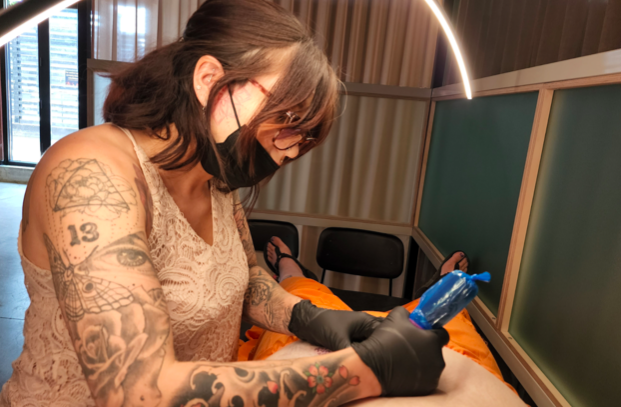
I highly recommend booking an appointment at Adriana Hollow Tattoo for hyper-realistic, vibrant color work and highly detailed tattoos. I planned my entire trip around getting a large tattoo on my forearm from Adriana, who’s been tattooing me for over 6 years and is responsible for most of my ink. 

Adriana is a queer tattoo artist who is actively an ally to fat people. She loves how tattoos help people feel beautiful and reclaim their bodies after trauma, which is why she particularly enjoys doing scar cover-ups. Adriana’s work is adored, so she stays extremely busy. If you’re looking to book an appointment, follow her on Instagram for notifications for when her books open, typically in March and September.

Squish Factor: Adriana tattoos at a studio that requires walking up the stairs. If this is not accessible to you, be sure to reach out to her, and she’ll see if another option is available for the dates you’re looking to book.

Greenwich Village Food Tour

Can I admit something that might get my “foodie card” revoked? I don’t really like pizza, minus very few exceptions. I found one of those exceptions while taking the Greenwich Village Food Tour from The Tour Guys. It was a simple slice from Bleecker Street Pizza that was pretty perfect. This is one of the many reasons I love taking food tours! 

This tour includes so much more than good pizza. You’ll try a naan “taco,” stuffed with your choice of protein ranging from paneer tikka masala to lamb curry and salmon pakora. There’s customizable macaroni and cheese and cannoli. The tour guide weaves together the dishes of the day with the history of the neighborhood, stopping to point out sites and stoops that contribute to the story. The pace is relaxed and the distance is shorter than many other tours I’ve taken.

Make spicy-sweet Indonesian noodles, and dinner’s ready in 10 minutes

“Do you have any good local recommendations for dinner?” I had asked the front desk person at my hotel. He pointed in the direction of the nearby canal and an Italian restaurant. I should mention here that this conversation did not take place in Venice. I was in Amsterdam. I pressed the clerk further. “I’m looking for authentic Dutch food,” I explained. “Why?” he replied drily. “Do you like potatoes?” Even the Dutch are not effusive about Dutch cuisine.

I have been spending a month in the Netherlands, in a university city that is as vibrant and cosmopolitan as any hungry person could wish. There are poke bowl places and pizza joints; there are French bakeries and American burger spots. The Dutch may be modest about their own food, but they are not tepid eaters. Perhaps then it’s not surprising that their greatest epicurean enthusiasm is for the food of their former colonies, and the Surinamese and Indonesian dishes that are common on dinner tables here.


Want more great food writing and recipes? Subscribe to Salon Food’s newsletter.


Wandering my local supermarket aisle, it didn’t take long to take stock of the abundant international ingredients and realize that when in the Netherlands, it’s wise to do as the Dutch… and eat Indonesian. 

Mie goreng is the fried noodle dish for people who could live on fried noodles — easy, fast, limitlessly customizable and just really salty-spicy-sticky-sweet good. After a recent long, exhausting day, I made this with ramen and pre-shredded cabbage and went from putting my key in the door to sitting down to dinner in 15 minutes. Eggs are traditional in it, and I am just lazy enough to do them carbonara-style here rather than cooking them separately. And while the dish usually stars chicken, I couldn’t resist adding a slight nod to my temporary home and topping mine with some smoked salmon. It’s a street food classic that’s right at home anywhere — whether that’s your own home, or your home away from home.

* * *

Inspired by Recipes Indonesia and Choosing Chia

Spicy Weeknight Mie Goreng (Indonesian Fried Noodles)


Yields
2 servings
Prep Time
 10 minutes
Cook Time
10 minutes

Ingredients

  • 1 package of ramen noodles or 3 ounces of egg noodles 
  • 2 tablespoons of soy sauce
  • 2 tablespoons of kecap manis (see cook’s notes)
  • 2 tablespoons of ketchup
  • 2 tablespoons of vegetable oil
  • 3 thinly sliced garlic cloves
  • 3 sliced scallions
  • 1/2 of a red onion, sliced
  • 1 red chile of your preferred heat (I like Thai peppers here)
  • 1/3 cup of shredded red or white cabbage
  • 1/2 red or green pepper, chopped and seeded
  • 2 eggs, whisked
  • 4 – 6 ounces of smoked salmon, shredded rotisserie chicken, sliced ham, or cubed tofu


Directions

  1. Boil a large pot of water and cook the noodles to package directions, around 5 minutes. Drain and set aside.
  2. While the noodles are cooking, make the sauce. In a small bowl, stir together the soy sauce, kecap manis and ketchup.
  3. Heat the oil in a skillet over medium heat.
  4. Add the garlic, scallions and onions and sauté, stirring gently until they soften, about 5 minutes.
  5. Add the cabbage, peppers and any other vegetables you’re using and continue to cook down.
  6. Add the noodles and stir everything together to well coated.
  7. Stir in the eggs to let them quickly cook.
  8. Add the sauce and stir well, letting everything get browned and flavorful for another minute. Remove from heat.
  9. Stir in your protein, or serve it alongside the noodles. Eat immediately. Cold leftovers are fantastic for lunch.


Cook’s Notes

True Indonesian noodles use a dark, savory sweet soy sauce called kecap manis. If you can’t get your hands on it, substitute 2 tablespoons of hoisin sauce, or 1 tablespoon each of soy sauce and brown sugar.

You can improvise with any vegetables you like and have on hand. Shredded carrots, snow peas, celery or bok choy would be delicious.


Salon Food writes about stuff we think you’ll like. While our editorial team independently selected these products, Salon has affiliate partnerships, so making a purchase through our links may earn us a commission.

In a TV landscape full of serious monarchs “The Serpent Queen” has a humorous bite

“The Serpent Queen” presents Catherine de Medici as a cultivator of chaos. She sows it carefully and waits for it to grow to its fullest height before cutting it down to weave it around enemies and would-be friends. It’s a tough material to fashion, let alone master, which can only be achieved through conquering other areas of expertise . . .  starting with survival.

With apologies to those mourning Britain’s recently departed monarch, there’s no shortage of TV queens at the moment. Between Westeros, Middle Earth, and the array of historic dramas that populate Starz’s and PBS’ respective catalogs, audiences are in no danger of forgetting how tough life can be for a royal.

There’s no shortage of TV queens at the moment.

But the spirit of  Samantha Morton‘s Catherine is forged in volatility that she also inflicts on others, whether for sport or, in the case of Rahima (Sennia Nanua), a servant girl she takes under her wing, as a pastime with a purpose. Rahima is a pious young woman who puts up with the other servants’ dehumanizing treatment, saying nothing when they refer to her as “It.”

Catherine pulls Rahima to her side supposedly to teach her how to battle her bullies, regaling her with tales of her rise from penniless orphan to the mother of European royalty as an example of how far she needs to go to achieve victory over her enemies. And she does this while regularly reminding Rahima that while she may be her benefactor, that could change on a whim.

Catherine is always circling Rahima, and neither she nor the audience can guess whether the ruler is protecting this girl in whom she claims to see so much of her younger self, or softening her up for slaughter. But she’s also constantly on guard, knowing her daughter-in-law Mary Queen of Scots (Antonia Clarke) would gladly see her deposed.

The Serpent QueenSennia Nanua (“Rahima”) in “The Serpent Queen” (Courtesy of Starz)

Morton’s cutting gaze, sly smile, and dangerously honeyed way of relaying Catherine’s story establish an anxiety that buzzes with a seduction. Her understated performance plugs into a trickster’s energy that constantly reminds us of why so many of Catherine’s subjects fear her, and while the bravest of souls like Rahima keep returning to her side despite her artful pettiness and cruelty.

But the drama’s creator and writer Justin Haythe earns the script’s caustic humor by establishing the roots of Catherine’s pragmatism and strategic ruthlessness through Liv Hill’s wider-eyed portrayal of Catherine as a young woman who is constantly reminded of her unattractiveness. Nevertheless, her uncle Pope Clement VII (Charles Dance) deposits her into the viper’s nest that is the French court to wed Prince Henri (Alex Heath), the King’s second son.

Morton … establishes an anxiety that buzzes with a strange seduction.

Clement underestimates how much the royals despise the Medicis, leaving it to young Catherine to win over her husband’s father, King Francis (Colm Meany) since her spouse’s affections lie elsewhere. If she can’t get pregnant, she can’t produce an heir for France. And if she can’t produce an heir, what’s the point in keeping her around . . . or alive.

There’s little about the Renaissance-era politics at play in “The Serpent Queen” that isn’t familiar to viewers who favor period pieces like this. Instead, the anachronistic flourishes in the editing along with the saucy performances make it piercing.

The Serpent QueenAmrita Acharia, Liv Hill and Kiruna Stamell in “The Serpent Queen” (Courtesy of Starz)
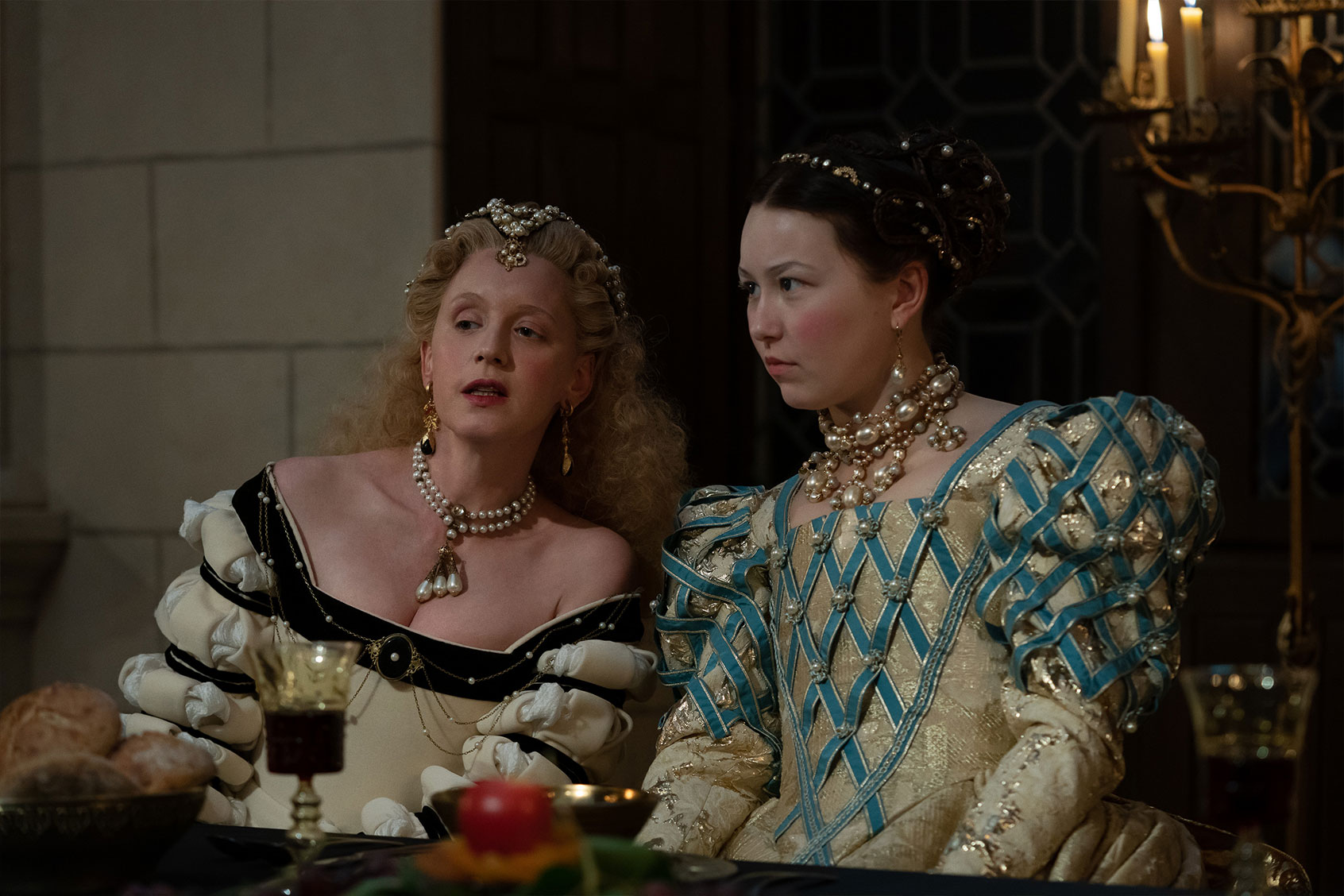
Both the younger and mature versions of Catherine have a feral tenacity growling under the surface of their opulent costumes and jewels that slips out only when her equals in cunning and sugared viciousness are watching. Everyone’s working an angle to keep their heads on their shoulders, giving even her servants and confidantes who journey with her from Italy (wonderfully rendered by Kiruna Stamell, Amrita Acharia and Ruby Bentall ) a measure of power others don’t possess.


Want a daily wrap-up of all the news and commentary Salon has to offer? Subscribe to our morning newsletter, Crash Course.


In choosing to adapt Leonie Frieda biography’s with more claws and swagger, Haythe vindicates Catherine in ways today’s audience likely understands better than those who might’ve watch her even a few years ago. Women share writing credits with Haythe on six out of the season’s eight scripts, and he split directorial duties with Stacie Passon, who helmed half the season’s episodes, and Ingrid Jungermann, who directed two.

This collaboration yields a story that leavens its cutthroat honesty with empathy, granting a sliver of benediction to even Catherine’s duplicitous cousin Diane de Poitiers (a lively Ludivine Sagnier), who sets the bar for frenemies.

The Serpent QueenLudivine Sagnier (“Diane de Poitiers”) and Liv Hill (“Young Catherine”) in “The Serpent Queen” (Courtesy of Starz)

Easy as it would be to make Diane and Catherine’s rivalry into an episodic sport, Sagnier and Hill, and Morton in later episodes, knit an uneasy détente that waxes and wanes in a way that ensures the tension in their performances never slackens. The chemistry Morton shares with Nanua is also fresh, in a way that makes a person root for Nanua’s small victories and root for her to circumvent the traps Catherine sets in her path.

“The Serpent Queen” may be the latest Starz drama that plumbs the ghastly inner workings of court intrigue to remind us that in the past, as now, a woman’s life was far from the stuff of fables. But it distinguishes itself by rinsing away the cosmetics of royal etiquette and self-serious machination with bracing wit. Catherine may have been a mean woman, but she devised ways to enjoy herself — as should we.

“The Serpent Queen” premieres at Sunday, Sept. 11 at 8 p.m. on Starz.


Why some people are mosquito magnets, and some are unbothered

It’s rare to attend an outdoor party in warm weather without hearing people complain about mosquitoes. They swat away, sit in campfire smoke, cover up with blankets and eventually just give up and go indoors. On the other end of the spectrum, there are plenty of people who don’t seem bothered by mosquitoes in the slightest.

As a medical entomologist who’s worked with mosquitoes for more than 40 years, I’m often asked why some people seem to be mosquito magnets while others are oblivious to these blood-feeding pests buzzing all around them.

Most mosquito species, along with a host of other arthropods – including ticks, fleas, bedbugs, blackflies, horseflies and biting midges – require the protein in blood to develop a batch of eggs. Only the female mosquito feeds on blood. Males feed on plant nectar, which they convert to energy for flight.

Blood-feeding is an incredibly important part of the mosquito’s reproductive cycle. Because of this, a tremendous amount of evolutionary pressure has been placed on female mosquitoes to identify potential sources of blood, quickly and efficiently get a full blood meal, and then stealthily depart the unlucky victim. If you check some, or all, of the mosquito’s search boxes, then you may find that you are a mosquito magnet.

This video by Deep Look explains some of the ways mosquitoes feed on blood.

Sensing CO2 and scent signals

Depending on when during the day they are active, mosquitoes use sight, sound and olfactory cues to identify a potential source of blood. Most night-active species rely on olfactory or receptor cues. The most important chemical cue is the carbon dioxide that all vertebrates, including humans, release with each breath and through their skin.

Mosquitoes are very sensitive to CO2 and can sense a CO2 source that is many meters away. Receptor cells on the mosquito’s antennae and legs bind CO2 molecules and send an electrical signal to the brain. When more molecules hit their receptors, the higher the CO2 concentration and the closer they are to the host.

However, there are many nonliving carbon dioxide sources such as cars, boats, planes and trains. To separate living from nonliving sources of CO2, mosquitoes rely on the secondary olfactory cues that living animals produce. Metabolic processes like breathing and moving generate these scent cues, including lactic acid, ammonia and fatty acids that act as additional olfactory clues that help female mosquitoes zero in on their next blood meal.

So, carbon dioxide production is the first mark of a mosquito magnet. Because the production of CO2 and secondary attractants is linked to metabolic rate, the higher the metabolic rate, the more attractants are produced. Metabolic rate can be genetically determined, but it also increases as the result of physical activity.

The human mosquito magnets you can spot at summer parties may have a genetically high metabolic rate or may be more physically active than other attendees. They may also be undertaking other activities that increase their metabolic rate, such as the consumption of alcohol. Increased metabolic rate is why runners attract more mosquitoes during their cooldown stretching exercises. Pregnant women, perhaps due to their increased metabolic rate, attract a disproportionately large number of mosquitoes as well.

This video by Business Insider explains some of the factors that can make a mosquito magnet.

Natural body odors are also important cues used by mosquitoes to select a host. For example, some species of Anopheles mosquitoes are attracted to specific components of foot odor. These mosquitoes transmit human malaria and feed indoors in the middle of the night. By feeding on a sleeping person’s feet, the mosquitoes avoid the head, where most of the CO2 is produced, and reduce the chance of waking the victim.

Visual cues

Mosquitoes active during the day and at dawn and dusk also use visual signals to identify a host. Mosquitoes usually fly close to the ground. From this vantage point they view their potential hosts against the horizon. Dark colors stand out and light colors blend in, so the way a person is dressed will determine the number of mosquitoes they attract. Wearing lighter colors may not just help keep you cool, but will help you evade a mosquito’s notice.

Mosquitoes can visually detect motion, again by contrasting a silhouette against the horizon. This is why people who walk near a saltmarsh in the middle of the day after a large emergence of saltmarsh mosquitoes are inundated by mosquitoes that visually detect their presence.

Psychological factors

There is also a psychological component to mosquito activity. Some people simply do not notice the mosquitoes around them. A single mosquito flying around some people will elicit a strong response – you’ve probably seen someone go nuts trying to track down the droning sound of one mosquito in order to finish off the tiny bloodsucker.

Other individuals are not bothered and do not notice the mosquitoes that are attracted to them, even when the insects are feasting on their blood. Some mosquitoes specialize on feeding on parts of the body that are difficult to see and difficult to swat. For example, Aedes aegypti is a mosquito species that prefers to feed on humans, mostly around the ankles.

Whether or not you’re a mosquito magnet, their bites feel just as itchy!


Jonathan Day, Emeritus Professor of Medical Entomology, University of Florida

This article is republished from The Conversation under a Creative Commons license. Read the original article.

Did humans domesticate plants, or did they domesticate us?

Domestication is an ancient technology that played a critical role in our evolution as humans, on par with the development of language or the cultivation of fire. When humans first began domesticating plants and animals roughly 10,000 years ago, it ushered in a new era of humanity, allowing for the flourishing of civilization and our modern world, not to mention our eventual population explosion.

Historian Yuval Noah Harari argues that “the Agricultural Revolution was history’s biggest fraud,” and that plants like wheat, rice and potatoes “domesticated Homo sapiens, rather than vice versa.” 

In a way, domestication involves artificially driving the evolution of an organism. 19th century geneticist Gregor Mendel famously demonstrated this with pea plants. By selecting peas for breeding via certain characteristics, such as height or pod shape, Mendel was able to slowly alter the genetics of plants. This is similar to what anthropologists think ancient humans did with crops like rice and wheat, which didn’t entirely resemble the plants we eat today.

But experts aren’t entirely sure how this happened. In fact, some scholars have proposed that it was actually the opposite — that certain plants domesticated humans, not the other way around. In his 2014 book “Sapiens: A Brief History of Humankind,” historian Yuval Noah Harari argues that “the Agricultural Revolution was history’s biggest fraud,” and that plants like wheat, rice and potatoes “domesticated Homo sapiens, rather than vice versa.” 

“Ten thousand years ago wheat was just a wild grass, one of many, confined to a small range in the Middle East. Suddenly, within just a few short millennia, it was growing all over the world,” Harari writes. Today, “wheat has become one of the most successful plants in the history of the earth” and it wasn’t through human intuition, but plant intelligence.

Harari’s book has been widely dismissed as “infotainment” that doesn’t rely much on scientific evidence, but it appears that either way of framing domestication is oversimplified. Humans didn’t just domesticate plants and plants didn’t just domesticate humans. We domesticated each other, through coevolution and mutualism, a symbiosis that is beneficial to both organisms involved.

Most theories on agriculture’s origins assume “intentionality” — that humans meant to produce corn or wheat varieties that emphasize nutritional rewards. It may have instead arisen accidentally.

New research in the journal PLOS ONE presents a way of testing this theory. Researchers at several universities across Europe, including University of Cambridge, proposed the Human-Plant Coevolution (HPC) model, which generates a “wide diversity of simulated trajectories and end-states” that could help explain how agriculture emerged across a number of different scenarios. The authors hope this model can be used to explain specific real-world cases, which can get extremely complicated, as many experts agree that agriculture arose amongst humans multiple times independently.

“In a subject like domestication and the origins of agriculture, where the archaeological record is incomplete in both space and time, and real-world experiments are unrealistic, the use of modelling and simulation has become a useful alternative for testing hypotheses and building theory,” the authors write. “Few simulation models have considered coevolution as the core mechanism producing changes in both plants and humans.”


Want more health and science stories in your inbox? Subscribe to Salon’s weekly newsletter The Vulgar Scientist.


In other words, most theories on agriculture’s origins assume “intentionality” — that humans meant to produce corn or wheat varieties that emphasize nutritional rewards. It may have instead arisen accidentally, but as a 2021 paper in the journal New Phytologist noted, evidence for either theory “remains elusive.” Perhaps coevolution needs a closer look.

The idea of coevolving with the plants humans prefer to eat dates back at least 40 years ago. David Rindos, an archaeologist from Cornell University, described coevolution in his 1984 book “The Origins of Agriculture: An Evolutionary Perspective as the “unifying concept” that explains why humans developed agriculture.

“Agriculture is not a particular adaptation to the environment, but a type of animal-plant relationship,” Rindos wrote. “Although not perfect, this definition points to the two most important aspects of agriculture: that it is at least partially culturally transmitted and that it involves a certain type of relationship between people and their immediate environment, including the plants that populate that environment.”

Nonetheless, the authors in PLOS ONE argue that this field of study “still lacks a unifying theoretical framework” and aim to remedy that by presenting a flexible model that can test various theories. This research is far from conclusive and it’s not meant to be. Instead, the HPC model serves as a tool others can use to tease out the speculation from fact.

We’ll never know for certain how and why ancient people started growing their own plants instead of hunting and gathering their food. But the Human-Plant Coevolution model allows for greater control of variables that may have facilitated agriculture’s rise, which could help explain why some theories are stronger than others.

Former federal prosecutor Glenn Kirschner predicts what’s in store for Stephen Miller

During an appearance very early on MSNBC on Sunday, former federal prosecutor Glenn Kirschner predicted that former Donald Trump adviser Stephen Miller will likely be put in the position of either flipping on his former boss or risk perjuring himself before a federal grand jury.

On Friday, CNN reported that Miller — a close Oval Office confidante of the former president — was the recipient of a subpoena from a federal grand jury investigating Trump’s “Save America PAC.”

The report stated, “a federal grand jury is examining the Save America leadership PAC, one of former President Donald Trump’s main political and fundraising vehicles, in an expansion of the criminal investigation into the events surrounding the US Capitol attack on January 6, 2021.”

According to Kirschner, the abrasive Miller has never received the kind of scrutiny he is about to be subjected to.

“I think one thing we should pay attention to is the difference between a January 6th congressional subpoena, and there have been, I think, more than 1000 witnesses at last count interviewed by the January 6th Congressional committee,” Kirschner explained. “The difference is between that kind of a subpoena and a federal grand jury subpoena, which is what now Stephen Miller has had placed in his hands.”

“Because you can play some games trying to avoid a congressional subpoena and Congress does not have the same tools to enforce its subpoenas and compel testimony,” he added. “But I’ll tell you what: the department of justice does.”

“Things have just gotten real for Stephen Miller and anybody else who has a federal grand jury subpoena,” he elaborated. “I have to believe at the end of the day he will testify truthfully and if not he’ll be looking at a perjury charge in contempt or obstruction of justice charge.”

“If he testifies truthfully about what Donald Trump has done, that could spell additional trouble for Trump,” he added.

Watch here.

How to garden through climate change

If you’re struggling with your garden in these times of uncertain and extreme weather, who better to talk to than botanist and long-time organic gardener Sally Morgan, the British-based author of “The Healthy Vegetable Garden” and “The Climate Change Garden“?

Morgan, who is also the editor of Organic Farming magazine, owns Empire Farm, a 100-acre organic farm in Somerset, in southwest England. A champion of resilient, low-carbon, and peat-free gardens, Morgan advises how to use sustainable approaches to cope with the challenges of a changing climate through regenerative gardening and permaculture.

In the middle of the U.K.’s recent record heatwave, Morgan spoke with Civil Eats about the importance of employing no-till methods and cover crops in your backyard, the art of loving weeds, and the future of saving seeds.

In many of your books, you talk about the fact that soils have lost between 50 and 70% of the carbon they previously held. You also mention how practices like no-till are more important than ever. We’ve reported a lot on no-till farming in the U.S. in terms of large-scale agriculture; can you share how those principles can apply in our own backyards? Why is it important for climate gardening?

I think for gardeners, no-dig or no-till, as you refer to it, has its benefits. Every time you put your fork in that ground and pull up soil, you’re exposing it to oxidization, and that carbon just evaporates. For me, [not disturbing the soil] is capturing that carbon, and putting the layer of compost or mulching material on the surface of that soil protects the soil through the winter months. At the moment, we’ve got a heatwave — it’s about 32°C (89°F) — and [that layer of material] is protecting my soil.

I also have a big thing about peat. Over here we have a big campaign to stop using peat in gardens, in potting compost, etc. In the States and in Canada, a lot of peat is dug up [to make potting soil], and peat in the ground is our best weapon against climate change. It locks up so much carbon, and I just get so frustrated when I see gardeners using peat because they think it’s perfect, weed-free, and cheap.

And, and then mulching! I’ve been mulching my own beds this week with the heatwave coming. It will protect your soil; it will improve the drainage and retain moisture; and [it] gives more organic matter for your soil organisms and leads to healthier soil.

The other thing that a gardener can do is compost everything. Composting and locking in that carbon in your own closed loop in your own garden is great.

What can gardeners use instead of peat?

There’s all sorts of things one can do. Over here, we have quite innovative horticultural companies looking at alternatives. One of the best ones is woodchip. A colleague of mine at the Soil Association has written a book called “The Woodchip Handbook,” and it’s amazing how woodchips, when allowed to digest, break down, and decay, form a really good basis for a potting medium.

Alternatively, you can use wool bracken and also coconut coir, but it has a few question marks against it because it’s a waste material from coconut plantations, grown mostly in India and Sri Lanka. So, there is this question about is it better to transport the coir, albeit in very compressed form, by tanker from South Asia to Europe and beyond? Or should you dig up the peat? I think it’s better at the moment to use coir. But going forward, if we can use other green materials that are wasted materials — like woodchip, food waste materials, [and] straw — [you] can also form a basis for replacing peat. But you can’t be beat good old compost, and I make a lot of compost here. I will also use loam.

People seem to forget that you can use topsoil as a loam as part of your potting compost. And the lovely soil that moles bring up from their tunneling is great for making potting compost. For me, loam from my mole hill, compost, and also leaf mold, fallen leaves allowed to rot down in a bag for a year or two, provide the most amazing medium. I’ve got three ingredients in my potting compost: one-third compost, one-third rotten down leaf mold, and one-third loam that I’ve got from molehills in my field is perfect. It’s a little bit weedy, but no peat.

Composting is great for boosting soil fertility, and many organic farmers use cover crops, or green manures, to improve their soil structure and fertility. How can you use cover crops in the garden?

I use phacelia, a lovely fast-growing plant. It’s one of the best for bulking up soil and has the most impressive biomass improving rating. It’s got lovely little purple flowers, and is great for bees and parasitic wasps. You can also use buckwheat, which will come in later in the season and grow for four months and be finished off by cold weather. I also use a lot of legumes; I have the most gorgeous crimson clover, which I try and grow ornamentally as well en masse to get beautiful deep red flowers and is nitrogen fixing, adding biomass to my soil.

When I’m finished with these crops, I will cover them with carboard or with a piece of plastic so they rot down and by the time I come to use them later in the year or next spring, I have this lovely fine mulch over the surface which is perfect for planting into. Cover crops are just as good as compost in many respects. And they will give you biomass for your organic matter, may provide some flowers for your pollinators and beneficials, and, all for a cost of this pack of seeds, which is even better.

You’ve been known as somebody who doesn’t actively weed. Are attitudes changing towards weeds?

I hope so. And there are lots of weeds that have benefits. I quite like dandelions. Everybody hates them. But actually, if you keep it under control, and you don’t allow it to seed, then you’ve got the benefit of the deep roots. And it will then act as a companion plant. I think to the young gardener who’s looking for a more biodiverse garden that attracts more insects, and for that, improves the food chain, then weeds are important.

I’ve got quite excited about weeds this year; I’ve been doing a diversity count in my own plot. Every month, I go out and I count the different number of flowers that I can see in my garden because I need natural predators in my garden. And I’ve noticed that out of season, up to 50% of the flowers on offer in my garden are weeds. And they all have a pollinator or more. So, I’ve got to live with those. Because if I want bumblebees, small solitary bees, and parasitic wasps to be in my garden in March, say, I need a few weeds, because that’s what they love. Our stinging nettles are so important for early green fly. And that brings in the ladybugs. So, you’ve got to live with a few weeds to have biodiversity in the garden. I hope people will see them for the benefit that they are.

Let’s talk a little bit about extreme weather gardening. One of our team members lives on the East Coast, and says that she’s been having more trouble than usual growing things this year, particularly because there’s been so much rain and constant moisture. What advice do you have about combating extra moisture? 

For that type of thing, it’s actually humus, and getting organic matter in the soil, so that the soil is more resilient against extra water. Drainage is quite tricky. I think in the past, I would have suggested adding grit to soil. But now the evidence seems to suggest that grit actually doesn’t do any good unless you put lots of it in. So, I think we’re down to the mulching and making the soil more loam-like so it’ll be able to lose that extra moisture. And maybe use more raised beds, so you can lift that soil off the ground, or give it a bit more drainage. But, it’s really difficult. The other thing that one can do is to look at the variety of crops that you are growing, and see whether there are varieties within that crop type that might be a little bit more resilient against getting wet.

The other thing that I found this year particularly with the cold, wet soil — I’ve not been planting things out quite as early as I would have done; I’ve been planting them in pots about three to four weeks later than usual, so that the soil has a chance to dry out and warm up. And I suspect that going forward, I’m going to be relying more on containerized growing of my crops until the soil has caught up and is ready to be planted. You just have to experiment a little bit with what you do.

Conversely, in the West, we are contending with such a severe drought. You describe water catchment, and graywater guerilla efforts, to help preserve your garden. What other tips do you have for gardening through a drought?

Water harvesting is absolutely everything. But I think we need to be looking at our soils. And again, you need organic matter in the soil because that will give you resilience against drought. Lots of mulching, and maybe deep-bed mulching, will actually do well in a dry environment, because it’s giving you six- to eight inches of material that prevent the evaporation of water.

Look for varieties going forward that are more [drought] tolerant; maybe we won’t be able to grow in the future our favorite crops because the climate has changed too much. We have to look further south to the types of crops that we can grow in a drought environment. The other thing that may happen as the climate becomes more extreme is that maybe we’re growing crops at the wrong time of year. When I travel around the Mediterranean, and I see how they cope with extreme heat in the summer months, they’re not growing their crops in the summer months; they’ve grown them already.

We may have to think about how we garden in the areas that we’re living and adapt. When you look at the way that some of the Native American peoples used to grow in extreme conditions and how they would trap the water — they would grow in waffle beds, or in the Canary Islands in the Atlantic, which is a volcanic island, they are using this idea of volcanic rock around a growing area with very little topsoil in it. And that little environment traps the humidity. If you are suffering from extreme temperatures in summer, you need to look back in history and see how people would have grown 300 years ago and adapt some of those really simple, neat ideas.

You’ve been researching and writing about climate change gardening for so long, what do you think about saving seeds? And how do we know whether we’re saving the right seed for the future?

Isn’t it awful? Five years ago, I would have said to you, “Local is best, grow the seed that is adapted to your own soil and your own microclimate.” Increasingly, I’ve been looking at the work of some of the researchers over here and how they are looking at genetics. And it’s almost like we should be sourcing the seed from the south of you, so that it’s more like the climate that you’re going to experience in the future.

For me in southern England, I’ve been planting new orchards over the last five years, [and] I’ve been looking for varieties that grow well in the southwest of France, two degrees latitude from me, in the Burgundy region of France. In North America, they’re really worried about sourcing saplings for coniferous plantations, particularly up in British Columbia. So, they’ve been looking at seed material from California, Oregon, and Washington and throwing it in British Columbia, because they’re thinking that if the genetics of the same species is more adapted to southern climate, maybe it will do well in British Columbia, in 50 to 100 years.

Although I will always grow my own parsnip seed, I have been trying something called population seed, mixing up the different varieties. Instead of keeping my own parsnip, which I always do, I’m pushing in the odd other variety. I picked up another variety, which is more prominent in France, and a local community variety, and I’m mixing them all up and allowing them all to cross pollinate to get what we call a composite population, a really muddled population, and it’s a real mix up of all the genetics. I’m hoping that there’ll be individuals within that bed that might be suited to the conditions of this year.

I’m doing this because we’ve had an amazing experiment over here through organic wheat growing, called population wheat. They’ve been growing all different types of wheat together, allowing them all to cross pollinate and taking those seeds and growing them again and allowing them to cross pollinate. When they look at their wheat fields, it’s all jumbled and tall and short — it’s amazing. But they know that in any year, whatever the weather throws at them, there will be some plants in there that are going to do well.

We need to come back to diversity. We need to have diverse populations of seeds, ideally adapted to our own local area, but with a few other varieties tossed in, to allow us to be resilient. We want population parsnips and population beans, and we’re not going to be looking for uniformity. In the future, we’re going to be looking for variety and hope that one variety will survive and do well.

As climate change makes itself felt, we are seeing so many changes in the threats from pests and disease — some are appearing and some are disappearing. On the other hand, we have all these insects, pollinators, and birds now in decline. What should we be doing to maintain a healthy ecosystem and encourage more pollinators and insects in our gardens?

Diversity at every point. We need to grow as much in our own growing spaces as possible. We might be veg growers, but I had lots of flowers in my veg plot. And at certain times a year, it was more like a flower plot than a veg plot. The more types of flowers, the more varieties of vegetables that I grow, that will give me the opportunity to attract pollinators into my garden, and also parasitic wasps and other predatory species to control pests that may get out of hand.

We should get diversity in the varieties of crops that we grow and diversity within an individual crop; so if I’m growing cabbages, I grow four or five different types of cabbages. Lots of different companion plants, lots of different other flowers around the plot. It’s a mixed plot.

I think if every gardener did this, we would have a really good effect, particularly in urban areas where it’s really sad to think the butterflies and bees are in decline. If all of the gardeners are all working towards this diversity, I’m hopeful that we can reverse some of the [negative] changes.

How Justice Scalia created chaos: “Originalism” is just right-wing ideology in disguise

A string of recent election results — including the Kansas abortion amendment and special elections for House seats in New York and Alaska — make it clear that the Supreme Court’s decision overturning Roe v. Wade has enormous political consequences, and could even end up preserving the Democrats’ hold on Congress this year. But the court’s decision in Dobbs v. Jackson Women’s Health Organization wasn’t the only earth-shaking break with precedent in the last two weeks of its term. Even if Democrats do hold onto Congress and somehow codify Roe into law (an unlikely set of outcomes) that would only affect one aspect of the vast sweep of policy change the court’s rulings portend. 

The new book by UC Berkeley Law School dean Erwin Chemerinsky, “Worse Than Nothing: The Dangerous Fallacy of Originalism,” shows how fundamental those changes could be and focuses on the bogus legal reasoning known as “originalism,” which plays such a crucial role in justifying this sudden and sweeping assertion of judicial power.  

Originalists claim to be guided by the original meaning of the Constitution and argue that everyone else is swayed by their own subjective values in groping for other kinds of reasoning. Chemerinsky, as it happens, has first-hand experience in drafting a constitution of sorts. He chaired the Los Angeles Charter Commission, an elected body that rewrote the charter for the second-largest city in the U.S. (in collaboration with a parallel appointed body) just over 20 years ago. So his argument that originalists’ key claims about constitutional meaning are simply false carries significant weight. Even while writing the L.A. charter, Chemerinsky says, there often wasn’t one unanimously agreed-upon meaning for its specific language, and that was even less true after the fact. Over the course of the last 20 years, he reports, questions have arisen that weren’t even considered in the drafting process. 

There’s considerable evidence that the same was true of the Constitution written in Philadelphia 235 years ago as well, but none of the framers are still around to confirm that. Chemerinsky doesn’t use his personal experience as the central argument of his book, but it clearly underscores the gap between the sweeping claims made by originalists and the granular, often difficult-to-discern nature of constitutional reality. That should make all of us willing and eager to seek understanding from a variety of different approaches and points of view. which is what the vast majority of judges have done throughout most of our constitutional history. 

Much of Chemerinsky’s book is devoted to explaining the five biggest problems that originalists face, any one of which is arguably fatal to their dogmatic claims. The argument mentioned above is part of the epistemological problem, meaning the impossibility of finding a single fixed meaning that simply does not exist. What’s just as bad is the abhorrence problem, meaning that sometimes the original meaning of the Constitution is clear enough, but the results of an “originalist” interpretation would be morally abhorrent to most Americans today. Then there’s the incoherence problem: If originalism is the correct approach, then originalism itself must be written into the Constitution. But it isn’t, and Chemerinsky concludes that the only true originalist position, paradoxically or otherwise, is to reject strict originalism. 

Chemerinsky explores these and two other problems in five central chapters of his book, while also providing a historical introduction and a discussion of why originalism is attractive to so many conservatives. Ultimately, he argues forcefully for an alternative view, a more pluralistic approach that seeks understanding from different sources, as judges have been doing for hundreds if not thousands of years. He concludes with a reflection on the dangers that originalism poses to the rights and freedoms that Americans today have come to cherish or, perhaps foolishly, have taken for granted. 

This transcript has been edited for clarity and length.

The title of your book, “Worse Than Nothing,” is a direct response to Justice Antonin Scalia’s claim that whatever the faults of originalism’s faults may be, he had a theory, while the critics of originalism had nothing. Before digging into the details, what’s your bottom-line response to this claim?

As the title suggests, I think originalism is a very dangerous approach to constitutional law, and in this instance I think it really is worse than nothing.

The core of your book lays out five key problems with originalism, but you begin by describing its rise in the first chapter and its allure in the second. What drove that rise and how did it proceed? 

In large part it was the conservative political movement that drove originalism. The Federalist Society embraced originalism, and nurtured a belief in it. Also, I think it was simply about who has won elections. If Hillary Clinton had won the presidency in 2016 and if she had replaced Justices Scalia, Kennedy and Ginsburg, we wouldn’t be talking about originalism today. It would be a fringe theory on the Supreme Court that a group of conservative law professors kept alive. But Trump appointed three conservatives, joining conservatives who were already there, and that is causing originalism to be in the ascendancy. 

Why is originalism worrying, and how does this echo the 19th-century dominance of the legal doctrine known as “formalism”? 

I think it’s a simplistic theory. It says, “We don’t want judges to impose their own values. We want judges to discover the law and mechanically apply it.” That’s formalism, which has always had an intuitive appeal, because it seems to take out of decision-making individual biases, preferences and ideology. So originalists say, “We’re going to discover the original meaning of the constitutional provision and apply it. These other people are all making it up, imposing their own values.”

The first of the key problems you tackle is the epistemological problem. You begin by talking about your experience as chair of the elected L.A. Charter Commission. How did that experience illuminate the problem of determining meaning in the Constitution? 

Some scholars have persuasively argued that the framers of the Constitution didn’t believe in originalism, and therefore if one is to follow the framers’ intent or the original understanding, one has to abandon originalism.

A charter for a city in California is much like its Constitution. It creates the institutions of government, it allocates power and it even provides more protection of rights than exist under federal or state law. I went through the two-year experience of chairing a commission to draft the charter and inevitably, issues of interpretation arose. They came up soon after the charter was adopted, and they continue to arise now. Just yesterday I got a memo concerning certain issues in the Los Angeles charter that are much in the news. What I have discovered was that, almost always, the issues that are arising now are ones that we didn’t consider then, even though the “then” was very recent. And when we did consider them, there was a difference of opinion about what we intended and what we meant. 

The reason this informs me is that, if we couldn’t decide the original meaning of the charter right after it was adopted, when all the commissioners were then still alive, how can we do so for a constitution that was written in 1787?

One of the key problems in establishing “original meaning” is the level of abstraction. How does shifting the level of abstraction change the meaning?

If the original meaning of the constitutional provision is stated at a very abstract level, then any result can be justified. At the most abstract level, the Constitution is about liberty and equality, separation of powers. But the constraint that originalists purport to get is gone when the original meaning is stated in a very abstract way. On the other hand, if we focus on the original meaning at a very concrete and specific level, then the Constitution becomes unacceptable. Then Brown v. Board of Education [on school desegregation] was wrongly decided, Loving v. Virginia [on interracial marriage] was wrongly decided. 

In Chapter 4, “The Incoherence Problem,” you argue that there’s no indication the Constitution meant to create judicial review, much less originalist judicial review, and in fact that there’s evidence to the contrary. So an originalist reading actually requires abandoning originalism. Can you elaborate on that?

An originalist would say that all aspects of the Constitution are to be determined by its original meaning. That would have to include the question of whether there should be the power of judicial review at all. In fact, the text of the Constitution says nothing about the power of judicial review, and it wasn’t explicitly discussed at the Constitutional Convention. It would seem, then, that from an originalist perspective there shouldn’t even be judicial review. But if there is judicial review, then how, from an originalist’s perspective, should courts go about interpreting the Constitution? Scholars such as Jeff Powell at Duke have, I think, persuasively argued that the framers of the Constitution didn’t believe in originalism, and therefore if one is to follow the framers’ intent or the original understanding of the Constitution, one has to abandon originalism.


Want a daily wrap-up of all the news and commentary Salon has to offer? Subscribe to our morning newsletter, Crash Course.


In Chapter 5, “The Abhorrence Problem,” you focus on three repugnant results of originalism: If we go by clear and original intention, then segregation and racial discrimination generally are permissible, for example, and the First Amendment allows government to prohibit blasphemy and seditious libel. I’d like to focus on the first example. because it involves the landmark case of Brown v. Board of Education. You quote from Chief Justice Earl Warren’s opinion, which explicitly rejected originalism. Talk about the originalists’ problem with the Brown decision — how they try to deal with it and how they fail.

The central problem with Brown, from an originalist perspective, is that the result can’t be justified under originalism. The same Congress that voted to ratify the 14th Amendment also voted to segregate the District of Columbia public schools. There’s no indication whatsoever that Congress, in proposing the 14th Amendment — or the states, in ratifying it — saw it as outlawing segregation. Brown v. Board of Education was first argued to the Supreme Court in the October term of 1952. The justices couldn’t come to a decision and asked for re-argument, focusing on the intent of the framers with regard to segregation. Those briefs were filed, the case was re-argued and then Chief Justice Warren, writing for the unanimous court, said, “We can’t focus on originalism, we can’t turn the clock back. Education plays a far different role in society today than it did in 1868.”

From an originalist perspective, the result of Brown v. Board of Education can’t be justified. There’s no indication whatsoever that Congress saw the 14th Amendment as outlawing segregation.

Originalists try to get around this embarrassment in some ways. They try to state the goal of equal protection at an abstract enough level that Brown becomes permissible — but then originalism becomes indistinguishable from non-originalism. There’s another attempt at this: The most famous one is by Stanford Law professor Michael McConnell in the Virginia Law Review, where he points especially to a statute adopted in 1875 that outlawed segregation. There are many problems with McConnell’s approach. As he himself concedes in the article, there’s no evidence that when Congress ratified the 14th Amendment, it meant to outlaw segregation. Also, 1875 is not 1868, when the 14th Amendment was adopted. There’s no reason to believe that what they did in adopting a statute in 1875 is the same as what they meant to accomplish with a constitutional provision. 

In chapter 6, “The Modernity Problem,” you highlight three issues. Two of those deal with specific kinds of technological development — surveillance and communication — and one is much broader, the question of how the country’s growth in size and complexity changes how it must be governed. Can you address both of those? Pick one of the technological developments to talk about and then take up the broader problem of growth, and explain how originalism fails to deal with these developments.

When the Constitution was ratified and the Fourth Amendment was adopted, it was thought that a search required a physical intrusion by the police. When the Supreme Court first defined a search, it wasn’t until 1928, in Olmstead v. U.S., when the court said that wiretapping was not a “search” if it’s done without going on somebody’s premises. That makes no sense in terms of the current methods of police gathering information. 

One of the most important recent Fourth Amendment cases was Carpenter v. U.S. in 2018, where the police obtained 127 days of cellular location information about a person and used it as key evidence in a prosecution that led to a sentence of 100 years. There was no physical trespass on a property, but it was an enormous invasion of privacy. When we look at other technology that exists now for police to accomplish searches — drones, surveillance airplanes, cameras on utility poles that monitor was going on 24 hours a day, seven days a week — it makes no sense to think of the Fourth Amendment solely as about physical trespass. The Supreme Court found in Carpenter that obtaining that cellular location information was a search, but Justices Thomas and Gorsuch, who are originalists, said it should take an invasion of property rights to count as a search. That just doesn’t make sense when the government now can gather so much information without a physical trespass. 

In terms of the growth in the size of the country, the United States in 1787 was 13 states. There was nothing like the methods of transportation or communication that exists today, so there could be a very small federal government. But in our modern technological world, the country spans the continent and includes territory as far away as Guam and Saipan. We need a government that has the tools to be able to deal with this. So the Thomas approach, which would radically limit federal government power, makes no sense in the current world.  

Expansion of the federal government dates back to the 1870s, at least. How has that balance changed over time and how has the reasoning about it shifted? 

The size of the federal government has dramatically expanded as the country has expanded, as technology has developed, as the problems become more complex. In 1787, the framers wouldn’t have thought of the need to have an Environmental Protection Agency to deal with the problem of pollution or greenhouse gas emissions. Today, climate change and greenhouse emissions, imperil human life on the planet. So we need a government that is has the tools to deal with the problems that we face. Unfortunately, the conservatives on the court, following originalism, have a very narrow view of congressional power. Justice Thomas, especially, would greatly limit the federal government’s authority to deal with key social problems. 

You write about the court striking down regulation during the New Deal, and then doing very little of that for generations, until just recently. What can we learn from that history? 

The Supreme Court declared some key New Deal legislation unconstitutional for delegating too much power to the executive branch. The last time the Supreme Court invalidated a federal law as an improper delegation of power was in 1935. Now I think we have a majority on the court that wants to revive the non-delegation doctrine. They’ve also created something new called the “major questions” doctrine, saying that an agency can’t rule on a major question of economic or political significance unless Congress gives clear direction. This is a sibling to the non-delegation doctrine. In fact, on June 30, 2022, in West Virginia v. EPA, the Supreme Court limited the EPA’s power to regulate emissions from coal-fired power plants, using the major questions doctrine. 

In Chapter 7 you deal with the hypocrisy problem, meaning that conservatives abandon originalism when it doesn’t suit their purposes. Because of its central importance, I’d like to focus on the invalidation of the Voting Rights Act, which was not grounded in original intent or meaning. How do you explain what happened?

The Voting Rights Act of 1965 was one of the most important laws adopted in my lifetime. It dealt with pervasive, long-standing disenfranchisement of voters of color, especially Black voters. In section 2 of the Voting Rights Act, it prohibits state and local governments from election practices or systems that discriminate based on race. But Congress knew that authorizing lawsuits to challenge race discrimination wouldn’t be sufficient. Congress was aware that Southern states kept changing the voting practices to disenfranchise minority voters, and decided to create a preventative mechanism. Section 5 of the act said that jurisdictions with a history of race discrimination in voting had to get pre-approval or “pre-clearance” from the attorney general or a three-judge federal court before changing their election system. 

Chief Justice Roberts said the Voting Rights Act violated the principle of “equal state sovereignty.” But where is this found in the Constitution? Nowhere.

This provision was tremendously effective. There were hundreds of instances where pre-clearance was denied and there were thousands where state or level governments didn’t even try because they knew they wouldn’t get pre-clearance. This was enacted and upheld as constitutional, and when it was scheduled to expire it was re-enacted in 1982 for another 25 years. Then, when it was scheduled to expire in 2007, Congress held over 15 hearings and compiled a legislative history of over 10,000 pages documenting a continued need for pre-clearance. Congress then extended pre-clearance for another 25 years. It passed the Senate 98-0. There were only 33 “no” votes in the House. George W. Bush signed it into law. 

But in Shelby County v. Holder in 2013, the Court declared the pre-clearance law unconstitutional. What constitutional principle or provision did the Voting Rights Act violate? Chief Justice Roberts said it violated the principle of “equal state sovereignty,” which holds that Congress must treat all states alike. But where is this found in the Constitution? Nowhere. It doesn’t say that. In terms of original meaning, the same Congress that ratified the 14th Amendment also voted to segregate the District of Columbia public schools. In fact, the same Congress that ratified the 14th Amendment imposed military rule on Southern states, showing it didn’t believe in equal state sovereignty.

After laying out all those arguments, you move into a threefold affirmative defense of non-originalism. I’d like to ask you to elaborate a bit on each of those arguments. The first one  being that a pluralist epistemology is desirable. 

My argument is that throughout American history, the Supreme Court has looked at many sources. Of course it looks at the text of the Constitution, it always was looking at the original meaning. It should look at history, look at precedents, look at modern social needs. I think to ignore any of those is undesirable. Why believe that all wisdom stopped in 1787, when the Constitution was adopted? Or when the Bill of Rights was adopted? Why not believe that there is wisdom to be gained from all of these different sources? That’s my argument: It’s desirable for the court not to be limited just to historical original meaning.

Your second argument is that a living Constitution that evolves by interpretation as well as amendment is desirable. 

I think a preeminent purpose of the Constitution is to safeguard minorities of all sorts. Yet I think it is very difficult for the Constitution to do that unless there is evolution by interpretation. We shouldn’t require a supermajority to protect the rights of minorities. Let me give you an example. We’ve already talked about Brown v. Board of Education, which would not have been decided in the same way under originalism. Loving v. Virginia, where the Supreme Court declared unconstitutional state laws prohibiting interracial marriage, wouldn’t have been decided the same way under originalism. Using the Constitution to combat sex discrimination wouldn’t work under originalism. Using the Constitution to combat sexual-orientation discrimination — the right to marriage equality for gays and lesbians — wouldn’t work that way under originalism. It makes no sense to me to say that those changes can happen only through the amendment process. Then you’re saying a minority can be constitutionally protected only if it has a supermajority behind it.

Finally, you argue that candor and transparency in constitutional decisions are desirable. 

I think what originalists do is to impose their conservative values and then hide behind the originalist rhetoric to claim that they’re just following the original meaning. I think that conservatives, as much as liberals, are imposing their values on constitutional decisions. Consider the cases in June of 2022. The book was finished in the summer of 2021, so it doesn’t cover these. But the conservatives on the court found that there’s no constitutional right to abortion, that there’s very broad protection of gun rights, that there is a right of teachers to pray at high school football games and that the state is obligated to support parochial school education in certain circumstances. All of that is consistent with current Republican conservative ideology. It’s not that the framers of 1787 to 1791 thought the same way as the current Republican Party. Conservatives are just imposing their values. 

So what I say is: Let’s all be transparent. Let’s acknowledge that the court is making value judgments. No one should hide behind the guise of originalism. 

It strikes me that all these arguments are important, because without honest argument, everything else is suspect. You frame it as “candor and transparency,” but at bottom isn’t it simply about honesty? 

Yes. I think there is a dishonesty, a disingenuousness, in conservatives pretending that they’re just following the original meaning and not making value choices. They’re making value choices just as much as any liberal justice would.

Chapter 9 is titled “Why We Should Be Afraid.” You focus on three areas where dramatic changes should be expected from originalist judges. Say a little bit about each of those. The first area is about rights of privacy and autonomy. 

Originalists are imposing conservative values and hiding behind their originalist rhetoric. … What I say is: Let’s all be transparent. Let’s acknowledge that the court is making value judgments. 

As I mentioned, I finished the book in the summer of 2021. What I predict in the book that given the originalist views of the court in the conservative justices, that the court would overrule Roe v. Wade. It did that on June 24 in the Dobbs decision, where Justice Alito said that a right should be protected under the Constitution only within the text, part of the original meaning or to safeguard a long unbroken tradition. Justice Thomas wrote a concurring opinion in which he said the court should now overrule Griswold v. Connecticut, which allowed purchase of contraceptives; Lawrence v. Texas, which established the right of consenting adults to engage in private same-sex sexual activity; and Obergefell v. Hodges, where the court found a right to marriage equality for gays and lesbians. I think if one follows an originalist view, that is the conclusion. All of these rights protecting privacy and autonomy are endangered.

The second area concerns the scope of congressional power.

Originalists like Justice Thomas believe the federal government has very limited authority, but that doesn’t work in the world of 2022. We need the federal government to be able to deal with things like air pollution and climate change, or technology. I worry that what we’re going to see from the conservative justices is significant constraints on federal power to deal with urgent social problems. 

Finally, the third area is about the Constitution’s religion clauses. 

Again, I finished the book in the summer of 2021, but I predicted you’d see aggressive protection of free exercise of religion. And we saw it at the end of June 2022 in Carson vs Makin, where the Supreme Court said that whenever the government gives aid for private secular education, the government is constitutionally required, even mandated, to provide that aid for religious education. The court said in Kennedy v. Bremerton Schools that a high school football coach had the First Amendment right to go onto the field after games and engage in prayer, even when joined by teammates and members of other teams. I think we’re going to see in the next term rulings on the ability to violate anti-discrimination laws, based on free speech and religion. 

Given all of the above, what conclusions do you draw about how the public should respond? What do we do?

I think it’s important to see, when it comes to the Supreme Court, that it’s an emperor with no clothes. It’s a conservative court, it’s conservative justices imposing their conservative values. It’s not about originalism at all. They write opinions in terms of originalism, but we should see that as the fig leaf to cover what’s really going on — conservative justices imposing conservative values. 

It seems that you have a pluralistic approach to law, and to epistemology as well. You argue that there’s no one right way to do things, no determinate outcome, but that a tradition can evolve out of diverse views coming into conflict with with some kind of self-regulation. That pluralism seems inherent in a liberal as opposed to conservative view of the nature of human knowledge and law. Do you have any broader thoughts about that? 

Let me take an example. The Second Amendment says, “A well regulated Militia, being necessary to the security of a free State, the right of the people to keep and bear Arms, shall not be infringed.” Do gun control laws violate that? If the government says that people need a concealed weapons permit, or if the government prohibits handguns, does it violate that? It depends on how you want to read the Second Amendment. If you read it as primarily about militia service, then those government regulations are allowed. If you read it as being about the right of individuals to keep and bear arms, those regulations aren’t allowed. There’s not an inherently right or wrong answer to the question. It’s a choice. 

It shouldn’t surprise us the conservatives who embrace gun rights strike down gun control laws and liberals who favor gun control would uphold those laws. It’s not about neutral methodology, but value choices by who’s on the court. Virtually all constitutional provisions get litigated. There are arguments on both sides, and it’s a mistake to think there’s a right answer out there, waiting to be discovered. 

I always like to end by asking: What’s the most important question that I didn’t ask? And what’s the answer? 

I think the most important question to ask is: What should we expect in the future? It’s likely we’re going to have a Supreme Court that is highly originalist for a long time to come. You look at the conservative justices: Clarence Thomas is 74, Samuel Alito is 72, John Roberts is 67, Neil Gorsuch, Brett Kavanaugh and Amy Coney Barrett are all in their 50s. So the rise of originalism that we’ve seen on the Supreme Court is likely to be followed for many years to come. 

Doesn’t this argue for the need to think about court expansion and other possible reforms, such as term limits? Elie Mystal of the Nation has suggested expanding the Supreme Court to the size of a district court, so you have a panel system that would decentralize its power. 

I favor expanding the size of the Supreme Court. I think the current court is a result of Republican court packing — blocking Merrick Garland and rushing through Amy Coney Barrett. I think we’re not going to see an expansion in the size of the Supreme Court, because we know Republicans would filibuster that in the Senate and there aren’t the votes among Democrats to remove the filibuster. 

I favor 18-year nonrenewable terms for justices. Too much depends on the accident of history and when vacancies occur, and life expectancy is a lot longer now than it was in 1787. Clarence Thomas was appointed to the court in 1991 when he was 43 years old. If he stays on the court until he’s 90, he’ll be a justice for 47 years. Amy Coney Barrett was 48 when she was confirmed. if she stays on the court until she’s 87, the age that Justice Ginsburg was, she will be a justice until 2059. It’s just too much power in too few people’s hands for too long a period of time. But I don’t think we’re going to get 18-year term limits. I believe it would take a constitutional amendment and I don’t see a constituency that cares enough to do the work. 

I would oppose having a court with panels deciding cases. We have too much of a need for consistency and resolution, and I think when you have panels inevitably they disagree with one another. It would cause chaos.

“Everyone can and should get our own ‘Predator,'” says writer who’s watched film 146 times

I forgot to ask Ander Monson an important question. 

Days after our interview, when I text him a follow-up posed by a colleague of mine: Why do you think several actors from “Predator” (Jesse Ventura, Arnold Schwarzenegger) have become governors? he writes back right away. “Because they were/are our surrogate dads.” 

It’s the kind of smart and quick response readers have come to expect from Monson, author of nine books, including the short story collection “The Gnome Stories” and the essay collection “I Will Take the Answer.” And the speedy, definite answer makes sense given Monson has watched the film “Predator,” by his estimation, 146 times.

Monson is perhaps best known as an essayist, though his back catalogue includes poetry and a novel-in-stories, his work distinguished by his sharp, inventive excavation of form. But with his new book, he turns for the first time to memoir. And he turns back to “Predator,” the 1987 action movie that he credits, in part, with helping him through a difficult childhood, marked by the death of his mother. He returned to “Predator” when Gabrielle Giffords, the Representative from his state, Arizona, was shot in the head during an attempted assassination attempt in 2011.

As a method of “coping with grief and rage,” Monson says he lost himself in playing violent video games and replaying “Predator,” which stars Arnold Schwarzenegger as the head of a paramilitary rescue team, trying to save hostages in a rainforest in Central America, who encounter an alien hunter known as the Predator.

At some point I was just killing a marauder with an assault rifle and I’m like, ‘What am I doing? What is this in me, that this is what constitutes self-care?’ And that got me to, ‘OK, what have I learned? What are the things that I absorbed as a kid, watching these action movies?’ Hundreds and hundreds of hours of these action movies, and I didn’t think about them.” 

He started to think about them, and think closely about boyhood, masculinity and America. The book that came from that exploration “Predator: A Memoir, a Movie, an Obsession” is now out from Graywolf Press, mere weeks after the latest film in the “Predator” saga, the prequel “Prey,” premiered at No. 1 on Hulu.

Salon talked to Monson about “Predator,” “Prey” and his new book.

This interview has been edited for length and clarity. 

How would you describe this book? Sorry, I was trying to start with an easy one, but I guess that’s a hard one.

I’m trying to use myself as an instrument through which to watch “Predator,” one of the most influential, if not the most influential, if not the best American movie ever made. It’s a really crucial American movie of the ’80s. It is the best of that kind of hyper-masculine, fairly homoerotic action, big men jungle-ling around kind of movie. And it’s one that deeply wounded me, as well as deeply parented me as a kid, as an adult, and as a teenager . . . The book is a way of me rewatching these movies and trying to figure out what the hell I watched and how much of America is represented . . . So much of the culture that the movie gives rise to just appears in it. And then also, why did the gay poet Paul Monette write the novelization for the movie? What did he see in this “dumb blockbuster” that I didn’t as a 12-year-old? And it turns out there’s a lot.

You have a lot of books in different formats, but you’ve never done a memoir before. Why did you decide to write a memoir now or a memoir for this story?

I’ve put a whole book out that’s explicitly not a memoir. “Vanishing Point” is a bit of a broadside against memoirs and against the reliance on memoir. I discovered pretty late in the process that was what I was doing. If you want to write about a thing, what you’re always writing about is you experiencing the thing. That’s the only honest way to do it.

“I’ve kind of moved off that stance that I had, which is, ‘I don’t know if we should be writing so many memoirs.’ And now I’m like, ‘Maybe we should all be writing memoirs.'”

I can’t watch “Predator” as Ali Stine. I could only watch “Predator” as Ander Monson. And to watch “Predator” as Ander Monson, there’s a lot of history and I wanted to be honest about the instrument . . . I wrote three totally different drafts of this book and only in the last one I happened on the narrative structure, which is: we’re just going to watch the movie shot by shot, moving through it. But you and I are going to watch the movie, and so I’m the lamp that the reader lights with its presence when you are in the book.

PreyThe Predator (Dane DiLiegro) in “Prey” (David Bukach/20th Century Studios)

I felt it had to be a memoir . . . There’s a quote from Patricia Hampl I really love: “The self is not the subject of memoir, it is the instrument of memoir.” . . . After writing that book about memoir, kind of taking some shots at memoir, I came to regret my position. I think it was a gendered, sexist position because, as you know, a lot of criticism is leveled against memoirs being a “women’s genre” or whatever. And I’m probably guilty of that in that book, a certain kind of snobbery, and a certain kind of just not willing to accept that the self is a suitable or interesting enough or sharp instrument to see through a thing. Never mind that you’re always seeing through the self. I mean, you can’t not . . . I’ve kind of moved off that stance that I had, which is, “I don’t know if we should be writing so many memoirs.” And now I’m like, “Maybe we should all be writing memoirs.”

You mentioned a lot of criticism about memoir, specifically about women writing it. There’s also a lot of criticism out there about women’s trauma memoirs and violence memoirs in general. And I’ve never made that connection, but in a way this book could be seen as a kind of a trauma memoir. Because you are writing about your trauma, and also national trauma and violence, national violence.

A hundred percent. I can’t speak for men. I mean, I don’t know if I’d want to speak for men, but I just don’t know how to speak for men. But I can speak for me, and my kind of relationship with men, and with being a man, being seen as one. Then seeing men storm the Capitol, who probably are a bunch of “Predator” lovers like I am. A lot of them were men my age; they like to watch s**t blow up too.

I guess I wouldn’t call it a trauma memoir, but it is a memoir about being both traumatized and thrilled by this movie that I love so much, but also that wounded me. And [wounded] a lot of other people my age, all these other dudes. I’m not the only one who this kind of f**ked up and thrilled.

That was a part of the book that really surprised me. You mentioned the Capitol riots and the men that looked like the men in these action movies storming the U.S. Capitol.

Yeah, wearing the gear in the action movies.

You talk in the book about masculinity and what it means now, versus maybe when you were a kid and getting these ideas formed.

John McTiernan, the director, he makes a comment about how these movies are basically made for 13-year-olds. Although a lot of them are R-rated, and I mean, wink wink, 13-year-olds shouldn’t watch them.

But they have that level of adolescent glee to them, certainly. And that’s when I watched it. I was 13, maybe 12, I’m not quite sure, about right in there. At that age, you’re trying to wear aspects of masculinity . . . you’re trying to wear that as a kind of armor. You’re trying it out as a tool, a kind of weapon. You’re saying s**** to your friends that you, that I, shouldn’t have been saying, in retrospect. But everyone does. You’re cruel to your friends; you’re using language imperfectly to wound oftentimes.

PreyThe Predator (Dane DiLiegro) in “Prey” (David Bukach/Hulu)And I watched all of these action movies. So many of them . . . that’s just a lot of content to have consumed unthinkingly. I had thoughts about them and I knew most of them were pretty bad. Some were really misogynist and offensive. And some were just f**ked up in ways, I don’t want to revisit them now. But then you can rewatch one of them at least and see all the layers in it. “Predator” is the best of them and the one that has the most in it. It’s just a beautiful movie to watch. 
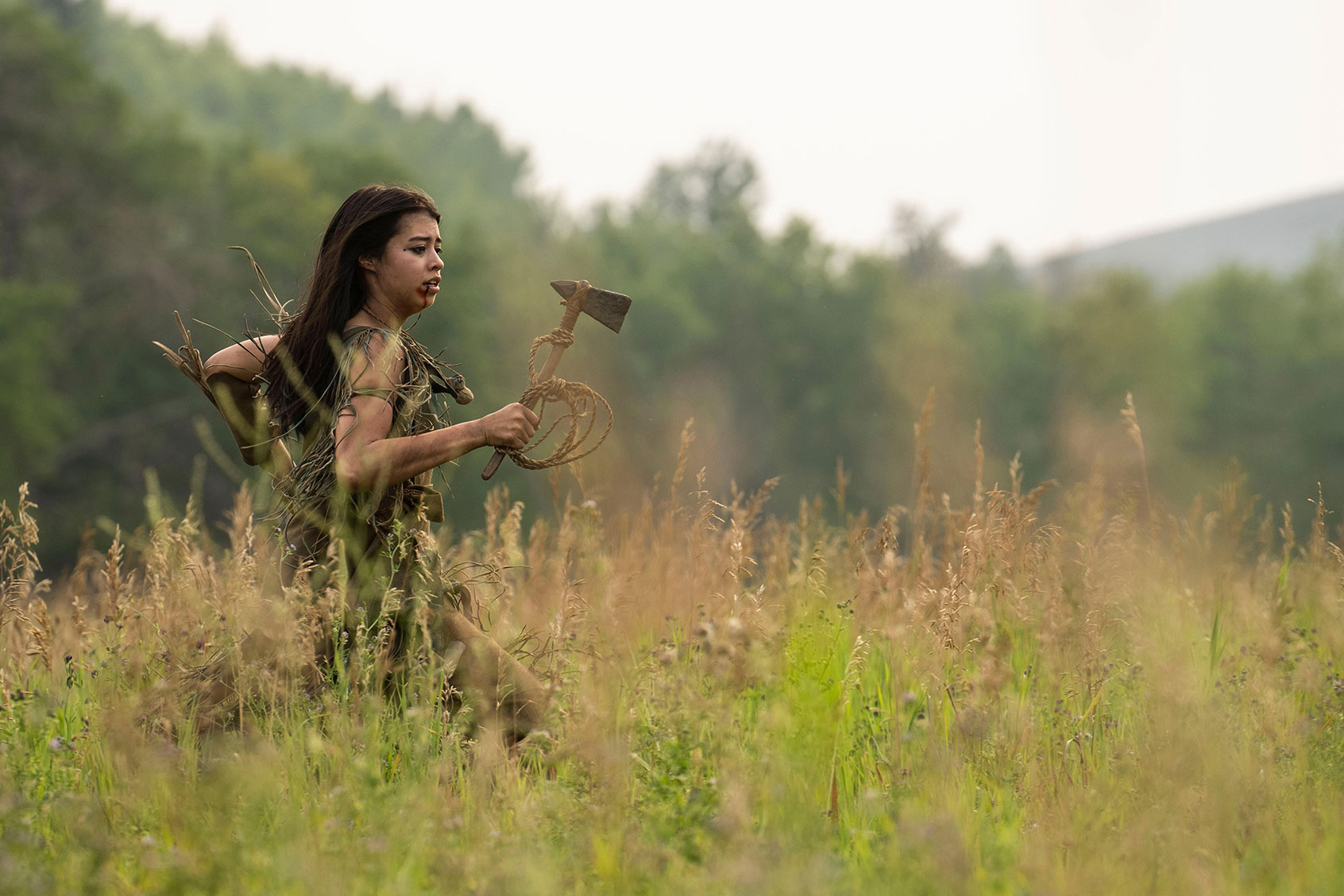
What do you think a legacy of “Predator” might be? 

I’ve been thinking a lot about this, and I think that “Prey” changed my mind. 

PreyNaru (Amber Midthunder) in “Prey” (David Bukach/20th Century Studios)

To me, the “Predator” franchise has always been about masculinity. But that’s because the first one is. That is its primary subject. “Prey” is just a really good movie; I thought they did a great job with that movie, and it just takes [masculinity] completely out of it.  [In “Predator] the thing that saves Dutch (Schwarzenegger) is, I don’t know if it’s masculinity, it’s like ingenuity. His willingness to improvise and think, and that’s what saves humanity . . . And when you think about it, I mean “Predator” is satirizing that. All we got is these big dudes hulking through the jungle. They’re impossibly beautiful, they’re impossibly ripped, they’re impossibly strong, they’re impossibly taciturn, and they all just get killed. Except Dutch. 

Dutch is the one who survives. They have the best weapons. Doesn’t matter. “Predator” is an anti-colonial film. It is showing the folly of everything that we have done as Americans and as humans and as men. And the Predator just takes us apart until Dutch is able to do a little thinking, and then he barely gets out. All the rest, the whole team dies. And that’s basically what happens with the other movies too.

But the thing that hadn’t really occurred to me until fairly recently: “Predator” has a huge fan community, major cosplay community. There are a lot of people who like making the suits and making the masks, but no one wants to dress up as any of the humans. No one cares at all about the humans. I mean, we love Blain and we love Mac. We love the characters, but you don’t want to dress up as them because that’s not fun.

So to me the legacy of all the movies is the ability to see humanity, also masculinity, from outside of ourselves . . .  As a 12-year-old I’m seeing these guys my dad’s age; they were my dad’s age then — I guess they still basically are — and then you are watching them, the kind of pointlessness of their endeavors, and their dirty jokes, and the way that they try to relate to each other. And they get killed anyway.

“It’s hard to see outside yourself. But ‘Predator’ gave it to me, for the first time, on the big screen.

The Predator’s trying to understand. It tries to understand the Shane Black’s p**** joke or whatever, which is a bad joke, but it’s trying to figure it out. And then it mocks the laughter, it echoes the laughter of Billy. I could see that from outside myself, which is also just a really useful position as someone who grew up a cis white, straight male in a time of great privilege for that kind of person. It’s hard to see outside yourself. But “Predator” gave it to me, for the first time, on the big screen. 

Everyone wants to play as the Predator. All the games, you want to play as the Predator. I mean, you might want to try to fight the Predator sometimes. But that is the real promise of the movie, and one that “Prey” opens up a little more explicitly to people that aren’t white straight cis men. And that’s why it’s so cool.

PreyNaru (Amber Midthunder) and the Predator (Dane DiLiegro) in “Prey” (David Bukach/Hulu)How would you try to reach someone who’s never watched “Predator” before? What would your speech be to try to get them to watch the movie?
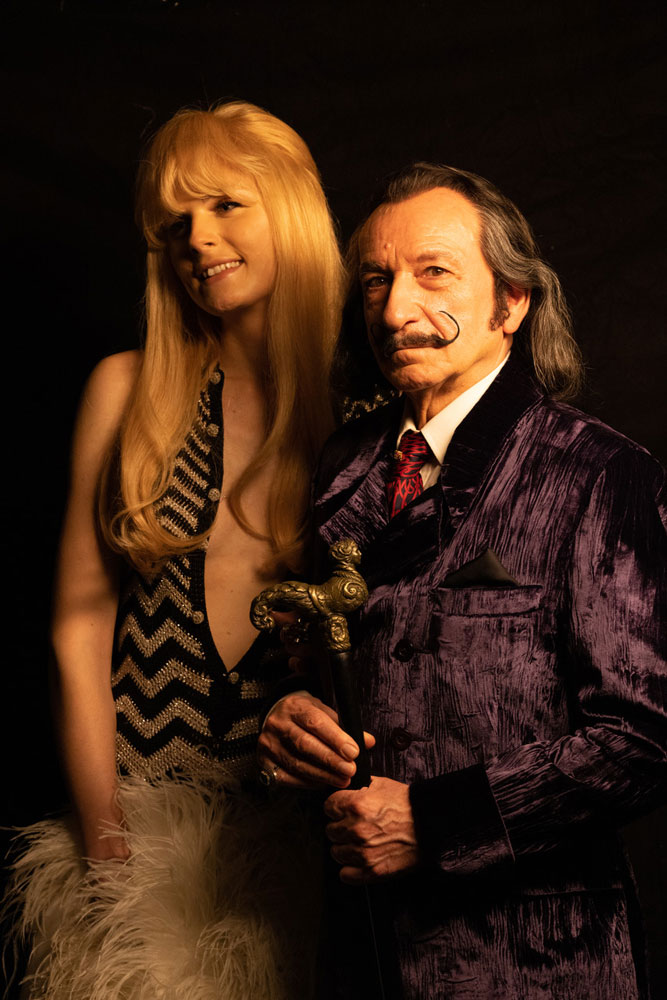
I’m teaching undergrads, and most of them have not seen “Predator,” of course. Why would they? It’s an oldie to them. I think there are a couple of reasons [to watch]. One is that it’s a really beautiful movie. . . . The cool thing about action movies is you don’t really have to care that much about the dialogue or even the acting. The action is the thing that brings us pleasure and gives rise to our catharsis that we’re looking for.

“They think of it as theirs. And it is theirs, but it’s also mine and also yours. And to watch it is to make it our own.”

But “Predator” is the best of them because it also has real characters . . .  Mostly they’re just kind of cardboard cutouts of dudes. Here’s the Hispanic guy, and here’s the white guy, and here’s the Black guy, and here’s the girl. And this one doesn’t. Everyone feels really lived in, which I think is really an accomplishment in a movie . . .  And it gives you, I don’t know if it’s the first movie [but it] gives you the Predator POV. This was the first time I’d ever seen that. To see that we are outside of the ourselves loop; we get to be something else. It just opens up the movies to become so much more dimensional, frankly, than any of the other ones are. I mean, “Predator 2” is good, “Prey” is very good. But “Predator” is still the one I think has the most space to inhabit.


Want a daily wrap-up of all the news and commentary Salon has to offer? Subscribe to our morning newsletter, Crash Course.


And if you want to understand America, if you want to understand the situation we’re in with American masculinity, especially guys of a certain age on the internet, this is a movie that will show you the good parts and the bad parts. My book tries to do that for sure. I’ll be surprised if some of the internet fanboy culture doesn’t get mad about me trying to explain that there’s more in “Predator” that they might want to allow. 

Because they think of it as theirs. And it is theirs, but it’s also mine and also yours. And to watch it is to make it our own. So, everyone can and should get our own “Predator.” 


“It’s very complicated”: Salvador Dalí biopic delves into odd and kinky relationship with wife Gala

In “Dalíland,” Gala (Barbara Sukowa), the wife of the famous surrealist, Salvador Dalí (Ben Kingsley), claims that people, “Look through me, like I’m not there,” and the artist himself describes her as “the secret within my secret.” She is vain and concerned about both aging and money. She fights with Dalí to inspire and encourage him to make art, but they also come to blows regarding her much younger lover, Jeff (Zachary Nachbar-Seckel), whose dubious music career she is privately financing. 

“They didn’t have what they call a normal sexual relationship.”

Much of the couple’s behavior is seen from the perspective of James (Christopher Briney), a young art gallery assistant who comes to work for Dalí and Gala in 1974 New York. When James is asked about the experience, he replies, “It’s like I landed on another planet.” “Dalíland,” directed by Mary Harron, is a slightly surreal biopic, full of lavish parties, artmaking with nude women, a flashback featuring Ezra Miller as the Young Dalí, and much talk about the selling of the artist’s work. 

Sukowa provides the film with a formidable presence, as Gala is a powerful woman who is to be respected and honored, and who can dismiss James with the flick of her wrist. The actress, who rose to prominence making films with Rainer Werner Fassbinder, and Margarthe von Trotta, is a joy to watch because she gets to be frisky feeling James up as he enters Dalí’s esteemed circle, as well as vulnerable when she is faced with some hard truths. There are also moments of tenderness and rage.

The actress chatted with Salon about playing Gala, her approach to biopics, and her career in general in advance of the film’s World Premiere at the Toronto Film Festival. 

You’ve played Rosa Luxemburg, Hannah Arendt, Friderike Zweig and now Gala. What research do you do to understand these real-life women?

I’m reading biographies about them. I real one bio of Gala I had the feeling the author really hated her and was almost misogynist. I read Dalí’s biography and what he said about her. I talked to one person who had actually seen the couple in New York in the 1970s, sitting in restaurant and gave me her impression.

What was your impression of Gala? You get some juicy scenes and speeches. She feels invisible, she seeks out younger men, and consults tarot cards. She has moments of anger,  fear about being poor, and episodes of vanity. Is she deluding herself and unable to face reality, or is her “performance” all about control and maintaining power?

“I could imagine that Gala maybe felt she got the short end of the stick because [Dali] was always at the center. He is the king at the table.”

Dalí would not have become Dalí without Gala. When they met each other, he was a very eccentric, almost hysterical person. Gala grounded him somewhat. She had some artistic ambitions. There’s an interesting passage in Dalí’s bio where he writes about Gala and some artwork that she did. The way he describes it, she really could have been an artist on her own. She saw very clearly that his genius was way beyond her capacities. It was the time in which she lived. She was with Paul Éluard and Max Ernst, so she was quite an eccentric person. That was not unusual in Paris at the time. There were Russian women who lived as muses and as eccentric women who were adored by society. The film is about these two people who can’t really face getting old, which is why they surround themselves with [younger] people. Gala and Dalí had no intimate relations anymore. That’s why she is going up to these young men. He was a voyeur. They didn’t have what they call a normal sexual relationship. 

She is seen going off after Jeff during a press conference for her husband . . .

She’s also doing it to please Dalí. It’s part of her connection to Dalí. He gets something out of seeing her with these people. It’s very complicated. The challenge was not to turn her into a caricature or a cartoon. She is very extreme. She did do these things like spit at people and hit them. That’s how she was.

DalilandAndreja Pejic and Ben Kingsley in “Dalíland” (Rekha Garton and Marcel Zyskind)
Dalí and Gala fight, and he admires her “raging like a fire.” He needs her to care for him, but she can be selfish, preferring to be with her lover. Gala was Dalí’s muse. What observations do you have about the relationship between them?

It was a push and pull, and they really both needed each other very much. Over time, I could imagine that Gala maybe felt she got the short end of the stick because he was always at the center. He is the king at the table. She tries to develop her own world alongside that. All his business is in her hand. She compensated for things she didn’t have with money. There’s a reference to her gambling. She spends a lot of money and is ruthless with that. People will say she pushed him in a more commercial direction, and he may have made a different kind of art towards end of his life. They wanted to keep that lifestyle, so that’s what she did. 

Dalí was a genius, yes, but he was also a prankster, and perhaps desperate in the ’70s, as the film portrays his career in decline with his work was being copied and his heyday had largely passed. What did you think or discover about Dalí’s career at this time? 

I don’t know. [Laughs] I’m not an art historian or have the expertise to talk about his art. I think his life became his art. If you compare it to artists like Fuglø, who created a whole lifestyle around their art. Dalí took Gala seriously when he asks her, “What you think about this painting?” She says, “It’s a little imbalanced.” She has a good eye, and she knows when he’s good and not good, but the demand for money became really strong.

Let’s talk about your career. Like Gala is to Dalí, you certainly have been a muse to male filmmakers over the years starting with Fassbinder. Can you talk about your working relationships, with him and other filmmakers?

It’s always wonderful to do more films with one filmmaker. You get to know each other and know to function together. The two people I l really loved to work with were Fassbinder and Margarethe von Trotta. Margarethe Von Trotta and I became close friends. Fassbinder was different, the fascinating thing about him — and why you read so many contradictory things about him — was that he treated everyone in the way he thought he’d get the most out of him or her with their work. I had a positive personal experience with him because he treated me nicely and politely. Others will tell you he was a monster, which is true. But I think he knew he wouldn’t get anything out of me if he treated me badly. I would turn around and go away. 

I’ve always enjoyed seeing you playing formidable women on screen, in the aforementioned “Rosa Luxemburg,” to the femme fatale in “Europa” and your remarkable performances in “The Two of Us.” What can you say about the roles you take and the women you play and the energy it requires to play them? Gala has a few really intense scenes. 

It was in the text that she’s angry and raging, but to me, I really don’t know how [a performance] happens. It a combination of things — the script, the director, my acting partners. It comes together. I like to be very open. I do try to choose roles I have not done before. I had not played a role like Gala before. She’s not anything like Rosa Luxemburg or [Fassbinder’s] Lola. I tried to look at roles that are different and have some complexity, that are ambiguous, contradictory. I often don’t know how to do them. That’s how it starts. I had no clue how am I going do to this? I like the challenge. So, it sometimes creates itself. I surprise myself — how did that happen? 


Want a daily wrap-up of all the news and commentary Salon has to offer? Subscribe to our morning newsletter, Crash Course.


Likewise, your career shifts between Europe, where you play leads, and America, where you provide support in independent and popular films and television. What do you enjoy about doing supporting roles that sometimes involve just a scene or two?

I’m limited with my accent. I very rarely get a bigger role in an American film. I often hesitate when they ask me, “Can you do this?” Then I decide, “It’s going to be fun.” There has to be a good director or interesting people in it. 

This is a morbid but also surreal question to end on, but I have to ask if you played Gala’s corpse in “Dalíland?” I thought it was a very funny sequence.

Yeah, it was me! I just sat and imagined I am a corpse. I tried not to move. When you play a dead person, if you go a little bit cross-eyed and you don’t focus, that works to keep your eyes from following movement. It is a hilarious idea [what happened with Gala’s corpse] — but it’s true. It’s not an invention. It’s what they did!


Harris wishes “attacks from within” were handled as Americans and not through “partisan lens”

Vice President Kamala Harris made an appearance on “Meet the Press” Sunday morning and was asked by host Chuck Todd to compare the attacks of 9/11 to the “attacks from within” that threaten Democracy today.

“We’re at the 21st marking, if you will, of the September 11th attacks,” says Todd at the opening of the segment. “This was a foreign terrorist attacking our Democracy. We’re now, as a nation, battling a threat from within. Is the threat equal or greater than what we faced after 9/11?”

“That’s an interesting question,” Harris says. “I have held many elected offices as district attorney, attorney general, senator and now vice president, and there’s an oath that we always take which is to defend and uphold our Constitution against all enemies, foreign and domestic. We don’t compare the two in the oath, but we know they both can exist and we must defend against it.”

Going on to compare her experience with the different dangers found in the two threats — meaning both domestic and foreign — Harris recalls times when republicans, democrats and independents entered a secure facility known as the SCIF, rolled up their sleeves, and addressed matters at hand not through a partisan lens, but as Americans fighting for a unified good “on common ground, with a common purpose, which is to defend our Nation against attacks.”


Want a daily wrap-up of all the news and commentary Salon has to offer? Subscribe to our morning newsletter, Crash Course.


“It sounds like you think this threat is as great,” Todd says, circling back to his initial question related to 9/11.

“I think it is a threat and I think it’s very dangerous,” Harris says. “I think it is very harmful and it makes us weaker. I have met with and I’ve had conversations with over 100 foreign heads of state . . . and when we as the United States walk into those rooms around the world, we have had the honor and privilege, historically, of holding our head up as a defender and an example of a great Democracy. And that then gives us the legitimacy and the standing to talk about the importance of Democratic principals; rule of law, human rights. One of the things that comes with that privilege is that we hold ourselves out to be a role model, which means the rest of the world, like any role model, watches what we do to see if it matches up with what we say.”

Watch here:

This president was shot in the back, but the doctors are the ones who killed him

Charles Guiteau, the man known to American history as the assassin of President James Garfield, may have been both innocent and guilty at the same time.

Guiteau himself famously said as much while he was being tried, convicted and ultimately executed. When prosecutors and public critics labeled Guiteau as a murderer, he didn't deny that he had shot Garfield twice on July 2, 1881; one bullet only grazed the president's arm, but a second burrowed itself deep into the right side of his back. Yet Guiteau's contention was that he was merely an attempted murderer, not a successful one.

"Yes, I shot the president," Guiteau argued, both in court and to anyone else who would listen, "but his physicians killed him."

Both morally and legally, one can plausibly argue that Guiteau was wrong. Medically, however, he was almost certainly correct.

Charles Julius Guiteau was born on Sept. 8, 1841 in Freeport, Illinois to a family of French Huguenot ancestry. Like many would-be assassins before and since, Guiteau's life was marked by frustration and failure. Based on his behavior, psychologists speculate that he could have been a psychopath and suffered from associated conditions like narcissistic personality disorder, schizophrenia and perhaps even neurosyphilis. Guiteau had trouble paying attention, displayed unearned feelings of grandiosity and entitlement, and frequently gave rein to a volatile and violent temper. As a result of these qualities, he failed at everything — from being a college student at the University of Michigan (he couldn't focus on his studies) to being a member of a religious commune (the Oneida Community found Guiteau so off-putting that he was nicknamed "Charles Gitout").

Although Guiteau eventually became a lawyer — in those days, anyone could apply to take the bar exam, and it was much easier to pass — he only argued one case before a court. During this same period, his marriage to librarian Annie Bunn fell apart because of his physical abuse and dishonesty, particularly when it came to financial matters. Bunn successfully filed for divorce (very rare in the 1870s), and Guiteau began a life of wandering around America as a self-proclaimed religious prophet. Because he struggled with writing, however, Guiteau's "ideas" were mainly plagiarized from Oneida founder John Humphrey Noyes.

For the last two months of Garfield's life, he was only "fed" by having egg yolks, beef bouillon, whiskey, milk and opium drops inserted up his anus.

Over time, Guiteau began to focus less on religion than on politics, and aligned himself with the Republican Party. This is where Garfield enters the picture. Although Guiteau had initially supported former President Ulysses S. Grant in his bid for an unprecedented third term — even managing to focus long enough to write a brief "speech" that he passed around at the 1880 Republican National Convention — he switched his support to Garfield after the Ohio congressman unexpectedly won the Republican presidential nomination. To show his support, Guiteau swapped the name "Grant" with "Garfield" in his earlier speech and went around the country sharing it with anyone who would listen. (He may have even openly delivered it on street corners, although if so this only happened one or two times.) After Garfield was elected, Guiteau became convinced that he alone had been responsible for the president's victory.

As a result, Guiteau began a months-long personal mission to be appointed to a consulship in either Vienna or Paris. Bumming around Washington DC and staying one step ahead of the law (he survived during this time by being a thief), Guiteau obsessively stalked both Garfield and anyone else he thought might give him his dream job. For a while, the Garfield administration reacted to Guiteau in the same way as the faculty at the University of Michigan and the religious members of the Oneida Community — first by politely tolerating him, and then by blowing him off. When both of those tactics failed, Secretary of State James G. Blaine finally snapped at Guiteau, "Never speak to me again on the Paris consulship as long as you live!"

That, in sum, is why Guiteau shot Garfield in the back on July 2, 1881. After 80 days of clinging to life, Garfield died a horribly painful death.


Want more health and science stories in your inbox? Subscribe to Salon's weekly newsletter The Vulgar Scientist.


Many scholars have since argued that Guiteau's obvious mental health problems should have mitigated his sentence, and indeed Guiteau's own lawyers were among the first in American history to issue a plea of not guilty by reason of insanity. Because the public was outraged at the assassination, however, experts agree that this argument was doomed to be rejected at trial. For his part, Guiteau believed he was a brilliant man who had saved America — and insisted that he had only wounded Garfield, not killed him.

When it came to the latter assertion, Guiteau actually had a valid point.

The underlying issue is that the doctors who probed Garfield's body refused to wash their hands. Even though doctors had known about hand-washing since the 1840s, many American physicians were put off by the idea that a doctor's hands could ever be unclean, or were simply unaware of the strong evidence that hand-washing works. The doctors who attended to Garfield, led by a former Civil War surgeon named Dr. D. Willard Bliss (the first 'D' actually stood for 'Doctor,' his given name), insisted on probing the bullet wound in the president's back without first washing their hands. Dozens of medical professionals — not one of them washing their hands — poked and prodded Garfield's open wound. Even their instruments were not sterilized, despite British surgeon Joseph Lister proving by the mid-1860s that sterilization was important. (These ideas had also either not reached American doctors or, when that happened, been rejected by them.) To add figurative salt to the wound, Garfield's doctors declined to use ether as anesthetic (this practice had existed since the 1840s), meaning the president was in horrible pain every day as they gradually expanded his three-inch bullet wound into a 1 foot, 8 inch long incision that oozed pus.

While it is tempting to condemn Garfield's doctors as cruel or incompetent, their biases against hand-washing and sterilization were ubiquitous among American physicians until the mid-1890s, when American doctors began by and large accepting the need to be clean. While their views can be characterized as ignorant, the willful nature of that ignorance was simply part of the zeitgeist. What's more, unlike Guiteau, the doctors almost certainly had Garfield's best interests at heart, even recruiting inventor Alexander Graham Bell to build a primitive metal detector in the hope of locating the path of the bullet.

Garfield was ahead of his time, having won the presidency because of a half-improvised speech where he implored Republican delegates to… "join us in lifting into the serene firmament of the Constitution, to shine like stars for ever and ever, the immortal principles of truth and justice: that all men, white or black, shall be free, and shall stand equal before the law."

Characteristically, however, Bell's attempt to save Garfield's life was hampered by egotism and bad luck. Dr. Bliss refused to let Bell pass the device over the entirety of Garfield's body, as he had already stated it was somewhere on the right side of the president's body. In fact, the bullet had passed through Garfield's first lumbar vertebra of his spine on his right side and passed through to his left side, ultimately lodging in his abdomen. What's more, even if Bell had been allowed to pass his device all over Garfield's body, it likely would not have mattered. The entire time, Bell's invention produced so much static that doctors could not determine if it actually found the bullet. It later came out that the president's mattress had metal coils, which had likely rendered the device ineffective.

Barring any definitive way of locating the bullet, the doctors continued probing and prodding until the president eventually succumbed to an infection. When he passed away on Sept. 19, 1881, the cause of death was septic blood poisoning — worsened, no doubt, by the doctors' decision to limit his solid food intake in case the bullet had pierced his intestines. For the last two months of Garfield's life, he was only "fed" by having egg yolks, beef bouillon, whiskey, milk and opium drops inserted up his anus. During that time, he lost roughly 80 pounds. When he finally died, the catalyst was a rupturing of his splenic artery and a heart attack. The passionate abolitionist's final words were, "This pain. This pain."

Medical historian Dr. Ira Rutkow perhaps has the final word on this subject, telling The New York Times in 2006 that Garfield's doctors "basically starved him to death" and that "Garfield had such a nonlethal wound" that in early 21st century America "he would have gone home in a matter or two or three days." Guiteau, to no one's surprise, was sentenced to death and hanged on June 20, 1882.

If there is any way to end this tragedy on an upbeat note, it is by pointing out that Garfield still left an impressive legacy behind him. It is a testament to his intelligence, work ethic and political idealism that one can safely say America would have been a better place if he had lived. In many ways, Garfield was ahead of his time, having won the presidency because of a half-improvised speech where he implored Republican delegates to create a better nation after the Civil War, which had ended only 15 years earlier.

Then, after the storms of battle, were heard the calm words of peace spoken by the conquering nation, saying to the foe that lay prostrate at its feet: "This is our only revenge—that you join us in lifting into the serene firmament of the Constitution, to shine like stars for ever and ever, the immortal principles of truth and justice: that all men, white or black, shall be free, and shall stand equal before the law."

If Garfield had survived Guiteau's assassination attempt, he could have used his power — no doubt significantly enhanced by the near-unanimous public sympathy at his disposal — to make that dream into a reality. Instead his doctors refused to wash their hands or sterilize their instruments, and starved him while shoving food, liquor and opium into his rectum.

The rest, as they say, is history.

Lauren Boebert caused a scene by shirking debate rules

Saturday night’s debate for Colorado’s third congressional district went off the rails before the candidates’ opening statements.

The Club 20 debate began with the moderator introducing the three panelists that would be asking the questions and then going over the ground rules.

“Do you both agree to these rules?” the moderator asked.

“Yes, ma’am,” Democrat Adam Frish replied.

GOP incumbent Lauren Boebert did not reply in the affirmative.

Instead, she launched a complaint over a tweet the moderator wrote about her 2020 opponent, who is not a candidate in this cycle’s race.

Watch:

Children in Northern California learn to cope with wildfire trauma

SONOMA, Calif. — Maia and Mia Bravo stepped outside their house on a bright summer day and sensed danger.

A hint of smoke from burning wood wafted through their dirt-and-grass yard anchored by native trees. Maia, 17, searched for the source as Mia, 14, reached for the garden hose, then turned on the spigot and doused the perimeter of the property with water.

The smoky smell sent the sisters back to one gusty October evening in 2017 when wildfire came for their previous home. From the back of the family’s minivan that night, the girls watched flames surround their trailer in Glen Ellen, a village in Northern California’s wine country. They abandoned their belongings, including Mia’s favorite doll, and left without their cat, Misi, who was spooked by the fire. The only thing the family saved was the 3-month-old’s baby blanket.

The family drove away, weaving through dark roads illuminated by burning trees and flaming tumbleweeds. Mia was quiet. Maia vomited.

As California wildfires grow more intense, frequent, and widespread, many children who live through them are experiencing lasting psychological trauma such as anxiety, depression, and post-traumatic stress disorder. Children may also develop sleep or attention problems, or struggle in school. If not managed, their emotional trauma can affect their physical health, potentially leading to chronic health problems, mental illness, and substance use.

Since 2020, the state has asked doctors who participate in the state’s Medicaid program for low-income people to screen children — and adults — for potentially traumatic events related to adverse childhood experiences, which are linked to chronic health problems, mental illness, and substance use. In the state’s most recent batch of so-called ACEs screenings that took place from January 2020 through September 2021, children and adults were found to be at higher risk for toxic stress or trauma if they live in the state’s northern counties, a primarily rural region that has been struck by large wildfires in recent years.

While the screenings can help detect neglect, abuse, or household dysfunction, doctors and health officials have suggested wildfires contributed to the high ACEs scores in rural Northern California. In an annual report, 70% of children and adults in Shasta County, where the Carr Fire burned in 2018, were found to be at high risk of trauma. In Napa County, where the Tubbs Fire ripped through wine country in 2017, 50% of children and adults were deemed to be at high risk of trauma.

In a supplemental analysis, researchers found that 75% of adults in some counties in Northern California have experienced one or more traumatic event, compared with 60% for the state as a whole. That includes Butte County, where the Camp Fire took the lives of 85 people.

“When the population has a high range of trauma to begin with and you throw in environmental trauma, it just makes it that much worse,” said Dr. Sean Dugan, a pediatrician at Shasta Community Health Center who has conducted some of the screenings, known as ACEs Aware.

Wildfires disrupt routines, force people to move, and create instability for children who need to be comforted and assured of safety. In recent years, California demographers have attributed some dramatic population shifts to wildfires that destroy homes and displace families.

“There’s nothing more stressful for a child than to see their parents freaking out,” said Christopher Godley, director of emergency management for Sonoma County, which since 2015 has been hit by five of the state’s most destructive wildfires.

Children can also be indirect victims of wildfires. According to a study published by the Centers for Disease Control and Prevention, an estimated 7.4 million kids in the United States are affected annually by wildfire smoke, which not only affects the respiratory system but may contribute to attention-deficit/hyperactivity disorder, autism, impaired school performance, and memory problems.

In 2017, the Bravo family escaped the Tubbs Fire, which burned parts of Napa and Sonoma counties and the city of Santa Rosa. At the time, it was the most destructive fire in state history, leveling neighborhoods and killing nearly two dozen people.

They slept in their minivan the first night, then took shelter with family in nearby Petaluma.

“I was afraid, in shock,” Maia recalled. “I would stay up all night.”

The sisters were overjoyed to find their cat cowering underneath a neighbor’s trailer 15 days after they evacuated. Misi’s paws had been badly burned.

For the first few years after the fire, Maia had nightmares filled with orange flames, snowing ash, and charred homes. She would jolt awake in a panic to the sound of firetruck sirens.

Children may respond differently to trauma depending on their age. Younger kids may feel anxious and fearful, eat poorly, or develop separation anxiety from parents or trusted adults. Older kids may feel depressed and lonely, develop eating disorders or self-harming behaviors, or begin to use alcohol or drugs.

“When you have these kids who have had these intense evacuations, experienced losses of life, complete destruction of property, it’s important they have social support,” said Melissa Brymer, director of terrorism and disaster programs at the UCLA-Duke University National Center for Child Traumatic Stress.

Brymer said children also need coping tools to help them stay calm. These include maintaining routines, playing familiar games, exercising, or seeing a counselor. “Do they need comfort from their parents? Need to distract themselves? Or do some breathing exercises?” she said.

Sarah Lowe, a clinical psychologist and associate professor at Yale School of Public Health, said that while a little anxiety can motivate adults, it doesn’t do the same for children. She recommends they maintain sleep schedules and eating times.

“For kids, instilling a sense of stability and calm is really important and reestablishing some sense of routine and normalcy,” Lowe said.

Emergency responders have begun to integrate mental wellness, for both adults and kids, into their disaster response plans.

Sonoma County officials now post resources for people coping with stress during wildfires alongside tips for assembling emergency kits, known as “go bags,” and developing an escape plan.

And the county will deploy mental health workers during disasters as part of its new emergency operations plan, Godley said. For example, the county will send behavioral health specialists to emergency shelters and work with community groups to track the needs of wildfire survivors.

“Many of the more vulnerable populations are going to need specialized behavioral health and that’s going to be especially true for children,” Godley said. “You just can’t pop them in front of a family and marriage therapist and expect that the kids are going to immediately be able to be really supported in that environment.”

Maia and Mia moved three times after their trailer burned down. Maia started seeing the school counselor a few weeks after returning to school. Mia was more reluctant to accept help and didn’t start counseling until January 2018.

“Talking about it with the counselor made me calm,” Maia said. “Now, I can sleep. But when I hear about fires, I get nervous that it’s going to happen again.”

Their mother, Erandy Bravo, encouraged her daughters to manage their anxiety by journaling, but the sisters opted for a more practical approach to cope with their trauma. They focused on preparation and, over summer break, kept a go bag with their schoolbooks, laptops, and personal belongings they would want in case of another fire.

The girls attend workshops on how to handle anxiety at a local teen center and have become leaders in a support group. Maia, who graduated from high school in June, will study psychology when she starts at Santa Rosa Junior College in the fall. Mia, who is in the 10th grade, wants to be an emergency dispatcher.

Still, the Bravo sisters remain vigilant.

At their new home, when the sisters smelled smoke in their yard earlier this year, they soon realized it came from the neighbor’s chimney. Mia turned off the water and coiled up the hose. The sisters, feeling safe, let down their guard and headed back inside.


This story was produced by KHN, which publishes California Healthline, an editorially independent service of the California Health Care Foundation.

KHN (Kaiser Health News) is a national newsroom that produces in-depth journalism about health issues. Together with Policy Analysis and Polling, KHN is one of the three major operating programs at KFF (Kaiser Family Foundation). KFF is an endowed nonprofit organization providing information on health issues to the nation.

Subscribe to KHN’s free Morning Briefing.

Cultural taxidermy, not appropriation: The trophies in sports no one wants to talk about

With a new NFL season upon us the trophy hunt begins again; but what about the league’s other trophies, the ones with a dark past that people are more reticent to discuss?

Taxidermy conjures up images of mounted deer heads over fireplaces . . . One hardly thinks of sports teams or car manufacturers. 

These aren’t the shiny ones that teams almost kill each other to win; these are the ones you literally kill to take, celebrating the genocide of another peoples. The trophies I am referring to are the Kansas City Chiefs, the Atlanta Braves, Chicago BlackHawks, Golden State Warriors and countless other teams at all levels of sports. Of course this particular trophy-taking practice isn’t reserved just for athletics, but seen in all aspects of business, from brands like Pontiac and Jeep Cherokee to depictions in media. 

While the pushback to the use of Indigenous imagery is nothing new, most chalk it up to a disagreement over — or sensitivity to — cultural appropriation. The term has been used to describe when a member of one culture takes elements of another culture to use as an accessory (or repurpose entirely) without accreditation or even going so far as to denigrate its origins as somehow lesser. However, cultural appropriation doesn’t capture the full scope of the problem.

Take a musical artist who wears a traditional Indigenous headdress for a performance simply for the aesthetic. This is deemed cultural appropriation, the thoughtless use of and disregard for a mearningful symbol reserved for those who have earned it. But when this act is juxtaposed with the “Chief Wahoo” mascot long used by the team formerly known as the Cleveland Indians or the Kansas City Chiefs players regularly donning helmets adorned with pictures of arrowheads, the adoption of these manufactured symbols that are reproduced over and over again convey far more. And because of that, they cause more damage.

Instead, I propose that these pseudo representations of Indigenous Peoples in professional sports, consumer branding and the entertainment industry aren’t cultural appropriation, but actually much closer to a form of trophy taking that I refer to as cultural taxidermy.

What is cultural taxidermy?

Geronimo in AutomobileNative American Apache leader Geronimo (1829 – 1909), wearing a top hat, sits behind the wheel of a Locomobile Model C, with Ponca leader Edward Le Clair Sr in the passenger seat on a ranch near Ponca City, Oklahoma, June 11, 1905. (PhotoQuest/Getty Images)Taxidermy conjures up images of mounted deer heads over fireplaces, Victorian-era rooms filled with glass eyes stuffed into exotic beasts, or maybe a large grizzly bear standing on its hind legs looking ready to attack. One hardly thinks of sports teams or car manufacturers. The reality, however, is that there are undeniable parallels between the two. While thankfully there are no literal heads of Indigenous peoples mounted above fireplaces that we know of (although I’m suspicious of Dan Snyder), there are culturally taxidermied representations of their identity and culture mounted on cars, sports jerseys and film sets.

You will find few taxidermied bears posed as if it they were nursing cubs or eating berries in a non-threatening manner. That wouldn’t make the hunter look very strong.

Let’s look at what taxidermy is — a prop meant for display, to be a symbol of the hunter’s prowess in conquering the natural world. Depending on the animal, a taxidermist will choose to display it in a specific pose, but typically try to reflect this victorious ideology, especially if it’s seen as a so-called fierce beast.

For example, you will find few taxidermied bears posed as if it they were nursing cubs or eating berries in a non-threatening manner. That wouldn’t make the hunter look very strong or proficient for having killed it. But is this supposed to be an objective depiction of a bear or is this just one moment of its overall existence that the hunter has posed statically to tell a story about him? Whether it’s true the bear rose up ready to attack or the hunter shot it while it was drinking water passively doesn’t matter — the bear will be forever frozen in time as the antagonist in the hunter’s story. And for those who have never seen a bear, this unjustly perpetuates the idea that bears must all be ruthless killing machines. The hunter’s bias is packed into the messaging, and that’s what is problematic when it comes to cultural forms of taxidermy.

In U.S. history, we see the origins of this particular cultural practice during the Victorian era. Prominent Indigenous leader and medicine man Geronimo was largely touted as the last Indian warrior in newspapers as he was leading raids against U.S. soldiers, and became a mythical and romanticized figure when he surrendered in 1886. With Geronimo’s surrender, newspapers ran front page headlines declaring victory and that the “Indian Wars were over.” With the final embers of colonial resistance now stomped into the ground, the West had been won and could officially be considered settled. 

It was around this time we started to see those first examples of cultural taxidermy begin to appear: the Atlanta Braves in 1871, Indian Motorcycles founded in 1899, Pontiac Motor Company in 1907, the Cleveland Indians in 1910, Land o Lakes butter in 1921, the Chicago Blackhawks in 1926 and so on. The practice continued well into the 20th century with the founding of the Golden State Warriors in 1946, the Kansas City Chiefs in 1960 and the Jeep Grand Cherokee in 1974. It also broke into the new millennium with Pontiac’s release of the Aztek in 2001. These are just a few of the countless examples that have continued to exist across the different industries in North America.

The cultural taxidermy poses

A box of Land O Lakes salted butter.A box of Land O Lakes salted butter. (Getty Images/Bob Berg)Like the taxidermist who poses the animal they are working to function almost as a prop in a story, Indigenous People have also been “posed” in a manner meant to conjure specific ideas and colonial stereotypes in the settler’s story. These poses fall into familiar tropes you’ve encountered before: 
The figure of “The Fierce Warrior” — brave and willing to fight in vain against insurmountable odds — is probably the most familiar as he is often used as a mascot for sports teams like the Goldenstate Warriors, Kansas City Chiefs, Chicago Blackhawks and Atlanta Braves. If sports are a metaphor for war, then the appeal of carrying the figurative heads or weapons of their dead enemies into battle begins to make more sense

“The Honorable Indian” or “Noble Savage” is the figure whose integrity and honor stems from their resolve and pride in commitment to their original way of life despite its newfound obsolescence. You typically will see variations of this trope in movies like “Dances With Wolves” and in vehicle branding as a mark of pride, trust and integrity.

Meanwhile, “The Indian Princess” is usually the Chief’s or another high ranking leader’s daughter who falls head over moccasins for the settler. Beautiful and submissive, she is grateful to be rescued  from her wild life and betrays her own people. We have seen this trope as the logo for Land O’ Lakes butter, but we have also seen it in film with white washed stories like that of Pocahontas and Sacagawea.


Want a daily wrap-up of all the news and commentary Salon has to offer? Subscribe to our morning newsletter, Crash Course.


Seen in movies like “Last of the Mohicans” is the “Wild Lustful Indian” who is so overcome with an unreciprocated ardor when he sees the beauty and innocence of the white woman that he must take her for himself. This was and is a common plot device for the Spaghetti Western and Western genres of film, as is the “Wild, Evil Indian,” so bloodthirsty that he will stop at nothing to kill the most vulnerable of innocent settlers. Women, children, the elderly — not even priests are safe from the primal wrath of the bloodthirsty savage.

Some other poses/tropes can also be found in media: “The Stoic Chief,” who appears intelligent and hard to negotiate with at first, but is quickly won over by the superior intelligence of the white man; the “Wise Old Indian/Shaman” who’s able to heal the settler with an ancient Indian wisdom, perhaps revealing to him some quality about himself that his culture failed to recognize. (We also see this in certain yoga subcultures and new age spiritual movements with the burning of sage in made-up ceremonies, chanting and drumming. Their reasoning for appropriating comes from this culturally taxidermied wise old Indian idea.)

Lastly and probably the most harmful is the stereotypical “Actual or Real Indian.” This has unfortunately become the only way to be recognized as an Indigenous person by settlers: wearing long or braided hair, buckskin jackets, feathers and/or beads and war paint.

The effects of cultural taxidermy

Kevin Costner talking with a Sioux Indian in a scene from the film Dances With WolvesKevin Costner talking with a Sioux Indian in a scene from the film ‘Dances With Wolves’, 1990. (Tig Productions/Getty Images)No, these representations that make up cultural taxidermy were never meant for Indigenous peoples or to benefit or honor them; it was a story about them — told by and for settlers.The Kansas City Chiefs and their distinct arrowhead logo weren’t designed to attract an Indigenous audience to the stands. Pocahontas, who betrays her own people to save her white lover, was a story written exclusively for white audiences. Jeep’s branding of the Grand Cherokee wasn’t for the Cherokee Nation to buy cars, nor was it because they had an ownership stake in Pontiac. 

Instead, we can see the origins of the mindset that created cultural taxidermy in the mid- to late 19th century, when zoos in America and Europe would often display Indigenous and Black peoples in “wild people from exotic lands” exhibits. As a prisoner after surrender, Geronimo himself was trotted out at fairs and exhibitions. When we take a moment to consider the connotations of this in tandem with the poses of cultural taxidermy we discussed, we have a pretty good case that settlers did indeed see Indigenous peoples as animals. Therefore, this practice can longer be thought of as simply hyperbole.

Cultural taxidermy has a powerful subtext, particularly when it’s flaunted so openly in the public with impunity; it is a tacit statement about power to both the culture displayed and the exhibitor. If you could imagine what a deer might think seeing the head of another deer mounted above the fireplace in your home; do you think it would feel honored or do you think it would feel fearful, angry? Thankfully the deer would likely not understand the context in this scenario, saving everyone the embarrassment. However people do understand context, and although distorted through a colonial lens, Indigenous people do see themselves mounted as colonial trophies, disingenuously and eternally posed as the antagonist in the settler’s story of origin. 

Former Atlanta Braves player Bob Horner (holding the red tomahawk) performs the ceremonial first chopFormer Atlanta Braves player Bob Horner (holding the red tomahawk) performs the ceremonial first chop in the first inning of the game between the Atlanta Braves and the New York Mets at SunTrust Park on April 21, 2018. (Mike Zarrilli/Getty Images)

Each instance of cultural taxidermy put on display echoes the colonial power structure, tantamount to parading enemies of the state through the streets as a reminder to not step out of line again. This is why removing existing examples of cultural taxidermy from the shared cultural landscape needs to be thought of as a priority on par with the ongoing removal of  Confederate monuments tacitly celebrating slavery-era politics.

So the next time you see stadiums full of Kansas City Chiefs fans wearing face paint and headdresses or the Atlanta Braves fans doing the “tomahawk chop,” ask yourself what they are really saying and to whom.