Spring Sale: Get 1 Year, Save 58%

Food expiration dates don’t have much science behind them

Florida’s outbreak of listeria has so far led to at least one death, 22 hospitalizations and an ice cream recall since January. Humans get sick with listeria infections, or listeriosis, from eating soil-contaminated food, undercooked meat or dairy products that are raw, or unpasteurized. Listeria can cause convulsions, coma, miscarriage and birth defects. And it’s the third leading cause of food poisoning deaths in the U.S.

Avoiding unseen food hazards is the reason people often check the dates on food packaging. And printed with the month and year is often one of a dizzying array of phrases: “best by,” “use by,” “best if used before,” “best if used by,” “guaranteed fresh until,” “freeze by” and even a “born on” label applied to some beer.

People think of them as expiration dates, or the date at which a food should go in the trash. But the dates have little to do with when food expires, or becomes less safe to eat. I am a microbiologist and public health researcher, and I have used molecular epidemiology to study the spread of bacteria in food. A more science-based product dating system could make it easier for people to differentiate foods they can safely eat from those that could be hazardous.

Costly confusion

The United States Department of Agriculture reports that in 2020 the average American household spent 12% of its income on food. But a lot of food is simply thrown away, despite being perfectly safe to eat. The USDA Economic Research Center reports that nearly 31% of all available food is never consumed. Historically high food prices make the problem of waste seem all the more alarming.

The current food labeling system may be to blame for much of the waste. The FDA reports consumer confusion around product dating labels is likely responsible for around 20% of the food wasted in the home, costing an estimated US$161 billion per year.

It’s logical to believe that date labels are there for safety reasons, since the federal government enforces rules for including nutrition and ingredient information on food labels. Passed in 1938 and continuously modified since, the Food, Drug, and Cosmetics Act requires food labels to inform consumers of nutrition and ingredients in packaged foods, including the amount of salt, sugar and fat it contains.

The dates on those food packages, however, are not regulated by the Food and Drug Administration. Rather, they come from food producers. And they may not be based on food safety science.

For example, a food producer may survey consumers in a focus group to pick a “use by” date that is six months after the product was produced because 60% of the focus group no longer liked the taste. Smaller manufacturers of a similar food might play copycat and put the same date on their product.

More interpretations

One industry group, the Food Marketing Institute and Grocery Manufacturers Association, suggests that its members mark food “best if used by” to indicate how long the food is safe to eat, and “use by” to indicate when food becomes unsafe. But using these more nuanced marks is voluntary. And although the recommendation is motivated by a desire to cut down on food waste, it is not yet clear if this recommended change has had any impact.

A joint study by the Harvard Food Law and Policy Clinic and the National Resources Defense Council recommends the elimination of dates aimed at consumers, citing potential confusion and waste. Instead, the research suggests manufacturers and distributors use “production” or “pack” dates, along with “sell-by” dates, aimed at supermarkets and other retailers. The dates would indicate to retailers the amount of time a product will remain at high quality.

The FDA considers some products “potentially hazardous foods” if they have characteristics that allow microbes to flourish, like moisture and an abundance of nutrients that feed microbes. These foods include chicken, milk and sliced tomatoes, all of which have been linked to serious foodborne outbreaks. But there is currently no difference between the date labeling used on these foods and that used on more stable food items.

Scientific formula

Infant formula is the only food product with a “use by” date that is both government regulated and scientifically determined. It is routinely lab tested for contamination. But infant formula also undergoes nutrition tests to determine how long it take the nutrients – particularly protein – to break down. To prevent malnutrition in babies, the “use by” date on baby formula indicates when it’s no longer nutritious.

Nutrients in foods are relatively easy to measure. The FDA already does this regularly. The agency issues warnings to food producers when the nutrient contents listed on their labels don’t match what FDA’s lab finds.

Microbial studies, like the ones we food safety researchers work on, are also a scientific approach to meaningful date labeling on foods. In our lab, a microbial study might involve leaving a perishable food out to spoil and measuring how much bacteria grows in it over time. Scientists also do another kind of microbial study by watching how long it takes microbes like listeria to grow to dangerous levels after intentionally adding the microbes to food to watch what they do, noting such details as growth in the amount of bacteria over time and when there’s enough to cause illness.

Consumers on their own

Determining the shelf life of food with scientific data on both its nutrition and its safety could drastically decrease waste and save money as food gets more expensive.

But in the absence of a uniform food dating system, consumers could rely on their eyes and noses, deciding to discard the fuzzy bread, green cheese or off-smelling bag of salad. People also might pay close attention to the dates for more perishable foods, like cold cuts, in which microbes grow easily. They can also find guidance at FoodSafety.gov.

Jill Roberts, Associate Professor of Global Health, University of South Florida

This article is republished from The Conversation under a Creative Commons license.

Forgiven student loan debt may be taxed in certain states: report

President Joe Biden’s Student Loan Debt Relief Plan has provided much-needed relief for tens of millions of borrowers. But in some states, that forgiveness could saddle payees with bigger tax bills.

The Associated Press reported on Sunday that “in Mississippi, Minnesota, Wisconsin, Arkansas and North Carolina, forgiven student loans will be subject to state income taxes unless they change their laws to conform with a federal tax exemption for student loans, according to a tally by the Tax Foundation, a Washington, D.C.-based think tank.”

AP noted that it will be up to state legislatures to determine whether or not to levy income taxes on eliminated student debt.

The outlet added that “spokespeople for tax agencies in several states — including Virginia, Idaho, New York, West Virginia, Pennsylvania and Kentucky — told The Associated Press that their states definitely won’t tax student loans forgiven under Biden’s program. Revenue officials in a few other states said they needed to do more research to know.”

Biden’s August 24th executive order “will provide up to $20,000 in debt cancellation to Pell Grant recipients with loans held by the Department of Education, and up to $10,000 in debt cancellation to non-Pell Grant recipients. Borrowers are eligible for this relief if their individual income is less than $125,000 ($250,000 for married couples). No high-income individual or high-income household – in the top 5% of incomes – will benefit from this action.”

The story continues here.

Tucker Carlson has a suggestion for GOP candidates: “Your job is to make fun of Lindsey Graham”

Fox News’ Tucker Carlson has a public service announcement for Republican candidates running for election during the November midterms.

According to Carlson, candidates shouldn’t be like Sen. Lindsey Graham, R-S.C., whom he has openly criticized numerous times as an out-of-touch lawmaker who is not a good fit for the Republican Party.

During Friday night’s edition of “Tucker Carlson Tonight,” the conservative primetime host weighed in with his assessment of the recent special elections results in swing states.

The latest results appear to suggest Republicans may fare well in the November midterm elections. History has shown that the party controlling the White House typically doesn’t have the best midterm election outcome.

Based on President Joe Biden’s current approval rating, many political pundits believe Republicans could have a favorable outcome.

“In a special election last week in New York’s 19th Congressional District, Democrat Pat Ryan beat Republican Marc Molinaro,” the host said. “Now, in a red wave year, you would’ve thought the opposite would happen. And this was a very tight district. This district went to Joe Biden by a point and a half in the last election.”

Carlson went on to highlight a number of races where Democratic candidates managed to perform better than Biden’s approval ratings in those districts. According to Carlson, it may suggest that: “There’s evidence that the Republican Party may be at fault by alienating its own voters and not getting them to the polls,” Carlson continued.

He also recalled Molinaro, who serves as a county executive in the state of New York, calling for a county government building to be lit in Ukrainian colors as a show of support for Ukraine amid the Russian invasion, an incentive Carlson mocked as “a joke.”

“They’re Ukraine’s colors,” Carlson explained. “Right, as if his voters care. That’s the message that Molinaro, as executive director of Duchess County, New York sent to voters.”

He also said, “This same candidate also sent fundraising e-mails to voters in upstate New York calling for more aggression against Russia. ‘Biden is weak on Putin!’ Molinaro wrote. Right. So, does sounding like Lindsey Graham actually work?”

Then the segment shifted to a clip of Graham encouraging the U.S. to aid Ukraine in its efforts to fight back against Russia. Sharing his reaction to the clip, he offered Republican candidates a word of advice as he encouraged them to disavow Graham.

“Ok, so just to be clear to Republican candidates,” Carlson reacted. “That was Lindsey Graham. Your job is to make fun of Lindsey Graham and to disavow Lindsey Graham. Your job is not to emulate Lindsey Graham and steal his talking points. And if you do emulate Lindsey Graham and steal his talking points, you will lose. And the losing candidates did just that.”

Carlson also insisted that voters are more concerned about issues on American soil such as immigration, upticks in crime and border control.

Lies, falsehoods and “vacuous truths”: GOP explores a new realm of absolute emptiness

As the midterm elections bear down on us like a falling piano, I’ve been reflecting on the current information environment. Republican nominees in about half the country’s gubernatorial races continue to dismiss the results of the 2020 election, and in at least four key swing states there’s a good chance the next vote count will be overseen by an election denier.

Two years after Trump’s unceremonious exit, with his infamous 30,573 lies in the rearview mirror, might seem a little late to sound the alarm on the post-truth era. It can be tempting to assume there’s simply nothing new to say about this moment. Politicians always lie and always will. I’ll admit that the endless hand-wringing in op-eds like this one about the value of the words “lie” vs. “falsehood” often leave me feeling depleted and apathetic.

It took a logic puzzle on a math test, of all things, to get me thinking about this problem in a different way.

The puzzle first appeared in the 17th annual Brazilian Mathematics Olympiad, and has since become the subject of fierce debate online. Don’t worry, I won’t bore you by transcribing the whole thing here. What you need to know are two starting propositions:

  1. Pinocchio always lies.
  2. Pinocchio says, “All my hats are green.”

There’s nothing special about the color green in this case, or the fact that the liar is a wooden puppet. He could just as well be, say, the former president of the United States, and he could just as well be wearing a red MAGA hat. The crux of the puzzle is in deciding which of the following statements must be true, given what we know about Pinocchio’s track record:

  1. Pinocchio has no hats.
  2. Pinocchio has at least one hat.

In pure mathematics, the definition of a falsehood is surprisingly narrow, and an important exception exists for what are called “vacuous truths.” These are essentially statements about the world which are predicated on false or nonsensical antecedents. Vacuous truths are seen as more absurd than false, since they are often unfalsifiable and may not even make contact with reality. In other words, it is not exactly a lie for Pinocchio to say, “All my hats are green,” if he has no hats at all.


Want a daily wrap-up of all the news and commentary Salon has to offer? Subscribe to our morning newsletter, Crash Course.


Of course, in the real world, we treat both A and B as lies. There is a point at which formal logic and conversational implicature diverge, and a claim such as “all the stolen ballots were for Trump,” does not, by some bizarre application of the horseshoe theory, become more true if there were no stolen ballots in the first place.

Yet the distinction between conventional lies and vacuous truths articulates an important problem, even if the logician’s answer to it is ill-suited to daily life. Call it the absurdity problem. We tend to think of truth and lies as opposite points on a spectrum, but what if the spectrum kept going well past lying and into some uncharted territory of invention?

If you’ve been following the Republican primaries lately, you’d be forgiven for thinking there’s no more spectrum left to travel. With the ouster of Liz Cheney in Wyoming and the ascendancy of a new species of conspiracy theorist in Congress, it’s as if the consensus on the right is that an unequivocal break with the truth actually goes full circle.

In the media, the absurdity problem helps explain the asymmetry that keeps reputable journalists forever playing defense. The slightest error in an otherwise scrupulous article is touted as proof of bias, while a full-fledged disinformation campaign is almost too big of a target to hit.

At a certain distance from reality, our intuitions tend to fall apart. As Jonathan Rauch once put it, “This is not about persuasion: This is about disorientation.” Laughter, puzzlement, dismissal — our usual reactions to absurdity — are worse than impotent, in that they offer cover for bad actors to push us further and further away from the truth. We need to stop treating the current information crisis as a carnival sideshow and start seeing it for the headliner it has become. Importantly, the mathematical concept of vacuity ignores the way that truly cynical people have always lied: not in separate units but as an accretion, a slow buildup of falsehood on falsehood, so that we bury ourselves looking for the bottom.

Republican Senate candidate won’t say Joe Biden was legitimately elected

Republican U.S. Senate candidate Tiffany Smiley of Washington dodged a question about President Joe Biden posed by CNN’s Dana Bash on Sunday’s edition of “State of the Union.”

Smiley, whom recent polling indicates is in a close race against five-term incumbent Sen. Patty Murray, D-Wash., refused to say that Biden was legitimately elected in 2020.

“You said Biden is our president. Was he fairly elected – legitimately elected?” Bash asked.

“Yes, Joe Biden is our president, and look, my campaign has been so successful because from day one. I am focused on the endorsement of the voters of Washington state and delivering results. I care about the people of Washington state – that’s who I am fighting for,” said Smiley, who worked as a nurse and motivational speaker prior to becoming the GOP’s nominee for the Senate. Smiley also founded the nonprofit Hope Unseen along with her husband Scotty, an Army veteran who was blinded in Iraq.

Smiley complained that Murray, a stalwart progressive who has championed reproductive rights, access to healthcare and holding fossil fuel producers accountable for price gouging, “fights for Washington, D.C. Her and Joe Biden have a combined eighty years in government, and we are just not any better off in Washington state because of that.”

Bash pressed Smiley a second time.

“OK you didn’t – you didn’t say that he was legitimately elected. I just want to give you one more chance to say that, and if you are comfortable with your answer, we’ll move on,” Bash said.

Smiley deflected.

“Yes, I think I made it clear. He is our president,” Smiley sardonically replied. “Again, I am focused on the voters of Washington state. I am focused on the future.”

Watch the video via Twitter

Trump says Mitch McConnell “should be scorned” as he stumps for Dr. Oz in Pennsylvania

Former President Donald Trump lashed out at Senate GOP Leader Mitch McConnell as he campaigned in Pennsylvania for Senate hopeful Dr. Mehmet Oz and candidate for governor Doug Mastriano.

“Trump is about 35 minutes into his PA rally and has hardly mentioned Oz or Mastriano, other than a brief nod at the top,” Philadelphia Inquirer correspondent Jonathan Tamari reported.

“Almost entirely focused on his own anger at Biden, the FBI, the Russia investigation, Hillary. Greatest hits — but fairly little about 2022,” Tamari noted.

But Trump had plenty to say about his debunked 2020 election conspiracy theories.

“And frankly, Republicans, locally, that ran things, in a lot of states, should be ashamed of themselves,” Trump said of election officials who did not go along with his unsuccessful coup attempt.

“And a guy like Mitch McConnell, who allowed this stuff to happen, should be scorned,” Trump said.

Trump then went on to praise Mastriano for all he did to try and overturn the 2020 election, which was won by President Joe Biden.

Watch the video via YouTube:

All is not right with Alicent: “House of the Dragon” and the King’s choice

It’s not easy being king. Everyone is mad at you at some point. Sometimes you cut your finger on a poky throne. You have to make unpopular decisions, one of them being who you will marry not long after your wife’s untimely death.

King Viserys I (the amiable Paddy Considine), the shaggy-haired ruler of “House of the Dragon,” HBO’s “Game of Thrones” prequel, handles most of the kingliness in stride. He shows up to work at the Small Council. He waits for everyone to punch in at their marble clock. He dips his hand into a tub of medicinal maggots, as one does. And he chooses. 

First, he chooses his yet-to-be-born son over his laboring wife. Mistake, as both perish in or shortly after childbirth. Then he chooses a second wife. Nobody really laments the late Queen Aemma except her daughter, young Rhaenyra (Milly Alcock), and sometimes Viserys, who does everything with a kind of absent-minded, shrugging acceptance, at the mercy of his station. And nobody is happy about his second marriage choice, again except Viserys and (possibly) his bride-to-be Alicent Hightower (Emily Carey), who is quietly the best character by the series’ second episode.

The King’s marriage possibilities are grim, surprisingly slim by royal standards. The daughter of Lord Corlys Velaryon (Steve Toussaint) and Princess Rhaenys (Eve Best) is offered up as a potential choice. The only choice, according to Corlys and Rhaenys, still and forever stinging from her own denied opportunity at the throne as The Queen Who Never Was. It would be an advantageous match, unifying the strong Targaryen and Velaryon houses: both platinum-haired Valyrian stock. It makes sense, history-wise. 

There are two problems with this choice. One: the daughter in question, Laena Velaryon (Nova Foueillis-Mosé), is not old enough to see above the Small Council table. She’s incredibly young, even by fake medieval standards. The show amps the creep factor by having the actor who plays Laena look much smaller than Laena’s allegedly 12 years with the mannerisms and reactions of a child quite a bit littler. Viserys and Laena go for a pre-courting stroll in the gardens, and it looks like a granddaughter out for a nice visit with her elderly relation. When even the King of this show thinks it’s gross, you know it’s gross — and how meta is this, that the story attempts to address our own unease with its history of sexual exploitation by bringing it out on the table right away?

House of the DragonPaddy Considine as Viserys Targaryen, Nova Mosé-Foueillis as Laena Velaryon in “House of the Dragon” (Ollie Upton/HBO)The other issue is Alicent. The daughter of the Hand (Rhys Ifans ), Alicent is pushed by her father to comfort the king right after the death of his wife. We know what “comfort” means and we know Otto Hightower’s intentions are anything but tenderhearted. He’s going to use his daughter to worm his way into more power. But here’s the thing about Alicent. She seems genuinely kind. She talks with the king, not only because her father tells her to, but because she appears to see in him a lonely, suffering man. She’s long been the best friend of his daughter along with being one of the princess’s handmaidens. The two young women share a spark, which is more than teenager (maybe?) Alicent shares with the older king.

(Note: In George R.R. Martin’s “Fire & Blood,” Alicent is 18 when she weds the 27-year-old Viserys, while Rhaenyra is only 9. Whereas on the show it seems Alicent has been aged down to make the two girls cohorts, while aging Viserys up . . . which is a choice.)

Her only rebellion comes with her body. 

But Alicent is not disgusted by him. It’s not only mere duty to her creepy father that she talks with him for hours. She’s trying, not just for the Hand but for the King. She’s trying to be compassionate. She has at least a little more in common with the King than poor Laena. And Alicent is the only choice for the King’s bride which wouldn’t completely alienate the audience. 

But her interest in the King’s model city, for example (the fantasy equivalent of model railroading?), doesn’t seem feigned. She’s either a caring person or a great faker. Alicent is not a complainer nor a protester. Her only rebellion comes with her body. Nervously, perhaps unconsciously, Alicent picks at her fingers and hands. She picks at her skin until she bleeds, an anxiety disorder known in modern parlance as dermatillomania

House of the DragonEmily Carey in “House of the Dragon” (Ollie Upton / HBO)All is not right with Alicent, even if she would never utter a word about it. With this small humanizing detail alone, Alicent becomes one of if not the most interesting and sympathetic character on the sluggish “Dragon” stage. She’s real and she’s really hurting, and her life seems set up for tragedy. “You are the most comely girl at court,” her father tells her. “Why do you destroy yourself?” Sometimes the answer to the question lies in the question. 
Carey’s eyes contain more than a hint of darkness.

A show that purports to be about female empowerment written by men, based on a book by a man, may end up being limited in its empowerment, particularly if the story falls back upon the easy sexual violence and victimization that defined its predecessor. “House of the Dragon” creators swear it’s not going to do that. A better guess would be that the sexual violence takes place off-screen. Just because we can’t see it doesn’t mean it’s not a cheap plot device. One of the only powers Alicent may have, as a pawn in this invented universe, is controlling her body in the small way she can, wounding herself first before others may wound her.


Want a daily wrap-up of all the news and commentary Salon has to offer? Subscribe to our morning newsletter, Crash Course.


In Carey’s portrayal, Alicent is quietly unforgettable, in a corner but not forgotten. Carey’s eyes contain more than a hint of darkness. Alicent is soulful. She’s suffering. How much, and what price she and others will pay, remains to be seen. 

“House of the Dragon” airs Sundays at 9 p.m. on HBO. 


How many times had I wished my father dead? This time, it was different

It was a call in 2003 that cracked my world open. My younger brother Mike said my name twice, but when I spoke, I heard only the hollow echo of my own voice and the clicks and static of empty sound. A bad connection, I assumed. Next to me, a tapping like nails drummed against a desk; my sleeping hound, Dante, kicked the air behind her, her short legs beating the back of the stiff pleather sofa. The third time Mike said my name, I sat forward and snapped, “You called me, fucker. What?”

“I think Dad’s been murdered,” he said slowly. His voice sounded split in half, at once high and low, as if two people were trapped inside him fighting to use the same vocal cords.

I shook: my muscles volcanic, every bit of my body rumbling and quaking. An old violence stored deep inside stirred. I stood, thinking that might steady things, but I only swayed in small uneven circles as a familiar float took over me.

Beneath my feet, a ratty beige carpet. Why couldn’t I feel the dense and dusty foam of it? That woozy drift: the world suddenly dulled. No car alarms or horns, the hum of the air conditioner gone, the scent of recently brewed coffee erased. Even the scrape of Dante’s paws hushed. When I was young—five, maybe six—I was sure I’d levitated between the sofa and love seat of my childhood home, crashing to the ground when the clop of my father’s footsteps severed my concentration. In that float, imagined though it must have been, I’d felt lightness and joy. This was different; in my living room, the beginning of an untethering I didn’t yet understand had begun. “What do you mean murdered?” I asked.

“I don’t know,” he said. “I got to his house and there were cops everywhere and they brought me to the station. I was down there for an hour, sitting in this waiting room with some jackass I went to high school with telling me how cool my old band was.” I hadn’t heard his voice crack so much since he was a lanky preteen. I wanted to ship him back a decade to the safety of giggle-grunting along with Beavis and Butt-Head and cranking out metal licks on his Fender. Back to a time before the police were at our father’s home or the ugly double bump of the word murdered. Back to when he was a boy oblivious to what our father was capable of.

“Are you driving?” I asked. “Get over here before you crash.”

“I’ll be there in ten.” He paused. “Lis? The cops said not to watch the news.”

I hung up and reached for the remote.

May a riptide carry him directly into a shark’s gaping mouth. May his souvlaki contain hemlock instead of oregano.

The picture on my ancient Sony sharpened into splotches of red, yellow, and orange on a deep-blue background, like fire sitting on water. Hurricane Isabel spun two hundred miles off the coast of the Carolinas, muddying the Atlantic as she decided whether to head for shore. I didn’t care if she destroyed everything. I wanted the anchors to say something of consequence, something to snatch me back into this world. I had to know what happened.

A newscaster in a fuchsia blazer offered advice: “Stock up on water and batteries. Locate the safest room in your home. Check your emergency kit.”

My emergency kit had long been stuffed full of booze. The night before the call, I’d celebrated my twenty-seventh birthday with my dear friends Guinness and Jameson, and I’d paid for it all morning with an ache in my temples. I’d finally recovered late in the afternoon, but then Mike called.

I stared at the TV, empty, weightless.

How many times had I wished my father dead? In eighth grade, I daily pressed my forehead to the smudged window of the school bus and invented capital punishments for him as the landscape ticked by. May a riptide carry him directly into a shark’s gaping mouth. May his souvlaki contain hemlock instead of oregano. May a meteor target his car, the intersection where he waited for the light to change reduced to a smoky black crater. I’d wanted him gone, but an external source had to be responsible. If I thought directly about it, if my wishes grew too realistic or personal, the guilt was too heavy to carry.

And still, I shook. My hands, the thin skin below my eyes, the rectus femoris muscles that connect hips to knees. Rectus. From the Latin for “appropriate” or “straight,” as if shaking muscles were the appropriate response, the straightest line the body has to shock.

I made two quick calls—one to the Wood, a bar I hated but worked in, the other to Matt, my boyfriend of seven years. I’d planned on lying to my boss, but when he answered, the same line Mike had said poured out like one soggy word: Ithinkmyfathersbeenmurdered. I begged him not to tell anyone and hung up. Next: Matt. The corporate art store he worked at put me on hold, and I chewed on the word murdered while an overly enthusiastic recording thanked me for calling. I pictured Matt leaning against a counter surrounded by canvases, talking someone into having their work professionally framed, his dark hair pulled into a loose ponytail. A black tee and torn jeans, the uniform of artists everywhere. When he answered, his voice felt like knuckles stroked softly across a cheek. I envied him. He sat in a moment of preknowledge, hovering in a dull and ordinary day.

“Babe, this is hard to say, but I think my father’s been murdered.” I paced in my living room.

“What? What? What do you mean?”

“I don’t know. That’s what Mike told me. He’s headed here now.” Part of me knew I was in my living room, on my phone, but part of me floated elsewhere.

Matt was silent for a beat before asking, “Should I come home?”

That brought me back to earth. My spine straightened, my voice flat as paper.

When I think of that moment now, I do not see my chest rising and falling with breath; instead, I am static with anticipation.

“No, I’m fine,” I said, though clearly I wasn’t. I couldn’t articulate what I needed, not then or for a long time afterward, but I wanted someone else to know what to do, to spring into action and make sure I was okay. In short, I needed help, and I didn’t know how to ask for it. Maybe more than that, I didn’t want to have to ask.

I would repeat that lie for months—I’m fine—for years—I’m fine—but in the moment—I’m fine—Matt must’ve believed me because he didn’t come home.

He did not come home.

I waited for Mike—standing, swaying, time stuffed with stiff talk of cloud formations and barometric pressure.

When the five o’clock news began, my father was the top story. A trembling aerial shot of his yellow bungalow: overgrown grass, neighbors clustered around crime-scene tape, a SWAT team that crawled over his property like bald-faced hornets. Everything stilled. It was as though I were suspended in formaldehyde, a young woman peering out of a jar, the outside world slow and blurry. When I think of that moment now, I do not see my chest rising and falling with breath; instead, I am static with anticipation.

I pressed “Record” on the VCR, making a tape I would never watch but still carry with me each time I move to a new home, and squatted inches from the screen, as if by getting close I’d be able to learn more. When I reached out to touch the image of his house, a space I hadn’t visited in four years, a tiny bolt of electricity stabbed my fingertip. My television suddenly seemed absurdly small. Big news should come from a big TV, not from the same little box coated in stickers of glittering hearts and stars I’d had since the fourth grade. Not the TV my father bought me.

The newscasters filled the air with information that didn’t help: We’ve gotten word that a man lived in and owned the house in this suburban South Jersey neighborhood. I desperately wanted them to say his name. I wished the anchor would look directly into the camera, fourth wall be damned, and say, It’s over now, Lisa, so I could know for sure that my father was dead. But I also wanted them to say nothing, our last name so uncommon that anyone watching would know immediately he was related to me. Shame. A shame I hadn’t handled in years simmered beneath my skin, every inch of me hot to the touch.

Finally, movement: the front door to his house opened, a toothless mouth. A man with SWAT stamped across his shoulders walked backward down the steps, pulling a gurney, while a woman pushed from the other side. Then again. And yet again. We’re told there are three deceased. Three gurneys were wrenched from my father’s home, and at the sight of the third one, the floating stopped. I dropped hard to my knees and let out a sound I didn’t know I was capable of—a sharp, inhuman howl. Dante scurried beneath the couch the way she did when thunderstorms shook the walls. She was right. My twitching muscles had started a storm: one that climbed through my legs, rumbled past my stomach, and barreled into my lungs before reaching my throat until, finally, I had no choice but to open wide and let that terrible sound rattle the walls.

I dropped hard to my knees and let out a sound I didn’t know I was capable of—a sharp, inhuman howl.

For a long time I thought that howl was about the death itself, that even without confirmation from the news, I knew in my body my father was gone. I told myself it was intuition, a familial connection. Blood recognizes blood, like twins who feel one another’s pain from across the country. But that’s mythology, a bit of wishful wizardry. Once, Mike told me over breakfast that our father had had a minor heart attack. Is he dead? I’d asked. Mike said no. Too bad, I’d said and continued shoveling my Special K. Not a blip of empathy on my emotional radar and not my finest moment, but had he been dead that day, I’m not convinced I would have cried. Of course, there would have been processing and grieving eventually, and there’s no way to guess what that would have looked like, but I didn’t shake. My pulse remained steady. I most certainly didn’t crumple to my knees.

This was different. I was different, and to understand why—to get to the heart of that unmooring howl—I had to figure out how we’d gotten here: my mother and brother still living in my childhood home in South Jersey, me a quick drive down the road, all of us fifteen minutes from my father’s post-divorce house, the one he shared with a woman and two children, the one now on TV with a SWAT team carting away the dead like ghoulish repo men.

When Mike’s tires crackled against the driveway, I peeled myself off the ground and wiped my face. The next day, I would find rug burns on both knees, scabbed patches that wouldn’t heal for weeks, but I couldn’t yet feel them. I blinked quickly, trying to erase the evidence of what had No One Crosses the Wolf just happened. For my brother, I wanted to fake being okay so that he had the space not to be, but when I opened the door and looked into his bloodshot eyes, there was no hiding from it; we both looked like shit.

I hugged him, the bones of his shoulders sharp beneath my palms.

We flopped onto the couch, stared blankly at the TV. We’d have to wait for the top of the hour, a full forty-five minutes away, to learn anything more. We didn’t know the six o’clock news would bring no answers. We didn’t know we’d drive to a local pub and play pool, and the late news would mispronounce our last name before delivering the sentence that would take years to unpack: The bodies of three deceased—two female, one male—have been found in this small South Jersey home, victims of what appears to be a murder-suicide.

“Oh god,” I’d say.

“What the fuck?” Mike would whisper.

My father’s girlfriend and her daughter were dead. It was official. Two possibilities wiped out, two remaining: our father was either dead or on the hunt. And if he were hunting, I was sure I’d be next.

The true story of when Congress almost released wild hippos into the Louisiana bayou

The hippopotamus is arguably one of the great physical comedians of the animal world. With its roly-poly body, Shrek-like ears and squat nostrils smushed into a giant snout, it’s easy to forget that the absurd-looking creatures are actually quite dangerous to humans. According to the BBC in 2016, hippopotamuses killed an average of 500 people each year in Africa — far more than lions, which tend to inspire far more fear. Theodore Roosevelt himself understood this, and as such was understandably pleased when he managed to kill eight hippos during his famous 1909-1910 safari.

Yet around the same time that Roosevelt was traipsing through Africa and slaughtering these rotund mammals, other Americans were planning on bringing hippopotamuses to their own country.

Not as zoo exhibits, mind you. The plan was to introduce wild hippopotamuses to the Louisiana bayous, with the idea that they would some day be as common a feature in that region as alligators and pelicans.

If this sounds crazy, you’re right, but the two main proponents of the scheme had a method behind their seeming madness. Rep. Robert Broussard, D-La., was concerned about how a plant known as pontederia crassipes, or the common water hyacinth, was choking off waterways and killing the fish (by soaking up oxygen in the water) that lived in the bayous he loved so dearly. At the same time, Broussard was, like many other Americans, concerned about a meat shortage afflicting the country. He came up with a simultaneous solution to both problems that seemed ingenious: Import hippopotamuses to the Louisiana bayous, where they would eat the hyacinths and be hunted for their tasty flesh. (Per Mental Floss, hippopotamus meat tastes “mild, less than lamb and more than beef, slightly more marbled than usual venison.”)

“The immediate impact would probably have been fairly minor,” at least initially. But over time, it would have “become an environmental catastrophe.”

Broussard didn’t act alone. When he introduced the so-called “America Hippo Bill” in 1910, he recruited two notable expert witnesses: Frederick Russell Burnham, a frontiersman who enthusiastically participated in African colonialist adventures and served as an inspiration for Indiana Jones, and Fritz Duquesne, a South African Boer who regularly hunted big game like hippopotamuses. In addition to Burnham and Duquesne, Broussard also recruited an apple expert named William Newton “W. N.” Irwin, a well-respected veteran of the Department of Agriculture.


Want more health and science stories in your inbox? Subscribe to Salon’s weekly newsletter The Vulgar Scientist.


Broussard’s proposal, as backed by all three men, was straightforward: Congress should allocate $250,000 to go to Africa and bring hippopotamuses from that continent to the United States. As Irwin put it at the time, “It is a kind of a combination of pork and beef in taste,” and as such could help Americans who had run out of meat due to the overgrazing allowed by the meat industry barons on rangeland.

For a while it seemed like this plan might come to fruition. It had the support of both The New York Times and Roosevelt (still influential despite being a former president), and reportedly came just one vote shy of being passed. Though Burnham and Duquesne both hated each other and had even recently been under orders to assassinate each other (they were also spies), they publicly put aside their differences because they felt so strongly about the hippo importation cause. Apparently cooler heads prevailed — not because of the obvious ecological problem that would be caused by introducing another invasive species into the bayous, but because people were generally put off by the idea of the South being potentially overrun by hippopotamuses.

Yet would that have actually happened?

“Despite the assurances of the three colorful ‘experts’ brought in to testify to congress at the hearing in 1910, it’s not at all clear to me that hippos would thrive along the Gulf Coast,” Michael Massimi, Invasive Species and Marine Programs Coordinator at the Barataria-Terrebonne National Estuary Program, told Salon by email. Massimi pointed out that, given how Africa is much warmer than Louisiana, “I think winters in coastal Louisiana might be a bit cold for them.” In addition, the delta region does not have the hard ground found in the areas of Africa where hippopotamuses flourish, and indeed “much of the area would be like quicksand to a hippo.”

At the same time, this doesn’t mean that the plan was bound to fail.

“I suppose it would depend in large part on how many individuals would have been brought over as the founder population,” Massimi explained. “I’d put the odds around 50/50 that they’d take to this part of the New World.” However, even if they avoided being wiped out, Massimi isn’t entirely sure they would have totally transformed their environment — at first.

Local Colombians also grew attached to the hippopotamuses, which made population control difficult; after a popular male hippopotamus known by locals as “Pepe” was culled, animal rights activists successfully took the hunters to court and made it illegal to kill the animals as a means of population control.

“Let’s say they survived their first few winters and were able to reproduce in coastal Louisiana to a point where a naturalized population was maintaining itself,” Massimi told Salon. “The immediate impact would probably have been fairly minor. Louisiana’s coastal wetlands were unimaginably vast in 1910, and the hippo reproduces slowly. A few small herds here and there might have resulted in some damage to marshes and attacks on unlucky fishermen, but probably no large-scale impacts, at least initially.”

Yet over time, he says, the hippos’ presence would “become an environmental catastrophe.”

It isn’t difficult to imagine why. After infamous drug lord Pablo Escobar was gunned down by authorities at his palatial estate in Colombia, authorities decided that it would be too logistically difficult to move his pet hippopotamuses to nearby zoos (which they did for the rest of his menagerie of exotic animals). Instead they simply allowed them to stay — and, as animals are wont to do when left unsupervised, they began to breed. By 2020, there were roughly 50 wild hippopotamuses in Colombia, and some experts believe that number will rise to anywhere from 400 to 800 hippopotamuses by 2050.

There have been adverse consequences to this development. Because hippopotamuses produce roughly 13 pounds of fecal waste every day, their excrement has clogged up rivers and choked off nutrients needed by other wildlife. (Even in their native Africa, hippopotamus excrement is causing water issues due to climate change.) Local Colombians also grew attached to the hippopotamuses, which made population control difficult; after a popular male hippopotamus known by locals as “Pepe” was culled, animal rights activists successfully took the hunters to court and made it illegal to kill the animals as a means of population control.

Yet there are some scholars who argue that introducing large-bodied mammals to these types of ecosystems could have positive effects. In a 2020 study led by researchers from the University of Technology Sydney on the impact of introducing large herbivores to new ecosystems, the scientists wrote that “while the ecological effects of hippos in South America remain unknown, their trait combinations suggest that their effects may overlap with extinct species in certain ecosystem components (e.g., grazing and disturbance in riparian zones) and diverge elsewhere (e.g., direction and rate of nutrient transport).”

“Hippos probably would not have put a dent in the water hyacinth problem… The water hyacinth is an invasive pest plant in Africa too, and the hippos only occasionally munch on it. So the other half of the very premise of bringing them here in the first place was faulty.”

Massimi, for his part, is pessimistic about the theoretical impact of hippopotamuses in Louisiana.

“Judging by the scorched earth effects of two other invasive species in coastal Louisiana, I’d say we could have ended up with a huge problem on our hands,” Massimi argued. “Effects from the nutria, introduced in the 1930s to bolster the fur trade, show what herbivory can do to coastal marshes.” Massimi also noted how “feral hogs, having arrived in coastal Louisiana more recently, show what trampling, wallowing, and rooting can do.” If there were hippopotamuses in Louisiana, they would likely “insult the wetlands much more severely in both these ways, and probably in additional ways that we can’t even guess, such as nutrient loading, or transforming coastal forests to marshes and marshes to mudflats. And back then, there were no environmental regulations to protect coastal habitats. There were no control programs. Hippos might have destroyed the coastal wetlands, which, by the way, is the primary hurricane protection system for everyone who lives in coastal Louisiana, before humans even developed the wherewithal to realize what was happening. Much less to respond effectively.”

After adding the caveat that hippopotamuses might have been easier to control because of their size and slow reproduction rate, he pointed out that they likely would not have even succeeded in eating the hyacinths that so troubled Broussard.

“Hippos probably would not have put a dent in the water hyacinth problem,” Massimi told Salon. “Their habit is to spend the sunlight hours in the water, but come out of the water at night to graze on land. The bulk of their diet is terrestrial grasses. The water hyacinth is an invasive pest plant in Africa too, and the hippos only occasionally munch on it. So the other half of the very premise of bringing them here in the first place was faulty.”

R.L. Stine reveals how Netflix’s bloody “Fear Street” trilogy “loosened me up”

R.L. Stine has never talked to another Stine from Ohio before. Excluding my immediate family, neither have I. 

“Your grandfather couldn’t spell either,” Stine says, joking about how our shared “fake name” means “a lifetime of grief . . . They came over from Russia and they just took a name, but they couldn’t spell it.”

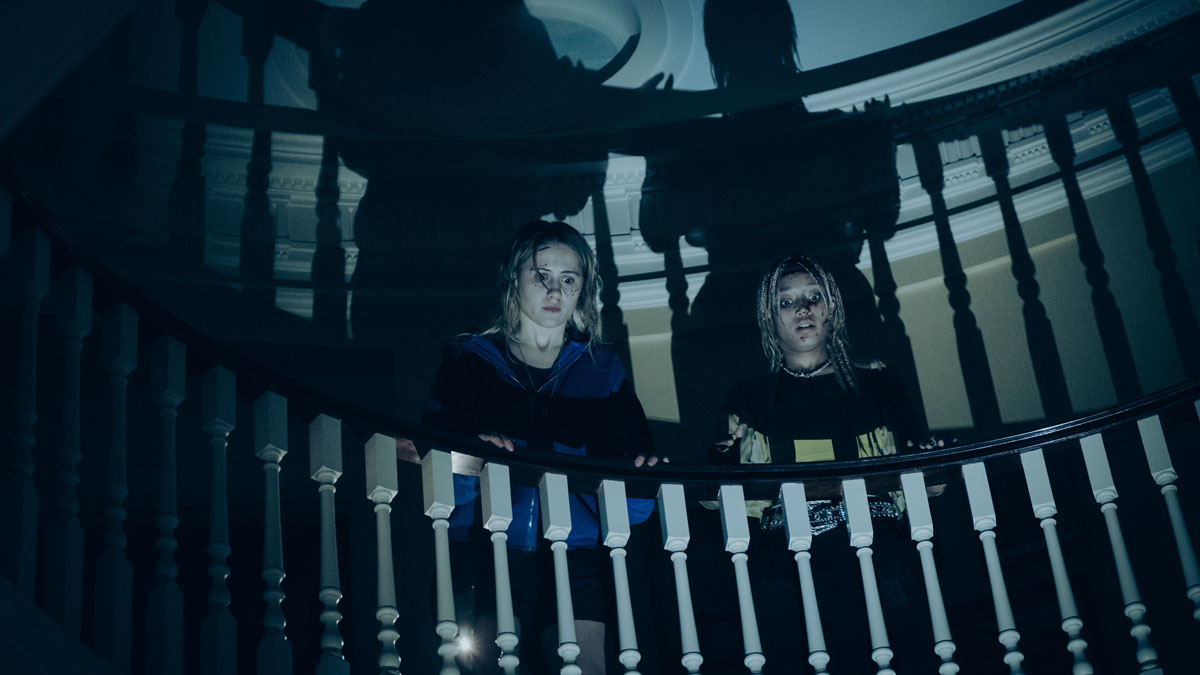
“We got out, right?” Stine, who grew up in Columbus, Ohio, says. The writer is speaking over Zoom from his home in the Hamptons, where his grandchildren have just arrived. And on Aug. 30, his new book did as well: “Stinetinglers,” the first in a planned series of short stories for middle-graders. “It’s like writing 10 novels. Why did I think I would enjoy that?” Stine says, growing serious when he admits he’s very proud of the book.

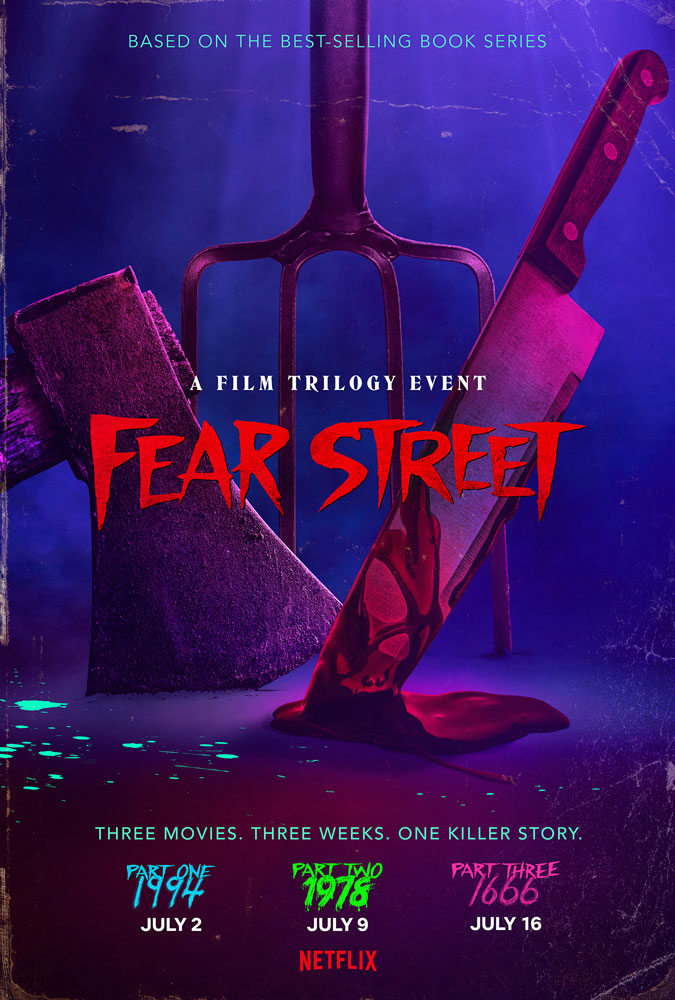
He’s written hundreds, some under pen names Jovial Bob Stine and Eric Affabee. His “Goosebumps” series has more than 350 million English language books in print and has been translated into 32 languages. “The Goosebumps” TV series was America’s No. 1 children show for three years running, the Stine anthology series “R.L. Stine’s The Haunting Hour” won multiple Emmys, and he has a new series for Disney+ called “Just Beyond,” starring Mckenna Grace. Jack Black once played him in two feature films. Stine’s other book series include “The Nightmare Room,” “Garbage Pail Kids,” “Mostly Ghostly” and “Fear Street.” Adapted into a film trilogy by Netflix, all the “Fear Street” movies reached No. 1.

But his path to success wasn’t easy — or a straight line. Stine started out hoping to write novels for adults and ending up working for a soft drink industry magazine. His first children’s writing job resulted from answering a classified ad, and his horror writing break came after an editor was angry at someone else. Stine may be one of the best-selling children’s authors in history, but his lessons about storytelling and perseverance apply to people of all ages. 

Salon talked with Stine about his new book, the “Fear Street” movies, his theory of endings and how he feels about horror. 

This interview has been edited for length and clarity.

Did you always know that you wanted to be a writer? Did you write as a child?

Since I was nine. But when I was in fourth grade, I started doing these little comic books and drawing them. I had this superhero . . . He was a horrible superhero. I would bring comics into school and pass them around to get attention because I was a very shy kid. And then I looked around — and everyone else started drawing comics. There was a big comic fad in fourth grade, and everyone could draw better than me. Everyone said, “Your drawings suck.” They were right. I had no talent at all, I couldn’t draw.

“It was nothing but rejection slips. And I had to earn a living.”

I knew I could write. I found this old typewriter and I would stay in my room for hours, hours, typing stories, typing joke books, typing. I was a weird kid. Why did I like it so much? I don’t know. My parents didn’t understand it at all. My mother would stand outside my door saying, “What’s wrong with you? Go outside and play. Stop typing, go outside.” Worst advice I ever got, right? 

It’s funny how a writer emerges from a family. Because my family was the same way. Nobody wrote.

Well, my parents were very uneducated, and very poor. My dad was a blue collar worker in a warehouse and he never actually read a single thing I ever wrote. They just didn’t get it. But where did it come from? I can’t explain it. Why? I think it had something to do — I hate being this serious, but it had something to do with being an outsider. Because we were desperately poor. And we lived right on the edge of a very wealthy community in Columbus. It was all rich mansions in the next block, and we were next to the railroad tracks in a little tiny house. The Governor’s mansion of Ohio was a block away from us. I felt really that I didn’t belong. I think maybe that’s one reason why I stayed in my room writing all the time.

Did you have books that you loved growing up?

I read only comics. I was a comic book freak. My friends and I would carry around big stacks. We would trade them and read them under this tree in the front yard . . . When I was a kid, there were these EC horror comics that were incredible: “Tales from the Crypt,” and “The Vault of Horror.” They had this amazing artwork. And they were ghastly, horrible, bloody stories, all with the funny twist ending. There was always a funny ending. And I think they were very influential on me. I mean, that’s kind of what I do to this day.

My mom dropped me off one day, I guess I was 10, at the Bexley Public Library on Main Street. The librarian was waiting for me and she said, “Bobby, I know you like comic books. I have something else I think you’ll like.” She took me to a shelf of Ray Bradbury stories and changed my life. Those stories were so great. I couldn’t believe it. They were so imagined. They were so beautifully written, and all had great twist endings.

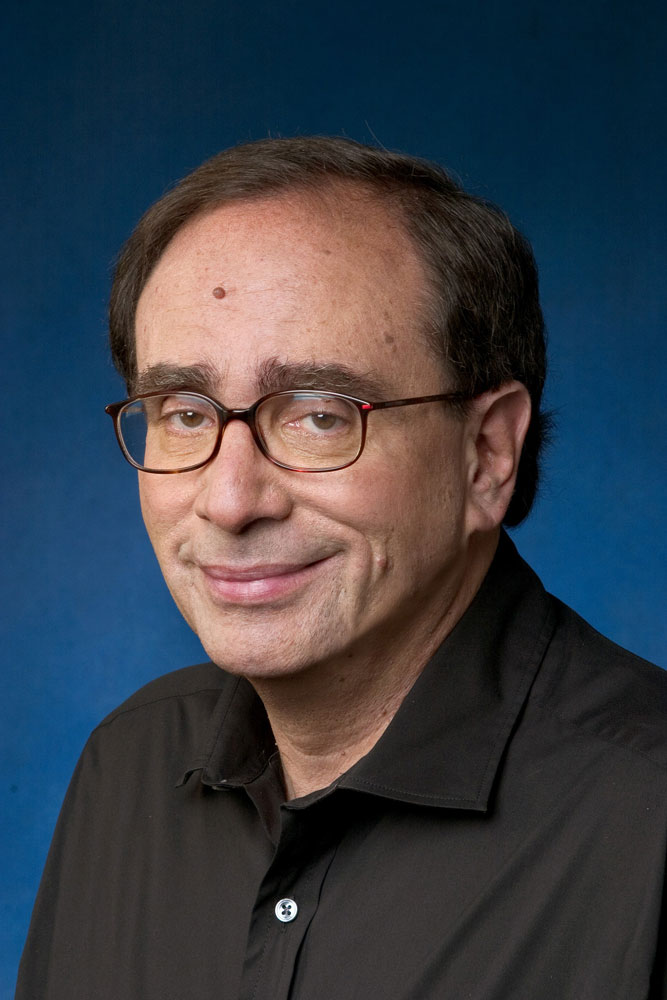
RL StineRL Stine (Courtesy of Macmillan Children’s Publishing Group)I read an interview you gave once where you said you didn’t plan to be a kids’ writer and you also didn’t plan to necessarily be a scary writer. What was it that you had planned to be?
Everything that’s happened to me is an accident. A horrible accident. No, I was desperate to get to New York after Ohio State to be a writer and I planned to write humorous novels for adults. I had all these ideas for funny novels for grownups, and of course, no one wanted them . . . it was nothing but rejection slips. And I had to earn a living. I didn’t know anyone in New York City. It was pretty brave to move from Columbus when I didn’t know anyone. So, I had to take a whole bunch of jobs. I was working for one year, a horrible year, at a magazine called “Soft Drink Industry,” writing about bottle caps and syrups and flip top cans, and it was awful.

Then I got a job at Scholastic. I just answered an ad in the paper on Junior Scholastic Magazine, writing history and geography. That was the first time I ever wrote for kids . . . My wife was doing a magazine for kids called Dynamite and it was the biggest kids’ magazine in the country . . . It was doing so well, they let me have my own magazine, which was a humor magazine called Bananas. That was my life’s dream. I had my own humor magazine for 10 years. I never planned to do anything else.

“It was at that point in my career where you don’t say no to anything. I’m still there, I still say yes to everything.” 

One day I was having lunch with Jean Feiwel who was a publisher at Scholastic and a friend. She arrived at lunch angry. She’d had a fight with a guy who wrote teen horror, who shall remain nameless. She said, “I’m never working with him again. Go home, you can write a teen horror novel. Go home and write a book called ‘Blind Date.'” She even gave me the story.

Oh wow.

I didn’t know what she was talking about. What’s teen horror? 

But it was at that point in my career where you don’t say no to anything. I’m still there, I still say yes to everything. I ran to the bookstore to see what teen horror was. And I bought Christopher Pike books and Diane Hoh, and a whole bunch of people. I read them and tried to figure out what I could do different in mine. I wrote this book “Blind Date.” It was a No. 1 bestseller. [I thought] wait a minute, what’s going on? I thought kids liked me. I said, “Forget the funny stuff. I’m going to be scary now.” And I’ve been scary ever since . . . But you can see it was all an accident.

A happy accident.

I mean, it worked out.

Some of your earlier books, like the “Goosebumps” books, for example, they didn’t get a lot of publicity initially. Why do you think your books became bestsellers? Why do you think they became so popular?

Secret kids network. That’s how all the book crazes catch on. You can’t advertise books for kids and get them to buy them. There was no hype for me and no one really knew me. And the books did sit on the shelf for a while. But we had three “Goosebumps” books out, and then somehow kids discovered them and brought them into school and showed them to their friends. It’s kids telling kids. See, the secret kids network. And soon it was all over the world. It was selling everywhere, just because of kids. I’m sure that’s the way “The Hunger Games” went. That’s the way “Harry Potter” went. It didn’t come from advertising or hype. The “Twilight” books, all those book crazes, they were just — it was done by kids, I think.

Kids seeing other kids reading them and telling their friends.

And they’re in school so they can show them to each other.

Do you think that when you became a parent — I know you’re a grandparent now, too — did that change your writing?

I had other people to spy on. It’s really important. When we started “Goosebumps,” my son was the right agel and I could spy on him and his friends and see what they wore and what they talked about. And you know, you have to kind of stay in touch. I try to stay in touch with kids’ culture and music and everything. Because you don’t want to sound like some old guy, right? That’s a really important part of the job. 

I know that you have written your novels for adults as well. 

Well, no one noticed.

Do you still prefer writing for kids? 

I don’t know why anyone would want to write for adults. Seriously. Because my audience is the best audience: 7- to 12-year-olds. I get them the last time in their lives they’ll ever be enthusiastic. 

I’m the parent of an 11-year-old. So, I agree with you.

You have one more good year. Because when they’re 12, they discover sex, and they have to be cool. And then you’ve lost them. They don’t want to know if I’m an author. Middle grade kids, they want to write to you, they want to talk to you, they want to buy stuff from you, they want to see pictures. And then by 12, they’re gone.

It’s such a neat age as a parent because my son shifts from being a little kid to trying to be a teenager, sometimes in the same sentence.

I’ll never forget my son sitting on the couch in the living room, holding his teddy bear and singing, “Welcome To The Jungle.” You know, Guns N’ Roses. He was sitting and holding his teddy bear while he was singing it.

How do you know what’s the right level of scary to write for this age? What’s the right amount of creepy?

The important thing is to have a happy ending. They have to know it’s going to end well. And then they don’t get too scared. I try to make them know that it couldn’t happen in real life . . . They have to know it’s a fantasy and it couldn’t really happen. If they know that, you can get pretty scary. But you have to let them know. And there has to be a happy ending.

I was going to ask you about your theory of endings.

“Even my life isn’t R-rated. I’ve never had an R-rated thing in my life, and here are these teenagers being slashed to bits.”

I did this one “Fear Street” novel, and just for fun, for me, I gave it an unhappy ending. The good girl is taken away as a murderer, and the murderer gets off scot-free. I thought it was funny. Kids hated this book and they turned on me. I started getting mail immediately. “R.L. Stine, you moron! How could you write that? You idiot! Are you going to write a sequel to finish the story?” And it haunted me. Or, I’d go to schools and speak at assemblies. Every time, some kid raised his hand. “Why did you write that book? How could you write that?” I had to write a sequel. They couldn’t stand it.

I assume the sequel had a happy ending?

Yes. The murderer was caught.

Fear Street Part 2: 1978Fear Street Part 2: 1978 (Netflix)You brought up “Fear Street” and obviously that was a big hit on Netflix, the movie versions. Did you watch them or do you ever watch the adaptations of your work?
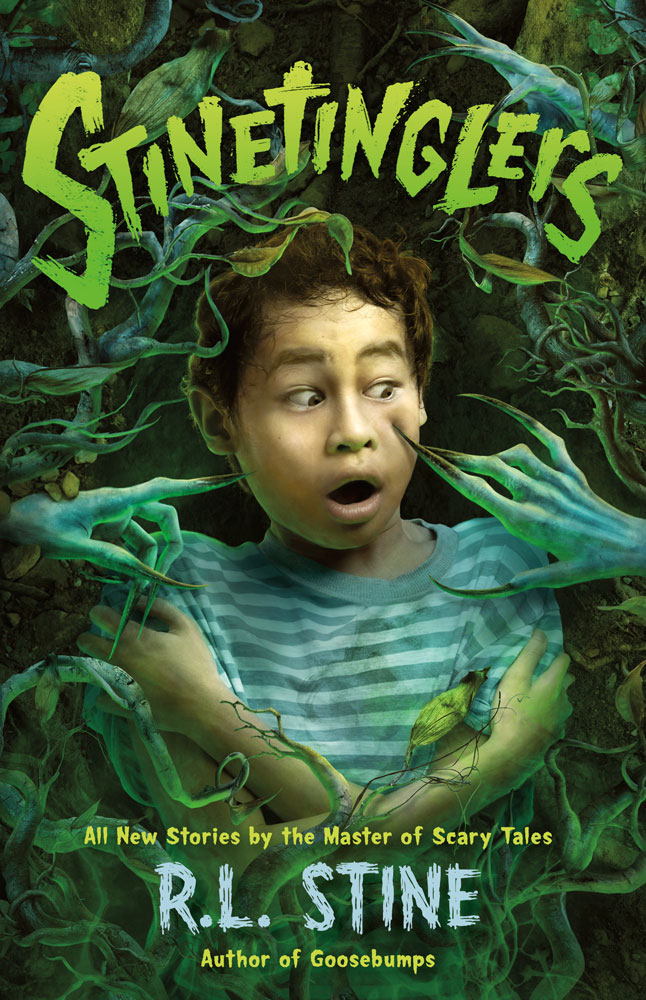
I watched my own movies, for sure. I was shocked by them. They’re R-rated. I’ve never had an R — even my life isn’t R-rated. I’ve never had an R-rated thing in my life, and here are these teenagers being slashed to bits. They were slasher movies, and I was kind of shocked by it. But people love to see teenagers get killed. They love that. They love it.

All three movies were No. 1 on Netflix. And in a way it was kind of liberating for me to see I could get away with that. Because it never would occur to me to do that kind of a movie. Also, it helped that they were really well done. They were well directed and well written, and the young actors were all fabulous, and that helped a lot. But it sort of loosened me up a bit.

I’m doing this line of comic books for Boom Studios for adults, not for kids. They are horror comics called “Stuff of Nightmares.” It comes out next month, the first one. And it’s kind of loosened me up. It’s for adults, so I have a lot of blood. It’s a lot of gore and something probably I wouldn’t have done before.

Do you have a different writing process for different forms, writing the comic books for adults as opposed to stories for children?

I do an outline of everything I write first. I never sit down. Ken Kesey said, “You sit down and you write a book”— never done that. And people would always say, “Well, what do you do about writer’s block?” I say, I do a chapter by chapter outline of everything first. And when I sit down to write the book, I know everything that’s going to happen. I’ve done all the thinking. I’ve done all the hard part. I know the ending. I know the middle. And if you do that, you can’t have writer’s block. Then you can just enjoy the writing.

Stinetinglers coverStinetinglers cover (Courtesy of Macmillan Children’s Publishing Group)Do you watch horror yourself? We talked about “Fear Street” — would you normally watch horror movies?
I’m not really into horror.

I’m Stephen King for kids. And I’m always looking for some clever horror film. Every once in a while, one comes along that’s really good. I love all the classic horror films, all the old Universal: “Frankenstein,” “Dracula.” I love those films. Megan Fox has a horror film called “Till Death.” Watch that; it’s pretty good. But I read mostly mysteries and thrillers and current fiction. I don’t read a lot of horror.

I like horror movies a lot, but I’m often disappointed. I guess I don’t know what’s wrong with me, but I’m always looking for something else.

You want those twists.

I want to be surprised.

That’s all I care about, the surprises.


Want a daily wrap-up of all the news and commentary Salon has to offer? Subscribe to our morning newsletter, Crash Course.


You mentioned your comic books for adults. Do you have anything else coming out?

This is the 30th anniversary of “Goosebumps” this year. That’s why I look like this: 30 years of this stuff. We have a special hardcover “Goosebumps” book coming out called “Slappy Beware.” It’s the first hardcover, illustrated “Goosebumps” book for an anniversary special. Then, because I’m nuts, I started a new series of short story books for Macmillan called “Stinetinglers.” It’s a book of 10 short stories, which — I’ve done short stories, what a crazy idea. It’s like writing 10 novels . . . But it came out really good. I’m actually very proud. 

My editor was joking that you took the title for my memoir. Now I can’t write a book called “Stinetinglers.”

Well, you probably could.

When FDR tried to pack the Supreme Court: A lesson for Dark Brandon?

Future historians may well remember 2022 as the year when the U.S. Supreme Court permanently went off the rails. This goes well beyond the tormented, quasi-religious reasoning used by the court’s conservative majority in Dobbs v. Jackson, the case that officially reversed the nationwide abortion rights established in 1973 by Roe v. Wade. In the course of revoking women’s reproductive rights, the justices also hinted they might reverse the right to same-sex marriage, and perhaps even the right to contraception. Perhaps even more consequential, the court also decided it would hear Moore v. Harpera North Carolina case about whether state courts may strike down gerrymandered congressional maps. If the conservative majority buys into the dubious legal theory known as the independent state legislature doctrine, it will effectively empower Republican-dominated state legislatures to overturn the popular vote in future presidential elections.

Roosevelt told the nation the Supreme Court had “improperly set itself up as a third House of the Congress — a super-legislature, as one of the justices has called it — reading into the Constitution words and implications which are not there.”

If it seems like the Supreme Court is determined to impose an extreme right-wing agenda on the rest of the country, you should know that this isn’t the first time. Indeed, when conservative judges went on a similar radical rampage in the 1930s, Franklin D. Roosevelt fought back with the Judicial Procedures Reform Bill of 1937. Among other things, it allowed the president to appoint a new Supreme Court justice for every sitting justice over age 70, up to a maximum of six extra justices in total. (The Constitution doesn’t specify the number of Supreme Court justices, which Congress set at nine in 1869.)

That will sound like a fantastic idea to many Democrats and liberals in 2022, but it was viewed as wild-eyed radicalism 85 years ago. Derisively dubbed the “court-packing plan” — probably the first appearance of that term in political discourse — FDR’s reform bill was perhaps his biggest single failure, and almost single-handedly derailed his ambitious domestic agenda. Ever since then, the memory of that political catastrophe has been powerful enough that presidents of both parties never even considering court-packing. Only the court’s recent hard-right shift, along with what could reasonably be called the Republican version of court-packing — exemplified by blocking the confirmation of Merrick Garland in 2016 and then rushing through the confirmation of Amy Coney Barrett in 2020 — has begun to change that dynamic.

To understand what drove Roosevelt to try to “pack” the Supreme Court in the first place, we first have to consider a quartet of reactionary judges determined to stymie his agenda, who were dubbed the “Four Horsemen” by the pro-FDR press.


Want more health and science stories in your inbox? Subscribe to Salon’s weekly newsletter The Vulgar Scientist.


These four justices — Pierce Butler, James Clark McReynolds, George Sutherland and Willis Van Devanter — were profoundly hostile to Roosevelt’s New Deal programs and did everything they possibly could to stop them. After taking office in 1933 at the depths of the Great Depression, Roosevelt spent much of his first term passing bills to create a safety net of economic security for vulnerable Americans, most of which simply hadn’t existed before that. This included federal employment programs that created millions of jobs, the universal pension we now know as Social Security and a number of laws to protect labor unions and regulate big businesses. Roosevelt’s overall goal was to achieve what future scholars would call the “3 R’s”: relief for the poor, recovery for the economy and reform of a financial system that was so corrupt it had brought the economy to its knees.

While the conservative Supreme Court justices privately grumbled about the New Deal practically from Day One, they were astute enough to understand that it might be disastrous if they tried to block FDR’s entire legislative agenda. There were serious fears that the widespread suffering and mass unemployment of the Great Depression might inspire a socialist revolution, and even hardened conservatives understood that some relief measures were necessary, if only to cool the national temperature.

FDR’s court-packing gambit was a disastrous failure: He was never again able to pass the kind of ambitious reform legislation he had during his first term.

By 1935, however, the Four Horsemen felt that their moment had arrived. Determined to outvote the trio of liberal justices known as the Three Musketeers — Harlan Stone, Louis Brandeis and Benjamin Cardozo — the Horsemen recruited the court’s two moderates, Chief Justice Charles Evans Hughes and Justice Owen Roberts, to join in their judicial coup. In short order, several key Roosevelt and Roosevelt-supported initiatives were found “unconstitutional” for a convenient variety of reasons, including the Agricultural Adjustment Act, the Federal Farm Bankruptcy Act, the Railroad Act, the Coal Mining Act and even a New York law establishing a minimum wage for women and children. The Four Horsemen made no secret of their opposition to Roosevelt, and openly boasted that they intended to thwart any and all restrictions on business and commerce, protections for labor unions or precedents that the state should take measures to alleviate poverty. The Horsemen even rode to and from work together in the same chauffeured car, making it even more obvious that they were coordinating their political and legal strategies.

None of this was a secret to the public or the media, yet when Roosevelt tried to fight back directly with the Judicial Procedures Reform Bill, the whole thing blew up in his face. Even though FDR had been re-elected by an unprecedented landslide majority in 1936, he was suddenly faced with widespread rebellion within his own party. Even his political allies saw the proposed bill as an attempt to violate the supposedly apolitical nature of the Supreme Court. It didn’t help that Roosevelt was initially less than forthright about his motives, claiming that his primary concern was the justices’ advanced age, not their ideology. That was clearly untrue, which likely soured the public against the entire idea by the time he made the real case — which, in his defense, was also the logically and morally sound one — in a national address:

The Court in addition to the proper use of its judicial functions has improperly set itself up as a third House of the Congress — a super-legislature, as one of the justices has called it — reading into the Constitution words and implications which are not there, and which were never intended to be there.

Despite that unassailable logic, the court-packing gambit was a disastrous failure. First the bill was bottled up by an alliance of Republicans and conservative Democrats on the Senate Judiciary Committee, and then it became politically moot when Justices Roberts and Hughes — the court’s two moderates — switched sides on the landmark minimum wage case, West Coast Hotel Co. v. Parrish. (Some observers claimed that Roberts changed his position in direct response to the court-packing threat, but subsequent scholarship has established that wasn’t the case.) Roosevelt’s popularity nosedived, and Democrats suffered major losses in the subsequent 1938 midterms.

FDR recovered from the debacle well enough in his own career, and was even elected to unprecedented third and fourth terms, remaining president until his death in 1945. But the political damage was real: He was never again successful in passing the kind of ambitious reform legislation he had during his first term. He was ultimately able to appoint his own majority to the Supreme Court simply due to the passage of time, but was never enable to enact the full agenda outlined in his 1944 Economic Bill of Rights. Conservatives had learned the secret to defeating him, a formula that endured until very recently: Forge a bipartisan alliance between pro-business Republicans and racist Southern Democrats (who would soon enough become Republicans themselves), then exploit the fear of “socialism” to convince much of the public that even modest liberal reform ideas were dangerous and un-American. 

Still, it’s not fair to assume that Roosevelt’s failure to expand the Supreme Court means that the idea is intrinsically toxic. If FDR had been upfront about his reasons from the beginning, he might well have convinced his liberal allies to go along, since many of them shared his frustrations with the reactionary justices. So far, Joe Biden appears reluctant to consider a court-packing push, especially facing a midterm election that threatens his fragile majorities in both houses of Congress. But given the nature of the current Supreme Court, the question that will surely face Biden (or some future Democratic president, if there is one) is not whether court-packing is historically or morally defensible, but simply how to make it happen. 

Michael Cohen says Mar-a-Lago documents were stored out in the open

Michael Cohen, an ex-lawyer for former President Donald Trump, recently shed more light on the location of the highly sensitive documents found at Mar-a-Lago.

During a recent appearance on CNN, Cohen explained why it was so reckless for the documents to be stored where they were. Speaking to CNN anchor Poppy Harlow, Cohen said, “That place is completely open. It’s directly above the catering hall.”

Cohen explained how the location of the documents may have made them relatively accessible to just about anyone visiting the property.

“So it’s not just guests, it’s not just members; it’s anybody that’s there, hypothetically, for a wedding or a christening, a bar mitzvah — any event that they have. And all that separated these individuals from top-secret, classified documents were 10 stairs and one little Master Lock key,” he explained.

As a former lawyer for Trump, Cohen also expressed his concerns about the former president slamming his own legal team amid his woes with the U.S. Department of Justice (DOJ) and the Federal Bureau of Investigation (FBI) when his Mar-a-Lago estate was searched on August 8.

Prior to the search, one of Trump’s attorneys in June signed documents confirming all necessary documents had been returned.

“There’s a plethora of lawyers that have all gone down or are going down or need to lawyer-up simply because they did Donald Trump‘s bidding,” said Cohen.

Cohen’s interview came shortly after a flurry of Trump rants shared via Truth Social. Over the last couple of weeks, the former president has become increasingly agitated amid the ongoing investigations and criticism surrounding the probes.

Currently, Trump is facing three highly publicized investigations: the DOJ investigation into the mishandling of top-secret government documents, the Fulton County, Ga., investigation into election tampering, and the New York Attorney General’s investigative probe into the Trump Organization.

Watch below:

Mary Trump says Donald has shown a pattern of making things worse for himself

On top of facing multiple criminal investigations, former President Donald Trump was lambasted by President Joe Biden during his recent speech addressing the rise in extremism inspired by the Make America Great Again (MAGA) movement.

Needless to say, the former president wasn’t pleased with Biden’s remarks and wasted no time verbalizing his disapproval. Now, his niece Mary Trump is weighed in on the situation.

On Saturday, Mary Trump appeared on MSNBC News’ “The Katie Phang Show” where she insisted that her uncle may be making things worse for himself.

At one point during the interview, Phang asked Mary Trump about her reaction to her uncle’s recent rant targeting former U.S. Attorney General Bill Barr. The former took to Truth Social after Barr appeared on Fox News saying that the U.S. Department of Justice was justified in its search of Mar-a-Lago.

On Truth Social, Trump wrote, “Bill Barr had ‘no guts,’ and got ‘no glory.’ He was a weak and pathetic RINO, who was so afraid of being Impeached that he became a captive to the Radical Left Democrats – ‘Please, please, please don’t impeach me,’ he supposedly said. Barr never fought the way he should have for Election Integrity, and so much else. He started off OK as A.G., but faded fast – Didn’t have courage or stamina. People like that will never Make America Great Again!”

According to Mary Trump, her uncle’s behavior is the result of never being in an increasingly awkward position like this. For Donald Trump, Mary Trump believes it is unnerving for individuals within his close circle to distance themselves.

“Yes, I think that’s part of it,” Trump, a psychologist replied. “The other part of it is too that he has never been a place like this before, as many people have pointed out.”

“It isn’t just that people like Bill Barr are turning against him, although quite honestly agreeing with Bill Barr is something that makes me want to reevaluate my life choices because whoever knew we would be agreeing with Bill Barr,” she continued. “On the one hand, Bill Barr was his staunchest defender at one point; acting like his private attorney. But, on the other hand, because of the egregiousness of Donald’s behavior, even people like Bill Barr can’t stand with him anymore.

“The window of opportunity for Donald to squirm out of this is closing because of the seriousness of the potential charges that are coming his way,” she explained. “And what have we seen in the past? He goes to violence. When he said that President Biden was calling for political violence, he was, as usual, projecting. That was what Donald’s going to be calling for as he gets more and more cornered.”

Watch here:

We need more protected areas, but that’s not all

As the world faces cascading extinctions and runaway climate change, a growing body of scientific research has found that we should set aside more areas as protected spaces.

That message got hammered home by a study published in June in the National Proceedings of the Academy of Sciences that says current protected areas won’t stop the extinction crisis — because we haven’t set aside nearly enough land to date.

“Our analysis shows that a large proportion of the world’s mammals are unlikely to be adequately protected from extinction by the current global protected areas network,” the study’s authors warned.

Globally we’ve protected nearly 17% of our lands and 7% of the ocean, but support is growing for protecting 30% of the land and ocean by 2030 — the amount many scientists estimate we need to set aside to protect biodiversity and the climate. The Biden administration has announced its general support for the policy, known in shorthand as 30×30, and so have around 100 other countries. In December it could officially become part of the Global Biodiversity Framework that will be negotiated in Montreal as part of the United Nations Convention on Biological Diversity.

Can mammals’ plight help build the necessary support for 30×30? The researchers looked at nearly 4,000 land-based and non-flying mammal species living in protected areas and found many of these areas were too small or poorly connected for the animals to thrive.

Protected areas are critically important for conservation if managed well and can help protect against habitat loss and other human disturbances. In many areas they may be the only places that can support the survival of some species, the researchers found.

“It is plausible that the long-term survival of much of Earth’s biodiversity will ultimately hinge on the network of protected areas that are established and properly functioning in the near future,” they wrote.

Coming Up Short

The PNAS study found that current protected areas on their own aren’t sufficient to ensure the long-term survival of about half of all mammals studied — between 1,700 and 2,500 species. This includes a staggering 91% of those already listed as threatened by the International Union for Conservation of Nature. These at-risk species range in size from the largest land-based animals, such as elephants, to the tiny Sri Lankan shrew.

The researchers also estimated that more than 1,000 additional mammal species that aren’t currently listed as threatened may also be at risk. This includes white rhinoceroses, American bison, jungle cats, several howler monkey species, and hundreds of small-bodied species of rodents and insect-eaters.

The largest proportion of underprotected species was highest in areas with the most biodiversity, including South, Southeast, and East Asia; Latin America and the Caribbean; Africa; and Oceania.

A Better Strategy

So if current protected areas don’t do enough, how do we do it better?

The research suggests that first we need to increase the size and number of protected areas and improve the connectivity between them.

But that’s not all: They also need to be in the right places and managed with a clear understanding of the animals’ habitat needs.

“This finding supports previous calls for the strategic expansion of protected areas into specific ecosystems that require additional protection, rather than relying on arbitrary area-based targets,” they wrote.

The researchers warn that simply aiming for a percentage of land and water protected isn’t the best way to ensure species’ survival. In other words, achieving 30×30 won’t be a success if it’s not in the right places or managed appropriately with adequate staff and budgets.

Another recent study, published in Nature, echoes that conclusion. Researchers looked at how 1,500 protected areas have affected 27,000 waterbird populations in 68 countries and found that just the designation of a protected area won’t necessarily bring benefits to populations.

As in the mammal paper, researchers found that areas that were actively managed for waterbirds — such as by removing invasive species, restoring wetlands or preventing hunting —were more successful, and often those that were larger had better results, too.

“Halting biodiversity loss requires improvements to the performance of existing protected areas, and action to address ubiquitous threats beyond area borders,” the researchers concluded. “Ever-increasing area-based targets must be accompanied by equally ambitious targets that ensure protected area effectiveness.”

Oceans, Too

When it comes to protection for animals that make their home in the ocean, we have a much longer way to go. While only 7% of the ocean is protected, less than 3% of that has strong safeguards.

But a study published this month in Nature developed a framework for how to establish marine protected areas in places that can help ensure protection for biodiversity, increase fish populations that support food security, and help secure marine carbon stocks that are at risk from bottom trawling and other industrial activities.

The researchers found that most of the top 10% priority locations for establishing marine protected areas are within the 200-mile exclusive economic zones that coastal nations manage. These areas are “home to irreplaceable biodiversity and are often heavily affected by human activities that can be abated by marine protected areas.”

Their findings also show that marine protected areas can help restore populations that have been overfished, and in the long run can support food security even if fishing doesn’t occur in protected areas.

It’s also better if nations don’t go it alone. “We find that a globally coordinated effort could achieve 90% of the maximum possible biodiversity benefit with less than half the ocean area of a protection strategy that is based solely on national priorities,” the study found.

Multiple Goals

The good news is that if we do it right, we can not only protect biodiversity but also achieve other important benefits. Those conclusions come from another recent study, published in the journal Science Advances.

One of those benefits is climate change mitigation. Protecting 30% of lands, the study found, could provide one-third of the reductions needed to limit global warming emissions to under 1.5 degrees Celsius.

Water quality and aquatic biodiversity would also be boosted, the study found, as more protected areas would decrease nutrient pollution that runs off from fertilizer waste and threatens watershed health.

“If species conservation is prioritized, greater biodiversity conservation, climate-change mitigation, and nutrient-regulation benefits can be realized,” the Science authors wrote. “This supports previous findings on the multiple co-benefits of conservation and reflects the importance of biological diversity for delivering multiple ecosystem services.”

Getting Support

Of course, this work won’t be easy.

“Expanding or relocating the world’s protected areas comes fraught with very real risks to human wellbeing,” wrote the PNAS study’s lead author, David Williams, a lecturer in sustainability and the environment, University of Leeds. “These areas are based on stopping people from doing things: from chopping down trees, from hunting certain species, from mining, or from farming.”

But understanding and communicating the multiple benefits of increasing protected areas, he said, can help drive more support from government and local communities.

Williams and others have urged that establishing more protected areas not come at the expense of Indigenous communities, many of whom have already been disenfranchised or displaced by previous conservation efforts.

The nonprofit Project Expedite Justice calls for including Indigenous people at the center of conservation efforts with equal decision-making authority. As a report from the organization finds, “It has been demonstrated that protected areas with strong Indigenous peoples involvement in management and decision-making deliver better results in conservation and human rights protection.”

We’ll also need to take steps to get at the root causes that are driving extinction and climate change in the first place — or we won’t have additional lands to conserve.

“Without rapid shifts towards healthier, plant-rich diets, reductions in food waste and sustainable yield increases, there simply won’t be enough spare land to protect,” Williams wrote.


5 essential grilling tips from Aaron Franklin, Alton Brown, Bryant Terry and more top chefs

While a lot of people, myself included, are pleased that “spooky season” is just around the corner, it’s still grilling season for a little while longer. Thankfully, over the course of Salon Food’s history, we’ve had a lot of experts — ranging from Alton Brown of “Good Eats” fame to Aaron Franklin of the eponymous Franklin Barbecue — share their advice for how to level up your grilling game at home. 

Here are 5 essential tips to make sure what’s left of grilling season is the best that it can be:

01
Looking to update your grill? Consider this brand 

Brown and Franklin both recommended a particular brand of grill during their respective appearances on “Salon Talks.”


“I’ve become a really, really big fan of a company out of Arkansas called PK Grills,” Brown said. “It’s this oblong aluminum box, and I’m just crazy about them. They have more cooking space, usually, than some of the round grills, and they’re not very expensive at all.” 


Franklin concurred: “They’re made out of aluminum, so they don’t rust, which is super cool.


“Conducts heat really well,” he continued. “They’re made domestically, so you can just call the company and like, ‘Hey, I need some grates. I need a replacement leg,’ or whatever. They’ll ship it out. It’s super great.”

02
Try underloved cuts of meat 

Everyone is feeling the impact of inflation — especially when it comes to how much we’re spending on groceries. One way to cut costs, especially when cooking out, is to turn your attention to cuts of meat that don’t always get a lot of love. Brown recommended a few substitutions. 


“Number one, I don’t like chicken breasts,” he said. “I go straight for the thighs. I think that the thigh and the leg quarter is the best thing to put on a grill, and you can usually buy them in big packs because most people want to buy breasts.” 


He also recommended reaching for skirt steak. 


“I cook skirt steak directly on the coals,” he said. “I don’t even use a grill grate. I marinate it, I get a good bed of coals going, I blow off the ash and I plop that stuff right down on the coals.” 


Oh, and try grilling bone marrow, which you can buy at most butcher shops. According to Brown, it’s “better than a lot of sex.” 

03
Learn to love old beef, too

Salon contributor Maggie Hennessy spoke with the beef experts at Butter Beef Meat Co. in Perry, N.Y., about vaca vieja, which has long been touted as “the next big thing in meat.” 


“By virtue of its age, mature beef is a completely different eating experience — more intensely meaty, almost gamey — with flavorful, butter-yellow fat from its more varied diet and a toothsome texture owing to more years plodding across the earth,” Hennessy wrote. 


It also happens to be more sustainable. 


Read Hennessy’s reporting on the trend and consider buying some “old beef” online (a practice also recommended by Brown).

04
Ask your butcher what they recommend 

Franklin told Salon that he prefers the “butcher’s cut” of steak, pieces of meat that aren’t traditionally prized by American consumers.


“Typically, they’re cheaper,” he said. “A bavette is probably one of my favorite steaks, just texturally. Here, it’s called a flap steak or flat meat here in the States. In France, it’s a bavette. Or like hanger steaks are really great, little flat irons and stuff like that, but that kind of goes in with, you talk to your butcher. Know your butcher.” 


Per Franklin, they’re always trying to come up with new cuts, too. 


“Because you’ve got so many muscles in an animal, it just depends on if you find a seam and you kinda cut through it and find certain things,” he said. 

05
Don’t forget the vegetables 

When it comes to barbecue, Bryant Terry, the author of six cookbooks including 2020’s “Vegetable Kingdom: The Abundant World of Vegan Recipes,” said he preferred to avoid the whole “‘delete meat and add tofu’ kind of ethos.”


“For example, I do this barbecue tempeh,” he said. “It was in my book, ‘Vegan Soul Kitchen.’ People love it! Even the ardent meat eaters have been like, ‘You know, this isn’t ribs, but it’s, it’s OK! It’s pretty good.’ I think creativity is key to me. I have a recipe for barbecue carrots. People love it! I do these barbecue carrots in ‘Vegetable Kingdom,’ and then I pair them with white beans and some Memphis coleslaw. Everything just coalesced really beautifully — and it’s just vegetables.”


Jason Hawk, a chef-instructor at the Institute of Culinary Education, also gave Salon a shortlist of vegetables that he recommends grilling before the season is over, including carrots, cauliflower and potatoes (yes, potatoes!).


“Grilling, in general, I’m typically looking for something more like firmer flesh, vegetables that are going to stand up to grilling,” Hawk said. “You don’t want anything too moist or too soft. That’s going to fall apart on a grill.”

Salon Food writes about stuff we think you’ll like. Salon has affiliate partnerships, so we may get a share of the revenue from your purchase.

6 items discontinued by Trader Joe’s this summer

At the turn of each season, Trader Joe’s updates its inventory with new food items, from baked goods and frozen treats to packable snacks and ready-to-eat meals. There are also the occasional seasonal goodies, which are available for a limited time only but still beloved by many.

Unfortunately, constant variety also means frequent product discontinuations. Some items are booted off of shelves because they don’t sell well, while others are removed due to product complications. To save you from heartbreak during your next TJ’s run, Salon Food rounded up 6 products that have been discontinued this summer, according to postings from devoted shoppers on social media.

This list adds to Salon Food’s growing library of supermarket guides. If the return to school is top of mind, check out the 6 best items for easy school lunches.

1. Chili & Lime Flavored Rolled Corn Tortilla Chips

Despite being a fan-favorite in this year’s TJ’s Customer Choice Awards, the retailer’s rendition of Takis is being discontinued. The news first made rounds on Reddit, much to the disappointment of countless fans.

https://www.instagram.com/p/B9kcXpLJycE/

“Nooooooooooo I will cry,” wrote user u/kelseyxcx. “I asked a store associate and they said no and that they had them earlier that day but every store I go to its not there I even checked today.” Another user simply commented, “This is the worst news ever,” while a separate customer praised the tasted of these rolled snacks, saying, they are “better than Taki’s!”

Per a few Trader Joe’s crew members, the chips may be available at select stores as product discontinuation oftentimes varies by region.

“As a TJs crew member, I can tell you discontinued doesn’t necessarily mean what it used to mean,” user u/radarluv explained. “Nowadays we find that a supplier that can’t fulfill TJs order needs causes a product to go [discontinued] until a new provider can be found. Finding a new supplier, writing up new contracts, sourcing the materials and getting them to market can take a long long time. Sucks for all of us.”

2. Dark Russet Potato Chips

These crunchy, kettle-cooked chips are another fan-favorite item that has been removed from store shelves. The announcement was made by Trader Joe’s to be discontinued, an Instagram blogger who routinely highlights discontinued TJ’s items.

https://www.instagram.com/p/CeMbY34pNxi/

“Why?! I am crushed that @traderjoes would discontinue something that was so right!” wrote one user in the comments section. In the same vein, another user complained about the news, saying, “I’m frustrated these have become a staple for me.”

3. Vegan Beet Hummus Rainbow Wrap

After almost four years in the market, TJ’s vegan wrap has left store shelves. Although the retailer hasn’t confirmed the discontinuation, user u/babyyodaonline on Reddit shared the news this week.

https://www.instagram.com/p/CS8BXmklcPz/

“One of my favorite TJ’s product got discontinued!!! The vegan beet hummus rainbow wrap!” they wrote. “I’m DEVASTATED. I went in today to grab one for my work lunch later this week and they were gone! I asked and apparently it’s discontinued.”

Another disappointed user, u/meowsqueak_, wrote, “Seriously! It’s my primary source for buying healthyish prepared lunch options for my partner, and the past few times I’ve been shopping I’ve came back with almost nothing in the easy workday lunch dept. Where are the wraps, salad kits, anything?”

4. Organic Chia Bar

Loaded with almonds, cranberries and pumpkin seeds, these tasty energy bars are another product that has been discontinued. These bars are hailed as a life-saver and breakfast staple amongst many of the grocery’s consumers.

https://www.instagram.com/p/Ce2Rj88L2o3/

“These and the berry granola balls were my favourite,” commented one mourning user on Instagram. Another user wrote a dramatic “Noooooooooo!” before stating that the bars “saved” them so many times.

5. Popcorn in a Pickle

Although this dill pickle-flavored snack was offered only as a seasonal item, it was knocked off of shelves for good in early June and will not be returning anytime soon.

https://www.instagram.com/p/CeWDPkhucEs/

Fans of TJ’s popcorn in a pickle can try recreating them at home by sprinkling TJ’s new pickle seasoning on fresh popcorn. Or, per the Instagram page Trader Joe’s to be Discontinued, a similar tasting product can be picked up right now from Aldi.

6. “Just Sauce” Turkey Bolognese

This tomato-based ragù sauce made with ground turkey is great on pasta or on bread (to make a Sloppy Joe). But sadly, it has also been discontinued and will no longer be available for purchase.

https://www.instagram.com/p/CfeS4jnO9Qj/

“My store in Reno, NV hasn’t had it in a very long time,” wrote one user on Instagram. “They looked in the computer and told me about a month ago that it was discontinued.” Another user bashed the news as false, alleging that the sauce was still on the shelves of their local TJ’s. The majority of commenters, however, confirmed with their local crew members that the product is no longer available.


Want more great food writing and recipes? Subscribe to Salon Food’s newsletter, The Bite.


How to keep your cats off the kitchen counter, once and for all

After several years of model behavior, one of my cats recently discovered that very tasty food like shredded chicken is often left on the kitchen counter at dinnertime. Now, it seems like I can’t turn my back without Henry sneakily jumping on the counter to grab a bite. 

Henry isn’t the first feline who prefers the kitchen counter over the best cat trees. Over time, I’ve found several tactics to keep my kitties with four paws on the floor. If you’re looking for ways to keep cats off the counter, here are the strategies that have worked for me (and thus, my dearest Henry).

Give them somewhere else to climb

If your cat is up on the counter because they’re bored and exploring, redirect their attention elsewhere with the help of new toys. There are fun and functional cat trees that will do just that, including floor-to-ceiling towers and oversized cat condos that offer plenty of room for your cat to play, scratch, and climb. If you dislike the look of traditional cat trees, try the Whisker Cat Tower, which has a modern design that looks like a contemporary piece of furniture.

Keep the counter clean

If there’s one thing that cats and humans have in common, it’s that they always want to eat. To keep my kitty off the kitchen counter, I’ve had to do my part to keep food out of sight. If your feline is all feast, no famine, do the same — cover everything during dinner and put away leftovers immediately. We’ve doubled down on our efforts to keep the counter clean of all food —  if he doesn’t find anything to eat, he’s less likely to jump up there.

Invest in a water fountain

Some cats jump up on the kitchen or bathroom counter to drink out of the faucet, as they like the taste of fresh, running water. If this is your cat’s motive, give them their own water fountain. These cat-friendly foundations operate just like decorative fountains, using a small pump to circulate water for thirsty cats. Most fountains have filters to help remove impurities; if your persnickety cat prefers cool water, add a few ice cubes into the reservoir each day.

Line the edges with foil or tape

If these preventive measures aren’t enough to keep your cat from jumping on the counter, there are a few other things you can try. One commonly used method is lining the edges of your counters with aluminum foil. When your cat jumps up to the counter, they’ll land on the foil, and the noise and texture of the metallic sheet will startle them, causing them to jump back down. Keep the foil on your countertops for a week or two, depending on how persistent your feline friend is, but eventually, they’ll give up and find somewhere else to hang out.

Some people employ this same strategy with double-sided sticky tape, as most cats don’t like the sensation of having the tape stick to their paws. If you go this route, make sure to purchase wide tape so that your cat can’t just jump over it.

Set up a motion-activated deterrent

Several years ago, my roommate’s cat went through a counter-surfacing phase, and nothing we tried deterred her in the slightest. (She was really, really stubborn.) Eventually, we caved and bought the SSSCAT Spray Deterrent, which finally did the trick. This compressed air canister has a motion-activated sensor so when your cat hops up onto the counter, it spurts air at them, scaring them away. This effective, but pricey product should be a last resort. There’s a good chance that the spray will also scare you every time you walk by it — I speak from experience.

Marjorie Taylor Greene pre-games Trump rally with stories of kids using litter boxes

Representative Marjorie Taylor Greene (R-GA) is an early presence at Former President Trump’s first rally since the FBI’s raid of Mar-a-Lago. Prior to the official start of the rally, which takes place late Saturday afternoon in Pennsylvania, Greene popped up amidst the crowds to provide some curious soundbites.

Speaking to a reporter for Right Side Broadcasting Network, who told Greene about a student he heard about in Texas who, according to him, identified as a cat, Greene added her views on the topic with the following quote:

“They’re embracing lies. I mean, literally embracing lies. Okay, if some student wants to pretend like a cat and use a litter box after school, that’s their prerogative, whatever. But no, the school and school resources and the other students and teachers should not have to be put through that, cuz it’s a lie” Greene said. 

In addition to talks of litter boxes, Greene spoke with Right Side Broadcasting Network at the rally pre-game on the topic of President Biden’s “battle for the soul of the nation” speech, which was delivered on Thursday. 

“This is who the Democrats are,” Greene said. “They’re using their position of power and they have declared war on all of us because Joe Biden basically said in his speech that we’re the enemies of the state and he’s calling us extremists. So that’s a dog whistle of violence against MAGA Republicans and it’s a continued dog whistle of violence against me.”


Want a daily wrap-up of all the news and commentary Salon has to offer? Subscribe to our morning newsletter, Crash Course.


The purpose of this afternoon’s rally is for Trump to show his support for Republican candidates Doug Mastriano and Dr. Mehmet Oz. 

Last week Mastriano, the Republican nominee for Pennsylvania governor, went on record in further favor of conversion therapy for LGBTQIA+ youths. It’s presumed that gay issues, Biden’s speech, and hints towards a run for re-election will all be talking points for Trump’s upcoming main rally event. 

“Bodies Bodies Bodies” director on our world: “When the Wi-Fi goes out, the demons come in”

Director Halina Reijn’s “Bodies Bodies Bodies” is a challenging and intelligent film that is much more than the sum of its parts.

On the surface “Bodies Bodies Bodies” is simple: it is a slasher whodunit comedy horror ensemble where a group of obnoxious rich young people (with notable performances by “Borat 2” star Maria Bakalova and Lee Pace) are stuck in a mansion that is stocked with illegal drugs and alcohol during a hurricane and then deprived of access to the internet and functioning phones. Someone dies under suspicious circumstances . . . and then mayhem ensues.

“Bodies Bodies Bodies” could have easily been a play: it is set in one location and explores timeless themes such as human nature, trust, fear, and the all too intoxicating allure of violence and paranoia.

But Reijn and her ensemble have created something much more where “Bodies Bodies Bodies” becomes an indictment of a culture of narcissism, loneliness, and social atomization where the internet, social media, and phones have negatively impacted too many people’s ability to have meaningful relationships with one another and by doing so encouraged the worst aspects of human behavior.

At its best, the horror film genre offers a powerful moral critique of society by exploring the darkest parts of the collective (sub)conscious and other behavior. “Bodies Bodies Bodies” is firmly within that tradition as Reijn skillfully manipulates the audience and their expectations before they hopefully arrive at some moment of introspection about their own complicity with the horrible human behavior they have witnessed on the screen.

In this conversation with Salon, Reijn addresses crafting an entertaining genre film while exploring deeper questions, being vulnerable through art and trying to get people to look up from their smart phones.

This interview has been edited for length and clarity.

How are you feeling right now? What’s the journey been like to get to this point?

I feel grateful. It is very exciting to be able to make a film on a bigger stage than the country where I live in, Holland, which is a very small country. I’m grateful and I’m nervous and happy all at the same time.

What was it like to watch the movie with an audience?

That happens often during the editing process. You also watch the film in the theater with the producers, representatives from the studio, and other people you personally invite. It is of course way more exciting to watch your finished film with a real audience. For me the big moment was watching the movie at South by Southwest, because at that point, we had only shared it with insiders. I have never been more nervous and that includes my time on stage.

They reacted so warmly and enthusiastically. The audience was talking to the screen, laughing and screaming. I had never witnessed that before.

When did you realize you had something cohesive and the film felt real?

“When the Wi-Fi goes out, the demons come in, and we don’t know how to deal with a crisis.”

There was a moment while we were editing the film, and I realized we had something good. We showed it to A24, and they felt the same way.

We shared it at a certain moment in the process with A24, and the response was really good. “Bodies Bodies Bodies” is a genre film. When the audience really approves of it and can follow the beats of the film like they did at South by Southwest then you know the film is resonating.

Films like other works of art are in dialogue with the public and the larger world. What is “Bodies Bodies Bodies” saying to the audience?

“Please, put your phone away. Look at person in front of you – look them in the eyes.” That is what the film is saying. The film is also saying, “It’s OK, don’t worry. We’re all dark and light. We are a mix of demons and innocent little children. Guess what? That is OK.” If we deny that reality and try to pretend that we are just binaries of good and bad, then that is not true. That is not human growth. That’s a very dangerous way of thinking and we need to own the fact that we are shadow and light.

Bodies Bodies BodiesMaria Bakalova and Amandla Stenberg in “Bodies Bodies Bodies” (A24 / Gwen Capistran)Loneliness and social atomization are a type of epidemic and public health emergency across the West right now. There is a real crisis of human intimacy and civility that is in large part being caused by digital technology, social media, the Internet and the like.
I don’t want to sound too old, but my father used to teach me how I can make a fire from more less nothing so that I could survive in the forest or out in the wild somewhere. Now you have death by GPS because people are living by their phones and when they don’t have the Internet they are in big trouble.

“The ritual of the slasher and the ritual of the murder mystery is a construct. And within that construct, I want to be contemporary and make an intervention about this moment.”

My movie is delivering that message. When the Wi-Fi goes out, the demons come in, and we don’t know how to deal with a crisis. We don’t actually look at what’s going on. We’re just focused on this alternate world that is in a smart phone and seems to be connected to our bodies.

There is a great danger in that. It is our obligation as filmmakers and creative people who are telling a story to address that danger, even if in a humorous way.

“Bodies Bodies Bodies” has a remarkably simple premise. People versus nature, people versus each other, people versus themselves. It could easily have been a play. How did you manage the process of adapting the film from the source material and the other creative decisions that involved?

When I got the first draft of the script, it was something completely different. There was still a killer. The game is what intrigued me.

I want to make a film about human nature. The ritual of the slasher and the ritual of the murder mystery is a construct. And within that construct, I want to be contemporary and make an intervention about this moment, the times in which we are living through together. “Bodies Bodies Bodies” has a very simple setup. In that way it is like a play. One house, one location. There’s a hurricane, so it’s the characters against nature. But at the same time, it’s mainly them against themselves because the Wi-Fi being gone is much worse than the hurricane for them. It’s even worse than the violence. The Wi-Fi not working is the horror for these characters and the types of people they represent.

The film could have easily been a lazy superficial diatribe about “those kids today!” and how we, the previous generations, are so much smarter and wiser and responsible than they are. How did you avoid that pitfall?

Being very aware of that trap is the first step. The movie is focused on this younger social media Instagram generation, so we wanted to make it very authentic by making sure the actors in the film were collaborators in the creative process. That is something I learned from the theater. I grew up in communes so we’re all contributing. “So I need you guys to tell me, is this how you speak? Is this the music you would listen to? Is this a joke you find funny? Would you want to use another word?”

I really challenge them to be my collaborators instead of just executioners of whatever I thought out in my bed as a 46-year-old.

Is technology going to take us over, or are we in charge? That is a timeless dilemma.

“Bodies Bodies Bodies” is also a very old story about humans being locked up in one space and how they are going to respond to a crisis.

And then in the end it turns out that everything that happened in the movie was just an almost irrational reaction. There’s no monster under the bed. There’s no ghost. There’s no serial killer.

The worst enemy is yourself, and the killer is within you.

Bodies Bodies BodiesPete Davidson in “Bodies Bodies Bodies” (A24 / Gwen Capistran)“Bodies Bodies Bodies” is very much a movie of the present with its critique of this cultural moment and technology. But those questions about human behavior and technology are actually very old. You could easily make a few changes to the story, and it would still work in another era.
“In all of us there is a beast. In all of us there is a killer.”

I did a play for 15 years called “The Human Voice” by Jean Cocteau. It’s a monologue, a woman on the telephone with her lover. And in the end, she uses the telephone cord to hang herself. He wrote this right after the telephone was invented, and the whole thing is about how technology is in between humans and why don’t they just sit down and look at each other. If they talked face to face, then the woman might not have [died by] suicide. Those themes resonate today even though the technology is different.

There’s not a lot of exposition in the film. But as a slasher film whodunit you have to break the fourth wall to lead the audience along to what they are expecting to be a twist or surprise at the end because they understand the genre tropes. How did you figure out that balance?

I put myself in the position of the audience. That is something that I learned from performing on stage. You are completely conditioned to be focused on what is in the mind of the audience. I wasn’t sure if I could be successful with this film because it was my first genre piece, but I somehow felt really at home in it.

I also didn’t want to explain too much to the audience. I wanted to challenge them to make up their own story and fill in the blanks and not be spoonfed with, “This is the innocent person, and this is the person and this is going to happen now.” I want to make them feel safe within the ritual of the slasher film. They know, “OK, a lot of people are going to die. They’re all going to be in one house. There’s this hurricane.”

But the rest, I do want to keep the audience at the edge of their seat and guessing and just hoping they’ll be surprised and there’s enough twists and turns. I also want to bring a type of meta perspective and awareness to the logic of the horror film and slasher tropes.

What is the moral judgment at work in the film? What is the teaching?

In all of us there is a beast. In all of us there is a killer. There is also an innocent person inside all of us. We are all layered. We cannot deny the shadow side within us. My films are not going to provide an easy moral answer that everyone will like because my goal is not to leave the viewer feeling safe and comfortable. In the end, what does it take for us to become an animal?

What is a “normal life” like for this Instagram, Twitter, social media generation? The film is deeply critical about these questions.

This is a very challenging time to be a young person. I’m very happy, also, as a girl that I didn’t grow up with a smart phone in my hand. Everybody grows up in front of a camera now. There’s so much pressure on them. What is normal? I don’t know, but I hope to find humanity within that wide ranging experience.

Social psychologists and others have documented how these new technologies and other social forces are creating a deep sense of disconnect and awkwardness about substantive human intimacy and meaningful relationships among this generation.

I feel myself also being part of this now and more scared of intimacy than ever before. I just feel it’s something we need to address, without saying, “Oh, we should go back to the old days.” I don’t want to say that, but we do need to be aware of what’s happening, and we do need to address it in our works of art and media and public conversations more generally.

Bodies Bodies BodiesRachel Sennott and Lee Pace in “Bodies Bodies Bodies” (A24 / Gwen Capistran)As an outsider, what do you see about this country that native-born Americans may not?
I had a very elite education in a theater school. In Holland, that is totally free. The other day I mentioned to a friend who is American that I had a therapy appointment. And she’s like, “Oh, how much does it cost?” I had to pause for a second. It is free in my country. She couldn’t believe it. As a European I take healthcare as a given.

Here in the U.S., I’m constantly aware of the fact that I could be forced to live in my car next week. That is how it feels to me. I see so much homelessness. I see so much pain. I see so much poverty. I also see people being who are extremely rich and have more money than I have ever seen in my life.

There are some obvious influences at work in “Bodies Bodies Bodies.” There is “The Twilight Zone” and Hitchcock. Agatha Christie. John Cassavetes. I also kept thinking about “Kids” while I rewatched the film. Who else are you in dialogue with?

There are the classic plays of course. “Kids” is a huge inspiration too. The opening of “Bodies Bodies Bodies” is actually an homage to “Kids.” Paul Verhoeven is also a great influence on my work.

I have a great appreciation for Verhoeven. He and Cronenberg are two of my favorite directors. What about Verhoeven speaks to you?

I love his film, “The Fourth Man.” I love his film “Elle” a lot. I think it’s amazing. I really like all his films. Having done “Black Book” with him, I fell in love with how he works, his passion, his energy. I even love “Showgirls.” I’m very much in awe of Verhoeven. He’s still so conscious of his times and creative and busy, and I hope I will end up like him when I’m his age.

What is your creative voice?

What does it take for me to become an animal? I also preface honesty. To avoid the vanity and ego. That is something I try to do in my art and personal life. I’m also asking that of my actors. Acting is reacting. So that is what I’m looking for at all times, honesty in my DP, how he handles the camera. It’s got to be raw. It’s got to be brutally honest. That is my main style. To be truthful.

How much do you share, as an actor, as a human being, with others? How much do you keep for yourself? Because we know that many creative people are ultimately destroyed by being too vulnerable and honest with the world. How do you find that balance?

I didn’t keep anything for myself. I think that’s also why I retired acting. I quit acting because I wasn’t able to keep that balance at all.

I appreciate that question a lot because I feel that is the hardest thing to do. It was also my style on stage, it is too much. So you have to become more of a technical actress at a certain point because otherwise you just give away too much. I feel much more comfortable being in the director’s chair. I can still give everything, but it doesn’t feel so radical because it’s no longer about my body or my voice. It’s just more of an intellectual gift that you give, and you can take care of everybody on the set. It means you can take care of your actors and let everybody grow and blossom. I enjoy being part of that.

Bodies Bodies BodiesAmandla Stenberg and Halina Reijn in “Bodies Bodies Bodies” (A24 / Erik Chakeen)One of the main themes of “Bodies Bodies Bodies” is generational, cultural, as well as individual malignant narcissism. What happens to the narcissist when they are deprived of their narcissist fuel, that attention?

If they don’t get the attention, then they become very insecure. But the other side of narcissism is fear. We live with the camera now everywhere. It encourages the narcissism. “Do you like me? Do you love me?” That narcissism is very unhealthy. The constant mirror is too much.

How do you want people to feel when they leave the film?

I hope that they feel the darkness but that they also laughed and had a good time. I also hope that the viewers talk about the movie and that it provoked some insightful conversations. “Bodies Bodies Bodies” is about loneliness and how we need to feel connected to each other in healthy ways. I really hope that people will feel more connected with one another after the conversations they have about the film.

“Just like that, it can be gone”: The babies of Hurricane Katrina unearth trauma of lost childhoods

America is always referred to as a melting pot – a special place full of different people from different walks of life – that live in unity, peace, and harmony while having the opportunity to advance and eventually live out their wildest dreams. These kinds of American ideas have historically been promoted by leaders, politicians and even people who actually made it out of though situations. These kinds of ideas do hold weight in certain situations and have been true for some people, but just because you found success doesn’t always necessarily mean another person will. What happens when you don’t make it out?  

What happens when you get caught up in the system, make a mistake or just never really figure out how to get over the hump. As a person who has been poor in this country – I will tell you that all of the glittery “melting pot,” talk goes out of the window when a bill is due. Successful people tend to look down on you, and law enforcement has no problem ignoring the reality that may have pushed you into a bad situation and locking you up. My story isn’t special; it’s shared by many. One of the greatest examples of how America will turn its back on you, happened during Hurricane Katrina.   

Seventeen years ago, a Category 5 hurricane swept through New Orleans and the surrounding area killing over 1,800 people and leaving one million people displaced. The bulk of those residents couldn’t afford to evacuate before the storm and were forced to after. Those hundreds of thousands of people weren’t welcomed with open arms or called family members affiliated with the mythological melting pot when they reached other cites – America called them refugees as if they weren’t even citizens. Director and New Orleans native Edward Buckles Jr. captured the pain of what being called a refugee in your own country felt like in his new HBO documentary “Katrina Babies.”

Buckles, a first-time director was only 12 years old when Katrina hit, and it changed his life forever. His proximity to other New Orleans residents who had to deal with the aftermath of the storm, in combination with his own family and personal experience, made him the perfect person to articulate the new New Orleans in comparison to the culture and traditions that were washed away. Watch my “Salon Talks” episode with him here, or read a Q&A of our conversation below to hear more about how Buckles and his family are still adjusting almost 20 years later and what outsiders should really know about what happened to the city during one of the worst storms of our country’s history. 

The following interview has been lightly edited for clarity and length.

Congratulations on your documentary “Katrina Babies.” I felt like it was both informative and inspiring. In 2022, we have some space between the storm and where we are right now. What do you think it means to be a Katrina baby now?

I think it ranges. When I first came up with the title years ago, I wasn’t even quite sure what the title’s definition was. I wasn’t even sure what made a Katrina baby, a Katrina baby. It wasn’t until I got on this journey and I interviewed over 20 young people from New Orleans when I really realized that a Katrina baby is somebody who experienced the storm as a child. And if we’re speaking from the perspective of the film, they were between the ages of three and 20.

But I think that if I was to define what makes up a Katrina baby today, I would use just people who are seeking healing and people who need to seek healing, and children who need to still recover from the unhealed wounds of Hurricane Katrina. 

How did you choose your subjects? You said you interviewed over 20 people. Everybody couldn’t make it, right?

What makes this film so special is that everybody who is interviewed in this project are personal friends of mine. They’re either friends or family of mine. That’s what made the interview process as smooth as it can be. People felt comfortable enough to become vulnerable and they actually trusted me with their story.

It’s funny because I was going to Dillard University when I first came up with this idea, and I remember I needed to find subjects. So, I went on Facebook and I posted, “Yo, I’m looking for people to tell their Hurricane Katrina stories, but I’m looking for people who were children during the storm.” And a lot of people reached out, and I kind of just sorted through them, and that’s how I found most of my subjects. But again, most of them are my friends and then others were people that they just had very, very interesting stories, and I had to get them.

The animations in the film drew me in. What’s the story behind those?

They were created by this artist in Spain. His name is Antony. And he’s just brilliant. [Director] Chike Ozah and I worked closely on this piece of the project because both of us, as you can see, are into art. We knew that we wanted to create a type of language in this film when it came to specific stories that allowed people to become a little bit more empathetic in the receiving of these tough stories. 

“Kids who were very young at the age of Katrina don’t even know what they looked like as babies.”

And something that helped us to make that decision to incorporate animation was the fact that a lot of this stuff we don’t have footage for. A lot of documentation was lost of New Orleans life. For example, creating the animation of my family’s home. That really brought us back. The animator was really able to go on Google Maps and satellites and see what the neighborhood looked like. So, that really brought us back to being in those homes of pre-Katrina life. So, it’s a really special medium that we explore in this film.

When you look at what was lost from Katrina, we think about the people we lost, but for the people who were fortunate enough to survive, you still lost huge pieces of your family history — like grandma’s photo book, the basketball trophies, the little certificates you got. All of the things that make up life and is stuff that we pass down to younger people was gone

One of the most common conversations that I had while interviewing the youth of New Orleans was how many people just don’t have baby pictures anymore, or kids who were very young at the age of Katrina don’t even know what they looked like as babies.

There was no iCloud at that time. 

Exactly. We kind of take for granted the importance of documentation. Just like that, it can be gone. I think that’s something that Katrina and making this project has helped me to do, is to re-document our stories and our lives.

I thought that a lot of our stuff was gone because my grandmother archived everything. She had an insane photo collection of family history, and we lost a lot of that. We lost videos and everything. But one random day during this project, my mom just pulls out random photos, originals and copies that she had. So I was able to scan those and just preserve those and actually give some to my family members as well.

I be telling people back in the ’80s and ’90s, me and my DC friends, we fussed all the time over who was the first to blow up New Balance. And they be like, “DC.” We be like, “No, Baltimore.” Sometimes I’d be losing them arguments because the dudes at DC was better documentarians. We wasn’t flicking it. We was running wild, but we left the Polaroids home. So, I lost the battle.

I get it, man. Because I got some stories like that in New Orleans. I really feel like I was the first dude wearing skinny jeans in New Orleans, but don’t nobody believe me. You know what I’m saying? I don’t know. I was definitely the first dude with Yeezys in New Orleans. So, I’ll probably get a lot of kickback from this, but I was the first dude with Yeezys in New Orleans.

Can you give us a glimpse of what life was like for residents maybe a week or so after the storm stopped?

First of all, it’s important to note that people were still being evacuated out of the city a week later. People were still being rescued. Bodies were still being found. So, it’s this sense of eeriness. No matter if you’re in New Orleans or no matter if you’re in your new temporary shelter. I wouldn’t call it a home. 

It’s a sense of eeriness, but also as a child, I’m 13 years old, and believe it or not, I’m already in school. I’m already in school in this new place. And that’s something that I touch on in the film, just how fast life moved on. Although everything was gone and uncertain, we didn’t know if or when we were going back home, life moved on. 

So, that was my life. I remember the only thing that I took with me from New Orleans when I evacuated was a few pairs of underwear, obviously my toothbrush and stuff, and maybe two outfits. And I took my football helmet. It was a gold football helmet and some cleats, because I was really excited about that year of playing ball. You know what I’m saying? 

“I wasn’t denying my trauma.  I just wasn’t calling it out because I didn’t realize that I had any.”

The first thing that our parents did was they put us in school, literally, and that’s when it became real. We was like, “Damn, we’ve got to go to school out here? I thought that we was going back to the crib.” You know what I’m saying? So, I got on the football team because they held a special trial for the Hurricane Katrina survivors, and I got on the football field, and I just remember being a dog. I was always aggressive on the field, but I just remember I was just doing really, really well. And now that I think about it, it’s probably because I was unleashing so much pain. I was venting physically on the field. 

That’s what life was like for us. And my parents, while we were at school, they were trying to figure out how we’re going to get home. My dad had to go get this random job. So, I can’t imagine what it was like for them, but I just know that we were still trying to locate family. We were still trying to figure out what was next.

As you talk about moving into that new life after the storm and what that meant, how long did it take for you to realize the amount of trauma you would have to process by just surviving that?

It took a while. It took 16 years. I didn’t really realize that I was dealing with trauma from Katrina and other things, being a young Black man from a disenfranchised environment in New Orleans. I’m dealing with all type of trauma, complex trauma. 

It didn’t happen until I started making this film. When I started exploring things, healing, and when I started to really put names to things. So, understanding what secondary trauma is from even making this film. Believe it or not, although I am in the film now and although I am the thread of it, I didn’t get into the film until last year.

Wow.

I had been making this film for, what, six years? And I didn’t actually become a subject in this film until last year. I wasn’t denying my trauma. I just wasn’t calling it out because I didn’t realize that I had any. Really, I thought that because I evacuated, I was good, but that wasn’t the case.

We just be out here living and we don’t even really acknowledge it. We just out here living, and then you look up and you like, “Wow, there was a shootout 20 years ago. I was right there.”

Exactly.

In the film, some of your friends are talking about their Katrina moments and they get choked up. It’s very, very clear that this is the first time they ever even touched on telling that story because no one ever asked them. Your mom even said, “I asked you if you were OK. And you said, ‘Yeah.'” I wonder if we can even have a bigger conversation on why trauma is just always overlooked. I know part of it is because we have to survive, and therapy is not something that is normal in our community. But do you think it’s anything else?

Yeah, I got a few concepts. I was just talking to the legendary Soledad O’Brien about this yesterday. And I think that it boils down to access and resources. I think that therapy, it’s a privilege. It’s a privilege to have access to things like therapy and wellness, and it’s also not cheap. So, if you think about all of the things that you’re trying to figure out, if you are dealing with poverty, therapy just isn’t one of those things. It’s like, “Nah, I’m good. I’m going to keep it moving.” But then also, I think that it’s information. 

Most of us don’t even have the information or tools to understand that talking about your trauma can help. It took me a very long time to even realize that just simply talking about things could help. I read this stat that said it was a certain percentage of people in New Orleans are less likely to seek out therapy. It’s not because we don’t want to. It’s because we don’t know to. 

At the beginning, it wasn’t really created for us, you know what I’m saying? So, that’s why I always move lightly with just always saying, “OK, well, maybe this Black person from this disenfranchised neighborhood should go to therapy,” because I don’t think that it’s always that simple. I think that sometimes, these things have to be reshaped, so that it can appeal to people like us. 

“The New Orleans that we grew up on, that Big Easy, it’s gone.”

I just think that there’s work to be done, not just from the victim side or not just from the side of the person who’s traumatized, but also from the infrastructures and from the systems so that we can understand how to have the resources and tools. And that’s what I hope to do with this film, is to offer resources, tools that make sense to us, meeting us where we are. It’s not that we don’t want to. Again, we just don’t know to.

You’re absolutely right. I’m 42 years old, so I’m old enough where I’ve been through Katrina. I’ve been to New Orleans before. I’ve been through New Orleans before Katrina, and then I’ve been to New Orleans a bunch of times after Katrina, and I’m an outsider, and I felt the difference. The vibe doesn’t feel the same as it used to feel. And I don’t know if that’s because maybe I turned up a little bit more when I went when I was younger, or what’s happening now, but do you ever feel nostalgic about what the city was before it happened?

Yeah. There’s that scene that’s in the film where I say, “The New Orleans that we knew was gone.” And boy, what a thing to lose. And then it goes into New Orleans nostalgia. I think that that’s something that we’re still chasing. We’re still dressing like the Hot Boys down there. We’re still referencing the Hot Boys. 

New Orleans was The Big Easy. New Orleans was Black, mainly Black. So, I think that to see what’s happening today with New Orleans, and let me just be clear, we’re still there. New Orleans will always be Black as long as we’re still there. We’re still down there thriving. Yes, we have our hiccups, but we’re still there. We’re still making noise.

Absolutely.

We’re still doing our thing. But again, we can never get back what was lost. And in the film, when I say people say that New Orleans is rebuilt but it’s not, I’m not talking about physically. I’m talking about the New Orleans that we once knew. That’s gone. That energy, that warmness, that spirit is not there anymore. And yes, we are rebuilding something new from our own, I guess, perspective. But the New Orleans that we grew up on, that Big Easy, that era, it’s gone.

Then the double-headed monster is when you talked about how it sped up gentrification. And then, the other side of that, one of your film’s subjects, Anthony, is talking about being called a refugee as if this isn’t our country, right?

Yeah.

Talk about the racism that just fueled that whole time. I think people don’t really understand that enough and it needs to be talked about more.

I think that to talk about Hurricane Katrina, you have to talk about the systemic racism, resource allocation, and how the value of Black life was shown very much during that time. Go back to 2005 where it’s all of these Black bodies that’s just neglected, with no government help. Nobody’s coming to help us until three and five days after we’ve been out there. Soledad O’Brien went out there a week after the storm, and there are still dead bodies on the street. That wouldn’t happen anywhere else. I am only left to assume it’s because the value of Black life didn’t matter or doesn’t matter.

Even us being called refugees, we are clearly American. We are clearly from this country. I don’t think that we were refugees, I think that we can add context to that, though. You all were treating us as refugees, even lower, to be honest. You all were treating us as if we were not from here.  And that’s not to say that people who are not from here should be treated that way, but I think that that’s the way that they all positioned it. 

It was just very clear to me where America’s priorities are, and they were not with Black life. Even to this day, as this film is beginning to roll out, I’ve been reading articles or reviews where the term refugee is being used. 

People still don’t get it.

People still don’t get it. And by definition, we are not refugees. By definition, we are not refugees. That’s just something to me, I’m just like, “Yo, that’s crazy lazy.” Right? Look it up. Choose a better term. You’re a journalist. You’re a reporter. And that’s why I respect Soledad O’Brien so much and what she did in changing the language because she was the one, and her team was the one, that combated that when it first started to come out, like, “Yo, these are not refugees.” 

The Black experience in America for a lot of us is one of a refugee. I think so many people are going to learn from the film. Can you just tell them when it comes out and where they can see it, and how they can see it?

It’ll be on HBO Max. We’re going to be in theaters in LA, as well, I think for a week or so.

The steep decline in US life expectancy raises questions most politicians want to avoid

The powers that be really want to turn the page on the COVID pandemic, even though the United States is still suffering hundreds of deaths a day and thousands of new hospitalizations. Evidently, that’s a number of deaths and admissions Congress can live with. Two thirds of the country is vaccinated, and just about a third are boosted. And with the need to aid the defense of Ukraine, COVID is, evidently, so yesterday. 

President Biden, in post–Labor Day campaign mode, has said that he wants to “save the soul” of America. But his administration and the Democratic-led Congress are risking a lot putting the health of the body politic on the back burner by letting COVID pandemic aid lapse.

ABC News matter of factly reported that with “COVID-19 funding drying up and no fresh cash infusion from Congress,” the Biden administration announced it was suspending its offer of providing free at-home rapid tests. 

“The administration has been clear about our urgent COVID-19 response funding needs,” a senior administration official told ABC News. “We have warned that congressional inaction would force unacceptable trade-offs and harm our overall COVID-19 preparedness and response — and that the consequences would likely worsen over time.” 

Looking away

Meanwhile, there’s been no post-mortem scrutiny of America’s expensive, for-profit healthcare system, which limits both access to care as well as public health surveillance, and which likely contributed to our catastrophic COVID death toll. Our nation, which accounts for just 4.25 percent of the world’s population, now has more than one million COVID deaths — which equates to over 14 percent of the world’s COVID deaths.

“Prior to the COVID pandemic, we’d already seen a drop in life expectancy due to ‘diseases of despair’ — drug and alcohol overdose, complications of drug and alcohol use, and suicide,” Gounder wrote.

And the deaths are only part of the pandemic misery index. A recent Brookings Institute analysis found that “around 16 million working-age (those aged 18 to 65) have long COVID today, of those, two to four million are out of work due to long COVID.” More than two years into this pandemic, we still have no accurate assessment of the impact of COVID on the essential workforce, though such an analysis is pending at the Centers for Disease Control and Prevention (CDC).

Sadly, it’s not just Congress that’s down-shifting on this once-in-a-century public health crisis that is  ongoing due to long COVID. Back on August 19, the Wall Street Journal reported that the Biden administration, through its Department of Health and Human Services (DHHS), was already planning to end the free distribution of COVID tests and vaccines. “End of government underwriting of such medicines could lead to windfall for drugmakers,” proclaimed the headline. Specifically, DHHS would be “shifting more control of pricing and coverage to the healthcare industry in ways that could generate sales for companies — and costs for consumers — for years to come.” 

Why, because that’s worked so well? 

Mind you this soft unwinding of the COVID response comes as we are getting the initial damage reports on just what COVID has wrought — with federal public health officials now saying that from 2019 to 2020, the U.S. saw the biggest drop in life expectancy in a century. The New York Times reported that in 2021, the average American could expect to live until the age of 76,” which “represents a loss of almost three years since 2019, when Americans could expect to live, on average, nearly 79 years.”

In the weeds

The National Vital Statistics Report , issued by the U.S. Department of Health and Human Services, found that in all 50 states and Washington D.C, the average life expectancy declined. The decline ranged from 0.2 years in Hawaii to three years in New York State, where the average life span fell from 80.7 to 77.7 years of age. The latest state-by-state statistics showed that the gender longevity gap, which favors women, now ranged from 3.9 years in Utah to 7 years in Washington, D.C.

According to the 50 state analysis, the “states with the lowest life expectancy at birth were mostly Southern states (Alabama, Arkansas, Kentucky, Louisiana, Mississippi, South Carolina, Tennessee, and West Virginia) but also included D.C., Indiana, Missouri, New Mexico, Ohio, and Oklahoma.”

“The states with the lowest life expectancies are also the states least likely to have expanded Medicaid coverage.”

“The states with the greatest decreases in life expectancy at birth from 2019 to 2020 included those in the Southwest and U.S.–Mexico border area (Arizona, New Mexico, and Texas), Louisiana, Mississippi, Illinois, New York, New Jersey, and D.C.,” the researchers found. “Overall, life expectancy in the United States declined by 1.8 years from 2019 to 2020, mostly due to the COVID-19 pandemic and increases in unintentional injuries (mainly drug overdose deaths).”

While the latest drop in life expectancy is the largest in decades, the U.S. has been slipping for years and in 2019, marked the third year in a row that we posted a decline. This is a significant shift from the years between 1959 and 2014, when life expectancy was consistently on the upswing. The last time the U.S. had a three year decline, was just before World War I, amid the Spanish Flu pandemic that killed 650,000 Americans.

Shailly Gupta Barnes is the policy director at the Kairos Center and helped research and write a county-by-county analysis that looked at COVID death rates, race, and income for the Rev. Dr. William Barber’s Poor People’s Campaign. Barnes saw the drop in life expectancy as a failure of American social policy. 

“First, the decline in life expectancy is, as you noted, is not new,” Barnes wrote to Salon. “The downward pattern was noted in 2015 and has continued since then, although the COVID-19 pandemic accelerated this dramatically. A drop of three years in some parts of the country is shocking. It also directly confronts the idea that individual behavior could have changed pandemic outcomes. This change from 2019 to 2020 reflects a systemic failure in our health care system, including that, our peer countries experienced only one-third as much of a decline and then an increase, as they adapted a more effective COVID response.”


Want more health and science stories in your inbox? Subscribe to Salon’s weekly newsletter The Vulgar Scientist.


Barnes continued: “Second, based on our pandemic study, ‘A Poor People’s Pandemic,’ it is likely that this burden was inequitably distributed among poor and low-income communities. According to our research, poor and low-income counties experienced death rates that were twice as high as richer counties. At different phases of the pandemic, their death rates were up to 5 times higher. These counties are home to a disproportionate percentage of people of color, including 27 percent of all indigenous people, 15 percent of all Black people, 13 percent of all Hispanic people.”

Barnes observes that from the CDC state-by-state tables we see that the two states “with the lowest life expectancy are West Virginia and Mississippi, with life expectancies four and five years less than the national average. These are two of the poorest states in the country, one whose population is more than 96 percent white, another whose population is more than one-third Black. Alongside the systemic health failures, we have to consider the systemic poverty and racism that is embedded in these disparities. This is also clear from the geography of the decline, with states in the south, south west and midwest among the worst off.”

Want a second opinion?

Dr. Celine Gounder is one of the nation’s leading public health physicians and infectious disease experts as well as the editor-at-Large for public health for Kaiser Health News. She continues to treat patients at Bellevue Hospital, one of New York City’s municipal hospitals and served on President-Elect Biden’s COVID transition team.  She said there’s a link between states that refused to expand Medicaid and their rates of declining life expectancy.

“The states with the lowest life expectancies are also the states least likely to have expanded Medicaid coverage,” Gounder wrote in an email. “Medicaid is also the largest payor for mental health services, and Medicaid expansion would also expand access to mental health care. Settlements with companies like Purdue and Janssen are providing a much-needed influx of funds to address the opioid overdose crisis, giving state and local governments the opportunity to invest in effective evidence-based approaches that save lives.” 

But, Gounder argues declining life expectancy is not entirely the function of our healthcare system.

“Prior to the COVID pandemic, we’d already seen a drop in life expectancy due to ‘diseases of despair’ — drug and alcohol overdose, complications of drug and alcohol use, and suicide,” Gounder wrote. “I think that much of this is tied to the decline of civil society, the loss of good jobs that didn’t require a college degree, rising inequality, and disillusionment with the American Dream, or the idea that hard work pays off. These aren’t challenges that can be solved by the health care sector or even public health, but much can be done to mitigate these trends.” 

Dr. Edward Zuroweste, is  the founding director of the Migrant Clinicians Network, an international non-profit that serves migrant and immigrant workers. Zuroweste observed that states like Louisiana, Alabama, Mississippi, and West Virginia, according to the CDC, were also some of the worst states to have a baby in. He says there is global scientific consensus that universal access to healthcare improves outcomes society wide.

Birth and death

“You can see that [that CDC data] is very close also to the list of the 50 states you referred to me,” Zuroweste wrote in an email. “It has long been known in the primary healthcare and public health care world that mortality, morbidity worldwide can be linked to either strong or weak primary and public health care infrastructures. Where you have universal and accessible and affordable healthcare for all you have better morbidity and mortality statistics across the board and, I would argue that it makes total overall economic sense also, and the opposite is true.”

“The understaffing of public health increased dramatically during the Great Recession and never recovered. Trump’s administration pushed an already-crippled public health infrastructure (caused by neglect during the Obama administration) over the edge.”

Zeroweste continued: “But, for some unknown reason the US has decided to ignore the obvious and continue to make this a state-by-state decision, and you can see the dramatic variations depending on where you live in our country.

“Overall, the US is lagging way behind other developed countries with regards to almost all health parameters,” Zeroweste added.

Dr. Joseph Q. Jarvis is a long-time family and public health physician, and the author of “For the Hurt of My People: Original Conservatism & Better, Simpler Healthcarein which he makes a case for a single-payer system. He observes that the U.S. spends $4 trillion on healthcare annually, by far the most of any country in the world, yet 68,000 people die every year due to a lack of healthcare. 

As a consequence, he reasons, our profit-driven healthcare system results in millions of Americans missing out basic proven medical interventions, while both political parties are co-opted by the current system thanks to a steady stream of campaign contributions from the lobbyists for the very profitable — yet unhealthy — status quo. “Universal health care, with each American having a primary care home, would greatly enhance pandemic preparedness,” Jarvis responded to a Salon query. “Communicable disease control depends upon case identification and reporting, which is only possible if the case gets competent health care, has the diagnosis established, and a report is sent to the public health department. Of course, if it is to be effective, that health department must be adequately staffed.”

Bi-partisan betrayal

“Public health funding (and staffing) has been inadequate for communicable disease control throughout my entire public health career (which began in the 1980s),” Jarvis noted. “But the understaffing of public health increased dramatically during the Great Recession and never recovered. Trump’s administration pushed an already-crippled public health infrastructure (caused by neglect during the Obama administration) over the edge, especially in terms of international health surveillance — exactly the kind of surveillance needed for worldwide pandemics.”

If we were a “developing nation,” non-governmental organizations, the World Bank and the International Monetary Fund would characterize our steep decline in average life expectancy as an abysmal performance. (We might even get an improvement plan.) Sadly, you can count on a corporate media to continue to flatter the elites who profit off all of this scarcity to turn a blind eye to this fundamental failure of the state to buttress the longevity of its people. What good is the state, any state, if it can’t deliver on that? 

We’d be a much healthier nation if we paid more attention to our life expectancy and less to the Gross National Product. A big part of our lousy performance as a country is we measure the wrong things to plot our success. Sadly, whether it be education, healthcare or housing, our system is all about preserving and amassing great wealth — and if you happen to deliver on those three, well, that’s just a happy coincidence. 

As the climate crisis deepens and infectious diseases proliferate, as they are already, universal health care must be seen as a civil defense imperative. Whether we like it or not, the health of all of us, regardless of zip code or social standing, is intimately linked to our own individual well being. Premature death can be contagious.

5 best tahini substitutes because oops, I’m out again

At home, I fly through tahini at an alarming rate, adding it to almost everything I make. I have a gift (though some may say it’s a curse) for making the creamy, toasty Middle Eastern staple disappear, spreading it on toast with honey and cinnamon, swirling it into brownie batter, or blending it with garlic and lemon to make a sauce. With this gift comes a major consequence: I’m often out of tahini (cue dramatic music). Lucky for all of us, we’ve done our research and found the best tahini substitutes. Before you give up on making a tahini-forward recipe like hummus, keep reading — for all you know, a substitute might be stocked in your kitchen, ready to save the day.

Our best tahini substitutes

Cashew butter

Of all the nut butters, cashew butter is your best bet for replacing tahini, (FWIW: we do love almond butter, too). The smooth consistency and subtly bitter nuttiness of cashew butter are reminiscent of tahini, which make it a seamless substitute; try it out in these no-butter chocolate chip cookies for a nutty twist. Keep in mind that nut butters can get expensive and obviously aren’t a safe substitute if you’re allergic. Avoid peanut butter when searching for a tahini substitute; as much as we love peanut butter, its thick texture and distinctive flavor aren’t the best at mimicking the flavor and consistency of tahini.

Sunflower butter

If you have sunflower seed butter in your pantry, grab it! It’s a great 1:1 substitute for tahini. Bonus: since it’s made from sunflower seeds, it’s safe for people with nut allergies to eat. Sunflower butter also has a similar texture to tahini and a pleasant earthiness in taste. If you don’t have pre-made sunflower butter around, it’s easy to make yourself by grinding toasted sunflower seeds and a splash of oil in a food processor until smooth. Blend it up with punchy ingredients like tamari, garlic, and ginger for a delicious vegan dressing, perfect for grain bowls, slaws, and salads. And if you’re craving hummus but don’t have any tahini, try dipping pita chips and crudités in sunflower butter instead.

Sesame oil

If you’re missing the distinctive sesame flavor of tahini, look for sesame oil. Because it’s an oil rather than a spread, it won’t provide the same consistency and be a 1:1 swap, but a little drizzle will provide the sesame notes that you’re searching for. When paired with another ingredient like cashew butter or Greek yogurt, it’s a great option.

Greek yogurt

This one might be a curveball, but in some recipes — namely for dips and spreads — Greek yogurt works beautifully as a creamy tahini replacement. However, Greek yogurt doesn’t offer the punch of flavor that tahini does; if anything, it can dilute the flavor in a recipe, so use it wisely. Pro tip: Greek yogurt tends to curdle in hot applications, so it’s best to reserve it for room temperature or chilled recipes. Yogurt has a different texture from tahini, so it’s not an exact 1:1 substitution; it’s best to play around with the ingredients and adjust as needed. For example, this Ottolenghi-inspired sweet potato recipe includes a tahini sauce that would be great if you swapped the tahini for yogurt, and maybe added a touch of sesame oil for flavor.

Homemade tahini

Out of tahini, but have sesame seeds on hand? Problem solved. To make DIY tahini, toast sesame seeds in a dry skillet over medium heat until fragrant and lightly browned. Next, transfer them to a food processor with a splash of oil and blend away until you reach the texture of tahini.

Salman Rushdie not first novelist to suffer assassination attempt by someone who hadn’t read book

Hadi Matar, the man charged with the attempted murder of the distinguished novelist Salman Rushdie, admitted that he had only “read like two pages” of “The Satanic Verses,” Rushdie’s 1988 novel that angered fundamentalist Muslims around the world. Iran’s former Supreme Leader, Ayatalloh Ruhollah Khomeini, who announced a fatwa calling on all Muslims to murder Rushdie in 1989, hadn’t read it at all.

“The Satanic Verses” wasn’t the first – and won’t be the last – novel to provoke the rage of a fanatic who has no grasp of literature’s nuances.

In 1922, an Austrian writer named Hugo Bettauer published a novel set in Vienna called “The City Without Jews.” It sold a quarter of a million copies and became known internationally, with an English translation issued in London and New York. A silent movie adaptation, which has recently been recovered and restored, appeared in the summer of 1924. The following spring, a young Nazi burst into Bettauer’s office and shot him multiple times. The author died of his wounds two weeks later.

A novel published in a polarized city

As in the U.S. today, there was a major gap between rich and poor in early 20th-century Vienna.

The impressive architecture of the inner city sheltered immense wealth, while there was desperate poverty in the working-class districts beyond. The opulence of the banks and department stores, the culture of the theaters and opera house – especially in the predominantly Jewish district of Leopoldstadt – inevitably stirred deep resentment.

In the years immediately preceding World War I, populist mayor Karl Lueger saw his opportunity: He could win votes by blaming every problem on the Jews. Many a Jewish refugee would later say that the antisemitism in Vienna was worse than Berlin’s. An impoverished painter living in a public dormitory in a poor district to the north of Leopoldstadt was inspired to build a new ideology following Lueger’s blueprint. His name was Adolf Hitler.

Hugo Bettauer was born Jewish. Though he converted to Christianity, he never lost touch with his roots. He worked as a journalist and became a prolific novelist.

“The City Without Jews” (“Die Stadt ohne Juden”), ominously subtitled “A Novel of Tomorrow,” is a dystopian satire.

“A solid human wall,” it begins, “extending from the University to the Bellaria, surrounded the beautiful and imposing Parliament Building. All Vienna seemed to have assembled on this June morning to witness an historic event of incalculable importance.”

They have come to hear a politician called Dr. Schwertfeger – clearly based on Lueger – proclaim that all Jews are to be expelled from the city.

“Heil Dr. Karl Schwertfeger,” cry the mob, “Heil, heil, heil, the liberator of Austria.”

Names, facial features and ancestry are investigated; even those with mixed blood are put on the list of people to be expelled. Synagogues are desecrated and the entire Jewish population is packed into railway carriages with their suitcases. To watch this scene in the 1924 silent movie version of the novel is a chilling experience: It is as if you are witnessing the Holocaust before it happened.

Nazi wrath

The ingenious twist in the novel is that once the Jews have been expelled, the economy and culture of Vienna collapse: no bankers, no tailors or hoteliers, no theater, no newspapers. The exiles return to a regal welcome and all ends well. The book is a simple but immensely powerful satire on antisemitism, which holds the reader’s attention by focusing the story on a handful of well-sketched characters.

But the novel and movie stirred the wrath of the incipient Austrian Nazi movement. Bettauer was denounced as a communist and a corrupter of the city’s youth. Otto Rothstock, a 20-year-old dental technician who had imbibed all the antisemitic propaganda of the age, decided to take action and assassinated the author in March 1925.

In court, Rothstock said that he was saving European culture from “degeneration.” He described Bettauer’s journalism, which often celebrated erotic liberation, as pornographic, and gave no indication that he had actually read the novel. His defense lawyer, Walter Riehl, was the sometime leader of the Austrian Nazi Party. He got his man off with a plea of insanity and a mere 18 months confinement in a mental institution.

Rothstock lived until the 1970s, never repenting of his Nazism. Startlingly, H.K. Breslauer, the director of the movie adaptation, subsequently became a propagandist on behalf of Hitler’s Nazi party. By contrast, Ida Jenbach, the Jewish woman who co-wrote the screenplay, was deported to the Minsk ghetto. She was liquidated either there or at the nearby Maly Trostenets concentration camp.

Ironically, given the parallels between the Rushdie attack and the murder of Bettauer, in Vienna today it is Muslims who are demonized, as Jews were 100 years ago.

The blinders of extremism

Writers seem to be especially vulnerable in polarized times when beliefs harden into dogma and those who hold opposing views are demonized.

Rushdie’s novel is peopled by angels and devils, propelled by dream sequences and fantastical provocations. It celebrates diverse identities while mocking prophets and politicians, the British and their empire, and all manner of divisions and dogma. It is a work of “magic realism” that demands to be read playfully, not literally.

But religious and political fundamentalists have no time for play, for questioning, doubt and curiosity. In one passage, Rushdie drew on some ancient heterodox texts to depict the Prophet Muhammad being spoken to by the devil instead of God, and it was enough to stir fury across the Muslim world. By the same logic, Bettauer’s satirical “novel of tomorrow” – a thought experiment intended to make readers think twice about the Jewish contribution to Viennese life – enraged the antisemites.

“Fundamentalism,” writes the critic Terry Eagleton, “is essentially a mistaken theory of language”: It assumes that every word of a text, whether sacred or secular, must be read as a statement of a literal truth or a proclamation of the unshakable beliefs of the author. It is deaf to irony, metaphor, satire, allegory, provocation, ambiguity, contrariness.

So it likely wouldn’t have made any difference if Otto Rothstock had read “The City Without Jews” or if Hadi Matar and Ayatollah Khomeini had read “The Satanic Verses.” They would have heard only the message they wanted to hear.

It’s a troubling sign of the times that the number of college students getting degrees in literature is declining across the world. In our divided age, it is more important than ever for people to continue to learn the art of reading with imagination and empathy – and without the blinders of politics or religion.

Jonathan Bate, Foundation Professor of Environmental Humanities, Arizona State University

This article is republished from The Conversation under a Creative Commons license. Read the original article.

Jim Crow lives again: Florida and Mississippi turn back the clock on voting rights

Some 130 years ago, white lawmakers gathered in Jackson, Tallahassee, Richmond and other state capitals across the former Confederacy and rewrote their state constitutions to enshrine white supremacy.

Over the last week, Mississippi and Florida have offered modern-day examples of Jim Crow-era voter suppression that endures to this day — enacted by state legislatures, enabled by governors with White House ambitions and enforced by federal judges — and that continues to keep hundreds of thousands of citizens, disproportionately Black, from the polls.

Felony disenfranchisement, along with poll taxes, literacy tests and byzantine voter registration procedures, was among the most effective tools used by racist Southern legislators to effectively nullify the Reconstruction amendments to the U.S. Constitution across the old Confederacy and prevent Black citizens from actually exercising their supposed new rights. Lawmakers turned crimes they believed most likely to be committed by poor Black people — such as petty theft, burglary and forgery — into felonies, and then then stripped anyone convicted of those crimes from casting a ballot.

No one bothered to conceal their intent. “Let’s tell the truth if it bursts the bottom of the universe,” proclaimed Solomon Saladin Calhoon, president of the 1890 Mississippi convention. “We came here to exclude the Negro.” The single Black delegate had been murdered days before, his bullet-riddled body left in the summer heat as a warning.

This violence and state-sanctioned suppression worked: Black turnout plummeted across the South, and prison populations soared. In Mississippi, the number of Black voters immediately dropped by 88 percent; fewer than 8,700 Black citizens remained on the rolls. In Florida, Black turnout tumbled to 11 percent, while the Black percentage of the prison population soared to 85 percent and beyond, more than half of them jailed on petty theft and larceny charges.

But this isn’t a history lesson. These laws effectively remain in place today.

“We came here to exclude the Negro,” said the president of Mississippi’s 1890 constitutional convention. Last week a federal court found no proof that constitution was “motivated by discriminatory intent.”

Last Wednesday, the U.S. Court of Appeals in the Fifth Circuit upheld the Mississippi constitutional provision, astonishingly finding no proof that it was “motivated by discriminatory intent,” and decreeing that “any taint” associated with it “has been cured.” Tell that to the 235,152 Mississippians who can’t vote because of a felony conviction — more than 10 percent of the state’s voting-age population, according to the Sentencing Project — a majority of them Black.

In Florida, meanwhile, a supermajority of voters repealed felony disenfranchisement in 2018 via a statewide initiative, only to have the gerrymandered GOP legislature replace it with a poll tax. The initiative overwhelmingly approved by voters re-enfranchised 1.4 million Floridians and created a second chance in a state where a felony conviction previously amounted to permanent civic death. But the new restrictions allowed just 67,000 people to register. The state also has been unable to tell the formerly incarcerated how much they owe, and unwilling to create any transparent database that shows who is eligible to register and who is not.


Want a daily wrap-up of all the news and commentary Salon has to offer? Subscribe to our morning newsletter, Crash Course.


Yet Florida’s vote suppressors did not stop there. This week, a new elections police force began intimidating returning citizens who cast a ballot in 2020. Gov. Ron DeSantis took a “mission accomplished”-style victory lap when he announced that his new $1.1 million investigative force had arrested 20 Floridians with felony convictions for voting illegally during the 2020 election. One man was even rousted from sleep at 6 a.m., with helicopters circling overhead, and taken to jail in his underwear. 

But within a matter of hours it became clear that these were investigators in the Clouseau-style, and that there was as little merit to these GOP claims of voter fraud as usual. Many of those arrested said that local election officers, sheriff deputies, prison and parole officials or other county officials had told them they could vote, and that they had even received voter cards in the mail and been allowed to re-register. There was no intent to commit fraud, which the felony statute they are charged with violating requires. Florida officials told them they could vote. Then the DeSantis Keystone Kops prosecuted them for doing so.

Few, if any, charges from these ridiculously high-profile busts are likely to stick. But DeSantis promises that more will come anyway. This is an explicit threat of public arrest and humiliation, expensive legal bills and perhaps a return to prison. The message to these citizens is clear: If you exercise your civic voice, you risk becoming Florida’s answer to Crystal Mason, the Texas grandmother sent back to prison for five years for casting a ballot she, too, was told by election officials she could cast.

The lead plaintiffs in Mississippi are an Army veteran who passed bad checks in the 1980s and a social worker who was convicted of grand larceny as a teenager, losing his right to vote before ever using it.

If officials in Florida ignored the public will and embraced felony disenfranchisement, federal judges in the Mississippi case ignored the state’s ignominious past and its hateful present. The two lead plaintiffs who challenged the constitutionality of this Jim Crow provision include an Army veteran who passed bad checks in the 1980s and has not been able to vote since, and a social worker who was convicted of grand larceny as a teenager in the 1990s, losing his right to vote permanently before he ever had the chance to use it. Those affected are disproportionately Black, and as in Florida, only a handful of people have successfully petitioned the state for re-enfranchisement in the last 25 years. 

This matters not only because the U.S. is  one of the few democracies that refuses to grant a second chance at full citizenship to those with criminal convictions, or because these provisions are grounded in the racist soil of the old South. It shapes our nation today. Keep in mind that DeSantis won the governorship in 2018 by fewer than 33,000 votes, is running for re-election this fall, and clearly harbors presidential ambitions. In Mississippi, meanwhile, the incumbent Republican governor won in 2019 by just 45,000 votes — far fewer than the number of permanently disenfranchised people — and the state has not elected a Black official statewide in almost 100 years. The appeals court ruling arrived at roughly the same time that flooding rendered water undrinkable in the majority-Black city of Jackson, after years of disinvestment and the state’s failure to help repair an aging system.

History and the calendar might suggest that 1890 was a completely different era. But contrary to Chief Justice John Roberts’ assurance a decade ago that the South is a different place — in a case that began to unravel the Voting Rights Act, which he suggested was no longer necessary — not enough has changed. In some places and in some respects it remains 1890 today, and those in power are happy to continue turning the calendar backward.