Spring Sale: Get 1 Year, Save 58%

This gnocchi pasta salad with lemony vinaigrette is packed with bright, seasonal flavors

I’m pro-pasta salad in almost all its forms. There was a Cuban cafeteria I frequented when I lived in Louisville where the ensalada de macarrones — made with elbow macaroni, diced ham, chopped peppers and lots of vinegar — was undoubtedly the best side dish.

I love the fancy, if a little retro, version that’s available at my local Italian market. It’s served in those little plastic deli tubs and made by tossing penne with sundried tomatoes and cubed, smoked mozzarella.

Heck, if you give me a bowl of classic Midwestern pasta salad made with bowtie pasta and bottled Italian dressing, I’m pretty much in heaven. What I love about pasta salad is that it really seamlessly straddles the line between side dish and entrée. What it is really depends on your mood (and what else is on your plate).

This version definitely feels a little more filling because you’re swapping in gnocchi, a dense potato dumpling, for basic pasta. Then the dish gets hit with a bunch of bright flavors — lemon, greens, snap peas, chives — to keep it feeling seasonal. Plus, pine nuts seasoned with simple red pepper flakes provide an unexpected toasty note.

Gnocchi Pasta Salad with Greens and Toasted Pine Nuts 
Yields
4 servings
Prep Time
15 minutes
Cook Time
10 minutes

Ingredients

For the salad

  • 16 ounces pre-packaged gnocchi
  • 1 cup greens of your choice
  • 1/2 cup sugar snap peas, chopped or halved vertically 
  • 1/4 cup pine nuts
  • 2 teaspoons red pepper flakes 
  • 2 tablespoons olive oil 

For the vinaigrette

  • 4 tablespoons olive oil 
  • 1 tablespoon white wine vinegar 
  • 1 lemon, zested 
  • 1/2 tablespoon minced chives 
  • Salt and pepper to taste 

Directions

  1. Prepare the gnocchi according to the package instructions, then place it in a large bowl with the greens and sugar snap peas. Set aside.
  2. In a small pan, add the olive oil, red pepper flakes and pine nuts. Stir over low heat until the pine nuts take on a toasted brown color and are fragrant, about 5 to 7 minutes. Keep a close eye on them — pine nuts can scorch pretty quickly! Remove from the heat and add to the gnocchi.
  3. To make the vinaigrette, whisk together 4 tablespoons of olive oil, the white wine vinegar, the zest of one lemon and the minced chives. Season with salt and pepper to taste.
  4. Cover the gnocchi with the vinaigrette and gently stir to combine. Serve cooled or at room temperature. 

Cook’s Notes

I like arugula or spinach, but it’s up to you to decide what greens to use. 

If you do eat dairy, some shaved Parmesan or Manchego cheese would be a delicious addition to this dish.

To make the pasta salad feel even more substantial, feel free to add marinated artichoke hearts or even some thinly-sliced prosciutto. 

Salon Food writes about stuff we think you’ll like. Salon has affiliate partnerships, so we may get a share of the revenue from your purchase.

GOP bill would strip federal workers of job protections amid Trump plot to “purge” career officials

U.S. Rep. Chip Roy’s introduction Friday of a bill to make federal bureaucratic personnel at-will employees further stoked fears that marginalized workers will suffer discriminatory firings under a future Republican administration or even GOP-controlled Congress.

The Public Service Reform Act “will empower federal agencies to swiftly address misconduct and remove underperforming or ill-willed employees, creating a federal workforce focused on service to the American people,” Roy, R-Texas, said in a statement. 

The bill “would make all federal bureaucrats at-will employees—just like private sector workers—and claw back the inordinate protections some federal employees grossly abuse,” he added. 

The proposed legislation comes a week after reports that aides to former President Donald Trump are working to revive a plan to reclassify federal civil service personnel who worked under both Democratic and Republican administrations as at-will workers subject to easier termination.

Don Kettl, professor emeritus and former dean of the University of Maryland School of Public Policy, told Government Executive that “this is obviously a huge and major change, an effort to gear up a major assault on the federal employment system” that “is being helped and aided unquestionably by a set of groups like America First Works, Heritage Action for America, FreedomWorks, and Citizens for Renewing America, who have endorsed the bill.”

“Much of the debate has largely been about if Trump is reelected,” he added, “but what this makes clear is the efforts to try to change the civil service aren’t just Trump necessarily, and if Republicans take control of Congress following the midterms, this may very well go from idea to specific action.”

According to Government Executive:

Although the bill stands nearly zero chance of passing in the current Congress, experts say that it, combined with recent news that conservative political operatives with Trump’s endorsement have devised plans to revive Schedule F, a proposal to strip the civil service protections from tens of thousands of federal employees in “policy-related” positions, indicates the civil service system as we have known it for the last 150 years will be under attack under the next Republican administration.

Although Roy says his bill “will provide justice to federal employees who are victims of discrimination or whistleblower retaliation,” Kettl warned that the measure “dramatically limits the amount of whistleblowing activity that’s possible,” noting that “it creates a disincentive to blow the whistle because your retirement benefits could be reduced.”

“When you put it together,” he added, “it’s a very big deal” and “would dramatically change the incentives for individuals who are being dismissed because of whistleblowing.”

Author and transgender activist Brynn Tannehill worries that, should at-will employment become reality, “a purge of trans people from federal service” would follow a return of Trump or another Republican president to the White House.

Commenting on the mass firing of progressive staffers by San Francisco’s new tougher-on-crime district attorney following Chesa Boudin’s recall, socialist organizer Julian LaRosa recently argued for a codified employment termination standard similar to the one realized in the limited laws that labor activists led by Local 32BJ of the Service Employees International Union helped enact in Philadelphia and New York.

“Can we just get universal just cause in the workplace already?” he asked.

Testifying before New York City Council members in support of that city’s 2021 just-cause law, former Chipotle worker Melanie Walker said she was suddenly fired by her manager one day for not smiling, even though there were no customers in the store.

“Everyone who’s working needs to have some type of stability in your life,” she said. “You should be able to go to work without thinking you have to be on eggshells all day, thinking that you can be fired at any moment for any cause.”

 “I’m loyal to you as a worker and you should be loyal to me,” Walker added. “People still have to feed their families.”

Republicans inch closer to forcing convention to rewrite the Constitution with their fringe ideas

The next step for the right-wing is a plot to change the U.S. Constitution to make it significantly more conservative by creating a Constitutional Convention among red states.

Article V in the US Constitution allows for two methods of amending the document. They can gather a two-thirds majority of Congress to propose an amendment and have it ratified by three-fourths of the states. The other option is having two-thirds of U.S. states call a constitutional convention and passing and ratifying amendments.

Business Insider reported about the effort encouraged by former Sen. Rick Santorum, R-Pa., who was kicked out of office in 2006 by nearly 18 points. But that loss doesn’t mean that he can’t force his will on the rest of the country.

Speaking at the Dec. 2021 American Legislative Exchange Council (ALEC) policy summit, Santorum explained that he and his allies want to remake the U.S. into a solidly conservative nation.

“You take this grenade and you pull the pin, you’ve got a live piece of ammo in your hands,” Santorum explained in audio captured by the Center for Media and Democracy. “34 states — if every Republican legislator votes for this, we have a constitutional convention.”

Insider conducted interviews with a dozen people involved in the constitutional convention movement, revealing just how well-funded it is, partially through cryptocurrency.

“This isn’t an exercise, either. State lawmakers are invited to huddle in Denver starting on Sunday to learn more about the inner workings of a possible constitutional convention at Academy of States 3.0, the third installment of a boot camp preparing state lawmakers ‘in anticipation of an imminent Article V Convention,'” said the report.

The conservatives aim to change the constitution so that it would eliminate national education requirements, making it harder for any territory to garner statehood, eliminate many federal environmental standards, and make it difficult or impossible for someone like Anthony Fauci to ever work for decades within the government.

While Santorum is one of the supporters, the others are strong MAGA activists like Gov. Ron DeSantis, R-Fla., John Eastman and Fox network hosts Sean Hannity and Mark Levin.

“It’s the most extraordinary thing in my career that I’ve ever been a part of,” Eastman said in a video published by the convention simulation group. “The process actually works.”

The constitutional convention activists are meeting on Sunday, ahead of the National Conference of State Legislatures national meeting.

“The group boldly forecasts that a new constitutional convention could take place in 24 months and quotes former President Barack Obama in emphasizing, ‘You can’t change Washington from the inside,'” said the report.

Even if it doesn’t happen in the next two years, it’s something that these leaders are pressing forward.

Read the full revelations in Insider’s deeply researched piece.

Mike Pence can’t be president. His devotion to Donald Trump will be his downfall

Poor Mike Pence. The former Republican vice president apparently thinks he has a chance to win the GOP nomination for president even after an angry mob of Republicans stormed the U.S. Capitol with the intention of hanging him for betraying their dear leader, Donald Trump. So Pence is running around the country making speeches in front of small audiences as if he has a snowball’s chance in hell of winning a national election again when the sad fact is that he is a man without a constituency.

Republicans who loved Pence when he was Trump’s most ardent disciple consider him a traitor. Those who respect him for doing the job every vice president who came before him had done on January 6 still loathe him for all of the years he spent ostentatiously licking Trump’s boots. There might be a handful of GOP officials and operatives who look at Pence and see a sort of ghostly George W. Bush (whose vocal delivery he shamelessly apes), and the press, of course, wants to cast him as a viable Trump rival. But the truth is that Mike Pence is a walking piece of Wonderbread toast.

Notably, Pence and Trump have been holding competing public appearances for the last couple of weeks. Down in Arizona, Trump held a rally for a couple of wildly extreme GOP candidates for governor and senate, Kari Lake and Blake Masters, as well as a few kooky down ballot endorsees. He gave his usual meandering performance, delighting the large crowd with many of his greatest hits. At the microphone, Lake praised the former president for his inspiration:

“President Trump taught us how to fight and I took a few notes. That’s why I go after the fake news because he showed us how to do it. He gave us the game plan and he showed us exactly how to stand up and fight. Republicans need to fight back”

Trump made it very clear that he was going to keep fighting, telling the crowd, “I ran twice and I won twice and I did much better than the second time than the first, getting millions more votes in 2020 than in 2016 and now, we may have to do it again.”

Mike Pence is a walking piece of Wonderbread toast.

Across town, Mike Pence was speaking at a rally of about 300 people on behalf of Kari Lake’s opponent, Karrin Taylor Robson, whom he described as the true conservative in the race as if anyone cares about that anymore. Pence’s big zinger of the night was a swipe at Lake — “Arizona Republicans don’t need a governor that supported Barack Obama and Hillary Clinton” — which he delivered like a blast of foghorn. Nobody mentioned Jan. 6 or the 2020 election.

As it happens, the two former allies also held opposing speeches just a few days later in Washington D.C.  Trump returned to the scene of the crime to ostensibly give a policy address at the America First Policy Institute, a Trump-allied “think tank” and slush fund devoted to the former president and culture war propaganda, while Pence spoke at the Young America’s Foundation. The media portrayed these two speeches as a clash of visions for the Republican Party, with Trump offering his patented hellscape view of “American Carnage,” complete with his laundry list of grievances about the allegedly stolen 2020 election, while Pence supposedly offered a fresh look to a brighter future which was interpreted as a jab at his former boss. That jab was most apparently expressed as, “I don’t know that the president and I differ on issues, but we may differ on focus.” (That’s telling him…)

Politico wondered what it all meant:

That difference in focus is at the center of several big questions for Republicans in 2022 and 2024: Which vision do they want the party to follow? Which do they think is more appealing to the voters they need in order to win a majority? And even if they agree with Trump on the issues, is his focus — with its dark tone and feedback-loop quality — helpful in that pursuit?

But this shows a fundamental misunderstanding of Trump’s appeal and Pence’s lack of it.

“Issues” as we previously understood them no longer exist in the Republican Party. Trump’s “dark tone and feedback-loop quality” are the issues. It’s all about grievance, anger and resentment served up with the juvenile derision and mockery that only a true demagogue can deliver. A bowl of lukewarm water like Mike Pence simply can’t serve that no matter how many dramatic pauses he takes in his speeches.


Want a daily wrap-up of all the news and commentary Salon has to offer? Subscribe to our morning newsletter, Crash Course.


But the fact that he cannot deliver a crude joke or stick the knife in and twist it with Trumpian glee doesn’t mean that Pence isn’t running on Trumpism.

Pence’s “policy agenda” is full of culture war grievances. He released a pamphlet last spring in which he promoted “patriotic” education (meaning shallow jingoism, banning books and refusing to teach the truth about American history and the indigenous, Black and immigrant experiences.) He backs the cruel assault on transgender kids, draconian laws against abortion and all of the other far-right talking points that Trump and every other Republican on the campaign trail are running on. Pence just hasn’t weighed in on the Great Replacement Theory, yet, so perhaps that’s what defines a sunny moderate these days.

Most importantly, while he doesn’t talk about the 2020 election, Pence also hasn’t said a word against the attack on democracy that GOP state legislators and other officials are enacting all over the country. If anything, he’s enabling them by endorsing the fatuous insistence that “in-person voting” must be enforced and mail-in voting should be (safe, legal and) “rare.” There is no reason for any of that except to continue to encourage the false belief that the electoral system has been compromised on behalf of the Democrats. It is, in fact, the Big Lie and Pence is now perpetuating it just as the man who sat idly by while his rabid mob chanted “hang Mike Pence” has done.

Nonetheless, Pence is as obsequious and submissive as ever, refusing to stand up for himself even in face of what Trump did to him that awful day and never saying a harsh word about his former mentor. He’s forlornly trying to salvage a political career based entirely on his fervent devotion to the man whom the only people who would vote for him believe he betrayed. Sad isn’t the right word to describe it. It’s pathetic. 

Trump lawyers planning criminal defense that shifts blame to “fall-guys” that worked for him: report

Former President Donald Trump’s attorneys are preparing a legal defense against potential criminal charges from the Justice Department, according to Rolling Stone.

Trump’s attorneys are preemptively preparing to fight potential charges from the DOJ, which has asked grand jury witnesses about the former president’s actions, according to the report. Trump has been briefed on the potential legal defenses at least twice over the summer, Rolling Stone reported, and the efforts “intensified” after former White House aide Cassidy Hutchinson testified before the House Jan. 6 committee.

“Members of the Trump legal team are quietly preparing, in the event charges are brought,” a source familiar with the situation told the outlet. “It would be career malpractice not to. Do the [former] president’s attorneys believe everything Cassidy said? No … Do they think the Department of Justice would be wise to charge him? No. But we’ve gotten to a point where if you don’t think criminal charges are at least somewhat likely, you are not serving the [former] president’s best interests.”

Trump’s lawyers have discussed strategies that involve “shifting blame from Trump to his advisors for the efforts to overturn the election,” Rolling Stone reported, seeking to find a “full-guy or fall-guys.”

“Trump got some terrible advice from attorneys who, some people would argue, should have or must have known better,” a source with knowledge of recent discussions told the outlet. “An ‘advice of counsel’ defense would be a big one.”

Trump’s team has also discussed First Amendment defenses related to the fake elector scheme.

Prosecutors investigating Jan. 6 have asked aides to former Vice President Mike Pence about Trump’s role in his campaign’s effort to organize fake slates of electors in states that he lost in a bid to legitimize his debunked election fraud conspiracy theories and pressure election officials in contested states. The failed effort has since come under scrutiny by the DOJ as well as Fulton County District Attorney Fani Willis.

Though some of Trump’s lawyers doubt that Attorney General Merrick Garland is willing to charge him, Trump’s team has acknowledged that they would need to bring in more “firepower” if the DOJ does file charges, according to the report.

“You’d need to have a real heavyweight at the top [of the legal team] for something like that, but right now nobody knows who that would be,” a Trump adviser told Rolling Stone.

Former Trump lawyer Ty Cobb, who represented him in former special counsel Bob Mueller’s investigation, predicted that Trump and his top aide may be charged for their roles in the election scheme.

“I do think criminal prosecutions are possible. Whether they are advisable is a more difficult consideration for the country,” he told Rolling Stone last month. “Possible for Trump and [former chief of staff Mark] Meadows certainly. And for the others, including lawyers, who engaged fraudulently in formal proceedings or investigations.”


Want a daily wrap-up of all the news and commentary Salon has to offer? Subscribe to our morning newsletter, Crash Course.


A former president has never been prosecuted for crimes committed while in office. Trump’s legal team in a separate legal battle over civil lawsuits accusing him of inciting the Jan. 6 attack claimed that Trump has “absolute presidential immunity” from litigation for acts committed in office but judges have previously rejected those arguments.

Trump has also stoked the idea of riling up his mob of supporters if prosecutors target him.

“We are going to have in this country the biggest protest we have ever had…in Washington, D.C., in New York, in Atlanta and elsewhere,” Trump said at a Texas rally in January.

Trump has repeated that line to his inner circle throughout the summer, according to the report.

“He says,” a source told Rolling Stone, “it would make the crowd size at [Jan. 6] look small by comparison.”

Climate change is intensifying the water cycle, bringing more powerful storms and flooding

Powerful storm systems triggered flash flooding across the U.S. in late July, inundating St. Louis neighborhoods with record rainfall and setting off mudslides in eastern Kentucky, where at least 16 people died in flooding. Another deluge in Nevada flooded the Las Vegas strip.

The impact of climate change on extreme water-related events like this is becoming increasingly evident. The storms in the U.S. followed extreme flooding this summer in India and Australia and last year in Western Europe.

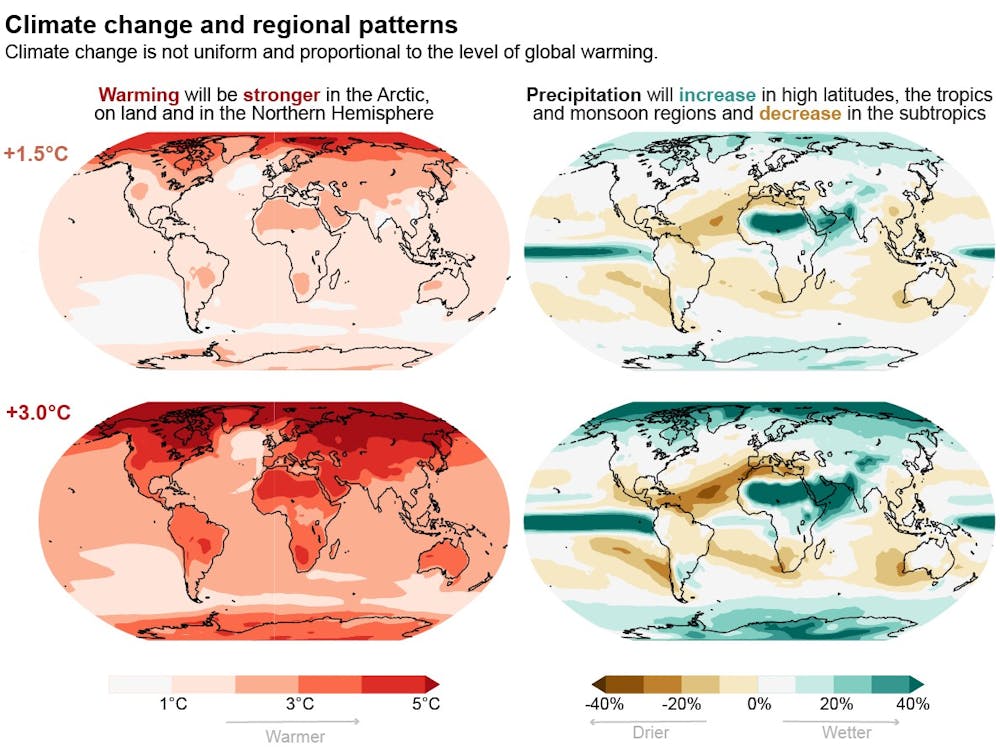
Studies by scientists around the world show that the water cycle has been intensifying and will continue to intensify as the planet warms. An international climate assessment I coauthored in 2021 for the Intergovernmental Panel on Climate Change lays out the details.

It documented an increase in both wet extremes, including more intense rainfall over most regions, and dry extremes, including drying in the Mediterranean, southwestern Australia, southwestern South America, South Africa and western North America. It also shows that both wet and dry extremes will continue to increase with future warming.

Why is the water cycle intensifying?

Water cycles through the environment, moving between the atmosphere, ocean, land and reservoirs of frozen water. It might fall as rain or snow, seep into the ground, run into a waterway, join the ocean, freeze or evaporate back into the atmosphere. Plants also take up water from the ground and release it through transpiration from their leaves. In recent decades, there has been an overall increase in the rates of precipitation and evaporation.

A number of factors are intensifying the water cycle, but one of the most important is that warming temperatures raise the upper limit on the amount of moisture in the air. That increases the potential for more rain.

This aspect of climate change is confirmed across all of our lines of evidence discussed in the IPCC report. It is expected from basic physics, projected by computer models, and it already shows up in the observational data as a general increase of rainfall intensity with warming temperatures.

Understanding this and other changes in the water cycle is important for more than preparing for disasters. Water is an essential resource for all ecosystems and human societies, and particularly agriculture.

What does this mean for the future?

An intensifying water cycle means that both wet and dry extremes and the general variability of the water cycle will increase, although not uniformly around the globe.

Rainfall intensity is expected to increase for most land areas, but the largest increases in dryness are expected in the Mediterranean, southwestern South America and western North America.

Maps  showing precipitation projections and warming projections at 1.5 and 3 degrees Celsius.

Annual average precipitation is projected to increase in many areas as the planet warms, particularly in the higher latitudes. IPCC Sixth Assessment Report

Globally, daily extreme precipitation events will likely intensify by about 7% for every 1 degree Celsius (1.8 degrees Fahrenheit) that global temperatures rise.

Many other important aspects of the water cycle will also change in addition to extremes as global temperatures increase, the report shows, including reductions in mountain glaciers, decreasing duration of seasonal snow cover, earlier snowmelt and contrasting changes in monsoon rains across different regions, which will impact the water resources of billions of people.

What can be done?

One common theme across these aspects of the water cycle is that higher greenhouse gas emissions lead to bigger impacts.

The IPCC does not make policy recommendations. Instead, it provides the scientific information needed to carefully evaluate policy choices. The results show what the implications of different choices are likely to be.

One thing the scientific evidence in the report clearly tells world leaders is that limiting global warming to the Paris Agreement target of 1.5 C (2.7 F) will require immediate, rapid and large-scale reductions in greenhouse gas emissions.

Regardless of any specific target, it is clear that the severity of climate change impacts are closely linked to greenhouse gas emissions: Reducing emissions will reduce impacts. Every fraction of a degree matters.


This is an updated version of an article originally published on Aug 9, 2021.

Mathew Barlow, Professor of Climate Science, UMass Lowell

This article is republished from The Conversation under a Creative Commons license. Read the original article.

Historian Linda Hirshman: We need a “revived feminist movement” ready to fight “white innocence”

Last month the right-wing justices on the U.S. Supreme Court overturned the Roe v. Wade decision, taking away women’s reproductive rights on a national scale. This decision was no surprise: It was the result of a decades-long campaign by the “conservative” movement and its Christian-fascist shock troops to return women to second-class citizenship. 

Following the Supreme Court’s decision, numerous Republican-dominated states have enacted or enabled laws that ban or restrict abortion, in some cases effectively mandating forced pregnancy and forced birth even in cases of rape and incest. Some of the most draconian actual or proposed laws may allow rapists to claim “parental rights,” create a surveillance and bounty system for women who choose to terminate pregnancies and the medical professionals who assist them, and limit women’s freedom of travel, speech, association and other supposedly inalienable rights.

The net result of the Supreme Court’s Dobbs decision may well be the deaths of thousands of women and girls in the United States. That is by design; the Republican-fascist movement is eager to turn the U.S. into a close approximation of Margaret Atwood’s fictional Republic of Gilead.

The campaign to take away women’s reproductive rights and freedoms and turn them into the de facto property of their husbands or fathers is a lesson in power. Fascism is a whole-society system with few if any limits. As a practical matter, taking away women’s reproductive rights and freedoms means severely limiting their other civil and human rights as well.

Many women, especially middle-class white women who have benefited from the privileges of race, class, sexual orientation, income, citizenship and so on, are now learning the truth of the adage that “the personal is political,” which is more than a slogan from women’s studies courses. For many Black and brown women, and women of other marginalized groups, this is hardly new information. 

Ultimately, the Dobbs decision is just the opening salvo in what is a broad-spectrum war by the Republican-fascist movement to take away the civil and human rights of Black and brown people, LGBTQ people, people with disabilities and other targeted groups. Their ultimate goal is to replace American democracy with an apartheid Christian fascist plutocracy. 

Lawyer and cultural historian Linda Hirshman is the author of several bestselling books, including “Reckoning: The Epic Battle Against Sexual Abuse and Harassment,” “Sisters in Law: How Sandra Day O’Connor and Ruth Bader Ginsburg Went to the Supreme Court and Changed the World,” and “Victory: The Triumphant Gay Revolution.” Her most recent book is “The Color of Abolition: How a Printer, a Prophet, and a Contessa Moved a Nation.” Her writing has also been featured in the New York Times, the Washington Post, Newsweek, Politico, Slate and the Daily Beast.

In this conversation, she reflects on the feelings of despair and hopelessness that the Dobbs decision has created for many women. That energy, she argues, must now be transformed into effective resistance and other positive social-change work.

Hirshman says the response to the Dobbs decision and the broader assault on women’s human and civil rights must involve learning from the successes of the abolitionist movement, the gay rights movement and the feminist movement. It must combine effective symbolic politics with moral appeals, ground-level mobilization and a willingness to disrupt day-to-day life for elites through civil disobedience and other forms of direct action. As she puts it, being “polite” and “nice” and “respectable” will not win back or protect reproductive rights and freedoms — or Americans’ hard-won civil and human rights more broadly.

Throughout this conversation, Hirshman highlights how race, class and gender intersect, and argues that too many white women deluded themselves into believing their rights were immune from the right-wing’s attacks, as a result of the public or private bargain they had made with white men to be partners in white supremacy and other systems of privilege.

Given the Age of Trump, rising neofascism, and this escalating unrelenting assault on democracy and human rights and freedom here in the U.S. — and now the direct assault on reproductive rights and freedoms — how are you feeling?

I am having a very bad time with it, because it feels like there’s no exit. Many of my colleagues and friends are talking about leaving the country. That is an act of despair. It is hard for someone like me, who has always been an activist, to look at a landscape and not see any avenues for activism. There are things that can be done. In many ways, the hardest thing for me is watching my own side — the liberals, the progressives and the Democrats — not take up the cause and do something.

Feeling like the entire society is hostile to your citizenship and your humanity — which is what’s happening now — is to some extent a new experience for white women. It is for me.

I wrote a book about America before the Civil War. Both the Whigs and the Democrats were unwilling to take on the evil of slavery. It took a third party to do that. But those were long years of despair in people for people who resisted slavery. That’s a little bit how I’m feeling now. The Republicans want to oppress women and the Democrats do not want to take up the issue, just like before the Civil War, for fear that it will cost them votes.

The day the Dobbs decision was announced, Democratic members of the House went outside and sang songs on the Capitol steps. To me, that was a pathetic display that summarized so much about why the Republicans and the larger right wing are steamrolling them. They should have been ashamed of themselves.

They certainly should have been ashamed. But their behavior is to some extent a reflection of their advanced age and their politically formative experiences in a different time. The moment at which they flourished is when they stopped the clock. It’s a different country now.

How does this feel to me as a white woman, in comparison to how living in America has to feel to people who are not white? White women get a lot of passes. Given America’s long history of oppression, white women have a lot of ascribed privileges. We as white women also have the opportunity of making a private bargain with a white man to protect us further from the inequality and injustice of American society. Feeling like the entire society is hostile to your citizenship and your humanity — which is what is happening now — is to some extent for white women a new experience. It is for me.

What is the role of white racial innocence in this crisis? The Republicans publicly announce what they are going to do, and then they do it. Yet there are so many voices, especially among white people, who continue to act surprised. It really is infantile behavior. White racial innocence has facilitated the horrors of the Age of Trump and these attacks on human and civil rights.

White innocence is very potent, especially when you’re still a majority of the electorate. It’s a huge problem. Things are going to happen now where white women are going to get sick and die because of the Supreme Court decision to overturn Roe v. Wade. They’re going to die from ectopic pregnancy. They’re going to die from being unable to be cleaned out after miscarriage and septic shock. There are going to be some deaths.


Want a daily wrap-up of all the news and commentary Salon has to offer? Subscribe to our morning newsletter, Crash Course.


The question is now — and this draws from my study of the abolitionist movement — will we be able to make political street theater out of these deaths, the way that the Black Lives Matter movement was able to use the murder of George Floyd to raise awareness and generate action? One of the ways of undercutting and making headway against white racial innocence is to use street theater to show white women that they are not safe in this moment because of the end of Roe and the other things that the Republicans and the right are doing.

What world do people live in to be “shocked” and “surprised” all the time, be it from the revelations of Trump’s crimes during the Jan. 6 hearings or the reaction to the end of Roe v. Wade? I am a Black working-class person in America. To be so naïve and supposedly so shocked all the time by bad things is not a luxury that Black and brown folks are afforded.

There are actually two pieces to it. White women don’t think it’s going to happen to them. Let’s say that only a fifth of white women will eventually need an abortion. Those white women figure that they have enough money to be able to get an abortion, no matter what. White men, even liberal white men, largely don’t think this matters anyway. They don’t care about what’s happening to women in this country and how much worse it is going to get. I bring to this conversation a lifetime of living with those men.

Twenty years ago, I saw what was coming and wrote a novel about how they were going to prohibit abortion in the red states and forbid women from leaving and start to hunt them down at the borders. It didn’t take a genius to see that: All you had to do was look at the history of the Fugitive Slave Act.

There are a number of things the Democratic Party can do to be on the side of women and also to create some political capital and momentum out of this injustice. We need a revived feminist movement in America. We also need a revived alliance among several movements, such as the racial civil rights movement and the environmental movement.

What does resistance mean, in this context, and what does it look like? You’re not going to get out of this without a cost. Too many Americans don’t want to pay the cost: They want painless resistance.

Let’s consider the gay rights revolution as an example. People sacrificed for the movement. We know that people are capable of sacrificing for social change. There were a lot of white people in the abolitionist movement as well. Why do such people sacrifice and otherwise get involved in these movements? One of them is that change is often top-down. Everybody criticizes the bourgeois white women’s movement of the 1960s, but those women had maneuvering room. They had a little extra money. They had a little extra time. They could get it started. It is obligatory upon the people who have some maneuvering room to put that work in to create moment and action.

That is true at present for the elites in the Democratic Party and in the media as well. They just can’t sit around saying to poor people in obscure places, “You have to vote and save the republic.”

A revived feminist movement has to take the moral high ground. I am done with talking about the reproductive rights struggle as being a matter of “choice.” Choice feminism got us exactly nothing.

We also need to do something that is not the norm anymore, but I think really needs to happen. We have to have weekly in-person meetings. That’s what makes the right-wing white churches so powerful. They’re getting together every Sunday, regardless. While they’re together, they share the message. They learn who can be trusted, who cannot be trusted.

The new feminist movement has to focus on a set of core issues. People are not interested in a movement that is too broad and dilutes itself by taking on too many issues.

You cannot defeat these people unless you use moral language. We are fighting evil. How are you going to defeat these forces if you use their language? I refuse to say “pro-life.” How are they pro-life? Why don’t we describe them accurately as “anti-women’s rights”? Or “pro-forced abortion”? Or, at this point, “pro-rape”? How can you even resist if you use their language?

You absolutely cannot. I have never in my long career of chronicling major American social movements seen a successful one that used relativist language. Clear moral language is essential.

Black Americans understand what it is like to be made into a thing. White-on-Black chattel slavery and then Jim Crow taught us that lesson. Fascism turns people into things in order to oppress and destroy them. Many white people, especially white women, now have some experience of what that feels like. But they lack the vocabulary and experience to fully grapple with the nightmare and its implications.

The behavior of white women has always been hard for me to understand, because they’re making a bargain from weakness … they don’t seem willing to organize and rise up to care for themselves.

Why are they not protecting themselves? The behavior of white women has always been a little hard for me to understand, because they’re making a bargain from weakness. They get the short end of the stick, yet they don’t seem to be willing to organize and rise up to care for themselves. In this moment, we could get a lot of traction if we could just get the white women, who are still a very large percentage of the voting public, to care enough for themselves to form a kind of resistance movement.

Isn’t that one of the great bargains of whiteness? White women think of themselves as white first and sacrifice their interests as women, especially their shared collective interests with women of color and poor women. That is one of the great bargains that comes with buying into whiteness and white privilege. Many scholars and activists have highlighted how white women as a group have allied with white men in service to white privilege and made their identity as women secondary.

I was a union-side labor lawyer. I know scabs when I see them. And what do scabs get? Scabs get a little bit more money than they would make if there were no union on the scene. When white women make a bargain with white men, they may be a little better off than if there wasn’t a feminist movement at all. As part of that bargain with white men, they rationalize by thinking, “I’ll have enough money to protect myself from a life on the street, or to raise the children or get an abortion if I need one.” In exchange for that, white woman give up their full citizenship. But the voting booth is private: The boss doesn’t have to know. White women need to vote for the Democrats. Their husbands won’t know.

What does symbolic politics accomplish in this struggle? What substantive political work did all those “pussy hats” do?

Street theater can matter, but it has to be in concert with organized activism. From the Women’s March in 2016 we got Indivisible and Run for Something. I don’t want to denigrate street theater and symbolic politics, but it is not a substitute for a social movement. Demonstrations are like epiphenomena. The real work are the meetings, the publications, the petition campaigns, the voter registration, the solicitation of candidates. Without that, the demonstrations are just futile.

What does effective resistance look like in an America where the Republicans and other powerful right-wing forces have rejected democracy, and are outright hostile to it? The country is an “anocracy.” Republicans and fascists and other right-wing elements do not really care about people marching or voting.

How do you make people pay attention? You disrupt the orderly carrying out of the things they like to do. During the Vietnam War, it got to the point where Lyndon Johnson could not speak anywhere except a military base. At that point, he said he would not run for president again. That’s why the demonstrations at the Supreme Court justices’ houses are eliciting so much hysteria. They broke through their bubble, and they touched them. So the response of the complicit Democrats and the authoritarian Republicans was immediately to rush in police and protect them. But I take a different lesson from what happened: My lesson is that those protests and disruptions mattered. Where else can that tactic be used? Every time those justices meet, every time they go to speak someplace, and so on.

There are many among the country’s mainstream political class who condemn any form of confrontational politics to protect women’s human and civil rights, or democracy and civil society more generally. Making Supreme Court justices uncomfortable when they are out to dinner, or protesting at their homes, has apparently become a great crime. With this approach, Black people would still be slaves in America. Women would still be the property of their husbands and not be able to vote.

We must not be deterred by knowing that the pundit classes and Democratic Party officials are going to say, “You must not raise your voice.”

You absolutely must make them uncomfortable. Unsettle and challenge and make the powerful uncomfortable. We must not be discouraged or deterred by knowing that the pundit classes and the consultant classes and the octogenarian rich Democratic Party officials are going to say, “You must not raise your voice.” Such people have been telling social change movements that they must not raise their voices forever. You don’t get to eat in peace until you stop trying to force us into bearing our rapist’s children.

Part of resisting this war on women’s rights is to make it visible and legible that the right has used lethal violence, including terrorism, as a key part of its strategy. 

What you need to do is make the violence visible. That’s what the civil rights movement did at the Edmund Pettus Bridge. You need to put a camera on it. We’re not seeing the right-wingers murdering abortion doctors because they don’t have to do it anymore. They have now won their fight. They will wait for the coercive power of the state to enforce their agenda.

The Justice Department and the Department of Transportation and FEMA should be sending buses to post offices in the states that have abolished abortion, those red states, and putting out notices announcing that anybody who needs an abortion should come to the post office and get on the bus. They will be driven to the nearest abortion clinic, in another state or in Canada. That will provoke the red-state governors into using the state police. That will also provoke the white supremacist misogynist element of the anti-abortion movement to come out with their guns. This will make the violence against women visible. We have to do that. We can’t do it any other way.

What will white women, especially middle-class suburban women, have to sacrifice in what will likely be a long struggle to protect the human and civil rights of all women in America?

They’re going to have to confront the fact that their interests are not completely aligned with the white men in their lives. There is going to be strife and conflict and discord. That’s what we as white women are going to have to sacrifice. Many white women are deadly afraid of that.

Nancy Pelosi’s reckless trip to Taiwan: A decision that could get us all killed

The arrogance of power is especially ominous and despicable when a government leader risks huge numbers of lives in order to make a provocative move on the world’s geopolitical chessboard. House Speaker Nancy Pelosi’s plan to visit Taiwan is in that category. Thanks to her, the chances of a military confrontation between China and the United States have spiked upward. 

Long combustible over Taiwan, the tensions between Beijing and Washington are now close to ablaze, due to Pelosi’s desire to be the first House speaker to visit Taiwan in 25 years. Despite the alarms her travel plans have set off, President Biden has responded timidly — even while much of the establishment wants to see the trip canceled.

“Well, I think that the military thinks it’s not a good idea right now,” Biden said about the prospective trip on July 20. “But I don’t know what the status of it is.” 

Biden could have put his presidential foot down and ruled out Pelosi’s Taiwan trip, but he didn’t. Yet as days went by, news trickled out that opposition to the trip was extensive in the upper reaches of his administration. 

“National security adviser Jake Sullivan and other senior National Security Council officials oppose the trip because of the risk of escalating tension across the Taiwan Strait,” the Financial Times reported. Overseas, meanwhile, “the controversy over the trip has sparked concern among Washington’s allies who are worried that it could trigger a crisis between the U.S. and China.”

Underscoring that the U.S. commander in chief is anything but an innocent bystander in terms of Pelosi’s trip, officials disclosed that the Pentagon intends to provide fighter jets as escorts if she goes through with the Taiwan visit. Biden’s unwillingness to clearly head off such a visit reflects the insidious style of his own confrontational approach to China.

More than a year ago — under the apt New York Times headline “Biden’s Taiwan Policy Is Truly, Deeply Reckless” — Peter Beinart pointed out that from the outset of his presidency Biden had been “chipping away” at the longstanding U.S. “one China” policy:

Biden became the first American president since 1978 to host Taiwan’s envoy at his inauguration. In April, his administration announced it was easing decades-old limitations on official U.S. contacts with the Taiwanese government. These policies are increasing the odds of a catastrophic war. The more the United States and Taiwan formally close the door on reunification, the more likely Beijing is to seek reunification by force.

Beinart added: “What’s crucial is that the Taiwanese people preserve their individual freedom and the planet does not endure a third world war. The best way for the United States to pursue those goals is by maintaining America’s military support for Taiwan while also maintaining the ‘one China’ framework that for more than four decades has helped keep the peace in one of the most dangerous places on earth.”


Want a daily wrap-up of all the news and commentary Salon has to offer? Subscribe to our morning newsletter, Crash Course.


Now Pelosi’s move toward a visit to Taiwan has amounted to further intentional erosion of the “one China” policy. Biden’s mealy-mouthed response to that move was a subtler type of brinkmanship.

Many mainline commentators, while critical of China, acknowledge the hazardous trend. “The Biden administration remains committed to being more hawkish on China than its predecessor,” conservative historian Niall Ferguson wrote on Friday. He added: “Presumably, the calculation in the White House remains, as in the 2020 election, that being tough on China is a vote-winner — or, to put it differently, that doing anything the Republicans can portray as ‘weak on China’ is a vote-loser. Yet it is hard to believe that this calculation would hold if the result were a new international crisis, with all its potential economic consequences.”

Meanwhile, the Wall Street Journal summed up the current precarious moment with a headline declaring that Pelosi’s visit “would likely sink tentative rapprochement between U.S., China.”

But the consequences — far from being only economic and diplomatic — could be existential for all of humanity. China has several hundred nuclear weapons ready to use, while the U.S. has several thousand. The potential for military conflict and escalation is all too real. 

“We keep claiming our ‘one China’ policy hasn’t changed, but a Pelosi visit would clearly be precedent setting and can’t be construed as in keeping with ‘unofficial relations,'” said Susan Thornton, a former acting assistant secretary for East Asian and Pacific Affairs at the State Department. Thornton added that if the speaker goes to Taiwan, “the prospect of a crisis goes way up as China will need to respond.”

Last week, a pair of mainstream policy analysts from elite think tanks — the German Marshall Fund and the American Enterprise Institute — wrote in the New York Times: “A single spark could ignite this combustible situation into a crisis that escalates to military conflict. Nancy Pelosi’s visit to Taiwan could provide it.”

But July ended with strong indications that Biden has given a green light and Pelosi still intends to go ahead with an imminent visit. This is the kind of leadership that could get us all killed.

Kyrsten Sinema opposes tax hikes for the rich

Sen. Kyrsten Sinema has not said yet whether she will support the Inflation Reduction Act, the $739 billion package hammered out by Sen. Joe Manchin and Senate Majority Leader Chuck Schumer and announced last Thursday, but as she reviewed the 725-page bill over the weekend, reports suggested she is likely to object to a $14 billion provision taking aim at the preferential tax rates for wealthy investors—who make up a large portion of her donor base.

Sinema (D-Ariz.) has long objected to the closure of the carried interest loophole, which pertains to the percentage of profits hedge fund managers keep from investments. The profits are taxed at a rate of about 20% compared to the 37% top tax rate for ordinary income.

The bill would not entirely close the loophole, but would lengthen “the amount of time that you have to hold the investment for it to qualify as a capital gain,” making it harder for wealthy investors to benefit.

Sinema counts private equity firms among her top contributors, with the securities and investment sector donating more than $2.2 million to her since 2017, according to OpenSecrets.

The American Investment Council, which represents private equity firms including Sinema contributor Blackstone, quickly came out against the carried interest provision, claiming it would harm small businesses’ ability to “survive and grow” because “74% of private equity investment went to small businesses last year.”

Considering the Arizona lawmaker’s objections to closing the loophole, Business Insider reported, “It’s possible Democrats will wait days, if not weeks before Sinema breaks her silence on the package.”

Rep. Ruben Gallego (D-Ariz.), who has released ads in recent days suggesting he could challenge Sinema for her Senate seat in 2024, took aim at the lawmaker on social media as she refused to say late last week whether she would support the IRA—even though the package also contains provisions she has fought for, including one allowing Medicare to negotiate prescription drug prices.

“Arizonans cross the border every day to Mexico to buy prescription drugs. The new reconciliation bill will lower the cost of prescription drugs. Sen. Sinema is holding it up to try to protect ultra-rich hedge fund managers so they can pay a lower tax,” said Gallego.

Democrats including Manchin (D-W.Va.) are hoping the bill can be passed this week through reconciliation, which would allow the party to approve it without any support from Republicans. Manchin said after the bill was announced that he was “adamant” about keeping the carried interest provision in the final legislation.

But according to Axios, Sinema has indicated she is “open to letting Republicans modify the bill” as the GOP plans to “attempt to kill the reconciliation package with poison pills,” further weakening a package which already mandates oil and gas leasing in Alaska and the Gulf of Mexico and severely limits the authorization of new wind or solar energy development, angering climate campaigners.

While progressives have objected to those giveaways to the fossil fuel industry, climate action groups are also counting on other “transformative” investments in renewable energy to pass as part of the package, and Sen. Elizabeth Warren (D-Mass.) said late Thursday that addressing the carried interest loophole is “exactly the right thing” for Democrats to do.

“The adjustments to carried interest are going to fall on the richest Americans who have been using a tax loophole to not pay the taxes that everybody else has to pay,” Warren told Business Insider. “These are good moves.”

Kari Lake implicates Cindy McCain and George Soros in “plot to destroy America”

Arizona candidate for governor Kari Lake implicated Cindy McCain in a plot to destroy America with liberal billionaire George Soros.

While appearing on a Saturday edition of Steve Bannon’s right-wing podcast, Lake suggested that Republicans fear her more than Democrats.

“It just shows you how dangerous the RINO-class of the Republican Party is,” she complained. “I believe they’re in cahoots basically with the [George] Soros types on the left. And this is why they stabbed President Trump in the back on the fourth of November and we remember that.”

“This is the Cindy McCain branch of the Republican Party,” the candidate continued. “They’re not Republicans. They’re globalists and they want — I think they want an end to America. They want a globalist agenda, a new world order, whatever you want to call it.”

She concluded: “And we want America. We want our Constitution and we want our constitutional rights intact. And that’s what they’re afraid of.”

Lake said that this year’s election would be the “last gasp of the McCain machine.”

“They’re literally watching it slide away,” she explained. “This is their last stand.”

Cindy McCain’s daughter Meghan recently referred to Lake as “trash” after she attacked Sen. John McCain’s legacy.

Watch the video below from Real America’s Voice:

11 thrilling facts about Gillian Flynn’s “Gone Girl”

Gillian Flynn’s “Gone Girl” became a bona fide literary phenomenon when it was published in 2012: It spent 37 weeks at no. 1 on The New York Times bestseller list, was adapted into a hit film starring Ben Affleck and Rosamund Pike in 2014, and has sold more than 15 million copies globally. The novel tells the story of Amy Dunne, who goes missing under mysterious circumstances on her fifth wedding anniversary; her husband, Nick, becomes the prime suspect in her disappearance. The book switches between Nick’s narration and Amy’s diary entries, making the reader unsure about who to trust. In honor of “Gone Girl’s” 10th anniversary this month, here’s what you should know about the novel.

1. “Gone Girl” is credited with starting the trend of crime novels with the word “girl” in their titles.

While it’s hardly the first book to use the word as part of its moniker, according to Crime Reads, “Gone Girl” sparked the current wave of girl-titled books: Since its debut, we’ve gotten “The Girls” (2016) by Emma Cline, “The Girl on the Train” (2015) by Paula Hawkins, and “Girl Last Seen” (2017) by Nina Laurin, among (many) others.

2. It’s also credited with a surge in books with female antiheroes and villains as protagonists.

In an interview with The Hollywood Reporter about the impact of the novel, Flynn talked about how difficult it was to get her first book, “Sharp Objects,” published because of the belief that men don’t want to read a book with a woman as its main character — and that women want to read books with characters that they can “root for.” It was a take Flynn didn’t agree with, and the reaction to “Gone Girl” proved she was right: “My favorite thing about ‘Gone Girl’ is that it absolutely blew the doors off that old-fashioned, completely antiquated theory that was probably never there to begin with: That there’s no appetite,” she said.

Following the success of the novel and its film adaptation, unreliable antiheroines began popping up frequently in fiction — a trend that has been called “The ‘Gone Girl’ Effect.”

3. “Gone Girl” wasn’t based on a true story or any one real-life case.

True crime fanatics might recognize some similarities between “Gone Girl” and the very real disappearance and murder of Laci Peterson. Among other things, Laci was pregnant at the time of her 2002 disappearance, as Amy was thought to be; Laci’s husband, Scott — who, like Nick, was in the midst of an affair — eventually came under suspicion for his wife’s murder and was convicted in 2003.

Flynn, a self-described “true-crime addict,” told Entertainment Weekly that she didn’t base her story on a particular case. “One could point to Scott and Laci Peterson — they were certainly a good-looking couple,” she said. “But they’re always good-looking couples. That’s why they end up on TV . . . It could be any number of those types of cases, but that was what kind of interested me: the selection and the packaging of a tragedy.” In an interview with the Sacramento Bee, she acknowledged that Nick “has got that [Scott Peterson] vibe,” but added that the character “is certainly not Scott Peterson specifically . . . the idea [is] that we are consumers of tragedy now, that we cast our heroes and our villains and we become very invested in them. And certainly Scott Peterson was one of those cases.”

4. One of Flynn’s influences was a children’s book.

Flynn has been open about her many inspirations for “Gone Girl,” among them novels like “Rosemary’s Baby” and “Notes on a Scandal” — which Flynn said have “endings of unease” — and the play “Who’s Afraid of Virginia Woolf.”  (“I have several little inside jokes, character names, names of the town — little, little references to “Who’s Afraid of Virginia Woolf” that no one was supposed to get,” Flynn told EW.)

But perhaps the biggest influence was Ellen Raskin’s 1978 young adult novel, “The Westing Game,” about a group of people who are named as heirs of reclusive millionaire Samuel W. Westing. In order to inherit his millions — and control of his company — they must participate in a game. Like “Gone Girl,” the novel is filled with surprising turns and features a character adept at games and riddles. “The Westing Game” won the Newbury Medal for excellence in children’s literature in 1979.

5. Flynn’s own career provided some of the basis for Nick.

Like Nick, Flynn lived in New York and wrote about pop culture for a magazine (she was a writer for Entertainment Weekly for 10 years). Also like Nick, she moved back to the Midwest and was laid off from her job during the Great Recession. There’s a key difference here, though — Flynn relocated to Illinois before losing her job, while Nick relocates to Missouri after he’s laid off.

6. Amy’s “cool girl” monologue owes a debt to “There’s Something About Mary.”

In arguably the most famous part of “Gone Girl,” Amy unleashes a monologue about how she played the part of the “cool girl” for Nick, which she describes as the type of woman who loudly and enthusiastically enjoys stereotypically “male” things like playing video games and football, eats tons of junk food and drinks beer while maintaining a perfect figure, and never shows negative emotions.

Flynn told Vulture that she noticed the archetype while watching “There’s Something About Mary” when she was in her twenties: “There’s Cameron Diaz, who looks like Cameron Diaz, but she’s also a doctor, and she also loooves hamburgers, and she starts out playing golf in the morning, and all she wants from a man is a guy who wants to take her to a football game, and she wants to eat hot dogs and drink real beer. Real beer!” Flynn said. “And I thought, ‘Wow, that’s a cool girl!’ And then I thought, ‘Oh, right. She’s been invented by guys.'”

As for the monologue itself, Flynn penned it as part of a writing exercise “when I was like in fugue state, all in one afternoon.” She initially didn’t plan to put it in the book, “but I just liked it so much, and it did feel like it came from Amy . . . And I’m so glad I did because that’s the one thing I hear about all the time from people.”

7. Flynn wrote “Gone Girl” by going back and forth between the two narratives.

Instead of writing part of the book from one perspective first and then the rest of the book from the other, Flynn regularly switched between Nick and Amy’s perspectives as she wrote. “I have enough trouble keeping my thoughts organized without adding any extra challenges! So I tend to write in order,” she told Chatelaine. “And, truth be told, it was probably healthier for me, mentally, to switch back and forth than to stay in Amy’s or Nick’s head for too long a time.”

8. “Gone Girl” has been accused of being misogynistic.

Since its publication, “Gone Girl” has been hotly debated. Its conflicting male and female perspectives, which come from two extremely flawed characters, make its gender politics an obvious topic, with some claiming that the portrayal of Amy is misogynistic. Flynn, who is a feminist, has loudly disagreed with that notion. “I’ve certainly been called a misogynist, and that to me is strange,” the author told TIME. “It feels so old-fashioned to think because you write about awful women that you don’t like women. To me it’s worse to only write about good women. I’m tired of women as the supporting character, women as the helpmate, women as the adorably flawed heroine – she can be front and center, but only if she falls down a lot and has trouble with men.”

9. According to Flynn, “Gone Girl” is about how marriage is a “long con.”

Fynn’s first two novels, “Sharp Objects” and “Dark Places,” featured extremely isolated protagonists; for “Gone Girl,” her third novel, Flynn told Publishers Weekly that she wanted to explore how marriage is capable of bringing out both the best and worst in people. “In its way marriage is sort of like a long con, because you put on display your very best self during courtship, yet at the same time the person you marry is supposed to love you warts and all,” she said. “But your spouse never sees those warts really until you get deeper into the marriage and let yourself unwind a bit.”

10. While writing “Gone Girl,” Flynn got herself pumped up to work by listening to Eminem.

According to Flynn, when she’s writing, she usually finds herself obsessing over a particular song. With “Gone Girl” it was “Lose Yourself,” the Oscar-winning hip hop classic Eminem wrote for the film “8 Mile.”

11. Gone Girl contains a reference to a real-life detective.

When Amy meets her former boyfriend in a casino, she becomes unnerved when she notices a stranger staring at her. He approaches her and asks if she’s “any relation to the Enloe family.” It’s a nod to Detective Craig Enloe of the Overland Park Police Department, whom Flynn thanked in her acknowledgments for replying to her “42,000 emails . . . with patience, good humor, and exactly the right amount of information.”

Phoenix could soon become uninhabitable — and the poor will be the first to leave

As climate change continues to bake the Earth, it is not merely the presence of greenhouse gases in the atmosphere that is heating our cities. In many cases, human-made infrastructure is exacerbating or even making our cities more uninhabitable. 

Indeed, as the world warms, something called the “heat island effect” is a major threat to countless cities. The heat island effect is a phenomenon in which urban areas experience higher temperatures than the areas adjacent to them. It is typically caused by infrastructure, like buildings and roads, absorbing excess heat; they retain that heat that they absorb during the day and keep cities hot, even at night time. This is why the summer overnight low in cities like Phoenix, Ariz., is often 90° Fahrenheit or higher. 

“Climate stress does not affect everyone equally, and those with more resources will be able to protect and sustain their way of life for much longer than other poorer, and more vulnerable populations.”

For sprawling cities with lots of paved land, the heat island effect is going to be pervasive — and in the United States, this is true perhaps nowhere more so than in desert cities like Phoenix. 

As a result — and in the not-too-distant future — Phoenix will likely be uninhabitable. Scientists can not say for sure when that will happen, but they do know what the signs will be — and they even have a vague sense of how a depopulation scenario might play out.

B.D. Wortham-Galvin, Director and Associate Professor at Clemson University’s Master of Resilient Urban Design, observed that “what the science does say is that the temperature limit of human tolerance is around 95 degrees Fahrenheit. Above that temperature humans cannot shed heat well enough to maintain core temperature … if you can’t cool down that is when brain and organ damage begins.”

One important metric is wet bulb temperature, or the temperature of a wet thermometer in a shaded area while water evaporates freely off of its surface. As University of Arizona geosciences professor Peter W. Reiners wrote for Salon last year, “It is important to understand that wet bulb temperatures of 95 °F (35 °C) are not conditions we can just get used to. Human bodies have fundamental physiological limits; our planet’s perturbed, angry climate doesn’t care about them.”

Reiners added, “Air conditioning may save some, but increased demand and likelihood of outages in already strained power grids makes this a risky bet at best.”

Dr. Andrew Ross, a professor at New York University and author of a book on Phoenix’s environmental politics titled “Bird on Fire: Lessons from the World’s Least Sustainable City,” argued that social scientists might be in the best position to figure out when different groups of people will be unable to survive any more due to the heat island effect.

“Climate stress does not affect everyone equally, and those with more resources will be able to protect and sustain their way of life for much longer than other poorer, and more vulnerable populations,” Ross wrote to Salon. “In addition to rising temperatures, factors like access to water supply, occupation of sheltered and higher land, and the financial ability to secure resources will be at play. There are already groups (the unhoused and those without A/C) who are suffering climate stress, so, for them, uninhabitability is not a future horizon.”

In other words, the city’s population might decline in a slow trickle, with the rich (meaning, those who can afford excellent insulation, constant air conditioning, and so on) leaving last. Dr. Juan Declet-Barreto, a senior social scientist at the Union of Concerned Scientists, echoed Ross’ concerns about the plight of vulnerable communities.

“Climate stress does not affect everyone equally, and those with more resources will be able to protect and sustain their way of life for much longer than other poorer, and more vulnerable populations,” Ross wrote to Salon.

“I don’t think that Phoenix will be abandoned as you often see in post-apocalyptic or science fiction films or literature,” Declet-Barreto wrote to Salon. “I think that without short-term adaptation measures to protect the most vulnerable, what will happen is that the gap between populations with social, economic, and technological resources to avoid the worst of extreme heat impacts, and those without those resources, will continue to widen.”

Declet-Barreto pointed to Maricopa County as one example, where there are hundreds of heat-related deaths every year.

“A study I co-authored in 2013 revealed that a large proportion of heat-related deaths in Maricopa County ocurred among persons experiencing homelessness for example, and another 2016 study found that population vulnerability to heat, and not weather conditions, were responsible for the spike in heat-related deaths that year,” Declet-Barreto explained.

In terms of when a point might be reached where Phoenix is downright uninhabitable, Ross told Salon that “some might say that a limit is reached when the temperature no longer falls below 100° F on a given night, but that would not be ‘official.’ For others, the point of no return might be when Arizona’s reduced share of the Colorado water impacts city dwellers.”


Want more health and science stories in your inbox? Subscribe to Salon’s weekly newsletter The Vulgar Scientist.


While Phoenix is not quite at the point where it’s beyond saving, only radical infrastructure changes are likely to do the trick.

“The expansion of concrete infrastructure from mid-20th century to today needs to be reversed; it is what is trapping the heat,” Wortham-Galvin told Salon. “The green/landscape areas that were reduced need to be brought back as critical green infrastructure. Policy changes and new regulations about how housing, commercial, industrial, and institutional buildings are built must include green infrastrcuture at every scale. Vertical gardens, roof gardens, rain gardens are all easily implements, but they have to be part of a mandate, not just left up to the market.”

“Without short-term adaptation measures to protect the most vulnerable, what will happen is that the gap between populations with social, economic, and technological resources to avoid the worst of extreme heat impacts, and those without those resources, will continue to widen.”

Wortham-Galvin also called for reforms such planting trees throughout the city in public rights of way and publicly owned areas, as well as using alternatives to asphalt and finding nature-based solutions when designing and building future structures. Barring that, as Ross pointed out, it is difficult to imagine a future where Phoenix could actually be inhabited.

“The Hohokam, who preceded modern Phoenicians, sustained themselves as desert farmers for a thousand years, so it’s plausible,” Ross recalled, adding that the Hohokam did not have 4 million people drawing on the same comparatively scarce resources — and, in particular, did not have to rely as heavily on building new homes as their population continued to grow. “The larger question is which populations in other parts of the world will suffer if our carbon-intensive civilization continues to support unsustainable development in inhospitable locations. So, at what costs to others if places like Phoenix could be saved?”

Declet-Barreto struck a more hopeful note about Phoenix’s future.

“Phoenix and the state of Arizona need to do their part to mitigate carbon emissions to curb climate change, but also need an ongoing commitment to heat adaptation by putting in place measures to help the population adapt to unavoidable heat conditions that will persist for a long time,” Declet-Barreto explained. “The City of Phoenix is taking heat mitigation seriously by creating one of the first heat mitigation and response offices at the municipal level in the US. For example, Phoenix’s climate action plan includes the creation of ‘cool corridors’ that consist of canopied vegetation to create shaded pedestrian corridors. These measures are being planned together with heat health and climate scientists, experts in diverse related fields, and, critically, community members with long-standing expertise and knowledge of their neighborhoods and most pressing issues.”

If the city is unable to mitigate heat through drastic measures — will the last person to leave Phoenix please turn off the sun? 

Katori Hall on creating “P-Valley,” demystifying sex work and the art of filming a pole dance

Back when I was a child, television pushed firefighters, police officers, nurses and teachers as the kind of heroes we should aspire to be. And even though I’m sure there are honorable people in all of those professions, I know they are not all heroes. Throughout my life I have met nurses who hustled prescription pills on the block, racist firefighters, teachers who hated the students they served. And let’s not even talk about the cops.

On the other side of the spectrum, I’ve had contact with dope dealers who clothed and fed the hungry, gangsters who funded tuition for poor kids and sex workers who did more to educate us than our teachers. The concept of profession not equaling hero has taken a long time for television to grasp. Katori Hall, creator of the hit Starz series “P-Valley,” is doing everything in her power to change that and to redefine our ideas of who can be a hero.  

Hall is a Pulitzer Prize and Olivier Award-winning playwright who is best known outside of the theater world for her Starz series “P-Valley,” a drama centered around a colorful cast of characters, directly connected to or loosely affiliated with a strip club called The Pynk, located in the fictional town of Chucalissa, Mississippi. Strippers, along with sex workers in general, are almost never centered as the hero, and often fall victim to some of the worst stereotypes imaginable. In “P-Valley,” Hall runs into these stereotypes head on, challenges them, celebrates them and dismantles them, while ultimately introducing us to new forms of heroism and educating viewers on realities many judge but cannot understand because they don’t have the proximity needed to have a real opinion.

Recently, I sat down with Hall for an episode of “Salon Talks” in which she gave me a beautiful education on the creation “P-Valley” and a deep dive into some of the themes highlighted this season, including the ways oppressed people are dealing with the with pandemic, parenthood and reproductive rights. 

Watch our conversation or read the transcript to hear more about the future of “P-Valley” and the Broadway debut of Hall’s Pulitzer Prize-winning play “The Hot Wing King.” 

The following conversation has been lightly edited for length and clarity.

Congratulations on the success of this show. You covered so many conversations that we need to have in a brave way in season two down at the Pynk. How you feeling?

You know what? We feeling a little frisky. We were like, OK. When we sat down in 2020 at the end, obviously everybody was surviving during the damn pandemic. And we just decided that we were going to lean into what everybody was going through and just tell this very specific story that had to be so universal of our little strip club that could also surviving the pandemic. And so we felt real bold and brave, because we were like, “We don’t know if we’re going to die tomorrow, so we might as well put our foot up in it.”

“We don’t know if we’re going to die tomorrow, so we might as well put our foot up in it.”

I love how you guys handled the pandemic. I thought of “P-Valley” because I’m in Baltimore, and the mayor had shut down the strip clubs during the pandemic and left them closed for an extended amount of time. All of the dancers were out in front of City Hall with signs. There’s a guy named Shorty and he had his mask down, and [the mayor] went viral for saying, “Hey Shorty, pull your mask up.” But the guy’s actual name was Shorty. So all of the dancers were out in front of City Hall with signs saying, “Shorty, open the clubs up.” That made me think about “P-Valley.” Can you talk about Black labor during the pandemic? What did that look like and how did you capture it in season two?

Well, at the start of the pandemic, I was actually in New York. And so for me to see that bus drivers and people just having to go to work still, when the whole world was able to kind of stay inside, you saw Black and brown people being on the front lines beyond just being medical workers. They were the people who were delivering your groceries. They were the people who kept the city economies rocking and rolling. And so, for us to center this Black female perspective, in the show, the fact is, we have to do what we have to do to stack our paper. There’s no staying at home for the guy who has to do the Amazon delivery or the woman who has to strip to pay the light bill and put food on the table. And so to see this Southern strip club kind of break out of lockdown — and the women, all Black women, doing what they have to do — to me, it was this metaphor for so many different types of frontline workers, which oftentimes were Black and brown folks.

Entertainment is essential. We all sitting in front of our TVs watching it. Entertainment is essential.

Let me tell you, people were like, “Where’s the show? Where’s season two? Where’s season two? Because I’m bored, I’m bored, I’m bored.” TV and just all types of entertainment really, really got people through. I think people didn’t even realize how much we rely on entertainment to help us decompress, process things. And so it was actually something that we would talk about at work. The world actually needs us, even though some people may deem us non-essential. It is very essential to bring joy to people’s lives, especially during dark times.

Was television always in the cards for you? Was that always the plan, or did you kind of just stumble across it?

I must say that I knew that I always was going to be a storyteller. I thought that I was going to be a novelist for a while. I started out as a journalist. I definitely knew I was just going to write.

The theater was the place where I really felt, “Oh my gosh, I’ve kind of found the medium that I need to be in.” Because I love the community of theater. I love the spectacle and the feeling of church that theater brings. But what was so funny, the reason why I even got into TV is that I found out that my play “Pussy Valley” was actually not as good of a play as it was a TV show. I was like, “Oh my God, there’s too much going on. So I need to shift that into a different format.” And so that’s when I ended up going out to LA in 2015, pitching it around, and lo and behold, boom, it happened that I got a chance to develop it with Starz.

Why did you create [the setting] Chucalissa? What does Chucalissa mean to you?

“Three Southern towns went into this pot of gumbo, and I stirred it up and then out came Chucalissa.”

Chucalissa means so many things. I could have plucked a Mississippi town and set our show there. But I am of the mind that you have to use fiction in order to tell the truth. And so I wanted Chucalissa to stand in for a lot of different worlds. I wanted it to stand in for Memphis. I wanted it to stand in for Tunica, Mississippi, which is where there was a casino boom and bust cycle. I wanted it to stand for Jackson, Mississippi. These three Southern towns went into this pot of gumbo, and I stirred it up and then out came Chucalissa. Chucalissa is actually a real Native American village that we grew up going to on a field trip. It’s this Choctaw word that means abandoned house. And I really wanted to look at this fictionalized town that I could literally do anything inside.

It was like this sandbox that I created for myself. And even the slanguage of the show — which is this amazing mix of accent and dialect and old slang and new slang — it all is marinated together. And this world that no one has ever been to before, but literally everyone has been to before, springs forth. And the people in Chucalissa are quite diverse. You have your Uncle Cliffords, you have your Mercedes, you have your Corbins, but it is definitely centered in that Black Southern experience. And that’s what I wanted Chucalissa to stand for and represent.

That’s what I get. Working on television in Baltimore and working on television shows about Baltimore is, people would literally will stop me in a bar and be like, “Hey, mother**ker, I like what you did, but if you didn’t get it right, we was going to be on your ass.” And my only response is like, act like I didn’t get it right. It’s that kind of small, big town, and everybody knows everybody and everybody owns everything. So if you don’t got the twos and the do’s right, they would try to put they foot up your ass.

They coming for you, right? We get a little bit of that. There are people be like from Clarksdale, Mississippi, and they be like, “We don’t sound like that.” And I was like, well, the sound is actually a Mississippi sound. It’s a fusion of dialects. And like I said, different types of slang that is even from the ’90s, we have some slang up in there mixed together.

To see two different types of people in the same communities speak in two different ways in their own idiolects, to me, that’s very interesting,

But that’s what I feel like. I feel like I’m in a Southern town. So I get that feel. So I mean, I feel some D.C., I feel some New Orleans. I feel some Memphis. I feel some Baltimore. And I think that’s why the show resonates with so many people. Another thing I connect with, that I think a lot of your viewers connect with, and I know you can speak to this at a higher level, is Mercedes in her arc, right? I feel like we kind of spilled over from season one in her journey of breaking those generational curses. She didn’t want to be who her mom was. She didn’t want to be a person who was seen as less than, or a person who was unethical, or a person who didn’t really get a chance to stand up. Can you talk about her journey a little bit?

She’s so many people’s favorite character. I always felt that Mercedes, she was our everywoman. And the fact that she was trying to slay the Goliath of respectability politics, not only in her family but also in the world, really, really, I think resonates with so many different women, particularly in this industry who… Particularly in a Christian world, right? Where she’s grown up in the South, everything is socially and religiously conservative. And yet she is taking off her clothes for money — but she finds power in it, she finds financial liberation, she finds sexual freedom in that.

And so her particular journey, I would say, is probably the most aspirational, because I feel like everybody can relate to someone who is trying to get out of something. Who’s trying move into a different space. Who is saving up money and trying to achieve their dream. And I really, really love how the audiences just really, really show up for her and to speak to this idea of this cycle. She started, we meet her, she’s this super she-ro flying around, up on the pole. She’s Wonder Woman. And then we see her become very vulnerable when her mom steps in, who is like the most evil mom ever.

The worst mom in television history. She’s terrible.

She’s serial killer level, right?

“She actually creates space for her daughter … to have a choice and agency over her own body in ways that her own mother did not allow and support.”

We were able to delve into toxic mother-daughter relationships in ways that I don’t think I’ve ever really seen before on television. And [Mercedes] had this daughter, Terricka, when she was 15 years old and her mother, her own mother, is the woman who forced her to not only have Terricka as a 15-year-old girl, but then give the child up, relinquish custody to the father and not really be in the child’s life. She was forced twice to go through some mental anguish. And when she gets an opportunity to be in her daughter’s life and try to get her daughter back, she’s really trying not to be the mother that her own mother was to her.

She actually creates space for her daughter to have conversations with her and to have a choice and agency over her own body in ways that her own mother did not allow and support. So I really feel as though in our past episode, unfortunately, Terricka ends up getting pregnant at 14. And so, boom, she’s staring at a version of herself. It’s like the past is reliving itself, and I’m not going to allow that repetition to happen. I’m going to hold space for choice in my daughter’s life.

It’s heavy, but it’s so necessary because when we think about toxic relationships, a lot of times we think about romance and we don’t really think about parent-to-child and what does that look like. But you make it very easy because like I said, this may be the worst mom in television history.

But what’s so cool, I think you will begin to like her eventually.

Another story line that I think is sparking a whole lot of conversations is Keyshawn’s. And for me, there’s a power in the way she suffers in silence with the purpose of protecting her family. At the core, I feel like everything she does is for her children, for her family, and she’s going through hell. Is there something else or something that you wanted the user to take away in dealing with the conversation around domestic violence?

I just wanted people to understand how difficult it is to leave. I had the great privilege to work with women going through abuse. When I was living in New York City, I used to work in the hospitals as an emotional first responder for rape victims and DV victims. And it was such an eye-opening experience, the psychology and the amount of just time and preparation that it does take to leave. Everyone gets into these relationships for so many different reasons. People stay for so many different reasons. Oftentimes, it is for children. Oftentimes, it’s for economic reasons. It’s just a very complicated, knotty issue. And I think the character of Keyshawn, while I think watching her go through what she’s going through often frustrates the audience. Oftentimes they’re like, “Why he ain’t dead yet, Katori? If Derrick ain’t dead by the next episode, I’m coming for you.” I’m like, why are you choosing violence? We’re teaching you not to choose violence, and yet you’re choosing violence.

You know the fellas be home like, “How he get her anyway?”

They got to watch episode five.

I know, I know, I know. We’re not going to spoil it for the people who didn’t see the show, but there’s a beautiful Keyshawn origin story that gives you some insight into the dynamic of their relationship.

And so there’s that fact it takes a woman, on average, seven times to leave an abusive relationship. And we really want people to sit in that struggle with her and see her go through every option, every tactic, to see how a woman in that position survives on a day to day basis. And obviously during the pandemic, DV cases, we don’t even know what the percentage, the rise, is because a lot of women weren’t able to even go and report things because they were literally in jail, in lockdown, with their abusers. We’ll probably begin to know those stories as the world continues to get back up on its feet, but we definitely wanted to reflect a sad reality for a lot of different women and some men.

“One of our major goals this season was to get up on the pole more and make the audience feel like they were in the bodies of the dancers.”

We need to have these conversations and you’re definitely pushing those conversations forward. I also feel like this season, you guys changed the way you shot some of the pole scenes, because they’re coming through like Matrix. They look next level. And I think it enhances the art and it helps people understand the art of what it takes to be a dancer.

Absolutely. One of our major goals this season was to get up on the pole more and make the audience feel like they were in the bodies of the dancers. We was going through that budget. I was like, “Wait a minute, I need this [equipment] for two days instead of one day, baby. I need the A7S camera.” We were making the list of things that would achieve that goal. And I’m glad that you notice us because it costs some money to do that.

Because it is art. We’re getting into a space where people are becoming more comfortable — I don’t even want to say with nontraditional art, because it’s not a new profession, but we’re going through this this era of awakening where people are starting to accept people who don’t think like them, who don’t move like them, who don’t work how they want to work. And I think all of these things are really important in moving those conversations forward.

Absolutely. And I always say that “P-Valley” came out at a time when Cardi B, right after she had really, really popped, and then JLo had just done “Hustlers.” And I remember she was on a pole at the Super Bowl. So there’s this kind of consciousness of pole dancing seeping into the mainstream. And I think we are a part of opening that door for regular old Americans.

P-Valley challenges the idea of family, sexuality and identity in a very interesting way. I was telling my wife, in preparation for this, I was like, “Yo, I’ve never, ever, ever seen a character like Uncle Clifford in my life.” How do you pitch Uncle Clifford to a network?

You don’t pitch Uncle Clifford to the network.

You just let Uncle Clifford show up.

You show Uncle Clifford doing that work. I think Uncle Clifford is hard to describe. And one of the greatest blessings of my life is that Nico Annan, who plays Uncle Clifford, has literally been on the journey with me since the first page. I remember I invited him to my little apartment in Hell’s Kitchen.

I had a group of people to come over and we read the first five pages of the script. And that’s when I knew, I was like, “Oh my gosh, we’re onto something here.” Uncle Clifford is a fusion of my real Uncle Clifford, my mama and my daddy.

And so I’ve used these three kind of living ancestors to create this being who is very feminine and masculine in equal measure. And I’m just, like I said, so blessed that Nico has been on that journey with me from the beginning, because he has taken my inspiration, met all three of them, has been able to take from them, put his own self and then obviously used his imagination to do what I think is, quite frankly, one of the most transformative performances on television. What Nico does with Uncle Clifford is just, it’s chef’s kiss.

In a way, Uncle Clifford is what Lil Murda wants to be. But because of his industry, he can’t fully explore who he wants to be. However, I also feel like these industries are changing. But Lil Murda is not Lil Nas X. Lil Murda is not making poppy, feel-good music. There’s a trap element and a street element to his character, to his look, to his dress. In the real world, outside of television, outside of the realities that we create and dream up, is there a space for artists like Lil Murda to fully embrace who he is? Are we getting there?

I think that would be a really good season three story. I agree with you. A young man who presents in that way: hyper-masculine. Not just masculine, hyper-masculine.

Can he roll up to the Grammys with Uncle Clifford on his arm? I don’t know. And that to me is an amazing conflict to explore.

The beauty of your show is you created these realities and they do pair and you can fit them in with what is actually happening in culture. So it would definitely be something to explore.

There are so many different protagonists and hero journeys inside of “P-Valley.” Do you get a lot of pushback about the hero stories, or do you feel like a lot of your fan bases, or people, or new fans are identifying with the characters and learning to ride with them?

I think everyone is riding with them. The cool thing about the show is that you can find a version of yourself in one of the characters that we have. I do think that sometimes people are like, “Oh my God, there’s so much going on. There’s too much going on.” And we’re always like, “No, no, just hold on. Everything is going to come together. Be patient.” Because at the end of the day, this group of people, this ensemble, they’re a tight-knit family and it’s going to be well worth the journey as people see them on their individual journeys, but also as a collective when they come back to the Pynk.

Do you feel like the show is changing the conversation around sex work?

Yes, absolutely. I think there’s a veil over sex work. There’s a shroud like it’s done in secret. And I think people are beginning to see that there are different lanes in sex work and there’s a lot of overlap. You can be stripping one night and then engage in some prostitution the next night. There’s some women who only strip, because that’s something that they would never do. There’s some women who do dominatrix work. There’s some women who do submission work. It’s just such a diverse world and I think “P-Valley” has definitely lifted the veil on a world that’s been shrouded in a lot of secrecy and, quite frankly, a lot of shame.

There’s somebody out there who gets paid to laugh at jokes. Like, you pay her and she just pulls up and just laughs and you’re throwing all your BS jokes.

That’s sex work.

And then she, she leaves home mentally in pain because your jokes are so bad. You have to tip or you’re an asshole.

The transactions. It’s all different types of transactions.

So many of us love “P-Valley,” so thank you for that. But everyone wants to know what’s next for you?

What’s next for me? I need a nap. I have been going so hard. Like I said, we got into the room late 2020, and I literally haven’t had a day off since then just because we were grinding. We had to deal with shutdowns. We survived two variants. Oh my goodness. It’s just been a crazy rollercoaster ride. So I need to take my nap first. And after that I’m going to be making my directorial debut as a theater director at the Alliance Theater of my Pulitzer Prize-winning play “The Hot Wing King” in January of 2023. So I’m looking forward to that as well.

“P-Valley” airs Sunday evenings on Starz.

Your ultimate guide to making the coziest, cheesiest, crispiest eggplant parmesan

I’ve said it before, but Italian-American food culture is truly my kryptonite. While chicken parmesan epitomizes comfort food for me, most recipes for it are incredibly similar (though my version does make sure the chicken actually stays super crisp). 

But when it comes to eggplant parmesan, there are far more variables and choices to make. I’m here to help guide you through them and set you on your way to getting dinner started. So, let’s get right into it, shall we?

Eggplant size

While many opt for large, purple globe eggplants (like the emoji), that may not always be the wisest move. For those unacquainted with the world of eggplants, they can be . . . finicky. They can act like an oil sponge, they can be bitter, they can be heavily seeded, the skin can be tough — essentially, there’s a lot to be mindful of when working with eggplant. 

In certain instances, I prefer to choose small eggplants that are about the size of mini cucumbers. While you may have to buy an inordinate amount of them to feed a crowd, they’re less generally bitter, cook up easier and more evenly and are usually simpler to work with at the core.

So, try picking up some small eggplants next time, and see if you notice a difference. Also, always opt for eggplants that are smooth and firm, with a slight shine on the skin and no dull marks or blemishes.

Peeled or not

When working with eggplants — especially in eggplant parm — I find that the skin can sometimes get in the way, add an unpleasant texture to an otherwise lovely bite or negatively impact the overall flavor profile. I once read that peeling them in strips – but leaving a bit of skin for structural integrity – is a great option to avoid any unappealing skin pieces. 

Conversely, peeling the eggplant in its entirety is also an option, but be mindful that doing so may cause more oil leeching since the flesh itself is porous, which is otherwise “protected” when the skin is intact. Additionally, the breading also helps prevent any sort of sponge-like oil incidents, creating a barrier that – when properly fried – becomes a shatteringly crisp exterior that perfectly juxtaposes the smooth, creamy interior of the hot and perfectly cooked eggplant. It’s a tricky balance, but when done right, it’s downright stellar. 

Casserole style

Many Italian-American households make eggplant parm in what I call “casserole style,” almost akin to how you’d make a ricotta-and-meat-free lasagna but with breaded and fried eggplant slices instead of pasta sheets or lasagna noodles. This manner is hearty and comforting, but it does devalue the work you put into frying the eggplant, which is also one of my biggest gripes with many chicken parm recipes

If you’re accustomed to this “casserole style,” feel free to stick with it, but potentially stick the fried eggplant on top of your red sauce before covering with cheese to preserve the breading’s crispiness.

Planks vs. slices

Again, eggplant parm is traditionally made with thin slices of breaded eggplant. This is lovely, but sometimes the slices get soggy, stick or meld together during the baking process or are otherwise pretty skimpy in size. I prefer working with planks, peeling the eggplant, then cutting off the top and bottom before slicing lengthwise into three to four planks depending on the size. Conversely, if you’re opting for mini eggplants, all you have to do is peel (or not), then make one or two cuts and you’re done.

To salt or not to salt

Some eggplant aficionados swear by salting as a way to remove moisture and bitterness from the vegetable, while others think it’s completely unnecessary. Truly, it depends on your eggplant: the size, the season, the region in which it was grown, etc.

Removing any bitterness can be hit or miss — it’s highly dependent on the eggplant you’ve chosen. This does, however, pre-season the eggplant before breading it and can help reduce the “sponginess” of the eggplant, allowing it to crisp up better. 

Rennet

While eggplant parm is the customary go-to vegetarian “parm” dish (personally, I’ve been smitten by Carmine’s portobello parmesan for years, but that’s a conversation for another day), many true-blue vegetarians are adamant about not consuming anything that has the name “parmesan” alongside it. 

All “real” Parmesan or Parmigiano-Reggiano cheeses — along with related cheeses like Locatelli, pecorino, romano, etc. — are made with something called rennet, which is essentially a byproduct of cheesemaking that comes from cows. 


Want more great food writing and recipes? Subscribe to “The Bite,” Salon Food’s newsletter.


There are non-rennet Parmesans out there, but they may not be available at all grocery stores. If you’re adamant about not eating Parmesan that includes rennet, feel free to seek out these alt-cheeses, or conversely, up the mozzarella and omit the Parmesan altogether. Rennet comes from the stomach of a calf and is a key ingredient in high-quality Parmesan cheese, but it’s certainly something to be avoided if you’re fully vegetarian.

Styles of mozzarella

I like to swear by full-fat, low-moisture, shredded mozzarella, or even an “Italian blend,” which sometimes includes provolone, asiago, pecorino and mozzarella. Many, however, opt for fresh mozzarella. 

This part of the eggplant parm journey is totally up to you. The variations are pretty minor, and you may only notice a smidgen of a difference. The dish will be delicious and deeply comforting regardless.

That’s all, folks! To help cut this dish’s richness, be sure to pair it with a deliciously sharp and acidic green salad. Now, on to the recipe. 

***

Crispy Eggplant Parmesan
Yields
6-8 servings
Prep Time
20 minutes
Cook Time
1 hour, plus time for cooling

Ingredients

  • 2-3 large eggplants or 6-8 small eggplants, peeled (or not), cut however you’d like (slices or planks), salted about 5 to 10 minutes prior to cooking and then patted dry
  • 3/4 cup all-purpose flour (or flour alternative if you’re looking to be GF)
  • Kosher salt, to taste
  • Freshly ground black pepper, to taste
  • 2 teaspoons garlic powder, divided
  • 2 teaspoons onion powder, divided
  • 3 eggs (combined with 1 to 2 tablespoons milk of your choosing)
  • 1 1/2 cup panko 
  • 1 1/2 teaspoons dried parsley
  • 1 1/2 teaspoons dried oregano
  • 2 cups Parmesan (or non-rennet vegetarian Parmesan), divided
  • 2 cups neutral oil (vegetable, canola, peanut, safflower, etc.)
  • Flaky salt
  • 2 to 3 cups red sauce (click here for my red sauce recipe)
  • 3 to 4 cups shredded mozzarella or Italian blend (depending on how outrageously cheesy you want it)
  • 1 stick butter, cut into small squares, cold
  • 2 tablespoons olive oil
  • 1 cup fresh basil

Directions

  1. Prepare your standard breading procedure: In three shallow plates, divide the flour, egg-milk mixture and panko. In the flour, season with salt, pepper, onion powder and garlic powder. In the egg-milk mixture, season with salt and pepper. In the panko, add Parmesan (or alternative), onion powder, garlic powder, parsley, oregano, salt and pepper. Preheat the oven to 425 degrees Fahrenheit.
  2. Set a large, heavy-bottomed pot over medium heat and let the oil come to temperature.
  3. Season the eggplant with salt and pepper. Carefully dredge the eggplant into the flour, then the egg, then the panko, packing the panko tightly onto the eggplant. Repeat with all the eggplant pieces.
  4. Cook the eggplant in hot oil, frying without turning too often, and don’t overcrowd the pan. The cooked eggplant should be deeply browned, about 2 to 3 minutes each side. Transfer to a wire rack set over a cookie sheet and season with flaky salt immediately after removing the eggplant from the oil. Repeat and cook in batches until all the eggplant is cooked.
  5. On the bottom of a large casserole dish or sheet tray, spread out about a cup of tomato sauce. Combine the mozzarella (or Italian blend) with half the Parmesan (or alternative), then sprinkle half on top of the sauce. Add the eggplant, not overlapping, to the sheet tray or casserole dish, then top with another cup of sauce and the remaining cheese mixture. Carefully dot the top with little squares of butter. Transfer to the oven.
  6. Cook until the sauce is bubbling and the cheese is fully melted, about 30 minutes. Transfer to the broiler until the cheese is browned and crisped. Remove from the oven, drizzle with olive oil and let cool for 5 minutes.
  7. In a small pan, heat olive oil. Add the basil leaves and cook until the edges curl and crisp, then transfer to a paper towel-lined plate. Once cooled, crush the basil leaves and mix with the remaining Parmesan (or alternative) cheese. Drizzle over the top of the cooling eggplant parm.
  8. Serve immediately with a green salad and some crusty bread.

Salon Food writes about stuff we think you’ll like. Salon has affiliate partnerships, so we may get a share of the revenue from your purchase.

The crunchiest fried green tomatoes only take 10 minutes to cook

In the midst of two non-stop years of plowing through graduate school, I recently did something wild. After my latest semester of classes wrapped, I got a book from the library — and I read for pleasure. A fun book. A book I didn’t have to cite, study or even really understand. It was amazing.

In my literary bliss, I recognized the giddy feeling my college-aged daughters experience as they joyfully devour fiction while discovering authors and entire genres through TikTok. Books and food go together like Proust and madelines or Maurice Sendak and chicken soup with rice. And so, in a literary mood one morning at the farmer’s market, I picked up some green tomatoes and did what I knew I had to do.

Because I haven’t read Fannie Flagg’s LGBTQ classic “Fried Green Tomatoes at the Whistle Stop Cafe” in several years, I can’t speak to how well it’s aged. I do, however, know the title alone is enough to make readers hungry for diner classics of the American South, such as smothered porkbuttered okra and spoonbread. And of course, fried green tomatoes. Coated in flour and cornmeal, green tomatoes hold their shape better than their melty red siblings, yet they’re still juicy to the bite. In other words, they’re a cheap, humble dish that tastes like a million bucks.

Riding high on the success of the Oscar-nominated film adaptation of her novel, Flagg released a cookbook of recipes in 1995, which was inspired by the real-life Alabama cafe that had been her muse. “A pitcher of sweet iced tea and a plate of fried green tomatoes turned out to be a delightfully tasty and light summer supper on nights when it was so hot you didn’t feel like having a heavy meal,” she wrote nostalgically, before divulging not one, not two but three unique preparations for the dish.


Want more great food writing and recipes? Subscribe to “The Bite,” Salon Food’s newsletter.


Tonight, grab some sliced ham and coleslaw from the deli counter, make some sweet tea and let what is typically an appetizer or side dish be the crunchy star of the show. Dinner will be ready in 15 minutes, which leaves you all the more time to curl up with a good book later.

***

Recipe: Classic, Crunchy Fried Green Tomatoes
Inspired by Real Simple’s Sarah Quesenberry and Fannie Flagg’s Original Whistle Stop Cafe Cookbook

Yields
 4 servings
Prep Time
 10 minutes
Cook Time
 10 minutes

Ingredients


Directions

  1. Line a large sheet pan with parchment. Slice the tomatoes about 1/2-inch thick. Gently blot the slices on both sides with paper towels and reserve them on the pan. This helps avoid sogginess.

  2. Place the flour, cornmeal and eggs in 3 separate pie plates or shallow bowls.

  3. Heat the oil in a large skillet over medium-high heat.

  4. While the oil is heating, dip the tomatoes first in the flour, then in the eggs, then in the cornmeal, making sure each slice is well coated. 

  5. Working in batches, fry the tomato slices until golden, about 1 to 2 minutes per side. Transfer the fried slices back to the pan as you go along.
  6. Season with salt and pepper and serve hot with hot sauce, ranch dressing, spicy mayo or whatever else you like. 


Cook’s Notes

For maximum crunch, I use coarse cornmeal.

More of our favorite tomato recipes:

Salon Food writes about stuff we think you’ll like. Salon has affiliate partnerships, so we may get a share of the revenue from your purchase.

Do you *really* need to sort your laundry?

My mother taught me to do laundry when I was an early teenager, and a big part of her lesson was how to sort clothing. To this day, she has a thorough sorting routine — she separates her loads of laundry into whites, colors, underwear, jeans, even my dad’s work clothing, which tends to get really dirty and merits its own cycle. Towels also get their own load, as do sheets and other bedding.

That was how I was taught to do laundry, and for the past 20 years, that was exactly how I did it every two weeks — or however long it took for me to run out of socks. However, this is the part where I tell you that I really don’t like doing laundry, in large part due to the aforementioned sorting. So when my partner and I moved into our house together and started sharing a laundry basket, he took over the chore, and I happily let him.

The caveat is that sorting is very much not part of his process. Instead, he simply overturns the entire hamper into the washing machine, pours in some detergent, and starts it up. After much pleading, he finally agreed to pull out towels and sheets to wash separately, but the rest of it goes into the drum together — socks, jeans, underwear, T-shirts, you name it.

And honestly, it works just fine.

We’ve been living together for more than a year now, and I can’t say that my clothing looks or feels any different. My whites haven’t turned into wacky colors, as I was warned that they would, nor have the colored items faded. It made me wonder if I’ve been creating a whole lot of extra work for myself for many years, so I set out to find an answer to the question on my mind: Is laundry sorting actually necessary?

Here’s what the experts say . . . 

The first person I turned to for answers was Patric Richarson, aka the Laundry Evangelist. He has a whole show about laundry, called “The Laundry Guy,” so I figured he could shed some light.

Perhaps not surprisingly, he’s firmly on Team Sorting. “You should definitely use some sorting method — your clothes will hold their color better and you will extend their life,” he explained to me. “Sorting, at a minimum, into white, color, and black will reduce abrasion on the clothes and make them last longer and look better.”

That’s not the only benefit, either. “Sorting reduces the color bleed from one color to another and keeps heavy dark colors from abrading and degrading light delicate colors and fabrics,” he said, adding, “Sorting out performance fabrics will allow you to treat them with an enzymatic cleaner that will improve their function and wearability.” Performance fabrics are commonly used for activewear — think: leggings, sports bras, compression socks, etc. They’re generally made from synthetic fibers like polyester, nylon and/or spandex or elastane, so it makes sense that they might require different care than everyday cotton garments. Active Wear and Hex are two detergent brands specifically designed for these types of performance fabrics.

But, everyday people disagree

While the experts strongly recommend sorting your laundry, I also wanted to know how everyday people feel about it. On my Instagram, I put up a poll asking whether people sort their laundry, and to my surprise, 75 percent said no! Admittedly, only around 50 people responded, but I was still surprised that the majority can’t be bothered to sort whites from colors.

When asked to elaborate on their thoughts about laundry sorting, here’s what a few people said:

  • “Waste. Of. Time. Just use cold water and wash everything together.”
  • “I only sort my clothes from sheets and towels. Clothes get washed in cold water. Sheets and towels in hot.”
  • “We wash everything in cold water, so it doesn’t matter.”

It’s worth mentioning that the majority of people I spoke to are around the same age as me — almost everyone who responded was between the ages of 25 and 40. So maybe it’s a generational thing? Are millennials ending laundry sorting?

Let’s not go overboard though

As much as I’m a new convert to Team No Sorting, I’ll admit that not just everything should be washed together. For instance, we have a separate hamper for our dog’s towels, which are typically very smelly and dirty. I also make sure to head the warning labels on new clothing that say the colors may run for the first few washes.

If thorough sorting isn’t feasible — for instance, if you use coin-op laundry or a shared laundry room — Richardson recommends at least washing whites separately. If you’re going to put them in with colored items, he says to use a color catcher sheet to capture any rogue dye.

Beyond that, I don’t think I’ll go back to sorting anytime soon. Sorry, mom.

This post contains products independently chosen (and loved) by Food52 editors and writers. As an Amazon Associate, Food52 earns an affiliate commission on qualifying purchases of the products we link to.

From “Gladiator” to “Nope”: How Jordan Peele maps our decline into spectacular denial

Seeing "Nope" placed me in a similar frame of mind where I found myself after taking in "Gladiator" for the first time. I remember it more than 22 years later because of the exchange I had with the people I'd joined to watch Russell Crowe's contribution to the swords and sandals genre.

It struck me as the essential feel-your-oats movie made for a society that believes it's the King of the Mountain, at the height of its powers. When I said as much, my friends thought I was talking about Rome. No, I clarified, I was referring to us, the U.S., I remember one of them rolling her eyes. "Why can't it just be a movie with you?" she said.

Because many movies are never just movies. Ridley Scott knew that then, and Jordan Peele knows it now. Plenty of flicks make it to the marketplace on the strength of the people making them. The ones that become blockbusters hit that achievement because they hook into something swimming through the collective culture at a given time.

"Gladiator" arrived at the end of the Clinton era, right before an election that liberals smugly believed was a done deal for Al Gore, because who in their right minds would vote for that ineloquent idiot George W. Bush? Enough, as it turns out, to send the split decision on the tight election results to the United States Supreme Court. The Dubya era began soon afterward.

Less than a year later, on September 11, 2001, the empire began its long slide down the mountain. Terrorists flew planes into the World Trade Center towers, igniting an unwinnable war we've only recently and disastrously brought to an end. Everyone looked to New York that day, then to Iraq and Afghanistan, eventually turning our gaze angrily at each other, or downward.

Not inward, in any thoughtful way. Instead, we perfected the art of looking at ourselves, drawing attention to ourselves, and viewing others not with human estimation, but through electronic lenses and filters.

Around 2003 our mobile phone cameras and screens improved to the point that photographing ourselves developed into an art form. YouTube was founded in 2005 and soon encouraged users to make themselves the show. MySpace, Facebook, Flickr, then Instagram, apps in general encouraged us to become more sophisticated about our solipsism. Thinking of ourselves as brands became necessary to successful interact with the world, and one another, through small screens and texting and swipes.

Peele … embraces spectacle in "Nope," but uses it to gaze at who and where we are now much more straightforwardly.

"Gladiator" purports to examine the qualities that make a leader worth following via the story of Crowe's general-turned-arena fighter Maximus, whose (America, circa 2000) mantra is strength and honor. But this is simply philosophical window dressing to Scott's shimmering presentation of spectacle.

Peele also embraces spectacle in "Nope," but uses it to gaze at who and where we are now much more straightforwardly. His characters aren't interesting in heroic exceptionalism. They're actors trying to profit off quick fame, when they're not playing out our shared tendency toward disbelief our own eyes.

In an interview with GQ, Peele said he wrote the film in 2020 when he and the rest of us were self-isolating because of the pandemic. "[So] I knew I wanted to make something that was about the sky. I knew the world would want to be outside and at the same time, I knew we had this newfound fear from this trauma, from this time of what it meant to go outside. Can we go outside? So I slipped some of that stuff in," he explained.

NopeKeke Palmer as Emerald Haywood in "Nope" (Universal Pictures)
Like Peele's other movies "Get Out" and "Us," "Nope" is a movie best enjoyed by knowing as few plot details as possible. Describing it as Peele's contribution to flying saucer movies doesn't spoil anything. Neither does describing it as a film about choosing how seriously we should take what we see.

That said, I've left out many of the story's details, if you haven't seen the movie yet, stop reading now and correct that. You can always pick this up later.

The "Nope" version of the classic movie U.F.O. is sighted over the financially blighted homestead of Hollywood horse trainer OJ Haywood (Daniel Kaluuya), who with the help of his younger sister Emerald (Keke Palmer) is struggling to keep the family business alive following the sudden death of their father (Keith David).

OJ and Emerald persuade themselves and a couple of allies, including an alien-obsessed Fry's Electronics clerk named Angel (Brandon Perea) and a skeptical cinematographer named Antlers Holst (Michael Wincott), that if they can score photographic evidence of whatever is lurking in the clouds before anyone else can – the so-called "Oprah Shot" – all their problems will be solved.

The Haywoods' property is near a Western-style theme park called Jupiter's Claim run by a former child actor Ricky "Jupe" Park (Steven Yeun), who starred in a 1990s sitcom called "Gordy's Home." His show is mainly remembered for a horrific tragedy involving the chimpanzee that played Gordy. Ricky survived the bloody, violent mess that unfolded.

Nevertheless, he downplays his trauma to the point that he offers access to gruesome, hidden-away mementos of the show to visitors willing to plunk down enough cash. He views his brush with death as another marketing opportunity because, Peele insinuates, on some level he seems to question whether what he saw that day is real.

That denial plays directly into the relationship Ricky negotiates in his head with the unidentified flying object in the sky, which he's decided to call the "Viewers." He believes he understands the saucer's motivations and that somehow whatever it wants doesn't include bringing any harm to him or his park's patrons. It also presents a chance to rake in a profit, because who doesn't want to gawk at a flying saucer?

Russell Crowe; GladiatorRussell Crowe with sword in a scene from the film 'Gladiator', 2000. (Universal/Getty Images)

The "Gladiator" vision of ancient Rome presents a world where commoners judge a man's worth based on what he does when facing deadly, insurmountable odds. Peele's societal view isn't nearly as optimistic about human behavior. Although OJ and Emerald are set up to be the heroes of "Nope," they're still willing to sacrifice themselves to get a piece of the Big Show without knowing what risking their lives is worth.

Indeed, one of the smartest action plans they pull off is to flee to a safer place and, for a time, pretend that the inconceivable terror they witnessed didn't happen. They so intent to deny it that they dreamily fixate on the fish sandwiches they're eating at a fast food restaurant while ignoring the fact that steps away from where they're sitting, a fight is brewing.

The realist can't help viewing the outcome of "Nope" from the perspective of living in a society where it seems as if roughly every other person refuses to believe their own eyes. Those who do are easily distracted by side stories that are more entertaining than the part of the truth that matters most.

"Gladiator" presents a world where commoners judge a man's worth based on what he does when facing deadly, insurmountable odds. Peele's societal view isn't nearly as optimistic .

"Nope" arrived amid the House Select Committee on January 6's televised hearings, in which the public was able to witness never-before-aired footage of insurrectionists storming the Capitol,  and hear testimony from repentant (because they were found and charged) rioters who say they acted in support of the former president Donald Trump's claim that the election was stolen.

Probably the most compelling part of the series – the really big show, as it were – came via testimony from former White House aide Cassidy Hutchinson, the assistant to Chief of Staff Mark Meadows who revealed that Trump knew the mob he'd summoned to Washington D.C. that day was armed. But all Trump's allies had to do to cast doubt on her testimony was to claim that part of her story, where she alleges to have heard that Trump physically threatened a Secret Service Agent, never happened.

Other people confirmed her story but to those who don't want to believe the threat Trump and his mobs posed to our democracy on January 6, 2021, was real and remains a danger, a few cronies calling Hutchinson a liar about the cab story is enough to torpedo everything else.

What about the palpable parallels of disbelief evident in record-breaking temperatures sending people to air-conditioned movie theaters to escape the heat? In Europe, historically unprecedented soaring temperatures are killing people. But a viral clip of a British newscaster giggling away a meteorologist's dire warnings about these heat waves proves that even living inside of a disaster isn't enough for modern-day humans to wake up from the delusion that this threat is overblown.

Which is reminiscent of another recent movie that sparked conversation.

Peele seeds "Nope" with a herd of symbols, cinematic homages, tabloid story callbacks, and other sundry Easter eggs, which is part of his brand but, also, part of the film's point. Hunting for hidden meaning within the story and the pictures deepens the complexity of our relationship with the movie, but that's also a distraction from the simple enjoyment of its popcorn flick simplicity.

"Nope" also ends on a strange note, in that it's unclear whether any of what the protagonists go through for a piece of the spectacle was worth the bloody trouble. The fantasist would like us to believe that whoever survives gains something for all the pain they put themselves through.

A film is only as popular as audiences make it through their box office support, which always depends on how effectively a movie taps into a common feeling. That's why Peele's movies are never simply movies, and his theatrical release track record is impressive enough to have made the opening weekend success of "Nope" a foregone conclusion. What remains to be seen is whether that holds in the coming weeks and can be buoyed by the type of repeat business that kept "Top Gun: Maverick" aloft.

In contrast, Peele's recent revival of "The Twilight Zone" never truly took flight. That may be because that title is the product of another man's vision, created to reflect and critique some past version of America whose themes and refrains are still with us.


Want a daily wrap-up of all the news and commentary Salon has to offer? Subscribe to our morning newsletter, Crash Course.


But popular culture and sentiment have a way of cycling yesterday's heroes and obsessions back into vogue after they've been out of sight line long enough for us to miss them.

As Peele conquered the big screen in 2022 with a spectacular parable about fear and denial, Peacock announced that Roland Emmerich, director of such rah-rah blockbusters "Independence Day" and "The Day After Tomorrow," will be making his TV series debut on the streaming service via a straight-to-order series titled "Those About to Die."

The press release describes it as "a large scale Ancient Rome gladiatorial epic" based on the same 1958 non-fiction book by Daniel Mannix that is said to have inspired, yes, "Gladiator." A debut date hasn't been set, but it will be fascinating to see whether we'll be in more of a mood to connect that kind of retro energy.

I suspect we'll still be wanting to look away from the madness unfurling around us, pretending that it can't do us any harm if we refuse to believe in it. That's who we are now. There's no going back.

"Nope" is currently playing in theaters nationwide.


Tucker Carlson poll to rename monkeypox lands on “schlong covid” as winner

On Thursday, Fox News host Tucker Carlson ran a Twitter poll asking people to vote on suggestions for new names for monkeypox, and the results of that poll are in with “schlong covid” as the winner.

“So monkeypox is about the coolest name ever for a disease. ‘Can’t come tonight. I got the monkey,’ ” Carlson said during a segment of Tucker Carlson Tonight. “But they are changing the name, cuz racism or something . . . Well we’re not gonna allow it. We’re gonna change the name this time. We’re gonna do it with the public’s help because Democracy is real. So we had a vote. There was no ballot harvesting, you can trust our counting. And the new name for monkeypox is now officially, and we’re declaring it, schlong covid.” 

Out of the options given in the poll, the runners-up to win for the new name for monkeypox are “Adam Schiffilis,” and “Hunter Hives.”

Followers of Carlson on Twitter, many of whom found the poll to be humorous, made moves to draw the CDC’s attention to the poll’s winning name. 

“Just wanted to make sure you guys were considering it,” one follower said in what looks to be an instant message that may or may not be photoshopped. “We’re not,” the CDC is shown to have responded.


Want a daily wrap-up of all the news and commentary Salon has to offer? Subscribe to our morning newsletter, Crash Course.


Monkeypox was declared a global health emergency by the World Health Organization on July 23 as there have been over 16,000 reported cases spanning 75 countries. The virus, which is known to cause fever, muscle aches, rashes and could lead to death is, as of now, thought to be primarily a threat amongst the gay community, but is also easily spreadable to other communities.

“In addition to transmission through sexual contact, monkeypox can also be spread in households through close contact between people, such as hugging and kissing, and on contaminated towels or bedding,” WHO Director-General Tedros Adhanom Ghebreyesus said Wednesday. 

“Although I am declaring a public health emergency of international concern for the moment, this is an outbreak that is concentrated among men who have sex with men, especially those with multiple sexual partners,” Ghebreyesus said last Saturday when the virus was declared a global emergency. “That means that this is an outbreak that can be stopped with the right strategies in the right groups.”

Michael Pollan explains why any drug can be a “powerful healing medicine”

There’s a crisis brewing in the mental health world. Suicide rates climbed by 35.2% in the United States between 2000 and 2018, and suicide is now the second leading cause of death for Americans 10 to 34 years old. Drug and alcohol abuse alone led to the deaths of around one million Americans since 2000. Antidepressants, stimulants, mood stabilizers, and other pharmaceuticals are frequently diagnosed as remedies — yet depression, anxiety, addiction, and PTSD diagnoses are out of control

Now, desperate for new tools to fight a growing mental health crisis, psychiatry has turned to psychedelic drugs. But are psychedelics actually the answer or just another “miracle drug?

Perhaps surprisingly, author Michael Pollan — who is typically known for his food and botany writing — has spent years scrutinizing this very topic. From “The Botany of Desire” to “The Omnivore’s Dilemma,” the New York Times best-selling author has often explored the relationships between humanity and the natural world.

“[At] a dinner party I went to in Berkeley, this woman in her sixties was talking about her LSD trip from a couple weeks ago and how much it had taught her about the consciousness of children. I said, “That’s interesting. That’s not the kind of person I expect to use LSD.”

Now, Pollan has said his piece on food, and he is off in another dimension with psychedelics, having recently co-founded the UC Berkeley Center for the Science of Psychedelics and published another take on psychedelics with “This Is Your Mind on Plants.” An expansion of his 2015 New Yorker article, “The Trip Treatment,” Pollan’s 2018 book, “How to Change Your Mind,” arguably catalyzed the unlikely return of psychedelics to mainstream discourse. 

A Netflix adaptation bearing the same name, released earlier this month, takes a hard look at four of the psychedelics with the greatest potential for use in psychiatry: LSD (acid), psilocybin (magic mushrooms), MDMA (ecstasy), and Mescaline (peyote). As he demystifies the science and history of some of the most villainized plants and fungi known to humanity, Pollan guides us on a journey through our most idiosyncratic use of plants: altering consciousness.

I spoke to Pollan, the man at the heart of the controversy, about his own journey from the food beat into psychedelia to understand how a fringe movement turned into a nationwide obsession.

This interview has been condensed and edited for print.

How did you find yourself writing about psychedelics?

I’ve always been interested in what is to me the most striking and surprising use of plants, which is to change consciousness — not necessarily in the psychedelic context but just in the context of psychoactives that we find in nature. That this is something all human cultures have been doing for thousands and thousands of years. It’s a human drive like the drive for sex or the drive for food, but those are a little easier to explain.

The food work I did — I wrote three or four books about food and agriculture — grew out of, really, my interest in this relationship we have with the natural world. That’s really at the center of all the work. Food was one way to explore that, and to my mind, psychedelics is another. When you take a drug, especially one produced by a plant or a fungus, you’re engaging with the natural world in a really complicated and interesting way. I also was a little tired of writing about food; not so much tired, but I sort of felt like I’d said what I knew and there wasn’t more to say. I didn’t want to get stuck in a beat just because I was in the beat. So I was open to other ideas. 

Journalists cultivate some sense of where the culture might be going. We have our fingers in the wind. Hopefully, we can see around one corner what might be coming. And a few different data points made me think, “Oh my God, psychedelics are coming back, but they’re coming back into medicine.” [At] a dinner party I went to in Berkeley this woman in her sixties was talking about her LSD trip from a couple weeks ago and how much it had taught her about the consciousness of children. I said, “That’s interesting. That’s not the kind of person I expect to use LSD.” Then this paper that was published at Hopkins about inducing a mystical experience in people, which struck me as a really interesting thing for scientists to be doing. It was just like, “There’s something going on here.” Very often you hear three different things about a subject and it makes you realize, “Oh, I have to pay attention.”

So it started with this piece I did for the New Yorker in 2015. And in the course of writing that piece, I realized there was a book here — that there was such an interesting history in neuroscience. I felt really lucky to have hit on this topic because nobody was writing about it. Normally you feel other journalists breathing down your neck, and I’m not particularly fast, so that doesn’t feel good, but here I was like, “Hey, where is everybody?” So I feel lucky. When you find a topic like this that you can have to yourself for a while, it’s the best thing that can happen in journalism.

Rarely does an author get to amend the message of a book significantly after its publication. But with the Netflix documentary series adaptation of “How To Change Your Mind,” you get to do exactly that. And a lot has changed since the book’s publication.

Yeah. Phase three trials on MDMA have come out since then. The book was 2018 and the movie is four years later, so it was an opportunity. It was also just — storytelling had to be done differently. You couldn’t have done an episode based on each chapter of the book. You would lose people with a whole hour on neuroscience or history. So we had to find another way through the material, and that’s why we organized it by substance. It makes each episode somewhat self-contained. No chapter in the book is self-contained. It’s a different storytelling medium. That’s one of the reasons I’m interested in working in TV.

There’s also the fact that what got me excited was my conversations with people who’d been through psychedelic therapy and been transformed by it. I wanted the audience to actually meet those people and not have their stories mediated by me because that’s what moved the needle for me, was seeing them, hearing them. I think that’s one of the most exciting things about the series is you do get to meet these patients and volunteers and hear their stories in their own words.

So why did you choose to highlight LSD, psilocybin, MDMA, and mescaline specifically in the Netflix series?

There were more I could have chosen from, but these seem like canonical psychedelics, and they allowed me to go down different paths.

LSD, which is not a big subject of research today except in Switzerland. [More research] may emerge, but in general the American researchers are using psilocybin because it’s shorter-acting and less controversial. But LSD allowed me to talk about the social and cultural history around psychedelics, and it was the substance in the ’50s that really got the first wave of research started. So I saw LSD as a way to explore those issues.

Psilocybin is the main research chemical being used today in America to treat mental illness. The second episode is very much about therapy as well as the history of how psilocybin was an indigenous sacrament and how it found its way into our culture through Gordon Wasson in the ’50s. 

MDMA is the one that’s going to be approved first. There’s the most research out about it. It’s already in phase three, and it’s shown efficacy in treating trauma. I hadn’t covered it in the book at all because it wasn’t plant-based. Also, I just had enough to do with the so-called classic psychedelics that it would’ve made the book too long. … The film was another thing. It was an opportunity to look at this research and amazing stories of these victims of sexual trauma or soldiers.

“A lot of the leaders in the Native American Church were really worried about shortages of peyote. It’s very slow growing. It only grows in this very narrow band along the Rio Grande. Its habitat is under threat of development. And Native Americans are using a lot of it these days because the Native American Church is growing.”

And then mescaline I wanted to do partly because I kept hearing about it, hadn’t used it. It also opened a door into something I had not treated very comprehensively in the book which was the indigenous use of psychedelics. I focused very closely in the book on the science, but indigenous people have been using these substances to heal for, in the case of peyote, 6,000 years. So this was my opportunity to really explore that world. And frankly, I don’t know that the general public was ready for that [in 2018]. They needed to hear about the science first because that’s how you make a topic credible, right? It’s the most authoritative discourse in our culture for better or worse. I leaned heavily on the science because I was trying to get people to take this seriously. Had I done too much on the Amazon or American Indians it could have been slotted as pretty fringe and not real science.

Unlike the book, the Netflix series prominently features Indigenous Curanderos and other traditional healers who use psychedelics. You yourself wrestle with the decision to enter indigenous spaces and ultimately draw the line at the use of peyote. How did you decide where to draw that line?

It really grew out of my conversations with Native Americans, people I interviewed, and I realize there’s not a monolithic opinion on this. There is disagreement, but a lot of the leaders in the Native American Church were really worried about shortages of peyote. It’s very slow growing. It only grows in this very narrow band along the Rio Grande. Its habitat is under threat of development. And Native Americans are using a lot of it these days because the Native American Church is growing.

“Even tobacco — which has to be the most demonized plant drug in our world because even opium has legitimate uses that people are grateful for — in the right context, can be a powerful healing medicine. I thought that was kind of amazing, and I didn’t know it.”

So it seemed to me that since there were other ways to get the same molecule through San Pedro cactus or through synthetic mescaline and that we have taken so much from Native Americans that to take this seems like the final indignity. Until the stocks recover and we figure out a way to take care of peyote, I think for me — and I’m not trying to be normative here — but for me, declining to use peyote seems to be the most respectful choice. And I’ve heard from people who disagree, who say, “Hey, there are many Indians who think we need peyote to heal the white man.” The problem is we just don’t have enough of it.

Most of the psychedelic substances touched on have notable pharmaceutical potential, but the series actually opens with tobacco, a known carcinogen. Do you think tobacco is unfairly or fairly maligned?

There were two reasons we did that. One was I couldn’t do anything illegal on camera, so I couldn’t have another kind of trip because I’d be breaking the law, and I’d be documenting it for the police. And so the idea came up to do what was legal, not psychedelic, but psychoactive that had a whole ceremony attached to it.

And the other reason: I thought it was important is it underscores a point that I hit pretty hard in “This Is Your Mind On Plants,” which is that drugs are not — and any given drug is not — inherently good or evil. It’s really about context: how it is used, to what purpose. Even tobacco — which has to be the most demonized plant drug in our world because even opium has legitimate uses that people are grateful for — in the right context, can be a powerful healing medicine. I thought that was kind of amazing, and I didn’t know it.

“They have risks. The risks are not physiological. The risks are psychological. Some people have really disturbing, sometimes even traumatic, experiences on them. This can be mitigated by working with a guide and approaching it with a lot of preparation, but it still can happen even in that setting.”

The Greeks have this word for drugs, they call them pharmakon, which means both poison and blessing. I think that’s very smart that they were able to hold two such contradictory ideas in their head and we, of course, are terrible at that. We go to demon or savior instantly. But a lot of it was I’m introducing myself as going on these journeys of exploration. And that was a journey that I could show on camera although I have to say it’s really cringe-worthy to watch.

Have people truly overestimated the danger of psychedelics or is there some truth to it? Should everyone try them?

I don’t think everyone should try these. They’re not for everybody, and nobody should feel compelled to try them just because some people have great experiences. There’s a FOMO effect happening. I had somebody get up at a book event I did in DC last week, and this was clearly someone who was feeling huge pressure to try psychedelics even though he didn’t want to. People around him were doing it. He was hearing good things about it. And he says, “Do I have to do this?” And I was saying, “Absolutely not.” 


Want more health and science stories in your inbox? Subscribe to Salon’s weekly newsletter The Vulgar Scientist.


No, they have risks. The risks are not physiological. The risks are psychological. Some people have really disturbing, sometimes even traumatic, experiences on them. This can be mitigated by working with a guide and approaching it with a lot of preparation, but it still can happen even in that setting. And people at risk for schizophrenia are not allowed in these trials. It’s not well advised or mania for that matter. People need to work with someone who can tell them, “Yes, you’re a good candidate to do this, or you’re not.”

I would hate to think that my work was making people feel pressured to do something. Those kinds of sentiments that are out there now are one of the reasons we built this website at the [Berkeley Center for the Science of Psychedelics], which you’ll see is incredibly sober — lots of discussion of risk and how to mitigate risk — because there’s a lot of people out there who are curious and there are a lot of people who are desperate and don’t really have a good place to turn for evidence-based information.

I got the sense that the show was written for a suburban audience. You focus overtly on the medical uses of psychedelics for everyday people. Do you think that’s the target demographic here?

No. I don’t think it’s suburban people. My target, as in all my work, is not people who are already up to speed about something. I take people along on a journey. Some people already know a lot more than I do about psychedelics. It’s definitely not for the psychedelic community, although they seem to be watching it. I think it’s for the curious but uninformed. But yeah, some of those people are in the suburbs.

“I don’t think anyone should go to jail for using or possessing drugs. But I don’t know that I want capitalism pushing psychedelics on people.”

I think it’s also going to appeal to a lot of people who know someone struggling with mental difficulties — or are themselves. The larger context of this whole movement is the mental health crisis and the fact that we have such high rates of depression and anxiety and suicide and addiction. We lost over a hundred thousand people to overdose last year. Psychiatry is desperate for new tools to treat people.

The headline here is that psychedelics may be the tool that they’re looking for, a new way to treat it and really get at the causes. Now we can’t say that with complete confidence yet because we have to do more phase three trials, but you talk to people in psychiatry and they’re very hopeful about psychedelics.

Where do you stand on full legalization versus medicinal legalization? Does it vary depending on the substance?

I don’t support full legalization. I’m not exactly sure what I want to see happen, but I definitely don’t think the same legal regime should apply to all substances. They have different risks. And I think in the case of psychedelics like psilocybin, I would be very troubled if they were handled like cannabis and you could just buy a bunch of mushrooms at your cannabis dispensary. I really think if you’re going to take a high dose, there’s some rules of the road that need to somehow come with it.

I don’t think anyone should go to jail for using or possessing drugs. But I don’t know that I want capitalism pushing psychedelics on people. I’m very intrigued by the experiment going on in Oregon where they have, through ballot initiative, approved the use of psychedelic mushrooms in guided situations, with guides licensed by the state, growers licensed by the state. They’re really trying to create a safe container for the use of psychedelics and not just among the mentally ill by the way. You don’t need a diagnosis. You just have to be over 21.

I think this could be a model for a non-medical use of psychedelics in society. I think we have to experiment. I think we have to figure out the best way, and we’re going to make mistakes along the way. But going full legal for everything, I don’t think we’re quite ready for that.

What to do after extreme heat wrecks your garden

A few summers ago, not a single one of my pole beans bloomed, which is odd because they are one of the most dependable, fuss-free things to grow. I later realized that it was simply too hot. Temperatures above 90°F slow down plant growth, and temperatures above 104°F put plants under serious heat stress. A plant under stress does not waste energy blooming — it’s in survival mode. Once the heat wave was over, the flowers on my beans appeared.

Heat waves are tough even for heat-tolerant and sun-loving plants such as tomatoes and watermelons, so it’s only natural when a garden takes a beating from record-high temperatures — even if you watered it properly during the heat wave.

And while you might have to swallow some losses, this is not the time to give up on the garden you worked so hard to plant — there are a bunch of things you can do to bring your plants back to life. Here’s how.

Give container plants a good soaking

Take care of any plants in pots or window boxes first, as they are the most vulnerable.

Slowly immerse smaller pots in a large bucket of cold water. Initially there will be a lot of bubbles coming out of the pot, but as the soil gets saturated with water, they will subside. Once the pot feels heavy, remove it from the bucket and let it drain thoroughly. Water large containers and planters slowly but deeply until water runs out of the drainage holes.

After soaking your container plants, place them in a shady location until they look revived. For containers that are too large to be moved, create a temporary shade protection, for example by positioning an umbrella over them, or putting a deck chair covered with a beach towel in front of them.

Water and watch your veggies

Provided that you have watered your garden during the heat wave, chances are that most plants will have survived, even if they don’t look their best.

First, assess which plants are completely shriveled up, parched, or collapsing, and thus clearly dead, and which ones only show wilting and other signs of heat stress. Water all the plants that are not dead slowly and deeply. Early the next morning is usually a good time to tell which ones you were able to revive, as the lower nighttime temperatures help plants recover.

Go easy on cutting off any leaves that don’t look right. Rolled or cupped leaves on corn and tomatoes are a protective mechanism of the plant in hot weather to reduce the leaf surface and thereby minimize moisture loss. Squash and other plants with large leaves have a different, equally smart trick to deal with heat: The edges of their leaves dry up but the leaf as a whole stays functional. Stripping a plant of those leaves, which usually recover after the heat wave is over, deprives the plant of its ability to perform photosynthesis.

If you haven’t weeded your garden, or mulched around your plants, don’t delay — do it now. By pulling weeds, you remove major competitors for water and nutrients. Mulching conserves soil moisture, keeps the soil cooler, and suppresses weed growth.

Rescue any edibles

It does not take a heat wave to make lettuce and other leafy greens, as well as herbs such as cilantro, go into survival mode and develop a tall seedstalk, by which the plant ensures there’s a next generation. This process, called bolting, naturally happens during hot, long days, and it makes the lettuce taste bitter. If that happens, harvest the lettuce right away and taste it; it might still be palatable. If it is only faintly bitter, you don’t have to throw it on the compost pile; the bitterness can be masked by a salad dressing.

The other damage that your garden crops can suffer during a heat wave is sunscald. It usually shows on the side where the vegetable or fruit is exposed to the sun. Sunscald looks different depending on the crop: It can be a discoloration (white or yellow); a soft, watery, sunken, or hardened and dried area; or blisters on the skin. Pick all the affected crops right away, because the damaged surface is an entryway for pests and diseases. If it’s only a small area on a larger fruit, such as on a bell pepper, cut the damage out and use it right away. It is safe to eat.

Back off on fertilizing and applying chemicals

The general approach is to give plants time to recover after a heat wave. That also means not to fertilize when a plant is in survival mode. Feeding it extra nutrients to trigger new growth stresses the plant out even more. Delay fertilizing for at least a week after the heat wave is over. Also wait for plants to recover from the heat before applying any chemicals to control pests and diseases. Many products (including organic ones) can damage plants when temperatures are consistently above 80°F, so check the label before spraying anything.

Plan for the next heat wave

If you had plants die in the heat wave, try to use this as an opportunity to learn from it and adjust your gardening and landscaping to prevent such losses in the future. If your lettuce got scorched in the hot sun, using tall plants such as tomatoes to cast shade on it during the hot afternoon hours can help protect it from the worst. A special shade cloth also shields plants from the sun.

Or it might be time to rethink your lawn. If your vegetable patch is literally baking in a backyard with nothing but turfgrass surrounding it, consider converting at least part of your lawn and replacing it with native plants that do away with mowing, create a buffer, withstand extreme heat better, and provide a habitat for much-needed pollinating insects. A manicured lawn can act as a mirror, reflecting heat to surrounding plants, whereas native plants absorb and deflect that heat.

America’s heart of darkness: Making sense of the nonsensical allure of MAGA

The Republican-MAGA movement’s reactionary agenda is clear enough. But the deeper motivations of many Trump supporters, at least beneath their absurd and offensive stated beliefs, is much less so.

What we might call the Great Demolition plot includes establishing a corporate oligarchy, a neo-feudalist regime based on long-term minoritarian rule and a malevolent pseudo-Christian theocracy undergirded by state thuggery and social authoritarianism, all of it infused with an incoherent ideological blend of anarchic libertarianism (on guns and most forms of regulation) and fascistic nightmare (white supremacy, antisemitism and numerous grades of conspiracy theory).

Millions of Americans support this regressive and oppressive agenda, but their views are not identical or monolithic: There are the probably well-meaning but horribly misguided Joe and Jane Average, the bloodthirsty fascists, the apoplectic culture warriors, the scheming plutocrats, the uniformed sadists, the gun-radical civilians, the Christian nationalists and “Dominionists,” the QAnon believers, the con artists and grifters, the conformists, the deeply traumatized and the profoundly misinformed. All understand themselves to be “patriots,” of course. 

Clearly, there is a wide spectrum of motivations, beliefs, personalities, interests and objectives, intensity of conviction and degree of lunacy among these mistaken millions. But how can one account for this herd-like descent into paranoia, cultish-nihilistic rage against reality, and proliferation of sociopathic behaviors? A general answer is that extreme beliefs bear little if any connection with the object they purport to discuss. They stem from complex and often subterranean interplay between biological forces (such as neural-hormonal wiring or gender), constructed biographies (whether individual or collective), economic interests, one’s sense of belonging and social networks, and “belief formation,” meaning the cognitive, affective and behavioral dynamics of decision-making.

What is behind crazy beliefs? Craziness, in one form or another. Crazy beliefs result from dysfunctions and toxicity that, in many individuals, generate unbearable anguish. A more specific answer, then, is that fear plays a central role in individual devolution and mass indoctrination. As Corey Robin points out, fear has a social history. It is a political feeling, the raison d’être and oldest manipulation tactic of repressive groups and regimes. Many Americans suffer from fear, derived from multiple poisoned sources. Desperate and despondent, they lash out through nihilism, tribalism and rhetorical or actual violence.  

Fear has been part of the human experience since time immemorial. From Howard Sackler’s screenplay for Stanley Kubrick’s 1953 film “Fear and Desire“:

There is a war in this forest. Not a war that has been fought, nor one that will be, but any war. And the enemies who struggle here do not exist unless we call them into being. This forest then, and all that happens now is outside history. Only the unchanging shapes of fear and doubt and death are from our world. These soldiers that you see keep our language and our time but have no other country but the mind.

Britain and the United States, to cite the obvious examples, were able to develop generally successful and more or less democratic governments over time because powerful potential enemies were far away, while internal dissenters often emigrated or were crushed. Historically, this included Roman Catholics in the U.K. and anarchists, socialists, Black radicals and other political dissidents in the U.S. In America’s case, two vast oceans allowed for safety from external invasion and also for considerable social, individual and ideological diversity. Yet after the traumas of 9/11, the war on terror, the Great Recession, the debacles in Iraq and Afghanistan and the COVID pandemic, Americans reacted as many other peoples have done before them, sliding downward into mass intolerance and violence.

That included the wholesale and largely unquestioned surrender of supposedly cherished freedoms through emergency laws and mass surveillance; extrajudicial kidnapping, torture and imprisonment; new forms of unconventional warfare (i.e., drones) waged against civilians and militants alike; and an enormous consolidation of power in the presidency and the executive branch. All of this went along with military adventurism, political radicalization and polarization, and an upsurge of magical beliefs and both mental and physical health crises, including opioid addictions, obesity and suicide.

After 20 years of mismanaged war in the Middle East, the U.S. finds itself in a situation disturbingly similar to Weimar Germany: disaffected veterans, militarized police, and right-wing radicalism converging with “mainstream” conservatism.

Fear is also inflamed through the national obsession with world domination, military power, militarized culture and gun idolatry. Historian Kathleen Belew, author of “Bring the War Home: The White Power Movement and Paramilitary America,” argues that each modern U.S. war was followed by a significant increase in domestic radicalism, white supremacy activism and paramilitary agitation. After 20 years of brutally mismanaged war in the greater Middle East, the U.S. finds itself in a situation disturbingly similar to Weimar Germany in 1919: With a relatively large and often disaffected veteran population (think of Timothy McVeigh), growing fascist penetration of the police and the military, increasingly militarized police forces, and armed militias (akin to the Freikorps in Germany) assaulting the legal-constitutional order. Right-wing radicalism has begun to converge with “mainstream” conservatism, fueled by a proliferation of entrepreneurs of chaos and the widespread cult of guns. 

Fear also comes from the economy: Since the 1980s, economic survival has continued to demand more expensive degrees, longer working hours and greater productivity. Increasing financial pressure on individuals, families and communities has weakened the middle class by raising the costs of education, health care and real estate, and undermining wages, job security and organized labor. Americans fear exploitation and intimidation in the workplace, and also fear loss of status, health coverage and retirement pension. What’s more, they fear each other, and not entirely without reason — a factor that helps explain the proliferation of guns. (This is nearly identical to the classic “security dilemma” of international relations theory.) 

Global economic forces subject Americans to the rule of the unaccountable one percent, the whims of the FIRE corporations (finance, insurance and real estate) and the condescension and pandering of their lackeys in both political parties. Workers tough it out while the masters of the new Gilded Age buy politicians, lawmakers, judges, think tanks, media outlets and experts; corrupt and exploit the skewed tax system; flout the law and the public interest (no major executive was incarcerated for the 2008 Great Recession); and corrupt the public spirit. To say that the system is rigged, as critics on both the left and right proclaim, is nowhere near adequate. 

Abandoned by corporate Democrats, in 2016 the (white) working and middle classes turned in desperation toward an arsonist leading a gang of saboteurs. Their rage resulted from their dysfunctional context; their radicalization was a reaction against structural injustice. Their radical politics may be understood, in part, as a desperate reaction against despair. As Hannah Arendt wrote in “The Origins of Totalitarianism” about 1930s fascism, “the masses’ escape from reality is a verdict against the world in which they’re forced to live…. It’s a protest against the real conditions of existence.”


Want a daily wrap-up of all the news and commentary Salon has to offer? Subscribe to our morning newsletter, Crash Course.


Male anxiety and overcompensation have further befouled this witches’ brew. Dominant models of American personhood, and especially manhood, are rooted in stereotypes of heroism, self-reliance, stoicism, greed, athleticism and competitive vigor, not to mention heterosexuality. Reality appears somewhat different, as the hard right is characterized by panic, emotional incontinence, unhinged rage and homicidal schadenfreude. (Of course I mean Donald Trump, but consider also Ann Coulter, Tucker Carlson, Marjorie Taylor Greene, Laura Ingraham, Alex Jones, Rush Limbaugh, Michelle Malkin, etc.) 

Archetypes of manliness are grotesquely distorted by far-right online “communities” of gamers, “incels” and white supremacists, and entirely too many women who embrace a cartoonish vision of masculinity and denigrate feminism. Anguished “conservatives” and “patriots” are incensed by women’s progress, the evolution of gender mores and increasing acceptance of a wide range of LGBTQ+ identities. They are simultaneously insecure and arrogant, fragile and bellicose. Their aggressive bombast and misogyny only serves to reveal the compensatory role played by performative toxic masculinity in lessening their inner turmoil and re-establishing a vague semblance of psychic safety.

There is a continuum that encompasses run-of-the mill misogynists, “pick-up artists,” men’s rights activists, the online manosphere (e.g., MGTOW), extreme gamers, incels, incels who murder women, the alt-right, and activists and politicians who want to strip women of their rights. Male supremacy also feeds white supremacy, as white sexual anguish stokes racial anguish over Black men’s virility and fuels the spread of the “great replacement” conspiracy theory. 

This shared hostility toward women and minorities springs from recognizable sociopathic traits: entitlement, grievance, raging righteousness, cruelty, and social domination. Many are looking for father figures, authoritarian or even punitive fathers, for unapologetically dominant alpha males (John Wayne, Rambo, Trump, “Top Gun,” John Wick) and models on how to be a real man (Jordan Peterson). In April of this year, Tucker Carlson infamously pushed an apocalyptic-messianic “documentary” called “The End of Men” that advocated “testicle tanning,” or exposing male genitalia to red light, supposedly to boost testosterone levels, as a form of “bromeopathy.” 

In his 1897 classic of sociology, “Suicide,” Émile Durkheim argued that suicide was not a purely individual phenomenon, but was influenced by collective forces. A society that nurtures functional “little platoons” (à la Edmund Burke) and the sound social integration and regulation of individuals helps them cope with the rigors of life. When that kind of integration fails, the result may be what Durkheim called “selfish suicide” (individuals who feel disconnected), while deficient regulation may facilitate “anomic suicide” (when an individual lacks a sense of rules and meaning). On the other hand, too much integration, as in the military or cult movements, can facilitate “altruistic suicide” (self-sacrifice for the group), while excessive regulation may facilitate “fatalistic suicides” (in which someone breaks under the weight of rigid social norms). In other words, unbalanced forms of social cohesion produce specific pathologies. It’s not much of a leap to conceive that American society, with its social isolation, incessant consumerism, endless commercial spectacle and social Darwinism, could produce all sorts of alarming compensatory strategies, such as the manic, cultish, bellicose energy of the MAGA faithful.

Indeed, the fear of death — whether biological and social — is the fear that underpins countless others. As anthropologist Ernest Becker showed in “The Denial of Death,” individuals will do almost anything to lessen or forget this primal terror. Trumpers repudiate their loved ones, vilify reason and science, internalize outlandish lies and embrace servitude and mob rule. Cognitive dissonance, motivated reasoning, confirmation bias and amnesia are the ticket into the warm embrace of the tribe, which is both an extension of one’s precious ego and a framework for security — the basis of Abraham Maslow’s pyramid of fundamental human needs.

Furthermore, terror management and grief processing are closely connected. Elizabeth Kübler-Ross famously identified five stages of grief: denial, anger, depression, bargaining and acceptance. Millions of Trumpers grapple with loss and remain stuck at the initial, pain-filled levels of the grieving process: “The COVID virus is a myth, I am in control” (denial); “Mask mandate is Nazism and/or communism” (anger); “Dr. Fauci stole my life” (anger and depression); “If I take vitamin D, I won’t be affected” (bargaining). They take longer to move toward acceptance, if that ever happens: “I will wash my hands and keep a safe distance.” David Kessler, a foremost expert on grief and close collaborator of Kübler-Ross, added a sixth stage: seeking meaning. But actual meaning can only come after an acceptance of reality. Delusional sense-seeking is what happens when individuals and groups short-circuit the process, skip healthy grieving and rush into compensatory worlds. 

The fear of economic exploitation, violence, political sclerosis, loneliness and death is easy enough to understand. Yet another fear torments Americans: fear of freedom.

The fear of economic exploitation, violence and war, institutional or political sclerosis, solipsism and death is easy to understand. Yet another fear secretly torments many Americans: fear of freedom, or rather fear of the charges and duties that responsible freedom entails. Erich Fromm, in his study of Nazism “Escape From Freedom,” explains that the rigors of freedom create considerable anxiety in many individuals, who seek to lessen stress through three mechanisms: destructiveness, conformity with (and submission to) the group, and seeking refuge in an authoritarian movement that seems to offers direction and meaning. Today, the mainstream, conventional American sense of self is self-centered, entitled and inauthentic; and therefore also insecure and hyper-vigilant, aggrieved and bellicose. An epidemic of narcissism and unmoored subjectivity that cuts across generations, races, genders, sexual orientations, classes and political affiliations has fed the current crisis. Irritable individual sovereignty, freed from any sense of responsibility, helps many Trumpers indulge their narcissism, intellectual laziness and conformity. 

Indeed, willful ignorance is key here. In 1546, John Heywood, perhaps inspired by Jeremiah 5:21, wrote: “There are none so blind as those who will not see.” Self-indulgence mixes with the old populist mystique of practical knowledge and vocational skills to feed the fear and hatred of analytical culture and critical thinking — and the particularly demanding form of freedom it offers.

As Richard Hofstadter remarked some 60 years ago, anti-intellectualism and paranoia are American traditions embedded in the national experience. In his 1963 classic “Anti-Intellectualism in American Life,” he argues that intellectuals and experts are viewed as “pretentious, conceited, effeminate, and snobbish; and very likely immoral, dangerous, and subversive” — and un-American. Historically, the American glorification of the “common man” tends to feed demagoguery, favors the lowest common denominator and fuels self-absorption, religious fundamentalism and suspicion of the experts and other Others. It is Jacksonian democracy run amok. Mangled English and a smug ignorance (of science, history, the world, legitimate sources of knowledge) become evidence of one’s authenticity (Trump, Sarah Palin, George W. Bush) and good character. Hostility toward critical knowledge is also a form of revolt against the Enlightenment, against an ideal of truth that demands questioning one’s ego, one’s limits, one’s safety and one’s world. This ontological insecurity feeds paranoia, which Hofstadter defined as “the sense of heated exaggeration, suspiciousness, and conspiratorial fantasy” that characterizes “more or less normal people” throughout American history.

Paranoia is found across historical time and space. Its American avatar harks back to medieval Christian millenarianism and end-time fantasies of destruction and salvation, which Norman Cohn describes as

the megalomaniac view of oneself as the Elect, wholly good, abominably persecuted, yet assured of ultimate triumph; the attribution of gigantic and demonic powers to the adversary; the refusal to accept the ineluctable limitations and imperfections of human existence, such as transience, dissention, conflict, fallibility whether intellectual or moral; the obsession with inerrable prophecies, systematized misinterpretations, always gross and often grotesque.

This portrait of medieval lunatics can be applied verbatim to contemporary QAnon believers, Christian nationalists and other “patriots.” Trumpism is a charismatic, cultish and nihilistic mass movement that calls for destruction “for them” and salvation “for us.” This helps explain why sadism, cruelty and sheer frenzy run deep in the MAGA circus: they bind the mob together toward mass cruelty and some apocalyptic showdown. Charisma replaces common sense. As Bret Stephens writes about the decay of moderate conservatism on both sides of the Atlantic: “Where there is sense, there is not much charisma; when there is charisma, there is almost no sense.” 

Trumpist zealots converge on style and substance, while their goals and deeper motivations remain diverse. Many Trumpers are not fearful at all, but arrogant, domineering and coldly conniving. Others — the sour, surly, and surreal specimens whom Jordan Klepper interviews regularly — demonstrate the truth of the adage that “there are limits to human intelligence but no limits to human stupidity.” Others, like the morally flexible evangelicals, use the “Cyrus the Great” rationalization (Isaiah 41:2-4, 45:1-3) to proclaim that Trump, though imperfect, was anointed by God because he delivered their most cherished goals. Millions of others spurred by anguish are riding along in the bacchanal, serving as the useful idiots and shock troops for the Pied Pipers, princes and principalities (Ephesians 6:12) of Trumpistan. 

Rethinking celebrity and aging with “The Last Movie Stars” and Joni Mitchell at Newport Folk Fest

This past weekend, there were two pop culture events that began a conversation about celebrity and aging, the star image and legacy: the recent release of “The Last Movie Stars,” the documentary series about Paul Newman and Joanne Woodward, and Joni Mitchell’s historic performance at the Newport Folk Festival on Sunday, July 24. 

So often, notable figures such as Newman, Woodward and Mitchell are frozen in the public consciousness at the peak of their popularity, and especially at the height of their youth and beauty. It can be hard for artists to stay relevant as they grow older because physical appearance is such a major part of their star power. But the HBO Max docuseries and the festival performance prove the error in valuing celebrities only at their so-called “peak.”

“The Last Movie Stars” is an intimate look at a storied marriage between two acting legends, spanning nearly six decades in Newman and Woodward’s award-winning careers. Directed by Ethan Hawke, the six-part series chronicles their lives and marriage via the transcribed interviews of the couple’s friends and peers (George Clooney voices Newman, and Laura Linney narrates as Woodward). 

Woodward won an Oscar for “The Three Faces of Eve” two months after their marriage in 1958, but ultimately Newman became the more celebrated of the two, regarded as one of the most beloved icons of cinema, his iconic status amplified by his startling handsomeness and sparkling blue eyes. Meanwhile, Woodward’s fame largely derives from being one-half of a remarkably enduring Hollywood marriage. 

It can be hard for artists to stay relevant as they grow older because physical appearance is such a major part of their star power.

“The Last Movie Stars” chronicles how, despite the rosy view of their relationship, offscreen the pair struggled with navigating Newman’s rise in stardom coinciding with Woodward’s downward trajectory, as well as the actor’s alcoholism, infidelity and the tragic death of his son. When faced with so many personal travails and challenges to their marriage, what seemed to keep them together was not just their mutual passion for one another, but also their chosen profession. They obviously adored working together, as evidenced in the fact that they collaborated on 16 films, sometimes as co-stars, and other times with Woodward as star and Newman as director.  

But it is the final episode, dedicated to Newman and Woodward’s vital work during their final years in the spotlight, that makes “The Last Movie Stars” such compelling viewing. Until the very end, the two were still seeking new challenges in film, television and theater, including their final movie collaboration in 1990’s “Mr. and Mrs. Bridge.” (Newman passed away in 2008 from cancer, and Woodward was diagnosed with Alzheimer’s one year prior to his death.)

Hawke has noted in interviews promoting his docuseries that Newman and Woodward are a rarity among film stars, in that their careers continued long past the time when they first became successful. While their acting school peers such as Marlon Brando, James Dean and Marilyn Monroe are largely tied to the era of their stardom, Newman and Woodward were unique in their longevity, appearing in TV and film projects into the late ’90s and early 2000s. 

As Hawke points out in a Letterboxd interview, it is impressive, even wondrous, to consider that Newman’s career spans filmmakers from Hollywood’s Golden Age to the modern era of Pixar and HBO. Woodward, for her part, ventured into television long before the A-list would view the small screen as viable for their careers. She appeared in several TV movies about topics of social importance which won her Emmy Awards, including the 1985 TV movie “Do You Remember Love,” in which she portrays an older woman living with Alzheimer’s, and how her decline impacts her and her family. The docuseries shares that Woodward bravely took on the role because her own mother had Alzheimer’s, a disease the actress would sadly also be diagnosed with two decades later. 

Woodward also mentored other young actors (including Linney) and served as the artistic director of a Connecticut theater company. Woodward also encouraged 78-year-old Newman’s triumphant return to the stage in 2002’s Broadway revival of “Our Town,” more than 50 years after the two started out in theater.

This kind of adventurousness and risk taking in the twilight of the acting couple’s careers, when the pair could have easily rested on their laurels or devoted themselves to their prolific philanthropic work, shows how limiting it is to evaluate stars solely through the lens of nostalgia. A peak performance can happen at any age — as Joni Mitchell made clear during her surprise performance at the Newport Folk Festival.   

The 78-year-old Mitchell’s performance, her first in nine years after suffering a brain aneurysm in 2015, showcased an artist transcending the challenges of aging and serious health issues. Mitchell is no longer the twentysomething singing in a high-lilting mezzo-soprano. Instead, her voice has greatly deepened, yet her talent and musicianship has not wavered. 

At the festival, her performance of classics such as “The Circle Game” and “Both Sides Now” had a new, emotional resonance, as many of the tracks gracefully engage with the unceasing nature of change and passage of time. To hear music written in the full blossom of her youth, yet performed with a weightiness and knowing perspective from having weathered so much in her life, arguably gave these songs a greater power than when they were first recorded. 

“We’re captive on the carousel of time,” Mitchell sings poignantly in “The Circle Game.” “We can’t return, we can only look behind from where we came.” Even if time is continuously moving forward, we as an audience do not have to remain fixated on what came before.

One aspect of achieving longevity in a career in entertainment is that endurance is rewarded with canonization: performers are lauded with tributes and lifetime achievement awards, then placed high on a shelf as a relic of the past, removing them from the current pop culture conversation.  

As a culture, we have a tendency to “only look behind” at celebrities who continue to work past retirement age.   

Mitchell mused about this herself in the 2003 documentary “Joni Mitchell: A Woman of Heart And Mind.” She said that the day after she won several Grammy Awards for 1994’s “Turbulent Indigo,” she read a newspaper article titled “Singer/Songwriters: Then and Now,” and was irritated to see that she was consigned to the “then” category.

“I did some interviews and they go ‘you’re that folk singer from the sixties,'” she added. “And you dummy, we’re in the nineties now, and I just won three Grammys. Doesn’t that make me an artist of the nineties?”

Even if Mitchell is mostly remembered for her iconic work in the ’60s and ’70s, she remained productive through the mid-2000s, just as Newman and Woodward did. As a culture, we have a tendency to “only look behind” at celebrities who continue to work past retirement age.   

There are some exceptions, but only due to the sheer prolificness of artists in which we have no choice but to regard their careers in full. When actor Christopher Plummer passed away at age 91 in 2021, he left behind a lengthy filmography including an Oscar win at age 82 for “Beginners.” One his most definitive roles happened to be his final film role in “Knives Out,” which was released two years before his death. So while he was beloved as Captain Von Trapp in 1965’s “The Sound of Music,” Plummer is also well-remembered for other performances beyond that one massively popular character. 

The late Cicely Tyson’s acting career spanned seven decades, with the actress working steadily in movies and TV until her death last year at age 96. She received an honorary Oscar in 2019 and won two Emmys for her monumental body of work, and her final role was also one of her definitive ones as well, a scene-stealing recurring role in “How To Get Away With Murder.” Tyson’s long career meant she was making new fans who were not yet born when she had her breakthrough in 1972’s “Sounder,” which garnered her sole Oscar nod

Similarly Jean Smart, whose career was for so long defined by her work in the 80s comedy “Designing Women,” had a resurgence that began a few years ago with F/X’s “Legion,” then HBO’s “Watchmen” and “Mare of Easttown,” and culminating recently with her Emmy Award-winning role in “Hacks.” The 70-year-old actress has been a vanguard in demonstrating that performers, especially women, can have careers of vitality and substance in the later decades of their life. But that is only possible if gatekeepers and viewers can give the same kind of opportunities and attention to older performers that is bestowed on their younger counterparts. 

And as gratifying as it is that these actors have had enduring careers similar to Newman and Mitchell, this pair’s status as legends can also have a stultifying effect, keeping them frozen in amber no matter their artistic output. The combination of their star image, in which their rarefied beauty plays an important role, coupled with their seminal performances from decades earlier, means their later work is not always given equal weight. The charming hunk in “Cool Hand Luke” or the beautiful, blond songwriter behind “Blue” will always loom larger in the public consciousness, understandably so. But that doesn’t mean everything that occurred decades later should be treated as a mere afterthought.

One of the most meaningful aspects of Mitchell’s festival set is that she was able to experience firsthand the love and appreciation from audience members and fellow performers alike, the equivalent of a warm embrace from all who count themselves as fans of her work. All too often, important women artists are not quite given the recognition they deserved in their lifetimes. 

 All too often, important women artists are not quite given the recognition they deserved in their lifetimes.

This has been made clear in “The Last Movie Stars,” as some viewers have to confront the fact that we primarily know of Woodward due to her storied marriage versus her illustrious acting career, and she never truly received the celebration of her achievements she deserved. (Nothing quite exemplifies this more than when the couple were recognized together at the 1992 Kennedy Center Honors, which saw the highlight reel introduced by Sally Field heavily weighed towards Newman, while Robert Redford mostly directed his remarks at his “Butch Cassidy and the Sundance Kid” co-star.) 

I imagine many will try to rectify this and catch up on Woodward’s work, although it’s unclear if interest in the docuseries will lead to more of her oeuvre being made accessible. But one of the reasons that Mitchell’s Newport set became instantly iconic is because rather than seeing her feted at a lifetime commemoration event, her songs covered by those who idolize her while she watches offstage, Mitchell herself was the headlining performer and center of attention. 

In providing a new interpretation of her own work that stems from the passing of decades, Mitchell demonstrated her continued viability as an artist, firmly placing herself back in the “now” column. 

In watching “The Last Movie Stars” and Joni Mitchell’s set at Newport within the span of a few days, it was hard not to be inspired by how the trio of artists continued to strive to reach new heights as they got older, rather than being content with past accolades. And it means we should resist doing the same. We should reward an artist’s longevity with a more open-minded perspective about their work, as their longevity is also a gift to us. 

Girls are reaching puberty earlier and earlier. No one is sure why

The recent reversal of the landmark 1973 Roe v. Wade ruling eliminated the constitutional right to an abortion, bringing to light a very dark American phenomenon: pregnancies in pre-teens as a result of rape.

Recently, news about 10-year-old rape victim surfaced in Ohio who became pregnant and was forced to travel to Indiana for an abortion because of restrictions that prohibited her from getting one after six weeks. It is widely expected that more, similar stories will come to light as abortions bans take hold around the nation.

According to data from Kids Count, in 2020 there were 1,765 pregnancies in females under the age of 15. In 2018, the number of new mothers between the ages of 10 to 14 years in the U.S. hit a low. To many, the thought of a 10-year-old girl getting pregnant seems shocking. After all, the age of consent in a majority of U.S. states is 16. While it is uncommon, a young girl can get pregnant even before her first period, specifically when she ovulates for the first time — which is usually about 14 days before her first menstrual period. This can happen as early as eight years old — and curiously, over the last century, young girls have been hitting puberty earlier and earlier.

Yet researchers do not measure the start of puberty by a sign like menstruation, but rather when girls start to develop breasts. A recent 2020 review analyzed 30 studies, and concluded puberty is happening earlier than it was from even the 1970s. The research built off a hallmark study published In 1997 published by Marcia Herman-Giddens in the journal Pediatrics, which brought the trend to light in the medical community.

While studies have shown that puberty is certainly beginning earlier compared to previous generations, the reason why is still a little bit murky to researchers.

“There’s definitely an association with obesity, but that is not the only thing — and my own opinion is that it will never be entirely figured out because there’s no way to separate the endocrine disrupters, the lack of activity in today’s children, the junk food, and, the increasing obesity and so many other factors,” Herman-Giddens said. “The absence of fathers, for example… there have also been studies that have shown earlier puberty in households without biological fathers.”

In 2010, researchers at the University of California–Berkeley’s School of Public Health published a study that found that the absence of a biologically related father in the home predicted earlier breast and pubic hair development in young girls.

Endocrine disruptors —  like BPA and phthalates — could also play a role. These can be found in our food, water and many other household products, and are known for disrupting human hormones. 

“The age at which girls are reaching puberty has been trending downward in recent decades, but much of the attention has focused on increased body weight as the primary culprit,” said study lead author Julianna Deardorf at the time. “While overweight and obesity alter the timing of girls’ puberty, those factors don’t explain all of the variance in pubertal timing. The results from our study suggest that familial and contextual factors — independent of body mass index — have an important effect on girls’ pubertal timing.”

But most researchers have rallied around the idea that there’s a strong correlation between obesity and earlier periods. In one study of nearly 1,200 girls in Louisiana published in 2003,  researchers found a strong link between pre-menarcheal body mass index (BMI) and a higher likelihood of early menarche. More recently, researchers argued earlier puberty is an effect of a higher BMI.


Want more health and science stories in your inbox? Subscribe to Salon’s weekly newsletter The Vulgar Scientist.


As Herman-Giddens mentioned, endocrine disruptors —  like BPA and phthalates — could also play a role. These can be found in our food, water and many other household products, and are known for disrupting human hormones as they can bind to a receptor within a cell and then prevent the correct hormone from binding. One study found that exposure to endocrine disruptors even before birth could be linked to early puberty.

“The effects of these chemicals are very complex,” Dr. Luz Claudio of the Icahn School of Medicine at Mount Sinai in New York City told Reuters in 2018. “Their effects on the hormonal system is different with different chemicals, they have different potencies, their effects can be modulated by other factors such as genetic predisposition, and importantly, their effects can be different depending on the timing of the exposure.”

Herman-Giddens said it’s hard to know the true impact of endocrine disruptors, because it’s nearly impossible to find a cohort who hasn’t been exposed to them.

“You cannot get a population of girls that are not affected … endocrine disruptor chemicals are in our bodies, they’re in polar bears in the North Pole, all over the world,” Herman-Giddens said. “You can’t find a clean population that you could compare with one that’s been exposed, and you would have to follow them for years, and there’s so much to control — diet activity, exercise — it’s impossible.”

Yet researchers have reason to keep pressing on their investigations, as there are concerns about what this means for future children. 

“It’s a terrible concern,” Herman-Giddens said. “Because for one thing, the earlier the puberty, the earlier the body is exposed to estrogen, and that is a cancer risk. It also cuts childhood short, and the brain does not develop in sync with the physical maturity.”

Manchin tells “Meet The Press”: “I’m not going to be responsible for inflaming inflation rates”

During an interview segment of “Meet The Press” on Sunday morning, Sen. Joe Manchin, D-W.Va. discussed his moves in regards to inflation with host Chuck Todd, and when questioned on his timeline for action said “I’m not going to be responsible for inflaming inflation rates.”

“Two weeks ago, you said you were adamant. You needed to see the July inflation numbers before you were ready to talk about this bigger budget bill with the Democrats called reconciliation,” Todd says at the opening of the interview with Manchin. “And then, abruptly, you didn’t need to see those inflation numbers. What changed your mind?”

“It wasn’t abruptly, Chuck,” Manchin said. “We’ve been working and negotiating, off and on, very quietly because I didn’t know if it would ever come to fruition. I didn’t want to go through the drama that, eight months ago, we went through for so long thinking we’re in negotiation; it got close, then it fell apart. Never could get there on Build Back Better . . . On this one here we started in April and kept working and working and working, and back and forth, and all of the sudden inflation went from 6 to 8.1 to 9.1 and I said ‘hey,’ Chuck, listen, we better wait and see what’s coming in July, numbers coming in August before we do anything more. And that was the point where we’d been talking and negotiating . . . I’m just being very cautious. I’m not going to be responsible for inflaming the inflation rates. I’m just not gonna do it.”

“The initial criticism of this bill from Republicans is, in some ways, to some people, a predictable response which is simply this — you should not increase any taxes during a time of recession. Why is now the right time to hit certain businesses with a tax hike?” Todd asks Manchin.

“First of all, Chuck, I agree with my Republican friends. We should not increase taxes and we did not increase taxes. That’s what we scrubbed out from that Thursday when we shut down until we started talking again on Monday. The only thing we have done is basically say that every corporation of a billion dollars of value or greater in America should pay at least 15% at minimum of corporate tax . . . that’s not a tax increase, it’s closing a loop hole.”


Want a daily wrap-up of all the news and commentary Salon has to offer? Subscribe to our morning newsletter, Crash Course.


“The last two years have been massive record profits,” Manchin said further into the interview. “And with that being said it’s been the lowest investment of capital expenditure that we’ve ever had. So it’s not the taxes that’s driving this. What’s driving people sitting on their money right now is a lack of confidence that we can’t get our act together in Congress or government.”

Watch clips of the “Meet The Press” interview with Manchin below: