Spring Sale: Get 1 Year, Save 58%

Hulu’s new Sex Pistols series is a rock ‘n’ roll swindle that plays like edgy karaoke

Projects like “Pistol” exist within the tension of what the audience is expecting and what never realized it needed to know about its subject – in this case, The Sex Pistols. Space like that should have given series creator and writer Craig Pearce and director Danny Boyle ample room to take a famous rock n’ roll story and create something unexpected and illuminating.

To some degree, the FX on Hulu series achieves this, only by way of its performances as opposed to the band’s history. There’s an appropriateness in that, given that the band’s legend is more tied to what it represented than its musicianship. However, its symbolism was powerful enough to define a genre of music that was already alive and pulsing before the Sex Pistols existed and persists 45 years after its biggest hit, “God Save the Queen,” mocked Queen Elizabeth II’s Silver Jubilee celebration.

The Queen’s popularity remains high even now, as does Jamie Reid’s iconic cover for the Sex Pistols’ single. Generations later that image emblemizes rebellion and anarchy and has adorned millions of T-shirts and bedroom wall posters, even those of kids who may have never have heard the band’s only album.

Telling Steve Jones’ take on the history … enables Danny Boyle to dance between personal nostalgia and commonly shared memory.

But “Pistol” doesn’t seem to have been designed for the generations born too late to have experienced the 1970s punk rock scene first or even second-hand, as was the case for most of Generation X.  Mainly it feels like an exercise in performance or a ritual to instill one of rock’s most famous and shortest-lived chaos storms with a forlorn, friable spirit.

The way that Boyle and Pearce realize “Pistol” ensures this idea isn’t at odds with the explosion of clanging guitars, screaming, and expectoration that defines the Sex Pistols, pre-cultural hijacking and repackaging for Hot Topic shoppers.

RELATED: “Pam & Tommy” is the greatest, hugest love story ever told about an unauthorized celebrity sex tape

On the contrary, the limited series humanizes the legend by presenting the band’s story from the point of view of guitarist Steve Jones, whose memoir “Lonely Boy: Tales from a Sex Pistol” inspires Pearce’s scripts.  

Telling Jones’ take on the history, embodied in Toby Wallace’s introspective performance, enables Boyle to dance between personal nostalgia and commonly shared memory. And this also allows Pearce to explore the contradictory beginnings of the confrontational force that the band eventually became, with Jones finding music and performance as a means of disappearing from a life he detested.

We meet him in the throes of Bowie worship and stumble along with him as he crashes into the lives of Vivienne Westwood (Talulah Riley) and Malcolm McLaren (an energizing, knavish Thomas Brodie-Sangster). The former wants to revolutionize Britain’s stagnant art scene through confrontational fashion; McLaren is a brand-cognizant huckster constantly on the lookout for a way or a person to make his profile bigger.

PistolPistol (Miya Mizuno/FX)

Jones has a band but hasn’t mastered stage presence, which suits McLaren’s purposes magnificently. The eventual manager views Jones and his bandmates Paul Cook (Jacob Slater ) and Glen Matlock (Christian Lees) as clay that can be molded into a saleable product. He’s right, and this also comes at a cost.

As the book’s title suggests, Wallace gives Jones a soulfulness and sensitivity obscured by his bravado once he learns to properly pound the hell out of his guitar and embraces the diseased alley cat energy eventually brought to the band by Johnny Rotten, rendered with scary precision by Anson Boon. Boon is an abrasive whirl from the moment he comes onto the screen, all derision and sneering, but even at the frontman’s most unrefined, he reveals an intellectual acuity in his personality.  

John Lydon, the man behind the Rotten stage moniker, reportedly was unhappy with the way he was portrayed in Jones’ memoir. He sued Jones and Cook to prevent the band’s music from being used in the series and lost. This is worth bringing up if only to wonder whether Lydon could ever appreciate the way Boon’s work ignites the story.

The best sequences are replays of familiar history. The content we know less about … lacks focus and energy.

In some schools of thought, all “Pistol” really must do is get Lydon’s character right along with his one-time manager and all-time nemesis McLaren. Previous stories position both men prominently, which is understandable considering their central importance to the Sex Pistols, the lasting fame each forged for themselves in the band’s afterlife, and their everlasting enmity.

You’ll notice that Sid Vicious isn’t mentioned despite being the poster model for punk rock and rebellion. He enters late in the series by way of Louis Partridge, who makes him as boyish, haunted, and violent as Emma Appleton’s Nancy Spungen is slovenly and manipulative, the black hole of need to his aimless asteroid.

PistolPistol (Miya Mizuno/FX)

But those two actors were always going to be battling the iconography of rock n’ roll’s most doomed and twisted romantics, along with their screen personas established by Chloe Webb and Gary Oldman in Alex Cox’s 1986 cult classic “Sid and Nancy.”

Mentioning their names returns us to that notion of what we expect from “Pistol” versus what the show gives us, which entails a lot of stagnancy and exasperation. The best sequences are replays of familiar history. The content we know less about, i.e. the preamble to Lydon joining the band, lacks focus and energy.

Even when the narrative tightens its focus, key characters – mainly the women in the cast – are swept away by the tide. Frustratingly this includes a sub-(sub)-plot featuring Sydney Chandler’s Chrissie Hynde, one of Westwood’s employees at her boutique SEX who has real talent and aspires to be in a band too, but who McLaren willfully ignores to ensure his rock show-ponies take the media lead in punk rock’s rise.

Riley’s Westwood also is presented as a McLaren satellite, but at least she and Chandler are afforded more character development to work with that Maisie Williams’ punk model icon Jordan, a widely recognizable enigma about whom little is commonly known. This series keeps it that way, which is a choice . . . as is hiring a famously gifted actor to play her and not giving her much to evoke.


Want a daily wrap-up of all the news and commentary Salon has to offer? Subscribe to our morning newsletter, Crash Course.


(At least she’s given stunning costumes to work with; Bianca Stephens, an incredible British actress, is afforded even less dignity as a mentally ill woman whose main purpose is to sustain horrific abuse and derision to eventually inspire the Pistols’ single “Pauline.” She’s also the only performer of color with any lines or depth, and she’s around for a single episode.)

Indeed, if not for Jones’ autobiography providing the foundation for “Pistol,” one wonders if Boyle and Pearce may have been better served by focusing on McLaren instead of relegating him to secondary status. He’s no hero – that makes Brodie-Sangster so watchable – but he is a Machiavellian force who ends up midwifing several rock luminaries to stardom whether directly or, in Hynde’s case, as an oppositional springboard.

Wishing for what could have been is always simpler than embracing what is. Plus, Jones, Cook, and Lydon – and Westwood, for that matter – will have the main say in whatever versions of the Sex Pistols story end up being told from here on out because McLaren is dead.

Nevertheless, 20 years ago he understood precisely what holds back stories like this.  It’s the same problem counterculture has always faced once it’s gone mainstream, summed up in two words, as he opined in a 2002 column for The Guardian.

“One is ‘authenticity’ and the other is ‘karaoke,'” McLaren wrote. “Karaoke is miming the words of others. It is a life by proxy, liberated by hindsight, unencumbered by the messy process of creativity.”

That’s “Pistol” in a nutshell. What some of us want is a different peek into a revolution, a taste of something real behind all the photos. What we get is another common souvenir, courtesy of a decently wailed version of a ditty we’ve heard before.

FX’s “Pistol” premieres May 31 on Hulu. Watch a trailer for it below, via YouTube.

More stories like this:

From “Stranger Things” to TikTok: Kate Bush speaks to lonely kids. Here’s why

As a Kate Bush fan, I’ve learned to be grateful for crumbs. Loving the work of a musician who does not really tour will do that to you. There was a rumor that Bush would perform in the 2012 London Olympics, and I stayed up late, watching the closing ceremony, waiting. A recorded remix of her song “Running Up That Hill (Deal with God)” was used in the performance. But that was it.

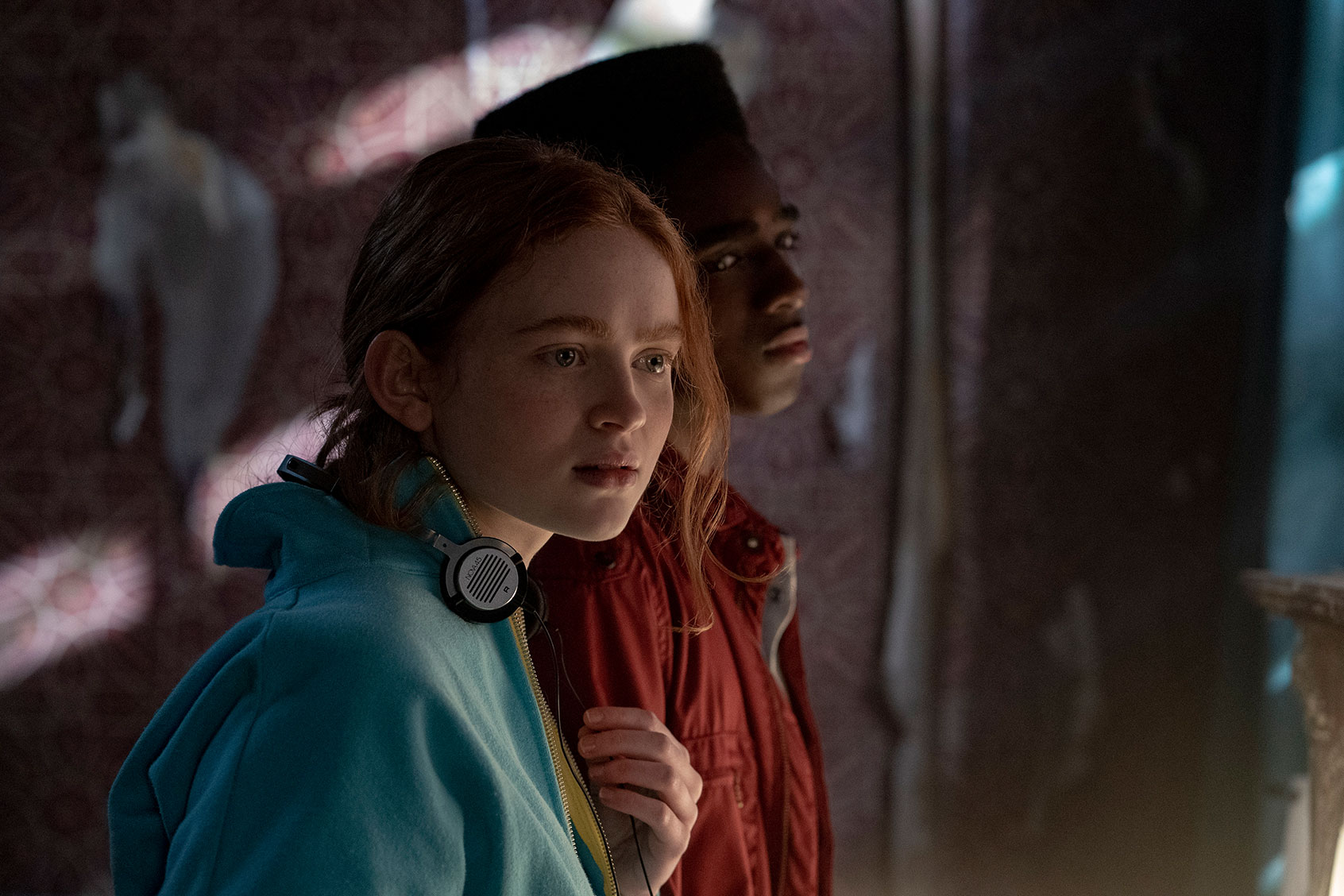
When “Running Up That Hill” made an appearance on the new season of “Stranger Things,” streaming on Netflix, I was surprised. If we had just heard the song through Max’s headphones as the character pushes through the high school hallways, if the music was only used once as an indicator of her emotional turmoil, that would have been fine.

But that is not it, not the only scene. From “Stranger Things” to TikTok, Bush is back. And she’s here (again) for a whole new generation of listeners, younger than ever before, like my own rising middle-schooler. Why is Kate Bush speaking to us now? And what is it about her and her music that works as a gateway to more and different art? 

RELATED: “The enduring resonance of Kate Bush’s “Running Up That Hill,” 35 years later”

I was a tween who couldn’t drive. I had been dropped off at the mall, inevitably by a friend’s old brother, and I made a beeline for the record store where the new CD by Kate Bush, and its cover of ruby-red toe shoes, seemed to pulse with color and light. I started with Bush’s 1993 release “The Red Shoes,” and worked backward through her catalogue. In college, my friend Stephen and I would run through the rugby fields, covered in morning mist, screaming “Heathcliff!” from her debut single “Wuthering Heights,” released when she was just 19.

Bush had been “discovered” even younger, when a cassette tape demo she had made with over 50 songs, turned down by multiple record labels, found its way into the hands of Pink Floyd guitarist David Gilmour. She had taught herself the piano at age 11 and used to play an organ in her family’s barn. EMI eventually signed her, and like many worthwhile artists, her work was misunderstood and underestimated at first by those with power at the label and beyond. 

The song is used again and again as a way to bring Max back, back to safety, back to herself.

But her first album “The Kick Inside” would go on to sell 1 million copies in the United Kingdom. Bush became the first woman to reach No. 1 in the UK with a self-written song. Her brother played on that album. She had written some of the songs when she was as young as 13.

It may be partly this that is attracting kids to Bush’s music now. It certainly was part of the attraction for me when I was a teenager. This girl had done it. Maybe I could do it too? So much of childhood is having no power. You can’t drive, you can’t vote. Your voice is not listened to. Your life experiences — and even your worth — are often disbelieved. Bush gave voice to that teenage longing, those big and valid feelings.

It makes sense that “Running Up That Hill” is used in the fourth season of “Stranger Things,” not only as an emotional clue to Max’s feelings, but used in another huge, pivotal scene where the girl barely escapes danger. 

It’s used again and again as a way to bring trauma survivor Max (Sadie Sink) back, back to safety, back to herself; to keep her from the tentacles of the Upside Down, which we know now also captures the past. The 1985 song, from Bush’s album “Hounds of Love,” is dramatic, desperately sad and catchy, longing so much for empathy from a lover — which isn’t going to come — that the singer is willing to swap places, to make a deal with a divine power. It’s the embodiment of powerlessness and hope in the face of hopelessness. 

Like the “Stranger Things” kids and their love of fantasy and games, many of her early songs were heavily influenced not exactly by living but by reading.

In “Stranger Things,” the song accompanies the futility of trying to change the past and outrun trauma, the desperation of childhood and adolescence (perhaps especially for a girl). Something terrible happened to Max’s stepbrother and she can’t tell the truth about it to hardly anyone. The song is distinctive with a melodic chorus like all of Bush’s songs – but with an arrangement of spooky keyboards and pounding drums all its own. 

It’s no wonder the song has found its way to TikTok, where the opening riffs alone are knowable enough to keep the song surfacing in video after video; that it’s reached No.1 on iTunes (a format that of course did not exist when it was written).

Listening to the song now, it feels both old and like the future, like something that has never happened before and also keeps happening. It’s haunting. And Max is haunted

Stranger ThingsSadie Sink as Max Mayfield and Caleb McLaughlin as Lucas Sinclair in “Stranger Things” (Tina Rowden/Netflix)Max is also different. Her life is arguably among the hardest of the Hawkins kids, especially due to the swiftness with which it changes. Her mom remarries suddenly to Billy’s dad. Billy is horrible to her and to many others. But he sacrifices himself for her and her friends (no one can know). After his death, her stepfather leaves, and Max and her mom – doing her best but barely staying afloat and drinking – move into a trailer where a murder happens just across the road. 

All the “Stranger Things” leads are weirdos. Some, like Nancy Wheeler, have a fall from grace, or in her case, popularity. But Max never fit in. She was always on the fringes. And in Season 4, lonely and alone, she nearly falls into the abyss. 

For me, like El mind-busting her way through walls, Kate Bush opened the door to a kind of Upside Down: to a different world.

Despite rocketing up the charts in the ’80s, Bush has remained below the radar for some later generations. I never heard “Running Up That Hill” on the radio, not like ’80s hits in perpetual rotation like “Call Me” by Blondie and “Take On Me” by Ah-ha. Bush was a dancer and a mime, and many of her videos feature her in a leotard doing interpretative dance, the queen of weirdos who never compromised and like a true visionary artist, was constantly experimenting, even if not everyone always saw the fruits of her labor. 

She largely stopped touring in 1979, then at age 55 did a surprise engagement of shows in London. She once took 12 years between albums. The press called her reclusive and enigmatic as she dropped out of the public eye to live her life (she and guitarist Dan McIntosh had a son in 1998; fans didn’t know for years).

But from “December Will Be Magic Again” to “King of the Mountain,” her work shines with emotion and earnestness. Her songs resonate with a rich inner life, even if, like the “Stranger Things” kids and their love of fantasy and games, many of her early songs were heavily influenced not exactly by living but by reading – the kind of things kids write about when they’re well, kids. Or, sheltered. Or, live in a small town like Hawkins. 


Want a daily wrap-up of all the news and commentary Salon has to offer? Subscribe to our morning newsletter, Crash Course.


Kate Bush is for real and as “Stranger Things” proves, she’s really for everyone. For me, like El mind-busting her way through walls, she opened the door to a kind of Upside Down: to a different world of creativity and art. After Bush, I listened to Peter Gabriel, PJ Harvey, OutKast, St.Vincent. I fell in love with movies like “Mandy” and books like that of Octavia E. Butler and Terri Windling. I learned to make my own world through art.

“Maybe you should start listening to the whole ‘Hounds of Love’ album,” I told my son as we walked to school the morning after finishing “Stranger Things”; he had been humming Kate Bush for days.

“Shouldn’t I start listening to Tori Amos?” he said. I’ve parented a tween long enough to know not to scream with delight, at least not right in front of him.

I hope that “Running Up That Hill” is a similar gateway for its newest, youngest listeners. I hope they take from her songs not only that feelings are OK, but being yourself is too: whatever weird, wild, dreaming person that is. In the ’90s, I often felt that Kate Bush was a secret. If you knew, you knew. Someone this good shouldn’t be a secret. I hope she opens the gate. 

More stories like this 

Evolution appears to occur far faster than we thought, study finds

Climate change is transforming our planet in countless ways: We are seeing increasingly frequent wildfires, more frequent and severe flooding, alterations in the flow of ocean currents and the height of glaciers. Not surprisingly, the flora and fauna that populate our natural world have struggled to keep up with these man-made changes — and that is without having to worry about humans directly slaughtering them. The end result has been a staggering number of extinctions, so many that a World Wildlife Fund (WWF) report in 2020 revealed that population sizes of “mammals, birds, amphibians, reptiles and fish” had fallen by 68 percent since 1970, an “unprecedented” rate of destruction of Earth’s biodiversity.

Yet the news may not be entirely bleak. Indeed, according to a new study published in the scholarly journal Science, Earth’s wildlife may possess a greater ability to adapt to a changing world than previously thought. If so, this could mean that organisms have a sort of “evolutionary fuel” that will help some of them adapt to climate change.

In the end they found that animals were twice as capable of adapting as previously believed.

To determine how this so-called fuel exists, an international team of researchers analyzed pre-existing genetic and other biological data about a wide range of wild species: Mammals like the spotted hyenas of Tanzania and the red deer of Scotland, birds like the superb fairy-wrens of Australia and song sparrows of Canada. Nineteen different animals in total were selected, and the samples were notable for just how thorough the research behind them had been. The average length of each field study was 30 years, with the shortest spanning 11 years and the longest stretching to 63 years. This gave them comprehensive genetic profiles on the various species spanning multiple generations, combined with a total of 2.6 million hours of field data on each animal.


Want more health and science stories in your inbox? Subscribe to Salon’s weekly newsletter The Vulgar Scientist.


In the end they found that animals were twice as capable of adapting as previously believed; in other words, evolution happens substantially faster than previously understood. “While estimates vary between populations, additive genetic variance in relative fitness is often substantial and, on average, twice that of previous estimates,” the authors wrote. 

“We show that these rates of contemporary adaptive evolution can affect population dynamics and hence that natural selection has the potential to partly mitigate effects of current environmental change,” the scientists continued. 

Yet the fascinating paper is not a sign that climate change will be anything less than devastating on Earth’s biodiversity. The authors themselves are careful to emphasize that this is the case, and the overwhelming body of scientific data confirms it to be so. According to the aforementioned World Wildlife Fund report, human mismanagement of the planet’s resources has overused Earth’s bio capacity by at least 56 percent, significantly altering 75 percent of the planet’s ice-free land surface and 85 percent of the area of wetlands in the process.

“A million pending extinctions is a huge threat to our own quality of life on this planet—and our continued existence on it.”

“Scientific models show that we can ‘bend the curve’ to halt the loss of nature,” Jeff Opperman, Global Freshwater Lead Scientist at the World Wildlife Fund and co-author of the report, told Salon previously. “Modeling predicts that declining trends can be flattened and reversed with urgent and unprecedented actions. These actions include transforming how we produce food; aggressive movements to tackle climate change; and investments in nature-based solutions that provide direct benefits to society, like coastal protection. It is also imperative that we transform our economic systems to reflect the ‘natural capital’ that truly underpins our economic prosperity.”

RELATED: The delicate evolutionary dance of dinosaurs and ancient plants

The Natural Resources Defense Council, Inc. (NRDC), a non-profit international environmental advocacy group, has also offered a dire assessment on the future of Earth’s biodiversity, noting that in the last two centuries humans have destroyed one-third of the planet’s forest cover and overfished one-third of the world’s fish stocks.

“We do not exist independently of nature,” NRDC explains on their website. “Humans need pollinators to grow fruits and vegetables, freshwater streams and wetlands to supply and filter drinking water, fertile soils to meet our agricultural demands, forests to provide medicines, and oceans to provide food. A million pending extinctions is a huge threat to our own quality of life on this planet—and our continued existence on it.”

For more Salon articles about evolution:

Kirk Cameron slams public schools for “grooming, for sexual chaos and the progressive left”

“Growing Pains” star Kirk Cameron is making it clear that he’s not a fan of America’s public schools, echoing many far-right talking points when it comes to the dangers of teaching about equality, spinning it as dangerous indoctrination.

In a recent interview with Fox News Digital, the actor says he believes public schooling advocates for a “far left agenda” that encompasses critical race theory, so-called “gender ideology.”  All of this was in relation to his new documentary that promotes homeschooling, suggesting that parents taking charge of their children’s education is the ultimate solution.

“The problem is that public school systems have become so bad. It’s sad to say they’re doing more for grooming, for sexual chaos and the progressive left than any real educating about the things that most of us want to teach our kids,” he said.

Cameron continued, stating that the system doesn’t allow parents to have any say about their children’s education and instead, places that responsibility on “so-called experts.”

“And that’s just a fundamental difference in the way that we look at. Who has been entrusted with the sacred responsibility of raising our children? Is it the parents or is it the government?” He also condemned “those who are rotting out the minds and souls of America’s children” and said they were “spreading a terminal disease, not education.”

RELATED: Kirk Cameron will never shut up

“And you can take your pick. Just go down the list,” Cameron continued. “The things that are destroying the family, destroying the church, destroying love for our great country: critical race theory, teaching kids to pick their pronouns and decide whether they want to be a boy or a girl, The 1619 Project.”

Cameron’s sentiments were reiterated in an online video shared Tuesday by former Republican federal prosecutor Ron Filipkowski. In the clip, the actor asserted that public schools across the nation are “doing more grooming for leftist politics and sexual chaos, and racial confusion,” than “doing any real educating about truth, beauty and goodness.”

It didn’t take long for Cameron to become a trending topic on social media as users blasted his criticism of public school teachers.

“2 public school teachers last week literally put themselves in front of bullets and were killed attempting to save their students,” wrote one user, referring to the mass shooting that took place in Uvalde’s Robb Elementary School. “Kirk Cameron can f**k all the way off.”

Other critics poked fun at Cameron’s acting career and expired fame, with one stating, “Kirk Cameron has angered me with the dumb things that he said that I bought a time machine, went back to 1986, ran into my sisters old room and ripped down a poster of him.”

In his Fox News Digital interview, Cameron also promoted his upcoming movie, “The Homeschool Awakening,” which focuses on Cameron’s decision to homeschool his six children along with the experiences of 17 additional families who have all ditched public education in favor of teaching their children themselves.


Want a daily wrap-up of all the news and commentary Salon has to offer? Subscribe to our morning newsletter, Crash Course.


“Homeschool was not on our radar screen because we had these misconceptions and stereotypes like so many people do. Like, you know, that’s for like Quakers and the Amish, and how could you possibly teach your kids enough so that they get into college? What about socialization?” he said.

Cameron claimed that homeschooling actually helped his children “discover [their] own individuality and uniqueness” and allowed for “a healthy, flourishing community” at home.

“They learn to reject a God . . . they learn to reject our country,” Cameron said, once again speaking ill of the public school effect. “And how did that happen? Well, that’s the kind of regret that we don’t want as parents. And so if we’re willing to put in some extra effort and time now, we will be so glad that we did and will lift our hands in gratitude and say, ‘Thank you that I woke up and I saw the light.’ And millions of parents are.”

More stories you might like:

A 3-ingredient recipe for the butteriest no-cook tomato sauce ever

Italian cookbook author Marcella Hazan, who immigrated to New York in the 1950s, is credited with introducing a broad swath of English-speaking audiences to traditional Italian cuisine. Her most famous recipe, the one people likely bring up the most in conjunction with her name, is also one of her simplest: her butter-packed tomato sauce

The three-ingredient sauce is made with canned or fresh tomatoes, onion and butter, which are then simmered for at least an hour as it gets increasingly velvety. In my home, it’s a summertime staple, especially once the “good tomatoes” have popped.  

Occasionally, I want something that feels a little fresher, especially if the temperatures inside and outside of my kitchen are bordering on oppressive. That’s where this no-cook pasta sauce recipe comes into play. Like other no-cook sauces, it relies on fresh-cut, juicy tomatoes to do the bulk of the work. This recipe, however, gives a nod to Hazan by incorporating grated, iced-cold butter into the mix. 

When combined with warm pasta, and more importantly, starchy pasta water, the butter melts over the tomatoes and their juices, which gives the sauce a richness that is sometimes tough to achieve without ample time over heat.

Related: Marcella Hazan’s tomato sauce recipe — and 8 other favorites

If you’re worried about this dish being “buttered noodles studded with fresh-cut tomatoes” (which, if we’re being honest, doesn’t sound too bad), have no fear. The addition of sun-dried tomato paste pushes it into fully-sauced pasta territory. 

***

Recipe: Buttery No-Cook Pasta Sauce 

Yields
4 servings
Prep Time
45 minutes
Cook Time
minutes

Ingredients

Optional additions: 

  • Red pepper flakes
  • Torn basil

Directions

  1. Give the cherry tomatoes a rough chop and place them in a large mixing bowl. Salt them generously and allow them to rest for about 30 minutes. This will encourage the tomatoes to release their juices, which will make for a better final sauce. 
  2. Cook the pasta according to the package instructions; meanwhile, grate the very cold, salted butter over the tomatoes. Give it a gentle mix, then add the sun-dried tomato paste. If you’re adding red pepper flakes or basil — both of which are optional — now would be the perfect time to do so. 
  3. Drain the pasta, reserving at least a cup of hot pasta water. Add the pasta to the mixing bowl with the tomatoes and vigorously combine. (I like to use tongs here, but a regular old fork situation will also do the job.)
  4. The butter should have melted some and the tomato juice and paste should be clinging to the pasta. To complete the process, add the reserved pasta water a tablespoon at a time until the sauce reaches a consistency that you like. Taste again (tomato sauce almost always needs more salt than you initially think) and season before serving

Cook’s Notes

You can use regular tomato paste here, too, if that’s what you have on hand. Personally, I’m partial to the richness that the sun-dried tomato paste adds to this simple sauce.


Want more great food writing and recipes? Subscribe to “The Bite,” Salon Food’s newsletter.


More stories about pasta, the ultimate comfort food:

9 essential tools for cooking all the vegetables

As with any other kitchen, what is considered essential in a vegetable-forward kitchen depends on what you like to cook. If you like stir-fries, then you might want to grab a wok. If you have a fondness for braising, as I do, then you might rely heavily on a shallow Le Creuset braising pan

While I’ve listed some of my favorite, most essential tools, I didn’t mention my food mill, which I use only for two purposes (tomato sauce and applesauce) yet wouldn’t be without, or my salad spinner. Nor did I mention hands, which are the best tools for feeling the food you’re cooking; or noses, for smelling; or ears, for hearing when a process subtly changes on the stove; or eyes for discerning the beauty or flaw contained in a vegetable. You don’t have to buy these; you’re equipped with your senses already.

But what does stand out for me as the most essential items for a cook dealing with a lot of vegetables are good knives and a large cutting board. Without those tools, cooking isn’t fun or efficient. From there? A mortar and pestle, and maybe just two more. Ahead, tools that are essential in my kitchen, and maybe in yours, too. 

1. Good knives and a way to keep them sharp

A few good knives are essential to any cook, but especially to one who is cooking a lot of vegetables because they usually require a fare amount of slicing and dicing. You don’t want a boning knife or a knife with a curved blade because you want to have as much contact as possible with your board in order to get the job done.

good paring knife is very useful. I do a lot with my petite 4-inch knife: peeling, chopping, and getting into small grooves, like the stems of cauliflower florets. Mine is wider than most paring knives, which is why it’s so versatile, but really, any will do. You’ll also want one heavier chef’s knife or cleaver for whacking dense winter squash into pieces.

It should also go without saying that you need a knife sharpener because they can slice, rather than crush, your veggies. And they won’t slip over the skin and nick your fingers, either. If you need some expert recs on sharpeners, we have ’em right here.

2. A big cutting board

Giving yourself a lot of room to work is essential. You’ll feel cramped and frustrated using a small cutting board like the cheese board you got for a wedding or graduation present. Wood or plastic, that’s up to you. I used a large, plastic board for years before buying myself a gorgeous walnut cutting board because I prefer the look and feel of it (and because it was my birthday). Since I’m often hovering over the board, I want it to be something I love to use. It’s not huge — my plastic one is twice as large — but it’s fine when cooking for two, which is what I usually do, and I also have backups when needed.

I recommend having a second board for cutting fruit. Fruit with a trace of garlic just doesn’t taste right, and if you don’t have fresh fruit to slice very often, it needn’t be large. 

3. A fait-tout pan, such as a saucier

This is a pan I use probably every day. Mine happens to be a stainless steel All-Clad. It’s large enough for whatever I want to do, and its shape is wonderfully versatile. You can do just about anything in it — except maybe make an omelet. 

4. Beautiful multipurpose bakeware

To me, it’s important that my functional pots and pans also be beautiful. I have a collection of earthenware vessels: casseroles and shallower dishes from Cook on Clay, micaceous pots made by native New Mexico potters, Italian baking dishes, and so forth. When they’re not being used for actual baking, I use them to hold eggplants or tomatoes that are too gorgeous to be hidden in the refrigerator.

5. Tongs

There are few things more useful than a pair of tongs. A long pair allows you to stand back from the fire or grill, while shorter ones let you to get close to your food. You can use them to turn vegetables over in a pan or retrieve them from a pot of boiling water and check for doneness. My go-to? Simple, spring-loaded tongs — nothing fancy, no need for serrated bottoms.  

It helps if the tongs close when not in use so that they fit easily into a drawer, but if they don’t have the gadget on them that makes that possible, a rubber band works just fine.

6. Mortar and pestle (or a spice grinder)

There’s something about pounding garlic with a little salt that makes it so much better than merely pressing it. And the smell of freshly roasted spices is so wonderful as you work them over the rough bottom of a mortar. I use a small, inexpensive marble mortar and pestle for garlic and spices, and a larger one if I’m actually going to make a sauce in it. A spice grinder also makes quick work of grinding spices into a fine powder.  

7. More pots and pans (this may be cheating, but they’re all important!)

  • I use my set of solid, well-made saucepans with inserts for steaming vegetables nearly everyday. One good non-stick skillet is a must for eggs and pancakes; otherwise, I use my cast-iron skilletor grill pan.  
  • A deeper pan with a lid or a Le Creuset Dutch oven is essential for braising vegetables or making risotto
  • A wide pot, about 6 inches deep, is key for making big soups or for boiling water for pasta. 
  • I have two double boilers: one a fancy copper affair and the other an old-fashioned blue metal one that I bought because of its color. I use them for holding mashed potatoes or other vegetable purées, making the base for a soufflé or a sauce, cooking polenta, or melting chocolate. A double boiler lets you keep foods warm without worry. I don’t know why we let them go out of style — they’re truly so useful. 
  • Finally, a one-quart saucepan for hard-boiling a few eggs, making hot cereal in the morning or quinoa in the evening, and for reheating soup for lunch. 

8. Pressure cooker

I love my pressure cooker. It makes lentil soup or sweet potatoes in 20 minutes when you really don’t have an hour to make dinner, and is especially great for bean dishes and long-cooking grains. I don’t use it as often as other pots and pans, but I’d feel adrift without it. Plus, the insert can double as an extra mixing pot.

9. A kitchen scale

I really think every cook should use one. Kitchen scales are ideal for baking, but a more accurate way to measure by weight. Sometimes it’s surprising to see how much a vegetable, a cup of flour, or two cups of rice really weighs. Imagine you have a chunk of leftover butter or cheese or chocolate. Put it on the scale, then you’ll know if you have enough to make that recipe. After a while you can pretty much judge accurately by eye, but until then, a scale can be helpful — if not essential — for getting it right on the money. Mine reads in both ounces and grams, which is useful when you’re using recipes that are written by English cooks like Nigel Slater.

16 ways to make jarred tomato sauce sooo much better

For most weeknight dinners, my goal is to reduce the amount of time between entering my apartment and eating pasta. The ultimate victory, of course, would be to walk through the door while eating pasta (or — if angels have descended — to arrive home to a table already set with mac and cheese). Instead, I usually settle for marinara sauce made from scratch in 30-ish minutes: Bring water to a boil while changing clothes; cook noodles while sautéing greens with fresh garlic; add pasta to said greens with a splash of cooking liquid and copious amounts of pecorino, olive oil, and fresh herbs; face-plant into plate.

My parents, on the other hand, reduced the door-to-pasta period by handily employing the microwave and a glass jar of store-bought marinara sauce we always had in the fridge. Boil pasta, microwave sauce (or heat it up in a saucepan on the stove if you’re really feeling extra), mix the two together, and hush your hungry crew of children.

Many avid home cooks might stick up their noses at store-bought “spaghetti sauce,” but at the end of a long day, it’s the fastest way to get to a bowl of red-sauced noodles; it’s quicker than cooking down canned tomatoes with onion, fresh garlic, olive oil, and red wine, which despite the admonitions, I don’t always have in my pantry.

And yet, most jarred sauces could benefit from a bit of zhushing to reach their full flavor and freshness potential. Some jars of tomato sauce are, indeed, superior to others. Look for sauces that use whole tomatoes and no added sugar. Here are Cook’s Illustrated’s top picks. As for our own team, we’re in agreement that the best jarred marinara sauce is, hands down, Rao’s. Staff writer Kelly Vaughan is a devoted user, as are editorial lead Margaret Eby and editorial assistant Lucy Simon. Lucy, however, makes an important distinction — “it must be marinara, not the tomato basil sauce.”

Here’s how to make a jar of spaghetti sauce taste so much better (if not entirely homemade), easily.

The bare-bones, do-this-one-thing approach:

1. Reduce it on the stove or in the oven. To concentrate the flavor of your store-bought pasta sauce, cook it down so that some of the water evaporates, leaving you with tomato sauce that is thicker and more tomato-y. As your pot of sauce heats up and your noodles cook, let your sauce simmer on the stovetop for at least 10 to 20 minutes. Or, pour the sauce into a Dutch oven or baking dish at roast it at 300° F, stirring from time to time. This will take a few extra minutes, sure, but you need to heat up the sauce before mixing it with your pasta anyway. Unless, that is, you follow my dad’s best bad piece of cooking advice: If the pasta is hot, you can add cold pasta sauce to it.” If you want to go above and beyond (or you’re Instant Pot-obsessed), try pressure-cooking the sauce with a halved onion and a few tablespoons of butter, à la Marcella Hazan.

2. Squeeze in tomato paste, flavor-booster extraordinaire. Let’s say you don’t have time to simmer your sauce (or you’ve reduced it yet it’s still lacking oomph), add a dollop or two of tomato paste, which is . . . just super-duper concentrated tomatoes! Bonus points if you coax out the full power of your tomato paste by sautéing it in hot olive oil before adding in the sauce. Ultra bonus points if you throw some red pepper flakes into that oil, too, for a little bit of a kick.

For extra credit, take on any — or all — of the following:

3. Turn to your spice drawer and condiment cubby: If your sauce is missing depth and complexity, open your pantry or fridge and start exploring. Decide whether you’re aiming for spicy (Sriracha, gochujang, cayenne, harissa, horseradish), smoky (smoked paprika, diced chipotles in adobo), or fruity (roasted red peppers, Calabrian chiles), and mix and match to your heart’s desire. Remember to taste often, before things get too wild.

4. Add a Parmesan or pecorino rind while it simmers. To make the sauce more salty and savory, an oft-discarded cheese rind can help a pot of humble beans and can enliven your wan tomato sauce, too. Toss a halved onion in while you’re at it. Pro tip: Save your Parm rinds in the freezer (just wrap them up really well and store in an airtight container). Anytime you want to dress up a jar of store-bought tomato sauce, the rind will be ready to go

5. Speaking of a salty je ne sais quoi, introduce an anchovy. Heat some olive oil in your saucepan, sauté an anchovy or two until it starts to melt down into oblivion, throw in a few smashed garlic cloves if you’ve got them, then pour in your jar of tomato sauce. Call me crazy, but I’ve also been known to skip the anchovies and add a splash of fish sauce and a glug of soy sauce instead.

6. Harness the power of sautéed vegetables. Before you heat up the sauce, sauté vegetables until they start to brown. I usually keep it basic with onion and garlic, but mirepoix (celery, carrots, and onions) or a few handfuls of sliced mushrooms work well, too. And if you deglaze the pan with wine or stock, you’ll leave no caramelized bit behind.

7. Lean into the garlic. Most store-bought sauces contain at least some garlic, but the flavor is often dulled in the jar. Amp up the garlic factor by sautéing a couple of minced or pressed cloves for a few moments in olive oil before adding the sauce. For a richer, sweeter flavor, mash a few roasted garlic cloves and stir them in as the sauce simmers.

8. Liven things up with a little acid. Try apple cider vinegar, red wine vinegar, capers, chopped olives, or lemon juice. If the sauce is plenty acidic — as many store-bought varieties are known to be — use just the lemon zest instead. Stir it in at the end of the cooking process to preserve as much bright freshness as possible.

9. Sweeten things up with a little sugar. If your jarred tomato sauce is too acidic, consider adding a pinch or two of sugar (after all, it makes the medicine go down!). Jarred sauces can sometimes make you pucker, lacking the sought-after balance of a homemade sauce. As the sauce heats, add granulated sugar a pinch at a time, stirring and tasting in between additions, until the sauce is just right. Avoid brown and powdered sugars, which will add conflicting flavors to the mix.

10. Brighten with brine. Olives and capers add a punch of briny goodness and give tomato sauce some real personality. Toss in some chopped or whole, pitted olives and/or a handful of drained capers after heating the sauce for several minutes. Or, if you’re adding garlic or sautéed vegetables, add to the sauté just before you pour in the sauce. They bring a similar saltiness to anchovies, but are vegetarian-friendly.

11. Basil! Basil! Basil! You’ll find lots of “basil leaves” swimming around in store-bought jars: These are so dark, slimy, and seaweedy that it’s hard to imagine that they were once on a basil plant at all. To remedy the situation, add freshly torn basil at the end of heating up your sauce so that its fragrance perfumes the whole pot, while preserving the bright green color.

12. Bring on the butter — and other dairy products. To make your sauce rich and luxurious, finish it with a pat of butter, a splash of cream or coconut cream, or a spoonful of yogurt, crème fraîche, or sour cream.

13. Swirl in some high-quality olive oil Adding a glug to the sauce just before serving gives it a similar richness and shine to butter without adding dairy. We especially love olive oil from BrightlandKosterina, and Kolossos (all of which you can buy in the Food52 Shop!).

14. Cheese it up. A dollop of ricotta or mascarpone adds lightly sweet creaminess, while soft goat cheese or even a humble cream cheese adds tangy richness to elevate dull tomato sauce. A generous sprinkle of freshly grated Parmesan cheese makes any plate of pasta look all dressed up, while adding a welcome kick of umami.

15. Make it meaty. Add some savory protein and texture to your sauce by introducing red meat into the mix. Crumbled Italian sausage (mild or hot for the heat-seekers) or ground beef, pork, or lamb all marry nicely with tomato sauce. Brown the meat in a skillet, break up using a wooden spoon, and drain the meat of any excess oil or fat before adding the tomato sauce and simmering while the pasta cooks.

16. Make use of your pasta water. We will never not sing the praises of pasta water. The starchy, salted water is a natural thickening agent, which will improve the texture of jarred pasta sauce. You won’t want to add a bucketload of water to the bowl, but a generous splash of that starchy water will help the sauce adhere to the noodles (but you knew that already).

The Mona Lisa was attacked again … this time with a slice of cake

The Mona Lisa, which is on permanent display at the Louvre Museum in Paris, was adorned with a slice of cake in what appears to have been a climate stunt that took place over the weekend.

On Sunday, an unnamed man — who reportedly wore a wig and posed as an elderly woman — went up to the painting in a wheelchair before throwing a piece of cake at the artwork, smearing its outer glass protection, per a statement from the Louvre.

“A visitor simulated a disability in order to use a wheelchair to approach the work, which was installed in a secure display case. The Louvre applied its usual procedures for people with reduced mobility, allowing them to admire this major work of art,” the art museum disclosed, per CNN.

RELATED: Art attack: Why do people try to destroy museum masterpieces?

“While standing near the painting, this individual threw a pastry he had hidden in his personal belongings at the Mona Lisa’s glass case. This act had no effect on the painting, which was not damaged in any way.”

Video footage shared on social media details the aftermath of the incident, showcasing security guards escorting the man out of the Louvre as he explained the reason behind his act of vandalism.

“Think of the Earth! There are people who are destroying the Earth! Think about it. Artists tell you: think of the Earth. That’s why I did this,” he says, according to The Associated Press.

Another video shows a staff member cleaning up smudges of cake left behind at the scene of the crime.

The 36-year-old vandal was later arrested and sent to a psychiatric infirmary, CNN reported. The Paris prosecutor’s office has initiated an investigation for “the attempt of damaging a cultural property,” and the Louvre has also filed a complaint following the incident.


Want a daily wrap-up of all the news and commentary Salon has to offer? Subscribe to our morning newsletter, Crash Course.


The Mona Lisa was painted by Leonardo da Vinci between 1503 and 1519 and is approximately 2.5 feet tall and under 2 feet wide. The portrait painting is housed in the Louvre’s largest room and to this day, continues to attract millions of visitors yearly.

According to the art museum’s official website, the painting has been attacked multiple times in the past. On August 21, 1911, the Mona Lisa was stolen by an artist and former Louvre employee — later identified as Vincenzo Peruggia — who tried to sell the painting to an Italian art dealer. During the 1950s, the painting was damaged in an acid attack, which prompted the museum to encase it in bulletproof glass. And in 2009, a Russian woman, who was denied French citizenship, took her anger out on the painting by throwing a ceramic cup.

More stories you might like:

New 911 video shows dispatcher alerted Uvalde cops — but they waited nearly 90 minutes anyway

In the days following the deadly elementary school massacre in Uvalde, Texas new details have been released in connection with the shooting. New footage, obtained by ABC News, offers details of the scene that unfolded outside of Robb Elementary in Uvalde, Texas as chaos erupted inside the building.

Per ABC News, the footage “appears to capture a 911 dispatcher alerting officers on scene that they were receiving calls from children who were alive inside the classroom that the gunman had entered — as law enforcement continued to wait nearly an hour and a half to enter the room.”

A dispatcher in the video could reportedly be heard saying, “Child is advising he is in the room, full of victims. Full of victims at this moment.”

The dispatcher went on to ask, “Is anybody inside of the building at this…?” Minutes later, the dispatcher confirmed: “Eight to nine children.”

The clip also shows law enforcement officers retrieving children from the building as they pulled them through windows and led them out of alternate exits.

“That question will be answered,” McGraw said when asked directly if the incident commander on the ground received the 911 information. “I’m not going to share the information we have right now. Because I don’t have — I don’t have the detailed interview right now.”

Per ABC News, law enforcement has stated: “The gunman was left inside the classroom for 77 minutes as 19 officers waited in the hallway — and many more waited outside the building — after the incident commander wrongly believed the situation had transitioned from an active shooter to a barricaded subject.”

On Friday, May 27, Texas Department of Public Safety Director Steven McGraw released a statement as he revealed multiple children had called 911 desperately begging for help and “please send police now,” but to no avail.

The latest disturbing clip raises even more questions about local law enforcement’s delayed response as the gunman wreaked havoc inside the school, leaving two teachers and 19 children dead.

“Advise we do have a child on the line,” a dispatcher could also be heard saying in the clip.

The latest development comes just days after the U.S. Department of Justice announced its plan to launch and conduct a “fair, transparent, and independent” investigation into the local police department’s response to the deadly shooting.

“The goal of the review is to provide an independent account of law enforcement actions and responses that day,” DOJ said in its release, “and to identify lessons learned and best practices to help first responders prepare for and respond to active shooter events.”

Mitch McConnell’s Uvalde trap: Democrats rush to participate in their own political sabotage

Do Democrats want to lose elections?

As I watched news reports on President Joe Biden’s response to gun reform in the wake of the mass shooting at a Texas elementary school, that was my soul-crushing question. 

“I think there’s a realization on the part of rational Republicans” that it’s bad news to have one mass shooting after another in this country, Biden told reporters. “I think things have gotten so bad,” Biden argued, that Republicans might actually be willing to pass something this time. When Biden went to Uvalde to mourn the 21 lives lost at Robb Elementary school, onlookers chanted “do something.” Biden even went so far as to promise that “we will.” 

This notion that some kind of gun control will soon pass Congress appears to have been stoked by Senate Minority Leader Mitch McConnell, who Biden explicitly named as a “rational” Republican on Monday. McConnell told CNN that he is “hopeful that we could come up with a bipartisan solution” and directed Republican Sen. John Cornyn of Texas to take the lead on negotiations. Democratic Sen. Chris Murphy of Connecticut, who represented Newtown while in the House, has been running around telling reporters, “I’m at the table in a more significant way right now with Republicans” than in the past. The New York Times reports that a “bipartisan group of 10 senators working on the issue was to have a Zoom call on Tuesday” to start the process. 

RELATED: Republicans’ “solutions” to mass shootings are meant to make you feel helpless

So political observers who have watched how Republicans operate for the past decade or so are all asking the same question: How stupid are Democrats to think that these “negotiations” are the real deal? 

Mitch McConnell is faking negotiations to build up hope and dash it — creating a “Democrats are impotent” narrative.

It’s not mysterious what McConnell, whose main political weapon is obstruction, is doing here. He’s setting up a bunch of fake negotiations to get Democrats all excited about the possibility of passing something. Those Democrats will then talk to reporters about how they’re making progress. Voters will get their hopes up that something will get done. When it inevitably doesn’t – because Republicans never intended to pass any bill of any kind — the blame will fall on Democrats for being weak and ineffectual leaders. Demoralized Democratic voters will sit at home for the midterms and Republicans will win big at the polls. 

We can know this is the plan, because this is always how McConnell operates: Blocking Democrats from passing popular legislation and then peddling a story about Democratic impotence. The Republican leader doesn’t win elections by winning over voters to the Republican Party. His strategy, instead, is to get large numbers of Americans to give up on politics entirely. The result is that Fox News addicts and QAnon-addled mouth breathers are overrepresented among those who do bother to vote. 


Want more Amanda Marcotte on politics? Subscribe to her newsletter Standing Room Only.


As Paul Krugman of the New York Times wrote last year, most voters pay very little attention to politics and thus, “tend to support the incumbent party when things are going well, oppose it if things are going badly — even if the positive or negative events have no conceivable relationship to that party’s actions.” So the Republican strategy has always been to “make bad things happen” when Democrats are technically in charge, knowing Democrats will take the blame. That’s why they sabotaged Barack Obama’s efforts at fixing the economy when he was president. It’s why Republican propagandists encouraged their voters to refuse vaccination and extend the pandemic. And as I wrote last week, mass shootings are particularly effective for Republicans in their goal of demoralizing people who might otherwise turn out to vote against them.

Mass shootings generate the chaotic and depressing political environment that Republicans thrive in. Many of the voters who disagree with them see the go-nowhere nature of the gun debate, get frustrated, and then don’t bother voting. Republican voters, however, are easily ginned up with stories, which are sadly false, about how Democrats are coming to take their guns away, which those voters receive as a personal attack on their very identity. So mass shootings work wonders to depress Democratic voters and stir up Republican voters. Thus Republicans have no interest in making mass shootings a thing of the past. 

RELATED: “Dystopian future”: Republicans cry “communism” after Canada cracks down on guns after mass shooting

In the Republican task of demobilizing the Democratic base, pretending to be interested in gun legislation is a great weapon. As Jonathan Weisman of the New York Times wrote, failure to pass gun legislation “would be lumped onto a growing pile of disappointments that have depressed Democratic voter enthusiasm since the party took control of Washington.”

Democrats in Congress have failed to pass Build Back Better, voting rights legislation, codification of abortion rights, and other Democratic priorities. And now they’re going to fail to pass gun restrictions, but only after Republicans trick them into running to the press to claim that they’re making progress. Getting hopes up and dashing them is an excellent way to frustrate progressive voters into giving up altogether, which is exactly why Republicans are playing this game with Democrats. 

In one sense, McConnell is being a rational Republican. But not in the way that Biden defines “rational,” which is someone who thinks murder is bad and wants to stop it. In the sociopathic sense of the word “rational,” it’s very much in McConnell’s self-interest to feign interest in a gun compromise only to blow it up at the last minute.

What is not rational is Democrats believing McConnell’s fake overtures.

Mitch McConnell has a long and storied history of being both a liar and an obstructionist. Only a fool would believe he has any intention of actually passing a gun safety bill before the midterms, or ever. 


Want more Amanda Marcotte on politics? Subscribe to her newsletter Standing Room Only.


As I noted last week, polling shows that the majority of voters characterize Republicans as hateful bigots, but when asked what they think of Democrats, they respond with “weak.” Given the choice between the two parties, a lot of people will take option number three: Don’t bother voting.

It’s not at all clear why Democrats are eagerly participating in their own political sabotage by engaging with the GOP con artists like this. The argument for participating in the fake negotiations is that there’s a slim (I’d say impossible) chance that Republicans mean it this time, and well, Democrats have to try, don’t they? But that assumes that working with Republicans is the only option on the table, and it simply is not. Biden could fulfill his promise to do something through executive action. Indeed, his own vice president, Kamala Harris, has argued that the president could, under existing law, close the gun show loophole without Congress. The law is written in such a way that one could argue that gun shows and online dealers already constitute the mass sellers that are required by law to conduct background checks on buyers. An executive order directing federal agencies to interpret the law that way would make it much harder for people with criminal backgrounds to buy guns, all while bypassing Congress.

Instead, it looks like the Democratic plan is to let Republicans waste time and drive up hopes of federal legislation, only to watch Republicans blow it all up at the last minute. After another round of “Democrats fail” headlines, Republicans can go into the midterms arguing that Democrats are inept leaders. That might not win Republicans more votes, but it doesn’t need to. All that matters is suppressing Democratic turnout, and on that front, Republicans are doing a great job. The only question is why Democrats are so eager to help them. 

“You all look like idiots now”: Legal experts mock Trump after John Durham’s “big fat loss” in court

Former President Donald Trump’s special counsel John Durham has spent three years trying to sink members of Hillary Clinton’s 2016 campaign for supposedly trying to frame Trump over his connections to Russia.

On Tuesday, after under seven hours of deliberation, the jury concluded that the Clinton campaign lawyer, Michaell Sussmann was innocent of lying to the FBI when he turned over information that they discovered.

The verdict drew commentary from legal analysts who mocked Republicans who swore that Durham would reestablish Trump’s credibility when it came to any accusation involving Russia. That effort, however, failed.

Meanwhile, Durham spent $2.36 million in tax-payer dollars over the course of three years, doing nothing other than making wild accusations in court filing documents, according to Sussmann’s lawyer.

In a Feb. 2022 rebuttal filing, Sussmann’s lawyers attacked Durham’s court claims, saying that he was wrong about critical facts. According to their information, Durham’s claim that Trump’s White House was being spied on in the Oval Office was a lie. Evidence showed that all of the data was legally and properly obtained prior to Trump taking office. The claim also went on to say that Durham was making wild accusations in his court documents to give fodder to right-wing media.

As former federal prosecutor Elie Honig explained, he predicted this case wouldn’t go the way Trump hoped.

“That sound you heard — that muffled thud, off in the distance of southern New England — that was the sound of the much-ballyhooed John Durham investigation as it reached its pathetic anticlimax. That was the sound of a dud,” wrote Honig in a Sept. 2021 editorial. He concluded that the comments hold true eight months later.

“So the crux of the indictment is that Sussman didn’t disclose to the FBI that he represented Clinton — but the FBI knew he represented Clinton anyway. That, folks, is what we prosecutors call a problem,” he said last year.

“We have always known that Michael Sussmann is innocent and we are grateful that the members of the jury have now come to the same conclusion,” said a statement from lawyer statement from Sean Berkowitz. “But Michael Sussmann should hever have been charged in the first place. This is a case of extraordinary prosecutorial overreach. And we believe that today’s verdict sends an unmistakable message to anyone who cares to listen: politics is no substitute for evidence, and politics has no place in our system of justice.”

See some of the additional commentary by legal experts below:

Supreme Court reportedly cracking down on clerks’ cell phones as leak investigation continues

Supreme Court law clerks have been asked to hand over their cell phones as part of the court’s escalating probe into an unprecedented leak of a draft majority opinion on abortion.

According to CNN, clerks are so “alarmed” by the requirement that they are now considering seeking outside counsel in the far-reaching investigation. “That’s what similarly situated individuals would do in virtually any other government investigation,” one appellate lawyer who is familiar with the probe told CNN. “It would be hypocritical for the Supreme Court to prevent its own employees from taking advantage of that fundamental legal protection.”

RELATED: Clarence Thomas complains Roe leak hurt “trust” in Supreme Court: “It’s like infidelity”

On top of providing cell phone records, clerks might also be asked to sign affidavits. 

However, the scope of the cell phone search as well as language in the affidavits remains unclear.

The probe comes weeks after a bombshell Politico report revealing that the Supreme Court has informally voted to strike down Roe v. Wade, the landmark 1973 decision establishing America’s constitutional right to abortion. Chief Justice John Roberts has called the leak of Justice Samuel Alito’s draft majority opinion in the case of Dobbs v. Jackson Women’s Health Organization “absolutely appalling.”


Want a daily wrap-up of all the news and commentary Salon has to offer? Subscribe to our morning newsletter, Crash Course.


“To the extent this betrayal of the confidences of the court was intended to undermine the integrity of our operations, it will not succeed,” Roberts said earlier this month. “The work of the court will not be affected in any way.”

Roberts, who launched the probe, reportedly convened a meeting with a group of Clerks following the Politico report, according to CNN. The probe is currently being led by Col. Gail Curley, the marshal of the U.S. Supreme Court. 

RELATED: Right-wing Twitter is obsessed with the Supreme Court leak — but there’s a human cost

The number of people who had access to the draft opinion is not clear. Traditionally, draft majority opinions are circulated to all nine justices, their clerks, and some of their support staff, as CNN noted. It is not clear whether the probe extends just to law clarks. The documents may have been sent to as many as 75 individuals. 

The Supreme Court is known to implement tight security procedures when it comes to sharing official documents. Still, as CNN reported, it’s possible that hard copies of the Roe opinion left the building if staff opted to take their work home.

“What is he hiding?: Ex-Ted Cruz aide accuses Kevin McCarthy of leading Jan. 6 “cover-up”

Reacting to a letter sent by attorneys representing House Minority Leader Kevin McCarthy to the House committee investigating the Jan 6th insurrection that their client will not honor a subpoena to appear, the Bulwark’s Amanda Carpenter claimed he that he is now an “active participant” in Donald Trump’s cover-up.

Noting his lack of reasoning for all of his attempts to derail the committee’s work since it was first proposed, the former adviser to Sen. Ted Cruz, R-Texas, suggested that there is more to his objections than meets the eye.

According to McCarthy’s lawyers, he wants to see what questions they want to ask him as well as what documents they have on him before he would even consider appearing, which Carpenter finds telling.

As she wrote, McCarthy attorney Elliot S. Berke, “rejected the idea the committee had any legislative purpose.”

Carpenter found this curious and was particularly struck by the attorney’s closing passages.

“Berke closed his letter with a request: that the committee give McCarthy a list of all topics and subjects it would like to discuss, as well as copies of ‘all documents’ the committee would like to ask about, along with the ‘constitutional and legal rationale’ for each of those requests,” she writes. “Which is lots of lawyer-speak for people who bill by fractions of the hour. What this request really meant was that McCarthy has absolutely no intention of acting as a cooperative witness. He wants information from the committee; he doesn’t want to give them any.”

As she notes, McCarthy is one of the few people working outside the White House who was in contact with Donald Trump as the riot progressed and could shed valuable light on his state of mind and intentions — and yet is refusing to do so.

“What did Trump say when McCarthy begged him for help? Why is that being kept a secret? How could any official sit on this information—let alone a man who could very soon be speaker of the House?” she wrote before adding, “Also, how in the world did McCarthy go from blaming Trump for the attack to championing him for the midterms? No one in Washington with McCarthy’s level of power has flipped harder and faster on such an important question than McCarthy did in those short days. It stands to reason that if McCarthy had an honorable explanation, he would be proud to give it. So what is he hiding?”

Writing that the cover-up is still ongoing, she added, “These questions, and more, need to be answered. Hopefully, some of them have already been answered by the hundreds of people who have spoken to investigators.”

You can read more here.

Trump’s Big Lie lawyer quietly recruits army of election conspiracists to challenge next election

With the midterm election just months away and Donald Trump still eyeing a third presidential run in 2024, the New York Times is reporting that one of the architects of the former president’s attempt to throw out the results of his 2020 loss is currently working on recruiting conspiracy-minded poll workers and watchers that have state election officials fearful of future chaos and disruption.

According to the report, attorney Cleta Mitchell who rose to fame as a participant on Trump’s infamous phone call to Secretary of State Brad Raffensperger where the former president demanded the Georgia Republican “find” 11,780 votes, is working with the Election Integrity Network, which has financial ties to Trump’s still-thriving political operation.

As the Times’ Alexandra Berzon writes, Mitchell has been busy traveling the country and meeting with far-right activists, instructing them on how to get deeply involved with the election process in their states, putting them in a position to challenge election results and disrupt certification of the votes.

According to Berzon, no position at the state level is considered too small by Mitchell, who recently told over 150 conservatives in Harrisburg, Pennsylvania, “We are taking the lessons we learned in 2020 and we are going forward to make sure they never happen again.”

Pointing out that Mitchell was a participant in multiple lawsuits by Trump to challenge election results at the state level — none of which succeeded — Berzon writes that she is undeterred as her conspiracy theories are debunked and that she has the financial backing of several conservative groups.

“In seminars around the country, Ms. Mitchell is marshaling volunteers to stake out election offices, file information requests, monitor voting, work at polling places and keep detailed records of their work,” the Times report states, adding that an examination of her efforts reveals ” a loose network of influential groups and fringe figures.”

Her supporters “include election deniers as well as mainstream organizations such as the Heritage Foundation’s political affiliate, Tea Party Patriots and the R.N.C., which has participated in Ms. Mitchell’s seminars. The effort, called the Election Integrity Network, is a project of the Conservative Partnership Institute, a right-wing think tank with close ties and financial backing from Mr. Trump’s political operation.”

With the Times reporting, “Ms. Mitchell’s trainings promote particularly aggressive methods — with a focus on surveillance — that appear intended to feed on activists’ distrust and create pressure on local officials, rather than ensure voters’ access to the ballot,” Philadelphia Republican and former election board member Al Schmidt expressed concern about what is to come next.

“I think it’s going to come down to whether they are truly interested in knowing the truth about elections or they’re interested in propagating propaganda,” he admitted.

Notably, the report adds that attorney Mitchell “has worked closely with Virginia Thomas, the wife of the Supreme Court Justice Clarence Thomas, on organizing through the Council for National Policy, a national coordinating group for conservative leaders.”

Virginia Thomas is currently being scrutinized by the Jan 6th House select committee after it was revealed that she had been texting former Trump White House chief of staff Mark Meadows with advice on how to overturn the 2020 election results.

You can read more here.

Uvalde’s “back-the-blue” values collide with outrage over police response to school shooting

UVALDE — As in many small Texas towns, law enforcement officers here eat free at local taquerias on some days and get complimentary haircuts at neighborhood salons on others. Residents say increased activity from cartels trafficking drugs across southwestern Texas has made them increasingly reliant on Border Patrol and the county sheriff’s department for safety.

In a tight-knit community where Border Patrol, police and state troopers are recognized not just as heroes — but as cousins, aunts and uncles — the steadfast support for law enforcement in Uvalde has quickly become complicated.

Some first responders are facing intense scrutiny and mounting criticism — from state officials and the American public — over what is largely perceived as delayed reaction last week to the deadliest school shooting in Texas history.

[“This is not us”: Tight-knit Uvalde, rooted in Texas history, navigates incalculable grief]

After an armed gunman went inside Robb Elementary, Pete Arredondo, chief of police for the Uvalde Consolidated Independent School District, made the call to wait for backup before officers went in to confront the gunman — something Texas Department of Public Safety Director Steve McCraw admitted was “the wrong decision, period.” Inside the school, the gunman killed 19 students and two teachers and injured 17 others.

It took officers over an hour after the shooter went inside to kill the gunman, during which time distressed parents gathered outside the school and begged police officers to enter.

The conservative community is now grappling with the need to square its “back-the-blue” values with law enforcement decisions that have raised serious questions about whether officers’ choices cost the lives of innocent children, delayed vital medical assistance to wounded elementary students and subjected surviving children to over an hour of traumatizing confinement with a murderous gunman who said things like “It’s time to die” before each kill, as one student survivor told San Antonio TV station KENS.

“It’s all over the world,” resident Donald Limon, 64, said of public reaction to how the incident was handled. “Everybody knows, everybody’s saying the same thing: ‘Why were they standing outside?’ ‘Why didn’t they go in?'”

Limon, a landscaper who has been in Uvalde for more than five decades, said his friends are part of the city police force and he also knows Arredondo, who was elected to Uvalde City Council earlier this month. But Limon thinks last week’s massacre may be a turning point for the town’s relationship with police.

“A lot of people are upset,” Limon said. “I think everybody’s opinion is gonna be changing.”

Not everyone agrees. In Uvalde, finding fault with law enforcement doesn’t come easy. Backing the blue is a familiar reflex in a conservative town like Uvalde, but the support of law enforcement is emboldened by the fact that Border Patrol and state agencies are crucial to protecting Uvalde residents from the rising criminal activity caused by the town’s proximity to the border.

Still, for many residents, the mistakes of Uvalde police the day of the massacre are clear, and they prompt a necessary yet uncomfortable criticism of a once-beloved police force. And for others, area law enforcement organizations were already seen as discriminatory.

The full scope of the police response — including exactly how many officers were on the scene, which agencies were present and what their roles were — is still unclear. But the U.S. Justice Department has already launched a review, which will “provide an independent account of law enforcement actions and responses.”

The only voices that haven’t prominently entered the conversation are those of the people whose loved ones make up the 21 slain students and teachers. Grieving people, including parents and siblings, will spend this week saying goodbye in a series of funerals that are just beginning.

Hundreds visited Robb Elementary School to lay flowers, notes and stuffed animals for the 21 students and teachers who died when a gunman entered the school earlier in the week in Uvalde on May 30, 2022.

A woman grieved Monday at the memorial site for the 21 victims of a mass shooting at Robb Elementary School. Credit: Kaylee Greenlee Beal for The Texas Tribune

Hundreds of people wait in line holding flowers and each other to pay their respects at a memorial in front of the Robb Elementary School on Saturday evening. 21 people, including 19 students and two teachers were killed after a gunman barricaded himself in the school for more than 40 minutes before law enforcement officials fatally shot him. (Kaylee Greenlee Beal for the Texas Tribune)

An officer carried flowers from visitors to the memorial site at Robb Elementary School on Saturday evening. Credit: Kaylee Greenlee Beal for The Texas Tribune

A tight relationship

When Limon was growing up, the cops knew everyone by name. He remembers going to local dances and drinking, and the cops escorting everyone as they drove home just to make sure they got back safe. While he doesn’t think officers do that anymore, the deep relationship between Uvalde police and its residents — many whose families have lived in Uvalde for generations — is fostered and strengthened by memories of town police as caring, personal and familiar.

“Basically they’re all good cops,” said Limon, whose grandson attends Robb but stayed home the day of the shooting. “I don’t know what happened Tuesday. It’s like everybody froze or something.”

Juan Martinez, 66, was born and raised in Uvalde, and his family has been there for over a century. He’s the owner of Town House Restaurant, a Tex-Mex diner on the east side of town that serves chicken fried steak, catfish, and onions and calf liver. Residents pay at the counter.

For over 40 years, the Martinezes’ family-owned restaurant has been a popular meeting place for families, young couples, old-timers — and also law enforcement. Border Patrol, city police and county sheriff’s deputies frequent the spot often.

“I think we have a pretty close tie with the police department,” Martinez said of Uvalde. “They’ve always been there for us, helping us out for whatever comes up.”

Through his time at Town House and growing up in Uvalde, Martinez has embedded himself in the community. He knows many Robb families, as well as the gunman’s family. The shooter’s great-uncle used to do bookkeeping for Martinez, and his grandfather has eaten at his restaurant for years.

Martinez said he had heard that “they’re trying to pin a lot of the decisions” on Arredondo, his friend, which he found upsetting.

An American flag, made up of hanging lights, decorates the interior of the Tex-Mex restaraunt Town House in Uvalde on May 27, 2022.

An American flag made of hanging lights decorated the interior of the Tex-Mex restaurant Town House in Uvalde on Friday. Credit: Evan L’Roy for The Texas Tribune

Juan Martínez, co-owner of the Tex-Mex restaraunt Town House, stands in his office in the back of the restaraunt in Uvalde on Mah 27, 2022.

Juan Martínez, co-owner of the Tex-Mex restaurant Town House, said of the police, “They’ve always been there for us, helping us out for whatever comes up.” Credit: Evan L’Roy for The Texas Tribune


“If you know that guy, he’s the real deal, man,” Martinez said. “He won’t swerve from the truth and from being right for the community. If he would have thought for one inkling that somebody’s going to get damaged somehow, he would have gone with the decision to fix that.”

Martinez said he saw the viral videos of the desperate parents trying to get past the police. A state lawmaker told The Texas Tribune that DPS troopers restrained two parents who tried to reach their children. Parents also reported being hit with Tasers and handcuffed by law enforcement officers at the scene.

While the cops were being “a little harsh” toward the parents, Martinez said, the tight relationship many residents have with Uvalde law enforcement is unlikely to change.

“I don’t think that people can get against the police because they’re always there to serve you anyway,” he said. “If they made a bad decision, that’s going to have to be explained, I guess.”

The remedy for recent crime

The support of law enforcement includes backing Border Patrol, a major employer in the predominantly Latino city and county. Uvalde sits between the border town of Eagle Pass and the state’s second-largest city, San Antonio.

Residents of Uvalde, white and Latino alike, are quick to talk about how the illicit drug trade from Mexico, along with federal border policies they describe as lax, create problems for the community. While car doors were once left unlocked and screen doors unlatched, Uvalde today is a place “where you have to be a little bit more cautious,” Martinez said.

Ranchers and farmers describe fences and gates torn up and broken into by individuals they identify as Mexican cartel members, sending cattle and livestock deep into neighbors’ property and causing costly, often futile repairs because the fences just get cut again. Other residents cite car thefts and even abduction attempts.

“We have a big problem with the border,” Martinez said.

Frustrations about cartel-related crime, residents say, are why they increasingly support, and rely on, Border Patrol, the county sheriff and law enforcement as a whole.

“I’ve talked to a lot of people, and I haven’t talked to anybody who is mad at law enforcement,” 71-year-old Jeff Jacques said three days after the Robb massacre.

His wife, 86-year-old Anne Jacques, agreed. She said it’s not fair to criticize the police given the difficulty and complexities of the situation.

“I feel like no matter who went in, they still would’ve did the best they can,” she said. “And I feel like they did the best they could. So how can you fault that?”

The couple pointed out that Uvalde is a small town, and while the school and city police departments have received training for active-shooter situations, it’s something they rarely, if ever, encounter.

Jeff, who is white, scoffed at the idea that the people of Uvalde, as a whole, would grow angry with the police.

“​​We’re different down here,” he said.

Problems with profiling

But the town’s majority-Latino community has varying opinions of law enforcement.

“It’s a mix, truly mixed,” John Castro, 17, said of his community’s views on law enforcement.

Castro said that some officers, especially Border Patrol agents, often profile Latinos in Uvalde. It’s a lot of “small stuff,” Castro said.

Border Patrol offices often glare at him and his Latino friends accusingly, he said, and stop them asking to see IDs or papers.

Still, it’s not right to cast judgment on Uvalde’s law enforcement in the wake of the shooting, he said: “At the end of the day, they did risk their lives as well.”

Limon, the landscaper, said he’s experienced profiling recently from state troopers who pulled his truck over and searched it every time he crossed the Uvalde County line when traveling to nearby La Pryor. Every day he would go back and forth, and almost every day they would pull him over.

It would be the same officers every time, Limon said. They would search his truck, sift through his toolboxes. And if he were a white man, they probably wouldn’t pull him over, he said.

“They might stop you once [if you were white],” Limon said. “But not every day.”

“There’s no excuse” 

As the picture of law enforcement officers’ response to the shooting becomes clearer, some in Uvalde are becoming more critical.

Alex Covarrubias, a resident of Uvalde for more than 25 years, said he raced to Robb when the shooting happened and witnessed first responders carrying out wounded children. He said Uvalde law enforcement needs to work on rebuilding trust with the community. In the meantime, he called for the officers responsible for the delayed response to step down.

“That’s your job. That’s what you signed up for,” Covarrubias said. “You gotta be prepared. … There’s no excuse.”

Gov. Greg Abbott initially praised the law enforcement response but said Friday he was “misled” about what happened in the school massacre, causing him to initially share inaccurate information with the public.

“I am livid about what happened,” Abbott said during a news conference in the town.

The Justice Department has since launched its inquiry. Outside Scared Heart Roman Catholic Church before Sunday Mass, 64-year-old Juan Antonio Santos said he believed that only God could comfort a community in collective grief. Still, he also wants accountability; there needs to be a full investigation into the shooting, he said.

“God will eventually heal sadness here,” he said. “But let’s not forget what actually happened. Let’s not forget the victims.”

Joshua Fechter and Brian Lopez contributed to this report.

Avel Ortiz, 55, puts the final touches on a window message in front of his business in Ulvade on May 29, 2022. Ortiz said he plans to work with several Texas artists to create murals of all 21 victims across town.

Avel Ortiz, 55, put the final touches on a window message in front of his business in Ulvade on Sunday. Credit: Kaylee Greenlee Beal for The Texas Tribune

This article originally appeared in The Texas Tribune at https://www.texastribune.org/2022/05/31/uvalde-school-shooting-police-response-reaction/.

The Texas Tribune is a member-supported, nonpartisan newsroom informing and engaging Texans on state politics and policy. Learn more at texastribune.org.


Legal expert: Peter Navarro subpoena shows DOJ Jan. 6 investigation is moving “much closer to Trump”

Reacting to a report that former Donald Trump trade adviser Peter Navarro has been subpoenaed by a grand jury investigation seeking his testimony about the lead-up to the Jan. 6 attack on the Capitol, CNN legal analyst Jeffrey Toobin called the move highly significant with regard to the Justice Department’s efforts.

According to the New York Times, Navarro “disclosed on Monday that he has been summoned to testify on Thursday to a federal grand jury and to provide prosecutors with any records he has related to the attack on the Capitol last year, including “any communications” with Mr. Trump,” with the report adding that the former Trump official plans to represent himself in an appeal to a federal judge to quash the subpoena.

Regardless of the outcome of his appeal, CNN’s Toobin said news of the subpoena from the Justice Depart should raise eyebrows in Donald Trump’s camp.

“Jeffrey, another development overnight, I want to ask you about because it’s potentially significant,” host John Berman began. “Peter Navarro, former White House adviser under former president Trump has put out a statement saying that he has received a grand jury subpoena to testify about events surrounding January 6. What’s the significance of this?”

“Peter Navarro is an eccentric character and until we see the subpoena or until a lawyer has seen the subpoena — he says he’s representing himself — we can’t know exactly what’s going on here,” Toobin began. “But potentially, why it’s so significant, is that the Justice Department’s January 6th investigation has been almost entirely focused on the people physically inside the capitol; the Proud Boys, the Oath Keepers, that side of the insurrection. What the Justice Department has not done so far, as far as we know, is investigate the president and the people around him, and whether they instigated the insurrection.”

“If in fact, this is a grand jury subpoena for Peter Navarro to talk about what was going on in and around the White House on January 6, that would be a significant expansion of this investigation and one that gets much closer to President Trump,” he added.

‘We know that Navarro is wrapped up in potential contempt referrals having to do with the House investigation, but this feels different than that,” host Berman asked.

“It seems to be different from that,” Toobin conceded. “And, again, until we see the subpoena, until, you know, other people can analyze what exactly was done with Navarro, we can’t know for sure. But, it is potentially, very significant because, you know, there’s been a tremendous amount of frustration among people who are still angry about what happened January 6 and that the Justice Department’s investigation has seemed to be very limited only to the people physically inside the capitol or those directly connected to them.”

“The issue of did the president, and did the people around the president, violate the law by trying to overturn the election, that, as far as we know, has not been investigated by the Justice Department so far,” he elaborated. “But if the subpoena is what it appears to be, that would signal a significant expansion of the Justice Department investigation. We should know more if Peter Navarro files this lawsuit he claims to be going to file — he would certainly attach the subpoena as an exhibit to that lawsuit. He says he’s going to file it today and we should know more about what the Justice Department continues to do.”

Watch below:

“Dystopian future”: Republicans cry “communism” after Canada cracks down on guns after mass shooting

Canadian Prime Minister Justin Trudeau on Monday announced a new proposal cracking down on “military-style assault weapons” and handgun sales, triggering alarm among Republicans in the U.S. who have resisted any gun restrictions in the wake of deadly mass shootings.

Trudeau announced a mandatory buyback program targeting assault weapons and new regulations that will ban sales and imports of handguns. The legislation is expected to pass.

The announcement triggered right-wing lawmakers and pundits south of the Canadian border.

“The dystopian future Trudeau is manifesting in Canada is coming to America if US citizens don’t get involved,” tweeted Rep. Thomas Massie, R-Ky.

“Canada is turning into New Zealand and they are also trying to do it here,” wrote Republican Arizona state Sen. Wendy Rogers, one of the most extreme right-wing lawmakers in the country. “Sound the alarm we must never give up our guns.”

Fox News host Mark Levin lamented that “Canada is gone.” Bernie Kerik, the former New York police commissioner — who pled guilty to eight felonies related to tax fraud but was later pardoned by Donald Trump — called the restrictions “Trudeau’s final push toward Communism.”

The Republican pushback comes as right-wing lawmakers again fight a growing push to enact gun safety legislation after yet another series of mass shootings in the U.S2. Some GOP officials have instead suggested arming teachers or sending armed officers to schools even though an army of cops failed to stop the Uvalde shooter. Others have floated “one-door” policies and other security measures that already failed in Texas.

RELATED: Ted Cruz thinks he has a better solution to Uvalde school shooting than gun control: Door control

Canada, on the other hand, has taken a series of steps to restrict guns after a 2020 mass shooting in rural Nova Scotia killed 22 people. Shortly after the shooting, Trudeau used his power to ban the use and sale of more than 1,500 types of rifles, including AR-15s. Trudeau then pushed for a voluntary buyback of assault weapons before ultimately announcing Monday’s proposal to require most assault weapon owners to participate.

“As a government, as a society, we have a responsibility to act to prevent more tragedies,” Trudeau said at a news conference, adding: “We need only look south of the border to know that if we do not take action, firmly and rapidly, it gets worse and worse and more difficult to counter.”

Trudeau’s move took on more significance days after a teen gunman armed with an AR-15-style rifle killed 19 children and two teachers in Uvalde just days after another teen gunman armed with an AR-15 style rifle and inspired by white supremacy killed 10 people at a Buffalo supermarket.

Trudeau’s mandatory buyback is similar to a program launched by New Zealand in 2019 after a gunman armed with an AR-15-style rifle killed 51 people and injured dozens of others at two mosques in Christchurch. Australia similarly launched a buyback program after a gunman armed with an AR-15-style rifle killed 35 people in Port Arthur.

Those countries all have deep gun cultures, as does Canada. There are about 12.7 million guns owned by civilians in the country, or about 34.7 per 100 residents. But those numbers pale in comparison to the United States, which has more than 300 million guns in circulation, or about 120 guns per 100 people.


Want a daily wrap-up of all the news and commentary Salon has to offer? Subscribe to our morning newsletter, Crash Course.


Canada’s program will include some exemptions but will require owners to obtain a permit to keep their assault weapons and mandate that the firearms be modified to make them inoperable. The country already restricted magazines for semiautomatic weapons, requiring that no gun may shoot more than five rounds without reloading.

But Trudeau is going even further, targeting handgun sales as well. The proposal is not an outright ban but aims to restrict the number of handguns in circulation.

“In other words, we’re capping the market for handguns,” Trudeau told reporters. “Other than using firearms for sport shooting and hunting, there is no reason anyone in Canada should need guns in their everyday lives.”

Handguns are already strictly restricted in Canada. but a recent report found that they account for about 60% of gun-related crimes.

Trudeau’s proposal would also make it a crime to modify magazines to increase their capacity, would increase criminal penalties for gun smuggling and would enact “red flag” triggers that allow police to seize guns from people a court determines are a risk to themselves or others.

“Gun violence is a complex problem, but at the end of the day the math is really quite simple: The fewer the guns in our communities, the safer everyone will be,” Trudeau said. While most gun owners are law-abiding, he added, “we don’t need assault style weapons that were designed to kill the largest number of people in the shortest amount of time.”

Read more:

EXCLUSIVE: Now the far right is coming for college too — with taxpayer-funded “classical education”

Last fall, when professors at Flagler College, a private liberal arts school in St. Augustine, Florida, gathered for a faculty senate meeting, they learned that the college administration had worked with their local legislator to propose a new academic center on campus, the Flagler College Institute for Classical Education. To administrators, it was an exciting prospect: the chance to receive $5 million from the state to shore up their “first year seminar,” a universal core curriculum for incoming freshmen intended to help students, particularly first-generation students, prepare for the rigors of college. 

But some faculty members felt concerned, reading between the lines in a state that has become ground zero for the nation’s education debates — where Gov. Ron DeSantis, a Trump-style Republican with his eyes on the White House, has imposed gag orders and mandates on K-12 schools and described universities as “hotbeds of stale ideology” and “indoctrination factories.” 

Flagler’s new Institute for Classical Education would promote “free inquiry and “critical thinking,” which struck some faculty members as odd. Wasn’t that already their job?

Flagler’s institute would, the proposal said, promote “free inquiry” and “critical thinking,” which struck some faculty members as a confusing restatement of what was already their primary job. Then there was the promise to promote “a balanced world-view,” “the value and responsibilities of citizenship,” or what the college’s president characterized as classical education without an “ideological slant,” which sounded like potentially coded language for the sorts of measures DeSantis and his allies had been promoting. 

It didn’t help that one Flagler trustee perceived as being a key driver of the proposal, John Rood, a former ambassador under George W. Bush, also chairs the governing board of the Jacksonville Classical Academy — part of the nationwide charter school network created by Hillsdale College, a private Christian college in Michigan that has become a major player in America’s culture wars. To some faculty, the proposed institute felt like an attempt to “make Flagler College the Hillsdale of the South.” 

RELATED: Salon investigates: The war on public schools is being fought from Hillsdale College

Flagler’s vice president of academic affairs, Arthur Vanden Houten, said in an interview that while Rood had “enthusiastically responded” to plans for the institute, he wasn’t its only supporter or inspiration. If the proposal is ultimately funded, Vanden Houten said — it was approved by the legislature in March but still awaits DeSantis’ review — it will only help Flagler continue the work it already does. 

While the outcome at Flagler is still unclear on multiple levels, there were legitimate reasons for faculty to be alarmed, given the range of recent conservative assaults on public education, particularly but not exclusively in Florida. At a number of prominent colleges and universities around the country, big-money conservative interests are proposing and creating a roster of educational centers dedicated to conservative ideology or laissez-faire economics, often wrapped in the language of “classical education,” “civics” or “freedom.” The concept in itself isn’t new; right-wing philanthropists have been creating academic programs in their own image for decades. But these days, the model has been adopted by Republican-led legislatures too, effectively using taxpayer dollars to implant conservative ideology in public institutions. 

“It’s not that the faculty suspect the administration is scheming or duplicitous in any way,” said Flagler history professor Michael Butler, director of the school’s African American studies program. “The concern is that the culture wars of 2022 are moving into higher education, and we’re not sure what that means for Flagler College. This proposal does not come in a vacuum.” 

Ron DeSantis and the response to “critical race theory”

When Flagler faculty pictured what they didn’t want the institute to become, they didn’t have to look far. Also included in Florida’s proposed 2022-23 budget — or, more specifically, in an education bill attached to the budget, which details how Florida’s new restrictions on teaching about racism in higher education should be enforced — is a similar proposal to create a think tank at the University of Florida in Gainesville, the state’s flagship higher-ed institution. In more explicit terms than the Flagler proposal, the “Hamilton Center for Classical and Civics Education” at UF would be dedicated to “the ideas, traditions, and texts that form the foundations of western and American civilization.” 

That plan has gotten little attention so far, beyond approving mention in conservative publications like Campus Reform or the College Fix. Gov. DeSantis’ combative spokesperson, Christina Pushaw, has called it an important part of the administration’s crusade to foster “intellectual freedom and viewpoint diversity within higher education.” 
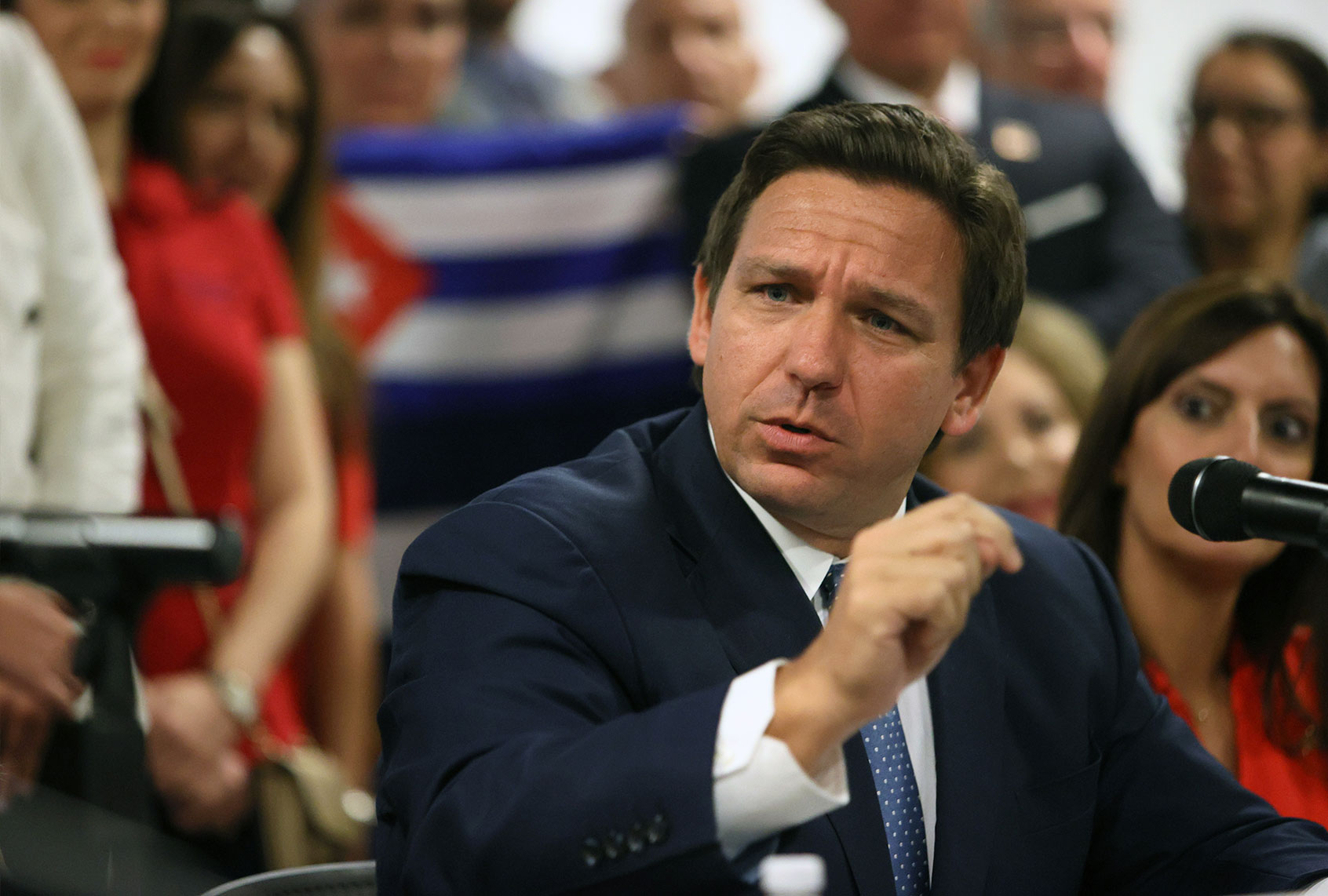
Ron DeSantisFlorida Gov. Ron DeSantis (Joe Raedle/Getty Images)

According to the legislation, the center would be tasked, along with two other schools — the Florida Institute of Politics at Florida State University in Tallahassee and the Adam Smith Center for the Study of Economic Freedom at Florida International University in Miami — with helping create materials for the state’s recently overhauled K-12 civics curriculum, whose stated aim is now to create patriotic, “upright and desirable” citizens. 

Specifically, these centers will help develop a series of “oral history resources” called Portraits in Patriotism that will include, for example, videos of Florida immigrants who fled countries like Cuba and Venezuela, to impress upon students “the evil of communism and totalitarianism.” When DeSantis discussed the project with Fox News’ Laura Ingraham in 2021, he suggested that this project would also serve as Florida’s response to “critical race theory.” It also seems these centers may become training grounds for Florida’s K-12 instructors; DeSantis has previously offered $3,000 grants to teachers who undergo training in the new civics standards. 

Educational centers funded by right-wing donors are nothing new — but now Republicans are using taxpayer dollars to implant conservative ideology in public institutions.

All this, of course, takes place against the larger backdrop of Florida’s ongoing attacks on public education: Within the last year or two, DeSantis and the GOP-led legislature have enacted broad bans on teaching about racism and LGBTQ issues, barred numerous materials from classroom use and empowered citizens to sue schools they believe are “indoctrinating” students. While the first wave of that assault was largely directed at public K-12 schools, it’s increasingly expanding to higher education as well.

This spring, Florida’s public universities began conducting annual surveys of students and faculty to ensure that campuses contain sufficient “viewpoint diversity,” in accordance with a law passed last year. Schools that appear to lack conservative viewpoints, DeSantis has suggested, may lose state funding. That same law also granted students broad permission to record their professors during classes or lectures. Other recent measures require faculty to undergo new reviews every five years to fight “indoctrination,” effectively ending the tenure system, and also require extensive documentation of resources used in course instruction and complicated new procedures for university accreditation. 


Want a daily wrap-up of all the news and commentary Salon has to offer? Subscribe to our morning newsletter, Crash Course.


The last measure, in a strange way, is seen as an attempt to shield the University of Florida from the consequences of its own defensive moves to crack down on academic freedom. Last fall, UF sparked tremendous backlash after first blocking three political science professors from testifying in a lawsuit about Florida’s new voting restrictions — their testimony, the university suggested, was contrary to the interests of the state — and then demanding that a professor revise a course that had the words “critical” and “race” in its title. Those incidents prompted investigations by both Congress and the Southern Association of Colleges and Schools Commission on Colleges, which provides UF’s accreditation. 

“Our university is well known for anticipatory obedience,” said Meera Sitharam, vice president of UF’s faculty union. Neither Sitharam nor two other faculty members at the university said they had been told much of anything about UF’s proposed Hamilton Center, but from the little they had learned, they also had concerns. 

“There’s nothing particularly wrong with saying there should be more Western canon and classical liberalism in the classroom,” said Sitharam. “What I’m against is the idea that this should replace CRT. I don’t know what one has to do with the other.” 

She expressed similar concerns with the plan for the institute to curate DeSantis’ Portraits in Patriotism series. “You can teach what the problems of authoritarian regimes are, but why single out the communist ones? Look at Pinochet, look at Argentina — there’s been more than enough right-wing authoritarianism in Latin America, even if we’re restricting ourselves to Latin America for some reason,” she said. “The one-sidedness is what’s problematic. They’re always seeing it from one side, then claiming they are the ones who are critically thinking.” 

Malini Johar Schueller, an English professor who joined UF’s Coalition for Academic Freedom after last fall’s controversies, was more emphatic. “I think it’s thoroughly shameful of UF to accept an educational endeavor, if you can call it that, which is so blatantly racist,” she said. When it comes to terms like “Western civilization” and “American exceptionalism,” she continued, “We all know what those are about. Those are code words for people who feel they’ve had enough of books teaching the histories of minorities.”  

What does “classical education” mean, anyway?

Back at Flagler College, religious studies professor Timothy Johnson said that if Flagler’s proposal had been framed with such an explicit emphasis on Western civilization, there would have been even stronger pushback. “Not because we’re not in favor of Western education,” he said, “but because that comes nowadays with certain ideological baggage.” 

But to a certain extent, added Butler, the Flagler history professor, “classical education” has become an equally loaded term. “Is the purpose of ‘classical education’ to teach the classic works of literature?” he asked. “Is it to return to ‘Western traditions’?” When schools like Hillsdale use the term, he said, “they make no bones about what they’re trying to accomplish.” 

So does “classical education” mean an emphasis on grammar, logic, rhetoric and math? Or does it mean teaching young people that America is an exceptional nation founded on “Judeo-Christian” principles?

By strict definition, “classical education” refers to a series of liberal arts emphases on subjects like grammar, logic, rhetoric and math. Multiple approaches to classical education exist, from varied ideological perspectives. But in recent years in the U.S., the term has been freighted with additional meaning. Right-wing publications like the Washington Examiner, National Review and the American Conservative have all rolled out the phrase to mean the most conservative model of education or “the natural replacement” for “critical race theory and other liberal curricula.” Ryan Girdusky, founder of the 1776 Project PAC, which campaigns against CRT, suggested in the early months of the pandemic that conservatives should seize the opportunity of disrupted classrooms to remake education along classical lines, since that approach alone could offer “a perspective on history that doesn’t teach [children] that the American system of government is inherently evil.” 

“It’s tricky to know what’s going on because classical or liberal arts education is not merely an ideological project adopted by the American right,” said Lorna Bracewell, a political theorist at Flagler. “I understand myself to be involved in classical and liberal arts education, and I’m basically an anti-fascist lesbian. So I don’t think it’s only code, or only a dog whistle. And yet, because there has been this concerted effort by the American right to appropriate that language, it makes one wary.”
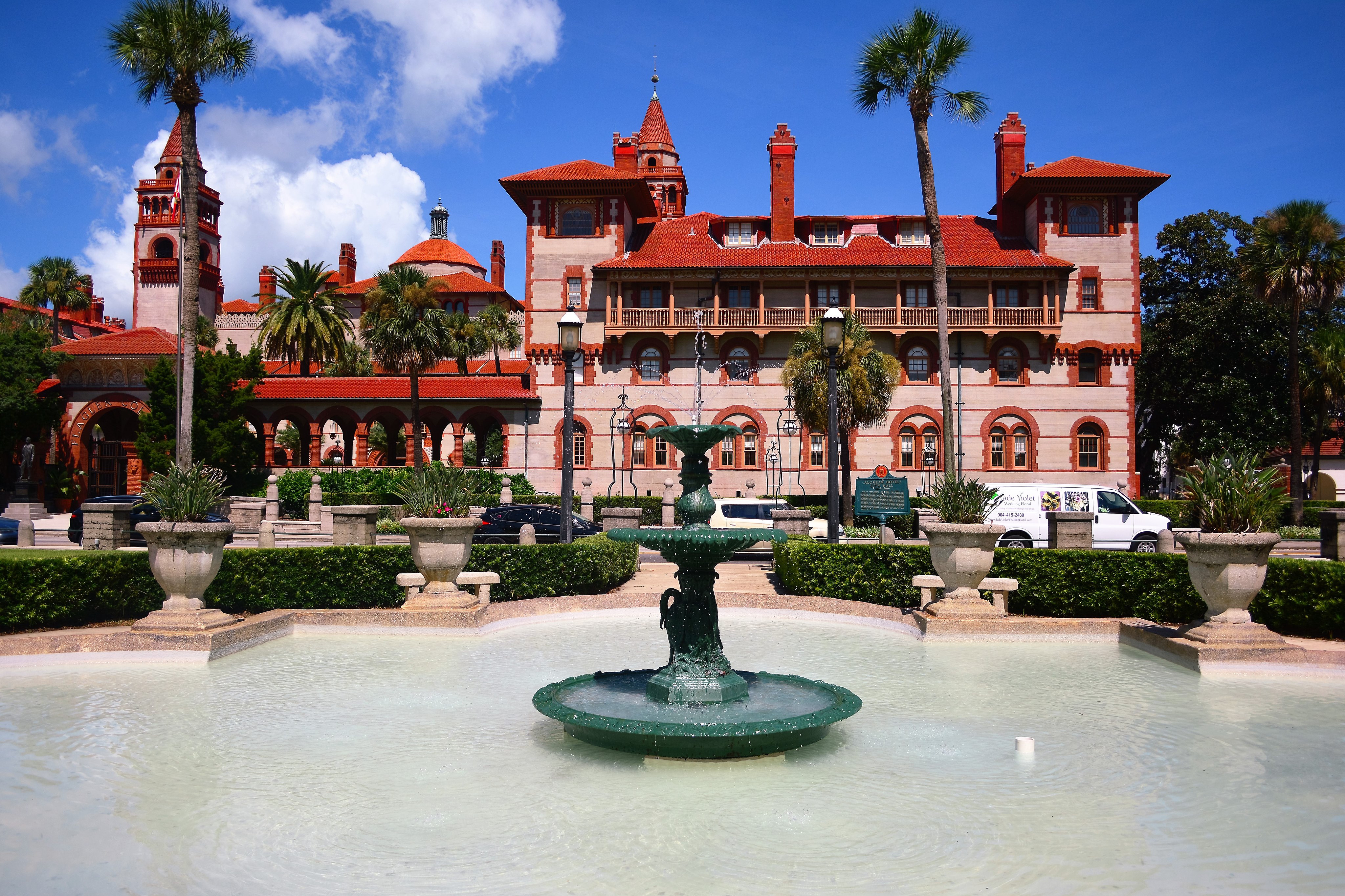
Flagler College, St. Augustine, Florida (David Gutierrez/Creative Commons)

But for most of those who’ve turned “classical education” into a buzzword or a franchise in recent years, it basically means exalting Western civilization, American exceptionalism and the notion that America was founded on “Judeo-Christian” principles. Hillsdale College’s classical education offerings, for instance, include its “1776 Curriculum,” a right-wing answer to the “1619 Project” that declares the U.S. “an exceptionally good country,” casts slave-owning founding fathers as covert abolitionists and calls progressivism “a rejection of the principles of the Declaration of Independence as well as the form of the Constitution.” 

Among the classical public charter schools Hillsdale has helped found, some proclaim their unapologetic focus on the works of white men, which are said to represent the best of Western thought and the foundational heritage of any American student, no matter their racial or ethnic background. At the Jacksonville Classical Academy (overseen by one of Flagler’s trustees), the mission statement emphasizes a vision to “train students to be stewards of the Western Tradition and the pillars of a free society.” The largest classical charter school network in the country, the Texas- and Arizona-based Great Hearts America, was engulfed in scandal in 2018 after one of its public charters directed students to balance the “positive” and “negative” aspects of slavery.

“What they’re trying to do is stop the clock on what counts as ‘canon,'” said Bethany Moreton, a historian at Dartmouth College who has written extensively about the right and is author of the forthcoming “Perverse Incentives: Economics as Culture War.” The enshrinement of a core “Western canon” to represent classical education, she notes, is not some timeless tradition, but a relatively recent creation born in the 20th century with the goal of assimilating new demographics of university students into a common national culture. Today’s renewed conservative focus on the model, Moreton continued, has similar aims. “This is not an innocent selection of the greatest that was ever said and thought. This is an identity project in itself.”  

“A separate patronage system” for right-wing thinkers and activists

In early April, Christopher Rufo, the right-wing activist and Manhattan Institute fellow widely credited with driving the right’s crusade against “critical race theory” (CRT), delivered a speech at Hillsdale College, calling on conservatives to “lay siege to the institutions.” While the most headline-grabbing aspect of his speech was Rufo’s admission that the best way for conservatives to lure people away from public schools was to surround them with endless controversy — over CRT, pandemic health measures, LGBTQ students and whatever else — a brief aside during the Q&A session was arguably just as important. 

Responding to the widespread conservative belief that liberals are winning the culture war, no matter what happens in Washington, Rufo suggested that the right should fight back by staging its own institutional takeover. Specifically, he said, Republican state lawmakers should dedicate public funds to establish “conservative centers” within flagship public universities. These could serve multiple purposes, he said, acting as “magnets” for conservative professors, creating right-leaning academic tracks that would influence incoming generations of students and, not least, founding “a separate patronage system” for conservative thinkers and activists. 

“Some people don’t like thinking about it that way,” Rufo continued. “But guess what? The public universities, the [diversity, equity, inclusion] departments, the public school bureaucracies are, at the end of the day, patronage systems for left-wing activists. And as long as there’s going to be a patronage system, wouldn’t it be good to have some people representing the public within them?” 

That may be a fair description of UF’s proposed Hamilton Center. But it’s not the only example.

In 2020, the Florida legislature also created the Adam Smith Center for the Study of Economic Freedom at Florida International University in Miami. Headed by former Trump official Carlos Díaz-Rosilla, the center’s stated mission includes studying “the effect of government and free market economies on individual freedom and human prosperity,” especially in the Americas.

Green Library at Florida International University in Miami. (Andres Limones Cruz/Creative Commons)

Six years earlier, in 2014, Florida’s legislature also funded a professorship at Florida State focused on “economic prosperity.” That one position has since been transformed, with the help of private donations from the network of right-wing libertarian mega-donor Charles Koch, into a full-scale institution, the L. Charles Hilton Jr. Center for the Study of Economic Prosperity and Individual Opportunity.

“It’s funny” that the right claims a need to create a separate patronage system for conservative academics, said Bethany Moreton, “because they’ve been doing this since the mid-1970s.” For decades, right-wing donors have sought to establish beachheads in colleges and universities across the nation, from which they hoped to create an academic foundation for conservative or libertarian policies.

In her 2017 book “Democracy in Chains,” Duke University historian Nancy MacLean chronicled the creation of the first such center, founded at the University of Virginia and later moved to George Mason University. This flagship program, nurtured by the vision of right-wing economist James Buchanan and then fattened with Koch foundation funds, helped inspire conservative funding of academic departments, endowed chairs and standalone centers at more than 300 universities in the decades since. 

Institutes like George Mason’s Mercatus Center today serve as “nerve centers” for conservative policy agendas, said MacLean, and also as talent pipelines, allowing funders to boast that they are rearing the next generation of staff for conservative think tanks and advocacy groups. And that’s by explicit design. 

A 2018 report by the progressive organization Unkoch My Campus describes Charles Koch’s conviction that right-wing donors should focus less on targeting unreliable politicians to enact a pro-business agenda and more on building support for their ideas through donations that could trigger a long chain of outcomes. In a 1974 pamphlet, “Anti-Capitalism and Business,” Koch wrote that conservative philanthropy should aim to achieve a “multiplier effect,” and that for that purpose, “education programs are superior to political action, and support of talented free market scholars is preferable to mass advertising.” 

A key adviser to Charles Koch argued decades ago that donations to fund right-wing scholarship could achieve a “multiplier effect” that was far more effective than giving money to unreliable politicians.

That perspective was elaborated by Koch’s key adviser, Richard Fink, then the president of the Charles G. Koch Charitable Foundation, in a much-referenced paper from 1996 entitled “The Structure of Social Change.” Fink argued that grants to universities to support the work of economists committed to radical free-market capitalism could inform policy proposals from conservative think tanks. That work, in turn, would inspire advocacy organizations (either grassroots or astroturf), which create the appearance of broad public support, which ultimately leads politicians to pass laws that deregulate capitalism or defund the welfare state.

“They see it as this industrial process where they fund all four stages and the end product is social change,” said Ralph Wilson, founder of the progressive watchdog group Corporate Genome Project and coauthor of the recently-released “Free Speech and Koch Money: Manufacturing a Campus Culture War.” Wilson began researching the impact of the Koch network on education years ago while a student at Florida State, which made an unsavory deal with Koch donors, taking their money in exchange for allowing them a say in hiring and curriculum decisions, and, at one point, having a Koch-funded economics program create pro-capitalism lesson plans for both college and K-12 instruction. (One product of that agreement, Wilson noted, was a K-12 curriculum called “Common Sense Economics,” which included, incredibly, a paper titled “Sacrificing Lives for Profit,” which argued, “Corporations routinely sacrifice the lives of some of their customers to increase profits, and we are all better off because they do.”) Within that process, Wilson said, “the university is recognized as the key first stage of investment for social change, so the more they can capture universities, the more successful their political program will be.” 

That model, added MacLean, works in tandem with the steady defunding of higher education over many years. “As taxes are driven down by the same [conservative] elected officials, school administrators are just desperate for funds,” said MacLean. “So they become a willing audience, and in some ways even accomplices, to this expansion of right-wing influence in higher education that has not been earned on the merits of any intellectual argument or research.”

At the University of Florida, religious studies professor Bron Taylor recognized that pattern. Taylor said he personally believed that “teaching the history, philosophy and religion of the so-called Western world is something we should be doing, and doing well,” and worried that certain traditional subjects had fallen so far out of fashion that students might graduate without a strong grounding in basic civics. But he said he also believed that outside funding with strings attached could distort the educational mission. 

“When big money comes into a university, of course the university tends to welcome that. It’s one of the ways they accomplish things they want to accomplish,” he said. “But it’s also the case that in an institution that’s supposed to be run by faculty governance, you end up with administrators whose status and prestige interests are served by raising money, and the donors then can exercise undue influence on the priorities of the university.”

“In this kind of case the devil’s in the details,” Taylor continued. “Who is going to decide the shape and priority of this institute? Will the donors have any say in who is appointed to lead it?” Under current conditions at UF, he said, “DeSantis doesn’t have to say, ‘If you do X, we’ll cut your funding,'” because administrators already know. “There’s always this Damoclean sword hanging over the university, that if you stray from their political agenda, you’ll be looked at disfavorably when it comes to budgets.”

For the last 10 years, Wilson, who previously helped found Unkoch My Campus, has focused attention on academic centers funded by private donors. As that pattern has become more widely known, efforts to build or expand Koch-related centers at numerous schools have encountered pushback from students and staff, as with a recent effort to build a free-market Center for Philosophy, Politics and Economics at Brown University. 

But now the right has a new playbook: Leveraging direct funding from state governments. 

“Using state legislatures as an avenue for the creation of these centers seems to be a new tactic,” said Wilson, which can expedite the entire enterprise. “There’s no decision-making process that involves a faculty legislature” if state governors and lawmakers are making the decisions. “It removes any avenue for students, faculty or administrators, for that matter, to have a say in the creation of these centers.” 

“A late-stage example of corporate capture of the state”

That’s largely what happened in Arizona five years ago, when the state’s right-wing legislature poured millions of dollars into transforming two “freedom schools” at Arizona State University, initially created with funding from the Koch network, into a new program, the School of Civic and Economic Thought and Leadership, which was deemed necessary because, according to a group of conservatives hired to develop the program, ASU suffered from “conformity of opinion” and “lack of debate.” 

“The legislature basically held the university hostage to force them to create tenure-track faculty lines for the freedom center,” said MacLean. Writing in the Washington Post, Matthew Garcia, the former director of the school’s historical, philosophical and religious studies department, argued that what had once been two conservative centers subject to the normal process of faculty oversight and hiring procedures became an unaccountable institution exempt from normal governance, which spent lavishly on first editions of “foundational” books and subsidized international trips for its students, and where a university official allegedly said the program “would never hire anyone that Koch doesn’t approve.” Garcia resigned, and now teaches at Dartmouth. 

The Republican state legislature “basically held Arizona State hostage” to force the creation of tenure-track jobs for right-wing professors, outside normal university governance.

But Wilson added that the program at ASU now receives so much direct state funding that the Koch network has largely been able to drop its support. Both ASU’s new center and another Koch-backed “freedom” center at the University of Arizona have been called upon to develop the state’s K-12 civics curricula. In January, Arizona Republicans proposed their own “Portraits in Patriotism” oral history series, much like Florida’s, as a requirement for high school graduation. 

“This is a late-stage example of the corporate capture of the state,” said Wilson. “As these donors are trying to gain intellectual and cultural influence for their ideology, they’ve been frantically trying to set up shop in universities that will help legitimize their movement.” In states like Arizona, Texas and Florida where far-right donors have amassed considerable political influence, “they have so much control that they can start implementing their agenda from the top down. They can use the state to help them further capture the state.” 

Since the changes at ASU, there has been a flurry of similar proposals for new conservative centers at flagship public universities.

In Texas last year, a new state initiative, championed by Lt. Gov. Dan Patrick, allocated an initial $6 million to create a think tank at the University of Texas at Austin, “dedicated to the study and teaching of individual liberty, limited government, private enterprise and free markets” and envisioned as a $100 million public-private partnership modeled on Stanford University’s Hoover Institution. Documents obtained by the Texas Tribune made clear that university administrators worked closely with Republican lawmakers and school donors who saw the center as a means of bringing “intellectual diversity” to the campus. 

One such document describes the institute’s mission as educating students “on the moral, ethical, philosophical and historical foundations of a free society” and included plans to create a related civics course for high school students, much as in Florida and Arizona. 
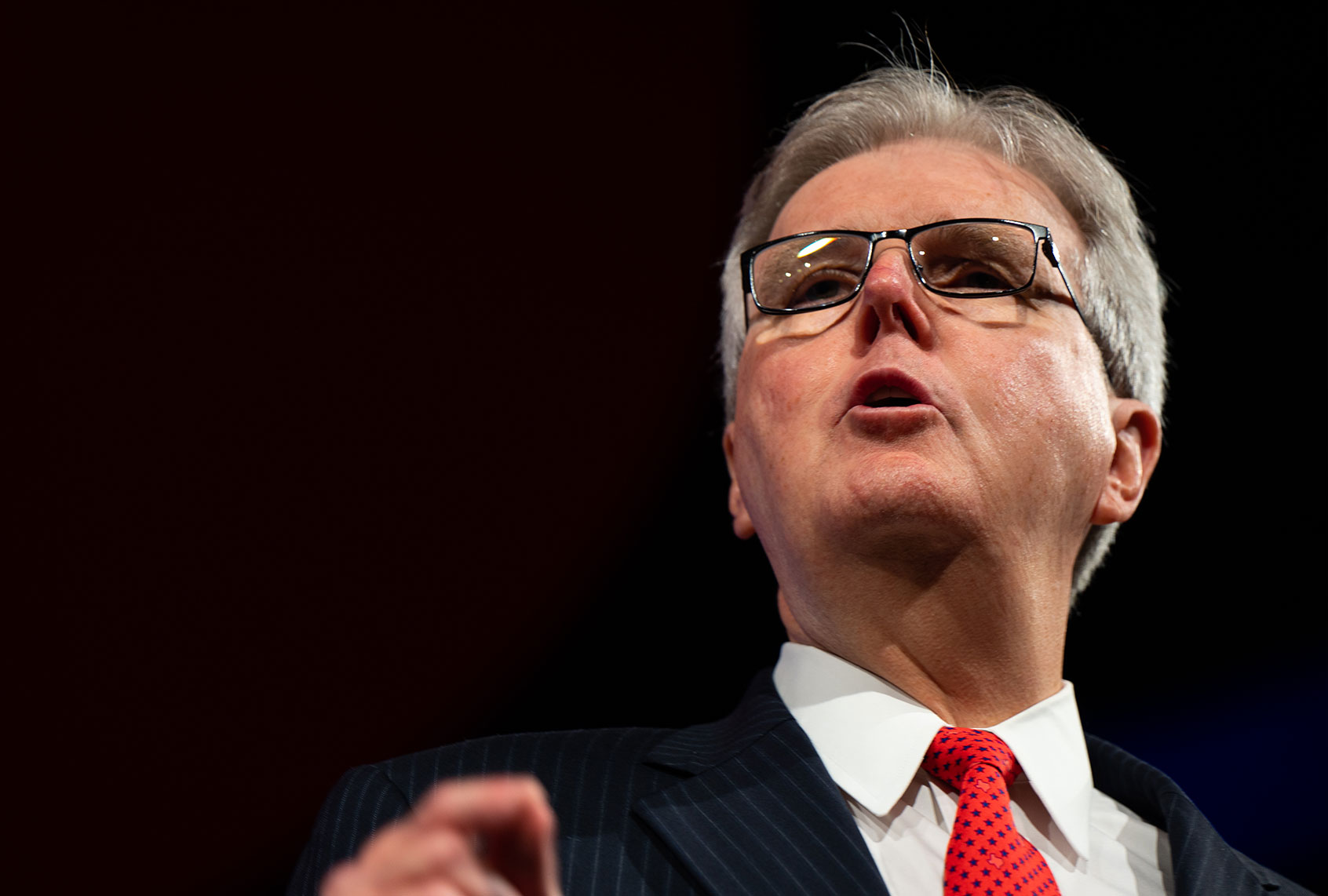
Dan PatrickLieutenant Governor of Texas Dan Patrick (Brandon Bell/Getty Images)

Another document noted that the center was necessary because a “growing proportion of our population lacks a basic understanding of the role liberty and private enterprise play in their well-being.” What “liberty” and “free society” mean in this context may be clarified by the involvement of private donor Bud Brigham, a libertarian oil tycoon who blames academics for fostering the “global warming scam” and funded the production of not one but two movie adaptations of Ayn Rand’s “Atlas Shrugged.” 

The Liberty Institute at UT Austin was controversial from its inception, with student government calling on administrators to reject the offer and faculty expressing frustration with the lack of transparency. The documents obtained by Texas Tribune also suggest that some of the project’s supporters called for the institute to be exempt from the university’s normal governance process, with its own budget and the power to appoint its own faculty. 

In February, the institute came into the news again in the aftermath of Patrick’s angry vow to eliminate tenure at Texas’ public universities following a resolution passed by UT Austin’s faculty council supporting scholars’ academic freedom to teach critical race theory. Patrick responded by writing on Twitter, “I will not stand by and let looney Marxist UT professors poison the minds of young students with Critical Race Theory. We banned it in publicly funded K-12 and we will ban it in publicly funded higher ed. That’s why we created the Liberty Institute at UT.” 

Similar plans have also arisen recently in Tennessee. When Gov. Bill Lee delivered his “state of the state” address in late January, the biggest headlines were reserved for his announcement that Tennessee would partner with Hillsdale College to roll out more “classical education” charter schools, funded with taxpayer dollars, across the state. But Lee also said that the “informed patriotism” that characterized that endeavor “should stretch beyond the K-12 classroom and into higher education.” 

“In many states, colleges and universities have become centers of anti-American thought, leaving our students not only ill-equipped but confused,” Lee continued. “But, in Tennessee, there’s no reason why our institutions of higher learning can’t be an exceptional part of America at Its Best.” 

To that end, Lee announced, he was budgeting $6 million to create a new “Institute of American Civics” at the University of Tennessee, Knoxville, which he said would serve as “a flagship for the nation — a beacon celebrating intellectual diversity at our universities and teaching how a responsible, civic-minded people strengthens our country and our communities.” 

This move came in the wake of pressure from Tennessee Republicans to drop plans to address diversity at several state universities, including both UT Knoxville and the University of Memphis. In April, after students at Yale Law School protested a speaker from the anti-LGBTQ legal firm Alliance Defending Freedom, Lee released a statement saying that his new Institute for American Civics was designed “to be the antidote to the cynical, un-American behavior we are seeing at far too many universities.” 

Are you teaching history “the right way”?

At Flagler College in St. Augustine, it’s still not clear where the proposed Institute for Classical Education fits into this complex picture. Much of the faculty uncertainty or apprehension isn’t about what Flagler administrators have actually proposed but rather the context surrounding it: the coded meanings of “classical ed,” the updated model of state-funded university infiltration and the overall atmosphere of hostility to public education in Florida and around the country. 

Earlier this year, Flagler historian Michael Butler was supposed to deliver a training seminar on the civil rights movement to Florida elementary school teachers. It was canceled by local officials who feared it might fall afoul of new prohibitions on teaching about race. When he tells people he’s a historian these days, he said, they increasingly respond by asking him whether he teaches history “the right way.” 

“The right was thinking long-term when they started doing this in the ’70s. They do not support education as an end in itself, but as a means to an end that they should define.”

“The whole dynamic has to be understood in the broader context of what’s happening in Florida with regards to education and how people interpret that,” said Flagler’s Timothy Johnson. He doesn’t think Flagler’s proposal is a “Trojan horse” for a particular political project, he said, and if the state wants to support the school’s efforts to retain first-generation college students, that’s a good thing. If, however, he said, “the state of Florida wants to give $5 million to the college and dictate the concept and content of ‘classical education,’ then I completely oppose the initiative.”

Flagler’s administration has taken pains to distinguish their proposed center from the larger swirl of polarization, saying that any hiring or curriculum decisions would go through the traditional process of faculty oversight, not outside interests from either the board of trustees or state government. When eight professors, including Butler, Johnson and Bracewell, brought a resolution before the faculty senate in April, affirming that the center would remain “under the jurisdiction and control of the faculty,” it passed unanimously, with senior administrator Art Vanden Houten and the college president in support. 

Whatever ultimately happens at Flagler, versions of this model, and the accompanying controversy, are certain to be replicated elsewhere, in schools with less supportive administrations. At the University of Florida, Malini Johar Schueller said the school’s failure to solicit faculty input about its proposed center was “quite in keeping with this administration.” She expressed little optimism that things would improve soon.

“This is going to continue, unfortunately,” she said. “All we can do at the university level is not be cowed down, do what we have to do and put up a good battle.” 

“The right was thinking long-term when they started doing this in the ’70s, thinking ahead to a moment like this one,” said Bethany Moreton. “They do not support education as a good in itself, but as a means to an end that they should define. And the further you remove education from democratic oversight, the more likely it is that freestanding institutes like this become a way to have what they always dreamed of: a university without the disruptive forces of actual thought, contestation and new knowledge.”

Read more on the American right’s latest wave of assaults on education:

Biden suggests “rational” Republicans may act on gun control, Twitter erupts

President Biden on Monday sparked anger and frustration in the wake of a Texas mass shooting with remarks about gun safety reform that included describing two GOP congressional leaders as “rational.”

The president said on the White House lawn that Senate Majority Leader Mitch McConnell is “a rational Republican,” and he thinks Sen. John Cornyn, R-Texas, is too, according to multiple reporters present.

Biden’s comments came after McConnell told CNN last week — after the deadly shooting at Robb Elementary School in Uvalde — that he “encouraged” Cornyn to talk with Democrats to “come up with a bipartisan solution.”

RELATED: So where were the “good guys with guns”? Standing around doing jacks**t, as usual

Responding on Twitter to the president’s Monday statement, “Our America” co-host Sawyer Hackett simply said, “Wait, what?”

Writer Thor Benson was similarly concise, tweeting, “Hmmm … no.”

Former Democratic Ohio congressional candidate Nina Turner asked, “What in the neoliberal hell is this?”

Jeet Heer, a national affairs correspondent at The Nation, said that “this might be justified if it yielded results in Republican lawmakers voting for parts of Biden’s agenda, but it won’t.”

“As it stands,” he warned, “it’s giving centrist voters permission to vote for any Republican who is not” former President Donald Trump or Rep. Marjorie Taylor Greene, R-Ga.


Want a daily wrap-up of all the news and commentary Salon has to offer? Subscribe to our morning newsletter, Crash Course.


Noting that “Cornyn was tweeting a few days ago about making schools like airports,” journalist Aaron Rupar said, “I’m skeptical of his rationality on guns.”

“I beg of Democrats to start dealing with Republicans as they are and not the made-up version you wish they were,” he added.

Last Tuesday, Salvador Ramos used an AR-15-style-rifle that he legally purchased in Texas after his 18th birthday to murder 19 children and two teachers at the Uvalde elementary school. The teenage gunman was then killed by law enforcement. Biden’s Department of Justice is now reviewing the police response to the shooting.

The president told reporters Monday, “I think things have gotten so bad that everybody’s getting more rational about it, at least that’s my hope.”

“The Second Amendment was never absolute,” he said, according to the Associated Press. “You couldn’t buy a cannon when the Second Amendment was passed. You couldn’t go out and buy a lot of weapons.”

Biden also explained the limitations on his powers, saying, “I can’t dictate this stuff. I can do the things that I’ve done — and any executive action I can take I’ll continue to take — but I can’t outlaw a weapon. I can’t … change the background checks. I can’t do that.”

When Biden visited Texas over the weekend, onlookers shouted “Do something!” at him. In a Sunday letter, the Principal Recovery Network made a similar demand of all U.S. elected officials.

Faced with nationwide calls for action and data on firearm deaths in the U.S., House Democrats have repeatedly moved to strengthen gun laws in recent years. But unless the party’s entire caucus in the Senate decides to end the filibuster, most legislation cannot make it through the evenly split upper chamber without GOP support.

Read more on mass shootings and the push for gun control:

Parents of murdered Uvalde students refuse to meet with Texas Gov. Greg Abbott

In Uvalde, Texas, ten-year-old Alexandra “Lexi” Aniyah Rubio was among the 19 children who were shot and killed by a gunman during the Robb Elementary School massacre on Tuesday, May 24. Texas Gov. Greg Abbott has offered to meet with the child’s parents, Kimberly Mata Rubio and Felix Rubio, but they have declined his offer.

Kimberly Mata Rubio told the New York Times, “My first thought was: ‘My Lexi doesn’t even like him.’ She was really little, but we talked about this stuff at home.”

Abbott, who is seeking reelection in the 2018 midterms and is running against Democrat Beto O’Rourke, opposes even modest gun control measures and is an unwavering supporter of the National Rifle Association (NRA). But Kimberly and Felix Rubio are calling for AR-15 rifles like the one used in the Robb Elementary School massacre to be banned.

Felix Rubio, who is 35, isn’t calling for a ban on regular handguns. Alexandra Aniyah Rubio’s father is a gunowner himself; he works as a deputy sheriff for the Uvalde County Sheriff’s office — and his wife predicts that his coworkers won’t be happy about his stand on AR-15s.

Kimberly Rubio told the Times, “We live in this really small town in this red state, and everyone keeps telling us, you know, that it’s not the time to be political, but it is — it is. Don’t let this happen to anybody else.”

Kimberly and Felix Rubio went to Robb Elementary School the morning of May 24 to attend awards ceremonies for their two children. After the shooting occurred later that day and her daughter was killed, Kimberly Mata Rubio posted on Facebook, “My beautiful, smart, Alexandria Aniyah Rubio was recognized today for All-A honor roll. She also received the good citizen award. We told her we loved her and would pick her up after school. We had no idea this was goodbye.”

Fox News host “goes rogue” — calls for gun control live on-air

Following the massacre at Robb Elementary School in Uvalde, Texas — an attack that left 19 children and two teachers dead — Fox News and other right-wing media outlets have been pushing a Democrats-want-to-take-your-guns narrative. But Fox News host Arthel Neville had a different tone when, on Sunday, May 29, she covered President Joe Biden’s visit to Uvalde and called for gun law reform.

“As we’ve said before, prayers are not enough,” Neville told her guest Griff Jenkins. “We have to do something. We’ve got to get the lawmakers to do something. Now, the president is, you know, the commander in chief. This is happening on his watch, but he needs the help of Congress to get something done.”

Jenkins argued that Biden, following the Uvalde attack, was failing to unite the country — and Neville responded, “Excuse me. It’s not just about the president uniting, OK? It’s more than that.”

Neville continued, “It’s lawmakers who are stopping the unification. So, let’s be clear about that. Yes, this is happening on his watch. Yes, he is responsible. Yes, he campaigned on a united America. And, yes, he needs to do something about it, but he can’t do it alone.”

Neville is the daughter of veteran New Orleans R&B singer Art Neville of the Neville Brothers and the niece of singer Aaron Neville, who is famous for 1966 hit “Tell It Like It Is”

The Uvalde attack came only ten days after a mass shooting in a Buffalo, New York supermarket on May 10. That attack left ten people dead. In both attacks, the gunmen used AR-15-style semiautomatic assault weapons that they had purchased legally.

HuffPost reporter Josephine Harvey explains, “Republicans have been quick to blame everything from school architecture to mental health, lack of security, and even ‘wokeness’ for the country’s mass shooting issue, refusing to acknowledge that the one variable that sets the U.S. apart from its developed peers is its astronomical number of guns and the ease with which people can obtain them.”

Harvey adds, “Many Fox News hosts and pundits have offered similar explanations for the crisis. Last week, media watchdog Media Matters cut together a montage of at least 50 different solutions the conservative network’s personalities proposed in the wake of the Uvalde shooting. None of them were gun control.”

u201cu201cThis is the moment.u201d Fox News goes rogue, splits from the NRA and Republican Party and calls for gun control.u201d

— Mike Sington (@Mike Sington) 1653872129

“That’s just part of aging”: Long COVID symptoms are often overlooked in seniors

Nearly 18 months after getting COVID-19 and spending weeks in the hospital, Terry Bell struggles with hanging up his shirts and pants after doing the laundry.

Lifting his clothes, raising his arms, arranging items in his closet leave Bell short of breath and often trigger severe fatigue. He walks with a cane, only short distances. He’s 50 pounds lighter than when the virus struck.

Bell, 70, is among millions of older adults who have grappled with long COVID — a population that has received little attention even though research suggests seniors are more likely to develop the poorly understood condition than younger or middle-aged adults.

Long COVID refers to ongoing or new health problems that occur at least four weeks after a COVID infection, according to the Centers for Disease Control and Prevention. Much about the condition is baffling: There is no diagnostic test to confirm it, no standard definition of the ailment, and no way to predict who will be affected. Common symptoms, which can last months or years, include fatigue, shortness of breath, an elevated heart rate, muscle and joint pain, sleep disruptions, and problems with attention, concentration, language, and memory — a set of difficulties known as brain fog.

Ongoing inflammation or a dysfunctional immune response may be responsible, along with reservoirs of the virus that remain in the body, small blood clots, or residual damage to the heart, lungs, vascular system, brain, kidneys, or other organs.

Only now is the impact on older adults beginning to be documented. In the largest study of its kind, published recently in the journal BMJ, researchers estimated that 32% of older adults in the U.S. who survived COVID infections had symptoms of long COVID up to four months after infection — more than double the 14% rate an earlier study found in adults ages 18 to 64. (Other studies suggest symptoms can last much longer, for a year or more.)

The BMJ study examined more than 87,000 adults 65 and older who had COVID infections in 2020, drawing on claims data from UnitedHealth Group’s Medicare Advantage plans. It included symptoms that lasted 21 days or more after an infection, a shorter period than the CDC uses in its long COVID definition. The data encompasses both older adults who were hospitalized because of COVID (27%) and those who were not (73%).

The higher rate of post-COVID symptoms in older adults is likely due to a higher incidence of chronic disease and physical vulnerability in this population — traits that have led to a greater burden of serious illness, hospitalization, and death among seniors throughout the pandemic.

“On average, older adults are less resilient. They don’t have the same ability to bounce back from serious illness,” said Dr. Ken Cohen, a co-author of the study and executive director of translational research for Optum Care. Optum Care is a network of physician practices owned by UnitedHealth Group.

Applying the study’s findings to the latest data from the CDC suggests that up to 2.5 million older adults may have been affected by long COVID. For those individuals, the consequences can be devastating: the onset of disability, the inability to work, reduced ability to carry out activities of daily life, and a lower quality of life.

But in many seniors, long COVID is difficult to recognize.

“The challenge is that nonspecific symptoms such as fatigue, weakness, pain, confusion, and increased frailty are things we often see in seriously ill older adults. Or people may think, ‘That’s just part of aging,'” said Dr. Charles Thomas Alexander Semelka, a postdoctoral fellow in geriatric medicine at Wake Forest University.

Ann Morse, 72, of Nashville, Tennessee, was diagnosed with COVID in November 2020 and recovered at home after a trip to the emergency room and follow-up home visits from nurses every few days. She soon began having trouble with her memory, attention, and speech, as well as sleep problems and severe fatigue. Though she’s improved somewhat, several cognitive issues and fatigue persist to this day.

“What was frustrating was I would tell people my symptoms and they’d say, ‘Oh, we’re like that too,’ as if this was about getting older,” she told me. “And I’m like, but this happened to me suddenly, almost overnight.”

Bell, a singer-songwriter in Nashville, had a hard time getting adequate follow-up attention after spending two weeks in intensive care and an additional five weeks in a nursing home receiving rehabilitation therapy.

“I wasn’t getting answers from my regular doctors about my breathing and other issues. They said take some over-the-counter medications for your sinus and things like that,” he said. Bell said his real recovery began after he was recommended to specialists at Vanderbilt University Medical Center.

James Jackson, director of long-term outcomes at Vanderbilt’s Critical Illness, Brain Dysfunction, and Survivorship Center, runs several long COVID support groups that Morse and Bell attend and has worked with hundreds of similar patients. He estimates that about a third of those who are older have some degree of cognitive impairment.

“We know there are significant differences between younger and older brains. Younger brains are more plastic and effective at reconstituting, and our younger patients seem able to regain their cognitive functioning more quickly,” he said.

In extreme cases, COVID infections can lead to dementia. That may be because older adults who are severely ill with COVID are at high risk of developing delirium — an acute and sudden change in mental status — which is associated with the subsequent development of dementia, said Dr. Liron Sinvani, a geriatrician and an assistant professor at Northwell Health’s Feinstein Institutes for Medical Research in Manhasset, New York.

Older patients’ brains also may have been injured from oxygen deprivation or inflammation. Or disease processes that underlie dementia may already have been underway, and a COVID infection may serve as a tipping point, hastening the emergence of symptoms.

Research conducted by Sinvani and colleagues, published in March, found that 13% of COVID patients who were 65 and older and hospitalized at Northwell Health in March 2020 or April 2020 had evidence of dementia a year later.

Dr. Thomas Gut, associate chair of medicine at Staten Island University Hospital, which opened one of the first long COVID clinics in the U.S., observed that becoming ill with COVID can push older adults with preexisting conditions such as heart failure or lung disease “over the edge” to a more severe impairment.

In older adults especially, he said, “it’s hard to attribute what’s directly related to COVID and what’s a progression of conditions they already have.”

That wasn’t true for Richard Gard, 67, who lives just outside New Haven, Connecticut, a self-described “very healthy and fit” sailor, scuba diver, and music teacher at Yale University who contracted COVID in March 2020. He was the first COVID patient treated at Yale New Haven Hospital, where he was critically ill for 2½ weeks, including five days in intensive care and three days on a ventilator.

In the two years since, Gard has spent more than two months in the hospital, usually for symptoms that resemble a heart attack. “If I tried to walk up the stairs or 10 feet, I would almost pass out with exhaustion, and the symptoms would start — extreme chest pain radiating up my arm into my neck, trouble breathing, sweating,” he said.

Dr. Erica Spatz, director of the preventive cardiovascular health program at Yale, is one of Gard’s physicians. “The more severe the COVID infection and the older you are, the more likely it is you’ll have a cardiovascular complication after,” she said. Complications include weakening of the heart muscle, blood clots, abnormal heart rhythms, vascular system damage, and high blood pressure.

Gard’s life has changed in ways he never imagined. Unable to work, he takes 22 medications and can still walk only 10 minutes on level ground. Post-traumatic stress disorder is a frequent, unwanted companion.

“A lot of times it’s been difficult to go on, but I tell myself I just have to get up and try one more time,” he told me. “Every day that I get a little bit better, I tell myself I’m adding another day or week to my life.”


We’re eager to hear from readers about questions you’d like answered, problems you’ve been having with your care and advice you need in dealing with the health care system. Visit khn.org/columnists to submit your requests or tips.

KHN (Kaiser Health News) is a national newsroom that produces in-depth journalism about health issues. Together with Policy Analysis and Polling, KHN is one of the three major operating programs at KFF (Kaiser Family Foundation). KFF is an endowed nonprofit organization providing information on health issues to the nation.

Subscribe to KHN’s free Morning Briefing.

Abortion opponents don’t care if pregnant women get murdered

This all happened in the past two weeks alone: Nekea Brooks was 27 years old, and two months pregnant, when she was shot and killed in Fayetteville, NC on May 16. She leaves behind a five year-old daughter. Mijor Kay Anderson was a pregnant 30 year-old mother of eight when she went missing from Vicksburg, MS last October. Her body was found, “rolled up and tossed away like trash,” in the words of her sister Amy Anderson-Williams, on May 17. Tamarra Deloache of York, PA was 32 and six months pregnant when was found dead from “sharp force trauma” in her apartment on May 18. She leaves behind a 12 year-old son.

The leading cause of death in pregnant and postpartum women in the US is not heart disease, diabetes, or infection. It’s murder. Gutting abortion rights will make it so, so much worse.


Want more health and science stories in your inbox? Subscribe to Salon’s weekly newsletter The Vulgar Scientist.


America’s harrowing gallop away from reproductive rights — led by a gung-ho Supreme Court and a far-right Catholic fringe — was never about saving human life. It was never about children sleeping peacefully in the loving arms of their mothers. The flippant rhetoric of “safe haven” laws and grossly out-of-touch commentary like Rep. Dan Crenshaw’s “Less abortion, more adoption. Why is that controversial?” make it clear that the foes of safe, legal abortion don’t have a plan for pregnant women and they don’t give a crap either.

“If we look around the world, women who are pregnant either by choice or because of assault or rape are often targets of men,” explains Brigittine French, assistant vice president of global education and professor of anthropology at Grinnell College, and a specialist in gendered violence. She cites social stigma, financial insecurity, and chronic abuse among the exacerbating factors. “Any conditions where a woman’s sexuality is subject to scrutiny,” she says, “they can become victims of violence.” 

RELATED: High-tech surveillance in post-Roe America: Chilling new report outlines possible future

The most recent supporting evidence comes via a 2021 report in the journal Obstetrics & Gynecology. Using National Center for Health Statistics, researchers found the homicide rate was 16% higher for pregnant women than their peers of reproductive age and noted that “Homicide during pregnancy or within 42 days of the end of pregnancy exceeded all the leading causes of maternal mortality by more than twofold.”

And the risks are a lot worse in the most vulnerable groups. “Pregnancy was associated with a significantly elevated homicide risk in the Black population and among girls and younger women (age 10–24 years) across racial and ethnic subgroups,” the report continues. Speaking to Nature last year, study co-author and reproductive epidemiologist Maeve Wallace said simply: “It’s an age and race story.” 

Prior to her death, she had done an internet search for “what to do if your husband is upset you are pregnant.”

There are a thousand things wrong with the oft-repeated lie that girls and women can and should just carry every pregnancy to term — a thousand problems that the cavalier “more adoption” response doesn’t address. But chief among them is the very real risk of violence to a pregnant female body. There are honor killings and attempted killings. Last year in Peoria, Arizona, six members of the same family were arrested after allegedly attempting to kidnap a 20-year-old pregnant relative. The woman told police she “was afraid her relatives will kill her because they believe she has brought dishonor to the family.”

There are spousal killings. We know about the infamous ones — it’s been twenty years since Scott Peterson killed his wife Laci and their unborn son Conner, and four since family annihilator Chris Watts murdered his wife Shannan, their unborn son Nico, and their two young daughters Bella and Celeste. But just this past April, Beau Rothwell of Creve Coeur, Missouri was found guilty of bludgeoning his pregnant wife Jennifer to death with a mallet. Prior to her death, she had done an internet search for “what to do if your husband is upset you are pregnant.”

As a paper published in 2021 in the Journal of Women’s Health — one that also explored the distressingly high number of maternal deaths due to suicide and overdose — notes, “When the perpetrator is known, the largest proportion of homicide cases during or around pregnancy occurs at the hands of an intimate partner.” Now picture how exponentially more dangerous everything becomes when more women who are already in fear for their lives can’t safely end a pregnancy. 

It’s striking how little political concern there is for the unborn when they’re the casualties of their murdered mothers. It’s also profoundly telling how little medical concern there is either — the current CDC calculates maternal deaths as a “result of pregnancy or delivery complications” but does not include violence or accidents in their statistics. It doesn’t recognize the violence against women as the serious health risk it truly is.

“A lot of times the reason a younger person, a minor, might want to terminate a pregnancy is because of family violence.”

Conservatives like to repeat the fiction that unwanted pregnancy is caused by female sluttiness, overlooking the dangerous dynamics of familial and intimate partner abuse. Gretchen Ely, a social work professor at the University of Tennessee, is currently doing research on reproductive coercion. “Intentionally impregnating someone or forced impregnation is a pregnancy tactic that is a partner abuse tactic,” she says. “I think that people don’t realize the extent of tampering with pregnancy autonomy that can possibly go on in a domestic abuse situation.” But abortion, she says, “can be a way of getting away from an abusive partner. Taking that away can force a family formation in the context of violence.” She adds, “It’s really none of our business why people get abortions. But there is a lot of potential around an unintended pregnancy for there to be trauma or violence that occurs prior to that unintended pregnancy.”

And the potential for violence — along with the total disregard for bodily autonomy — is all the crueler for the underage. Parental consent laws — and 21 states have them — already put girls at risk. “A lot of times the reason a younger person, a minor, might want to terminate a pregnancy is because of family violence and the fear of what will happen to them if their parents or guardians find out that they have a pregnancy,” says Ely. “Research has shown for a long time that most teens would involve a trusted adult in their abortion decision anyway. The ones who don’t are the ones that are fearful of something like family violence. Family violence against teenage girls is very common.”

Conservatives brag that they believe in prioritizing the unborn — but they don’t seem to mind it so much when the mother dies along the way. They believe in the sanctity of the family — except for the children left behind in the aftermath of violence. They willfully ignore the real, life-threatening danger that walking around in the world in a pregnant body can pose, because when they preach about protecting life, they are imagining a very specific and exclusive type of life. As Brigittine French notes, “Pregnancy always renders women more vulnerable to lethal judgments by the people most close to her.” And it’s a death sentence the so-called “pro-life” movement sees no hypocrisy in.

More Salon coverage of reproductive rights: 

Not an Aperol spritz fan? Try these three Italian cocktails instead

Each summer, there seems to be a new “it cocktail.” Last year saw the return of the 80s with the espresso martini. This year, the “Dirty Shirley,” a vodka-spiked Shirley Temple, is a hot contender for the drink of the season. But my go-to is always the Italian Aperol spritz

Related: How to make a better Aperol Spritz according to an Eataly beverage expert

The 3-2-1 mix of Aperol, Prosecco and soda is the perfect combination of fruity, bitter and sparkling. I’m not alone in my adoration of it. Over the last decade, there have been so many pieces published about the cocktail’s merits, followed by pieces about how it’s overrated, followed by more pieces about its greatness. 

However, if you happen to be in the “It’s overrated” camp — or just aren’t a fan of the bitter citrus kick it provides — have no fear. There are other Italian cocktails for you to enjoy sipping this summer. Here are three to get you started. 

Vermouth spritz 

Matthew Orawski, Eataly’s North American beverage director, said in a recent phone call with Salon that once summer hits, he’s always looking for low-ABV cocktails that are ideal for sipping outside somewhere on a patio (which is summer goals for us all, I believe). 

One of his favorites is a simple play on the Aperol spritz. 

“I personally like to substitute my Aperol with vermouth,” he said. 

Unlike Aperol, which is an apéritif, Vermouth is a fortified wine that has a subtly spiced flavor with a hint of bitter on the finish. It can be either sweet — the variation that is used in cocktails like the Manhattan — or dry, which is commonly used in martinis. 

“It’s a little lighter and has this great profile of herbs and spices,” Orawski said. “Sometimes you can just simply make it without the soda, so just two ounces of Vermouth and Prosecco, and you’re done.” 

Negroni 

“If you wanted another classic Italian cocktail that is a little more bitter, you could try a Negroni,” Orawski said. ” It’s equal parts gin, equal parts Campari and equal parts sweet vermouth.” 

The resulting cocktail is definitely a little boozier than your typical spritz, but it also comes with some tremendously nuanced flavors. Garnish it with a juicy orange slice for a nice seasonal touch. 

Sbagliato

Finally, there’s the sbagliato, a cocktail whose name roughly translates from Italian to “mistake.” 

As Salon’s Erin Keane wrote, it came into being when, according to the stories, “a bartender reached for the wrong bottle while mixing a Negroni, pouring sparkling wine instead of gin into the glass of vermouth and Campari.” 

The result is like a sparkling negroni, with a masterful blend of bitterness, sweetness and effervescence. You can check out Keane’s recipe here

Need a snack to pair with your drink? Try these simple sweet and savory recipes: