Spring Sale: Get 1 Year, Save 58%

Republicans want kids to be bullies like Trump: The hidden agenda of the right’s attack on SEL

Republicans, led by Florida’s Gov. Ron DeSantis, aren’t slowing down their war on public education. They really do seem to think they’ve got a winner with this strategy of misappropriating educator jargon, lying about what it means, and using that to scare gullible parents and (mostly) bigoted old people into joining the fight to gut a child’s right to an education. This is how the state of Florida has reached beyond the scare tactics of lying about critical race theory and the “don’t say gay” bill to banning a whole slew of math textbooks, claiming that the textbooks had, uh, “Woke Math” in them

A better picture of what the hell Republicans consider “Woke Math” finally started to emerge and, unsurprisingly, was largely centered on the latest right-wing hysteria. 

RELATED: What is “social emotional learning” — and how did it become the right’s new CRT panic?

Republicans are suddenly furious now about another educational bit of jargon: “Social-emotional learning,” typically shortened to “SEL.”  Conservatives are complaining that kids are learning social and emotional skills like learning to say “please” and “thank you.” Yes, you read that right. Being reminded to share and to clean up after yourself is being equated with communism. Telling little kids to play nicely together is the end of civilization itself.

Successful, well-adjusted adults are the GOP’s kryptonite

It would be hard to believe, until you remember that these are the same people who practically worship Donald Trump, an illiterate bully with absolutely no redeeming qualities.


Want more Amanda Marcotte on politics? Subscribe to her newsletter Standing Room Only.


If they consider Trump a role model, of course, Republicans don’t want kids learning either math or basic social skills in the classroom. Generating new Republican voters means cultivating a generation of mean-spirited dullards. By god, DeSantis isn’t going to let some soft-hearted schoolteachers get in his way. 

This is truly no exaggeration. As Kathryn Joyce reported for Salon, SEL is just a systemized way for educators to incorporate life skills into lesson planning, with an eye towards “helping students understand and regulate their emotions, cooperate with classmates and be more empathetic.” It’s also about presenting subjects, like math, in ways that encourage kids to get better at problem-solving and critical thinking, rather than rote memorization. 

The debate is about the journey to the right answer. Are they simply told the answer and expected to parrot it back? Or are they being taught how to think through problems?

Judd Legum, Tesnim Zekeria, and Rebecca Crosby at Popular Info examined the banned math textbooks and found that the supposedly offending sections were mostly focused on teaching young kids to be patient with themselves and others while dealing with difficult math problems. “How can you show you value the ideas of others?” a level 1 textbook asks. Other supposedly offensive book suggested kids work together on problems, and ask, “What can I learn from others’ thinking about the problem?” And as the New York Times examination of the books found, some of what angers Republicans is centered around the “growth mindest” approach to education, where kids are taught to puzzle out ways to solve math problems creatively, instead of simply being told to memorize multiplication tables. 

DeSantis doesn’t hide that all this creativity and empathy is what is teeing him off.

RELATED: Banning math books and attacking libraries: Republicans ramp up their mission to spread ignorance

“Math is about getting the right answer, not about feelings or ideologies,” he tweeted in a video where he demagogued about how there’s “a right answer and a wrong answer and we want all our students getting the right answers.”

His framing is meant to imply, falsely, that kids are somehow writing “2+2=5” and getting As anyway. Couple that with his press secretary claiming, falsely, that teachers were saying the right answers are “white supremacy” and the conspiracy theory they’re peddling comes into view. This is classic “Bell Curve” white paranoia, a racist belief that the “liberal elite” is promoting supposedly less intelligent people of color over supposedly more qualified white people.


Want more Amanda Marcotte on politics? Subscribe to her newsletter Standing Room Only.


In reality, of course, the kids are still expected to get the right answers. The debate is about the journey to the right answer. Are they simply told the answer and expected to parrot it back? Or are they being taught how to think through problems? The latter is a far more valuable skill, of course. But it’s also threatening to authoritarians, who prefer an unthinking citizenry that simply follows the commands of their right-wing leaders. The battle is not over whether two plus two equals four. It’s over whether students know why that equation works. If they do, then they are less likely to believe Trump or DeSantis when they push alternative facts

The Republican loathing of the larger social and emotional parts of SEL isn’t exactly mysterious, either. For the kids themselves, of course, lessons in working well with others, active listening, and exhibiting empathy all cultivate invaluable skills. Kids who learn those skills are far likelier to grow into successful, well-adjusted adults. But successful, well-adjusted adults are the GOP’s kryptonite. They need voters to be maladjusted miscreants, the kind of people who think that someone like Trump or Tucker Carlson is worth following. So of course they object to any school lessons that put kids on the pathway to being decent adults. They need a voting population of assholes to keep holding power. 

RELATED: The secret plan behind Florida’s “don’t say gay” bill: Bankrupting public education

These fights are nothing new, to be clear. Conservatives have long championed writers like Ayn Rand, whose entire life philosophy was a belief that kindness and empathy are weaknesses. Being a bully has always been aspirational on the right, which is why there seems to be no end of loudmouthed talk radio jackasses in the mold of Rush Limbaugh. It’s why there was a massive meltdown in the ’90s over Hillary Clinton’s book “It Takes A Village,” and it still causes red hot right-wing anger today.  They really hate Clinton’s notion that children should be raised to be empathetic members of society. The ideal child-rearing on the right is about an authoritarian father dictating his child’s life, which produces incurious and small-minded bullies. In other words, people like Trump.

As Joyce reported, a big talking point on the right now is that SEL is a covert form of “critical race theory.” This is dumb on its surface, but actually makes more sense if you view it from this Ayn Randian point of view. After all, kids who are raised to be good listeners, critical thinkers, and empathetic human beings are, in fact, more likely to be skeptical of bigoted beliefs like racism, homophobia, and sexism. To liberals, this sounds great, and certainly better than raising the next generation to be a bunch of ignorant buffoons like Trump. To conservatives, however, it opens the door to kids who move to the big city, have friends who are different races, and who may even, heaven forbid, start pushing back when their own parents say prejudiced things. Given a choice between raising kids to be well-functioning members of society, or raising them to be dim-witted bullies, Republicans clearly choose the latter. 

Lara Trump disses Kamala Harris because White House jobs should only be “based on merit”

Donald Trump daughter-in-law Lara Trump on Saturday called for meritocracy when it comes to the hiring of White House staff.

Lara Trump made the comments while labeling Vice President Kamala Harris an “embarrassment.”

“She was not chosen based on merit,” she said of Harris, who was a United States senator, California attorney general, and San Francisco district attorney.

“She was chose based on virtue signaling and pandering to get votes from women and minorities. And what a bad way to ever chose someone for any position. It should always be based on merit, it should only be based on merit,” she argued.

She made the argument despite the fact that her sister-in-law Ivanka Trump and brother-in-law Jared Kushner were hired by her father-in-law despite not having any experience in government.

Jan. 6 committee report will have “gaping hole” because it was too “afraid” to subpoena Jim Jordan

More evidence has emerged that Republican lawmakers coordinated with Donald Trump’s White House on efforts to overturn the 2020 election results, but congressional investigators are reportedly “afraid” of issuing subpoenas to their colleagues.

Testimony shows then-chief of staff Mark Meadows and members of the Freedom Caucus talked about sending Trump supporters marching to the U.S. Capitol as Congress certified Joe Biden’s election win, but “New York Times” reporter Michael Schmidt told MSNBC’s “Morning Joe” that Jan. 6 committee members are highly unlikely to compel them to testify.

“What we have learned from the audio that came out about [Kevin] McCarthy, or the filing that came out about Meadows, is that these members of Congress, whether it was McCarthy who was talking to Trump or it was Meadows who was talking to Jim Jordan and Scott Perry and other members, is that the members of Congress have important information that is central to the question of whether Congress’ acts were obstructed. Maybe they were obstructed by members of congress.”

However, the select committee seems destined to leave a “gaping hole” in their final report on the insurrection because they most likely will not subpoena those GOP lawmakers, Schmidt said.

“If the committee continues on the trajectory they’re on, they will never speak to those individuals, they will not subpoena them to testify,” Schmidt said. “They will not be interviewed, it will leave a gaping hole in their report. These are clearly identified as central players in what went on. Kevin McCarthy talking to other members, talking to the president of the United States, obviously with a clear-eyed view through some of that audio of what was going on. Meadows, you know, looks like, in on the plans with these other members, like Jim Jordan. The committee has shown an unwillingness to force them to answer questions. The committee can have all the public hearings it wants, but without those individuals, without a fuller picture of what went on around them, it will not be a full authoritative account of what happened in the lead-up to and during Jan. 6.”

Schmidt said the committee has at least two reasons for leaving that evidence out of their findings.

“One of them is that legal exert experts would say the members would have a decent argument in court because of the speech and debate protections they have as members of Congress,” he said. “This is an area that hasn’t been tested, and Democrats don’t want to do that, and there is a feeling from Democratic leadership in the House, if they were to cross this line, then when the Republicans win back control of Congress, if they were to do that, they would then turn that power on the Democrats themselves. They don’t want to set that precedent. They’re afraid of doing that because of what could happen to them down the line.”

Madison Cawthorn called out for “lying” in new ad funded by Republican senator’s super PAC

A super PAC associated with Sen. Thom Tillis, R-N.C. accused Rep. Madison Cawthorn, R-N.C., of “lying” about his past in a new political ad released just last week.

“Madison Cawthorn lied about being accepted to the Naval Academy to get elected,” the 30-second spot, first reported by Axios, narrated. “Now, Cawthorn’s been caught lying about conservatives. In perpetual pursuit of celebrity, Cawthorn will lie about anything.”

“An attention-seeking embarrassment, Cawthorn’s antics help him but hurt us. Lying about conservatives, stolen valor, Madison Cawthorn lies for the limelight,” it added. 

The ad, which reportedly cost the senator $310,000, was released on YouTube last Thursday, and references a number of the freshman congressman’s dubious claims about his past – most notably that he was accepted into the Naval Academy before becoming paralyzed in a 2014 car accident. 

RELATED: Will Madison Cawthorn be barred from Congress? N.C. election board says maybe

The ad also suggests Cawthorn “lied about conservatives,” an apparent allusion to the congressman’s recent allegations that he’d been invited to orgies by several of his GOP role models. Those remarks earned the young conservative much scorn from much of his party. Last month, House Minority Leader Kevin McCarthy, R-Calif., firmly claimed that Cawthorn had “lost my trust.”


Want a daily wrap-up of all the news and commentary Salon has to offer? Subscribe to our morning newsletter, Crash Course.


Tillis has endorsed Cawthorn’s primary opponent, state Sen. Chuck Edwards, who has also been backed by a number of other Republicans, including North Carolina state Sen. Phil Berger and House Speaker Tim Moore.  

“Madison Cawthorn has fallen well short of the most basic standards Western North Carolina expects from their representatives, and voters now have several well-qualified candidates to choose from who would be a significant improvement,” Tillis said last month.

Last week, Cawthorn, staunch religious conservative, took a beating over recently-surfaced photos of him wearing lingerie in what appeared to be a party setting. The photos were first reported by Politico.

RELATED: “He’s just a bad person”: Ex-staffer caught on tape blasting “habitual liar” Madison Cawthorn

After the pictures were released, Cawthorn suggested that they were part of a left-wing smear campaign. 

“I guess the left thinks goofy vacation photos during a game on a cruise (taken waaay before I ran for Congress) is going to somehow hurt me?” he tweeted. “They’re running out of things to throw at me … Share your most embarrassing vacay pics in the replies.”

Cawthorn is facing a crowded field of re-election opponents, with seven GOP candidates in the running.

Trump-backed David Perdue opens GOP debate by falsely claiming 2020 election was “stolen” from him

Donald Trump’s “big lie” of election fraud took center stage as former Sen. David Perdue, R-Ga., debated in Gov. Brian Kemp, R-Ga., in a Republican gubernatorial debate held Saturday.

Perdue began his opening statement by brazenly lying about the 2020 election.

“First off, folks, let me be very clear tonight. The election in 2020 was rigged and stolen,” Perdue said, despite the fact there is not any evidence to back up his fantastical delusions.

Perdue then blamed Kemp for his loss in the January 2020 runoff that gave Democrats control of the U.S. Senate, saying Kemp, “sold us out and cost us the majority of the United States Senate.”

After Perdue lost to Democrat Jon Ossoff, many Republicans in Georgia blamed Donald Trump for depressing GOP turnout with his lies about election fraud.

Trump has endorsed Perdue in the race and fears it will be a “humiliating experience” if Kemp wins.

Nobody cares about Jared: How long can Kushner get away with it?

There’s a lot going on in the world these days, but I have to say that I’m disappointed that there isn’t more attention being paid to the revelation that Trump’s son-in-law Jared Kushner made a deal with the Saudi Arabian government for what looks very much like a straight-up payoff for services rendered during the Trump administration.

I’m hardpressed to think of another example of alleged corruption more serious or more threatening to the stability of the world. After all, right now the U.S. government is trying very hard to get the Saudis to cooperate with the rest of the world to keep oil prices in check during this crisis in Ukraine but it’s pretty obvious that the Crown Prince of Saudi Arabia, Mohammed bin Salmon (MBS), Kushner’s bosom buddy during Trump’s four years in office, is instead banking on Trump’s return and refusing to help. 

Kushner was instrumental in the ascension of the Crown Prince of Saudi Arabia, Mohammed bin Salmon (MBS)

The New York Times reported the story of Kushner’s big deal a couple of weeks ago. A major wealth fund backed by the Saudi government invested $2 billion in Kushner’s new “venture-capital” company called Affinity Partners. Now you may recall that Jared Kushner’s experience before going to the White House consisted of some bad real estate deals and running a small newspaper in New York City. The rest of the financial world recognizes this and has not jumped at the chance to partner with Kushner on the project and it’s reasonable to assume that many investors are reluctant to sign on with both the man who had a famous journalist dismembered in the Saudi embassy and the corrupt Trump family. That’s a lot to swallow even for cynical, self-interested greedheads, especially since there is every reason to believe they will lose money in the process. Where’s the upside? It’s hard to imagine that the Saudi Crown Prince is any more naive about Kushner’s business acumen, which leads to a lot of speculation that this is payment for services rendered and an investment in a future Trump presidency. Nobody was a better friend to MBS than Jared Kushner and there’s evidence that Jared delivered handsomely. He would almost certainly come through again.

RELATED: Jared Kushner’s Saudi payday: $2 billion deal with prince came months after exiting White House

First of all, recall that the very first trip Trump took overseas was that very weird, over-the-top adventure to the Middle East in early 2017 where they did the sword dance and all put their hands on a white orb for inexplicable reasons. It was pretty clear that Trump had his eye on that big pile of Saudi money from the very beginning. But it was Kushner who made it into his own special project. From the beginning there was lots of talk about the two young Turks, Kush and MBS, chewing the fat late into the night, exchanging private mash notes on WhatsApp and basically spending a lot of quality bro time together. In 2018, the Intercept reported that MBS touted his close relationship with Kushner, revealing that Jared had shared classified information with him about Saudis who were disloyal to him. He was quoted as saying that Kushner was “in his pocket.”

According to text messages obtained by investigative journalist Vicky Ward, author of the book “Kushner, Inc.: Greed. Ambition. Corruption. the Extraordinary Story of Jared Kushner and Ivanka Trump”, Kushner specifically shared intelligence with MBS about the previous Saudi ruler, Crown Prince Mohammed bin Nayef, who was close to the CIA and was concerned about the ambitions of MBS. Ward reported that this information was used by MBS to strike against the crown prince. He was arrested and imprisoned. No one has heard from the crown prince in two years. Ward claims this was the reason Kushner was repeatedly denied a security clearance. If true, Kushner was instrumental in the ascension of MBS. Later, Kushner did him another solid by running interference for him over the murder and dismemberment of journalist Jamal Khashoggi, ensuring that President Trump would let it go despite a global outcry.

MBS was good to the administration in return. When Trump asked him to raise oil production in 2018 he did it and when they asked him to decrease it in 2020, he did that as well, in stark contrast to how they are responding to the Biden administration’s entreaties to raise oil production during this Ukraine crisis.

MBS was good to the administration in return.

Meanwhile, Kushner has been bragging about his experience cutting deals with Saudi Arabia and Russia to entice other prospective investors to contribute to his “fund.” This report from Josh Marshall reveals that MBS is hosting lavish conf-fabs with power players in the investment world in recent days — and Jared is seated next to the Crown Prince at every event:

My interlocutor had never seen anything like it. Sitting next to the ruler on a single night would be a career maker even for your average billionaire. But there Jared was every night — even for the private few-attendees dinner, apparently. The message seemed crystal clear and bold: Jared is my guy. In fact, he’s my number one, number two and number three guy.

That would just be plain weird if it weren’t for the fact that Trump is running again.

According to The Intercept, which broke the story about Kushner’s touting his connections to the Saudis, even Wall Street players were a little shocked by the blatant corruption:

A source in contact with multiple U.S. investors approached by Affinity said the investors were not attracted by the presentation and described their shock at how cavalierly it seemed to suggest influence peddling, a “value add” often handled with more subtlety in the investment world. “They said they’d never seen such a joke of a deck, openly talking about ‘networking’ and ‘networks’ — i.e., our corrupt insider contacts,” the source said on condition of anonymity to describe private discussions. “They’re bragging about ‘networks,’ they’re using cliches, with no serious investment discussion.”

This is beyond corrupt. Vast sums of money are changing hands and the Saudis are actually manipulating the world oil market in order to sabotage Joe Biden’s administration and help set the table for Trump’s second term. And yet, we have heard far more about Hunter Biden’s laptop and Hillary Clinton’s email server than we will ever hear about Jared Kushner’s sweetheart deal with his Saudi bro.

Just as there are no repercussions for Trump running his business out of the White House and doing pay-to-play every weekend at his resorts and 24/7 bribery and influence peddling at the Trump Hotel in DC. And as Don Jr. and Eric Trump traveled all over the world doing deals while their father was president. They didn’t even wink and nod about what they were really selling. The corruption was massive. And there is nothing but sighs and shrugs among the mainstream media which dutifully reports it and that’s the last you ever hear of it.

By contrast, here is what you get if you are following right-wing media:

Warren labels McCarthy a “liar and traitor” — but Republican says tape won’t hurt his speaker bid

Sen. Elizabeth Warren, D-Mass., ripped House Minority Leader Kevin McCarthy, R-Calif., as a “liar and a traitor” on Sunday after he discussed calling on former President Donald Trump to resign in a leaked call while defending him publicly. But Republicans don’t seem too worried that the leak and McCarthy’s false denial that the call occurred will hurt his bid to be the next House speaker.

The New York Times reported last week that McCarthy told House Republican leaders that he would demand Trump’s resignation after the deadly Jan. 6 Capitol riot before ultimately caving and defending Trump as he faced his second impeachment. McCarthy called the report “totally false” before a leaked recording of a phone call showed him vowing to Rep. Liz Cheney, R-Wyoming, then the No. 3 ranked Republican in the caucus, that he would recommend that Trump step down.

“Kevin McCarthy is a liar and a traitor. This is outrageous. And that is really the illness that pervades the Republican leadership right now, that they say one thing to the American public and something else in private,” Warren told CNN on Sunday.

“They understand that it is wrong what happened, an attempt to overthrow our government,” she said. “And that the Republicans instead want to continue to try to figure out how to make 2020 election different instead of spending their energy on how it is that we go forward in order to build an economy, in order to make this country work better for the people who sent us to Washington. Shame on Kevin McCarthy.”

President Joe Biden similarly said the recording showed the Republican Party’s near-unanimous fealty to Trump.

“This ain’t your father’s Republican Party. Not a joke. All you gotta do is look what is being played out this morning, about the tape that was released,” he told reporters. “This is the MAGA party now. It’s got the senator from Texas and others, these guys are a different breed of cat. They’re not like what I served with for so many years. And the people who know better are afraid to act correctly, because they know they’ll be primaried.”

RELATED: “Spineless” McCarthy, McConnell vowed to cancel “son of a b**ch” Trump over Jan 6 — then caved: book

McCarthy’s reversal and his false denial of the report do not appear to have hurt him much among fellow Republicans and Trump himself.

Rep. Michael McCaul, R-Texas, the top Republican on the House Foreign Affairs Committee, told Fox News on Sunday that McCarthy still has “very strong support” from his GOP colleagues to become the next speaker if the party wins control of the chamber.

“I think Kevin is in very good shape,” McCaul said. “In fact, [Trump] came out saying that this is not going to endanger his relationship with Kevin, that he’s strongly supportive.”

Trump on Friday told the Wall Street Journal that he still has a “very good relationship” with McCarthy.

“I think it’s all a big compliment, frankly,” he said. “They realized they were wrong and supported me.”

A source familiar with Trump’s reaction explained to Politico that Trump “couldn’t give a fuck and thinks it’s funny and makes him look strong and powerful.”

“I’ve had enough people who have talked to him say that he thinks it’s funny and he thinks it makes him look good and told Kevin, ‘Don’t worry, you’re all good.’ Trump’s mercurial and can always change his mind — see some coverage he doesn’t like, change his mind — but as of now, he’s just like this makes me look powerful,” the source added.


Want a daily wrap-up of all the news and commentary Salon has to offer? Subscribe to our morning newsletter, Crash Course.


McCaul cited Trump’s defense to justify his continued support for McCarthy.

“President Trump said yesterday that he fully supports Kevin McCarthy for speaker, as do I,” he said. “This is a little Beltway bubble blip, if you will. I don’t think it’s going to have any long-term consequences,” he added.

Despite McCarthy’s leaked tape and Republican infighting dominating the news cycle, Democrats still face a steep climb in the midterms if they want to maintain control of Congress. Biden’s approval rating is among the lowest of any modern president at this point in his term, only slightly ahead of where Trump was in 2018. More voters say they prefer to support Republican candidates in 2022 than Democratic ones and the GOP only needs to flip a handful of seats to win control of the House.

While criticizing McCarthy, Warren warned that Democrats need to “get up off our rear ends” or lose badly in the midterms.

“I think we’re gonna be in real trouble if we don’t get up and deliver,” she told CNN.

“We can’t just rest on what we’ve already done. We need to be fighting going forward. There are things that the American people elected us to do and we still need to get out there and do them,” she said. “We do that then we’re going to be fine in the election. That’s how democracy works, especially when we’re up against a party that just wants to fight culture wars. That’s not gonna help people in their lives.”

In another interview with CBS News, Warren urged Biden to wipe out student debt for tens of millions of borrowers to help Democrats keep control of Congress. Biden during his campaign called to cancel up to $10,000 in student debt per borrower but has since been reluctant to use his executive authority to do so, instead urging Congress to pass legislation.

“Look, we know that the president has the authority to cancel student loan debt and the best way we know that is because President Obama did it, President Trump did it, and President Biden has now done it repeatedly,” she said. “The power is clearly there.”

Read more:

Is Donald Trump finally getting weaker? Don’t believe the hype

If someone doesn’t know what questions to ask, they’ll never get answer. If they don’t know whom to ask, the challenge is even greater. But an even worse error is to decide on an answer before even asking the question — and then refusing to hear any answers that don’t confirm what they’ve already decided.

America’s political class, especially the pundits and commentators, are guilty of all of these errors (and many more) as they continue to willfully not understand the Age of Trump and how America arrived at this democracy crisis. The Republican-fascist movement is winning because so many people who are supposed to know better continue to view simple questions as puzzling and mysterious, and continue to ignore the obvious answers.

Many such voices among the high priesthood of the church of the savvy and the other professional smart people have concluded that the Republican Party is in the midst of a “civil war” or is in “disarray” in the aftermath of Donald Trump’s presidency. That’s not true: The Republican Party is “evolving” just as other fascist and authoritarian movements have historically done, largely by purging those who disagree with the Great Leader and his vision.

RELATED: Here’s why Trump won’t run in 2024 — and why the Trump cult ultimately can’t win

Many of the same voices also announce that Trump’s hold on the Republican-fascist Party and movement is weakening because of diminished attendance at his rallies, or because of rumors and “revelations” about internal resistance surrounding Trump’s coup plot of Jan. 6, 2021. Those are significant details and facts, but they do not override the basic reality that Trump continues to be the leader of the Republican Party and the larger neofascist movement. He received millions more votes in 2020 than he did in 2016, and until he decides otherwise he is the presumptive 2024 Republican presidential nominee.

Republican voters and right-leaning independents continue to view Trump and what he represents as the identity and brand name of today’s Republican Party and “conservative” movement. Moreover, the 2024 election is more than two years away and traditional barometers of Trump’s popularity cannot be seen as reliably predictive.

Maybe the media’s worst misreading is the claim that Trump led the Republican Party astray. In fact, he set it free — to follow its worst impulses.

But those questions pale compared to the grandest misreading of all: the claim that Trump and Trumpism led the Republican Party astray from its core values, and by doing so “sabotaged” it. Reality is quite different: Trump and his neofascist right-wing populist movement set modern-day Republican leaders and voters free to embrace their antisocial, anti-human, anti-democratic, reactionary, racist, sexist, plutocratic, theocratic, conspiracist, anti-intellectual and anti-rational values and beliefs. Trumpism was not suddenly born ex nihilo in 2015; it has been at least 30 years in the making.

Ultimately, what America’s political class, the punditry and most of the mainstream news media refuse to understand is that Donald Trump is simultaneously a man, a symbol, and a cult-leader who embodies a form of freedom — specifically, the freedom to indulge in the worst aspects of human behavior and then to wallow in the chaos and pain and suffering that result. Like other forms of fascism, Trumpism is exhilarating for followers and believers; it gives their lives purpose, meaning and a sense of community, largely by inflicting pain for those designated as its enemies.

In a recent column at Salon, longtime White House reporter Brian Karem summarizes Trump’s hold over his followers and their devotion to him:

Trump has played it close to the vest as he has traveled across the country to a variety of rallies, pitching baubles and trinkets to dazzle and amaze those of simple minds and limited funds. Buy a hat. Buy a shirt. Buy an ornament. Buy an autographed picture. Buy anything Trump is selling — probably up to and including autographed underwear. 

Millions continue to support him by buying his cheap and tawdry knickknacks. It makes me wonder what these homes look like. “Come in. clean your feet on the Trump doormat, hang up your coat on the Trump coat rack. Have a seat and a complimentary beverage out of our Trump lemonade pitcher, poured lovingly into a Trump autographed mug.” 

Meanwhile, you can take a look at a phone video shot by Donald Trump Jr. inviting you to visit a “top secret” rally with his father — and, gosh, even get a chance to meet Dad! What the hell is a top secret rally? Isn’t that what the KKK used to do?

The following observation is no doubt a challenging concept for those still wedded to “normal politics” and other obsolescent ways of thinking: “Donald Trump” is of immense symbolic importance, but Donald Trump the human being barely even matters. As I detailed in an earlier essay for Salon, “Donald Trump is no longer a mere person. Indeed, to some extent the human being behind the Trump persona has become irrelevant.” In other words, Trump is integral to the American neofascist project — but he is also disposable and can be replaced as the situation demands.


Want a daily wrap-up of all the news and commentary Salon has to offer? Subscribe to our morning newsletter, Crash Course.


If the only tool you have is a hammer, everything looks like a nail. For too many people in America’s political class and the news media, especially, the only lens available to interpret politics is through horserace-style coverage, centrism bias, outmoded notions of balance and fairness, questions about who has “coattails” and is piling up “endorsements,” and of course the results of public opinion polls and focus groups. To acknowledge that these habits and tools no longer have the explanatory power they once did (not very long ago) would be an enormous psychological leap, approaching epistemic collapse.

Here are three examples of how strongly Donald Trump’s power endures, whatever the hope-peddlers, professional centrists and others among the commentariat would like us to believe:  

1. The Republican Party announced last week that it will no longer participate in the 2024 presidential debates hosted by the nonpartisan Commission on Presidential Debates.

Debates serve an important function in a democracy and as such have played a key role in many elections. They are especially important for helping low information, independent and relatively apolitical voters decide whom to support. Beyond that, participation in a debate signals a commitment to democratic norms and institutions. Debates also reaffirm a shared belief in the principle that truth exists outside of partisanship and ideology. 

Fascists and other authoritarians reject such consensus values. By rejecting the presidential debates, and replacing them with some type of right-wing propaganda theater, the Republican Party is choosing to protect Donald Trump (or his successors) from public scrutiny. Paul Waldman of the Washington Post offered this context:

The Republican Party has just offered us a glimpse of the hell they’re going to put us all through in 2024. What might appear to be a petty argument about the conditions under which general election debates will or won’t be held is actually much more…. But it’s also a sign that the Republican strategy will again feature chaotic, Trumpian whining that is meant to delegitimize the entire presidential campaign process from start to finish, culminating in an attempt to take back the White House by theft if the voters don’t vote the “right” way.

Let’s remember that while Trump performed well in the 2016 primary debates when he was on stage with a collection of empty suits, he did poorly in every one of his debates with Hillary Clinton and Joe Biden. By the fall of 2024, he’ll be 78 years old; the idea that he’ll be more disciplined and focused than he was in the past is far-fetched. Everything Americans dislike about him would be on vivid display in a debate, before the largest audience the candidates will have.

If Republicans announce now, two-and-a-half years in advance, that they’re refusing to participate in the debates, it could save them a last-minute act of cowardice. But the more important reason they’re doing this is to reinforce the idea that every institution and practice associated with the presidential campaign must be considered corrupt and biased against Trump and therefore illegitimate, whether it’s the news media, the debates, maybe even the weather — and especially the vote counting.

2. Republicans are enthusiastically doing the bidding of Donald Trump and his fascist project.

We see this through growing support for the Jan. 6 coup attempt and the Capitol attack, the escalating assault on democracy and voting rights, the moral panic around “critical race theory”; anti-LGBTQ bigotry and related conspiracy theories, the campaign to roll back reproductive rights and freedoms, the assault on free speech and other fundamental civil and human rights, the war on reason and critical thinking, the Big Lie, and the support (covert or otherwise) for right-wing authoritarians such as Vladimir Putin and Viktor Orbán. 

The embrace of racism and the attack on reproductive rights and LGBTQ equality are not “top-down” politics. Republican voters overwhelmingly embrace those views.

This is not a story of “top-down” politics, or elites otherwise imposing their values on a public. Republican voters overwhelmingly support these policies and the values they embody. Donald Trump is a gifted political entrepreneur; he understood that many tens of millions of Americans yearn for fascism or some other form of authoritarian rule.

3. To this point, Republican leaders and candidates are still in thrall to Trump. They must prostrate themselves before him and seek his blessing as a pathway to power.

In a recent article for the New York Times, Shane Goldmacher details how Trump continues to rule the Republican Party and the larger neofascist movement from his Mar-a-Lago retreat:

For 15 months, a parade of supplicants — senators, governors, congressional leaders and Republican strivers of all stripes — have made the trek to pledge their loyalty and pitch their candidacies. Some have hired Mr. Trump’s advisers, hoping to gain an edge in seeking his endorsement. Some have bought ads that ran only on Fox News in South Florida. Some bear gifts; others dish dirt. Almost everyone parrots his lie that the 2020 election was stolen.

Working from a large wooden desk reminiscent of the one he used in the Oval Office, Mr. Trump has transformed Mar-a-Lago’s old bridal suite into a shadow G.O.P. headquarters, amassing more than $120 million — a war chest more than double that of the Republican National Committee itself. …

And while other past presidents have ceded the political stage, Mr. Trump has done the opposite, aggressively pursuing an agenda of vengeance against Republicans who have wronged him, endorsing more than 140 candidates nationwide and turning the 2022 primaries into a stress test of his continued sway. …

“Party leaders have never played the role that Trump is playing,” said Roger Stone, an on-and-off adviser to Mr. Trump since the 1980s who has been spotted at Mar-a-Lago of late. “Because he can — and he’s not bound by the conventional rules of politics.”

Goldmacher raises the question of whether Trump’s “big public profile” will be “a potent turnoff for swing voters” in the fall election, which remains to be seen. But in Republican primaries, “few serious candidates are openly breaking” with him. Former Trump adviser Boris Epshteyn says Trump’s conquest of the party “has been so complete … that even the RINOs are attempting to talk MAGA.”

“Few see an expiration date” on Trump’s dominance of the Republican Party, Goldmacher concludes, “until and unless he declines to run again in 2024 or is defeated.” GOP chairwoman Ronna McDaniel has reportedly told Trump, “We need you.”

Is that a portrait of a fascist leader whose power is in decline? With a war chest estimated at $120 million and a right-wing disinformation media machine largely at his command, at this moment Donald Trump is the Republican Party. The fact that some members of the political and media classes read Goldmacher’s story as announcing the end of the Trump era only reflects the biased and distorted view of reality that led America to this ugly situation in the first place.

According to traditional Christian theology, the devil’s greatest trick was to convince the people of the world that he does not exist. Trump is perhaps only a lesser demon. But do not be fooled by the claim that he is no longer a threat. If America’s political elites fall for that trick, it will likely mean the end of the country’s democracy. 

Read more on our 45th president:

Corporate profiteers blamed price increases on labor costs — then gave big raises to CEOs

More than a dozen major companies that blamed price increases on rising labor costs gave their top executives big raises — and some of them even slashed workers’ pay, according to a new report.

Corporations like Amazon, Apple, McDonald’s, Coca-Cola, Verizon and Starbucks cited growing labor costs when they hiked prices on consumers while behind the scenes their CEO-to-worker pay gap grew larger, according to an analysis from the left-leaning watchdog group Accountable.US.

Amazon, which cited “wage increases” while hiking prices on Prime memberships, gave new CEO Andy Jassy a $212 million compensation package, which includes stock options that vest over 10 years, a nearly sixfold increase from his previous pay as the head of Amazon’s AWS cloud computing arm, while the median Amazon worker earned $32,855 in 2021. Apple, which cited growing labor costs as one of the reasons it raised prices on new models of the iPhone, increased CEO Tim Cook’s pay by 568%, to $98.7 million, and increased its CEO pay gap by 464%, to a ratio of 1,447 to 1. Verizon complained to investors about “labor rates” while looking to hike prices and “pass-through” costs while its CEO pay gap increased by 48%, to 166-to-1, and its median worker pay fell by more than 28% to $48,000.

RELATED: New York Times message to the left, in translation: Give up on challenging corporate power

The 15 companies listed in the report only scratch the surface. The median pay of S&P 500 CEOs rose by 19% to a record of $14.2 million in 2021 while the 4.7% increase in average hourly wages for workers was completely wiped out by rising costs, effectively resulting in a 2.4% decline in wages, according to Labor Department data. CEOs at roughly half the companies in the S&P 500 earned at least 186 times more than the median worker in 2021, according to a recent Wall Street Journal analysis, as median employee pay declined in one-third of the companies.

Despite low unemployment numbers and strong economic growth, working families have been squeezed amid the highest price increases in four decades. At the same time, corporate profits jumped by a record 25% in 2021.

“These higher prices were largely due to corporate profiteering, with S&P 500 companies enjoying near-record operating margins because they had the power to hike prices,” the Accountable.US report argued.

“Considering corporate profits are at their highest levels in nearly 50 years, it’s safe to say executives have had breathing room in their business decisions,” Accountable.US president Kyle Herrig said in a statement to Salon. “Unfortunately, we’re seeing a trend of highly profitable companies choosing to enrich a small group of investors and their executives at the expense of their customers and workers.”

McDonald’s last year blamed price increases in its restaurants in part on “labor inflation” and executives have said they are likely to raise prices again in 2022 despite acknowledging that rising costs “aren’t likely to wipe out McDonald’s recent gains in profitability,” as The Wall Street Journal has reported. The company’s net income rose by 59% to $7.55 billion in 2021 and it reported that more than $4.7 billion of that was spent on stock buybacks and shareholder dividends. CEO Chris Kempczinski’s compensation last year was more than $20 million, bringing in 2,251 times more than the median employee. The median company salary dropped from $9,124 in 2020 to $8,897 in 2021.


Want a daily wrap-up of all the news and commentary Salon has to offer? Subscribe to our morning newsletter, Crash Course.


Billionaire investor Carl Icahn, a McDonald’s shareholder, called out the company for this “injustice” in a letter to shareholders last Thursday.

“I find the Company’s executive compensation, especially relative to the average employee, to be unconscionable,” Icahn wrote. “For 2021, total Chief Executive Officer compensation was $20,028,132, an astounding 2,251x the average employee’s total compensation of $8,897. The Board is clearly condoning multiple forms of injustice and I believe the majority of the public would agree.”

Even as major corporations repeatedly express concerns over inflation and supply chain issues, billionaire CEOs have made out like bandits during the pandemic and economic recovery.

Billionaire Warren Buffett’s Berkshire Hathaway conglomerate saw many of its subsidiaries raise prices to offset a “sharp rise” in labor and material costs, Insider reported last month. At the same time, the company’s net earnings increased by 110% to over $90 billion — more than $27 billion of which was spent on stock buybacks. Buffett’s net worth increased by 42% to $96 billion in 2021, and another 32% to $127 billion by April 2022, according to Forbes.

Coca-Cola, which was among several big companies that raised costs this year due to “labor problems,” reported a 9% increase in revenue that was “driven by a 10% increase in prices,” The Wall Street Journal reported earlier this year. The company, which owns a number of beverage brands, saw its net income grow 26% to $9.8 billion last year, $7.3 billion of which it paid in shareholder dividends. CEO James Quincey got a $6.5 million bump in compensation in 2021, earning 1,791 times more than the median company employee.

Starbucks profits increased by 352% — and CEO Kevin Johnson’s pay went up by 39% to $20.4 million, 1,579 times more than the median employee.

Starbucks, one of the companies facing a growing nationwide unionization push, raised prices last year and earlier this year while predicting they would rise even more in the future. At the same time, Starbucks’ profits increased by 352% after taking a hit during the pandemic and the company committed to $20 billion in stock buybacks and shareholder dividends over the next three years. CEO Kevin Johnson got a 39% pay hike to $20.4 million last year, earning 1,579 times more than the median employee.

HanesBrands executives in February told investors that the company hiked prices in response to “wage pressure” and other cost increases even as they bragged that the company’s financial situation was “far stronger” now than before the pandemic. CEO Stephen Bratspies’ compensation increased by more than 50% to $11 million, 1,564 times more than the median employee.

Under Armour executives, on a call with investors, said the company faced “rising wages” and other costs but previously reported that it improved its margins “primarily due to pricing benefits.” In September, CEO Patrik Frisk said that high demand and supply chain issues presented an “opportunity for us to raise prices.” Frisk in February touted record revenue and earnings, and his own compensation increased 111% to more than $15.5 million, or 1,485 times more than the median employee salary.

PepsiCo executives said on an earnings call that it expected “labor cost inflation to persist” but intended to “mitigate the impact of these pressures with its revenue management.” The company hiked prices on its products last year and predicted additional price increases in 2022. At the same time, its net income climbed by nearly $500 million to more than $7.6 billion and it spent $5.9 billion of that on stock buybacks and shareholder dividends. The company projected it would spend even more on shareholder handouts in 2022. CEO Ramon Laguarta saw his compensation increase by more than $4 million to $25.5 million, or 488 times more than its median employee earns.

Domino’s CEO Ritch Allison last year complained about labor shortages as he teased price hikes for consumers to offset wage increases. But the company’s median worker pay actually fell, from $22,076 in 2020 to $17,782 in 2021. At the same time, Allison’s compensation increased from $6.3 million to $7.1 million, a pay ratio of 401-to-1.

Kraft Heinz executives cited “labor constraints” and “production constraints” to investors even as it hiked prices and saw bigger profit margins than prior to the pandemic. CEO Miguel Patricio got a 40% pay increase to $8.6 million, making 190 times more than the median employee. The company’s net income grew by 183% to more than $1 billion in 2021 and it spent nearly $2 billion on shareholder dividends.

Goodyear bragged about its “highest fourth-quarter revenue in nearly 10 years,” while median worker salary fell by $5,000 and CEO Richard Kramer was paid $21.4 million.

Goodyear, the tire giant, raised prices four times last year, which the company said was in response to growing labor costs and other pressures. CEO Richard Kramer told investors in February that the company “achieved our highest fourth-quarter revenue in nearly 10 years” due to the higher prices. Meanwhile, median worker salary fell from $48,659 to $43,746 while Kramer’s compensation increased from $16 million to $21.4 million, 490 times the average employer wage.

The Biden administration has made fighting inflation a top priority amid staggering price increases but has also sought to make clear that corporate profiteering is a major contributor to rising prices. Biden earlier this year called out meatpackers for price gouging, arguing that they had raised prices beyond the increases to their own costs.

“In too many industries, a handful of giant companies dominate the market,” Biden said in January, arguing that many big companies are “making our economy less dynamic, giving themselves free rein to raise prices, reduce options for consumers or exploit workers.

Biden last year issued an executive order with 72 initiatives targeting a wide range of industries, including provisions to crack down on “anti-competitive pricing” and enhance consumer protections. He has since pushed the Federal Trade Commission to investigate price gouging by oil companies and prodded the Agriculture Department to investigate poultry and pork companies. The push also includes the Federal Maritime Commission, which Biden pressed to investigate large shipping companies in the supply chain.

Accountable.US backed Biden’s efforts to target corporate profiteering in response to rising inflation.

“Can a company that posted huge new profits over the last year while rewarding shareholders and executives by millions honestly say it needed to raise prices so high, or pay their workers so little?” Herrig questioned. “Reining in runaway corporate greed is key to bringing down costs for everyday families.”

Read more on corporate greed and inflation:

Trump doesn’t like being called stupid

Donald Trump can’t stop talking about passing a dementia test being proof of his self-professed genius.

At his rally on Thursday, Trump discussed a cognitive test that was giving to him by Ronnie Jackson, who was then White House doctor and is now a far-right congressman from Texas.

“I said, ‘I don’t like being called stupid. Is there a test I can take to prove to these radical left maniacs that I’m much smarter than them? Is there a test?’ And he said, ‘Sir, there is a test. It’s called an X test,” Trump said at a rally in Ohio.

Trump described it as a test that “gets very tough.” It was described differently by The New York Times in 2020.

“The Montreal Cognitive Assessment is meant to test for signs of dementia, Alzheimer’s disease or other conditions, but the president talked about it on Fox News on Wednesday night as if he had aced an IQ test proving his intelligence. Experts said that reflected a misunderstanding about the purpose and value of the exam,” the newspaper explained.

The newspaper described the widespread ridicule Trump received for his brag over remembering, “Person. Woman. Man. Camera. TV.”

On Saturday, at the Ohio rally, Trump did not apparently remember those five things, even though his lectern was flanked by two teleprompters.

When Trump retold the story, the five things, they were, “A light. A group of people. Ohio. A fake teleprompter that I never end up using. And the fake news.”

When Trump got to the point in the story where he brags about remembering the five items, he repeated neither the initial list nor his Ohio rally version.

The rally came one day after Trump told the right-wing Heritage Foundation, “that’s a test that even some geniuses in this room will not do that well on. It’s not that easy a test.”

Trump’s spokesperson shares his deleted insurrection video

Former President Donald Trump issued a statement ahead of his rally in Delaware, Ohio on Saturday in which he complained about Twitter having deleted the video that he recorded while his supporters stormed the United States Capitol on January 6th, 2021.

“Why did Twitter quickly take down this video that I made on January 6th, and why isn’t the Unselect Committee of political hacks talking about it?” Trump said, evidently under the false impression that he helped quell the violent insurrection that he incited in the first place.

Twitter said that it removed the video because it contained “repeated and severe violations of our Civic Integrity policy.”

Trump’s remarks, along with the recording, were posted on Twitter by his spokesperson Liz Harrington.

“We had an election that was stolen from us. It was a landslide election and everyone knows it, especially the other side,” Trump said. “But you have to go home now. We have to have peace. We have to have law and order. We have to respect our great people in law and order. We don’t want anybody hurt,” Trump told his rioting supporters.

“There’s never been a time like this where such a thing happened where they could take it away from all of us — from me, from you, from our country. This was a fraudulent election, but we can’t play into the hands of these people,” Trump continued. “We have to have peace. So go home. We love you. You’re very special. You’ve seen what happens. You see the way others are treated that are so bad and so evil. I know how you feel. But go home, and go home in peace.”

Read and watch below:

“Sanditon” boss on that heartbreaking finale, a curious “Bridgerton” connection and Season 3

When it comes to Jane Austen, marriage or an engagement is the desirable end game for her protagonists. But what if that engagement is to the wrong person?

That’s the kicker of Sunday’s Season 2 finale of “Sanditon,” PBS’ series adaptation of Austen‘s unfinished novel of the same name. This is in fact the second horrifying engagement the series has perpetrated. At the end of the first season, broody Sidney Parker (Theo James) tells the love of his life, farm girl Charlotte Heywood (Rose Williams), that he has to marry a wealthier lady to keep his family from financial ruin. And while that cliffhanger promised to be resolved when the series was renewed for two more seasons, by that time James had pulled out, which necessitated killing Sidney off. That’s hardly the stuff of Austen.

Going into the new, less sexy yet more “classically Austen” season, pressure was on for “Sanditon” to bring back that loving feeling for Charlotte. And eventually it does. After mourning Sidney, becoming a governess and rebuffing the advances of an entitled colonel, Charlotte and the gruff widower Alexander Colbourne (Ben Lloyd-Hughes) come to a tentative, tender understanding – or so she thinks before he abruptly cuts ties with her. In the season’s final scene, which takes place during her sister’s wedding, Charlotte awkwardly introduces her new fiancé, a fresh-faced farmer from her hometown of Willingden and most decidedly not Colbourne.

RELATED: Why “Bridgerton” and “Sanditon” dialed back the sex – and came out stronger for it

Head writer Justin Young spoke to Salon about this ending, which amounts to yet another obstacle for Charlotte and her twice-broken heart.

“Charlotte’s line in the first episode is that an engagement is a foregone conclusion,” he said. “That’s the heartbreaking thing about it. She’s back in Willingden, and we can tell in that final moment that she’s doing this for her family. She’s doing this because it’s a duty, because she’s run out of options. She’s tried earning a living, she’s tried independence, and it’s failed. 

“I got a lot of messages of how angry people were about the end of Season 1,” he continued. “But hopefully now they know that there is Season 3, they will trust us – that this is not the end of the story, that we know where we’re going, that this is the kind of point we have to get to to set everything up for Season 3.”


Want a daily wrap-up of all the news and commentary Salon has to offer? Subscribe to our morning newsletter, Crash Course.


“Sanditon” also returned during a particularly Regency-friendly TV landscape. Although the show and its renewal pre-dated the arrival of “Bridgerton,” there’s no question that the Netflix juggernaut (now the most-watched English-language series in its second season) created an even greater appetite for Regency-era stories on TV. 

“I really respect what they do on ‘Bridgerton.’ “

Young also has another, more personal reason for regarding “Bridgerton” as both admirable and healthy competition.

“Just after we got recommissioned for Season 2, and I was really happy, my dear brother came round and he said, ‘I don’t know how to tell you this, but I’ve just been cast in Season 2 of “Bridgerton.”‘ So my brother [Rupert Young] plays the new young Lord Featherington in Season 2 of ‘Bridgerton.’ Imagine my mother right now; she’s got to choose. Which one does she think is better? Which son has made a better show, is it ‘Bridgerton’ or ‘Sanditon’?” 

He continued, “I’m being facetious because they are different, and I really respect what they do on ‘Bridgerton.’ The two shows are so different, in many respects, tonally and stylistically. In a funny way, a lot of the things we got criticized for with Season 1 – that we were a bit irreverent, that we were too sexy – ‘Bridgerton’ just came in and they did all those things 10 times over. But we’re judged on slightly different standards I think because we’ve got Jane Austen in our title and Andrew Davies is on board.”

RELATED: Your brain loves Jane Austen

Check out the rest of the interview with Young, who discusses playing in the Austen sandbox, going dark and Gothic, and what’s in store for the (probable) final season of “Sanditon.”

The following interview has been edited for length and clarity.
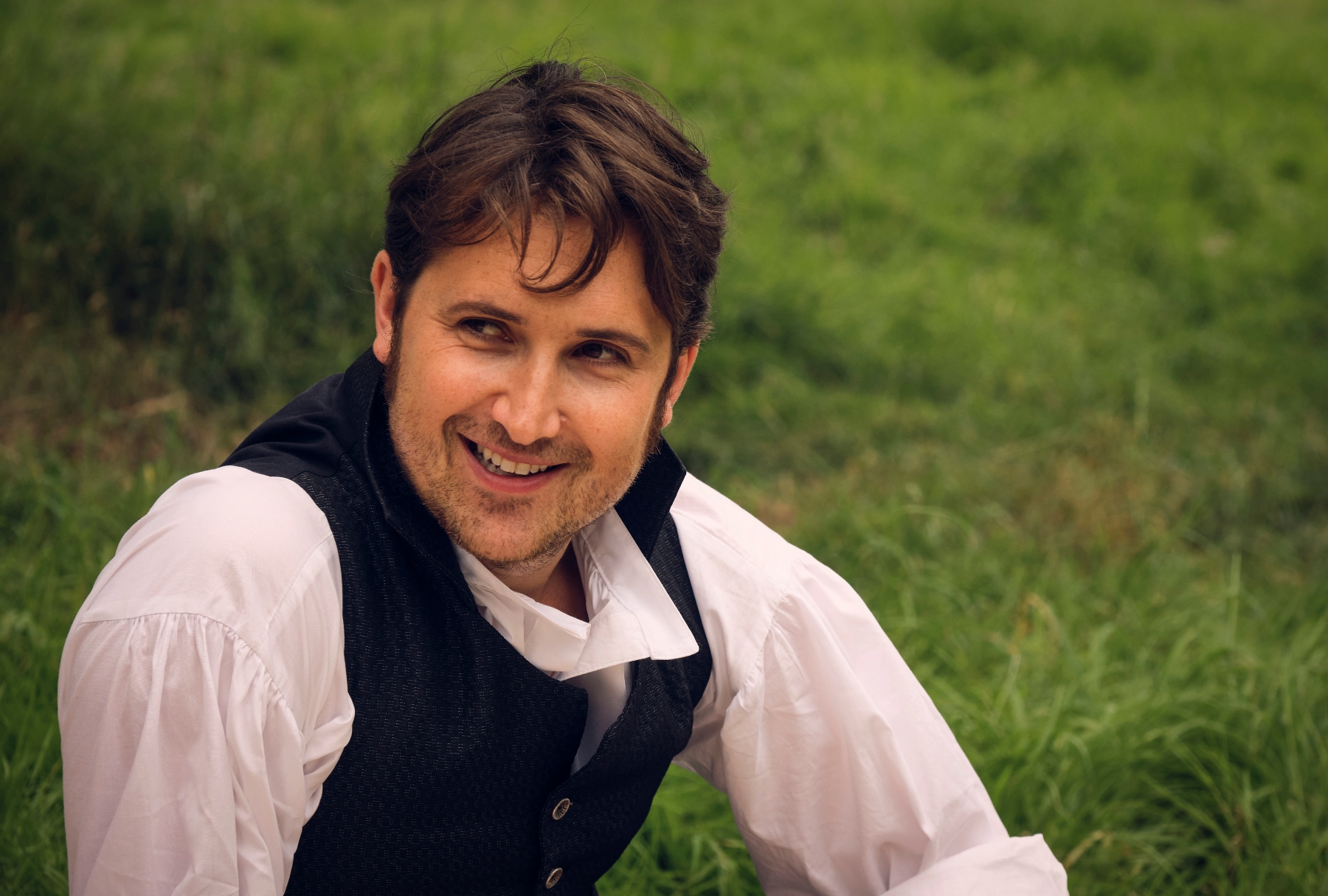
Ben Lloyd-Hughes as Alexander Colbourne in “Sanditon” (Red Planet/PBS)You initially offer up two men who are vying for Charlotte: Colonel Lennox (Tom Weston-Jones), who ends up being a dud, and the Mr. Rochester-esque widower Alexander Colbourne, who we’re supposed to be rooting for by the end. At what point did you realize that the audience was finally backing Colbourne and letting go of Sidney?

“He got to swagger around with an open-neck shirt.”

I could sense initially there was resistance. Understandably, there was a kind of distrust about, “Well, we invested in Sidney and we’re not sure about this.” But we weren’t going to try and lob these characters at them; we were going to try and parcel it out. 

I know that Lennox had his fans initially. And we positioned it to the audience that it was going to be a kind of love triangle, but actually, it isn’t really a love triangle, technically, because Charlotte never really entertains Lennox as a love interest. She finds him entertaining and charming and distracting and she has fun with it. 

Whereas Colbourne, it’s a slow burn. I saw initially people were wary because he has deliberately a very different energy to Sidney. We didn’t want to try and replicate Sidney. And I think there were moments, certainly in Episode 3, there was a moment with the flowers. And there were a few moments where Ben got to be really – he’s a very handsome man – he got to swagger around with an open-neck shirt. I could feel people really, really investing in him. And I think [Episode] 4 was when it really locked in at the garden party, and I can see people going, “Oh, OK we’re on board this now. We understand who this character is and we understand that he’s a much gentler proposition in some respects than Sidney.” 

Hopefully by then, the audience trusted that we weren’t sort of just trying to swap one leading man up for the other. We were respecting the fact that Charlotte is on her journey, grieving Sidney. All of these characters are grieving Sidney, and she’s trying to navigate that. She’s trying to navigate, “How can I be developing feelings for this other man, when I still have feelings for Sidney?” Hopefully, by the end of the season, the audience are just rooting for Charlotte and Colbourne to work it out. 

What went into deciding to give Farmer Ralph the unenviable role of getting in between them?

Now there’s the huge obstacle that she’s engaged to be married to somebody else, which is the shock at the end of the season. That becomes the question: “Is she going to do the right thing?” 

One of the things that we found really, really tricky to get right was how to separate Charlotte and Colbourne at the end of Season 2. We knew we didn’t want to resolve everything in that final episode. The Jane Austen archetype is the marriage plot; that’s the genre we’re in. If the characters get together, that’s the end of the story to some degree. So that was a real challenge story-wise. What are we going to do to keep these characters apart? It hangs on a series of misunderstandings. It hangs on their own internal insecurities. He doesn’t believe he’s a good enough man for her. She’s terrified of being hurt again. It comes out of character and their past damage. That’s where we leave them heartbroken, both at the end of the season.
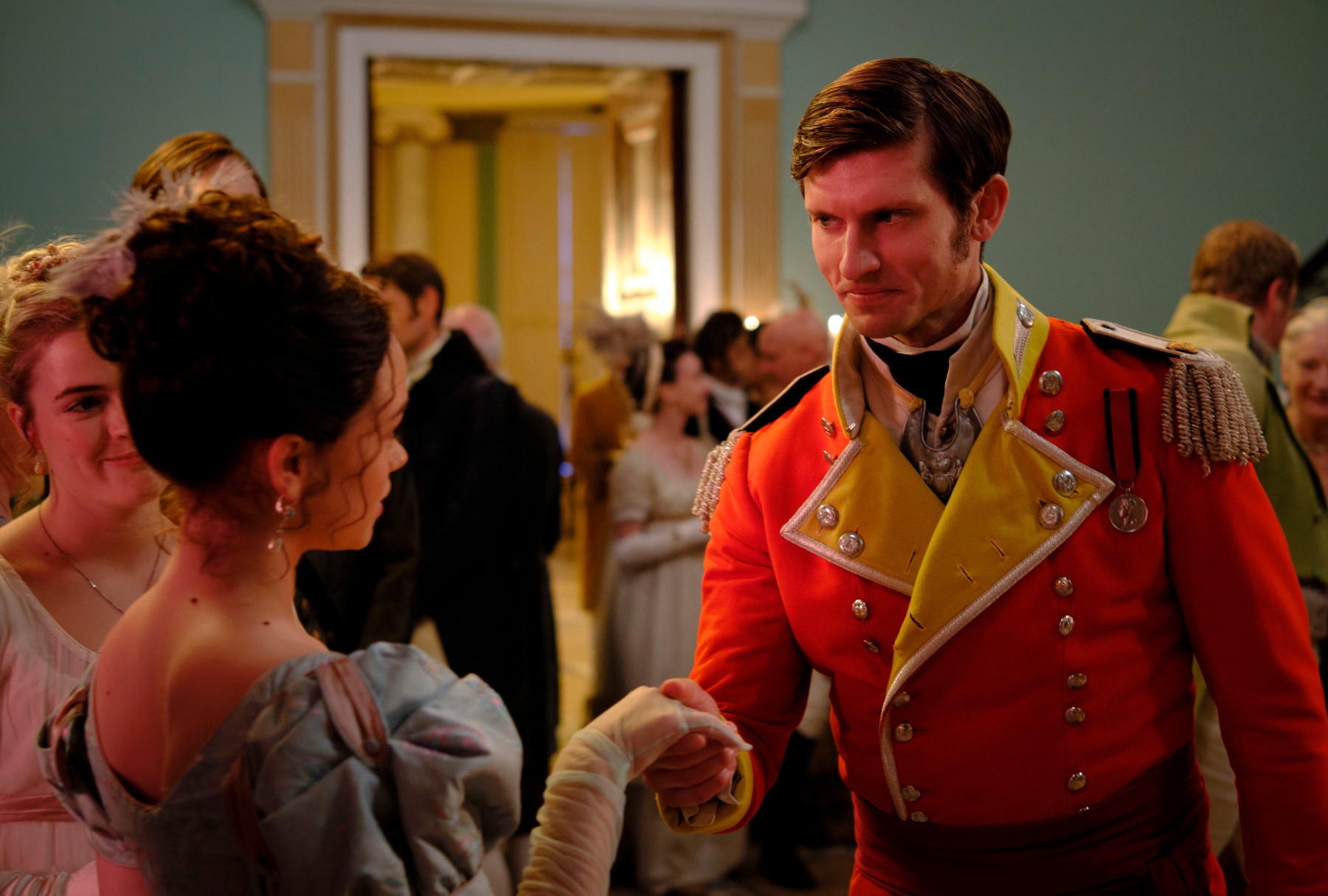
Rose Williams as Charlotte Heywood and Tom Weston-Jones as Colonel Lennox in “Sanditon” (Red Planet/PBs)Yes, while Charlotte can’t jump into a relationship right away because of her unresolved feelings for Sidney, Colbourne also has his own baggage. How does it inform his character and bring him to that point where not only does Lennox’s insinuation cause Colbourne to break the relationship off with Charlotte, but then he also leaves Sanditon?

Colbourne wasn’t entirely innocent. He did behave not entirely well with his former wife. Some of those things that Lennox says to Colbourne in the final episode, I don’t think they’re entirely true  . . . but I think there’s a grain of truth. Maybe if Colbourne had been more understanding, maybe if he’d been a more attentive husband, maybe he could have played things differently. And he’s basically been beating himself up over the last 10 years. So that became part of the DNA of the character. 

He’s been so isolated for so long, and we thought we want to see Charlotte bring him to life across the season. They bring each other back to life, they recognize that grief in each other, even if it’s on an unconscious level. And so, when Lennox presses his buttons, Lennox is a brilliant strategist and knows exactly how to outflank his opponent and zero in on those buttons. And so, what we do in that final episode is we show that guilt is so close to the surface for Colbourne.  

I think when he realizes it’s not going to happen, and Charlotte kind of sends him away, I think he just feels he just needs to get out of there altogether. So he packs up, he leaves the house; it’s all too overwhelming. But also, in a way, his journey across the season is from a man who never leaves the house to . . . leaving his cocoon. He’ll be slightly reset when we meet him again at the top of Season 3.

Knowing Jane Austen and her feeling about soldiers, I was just waiting to see how Lennox would show his hand, and we do get it in a big way at the ball where he forces a kiss on Charlotte. But also he mentions something about knowing her station after she turns down his proposal. What is his perspective on her and women of certain ranks in society during that time? 

Jane Austen is so much about the minutiae of social hierarchy and where everyone stands. In becoming a governess, Charlotte’s taken down a peg or two. In the second episode, we see that she has to sit at the the wrong end of the table. And we sort of cheated it because she still goes to balls and things; she’s not a total pariah. But at the same time, Lennox is a man who’s been revered for so long, he’s been surrounded by men telling him he’s a hero and he’s brilliant. He’s so aware of status, that he believes he’s doing her a favor [proposing]. He hasn’t heard the word “no” for years and years and years. And I think it doesn’t occur to him that this woman who’s reduced to being a governess, why would she say no? You know, “I’m handsome. I’m a colonel. I’m a man of enormous high status.” So I think he’s genuinely shocked and offended in that moment, by that [refusal].

RELATED: Fifty shades of Mr. Darcy: A brief history of X-rated Jane Austen adaptations

That that’s so far removed from Colbourne, who is in every way, a much more egalitarian person. You see it in the dynamic that Colbourne has with his housekeeper, Mrs. Wheatley [Flo Wilson] where they’re almost equals. She understands him, and you feel that actually, he sees her as a peer. Colbourne feels far less hidebound by these kinds of social hierarchies. 

With Lennox, we sort of drip-fed his true colors. You see them in the way he is with Tom Parker [Kris Marshall] where he’s just a man who always gets his own way. He likes to be in control – he’s a colonel – and that’s how he is in every situation. He engages with Charlotte in that first episode, when she basically says she doesn’t want to be a soldier’s wife. And that’s the moment that he locks on, because he’s like, “Right, a challenge. And I like this, and therefore I have to win her.” Because if she was too meekly submissive in that moment, he wouldn’t have been interested. So when she rejects him, he just doesn’t understand. Robin French who wrote that episode – “Be mindful of your status,” that was his line that was so perceptive in that moment. It’s humiliating for him, for a man like that to be rejected. It’s not, “I love you, and I’m hurt.” It’s the, “You don’t reject a colonel. Understand who I am. You’re not obeying orders.” He is mansplaining.
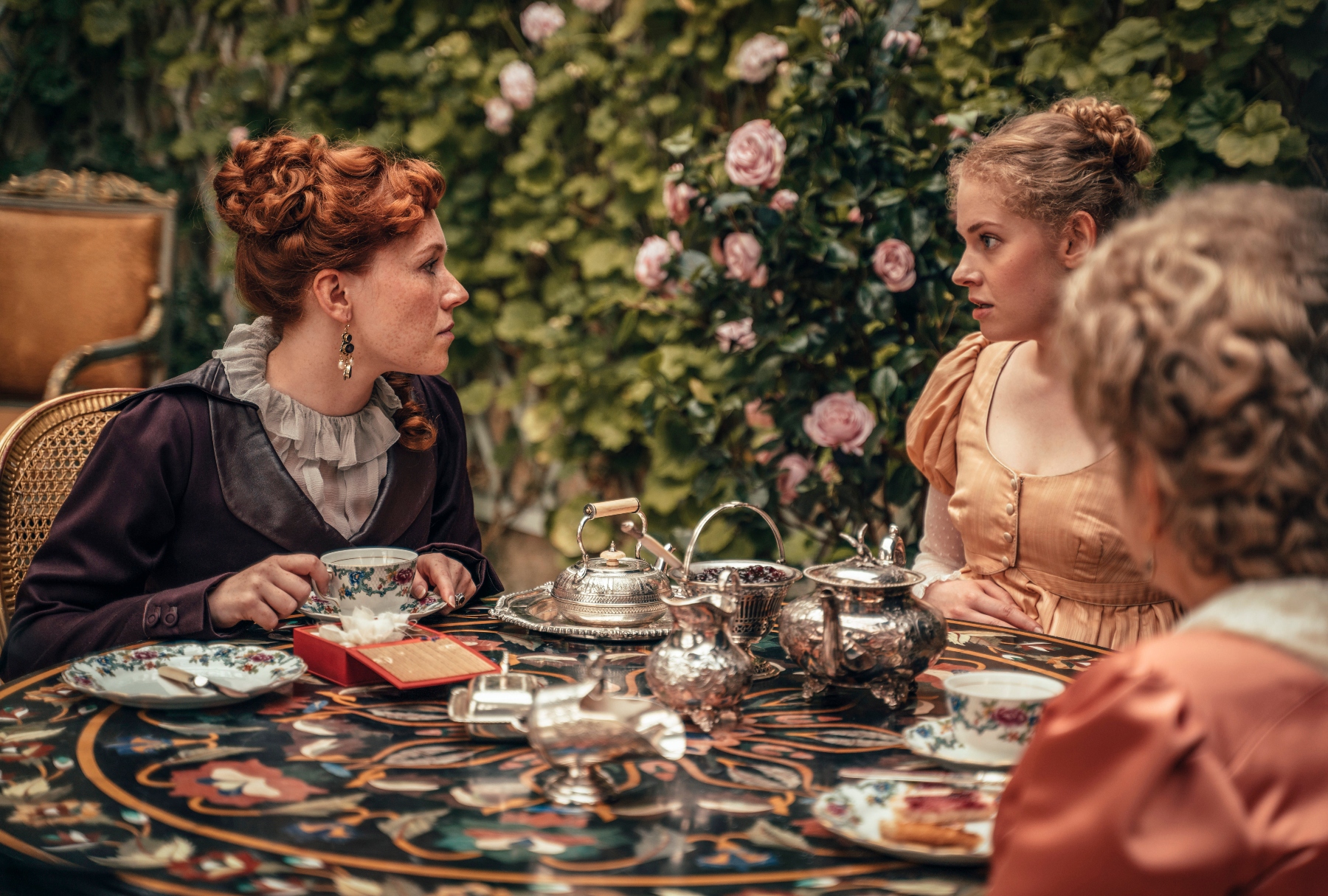
Charlotte Spencer as Esther, Lady Babington and Lily Sacofsky as Clara Brereton in “Sanditon” (Red Planet/PBS)Moving on to probably the most unequivocally bad villain in the series: Edward (Jack Fox). I actually was a little bit shocked about how far he went, using poison, well, laudanum on his step-sister Esther (Charlotte Spencer). Gaslighting her into thinking she was abandoned by Lord Babington because of her difficulties conceiving was bad enough, but hurting her health was getting into gothic territory, I felt. How did the writers decide on that action and how far you wanted it to go?

We surprised ourselves a bit with that. One of the curious things about these two seasons was we shot it obviously during COVID. Because we were making 12 episodes back-to-back [two seasons with six episodes apiece] we were shooting two units at any given moment, four episodes at any given moment, and so we had to necessarily keep the different storylines separate. In the storytelling, you might notice they feel quite discrete from each other and that was a production requirement as much as something else. Edward and Esther and Clara [Lily Sacofsky] in the first season always had a slightly gothic quality. The sets, it was all very gothic. So I always felt we could slightly turn up the kind of gothic energy with them, and it would fit. 

The challenge with that particular strand was that Mark [Stanley], who played Lord Babington was not available. And so it was, “What was the story we could tell with those actors that were available to us? What could Edward do? What is his ammunition?” I think it was Charles Sturridge, our director who had the idea of maybe he could try and convince Esther she was mad. And it was partly that we know what an incredible actress Charlotte is and how she can play those big emotions. 

There’s always a danger when you’re playing a lot of love stories that it can become twee or sickly. You need a little bit of astringency to kind of cut against that, a little bit of darkness just to mitigate against that. So we thought maybe we can have something that’s a bit darker here. The performances keep it rooted, it’s rooted in real emotions. It felt so dastardly and so big, there was something kind of delicious about that at the same time. 

You want to calibrate it. So you’ve got Carter [Maxim Ays] and you’ve got Lennox; they’re not total baddies. Lennox is just arrogant, and power-mad. Carter is just a bit dim and a bit shallow. But Edward is just so awful. The fun was, let’s take him as dark as we possibly can. And at the end of the series, we thought, well, this is really fun to have Lady Denham [Anne Reid] not say, “You’re banished,” but to say, “My challenge now is, can I reprogram you? Can I convert Edward Denham into a good man?” Which is a very good question, I have to say, based on what we’ve seen of him so far.

Edward actually takes up Lady Denham on her offer, but is redemption actually possible? I don’t know if I even saw a glimmer of remorse for hurting Esther.

There’s a moment where he asks where his son is. I think there’s a tiny note of ambiguity. Is that a flicker of genuine sadness? Is he genuinely gonna miss his child? Is he genuinely got feelings for him? Or is it just anger? And I choose to believe that somewhere on some molecular level, being a father has unlocked something in Edward. But we shall see.

I was kind of worried about Esther though. Even though she’s escaped Edward’s nefarious scheme, and then Clara gave her son George to her, I wasn’t certain that Lord Babington would accept this random baby just because Esther wants that.

I can tell you because we tried every possible way to get Mark back. He had another job. So he was very busy. But I even wrote a voiceover – originally, we had Esther in the carriage, and you hear Babington’s letter saying that he will love the child as his own, and that the child is his heir. And in the end, production-wise, we couldn’t get Esther into the carriage on that day and we couldn’t get Mark to do the voiceover. But there’s no doubt in my mind that that child will be Lord Babington one day, and Babington will absolutely accept it as his son and heir. It’s a real shame that production-wise we couldn’t get those scenes in. But rest assured, that is Esther’s happy ending. They will be a happy family.

Sandy McDade as Miss Hankins, Crystal Clarke as Georgiana Lambe and Alexander Vlahos as Charles Lockhart in “Sanditon” (Red Planet/PBS)I was happier in some ways with the Georgiana (Crystal Clarke) storyline coming back because it seemed she had more agency and an identity. But then why decide to have her get hoodwinked by the artist Charles Lockhart (Alexander Vlahos), who also was scheming to get his hands on her inheritance? And then now we discover her mother might actually be alive!

I will hold up my hands and say I think we short-changed the character in Season 1. And I think it was partly because it was so driven by Charlotte and Sidney, and we saw Georgiana you know, through their eyes to some degree. So when we had the scope to come back, there was no doubt in our mind that we wanted to really honor Georgiana as a character, honor that we had this opportunity to tell a story about a woman of color as a protagonist of a Regency drama. So we did a lot of research, we had Black history consultants, we had people of color on our team to honor the truth of that lived experience. Part of the research was about the sugar boycott that came up, but also there were many women of color who were biracial who inherited money in that way. And nine times out of 10, the story was their white relatives would contest the will, would do everything they could. And we thought, well, that seems like a chewy story to run across the series. 

So across both these two seasons, we wanted to really treat Georgiana as if she was the heroine of her own novel, as if there was a novel called “Georgiana.” And part of that was her wondering, “Who am I? Where do I come from? How do I square the circle of this curious legacy that my mother was a Black slave, my father was a white plantation owner, and the complications of that? What it means to be the beneficiary of the slave trade?” But also, in some respects, the victim. That her mother was the victim of it is really, really complex. 

Charles Lockhart was always designed right from the get-go as – we knew he was nefarious. I know it feels brutal, that Georgiana has been tricked again, but it’s in a slightly different way, I think. I maintain that Otis [Jyuddah Jaymes] is a good man who made one error of judgment. Whereas Charles might have started to convince himself that he was on the side of the angels, but he really, really wasn’t. What you’ll see in Season 3 is Georgiana now on a quest to find out where her mother is, and who is her mother. That comes back to who is she and where does she stand in the world? And how is she going to define herself? 

Turlough Convery as Arthur Denham in “Sanditon” (Red Planet/PBS)Someone else who is taken in by Lockhart is Arthur Parker (Turlough Convery). And I actually found him more interesting this season, because in Season 1, he was kind of a classically silly Austen character, this hypochondriac who just talked a lot and was self-involved. Whereas this time, it feels like he’s coming more into his own. What went into evolving him and actually having him step up a little bit more? And is he actually gay?

He is absolutely gay. In the family dynamic, because we’d lost Sidney, because Alex[andra Roach] who played Diana [Parker] wasn’t able to come back, it felt logical that Arthur would come up in the mix. And Andrew Davies wrote a scene at the end of Season 1 where Arthur said to Diana, “I’m not the marrying kind.” I think Andrew wouldn’t mind me saying he didn’t necessarily mean to out Arthur at that point. I think he was quite surprised that he had, and we all said, “Well, no, that makes absolutely perfect sense. And what a wonderful opportunity.” 

When we came back to Turlough, we pitched this two-season arc to him. In Season 2, Arthur is beginning to understand who he is. That’s how, in a way, Lockhart seduces him. Lockhart is very worldly and aware of his sexual charisma, and Arthur is not. Arthur, on some level, maybe at the back of his mind is beginning to understand that he’s gay, but I don’t think he could verbalize it yet. So he’s aware that he’s charmed by Lockhart. When Lockhart draws him he feels seen without quite understanding what that means yet.

Part of the tragedy for Arthur is Arthur’s normally a very good judge of character. In many ways, he’s the wisest person in the company, but his blind spot is that Lockhart basically charms him and seduces him. By the end of the season, Arthur’s hurt by Lockhart’s betrayal, on a level that he doesn’t fully comprehend, and he’s kind of beginning to become aware of his sexuality. But also, he feels responsible for leading Georgiana astray in that way. It’s so wonderful that people are invested in their friendship. We knew that Turlough would bring it to life brilliantly, which he does because he’s a brilliant comic actor, but he’s also really gifted at playing the kind of emotionally devastating stuff as well.

Silly question, but while I enjoyed seeing the hot air balloon at the fair, how did you feel about “Around the World in 80 Days” airing before this with their own hot air balloon scene?

In every episode, we tried to find an event: the first has the army parade, the third has the midsummer fair, the fourth has the garden party. And when we were developing that third episode with Janice [Okoh], the writer, you know, we kind of initially thought of the picnic with Colbourne as the event of the episode. But as we were developing it, that just felt quite quiet and quite low-key. And then at a certain point, Charle Sturridge, the director had this idea. He said, “Well, look, the army would might well have this observation balloon from Waterloo. And wouldn’t it be fun?” Initially I thought, is that a bit too ridiculous? But it gives it a focal point. And yeah, obviously we were blissfully unaware of “Around the World in 80 Days,” in the same way we were blissfully unaware of “Bridgerton” in Season 1. I think it’s fine. You can never have too many hot air balloons. They’re always fun to see. And I think it works in that moment and it achieves so many things – allowing Arthur to be the hero and giving that episode its own visual identity, I think it was it was fun. 

During the Television Critics Association press tour earlier this year, you said “There are elements in the Episode 1 of Season 2 that pay off in the final episode of Season 3.” That’s a long arc. If fans are doing a rewatch, just to see what you might be talking about, who should we keep an eye on?

It’s Charlotte. Think about where we find her in that opening moments of Season 2. We find a young woman who’s trying to move on. She’s trying to be who her family needs her to be and then she’s pulled back into Sanditon. That is what these these two seasons are about. Everything she says to Colbourne in that scene at the end of that first episode about what she thinks a young woman should be with that independence of spirit, that conversation is absolutely key to Charlotte’s journey across these two seasons. These two seasons are absolutely about Charlotte and Georgiana, and how they go from the beginning of Episode 1 in Season 2 to the end of Episode 6 of Season 3. Hopefully, when we speak in a year’s time about Season 3, you’ll go, “Oh, I see. Right. Yes, that was them.”

Having done this show – a continuation of Jane Austen, which has then become its own beast after some unexpected setbacks – were there any lessons that you learned along the way? 

One thing I’ve learned is never try to make two series within a year under lockdown conditions because you will have a nervous breakdown. So that’s lesson one. It was very, very intense. 

Also I’ve learned in terms of how quick audiences are to work things out, particularly when they’re a collective. The genre we’re in, it’s not a mystery show. People come to it because they want to know where you’re going, that we’re going to honor the conventions of the genre. They know the couple is going to get together. The question is, “What journey are we going to take to get there?” They know that some people will turn out to be cads. Those are the rules of engagement. So yeah, I think I’ve learned just how clever audiences are. We assume that the audience are going to be ahead of us, so we drop a lot of clues. 

Also, I would never presume to think we come close to emulating the genius of Jane Austen. We are just playing with some of her crayons, really. But just even trying to ape her style, even trying to ape her wit, and her plotting and her characterization – you go, “Wow, this is so complicated and clever.” The way she creates characters who don’t know themselves, I think is really interesting. It’s a real lesson in how to write subtext, how to characterize characters, and how to take audiences on that journey where you misdirect, where your characters present as a certain thing. 

We never had the hubris to say we’re trying to create a definitive resolution to her novel. The brief was always that we could use her characters and her world as a jumping-off point to create something that could run and run. For me, these three seasons are kind of self-contained. I honestly don’t know if there’ll be subsequent seasons. 

Watch a very brief teaser for “Sanditon” Season 3 below, via YouTube.

More stories to check out: 

15 quick facts about “Fast Times at Ridgemont High”

Even if you already have most of “Fast Times at Ridgemont High” memorized, get to know the classic teen sex comedy on a deeper level with these behind-the-scenes facts.

1. “Fast Times at Ridgemont High” began as a non-fiction book.

While a freelance writer for Rolling Stone, screenwriter Cameron Crowe spent a year secretly embedded at Clairemont High School in San Diego, California under an assumed name (and in cooperation with the school’s administration) to gather stories for a non-fiction book with the same title. Crowe’s book was published in 1981; a year later, it was adapted for the screen.

2. The inspiration for Mark “The Rat” Ratner would go on to become a real-life computer guru. 

Crowe based the geeky Rat on then-Clairemont High School student Andy Rathbone. Rathbone eventually became rich and famous for writing many of the “. . . for Dummies” books about computer programs like Windows.

3. “Fast Times” is Amy Heckerling’s directorial debut.

Heckerling, who would go on to direct “Look Who’s Talking” and “Clueless,” was hired to direct “Fast Times at Ridgemont High” based on her AFI thesis film. Called “Getting it Over With,” it’s about a 19-year-old girl trying to lose her virginity before she turns 20.

4. Jennifer Jason Leigh also did a bit of undercover work to prepare. 

Twenty-year-old Leigh took a job at the actual Perry’s Pizza in the Sherman Oaks Galleria mall, where parts of the movie were shot, to get into character as Stacy Hamilton.

5. Nicolas Cage made his big screen debut in “Fast Times” as “Brad’s Bud.”

Cage was originally supposed to play Brad, but the filmmakers relegated him to a background role after his improvisations during the auditioning process were deemed too weird. The credits list Cage as “Nicolas Coppola.” He later changed his last name professionally to avoid charges of nepotism — he is the nephew of director Francis Ford Coppola.

6. Despite being a movie about high school, Cage was the only cast member under the age of 18.

Because of the sometimes-explicit nature of the film’s subject matter, casting directors made sure actors who auditioned were 18 years of age or older. Cage, who was only 17, lied about his age to snag a role.

7. Sean Penn didn’t have to audition for the Spicoli role.

He was cast after a brief chat prior to his scheduled audition.

8. Penn stayed in character during the film’s entire shoot.

Always the method actor, Penn forced everyone on-set to call him “Spicoli” and wouldn’t answer to his actual name. Other “Fast Times” actors made fun of him behind his back by calling him “Sean DeNiro.”

9. “Fast Times” is Best Actor Oscar-winner Forest Whitaker’s first film. 

He plays enraged football player Charles Jefferson.

10. Herman Munster thought the movie was too obscene.

Fred Gwynne (Herman Munster from the television show “The Munsters”) was originally offered the role of Mr. Hand, but he turned it down because he objected to the teenage sex and drug use in the script.

11. Universal Studios originally approached David Lynch to direct.

He politely turned them down, saying the script wasn’t in his wheelhouse.

12. Bruce Springsteen’s sister has a cameo.

Pamela Springsteen plays the dark-haired cheerleader on the left during the pep rally. In the late ’80s, she we go on to find cult horror movie fame as the villainous Angela in “Sleepaway Camp II: Unhappy Campers” (1988) and “Sleepaway Camp III: Teenage Wasteland” (1989).

13. No original music was written for the film.

The score was taken from Universal Studios’ library of prerecorded music.

14. Heckerling and Crowe filled the cast with friends and lovers.

Judge Reinhold was asked to play Brad because he was director Amy Heckerling’s upstairs neighbor in Los Angeles. Heckerling also cast her ex-husband, David Brandt, and his real-life band, Reeves Nevo & The Cinch, as the band at the dance and her ex-boyfriend, “Beverly Hills Cop” and “Scent of a Woman” director Martin Brest, as the doctor on the field trip near the end of the film. The woman who pulls up next to Brad’s car and laughs at him while he’s wearing his Captain Hook’s Fish and Chips uniform is Crowe’s then-girlfriend and ex-wife Nancy Wilson, guitarist for the band Heart.

15. Heckerling originally wanted to keep the fate of each character open-ended.

But Universal Studios mandated she end the movie with updates for each character, just like 1973’s “American Graffiti.”

Why Japan’s beloved toddler-errand show “Old Enough!” could never be replicated in America

A toddler walks a kilometer to the grocery store, alone, to buy groceries for his family. A duo of tykes climbs hundreds of stairs to complete an errand for mom. Another toddler attempts to make juice for his parents while they farm outside. These scenarios really happened on the Japanese TV show “Old Enough!,” created by Nippon TV in 1991 and now streaming for American audiences on Netflix.

Perhaps predictably, the depiction of very young children demonstrating remarkable self-sufficiency in traversing idyllic planned cities and towns has sparked debate on American parent forums and parenting blogs, which are abuzz about the show. Some are critical of the safety aspects of sending small children out by themselves. Others are perplexed by the toddlers’ abilities to accomplish daunting tasks at a young age. And some parents are inspired.

One American parent, Perry Valentine, said he and his partner “loved” the show. “As a parent, what surprised and amazed me was how Japanese parents can really put their trust in the community so their kids can learn how to do simple tasks for themselves,” Valentine said.

The program, which in Japanese is called Hajimete no Otsukai (which translates to “My First Errand”), has aired in Japan for more than three decades, but only recently started streaming on Netflix in March under the new name “Old Enough!” In the Netflix version, episodes are short— between ten to 15 minutes long — and follow two to six-year-olds running their first errand, by themselves.

RELATED: Millennial parents reject Boomer wisdom

In the first episode, a two-and-a-half year old navigates traffic as he walks by himself to a local grocery store to buy several items his parents asked him to buy, pays for it himself, and then safely returns home. Lest you fear for these children’s safety, note that there is some movie magic occurring in the background, as the kids are tailed by the camera crew and community members on the route who have been briefed on what’s happening. Before filming, the show’s staff and parents inspect the routes, checking for dangers or suspicious people. Still, young children running errands or going on public transportation alone in Japan is common. Not many American parents think that could fly here today. 

That appears to be one reason that American parents are obsessively watching this show: because it is unfathomable to think that toddlers could run errands in the U.S., given how car-centric and anti-pedestrian the bulk of the nation’s infrastructure is.

“After watching the show, I do agree that letting kids do simple errands is a great way to help them build confidence and responsibility, which are traits that kids definitely bring to their adulthood,” Valentine added. “I think one great factor why this kind of parenting cannot be easily replicated in America is because of the lack of safety in the neighborhood.”


Want more health and science stories in your inbox? Subscribe to Salon’s weekly newsletter The Vulgar Scientist.


Indeed, the show has sparked many conversations about safety in America, and prompted some rumination over how American cities aren’t kid-friendly — or pedestrian-friendly, for that matter. It wasn’t too long ago that most children walked to school; today, the number who walk to school is estimated to be about 10 percent. Physician’s groups even warn against children walking around alone, including the American Academy of Pediatrics (AAP), which writes: “children should not be unsupervised pedestrians before 10 years of age, except in limited situations.” 

Notably, some states and municipalities — like Maryland and Kansas — have laws defining when a child can be left alone without adult supervision. If such laws are violated, parents can have Child Protective Services called on them.

“Children are most likely to be struck by a motor vehicle in an urban area on a residential street close to their home,” AAP states “The most common type of pediatric crash is the pedestrian “dart-out” or “dash,” in which a child walks or runs into the road, either at midblock or at an intersection, often from a position out of view of the motorist.” This kind of crash accounts for 43 percent of crashes that involve 5- to 9-year-olds.

Meanwhile, Japan has been ranked one of the top ten safest countries in the world, and has experienced a steady decline in road fatalities: between 2000 and 2019, the number of annual road fatalities fell by 62 percent. Pedestrians account for 36 percent of road fatalities in Japan, or 1,434 people in 2019, out of 3,920 road fatalities overall in 2019.

In contrast, there were 36,096 road fatalities in the United States in 2019. The U.S. population is only 2.61 times greater than Japan, although road fatalities are much higher. 20 percent of the fatalities were of pedestrians, or 6,205 people.

Devon Kuntzman, a parenting coach and founder of Transforming Toddlerhood, told Salon she believes American parents are fascinated by the show because it shows them the “opposite spectrum of parenting from what we are used to in the U.S.”

“These toddlers are given an extreme amount of independence and responsibility which looks very different from what the average American family is used to, especially since there are many laws in the U.S. that would prompt child services to be called — for example for allowing a toddler to walk along the road unattended,” Kuntzman said. “Toddlers thrive when their developmental needs are fulfilled including the needs to be independent, have a sense of control, to feel capable and to have a role in the family; this show focuses on meeting those needs.”

In other words, it’s the complete opposite of so-called “helicopter parenting,” a term used to describe parents hovering over their kids. Despite many studies showing that such a parenting style can have adverse effects on children, research has shown that it’s still a pretty popular style of parenting.

Dr. Harvey Karp, pediatrician and inventor of the storied Snoo bassinet, told Salon “helicopter parenting is a disparaging term,” which fails to recognize “the almost impossible position that parents have been put into.”

“If we had neighborhood childcare and safe neighborhoods, and we knew our neighbors, that would open the doors for parents to be more confident and trusting, and open the doors for children to have more freedom to learn, make mistakes, and grow,” Karp said. “Over the past decades, the family has gotten smaller and the neighborhood more hazardous — and as a result, parents are less experienced in caring for young children.”

While the show almost certainly can’t be replicated in America, experts do believe there are safe ways American parents can give their toddlers more responsibility without necessarily sending them unaccompanied on errands. 

“There are age-appropriate ways to help, feel purpose, and feel valued, and to intermittently stretch and encourage the child to do a bit more,” Karp said, adding that giving kids a way to help the family is “a wonderful way to build character.”

Kuntzman suggested allowing a toddler to water plants, feed a pet, help safely in the kitchen or with laundry.

“Most toddlers love to help just for the joy it brings them and they do not expect anything in return,” Kuntzman said.  “Supporting this intrinsic desire to help when a child is young is what creates a family team player in the future.”

Read more on parenting:

How long does it take to master a recipe?

Pati Jinich couldn’t figure out what all the fuss was about over Lomitos de Valladolid, the simple dish of pork tenderloin pieces cooked down with tomato and onion that she sampled all over Mexico’s Yucatan peninsula while filming her PBS show, “Pati’s Mexican Table.” 

“I was always wondering why every restaurant and hotel was serving this dish in all these areas when it’s not that great — just pork meat, cut into small pieces and then cooked and served in a watery tomato sauce, (which) you eat with tortillas and black beans,” said the Mexico City-born Jinich, who’s a chef and cookbook author in addition to hosting her James Beard award-winning PBS series. “People are so fond of this dish; it’s called lomito — the ‘ito’ ending referring to something that’s small or really loved. And it has the last name of a city in the name, which means the city is insanely proud of it. I kept ordering it, thinking maybe I’m getting something wrong.”

Related: The nourishing joy of simmered whole chicken

That was, until she got to Valladolid. Her first order of business upon arriving late at night to the Mesón de Marques hotel was to order yet another plate of lomitos for room service. “It was life-changing,” she said. A distant cry from the insipid versions she’d eaten for days; this rendition comprised caramelized, carnitas-like meat in a luscious jam of deeply reduced tomato and onion — served on a griddled tostada with refried black beans and avocado. 

A distant cry from the insipid versions she’d eaten for days; this rendition comprised caramelized, carnitas-like meat in a luscious jam of deeply reduced tomato and onion — served on a griddled tostada with refried black beans and avocado.

When she went into the kitchen to find out how the chef makes it, she witnessed the crucial step so many others around the Yucatan seemed to miss. 

“In Valladolid they cook it until everything is cooked, but then they open the lid and continue cooking it ’till the tomato and onion become one — an irresistible tomato-onion paste — and the meat pieces are almost dry,” she said. “You only need someone to tell you, ‘just when you think it’s ready, cook it for another 40 minutes.'” 

She shared this example to illustrate the delicate balance of formula and feel that separate a serviceable recipe from a great one — the hours of repetition, tinkering and mistakes required to yield answers that may seem illogical to the uninitiated. 

“Sometimes it’s the most basic and unexpected things that are actually counterintuitive,” Jinich added. “You have to learn from someone making the thing right who can give you that crucial part of the technique that you may not read between lines in a recipe.” 

The concept that it takes 10,000 hours of practice to master a complex skill was popularized by Malcolm Gladwell’s 2008 book Outliers: The Story of Success. As of publishing, team Gladwell hadn’t yet responded to my query about how cooking (and its wide range of requisite skills) fits into this construct. In any case, recent studies have shown that 10,000 hours is not necessarily the magic number to achieve greatness due to a range of overlapping factors like environment and genetics. Still, you can’t deny the benefits of repetition in cooking, particularly on something simple yet maddeningly elusive, like making a perfect omelet or cooking a steak just right every time.  

Repetition is the lifeblood of professional cooks, who spend hours each week churning out the same dishes at (hopefully) the same level of quality and consistency. The same could be said, to an extent, of those charged with preparing the majority of meals for their household. 

And yet, the proliferation in food media of recipes starring one trendy ingredient after the next has liberated many home cooks from their small cadres of mostly inherited recipes — rendering many of us restless flavor magpies, forever seeking what’s next. Vicky Bennison, the creator of the YouTube channel Pasta Grannies, which documents the women in Italy who still make fresh pasta by hand (and inspired a 2019 compilation cookbook), agreed. 

“Modern cooks have so much choice,” she said. “For older generations (in Italy), there were a limited number of dishes — based on seasonality and income. At the same time, children, especially girls, were encouraged to be involved with cooking from a very early age alongside a bevy of female relatives, so their culinary memories developed along the way. Factor in, for those with access to land, growing one’s own produce when one learns what tastes ripe or is at its best.” 

Watching the signore knead and roll out buttercup-hued fresh pasta is rhythmic and soothing; Bennison once joked to me that it’s like watching laundry spin, in that ASMR sense. The women’s decades of honing their skill have imbued the kind of mastery that means they can feel the right flour-to-egg ratio in the pasta dough and know implicitly how much liquid is needed on a dry versus humid day.


Want more great food writing and recipes? Subscribe to Salon Food’s newsletter.


“Pasta making, I think, demands attention to what one is doing, and it’s this mixture of practice or repetition, memory and attention to taste and texture, that makes one a master,” she said, adding. “But I couldn’t put a time scale on this!”

It’s easy to internalize the dedication that originates out of necessity, limited resources and livelihoods. For those of us privileged enough to cook for different reasons, the determination that drives us back into the kitchen to workshop the same dish over and over, through screw-up after screw-up, until we get it just right must come from someplace deep within, as Jinich pointed out. 

It’s easy to internalize the dedication that originates out of necessity, limited resources and livelihoods. For those of us privileged enough to cook for different reasons, the determination that drives us back into the kitchen to workshop the same dish over and over, through screw-up after screw-up, until we get it just right must come from someplace deep within.

“I think, on the one hand, it has to be something aspirational,” she said. “You think that by making fresh pasta or corn tortillas, you’re enriching your home with culture, tradition or family connection. (There’s) also this bit about the value of cooking per se because you want to nurture yourself and give time to you and family, or just you, that space of, this is not another chore, this is giving me mental health. Or it’s therapeutic. Or I need this space to focus on this technique and forget about other things.”

Jason Wang set out to perfect his dad’s cold skin noodles, chewy noodles with spongy homemade gluten (seitan), back when he was in college. Stir-fried with scallions, soy sauce, black vinegar and chili oil, the dish is a hallmark of Xi’an Famous Foods, the chain of New York City restaurants Wang’s dad opened in 2005 to share the food of his native Western China, and where Wang is now owner and CEO. 

The formidable, two-day process involves making wheat flour dough and washing it until the starch separates from the protein, or seitan. After sitting overnight, raising agents are added to the seitan before it is steamed then cut. Meanwhile, the starchy leftover liquid gets poured into sheet pans, steamed like big crepes, sliced and added to the seitan. For a dish comprising so few ingredients, cold skin noodles are finicky and complicated; everything from the humidity in the air to the consistency of the starchy liquid and the steaming temperature can affect the outcome. 

“People don’t make this dish mostly because it’s such a waste to do at home,” Wang said. “It takes two days to make it, after which it may or may not have worked. If it does, you get maybe a couple portions out of it. That’s why it’s typically served by street vendors. It’s a great dish, but it is hard to nail down.” 

Part of what makes it so challenging is the fact that you can’t get too specific with measurements; the formula and method require some fluidity. The maker has to pay attention and know what it should feel and look like — which only comes with dogged practice. Indeed, what got Wang through the agonizing hours of repetition and mistakes ran deeper than the need to standardize the dish as eventual owner of Xi’an, so he could teach it to the staff or, eventually, immortalize it in the restaurant’s 2020 cookbook. It became about preserving the most traditional version of this dish he and his dad grew up ordering from pushcarts in the Xi’an countryside to slurp down on hot summer days. 

“We enjoy the old-school way of preparing it and serving it with the traditional sauces you only find in small towns and villages,” Wang said. “That’s why we’re so proud of that; we’re keeping a time capsule of the food almost. Nowadays people love to try new things, and the restaurant business is all about bringing stuff in that no one has ever seen before. Call me a traditionalist, but I really respect the old ways of someone serving the same thing for decades, if not 100 years. I feel like there is value to it. If it’s done for that long, something must be right about it. ” 

Of course, we’re the beneficiaries of the labor and countless mistakes of ambassadors like Wang, Jinich, Bennison, Israeli chef Yotem Ottolenghi and Italian cooking writer Marcella Hazan. They spent time at the sides of the experts who perfected these dishes before they did, practiced enough to discern for themselves those counterintuitive details that take dishes from good to irresistible, then chose to share the results with all of us. At some point, though, we have to take up that mantle — and return each day with as much dogged curiosity as we can muster to learn the feel of a corn tortilla with just enough moisture so it will puff up like it should when we griddle it, or what it looks like when the tomato and onion have melded into a burnished jam just as the lomitos achieve perfect caramelization. 

“Curiosity exists as long as you want to get it right because it means something to you,” Jinich said. “Getting it right will bring you something — give you meaning, connect you to someone, grow roots, make you feel at home.” 

Find Jinich’s exhaustively tested recipe for Lomitos de Valladolid here.

More by this author:

The ultimate step-by-step guide to a clean stove

Even if you’re not a huge home cook, it’s likely that your stove sees quite a bit of action in the way of Stuck. On. Crud. Even something as simple as boiling pasta water often leaves streaks and marks (you know those salty little droplets that dry white?), and heating up a pot of pre-made soup is sure to leave a couple splatters.

And if you’re actually often in the kitchen? Well, your stove top is really in for it. A splotch of tomato sauce from Monday, charred spinach from Tuesday, burnt bits of rice from Wednesday — before you know it, your burners, stove top, and knobs are slick with grease and coated with crumbs. Not only is this unappealing, but it can become a hazard when leftover bits find their way over to the flame or electric coal,

The key to cleaning your stove depends on the type of stove you’ve got, whether it’s gas, electric, or induction. The good news is, there are ways to clean every kind.

How often should you clean your stove?

Not going to sugarcoat this — the best way to have a sparkling stove top is to clean it after every use. If you’re starting with an already-clean stove, this can mean as little as wiping down surfaces with a damp microfiber cloth or a soapy sponge. The more often you do the “small clean” on your stovetop, the less often you’ll have to do the “big clean.” But if it’s been a while and the big clean is what’s needed . . .

How to clean a gas stove

A gas stove usually has four main components that require cleaning: 1. the grate (the part that pots and pans sit on when cooking), 2. the burner caps (the removable disks that distribute flames from the burners), 3. the burner heads (which are attached to the stovetop and are where the fire comes from), and 4. the stovetop surface itself.

1. and 2. Cleaning gas stove grates and burner caps

The stove grates and burner caps are where we recommend you begin your big clean-up. Remove the grates from the stovetop and the burner caps from the burner heads by lifting them off, and pile them into your sink. Depending on the size of your grates and the size of your sink, this step may have to be done in batches.

If your grates and burners are fairly clean already: Soap up a non-abrasive sponge (you don’t want to strip off any enamel or coating) and give the grates and burners a thorough washing; you may have to rinse and repeat as necessary. You’ll know they’re clean by the way they look (they should have no grimy or filmy stains) and feel (they shouldn’t be greasy or tacky to the touch).

If your grates and burners are solidly dirty: Don’t worry; we’ve all been there. To remove seriously caked grease, give the grates and burners an initial wash with a soapy sponge, then mix up your miracle paste. Combine 1 part vinegar with 2 parts baking soda, add a few drops of dish soap, and cake the mixture on. Let the mixture sit for 20 minutes, then wash it off with a soapy sponge and a little elbow grease.

Or try the ammonia method: Jill Nystul of the blog One Good Thing recommends a totally hands-off method for cleaning stove grates and burner caps — though this method only works for smaller grates that cover individual burners. “Pour a splash of ammonia into a ziplock bag,” she says. A gallon freezer bag works well for this. “Then place one of your stove parts into the bag and seal it, and repeat until all the parts you want to clean are sealed up in bags . . . Leave the bags on your countertop overnight. In the morning, pull the parts out of the bag and use a soapy sponge to wipe away the grease and grime.” Just remember, however, to check the label before use — household ammonia is usually diluted with water, but you can also further dilute it with water before you use it. Also, ammonia is a gas, so make sure the area you’re working in is well-ventilated to be extra cautious.

Once the grates and burner heads are clean, dry them off really well. Unpaper Kitchen Cloths are an ideal tool for the job: They’re super absorbent, lint-free, and won’t leave any scratches.

3. Cleaning gas stove burner heads

Worst case scenario: It’s been so long since you’ve cleaned your gas stove that you can’t even see the burner caps under all that built-up grease. Making sure that the stove is firmly off (basic, but worth double-checking), wipe the burner heads with a damp (not wet) cloth to remove any crumbs. Then use the pointy end of a paper clip or safety pin to scrape any narrow notches and gently poke into the clogged ignition port or burner holes, which is where the gas comes out. Wipe the burner heads again with the damp cloth, then gently scrub with vinegar, which should remove any grease and stains.

4. Cleaning a gas stovetop

This is where all of the previous techniques come together. To clean the surface of your stove, first wipe it down with a damp cloth to collect any bits of food. Then wash with a non-abrasive soapy sponge to get rid of any greasy spots. If the grease has really solidified, whip out that 1:2 vinegar:baking soda mixture once againand spread it on, then let the mixture sit for 10 to 15 minutes before gently scrubbing it off with a soapy sponge. Dry the stovetop with a clean cloth, replace the burner heads and the grates, and pat yourself on the back for your efforts.

Electric stoves come in two varieties — metal coil burners and glass-topped — and both are easy to clean if you know what to do. Induction stoves have a glass-ceramic top, and can be cleaned using the same method as a glass-topped electric stove.

How to clean an electric or induction stove

Cleaning electric stoves with metal coil burners and drip pans

A metal coil electric stove usually has four main components that require cleaning: 1. the coils(which transmit the heat), 2. the drip pans (those metal bowls that hold the coils), 3. the underside of the stovetop, and 4. the stovetop surface itself.

If your coils and drip pans are fairly clean already: Electric coil burners can get very dirty, but they’re also (more or less) self-cleaning. Give the coils a quick wipe with a damp cloth, then turn the burners to high for about 3 minutes. Any accumulated grime will burn right off . . . though depending how dirty they are, you might want to open a window. Turn the burners off and let them fully cool, then wipe them down again.

If your coils and drip pans are solidly dirty: Heat the coils on high for a few minutes to burn off any residue, let them cool completely, then roll up your sleeves and pull the coils out of the stove with a gentle lift; they should pop out easily. Lift out the drip pans as well. Wash the drip pans with warm soapy water, then soak them in, yes, you guessed it — that magic mixture. Let the drip pans sit with their frosting for 10 to 15 minutes.

While the drip pans are resting, clean the coils. Lay out a few sheets of newspaper and grab a dry toothbrush. Gently scrub the coils to scrape off anything that’s crusted-on; it should flake off onto the newspaper. Then wipe the coils off with a damp cloth, dry them well with a dry cloth, and head back to the sink.

Wash the baking soda mixture off the drip pans and give them a final wash in warm soapy water, dry them well with a lint-free cloth, and look at your funhouse mirror reflection for a while.

Cleaning under an electric stove

Sometimes an electric stove can give off a smell of burning when you turn it on. This is usually a sign that you need to clean under your stovetop. Lift the front of your stove like a car hood; it should prop open in the same way. Use a damp sponge to wipe out the underside to remove any stray bits of food that might have gotten caught and a soapy sponge for any necessary scrubbing — or do like Jen Jones of IHeart Cleaning does and use a vacuum to suck everything up!

Cleaning an electric stovetop

To clean an electric stovetop, start by wiping it down with a damp cloth to collect any bits of food, then wash off any grease with a soapy sponge. For tough stains and built-up spills, spread the 1:2 vinegar:baking soda mixture on the stovetop surface, then let the mixture sit for 10 to 15 minutes before gently scrubbing it off. Dry the stovetop with a clean cloth, place the metal coils back in the drip pans, and the drip pans back in the stove, and rejoice.

For tougher spills and stuck-on food, liberally dust the underside of the stove with baking soda, then spray (or carefully drip) vinegar on top. The mixture should bubble up — capture that in slo-mo as you wait, just for fun. Let the baking soda and vinegar sit for 10 to 15 minutes, then scrub the surface with a non-abrasive scrubber to get all the nasty bits. Dry well with a lint-free cloth — and don’t forget to to give the top of the “hood” a wipe-down, too!

How to clean glass-top electric stoves or induction stoves

If you own one of these, you have permission to gloat. This baby could not be easier to clean — including those patches where food has burnt onto the surface. And before handling the entire surface, test this method out on a small section of the glass, as one commenter below ended up with some scratches.

Step 1: Wipe down the surface with a dry cloth to collect any food bits or crumbs.

Step 2: Liberally sprinkle the entire stovetop with baking soda.

Step 3: Spray (or carefully sprinkle) white vinegar all over. Enjoy the magic fizz.

Step 4: Fill a small bucket or pot or whatever you’ve got with hot water and soap so it’s foamy. Dunk a thick towel or two lighter kitchen towels in the hot soapy water, then wring the towel out so that it’s damp but not dripping wet.

Step 5: Lay the towel on top of the stove, set a timer for 15 minutes, and watch some videos while the soapy heat from the towels activates the baking soda and basically cleans your stovetop for you.

Step 6: When the timer dings, pick up the towel and use it to scrub away at the stovetop. When all of the dirty spots have been cleaned, wipe off the baking soda.

Step 7: Do one more wipe with vinegar, dry the stove with a clean towel, and you’re done!

If there are stuck-on bits that really won’t come off, you need to pull out the big guns . . . and by guns, we mean knives . . . and by knives, we mean razor blades (alternatively, you can use a plastic blade or credit card, which are less prone to scratching, as suggested in the comments). Holding a sharp razor blade at a 45-degree angle, carefully slide the blade under the gunk with even pressure. It’s best to do this while the stove is still damp, but make sure your hands are dry so there’s so slipping. Then vinegar again and voila. Beware that there is a risk of scratching your stovetop surface here, so use this method as an absolute last resort — and do so at your own risk.

Now that your stove is sparkling, you can go ahead and eat off it. Or cook on it. Just remember that a quick wipe-down each time you’re done will save you a ton of time in the long run. Plus, you get the added benefit of a stove (and a kitchen) you can be proud of. As a person with a perpetually clean home, of course.

The best budget buys at Costco, according to Reddit

If you need a Stefon-style recommendation for the hottest club in town, wholesale warehouse Costco has got it all: hot dog prices so cheap they’ve incited threats among executives, free samples galore and some of the best prices on bulk goods around. Although you need to pay for a membership to enter those gilded industrial doors, if you know what to buy, you can find some serious savings — yes, on cash, but also time and energy from repeatedly heading to the store. 

Related: The best budget buys at Trader Joe’s, according to Reddit

If you’re not sure what the best no-brainer buys are, we’ve compiled a list of what folks on Reddit suggest to newbies. We’ve also compared prices to Target, and have aimed most of these suggestions towards people with pantry storage, and multiple mouths to feed under one roof. Though the savings apply to anyone, it might take a single person a while to finish these quantities.

Paper towels and toilet paper

Since the early, fear-filled days of the pandemic, it feels nowadays that you can never have too much toilet paper. If you have the space for it, Costco can offer you pretty significant savings on paper goods, like a 24-count of Viva Cloth Paper Towels. At $46.99 for the pack, you’re coming out to about  $1.95 a roll. A smaller pack available at Target runs at about $2.05 a roll, which will add up if you have lots of messes to address. Similarly, a 30-pack of Charmin bath tissue comes out to $1.05 a roll, while an 18-pack from Target is about $1.14.

Bacon

Kirkland Signature will be the unsung hero of this list, providing high-quality goods at a pretty competitive price point when compared to the name brands. Take their signature thick-sliced bacon. Redditors have raved about the quality and flavor, and for $17.99, you get two packs at 1.5 lbs each. That’s around $6 a pound, and will last a considerable amount of time in the freezer. Target’s offering of Oscar Mayer Hardwood smoked thick cut bacon is $7.29 for a 16-ounce pack, which means you’d be paying $7.29 a pound.

Rotisserie chicken

The Kirkland brand rotisserie chicken is another one of those heroic Costco items that has inspired its own lore. At around $4.99, and roughly 3 pounds, it’s a well-seasoned and very well-priced add-on that can give you a hand with dinners for a few days. Target’s offering of the Archer Farms rotisserie chicken is around 29oz, (a little under 2 pounds) and costs $6.79. That means at Costco, you’re getting more for less.

Gasoline

I will spare you a quip about how high gas prices are and cut straight to the point: gas is expensive, but at Costco, it can be significantly less expensive. The Costco closest to me currently has a gallon of gas listed at $3.99 for regular. Compare that to the Shell down the street that is currently pricing a gallon of regular at $4.40 (and lament the fact that Brooklyn costs this much to exist in).

Cheese

Despite the fact the U.S. government has stockpiled mass amounts of cheese for who-knows-what, buying cheese isn’t always the cheapest. If you’re the type who can consume a good amount, you’re in luck, because various users cited good prices and quality for the cheeses offered at Costco. For example, if you’re into sharp cheddar, they have a 5-pound block of Cheswick Sharp Cheddar Cheese for $17.79. An 8-ounce container of sharp cheddar cheese from one of Target’s store brands is $2.49, which means a similarly sized offering would come out to about $25. Shred to your heart’s delight.

OTC medicine

Over-the-counter medicines like Ibuprofen or allergy relievers are usually stupidly expensive for small quantities, and buying in bulk is one of the few solutions. A 2-pack of Kirkland signature Ibuprofen, with 500 tablets in each bottle, comes out to $9.99. The Target store brand offering is a similar price at $9.79, but is only half the amount of pills. 

Now take those budget-friendly basics and use them in one of our simple weeknight meals: 

“The Man Who Fell to Earth” ambitiously picks up where the sci-fi cult classic’s mission ended

In 1976 cinematic classic “The Man Who Fell to Earth,” David Bowie’s iconic alien Thomas Jerome Newton easily blends into humanity. He strolls into a small Kentucky town, lays down on a bench outside of an antiques store and waits for it to open. Once it does, he sells a gold wedding ring and goes on his way.

Forty-five years later another alien from Newton’s home planet crash-lands on Earth, this time in New Mexico. But his entry is nowhere as smooth. Newton arrives fully clothed and dapper, while this alien, played by Chiwetel Ejiofor, stumbles out fully naked and desperately thirsty. It isn’t long before he’s Tased, arrested and beaten.

And while Newton speaks flawless, British-accented English, Ejiofor’s interstellar traveler, who takes the name Faraday from a cop he encounters (Martha Plimpton, in a brief appearance), learns human languages as he goes, along with how to walk properly, how to emote, how to be move through this mean, foreign world that, like his own, is dying.

Faraday is anxious about time, fearing there isn’t enough of it for his people or humanity. Watching the four episodes of Showtime’s TV continuation of “The Man Who Fell to Earth,” I wondered about that too.

RELATED: “There is no generic Africa”: Chiwetel Ejiofor fell in love with Malawi for his directorial debut

“I am an immigrant, a refugee. To survive, I had to be reborn.”

The series draws from Walter Tevis’ 1963 novel and Nicolas Roeg’s artistic film adaptation to expand the film’s commentaries on the peril of materialism and alcoholism to emphasize its themes of environmental degradation and the immigrant’s feeling of alienation, no pun intended.

But in 2022, the fantasy that Thomas Jerome Newton represented decades ago is our reality, embodied in polarizing figures like Elon Musk and Jeff Bezos – men who offer humankind convenience and distraction, promising wonders in exchange for obtaining the massive wealth he needs to build a spaceship to get the hell out of here. Faraday will become one of these figures, established in an opening scene showing him bewitching an auditorium full of believers with the promise of finally telling his story, TED Talk-style.

“I am an immigrant, a refugee. To survive, I had to be reborn,” Faraday tells his rapt audience.  Newton walked the same path, but the CIA nabbed him before he could board his spacecraft and return home. The company Newton built seemingly overnight, World Enterprises Corporation, still exists – and somewhere on Earth, so does he. in the guise of Bill Nighy).

That’s a lot of ground to cover in 10 episodes, and the opening hours take their time to establish Faraday’s identity, showcasing Ejiofor’s astounding expressive dexterity. This is a luxury series co-creator Jenny Lumet and Alex Kurtzman have that Roeg did not have in Bowie, who later admitted he was playing a coked-up version of himself throughout the production.

Ejiofor in contrast believably evolves Faraday from a wide-eyed, mouth-breathing newborn to a toddler who learns to speak English, albeit haltingly, in a matter of hours and Farsi (presumably along with every other language ) within days, and who also vomits his way out of scrapes. It’s an incredible performance bursting with tenderness, humor and the requisite level of oddity one would expect of a being thrust into an unfamiliar place.

It’s an incredible performance bursting with tenderness, humor and the requisite level of oddity.

And his effort holds space in readiness for the other parts of the story to coalesce and figure themselves out before clicking into place – hence the concern about adequate time. The drama  launches with a juggle of storylines; Faraday and Naomie Harris’ underemployed scientific genius Justin Falls propel the main plot, but they’re merely the vanguard.

Justin, a one-time shining star at M.I.T., ran into a career-halting obstacle when her attempts at cold fusion failed. When Faraday finds her she’s barely getting by doing toxic clean-up work to support her daughter Molly (Annelle Olaleye) and elderly, sickly father Josiah (Clarke Peters), another former scientist whose career once held boundless promise. She believes her shot has passed . . . until Faraday convinces her she may be the only person in the world who can help him construct an energy generator that could save both his planet and ours.

Naomie Harris and Chiwetel Ejiofor in “The Man Who Fell to Earth” (Aimee Spinks/SHOWTIME)

Before that can happen, he has to persaude her to believe him, and believe in her own abilities again, and getting to that point in the first two hours can verge on frustrating. But Ejiofor and Harris find their rhythm, assisted by the always magnificent Peters, and by the third episode they achieve liftoff.

It’s impossible to fully appreciate the creative challenges Lumet and Kurtzman and their fellow showrunner John Hlavin are taking on. Any director coming after Roeg is asking for their work to be compared to his unearthly, alluring visual style; Kurtzman, who directs these opening episodes, chooses to pay tribute while applying his own signatures, recognizable to viewers of his “Star Trek” movies and “Fringe,” which he co-created (and features its own take on Thomas Jerome Newton).

(And to answer an obvious question, you don’t have to have seen the 1976 film to understand the series. But those who watch it before digging into this modern take will be rewarded by noticing details and roles first introduced there that reappear here.)


Want a daily wrap-up of all the news and commentary Salon has to offer? Subscribe to our morning newsletter, Crash Course.


Kurtzman leans upon TV’s long history with aliens living among us to trust the audience’s fondness for the medium’s own version of weird; we’ve seen this story before in the form of “Roswell,” “Alien Nation,” various episodes of “The X-Files,” not to mention countless beloved comedies. He uses auditory and visual swells that approximate a Lynchian weirdness, and combined with Ejiofor’s rubbery performance and Harris’ anxious static, it instantiates the dizziness of Faraday’s quest for the viewer, along with his and Justin’s loneliness.

This all happens before we meet the rest of the players, discover their stories and motivations – like we said, there are other people and plots wanting to either work with Faraday, exploit him or stop him, permanently.

Jimmi Simpson adds another creepy adversary to his repertoire as a psychologically volatile government agent enlisted by his mentor (Kate Mulgrew) to track down Faraday in order to find the frustratingly elusive Newton. The balance to Simpson’s hair-trigger persona is Rob Delaney’s Hatch Flood, the ousted brother of the woman currently in charge of World Enterprises, Edie Flood (Sonya Cassidy). Delaney and Cassidy are terrific as sibling rivals, with Delaney’s Hatch taking the sad sack role as the wise loser everyone disregards.

Bill Nighy in “The Man Who Fell to Earth” (Aimee Spinks/SHOWTIME)They introduce Faraday to a range of humanity, while Nighy, resurrecting Bowie’s character as a disillusioned alcoholic who retains his serpentine flair nevertheless, offers his own experience as a warning about getting too close. He claims Newton in the same way the series owns its right to continue what Tevis and Roeg started, acknowledging how intimately the legendary artist was associated with the spaceman role while offering his own rock star poise as a counterpoint.

It is very clear that the makers of “The Man Who Fell to Earth” aren’t trying to rewrite or outrun the film’s legacy. They’re simply picking up the thread and rocketing it forward to amplify its potency as a parable – several, actually, about our climate crisis, race, immigration and that science-fiction existential staple, what it means to be human. There’s no way to know if this season will land without problems or if, indeed, the story has enough fuel to extend the journey beyond its presently allotted hours. But its confident performances are enough to make us want to see where this mission leads.

“The Man Who Fell to Earth” debuts at Sunday, April 24 at 10 p.m. on Showtime. Watch a trailer for it below, via YouTube.

More stories like this:

European electric car makers have a Russian nickel problem

About two weeks after Russia invaded Ukraine, a metal that plays a key role in batteries for electric vehicles, or EVs, was thrust suddenly into the spotlight. On March 8, the price of nickel doubled within hours on the London Metal Exchange, prompting the world’s leading metals market to shut down trading for the material. The price spike occurred amidst fears that nickel from Russia, the world’s third-largest producer of the metal, would soon become “untouchable due to sanctions risk,” as one group of analysts put it. 

More than a month later, the hypothetical sanctions that helped fuel metals market chaos have yet to materialize. And an emerging supply chain that connects Russian nickel with the European EV market — most notably through a partnership between mining giant Nornickel and German chemical company BASF — remains intact for now. But the war in Ukraine, and Russia’s totalitarian crackdown on dissenting voices, have major implications for that supply chain as well as an Indigenous-led movement for environmental justice that targets Nornickel’s polluting practices. 

For the European EV industry, the situation raises difficult ethical questions and highlights the competing demands of geopolitical, social, and environmental responsibility in a time of war. In recent weeks, Germany has come under growing pressure to sever more of its economic ties with Russia in order to punish Putin for his brutal war in Ukraine. But if the nation were to ban imports on Russian nickel, an industry that is essential to Europe meeting its climate goals, it would have to scramble to secure new sources of a critical raw material. At the same time, Russian Indigenous activists fear they would lose one of the few levers they have for holding Nornickel accountable: its relationships with Western companies.

“We’re in a situation of contradictory demands,” said Tilman Massa, a member of the Association of Ethical Shareholders Germany, an NGO that campaigns for environmental protection and human rights due diligence at German corporations. On the one hand, Massa says, companies are facing intense public pressure to cut ties to Russian business. “On the other hand, we now have leverage to increase the pressure on Nornickel to improve the situation on the ground.”

Nornickel, the world’s largest producer of the high-grade nickel needed for EVs, isn’t a huge player in Europe’s battery supply chain today. But it is expected to become one in the future thanks to a strategic partnership with BASF that the companies announced in 2018. Through that partnership, Nornickel will supply both high-grade nickel and cobalt from its metal refinery in Harjavalta, Finland, to BASF’s nearby battery materials plant, which is scheduled to come online this year. According to Caspar Rawles, an analyst at the battery market research firm Benchmark Mineral Intelligence, BASF is expected to represent nearly 20 percent of Europe’s battery cathode production capacity by 2025, with raw materials supplied by Nornickel. 


The EV industry needs nickel and cobalt to create the long-lasting, high-performance batteries Western consumers increasingly demand. Nickel, in particular, is essential for boosting the energy storage capacity of batteries, extending an EV’s range. As a result, the world’s appetite for the metal is expected to skyrocket in the coming decades: According to the International Energy Agency, producing enough batteries for EVs and energy storage to limit global warming to 2 degrees Celsius could cause global nickel demand to rise 21-fold by 2040. 

But Europe, a leading consumer of these batteries, doesn’t have many local nickel suppliers. 

“The dilemma that European battery and EV makers face is: do they want to use the Nornickel-BASF nickel supply chain, or to rely for the bulk of nickel imports from Indonesia and China,” Benchmark CEO Simon Moores wrote in an email to Grist. The latter options, Moores notes, raise serious environmental and social concerns for the EV industry: nickel mining in Indonesia has been tied to severe deforestation, while China is currently under intense scrutiny for alleged human rights violations in its renewable energy supply chains.

BASF acknowledged this dilemma in a statement to Grist. “If we were to end our collaboration with Nornickel on nickel supply, an important value chain for the European production of batteries for electric vehicles would be interrupted,” BASF told Grist in an emailed statement. “[T]here are currently no alternatives for locally sourced nickel in Europe.”

But nickel mining in Russia isn’t free of environmental or human rights concerns. Nornickel’s production sites and refineries in the Russian Arctic are a major source of regional air pollution; a 2017 NASA article described a “man-made volcano” of sulfur dioxidelingering over the industrial city of Norilsk, where company facilities are located. Indigenous people living in the shadow of Nornickel say that the mining giant’s activities have poisoned their land and water, making it impossible for them to fish and hunt reindeer in their traditional territories.

After a major oil spill from a tank owned by Nornickel contaminated waterways around Norilsk in 2020, Indigenous activists stepped up their efforts to raise awareness of the mining giant’s impacts. In late 2020 and early 2021, a coalition of activists from Russia and allied international organizations sent letters to BASF airing their grievances about Nornickel and asking the German company to hold it accountable. BASF, activists say, listened to the coalition’s concerns, beginning an “intense and productive dialog” that continued up until the war, according to Pavel Sulyandziga, the president of the Batani Foundation, one of the Russian Indigenous groups in the coalition.

As this activist pressure was mounting, Nornickel reached out to the Initiative for Responsible Mining Assurance, or IRMA, expressing interest in becoming a member. A multi-stakeholder organization that develops environmental and social standards for the mining sector, IRMA offers membership to companies after they conduct a self-assessment of their practices followed by a third-party audit of at least one of their mines within a year. 

Indigenous activists were encouraged by these developments — but now they fear Russia’s war is eroding any progress they had made. Since Russia invaded Ukraine, Sulyandziga says the coalition has had no contact with BASF or Nornickel. Meanwhile, Russian media reports and decrees indicate the government is working to relax environmental regulations, including postponing new requirements around emissions monitoring and emissions quotas for polluters, and declaring that negative environmental reviews cannot halt projects.

In March, IRMA formally paused its plans to audit Nornickel this spring. IRMA executive director Aimee Boulanger told Grist that decision was based on the organization’s desire to stay aligned with the message the world was sending about doing business in Russia, as well as concern that people living around Nornickel’s mine sites would be unable to speak with auditors safely.

There are valid reasons for IRMA’s concern. Speaking out about polluting industries in Russia was a risky proposition before the war; in wake of Russia’s recent crackdown on dissent, it has become even more dangerous. Sulyandziga told Grist that criminal cases have recently been filed in Russia “against the very Indigenous communities and representatives who have been in opposition to Nornickel all along” and that police have begun cracking down on those communities by confiscating reindeer meat they sell in order to support themselves. 

Reached for comment, Nornickel spokesperson Andrey Kuzmin said that the company “never paused and always remains open for dialogue” with Indigenous communities. Nornickel, Kuzmin added, regularly holds meetings of a council of Indigenous representatives the company set up last year to discuss economic development, educational projects, and more. Critics like Sulyandziga, however, say that this council represents a cynical attempt by Nornickel to buy loyalty by providing support to communities who agree not to speak out against it.

Andrei Danilov, the director of the Sámi Heritage and Development Fund, which represents Sámi people of the Russian Arctic and is a member of the activist coalition, told Grist he hopes that BASF can convince Nornickel to “restart the dialog” with its critics. BASF told Grist that while the company is engaged with Nornickel it plans to remain in touch with Indigenous activists in addition to “encouraging Nornickel to directly engage.” While BASF has stopped pursuing new partnerships with Russian businesses, it will continue to fulfill its contracts with Nornickel “in line with applicable laws, regulations and international rules,” according to the company. 

But that could change should Germany or other European countries impose sanctions targeting nickel or metals from Russia.

“It could be any day that Nornickel is on the sanctions list,” said Massa of the Association of Ethical Shareholders Germany. In early April, Nornickel’s billionaire president, Vladimir Potanin, was hit with Western sanctions for the first time.

The conflicting pressures BASF and the European EV industry face with respect to Russian nickel are a microcosm of a challenge the entire world faces as the clean energy transition ramps up: how to balance securing the metals and minerals needed for that transition with the environmental and social harms caused by mining. It’s a difficult enough balancing act in times of peace; as Russia’s war shows, global conflict has the potential to further tip the balance of power away from frontline communities. 

That’s why some climate justice advocates are now calling for anentirely new approach that situates mining not as a centerpiece of the energy transition, but a single approach within a broader suite of solutions including increased battery recycling and expanding mass transit to reduce demand for EVs. Where mining does occur, these advocates stress that it needs to be done responsibly and with full buy-in from affected communities. 

“I don’t think we know where this [war] is going right now and what that means for the world,” IRMA’s Boulanger told Grist. “But in a time of violence and political crisis, we need environmental and social justice all the more.”

The probability of life on Jupiter’s moon Europa just got a lot higher

Human beings have long looked to the stars and hoped that alien life might look back at us. Yet the truth is that the first extraterrestrial life we discover is far more likely to be microbial — a prospect less romantic perhaps than the idea of bipedal aliens shaking hands with humans after landing on Earth. 

Such microbial life has been theorized to have existed in the early days of Mars, before its water dried up, though we still don’t know for certain. Now, astrobiologists are turning their gaze towards another nearby neighbor, Europa — an icy gray moon of Jupiter — as a suddenly much more alluring candidate for simple life. 

“Early microbial life on Earth evolved in the liquid salt water environment of our oceans — which is what makes the hint of salt water on Europa so tantalizing.

Renewed interest in Europa’s potential to harbor life stems from a new study about the peculiar moon. The subject of curiosity is the giant ridges that criss-cross the planet’s surface like scratches on a cue ball. Underneath those ridges, explain the authors of a new paper in the journal Nature Communications, there may be pools of salty, liquid water. And since those ridges are ubiquitous, that means the pools could also be commonplace.

Of course, early microbial life on Earth evolved in the liquid salt water environment of our oceans — which is what makes the hint of salt water on Europa so tantalizing. The unique geography of Europa also happens to very much resemble Northwest Greenland, which is the other half of what the study concerns.

RELATED: If Perseverance finds life on Mars, this is what it will look like

“Here we present the discovery and analysis of a double ridge in Northwest Greenland with the same gravity-scaled geometry as those found on Europa,” the authors explained. “Using surface elevation and radar sounding data, we show that this double ridge was formed by successive refreezing, pressurization, and fracture of a shallow water sill within the ice sheet. If the same process is responsible for Europa’s double ridges, our results suggest that shallow liquid water is [ubiquitous] across Europa’s ice shell.”


Want more health and science stories in your inbox? Subscribe to Salon’s weekly newsletter The Vulgar Scientist.


Europa is not a particularly large world; a mere 2,000 miles in diameter, it is not even as large as Earth’s own moon. Yet Europa’s surface is unique, festooned in giant double ridges that can tower as high up as 1,000 feet into the air.

When a team of scientists at Stanford University learned about Europa’s double ridges, they decided to study smaller geological structures in Greenland’s northwest. More specifically, they studied the little double ridge feature in Greenland and learned how it was formed. It turned out that they came into existence because shallow pools of water beneath the surface first froze and then wound up breaking through on multiple occasions. This repeatedly pushed up the twin ridges.If the analogous ridges on Europa were formed the same way, as seems probable, the constant churning could have helped bring about the chemical reactions necessary to create life. It is an intriguing premise, to say the least, and is part of a long history of astrobiological interest in Europa.

“Gravity measurements also tell us that below this ice/water layer is a layer of rock and then a metallic core at the center,” Phillips added. If you want there to be life in the universe, these are all good signs, as they suggest the basic ingredients could exist on the enigmatic moon.

“Scientists know from a combination of observations by Earth-based telescopes and spacecraft such as Galileo that the surface of Europa is covered primarily with water ice,” Dr. Cynthia B. Phillips, Europa Project Staff Scientist and Science Communications Lead from the NASA Jet Propulsion Laboratory, told Salon by email. Astronomers estimate that Europa’s surface has the same density as water ice and is roughly 100 kilometers thick, but the gravity measurements used to obtain that estimate do not answer questions about exact composition. How much of this is solid ice and how much of this is liquid water?

“Gravity measurements also tell us that below this ice/water layer is a layer of rock and then a metallic core at the center,” Phillips, who was not involved in the most recent study, added. If you want there to be life in the universe, these are all good signs, as they suggest the basic ingredients could exist on the enigmatic moon.

“There are three things needed for life as we know it,” explained Dr. Christopher Chyba, Professor of Astrophysical Sciences and International Affairs at Princeton University, in an email to Salon. In addition to liquid water and a source of useable energy, you need “the so-called biogenic elements” — like carbon — “that our kind of life is based on,” plus a source of useable energy. “NASA’s strategy for searching for life has long been ‘follow the water,’ and Europa and Enceladus in our Solar System are the two places, besides Mars, where we have a lot of evidence for liquid water that is probably accessible to exploration,” Chyba, who was not involved in the study explained. 

Chyba said it would be “bizarre” if Europa did not form with the “usual complement” of biogenic elements one finds on celestial bodies, “but even if Europa somehow formed without them, the late Betty Pierazzo showed that Europa would have accumulated a significant inventory of them over Solar System history from comet impacts.” Pierazzo was a researcher at the Planetary Science Institute who specialized in impact craters. 

Dreamers of Europa-pean life can also take heart in the magnetic field results, which gave strong evidence of an “induced field” while Europa orbits around Jupiter, which has a very strong magnetic field of its own. What accounts for Europa’s magnetic field?

“The best explanation for the source of this induced field is a global salty water ocean,” Phillips told Salon. “We think that Europa has the ingredients for life as we know it — more liquid water than all of Earth’s oceans combined, plus the right other chemical elements and an energy source. On Earth, we find life wherever we have these three ingredients, so we think that Europa is one of the best places to look for life in our solar system beyond the Earth.”

Chyba echoed this view when he wrote that it is “possible, based on what we know so far, to imagine types of microorganisms that could live in Europa’s ocean.” There was the important caveat, though, that we are dealing with the truly alien — we cannot know for sure that life can only develop as it has on Earth because we do not fully understand what causes “life” to exist in the first place.

“We don’t know if there is life there or not, because we don’t have enough of an understanding of the origin of life (on Earth or anywhere else) to say whether Europa’s conditions would have favored the origin of life,” Chyba observed.

For more Salon articles on extraterrestrial life:

A hands-off, splatter-free way to cook bacon

It has been decades since my husband and I decamped from Metropolis and moved to the country, which means one thing: We’ve had our fair share of power outages. In 1996, just three months into owning our first home, the power went out in a freak snowstorm that kept us in the dark for 11 days. We were younger then is about all I can say about how we got through it. Fortunately, that one snowstorm is still the record holder; most of our power outages since then have been no more than a few days (which is still plenty). With the exception of the freaky August 2003 power outage that knocked out electricity for 55 million people in the Northeast, all of our blackouts have been in the winter and, for the most part, we were prepared.

Recently, on a beautiful, calm Saturday morning, just as we started to make breakfast and tucked the bacon into the oven, we heard a huge crash outside the house and saw a flash of light. Then, the radio suddenly went off (the only immediate evidence on a sunny day that we had lost power). When I looked out the window, I could see the power lines dancing on the poles in front of the house, and then I spotted the tree limb in the street. One of the old maples near the road must have pulled down a line.

Decades ago, after that 11-day outage in our first house, and even though at the time it felt like an extravagant expense, we justified the purchase of a gas grill by positing that when the power went out, we could at least cook a few things. This theory, however, mostly didn’t work out, as the principal reason for most blackouts was lousy weather. This made it easy to pass on schlepping out to the stone garage where the grill was kept and dragging it out into open air to cook in the rain or sleet or snow. It’s one thing to traipse about in bad weather when you know there is a hot shower and a warm bed awaiting you at home; doing so in a blackout is not as enticing. Instead, we’d just light a fire in the fireplace, wrap ourselves in blankets, and eat crackers. Rule number one in a power outage: Do not open the fridge.

But that calm morning, with no weather to hinder us, and the grill now conveniently located on a deck outside the kitchen door, we could happily carry on with fixing breakfast.

I had long been making bacon on a sheet pan in the oven. Rather than frying a few pieces at a time on the stove and getting grease everywhere, I loved that I could set up nearly a pound of bacon on a sheet pan, bung it into a hot oven, and move onto other breakfast duties. The only hitch was that you really needed to keep an eye on it. At 400 degrees, it could go from not-nearly-done to black-as-coal in no time.

The power went out 10 minutes after I’d put the bacon in the oven, and a quick peek determined I was still in the safety zone. So I decided to leave it in the oven and cook everything else on the grill. (I know there are people who cook bacon on the grill, but it worried me how easy it would be to drop a couple of rashers though the grates and have flare-ups for days.) I popped a cast-iron pan on the grill, let it heat up for a few minutes, and with a good pat of butter, over-easy eggs were a snap. The sturdy country sourdough bread was easy to toast on the grill, and a little char was even desirable. Best of all, it was possible to have them done at the same time with no need to dart back and forth between the stovetop and the toaster oven. Even the coffee pot on the automatic drip machine had retained adequate heat to make it to the breakfast table at a reasonable temperature.

By far, though, the best delight of the morning, was the bacon. Sitting on that sheet pan with the heat slowly subsiding made for shatteringly crisp, perfectly stiff rashers of bacon. It is now the only way I cook my bacon — Canadian, hickory-smoked, thick-cut, regular cut, and (dare I say) turkey bacon are all fair game.

Even though I am Chief Cook around here, with decades of experience, somehow breakfast is the meal that often takes my breath away — and not in a good sense. During the week, it’s usually just an English muffin or granola. But on weekends, we like to make some variation of eggs and toast with whatever breakfast meat (ideally bacon) might be on hand. It still surprises me how often I find this stressful. Maybe it’s my complete obsession with making sure that the eggs are perfectly cooked. Eggs have to be served the instant they are done — they can’t be parked at all or they’ll keep cooking, or worse, cool down. Toast is best when it’s hot out of the toaster and the butter melts on it. At our house it’s impossible to toast more than four slices at a time, in some cases, two; so unless you can delegate toast duty to someone else, and they are efficiently toasting and buttering, you’re going to end up with greasy hard bread that tastes like it’s been sitting out for days. Some breakfast meats can sit on a platter for a few minutes, but it’s really not ideal, and especially not ideal for bacon. In 10 minutes they’ll be sitting in a pool of darkened fat.

Cooking bacon in the oven

My accidentally newfound technique for cooking bacon has helped reduce the stress and has given me a few legs up. I now put the bacon in a 400-degree oven and set a timer for 10 minutes. I cut off the power when the bell goes off; I can forget about it and all will be well. 20 minutes and a package of bacon later, breakfast is served.

  • After sitting for 10 more minutes once the oven is off, you’ll have slightly chewy but crispy bacon; this is my preference.
  • Five more minutes buys you more crisp and less chew.
  • Another five delivers that shatteringly crisp bacon that I love so much. (As long as you don’t leave it there for an hour, when the bacon fat might start to congeal, you’re fine.)

Cooking bacon in the oven like this means you’re rendering the fat low and slow, ensuring maximal crispiness.

One additional benefit is that the bacon fat seems less likely to scorch, and once the rashers have been moved to a paper towel–lined plate and the pan has cooled a few minutes more, it’s fairly easy to dispense with the fat, or better yet, pour it into a heatproof container to keep in the fridge for sautéing other foods and lending a touch of smoky flavor to anything and everything. Oh, and you’ll never have to avoid bacon grease splattering near and far across your kitchen the way you do when you pan-fry bacon on the stovetop. Cooking bacon in the oven is a clean freak’s dream!

Power-outage bacon

Makes one pound of bacon, depending on the thickness.

I prefer thick-cut, and think the texture is better for this technique, but have also tested the recipe with standard thin-cut bacon. Plus, thick-cut bacon is more delicious (don’t try to tell me otherwise).

  1. Preheat the oven to 400°F with the rack in the middle of the oven. (Note: It is important that the rack is in the middle; if it’s too low, the bacon could scorch. If it’s too high, it’ll cook unevenly.)
  2. Place bacon on a heavy aluminum half-sheet pan. I don’t line my pans with aluminum foil or parchment paper. While this makes for slightly easier clean-up, I find that the bacon doesn’t get nearly as crispy and may even stick to the foil. Some home cooks may line a rimmed baking sheet with a baking rack so that the bacon grease drips off the bottom and both sides of the bacon get effectively crispy, but I love seeing each strip cook in its own shallow pool of grease. (The bacon can be quite close, even touching, just not overlapping. This can be a bit like playing with a puzzle depending on how irregular your bacon is, but I flip the pieces around until they fill the sheet pan. Occasionally this means one or two strips don’t fit and I set them aside for some other use.)
  3. When the oven reaches 400°F (feel free to use an oven thermometer to measure the accuracy), put the sheet pan in the middle of the rack. Set a timer for 10 minutes.
  4. When the timer goes off, turn off the heat, leaving the bacon in the oven with the door closed. (It’s OK at this point to take a quick peek, but too much peeking will let out the heat too quickly and the results won’t be the same. If your oven bakes unevenly, rotate the sheet pan before cutting the heat off.)
  5. I like to leave it in for another 15 minutes, at least — sometimes longer — and I won’t start my eggs or toast until around that time so everything is warm when it comes to the table. I’ve left it in the oven a full 30 minutes before, and it was still crisp and warm. This comes in handy if I’m hosting a lot of guests for breakfast or brunch and don’t want the oven to come to room temperature.
  6. Because this renders the crisp bacon flat, leftovers (what’s that?) can be stacked and stored, taking up very little space in the fridge. Store cooked bacon in an airtight container for 4 to 5 days in the refrigerator, or up to one month in the freezer (yes, you can freeze it!).

Vladimir Putin and Marine Le Pen: The alliance between Russia and the French far right

Days before the second round of the French presidential election on Sunday, far-right presidential candidate Marine Le Pen (Rassemblement National, RN) spelled out some of her foreign policy priorities: limit military support to Ukraine and steer clear from voting new sanctions against Russia; leave NATO’s integrated command; and relaunch a “strategic rapprochement between NATO and Russia” as soon as peace between Moscow and Kyiv can be secured.

Amid the war in Ukraine, Le Pen has had to soften her pro-Russian rhetoric to stay closer to the French public opinion. However, she continues to advance a foreign policy at odds with most French — and European — politics.

A relationship dating back to Jean-Marie Le Pen

The reasons for this pro-Russian stance are manifold.

The links of the Rassemblement National (known until 2018 as the Front National, FN) with Russia are long-standing. As early as 1968, Le Pen’s father and president of the party, Jean-Marie Le Pen, welcomed the Soviet Russian nationalist and antisemitic painter Ilya Glazunov, who had come to Paris as part of a Soviet delegation in the hope of painting a portrait of Gen. Charles de Gaulle. After the French president declined the offer, Glazunov ended up drawing a portrait of Le Pen himself. The episode would herald the party’s attempts to present itself as de Gaulle’s natural heir in a bid to connect with Russia.

RELATED: Trump, Putin and their kind are still dangerous — but their time is almost up

At an ideological level, the French Catholic, monarchist and collaborationist right has always held the image of the eternal, czarist and Orthodox Russia close to heart. Personal ties between the Russian émigré community and French far right abound: among the most notable is the marriage of Jean-François Chiappe (1931-2001), who sat at the FN’s central committee and contributed to the far-right magazine Rivarol, to Maria Denikina, daughter of the White Army general and anti-Bolshevik figurehead of the Russian civil war, Anton Denikin.

At an ideological level, the French Catholic, monarchist and collaborationist right has always felt close to czarist, Orthodox Russia. Vladimir Zhirinovsky and Jean-Marie Le Pen tried to launch an “international of nationalists” in the 1980s.

In the 1980s, the Russian writer and future National-Bolshevik Eduard Limonov introduced the eccentric Russian imperialist politician Vladimir Zhirinovsky to Jean-Marie Le Pen. The two leaders attempted to launch a kind of “international of nationalists,” but their irritable characters and ideological differences would eventually scupper the project.

The then unknown but already well-connected fascist philosopher Alexander Dugin interviewed Jean-Marie Le Pen for the leading Russian national-conservative newspaper Den’. Former diplomat and KGB chief Vladimir Kryuchkov (1924-2007), who played a leading role in the August 1991 conservative putsch that attempted to overthrow Mikhail Gorbachev, was also mentioned by Jean-Marie Le Pen as one of the instigators of these first post-Soviet contacts with the French far right.

Jean-Marie Le Pen (along with his then right-hand man Bruno Gollnisch) visited Russia several times, at least once in 1996 and again in 2003, while figures of the Russian nationalist right such as Sergey Baburin have attended FN meetings.

Marine Le Pen’s Russian coming-out

Once Marine Le Pen took over the reins of the FN in 2011, her family’s private ties to Russia became official party policy, in particular serving as a guiding principle in the area of foreign policy.

A good number of the people then surrounding her, such as Emmanuel Leroy, Frédéric Châtillon, Jean-Luc Schaffhauser or even her former international adviser, Aymeric Chauprade, boasted close links with Russia.


Want a daily wrap-up of all the news and commentary Salon has to offer? Subscribe to our morning newsletter, Crash Course.


The attraction between the FN/RN and Russia is mutual and based on shared values. Key to understanding them is the concept of sovereignty, which includes several aspects:

  • Political and geopolitical sovereignty: The nation-state must be above international legislation and supranational organizations.
  • Economic sovereignty: Economic protectionism is a legitimate tool against the destabilizing, corporate-led phenomenon of globalization.
  • Cultural sovereignty: The nation is perceived as a homogeneous, ethnocultural entity where minorities or immigrants are accepted only if they agree to assimilate.

Opportunistic motives

The alliance isn’t just driven by shared ideology. When Marine Le Pen became head of the FN, she sought international recognition in a bid to strengthen her presidential credentials. This included working to secure a meeting with Vladimir Putin, which took place in March 2017.

Marine Le Pen: “One can’t treat Vladimir Putin with contempt” (INA Politique).

She largely owes her rise to Russia’s highest circles to her family’s ties with the Orthodox and monarchist oligarch Konstantin Malofeev, introduced to the Le Pens by Glazunov. Malofeev’s TV channel Tsargrad regularly portrays Marine Le Pen in a glowing light.

The FN was also in need of financial support, and here again Russia played a central role. For her 2017 presidential bid, Marine Le Pen obtained a loan of 9 million euros from a bank with close ties to Vladimir Putin. An investigation by the French news site Mediapart also revealed that in 2014 Jean-Marie Le Pen received 2 million euros from a Cyprus-based company controlled by a former KGB agent. While Marine Le Pen claimed that it was a loan, it remains unpaid, and at the time it was perceived as a reward for the FN’s support of Russia’s annexation of Crimea.

Common interests

The Kremlin has long had an interest in gaining allies with the potential to act as an echo chamber for its worldview. France is of particular interest because of the country’s relative independence from Washington and its status as a nuclear power and a permanent member of the UN Security Council. Major French companies are doing business in Russia and therefore inclined to lobby in Moscow’s favor, while France enjoys a rich Russian cultural scene due to the history of Russian emigration.

Is the French far-right candidate too close to Moscow? (France 24).

When foreign policy under President François Hollande (2012-2017) failed to play out in Russia’s favor, the Kremlin pivoted toward Marine Le Pen. But Moscow is typically more fair-weather friend than loyal ally. It partly deserted her in the 2017 presidential campaign when François Fillon (Les Républicains, LR) emerged as the leading right-wing candidate. For a while, Russian state TV presented him as a figure capable of rallying conservative religious and economic circles before swinging back in the direction of the RN.

Since then, Marine Le Pen has become one of the darlings of Russian television. She is painted as a leading European politician, an authentic patriot, Gaullism’s natural heir, and the standard-bearer of the idea of a Europe of nations and of “traditional” values.

A victory by Marine Le Pen in Sunday’s presidential election would obviously be welcome news for Russia. As the brutal war in Ukraine drags on, the country’s support in Europe has dwindled to illiberal democracies such as Hungary and Serbia.

Based on polling for the final round of the election, a victory by the Rassemblement National seems unlikely. But even if Le Pen again fails in her bid to win the French presidency, her presence and that of several other political actors sympathetic to Russia on the right and far right — and with some nuance, on the far left — will help ensure that Moscow’s views continue to be reflected in the French political arena.The Conversation

Read more on Putin, Russia and the war in Ukraine:

“Barry” returns three years later and is funnier and darker than ever

Bill Hader is the objective center of “Barry,” but the character that best personifies the show’s blackhearted absurdity is Anthony Carrigan’s Chechen mob boss NoHo Hank.

Hank may be the happiest, go-luckiest leader of killers in all of TV and film because he doesn’t get his hands dirty. He’s also fundamentally useless when the bullets start flying, as they did in last season’s finale when an out-of-his-mind Barry stormed his new compound and wiped out nearly all of Hank’s men along with the Bolivian gangsters with whom he recently formed an alliance.

Hank may be the happiest, go-luckiest leader of killers in all of TV and film.

Despite this disaster, we find Hank happily unbothered in season 3 at losing so many of his “buddies,” including Barry. Life may not go on for them, but it does for him, which is what counts. Everyone else can see him “on the flippy-flops,” as he likes to say.

RELATED: “Barry” allows Bill Hader’s dark side to shine

There is no debating Hank’s absolute selfishness or his corruption, and there’s no denying how lovable he is despite his callousness. Hank seems harmless despite proving on many occasions that he’s anything but. “NoHo is soft,” says someone writing him off as a threat in a crime that he masterminded – all part of the show’s sidesplitting joke.

Anthony Carrigan as NoHo Hank in “Barry” on HBO (Merrick Morton/HBO)“Barry” never entirely tries to redeem Hader’s contract killer, not even when he attempts to make a fresh start by joining an acting class led by the gifted but washed-up Gene Cousineau (Henry Winkler) and romancing its star student Sally Reed (Sarah Goldberg). Instead Hader and his co-creator Alec Berg have skillfully managed to delay Barry’s inexorable plunge into depravity by dangling the false hope of normalcy in front of his face.

By learning the craft of acting, Barry tries to rekindle his lost humanity. In making what he views as honest connections with Gene and Sally, people who are as lonely and emotionally adrift as he is, Barry ends up endangering their lives and further ruining his own.

He also learns how to appear charming and supportive, and what’s more dangerous than a charming, deadly man constantly falling short of being good?

The third season answers with Hader’s haggard expressionless mug as he chews on a donut, coldly waiting for a client to stop hassling the target he’s been hired to kill. A wide shot captures the desolate locale they’ve chosen to complete the act, a place devoid of witnesses, color or any sign of joy. The place is barren, lifeless, and so is the man. A few beats later, without meaning to, he lands the season’s first walloping punchline.

What’s more dangerous than a charming, deadly man constantly falling short of being good?

The “Barry” streak of greatness continues unabated through the six new episodes made available for review, although as one would expect of a show whose protagonist steamed right on through an atrocity, the anguished rot behind its comedy is more visible on its skin this time. The Barry we rejoin three years after we last saw him is a miserable, hallucinating, lonely chaos agent trawling the Internet for low-rent jobs, a man whose mood swings lead him to picture murdering anyone.

Gene isn’t much better, having lost everything due to his association with a man he didn’t know is a contract killer. But while Gene is paralyzed by finding out his star pupil killed someone he loved, Sally’s star is in ascendance. Her dream of making a TV show about her life is now a reality. Living that dream blinds her to the reality that she’s repeating prior patterns of abuse; also, success makes her even more self-absorbed and insufferable than she was before.

But if this season reminds us even more starkly that this is a show about terrible people doing horrible things, it also works overtime to play up these characters’ fragility.

Barry, NoHo Hank and Stephen Root’s diabolical backstabber Monroe Fuches may be irredeemable, but the writers constantly remind us they’re still average guys with desires, fears and feelings. At every turn, these episodes ask some version of the metaphorical “Do I not bleed?” question on behalf of each man, shocking us with the answer at times but always persuading us to reinvest in our affection.

At every turn, these episodes ask some version of the metaphorical “Do I not bleed?”

Frankly, the averageness of all these people – and all people – is the crux of the show’s sublime one-two punch of tragedy and giggles. Gene falls face-first into a redemption arc that could turn his life around or prove meaningless. Sally has power bestowed upon her by the streaming service that greenlights her show, “Joplin,” and uses that newfound juice to torment those she should be rewarding.

In the midst of it all Barry simply wants to be seen and appreciated, the same wants that led Fuches to sell out his once-valued protégé while punishing Gene, the man who stole Barry’s loyalty.

Carrigan’s Hank is in more danger this year but is less concerned with body harm than heartbreak, and that makes him more entertaining to watch even as he screws up the lives of those closest to him who are still breathing.


Want a daily wrap-up of all the news and commentary Salon has to offer? Subscribe to our morning newsletter, Crash Course.


But Barry’s predicament is the scariest because he’s a predator in survival mode with no clear mission, giving Hader new colors to paint with. Barry switches off his humanity in prior seasons, but these new episodes provide a fuller picture of his psychological damage – he’s less in control and more explosive, to an even scarier degree than before.

This sheds light on another facet of Sally’s trauma survivor narrative and her flawed insistence that her experience with abuse makes her art more powerful. Her newfound success, witnessed and assisted by D’Arcy Carden’s Natalie, rests on a faulty foundation owing to this belief while also blinding her to the field of red flags she’s ignoring in her personal life.

Sarah Goldberg as Sally Reed in “Barry” on HBO (Merrick Morton/HBO)This may read as the description of a starless night of a season, which is not at all the case – the depravity only enlivens the inanity of everyone’s pursuits and obsessions.

We’re rooting for absolute reprobates.

Sally’s maddening experience in making her show underscores this truth while making a scathing commentary on the state of the industry when an executive who holds all of the power and no sense admits, “Nobody knows anything, except the algorithm.”

And there’s something to that (non) wisdom: With all the other very average souls randomly bumping around out there with the villains, nothing is sure, certainly not plans. A late season action scene also plays this out in a peerless balance of terror and wheeze-inducing slapstick that keeps raising the level of ridiculousness. It’s a bar-setting best for the series, if not TV generally, that also reminds us that we’re rooting for absolute reprobates.

“Barry” takes everything that should be cool and certain about these people and professions, as in assassins and actors, and makes it awkward, droll and mortally sad. Hader’s hollow man may never find grace, and it’s a sure wager that the end of his story won’t be clean or pleasant. Maybe the end will be sweeter for NoHo Hank, regardless of whether he earns it, morally speaking. All we can do is witness and steal some delight from all the darkness.

“Barry” returns for its third season on Sunday, April 24 at 10 p.m. on HBO. Watch a trailer for the season below, via YouTube.

More stories like this:

From “Bad Vegan” to “King of the Hill,” how pop culture “others” health food

At the climax of the Netflix docuseries “Bad Vegan,” restaurateur Sarma Melngailis is arrested in a Tennessee motel after her ex-partner Anthony Strangis ordered a Domino’s pizza, a transaction that alerted police to their whereabouts. At this point, the couple had warrants for their arrest after allegedly making off with nearly $2 million of restaurant funds and were facing charges of criminal tax fraud and scheming to defraud investors. 

The media, of course, had a heyday. 

This was a woman who had built her career on the raw vegan food she sold through her celebrity-favorite New York City restaurant Pure Food and Wine and her juice bar One Lucky Duck — yet she was brought down by a chain pizza. The fact that it was actually Strangis’ food didn’t matter. Rather than highlighting the alleged financial crimes, tabloids and late-night TV latched on to the narrative of a hypocritical vegan — and the public (pardon the pun) ate it up.

Related: From extreme catfishing to wine fraud, here are 13 documentaries about con artists

When I spoke with journalist Allen Salkin, whose Vanity Fair article about Melngailis served as the basis for the documentary, he noted this response. 

“I’m not saying that I think vegans think they’re better than us, but I think that people think vegans think they’re better than us,” he said. “And then people get mad at vegans.” 

He continued, “It’s almost like a guru sitting on a rock just breathing and minding his own business trying to get in touch with a higher power, right? He’s literally not causing anybody any harm, but somebody might look at him and say, ‘Hey, why are you judging me?’ Sounds silly, but I think that’s the same thing. People feel like [they are] judged by vegans.” 

In both pop culture, and American culture in general, health food has long been positioned as “othered.” This perception was cemented during the countercultural movement during the 1960s and 1970s.

This isn’t a surprise. In both pop culture, and American culture in general, health food has long been positioned as “othered.” This perception was cemented during the countercultural movement during the 1960s and 1970s. 

As author Jonathan Kauffman wrote in his book “Hippie Food: How Back-to-the-Landers, Longhairs, and Revolutionaries Changed the Way We Eat,” many young Americans were rebelling against the increased industrialization in the U.S., including within the military, by changing how they ate. Pre-industrial food — sans cans and plastics — like organic vegetables, sprouted grains and soy protein became touchstones of the movement. Goodbye Wonder Bread and TV dinners, hello mung beans and carob. 

“The idea that my personal food choices — what I buy, what I consume — can have these larger political impacts on global hunger, the environment and capitalism,” Kauffman said in an interview with CUESA. “It was a huge shift.” 

Indeed, the idea that health food is actually “hippie food” stuck, a correlation that has been represented in film and TV over and over again to the point of becoming an enduring trope. In November 2007, the “King of the Hill” episode “Raise the Steaks” first aired. In it, Appleseed, Hank’s hippie acquaintance, convinces the Hills to give the CornuCO-OPia co-op a go after Hank is disappointed with the quality of the steaks at the big-box Mega Lo Mart. Unsurprisingly, the organic steaks and tomatoes are noticeably better, which sets off a series of dilemmas for the main characters. 

With a long gray beard, tie-dye shirt and Spicoli-esque timbre to his voice, Appleseed is kind of the stereotypical hippie character. Fourteen years later, Netflix’s “Chicago Party Aunt” introduced viewers to Feather (voiced by Bob Odenkirk), a spacy juice shop owner who incessantly peddles wheatgrass shots and reframes body odor as natural pheromones. In many ways, he’s simply an updated Appleseed. 

Running parallel to those depictions of the people who sell or work in health food is the commercial positioning of health food as aspirational, which is another way in which it appears to exist outside of the mainstream. Take a quick scan of the food section of Goop, for instance, and you’ll find the page is packed with write-ups of $60 tubes of smoothie “superpowders” and recipes staggered between advertisements for Tiffany and Co. In this context, health food is akin to a diamond bracelet. It’s a frivolity or a luxury — something that’s largely inaccessible to the masses. 

I think of the episode of “Broad City” when Ilana is informed by the manager of her co-op that she hasn’t completed any of her work hours for the current “moon cycle.” If she doesn’t knock them all out in one shot, she’ll be banished from the co-op. 

The bodega vegetables, which are readily accessible, are a punishment for the hoi polloi, while the organic co-op produce is reserved for those deemed worthy enough to enter.

Unfortunately, Ilana (Glazer) has a pressing doctor’s appointment that day, so Abbi (Jacobson) attempts to help her find a workaround by masquerading as Ilana for the day at the co-op to complete her hours. Unfortunately, a hot co-op worker rats them out, and the disgruntled manager (played by Melissa Leo) lashes out, deeming them SPs (“sh**ty people”) and condemning them to a lifetime of eating “bodega vegetables.” 

The bodega vegetables, which are readily accessible, are a punishment for the hoi polloi, while the organic co-op produce is reserved for those deemed worthy enough to enter. That idea of who is “in” or “out” also gives rise to a pop culture depiction of health food restaurant or store staff that is distinct from the stereotypical “dirty hippie.” 

In that episode of “Broad City,” Abbi falls for Craig, an attractive co-op employee who loves Phish and art. He’s unlike any man Abbi has ever met on the “outside” of the co-op, but she knows that she’ll likely never see him again once she’s banished. 


Want more great food writing and recipes? Subscribe to “The Bite,” Salon Food’s newsletter.


This mimics the character from HBO’s “Bored to Death” for whom Jonathan Ames (Jason Schwartzman) falls. In that series, Jenny Slate plays Stella, a co-op employee who is radically different from Jonathan’s ex-girlfriend Suzanne (Olivia Thirlby). Where Suzanne was portrayed as being pretty buttoned up, Stella has some manic pixie dream girl vibes. She smokes weed, plays Nerf basketball and propositions Jonathan for a threesome under the guise of it being “all love.” 

And, in a case of life imitating art imitating life, the documentary “Bad Vegan” alludes to the fact that actor Alec Baldwin, among others, was potentially infatuated with Melngailis. “My understanding of her relationship with Alec Baldwin is that he was a regular customer at the restaurant, and that like a lot of the gentlemen who went there, he had a bit of a crush on Sarma,” Salkin said in the documentary.

In both the real coverage of the Melngailis case and the fictional depictions of the people who create, sell and market health food, it’s clear that America is still split between being drawn to and put off by the culture surrounding “hippie food.” That said, author Jonathan Kauffman points to ways in which foods that were once considered countercultural are becoming increasingly mainstream. 

“What was really remarkable is, to look at 1970 and what nutritionists were saying about things like whole-wheat bread and brown rice, and they were sort of pooh-poohing the nutritional value of all those foods, to now, and the USDA nutritional guidelines recommend that we eat, you know, half of our grains should be whole grains,” he said in an interview with Here & Now. “And I think it’s because that generation, their ideas about health were . . . there was a lot of soundness to it, and science ended up backing them up.” 

However, it will likely be a while before our pop culture depictions of who eats health food — and who it is for (aka everyone) — finally change. 

More stories about vegan food: