Spring Sale: Get 1 Year, Save 58%

Yes, “Yellowjackets,” the wild show about cannibalism, gives us a realistic breastfeeding story

“Yellowjackets,” Showtime’s series about a high school girls’ soccer team whose plane crashes in the wilderness, has become known for pushing the envelope. For some lucky fans, podcasters and critics, the show sends envelopes — or rather, postcards— giving tantalizing clues about each week’s episode. Many of those episodes have been doozies. The story deals with trauma – including its lasting effects, lingering into adulthood for all of the survivors – teen pregnancy,  murder and good old-fashioned cannibalism.

Even under ideal circumstances — not starving and frigid, in a place with medical care or at least, some other adults around — breastfeeding can be difficult.

Its latest episode “Qui” has been a long time coming, in many respects. The episode was delayed, causing viewers to have to wait a week. And one of the major storylines has been months in the making, since Shauna (Sophie Nélisse) discovered she was pregnant, having conceived with Jeff (Jack DePew, as a teen) who happened to be her best friend’s boyfriend, before the team’s fateful trip into the Canadian wilderness. Shauna’s pregnancy has come to term, without prenatal care, enough to eat — or much of a choice.

The birth scene, like we’ve come to expect from “Yellowjackets,” is realistic, bloody and difficult. But what comes next is the most painfully realistic of all. Shauna struggles to breastfeed and in doing so, the show lifts the curtain on a common yet still shamed experience of many parents. 

“Yellowjackets” has never shied away from showing blood. In “Qui,” we get plenty of it, along with Misty (Samantha Hanratty), the ad hoc nurse of the group of girls, panicking, Akilah (Nia Sondaya) taking over and Taissa (Jasmin Savoy Brown) being a rock for her friend in the most difficult physical and traumatic experience of her young life. But the anxiety has only just begun for Shauna. 

Her infant won’t nurse. He struggles to latch. He goes a long time — too long — without nourishment. And in a ramshackle, possibly haunted cabin in the wilderness, Shauna has nothing else to feed him. The plane crash survivors barely have enough to feed themselves, which is, as we know, the central problem of the story.

YellowjacketsSophie Nélisse as Teen Shauna in “Yellowjackets” (Kailey Schwerman/SHOWTIME)

A teen girl, who never wanted to be pregnant and had zero options, might not be so thrilled about bringing an infant into a world where everybody had to eat her best friend.

Even under ideal circumstances — not starving and frigid, in a place with medical care or at least, some other adults around — breastfeeding can be difficult, for reasons often out of a parent’s control. As NPR reported, in a story on the findings of a 2013 study, “Three days after giving birth, 92 percent of the new mothers said they were having problems breast-feeding.” Those problems included the very common issue of getting the infant to latch onto the breast properly, or an issue where babies may prefer a bottle or get “confused” by the switch between bottle and breast. For new parents, as NPR wrote, “44 percent said pain was a problem.” Soreness, tenderness and physical pain are to be expected in the first week or so of breastfeeding. 

All these problems are typical. Yet “breast is best” used to be the message force-fed to new parents — including a decade ago, when I had a baby — furthering the guilt and anxiety when nursing doesn’t go as planned. Some parents feel inadequate in the face of such still persistent and often shaming messaging, which should be something more along the lines of “fed is best“— whatever way works for you and your family. Worrying about low milk supply is another common problem of breastfeeding, which can be exacerbated by expectations.

As a mother told Yahoo! in 2022, “Many women feel they’re just milk machines and are a gradual failure at it.” Such pressure can also contribute to postpartum depression. Anxiety makes everything worse, as Shauna discovers in the episode.

It’s remarkable that it took a show about cannibalism, a cult and a wilderness that may or may not be magical to realistically portray the very common story of breastfeeding. 

The girls have been very excited leading up the birth, as has Shauna — which feels a bit jarring, like a rare misstep for the show. A teen girl, who never wanted to be pregnant and had zero options, might not be so thrilled about bringing an infant into a world where everybody had to eat her best friend. When Shauna struggles to feed her newborn, she feels like she’s letting everybody down, not just the baby. She has the pressure of her entire community counting on her — and only her — to ensure the baby’s survival, the infant multiple girls have been referring to as “our baby,” as if they’re playing house here in Canada. The girls also isolate Shauna, under the guise of giving her space to try to make the breastfeeding happen, but it only makes her worry worse.

YellowjacketsSophie Thatcher as Teen Natalie in “Yellowjackets” (Kailey Schwerman/SHOWTIME)The birth caused Akilah and Taissa to rise to the occasion. The struggle to breastfeed allows Nat (Sophie Thatcher) to as well. She brings Shauna tea, she tries to comfort and reassure her. As an adult in the present day, Juliette Lewis as Nat struggles to find her place, often using sex and drugs to try to numb herself. As a teen, however, Nat is a smart and empathetic leader and a stalwart advocate for Shauna. But the joyful moment of the baby finally latching is cut short.

Want a daily wrap-up of all the news and commentary Salon has to offer? Subscribe to our morning newsletter, Crash Course.


It’s remarkable that it took a show about cannibalism, a cult and a wilderness that may or may not be magical to realistically portray the very common story of breastfeeding. And yes, of course, the live birth and the subsequent struggle to breastfeed was all just a fantasy for Shauna. But it’s interesting that her fantasy includes a very real nightmare for many new parents. She knows enough to know it might be hard. And in doing so, “Yellowjackets” brings awareness to yet another aspect of the many-sided stone that is trauma, and shows the reality of another part of some women’s lives.

The intoxication of war

America is a stratocracy, a form of government dominated by the military. It is axiomatic among the two ruling parties that there must be a constant preparation for war. The war machine’s massive budgets are sacrosanct. Its billions of dollars in waste and fraud are ignored. Its military fiascos in Southeast Asia, Central Asia and the Middle East have disappeared into the vast cavern of historical amnesia. This amnesia, which means there is never accountability, licenses the war machine to economically disembowel the country and drive the Empire into one self-defeating conflict after another. The militarists win every election. They cannot lose. It is impossible to vote against them. The war state is a Götterdämmerung, as Dwight Macdonald writes, “without the gods.”

Since the end of the Second World War, the federal government has spent more than half its tax dollars on past, current and future military operations. It is the largest single sustaining activity of the government. Military systems are sold before they are produced with guarantees that huge cost overruns will be covered. Foreign aid is contingent on buying U.S. weapons. Egypt, which receives some $1.3 billion in foreign military financing, is required to devote it to buying and maintaining U.S. weapons systems. Israel has received $158 billion in bilateral assistance from the U.S. since 1949, almost all of it since 1971 in the form of military aid, with most of it going towards arms purchases from U.S. weapons manufacturers. The American public funds the research, development and building of weapons systems and then buys these same weapons systems on behalf of foreign governments. It is a circular system of corporate welfare. 

Between October 2021 and September 2022, the U.S. spent $877 billion on the military, that’s more than the next 10 countries, including China, Russia, Germany, France and the United Kingdom combined. These huge military expenditures, along with the rising costs of a for-profit healthcare system, have driven the U.S. national debt to over $31 trillion, nearly $5 trillion more than the U.S.’s entire Gross Domestic Product (GDP). This imbalance is not sustainable, especially once the dollar is no longer the world’s reserve currency. As of January 2023, the U.S. spent a record $213 billion servicing the interest on its national debt. 

The public, bombarded with war propaganda, cheers on their self-immolation. It revels in the despicable beauty of our military prowess. It speaks in the thought-terminating clichés spewed out by mass culture and mass media. It imbibes the illusion of omnipotence and wallows in self-adulation.


Want a daily wrap-up of all the news and commentary Salon has to offer? Subscribe to our morning newsletter, Crash Course.


The intoxication of war is a plague. It imparts an emotional high that is impervious to logic, reason or fact. No nation is immune. The gravest mistake made by European socialists on the eve of the First World War was the belief that the working classes of France, Germany, Italy, the Austro-Hungarian Empire, Russia and Great Britain would not be divided into antagonistic tribes because of disputes between imperialist governments. They would not, the socialists assured themselves, sign on for the suicidal slaughter of millions of working men in the trenches. Instead, nearly every socialist leader walked away from their anti-war platform to back their nation’s entry into the war. The handful who did not, such as Rosa Luxemburg, were sent to prison.

A society dominated by militarists distorts its social, cultural, economic and political institutions to serve the interests of the war industry. The essence of the military is masked with subterfuges — using the military to carry out humanitarian relief missions, evacuating civilians in danger, as we see in the Sudan, defining military aggression as “humanitarian intervention” or a way to protect democracy and liberty, or lauding the military as carrying out a vital civic function by teaching leadership, responsibility, ethics and skills to young recruits. The true face of the military — industrial slaughter — is hidden.

The mantra of the militarized state is national security. If every discussion begins with a question of national security, every answer includes force or the threat of force. The preoccupation with internal and external threats divides the world into friend and foe, good and evil. Militarized societies are fertile ground for demagogues. Militarists, like demagogues, see other nations and cultures in their own image – threatening and aggressive. They seek only domination. 

It was not in our national interest to wage war for two decades across the Middle East. It is not in our national interest to go to war with Russia or China. But militarists need war the way a vampire needs blood.

After the collapse of the Soviet Union, Mikhail Gorbachev and later Vladimir Putin lobbied to be integrated into western economic and military alliances. An alliance that included Russia would have nullified the calls to expand NATO — which the U.S. had promised it would not do beyond the borders of a unified Germany — and have made it impossible to convince countries in eastern and central Europe to spend billions on U.S. military hardware. Moscow’s requests were rebuffed. Russia was made the enemy, whether it wanted to be or not. None of this made us more secure. Washington’s decision to interfere in Ukraine’s domestic affairs by backing a coup in 2014 triggered a civil war and Russia’s subsequent invasion. 

But for those who profit from war, antagonizing Russia, like antagonizing China, is a good business model. Northrop Grumman and Lockheed Martin saw their stock prices increase by 40 percent and 37 percent respectively as a result of the Ukraine conflict. 

A war with China, now an industrial giant, would disrupt the global supply chain with devastating effects on the U.S. and global economy. Apple produces 90 percent of its products in China. U.S. trade with China was $690.6 billion last year. In 2004, U.S. manufacturing output was more than twice China’s. China’s output is now nearly double that of the United States. China produces the largest number of ships, steel and smartphones in the world. It dominates the global production of chemicals, metals, heavy industrial equipment and electronics. It is the world’s largest rare earth mineral exporter, its greatest reserve holder and is responsible for 80 percent of its refining worldwide. Rare earth minerals are essential to the manufacture of computer chips, smartphones, television screens, medical equipment, fluorescent light bulbs, cars, wind turbines, smart bombs, fighter jets and satellite communications. 

War with China would result in massive shortages of a variety of goods and resources, some vital to the war industry, paralyzing U.S. businesses. Inflation and unemployment would rocket upwards. Rationing would be implemented. The global stock exchanges, at least in the short term, would be shut down. It would trigger a global depression. If the U.S. Navy was able to block oil shipments to China and disrupt its sea lanes, the conflict could potentially become nuclear.

In “NATO 2030: Unified for a New Era,” the military alliance sees the future as a battle for hegemony with rival states, especially China. It calls for the preparation of prolonged global conflict. In October 2022, Air Force General Mike Minihan, head of Air Mobility Command, presented his “Mobility Manifesto” to a packed military conference. During this unhinged fearmongering diatribe, Minihan argued that if the U.S. does not dramatically escalate its preparations for a war with China, America’s children will find themselves “subservient to a rules based order that benefits only one country [China].”

According to the New York Times, the Marine Corps is training units for beach assaults, where the Pentagon believes the first battles with China may occur, across “the first island chain” that includes, “Okinawa and Taiwan down to Malaysia as well as the South China Sea and disputed islands in the Spratlys and the Paracels.”.

Militarists drain funds from social and infrastructure programs. They pour money into research and development of weapons systems and neglect renewable energy technologies. Bridges, roads, electrical grids and levees collapse. Schools decay. Domestic manufacturing declines. The public is impoverished. The harsh forms of control the militarists test and perfect abroad migrate back to the homeland. Militarized Police. Militarized drones. Surveillance. Vast prison complexes. Suspension of basic civil liberties. Censorship.

Those such as Julian Assange, who challenge the stratocracy, who expose its crimes and suicidal folly, are ruthlessly persecuted. But the war state harbors within it the seeds of its own destruction. It will cannibalize the nation until it collapses. Before then, it will lash out, like a blinded cyclops, seeking to restore its diminishing power through indiscriminate violence. The tragedy is not that the U.S. war state will self-destruct. The tragedy is that we will take down so many innocents with us.

After a four-year campaign, New York says yes to publicly owned renewables

On Tuesday, New York lawmakers passed a law that, for the first time, authorizes the New York Power Authority — the largest state public power authority in the U.S. — to build renewable energy projects to help reach the state’s climate goals. 

The new Build Public Renewables Act, passed as part of New York’s annual budget, is a culmination of four years of organizing by climate and community organizations, and has been heralded as a major win by energy democracy, environmental justice, and labor groups. 

“This will enable us to build renewable energy projects with gold-standard labor language, ensuring that the transition to renewable energy benefits working people and their families,” Patrick Robbins, an organizer with the grassroots Public Power NY Coalition, told Grist. 

The new law directs the New York Power Authority to plan, construct, and operate renewable energy projects in service of the state’s renewable energy goals. Under New York’s 2019 Climate Leadership and Community Protection Act, the state aims to generate 70 percent of its electricity from renewables and cut overall greenhouse gas emissions by 40 percent by 2030.

The Build Public Renewables Act includes several provisions to prioritize clean energy access for low- and middle-income customers, organized labor, and a just transition for workers displaced from fossil fuel projects. It requires the New York Power Authority to establish a program allowing low- and moderate-income electricity customers in disadvantaged communities to receive credits on their monthly utility bills for any renewable energy produced by the power authority. 

The new law also stipulates that workers or contractors hired for these new renewable energy projects must be protected by a collective bargaining agreement. And it instructs the public power authority to enter into a memorandum of understanding with labor unions to uphold and protect pay rates, training, and safety standards for workers supporting the operation and maintenance of such projects. Candidates who have lost employment in the oil and gas sector will be prioritized for those positions. Beginning in 2024, the authority will also be authorized to allocate up to $25 million each year toward worker-training programs for the renewable energy sector.

Activists applaud a provision to phase out so-called peaker power plants owned by the New York Power Authority by 2030 and replace them with renewable energy systems. These small natural gas power plants quickly start and stop during times of peak energy demand, typically in the summer, when air-conditioning use ramps up. They are also a major source of pollution and sickness for nearby communities. 

In a 2021 report, a coalition of state environmental justice groups found that 78 percent of residents living within one mile of the plants are either low income or people of color. The report also found that peaker plants contribute up to 94 percent of New York’s nitrogen oxide pollution, a key component of smog, on high-ozone days.

The law had been introduced — and failed to pass — the last two consecutive years before finally passing this year. New York state Assembly Member Sarahana Shrestha, elected this past November, was a key force in pushing the legislation through the state assembly. Before serving in the assembly, she was an organizer with the Public Power NY Coalition and the New York chapter of the Democratic Socialists of America, helping to rally around the Build Public Renewables Act. She ran on a climate campaign aligned with the public power movement, which aims to shift energy utilities from the traditional investor-owned, private model to public ownership and democratic governance. 

To Shrestha, the new law addresses “fundamental questions like who should own energy, who should serve energy, at what cost, and what kind of energy should we be making, and who should be deciding those things.”

The bill prevailed despite opposition from groups including the Independent Power Producers of New York, a trade association of energy companies working in renewables and fossil fuels, and the Alliance for Clean Energy New York, a coalition of renewable energy businesses. 

In a joint letter to New York Governor Kathy Hochul, the two organizations and four other groups stated that having the public power authority build renewables “does not create a level playing field with the private sector.” They also raised concerns that the law does not address ongoing barriers to clean energy development in New York, such as delays in connecting to transmission systems and permitting. 

Proponents of the law argue that industry resistance was outweighed by broad support from community-based organizations, environmental justice groups, and unions representing more than 1 million workers in New York. 

Another factor in the law’s successful passage was last year’s Inflation Reduction Act, President Joe Biden’s landmark climate spending legislation. The federal law provides newly expanded tax credits for renewables and makes them available to tax-exempt public power entities like the New York Power Authority. 

Shrestha and other advocates hope that the new Build Public Renewables Act will inspire similar legislation in other states — and they’re already seeing local Democratic Socialists of America chapters and other advocacy groups reach out. 

“The reason I am excited about this win is not because our work is done, but now it means we can start our work,” Shrestha said. 


This article originally appeared in Grist at https://grist.org/energy/after-a-four-year-campaign-new-york-says-yes-to-publicly-owned-renewables-strong/.

Grist is a nonprofit, independent media organization dedicated to telling stories of climate solutions and a just future. Learn more at Grist.org

Why Jenny Craig couldn’t last in the Ozempic Age

In 1990, Jenny Craig herself appeared in a commercial for her then-new eponymous diet plan. She sits in a dark purple blouse against a bright, hazy background and smiles warmly as she says, “I think everybody — everybody wants to lose weight quickly and easily.” 

She goes on to tease the benefits of the program, albeit a little vaguely. 

“You have to have that one-on-one support, and also the group support,” she said. “And the lifestyle classes are very important … When we feel like we’ve been really successful, it’s when clients tell us, ‘I can’t remember eating any other way.'” 

As a child of the 90s, these commercials were a part of my daily media consumption, as were ads for products like SlimFast and Special K, as well as competing weight-loss programs like Weight Watchers and Atkins. 

But now, nearly 33 years later, the company has said it will close “due to its inability to secure additional financing,” according to an email obtained by NBC News on Tuesday. 

Per the publication, the company operated about 500 company-owned and franchised stores in the United States and Canada; currently, it employs more than 1,000 people, ranging from corporate staff to hourly center employees. Two of those corporate employees told NBC they anticipate the company will file for bankruptcy by the end of the week. 

This isn’t due to a sudden cultural lack of interest in weight loss. According to a 2023 survey commissioned by Nutrisystem (who, let’s be real, obviously have a vested interest in the topic), of the Americans who have tried to lose weight at any point in their life, 95% have tried to lose weight within the last five years. Forty-four percent of those who responded actually gained 21 pounds or more during that period of time. 

Numbers from the Center for Disease Control are a little less recent or drastic, but still show that between 2013 and 2016, nearly half — 49.1% — of adults had tried to lose weight over the last twelve months. Some of these individuals may have been seeking to lose weight under a doctor’s guidance for a specific health issue, but there is a large, large percentage who try for other reasons. 

Ignoring for a just moment the toxicity of diet culture and the insidious ways in which its tentacles touch everything from pharmaceuticals to social media marketing (believe me, we’ll get back to it), the audience for weight-loss programs is obviously still there. So, why couldn’t Jenny Craig and its promise to “make weight loss easier with great-tasting food, unparalleled support and the latest science-backed strategies” hack it in a new decade of dieting?

In large part, I believe it’s because the way that we talk about weight loss has changed steadily over the last 30 years. Terms like “body positivity” and “body neutrality” have entered the cultural lexicon and done a world of good in terms of educating the broader public about the ways that true, measurable health is possible at any size. This movement, of course, has seen some pretty vile pushback, especially directed at the celebrities, like Lizzo and Ashley Graham, who tout its messages. 

For all the work we’ve done as a society towards recognizing that fatness isn’t a moral failing, in a display of tremendous, collective dissonance, we still view thinness as a moral good. 

However, for all the work we’ve done as a society towards recognizing that fatness isn’t a moral failing, in a display of tremendous, collective dissonance, we still view thinness as a moral good. Even if it’s not stated — and it often is — it’s apparent everywhere around us, from Tinder profiles looking for “exclusively athletic” partners, to the television trope of the fat best friend, to movies like “Brittany Runs a Marathon.” 

Put another way, right now, there are a lot of Americans whose dirty secret is that they still want to lose weight; they just don’t necessarily want to admit it. That’s where Jenny Craig’s program as it currently exists was no longer sustainable — and where more modern, predatory companies can swoop in with surface-level messaging that satisfies that joint desire despite actually selling many of the same core beliefs.

Jenny Craig is a hybrid weight loss program that, depending on the package you purchase, combines in-person or online consultations and weigh-ins with a menu of nearly 100 frozen, pre-packaged meals that are delivered to customers’ homes. From the jump, it’s clear that the program is a real commitment. Customers are discouraged from cooking at home until they are at least halfway to their weight loss goal. Then they are allowed to cook a few meals at home. Once customers reach their target weight, they spend four weeks transitioning to home-cooked meals.

While some users experienced success on Jenny Craig, the program was riddled with problems, too. According to a 2023 report from Forbes, the meal plan most recently ranged in cost from $97.93 to $203 per week, which meant that some users were essentially making another rent payment to afford the plan, which doesn’t account for groceries needed by the rest of the household. 

Additionally, most of the plans themselves came in at or around 1200 calories which, as reporter Scaachi Koul wrote in 2021, “according to most nutritionists or food experts, is a restrictive, unsustainable, likely unhealthy diet for any adult woman.” Jamie Nadeau, a nutritionist, told Buzzfeed News that level of calorie restriction is actually only enough daily nutrition if you’re an “80-ish pound dog or a toddler.” 

As Koul writes, most regimented diet programs, like Weight Watchers, are similarly based on a 1,200 calorie intake, just hidden behind a “point” system so it doesn’t feel like calorie counting. However, even Weight Watchers has rebranded to deemphasize the “weight” in their name; now, the company just goes by WW. 

Similarly, as of August 2022, the creators of the South Beach Diet, another original competitor of Jenny Craig’s, announced the company was “taking a break” from its home delivery of frozen diet meals and a la carte foods, and instead the company recommends people visit its blog site, The Palm. So, what comes in place of these diet industry veterans as they reinvent themselves? 

You end up with programs like Noom. In the original marketing for the app, potential customers were told that they would learn to “stop dieting” because the program was instead focused on cultivating daily behavior changes for long-term weight loss. Users are provided with articles and quizzes each day to test their new knowledge. 

As someone who has struggled with disordered eating since I was a pre-teen, I found myself sucked into this specific promise of Noom for a period of time, too

I had several friends who all started Noom together to “retrain their brains” in terms of how they thought about food. It wasn’t about trying to lose weight or kick off another crash diet. This was about mending the relationship between your mind and body; and while companies talking about losing weight is now viewed as inappropriate, or at least kind of gauche, talking about addressing customers’ mental health is totally in. (By way of disclosure, as someone who has struggled with disordered eating since I was a pre-teen, I found myself sucked into this specific promise of Noom for a period of time, too.) 

But, as many health professionals quickly pointed out, Noom is still a diet. For all it’s talk about being different from the other programs out there, it just hides calorie-counting behind a new $70-per-month labeling system. Instead of points, it’s color-coded: There are orange, yellow and green foods. Green foods are the least calorie-dense, while orange foods contain the most. 

Again, many people have reported success using it, but health professionals say that for some of their clients, the “psychological lessons” that Noom purports to teach aren’t the ultimate takeaway. 

“I have had several clients transition to me from Noom due to the extreme diet culture it can promote and the extremely low caloric intake, which can promote a restrict-binge cycle,” Crystal Scott, a registered dietician and nutritionist, told Women’s Health in April. “The color-coded foods can [trigger] an unhealthy relationship with food.”

Then, found in the slightly shadier — but higher dollar — corner of the diet industry, are weight loss drugs like Ozempic. 

As Salon Senior Writer Nicole Karlis reported in March, Ozempic is typically marketed as a diabetes drug and is formally known as semaglutide. Semaglutide can help with obesity and diabetes because it works on GLP-1 receptors, which control blood sugar. Dr. Ahmet Ergin, founder and entrepreneur of SugarMD, told Salon that Ozempic works as a “gastrointestinal hormone mimicker,” by creating the hormones that signal appetite or fullness.” 

Several celebrities, including Elon Musk, have credited the drug for their weight loss — but even those who have, speak about it with an almost dismissive wave of a hand. “Everyone is on Ozempic,” comedian Chelsea Handler said in January. “My anti-aging doctor just hands it out to anybody.” As Karlis reported, in recounting her own experience with the drug, Handler claimed she “didn’t even know” she was on it.

“Everyone is on Ozempic.”

Handler’s description of getting on Ozempic reinforces two big ideas: The first is that a lot of the celebrities that everyday Americans look to as having the ideal body type actually maintain that figure by using medication. The second point is that those celebrities want to keep that part of their fitness and nutrition regime a secret because, again, thinness is viewed as a moral good, though one that we have been relentlessly culturally conditioned to believe should be the natural default. 

Why? So that companies can continue to prey on the insecurities that come with having a body that you’re consistently told is not ideal. 

Leadership at Jenny Craig has thus far been quiet on what plans the company has, if any, to rebrand or relaunch. They did however tell employees in an email that it “is embarking on the next phase of our business to evolve with the changing landscape of today’s consumers. Like many other companies, we’re currently transitioning from a brick-and-mortar retail business to a customer-friendly, e-commerce driven model. We will have more details to share in the coming weeks as our plans are solidified.”

Personally, I think that it’s just a matter of time before Jenny Craig is back — though I anticipate that the phrase “diet” will be scrubbed from their messaging when it returns.

Getting naked with strangers helped me combat body shaming culture

It was easy getting dressed that morning, knowing that at my destination, I’d spend most of my time naked. From the parking lot, Olympic Spa — the prominent, women-only Korean spa in Los Angeles — looked surprisingly utilitarian. In sweats and a T-shirt, I walked into the building alone and early, ahead of the two friends I would be meeting. We had discussed ahead of time what to expect in a space where nudity was the norm — namely, who was going to shave and how much, and who was going to let the hair down there flow. “I’m going full beast,” my one friend said, and I agreed to do the same. 

As I waited alone in a sauna, I wondered if the women who passed by the tiny glass window were judging my waist, my thighs, my boobs. I am a woman who can’t stop sucking in her stomach when she looks in a mirror, wondering if she can do better. The fat folds that never left after the birth of my second son are a particular obsession. I am told I am stronger than ever. I can plank. I can do push-ups. But I still can’t get over those midline rolls.

I’m not alone. Studies show women face overwhelming pressure to be thin — exacerbated by social media — which can lead to distorted body image and even disordered eating. As a daughter born into Indian culture, this pressure started when I was a young girl. My mother and her peers were groomed by society to be hypercritical of themselves and later, of their daughters. Early on I was talked to about weight — how I couldn’t gain it the way my brother could, how my arms weren’t meant to be muscular and thick, how noticeable it was when I gained or lost a pound or two.

It wasn’t just the fact that I was being seen that shifted my comfort level with my body. It was the fact that I was seeing the bodies of my friends and of strangers in such unfiltered glory.

I did a mediocre job of hiding the bulk of my disordered eating, abstaining while I was at school and eating the bare minimum at home. In 8th grade, I threw out my lunch every day, unbeknownst to my parents who lovingly packed it with the low-calorie snacks I insisted upon at the grocery store. At home, I’d tell my mom she used too many tablespoons of oil in the okra and cauliflower she cooked in Indian spices. My period stopped, and a bunch of my hair fell out. My parents never took me to a doctor or a therapist.

Finally, at 40 years old, I found a potential antidote: a visit to the Korean spa.

At the Korean spa, there are basic rules of conduct: No makeup, no pretense, and no clothes. I was nervous. I epilated my legs, shaved my armpits and arrived, ready for anything but completely unsure.

After my friends arrived, our first stop was a hot tub. We were clumsy on approach, not knowing where to put our shoes or hang our towels, before we relaxed into the water. The other women in the tub were silent, not boisterous as we were, and we tried our best to match their meditative moods, wondering if we were doing the whole naked thing correctly. As the pool grew hotter, we got braver with our bodies, volunteering to jump out — and potentially be seen — to get cups of ice water.

At the spa, it wasn’t just the fact that I was being seen that shifted my comfort level with my body. It was the fact that I was seeing the bodies of my friends and of strangers in such unfiltered glory, like I was visiting a cold plunge pool for my brain. Rewiring my assumption of what my friends’ bodies looked like under their clothes, I came to understand that the comparisons I made in my head — elevating their skinniness while chastising my curves — were not just cruel, but unscientific. I could never be as skinny as my friend. Her frame is smaller and straighter than mine, genetics I can’t achieve through a crash diet. Similarly, without makeup and hair products, I also could see the realities of people’s wrinkles and pores, of how grooming makes smoke and mirrors of our DNA.

When I left the spa, I had super smooth skin and a full body glow. I also had a renewed understanding of what I could realistically expect my body to achieve.

At the spa, skinny and poreless were not the norm. In fact, there was no ideal body type, just a range of different shapes, races and sizes that proved how narrow the social media lens can be when considering every day human bodies. Sitting in the aromatherapy sauna at Olympic Spa, I realized how normal I suddenly looked: somewhere between one breast size and another, with some cellulite and scar tissue matched by some and not others. Baring it all felt like leveling the playing field. And for the first time in my life as an Indian-American woman, I felt blissfully anonymous. Nudity among strangers can boost self-esteem and improve body image. When there are no barriers left between us, it’s much harder to find points of comparison to envy.

When I left the spa, I had super smooth skin and a full body glow. I also had a renewed understanding of what I could realistically expect my body to achieve. Later, I couldn’t stop thinking about one mother-daughter pair I’d seen, wondering what it would’ve meant to me to be in that space when I’d first started hating my body.

Being seen shouldn’t have felt so foreign. When we’re kids, we’re seen all the time—happily so. My four- and seven-year-old sons are proud of their bodies, their scrawny arms flexed into muscles, their joyful and adventurous spirits proud to show me how they can do tree pose. They ask me questions about my naked frame, which I do not hide from them when we collide in the mornings changing or getting ready to hop in the shower. My sons are still somewhat innocent to the idea of body image norms. They might not always be. Body dysmorphia has nearly tripled for men in the past 25 years, according to a study that showed 43% of men are unhappy with how they look with regard to weight, hair growth or skin tone.


Want a daily wrap-up of all the news and commentary Salon has to offer? Subscribe to our morning newsletter, Crash Course.


After my own struggles, I’m committed to showing my sons different versions of strength and beauty, encouraging them to acknowledge their body for what it can help them do, not how it looks. I share with them scars I have from childbirth, from injuries I acquired as a child. We talk about how imperfections don’t make us imperfect, and how muscles aren’t the only things that make us strong. How people have different types of bodies and body parts, and there’s no reason for it other than the world is made up of variety—like ice cream flavors or colors of skin.

But talk is one thing; living, breathing examples are another. I can’t take my sons to the spa — it’s a woman-only space. But my experience showed me how important it is to see ourselves and others stripped down to nothing as a normal, everyday event, and I want them to be able to access their own safe spaces to do so in the future, too. In the meantime, I can at least allow them to be naked at home when they want, allowing them to appreciate what it is to have a body when it’s not covered up and distorted by fabrics, filters and logos. 

She is very brown: “Queen Charlotte” explains how the integrated ton was won, but what is left out?

Counterprogramming “Queen Charlotte: A Bridgerton Story” against the coronation of King Charles III can’t be an accident. Between Shonda Rhimes‘ Regency-style fantasy, “The Crown” and the “Harry & Meghan” business, Netflix wants to be known as the ruler of all monarchy-related entertainment.

Besides, in a popularity contest, Golda Rosheuvel’s Queen would defeat the King on any day.

Rosheuvel’s dazzling sour candy rendition of the titular monarch in “Bridgerton” commands attention to such a degree as to make her secondary character worthy of ascension to her own show. In “Queen Charlotte” we’re treated to not one version of her, but two.

In the early 1800s timeline that coincides with the main series, Rosheuvel’s Charlotte obsesses over the lack of a royal heir from any of her remaining bumbling children – there are more than 10 of them. The real Charlotte had 15 children with her George, 13 of whom lived to adulthood. The factual king and queen contended with many issues other than that of the royal variety, starting with George III’s mental illness. But her multiple pregnancies hint that their majesties got along well enough to get it on frequently.

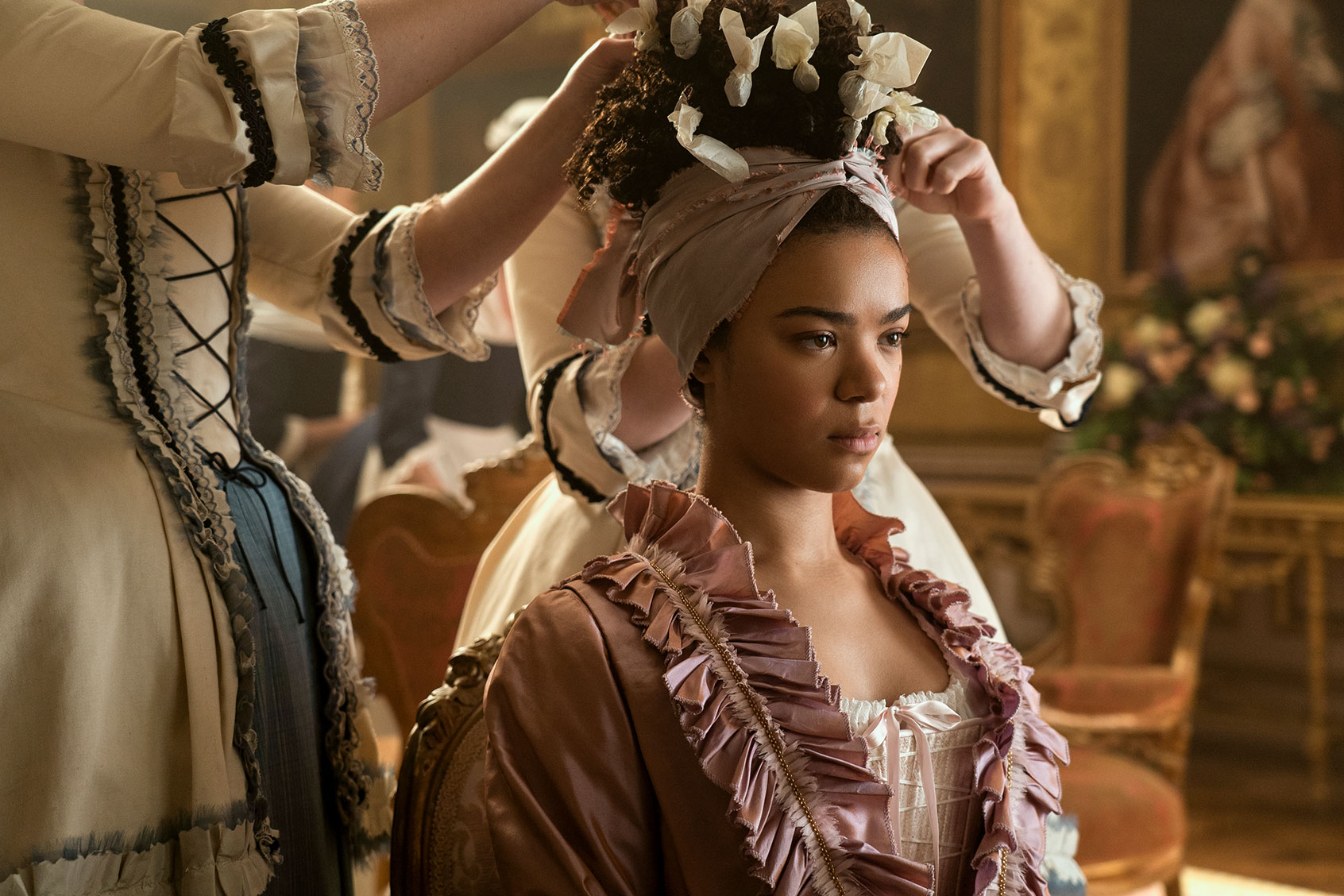
Hence the romantic exploits of the imaginary Charlotte’s 1761 version, played by India Amarteifio, star in her spinoff.

Queen Charlotte: A Bridgerton StoryIndia Amarteifio as Young Queen Charlotte in “Queen Charlotte: A Bridgerton Story” (Liam Daniel/Netflix)
Amarteifio’s queen-to-be is headstrong, cultured and refined, and resistant to marrying King George III (Corey Mylchreest). The pair meets for the first time on their wedding day, but the Dowager Princess Augusta (Michelle Fairley) is even more surprised to see Charlotte than her son is. George is smitten at the sight of her. Augusta evaluates her eventual daughter-in-law as if she’s a broodmare: checking her teeth, her childbearing hips and her hands. Then comes the move that distinguishes “Queen Charlotte” from “Bridgerton”: Augusta swipes her thumb across Charlotte’s cheek to see if her complexion rubs off.

With this, “Queen Charlotte” treads ever so lightly into territory where “Bridgerton” barely dips a toe, making the highly fictionalized version of this royal’s Blackness central to the story.

Charlotte of Mecklenburg-Strelitz and George III were real, prominent historical figures, the latest in a very long parade of notable people to star in dramas whose creators take ample liberties in telling their stories.

Few of these kings and queens are embroidered into fables focusing on the star-crossed nature of their love, ignoring actual matters of governance whose effects impact reality even now. George III ruled England when the American colonies revolted and, much more pertinent to this spin, presided over a country and a family that profited to an obscene degree from the slave trade.

Filtered through Rhimes’ romantic treatment, they are champions of integration whose burning love for each elevates members of London’s Black elite to the status of nobility. Charlotte and George marry, then George immediately bungles their budding marital bliss. Thanks to the intervention of a young Lady Danbury (Arsema Thomas), Charlotte comes to understand that her marriage to George has a purpose beyond their love.

“Queen Charlotte” is designed to woo the viewer with splendor.

Tied to its success is the permanence of the hastily bestowed peerages upon the Black upper class. Though they’re wealthy, they’ve been denied titles until Charlotte’s arrival. Princess Augusta hastily awards them to the Black ton’s influential figures to make the white nobility comfortable with Charlotte’s Blackness. Augusta quite plainly is not.

“She is very brown,” George’s mother stiffly tells the assembled men who brokered the marriage between England and the German territory from whence young Charlotte comes. “You did not say she would be that brown. Very brown.”

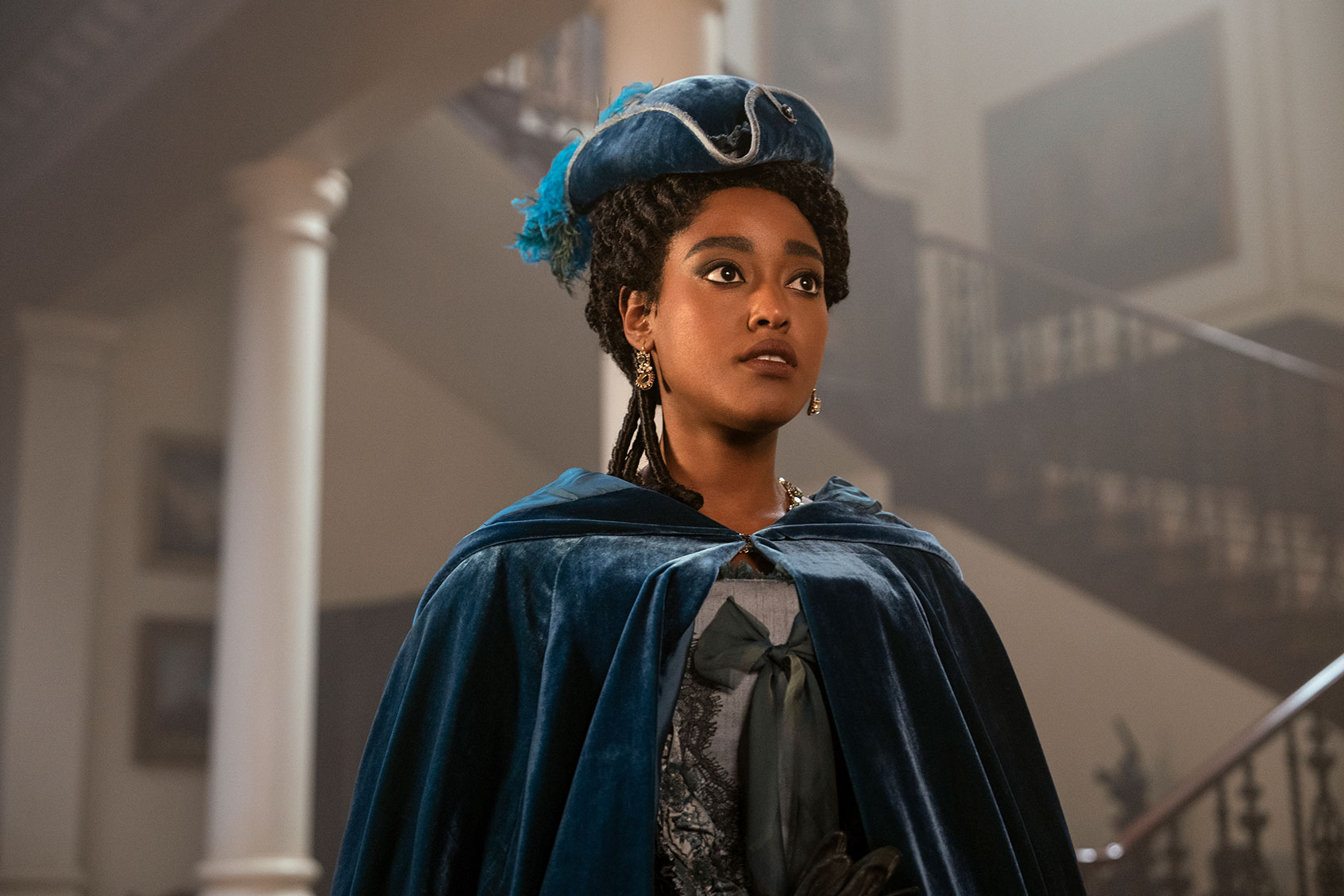
Rhimes and “Bridgerton” creator Chris Van Dusen adapted Julia Quinn’s novels with a “color-conscious” approach – not color-blind, Van Dusen explained, but casual in its inclusiveness to a degree that bordered on thoughtlessness. The second season corrected this somewhat. Rhimes’ spinoff, meanwhile, doesn’t ignore the British nobility’s bigotry. Thomas’ Lady Danbury battles Augusta for the same privileges white members of the ton automatically received when their titles were bestowed, including income and an estate.

Queen Charlotte: A Bridgerton StoryArsema Thomas as Young Agatha Danbury in “Queen Charlotte: A Bridgerton Story” (Nick Wall/Netflix)
Though they’re named Lords and Ladies at Charlotte and George’s wedding, the Black nobles are denied entry into gentleman’s clubs and access to the best seats at the opera. Equality. Without those things Lady Danbury points out, a title is simply a title.

 “That . . . is grasping,” Augusta responds, adding, “You should be grateful.”

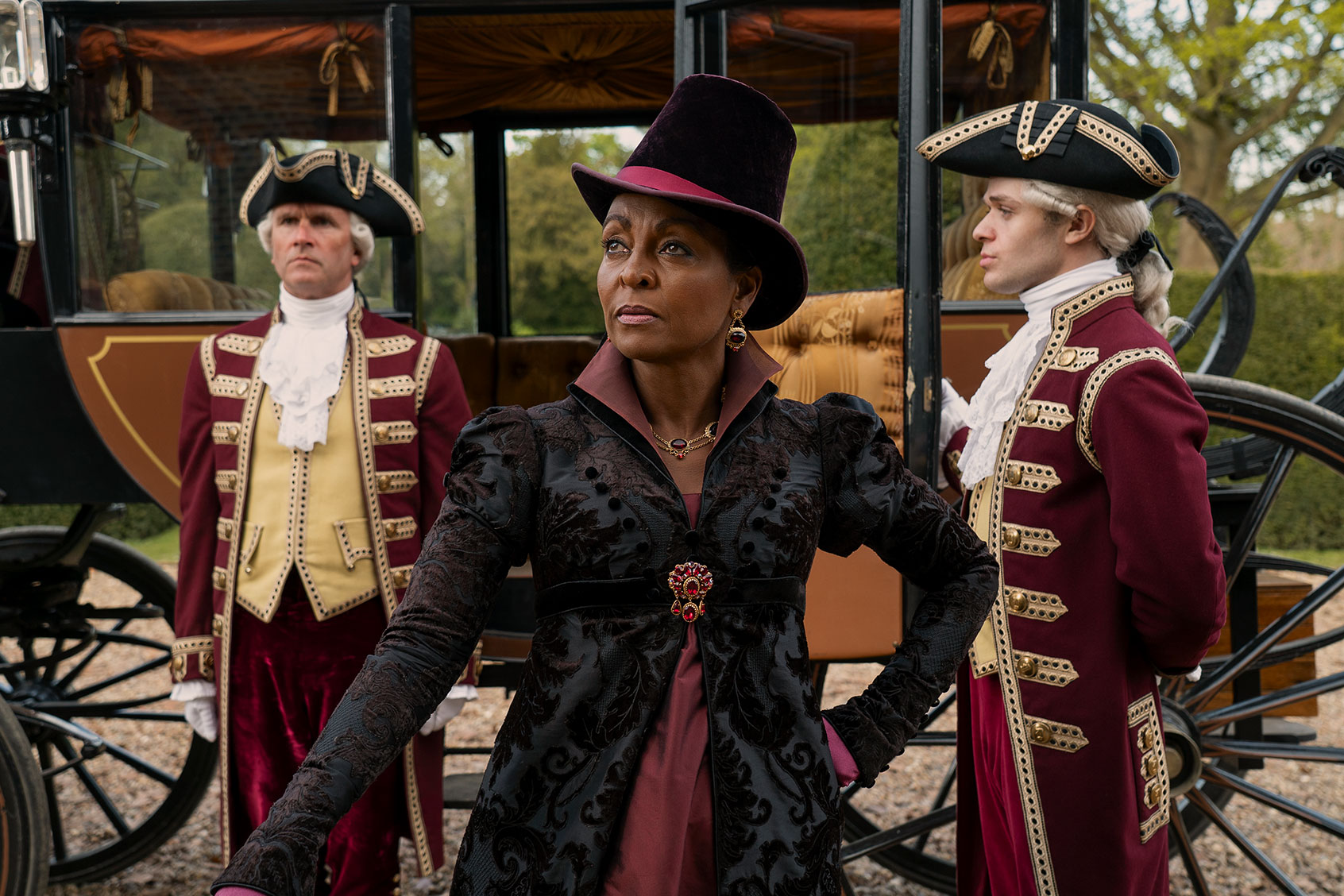
Rhimes is as aware of the arena she’s entering as she is proficient in the form. She handles explaining how the ton’s integration came to be in terms to which the modern audience can relate and may have experienced. Adjoa Andoh’s elder Lady Danbury accumulated the society currency Regé-Jean Page’s Simon spends without a thought as the Duke of Hastings in “Bridgerton.” In “Queen Charlotte” her title, along with those of the ton’s other members of the Black elite, is still “a taste of rare air.” 

She accelerates those winds by outsmarting the dowager princess and planning a ball featuring Black and white members of society mixing, something previously unheard of until Charlotte’s arrival. And the only reason the ball is a success is that Charlotte and George make an appearance, letting everyone know it’s safe.

“I do not know if you understand what you have done,” George tells his bride later. “With one evening, one party, we have created more change, stepped forward more than Britain has in the last century. More than I would have dreamed.”

Let’s place the vacuousness of George’s sentiment in generous terms. This is Rhimes offering an idealized version of how the world could be, and what is romance literature for if not presenting some version of a sweet dream?

But that also means she knows what she’s ignoring. In case anyone were tempted to view “Queen Charlotte” as biographically accurate, the following disclaimer flutters across our screens before we glimpse the first lacy hemline.

“Dear Gentle Reader,” Julie Andrews’ voice intones, “This is the story of Queen Charlotte from Bridgerton. It is not a history lesson. It is fiction inspired by fact. All liberties taken by the author are quite intentional. Enjoy.”

That settles that, perhaps. Also, probably not.

The notion of a hidden history where Charlotte was Britain’s first Black queen pops up from time to time, notably after Meghan Markle’s engagement to Prince Harry.

This is Rhimes offering an idealized version of how the world could be, and what is romance literature for if not presenting some version of a sweet dream?

But each of these transitory examinations skims the surface of what that may mean, making their cases through features captured in portraits or suppositions based on her family tree. If the real Queen Charlotte could claim any African cultural lineage, it would have come from a distant Portuguese forbear.

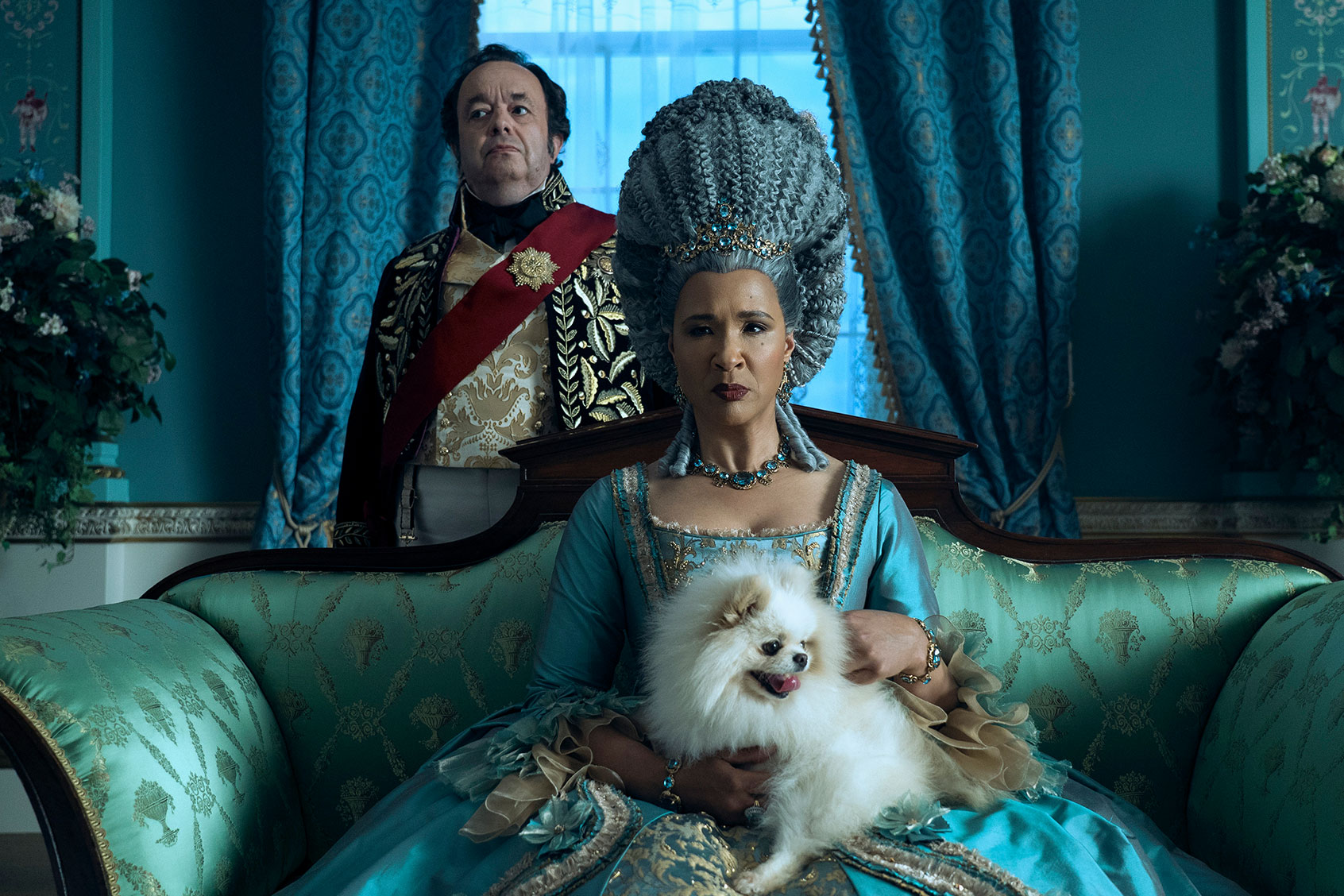
Whatever the case may be, her introduction via “Bridgerton” caused a stir, positive and otherwise. Few of those negative opinions have much to do with the performances. Amarteifio combines luminescence and edge to yield a stunning and very human portrayal. Rosheuvel once again gives us a statuesque, confident Queen who can be witty in one moment and poignant in the next. “Look at me,” she declares to her spinster daughters in one scene. “I am gorgeous.” That is undeniable.

Queen Charlotte: A Bridgerton StoryHugh Sachs as Brimsley, Golda Rosheuvel as Queen Charlotte in “Queen Charlotte: A Bridgerton Story” (Liam Daniel/Netflix)
Like “Bridgerton,” “Queen Charlotte” is designed to woo the viewer with splendor. From the sculptural wigs adding what looks like an additional foot to Rosheuvel’s height to the opulently laden dinner tables, verdant gardens and sumptuous gowns, every visual is intoxicating and unmistakably fantastical.

Disclaimer notwithstanding, the audience will exercise their freedom to critique choices considered to be so oppositional to the recorded facts that ignoring them would be irresponsible. This is particularly relevant as Britain crowns a new king.


Want a daily wrap-up of all the news and commentary Salon has to offer? Subscribe to our morning newsletter, Crash Course.


Long before Harry and Meghan declared their independence from the crown, there has been a global demand that the royal family atone for profiting off the enslavement of Black people before and during the reign of George III along with the colonialist horrors committed well into the 20th century. Queen Elizabeth II’s death and Charles’ unlikability merely brought more attention to these voices. (A few have made enough of an impression on Buckingham Palace for them to leave the Kohinoor diamond, which India wants to be returned, out of the coronation ceremony.)

Ignoring this giant stain leads Chicago Tribune critic Nina Metz  to concludes that Rhimes’ execution doesn’t feel “like a win for anything, representation or otherwise, no matter how smoothly ‘Queen Charlotte’ avoids this inconvenient truth about its title character.”

Yes. Also, Quinn avoids this conflict in her “sensual” novels since all of her characters are white. Historically inspired stories have long elevated whiteness in literature, television and film. Ergo, Rhimes could have sidestepped such critiques by casting a white woman as Charlotte – for instance, Helen Mirren played her in 1994’s “The Madness of King George.” 

It would be simpler to continue perpetuating the absence of non-white people in historic period pieces despite factual evidence that Black, brown and Asian people lived on the continent and in Britain, some of as members of elite social classes, during these eras. The multiracial cast of “The Great” reflects this.

People of color have only recently been centered in historically inspired confections like “Bridgerton,” making their inclusion a relative novelty even now. Critiques reminding us of what these stories leave out have merit; rendering our history honestly and in all of its ugly truth is vital, especially at a time when legislators are scrubbing facts they deem uncomfortable from educational texts.

Queen Charlotte: A Bridgerton StoryAdjoa Andoh as Lady Agatha Danbury in “Queen Charlotte: A Bridgerton Story” (Liam Daniel/Netflix)
But “Bridgerton” and its offshoots aren’t obligated to be true or vital, and its effort to acknowledge that the Black and white members of its storied society set didn’t mix before Charlotte’s arrival is about as responsible as these stories are going to get.

A possibly stronger counterpoint to the “Queen Charlotte” disclaimer rests not in its insistence that we see its historical fiction but in its classification as a romance above all. Anything grimmer than the dainty version of bigotry the characters waltz through risks flattening the champagne lightness that is the hallmark of all guilty pleasures.

That “Queen Charlotte” does a decent job in broaching these topics to explain the inclusive society taken as a given in “Bridgerton” without killing its charm is something of a feat. That success isn’t the Queen’s victory, though. It is Lady Danbury’s, a woman only a few stations removed from obscurity.

“A problem is only a problem if the Palace says it is a problem,” Augusta sniffs. The viewer might consider that too, enjoying this frilly, well-meaning fiction while understanding the history that inspires it is not altogether beautiful, and is with us even now.

All episodes of “Queen Charlotte: A Bridgerton Story” are streaming on Netflix.


“I never had a conversation about it”: Why can’t our culture talk about menopause?

Journalist Jancee Dunn thought maybe it was her heart. She thought maybe she was pregnant. She thought, "I guess I'm just sweaty now." There she was, right on time and experiencing a variety of perfectly common indicators of a normal biological process, and yet, she says, "I was so clueless about symptoms of menopause. And I'm a health writer." 

That Dunn should have been so perplexed isn't so perplexing. Menopause, after all, is a double whammy of taboo topics: female aging and female fertility. To acknowledge either, let alone both, seems like an admission of defeat — even among the people we trust the most. "I had never had a conversation with my mother about menopause," Dunn says. "Never. I hadn't talked about it with some of my friends."

Fortunately, that silence is beginning to be broken. A new generation of celebrities and public figures have in the past few years started opening up about their own perimenopause and menopause experiences — while a host of savvy marketers have discovered a previously untapped consumer niche. But all that conversation doesn't necessarily provide any practical answers. And that's where Dunn comes back in with her trademark humor and common sense, and her new book "Hot and Bothered: What No One Tells You About Menopause." It's a guide that anyone who gets periods should read, a detailed and demystifying exploration of what happens as the childbearing years wind down and what experts say can make the transition time easier. It's also a frank and personal account of her own journey through menopause and a beacon of encouragement of what's on the other side. What it is not, however, is any kind of gentle nudge in the direction of the nearest ice floe. "I'm not saying it's so great to embrace your invisibility," Dunn said during a recent phone conversation about aging out loud and getting "Hot and Bothered." "It's not that at all," she says. "I'm fighting to be visible still."

This conversation has been edited and condensed for clarity.


Want more health and science stories in your inbox? Subscribe to Salon's weekly newsletter The Vulgar Scientist.


Menopause is so hot now. For most of our lives, it was this big dark secret. What's changed that now we're willing to talk about this thing that has been going on since the dawn of history, and that half of the human population experiences? 

It's a couple of things. I have to give Gwyneth Paltrow credit for talking about perimenopause and menopause a long time ago. I know these celebrities often have things that they're selling, but it still opens up the dialogue. Like it or not, it does, and it gives people permission to talk about it. 

"Marketers have woken up to the fact that this sector of the population has tons of symptoms, no solutions and lots of money."

Another thing is that marketers have woken up to the fact that this sector of the population has tons of symptoms, no solutions and lots of money. The reality is that marketers smell money and so they're starting to invest in these companies. From a consumer standpoint, I find it really interesting that menopause products now are kind of pitched as luxury products. This is new to me, because back in the day, there would be some round supplement bottle with like, a sunset on it.

The fact that now they're display-worthy, that's noteworthy. So money is driving some of it. I really loved that there was a movement to be more open about menstruation. Some of it is filtering down from the younger generations. We can really take a lesson from them and how open they are about so many different things,

And then at a grassroots level, women are starting to talk about it more. I really do hope that will drive it further out of the shadows. Even when I was writing this book, I had never had a conversation with my mother about menopause. Never. I hadn't talked about it with some of my friends who were obviously going through it, and we talk about everything. You and your friends, you talk about the most granular subjects, parents dying and chin hairs, all kinds of things. Yet we didn't talk about symptoms. It's even shocking to me because when I started shopping around the book, I thought, is this going to fly? 

How I pitched the book was that I went to my library. I noticed that there were shelves and shelves of pregnancy books. Then I thought, Okay, where's the menopause books? My library is a nice library. There are tons of books. There was one menopause book, one. Jen Gunter has a great book, but there was just nothing else. That's how I was able to pitch it — look at this hole in the market, and it's half the population. It's just heartening to see that even since the time that I shopped around the book, things have moved forward in the way that they have.

There are consequences for women of getting older in a way that is more visible. You tie that to how you look, the weight you gain, the way your hair changes. For a lot of professions, being young is synonymous with being successful and being relevant and having a voice and interesting opinions. What do we do about that? 

Yes, the fear is real. I cited a study in the book that happened over COVID, where women went gray. Then they felt like they had to counteract the gray hair just to reassure all their co-workers and get a bold lip going or interesting jewelry or vibrant colors just to telegraph to everyone, "Okay, I have gray hair, but don't worry, I'm not going to slump forward during a meeting. I'm actually still vibrant."

I certainly don't want to blithely tell everyone, "Be sure to come clean about your symptoms in the workplace," We have to work with the system, and it's biased against older women at this point, even though they make up a significant part of the workforce. It's a thorny question. I wish we were like the UK. Not that they're perfect, but at least they're aware of menopausal women's symptoms and put systems in place to support them. 

"Not everybody wants to be transparent about it yet. "

We have no systems in place to support us, and the onus is on women. I wish I could give you a different answer, but it's just, in ways that you feel safe, talk about it. You can form an ERG (employee research group) with people, but even that can be a little dicey. Start at the social level with people that you know, and start that movement of transparency as much as you can, where you feel safe, with whom you feel safe, and go from there. I've been in offices where I'm the only one who's having hot flashes. I remember I was in one office where another woman was going through it, and she didn't want to acknowledge it or talk about it. I get that too. Not everybody wants to be transparent about it yet. 

There are also issues of privacy. I don't necessarily want to tell everybody what's going on inside my body, particularly around my reproductive health. How do we normalize these processes in a way that is also respectful of our boundaries? 

I kept thinking of legal leverage. I can think about lactation and pregnancy issues and how it's made some employers scared to go against that or to not support that. How do we transfer that, to make them a little uneasy about not supporting us? I was digging into the research about if we have any legal legs in that area. I couldn't find any.

You talk in the book about how very often when you're Googling around menopause, everything is symptom-based and problem-based. Because there are symptoms and problems. So let's start with them. 

Allegedly, there are 34 symptoms. Some experts told me there were even more, and some of them are just kooky. But every expert that I talked to, and I talked to so many, all said, "Be sure and tell people that some women sail through menopause with nary a symptom. It is not always a given that you get symptoms." 

That's one semi-heartening message. Not everyone gets the symptoms. But if you don't know what the symptoms are, you cannot connect the dots. I see now that I'm through it, what would have helped tremendously is knowing what the symptoms were so that I could connect the dots or that my doctor could, but more likely I would. If you don't know, the surprise and shock really adds to the unpleasantness of the whole process. I wish I'd known. And I'm a health writer. 

The symptoms, the problems, often take people by surprise.

"You waste time, you waste money, and you're also uneasy because you can interpret these symptoms for something scarier."

There's been research about this too, that women go to all these different specialists, I did. I saw a cardiologist because my heart was racing — one of the symptoms. So you waste time, you waste money on your co-pays if you're insured, and you're also uneasy because you can interpret these symptoms for something scarier. Brain fog, Alzheimer's. Heart racing, am I having heart attack? 

It's two problems. One is that if you're not aware of the symptoms, you can't connect the dots. The other is that in midlife, it can just be life stuff. You're tired? Who isn't? Perimenopause occurs most often in your forties. That's when so many people are raising kids, they have a job, they're dealing their elderly parents. They're tired anyway. Also, if you don't know the symptoms, you can rationalize them so many different ways.

When I started having night sweats, I was like, "I guess I'm just sweaty now." It never even occurred to me. When estrogen leaves your body it's often this really chaotic process. When I started reading about it, I thought it was a smooth transition. But no, it's all over the place. Your periods can be the Mighty Mississippi one month, and a trickle the next. I didn't get my period for a couple of months. Because I was so clueless about symptoms of menopause, I thought, "I'm pregnant." I was 45. I had my other kid at almost 43 so it wasn't out of the realm of possibility. Just being aware of the symptoms is such a good first step. Then you can go from there. 

My message is also, once you're through this, that most of them go away. It's not for life. Some people do have hot flashes until they're 80, but they are a rarity. Also, there are treatments for so much of this stuff. Topical estrogen — who knew it could make you stop peeing and sex could stop hurting? There are things that you can do so you're not trapped.

With all the woo-woo treatments and alternative remedies out there, you also don't have to go full Goop either. 

Some of that stuff is a big old waste of money. A doctor can help you. Menopause specialists can help you. If you go to the North American Menopause Society, they'll find people who are qualified to treat you and they will be in charge of your menopause care. You go one or two times to them, not forever, and then they refer you back to your doctor, and they can help you quickly pull together all the treatments that you need. I'm not being rah-rah about it. Sometimes, it's hellish for women, but there are treatments available. Unfortunately, you're going to be have to be the one to find them and to manage them.

Talk to me a little bit about the role of the fact that your body is going to change, which is still a very hard pill to swallow. How do we reckon with that in a way where we're aware of what's going on, rather than just trying to clench and fight those changes? 

It has to be about assessing the next stage in your life with your eyes open and accepting the reality that your body is going to change. There's no way around it. Yes, Jennifer Lopez was able to pole dance at the Super Bowl Halftime Show, and she looked amazing and she was 50. But most of us mortals, things are going to change. You gain weight around your middle, statistically about five to seven pounds, and your pants don't fit. I finally just donated a bunch of my pants — I just accepted the fact, as painful as it is, that my body has changed in shape.

Yes, the things that do hurt are your strength. It's not what it was. Your flexibility, you really have to work to maintain those things. Some of it is just depressing. I wish it were different. But I really do frame this as an opportunity, when you've been taking care of so many people and maybe neglected taking care of yourself, because there's just no time, to figure out what you can do to make this next stage in your life as healthy as it can be so that you're as strong mentally and physically as possible. 

Maybe start walking more, nothing crazy. Just lifestyle changes so that you feel like yourself. What was important for me is, how do I recognize myself? How do I recognize myself as it is now, because your body will change. Accept it, deal with it. It will change. Whatever makes you feel like yourself is okay with me, not that you need my endorsement. I just mean, it looks different for everybody. It's a strategic path that you have to take about, what is making me feel like myself?

For me, in terms of my body, it was about balance and flexibility and strength. Now I walk like a maniac every day. I do light weight sometimes because weight-bearing exercise helps your bones and your bones start to thin at this age. Prioritize what will make you feel good psychologically during this process and throw your energy into it. Its a good thing to know about your medical history as well as, what happened to the females in your family? What happened to their bones? When did they go through menopause? This is all so helpful to know and it can dictate your own care. 

I really appreciate it in the book that you were not going to talk about becoming the "wise, sage woman" like it's some kind of booby prize. But you do talk about the fact that there is something on the other side of this. There are things that are kind of great about the freedom of moving into this other point in your life. 

There's something that even rebirths you. I cannot stand the word "wise." Do we all automatically get wisdom? I think not. Experience, yes. You can't help having lived. But "wisdom" just feels so condescending somehow. Just because you're old doesn't mean you're wise.

I want to be fully, fully upfront about everything. And I am here to say that once you get through it, it's really kind of amazing. It's like that speech in "Fleabag," where she says it's glorious. You really are free of a lot of annoying processes of your body. And you almost return to pre-menstruation levels, where you're just kind of a weirdo. And you don't know not to be a weirdo, you don't have societal pressure not to be weird. I hope this doesn't sound like the wisdom trope, but you really don't care what people think, which is enormously freeing. 

"I'm not saying it's so great to embrace your invisibility. I'm fighting to be visible still."

I'm not saying it's so great to embrace your invisibility. It's not that at all, I'm fighting to be visible still, I'm doing it as I'm talking to you. But it's definitely a period of freedom where you can concentrate on yourself a little bit more like, "Okay, what do I want to do next? What can I do to maintain my sanity and my strength, mentally and physically?" It really can be an exciting time, and no one believes me until they're through it. 

And most of the symptoms go away. They really do. Brain fog goes away, statistically. You're mentally sharp again, which to me was the biggest fear of all — that my marbles were going to roll away and never roll back. They did. So now that I have a plan in place, I feel somewhat like myself, only a little bit more free. And that doesn't seem so bad, does it?

Diet ice cream brand HaloTop is getting into the gym game — but why?

We love a good food-themed crossover, whether that’s fast food and fashion or beer and politics. So naturally, we had to investigate the all-new — albeit unexpected — crossover between ice cream and gyms.

Ice cream and gyms, you may ask? Well, that’s the latest initiative introduced by Halo Top, the self-proclaimed “light” ice cream that boasts fewer calories, less sugar and higher protein than traditional ice cream. Last month, the brand launched its No Work Workout, a first of-its-kind “un-gym” experience that takes the stress out of working out, especially when it seems more like a daunting task than an enjoyable activity.

“We know that sometimes that trip to the gym just isn’t what you’re looking for, so we’re taking the ‘work’ out of working out by creating an active experience that doesn’t feel like a chore…just enjoyment!” explained Halo Top’s Director of Brand Marketing, Ryan Roznowski.

Roznowski added, “We wanted to show people you can take a break from your usual fitness routine and still feel good about it, just like you can feel good about taking a break with our frozen treats. Halo Top is the original better-for-you ice cream and has long been a leader in the space. Our fans care about their body. They want to make healthy choices, but they also love ice cream and other frozen treats.”

The No Work Workouts are currently being offered in Phoenix, between May 12 and May 14. The free, pop-up workouts were previously available in New York City and Chicago and will soon make its last stop in Los Angeles, from May 26 to May 28. As of now, Halo Top has no plans to expand their workouts elsewhere. But, they are offering eight quick activity circuits for participants to do from the comfort of their own homes.

The typical activity circuit includes a “scare booth,” done in lieu of a basic warm up routine; a spin on the Mechanical Bull, done in lieu of a cycle class; a swing in the pillow fight station, done in lieu of doing rounds on the punching bag; a shopping simulation, done in lieu of running on a plain ol’ treadmill; attempting a Jordan-style dunk rather than doing pull-ups; playing an air guitar, rather than classic jazzercise; a beach umbrella lift in place of lifting weights and a soundproof scream room, done instead of, well, just letting out a good post-workout scream.

An at-home rendition includes an amalgamation of daily activities that can be turned into an easy-to-do and fun workout. Some activities include playing with a pet, putting on a fitted sheet (this truly will make you break a sweat), having a pillow fight and more. 

“At Halo Top, we believe in indulgence you can feel good about and not forcing you to have to make the decision between what’s healthy and what tastes good,” Roznowski said. “That’s why we’ve been popping up with No Work Workouts, to prove that you can do the things that are good for you, but in a more fun and indulgent way. It’s a win/win. We wanted to go big, and we wanted to reach as many people as possible so popping up gyms seemed like the best way to do that.”


Want more great food writing and recipes? Subscribe to Salon Food’s newsletter, The Bite.


As for whether other health conscious brands will dip their toes into the fitness industry, Roznowski said, “Fitness and food have long been, and will very likely continue to be, huge industries and huge priorities for our fans. We can’t say for sure what other brands out there will do. But if our track record continues pace, we will see other brands following suit in the future.”

“We hope to show people that they can feel good about enjoying a moment of indulgence, whether it’s stopping at the “un-gym” instead of doing their usual exercise routine or enjoying some Halo Top ice cream,” he added. “With the No Work Workout, we want to give people an alternative that’s way more fun than any trip to the gym, but still keeps you active and burns calories.”

Considering the newness of it all, it’s still unclear whether Halo Top’s new initiative will actually change people’s perception of exercise. At first glance, it all seems like a marketing ploy meant to help boost sales of Halo Top ice cream amid the spring and summer seasons. But it also has the potential to make fitness more attainable — and doable — for gym rookies. Fitness culture continues to promote rigorous workout regimes and strict diet culture, which can be daunting for those who are looking to kickstart their fitness journey. Perhaps Halo Top’s “No Work Workout” will fuel a new outlook on what working out actually entails — you don’t need to lift heavy weights, run miles on the treadmill or overexert yourself to reap the benefits of staying active. Simply getting in a few daily movements, all while having fun, will do the job.

On “The Marvelous Mrs. Maisel,” Midge made Susie who she is

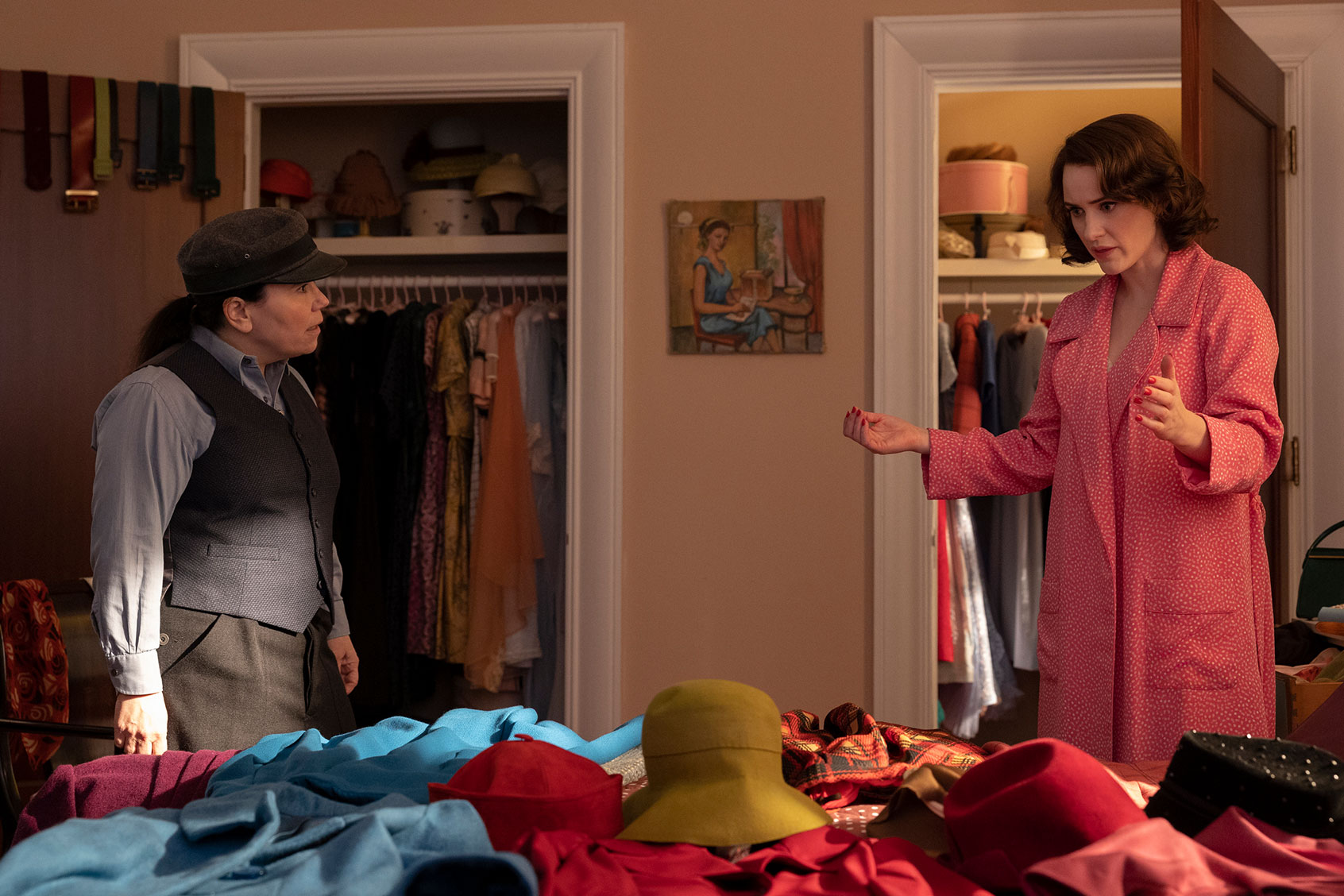
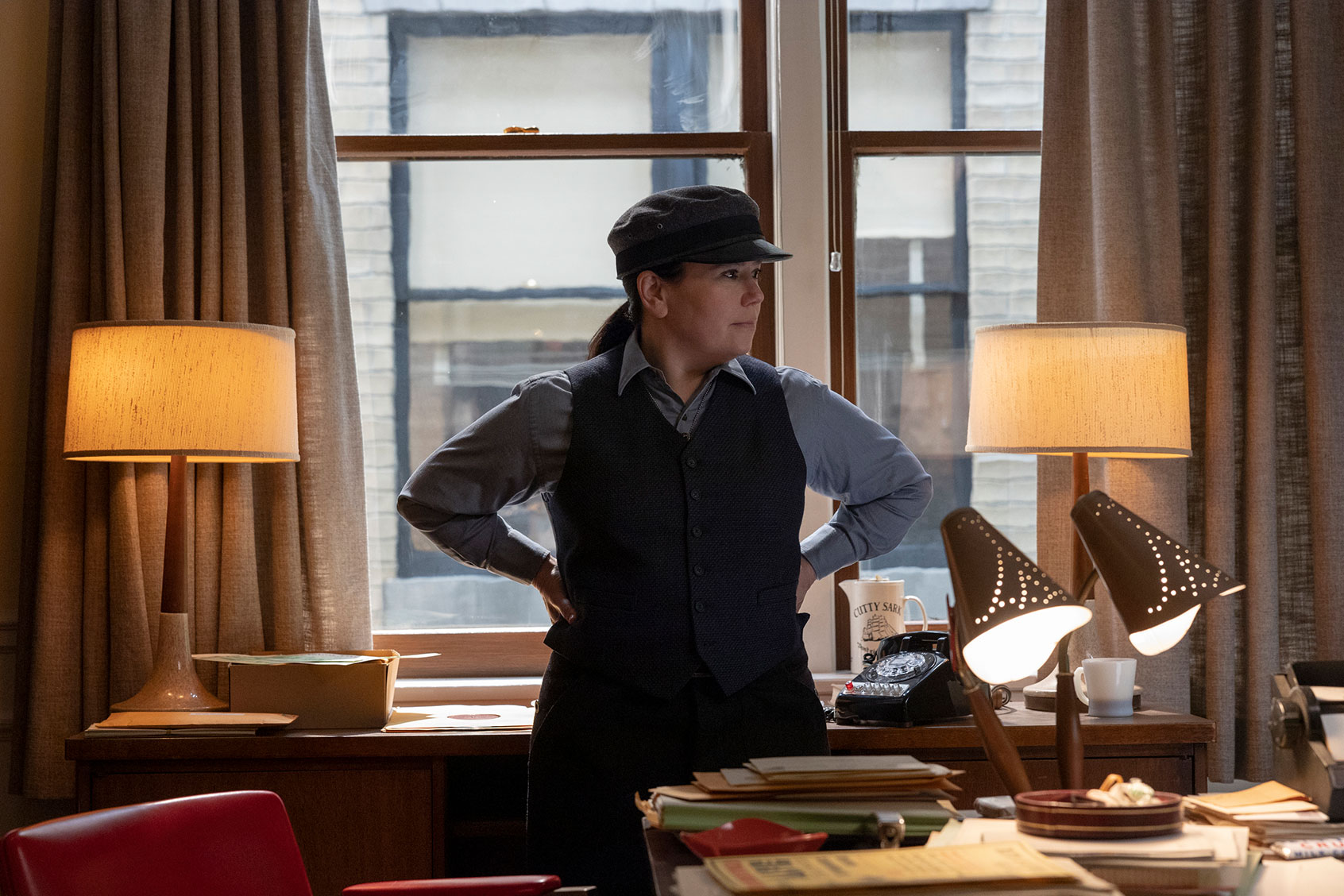
Managers have to deal with a lot. Temperamental stars, sometimes more trouble the more fame they receive. Sneaky contracts, producers and directors who won’t call you back. Throw in the pressures of sexism, homophobia and insults received for being diminutive, frequently mistaken for a little boy, and you have Susie (Alexis Borstein), the former Gaslight Café employee turned manager for “The Marvelous Mrs. Maisel.”

What’s the cause of the fight? It doesn’t pass the Bechdel test. It’s over a man.

Midge (Rachel Brosnahan) credits Susie with turning her “nervous breakdown” into a comedy career. Susie saw something in Midge from the moment she wandered drunkenly, heartbroken and half-dressed, onto the stage at the Greenwich Village nightclub. It took time to convince Midge comedy was her destiny, that Susie could be the one to get the comedian to stardom and for the rest of the world to sit up and pay attention. That striving was at the center of the series, which wraps up this season. 

But given less fanfare is Susie’s journey. Her career trajectory occupies the bulk of the episode “The Testi-Roastial,” flashbacks sandwiched in between a roast of the older Susie, who has turned into a kind of pot-addled Patti Smith in her later years. That transformation seems a bit unlikely for the butch-presenting character, but the show has never been great (or clear) about Susie’s identity. What it has done, and what has and continues to be a joy to watch, is move Susie from a self-deprecating presence barely scraping by to a bold and successful person, helped along by the most unlikely of motivators, Midge Maisel. Susie made Midge a star, but Midge made Susie brave.

One of the big plot knots this final season of the Prime Video show is how Midge and Susie, the closest of collaborators and the unlikeliest of friends, grow apart. They stop speaking for years, after a rift develops between them. What’s the cause of the fight? It doesn’t pass the Bechdel test, folks. It’s over a man. Hot and cold ex-husband Joel takes the fall for Midge, after shady financial dealings, but really, he takes the fall for Susie. At least, Midge sees it that way.  

Susie has never been good with money. She gambles. She makes bad deals. She trusts the wrong people. Having had a lifetime of experiences of poverty, this makes sense. She wouldn’t know what to do with money; she’s never had it. She puts her faith in shady people because that’s who she knows. She makes decisions based out of fear, which is not the best way to think long-term. In survival mode, Susie has not been able to have a long-term before, even to consider it.

The Marvelous Mrs. MaiselAlex Borstein (Susie Myerson) and Rachel Brosnahan (Miriam ‘Midge’ Maisel) in “The Marvelous Mrs. Maisel” (Philippe Antonello/Prime Video)
Why can’t it work out? she frequently demands of Susie with the bafflement of one for whom it always has.

As a wealthy housewife who went to Bryn Mawr (and we’re presuming not on scholarship), Midge has not had to make decisions about money . . . at all. The Mary Sue describes her as “a character who is incapable of growing up unless reality is directly in her face — and even then, we’ll have to see.” For the bulk of her life until her divorce, money was just handed to her. Her struggle to get a job, keep a job and figure out her finances (as well as support to her parents, at times) is the polar opposite of Susie: Midge is not good with money because she’s always had it. She expects it.

This expectation bleeds into all other areas of Midge’s life. Of course you’ll listen to her. Of course she’s funny. Of course she’ll be a success. And of course she’s right. Why? Because she’s Midge Maisel, pay attention! At times, this can make the show feel low stakes (and like a poster advertising privilege). Whatever ridiculous thing Midge does — from her refusal to ever be an opening act again to her multiple arrests — she’ll get out of it, like a white feminist Houdini. 

The Marvelous Mrs. MaiselAlex Borstein (Susie Myerson) in “The Marvelous Mrs. Maisel” (Philippe Antonello/Prime Video)But for Susie, it’s the opposite. She has to fight to be heard. Partly she fights for Midge, to get her client to be taken seriously in a world of men, and partly she wages war because Midge has taught her to fight for herself. Midge has led by example in that regard. Why can’t it work out? she frequently demands of Susie with the bafflement of one for whom it always has.

Susie has also grown enough to grow away from Midge.

This persistence has helped Susie out of her comfort zone. Would the Susie of five seasons ago have followed a Hollywood producer into a gay bathhouse to demand an answer from him? Or, pretended to be a plumber — and fit in seamlessly, attracting a huge devotion of friends who cared for her and worried about her — in order to blend in at a Catskills resort? Midge has inspired Susie to take risks. Susie has also grown enough to grow away from Midge, which is healthy for a working and friend relationship an older Midge describes as lasting “longer than any of my marriages, combined.” Susie has other clients. Some of them famous or about to be. She works just as hard for them as she does for Midge. She’s learning to prioritize herself, which is something the Susie of before-Midge times perhaps could not have done.


Want a daily wrap-up of all the news and commentary Salon has to offer? Subscribe to our morning newsletter, Crash Course.


Midge doesn’t take no for an answer. Likely because no one has really ever said no to her (which is why she deals with those rare conflicts when people call her out on her entitlement, as with closeted singer Shy Baldwin, so poorly and defensively). Midge holds grudges for life. But she also walks into every room with her perfectly coifed head held high.

And she taught Susie how to. 

Right-wing story hour, part 3: The unbearable sadness of being Sean Spicer

Recently, in a post on his YouTube channel, former White House press secretary Sean Spicer announced the cancellation of his nightly cable show: “After three-plus amazing years, I’m leaving Newsmax to embark on a new project.” Without providing specifics, he said that he’d be playing a major role in the run-up to the 2024 election. “I have a plan to bring it directly to you in a new way,” he added.

SPICER DESPERATE TO WORK FOR EX-BOSS DONALD TRUMP, the headline to a subsequent Radar Online article proclaimed. “Sean shocked his small TV audience when he announced he would be leaving,” an anonymous source revealed, “but what he didn’t mention is that he’s begging for his old job back. Spicer would kill to be back in the White House.” 

A week earlier, I’d watched him read from his new children’s book, “The Parrots Go Bananas.” This was in Washington, at the Cleveland Park public library. The event constituted the latest stop in a promotional tour organized by Brave, Spicer’s Texas publisher. Already Jack Posobiec and Chaya Raichik — stars in the online world of far-right influencers — had presented their books, black-and-white allegories of popular conservative talking points: Antifa wolves for Posobiec, a 38-year-old political operative who’d risen to prominence promoting conspiracies; and, for Raichik — the 28-year-old creator of Libs of TikTok — a schoolteacher wolf dressed in sheep’s clothing.

There’d also been a reading by Kirk Cameron, the former “Growing Pains” star turned evangelist; after arriving late he’d hurried through the pages of his own picture book, “As You Grow” — a mashup of “Avatar,” “The Chronicles of Narnia” and the most take-my-body-and-eat-from-it passages in “The Giving Tree.”

By the time it was Spicer’s turn, the children in the audience had been sitting on the hard carpet of the library’s main room for more than two hours. “I’ll try and keep this quick,” he said to them. “I’m the last thing between you and lunch.”

Spicer, 51, wore jeans and a textured plaid sportscoat, and he was holding a copy of his book. He’d become a household name half a decade earlier in his role as the first of Trump’s four White House press secretaries, during which time he racked up a number of controversies, from comments on crowd sizes and Hitler to his failed attempt to conceal himself behind a row of bushes. From the start he’d been mocked in the press, on late-night shows, and by his current boss, who seemed incapable of passing on an opportunity for humiliation. Trump disparaged Spicer over his height and weight and ridiculed his fashion sense. He didn’t hesitate to express his disgust after he was portrayed by a woman, Melissa McCarthy, on “Saturday Night Live.” During a trip to the Vatican he even went so far as to refuse to let his press secretary, a devout Catholic, meet Pope Francis.

Before taking the job at the White House, Sean Spicer’s career had been defined by a steady series of successes. He’d grown up in Rhode Island, one of three children in his Irish-Catholic family. His father was a successful insurance salesman. His mother worked in the Asian Studies department at Brown University. He majored in government at Connecticut College and began working in conservative politics soon after. Climbing his way up the ladder, he traded in one media relations post for the next until, in 2011, he became the head of communications for the Republican National Committee, overseeing a staff of 30. 

Along the way he met his wife, Rebecca Miller, then a television producer. He also found the time to enlist in the Naval Reserve, rising to the rank of commander, and even managed to land the role of White House Easter Bunny, sporting the costume for the annual egg roll. In 2014, Spicer set down in print his personal philosophy on life, which he distilled into 17 rules. Follow your mom’s advice, he counseled (#16). Have a relationship with God (#14). Take responsibility when you screw up—you will be rewarded! (#4). Think before you Tweet (#2).

That morning there were perhaps a dozen children in the audience. Together they fidgeted and called out, interrupting things repeatedly with their questions and responses.

In the run-up to his first briefing he declared,”I believe that we have to be honest with the American people. Our intention is never to lie to you.” For the next 18 months the positions of the 45th President of the United States became his own. He defended a man whose personal history came across as a step-by-step refutation of everything he believed. When, suddenly, it was all over, he was out, and the public image he’d spent his career building would be fixed forever to that of his former boss.

He quickly published a memoir, “The Briefing,” a mixture of talking points, dad jokes, and candid passages that he’d written with the hopes of landing a celebrity talk show. He then spent the next few years testing the celebrity waters, most notably during a brief stint in reality television, before he settled down in 2020 as the host of his own show on Newsmax, an outlet whose cast of far-right operators made him appear, in comparison, to be a known quality.

For the event at the Cleveland Park public library, Spicer read for just over 15 minutes. The plot of his children’s book centered on a game of “smash ball”; it featured a large cast of anthropomorphic animals, a minority of whom, through their shameless use of social media, drove the action forward by misrepresenting the game’s key play.

Unlike the Posobiec and Raichik stories, his material refused to snap easily into place. “It’s not like it’s mean-spirited,” he’d said during a recent appearance. “It doesn’t call out the media or try to make anyone seem like a bad guy. It teaches a very valuable lesson.”

Which is . . . what, exactly? 

That morning there were perhaps a dozen children in the audience. Together they fidgeted and called out, interrupting things repeatedly with their questions and responses. Their parents, seated in chairs toward the back, gazed down at their phones. Even Spicer’s fellow presenters seemed restless. At one point, Posobiec, in response to a clarification of the book’s setting, shouted acidly, “Gee, thanks, Mr. Spicer.”

For an instant I saw him as they surely did, fatally exposed, the vital contents of his innermost self spilling out now for everyone to see.

But Spicer seemed to be taking things in stride. Watching him, I found myself thinking about my own daughter—a second grader sitting in her classroom only a few miles away—and the confusion she would’ve felt if she’d been forced to endure nearly 200 minutes of stories that, despite their kid-friendly packaging, were clearly aimed at a different audience: an adult one, hungry for the branded content these conservative influencers provide.

Now the plot of “The Parrots Go Bananas” was heating up. The animals, outraged by the misleading posts that had gone viral on social media, were gathering in an angry mob. Together they sought out the stars of the smash-ball game, accusing them of cheating. These players, in turn, tried to explain themselves. But the mob was out of control. It chased them from the town, all the way to the ledge of a nearby cliff. A harrowing scene: on one side, the perilous plummet. On the other, a wall of once-friendly faces closing in. 

Spicer looked up from the page he was reading. “Can you imagine how scared they must feel right now?” he asked the children. “They’re getting accused of something.” He shook his head. “That’s got to hurt.”

“They are dying!” a young boy at his feet yelled out.

“Well,” he replied, “that’s very possible.”

Throughout the reading, I’d been sitting alongside Amanda Moore, a freelance writer who was covering the event for The Daily Dot. I glanced at her in disbelief.

“It’s like the book-report scene in ‘Mean Girls,'” she whispered. “We should totally just stab Caesar!

I looked over at Posobiec and Raichik. They were watching Spicer closely. To them, I realized, the emotion in his voice must be like blood in the water. For an instant I saw him as they surely did, fatally exposed, the vital contents of his innermost self spilling out now for everyone to see. All he could do was gaze back at them, uncomprehending.

Spicer’s story concluded on a note of reconciliation: the truth came to light, the murderous mob dispersed, and the star smash-ball players were allowed to step away from the brink. “The crowd is sitting back,” he read, “and they say, ‘We didn’t even know all the facts. We have to apologize.'”


Want a daily wrap-up of all the news and commentary Salon has to offer? Subscribe to our morning newsletter, Crash Course.


He closed the book. He had one last thing he wanted to explain. “They were up against a cliff,” he said. “They could have gotten hurt. Think about that the next time something like that happens. If they’re good people and they mean well, let’s not jump to conclusions. Let’s help them. We need to not do things that are going to make them feel bad, or, potentially, hurt themselves…” He broke off. “Because, you know, sometimes people don’t have the best intentions.”

The people around clapped softly.

“The f**k?” I whispered. But that was it. I was about to get up from my seat when suddenly, in the spot where Sean Spicer had just been standing, Kirk Cameron appeared again.

“We are the revival,” he said to us. “We need to get in the fight. We need to be off the defense and onto the offense: an army of compassion.” He bowed his head. “I’d like to close with a prayer.”

I found myself thinking about my own daughter and the confusion she would’ve felt if she’d been forced to endure nearly 200 minutes of stories that, despite their kid-friendly packaging, were clearly aimed at an adult audience. 

Three decades earlier, Cameron had shocked Hollywood by leaving behind his acting career to commit himself to Jesus. Now, at 52, with his short hair and sharp cheeks and perfect posture, he looked like an unnaturally youthful pastor whose self-portrait in the attic had long since turned to dust: a soldier for Christ if there ever was one. “Dear God in heaven,” he intoned. “We know that our hope and our help comes from you…”

It made sense why Cameron was here. I could also understand the reasoning behind Chaya Raichik’s participation; Seemingly unimpressed by the children in the audience, she perhaps saw it as an opportunity to expand her personal brand of anti-LGBTQ content. Posobiec, too: For him, an event like this offered all the ingredients necessary for his scorched-earth style of online chaos.

But how had Sean Spicer ended up here? He was standing off to the side, his head bowed. What did he think of the prayer he was listening to now? 

 “Tell all of your friends what you did this morning,” Kirk Cameron instructed. “And encourage them to come to future book meetings.”

* * *

A few minutes later I had a chance to speak with him. He was still standing off to the side of the room. I couldn’t help but notice that he was wearing a significant amount of makeup; from here he’d probably head straight to the Newsmax studio on K Street, where he’d record what would be one of the last episodes of “Spicer & Co.” 

At first he seemed wary. I introduced myself, offering an aspect of my background I thought he might find comforting: “I’m writing a book on the historical origins of Jesus,” I said.  

“No way!” he replied brightly.

I asked if in his youth he’d attended a Jesuit high school, as I had.

“Benedictine,” he answered. “I went to Portsmouth Abbey. It’s in Rhode Island.”

We talked for a bit about the differences between Catholicism and born-again Christianity. “Evangelicals tend to follow their scripts a lot more,” he said, “right?”

What kind of mob actually backs down after listening to a well-reasoned argument?

I nodded. One thing that makes a Catholic mass unique is the priest’s homily. Evangelicals, in contrast, tend to bypass this step by encouraging worshippers to establish a personal relationship with God. Today, I’m still struck by my own childhood memories of the homily: What it was like to hear, in the churches of my youth, stories that have remained with me all these years later, despite my current perspective as a neutral, non-practicing agnostic. 

“Is there a moment from the gospels,” I wondered, “that for you sticks out above all the rest?”

“That’s an excellent question.” He thought it over. “The parable of the Prodigal Son.” 

It was one of my favorites too, a story of three men in conflict: The younger son who leaves home, wasting his inheritance before returning, years later, to throw himself at the mercy of his family; the older son, devoted and resentful, who stays; and their father, balanced between them.

“Is there a character in it you identify with?” I asked.

“You know, it depends on where I am in my life.” He mentioned the oldest son: “If you’re honest with yourself, you can go without. But then there’s that moment… I was lost and then I came back.” Now he was talking about the younger son. “That’s why the story’s so amazing. There are days… It’s like you can pick your day, tell me how you’re feeling, and I can tell you I’ll identify with one of the two.”

“I love the character of the father,” I told him.

He looked at me. I realized that maybe the father was a figure he hadn’t before considered. For him, the parable had been about the brothers, which made sense. When it comes to the central conceit — those who leave and those who stay — the role of the parent can feel beside the point. 

Then his pale blue eyes flashed upward. He was trying to place me. Did he think I was out to get him, that this was some sort of elaborate trap? But an instant later his eyes cleared. Whatever he’d been feeling was already gone. It had passed like the shadow of a bird in flight, disappearing so completely that I felt I’d imagined it. 

“You’re right, of course,” he said. “There’s a third character. The father.” He smiled. “But the two sons…”

I nodded. So did he. There didn’t seem to be anything left to say. He wished me luck with my book. I thanked him for his time.  

As I was leaving the library, I overheard the creative director for Brave Books, Eric Presley, explaining their production model. “We would describe ourselves as a Christian conservative book company.” For each new release, a group of rotating staff writers and illustrators gets paired up with a prominent right-wing celebrity. Sometimes these celebrities suggest a general topic and step back, letting the publisher do the rest, but in certain instances, they take a more hands-on approach. “I think Sean Spicer is a good example,” he added. “He’s very passionate. He has an idea of what he wants to teach the kids, and we worked together with him to come up with the story.”

So what was he trying to teach? When you’re up against a cliff your options tend to be limited. You can beg forgiveness. You can declare your innocence. But what kind of mob actually backs down after listening to a well-reasoned argument?

* * *

The next day, Sean Spicer was live on his Newsmax show when the story broke that Donald Trump would be indicted, becoming the first former president in history to face criminal charges.

He’s written his memoir, danced with the stars on reality television, and even hosted his own show. He’s failed, in retrospect, to adapt. 

For the most part he repeated the information he’d been given, avoiding commentary. Then he spoke over the phone to Alan Dershowitz, who, mid-conversation, hung up so he could appear on another show.

At least, unlike Tucker Carlson, Spicer was allowed to say goodbye to his audience. He made sure to promote his social media accounts, spelling out the address of his personal website. “Stay in touch,” he implored.

What are his options? He’s written his memoir, danced with the stars on reality television, and even hosted his own show: a news program on a far-right channel. He’s failed, in retrospect, to adapt. 

 “I checked in with Trumpworld to see if Spicer would be two-stepping his way back into the inner circle,” Tara Palmieri wrote recently for Puck News. “One Trump advisor described the chances of a Spicer reunion as ‘unlikely, but possible.’ Until then, I hold my breath for the Spicer-Trump show part deux.”

The beauty of the Prodigal Son has always resided, for me, in the parent’s response to his two children. The youngest begs forgiveness and asks to be treated as a servant. The oldest complains that he’s never been given his due. In both instances, they’re met with love and compassion.

Now imagine Sean Spicer arriving at Mar-a Lago to ask for the same. No wonder he hadn’t considered the father’s role in the parable. We’re never so lost as when the place we’re hoping for is already beyond our reach.

Trump slams Biden for not attending King Charles III’s coronation

First lady Jill Biden and her granddaughter Finnegan Biden attended the coronation of King Charles III — held at Westminster Abbey on Saturday — but, sticking with American tradition, President Biden himself did not attend. 

As New York Post points out, “In the 247 years since America declared its independence from the crown, no U.S. president has attended the coronation of a British monarch,” and yet former president Trump called out Biden’s absence as an insult to the crown, and the U.K. as a whole, for reasons known only to him. 

“Joe Biden should have been at the Coronation of King Charles III,” Trump wrote in an early morning Truth Social rant. “Is that really so much to ask? The people of the U.K. are greatly insulted. No wonder we are losing support all over the World. MAKE AMERICA GREAT AGAIN!!!”

“It is not a snub,” White House Press Secretary Karine Jean-Pierre said in a quote obtained from Time regarding Biden skipping the coronation. Her statement on the matter was given a month prior to the event, so it should have come as no surprise. 

Back in April, President Biden had a 25-minute phone call with King Charles, during which time he informed him that the first lady would be attending the coronation in his place. Per reporting by Time, the king extended an invitation for Biden to visit the U.K. at a later date for a formal state visit. Biden accepted that invitation.


Want a daily wrap-up of all the news and commentary Salon has to offer? Subscribe to our morning newsletter, Crash Course.


Ahead of Saturday’s royal event — the first crowning of a new British monarch in 70 years — the first lady met with Kate, Princess of Wales, during a reception for heads of state held at Buckingham Palace.

“It’s an honor to represent the United States for this historic moment and celebrate the special relationship between our countries,” she said in a statement leading up to the coronation.

Mott the Hoople’s Ian Hunter on “All the Young Dudes,” Ringo’s All-Starr Band and his new album

Legendary English singer-songwriter and musician Ian Hunter joined host Kenneth Womack to talk about making music with Mick Ronson, the “weird feeling when you get a message from a Beatle on your answering machine,” his new album “Defiance Part 1” and much more on “Everything Fab Four,” a podcast co-produced by me and Womack (a music scholar who also writes about pop music for Salon) and distributed by Salon.

Hunter, best known as the lead singer of rock band Mott the Hoople – which shot to stardom in the early ’70s with the David Bowie-penned hit “All the Young Dudes” – says he grew up in the “opposite” of a musical household. As he told Womack, his parents “were good people who brought me up properly, but it wasn’t exciting enough. I had to get out of there.” He began looking for that excitement in music and, “as a lark,” entered a Butlin’s Holiday Camp talent competition as part of a trio — and won.

Though he said he never thought he’d “be a pro,” Hunter had stints in a few other bands around England and even played the famed Star Club in Germany, one of the early venues where the Beatles had cut their teeth, before finding fame with Mott the Hoople. As for the Fab Four, Hunter first remembers seeing them on the popular variety show “Sunday Night at the London Palladium” in 1963, and it was their cover of “Twist and Shout” that hooked him.

“They were different, they were a step up,” he said. “McCartney would have been Sinatra in another world. And Lennon was as rock as you could get. The combination of those two, song-wise, lyrics-wise, and vocally – you couldn’t beat it.”

Subscribe today through Spotify, Apple Podcasts, GooglePodcasts, Stitcher, RadioPublic, Breaker, Player.FM, Pocket Casts or wherever you’re listening.

Decades later, Hunter would find himself working with a former Beatle when he got a call from Ringo Starr to join his 2001 All-Starr Band tour. Starr is also one of several famous musicians Hunter collaborates with on his new album, which includes tracks recorded with Todd Rundgren, Billy Bob Thornton (who will be a guest on this season of “Everything Fab Four”) and the late Jeff Beck and Taylor Hawkins. Starr drums on the single “Bed of Roses,” and Hunter had him in mind for the role as soon as he listened to the demo. “I sent it to Ringo and he liked it, so he played on it. It was perfect… He’s fun to be with. He’s still got that sense of humor.”


Love in-depth interviews with artists? Check out the “Everything Fab Four” podcast.


As for Mott the Hoople, Hunter said, “We weren’t the greatest band in the world, but we had the spirit. And we were unselfish musically. Very selfish in other areas, but never selfish with music.”

Listen to the entire conversation with Ian Hunter on “Everything Fab Four” and subscribe via Spotify, Apple Podcasts, Google, or wherever you’re listening. “Everything Fab Four” is distributed by Salon.

Host Kenneth Womack is the author of a two-volume biography on Beatles producer George Martin and the bestselling books “Solid State: The Story of Abbey Road and the End of the Beatles” and “John Lennon, 1980: The Last Days in the Life.” His latest project is the authorized biography and archives of Beatles road manager Mal Evans, due out in November 2023.

This 25-year-old sci-fi disaster movie is still lauded by scientists — here’s why

In anticipation of the 25-year-anniversary of “Deep Impact,” Dr. Clark R. Chapman and his wife Y Chapman decided to rewatch the classic sci-fi disaster flick. Dr. Chapman is uniquely qualified to assess the movie’s merits: “Deep Impact” is about a comet the size of Mount Everest that is heading on a collision course with Earth, and Chapman is a planetary scientist for the B612 Foundation, a nonprofit which protects Earth from comets, asteroids and other near-Earth Objects (NEOs).

Perhaps unusual for a big-budget sci-fi flick, Dr. Chapman strongly approved of the film’s science, and both he and Y — an environmental activist and artist who donates to the B612 Foundation — said that as a work of art they “highly rate the movie’s production and creativity. It treats a number of characters in sufficiently intimate detail that viewers get to ‘know’ them.”

“‘Deep Impact’ has the best combination of reasonably correct science, good special effects, a dramatic story, and a look at what a comet strike would mean.”

The Chapmans are far from alone when it comes to scientists and artists who respect “Deep Impact,” although usually praise has been reserved for its scientific merits. Then again, any kind of long-term high regard for “Deep Impact” seemed improbable when it was first released in 1998, when most critics mocked the film’s attempts to engage in thoughtful character studies. While some scientists and journalists stepped forward to offer more nuanced takes, the consensus view was to dismiss “Deep Impact” as little more than a melodramatic companion piece to “Armageddon,” a Michael Bay-directed, jock-minded asteroid movie that was released two months later (and which critics similarly savaged).

“Deep Impact,” which was released on May 8, 1998, was directed by Mimi Leder (“The Peacemaker”), co-written by Bruce Joel Rubin (“Ghost”) and Michael Tolkin (“The Rapture”) and sported an all-star cast including Morgan Freeman, Robert Duvall, Téa Leoni, Elijah Wood, Maximilian Schell, Leelee Sobieski, Kurtwood Smith and even future “Iron Man” trilogy director Jon Favreau. After the deadly comet is discovered by astronomer Dr. Marcus Wolf (Charles Martin Smith) and high school student Leo Biederman (Wood), the movie follows three major plot threads: Duvall must lead a team of astronauts (including Favreau) to either destroy the comet or deflect its path away from Earth; Wood and Sobieski are ordinary civilians hoping to be selected to survive the comet’s impact; and Leoni is an ambitious MSNBC reporter named Jenny Lerner whose intrepidity leads her to stumble upon the comet’s existence, thereby forcing President Tom Beck (Freeman) to inform the world in advance. Lerner also has a moving subplot about reconciling with her estranged father, played by Schell.

Grossing nearly $350 million on an $80 million budget, “Deep Impact” was a financial success, although not as much of a blockbuster as “Armageddon,” which grossed $553 million on a $140 million budget. This is perhaps unfortunate, because while scientists tend to view “Armageddon” as horribly inaccurate in its physics (including many who spoke to Salon), scientists whom Salon spoke to had favorable feelings towards “Deep Impact.” 

“It’s not hard to be more scientifically accurate than most sci-fi movies,” explained Dr. Joshua Colwell, a planetary scientist and physics professor at the University of Central Florida. Colwell, who served as a “comet advisor” on “Deep Impact,” told Salon by email that the movie’s “director, producers, and writers made a decision to make the movie as realistic as possible while staying true to the story they were telling.” This included having a large amount of time separate the discovery of the comet from the time of impact; giving the comet a realistic size (7 miles/11 kilometers wide), depicting the comet’s features realistically; showing the impact realistically; and conveying the physics of the comet realistically. To the last point, that included conveying the astronaut’s near weightlessness on the comet, and having the spacecraft itself tethered to the comet because of its low gravity.

“The movie depicts both an attempt to deflect the comet and also the creation of a subterranean ‘ark’ to house a large number of people to survive the catastrophic and long-lasting effects of the impact,” Colwell observed. “Both of these activities are plausible, but both require huge resources and a lot of time to put together.”

Emory University Physics Professor Dr. Sidney Perkowitz — whose famous criticisms of the pseudoscience in the 2003 sci-fi movie “The Core” catalyzed the creation of the Science and Entertainment Exchange, which works with Hollywood to encourage scientific accuracy — was not involved in making “Deep Impact.” Yet he also praised the movie as among the most accurate of the sci-fi sub-genre that he dubs “Rocks from Space.” In addition to “Deep Impact” and “Armageddon,” that sub-genre includes “When Worlds Collide” (1951), “Meteor” (1979), “Don’t Look Up” (2021), and “Moonfall” (2022).

“‘Deep Impact’ has the best combination of reasonably correct science, good special effects, a dramatic story, and a look at what a comet strike would mean to people individually and world-wide,” Perkowitz told Salon. “I think that’s the ‘closest to reality’ a sci-fi film can get.”

In particular, Perkowitz singled out how “Deep Impact”‘s central save-the-world plot — the astronauts must explode nuclear devices from within the comet so that they can alter its course — was pretty close to the truth, at least based on what was known at the time.


Want more health and science stories in your inbox? Subscribe to Salon’s weekly newsletter The Vulgar Scientist.


“‘Deep Impact’ has the best combination of reasonably correct science, good special effects, a dramatic story, and a look at what a comet strike would mean to people individually and world-wide. I think that’s the ‘closest to reality’ a sci-fi film can get.”

“Most of the films I’ve listed imagine that nuclear weapons could deflect or destroy the incoming body,” Perkowitz wrote to Salon. “That’s made explicit in ‘Armageddon,’ where a NASA scientist calculates that an H-bomb going off deep within the incoming asteroid would split it in two, with the pieces flying off on paths that would miss the Earth.” Apparently this would not work in real life; as Perkowitz explains, a group of physics students calcuated in 2002 that a hydrogen bomb would yield two astroid chunks that were a mere 1,200 feet apart, meaning the asteroid of “Armageddon” would still have struck Earth. 

“‘Deep Impact’ partially corrects this,” Perkowitz noted. “The nuclear weapon splits the comet in two all right, but the smaller chunk lands in the Atlantic Ocean and raises a tsunami that devastates Manhattan.”

Perkowitz noted that the film still inaccurately shows the larger chunk of the comet being destroyed by a nuclear bomb, but gives it points for showing that those nukes could produce collateral damage, which is why NASA no longer advocates for them in this potential situation.

“In its DART mission last year it showed the feasibility of using a spacecraft to nudge a space rock off a harmful path,” Perkowitz wrote. “So ‘Deep Impact’ gets scientific points from me for correctly using the physics of nuclear weaponry. It also created an awe-inspiring CGI tsunami, which at the time I think was considered a big achievement.”

Dr. Chapman also praises “Deep Impact”‘s scientific chops — and that’s saying something given that he attended the first asteroid-impact scientific meeting in 1981, which was organized by Gene Shoemaker, another ‘comet advisor’ for this film.

“If some threat like this were to arise, ‘Deep Impact’ roughly depicts a plausible set of events,” Chapman wrote to Salon.

Chapman ticked off the (unrealistic) initial discovery of the comet by an amateur astronomer (the Virginia teenager Biederman), the follow up by a professional at Kitt Peak Observatory near Tucson, the involvement of NASA and high-ranking government officials going up to the president, the space expedition to implant nuclear devices, “preparing alternative ‘civil defense’ measures (like constructing caves to try to preserve elements of civilization if the deflection attempt fails)” and the creation of the immense tsunami at the film’s climax.

“No other impact-disaster film I have seen has portrayed such a realistic scenario; other kinds of sci-fi movies generally take place in the more distant future, often involving fanciful elements that are totally beyond today’s realities,” Chapman concluded. “‘Armageddon’ is set in today’s world but presents a much less believable story and a totally unrealistic picture of the oncoming celestial body” — an asteroid in the case of “Armageddon.”

“No other impact-disaster film I have seen has portrayed such a realistic scenario… ‘Armageddon’ is set in today’s world but presents a much less believable story.”

This does not mean that “Deep Impact” is without its inaccuracies. Perhaps the most notable one isn’t so much a scientific error as it is a scientific improbability — namely, that the mathematical odds are overwhelmingly against an NEO-impact event occurring in our lifetimes.

“Such an impact is very, very, very improbable in the lifetime of anyone,” Dr. David Stevenson, a planetary scientist at the California Institute of Technology, wrote to Salon. “It would be unwise to obsess over such events when there are things that happen much more often to be concerned about.” Indeed, the average length of time between extinction-size asteroid strikes on Earth is tens or hundreds of millions of years. “The time between impacts is probably almost a million times the lifetime of any particular individual, probably even much longer than the total survival time of the human species based on what we know about biological evolution,” Stevenson added.

Chapman echoed Stevenson on the low probability of an NEO collision in our lifetimes, and also pointed out other scientific errors in the film. At one point the filmmakers imply that the comet got “bumped” into Earth’s orbit by other celestial bodies, but such collisions usually just create smaller fragments; orbital changes are generally caused by gravitational forces such as nearby planets. And a smaller quibble: the movie also purports in an early scene to show the double star Mizar and Alcor, but the photograph on screen is not of them. Similarly, a comet as bright as the one shown in that scene would have been discovered by other astronomers long before Wood’s precocious teenage character does so.

That is not all.

“I don’t understand the attempt to use ‘Titan missiles’ just days before impact, to deflect the body; whatever they had in mind would never work without violating physics,” Chapman noted, adding that bombs large enough to blow the comet into smaller boulders which can safely disintegrate in Earth’s atmosphere would have been used much earlier in the film’s story. Indeed, waiting until the last second could obviate the plan’s entire purpose: “It would have to be done much earlier or the debris would mainly strike the Earth with nearly equal E.L.E. consequences,” Chapman explained, using the acronym for Extinction Level Event (which was invented by the filmmakers).

“President Beck’s speech presaging the arrival of the wave… was taken very closely from my script notes provided shortly before the scene was shot.”

Of course, as Chapman repeatedly acknowledged, “Deep Impact” is first and foremost trying to entertain audiences. Here, the scientists who spoke with Salon were of one mind: The Chapmans praised the acting, cinematography and special effects, concluding that it deserved better reviews; Stevenson said it “ranks high,” in particular “much higher than ‘Armageddon'”; Colwell gave it “an enthusiastic thumbs up” and recalled one of his students crying at the end; and Perkowitz argued that it “stands out for the human element it expresses, especially in two scenes: a group of people exiting their cars to watch as the smaller piece of the comet passes overhead, their faces showing that they understand what this means; and TV journalist Tea Leoni hugging her estranged father Maximillian Schell like a little girl seeking comfort, as the gargantuan tsunami towers over them before utterly destroying them.”

Indeed, by telling realistic human stories, “Deep Impact” further achieves something in the direction of authenticity: Trying to depict how a broad swath of humanity would respond to the literal extinction of our species. If nothing else, one hopes that people would be guided by a strong, confident and wise leader during that period — such as Freeman’s character and the undeniable highlight of the movie, President Tom Beck.

“I was amused and pleased to read the Gizmodo article’s praise for President Beck’s speech presaging the arrival of the wave, because it was taken very closely from my script notes provided shortly before the scene was shot,” Colwell recalled to Salon.

“Deep Impact” co-screenwriter Bruce Joel Rubin (whom film critic Roger Ebert called one of “the brightest writers in Hollywood”) told Salon that he believes the movie and Freeman’s performance helped “pave the way for Barack Obama,” America’s first black president, to be elected a decade after the movie’s release. This would be fitting with the story’s humanitarian genesis; “Deep Impact” was a natural outgrowth of Rubin being inspired by a 1964 Oscar-winning short documentary called “To Be Alive!” Watching it as a young man at that year’s New York’s World’s Fair, Rubin recalled being deeply moved by the innovative multi-screen format which explored the commonalities of different human cultures in the United States, Europe, Africa and Asia. Its basic message: Being alive is a “great joy” and should be celebrated.

“‘Deep Impact,’ in my mind, had a bigger canvas at one point,” Rubin recalled. “There were images of half of Brooklyn standing on the shore watching the comet hit.” However, that shot was taken out, and the one left in was just the actress Téa Leoni and her on-screen father standing and watching the comet. Rubin preferred the community shot: “It was about people reaching out and touching and holding each other and knowing this was the end. It was existentially potent, and I wish it had stayed in the film — but unfortunately as a writer you don’t control those things.”

This is not to say that Rubin isn’t proud of “Deep Impact.” Sometimes things he liked which were taken out later got put back in. While he had little say about the film’s development after director Mimi Leder took over, Rubin’s individual creative imprint is still all over the final movie — particularly its psychological complexity and progressive message.

Yet even within that message, there is nuance. Back in the 1990s, the body politic was not nearly as polarized as it is today; and Americans had more faith in their institutions to help and save them. Hence, “Deep Impact” shows a world where human institutions work as they’re supposed to. As far as disaster movies are concerned, there’s something faintly optimistic about that premise (particularly in contrast with the bumbling governmental response depicted in “Don’t Look Up,” its peer in the rocks-from-space genre).

Indeed, in the “Deep Impact” cinematic universe, the president is a good man who listens to scientists and offers sage advice; the news media tells the truth to the best of its ability; teachers pay attention to their students and encourage their intelligence; and the mass of humanity, instead of rioting and acting selfishly at the news of the comet’s approach, for the most part remains civilized.

“I have grandchildren and I am very pained by the reality of what I’ve presented in ‘Deep Impact,’ whether it’s a fictional comet on a collision course with the Earth or our own real mishandling of the planet we live on.”

Rubin was unsure if the movie was actually optimistic, though. He recalled changes to the final scene of the film, in which Freeman’s president eloquently declared, “Cities fall, but they are rebuilt. And heroes die, but they are remembered. We honor them with every brick we lay, with every field we sow, with every child we comfort, and then teach to rejoice in what we have been re-given.”

“Because the end was so depressing, the scene of Morgan Freeman’s speech was added after the filming was over,” Rubin recalled. “They went back and said, ‘There has to be an optimistic speech, a ‘We will survive speech.’ But that was not in the original movie. It was very, very dark.”

Then Rubin reflected on how, despite his attempt to make “Deep Impact” dark, the last 25 years of history show reality is even darker than fiction. That includes humanity’s failure to address climate change, American leaders’ bungling of the COVID-19 pandemic, and the increasing prevalence overall of pollution.

“My feeling is optimism kind of is all we have,” Rubin told Salon. “I hope it starts to generate some kind of action in the world today. But I have grandchildren and I am very pained by the reality of what I’ve presented in ‘Deep Impact,’ whether it’s a fictional comet on a collision course with the Earth or our own real mishandling of the planet we live on.”

Despite what you may think, ethanol isn’t dead yet

Two decades ago, when the world was wising up to the threat of climate change, the Bush administration touted ethanol — a fuel usually made from corn — for its threefold promise: It would wean the country off foreign oil, line farmers’ pockets, and reduce carbon pollution. In 2007, Congress mandated that refiners nearly quintuple the amount of biofuels mixed into the nation’s gasoline supply over 15 years. The Environmental Protection Agency, or EPA, projected that ethanol would emit at least 20 percent fewer greenhouse gasses than conventional gasoline.  

Scientists say the EPA was too optimistic, and some research shows that the congressional mandate did more climatic harm than good. A 2022 study found that producing and burning corn-based fuel is at least 24 percent more carbon-intensive than refining and combusting gasoline. The biofuel industry and the Department of Energy, or DOE, vehemently criticized those findings, which nevertheless challenge the widespread claim that ethanol is something of a magic elixir. 

“There’s an intuition people have that burning plants is better than burning fossil fuels,” said Timothy Searchinger. He is a senior researcher at the Center for Policy Research on Energy and the Environment at Princeton University and an early skeptic of ethanol. “Growing plants is good. Burning plants isn’t.”  

Given all that, not to mention the growing popularity of electric vehicles, you’d think ethanol is on the way out. Not so. Politicians across the ideological spectrum continue to tout it as a way to win energy independence and save the climate. The fuel’s bipartisan staying power has less to do with any environmental benefits than with disputed science and the sway of the biofuel lobby, agricultural economists and policy analysts told Grist.  

“The only way ethanol makes sense is as a political issue,” said Jason Hill, a bioproducts and biosystems engineering professor at the University of Minnesota.

President Biden’s landmark climate bill, the Inflation Reduction Act, outlined the biggest federal biofuels spending package in 15 years. Last week, its ethanol subsidies became a sticking point among House Republicans debating a bill over the federal debt limit. Eight Corn Belt Republicans staunchly, and successfully, opposed a proposal to raise the nation’s debt ceiling and curb federal spending because it would have repealed tax credits for the ethanol industry.  

Regulators remain equally enamored. The ethanol industry is celebrating the EPA’s recent announcement that, for the second straight year, it will waive a ban on summertime sales of E15 gasoline. The fuel, which contains as much as 15 percent ethanol, has long been prohibited during warm months amid concerns that it creates smog. And with automakers embracing EVs, the ethanol industry is lobbying the Biden administration to extend federal subsidies to ethanol-based “sustainable” aviation fuel. Ethanol producers also plan to tap into carbon-capture subsidies to build pipelines that would carry carbon from refineries to underground storage tanks. 

A lot of this stems from the fact the U.S. produces more corn than any other country — 13.7 billion bushels last year — and about a third of that, worth some $20 billion, is used to produce ethanol. While biofuels can be made from all kinds of organic material, from soybeans to manure, about 90 percent of the nation’s supply comes from corn. No wonder the ethanol boom has been called the Great Corn Rush. 

And a rush it has been. Although the 15 billion gallons of ethanol mixed into gasoline each year falls well short of the 36 billion that President Bush hoped for, the number of refineries in the U.S. has nearly doubled to almost 200 since his presidency. Between 2008 and 2016, corn cultivation increased by about 9 percent. In some areas, like the Dakotas and western Minnesota, it rose as much as 100 percent during that time. Nationwide, corn land expanded by more than 11 million acres between 2005 and 2021.

“A quarter of all the corn land in the U.S. is used for ethanol. It’s a land area equivalent to all the corn land in Minnesota and Iowa combined,” said Hill. “That has implications. It’s not just what happens in the U.S. It’s what happens globally.”

As more land at home has been tilled to grow corn for ethanol, commodity prices have gone up worldwide. In turn, growers seeking higher profits have embraced crops used to make biofuels. The expansion of soybeans and palm, in particular, has led to deforestation throughout the tropics, particularly in Indonesia and Brazil. It has also absorbed land that could be used to grow food or capture carbon. “We basically opened the floodgates,” Searchinger said.

Ethanol has failed to meet its climate promises for a number of reasons, which some researchers believe are mostly related to land use. Growing more corn means using more nitrogen fertilizer, which emits nitrous oxide, a potent greenhouse gas. Since 2007, fertilizer use tied to ethanol production has risen nationwide by up to 8 percent, according to the 2022 study denounced by the industry and DOE. More fields set aside for ethanol feedstocks also means less land for carbon-storing trees, climate-friendly food crops, or truly renewable energy sources like solar panels, which are far more efficient than plants at converting sunlight to power.  

Still, many lawmakers, federal agencies, and the biofuel industry continue to insist that ethanol is better for the climate than gasoline. A 2021 DOE report found that the greenhouse gas emissions from grain-based ethanol can be as much as 52 percent lower than gasoline. With more climate-friendly growing practices, that could reach 70 percent, according to a 2018 study funded by the Department of Agriculture. 

“There’s been a lot of talk — and a lot of confusion — recently about corn ethanol’s carbon footprint,” Renewable Fuels Association CEO Geoff Cooper wrote in a blog post last year. He criticized what he called a “flawed and misleading approach to examining ethanol’s carbon footprint” and said that corn ethanol has a 46 percent smaller footprint than gasoline. That number comes from a 2021 analysis by researchers at Harvard University, Tufts University, and Massachusetts Institute of Technology. 

But ethanol critics say such calculations don’t accurately account for the entire ethanol production cycle, from cultivation to processing, and underestimate the emissions caused by land-use changes associated with ethanol. 

“The studies that look at the full life cycle of production and use of ethanol suggest that it results in increased greenhouse gas emissions relative to gasoline. [And] it doesn’t lead to lower emissions that affect air quality — say, particulates. In fact, they’re higher,” Hill said. 

Aside from ethanol’s environmental consequences, questions linger over its future in an increasingly electrified world. In 2011, there were 22,000 EVs on U.S. roads. Ten years later, there were 2 million. One in five cars sold around the world this year will be electric, the International Energy Agency reported last week. As electric vehicles become more popular, “you are going to see the ethanol industry looking for ways to sustain itself, and probably sustainable aviation fuel is going to be their big push,” said Aaron Smith, an agricultural economist at University of California, Davis and a co-author of the 2022 study critical of ethanol.

The Department of Energy says ethanol jet fuel could reduce greenhouse gas emissions by as much as 153 percent compared to its petroleum counterpart. Hill said it has the same problems as the ethanol used to power cars. “There’s no reason to think they’re any different,” he said. 

Yet two years ago, the Biden administration set a goal of producing 3 billion gallons of sustainable aviation fuel by 2030. Just last month, two House Democrats — Julia Brownley of California and Brad Schneider of Illinois — reintroduced the Sustainable Aviation Fuel Act, which would authorize $1 billion of federal funds to spur growth in the industry. To qualify for the subsidies, fuels must emit 50 percent fewer greenhouse gasses during their life cycle than oil-based jet fuel. Only time will tell if the new use of ethanol delivers the future the fuel’s supporters have long promised. 


This article originally appeared in Grist at https://grist.org/agriculture/despite-what-you-may-think-ethanol-isnt-dead-yet/.

Grist is a nonprofit, independent media organization dedicated to telling stories of climate solutions and a just future. Learn more at Grist.org

Why are Republicans so bad at lying?

A spokesperson for Fox “News” recently called a charge that former Fox “personality” and MAGA cheerleader Tucker Carlson created a hostile workplace “unmeritorious.”

Abby Grossberg, a former head booker for his show, recently sued Fox News, charging that Carlson promoted a hostile workplace, where he and his producers routinely said sexist things about women, including guests, and made antisemitic jokes. Grossberg has also sued the company for coercing her to provide inaccurate testimony in the Dominion Voting Systems lawsuit against Fox.

It’s hard to believe anyone would doubt that Carlson could be that guy, since, without any discernible talent, a limited palette of facial expressions, and an unnerving laugh seemingly modeled on various older character actresses in screwball comedies he made himself one of the most successful shillers of fear and hate in the history of the country.

There are many things to wonder about the far-right in this country, such as why they are afraid of history and science, why they say they hate tyranny and yet want to control other people’s personal choices and keep them from voting, and why they think religious freedom is their freedom to force their religious beliefs on the rest of us. (Oh, wait, I just answered my own question!)

But given that they lie so much — about the Constitution, about their political opponents, about what it means to be a patriotic American — one would think they’d at least be good at it.

When I heard that unmeritorious in a report about the lawsuit naming Carlson, I laughed out loud. Well, when they use a twenty-dollar word like that, he must be innocent.

The viewers of Fox and OANN and Newsmax want to imagine they’re being told the truth while also knowing, somewhere in their lizard brains, that they’re in on a big lie.

When a person is lying, it’s nearly impossible to be simple, to be forthright. A liar just has an overwhelming need to gussy it up. Thus, you’re not innocent, you are completely innocent or absolutely innocent. A charge against you isn’t merely false, it’s totally false or completely bogus, or some such, from the liar’s well-thumbed thesaurus.

If you are a certain conman cult leader, you’re not just absolutely innocent of the many serious charges brought against you, it’s a political witch hunt, a massive fraud, a conspiracy not against you, but against your followers, you being, by the way, the MOST INNOCENT and BELOVED president in the history of the world who will have vengeance on all his enemies, who will be your retribution.

In this case, a false profession of innocence invariably includes the liberal use of ALL CAPS and deranged spelling.


Want a daily wrap-up of all the news and commentary Salon has to offer? Subscribe to our morning newsletter, Crash Course.


Oh, and the word frankly. If you hear someone open with that, you can pretty much expect a whopper (or a manipulation on the level of “As everybody knows…”).

Though often attributed to Mark Twain, apparently Jonathan Swift was first to say that clever bit about a lie running quickly into the world while the truth limps after, too late to have an effect. (Twain said many things about truth, perhaps most pithily, “If you tell the truth, you don’t have to remember anything.”) 

So, the lie, coming first, sticks in people’s minds — the “primacy effect” we may or may not have learned about in school, depending on when it was brought up — and the truth, coming later, is ignored or forgotten, like a correction at the bottom of page B7 of your local newspaper. And propagandists take advantage of this effect, which journalists must learn how to counter.

But what if we could help people immediately see when a profession of truthfulness is untrustworthy, when they should prick up their ears? Shakespeare’s “The lady protests too much, methinks” cannot be beaten (except, maybe, for that methinks, which people tend to place first, and wasn’t a “doth” involved?), but perhaps something a bit more in line with Swift (whose very name makes it easy to remember he came up with the lines about a lie being a fast runner)? How about:

Emphatic or ornate, your protest of innocence stumbles out of the gate.

Okay, that’s a bit fusty. I’ll work on it.

Should we not be pointing this out to them, the liars, that we see through them, that they (frankly) say far too much? I think it doesn’t matter. They know not to “profess too much,” but, being totally and absolutely guilty or completely and horrifically conscious of supporting a guilty party, they can’t help themselves. You could liken it to Poe’s “Imp of the Perverse,” doing something for the very reason you know you should not.

Others, including Salon’s Amanda Marcotte, would say that the lies are spewed out in order to placate the ravenous desire for comforting untruths that viewers of Fox “News” and other far-right media demand in order to live in their own reality and “own the libs.” As Marcotte writes, “the major driver of Fox conspiracy content is viewer demand that the network air the lies they’re hearing on social media.”

So, the viewers of Fox and OANN and Newsmax want to imagine they’re being told the truth while also knowing, somewhere in their lizard brains, that they’re in on a big lie, worth telling (and believing in) for “the good of the country.”

So, wait a minute: maybe the Republicans are good at lying, at least in the way their followers enjoy most: with a wink and a nod. As Salon’s Heather Digby Parton recently wrote, many Trump supporters well understand he is a liar, but they’re comforted by that. “They admire him for refusing to acknowledge the facts and have willingly joined him in bending the truth to fit their desires.”

In real life, people who may not be telling us the truth often exhibit other “tells,” physical and vocal, about their obfuscations, as skillfully depicted in Matt Damon’s SNL satire of Brett Kavanaugh’s acting out at his confirmation hearing, after Christine Blasey Ford’s compelling testimony (yet another thing a certain someone has lied about). But beyond the telltale sniffing and water gulping, there remains that basic inability to not overstate your innocence: “Let me tell you this. I’m going to start at an 11. I’m going to take it to a 15, real quick!”

And now — also live from New York — we have more court testimony about the actions of one Donald John Trump, this time in the defamation and battery case brought against him by writer and former Elle magazine advice columnist E. Jean Carroll, who says Trump raped her at the Bergdorf Goodman department store in late 1995 or early 1996.

As a side note, the timeline of Trump’s best-known affairs may be of interest here. His affair with Marla Maples began sometime in the months after Ivana gave birth to Eric, in January 1984. Stormy Daniels said she began to see Trump in 2006, soon after Melania had given birth to Barron. (Trump’s disgust with women’s bodily functions (like menstruation or pumping breast milk) is well known. He told Howard Stern that the pregnant Melania was a “blimp” and a “monster” before catching himself and adding, “in all the right ways.”) 

Should we not be pointing this out to them, the liars, that we see through them, that they (frankly) say far too much?

Maples gave birth to Tiffany in December 1993, and while there is no record of a Trump affair at that time, in late April 1996 Marla was found to be in a tryst with Trump’s bodyguard Spencer Wagner. Trump allegedly asked Carroll, who we now know looked a lot like Maples, even to Trump himself, to help him pick out a gift at Manhattan’s premiere department store sometime in that “late 1995 or early 1996” period when there was obviously serious issues in the Trump-Maples marriage.

Ridiculous speculation? Maybe so. But as Salon’s Amanda Marcotte notes, Trump’s lawyer may have just revealed the motive for the attack: Carroll teased him about lingerie, and he became enraged imagining she was laughing at his masculinity. Rape is about control, not sexual desire. And what if the person laughing at him also looked very much like the wife who had strayed?

But let me utilize Trumpian locution here: I’m not saying that he’s guilty of raping E. Jean Carroll, a woman he said looked just like the wife who had recently betrayed him, serving him up a measure of his own kind of unfaithfulness. But I think everybody knows the truth about this case —  and all the others. 

Oh, Trump’s reaction to this rape charge? Among other things, he’s called it “ridiculous,” “a hoax,” “a complete con job” and “a complete Scam [sic].” He said (as he has said of some of the numerous women who have claimed with great specificity that he sexually assaulted them) that Carroll is “not my type.” (Now, we definitively know she was precisely his type. And from that response, typical for him, one must assume that he has had over the decades a go-to type for sexual assault.) 

But nowhere can I find a statement where he simply says it isn’t true — and leaves it at that.

Rumble, a haven for QAnon supporters, gains traction among conservatives

At least 27 QAnon-supporting channels have found a home on Rumble – a video-sharing platform that is becoming more mainstream among conservatives, which brands itself as a space that “defends free speech and the right to think differently.”

Videos from QAnon channels featuring content promoting the QAnon conspiracy theory appeared on Rumble’s leaderboard every day between Feb. 1 and April 30 — a total of 603 times, according to a new study by Media Matters.

The Toronto-based company, which has received financial backing from billionaire investor Peter Thiel and Sen. J.D. Vance, R-Ohio, has grown in popularity among controversial right-wing figures and offered a space for users to share conspiracy theories and “problematic” content that is otherwise banned on mainstream social media platforms.

“Rumble’s growing popularity is going to enable more people to become introduced to problematic content,” Katie McCarthy, an investigative researcher with the Anti-Defamation League’s Center on Extremism, told Salon. “Rumble’s algorithm, unfortunately, actively amplifies this content because that content makes a lot of money for the platform.”

While the platform’s terms of service do prohibit content that is antisemitic or racist in nature, McCarthy said, the site still continues to promote such videos and makes it easy for users to access violent and hateful content.

In many ways, the platform is serving as a “bridge to extremism,” Kayla Gogarty, deputy research director at Media Matters, told Salon.

Last month, former Rep. Devin Nunes, R-Calif., who is now the CEO of Donald Trump’s social media platform Truth Social, appeared on “X22 Report,” which Media Matters describes as a QAnon show and Nunes admitted to learning about through Rumble.

There’s now a growing push from conservatives encouraging social media users to move to Rumble as voices on the right have falsely claimed for years that social media companies are biased against them, Gogarty added. The video-sharing platform has branded itself as a “neutral” space that is trying “to take on Big Tech.”


Want a daily wrap-up of all the news and commentary Salon has to offer? Subscribe to our morning newsletter, Crash Course.


“So they’re using some of this rhetoric that we’ve seen being pushed by conservatives and right-wing figures and other extremists already,” Gogarty said. “They’re kind of repurposing that rhetoric.”

Rumble’s leaderboard, which promotes the most liked videos, often shares QAnon-related influencers and channels. Videos from QAnon channels appeared in the top 10 spots of the leaderboard 86 of the 89 days studied, or 97% of the days studied, according to Media Matters.

On top of this, QAnon channels were the most-liked video on Rumble 23 days during the time frame studied. QAnon channels’ videos were also among the top three most-liked videos at least 116 times and the top 5 most-liked videos at least 177 times, Media Matters found.

“Rumble has definitely emerged as QAnon’s video-sharing platform of choice,” McCarthy said, adding that the platform has also invited “white supremacist content.” “That’s a problem because it’s allowing for that sort of cross-pollination between different ideologies and views.”

“Rumble has definitely emerged as QAnon’s video-sharing platform of choice.”

Rumble’s co-founder and CEO Chis Pavlovski has promoted the platform as an alternative outlet to Youtube that is “immune from cancel culture,” but instead the platform has served as a space for controversial figures like Andrew Tate to share content.

Following his broad de-platforming in August 2022, Tate was recruited to join Rumble, where he continued to push out violent and misogynistic content. The infamous social media influencer and former kickboxer “spent months in a Romanian jail on suspicion of organized crime and human trafficking” after being “initially detained in late December,” according to the Associated Press. His house arrest was recently “extended for another 30 days,” the BBC reported in April.

Prior to his arrest, Tate was banned from Meta, TikTok and YouTube, leading Rumble to extend an invite to Tate and also allowing others like Alex Jones, who spread conspiracy theories about the Sandy Hook massacre, and Steve Bannon, who loudly pushed for the results of the 2020 election to be overturned, to use the platform to monetize their videos.

“As YouTube and other sites have begun enforcing all these rules about hate and harassment, Rumble is touting itself as a place where you don’t have to worry about all that ‘woke criticism’,” Heidi Beirich, co-founder of the Global Project Against Hate and Extremism, told Salon. “The fact that they’re not doing content moderation is the key to all of this because conservatives wrongly think they’re being targeted on other sites. So Rumble is claiming the mantle as a place for conservatives to speak, but really what it’s become is a haven for haters.”

Now, Rumble is also becoming more mainstream among conservatives. Republican National Committee (RNC) Chair Ronna McDaniel recently revealed that the RNC would exclusively livestream the GOP’s first 2024 presidential primary debate on Rumble.

“For the first time ever, we’re going to live stream on Rumble,” McDaniel said last month. “We’re getting away from Big Tech; YouTube’s owned by Google. We’re going to have an RNC channel on Rumble. And then the Young Americas Foundation, which is run by Scott Walker, to really reach out to young voters. They’re based in Wisconsin, so they’re going to be a partner, as well.”

While Rumble’s mission has been focused “to take on Big Tech” and “defend free speech,” the platform has functioned as an engine for misinformation and promoted dangerous, violent content.

In 2020, a man derailed a train near a hospital ship docked at a port in Los Angeles that was treating COVID-19 patients, according to Media Matters. The man told investigators that he believed the hospital ship “was part of a government conspiracy to bring healthy ‘open-minded’ people onto the ship and ‘get rid of them'” and described “reading internet materials related to conspiracy groups, such as ‘X22 Report,'” which joined Rumble in 2020 after being banned from YouTube.

Several conspiracy theorists have found a home on Rumble, “which does not have any policies explicitly prohibiting QAnon content,” according to Media Matters.

Now, with mainstream Republicans promoting Rumble, more people will be at risk of being exposed to extremist content and may even “potentially fall further down the rabbit hole” of viewing problematic content, McCarthy said.

“The sort of conspiratorial views like QAnon, in particular, have inspired real acts of violence and other criminal activity,” she said. “They’re a threat to our democracy because their beliefs are undermining trust in our democratic institutions.”

“The sort of conspiratorial views like QAnon, in particular, have inspired real acts of violence and other criminal activity.”

Aside from the 27 QAnon channels on Rumble, the platform’s leaderboard also showcased 19 other channels that are linked to QAnon, per Media Matters. These channels contributed 348 videos to the leaderboard over 88 of the 89 days they analyzed.

One of these channels, “On the Fringe,” which features the QAnon slogan in its Truth Social account bio, appeared on the leaderboard 85 times in the past three months, with many videos promoting conspiracy theories surrounding the “deep state” and “war,” according to Media Matters.

“I think it’s really unfortunate because what the RNC is doing is sanctioning a site that’s filled with QAnon content and hate content, and it’s actually bringing their audience, people who might not be aware of Rumble, who will watch the debates, into exposure to all that nasty stuff,” Beirich said. “And that has the potential of radicalizing people into extremist ideas.”

In addition to Rumble’s growing popularity among conservatives, Twitter is also becoming a space rife with misinformation and QAnon-related conspiracy theories, Gogarty added. Since Elon Musk’s takeover of Twitter, several QAnon accounts have been reinstated and even received verification.

This could function as another way for Rumble to promote its content as users are able to share links to the platform.

“When you have people that are being introduced to different conspiratorial content, extremist content, it further erodes public trust in our institutions and in our democracy,” McCarthy said.

Trump addresses his history of “locker room talk” in newly released deposition video

In a newly released video of Donald Trump‘s deposition for the E. Jean Carroll rape and defamation trial, he answers questions regarding the infamous 2016 “Access Hollywood” tape in which he commented that famous people can walk up to women and “grab them by the p***y.”

“Well, historically that’s true with stars,” Trump said after being read an exact quote of his 2016 comments by Carroll’s attorney, Roberta Kaplan. “If you look over the last million years, I guess that’s been largely true. Not always, but largely true. Unfortunately or fortunately.”

When asked if he considers himself to be a star the former president answered, “I think you can say that, yeah.”

Elsewhere in the video of the hour long deposition, which took place in October 2022 and was later played before a jury, Trump confirms that he made defamatory statements about Carroll after she publicly alleged that he raped her in a Bergdorf Goodman’s dressing room in the 1990s. In proclaiming his innocence in the matter, Trump is seen and heard calling her a “nut job,” a “whack job” and “mentally sick,” along with other barbs. 

“She’s accusing me of rape. A woman who I have no idea who she is,” Trump says in the deposition immediately after attesting to Carroll not being his type. “The worst thing you can do, the worst charge . . . and it never took place.” 


Want a daily wrap-up of all the news and commentary Salon has to offer? Subscribe to our morning newsletter, Crash Course.


“I’ve had a lot of hoaxes played on me, and this is one of them,” Trump said. When asked to detail other events in his life that he’s referred to as hoaxes he details “The Russia Russia Russia hoax,” “Ukraine Ukraine Ukraine” and “The Mueller situation.”

 “This ridiculous situation that we’re doing right now, it’s a big fat hoax,” Trump furthers. “She’s a liar and she’s a sick person in my opinion, really sick. Something wrong with her.”

Watch video of the deposition here:

Madison Cawthorn pleads guilty after bringing gun through airport

Former North Carolina Representative Madison Cawthorn pleaded guilty on Friday to a third-degree misdemeanor charge for bringing a loaded gun into Charlotte Douglas International Airport, WSOCTV reports.

The former congressman’s guilty plea halted a trial set to begin Friday after being delayed in January, resulting in his sentence to pay a $250 fine. Prosecutors reportedly asked to confiscate the weapon, but the judge rejected the request on the grounds that the city ordinance does not grant that power.

Cawthorn told WSOCTV that he “made a mistake,” forgetting that his gun was in his backpack, and had learned from the incident.


Want a daily wrap-up of all the news and commentary Salon has to offer? Subscribe to our morning newsletter, Crash Course.


In April 2022, the Transportation Security Administration reported they had found a loaded gun, which police later confirmed was Cawthorn’s 9 mm Staccato C2, in his luggage as he passed through a security checkpoint. Local police cited him for possession of a dangerous weapon on city property.

The former representative was previously fined for attempting to bring a gun through security at another North Carolina airport, Asheville Regional, on February 2021, according to The Charlotte Observer.

Cawthorn previously represented North Carolina’s 11th district in Congress. He now lives in Florida.

The secret weapon of this incredible Sicilian dessert is leftover bread

As far as leftover problems go, bread is the easiest to solve. That half an avocado isn’t going to improve with age, but those day-old bagels and buns are much easier to repurpose. They lend themselves to delicious bread puddings and French toasts, as well as savory breadcrumbs and croutons. As someone who’s never met a carbohydrate I didn’t love, I thought I knew every trick in the book for waking up old rolls. Then I met Iris — in a cookbook.

To be frank, I was lured in by the second part of the book’s title. Sure, I was intrigued when I learned that Bread & Salt’s acclaimed baker and pizza master Rick Easton had written, with his partner Melissa McCart, a new cookbook involving my ride-or-die favorite food. But “Bread and How to Eat It” wouldn’t have won me over had it not been for the “eat it” part. I may never sustain a sourdough starter or boil the perfect pretzel, but eat? That I can do.

While “Eat It” does offer enough tantalizingly beautiful bread recipes to inspire the seasoned home baker and maybe even incentivize more reluctant ones like me, the beauty of the book is that you don’t have to bake anything at all to enjoy it. You can just get something good from your favorite local bakery, then use it creatively. In fact, as Easton reassuringly writes, “This is not intended to be a baking book.”

There are sandwiches, of course. However, there are also smart and simple methods for meatballs and stuffings and crunchy “fried things” and warm, nourishing soups and entrées to eat alongside them, as well as a Sicilian pastry called Iris. Think of a sweet stuffed, fried brioche — and then make it. It tastes like heaven, and it’s as easy as throwing a roll in a pot of oil. Seriously.


Hungry for more great food writing and recipes? Subscribe to Salon Food’s newsletter, The Bite.


I love that Iris require no baking, no batter and only a few minutes of prep time. I love that you can make them with yesterday’s bread. I love that you can effortlessly scale this recipe up or down depending on how many mouths you’re feeding. And I love that you can stuff the rolls ahead of time, then fry them at the last minute for a spectacular dessert or in the morning for an easy alternative to pancakes. The only caveat is that the bread does need to be soft. (If it seems too crumbly you can brush the hollows with a little bit of milk, Easton says.)

Easton advises using bakery-made “brioche rolls or milk buns,” but he does say that leftover dinner rolls, while “not ideal,” can work here, too. For my version, I’ve gone even further afield with the supermarket classic King’s Hawaiian. And because I think almost daily about the ricotta and Nutella tart I had in Salemi a few years ago, I’ve also shoved some chocolate hazelnut spread into the mix. Fried Sicilian Nutella bombs are absolutely as rich and addictive as something involving bread, ricotta and Nutella should be. And while they may not be artisanal, they’re definitely the most chic thing that ever happened to my grocery store staple.

* * *

Inspired by “Bread and How to Eat It” by Rick Easton with Melissa McCart

Fried Sicilian Nutella Bombs (Iris)
Yields
 4 servings
Prep Time
 10 minutes 
Cook Time
 5 minutes

Ingredients

  • 1/2 15-ounce tub ricotta cheese
  • 4 tablespoons Nutella (or similar chocolate hazelnut spread)
  • 1 tablespoon white sugar
  • 1 4-pack King’s Hawaiian sweet rolls (or 4 small brioche rolls)
  • 1 16-ounce bottle neutral vegetable oil
  • 1 large egg
  • Zest of 1 lemon
  • Pinch of flaky sea salt
  • Powdered sugar

Directions

  1. Over medium heat in a heavy pot, heat all of the oil. Line a sheet pan with parchment paper.

  2. In a food processor or blender, if you have one, whip the ricotta, sugar, lemon and salt together until everything is smooth and fluffy. Otherwise, stir together well to blend.

  3. With a sharp knife, cut a hole in the bottom of each roll, reserving the cutout part for later. Gently pull out some more of the crumbs so that there’s a nice hollow in each roll, being careful not to break them.

  4. Stuff each roll with 1 tablespoon of the ricotta mixture and 1 tablespoon of Nutella. If it looks like it could hold a little more of either, go for it. Gently seal the rolls back up with the reserved cutout bread, but firmly enough that the cutout bread stays intact and keeps the filling inside while the Iris cooks.

  5. Whisk the egg in a medium bowl. Dredge each roll through the egg to thoroughly coat, then place on the sheet pan.

  6. Drop a piece of leftover bread into the oil to make sure it’s hot enough. The bread should sizzle and fry up.

  7. With a kitchen spider or slotted spoon, lower the rolls into the oil, no more than two at a time.

  8. Fry, turning over as they cook, about 2 to 5 minutes, until golden brown and crisp.

  9. Remove from the oil and dust with powdered sugar. Enjoy right away.


Cook’s Notes

I have a feeling these would be equally amazing if you swapped out the Nutella for your favorite jam.

Salon Food writes about stuff we think you’ll like. While our editorial team independently selected these products, Salon has affiliate partnerships, so making a purchase through our links may earn us a commission.

Mississippi Gov. Tate Reeves cosplays as Clint Eastwood in violent campaign video targeting POC

Mississippi Gov. Tate Reeves (R) solidified a theme of targeting people of other ethnic backgrounds beyond Wonder Bread white when he dedicated the month of April to the celebration of Confederate heritage in 2020.

To announce that he’ll be seeking a second term, Reeves is furthering that theme with a troubling campaign video featuring his face superimposed over Clint Eastwood, gunning down people of color with a Colt revolver.

Response to the video, which Tate shared to Twitter on Tuesday, ranges from “Vile” and “Who thought this was a good idea?” to “You can put a poncho on a potato, but it’s still a potato.” 

Although a deep scroll through the replies to the clip did not produce anything along the lines of “You did a great job here,” Reeves seems content with having made the point he set out to make.

“I have a message for all those governors in New York and California and Illinois: Mississippi is coming to take your jobs, and we have no intention of giving them back,” Reeves said during a campaign event on Wednesday. “Help us one more time . . . Let’s defeat the national liberals. This is Mississippi’s moment. This is Mississippi’s time.”


Want a daily wrap-up of all the news and commentary Salon has to offer? Subscribe to our morning newsletter, Crash Course.


“My friends, this is a different governor’s campaign than we have ever seen before in our state because we are not up against a local-yokel Mississippi Democrat, we are up against a national liberal machine,” Reeves said during his campaign kickoff event, per reporting by Mississippi Today. “They are extreme. They are radical and vicious. They believe welfare is success. They believe that taxes are good and businesses are bad. They think boys can be girls, that babies have no life, and that our state and our nation are racist.” 

Elsewhere in his speech, Tate voiced concern over liberals making Mississippi the butt of jokes. 

“What’s Love Got to Do With It?” director on dating today, from apps to setups: “Love is a mystery”

With his new film “What’s Love Got to Do with It?” director Shekhar Kapur (“Elizabeth“) has made a feel-good rom-com about the topic of arranged — also known as assisted —marriages

Zoe (Lily James) is a documentarian who wants to make a film about honor killings. But her producers want something more, well, upbeat. This prompts her to chronicle her Pakistani next-door neighbor (and best friend) Kazim’s (Shazad Latif) efforts to find a bride through assisted marriage. Zoe, a romantic who hasn’t found Mr. Right, is skeptical of the practice, but Kazim thinks it might be a good option — especially since he has seen Zoe repeatedly fail at romance using dating apps

Kapur provides a light touch as Zoe learns more about the assisted marriage tradition and encounters different opinions about love and marriage. Moreover, Zoe’s mother, Cath (Emma Thompson) is doing her own version of matchmaking in her not-so-subtle efforts to set Zoe up with James (Oliver Chris), a veterinarian.

“What’s Love Got to Do with It?” features Zoe reframing “fairy tale” notions about love, giving them more realistic outcomes. These amusing scenes are contrasted with Kazim’s “simmer to boil” approach, which allows love to take the time it needs to develop, which, of course, it does.  

Kapur spoke with Salon about his new film, assisted marriage, and dating. 

What are your thoughts about arranged or assisted marriage?

I’ve not had an arranged marriage, but everyone tried very hard. I’ve been through the process of meeting a family. Arranged marriages came up because traditionally, families married families. It’s families getting together — political families, business families. Now it’s completely different. A boy and girl will get married and go off to New York and never see their family again. At the time, arranged marriages involved a whole family system, with brothers, and sisters, and in-laws absorbing the stresses and strains of two people trying to adjust to and find each other.

We don’t have that anymore. An arranged marriage has value now because that doesn’t happen; it’s gone into assisted. But what culture doesn’t have assisted marriage? With my first marriage, my friend said, “Shekhar is single; we know this girl who is single,” and we met and got married. It was assisted by family and friends. But look at “My Big Fat Greek Wedding” or “Crazy Rich Asians” — it is a tradition all over the world. Parents think they can do better. I remember In London, and I had friends who live with girlfriends, and they were white girls. They would not tell anyone. They would  go back to India, get married, and come back with a wife. Somewhere there was the fear of a different culture. But now we are so culturally linked together, it’s fine. 

I think of “Crossing Delancey,” with the Jewish matchmaker. Your film emphasizes love and family, but also the expectations parents have for their children and the children rebelling. How do you see relationships and dating in this age of social media? 

That’s why I wanted to do this film — to understand what does it mean, in this age of social media and dating apps — to look for love? It is fundamental human need and emotion. If you get addicted to dating apps, are you finding intimacy? The film doesn’t make value judgments on that. But it shows: What does it mean to have so much choice? Women suddenly have power. A woman can swipe up, down, left, right, and decide who she wants to go out with, or have sex with, or who she wants to date. A long time ago, she had to be asked. It gives women a choice. How do you deal with finding love and intimacy with so much choice? And then [with assisted marriage] you are confronted with: I don’t want so much choice. I’m going to put it all on my parents. It’s an interesting juxtaposition.

This is your first rom-com. You lean into the tropes — the dating montage — but the film is a bit cynical about romance. Can you talk about your thoughts on the film’s perspectives about dating?

It is not cynical about love and intimacy. I have a personal view on love and intimacy that love is a mystery. You fall in love, and the day the mystery and longing go away, it’s over. Once you find a partner, whichever way you go about that, it is the beginning of sustaining a relationship. The film is not saying. “This is good or bad.” It’s saying, “It’s your journey.” One thing I was keen on was that even if this is a rom-com, the actors must be real. I told the actors, find Zoe and Kazim in yourself; don’t play at them. The moment you say, “rom-com,” everyone “plays.” Let the comedy take care of itself. 

Your films “Bandit Queen” and “Elizabeth” feature strong female protagonists, and Zoe is also full of self-confidence, even if she exhibits some self-doubt. What attracts you to telling women’s stories?

The genre of filmmaking is changing now, but it used to be that if the protagonist was a man the “fight back” was all action. With women, the “fight back,” you have to explore the spirit. Male characters with a feminist point of view were like Mandela, or Gandhi, or spiritual people. Spirituality has a feminine quality. With masculine films, out come the fists or guns. But feminist films are an exploration of human spirit. 

What's Love Got to Do With ItSajal Aly in “What’s Love Got to Do With It” (Robert Viglasky/StudioCanal/Shout! Studios)
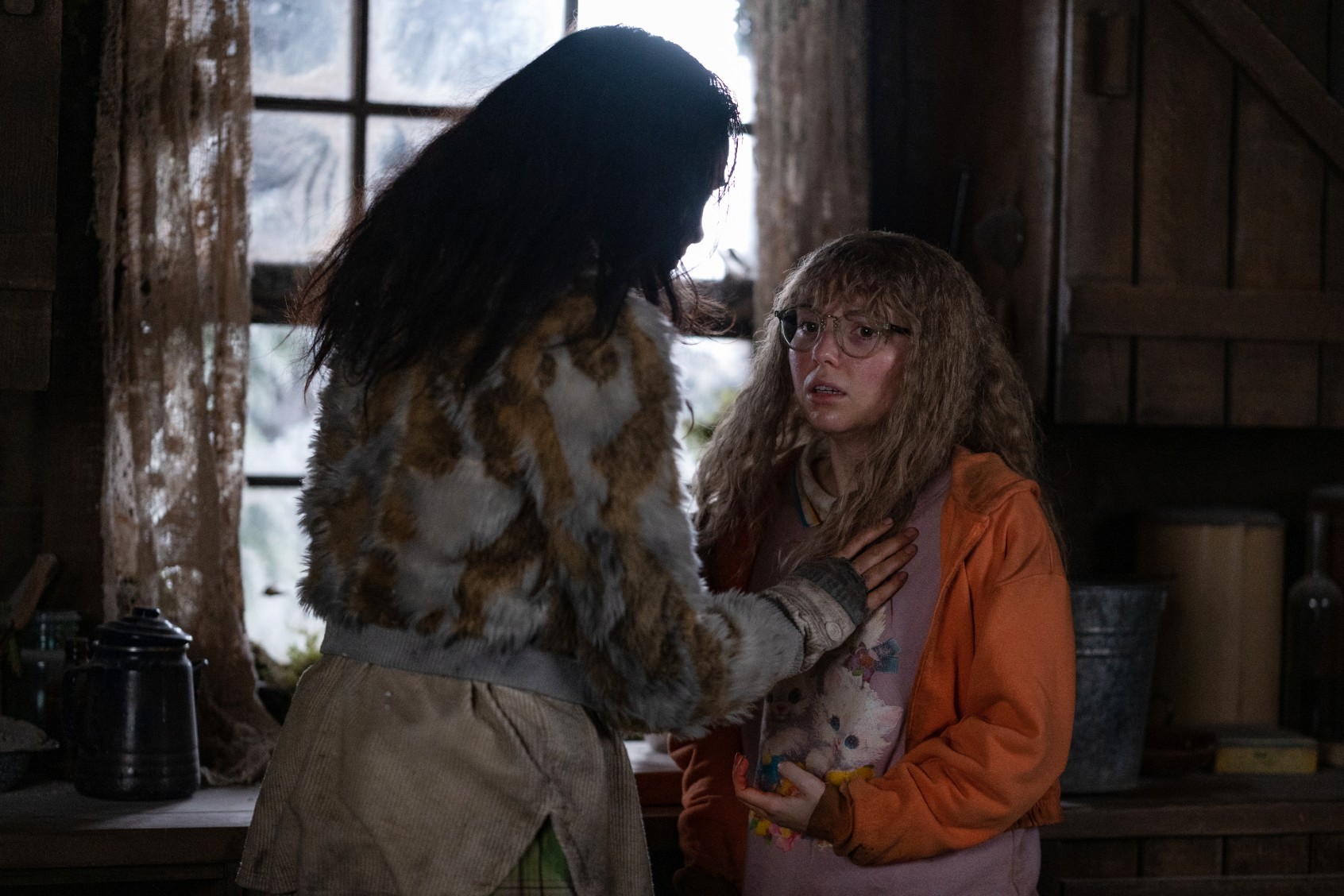
You intercut scenes from Zoe’s documentary, and feature “fairy tale” segments that disrupt the main narrative but also comment on it. How did you incorporate the various narrative threads? 

The great thing is those narratives is that they don’t have to be complete. If its complete, you have judged it. The fairy tales are suggestions. The whole film is about you deciding. As a director, when you weave that together, you try hard not to come to point; you let the audience decide.

Can you talk about your visual approach to the film? You also create scenes with beautiful lighting, such as Kazim’s initial face-to-face meeting with his bride, Maymouna (Sajal Ali), as well as a fabulous wordless wedding sequence, and a high energy dance scene.

With Maymouna, it was essential to make audiences feel that she is stuck in a place she can’t get out of. I had to light it so she was a gentle flower and you wondered why she was getting into this. If you look at Maymouna carefully, every once in a while, you glimpse her strength. She gives hints at her real character. The first meeting has beautiful lighting, and it is gentle and romantic. Later, the lighting is something else; it’s blue. The visual style always follows the story of the characters.

As for the wedding scene, weddings are like that — completely over the top. Every wedding I’ve gone to has been that way. In that whole collision of chaos of color there is the chaos of the camera movement. You get taken away by the glamour of it, and then you get caught up in something frenetic, and in that, you pick up more messages. 

What do you think your film is saying about race and assimilation? Zoe’s documentary is criticized for being told through a white lens. But your film is written by Jemima Khan, a white woman, and Kazim makes about “British-born” being code for “Non-white.”

Every time I go to international airports, I am told, “You have been randomly selected.” There is a lot of truth in all of that. At the end, I want the audience to not be separated by looking at an Asian family. That was what I wanted to portray: Forget that there is a particular Muslim identity and separate yourself from these characters. 


Want a daily wrap-up of all the news and commentary Salon has to offer? Subscribe to our morning newsletter, Crash Course.


This political aspect you mention — that it was written by a white woman — personally, I think Working Title [the production company] was very conscious of that. I would have been less reverent. [Laughs] I would have done more with Cath’s character being completely irreverent.
There was talk about that. Seeing Asian society through a white woman’s lens is part of the plot. Jemima wrote it, and she had a lot of experience. She saw it firsthand. She was more caring and concerned about how we presented the film than I was. I also know these people. They are a lot like me. I think I was brought on because I understood them. I was a brown man making a film in which it was important to lessen the impact of identity. Jemima had the right to make and write this film. She was married [to Imran Khan Niazi] and is much loved in Pakistan, even though they have been divorced for 20 years. 

“What’s Love Got to Do with It?” opens nationwide in theaters on May 5.

Senate Republicans stand by Clarence Thomas in the face of growing ethics allegations

Republican elected officials are slowly coming to the defense of Supreme Court Justice Clarence Thomas after a bombshell report from ProPublica revealed Thursday that GOP megadonor Harlan Crow paid the tuition of the justice’s great-nephew, who Thomas has said he raised as his own, for two years while he attended private and boarding school in the mid-to-late 2000s.

Though the exact amount Crow paid on behalf of Thomas’ relative is unclear, ProPublica reported that the total could have surpassed $150,000, based on public records of the schools’ tuition rates from that time. Thomas did not report the payments in his annual financial disclosures.

The news followed last month’s reports that Thomas had also failed to disclose luxury trips Crow gifted him almost every year for decades, including two previously unreported superyacht cruises that ProPublica discovered.

The latest revelation prompted outcry from Democrats online Thursday, many of them questioning the standard’s of the Supreme Court and calling for an investigation into Thomas.

“Today would be an excellent day to hear directly from Chief Justice Roberts,” Sen. Brian Schatz, D-Hawaii, tweeted. “It is not some violation of the separation of powers to ask him to defend the basic question: Why does the highest court have the lowest standards?”

Mark Paoletta, the former chief counsel and assistant to former Vice President Mike Pence and friend of Thomas, defended the justice and all but confirmed the report in a lengthy statement shared to Twitter.

“This story is another attempt to manufacture a scandal about Justice Thomas. But let’s be clear about what is supposedly scandalous now: Justice Thomas and his wife devoted twelve years of their lives to taking in and caring for a beloved child—who was not their own—just as Justice Thomas’s grandparents had done for him. They made many personal and financial sacrifices to do this. And along the way, their friends joined them in doing everything possible to give this child a future,” it read.

Sen. Mike Lee, R-Utah, also jumped to Thomas’ defense Thursday morning, quote-tweeting Paoletta’s statement with an image of the justice overlaid with a quote from his memoir where he describes “being pursued not by bigots in white robes but by left-wing zealots draped in flowing sanctimony.”

“More true than ever, 31 years later,” Lee said in reference to the quote.

The House Judiciary Committee also voiced its support of Thomas, encouraging users to read Paoletta’s statement, asking followers to “RT [retweet] if you think Justice Thomas is the [goat]” and later posting the same image of the justice that Lee shared.

Though he did not officially comment on the matter, Sen. Ted Cruz, R-Texas, tweeted on Thursday a May 3 article from The Daily Wire titled “Cruz Shreds Democrats’ Smear Campaign Against Justice Clarence Thomas.”

The article outlines Cruz’s defense of Thomas during a Senate Judiciary Committee hearing on Tuesday, during which Cruz accused Democrats of attempting to smear Thomas by being “engaged in the same despicable tactics” that then-Sen. Joe Biden used while questioning the justice during his 1991 confirmation hearings.

The Republican senator also retweeted Paoletta’s statement.

In what appears to be an attempt to deflect dissent away from Thomas, Sen. Marsha Blackburn, R-Tenn., shared an article from The Daily Wire about liberal Supreme Court Justice Sonia Sotomayor, who reportedly did not recuse herself from three cases involving book publisher Penguin Random House, which has paid her millions in lucrative book deals.

“This article is not about Clarence Thomas, so the mainstream media will censor it,” she said. “Retweet to STAND UP to the media and spread the word.”

On Friday Sen. Tom Cotton, R-Ark., uploaded a clip of his appearance on Laura Ingraham’s show Thursday evening where he called Thomas “a great American” and a “kind-hearted, generous soul” and referenced Sotomayor’s actions. Cotton echoed Ingraham’s sentiments for viewers to instead aim their attention and criticism at President Biden’s son, Hunter, who is at the center of a paternity-related case in Arkansas, if they want to see a “story of self-dealing and conflicts of interest.”

“Clarence Thomas is a great American,” he repeated in the post. “The attacks of so-called ethics violations are just another attempt to smear him and undermine the Supreme Court.”

The outpouring of support from some Senate Republicans is unsurprising following their public backing of Crow after reports that the billionaire keeps a collection of Nazi memorabilia in his home.  

“He has an extensive historical museum that examines World War Two,” Cruz told Insider, adding that the media is “deliberately” mischaracterizing the nature of Crow’s collection to further damage Thomas’ reputation.

Yes, loneliness really is as deadly as smoking — here’s why

The fabric of American society — our car-centric city design, our predilection for single-family homes and our self-reliant culture — seems engineered to engender loneliness. COVID-19 didn’t help: during the pandemic, millions experienced real trauma due to the social isolation imposed during the lockdowns. Despite these easily observable realities, however, there nevertheless persists in our culture a tendency to view “loneliness” as an individual problem, not a public health problem (and therefore a social problem).

Yet attitudes on loneliness and its effect on us are slowly changing: indeed, United States Surgeon General Vivek Murthy recently stated that loneliness is so damaging to humans that it is a health risk. And not a minor one: Murthy compared it to smoking cigarettes, something that research bears out.

Social isolation and loneliness are believed to shorten a person’s life span by up to 15 years.

“We now know that loneliness is a common feeling that many people experience. It’s like hunger or thirst. It’s a feeling the body sends us when something we need for survival is missing,” Murthy told The Associated Press (AP), referring to a recent 81-page report on the half of Americans who say they have experienced loneliness. “Millions of people in America are struggling in the shadows, and that’s not right. That’s why I issued this advisory to pull back the curtain on a struggle that too many people are experiencing.”

recent study by the National Institute on Aging found that the health risks of being isolated for a lengthy period of time are equivalent to those of smoking 15 cigarettes a day. This is because social isolation and loneliness are believed to shorten a person’s life span by up to 15 years, as well as place them at increased risk of not exercising well, having a poor diet, not sleeping well and needing to be admitted to emergency rooms and/or nursing homes. The Health Resources and Services Administration found that poor exercise and sleeping habits increase isolated and lonely people’s risk of stroke by 32%, of heart disease by 29%, and of premature mortality in general by 26%.

Lonely people are also more likely to develop Alzheimer’s disease, anxiety and depression. These statistics imply that there will be a rise in these health problems going forward, as single households doubled over the last 60 years and young people (ages 15 to 24) report spending 70% less time with friends as of 2020 (the year when the COVID-19 pandemic began) than they did twenty years earlier.


Want more health and science stories in your inbox? Subscribe to Salon’s weekly newsletter The Vulgar Scientist.


“We know depression is strongly associated with adverse life events and circumstances — such as child abuse, divorce, poverty, loneliness etc.”

Murthy is hardly alone in raising concerns about the health consequences of loneliness. A study published last month in the journal Psychological Scientists, the flagship journal of the Association for Psychological Science, found that the same part of the brain which is activated when a person feels hungry is triggered when that same person is lonely.

“In the lab study, we found striking similarities between social isolation and food deprivation,” authors Ana Stijovic and Paul Forbes explained in a joint press statement. “Both states induced lowered energy and heightened fatigue, which is surprising given that food deprivation literally makes us lose energy, while social isolation would not.”

More recently, scientists have pointed to a rise in mental health incidents during the period of the COVID-19 lockdowns, from the documented “rupturing” of students’ social skills to regressing in their learning when they were not in school. The lockdowns’ critics included Dr. Jay Bhattacharya, a conservative commentator and Stanford University professor of medicine who co-authored a document called the Great Barrington Declaration which among other things criticized the lockdowns for harming the public’s mental health. Conservatives were not alone in criticizing the lockdowns, with University of California, San Francisco professor of medicine Dr. Monica Gandhi telling Salon in December that “most public health officials by now have acknowledged that prolonged school closures in this country did harm to our children.”

Loneliness and depression are, of course, caused by other outside factors besides lockdowns. A study published last year by the American Psychiatric Association challenged the longstanding view that depression is caused by a serotonin imbalance in the brain. One of the study’s co-authors, Dr. Joanna Moncrieff, a professor of psychiatry at the University College London, told Salon by email that “we know depression is strongly associated with adverse life events and circumstances — such as child abuse, divorce, poverty, loneliness etc.”

In a previous interview with Salon, Cat Moore — the Director of Belonging at the University of Southern California, and a co-author of the study linking loneliness to feelings of hunger — explained that “loneliness has more to do with a person’s perception of whether they’re in enough meaningful relationships. Psychologists say there are thresholds that vary for each person and they aren’t related to the number of friends and followers we have on Facebook or the people we recognize when we go out and say ‘hi’ to [them].”

Moore added, “Loneliness is indicating to you that a social need isn’t being met, like when you’re hungry, your stomach tells you that you need food.”

“Yellowjackets” delivers on its “wilderness baby” episode

After a one-week hiatus — which threw many viewers for a loop and taught one YouTube recapper a lesson in double-checking embargo dates for screeners — “Yellowjackets” is back with Episode 6, “Qui.”  

Since the start of the season, the cast and showrunners have been dropping hints (warnings?) about this particular episode being one to brace for, which is advice that shouldn’t be taken lightly when it pertains to a show that casually revolves around teen cannibals.

What could be more upsetting than eating human flesh? Well, dead babies. Dead babies is the answer to that question. And even though the show made good on the assurance that, no, Shauna’s (Sophie Nélisse) “wilderness baby” doesn’t get eaten by her on-the-brink-of-feral soccer teammates, what actually ends up happening is even more upsetting to watch.

We’ve known that Shauna was pregnant — and that the father of the baby is her best friend Jackie’s (Ella Purnell) boyfriend, Jeff (Jack DePew/Warren Kole) since Season 1, but the fate of that baby has rested on the musings of our own imaginations.

Based on what we know of adult Shauna’s (Melanie Lynskey) life, she only has one living child, Callie (Sarah Desjardins) who — being that she’s in high school — is much younger than “wilderness baby” would be had it been brought back from the cabin they were stranded in over 25 years ago. And, contrary to the incestuous stretch of a theory tossed around on Reddit and elsewhere, Adam (Peter Gadiot) does not end up being the grown-up version of the baby either. One because, ew. And two, because Shauna’s baby does not, as we now know, live through childbirth.

On first watch of “Qui,” which translates from French to English as “who,” I came away thinking that the episode wasn’t as wild and crazy as it was posited to be. I was almost (and I can’t even believe I’m about to type this) disappointed. After all the high-stakes build-up of Shauna being pregnant in the woods with little to sustain herself on, let alone a growing fetus, it was a given that the baby would likely not make it. So to have this episode end with something as simple-seeming as a still-birth felt like a missed opportunity. But then I watched the episode again.


Want a daily wrap-up of all the news and commentary Salon has to offer? Subscribe to our morning newsletter, Crash Course.


Sure, we got the shock value of the showrunners doing the thing without actually doing the thing — showing the baby being eaten by the others in the cabin via a dream sequence — and my own sick mind considered, earlier than that, if Akilah’s (Nia Sondaya) hidden pet mouse, Nugget, would nibble the baby to death in its sleep or, even worse, crawl into Shauna and do it from there. But this episode didn’t need all that ick be effective. On second watch, it was the

We’ve entered into grim misery and hopelessness, which is indisputably worse. And “worse” was the promise we’ve been given.

gut-wrenching sadness of the situation that provided the K.O punch.

In the episodes leading up to this one we’ve passed the point of sad and disgusting with the death of Jackie and her two-month-old corpse BBQ. Now, we’ve entered into grim misery and hopelessness, which is indisputably worse. And “worse” was the promise we’ve been given.

(L-R): Courtney Eaton as Teen Lottie and Samantha Hanratty as Teen Misty (Kailey Schwerman/SHOWTIME)
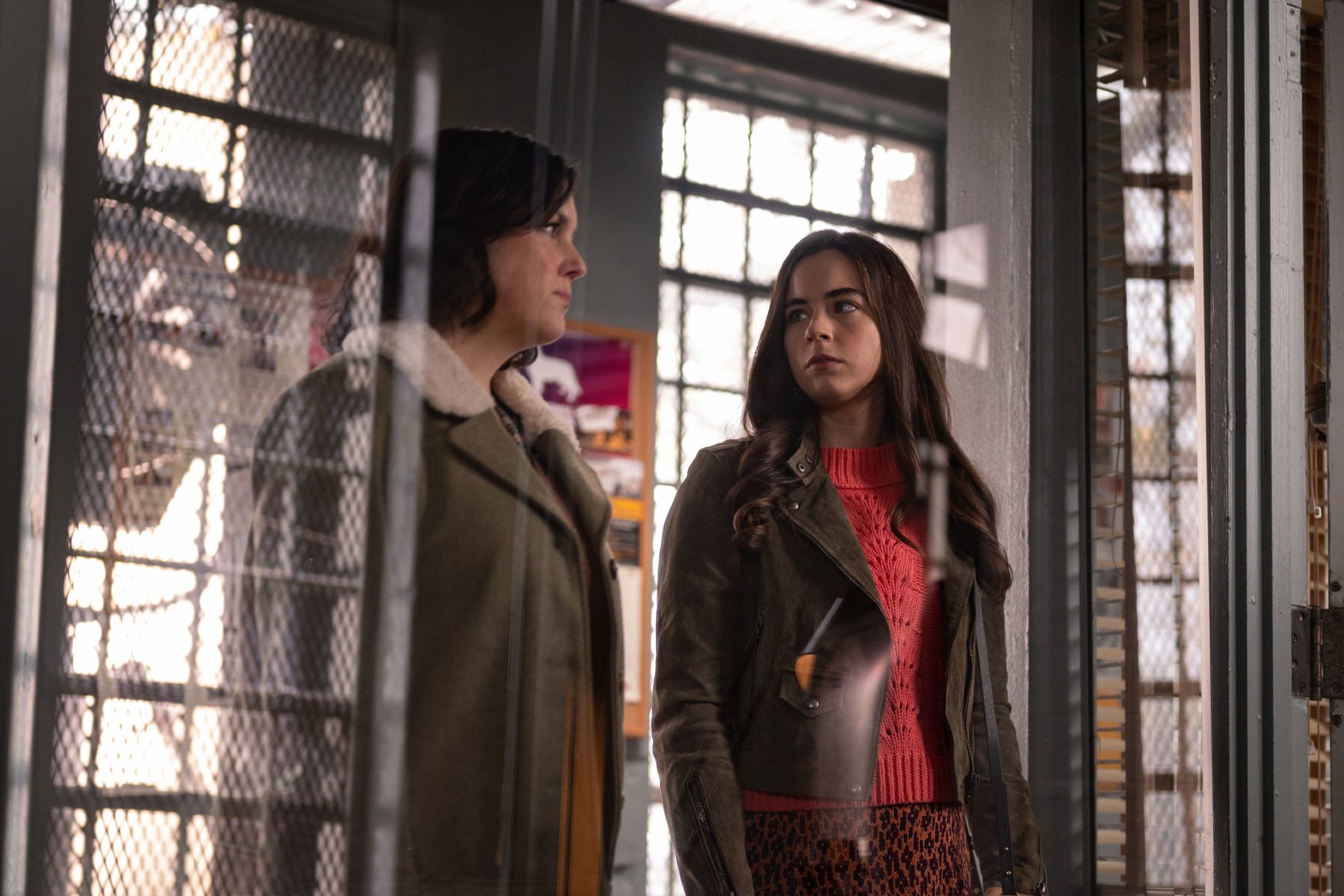
As Shauna screams through the agonies of labor with nary a sedative, her teammates gather around to provide whatever assistance they can. Lottie (Courtney Eaton), Travis (Kevin Alves) and the rest of the “cult” clan are over there by the fireplace bleeding on things and chanting to “the wilderness.” Misty (Samantha Hanratty) is sweating her curls flat and struggling to remember what Coach Ben (Steven Krueger) taught in sex-ed class. Natalie (Sophie Thatcher) and Tai (Jasmin Savoy Brown) are delivering words of encouragement. And Javi (Luciano Leroux) is hiding around the corner, cursing the day he was ever brought back to that God-forsaken cabin. 

Shauna pushes. They look. She pushes some more. They look again. And then, a mass of goo is pulled out from between her legs by Akilah — who takes over doula duties when Misty crumbles from the pressure and  abandons her position as resident “nurse.” I paused on this goo for a long time and swear I can see a very tiny foot in all that mess. But what do I know about placentas? 

From that point on, Shauna’s passed out and everything we see, up to the final scene from the ’90s timeline, happens only in her mind.

In her subconscious, her worries are the same as any new mother’s. The baby won’t latch on to breastfeed, but then it does. She falls asleep and then something terrible happens. She doesn’t think she can love the baby, but then she does, despite herself.  

Mirroring this in a cut to her adult life, Shauna (Melanie Lynskey) tries a performance of all of these remembered emotions in an effort to clear herself in the case of Adam’s murder, but she’s not as good of an actress as her child is. Her child who lived, and who has spent the totality of her 17 years learning from her mom, by example.

Speaking to Detective Matt Saracusa (John Paul Reynolds), who the internet also theorized as being grown-up “wilderness baby,” Shauna cries without tears and lays it on thick about cheating on her husband because she’s a bored housewife who had a kid she didn’t want. The detective doesn’t fall for her theatrics. In a nearby room, Callie lies to Kevyn Tan (Alex Wyndham) about having sex with Saracusa, which would make any intel he gleaned from her inadmissible, and this story seems all too believable. Especially once she mentions his “weird ass balls.” 

(L-R): Melanie Lynskey as Shauna and Sarah Desjardins as Callie Sadecki (Kailey Schwerman/SHOWTIME)

Back in the family minivan, where Jeff has been waiting and passing the time by listening to N.W.A.’s “F**k the Police,” Shauna is told that Tai (Tawny Cypress) and Van (Lauren Ambrose) are joining Natalie (Juliette Lewis) and Misty (Christina Ricci) at Lottie’s (Simone Kessell) “intentional community,” and that she’d be better off going there too. Way to lead the cops to the honey pot, Jeff. Good thinking, buddy.

Reunited, like the Avengers but for the mentally ill — (I stole that from Twitter) — the camera pulls back to show that creepy wilderness symbol we’ve been shown since Episode 1 of Season 1. They did bring “It” back with them. Whatever “It” is. And now they’re smack dab in the middle of it, once again. I have a theory that in the ’90s timeline (maybe next episode) we’ll see Lottie sacrifice Shauna’s dead baby to “the wilderness,” and in the present-ish day timeline, the reunited ladies will make a new sacrifice at Lottie’s intentional community. Callie, let’s hope you got back in the minivan quick. 

QUICK BITES:

  • Now that we know what became of “wilderness baby,” there are more mysteries that need solving. Why was there no mention of an adult Javi when the ladies learned of Travis’ death? And why have we not seen hide nor hair of a post-wilderness Ben, Mari (Alexa Barajas), Akilah, Gen (Mya Lowe) or Melissa (Jenna Burgess)?
  • I’m so relieved that Natalie put The 14th Gilly back in its fish bowl. Don’t mess with my friend Lisa like that.
  •  Misty dumping out brass knuckles, handcuffs, a tiny jar of jam, binoculars and a syringe from her purse and pockets before officially joining Lottie’s “community” was comedy gold. I know she’s a serial killer, but I can’t help but love her unconditionally.
  • Was Jackie’s favorite flower really poppies? I feel like that’s so random.
  • Why was Lottie so freaked out to see Misty at the intentional community? And why was Van so freaked out to see Lottie? 
  • “I’m not worried that I’m ill. I’m worried that I’ve never been ill.” – Lottie
  • After Shauna passes out following the delivery of her baby, a voice says her name and it sure sounds like ghost Jackie.
  • We’re all like this, aren’t we?” – Natalie