Spring Sale: Get 1 Year, Save 58%

How I overcame my fears as a fat traveler and fell in love with cruises

Growing up, my dad was one of those “travel hackers.” He knew his way around miles and points like the very best of them. So, despite being impoverished and one of many, many siblings, we traveled a bit — nowhere far, just going to New York for school or Seattle to visit my grandmother. Because of the “travel hacking,” our flights were always a hot mess. 

We’d fly halfway across the country in the wrong direction or take flights with three stopovers. And when we finally got to our destination, we would take buses, trains and walk to get to wherever we laid our heads. Travel would take all damn day and late into the night. Despite all this, I fell in love with traveling. But the hassle of getting to the destination? That still irks me to this day.  As a fat person, traveling gets complicated

And the logistics are still a nightmare, just a little bit of a different nightmare. 

So when I had the opportunity to take a cruise, I was (understandably) skeptical about the whole thing, but decided to give it a go anyway. Life is all about trying new things, isn’t it? After spending a lot of time on the Princess Cruises website, I selected an eastern Caribbean cruise on the Regal Princess. Eight days, four ports and it all started in Fort Lauderdale, Florida. 

As I counted down the days to the cruise, I started getting nervous. Would the ship be accessible for me? Would the excursions work out? Would I feel trapped in the middle of the ocean?

But, as it turned out, I had nothing to worry about. Cruising was one of the least stressful ways I’ve ever traveled and I fell in love.

We stayed at the Hilton in the Fort Lauderdale Marina on the night before we boarded, which was perfectly situated just minutes from the ship. It was only at dinner that night that I finally started getting excited. Dinner, by the way, was at the Boatyard, right in the marina. While the food wasn’t the best I’ve ever had, the vibe was immaculate. We sat outside and listened to the music and the sound of the waves and laughter. A perfect way to relax and destress before our cruise began.

After a great night’s sleep, we were off to the races. Getting to the ship was easy. Local hotels offer a shuttle service that will take you directly to the terminal. Once we got there, I was met by porters that took our luggage. If you’re taking a shuttle or would like your baggage handled for you, be sure to bring small bills to tip the porters. Not only is this simply the right thing to do, but they are pretty forward about being provided a “donation” (their words, not mine).

The boarding process was seamless and very quick. 

We scanned my QR code, showed our passports and got our medallions. We were then herded into a waiting room where we waited for the Coast Guard to finish a drill with the staff on the ship. The medallion is your key card, wallet and way back onto the ship at each port. It comes on a lanyard, but there are wristbands and clips available for purchase if a lanyard isn’t your style. 

The room, service and internet 

After sailing on Sail Croatia this summer, I was expecting a very tiny room, but the balcony room we were staying in was small but had more than enough room. The small bathroom, while cramped, did allow for comfortable use of the toilet and shower, as long as you shower alone. The bed was somehow both soft and firm, allowing for a very comfortable sleep during the cruise. 

Expert tip: If you travel with a spouse or share a room with a friend, bring a very long charger since outlets are on one side of the bed.

The star of the show was our balcony. It was completely private, with balconies on either side blocked off, so there was no visibility. Only once during the entirety of the cruise did we even hear someone else, but they were right next door to us. The balcony definitely made the room very special, and we spent a lot of time sitting there, gazing out into the ocean, watching the sunset and taking in the views as we pulled into our four ports. 

Squish Factor: The balcony chairs were a little squishy, but if you ask your room steward, they will assist with arranging different chairs. Our room had a step-up into the bathroom, but if you need a room without it, ADA rooms are available. 

Staying connected was critical for me, as I was working, keeping in touch with home and planning to live post on social media. Initially, the internet was excellent, but as the cruise went on, the internet became progressively worse. At about day three, I stopped posting Instagram stories because it would take all day for them to upload. It was still good enough to answer the occasional email and use Whatsapp, but very slowly. 

I cannot say enough how incredible the service is on every level. No matter where you are on the ship, you can use the Princess app to order food and drinks (including the alcoholic ones) to be delivered directly to you. But, there were plenty of waiters more than happy to take your order at any time, and they usually came fast if you were in the shared spaces of the ship. 

On-board food

There is a lot of food at all hours on the Regal Princess. Our favorite casual dining on the ship was at the buffet, open from early in the morning until late at night. The menu and features are ever-changing, so you’ll always find something you like to enjoy. The hashbrowns, which we topped with cream cheese and lox, were a favorite at breakfast time. For lunch, the rotisserie chicken was a highlight, always perfectly cooked, well-seasoned and served fresh. 
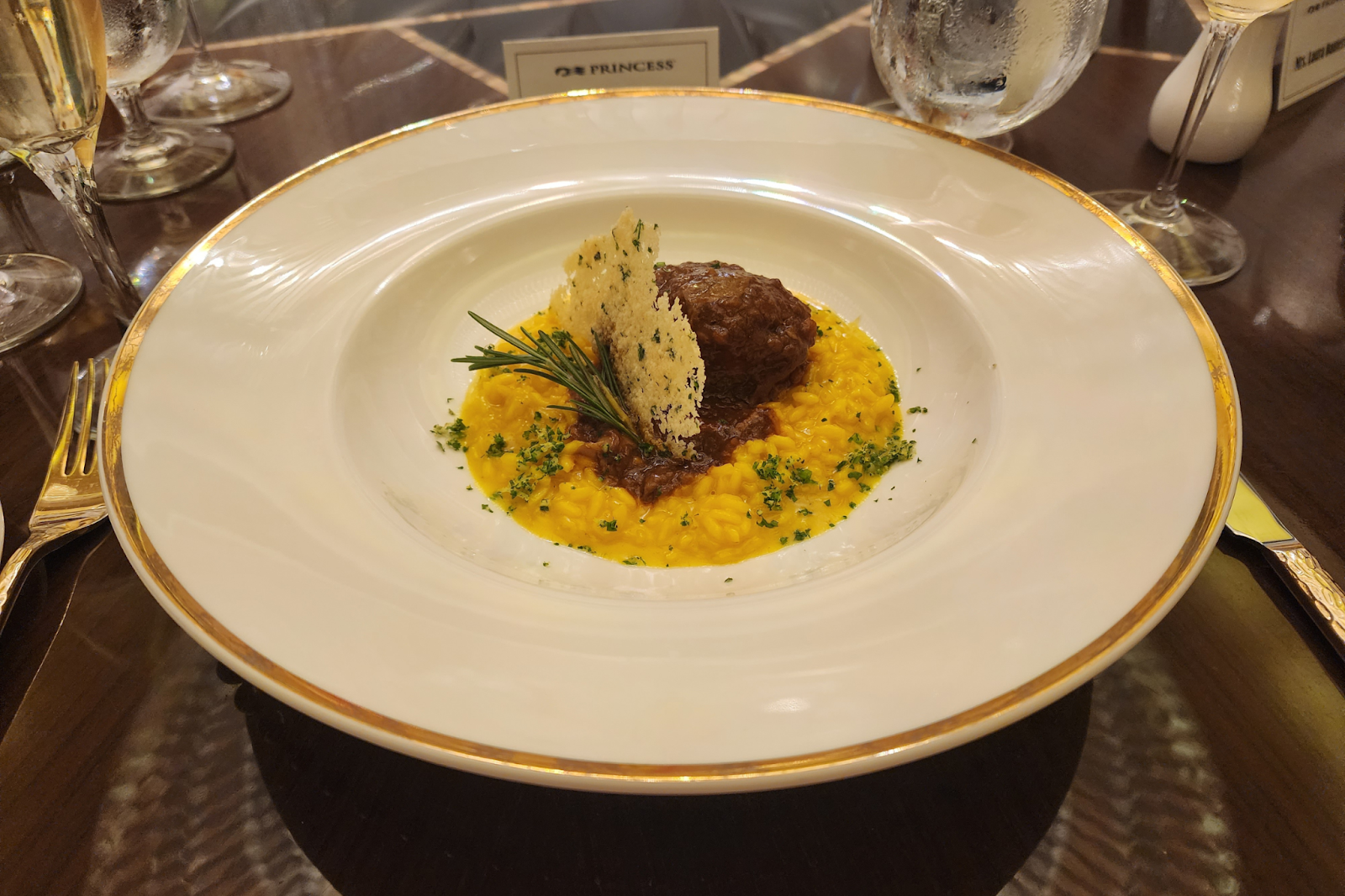
Risotto served at the Chef’s Table, a VIP experience bookable on board (Jodyann Morgan )The carving station at the dinner buffet included everything from the leg of lamb to roasted turkey and pork belly. The pork belly was tied into a roll, allowing the skin to get marvelously crispy and the meat to remain juicy and delicious.  Be sure to stop at the crêpe station for fresh crêpe, fresh-cut fruit and house-whipped cream.

Of the three specialty restaurants aboard, our favorite, by far, was Sabatini’s Italian Trattoria. The Italian restaurant serves a four-course dinner for an additional $25 per person. Get the spaghetti and meatballs, cheese soup and tiramisu for dessert.

Expert tip: We had to dig a little bit to find the food that we liked. I suggest trying a little bit of a lot of things on your first and second days until you find what suits you. The sushi was a bit odd compared to what we were used to, and we had raw chicken in the main dining room on the first night, but other than that, we had a great food experience. 

Ports of Call

I might write this column every month, but I make travel mistakes, too. And, when it came to our first two ports of call, I really bungled it. None of the ship’s excursions spoke to me, so I decided to hire a private guide in the Dominican Republic and a guide to take us on a hike in the Puerto Rican rainforest. In the Dominican Republic, our driver crashed the car just two hours into the day (with us inside). Luckily, we were blocks away from our guide’s home, and she made us lunch, which was fantastic! In Puerto Rico, the “easy” hike — which I confirmed prior to booking — started with a vertical climb up wet, muddy rocks, something we just couldn’t do. 

Luckily, things took a turn for the better when we got to St. Kitts. The Scenic Railway Ride & Circle Island Drive was an incredible excursion, relaxing and only a few hours long. Known as the “Last Railroad in the West Indies,” the train used to be used to transport sugar cane from the plantations to the factory. The narrow double-decker train now slowly makes its way around the island as the tour guide tells you about its past and present and greets every person it passes. The views were unmatched, and the cane sugar cookie that was gifted to us was incredible!

Squish Factor: Getting up to the second level of the train requires going up a very narrow staircase.

At the port in St. Kitts (Chaya Milchtein )The restaurants at the port are very bland and Americanized, so after the tour, we walked from the port into the city and found a restaurant for lunch. I highly recommend El Fredo’s. We had oxtail and mutton, with rice and peas, as well as boiled dumplings, green banana, yam and fried plantains. The restaurant is open-air, and the service is fantastic, making it the perfect place to recharge before walking back to the port.

I was really looking forward to the last port before heading home, Sint Maarten. I had booked an excursion through Princess to take a spin around the island on individual Rhino boats. Each Rhino had a weight limit of 400 pounds, so we booked two of them. This was wildly exhilarating! It took a while to figure out how to control the Rhinos, but once I did, we had such an amazing time. 

Squish factor: The Rhinos typically hold two people but have a weight limit of 400 pounds. You can book them individually, which is what we did. At the end of the excursion, you can buy the photos they took of you (which I suggest), but the price is per Rhino. The owner gave us a small discount for buying the photos of both of our Rhinos.

We asked the driver to drop us off in the center of Philipsburg and walked over to Uncle Bob’s Place, an indoor restaurant serving traditional Caribbean food. The service was slow, but I’d happily wait for good food, which Uncle Bob’s delivered in spades. Thanks to the crispy baked chicken and oxtail, with rice and peas and salad, our lunch was fantastic!

Entertainment, the Spa, and the Casino

You’re going to spend a lot of time on the ship, but there’s no shortage of entertainment (and food — but we covered that). I must say, it wasn’t what I was expecting from the few cruise vlogs I’ve come across. But despite the lack of a loud boisterous dance club, rock climbing, an ice bar or a water slide, we had so much fun!

There are comedy shows, game shows, live music, dance lessons, bingo and so much more! We loved the game shows and tried to make as many as we could. Trivia was a little underwhelming, mostly because the topics were completely unknown to us. Bingo and Princess’ version of “Deal or No Deal” were so much fun but they do carry an additional fee. If you’d rather enjoy the sun and the stars, there are a few different open-air pools and quite a few hot tubs designed for two to five people. 

Squish factor: The two venues that held most of the game shows, trivia, and other entertainment were theater-like venues with small seats. At the end of every row, you can find a seat without arms or can request assistance from the staff in arranging other chairs. 

For Vegas-style slot machines and table games, the onboard casino has everything you’ll need, including a full bar, and is open late into the night.

In case you’re really looking to sink into that relaxation, the Regal Princess has a full spa and salon, complete with almost any treatment you can think of. Book your spa treatments before the cruise for the best prices! A couples scrub and the massage was $299 total prior to the cruise, but $499 if you book on board. Also, don’t book for the afternoon of the first day aboard. The spa has an open house, so it’s loud, which is distracting, and the captain came on the loudspeaker for about five minutes during the treatment.

I enjoyed the chocolate treatment, which included a mask and full body massage, which left my skin so soft! My wife isn’t into chocolate, so she booked a seaweed wrap, which was done on a water bed, and absolutely loved it. We both got the fire and ice pedicure, which included a leg massage. The color options were limited, but the experience was fabulous. I also got a haircut, and while I didn’t have high hopes for my super curly short hair, it turned out really good! 
Giada De Laurentiis’ salty-sweet roasted veggie salad has a spicy secret ingredient

If you’re feeling a type of “new year, new me” or “clean eating” sort of ethos and wondering what to whip up for an easy lunch or weeknight dinner, then you’ve come to the right place. With the salty, subtle crunch of chunks of crumbled Parmigiano-Reggiano and almonds; the chew of dates; the vegetal freshness of roasted broccoli and Brussels sprouts; and the sharp note of Calabrian chile in a bright and punchy dressing, there’s a salad that is a real winner.

And it all comes courtesy of Giada De Laurentiis. Regularly dispelling sage advice, tips and tricks to her more than 2 million Instagram followers, DiLaurentiis is nothing short of a culinary icon.

One of my teachers as a young buck (via TV osmosis), DiLaurentiis has helped to clarify and laud cooking techniques, ingredients and proper Italian pronunciation for millions. With her culinarily training, decades on Food Network and general knowledge and prowess within the food and restaurant worlds, DiLaurentiis is a prime figure to look to when craving Italian-American flavors, healthful combinations and unique dishes.

Recently, she sharedsupreme salad on Instagram that hits on all these notes. Simply called a “Roasted Broccoli and Brussels Salad,” it features warmed, crispy vegetables; cool accouchements like cheese, dates and almonds; and the amazing inclusion of Calabrian chili paste in the dressing. You’ll be stunned by the diverse flavors, textures and temperatures of this salad, which truly encapsulates all the best about salads at large. 

While it would be an excellent side or starter, this dish may be best served as a filling, unique salad that is totally vegetarian. (Of course, if you’re a real stickler, opt for another cheese that is rennet-free).

The other great thing about this salad is how customizable it can be. Not a Brussels person? Feel free to substitute your other favorite vegetables, but just be sure to prepare them in the same way (shaving the veggies as best as possible). Can’t find dates? Reach for another dried fruit, such as apricots or cranberries. Not an almond fan? Any nut should do here. If this dish still feels a little light for you, feel free to toss in some grilled or roasted protein, such as chickenshrimp or tofu.

https://www.instagram.com/p/Cm7P32gq0nO/?hl=en

If you’re especially sensitive to heat, omit the Calabrian chili altogether or consider adding a slight pinch of crushed red pepper flakes instead. The latter would allow for a punch brightness that is a bit more subtle than the Calabrian chili in the original recipe. (As Pizzeria Locale notes, they’re “between three and 16 times hotter than Jalapeño peppers,” so keep that in mind when whisking in the chili paste.)

The Giadzy recipe page also notes that this salad “gets more flavorful after sitting in the fridge overnight,” so it would be a perfect dish to prepare the night before you ravenously enjoy it for lunch.

Click here for the (terrific) full recipe — mangia!

Salon Food writes about stuff we think you’ll like. While our editorial team independently selected these products, Salon has affiliate partnerships, so making a purchase through our links may earn us a commission.

Is CNN’s “Giuliani: What Happened to America’s Mayor?” a matter worth pondering right now?

For a moment, contemplate the efficiency of sudden disasters, how a few moments can wipe entire legacies out of existence, leaving a colossal mess that obscures a void waiting to be filled. That metaphor explains the extended political life of Rudolph Giuliani, along with why one might think there was a need to answer the question posed in the title of “Giuliani: What Happened to America’s Mayor?”

New Yorkers with long memories could answer that question without subjecting themselves to the four-part documentary series. They’d reply with a curt, “Nothing. He was always this way.”

As the CNN series reminds viewers, Giuliani is the same politically ambitious cutthroat he was before 9/11 transformed him from a fading political entity into “America’s Mayor,” a beacon of stability amid chaos. Journalist Nancy Collins describes him as “the man meeting the moment, and I think he was good at that.”

Why should we devote our precious time and headspace to contemplating what happened to a goblin who refuses to go away?

Plenty of others never forgot the man New York-based political anchor Errol Louis refers to as “9/10 Rudy,” the mayor who unleashed its police force on Black and brown citizens with intensity, in the name of maintaining public safety. Giuliani gave us the New York immortalized by “Sex and the City” by race-baiting his way into office and pretending that police brutality didn’t exist, in the same way he didn’t really mean anything when he suggested “let’s have a trial by combat” to bloodthirsty MAGA rioters moments before hundreds of them stormed the Capitol building.

Although he was likable enough to host “Saturday Night Live” in 1997 (for what that’s worth, since that places him on the same list as Donald Trump and Elon Musk) he’s also a brute who views “The Godfather” as the perfect parable for life in politics. “He’s a little bit of everybody in that film,” says pollster Frank Luntz.

Maybe so. What’s changed is that he lost his political panache and the ability to mask his lack of conscience.

“Giuliani” leads by intermingling video from the Jan. 6 insurrection with footage from the 1992 City Hall riot in New York, in which thousands of off-duty cops, many of them drunk, malevolently surged toward the city’s seat of power. Both assaults on democratic institutions have Giuliani in common.

Back in 1992, Giuliani was a failed mayoral candidate working the crowd of cops into a frenzy by sending them after the man to whom he lost his bid for office, Mayor David Dinkins. In 2021, he was Trump’s flunky, desperate to keep him in power so that he, too, would remain relevant.

At various points in “Giuliani,” a card reminds us that a U.S. district court judge ruled that those words didn’t rise to the level of inciting violence. CNN contributor John Avlon, Giuliani’s former chief speechwriter, emphatically disagrees, saying he enabled an attack on our democracy and tried to overturn an election. “That’s just a civic sin that’s completely unforgivable.”

His sentiment is echoed by many other voices featured in the series, all of whom boast better reputations than the main subject – including Anthony Scaramucci who, like Giuliani, isn’t above appearing on whatever reality shows will have him.

We may knock around The Mooch, but at least he isn’t entirely unavoidable. That’s a major drawback to this series’ appeal – why should we devote our precious time and headspace to contemplating what happened to a goblin who refuses to go away?

Only a few days ago he was failing at social media on location at Mar-a-Lago, wishing everyone a happy 2024. His license to practice law has been suspended in Washington D.C. and New York City. He’s been slapped with a city phone book’s-worth of lawsuits, provided constant fodder for late-night comedians, and given toddlers nightmares by popping out of a bird suit on “The Masked Singer.” And yet, he declined multiple requests to participate in this series.

Asking someone to consider Giuliani’s moral, intellectual and physical deterioration is akin to inviting them to stare at a slowed-down time-lapse showing Smeagol rotting into Gollum. I mean, sure, if you’re a completist, maybe that has an appeal.

Here, we have to agree with Republican consultant and Never Trumper Rick Wilson, who describes Giuliani’s ignominious end as “shambolic, crapulous” and “exactly the s**tshow it was going to turn into from the beginning.”

From a historical point of view, there’s probably some utility to capturing the fetid essence of Giuliani’s political drive in four concise chapters, which the show titles “The Myth,” “The Mayor,” “The Martyr” and “The Madman.”  But one questions its necessity, especially right now.

“Giuliani” is produced by Left/Right, the same company that created “The Murdochs,” an even-handed yet swaggeringly confident examination of Rudolph Murdoch’s empire and his family’s dog-eat-dog ethos that managed to be fascinating, aggravating, illuminative and spry in one pass.

Giuliani “has a lost capacity for shame, and shame is a self-regulating function,” says columnist Harry Siegel

The series takes a more straightforward approach, which may be a reflection of the producers’ esteem for its subject. The Murdochs are notoriously private and opaque but inhumanely shrewd, which challenges a filmmaker to build their plot from many angles, resulting in an impressively choreographed journalistic effort. Giuliani is flat earth, despite his boosters’ insistence that he is complex, a term used more than once.

It earns a few noteworthy style points, mainly by framing its subjects in settings that quietly hint at their individuality and their place in the city Giuliani once lorded over. New York Daily News columnist Harry Siegel holds court in a very Manhattan-esque bar backed by leather seats and golden orb  lights, where he wisely observes that Giuliani “has a lost capacity for shame, and shame is a self-regulating function.”


Want a daily wrap-up of all the news and commentary Salon has to offer? Subscribe to our morning newsletter, Crash Course.


Other journalists and political consultants are brought to us from lofts and other elegant if sterile surroundings. The warmest staging is reserved for Amadou Diallo’s mother Kadiatou, regally placed in a French baroque room befitting her dignified posture as she haltingly recalls the night in 1999 when New York police officers gunned down her unarmed son. “I was across the ocean in Guinea,” she said, later adding that in their final conversation he told her, “I’m happy. I have saved enough money. I saved $9,000 and I’m ready to go to college. Mom, I’m going to college.”

“That was his last words to me,” she said. “We were denied justice. My son was denied his dream.”

Never forget that also happened on Giuliani’s watch.

There’s a lost opportunity here to more fully examine the media’s compulsion to cleanse his reputation and pretend his many political sins committed before 9/11 didn’t matter. We see Oprah enthusiastically introduce him, for crying out loud – but then, she did the same for Dr. Oz, Dr. Phil and other fools and con men she probably regrets platforming. Her moments in the series, along with Jon Stewart’s, Lorne Michaels’ and others’, have less punch than the many observations made by writers, politicians, and figures like Al Sharpton who marvel and fume at the dangerous tragicomedy Giulani’s time in the limelight represents.

“He’s just fallen so far, and he keeps falling,” says Washington Post reporter Paul Schwartzman. “So the only thing that kinda ties it all together is that people are still talking about him. Whether he’s going up or going down, he’s in the conversation. And maybe that’s what it’s all about for him.”

The rest of us have other calamities worth paying attention to. Unfortunately, he’s probably connected to some of the most significant of them, leaving it up to us to decide which matters more, examining what happened to America’s mayor or keeping an eye on what’s going to happen next as a result of the damage he’s caused.

“Giuliani: What Happened to America’s Mayor?” debuts with two back-to-back episodes on Sunday, Jan. 8 at 9 p.m. and 10 p.m. on CNN, concluding with the remaining two episodes on Sunday, Jan. 15.


Foams used in car seats and mattresses are hard to recycle — and pose health risks

The Research Brief is a short take about interesting academic work.

The big idea

A new plant-based substitute for polyurethane foam eliminates the health risk of the material, commonly found in insulation, car seats and other types of cushioning, and it’s more environmentally sustainable, our new research shows.

Polyurethane foams are all around you, anywhere a lightweight material is needed for cushioning or structural support. But they’re typically made using chemicals that are suspected carcinogens.

Polyurethanes are typically produced in a very fast reaction between two chemicals made by the petrochemical industry: polyols and isocyanates. While much work has gone into finding replacements for the polyol component of polyurethane foams, the isocyanate component has largely remained, despite its consequences for human health. Bio-based foams can avoid that component.

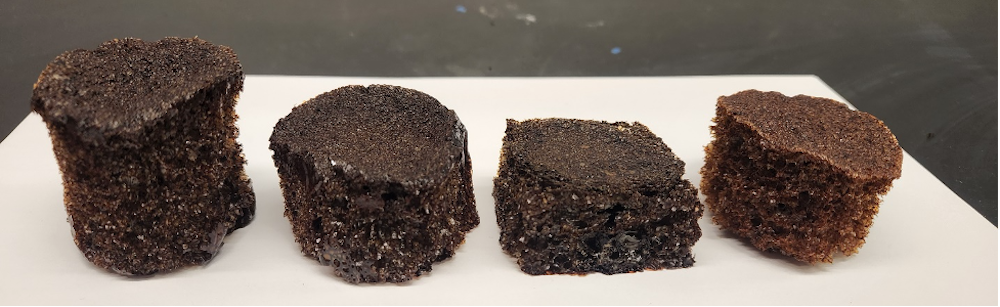
Four chunks of bio-based foam, looking a lot like brownies on a tray.

These bio-based foams avoid the need for petroleum products. Srikanth Pilla, CC BY-ND

We created a durable bio-based foam using lignin, a byproduct of the paper pulping industry, and a vegetable oil-based curing agent that introduces flexibility and toughness to the final material.

At the heart of the innovation is the ability to create a system that “gels,” both in the sense that the materials are compatible with one another and that they physically create a gel quickly so that the addition of a foaming agent can create the lightweight structure associated with polyurethane foams.

Lignin is a difficult material to convert into a usable chemical, given its complicated and heterogeneous structure. We used this structure to create a network of bonds that enabled what we believe is the world’s first lignin-based nonisocyanate foam.

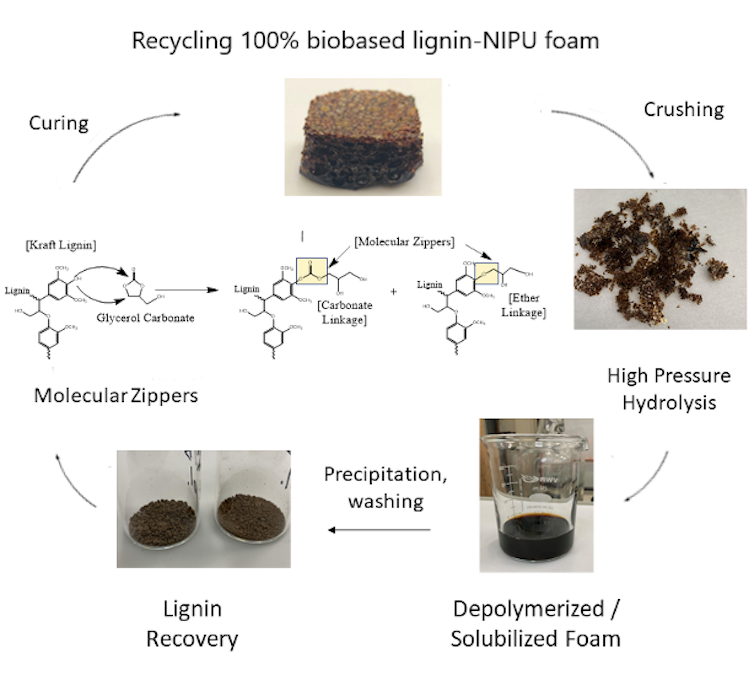
The foam can also be recycled because it has bonds that can unzip the chemical network after it has formed. The main components used to produce the foam can then be extracted and used again.

Why it matters

Polyurethane foams are the world’s sixth-most-produced plastic yet among the least recycled materials. They are also designed for durability, meaning they will remain in the environment for several generations.

They contribute to the plastic waste problem for the world’s oceans, land and air, and to human health problems. Today, plastics can be found in virtually every creature in the terrestrial ecosystem. And since most plastics are made from petroleum products, they’re connected to fossil fuel extraction, which contributes to climate change.

The fully bio-based origin of our foams addresses the issue of carbon neutrality, and the chemical recycling capability ensures that waste plastic has a value attached to it so it is less likely to be thrown away. Ensuring waste has value is a hallmark of the circular approach to manufacturing – attaching a monetary value to things tends to decrease the amount that is discarded.

Illustration shows the recycling process including unzipping the molecules.

How the chemicals in bio-based foams can be recycled and reused. Srikanth Pilla, CC BY-ND

We hope the nature of these foams inspires others to design plastics with the full life cycle in mind. Just as plastics need to be designed according to properties of their initial application, they also need to be designed to avoid the final destination of 90% of plastic waste: landfills and the environment.

What’s next

Our initial versions of bio-based foams produce a rigid material suitable for use in foam-core boards used in construction or for insulation in refrigerators. We have also created a lightweight and flexible version that can be used for cushioning and packaging applications. Initial testing of these materials showed good durability in wet conditions, increasing their chance of gaining commercial adoption.

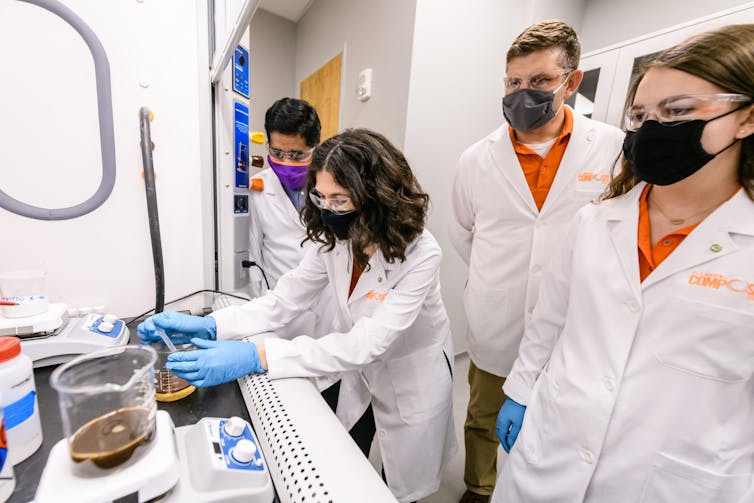
Two men and two women stand over a beaker with dark liquid in it

The authors with two students show methods for recycling bio-based foam. Clemson University, CC BY-ND

Polyurethane foams are used so extensively because of their versatility. The formulation that we initially discovered is being translated to create a library of precursors that can be mixed to produce the desired properties, like strength and washability, in each application.


Srikanth Pilla, Professor of Engineering, Clemson University and James Sternberg, Research Assistant Professor of Automotive Engineering, Clemson University

This article is republished from The Conversation under a Creative Commons license. Read the original article.

Grocery supply chains: Understanding why eggs cost what they cost

Prices are on everyone’s mind lately. This is not surprising, as food prices have risen over 13 percent since last year. Pandemic, war, climate change and livestock catastrophes are still wreaking havoc on supply chains. And many food companies took advantage of these crises to raise prices even further and reap huge profits. The last couple of years have been the most profitable for corporations since 1950, including many big food retailers and manufacturers. Walmart and Kroger in particular, which together account for almost 40 percent of all grocery sales, have leveraged higher prices and profits to pay out billions in dividends to shareholders. And one study showed that over half of all food price increases are the result of profit mongering by big grocery, meat, beverage and snack food companies. So if you want to understand how prices work, start at the grocery store — possibly at the egg case.

Eggs are one category that can be particularly helpful in illustrating how pricing works in the real world, since eggs are purchased by the vast majority of households. Egg prices have risen dramatically in recent months, affected by avian flu, which scrambled egg production and lowered overall supply. Eggs are also heavily segmented as a retail category. This means that there are multiple price points and quality attributes for eggs. Such segments can be marketed to different customer groups based on income, geography, personal values and tastes. Segmentation is how grocery merchandisers organize and price products, including what stores they are placed in, what shelf they go on and how much space they have (And the dark side of grocery segmentation is when stores in poorer neighborhoods do not sell the widest variety and best quality products, contributing to food apartheid.) Category segments for eggs, such as cage-free, organic and pasture-raised are now available at most grocery stores due to surging interest from consumers. Because they are a single ingredient product with multiple price and attributes segments, they can make it easy to help us understand how retail prices really work.

Imagine a grocery store that sells three different types of dozen-sized egg packages. They have a cage-free store brand, selling for $3.99. The store also has a mass market certified organic brand priced at $4.99. And they have a family farmed, organic, pasture-raised, bells and whistles, super-premium egg marketed at $9.99.

What determines these costs? And how can a consumer determine if those higher costs are worth it?

How each egg was produced

Understanding a bit about how each laying hen was raised will help us understand cost as we break it down. The cage-free hens were raised in large barns, with thousands of birds packed together. The mass market organic hens were raised similarly, but fed organic grain and provided with “access to the outdoors,” which might mean an open door or porch at one end of the barn. The organic, pasture-raised top of the line eggs were produced by hens who had at least 108 square feet of space, constant access to the outdoors, a high quality and varied diet, and the highest possible third-party animal welfare rankings. All of these variables affect the price.

Breaking it down

Each price has distinct elements of cost that are layered upon each other, representing each stage of the supply chain and culminating in what you see on the sticker.

The top layer is the retailer margin, as in how much the supermarket or grocer or grocery delivery service will make from the sale. For the lowest price one ($3.99), the cage-free brand, there’s a 26 percent margin, meaning the store paid $2.96 for that dozen eggs. For the mass market certified organic brand ($4.99), the retailer margin is a slim 22 percent, meaning they paid about $3.87. And for the top-of-the-line organic pasture-raised brand ($9.99), the retailer is taking a whopping 37 percent margin, which means they had $6.29 cost per dozen.

The next layer to peel back is the wholesale markup. Most grocery retailers buy from third party distribution companies, which aggregate inventory from thousands of manufacturers and run high volume facilities on very slim margins. Wholesalers are invisible to consumers, except for when you pass their tractor trailers on the highway. There are only four wholesalers that service the vast majority of grocery stores, making grocery wholesale very consolidated and giving the wholesalers a lot of power. Brands usually have little recourse on which of these middlemen to sell into if they want to be sold by a given retailer.

Wholesale markups (what they charge the brand or packing operation, if there is one) can be inclusive of the trucking or freight costs of getting eggs from the producers to distribution and then into stores. They usually range from 10-15 percent above the brands’ cost. Wholesalers will also require marketing programs and will deduct from supplier invoices for shrink, loss, damage and re-stocking, so this means another 5-10 percent in costs to the egg brand. Larger egg producers usually have more leverage to refuse such programs, while emerging egg brands have little recourse. All in, the wholesale stage of the supply chain may costs egg brands between 10 and 30 percent above costs. This all translates into the wholesaler paying the brand or packer $2.67 for the cage free eggs, $3.29 for the organic, and $5.03 for the pasture-raised organic eggs.

Next, we take this one step back to the packing operation, which is managed by the brand whose logo you see on the label. In this thought experiment, the cage-free and organic eggs are packed at a large-scale, third party operator who sorts, washes and packs the eggs into cartons. On the other hand, the top shelf pasture-raised brand is small enough to handle sorting and packing on site themselves. We’ll estimate that the packing operation takes 30 percent to cover their labor-intensive overhead, resulting in costs for the wholesaler for the cage-free, organic and top shelf pasture-raised eggs of $1.86, $2.30 and $3.52 respectively.

The next level down the egg supply chain would be the overhead and marketing expenses of the brand. For the cage-free and organic egg brands, we will assume these are egg marketers that contract for eggs from independently owned farms, while the pasture-raised brand is a small, vertically integrated operation. (And for the sake of argument, we will eliminate middlemen from this equation, as many egg marketers use brokers to procure eggs. That is a story for another day.) We will assume that each of these egg brands are taking about a 40 percent gross margin to fund their operations, including salaries, rent, utilities, travel, marketing and promotional expenses, shrink and maybe even a profit margin. This gets us to what is essentially the farmgate cost, or what the brand paid to the contract producers for the eggs before packing, marketing and distribution. For the cage free-eggs, this would be $1.12, for the organic, $1.38 and for the top shelf pasture-raised, $2.11. Here at farmgate, the difference in costs between the three types of eggs are not as vast.

The cost of feed

But we can still go a layer deeper to understand what is affecting cost. For eggs, feed is typically a whopping 50-70 percent of the base cost for the producer. The other 30-50 percent accounts for all of the other costs, including wages for the workers, mortgage payments, utilities and possibly a small sliver of profits, assuming the farmer was paid above the cost of production, which does not always happen.

Labor costs tend to be higher for higher-attribute eggs that require more open space and time to harvest eggs and care for the birds. But on a positive note, this also means that paying a living wage for farmworkers would have a negligible incremental effect on the shelf price, while obviously making a huge difference in the lives of farmworkers. And top-shelf eggs come from farms with much lower hen density, thanks to the required 108 square feet of outdoor space.

In this scenario, feed costs respectively for cage-free, mass market organic and organic/pasture-raised would be $.73, $.97 and $1.59 per dozen eggs. These costs are dependent on many factors, particularly the type of feed and where it is sourced from. The cage-free hens are fed conventional (non-organic) feed, while the organic and pasture-raised eggs both require certified organic feed. The mass market organic egg is likely importing or contract buying feed from grain traders or brokers who are shipping it by the container load, bringing down the price per pound per bird. The pasture-raised organic brand does not yet have economies of scale and may be growing its own feed or contracting with a local mill for a specific grain blend tailored to outdoor hens. The pasture-raised birds also get some supplementary nutrition from bugs and grubs in the grass, resulting in an buttery, orangey-yolk — a major selling point — but the majority of their calories are still from grains.

The cheap conventional feed is among the largest factors in these different costs. Such feed is usually genetically modified (GMO) corn and/or soy, meaning it has been heavily sprayed with herbicides. Agrichemicals like these usually end up in waterways, soils and across rural environments, and on the clothes and in the lungs of farmworkers. Herbicides like glyphosate (the primary ingredient in Roundup), paraquat and dicamba are linked to cancer, Parkinson’s and other chronic ailments in the farmworkers who apply them to crops. The costs of the eggs from hens raised on these grains are externalized onto our public health system and the degradation of our environment, essentially subsidized by taxpayers and Mother Nature. These costs don’t end up in the base price of the eggs. They also keep the heavily consolidated agribusiness sector highly profitable. USDA programs such as crop insurance and subsidies stabilize the supply of such conventional crops, de-risking them for the supply chain and keeping them readily available.

The organic grain market has grown in size considerably, organic crops only get a small fraction of the government support given to competing conventional commodities grown for animal feed, ethanol and food processing.

But what if the feed costs were equalized at $.73, the conventional feed cost, between all three egg types? That would level the retail playing field a bit. This could hypothetically happen through public subsidies and stricter production standards linked to receipt of government funds, or a true cost accounting formula that took into account all the externalities of feed production. This idealized scenario would result in a 12 percent lower wholesale cost for the organic eggs and a massive 26 percent lower wholesale cost of the organic/pasture-raised eggs. This is the price tag of externalized costs and public subsidies.

But would that make the premium eggs cheaper for customers at the grocery store? Not necessarily.

The retailer makes the rules

The other big variable in the consumer price of eggs is the retailer’s gross margin. Retail margins in the egg case, range from 0-30 percent. Across the store, retailers typically subsidize low priced mass market items through higher prices on premium products. Retailer profitability is a weighted average of the unit volumes and margin rates of thousands of products. The retailer is likely taking slimmer margins on the cage free and organic eggs, because the market is competitive for such products. And the retailer is probably also taking a heftier margin on the pasture-raised organic eggs because they assume that customers are willing to pay a higher price.

This widespread strategy favors incumbent big legacy brands with conventional practices while handicapping innovative emerging brands raising the bar on, say, egg production. In this case, this puts the onus on the pasture-raised brand to really tell its story. Why should a customer pay ten dollars for a dozen eggs? How are the chickens treated, are these eggs really that much more tasty or nutritious? Can these eggs restore the climate and repair the food system? Can they sell enough to matter?

If costs such as chicken feed and retail/wholesale margins were equalized, it could make a huge difference in the shelf price of the “higher attribute” eggs, making them more accessible to a wider group of people. If organic and regenerative feed costs could be subsidized to equivalence with conventional, as mentioned earlier, and retailer and wholesaler margins were limited to 22 percent and 10 percent respectively, pasture-raised organic eggs would cost only $4.59, literally half the price to the consumer than we started wit. Likewise for the organic eggs, which could be sold at $3.89, nearly at par with the price of cage-free. And for the retailer, this may seem like taking a big loss, but retailers do this all the time voluntarily to retain customers or grow market share on particular categories. Why do you think their store brand products are 30-50% cheaper that name brands? The retailer is not only getting lower costs, but they are investing in price in order to foster consumer loyalty and repeat purchases. Retail price is totally arbitrary.

Who pays for good food?

Of course, this all assumes that the public should be subsidizing production. The other option would be to fully subsidize consumption of good food, making access to good food a right and good food a common good. The retail price gaps could be eliminated by reimbursing consumers to buy regenerative and organic products, either through an expansion of SNAP, or through tax credits or other fiscal policy means that could heavily spur demand. Such a plan was proposed after the end of World War Two and the New Deal. Called The Brannan Plan, it would have greatly expanded consumer subsidies for basic foods, ensuring everyone had enough to eat. But it was scrapped in favor of federal subsidies for the growing agribusiness sector that instead promised cheapness and abundance through corporatization of the food industry, which continues to this day.

Even in an inflationary setting where retail prices have been hammered by feed costs and supply challenges, there are many elements of cost that contribute to what you see on shelf. Enormous public subsidies, extractive business models and devastating externalities are built into the system through federal farm policy and the demands of a capitalist economy. Yet it would only take a few changes in how we value these layers in the supply chain to make good food affordable and accessible to all.

More school counselors could turn the tide on the youth mental health crisis

Last fall, more than 130 children’s organizations called on President Biden to declare a national emergency in response to America’s youth mental health crisis. That news came just days after an expert panel recommended that all children ages eight to 18 receive routine screenings for anxiety.

These developments drew new attention to a worsening situation. Yet too often, concrete strategies for improving youth mental health are missing from the discussion.

One of those strategies should be expanded access to school counseling.

School counselors are trained to help K-12 students reach their goals by addressing academic, career development, emotional, and social challenges. These professionals have a skillset that goes beyond assisting students with navigating classroom conflicts and college readiness. They also have the training to recognize mental health warning signs.

Because they interact with children and teens every day, school counselors can be a critical line of defense against worsening mental health conditions. And yet they remain all too uncommon, particularly in schools that serve poor and marginalized communities. We need more school counselors.

There’s no denying that COVID-19 has taken a tragic toll on young people’s well-being. Between 2016 and 2021, mental-health-related hospital admissions for people under 20 jumped by 61%, according to a recent analysis by the Clarify Health Institute. Mental health emergency room visits among kids aged 5-11 increased by 24% in 2020, compared to the previous year.

But this decline in mental health began before the pandemic. Over one-third of high school students reported feelings of “sadness” or “hopelessness” in 2019, according to the Centers for Disease Control. A JAMA Pediatrics study published that same year found that nearly 8 million children between 6 and 18 reported at least one mental health condition.

Whereas the American School Counselor Association recommends one counselor for every 250 students, the average ratio nationwide is about one to 400.

The many causes of youth depression and anxiety include cyberbullying, traumatic experiences, marginalization, and school shootings. However, school shootings have far-reaching effects, and can also traumatize those who did not personally experience the violent acts. A majority of all American teens now worry that a shooting could occur at their own school, according to the Pew Research Center.

School counselors could help arrest these heartbreaking trends. But roughly a fifth of all students in grades K-12 have no access to counseling in their school.  In those that do have counselors, they’re often spread too thin. Even the most devoted counselors are limited in the good they can do by the unmanageable number of students in their charge.

Whereas the American School Counselor Association recommends one counselor for every 250 students, the average ratio nationwide is about one to 400 — and in some states, it’s one to more than 600. At least 20 states don’t even have school counselor mandates on the books, leaving millions of kids in the lurch. Black and low-income students are more likely than their peers to lack sufficient access.

But even these figures understate the severity of the counselor shortage. That’s because the kinds of guidance that school counselors provide can vary dramatically. Within high schools, specifically, the counselor’s role is often confined to academics and college planning — with little focus on students’ emotional and social well-being.

That disconnect has become particularly problematic amid the pandemic. In a recent New York Times survey of over 360 counselors nationwide, one proclaimed that “providing students with adequate mental health services needs to be just as important as any other aspect of school.”


Want more parenting and education stories in your inbox? Subscribe to Salon’s weekly newsletter The Vulgar Scientist.


Unfortunately, these concerns have received little attention and few corrective measures, even in the wake of COVID-19. Just four in 10 schools have hired new staff to focus on students’ mental health since the beginning of the pandemic, a recent survey by the Kaiser Family Foundation found.

If we’re to have any hope of reversing the alarming youth mental-health deterioration, we must improve access to school counselors. The federal government has provided several rounds of emergency relief funds to schools since the start of the pandemic, some of which have gone to mental health. In October, the Biden Administration released an additional $280 million for this purpose.

These funds are a welcome start, but we need additional action. Nationwide, all schools should be required to provide counseling services to their students and maintain appropriate counselor-to-student ratios. And at the state level, curriculum designers should incorporate social and emotional learning as standard practice for K-12 students.

The youth mental-health crisis is all around us — in the rate of teen suicide, in images of school shootings, and in epidemics of depression, anxiety, and loneliness. Expanding access to school counselors could make these tragedies far less common, while giving students the support, guidance, and care they need to flourish.

Marjorie Taylor Greene says QAnon beliefs are “so far in the past”

During an interview for Fox’s MediaBuzz on Sunday, Marjorie Taylor Greene rehashed getting Trump on the phone during Friday night’s House floor squabble to bring Kevin McCarthy’s voting sessions to a close, and then segued to a casual dismissal of her ties to QAnon.

Speaking to host Howard Kurtz, Greene said she was surprised that “this went on as long as it did,” in regards to the many rounds of votes it took in order for McCarthy to scrape together the amount needed for his Speaker of the House victory in the early hours of Saturday morning. 

“There towards the end I had been talking with President Trump several times that night,” Greene said. “I was trying to get Matt Rosendale on the phone with him. President Trump wanted to talk to him, and I was shocked that he refused his phone call.”

Taking a sharp turn in the interview, Kurtz then asked Greene to comment on her previous associations with the standard beliefs of the QAnon movement, which she casually brushed off.

“Well, like a lot of people today, I had easily gotten sucked in to some things I’d seen on the internet,” Greene said. “But that was dealt with quickly early on. I never campaigned on those things. That was not something I believed in. That was not what I ran for Congress on. So those are so far in the past.”


Want a daily wrap-up of all the news and commentary Salon has to offer? Subscribe to our morning newsletter, Crash Course.


In terms of the “early on” part of Greene’s comment, A 2021 Vanity Fair article references a speech given by Greene in which she attempts to explain how and why QAnon information on the internet “sucked her in.”

“Just watching CNN or Fox News, I may not find the truth,” Green said in that speech. “So what I did is I started looking up things on the internet, asking questions like most people do every day. I stumbled across something, and this was at the end of 2017, called QAnon . . . I got very interested in it.”

“I remember Marjorie Taylor Greene bringing QAnon up several times . . . in the presence of the president, privately with Mark [Meadows],” Former White House aide Cassidy Hutchinson said in a 2022 article from The Hill in relation to the events of the January 6 insurrection. 

“Ms. Greene came up and began talking to us about QAnon and QAnon going to the rally, and she had a lot of constituents that are QAnon, and they’ll all be there,” Hutchinson said. “And she was showing him pictures of them traveling up to Washington, D.C., for the rally on the 6th.”

Watch a clip from Greene’s interview with Fox on Sunday below.

CORRECTION: An earlier version of this story contained the wrong first name for MediaBuzz host Howard Kurtz. The story has been corrected. 

The “copaganda” epidemic: How media glorifies police and vilifies protesters

Last year, Project Censored identified news coverage of protests by Black Lives Matter as an egregious example of “News Abuse,” the Project’s term for distorted, misleading coverage of genuinely important news topics. Legacy and corporate media portrayed BLM demonstrators across the United States as violent and chaotic, despite subsequent evidence that, in 97 percent of cases, protests were peaceful and nonviolent. At the time, alternative and independent media carried very different stories, some with headlines accurately describing “police riots.” Nevertheless, in 2022, corporate media continued its pro-police bias when reporting on crime, law enforcement and ongoing struggles to reform the justice system. 

Consider, for example, news coverage of a highly anticipated FBI crime data report, released on Sept. 27, 2021. Newspapers featured sensationalized headlines about one aspect of the multifaceted report. Though major crimes had declined overall, the homicide rate rose. The Washington Post’s headline screamed, “Killing Soared Nearly 30 Percent in 2020, with More Slayings Committed with Guns.” The New York Times’ coverage led with the headline “Murders Spiked in 2020 in Cities Across the United States,” and NPR, NBC News, the Hill and the Guardian also focused on the homicide spike. Journalists failed to use the occasion to question the efficacy of policing, or to open a broader dialogue about public safety in the United States. Writing for The Nation, Scott Hechinger, a longtime public defender and now executive director of Zealous, identified how journalism got the story wrong.

Without minimizing the terrible loss of each life taken, Hechinger explained that even though the murder rate rose by 30 percent in 2020 compared to the previous year, homicides were now at historic lows, especially when compared to the 1980s and 1990s. Not surprisingly, establishment journalists jumped on the homicide increase, offering “explanations” primarily from law enforcement, even though ascribing short-term fluctuations in crime data to any particular cause is, according to Hechinger, “impossible.”

Current crime reporting is not based on “criminological facts” but continues to repeat familiar narratives that helped drive the mass-incarceration binge. As Hechinger detailed, reporting is marred by “alarmist headlines” and “dehumanizing language” with “overly simplistic stories” that “provoke fear in the public.” Indeed, the narrative elements Hechinger described follow the storylines of the docu-cop reality shows that aired on Fox and other networks in the 1980s and ’90s, which were often mirrored in local news reporting. Today, the misleading narratives show up across the media, even in prestigious newspapers. 

Fear-based coverage of the FBI report excluded the perspectives of public defenders, social workers, health professionals, academics, researchers and communities with direct experience of the criminal justice system. Foreclosing those voices with editorial selections of “newsworthy” sources is a hallmark of News Abuse. In this case, as Hechinger noted, it allowed police “to use their failures to demand more resources, more funding, more support.” The pro-police framework for reporting on crime and justice issues serves to misdirect policy discussions on policing and blocks solutions to corruption, police brutality and the criminalization of people and communities of color.


Want a daily wrap-up of all the news and commentary Salon has to offer? Subscribe to our morning newsletter, Crash Course.


Consider the April 12, 2022, shooting that took place on the Brooklyn subway, where 29 people were injured but no one was killed. Despite the number of police officers now patrolling the subway system and the use of surveillance cameras in every subway station in New York City, police did not stop the shooting spree. Instead of questioning police failures and hefty budgets, the NYPD took center stage in reporting the hunt for Frank James, the suspect. The New York Times lionized police efforts, saying hundreds of officers were using methods “as modern as scrutinizing video from surveillance cameras and parsing electronic records, and as old-fashioned as a wanted poster.” Responding to the fawning press treatment, Josmar Trujillo of Copwatch pointed out that the cops actually failed to find James, while the Times repeated, “They’re going to stop this guy, they’re going to catch this guy,” though the NYPD did neither.

Mayor Eric Adams praised police for arresting Brooklyn shooting suspect Frank James, even though he had wandered around the city for hours before calling a hotline to give authorities his location.

The Times also featured Mayor Eric Adams praising New York City’s law enforcement officers for eventually arresting the suspect, though James had walked around the city for hours, gone to a McDonald’s, and finally called the police hotline to give authorities his location. Even so, on the sidewalk, New Yorkers had to point the man out to cops to make the arrest. The mayor pronounced the solution to all such crimes, saying that if “all goes well, he will never see the outside of a prison cell again.” Trujillo called this “copaganda,” when police agendas lead in media coverage and cops are foregrounded even in the face of failure. Another writer, Mark Anthony Neal, defined copaganda’s active role in countering attempts to hold police accountable for malfeasance as “reinforcing the ideas that the police are generally fair and hardworking, and that ‘Black criminals’ deserve the brutal treatment they receive.”

A systematic look at media coverage of crime led critic Julie Hollar to identify what has been called the “Ferguson Effect,” defined as the supposed fear and resulting retreat from policing “caused” by Black Lives Matter. One USA Today headline clearly illustrated this: “Why Violent Crime Surged after Police Across America Retreated.” Hollar observed that blaming BLM is popular among police chiefs and their media boosters who seek to “defend against movements challenging police violence” and “deflect blame back onto protesters.” Hechinger also pointed to an overwhelming media bias that, “against all evidence to the contrary and the FBI data itself,” continues to assert that the increases in homicides could have been “caused by bail reform and protests for racial justice following the police killing of George Floyd.”

Today we know, from experience and overwhelming research, that releasing people from jail prior to trial reduces crime for years in the future — and saves tens of millions of dollars in each major city. Yet police point to BLM protests and measures such as bail reform to account for the rise in murders. Speaking on FAIR’s “CounterSpin,” Alec Karakatsanis, a former civil rights lawyer and executive director of Civil Rights Corps, explained that jailing people “prior to trial just because they can’t make a monetary payment actually increases crime by huge margins.” It makes people more likely to commit crime by destabilizing their lives, disrupting medical treatment and mental health care, forcing them out of jobs and housing and often separating them from their children. “Cash bail is actually really harmful to public safety,” Karakatsanis explained. Police, prosecutors and judges may still detain anyone who is a danger to the community or is charged with a serious offense. 

Yet the New York Times referred to bail reform using the scary, mystifying phrase “the revolving jailhouse door created by bail reform,” a not-so-subtle reference to the infamous “Willie Horton ad” that fabricated the criminal justice policies of Democratic presidential candidate Michael Dukakis and helped George H.W. Bush get elected in 1988. Ironically, the advertisement, which depicted the entrance to a jail where inmates entered through a revolving door and immediately returned to the streets, was criticized by the Times in 2018, when the paper called it part of “the racially charged politics of crime” that “reverberate to this day.”

“It took hell to get there”: The legacy of “Surviving R. Kelly” bringing down a predator

Judging from the tenor of the limited headlines and social media posts about “Surviving R. Kelly: The Final Chapter,” one might conclude that its main purpose is to confirm the most disgusting suspicions about convicted serial sex offender and child predator Robert Kelly.

As a media professional who understands the importance of pageviews and traffic, I get why brief distillations of the two-night conclusion would highlight the most gut-churning aspects of victims’ court testimony and video evidence. It’s the type of abuse that embosses itself onto one’s psyche and, although it makes me miserable to say it, will probably fertilize an entire section of Dave Chappelle’s next routine.

Unearthing never-before-revealed details about Kelly’s ritualistic abuse tactics is not the reason this third and final entry in the “Surviving R. Kelly” docuseries is important. That should go without saying, but this remains a society where people still laugh at old sketches and more recent jokes about the singer urinating on a child. People need to be reminded that these crimes were committed against women who are still being hunted and publicly denigrated by Kelly’s fans and personal network. 

That 14-year-old girl in the infamous tape is now an adult in her late 30s who gave testimony at Kelly’s 2022 trial, where he was found guilty on three charges of production of child pornography and three charges of enticing a child. She’s identified in court transcripts as “Jane” and her decision not to use her real name is understandable. The women who revealed their names and faces in the first “Surviving R. Kelly” have been stalked, threatened and vilified to an extreme many of us couldn’t imagine. 

Surviving R. Kelly: The Final ChapterJovante Cunningham in “Surviving R. Kelly: The Final Chapter” (A+E Networks/Lifetime)
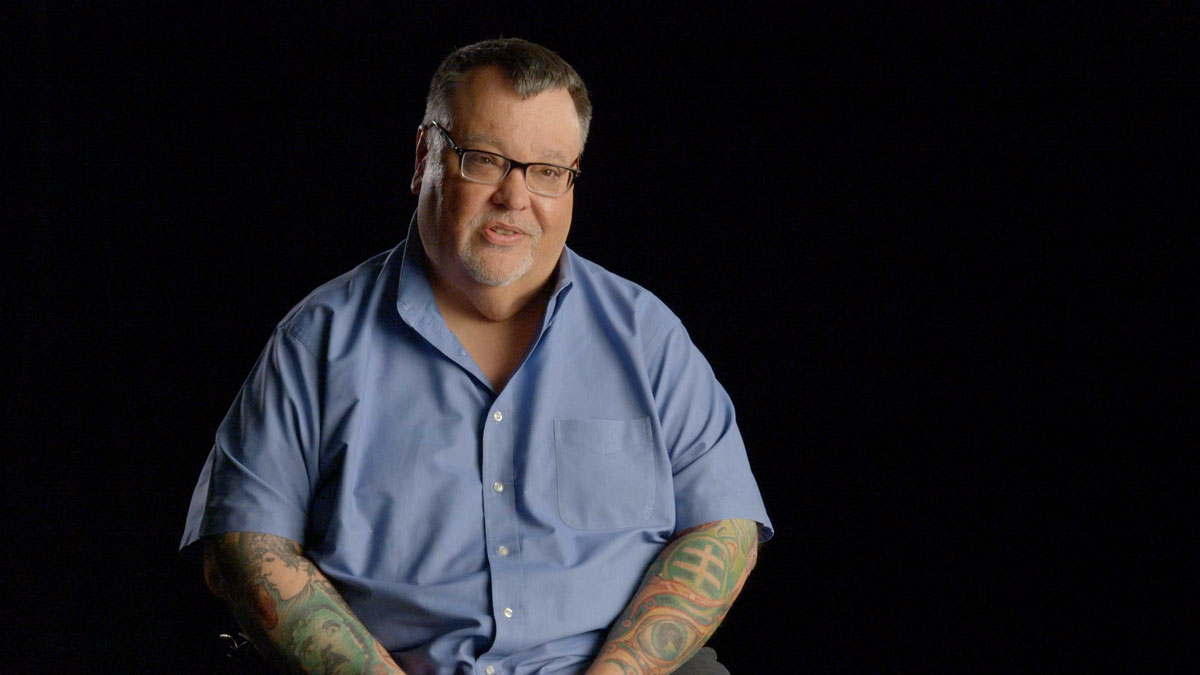
For corroborating dream hampton’s work as a witness in the first episodes, back-up singer and dancer Jovante Cunningham says that in addition to being ostracized, she was doxed and her personal information was released online. Still, Cunningham refuses backing down and reveals what she did not in those first episodes, that Kelly abused her too. 

In answer to the unasked question of why she withheld that information the first time, Cunningham says, “Who wants to be associated with this? This is not a badge of honor. It’s not something that you gloat in. It’s not something that you delight in. Who wants to be a part of a human trafficking ring, or even admit that that even happened to them?”

That statement, along with the myriad accounts of other survivors, psychologist and experts, reasserts this series’ vital necessity as a document. This series achieved the unthinkable, finally penetrating the shield of enablers surrounding Kelly with such force that federal and state prosecutors couldn’t ignore his crimes any longer. And these episodes train a magnifying glass on that extensive system of enablement, naming key people who worked for him, and pointing out that his record label’s representatives and the music industry at large pretended Kelly’s criminality either wasn’t happening, or wasn’t a big deal.

People need to be reminded that these crimes were committed against women who are still being … publicly denigrated by Kelly’s fans and personal network. 

In this regard it also implicitly impugns the public, and rightly so, for downgrading his horrific predation to another example of celebrity misbehavior. As reductive as it may seem to point out that society bears some of the blame for Kelly’s success as both a popular artist and a criminal, consider how many people knew about amply substantiated allegations that he made child pornography and still sang along to “I Believe I Can Fly” at their Sunday religious services.

Recall whether you regarded his marriage to 15-year-old Aaliyah in 1994 as a scandal – as many did, including the press – or a crime, which it was and is.

If the opening episodes of “Surviving R. Kelly” constructed the pathway for federal and state authorities to reopen cases against the singer and bring him to justice, its final hours provide cautionary exhibits and evidence of how dangerous rabid fandom can be.

That much broadcast widely last year in the form of two very high-profile exhibits of this in the form of the coverage of the Johnny Depp and Amber Heard defamation trial and the criminal case against rapper Tory Lanez, who was recently convicted of assaulting hip-hop artist Megan Thee Stallion with a firearm. In each case, fans treated the women at the center of the case as criminals and the slanderous jokes and threats made against them as entertainment.  

Heard’s negative differential in fame, popularity, and power in relationship to her ex placed her on the losing side in the public court of opinion. Megan Thee Stallion, although far more popular than Lanez, was disbelieved and ridiculed on social media by people taking Lanez’s side, primarily consisting of Black men but with some Black women doing their share of emotional damage too.

Surviving R. Kelly: The Final ChapterJim DeRogatis in “Surviving R. Kelly: The Final Chapter” (A+E Networks/Lifetime)
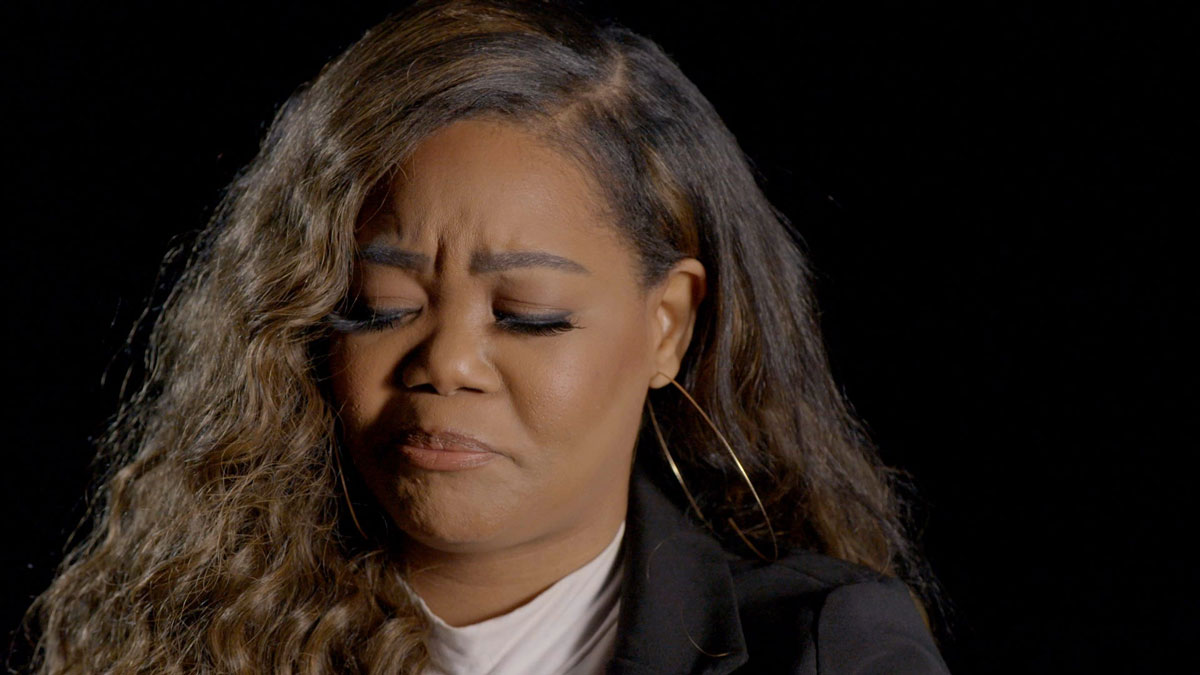
Those women are famous. Kelly’s victims, including their families, are everyday people caught in the net of an organized effort music journalist Jim DeRogatis correctly characterized in his 2017 BuzzFeed story as a sex cult.

Since the first “Surviving R. Kelly” debuted in 2019,  the fathers and mothers of several of Kelly’s survivors, and the women themselves, reveal that they’ve had to move from their original homes. Jerhonda Pace testifies that she was also advised to move out of concern for her safety in the final days of her pregnancy.

Azriel Clary, who initially supported Kelly in his memorably explosive CBS sit-down with Gayle King, subsequently escaped his clutches and conducted another interview where she admitted that nothing she said was true. Her father Angelo says one of the performer’s associates set the family’s car on fire in the hope of burning down their home in 2020; the perpetrator also poured gasoline around their house’s perimeter to achieve that end.

So when we see Black women outside the courthouse claiming to support R. Kelly, including one who has tattooed his name across her chest, recognize that they are simply the most extreme versions of a fandom that is widespread on a passive level but still bolstered Kelly’s ability to get away with exploiting underage girls and women – and, as we now know from court testimony, young men –  for nearly a quarter of a century.

Kelly was found guilty on charges of federal racketeering and sex trafficking in 2022. He’s still facing 12 state charges: 10 in Illinois and two in Minnesota. And it remains an astonishment to know that an extensively sourced, meticulously laid-out docuseries airing on a commercially supported basic cable network, one that centered Black women survivors of sexual assault, achieved this.

W. Kamau Bell, who shows up near the close of these episodes, credits “Surviving R. Kelly” for inspiring his 2022 documentary series “We Need to Talk About Cosby,”  Bell’s critically acclaimed examination of our culture’s fixation with Bill Cosby, who’s faced more than three score accusations of sexual assault and abuse, was eventually convicted in 2018 on charges related to one of those case, only to be freed from prison on a technicality in 2021. He’s planning to tour in 2023 despite facing a new civil suit tied filed by five women.

Surviving R. Kelly: The Final ChapterKitti Jones in “Surviving R. Kelly: The Final Chapter” (A+E Networks/Lifetime)

Kelly is still in prison serving a 30-year sentence, with additional time related to his child pornography conviction due to be added at another sentencing hearing, expected to take place in February. If “The Final Chapter” takes a victory lap at times, that’s because it deserves to.

Radio DJ and fellow survivor Kitti Jones says as much. “Can we focus on the fact that this happened here, and these Black women were heard and they made history and they fought no matter what they were up against?”

If “The Final Chapter” takes a victory lap at times, that’s because it deserves to.

We should, while also acknowledging, as the production does, that the work isn’t done either in this case or in changing how the broader justice system deals with rape reporting and survivors. While hampton, survivors, and an array of experts praise the dedicated work of journalists, especially DeRogatis, who never stopped reporting on the case since the tape was brought to him in 2002, they also point out that the entire reason these charges stuck is that Kelly’s crimes were prosecuted as a RICO case.

DeRogatis and others express admiration for the brilliance of that legal tactic, since that means Kelly wasn’t simply charged with aggravated sexual assault, but with forming a criminal enterprise that allowed him to get away with it. That gave prosecutors the ability to call witnesses and victims who weren’t specifically connected with crimes Kelly committed.

But the cold draft cutting this vindicating comfort is in knowing that the legal machinery for sexual assault cases still doesn’t work as quickly and passionately as it does for racketeering. Clinical psychologist Ramani Durvasula, Ph.D., adds that the male victims coming forward also made a difference: “This became less a story of sexual assault, which is very female-identified in this case, and it just became a case of perpetration, that guy just harms.”


Want a daily wrap-up of all the news and commentary Salon has to offer? Subscribe to our morning newsletter, Crash Course.


Kelly is now behind bars. The survivors who testified, and those who came forward in previous episodes of the series but ultimately did not take the stand, can celebrate that. That statement also helps a person to understand why they remained nervous and uncertain until the moment the verdict was read.

“I feel the system has shown us a pat on the back, yes . . . but it took hell to get there,” mused Faith Rodgers, who testified at Kelly’s New York trial. “Let’s not act like, you know, I didn’t go to the police before trial.” Then she asks, “Have we made history? Yes, but . . .” then she trails off.

Nevertheless, many of the interview subjects express how differently their testimony was treated now as opposed to 20 years ago, crediting the movement for changing the way people who come forward with assault allegations are treated in at least some corners of the justice system.

But the series leaves us with the sobering note that the people who aided Kelly in committing all of these crimes – who kept these women locked up against their will, threatened those he assaulted with harm after they escaped him, and committed other illegal acts in service to him – still walk free.

That should disgust us.

All four episodes of “Surviving R. Kelly: The Final Chapter” air Sunday, Jan. 8 from noon to 4 p.m. on Lifetime.

Americans aren’t lining up to get the bivalent COVID booster. Here’s how to motivate them

As far as pandemic public health measures go, the 2022-2023 holiday season hasn’t been much of an improvement on 2021. Cases are surging across most of the US, and the triple threat of COVID-19, RSV, and the flu threatens to overwhelm parts of the health care system. In response, the CDC and President Biden are urging Americans to get the new bivalent booster shot, which provides better protection than the original against newer strains of COVID-19 like the BA.5 omicron subvariant.

But all this advice seems to be falling on deaf ears. As of January 6th, only about 18% of American adults had received the bivalent booster — a dismal rate compared to the 79% who are fully vaccinated and eligible. With cases rising just when most people traveled to see their loved ones, why is uptake of the booster so low and how can we improve it?

As a behavioral researcher, I focus on understanding how people make decisions about their health. And it turns out the booster uptake problem isn’t that much of a mystery from a behavioral science perspective.  

A problem of motivation

For the most part, vaccine hesitancy isn’t the issue. The majority of people say the bivalent booster is as safe and effective as the original COVID-19 vaccine – if not more – and 70% of those already vaccinated against COVID-19 intend to get a booster in the next year. But there’s a big gap between intending to do something and actually getting around to it — and that is where the problem lies.

With this combination of low motivation and a preference to disavow the pandemic, it makes sense that even people who believe boosters are a good idea in the abstract don’t want to prioritize going out to get them.

Ultimately, the public is likely not getting the bivalent booster because of a simple lack of motivation. Only a third of Americans perceive COVID-19 as even a moderate risk to their holiday season. And fully 77%  agree that it’s important to live their lives as normal now, without allowing COVID-19 to interrupt their plans.

Getting boosted also means tacitly acknowledging that the pandemic is far from over, a difficult sell for people exhausted by years of masking and distancing.

With this combination of low motivation and a preference to disavow the pandemic, it makes sense that even people who believe boosters are a good idea in the abstract don’t want to prioritize going out to get them. But this doesn’t mean that efforts to increase the bivalent booster shot’s uptake are doomed — there are some easy ways to improve adherence to guidelines in the short term.

The behavioral science of booster shots

This kind of situation — in which people view something positively while not feeling highly motivated to pursue it — is one commonly studied by researchers of health behavior. Health professionals and communities working to get more shots in arms can draw on their work and insights from behavioral science. Two overarching strategies to improve booster uptake could provide big gains:

1. Make the booster shot easier to get. Many different studies have shown that the best way to get someone vaccinated is to have a doctor offer them the vaccine. When simply offered a shot, conveniently and easily, most people who aren’t staunchly anti-vaccination will tend to take it. Instead of directing resources toward persuading people to get vaccinated, public health officials should instead focus on making it as easy as possible to actually access the vaccine.

For maximum coverage, mobile, accessible vaccine clinics that take the shot directly to the public would be an ideal option. If that isn’t feasible, taking advantage of systems like electronic health records to send pre-emptive appointment invitations is another good option. When all else fails, making liberal use of services that help people locate vaccination clinics near them is still likely to help.

2. Emphasize perceived risks from COVID-19. This strategy’s a little more controversial, but fear lies at the heart of decisions about vaccination. Making people feel at risk from COVID-19 would certainly provide greater motivation to seek out the bivalent booster. And there is a strong argument to be made that the low levels of concern that people report about COVID-19 are genuinely underinformed.

recent study looking at over 735,000 people found that 45% of COVID-19 survivors still struggled with at least one symptom four months post-infection. What’s more, repeat cases of COVID-19 may well further increase the risk of serious complications. If more people were truly aware of the chance a COVID-19 infection might disable them for life, the need to protect themselves and their loved ones might become urgent to move the booster shot to the top of their priority list.


Want more health and science stories in your inbox? Subscribe to Salon’s weekly newsletter The Vulgar Scientist.


Risk is best communicated not with statistics, but with stories. Sharing the experiences of people who were young and healthy before struggling with long COVID can be a good way to shake people out of their complacency. Including vivid personal details and emotional language makes these kinds of stories especially effective.

Boosting uptake rates

Of course, not everyone feels the same way about COVID-19 vaccination. These two strategies are unlikely to work on committed anti-vaccination skeptics. But by both increasing motivation and improving access, public health officials can more effectively reach out to the passive pro-vaccine majority that’s most receptive to their messages.

Green jobs are booming, but too few employees have sustainability skills to fill them

To meet today’s global sustainability challenges, the corporate world needs more than a few chief sustainability officers – it needs an army of employees, in all areas of business, thinking about sustainability in their decisions every day.

That means product designers, supply managers, economists, scientists, architects and many others with the knowledge to both recognize unsustainable practices and find ways to improve sustainability for the overall health of their companies and the planet.

Employers are increasingly looking for those skills. We analyzed job ads from a global database and found a tenfold increase in the number of jobs with “sustainability” in the title over the last decade, reaching 177,000 in 2021.

What’s troubling is that there are not enough skilled workers to meet the rapid growth in green and sustainability jobs available.

While the number of “green jobs” grew globally at a rate of 8% per year over the last five years, the number of people listing green skills in their profiles only grew by 6% per year, according to a LinkedIn analysis of its nearly 800 million users.

As professors who train future workers in sustainability principles and techniques, we see several effective ways for people at all stages of their careers to gain those skills and increase those numbers.

Where sustainability jobs are growing fastest

In the U.S., jobs in the renewable energy and environment sectors, grew by 237% over the last five years. Globally, the transition from fossil fuels to renewable energy is forecast to result in a net increase in jobs for the energy sector.

But green jobs go well beyond solar panel installation and wind turbine maintenance.

Sustainable fashion is one of the fastest-growing green jobs sectors, averaging a 90% growth rate annually between 2016 and 2020.

The rapid expansion of ESG investing – environment, social and governance – and portfolio management is opening up new jobs in sustainable finance. In 2021, the accounting firm PwC announced that it would invest US$12 billion and create 100,000 new jobs in ESG investing by 2026.

There is also a growing demand for urban sustainability officers who can help transition cities to be net-zero carbon and more resilient. After all, the world is adding 1 million people to cities every five days and building 20,000 American football fields’ worth of urban areas someplace on the planet every day.

In 2013, when the Rockefeller Foundation launched 100 Resilient Cities, a network to help cities become more sustainable, few cities had a resilience or sustainability officer. Today, more than 250 communities and 1,000 local government professionals are part of the Urban Sustainability Directors Network.

The number of companies with chief sustainability officers in executive positions also tripled from 9% to 28% between 2016 and 2021. But given the scale and business opportunities of sustainability, these skills are needed much more widely within organizations.

So, where can you find training?

Most sustainability and green jobs require creative problem-solving, synthesizing and technical skills. Some of those skills can be learned on the job, but boosting the number of qualified job applicants will require more effective and accessible training opportunities that target employers’ needs. Here are a some training sources to consider.

University programs: Sustainability is increasingly being incorporated into a wide range of university programs. Fifteen years ago, sustainability training was mostly ad hoc – a product designer or economist might have taken a class in sustainability approaches from the environmental science department. Today, U.S. universities have about 3,000 programs with a “sustainability” label, up from 13 in 2008.

A National Academies report recommends looking for a competency-based approach to sustainability learning that blends content with skills and links knowledge to action to solve problems and develop solutions.

Micro-credentials: For mid-career employees who don’t have the time to reinvest in full-fledged degrees, short courses and micro-credentials offered by universities, colleges or professional groups offer one way to develop sustainability skills.

A micro-credential might involve taking a series of courses or workshops focused on a specific skill, such as in wind energy technology or how to incorporate ESG criteria into business operations.

Short courses and micro credentials take up less time and are much less expensive than college degree programs. That may also help lower-income individuals train for sustainability jobs and diversify the field.

Specializations: A similar option is jobs-focused online certificate programs with a sustainability specialization.

For example, Google teamed up with universities to provide online courses for project managers, and Arizona State University is offering a sustainability specialization to accompany it. Project management is an area where the U.S. Department of Labor expects to see fast job growth, with 100,000 job openings in the next decade.

Corporate training: Some companies have developed their own internal sustainability training in climate science, sustainable finance, sustainability reporting and other skills.

Integrating sustainability across all functions of companies will require some level of sustainability training and understanding for most if not all employees. Companies like Starbucks, HSBC, Salesforce and Microsoft have created internal training programs to spread sustainability knowledge and practice throughout their companies, not just for employees who have sustainability in their titles.

Closing the gap

A recent survey by Microsoft and BCG of major companies found that only 43% of sustainability professionals in businesses had sustainability-related degrees, and 68% of sustainability leaders were hired internally.

It’s clear that on-the-job sustainability training and up-skilling will be necessary to fill the growing number of roles inside of companies.

To meet the sustainability skills gap, we believe more training will be required – at colleges and universities, by professional organizations and from employers. Achieving global sustainability and meeting climate change challenges will become more likely as legions of people commit their working hours to sustainability solutions.


Christopher Boone, Professor of Sustainability, Arizona State University and Karen C. Seto, Professor of Geography and Urbanization Science, Yale University

This article is republished from The Conversation under a Creative Commons license. Read the original article.

What’s out for 2023? The in/out list

You couldn’t flip through most fashion and teen magazines in the 1990s and early 2000s without seeing them. The lists. Spaghetti straps were stylish, bucket hats were not. Belly shirts were in, knee socks were not. This was in, this was out with whiplash-like abruptness. It was the in/out list, that neat little summary of snide judgement, based on one likely overworked writer’s personal opinion — and it’s back!

In 2023, the cultural tide may be turning away from New Year’s resolutions. They place an undue emphasis on dieting, promoting often unhealthy weight loss and diet culture, and can make people feel like failures. As CNET wrote in December 2021, “The stress and disappointment we sometimes place [on] ourselves can be counterproductive.” The writer of that piece supports giving ourselves a break rather than making grand statements of change. In an article against New Year’s resolutions, Psychiatric Times argues that resolutions can be detrimental to positive habits as, “You may lose confidence in your ability to make sustained change. After a while, you may also start to feel a little out of control. That is a negative feeling.”

While the resolution may be receding, something else has emerged from the depths of self-help like a swamp monster to make us feel bad: the in/out list.

The in/out list shares some traits in common with the resolution. It’s a summation, usually made publicly, of so-called good traits a person wants to cultivate more, like texting back or having meatless Mondays — and bad habits a person wants to give up, like staying up too late on weeknights or binge watching. How the in/out list veers dramatically from the resolution is the weird minutia of it all. It’s not only habits and traits that are in or out, but fashion, grooming specifics, favorite television shows or music. An in/out list is an exercise in whims, and it’s exceedingly personal even though a writer — or publication — might pretend otherwise. 

Never one to relinquish trends, the Washington Post did an in/out list this past year (and has since 1978). For 2023, their list skews bizarre. Party barns and buccal fat pad removal, anyone? Maybe we are at the end times. Or maybe their writers were very bored and had too much Google. This year, the Washingtonian countered with a rebuttal titled “An Actual Cool Person Weighs In on the Washington Post’s 2023 In/Out List.” Their “actual cool person” is a teenager so one must respect the sage judgement passed on such Post entries as Barbiecore: “No one can be Barbie. Barbie is not real.” And Iowa: “Iowa was never in.” 

Part of being an adolescent is navigating ever-shifting cliques and changing yourself, your appearance and opinions, faster than a makeover sequence in a teen movie. It’s what we do as we grow up: we find ourselves. But grown adults making in/out lists? In late 2021, many did, the in/out list jumping onto social media like yet another virus.

On one hand it’s fun to decide who you are and what you like. The turning of the year makes people reflect on what’s serving them and what might not be anymore. On the other, what does the public nature of the social media in/out list say about us? That we like to exclude? (You who wear baggy pants can sit at our table. You who wear skinny jeans can’t.) That we need to loudly announce a change in what we believe, otherwise it might not stick? If a preference isn’t announced on social media, is it even real? 


Want a daily wrap-up of all the news and commentary Salon has to offer? Subscribe to our morning newsletter, Crash Course.


Maybe the in/out list has more in common with the New Year’s resolution than not; both rely on public accountability. Are you really done with chain restaurants and Elon Musk’s Twitter, and are you going to finally start recycling and riding your mountain bike? Or is this the person you want people to think you are, your idealized self? At the end of the day and at the end of the year, we want people to like us. And in the online middle school that is social media, we want people to think we’re cool. 

As for an actually cool person (who blames Millennials, not Gen X, so you know she’s legit): “I can tell you right now, Twitter is not in.”

Michael Moore was right about the midterms — now he offers hope for progressives in red zones

Documentary filmmaker and activist Michael Moore wants liberals and progressives in red areas of the country to take heart — and begin planning for 2024.

In his new 12-part podcast series, “Blue Dots in a Red Sea (How to Win When You’re Blue in a Red State),” which he began on Christmas Day as a set of citizen goals for the New Year, he provides advice and encouragement to those of us who live in Republican-controlled states. In each brief episode, he exhorts us to get active in our continuing defense of democracy and offers his own hard-won suggestions on how to succeed.

Moore was nearly spot-on in his prediction about the 2022 midterm elections (countering nearly every poll, he also predicted Donald Trump’s victory in 2016). Leading up to Election Day, he embarked on an ambitious series of posts on his Substack site, citing 44 “truths” to refute the mainstream media narrative of a “red wave.” Republicans and the media were focused on pundits and polls saying that history, inflation, gas prices and Biden’s approval rating would sink the Democrats. 


Want a daily wrap-up of all the news and commentary Salon has to offer? Subscribe to our morning newsletter, Crash Course.


But Moore persisted (even after a bout of COVID) in countering those arguments, providing many cogent reasons for Democrats and progressives to not despair. He said if they got to work, there would be no red wave — and that there could instead be a blue tsunami.

As things turned out, the Democrats did very well, historically speaking, for a party that holds the White House. They picked up a seat in the Senate and held all but one of their own governorships while flipping three (there are now 24 Democratic governors). While 121 of the 147 Republicans who voted to overturn the 2020 election of Joe Biden were sent back to Congress (I wish I could say inexplicably), not a single election-denying candidate running for a position in charge of state elections actually won. Voters in all five states where an abortion-rights measure was on the ballot upheld a woman’s right to choose. Alaska voters chose a Democrat over Sarah Palin for an open House seat. (In fact, they did so twice, first in a special election.) In key races across the country, Trump-endorsed candidates suffered loss after loss. 

It was not a blue tsunami, but Moore was grateful for the blue wall that held back any semblance of a red wave. It’s worth remembering that in November 2021, then-Minority Leader Kevin McCarthy predicted that Republicans would pick up more than 60 seats in the midterms. In the event, they gained just 10, and required 15 ballots over four days to elect McCarthy as speaker of the House, with the narrowest possible majority. 

Who even came close to calling this outcome? The staff at FiveThirtyEight? Real Clear Politics? Other pollsters? No. Michael Moore. Moore notes that only a few outlets reported on his efforts at the time: Salon did, along with Joy Reid and Alex Witt at MSNBC. (I also published an article on Medium.)

Perhaps my favorite of Moore’s comments came in an episode of his “Rumble With Michael Moore” podcast after the midterms when he noted that the media notion that Joe Biden’s popularity would be a key factor was dead wrong. He observed that in today’s highly partisan environment, a president’s approval rating has become a long-outmoded measure. “You might as well say, ‘Vaudeville! I love going to vaudeville!’ You know, that ended. Things end. Approval ratings — they’re irrelevant and often wrong.”

The New York Times finally caught up with the impact of “GOP-inflected” polling pushed by right-wing media — which drove so much of its own coverage. Moore had already covered that (in “Truth #36“).

The New York Times recently published a report about how and why pollsters and analysts again dropped the ball, mostly because of an increase of “GOP-inflected” polling amplified by aggregation and pushed by conservative media. Moore had already covered that (in “Truth #36“), posting a note from a polling insider about the many problems of poll aggregation, especially when it relies on overtly partisan polls. If economics is “the dismal science,” should we start calling polling “the abysmal science”? 

Moore’s Substack series was an effort bolster the spirits of all those who felt downcast by the hyper-partisan GOP and the historic expectations for midterm elections. As he wrote, “pundits and the political hacks want you to believe the Democrats are going to lose. They want you demoralized, depressed, and fearful of The Return of Trump.”  

Unfortunately, it’s not likely that most pundits aligned with corporate media will learn any lessons from being so wrong, or will change their behavior. They’ll continue to focus on horse-race coverage rather than on candidates’ policy proposals (or on whether they’re telling the public the truth about any aspect of who they are).

Perhaps all citizens who love their country and the Constitution — and who oppose treason — will be happy to take a little time to listen to his suggestions about how to get a leg up on the sowers of chaos who cannot govern and don’t even want to. As Moore points out, when it comes to people who don’t live up to their oath of office, the pro-democracy tent is big: 

All continued coup attempts will be met by the vast majority of this country — Democrats, Republicans, Independents, Greens, Libertarians, nonvoters, anarchists, meat eaters, vegans, idiots, brainiacs, Presbyterians, pipefitters, rappers, nurses, numbskulls, preachers, periodontists and everyone else — we will ALL stop you, peacefully but forcefully.

In each of the brief podcasts in “Blue Dots in a Red Sea,” Moore asks us to carry on this work, providing examples of how to get involved, from creating your own group of interested citizens to attending and reporting on school board meetings to creating your own version of an online newspaper. He bases his suggestions on lessons learned when he ran for office as a young man and when, a couple of decades later, he found himself living in a Michigan county dominated by Republicans.

Because people took action to communicate and organize, Democrats don’t feel as lonely in that county today. It can be done, and more quickly than you’d imagine. That’s Michael Moore’s message to all of us who feel trapped and frustrated in red states, cities, towns and counties.

Melania Trump “changed her tune” in waning days of Trump’s presidency

Appearing on MSNBC with host Alex Witt, Stephanie Grisham, the former White House press secretary and top aide to Melania Trump, was asked how things changed between the former first lady and her husband in the waning days of his presidency.

According to Grisham, Donald Trump’s wife was always protective but worked diligently to keep her wing of the White House separate from the West Wing.

As she told the MSNBC host, “You know, she was always very protective of who was around her husband. She very much liked people who would tell him the truth, tell him he shouldn’t do things and she felt that many of those people that you just mentioned would oftentimes tell him what he wanted to hear.”

“Another big thing with her is that she didn’t like people profiting off of her husband, or her family,” she continued. “And so when you consider how much Jason Miller has made off of the Trump family, or, you know, Kimberly Guilfoyle demanded $60,000 just to introduce the president the day of the rally, it was things like that that bothered her.”

With Witt pointing out Melania was reportedly “big on tradition,” Grisham agreed, but then explained how things changed.

“Very, very big on tradition, a big rule-follower,” Grisham explained. “Again, the entire time I worked there we had a very separate two wings. I didn’t have to ask permission to put statements out. We often put statements out and did things contrary to what the West Wing liked. So, the fact that towards the end as she kept asking me, ‘what’s the West Wing doing?’ all I can think of is that she knew that they were leaving, she knew that she was going to have to go and live at Mar-a-Lago, or in New York with the president, and not have the buffer of staff between her.”

“And she just wanted to kind of make peace in her family for the after the White House part of their life,” she added.

Watch below:

Federal court legalizes “instrument of mass murder”

Despite acknowledging “tremendous” public pressure to impose a ban on bump stocks, a firearm attachment used in the deadliest mass shooting in U.S. history, a federal appeals court on Friday rejected a 2019 Trump administration rule barring people from owning the instruments.

In a 13-3 ruling, the 5th U.S. Circuit Court of Appeals in New Orleans ruled that the ban violated the Administrative Procedure Act and that the U.S. Congress must act to ban bump stocks rather than the executive branch.

The majority, made up mostly of judges appointed by Republican presidents, said that the Bureau of Alcohol, Tobacco, and Firearms (ATF) at the U.S. Department of Justice wrongly interpreted a law banning machine guns when they extended that ban to bump stocks in 2019, two years after a gunman killed 60 people and injured hundreds of others in a shooting at a concert in Las Vegas.

“A plain reading of the statutory language, paired with close consideration of the mechanics of a semi-automatic firearm, reveals that a bump stock is excluded from the technical definition of ‘machine gun’ set forth in the Gun Control Act and National Firearms Act,” Judge Jennifer Walker Elrod wrote in the majority opinion.

The gunman used bump stocks to modify 12 firearms he used when he shot at the crowd from a hotel room. Bump stocks can be used to replace a rifle’s stock, which is held against the shooter’s shoulder, and allows the weapon to fire multiple rounds of ammunition more rapidly.

The three judges who dissented in Friday’s ruling were appointed by Democratic presidents. One, Judge Stephen Higginson, wrote in an opinion that the majority employed technical legal reasoning “to legalize an instrument of mass murder,” after three other federal appeals courts rejected challenges to the bump stock ban and the Supreme Court declined to hear appeals to two of those rulings last year.

“Under the majority’s rule, the defendant wins by default whenever the government fails to prove that a statute unambiguously criminalizes the defendant’s conduct,” wrote Higginson.

Following Friday’s decision, the Supreme Court could ultimately rule on the legality of bump stocks in the future.

“Nanomedicines” for various diseases are in development. Here’s what that means

Nanomedicines took the spotlight during the COVID-19 pandemic. Researchers are using these very small and intricate materials to develop diagnostic tests and treatments. Nanomedicine is already used for various diseases, such as the COVID-19 vaccines and therapies for cardiovascular disease. The “nano” refers to the use of particles that are only a few hundred nanometers in size, which is significantly smaller than the width of a human hair.

Although researchers have developed several methods to improve the reliability of nanotechnologies, the field still faces one major roadblock: a lack of a standardized way to analyze biological identity, or how the body will react to nanomedicines. This is essential information in evaluating how effective and safe new treatments are.

I’m a researcher studying overlooked factors in nanomedicine development. In our recently published research, my colleagues and I found that analyses of biological identity are highly inconsistent across proteomics facilities that specialize in studying proteins.

Gold is one of the materials used in nanotechnologies.

Inconsistent results

Nanomedicines, just like with all medications, are surrounded by proteins from the body once they come into contact with the bloodstream. This protein coating, known as a protein corona, gives nanoparticles a biological identity that determines how the body will recognize and interact with it, like how the immune system has specific reactions against certain pathogens and allergens.

Knowing the precise type, amount and configuration of the proteins and other biomolecules attached to the surface of nanomedicines is critical to determine safe and effective dosages for treatments. However, one of the few available approaches to analyze the composition of protein coronas requires instruments that many nanomedicine laboratories lack. So these labs typically send their samples to separate proteomics facilities to do the analysis for them. Unfortunately, many facilities use different sample preparation methods and instruments, which can lead to differences in results.

Cryo-electron microscopy images of protein coronas on nanoparticles

Protein coronas give nanoparticles their biological identities. Images A to C show nanoparticles without protein coronas, while images D to F show proteins (black dots) coating the surface of the particles. Ashkarran et al. (2022)/Nature Communications, CC BY

We wanted to test how consistently these proteomics facilities analyzed protein corona samples. To do this, my colleagues and I sent biologically identical protein coronas to 17 different labs in the U.S. for analysis.

We had striking results: Less than 2% of the proteins the labs identified were the same.

Our results reveal an extreme lack of consistency in the analyses researchers use to understand how nanomedicines work in the body. This may pose a significant challenge not only to ensuring the accuracy of diagnostics, but also the effectiveness and safety of treatments based on nanomedicines.

Why standardize nanomedicine?

Researchers have been working to improve the safety and efficacy of nanomedicine through various approaches. These include modifying study protocols, methodologies and analytical techniques to standardize the field and improve the reliability of nanomedicine data.

Aligned with these efforts, my team and I have identified several critical but often overlooked factors that can influence the performance of a nanomedicine, such as a person’s sex, prior medical conditions and disease type. Taking these factors into account when designing studies and interpreting results could enable researchers to produce more reliable and accurate data and lead to better nanomedicine treatments.


Morteza Mahmoudi, Assistant Professor of Radiology, Michigan State University

This article is republished from The Conversation under a Creative Commons license. Read the original article.

When your friend is dying, it’s OK to steal her scarves

I can’t steal her clothing because she’s a size zero and I’m a size 16. I was a size 8 when we met and we both loved our thin bodies, dipping into lakes, hot tubs, swimming holes. But I’ve been on meds for years that fatten me, and now menopause. ALS has done the opposite to her: She is subzero. When I help her to the toilet, I feel the nubbles of her spine, the tender wings of her shoulders. She walks with her walker like a somnambulant drum major: knees up, marching slowly, so she does not fall. She has fallen a lot: cracked a toilet seat with the back of her head, given herself a black eye.

Years ago she fell and broke her wrist in many places. She called me at an airport. I was coming home from somewhere; where? She chirped about her terrible luck, making it into a funny story: rushing out of a hot tub to get away from a lecherous friend, slipping. It is not a funny story when I type it here. Typing makes it sound terrible. I am expert at telling terrible stories. She never wants anyone to feel sorry for her.

The thing about the scarves is I can wrap myself in them, round and round my neck. I can lower my face into them and smell. They smell like her.

“This smells like Cai’s house,” my son says.

She’ll be dead in three weeks but till then, verbs are present tense. She’s a stickler for grammar.

“What does that smell like?” I want to hear someone else describe it. He knows she is dying in three weeks. He knows she has planned it. The only other person who has died is my dad after long, sad years of assisted living that scared my son. Also the cat. My son cried when the cat died, but only after half a day passed and he noticed the cat was gone. He has known Cai all his life. She doesn’t play backyard sports with him — even when she could — so she is not his favorite of my friends but he loves her. He likes to joke about all the books she’s published. He likes to say “Aren’t you jealous?” He likes to say, “She’s so much better than you.”

“Good,” he says of the smell.

I steal books off her shelves. She has mountains of them. I call it borrowing. “Can I borrow this?” But I am a slow and picky reader. I dip in and out. I will not be done in three weeks. Things that will outlive her: the spinach in my freezer. The half bag of fertilizer in my shed. My unfinished book draft. The bulk bag of prescription food for the (not dead) cat’s allergies. My other unfinished book draft.

Her scarves are fancy, fancier than mine. My clothing is utilitarian. Hers are about pleasure. She always had exquisite taste in clothing and jewelry and housewares. But she wasn’t a snob. She isn’t a snob. She’ll be dead in three weeks but till then, verbs are present tense. She’s a stickler for grammar.

I am selfish in my grief: Who will deliver cupcakes to my door when I’m depressed? Who will correct my every lay to lie? Who will take me to birthday pedicures?

“You better haunt me,” I say.

She wants to be cremated and sent in an urn to the fancy Boston cemetery where her parents are buried.

“What about us?” I say. By us, I mean her husband, son and me, 3,000 miles from Boston. By us I mean me. “Who’s in Boston anyway?” I say.

“Bostonians,” her husband says.

Things that will outlive her: the spinach in my freezer. The half bag of fertilizer in my shed. My unfinished book draft.

We three laugh, though Cai’s is a seal straining to bark. Her voice was the first thing to go before hands and throat and dragging feet.

I know everything there is to know: Two doctors have approved the drug she’ll spend $750 to ship from the single pharmacy that dispenses it. The drug will go into her feeding tube. She has to depress the plunger that will send the drug into her feeding tube to stay within the law. The drug will first put her to sleep and then kill her. But anticipating death is like anticipating Minotaur or anticipating ribosomes or anticipating nebula. I lack the neural pathways.

We need to cry together, she types into her phone beside me. Deep breath, she texted on the same phone from the neurologist’s office nearly two years ago — the specialist neurologist, the neurologist of last resort — minutes after the diagnosis and the moment before she told me. Even then, she wanted to tamp down the drama. All I want is drama. My friend is dying, I tell anyone who listens. My dear friend is dying. My best friend is dying. I want to wring it out. I want to rain it down. If I could self-immolate in it, I would for the spectacle. We cried together once in a room full of other people crying too.

Spectacle doesn’t work between the two of us alone. She says, “I don’t want to think about it too much because then I won’t do it and I want to do it.” She wakes up in mucus, unable to breathe. Her bones hurt. Her fingers that she uses for writing, for speaking, for everything, are barely working. My job is to say yes to everything that makes no sense, that I can’t see my way to. My job is to be not me, not anything about me.

I name the stupid people who didn’t appreciate her enough – who don’t appreciate her enough – and enumerate the ways I will tell them to fuck off to in her obituary. In her eulogy. I say this like it’s funny. Which maybe it is. Maybe all this is funny, like her stories are funny, no one feeling sorry for anybody.  

I have three scarves, a stack of books, and November’s orange toenails, already chipped, slivers of bare nail pushing up from the cuticles. Soon I will sit at this same desk in this same body in this same life, type She laid on the couch, crushed, and wait.

Cai Emmons died peacefully in her home surrounded by friends and family on January 2, 2023, using Oregon’s Death with Dignity law and with the help of EOLCOR (End of Life Choices Oregon). Here’s her farewell message to friends and readers. Miriam has since stolen a gel pen, a half pad of Post-it Notes, and an insulated grocery bag from Cai’s home.

Ageism, affairs and Mexico Week: Getting personal with Prue Leith of “Bake Off”

Many know Prue Leith as a judge on the comfort TV favorite, “The Great British Baking Show.” As I learned from Leith, the South African TV personality has more to talk about than just delicious bakes. She has had an extraordinary career as a restaurateur, a caterer, a cooking school founder, a philanthropist and the author of numerous cookbooks and novels. She joined me on “Salon Talks” to discuss two new projects, a cookbook “Bliss On Toast: 75 Simple Recipes” and her memoir “I’ll Try Anything Once,” now both available in the United States.

Leith opened up about what it was like updating her memoir for an American audience, in which she details her affair with her first husband and advocacy for assisted death. “I really think that people ought to consider what kind of a death they want,” she told me. And she does not have regrets about her affair. “He was the love of my life. He was the most important thing, still is the most important influence on my life.” Leith also addresses the controversy from GBBS’s “Mexican Week” and shares why she thinks Paul Hollywood helped her get her job. Watch Prue Leith’s “Salon Talks” episode here, or our full conversation below. 

The following interview has been lightly edited for clarity and length.

I want to get into the title of “I’ll Try Anything Once” because the contents absolutely live up to the name. Why does this phrase mean something to you, and why did you make it the title?

My autobiography, which was originally called “Relish,” was never published in the States. I didn’t have much profile in the States and a few copies that got here didn’t sell particularly well — nobody had ever heard of me. 

When “Bake Off” became so popular, I suddenly became better known in the States than I am even in the UK, so it seemed a good idea to republish the book. When I said, well, it’s called “Relish,” the American company said, relish in America is something you put on a burger, so I don’t think you want to call it that. We felt we better change the name. In England, of course relish means… well of course it does in American too, but it meant a zest for life or relish of everything because I am a big enthusiast about a lot of things.

We just banged around and thought what shall we call it, and I think I said “I’ll Try Anything Once” because I tend to do things because I think they sound like a good idea, and then I get very enthusiastic and just do it. And I keep doing things that I’ve never done before. At the moment, I’m doing a one woman show, which for an octogenarian to decide to get on a stage and tour all over America and all over Britain telling stories about my life. It’s similar to what’s in that book, but it is a theater show and it’s going incredibly well and I can’t believe it. And I started that at 82. So I, in a way, I’m on a mission to say to older women, don’t think it’s all over just because you’re 60, 70, 80 or, I hope, 90. You can still do good things.

A lot of us know you, especially here in the States, know you for colorful necklaces and for baking innuendo, but what I didn’t know going into this book was that it was also going to touch on apartheid, abortion, death, aging, so many really intense things that you have been through that you have dealt with. 

One of the things that you are passionate about is this idea of assisted death and the right to a good death. Why is that was such an important thing to talk?

I think as you get older you tend to think more about death, but we don’t think about it enough, and I really think that people ought to consider what kind of a death they want. Too many people, A, don’t consider it or they believe this kind of myth that you get from the movies, which is you are lying in bed, you’re surrounded by your family, then you peacefully go out and it’s all very gentle. Well, of course we’d all love to die in our sleep gently in our own beds or whatever, but that’s not what happens to most of us. Most of us end up dying usually in a hospital with a whole lot of well-meaning medics, desperately trying to keep us alive even if we don’t want to be kept alive, and with no quality of life and no enjoyment. A lot of us die without any friends or relatives around. It just seems awful to end one’s life so badly when it’s unnecessary.

I campaign for an organization called Dignity in Dying, but there are a lot of other organizations that are campaigning for much the same thing. I don’t know what is the absolute right, best law to have, what I do know is that in Britain we need to change the law, we need to make it possible to die when you want to die. 

“The hardest thing to write about was probably my love affair with my first husband, which was a secret for 13 years because his wife was a great friend.”

If you are terminally ill and you’ve been diagnosed that you will die within six months, of course, you can never be totally accurate about this, but if it’s certain that you have a terminal disease and you do not want to live it out in agony and pain and whatever, you should be allowed to either legally given the means, the medicine, the drugs that will kill you, or you need a doctor to help you do it, physically help you do it, which is what they have in Canada. 

There are arguments for both sides. There are risks on both ends. There’s nothing without risk. But I think we have to legislate for the majority, and we may not be able to legislate for everybody because where do you draw the line? You wouldn’t want children opting to die, you wouldn’t want young men… the biggest danger of suicide in young men is between 19 and 25, or something. Well, we know that passes, that’s a stage when young people are at their most vulnerable. But we know that generally if you get to 25, you’ve got a likelihood of living as long as anybody else. So we would want to not allow a 19-year-old who’s just lost his girlfriend and hasn’t got a job and is desperate to get out. We wouldn’t want him to do.

Perhaps we shouldn’t have people with mental difficulties. And yet in Canada a lot of people, groups like disabled groups or mentally handicapped people who represent mentally handicapped people are arguing that it’s discriminatory to allow some people to die and not to allow others. So what I’m saying is the whole thing is extremely complicated and difficult, but that is not a reason to do nothing. 

And definitely not a reason to not talk about it. There’s so many other things that you talk about in this book too, like I said about your relationships, about infidelity, about adoption. What was the hardest thing to write about in this book?

The hardest thing to write about was probably my love affair with my first husband, which was a secret for 13 years because his wife was a great friend of mine and both the families were extremely close. She was my mother’s best friend, and she had married my husband when she was 40 and he was 20, so there was a 20 gap between them. And then when he was about 40, he fell in love with me and I was only 20, so there was a 20 gap between us and Rayne was sort of between us. He had a first wife who’s 20 years older than him and a lover who was 20 years younger than him.

It was really difficult for both of us because he didn’t want to hurt Nan. I didn’t want him to leave her because I was quite happy, I was building my business, I liked being alone, I didn’t want marriage, I wasn’t desperate for children. So I was fine for 10 years. And then I hit the famous thirties when you start to want a baby, badly. And so at that point it became really difficult and I wanted to leave him and I tried hard to leave him. I ran away from him at one point. But I loved him so much, I kept coming back and in the end I did get pregnant and then we had to just come into the open and I wanted a baby very badly.

So we then told everybody and it was really difficult for a while, but his wife was a wonderful woman. She insisted we all stayed friends and so he, and the families did stay friends. It wasn’t easy and I don’t have the same relationship with them as I had before, but I think everybody behaved as well as they could. People often say to me, well would you have done it differently? And the answer is no. He was the love of my life. He was the most important thing, still is the most important influence on my life. He was the chairman of my company, he helped me with everything, father of my children. We adopted a Cambodian daughter together. I mean I wouldn’t have missed any of that for… So yes, I think adultery is wrong. Yes, I think it was wicked. And no, I would still have done it.

You certainly could not have expected that in your seventies you would become a judge on “Great British Baking Show.” In the book you said that you didn’t think they would hire you because, I think the quote is, you didn’t think that they would hire another old lady and you hadn’t really even watched very much of the show. What made you decide to take that risk then and go ahead and go for it?

I mean who would resist it? Of course I said yes. I think I was just amazed by good luck. But I think the long and the short of it, what had happened was the formula had really worked with Mary Berry. It was tremendously successful. She was an absolute icon, a national treasure, we all love her. And so I thought, well Channel Four is a sort of trendy, very advanced, very woke broadcasting channel and they’ll want to have some young dude, I don’t know, I could think of quite a few people who would’ve been exactly fitted that role, but they obviously thought, no, it works with Mary, what we need, it’s another old lady.

“I think that broadening the challenges is quite necessary because people’s tastes have changed.”

To be honest, I think Paul Hollywood had a lot to do with that because I had to have an audition, and I know that they auditioned a lot of younger people and other people, men and women, to be Paul’s partner. And Paul, when we were having the audition, Paul really helped me because we were having an audition that we had to judge soda bread and brownies, nice simple things. And we walked onto the set to judge the first thing, which I think was the soda bread. And Paul, you know how confident and knowledgeable and articulate he is, he never ums, he never errs, he just goes bang and says exactly what’s right and wrong about the bake in front of him, very succinctly and perfect. 

He went and did that, and he was dead right. I mean there was nothing he said that I could not agree with and there was nothing I could add. It was just perfect. So I just said, I agree, Paul is right. So then when we stopped filming, Paul said, you can’t just do that. You can’t just agree with me. He said, television show, you’ve got to get in there. So then we judged the brownies and I sort of more or less pushed him aside and told the world what I thought of the brownies. And then I got the job. Paul helped me get the job is the long and short. They must have probably asked him which of the people you’ve seen do you want, and he must have said me, but I think I owe it to Paul.

You talk about the formula for the show, and yet the show has evolved. It has changed in the makeup of the cast of characters in it. And over the past few years, particularly this past season, people have seen an evolution in the types of things that are the types of foods that are being made. I want to ask you what that word, bake, means to you in the context of the show and in your words.

I see the difficulty. If by bake you mean the classical answer is a bake goes in the oven, bake is something that has been put in the oven. But I think that would stop us doing an awful lot of things. You wouldn’t have, I don’t know, a lot of things like trifle for example, there’s some baking in it, but most of it is not baking. And so I think that broadly what we mean for a bake is either a dessert or cake or something that’s been in the oven. And it can be savory, but it must be close to baking.

I mean the only times we break the rule about going in the oven is if we make a flat bread, which is made on a griddle, or on a flat frying panel or something, or crepe, but a pancake and a flatbread is quite close to baking, I think we can cheat a bit. I think that broadening the challenges is quite necessary because people’s tastes have changed. I mean at the moment I’ve been traveling around America and Canada and everywhere I’ve gone, you can see how the influences of Mexico are there, there are tortillas or flat breads or tacos everywhere and they are taking the place of sandwiches. Well now a sandwich you would accept had enough baking element into it, then why would we have a sandwich and not have a taco? So I think people must just have a bit of, don’t be pedantic about it. If it makes a good competition, that’s fine.

I think a lot of us here in the States watched Mexico week and said it seems like maybe the UK still has a few things to learn about Mexican food. Do you think that was fair?

I agree, and I think we do have a few things to learn and we were all really upset about that because Paul, for example, had just come back from a month in Mexico where he had made a wonderful program called “Paul Eats Mexico,” and he’d been around eating all sorts of, I mean obviously some tacos and some refried beans and all the things that people complained that we used, but he had also been eating all much more sophisticated Mexican food and he absolutely loves Mexican food and loves Mexico, and he’d been very influential in choosing the challenges.

What was so upsetting about it was the idea that we would somehow want to be either patronizing or mocking. The truth is that on “Bake Off,” we make jokes about everything, but we certainly would never do it being anything other than friendly. People got upset because the hosts wore sombreros and ponchos. But you can’t arrive in Mexico and walk through the airport without people wanting to sell you ponchos and sombreros. Yes they’re clichés, but then a hot dog is a cliché and Americans don’t mind if we make a hot dog.

So it’s really difficult because there will always be people who just are upset by it, and I’m sorry we upset anybody. And I mean, you just think of “Bake Off,” the essence of “Bake Off” is that it’s friendly, it never tries to humiliate people, it’s very inclusive. You only have to look at our bakers and you can see that we drive very hard to make sure that we represent the bakers of Britain or the bakers of America. They’ll be every skin color, every age, every ethnic origin that exist in the country. So the thought that we should not take seriously somebody’s cuisine is really upsetting, but obviously we made some mistakes.

What I really would hate to see, I’d hate to see people becoming so protective of their own cuisine that they don’t like any kind of adaptation or any kind of imitation. First of all, imitation is a sign of flattery. You only want to copy somebody’s cuisine or steal ideas from it because you like it. And if we are going to be very correct and say we must never do anything that could be smacks of cultural appropriation, does that mean we can’t do Italian food, German food, all of American cuisine has come from somewhere else, mostly Europe. If people are going to be indignant about ever taking any ideas from any other country, that’s the end of cuisine. Britain is exactly the same. Britain’s cuisine is a mass of influences from outside. That’s the end of my speech.

One of the things that you have said is about the way that this show is so positive and hopeful. People talk about comfort TV in a way that I think feels kind of dismissive, and yet the love that people have for “GBBO,” the absolute affection and protectiveness that people feel about it comes from something emotional. What do you think that connection is?

Do you know, I think that part of the success of “Bake Off” is because we live in such stressful times that people need an hour off from life. If you are working and you’ve got children at school and you’re worried about their progress and you’ve got to get them to school and then get to work and then travel on the L line or the tube or get in a traffic jam. I mean, daily life was stressful before COVID. Now we’ve added COVID to it, a war in Ukraine, the economy is collapsing, politics all over the world in a mess. We need things like “Bake Off” as a kind of medicine almost, or sort of recovery time. It’s like a good sleep or a massage. It makes you feel better. 

“I’m not exaggerating when I say I think it would’ve been really bad for the nation if we’d not had Bake Off to watch, and a few other things.”

A big glass of wine.

“Bake Off” and a big girl glass of wine. I don’t want to make it sound as if it’s just therapy, but interestingly, when there was a danger that we wouldn’t have “Bake Off” in the UK, the government was really concerned that “Bake Off” should continue because they knew that they couldn’t deprive people stuck at home with their children of something where the family could actually sit at peace together on a sofa for at least an hour a week. They realized this was really important.

So they moved heaven and earth to make… Well of course we had amazing restrictions, I know that the first “Bake Off” we filmed in COVID, actually two of them we’d filmed in a hotel in Essex in the middle of the countryside, in the middle of nowhere, which was completely sealed off by security guards. We couldn’t go out, nobody could come in.

And it must have lost the company an absolute fortune to put it on because they had to house 150 of us in a posh hotel, they had to import everything in advance. It was an amazing logistic problem. I think it must have lost an absolute fortune, but it was necessary. It would’ve been dreadful not to, I’m not exaggerating when I say I think it would’ve been really bad for the nation if we’d not had “Bake Off” to watch, and a few other things.

I want to ask you about “Bliss on Toast” because I love that you downplay your own culinary expertise. You’re a humble cook, but in your memoir you talk about toast, you talk about the baguettes in Paris, living on those, what was it about toast, of all the things you could have chosen for your next book?

I think what really did it for me was during the lockdown, during the pandemic, I was at home with my husband on my own. My children were in London and my grandchildren were with them, so it was just the two of us. And I would be make, and I’m a caterer and a restaurateur, I can’t cook for two. I like to cook for four, or 20 better. And so I would make, let’s say a chicken casserole and then we’d eat the rest for leftovers and there’d still be some leftovers. And then I’d think, what I’m going to do with this? And I’d put it on toast. And then I started thinking that looks rather boring, brown stuff on brown stuff. And so I would add, I don’t know, pickled fennel or grilled tomatoes or something just to liven it up a bit.

My husband kept saying that this is delicious and it looks so good and it’s a proper meal even though it’s just stuff on toast. And so after a while I started keeping notes of what I was doing and then posting things on Instagram and finding people loved them. And then I started doing it for, I was writing for The Oldie, it’s a magazine for oldies, and so I would do something on toast, take a photograph of it and publish it just with a caption that said, let’s say, toasted rye, smoked salmon, cream cheese, capers or whatever was on it. And there was no recipe, there was just this picture and the caption. And I figured that people could make it from looking at the picture thinking, well I can do that, just assemble these things.

The readers absolutely loved it, and so I went to my publisher and I said, let’s do a book. And they said “Yes, but we can’t just do…”. And I said, it can cost $5, it can be the size of a piece of toast, just a tiny little book, just for the picture and the caption like that. And they said, no, no, no. People who buy a book want recipes. They want to know how much smoked salmon, and how much cream cheese, and how much capers and what kind of capers, and what do you do if you haven’t got smoked salmon, is there an alternative? So in the end, it turned out to be a proper book, but it’s certainly still quite a small book. 

Finally, is it really hard eating cake all day, Prue?

Of course it’s not. The cake is delicious. You only have to have a teaspoon of each one. I mean, occasionally if the bakes are really, really complicated so that every cake, say there’s a three layer cake, and they all have to be different, and they’ve all got to have different icing. I mean, Paul and I are always asking them, can you just make sure it’s only one kind of cake, because otherwise we have to have so many mouthfuls. But I reckon if you can get the icing, the filling and the cake in one teaspoon and there are 12 bakers on there, and you have a signature thing and a showstopper, and the showstoppers not too… You can probably get away with 1200, 1500 calories. So if you don’t eat breakfast and you don’t eat lunch, you’ve still got 500 calories for a couple of glasses of wine and those liquid supper.

15 best tofu recipes to fry, bake, simmer and more

Tofu is truly versatile. Light on flavor in the best way possible, it soaks up whatever ingredients you cleverly pair it with, from spicy to salty to sweet to tart. Treat it as a wonderfully-textured blank canvas: You can grill, fry, or bake firm tofu as a stand-in for meat or purée silken tofu as a substitute for dairy or eggs. In our favorite tofu recipes, however, this wonderful block of soy isn’t simply a stand-in — it’s a star. Try these 15 dishes that feature tofu as a headline ingredient.

Our best tofu recipes

1. Crispy Pan-Fried Tofu with Soy-Scallion Sauce

Here, crispy tofu serves as a neutral base for a concentrated, super-flavorful sauce made with gochugaru, soy sauce, honey, and a whole lot of scallions. Inspired by both Japanese agedashi tofu and the Korean-style pan-fried tofu she ate growing up, recipe developer Joy Cho says that all you need is a bowl of rice to complete this simple, budget-friendly meal.

2. Sheet-Pan Miso Tofu with Brussels Sprouts, Apple, Arugula

We love sheet-pan dinners for their versatility and ease — and this one, featuring quick-marinated tofu, caramelized, shredded Brussels sprouts, arugula, and fresh apple is no exception. Feel free to switch up the vegetables here: You can use broccoli, cauliflower, or whatever’s in your fridge in place of the sprouts.

3. Crispy Tofu with Maple-Dijon Glaze

This take on crispy tofu is finished with a sweet-and-savory glaze made with just four ingredients: maple syrup, Dijon mustard, vinegar, and salt. Pan-frying the tofu in unrefined coconut oil adds a subtle coconuty flavor, and a side of mixed grains (like rice, quinoa, or farro) rounds out the dish.

4. Mapo Tofu

You won’t miss the ground pork in this vegan version of mapo tofu, which came to us from Fly by Jing founder Jing Gao.

5. Tofu Satay with Kuah Kacang (Peanut Sauce)

Charring gives marinated tofu a complexity that’s hard to achieve otherwise — especially when that tofu is then paired with kuah kacang, a peanut sauce flavored with garlic, chiles, ginger, lemongrass, and tamarind. To maximize the sear on your tofu, it’s worth breaking out your favorite cast-iron skillet.

6. Tofu Breakfast Scramble

Crumbled, pan-fried tofu is a surprisingly convincing stand-in for eggs, and a healthier one, too. Turmeric adds a yolky hue, while tamari and tahini add layers of savory flavor. Eat as is, or toss into a breakfast burrito.

7. Frozen Vegan Coconut Chocolate Almond Bars

Chocolatey, nutty, and totally vegan; while you won’t notice the tofu in this dessert, it still lends richness. The coconut cream acts as a sort of vegan icing on the cake.

8. Sesame-Miso Asparagus and Tofu Salad

Quickly blanched, bright green asparagus stalks are tossed with cubes of tofu and a light sesame dressing for a salad that is utterly spring.

9. Marinated Tofu Steak Sandwiches

The secret to the truly meaty texture found in this tofu sandwich is pressing and then freezing the tofu beforehand. Defrosted, it expels most of its water, allowing it to soak up sauce and take on a spongier, meatier texture that’s sandwich-worthy.

10. Vegan Lasagna with Roasted Vegetables

Crumbled tofu mixed with nutritional yeast makes a remarkably good swap for ricotta cheese in this vegan lasagna. Roasting the veggies before gives the final dish a better texture and a more satisfying flavor.

11. San Bei (Taiwanese Three Cup) Tofu and Ramen

San bei translates to “three cups” in Chinese and refers to the equal amounts of sesame oil, soy sauce, and cooking wine used to make the extremely aromatic sauce. Combined with pan-fried tofu, bouncy noodles, and a jammy egg, it’s a memorable lunch.

12. Tofu, Aubergine, and Beluga Lentils with Pomegranate Molasses

This unexpected combination of tofu, eggplant, black lentils, and tomatoes makes for a satisfying stew. Chiles add a bit of heat and pomegranate molasses adds tangy sweetness.

13. Crispy Sesame Baked Tofu and Shiitake Mushrooms

While fried tofu is delicious, oven-frying is less intense, less messy, and decidedly healthier. Give pressed tofu a quick run through oil, cornstarch, panko, and sesame seeds, put it in the oven, and be amazed how crisp it emerges.

14. Vegan Chocolate Pie

Blend up silken tofu with dark chocolate, maple syrup, and vanilla for an extremely easy and creamy vegan pie. A quick cookie crust adds a nice crunch, and you could easily dress up the dessert with coconut whipped cream and chocolate shavings.

15. Hannah Kirshner’s Best Ever (Vegan) Waffles

Silken tofu takes the place of the eggs and milk in these tender waffles. Make extra and reheat them in the waffle iron for a quick breakfast.

Here are the 11 American restaurants that made it on the “Best Pizzas in the World” list

Contrary to popular belief, you don’t have to book a ticket to Italy to enjoy really good artisanal pizza. There’s plenty of top-rated pizzerias here in the states — 11, to be specific, made it onto Big 7 Travel’s newly released “50 Best Pizzas in the World” list.  

The specific picks are located nationwide, from New York City and Chicago — the notable pizza cities in the country — to Portland and New Orleans. Here’s the complete list of pizzerias along with their individual rankings:

  • Ken’s Artisan Pizza – Portland, United States (Ranked #2)
  • Pizzeria Bedia – Philadelphia, United States (Ranked #6)
  • Tony’s Pizza Napoletana – San Francisco, United States (Ranked #11)
  • Frank Pepe – Connecticut, USA (Ranked #15)
  • Bricco Coal Fired Pizza – Westmont, United States (Ranked #16)
  • Del Popolo – San Francisco, United States (Ranked #19)
  • Buddy’s Pizza – Detroit, United States (Ranked #25)
  • Pijja Palace – Los Angeles, United States (Ranked #30)
  • Pizza Delicious – New Orleans, United States (Ranked #32)
  • Pequod’s – Chicago, United States (Ranked #36)
  • Ops – Brooklyn, New York (Ranked #39)

Just shy of the #1 spot is Ken’s Artisan Pizza, which was also named the 11th best pizzeria by 50 Top Pizza in 2022. Per their website, Ken’s Artisan Pizza are “Italian-inspired with an American accent” and flaunt “long fermented dough, hand-stretched mozzarella, Italian tomatoes, and excellent toppings, baked with a blistered crust.” The full dine-in menu includes the traditional Burrata, Margherita and Arrabbiata pizzas along with Ken’s signature Potato & Leek, Anchovy and Brooklyn pies.


Want more great food writing and recipes? Subscribe to Salon Food’s newsletter, The Bite.


At this time, Ken’s is not accepting reservations or any takeout orders over the phone. All orders can be placed in person at the pizzeria.

But if you aren’t in Portland, have no fear. When speaking with Salon Food in 2020, Ken Forkish, founder of Ken’s Artisan Pizza and author of “The Elements of Pizza,” believes that even amateur home cooks can make a decent pizza in a normal kitchen.

“If you’ve got a really good pizzeria in the neighborhood with a commercial pizza oven, they’re going to make a better pizza than you can,” he said. “But what was really thrilling was how good you can make pizza at home.” 

The secret? Forkish said that it all starts with the crust. You can watch Forkish’s entire interview with Salon here; to see the international selection of pizzerias, visit Big 7 Travel for their complete list.

You can pry my paper planner from my cold, cramping hands

One of my favorite annual gifts comes after Christmas, and I buy it for myself. I spend some time researching, but for the last few years have purchased basically the same kind. Smaller and thicker than a standard notebook with a week per two-page spread, spaces for daily and weekly goals, and calendar pages for each month. It’s a planner and you’ll never take the paper ones away from me.

A planner or organizer is a list or book to keep track of the days. It serves a practical, needed purpose in my life as someone with a full-time job, a child, a partner and a whole other career as a writer of books: what the heck am I doing each day? What time is the appointment, when is the deadline, when is the middle school dance and the money for yearbooks due? 

The planner has moved away from a simple log to something akin to a guru.

Planners in some sense have been around for hundreds of years. As Dyana Wing So wrote, “‘keeping account’ of one’s daily life was seen as a respected, moral habit – one which some of the Founding Fathers of colonial America adhered to.” Much of life needed and still needs to be accounted for, from keeping track of what’s in the pantry to noting what bills have been paid. According to So, “In 1773, the American publisher Robert Aitkin claimed to invent the first commercially available planner with a weekly template spread that included spaces for accounting and memos. But it would not be until after the American Civil War and Industrial Revolution that paper planners became big business. The busier American life became, the more Americans kept their days in order.” 

American life is busier than ever and the planner business keeps on booming. Planners and appointment books sold to the tune of over $340 million in 2016, hundreds of millions more than mere calendars, which sold a measly $65 million. In 2019, that number jumped to $365 million for planners, as reported by The Seattle Times. And here’s an important caveat: these are all paper planners. In a digital world, we still want — and need — to write it all down. It helps us remember and helps goals happen.

The planner has moved away from a simple log to something akin to a guru. I mentioned my planner has blanks for “goals.” It has accompanying blanks for “reward if achieved,” which confuses me, as a writer. Isn’t the reward for work simply . . . more work? It’s unclear if vague rewards will motivate me personally to achievement — I’m already independently motivated — but the act of writing down goals in the first place is significant. As The Seattle Times writes, “Culturally, generationally, personally, many of us are having a moment where we want very much to believe in this kind of magic. We are desperate to cleanse, focus, declutter, reclaim.”

In that vein, the front of my planner has big, broad questions I mostly skip over, like “What is my life’s purpose?” How quickly we’ve spring-boarded off from: I simply don’t want to forget I have a hair appointment. 

It’s more satisfying to physically cross off an item on a penned to-do list than to digitally delete it.

The Seattle Times argues that most consumers of these thorough, vision-heavy planners are women, quoting Kate Frachon who says, “Maybe because of how we were raised, with ‘You can do anything,’ we feel this intense pressure to do everything.” Frachon is a content manager for Ink+Volt, maker of a popular planner. Those of us who are parents, especially mothers, also feel the pressure to remember everything, from school recitals to forms coming due to family gatherings. 

But why paper? Is there something about physically writing down a goal or obligation that helps it happen? As Forbes reports, “Vividly describing your goals in written form is strongly associated with goal success, and people who very vividly describe or picture their goals are anywhere from 1.2 to 1.4 times more likely to successfully accomplish their goals.” Forbes attributes this to external storage — “It doesn’t take a neuroscientist to know you will remember something much better if you’re staring at a visual cue (aka reminder) every single day” — and a biological process known as encoding, which helps the brain decide what information matters and should be stored in long-term memory. That stored info is more likely to come back to you.

So, although digital planners exist and have proliferated in recent years, there is science behind the need of some people, like me, to still write it down. I scribble by hand. I scroll through the pages. And I do think it helps. It’s more satisfying, perhaps, to physically cross off an item on a penned to-do list than to digitally delete it. It’s also satisfying to look back, to read, remember — and maybe a put a checkmark next to those items that happened, to have a record of how they came true. Yes, I did sell that book. Yes, we were able to take trips home to visit family. Yes, the hall closet did get cleaned (OK, it didn’t — yet).


Want a daily wrap-up of all the news and commentary Salon has to offer? Subscribe to our morning newsletter, Crash Course.


Every planner is a promise: This is the year! I will finish that screenplay, remember distant relatives’ birthdays, make and keep the medical appointments I’ve been dreading. I’ve never been able to find the time to keep a diary, not since high school. But in a sense, a planner is a diary. It’s how we spend our days. It’s the details that add up to hours, that combine to form years. Here is the record of how time passed. Here is the person we were, how we lived — and all we tried. I want that written down. 

Sports broadcasters have a duty to report injuries responsibly – for NFL’s Damar Hamlin, they passed

Injuries are an unfortunate part of any sport – none more so than in the NFL, where players can be felled in front of a TV audience in the tens of millions.

Typically, when a player suffers an injury, the media cuts to commercial and returns with replays of the injury – sometimes running it over and over, using every available camera angle, while analyzing what might have happened and the ramifications for the player and team.

But in the case of Buffalo Bills safety Damar Hamlin, who collapsed to the ground after a tackle during the “Monday Night Football” game between the Bills and the Cincinnati Bengals, it quickly became apparent that this was no broken arm or torn ACL. This was a matter of life and death. Paramedics worked to keep him alive on the field before he was transported to a hospital, where he remains in critical condition. (Since the initial writing of this article, Hamlin’s breathing tube has been removed, and he’s been able to speak, according to the NYT.)

As the tragic scene played out, ESPN’s broadcasters and studio hosts were left to explain what was happening in real time, with virtually no information.

I am a professor of sports journalism and spend much of my time teaching students how to cover games. As a sportswriter, I have covered many contests as if they were battles, with the language of war interwoven with feats of extraordinary human accomplishment.

When crisis strikes sports, however, it is left to the media to report in, around, about and through the moment. Some do it well and some fail miserably.

In its coverage of Hamlin’s injury, ESPN was, I believe, a sound and responsible broadcaster during one of football’s darkest on-field moments.

ESPN’s measured, restrained response

ESPN’s broadcasting duo of Troy Aikman and Joe Buck, along with sideline reporter Lisa Salters, relayed the scene as it unfolded. But instead of filling the live airtime with rambling commentary and sensationalism, they responded with compassion and care. They avoided speculating about Hamlin’s condition and ultimately appealed to the NFL to suspend the game, with Aikman asking, “How do you, as a member of the Buffalo Bills or the Cincinnati Bengals, continue on to play football?”

As The Washington Post noted, “The broadcast was measured, informative and emotional.”

From the studio, former NFL players Booger McFarland and Ryan Clark offered their perspectives on what it might feel like to be a player on the field, in that moment – whether as a member of the Bills or the Bengals. They reminded the audience that players are first and foremost people. McFarland acknowledged the inherent violence of the game, adding, “I think we reached a point where nobody is concerned about football anymore tonight.”

Clark, who himself was hospitalized for a splenic infarction in 2007 shortly after playing a game for the Pittsburgh Steelers, acknowledged that part of living an NFL dream is “putting your life at risk.”

“Tonight we got to see a side of football that is extremely ugly, a side of football that no one ever wants to see or never wants to admit exists,” he said.

The gravity of the situation was reflected in ESPN curtailing all commercials for more than an hour to provide uninterrupted coverage. In doing so, the network stressed the importance of a player’s life over the game or profit motive.

When the media misfires

When disaster strikes on a live sports broadcast, it’s easy to say something wrong, especially in an age where words can be distributed widely, dissected and criticized on social media.

Just ask controversial ESPN commentator Skip Bayless, who wasn’t even on the air, but nonetheless went viral for all the wrong reasons after tweeting: “No doubt the NFL is considering postponing the rest of this game – but how? This late in the season, a game of this magnitude is crucial to the regular-season outcome . . . which suddenly seems so irrelevant.”

Bayless may have had a point – the NFL must now work out how to address the outcome of this game and the implications for the postseason – but his tone and timing led to much criticism.

Bayless is far from the only broadcaster to be accused of insensitively following the death or serious injury of sports stars.

The 2020 death of Kobe Bryant and his daughter Gianna was a model for what can go wrong, with TMZ breaking the news before their family was notified. ESPN relegated the news to ESPN2 so as not to interrupt Pro Bowl coverage. In their rush to break details from the story, some reporters trafficked in misinformation. ABC News ultimately suspended a reporter who said on air that all four of Bryant’s daughters were among the crash victims, while the BBC ran footage of LeBron James instead of Bryant.

Driver Kevin Ward, Jr. was killed during a 2014 sprint car race, but it was Tony Stewart, the man whose car struck him, who garnered most of the media coverage. The media was quick to lay the blame squarely on Stewart before an investigation absolved the driver and revealed Ward was under the influence of enough marijuana to impair him at the time of the crash.

Sports media was perhaps never more criticized for incident coverage than it was in 2020, when Danish soccer player Christian Eriksen suffered cardiac arrest on the field. BBC cameras showed not only medical professionals performing chest compressions as Eriksen struggled for life, but also his crying life partner and traumatized teammates. Cameras lingered for a full 15 minutes before cutting to the studio hosts.

Prioritizing mourning over moneymaking

From the tragic deaths of basketball players Hank Gathers and Reggie Lewis, to the deaths of auto racers Dan Weldon and Dale Earnhardt and to Chuck Hughes who, in 1971, became the first and only NFL football player to die in a game, it is the media’s responsibility to navigate a tragedy on behalf of the public.

Research has shown that the media is often responsible for modeling appropriate public displays of emotion when traumatic or tragic events occur, be it respect for victims and their families or public mourning. It can be argued that the media – especially in the digital age – is a key conduit to community connection amid a tragedy, when people seek to show their support and share their grief.

There is a fine line when it comes to sports and catastrophe, for much of what people love about football is its warlike nature. Players are depicted like gladiators in a coliseum. Media quote athletes saying they will die for their teammates.

But when life and death become all too real, the athlete’s well-being takes precedence over wins and losses. At that point, the media, in my view, has one main job: help remind viewers of the player’s humanity.

As “SportsCenter” host Scott Van Pelt put it: “Sports is important. And suddenly it’s not.”>

Nicole Kraft, Associate Professor of Clinical Communication, The Ohio State University

This article is republished from The Conversation under a Creative Commons license. Read the original article.

“I would drop him like a bag of dirt”: House GOPer weighs in on House floor scuffle

According to CNN’s Kate Sullivan, Rep. Tim Burchett (R-TN) lashed out at House colleague Rep Mike Rogers (R-AL) for lunging at Florida Republican Matt Gaetz on the House floor late Friday night after Gaetz pulled the rug out from under Kevin McCarthy’s bid to become speaker on the 14th ballot.

In video captured by C-Span, Rogers can be seen coming up behind Republicans pleading with Gaetz to change his vote from “present” with the Alabama Republican pointing his finger at him and reportedly telling Gaetz “You’re finished.”

Rogers was restrained by Rep. Richard Hudson (R-NC) who grabbed him, put his hand over his mouth and then hustled him away.

Asked about the embarrassing altercation, Republican Burchett slammed Rogers.

As Sullivan reported, Burchett responded, “People shouldn’t be drinking, especially when you’re a redneck, on the House floor.”

Talking about Rogers, he continued, “I would drop him like a bag of dirt. Nobody’s gonna put their hands on me. Nobody’s gonna threaten me,” before adding, “It’s just one of those things –– you’ve been around fights before, you’ve seen it. Some guy gets in your face and then it’s just an unfortunate moment is all it was. It shouldn’t have happened. He shouldn’t have crossed that line.”

You can watch a report about the attack below from CNN:

Flies are taking over thanks to climate change — while moths and other pollinators disappear

When you think of flowers being pollinated, you likely picture a bee or butterfly doing the work. But many different insects also visit flowers and help plants reproduce, including flies, wasps, beetles, and even certain mosquitoes. Some birds and bats also benefit flowering vegetation, acting as the liaison for sexual reproduction, a strange but widespread evolutionary practice.

But sadly, climate change is rapidly shifting the relationships between plants and certain bugs. And in Scandinavia, that has meant that flies are taking the place of moths and other more charismatic insects. The takeover of the flies speaks to the biodiverse history of the region that is being lost as the climate warms.

Researchers were able to figure this out using an interesting comparative analysis of pollinators that involved looking back at old research. Writing in the journal Nature Ecology & Evolution, researchers recreated an experiment from over century ago involving an inventory of the types of insects visiting plants.

There are far fewer moths and hoverflies than there were 125 years ago; now, flowers are being swarmed with muscoid flies, which are a superfamily including houseflies.

Between 1895 and 1900, a Finnish forester named Frans Silén recorded the various visitors to flowers in Kittilä, a village in Lapland, Finland 75 miles (120 km) north of the Arctic Circle. The study cites a travel book authored by Cutcliffe Hyne, who journeyed through the area in the summer of 1896, describing Kittilä as a “cluster of farms, with fields of barley and rye between the houses and herds of cows grazing beside the roadway.” Silén aimed to complete a census as thoroughly as possible for flower-loving bugs in the area, jotting down the records of 17 plant species near rivers and churchyards.

Not much has changed in Kittilä in the last century in terms of land use — it’s still a very rural area — but even this frigid region isn’t immune to the perils of global heating. The plants that Silén studied still populate the area, but the bugs visiting the flowers seem to have changed dramatically. Only 7 percent of the observed visits to flowers involved the same bugs as back in Silén’s time.

“That is surprisingly little,” one of the study authors, Leana Zoller, an ecologist at Martin-Luther University Halle-Wittenberg in Germany, said in a statement. “We have noticed drastic changes in the networks of pollinators.”

Specifically, there are far fewer moths and hoverflies than 125 years ago; now, flowers are being swarmed with muscoid flies, which are a superfamily including houseflies. And these replacement pollinators may not be as effective as the other bugs that are seemingly being pushed out.

Many people confuse hoverflies with bees — and that’s what the hoverflies want us to do. Volucella bombylans, for example, is a harmless, plump-looking hoverfly that mimics bumblebees. Silén often witnessed V. bombylans drifting among woodland geranium (Geranium sylvaticum) and Arctic raspberry (Rubus arcticus). Today, according to this study, you’d be far more likely to see these idyllic plants droning with black, boring houseflies like the kind typically buzzing around kitchen sinks.

The authors do report some good news: Bumblebee visits have remained relatively stable over time, which is “cause for optimism.” That’s because bumblebees — being archetypally fuzzy as heck — are extremely good at spreading pollen around and thus, helping flowers trade genetic information. The same optimism cannot be applied to most bumblebee populations, which are seeing cataclysmic declines across the globe, thanks to climate change.


Want more health and science stories in your inbox? Subscribe to Salon’s weekly newsletter The Vulgar Scientist.


“Insects are under fire from the poles to the tropics, and there’s not much cover to duck behind,” British journalist Oliver Milmann wrote in his 2022 book “The Insect Crisis.” “The Arctic bumblebee, or Bombus polaris, is found in the northern extremities of Alaska, Canada, Scandinavia, and Russia. It is able to survive near-freezing temperatures due to dense hair that traps heat and its ability to use conical flowers, like the Arctic poppy, to magnify the sun’s rays to warm itself up. Rocketing temperatures in the Arctic, however, mean the bee is likely to become extinct by 2050. Species of alpine butterflies, dependent on just one or two high-altitude plants, are also facing severe declines as their environment transforms around them.”

But houseflies might actually benefit from a warmer climate, which also means more spread of human diseases like food-borne diarrhea. Less fuzzy flies, especially houseflies, are just not as good at pollinating as bees or moths. Therefore, it’s not just the quantity of pollinators, but the quality that also matters. And the steep decline in moths and other specialized pollinators is worrisome. Certain plants, like bladder campion (Silene vulgaris), have evolved to service bugs that will more likely help them in return, tucking their nectar further back in the base of tubular flowers.

Moths, which have long sucking mouthparts called a proboscis, can reach this nectar easily. Less fuzzy bugs that are less like to spread pollen are deterred. Some of these flies are also “generalists,” meaning they will flit to many different flowers, which makes pollination less likely. You need two or more of the same flower species to make a seed. Some moths, by contrast, are specialists that only rely on a single species, which can make them better at their “job.” But in this study, even more common flower types were getting different tourists.

“Several plant species with more generalized floral forms, such as disk flowers, shifted from receiving visits from more hoverflies in the past to more muscoid flies in the present,” Zoller and her colleagues wrote. “Mean pollen loads carried by hoverflies and muscoid flies are comparable, but probably there are large differences between individual species.”

Plants may be able to compensate for such a dramatic shift in pollinators now, but the longterm effects are uncertain.

It’s not yet clear how big an impact more flies will have on plant reproduction, but it have cascading effects. Less pollination means less plants, which means less food for pollinators. If more pollinators starve, there’s less pollination, potentially causing certain species to spiral out into extinction. So far, that doesn’t seem to be the case in Kittilä, but it’s happening at a rapid pace elsewhere in the world.

“So far, the pollinator network in our study area still seems to be working well,” Zoller said. “There is no evidence so far that the plants are getting too little pollen and are thus less capable of reproducing”.

But elsewhere in the world, some insects are experiencing catastrophic declines, which gives a window for less charismatic bugs, like houseflies, to proliferate. Much of these changes are driven by increased temperatures and destruction of natural habitat.

And things could take a turn for the worse in Kittilä in the near future. Plants may be able to compensate for such a dramatic shift in pollinators now, but the longterm effects are uncertain. This is an indicator this research needs more attention. Part of the reason so many unknowns exist about pollinators — and why this study was unique in that it relied on century-old data — is because entomology (the study of insects) is historically underfunded. Plant and pollinator relationships are complex, but we know relatively little about them, especially over long time periods.

“Stabilizing the composition of species and their interactions across space and time is crucial to safeguard the ecosystem service of pollination,” Zoller and her colleagues wrote.

Despite their small size, insects have an outsized impact on our planet. Swarms of bugs can create so much electricity that they may even influence the weather and pollinators are the underbelly of the majority of agriculture. But as the climate warms, those effects could have massive impacts that are hard to predict. When it comes to pollination, honeybees tend to get all the attention. But many plants and bugs rely on this system, which needs better scientific understanding if we want to slow the effects of a changed climate.