Spring Sale: Get 1 Year, Save 58%

Fourth-place Michigan Republican charged in Capitol riot refuses to concede, demands “recount”

An insurrectionist Republican gubernatorial candidate is refusing to concede his primary loss despite finishing in fourth place.

Ryan Kelley, who was indicted on federal misdemeanor charges for his involvement in the Jan. 6 riot, finished more than 25 points behind GOP primary winner Tudor Dixon, but he called for a recount in a post echoing election fraud claims made by Donald Trump, reported WNEM-TV.

“Looks like the ‘testing’ was not testing after all, and it was a release of their preferred and predetermined outcome,” Kelley posted on Facebook, suggesting that tampering with voting machines had cost him the election. “NOT CONCEDING! Let’s see the GOP and the predetermined winner call for a publicly supervised hand recount to uphold election integrity.”

Dixon unofficially won more than 40 percent of the vote, while Kelley drew a little more than 15 percent and finished fourth in the five-way primary.

Kelley offered no proof for his conspiracy theories, but he has been posting unscientific poll results taken from Truth Social users to claim he was far ahead in pre-election surveys.

“Resounding third place loss”: Eric Greitens goes down in flames after behind-the-scenes GOP effort

Republican donors funded an effort to sink scandal-scarred Eric Greitens’ campaign for U.S. Senate, which ended in a resounding third-place loss in the Missouri GOP primary election.

Politico reports that megadonor Rex Sinquefield and GOP strategist Johnny DeStefano helped in the effort by launching an anti-Greitens super PAC as top Republicans repeatedly pressed Donald Trump not to endorse the former Missouri governor, who resigned over a sex scandal and was later accused of child abuse by his ex-wife.

“There can be no question that Greitens’ candidacy threatened Republican control of this Senate seat,” said Peter Kinder, a former Missouri lieutenant governor. “Nominating him would have put in play a seat that Republicans absolutely shouldn’t have to worry about. There was clear need for someone to assemble the resources to tell the truth about him that had never been told.”

The super PAC aired withering ads against Greitens starting in late June as part of a year-long, behind-the-scenes effort to sink his campaign for the retiring GOP Sen. Roy Blount’s seat, which more than a dozen sources said involved some of the party’s top officials and donors.

Republican National Committee chair Ronna McDaniel repeatedly urged Trump not to endorse Greitens, including as recently as Monday, and National Republican Senatorial Committee chair Rick Scott to GOP megadonor Steve Wynn also pressed Trump to stay away from the former Navy SEAL, who had aggressively sought his endorsement.

Sen. Lindsey Graham, R-S.C., and former White House adviser Kellyanne Conway expressed their own concerns about Greitens, who was chased out of the governor’s mansion by allegations that he tied up, blindfolded and sexually assaulted his hairdresser, and Trump at first seemed unwilling to back him.

“You know what I call him? ‘Whips and chains,'” Trump said during one meeting with advisers last year, according to a person familiar with the gathering.

Greitens had influential backers in Trump’s orbit, including megadonor Bernie Marcus and Donald Trump Jr.’s fiancée Kimberly Guilfoyle, and the former governor appeared frequently on the “War Room” podcast hosted by former Trump strategist Steve Bannon.

Trump attempted a compromise the day before the primary by declaring his support for “Eric,” which was effectively a dual endorsement for Greitens and Eric Schmitt — each of whom claimed the endorsement was intended for themselves

But the anti-Greitens super PAC had become the highest-spending outfit in the campaign by the end of July, and that coincided with the swift collapse of his poll numbers — which saw him fall into the third place he would ultimately finish, behind Schmitt and Vicky Hartzler.

“What happened was Greitens had more of a glass jaw than a lot of people thought,” said Steven Law, who runs the Mitch McConnell-aligned super PAC Senate Leadership Fund.

Winter is coming: Vladimir Putin faces his “Hitler moment”

It’s nice today in Kyiv: Temperatures around 75℉ with intermittent showers throughout the day. Kharkiv will be about the same, 80 degrees with occasional rain and patches of sunshine. It’s going to stay pretty warm all week in Ukraine, as a matter of fact. By the weekend, it will be close to 90 and sunny in both cities. 

Perfect weather for a war. The summer heat will dry up the muddy fields where sunflowers and corn and wheat grow in profusion in Eastern Europe’s breadbasket. Down in the port city of Odesa, the first cargo ship carrying grain from the harvest in Ukraine has departed and is making its way unmolested through the Black Sea, because Russia and Ukraine recently reached an agreement to let grain shipments through the Russian blockade. 

That’s the good news. The bad news is that Russia’s war against Ukraine proceeds apace, with no signs of letting up. That is especially bad news for Vladimir Putin, because the weather that’s so nice today is going to get progressively worse as the heat of summer on the steppes cools in the fall, when the last of this year’s crop will be harvested and the flatlands of central and eastern Ukraine will return to their fallow state. 

You want to know what they call the time after the last harvest over there? The quagmire season, the months of cloud cover and cooling temperatures and rain and mud — fields of mud, oceans of the stuff in places where crops held the water and then the sun helped dry out the soil.

It’s going to be like it was when Russia first invaded Ukraine in late winter and early spring — the other quagmire season, the one before the crops are planted and start to grow. Remember what the Russians had to deal with back then? Those aerial photos of long convoys of trucks and tankers and armored vehicles that were confined to the roads north of Kyiv because the minute they ventured off the pavement they would be axle-deep in the soupy mud of the same steppes that helped grind the Nazis to a halt in 1941 after Field Marshal von Rundstedt’s army had taken Kyiv and Kharkiv and turned north for Moscow.

Hitler launched Operation Barbarossa in June of 1941. By the end of July, his northern army group under Field Marshal Wilhelm Ritter von Leeb was only 60 miles from Leningrad, its objective. By September, von Rundstedt had taken Kyiv, and by October, Kharkiv too had fallen to the Nazi advance. 

To the north, the attack on Leningrad stalled and Hitler ordered that the city be cut off from the rest of Russia. A siege began that would last more than 800 days.

The attack on Moscow by Hitler’s main force stalled, too. As November neared, the dirt roads around the Soviet capital had turned into what historians would describe as “rivers of mud.” Nothing moved in the approaches to Moscow, and nothing moved to the south in Ukraine, either. Hitler’s resupply lines were stretched thin to begin with. Now the quagmire season was slowing them even more, and the German army was looking into the teeth of the snow and ice and freezing temperatures of November and December.


Want a daily wrap-up of all the news and commentary Salon has to offer? Subscribe to our morning newsletter, Crash Course.


As the Nazi attack stalled across its 1,800-mile front, the Soviet army was able to regroup and encircle individual German units and begin to achieve some tactical defeats. With resupply lines maxed out and the bitter cold setting in, the Germans were forced to retreat from their advance positions around Moscow. The Nazi air force, the Luftwaffe, was struggling against the weather, too.

Is there a lesson here for Vladimir Putin? You’re damn right there is. Hitler announced that his war against the Soviet Union was one of “annihilation,” the utter destruction of everything that got in their way. The Soviet army was weaker. Its air force was gone after initial attacks had knocked out thousands of planes on the ground. 

Is there a lesson for Putin in Hitler’s disastrous invasion of the Soviet Union? You bet there is — and it’s one every Russian should know.

But the Soviets were fighting on their ground, and they had the advantage of a population that was on their side against the Nazi invasion. As weak as it was, the Soviet army could use resources provided by local citizens and knowledge of local backroads and hiding places to harass and confound the Nazi army. 

If any of that sounds familiar, it’s because it is. A much weaker Ukrainian army was able to hold off the massive Russian attack on Kyiv and even reverse it. The Russians have yet to take Kharkiv, and they have been fought to a standstill in town after town across the eastern front. The towns Russian forces have taken, like Severodonetsk, have cost them dearly in men, equipment and supplies. Russia appears to be executing its own war of annihilation on Ukrainian cities and their civilian populations, but the strategy shows no signs of weakening Ukrainian resolve. 

British intelligence reported last week that Russia fired at least 20 missiles into Ukraine from positions it holds inside Belarus. On Monday, the New York Times reported that Russian forces are using the Zaporizhzhia nuclear power station across the Dnipro River from the Ukrainian-held city of Nikopol in the country’s south as a firing position to shell Ukrainian forces with rockets and artillery. The Ukrainian military is reluctant to shoot back using new high-tech counter-fire artillery and rocket systems to target the Russian guns for fear of hitting the reactor and releasing a radioactive cloud into the surrounding region. 

Recent reports suggest that Russia is losing “hundreds of casualties a day” in Ukraine, severely depleting its numbers of lieutenants and captains, the junior officers who command front-line units.

Reuters reported recently that U.S. defense intelligence officials believe that Russia is losing “hundreds of casualties a day” in Ukraine and severely depleting its numbers of lieutenants and captains, the junior officers who command front-line infantry and armored units in the war. Russia’s chain of command is “struggling,” a senior defense official told Reuters. Dara Massicot, a senior policy researcher on Russia at the Rand Corporation, reported on Monday that the damage being suffered by the Russian military “cannot be overstated.” In a series of tweets, she said: “It goes beyond the numbers of men killed and equipment destroyed. This will also be a story of a military generation that is damaged or gone, and who remains.”

Painting a grim picture of the state of Russia’s military, Massicot continued: “Then, add in the mass casualty events that the Russian military has not coped with since WW2, being sent in unprepared for the Kremlin’s war of choice, the lies, the war crimes, atrocities, the list goes on and on. The numbers of Russian casualties are severe enough — but the damage that will ricochet around inside those service branches after this war is over, will be worse.”

These are not good signs for Vladimir Putin. Armies that are doing well strategically do not need to hide behind nuclear reactors or fire into enemy territory from redoubts across an international border. Now Putin will confront all the same ancient barriers that confounded Hitler: mud, snow, ice, vehicles with frozen engines that won’t start and frozen artillery that won’t shoot and frozen soldiers who are missing commanders who have been killed and don’t want to fight.

Hitler had Operation Barbarossa. Putin has his “special military operation” in Ukraine. No matter what you call your war, Mother Nature gets to have her say.

It may be August right now — but winter is coming. This one won’t be any better for Putin than the winter of 1941 was for Hitler. 

“Deeply troubling”: Trump-backed GOP conspiracists just moved closer to control of Arizona elections

Republican election conspiracists endorsed by former President Donald Trump appear likely to sweep the Arizona Republican primaries, putting them closer to positions that would allow them to oversee the state’s elections.

Former news anchor Kari Lake, who was endorsed by Trump after saying it was “disqualifying” for Republicans to reject “stolen” election claims, on Tuesday declared premature victory over Karrin Taylor Robson, an ally of Trump foe Gov. Doug Ducey. The race is still too close to call but Lake leads Robson by about 12,000 votes with 80% of the votes counted. The winner will face Democratic nominee Katie Hobbs, the current secretary of state, in a race that could determine whether the next election is actually certified by the state. Ducey famously drew Trump’s ire after refusing to help his effort to somehow reverse his election loss.

Lake said at a debate last month that she would not have certified President Joe Biden’s win in 2020, falsely claiming that “he lost the election and he shouldn’t be in the White House.”

State Rep. Mark Finchem, one of the loudest election conspiracists who attended Trump’s Jan. 6 rally and sponsored bills to “decertify” 2020 election results over debunked fraud claims, easily won the nomination for secretary of state in a split four-way race. Finchem is a longtime member of the Oath Keepers, a far-right group whose members have been charged with sedition conspiracy related to the Capitol riot, and he participated in the Trump campaign’s “fake elector” scheme, which other GOP officials described as “treasonous,” and has since come under scrutiny by the federal and state prosecutors.

“He’s communicated the fact he will not certify an election that Donald Trump does not win,” Adrian Fontes, who leads a too-close-to-call race for the Democratic nomination, told HuffPost. “He has no integrity. He has no honor. He has no intention of executing the office, under the oath that he will falsely swear to. So there’s really no question in my mind. He just won’t do the job.”

Other Trump-backed conspiracists also won up and down the Arizona GOP ballot on Tuesday.

Blake Masters, whose bid was heavily boosted by Trump’s endorsement and about $15 million from his mentor Peter Thiel, won the GOP Senate nomination. Masters, who echoed Trump’s false claims about the election, also made a number of controversial comments on the campaign trail, calling to privatize Social Security, blaming gun violence on Black people, and declaring support for a national abortion and contraception ban. He has echoed the baseless “great replacement” conspiracy theory, claiming that Democrats are trying to “replace Americans who were born here.” Masters will face Sen. Mark Kelly, D-Ariz., in November.

Former Maricopa County prosecutor Abraham Hamadeh, a Trump-backed election denier, appears to be headed for a win over attorney Rodney Glassman, another pro-Trump election denier, in the GOP attorney general race. Former state Sen. David Farnsworth, who was endorsed by Trump, easily defeated Arizona State House Speaker Rusty Bowers, who was labeled a “RINO coward” by the former president after he testified publicly in the House Jan. 6 hearings.


Want a daily wrap-up of all the news and commentary Salon has to offer? Subscribe to our morning newsletter, Crash Course.


The statewide candidates would gain significant influence over the state’s elections if they win in November, as will election deniers in local county offices, some of whom have already sought to influence elections by refusing to certify primary results or refusing to count certain votes.

Finchem, who could be the state’s next election chief, is one of a growing number of election deniers to win the GOP nomination. Election deniers have also won secretary of state primaries in Alabama, Indiana, Nevada and New Mexico and the Michigan GOP nominated election denier Kristina Karamo earlier this year.

Lake would also join a growing number of Republican election conspiracists to win the gubernatorial nomination, along with Pennsylvania’s Doug Mastriano, Maryland’s Dan Cox, and Michigan’s Tudor Dixon.

Tammy Patrick, a former Arizona election official who is now a senior adviser at Democracy Fund, called the trend of election deniers winning primaries “deeply troubling.”

“We can debate policy issues, like what’s the right timeline for voter registration or proper security protocols,” she told NPR. “But I never thought we would be talking about individuals governing our election system … who felt that they should put their fingers on the scale.”

While Republican officials like Ducey and Georgia Secretary of State Brad Raffensperger pushed back on Trump’s attempts to steal the 2020 election, every win by an election denier moves the country closer to potential chaos in 2024.

“If somebody else had been in that position and had been willing to go along with that, we might have seen a different outcome,” Joanna Lydgate, the CEO of the nonpartisan States United Action, told NPR. “The truth is that a single election denier in a single state could throw our elections into chaos, could put our democracy at risk.”

What the polio case in New York tells us about the end of polio

No one studying polio knew more than Albert Sabin, the Polish-American scientist whose vaccine against the crippling disease has been used worldwide since 1959. Sabin’s oral vaccine provides lifelong immunity. It has one drawback, which Sabin, who died in 1993, fiercely disputed: In rare cases, the weakened live poliovirus in the vaccine can mutate, regain virulence, and cause polio.

Those rare mutations — one of which appears to have paralyzed a young man in Rockland County, New York, who belongs to a vaccine-resistant Hasidic Jewish community, officials there reported July 21 — have taken center stage in the global campaign to eradicate polio, the largest international public health effort in history.

When the World Health Organization-led campaign started in 1988, its goal was to rid the world of polio by 2000.

By 2015, polio was nearly eradicated everywhere but Pakistan and Afghanistan. But by 2020, cases had been reported in 34 countries, mostly in sub-Saharan Africa and Asia. Although the numbers have declined in the past 18 months, a few cases have cropped up in Ukraine and Israel, poliovirus was detected in sewage in London last month, and now there’s the case north of New York City, the first U.S. case since 1993.

But the nature of the polio threat has shifted. “Natural” or “wild” polio circulates in only a few war-torn areas of Pakistan and Afghanistan, where gunmen have killed scores of polio vaccinators.

Nearly all the world’s other cases, paradoxically, derive from mutations in the weakened virus that constitutes the vaccine. Sabin designed the vaccine virus to infect people’s intestines without making them sick, but in rare cases the vaccine virus mutates into a dangerous form while passing through the vaccinated person’s gut.

In these instances, it goes in like a lamb but comes out like a lion, capable of paralyzing unprotected people who ingest the virus as a result of imperfect hygiene, after contact with things like diapers or bath towels that contain traces of an infected person’s feces.

Poliovirus has three types. Type 2, the version that causes nearly all vaccine-associated polio cases, paralyzes as few as 1 in 1,000 people it infects. Others might not get sick at all or have typical viral symptoms like a runny nose or diarrhea.

Rockland County officials say their polio case may have been infected in the United States, but the virus must have originated from a country where the oral polio vaccine is still given — generally in Asia or Africa. In the United States, since 2000 doctors have administered a different vaccine, a shot, invented by Dr. Jonas Salk in 1955, that contains killed, or inactivated, polio viruses.

Given how rarely a polio infection results in paralysis, the Rockland County case suggests other people in the community may be carrying the virus. How many is under investigation, said county health department spokesperson Beth Cefalu. Scientists have detected poliovirus in county wastewater but have no idea how many others are infected, Cefalu said in a news release July 26.

If the patient acquired the virus in the United States, “it would suggest there could be substantial transmission at least in that area,” said Dr. Walter Orenstein, an Emory University professor who headed the U.S. vaccination program from 1988 to 2004. That puts the pressure on the Centers for Disease Control and Prevention to figure out the best way to stop any chains of infection, he said.

As of July 22, county health officials had set up inactivated polio vaccine clinics and sent 3,000 letters to parents of children in the county whose routine vaccinations — including for polio — were not up to date.

However, while the Salk vaccine prevents paralysis, and is very effective at protecting a community from infection, in situations where polio is widely circulating a Salk-vaccinated person could still carry polio germs in their intestines and spread them to others.

Depending on the number of people infected in the community, the CDC might consider bringing in a newer live vaccine product, known as novel oral polio vaccine Type 2, or nOPV2, that is less likely to mutate into a virulent form, Orenstein said.

However, the new oral vaccine is not licensed in the United States and would require considerable bureaucratic movement to be approved under an emergency authorization, Orenstein said.

To complicate matters further, outbreaks of vaccine virus-derived polio increased, mostly in sub-Saharan Africa, after global health leaders declared that Type 2 poliovirus had been eradicated in the wild and they removed that virus type from the vaccine. Unfortunately, mutant forms of Type 2 originating in the vaccine continued to circulate, and outbreaks mushroomed, Orenstein said. Although nearly 500 million doses of the new vaccine have been administered, according to Dr. Ananda Bandyopadhyay, a polio program leader at the Bill & Melinda Gates Foundation, some areas with circulating mutant viruses haven’t started using the new vaccine yet.

The chances of a major outbreak tied to the Rockland County case are slim. The virus can spread widely only where there is low vaccine coverage and poor surveillance of polio cases, said Dr. David Heymann, a professor of epidemiology at the London School of Hygiene and Tropical Medicine and former director of the world’s polio eradication effort.

Rockland County has ample experience battling vaccine-preventable outbreaks. In 2018 and 2019, the county fought a measles epidemic of 312 cases among followers of anti-vaccine Hasidic rabbis.

“Our people defeated measles, and I’m sure we’ll eliminate the latest health concern as well,” County Executive Ed Daly told a news conference July 21.

Scientists think polio can be eradicated from the world by 2026, said Bandyopadhyay, but at a price of $4.8 billion — and much of that sum remains to be raised from donor countries and charities.

The U.S. polio case offers an unsubtle reminder, he said, “that polio is potentially a plane ride away as long as the virus still exists in some corner of the world.”

KHN (Kaiser Health News) is a national newsroom that produces in-depth journalism about health issues. Together with Policy Analysis and Polling, KHN is one of the three major operating programs at KFF (Kaiser Family Foundation). KFF is an endowed nonprofit organization providing information on health issues to the nation.

Subscribe to KHN’s free Morning Briefing.

Are the “walls closing in” on Donald Trump? Don’t hold your breath

Have you heard the good news? The walls are finally closing in on Donald Trump!

Attorney General Merrick Garland and the feds have Trump cornered, like a fascist rat in a trap! He’s going to jail at last, and the good guys will win in the end because it is the American Way!

Such reactions were triggered by a series of supposed bombshell reports last week. In a much-discussed interview last Tuesday, Attorney General Garland told Lester Holt of NBC News:

We intend to hold everyone, anyone who was criminally responsible for the events surrounding Jan. 6, for any attempt to interfere with the lawful transfer of power from one administration to another, accountable. That’s what we do. We don’t pay any attention to other issues with respect to that.

Holt tried to press him further, asking whether, if Trump announces another presidential campaign, “that would not change your schedule or how you move forward or don’t move forward?”

Garland responded: “I’ll say again that we will hold accountable anyone who was criminally responsible for attempting to interfere with the transfer, legitimate, lawful transfer of power from one administration to the next.”

In a story that dominated the news for the remainder of the week, and deservedly so, on that same day the Washington Post reported that Garland’s Justice Department was in fact “investigating President Donald Trump’s actions as part of its criminal probe of efforts to overturn the 2020 election results”:

Prosecutors who are questioning witnesses before a grand jury — including two top aides to Vice President Mike Pence — have asked in recent days about conversations with Trump, his lawyers, and others in his inner circle who sought to substitute Trump allies for certified electors from some states Joe Biden won, according to two people familiar with the matter. Both spoke on the condition of anonymity to discuss an ongoing investigation.

The prosecutors have asked hours of detailed questions about meetings Trump led in December 2020 and January 2021; his pressure campaign on Pence to overturn the election; and what instructions Trump gave his lawyers and advisers about fake electors and sending electors back to the states, the people said. Some of the questions focused directly on the extent of Trump’s involvement in the fake-elector effort led by his outside lawyers, including John Eastman and Rudy Giuliani, these people said.

In a recent conversation with Salon, Norman Eisen, who served as special counsel to the House Judiciary Committee during Trump’s first impeachment, offered these personal insights about Garland’s temperament and how it may impact his investigation of Trump:

Garland fears no person. I’ve known him for years and he is a great American jurist and lawyer. He has said that he’s going to follow the evidence where it leads and apply the law without fear or favor. He’s going to let the chips fall where they may.  I believe him. He’s very methodical. He’s very deliberate.

There’s some element of not bumping into the Jan. 6 committee’s work. There are strong norms at work here: You don’t stampede into prosecuting a president.

Garland also needed to restore another kind of norm — and that was the norm of a properly functioning Department of Justice. He’s only a year and a half into his tenure, if even that long. He needed to get things settled down in the DOJ before he made such a momentous move. I have a lot of confidence in Merrick Garland’s decision-making.

Of course that is encouraging news. But it pays to be cautious when attempting to decipher what may or may not be happening in the perpetual tempest of the MAGAverse and its leader. The following facts should be kept in mind in any and all discussions about Trump, the law and criminal consequences.

Donald Trump has been declared politically dead many times. He’s been involved in thousands of lawsuits and accused of serious crimes — and has never faced any serious consequences.

Trump has been declared politically dead on several previous occasions. He has been involved in thousands of lawsuits but has never been charged with a crime nor faced serious consequences for his evident wrongdoing. He has also been credibly accused of sexual assault and rape by numerous women without facing criminal charges or any other significant form of accountability.  

Mental health professionals have repeatedly warned that Donald Trump is a sociopath (and perhaps a psychopath) with no regard for human decency, the rule of law or other norms and societal limits on his behavior. These pathologies, in a very real sense, are among his greatest strengths as a fascist leader who is plotting his return to power.

Is Donald Trump really at imminent risk of being indicted or prosecuted for his likely or apparent crimes related to the Jan. 6 coup attempt and Capitol attack? In the midst of all that breathless coverage suggesting that the answer was clearly “yes”, NBC News offered this important qualification last Wednesday:

The Department of Justice is investigating then-President Donald Trump’s actions leading up to the Jan. 6 riot at the U.S. Capitol as part of its criminal probe of efforts to overturn the 2020 election results, an administration official familiar with the investigation said.

The inquiry is related to the department’s broader probe of efforts to overturn the 2020 election results and not a criminal investigation of Trump himself, the official said.

Adding further caution to any narrative that Trump now faces imminent or inevitable prosecution, NBC News further reports that the Department of Justice may lack the resources necessary to properly investigate Trump, his confederates and the larger Jan. 6 coup conspiracy.

It’s the “most wide-ranging investigation” in Justice Department history: the unprecedented manhunt for hundreds of rioters who stormed the U.S. Capitol on Donald Trump’s behalf on Jan. 6, 2021, and the criminal inquiry into efforts to stop the peaceful transfer of power.

It’s also a logistical nightmare.

As cases against Capitol rioters work their way through the court system and a federal grand jury hears testimony about Trump’s role in Jan. 6, some federal officials are raising concerns that it could bring the already stretched investigation of Jan. 6 to a breaking point.

In conversations with NBC News in recent months, more than a dozen sources familiar with the sprawling Jan. 6 investigation expressed varying degrees of worry about whether the resources the Justice Department has allocated to the effort are sufficient for such a vast criminal investigation.

This is not the first time that Donald Trump supposedly faced legal peril for his conduct as president. As bestselling crime writer and activist Don Winslow has repeatedly pointed out on social media and elsewhere, over the course of the last six or seven years, Trump has faced numerous damning allegations and serious investigations — and has escaped them all. 

Trump became the first president to be impeached twice — and only the third to be impeached at all — and was acquitted at trial in the U.S. Senate on both occasions, suffering little or no long-term damage to his power or popularity within the Republican Party or among his cult followers.  

For much of Trump’s presidency, the media was obsessed with Robert Mueller’s investigation, and kept telling us he would expose a massive web of lies and corruption and bring down the entire Trump regime.

For much of the Trump presidency, the mainstream news media was obsessed with Robert Mueller’s investigation of the 2016 presidential campaign, with almost daily TV segments, interviews, reporting and commentary suggesting that Mueller was on the verge of exposing a massive web of treason and corruption that would bring down the entire Trump regime. But “Mueller time” was a bust, and the special counsel’s report landed with a damp thud rather than an earth-shattering boom (at least partly due to the intervention of Attorney General Bill Barr).

In fact, Mueller’s investigation conclusively showed that Trump’s inner circle colluded with Russia, a hostile foreign power, during the 2016 campaign. Trump then obstructed justice on a grand scale to conceal those actions — and also to hide his own culpability. After Congress did nothing to hold him properly accountable for the Russia scandal, Trump almost immediately tried to pressure Ukrainian President Volodymyr Zelenskyy into launching a fraudulent investigation of Joe Biden, then the leading Democratic candidate for president. That led to Trump’s first impeachment — and after he survived that, he moved toward inexorably toward the Jan. 6 coup attempt meant to keep him in office after losing the 2020 election to Biden.

So what will Trump do if Garland finally moves forward with criminal prosecution relating to the Jan. 6 coup attempt? The answer is obvious: As the leading student and protégé of right-wing fixer and dirty trickster Roy Cohn, Trump will go on the attack.

He has already previewed his strategy in public. Throughout his presidency, Trump repeatedly said that he possessed “special” or secret executive powers that effectively placed him above the law. He has also repeatedly told his followers that he and they are the victims of a grand conspiracy involving the “deep state,” the “liberal media” and the “socialist Democrats.” In that context, any and all means of “self-defense,” including law-breaking and political violence, are understood to be reasonable and righteous options.

In essence, Donald Trump and his confederates in the Republican-fascist movement seek to hold the American people hostage in order to prevent Garland and the Justice Department from enforcing the law.

In a new Rolling Stone report, Asawin Suebsaeng and Adam Rawnsley describe Trump’s legal defense strategy:

“Members of the Trump legal team are quietly preparing, in the event charges are brought,” says one person familiar with the situation. “It would be career malpractice not to. Do the [former] president’s attorneys believe everything Cassidy [Hutchinson] said? No. … Do they think the Department of Justice would be wise to charge him? No. But we’ve gotten to a point where if you don’t think criminal charges are at least somewhat likely, you are not serving the [former] president’s best interests.”….

In their preparations, Trump’s team has discussed strategies that involve shifting blame from Trump to his advisers for the efforts to overturn the election, per the three sources, reflecting a broader push to find a fall guy — or fall guys. “Trump got some terrible advice from attorneys who, some people would argue, should have or must have known better,” says one of the sources with knowledge of recent discussions in Trumpland. “An ‘advice of counsel’ defense would be a big one.”

Other potential strategies include defenses based on the First Amendment and the right to petition the government over a political grievance. Such arguments are viewed internally as potential defenses against charges related to the “fake elector” scheme….

Trump also seems keenly aware of the blowback that could result from a federal indictment — and is telling supporters it could be politically advantageous. Early this year, the former president told fans at a Texas rally that if prosecutors go after him, “we are going to have in this country the biggest protest we have ever had … in Washington, D.C., in New York, in Atlanta, and elsewhere.”

Trump has repeated versions of that line to confidants and longtime pals, including at casual gatherings this summer, a person with direct knowledge of the matter says. “He says,” the source recalls, “it would make the crowd size at [Jan. 6] look small by comparison.”

Anticipating such violence, Malcolm Nance, an expert on terrorism, extremism and military intelligence, outlined this scenario in a recent interview with me for Salon:

Trumpism is moving beyond Donald Trump. Trumpism is the embrace of the conspiracy against all of them. I believe that maybe half of them, 40 million or so of his voters, would take to the streets.

I’d say an easy 10 million would come out with arms. Here’s the second component of that scenario. Republican governors and state legislatures refuse to do anything about the armed Trumpists. They refuse to bring out the National Guard. They refuse to allow the National Guard to be federalized. Now you’re in pre-Civil War 1860 territory.

Here is a scenario from my new book. Terrorists bomb a parade using high-technology drones that are synced together and drop mortar bombs, just like ISIS does. The president of the United States starts getting these reports. It’s not one city, it’s 10 cities right here in the United States. Armed men are taking over federal armories and National Guardsmen are not stopping them. The president of the United States, in a matter of moments, has to do several things. The president has to federalize state troops. The U.S. military would have to be mobilized to fight state troopers and recalcitrant National Guardsmen who refuse federal orders.

There will be a fiefdom down in Mar-a-Lago. There will be civilians with long rifles. The governor of Florida endorsing them, calling out the state National Guard to resist the president of the United States. This is not as farfetched a scenario as many would like to believe.

It is both premature and irresponsible for the news media and other public voices to treat the prosecution of Donald Trump and his confederates as a fait accompli or an inevitable outcome. It undoubtedly feels good for the professional centrists and hope-peddlers to write such stories. Hope-starved liberals, progressives and Democrats will feel good reading such stories about Trump and his co-conspirators finally getting their just deserts and going to prison for their abundant crimes against democracy, American society and human decency.

It is important to remember that many of the public voices now crowing the loudest about Trump going to jail are the same voices who insisted that Trump was not planning a coup on Jan. 6, that the “institutions” would surely defeat Trump and his movement, that Roe v. Wade would never be overturned, that the Republican Party would eventually get tired of Trump’s antics and drive him out, that “moderation” and the “adults in the room” would vanquish evil, and that Robert Mueller was an avenging superhero. At almost every key juncture, these voices have been catastrophically wrong about the extreme peril that Donald Trump, the Republican Party, and the larger neofascist movement represent to America’s present and future.   

There may be a time to celebrate the downfall of Donald Trump — after he is prosecuted, tried, convicted and then sent to prison for a very long time — and even then, such celebrations will be premature. Donald Trump is an idea, not a man. The dark political possibilities he symbolizes and made real have empowered the Republican Party to fully embrace fascism and white supremacy. Trump’s followers will worship him as a political martyr and figurehead, no matter what happens to him. Trump the man is getting older, and is not immortal. But his most important role is not as president, or even potential dictator for life, but as prototype or proof of concept for an even more dangerous authoritarian leader in the near future.

In fact, Trump could become an even more powerful and compelling figure for the neofascist right, both in America and around the world, if he is prosecuted or imprisoned for his crimes. It is far too early to proclaim that the dark sorcerer is dead. He counts on such proclamations as his pathway to resurrection and revenge.

Seven days in July: America’s moment of political climate change

This summer we are experiencing the effects of global climate change at an accelerating pace, but the political climate can change more rapidly still.

Three weeks ago, I wrote here about “Seven Days in June,” a right-wing coup carried out without violence, but with considerable malice aforethought by the Supreme Court in the final week of its term. At that point, and for some days thereafter, most political observers still foresaw a Republican midterm landslide in the House this November, and many believed the GOP might also win a majority in the Senate. That changed dramatically in the last week of July.

Hints of a political climate change began almost immediately after the court’s coup. The brazen reversal of women’s right to control their own bodies produced a significant turn toward the Democrats. The average of six generic congressional polls taken before and after the court’s Dobbs decision — which struck down the 49-year-old precedent of Roe v. Wade — found a gain of three points for the Democrats. Then, gleeful right-wing zealots in several states declared, in effect, Yes, we do favor forcing 10-year-old rape victims and women whose lives are endangered by a pregnancy to carry fetuses to term—and we’re proud of it! The turn away from Republicans began to pick up more steam. A Suffolk University/USA Today poll conducted between July 22 and 25 found that abortion had risen to the second most important issue to registered voters. 

The Seven Days in July began with the July 21 primetime hearing of the House Jan. 6 select committee, by far the most devastating yet for the former guy and his followers. Seeing what Donald Trump did and didn’t do while an insurrection in his name was ongoing, which he refused to condemn, had a major impact. Two leading Murdoch-owned papers, the Wall Street Journal and New York Post, denounced Trump’s behavior. A CNN poll released on July 24 found that 79 percent of Americans now believe that Trump acted “illegally or unethically” in his “efforts to remain president for another term after the 2020 presidential election.” Trump’s former advisers are tripping over each other as they jump ship and offer to testify — and it now seems likely, or at least plausible, that the Justice Department is building a case against the former occupant of the White House.

In a rambling talk at the Turning Point USA conference in Tampa on the evening of July 23, Trump said he “kinda liked” it that the head of the Taliban had called him “Your Excellency.” At the same rightwing conference, Rep. Matt Gaetz, R-Fla., launched into a repulsive misogynistic rant against women he doesn’t find attractive. Then Gaetz, who is reportedly under investigation for child sex trafficking, joined with 19 other Republicans to vote against reauthorizing an anti-sex trafficking law.

Meanwhile, House Republicans were also voting by huge margins against federal legislation that would protect women’s right to control their bodies and the doctors who provide care for them (99% of Republicans voted no), the right to use contraception (96%), and same sex marriage (77%), and even against a bill  that would guarantee a woman’s right to cross state lines to obtain health care (97%). In each case, Republicans were planting their flag in opposition to rights that are overwhelmingly popular among Americans.

On Wednesday, things really took a turn for the worse for Republicans. Senate Minority Leader Mitch McConnell had said he would not allow a vote on the CHIPS Bill, to fund a massive program for computer chips to be manufactured in the U.S., until he was assured that Democrats would not use reconciliation to push through legislation on such issues as climate change, prescription drug prices, corporate taxation and so on. Thinking that Sen. Joe Manchin, the recalcitrant West Virginia Democrat, had ended that possibility, McConnell allowed Republicans (including himself) to vote for the CHIPS bill. Shortly after it passed, Manchin and Majority Leader Chuck Schumer announced that they had reached a deal on a remarkably progressive reconciliation bill that will do far more to fight climate change than anything previously enacted by Congress (“I struggle to find enough superlatives to describe this deal,” said Sam Ricketts, co-founder of Evergreen Action), impose a 15% minimum tax on large corporations, reduce prescription drug prices, extend Affordable Care Act subsidies and much more.


Want a daily wrap-up of all the news and commentary Salon has to offer? Subscribe to our morning newsletter, Crash Course.


To top it off, the Democrats, who have been notoriously horrible at messaging and naming, are calling the package the Inflation Reduction Act of 2022, meaning that almost all Republicans will go on record not only having voted against the popular components of the bill, but (at least nominally) against reducing inflation. It was stunning. As an Atlantic headline put it, “Democrats in … Array?”

McConnell had been McConnelled.

The Republican response was stupidity on steroids. They immediately took to acting like grade-school brats, reversing themselves to vote against veterans by killing the Promise to Address Comprehensive Toxics (PACT) bill they had previously supported. Not one to be out-undone by his Senate counterpart, House Minority Leader Kevin McCarthy whipped his members to reverse themselves and vote against the CHIPS bill.

Having already come out as opposed to women’s rights, indifferent to rape, unwilling to protect access to contraception, and negative on a host of other popular positions, Republicans decided to stand foursquare against veterans, against the nation’s heroes, against the economy, against America — and, in effect, for China.

At this point, the midterms seem to be moving away from a referendum on Joe Biden and toward being a referendum on the no-longer-Republican Party — an election about the soul of America, which would be enormously to the Democrats’ advantage.

As Heather Cox Richardson concluded in her Thursday letter, she was tempted to agree with a tweet earlier that day from Ian Millhiser of Vox: “This was a good week for the United States of America and I may be coming down with a case of The Hope.”

When mental illness leads to dropped charges, patients often go without stabilizing care

For seven years, Timothy Jay Fowler rotated between jail, forced psychiatric hospitalization, and freedom.

In 2014, the Great Falls, Montana, man was charged with assaulting two detention officers while he was in jail, accused of theft. A mental health evaluation concluded that Fowler, who has been diagnosed with schizophrenia, was unfit to stand trial, according to court documents. After Fowler received psychiatric treatment for several months, a judge ruled that he was unlikely to become competent anytime soon. His case was dismissed, and after a stay in the state-run psychiatric hospital, he was released.

Roughly eight months after the dismissal, Fowler was arrested again, accused of beating a stranger with a metal pipe. As before, he was found unfit for trial, the charges were dropped, and he was eventually released.

At least five times from 2014 through 2021, Fowler went through the same cycle: He was picked up on serious charges, mental health professionals declared him incompetent, and his case was dismissed. Fowler declined to be interviewed for this article. As of July, he hadn’t faced felony charges for more than a year.

In the U.S., criminal proceedings are halted if a defendant is determined to be incompetent. What happens after that varies from state to state. No one is tracking how often criminal charges are dismissed because defendants’ mental illness prevents them from understanding the court process to help in their defense.

Some states have policies to transition hospitalized patients to independence after their criminal charges have been dropped. But in others, such as Montana, there are few landing spots for such patients outside of jail or a hospital to aid in that transition. Health professionals, county attorneys, and criminal defendants have said people declared unfit for trial may have a short stay in a psychiatric hospital before being released without additional oversight.

“They’re receiving only emergency care, followed by no care,” said Lisa Dailey, the center’s executive director. She added that people go untreated until they face new charges: “You’re creating a system that requires a victim.”

The vast majority of people with a chronic mental illness aren’t violent, and they are far more likely to be victims of crime than the general population. Plus, health professionals say most defendants who are determined to be incompetent become stable enough through treatment for their case to continue.

Some never do. The criminal justice system has long been a revolving door for defendants with a mental illness. The national nonprofit Treatment Advocacy Center, which advocates to make treatment for a severe mental illness more accessible, found that as of 2017, 21 states made little-to-no effort to create programs that treat those defendants. That failure leaves individuals without stability, and some go on to hurt themselves or others.

“They’re receiving only emergency care, followed by no care,” said Lisa Dailey, the center’s executive director. She added that people go untreated until they face new charges: “You’re creating a system that requires a victim.”

Dr. Karen B. Rosenbaum, a forensic psychiatrist and a vice president of the American Academy of Psychiatry and the Law, said experiences like Fowler’s show a system that fails people who have been released from psychiatric care. “There should be a lot of steps before you go back to the community,” Rosenbaum said.

Some states have created such steps. Colorado has a team of navigators to help coordinate care for people deemed incompetent to stand trial and a restoration program to deliver treatment for patients close to home. In Oregon, a psychiatric review board works with the state hospital to supervise people found incompetent to reduce the risk of future dangerous behavior.

But even in states with programs to stabilize people with a serious mental illness, that treatment isn’t guaranteed, often because of the limited availability of psychiatric services.

Minnesota has a process to identify, treat, and manage risk for people determined to be “mentally ill and dangerous.” However, maintaining appropriate staffing levels at treatment facilities has been a problem, as has finding enough community-based options for people who need a higher level of care than typical group homes can offer. Last year, a KARE 11 statewide investigation found dozens of cases in which people charged with serious crimes — including assaults, rapes, and murders — were deemed mentally incompetent and released without steady treatment or supervision. As a result, more people were hurt, according to the investigation.

Forcing someone into psychiatric care is controversial, creating a tension between autonomy and public safety. For decades, mental health advocates have pushed for local services, such as intensive outpatient treatment programs and transitional placements. But as psychiatric hospitals have been whittled down, local options often don’t have the resources to meet the need.

In Montana, when cases are dropped because defendants are found to be incompetent, local officials must file a petition seeking a judge’s order to have them admitted into psychiatric care. People can be required to attend outpatient treatment options, although attorneys and state officials have said those services often don’t exist or are stretched too thin. More often, people are admitted to the short-staffed state-run psychiatric hospital, which earlier this year lost federal funding because of unsafe conditions and patient deaths.

Montana court and state officials have said cases that are dismissed because a defendant is incompetent are outliers. However, the state doesn’t have a way to track when that happens or how many people in that situation get additional treatment.

Daylon Martin, a Great Falls defense attorney, said that if clients whose charges were dropped because of an illness are hospitalized, their discharge is often the end of their care. “People just get released back into the community with the expectation they’ll take their medication,” Martin said. “There needs to be a better transition.”

Lewis and Clark County Attorney Leo Gallagher said people are sometimes released as soon as their case is dismissed. An involuntary commitment for a mental illness requires people to be an imminent threat to themselves or others. Gallagher said that’s a high bar to meet.

By the time a motion for commitment goes before a judge after someone is found unlikely to become fit to stand trial, the defendant could have been jailed or hospitalized for months. That time frame makes it hard to prove an imminent threat remains, Gallagher said, and a judge is likely to deny the commitment.

“There’s a hole in the system,” he said, adding that he has filed motions knowing they will be dismissed because he can’t meet the burden of proof.

Daylon Martin, a Great Falls defense attorney, said that if clients whose charges were dropped because of an illness are hospitalized, their discharge is often the end of their care. “People just get released back into the community with the expectation they’ll take their medication,” Martin said. “There needs to be a better transition.”

The state-run hospital has long had a waitlist. Dr. Virginia Hill, a recently retired psychiatrist who worked at the Montana State Hospital for more than 35 years, told lawmakers this spring that a typical stay is two to four weeks, “a short commitment in the big scheme of things when you’ve been charged with a very serious felony.” She said that a patient typically leaves the hospital with medicine in hand and local appointments booked but that the patient then exits the system.

“That is the revolving-door population that we have,” Hill said. “The charges are dismissed, and out they go. And they’re usually pretty ill.”

She asked lawmakers to consider defining in state law a way to manage people determined unlikely to become competent. To understand what problems exist, Hill said she’d like to see more data on who the state hospital treats, whether they receive care elsewhere, and the outcome.

Montana lawmakers drafted a proposal for next year’s legislative session aimed at boosting treatment coordination for people discharged from psychiatric care after they were sentenced for a crime. Matt Kuntz, executive director of the Montana chapter of the National Alliance on Mental Illness, is glad to see the proposal but said it doesn’t include people whose charges were dismissed over a competency issue.

“Sometimes people would rather just let the status quo keep going,” Kuntz said, “even if there’s something that’s clearly not working.”


KHN (Kaiser Health News) is a national newsroom that produces in-depth journalism about health issues. Together with Policy Analysis and Polling, KHN is one of the three major operating programs at KFF (Kaiser Family Foundation). KFF is an endowed nonprofit organization providing information on health issues to the nation.

Alabama prison officials block reporter from execution because her skirt was too short

Liberal pundit Leigh McGowan, who hosts the program “Politics Girl” on YouTube, has argued that the “policing of women” — including what they’re wearing — has been on the rise since the U.S. Supreme Court decided to overturn Roe v. Wade. And McGowan isn’t the only one who is concerned about this type of “policing” in 2022. The Alabama Media Group and others are complaining about the treatment that AL.com reporter Ivana Hrynkiw was subjected to on Thursday, July 28 when she covered an execution at an Alabama prison.

According to the Washington Post’s Jonathan Edwards, Hrynkiw was told that her skirt was too short when she showed up at the William C. Holman Correctional Facility to cover the execution of convicted murderer Joe Nathan James Jr. — a skirt she had worn on the job many times in the past without any problem. Hrynkiw, Edwards reports, was told that her skirt violated the prison’s dress code.

“Hrynkiw was confused,” Edwards reports. “She’d worn that exact skirt to several of the half-dozen executions she’d reported on, all without a problem. Still, Hrynkiw pulled the skirt down to comply with the dress code. It was not good enough, an official told her…. With no change of clothes and a reporting assignment at hand, Hrynkiw accepted a photographer’s offer to let her wear his rain gear: waterproof fisherman’s waders. The prison official approved that outfit.”

On top of that, Hrynkiw was told that the open-toe shoes she was wearing were a problem — and she had to change into a pair of gym shoes that she had in her car.

Hrynkiw wrote, “Despite wearing a pair of waders from a man I have never met and casual tennis shoes, I continued to do my job. I sat down, tried to stop blushing, and did my work. As women often have to do.”

In response to the way Hrynkiw was treated on July 28, AL.com filed a formal complaint with the Alabama Department of Corrections — and Kelly Ann Scott, editor in chief and vice president of content for Alabama Media Group, described the incident as “wrong.”

Scott tweeted, “Ivana is always, always professional — and despite how she was treated, she focused first on covering an execution.” And Scott has described the incident as “sexist and an egregious breach of professional conduct” that “should not happen to any other reporter again.”

According to Edwards, the Associated Press is also complaining about the Alabama Department of Corrections’ dress code and the treatment of female reporters. AP wrote to Republican Alabama Gov. Kay Ivey and asked her to “ensure such behavior is not tolerated and does not occur again.”

AP Executive Editor Julie Pace, in a letter sent to the Post on July 29, complained that targeting “female reporters for arbitrary clothing inspections is humiliating, discriminatory and simply unacceptable behavior toward professional journalists trying to cover one of the most serious events they are called upon to witness.”

Edwards notes, “AL.com reported that prison officials have not enforced a dress code in the previous decade that Hrynkiw and other reporters have covered executions. The prison official who confronted Hrynkiw about her skirt, corrections spokeswoman Kelly Betts, told reporters that the new warden at the Holman prison, Terry Raybon, had decided to invoke the dress code policy, which had long been dormant.”

Three tons of fascism: MAGA “shock troops” in pickup trucks and “fossil-fuelized aggression”

In the United States during 16 months in 2020 and 2021, vehicles rammed into groups of protesters at least 139 times, according to a Boston Globe analysis. Three victims died and at least 100 were injured. Consider that a new level of all-American barbarity, thanks to the growing toxicity of right-wing politics, empowered by its embrace of ever-larger, more menacing vehicles being cranked out by the auto industry.

And keep this in mind: attacks on street protests are just the most recent development in fossil-fuelized aggression. Especially in the red states of America, MAGA motorists have been driving our quality of life into the ground for years. My spouse Priti Gulati Cox and I live half a block south of Crawford Street, the central east-west artery in Salina, Kansas. Starting in the early Trump years, and ever more regularly during the pandemic, we’ve been plagued by the brain-rattling roar of diesel-powered pickup trucks as they peel out of side streets onto Crawford, spewing black exhaust and aiming to go from zero to sixty before reaching the traffic light at Broadway. By 2020, many of these drivers were regularly festooning their pickups, ISIS-style, with giant flags bearing slogans like “Trump 2020” and “Don’t Tread on Me,” as well as Confederate battle flags. Some still display them, often with “F*** Biden” flags as well.

If you live in flyover country as we do, you come to expect such performances. And don’t think that I’m just expressing my own personal annoyance about an aesthetic affront either. Fueled by diesel or gasoline, and supercharged by what political scientist Cara Daggett has labeled “petro-masculinity,” those men in big, loud vehicles serve as the shock troops for a white-right authoritarian movement that threatens to seize control of our political system. Recall the “Trump caravan” that tried to run a Biden campaign bus off the road in Texas just before Election Day 2020. Or the “Trump Trains” of pickups carrying men with paintball guns, one of which attacked Black Lives Matter protesters in Portland, Oregon.

Long forgotten now by most of us, those hapless North American truck convoys, some of which converged on Washington, D.C., last spring, might as well have been scripted by the writers of Seinfeld. To all appearances, they were protests about nothing — other than a vague sense of grievance personified (or truckified). Still, the drivers did manage to cause serious mayhem, assaulting the residents of two capitals, Ottawa and Washington, with diesel fumes, daylong horn blasting, and bellicose conduct. They paralyzed downtown Ottawa for almost a month (and cost the government there more than $36 million). Some drivers in the cross-country U.S. convoys physically assaulted counter-protesters, cyclists, and motorists. There was one bright spot, though: one day, a man on a cargo bike got in front of a line of semi-cabs and pickups and slow-pedaled through Washington’s narrow side streets, leaving the invaders no alternative but to creep along behind him for what seemed like forever and a day.

The convoy truckers, however, paid little price for the havoc they caused. Indeed, vehicular aggression and violence increasingly goes unpunished. On June 24th in Cedar Rapids, Iowa, a man aimed his pickup truck at a group of women protesting that morning’s Supreme Court decision reversing Roe v. Wade. When his vehicle first came into contact with them, the women stood fast, and grabbed its bull bar — the steel armoring designed to protect the grille against livestock, but used more often these days to intimidate humans. With a yell, he plowed ahead, driving over one woman’s ankle and giving another a concussion. When the police arrived, they interviewed the driver, but they have yet to charge him or even identify him publicly. He was probably shielded by a law the Iowa legislature passed in 2020 immunizing drivers who run into or over protesters, if they simply claim to have been fleeing in fear. Ominously enough, Florida and Oklahoma have passed similar laws essentially encouraging such acts.

Are You What You Drive? 

Here in the heartland, white nationalism feeds on gas, gunpowder, oil, and testosterone. Ranchers, wheat-growers, oilfield roughnecks, firefighters, loggers, hunters — in short, the very kinds of guys who populate today’s ads for pickup trucks — are widely viewed as the real Americans. Most pickups today, however, are found not out on the range but on city streets and Interstate highways, sporting empty beds and clean tires, with their drivers settled into cushy captain’s seats. For many of them, big pickups are no more than a non-utilitarian cultural statement and, in today’s culture, that means a political statement, too. (With so many luxury options on offer, a new truck can also be an extravagant statement, since their average price now exceeds $60,000.)

When I was reading High and Mighty, Keith Bradsher’s classic book on SUVs, in the early 2000s, there was as yet no correlation between the supersizing of personal vehicles and political preferences. It was mostly about armoring up against crashes and crime. A few years later, when even more bloated trucks and SUVs with abundant creature comforts started being advertised as “living rooms on wheels,” they still had no strong political associations. Over the past few years, however, manufacturers have begun capitalizing on MAGA-world belligerence by pumping up the road-ruling mystique of those vehicles. On this topic, I won’t even try to match the bracing prose of Angie Schmitt, the author of Right of Way: Race, Class, and the Silent Epidemic of Pedestrian Deaths in America, who wrote for Bloomberg News last year:

“Pickup truck front ends have warped into scowling brick walls, billboards for outwardly directed hostility… [T]he height of the truck’s front end may reach a grown man’s shoulders or neck… That aesthetic can be detected not only in the raised ‘militarized’ grille height of pickup trucks, but also the popularity of aftermarket modifications like blacked-out windows and ‘bull bars’ affixed to the front end.”

Some pickups and full-size SUVs now approach the dimensions of World War II-era tanks and are advertised accordingly. Ford used the term “military-grade, aluminum-alloy” five times in a single press release for its F-150 pickup. This supersizing, as well as armoring, has had predictable results. For example, in another article, Schmitt observed that

“passenger and driver deaths have remained mostly stable over the past decade while pedestrian fatalities have risen by about 50 percent. From 2019 to 2020, pedestrian deaths per vehicle miles traveled increased a record 21 percent, for a total of 6,721 fatalities. This astonishing death toll has multiple causes, but the scale of the front end of many pickup trucks and SUVs is part of the problem, and that’s been obvious for quite a while.”

The politicization of big-box personal vehicles is now almost complete. By the 2020 election campaign season, few drivers, left or right, needed bumper stickers to tell the world which candidates they supported. A month before the election, Forbes summarized survey data illustrating the relationship between party affiliation and vehicle ownership. Of the models most disproportionately preferred by Democrats, liberals, and progressives, 14 were sedans or crossovers, three were trucks or full-size SUVs, and two were hybrid or electric vehicles. The Honda Civic sedan topped the list.

I’m sure at this point you won’t be surprised to learn that the vehicle preferences for Republicans and other conservatives were almost exactly the reverse of that. Of their top model preferences, 14 were trucks or full-size SUVs while only three were sedans or crossovers. None were hybrids or electric vehicles. Those with the strongest Republican/conservative associations were the Ford F-250 and Ram 2500 pickups, both weighing in at more than 6,000 pounds.

“Pollution Porn”

A couple of weeks before the 2020 election, Priti and I were cruising south along Santa Fe Avenue, the main street in downtown Salina. As we approached Crawford, we saw that a long, noisy Trump train was passing through the intersection, headed west. Decked out with flags, balloons, and other regalia, the parade of trucks stretched out of sight in both directions. When a temporary gap opened in the queue, we took a right turn toward home. In this way, our 2006 Civic hybrid (I know — too trite) involuntarily joined the procession. With a huge, flag-bedecked tailgate towering over our windshield, a five-foot-high bull bar looming in the rearview mirror, and a cacophony of horns drowning out our laughter, we crept home, where we bailed out of the parade. Though we faced no hostility ourselves, that was probably because the drivers on either side of us could barely see us.

Compared with many of the 2020 Trump trains, Salina’s version proved remarkably mild-mannered. But all such white-right parades, including the farcical “Boaters for Trump” regattas, also manage to do a remarkable job of making a relatively small number of Americans seem like a big crowd. There were far more people in Salina’s 2020 Black Lives Matter march than in that truck parade. But when you surround a modest number of people with tons of steel and aluminum propelled by loud internal-combustion engines, you’ve got an impressive spectacle in an ominous sort of way. The forests of flags only add to the fascist aura that surrounds the political use of such hulking vehicles.

Until James Alex Fields, Jr., drove his Dodge Challenger into a non-violent group of protesters in Charlottesville, Virginia, in 2017, killing Heather Heyer, the tactic of crashing into crowds was best known as a terror tool used by Islamic State sympathizers, primarily in Europe. At the time, the means of aggression preferred by American pick-up drivers was something called “rollin’ coal.” It involved modifying a truck’s fuel system so that the driver could blast large clouds of thick, black diesel smoke from its tailpipes or smokestacks.

Often, coal-rollin’ was pure performance, a display of rebellion against anything in the culture that smacked of concern for climate change. It was, as Vocativ labeled it in 2014, “pollution porn.” But even then, under the surface was the potential for so much worse. In recent years, more aggressive drivers have taken that stunt to its logical conclusion by engulfing pedestrians, cyclists, electric vehicle or hybrid drivers, and other perceived enemies in toxic black clouds.

As Cara Daggett put it:

“A lot of things are attached to fossil fuel culture because they are symbolically a part of a certain way of life or an identity. It’s no longer possible to operate in the world and not understand that fossil fuels are violent. [Rollin’ coal is] a kind of spectacular performance of power.”

Psychology professor Joshua Nelson suggests that such an extravagant, showy combustion of fuel represents an attempt by white male drivers in particular to compensate for two new realities – that men like them can no longer feel they’re part of an all-powerful American clan and that what awaits us all, however hard it may be to express, however much they may want to repress the very idea, is impending doom from fossil fuels destroying this planet. As Nelson puts it: “There is nothing more possibly traumatizing (and requiring psychologically defensive operations) than potential global destruction and annihilation, especially when one is forced to consider [his] own role in this impending apocalyptic disaster.” Whether such “psychologically defensive operations” grow out of a sense of guilt, inadequacy, or something else entirely, they play out the same way — as aggression against the rest of us.

Standing Up to the Men in Trucks

One characteristic news photo from the violent conflicts of recent times — whether in Afghanistan, Libya, Nigeria, Syria, or elsewhere — has been of pickup trucks loaded with armed men. The U.S. hasn’t made it there — not yet anyway. But it’s hard to doubt that (thank you, Donald Trump!) ever since January 6, 2021, when so many right-wing militia members broke into the Capitol, some of them armed, we’ve been living through an attempted takeover of our country by members of one of the two major parties. And in 2022, it will hardly surprise you to know that its supporters own more guns and trucks than the rest of us.

This fits with trends pointed out by Rachel Kleinfeld, a senior fellow at the Carnegie Endowment for International Peace. She’s studied the use of violence by a growing number of political parties in a wide range of countries and is now tracking America’s upsurge in militia activity, too. She recently wrote, “Even if Trump passes from the scene, the embrace of violence and intimidation as a political tactic by a faction of the GOP will cause violence of all types to rise — against all Americans.”

Ultra-MAGA elements in legislatures and the courts are already gutting our right to preserve a livable climate, ensure reproductive rights, and vote, even as they create new rights to own weapons of war and put them to deadly use. Usually, those weapons are AR-15s or other firearms, but they can also be tank-scale personal vehicles wrapped in military-grade alloy, with an armored front end.  

Big trucks, aggressively driven, straddle the borderline between a democracy in crisis and a country (and world) facing a climate emergency of the first order. They guzzle fuel, spew pollution, and degrade our quality of life. With the paramilitary wing of the anti-democracy, anti-Earth GOP at the wheel, such vehicles portend even worse environmental harm to come. If the far right prevails, its politicos will choke off any state or federal efforts to phase out fossil fuels. If, using means legal or not, they consolidate their power over the Supreme Court, Congress in 2022, and the White House in 2024, they will be spewing the political version of rollin’ coal and are guaranteed to smother the possibility of climate action, probably long enough to make runaway global heating inevitable.

Keeping the anti-democracy party out of power will require massive get-out-the-vote efforts in 2022 and 2024, and record-breaking turnouts in the streets will undoubtedly be needed as well. In truth, there are many more of us than of the fascist wannabes in this country. Like the brave women in Cedar Rapids, we must neither surrender the public square to the extremists nor allow them to bestow rights on vehicles and fossil fuels while revoking rights that belong to us and to the rest of nature.

“Come on, Kyrsten”: Koch network pleads with Sinema to kill Manchin’s climate deal

The Koch network, headed by billionaire oil and gas tycoon Charles Koch, is mobilizing its vast resources in an effort to convince holdout Sen. Kyrsten Sinema to tank the Democratic Party’s new reconciliation package ahead of a possible vote this week.

Since the deal was announced last week, Sinema, D-Ariz.—a frequent obstructionist of her own party’s agenda—has been completely silent about the bill, a hodgepodge of renewable energy investments, tax provisions, oil and gas industry giveaways, drug price reforms, and other measures. The bill was negotiated principally by Sen. Joe Manchin, D-W.Va., another right-wing Democrat.

Sinema ignored reporters’ questions about the legislation on Monday, and her office told news outlets that she is reviewing the bill and awaiting the Senate parliamentarian’s assessment of whether certain provisions qualify under the arcane rules of budget reconciliation.

The Koch network appears to have sensed an opportunity in the senator’s refusal to endorse the bill, which has left Senate Democrats increasingly anxious about the legislation’s prospects.

This past weekend, as CNBC reported Monday, the prominent Koch-backed group Americans for Prosperity launched a digital ad imploring Sinema to block the reconciliation bill, joining the pharmaceutical industryprivate equity, and other special interest groups lobbying against the measure.

Senate Democrats need the support of all 50 members of their caucus for the legislation to pass.

“Come on, Kyrsten,” the 30-second ad states. “Say no for Arizona.”

Watch:

Americans for Prosperity also unveiled an ad targeting Manchin, with more expected in the coming days.

While Sinema has claimed to support letting Medicare negotiate drug prices and investing in renewable energy production—key elements of the new package—she has repeatedly opposed efforts to raise taxes on the rich and large corporations.

In its current form, the Inflation Reduction Act of 2022 would impose a 15% minimum tax on U.S. corporations with more than $1 billion in annual profits. The legislation would also take steps toward limiting the carried interest loophole, a notorious boon to private equity executives and ultra-wealthy hedge fund managers.

Sinema has previously blocked her party’s attempts to close or mitigate the carried interest loophole, drawing outrage from progressives.

“The carried interest is the most intellectually-indefensible, morally-unforgivable loophole in the entire tax code, and Senator Sinema’s defense of it is patently absurd,” Erica Payne, president and founder of the Patriotic Millionaires, said in a December statement. “Every Democrat in the Senate, even Joe Manchin, is on board with closing this ridiculous loophole except for Senator Sinema. It’s time for her to decide who she works for: Arizonans, or private equity billionaires.”

Frozen beef products sold at Target and Walmart recalled due to undeclared allergens

Conagra Brands, Inc., a food company based in Russellville, Ark., has recalled approximately 119,581 pounds of frozen beef products due to misbranding and undeclared allergens.

The items in question, which are labeled P.F. Chang’s Home Menu Beef & Broccoli, actually contain orange chicken, according to a July 30 announcement from the U.S. Department of Agriculture’s Food Safety and Inspection Service (FSIS).

As a result, they contain egg, which is a known allergen. That ingredient, however, isn’t identified on the product label or packaging. 

The recall was issued after Conagra Brands received a pair of complaints from customers that the P.F. Chang’s-branded products contained chicken instead of beef. 

The impacted items were sold at retailers across the country, including select Target and Walmart stores. The products have a lot code of “5006 2146 2012” and a best-by date of May 21, 2023. For a complete list of the Walmart locations, click here


Want more great food writing and recipes? Subscribe to Salon Food’s newsletter, The Bite.


At the time the recall was issued, no confirmed reports of illness had been received. However, FSIS has advised consumers who purchased the recalled products to throw them away or return them for a refund. Moreover, if you’re concerned about a possible injury or illness, contact your healthcare provider as soon as possible.

This isn’t the only recall to be aware of right now. Nature’s Sunshine Products Inc. recently recalled two AIVIA Whey Protein & Power Herbs meal replacement products due to the presence of undeclared milk. The affected products were distributed nationwide between Sept. 1, 2021, and July 20, 2022, through direct-to-consumer online sales and independent distributors. 

From sugar cookies to smoked clams, make sure you’re aware of these 16 more food safety recalls from recent weeks.

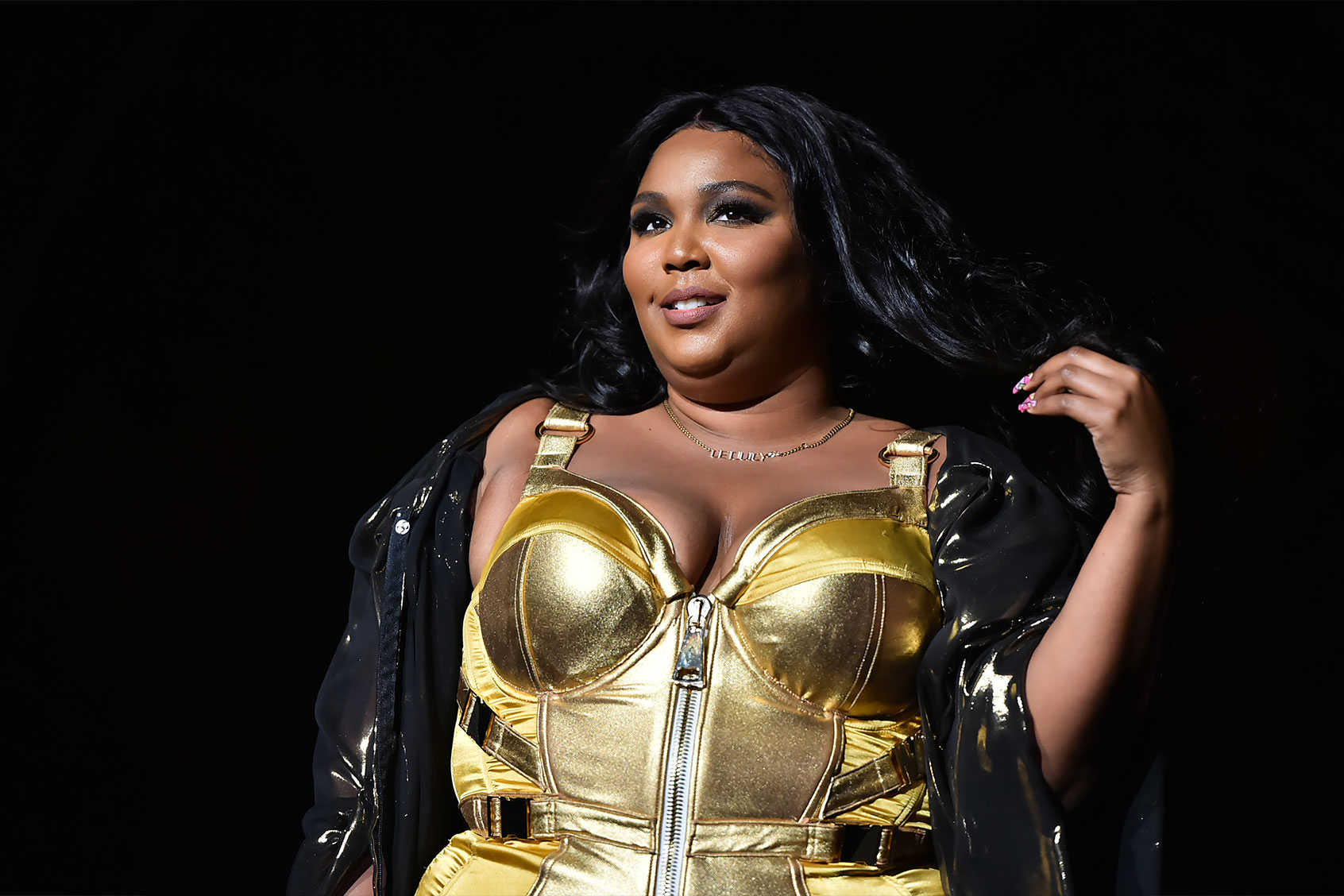
From Lizzo to Beyoncé, why does harmful language for disability persist?

Disability pride month is over. You probably didn’t even know it happened. You didn’t go to any parades (there were no parades). You didn’t buy any merch or notice any ads with brand sponsorship (there were no brand tie-ins, no companies proud to align themselves with the struggle for disability justice or pretend to for profit). And at the very end of the month came the disappointing news that yet another beloved musician had dropped a song with an ableist slur.

This time, it was Beyoncé.   

On July 29, Beyoncé released the album “Renaissance.” Intended as the first part of a trilogy, it’s also her first studio release since the groundbreaking “Lemonade” in 2016. While the internet and critics went wild, not all the responses were positive. The song “Heated,” co-written by Beyoncé and Drake, among others, included a lyric with the word “spaz,” an outdated word many find harmful. 

The word originates from spastic diplegia, a type of cerebral palsy: a group of disorders that impact a person’s movement, posture and balance. But it’s often used as a slur or taunt. It’s also the exact same word Lizzo included in the original lyrics of her single “Grrrls,” released just months ago. In both cases, the word was used as shorthand for a loss of control. 

Like Lizzo, Beyoncé listened and swiftly responded to criticism of the lyric. In Lizzo’s case, mere days after the single’s release, she changed the lyrics, re-recorded the song and launched the new version on her YouTube channel (and also issued a public statement). 

https://www.instagram.com/p/Cew0HrlPhEq/

Meanwhile, Beyoncé announced through her publicist that her lyric would also be changed, though the new version has yet to surface. “The word, not used intentionally in a harmful way, will be replaced,” her representative told NPR.

More nuanced aspects of the criticism of of Beyoncé’s and Lizzo’s lyrics include the fact that both artists are Black women, and the conversation should have been led by disabled Black women. Overwhelmingly, it was not. A harsher standard is applied to Black artists than to white artists, and some fear the quick changes that both Lizzo and Beyoncé made won’t be enough to satisfy condemnation. Neither did many critics acknowledge the different history that the word in question may have had in the Black community.  

Why does harmful language for disability persist, even among informed people such as Lizzo, an advocate for body positivity? What are ableist words and phrases, and why are they bad? 

Why does harmful language for disability persist, even among informed people such as Lizzo, an advocate for body positivity?

It’s just words. Stop being so sensitive. Yet the “just words” of ableism — the discrimination and prejudice against people with disabilities — are actively harmful. They link disabilities with negative qualities. Saying someone is “tone-deaf” or that something “falls upon deaf ears” ascribes being inattentive, distracted and willfully ignorant to deaf people. “Turning a blind eye to” implies that blind people pay no attention. How would you feel if the way your body is or works had a constant association with bad things? 

Part of the problem with ableist language is that it dehumanizes. If you’ve often used terms that are degrading for disabled people, when you meet those people you’re less likely to view them as human, as anything more than a slur. This is a glaring issue when the rate of violent crimes against people with disabilities is nearly four times higher than the rate of violent crimes against non-disabled people. More than 80% of disabled women have been sexually assaulted.

Across all age groups and education levels, disabled people are much less likely to be employed than non-disabled people, according to the Bureau of Labor Statistics. Disabled people live in poverty at more than double the rate of the non-disabled population. It’s “just words,” but how we talk about people contributes to our comfort with their status in society as less-than. 

If something is falling upon my (deaf) ears, I’m laser-tuned into it.

Ableist terms aren’t only outdated but also woefully incorrect. As someone who’s partially deaf, I pay more attention, not less. I have to: I read lips in order to communicate, and that isn’t an easy skill nor something you can do without concentration. So, “falling upon deaf ears” means the opposite of what you might think it does. If something is falling upon my (deaf) ears, I’m laser-tuned into it. Many of my non-disabled friends call me the best listener they’ve ever known. As writer Hannah Diviney tweeted at Lizzo, Diviney’s cerebral palsy means “unending painful tightness in my legs . . . ‘Spaz’ doesn’t mean freaked out.”

Ableist words aren’t precise words. Rather than using exact and often better definitions, they fall back upon stereotypes of disability. The first word isn’t always the best word, and “easy” doesn’t necessarily mean “good.” Take the derogatory original lyric of the Black Eyed-Peas’ “Let’s Get It Started,” which was a slur, also in the original title, and which made less sense in the context of a song about partying without cares. In the same way that Beyoncé’s and Lizzo’s first lyrics didn’t actually mean “wild,” the oft-used “crazy” doesn’t mean “carefree.”

LizzoLizzo (Theo Wargo/Getty Images)Words matter and how they’re used can not only impact a person’s life but also improve a piece of art by thinking about it more deliberately. As Glamour pointed out, by Lizzo changing the ableist term to the lyric “Hold me back,” which flows naturally in the song, “there’s also a fair argument to be made that the new lyric is better even if the original line wasn’t offensive.” A chance to not be ableist is also a chance to be more conscious and creative, to get it more right. 

It’s frustrating that ableist words continue to escape attention at present more than other kinds of harmful words, including sexist and homophobic language. So many disability slurs are still in common usage — in the mouths of celebrities, in papers of record. Discouragingly, slurs for disability are often used in apologies, articles, speeches and tweets about other kinds of prejudice: Bette Midler apologizes for “tone-deaf” transphobic tweet; the New York Times apologizes for “tone-deaf” racist article. “Jimmy Kimmel’s lame apology for blackface” was part of the headline for a Los Angeles Times column published only in 2020.  


Want a daily wrap-up of all the news and commentary Salon has to offer? Subscribe to our morning newsletter, Crash Course.


The rest of that headline references what it “reveals about the comedy world,” but what ableist slurs reveal about us is that we still don’t care enough about disabled people to talk about them like people. With their swift corrective actions, Beyoncé and Lizzo are the outliers. It took the Black Eyed Peas a year to remove the slur from their song title and lyrics, which they have never talked about publicly. And then they won a Grammy Award for it.

A first move away from ableism doesn’t take much: educating yourself, thinking about what your words mean. Beyoncé and Lizzo are taking it. When will everyone else?

Girls run the world, but should we have to? What writing a novel taught me about emotional labor

My husband calls me The Boss. Like, if he’s asked to switch a shift at work, he’ll say, “I’ve gotta check with The Boss. We might have something on.” One might think that the freedom of not knowing your own calendar would be reserved for celebrities or high-powered businesspeople with personal assistants. But apparently, that list also includes my husband. And a lot of my friends’ husbands and boyfriends. 

I know I’m meant to see this as a good thing: that deferring to me as The Boss affords me the power or the control. But in a relationship, having that control also means bearing the burden of responsibility. It means being the one to remember everyone’s birthdays and buy them Christmas presents; the one to book doctor’s appointments, arrange the remortgage on the flat, and look into cheaper car insurance. It means writing “Research wills!” or “Get new passports!” at the top of your to-do list every week. And it means being the sole proprietor of the guilt that results when you inevitably never quite manage it all.

Quite frankly, I’d rather not be The Boss. It’s fucking exhausting. 

I was struck by how many women in particular had a history of partners — particularly male ones — who expected their person to “fix” them . . . Why do women so often find themselves in this situation?

Now, I do recognize what a privileged position this is to be in, especially compared to the way heterosexual marriage operated until quite recently. “Traditional” marriage of the 1950s sat women squarely in the backseat; we couldn’t even get a credit card without a cosign from our husbands until 1974. So, surely, one might argue that having the power now is a preferable dynamic, that as every superhero movie tells us, “With great power comes great responsibility”? Is it a gross overcorrection for centuries of misaligned gender norms? Or still, is it possible that it’s always been this way – that, to paraphrase the matriarch of “My Big Fat Greek Wedding,” women really are the neck of the marriage, turning the head any way it wants?

I’ll admit, I am partly responsible for this. I aspired to be Wonder Woman, to “have it all” and “do it all,” out of a desire for a weird kind of independence where I was winning if I didn’t ask for any help or admit I was overwhelmed. I have always taken pride in being organized and responsible, and it is hard to disentangle that from who I am regardless of my relationship status. But it’s a lonely position to be in, because being at the wheel requires you to sacrifice your autonomy for the sake of others: to be the one to pull an all-nighter, or lay awake worrying about whether the bills will get paid, or if you’re accruing enough in your pension, or if it’s your niece’s birthday this week or next week. (And who can you ask because she’s definitely seven and you should know her damn birthday by now?)

And I know I’m not alone. As it became clear during the pandemic, women have taken on a disproportionate amount of responsibility in their home and family lives. We have not only taken on the majority of childcare whilst working remotely, but we are more likely than men to be put on furlough, and more likely to lose our jobs. The PwC report “Women in Work 2021” found that women now spend 7.7 more hours per week on childcare, evidence of the way in which “COVID-19 has exacerbated the already unequal burden of unpaid care and domestic work shouldered by women.” What’s more, experts are fearful that the pandemic will also adversely affect progress towards achieving pay parity between genders. 

This is, of course, not to say that men contribute nothing to their relationships. My husband is incredibly capable and was incredibly capable before I met him; I could tell you hundreds of great things about him and my friends’ partners. Nor is this to say that this imbalance of responsibility always run female to male — the contrary is definitely true too, especially when taking into account same-sex relationships or relationships in which one or more partners identify as non-binary. But the more I spoke candidly with my friends about their relationships and began to reflect on my own relationship history, I was struck by how many women in particular had a history of partners — particularly male ones — who expected their person to “fix” them. To be a bright-eyed manic pixie dream girl hanging onto their every word whilst they waxed poetic about The Smiths and grappled with the very serious business of being a teenage boy and, later, of being grown men. Why do women so often find themselves in this situation?

The seeming universality of this experience was weighing on me as I started writing my novel, “The Fixer Upper.” It centers on a 30-something woman who gives more energy to her relationships than to her own life and – seeing how her past partners benefited from their time together – starts a business supporting women by “fixing up” their partners and shouldering that emotional labor on their behalf. I knew initially what this (entirely too familiar) experience might look like for people dating in their 20s and 30s; I didn’t know the “how” or the “why” of it all just yet. But as I worked through Aly’s story, the rationale behind both her experiences and my own habits became more clear.

It took writing a character so much like myself into existence to see the ways in which my approach to relationships was unsustainable and force me to prioritize myself more.

Women are socialized to believe that selflessness is the only way to ensure you are loved. That you are needed first, and then appreciated, and then, if you performed all your duties appropriately, you might be lucky enough to deserve love. It’s certainly true of how I’ve operated and, unfortunately, it has stuck with me for most of my life: from the friends I never wanted to say “no” to, for fear of letting them down; to the ex-boyfriend who insisted we rent an expensive apartment together in London because his mental health couldn’t cope with going home, even though I had to work two jobs to afford it (and I could have happily lived at home); or to the gaggle of male friends throughout my life who wanted a motherly figure to stroke their heads and tell them they were smart and lovely and misunderstood. People who are immeasurably selfless in relationships aren’t so solely out of the goodness of their hearts: they are doing so because they have an unbridled and unfulfilled desire to be loved.

That can be a hard pill to swallow, and an even harder habit to break. Even now, in a loving, committed relationship, I’m aware of how being socialized to crave love has affected our dynamic.

And adding children into the equation – if you choose to do so – only exacerbates the situation. Case in point: for most of my life, the only thing I didn’t sacrifice was my writing time. Writing is how I make my living, but it is also my creative outlet and my catharsis, and so it became my one, immovable boundary. But then I had a baby boy and, suddenly, a new man came into my life, whose needs demanded round the clock that I give up my bodily autonomy, my sleep schedule, and my understanding of whoever the hell I was before he came into the world. His arrival brought an entirely new wave of responsibilities to our home life – from vaccinations, baby groups, nursery viewings, developmental milestones, playdates – responsibilities that I now take on one-handed.


Want a daily wrap-up of all the news and commentary Salon has to offer? Subscribe to our morning newsletter, Crash Course.


Parenting, of course, necessitates this kind of sacrifice in a way that romantic relationships do not. Yet as I began negotiating the diminished parameters of autonomy that come with new motherhood, it was the experience of writing a novel about the unequal division of emotional labor like “The Fixer Upper” that made me even more desperate to carve out even the tiniest space in my life where I was still “me.” Where the caretaking and the organizing and “fixing” everyone’s problems were not my defining traits. Ironically, it took writing a character so much like myself into existence to see the ways in which my approach to relationships was unsustainable and force me to prioritize myself more.

Many women aspire to the idea that we can “have it all.” We’re told we can be entrepreneurs and writers and mothers and students and wives and everything else. And not only that we can, but we should, we must. But I worry that we feel like we need to “have it all” at once: that as a generation of would-be Wonder Women, we are constantly trying to show how capable we are and, as a result, constantly feel like we’re failing. And we’re afraid to be honest about it, because while we work so hard to hold everything and everyone together, we give so much of ourselves to others in the process that we fall apart at the seams. 

I don’t really have the answer, because when you’re spinning all the plates, simply letting them smash doesn’t feel like an option. But I know I’m going to go back to ring fencing that tiny portion of time for me, so that I don’t have to write books one-handed, and so that when my son grows up he doesn’t default to relying on a partner for everything.

I’m going to ask for a demotion from being The Boss, because I don’t want to fix anyone or anything anymore. I just want to be one of two people in a boat, each with an oar, paddling in the same direction.


Children of Capitol rioter with longest Jan. 6 sentence say Trump deserves worse: “Life in prison”

The children of Jan 6. Capitol rioter Guy Reffitt said that former president Donald Trump deserves jail time after their father was convicted of acts of domestic terrorism.

Reffitt’s two daughters appeared outside the courthouse with their mother on Monday after a federal judge ruled that Reffitt would receive seven years behind bars, the longest sentence given to a Capitol rioter so far.

“To mark my dad as this horrible person, and then having him prosecuted like this, when somebody is maybe even able to get elected again? Doesn’t seem right to me,” Sarah Reffitt told reporters.

“Trump deserves life in prison if my father is in prison for this long,” her sister Peyton Reffitt added.

During the trial, the prosecution told the judge that in addition to bringing a weapon to the Capitol, Reffitt had told protests that he planned to drag Pelosi out of the Capitol by her ankles.

Reffitt is the first rioter to be convicted at trial for his part in the insurrection, which explains why his sentence is longer than other Jan. 6 rioters who accepted a plea deal when they were first accused. Now, over 884 people have been charged with efforts to overturn the results of the 2020 election at the Capitol on Jan. 6.

The conviction has torn apart Reffitt’s family.

After Jan. 6, Reffitt was reported to the FBI by his own teenage son, 18-year-old Jackson Reffitt who witnessed his father’s political radicalization after subscribing to the far-right ideology of the Three Percenters, a group that claims only 3% of American colonists fought against the British during the American Revolution.

When Guy Reffitt returned home to Texas after the insurrection, he pressured his children to stay quiet about his involvement. Reffitt told his children “If you turn me in, you’re a traitor, and you know what happens to traitors…Traitors get shot,” according to an affidavit. Despite the threats, Jackson Reffitt contacted the authorities.

Appearing on CNN’s “New Day,” Jackson Reffitt said that while he agrees that his father should “absolutely” have to serve time in jail, he thinks Trump is partially to blame for his father’s actions.

“My dad was used as a puppet, and thousands of families have been. Whether you agree with that, it’s a fact at this point,” he said. “It is disgusting to see that someone with practically money and social power can just get away with manipulating thousands of people just for whatever reason and have no outcome.”

The sentiment articulated by Reffitt’s children reflect the efforts of the Jan. 6 committee to demonstrate Trump’s culpability in directly inciting the insurrection.

While no president has been prosecuted for a crime that took place while they were in office, some legal experts speculate that Trump could be tried in court for attempting to obstruct a Congressional proceeding.

Curtains, blinds or both? Here’s how to pick window treatments

If there’s one thing to remember when outfitting a room, it isn’t that you need a cozy sofa and an appropriately-sized area rug. You also don’t have to keep reminding yourself to add a variety of light sources and verdant plants. These important details aren’t necessarily going to slip your mind, but this sole component might: Choosing the right window treatments.

“We ask a lot from our windows,” says Nicholas Potts, an architect based in Washington, D.C. “There are times when lighting has to be controlled in certain ways, and other times when treatments are unnecessary.”

Interior designer Alvin Wayne agrees. “Window treatments aren’t created equally,” he adds. “But generally, you want to be consistent when it comes to window covering — pick one length in a room and stick with it.” After making so many other more attention-grabbing choices to pull a space together, it’s common to let the intricacies around window treatments fall by the wayside. But don’t rush through this decision, since the right ones can complement and enhance your design while also providing necessary function.

Here are some tips to consider as you rightfully weigh different window treatments for your home, according to Potts and Wayne. Keep their advice top of mind, so when this is a detail to consider, you’ll know what to do.

1. First, Decide How Much Light You Want

If we all could have a say in the matter, then there’s a good chance that every window in every home would be perfectly placed to admire the view and let in an ideal amount of light. But since plenty of us are not in this enviable position, then Potts says that the next best thing is working well with what you’ve got. First, determine how much light the window provides and if that’s either too much or too little for the space.

“In bedrooms, the biggest contender is its general orientation: a south- or east-facing room is going to need a heavier treatment, particularly if the occupants like to sleep in,” he says. “While in a bathroom, there’s little need to screen out light but usually a need to screen out views. So it’s an opportunity to look at translucent materials or even films, things that won’t cause mold.”

If you’re in need of some privacy during the day but want to let light in, opt for a semi sheer white curtain. And if you want a bit more privacy at night or light-blocking during the day, you can add another, weightier drape as well, like above.

https://www.instagram.com/p/CPyis6uHsLU/

2. Next, check window placement

From there, take note of any architectural features that could use the right window treatment as a clever sidekick. “Since I’m almost always doing something with the molding around windows when I’m working in a space, I’m not usually inclined to hide it with a bunch of layers of fabric,” Potts says, recommending roller shades for this instance. And don’t worry if there isn’t anything decorative to potentially disguise. That just means that your window likely needs a fabric to help it stand out.

3. Keep it consistent

“My general philosophy on window treatments is that less is more,” Potts says. When choosing colors and textures, he likes to go with materials that “harmonize” with the other pieces in the room — and patterns that tend to be on a smaller scale. Wayne echoes this opinion, noting that choosing complementary and neutral colors is best. “In a living and dining room, you can’t go wrong with cotton or linen,” Wayne adds. “For a bathroom and kitchen, it’s a good idea to go with wooden blinds or roman shades.” As you choose the weight of a material, look around to see if any artwork or furniture could be altered by too much sun and adjust accordingly.

https://www.instagram.com/p/CXJiW8hrVv9/

Above, the double Roman shades in this office nook are both tidy (because they match) and whimsical (because of their shape).

4. Or, use windows as a statement piece

Potts does note that there are exceptions to this minimalistic take. For one instance, a stark room may need a textured window treatment to get some much-needed contrast. And for another, a bedroom may need some stylish help in resisting the morning sun. “Plush fabrics can be a unique way of doing a blackout shade,” he says. “I just did a project with velvet roller shades in a bedroom, in the same color as the walls, and they’re amazing at totally screening out the exterior environment while still feeling luxurious.”

5. Be sure to size things just right

When it comes to hanging window treatments correctly, Wayne and Potts also agree that doing so makes a big difference in creating the desired look. “An inset shade should just fit the frame,” Potts says. “Roller and roman shades should never be mounted to the outside of the window.” Drapes, since they’re used so often, come with equally easy-to-follow advice. “Your drapes should always kiss the floor,” Wayne says. And they should be hung to span the full length of the wall in the process. Ensuring that you take the extra step to find the proper size treatment will make your home look more custom, put together, and well thought out.

https://www.instagram.com/p/COlsEkZnmPR/

These gauzy drapes above span the entire width of the French doors, and hang from the ceiling to the floor, elongating the windows and making the space feel larger.

6. Opt to skip the treatment altogether

Now for a detail that may be surprising: “Window treatments aren’t always obligatory,” Potts says. He makes this call particularly for kitchens, which have panes that can usually handle going bare.

“The kitchen is one room where overlighting isn’t typically a problem, and it’s also a room that’s not sensitive to privacy,” he says. “I always recommend to my clients that they try things out without window treatments in their kitchens, and nobody has ever come back asking for them.”

https://www.instagram.com/p/CXBYwozJPyI/

Since there are so many different types of windows in the above room, skipping treatments altogether keeps the room feeling consistent, as well as lets the unique window shapes take center stage.

The classic decorating trick that’s making a comeback

When it comes to quick ways to completely make over a room — with no remodeling involved — wallpaper easily rises to the top of my list. It’s a transformation you can accomplish in a weekend, and oftentimes, it doesn’t even require professional installation. With the range of colors and patterns out there, it’s a great way to bring dimension, layers, and interest to a space.

While the earliest wallpapers (or painted decorative papers) date back to China, not too long after paper itself was invented, its extension, wallpaper borders, are relatively more recent, originating in the 1700s. If you’re unfamiliar with the use of wallpaper borders, they’re essentially thin strips of wallpaper meant to be used as accents instead of complete wall applications. They are typically horizontally oriented and measure between two to eight inches high. Their popularity has ebbed and flowed over time, but they’ve made a marked comeback — and are looking fresher, more modern, and less fussy than their predecessors.

“It’s definitely a case of something old made new again,” says Aimee Lagos, co-owner of Hygge & West. “Borders have been around forever, although they had largely fallen out of fashion. With this comeback, we’re seeing them being used in new ways. In the past, borders were often paired with coordinated wallpaper and applied to the wall either on top of the wallpaper as an accent stripe or as a stopping point for the wallpaper. They’re now being used to accent architectural elements such as windows, doors, molding, or ceiling beams — and more often than not without wallpaper.”

Elizabeth Rees, founder of Chasing Paper, has seen wallpaper borders rise in popularity right alongside the Grandmillennial and Coastal Grandmother trends. “Borders can be used in the same way that wainscoting or board and batten is used — to create separation on a wall while adding texture and depth to a space,” she notes. Rees adds that one big trend is to partner wallpaper borders with existing wallpaper to create a bold patterned effect.

https://www.instagram.com/p/CcxcHSkIxSD/

“Wallpaper borders can really help create a sense of architecture in a space where none really exists,” says Cristina Buckley, Design Director of Schumacher. “It is a rather easy way to frame a space and highlight architectural details of a room.”

One big benefit of wallpaper borders is that they’re often budget-friendly. Instead of covering an entire wall in wallpaper, you can choose to highlight the area using borders instead. Less square footage equals less cost.

“Plus, wallpaper borders are more DIY-friendly, so there’s no need to pay for a professional installation,” Christiana Coop, co-founder of Hygge & West, adds.

With modern patterns trending in greens, yellows, and blues, as Coop points out, wallpaper borders are an effective way to bring tons of personality to a space. Read on to learn all the creative ways you can weave wallpaper borders into your own home.

https://www.instagram.com/p/Cdp-nDXq765/

6 ways to use wallpaper borders

1. Use it on a wallpaper-free wall

This tends to be the most common use of wallpaper borders — to punch up a plain, painted wall. “Traditionally, wallpaper borders were used where a wall meets the ceiling to create height in a room, and add some color and detail without having to cover entire walls,” Buckley says. It’s a trick that’s tried-and-true and still used today.

2. Mix and match a border with wallpaper

If you already have wallpaper on a wall, wallpaper borders can help create some head-turning visual play, something that’s ideal if you’re a maximalist who isn’t afraid of pattern mixing. Coop recommends selecting a border and contrasting wallpaper in the same color family. “After installing wallpaper on the walls, you’d use the borders to trim the baseboard, windows, doorframe, and/or ceiling,” she says. “It also works equally well to line a half wall wallpapered above wainscoting.”

3. Emphasize a ceiling

https://www.instagram.com/p/CbfvMLxuMOD/

While you can certainly turn to wallpaper borders to make a room seem taller, installing them right along the ceiling will have them act as a decorative accent to make a ceiling stand out even more. Coop says, “If you have wood paneling on a ceiling, we recommend applying borders to those to highlight that architectural detail.” You can also utilize wallpaper borders to accentuate a bold, painted ceiling.

4. Create stripes or another pattern

Buckley says that one fresh way to use borders is hang them vertically on a wall “to create a stripe effect.” She also recommends going a contemporary route and hanging them in a square or rectangle to mimic a picture frame, something that will distinctively show off any artwork. The design director also suggests applying borders to a wall in a trellis or grid pattern “to create an especially unique focal point.”

5. Make a door frame stand 0ut

Tired of the same-old, same-old door frame? Coop recommends applying wallpaper borders to the inside of a door frame “for a surprise pop of pattern upon opening.” If this approach doesn’t appeal to you, keep in mind that you can use wallpaper borders to frame the outside of a door frame as well.

https://www.instagram.com/p/COH20QAggA5/

6. Layer borders

If you’re feeling particularly brave, you can choose to layer several wallpaper borders on top of one another. While doing this over existing wallpaper might look a tad busy, on a plain wall, this is the ultimate way to experiment with pattern mixing. “Our collection features a complimentary color palette, so you can create a more drama by stacking several borders on top of one another,” Lagos says.

Buckley says that if pattern-on-pattern visuals appeal to you, you can select a densely patterned border, such as a leopard print, and pair it with an art deco design, acting as an “unexpected accent to give an interior a real punch.”

Taco Bell is bringing back the Mexican Pizza — and this time it’s finally here to stay

Taco Bell is bringing back the Mexican Pizza — and this time it’s finally here to stay.

In 2020, the cult-favorite order was pulled from the fast-food chain’s menu amid the ongoing COVID-19 pandemic. Following fan outcry, the Mexican Pizza made its first attempt at a comeback earlier this year. Demand, however, quickly outpaced supply, prompting the item to be yanked from stores within weeks of its highly-anticipated return. 

“Weeks after bringing back the beloved item, Taco Bell said it’s temporarily removing Mexican Pizza from its menu until the fall because of high demand,” USA Today’s Brett Molina wrote on May 31. “Taco Bell cited one restaurant in California which sold more than 1,000 Mexican Pizzas in one day, and an order from a customer which included 180 Mexican Pizzas.”

Now, the Mexican Pizza has a scheduled return date, and this time it should be a truly permanent addition to the menu. 

“It’s going to be relaunched mid-September, and it’s going to be a permanent item,” Taco Bell CEO Mark King confirmed to Fortune. “I had more feedback — hate mail! — over the removal of Mexican pizza [than any other time].”

The Mexican Pizza has quite the history, as true fans of the disappearing menu item know. The product, which was first introduced as the “Pizzazz Pizza” back in 1985, was previously removed from Taco Bell’s menu in 2020. At that time, the company struggled to prepare the menu item during the pandemic, which took a toll on its service workers.

After more than 171,000 fans signed a petition urging the company to bring back the Mexican Pizza, it returned in mid-May 2022. Sadly, the hype was short-lived, as the pizza sold out only a few weeks later due to unexpected supply shortages.

“What we learned is that one of the keys to our magic is that people really love individual items,” King also told Fortune. “So now for us it’s, ‘What other magical items have we removed that we can relaunch in a big way to capture people’s interest or imagination?'”


Want more great food writing and recipes? Subscribe to Salon Food’s newsletter, The Bite.


Alongside its great flavors and affordability, the Mexican Pizza is revered for its “inherent customizability,” Salon Food’s Ashlie D. Stevens wrote in an April article. The pizza, which includes two layers of tostadas generously filled with seasoned ground beef and beans and topped with melted cheese and tomatoes, can also be made into a vegan- or vegetarian-friendly snack by omitting the meat and/or the cheese.

Among the Mexican Pizza’s celebrity fans are Dolly Parton and Doja Cat, who was the first to reveal its initial comeback during a weekend set at Coachella. Both Grammy Award winners are attached to “Mexican Pizza: The Musical,” which was previously scheduled to premiere on May 26.  

If you’re looking to satisfy your Mexican Pizza cravings before summer ends, check out our copycat recipe to learn how to make your own version at home. To start, fry tortillas in a small skillet over medium-high heat until they’re golden in color and slightly crisp. Next, brown half a pound of ground beef and season it with your favorite taco spices. Then add refried beans and finish the assembly with enchilada sauce, cheese, chopped tomatoes, scallions and sour cream.

On election eve, Arizona’s GOP attorney general debunks Trump’s Big Lie

Arizona Attorney General Mark Brnovich, a Republican, found no evidence of widespread voter fraud in Maricopa County’s 2020 election results while noting “serious vulnerabilities” in the state’s voting procedures.

The apparent revelation was detailed in an April report that followed a six-month state investigation. Yet on Monday, one day ahead of primary elections in the state, Brnovich, who is mounting a bid for Senate, was forced to once again debunk election lies propagated by Republican lawmakers in the state.

“Our agents investigated all individuals that Cyber Ninjas reported as dead, and many were very surprised to learn they were allegedly deceased,” Brnovich wrote in his letter to Arizona Senate President Karen Fann. Brnovich explained that “only one of the 282 individuals on the list was deceased at the time of the election.”

The attorney general already acknowledged that his office found no substantive evidence of fraud in the county’s election. “There is no evidence, there are no facts that would lead anyone to believe that the election results will change,” he explained in April. 

Nevertheless, Fann and Arizona Republicans demanded that the attorney general answer “some tough questions from voters and lawmakers who had grave concerns over how the 2020 general election was conducted in Arizona.”

Brnovich has spent much of the year trying to placate aggrieved Trump voters without partaking in election denialism.

Investigators with his office’s Election Integrity Unit claimed that county officials in the state’s largest county “lacked adequate methods to verify voter signatures on early ballots and found holes in its chain of custody for ballots deposited in drop boxes,” according to The Arizona Republic

“We have reached the conclusion that the 2020 election in Maricopa County revealed serious vulnerabilities that must be addressed and raises questions about the 2020 election in Arizona,” the attorney general wrote in his report.

In one instance, Brnovich expressed concern about the time it took for ballot handlers to verify voter signatures: 4.6 seconds. But according to The Arizona Republic, the attorney general did not explain how he arrived at that figure, or for that matter, why the number should be higher. In addition, Brnovich expressed the apparent need to expand the powers of the auditor general and issue heightened penalties for election crimes. 


Want a daily wrap-up of all the news and commentary Salon has to offer? Subscribe to our morning newsletter, Crash Course.


Numerous officials disputed the attorney general’s report that the state’s election system was riddled with vulnerabilities. 

In a rebuttal statement, both Bill Gates, chair of the Maricopa County Board of Supervisors, and County Recorder Stephen Richer argued that Brnovich found “no new evidence, nothing that would have changed the results, and nothing that should lead people to question the overall health of our electoral system.”

“Unfortunately,” they added, “the Attorney General made no mention of the many areas of the election process that his investigators reviewed and found satisfactory, including the preservation of election files and the absence of internet connectivity.”

Arizona Secretary of State Katie Hobbs’ office also joined the chorus, saying that the attorney general “has wasted thousands of hours of time” on “conspiracies.” 

“But instead of simply following the evidence,” she said, “he speculates. Instead of clarity, he provides conjecture.”

Last year, the AP conducted a sweeping analysis of every potential case of voter fraud in the 2020 election and came up with fewer than 200.

COVID-positive Biden experiences a Paxlovid “rebound.” Doctors still aren’t sure why they happen

President Joe Biden isn’t in the clear with COVID just yet. After testing negative for COVID-19 last week, press secretary Karine Jean-Pierre said in a memo on Monday that Biden’s latest antigen test was still positive. That means that Biden tested positive — again — after a period of testing negative. While President Biden has reportedly not experienced a re-emergence of symptoms, he is still presumed to be contagious and will be working remotely.

The unusual results pattern doesn’t mean that Biden experiencing an immediate reinfection. Rather, Biden has become yet another victims of what is sometimes called a “Paxlovid rebound.”

Biden certainly isn’t the only one. The neologism entered popular discourse because it is a common thing that happens after taking Paxlovid: A period of vigor, in which the patient tests negative and/or sees a drastic reduction in COVID symptoms; followed by a relapse in which they test positive once again. 

Though the phenomenon is well-known, researchers, public health experts and infectious disease doctors are puzzled as to why it’s happening — though they do say it might not be a unique feature of Paxlovid.

“I think that rebound probably occurs in people who don’t get treated with antivirals, but it seems to be more common in people who have,” Dr. Michael Charness, Chief of Staff of the Veterans Administration Medical Center in Boston who co-authored a preprint paper on rebound cases, told Salon. “But the ‘why’ is still somewhat mysterious.”

As Salon has previously reported, Paxlovid is actually not one drug, but two generic medications — nirmatrelvir and ritonavir — that are packaged together. The Food and Drug Administration (FDA) granted emergency use authorization of Paxlovid in December 2021 for anyone ages 12 and older who weighs at least 88 pounds. The oral antiviral pills can be taken at home to help keep people who are high-risk for severe disease from getting so sick from COVID-19 that they need to be hospitalized. It has been said to be a game-changer COVID treatments, and it works by interfering with the way the virus processes proteins.

In one clinical trial conducted in unvaccinated individuals in the second half of 2021, the Pfizer-developed drug was found to lower the risk of hospitalization and death by 89 percent compared to a placebo group, without evident safety concerns. Unlike some cold and flu drugs used to treat COVID, Paxlovid is not an over-the-counter medication: you need a prescription from your physician to access it.

But the Paxlovid rebounds are mystifying doctors. In Pfizer’s clinical trials, 1 to 2 percent of people taking Paxlovid in Pfizer’s clinical trial saw a rebound case. A more recent study shows that it could be more common: in a study of 13,600 COVID patients, 6 percent of patients’ symptoms returned. There is also evidence that rebounds can occur without antiviral treatments. Indeed, in Pfizer’s clinical trials, 1% to 2% of patients who received a placebo experienced rebound symptoms.


Want more health and science stories in your inbox? Subscribe to Salon’s weekly newsletter The Vulgar Scientist.


“We’ve observed this in our own health care system, but I think what we believe also in what the literature seems to be suggesting is that people rebound more frequently when they’ve had antiviral treatment,” Charness told Salon. Charness noted that the trials took place when the delta variant was dominant, raising the question as to whether the omicron subvariants are playing a role.

Charness said there is one school of thought that posits that one’s immune system needs to have a “certain exposure to the virus” to ramp up an effective immune response.

“So some people have speculated that because the antivirals work so well and clear the virus initially, the immune system doesn’t get as good a look at it, as it might in a person who doesn’t get treated…. [so it takes] longer for the immune response to ramp up and for the virus to be eventually cleared.”

 “People who have rebound, even though they’re well outside the period for isolation, may be contagious again — and accordingly, the CDC has recommended that people restart their isolation clock if they experience a rebound.”

A separate study published in Clinical Infectious Diseases suggested rebound symptoms could have to do with an “insufficient” exposure to the drug.

“Our main concern was that the coronavirus might be developing resistance to Paxlovid, so to find that was not the case was a huge relief,” said author Aaron F. Carlin, MD, PhD, assistant professor at UC San Diego School of Medicine, in a press release. Rather, the researchers suspect that not enough of the drug was getting to the infected cells to stop the virus from replicating.

Still, this remains speculation. In Charness’ recent study, which has yet to be peer-reviewed, he and his colleagues looked into rebound cases and found that patients are still likely contagious when reinfection occurs, bringing to light one of the dangers of a rebound case. For example, in one case noted in the study, a 67-year-old man transmitted the coronavirus to a 6-month-old after spending nearly 30 minutes near the child.

“People who rebound, their viral loads can be quite high and there’s evidence now in the literature that you can culture [the] viruses from people who have rebound — and there are also suggestions that people can transmit during rebound,” Charness said. “People who have rebound, even though they’re well outside the period for isolation, may be contagious again — and accordingly, the CDC has recommended that people restart their isolation clock if they experience a rebound.”

This is likely why some people, including Biden, move from testing positive to negative to positive again.

Charness added that rebound cases don’t appear to be a significant risk to the patient themselves.

“For most individuals, it doesn’t appear that rebound poses a significant risk for hospitalization, or more severe consequences of COVID-19,” Charness said.

For 79-year-old Biden, who is considered high risk due to his age — this is good news.

Marjorie Taylor Greene pushes conspiracy theory on Al Qaeda leader’s death: “Is there proof?”

Rep. Marjorie Taylor Greene, R-Ga., used her congressional Twitter account to claim that Democrats engaged in a conspiracy to claim terrorist mastermind Ayman al-Zawahiri was killed to boost their midterm fortunes.

In a series of tweets on Tuesday, Greene suggested that Democrats were taking action because President Joe Biden had not gotten a boost from Russia’s war on Ukraine.

“November is coming and proxy war with Russia, killing more people and grinding Ukraine to a stump, is not as popular with voters as the admin thought it would be,” she opined. “The [White House] admin looks extremely weak & controlled by Zelensky and the Global World Order, but don’t be fooled.”

Greene said that Democrats “are not done with weapon sales and money laundering in the form of ‘humanitarian aid’ in Ukraine.”

She argued that there was a conspiracy to kill al-Zawahiri because Ukraine was “causing problems for weak Dems upcoming re-elections.”

“They even pivoted back to killing an old Al Qaeda terrorist so Biden could murmur his tough guy talk claiming he led the killing of Zawahiri,” the lawmaker wrote. “Biden should be impeached NOT taking credit!”

Greene said that there were many “good questions” about the killing.

“If we were in Afghanistan for so many years, why is it we just found out where Zawahiri is and finally killed him?” she asked. “What trade was made for that Intel?”

“Is there proof he was killed?” Greene continued. “It was recently reported he was sick and dying.”

Read the tweets below or at this link.

It’s time to give Black fathers the credit they deserve

Multiple recent cultural moments have thrust Black fatherhood into the American consciousness, in the process defying popular stereotypes of Black fathers. Recent celebrations of Black fathers include the movie “King Richard,” about Venus and Serena Williams‘ devoted father, the titular Richard; and the powerful eulogy Oprah Winfrey shared for her father, in which she highlighted his empathy and compassion. These narratives abut against mischaracterizations of Black fathers as absent or uninvolved in their children’s lives.

Although they are routinely overlooked and under-credited in our society, Black fathers have grand plans for their babies. They want to see their children rise to levels they themselves long dreamed of. They want their children to be happy and successful. They want their children to outlive them. Indeed, Richard Williams shared that he wrote a 78-page blueprint that would lead to the development of the star athletes we know today.  

From the birth of their children, Black fathers are deeply involved, and although we have a rich understanding of how mothers’ mental health impacts child development, we rarely make the connection between fathers’ mental health and children’s outcomes. For Black fathers, this connection is even less explored. But Black men continue to embrace their paternal roles despite significant challenges — and are often expected to make tough decisions in the best interests of their children and families.


Want more health and parenting stories in your inbox? Subscribe to Salon’s weekly newsletter The Vulgar Scientist.


Black fathers have long been mischaracterized as absent, uninvolved, and worse uninterested in the lives of their children and families. In popular culture the trope of the absent Black dad, or the family system without the benefit of the presence of the Black dad, is pervasive. The science, however, shows that nothing could be further from the truth. Even among fathers who do not share residence with their children, non-resident, paternal involvement is high and increases as the child ages. There is none blind as they who will not see, and Black fathers are not invisible. They are present. They are involved. They are important to their children and families.

According to a CDC National Health Statistics Report, compared to White and Hispanic fathers, Black fathers remain more involved across a range of nurturing and involvement activities like sharing meals, bathing, diapering, dressing, and reading to their children.

Serena Williams has come to the defense of her father’s sometimes difficult decisions, in the context of their reality, and upheld the image of her father as a dad intent on creating the best opportunities for his daughters to excel and find success in their area of expertise. He also prepared them to deal with the challenges of living in a world that had proven hostile, unwelcoming, and unequal in its treatment of him. In a 2003 interview with Oprah Winfrey, Serena, referencing her success, says, “Our father doesn’t get enough credit.” Venus added “I’m proud of my dad… he is an unbelievable visionary — and I think Serena and I understood that even when we were small.”

Winfrey reflected on her dad, Vernon Winfrey, as “a bridge over troubled waters.” She remembered him as a man of “respect, character, honor, doing the right thing no matter who is looking…” Indeed, as his presence was for Winfrey, the impact of Black fathers can be truly revolutionary in the lives of Black children. Her dad’s legacy — as a barber, Councilman, and father — lives on in his remarkable daughter, Oprah Winfrey. She recently shone a much-needed light on Black fathers and Black fatherhood in her special, titled “OWN Spotlight: Honoring Our Kings, Celebrating Black Fatherhood.” The event highlighted well-known fathers like D.L. Hughley and Kevin Hart, while celebrating and honoring exceptional Black fathers from across the U.S.

According to a Centers for Disease Control and Prevention (CDC) National Health Statistics Report, compared to White and Hispanic fathers, Black fathers remain more involved across a range of nurturing and involvement activities like sharing meals, bathing, diapering, dressing, and reading to their children.

There are many benefits to this kind of paternal involvement, and these benefits include overall better outcomes (i.e., social, emotion and brain development), less toxic stress, fewer behavior problems, increased support and coping resources, and positive family norms.

Even fathers who do not live in the same home with their child can have this positive impact on child outcomes, providing additional opportunities for exploring and understanding self and environment, additional monitoring, expansion of the family support systems, and increasing family finances where possible.

Let’s change the public narrative about Black fathers and shine a light on the hard work they have been doing under the shadow of myth, innuendo, and straight-up mischaracterization. More men than ever before are defining their identity through their connection and commitment to their children. For instance, Black fathers in the Dad gang — an online social community working to upset the dominant narrative and make Black fatherhood more visible — have taken to social media, living the common, messy, cute, and exhilarating moments of their dad lives before the world. 

Most recently, Father’s Day and Juneteenth coincided for the second time in 50 years. For Black men, that meant a celebration of what it means to be both Black and a father in America. Like Mr. Richard Williams and Mr. Vernon Winfrey, Black fathers want only to see their children happy, thriving, and reaching their fullest potential. Black dads continue to protect their progeny from the historical and current inequities and prepare them for a world that dads work to make progressively better.

“Alarming pattern”: Lawmakers call for probe into right-wing think tank that claims it’s a “church”

ProPublica is a Pulitzer Prize-winning investigative newsroom. Sign up for The Big Story newsletter to receive stories like this one in your inbox.

Forty members of Congress on Monday asked the IRS and the Treasury to investigate what the lawmakers termed an “alarming pattern” of right-wing advocacy groups registering with the tax agency as churches, a move that allows the organizations to shield themselves from some financial reporting requirements and makes it easier to avoid audits.

Reps. Jared Huffman, D-Calif., and Suzan DelBene, D-Wash., raised transparency concerns in a letter to the heads of both agencies following a ProPublica story about the Family Research Council, a right-wing Christian think tank based in Washington, D.C., getting reclassified as a church. Thirty-eight other lawmakers, including Reps. Adam Schiff, D-Calif., Debbie Wasserman Schultz, D-Fla., Rashida Tlaib, D-Mich., and Jamie Raskin, D-Md., signed onto the letter.

“FRC is one example of an alarming pattern in the last decade — right-wing advocacy groups self-identifying as ‘churches’ and applying for and receiving church status,” the representatives wrote, noting the organization’s policy work supporting the overturning of Roe v. Wade and its advocacy for legislation seeking to ban gender-affirming surgery.

“Tax-exempt organizations should not be exploiting tax laws applicable to churches to avoid public accountability and the IRS’s examination of their activities,” they wrote.

The Family Research Council did not respond to requests for comment. The IRS told ProPublica that it does not comment on congressional correspondence.

The FRC’s website describes the organization as “a nonprofit research and educational organization dedicated to articulating and advancing a family-centered philosophy of public life,” noting that it provides “policy research and analysis for the legislative, executive, and judicial branches of the federal government.”

The FRC sought and received reclassification from a standard tax-exempt charity to an “association of churches” in 2020.

In its application for church status, the organization said it met 11 of the 14 characteristics that the IRS uses to determine whether an organization is a church, including an established place of worship — a chapel in the organization’s Washington office building, at which it said it holds services attended by more than 65 people. (Someone who answered the phone at the office said the group doesn’t offer church services.) The organization said its association comprises nearly 40,000 “partner churches” that must affirm a statement of faith to join; it did not offer the names of those partners on its form to the IRS or provide them to ProPublica.

The representatives’ letter asks the IRS to review the FRC’s status change and to examine its review process for organizations similarly seeking to switch their status to become a church or association of churches.

“It’s disturbing that a letter like this is even necessary,” Huffman said. “Unfortunately our IRS has been so worn down and beaten up by the right wing that they have essentially ceased all scrutiny of organizations that self-report as churches.”

The IRS classifies churches and associations of churches as tax-exempt charitable organizations, meaning that they do not have to pay federal taxes and that donors can deduct contributions from their own taxes. However, churches are exempt from submitting Form 990, the annual financial disclosure that nonprofit organizations use to list board members, key staffer salaries, large payments to independent contractors and grants given by the organization.

And unlike for other tax-exempt organizations, a high-level Treasury official must sign off on any audit of a church.

“We understand the importance of religious institutions to their congregants and believe that religious freedom is a cherished American value and constitutional right. We also believe that our tax code must be applied fairly and judiciously,” Huffman and DelBene wrote.

In their letter, the representatives asked for feedback from the IRS on whether it needs additional direction from Congress to enforce rules surrounding tax-exempt organizations and churches. Huffman said that he hopes to pursue legislative action if the IRS isn’t able to address these concerns, but that the letter is a first step.

“You need to start here — give the agency a chance to clean up its mess,” he said.

The GOP will never be the “Parents Party”: Republicans don’t think raising children is real work

There’s nothing Republicans love to do more than wax poetic about parenthood. Dip a toe into red state America and you’ll be bombarded with cloying bumper stickers and Facebook memes about how motherhood is the “toughest job in the world.” These sentiments aren’t sincere, however. They are mostly meant to reassure women who have been sidelined from paid employment that they don’t need that silly financial independence anyway. And in the last two years, things have grown worse as Republicans — in an attempt to justify book banning and “don’t say gay” laws — have tried to rebrand themselves as a “Parents Party” that supposedly stands up for exhausted folks just trying to care for families. 

Caring for and educating kids is hard work. But this sentimental claptrap from Republicans has always been empty noise. Now that Republicans have achieved their goal of banning abortion and making motherhood mandatory, the mask is slipping away. They are now letting loose with their true belief: Child-rearing is dumb and easy, not even really work at all. 

The Republican attitude towards child-rearing can be summed up as this: “If women do it, how hard can it be?” 

Republicans have absolutely no respect for the people who actually do the hard work of bringing up kids, both in and out of the home. Despite the employment of gender-neutral terms like “parenting,” the truth of the matter is child care and teaching are still largely relegated to the realm of “women’s work.” And there’s no number of saccharine slogans that will change the baseline conservatives’ assumption that women’s work doesn’t count as real work.

Thirteen is an “absolutely phenomenal” age to become a mother, according to Jana Pinson, an anti-choice activist who has been granted millions of dollars to run a “crisis pregnancy center” meant to strongarm reluctant women into giving birth. Pinson gushed in a piece published Sunday in the Washington Post about how barely post-pubescent kids should embrace motherhood. “I’ve seen a lot of 13-year-olds do phenomenal” as mothers, Pinson insisted. 

“It doesn’t have to be a negative thing,” she added, describing forced childbirth on middle school kids. 

Her comments soon went viral on social media, obviously due to the widespread horror at the deep immorality of anti-choicers. There is nothing, of course, “pro-life” about this sadistic desire to re-traumatize child rape victims by stripping away their childhoods or forcing young children into motherhood. But Pinson’s comment is also telling in another way. It serves as a reminder that conservatives don’t treat child-rearing as a serious responsibility. 


Want more Amanda Marcotte on politics? Subscribe to her newsletter Standing Room Only.


Thirteen-year-olds aren’t allowed to vote, drive, drink, or, in most cases, even attend high school. Hell, Republicans don’t believe kids that young are mature enough even to receive sex education or told the truth about racism in American history. More importantly, outside of some odd jobs and very limited part-time employment, 13-year-olds aren’t allowed to work for pay. They aren’t allowed to live independently of adult supervision. Partially, this is because we’re trying to protect kids from having to grow up too fast. But it’s also because our society recognizes that kids this young don’t possess the intellectual or emotional maturity to handle adult responsibilities. We don’t want 13-year-olds driving cars not just for their own safety, but for everyone’s safety. 

That’s why Republicans so often talk about forcing motherhood on women like it’s no bigger deal than asking them to pay a traffic ticket.

Yet Pinson believes that these children are fully capable of raising other children. She isn’t just some random weirdo, either, but a person with the full faith and credit of the entire GOP establishment. As the Post explains, due to huge infusions of cash from both GOP donors and the Republican-run Texas government, Pinson is building a “$10 million crisis pregnancy center,” complete with a thrift store and cafe, all to “attract female undergraduates” in hopes of pressuring them into premature motherhood. 

Pinson’s attitude belies the larger and truer belief about motherhood that lurks under the GOP’s sentimental exterior: It’s just child’s play, not real work. That’s why Republicans so often talk about forcing motherhood on women like it’s no bigger deal than asking them to pay a traffic ticket. They can’t imagine that being a mother is actually hard work, as their bumper stickers always say. 

That patronizing attitude isn’t just limited to the work of rearing children, either, but also applies to educating them.

Despite all of the political dramatics around education being staged by Republicans, underneath it all they truly don’t think of being a schoolteacher as a real job requiring real skills and training. That’s always been evident from the GOP attitude towards teachers’ unions, but it’s only gotten more pronounced in recent months. The hysterics about fictional “critical race theory” lessons in public schools, as well as their book banning push, provide Republicans even more cover to push their belief that being a schoolteacher is just glorified babysitting. (Although even babysitting is harder work than conservatives will admit.) 

Red states are now starting to get rid of the basic requirement that public school teachers have a college education. Under the guise of shoring up the teacher shortage, both Arizona and Florida have dropped the requirement that public school teachers need to graduate college before getting a license to teach. In Florida, having military experience is considered sufficient. Now Iowa’s Republican-controlled legislature is moving forward with a similar bill that would allow high school students to run daycare classrooms. The bill would also increase the limit on the number of kids allowed in a class, serving as yet another reminder that conservatives don’t think caring for children is real work. They can’t imagine that overstuffed classrooms are legitimately overwhelming. 


Want more Amanda Marcotte on politics? Subscribe to her newsletter Standing Room Only.


The Republican contempt for childcare and education has never been far from the surface. We see this in the relentless red state “work requirements” put on mothers to receive financial assistance. The push is based on the assumption that the children of lower-income women can simply be put away on a shelf while their mother is at work. Or in the words of Sen. Ron Johnson of Wisconsin, who recently dismissed families’ need for childcare at all: “I’ve never really felt it was society’s responsibility to take care of other people’s children.” 

No doubt, like many rich male Republicans, Johnson is able to largely ignore how grueling the daily work of child-rearing and education is. Likely, someone else did it for him, and mostly where he didn’t even have to see it. For rich male Republicans, children just show up when summoned, fed, groomed and taught to read as if by magic. The actual grunt work of turning children into functional adults has been concealed from such men by social structures that not only foist this work on women but guilt women into not bothering men with the details. It’s just more misogyny.

Red states are now starting to get rid of the basic requirement that public school teachers have a college education.

The Republican attitude towards child-rearing can be summed up as this: “If women do it, how hard can it be?” 

In reality, of course, bringing up children is hard work. It can’t be done by one adult by herself, much less by those who are still children themselves. Every child needs a staggering amount of attention and care in order to grow into a functional adult. Little kids aren’t houseplants or even cats, who can be left alone for hours without supervision. It does, no matter how much Republicans may scoff, take a village to raise a child.

No matter how much Republicans try to brand themselves as the “Parents Party,” this derision for the actual work of caring for and educating children tells the true story. Republicans have absolutely no respect for this crucial form of labor at all.