Spring Sale: Get 1 Year, Save 58%

The FDA proposed a new definition for the term “healthy,” dividing big food makers and nutritionists

Amid the U.S. Food and Drug Administration’s (FDA) proposal to update the definition of the nutrition claim “healthy,” several major food companies — including the nation’s biggest cereal makers, granola brands and packaged food manufacturers — are pushing back.

On September 28, 2022, the FDA announced their plan to change the label’s existing definition, which was established in 1994 and “has limits for total fat, saturated fat, cholesterol and sodium…” Under the current dietary guidelines, foods “must provide at least 10% of the Daily Value (DV) for one or more of the following nutrients: Vitamin A, Vitamin C, Calcium, Iron, Protein and Fiber.” The guidelines also prioritize “the importance of healthy dietary patterns” and the kinds of fats in the diet instead of “the total amount of fat consumed, and the amount of sodium and added sugars in the diet.”

The new definition will take into consideration current nutrition science, federal dietary guidance from the Dietary Guidelines for Americans, 2020-2025 and the updated nutrition facts label. It specifically emphasizes “nutrient-dense foods” that are from at least one of the food groups or subgroups (fruit, vegetables, grains, dairy and protein foods) recommended by the Dietary Guidelines for Americans. Under the proposed definition, raw fruits and vegetables would automatically be deemed “healthy” because of their nutritional benefits and “positive contribution to an overall healthy diet.” But high-sugar, low-fat products — which are currently considered “healthy” — would no longer be able to carry that label. 

That’s what many major food companies are continuing to take issue with. Prominent cereal, pasta, yogurt and processed foods companies claim the strict nutritional standards would wrongly categorize many popular foods as “bad,” even though they provide some micronutrients. Several companies also slammed the definition as “unconstitutional,” asserting it violates companies’ First Amendment rights.

In a February 16 comment on the federal agency’s proposal, Kellogg’s wrote that the new definition “automatically disqualifies entire categories of nutrient dense foods.” Similarly, KIND, the New York City-based snack food company, slammed the FDA’s proposed regulations on added sugars, saying they “created a barrier for fruit, vegetable, and protein food innovation” and would encourage companies to use artificial sweeteners.

“Criteria for use of ‘healthy’ should not be so restrictive that they allow only a very limited number of foods to qualify, because this could lead consumers to conclude that other nutrient dense food choices are ‘unhealthy,'” the company added.

General Mills — the major food processing company behind brands like Annie’s, Betty Crocker, Pillsbury, Yoplait, Chex, Cheerios, Choco Puffs, Cinnamon Toast Crunch, Raisin Nut Bran and more — complained about the legal consequences of the FDA’s “overly restrictive” rule:

“[T]he Proposed Rule precludes many objectively healthy products, including those promoted by the Dietary Guidelines, from engaging in truthful, non misleading commercial expression — and these overly restrictive boundaries for ‘healthy’ violate the First Amendment,” General Mills wrote, per CBS News.

Following suit was the Consumer Brands Association, which wrote that “consumers have a First Amendment right to receive truthful information about products and manufacturers have a First Amendment right to provide it to them.” The association — whose membership list includes Coca-Cola, PepsiCo, and the Campbell Soup Company — also estimated that 95% of foods currently on the market would not qualify for a “healthy” label under the FDA’s new requirements, according to CBS News.

Furthermore, some companies said the proposed limits would actually make foods less enjoyable, thus decreasing overall sales. Others said the limits would make foods less feasible for consumers, who are often drawn to affordable, easy-to-prepare and resourceful meals.

On the flip side, many nutritionists and food experts have supported the FDA’s new initiatives, saying they would improve consumer health and wellness. According to data from the Dietary Guidelines for America, more than 80% of people in the U.S. aren’t eating enough vegetables, fruit and dairy. More people are also consuming too much added sugars, saturated fat and sodium, which increases the risk of heart disease, cancer, and diabetes — the leading causes of death in the United States. 

“This new definition may disqualify foods that are nutrient-dense. But it will also disqualify foods that provide too many added sugars, sodium, and/or certain fats,” explained Lauren Manaker, a registered dietitian-nutritionist, certified lactation education-counselor and author. “So, certain items, like granola bars or cereals or even some yogurts, may provide many micronutrients, but they also provide high amounts of added sugars, which when consumed in large quantities, can be linked to unsavory health outcomes.”

She continued, “This new labeling doesn’t mean that a food that isn’t labeled as ‘healthy’ should be avoided. Depending on a person’s overall diet, a sugary yogurt or granola bar may fit in nicely, assuming the rest of their diet is relatively lower in added sugars.”

Although Manaker said she likes some aspects of the FDA’s changes, she hopes the new definition “doesn’t create more fear around eating certain foods that certainly can be a part of a balanced and nutritious diet.”


Want more great food writing and recipes? Subscribe to Salon Food’s newsletter, The Bite.


“While there are some aspects that may help people navigate their food choices, the overall concept of labeling foods as ‘healthy’ or not and making it so black and white may leave some people confused, especially since we eat in dietary patterns and we don’t live off of one individual food item,” Manaker added.

Reiterating her claim is Celine Beitchman​, the director of nutrition at the Institute of Culinary Education, who said the term “healthy” is just one of the many nutritional buzzwords that are featured on packages:

“They [The FDA] are doing something that I think makes sense on some level. But I don’t know if that will translate to meaningful outcomes for the average person, since the food environment is completely saturated with so many other confusing symbols and terminology around health,” Beitchman​ said. “You know, we’re in an era where there’s not much respect for expertise. And so, even that kind of level of labeling doesn’t necessarily get embraced by people.”

In addition to the proposed definition, the FDA is also determining a symbol that will appear on the front of food packages to represent the nutrition claim “healthy.” The claim coupled with the symbol would “act as a quick signal to empower” consumers and help them identify nutritious foods faster. 

For now, consumers can incorporate more vegetables, fruits and whole grains into their diet to boost their overall well-being. Dr. Susan Mayne, director of FDA’s Center for Food Safety and Applied Nutrition, also recommended consuming lower-fat dairy, protein foods and healthy oils — like olive and canola. 

“Try to eat and drink fewer foods and beverages high in saturated fat, sodium, or added sugars,” she added.

The FDA is currently reviewing feedback and public comments on the proposed rules. At this time, it’s uncertain when a final decision will be made.

Justice Department sues major polluter in Louisiana’s “Cancer Alley”

The Biden administration sued a chemical company operating in southeast Louisiana on Tuesday, compelling it to face up to the cancer risk generated by its toxic emissions, a move that activists have been demanding for years. Denka Performance Elastomer, a synthetic rubber manufacturing plant owned by a Japanese company of the same name, is located half a mile from an elementary school in St. John the Baptist Parish, where the air is laced with toxic chemicals emitted by dozens of different industrial facilities and more than 60 percent of residents are Black. The parish sits along the Mississippi River just north of New Orleans in the state’s main industrial corridor, a region commonly known as “Cancer Alley.” 

“This brings us hope,” said Mary Hampton, president of the local advocacy group Concerned Citizens of St. John, which was founded in 2016. “It’s been a long time coming. We need action now for our children and want this to be put in place immediately.”

Denka’s facility is the only one in the country that makes neoprene, a type of synthetic rubber used for wetsuits and mousepads, a process which releases the carcinogen chloroprene. The material was invented by scientists at Dupont, the American chemical giant that owns the complex where Denka operates, and that sold it the neoprene plant in 2015. In its complaint filed on Tuesday, the Justice Department also named Dupont as a party responsible for ensuring that the plant reduces its emissions of chloroprene, which has been linked to numerous cancers and diseases of the nervous, immune, and respiratory systems. 

In November 2021, EPA Administrator Michael Regan visited people living near the facility during his “Journey to Justice” tour, a survey of polluted communities across the south. It was part of the Biden administration’s effort to spotlight concerns of environmental justice, a term that refers to the disproportionate pollution borne by so many low income communities of color across the country. After the visit, Regan sent a letter to Denka urging executives to take steps to reduce the threat to those living in the surrounding towns of Laplace and Reserve. In particular, he expressed concern for the 300 students attending the nearby Fifth Ward Elementary School. On Tuesday, Regan said in a statement that the company had not “moved far enough or fast enough” on those requests. 

“When I visited Saint John the Baptist Parish during my first Journey to Justice tour, I pledged to the community that EPA would take strong action to protect the health and safety of families from harmful chloroprene pollution from the Denka facility,” Regan said. “This complaint filed against Denka delivers on that promise.”

The Justice Department’s complaint was made under Section 303 of the Clean Air Act, which provides the EPA with the authority to address conditions that present “an imminent and substantial endangerment” to the public’s health. The EPA knew about the threat Denka posed to residents of Reserve and Laplace as early as 2015. That year, the agency published data indicating that the risk of developing cancer from air pollution in the census tract closest to Denka was nearly 50 times the national average, a result of the plant’s chloroprene emissions.

Louisiana’s Department of Environmental Quality reached an agreement with Denka requiring the company to install pollution controls in 2017. But air monitors that the EPA set up around the facility continued to pick up concerning levels of the chemical. 

Environmental lawyers and residents of St. John have petitioned state and federal authorities to do more to tamp down Denka’s emissions for years. Last January, the environmental watchdog Earthjustice, on behalf of the local advocacy group Concerned Citizens of St. John and the Sierra Club, filed a civil rights complaint with the EPA against Louisiana’s health department and environmental agency for subjecting Black residents of St. John to disproportionate air pollution from numerous industrial facilities, including Denka. Separately, the two groups sued the EPA for missing a deadline to update its regulations for neoprene manufacturing plants. The agency is now under a court order to get it done. 

On Tuesday, residents and advocates celebrated the news, describing it as justice long overdue.

Deena Tumeh, an attorney at the environmental watchdog Earthjustice, said in a statement that the complaint is “a long-awaited answer to the community’s repeated calls for immediate action. EPA is finally treating this health crisis for what it is—an emergency.” What remains to be seen, she told Grist in an email, is how much and how fast it will be enforced.


This article originally appeared in Grist at https://grist.org/regulation/justice-department-sues-major-polluter-in-louisianas-cancer-alley/.

Grist is a nonprofit, independent media organization dedicated to telling stories of climate solutions and a just future. Learn more at Grist.org

Despite record-breaking snow and rain, California is still in a drought. Here’s why

In the last decade, California weather has become synonymous with drought — and nearly a year ago, officials say drought conditions were only getting worse. Indeed, in 2022 California experienced its driest January, February, and March in over 100 years, following a fortuitously wet December.

One year later, the situation couldn’t be more different. The year 2023 began with a series of “atmospheric river” storms which, alone, were already historic. In February, typically when spring looms in California, rare low-level snow hit areas like the San Francisco Bay Area and Los Angeles County as another series of massive storms passed through the state.

Despite the heavy rainfall across the state and blizzards pushing snowpacks to double a normal season’s levels, officials have been adamant that the state is still largely in a drought, perplexing boot-muddied Californians. As each storm passed, the heavy rainfall frustratingly did little to alter the drought monitor map that is assembled weekly by the National Drought Mitigation Center at the University of Nebraska, Lincoln and the National Oceanic and Atmospheric Administration (NOAA). On March 2, the monitor’s weekly update showed that only half of California is no longer classified as being in drought. Still, many of those areas are still categorized as “abnormally dry.”

“Obviously, it looks much better than it looked two months ago, but I always caution people to use that [the drought monitor] as the only indicator of where we are in the drought because when we go through a severe drought, we start doing a lot of different things that can impact our ecosystem,” Newsha Ajami, a water expert at the Lawrence Berkeley National Laboratory (LBNL), told Salon.

Ajami said that the extreme drought in California has pushed the state to extract water from groundwater basins. “All of a sudden, you have a big deficit that you need to fill and the drought monitor doesn’t necessarily cover that.”

In order for the entire state to be drought-free, Ajami said the state would need three to four years of storms like it had this year — all in a row.

One consequence of this is that salmon runs are low in California as moving water from some reservoirs have restricted the flows for endangered salmon.

Climate scientist Alan Rhoades told Salon that the precipitation the state experienced this year was “unexpected,” in part because it is the third year of La Nina. Historically, that means winters will be cold and dry.

“This was a really pleasant surprise water year,” Rhoades said.

Echoing Ajami, Rhoades rued that it’s been difficult to catch up because of the damage that’s been done over the last several years. 

“It’s the bank account analogy — that we’ve been taking from our savings for so long that you need to recoup those finances,” meaning water, Rhoades said. “We need more time to get the soil moisture back to kind of where it was, the groundwater tables, the vegetation and trees need time to regenerate.” 


Want more health and science stories in your inbox? Subscribe to Salon’s weekly newsletter The Vulgar Scientist.


In order for the entire state to be drought-free, Ajami said the state would need three to four years of storms like it had this year — all in a row. The state would also have to recharge the groundwater basins, so some of the species who have been affected could be restored to healthier populations. Among the last ten years, only 2017 and 2019 have been notably wet, while the remaining years were defined as drought years. The rarity of a wet year affects the potential of recovery. 

“We need more time to get the soil moisture back to kind of where it was, the groundwater tables, the vegetation and trees need time to regenerate.”

Ajami said those two wet years have perhaps put a dent in the drought situation, but “not necessarily eliminated it.”

“It takes a while to recover from those 10 years and be able to recharge,” Ajami said. “And because of those 10 years, a lot of water utilities are sort of hesitant (when they get water) to do anything — they want to make sure they store as much as they can, because they don’t know what’s going to happen next.”

While climate experts like Ajami and Rhoades welcome the news that only half the state is now in drought, other experts are more wary of making hopeful prophecies.

As climate scientist Michael Wehner, who also works at the Berkeley Lab, told Salon: “Drought is complicated.” He says this is partly because there are different definitions of a drought, and the effects of each are intertwined. According to NOAA, they are meteorological drought, hydrological drought, agricultural drought, and socioeconomic drought. Meteorological drought happens when there are dry weather patterns in an area; hydrological drought is when low water levels are evident after many months of dry weather. Agricultural drought is when crops are affected by the dry weather, and socioeconomic is when the supply and demand of crops are being affected by the former.  

The climate experts said that the future of the state’s drought status also hinges on what happens next. 

“It’s been a big snow year and that snow is going to melt, but there are some concerns about that melting really fast,” Wehner said, adding that the possibility of an extreme heatwave is worrisome. Just as the types of droughts are connected and affect the state’s drought status and severity, what happens next with precipitation will affect how California recovers from the drought.

“If we have an early heatwave, and the snow is melting too fast, then the water management system will have to deal with it — and that may mean letting a lot of water go early,” Wehner said. “Also there’s the issue of slides and mudslides.”

Ajami said she is hoping that a heatwave doesn’t immediately follow in the next few weeks, too., because if temperatures are too high, snow will evaporate instead of flow into rivers and reservoirs. 

“We are having the wet years and dry years, and then within each year we also have this internal variability, which we call whiplash,” Ajami said. that you go from this to major storms that dump lots of snow and rain and then all of a sudden, “It’s very unpredictable.”

Rhoades said California is going to have to “wait and see” how the snow melts, and what the impact of that will be on drought conditions.

Ina Garten’s new kitchen renovation is just as dreamy as we imagined — take a peek

Anyone who has watched an episode of Barefoot Contessa is familiar with the bright and airy kitchen in Ina Garten’s beautiful East Hampton shingled barn where the show is filmed. On the other side of the property, though, is a lesser photographed (but equally stunning) farmhouse-style house where the acclaimed cookbook author and TV personality has lived with her husband, Jeffrey, since the ’90s. It is rare that fans get a peek inside the residence, but earlier this week, Garten blessed her Instagram followers with photos of her newly renovated kitchen, a project she took on during the pandemic.

It has been over two decades since she did a kitchen refresh, and to say we love it would be an understatement. The entire aesthetic is just as elegant and inviting as her cooking, with warm neutrals, crisp whites, and cozy natural materials straight out of a Diane Keaton movie. Like Ina herself, it feels familiar and fabulous, yet not over the top.

Flipping through the images, you will find her signature elevated, comfortable style imbued throughout. She started with her “dream pantry,” which she adorned with blue and white porcelain vases, patinaed wooden bowls, rattan serveware, and the signature white dishes she’s collected over the years.

In center stage is her beloved Lacanche stove: Ina appears to have opted for the Sully range in Anthracite with brass trim, gas burners, one electric oven, and one gas oven. Charming copper and stainless steel All-Clad pots hang above the range, and a cream enamel Le Creuset Dutch Oven sits on top.

Ina also shared an image of her kitchen corner vignette, where titles like Buvette and The Lost Kitchen share shelf space with her rainbow of eponymous cookbooks. She decided on Calacatta Gold marble for the countertop, she said in a comment, thanks to its “movement and energy.” (Sealers have improved to make marble a terrific choice for the busy home cook, she added.) Six food photographs from Staley Wise Gallery in New York City hang above the counter, completing the cozy corner.

Perhaps the most notable and prized element of Ina’s flawless redesign is the great view of the property. Behind the towering branches and bright purple anemones gracing the countertop are French doors which open up into her storied lush gardens, from where she has been known to pick fresh tomatoes, herbs, and flowers for her recipes and table decor.

We could not imagine a kitchen better-suited for Queen Ina, and we look forward to seeing more.


Historical amnesia in the age of capitalist apocalypse — and how to overcome it

No history is mute. No matter how much they own it, break it, and lie about it, human history refuses to shut its mouth. Despite deafness and ignorance, the time that was continues to tick inside the time that is. — Eduardo Galeano

We live at a time in which apocalyptic visions have become normalized. Slow-motion catastrophes unfold as the planet experiences massive floods, storms, droughts, toxic air, poisonous water, wildfires, dust storms and other tragic disasters. The railroad disaster and massive toxic explosion in eastern Ohio is just the latest example. In the political realm, fast-moving crises portend nuclear war, ecological devastation and the rise of fascism across the globe. 

Creeping calamities have become routine. They are matched only by a civic culture that is under siege by the apostles of neoliberalism promoting privatization, consumerism, anti-intellectualism and a brutal market ideology purposefully bereft of any sense of social responsibility. Americans now live in an age when historical consciousness no longer functions to inform the present and has become the target of white supremacists and a far-right Republican Party that is silent about the dark past that informs its authoritarian politics. As the violent terrors of the past tear into the present, Florida Gov. Ron DeSantis and his political allies enact school policies that freeze history in an ideological straitjacket, claiming they are liberating history when in fact they are denying it.  

America is becoming a country that can no longer question itself, invest in the public good or imagine a future beyond the dreamscapes of the rich and ruling elite. Apocalyptic fears, uncertainties and anxieties feed a rising tsunami of violence that has become the organizing principle of governance, everyday life and society itself. American society is caught in the daily routines of lies, corruption and manufactured ignorance; one consequence is the withering of individual and social agency along with civic culture and the public imagination. American optimism has turned bleak. In the age of gangster capitalism, people lose their interconnections, community and sense of security. Isolation and anxiety gives way to mass depression and is ripe for expressions of rage and hatred. The guard rails of justice, compassion, the welfare state, politics, democratic values and the institutions that nourish them are under threat of disappearing. Apocalyptic terrors have moved from the realm of fiction into the social fabric of everyday life.

Violence is the essence of authoritarianism; it is the symbolic, material and visceral breeding ground and expression of militarism, lies, hatred, fear and cruelty. It flourishes in societies marked by scandalous inequality, despair, unchecked precarity, lies, hate and cynicism. This is especially true in a society that is armed and militarized, and that embraces a war culture. One index is the epidemic of gun violence in the U.S. As Marian Wright Edelman, founder of the Children’s Defense Fund, observes, it represents America as a death machine immersed in a culture and language of senseless brutality; it also represents the emergence of a fascist politics which provides the discourse of hate, bigotry and fear that feed an apocalyptic embrace of violence. The bodies of Black and brown people are no longer viewed as spaces of agency, but as the location of violence, crime and social pathology. There are no safe spaces in America. Edelman provides an example of the range and scope of such violence early into 2023: 

Just a few days into the New Year America’s gun violence epidemic is back under a harsh spotlight. The Gun Violence Archive, which documents the number of mass shootings in the U.S. in which four or more people are shot or killed in a single incident, counted 40 mass shootings in the first 25 days of 2023. This was 21 percent higher than in the previous two years and more than any January on record. Seventy-three people were killed and 165 more were injured in those mass shootings alone. Every day on average more than 100 people are killed and more than 200 others are injured by guns in our nation in assaults, suicides and suicide attempts, unintentional shootings, and police intervention. Gun violence is the leading cause of death for children in our nation. This is American exceptionalism at its worst.

Violence, especially regarding the killing of children — such as the mass killing at Robb Elementary School in Uvalde, Texas, that left at least 19 students dead, the child shot dead at Ingraham High School in Seattle or the “more than 338,000 students” who have experienced gun violence in their schools since the Columbine mass shooting in 1999 — can’t be understood in the immediacy of shock and despair, however deplorable and understandable. Nor can it be reduced to personal narratives about the victims and shooters. The ideological and structural conditions that both nourish and legitimate it must be revealed both in terms of their connections to power and in the systemic unmasking of those who benefit from such death-dealing conditions. The culture of violence and the murdering of children as a national pastime cannot be abstracted from the business of violence.

Among Democrats, the general response to mass violence in the U.S. is to call for more gun regulations and to criticize the NRA, gun lobbies and the weapons industry. This is understandable given that the arms industry floods the United States with all manner of lethal weapons, pays out millions to mostly Republican politicians and, in the case of the NRA, has sponsored an amendment banning “any federal dollars from being used to research gun injuries or deaths in the U.S.” Republicans, on the other hand, thrive in the culture of guns, white supremacy, the spirit of the Confederacy and an unchecked defense of the Second Amendment — a culture whose roots are in the long history of racial fascism.


Want a daily wrap-up of all the news and commentary Salon has to offer? Subscribe to our morning newsletter, Crash Course.


Of course the search for profits at any costs drives the U.S. arms industry, the largest in the world. The cultural politics of violence is a powerful pedagogical force in America and cannot be ignored. Inundating the country with dangerous weapons is not simply a matter of convincing every adult that they should own a gun in order to protect themselves from migrants and people of color, or from Democrats who have been charged by QAnon conspiracy theorists of grooming children to be gay or kidnapping them in order to drink their blood as part of a Satanic ritual. There is also the vast general appeal to personal safety, security and the celebration and pleasure of gun ownership as a matter of identity formation. Consider Wee1Tactical Firearm Company, which markets the JR-15 rifle designed specifically for children. The gun is modeled after the infamous assault-style AR-15, with semiautomatic action firing, but is 20 percent smaller — in other words, a toy-scale replica of the weapon used in many mass shootings. The company’s press release says it all:

Our goal was to develop a shooting platform that was not only sized correctly, and safe, but also looks, feels, and operates just like Mom and Dad’s gun. … The WEE-1 and Schmid Tool Team brought their collective experience in the firearms business… to launch the JR-15. We are so excited to start capturing the imagination of the next generation.

This is more than gallows humor covering pedagogical appeals to violence as a governing principle of security and daily life.  In fact, Rep. Marjorie Taylor Greene, in the aftermath of the mass murder of 19 children and two teachers on May 24, 2022, in Uvalde, Texas, tweeted: “The kids at Uvalde needed JR-15s to defend themselves…. At least they could have defended themselves since no one else did, while their parents were held back by police.” The call to arm children with semiautomatic rifles modeled on the AR-15 is beyond irrational; it is barbaric. Those opposed to a gun culture and mass violence should indeed criticize gun fanatics such as Greene, the gun lobby and the arms industry, but this critique does not go far enough. 

In addition to high-profile mass shootings such as the one in Uvalde, there were two other hate-filled mass shootings in line with the racial and antisemitic hatred now blooming in the United States. The 2018 massacre at the Tree of Life synagogue in Pittsburgh by an antisemite, and the racist slaughter carried out by a youth nourished on white supremacist social media against Black shoppers in a Buffalo supermarket points to more than a culture awash in guns, hate and violence; it also points to a culture in which the drive for profits overrides any threat such greed may promote, even to children. 

The pedagogical force of culture is a crucial political element of power in the U.S., an important site where struggles over power and ideas now merge. It has become a sphere where the formerly tacit assumption about the public sphere belonging to white people has now become normalized as a badge of patriotism. Neoliberal capitalism has become apocalyptic and utterly dystopian, and in its fascist phase expands the landscape of violence by trading in hatred, bigotry and violence both as spectacle and as a killing mechanism.

Neoliberal capitalism has become apocalyptic and dystopian; formerly tacit assumptions about the public sphere belonging to white people have become normalized as “patriotism.”

Racist violence, in particular, has become visceral, unhinged and ingrained in the institutions that are designed to serve and protect the public. This was evident in the savage beating and death of Tyre Nichols, a 29-year-old FedEx worker, at the hands of five Memphis police officers. His deadly beating is indicative of how deeply embedded the culture of violence is in American police departments. Nichols was stopped for an alleged traffic violation, dragged from his car, punched and tasered. While he was handcuffed, lying helpless on the ground, “one officer kicked him in the head and then did so again.” Another officer pulled him up from the ground while another struck him repeatedly with a baton. Videos from the cop’s body camera and a street-mounted camera show Nichols asking why he was pulled over, stating that he just wanted to go home and then, in the midst of the attack, calling out for his mother. It was heartbreaking and terrifying, and offers a signpost of the systemic violence being waged against Black people by police forces in the United States. 

The racist nature of Nichols’ killing is bolstered by numerous reports that make clear that Black people are disproportionately stopped, searched and arrested by police when routinely pulled over for traffic stops. The disparity in how the police treat Black and white people under similar circumstances was highlighted vividly by Washington Post columnist Eugene Robinson in his comparison of how the police treated Nichols versus their arrest of Dylann Roof, the white racist who killed 19 Black churchgoers in Charleston, South Carolina, in 2015: 

Roof fled all the way to North Carolina and was known to be armed and dangerous. Yet police officers, acting on a tip, apprehended him at a traffic stop without incident and without a scratch. And when Roof complained about being hungry, police in Shelby, N.C., bought him food from a nearby Burger King. Those officers in Memphis — who have been charged with second-degree murder — didn’t have to treat Nichols to a Whopper. But they could have listened when he explained that he was going to his mother’s house, just a few hundred feet away.  

The numerous deaths of Black people at the hands of the police are part of the historical DNA of an apocalyptically violent culture of policing in the United States. As Simon Balto observes, the problem of policing needs to focus on the institution and the culture, not the individuals who commit violence. Balto adds that the beating of Nichols was not the work of rogue cops. It has to be understood as part of the “institution” and culture “that trained [them] to be violent, paid [them] to be violent and paid [them} to train others to be violent.… Police are trained … to use coercive force, are trained to use deadly weapons…. Violence, coercive force, the carry and use of deadly weapons — all of these are central to ‘proper policing’ as the institution of policing in this country currently exists.” 

Violence is not random in the U.S. It is systemic, pervasive, racist and deeply embedded in a fascist politics. It takes place in schools, supermarkets, gyms, dance studios and parades. Although everyone is a potential target, people of color suffer disproportionately from state violence. This apocalypse of violence is amplified by a modern Republican Party that is utterly wedded to destroying the welfare state, accelerating the range of groups considered disposable and imposing a white Christian nationalist state on America while expanding a bloated military and arms industry. Capitalism is now fully mobilized as a death machine and the Republican Party is committed to turning the United States into a fascist state.  

In an age in which indoctrination and propaganda are waging an assault on all forms of education including schools and larger social and media apparatuses, the far right and corporate erasure of knowledge has become a form of intensifying violence. For instance, the notion of systemic racism, violence, oppression and inequality is anathema to the far right. This is clear in Donald Trump’s 1776 Commission, which touted “patriotic education,” a view of education that rejected any indication of systemic oppression in U.S. history.

The notion that the U.S. has never practiced systemic discrimination is also evident in policies passed by right-wing legislators “prohibiting teachers from talking about patterns of racism” and devoted to removing “from classrooms and school libraries books whose subjects must overcome systemic discrimination.” However false and blatantly propagandistic this whitewashing of history is, the power of the far right in cleansing the history of racism and other forms of oppression has a long reach. One example that stands out is the final version of the AP African-American Studies course in which the word “systemic” was eliminated from previous versions of the course.  According to Nick Anderson, writing in the Washington Post:

The February 2022 version declared that students should learn how African American communities combat effects of “systemic marginalization.” An April update paired “systemic” with discrimination, oppression, inequality, disempowerment and racism. A December version said it was essential to know links between Black Panther activism and “systemic inequality that disproportionately affected African Americans.” Then the word vanished. “Systemic,” a crucial term for many scholars and civil rights advocates, appears nowhere in the official version released Feb. 1.

The College Board has denied being influenced by right-wing critics of the AP course such as DeSantis, who claimed the course lacked educational value and contributed to a “political agenda.” However one wants to parse this issue, it is difficult to believe that the barrage of right-wing complaints about not just the AP course, but the inclusion of any knowledge about race in American history, had no effect on the final version of the AP course.

Violence is not random in America. It is amplified by a Republican Party devoted to destroying the welfare state and imposing a Christian nationalist autocracy.

As Keeanga-Yamahtta Taylor has noted, while it is certainly conceivable that the preliminary version of the class would have been revised, it is “unbelievable that right-wing complaints did not influence the final outcome.” Of course, the real issue here is not whether the College Board has engaged in a politics of historical erasure, but that it is symptomatic of an “anti-woke” attack on knowledge, critical pedagogy and radical ideas regarding racism that has a lengthy history in the U.S. but has been aggressively pursued in the age of Trumpism. The larger issue here is a right-wing assault on critical thought and the production of an age of stupefaction in which young people are being groomed to embrace conformity and forms of historical and civic illiteracy. The forces that created fascism are with us once again.

Under neoliberalism, democratic life has no vision and no meaningful ideological civic anchors. Neoliberalism strips society of both its collective conscience and democratic communal relations. Violence proliferates in a society when justice is corrupted and when power works to produce mass forms of historical and social amnesia largely aimed at degrading society’s critical and moral capacities. Civic culture is under attack by a gangster capitalism that, as Jonathan Crary notes, promotes “the massive erasure and disabling of historical memory, and the parallel corruption and falsification of language and public forms of communication, [both of which] are complicit in the perpetuation of violence on a mass scale.”  

Neoliberalism can no longer deliver on its promises of social mobility, economic prosperity and a meaningful life for people. Its barbaric celebration of profit over human needs and culture of cruelty has reached its endpoint, which is a fascist politics that blames the breakdown of the social and economic order on Blacks, Muslims, Jews and migrants. It is essential to acknowledge that the turn to fascist politics provides ideological cover and support for a Republican Party that has morphed into an upgraded form of fascism aimed at creating a white Christian nationalist state. The GOP’s war on Black people, young people, migrants, women and transgender people now creates a diversion and spectacle that enables the corporate elite and economically powerful to hide in the shadows of mass hatred, dehumanization and bigotry. All that is left is a discourse of dehumanization and the increasingly normalized view that violence is the only tool left to solve social problems while the punishing state becomes the default institution for addressing social problems. 

Apocalyptic imaginings no longer address crises that could be avoided. On the contrary, they have morphed into the sphere of the hysterical and unimaginable. As the social sphere is shredded, politics experiences its own destruction, accompanied by the rise of extremist groups and a public drawn to racist and xenophobic rhetoric and actions. In this instance, violence is increasingly aligned with a politics of cultural and racial purification. As violence is disconnected from critical thought and historical contexts, ethical sensibilities are neutralized, making it easier for right-wing extremists to appeal to the alleged exhilaration, experience of pleasure and gratification provided by the abyss of moral nihilism, lawlessness and the operation of power in the service of mass aggression. 

Violence thrives on historical and social amnesia. Hence, the current right-wing attacks on public education, dissident journalism, books, African American history and critical ideas represent a fundamental attack on the public imagination and those institutions in which critical thought nourishes critical and actively involved workers, writers, educators, Black power movements and others fighting for a radical democracy.

The GOP’s war on Black people, young people, migrants, women and LGBTQ people is a spectacular diversion, allowing the corporate elite to remain in the shadows.

In moments like these, it is crucial to remember that justice is partly dependent upon the merging of civic courage, historical understanding, a critical education and robust mass action. There is a recurring history of resistance in America that is under siege and is being erased from schools, books and libraries by right-wing Republican politicians and their followers. This is not only an assault on historical consciousness; it’s also an assault on thinking itself, along with the very ability to recognize injustice and the tools needed to oppose it. One consequence is that neoliberal authoritarianism now thrives in an ecosystem of historical amnesia and has become an accelerating agent of violence. 

In an age of apocalyptic violence, memory is erased, historical consciousness is banished from schools and critical ideas are labeled as unpatriotic. Fear, manufactured ignorance, engineered panics and a paranoid racist politics draped in the language of white nationalism and bigotry are now imposed on schools in the name of “patriotic education.” This is the violence of a formative culture that embraces racial cleansing, a white nationalist notion of citizenship and the undermining of the public and civic imagination. Its endpoint is a rebranded fascism. 

As the United States tips over into the abyss of fascism, state violence must be interrogated within the historical conditions that have both legitimated and normalized it over time. It must be viewed with a long durée of neoliberalism and racist violence that has become normalized in almost every aspect of daily life. The militarization of American society is now readily embraced and revealed in its turn toward a fascist politics. As long as we allow neoliberal capitalism to disconnect the fascist past from the present, the violence will continue as a matter of common sense.

The histories of repressed others must be made visible, along with the struggles and resistance they have waged against such repression. In this instance, the apocalypse of violence must be addressed not through limited reforms but through a call for eliminating a capitalist society whose history only leads to mass suffering, staggering inequality, endless injustice and fascism itself. Labor historian Michael Yates is right in stating that “The long rule of capital has created profoundly alienated conditions for nearly all of humanity [and we] cannot afford to settle for incremental changes….The radical upending of the social order is now hard headed realism, the only path forward.” The struggle for revolutionary socialism is no longer a utopian longing. It is an urgent necessity.

“I am your retribution,” says Trump in his CPAC speech

On the heels of dropping a new single with the J6 Prison Choir, former President Donald Trump delivered a fired-up speech at CPAC on Saturday shortly after he was announced the victor of the event’s straw poll for top GOP presidential candidate — gaining 62 percent of the poll’s votes over DeSantis’ 20 percent.

In what The Washington Post refers to as his “victory lap,” Trump regaled his CPAC audience with a “Democrats bad, Trump good” pump-up that both echoes his usual deal while providing a general outline of what we can expect to hear in his looming campaign for 2024.

“If you put me back in the White House, their reign is over,” Trump said on Saturday in reference to his Democratic foes. “. . .America will be a free Nation once again. We’re not a free nation right now. We don’t have free press, we don’t have free anything. In 2016 I declared I am your voice. Today I add, I am your warrior, I am your justice. And for those who have been wronged and betrayed, I am your retribution.”

Calling out President Biden through much of his speech, Trump declared the current administration as “the most corrupt administration in American history,” going on to sing his own praises for this, that, and the other.

When not claiming responsibility for everything good that happened in America during his time in office, Trump found occasion to call Stormy Daniels — the sex-worker who alleges to have had an affair with Trump in 2006 — a “horseface.”

“No attraction. No affair,” Trump remarks on Daniels.


Want a daily wrap-up of all the news and commentary Salon has to offer? Subscribe to our morning newsletter, Crash Course.


Watch a thread of clips from Trump’s speech courtesy of journalist Aaron Rupar here:

Tears for Fears’ “The Hurting” at 40: An enduring, mature and fearless debut album

In hindsight, 1983 was a groundbreaking year for music. The blockbuster album era began, as Michael Jackson’s “Thriller” and the Police’s “Synchronicity” dominated the No. 1 slots on the U.S. Billboard charts. Future stars such as Madonna, R.E.M., Violent Femmes and Wham! released their debut albums.

And the new British Invasion, which had been percolating for several years, exploded thanks to the success of bands like Duran Duran, Culture Club, Eurythmics and Tears for Fears

“The Hurting” — which was famously inspired by the philosophy espoused in Arthur Janov’s book “Primal Scream” — managed to be both deeply meaningful and a commercial success.

The last weren’t necessarily the most obvious hitmakers. Formed by childhood friends Roland Orzabal and Curt Smith — who had most recently played together in a ska-leaning band called Graduate that had only very minor success — the duo favored dark and moody music that seemed at odds with the colorful, danceable music dominating the charts.

That was exactly the point, Smith said in 2013. “We honestly weren’t trying to be commercial at that age, we were trying to convey a message.” 

However, Tears for Fears’ debut album, “The Hurting” — which was famously inspired by the philosophy espoused in Arthur Janov’s book “Primal Scream” — managed to be both deeply meaningful and a commercial success. Released March 7, 1983, the album debuted at No. 2 in the UK and ascended to the top spot of charts the following week, and also eventually produced three Top 5 UK hits. 

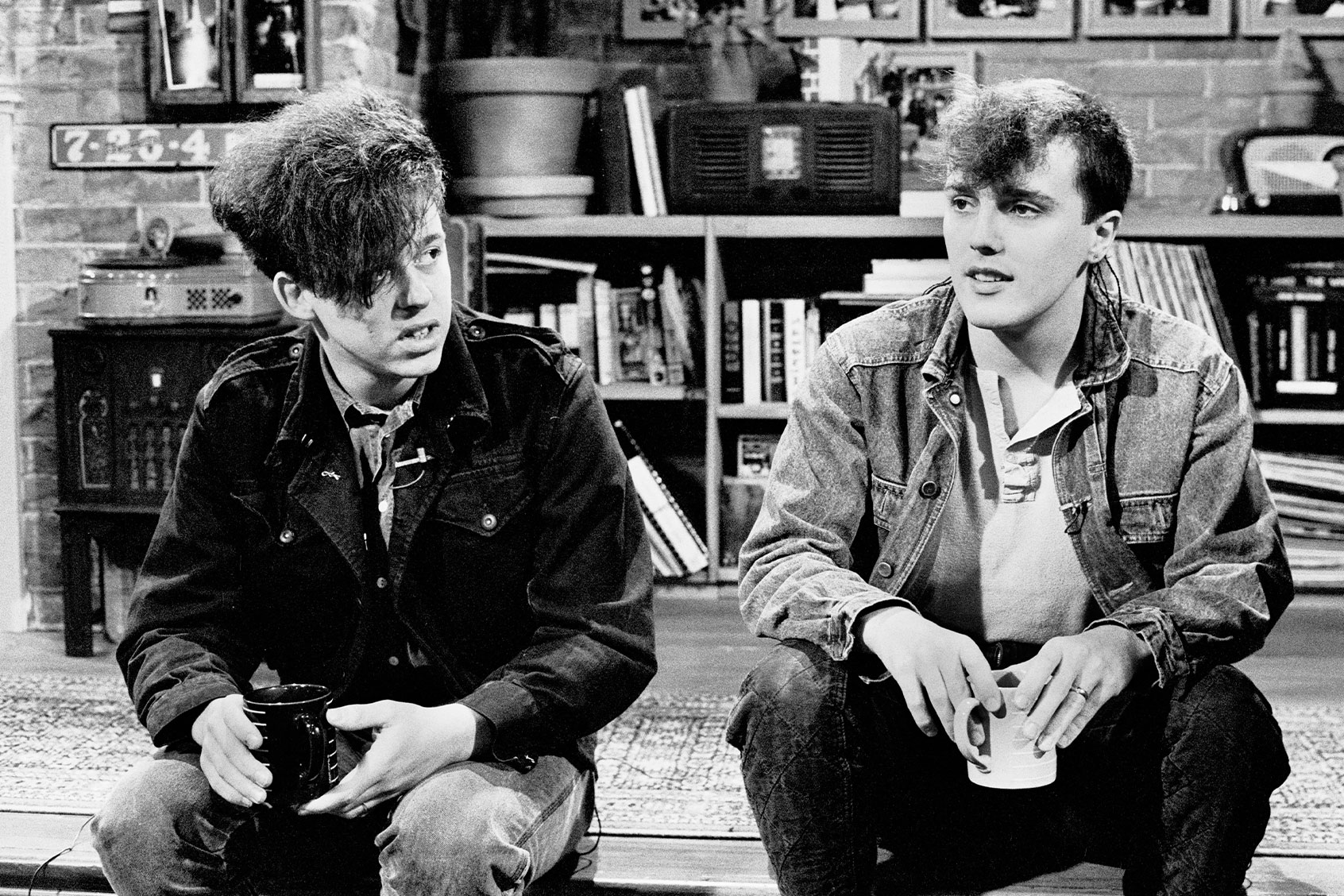
 View of English Alternative and Pop musicians Roland Orzabal (left) and Curt Smith, both of the group Tears For FearsEnglish Alternative and Pop musicians Roland Orzabal (left) and Curt Smith, both of the group Tears For Fears as they sit on a low stage during an interview at MTV Studios, New York, New York, May 25, 1983. (Gary Gershoff/Getty Images)

“The Hurting” accomplished this with vulnerable, frank lyrics that often pose questions rather than assert knowledge. “Could you ease my load? Could you see my pain?” the band asks on the title track, before expanding into broader terms: “Could you understand a child/When he cries in pain?/Could you give him all he needs/Or do you feel the same?” On “Pale Shelter,” meanwhile, Smith unleashes a tongue-twisting query (“How can I be sure/When your intrusion’s my illusion?”) that hints at personal discord, while the hit single “Change” also points to separation: “Where does the end of me/Become the start of you?”

As “Change” implies, the idea of disconnection, isolation and even alienation permeates the album. “Watch Me Bleed” meditates on the idea of suppressing and internalizing discomfort (“I’ll make no noise, I’ll hide my pain/I’ll close my eyes, I won’t complain/I’ll lie right back and take the blame”) while “Suffer the Children” describes loneliness and a lack of (presumably parental) affection. And the stunning album-closer “Start of the Breakdown” is wrecked with grief and confusion over wires being crossed, driven by the agony-riddled lyric: “Is this the start of the breakdown?/I can’t understand you.” 

Musically, that last song is also a triumph, with doppler-like synth notes careening around lonely piano and then giving way to clattering drums. Clearly, the jumpy, anxious music amplifies any thematic angst. That’s also true on “The Prisoner,” which boasts four-alarm-fire keyboards and roiling programming, and the propulsive breakdown of “Change.” It’s no accident these songs are near the end of the album: In a genius bit of sequencing, “The Hurting” grows more restless and distraught-sounding as it progresses, as if to represent someone’s emotional deterioration.

In a genius bit of sequencing, “The Hurting” grows more restless and distraught-sounding as it progresses, as if to represent someone’s emotional deterioration.

Fittingly, Orzabal said in 2013 that “The Hurting” had its roots in Peter Gabriel’s dark, third self-titled album, known colloquially as “Melt” because the cover features his face half-melting. “We were pretty adamant about the no hi-hats, no cymbals rule, plus we wanted that ambient drum sound,” he explained. “Add to that our use of the Roland CR78 drum machine (thanks to Ian [Stanley]) and you have pretty much the sound.”

This context helps better explain the darkness of “The Hurting.” However, the album is also surprisingly pop-leaning; despite their names, the foundation of tracks like “Suffer the Children” and “Watch Me Bleed” have more in common with bubbly synth-pop singles than more macabre fare. Smith and Orzabal also possess lovely, melodic voices, with the former’s tone hewing more toward R&B and soul, the latter’s being more Bowie-esque in its chameleonic majesty. 

“Mad World” also sprang from a surprisingly commercial place. “I was listening to Radio 1 on this tinny radio, and Duran Duran’s ‘Girls on Film’ came on,” Orzabal told The Guardian. “I just thought: ‘I’m going to have a crack at something like that.’ I did and ended up with ‘Mad World.'” Lyrically, however, the song’s indelible lyrics (“The dreams in which I’m dying are the best I’ve ever had”) is “from Janov’s idea that nightmares can be good because they release tension,” he added. 

“Mad World” was the biggest hit from the album, reaching No. 3 in late 1982. However, the album’s long tail is even more impressive. Songs have been sampled countless times—including by Drake, The Weeknd and Kanye West, as well as on Band Aid’s juggernaut “Do They Know It’s Christmas?”—while a high-profile cover of “Mad World” by Gary Jules and Michael Andrews hit No. 1 in the UK. Forty years later, Tears for Fears still play the hits from “The Hurting” live, with songs like “Change” especially dazzling when given a modern synth-pop makeover.


Want a daily wrap-up of all the news and commentary Salon has to offer? Subscribe to our morning newsletter, Crash Course.


Tears for Fears tapped into something instinctual and true about being human and finding space to become who you’re meant to be. 

In the end, “The Hurting” works so well because of the way it fearlessly arranges contrasting sounds and ideas — heartbeat-like drums and funereal piano giving way to fuzzy saxophone on “Ideas as Opiates” or the syncopated, shutter-like sounds of the title track blooming into earnest harmonies. The music is messy and honest, embraces the challenges of growing up and forging through them with bold naïveté. As it turns out, Tears for Fears tapped into something instinctual and true about being human and finding space to become who you’re meant to be. 

“We wrote and made ‘The Hurting’ when we were still adolescents,” Orzabal told me in 2022. “We were struggling in that passage from childhood to adulthood, leaving your parents behind and becoming more self-sufficient, becoming an individual. That’s a universal period of turmoil.”

“And so I think that a lot of the feelings that were expressed on that album, with the song ‘Mad World’ especially . . . I’m sure that pretty much everyone at any time of your life is going to look out the window or look at the TV and go, ‘Oh my God, it is indeed a mad world.'”


Did the South assassinate this president to preserve slavery? Forensic scientists say it’s possible

President Zachary Taylor had spent most of his career in the military, and it was obvious to the trio of Southern politicians as they confronted him. They were warning their fellow Whig that he needed to abandon his support for America's growing anti-slavery movement. The year was 1850: Taylor, in office for a mere sixteen months, staunchly opposed allowing slavery to spread into the new territories America had wrested from Mexico; and Taylor was equally adamant that the pro-slavery Texas government, which lacked a valid claim to disputed land in eastern New Mexico, should not be allowed to use armed force to seize that territory. Sensing his stubbornness on these issues, Reps. Charles Conrad, Humphrey Marshall and Robert Toombs informed Taylor that Texas and the South were not just opposed to his policies; they were violently opposed.

His symptoms included severe stomach pains, sharp pains on the side of his chest, vomiting, diarrhea, fevers, sweating, thirst, chills and fatigue.

Taylor replied that he would order the army to defend New Mexico from Texas if necessary — and, echoing a previous occasion when he compared Southern secessionists with army deserters and spies, declared that he'd personally lead the troops against any American who threatened to leave the Union. When Secretary of War George Crawford told Taylor that he'd refuse to sign any such order, Taylor bluntly reminded Crawford that he could sign the order himself.

For several days thereafter, Southerners grumbled among themselves about impeaching Taylor — the Vice President, Millard Fillmore, disagreed with Taylor and shared their views right down the line — or even seceding from the Union and starting a Civil War. Yet three days later, the entire conversation had been rendered moot: Taylor had mysteriously taken gravely ill after eating cherries and iced milk during 4th of July celebrations. Five days after that, Taylor was dead, and within two months President Fillmore had given the South virtually everything it wanted in a legislative package known as the Compromise of 1850.

If Taylor's death sounds awfully suspicious (and politically convenient) to you, some good news: There are historians and scientists who agree with you. Doctors officially diagnosed Taylor with cholera morbus from eating too many cherries and drinking too much iced milk. His symptoms included severe stomach pains, sharp pains on the side of his chest, vomiting, diarrhea, fevers, sweating, thirst, chills and fatigue. These could very well have meant that he developed gastroenteritis, especially considering the ghastly sanitary conditions in 19th-century Washington D.C.

Yet as forensic scientists are quick to note, these symptoms are also synonymous with arsenic poisoning. Arsenic, a highly toxic element that resembles a metal but which is technically a metalloid, was an easily accessible poison in the mid-19th century; its poisonous properties were widely known.

For more than a century after Taylor's death — long after the 12th president had faded into obscurity — history buffs and forensic science experts alike wondered if there was any way to prove what had really happened to Taylor. One of those scholars was novelist Clara Rising, a former humanities professor who shared her views with Coroner Richard F. Greathouse of Jefferson County, Kentucky. That is where Taylor is buried, and in 1991 his body was exhumed so samples of hair, skin, nails and other tissues could be examined.


Want more health and science stories in your inbox? Subscribe to Salon's weekly newsletter The Vulgar Scientist.


Tests were conducted both by the State of Kentucky and by the Oak Ridge National Laboratory in Oak Ridge,Tenn. At the latter facility, Kentucky's chief medical examiner Dr. George Nichols used a technique known as neutron activation analysis to test for arsenic. This practice involves bombarding a sample with neutrons so that some of the sample's atoms will absorb the neutrons and thereby become unstable isotopes. As the isotopes destabilize, they emit gamma rays which can be measured with a high-resolution gamma spectrometer. Those readings can help scientists determine whether certain specific elements, like arsenic, were present in the given sample.

The conclusion? Taylor's remains only contained 2 parts per million (ppm) of arsenic; only a level of 200 ppm or more would be considered beyond the scope of what is found in nature. Case closed, right?

Because "a massive dose of arsenic can appear in hair roots as quickly as one day after ingestion" and Taylor had been sick for five days before dying, "any poison would have had plenty of time to appear in his hair."

Not according to historian Michael Parenti. In his 1999 book "History as Mystery," Parenti launched a broadside against the official report in an entire chapter devoted to the Taylor case. While much of this essay is political rather than scientific (Parenti argues that the establishment does not want the truth about Taylor's death known because it contradicts their optimistic view of history), Parenti has one major scientific observation: He notes that the forensic scientists analyzed the entirety of Taylor's hairs rather than just the roots.

When Salon reached out to Oak Ridge for comment, they referred this journalist to their original report, which argues that because "a massive dose of arsenic can appear in hair roots as quickly as one day after ingestion" and Taylor had been sick for five days before dying (the report incorrectly states "four"), "any poison would have had plenty of time to appear in his hair."

Salon reached out to Dr. Laura M. Labay, a forensic toxicologist and the Chair of the NAME Toxicology Committee. Labay offered a detailed explanation of how scientists can test for arsenic poisoning in hair.

"We're talking about hair segmentation," Labay told Salon, adding that there is a difference between how arsenic appears in the hair when someone is poisoned only once — an "acute poisoning" — versus someone being poisoned repeatedly and over a prolonged period of time. In cases of an alleged acute poisoning, experts are expected to segment the hair.

"Your hair grows out at the root end to the distal end," Labay explained. "It grows about a centimeter a month. So say you have 12 centimeters length of hair, right? That covers about a 12 month period. So if you come to me and say, 'Laura, I think I'm being poisoned over the last month,' I'm going to take your 12 centimeter piece of hair and make a segment from about one centimeter to the distal end, and not test that. I'm going to either get rid of that or test it as a baseline, because that will be all negative. And then your acute poisoning would be found from the root end to the one centimeter mark."

Organic arsenic is naturally present in food like crustaceans and fish, and these forms are relatively non-toxic. In contrast, inorganic arsenic is highly toxic.

The problem with testing the entire hair in that situation is that "if all the arsenic is at that root end, it could be diluted out by the 11 centimeters of undetected arsenic."

This does not mean that Labay believes Taylor was poisoned or that the scientists who examined his remains made mistakes. (She emphasized the need to see that data herself.) It does mean, however, that anyone who wants to talk about Taylor's death needs to understand how arsenic interacts with the human body. They also need to avoid making tempting misstatements, such as the claim (made by a Daily Kos journalist) that it was bizarre for any arsenic to appear in Taylor's remains. As it turns out, arsenic is everywhere.

"Arsenic is a metalloid that is present in all parts of the environment," Labay told Salon. "For example it may be found in the water, soil and sediment." Organic arsenic is naturally present in food like crustaceans and fish, and these forms are relatively non-toxic. "They will be rapidly excreted unchanged in the urine," Labay explained. In contrast, inorganic arsenic is highly toxic — and that is the one you want to avoid.

Though it is obvious that humans should avoid inorganic arsenic if they don't want to wind up dead, the jury is out on whether inorganic arsenic explains Taylor's death. Moreover, this is only one of the many enigmas surrounding that story. Taylor owned hundreds of slaves on plantations in Louisiana, Mississippi and Kentucky, and was as ardent a white supremacist as any other antebellum Southerner. His subsequent opposition to expanding slavery surprised and baffled his contemporaries, and even Taylor biographers like K. Jack Bauer and Holman Hamilton have been unable to fully account for it.

By contrast, it is generally agreed that Taylor's death staved off the Civil War by a decade. If he had survived and followed through on his promise to squelch Southern secessionism by force — and Taylor, a lifelong military man who never cast a vote in his life before his own election, vocally assured listeners that he would do so regardless of the political consequences — a Civil War almost certainly would have followed. Instead Taylor was replaced at the last second by a consummate politician, Millard Fillmore, and the South was placated before they could pull the trigger.

This raises other questions. Would Taylor have been able to win the Civil War? Would he have also abolished slavery, as America's eventual Civil War president Abraham Lincoln wound up doing?

It is impossible to know these things — and, barring future tests on Taylor's hair roots, it is also impossible to know for sure whether he was poisoned. Indeed, even if subsequent tests rule out arsenic poisoning, that does not necessarily mean we'll ever know for sure why Taylor died. Historians tend to prefer stories with neat and tidy endings, and it is troubling to believe that history could have been profoundly altered through murder without anyone ever knowing for sure.

In Taylor's case, though, that is exactly where we are.

Construction begins on controversial lithium mine in Nevada

Construction began this week on an open-pit mine at the largest lithium deposit in the United States, even as tribes and environmental groups continue a years-long effort to block the project.

Lithium Americas Corp. announced that it began construction on the Thacker Pass lithium project in Humboldt County, Nevada, after the 9th Circuit Court of Appeals denied a request Wednesday by mine opponents to block work. 

The Bureau of Land Management approved the $2.2 billion mine project in January 2021. Mining operations would cover 5,000 acres and create a pit deeper than a football field. Lithium is a key component in the batteries of electric vehicles. 

Thacker Pass, known as Peehee Mu’huh to the Paiute Shoshone people, is 200 miles north of Reno and less than 40 miles north of the tribal land of the Fort McDermitt Paiute-Shoshone tribe. Tribes opposing the mine say the area has historical, cultural and religious importance and that it was the site of an 1865 massacre of at least 31 Paiute people.

“It’s an important place not only because a terrible massacre occurred, but also because it’s a place where people gather, it’s a place for ceremony, for hunting,” said Michon Eben, tribal historic preservation officer for the Reno Sparks Indian Colony, a government that includes members from the the Paiute, Shoshone and Washoe tribes. The colony is advocating for Peehee Mu’huh to be on the National Register of Historic Places. “It’s really hard to be a tribal member and see our homelands destroyed,” said Eben.

Thacker Pass also comprises thousands of acres of sagebrush and is a nesting ground for the sage grouse and a migration corridor for pronghorn antelope. Environmental groups including the Great Basin Resource Watch and Western Watersheds Project say the mine would cause irreversible ecological damage, and that the project’s impact was not adequately studied.

“It got by the environmental impact statement process in just under a year and I would expect a project of this scale and complexity to take 3 to 5 years,” said John Hadder, director of Great Basin Resource Watch. “That’s sloppy permitting on the side of the federal government.”

Tribes, environmental groups and a cattle rancher are all plaintiffs in a combined case against the Bureau of Land Management, or BLM, and Lithium Nevada, a subsidiary of Lithium Americas. On February 6, a federal judge in Reno ruled that the BLM had complied with federal law in approving the mine, with the exception of one matter regarding waste disposal, which the judge ordered the BLM to revisit. The plaintiffs filed an appeal in the 9th Circuit and an emergency motion to block construction before the appeal hearing. The appeals court rejected the injunction and set the hearing date for June.  

The Biden administration has made the transition to electric vehicles a cornerstone of its net-zero strategy. It wants half of new car sales to be electric by 2030, and for the United States to create a domestic electric vehicle supply chain. The administration estimates that demand for lithium and graphite for electric vehicles could increase by as much as 4,000 percent by 2040

In January, General Motors announced it would invest $650 million in Lithium Americas to develop the Thacker Pass mine, and expected the deal to yield enough lithium for 1 million electric vehicles per year. 

Lithium Americas did not respond to a request for comment. 

If the appeal fails and the lithium mine goes into operation, Hadder said it sets a bad precedent for how projects can be rushed in the name of the green transition.

“If it’s mining for lithium and other critical minerals, it will fall under the rubric of ‘Lithium is so important that we need to relax some of our environmental standards,'” said Hadder. “That’s a dangerous path that future generations and the environment will pay a price for. I think they’ll look back and say, ‘Oh, that wasn’t a good idea.'”


This article originally appeared in Grist at https://grist.org/climate-energy/construction-begins-lithium-mine-nevada-controversial/.

Grist is a nonprofit, independent media organization dedicated to telling stories of climate solutions and a just future. Learn more at Grist.org

“I’m not a victim, baby”: Chris Rock delivers an incendiary counterpunch to infamous Oscars slap

“You know, anybody who says words hurt has never been punched in the face.” That is how Chris Rock opens his live Netflix special “Selective Outrage.”

Strategically, he waits until the end of his set to land his knockout blows, the reasons the service gambled people would watch. But it took a while to get to it. Segueing from a bit where he praises Beyoncé’s beauty while making it clear he wasn’t disrespecting Jay-Z – “I do not need another rapper mad at me. . . . I do not need the smoke!” – he opens his examination of last year’s Oscars slap by pointing out the size difference between him and Will Smith.

“First of all, I know you can’t tell on camera, but Will Smith is significantly bigger than me. We are not the same size, OK? We are not – this guy does movies with his shirt off! You’ve never seen me do a movie with my shirt off. If I’m in a movie getting open heart surgery, I got on a sweater,” Rock says, growing more animated as he continues.

“Will Smith played Muhammad Ali in a movie! Do you think I auditioned for that part? He played Muhammad Ali. I played Pookie in ‘New Jack City.’ I played a piece of corn in ‘Pootie Tang’!”

Size matters in a fight, Rock points out for people to comprehend what it meant to be popped in the face by an action star. “People are like, did it hurt? It still hurts!” he quips before that. “I got ‘Summertime’ ringing in my ears! But! I’m not a victim, baby. You will never see me on Oprah and Gayle crying. Never gonna happen! I took that hit like Pacquiao, motherf**ker.”

Rock waited a year to hit back and chose a significant venue for his counterattack. “Selective Outrage” follows Rock’s 2018 Netflix special “Tamborine,” part of a $40 million deal he signed in 2016. He performed onstage at the Hippodrome Theatre in Baltimore, MD. Netflix streamed it live globally – a first for the service, which produced the gig as if were a sports event. There was an unnecessary half-hour pre-show hosted by Ronny Chieng featuring bits from Rock’s fellow comics and friends Arsenio Hall, Leslie Jones, JB Smoove and Deon Cole.

“Everybody that really knows, knows I had nothing to do with that,” Rock says before really roughing it up. “I did not have any entanglement.”

A montage of celebrities including Amy Schumer, Matthew McConaughey, Rosie Perez, Woody Harrelson, Sir Paul McCartney, and Wanda Sykes pre-recorded well-wishes for Rock as if he were about to freefall from a skyscraper instead of performing material he’s been workshopping for months. There is a tension inherent to live broadcast but here, not so much. Regardless of that, between this and the extended hail-fellow-well-met tight-twos by his buds, the lead-up took on the feeling of a wake or a “get well” rally for someone who recently emerged from a coma.

A post-set breakdown was no better. Hosted by David Spade and Dana Carvey and featuring Yvonne Orji and Kareem Abdul Jabbar alongside Hall and Smoove, the idea was for the comics to lend their expert opinion about each joke – entirely unnecessary, given that they landed as they should have.

Besides, the incendiary fervor of the closing segment eclipses the rest of it in the immediate memory.

“Chris Rock: Selective Outrage” backstage (Netflix)

“Everybody knows what the f**k happened. Everybody that really knows, knows I had nothing to do with that,” Rock says before really roughing it up. “I did not have any entanglement.”

“And for people that don’t know what everybody knows, Will Smith, his wife was f***ing her son’s friend,” Rock says. “Now, I normally would not talk about this s**t. But for some reason, these n****s put this s**t on the Internet.” He’s referring to the 2020 episode of “Red Table Talk” where Smith and Jada Pinkett Smith discuss their separation and her “entanglement” with R&B singer August Alsina.

“She hurt him way more than he hurt me, OK?” Rock continues. “He does that s**t. Everybody in the world called him a b***h.” Then Rock provides a short list of potential stops on Smith’s fantasy punching tour: Charlamagne Tha God, The Breakfast Club, “The View,” “The Talk,” every rapper, and the Drink Champs. ” . . . And who’s he hit? Me. A n***a he knows he can beat. That is some b***h-ass s**t.”

Then Rock takes direct shots at Pinkett Smith, saying that in 2016 she opined he should pull out of hosting the Oscars because Smith didn’t get nominated for “Concussion.” “So did I do some jokes about her? Who gives a f**k? That’s how it is. She starts it. I finish it. OK? That’s what the f**k happened. Nobody’s picking on this b***h. She started this s**t.”

Rock, dressed head-to-toe in white save for Prince’s symbol dangling from a chain around his neck, has constructed Selective Outrage” to leave the audience stunned, much in the way he must’ve felt onstage a year ago when Smith struck him on live TV, and in front of some of the most wealthy, famous white people on the planet.

On this Saturday night, the Oscar winner was not there, and the audience filling those seats in Baltimore had far more Black folks in it than his witnesses in the Dolby Theatre one year ago.

“Chris Rock: Selective Outrage” (Netflix)

But if you want to compare size and impact, the 2022 Oscars drew an audience of 16.6 million. Netflix as a rule doesn’t share its audience data (a fact Chieng riffs on in the pre-show) but will giddily remind anyone who asks that it has over 231 million global subscribers. Rock may be smaller in stature, but his reach may ultimately be much wider. We may not ever know for sure.

Everything that comes before the last 10 minutes of “Selective Outrage” is, by the standards of Chris Rock’s show at this point in his career, solid if not especially pointed. Rock jokes about the hypocrisy of corporate virtue signaling, spending an extended run cracking on Lululemon for their $100 yoga pants. He cracks on America’s attention addiction, calling our social media a bigger problem than opioids.

Everybody’s full of s**t, Rock proclaims, hence the name of his special. We are a nation that will play Michael Jackson songs but won’t play R. Kelly: “Same crime, one of them just got better songs.”

And he uses our attention obsession as a gateway to decry victimhood which could have gone very, very wrong, and he knew it. Being a victim, he says, is the fourth easiest way to gain attention, after being excellent (No. 3), being infamous (No. 2) and showing your ass (No.1).

Rock may be smaller in stature, but his reach may ultimately be much wider. We may not ever know for sure.

“You’re like, ‘Ooh, where is he going with this?’ Don’t get me wrong. There’s no victim shaming going on. No, no, no, no, no, no, there are real victims in this world. There are people that have gone through unspeakable trauma,” he says. “And they need your love, they need your support, they need your care. But if everybody claims to be a victim when the real victims need help, ain’t nobody gonna be there to help them. OK? And right now we live in a world where the emergency room is filled up with motherf*****s with paper cuts.”

But here is where Rock proves to be a better comedian than others praised for their genius. What’s the top group crying “victim”? White men. “Did you see the Capitol riots? White men trying to overthrow the government . . . that they run? What kind of white ‘Planet of the Apes’ s**t was that?”

“Chris Rock: Selective Outrage” (Netflix)
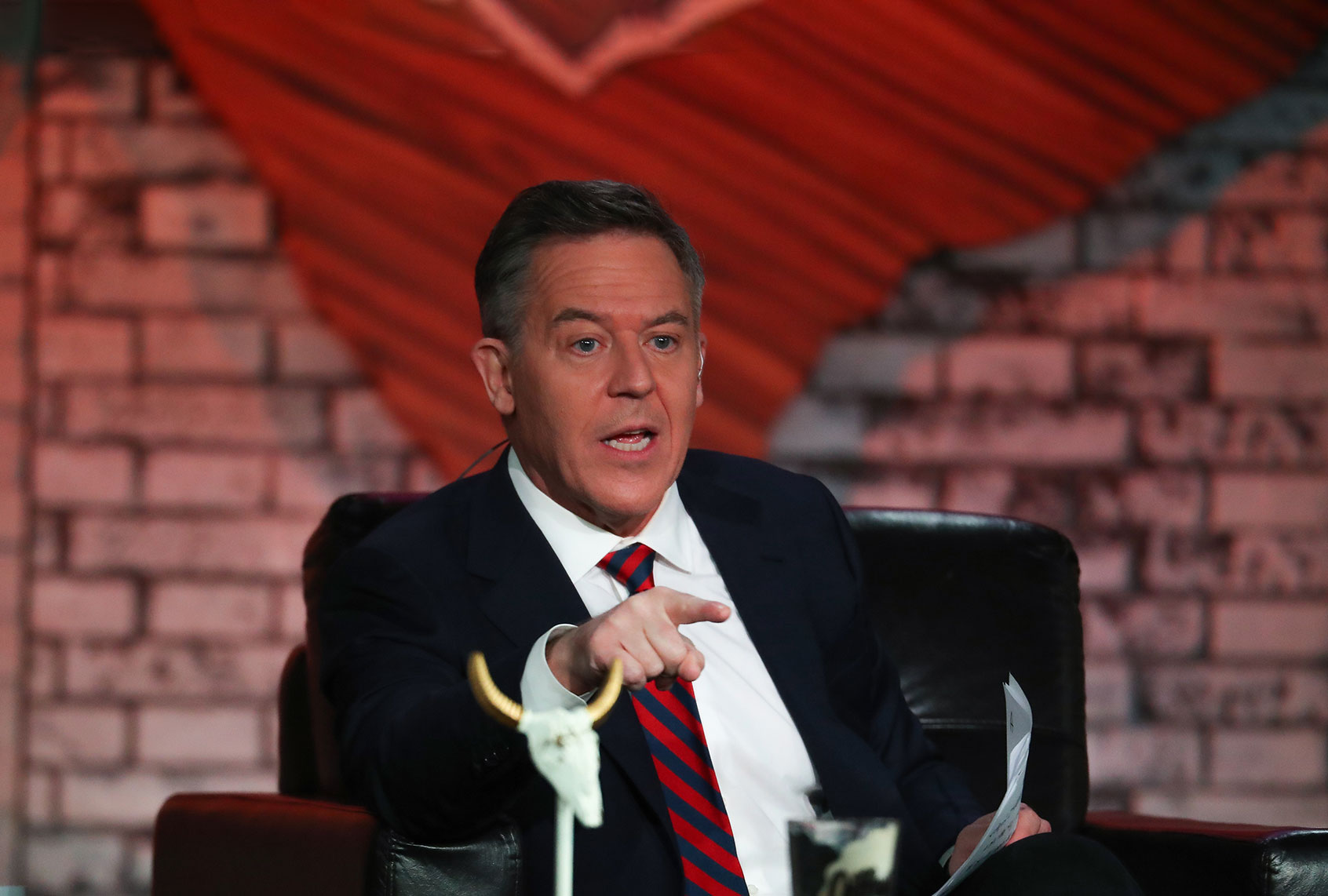
Next, he takes a shot at Meghan Markle, mainly over her claim to be shocked that the royal family was racist. “They’re the original racists! They invented colonialism! They’re the O.G.s of racism! They’re the Sugar Hill Gang of racism.” Then, since he’s Chris Rock, he finds a way to circle back to “Bring the Pain” for a new O.J. joke that still works – because of the Kardashians.


Want a daily wrap-up of all the news and commentary Salon has to offer? Subscribe to our morning newsletter, Crash Course.


“Selective Outrage” doesn’t score a 100 percent hit rate, particularly when Rock tries to establish himself as a transgender ally by painting a hypothetical picture of what would happen if his father were to suddenly come out as trans. While not quite swishing the ball into the transphobia net, let’s just say it bounces off the rim. And Rock recognizes this as he stalks the stage; at that moment he glides into a sidestep as if sneaking by something deadly.

That may lead a person to consider whether our expectations are so skewed toward superstar comedians going after marginalized groups in the name of edge that performers like Rock feel the need to touch those red buttons if not slam on them. It’s not as if he’s obligated to demonstrate how to do a trans joke in a way that isn’t demeaning or assaultive.

But since he tries and it doesn’t quite work, that trip makes a section featuring personal situational humor about being a rich man with rich daughters sag relative to the rest of the set. For the most part, “Selective Outrage” makes a point of punching up with a series of light, targeted jabs . . . until the final volley.

Rock’s long-awaited response is acidic, surgical and emotional enough for him to flub the most searing part of his bit enough to restart it. Per Smith’s directions, he keeps Pinkett Smith’s name out of his mouth while pointing out that Smith himself practices selective outrage, and the slap is proof of that.

The comic closes the book by answering one of the main questions people have been asking him. “A lot of people go, ‘Chris, how come you didn’t do nothing back? How come you didn’t do nothing back that night? Because I got parents. That’s why. Because I was raised. I got parents. And you know what my parents taught me? Don’t fight in front of white people.”

With that, Rock drops the mic, his outrage vented before Baltimore and the world.

“Chris Rock: Selective Outrage” is available to stream on Netflix.

“This is our fight for dignity”: The struggle to confront caste privilege in America

After Seattle officially became the first U.S. city to ban discrimination based on caste last week, the city council received praise — and also threats — from South Asians both in the United States and elsewhere.

Councilwoman Kshama Sawant, who wrote the legislation and has served on the Seattle city council since 2014, worked alongside progressive groups like API Chaya, Equality Labs, Ambedkar Association of North America and several other grassroots organizations to bring about the historic win.

While many non-Hindu and non-Asian Americans have heard of the caste system, it’s likely very few understand it. Caste is one of the oldest most insidious forms of social discrimination in South Asia. It dates back more than 3,000 years, and by longstanding tradition divides Hindu society into strict hierarchies from birth. While the system originated in ancient India and has roots in Hinduism, the modern form developed under Muslim and British rule and its effects can be seen in almost every South Asian country and religious community. After India gained independence in 1947, its new constitution formally banned caste discrimination, but prejudice in South Asian diaspora communities is far from gone.

Thenmozhi Soundararajan, a Dalit rights activist and the executive director of Equality Labs, helped create the ordinance and says that caste negatively affects more than 1.9 billion people worldwide and at least 5.7 million Americans of South Asian descent. 

Dalits — a group previously derogatorily referred to as “untouchables” or “outcasts” — have endured caste discrimination across the subcontinent for centuries. Hours before the vote, several South Asian Dalits stood in line to share their stories with council members.

“This win is very historical and personal to me,” Prem Pariyar, a Nepali Dalit activist who worked with the groups involved, told Salon. “Our ancestors have been struggling. We have been suffering from caste trauma. So this is very, very personal to me. I’m very emotional.”

“In Nepal, my family was brutally attacked by dominant-caste people. I have been experiencing caste discrimination since my childhood,” Pariyar reflected. He came to the United States in 2015 seeking a better life, but was surprised when he saw just how ingrained casteism was in South Asian-American communities as well.

“I did not expect to be discriminated against here in the United States,” he said. “But it is common, I found. It’s common in the workplace, community get-togethers, house parties, festival celebrations. I was very surprised to see that, and it was very embarrassing. Even within the Nepali diaspora there are different caste-based organizations who are agitated when they have to include caste-oppressed people.”

The ordinance passed by Seattle last week comes after similar bans on caste bias at various U.S. universities in recent years. 

Sawant, who identifies as a socialist, has acknowledged her own personal privilege, noting that she grew up in an upper-caste Hindu Brahmin household in India and witnessed caste discrimination first-hand.

The Seattle measure has already been opposed by some Hindu American groups, who say a ban is unnecessary as federal law already prohibits similar discrimination. In an open letter to The Seattle Times, Suhag A. Shukla, executive director and co-founder of the Hindu American Foundation, said that the ordinance answered the question of caste discrimination “incorrectly.”

Some Hindu groups are pushing back against the Seattle ordinance with polite letters saying it’s unnecessary. But there are also the death threats and angry tweets.

“In practice, Seattle is now singling out specific communities as having such a unique form of prejudice that there should be a new protected category to police just them,” Shukla wrote. “The way to address incidents of alleged caste discrimination is to use existing, facially neutral protected categories such as ancestry. Even with no agreed upon definition or single factor that is associated with it, what is caste if not a person’s ancestry?” 

The Washington, D.C.-based foundation has also argued that since Indian Americans are less than 2 percent of Washington state’s population, there is little evidence of any widespread discrimination based on caste.


Want a daily wrap-up of all the news and commentary Salon has to offer? Subscribe to our morning newsletter, Crash Course.


But the Seattle City Council is not the first group to notice the pervasive problem of casteism in America. 

Last August, Tanuja Gupta, a Google employee of 10 years, spoke out against the company in an interview with The New Yorker, saying that Google managers had mishandled matters of caste-based discrimination in the workplace.

Gupta was a senior manager at Google News who hosted Diversity, Equality, and Inclusion (DEI) office hours every week, and said multiple employees came to her office to report that they had faced discrimination when trying to talk about caste in the workplace.

“The first conversations I had were with people who felt that they were being discriminated against for even raising this topic,” she told the New Yorker. “I think that’s a form of discrimination in and of itself — where you can talk about some matters related to DEI but not others. Then you had some other folks who faced it directly because of being caste oppressed.”

Gupta added that the first step in discrimination was denial. She explained that, in itself, to claim that caste “doesn’t even exist” is a form of discrimination. “If you replace the denial of caste discrimination with the denial of the Holocaust or something like that, it instantly clicks where other people start to realize, ‘Oh, something’s wrong if people are denying this,'” she explained.

“If you’re not attuned to what the issue is, you won’t even realize what’s happening,” she explained. “Asking things like ‘What’s your last name? I’m not familiar with it.’ Then, when the manager hears that last name, they’re, like, ‘Oh, so you’re from this caste — no wonder you have these leadership skills.'”

Many South Asians echoed these sentiments after the decision from Seattle was announced, arguing that the Hindu American Foundation has no reason to be upset if it is truly interested in equality. “If you are firmly against Caste discrimination, then why are you sad about the Seattle council ordinance banning caste discrimination and casteism?” one user wrote on Twitter. 

Soundararajan, has spent over 10 years working alongside racial, gender and queer justice organizations and unions on caste equity in the city. This work laid the foundation to pass the ordinance. She says that caste-based discrimination is absolutely prevalent in the United States, and that it is a worker’s rights issue. 

“When the manager hears that last name, they might say, ‘Oh, so you’re from this caste — no wonder you have these leadership skills.'”

“The data and the personal stories that were shared by hundreds of caste oppressed workers across many different industries, from restaurant workers to people that were survivors of domestic violence, to people who were domestic workers, to tech workers, shows caste is a workers rights issue,” Soundararajan said. “It’s a gender justice issue, it’s a racial justice issue. and All those things needed to be brought to bear.”

The ordinance “is not about equity in an abstract sense,” she explains. “It’s about fundamental civil rights and human rights and labor rights violations occurring to caste oppressed communities, which is why you don’t need to be an expert in caste to understand that there are severe liabilities going on.”

“As a group that has been driving the process towards caste equity across the country, we’ve had close to 40 wins so far,” she says. “This was our most major win. So it’s like, first Seattle, now the nation.”

Soundararajan says supporters of the ordinance were flooded with calls last week from people all over the country who now want to add caste as a protected category because “they’re seeing how severe it is.” She says people are alarmed that right-wing foreign entities like the Vishwa Hindu Parishad are now attempting to weigh in on issues related to American citizens and civil rights. 

“That level of foreign interference is extremely disturbing, especially since these are the people that are responsible for pogroms and rapes and lynchings,” she says. (Last fall, 11 men convicted of rape in Gujarat, India, were greeted with garlands at the Vishwa Hindu Parishad office after their release).

“It shows you how much we need these protections because our opponents are building and bringing in international violent actors to harm us,” she explains. “And that’s very, very scary.”

Kapil Mishra, a right-wing Indian politician who instigated the New Delhi riots in 2020 (and said he would “do it again if required“), disparaged the historic win on Twitter:

“Hindu diaspora in USA is under attack,” he wrote. “False narratives are being used against Hindus and Seattle is just a beginning,” he wrote. “It seems attempts are being made to malign a community that is already the target of prejudice. We need to stand strong with Hindus in USA.”

In her interview with The New Yorker last year, Gupta expressed that arguments like Mishra’s are used to shut down any productive conversations regarding caste privilege. Many South Asian-Americans, who may also be victims of white racism, xenophobia and other forms of discrimination, are reluctant to admit that they also hold privilege in certain spaces or that they may discriminate against caste-oppressed people. “It’s so absurd to me,” she said. “If you think about LGBTQ rights, when you have a talk about those kinds of rights, that is not saying you’re inherently anti-Christian… The opposite of caste is not religion.”

“You don’t get to claim or hijack one form of discrimination to perpetuate another form,” she added. 

Gupta said that she asked Soundararajan, the founder of April’s Dalit History Month, to come talk to the news team about matters of caste and discrimination, specifically caste representation in the newsroom.

“Two days before the talk, which is part of a larger DEI programming series that I ran for the team, a number of emails got sent to my VP, to the head of HR, to our chief diversity officer, to our CEO directly, claiming that the talk was creating a hostile workplace, that people felt unsafe, that the speaker was not qualified to speak on the topic, and several other allegations,” Gupta told the New Yorker. “The talk got postponed. That was the term that was used.”

Gupta said she was ultimately given an “ultimatum” to leave Google following the incident, alleging that caste-oppressed people at Google were even more frightened to speak up after that.

Soundararajan says that inflammatory comments from Hindu nationalists were entirely expected after their win in Seattle. “We faced enormous amounts of disinformation against women researchers and leaders in Equality Labs. People called us terrorists, they called us fake Dalits,” she said. “Over and over again in their testimonies, they said that we falsified our data and that we’re not a real organization. They called us an anti-Hindu organization, even though we have staff that are Hindu and we’re interfaith, inter-caste and multiracial.”

“People called us terrorists, they called us fake Dalits. Over and over again in their testimonies, they said that we falsified our data and that we’re not a real organization or that we’re an anti-Hindu organization.”

“You really see in this moment what we’re up against, because the opponents were terrifying,” she reflects. “We faced rape threats, death threats and disinformation. Half of the testimonies of the opposing side were trying to smear and attack the women and the leaders of Equality Labs. Yet we had 200 organizations that signed on. We had a coalition of close to 30 caste-oppressed civil rights organizations that represented hundreds and thousands of Dalits who stood for this issue.”

“It’s not just about the white nationalists attacking our communities, it’s also about the way religious ethnic-nationalisms in our homelands are breaking us apart,” she explains. Since Prime Minister Narendra Modi came to power in India, many of the country’s religious minorities — as well as secular progressives within the Hindu majority — have expressed concern that ethno-nationalism is on the rise, and that India’s secular ethos is at stake. Modi belongs to the Hindu nationalist Bharatiya Janata Party (BJP), and was a former member of its allied paramilitary organization, the Rashtriya Swayamsevak Sangh (RSS), which has previously come under fire for casteism.

Soundararajan says, however, that she feels “deep empathy” for her opponents who have not yet come to terms with their caste-based privilege. 

“For dominant caste people, their nervous systems have been trained for centuries to view, at a survival level, the threat of what happens when a Dalit person meets them at the table with equity,” she explains. “But that discomfort, that fragility, has many ways it can be addressed. You can unlearn with other privileged people who are really looking with clear eyes in terms of the wounds of history.” 

But that discomfort and fragility should not stop the flow of progress, Soundararajan argues. “Too often we’ve had to wait for freedom because of the fragility of the privileged. This is a situation where we’re saying absolutely not. And there are so many more of us in the South Asian community who are united to choose freedom, to choose love and to choose healing than those that want to linger in bigotry.” 

“I don’t fault people for not knowing the intricacies of caste discrimination. I fault people for not wanting to learn about it,” Gupta told The New Yorker last year. “Willfully not wanting to learn more about certain topics when you hear that people are being discriminated against, choosing not to do anything about it, that is a problem. … The real harm is when people are denied a voice, when they cannot speak about their own working conditions and the harm that they have faced socioeconomically. That is real harm compared with being offended because your own power is threatened and you’re feeling a little bit more fragile but you can’t point to actual harm that’s been done to you.”

Those offended by the Seattle City Council decision have threatened to pursue litigation, Soundararajan says. “I really hope that they find better uses for their resources than litigation, because the reality is that the culture war has already been won by Dalits,” she explains. “Caste is here in the United States. The data and the stories are here. We can’t deny it. And South Asians themselves are more and more comfortable dealing with ways to have caste equity, acknowledgment in their workplaces and religious institutions and community organizations. So the generation that is coming up around these political struggles already understand that we can’t be ourselves if we’re not centering caste-oppressed people.”

Soundararajan says she’s hopeful for the future, because more people in the South Asian community in the U.S. are willing to reckon with historical violence. “We can make a path towards reconciliation and healing,” she says. “That kind of deep, honest dialogue comes from breaking bread. People are coming out of the closet everywhere around the world. And this win is going to galvanize the caste abolition movement globally, and rightfully so.”

Healing begins with banning caste, Soundararajan argues “because you have to remedy the discrimination, but then we can begin the path towards reconciliation.” 

“This is the first time for many people to be in a space where so many people are openly Dalit,” she said. “So many people are owning their privilege and standing and facing the violence side by side with their Dalit brothers and sisters. It’s incredible — it shows you that the way to fight disinformation and bigotry is really through love. That’s really from the heartbeat of the Dalit feminist intersectional vision.”

*  *  *

Almost a decade after arriving in the U.S. from Nepal, Pariyar says he feels a profound sense of pride after this victory.

“In the beginning I thought I was the only one” facing discrimination, he said. “But at the Seattle City Council meeting, hundreds of people showed up. I felt empowered. We have historical trauma, we have intergenerational trauma. Now, our coming generations — this gave us hope that they will not be discriminated against based on our caste identity.”

Now, he says, if he faces caste-based discrimination in the workplace, there are specific reporting procedures to follow, whereas before many employers were unaware of this specific form of discrimination. “This policy is opening eyes for everyone,” he said. “This is a landmark policy. Our ancestors and coming generations will remember Councilmember Kshama Sawant and the office staff and organizers who were involved in this policy.” 

“We don’t want to be isolated,” Pariyar concludes. “We don’t want to be left out from the mainstream. We deserve our dignity — and this is our fight for dignity.”

Big Brother vs Big Tech: Porn hacks the Fed; will Biden’s “cyber-strategy” change anything?

It’s been a whirlwind week in politics and tech. President Biden launched a full-court press on national cybersecurity, data-sloppy health apps got slapped with millions of dollars in federal fines — and a digital porn-purveyor caused a Federal Reserve meeting to shut down.

Here’s the quick-and-dirty rundown on everything you need to know about tech politics this week. 

U.S. cybersecurity strategy: The best defense is offense  

The week’s main tech event arrived Friday when Biden unveiled his national cybersecurity strategy. The plan doesn’t offer new rules but calls out digital priorities for the Defense Department and a vast tangle of federal agencies. There are three key takeaways.

First, defenses need to be bolstered around critical infrastructure — from the U.S. water supply to oil pipelines, rail lines and power grids. Much of that work will rely on regulatory agencies to begin evaluating weaknesses, with the help of industry counterparts. Second, private software makers should face more liability for flawed software that places the onus of data privacy and general security on individual users. Third, the U.S. intends to go on the offensive with more Cyber Command disruption campaigns launched against foreign computer systems and networks. Who, exactly? Presumably China, Russia and Iran, but no specific malefactors were mentioned.

Of course the biggest hole in U.S. cyber-defenses is the government’s use of outdated technology. So IT modernization is a keystone of the Biden plan, including modernizing civilian agencies.

Chips, ahoy 

With U.S. auto factories overflowing with cars they can’t finish building, consumer gadget demand falling as prices surge and national security concerns growing, the U.S. economy desperately needs an end to the years-long global computer chip shortage. That’s where Biden’s $39 billion shot-in-the-arm comes in.


Want a daily wrap-up of all the news and commentary Salon has to offer? Subscribe to our morning newsletter, Crash Course.


That sum was set aside in the CHIPS and Science Act of 2022 as a federal funding incentive aimed to spark the creation of a near nonexistent U.S. chipmaking industry. This will be a long-haul effort, made doubly necessary by supply-chain chokepoints worsened by politics.

On Tuesday, the race began for Commerce Department applicants. The first round of funds is expected to favor cybersecurity-facing companies — and chipmakers who take the money have to promise not to expand their capacity in China for at least a decade

Data privacy: TikTok ban (not really); Dems’ post-Roe protection efforts

Lawmakers’ latest attempt to ban TikTok from all personal U.S. devices advanced another step this week in Congress. To be clear, it’s an idea that is both technologically implausible and politically infeasible. 

Actual movement on data privacy came from the FTC on Thursday, when it hit the tele-therapy company BetterHelp with a $7.8 million fine for sharing sensitive patient data with advertisers, while lying to patients about it. Earlier in the week, the FTC also finalized a $1.5 million settlement from prescription e-coupon app GoodRx, which was sharing patient data with Facebook, Google and others. 

These fines are barely a slap on the wrist for most companies. In a country where abortion-related internet searches are used as criminal evidence, Congress has yet to produce a privacy law barring apps from sharing users’ personally identifiable health data with subpoena-hungry tech giants. Senate Democrats began trying again on Thursday, introducing something called the (UPHOLD) Privacy Act, aimed at protecting health and online location data.

Speaking of people who aren’t completely off the hook, Mark Zuckerberg’s Cambridge Analytica nightmare may not be over yet. Meta’s lawyers said the $725 million settlement finalized last Wednesday signals the end the company’s scandal. “Not so fast,” said the state of New Mexico.

Big Brother: Can we please keep FISA?

Congress is weighing whether to once again renew the FBI and NSA’s ability to spy on U.S. citizens without a warrant. 

The controversial Section 702 of the Foreign Intelligence Surveillance Act (FISA), which expires in December, lets intelligence agencies collect unknown amounts of data on Americans without ever telling them. Under the law, this is hypothetically aimed at surveillance of foreign nationals, but everyone understands that U.S. citizens’ communications are often swept up in the net for various reasons, offering the feds a backdoor into Americans’ emails, texts and data. All details and decisions about these troves of information are subject to the proceedings of FISA Court, conducted entirely in secret.

Hack reel: Porn hijack at the Fed; water supply threatened 

In the face of alleged attempts by hackers to poison water supplies, the EPA issued a new mandate on Friday which requires states to take stock of their current cybersecurity defenses and begin planning upgrades.

Supposedly the FISA court can’t order the collection of Americans’ emails, texts and data. But that doesn’t mean it doesn’t happen — and intelligence agencies like it like that.

A virtual meeting of the Federal Reserve, with more than 220 attendees, was canceled just moments after it began Thursday when a Zoom-bomber hijacked the public teleconference and filled all participants’ screens with porn images. But this wasn’t high-level hacking, and the unwelcome intrusion could have been avoided if the hosts had enabled Zoom’s normal participant-muting settings, or had simply used the software’s webinar mode.  

Ejecting hackers isn’t quite as easy for the White House and U.S. Marshals Service, however. On Monday, the Commerce Department greenlit the renewal of a Trump-era executive order aimed at keeping foreign hackers out of U.S.-contracted cloud service providers. And on Tuesday, the Marshals Service announced it’s hunting for cybercriminals who breached a Justice Department computer system with ransomware.  

Bonus: Thanks, I hate it. 

This week’s moment of tech-enabled dystopia is brought to you by the U.S. Air Force which, as reported by New Scientist, has signed a $800,000 contract with RealNetworks. The Seattle-based firm will equip military drones with AI-powered facial recognition tech that will “open the opportunity for real-time autonomous response by the robot.” If that means what we think it means, such drones could conceivably be authorized to kill without direct orders from a human operator.

How Alaska’s coastal communities are racing against erosion

A sandy bluff towers above the beach in Dillingham, Alaska. Every year, Alaska Native resident Ken Shade watches as a little more of his land falls over the edge, into the sea.

Dillingham is just one example of a small Alaskan town with a big erosion problem. Around the state, dozens of coastal communities are watching their coastlines crumble, losing at least 3 feet of land per year. Critical infrastructure such as airport runways, fuel tanks, and schools are in danger. Many Alaska Natives have been hard hit: Now, with climate change altering weather patterns, melting permafrost, and reducing sea ice, the land these communities are built on is falling into the sea. 

Shade has already moved his house farther away from the bluff once, about 25 years ago, to save it from falling over the edge. The process took him a whole summer. After digging around the foundation and jacking up the house, he slid the building onto a trailer built out of old car axles, then dragged the whole thing using heavy machinery. His neighbor, a mechanic, took a different approach and tried to stabilize the bluff by building a wall in front of it using dozens of old cars. “It doesn’t work too well,” Shade said. Now when he sets out fishing nets, he catches car parts along with the salmon. 

Other parts of town are also losing ground fast. The earth in front of Dillingham’s sewage lagoon — two open-air cells that hold the city’s wastewater — is receding at a rate of about 16 feet per year. Meanwhile, a mass grave containing victims of tuberculosis and the 1918 flu pandemic is slowly falling out of the bluff and onto the beach below. 

“There’s just multiple issues everywhere,” said Dillingham city planner Patty Buholm.

Some communities have moved because of erosion. But the process can cost upwards of $100 million and involves giving up traditional land. Ways of stabilizing the ground, and letting communities stay in place, are sorely needed.

The classic strategy is to build a large, rigid structure, such as a seawall or a revetment (i.e., a pile of boulders) between the water and the eroding land. Such structures have stabilized many Alaskan coastlines by shielding them from waves, but they’re fantastically expensive (think millions of dollars) and it can be difficult to transport the construction materials to remote locations. 

What’s more, these techniques were developed in temperate regions. Some engineers think they’re likely to fail Alaska in the long term because they ignore a problem unique to cold regions: As permafrost melts, the land is turning to mush. Seawalls that were once along the coast may end up in the middle of the ocean as the land adjacent to them sinks and retreats.

“We’re really up against a big challenge,” said Thomas Ravens, a civil engineer at the University of Alaska at Anchorage. 

The extent of the erosion problem is well known, but much less has been said about how to fix it. Ravens and others are looking for solutions that could work for Alaska’s cold climate and dispersed population. Some of their ideas involve holding the ground firm, even as the Earth warms, while others let the ground move in a controlled way or emphasize adapting to rapid change. The field is still in its infancy, but one thing is certain: With 83 percent of Alaska’s population living on the coast, updated strategies for dealing with erosion can’t come soon enough.


Keeping permafrost frozen could go a long way toward stabilizing Alaska. One option is to use thermosiphons: Large tubes planted with one end in the ground and the other end sticking up into the air. Heat from the ground causes a liquid within the tube to evaporate into gas and rise to the top of the tube, taking heat with it. If the air is cold enough, the gas will condense back into a liquid and fall back to the bottom of the tube. 

The process repeats, drawing heat out of the bluff each time the gas cycles and keeping the permafrost frozen. Thermosiphons have stabilized inland sites, including the Trans-Alaska pipeline and the Fairbanks airport, and Ravens is applying for $3 million of funding to see if their benefits can translate to Alaska’s northern coastline. 

Sometimes the air isn’t cold enough to make the gas in thermosiphons condense, but an air-conditioning system can cool the gas instead. And if the system is solar-powered, the panels could play a dual role: In addition to powering the air conditioner, solar panels could protect permafrost by shading the ground. Ravens appreciates the idea of turning the sun’s energy on its head and using it to keep ice frozen. “It’s almost, like, poetic,” he said.

“Thermosiphons cost a lot,” said civil engineer Min Liew of Ohio State University. So they can’t be the only solution to erosion. Another possibility is to find ways to bind grains of coastal soil without permafrost. Indigenous hunting practices might hold the key: Spots on beaches where hunters process marine mammals seem to be resistant to erosion. Ravens thinks the oils that seep from the mammals into the ground might stabilize the soil. He wonders whether waste cooking oil can do the same thing. If so, it might be possible to isolate the component of the oil that’s responsible and apply it to beaches.

Naturally occurring soil bacteria can also harden soil, if they’re given a bit of a push. Scientists have found a way of mimicking the natural process through which sandstone is formed, but at a greatly accelerated rate. Rather than taking thousands of years for sand to become stone, “in our work, we do that actually in a few days,” said Mohamed Shahin, a geotechnical engineer at Curtin University in Perth, Australia.

It works like so: A certain category of bacteria, called “urease bacteria,” can use a chemical called urea as a source of nutrients. As they break down urea, the bacteria also secrete charged molecules as byproducts. These charged molecules interact with calcium in the soil to make a natural glue that holds sand grains together. Even a little bit of glue can make a beach much harder for waves to move, said geotechnical engineer Alexandra Saracho of the University of Texas at Austin.

In many places, urease bacteria and calcium are naturally prevalent. Adding urea to the soil would kick off the process of sandstone formation. And urea is a component of another common substance: urine.

In the future, Saracho envisions communities using filters to purify and concentrate urea from wastewater, then using that urea to reduce erosion. “You kind of can stabilize your own foundation,” she said. There are a couple of sticking points. First, the glue dissolves in acidic soil, so some regions might not have the right soil chemistry for the technique to work. And second, when bacteria produce glue, they also form a chemical compound called ammonia — the same compound that can kill aquarium fish if the water isn’t changed regularly. Researchers are testing methods for flushing ammonia out of treated soil, Saracho said, but these methods are still under development.


Instead of holding firm, sometimes it’s better to go with the flow. For Alaska, that could mean portable housing, said Tobias Schwoerer, a natural resource economist at the University of Alaska Fairbanks. He’s envisioning light structures that could be picked up with a Chinook helicopter and moved to a new location when the old location crumbles away. Schwoerer sees portable housing as a modern way of returning to the traditional lifestyle of many Alaska Natives, in which they migrated seasonally to stay synced with shifting resources. He’s applying for funding to discuss the idea with Alaska Native communities, to find out whether they think portable housing is a feasible solution.

It’s not just the town’s infrastructure that’s at threat from erosion, said one resident: “There’s a lot of history that’s being washed away.”

Having moved his house once, Shade isn’t too enthusiastic about Schwoerer’s idea. As a member of the Curyung Tribe, Shade’s ancestors were among those who migrated, but “I wouldn’t want to do that all the time,” he said.

Beaches can also go with the flow. Some beaches rearrange during storms without washing away. Decades ago, now-retired Alaska Department of Transportation coastal engineers Ruth Carter and Harvey Smith started wondering if they could mimic the forces that cause this harmless shifting. Smith came across a Dutch researcher named Jentsje van der Meer who had developed a way of doing just this.

Van der Meer had described something called a dynamically stable beach that didn’t wash out to sea despite lashing rain and waves. To build one, engineers supplement the beach with rocks, about 2 to 8 inches in diameter. If the rocks are larger, they’re pulled down the beach during storms, and if they’re smaller, they’re pushed up. “A dynamically stable beach is right in between,” said Smith. Because the rocks are just the right size, they get pushed up the beach just about as much as they get pulled down. As long as waves hit the beach head-on, the rocks return to about where they started.

Carter and Smith built about five dynamically stable beaches around Alaska, beginning in the 1980s. Some of their early projects remain stable to this day. The technique often costs about a fifth the price of a rigid structure and the materials can be easier to find, and yet dynamically stable beaches never became widespread. The main reason, Smith said, was one of perception. People tend to feel reassured by immovable structures like seawalls, but dynamically stable beaches move around a little bit. Even if they offer good protection at a reasonable price, that movement “makes people uncomfortable,” Smith said.


As scientists inch toward erosion-relief measures, Eben Hopson is watching as his culture’s history creeps toward the sea. An Iñupiaq filmmaker and photographer, Hopson lives in the village of Utqiaġvik, on Alaska’s northern coast. In recent years, the waves have begun to swallow long-uninhabited coastal settlements near the village, taking with them evidence of who used to live there and how they passed their days. It’s not just the town’s infrastructure that’s at threat from erosion: “There’s a lot of history that’s being washed away,” he said.

Civil engineer Min Liew traveled to Utqiaġvik to study the erosion problem, and she thinks it’s important for scientists to be upfront with people like Hopson. Researchers have a lot of ideas about how to confront erosion, but “everything is at the hypothesis stage,” she said. She’s hopeful that researchers and Alaska Natives can work together to come up with solutions, but research is a long road and results take time. 

The difficulty of addressing erosion is all too evident for people like Shade, who have taken it upon themselves to stabilize their homes and their properties. Shade’s house is on firm ground for the foreseeable future, but he’s about to lose a small outbuilding that’s closer to the water. Its roof is damaged, so moving it isn’t worth the trouble. Instead, he’ll probably dismantle the building before it washes away. It’s all part of living with the natural forces that shape Alaska. “Mother Nature is pretty tough,” he said.


This article originally appeared in Grist at https://grist.org/solutions/possible-solutions-alaskas-eroding-coastlines/.

Grist is a nonprofit, independent media organization dedicated to telling stories of climate solutions and a just future. Learn more at Grist.org

Unraveling my family’s Cold War mystery: Why did UN General Counsel Abraham Feller really die?

When I first learned about my great uncle, Abe Feller, he had been dead by suicide for many years, his story bronzed into family myth. It was recited more than told, chanted with the rhythm of prayer: editor of the Harvard Law Review; youngest attorney to argue before the World Court; Harvard Law professor; member of President Franklin Roosevelt’s “brain trust;” co-author of the United Nations charter, and its first General Counsel. And all the while, he performed feats of intellectual derring-do that had become family legend, such as reading The Encyclopedia Britannica cover-to-cover and learning Italian in a week.

Still, Abe has never felt like an integral part of our family’s larger story. He’s a bright tangent, a rocket that explodes in mid-flight and stops conversations. Whenever his name came up, a cousin would murmur, “Roy Cohn—it was Cohn who destroyed his life. Simple as that.” But then, nothing. Not even the wistful trailing-off typically inspired by absent friends or uncles.

In my family’s mythology, the Abe Feller who plunged to his death during the Red Scare is embodied in equal measure as the exemplary and the damaged, the inspirational and the cautionary. I often asked my grandparents about him. But they would recite the legend and change the subject at the mention of his irradiated name.

“Roy Cohn—it was Cohn who destroyed his life. Simple as that.”

The Abe that I learned about, mostly from his sister — my grandmother Gertrude Arkin — was the public Abraham Feller, the one in newspaper archives and approved biographies. He was slightly built, prematurely balding, a driven attorney who, as he plunged from his 12th-floor Manhattan apartment in 1952, was the U.N.’s most powerful figure, save for the Secretary-General, Trygve Lie. A Norwegian politician, Lie was in many ways Abe’s opposite — a large, blustery figure who posed for photographs with feet spread wide and hands jammed into the pockets of pin-striped suits. My great uncle was ensconced in an office next to Lie’s in the organization’s new headquarters, a blue glass modernist gem on First Avenue that Abe had been instrumental in building.

He’d proudly participated in the ribbon-cutting ceremony for the U.N. compound in 1949, just three years after Joseph McCarthy had been elected to the Senate. In the two years it had taken for the headquarters to rise over the East River, the former poultry farmer had become a TV star, a dominant force in American politics, and the face of an era-defining “ism.” 

Yet McCarthy was not nearly the most prolific red hunter of the era. That honor went to Nevada Senator Pat McCarran, a silver-pompadoured scourge of the welfare state who had been holding hearings on the question of “Who Lost China?” for a year before McCarthy was elected.  

In June of 1952, McCarran teamed with a new assistant attorney general — the driven, young, slightly built, and prematurely balding Roy Cohn — to look into suspected subversives at the U.N. Feller must have understood the threat the pair represented to the organization, but family members say he seemed untroubled by the gathering storm and assured them that the U.N. and its employees would be protected from the vagaries of American politics.

When I read that Abe had testified in front of a federal grand jury looking into “Fifth Amendment Communists” at the United Nations in October of 1952, it was difficult for me to see how he had presented a likely target for Cohn. He had been vetted by the U.N., the State Department, and the Office of War Information, and no one had found any suggestion he was, or ever had been, a member of the Communist Party.

The story of Abe’s appearance before Cohn’s grand jury summoned the memory of the first time I’d heard about the event from my grandfather, Abe’s brother-in-law. The rise and fall of Grandpa’s chest, as he remembered how troubled Abe had been by his “invitation” to testify. “Terrible, terrible. Unavoidable. Terrible,” he’d said.

He had been vetted by the U.N., the State Department, and the Office of War Information, and no one had found any suggestion he was, or ever had been, a member of the Communist Party.

My grandfather’s memory invited the question of why Abe had been questioned by the prosecutor in the first place. A former New Dealer, an academic, an internationalist, he was the type who offended Cohn, but he was almost comically irreproachable. 

His daughter Caroline told stories about sneaking out of bed to spy on the suspiciously quiet parties Abe and his wife, Alice, hosted, only to discover ambassadors and foreign ministers on sofas and wing chairs, each with a book, contentedly reading.

Lie’s rocky tenure at the U.N. (his appointment as Secretary General had never been officially recognized by the Soviet Union, which resented his support for U.N. intervention in the Korean War) ended with his resignation on November 10, 1952, delivering what must have been a hammer blow to my great uncle, who had testified for Cohn only weeks before, and who, only six days before Lie’s resignation, had watched the returns come in for Adlai Stevenson’s loss to Dwight Eisenhower

Abe had been a passionate supporter of the unassuming governor of Illinois, a fellow New Dealer whose persona — unapologetically worldly, proudly erudite — no doubt served as a kind of model for him. Republicans had made the 1952 election a referendum, not only on what Stevenson stood for — the expansion of the New Deal — but on the cosmopolitan style he and other believers embodied. Stevenson’s crushing defeat could be seen as not merely a rejection of everything Abe believed in but of the kind of person he was. Abe took Stevenson’s defeat personally because the election had been made personal.


Want a daily wrap-up of all the news and commentary Salon has to offer? Subscribe to our morning newsletter, Crash Course.


Uncle Abe had been immersed in liberal New Deal culture his whole professional life. He’d worked 12-hour days at every post he’d held and even spent most of his social time in that work. During the early portions of the dinner parties that Caroline remembers for their study hall ambiance, Abe would preside over pitched battles of an international version of charades he’d designed, featuring agreed-upon hand signals and a “translator” to help decode foreign gestures.

The last trace I could find of joyous Uncle Abe, the pre-1952 Abe of Caroline’s memories, was in his own work, in his last book, “United Nations and World Community,” published days before his death. It’s a heartfelt yet poised defense of the U.N., a respectful consideration of opposing arguments, and a charting of a pragmatic course — straight down the middle of the ideological road.

It’s no page-turner, but Abe was a good writer with a trial lawyer’s sense of story and a knack for dramatic closing arguments. He typically saved the stirring rhetoric for the last few paragraphs of a chapter, in the form of mini St. Crispin’s Day speeches, fanfare for his noble, pragmatic mission:

We can have no illusions about the discouragements which lie ahead. The temptations to write the task off as impossible, or to forget all about it as a tedious bore, will be almost irresistible. The effort will go on because it must. The choice is between the quick and the dead.

The subject of fateful choices came up one day with my grandfather, as we shared a poolside lemonade near the end of a resolve-meltingly humid afternoon at his retirement community. He marveled that Abe had once turned down a “big position” at a corporate law firm for a lot of money. “I can only wear one suit of clothes at a time, Ken,” Abe had said to him. My grandfather dropped his chin to his chest and finally, as if admitting a kind of weary defeat, said: “He always had ashes on his lapel. Cigarette ashes. I had to identify the body, you know.”

Abe hadn’t talked much about the growing pressure from the committees, but he did say that Cohn had come to his office to demand, “Heads — I don’t care whose.”

He remembered Abe as being in good spirits throughout that final summer. He recalled visiting an art gallery with Abe in late August of 1952, an afternoon spent trading war stories about raising teenage daughters. My grandfather said, “He was rubbing his ear lobe between his fingers all day. He always did that. It was a habit, like a worry stone. But that’s the only sign of trouble I can remember.”

October of 1952 brought a noticeable change. Abe hadn’t talked much about the growing pressure from the committees, but he did say that Cohn had come to his office to demand, “Heads—I don’t care whose.” My grandfather noticed that even when Abe’s book earned an admiring piece in The New York Times Book Review (“unquestionably the best book published” about the U.N.), it did little to lighten his mood.

My grandfather had a vague memory of Abe seeing a psychiatrist that October, grudgingly, at Alice’s insistence. She had been startled by a moment of difficulty he’d had in helping Caroline with her homework. Abe suddenly felt he couldn’t concentrate on the text long enough to understand even a sentence and had emerged from his daughter’s room clutching his head and muttering, “I am losing my mind.”

On November 9, a Sunday, he and Alice enjoyed an early matinee of a new movie with Cary Grant and Marilyn Monroe, “Monkey Business.” But two days later, while returning from lunch to the apartment with Alice, Abe had stepped absentmindedly into oncoming traffic on Columbus Avenue, to be rescued only by a two-handed tug from his frightened wife, forceful enough to pull him to the concrete.

Three days after Lie’s resignation, on November 13, 1952, Abe woke late, just after Caroline had left for school, at 7 a.m. Still shaken by his wandering into traffic on the previous Monday afternoon, and when she saw that sleep had done nothing to lift the “grayish aspect” she’d observed in Abe the night before, Alice suggested he not go into the office that day. 

She called Dr. Bridge, his psychiatrist, and asked him to come as quickly as possible to the apartment. She steered Abe into the large, airy front room, with its 12-foot ceilings and six windows overlooking the bright yellow elms and orange oaks of Central Park and the shadowed East Side skyline beyond. She talked to him about the Times review for his book, what it might mean for his career, and how touched their daughter had been by its heartfelt dedication: “To Caroline and Her Generation.” She talked about the future.

Alice would later tell reporters: “He began talking about suicide. He said, ‘I’m going to commit suicide’ I couldn’t believe he was serious, but I clung to him…I thought I could reason with him until the doctor came, but he kept saying, ‘The doctors can’t help me. It’s no use. It’s no use.’ He started back through the apartment, and I followed him as swiftly as I could through all the rooms until we came to the den off the kitchen at the rear. I would try to hold him by the arm, or by the head or the body or by the leg….”

Alice pleaded with Abe to think of her, to think of Caroline. She wrapped her arms tightly around his shoulders and screamed to the neighbors for help as Abe opened the narrow window in the room, but her grip weakened and loosened, dropped to his waist and then his legs, until she was grasping only an ankle, and then suddenly only a shoe, a fully tied oxford, still warm from the foot of her husband, who had fallen a dozen stories to his death in an open cellar entrance below.

“If Feller’s conscience was clear,” Senator McCarran said, “he had no reason to suffer from what he expected from our committee.”

In his autobiography, Lie would say that when he heard of Abe’s death, “grief and shock overwhelmed me. Abe Feller was nearer to me than anyone else outside the circle of my immediate family…. He was a victim of the witch hunt … the hysterical assault upon the U.N. that reactionaries were using for their own ends.”

And that’s how the story was told to me when I was old enough to hear it: vividly, succinctly, and angrily. Abe had abruptly “snapped” under the pressure of an assault, for which the perpetrators were unapologetic: “If Feller’s conscience was clear,” Senator McCarran said, “he had no reason to suffer from what he expected from our committee.”

No doubt Abe’s conscience was clear of the qualms McCarran was referring to — he’d never attended a meeting of any organization to the left of the Democratic Party. But obviously, something had been deeply troubling him.

The portrait of my great uncle in the written record of his life is a maddeningly positive one. Diary and autobiography entries by Eleanor Roosevelt, Ralph Bunche, and others, recorded interviews of U.N. employees, including novelist and former U.N. staff member Shirley Hazzard and former U.N. Under-Secretary-General for Special Political Affairs Brian Urquhart — all testify to his unimpeachable character.

A staffer from the general counsel’s office, Oscar Schacter, considered Abe’s stature and wondered how political pressures could have led to his death:

I don’t know why he committed suicide; he himself was not implicated in a personal way. Many of the top people were…Abe was not as far as I know, there was no reason for him to think that. He was at the height of his influence, not only with Lie, but with major delegates like Acheson… Not many Secretariat people had that, no one really.

Even if I chalked up Abe’s suicide to Cohn and his threats, it was always difficult for me to imagine what those threats might have been. How does a person whom Time called “a tough-minded man who has long shown an abundance of intellectual and physical resiliency” wind up on a window ledge?

I eventually glimpsed a hint of an answer in “United Nations,” Abe’s last book, in that same passage about the U.N.’s role in controlling nuclear weapons.

If the United Nations were useful for nothing else, it would be imperative to keep it alive … We can have no illusions about the discouragements which lie ahead. The temptations to write the task off as impossible, or to forget all about it as a tedious bore, will be almost irresistible. The effort will go on because it must. The choice is between the quick and the dead.

The passage, one of many that sound at first like a battle cry to the happy few of the U.N., can also be read as a therapeutic pep talk to a consciousness facing an existential threat, a gathering of courage in the face of crisis.

In a later chapter, Abe writes,

Superficial listeners might be tempted to think of (these debates) as another symptom of disintegrating… unity. The fissures…are often serious, and there have been and will be crises of serious import. It is inevitable that they should add to our tensions and difficulties.

The diagnostic language of psychological collapse leaps out at me: “symptom,” “disintegrating,” “fissures,” and, of course, “tensions,” the same word he’d used to describe his worsening state to my grandfather shortly before his death.

Then, later, in the book’s closing passage,

The forces of disruption and destruction are powerful. They can be kept within bounds and eventually dissipated only by…moral strength and firm maintenance of a united purpose…

It’s easy to make hints out of coincidence, of course, especially if one is predisposed to finding such hints. I may be hearing more in these words than they were ever meant to (even unconsciously) convey. But it does seem to me that Abe’s last public statements were infused with a tone of private struggle, a call to arms not just against external enemies but buried tectonic forces of “disunity,” a low rumble of anguish that was, on some level, meant to be heard.

There is a popular myth that the McCarthy era was rife with suicides, but Abe’s was one of some half-dozen figures who had been targets of the committees. It made the front pages of newspapers all over the world, was the subject of magazine articles, and was a particular sensation in France where, soon after reading a story about it in a magazine featuring a cover illustration of Abe tumbling headfirst from the grasp of two manicured hands extending from a curtained window, Jean-Paul Sartre began writing a play about him.

There is a popular myth that the McCarthy era was rife with suicides, but Abe’s was one of some half-dozen figures who had been targets of the committees.

The incomplete manuscript was published for the first time in 2005 under the title, “La Part du feu (The Devil’s Portion).”

The philosopher depicted Abe Feller bobbing like a cork on a sea of history, tossed and battered by the imperatives of property, money, and class. The draft feels like a café napkin sketch: schematic and brutally declamatory — the dialogue a parody of existentialist theater shouted through a bullhorn.

For all its cartoonishness, though, the play’s depiction of my great uncle struggling with personal and public identity in a Cold War where everything had been reduced to binary choices rang uncomfortably true.

A 1952 Harvard Law Review essay about Abe depicted a problem-solver happy to strike reasonable bargains and fade into the background: “…a middle-of-the-roader in search of solutions acceptable to all, a compromiser of great skill, an inventor of new formulas….” It was this practiced moderation, this faith in a future made by cosmopolitan men, that the McCarthyites feared.

The McCarthyites warned, in the direst of terms, not about the nationalization of America’s industries but the evolution of its culture, of changes in speech, art, and behavior that amounted to a cataclysm. It was no coincidence that McCarthy’s first targets were members of the entertainment industry.

* * *

The main speaker at Abe’s funeral was his U.N. colleague Ralph Bunche, who had been instrumental in creating and adopting the Universal Declaration of Human Rights. The diplomat — and first African American to be awarded a Nobel Prize, for his U.N. work mediating the Arab-Israeli conflict in Palestine — was a ferocious U.N. defender, and his words were revelatory and astonishing.

That afternoon, with Lie just a few feet away, Bunche said: “Hard as it must be to stand up against the demands of Washington, a strong Secretary-General would surely have refused to enter into a secret pact with the State Department under which he agreed not to employ any American citizen who was, or appeared to be, a Communist. Abe Feller, as general, tried desperately to substitute legal procedures for such miserable calculations.”

“…a secret pact with the State Department.”

Abe had been struggling with those who wanted to destroy the U.N. and the man who led it. Internal U.N. memos from and to the General Counsel’s office and historian Paul Ybarra’s “Washington Gone Crazy: Senator Pat McCarran and the Great American Communist Hunt” confirm that in 1952 Abe had been waging a two-front war. 

In Lie’s memoir, “In the Cause of Peace, Seven Years With the United Nations,” the secretary-general complains bitterly about the lack of help he received from member countries in resisting the assault by the witch-hunting congressional committees, yet never acknowledges that he had himself asked the State Department and the FBI in 1949 to provide him the names of American employees of the U.N. suspected of “disloyalty” — or that he’d fired employees whose political leanings might cause him trouble, including those who had exercised their Fifth Amendment privilege not to answer questions from Cohn and this ilk.

Lie was observed by U.N. staffer Alfred Katzin to be so shaken by Abe’s death that he appeared “Like the man in Miller’s ‘Death of a Salesman.’ A broken man.” Yet he did little to protect Abe while he was alive.

Lie was no McCarthyite. He had been a devoted socialist, a prominent and vocal member of the Norwegian Labor party in his pre-U.N. career. On the other hand, it certainly would not have been easy for him to refuse to enter into the agreement. But, according to several interviews given by former U.N. employees to the U.N. Oral History Project, as well as Brian Urquhart’s invaluable memoir, “A Life in Peace and War,” he never even put up a fight. And his acquiescence even failed as a political strategy. By 1952 Trygve Lie was the most cordially hated man in New York: toasted at the dais but scorned by an indignant left and vilified by the right.

Husbands and wives of staffers were fired from their jobs. Children were pulled out of schools, and bankruptcies were declared.

Lie and Feller were midcentury men — chastened idealists who expected nothing to come easily. That any politician of the era could have wholly avoided making the kind of compromises they did is probably naive. But by fully accommodating the FBI and the State Department’s demands for employee information, Lie had exposed the organization to attacks by its enemies.

And, incredibly, Abe had said yes to the agreement. My great-uncle had signed a secret pact with the FBI and the State Department to screen Americans for political affiliations. The McCarthy and McCarran committees would summon former classmates, ex-girlfriends, and in-laws of suspected U.N. staffers to testify against them. They would ask U.N. employees what they read and how they voted. Husbands and wives of staffers were fired from their jobs. Children were pulled out of schools, and bankruptcies were declared.

News reports and U.N. memos describe Abe arguing for canceling the agreement and seeking to compromise with the congressional committees in hopes of softening the damage they might do. But his arguments failed. He could never meaningfully slow down what he’d helped set in motion. And he would never see his extraordinary loyalty to Lie reciprocated.

Viewed in the context of a fastidiously ethical life, Abe’s support of Lie’s secret pact and his devotion to his invertebrate superior are astonishing. What can explain it?

I guess it was a moment rather than a man that inspired his loyalty. At some point in 1949, he faced a choice between accepting Lie’s pact or leaving the U.N. The initial moral calculus Abe must have performed would have seemed irrefutable on paper: the U.S. was paying one-third of the U.N.’s operational costs. It could not become a target of the committees and survive.

And so, Abe made a pragmatic choice to trade principle for access. He believed he could do more good from within the U.N. than from outside of it. He chose the path to the only future he had ever imagined.

It was a fatal decision that created an unbearable situation for a torn conscience.

He could never meaningfully slow down what he’d helped set in motion. And he would never see his extraordinary loyalty to Lie reciprocated.

I’ve never found the idea that Abe jumped because of what others were doing to him to be plausible. But the idea that he did so because of what he had done to others seems not just likely but inevitable. Confronting the personal suffering of the accused and their families, understanding, finally, that his actions had been in vain, that the reputation of the U.N. and the suspected staffers would be scorched, Abe would likely have felt he had no other choice.

Suicide mocks the proscriptions of narrative, resists the search for the beating butterfly’s wings, the instant that begets a world-changing reaction. The factors that lead to self-annihilation, in forces large and small, will always resist discovery. The act itself resides outside the realm of reason. 

I will never know for sure what Abe’s last days were like. The most dependable truth of his story is that there is no single story. There are legends and anecdotes, facts and mysteries, remembered, re-imagined, and altered, all told in service of the teller and heard, no doubt, the way I wanted to listen to them.

But I imagine that Abe Feller experienced the events of 1952 not as a difficult detour or a temporary setback but as the death of a world. Not necessarily the egalitarian outer one he’d dreamed of and worked so hard to make real, but rather the world he’d carried inside him, an inner world governed by reason and teeming with compassion. That world, after all, must have suddenly seemed rendered a figment.  I think Abe might have meant it literally when he said, “I’m losing my mind,” that he might have been feeling something like a planet flung from orbit, inexplicably abandoned by infallible laws. 

It seems likely that for Abe Feller, a man essentially composed of faith in reason, compromise and human commonality — a conviction that unity is always possible because we all want the same things — the confrontation with the unblinking nihilism of McCarran, McCarthy and Cohn, and the resulting revelation that his accommodations had opened the gates to the enemies of compromise, must have been fatally disorienting. An inversion of everything he had known as “reality.”

It must have pulled the world from his feet.

If you are in crisis, please call the 988 Suicide and Crisis  Lifeline by dialing 988, or contact the Crisis Text Line by texting TALK to 741741.

A different version of this story was once published by the Big Round Table in 2015.

US is racing toward a looming “hunger cliff,” food insecurity experts warn

In 2022, one in eight Americans, or more than 41 million people, received benefits from the Supplemental Nutrition Assistance Program (SNAP). Over the last three years, these benefits have essentially been supercharged. In the early days of the coronavirus pandemic, Congress pushed for their expansion as the nation faced tremendous uncertainty over both the economy and grocery supply chain.

As of Wednesday, however, these expanded monthly benefits were officially cut by an average of $90 per recipient. It’s a development that pushes the country as a whole toward a looming “hunger cliff,” according to food insecurity experts.

During the first three months of the pandemic, more than 6 million people enrolled in food stamps, a surge that was categorized as an “unprecedented expansion” by Jason DeParle for The New York Times in 2021.

“Food stamps — formally known as the Supplemental Nutrition Assistance Program, or SNAP — support young and old, healthy and disabled, the working and the unemployed, making it the closest thing the United States has to a guaranteed income,” DeParle wrote. “Though administered by states, the benefits are paid by the federal government, with no spending cap.”

SNAP benefits typically vary based on a recipient’s income, but during the temporary congressional expansion, recipients nationwide were offered the maximum aid for their household size.

While some states opted to cut the emergency benefits in spring 2021, 32 states and the District of Columbia maintained them through 2023. This had a significant impact on the states that opted to continue the program. According to findings from the Urban Institute, the emergency allotments kept 4.2 million people out of poverty in the fourth quarter of 2021.

Per the Center on Budget and Policy Priorities, the benefits were cut months early as part of a bipartisan compromise surrounding a program to provide grocery benefits to replace school meals for low-income children. Initially, the benefits were supposed to be in place until May, when the federal public health emergency that had been declared at the beginning of the coronavirus pandemic is set to expire.


Want more great food writing and recipes? Subscribe to Salon Food’s newsletter, The Bite.


“Every household in those states will receive at least $95 a month less,” reports the nonpartisan research and policy institute Center on Budget and Policy Priorities. “Some households, who under regular SNAP rules receive low benefits because they have somewhat higher, but still modest incomes, will see reductions of $250 a month or more. The average person will receive about $90 a month less in SNAP benefits.” 

In a statement to Salon Food, Eric Mitchell, executive director of the Alliance to End Hunger, described the expanded benefits as a “lifesaver for many individuals and families as jobs disappeared and the economy grinded to a halt.” He continued, writing that while there is never a good time to make it harder for people to buy food, ending benefits now comes at a particularly bad time.

“With inflation and food prices still near record levels, it is still far too expensive for many Americans across the country to put food on the table,” Mitchell said. “Without these extra dollars, millions of people will be at risk of hunger.”

“With inflation and food prices still near record levels, it is still far too expensive for many Americans across the country to put food on the table.”

Food insecurity experts, including Dr. Alice Reznickova of the Union of Concerned Scientists, describe the impending spike in food security as a “hunger cliff.”

“Some organizations have been warning the public about the approaching hunger cliff for many of the 42 million people who depend on SNAP,” Reznickova wrote in a recent report. “Monthly SNAP benefits will go down approximately $82 per person each month. Because so many people are now at risk of going hungry without these extra benefits, this shows that pre-pandemic SNAP was insufficient.”

Reznickova argues that the pandemic expansion of SNAP should actually be considered a permanent policy in the fight against food insecurity. This is further supported by data from the U.S. Department of Agriculture showing that 10 to 15% of households in the U.S. were food insecure each year in the last 20 years, highlighting the need to re-evaluate eligibility.

Mitchell agrees, stating that “we should continue to invest in what works.”

“Extra SNAP benefits and other programs such as the expanded Child Tax Credit have lifted millions of people out of poverty and helped reduce longstanding racial and ethnic disparities in rates of food insecurity,” he wrote. “We know what works to eliminate poverty and end hunger in this country, and we will continue to work with Congress and the Administration to promote common sense policies that raise up the lives and livelihoods of everyday people struggling to make ends meet.”

Want to bake the best chocolate chip cookies ever? Reach for salty, savory white miso

A few weeks ago, I threw a secret ingredient into my typical chocolate chip cookie dough and then ever-so-slightly undercooked the cookie. When I took them out of the oven, I didn’t love how they looked, but once they cooled a bit and I took a bite — I was blown away. These were the best cookies I’d made in years and I was super excited to share them.

What is this elusive, secret ingredient, you ask? Miso!

Back in the day, Christina Tosi’s Milk Bar sold a miso-butterscotch chai, which I always thought was one of the most outrageously delicious sounding beverages to ever exist. Ever since, I’ve become a true miso adherent — as evidenced by the fact that many of my recipes contain white miso. 

I adore miso’s versatility, savoriness, umami notes and depth of flavor. It is a great dessert ingredient, by the way — don’t be spooked into thinking that it only belongs in savory food.


Want more great food writing and recipes? Subscribe to Salon Food’s newsletter, The Bite.


I added miso to my cookie dough after trying a miso-sesame cookie from a local (legitimately stellar) temaki restaurant. I didn’t love the crunch of the sesame seeds, which added a different flavor component, but I was really fond of the flavor that the miso added. 

And while that ingredient does a lot of the heavy lifting, but the brown butter, the cinnamon and the shorter cook-time helps these cookies become something special and altogether unique. 

Alas, I present to you: your new favorite cookie!

Miso-brown butter chocolate chunk cookies
Yields
10 servings
Prep Time
20 minutes
Cook Time
10 minutes

Ingredients

2 sticks unsalted butter

1 1/4 cup dark brown sugar

1/4 cup granulated sugar

2 large eggs

3 tablespoons white miso

1 tablespoon vanilla extract or paste

1/4 teaspoon maple extract

1 3/4 cups all-purpose flour

1 teaspoon baking soda

1/2 teaspoon baking powder

2 teaspoons kosher salt

1 teaspoon ground cinnamon

1/2 cup oats, pulverized, optional

10 ounces chocolate (chips, bars, chunks)

Flaky salt


Directions

  1. Preheat oven to 350 degrees Fahrenheit. Line 2 large cookie sheets with silpat, parchment or spray with cooking spray.

  2. Over medium-low heat, brown your butter. Remove from heat once especially fragrant and bronzed, swirl or stir a few times to incorporate browned bits and let cool slightly.

  3. Transfer cooled brown butter to stand mixer or bowl. Mix in sugars and beat well, about 2-3 minutes, until slightly lightened and fluffy.

  4. Add eggs, one at a time and mix well. 

  5. Add miso and extracts and blend until just combined.

  6. Add flour, baking soda and powder, salt, cinnamon and oats, if using. Mix until combined and there are no dry pockets of flour remaining.

  7. Add chocolate and stir in by hand. 

  8. Portion into cookie balls with a small ice cream scoop. Place on prepared cookie sheet with a good inch of so between cookies (they’ll spread a bit). Continue until all dough has been portioned.

  9. Transfer to oven and cook for 9-10 minutes or until the cookie has spread, its edges are slightly beginning to darken and they are slightly puffy.

  10. Remove from oven, sprinkle with flaky salt, let cool 5 minutes, then transfer to wire rack to cool further.

  11. Try not to burn your mouth on scorching chocolate when you dive in before they’re fully cooled. Enjoy!


Cook’s Notes

– I’ve never been into the whole “let your cookie dough rest in the fridge for a few hours or overnight” thing, so I’m skipping that entirely (it’s such a long step for not much change in flavor or consistency, at least in my view). 

– If miso isn’t your favorite, try tahini instead. 

-I detest a hard, over-cooked cookie; a slightly undercooked cookie is quite literally always preferable. Furthermore, the cookie will deflate a bit as it cools and cook slightly more (especially if you’re letting it rest on the still-hot cookie sheet), so I always err on the side of undercooking a bit

-I love lots of vanilla extract or paste; some recipes call for such a teeny tiny amount and I think that that’s silly

-I love the depth and flavor that brown butter adds, which in this case, pairs perfectly with the umami notes of the miso. I haven’t made a cookie with un-browned butter in years, but it’s obviously an optional step! Feel to skip if you want to get those cookies in the oven just a bit sooner. 

-I’m a brown sugar guy, through and through. I love veering to a ratio of much more brown sugar than white sugar in my recipes. Light or dark both work.

– I’m a silpat person, but parchment also always works. If you’re foregoing and just placing directly on the cookie sheet, just be mindful that it might be a bit tricky tor remove after cooking. Cooking spray doesn’t hurt, either.

– A small ice cream scoop (with a release lever) is so helpful for all things cookie dough.

– I use a stand mixer before mixing in the chocolate by hand, but this whole process could easily be done manually.

– I prefer chocolate chunks or bars over chips, any day of the week. I also like hand-chopped baking chocolate. I’ve also made the mistake of adding an immense amount of chocolate to cookies in the past, which doesn’t ever work out that great. I like a cookie with lots of “cookie” and not all chocolate. I prefer semisweet, but I’m not against any particular type. Use whatever you like best (or whatever you have on hand).

-I like to throw in oats sometimes. You can even pulverize them if you don’t like the chew, but enjoy the flavor.

Salon Food writes about stuff we think you’ll like. While our editorial team independently selected these products, Salon has affiliate partnerships, so making a purchase through our links may earn us a commission. 

What’s the real difference between garlic salt and garlic powder?

Let’s cut right to the chase: Garlic powder is simply dried and ground garlic cloves. As it’s a dried product, the flavor is more concentrated, and only about ¼ teaspoon of the product is needed to get the same flavor result as 1 clove of fresh garlic.

Garlic salt, on the other hand, is salt (usually, flaky kosher or sea salt) mixed with garlic powder at about a 3-to-1 salt to garlic ratio.


How To Use Garlic Powder

Garlic powder is a super easy way to imbue soups, stews, stocks, sauces, and more with the perfect amount of garlic flavor that you desire. As it’s not a fresh clove, just a whisper of an ⅛ teaspoon can be enough to get the perfect hint of garlic in a dressing, or an item that isn’t getting cooked in which raw garlic would be overpowering. I do also recognize using a fresh clove can make it harder to control exact flavor amounts, especially when you start cutting into the garlic. Opening up the surface area of a garlic clove only opens up (or strengthens) the garlic flavor more, which can be too much for some people, especially raw. For that reason, garlic powder is a really nice substitute for fresh garlic.

How To Use Garlic Salt

If you’re using garlic salt, there are two elements to consider: The amount of garlic you’re going to add to your food can’t be measured exactly (as it’s not perfectly distributed throughout the salt mix) and, you’re also adding salt, so things are going to get too salty before they get too garlicky. A really good use of garlic salt is in a dish where you’re adding a set amount of salt anyway, and want a little extra boost of flavor. Something like fried eggs (dusted on top before finishing), a savory biscuit recipe (garlic and chive biscuit, anyone?), or in a pasta sauce.

Garlic Powder Vs. Garlic Salt

If you’re reaching for a garlic product because you want garlic flavor, garlic powder is your best bet. If you’re looking for a touch of bonus flavor in your recipes, garlic salt is a great substitute.

But, for this reason alone, I have a bone to pick with garlic salt. Why make a product that inhibits my ability to add pungent, breath-ruining, allium flavor to my heart’s content? This isn’t like that celery salt that’s lurking in the back of your cabinet (how much celery flavor could one want, truly?) or a smoked sea salt that’s all about imparting just a touch of what can be a super overpowering flavor note. Garlic salt feels like it’s really not about the garlic at all. Chicken With 40 Cloves of Garlic is my North Star when it comes to garlic recipes, so a garlic salt is a bit of a waste in my eyes. Not that I’m making every single meal with garlic (there’s only so much mouthwash a girl can have), but if I am pulling out garlic for a recipe, I want to be able to taste it. With garlic salt, I’m sorely missing those allium notes.

I fully admit that garlic isn’t everyone’s favorite, and a garlic salt can be the perfect solution for someone who fears overpowering a dish when even a hint of garlic feels like 40-cloves-of-garlic-levels of garlic. To each their own, but I will be over here happily dumping as much garlic powder as I can into my food.

CPAC speaker says, “Transgenderism must be eradicated,” while claiming it doesn’t exist

During the second day of CPAC events, Michael J. Knowles, a political commentator and Daily Wire host, made a series of pointed comments towards the trans community that many are viewing as genocidal.

Ramping up to his speech on Saturday, Knowles called for the banning of transgenderism entirely in a recent episode of “The Michael Knowles Show,” adding that it wouldn’t be genocide to do so as “It’s not a legitimate category of being.” Behind the podium on Saturday, he leveled up those initial remarks.

“There can be no middle way in dealing with transgenderism,” Knowles said in his CPAC speech. “It is all or nothing. If transgenderism is true, If men really can become women, then it’s true for everybody of all ages. If transgenderism is false — as it is — if men really can’t become women — as they cannot — then it’s false for everybody too. And if it’s false, then we should not indulge it.”

Continuing his Socratic rant, Knowles drove his point further saying, “For the good of society, transgenderism must be eradicated from public life entirely,” gaining a wash of applause from those in attendance.


Want a daily wrap-up of all the news and commentary Salon has to offer? Subscribe to our morning newsletter, Crash Course.


“What exactly do you think ‘eradication’ entails? If you ever wondered how we get from hate speech to genocide, this is it,” tweeted writer Alejandra Caraballo in response. “This isn’t some fringe figure, this is a Daily Wire host speaking at CPAC. This is how pogroms start.”

In a tweet replying to The Daily Beast coverage of his speech, Knowles posted a grab of their headline reading “Michael Knowles says transgender community must be ‘eradicated’ at CPAC,” and argued a case for semantics, stating “I never said that and demand a retraction.” The only difference between the headline and his actual speech being “transgender community” rather than simply “transgenderism.” In a follow-up tweet, Knowles then shared a photo of the writer, a female intern, writing “oh.” Leaving one to believe that Knowles not only has an issue with the trans community, but cisgender women as well. 

Margaret Cho’s message to drag show haters: “Take equal rights like a man”

Comedian Margaret Cho describes her occupation as “a strangely naked art form.” “To me,” she says, “it’s very hard for anybody to be funny, especially in the scope of stand-up comedy.”

But now, after four decades sharing the highs and lows of her life on stage — and six since the last time she toured — the Emmy- and Grammy Award-nominated performer is back on the road with a “Live & Livid” show she promises was “tailor-made for these insane times.” 

Cho joined me on “Salon Talks” for a candid conversation about surviving our current “storm of fear,” the power of drag, and the one silver dress she had to share with Karen Kilgariff and Janeane Garofolo. Watch it here, or read our conversation below.

The following conversation has been lightly edited for clarity and length. 

This is your first tour in six years. It’s called “Live and Livid.” There’s a lot to be livid about. Tell me about this tour and what you wanted to bring to it this time.

For me, it’s a return to live performance. I’ve taken a lot of time to just be safe. The pandemic was so much longer than we all anticipated, but it really took a lot of the ability to perform live, to go see live shows, which I do all the time. It’s sort of a reset, but I feel like now I’m just so grateful to be going out there. 

At a time where trans rights, gay rights, women’s rights, Asian hate crimes are at such a huge high, it’s a very challenging time to even look for reasons to feel good about what’s happening in the world. And then on top of that, climate change, of course. It’s a storm of hatred. It’s a storm of fear. But I think the way to combat that is with humor, which is a healing force. It’s the force of optimism really. Most importantly, it’s a way to be able to get together and celebrate the fact that we can be together. 

You recently signed an open letter to the New York Times about their anti-trans coverage. These are issues that you have been involved with and been vocal about for the four decades of your career. It’s such a unique moment in history. 

“Male comedians have this love affair with being right about everything.”

It is a unique moment because we’ve really seen the rise of Christian extremism that is so disgusting. It’s a really painful realization that as a progressive, I’ve really let my guard down. I let my guard down so much over the last 50 years of being a progressive assuming that things were going to be fair, that democracy worked in a fair way, that equality was a given. And all of these things just seem to be taken away little by little.

They chip away at it little by little, and then suddenly we have these things like the “Don’t Say Gay” bill. To me, it’s such a strange thing to be against. Why are you against progress? Why are you against teaching children real American history? What we can learn from critical race theory really has more to do with the resilience of the idea of equality and the resilience of the idea of democracy. We’re losing all this in this presumed fear of white erasure, which I think we need to change. We need to move forward. We need to have inclusion. We need to have the idea of intersectionality all across everything. This weird theological bent to politics has become very upsetting.

It’s white fragility, but it’s also straight fragility. It’s also masculine fragility.

I know, they’re supposed to be strong. If you’re going to be a man, take it like a man. Take it like a man. Take equal rights like a man.

What are they so threatened about? We’re looking at these things like actual agendas against drag reading hours

“It’s a really painful realization that as a progressive, I’ve really let my guard down.”

There’s so many things wrong with it. First of all, you’re traumatizing children. You’re bringing firearms to children’s events, in the weird deluded idea that you’re protecting the children, and this is all in this spirit of protecting children. Literally traumatizing children for reading. So you would rather us not have education? We should not have literature? It goes with the banning of books. It goes with this idea that somehow drag queens are in any way harmful to children. If we want to look at what’s harmful to children let’s look at the Catholic Church. Let’s look at these institutions that have protected predators for centuries. It’s pretty clear who the predators are. It’s not drag queens; it’s not trans people. Yet we’re doing so much to fight this hypocrisy and this bizarre delusion that we’re not actually able to change what’s wrong. 

The thing I think about the drag reading hours that strikes me so deeply, Margaret, is that it’s also anti-joy. It’s anti-fun. Going out on tour and doing this after so many years, is there apprehension? Is there fear? You talk about hate crimes. I know you’ve said there have been times where you have felt afraid to leave your house because of the rise in anti-Asian violence. 

I have legitimate fear, but that doesn’t mean that you can’t go out there and do what’s right. I have legitimate fears as an older Asian American woman. I’m a prime target for any of this kind of bigotry, any of these hate crimes happening. But I still have to be out there. Being queer and being progressive, being a feminist, all these things are really more important to me to protect than my own anxiety. I don’t want to nurture my own personal anxiety and let the sort of things that are happening keep going. I think they should be afraid. They should be afraid for spouting these hateful views.

“It’s pretty clear who the predators are. It’s not drag queens; it’s not trans people.”

Drag is really where, as the queer community, we celebrate our joy and our victory. It’s a very calculated effort to dismantle our humanity by taking away the things that we love the most, things that are so treasured, like drag, because it’s where we have been able to laugh at mainstream society and become superior in that joy and laughter to find a way to lift ourselves up. Drag, camp, trans lives, all these places are where we celebrate our wins in a very deep, profound way. To have those under attack, it’s alarming.

You seem to really embrace the role of role model and mentor to younger people coming up, especially when it comes to anti-bullying and identity. What are you learning from them?

Oh, I’m a student, really. I’m a student of all the things that young people are doing. Gen Z are the generation that’s going to save our planet and they’re doing amazing. If you look at Greta Thunberg and you look at young influencers on TikTok, they’re just so incredible. The way that they are identity-forward. They are proud. They are all very, so much about embracing the nuance and embracing the nuance of identity in a way that’s broad and specific. I’m really a student of all of these people who really have grown up with the internet. They’ve grown up with the activism on the internet, and they know so much more than I could even hope to know about. I have lived experience, but I don’t have the specific experience of having technology there from the beginning, and so they’re really inspiring to me.

You have talked a lot about bisexuality and the fight for bisexual identity and the ways in which bisexuals have been sometimes marginalized, both in the gay community and in the straight community. Where do you see yourself now, and where do you see yourself evolving in your own identity?

I think bisexuality is a limiting term because it’s also really just that there may only be two genders. It puts us in a binary, which I think it’s not exactly right, but it’s a word that we have. I just appreciate so much the idea of neopronouns and how we’re embracing them. That’s, to me, a real step forward in identity. Let’s get more nuanced about how we use words within the scope of identity. 

“Why is spinster somehow negative? I really think it’s great.”

That’s why the right really fight. “My preferred pronouns are USA.” Those are not pronouns, that is an acronym! You cannot take articles of language and make them into things that they are not just because you want to prove a point about your patriotism. They’re just trying to take away the idea that we can be nuanced about our identity. Within that nuance, there is so much strength and power, so I really appreciate that.

My own identity actually has been really altered by menopause. So now I feel like more of an ace, which is new. Asexual, a polyamorous asexual, which I think is really to be the perfect thing to be. I love this idea of crazy cat lady as archetype, and it shouldn’t have to be a negative thing. Why is spinster somehow negative? I really think it’s great. We are able to step into our own power and not have to negotiate our life with anybody else. That’s, to me, the greatest happiness.

One of your big role models and influences was Joan Rivers. I know she said something to you about how comedians get to grow older. You get to evolve, and the world lets you change and lets you age in a way that it doesn’t necessarily for everybody else. I wonder if that’s just true for women? I look at some of the older male comedians and I don’t see them embracing it in quite the same way.

I don’t know. I think it’s hard because male comedians always are trying to prove themselves as being, “We’re not just funny, we’re also virile. We’re also powerful. We’re also smart, and we are also right.” Male comedians have this love affair with being right about everything. It’s a really strange thing. You cannot bring in any idea of debate with them because they want to have the final word. I sort of feel more fluid with my opinions in general. Of course, I’m never going to ever be a pro-life tradwife. I know that. But everything else, I can somehow negotiate another opinion in general. I also can admit when I’m wrong, but a lot of male comedians have had problems with that. Also, with aging, they get very defensive about things, I think. So it’s tough.

For a woman in comedy, being able to step back from being judged and assessed purely on how sexy you are or how much someone wants to go to bed with you is freeing. It gives you a place to be listened to, maybe.

Yeah, and it also gives you a space of just being free of all that, to not have to wonder whether I’m presenting femininity in a way that’s consumable as femininity. It’s a weird thing. Women in comedy have always been saddled with the idea of femininity as a kind of negative. In general, if you presented more masculine, there was an idea where people would just assume that you were funnier, oddly.

I don’t know why it has to be so gendered because funny is funny. To me, it’s very hard for anybody to be funny, especially in the scope of stand-up comedy. It’s quite a strangely naked art form. It’s hard to even figure out how to do that without putting all of the gendered meaning on top of the archetype of who we’re supposed to be.

You came up as a comedian in San Francisco, when it was ground zero of a crisis that was particularly targeting the queer community. How has that impacted you going through your life, as you look at your activism and the role it has played throughout your career?

“What I learned is that everything is good for art.”

Well, I think one of the reasons why I’m so fiercely protective of drag is because drag is really the way that we were able to heal from the AIDS pandemic, which was like our first pandemic. Drag was a way that we could make sense of our tragedy and find the hope to laugh again, even if it was in very dark, humorous ways. We would have to embrace that gallows humor because we were surrounded by death daily, multiple times daily. And so, drag is such a fiercely important part of our culture because it gives us the means to survive. It’s a powerful tool. Humor is a powerful tool for awakening and for healing.

You have been so open about trauma, rehab, substance abuse and mental health issues. Are there things that you look back at now and you say, “I wouldn’t talk about them that way,” or “I would talk about them differently?”

What I learned is that everything is good for art. All of those subjects, even though they’re difficult, they are really good for connecting with others on a very human level. I think we’re all very vulnerable to different kinds of pain, and so when you can take that pain and turn it into something that is really funny and really tragic in the way that it’s funny, I feel like it’s incredibly cathartic. I don’t think that those kinds of things are anything that I would regret. 

I regret some of the outfits, but then I might like them again. So I’m not really sure. I remember one time when, in the ’90s, we were doing television shows and myself, Janeane Garofalo and Karen Kilgariff, we could only afford to buy one dress, so we split it. We each wore it, we had our own twist on it. It was like some kind of weird silver silk moiré. I wouldn’t wear some of the dresses, but then of course, I’ll go back and I’ll say, I like it.

Trauma doesn’t go away. How do you deal with those dark days now?

I have had a long-time problem with depression, which now is really alleviated because I have a very strong meditation practice, which takes about, oh gosh, it takes a long time. There’s a lot that I do to maintain my mental health. I think there’s a lot of wonderful drug therapies out there, but I don’t do any of that because I have so many problems in that area. Now I have a very strong meditation practice. I have hundreds of houseplants. Some are dying.  My cactus garden is flourishing, however, but everything else is kind of a little bit tricky.

I have many cats. I have a dog who’s actually right at my lumbar right now. She’s my lumbar cushion. She’s the best. I have an enormously satisfying artistic life, so I just spend my days creating, and making a big pot of bolognese in the kitchen. I’ve been able to train my cats not to use one side of the counter. They have the rest of the counter, but I have one little sliver. I can do my cooking, and they will not go there, so I use that little sliver of counter as my base for creating. I do a lot of creating and cooking. They know, because I cook for them. 

“Drag is such a fiercely important part of our culture because it gives us the means to survive.”

I can’t let you go without asking you about “Fire Island.”  You wanted to do this movie before you even saw a script.

Oh, yeah. As soon as I saw that Joel Kim Booster had written it, that Bowen Yang was a star and that Andrew Ahn was directing, I was like, “I’m in this. I don’t know if you know, but I’m in this film.” I just strong-armed my way into the movie. The part that I played was originally written for a man and as luck would have it, it just kind of worked out and I loved making it. Hopefully, we get to do a sequel or a prequel or you make a whole cinematic universe.

 I’ve heard that the next dream is to get Marisa Tomei on board.

She must. She’s so fabulous. And yeah, I think it would just be a really special film. I would love to incorporate all of the places that we go as queers, whether that is like Fire Island, Provincetown, Byron Bay, Whistler, BC, Palm Springs — there’s so many great locations for that idea of the queer paradise.

Why eating cannabis edibles feels so different from smoking weed, according to experts

Ask anyone who’s experimented with ingesting cannabis edibles, and you’re apt to hear at least one uncomfortable story involving them. Mary, a retired nurse from Oregon, said she once went to a party, ate too many marijuana brownies and woke up under the coffee table hours later.

“I barely knew the people, and was very confused when their dog started licking my face,” Mary told Salon. She also relayed another uncomfortable incident when she took 100mg of THC capsules on an airplane. THC is the active drug in marijuana that makes people feel stoned. “I went to the bathroom and got lost and had to have the flight attendant help me find my seat. I was too high to be embarrassed,” she recalls.

What makes edibles so unpredictable in a way that inhaling cannabis doesn’t? The reason is that eating cannabis produces metabolites that are technically a different drug from THC entirely.

Others shared stories of gobbling cannabis candies like, well, candy, which triggered horrible panic attacks or feelings of psychosis. Sometimes these stories were more amusing than uncomfortable, such as falling asleep in the parking lot of a concert and waking up when the show was over and everyone was leaving. After accidentally ingesting vape cartridge oil, Jamie, an editor from Oregon who requested not to use her real name, thought her hands were disappearing.

“I forgot where I was for over an hour and had to use Google on my phone to find… myself,” Jamie told Salon. “I didn’t sleep at all, even after taking some of my prescription Xanax, so acute was the panic. I could tell I was in an Airbnb, but I couldn’t remember what city or country I was in.”

And there are dozens of tales of taking an edible, feeling nothing, then taking way more. Of course, when it finally does kick in, it can be an overwhelming experience, as happened to New York Times writer Maureen Dowd.

Yet smoking a joint or puffing a THC vape pen doesn’t tend to send people spiraling in quite the same way. What makes edibles so unpredictable in a way that inhaling cannabis doesn’t? The reason is that eating cannabis produces metabolites that are technically a different drug from THC entirely.

Our bodies have nervous systems, digestive systems, immune systems and they also have endocannabinoid systems (ECS). The research on the ECS is still relatively new, so we’re not entirely sure how this system works, but it plays a big role in mood, immunity and homeostasis, or general balance throughout the body. It was discovered in the ’90s by scientists studying cannabis, hence the name.

Cannabis plants coincidentally produce drugs like THC and CBD, a more medicinal cannabinoid, that can operate on receptors in the ECS. This is why THC gets people high, while other cannabinoids like CBG, CBN and THCV can stimulate different health-promoting pathways in the body. THCV, for example, is associated with lower weight, though the way it works is too complex for weed to constitute a weight-loss drug.

People take cannabis for a lot of different reasons, but how they take it, known as the route of administration, is just as important as the dose or the type of cannabinoid. Smoking brings a drug directly into the bloodstream via the lungs. Eating the same drug changes the way the body breaks it down, which can result in a totally different intoxicating effect.

“Oral ingestion of cannabis, such as THC and CBD, results in significant first-pass effect, which means that the cannabinoid compounds are circulated to the liver where they are metabolized or broken down into compounds called metabolites,” Dr. Bonni Goldstein, author of the book “Cannabis is Medicine,” told Salon. Goldstein is also the medical director at Canna-Centers, a California-based medical practice devoted to medical marijuana treatment.

The main metabolite that edibles produce is called 11-OH-THC, its full scientific name being 11-hydroxy-delta-9-tetrahydrocannabinol. Even though it has THC in its name, 11-OH-THC is technically a different drug than THC, full name delta-9-tetrahydrocannabinol. Both drugs will get you stoned, but 11-OH-THC is estimated to be about four times as potent as THC. The high also lasts much longer and can be more sedating for many people, Goldstein says.


Want more health and science stories in your inbox? Subscribe to Salon’s weekly newsletter The Vulgar Scientist.


This is partially due to the fact that 11-OH-THC crosses the blood-brain barrier more easily, traversing the protective layer between the blood vessels in the brain and the brain tissue itself. More of the drug in the brain can equal more intoxicating effects.

Smoking cannabis produces 11-OH-THC as well, but far less of it. “After oral ingestion, the ratio of 11-OH-THC to THC is about 0.5:1 to 1:1, whereas inhalation results in ratios of 11-OH-THC:THC of about 1:20,” Goldstein explains. Depending on one’s genetics, however, this ratio can differ. An enzyme in the liver called CYP2C9 is responsible for chopping up THC into 11-OH-THC. Some people have more of this enzyme than others.

“Your genetics will also play a factor in this. Some people have different variants of that CYP2C9, so it actually makes it less effective at metabolizing and effectively getting the THC out,” Kyle Boyar, a cannabis scientist based in San Diego who has been studying the plant’s chemistry for over a decade, told Salon. Boyar was previously the vice-chair of cannabis chemistry for the American Chemical Society and specializes in cannabis testing and analytical chemistry. He says it can take longer for the body to excrete 11-OH-THC compared to THC. “So you’re gonna get higher for longer because it’s going to hang around longer in your system,” he adds.

Hence, the reason edibles feel different is because they are literally different drugs involved. Knowing this, it can be easier to use edibles in a way that won’t cause a dreadful experience.

First of all, check the package for how much is contained and what ratio of cannabinoids are present. Some products will contain just THC, others include THC and CBD, or other “minor” cannabinoids like CBN or CBG. All of these different cannabinoids have different properties — CBN is great for sleep, for example — and their ratios will impact the experience. A standard dose of THC is considered five milligrams, but its effects will vary based on personal tolerance or how often someone uses cannabis.

“Those new to cannabis should start low and go slow, so as to avoid any adverse side effects. Dosing for new users ranges from 1 to 2.5 mg of THC,” Goldstein says.

Second, respect the lag phase. Give it time for an edible to kick in. You can always eat more, but you can’t eat less. If it’s a product you haven’t tried before, don’t eat half the package.

“It is recommended to wait one to three hours for the effects to kick in,” Goldstein says. “If no effect is felt after three hours, another low dose can be taken or wait until the next day to try a slightly higher dose.”

Delta-8-THC, which is literally only one carbon bond different than delta-9-THC, can feel radically different.

Some marijuana edibles are designed to kick in faster. Many dispensaries offer edible products that use specialized ingredients to increase the bioavailability of the drug, or how much is absorbed by the stomach. Some are nanoemulsified into tiny oil-in-water droplets or tweaked to attach to a sugar molecule, which means the THC molecule is specially modified so that it is soaked up into the bloodstream faster and stays intact longer. That means presumably less 11-OH-THC, if that’s something you’re trying to avoid.

“Basically, these are all just different systems of encapsulating your molecule so that the bodily more readily uptakes it,” Boyar says. “Getting it into a form where the body will absorb it more readily will basically prevent less liver transformation and get it more in its native form.”

Unfortunately, the proliferation of hemp-derived cannabinoids have made the entire cannabis industry a little more unpredictable. Thanks to a loophole in the 2018 Farm Bill that legalized hemp (a breed of cannabis that can’t get anyone stoned), many companies are selling products like delta-8-THC or other semi-synthetic blends of THC analogs including HHC, THCP and THC-O acetate, though some of these were recently banned by the Drug Enforcement Administration.

Many of these THC analogs have a higher potency than THC, meaning they can make someone feel more intoxicated or stoned. But delta-8-THC, which is literally only one carbon bond different than delta-9-THC, can feel radically different.

“There’s certainly less anxiety associated with delta-8 products. It’s associated with a little less discomfort or anxiety,” Boyar explains. “So some people prefer delta-8 for that very reason. It is a different high entirely.”

The chemistry of cannabis can be complex, and even slight changes to these molecules can change how the body reacts to them. Delta-8 occurs naturally in cannabis plants, only at much lower levels. So the problem isn’t this particular cannabinoid, but how it’s produced.

“Hemp-derived cannabinoids such as delta-8-THC and THC-O-acetate are problematic,” Goldstein says. “These compounds are made through a process called acid catalysis, which also results in the production of a number of other synthetic compounds that have not been subjected to toxicology evaluations. Emergency rooms throughout the U.S. are seeing increased visits due to adverse effects of delta-8-THC, such as psychosis, depression and suicidal ideation.”

“As a cannabis clinician, I have been advising my patients to avoid these synthetic products and only to use home-grown cannabis or tested cannabis products from state-licensed dispensaries,” Goldstein added. “Since there is no oversight or regulation of the manufacturing process of these synthetic cannabinoids, contaminants such as heavy metals and other impurities are a major concern in addition to the unknown safety profile.”

The problem is the delta-8 market isn’t as well regulated as the legal cannabis markets in some states. Shoddy chemistry is part of the equation, but we also know very little about what metabolites form from these newish semi-synthetic THC analogs. And the problem seems to be worse in states like Texas or Alabama that don’t provide regulated access to delta-9 products.

Cannabis chemistry is complex, but simply paying attention to what you’re ingesting is a prudent way to avoid a bad time. But while some people argue that perhaps cannabis shouldn’t come in candy form at all, education on this issue can be lacking, so it’s not always someone’s fault if they overdo it and didn’t know better. Just as beer bottles have labels warning consumers to drink responsibly, edible consumption requires the same level of personal duty, but better regulation is also critical.

8 heavy cream substitutes for cooking and baking

If you asked me what I dream about at night, the answer would be heavy cream in all its silky, creamy glory. Heavy cream is responsible for chart-topping recipes like Our Best Vanilla Ice Cream, Stovetop Mac & Cheese With Garlic Powder & White Pepper, Scalloped Potatoes with Caramelized Onions, and Warm Eggnog. If creamy comfort food is my dream, then running out of heavy cream is my nightmare. Few things hurt my soul more than pouring a generous amount of heavy cream into freshly mashed spuds only to find that there’s a drop or two left of the cream. What’s a girl to do? Cry. Panic. Call my mom. Or maybe do three minutes of breathwork and then open my refrigerator or pantry again to search for a substitute for heavy cream.

Alternatives for heavy cream may be another kind of dairy product or they may be vegan. There are thousands of recipes on our site that call for heavy cream, like chicken tikka masala and French onion soup and mac and cheese…but do you actually need the cream? Can you replace it with milk? Or coconut milk? Or something else entirely? Today, we’re going to answer those questions and more. Ahead, find the best heavy cream substitutes that work every time…no tears necessary (but I’m still going to call my mom).

But first, an ask-me-anything heavy cream lightning round! Let’s go:

What is heavy cream?

Cream comes by way of milk. As food science authority Harold McGee explains it, “Cream is a special portion of milk that is greatly enriched with fat.” So, if you find yourself with a bucket of straight-from-the-cow milk, and you let it hang out for awhile, the fat will rise to the top, yielding a layer of cream.

According to the U.S. Food and Drug Administration (FDA), heavy cream should not contain less than 36 percent milkfat. It is either pasteurized or ultra-pasteurized, and may be homogenized. So what about heavy cream vs. heavy whipping cream—where does the latter fit into all of this? Heavy whipping cream is actually the exact same product as heavy cream (meaning that it also must contain at least 36 percent milkfat), but brands may call it different names. You might also see it under the name “whipping cream” and yep, that’s the same thing, too.

Can I substitute light cream for heavy cream?

Depends on the recipe. Light cream generally has a fat content of 20 percent, while heavy cream is at least 36 percent. If you need the cream to whip, light cream won’t cut it (there isn’t enough fat to form a foam—try to say that five times fast). But if the recipe is more forgiving (like a pureed soup or mashed potatoes), swapping in light cream shouldn’t cause any major issues.

Can I make whipped cream with half-and-half?

Sorry, no. Half-and-half’s fat content hovers around 12 percent, which is great for pouring into coffee and over fresh fruit, but isn’t fatty enough for whipping.

Can I substitute whipped cream for heavy cream?

Ah-ha! Trick question. As previously mentioned, they’re pretty much the same. Pretty much because whipping cream has a fat content of at least 35 percent, while heavy cream (which also goes by heavy whipping cream) has a fat content of at least 36 percent. Which is to say, both are good for the same things, like whipping, reducing in cheesy gratins, and posset-ing.

Can I substitute evaporated milk for heavy cream?

Again, depends on the recipe. Evaporated milk is pressure-cooked until it loses roughly half of its water content; the beige-hued result has a high concentration of lactose and protein. If you’re making whipped cream or a baked good (say, cream scones or apple butter pie), stick to what’s called for. But, if you’re working with a soup or saucy-something, you can do a 1:1 substitution of evaporated milk in place of heavy cream.


Heavy cream substitutes

These are some of the most common cream replacements. We’ll get to know each ingredient, then learn how to put them toward specific recipes in the section below.

Half-and-half

Half cream, half milk, this dairy hovers between 10 to 12% fat. It can’t be whipped and shouldn’t be swapped into baking recipes, but is great for enriching soups and mashed or creamed vegetables.

Light cream

Heavier than half-and-half, but lighter than heavy cream, with an 18 to 30%  fat content. Still too lean to whip, but good for enriching soups and mashed vegetables, and can be used for sauces.

Whole milk

With about 3.5% fat, this is the creamiest milk around, but still significantly leaner than heavy cream. Use for mashed vegetables or other forgiving cooking preparations. Trying to reduce milk like cream would cause curdling (though sometimes this is on purpose).

Evaporated milk

This canned product has had 60% of its water content removed. To use as a heavy cream substitute, look for the whole-milk variety, which contains at least 7.9% fat. It works very well in sauces, but has a slightly cooked, caramelized flavor.

Coconut milk or cream

Rich in fat, both of these products are a great vegan substitute for heavy cream. Try in sauces and soups; the cream can be whipped. However, it doesn’t quite have the body that heavy cream (or heavy whipping cream) has, so it won’t ever form stiff peaks like whipped cream does. Avoid light varieties and don’t confuse with cream of coconut, which is sweetened.

Cashew cream

Another great vegan substitute, with a much milder flavor than coconut. You can make your own cashew cream by soaking nuts, then blending them until smooth. If you’re buying store-bought, make sure to avoid sweetened varieties.

Onion “cream”

Yep. This sorta-substitute, made by roasting and puréeing onions, is so out there, it’s Genius. Don’t even think about using it for sweets, but “you can swap it in for cream in your risotto, add to pasta with fresh herbs for a healthier, brighter, but still decadent-tasting dish, whip it into your mashed potatoes, or use it in a quiche to lighten up the base,” according to its creator chef Grant Lee Crilly.


How to substitute heavy cream in recipes

Now, onto some specific recipes. Below are six heavy-cream-loving dishes. We’ll break down whether or not you can substitute, and which substitutes are your best bet.

Can I substitute the heavy cream in mashed potatoes?

Short answer: Yes.

Recommended substitutes: Whole milk, evaporated milk, coconut milk, onion cream.

Caveats: Dairy is a free-for-all in mashed potato recipes. If you read enough of them, you’ll come across heavy cream, milk, cream cheese, goat cheese, sour cream, butter, and often the freedom to pick your favorite (like when a recipe says “1/2 cup whole milk or half-and-half”). So, there’s a lot of flexibility here. Just keep in mind that if you opt for a vegan option, like coconut milk, you’ll notice its flavor.

Can I substitute the heavy cream in soup?

Short answer: Yes.

Recommended substitutes: Evaporated milk, whole milk, coconut milk, cashew cream, onion cream.

Caveats: A lot of non-dairy milks are sneakily sweetened. Double check the ingredient list to make sure you aren’t about to turn your chowder into dessert.

Can I substitute the heavy cream?

Short answer: Technically, Alfredo sauce isn’t supposed to have heavy cream in it—in traditional versions, the creaminess actually comes from the starchy pasta water, butter, and cheese—but, yes, a lot of contemporary Alfredo recipes do contain cream, and yes, you can substitute it.

Recommended substitutes: Evaporated milk. Or, pureed cauliflower!

Caveats: Because of the way it’s boiled down, evaporated milk has an almost sweet, caramely flavor. To make sure this isn’t too noticeable, don’t skimp on the Parm.

Can I substitute the heavy cream in quiche?

Short answer: Yes.

Recommended substitutes: Half-and-half or whole milk.

Caveats: Some quiche recipes call for all cream, some call for a mixture of cream and whole milk (with a popular ratio of 1:1), and some call for all milk. You can swap out the cream for half-and-half or milk, but it will result in a less flavorful, less silky custard. Don’t use lowfat or nonfat milk, which would give the custard a blander flavor and spongier texture, with a higher risk of curdling.

Can I substitute the heavy cream in whipped cream?

Short answer: Yes.

Recommended substitutes: Coconut cream.

Caveats: While you can’t swap out heavy cream for a lower-fat dairy, like half-and-half or milk (it won’t whip up), you can turn to a dairy alternative: coconut cream. You can either buy this straight or refrigerate a can of coconut milk for at least 12 hours, then scoop up the cream layer on the top.

Can I substitute the heavy cream in ice cream?

Short answer: Sort of.

Recommended substitutes: Half-and-half. Or, go vegan.

Caveats: Many ice cream recipes call for a 2:1 ratio of cream to milk. You can replace the cream portion with half-and-half, or you can replace both the cream and milk with half-and-half. Just remember that the less butterfat your ice cream has, the icier and harder it will turn out (aka not creamy). To compensate for this, you can swap out some of the granulated sugar for a liquid sweetener, like corn syrup or honey, which will encourage a creamier result. On the opposite side of the spectrum, you can skip the dairy altogether and make a vegan ice cream with coconut milk or cashew cream instead (here is our full guide on how to make dairy-free ice cream).

These cream-filled recipes are the, ahem, cream of the crop

(But you can still use a swap!)

Cream biscuits

These biscuits call on heavy cream instead of the classic buttermilk for a simpler mixing process, and a rich and tender final product. If you don’t have heavy cream on hand, feel free to use half-and-half or milk, or better yet, just go back to basics and use buttermilk for a tangier biscuit.

Pre-seasoned mashed potatoes

By heavily seasoning the cooking water for the potatoes with salt, garlic, peppercorns, and aromatics, you can skip the step of seasoning after they’re mashed. These potatoes emerge from the water brimming with flavor and perfectly cooked, meaning you can mix them less, which lowers the risk of over-working your mashed potatoes into a gluey, starchy mess. Just add a little butter, cream, and plate up your potato-y perfection.

Rigatoni with vodka sauce

We love this recipe from editor Rebecca Firkser for many reasons. As Firkser writes, this vodka sauce gets the bulk of its creaminess from “a mixture of grated Parm and pasta water, both of which are more salty and nuanced than cream.” Music to any lactose-intolerant ears! It does still call for some cream, which can be subbed for a little half-and-half or whole milk, without compromising the whole dish (as is typical of cream-less attempts at vodka sauce).

Creamy mushroom soup

This mushroom soup delivers on the promise of creamy, with an ultra-comforting, bisque-like consistency. A little cream goes a long way here, as does a touch of cognac. For a more sophisticated depth of flavor, use a mix of mushrooms: cremini, shitake, button, hen of the woods, oyster, and chanterelle will all do nicely here

Apricot almond baked

When baked, oatmeal becomes the ideal antidote for a chilly morning. Simply throw together a mix of oats, spices, dried fruits, and nuts, then pour over some cream and milk and toss it in the oven. Within thirty minutes, you’ll have yourself a crunchy, creamy, sweet, spicy breakfast.


When liberal institutions fail us: “Envious reversal” and the Hamline University debacle

Everywhere we look, we’re being failed by institutions that are “supposed” to protect us — and not just those, like the police, that progressives have good reason to distrust.  Take the recent example of Hamline University in Minnesota, which firing an adjunct art professor, Erika López Prater, for showing her class a famous medieval Islamic painting of the Prophet Muhammad. Hamline failed both the professor and its Muslim students, though in different ways. 

As was widely reported, López Prater gave both written and verbal advance warnings for devout Muslim students who may regard such images as sacrilegious — a widely-held view today that was not so dominant in the past. But one student who disregarded the warnings complained afterwards, leading the school’s administration to label López Prater’s actions as “Islamophobic” and terminate her promised future employment — a decision move vigorously opposed by the Muslim Public Affairs Council as well as the University of Minnesota’s Department of Art History.

“The painting was not Islamophobic,” MPAC wrote. “In fact, it was commissioned by a fourteenth-century Muslim king in order to honor the Prophet, depicting the first Quranic revelation from the angel Gabriel.” This reflects the diversity of the Islamic tradition, the group explained: 

As a Muslim organization, we recognize the validity and ubiquity of an Islamic viewpoint that discourages or forbids any depictions of the Prophet, especially if done in a distasteful or disrespectful manner. However, we also recognize the historical reality that other viewpoints have existed and that there have been some Muslims, including and especially Shīʿī Muslims,  who have felt no qualms in pictorially representing the Prophet (although often veiling his face out of respect). All this is a testament to the great internal diversity within the Islamic tradition, which should be celebrated. 

This episode rapidly gained momentum on the right as an example of “wokeness” and diversity run amok, but it’s important to understand that Hamline’s decision was opposed to the diverse traditions found within Islam.  In the lawsuit López Prater filed against Hamline, she stated that the student in question, Aram Wedatalla, “wanted to impose her specific religious views on López Prater, non-Muslim students, and Muslim students who did not object to images for the Prophet Muhammad — a privilege granted to no other religion or religious belief at Hamline.” 

So the university clearly failed to protect everyone involved as well its principles. It obviously failed to protect López Prater and academic freedom (leading the faculty to call for the president’s resignation). But it also failed Wedatalla, president of the school’s Muslim Student Association, and the rest of its Muslim community in at least three ways: it failed first at its core mission to educate, as well as at its mission to educate about education. It clouded people’s understanding of actual Islamophobia, making it more difficult to combat, and well before the incident in question, it created conditions where Muslims didn’t feel included. These ancillary or earlier failures didn’t get much attention, but are equally important in appreciating how badly Hamline failed.

Mark Berkson, chair of the Department of Religion, shed some light on this in a letter to Hamline’s student newspaper: “First, a majority of the world’s Muslims today believe that visually representing the prophet Muhammad is forbidden,” he wrote. “And yet here is another fact — Muslims have created and enjoyed figural representations of Muhammad throughout much of the history of Islam in some parts of the Islamic world.” He also touched  on the second failure, observing that to label López Prater’s presentation as Islamophobic was “not only inaccurate but also takes our attention off of real examples of bigotry and hate.” 

MSNBC’s Mehdi Hasan put it more directly: “There’s a reason right-wing media have been all over this story. Because they don’t want to admit that there is a real problem with anti-Muslim bigotry in this country. And now they can say, look, look, it’s those Muslim bullies and censors on college campuses and those liberal cowards in charge of colleges who have invented the whole thing, who’ve taken offense of things they shouldn’t be offended by.”

Perhaps most importantly, Berkson implicitly addressed Hamline’s third failing by explicitly drawing on Islamic thought: “Intention is a key concept in Islam,” he noted, “and the Prophet Muhammad himself said that people will receive consequences for actions depending on their intentions. … When, as in the case here at Hamline, everyone involved has good intentions… and is doing their best to honor principles (religious and academic) that are important to them, we can find our way forward in open conversation and mutual respect.”

Ironically enough, Berkson’s letter was taken down two days later, supposedly because it “caused harm.” What’s more, Wedatalla’s supporters were not receptive to his message. The school newspaper reported another Muslim student saying, “Hamline teaches us it doesn’t matter the intent, the impact is what matters.” 

Attacking Hamline’s Muslim students over this incident is missing the point. Amid widespread Islamophobia and an institutional track record of mistrust, their contradictory response makes more sense.

It’s peculiar but instructive to hear students in this case rely on a liberal arts college, rather than the Prophet Muhammad, in arguing their case. This feels like an obvious contradiction — but why did they respond that way? There are hints of earlier incidents in the campus newspaper’s story: When the dean of students sent out an email, Muslim students “had hoped that the email would include reference to past Islamophobic incidents,” and several students at a later meeting “expressed frustration at repeated incidents of intolerance and hate speech in recent years, and asked about new forms of intervention.”  

With an institutional track record of mistrust and alleged inaction, it’s less surprising that Berkson’s words fell on deaf ears. Islamophobia is widespread in America today, and anyone subjected to systemic attack becomes traumatized by it, perhaps especially when a “liberal” institution like Hamline purports to oppose such abuse, but repeatedly fails to address it. So it would be misguided to attack Hamline’s Muslim students for this incident. The contradiction in their response mirrors the contradictions they’ve likely lived with all their lives — contradictions that Hamline had a responsibility to address.

Berkson could well be right about eveyone’s good intentions, but Hamline’s institutional failures managed to thwart or misdirect them. Even the suppression of Berkson’s letter was presumably the result of “good intentions,” however misconceived and poorly applied. 

Blaming the liberals

“Everyone blames the liberals,” John Stoehr argues, reflecting on what happened at Hamline, and how it’s been received. “No one blames the institutions for getting the liberals’ ideas wrong.” That’s really the point made above. It’s easy to say that academic freedom is a core liberal value, and that violating it is a major failure. But religious freedom, non-discrimination and pluralism are liberal values too, and Hamline had systematically failed on all those counts already.

Liberalism is the force in politics and society that aims to flatten entrenched hierarchies of power in order to advance liberty, equality and justice for all, not merely the few,” Stoehr writes, linking to Rick Perlstein’s essay on right-wing education panic, “They Want Your Child!


Want a daily wrap-up of all the news and commentary Salon has to offer? Subscribe to our morning newsletter, Crash Course.


“Public schools are where young people encounter ways of being and thinking that may directly contradict those they were raised to believe; there really is no way around it,” Perlstein writes. “Schools are where future adults receive tools to decide which ideas and practices to embrace and which to reject for themselves. Schooling, done properly, is the opposite of conservatism. So is it any wonder it frequently drives conservatives berserk?” 

Note carefully what Perlstein is saying: “[T]he opposite of conservatism” doesn’t mean that education is leftist indoctrination, but rather that students are given a choice to “decide which ideas and practices to embrace and which to reject,” given tools to decide for themselves. They are free to choose “conservative” values and ideas, of course — but that act of choice is the essence of liberalism.

Returning to Stoehr’s article, his central observation is that “the illiberals blame the liberals for the institutions that get the liberals’ ideas all wrong. By getting the liberals’ ideas all wrong, the institutions end up affirming what the illiberals say about the liberals.”

Three things strike me here: First, the initial problem was institutional conservatism, that is, the fact that Hamline cared more about its institutional image than its actual mission. Second, this enabled a dynamic of “envious reversal” (which I wrote about here in 2015), which allows illiberal forces to portray liberals as intolerant and oppressive and portray themselves as heroes of freedom, exposing liberal hypocrisy. Third, the problem is far more general, and goes well beyond the Hamline incident or the educational realm.  

Image is everything

First, we need to be clear that an educational institution’s mission is inherently liberal, in the sense described above: It’s about empowering autonomous individual development, and in many cases about a long-term commitment to flattening hierarchies as well.

Of course all institutions want to survive and care about their images. But healthy, vibrant institutions don’t need to focus on those things. If their mission is successful, then image and survival will take care of themselves. Now, the neoliberal era hasn’t been kind to educational institutions, and there aren’t nearly as many healthy, vibrant ones as there used to be. That’s my deeper point: Our institutions are failing because of deep systemic problems, most fundamentally the neoliberal abandonment of public goods of all kinds, as described in the recent book, “The Privatization of Everything.” 

In his commentary on the Hamline incident, historian David Perry wrote that rather than viewing this through a campus culture-war lens, we should “instead look at two issues: labor rights and the exercise of power”:

In this case, López Prater was an adjunct, a gig worker with no guarantee of future employment. This is a massive problem in academia, of course, where there has been a generational shift from stable, full-time employment to contract work. That’s been bad for those of us who work in higher ed. It’s been bad for students, too.

As a full-time professor, I built infrastructure to support student learning year after year after year. A gig worker can’t do that. But it’s been good for the bosses. It saves them money. And it lets them dispose of workers when messy situations — such as a student complaining about blasphemy — arise.

Perry goes on to note that “the power dynamics on college campuses are happening everywherethroughout our economy, and no one is safe when it’s easier for the bosses to wash their hands instead of getting down into the dirt with the rest of us doing the work.” Neoliberal capitalism normalizes this, not just for businesses, but for all institutions. (“Running government like a business.”) It’s tragic and wrong that Hamline cared more about its institutional image than its actual mission, but it’s also the fundamental logic of today’s neoliberal gig-work world.

“Envious reversal”

This comes from British psychoanalyst Melanie Klein. Most people understand the concept of projection: The pot calling the kettle black, which tends to happen when something we don’t like about ourselves leads us to point fingers at somebody else. In Freudian psychology, it’s considered a primitive form of ego defense. Klein perceives a more complex process starting in infancy, well before the ego (according to Freud) is even formed. This involves both projecting what is unwanted and “introjecting” what is wanted. Klein introduced the term “projective identification,” which has taken on a variety of meanings, but “envious reversal” refers to something quite specific. To quote from the website of therapist Chris Minnick

In this envy driven “role reversal” (or “envious reversal” for shorthand), two processes take place instantaneously and simultaneously. The first is that the projector rids himself of the unwanted baby state, by projecting it into the “container” [the recipient of the projection]. Simultaneously, the projector steals the desirable state of affairs (i.e., some aspect of the “container’s” identity) from the container and takes it in for himself. 

Conservative attacks on liberals often involve envious reversal, as when conservative Republicans attack Democrats as the “party of slavery” and the “party of Jim Crow.” That’s technically true as a matter of history, but it’s envious reversal in its effort to erase history — that is, the 60-year history of Republican attempts to gain and hold power based on white supremacy, racism and the lingering legacy of the Confederacy.

Conservative attacks on liberals often involve envious reversal, as with accusations that Democrats are the “party of slavery” and the “party of Jim Crow.” That’s technically true, but an obvious effort to erase recent history.

It’s particularly striking when conservatives try to claim democratic socialist Martin Luther King Jr. as one of their own, based on a single out-of-context sentence about hoping for a future in which his children “will not be judged by the color of their skin but by the content of their character,” as if King’s idea of character were not radically different than theirs and as if King had never criticized racism as a systemic, institutionalized evil, along with militarism and excessive materialism. King’s systemic analysis of America’s moral, racial and political problems was squarely in line with a broad range of other Black activists, academics and theologians whom conservatives now demonize as exponents of “critical race theory” — another manifestation of envious reversal. 

Another example can be seen with Christian nationalism. While nationalism based on some form of ethnic or racial exclusion is a nearly universal phenomenon, America was explicitly not founded on religious or ethnic grounds, but based on aspirational universal principles derived from philosopher John Locke and other secular theorists. Andrew Seidel’s “The Founding Myth: Why Christian Nationalism is Un-American” stands as the definitive refutation of the Christian nationalists’ bogus claims. When Christian nationalists cast themselves in the image of the founders, and depict secular liberals as alien corrupters, that’s a classic example of envious reversal. The battle to reclaim the true meaning of Religious Freedom Day, which I’ve written about multiple times, is all about combating that specific envious reversal.   

What happened at Hamline was only one example of another long-standing trend in envious reversal: portraying liberals as intolerant and close-minded and conservatives as the opposite. That’s a tough sell when it comes to religious conservatives with their constant public bullying and censorship campaigns, but libertarians love this, particularly on higher education. Conservatives pour a lot of money into the narrative of a left-wing campus free speech crisis which is largely imaginary, as described in this 2018 analysis. It was largely imaginary at Hamline, too, as Perry notes: “If this story is a sign of ‘political correctness run amok,’ isn’t it odd that all these liberal professors are clearly on the side of the instructor here?” 

Contrast what happened at Hamline with another small liberal arts college in the news in January: New College, in Sarasota, Florida, where Gov. Ron DeSantis staged an institutional coup, installing a slate of right-wing trustees to change the nature of the school, which has been described as “a beacon of shining success… ranked at or near the top of college listings nationwide on multiple measurements” including “74 Fulbright Fellowships over the past 15 years” and “more scholars per capita than Harvard and Yale.” Those are the words, by the way, of state Sen. Joe Gruters, a Republican, opposing a 2020 proposal to merge New College into Florida State University. 

For DeSantis, this was just a low-hanging piñata, a small school with a small alumni community and an ideal target for to push his “war on woke” presidential propaganda campaign. His field general on this front is Chris Rufo, whose master plan for destroying public education was described by Salon’s Kathryn Joyce last April. She noted that Rufo’s framing narrative was a variation on the “cultural Marxism” conspiracy theory I’ve written about previously. By attributing changes in public education to a sinister leftist conspiracy, Rufo justifies the right’s conspiratorial takeover. 

This is all delusional, of course. For one thing, multiculturalism — a key element in the “cultural Marxism” narrative — owes nothing to the oft-vilified Frankfurt School. As David Neiwert notes, it “has much deeper roots in the study of anthropology,” going back to Franz Boas and his students Ruth Benedict and Margaret Mead. “It became ascendant as a worldview in the post-World War II years,” he writes, “after it became apparent (especially as the events of the Holocaust became more widely understood) that white supremacy — the worldview it replaced — was not only inadequate but a direct source of wholesale evil.”

So what conservatives really fear is power-disrupting change — just as Perlstein describes — and that change came first from scientific inquiry, and then from a recognition of the horrors produced by white supremacy produced. Of course white supremacy has always been a key thread in American politics, but so has multiculturalism, at least in embryonic form. Thomas Jefferson, that master of contradiction, reflected both sides: a slaveowner who was also the father of religious liberty in law. As he wrote about the 1777 Virginia Statute for Religious Freedom, it contained “within the mantle of its protection, the Jew and the Gentile, the Christian and Mohametan, the Hindoo and Infidel of every denomination.” The flowering of multiculturalism over the last several decades thus represents the realization of something always present in the promise of America. When conservatives like Rufo try to portray it as an alien evil, and present themselves as true Americans, they’re engaged in a particularly perverse form of envious reversal. 

Addressing systemic institutional failure

Let’s return to Stoehr’s observation that in “getting the liberals’ ideas all wrong, the institutions end up affirming what the illiberals say about the liberals.” This is reflected, I would argue, in all our institutions. We can see it most vividly in the lack of justice: in the persistent police killings of unarmed black men three years after George Floyd’s murder on the one hand, and in Donald Trump’s 2024 presidential campaign despite his public crimes too numerous to mention.

When right-wingers portray multiculturalism as an alien evil, and present themselves as true Americans, they’re engaged in a particularly perverse form of envious reversal. 

Put simply, our institutions as a whole have ceased to work as they’re supposed to. Everyone realizes this, but we disagree about what’s gone wrong and how to fix it. Conservatives have a simple story to tell: Things used to work, but liberals screwed it all up. Get rid of the liberals and “woke ideology” and we can “Make America Great  Again.” Liberals, by their very nature, see things in more complex fashion and vigorously dispute amongst themselves. But they all more or less agree that things didn’t use to work ideally in some idyllic past. Some things were better for some people, certainly, but others were much worse. It’s a complicated history, and it’s going to be a complicated story as we move forward. Multiple perspectives will be necessary.

But there is a simple guidepost available: reclaiming the meaning of freedom, itself a core liberal value that conservatives have stolen in a masterstroke of envious reversal. In 2020, I wrote about George Lakoff’s book “Whose Freedom?: The Battle Over America’s Most Important Idea,” which described two models of freedom in America, the essentially dynamic liberal model and the conservative model trapped in the past:  

“Progressive freedom is dynamic freedom. Freedom is realized not just in stasis, or at a single moment in history, but in its expansion over a long time,” Lakoff writes. “You cannot look only at the Founding Fathers and stop there. If you do, it sounds as if they were hypocrites: They talked liberty but permitted slavery; they talked democracy but allowed only white male property owners to vote. But from a dynamic progressive perspective, the great ideas were expandable freedoms.”

On the other hand:

What makes them “conservatives” is not that they want to conserve the achievements of those who fought to deepen American democracy. It’s the reverse: They want to go back to before these progressive freedoms were established. That is why they harp so much on narrow so-called originalist readings of the Constitution — on its letter, not its spirit — on “activist judges” rather than an inherently activist population.

Conservatives want to keep us tangled in the contradictions of the past, in the supposed name of  “freedom.” But real freedom comes through freeing ourselves from those contradictions, even if new contradictions arise. Once we understand freedom as dynamic, the prospect of new contradictions need not deter us from moving forward. It simply presents new challenges for us to meet.

The late night rise of “Gutfeld!” is telling us something. It isn’t funny, but that doesn’t matter

Greg Gutfeld proudly preaches that his worldview is informed by 1978’s “National Lampoon’s Animal House,” a movie Generation X and Boomers consider to be a comedy classic. Watch his Fox News hit “Gutfeld!” and you can see it. In his mannerism, expressions and attitude, the host marries the affability and deceptive polish of Tim Matheson’s  Delta Tau Chi rush chairman Eric “Otter” Stratton with the sloppy, slovenly soul of John Belushi’s John “Bluto” Blutarsky. One might expect the show to be proportionately wild and hilarious. It is not.

Holding that opinion betrays two traits. One, it must be coming from a liberal. And two, that person is under the mistaken impression that Gutfeld looks to the movie’s script or performance as influences. Nope. It’s much simpler than that. Gutfeld believes “Animal House” explains the difference between progressives’ self-image and how conservatives are generaly perceived. He calls it The Dean Wormer effect, named for the buzzkill college official who is dead set on getting in the way of the Delta Tau Chi House’s good time.

Once upon a time, Gutfeld believes, the liberals were the frat boys pitted against the conservative fun police. “In every situation, the right had a stick up their ass. Meanwhile, the left had a joint in their mouths,” he says in his February 18, 2022 monologue. “My goal was to flip that script to reverse the Dean Wormer effect . . . and now it’s happening: the big flip. We’re having fun — they aren’t. It’s driving them crazy, and we really didn’t have to lift a finger. And when we do … it’s always the middle one.”

“All it took was a little Trump and a lot of wokeism,” Gutfeld concludes. “Donald Trump showed us that we could be as obnoxious, funny and feisty as they are and win.”

There’s a lot to overthink in that statement and with “Gutfeld!” generally. Critics, seeking some explanation for his show’s success, tend to come away from several episodes in some state of bafflement since, even when one accounts for the subjective nature of humor, it barely shows up in a recognizable form. To those people.

But let’s skip that. Indulging in a pedantic analysis of classic joke structure, comedy rules and the ways Gutfeld falls short of those standards is pointless and fails to understand what his rise signifies. Beyond the obvious, we should say, which is that “Gutfeld!” is the only conservative late-night comedy destination in a landscape that favors left-leaning satirists.

Critics, seeking some explanation for his show’s success, tend to come away from “Gutfeld!” episodes in some state of bafflement.

Ratings-wise it is nipping at the heels of “The Late Show with Stephen Colbert.”  But CBS’ top-rated late night talker is competing for an audience that might otherwise watch Jimmy Fallon on NBC’s “Tonight Show” or “Jimmy Kimmel Live!” on ABC. Gutfeld’s diehards might put up with Bill Maher, which explains why in February CNN began running is his HBO post-show segment “Overtime” on Friday nights.

Overall, “Gutfeld!” succeeds by existing, fulfilling its mission of winding down the anti-left animosity ginned up by Fox News’ prime-time hosts by ridiculing the people or groups he views as its exemplars. That could be “worst mayor ever” Lori Lightfoot whose looks Gutfeld relishes tearing to pieces while positing that her identity as Black lesbian was the only reason she was elected to lead Chicago. (“I’m sure she’ll land on her feet,” he says. “It’s hard not to when you wear a size 14 and a homeless guy’s head.”)

It could be snickering at a Canadian schoolteacher who was suspended for allegedly wearing prosthetic breasts, defines herself as “intersex”  and says she has a condition known as gigantomasia by referring to the person as transgender, lazily swapping their pronouns, and naming the segment “Gazoombagate: Canada 2023.”

And this is what the success of “Gutfeld!” is telling us. Americans aren’t merely existing in separate information ecosystems but in disparate comedy worlds. One is ruled by men in tailored suits basking in the audience’s clapter, who send their faithful off to sleep by making light of heavy headlines and the lunacy of the MAGA movement with simple, bland jokes. The other is run by this guy, Gutfeld, and his friends, doing brisk business by laughing with the red cap wearers, wrapping his primetime colleagues’ anger in sweeteners they recognize.

Greg GutfeldFox News host Greg Gutfeld speaks during Fox News Channel’s “Gutfeld!” (Omar Vega/Getty Images)
Each “Gutfeld!” subject is a concrete example of the feckless liberal insanity that Tucker Carlson, Sean Hannity and Laura Ingraham rail against in the hours leading up to the show. Fox pundits may twist the substance of whatever bête noire they choose to attack (which, noticeably does not include a peep about Dominion Voting Systems’ $1.6 billion defamation lawsuit). But Gutfeld one-ups them by finding a funhouse personification of their outrage. So Lightfoot isn’t merely a loser, she’s an ugly one mistakenly elected by dumb Democrats, while the teacher may be actually be a con artist, “the greatest troll in the history of trolls,” exposing “the lunacy of the woke agenda in a world where no one dares criticize her, much less pass a dress code policy without fear of being labeled a transphobe.”

Gutfeld remains a co-host on “The Five,” which in February unseated “Tucker Carlson” to become the most-watched show on cable news. (Meanwhile, “Gutfeld!” landed seventh behind “The Ingraham Angle.”)  Between “The Five” and “Gutfeld!” Fox has built a Dagwood Bumstead sandwich of spleen and ignorance nestled between soft white layers of wan insult humor.

“Gutfeld!” joined the late-night fray in April 2021, but didn’t gain much mainstream notice until August 2022 when his total audience numbers edged ahead of “The Late Show with Stephen Colbert” in the ratings, raking in 2.355 million to Colbert’s 2.143 million. The Fox News late-night entry also dominated the key 25-54 demographic with an average audience of 397,000 viewers for that month to Colbert’s 373,000 and NBC’s “The Tonight Show Starring Jimmy Fallon” with 372,000 viewers.

For the entirety of 2022 and January 2023 “Gutfeld!” came in second to “The Late Show” in total viewers, which still has the show beating “The Tonight Show” and “Jimmy Kimmel Live!”

This confuses anybody who views broadcast late night talk shows and their hosts, or the latest featured star playing “The Daily Show” musical chairs, as the form’s standard-setters. These performers came up through an established system, forging their style in clubs and on the improv circuit and working their way into the industry.

Gutfeld worked in magazines before joining Fox in the mid-aughts as the host of a 3 a.m. show called “Red Eye,” where he often featured comedians while not exactly aspiring to establish himself as a sidesplitter on par with them. Still, his ever-present smirk in old clips and new announces his Delta bro status to the world. We so-called Wormers ignore him at our peril.

Trump’s rallies are chaotic attempts at stream-of-conscious japes, where threats of violence earned gargantuan applause.

Sometimes Gutfeld lurches in that direction — but, you know, in a fun way!  — as he did this week while touching on the Energy Department’s “low confidence” assessment that the virus that caused the COVID-19 pandemic was likely leaked from a lab. “Do you think it’s wrong for me, Kat,” he asks regular co-host Kat Timpf, “when I think about all those people who made fun of us, to want to murder them?” Pause. “With mockery.”

In the main, though, “Gutfeld!” monologues are largely silent affairs save for the odd whoops or two from the folks in the seats, and maybe a few side-eyes from Timpf, who functions as Gutfeld’s Guillermo and resembles Kennedy, albeit a Millennial version. The energy picks up once Gutfeld opens the floor to the rest of the panel, which typically consists of a regular Fox contributor or fellow host, and National Wrestling Alliance champion Tyrus. It quickly becomes plain that nobody’s there to make sense. They’re just, you know, hanging out.

This is the heartbeat of conservative comedy as Fox News and Trump have defined it, a vein dedicated to “owning the libs” and little else. And to someone who enjoys comedy, that’s disappointing. Not because said humor normalizes harmful stereotypes; so does nearly all of the content on Fox News, which just makes it redundant. Rather, it imagines that plying the audience with mythical rivers of liberal tears is enough and confirms the assumption that there are no funny conservative comedians, which simply isn’t true.

Greg GutfeldGreg Gutfeld in concert on October 11, 2020 in Cedar Park, Texas (Gary Miller/Getty Images)

Perhaps this was inevitable at a time when the broadcast talk variety space is mainly defined by alumni of “Saturday Night Live” and the Jon Stewart era of “The Daily Show” (and Comedy Central generally, to rope Kimmel into this mix). All were trained to confront Trump in specific ways and earned healthy ratings and coverage for that effort.

But the 2016 election was the fruit of a cultural metamorphosis that had been in progress since the Clinton presidency, accelerating during George W. Bush’s time in office. After 9/11, left-leaning comedians mined politics and challenged journalistic complacency to meet that shift head-on. Meanwhile, Fox News was instrumental in pulling the news industry rightward, catering to alienated right-wing news consumers while insisting their competitors didn’t respect conservative principles and weren’t delivering the full truth. Their hosts provided mountains of fodder to the comedy world, needling the right-wing mediasphere’s “us versus them” stance.

But that also meant Fox viewers were bombarded by gags that they perceived to be at their expense, coming from an assortment of outlets. A dominant theme in conservative comedy holds that Democrats see Republicans as stupid, uncultured, QAnon believers. Another encapsulates their take on gender politics, queerness, racial injustice (which doesn’t exist), effete intellectualism – anything related to fantasies about soft soy-drinking leftists – within the ill-defined amoeba of “wokeness.” To people who view their political leaders as an extensions of their values, a decade’s worth of Trump-skewering in late night is an affront. “Gutfeld!” is a team player who gets them.


Want a daily wrap-up of all the news and commentary Salon has to offer? Subscribe to our morning newsletter, Crash Course.


Gutfeld has brought up his “Animal House” theory throughout his career. He mentions it during his 2017 Freedom Fest appearance, when he hosted a weekly topical series, “The Greg Gutfeld Show,” along with co-hosting “The Five.” He mentions Dean Wormer in a 2010 Breitbart interview promoting his book “The Bible of Unspeakable Truths.”

On the occasion cited here, he was paying tribute to conservative humorist P.J. O’Rourke, who died that same week. “My inspiration was P. J.,” Gutfeld said. “He made it clear that to fight politics, the weapon was always going to be fun.”

Gutfeld went on to admit that O’Rourke was “definitely no fan of Trump,” which is soft-selling his late hero’s feelings. But one also wonders how O’Rourke truly felt about this reduction of conservative humor to facile repetitive meanness, or the notion that humor itself would be treated as artillery to be aimed at other audience members instead of the politicians making everyone’s lives difficult.

“The war is not between Republicans and Democrats or between conservatives and progressives. The war is between the frightened and what they fear,” O’Rourke wrote in 2016’s “How the Hell Did This Happen?” “It is being fought by the people who perceive themselves as controlling nothing. They are besieging the people they perceive as controlling everything.”

Now, thanks to “Gutfeld!,” those people have a standing invite to a subdued toga party hosted by the worst fraternity on this campus.

Trump and the J6 Prison Choir drop a single to hype up CPAC

The Conservative Political Action Conference (CPAC) kicked off at the Gaylord National Resort & Convention Center in Fort Washington, Maryland on Friday to what the Washington Examiner is reporting as low attendance so far. 

Former President Trump, who is expected to appear at the conference on Saturday, always has numbers in mind when it comes to events such as these, so it’s perhaps for that reason that a single was released just prior to the start of CPAC featuring him on vocals in a song with the J6 Prison Choir called “Justice for All.” Nothing quite like a new anthem to get crowds all frothed up.

The single, which is available now on Spotify and credits Trump himself as the composer, features him reciting the Pledge of Allegiance as the choir sings “The Star-Spangled Banner.” According to Forbes, Trump recorded his vocals for the track at his Mar-a-Lago estate a few weeks ago and the J6 Choir recorded their portion over a jailhouse phone about a month ago.

“The single was reportedly produced by a major recording artist who is not identified in the song’s credits,” says Forbes writer Zach Everson.

On Apple Music the track can be found in the “devotional & spiritual” section.


Want a daily wrap-up of all the news and commentary Salon has to offer? Subscribe to our morning newsletter, Crash Course.


“Donald Trump and 20 insurrectionists who went to prison for their attempted coup on January 6 (known as the J6 Prison Choir) have released a single called “Justice For All” which is out now,” tweets Hugh McIntyre, a music journalist for Forbes. “No, I’m not kidding. This is real. And it’s even dumber than you think.”

Proceeds from “Justice for All” will go to the families of imprisoned Jan. 6 defendants, per a source referenced in Forbes’ reporting. 

Listen to the track below: