Spring Sale: Get 1 Year, Save 58%

The absolute best way to fry an egg, according to 42 tests

In Absolute Best TestsElla Quittner destroys the sanctity of her home kitchen in the name of the truth. She’s seared more Porterhouse steaks than she cares to recall, tasted enough stuffing for 10 Thanksgivings, and mashed so many potatoes she may never mash one again. Today, she tackles fried eggs.


“The egg is one of the kitchen’s marvels, and one of nature’s,” writes prolific food scientist Harold McGee in “On Food and Cooking,” his 800-page opus on, obviously, food and cooking. Fifty-plus pages are dedicated to the humble egg, which is mentioned upwards of 1,000 times.

“The egg is one of the kitchen’s marvels, and one of nature’s,” I hissed at my mother the other morning, when I caught her frying one without any fat, in an old stainless-steel pan.

“Look away!” she shrieked, contorting her body to block the stovetop.

In my family, there are more “best ways to fry an egg” than there are members. There’s my mom’s stainless-steel racket. And there’s my older sister, who mainly fries eggs to feed to her dachshund Bun — she swears by a small nonstick skillet with a splash of neutral oil. (Olive oil makes Bun cough.) My dad’s a cast iron and butter man, through and through. One of my grandmothers was known to employ only a microwave.

We’re not the only ones who can’t agree on the best way to fry an egg, apparently. Google it, and you’ll find ambiguity even among the top results. Some call for butter, and others recommend frying with olive oil or bacon fat. There are fried eggs pictured with lacy edges, and others, framed by silky whites that taper off without so much as gentle browning. Martha Stewart would have you steam your cracked egg in the style of Lucinda Scala Quinn’s “Mad Hungry,” while Bon Appétit suggests enough olive oil to cover the bottom of a nonstick pan for fried eggs that come out “perfectly, every time.” At Food52, we’ve written about cracking an egg into a cold pan, cooking them in heavy cream, and even baking fried eggs. There are recipes that claim to be the easiest method for perfect fried eggs, others admit to being a little more complex. But I’m not interested in the easy or the over-the-top methods. I’m looking for the absolute best one.

So, like any great marvel of the kitchen and nature, I thought it deserved the ABT treatment. Accordingly, I fried 42 eggs in nine different cooking fats and five pan types, to try to arrive at the truth: What is the absolute best way to fry an egg?

Control factors

An egg is but an albumen — alternating layers of protein and water, making up the “white” — and a yolk. In 1868’s “Eggs, and How to Use Them,” chef Adolphe Meyer describes two main ways to coagulate those classes of matter such that they can be considered fried: the “French method,” wherein an egg is submerged in a half pint of hot fat, and the “second method,” where eggs are broken into a hot frying pan with an ounce of fat. This series of tests falls under the “second method” umbrella, the shallow fry.

In the first phase of trials, several tablespoons of each of nine cooking fats was used to coat the bottom of a nonstick pan, heated over a medium-high flame. Three eggs were fried in each cooking fat, over a medium flame, while the whites were spoon-basted with the hot fat until they set. (Exceptions: the eggs cooked in cream, and the butter-water fellows — more on each of those in a bit.)

During phase two, three eggs were fried in each of five pan types, again using a medium-high flame to heat the pan and fat, and a medium flame to fry the egg. Based on the results of phase one, olive oil was used as the sole cooking fat across all pan types. Accordingly, Bun was not consulted as a taste-tester.

During both phases, every egg was cracked into its own small receptacle before making its way, gently, into the hot fat, so as to avoid broken yolks (a major bummer), and each one received a single pinch of salt across its surface before submitting itself to tasting and analysis.

It was important to me that I tried each fried egg in a mostly unadulterated form, meaning there were no flavors to distract from the creamy yolk and crunchy, oily white. The salt enhanced both of those elements, but pepper would provide heat, as would hot sauce. I waited to serve the fried egg over avocado toast or a sourdough English muffin until I knew which one was the very best because avocado toast doesn’t deserve anything less than perfection.

Phase I: Cooking fats


Photo by Ella Quittner

There are as many cooking fats in which an egg can be fried as there are pun-opportunities about the social life of someone with time to fry 42 eggs (must be a total yolk!). I tested nine fats, based on which were the most commonly recommended and which ones a home cook would likely have in their pantry. Do I want duck oil fried eggs? Absolutely. But this was not the time nor the place. They were:

  1. Canola oil
  2. Butter
  3. Browned butter
  4. Butter and water (per this Martha Stewart–touted method, where you start with butter and then add water to steam)
  5. Cream
  6. Olive oil
  7. Butter and olive oil
  8. Bacon fat
  9. Coconut oil (refined)

Here’s how it went.

Canola oil: The canola-oil egg sort of balled itself up as it cooked, as if it were being deep-fried. It was disappointing from a flavor perspective, though surprisingly efficient from a browned-edge perspective.”Crispy, but at what cost?” read my greasy notes. Use canola oil if you’re out of more flavorful oils and are jonesing for diner-esque edges. There was nothing wrong with frying eggs with canola oil, but there was nothing quite right about it either.

Butter: These eggs had absolutely no issues with clinging to the surface of the nonstick pan. They slipped-‘n’-slid around, barely garnering color around their edges, and achieving very little under-crisp compared to other trials. This was, to say the least, disappointing. The whites of these eggs spread, resulting in a thin final product with a wide diameter. The flavor was, of course, excellent (see: butter generally). Use butter if egg whites sticking to the frying pan is your white whale.

Browned butter: Browned butter eggs, it turns out, are a lot like the butter-fried eggs…with more browning. And a nuttier flavor, which deserves its own sentence. As always when working with browned butter, these were finicky to time, so I would only recommend them to someone who can give egg frying some undivided attention. But since fried eggs are usually prepared in a half-asleep state, this is not the best use of your time.

Butter and water: This aforementioned method (touted by Martha Stewart) produced “fried” eggs with a crispiness factor of exactly zero. Come on Martha! But — and this is an important but — they were a textural wonder, with whites like an omelet and yolks just perfectly thick and runny. If you’re not into a crispy little guy, this method could be for you.

Cream: Speaking of textural wonders! Have you ever wished your fried eggs were essentially the best pudding you’ve ever had? If so, cook them in cream, and do not share them with anyone. This certified-Genius technique has you add said heavy cream to a cold pan along with the eggs — nuts, right? — before turning the flame to medium-high. The cream caramelizes, you lose track of where its butterfats end and the egg whites begin, and everything is so delicious it makes you forget all deep existential concerns.

Olive oil: The olive oil–fried eggs had the crispiest edges of the bunch, besides the flavorless canolas and the bacon-fat eggs. Importantly, olive oil also produced nice browning on the underside of the white, which spread less than when fried in butter. Olive oil makes for an excellent everyday fried egg, through and through.

Butter and olive oil: These eggs tasted better than they looked, thanks to a doubling down on delicious fats. But in a nonstick, they didn’t crisp nearly as much as the oil-only batches, or the bacon-fat eggs. (My initial thesis for this test — that olive oil would raise butter’s smoke point — proved both irrelevant, since I was frying all eggs over the same heat and it didn’t cause the butter to smoke in the solo-butter tests, and also untrue, according to J. Kenji López-Alt over at Serious Eats.) If you’re looking for extra flavor and don’t care much about crispness, these are calling your name.

Bacon fat: Moment of silence for bacon fat. I hate to say it because of the health and planet implications, but bacon fat–fried eggs are perfect in every way. The whites fluff up around the yolk, the edges turn lacy and crisp, and the overall flavor is spot-on. Bacon fat could be the fried-egg method for you if you already keep a supply in your fridge. This got me thinking that duck fat fried eggs might be worth it after all. A culinary marvel!

Coconut oil (refined): The coconut oil–fried eggs were a sleeper hit. While refined coconut oil doesn’t have a coconut-y flavor, it still brought something savory to the party. (The party being me eating 42 eggs alone in pajamas.) The edges and underside of the white became moderately crispy, and there were no issues with sticking — though in some tests, the whites began to stream out like ribbons and had to be coaxed into place with a silicone spatula. If you’re not married to a butter or olive-oil or bacon-fat flavor, consider adding coconut oil–fried eggs to your rotation. It also feels like the method Gwenyth Paltrow would employ for cooking fried eggs, so do with that what you will.

Phase II: Pan type


Photo by Ella Quittner

In phase two, I used olive oil for all tests, and fried three eggs each in pans made of:

1. Stainless steel
2. Nonstick
3. Cast iron
4. Carbon steel
5. Nonstick, with a fitted lid

It was a wild ride. More specifically:

Stainless steel: I found these tests to be so upsetting that I considered scrapping phase two, until the carbon steel sweet-talked me into resuming my mission. Frying eggs in a stainless-steel pan, no matter how great, is like throwing super glue at a velvet wall and then trying to peel it back off in one piece. Would not recommend. (According to a blog I found through angry searching on this topic, you can minimize sticking by letting your eggs come to room temperature first — that is, if you’re the sort of organized person who sees a dentist every six months and remembers to defrost poultry well in advance of a dinner party — and fussing with the flame and pan angle.) Hard pass.

Nonstick: Thanks to phase one, I suspected the nonstick pan would produce crispy, drama-free specimens, and produce it did! When it comes to fried eggs, this pan shines. My work here is done…well, almost.

Cast iron: My cast iron–fried eggs were delicious, with great crispiness. Despite my skillet’s top-notch seasoning, I did need to get in there a bit with a silicone spatula to avoid sticking in a few spots, and if I were especially concerned about breaking my yolks through unnecessary jostling, I might avoid cast iron. But for everyone else (hi, Dad), this is a solid option.

Carbon steel: The carbon steel batch of fried eggs was surprisingly easy to work with, thanks (again!) to top-notch pan seasoning. They didn’t get quite as crisp at the same temperature as the nonstick and cast iron, but there was a lot of potential. I’m hesitant to call this method the best way to fry an egg though, because I imagine that far fewer home cooks own carbon steel compared to nonstick or cast-iron.

Nonstick, with a fitted lid: I once had a roommate whose boyfriend would crack five eggs into a large nonstick pan, cover it with a fitted lid, walk away, and two minutes later, return to slide perfectly fried eggs onto his plate for breakfast. In his memory, I had to give this method a try. The result? Three slippery, oily fellows! Crisp nowhere to be found. I can’t totally see the utility here, unless you hate a crispy fried egg and also don’t eat butter.

So, what’s the best way?

Pan-wise, you’re always better off with a nonstick. Your unbroken yolks will thank you. For the most delicious fried egg, use bacon fat (but you knew that, didn’t you?). For the laciest edges without compromising flavor, olive oil’s your best bet. If you’re after something silkier, go for butter. And if you’re ready to reconsider what a fried egg really is and what it can be, use cream.
American actors with the best onscreen British accents, from Peter Dinklage to Renee Zellwegger

It’s the age-old question: Why are Americans so bad at British accents?

After all, the American accent continues to be mastered by other nations onscreen, from Brit Vivien Leigh’s masterful Southern accent as Scarlett O’Hara in “Gone with the Wind” to the Oxford-born Hugh Laurie‘s role as the misanthropic medical genius on “House. Even Aussie Sarah Snook’s performance as all-American media heiress Shiv Roy on “Succession” has fooled us all.

American actors, however, fall flat in their attempts at a British accent partly because the Hollywood-based acting market means actors aren’t required to master other accents to get roles. “Mastering an accent takes a veritable shite-tonne of work,” dialect coaches Bob and Claire Corff told Slate. “American actors . . . ‘could do’ British accents — but the parameters of their careers usually mean they’re ‘not as compelled to have to.'” 

Many Americans who try inevitably fail — take Oscar Isaac, who recently garnered considerable flack for his British accent in the new Marvel serires “Moon Knight.” In the series, one of Isaac’s alter egos is a British gift-shop worker named Steven Grant who speaks with a borderline Cockney accent — not meant, apparently, to be accurate. 

RELATED: With “Moon Knight,” come for the MCU but stay for Oscar Isaac’s dodgy Cockney accent

As Empire puts it, Isaac’s accent in “Moon Knight” is “part Dick Van Dyke, part Dickensian orphan, part soft-spoken-bloke-down-a-London-pub.” Though Isaac mimicked north east London accents to prepare for the role, he claims the voice is more a product of Steven’s unique heritage than anything else. “It’s not an idea of what Brits actually sound like,” he joked. No matter how you spin it, apparently it’s absolute rubbish.

A few daring Americans, however, have succeeded in their attempts at a British accent, to the point where even the Brits will begrudgingly acknowledge it. Here’s a comprehensive list of successes: 

Meryl Streep, “The Iron Lady” 

The role: In the film, La Streep plays a senile Margaret Thatcher as the elderly former prime minister spends her time in imagined conversation with her late husband and reflects on her life and political career in snapshots throughout the movie. Streep channels a very meta version of Thatcher’s accent, portraying both the vocal-coach -nabled loss of Thatcher’s Lincolnshire accent and the airy accent she acquired at Oxford. 

Accent accuracy: Streep’s posh Thatcher accent was smashing. “As a British person who lived through Thatcher’s prime ministership, it is uncanny to see and hear her voice emerge from Meryl Streep,” said historian John Campbell, whose biography of Thatcher was the basis for the film. For her part, Streep seemed nonplussed by the challenge. “You know, that’s like the easiest thing I do,” Streep said at a panel with “Iron Lady” director Phyllida Lloyd. “The kid part of it is copying a voice I’ve heard.”


Want a daily wrap-up of all the news and commentary Salon has to offer? Subscribe to our morning newsletter, Crash Course.


Gwyneth Paltrow, “Shakespeare in Love”

The role: Paltrow stars as Viola De Lesseps, a noblewoman living in 16th century London who aspires to act but is barred from performing as a woman so she takes matters into her own hands, posing as a man to audition for Shakespeare’s play. As their romance unfolds, the fraught relationship inspires Shakespeare to pen “Romeo and Juliet.” Her accent in the film, according to Paltrow’s voice coach, is a “richer” and “more open” version of standard English. 

Accent accuracy: “She’s a highly intelligent young actress,” Paltrow’s voice coach Barbara Berkery said. “She speaks French and Spanish. She understands and has the ability to spend time actually learning the sounds of an accent.” Behind the scenes, however, Paltrow struggled to get Viola’s voice right. “It was very challenging,” Paltrow told Matt Lauer in 1998. “I was playing a woman, who was dressing as a boy, who was playing Romeo and speaking verse with an English accent. It was sort of a lot to keep in the air.” All in all, Paltrow was bang on, and the same year even plays a Londoner in “Sliding Doors”

Renee Zellweger, “Bridget Jones’s Diary” (and its sequels)

“”She came in, and it was Princess Margaret having had a stroke, but a week later it was bang on.”

The role: Zellweger stars as Bridget Jones, a hapless 32-year-old who decides to keep a diary documenting a year in which she sets out looking for love in all the wrong places. Zellweger’s accent is a standard English accent, known by vocal coaches as “received pronunciation.” 

Accent accuracy: Though Zellweger’s accent has been described by astounded native Brits as “bang on” and “impeccable,” it didn’t start out that way. “She came in, and it was Princess Margaret having had a stroke,” Zellweger’s co-star Hugh Grant said of her early accent. “But a week later it was bang on.” Fun fact: Zellweger’s vocal coach also worked with Gwyneth Paltrow, Lindsay Lohan, and Kevin Kline. 

Robert Downey Jr., “Sherlock Holmes”

The role: In “Sherlock Holmes,” Robert Downey Jr. stars as the famous witty detective, tossed into the world of the occult as he goes after Lord Blackwood, a master of dark arts who has mysteriously risen from the dead. During the film, Downey Jr. slips into a slurred lower baritone voice to effect Sherlock Holmes’ unique tone of superiority and sarcasm. 

Accent accuracy: Bloody good! And even more impressive considering Downey is a native New Yorker. His British accent was born out of a fear of embarrassment. “The main reason I became fairly good at dialects is what you said – I don’t want to be ridiculed,” Downey Jr. told  Jimmy Kimmel. Downey also used a British accent in the role of Charlie Chaplin, which earned him an Oscar nomination. 

Sean Astin, “Lord of the Rings”

The role: Astin plays Samwise Gamgee, a Shire hobbit and Frodo Baggins’ (Elijah Wood) gardener and best friend. Though a jolly and simple homebody, Sam undertakes acts of bravery to help Frodo destroy the ring. For the role, Astin adopted a west country British accent to embody the Middle Earth hobbit. 

Accent accuracy: To get all the hobbit actors (hailing from various parts of the world) to adopt the same accent, “Lord of the Rings” hired dialect coaches to teach the cast a loosely based west country British accent. Given Astin is from California, his vocal performance seemed particularly impressive. “They gave me a recording of a farmer and before I would go to work I would listen to this sentence: ‘That’s a nice shiny apple,'” Astin said, comically drawing out the sentence. “Everything was like ‘elongate the vowels.'” 

Angelina Jolie, “Maleficent”

The role: Jolie plays the powerful fairy Maleficent, famous for her curved horns, chiseled cheekbones, fangs and broad wings. The fairy places a curse on King Stefan’s daughter Aurora but quickly realizes she needs the princess to restore peace in the Moors. Though the film is set in a magical forest realm bordering a human kingdom, it was shot in the southern English countryside. Jolie adopted the British “received pronunciation” accent for the role. 

Accent accuracy: To perfect the accent, Jolie worked with a vocal coach and studied English theater actresses’ pronunciations. It didn’t click, however, until Jolie practiced the voice in front of her children. “I think I tried 17 different things on them,” Jolie laughed. “They would say, ‘What are you doing? Mom, stop talking so weird.’ One day I just got really nutty and did [the voice] and they fell over laughing. I did it all night long and I finally found it.” Her hard work paid off. Bloody brilliant.

Johnny Depp, “Pirates of the Caribbean”

Depp relied on a combination of Keith Richards and the cartoon skunk Pepe Le Pew.

The role: Depp plays the iconic Captain Jack Sparrow, a pirate lord complete with gold teeth, beaded-facial hair and dreadlocks. Too lazy for violence, Jack Sparrow employs wit and occasional bravery to survive on the high seas. The series is set in the British-colonized Port Royal, Jamaica between 1720 and 1750. Depp modeled his British accent after The Rolling Stones guitarist Keith Richards, who later also plays Jack Sparrow’s dad in the films. 

Accent accuracy: To create Jack Sparrow’s lethargic drawl in the films, Depp relied on a combination of Keith Richards and the cartoon skunk Pepe Le Pew. And Richards was surprisingly cool about Depp’s mimicry! “When he found out what I’d been doing, it could’ve gone either way, but he was very nice about it, like ‘I had no idea mate!'” Depp said. “He was very sweet about it.” If it’s Keith Richards approved, it works for us, mate. 

Peter Dinklage, “Game of Thrones”

The role: Dinklage plays Tyrion Lannister, the underestimated Lannister sibling who drinks and knows things. Tyrion is witty and well-read and uses his underdog-status to empathize with other outcasts in Westeros. Given the character’s wealthy background, Dinklage takes on the “received pronunciation” British accent, the region’s standard “posh” vocal intonation. 

Accent accuracy: For an actor born and raised in New Jersey, Dinklage mimics the southern posh accent well, though professional dialect coach John Fleming noted that he “employs a distinct halt between each phrase” which is typical of the American impersonation of the received pronunciation. One British Reddit user took a harsher stance on Dinklage. “He sort of sounds like he has a lisp, and he over-enunciates a bit, but it’s pretty consistent and I think he passes,” the user commented. Push that Redditor through the Moon Door.

Chloe Grace Moretz, “Hugo”

The role: Moretz plays Isabelle, an orphan who befriends Hugo (Asa Butterfield) in a Paris train station and accompanies him on his adventure to recover a stolen notebook on how to fix a broken automon that Hugo believes contains a message from his deceased father. Isabelle is mischevious though well-intentioned, using her street smarts to help Hugo during his mission. 

Accent accuracy: At the time merely 14 years old, a young Moretz tricked director Martin Scorsese into believing she was British during her audition for the film, only revealing her American accent at the end of the session. Moretz’s five-month stay in London during the “Kick-Ass” filming helped train her ear for the voice. She also watched “Shakespeare in Love” a “thousand times” to mimic Gwyneth Paltrow’s accent. Learn from the best. Moretz’s cheeky audition move paid off. 

Gillian Anderson, “The Crown”

The role: Like Meryl Streep before her, Anderson also takes on the role of Margaret Thatcher, this time in the fourth season of “The Crown.” Anderson embodies the pensive politician’s unyielding work ethic and tense relationship with Queen Elizabeth (Olivia Colman). Thatcher’s unique voice posed a challenge for Anderson. During her premiership from 1979 to 1990, the politician took elocution lessons to lower her voice to half the average difference in pitch between a man and woman’s voice. 

Accent accuracy: Anderson is bidialectical, meaning she can easily switch between an American and British accent thanks to her moves between Chicago, London and Michigan as a child. Taking on Thatcher’s unique British accent, however, was no small feat. Decider describes her accent as “deep, diction precise, and delivery borderline camp” in an effort to capture Thatcher’s manually altered voice. Anderson was anxious while learning the accent. “What was the most disconcerting was wanting to make sure that the voice was right because you can have the silhouette and the mannerisms, but if the voice isn’t there, the audience is going to go, ‘Ehhhh,” she told The Hollywood Reporter

James Marsters, “Buffy the Vampire Slayer”

The role: James Marsters might be best known for his role in “Buffy the Vampire Slayer” as Spike, a leather jacket-clad Sex Pistols aficionado and vampire known to torture his victims with railroad spikes. As the series progresses, Spike’s softer side comes out in scenes of palpable chemistry with Buffy (Sarah Michelle Geller) and his evolution into her reluctant ally. During his human life, Spike was a 19th century Londoner known as William the Bloody for his bloody awful poetry. He carried his working class London accent into his undead life, where he got to be much cooler.

Accent accuracy: Marsters originally had a different vision for Spike’s accent. The actor used a Louisiana accent in his audition with show creator Joss Whedon but Whedon wanted Spike to embody a British punk rock vampire. Marsters quickly took up a working class London accent with the help of British co-star Anthony Head as his coach. As one reviewer on Quora put it, “He sounds like an American surfer dude that has spent a few weeks totally immersed in watching British television programmes . . . but on the whole one can tell that he has either done a hell of a lot of research or he has a natural flair for accents.” You can call him Marsters the bloody for his bloody good accent.

Julianne Moore, “A Single Man”

The role: Moore plays the stunning 48-year-old London socialite Charley who tries to console her ex, English professor Jim (Colin Firth) mourning the death of his partner. Though the film is set in southern California in 1962, Charley is a Brit with a posh London accent.  

Accent accuracy: Moore is no stranger to the British accent. Though she was born in North Carolina, her mother was from the UK ,and Moore obtained her British citizenship in 2011. To find Charley’s voice, the actor listened to tapes of 1960s actress Julie Christie. “That kind of very sloppy, very plummy way of speaking is indicative of a certain socioeconomic level of an English person,” Moore described of Charley’s accent. “Only the very rich can affect that kind of accent, where you don’t know if they’re drunk or if they’re just very posh.” 

More stories you might like:

We saw this coming: For Russia’s neighbors, Putin’s brutal invasion came as no surprise

For Lithuanians or Poles, Russia’s invasion of Ukraine did not come as a shock. It was always plausible — for more than a decade, Russia has rehearsed attacks on its neighbors during military exercises, going as far as a simulated “cut-off” of the Baltic states from the EU or simulated nuclear strikes on Warsaw or Berlin. As I write, children are dying, Ukrainian women and girls are being raped by Russian soldiers, civilians are shot in the back; schools, hospitals and UNESCO-protected cathedrals are being carpet-bombed. The death and deportation lists for thousands of Ukrainians have reportedly been drawn up, just as they were under Stalin and Hitler. 

We in Lithuania always knew that Russia might be capable of this. We had a taste of a “light” version in 1991, with “only” 14 people killed and about a thousand injured. We constantly tried to forewarn our partners — but for the most part, they thought it was an exaggeration, an example of Russophobia. No, it was simply our fluency in their language; it was expertise and Russo-realism.

Why are so few willing to listen to this expertise? Even now, priority is given to those few Russian intellectuals who beg us not to equate all Russians with Vladimir Putin, asking us to remember Russia’s contributions to world culture. I hear their cries of despair, but how are they constructive or relevant now? We already know, from the insights of Alphonse de Custine to André Gide to Orlando Figes, that throughout the ages the main preoccupation of Russian intellectuals has been “What will the world think about us? Won’t the greatness of our cultural façade be diminished?” — and never mind the massacre of Ukrainian innocents. There are also the voices of some Western commentators, both on the left and right, arguing for “understanding” that the current Russian aggression may be a “natural” reaction to NATO expansion in 1997 and afterward.

RELATED: Putin’s endgame: Will it be stalemate, nuclear war — or regime change in Moscow?

I feel that a cultural translation is required, as the Russian intellectuals cannot be impartial and the Western critics often lack basic comprehension of Russian culture and language.

The latter, arguing that what is happening now is Russia’s reaction to NATO expansion, are in fact supporting Putin’s mindset: There is no rule of law, no democracy and no national sovereignty; no results of national referendums are valid; the world is just a cake to be sliced by those who happen to hold a knife.

Those who argue that what is happening now is Russia’s reaction to NATO expansion are supporting Putin’s mindset: There is no rule of law, no democracy, no national sovereignty.

Let us be clear: Membership in NATO was not something “given” to the new members. We earned it by working extremely hard and making progress (which took the old member states decades) in a very short time to qualify for NATO and EU entry requirements. 

We have succeeded, while Ukraine is now being punished with crimes against humanity for even contemplating a wish to live as part of European civilization. Make no mistake: The battle for our civilization’s values is now being fought on Ukrainian soil, and paid for with the blood of Ukrainians.

The main mistake made by Western countries was to accept the illusion that Russia is a part of European civilization. This reflects Russia’s capability to look like a simulacrum of European culture and to imitate its aesthetic shell while retaining an entirely different content, often opposite to Western values.


Want a daily wrap-up of all the news and commentary Salon has to offer? Subscribe to our morning newsletter, Crash Course.


The Russian state has historically never had a politically pluralist society nor any meaningful degree of self-governance, not even on a low level, such as municipal or academic autonomy. It has always been a pyramid of power, enforced with violence, subjugating its people into blind obedience. Even the notion of time in the Russian culture is different to the Western conception. It is cyclical, not linear: Russians perceive that history is bound to repeat itself; it is predestined, and does not depend on individual human actions. In this context, the human being is perceived as a tool, capable only of suffering; Russian culture has always glorified passive suffering (not proactive acts of kindness) as the warranty of “spirituality.” Individuality and initiative were always persecuted, because “vsiakaya vlast’ — ot Boga.” (“All worldly authority is from God.”) This dogma, coined by Peter I, which puts secular power above religious power, still applies, as confirmed by recent events.

Hence we have Russian leaders’ delirium about “restoring” the Soviet empire, recreating Moscow as the “Third Rome” and imagining that they still live in the 1939 of the Molotov-Ribbentrop pact, dividing “zones of influence” to dominate the world. They are attempting to revisit or reinvent the imaginary cycle before the fall of the Berlin Wall — or even, if we are to believe recent Russian statements, to “liberate Eurasia” from Portugal to Vladivostok.

For decades now, Russian media has been feeding its public a stream of propaganda about their major enemy, the “rotten West” (that’s you and me) and the “aggressive Natovtsy” (i.e., NATO). The narrative repeated on a daily basis in Russia is about failing Western societies, full of fascists and “perverts,” largely meaning gays and lesbians. (They have even coined the Russian neologisms “Gayrope” for Europe and “Liberasty,” as in “pederasty,” to describe liberal democracy.)

According to Russian propaganda, the nation’s mission is to “liberate” Europe. We saw this all already with the “liberation” of the Baltic countries during World War II.  Millions of German women and girls were “liberated” by Russians in 1945, raped on their own soil. Then there were the Russian tanks in Budapest in 1956, and in Prague in 1968, to “liberate” the Hungarians and Czechs from themselves. The Russians, you see, never invade: They come to “liberate” us from our own worst impulses. They always say they are “helping a brotherly nation” or “protecting” the Russian-speaking locals. We, in Lithuania, heard that throughout the 20th century. Ukrainians can confirm that nothing in Russian rhetoric changes. Nothing, unfortunately, but the extent of aggression, cynicism and death.

Current public opinion polls show that this view of “aggressive” NATO, the “rotten West” and the need to “liberate” Ukraine is supported by approximately 70% of Russian citizens. Actively or passively, they are enabling what is happening. That is why we have not seen millions protesting — only a few  thousand in minuscule protests that are easily crushed. Russian mothers are still silent – they are not out on the streets protesting their sons being sent to kill Ukrainian children and women. Instead, many of them are reportedly texting “shopping lists” to their marauding sons.

I had the Soviet school experience myself. I remember the textbooks written to brainwash generations into becoming cannon fodder for the fight with the rotten, capitalist West.

Not every Russian reads the classic works that we are constantly asked to remember — and let us also remember that almost any Russian author who wrote anything of real worth, from Tolstoy to Brodsky, was persecuted by the state in one way or another — but all of them are subject to the school curriculum. I had the Soviet school experience myself, and remember the content of the textbooks written to brainwash generations into becoming uncritical cannon fodder for the fight with the rotten, capitalist West. Generations of Russian children were (and still are) taught the example of Young Pioneer Pavlik Morozov: It is commendable to betray your parents if their political views are incorrect. Those in the West who go on and on about the need to support Russian society with “democratic change” or a “new Marshall plan” do not understand one crucial fact: There is no critical mass in Russian society who want to implement it. It is impossible to import democracy if 70% of Russians see it as an evil from the West.

As their neighbors, we know the Russian mentality and our advice is simple: Be fearless. Each Western appeasement toward Russia, each silence, each closing of the eyes is treated as a sign of weakness, and Russians never respect weakness. They are not pragmatic and do not mind self-inflicted wounds if they believe there is a higher goal. It is naïve to think that Russian society will sort out the mess it now finds itself in — there is no will, skill or tradition for that. Historically, all changes of power in Russia have been  implemented by the military, not by civil society. If internal regime change should occur for some reason, it may not be for the better. 

What is required now is to be one step (or, even better, two steps) ahead of this adversary, and to stop laying our cards on the table. Stop making public announcements about what will or will not be done in dealing with Russia. What is required is to act, and not just to react by dancing to the Russian tune and the rhythm set by Russian threats. Enough with drawing imaginary “red lines” — it’s time to reinforce impenetrable firewalls. That does not mean boarding up the doors. It means that someone can come through the door only when invited, and on the host’s terms — not to “liberate” you, not to “demilitarize” you, not to “restore order” in your own home. There is a meme circulating in Russian in response to the famous statement about Russia’s “limitless borders” — in fact they have limits, where Russia gets its ass kicked.

Let us do everything to help Ukraine win: On Ukraine’s land and with Ukrainian blood, the battle for Western civilization is now being fought.  We have to stop seeing the Ukrainians as gladiators in this media circus of death. In fact, they are the world’s vanguard. If they lose, we all lose, and Western democracies, which have invited in too many Russian Trojan horses through finance, politics and trade, stand to lose the most.

Read more on Putin, Russia and the war in Ukraine:

Bill Maher on why Republicans are obsessed with pedophilia

On last night’s episode of “Real Time With Bill Maher,” Maher did a segment with Nancy MacLean, historian at Duke University and author of the “Democracy in Chains: The Deep History of the Radical Right’s Stealth Plan for America” and David Leonhardt, Pulitzer Prize-winning columnist and author of the New York Times daily newsletter, “The Morning” in which they discussed what is seemingly the topic of choice for republicans these days … pedophilia.

Maher kicked off their talk by circling back to the subject of pedophilia, brought up initially in his monologue at the top of the episode, saying “maybe this is not the most important issue in America, I don’t know, but I can’t take my eyes off it like a car accident. It seems like, in a very short time, the republicans have become obsessed with pedophilia.” 

Related: The QAnon playbook: Republicans make school board meetings the new battleground

Maher recalled a time when calling someone a pedophile was a rarity that brought with it severe social connotations reserved for few and far between flashes of cultural depravity, and pointed out that now the word seems to be casually thrown around by senators.

“This is coming from QAnon, right?” Maher asked his guests. “It was only a couple years ago we were making fun of QAnon like it was such a fringe thing. Does this mean it’s mainstream republicanism now?” 

“Absolutely,” said MacLean. “I mean I think what we’ve seen is the Republican party go off the rails to the MAGA faction, which is now dominating the party ranks, but also these elected officials.” 


Want a daily wrap-up of all the news and commentary Salon has to offer? Subscribe to our morning newsletter, Crash Course.


MacLean goes on to point out that elected officials, such as Ted Cruz, are seemingly “smart” people with many degrees among them, and yet they continue to engage in such “absurdity.” 

What the rest below:

Rating “Bridgerton” on its South Asian authenticity, from its hair oiling to the haldi ceremony

When news broke that the second season of “Bridgerton,” Shondaland’s sexy Regency-era scripted series, would feature a cast of South Asian leading ladies, I was elated. In a world where South Asian representation in Western media has either been offensive — like Apu Nahasapeemapetilon from “The Simpsons” — or blatantly whitewashed — like Max Minghella’s Divya Narendra in “The Social Network” — it was about time that I saw characters who not only looked like me but were also not mere caricatures.

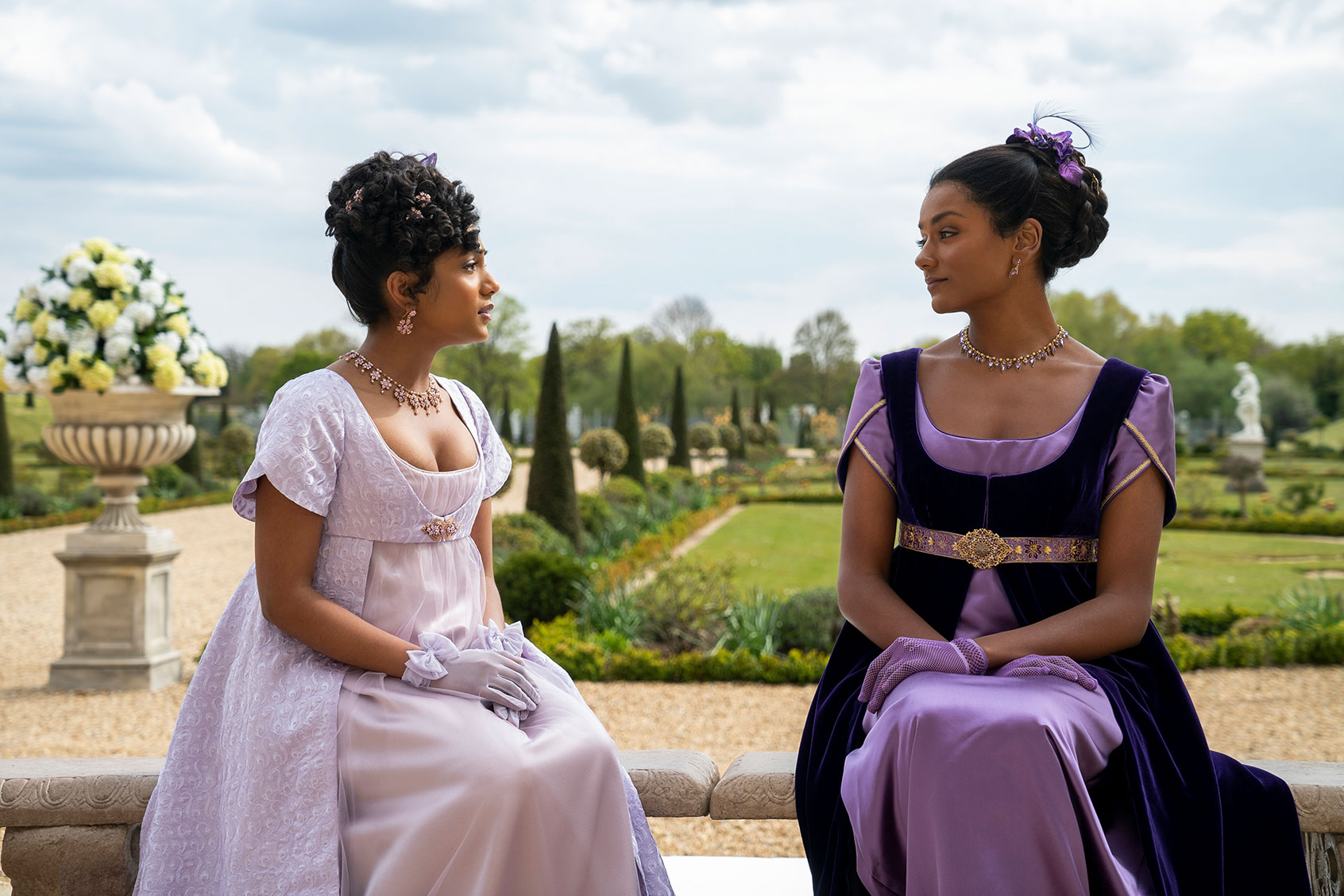
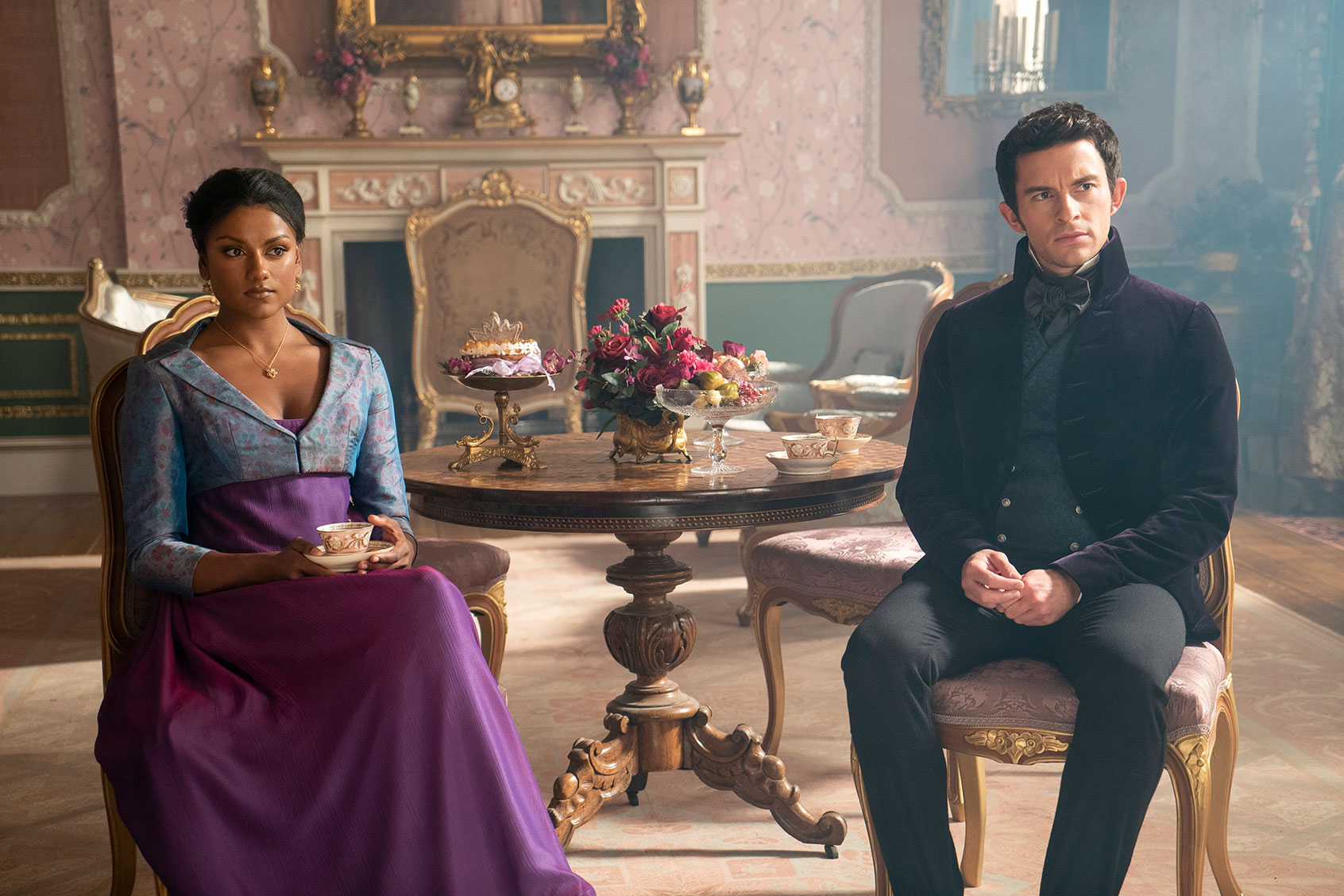
This season accomplishes exactly that with the Sharma family, comprising Lady Mary Sheffield (Shelley Conn) and her daughters, Kathani “Kate” (Simone Ashley) and Edwina (Charithra Chandran). The trio, adorned in silk dresses, sheer lace gloves and gold jhumkas, make quite the appearance before the Ton. While the reason for their recent return to England from India remains a mystery, it isn’t enough to ward off Viscount Anthony Bridgerton (Jonathan Bailey), who sets his sights on marrying Edwina — the season’s prized diamond — when his heart actually desires her older sister.

RELATED: Secrets of a gossip writer: The unchecked power of Lady Whistledown on “Bridgerton”

Aside from the steamy love triangle, “Bridgerton” this season is full of nods to South Asian culture and customs, which I took a keen interest in, not having seen these in mainstream American media. For the most part, it was a thrill to see such familiar practices or hear phrases that I’ve only encountered with my family. But as with most attempts at increasing diversity, the first forays into inclusion can be inconsistent or awkward at best or downright offensive at worst. 

Fortunately, the “Bridgerton” attempts at inclusion fell into the former category, which is to say, I give it a B-minus for effort. I break it all down below:

What works

BridgertonCharithra Chandran as Edwina Sharma, Simone Ashley as Kate Sharma in “Bridgerton” (Liam Daniel/Netflix)In one scene, Kate rubs warm hair oil into Edwina’s long, wavy tresses to maintain their glossy shine. It’s a familiar technique that I’ve been following since childhood, slathering Dabur Amla hair oil or good ol’ coconut oil after a deep cleanse. Not only does it help moisturize hair, but it’s also great for circulation. It’s an integral part of the grooming regimen.
In a separate scene, Kate — who is not a fan of English tea — pulls out a sachet of crushed cardamom pods and cloves, sets the spices atop a strainer on her teacup and prepares herself a cup of masala chai. The process is an art form in itself and highlights just how gratifying that first sip of chai is (seriously, masala chai makes English tea look like a complete fool in comparison).

It’s these everyday practices that feel the most authentic, where the Sharmas could just be themselves, and that’s probably why they work. It seems that attempts to introduce more nuanced cultural practices or references are where the wheels fall off the carriage.

What works  . . . until it doesn’t: the haldi ceremony

Shelley Conn as Mary Sharma, Charithra Chandran as Edwina Sharma and Simone Ashley as Kate Sharma in “Bridgerton” (Liam Daniel/Netflix)
A haldi, or turmeric, ceremony is a pre-wedding ritual.

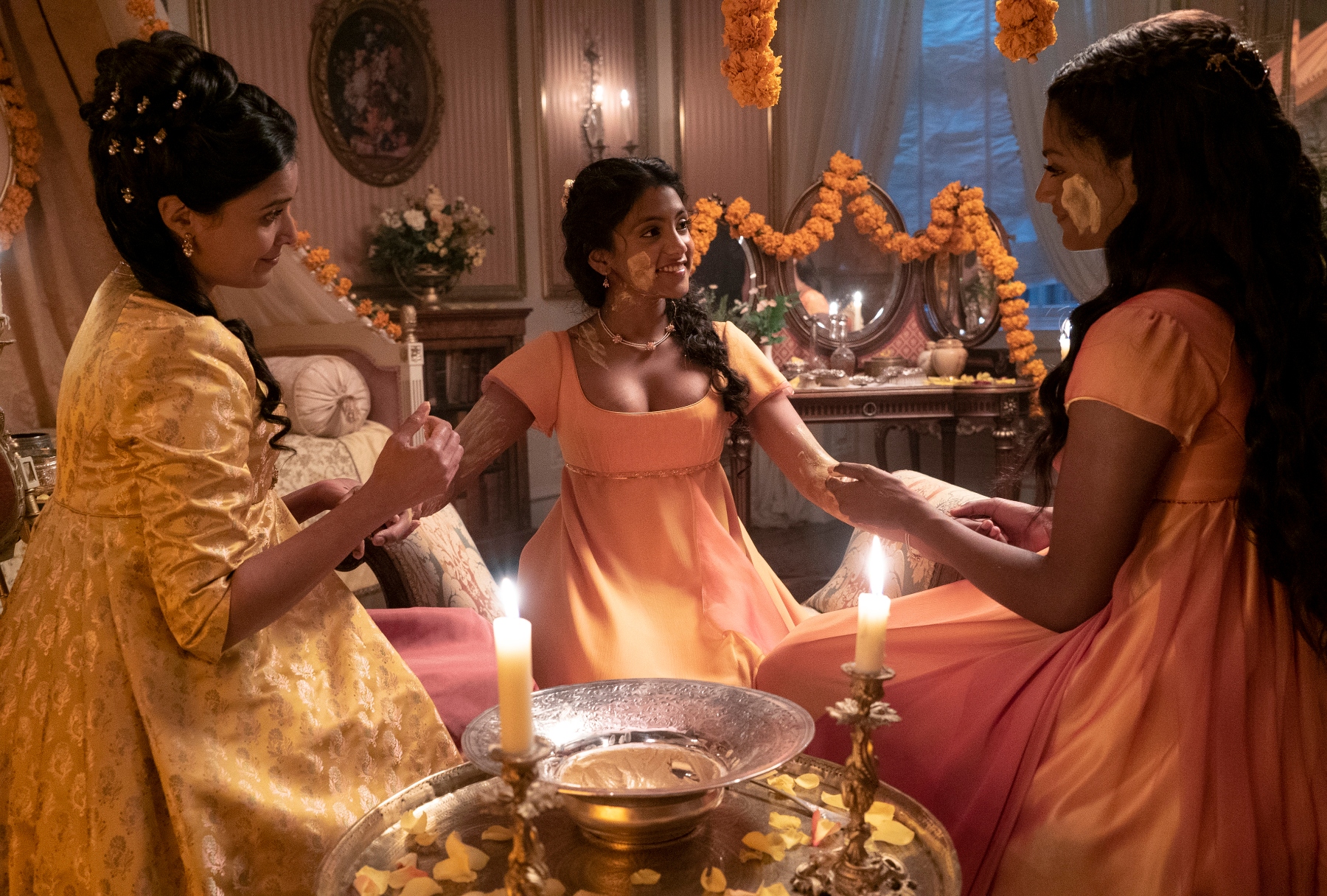
The episode “The Choice” opens with Edwina’s haldi ceremony, where her mother and older sister apply fresh turmeric paste on her arms, face and neck before her wedding day. Everyone is dressed up in yellow — an auspicious color in Indian culture — and the room that they are all gathered in is adorned with marigold garlands and other sunny floral decorations. 

A haldi, or turmeric, ceremony is a pre-wedding ritual in which the bride and groom are slathered with turmeric paste, which is usually made with sandalwood powder, milk or rose water. Turmeric, which is not only revered for its anti-inflammatory and antiseptic properties, is a symbol of good luck and prosperity in Indian traditions. The common spice, however, is known to leave behind prominent stains on anything it touches, whether it’s clothes, kitchenware or skin and nails. After the completion of the ceremony, the paste is washed off, typically with water and warm oil, and leaves the soon-to-be-married couple with a divine, almost heavenly glow.

In this scene we’re also treated to another culture nod. The Vitamin String Quartet renditions of pop songs have become a signature on “Bridgerton,” and the show gives the same honor to a song familiar to many South Asians. An instrumental version of “Kabhi Khushi Kabhie Gham” (translation: Sometimes there is joy, sometimes there is sorrow), the title track from the iconic Bollywood film of the same name, plays in the background during this bonding experience.

Netflix compiled this season’s instrumental covers in this handy YouTube video. Cue it up to 1:32 to hear “Kabhi Khushi Kabhie Gham”:

So far so good, right? Well  . . .  just like the show portrays, the ceremony is an intimate affair with only family members and close friends in attendance. But what “Bridgerton” gets wrong is who applies the holy turmeric and who gets to proudly wear it.

According to my mother, aunts and cousins, the traditional custom is that only married women can apply turmeric on the prospective bride. So in this case, the unmarried Kate probably shouldn’t have been the one smearing paste on anyone. However, modern-day haldi ceremonies, including the countless ones I’ve been to in the past, have ditched those strict practices, allowing close loved-ones to partake in the ritual. So I’ll allow it this time. Kate doing the honors isn’t that far out of bounds for such progressive Regency women trying to hold onto their customs in a foreign land.

Towards the end of the scene, however, a giddy Edwina decides to return the favor and says, “Is it not also said when spread on an unmarried person, haldi will help them find a worthy partner that makes the rest of the world quiet too?” She then smears the paste gently on Kate’s face.

Edwina’s impromptu actions are purely a “Bridgerton” fabrication. Haldi is only applied on the bride or groom (they’re the ones getting married!) and not on unmarried women and girls. So Edwina’s little remark to Kate does not apply. (And maybe this breach of etiquette is why Edwina’s wedding was doomed from the start! So inauspicious.)

What’s flubbed

BridgertonSimone Ashley as Kate Sharma and Jonathan Bailey as Anthony Bridgerton in “Bridgerton” (Liam Daniel/Netflix)

Edwina has mastered the “maruli” – or something

There’s no such thing as a maruli.

Earlier in the season, Kate brags about Edwina to Lady Danbury (Adjoa Andoh) and details a laundry list of skills. In addition to having “exceptional posture” and a “beautiful smile,” Edwina is well-versed in French, Latin, Greek and, of course, her native Marathi and Hindustani.  

“She not only plays sitar and maruli, but pianoforte too,” adds Kate.

The only problem is . . . there’s no such thing as a maruli (unless Edwina invented her own instrument and is the only young woman who has mastered it. So accomplished!) However, a murali, also known as a bansuri, does exist and is a classical Indian side-blown flute. The elongated instrument, which is made from a hollow shaft of bamboo, is also associated with Lord Krishna, a prominent Hindu deity of protection, compassion, tenderness and love. Today, the murali is the world’s most popular Indian instrument and a global spectacle.

We’re just going to assume Kate garbled her pronunciation while trying to talk up her sister.

What, you’ve never heard of “Guhleeeb”? Well, neither have I!

Twitter critics were quick to point out that Edwina asking Anthony if he’s ever read Ghalib, which she pronounces as “Guhleeeb,” is another error. Another user also noted that Ghalib’s significance in “Bridgerton” history makes no sense because the Indian poet, who was born in 1797, would have been just 16 years of age in the show’s timeline (although Daphne did have her baby so a year has passed, so if it’s 1814 maybe Ghalib would’ve been 17.) It’s true that Ghalib began composing poetry at the tender age of 11, but he wasn’t published until decades later. Neither Edwina nor Anthony could’ve read his work.

The hodgepodge of languages

Throughout the series, Edwina refers to Kate as “didi,” which means older sister in Hindi, while Kate calls Edwina “bon” (albeit with an odd pronunciation), which means sister in Bengali. The sisters also refer to their father as “appa” and their mother as “amma,” the generic terms for mom and dad that’s mainly used in South India. And as mentioned before, the sisters can speak both Marathi — the official language of the Indian state of Maharashtra — and Hindustani — which meshes both Hindi and Urdu, the national language of Pakistan, into one tongue.   

Yes, it’s impressive that the show features a lot of languages across the South Asian diaspora. But the confusing part is that this diverse assemblage doesn’t really match up with the Sharma’s surname, which is common in the Northern states of India. Perhaps the name was chosen by the “Bridgerton” writers not for its geographical authenticity but because the sound recalls the family’s original surname in Julia Quinn’s books: Sheffield. Regardless, while listening to the various languages was fun, I couldn’t help but think how unrealistic — and chaotic — it all really is.

In the end, “Bridgerton” may be set in Regency England, but it’s probably better to see that as a fun suggestion (like a party theme) rather than a strict historical guideline. After all, people of color may have lived in England during that time, but they were not afforded the same access and privileges as we see enjoyed by the Sharmas and the Duke. So, even with all the discrepancies, I’m still happy to embrace the fantasy that is “Bridgerton” if it will give me a ballroom version of Miley Cyrus’ “Wrecking Ball” and a love story starring women who look like me.

More high society pieces you might enjoy:

A cinnamon swirl bread that’s light, fluffy and incredibly yummy

Food52 Resident Samantha Seneviratne and her son Artie share a recipe for cinnamon swirl bread that’s light, fluffy, and incredibly yummy. Mashed potatoes are used as a secret ingredient to make the dough ultra-tender and soft. Cinnamon sugar adds both sweetness and spice for a heavenly baked treat.

***

Recipe: Cinnamon-Swirl Potato Bread

Yields
2 loaves
Prep Time
5 hours 30 minutes
Cook Time
35 minutes

Ingredients

  • 3/4 cup whole milk, heated to about 115°F, plus more for the egg wash
  • 1/4 cup granulated sugar, divided
  • 1 tablespoon active dry yeast
  • 2 large eggs, divided
  • 1 teaspoon kosher salt
  • 1/4 cup (160 grams) mashed russet potato (about 1 large potato, peeled, boiled, mashed, and cooled completely)
  • 4 cups (480 grams) all-purpose flour
  • 8 tablespoons (113 grams) butter, at room temperature, plus more for the pan
  • 3/4 cup packed light brown sugar
  • 2 teaspoons ground cinnamon


Directions

  1. In the bowl of a mixer fitted with the dough hook, combine the milk, 1 teaspoon of the sugar, and the yeast. Let stand until foamy, about 5 minutes.
  2. Add one egg and one egg yolk, salt, potato, and flour and knead the dough, on low, until it starts to come together, about 3 minutes. It will still look a little bit dry. Don’t worry.
  3. Add the butter, a piece or two at a time. It may look like it’s not getting in there but don’t worry, it will; just keep adding and kneading. (You might have to stop the mixer and knead the butter in with your hands for a minute to get it started.) Once incorporated, increase speed to medium and knead dough for another few minutes until it is smooth and elastic.
  4. Form the dough into a nice ball, cover the bowl, and set aside to double. This could take 30 minutes or 2 hours, depending on how warm your house is. It’s best to just keep an eye on it and watch the dough rather than the clock.
  5. In a small bowl, combine the brown sugar and cinnamon. Cover and set aside. Butter two 8 1/2 -by- 4 1/2-inch loaf pans and line them with parchment, leaving a 2-inch overhang on the two long sides.
  6. Tip the dough out onto a work surface. You shouldn’t need flour at this point. Divide the dough in half. Cover one half while working with the other. Pat or roll one half of the dough out into an 8-inch-by-14-inch rectangle. Sprinkle evenly with half of the brown sugar mixture. Starting at one of the short edges, roll the dough up tightly and pinch the end to seal. Set the loaf in of the prepared pans, seam side down. Repeat with the remaining dough and filling. Cover the loaves and set aside to rise. It’s ready to bake once the dough as come up about 1-inch over the edge. This step will take as long as it takes. Start preheating the oven to 350°F once the dough is about 1/2 inch above the edge of the pan.
  7. Whisk the remaining egg white with a two teaspoons of milk and gently brush over the top of the loaf. Bake until deep golden brown and the internal temperature has reached 190°F, 30 to 35 minutes. Let cool on sheet on a wire rack for 20 minutes, then tip the loaves out of the pan and turn right side up to cool completely.

“Halo” star calls out haters who haven’t even watched the show

Episode 3 of “Halo” premieres later this week on Paramount+, and all signs point to the show being one of the biggest hits for the streaming platform to date. Based on the long-running series of bestselling video games, “Halo” tells the story of an intergalactic struggle between humanity and a hostile alien collective known as the Covenant. At its center is the Master Chief, an armored super soldier who stands in for the player in the games, but is receiving a lot more development on the show. Ably played by Pablo Schrieber, the story focuses on peeling back the layers of Master Chief’s humanity.

“Halo” has broken with the games in a way major way by having the Chief remove his signature helmet. Paramount+ let fans know ahead of time this was going to happen, which meant that even before the show aired, there were plenty of people griping about how the Chief removing his helmet meant the show was going to be bad.

Taking to Instagram earlier this week, Schrieber addressed the backlash from “fans” who hadn’t even seen the show yet, and also thanked all those who have been supporting it.

Pablo Schrieber calls out “Halo” haters who haven’t watched the show

“Huge thanks to everyone who has supported our show,” the actor wrote in his post. “To all the fans who have been waiting for this moment for so long and to the newcomers who have responded with such overwhelming support and love, I am honored and humbled to be in service to this amazing universe and lore . . .”

For all the “fans” rooting against the home team, who hated the show before they saw it and disagree with what we are doing, I respect your opinion and I love you too. Because the truth is, we love the same thing. And I will keep working my ass off each and every day to make this show the best version of itself, to bring attention and respect to this [“Halo”] universe we love.

While calling out fans can be a tricky business that has gotten more than one actor in trouble over the years, Schrieber handled things pretty gracefully here. “Halo” isn’t the first show to be review-bombed on platforms like IMDb for somewhat spurious reasons. Just last week “Moon Knight” received a glut of negative reviews from fans not because it was a bad show but because it mentioned the Armenian Genocide, which is a politically hot button issue in parts of the world.

Whether you like Halo, hate Halo, or just plain don’t care about it, it’s a pretty fair statement that in order to weigh in on it with any sort of credibility, you kind of have to watch it. One point for the Master Chief.

What is a “warrior poet”? The neologism that connects New Agers and Madison Cawthorn, explained

Earlier this month, Republican Rep. Madison Cawthorn of North Carolina made headlines for making some unusual remarks on a podcast — specifically, claiming that his GOP colleagues were into orgies and cocaine.

“The sexual perversion that goes on in Washington, I mean being kind of a young guy in Washington with the average age of probably 60 or 70, and I look at all these people, a lot of them that I, you know, I’ve looked up to through my life,” Cawthorn said. “Then all of the sudden you get invited to like, ‘well, hey, we’re going to have kind of a sexual get together at one of our homes. You should come there,’ like… What, what did you just ask me to come to? And then you realize they’re asking you to come to an orgy.”

Cawthorn made these remarks on a podcast hosted by John Lovell, who is the founder of a multimedia network called Warrior Poet Society, which produces content that is focused around this idea of being a “warrior poet.”

RELATED: Why some New Age influencers believe Trump is a “lightworker”

Anyone who’s brushed up against New Age, yoga-loving wellness groups could easily mistake this term “warrior poet” as a coinage more befitting of that crowd. That’s because it’s certainly been used, and still is used, in those circles. Yet Lovell’s right-wing idea of a warrior poet is specifically masculine, and involves toting firearms (Lovell is an NRA instructor).

Yet Lovell claims being a warrior poet does not explicitly mean being pro-violence, despite his many articles and videos centered around firearms. As he explained once on another podcast, a warrior poet is a man who is “more than guns,” but someone who is interested in “family, faith and freedom.” It’s someone who is stereotypically masculine, but also vulnerable.

A quick search of the hashtag #warriorpoet on Instagram or Twitter will reveal two different, seemingly competing communities in which this phrase is wielded: one, by the right-wing, gun-toting “warrior poets” à la Lovell, but also in communities of New Age wellness followers and leaders. For example, Aubrey Marcus, founder of the “lifestyle brand” Onnit (whose vitamins are promoted by Joe Rogan) who runs retreats called Fit For Service (with promo videos that make it look like Burning Man), also frequently employs the phrase “warrior poet.” In a February 2021 tweet, Marcus — who publicly shares his psychedelic experiences, and refers to himself as a “fitness junkie” and “human optimizer” — shared a poem entitled “Code Of The Warrior Poet.”

“Be completely vulnerable,” Marcus said. “Recognize your invincibility.”

Marcus, who markets himself as some sort of New Age spirituality health guru, has also publicly promoted vaccine hesitancy throughout the pandemic and associates himself with people who promote QAnon-adjacent misinformation.

With that in mind, is it mere chance that the phrase “warrior poet” is employed by both groups? And is there more crossover between the two than one might think?


Want more health and science stories in your inbox? Subscribe to Salon’s weekly newsletter The Vulgar Scientist.


“It is no coincidence that the term ‘warrior poet’ is being used to promote libertarian men’s groups and far-right ideology,” said Dr. Stephanie Alice Baker, a senior lecturer in sociology at City, University of London who studies wellness, misinformation and conspiracies. “The term warrior connotes images of virile masculinity and being part of a community driven by a common cause; the term ‘poet’ frames this mission as an expression of inner wisdom and as part of a higher calling.”

Matthew Remski, a co-host of the aforementioned Conspirituality podcast and a cult dynamics researcher, agreed that the term links two seemingly disparate communities, and said they have more connections than one might think.

“I think that’s on brand for ways in which the various iterations of men’s rights movements going back to pre-Warren Farrell times, have combined these two streams of leftist, progressive, feminist seeming, visions of manhood that men are able to be in touch with their feelings and express survivorship and confess traumas,” Remski said. “And then men who are able to use the same kind of truth-telling spells to speak about their strength or their durability or their bravery or their quest for freedom; I don’t think there’s a contradiction at all.”

Indeed, the use of “warrior poet” in both circles is reflective of the widening overlap between spiritual thinking and far-right politics — which also overlaps with QAnon and anti-vax conspiracies, which often cite mystical or semi-spiritual concepts —  under a desire for these groups to reclaim masculinity in some way. As Remski pointed out, there have been prior iterations of this notion dating back to the ’70s (not adjacent to QAnon) where the terms “warrior” and “poet” have appeared together. The specific coinage of a warrior-poet seems to trace back to the so-called Mythopoetic Men’s Movement.

While Marcus’ lifestyle brand and Fit For Service retreats aren’t explicitly for men, there’s a particular masculine vibe to these events; photos and advertisements feature very muscular men that are often shirtless and wearing Viking-esque gear.

There are “strong parallels with religious groups, as these communities tend to present their personal journeys of self-discovery as part of a cosmic battle and New World Order.”

In 2021, Cliff Leek, assistant professor of sociology at the University of Northern Colorado, argued to the Washington Post that this kind of masculinity and the movements they draw can be a reaction to pro-feminist men’s groups that do work around reproductive health and sexual violence.

“As soon as we tie masculinity to spirituality, we turn masculinity into something ‘sacred’ as well as distinct and exclusive of women,” Leek said. “I’m not entirely sure that is something that can be done in a way that doesn’t reinforce or naturalize inequalities.”

Baker told Salon there are “strong parallels with religious groups, as these communities tend to present their personal journeys of self-discovery as part of a cosmic battle and New World Order.”

Notably, what both groups also have in common is their attempt to try not to brand themselves around a single ideology. For example, Lovell says being a warrior poet isn’t being all masculine. However, maybe not so ironically, on the Warrior Poet Society website there is an article entitled “What is a Woman?,” which seems to mirror the far-right’s reaction to Justice Ketanji Brown Jackson’s response to a question about the complexities of sex and gender. As for Marcus’ stated politics, he identifies as “anti-political” and doesn’t vote, according to an interview with Refinery29.

Remski called Marcus’ politics “reactionary centrism,” a position that ensures that people in these groups don’t “buy into the system of labels that separates one person from another.”

“What they’ll say is that to label their behavior and positions with any kind of clarity is  an attack on personal nuance and their pretense of universal oneness,” Remski said.

But oftentimes, the the kinds of posts they share with their followers, Remski explained, are “straight from MAGA-land.” In a way, this brand of rhetoric promotes extremism in a more subtle yet effective way.

“It gives a very sophisticated language for denying that one is actually extremely partisan,” Remski said, which leads us to where these movements exist today — a seemingly odd convergence of two worlds, that has always had parallels, but are coming together in more distinct ways today.

“There’s a new element in the crossover between New Age culture and right-wing militia culture, and that is the connective tissue of neuroscience and optimization, and MMA,” Remski said. “Aubrey Marcus and Joe Rogan are doing a bro fist-bump between those two zones.”

Read more about Conspirituality:


Woman charged with murder for self-induced abortion

A 26-year-old woman named Lizelle Herrera was arrested on Thursday and faces a murder charge in relation to her own self-induced abortion.

Herrera is currently being held on a $500 thousand bond in the custody of the Starr County Sheriff’s Office, according to local station KVEO-TV.

A spokesperson for the sheriff’s office gave a statement to news outlets saying that Herrera’s arrest came about when their office learned she had “intentionally and knowingly cause(d) the death of an individual by self-induced abortion.”

Related: The bizarre politics of radical anti-abortion activists

“This arrest is inhumane. We are demanding the immediate release of Lizelle Herrera.’ said Rockie Gonzalez, founder and board chair of Frontera Fund in a quote used by Texas Public Radio. “What is alleged is that she was in the hospital and had a miscarriage and divulged some information to hospital staff, who then reported her to the police.”


Want a daily wrap-up of all the news and commentary Salon has to offer? Subscribe to our morning newsletter, Crash Course.


“This is a developing story and we don’t yet know all the details surrounding this tragic event, what we do know is that criminalizing pregnant people’s choices or pregnancy outcomes, which the state of Texas has done, takes away people’s autonomy over their own bodies, and leaves them with no safe options when they choose not to become a parent,” Gonzalez said to TPR. “We want people to know that this type of legislation impacts low-income people of color communities the most when state legislators put restrictions on our reproductive rights.”

According to the Planned Parenthood website, on September 1, 2021 the state of Texas enacted a new abortion restriction called Senate Bill 8, also referred to as The Texas Heartbeat Act. Under the bill abortion is illegal if the heartbeat of an embryo can be detected, which backers of the bill believe can happen as early as six weeks into a woman’s pregnancy.

Read more:

Why is the right so obsessed with bathroom issues? Behind the new wave of anti-LGBTQ attacks

Republicans have become increasingly obsessed with bathrooms, toilets, locker rooms and other such spaces. At Donald Trump’s recent rally in Georgia, for instance, Rep. Marjorie Taylor Greene told the audience that “Pete Buttigieg can take his electric vehicles and his bicycles and he and his husband can stay out of our girls’ bathrooms.”

Greene was wallowing in obvious anti-gay bigotry and stereotypes. But she knows her audience well: Trumpists and Republican voters generally share her vile beliefs. Of course the facts do not matter: Like other so-called conservatives, Greene is fomenting a moral panic around the specious claim that the LGBTQ community somehow poses a “threat” to the “traditional family” and offers another example of how “real Americans” — meaning white, supposedly Christian conservatives — are somehow being oppressed or discriminated against in “their own country.”

As seen most recently with the wave of culture-war legislation attacking LGBTQ rights, “critical race theory,” school curricula and other related issues, this is a highly effective strategy for the Republicans and the larger white right in their goal of creating a new apartheid America — one in which women, the LGBTQ community, Black and brown people and other marginalized groups will have their most fundamental rights taken away.

RELATED: Marjorie Taylor Greene leads GOP revolt against “pro-pedophile” Republicans voting for Judge Jackson

The antisemitic QAnon conspiracy, with its vicious lies about how Democrats and leftists are kidnapping and abusing children —or, in the slightly more coded version, “grooming” them for sexual abuse — has become central to the white right’s revolutionary strategy to return America to the worst parts of its past. 

As seen with the Republican attacks against (now) Supreme Court Justice Ketanji Brown Jackson during her confirmation hearing, these culture-war talking points will be their primary political weapons in both the 2022 midterms and 2024 presidential election.

In her newsletter Lucid, historian Ruth Ben-Ghiat explores the connection between questions of freedom, bodily autonomy, fascism and laws that dehumanize LGBTQ people:

These developments are as predictable as they are horrifying. Anti-LGBTQ persecution is a constant among authoritarian governments around the world. Far-right regimes that uphold White racial privilege repress gays, but so do Communist states. Anti-colonial regimes such as those of Mobutu Sese Seko, which rejected White racial supremacy, were equally brutal.

Wherever strongmen rule, gays pay the price. Silencing and punishing those who engage in “nontraditional sexual relations,” as a 2013 Putin law terms them, has been central to authoritarian claims of defending the country and upholding “tradition.”

Authoritarian biopolitics is not just about encouraging the right elements of the population to procreate —fearmongering about declining White Christian birthrates recurs from the Fascists to Orbán and Tucker Carlson — but also about removing the wrong elements from the public sphere, by silencing them, locking them up, or worse.

What the Hungarian lesbian activist Dorottya Rédai describes as the “emotionally and psychologically devastating impact” of being “treated as an enemy” has been part of LGBTQ life under authoritarianism for a century.

As usual, to this point the Democrats have offered no effective defense against such culture war-moral panic attacks. Too many liberals, progressives and others outside the Republican-fascist echo chamber mock and dismiss these culture-war attacks as the stuff of fools and unsophisticated thinkers, as unreal issues or examples of “identity politics,” or as something that can in the end be defeated with facts and reason, by educating the public about “real” such as economic class and other pocketbook issues.

Such attitudes and assumptions all but guarantee defeat for the Democrats and others who believe in a pluralistic society and real democracy. Liberal schadenfreude may feel good in the moment, but it is the path to defeat in the battle against American fascism.

To defeat these right-wing culture-war moral panic attacks, the defenders of democracy must go beyond superficial critiques. They must substantively engage, expose and discredit how and why such attacks resonate for Republicans and “conservatives” — and, unfortunately, for many independents and Democratic voters as well.

To gain more context and insight into the conservative movement’s culture-war bathroom obsession, I asked a range of experts for their insights and what the larger implications of such culture war-moral panic attacks may be for American politics and society.

Dr. Justin Frank is a former clinical professor of psychiatry at the George Washington University Medical Center and a physician with more than 40 years of experience in psychoanalysis. He is the author of the bestselling books “Bush on the Couch,” “Obama on the Couch” and, in 2018, “Trump on the Couch: Inside the Mind of the President.”

Toilet life is private life. Partly, that’s related unconsciously to disgust and shame about the human process of elimination. But the Republicans displace anal disgust onto other things and people: For example, onto dark-skinned people and the LGBTQ community. Republican disgust with toilets and with homosexuals is becoming ubiquitous. Southern Republicans and others often talk about toilets, bathroom functions and LGBTQ people interchangeably. Not only do Republicans see things in black or white, they also see things as male or female, without any room for the complexity of “trans.” Instead, they are primarily preoccupied with getting rid of what’s disgusting to them.

On Jan. 6, insurrectionists expressed their disgust through feces because they were not articulate enough to use language or symbolic imagery.

Ironically, smearing shit in the halls of Congress is very much a primitive example of failed projection: On Jan. 6, 2021, MAGA insurrectionists expressed their disgust through feces because they were not articulate enough to use language or other symbolic imagery. After all, why not use the real thing to clarify once and for all how shitty our government is? Their feces was their ultimate smear tactic. 

The current preoccupation with toilets has to do with anxiety being stirred up — sexual anxiety, racial fears, fears of women — and they all get condensed into one main conscious preoccupation: toilets and bathrooms. 

Dr. John Gartner is a psychologist, psychoanalyst and former professor at the Johns Hopkins University Medical School. He is also the founder of Duty to Warn and was a contributor to the 2017 bestseller “The Dangerous Case of Donald Trump: 27 Psychiatrists and Mental Health Experts Assess a President.”

Authoritarian regimes always cast themselves as the guardians of morality, and cast all who oppose them as perversely evil, deserving the severest of punishments. Since the founding of the Moral Majority by Rev. Jerry Falwell in the 1980s, there has been an alliance between “biblical morality” and GOP politics. It’s worked well for them. 

The problem the Republican Party has now is that it is losing the culture war. Marriage equality is popular, and no one is surrendering that right. So now, trans people  are the new gays, and scapegoating them is the new way of rounding up votes. But like voter fraud, trans people in bathrooms is a non-problem. No one knows and no one cares who is in the stall next to them. They’re grasping for straws, or straw men, to make a wedge issue out of nothing.

Dr. Anthea Butler is a professor of religious studies and Africana studies at the University of Pennsylvania. Her new book is “White Evangelical Racism: The Politics of Morality in America.”

It’s not a surprise that the Republican Party and the conservative movement are so interested in toilets. After all, genitalia are important to their most loyal base, religious conservatives (evangelicals). Most if not all of these prohibitions and worries are also about policing people: where they go, what they do, who is allowed and who is not. Consider: If you have a political party that is steeped in ideas about law and order, gender and sexuality, the bathroom is one place you can control if you can’t control the bedrooms, as states used to with sodomy laws. 

Bathrooms are also historically places where people meet for illicit sex. The bathroom obsession, especially the previous bathroom battles in schools and states like North Carolina, is about their need to prevent sexual contact and the ways in which they are laser-focused on these issues, as we saw in the hearings for Ketanji Brown Jackson. While it may seem to outsiders that this obsession with the bathroom is a fetish, it’s actually about the irrational fears, and sometimes fantasies, of lawmakers influenced by religious conservatives who are also obsessed with controlling genitalia and bodily functions. 

Wajahat Ali is an author and political commentator. His essays and other writing have been featured at the New York Times, CNN and the Daily Beast. His new book is “Go Back to Where You Came From: And Other Helpful Recommendations on How to Become American.”

The GOP are obsessed with toilets because it’s beautiful, raw red meat for their base and to stir up cultural anxieties about LGBTQ folks ahead of the midterms and elections. They don’t have any solutions or plans for climate change, income inequality or COVID relief. Transgender people are going to be the scapegoats and Trojan horses for their ugly culture war for the midterm and 2024 election. This explains Sen. Marsha Blackburn’s question to Justice Jackson about how to define a woman. They’re going to say that Democrats are all godless atheists who are going to turn your son into a woman, and also that they are part of an international cabal of sex traffickers, as in the QAnon theory.

Republicans are going to say that Democrats are godless atheists who will indoctrinate your children to hate America — and are going to turn your son into a woman.

This is tied to their manufactured weaponization of critical race theory. Democrats are allegedly going to “indoctrinate” your children not only to hate America, democracy and white people, but also to become gay. We laugh at this, but this is going to be a winning strategy. They are going to peel off independents and some Democratic voters from religious communities — and this includes people of color by the way. It would be foolish to ignore this cynical line of attack. The Democrats need a counter-message.

Tim Wise is an author, activist and leading expert on white privilege and racism. He is the author of many books, including his most recent “Dispatches From the Race War.”

There is an obsession with purity. It is part of the right wing’s hyper-religiosity and repressive sexual politics. It’s part of their obsession with the notion of “contamination” by immigrants, especially from what Trump called “shithole” countries. And what better symbol of impurity and uncleanliness and contamination than a bathroom? What better symbol of filth and vulnerability than the place you go to shit? They are manifesting precisely the fears one would expect them to, given their obsessions with control and purity and order.

In addition, right-wing (and especially white) obsessions with purity and “contamination” are what long animated racism against Black folks: the fear being that white women needed to be protected from the impurity of Blackness.

Federico Finchelstein is professor of History at the New School for Social Research and Eugene Lang College in New York. He is the author of several books, including “From Fascism to Populism in History.” His most recent book is “A Brief History of Fascist Lies.”

My general take is that it is essential for any wannabe fascist politician in America today to construct an enemy to define the “we.” In the same way as the Nazis needed to create and define the Jews as total enemies, the followers of Trumpism and the GOP first have to define who to hate in order to define themselves.


Want a daily wrap-up of all the news and commentary Salon has to offer? Subscribe to our morning newsletter, Crash Course.


In order to do this, they return to the traditional enemies of American fascism and the extreme right (from Father Coughlin to the Ku Klux Klan) and they also invent new ones. More specifically, there is no fascism without hatred and xenophobia, and the United States has a long history of linking hatred to bathrooms. The later examples in North Carolina and elsewhere are typical smokescreens, aiming to turn us away from real problems (social, economic and political) in order to focus on bogus ones. Another example is of course the issues regarding critical race theory, the “don’t say gay” law in Florida, etc.

There is no fascism without the invention of an existential enemy (of the self, the nation, the people, the leader). In America, fascists, as in the Ku Klux Klan, almost naturally endorsed bathroom segregation because, as in all forms of fascism, segregation, demonization and eventual persecution and extermination are different aspects of this deep need to define the other to elevate the self

Matthew Sheffield is an expert on right-wing news media, messaging, and communication strategies. He is also the editor and publisher of Flux and host of the “Theory of Change” video podcast.

What calls itself “conservatism” in the United States is actually a reactionary movement that began in the 1930s as a frantic attempt by corporate interests to block Franklin D. Roosevelt’s administration from adopting the worker-friendly tax and regulatory policies that were then emerging in Europe and some other parts of the world.

American reactionaries have for decades sought to trump up imaginary moral panics in order to scare less-informed Christians about various minority groups. The target group has always shifted over time, but they generally rotate between racial minorities, women and LGBTQ people, and atheists and liberal believers.

“Trans panic” is a complete repeat of the lies told in the 1970s and ’80s to try to stop lesbians and gays from having any freedom to live openly. It’s a scapegoat operation to distract lower- and middle-income people while Republicans pick their pockets.

The latest “trans panic” is literally a complete repeat of the lies that were told in the 1970s and 1980s by people like Anita Bryant to try to stop lesbians and gays from having any sort of freedom to live openly. It’s all the same lies about bathrooms and “recruitment.” This rhetoric, and the laws it inspires, are nothing more than scapegoat operations to distract lower- and middle-income people while Republicans pick their pockets, such as by canceling school lunch programs while many people are still jobless.

Jason Colavito is a journalist, author and professional skeptic whose work has been featured in the New Republic, Esquire, Slate and other publications. He is completing a book on James Dean and the sex panic of the 1950s.

The obsession with bathrooms revolves around the notion of purity, both physical and moral. As a place where genitals are exposed in public, bathrooms become a place of special vulnerability. Those feelings of being exposed can create particular anxieties in terms of seeking to protect oneself and others during those moments of vulnerability. When combined with the hygiene rituals of bathrooms, in which we purify ourselves of the results of bodily functions, it’s easy to see how conservatives can transfer those feelings from excretory functions to sexual ones. They therefore seek more rules to reduce their own sense of impurity and vulnerability by displacing discomfort onto disfavored groups.

Moral panics have been a regular feature of American life and often serve to highlight the anxieties and fears that dominate an era. Today’s moral panic over sex and gender is remarkably similar to the moral panic of the 1950s that saw nationwide efforts to restrict LGBTQ Americans. In both cases, political and social anxieties about changes to American society and America’s place in the world manifested as an effort to “purify” the country in the name of morality.

Timothy Stewart-Winter is a professor of American Studies as Rutgers University — Newark. He is the author of “Queer Clout: Chicago and the Rise of Gay Politics.”

My father tells me that when I was an infant, and only women’s bathrooms had baby changing tables, he had to kneel and place a blanket on the floor of men’s rooms to change my diaper. Indeed, public bathrooms are always changing. In the mid-20th century, few could accommodate a wheelchair, and it was more common than it is today both for gay men to cruise for sex in them and for undercover police to spy on and arrest those men (though both practices persist).

Public bathrooms were central to the Jim Crow order. Well within living memory, “white” and “colored” signs came down across the U.S. South, and even then, public bathrooms remained sites of white anti-Black surveillance and violence. In the spring of 1965, Sammy Younge Jr., a 20-year-old Black college student in Alabama, marched from Selma to Montgomery for the right to vote. The following winter, before he could exercise that right, he was murdered by a gas station attendant in Tuskegee for trying to use a bathroom reserved for whites.

Public bathrooms also teach us about gender. Especially since 2015, right-wing activists and the Republican Party have breathed new life into transphobic and homophobic ideas about trans women in bathrooms as purported threats to children, using these manufactured fears to undermine anti-discrimination laws and win elections. In the real world, it is people who defy gender norms who face harassment and violence routinely in public bathrooms — and we should recognize that there is nothing natural about that fact. As the sociologist Erving Goffman memorably wrote in 1977, “it has come to pass” that modern societies have separate bathrooms for men and women, a pattern that he believed set “a sort of with-then-apart rhythm” that shaped public contact between men and women more broadly.

For Goffman, the crucial thing about sex-segregated bathrooms was that they “cannot be tied to matters biological, only to folk conceptions about biological matters. The functioning of sex-differentiated organs is involved, but there is nothing in this functioning that biologically recommends segregation; that arrangement is totally a cultural matter.” (Emphasis his.) For Goffman, and I think for us, what he called “the sequestering of public toilets by sex” produces gender norms — not the other way around.

Read more on the right-wing assault on LGBTQ rights:

The end of the COVID emergency could mean a huge loss of health insurance

If there has been a silver lining to this terrible covid-19 pandemic, it is that the rate of Americans without health insurance dropped to a near-historic low, in response to various federal initiatives connected to the government-declared public health emergency.

Now, as the pandemic’s acute phase seemingly draws to an end, millions of low-income and middle-income Americans are at risk of losing health insurance. The United States might see one of the steepest increases in the country’s uninsured rate in years.

When the federal covid-19 public health emergency ends — as it is currently scheduled to on April 15, though it is likely to be extended — so will many of its associated insurance protections. That includes a rule forbidding states to kick anyone off Medicaid while covid-19 raged, which came along with a 6.2-percentage-point boost in federal Medicaid funding to keep these most vulnerable patients insured.

Before the pandemic, states would regularly review people’s eligibility for Medicaid benefits and remove people who no longer qualified. But with that practice suspended, Medicaid enrollment has grown by more than 12 million since the beginning of the pandemic; as many as 1 in 4 Americans are now insured by the program.

When the public health emergency expires and the extra federal funds disappear, states will be required to once again review enrollees’ continued eligibility. Millions of people could be dropped in the process, as many as 15 million over time by some estimates. That includes people whose income has risen, those who moved to another state, or people who simply haven’t returned the complicated paperwork to demonstrate their continued eligibility. The process is byzantine even in normal times, completed by mail in many states, making it particularly unreliable given how many people have relocated during the pandemic.

Many of the millions of people who lose Medicaid coverage, either because they no longer qualify or because they are otherwise dropped from the state’s rolls, sometimes mistakenly, are likely to discover they are uninsured only when they next seek medical care, such as when they visit a clinic or go to a pharmacy to refill a prescription.

And that’s in a country where an inhaler can cost $50 to $100, a doctor’s visit typically costs over $100, and hospitalization for covid-19 can run tens of thousands of dollars.

On top of all that, the enhanced government subsidies to buy Affordable Care Act health plans — provisions of the American Rescue Plan Act that make insurance more affordable for low- and even some middle-income people — expire at year’s end. For example, premiums for a “silver level” health plan that would typically cost $560 a month on average were reduced to just $390 with the extra government support for someone earning $55,000 a year, resulting in an annual savings of over $2,000.

When those enhanced subsidies expire, many lower-income Americans could be left with the prospect of paying double for health coverage.

The Build Back Better legislation, which passed the House in November, would have extended the more generous subsidies for purchasing ACA health plans. But the bill was declared “dead” this year by Democratic Sen. Joe Manchin of West Virginia, who refused to support it. Now Democratic leaders are hoping to negotiate a slimmed-down version of the bill, but it’s unclear whether a bill will materialize with the provision in it.

It is a perilous time to throw low- and middle-income Americans off the insurance cliff: A new omicron subvariant is spreading, and a program that provided coronavirus testing and covid treatment at no cost to the uninsured expired in March because the government ran out of funds to support it. Another program that provided vaccination at no cost to patients is set to end this month.

The public health emergency phase of the pandemic may well be winding down. Deaths currently average about 700 a day and are dropping. Schools and offices are reopening, some without masking. But about one-third of Americans are still not vaccinated. And, going forward, will newly uninsured low- and middle-income Americans be inclined to pay out-of-pocket to get a shot? If they get covid, how will they afford the pills to treat it, when the government bought Pfizer’s Paxlovid treatment for $530 a course and consumers could pay even more on the free market?

Patients vulnerable to losing their health insurance may not be prepared for the change. There’s been little mainstream outreach about the coming changes, and many people may not read government advisories or understand the ins and outs of pandemic health policy.

If people lose Medicaid this year, they will have a chance to enroll in an ACA health plan; the current enhanced subsidies mean they would be likely to pay little or nothing in the way of premiums until the end of the year — at which point insurance could become unaffordable and they would fall off the insurance cliff again.

Preserving insurance gains for low- and middle-income people is an important opportunity that grew out of our two-year-long national calamity. It shouldn’t be squandered. After all, covid is just one of many diseases that unduly affect poorer people without insurance. KFF polling in March found that Americans are more worried about “unexpected medical bills” than about being able to afford food.

The government has promised to provide 60 days’ notice before the public health emergency period ends for good, when states will have to trim their Medicaid rolls. The enhanced ACA subsidies don’t end until Dec. 31. There’s still time to find funding and act. As the risk of contracting a serious case of covid recedes, the risk of being uninsured shouldn’t grow.

Lindsey Graham justifies not voting for Ketanji Brown Jackson

Less than an hour after the United States Senate confirmed Judge Ketanji Brown Jackson as the first Black woman to serve as an associate justice of the Supreme Court, Senator Lindsey Graham (R-South Carolina) authored a tweet explaining why he voted in the negative.

“My ‘no’ vote was based upon Judge Jackson’s record of judicial activism, flawed sentencing methodology regarding child pornography cases, and a belief that she will not be deterred by the plain meaning of the law when it comes to liberal causes,” wrote on Thursday afternoon.

Upon her nomination by President Joe Biden in February to replace retiring Associate Justice Stephen Breyer, Jackson faced multiple rounds of grilling by Senate Republicans, including Graham, who stormed out of one hearing because he was displeased with Jackson’s responses.

The GOP’s lines of questioning had, for the most part, little to do with her unprecedented qualifications to sit on the nation’s highest bench. Instead, GOP lawmakers nitpicked her record as an appellate court judge and defense attorney and put her perceived political affiliations under a microscope with an exceptionally partisan – and racially sculpted – lens.

Graham, however, made no qualms about his opposition to Jackson’s nomination. Last week, he admitted that if Republicans had control of the Senate, Jackson would never even have gotten a hearing.

“If we get back the Senate, and we’re in charge of this body, and there’s judicial openings, we will talk to our colleagues on the other side,” Graham said during a Judiciary Committee hearing. “But if we were in charge, she would not have been before this Committee.”

He added that “you would’ve had somebody more moderate than this” if there were a Republican in the Oval Office.

That, as the public collectively witnessed under former President Donald Trump, is completely untrue.

Trump’s three nominees – including his first whom the Senate stole from his predecessor, Barack Obama – were primarily selected by Trump because of their opposition to abortion (this was one of his campaign promises in 2016). None of them had anywhere near Jackson’s qualifications and experience. But the Republican-dominated Senate confirmed Neil Gorsuch, Brett Kavanaugh, and Amy Coney Barrett – all of whom had associations with and the backing of extreme right-wing organizations – to the Supreme Court anyway.

Mitch McConnell leads Republicans in profiting off of corporate price hikes

As millions of Americans buckle under the weight of record-breaking inflation, Republicans in Congress have remained adamant that President Biden, or rather “Bidenflation,” is the main culprit of price increases across the board, dismissing concerns of corporate profiteering out of hand. But a new analysis reveals that Republicans are collecting millions of dollars in donations from the very corporations under scrutiny, calling into question the party’s ability to honestly assess just what’s causing prices to soar. 

According to an Accountable.US report exclusively obtained by Salon, three Republican senators and fifteen members of the House GOP caucus have raked in at least $5,709,425 from corporations that have used inflation as a pretext for jacking up prices. 

“Corporate profits were the highest they were last year, and you have the Republican caucus in the Senate and the House basically trying to give them a pass,” said Tony Carrk, Executive Director of Accountable.US.

Chief among Corporate America’s political guardians is Senate Republican Leader Mitch McConnell, R-Ky., who last year raked in $1.24 million from industry behemoths like Walmart, Kroger, Chevron, Johnson & Johnson, and Ford. 

In a press release last month, the Senate minority leader, who did not respond to Salon’s request for comment, accused Democrats of “gaslighting” the American public for blaming inflation on price gouging, calling the Democratic narrative “left spin” designed to distract from what he perceives to be Biden’s profligate fiscal spending.

But many of McConnell’s own corporate benefactors, including Kroger and J&J, have openly bragged about hiking prices in investor calls, celebrating inflation as a unique opportunity to pass along costs to their customers. 

“We’ve been very comfortable with our ability to pass on the increases that we’ve seen at this point,” Kroger CFO Gary Millerchip told investors back in October. “And we would expect that to continue to be the case.”

McConnell last year raked in $1.24 million from industry behemoths like Walmart, Kroger, Chevron, Johnson & Johnson, and Ford. 

In a similar vein, J&J CEO Joaquin Duato reportedly told investors that the need to “address suffering and death” amid the pandemic should be a sign of “optimism” and “opportunity,” suggesting that the company’s price increases were driven by an impulse to expand profit margins. 

RELATED: Giant food producers are profiteering off inflation – and bragging about it too

But these public remarks do not appear to have any register with Republican lawmakers, many of whom continue to exonerate big business while lining their campaign coffers with corporate cash.

Sen. Roy Blunt, R-Mo., for instance, took in at least $946,000 last year from goliaths like Walmart, General Motors, Pfizer, and UnitedHealth Group. The Missouri Republican’s wife, who serves as Kraft Heinz’s strategic advisor on government affairs, also owns at least $250,000 worth of her own employer’s stock, according to a separate Accountable.US report shared with Salon.

During the same year that Blunt collected thousands from Pfizer, the company hiked the cost of 125 drugs in its product line, including the company’s pneumonia vaccine (up 6.9%), a breast cancer medication (up 6.9%), and a drug for people with heart disease (up 6%). To boot, this year, Kraft Heinz plans to increase the price of some of its products by as much as 30% even though the company saw strong profits in 2021.

But Blunt, for his part, has repeatedly dismissed any accusations of consumer exploitation, suggesting that the Democrats’ narrative around inflation is a work of “fiction.”

“Americans know the truth,” Blunt claimed in a press release published four days before McConnell’s. “Oversized government spending fueled this crisis, and reckless government spending, designed to hide costs instead of lowering them, will not solve it.”

Sen. Pat Toomey, R-Penn., has also taken a similar party line, claiming that the Democrats have “shifted their blame to greedy corporations” – from which he incidentally collected $382,500 worth of campaign contributions throughout 2021.


Want a daily wrap-up of all the news and commentary Salon has to offer? Subscribe to our morning newsletter, Crash Course.


Apart from those donations, Toomey also owns $50,000 equity stakes in both Apartment Income REIT Corp, a real estate investment trust, and utility giant PPL Corporation – both of which raised rents and utility rates respectively in 2021.

In the House, at least fifteen lawmakers have employed a similar playbook. Some of the most notable offenders include House Financial Services Ranking Member Patrick McHenry, R-N.C. ($572,000); House Energy & Commerce Ranking Member Cathy McMorris Rodgers, R-Wash. ($617,000); Reps. Andy Barr, R-Ky. ($333,725); Ann Wagner, R-Mo. ($324,000); Gus Bilirakis, R-Fla. ($279,000); and Brett Guthrie, R-Ky. ($224,000) – all of whom have cited fiscal spending as being a primary reason for inflation.     

RELATED: Bernie Sanders to hold hearing on how “corporate greed and profiteering” are fueling inflation

But while that narrative might be popular within the GOP, it doesn’t at all cohere with firm-level and aggregate economic data, said Lindsay Owens, Executive Director at Groundwork. 

“There are multiple kinds of candidate explanations for why prices are rising. All of them are true. All of them are contributing to a multifactorial problem,” Owens told Salon in an interview. Supply chain shortages, she said, have driven the cost of manufacturing and distribution up. Corporate consolidation and deregulation have also eliminated market competition, making consumers more vulnerable to monopolistic pricing. All of these factors, of course, predate the Biden administration. But when it comes to corporate profiteering, she said, the evidence is crystal clear.

“They tell investors every quarter our pricing actions more than offset our [cost of goods sold]. They’re passing along the rising cost of production, and they’re still charging more,” Owens added. “And so it’s actually quite a straightforward story. It’s interesting to me that there’s been such a vigorous debate about it, because it’s sort of just factually true.”

Josh Bivens, Director of Research at the Economic Policy Institute, made a similar argument, saying that “the idea that the Biden package explains most of the inflation” is “clearly not true.” 

RELATED: Stop blaming workers for inflation: Corporate greed is a much bigger factor

“You don’t see any correlation between inflation and the generosity of fiscal relief. Inflation is up everywhere, regardless of whether countries were stingy or generous,” he said in an interview with Salon. “You also have to think, ‘What did we get for a couple of percentage points of inflation?’ We got 6.5 million jobs created over a 13-month span – that is an incredibly fast rate of growth that just absolutely dwarfs any other recovery we’ve had before.”

Just this month, the Department of Labor announced that the economy added a steady 431,000 jobs to the economy in March, with just 3.6% of the American workforce unemployed – a marked departure from its peak of 14.7% at the height of the pandemic. Additionally, wages last year shot up by 4.4%, the fastest growth the nation has seen since 1983. 

But even strong employment and wage growth haven’t managed to keep up with the skyrocketing prices of food and fuel. For the year ending in February 2022, the cost of food climbed by 7.9%, far outpacing the wage growth in what was the largest jump since 1981. The average price of gasoline, which reached $4.24 per gallon this past week, is also the highest it’s been since the early ’80s. 

None of this has gone unnoticed by Democratic lawmakers, many of whom have called on Republicans to get behind stronger regulatory guardrails against price-gouging. 

This week, Big Oil CEOs from companies like BP America, Chevron and ExxonMobil were grilled by members of the House Energy and Commerce Subcommittee on Oversight and Investigations over high gas prices. In particular, executives were pressed on why gas prices remain sky-high despite the decline in the price of oil. Democratic lawmakers also encouraged CEOs to increase oil production in order to drive the price of gas down. 

RELATED: “Pain at the pump”: The highly flammable politics of American gas prices

But for the most part, Republicans did not appear to be moved by the arguments of their colleagues across the aisle – a partisan divide underscores how much Republicans are willing to sacrifice to defend the average American consumer, said Carrk, the executive director of Accountable.US.

“[Republicans] always say that they’re on the side of the little guy, but look at what they’re doing. They’re defending big corporations over the little guy,” Carrk told Salon. “They like to put out press releases about inflation and costs going up. But when there’s actually anything to do about it, they oppose it.

Lady Gaga’s dog walker shooting suspect mistakenly freed from jail

James Howard Jackson, one of five suspects arrested almost exactly a year ago in conjunction with the shooting of Lady Gaga’s dog walker, Ryan Fischer, was mistakenly freed from jail on Wednesday due to what’s being called a “clerical error.”

In a statement from the Los Angeles County Sheriff’s Department it’s detailed that police are currently searching for 19-year-old Jackson with the intent to bring him back into custody. Jackson is suspected of robbing and shooting Fischer on the night of Feb. 24, 2021 as Fischer was walking Gaga’s three French bulldogs. On the night in question, two of the dogs, Koji and Gustav, were nabbed by the suspects who absconded with the animals in their waiting vehicle.

“The investigation is continuing and the LASD Major Crimes Bureau is actively working to get Mr. Jackson back in custody,” says the statement, which describes Jackson’s release as “inadvertent.”

Related: By refusing to name her abuser, Lady Gaga reclaims power

According to People Magazine, Jackson and four other suspects were arrested in relation to the shooting and robbery, and Jackson specifically was charged with “attempted murder, conspiracy to commit robbery, second-degree robbery, assault with a semiautomatic firearm and a felon carrying a concealed firearm in a vehicle.”


Want a daily wrap-up of all the news and commentary Salon has to offer? Subscribe to our morning newsletter, Crash Course.


Gaga’s dog walker, Fischer, suffered a collapsed lung, and severe mental trauma as a result of the attack. 

“In the hospital, my lung collapsed again despite the chest tube poking at my insides,” Fischer wrote in a statement posted to his Instagram. “And then it collapsed again. And again. It became quite clear that my lung was not healing, and the bullet wound had scarred my tissue like a burn. It could take months, if ever, for the hole to seal.”

https://www.instagram.com/p/CL4aZMYBXeN/?utm_source=ig_web_copy_link

https://www.instagram.com/p/CL4adGlBwiv/?utm_source=ig_web_copy_link

Lady Gaga issued a statement of her own following the attack last year saying “I continue to love you Ryan Fischer, you risked your life to fight for our family…You’re forever a hero.”

There was a bit of backlash rumblings following Gaga’s statement, some believing that she was not appreciative enough of the fact that Fischer had risked his life for her dogs, but Fischer himself came to her defense. 

“She’s helped me so much. She’s been a friend for me,” he told Gayle King in an interview for the recently renamed “CBS Mornings in a quote used by the Los Angeles Times.” “After I was attacked, my family was flown out and she had trauma therapists flown to me and I stayed at her house for months while friends comforted me and security was around me.”

Fischer’s assistant, Elisha Ault had a different take on the matter, however.

“Nobody really made a point to come see him or talk to him or make contact with him,” Ault told Rolling Stone in a quote used in the same Los Angeles Times article. “Ryan was a lot more than just an employee for them. They were friends — close friends — for years.”

Read more:


Chris Pine and Thandiwe Newton heat up Amazon’s sleepy thriller “All the Old Knives”

Arguably the best thing about Amazon Prime’s somnambulant thriller, “All the Old Knives,” is Swedish singer Amanda Bergman’s too cool rendition of The Cure’s hit, “Lovesong” over the closing credits. The music has a dubious, haunting quality to it, and the lyrics, “Whatever words I say/I will always love you,” suggests what this film tries — and fails — to do, which is communicate how love and betrayal sometimes operate in tandem.

The story involves the investigation of a CIA mole eight years after a hijacking incident claimed the lives of more than 100 innocent people. Vick Wallinger (Laurence Fishburne) is the boss in Vienna, and he asks Henry Pelham (Chris Pine) to close the book on an embarrassing situation by tracking down Bill Compton (Jonathan Pryce) and Celia Harrison (Thandiwe Newton) to see if either (or both or neither) of them provided inside information to the hijackers. Moreover, Henry must “do what is necessary” to diffuse the mole. Wallinger won’t articulate the word “kill,” but Henry is soon hiring Treble (Michael Shaeffer) to eliminate Celia if she is the mole. 

RELATED: Sandra Bullock charms in “The Lost City,” which falls short of its screwball-comedy ambitions

Adding to the complexity of the assignment, Henry and Celia, were in a romantic relationship back in Vienna, where they both worked during the hijacking. Will their reunion rekindle their old spark? Cut to two weeks earlier, when Henry meets with Bill in London. Following their encounter, Bill places a warning call to Celia, telling her Henry is coming.

“All the Old Knives” is directed, poorly, by Janus Metz, who is working from a screenplay by Olen Steinhauer, who adapted his own novel for the film. The story toggles back and forth between Vienna eight years earlier, and a contemporary sequence where Henry interviews Celia in an empty, fancy wine country restaurant in Carmel-by-the-Sea. (Celia dropped out of the spy game after the hijacking, got married, and moved to California). Metz may envision Steinhauer’s story to be a twisty thriller with double-crosses, but the film is edited in ways that defuse the tension and possibly confuse the viewer. (Pine’s hair and graying beard signify the time period, but one might think that the actor, who serves as executive producer, insisted on the numerous close-ups that bask in his matinee idol good looks.)

The scenes between Henry and Celia are of interest because there is not much else to chew on in this flimsy thriller. Ordering Burrata with cilantro oil, blood orange, and maple-glazed free-range bacon, Henry invites Celia to “live a little” and try the bacon. He feeds her from his fork, and it is more sensual than their sex scenes that pop up later in the film. But as they talk (and talk) about what transpired all those years ago, the story comes down to who made a phone call to the enemy as the hijacking was unfolding. 

All the Old KnivesAll the Old Knives (Stefania Rosini/Amazon Studios)

The suspects are few. One of their colleagues died by suicide. One is above their pay grade. One, who might be viable, is discredited for a forgettable reason. The “whydunnit”— what would prompt someone to betray their country? —  is more intriguing than the “whodunnit,” but not by much because “All the Old Knives” does not provide enough backstory. There is talk of Henry’s previous work in Moscow where he first made contact with Ilyas Shushani (Orli Shuka) who is integral to the hijacking case. And Celia recounts her previous, unhappy posting in Dublin, her only prior job before Vienna. Bill’s complication is his never-seen wife, who provides an excuse during the hijacking incident for him to leave, and for someone to use his phone to call the enemy contact.


Want a daily wrap-up of all the news and commentary Salon has to offer? Subscribe to our morning newsletter, Crash Course.


However, Metz never generates much tension as this investigation develops. Henry and Celia talk about a relationship based on trust, but the betrayal — of their relationship or their country — never finds any purchase. Does Henry believe Celia is guilty — or does he want to? Were they really in love back in Vienna? He tells her, in one of the film’s vaguest, most risible lines, “You’ve convinced me . . . that you are very convincing.” Newton spends the entire scene with a pained look on her face. 

Viewers will be equally aggrieved. “All the Old Knives” never crackles, even when something sinister occurs as a way of neutralizing the mole. And even if the reasoning for the espionage is justified by or for the character(s), it is not very satisfying for the audience. The love between Henry and Celia is limited to a few passionate kisses and a few scenes of them in bed. Both characters are too underdeveloped to merit any investment.  

Pine tries, vainly, to make Henry cool and confident, but he also has a cockiness about him that belies his agenda. His self-righteous nature comes off as smug and self-serving. In contrast, Newton gives a more nuanced performance, using her eyes to convey Celia’s percolating emotions which range from anxious to implacable. In support, both Laurence Fishburne and Jonathan Price are woefully underused in their few scenes. 

“All the Old Knives” should keep viewers guessing, but instead, this dull film is just humdrum.

“All the Old Knives” is now streaming on Prime Video. Watch a trailer for it below, via YouTube.

 More stories to read: 


“The View” calls Marjorie Taylor Greene a “snowflake” for overreaction to Jimmy Kimmel joke

Will Smith’s Oscar slap continues to ricochet in not-so comedic ways, and the hosts on “The View” are right there to offer their commentary. 

In their latest klatch, they address how Rep. Marjorie Taylor Greene R-Ga., had taken offense at a joke made by comedian Jimmy Kimmel on his late-night show earlier this week. In reference to Greene calling three senators “pro-pedophile” for their support of Associate Justice of the Supreme Court Ketanji Brown, Kimmel said: “Where’s Will Smith when you need him?” 

Of course, he’s referring to how the “King Richard” Oscar winner slapped Chris Rock onstage after Rock insulted Smith’s wife in a monologue.

Greene responded on Twitter by calling Kimmel’s line a “threat of violence” and writing that she had reported him to the Capitol Police.

On “The View,” host Joy Behar, a comedian herself, has gone on record about how she feels comedians should feel more protected to make jokes and not expect an overreaction – such as Smith slapping Rock, or in this case, Greene notifying the authorities.

As if to prove her point, Behar repeats Kimmel’s Will Smith line, remarking after the audience giggles: “See? They laughed. Not so funny to her, OK? . . . [Greene] is a joke ,and yet she can’t take a joke,” later calling her, “touchy, touchy, touchy.”

Behar and Greene have their own history, which the host reminds the audience in order to demonstrate how to not take comments so seriously.

Related: Jimmy Kimmel claps back after Marjorie Taylor Greene threatens to report him to the police

Earlier this year, Behar said, despite (or because of) loosening mask mandates and inconsistent messaging from the CDC, she plans to continue wearing a mask “indefinitely” in certain situations to prevent the spread of COVID as well as other illnesses: “Why do I need the flu or a cold even? And so I’m listening to myself right now. I don’t think it’s 100% safe yet.”

This decision enflamed Greene, who wrote on Twitter, “When it comes to Joy Behar, Americans would just prefer she wear duct tape indefinitely.”

On “The View,” Behar first points out the hypocrisy of how Greene supposedly feels threatened by Kimmel’s joke of violence while she basically threatened Behar herself. “I could get upset by something like that, couldn’t I?” Behar says. The implication of course, is that she did not call Greene’s comment violence and overreact by calling the cops. She took it as the (very bad) joke it was.

Meanwhile, “The View” moves on to discuss whether or not politicians like MTG can be funny (no was the consensus) and the notion that comedians like Kimmel and perhaps Rock “don’t care if you’re offended” by their jokes. Especially not if you’re a politician like Greene.


Want a daily wrap-up of all the news and commentary Salon has to offer? Subscribe to our morning newsletter, Crash Course.


Guest co-host Ana Navarro also reminds viewers that Greene didn’t feel the need for the Capitol police on Jan. 6, instead defending the deadly violence of the insurrectionists. But for Kimmel telling a televised joke? Sure.

“I’m really glad Marjorie Taylor Greene remembers that the Capitol Police is there,” Navarro says. “She should be very grateful that there’s a Capitol Police there that is there to protect members of Congress – not from jokes, but from insurrectionists.”

Navarro also mentions Greene’s harassment of gun violence survivor David Hogg and others. “Really, sweetheart, you can dish it out but you can’t take it?” she says before suggesting Greene is a “snowflake,” the derogatory term primarily used by the right to demean liberals.

Watch the full discussion below, via YouTube.

More stories like this:

Charithra Chandran on how “Bridgerton” helped her internalized colorism: “I’m trying to unlearn it”

In its first season, “Bridgerton” was criticized for the majority of its characters of color being lighter-skinned actors, showing the implicit bias of colorism in its casting. The majority of its leads, meanwhile, were still white actors.

In an interview with Teen Vogue, actor Charithra Chandran, one of the new stars of the second season of “Bridgerton,” was open about the ways in which colorism has impacted her life, starting at a very young age. 

Chandran was born in Scotland to Indian-immigrant parents and was raised in England. She is Tamil, as is actor Simone Ashley, who plays her older sister on the Netflix show. As Teen Vogue writes, “Chandran and Ashley playing leading roles isn’t just a win for South Asian representation; it is specifically a win for darker-skinned South Asian women as well.”

This season – widely praised as better than the first, with less sex and more smoldering – follows the story of Chandran and Ashley as the Sharma sisters, who enter the “ton” from India to find Chandran’s character, younger sister Edwina, a respectable marriage. The queen plucks out Edwina as the diamond of the season, the highest honor she can bestow upon all the eligible young women. 

Related: Secrets of a gossip writer: The unchecked power of Lady Whistledown on “Bridgerton”

But in her real life, Chandran struggled to be accepted. Colorism, which is prejudice against someone based on their darker skin tone, was ever-present in her life, even from her own community and household. Chandran told Allure: “All my life I grew up with people telling me that I would be pretty if I was lighter-skinned. I remember [someone] said to my grandma, who is quite light-skinned, ‘Your granddaughter’s cute. Shame she didn’t take after you.’ She meant my skin color.” (We’ve also seen this preference played out on the streamer’s popular series “Indian Matchmaker,” in which “fair” is a quality that is often listed in a desired mate.)

Chandran admitted she had tried to wash the color off her hands when she was a child. Her grandparents allowed her play outside only early in the morning or in the evening, to try to avoid the sun darkening her skin. “When the sun is shining and I tan, my instinct is like, ‘Oh f**k, I tanned.’ I’m trying to unlearn it,” she told Teen Vogue. “It’s going to be a lifelong struggle.”


Want a daily wrap-up of all the news and commentary Salon has to offer? Subscribe to our morning newsletter, Crash Course.


One of the writers of “Bridgerton” this season is Indian, Geetika Lizardi, and much of the second season praise is for the Sharma sisters, both diamonds in the storyline.

But Chandran still struggles with the legacy of prejudice and incorrect assumptions about the color of her skin, that lighter equals more desirable: “For most of my life I’ve been taught that that’s what is beautiful,” she told Teen Vogue. “It’s really, really traumatizing. I just desperately don’t want that for my cousins. I just pray, pray, pray that it’s not like that for them.”

More stories like this:

Scientists arrested for peaceful climate protests around the world say “climate revolution now”

With a protest timed to respond to the release of a shocking United Nations report on climate change that had dire warnings for humanity, a coalition of climate activists called Scientist Rebellion engaged in acts of non-violent civil disobedience around the world on Wednesday. Over 1000 scientists in 25 countries assembled in cities around the world. Donning white lab coats emblazoned with the hourglass logo of Extinction Rebellion — a decentralized international movement that calls for non-violent direct action to push world governments to act on climate change — their message was clear: time is running out.

“We have not made the changes necessary to limit warming to 1.5°C, rendering this goal effectively impossible,” Dr. Rose Abramoff said via a press release. “We need to both understand the consequences of our inaction as well as limit fossil fuel emissions as much and as quickly as possible. As scientists, we tend to be risk-averse. We don’t want to risk our jobs, our reputations, and our time. But it is no longer sufficient to do our research and expect others to read our publications and understand the severity and urgency of the climate crisis.”

Specifically, the United Nations climate report concluded that in order to limit global warming to acceptable levels, carbon emissions must peak by 2025 — a mere three years away. Moreover, the report noted that emissions would have to be cut by at least 30% by 2030. In other words, the world has about three years to reach peak emissions and eight years to manage emissions well enough to meet the Paris Agreement target — a tall order for which there is no clear global plan. 

“This Monday, there was a release of an IPCC report, the intergovernmental panel on climate change, which regularly puts out reports specifying precisely how f**ked we are at that point in time and then giving a few kind of scenarios in which we could un-f**k ourselves, but we always end up in the worst case scenario,” Dr. Tadzio Müller told Salon. “We’re always in the darkest timeline or the darkest corner of the multiverse. Basically for years now, climate scientists have been saying it’s a climate emergency.”

Targeting governmental, scientific, and corporate institutions, the protestors and organizers believe disruption is the only option left.

“1.5ºC is functionally impossible to reach,” Abramoff continued. “It would require us to peak emissions by 2025, which is in two and a half years, so we really need to get governments to acknowledge their failure and take action to save as many tenths of a degree as possible because right now we’re on track for possibly over three degrees of Celsius warming, which is over double what we would consider a remotely safe level.”

As Abramoff, a climate scientist, chained themself to the White House fence they knew they were likely to be arrested. They were not alone, though they did stand out as the resident scientist at that particular protest.

“We want Joe Biden to declare a climate emergency and make deep structural changes to limit warming to as close to 1.5ºC as possible.” they continued. 


Want more health and science stories in your inbox? Subscribe to Salon’s weekly newsletter The Vulgar Scientist.


Around 100 police in riot gear converged on a group of four non-violent protesters who had locked themselves to the doors of a JP Morgan Chase bank in Los Angeles. Among them, Dr. Peter Kalmus, a NASA climate scientist with the Jet Propulsion Laboratory and a recent addition to Scientist Rebellion, had tears in his eyes as he pleaded for justice for his children and the children of the world who will inherit this climate disaster.

“Essentially we’re moving towards our own destruction, and we’re not talking in the far future,” Müller emphasized. “Life in 10 years on this planet will be significantly negatively impacted everywhere by the climate crisis for everybody, but we’re not doing anything about it. We’re just ignoring it.”

Reactionary politics justified by a myth of limitless economic growth have driven a fundamental problem in sustainable development goals, according to Müller, a political scientist and seasoned environmental activist.

“In spite of all the stories about green growth, about decoupling resource use from economic growth, the one thing that has always remained the same is that there’s only one variable that will move the global greenhouse gas emissions dial,” he explained. “If the economy grows, then greenhouse gasses will rise. If the economy contracts, greenhouse gas emissions will contract. That’s the only fact that’s obvious.”

Phasing out coal and oil for natural gas and more “clean” fossil fuels only cements a dependence on newly constructed power plants for the next half century. By then it will be far too late to alter course. It is precisely this mindset that perpetuates a current trajectory toward 3.2ºC of warming by the end of the century.

“We’re not joking, we’re not lying, we’re not exaggerating,” Kalmus said. “This is so bad that we’re willing to take this risk and more and more scientists and more and more people are gonna start joining us.”

He was arrested shortly thereafter. As were the three other scientists with him. As Abramoff was arrested along with other activists they called it an example of silencing tactics.  

“Climate activists are sometimes depicted as dangerous radicals, but the truly dangerous radicals are the countries that are increasing the production of fossil fuels,” António Guterres, the UN secretary general, said in a press briefing on Monday. “Investing in new fossil fuels infrastructure is moral and economic madness.”

Scientist Rebellion activists regard the system itself as one of global violence, oppression, and exploitation.

“We need a billion climate activists,” insisted Kalmus. “I encourage everyone to consider where we’re heading as a species, and to engage in civil disobedience and other actions. The time is now. We’ve waited far too long. Mobilize, mobilize, and mobilize. Mobilize before we lose everything.”

Müller even went so far as to suggest that the climate justice movement should arrogate to itself emergency powers to unlawfully sabotage construction projects in the absence of meaningful climate action.

“The Global North is a cesspool of racist assholery, and that is white supremacy written in an economic structure that destroys the planet, people of color first,” he added.

According to many scientists and activists mass movements are necessary to break what Müller described as the perverse cycle of fossil fuel production and avert total climate disaster and preserve the human race.

“There’s a rupture beginning to go through the scientific field,” he concluded. “People are going to have to pick sides. You don’t have to be part of the good guys or the bad guys. You can just be part of those who don’t do anything, but history won’t judge those kindly either. If there still is history.”

Read more on climate change:

How to make better powdered sugar frosting and icing

Baking expert Alice Medrich is the person to ask about everything from skipping sugar in lemon curd to saving over-whipped cream. This time, she’s sharing her best tips on powdered sugar frosting and icing, so your cakes and cookies can look and feel their very best.  

If you’re going to decorate a cake or cookie, odds are powdered sugar will come in handy. This ingredient can be the start of a thick, fluffy frosting to build layer cakes, or a thin, pourable icing to drizzle over Bundts or decorate holiday cookies. Combine fat (either butter or shortening), a splash of milk or cream, and vanilla extract (if what you want is vanilla flavor), and you have the makings of perfect buttercream frosting. There are, as always, variations. Cream cheese frosting follows the same formula but calls for (surprise!) cream cheese, which makes the frosting even fluffier and gives it its signature tang and super white color. Today, we’re going to cover both icing and frosting recipes made with powdered sugar. But first things first: 

Types of powdered sugar 

Also called confectioners’ sugar, powdered sugar is granulated sugar that’s been processed into a superfine powder, with some starch added to prevent caking. In standard powdered sugar, this means an ultra-white color, neutral-sweet flavor, and cornstarch as the anti-caking agent. In organic powdered sugar, on the other hand, you get a warmer color, more caramel flavor, and tapicoa is the go-to starch (just a few reasons why Serious Eats’ Stella Parks appreciates this ingredient). The two yield noticeably different frostings — so you’ll just have to try both to see which you like best.

What is powdered sugar frosting? 

Powdered sugar frosting — also called quick frosting, American buttercream, or even just buttercream (let’s please not tell the French) — is the frosting most Americans grew up with. It’s easy, super sweet, and does the job in a hurry.

How to make basic powdered sugar frosting 

To make this classic frosting, you’ll need 1 stick (4 ounces/113 grams) of softened butter, 4 cups (a one-pound box) of powdered sugar, 1/4 teaspoon of salt, 4 to 6 tablespoons of milk (or other liquid, like cream), and 2 teaspoons of vanilla extract until fluffy. To make the frosting, start by beating the butter with an electric mixer or stand mixer for a couple of minutes. The softer it is, the easier it will be for the powdered sugar to be incorporated, and the more spreadable it will be. Slowly add the confectioners’ sugar (don’t do it too quickly or there will be sugar all over your counter) and mix on medium-low speed to combine. Once all the sugar is added, increase the speed to medium-high and continue to cream the butter-sugar mixture until it is light and fluffy. Add vanilla extract or other flavoring (orange extract, almond extract, coconut extract, or lemon juice are all delicious additions) and mix to combine. If you’re using milk or cream, pour it in and mix just until incorporated.

How to fix frosting that is too stiff 

Resist the urge to add more liquid. Instead, warm the mixture ever-so-slightly by setting the bowl in a wide bowl or pan of hot tap water for a few seconds at a time, beating after each, until you have the desired consistency. Hint: A stainless steel bowl works best because glass heats up very slowly and then holds the heat for a long time after you remove the bowl from the water, so your frosting may continue to soften even when you don’t want it to.

How to fix frosting that is too stiff soft or even soupy 

Resist the urge to add more powdered sugar and thus even more sweetness (at least until after you try this): Put the bowl in an ice bath — this will firm up the butter — and beat to the desired consistency. You can also stick the bowl in the fridge to chill out for a bit, and then continue beating. 

How to improve the flavor of powdered sugar frosting: 

The starch added to most powdered sugar can make frosting taste slightly metallic. Here’s how to fix that: Melt the butter and mix it with the powdered sugar, salt, and milk in a stainless steel bowl. Set the bowl in a wide skillet of barely simmering water for 5 minutes, stirring from time to time. Remove the bowl from the water, add the vanilla, and beat until cool and fluffy; set the bowl in an ice bath to cool and thicken the frosting faster.

What is powdered sugar icing?

If you’ve ever eaten a festively decorated cookie or three, you’ve crossed paths with powdered sugar icing, which also goes by powdered sugar glaze. It comes in a couple different forms: liquid-based and egg white–based (known as royal icing). More on both of these below.  

Basic liquid-based powdered sugar icing ratio

2 cups powdered sugar mixed with 2 to 3 tablespoons liquid until smooth, plus salt to taste. You can use a spoon or fork to mix. The liquid can be water, milk, cream, coffee, espresso, or juice (high-pigment ones like pomegranate or beet add color as well as flavor). You can also add extracts, like vanilla or almond, for flavor — just keep in mind these will make the icing even thinner. This type of icing is best drizzled over coffee cake, pound cake, a Bundt cake, or homemade doughnuts.

Basic royal icing recipe

To make royal icing, mix 1 1/2 cups powdered sugar mixed with 1 egg white (about 1 1/4 ounces) until smooth, plus salt to taste. You can use a fork or whisk to mix. The egg white not only creates the glossy sheen that royal icing is known for, but it also helps give the icing body so that it can stiffen up. Like the liquid-based variety, you can flavor royal icing with any extract. You can also dye the icing with natural food colorings, from red and orange to green and blue; more on those variations here. 

5 pro tips for your best sugar cookies yet

Bake It Up a Notch is a column by Resident Baking BFF Erin Jeanne McDowell. Each month, she’ll help take our baking game to the next level, teaching us all the need-to-know tips and techniques and showing us all the mistakes we might make along the way.


Baking and decorating sugar cookies is often associated with wintertime holidays, but in my family, this is a springtime tradition. My mom would usually whip up cookies and pastel-colored icing as a fun way to welcome some bright colors into our kitchen as the seasons changed outside. The truth is, baking sugar cookies is a wonderful baking project for any time of year: perfect for a solo weekend meditation, or for a group activity where you can enlist the help of family and friends.

In the newest episode of “Bake it Up a Notch,” I share my go-to Roll-Out Sugar Cookies recipe. And here, I’m including a whole mess of ways to tweak it to your specifications. The base recipe is wonderfully flexible, whether you desire a thin, crisp cookie — or a thicker, softer one. Whether you like it plain or iced. The possibilities are endless! Whatever your cookie baking plans, try my tips for baking your best sugar cookies yet.

1. There’s more than one right way to roll (and bake!) 

My sugar cookie recipe is sort of unique: It is seriously delicious prepared a few different ways. You can customize your cookies to your exact preferences, by controlling the thickness before baking, or adjusting the total amount of bake time.

  • For soft-baked cookies, roll out the dough slightly thicker than 1/4-inch thick. Bake the cookies until they are just barely browned around the outside edge — generally speaking, 2 to 3 minutes less than the recipe calls for.
  • For crispy cookies, roll out the dough 1/8-inch thick. Bake the cookies until they are evenly brown across the surface.

2. Consider some chill time

It’s not always necessary to chill your cut-out cookies before baking, but it can be helpful! While a simple round shape may be fine to go directly into the oven, more complex shapes will bake sharper if you put them into the oven cold. In short: the more intricate the shape, the more it will benefit from a chill before heading to the oven. In most cases, 15 to 30 minutes is plenty of time to do the trick. If your dough is sticky or soft towards the end of working with it, chill as long as needed to ensure it’s firm.

3. Know your visual cues

My sugar cookie recipe can be made in two flavors: vanilla or chocolate. As is often the case with chocolate baked goods, it can be difficult to determine doneness when the cookie is brown to begin with. The best visual cue for doneness is to look for the cookie to be matte and dry on the surface. When the dough first hits the oven, the heat will make it appear glossy and shiny almost immediately. But as the cookie continues to bake, the surface will dry out and become evenly matte. A cookie that still has some shine is underbaked!

4. Avoid last-minute disasters

One of the most common cookie blunders is a cookie that spreads a little too much, or attaches to a cookie nearby it on the baking sheet. The good news is: these cookies are very malleable even towards the end of baking, as long as they are still warm! You can use the tip of a paring knife to gently separate cookies anywhere they are touching, almost always leaving no evidence behind!

For perfectly round cookies, use my friend Erin Clarkson’s tip: the cookie scoot. She uses a large round cookie cutter (or the rim of a jar or glass), places it around the cookie immediately after baking, and swirls it around. The rim of the cutter/cup gently rounds the edges uniformly for perfectly round cookies.

5. Add a little shine (or a little crunch!)

One of my simplest sugar cookie tricks is to brush the surface of the cookie with a little egg wash. Using an egg wash made from whole egg will lightly brown the surface during baking — it becomes a little more shortbread-like in texture as a result. Using an egg wash made only with egg whites will give the surface a bit of shine, without the browning. (1 large whole egg or egg white + 1 tablespoon water is my standard egg wash.) And, if you want to add a little texture and effortless decor to your cookies, either egg wash is a great way to adhere toppings like finely chopped nuts, shredded coconut, sanding sugar, or sprinkles!

Roll-Out Sugar Cookies

Sprinkle-Splosion Sugar Cookies

Vegan Fridays for all? More schools offer plant-based meals

Eloisa Trinidad’s parents moved her family from the Dominican Republic to New York City when she was 11. At the time, eating in her elementary school’s cafeteria was one of the most jarring experiences. Back at home, Trinidad’s family had largely grown what they ate — a diet rich in fruits, vegetables, grains, and a little fish. Meals were locally sourced and devoid of many of the processed and unrecognizable ingredients that had become staples of the Western diet. So when Trinidad got her first look at American school lunch — mainly hamburgers, pepperoni pizza, and breaded chicken sandwiches — she was disgusted.

“Because I didn’t want to eat animals, there was nothing for me to eat,” recalls Trinidad. “My parents were cleaning houses to get by and depended on school food for my nutrition — but I didn’t eat it.”

Nearly two decades later, this experience drives Trinidad, now 40, to push for better food in New York City’s public school cafeterias. The nonprofit she directs, Chilis on Wheels New York, is part of a coalition of mostly vegan and Black, Indigenous, and Latinx-founded and led organizations that partner with the district’s Office of Food and Nutritional Services to expand plant-based offerings in the city’s schools. And by all accounts, their work is seeing success.

In February, the New York School System, which serves 1.1 million students in 1,800 school cafeterias, began serving hot, plant-based meals to all students on Fridays following an executive order by the city’s newly elected mayor, Eric Adams.

New York City Department of Education spokesperson Jenna Lyle says “Vegan Fridays” build on the success of Meatless Mondays, first introduced in 2019, and Meatless Fridays, introduced in April 2021. Besides the hot vegan meals on Fridays, cold plant-based options like peanut butter and jelly sandwiches and hummus and pretzels are available every day, Lyle says. And students are still able to select “lighter dairy products,” such as milk, cheese sandwiches, and bean burritos, she adds.

This may be part of why the program’s debut caused confusion among some parents and students, many of whom gave the new menu items mixed reviews on social media. Adams, who credits a plant-based diet with reversing his own Type 2 Diabetes in 2016, points to both the health and environmental benefits of integrating vegan meals into New York’s schools.

“Plant-based options in schools means healthy eating and healthy living and improving the quality of life for thousands of New York City students,” said Mayor Adams in a recent statement. “I’m thrilled to see that all students will now have access to healthy foods that will prevent debilitating health conditions.”

New York joins MiamiLos Angeles, and the District of Columbia in expanding plant-based offerings for students. And for good reason — according to the Plant Based Food Association, 79 percent of respondents in Generation Z report eating a plant-based meal one to two times a week. Despite this rise in “flexitarianism,” however, just 14 percent of school districts nationwide offer plant-based meals in at least one school.

For some districts still digging themselves out of holes created by the pandemic and supply chain issues, adding more vegan meals isn’t a high priority. But advocates say that even districts that are motivated to change are hampered financially by outdated school nutrition guidelines that give deference to the meat and dairy lobbies.

A growing and diverse movement

Friends of the Earth (FOE) U.S., the California-based branch of the global environmental nonprofit, consults with school districts across the nation that want to serve more plant-based meals and advocates for state and federal policies that expand vegan options. In the five years since FOE first worked with the Oakland Unified School District on a pilot project to show that a plant-centered menu cuts both food costs and greenhouse gas emissions, the organization is engaging with more districts that want to improve the quality of their meals, according to Kari Hamerschlag, FOE’s deputy director of food and agriculture.

“As the student population is growing increasingly racially and culturally diverse, and also environmentally conscious, we are seeing the demand for plant-forward meals growing significantly,” said Hamerschlag. “Initially it was more like us knocking on the doors of school districts, and now it’s districts knocking on our door. They are hearing the demand, and they want to serve healthier foods to students.”

Read more Civil Eats: The Fight for L.A.’s Street Food Vendors

New York’s Trinidad says students of color are often leading the vegan revolution in their school cafeterias. The school meal coalition of which Chilis on Wheels is a part centers the voices of students of color who seek culturally appropriate, plant-based options in school.

“The fastest-growing demographic of plant-based and vegan folks are African Americans,” Trinidad, who identifies as Afro-Indigenous, points out. “When you look at these diverse cultures all around the world and you think about the best plant-based food, it tends to come from backgrounds other than white, European backgrounds.”

The trend is mainly happening on the coasts, but some less likely districts have also worked to integrate plant-based options into school menus. Chicago Public Schools implemented “Plant-Forward Thursdays,” and Independent School District  in Austin, Texas offers plant-based options available daily. Several other districts in the middle of the country, including the Richfield Public Schools in Minnesota, have signed the Forward Food Pledge to commit to transitioning at least 10 percent of their meat-based entrees to plant-based entrees annually by the end of 2024.

Headwinds abound

The challenges of the last two years have made serving kids healthy food of any kind difficult, and efforts to change menus have often been put on the back burner. School building closures stemming from the pandemic stopped all meal service — vegan and otherwise — in 2020 and early 2021, and supply chain disruptions over the past year have impacted schools’ ability to offer a wide range of options in their cafeterias, says Diane Pratt-Heavner, director of media relations with the School Nutrition Association (SNA).

She says SNA’s November 2021 Supply Chain Survey found virtually all programs reported shortages of menu items, supplies, and packaging, a number of ingredients that had been discontinued by manufacturers, higher costs compared to contracted bids, and staff shortages — all of which limit scratch cooking efforts. And now, the federal programs that ensured school meals for all be available during the pandemic may be discontinued, which could put many schools — and students — in difficult spots.

“Schools are still serving healthy meals, but most have had to reduce the number of menu options due to these problems,” Pratt-Heavner adds.

Nutrition Services Officer Betti Wiggins is in charge of serving around 186,000 daily meals to students in the Houston Independent School District. She says her food costs went up 65 percent this school year because of the challenges around supply chains, even as the federal government looks to roll back some of the financial assistance it gave districts to feed students at the height of the pandemic.

Wiggins says that while the district has always offered vegan and vegetarian options for those who request them, she views it more as a religious or dietary preference rather than something every student should receive. At the moment, she’s more concerned about having the foods on hand to honor her posted menu — and not repeating items too many times in a month.

“I’m having problems putting non-plant-base options on the trays, and even having the trays to put it on,” Wiggins says.

But longstanding systemic realities may pose a larger challenge for districts who want to increase the amount of plant-based foods they serve, advocates say. Public school districts purchase up to 20 percent of the ingredients and food products serve from the U.S. Department of Agriculture (USDA) Food and Nutritional Service (FNS) at a deeply subsidized cost. According to USDA data that was analyzed by FOE, 68 percent of the food USDA purchased from producers between 2017 and 2019 was meat, eggs, and dairy, with the vast majority of that coming from just 13 large companies — firms like Tyson, Cargill, and Smithfield.

Just 29 percent of the foods USDA procured in those two years were fruits and vegetables and less than 1 percent were plant-based proteins. FOE’s Hamerschlag says this is a result of decades of influence from big agriculture companies on the USDA’s school nutrition standards. But it could change again as early as this fall when the agency’s new “transitional standards” get released.

Read more Civil Eats: Investigation: When Seeds Become Toxic Waste

FOE is asking USDA to vastly increase its list of allowable meat alternatives to include beans, peas, lentils, tofu, soy products, quinoa and other high-protein grains, and nuts and seeds — even when they are not recognizable as such. Hamerschlag points to chicken nuggets as not resembling poultry but passing as a meat. The group is also pushing to allow non-dairy milks to satisfy the USDA’s dairy requirement.

“The industry has so much power,” Hamerschlag says. “It’s why milk is one of five federally mandated components of school meals, even though [National Institute of Health] estimates that 60 to 80 percent of African Americans and 50 to 80 percent of Hispanic people are unable to process lactose. We really feel like the dairy requirement is unjust from a racial equity perspective.”

In a statement to Civil Eats, a USDA spokesperson says, “FNS is supportive of schools incorporating plant-based proteins into their menus for Child Nutrition Programs (CNP), including school meals, as part of a diverse diet. Plant proteins that meet the criteria specified in regulations can be used in meeting the meat/meat alternate meal requirements of reimbursable school lunch and breakfast meals.”

For example, in 2012, FNS updated its USDA Foods criteria to allow districts to be reimbursed for tofu rather than meat. And in 2019, FNS updated food crediting in all CNPs to allow operators to credit tempeh and pasta made with pea, lentil, and bean flour, for all meals and snacks.

None of the changes at FNS would have happened were it not for outside advocacy, however, and advocates point out that many challenges remain to ensure students throughout the country — and not just on the coasts — have access to plant-based meals. Hamerschlag says she hopes to see the USDA better align school meal programs with scientific evidence on climate change and public health guidance for healthy eating.

This includes disqualifying USDA foods vendors who repeatedly violate labor and environmental laws; requiring that the USDA fully disclose ingredient lists and sourcing information; increasing spending on produce to align USDA Foods purchases with dietary guidelines recommending increased consumption of plants and vegetables; and phasing out processed lunch meats and pepperoni, among other recommendations. Doing these things will “create a more level playing field” for plant-based sources of protein in school cafeterias.

“Until USDA is willing to make some changes, I think it’s going to be hard for school districts to make the kinds of significant menu shifts that we need to create healthier meals for kids, give them more culturally appropriate options, and climate-friendly choices,” Hamerschlag says.

But if past is prologue, meat and dairy lobbyists will counter these measures. The meat industry has pushed back against the Meatless Monday movement, efforts to change the U.S. dietary guidelines, and other moves to reduce meat consumption on any kind of large scale. And despite plenty of vocal messaging from vegans and other plant-based advocates, meat consumption has continued to rise in the U.S. over the last decade.

As advocates wait for regulatory changes they say are needed, new funding buckets could help ease the financial burdens of districts that want to provide more vegan options. A state bill that passed the California House of Representatives would reimburse districts $0.20 per plant-based meal and $0.10 per milk alternative served to students.

An additional $0.20 per meal would be a 5.5 percent increase to the average federal reimbursement rate of $3.66. And the Healthy Future Students and Earth Act, a federal bill introduced in Congress last summer by Representative Nydia M. Valázquez (D-New York) and Jamaal Bowman (D-New York) would create $10 million in grants for which school districts can apply to help offset the costs of expanding plant-based meals, including culinary training for food service staff, procurement costs of plant-based foods, taste-tests of new menu items, added labor costs associated with preparing plant-based meals from scratch, and training partnerships with vegan food businesses.

On February 22, Grammy award-winning recording artist Billie Eilish joined Trinidad and vegan activists from FOE and other organizations on Capitol Hill to build support for the bill before members of Congress. Trinidad says the bill, which had 28 co-sponsors in mid-February, is on track to get to 100.

“Our coalition centers the students’ voices,” says Trinidad, who has worked with several young people who were motivated to give up meat and dairy our of concerns for animals and the environment — as well as in response to their own serious health challenges.

“The most heartbreaking story for me was of a child who, at age 12, was overweight and had markers of chronic illness. He joined a program I managed for adults who were on Medicaid. I remember reading the intake form to him and adjusting it to a 12-year-old. He told me that he wanted to do sports,” she said. “That is all he wanted — to feel good enough physically and mentally to make the team. But he couldn’t because he was often out of breath and energy. He told me that when he tried to bring healthy food to school, other kids made fun of him, so he stopped. I can still see the sadness in his face.”

In Portland, Maine, vegan options every day

Some districts aren’t waiting on policy change to offer more plant-based meals to their students. Ten elementary schools in Portland, Maine, offer a hot, vegan lunch every day — with options like falafel, vegan kung pao tofu with rice, and rice and beans — as a complement to the typical hamburgers, chicken patties, and macaroni and cheese.

Portland parent and plant-based food columnist Avery Yale Kamila began advocating for vegan hot lunch in 2018 so her son Alden — who has a dairy allergy — could eat what his friends were eating at school. Yale Kamila found a friendly collaborator in Jane McLucas, food service director with the Portland Public Schools, and consulted with her on sample menus that were achievable under the USDA guidelines. By the start of the 2019-2020 school year, daily plant-based hot lunches were a reality in every Portland elementary school.

Yale Kamila says the district can do a better job training cafeteria staff on how to prepare and offer plant-based dishes to students, but sees great promise in the program.

“These kids are at a formative time in their life when their taste preferences and cultural habits are forming,” she says, adding that Alden’s generation — Generation Alpha — could be the “most plant-based generation ever,” according to one studyshowing that 72 percent of millennials with kids regularly eat vegan meals. “As a culture, if we want to move to a more sustainable diet, we have to get the young people to go there, because they’ll still be here [when we’re gone].”

This stunning citrus cake comes together in essentially one bowl and one step

This citrus cake is a stunner in every way. First of all, just look at it. Secondly, the recipe — from Yasmin Khan’s even more gripping cookbook “Ripe Figs” — comes together in essentially one bowl and one step (two if you count the twirl of extra-tangy frosting). No need to cream the butter and sugar, add eggs one by one, or pre-sift dry ingredients. In it all goes, with mindful mixing and full-fat yogurt to keep it tender.

As Yasmin writes in “Ripe Figs,” “Cyprus is known for its abundance of citrus fruit and throughout the island, you can find oranges, lemons, limes, pomelos, grapefruits, tangerines, and many other local varieties that blossom in its fertile Mediterranean climate. You can use any kind of citrus for this cake, though I’ve suggested starting with oranges and lemons.


“The recipe is inspired by a tangy orange cake I ate at the Home café in Nicosia, a unique space that sits within the Green Line separating the North and the South of the island. I loved the flavor so much that I immediately went to the counter and asked what was in it, and they let me in on the secret of plain yogurt in the batter, which gives the cake a lovely soft crumb. As there is a lot of zest used in this recipe, I recommend buying organic or unwaxed citrus fruit. This cake keeps well in an airtight container for a couple of days, although I doubt it will last that long.”

A few more tips: Unlike heavily sweetened cream cheese frostings, this recipe is tangy and bright from yogurt and citrus, and may run gorgeously over the sides of your cake. If you’ll be garnishing soon before serving, you can finely zest the orange and lemon over the top with a Microplane or other grater. Or, if you’d like it to make it earlier in the day, thicker curls of zest will hold their color and fragrance for longer. You can use either a cocktail zester or peel thick strips of zest with a vegetable peeler, slice them thinly, and (optional but fun) curl them around your fingers. The result will be similar to the cake in the photo above, inspired by the beautiful version in “Ripe Figs.”

***

Recipe: Citrus Cake from Yasmin Khan

Yields
8 servings
Prep Time
30 minutes
Cook Time
1 hour

Ingredients

For the cake

  • 1 cup (225 grams) softened unsalted butter, plus more for the pans
  • 1 3/4 cups (225 grams) all-purpose flour
  • 1 cup (200 grams) granulated sugar
  • 4 extra-large eggs, lightly beaten
  • 3 1/2 teaspoons baking powder
  • 3/4 teaspoon salt
  • 1 teaspoon vanilla extract
  • 1/4 cup (55 grams) full-fat plain yogurt
  • 2 tablespoons finely grated unwaxed orange zest
  • 2 tablespoons orange juice

For the frosting

  • 2/3 cup (80 grams) confectioners’ sugar
  • 12 ounces (350 grams) full-fat cream cheese
  • 1/4 cup (55 grams) full-fat plain yogurt
  • 1 tablespoon orange juice
  • 2 tablespoons lemon juice
  • Orange and unwaxed lemon, to zest for garnish

Directions

  1. Heat the oven to 350°F (180°C). Butter two 8-inch (20cm) round cake pans and line the bottoms with parchment paper.
  2. Place all the ingredients for the cake together in a large bowl and beat just until the streaks of flour disappear — an electric mixer will make quick work of it, or you can easily beat by hand, especially if the butter is quite soft.
  3. Divide the batter evenly between the prepared pans. Bake until lightly golden, 20 to 25 minutes. Let the cakes cool in the pans for 5 minutes, then transfer them to a wire rack.
  4. To make the frosting, mix together the confectioners’ sugar, cream cheese, yogurt, and orange and lemon juices and beat until smooth. Place this in the refrigerator to chill and firm up while the cake cools.
  5. When the cake is completely cool, use an offset spatula to spread half the frosting on one cake. Place the other on top and cover with the rest of the frosting. Finish by decorating with a scattering of orange and lemon zests (see Author Notes above for tips).


Recipe adapted very slightly from “Ripe Figs: Recipes and Stories from Turkey, Greece, and Cyprus (‎W. W. Norton & Company, May 2021).

This post contains products independently chosen (and loved) by our editors and writers. As an Amazon Associate, Food52 earns an affiliate commission on qualifying purchases of the products we link to.

2 simple recipes for making sharp and spicy achar (aka Indian pickles)

Achar, also known as Indian pickles, have been a part of India’s culture and history for 4,000 years. I would argue that the technique of pickling originated in India; the process is as ancient as our civilization. People first started salting and curing food in brines to preserve it for long journeys.

The ingredients that make up achar can be both simple and seasonal. All Indians have dozens of pickles at their disposal: assorted or mixed pickles, lime, chili, gooseberry — the list goes on. Yet, no pickle is loved by Indians more than mango, the most famous among the lot. It all begins with raw mangoes at their peak, chosen for tartness and firmness, with each region touting their variety of mangoes and recipe as the best.

Opening a jar of pickles is universally euphoric. First, the aromas of the spices lure me back to childhood. Shortly after, I smell the fiery peppers, and the bright red and green-colored fruit peeks out of the mixture.

Mango is served at every meal and is always a trusted sidekick of India’s most notorious rice dish called Hyderabadi biryani. Traditionally, Indian meals combine a small piece of a pickle with each bite of food. (Some people prefer mixing in some pickles — especially the oil — with plain rice.) Whichever way you eat your pickles, the joy is in mixing the tangy and spicy flavors together.

I’ve seen kimchi — a delicious South Korea dish made of cabbage, radish and other vegetables — on nearly every menu from brunch to lunch to dinner. It’s almost impossible to dine out in New York and other popular food destinations without seeing a pickled element on each dish. And it’s easy to understand why: We often want something sharp and spicy to complement the subtle flavor of the primary serving. That’s where pickles — or lately kimchi — have played an important role in satisfying our taste buds. I should note there are thousands of varieties of pickles used in cuisines around the world.

ICEChef Palak’s pickled carrots, mango, onion and plum (Image courtesy of the Institute of Culinary Education)

As quintessential as salt and pepper are to the American table, achar has graced my family’s table for generations. I was inspired to build on that tradition and put my pickling knowledge to use with locally sourced vegetables. Chef Chris Scott and I tested four varieties of pickles ranging from sweet and sour to fiery and bold. The humble pickled onion, sliced on a mandolin, and dried garlic kicked off the lineup with copious amounts of salt, chili, sugar and vinegar. Then we got a more adventurous with carrots, matching the sweetness with some sugar, using dried fenugreek and coriander seeds roasted and ground to a powder, a touch of hing (a spice commonly used in Indian cooking) and oil infused with black mustard seeds.

The real experimenting began when I wondered if I could make tandoori-pickled butternut squash. The short answer — yes, and a craveable creation it was. Last but not least, a sweet and savory ending with plums coated with dried Omani limes (a traditional ingredient in Middle Eastern cooking), sugar and chilies from India and Korea. This might have been our accidental discovery because the tartness and flavors of dried lime played so well with the sweet fruit. The beauty of pickle-making is a time-tested process that is quite forgiving for beginners.

So the next time you want to enjoy pickles as you have at your favorite Indian restaurant or impress your friends with an authentic creation in the kitchen, just think of a vegetable or a fruit, rummage your cabinet for spices, add a touch of salt, oil and vinegar — and violà, you have pickles. Almost all of these pickles can be kept refrigerated for two weeks in airtight containers.

***

Recipe: Pickled Carrots

Yields
1 jar

Ingredients

  • 1 large carrot, peeled
  • 1 teaspoon salt
  • 1/2 teaspoon red chili powder
  • 1/2 teaspoon lemon juice
  • 1 teaspoon sugar
  • 1 teaspoon fenugreek powder (optional)
  • 3 tablespoons mustard oil
  • 1/2 teaspoon black mustard seeds
  • 1 pinch asafoetida

Directions

  1. Slice carrot thinly on a mandolin, place in a bowl.
  2. Add salt, red chili powder, lemon juice, sugar and optional fenugreek powder to the bowl. Set aside for 30 minutes.
  3. Heat mustard oil on medium-high, add mustard seeds and asafoetida.
  4. Remove oil from heat and cool.
  5. Pour over carrots and stir.
  6. Place pickles in a clean glass jar. Store in the refrigerator for a week.

***

Recipe: Pickled Plums

Yields
1 jar

Ingredients

  • 1 whole dried omani lime (will yield 1/4 teaspoon dried powder)
  • 4 plums, cut in 1-inch cubes
  • 2 tablespoons salt
  • 1/2 teaspoon cayenne powder
  • 1 teaspoon white wine vinegar
  • 2 tablespoons sugar

Directions

  1. In a small pan heat lime lightly. Pulse to powder in a spice grinder.
  2. Place plums in a large bowl and add salt, cayenne powder, vinegar, dried lime powder and sugar. Set aside for 30 minutes.
  3. Place plums in a clean glass jar. Store in the refrigerator for a week.


The Mount Everest mystery deepens: Was there an international cover-up of a dead climber’s ascent?

In the spring of 2019, I led a team to the Chinese side of Mount Everest to try and solve one of mountaineering’s greatest mysteries: Who really was the first to leave their boot prints on its summit? Officially, the tallest mountain on Earth was first ascended by Tenzing Norgay and Edmund Hillary on May 29, 1953. But there has always been a chance that pioneering British mountaineers George Leigh Mallory and Andrew Sandy Irvine, who were last seen at 28,200 feet on June 8th, 1924, still “going strong” for the top, might have beat them to the punch. Mallory and Irvine, wearing wool and gabardine, hobnailed leather boots and homemade oxygen sets, disappeared into a swirling cloud on that fateful day, never to be seen alive again. Ever since, the question of whether they might have made the top before falling or succumbing to the elements has stirred the collective imagination of the mountaineering world. 

In 1999, my friend Conrad Anker discovered Mallory’s remains at 26,700 feet on a rubble covered snow ledge on the North Face of Everest. Mallory was face down, his fingers dug into the gravel, with a severed rope tied to his waist. His partner, though, was nowhere to be seen, and nor was the infamous Vest Pocket Camera (VPK) they were said to be carrying. Technicians at Eastman Kodak have long held that the film, deep frozen for decades, might still be salvageable. Might that film show Mallory, ice axe held triumphantly over his head, standing on top of the world? 

Armed with new research, a set of GPS coordinates, and specially modified high-altitude drones, my team set out to find Sandy and the camera in May of 2019 — to try and solve this mystery once and for all. At 27,700 feet, I left the security of the fixed ropes to make a solo climb out to the coordinates — only to discover that there was nothing there. 

After the expedition, as I worked on my book, “The Third Pole: Mystery, Obsession, and Death on Mount Everest,” I kept hearing rumors that explained why I didn’t find Sandy: The Chinese had found his body and the camera long ago — and then buried the story. An official with the Chinese Tibet Mountaineering Association told a Nepali friend of mine in the fall of 2019 that the rumors were true. The camera was kept under lock and key, with other Mallory and Irvine artefacts, in a museum in China. Unable to let go of this story, I made arrangements to fly to Lhasa to interview a high-ranking official in the CTMA. I had plane tickets and hotel reservations when the novel coronavirus began spreading in Wuhan, China. My trip was cancelled, and it was unclear when or if I would ever have a chance to conduct these interviews.

Mount EverestMount Everest (Photo courtesy Mark Synnott)A year later, in May of 2021, less than a month after the publication of “The Third Pole,” I received an email with a subject line that read: “Book or article idea.” Intrigued, I opened it to find the following: 

Dear Mr. Synnott, 

My name is Wayne Wilcox. I’m a former Marine officer, former US State Department Regional Security Officer, and retired corporate security director, now living in England with my wife and two boys. . . . My wife works for the British Foreign Office. Since 2008 I’ve been sitting on some information that I think would make a good story. With your new book out, I feel that you are the logical person to tell it. I’m not a real writer, I don’t have the time or resources to research and write it, and I don’t have the clout to get it published, but it’s a story that I think should be told. 

Wilcox went on to explain that his source, a high-ranking official in the British Embassy, had direct knowledge that the Chinese found the remains of a foreign climber at 8,200 meters during their 1975 expedition to the North Face of Mount Everest. And on that person, they had recovered the long-lost Kodak VPK and brought it back to Beijing. Wilcox also wrote: “They screwed up the development of the film and ruined it. Rather than admit they made a mistake, they erased all evidence that they had found the camera or the body.” 

I immediately reached out to Wilcox and learned that in 2008, he and his wife, Juliette, were stationed in China. As a diplomat with the British Foreign Service, Juliette was invited to attend the opening ceremony of the summer Olympics at the Beijing National Stadium. The event lasted over four hours and included more than 15,000 performers. Toward the end, the Olympic flag was carried in by eight Chinese national heroes. One of whom was a petite Tibetan woman in her late sixties. 

After the ceremony, Juliette met up with a seasoned British diplomat who told her that he recognized the Tibetan woman. “That was Pan Duo,” he said. “She was the first Chinese woman to climb Mount Everest.” This man, whom I will call “the diplomat,” noted that when the other flag bearers waved to acknowledge the Chinese leaders, Pan Duo had conspicuously abstained. This small detail had caught his attention, because years ago he had interviewed Pan Duo, and she had told him an interesting story. 

It took months, but I eventually made contact with this diplomat. He agreed to share his story with me on the condition that I not reveal his identity. 

The diplomat’s interview with Pan Duo had taken place in 1984 at the headquarters of the Chinese Mountaineering Association (CMA; later to become the CTMA) in Beijing. The meeting had been arranged at the behest of Sir George Bishop, who at the time was the president of the Royal Geographical Society (RGS). Bishop was a former British civil servant and businessman. He was also a skilled photographer and mountaineer who took part in eighteen expeditions to the Himalayas. 

There were two Chinese representatives of the CMA at the meeting, Pan Duo and Wang Fuzhou. Fuzhou was one of three men who made the first ascent of the North Face of Everest as a member of the 1960 Chinese expedition. At the time of the meeting, he was the president of the CMA. Pan Duo was the second woman of any nationality to climb Mount Everest (missing out on being the first to Junko Tabei of Japan by eleven days) and the first to do so via the North Face. She grew up in western Tibet. Her father died when she was a toddler. By age six, barefoot and shabbily clothed, she was working in the fields, subsisting on a single barley cake per day and sleeping with yaks. In 1959, she was twenty years old and working on a state-owned farm when her physical strength and work ethic caught the attention of recruiters looking for trainees to join the fledgling Chinese mountaineering program. Later that same year, Pan Duo summited Mustagh Ata, a 24,636-foot mountain in Xinjiang. At the time, it was the highest elevation ever attained by a woman. On the descent, Pan Duo survived an avalanche that killed five of her comrades. 

The British diplomat is the only person still alive who attended this meeting at the CMA. When we spoke over the phone in October of 2021, he told me that he couldn’t remember a single thing about Fuzhou; Pan Duo, on the other hand, had made an impression. He remembered her as being “tiny” and having a beautiful, high voice. The one detail that he never forgot is that Pan Dou and Fuzhou said that on the 1975 Chinese expedition to the North Face of Everest, the team had found the body of Sandy Irvine and the Kodak VPK, which they brought home. Later, Chinese technicians attempted to develop the film but were unable to recover any images. 

As all members of the British Foreign Service are trained to do, the diplomat took thorough notes at the meeting. He later wrote a memo, which he sent to Sir George Bishop and possibly the Foreign Office, but the document has disappeared. I searched the RGS; the diplomat pored over the UK National Archives for days; I was even in touch with Sir George Bishop’s relatives, who told me that Bishop’s widow burned all of his papers upon his death. As of this writing, the document remains unconfirmed. 

I have, however, obtained an email that the diplomat wrote to the British Ambassador to China, Sir Anthony Galsworthy, on May 6, 1999. At the time, the story of Anker’s discovery of George Mallory was spreading like wildfire across the globe. With all the speculation that was floating around about the missing camera, the diplomat wondered why Sir George wasn’t coming forward with the information the two men had learned back in 1984. It wasn’t until much later that he learned that Bishop had passed away on April 6, 1999, three weeks before Anker’s discovery. 

The subject line of the email to Ambassador Galsworthy reads: Did Mallory climb Everest?

“I don’t have the answer to this question,” writes the diplomat, “but just possibly I know how to find it [the camera] or to prove that it can never be found.” The letter goes on to explain how Wang Fuzhou and Pan Duo told the diplomat and Bishop that the 1975 Everest team had recovered the camera. “We asked whether it had been possible to develop the film. I seem to recall that we were told there had been nothing on it. I also recall that we were told that the camera was in the Mountaineering Association’s museum. Someone should speak with the Chinese Mountaineering Association. This was all a long time ago and I could have got it wrong, although I don’t think so. And that meeting has always stuck in my memory. If the film really was mucked up, I imagine it is quite possible that the association [CMA] would deny that the camera had ever been found.” 

It is also possible, if not likely, that the film revealed Mallory and Irvine high on the mountain, perhaps even on top. This, of course, would rob the Chinese of the first ascent of Everest’s North Face, an accomplishment that occupies sacred space in the hearts and minds of the Chinese people 

When Wayne Wilcox was chasing this story back in 2008, he arranged for the editor of The Economist‘s China desk to interview Pan Duo. That interview took place through an intermediary shortly after the conclusion of the Beijing Olympics. The following is a shortened transcription that has been edited for length and clarity.

Economist: Roughly where on Everest did you discover the body? 

Pan Duo: Probably at around 8,200 meters. 

Economist: What was the condition of the body at that time?

Pan Duo: It was a foreigner, and he had a yellow zhangfeng [tent] with nothing else inside. The things had probably already been carried away. 

Economist: When you saw the body, did you judge he had slipped on his way down from the summit, or did he die in some other way? 

Pan Duo: He probably froze to death. 

Economist: What about the camera? 

Pan Duo: I don’t remember the details of this . . . We buried him under a pile of stones: it wasn’t bad. We stood there freezing. The body lay on the floor, when we went to pull him, maybe spleen or whatever, all would have been damaged. We considered it and then put small stones on his body, to show our grief/mark the grave. 

Economist: And what about the camera? 

Pan Duo: After we came down, we didn’t see anything. Maybe others discovered it. I don’t know. 

Like most other clues in this mystery, this interview offers more questions than answers, but we do have Pan Duo admitting that the team found and partially buried the body of a foreigner in 1975 at around 8,200 meters. And we know that there was no one other than Mallory and Irvine who had died this high on the mountain. She doesn’t admit to finding the camera, but it’s likely she may not have been speaking as freely as she did with the diplomat back in 1984. As I detail in my book, by 2008 the Chinese were no longer acknowledging that they had found any bodies high on Everest during the 1960 and 1975 expeditions — even though we have testimony from several Chinese climbers to the contrary. 

About a month after I spoke with the diplomat, I managed to track down Dechen Ngodrup, a CTMA official who had been on the mountain with us in 2019. I told him about the recent revelation regarding the camera and asked him if he knew anything about it. He said he didn’t, but that he knew Pan Duo personally. “She is an amazing lady in China,” he wrote. And she was, before she passed away in 2014. After her Everest climb, which cost her three of her toes, Pan Duo told a reporter, “Chinese women have a strong will; difficulties can’t stop us. We climbed the highest peak in the world; we really hold up half the sky.” She went on to be elected five times as a deputy to the National People’s Congress. In 1981, she moved from Tibet to eastern China, where, as the vice director of the Wuxi Sports Administration, she trained the next generation of aspiring Chinese mountaineers, one of whom was Dechen. In 1986, she told the Beijing Review that she missed her home in Tibet terribly and was still struggling to adjust to the climate and the food in Wuxi. “Compared to Han cuisine,” she said, “mountaineering is simple.” 

Dechen told me that Pan Duo had never mentioned the camera to him, and he did not know of it being in a museum in China. But he promised me that he would ask the surviving members of the 1975 expedition. I have not heard back. 

If the camera was found in 1975, one possible place for it to reside is the Tsering Chey Nga Snow Mountain Museum in Lhasa. I don’t know of anyone who has been to it, but I found a program online from Chinese state TV that offered a guided tour of sorts. Some of the historical items that are shown in this program are artifacts that have not previously been reported. Of course, I’d like to visit this museum and ask its director point blank about the VPK. But the COVID-19 pandemic continues to restrict travel to China, which remains, as it so often has, firmly closed to foreigners. 

My own Everest journey has come to an end, but as I write these words from my desk in northern New Hampshire, I can’t shake the possibility that someone, perhaps a high-ranking official in the CTMA, might know the answer to mountaineering’s greatest mystery. Perhaps the Chinese do have the camera and they developed the film before destroying it and erasing the evidence forever. Or, maybe, those photos still exist, locked away in some vault in Lhasa or Beijng. Of course, given the present trajectory of geopolitics, the VPK might as well have fallen into one of the gaping crevasses at the bottom of the North Face, so slim is the likelihood that the Chinese government would reveal to the world what’s on that film. 

And so, I am left with only my imagination and the vision of Mallory and Irvine, still “going strong” for the summit — despite the late hour of the day, and the odds stacked terribly against them.

The Third Pole by Mark SynnottThe Third Pole by Mark Synnott (Photo illustration by Salon/Penguin Random House/Paul Reitano)