Spring Sale: Get 1 Year, Save 58%

How homemade mayonnaise saved my postpartum sanity

My mum worried so much that she staged an intervention with me via FaceTime from New Zealand. “You can’t survive on frozen pizza,” she said. I glanced at the fig bar wrappers, cartons of chicken broth, and greasy cardboard dotted with dried pizza sauce overflowing the trash can. “We eat burgers, too,” I reassured her.

Before Arthur arrived, I spent Sunday afternoons making pappardelle by hand, using “00” flour, kneading the dough with my knuckles, and rolling it out into one smooth, even layer.

Now, while darkness enshrouded my neighbors’ bedrooms, I was awake, changing diapers, nursing, and swaddling my newborn. When friends clacked at keyboards, examined patients, or taught middle schoolers math, I bicycled Arthur’s froggy legs because humans aren’t born knowing how to pass gas.

I couldn’t cook because Arthur always wanted to be held. “Why don’t you put him down and let him cry?” My friend Katharina asked over the phone. Words stuck to my throat and tears pricked my eyes. I appreciated that my friend prioritized my feelings, but my heart clenched at the idea of ignoring the only human I saw for most of my waking hours.

Like many expecting parents, I overlooked an insidious, rarely discussed mental health problem: loneliness. During a 2017 interview with The Washington Post, Surgeon General Vivek Murthy called it an “epidemic” in the U.S., saying it reduced humans’ lifespan by about as much as smoking 15 cigarettes a day. According to researchers at the Harvard T.H. Chan School of Public Health, pregnant and postpartum women around the world reported high levels of depression, anxiety, loneliness, and post-traumatic stress during the COVID-19 pandemic.

Snowy winter days rolled in, forcing away the sun. I didn’t step beyond my front door for days, sometimes weeks. Worried that the silence might delay Arthur’s first words, I narrated the play-by-play of folding laundry, washing dishes, and refolding the laundry he toppled over. When I craved conversation, I wandered into the kitchen — the room I associated most with dinner parties, late-night conversations, and friends dropping in for afternoon tea. Isolated and frustrated, I found comfort in an unexpected form: a condiment.

My endless Internet scrolling introduced babywearing parents, sharing photos of their children perched on their backs in woven wraps. After seeing these images week after week, I borrowed a wrap from the local babywearing library and strapped Arthur to my torso. I chose to make homemade mayonnaise as my first post-baby cooking project since it only requires three ingredients: oil, eggs, and vinegar.

I dusted off my measuring spoons and grabbed my raspberry-pink stick blender. I cracked a large, freckled brown egg into my narrowest glass jar as my left hand coiled around Arthur to restrain his flailing, outstretched arms. My right hand poured in distilled vinegar and oil. I squeezed the trigger on the blender until the mixture frothed up the sides of the jar, threatening to spew out. The “mayonnaise” dripped like cake batter. Arthur didn’t cry, but I nearly did.

Armed with research on emulsions, I learned that the oil needed time to break into teensy droplets to spread throughout the water. A magical substance in egg yolks (lecithin) kept the repelling oil and water molecules separated, yet harmoniously adjacent to each other. I tried trickling in the canola oil but most of it dribbled down the outside of the jar, pooling on my counter like golden syrup running over pancakes.

On my third try, I set a wide-mouthed jar in my sink. I drizzled the oil, pausing to lift the blade attachment to suck everything in. The beige mixture bubbled. I pressed the trigger even as the motor heated my fingers. Mayonnaise, like many emulsions, looks like it’ll never come together . . . until it spontaneously thickens. I shook the jar. Finally, I achieved the gel-like consistency of store-bought mayo.

I clutched the mayonnaise as a symbol of success, though I hesitated to test my luck with anything more complicated. Months went by and I was making three jars a week. My friend Benjamin texted a photo of lush French toast from a trendy London cafe, and I parried with mayo photos. We brainstormed ways to use mayonnaise on a video call — I learned to toss it with shredded cabbage and sugar to make coleslaw, stir in chopped dill and pickles for tartar sauce, and fold in diced anchovies and capers for rémoulade sauce. Finding ways to use excess mayonnaise, lest my hard work goes to waste, rejuvenated my home cooking.

Katharina drove across the country to see us. She last visited before Arthur could crawl. I popped brioche buns and frozen Impossible patties into the toaster oven with him wrapped around me. I fished around the fridge for a frosty jar. A faint, vinegary sharpness and mellow acidity from the Dijon mustard reassured me this batch remained unspoiled. I grabbed another for the burgers. I poured vinegar into the first jar to make coleslaw dressing and stirred in honey. Mānuka honey fixes everything: sour fruits, sore throats, separated friendships.

The toasted brioche smelled of the rainy afternoons, years ago, when I camped out at Kat’s apartment while she baked sourdough using recipes from San Francisco’s Tartine Bakery.

When she arrived, my heart thudded as if a restaurant critic had appeared. I stepped into the bathroom to compose myself. As I walked out, she asked, eyes wide, “Is this mayonnaise homemade?” She savored the coleslaw, making “mmm” sounds and cleaning her plate.

Arthur turned one last month. I invited a dozen friends from Zoom parent support groups to a potluck. On a sunny fall afternoon, I presented a birthday cake made with yellow cake mix and homemade frosting. Like mayonnaise, the frosting took 3 ingredients, 10 minutes, and my pink blender. I sliced the four-layer cake. “Oohs” and “ahhs” echoed the compliments I used to hear about my handmade pappardelle. I handed a piece to a friend, then another, and another.

Push the (hot chocolate) envelope this year with these delicious customizations

As the trees go from multi-colored to barren and the chill in the air turns to from crisp to downright frigid, there is perhaps nothing more deeply comforting and nostalgic than an enormous mug of hot chocolate. When it comes going beyond the tiny envelopes of powdered mix, though, that warm homeyness can sometimes dissipate when you get into the nitty-gritty of exactly how to put homemade hot chocolate together. Essentially, the process itself is relatively simple: in a small pot or saucepan over low heat, whisk your dairy together, bring to a simmer, add chocolate, cook through, then add additional components (sometimes off-heat). This can get tricky, though. 

Frankly, there’s a customization inherent in homemade hot chocolate that can be both liberating and also inundating: What kind of dairy? What kind of chocolate? What kind of syrups, spices, extracts, or flavorings? Whipped cream, marshmallows, or no garnish? Should there be actual pumpkin, just pumpkin spice, or just plain ol’ cinnamon? 

Don’t fret; all of these questions will be answered in due time. You’ll be curled up with a gigantic mug of homemade hot chocolate before you know it.

Wait, is there actually a difference between hot chocolate and hot cocoa? 

Technically, hot chocolate involves melted chocolate (chips, baking squares, chopped bars), while hot cocoa’s chocolate base is quite literally simply cocoa powder. As Masterclass notes, there is a slew of styles, based on culture and country of origin: Italian hot chocolate (called cioccolata calda) involves cornstarch for thickening, while Colombian hot chocolate involves honey, cloves and cheese cubes (!). Clearly, the breadth of styles is incredibly rich and diverse.

History

As noted by The Spruce Eats, hot chocolate is said to have originated in Mexico in about 500 BC, when the Mayans would make beverages made from “ground-up cocoa seeds mixed with water, cornmeal, and chili peppers.” The drink would, interestingly enough, be consumed cold. By the 1500s, cocoa migrated to Europe via colonists, where it was sweetened and served hot. In the 1700s, milk was added, which both enriched and further stabilized the drink. For a bit, it because regarded as a health drink and a salve for various ailments, until it was packaged and sold in dried form. 


Want more great food writing and recipes? Subscribe to Salon Food’s newsletter, The Bite.


What’s Cooking America, however, notes that “archeologists tell us that the Olmecs, the oldest civilization of the Americas (1500-400 BC), were probably the first users of cacao, followed by the Maya, who consumed cacao-based drinks made with beans from their plantations in the Chontalpa region of what is now eastern Tabasco.” The outlet continues, mentioning a quote from American historian William Hickling, who noted that Montezuma “took no other beverage than the chocolatl, a potation of chocolate, flavored with vanilla and spices, and so prepared as to be reduced to a froth of the consistency of honey, which gradually dissolved in the mouth and was taken cold.” Clearly, the now cherished “comfort drink” hails from something that was once very different entirely.

Breaking down each component:

Dairy: Actually, regular, whole milk probably works best here. A combination with cream or half-and-half is also good, but don’t opt for all cream; the overall consistency and mouthfeel can become unpleasantly thick. Conversely, of course, non-dairy alternatives can work as well, but just keep in mind that certain non-dairy “milks” do not taste especially stellar once heated.

Chocolate: I think that certain chocolates (if they’re not perfectly 100% cocoa) can be a bit off-putting when melted in hot chocolates. I tend to go for just high-quality cocoa powder, but I might toss in some errant chocolate chips if I have them laying around. Generally, I’d go for a semisweet chocolate here, but something like a white chocolate could also be interesting. Customize for whatever best suits your tastes, as always. 

Seasonings: This recipe calls for cinnamon and pumpkin spice, but add a touch of chili or cayenne to go towards more of a Mexican hot chocolate type realm — use bittersweet or super-dark chocolate, if that’s to your liking. I also maintain that a health pinch of flaky sea salt or even plain kosher salt is essential for bringing out some of the more latent flavors in the mix. I’m also fond of extracts (clearly), which can add robust flavor without changing the texture of the drink. 

Sweetener: I go with brown sugar here, but feel free to instead swap entirely for maple syrup, which would then make the addition of maple extract obsolete. Conversely, use agave or even honey. 

Toppings/garnishes: I think drinking a whipped cream-topped beverage out of a mug is middling at best and frustrating at worst, so I omitted. If you’re a whipped cream person (or a marshmallow person), go ahead and add ’em. If you are going the whipped cream route, I love an infused or flavored whip; a maple one would be especially terrific here. 

Maple Pumpkin Spice Hot Chocolate
Yields
2 servings
Prep Time
 5minutes
Cook Time
10 minutes

Ingredients

  • 1 cup milk
  • 1/2 cup half-and-half
  • 3 1/2 tablespoons high-quality, unsweetened cocoa powder
  • 1 to 2 tablespoons light brown sugar (or granulated, if you prefer)
  • 1/4 cup pumpkin purée, optional
  • 1 teaspoon pumpkin pie spice
  • 1 teaspoon pure vanilla extract
  • 2 teaspoons maple extract
  • Ground cinnamon, for garnish
  • 1 cinnamon stick, for stirring and garnish


Directions

  1. In a pot over low heat, warm the milk and half-and-half. Once heated, add cocoa powder and sugar and if using, pumpkin puree. Whisk until homogenous and warmed through

  2. Add pumpkin pie spice and whisk well. Heat until fragrant and the mixture comes to a simmer.

  3. Remove from heat, add extracts and stir well.

  4. Let cool slightly. Pour into mugs, and finish with a dash of cinnamon and a cinnamon stick.

  5. Feel free to get super cozy and drink in front of a fireplace (or a YouTube video that streams a fireplace) or an especially large candle. Happy sipping!


Cook’s Notes

Gluten free, vegetarian, nut-free

-I find that the pumpkin puree can sometimes add an unappealing texture and almost a “tackiness” on the tongue, turning this smooth, rich beverage into something bordering on … soup in a mug? So I have moved to remove it, but I’ve included the measurement here just in case you want to really up the ante of your autumnal hot chocolate. 

-I wanted the main flavor notes here to be the maple and the pie spice and I wanted to avoid a saccharine beverage, but if this amount of sugar isn’t enough for you, throw in another tablespoon or two. 

-I found that garnishing with pumpkin pie spice was slightly overpowering, so opt for ground cinnamon unless you’re a real PPS head and insist on that as a garnish

-This reheats very well the next day. I’d warm it up over a low flame on the stove versus putting it into the microwave where you may inadvertently wind up cleaning up a five-alarm chocolate explosion.

Salon Food writes about stuff we think you’ll like. While our editorial team independently selected these products, Salon has affiliate partnerships, so making a purchase through our links may earn us a commission. 

If “A Christmas … Present” shows what Candace Cameron Bure means by tradition, she can keep it

Candace Cameron Bure truly believes that we need Christmas now more than ever, with all of its, ahem, "tradition."  

By golly, does she ever give it to us with a supersized serving of God-stuff, as promised, in her Great American Family film debut "Candace Cameron Bure Presents: A Christmas . . . Present."

The message is so simple that it's in the title: All anyone should want for Christmas is their loved ones around them. But the great present is our presence with one another. If this sounds like New Agey spirituality, aka the Devil's jargon, that is because it is. Being present is central to meditation and mindfulness, and the power of Candace compels me to get back to the core premise.

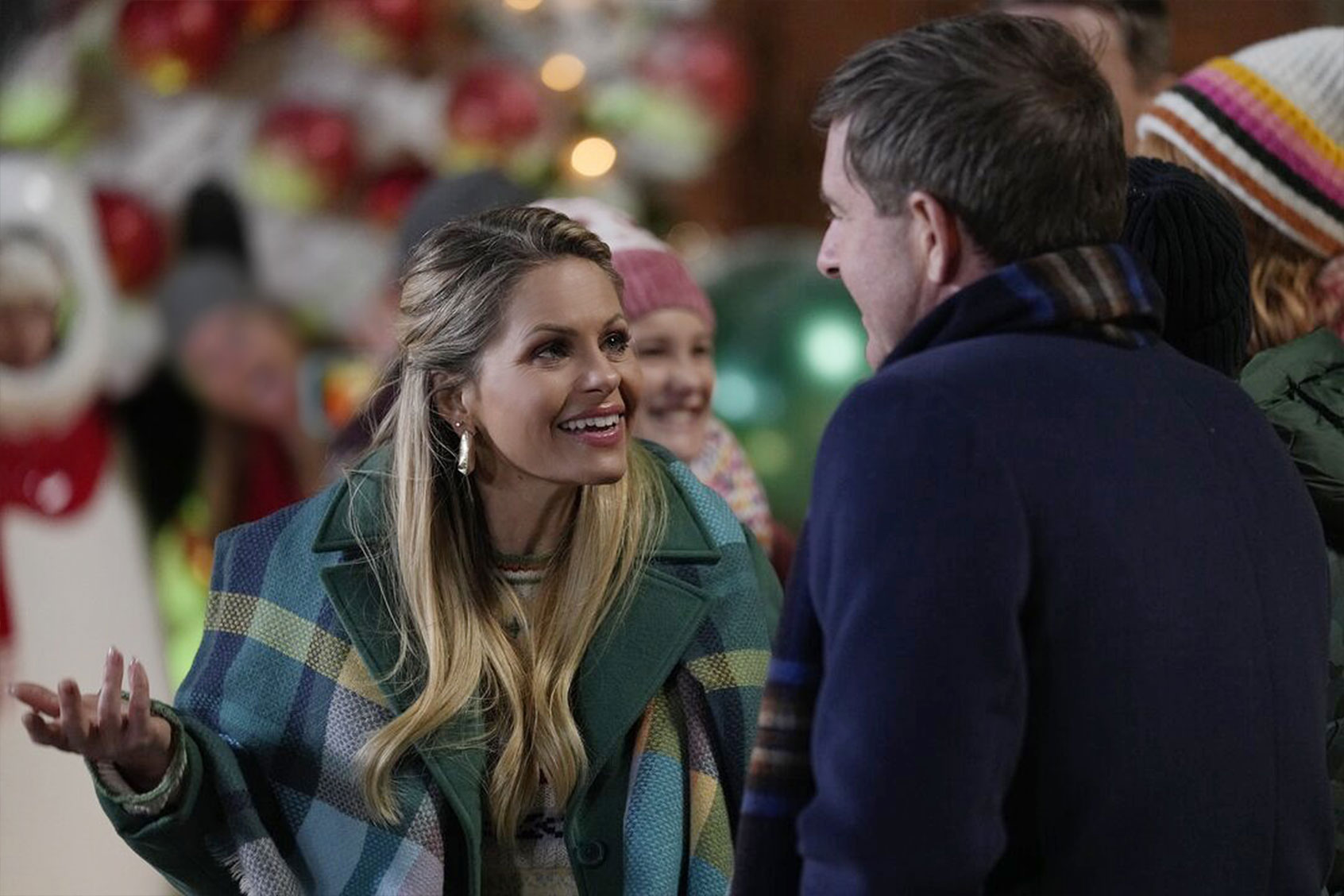
Candace Cameron BureCandace Cameron Bure (Great American Media)

See, in "A Christmas . . . Present," being present largely means staying at home instead going out to do stuff, and singing hymns around your backyard firepit which, like, everybody has, right? These are the lessons Bure's very busy Chicago real estate agent and supermom Maggie learns when she drags her husband Eric (Marc Blucas) and two children to the small Ohio town where she grew up to hang out with her recently widowed brother Paul and his daughter.

To Maggie, coping with the great big downer of his wife dying of some illness takes a back seat to the importance of Paul celebrating the first Christmas without his wife "the right way."

Therefore, despite Paul's insistence that he and his kid are fine baking cookies and sitting by the fire together, Maggie, Eric, and the kids invade their space, and Maggie's pathologically over-packed schedule conquers theirs.

In her new capacity as star, producer and chief creative officer at Great American Family, Bure recently assured the Wall Street Journal that her holiday film factory would not feature any LGBTQ couples, explaining, "I think that Great American Family will keep traditional marriage at the core."

This confirms what many suspected of Hallmark's erstwhile Queen of Christmas when she chose to follow that network's former boss Bill Abbott out the door and over to GAF.

We could all use a little holiday. But "A Christmas …Present" is not the sleigh for that job.

Once Hallmark shook off its blanket of pure white heteronormativity and branched out to produce holiday movies featuring LGBTQ+ characters in major roles, Bure obviously did not want her face to continue to represent the network. Receiving an executive salary bump likely influenced her decision as well.

But her coded language about prioritizing "traditional marriage" in its movies sparked outrage among many noble heathens. Former "One Tree Hill" and current Hallmark Channel star Hilarie Burton Morgan called Bure a bigot, and JoJo Siwa characterized her stance as "sh***y."

Bure responded to all of this with a non-apology in which she states, "It absolutely breaks my heart that anyone would ever think I intentionally would want to offend and hurt anyone. It saddens me that the media is often seeking to divide us, even around a subject as comforting and merry as Christmas movies. But, given the toxic climate in our culture right now, I shouldn't be surprised. We need Christmas more than ever."

On that last part, we can agree. We could all use a little holiday. But "A Christmas  . . . Present" is not the sleigh for that job.

Full disclosure: I was never a Hallmark holiday movie fan, but I have seen enough to understand and respect why people incorporate them into their holiday celebrations.

And in the spirit of goodwill, let us for a moment take Bure at her word that she has "great love and affection for all people" and that her heart "yearns to build bridges and bring people one step closer to God, to love others well, and to simply be a reflection of God's huge love for all of us."

With all of that in mind, one would think that the best way for Bure to vindicate herself and (to co-opt the parlance created by the folks she's intent on excluding) make her haters gag would be to make a Christmas movie that's undeniably good.

Believe it or not, I unwrapped "A Christmas . . . Present" with an open mind and heart, fully ready to concede that it might have a few aspects worth recommending. But even by retrograde Hallmark holiday movie standards, it's a blizzard of poor writing and empty schmaltz devoid of propulsive tension or profound resolution, but with 500 percent more scripture references. The church-going Christian people I know wouldn't waste their precious Earthly moments on this spiritless mess. You'd find more depth in two hours of white noise.

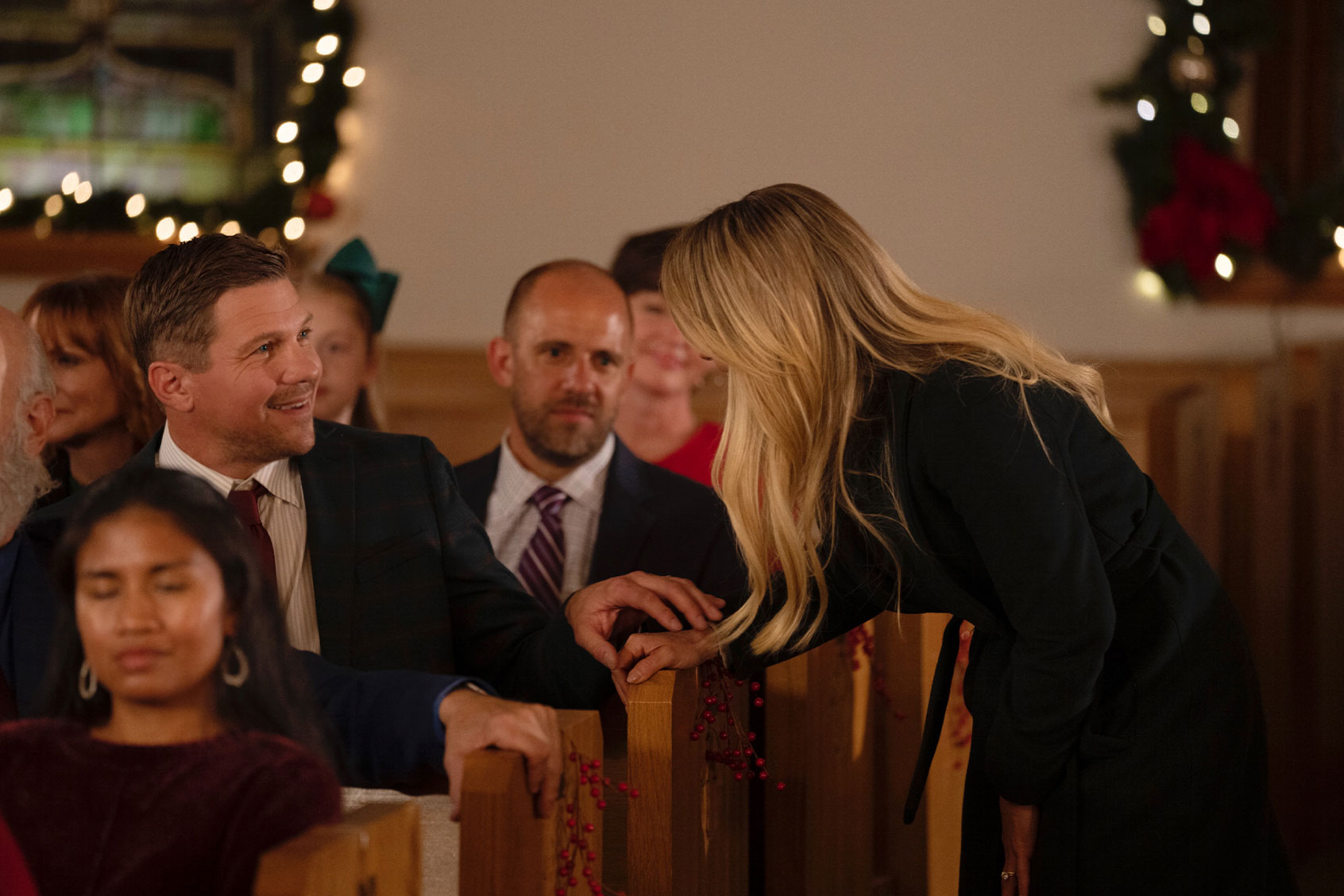
Candace Cameron Bure; Marc BlucasCandace Cameron Bure and Marc Blucas (Great American Media)

And yet, cosmetically, it is a kind of Christmas movie, one whose target audience seems to be the hypnotized. Nary a scene passes without a sprig of pine or a light. Everybody smiles, and almost constantly. Nobody profusely weeps – not even Paul, the man who, remember, is experiencing his first Christmas without his wife.

That's the second-weirdest part about this. None of Maggie's overbearing infliction of needless running around or boundary-breaching bothers her brother. Not even her obliteration of such sacred territory as replacing Paul's traditional family tree with a bigger one flusters him, even though he didn't ask. His faith in God is so rock-solid that he doesn't need to experience natural human reactions to minor irritations or massive loss.

Now, if this were a Nicholas Sparks joint or some descendent of the Frank Capra school of sentimentality, we'd reach a point of epiphany where Paul and Maggie and the rest lower the dam that's been holding back their feelings, wade through their mess and come out on the opposite side feeling better about each other. But that would generate empathy in the audience, which is antithetical to "A Christmas . . . Present" and its apparent aim of numbing your thought processes for around 90 minutes.

Pre-inclusion era Hallmark Christmas scenery is abundant in this movie.

What about its depiction of "traditional marriage"? Strangely, "A Christmas . . . Present" doesn't make the most compelling case for it. Granted, that is not a Christmas movie's role. Holiday movies typically remind us that love, platonic or romantic, is the blanket keeping the world warm in the darkest months. Weddings might be a part of that, but the chill midwinter of marriage is its own bag, and Santa would rather jingle around other problems.

Anyway, replacing the omnipresent romance we're accustomed to seeing in Hallmark's films is a cheerful, sexless collegiality between husband and wife, a product of Maggie's anal retentiveness and Eric's workaholism. Regardless of your level of religious enthusiasm, this situation is universally relatable. Entire industries are built around helping people in long-term relationships of all types rekindle whatever spark that day-to-day living douses.

Candace Cameron Bure; Marc BlucasCandace Cameron Bure and Marc Blucas (Great American Media)

But Maggie and Eric make very little progress toward restoring intimacy. The couple makes time to walk in the snow, and that is not a euphemism – they're getting their steps in while gently arguing until they realize that maybe, just maybe, the solution to their problems is . . . more walking. Also, church.

Otherwise, pre-inclusion era Hallmark Christmas scenery is abundant in this movie. Mary has a Black best friend who isn't around long enough for us to even remember her name. Paul has an Asian neighbor who has taken over carpool duties so he can work on his book; ditto for her on the memorability factor. An Asian actor plays an elf in the Christmas escape room that Maggie drags everyone to, and merrily, they go along here, there, and into the pews at Paul's house of worship, where more Black and brown folks cavort in the background.


Want a daily wrap-up of all the news and commentary Salon has to offer? Subscribe to our morning newsletter, Crash Course.


Three Wars on Christmases ago, Salon's Senior Humbug Amanda Marcotte pointed out the fascist underpinnings in the way Hallmark packaged "tradition." By associating the term with whiteness and straight relationships, they tacitly but purposefully froze out everyone who doesn't fit that image:

"Instead of characters driven by real feelings, therefore, the guiding hand of 'normalcy' pulls the characters along through narratives — and unsurprisingly, that idea of 'normalcy' doesn't have a lot of room for the true diversity of American experiences," she writes, adding that "the rule of 'normalcy' reorients everything towards a very narrow, sentimentalized version of Christmas."

Hallmark was the target of many critiques of its white, heterosexual Christian homogenous presentation of Christmas over the years, although my colleague's was pointed enough to draw fire from Fox News along with the Least Superman, Dean Cain.

In any case, in the following July, Hallmark Media named Wonya Lucas as its new president and CEO after Abbott stepped down, which happened shortly after Hallmark pulled ads for the wedding company Zola that featured a just-married lesbian couple kissing. Over at GAF, Abbott and Bure are creating a nationalist view of Christmas that they could not longer fully realize at Hallmark. As for how much true competition these movies will present, that remains to be seen.

Under Lucas' leadership Hallmark Channel has expanded its range of holiday film leads to include more non-white actors and families, and as of Holiday 2022 the channel will feature its first Christmas movie centered on a gay romance: "The Holiday Sitter" premieres Dec. 11.

Even if that ends up being as corny as a tree garland – most likely, given the channel's track record – it will surely be a more entertaining gift than "A Christmas . . . Present," and a better fit for any family whose holiday tradition includes welcoming a good time.

"Candace Cameron Bure Presents: A Christmas . . . Present" premieres at 8 p.m.. ET Sunday, Nov. 27 on Great American Family.


The return of the American bison is an environmental boon — and a logistical mess

Five miles doesn’t seem far on the vast, windblown plains of the Blackfeet Reservation in Montana. There’s a high point on the dirt road leading to Danny Barcus’ ranch on the east side of the reservation, tucked within the Two Medicine River valley. When Barcus drives up there, as he did one morning in May, he can see about that far in any direction, the peaks of Glacier National Park rising in the distance.

That’s how Barcus, a member of the Blackfeet tribe himself, spotted the buffalo — nearly 200 by his estimate — where they weren’t supposed to be that spring day, their chocolate-brown humps peppering one of his grass-green wheat fields. He called his dogs, hopped in his off-road vehicle, and sped over. The buffalo had crashed through his barbed wire fence and were nibbling on the winter wheat he was growing for his cattle. Over the last year, a punishing drought had settled over the plains, and Barcus had begun to feel helpless, worrying over bills he wasn’t sure he could pay. “My savings account is the grass I saved last year,” he said. “I can’t afford to feed it to the neighbor’s buffalo.” 

In this case, Barcus’ neighbor is the Blackfeet tribe, which keeps buffalo on the pasture it owns next to his property for part of the year. The Blackfeet herd is one of many across the continent, part of a growing movement to return buffalo, once nearly extinct, to tribal lands. For many Plains tribes like the Blackfeet, buffalo used to be the foundation of diet, commerce, and spiritual life. Bringing them back represents an effort to reconnect with that heritage and, in doing so, restore endangered grasslands. But managing the wild, ever-roaming animals is complicated by the fact that the land is now criss-crossed with contemporary borders between states, national parks, and reservations.

Barcus and the dogs, Pepper and Tucker, guided the runaway buffalo back onto the tribe’s land. Then he began repairing the downed fence: a broken post here, a snarled wire there. Poor management was the root of the problem, Barcus thought. The tribe had let the herd grow too big, so the animals had eaten their way through the pasture, and when there was no food left, they ambled onto Barcus’ ranch where there was plenty more. 

It wasn’t that he had a problem with buffalo. “We understand the spirituality behind the buffalo,” said Barcus, speaking of himself and his wife. Two years ago, the couple allowed the Horn Society, a spiritual organization, to host a Sun Dance on their land; buffalo are a central symbol in the Blackfeet’s most important religious ceremony. But it was a different matter when they started eating into Barcus’ business. “We also have families, employees, and our own animals to take care of,” he said.

A six-hour drive south of the reservation, another herd of bison rambled through Yellowstone National Park, eating, on the move, unaware of where they should or shouldn’t be. The scientific name for the species is Bison bison, but many Native Americans use “buffalo,” a remnant of the 17th-century French fur traders who likened the creatures to the buffalo found in Africa and Asia. Yellowstone bison are central to the tribal restoration effort: Animals from the park help populate herds like the Blackfeet’s. After bison were driven to near-extinction in the late 1800s, a handful of the remaining several hundred were taken to Yellowstone for protection. Their lineage represents the last true North American bison, since ranchers interbred many bison with cattle in the following years. As a result, the animals from Yellowstone are prized above all. 

“Those animals were descendants of the animals that provided for our people,” said Troy Heinert, a member of the Rosebud Sioux and executive director of the InterTribal Buffalo Council, a federally chartered organization that coordinates the return of buffalo to Indian Country. “There’s a connection there between Indigenous people and those animals that can’t be replicated in other places.” 

As summers grow hotter and drier and rainfall more erratic, restoring buffalo to tribal lands could provide people with a healthy source of food and boost the resilience of plains ecosystems. “When you talk about buffalo restoration, it’s also land restoration, water resource restoration, and cultural revitalization,” said Heinert, who is also a Democratic state senator in South Dakota. “This is so much bigger than just the animal itself.” 

The effort will be shaped by what happens next at Yellowstone National Park, which is working on an update to a 22-year-old bison management plan — a process that will determine how many animals can live in the park and how many can be transferred to tribes. But that plan must balance growth with a slew of complications: a nasty bacterial disease, cattle ranchers and politicians in Montana, and the bison’s very own nature to wander.

For hundreds of thousands of years, bison thundered across the continent in the tens of millions, from the dry plains of northern Mexico to the snow-covered grasslands of south-central Canada. The animals shaped the land and lives around them: By grazing, they cleared the way for a diverse mix of plants to grow and altered the path of wildfires; their droppings propelled nutrient cycles that fed a host of smaller critters; their cast-off winter coats provided insulation for the nests of burrowing owls and mountain plovers. And, for generations, Indigenous peoples hunted them across the prairies, relying on buffalo as a source of food, clothing, tools, and ceremonial objects. When Europeans arrived in North America, bison could be found across the width of the continent.

Colonization set the bison’s swift decline in motion. Livestock belonging to European immigrants overgrazed and eroded the grasslands where bison fed. European-introduced horses made bison-hunting more efficient for Plains tribes, which had previously hunted on foot and been forced from their traditional hunting territory, while booming fur and hide markets overseas encouraged indiscriminate hunting in the 19th century. The demand meant hide hunters killed millions of bison each year. Cycles of drought added even more pressure as the bison’s territory shrank.

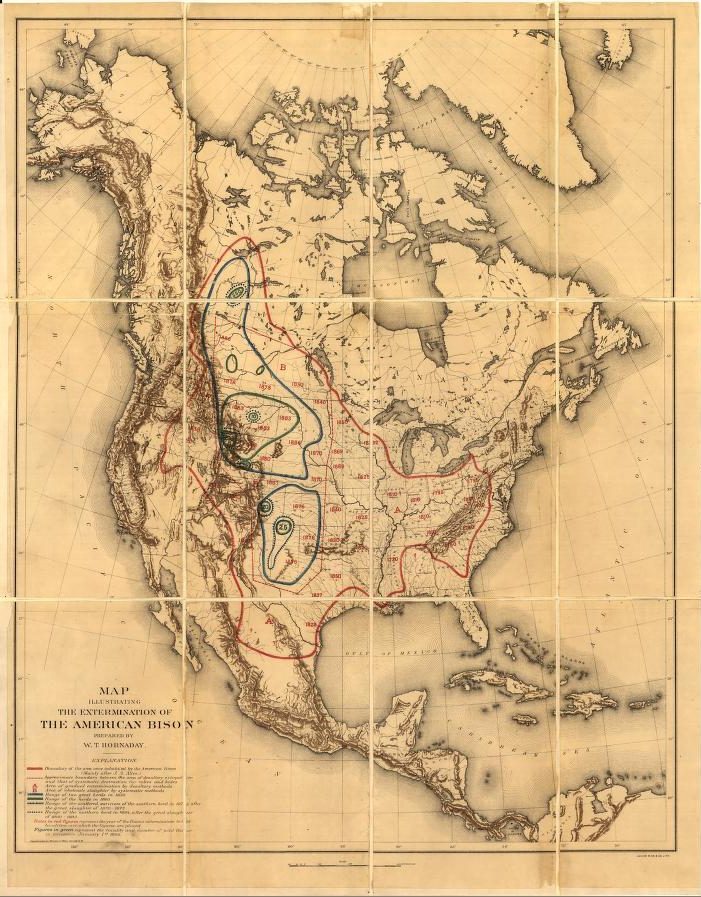
map shows range of bison marked in red and blue
A historical map shows the ranges affected by the extermination of the American bison over time. Library of Congress

By the late 1860s, the U.S. Army was encouraging this mass slaughter. Killing bison would undo the economies of entire Indigenous nations, part of the Army’s strategy to push Native Americans onto reservations and clear the way for railroads and westward settlement. In 1868, Major General Phillip Sheridan, tasked with forcibly relocating Great Plains tribes, wrote to a fellow general that the best strategy was to “make them poor by the destruction of their stock, and then settle them on the lands allotted to them.” 

What had begun as a trend toward overhunting escalated into state-sponsored eradication. The bison population collapsed over the next decade. By 1884, just a few hundred remained in the wild. 

illustration of buffalo running away from a train
An illustration from 1871 shows people shooting buffalo from a train on the Kansas-Pacific Railroad. Library of Congress

Today, there are roughly 400,000 bison across North America, with the vast majority being raised as livestock. Since their history is intertwined with the prairies, ecologists view their re-introduction as key to restoring the country’s grasslands, an estimated half of which has already been lost to cattle, crops, and development. More bison roaming the land would mean the return of wallows, bowls in the dirt that can stretch more than 10 feet across. They’re created when the 2,000-pound animals roll and toss themselves on the ground. 

Wallowing is a useful form of pest control: It keeps the number of flies and ticks down on individual animals. But it also sets off a cascade of events that benefit local wildlife. Sticky seeds often hitch a ride on bison coats, and when the animals roll around, the seeds fall and sprout into a carpet of deep-rooted grasses that lock carbon in the earth. In the spring, the dusty wallows collect water, providing a breeding ground for frogs and salamanders in a landscape where ponds are otherwise scarce. 

The ecological benefits of wallows can persist for decades. Jason Baldes, a member of the Eastern Shoshone who now manages the tribal buffalo program for the National Wildlife Federation, remembers riding with his father through the Wind River Mountain Range as a child and spotting relic wallows from buffalo long gone. They were overgrown with brush and wildflowers, but the dips in the land were still easy to spot. Later, as a graduate student at Montana State University, Baldes studied old wallows and their relationship with culturally significant plants. He found that several species — yarrow, tall bluebells, and arnica — tended to thrive in them. 

Baldes, who is also the secretary for the InterTribal Buffalo Council, thinks a shift in the way the United States governs land is necessary for the widespread return of buffalo. Conventional farming, the cattle industry, oil and gas companies — “these imposed systems have not been beneficial for tribal communities,” he said. “It’s probably time to try something different that incorporates more of our values and beliefs. That would be to more holistically manage our lands. We do that by restoring the keystone species.” 

Since bison once lived across such a wide range of conditions, ecologists think they may be well suited for some of the challenges brought on by climate change. That’s in stark contrast to cattle, which were brought to North America by the Spanish in the 1500s. Cattle have since replaced bison’s dominance on the landscape, with an estimated 30 million living in the U.S. today. Cattle seek shade and water at much lower temperatures than bison. They tend to find a good spot to eat and stay put, mowing the grass down to a nub. Bison, which evolved on the treeless plains, are much more comfortable at high temperatures. When they cool off, they prefer to catch a hilltop breeze. They’re not inclined to overgraze because they’re always moving. As a result, they do much less damage to plants and delicate streams and rivers. 

That’s not to say bison are immune to heat. Over the last 40,000 years of gradual warming, their average body size has shrunk by around 36 percent, said Jeff Martin, the research director at South Dakota State University’s Center of Excellence for Bison Studies, who has studied fossils to understand how the animals have changed over time. By contrast, cattle have swelled about that much over the last 30 years — a product of hormones, diet, and selective breeding for size. A larger animal is increasingly vulnerable to heat stress, which became sorely evident this summer after a grueling heatwave killed thousands of cattle in Kansas

“A smaller body is thrifty in drought and heat conditions,” Martin said. “Bison, as they become smaller and smaller, become thriftier and may be able to survive some of these harsh environments.”

Given all these advantages, researchers believe bison could support ecosystems and communities well into the future — even one defined by a volatile climate. “Bison have seen warming and cooling,” Martin said. “They’ve seen drought, they’ve seen wet years. Their genetic fingerprints have the potential to reconcile those environmental differences, if we allow them to do so.” That, of course, is the hard part. As bison numbers climb, the wild animals are returning to a continent, now riddled with fences, highways, and state borders, that has gotten used to operating without them. 

* * *

For most of the last century, the Yellowstone bison, recovering from near-extinction, rarely wandered beyond the park. But as the herds grew, they began to adopt their ancient migratory behavior. Every winter, they trekked from the high plateaus of the park down to the foothills and river valleys of West Yellowstone and Gardiner, Montana. At these lower elevations, less snow on the ground means food is easier to find. 

By the 1990s, however, the population had climbed above 4,000 — up from 23 animals in the park nearly a century before. Ranchers and state officials in Montana saw roaming bison as an existential threat to cattle, the state’s top agricultural commodity, because bison carry brucellosis, a bacterial disease that can cause hoofed animals, including cattle, to miscarry. Montana’s brucellosis-free status was at risk: Losing it would force the government to spend millions on testing the cattle sent to other states. 

Montana sued the National Park Service in 1995, and it took a court-mediated settlement to create the Interagency Bison Management Plan five years later. The plan set up a partnership between state, federal, and tribal agencies, which would, according to the agreement, “maintain a wild, free-ranging population of bison and address the risk of brucellosis transmission to protect the economic interest and viability of the livestock industry in Montana.” 

The arrangement set a target population of 3,000 and requires that the partners agree on how many animals will be culled each year (it ranges from 300 to 900). Yellowstone has a few ways to manage the herd. Mostly, it ships surplus animals to slaughter. A handful of tribes have treaty rights to hunt buffalo once the animals have stepped beyond the park borders. Yellowstone also uses a transfer program — after 30 years of lobbying from the InterTribal Buffalo Council — in which bison are sent to herds on designated lands. Before they are moved, the animals must quarantine for up to three years to make sure they’re brucellosis-free. 

In January, the National Park Service announced it would begin the process of updating Yellowstone’s 22-year-old bison management program. According to the federal agency, the science behind the agreement is outdated. For one thing, there’s never been a case of bison-to-cattle brucellosis, even though thousands of bison have crossed into Montana over the years. When the disease has spilled from wildlife to livestock, researchers say elk, which freely roam the area around Yellowstone, are the more likely culprit. 

The Park Service now believes Yellowstone can safely sustain even bigger herds. Increasing the number of bison in the park would enhance the animal’s ability to fill its ecological roles while continuing to support tribal transfer and hunting programs. 

“We are working to ultimately reduce reliance on shipment to slaughter,” Yellowstone’s superintendent, Cam Sholly, told the Associated Press. The park says its new program will guide how the animals are managed only within the park. If the herds are allowed to grow, however, that likely means more bison will venture outside its borders.
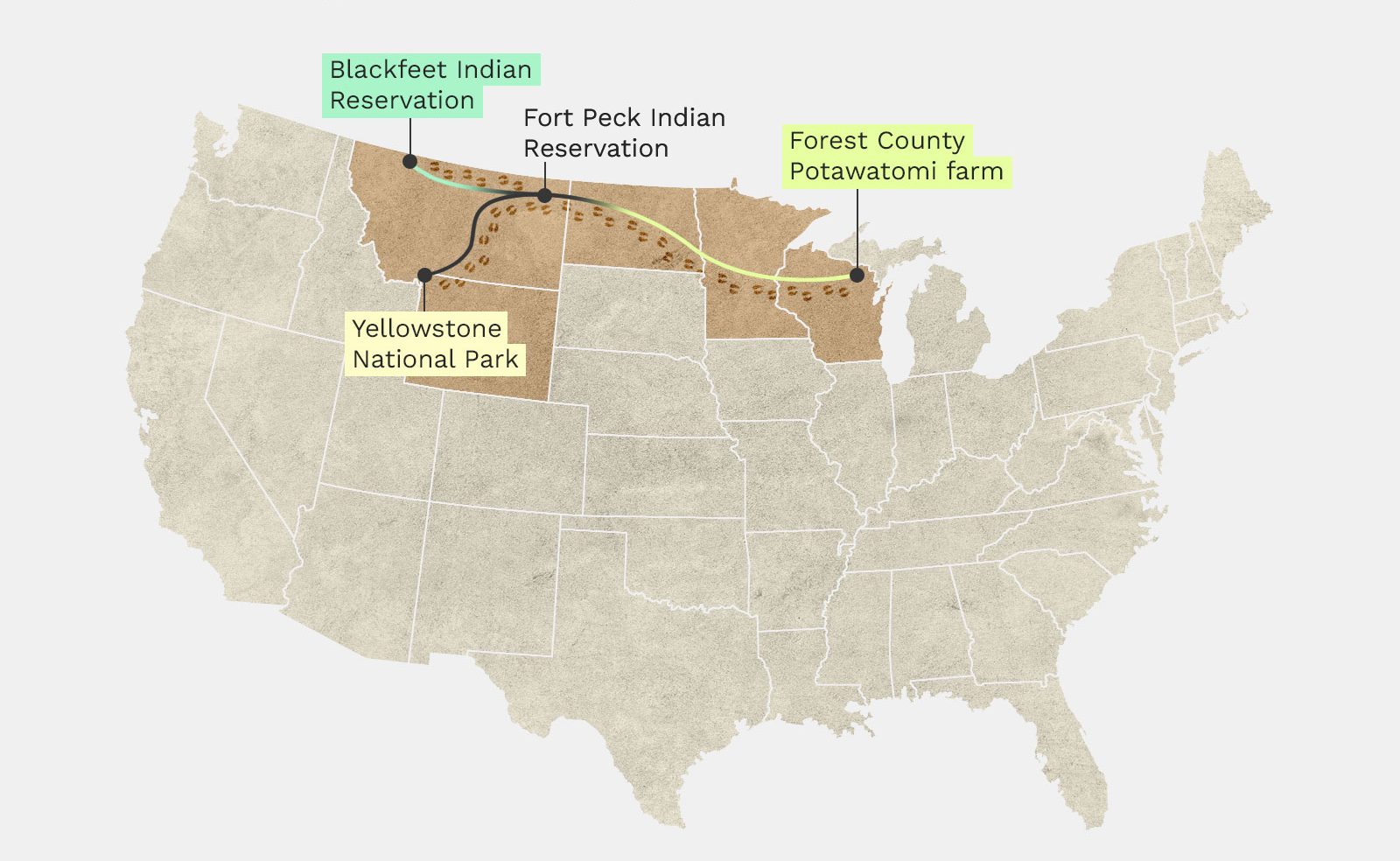
Map showing migration route of bison
Yellowstone sends bison to quarantine at Fort Peck before they wind up on tribal lands. Grist

Over the years, the interagency partners have allowed Yellowstone’s bison numbers to exceed their original target. At 6,000 animals this summer, the population is higher than it’s ever been. “If you look at it cumulatively over time, we’ve made some really good strides, and we’ve achieved our objectives as a group,” Sholly said during an interagency meeting in April. “I think it is important that we do everything in our powers to continue that progress and continue to make this group relevant.” (The park declined requests for an interview with Sholly.)

The Park Service laid out a number of options for the next era of management. One sticks to the status quo: a range of 3,500 to 5,000 animals. The most ambitious would cease slaughter entirely, aiming for a population of 8,000, create more opportunities for hunting, and send more bison to tribes. The InterTribal Buffalo Council, made up of 76 member nations across 20 states, is lobbying for more transfers — to keep fostering herds like the Blackfeet’s, next to Danny Barcus’ ranch.

“Our ultimate goal, and our goal always has been, is to get as many live buffalo out of Yellowstone and to tribal lands as we can,” said Troy Heinert, the InterTribal Buffalo Council’s executive director.

Even if the park adopts a more ambitious target, major obstacles remain to expanding the transfer program. An estimated 60 percent of Yellowstone bison have been exposed to brucellosis, which first came from cattle that were brought to the area and was transmitted to local wildlife in the early 1900s. Baldes, from the National Wildlife Federation, says that means tribes need to maximize the remaining 40 percent. But Yellowstone’s quarantine facility can only handle around 80 animals, while an average of 800 bison are slaughtered each winter. “Right now, there’s animals going to slaughter indiscriminate of whether they have brucellosis,” he said. “That’s an atrocity.” 

Yellowstone recently obtained funds to expand its capacity to 200. Tribes also have the ability to quarantine around 600 animals at a state-of-the-art facility on the Fort Peck Indian Reservation in northeast Montana. At the moment, however, the USDA’s Animal and Plant Health Inspection Services, which oversees the country’s brucellosis eradication program, only allows it to be used for the last year of quarantine — so-called “assurance testing” that comes after two years of repeated tests. The Council has advocated for Fort Peck to host the earlier phases, which would help alleviate the bottleneck posed by Yellowstone’s smaller center. 

In February, Montana’s Republican governor, Greg Gianforte, rejected all of the Park Service’s proposals and told the agency to go back to the drawing board, Yellowstone Public Radio reported. The population increases, Gianforte wrote, “are absurd and unsupported by both science and lay observation.” Even the status quo option, he continued, has “proven too much for [Yellowstone] to handle.” Sholly, Yellowstone’s superintendent, offered to work with the state to develop another alternative.

Yellowstone has been frank about the messiness of bison politics. “Many people don’t like the fact that animals from a national park are sent to slaughter. We don’t like it either,” its website says. “But we cannot force adjacent states to tolerate more migrating bison.”

* * *

Some 600 miles northeast of Yellowstone, sprawled over wide, blooming prairies, the Fort Peck quarantine facility and its roughly 400-head herd are points of pride for Suzanne Turnbull, a Dakota member of the buffalo advocacy group Pté, named after the Dakota-Lakota word for female buffalo. Pté’s latest project is a four-mile trail that would wind through the 15,000-acre pasture, dotted with benches and storytelling stations where visitors could learn about the Fort Peck Assiniboine and Sioux tribes’ relationship with buffalo. (The benches won’t be secured so that the animals, which like to scratch their heads on rocks and trees, can rub against the wood without breaking them.) 

Turnbull says she feels a strong spiritual connection to the animals. She had been at the pasture on a cold and blustery day in November 2014, when a group of Yellowstone buffalo arrived in semitrucks to join the growing Fort Peck herd. A kindergarten teacher at the time, Turnbull said she’d felt called to take the day off to greet the new arrivals. The field buzzed as reporters readied their cameras and tribal members sang. “You’re back,” she thought, as she watched their approach. “We’ll take care of you so we can all get well together.” The trucks backed into the pasture, and the animals bolted out, their hooves clanging on the metal ramp before they sprinted away. 

As part of her work with Pté, Turnbull often takes students and visitors, as well as her nieces and nephews, to the pasture so they can experience being with the wild, hulking animals like she has. “I see them as medicine,” she said, thinking of her own troubles, which she’d only found peace with through her spiritual practice. “I see them serving a purpose to bring back the foundation for storytelling, of our culture and language, our values, our kinship.” 

On the other side of Montana, at the Blackfeet Reservation, Joe Kipp, chairperson of the Blackfeet Nation Stock Growers Association, also has a longstanding connection to the reintroduction effort. In the 1980s, he’d been involved with bringing the first wild buffalo — surplus animals from Theodore Roosevelt National Park in North Dakota — to the Blackfeet Reservation. These days, he and his wife make the drive south to Yellowstone every winter to hunt the animals; Kipp’s wife is diabetic, and the only meat she eats is bison. (Compared to beef, bison has more protein and minerals, and much less fat and cholesterol.) 

Still, Kipp is unhappy with how the tribe has managed its herd in an austere landscape where many make their living raising cattle. Ranchers deal with ferocious wind storms, bitter winters, crippling droughts: Business margins are tight. He’s heard from plenty of disgruntled ranchers like Danny Barcus, who rent grazing lands for their livestock — the current rate for a cow-calf pair is around $40 a month — only to have the tribe’s buffalo break in and eat the grass intended for their cattle. “It gets to be a sore point pretty fast,” Kipp said.

Kipp worries what will happen now that bison are being considered for protection under the Endangered Species Act, a move he fears would undermine his treaty hunting rights. He’s also content with Yellowstone’s current management and doesn’t see the need to expand the park’s herd. “People envision, ‘Oh, we want bison that are running across the landscape like before,'” he said. “But we didn’t have 50,000-pound trucks and trains running and cars and all these things. It’s a beautiful concept, but I don’t think it’s based upon reality.” 

This spring, Kipp, Barcus, and other Blackfeet cattle ranchers met with their tribal council and asked them to make changes to the herd’s management. After years of frustration, they felt the council had been receptive to their concerns, and this summer, the tribe began a new culling program to manage its herd. 

* * *

Follow bison’s historic range east, into the heart of America’s dairyland, and you’ll find a small farm tucked in Wisconsin’s Northwoods where some Yellowstone bison have found a home. After quarantining at Fort Peck, they arrived at the Forest County Potawatomi farm through an InterTribal Buffalo Council transfer in 2020. The Forest County Potawatomi is one of the Council’s easternmost members, and it has embraced bison as a way to provide its people with a healthy source of protein.

On a bright July day, the farm’s manager, Dave Cronauer, followed a worn path between two pastures surrounded by a wall of pine. Bugs buzzed in the tall grass and wildflowers waved in the breeze. Half the fields were for cattle, the other half for bison. Once the animals had chewed the turf down to a few inches, they would be guided to the next paddock in order to give the plants a chance to regrow and deepen their roots, a practice known as rotational grazing. 

Although the COVID-19 pandemic exposed vulnerabilities in the food system, it also “proved how valuable we were,” Cronauer said. The tribe opened its farm store in March 2020 at the start of the pandemic, when shelves at neighboring grocery stores were bare from people stocking up on goods. But the farm store still had meat to sell. The ability of local, small-scale operations like theirs to withstand wider shocks, Cronauer said, could prove to be vital for a future in which warming temperatures and extreme weather will strain conventional agriculture and cattle farming.

Cronauer went searching for the cattle. Bison and cattle were fundamentally different animals, he explained. Tap a bison on the head and it charges you; tap a cow on the head and it retreats. Bison are still wild, and he admired them for it. He spotted the cattle. They were difficult to see from the path, but on that summer day, they had congregated at the water, taking sanctuary in the shade under a thicket of trees. Across the way, the small herd of bison bathed in the heat of the afternoon sun, wagging their tails.

Inequality is literally killing us: The most unequal societies suffer most in public health metrics

In 1992, a publication appeared in the British Medical Journal written by Richard Wilkinson, featuring a simple graph of life expectancy in 1981 among nine rich nations, along with the percentage of income received by the poorest 70% of families for each country. It showed how greater inequality in a country was associated with lower life expectancy, with only a weak link between national incomes and mortality rates. Richer countries were not necessarily healthier than less rich ones, at least among developed nations. Increases in income inequality over time were linked to higher death rates. But were the results valid?

Depending on a single study as definitive evidence is a shaky way to stake a claim. Knowledge progresses by conjectures, critical commentary, discussions, and either general acceptance or rejection. Yet five previous studies, beginning in 1979, demonstrate similar findings. In 1996, two studies from University of California and Harvard reported the same finding within the United States: more unequal states had higher mortality. Later research showed the same result for large U.S. cities.

Even a small rise in inequality gives rise to a substantial increase in COVID-19 deaths.

That same year, a landmark book, “Unhealthy Societies: The Afflictions of Inequality,” by Wilkinson appeared, which expounded on these concepts. My own heavily annotated copy reflects the importance of this book as a huge step toward recognizing the effect of the social environment on health, while more recently, COVID-19 has highlighted the critical role social policies play in human survival. Similar studies link U.S. state and county death rates associated with COVID-19 with income inequality. The first paper found that more unequal states had higher COVID-19 death rates. In June 2021, a study showed U.S. counties with higher income inequality had higher rates of COVID cases and deaths.

While the British media, with a July 2021 article in The Economist, pinpointed these studies, the U.S. media has mostly been silent. One subsequent study of 84 countries found more COVID-19 deaths associated with increasing economic inequality. Even a small rise in inequality gives rise to a substantial increase in COVID-19 deaths.

Income inequality has soared with the pandemic providing other incriminating evidence that it kills. Still, correlation doesn’t imply causation. How do we know that something causes something else?

The U.S. Surgeon General’s 1964 report, Smoking and Health, outlined the criteria for inferring that something, in this case, cigarettes, caused something, in this case, worse health. The criteria were straightforward. First, there had to be many studies demonstrating the relationship, by different investigators, on different populations, over different time periods. Then the chicken and egg problem had to be addressed: did people start smoking and then their health worsened, or was it the other way around—their health got worse so they started smoking? Third, were there other better explanations for the association? Finally, was there some type of biological plausibility, namely, a mechanism through which smoking produced worse health?

By 1964, we had conclusive evidence that all these conditions were met for tobacco as damaging to health. Today, using the same criteria, we can state that inequality in a population causes worse health.

Demonstrating the association between more economic inequality and worse health depends on multiple factors. One needs a threshold of income inequality—it must be greater than a certain magnitude before the relationship is observed. For relatively equal nations, the health effects aren’t apparent. There may be a lag between increases in income inequality and associated health outcomes. For small geographic groups, a small neighborhood, for example, people tend to live among others like themselves, so it would be unlikely that inequality and health would be associated there. Nevertheless, science shows that inequality is bad for health.

Richard Wilkinson had nudged the inequality-health field into academic prominence after his 1992 paper. Working with Kate Pickett, in 2009 they wrote, “The Spirit Level: Why Greater Equality Makes Societies Stronger“—a popular book linking a variety of health and social problems to income inequality among 23 rich nations, in which they lay out the evidence that inequality kills. They found that the United States had the most income inequality and the worst outcomes for the index. This seminal book has been translated into many languages and has sold close to a million copies.

We are heading in the direction of even more concentrated political power, while the rest of us are facing an epidemic of disempowerment.

In their book “Social Inequality,” Professors Ichiro Kawachi and S.V. Subramanian of Harvard University address the income inequality health question by presenting three key arguments. First there are “diminishing returns” to health with increasing income. Inequality’s second impact is through its psychosocial effects, showing that inequality causes stress and frustration leading to worse health. Third, there is a contextual effect of inequality. The rich increasingly control the political process and enjoy policies that benefit them, at the expense of every- one else. Let’s explore.

Diminishing Returns

Richer people have better health, as measured by mortality rates, than poorer people. However, adding an additional ten thousand dollars, say, to the income of a very rich person does little or nothing to improve their health, while adding that amount to a poor person’s income has substantial health benefits. Such a relationship is observed in nearly all societies.

Psychosocial Effects

Their second link is the psychosocial stress produced by inequality. People may have enough resources to provide for basic needs, which typically include food, water, shelter, and security, but may not have enough to support the more lavish lifestyle that they see others enjoying. With a large income and wealth gap, they recognize what they don’t have and compete for higher status. Such an unequal society engenders stress and frustration. We recognize the need to “be nice” to our superiors if we are to keep our job or look good in society.

Status anxiety, the inevitable outcome of income inequality, is found at all levels of income. The very rich often don’t want to talk about their wealth. In her book “Uneasy Street: The Anxieties of Affluence,” Rachel Sherman finds that many of the rich don’t admit to being more than middle-class, despite having several homes and other trappings of wealth. Though objectively very wealthy, they think of those who have even more than they do as “affluent.”


Want more health and science stories in your inbox? Subscribe to Salon’s weekly newsletter The Vulgar Scientist.


There is less status anxiety where there are smaller income gaps. One study asked respondents to agree or disagree with the statement, “Some people look down on me because of my job situation or income.” Those in more unequal societies were found to have greater status anxiety at any income level than people in places with less inequality.

Inequality also leads to self-medicating with drugs. Three quarters of the world’s opioid consumption takes place in the United States, where we have the highest rates of use. Opioid overdose death rates here have risen markedly since 1994, in contrast to those in other rich countries. Might the high use of opioids here reflect the increasing inequality and status anxiety? Studies show common forms of drug use, including opioids, cocaine, amphetamines, cannabis, and ecstasy, are higher in more unequal countries and more drug deaths occur in more unequal U.S. states.

The Contextual Effect of Inequality: The Rich Control Politics

With a large income gap, the well-off pull away from the rest of society. Call it the secession of the rich. Consider the lifestyles of those on top of the unequal wealth distribution, the so-called one percent. They are actually the 0.1 or 0.01%. They live in gated communities, send their children to private schools, and have staff to clean their homes, do the gardening, and prepare meals. They enjoy private security services and receive concierge medical care from doctors and other service personnel who are at their beck and call. Since they pay for these benefits with their high incomes, they don’t see a need to support others who have considerably less. They often say, “We worked hard so that we can pay for these benefits ourselves why should we help others who didn’t?” They essentially secede from the rest of society.

Most rich argue for less government intervention, less regulation, lower taxes, and letting the so-called free market dictate how society fares. While the rest of us work for wages or salaries, the rich get most of their income from what economists call rents or unearned income, for example, through investments in property or stocks—thus from means other than showing up at work.

We are heading in the direction of even more concentrated political power, while the rest of us are facing an epidemic of disempowerment. Government funding for education decreases, the quality of public schools declines, and college students have to assume massive debt for an undergraduate degree. Public transportation and other social services are weakened. The deterioration in highway, bridge, and transportation systems, especially compared to other rich nations, shows the decline of infrastructure here. Stories of U.S. bridges and apartment buildings collapsing due to delayed maintenance or not heeding or delaying acting upon structural engineering reports are another example of the contextual effect of inequality. Access to healthcare is considered a privilege, not a fundamental human right as it is in many other nations. As the poor become disempowered and the wealthy gain power, societal relationships overall become less healthy.

Providing healthcare to all is necessary, but it is only the first step. We will only achieve a truly healthy society when by redistributing a little from the rich to the poor. In an era of staggering inequality, we can easily afford it.

Fermented foods and fiber may lower stress levels: study

When it comes to dealing with stress, we’re often told the best things we can do are exercise, make time for our favorite activities or try meditation or mindfulness.

But the kinds of foods we eat may also be an effective way of dealing with stress, according to research published by me and other members of APC Microbiome Ireland. Our latest study has shown that eating more fermented foods and fiber daily for just four weeks had a significant effect on lowering perceived stress levels.

Over the last decade, a growing body of research has shown that diet can have a huge impact on our mental health. In fact, a healthy diet may even reduce the risk of many common mental illnesses.

The mechanisms underpinning the effect of diet on mental health are still not fully understood. But one explanation for this link could be via the relationship between our brain and our microbiome (the trillions of bacteria that live in our gut). Known as the gut-brain axis, this allows the brain and gut to be in constant communication with each other, allowing essential body functions such as digestion and appetite to happen. It also means that the emotional and cognitive centers in our brain are closely connected to our gut.

While previous research has shown stress and behavior are also linked to our microbiome, it has been unclear until now whether changing diet (and therefore our microbiome) could have a distinct effect on stress levels.

This is what our study set out to do. To test this, we recruited 45 healthy people with relatively low-fiber diets, aged 18-59 years. More than half were women. The participants were split into two groups and randomly assigned a diet to follow for the four-week duration of the study.

Around half were assigned a diet designed by nutritionist Dr. Kirsten Berding, which would increase the amount of prebiotic and fermented foods they ate. This is known as a “psychobiotic” diet, as it included foods that have been linked to better mental health.

This group was given a one-on-one education session with a dietitian at both the start and halfway through the study. They were told they should aim to include six to eight servings daily of fruits and vegetables high in prebiotic fibers (such as onions, leeks, cabbage, apples, bananas and oats), five to eight servings of grains per day and three to four servings of legumes per week. They were also told to include two to three servings of fermented foods daily (such as sauerkraut, kefir and kombucha). Participants on the control diet only received general dietary advice based on the healthy eating food pyramid.

Less stress

Intriguingly, those who followed the psychobiotic diet reported they felt less stressed compared with those who followed the control diet. There was also a direct correlation between how strictly participants followed the diet and their perceived stress levels, with those who ate more psychobiotic foods during the four-week period reporting the greatest reduction in perceived stress levels.

Interestingly, the quality of sleep improved in both groups, though those on the psychobiotic diet reported greater improvements in sleep. Other studies have also shown that gut microbes are implicated in sleep processes, which may explain this link.

The psychobiotic diet only caused subtle changes in the composition and function of microbes in the gut. However, we observed significant changes in the level of certain key chemicals produced by these gut microbes. Some of these chemicals have been linked to mental health, which could potentially explain why participants on the diet reported feeling less stressed.

Our results suggest specific diets can be used to reduce perceived stress levels. This kind of diet may also help to protect mental health in the long run as it targets the microbes in the gut.

While these results are encouraging, our study is not without its limitations. First, the sample size is small due to the pandemic restricting recruitment. Second, the short duration of the study could have limited the changes we observed — and it’s unclear how long they would last. As such, long-term studies will be needed.

Third, while participants recorded their daily diet, this form of measurement can be susceptible to error and bias, especially when estimating food intake. And while we did our best to ensure participants didn’t know what group they’d been assigned to, they may have been able to guess based on the nutrition advice they were given. This may have affected the responses they gave at the end of the study. Finally, our study only looked at people who were already healthy. This means we don’t understand what effect this diet could have on someone who may not be as healthy.

Still, our study offers exciting evidence that an effective way to reduce stress may be through diet. It will be interesting to know if these results can also be replicated in people suffering from stress-related disorders, such as anxiety and depression. It also adds further evidence to this field of research, showing evidence of an association between diet, our microbiome and our mental health.

So the next time you’re feeling particularly stressed, perhaps you’ll want to think more carefully about what you plan on eating for lunch or dinner. Including more fiber and fermented foods for a few weeks may just help you feel a little less stressed out.

John Cryan, Vice President for Research & Innovation, University College Cork

This article is republished from The Conversation under a Creative Commons license.

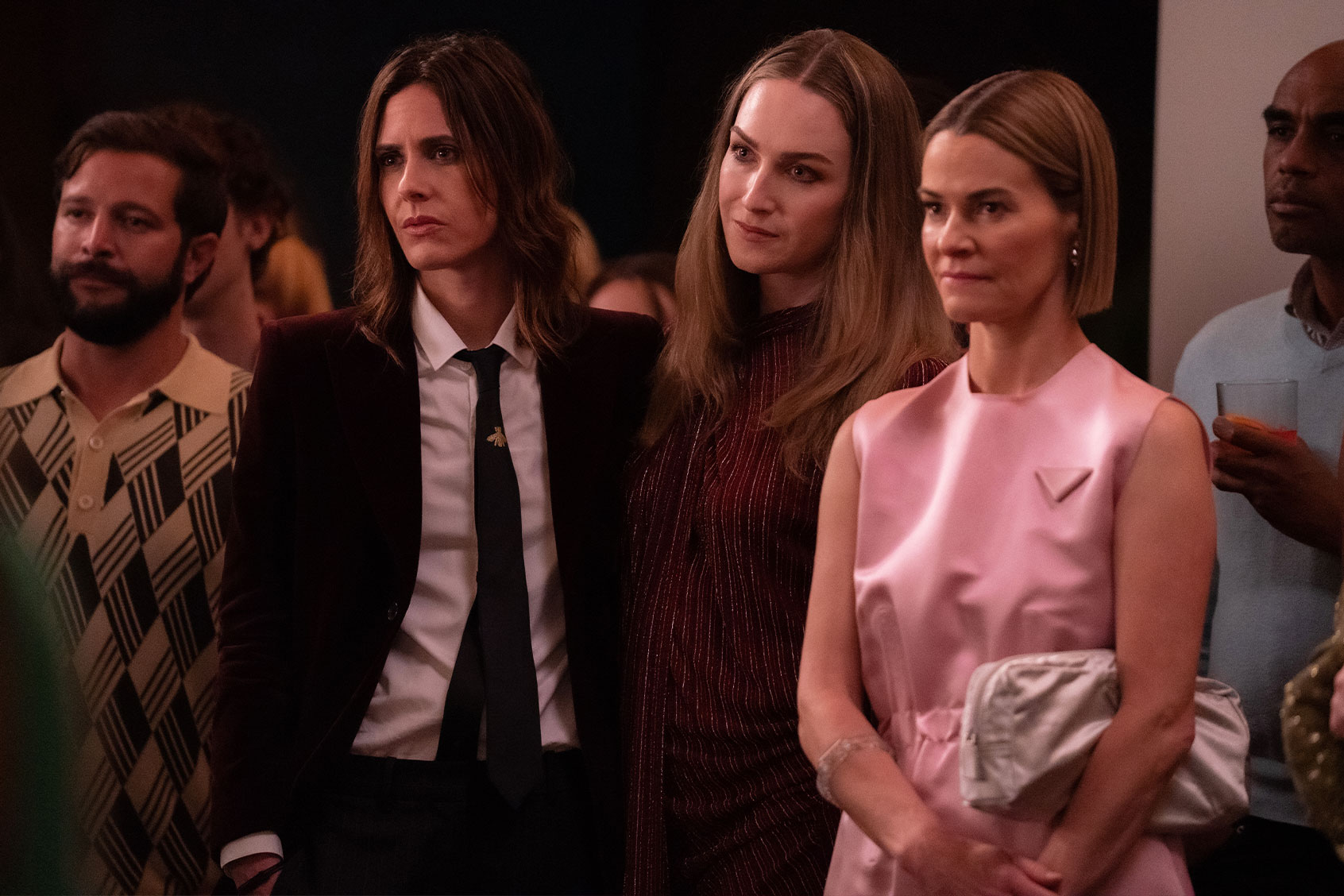
“The L Word: Generation Q”: Shanes I have known

Maybe it was the rumpled hair. Maybe it was the tiny, laced leather vest that barely qualified as a shirt. Or the leather cuff bracelets. Or the low voice. Or the androgynous name and look, still a rarity in popular culture at the time. But once Shane McCutcheon entered the scene of Showtime’s “The L Word” in 2004 . . . well, Bette (Jennifer Beals) put it best, “Whenever Shane walks into a room, somebody runs out crying.”

The show about a group of beautiful, femme lesbians in Los Angeles had to have a bad boy. Enter Shane, played by Kate Moennig with piercing, intense eyes, a gaze that won’t quit and devoted attention that doesn’t either. Until, of course, she moves on from you.

In “The L Word: Generation Q,” which returns a decade later to the same characters (but not to the scene of the crime of Jenny’s death, RIP to a real one), Shane is back. Notably, the character of Bette seems to have matured, softened from her intense, power top screaming — learned something from the loss of the love of her life, perhaps? And Shane appears changed too, at first. Married when the show starts, then swiftly divorced, she still settles down again with dependable Tess (the wonderful Jamie Clayton). 

But by the new third season, she’s back to her old tricks. And we fall for them again and again, happily. Why does Shane do this to us? Why do we do it to ourselves? What is it about a Shane?   

Shane is a Beatnik poet, drawn to the siren song of the open road. Or, to the sirens. Effortlessly cool, self-assured with a magnetism that seems to come from Moennig herself. As Beals, in Vogue, described first meeting the actor, “The elevator doors opened. She said, ‘I’ll see you around,’ and gave us the peace sign as the doors closed. We turned to one another and simultaneously said, ‘Shane.'” 

Like a stray cat, she’s restless. She can’t stay.

In “The L Word,” Shane, after hooking up again with a past lover, perches in a windowsill, looking out over the night like a stray cat. She’s restless. She can’t stay. “The L Word” did some fumbling backstory, trying to link Shane’s fickle ways to her absent father (Eric Roberts, ever-dashing). She survived a difficult childhood and young adulthood which included becoming a sex worker before finding her vocation as hairstylist. 

The L Word: Generation QKate Moennig as Shane, Jamie Clayton as Tess and Leisha Hailey as Alice in “The L Word: Generation Q” (Nicole Wilder/SHOWTIME)By “Gen Q,” that vocation has changed again. Shane is ever-shifting, and she’s put away her hair tools (and popular line of styling products) to become a bar owner. Profitable, of course. Everyone in the “L Word” universe has become wildly successful and financially stable beyond their (or my) dreams. Perhaps that’s why the younger characters introduced in “Gen Q” feel compelling: they’re assistants and social workers at the start of their careers. Or, like Finley (the lovable Jacqueline Toboni): floundering to find a way to even pay the bills. 
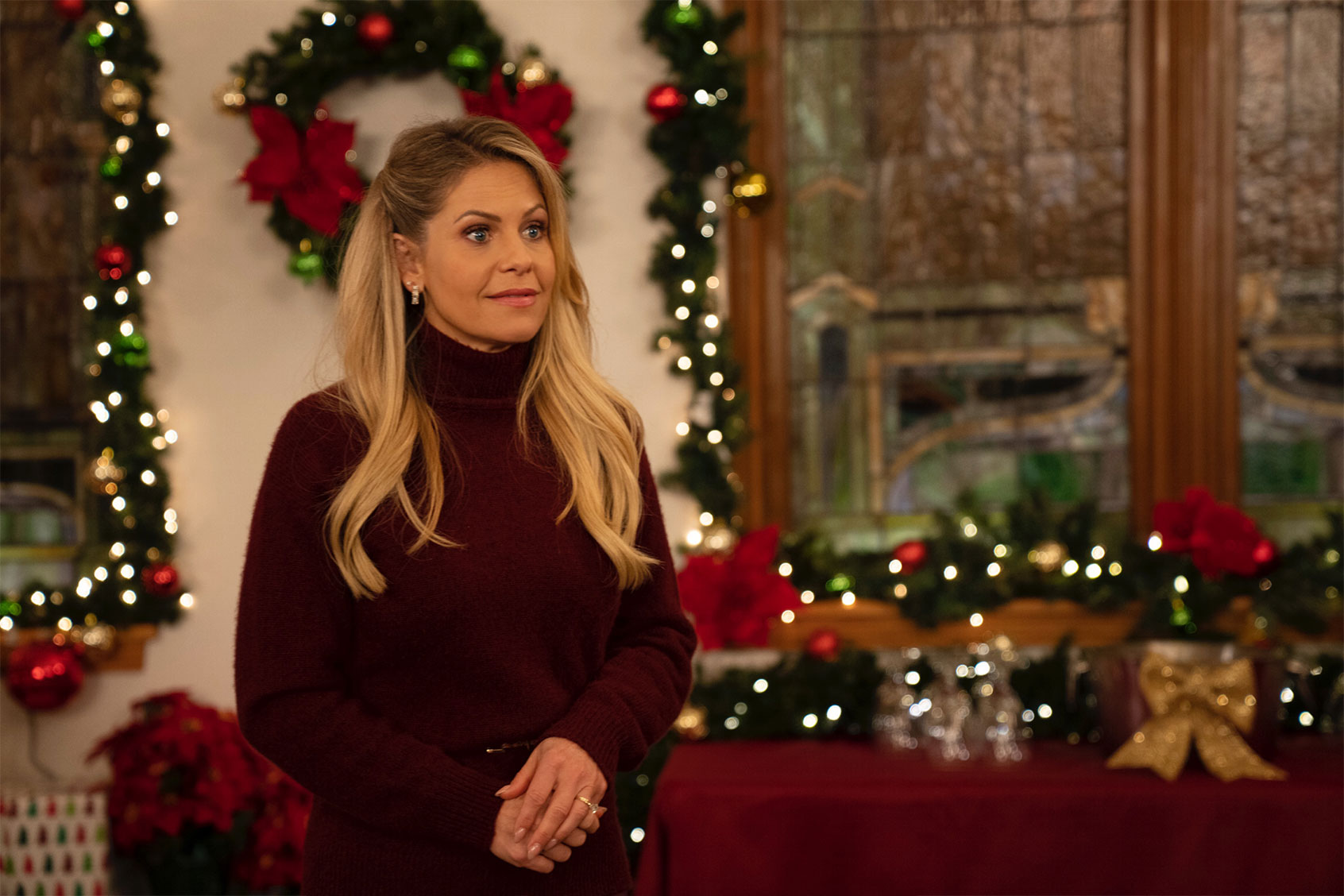
A Shane cannot be changed.

Shane’s personal evolution is more convoluted. She was drawn to parenthood, becoming the de facto guardian for her little brother in “The L Word,” but by “Gen Q” times, her romantic relationship ends because she doesn’t want a baby. She can’t go through that heartache again. A misguided person might complain to their therapist that they want to be the one to save Shane, to settle her down, to change her. 

But a Shane cannot be changed.

She perplexes the heart, in part because she’s more than simply a Don Juan figure. She goes through lovers like coffee cups from The Planet, but Shane is rock-solid as a friend. For the ones she loves platonically, there are no bounds, no end to her loyalty. She’s the only one who is truly kind to Lisa (don’t get me started on Max). Shane’s friendship with the doomed Jenny was one of my favorite parts of the original “L Word.” When everyone gave up on Jenny, dismissed her, Shane stood by her. In possibly the most infamous moment in the show, when Alice spreads news of Shane and Jenny getting together, I shrieked along with the characters. But mine was a hopeful, if deluded, scream.

I wanted Shenny to work.

Yes I, a writer and apparently a hopeless Romantic, wanted the wild and “troubled” writer character to find true love with the untamable lothario. Like the rest of Jenny’s life and story arc, it was not to be. Maybe you really can’t change people, is what Shenny taught me. Maybe you should look but not touch when it comes to a Shane. And maybe Shane can love anyone once, but every lover comes with an expiration date.

In “Gen Q,” Finley seems to have inherited Shane’s crown. But she doesn’t have the original character’s callousness. Fin can’t love ’em and leave ’em, and her wide-eyed, soft butch naïveté gets her into trouble. Shane gets in trouble too but she shakes it off. Nothing sticks to her except hair products.

The L Word: Generation QLeisha Hailey as Alice and Katherine Moennig as Shane in “The L Word: Generation Q” (Nicole Wilder/SHOWTIME)


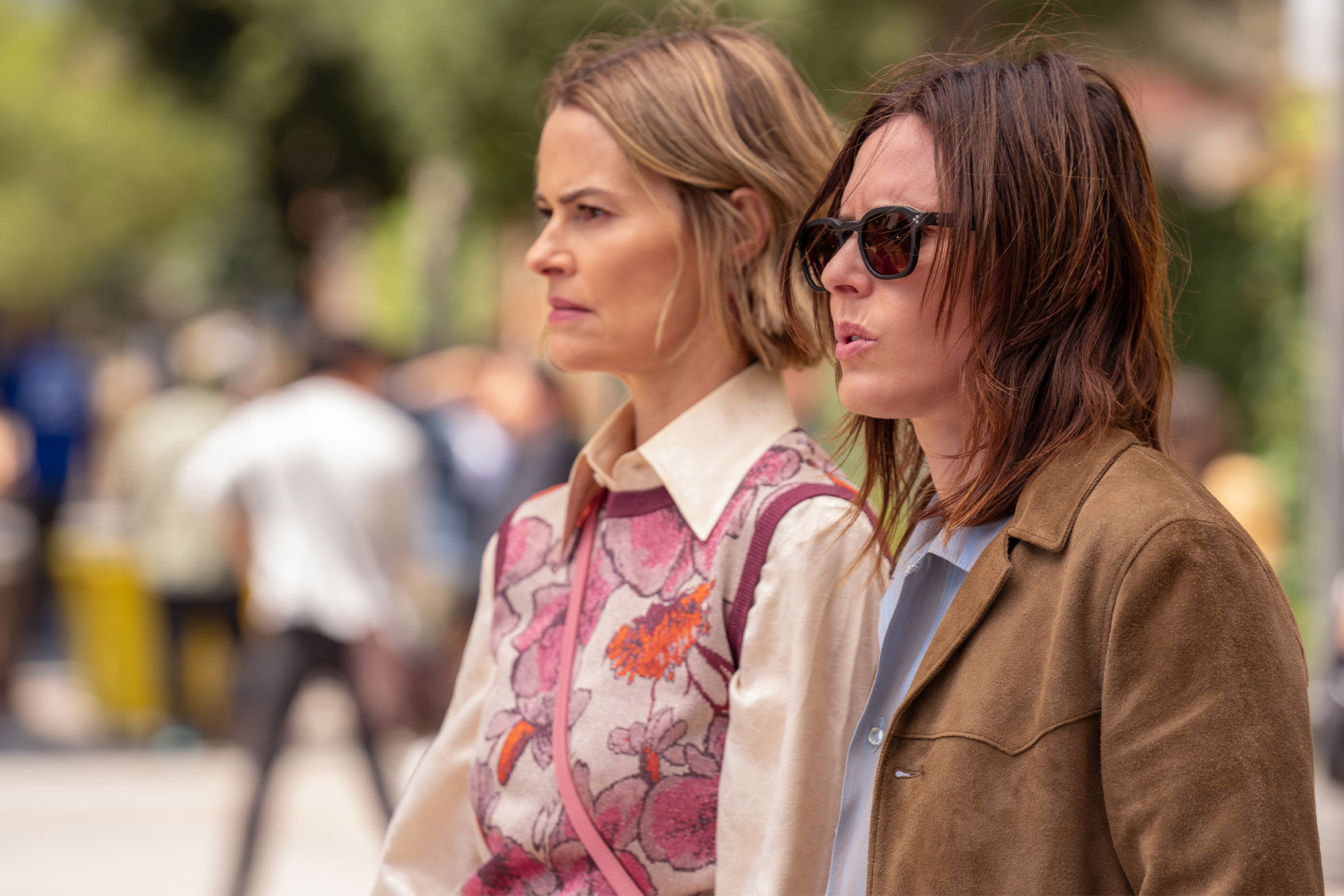
Heartbroken? A Shane will cheer you up, take you out. Heartbroken because of her, though? You’re on your own, kid.

Shane is forever. And Shane is real, reflected in a confident person with a streak of pure solid gold. Where are you? A Shane will come get you. Are you sick? A Shane will stay with you, hold your hair while you vomit, hold your hand through a procedure, fix you soup. Heartbroken? A Shane will cheer you up, take you out — whatever you need. Heartbroken because of her, though? You’re on your own, kid.

A Shane persona represents dependability and stability but only when it comes to non-sexual love. A Shane is so trustworthy, you want the person in your life always, but having a Shane in your love life means that trust goes out the window. You’re drawn to them like a flame and they will burn you like a bonfire.  

A Shane is a rare but intense phenomenon, like a 100-year comet. You’ll know if you’re at a party with one. You will feel their tractor beam pull, see the eyes of everyone in the crowd on them. You know if you’ve been destroyed by one — you still aren’t over it. But how to recognize a Shane in the wild? Note the magnetism.

George Clooney is a Shane. Cillian Murphy is a Shane. (Tommy Shelby? Also a Shane). Neither Rosie O’Donnell’s Carrie nor Vi in “A League of Their Own” is a Shane — those characters are too tender, with too much openness and not enough bravado. (Listen, Tina, I won’t forgive you for breaking Carrie’s heart.) Lana Del Rey? Maybe a Shane. Taylor Swift? Not Shane. Cara Delevingne’s Alice from “Only Murders in the Building“? Approaching Shane station. James Spader’s early work? All Shanes. Kristen Stewart as Bella and Robert Pattinson as Edward in “Twilight“? Both Shanes — what a doomed pairing. Carl Clemons-Hopkins‘ Marcus in “Hacks“? Too sweet to be a Shane. 


Want a daily wrap-up of all the news and commentary Salon has to offer? Subscribe to our morning newsletter, Crash Course.


Shanes are Scorpios. Shanes are rock stars, but they won’t give interviews or they won’t filter themselves during them. A Shane is a publicist’s nightmare. Shanes can’t pretend to care. If they want you, if they like you, you will know. And good luck to you, sir. 

Do you have a Shane amid your friend group? If so, count yourself blessed, and keep them close — and firmly in the friend category. Do you have a Shane in your past list of lovers? If that’s the case, I’m sorry for your broken heart, which will always bear a Shane-shaped scar. It’s spiky, like her hair.

Did Western philosophy ruin Earth? A philosopher’s letter of apology to the world

As a little girl, Roberta Hill survived four years of physical and sexual abuse in the Mohawk School in Canada, one of 139 residential schools designed to forcibly assimilate Indigenous children. An estimated 6,000 other children did not survive. Ms Hill, a Mohawk (Turtle Clan) elder once known to the nuns as #54, was raped twice by the school’s principal, an Anglican priest.

“There were two ministers at the school,” Ms Hill recounted. “One liked the little girls and one liked the little boys . . .  They were pretty brutalized, the boys, and if they weren’t getting beaten, they were being raped.” The schools were funded by the government and run by churches, primarily the Catholic Church.

We believe that much of western European philosophy, from ancient Greece to the present, has gone catastrophically wrong, pushing a worldview that justifies practices that will be seen in the future as unthinkably evil.

Ms Hill added her story to innumerable accounts of kidnapping, torture, and sexual and physical abuse in the residential schools. Children died of starvation, infectious disease, fire and, when they tried to escape, exposure. One of three possible punishments awaited children who spoke their Native tongues, Ms Hill told the Toronto Star — a beating with a leather strap, a needle through their tongues, or a kerosene-soaked rag in their mouths.

In his recent penitential pilgrimage to Canada, Pope Francis begged forgiveness for the “catastrophic” and “deplorable” wrongs the Church had committed against these Indigenous children. The cultural genocide and cruelty inflicted on the children seem unthinkable now. But as shocking as the acts themselves is the fact that, at the time, large numbers of people took them to be right and good, even morally necessary. The atrocities were justified by ideas embedded in the worldview of western European civilization and, by extension, in Catholic doctrine.

The dreadful lesson is that ideas have powerful consequences. When worldviews go wrong, so do the acts that grow from them.

We believe that much of western European philosophy, from ancient Greece to the present, has gone catastrophically wrong, pushing a worldview that justifies practices that will be seen in the future as unthinkably evil. Primary among these are the profit-driven rape and pillage of the planet, and the consequent immiseration of the people.

We are two professional philosophers who have been trained to advocate the destructive worldview that has made world-wrecking practices not only thinkable, but normal, necessary, the way things have to be. We step forward now to ask for forgiveness. Western philosophy has made terrible mistakes. We repudiate the destructive ideas, “with shame and unambiguously,” as the Pope said, and call for the creation of new or the rediscovery of old truths that redeem our species’ promise as full members of a shining, resilient, endlessly creative Earth community.

What set of ideas makes it okay (natural, right and good, inevitable) that people grow rich by tearing the trees, the minerals, the living beings from the earth? In what moral world is it just-the-way-it-is when nations and industries in collusion disrupt the climate, putting more than a third of Pakistan underwater, killing entire ecosystems, and pushing the world toward an extinction event as disastrous as the asteroid that ended the era of the dinosaurs? The atrocities visited upon the wild, reeling world and its inhabitants are the perfect manifestations of a set of claims made originally by Ancient Greek philosophers such as Democritus and Leucippus, glorified in the 15th and 16th century European Renaissance by philosophers such as Francis Bacon and Rene Descartes, refined by public scholars such as John Locke and Adam Smith, and to a large extent unquestioned to this day.

It is clear that this experiment in thought and action took the world in the wrong direction, leading to moral failings of jaw-dropping, world-threatening proportions.

What are some of those disastrous claims? Begin with the debasement of many people and all of nature in the Great Chain of Being, a hierarchy that put white men next to the angels at the top of Creation, separate from and superior to people of color, above the animals, plants, and all the ‘lesser’ levels of beings. Strip the sanctity from the world by insisting that only humans have souls, while the rest of creation – forests, wildlife, domestic animals (and quite possibly Indigenous people) — are soulless, unthinking, unfeeling machines, created to serve the needs of their human masters. Add the idea that the purpose of science is to increase the human ability to control nature and turn it to human uses. Add the doctrine of Terra Nullis, that lands not occupied by Christians were empty lands, open to colonialization. Add the ideology of manifest destiny, that those of the dominant western worldview are destined by God to spread their way of being around the world. Announce, counter to evidence, that humans are naturally selfish and that raw competition is the most efficient route to wealth and thus happiness. Then add the moral travesty that the means are justified by the ends. The power of these ideas fused with the mechanical power of the Industrial Revolution to create the harms visited upon the Earth and its people.

We live at the end of a millennium-long experiment in thought and corresponding action. As the Earth’s living systems unravel, as the world becomes biologically and economically impoverished, as men of immense wealth build bunkers or rocket ships to protect themselves from the disasters they have created, it is clear that this experiment in thought and action took the world in the wrong direction, leading to moral failings of jaw-dropping, world-threatening proportions. Western European philosophy got it horribly wrong. The world has a chance now – probably a last chance – to get it right.

Now we ask all people of conscience and imagination – including other philosophers — to join in the search for a better understanding of the relation of humans to the wild world and to one another. We call for humility to replace hubris, for service to the Earth to replace service to the economy, for an ethic of care and reciprocity to replace one of callous rapaciousness, and for acts of love to replace those born of selfishness and arrogance.

The “disastrous error,” to use Pope Francis’ words, leads us to a “sense of sorrow, indignation, and shame.” We, philosophers, ask for the world’s forgiveness, taking heart in the Earth’s ability to heal — those new beginnings that come each year with the seasons, the tides that turn, always turn when they reach the lowest ebb, and the human proclivity to think of a better way.

Trump calls Kanye West “a deeply troubled man” in new rant about their Mar-a-Lago dinner

On Saturday evening, Donald Trump issued a fourth statement on his meeting with white nationalist Nick Fuentes and once again refused to denounce his racism and anti-Semitism.

Trump posted to his Truth Social account, “so I help a seriously troubled man, who just happens to be black, Ye (Kanye West), who has been decimated in his business and virtually everything else, and who has always been good to me, by allowing his request for a meeting at Mar-a-Lago, alone, so that I can give him very much needed ‘advice.'”

“He shows up with 3 people, two of which I didn’t know, the other a political person who I haven’t seen in years. I told him don’t run for office, a total waste of time, can’t win. Fake News went crazy,” Trump wrote.

Trump’s dinner has already become an issue in the 2024 presidential campaign and could play a role in determining the next Speaker of the House of Representatives. Trump’s ambassador to Israel condemned him dining with “human scum.”

Trump has received harsh headlines.

“Trump criticized for dining with far-right activist Nick Fuentes and rapper Ye,” headlined The Washington Post.

“Trump’s Latest Dinner Guest: Nick Fuentes, White Supremacist,” was The New York Times headline.

“Trump world reels after white nationalist dinner,” headlined Politico playbook.

“Trump’s former US ambassador to Israel blasts meeting with Ye, Nick Fuentes: ‘You are better than this,'” Fox News headlined.

NBC News headlined, “‘F—ing nightmare’: Trump team does damage control after he dines with Ye and white supremacist Nick Fuentes”

Qatar claims the 2022 FIFA World Cup is carbon neutral. It’s not

The opening game of the 2022 FIFA World Cup is just days away, and all eyes are on host country Qatar, which has been getting ready to host the international soccer tournament since 2010. The preparations for the event, which organizers pledged would be “carbon-neutral,” have stirred up a significant amount of criticism related to worker exploitation and alleged human rights violations. Now, a climate watchdog group says the tournament’s organizers, which include representatives from FIFA and the Qatar government, misled the public by undercounting carbon emissions in one key area: stadiums.

Qatar has been on a decade-long World Cup construction boom, building seven new stadiums, 30 practice facilities, thousands of hotel rooms, and an expansion to the Doha International Airport. 

Back when Qatar was awarded hosting privileges for the tournament, the event’s organizers pledged to offset all unavoidable emissions, largely through carbon credits. But achieving this “carbon-neutral” goal depends on a comprehensive accounting of all emissions associated with the World Cup, something researchers at the group Carbon Market Watch say FIFA and Qatar have failed to do. 

“The main issue we found was with the construction of the stadiums,” said Gilles Dufrasne, policy officer for Carbon Market Watch and the author of the report, which was updated last month. He raised concerns about the placement of the stadiums and how they might be used in the future – two factors he says organizers did not sufficiently take into account in their carbon footprint calculations for this year’s tournament.

Already one of the hottest countries on Earth, Qatar faces worsening heat waves and water shortages as climate change intensifies. FIFA predicts activities related to this year’s World Cup will amount to 3.6 million metric tons of carbon dioxide, the equivalent of nearly 460,000 homes’ energy use for a year. According to FIFA’s latest emissions report, the largest sources of tournament-related emissions come down to air travel and accommodations, as more than 1.2 million fans are expected to attend the event from all over the world. 

Stadium construction, meanwhile, accounts for roughly 18 percent of the group’s carbon estimations. In its report, tournament organizers calculated stadium emissions by splitting them between two different categories: temporary and permanent seats. Of the seven new stadiums built for the Qatar tournament, World Cup organizers plan to dismantle one entirely and reduce the capacity of the others by nearly half. 

Voronoi diagram showing largest projected emissions categories for 2022 FIFA World Cup. Most emissions are due to traveling fans.
Grist / Jessie Blaeser

For temporary seats, organizers hold themselves accountable for just 70 days’ worth of emissions — the length of the upcoming tournament combined with two lead-up FIFA World Cup Club events. But Carbon Market Watch noted that methodology didn’t track with previous FIFA reports, which stated the lifetime of a stadium can be up to 60 years. The climate watchdog group used FIFA’s previous reports to estimate a new emissions total for 2022 World Cup stadiums. 

Under these new guidelines, researchers found the total footprint for the six permanent stadiums will amount to at least eight times organizers’ original carbon accounting.

Grouped bar chart comparing FIFA and Qatar's emissions projections for the 2022 FIFA World Cup compared with projections from climate watchdog group, Carbon Market Watch.
Grist / Jessie Blaeser

Then there’s the issue of location: Each of the eight stadiums used for the World Cup are within roughly 30 miles of Doha’s city center. While the high concentration of stadiums will reduce emissions associated with fans traveling between venues, the facilities could create long-term problems for the city’s 2.4 million residents. 

Figuring out what to do with leftover stadiums is a well-known problem for cities that have hosted huge athletic events, such as the World Cup or the Olympics. Known as “white elephants,” these expensive, world-class venues can fall into disrepair, taking up valuable space while draining local resources. 

World Cup organizers in Qatar have tried to get ahead of this issue by making plans to turn what remains of these stadiums into community hubs, hotels and education centers. But in its report, Carbon Market Watch casts doubt on the practicality of this plan. 

For example, the new, 40,000-seat Al Janoub stadium is slated to become home to a local soccer team. After the World Cup, the stadium’s capacity will go down to 20,000, but that’s still a big bump up for the club, which currently plays in a stadium with 60 percent that capacity. 

“It is unclear whether the local team will attract a sufficient crowd to fill, and maintain, the new stadium, and what will happen to the 12,000 seat stadium they previously used,” Carbon Market Watch reported. “Overall, it is very difficult to assess the credibility of the legacy plans. These depend strongly on demand from the local population, as well as interest from companies to invest in maintaining the infrastructure.”

As for Qatar’s temporary Stadium 974, named after the country’s international dialing code, FIFA has not yet announced any concrete plans for how or if the materials might be reused. The stadium was built from shipping containers so that it could theoretically be dismantled and reconstructed elsewhere. Carbon Market Watch noted that FIFA has not announced plans on where the stadium might find a new home, nor plans for the upper-tier seats that will be removed from the permanent stadiums. The emissions accrued during the transportation and reconstruction of these materials are not accounted for in FIFA and Qatar’s carbon calculations. 

“It’s an interesting concept,” said Dufrasne on the idea of repurposing a stadium. But there’s a catch: “If you have the temporary stadium, and you transport it quite far away, and you reuse it only once,” he said, “then actually it’s potentially worse than having two permanent stadiums in those two different locations.” 

According to its sustainability report, FIFA and Qatar plan to offset unavoidable emissions with carbon credits and through other measures such as planting trees. But Carbon Market Watch argues the groups should not market this year’s World Cup as carbon-neutral until organizers do a more comprehensive accounting of the event’s long-term footprint. Carbon Market Watch called on FIFA to take on a new carbon calculation that includes direct and indirect emissions. 

“It’s highly misleading to make carbon neutrality claims today,” Dufrasne said, ” and there are very, very few, if any, companies that do it correctly.”

FIFA did not comment on the findings of the Carbon Market Watch report, but it is expected to release an updated emissions report following the conclusion of the tournament.

He-Man: Most powerful Gen X unifier in the universe

Whenever my husband and I move, someone has to lug the two large storage bins full of my He-Man figures from one place to the next. They’re not particularly heavy; for a muscular Master of the Universe who hangs with many dozens of identically fit guys, three strong female leads, a couple giant cats, and a floating wizard – they’re pretty light. Those crates though, are weighty with memories.

Earlier this month, the National Toy Hall of Fame in Rochester, New York inducted He-Man into its ranks, along with Lite-Brite and the top. The hall recognizes toys that have “inspired creative play and enjoyed popularity over a sustained period.” 

I saw the good guys as looking out for people like me, and believed myself worthy of rescue.

Growing up as a boy in the ’80s, my mother gave me a choice; I could build a collection of toys much like my older brother had of his Star Wars, but I had to choose one type. Ronald Reagan was president and MTV started putting music videos on the air just as my childhood became flush with options: transforming robots, round-faced dolls that grew from vegetable gardens, a real American hero. 

He-Man, with his 3,000 abdominals and dual-identity — as the most powerful man in the universe living to save his world or a self-absorbed prince named Adam — appealed to me not only as a gay kid who also held a secret, but He-Man lived on a far away planet called Eternia, not on Earth like the Transformers or G.I. Joe. As I looked for escape from a fairly tumultuous home life ruled by an alcoholic father and a school life full of bullying, I wanted to go to there and be protected by my hero. 

He-Man didn’t seem to care who he helped. When the forces of evil punched down, he punched right back. In many an episode, the baddies used some mixture of brute force and alchemy to exert control over less physically or magically gifted Eternians. He-Man and friends like Ram Man – whose spring-loaded legs and flat, hard head allowed him to break through walls and rescue captives – gave respite to the weary. As the fattest, gayest kid in my school, subjected to plenty of name-calling and playground assaults, I saw the good guys as looking out for people like me, and believed myself worthy of rescue. 

Every few weeks, my mother and I would drive the 20 minutes from our house to the closet Zayre department store, and I’d pick one $5 muscle-bound figure. I’d stare up at the possibilities in the almost totally He-Man aisle, sure that there would be a few new choices — more than 70 characters became action figures between 1981 and the mid-’80s. Mattel knew what they were doing. Their business model relied on the syndicated television show that aired each day after school for millions of kids. We’d check our Swatch watches, fill a bowl with Lucky Charms,and hunker down in front of our boxy televisions, exposed to new warriors and villains we’d need to have in 5-inch plastic form. How else would we in our own homes adequately stoke the battle between good and evil waged on Eternia?

As much as Skeletor was hell-bent on destroying He-Man and ruling Eternia, he did it with flair … Entire YouTube videos are dedicated to his verbal quips.

On the car ride home from Zayre, I’d peel open the clam shell packaging and hold the new figure in my hands, savoring that first release of the fresh-off-the-assembly line plastic. Every figure came with its own comic book, usually with the character’s origin story. By the time we parked in our driveway, I had the backstory down, and it was then up to me what his (or her, but usually his) future would be. 

Hiding from my father most nights, I’d lock myself away in my bedroom. I’d transport myself far away, and by bedtime, a massive conflict was resolved, usually by the brute force of He-Man over all challengers. 

In many ways, He-Man was the dullest of all the characters; once he showed up, no magic spell from his arch-nemesis Skeletor or strength of one of Skeletor’s lackeys would be any match for him. But, a lot could happen before the inevitable He-Man win: one of the toy line’s giant birds could be shot out of the sky, Skeletor might breach the walls of He-Man’s stronghold Castle Grayskull, or one of He-Man’s allies might plummet off a cliff (also known as the edge of my twin bed). Things might look dire, but eventually He-Man arrived, tossed bad guys off the cliff like bread crumbs, and restored order. It was, for me – squirreled away, alone, frightened of what lurked just outside my door – a means of escape and hope. Eventually, things would work out. 

When I turned 13, I sealed my He-Man collection in its first storage container, upgraded over time to honor its place in a life I survived, and to protect each figure from the passage of time. 

In my mid-20s, at a party at my home my friends and I started talking about toys from our childhood, and He-Man took over. My female friends present rolled their eyes and moved on to other topics and a different room. The guys and I, regardless of race and sexuality, poured drinks and recalled the names of the various characters. I raised my storage crates from the basement, pulled off the lids, and “Oh, man, he was my favorite,” and “Do you remember when?” anecdotes filled the room.

I held up one of my favorites, Fakor, remembering a birthday long ago when I unwrapped him, a gift from my parents. Unable to match He-Man’s strength, television Skeletor used a spell to create Fakor, an evil version of the titular hero equal in mass and power, in about two seconds. The action figure’s differing feature was his blue skin compared to He-Man’s beigey white, while on the TV show his glowing white eyes distinguished him. “Why didn’t Skeletor just make dozens of Fakors?”

We laughed, poking holes in plots that 20 years ago felt impenetrable. My tribe, I recognized, had been spread across the world in the ’80s. We’d each considered good versus evil, each battled some form of insecurity as kids and were all holding out for a hero. My friend Kyle, a straight guy raised in Mexico and my gay bestie Jay, raised in the U.S., turned action figures like Cringer – a giant green and yellow-striped tiger that was Prince Adam’s pet but transformed into Battle Cat when fighting alongside He-Man – over in their hands. They put the red plastic helmet and body armor onto Cringer, concealing his identity. “There,” Jay said, “Unrecognizable.” We all laughed at the absurdity of what had once made total sense. Decades faded away in the kitchen, and we were just boys with our toys again.

The author and his husband as Skeletor and Mumm-RaThe author and his husband as Skeletor and Mumm-Ra (Photo courtesy of Jason Prokowiew)
We imagined the entire Halloween evening as a blind date between Skeletor and Mumm-Ra.

Skeletor was another of my favorites. Looking back as an adult, it was the extreme campiness of his character that appealed. As much as he was hell-bent on destroying He-Man and ruling Eternia, he did it with flair, relying on his wit as much as his muscle. Entire YouTube videos are dedicated to his verbal quips tossed at his henchmen and enemies alike.

One of his main cronies, Trap Jaw, was a dim-witted cyborg with a razor-toothed jaw. In one episode, Skeletor clocked Trap Jaw for his idiocy by tapping on his metal head and listening to the clink as he says, “Just as I suspected: hollow.” Skeletor, a skull-faced sorcerer, could bring you to your knees with a spell or wordplay. In a childhood where I might not be able to outmuscle my bullies, I could verbally outwit them. Skeletor also hung around with a striking woman named Evil-Lyn but was obsessed with the hunky He-Man – relatable to myself and many a gay fanboy. 

In 2012, the second year I was with my boyfriend (now husband), I dressed as Skeletor for Halloween, and Dave wrapped himself in shredded white t-shirts and became Mumm-Ra, the bad-guy equivalent of Skeletor in the competing ’80s toy and television line ThunderCats.

Dave and I, roughly the same age, grew up an hour apart in Massachusetts; we each watched He-Man as kids and found common ground about our experiences of the toy line and the television show.  In our mid-30s on that Halloween, now quite aware of the potential homoeroticism of He-Man and cognizant of Skeletor’s unhealthy fixation with his arch-nemesis, we twisted the characters’ backstories. We imagined the entire Halloween evening as a blind date between Skeletor and Mumm-Ra. All night long we wooed each other with promises of world domination or the skulls of our enemies. 

When Dave and I bought our home north of Boston in 2017, the crates of He-Man figures landed again in the basement. We christened our new home Castle Gayskull. 

As I painted a skull onto my face in my 30s, put on a suit jacket and offered a skull instead of a rose to my date Mumm-Ra, I exemplified He-Man’s continued significance within my generation. It’s an endurance that led to a 1987 live action film, a 2002 cartoon reboot and two new Netflix iterations in 2021, the first produced by Kevin Smith

Dave and I binged Smith’s “Masters of the Universe: Revelations” quickly at Castle Gayskull, pleased that a new female character took center stage, disappointed that the once campy Skeletor was more malicious than comically tragic in his pursuit of ubiquitous power. I traded texts with the same boys who’d gotten lost in the nostalgia bubble at my party years before, each of us invested in where the series took characters old and new. Some liked the darker tone of the series and wondered where the storylines would go next. None of us, though, felt moved the way we’d once been. Decades had passed – some of us watched with our own children – looking to teach them and remind ourselves that good always triumphs over evil and there are only two sides to any story. Smith reimagined Eternia and its inhabitants beyond this binary: suddenly Evil-Lyn could question her allegiances, Teela, a close female ally of He-Man, could take center stage, and He-Man could die. 

Many in the fandom railed against the changes, longed for entire wars to resolve, driven by He-Man, in 30 minutes again. We took strong stances on what could and couldn’t become of our beloved characters. We revealed our various desires: for a broader narrative where women and characters of color decided the future of Eternia and determined their own fates or a return to the white muscular savior as the ultimate clincher. As Jay and I texted from our homes, each watching with our husbands, we showered love on Teela, voiced now by “Buffy the Vampire Slayer’s” Sarah Michelle Gellar. All of us “Buffy” fans, we relished the new life she gave an old favorite character. No longer was she brave but still needing He-Man to save her, now she saved herself and the day. 

Regardless of how the fans landed in their opinions of old Eternia versus new, we watched, we argued, we talked. We uncapped the proverbial storage crates of our youths and connected again to a whole other world. We were kids again, touched by the nostalgia–perhaps one of He-Man’s greatest strengths – seeing our real world 30 years later and different, once again reflected in an imaginary one. 

Republicans and billionaires are selling Americans a deadly caricature of “freedom”

Queer people in America are not feeling “freedom,” particularly after the most recent deadly attack on Club Q in Colorado Springs. As if to amplify the Republican message of hate and fear against this vulnerable group of our fellow Americans, it happened on Trans Remembrance Day, when we honor the memory of trans people who’ve been the victims of hate and violence. 

Nonetheless, Republicans continue to peddle LGBTQ+ hate as part of their “freedom agenda,” with Ron DeSantis saying he’s “saving” children from evil Florida teachers bent on “sexualizing children in kindergarten” and Gov. Kristi Noem proclaiming: “In South Dakota, only girls play girls’ sports.” 

Mike Pence, no friend to queer people or women, announced his very own “Freedom Agenda,” telling reporters, “It really is an effort to put in one place the agenda that I think carried us to the White House in 2016, carried two Bush presidencies to the White House and carried Ronald Reagan to the White House in 1980.”

Republicans, however, have a weird definition of what it means to be “free.”

Hali Burns, Ashley Banks, Jordyn McClain, Olivia Leal and Jessica Brown literally weren’t free when the Etowah County, Alabama, district attorney held them in jail for months, separated from their families, to “protect their unborn children.” That county, Pregnancy Justice notes, “has prosecuted more than 150 women on pregnancy-related charges in recent years.” 

Stacey Freeman was arrested and imprisoned to protect her “unborn child” from the possibility of her using drugs or alcohol that might “endanger” the zygote or fetus. She vigorously objected, telling the police as she was handcuffed and shoved into a police car that she wasn’t pregnant. 

Nonetheless, these “freedom” zealots threw her in jail because “pro-life” means “freedom” and county officials insisted she was lying. But she wasn’t pregnant, and was finally released after being arrested, booked, photographed, fingerprinted, stripped and inspected, and then enduring 36 PTSD-inducing hours of hell in a jail cell.

For 40 years Republicans have owned the word “freedom,” to the point of inserting it in the names of their organizations and splashing it all over their ads right next to the AR-15s they love to pose with. 

Which begs the question: What is freedom?


Want a daily wrap-up of all the news and commentary Salon has to offer? Subscribe to our morning newsletter, Crash Course.


Late in 2020, a group of “freedom fanatics” shut down the COVID vaccination operation at Dodger Stadium, slowing down the process for hundreds of people before the police stopped them.

They called it an “Anti-Lockdown Freedom Rally and March,” saying, “We’re not going to stop until we get our freedoms back.

They’re the same type of folks who argued that lockdowns and mask mandates were unconstitutional violations of their freedom, and spent much of 2020 proudly refusing to wear masks because “freedom.”

They even occupied the Michigan State Capitol with assault weapons in a preview of Jan. 6 because, they said, Gov. Gretchen Whitmer’s efforts to prevent Michiganders from dying of COVID were assaults on their “freedom.”

As NBC reported, that invasion was preceded by months of events like one where: 

“Dozens of demonstrators took to the Michigan Capitol in Lansing for a rain-soaked protest Thursday — the third such event in the past month — demanding their ‘freedom’…”

Billionaire-funded rightwing groups and the Republicans they own spent most of 2020 and early 2021 telling us that wearing masks, social distancing and closing some businesses to prevent spreading a deadly disease infringes on our “freedom.”

A RedState headline referenced “Covid Tyranny,” while over at Newsmax their headline was, “No Masking Biden’s Disdain For Freedom.”

But this isn’t a recent phenomenon. 

Back in the 1930s, wealthy right-wingers similarly argued that Franklin D. Roosevelt’s proposed Social Security program was a “socialist plot” to destroy America’s “freedom.”

Ronald Reagan made a similar argument in the early 1960s against Lyndon Johnson’s Great Society proposal to start a single-payer health care system for seniors called Medicare.

“If Medicare passes into law, the consequences will be dire beyond imagining,” Reagan said. “One of these days you and I are going to spend our sunset years telling our children, and our children’s children, what it once was like in America [before Medicare] when men were free.”

For the last 40 years Republicans and their billionaire owners have used a massive media machine to tell us that Democratic “socialist” programs like unemployment insurance, Social Security and the minimum wage diminish Americans’ “freedom.”

They argued a decade ago that Obamacare was a direct assault on our freedom. The right-wing organization Freedomworks helped organize Tea Party protests back then, and, true to form, in 2020 and 2021 promoted “Open America” protests across the country against lockdowns and mask mandates.

For 40 years Republicans and their billionaire owners have used a massive media machine to tell us that “socialist” programs like unemployment insurance, Social Security and the minimum wage diminish “freedom.”

Republicans in the Senate today have a plan to end “socialist” Social Security and Medicare within five years. They opposed most sorts of public health measures during the pandemic and continue to oppose paid sick time because, they say, they diminish American’s “freedom” and discourage our “incentive” to get back to work making billionaires richer.

They’ve been selling this grotesque notion of freedom to us for decades, but Americans are finally starting to wake up to how bizarre and toxic this right-wing ideology actually is.

So, what is true freedom?

Back in 1933, Franklin Roosevelt, in his inaugural address, pointed out that “a necessitous man is not a free man.”

  •  If you’re unconscious and on a ventilator because the right-wing media machine told you getting vaccinated was for wimps, you’re not free.
  • If you’re hungry and can’t buy food for your family, you’re not free.
  • If you’re afraid every day that your child may not come home from school because the GOP has saturated the nation with assault weapons, you’re not free.
  • If your landlord threw you out on the street and you’re homeless because you lost your job and can’t afford to pay rent, you’re not free.
  • If you’re pregnant and afraid of being thrown in jail, you’re not free.
  • If you’re queer in an America where Republican politicians use hate as a political lever, you’re not free.
  • If you’re sick and afraid to go to the hospital because you know the bills will leave you broke and homeless, you’re not free.
  • If you need to go to college or trade school to get a better life but can’t afford it, you’re not free.

When Dr. Marvin J. Farr of Kansas died in December of 2020, his family said he became infected because freedom-lovers like him “refuse to wear a piece of cloth on their face to protect one another.” After all, getting a vaccine or wearing a mask infringes on freedom, right?

Farr’s obituary read, in part: 

He died in a room not his own, being cared for by people dressed in confusing and frightening ways. He died with covid-19, and his final days were harder, scarier and lonelier than necessary. He was not surrounded by friends and family.

But, Republicans would argue, he was free!

The billionaires and their Republican puppets tell us that real freedom, in fact, means a small number of people being able to concentrate hundreds of billions of dollars in their own money bins while the children of one in seven American families today go to bed hungry.

America’s billionaires and their Republican puppets tell us that the real meaning of freedom is bigger tax cuts for billionaires and more deregulation, environmental poison and poverty for everybody else.

It’s literally been their governing philosophy since the Reagan Revolution, and everything from Bush’s “Clear Skies Initiative” that empowered polluters to Trump putting an oil lobbyist in charge of the EPA and a coal lobbyist in charge of our public lands at the Interior Department bears this out.

They’ve managed to convince millions of working-class Americans that freedom essentially means the “right” to die in debt, to remain uneducated and to be hungry and even homeless while working crappy jobs at $7.25 an hour to make the morbidly rich even richer.

But it’s a lie.

The fact is, when people are economically insecure they’re most vulnerable to messages of hate and fear. And red-state Republicans know and exploit it. 

Republicans have managed to convince millions of working-class Americans that freedom means the “right” to die in debt, to remain uneducated and to be hungry and even homeless while working for $7.25 an hour.

Real freedom requires a foundation that allows people to step away from struggling for survival and toward meaningful activities in life. It’s the soil in which a functioning civil society and a healthy free enterprise system are rooted. It also fosters respect and tolerance for all members of society.

The experience of nations all over the world shows us that freedom grows most rapidly and best flourishes over the long term in societies with a strong middle class and a strong social safety net. Just take a look at northern Europe, Australia, South Korea or Taiwan.

That middle class grows with education, a job that pays a fair wage and access to health care that doesn’t bankrupt you: things that are guaranteed as rights by virtually every developed nation in the world… except America. Economic security and good education promote tolerance and respect for all. 

The foundations of freedom are paid for by taxes: good schools and colleges, hospitals that aren’t run on a for-profit basis to rip people off with “surprise billings” and jobs with pay and benefits that allow for a decent life. Economic security usually brings tolerance, extending freedom across the spectrum of humanity.

Right-wing billionaires and their Republican shills, on the other hand, want us to think that raising the top tax brackets on people who take in more than $400,000 a year (Biden’s Inflation Reduction Act) will take away our freedom. In fact, raising those tax brackets is what built the American middle class between 1940 and 1980, when the top marginal rate paid by those in the top bracket was 74% to 91%.

America needs a healthy conversation — a debate, even — about freedom.

Will we continue to hold the notion that being free means getting lousy pay, no union, being broken by health care expenses and putting our kids to bed hungry? That “enforcing freedom” means LGBTQ people, racial and religious minorities and pregnant women live in fear? 

Or will we realize, as most of the developed world figured out decades ago, that for a society to be free its richest people must help fund the essentials of life for all those working people and consumers who turned them into billionaires?

Kris Kristofferson songs notwithstanding, freedom doesn’t mean you “have nothing left to lose.” 

It means standing tall on a foundation of essential security and safety: a home, job and freedom from fear of sickness bankrupting you. And embracing the entire spectrum of our nation’s humanity, instead of hating and fearing minorities as we’re told to do by cheap politicians looking for a few bigots’ votes.

It means a political system that responds to the will of the majority of the people as it protects all people. It means the American dream that 40 years of Reaganism has left in shreds and tatters.

We must embrace real freedom. And FDR — whose picture now hangs in the Oval Office — has shown us how to get there.

It seems very likely that Trump lied about being unfamiliar with Nick Fuentes

During an appearance on MSNBC on Saturday morning, podcast host and political commentator Dean Obeidallah rolled his eyes at Donald Trump’s assertion that he didn’t know who Nick Fuentes — a notorious anti-semite and Holocaust-denier — was when he had dinner with him earlier in the week.

Trump has been in damage control mode since news broke that he sat down to dinner at Mar-a-Lago with Fuentes and equally controversial Kanye West — and went so far as to say he was clueless about who Fuentes was, who has also been associated with Reps. Marjorie Taylor Greene (R-GA) and Paul Gosar (R-AZ).

In a Truth Social post, Trump bluntly stated: “I didn’t know Nick Fuentes.”

Speaking with host Ali Velshi, Obeidallah pointed out a major flaw in Trump’s defense: his Secret Service protective detail.

“Donald Trump had a meal at Mar-a-Lago with Kanye West who has had a bunch of antisemitic outbursts recently, and with Nick Fuentes who is a Holocaust-denier among a library of other unsavory things,” Velshi prompted. “For a guy who is running for president you think he would lay low and try and clean up its act a little bit but that does not seem to be of any interest to him.”

“Donald Trump is trying to animate his base,” Obeidallah replied before joking, “Not all Republicans are racist, but all racists are Republicans — I like to say that a lot.”

“The reality is that Kanye West, not months ago, not years ago, weeks ago was using all that anti-semitic garbage,” he continued.

“It’s impossible to believe Trump did not know him [Fuentes],” Obeidallah furthered. “First of all, Trump has Secret service; you don’t just wander up to Trump. Secondly, Nick Fuentes ran the America First Foundation that Marjorie Taylor Greene spoke at. There they were huge headlines Trump had to see.”

“That guy was the host of a right-wing channel, he loves Trump!” he added. “He was there January 6th, Trump knew who Nick Fuentes was, I have no doubt about it.”

Watch here:

COP27 is over. What did it achieve?

Amid sky-high energy prices, Russia’s war in Ukraine, and an ongoing global pandemic, the 27th United Nations climate change conference, or COP27, drew to a close with mixed results on Sunday. 

The negotiations in Sharm el-Sheikh, Egypt, ended with a historic agreement to set up a fund for “loss and damage,” a shorthand for the unavoidable effects of climate change that the developing world is disproportionately grappling with. But on a suite of other measures — such as phasing down the use of oil and gas and increasing funding for adaptation — COP27 delivered little progress, keeping the world on a path that will lead to warming of more than 1.5 degrees Celsius (2.7 degrees Fahrenheit), a critical threshold for avoiding catastrophic climate disruptions.

While many climate justice advocates praised the hard-won victory on loss and damage, celebrations were muted on Sunday. 

“Without a phaseout of fossil fuels we are setting the world on a path for further losses and damages,” said May Boeve, executive director of the climate advocacy nonprofit 350.org, in a statement. “This is where the COP has failed.”

Negotiators overcame great odds to secure the landmark loss and damage deal. The conference was supposed to close on Friday but ran into early Sunday morning with bleary-eyed diplomats working through the night and into the early morning. Logistical challenges also pushed diplomats to the edge, with many blaming the COP27 presidency, headed by Egypt’s foreign minister Sameh Shoukry, for poor management. Food and water were limited at the venue, the Wi-Fi was spotty, and restrooms were at times out of toilet paper. At one point, a sewage line burst, flooding a street. And in the final hours of the conference, United States climate envoy John Kerry contracted COVID-19. 

“But after the pain comes the progress,” said Molwyn Joseph, Antigua and Barbuda’s environment minister and the chair of an intergovernmental organization called the Alliance of Small Island States, reflecting on the late nights negotiators spent sparring to set up a loss and damage fund. “The agreements made at COP27 are a win for our entire world. We have shown those who have felt neglected that we hear you, we see you, and we are giving you the respect and care you deserve.”

Here’s a rundown of where the key issues from COP27 stand after the conference. 

Phasing down fossil fuel use

Many countries arrived in Egypt eager to build on the progress made at last year’s conference in Glasgow, Scotland, which culminated in a landmark agreement to “phase down” the use of “unabated coal power and inefficient fossil fuel subsidies.” While this was weaker than an earlier draft’s language to “phase out” all coal power and fossil fuel subsidies, it was the first mention of fossil fuels in a COP text.

But in the final hours of this year’s negotiations, those hopes were quashed by a coalition of mostly fossil fuel-producing countries led by China and Saudi Arabia. A proposal from India to agree to phase down all fossil fuels was thrown out. A push by the EU to reach peak greenhouse gas emissions by 2025 was also vetoed. Alok Sharma, a member of the British Parliament and president of COP26, lamented that it was a battle to even get countries to recommit to a key tenet of the Glasgow Climate Pact — a call on all parties to “revisit and strengthen” their plans to cut emissions. “I said in Glasgow that the pulse of 1.5 degrees was weak,” he said during the closing plenary session of COP27. “Unfortunately, it remains on life support.”

Climate advocates also criticized the final agreement for pushing for “low-emission and renewable energy.” While the reference to renewable energy was a welcome new development, the term “low-emission” could be used to justify the expansion of natural gas, which is technically lower emission than coal but is still a major contributor to climate change.

“We can’t afford any loopholes that leave room for the expansion of harmful fossil fuels and further destruction, like the dash for fossil gas on the [African] continent by European nations,” said Landry Ninteretse, regional director of the environmental group 350Africa.org, in a statement. 

There were small marks of progress on climate mitigation over the last two weeks outside of the official negotiations. Fifty countries either unveiled national plans or regulations to cut their emissions of methane, a powerful greenhouse gas, or are in the process of creating such plans. Developed countries, including the U.S., also committed new funds to help Indonesia transition off of coal. And the keepers of the world’s three largest rainforests, Brazil, the Democratic Republic of Congo, and Indonesia, pledged to work together on forest preservation.

Loss and damage

The deal to set up funding for loss and damage is a major breakthrough in climate negotiations. Just two months ago, developing nations’ demand for a separate fund to address the toll of climate disasters appeared to be a far-fetched goal. Wealthy nations — led by the U.S., which is responsible for 20 percent of total historical emissions — opposed placing the issue on the official COP27 agenda, fearing that any agreement to fund loss and damage would open them up to unlimited liability. But escalating pressure from nonprofits, growing media attention, developing countries’ relentless and unified approach, and a last-minute reversal from the European Union brought the U.S. and other developed countries on board.

The Sharm el-Sheikh Implementation Plan calls for a new, direct fund for loss and damage, but many of the nitty-gritty details about the fund’s governance and structure will be decided by a transitional committee in the coming year. For now, the fund remains an empty bank account. Crucially, the committee will decide which countries will contribute to the fund and which ones will draw from it, major points of contention during negotiations. Developed countries want to expand the donor base to include wealthy developing countries and major polluters. China is a key target, and South Korea, Singapore, and some Gulf countries that have high standards of living are also on the list. The U.S. and other wealthy nations also want to restrict China from being able to receive money from the fund. For its part, China appears willing to contribute, but on a voluntary basis.  

“Those details have to be worked out,” said Harjeet Singh, an advocate with Climate Action Network, an international coalition of more than 1,800 environmental groups. “A new journey begins to make sure it’s not an empty shell, and it helps the most vulnerable people access money. Now, it is all about making it happen.”

Adaptation funding

While countries may be lightyears away from reaching it, the 2015 Paris Agreement at least sets a target of limiting warming to 1.5 degree Celsius. This aim guides other mitigation goals, like the one most countries have adopted to reach net-zero emissions by 2050. But there is no specific global goal for adapting to a changing climate. 

Adaptation projects in developing countries receive less than a third of all international climate funding committed by wealthy nations, and the gap between the cost of adaptation and the funding available continues to widen. Last year’s Glasgow pact “urged” rich countries to double their provision of international adaptation finance by 2025 and established a program to define and measure progress toward a global goal on adaptation. This year saw little movement toward that end. 

Countries pledged an additional $230 million for adaptation this year, “but none of these announcements get really close to the $20 billion a year in additional finance that would be needed to meet the doubling goal by 2025,” said Joe Thwaites, an expert on international climate funding at the Natural Resources Defense Council. 

The COP27 pact only mentions the doubling goal in a request that the U.N. climate convention finance committee produce a report on doubling adaptation finance by COP28 next year, with little detail on what the report would contain. Countries agreed to come up with a framework to track adaptation progress but continue to disagree on what measuring, reporting, and review will look like. Because of COPs’ history of producing pledges that are never met, developing countries, like those in the Africa bloc, want more formal reassurance that new finance goals will be achieved. 

Carbon markets

Last year at COP26, countries established rules for a new global carbon market that would for the first time permit carbon trading under the 2015 Paris Agreement. Carbon markets allow for countries and companies to buy credits in forest conservation or solar farms in other countries, for example, and count the emissions reductions towards their own targets. 

These markets have been heavily criticized for not actually preventing or removing greenhouse gas emissions and for allowing ongoing pollution by wealthy nations. This year, countries were supposed to work out the details to avoid these types of outcomes, but they didn’t get very far. 

Countries and advocates wary of the potential for greenwashing through carbon credits hoped to establish a centralized way to oversee trades, review their validity, and create transparency. The final text allows governments to keep information about trades confidential. 

“This transparency loophole risks being exploited by countries seeking to shroud their emission trades in secrecy,” said Jonathan Crook, a global carbon market expert with Carbon Market Watch, in a press statement.

Another unresolved question from last year was the issue of double counting — a scenario in which both the buyer and seller of carbon credits put the emissions reduction on their books. Double counting is banned under the carbon market established in Glasgow, but it still occurs on the voluntary market when companies buy carbon credits from countries. The COP27 agreement creates a new, second-tier market where companies can buy credits as “mitigation contributions,” implying — but not requiring — that if they’re counted by the country where the project is located, they shouldn’t also be claimed by the corporate funder.

Another outstanding debate from COP26, the question of what can be considered carbon “removal” on the new market, has been pushed to next year. Vague, early recommendations from a technical supervisory body, which would have included controversial methods like carbon capture and storage, failed to establish human rights protections, and were released after no consultation with nonprofits or advocates, were sent back for revision. 

Why the mainstream news media got its midterms election coverage so wrong

At 7:19 a.m. on November 10, when the Senate had already been called for the Democrats but votes were still being counted for the House, the Georgia Senate and several gubernatorial races, Marjorie Taylor Greene (R-GA) tweeted, “I am sure our enemies are quacking in their boots while we are still over here trying to count ballots.”

Greene is notable for her typos and gaffes. But the quacking — rather than quaking — in their boots tweet drew quite the twitter mockdown, including this memorable rejoinder: “Quacking? You’re a ducking moron.”

Later, when MAGA election denier Kari Lake lost the Arizona gubernatorial race, she tweeted, “Arizonans know BS when they see it.” Scores of Twitter replies decided to take that as her concession, especially March for Our Lives founder, David Hogg, who replied, “Explains why you’re not the next Governor.”

As we debrief from the 2022 midterm elections it would be easy to focus on these stories of MAGA absurdity and outrage over the absent red wave, but in the end, despite their never-ending ability to entertain, there isn’t much news there. For years the GOP has been out of touch with its own appeal to the public, constantly inflating the actual magnitude of its supporters. They seem to forget that one of the main reasons they have done so well in the House has been due to GOP gerrymandering, which was further helped by the recent redistricting.  

So no, the story of the MAGA GOP loss is not really a story about losers, but rather about a party that has lost touch with reality. Instead, the real losers in the midterm election are the mainstream media, which not only blew its coverage of the election but also proved once and for all that it is more interested in getting attention than covering the news. 

Let’s start with the myriad headlines leading into Election Day which anticipated, wrongly, that the GOP would win, and did so with a steady stream of hyperbole and exaggeration. CNN referred to the “bottom dropping out” for Democrats, a fast-building “Republican wave” and Democrat’s “nightmare scenario on election eve.” And that was just CNN. In a Washington Post column on how the media messed up their coverage, Dana Milbank observed that along with CNN, The Post, the New York Times, Axios and Politico ran equally absurd headlines.

The disparity between the news coverage and what actually happened on Election Day even led the White House to claim that the press had “egg on their faces, yet again.” 

 Milbank noted he was flabbergasted that the press kept touting the story that there would be a red wave, even when commentators like him had suggested that the “red wave might end up a ripple.” Michael Moore made his efforts to counter the red wave narrative into a mission, using his Substack blog, podcast and Twitter feed to launch a Tsunami of Truth, which he described as “A brief honest daily dose of the truth — and the real optimism these truths offer us …[that] an unprecedented tsunami of voters will descend upon the polls en masse — and nonviolently, legally, and without mercy remove every last stinking traitor to our Democracy.” In my pre-election writing, I noted that Moore may well have a point, especially because polling data tends to be so regularly wrong.


Want a daily wrap-up of all the news and commentary Salon has to offer? Subscribe to our morning newsletter, Crash Course.


Milbank attributes the news media’s off-base coverage to two main flaws: political journalists paid too much attention to flawed polling data and they fell for the Republican false narrative that voters didn’t care about abortion rights as much as they worried over inflation.

Stuck in a rut

There’s no doubt he’s right, but the news media’s problems are more severe. Today’s news media simply refuses to recognize that the story of democracy in America is changing. It simply can’t be analyzed according to old scripts and predetermined storylines.

Notice how the fact that the Democrats had the best midterm performance for an incumbent gets buried?

This explains, for example, why the news media expected that the midterms would swing in favor of the GOP, since voter backlash against an incumbent party has historically been common. This is why Bloomberg could report the day before the election that “Efforts by the president and allies in Congress to steer the conversation to labor market recovery and other achievements aren’t gaining traction.” Milbank notes that that same reporter later tweeted a bit of a “corrective”: “Biden, despite his low approval rating and relative absence on the campaign trail, will likely be able to claim best midterm performance for an incumbent president’s party in 20 years.”

Wait. Stop and reread that last line. Notice how the fact that the Democrats had the best midterm performance for an incumbent gets buried? Then consider that we are actually immune to this type of negative talk about a party that has been outperforming media expectations for years. The point is the media has gotten stuck in a rut of endlessly suggesting that the sky is falling on Democrats when the facts show otherwise. 

Not only does the news media fail to see the story of democracy in this nation is shifting and can’t be predicted using old models, but it also can’t stop being depressingly negative, even when the negativity is out of sync with reality. In reply, one commenter noted, “‘Biden, with an approval rating higher than trump’s ever was, can claim the best midterm performance for an incumbent President’s party in 20 years.’ There I fixed it for you!”

Burying the facts

So, even when the reporting is more accurate, it still buries the facts, hiding them in a combination of negative, emotional and sensationalist rhetoric.

Any viewer tuning in to CNN was going to hear about the “magic wall” all night long.

Consider this. As the election results came pouring in, CNN coverage featured John King, as usual, who likes to break down the demographics of districts to help viewers understand how uncounted votes may come out. As Poynter points out, King’s analysis is actually pretty interesting and full of useful facts. But rather than focus on King as a source of information and insightful analysis, CNN fills its coverage with an endless stream of “key race alerts,” which over the course of the night become increasingly meaningless, because they signal no new information as they just run endlessly on the bottom ticker.

Even worse, despite the fact that King shares sharp analysis with the audience, CNN hides the objective truths he is offering by unironically referring to the digital map he uses as “the magic wall.” Seriously? What exactly is “magic” about a touch-sensitive screen that uses mapping technology?

There is literally no reason for the word “magic” to show up in the middle of election coverage. Not ever. And certainly not if you are trying to present your coverage as objective and trustworthy. Yet, any viewer tuning in to CNN was going to hear about the “magic wall” all night long. And this on a network that under new ownership was supposedly trying to tamp down its sensationalist coverage.

For years now, scholars of journalism have pointed out that the U.S. news media has been increasingly consumed by hyperbole and hype at the expense of facts. Yet, there seems little appetite in the industry to take the consequences of that type of coverage seriously. Exactly how long do we have to signal that the mainstream media’s all-you-can-eat buffet of hype, hysteria and hyperbole is anathema to the kind of serious reporting we need for a thriving democracy?

The more the news media loses touch with reality, the more the right wins

Milbank notes that one of the major flaws to the pre-election coverage of the midterms was that the press simply bought the GOP narrative that they were going to win.

But it’s much worse than that.

Somehow, possibly ever since Richard Nixon and Spiro Agnew went after the news media for liberal bias in the late ’60s, the news media has bought into the idea that they aren’t being fair to Republicans.

Rather than focus on getting information to viewers, journalists fret over whether they are offering the view from all sides.

So to fix that perception, they have given way more airtime and credence to MAGA Republicans than called for by objective reporting standards. And in many cases, they have literally let the right’s fact-averse version be the framework within which they report. 

Norman Ornstein, emeritus scholar at the center-right American Enterprise Institute, noted that one of the most disturbing elements of election coverage was the way that the press has succumbed to “both-sidesism,” where they handwring to make sure they are covering all sides to a story. “There are so many in the mainstream press that are just fearful to a remarkable degree of being branded as having a liberal bias,” Ornstein explains, “And what we see is that the reaction to that is to bend over quadruply backwards to show there is no bias.”

This absurd drama has been playing out in the U.S. news media for decades. Stephen Colbert used to joke on “The Colbert Report” that “reality has a well-known liberal bias.” Somewhere along the way, if Republicans disagreed with the facts, reporters felt they had to cover the fact that they didn’t agree with the facts.

It’s enough to give you a headache.

The result has been not just gerrymandered districts, but gerrymandered news. In a gerrymandered news environment, the right’s views are disproportionately represented at the expense of just offering viewers the facts. 

But it’s worse, because rather than focus on getting information to viewers, journalists fret over whether they are offering the view from all sides. The problem, though, is that if your “side” is that the 2020 election was fraudulent, it simply doesn’t deserve major media attention because your view is just flat-out wrong.

But that’s not what happens. Instead, the news media seems more interested in being tough on liberals to “balance” its toughness on the right. They fall into a balance/false balance rabbit hole they can’t seem to escape and they get stuck worrying more over possible bias in reporting than accuracy.

As long as the news media allows itself to get trolled by the right instead of taking seriously its role in supporting a functioning democracy, we are going to have to expect it to consistently get the story wrong. And just like the Arizonans who didn’t vote for Lake, those of us watching the news coverage are going to have to keep telling the press that we know BS when we see it.

From street food to fine dining, here is a foodie’s guide to visiting Vienna

Amidst all my recent travels — from Las Vegas to Lisbon — Vienna really surprised me. From the streetside eats to the Michelin-starred dining experiences, the Austrian capital city is packed with tremendous food that is prepared with tremendous care. Here are several of my favorite places to eat while in the city.

Hotel MOTTO 

If you’re visiting Vienna, you should stay at Hotel MOTTO. It’s a charming hotel right in the middle of everything. The staff are friendly and helpful and the room is just incredible. So much thought is put into every detail; for instance, instead of a mini bar, you have a cocktail-making station. The blankets were super fluffy and warm, which I appreciated. Oh, and bonus: it’s air conditioned! 

On the top floor of Hotel MOTTO is Chez Bernard, a restaurant you shouldn’t sleep on. Hotel restaurants in the States aren’t always all that, but it’s a different ballpark at nice hotels in Europe. Chez Bernard is teeming with guests, no matter the time of day. And the patrons aren’t just hotel guests. People hold business meetings, dates and friendly get-togethers here. The large circular bar offers a great view, and the cocktails are pretty good, too. The food is great, and the service is even better. 

For breakfast, try one of the restaurant’s signature juice blends — perhaps the Pick Me Up, made with carrot, apple, orange, lemon, linseed oil and agave — and maybe one of their delectable crêpes. The dinner menu offers options ranging from salmon tartare to Braised Artichoke “Noir,” served with a poached egg, potato mousseline and brioche croutons. 

Expert tip: Make sure to make a reservation, even for breakfast, and do it when you book, not when you get there. This restaurant is popular!

Bitzinger Würstelstand

For an on-the-go iconic snack, you need to swing by the Bitzinger Wurstelstand. This is definitely a touristy spot, buzzing with action as people speaking a wide range of languages wait in line. It’s conveniently located near the Opera and other hot spots for travelers. Your options are simple: Bratwurst, Currywurst, Käsekrainer or Burenwurst. The signs are in German, so if you don’t speak the language, it’s best to come prepared with your order to avoid delaying the line. The food is easily eaten standing at the counter or high-top table outside the stand. Bring cash because they do not accept credit cards and be sure to get a bottle of water to avoid having to wait in line a second time when you realize the salty snack requires a reprieve.


Want more great food writing and recipes? Subscribe to Salon Food’s newsletter, The Bite.


Edvard

Inside the five-star luxury Palais Hansen Kempinski hotel is a one Michelin-star restaurant, Edvard. The restaurant is a beautifully bright space with white walls, a dark floor, white tablecloths and dark chairs. Before our meal started, the main ingredients were brought to the table for display and a carefully detailed explanation. Each course has a focal point, with ingredients celebrated in multiple different forms and nothing is quite what it seems. 

For example, the butter that came with the bread looked like olives, but was actually butter. Our second course celebrated asparagus, making it the star of the show and bringing in three different variations, white, green and wild, as well as an “asparagus,” which wasn’t actually asparagus but made to look like one. Every course was very intricate and really looked to challenge your thinking about each ingredient and food in general. Definitely worth a visit!

Expert tip: Make a day of it and visit the Palais Hansen Kempinski spa. Equipt with a host of amenities, including hydrotherapy, saunas and steam rooms, it’s the perfect place to unwind and recharge before dinner. The robes are very small, so if you’re a bigger person like me, bring your own.

Bluhendes Konfekt

When you imagine a bonbon, you’re probably thinking of a little chocolate sphere, filled with some decadent ingredients. But at Bluhendes Konfekt, it takes on a whole new meaning. In a tiny shop that’s easily missed, Michael Diewald is creating a world of bonbons made from organic fruits and foraged herbs, leaves and flowers, many from the Viennese Woods. 

Each fruit, herb or flower is carefully processed, then made into a powder to coat the confections, made into a dough that becomes the center of the bonbon or sugared in order to preserve its beauty. While some are topped with a small dollop of chocolate, the chocolate is far from the star of the show, but rather an accompaniment. Stopping by this little shop is a must when visiting Vienna. The bonbons make excellent gifts to bring home that don’t take up much space, but make a massive impact. Each is dressed with a sugared flower of herbs like little works of art.

Jäger TEE

Take a moment to slow down, breathe deep and drink a cup of tea at Jäger TEE, a small family-owned tea shop steps away from the opera. Jäger TEE is a tea lover’s dream! There are over 300 different varieties of tea, ranging from fruit tea to oolong teas, white teas, matcha, green teas and more. The shop opened in 1862 and is now operated by the fourth-generation owners. They have relationships with tea growers around the world, allowing them to sell some of the most unique, complex and rare teas out there. In the back of the shop is a small nook where you can sit and enjoy a pot of tea. It’s dim and really helps you take the moment to slow down and just drink a cup of tea

And, it’s the perfect place to find a gift for friends and family (or for yourself!)


10 best ways to repurpose Thanksgiving leftovers, according to Reddit

The best part about Thanksgiving is undoubtedly the leftovers. From heaping bowls of mashed potatoes and cranberry sauce to platefuls of sliced turkey and stuffing, a hearty Thanksgiving feast is bound to leave behind extras.

Sure, leftovers can simply be warmed in the microwave and eaten the following days. But the best way to enjoy them is in a variety of repurposed meals. Cranberry sauce can be used as jam in classic PB&J sandwiches. Stuffing, corn, turkey and gravy can be incorporated into an autumnal shepherd’s pie. And mashed potatoes can be transformed into bite-sized croquettes.

Here to inspire your Thanksgiving leftovers concoctions is Reddit’s trusty culinary community. Whether you’re a fan of savory dishes or sweet treats, the online home cooks have something special just for you:

Turkey Nachos

Per user u/MaxFrost, this quick & simple meal only requires tortilla chips, cheddar cheese and shredded turkey meat. Simply pile on the ingredients, bake them in the oven or warm them in the microwave and then adorn the nachos with additional toppings, like sour cream, extra cheese, jalapeños, cubed avocados or pico de gallo.

“[A] squeeze of lime juice or something similar to brighten it all up,” another user suggested additional toppings. “[S]ome green onions would be great on that too…”

“Turkey dinner” Sandwiches

This lunchtime staple incorporates a full Thanksgiving dinner into one cohesive sandwich. Take some toasted bread, then cover one side with leftover cranberry sauce. Add a layer of turkey — thinly sliced or shredded meat works best — pan gravy, a layer of mashed potatoes and some roasted root veggies.   

“I took it one step further and buttered my ‘turkey dinner’ sandwich and threw it on the panini press,” recommended user u/gabbosob.

Thanksgiving Pancakes

User u/In7el3ct’s recipe calls for leftover turkey, mashed potatoes, gravy, stuffing and curried cauliflower, which are all fried into one large pancake. To help bind everything together, try adding an egg or two into the mix.

“It’s amazing and I suggest everyone here try it at least once,” they added.

Turkey Chowder

To make this chowder start by making a roux with sautéed mirepoix, a flavor base made from diced vegetables, in butter and flour. Then add seasoned turkey stock made with leftover pieces of meat, cream and cubed potatoes and cook them until they are tender. Finish the dish off with spices and herbs — like fresh sage, rosemary, or other traditional poultry seasonings, per user u/TheyCallMeSuperChunk — and salt, pepper and a sprinkle of ground cayenne.

Turkey Hash

Unlike Julia Child’s Old-Fashioned Hash, user u/NoraTC’s homemade rendition begins with a layer of stuffing on the bottom of a 9×13 baking dish that’s browned under the broiler. It’s then topped with leftover gravy mixed with chopped hard boiled eggs and cubes of turkey. After baking the dish, it’s layered with mashed potatoes and broiled until the hash is slightly browned. The dish is then garnished with French’s fried onions and placed under the broiler one last time.    

“This is pretty specific to our traditional menu, but is a perfect low key way to revisit the big meal,” they wrote.

Thanksgiving Poutine

Canadian Thanksgiving may have taken place last month, but that doesn’t mean it’s too late to enjoy Canada’s most popular street food. User u/swiftb3’s recipe for a Thanksgiving-inspired poutine calls for fries, which are then doused with gravy and topped with cheese sauce, cranberry sauce and shredded turkey.

Asopao de Pollo

This Puerto Rican soup, suggested by user u/petitbleu, is traditionally made with spiced chicken thighs, but is also amazing with leftover turkey. Alongside the turkey, the soup calls for adobo seasoning, sazon seasoning, sofrito, chicken stock, medium grain white rice and a medley of veggies, like celery, carrots and red bell peppers.

“The flavors in the soup are also really different from ‘Thanksgiving flavors,’ so it’s a welcome change of pace,” u/petitbleu wrote.

Gnocchi

An easy way to use leftover mashed potatoes is to make homemade gnocchi, which are small Italian dough dumplings made from wheat flour, egg, salt, and potato. User u/ccots instructs to add an egg for every two cups of mash and about a cup of flour, depending on the potatoes’ creaminess and consistency. The dough, they say, will probably be “looser” than traditional gnocchi dough, so it’s better to pipe the dumplings into boiling water using either a pastry bag or a ziplock bag and scissors.

Cranberry and Peanut Butter Sandwiches

User u/aleapatthewheel’s recipe for Thanksgiving-inspired PB&J sandwiches uses cranberry sauce (mixed with a bit of xanthan gum or cornstarch slurry for added thickness) in lieu of jam. The sandwiches are best made with toasted baguette slices or warm brioche buns for an extra hint of sweetness. 

Pie Shakes

Unsure what to do with leftover slices of pie? Just blend them with ice cream and then top the treat with a generous dollop of whipped cream! User u/ElephantTrash recommends making the shake with pumpkin pie, which is their personal favorite flavor.

“When I worked at Denny’s we made everything into shakes,” user u/furudenendu added. “Pumpkin pie shakes, cheesecake shakes, apple pie shakes, maple syrup and pancake shakes, powdered cappuccino mix shakes, bacon-maple-vanilla monstrosities topped with crumbled biscuits…everything.”

These chefs are giving caviar a fresh rebrand

It was the summer of 2021 when I first became a caviar evangelist. I had tried it before and enjoyed the oily, buttery texture, the slight, elegant fishiness, the pop of the eggs as they burst on my tongue, but the price point — and everything the price point seemed to suggest — turned me off. Caviar’s lack of accessibility and its stuffiness seemed unappealing and out of place in the same kitchen where I scarfed my 2 a.m. McDonald’s after a night out.

So you can imagine my surprise when I was handed a can of Miller Lite with a dollop of caviar plopped on the rim as I sat on a dock in the Massachusetts Bay. Alexis Cervasio, owner of EBO Grocery and the mastermind behind Boston’s celebrated East Boston Oyster pop-up parties, was plying her guests with caviar-topped everything. The Miller Lite and caviar combo — which she calls a “lick ‘n sip” — was transcendent.

“I love the reaction we get from people when they see it on a beer can,” said Cervasio. “Salty and refreshing! It leaves people pleasantly surprised.” I never could’ve guessed that a seemingly odd pairing could come together so beautifully. The fresh, clean crispness of a light beer was the perfect companion to the briny, rich eggs.

The “lick ‘n sip” isn’t Cervasio’s only unconventional pairing. Attend one of her pop-up parties, and you’ll discover caviar-topped pizza, crab rangoon and caviar, even glazed Dunkin’ Munchkins topped with a dollop of caviar. She works with The Parlor Ice Cream Co. to deliver customers crème fraîche ice cream with caviar–harkening back to a classic pairing in a fun new format.

“We basically take everything that is offered at a child’s birthday party and put caviar on it,” she said.

Cervasio isn’t the first to embrace the high-low caviar pairing. The caviar-and-chips combo has made its rounds for a while, offering a salt-on-salt pairing for those blessed with naturally low blood pressure. In 2016, David Chang raved about Wylie Dufresne’s caviar-topped chicken nuggets, soon offering a version at Momofuku. Jennifer Pelka served tater tot waffles with caviar at San Francisco Champagne bar The Riddler in 2017. And the “caviar bump” had gained real traction by the summer of 2022, blending a luxury staple with party culture. It seems that caviar has officially entered its high-low era, ready to adapt to the changing definitions of luxury cuisine and appeal to a generation that loves to buck tradition in the name of fun.

Caviar, regarded as an icon of luxury food, didn’t always enjoy its status as a star staple ingredient. According to Petra Bergstein, president and co-founder of The Caviar Co., caviar was so ubiquitous in the Great Lakes region during the 19th century that it was given out at bars as a free snack, like peanuts. Inga Saffron, author of “Caviar: The Strange History and Uncertain Future of the World’s Most Coveted Delicacy,” wrote that in Russia in the ’90s, she could buy a kilo (2.2 pounds) of caviar for $100.

But concerns around overfishing and sustainability pushed the industry to the point of crisis; by the mid- to late-2000s, most caviar was farmed, according to Saffron. Demand faltered, then re-emerged. “It goes in and out of fashion,” Saffron said. “It depends on production and price . . . the price fluctuates depending on how much is being produced at these farms.”

In this post-pandemic era, diners — barred from traditional culinary experiences as we were for months — are hungry for a taste of luxury once again. But many of us are still loyal to sweatpants, and perhaps less inclined to participate in the formal, overdressed dining rituals of our pre-pandemic lives. Add to that millennials’ increasing buying power and simultaneous sloughing off of tradition, and it’s clear we’re in the sweet spot for a high-low caviar boom.

“Just 10 years ago, I could care less about caviar, and I think I can speak for my peers, too, when I say the mentality was: ‘Too expensive, too stuffy, not for me and my cool pals.’ said Cervasio. “Honestly, it wasn’t accessible.”

But times have changed, and tastemakers like Cervasio are trying to make the ingredient more accessible, both in terms of price and palate.

“I think that more and more culinary leaders and hospitality all-stars are having fun with it. We’re all showing people: ‘Hey, you don’t need to be at a white tablecloth restaurant to enjoy this stuff. You don’t need to only put it on blinis with crème fraîche.'”

The numbers seem to back her up. According to Bergstein, The Caviar Co. has seen annual growth amongst millennials since the formation of the company; she estimates that their customer base is around 40% millennial.

Of course, this doesn’t mean that the age of the blini is over or that caviar-topped oysters aren’t still a widely beloved delicacy. But the emergence of the high-low caviar pairing does reveal the culinary ethos of a generation that was, in many cases, raised on Happy Meals and Chef Boyardee: Indulgence shouldn’t be limited to a white-tablecloth affair, and we don’t need to blindly yield to tradition.

Hopefully, the embrace of the high-low caviar pairing is an indication that young people are willing to rewrite the script both at the table and beyond. All I can say is that I have hope for a world in which caviar can co-exist with chicken nuggets.

Why is the third season of “Love Is Blind” so disappointing? Because we seen its type before

“Love Is Blind,” in which couples agree to marry sight unseen, is a lot to take in. It’s an unscripted romance show with an unspoken element of competition, with newly minted couples sizing each other up and wondering who’s “good” and who’s doomed. It’s a melodrama, in which people who barely know each other claim to love one another and agonize over a supposedly lifelong decision.

But the person who best sums up the situation is this season’s resident data engineer Sikiru “SK” Alagbada, who calls it the “Hunger Games” of dating.

At least he’s fully aware of what it means to volunteer as its tribute. SK ends up (by the reunion episode, anyway) being among the few sensible adults in a season lousy with louche manchildren, achieving that status by resisting the unstated psychological pressure written into the show’s code.

The purpose of “Love Is Blind,” as frequently restated by hosts Nick and Vanessa Lachey, is to see whether the emotional attraction is a more potent factor in falling in love than a person’s looks, race, economic status or lifestyle when it comes to finding The One. The meeting, mating and marriage ritual is compressed into four weeks, leading up to a finale at the altar where they say “I do” or “I don’t.”

Love Is BlindRaven Ross in “Love Is Blind” (Courtesy of Netflix)
This so-called “experiment” runs on the participants’ frustration with being single, whether legitimate or made up for TV. Figuring out whether the premise worked out with each pair made the first season a delicious watch, especially during the pandemic.

Had COVID-19 never entered the realm of our collective anxiety, “Love Is Blind” still would have been a relatable take on navigating single-and-looking life in the Tinder age and The Bachelor Nation. Without looks to influence one with potential attractiveness, personality becomes everything.  

This is how SK seems to come out ahead. He is simply himself, and proposed to Pilates instructor and proclaimed “smoke show” Raven Ross. 

“Love Is Blind” is still a Dumpster fire, but the figurative bin might as well be behind a sparkler factory.

When the couples meet in person, Raven becomes a magnet for leering and barely veiled come-ons from other men – each of whom is also engaged.  

But Raven calmly rebuffs them, preferring SK’s humility and gentleness. The evolution of their relationship develops steadily throughout the season, bringing the couple to a situation that is unexpected but works out for the best by the final episode.

Is this spoiling the latest season? No, because it was already rotten due to the reality genre’s version of the observer effect. In physics, this principle holds that the act of observing a system alters the state of that system. In unscripted reality that translates to a loss of whatever sincerity a relatively novel show may have enjoyed due to subsequent participants’ familiarity with how it works.

Love Is BlindAlexa Alfia in “Love Is Blind” (Courtesy of Netflix)
Little about “Love Is Blind” qualifies as groundbreaking. The proposition dangles the prospect of heteronormative marriage, pretty much leaving queer people out of the running. (Season 1 included a man who came out as bisexual, leading his fiancé to break things off – not a great message.)

Until this season, in fact, people who didn’t fit the conventional image of attractiveness were excised from the picture – specifically plus-sized women. The curvaceous Alexa Alfia is this season’s answer to that even though she’s only unconventional by Hollywood standards. Indeed, many of this season’s tweaks have producers’ fingerprints on them, further degrading the illusion of natural spontaneity that made the first season so spectacular. It was still a Dumpster fire, but the figurative bin might as well have been behind a sparkler factory. You never knew what was going to pop off, or when, or how.

Romance reality chemistry is rarely as stupendous as it is in the first seasons when the wonder and the schadenfreude are still fresh and new.  Hence the understanding that in the reality realm, the term “experiment” is simply a buzzword that has the same weight as a “journey” or catchphrases about participating in a show for “the right reasons.”

Every romance reality show that’s come into being since “The Bachelor” became a phenomenon has been more effective in gaining exposure for participants than achieving the stated goal of finding a lifelong partner, although some series are better at producing romantic matches than others.

Love Is BlindColleen Reed in “Love Is Blind” (Courtesy of Netflix)
“Love Is Blind” comes from the same production company that gives us “Married at First Sight,” a Lifetime (by way of FYI) series that came closest to operating like a true experiment in its first few seasons.

“Married at First Sight” tasks a sociologist, a marriage counselor and a communications and relationship expert to match participants using an array of traits, trusting participants to trust the process and get to know one another, albeit in a captive partnership they can choose to abandon.

Now that show is in its 16th cycle, however, contestants know how the game works, and the producers have a better notion of what keeps the audience talking, and the result is a circus of dramatics earlier seasons avoided, in part, because the participants’ quality and the honesty of their mission.

More often, contestant seem to know their purpose is to vie for the lead in this production of Bad Decision Theater.

“Love Is Blind” never claimed to be anything other than an Instagram-fame generator, to its credit. Nevertheless, the chaotic emotional tumult of the first season achieved a dizzying veracity that subsequent seasons have struggled to match.

Any reality season’s success or failure is in its casting. With this one, the balance of ecstasy and horror lies within its combination of participants who are truly there to find their forever love and the ones who know they look good and want to see how far that takes them. Sometimes even those types surprise us, as was the case with Colleen, who quickly realizes that whatever allure that being a professional dancer may bring her in the real world doesn’t work in the pods.

More often, however, they seem to know their purpose is to vie for the lead in this production of Bad Decision Theater, displaying complete awareness of their value as characters.

The most famous may be one who didn’t end up meeting his soulmate: wildlife photographer Andrew Liu, who did his damndest to make the ladies moist by holding forth on his feelings.  But when he proposes to Nancy Rodriguez and she rejects him, he squeezes eye drops into his peepers during his adios confessional, perhaps trusting the producers to edit it to make it look as if he was crying. They do not.

No need, since viewers at home may have already been weeping on the inside for Nancy, who chooses Bartise Bowden, a 26-year-old going on 15 creep whose first nights with his betrothed are spent discussing how attractive other women are.

Love Is BlindZanab Jaffrey and Cole Barnett in “Love Is Blind” (Courtesy of Netflix)

Somehow Bartise isn’t as infuriating as Cole Barnett, who spends his limited time with his fiancée Zanab Jaffrey needling her abandonment issues and refusing to curb his slovenly ways. When she comes over to his house for the first time, there are dirty clothes everywhere and flies in his toilet.

Those can be ameliorated with a bit of elbow grease; the type of judgment that leads him to playfully inquire whether she’s bipolar and say, “I love you, I just kind of hate you a little bit too,” a mere 48 hours before their wedding requires professional assistance. 

Some of these are personality quirks baked in the DNA of these men, and some are put on for the camera. Cole and Bartise are children of the reality age who know the villains tend to be the most memorable. Maybe they actually were taking part in the show to find lasting relationships. Or maybe they viewed it as an opportunity to stand out in a show that promotes the dream of lifelong fidelity while making a strong case that the concept is dead.


Want a daily wrap-up of all the news and commentary Salon has to offer? Subscribe to our morning newsletter, Crash Course.


Either way, in this show the likes of Cole and Bartise become more inevitable as seasons progress, although it is a bit mind-boggling to see this one degenerate into “Jerry Springer Presents FBoy Island” so quickly.

The first season of “Love Is Blind” yielded two couples that have lasted for four years, so that’s . . . something. None of the match-ups from the second season remain intact, and who knows whether any of the recent crew will last until the fourth season premieres.

When it does, the show will likely be as popular as it is now – maybe even more, if the durable fandom for “The Bachelor” and “The Bachelorette” tells us anything. Viewers love the idea of love, and love being validated in their opinion that finding true love is as impossible as the dating scene.

Despite this, and the prevalence of the Coles and Bartises in the dating jungle, the complicated story of SK and Raven had seemed hopeful. They’re a work in progress when we last see them, refusing to be herded to the producers’ conclusion. From the hopeful viewers’ point of view, the promise of them making it would have been due to the fact that they went into the pods and exited the experience with eyes wide open. Future participants might have been wise to watch them and learn, except . . .

. . . maybe not. The couple has already called it quits. Just this past Sunday, they issued a statement that they’re splitting due to cheating allegations and unexplained “legal proceedings,” reports People. That’s unfortunate. It looked as if they’d beaten the “Love Is Blind” game, but in the end they may have actually played themselves.

How asexuals navigate romantic relationships

Though an estimated 1% of people identify as asexual – a sexual orientation most commonly defined as lacking sexual attraction – asexual people remain relatively invisible and are rarely researched. For these reasons, they’re frequently subjected to discrimination and stereotyping.

For example, it’s often assumed that all people who are asexual are also “aromantic” – that they aren’t interested in being in romantic relationships or aren’t capable of doing so.

However, that couldn’t be further from the truth. Asexuality exists on a spectrum, and there is a wide range in how the members of this group experience sexuality and romance.

In a recently published study that I conducted with several Michigan State faculty members and other research associates, we surveyed people on the asexual spectrum who were currently in romantic relationships. We wanted to learn more about how asexuals experience romantic relationships and bring attention to their experiences – many of which, it turns out, aren’t all that different from those of people who aren’t on the asexual spectrum.

The invisible sexuality

Outside of my work as a psychology researcher, I am a member of the asexual community.

Specifically, I am a heteroromantic gray-asexual: I am someone who feels romantic attraction to people of other sexes or genders, but experiences fluctuating or limited sexual attractions.

Yet in existing research, I found few examples of people like me. Most studies seem to focus on people who are completely asexual, not in the gray area.

In popular media, asexuals rarely even appear at all. When they do, they’re often portrayed as weird, robotic and incapable of love. In mainstream culture, there’s also an element of denialism, with many people believing that asexuality is impossible – that those who identify as asexual must have something wrong with them, such as hormonal issues. Perhaps they simply “haven’t found the right person” or need to “try harder.”

So this study was born out of my experiences as a person on the asexual spectrum, which is why it was so important for me to address all the different asexuals out there and give a voice to my own community.

Many asexual people choose to be in relationships; they just may go about the process differently. Some might participate in non-monogamous relationships. Others might be forced to disclose their identities and preferences in different ways, wondering when – if ever – they should open up about it to potential partners, fearing that the reactions could be less than positive and lead to relationship difficulties.

However, many asexuals relate to the Split Attraction Model, which is a theory that shows how romantic and sexual attraction are two distinct experiences, and therefore, one can experience sex without love and love without sex. With this in mind, it is possible for asexuals to identify with a romantic orientation and pursue romantic relationships, since these are different experiences.

Relationships centered on romance

For our study, we looked exactly at this split and surveyed 485 people who self-identified as being on the asexual spectrum and were currently in a romantic relationship.

The participants identified as heteroromantic, biromantic, homoromantic, panromantic and more, showing significant diversity among the romantic interests of this group. We then asked them about their relationship satisfaction, their level of investment in the relationship and how they viewed the quality of alternatives to their relationship.

Additionally, we explored their attachment orientation. This is defined as the way in which people approach their close relationships. It’s usually formed in childhood and is a pattern that continues into adulthood. People tend to either exhibit an “anxious attachment style,” which is often characterized by feeling worried about abandonment and being anxious about losing the relationship; an “avoidant attachment style,” which means someone may push people away or fear emotional intimacy; or a “secure attachment style,” which is when people feel secure in their emotions and can maintain long-lasting relationships.

Ultimately, our results were generally consistent with previous work on relationships in all of their forms. As with those relationships, we found that asexual people who were more satisfied and more invested were more committed in their relationships. When they weren’t pining for other people or didn’t see being alone as a better alternative, their relationships tended to flourish.

Attachment orientation patterns were also generally consistent with past research on other sexuality groups. Much like work done on other relationships, avoidant asexual individuals were also less committed, satisfied and invested in their relationships, as one would expect.

However, there were also some inconsistencies with past research. For example, among asexual people, an anxious attachment style actually correlated to higher commitment and satisfaction. The opposite tends to occur in other types of relationships.

Nonetheless, I hope this research will help normalize the idea that asexuals can thrive in romantic relationships. It turns out that asexuals can experience romantic love as much as other sexual orientations do: with the same opportunities for joy and growth, the same challenges of navigating conflict and compromise, and the same possibility of a lifelong commitment.

Alexandra Brozowski, Research Associate, Michigan State University

This article is republished from The Conversation under a Creative Commons license.

Biden is now America’s first octogenarian president. Here’s what that means

President Joe Biden, who turned 80 earlier this week, is now officially America’s first ever octogenarian president. Thanks to his party’s over-performance in the recent midterm electionsearly reports reveal that Biden is seriously considering running for president again in 2024. If he does so and wins, he will be 82 on the day of his second inauguration, and 86 at the end of his second term. Meanwhile the opponent that Biden defeated in the 2020 election, former President Donald Trump, has already launched his campaign. If Trump wins, and thereby joins Grover Cleveland as one of the only presidents to serve non-consecutive terms, he will be 78 upon resuming office — and 82 by the end of his second term. 

“The concerns are both ageist and ableist. It’s appalling to mock Biden for a stutter he has worked to overcome his entire life, and it’s disgusting to make fun of him for falling off a bike. It’s commendable that he rides a bike and stays physically fit.”

Having an octogenarian president may be a first for the United States, but is it something to raise an eyebrow at? Casual observers of the American political scene have perhaps noticed that Biden’s critics frequently point to his age as proof of his unfitness for office. He has been accused of senility, stupidity and a wide spectrum of other incompetencies. (Trump’s critics, it seems, have been less fixated on age.)

Salon reached out to doctors and health experts to ask whether we should take anything from the ascendancy of the oldest president to have ever held office. Most warned against ageism, as plenty of people in their eighties are of sound mind. In terms of health statistics, however, one’s health often goes downhill during one’s eighties — perhaps unsurprising, given that the average age of death in the United States is around 77 or 78. 

“There is a legitimate increase in risk of disease, disability, and death with advancing age and that risk varies tremendously among octogenarians depending on their health, opportunities, and function,” Dr. Louise Aronson, a professor at the University of California – San Francisco’s Division of Geriatrics, told Salon by email.

“To the extent the media focuses on age primarily, they are engaging in ageism,” Aronson pointed out.

Aronson noted that among octogenarians, researchers and actuaries will divide people into three groups — the top 25%, the bottom 25% and everyone in the middle — and find significant differences in life expectancy within those groups. One cannot merely say that, because a person is over 80, that means they are automatically cognitively and physically unfit. While an 80-year-old living in poverty and with no support system has bleak prospects, an 80-year-old with wealth and power (such as a sitting president with nearly a half-century experience in Washington) could actually be just fine. Statistics used to fuel predictions become less reliable due to that important piece of context.

To the extent that media coverage equates Biden’s age with an automatic presumption of unfitness, Aronson ruefully noted that it does indeed seem to be rooted in prejudices against elderly people.

“To the extent the media focuses on age primarily, they are engaging in ageism,” Aronson pointed out. “It would be more fair, equitable and ethical to focus more on policy and outcomes, honesty and track record, and so much more. He is a remarkably healthy 80 year old who does the things that we know lead to better health and longevity” because “he’s a person of privilege.”


Want more health and science stories in your inbox? Subscribe to Salon’s weekly newsletter The Vulgar Scientist.


Aronson is not the first expert in geriatric medicine to express concern about ageism in American politics. During the 2020 election, a group of doctors from the International Council on Active Aging wrote a report that broke down why age should be considered just a number when it comes to people seeking office. At that point in history, Senator Bernie Sanders (I-Vt.) was also seeking the highest office — and Sanders was born a year earlier than Biden.

“As scientists in the field of aging with experience in studying the relevance of age at the population level, and as physicians with experience in studying the attributes of people who survive healthfully into their septuagenarian and later years, we feel it is our responsibility to set the record straight on whether chronological age should be relevant in this or any other election,” the doctors, led by Dr. S. Jay Olshansky from the University of Illinois at Chicago, explained at the outset of the report. They concluded emphatically that “the number of healthy older individuals is rising rapidly and expected to increase in the coming decades” and added how “many older individuals are perfectly capable of doing almost anything—including being president of the United States.”

“Benjamin Franklin was 81 when he played a critical role in the Constitutional Convention. The issue is capacity, not age.”

Author and activist Ashton Applewhite, who wrote the book “This Chair Rocks: A Manifesto Against Ageism,” unambiguously characterized the obsession with Biden’s age as rooted in prejudice.

“The concerns are both ageist and ableist,” Applewhite told Salon by email. “It’s appalling to mock Biden for a stutter he has worked to overcome his entire life, and it’s disgusting to make fun of him for falling off a bike. It’s commendable that he rides a bike and stays physically fit.”

Ageism is not limited to the world of American politics. A survey earlier this year by the AARP found that almost four out of five American workers over the age of 60 have experienced some form of ageism. That is the highest number since the survey started studying that subject in 2003.  If anything, the COVID-19 pandemic exacerbated the economic consequences of ageism: While only 23% of jobseekers in February had been unemployed for 27 weeks or longer if they were under the age of 55, that number jumped to 36% for people over the age of 55. Given that roughly one-quarter of the workforce is over the age of 55, the ageist prejudice has a far-reaching real-world economic impact.

As for its political impact, Applewhite was quick to point out that if you look at America’s founding fathers (with whom Biden shares other similarities), one of the most important did some of his most crucial work as an octogenarian.

“Benjamin Franklin was 81 when he played a critical role in the Constitutional Convention,” Applewhite observed. “The issue is capacity, not age. I think the public has the right to the results of a physical exam conducted on political candidates by a nonpartisan physician. (Olshanky is familiar with Biden’s medical records; the president is a ‘superager.’)” This would also be true for a candidate’s running mate. At the same time, “generalizations about capacity on the basis of age are no more defensible than racial or gender stereotypes. Period.”

Despite coming at the issue as a scientist rather than an activist, Aronson arrived at the same conclusion.

“All candidates should be evaluated for fitness: medical, fiscal, legal,” Aronson told Salon. “If we had a crystal ball, it would be easier to make these decisions, as individuals and at societal levels. People, mostly men, have served in leadership roles in their 80s intermittently and across nations throughout history. There is precedent for a whole host of outcomes.”

Things to keep in mind if you want to get backyard hens for eggs

If you’re thinking of getting backyard chickens, you’re not alone. According to surveys from the American Pet Product Association, chicken ownership is on the rise. It increased from 8% of those sampled in 2018 year to 13% in 2020. While some people end up seeing their flock of backyard hens as pets, most people embark on their chicken keeping journey for one reason: eggs.

While eggs from the store usually come in a choice of brown or white, with a backyard flock you can have eggshell colors in blues and greens, chocolate brown, or covered in speckles. They also have the added bonus that, unlike store bought eggs, you know exactly how the hens laying them have been raised. There are plenty of labels on grocery store eggs, but they can be confusing. “Cage-free” hens are better off than those that spend their lives in small battery cages but are still raised in warehouses without ever setting foot outside. The label “free range” might conjure up images of chickens pecking on grass but it’s not regulated when it comes to laying hens and at best usually means hens have access to the outdoors, not that the hens use it or that the outside area be inviting to a chicken. Most farmed hens will still be debeaked — a process where the tip of the beak is cut off to prevent them from pecking each other — and killed when they are considered “spent” at just a year or two old. If you want eggs from hens who have lived a good life, raising them yourself may be a better option than deciphering egg labels at the store. You might even find yourself becoming surprisingly fond of your quirky birds.

Eggs brought me on my own backyard chicken journey four years ago but the hens have become much more than that since. They’re funny animals who like to constantly chatter away amongst themselves and will happily follow me around the yard on the off-chance that I have a tasty morsel. They have personalities and often make me laugh. As for the eggs, my flock of eight lays far more than my two-person household could ever eat on our own, which means we get to spread the joy of fresh eggs to our friends and community. Chickens are also a wonderful way to get children involved with producing food and a great option for a first pet since chores can easily be scaled up as kids are able to take on more responsibility.

But hens are living animals that require our care to stay healthy. Taking a few important steps before you bring chickens home — whether as full grown hens or chicks — can save you time, heartache and trouble down the line.

Do your research

There are countless books written on the care and keeping of chickens that talk about everything from coop building to chicken husbandry to protecting your garden from your potentially destructive hens. Your local library will likely have a good selection of these and I recommend buying or checking out a couple of them to do some reading  before you put in an order for chickens. I do have some personal favorites that I keep in my own collection at home.

“Raising Chickens for Dummies” by Kimberly Willis and Robert T. Ludlow. This series does a wonderful job laying out information in a way that’s easy to process (and find again when you need a reference). It has a little bit of everything you need to know about chickens and answers a lot of questions you might not have thought to ask. If you read this book and are still excited about starting a flock, you will be set up for success and your chickens will thank you for it.

“The Chicken Health Handbook” by Gail Damerow. Not everyone has access to a veterinarian who can treat chickens or has the ability to pay for vet visits for their flock. That means you are the first line of defense for keeping your chickens from getting sick in the first place and treating illnesses where you can. Chickens are prey animals which means they often hide when they’re feeling poorly. Knowing what signs to look for — drooped wings, strange droppings, issues with laying — and what might be causing it can save you heartache down the line.

In addition to these more instructional books, there are also a lot of fun reads about the world of chickens. While they are a responsibility, hen keeping is also joyful and these books reflect that and can help get family members of all ages excited about chickens. A number of coffee table books have photos of various fancy chicken breeds and “How to Speak Chicken” by Melissa Caughey is full of delightful chicken facts. For younger chicken keepers there are a number of wonderful books like “Mr. Watson’s Chickens”, written by Jarret Dapier and illustrated by Andrea Tsurumi, or Kelly Jones’ middle grade series “Unusual Chickens for the Exceptional Poultry Farmer” where chickens take a starring role in the story.

Protect your flock from predators

Once you’ve decided you want to give chickens a try, it’s time to think about how you’re going to house them. Unfortunately humans are not the only ones who want to eat chickens. Depending on predators where you live, you might have to think about proofing your coop against dogs, raccoons, foxes, coyote or even bears. You want a sturdy coop with an attached run so the chickens have access to outside even if you’re not planning to let them free range in your yard. The rule of thumb is eight to twelve inches of roosting space per bird in the coop and ideally ten square feet of outdoor space per bird. (More is better here both because it cuts down on cleaning and makes your birds happier — and also because of a little thing called chicken math I’ll get to in the next section.)

I’ve found that most pre-made coops you can buy in stores are not solidly built and often advertise that they can fit far more chickens than you should try to squeeze in. I’ve had great luck with sites like Craigslist or local chicken Facebook groups (search “chickens” and your state or region to find these) for carpenters who build wonderful, long-lasting coops for only a bit more money. You can also always build your own and there are a lot of great books with plans for DIY coops.

You’ll also want to think about rats, which are everywhere and will find your coop eventually. Placing the coop and run on a bed of galvanized wire or digging out a few feet around the coop for an underground wire fence can help keep rodents (and other predators) out. If you have room, there are treadle feeders that are rat resistant you can use in the coop. And always store your feed in a galvanized metal bin because rats can and will chew through plastic. When it comes to keeping these smart rodents away from your flock and feed, the best offense is a good defense.

Choosing your hens

Your coop is ready, you’ve done your research, now it’s time to choose your chickens! This can be the most fun and sometimes overwhelming part of the process. Between size and color variations, there are roughly 450 types of chickens to choose from recognized by the American Poultry Association. The only way to narrow down the choices is to think about your goals for raising hens and where you live. Chickens can tolerate cold better than heat but still need protection from below freezing temperatures. If you live in Arizona, your flock selection should look different from someone’s who lives where it’s regularly twenty-below-zero. Looking up “cold hardy” or “heat tolerant” breeds can give you some tips here. Those in more temperate climates have more options. I recommend novice chicken keepers look for birds who are known to be on the friendly side and perhaps lay a couple different colors of eggs — because it’s fun! There are so many chickens to choose from that many chicken owners end up becoming collectors. This is what leads to a common phenomenon known as “chicken math” where chicken keepers who only intended to have three or six or ten birds quickly wind up with flocks double or triple the size. (This is one reason you should always build a bigger coop than you think you’ll need.)

You should also think about whether you’d like to raise your birds from eggs or chicks or get them as older birds. The first two are a great way to get to know your birds better and connect with them but do require a lot more work and equipment. If you’re raising chickens in a place where you’re not allowed to have a rooster, even getting sexed chicks (chicks whose sex has been identified) isn’t a 100% guarantee you won’t have an accidental boy in the mix. Which brings me to the next thing to keep in mind.

Make a rehoming plan for your flock

While backyard chickens often come to be considered pets, they occupy a strange middle ground in our lives as birds who are known for being a food animal. In the egg industry, a hen that’s a year and a half to two years old is considered “spent” and killed to make room for younger, more reliable layers. While hens don’t go through “henopause” until closer to six or seven, they do tend to slow down as they get older. In my family, a hen going from laying five eggs a week to three isn’t a problem (and our chickens are pets who will live out their lives with us regardless). If it is for you, you should decide what you’ll do with them.

This goes double for roosters. I’ve talked a lot about hens in this article because if you want eggs, roosters simply aren’t necessary. In many cities and suburbs where new chicken keepers live, they’re also illegal to keep, because their loud crow can be a nuisance. This has created a real issue for owners who become attached to the chick they raised until the day they hear him crow and realize he can’t stay. It’s also created a problem for animal shelters and farm animal sanctuaries who are inundated with requests to take in more roosters than they have room for. Many people release these boys to fend for themselves in the wild rather than trying to rehome them or slaughter them. If the roosters aren’t eaten by a predator, they’re likely to freeze to death when winter comes. Don’t do this.

Adopting or buying a pullet (a hen under a year old) or an older hen is a great way around the problem of a potential rooster. The U.K. and some other countries have wonderful programs where they rehome former battery farm hens to household flocks. You can check your local animal shelter, resale groups, or those chicken groups you’ve already joined on social media to find wonderful hens who just need a new home.

“Leonor Will Never Die” filmmaker on how she created her dreamy “action star grandma”

“Leonor is trying to write and revise her own life as it is happening. I also wanted to have an action star grandma.”

The imaginative Filipino film, “Leonor Will Never Die” is a mash-up of action movies, melodrama, romance and moviemaking — with dance and musical numbers thrown in for good measure. The film is the brainchild of Martika Ramirez Escobar, who wrote and directed this singular cinematic experience, and for her efforts won a special Jury Prize for innovative Spirit at this year’s Sundance Film Festival. 

Leonor (Sheila Francisco) is a retired filmmaker who reads the obits and prefers to talk with her dead son Ronwaldo (Anthony Falcon), rather than her living one, Rudie (Bong Cabrera), who is on her case for not paying the electric bill. One day, however, Leonor is hit on the head by a TV that was thrown out a window and ends up in with hypnagogia — a state between sleeping and waking. 

She soon enters a limbo that is her unfinished screenplay “Ang Pagbabalik Kwago” (“The Return of Kwango”), a film-within-the-film, in which Ronwaldo (Rocky Salumbides) romances Majestika (Rea Molina) while trying to fend off a series of bad guys. And it is all filmed like a Z-grade action film where the fight scenes are faker than wrestling. But it provides considerable fun as Leonor wanders through the film’s scenes like an absent-minded grandmother wielding a hammer in case of danger.

Escobar’s film shapeshifts so many times between reality and fantasy, viewers may just absorb all of it like Leonor does in her coma. The filmmaker chatted with Salon about making “Leonor Will Never Die.” 

It’s great to see Leonor as the main character in a film like this. She is immortal, ornery, playful and mournful. How did you conceive of her character and this story for her? 

Leonor as a character is based on many things. Part of her is my actual grandmother. Part of it is my existential crisis as a person and wanting to know what to do next in life. Leonor is trying to write and revise her own life as it is happening. I also wanted to have an action star grandma. In the Philippines, we have hundreds of action films, especially during the ’70s and ’80s, but very few of them were about women, and I don’t think any of them had a grandma in the lead. I wanted to see a grandma in the film. Older people are so wise, and my grandmother inspires me so much to see the beautiful things in life.

You play with genre here. There is action, there are dance scenes and musical numbers, there are moments of melodrama and more. How did you create the tone of the film, which kind of folds in on itself?

It is based on what I see on television and replays of action and comedy films. Growing up, it was a thing for families to gather to watch TV together, and that got ingrained in my mind and heart. When I was writing this, I didn’t recall specific action films, but I was playing out from memory. People from my generation could recall what a Filipino action or comedy film was like, and the elements of the musical numbers, and absurd action scenes are based on what I remember growing up. This film is a combination of childhood memories of what I saw on TV.

You have a fun cameo in the film in which you consider how to end the film. Was that planned? What is the purpose of making a meta-movie other than to interact with your own characters? 

I don’t know what the purpose is. The last 25 minutes were not written. It came out of our struggle of not having an ending that worked. The conversations were with my actors or editors during times of panic when we had no ending. It was a long process to find an ending. We had an additional shoot and tried different scenes but none of it worked. I decided to record the screen and our audio and include it as the ending of the film because it summarizes the entire journey of this film that kept on growing and ending because of the help of other people. It made sense that someone else ended the film and not me. It took us eight years to finish this film. There were so many ideas and different worlds disjointed from each other, so we had a struggle finding the connection. Maybe it was there in the back of my head?

Leonor Will Never DieRocky Salumbides in in “Leonor Will Never Die” (Music Box Films)

Before we talk about the film-within-the-film, can you talk about the dream sequences in the film? Viewers, like the characters, float in and out of reality.

“I wanted Rocky to be a traditional Filipino action hero but I also wanted his character to transcend this type, which is why I played around with him interacting with the film itself.”

When I was writing it, these scenes were based on my dreams and how dreams operate, which are random and don’t make sense. The snail scenes and the scene of grandma falling are from my dreams. Most of the film is based on things I imagine, not just during my sleep; I daydream a lot. I made notes about my daydreams and include them in my script. That’s why it seems random. Dreams are random. They don’t have a specific tone. That’s why it was challenging to find a tone with all these random dreams turned into images.

Can you also talk about your multilayered visual style, which shifts between tone and content?

The visual style was based on how I could recall the films I saw on TV. The damage, the editing of repeated shots, etc. Action films have this unique way of capturing action scenes that I tried not to mimic but interpret in my own way. I didn’t live through that generation, but I wanted to make a film that felt like it was from that generation. All of us working on the creative part of the film wanted to interpret that era for the ’70s part of the film. The ghost is based on my grandmother’s son who passed away. She would tell me stories where she would feel her son sit beside her in the room, so I imagined what that would be like to experience, so why not put that person there literally. There is a scene in “Mystery Train” with Elvis as a translucent spirit. I’m sure that influenced me in some way. Everything came from different sources.

What inspired “The Return of Kwango”? Rocky Salumbides was great to watch; he gets a terrific dance sequence as well as some fabulous action scenes. Can you talk about crafting this portion of “Leonor Will Never Die”?

The thing about trying to create a complete film-within-a-film was easy because Filipino action films have a template anyone can recall. You can replicate the characters and the tropes and narrative of these films. The hard part was writing the real-world scenes that would connect to these action scenes.

I wanted Rocky to be a traditional Filipino action hero but I also wanted his character to transcend this type, which is why I played around with him interacting with the film itself. The dance scene was improvised. I filmed different versions of it. I didn’t know what I would use it for. The editor pieced things together and he would use multiple takes of one shot, so our editor has a lot to do with how the film makes sense because I didn’t plan those things beforehand. Rocky possesses this mysterious action star vibe. One of the prominent action film actors, Fernando Poe Jr., also had that kind of aura on screen that is hard to resist. 

I like that several people in the film are trying to sell their TVs and that Leonor’s film is broadcast to the public along with a running saga about a pregnant man. Given your affection for ’80s action films, what are you saying about how Filipinos consume culture?

In the Philippines, the experience of watching these films is a community experience. It is common to gather around TV even during dinner. It made me wonder why there are so many celebrities who are campaigning to get elected. Growing up, our president, Joseph Estrada, was a former action star. There is really something about these movies that affects us and moves us a certain way. They make us perhaps think that we are characters that need to be saved by heroes. Maybe it’s our love for watching these characters, or maybe it’s a different, ideal world presented to us that we do not have but want to attain. When I was young, it made sense that an action star was the president because he was famous and someone you should trust, but now that I’m older, it’s absurd what happened, and it says a lot about how people are in the Philippines. 


Want a daily wrap-up of all the news and commentary Salon has to offer? Subscribe to our morning newsletter, Crash Course.


The film’s statement is about “writing your own life.” Can you talk about how you achieve this?

A lot of times I think life sucks, and while making this film, I was perpetually confused as to what I wanted to do in life. Whenever I talk to my grandma, she redeems all my hate about life. She sees the beautiful things in simple objects. When we travel, she takes photos of flowers instead of the monuments behind her. I think it’s my grandmother’s perspective on life that makes me think that it’s not that bad after all. When I was trying to write “Leonor,” I wanted Leonor to live the ideal version of her life, which is the happier, better version of her life, where she can resolve problems and tragedies that happened to her. But these things are only possible in our imagination, which is quite sad. But it is also something we continuously work on. The way we live is based on what we think is the next best decision. And it is going to be that way until it ends. 

“Leonor Will Never Die” is playing is select theaters starting Nov. 25, with more cities added in the coming weeks.


Turning gratitude into action: Let’s give thanks, and get back to saving democracy

In many ways, nations are like people. Their identities are based on lies, facts, fictions, truths, fantasies, myths and contradictory stories that can come together to create something bigger than the sum of their parts.

And like many people, a “nation” usually resists engaging in the types of critical self-reflection that would be necessary for it to grow and become more emotionally healthy and mature.

It is exactly that type of critical thinking (and critical patriotism) that America needs in this moment of democracy crisis and other troubles if it is to escape the fascist dream, or nightmare, that now envelops the nation. James Baldwin exemplifies this in “Notes of a Native Son” when he writes, “I love America more than any other country in the world and, exactly for this reason, I insist on the right to criticize her perpetually.”

This is no less true on the holiday weekend when we are supposed to give thanks for what we have — and in some ways may be even more true this year.

The story of Thanksgiving’s origins is one of white settler colonialism, and a series of encounters and decisions that would ultimately lead to the defeat or destruction of indigenous peoples and the widespread enslavement and murder of Black people (as well as others) across North America and the Black Atlantic. 

Thanksgiving as a lived experience and memory for many Americans is also one of gratitude, generosity, friends, family and home (in its many forms).

Both these things can be true at the same time; Nations, like people, are contradictory and messy.

To this point, historian Roxanne Dunbar-Ortiz explains how Thanksgiving became a national holiday:

I’m a historian, so that’s the historical context that I think we have to see Thanksgiving in, that it is a part of that mythology that attempts to cover up the real history of the United States.

It actually — when it was introduced as a holiday by Abraham Lincoln during the Civil War, there was no mention of pilgrims and Native people or food or pumpkins or anything like that. It was simply a day for families to be together and mourn their dead and be grateful for the living…. But they should take Native Americans and Puritans out of the picture for it to be a legitimate holiday of feast and sharing with family and friends.

In that spirit, what does Thanksgiving mean in the Age of Trump and beyond? What should the American people be thankful for? Donald Trump and the Republican fascists have were not successful in drowning the American people and their democracy in a “red tide” during the midterms. Pro-democracy Americans won at least a brief reprieve and an opportunity to reorganize, recharge and amplify their resistance.


Want a daily wrap-up of all the news and commentary Salon has to offer? Subscribe to our morning newsletter, Crash Course.


I am also thankful that Donald Trump has finally announced his 2024 presidential campaign. It is much easier to confront and defeat monsters when they are fully exposed and their ambitions or desires or clear, rather than when they lurk in the shadows, threatening to pounce at any moment. 

I have been reflecting on the words of musician, composer and visual artist Brian Eno in a 2017 interview with the Guardian, when asked about the Trump election and the Brexit vote:

Actually, in retrospect, I’ve started to think I’m pleased about Trump and I’m pleased about Brexit because it gives us a kick up the arse and we needed it because we weren’t going to change anything. Just imagine if Hillary Clinton had won and we’d been business as usual, the whole structure she’d inherited, the whole Clinton family myth. I don’t know that’s a future I would particularly want. It just seems that was grinding slowly to a halt, whereas now, with Trump, there’s a chance of a proper crash, and a chance to really rethink.

After a certain amount of blowback in response to those comments, Eno elaborated in a subsequent post on Facebook:

May I make something absolutely clear: I think Donald Trump is a complete disaster. And Brexit is a disaster too. That said, what I think is an even greater disaster is that we in the US and the UK — and increasingly the rest of the world — live inside political systems that can produce absurd results like these…. My hope — the only hope really — is that Trump in office will reveal himself for what he really is, and that the public will roundly and unequivocally reject him and everything he stands for — his terrible policies, his jingoism, his arrogance, his childishness, his lies, his prejudices and his small-mindedness. In rejecting Trump we’ll also start to take down the whole malignant media-political structure that so lovingly nurtured him….

For 40 years we’ve been sliding into a deepening pit of inequality, fear-driven nationalism and conservatism, and mostly not noticing. Trump’s presidency could inadvertently change that — not because he’s going to do anything right but because his election is energising people to come to grips with the fact that their political system is fundamentally broken and it’s time to do something about it….

It may have taken almost six years too long, but Eno’s hopes may finally be coming true here in the United States.

As I contemplate the meaning of the 2022 Thanksgiving holiday, I also been returning to what the legendary TV writer and producer Norman Lear — also a lifelong activist for civil rights — wrote in a recent opinion essay for USA Today:

Today, it is not only common ground that is elusive; it is a common grounding in reality. A common sense of decency. A common commitment to democratic rule and the peaceful transfer of power. It often feels overwhelming.

But I have faith in us. We have been deeply divided before. We had our own fascist movement before World War II. We had our own apartheid system to dismantle. In the face of stiff and sometimes violent resistance, Americans have lifted up millions out of poverty, embraced legal equality for women and LGBTQ+ people, protected the dignity and autonomy of people with disabilities, began acting to preserve our planetary home, and recognized that “we, the people” are a beautiful multiracial, multiethnic, multireligious lot …

Lear just turned 100 years old and writes, “I don’t love that at the start of my second century, we must fight to defend so many of the gains that were achieved during my first century.” But as a father and grandfather, he adds, he “loves his country and its people too much to give up”:

We owe one another solidarity as we assess the economic and political power of the forces arrayed against us. And we owe one another a generous measure of appreciation for all the ways we have made progress toward “a more perfect union” even as we recognize that we are far from delivering on the American promise.

I weep tears of gratitude for the young people who have made that struggle their own. Some won magnificent victories this week. Some faced heartbreaking losses. That will always be the case.

In this holiday season, the American people need to transform thanks and gratitude from passive nouns into affirmative verbs and actions — as Lear puts it, into a renewed “patriotism of purpose, of caring for one another and for our democracy.”

Americans can and should give thanks by doing the work of democracy on a local level and in their personal lives: by joining community groups, helping neighbors in need, talking to strangers, supporting local journalism and the arts, and participating in the public sphere and civil society more broadly. Those actions and others like them can help create the type of social capital and human relationships that will sustain and power the long struggle to defeat American neofascism that still lies ahead, and can build momentum for a transformative politics aimed at creating a genuine social democracy here in the United States.

Perhaps most important, Americans should embrace the spirit of this contradictory holiday weekend to show gratitude for the fact that they still live in a democracy — albeit a troubled one, still much imperiled and in need of improvement — because just a few weeks ago that seemed very much in doubt.